Fundamental notation, instrumental proficiency, and vocal techniques across various genres. Connects historical analysis with original composition and creative performance skills.
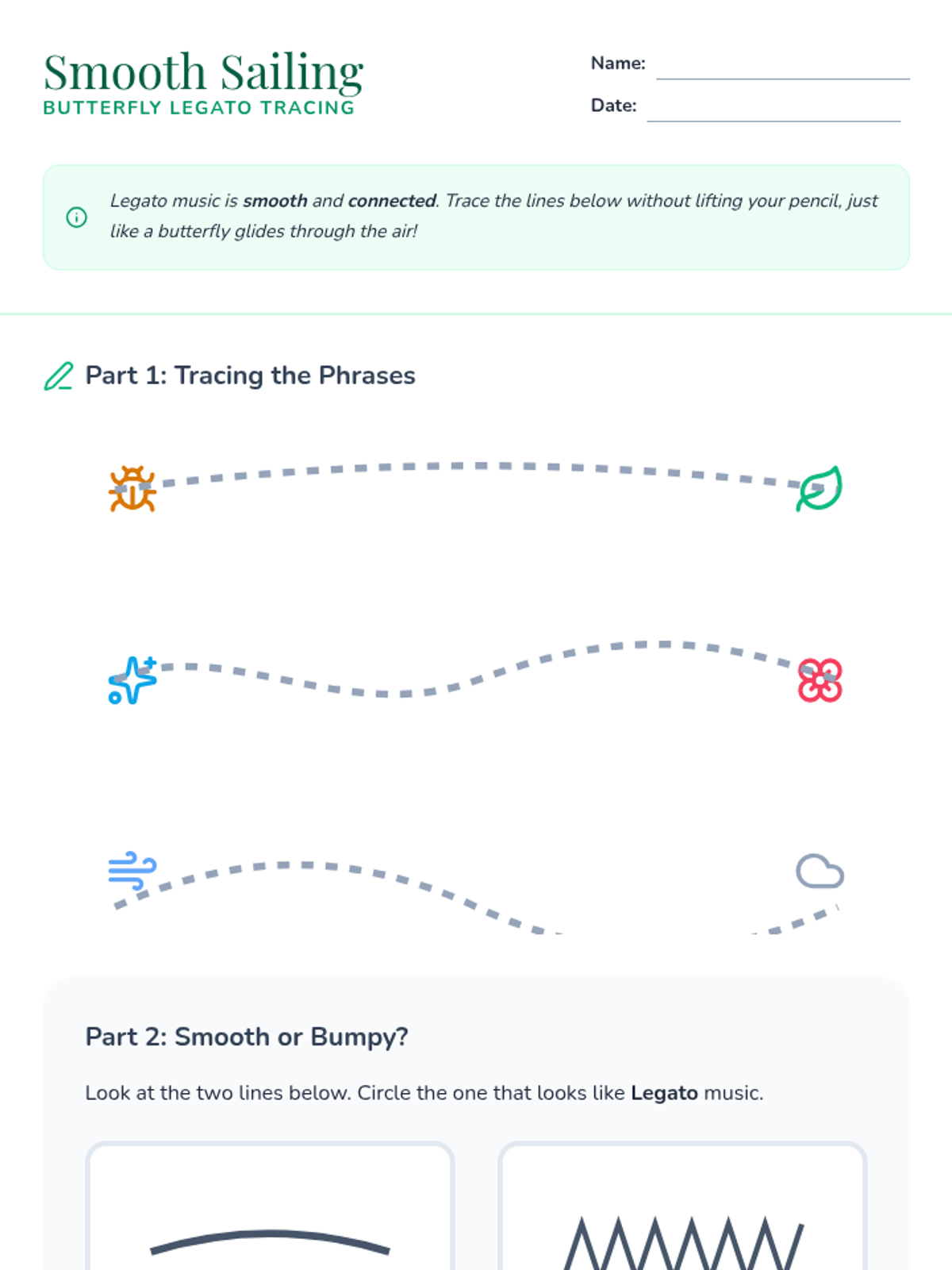
A student worksheet for reinforcing musical concepts of legato and phrasing. Students trace smooth paths representing musical 'sentences,' identify legato vs. staccato visual patterns, and draw their own musical phrases. Designed with large tracing paths suitable for young learners.
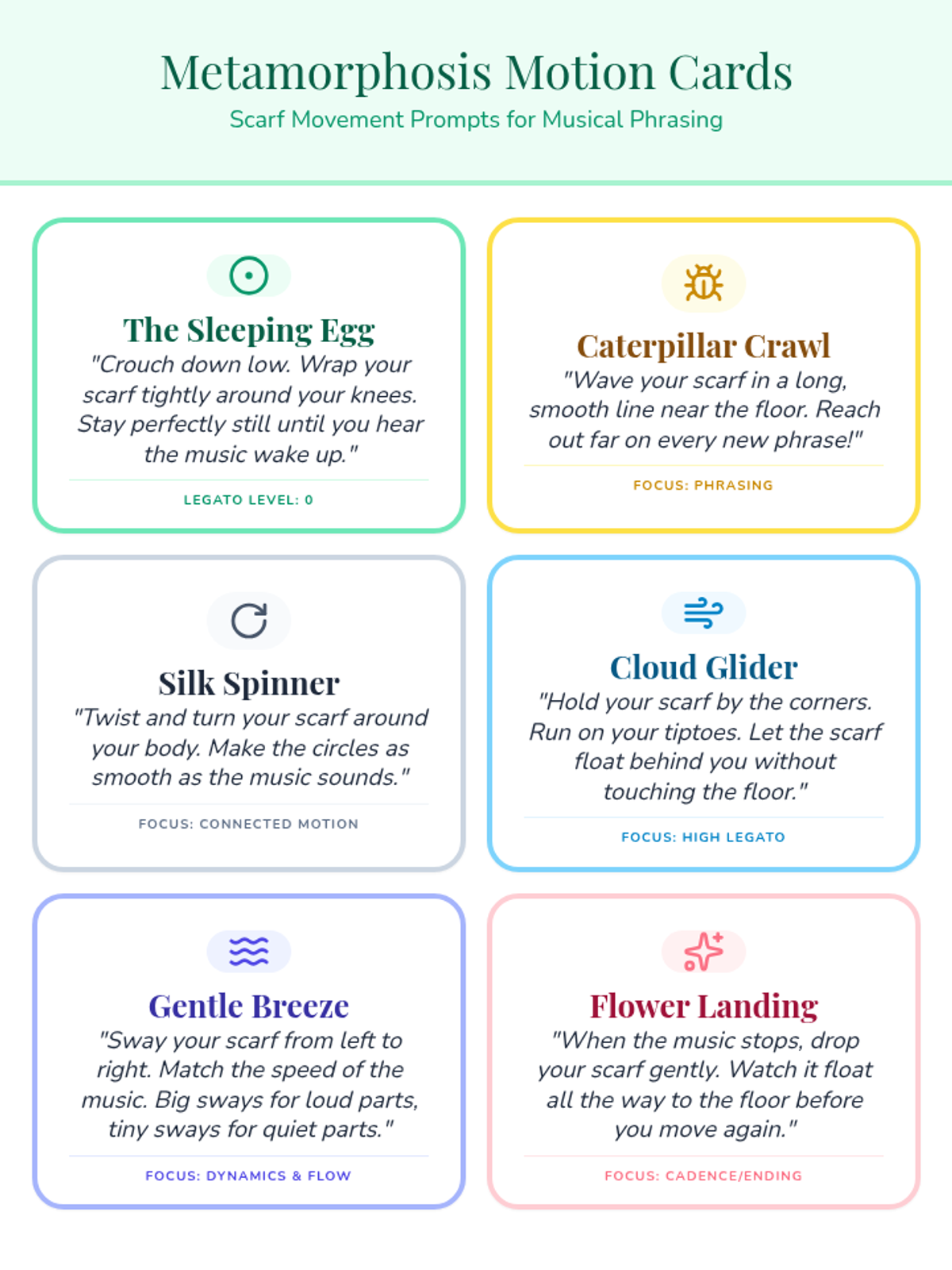
A set of 6 instructional movement cards for students to use with scarves. Each card connects a butterfly life cycle stage or natural element to a specific musical movement goal (legato, phrasing, dynamics). Includes teacher instructions for classroom implementation.
A visually engaging 5-slide presentation designed for early childhood students. It introduces the musical concepts of legato and phrasing, explains the four stages of a butterfly's life cycle, and provides visual cues for the movement activity.
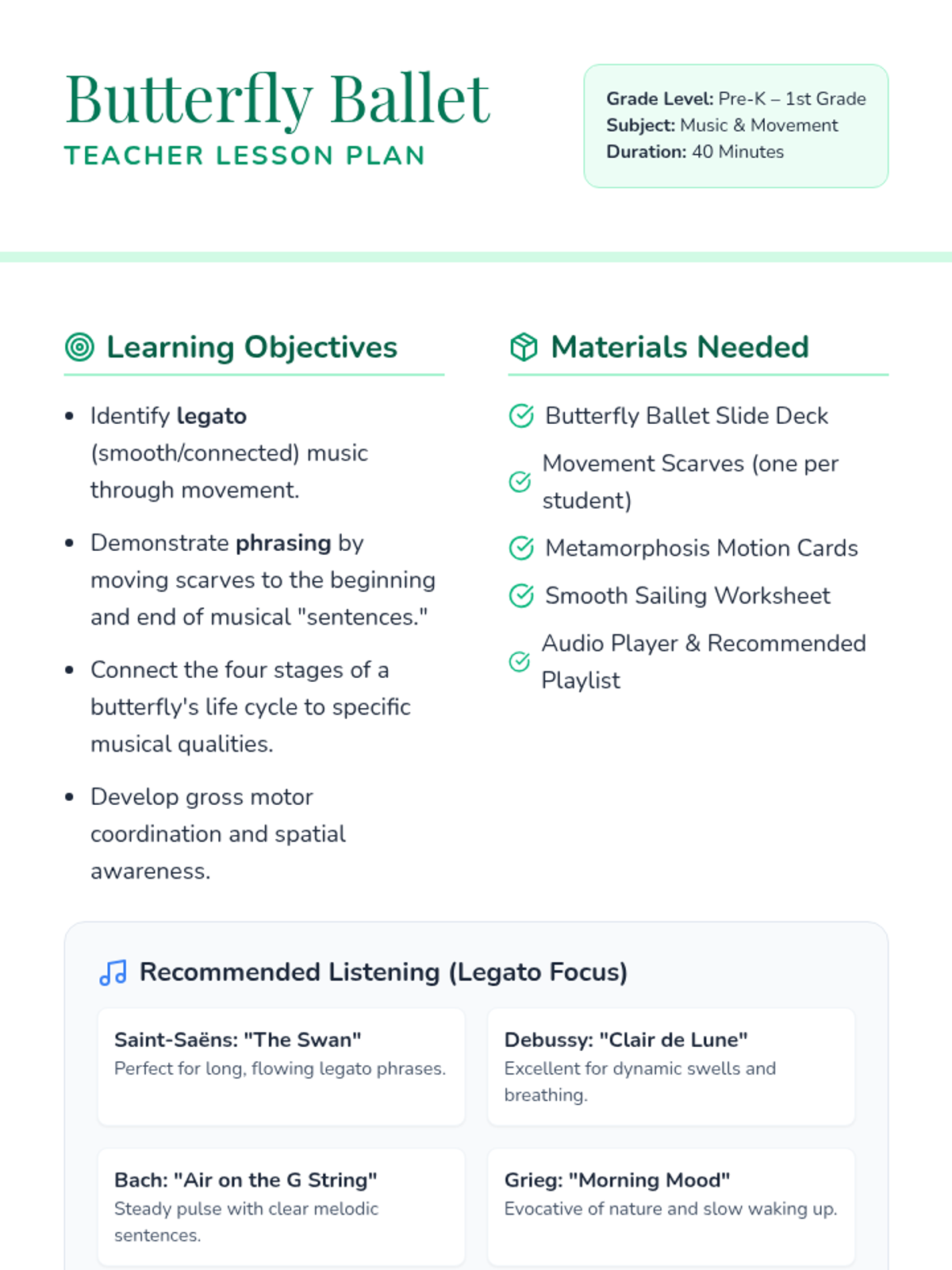
A detailed instructional guide for teachers to lead a 40-minute music and movement lesson. Includes learning objectives, recommended classical listening, a step-by-step instructional sequence tied to the butterfly life cycle, and differentiation strategies for Pre-K through 1st grade.
Comprehensive set of circular templates for a class book based on 'What a Wonderful World'. Includes a teacher quick guide, title page, end page, and lyric-themed coloring circles for students to cut out. Now includes all song verses and bold coloring icons. Optimized for printing without cutting off content.
Visual presentation to guide students through the 'What a Wonderful World' Earth Day lesson. Includes story time prompts, an embedded YouTube video of the song, and clear activity instructions.
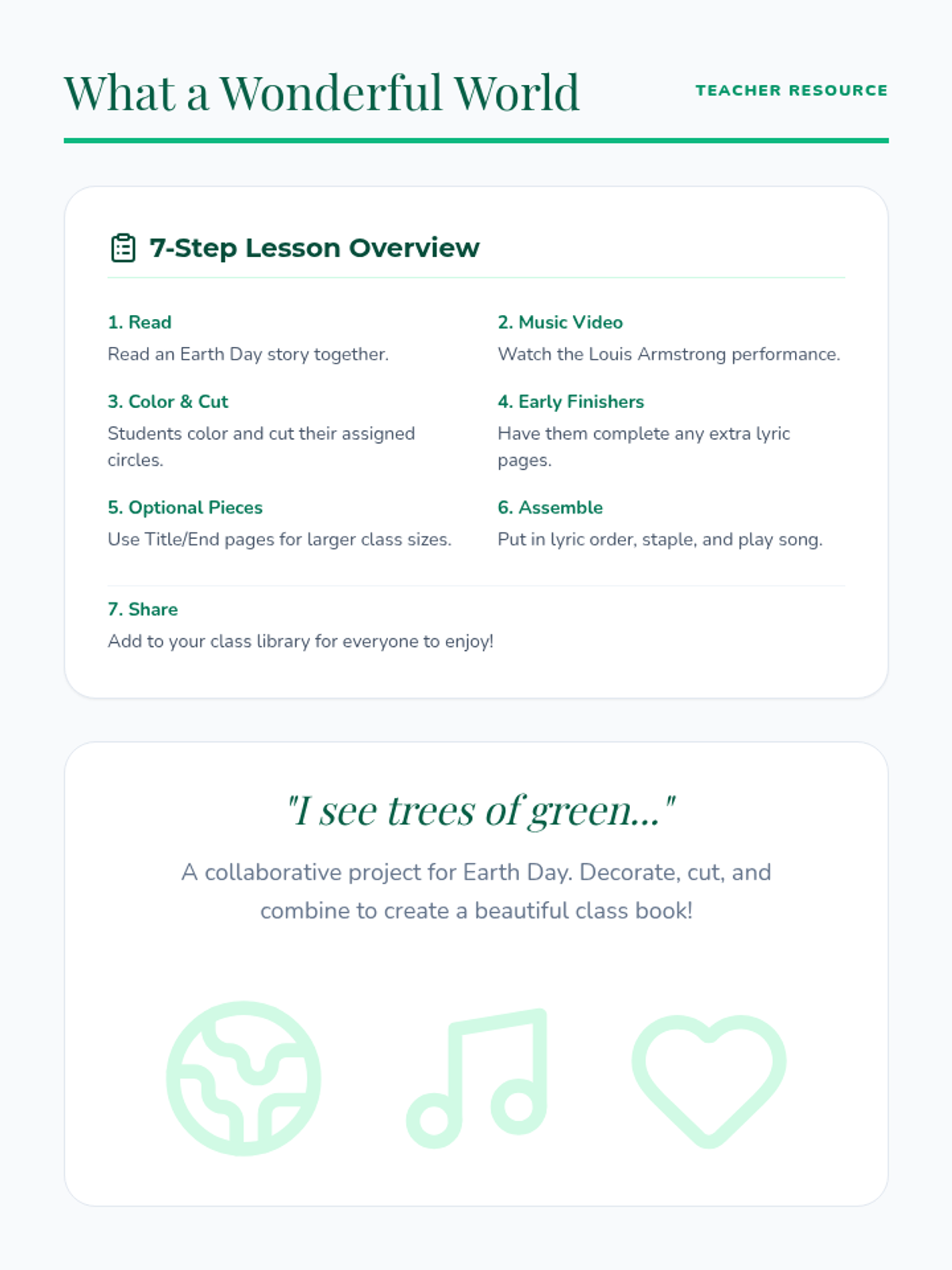
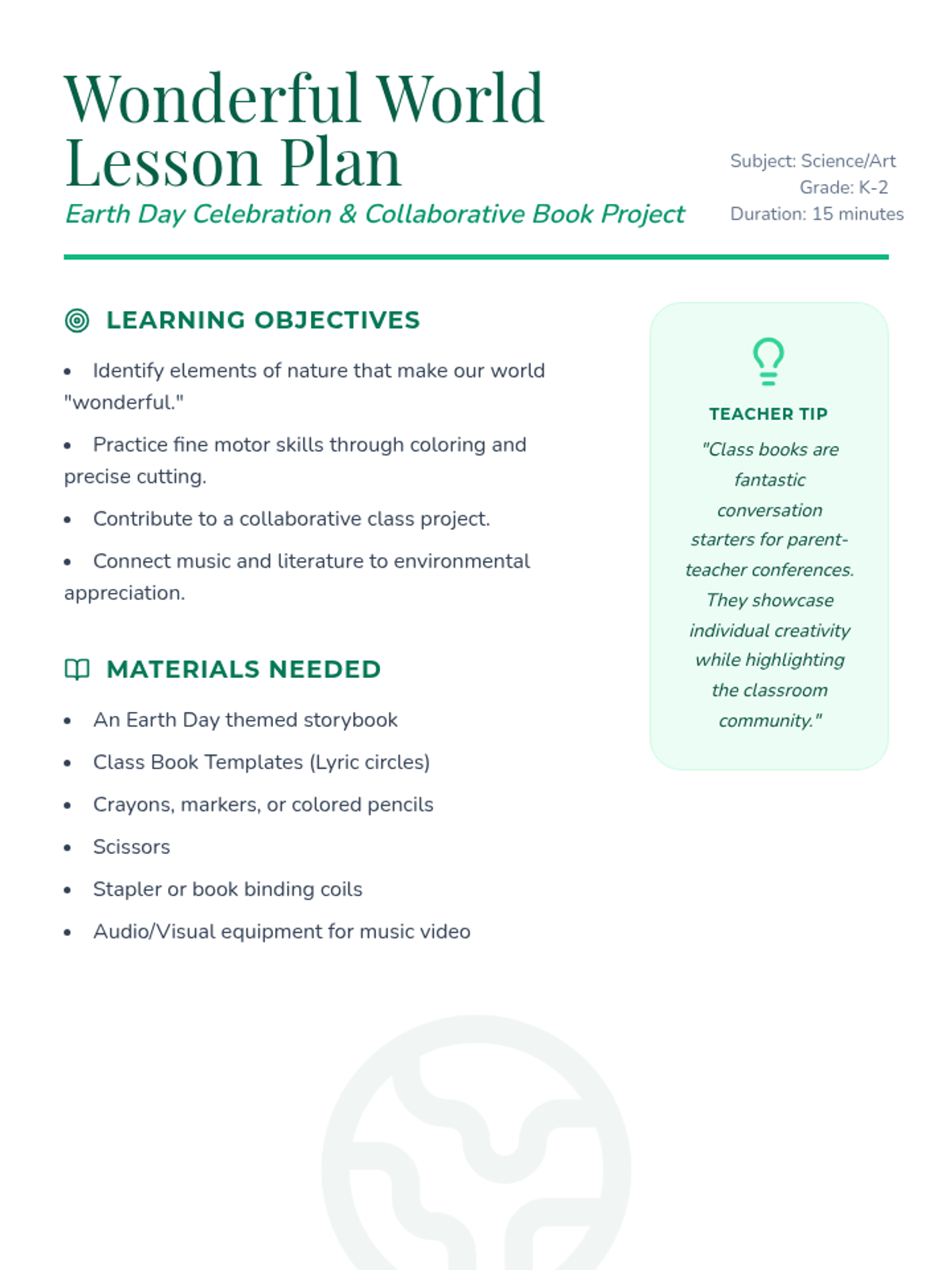
A comprehensive teacher lesson plan for an Earth Day collaborative book project based on the song 'What a Wonderful World'. Includes step-by-step instructions, materials list, and teaching tips. Now optimized for a 2-page print layout with a 15-minute duration.
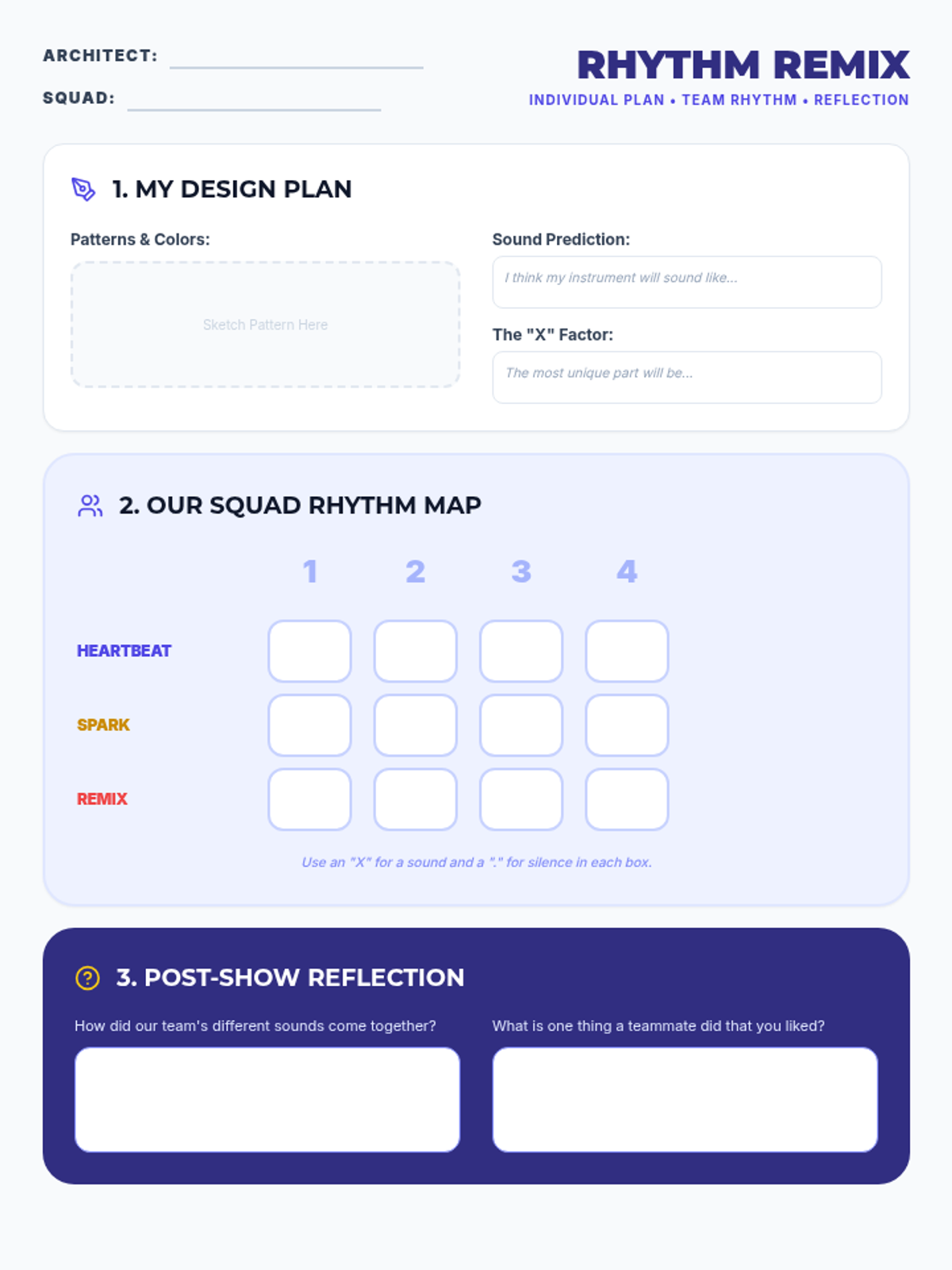
A student worksheet for planning individual instrument designs, mapping out team rhythms, and reflecting on the collaborative performance.
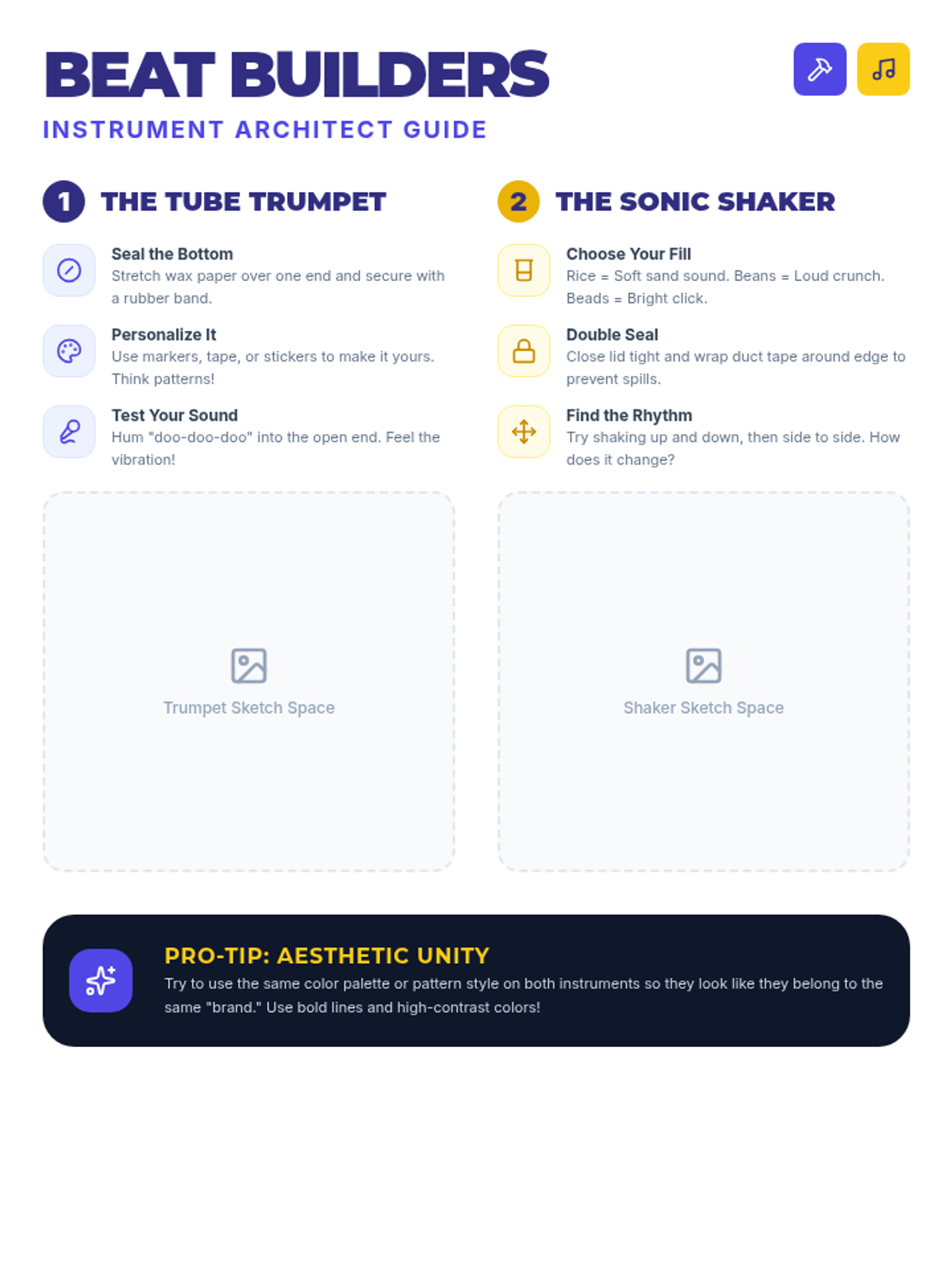
A visual, step-by-step instruction guide for students to build their own paper towel tube trumpets and sonic shakers, with dedicated sketching areas.
A visual presentation for the Rhythm Lab lesson, introducing sound science, instrument construction steps, and the team performance challenge.
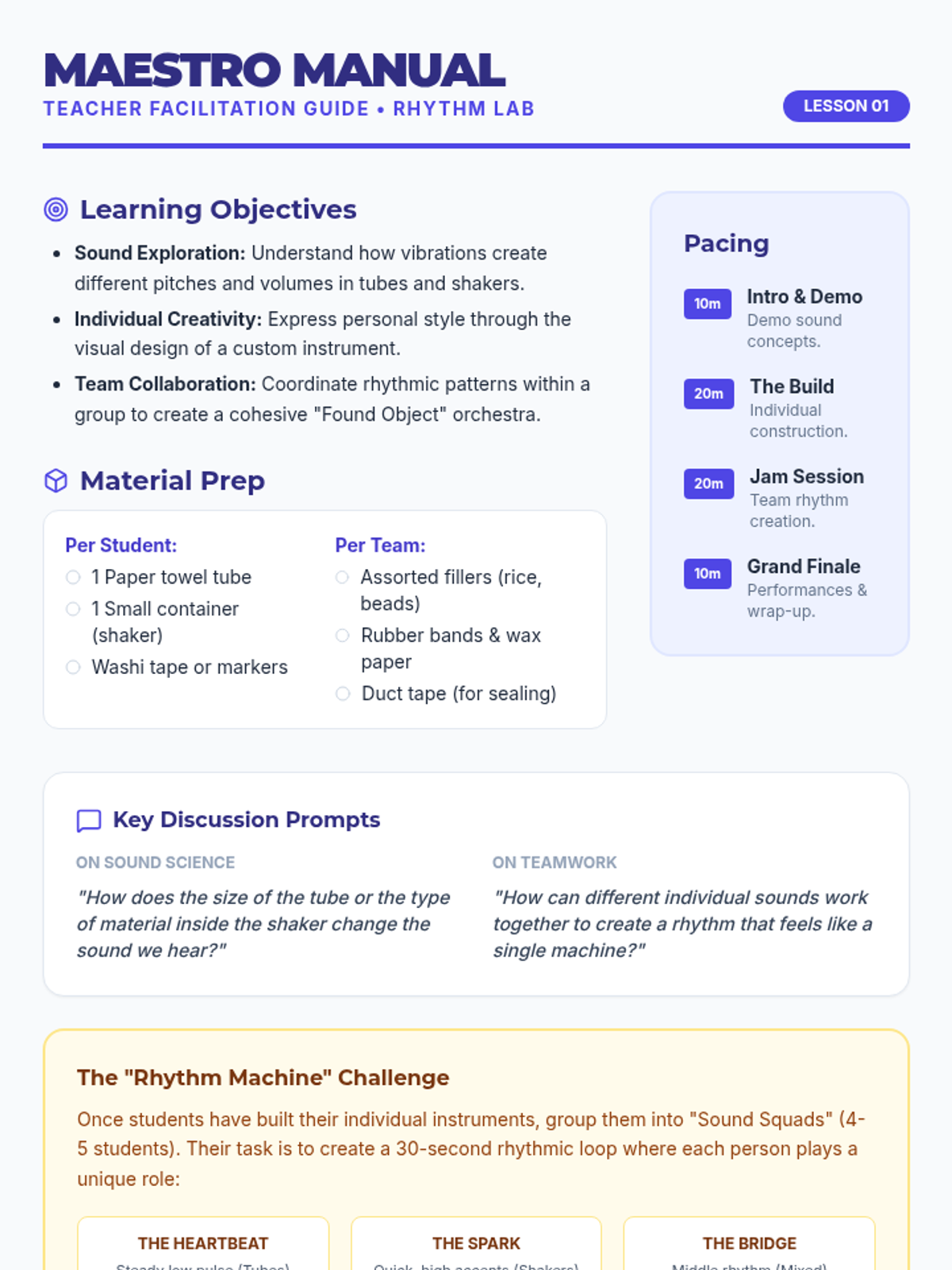
A teacher's facilitation guide for the Rhythm Lab lesson, featuring pacing tips, material checklists, discussion prompts, and a team-building challenge.
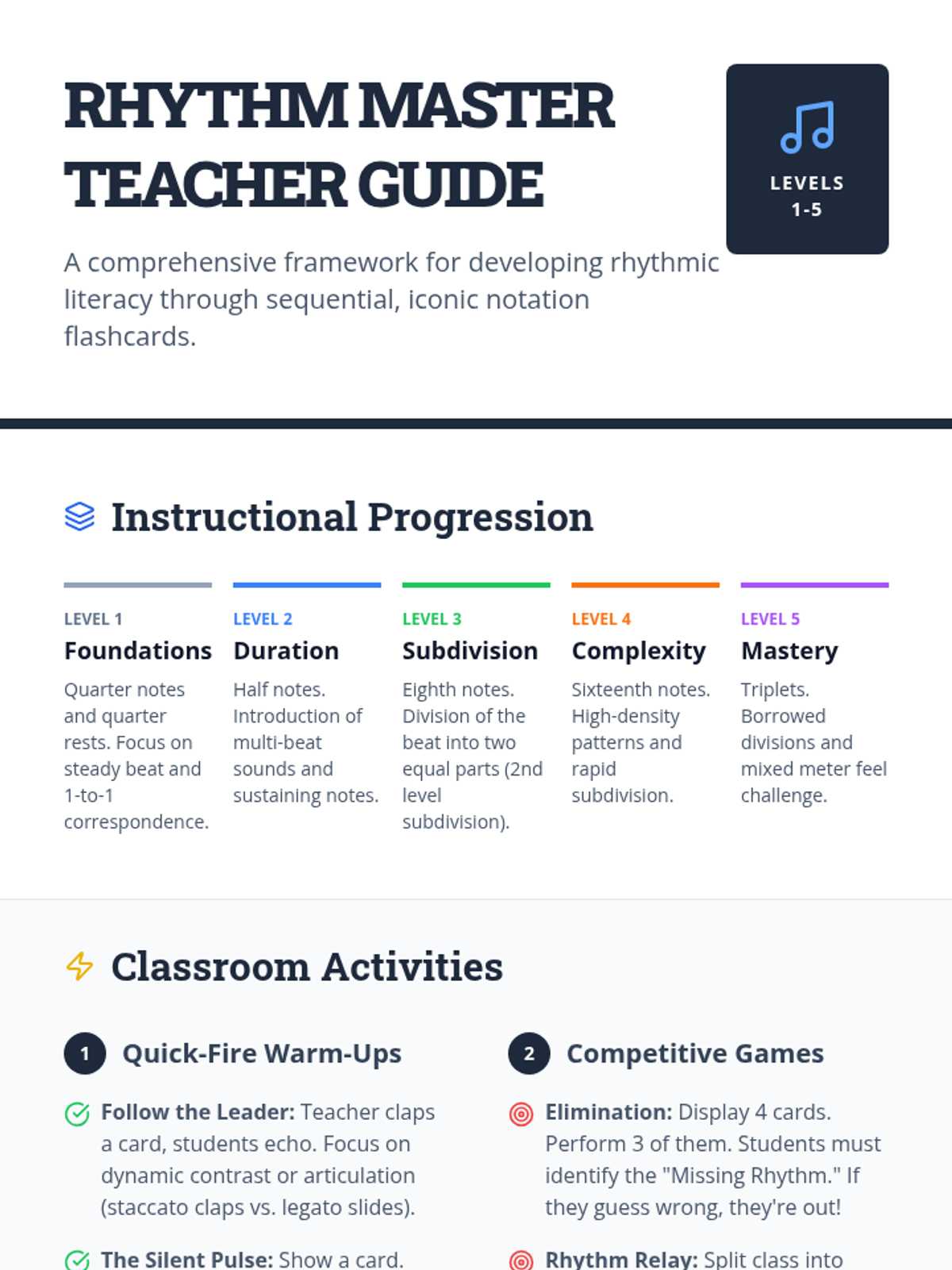
A detailed facilitation guide for teachers using the Rhythm Master Flashcards, including level breakdowns, activity ideas, assessment tips, and scaffolding strategies.
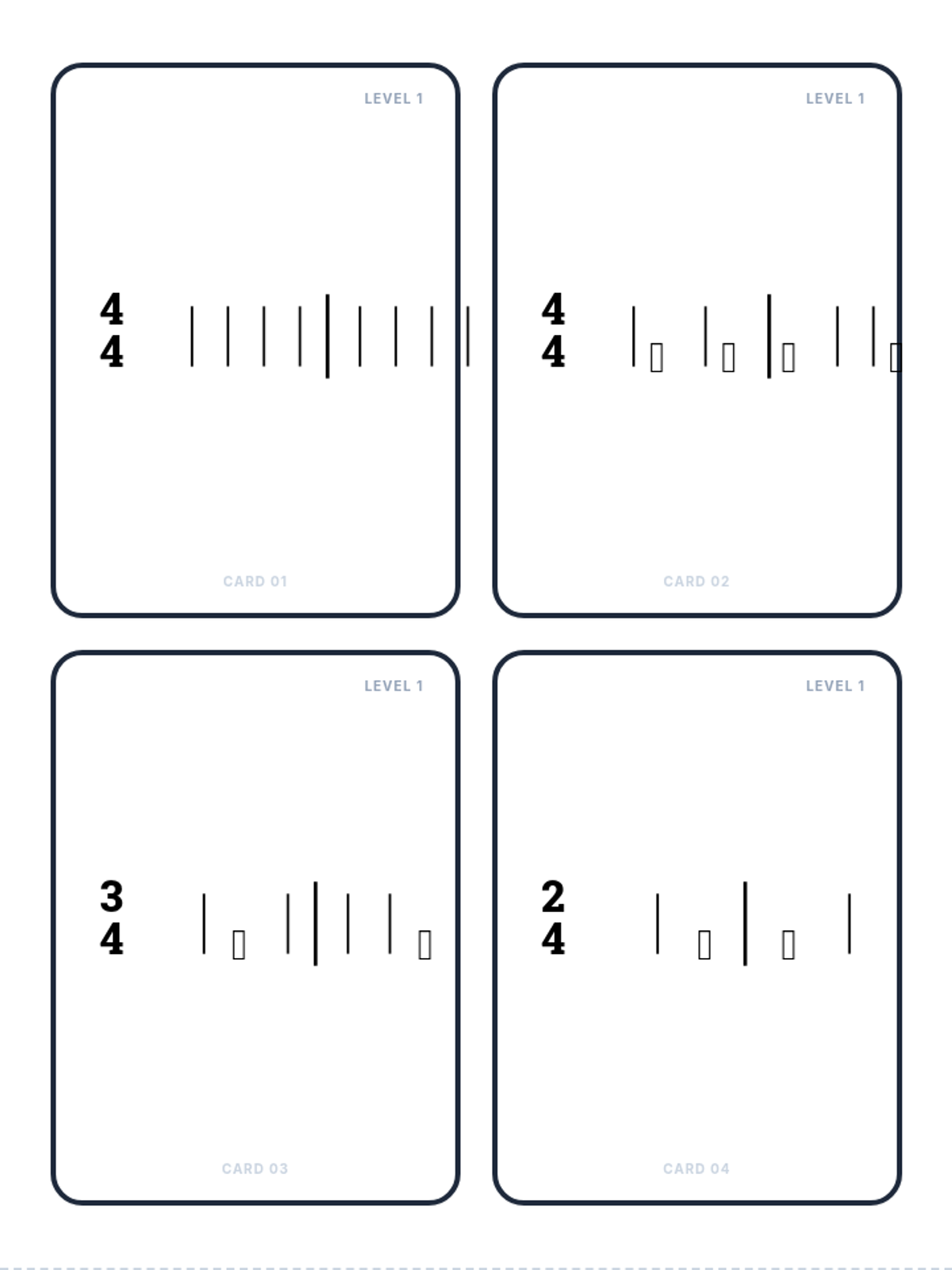
A comprehensive set of 20 rhythm reading flashcards featuring two measures per card. The cards progress through 5 difficulty levels, from simple quarter notes to complex triplets and sixteenth notes across multiple time signatures.
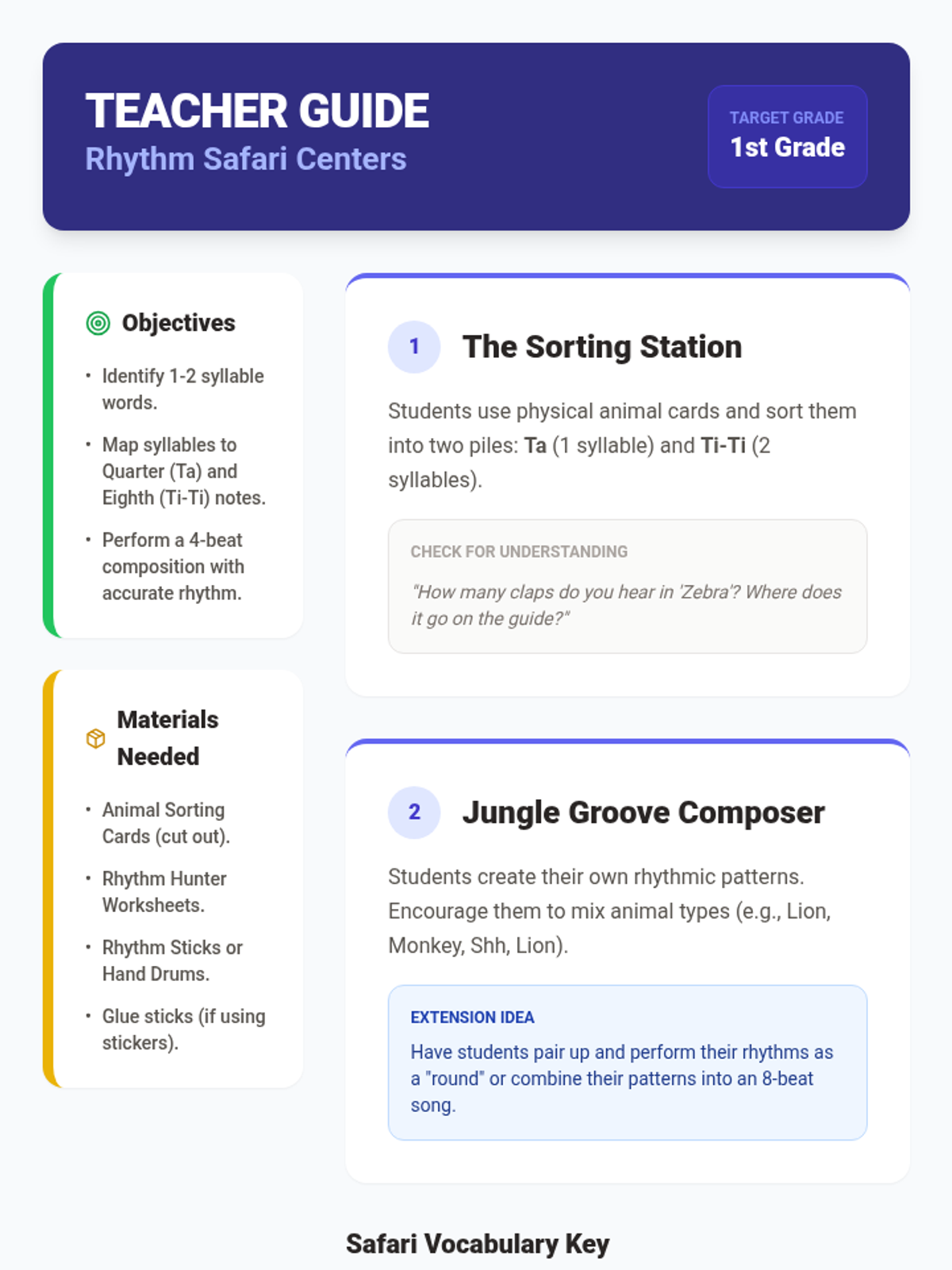
Instructions for educators to set up the Rhythm Safari centers, including objectives, materials checklist, and a rhythmic vocabulary key.
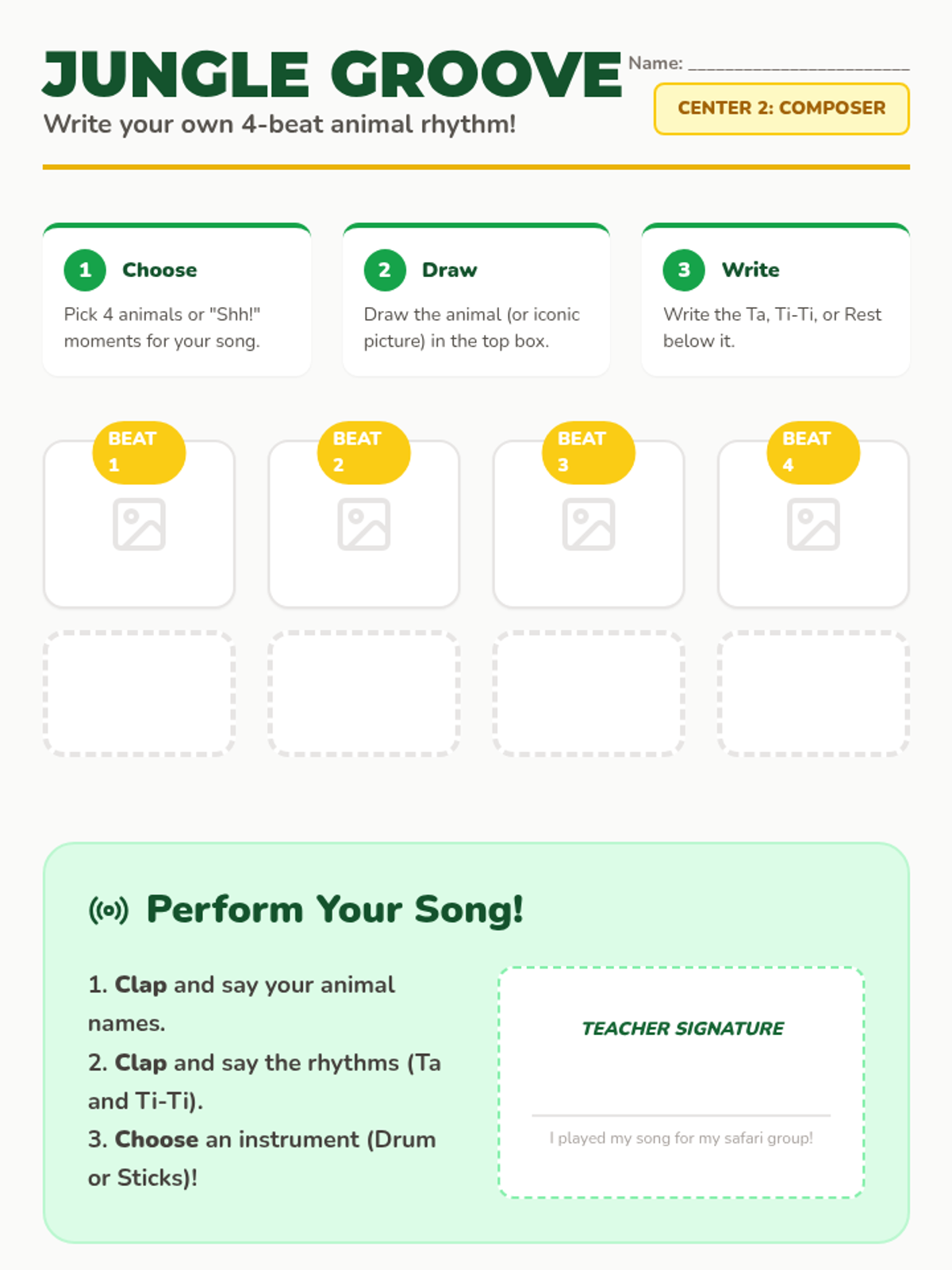
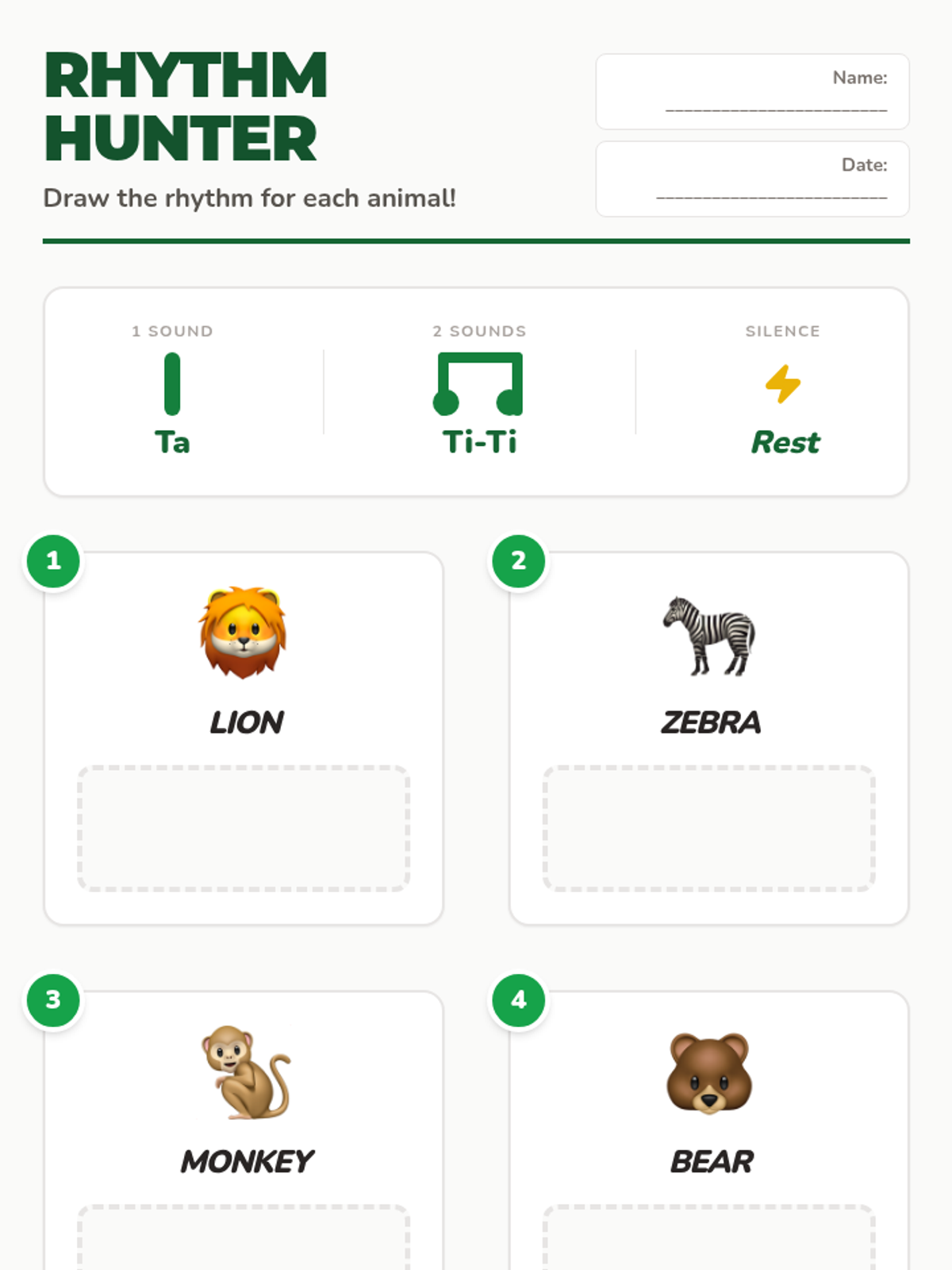
A creative activity sheet for the Rhythm Safari center where students compose their own 4-beat rhythm using animal icons and rhythmic notation (Ta, Ti-Ti, and Rest).
A recording sheet for the Rhythm Safari center where students match animal names to rhythmic notation (Ta, Ti-Ti, and Rest) and then find their own animal examples.
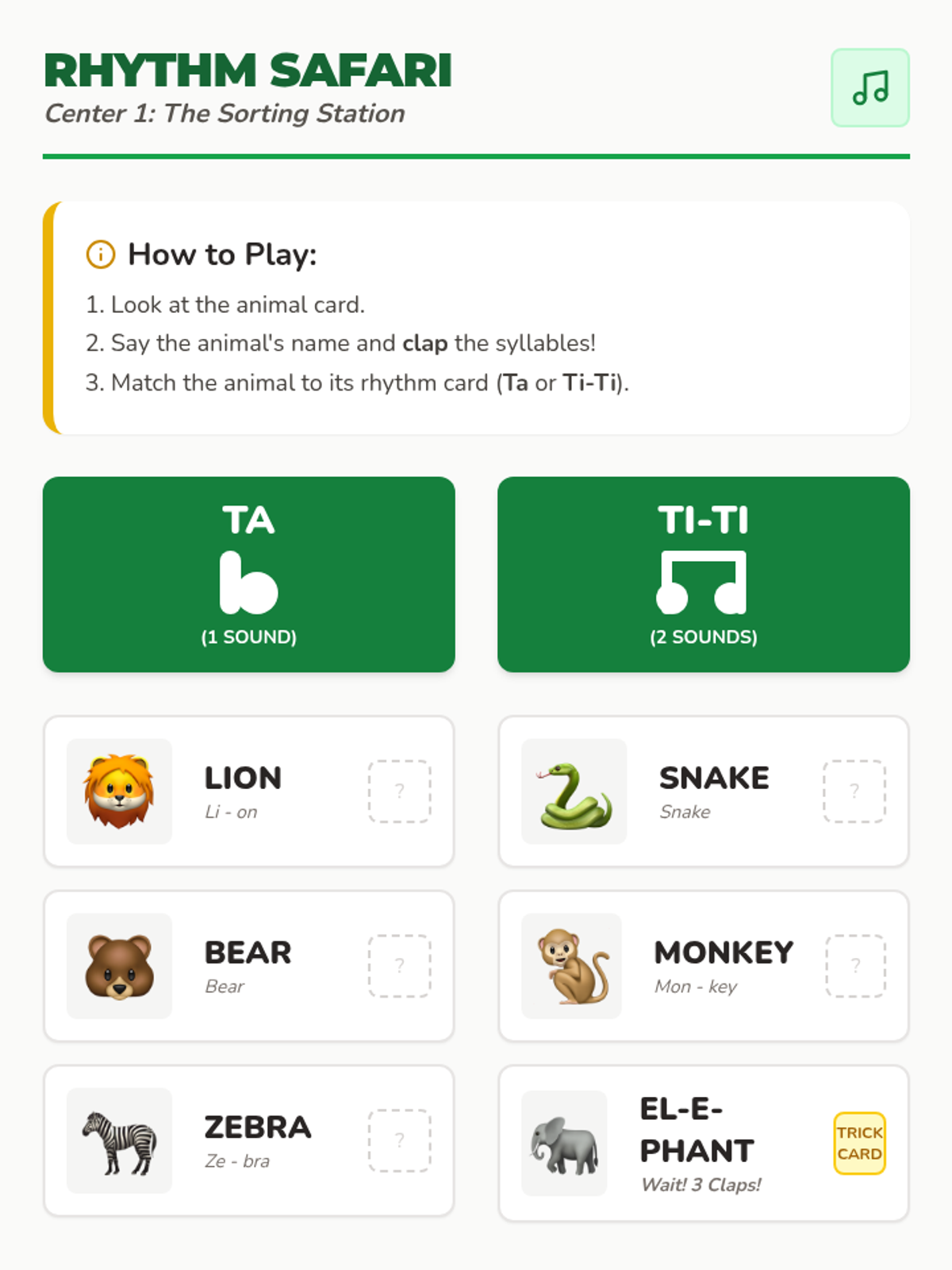
A reference guide for students at the Sorting Station center, showing animal names and their corresponding rhythmic values (Ta or Ti-Ti) through syllable counting.
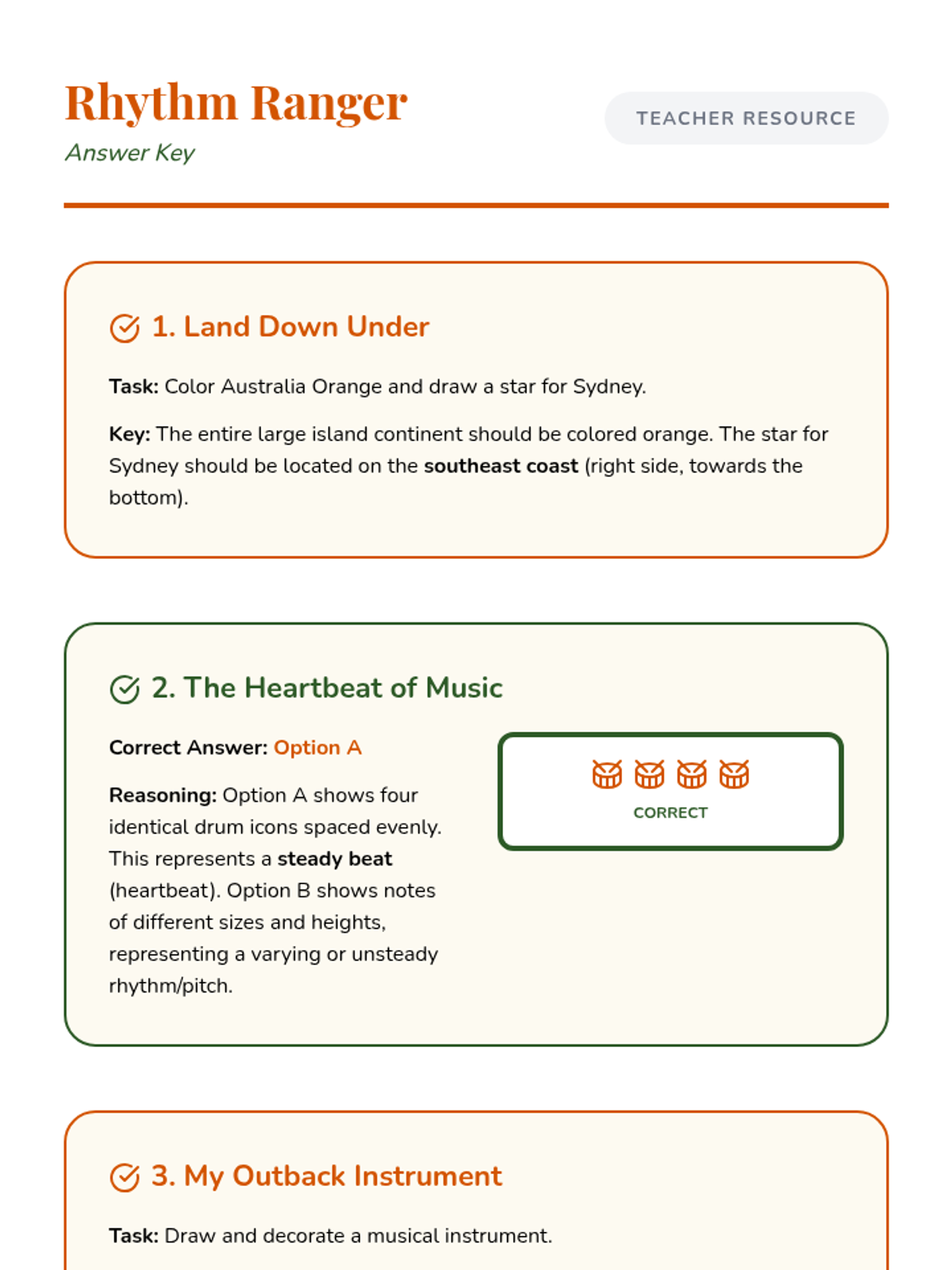
A teacher's answer key for the Rhythm Ranger Worksheet, providing clear guidance on map locations, steady beat identification, and creative assessment.
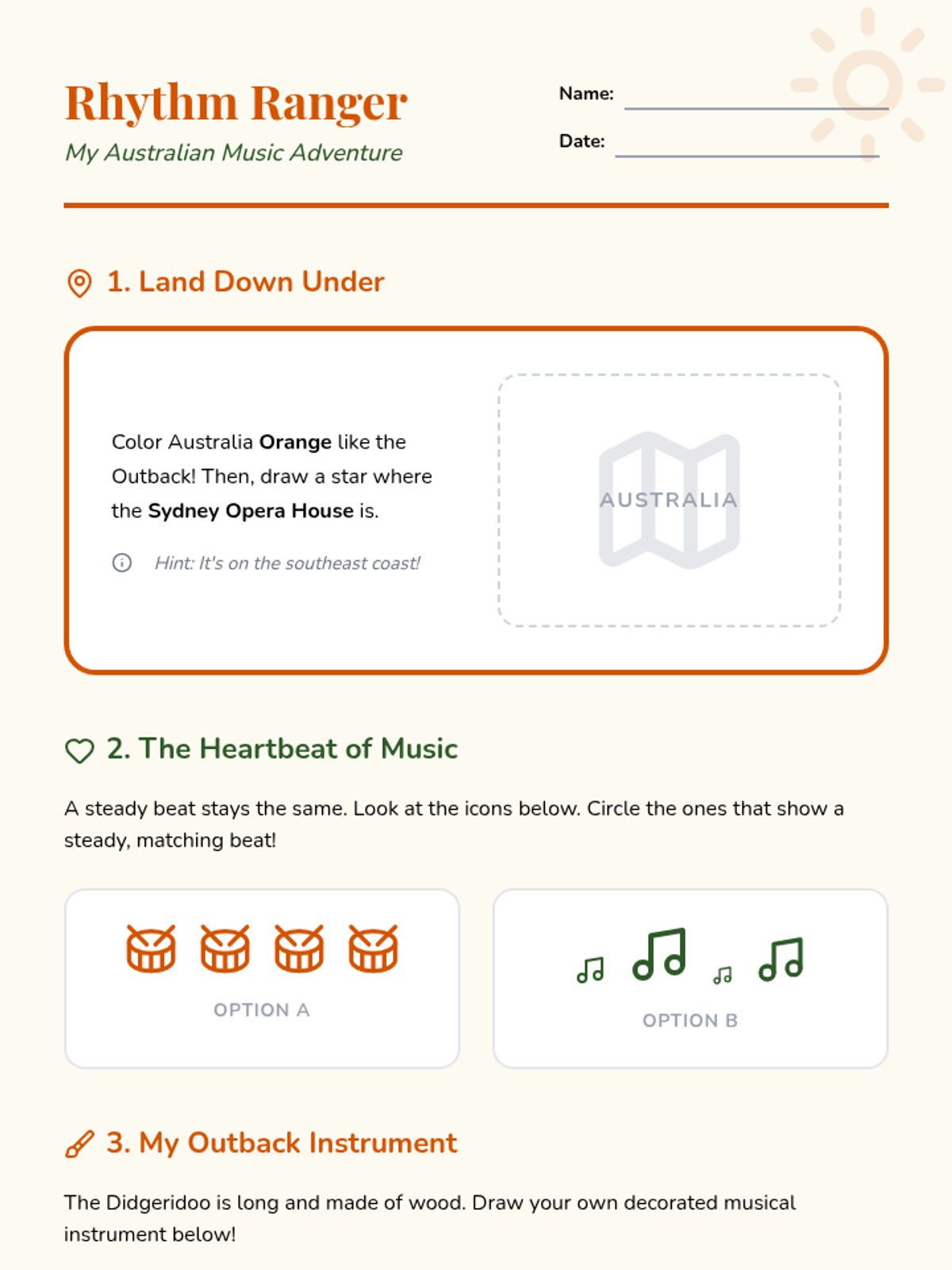
An engaging student worksheet featuring a map activity, a steady beat identification task, and a creative drawing space for an Australian instrument.
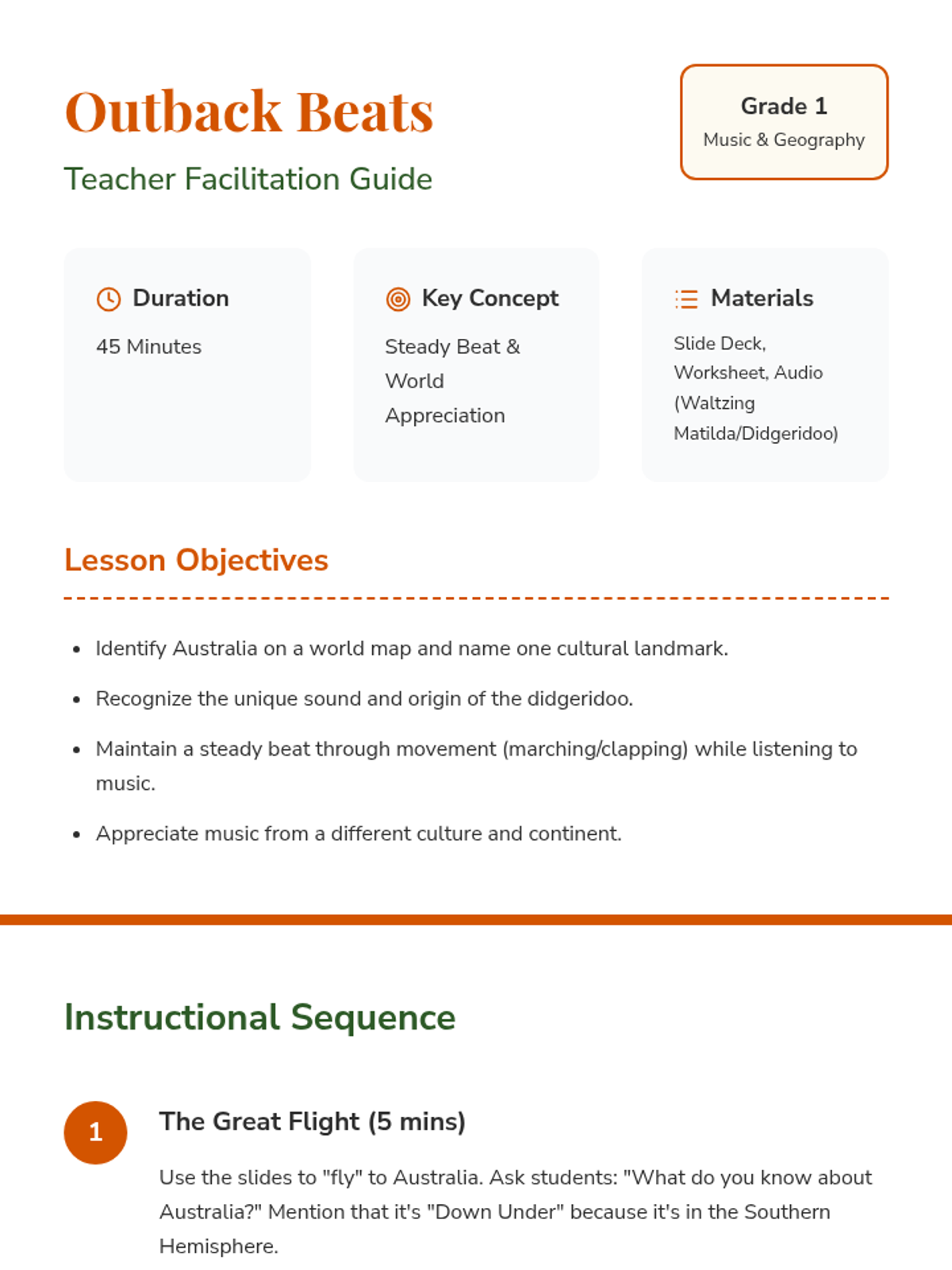
A comprehensive facilitation guide for teachers, providing step-by-step instructions for the 'Outback Beats' lesson, including discussion prompts and vocabulary.
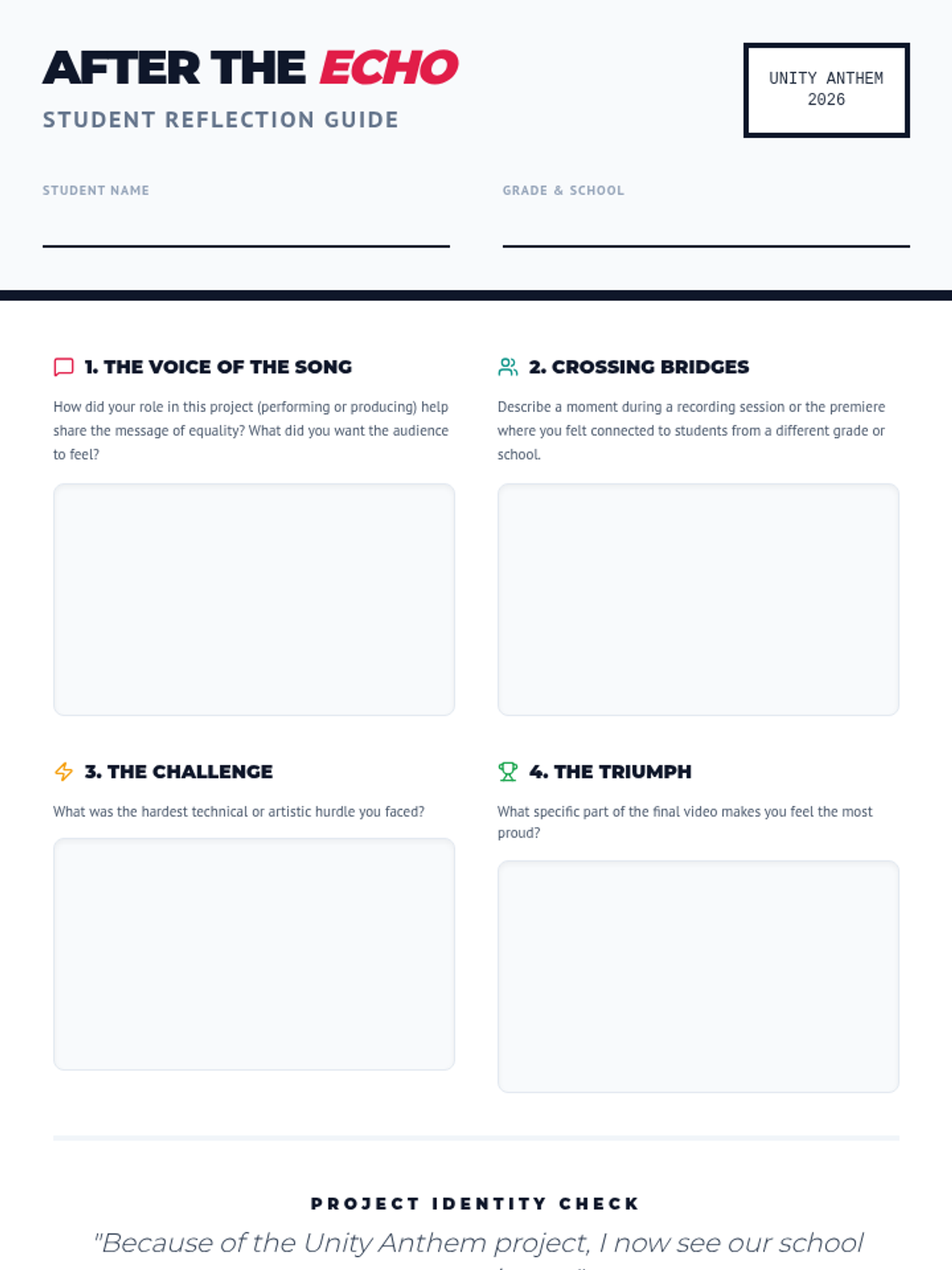
A structured reflection guide for students to process their experience with the Unity Anthem project, focusing on thematic message, collaboration across grades, and personal artistic growth.
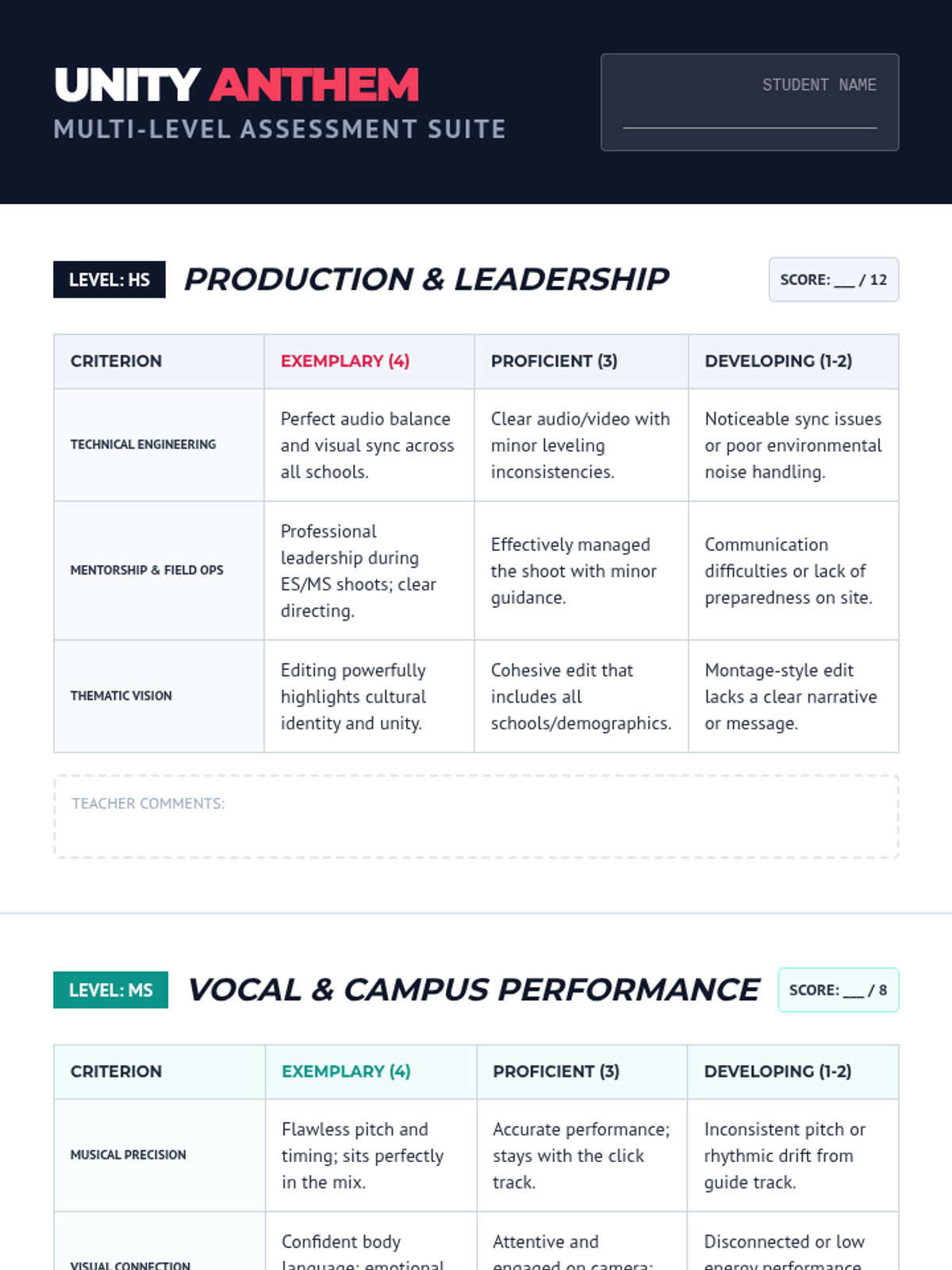
Grading rubrics for the Unity Anthem project tailored to three different levels: High School (Production), Middle School (Performance), and Elementary (Participation).
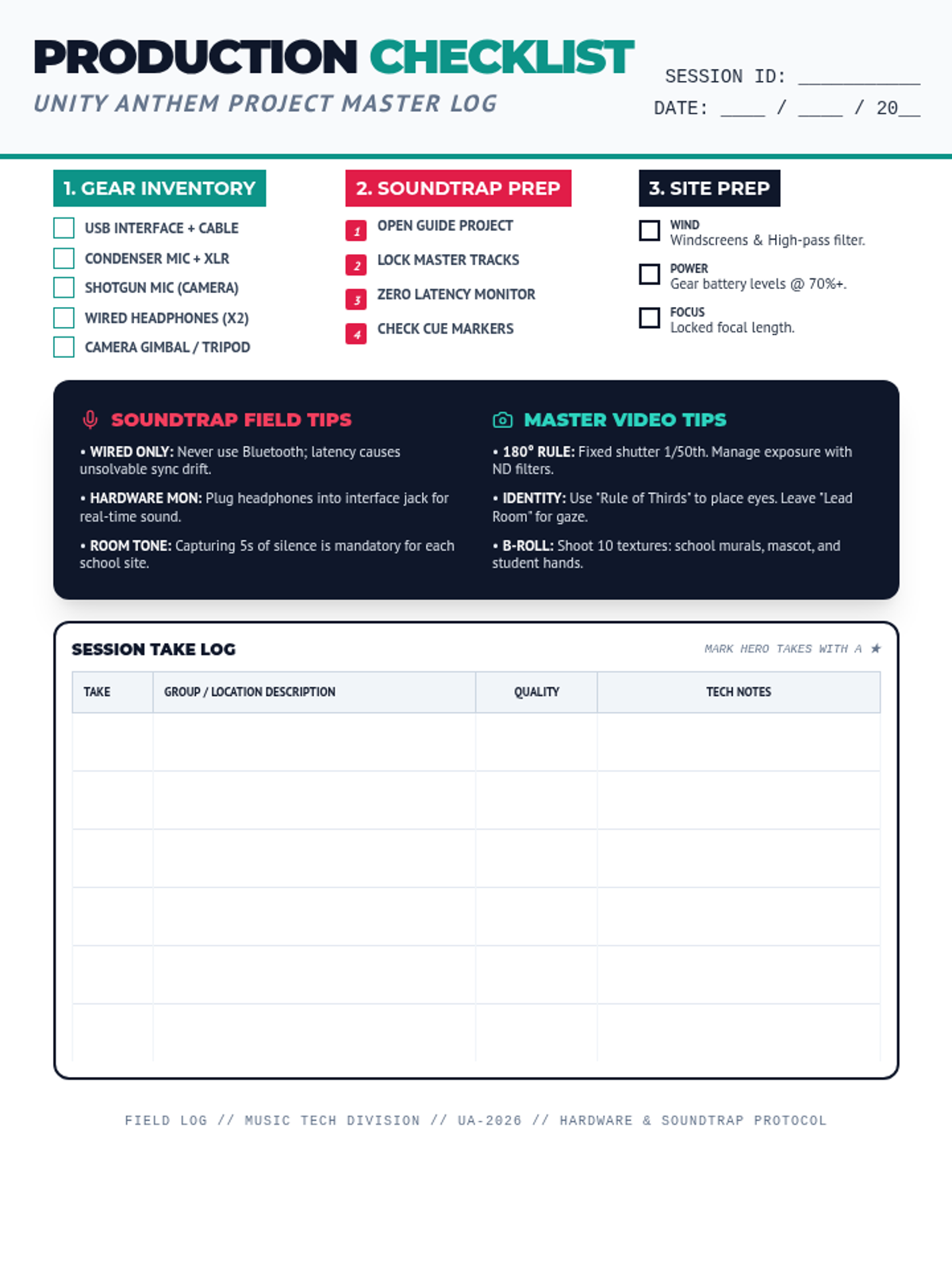
A technical production checklist for high school producers and instructors to manage the 'on-location' recording sessions at elementary and middle schools, with a detailed gear inventory and Soundtrap guide track workflow.
An engaging slide deck to launch the Unity Anthem project, featuring a new 'Toolkit' slide with Soundtrap and field gear requirements, along with cinematic tips and project roles.
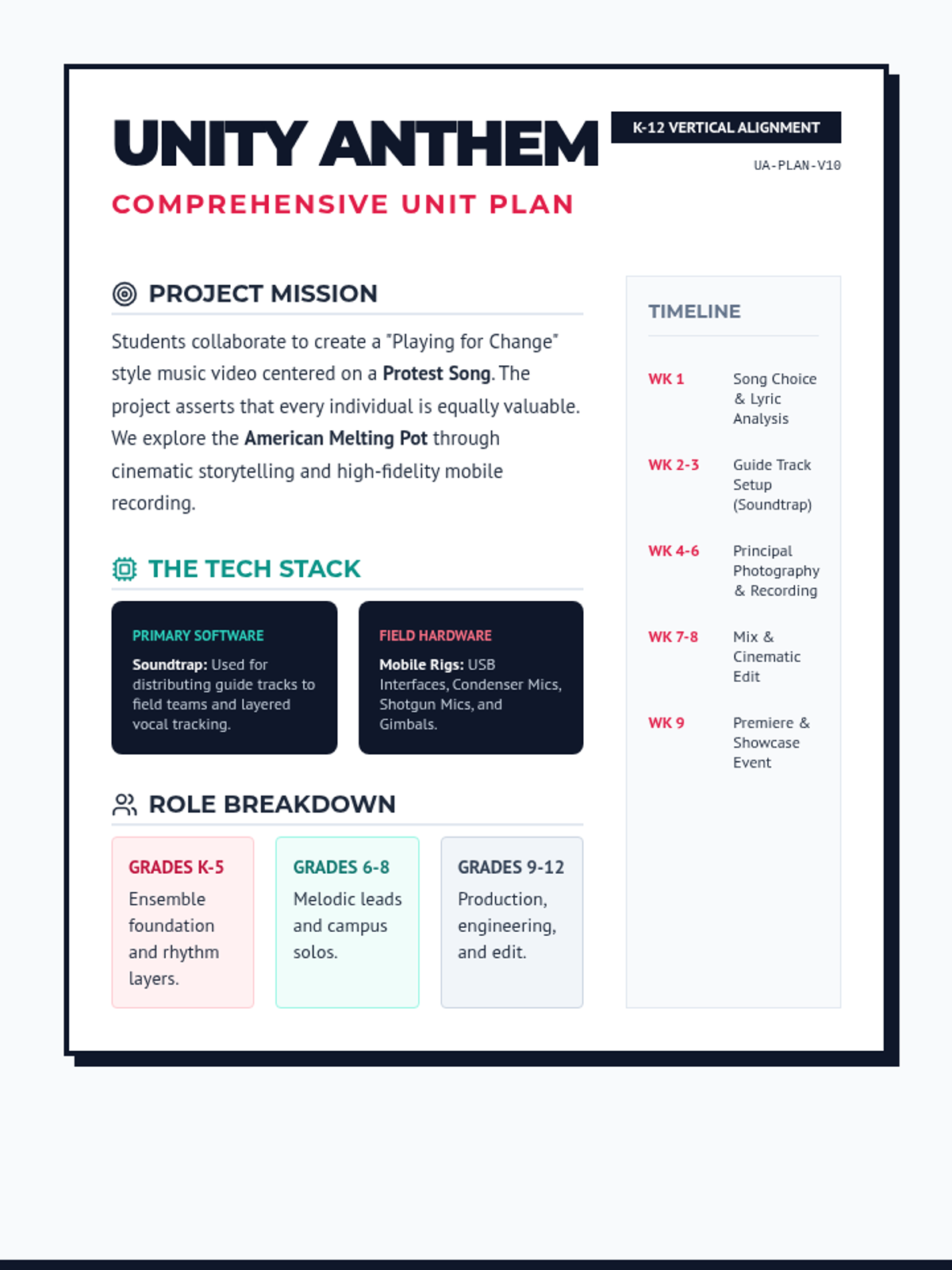
A comprehensive teacher-facing unit plan for the Unity Anthem K-12 music video project, detailing the mission, timeline, instructional sequence, and roles across grade levels with a full equipment list and Soundtrap workflow.
A vibrant and engaging slide deck introducing first-graders to Australian culture and music, featuring the didgeridoo, 'Waltzing Matilda', and interactive steady beat exercises.
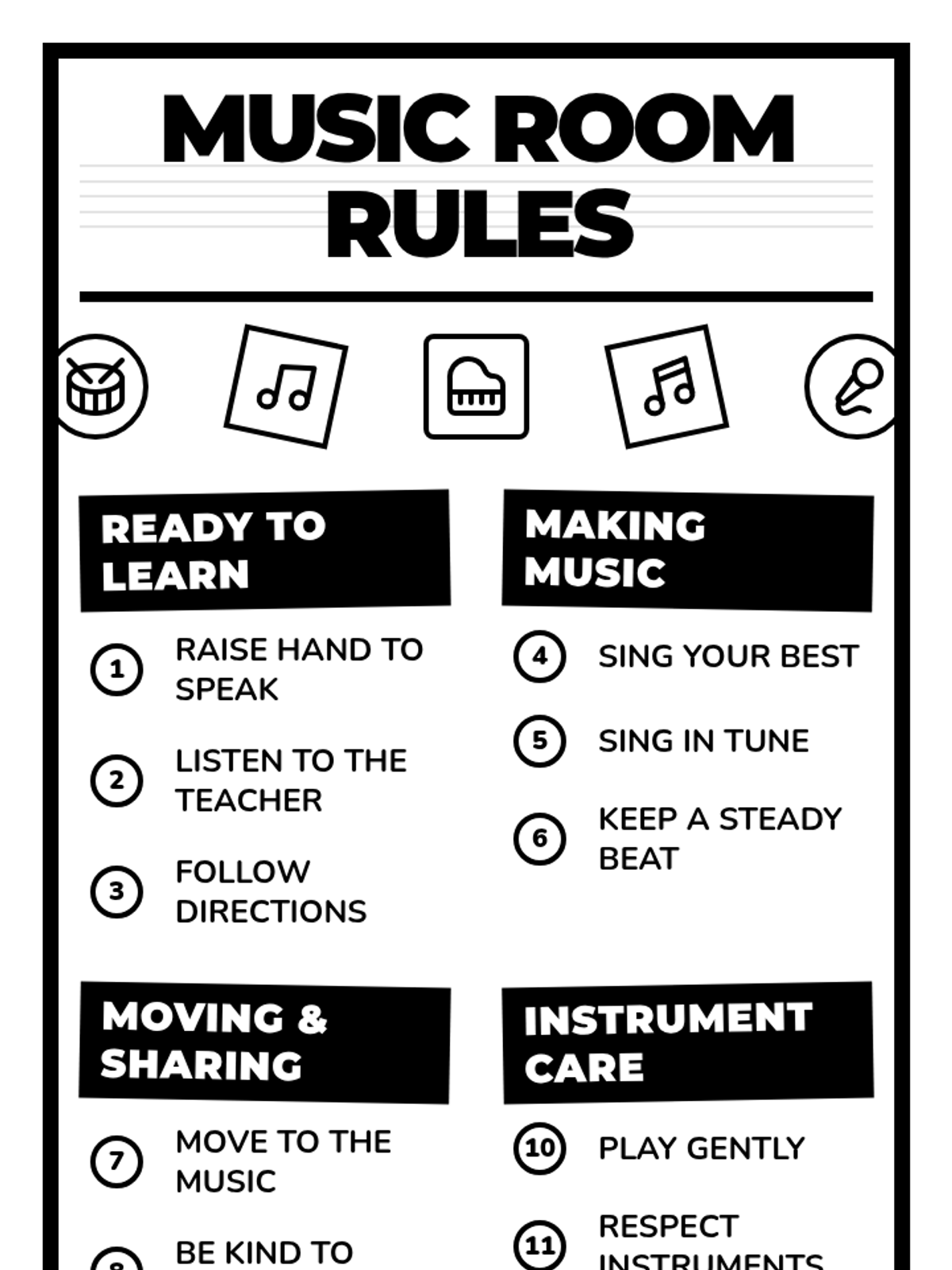
A high-contrast black and white music classroom rules poster designed for easy printing and coloring. It features 12 essential rules grouped into musical categories with decorative icons and space for students to personalize.
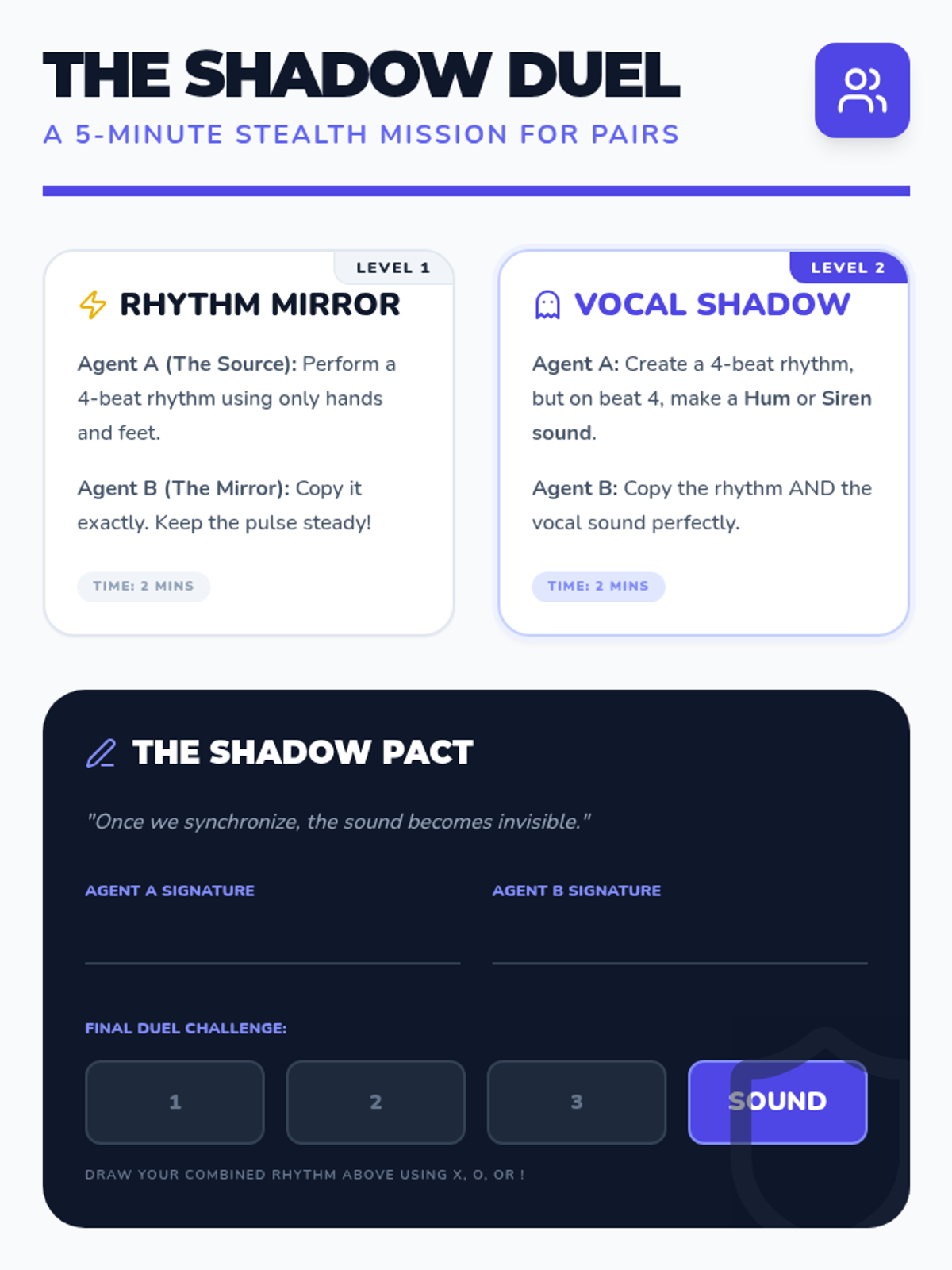
A 5-minute partner activity where students take turns being the "Source" and "Mirror" to build rhythmic and vocal confidence in a low-stakes duel.
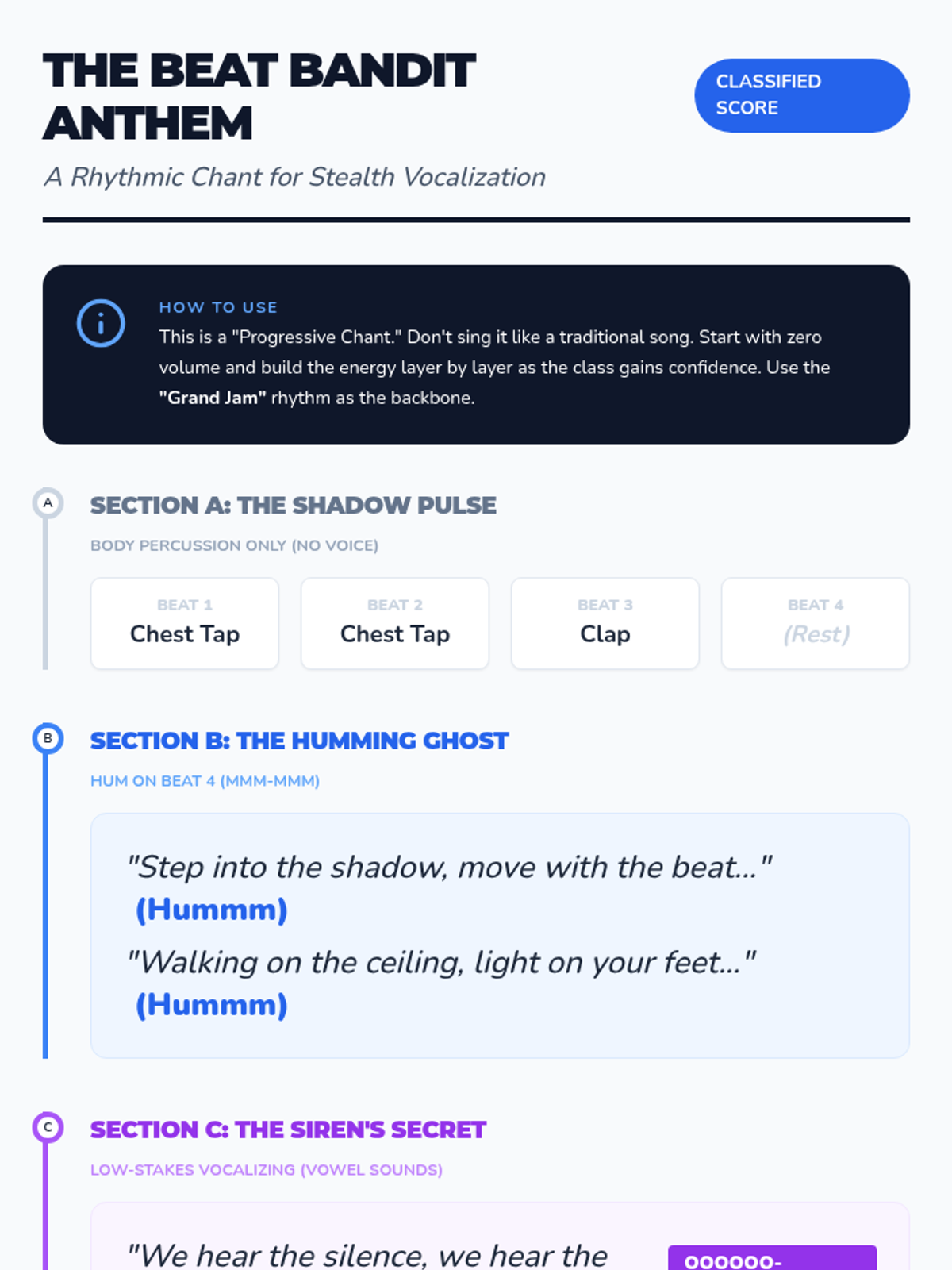
A rhythmic anthem for the Beat Bandits lesson, designed as a progressive chant that moves from silence to humming to a high-energy vocal finale.
A printable sheet of 20 "Beat Bandit" reward stickers in four varieties: Official Beat Bandit, Stealth Master, Pulse Professional, and Vocal Vanisher. Designed for 8.5x11 sticker paper.
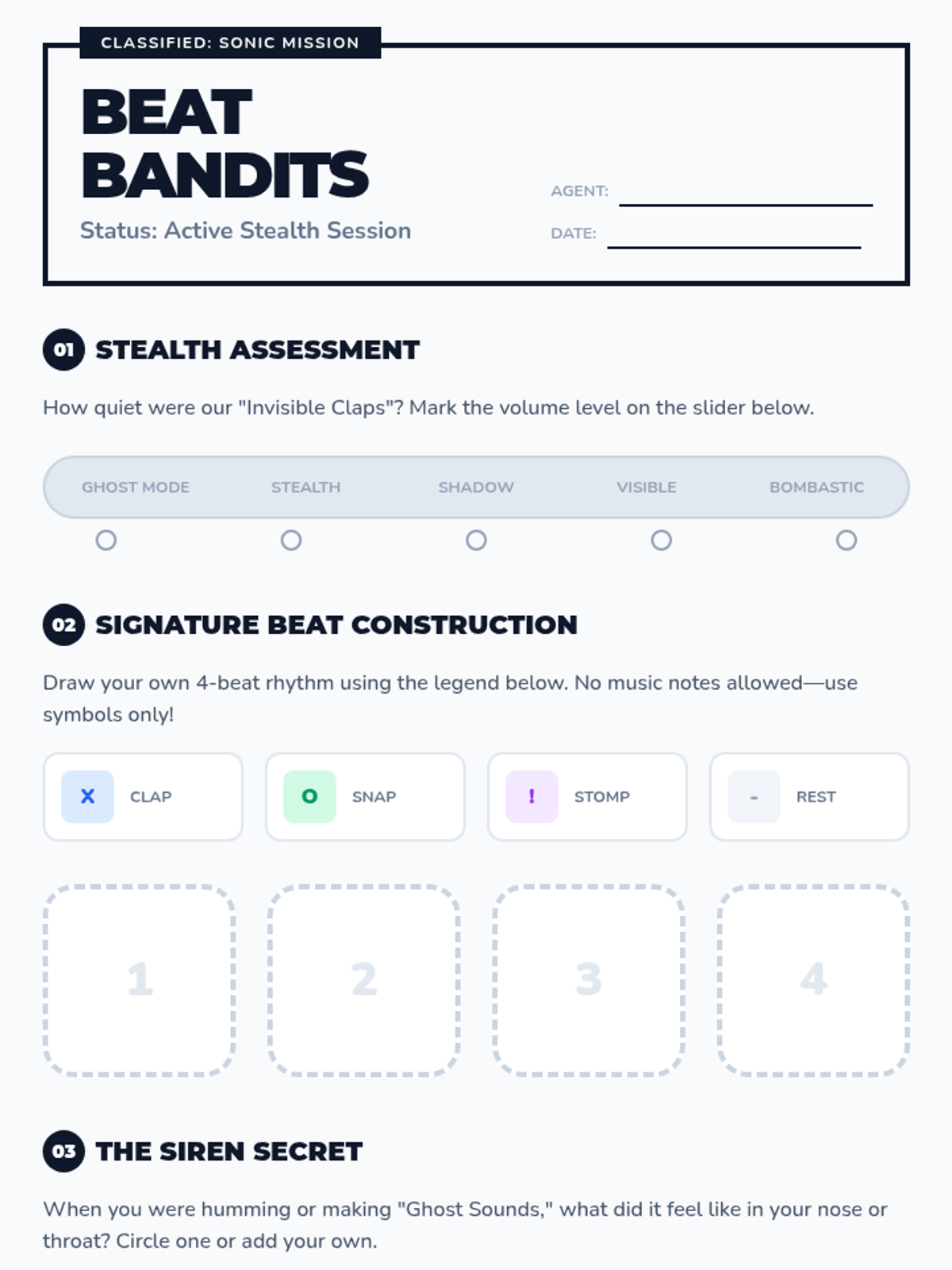
A low-pressure student activity sheet designed to accompany the 15-minute Beat Bandits lesson, focusing on rhythmic decoding and sensory feedback from vocalizing.
A high-contrast, stealth-themed slide deck for a music lesson focusing on non-verbal rhythm and low-stakes vocalization. Updated with a Shadow Duel pair game slide.
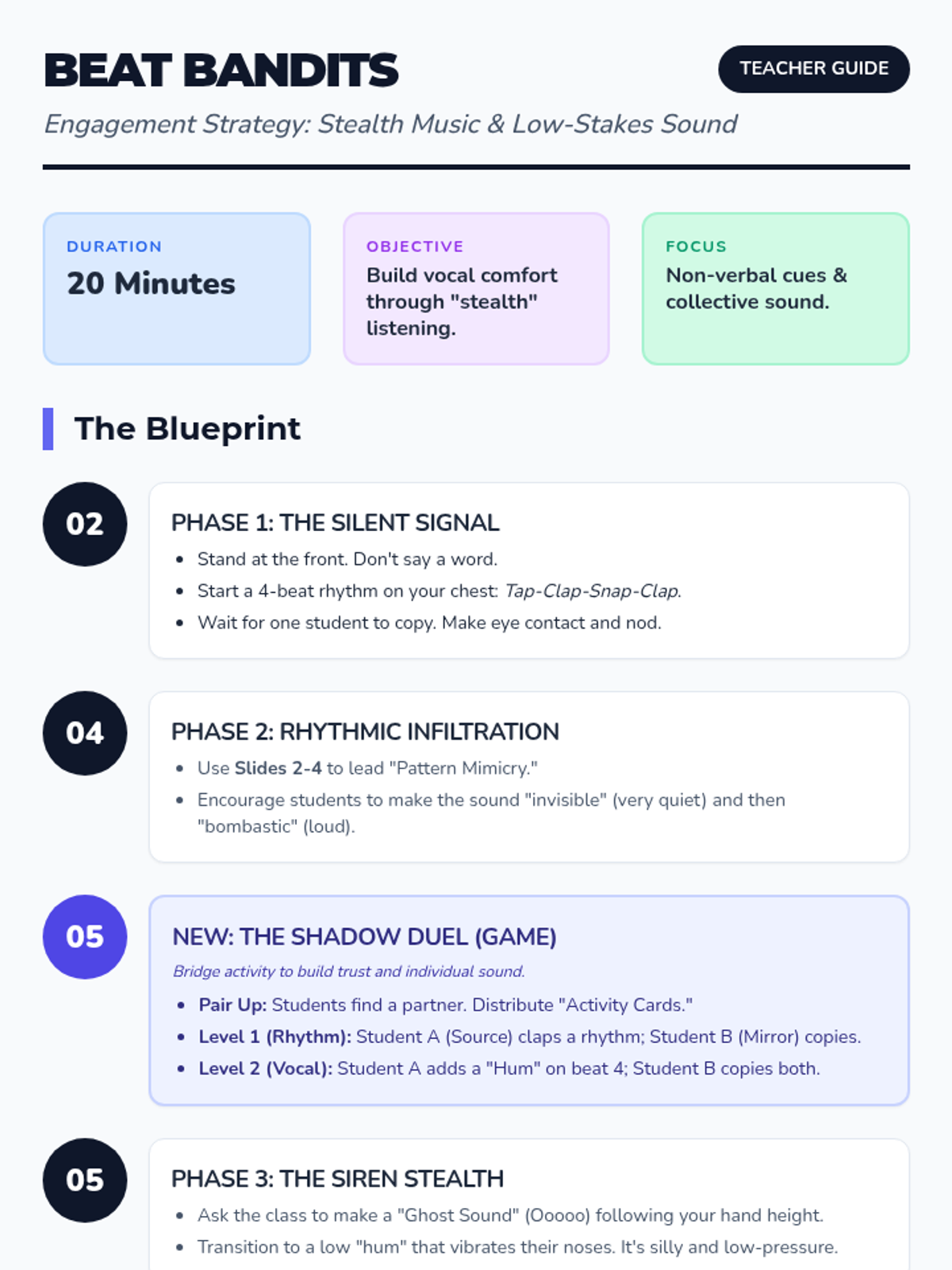
Updated 20-minute teacher guide incorporating the "Shadow Duel" pair game to bridge rhythmic work and vocalization.
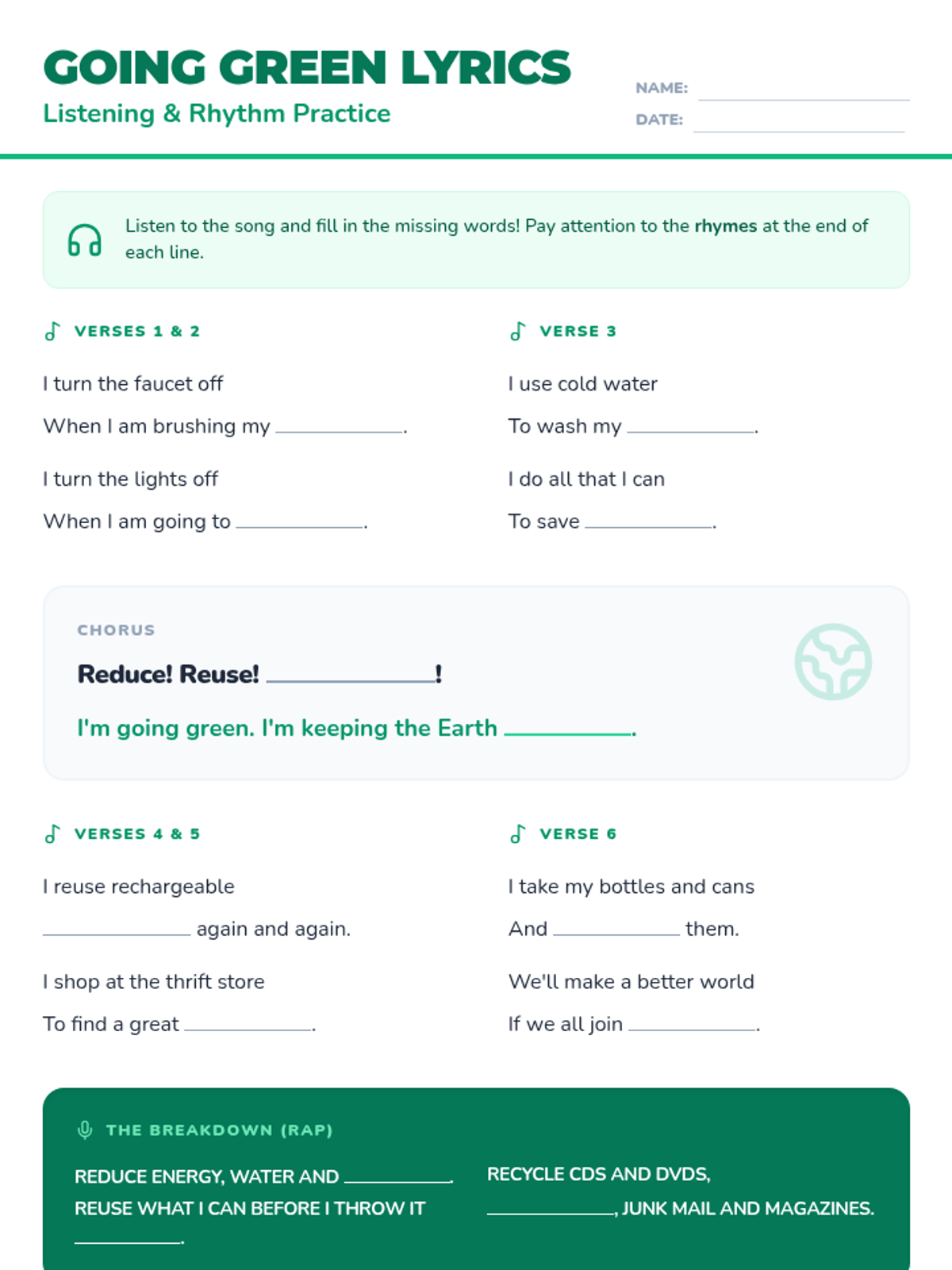
A cloze-style lyric worksheet for the 'Going Green Song' to help students internalize the melody, rhyme scheme, and vocabulary during the video viewing.
A vibrant visual presentation for the 'Going Green Remix' lesson, featuring rhythm warm-ups, the YouTube song embed, and activity instructions.
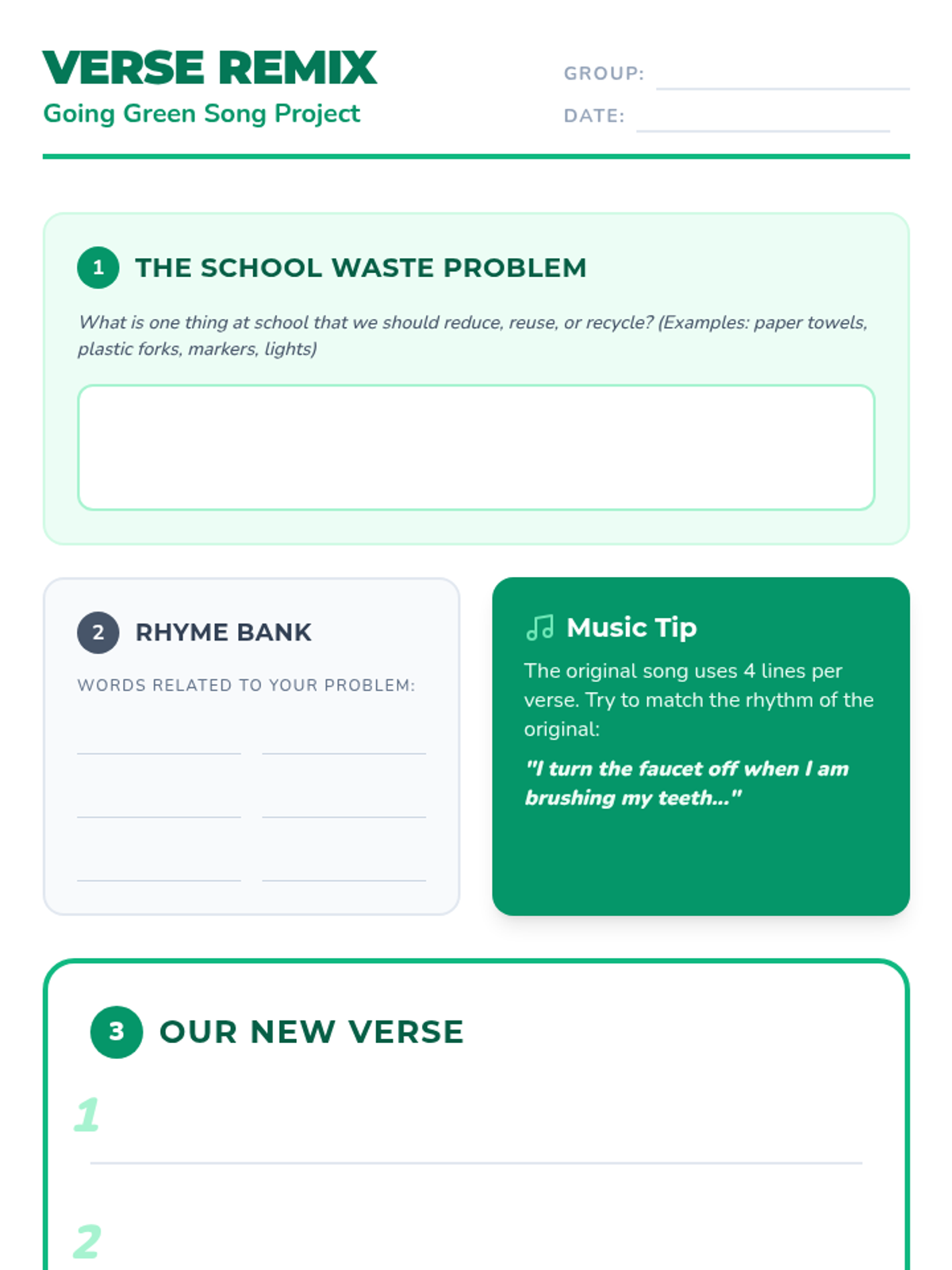
A student worksheet for identifying a school waste problem and composing a original 4-line verse to fit the 'Going Green Song' melody.
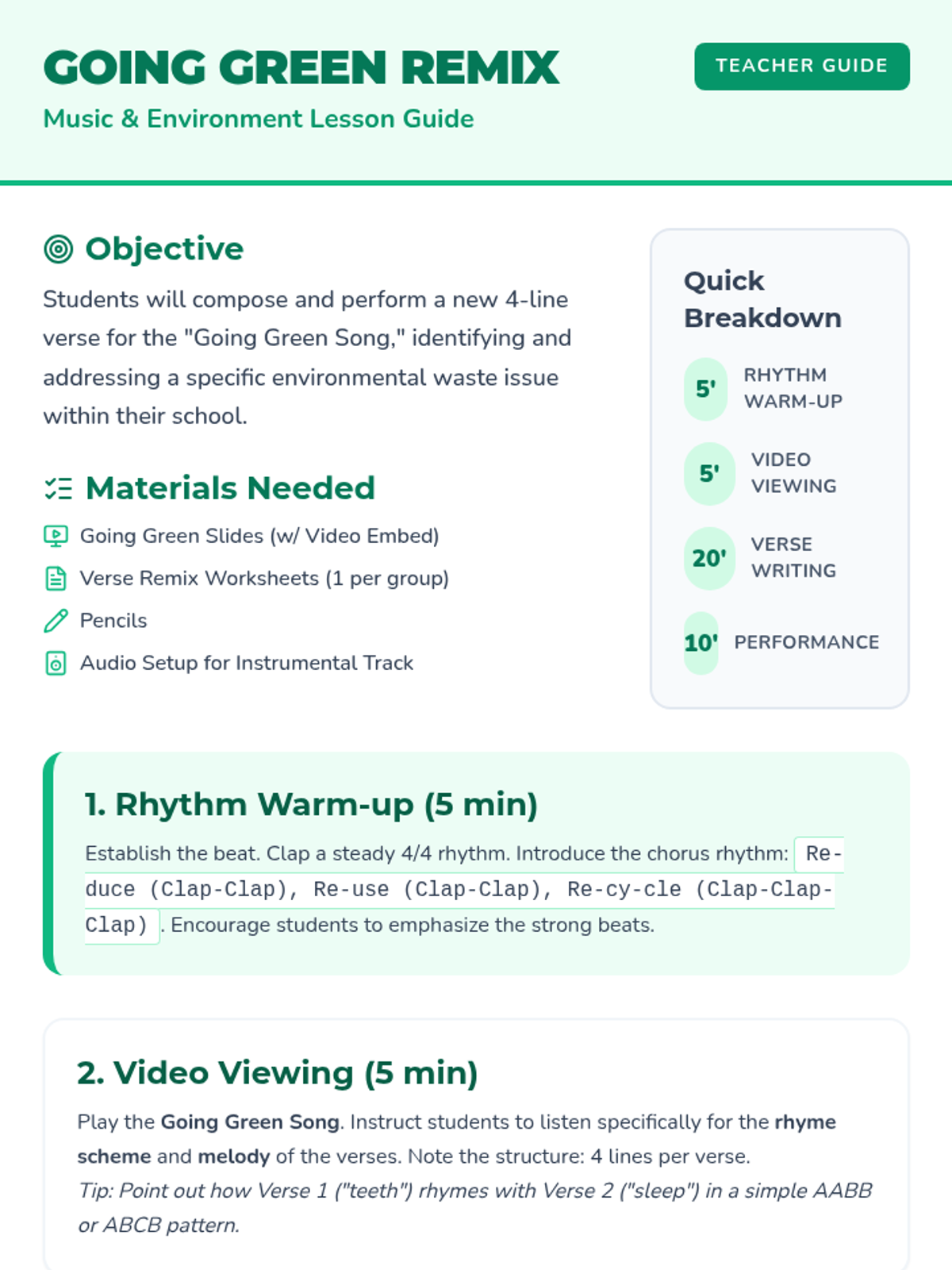
A comprehensive teacher guide for the Going Green Remix music lesson, featuring timing, instructional steps, and brainstorming prompts.
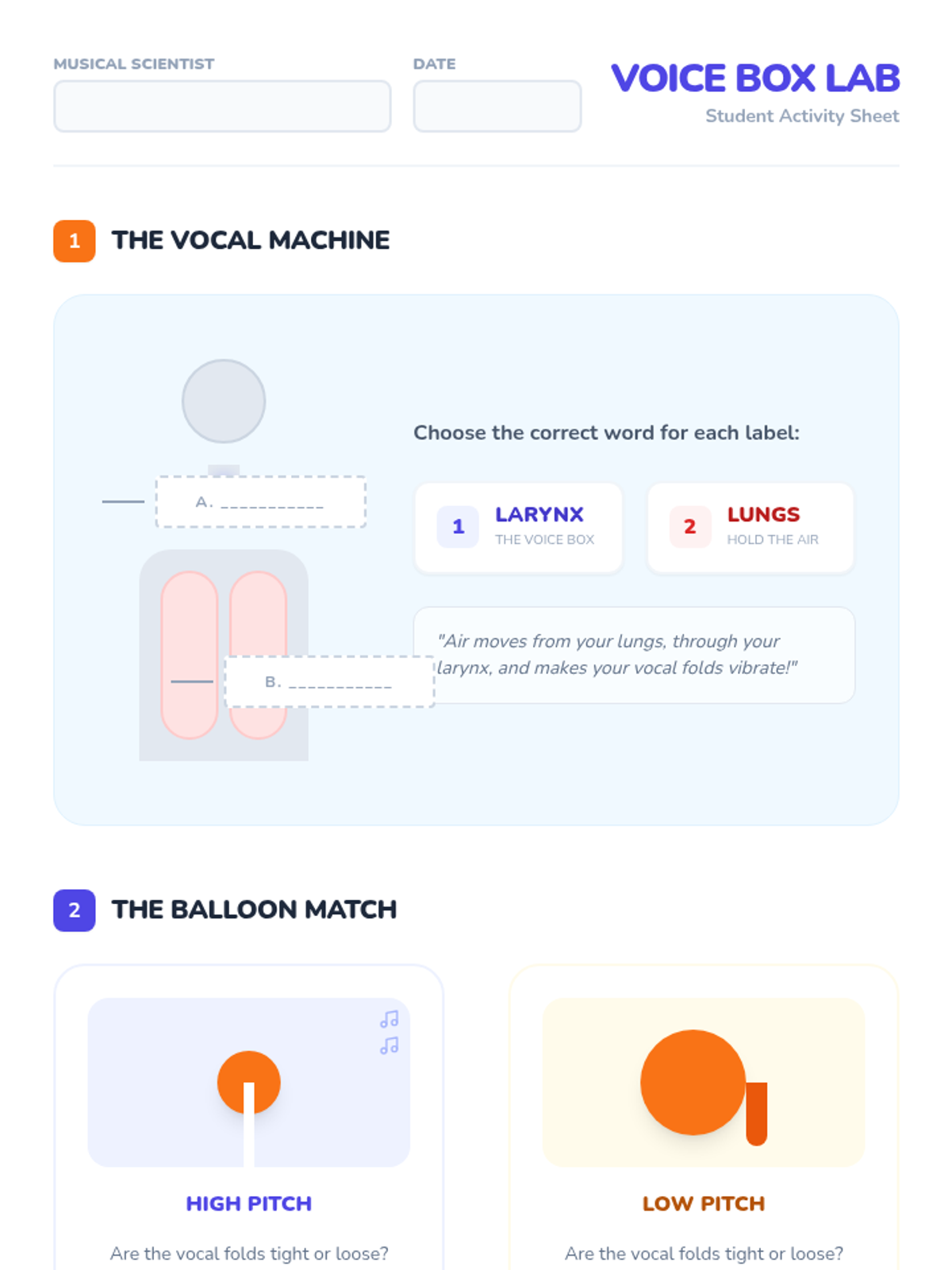
Interactive student activity sheet for the "Vocal Lab" lesson. Features anatomy labeling for the lungs and larynx, a pitch-matching section using the balloon analogy, and a creative drawing area for students to visualize their "Giant Bear" (forte) voice.
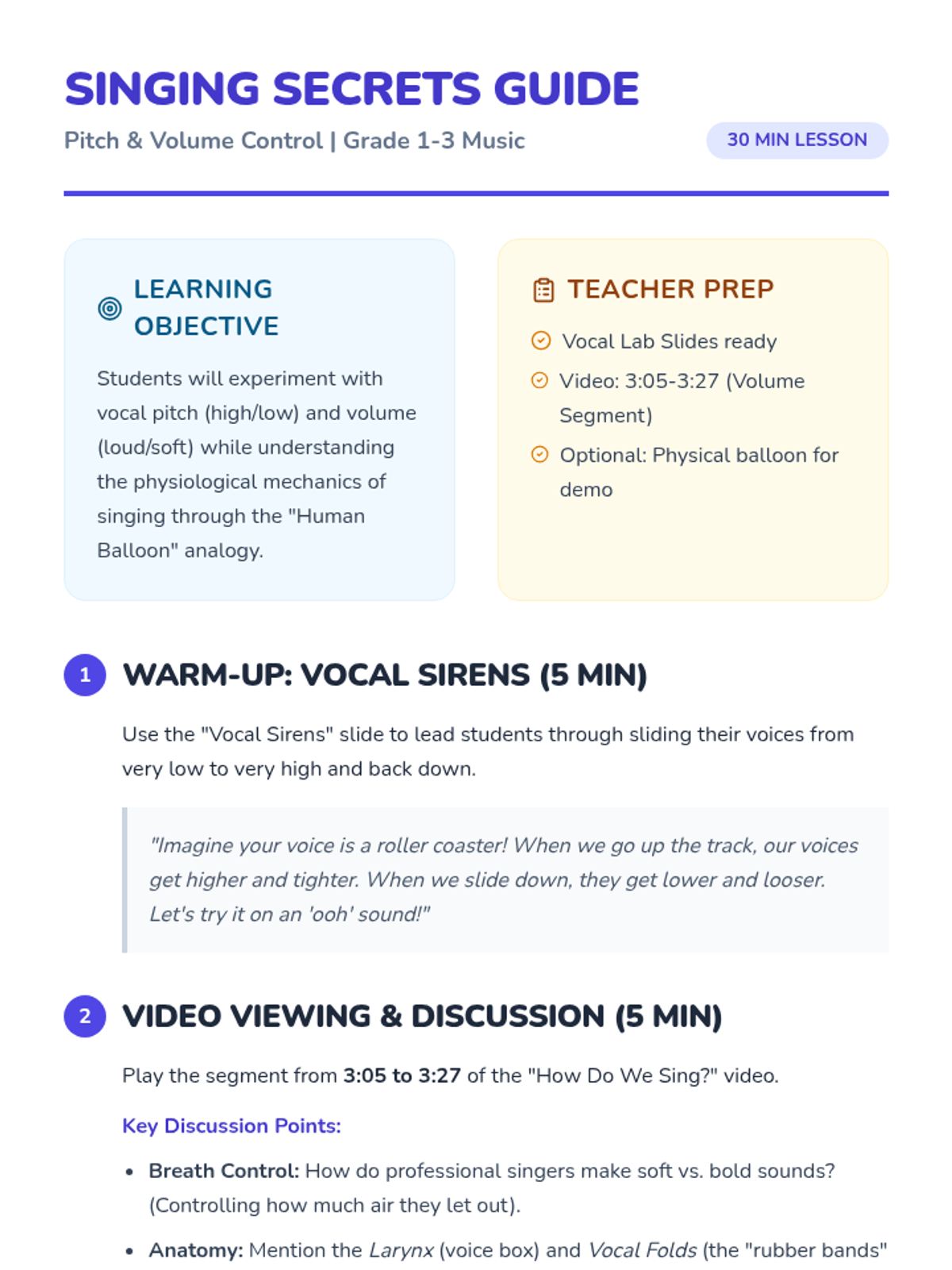
A detailed lesson plan and teacher facilitation guide for the "Vocal Lab" lesson. Includes instructional sequences, scripting prompts, pacing, differentiation strategies, and tips for addressing common musical misconceptions about pitch versus volume.
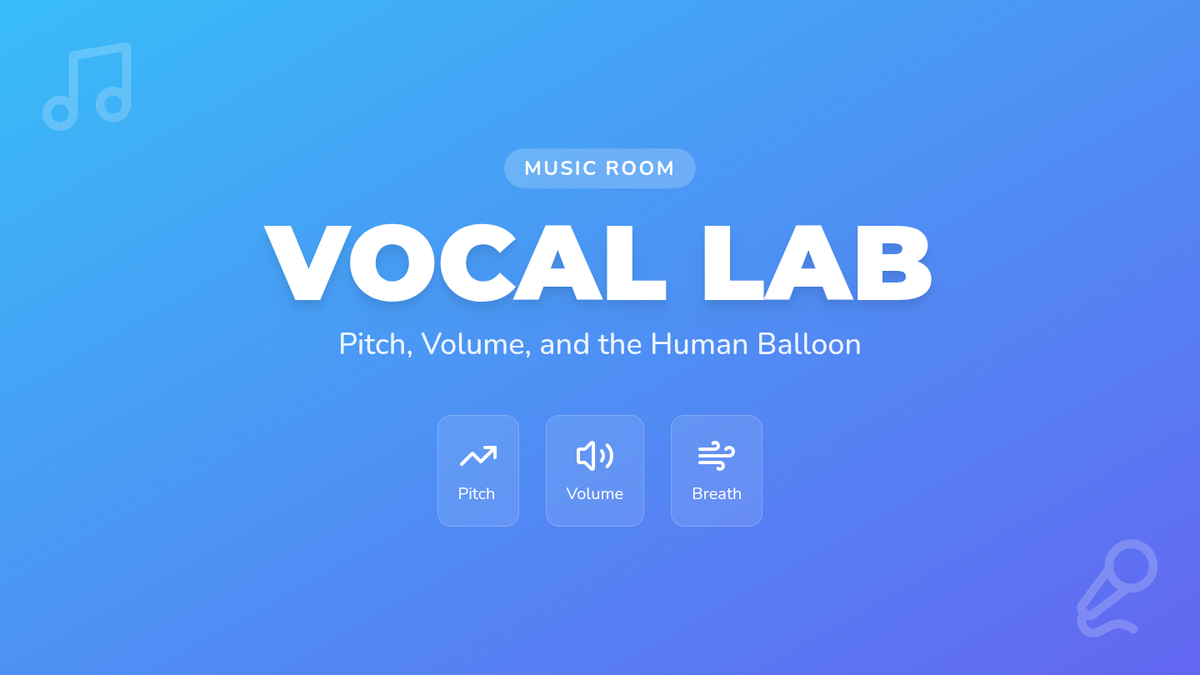
Engaging slide presentation for a K-3 music lesson on vocal pitch and volume. Features a siren warm-up, an embedded YouTube video from SciShow Kids, visual explanations of the balloon analogy, and interactive movement activities.
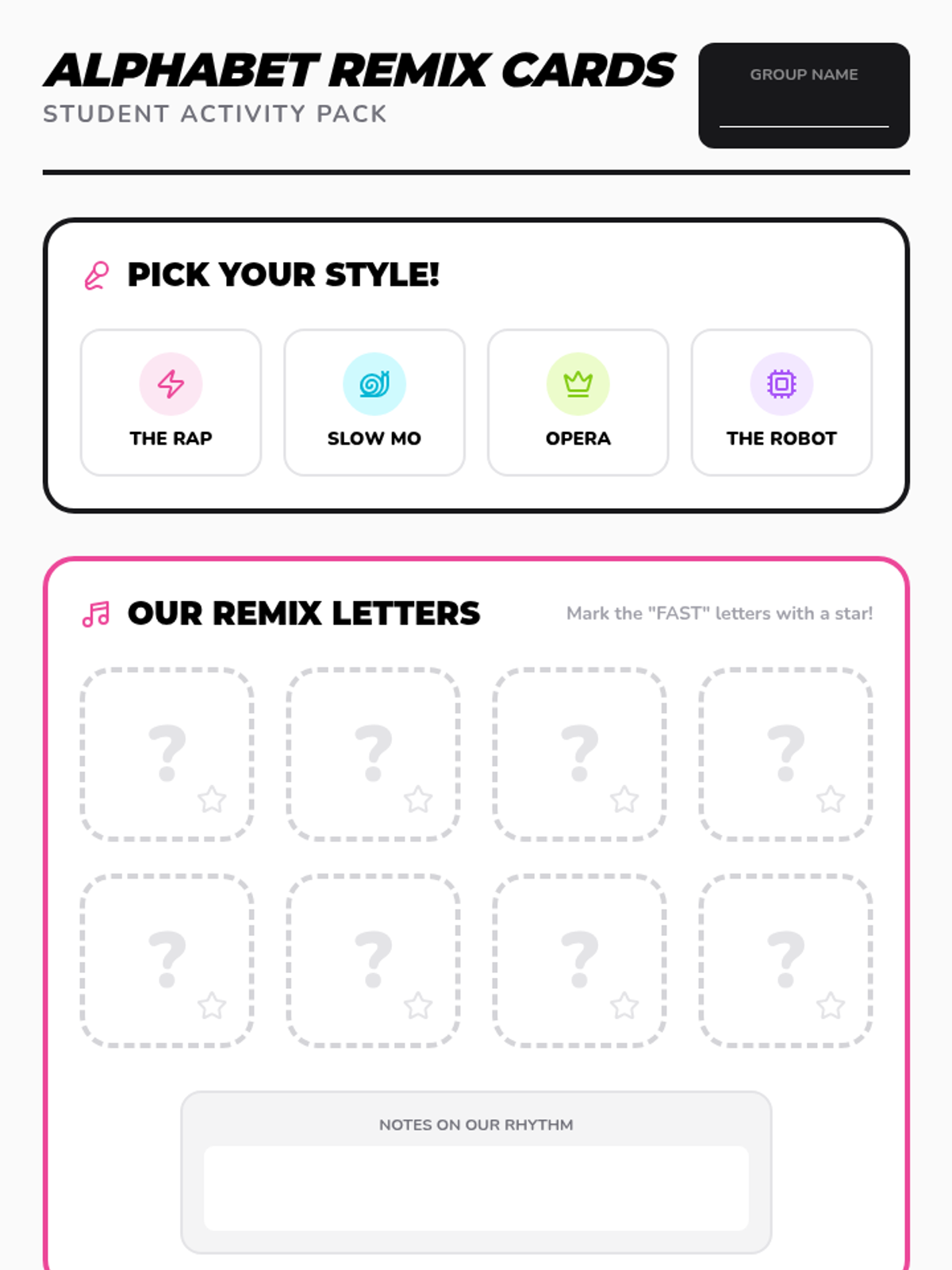
Graphic organizer for small group collaboration. Students choose a performance style and plan their rhythmic alphabet remix using visual card placeholders.
Final presentation slides for Lesson 5, reviewing the journey through music history and addressing the essential question regarding technology's impact on sound.
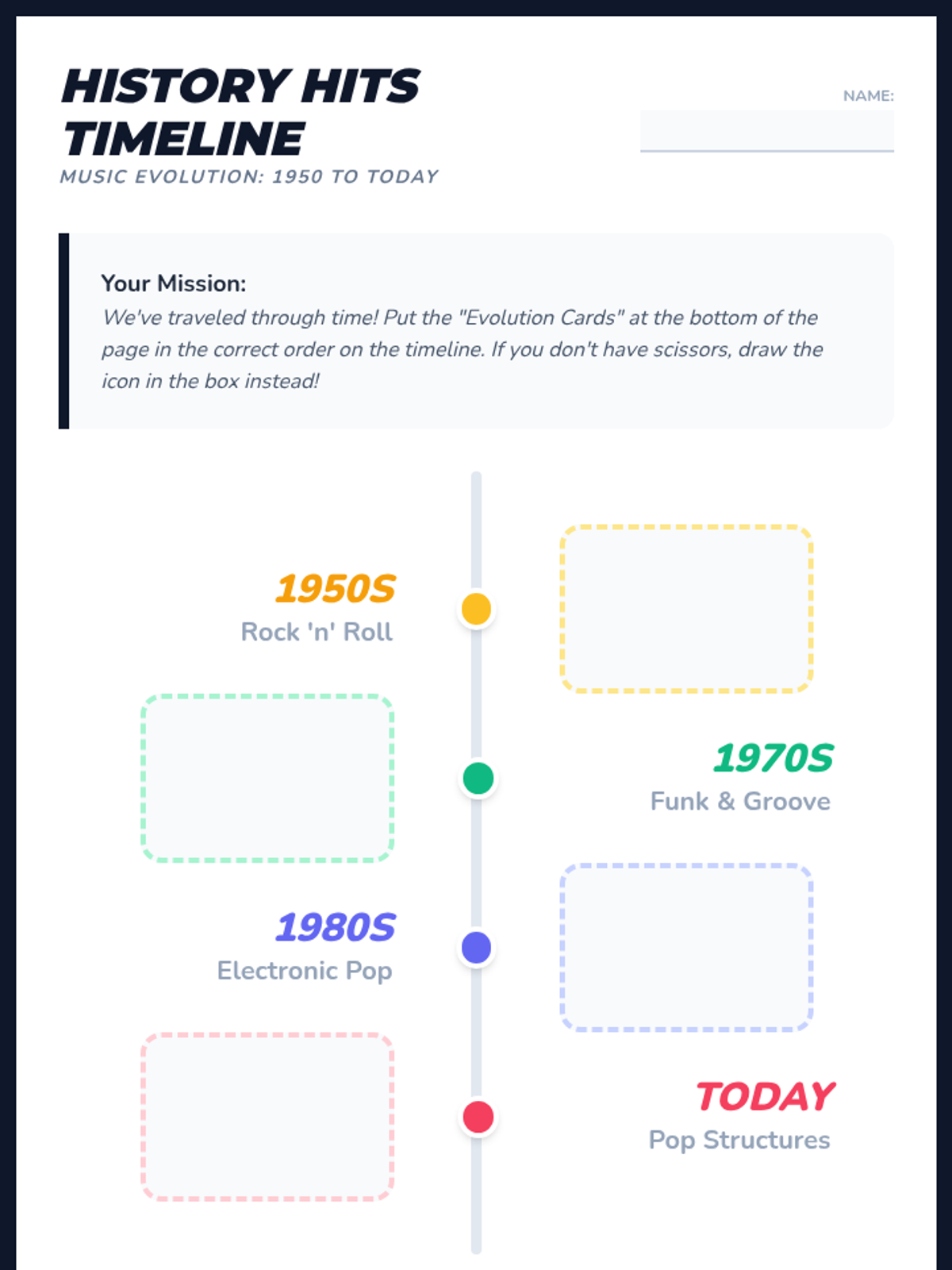
Final cumulative worksheet for Lesson 5. Students place technological and musical milestones on a chronological timeline from the 1950s to the present.
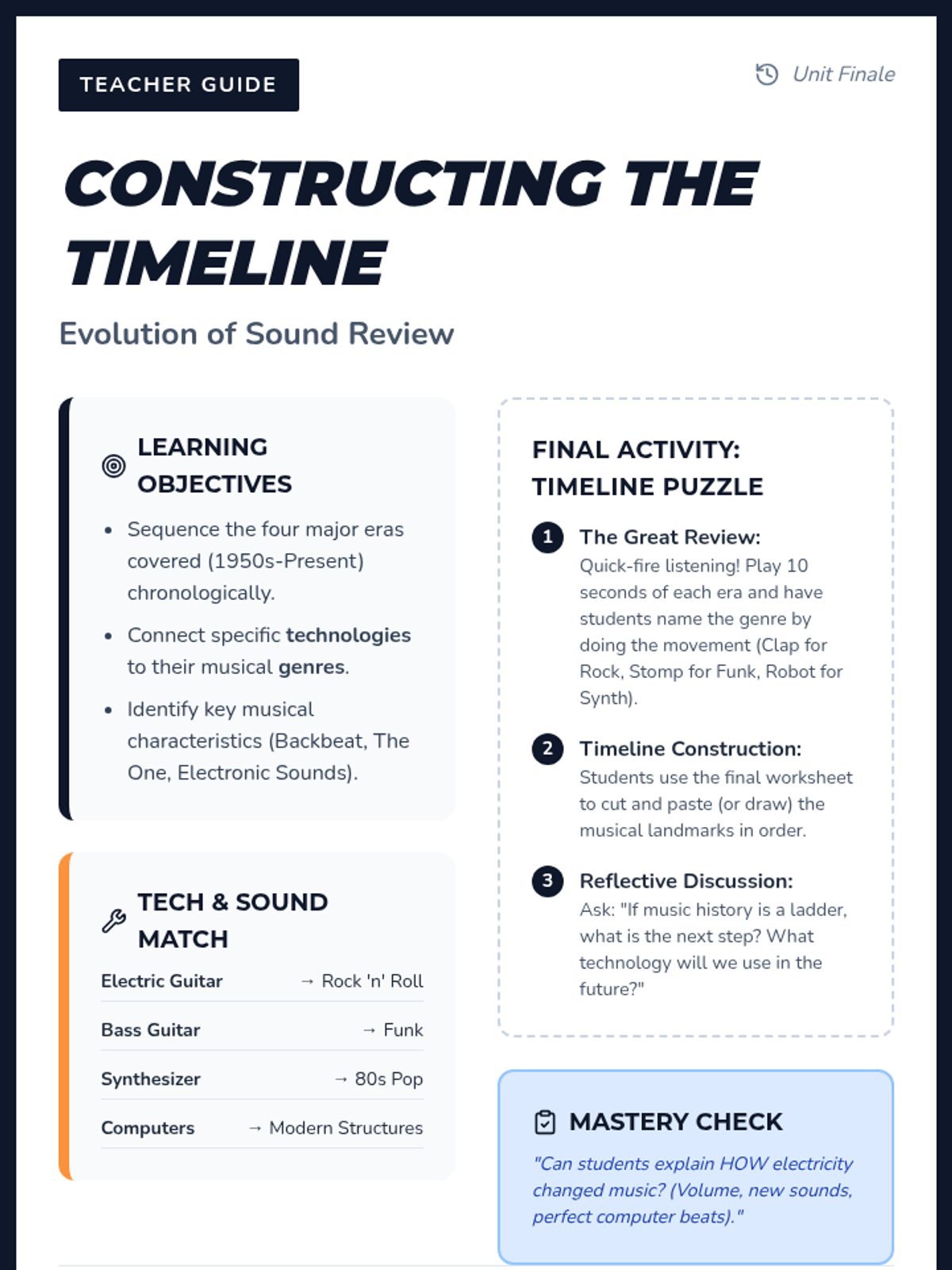
Teacher guide for the final lesson, synthesizing the entire unit. Includes a review of all eras, their technologies, and instructions for the cumulative timeline activity.
Presentation slides for Lesson 4, explaining the Verse-Chorus song structure using the 'Song Sandwich' analogy and identifying patterns in familiar music.
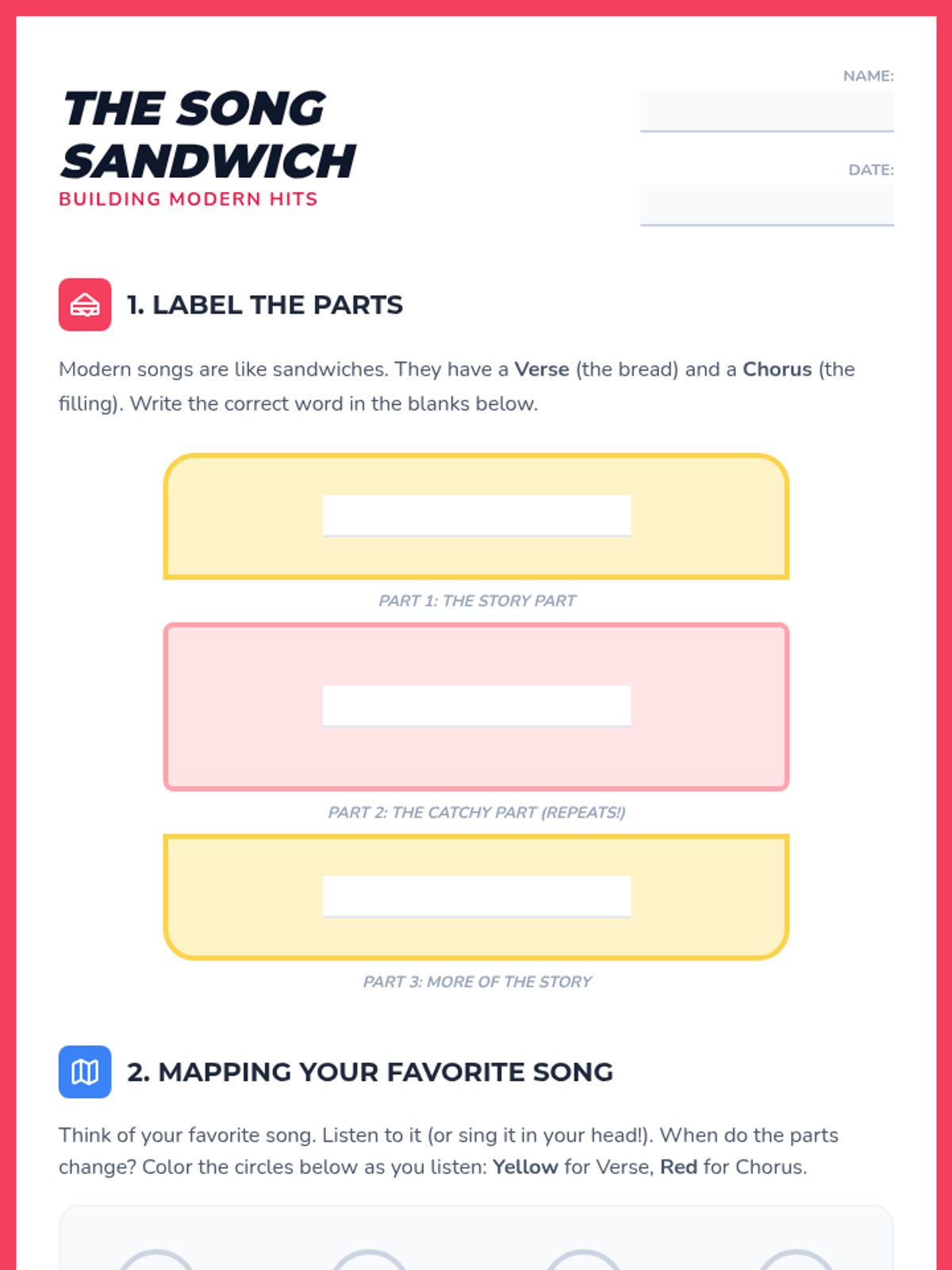
Student worksheet for Lesson 4, using a 'Song Sandwich' visual to help students identify verse and chorus structures. Includes a song mapping activity.
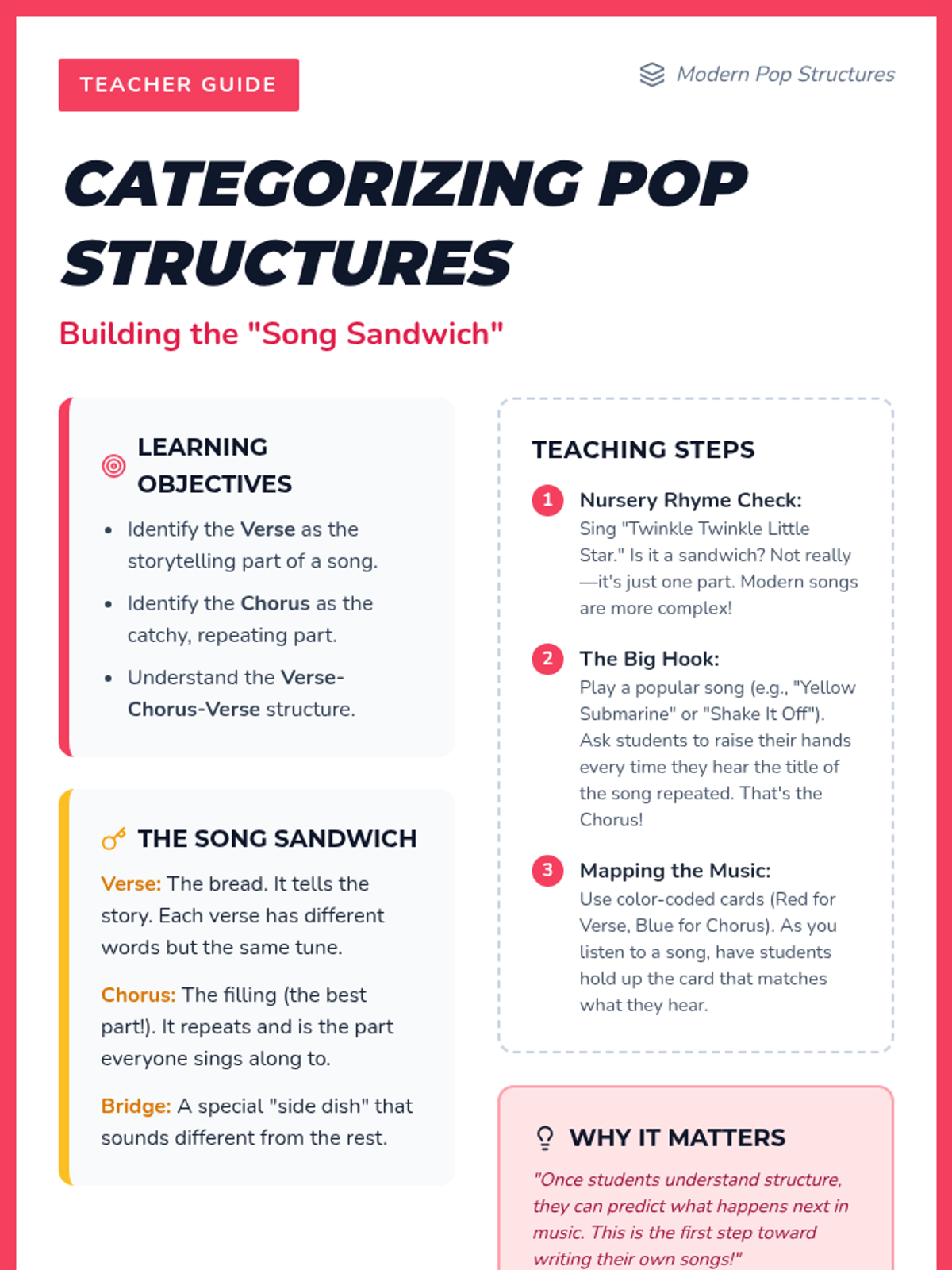
Teacher guide for Lesson 4, introducing song structure using the 'Song Sandwich' analogy. Focuses on identifying verses and choruses in modern pop music.
Presentation slides for Lesson 3, introducing electronic instruments, the synthesizer, and the difference between human and computer-generated beats in 1980s music.
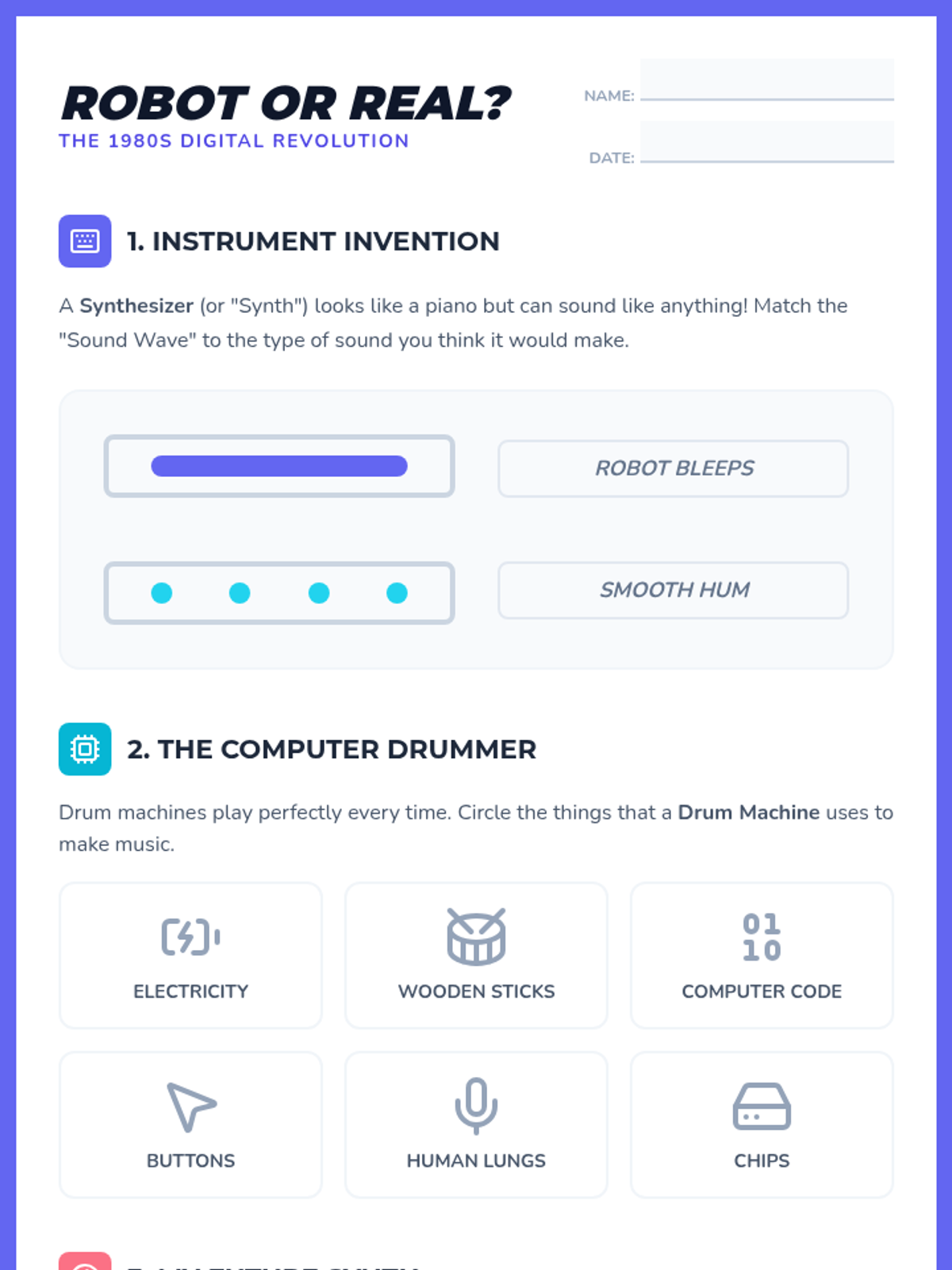
Student worksheet for Lesson 3, identifying digital components of 1980s music. Includes sound matching and a creative drawing task for a future instrument.
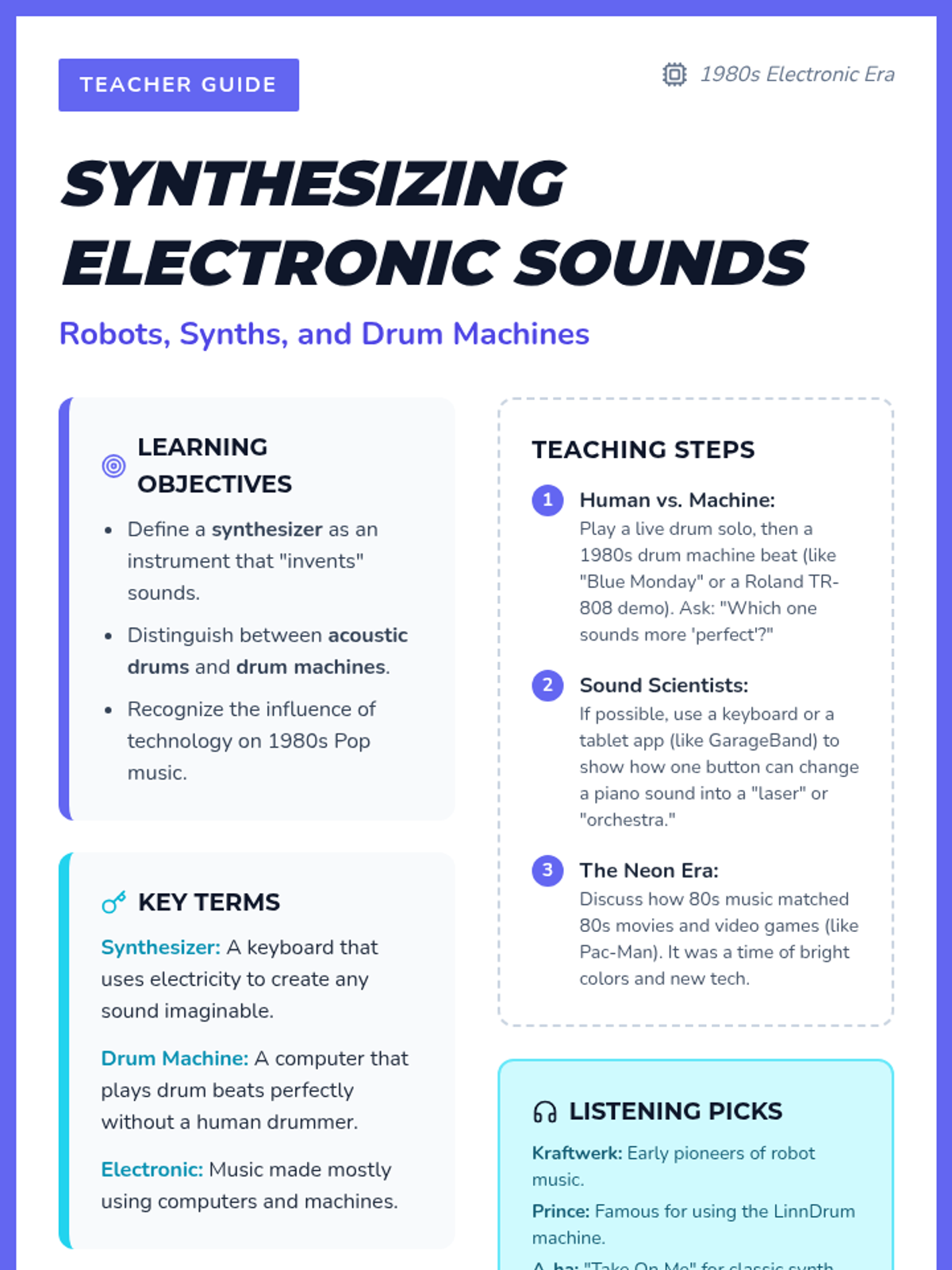
Teacher guide for Lesson 3, exploring the 1980s Electronic era. Focuses on synthesizers and drum machines, and how technology allowed musicians to 'invent' new sounds.
Presentation slides for Lesson 2, teaching the characteristics of 1970s Funk, the role of the bass guitar, and the importance of 'The One' rhythmically.
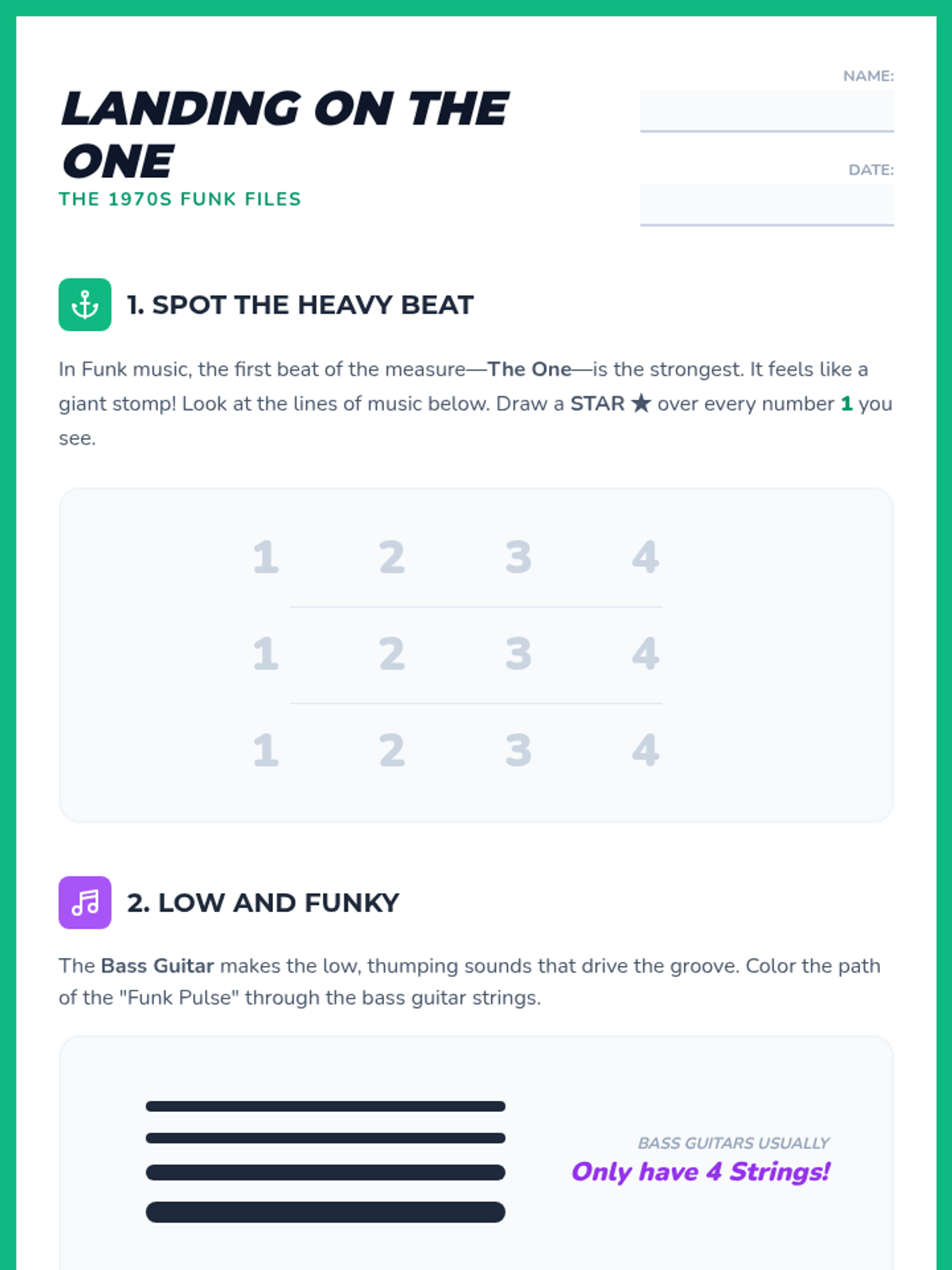
Student worksheet for Lesson 2, focused on identifying 'The One' in Funk music and comparing the rhythmic emphasis of Funk versus Rock 'n' Roll.
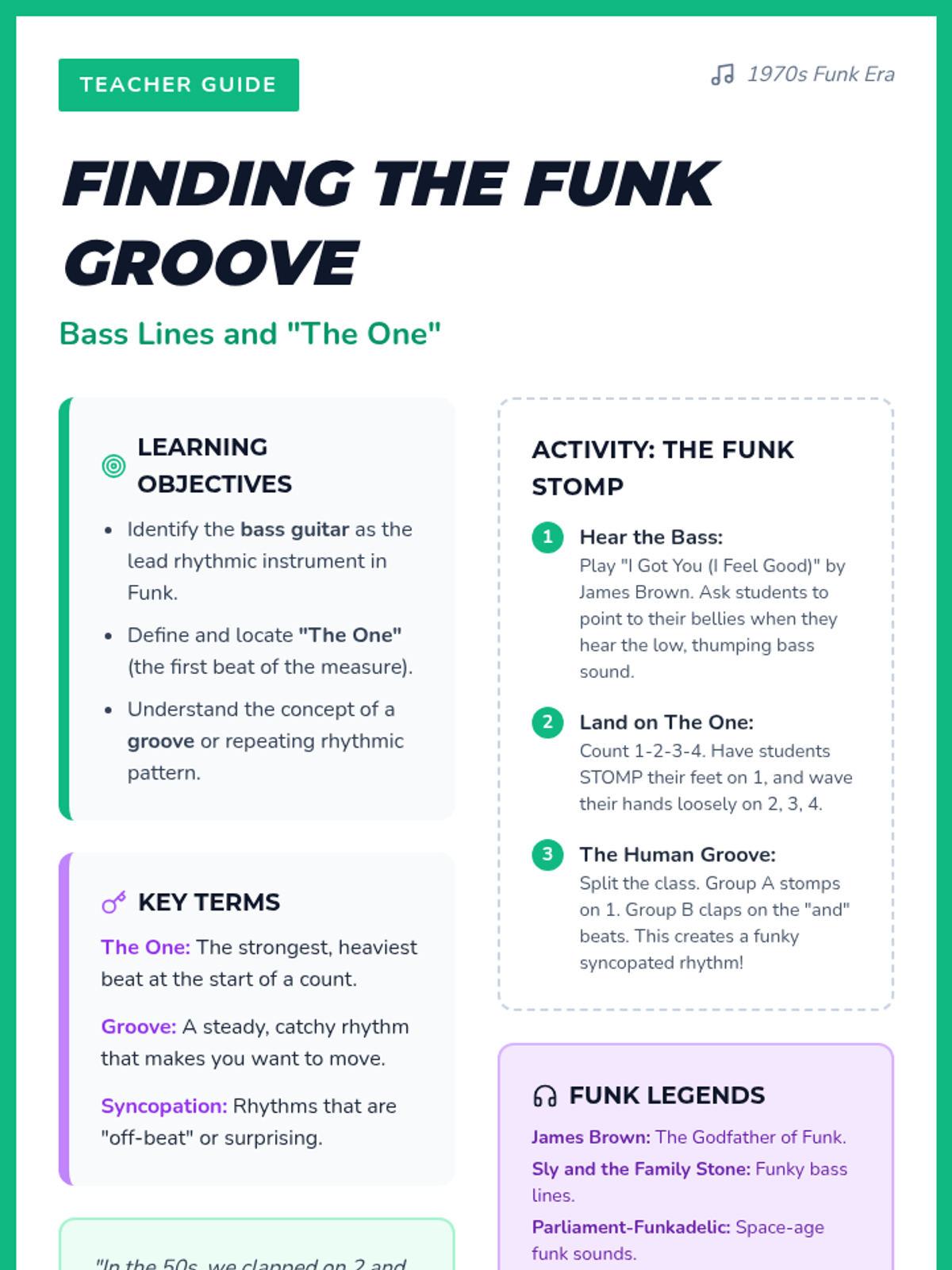
Teacher guide for Lesson 2, focusing on the 1970s Funk era. It introduces the bass guitar, 'The One,' and rhythmic activities like the Funk Stomp.
Presentation slides for Lesson 1, introducing the transition from acoustic to electric music, the electric guitar parts, and the backbeat rhythm.
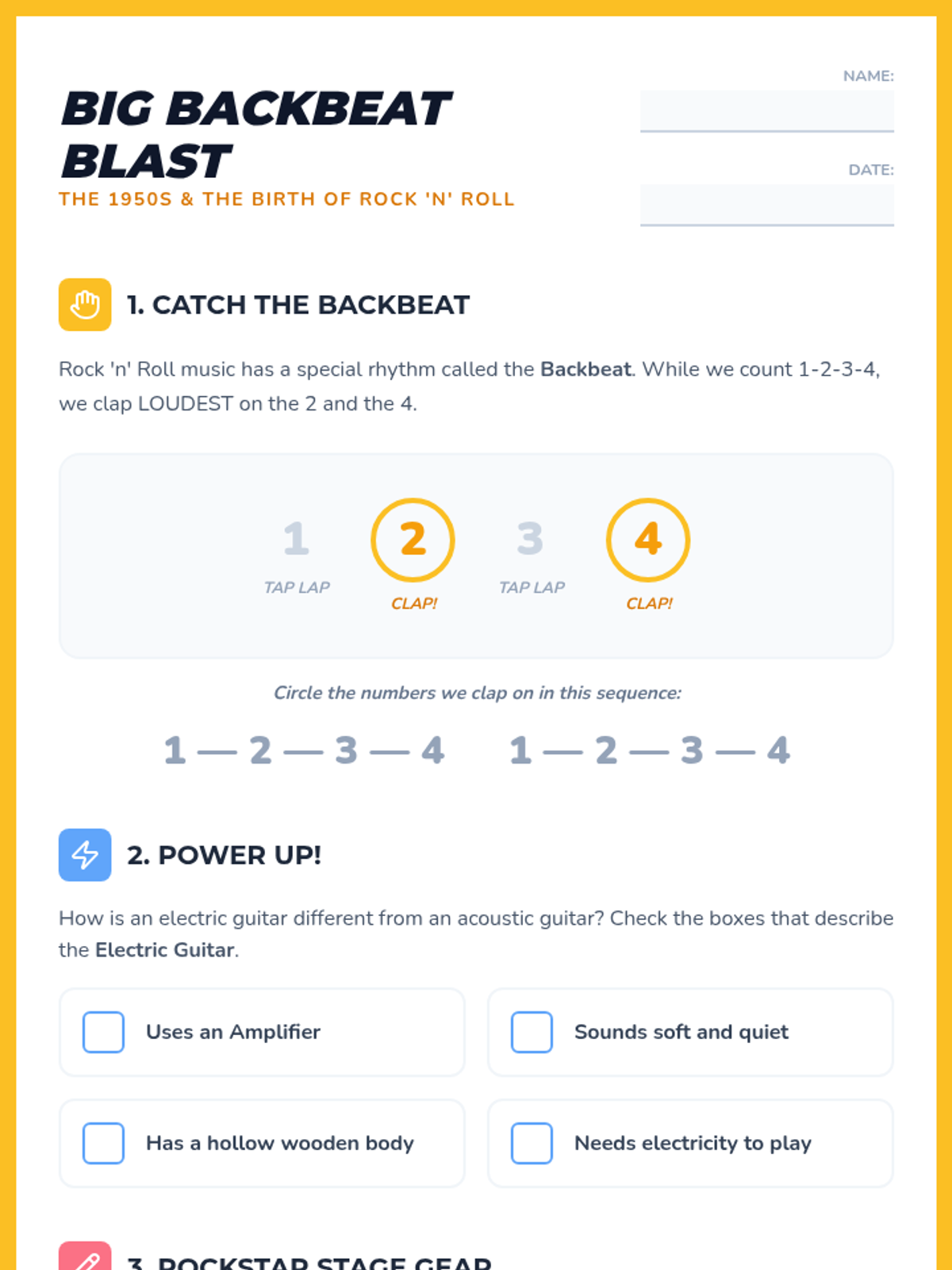
A student worksheet for Lesson 1 focused on identifying the backbeat and comparing acoustic and electric instruments. Includes a drawing section for stage gear.
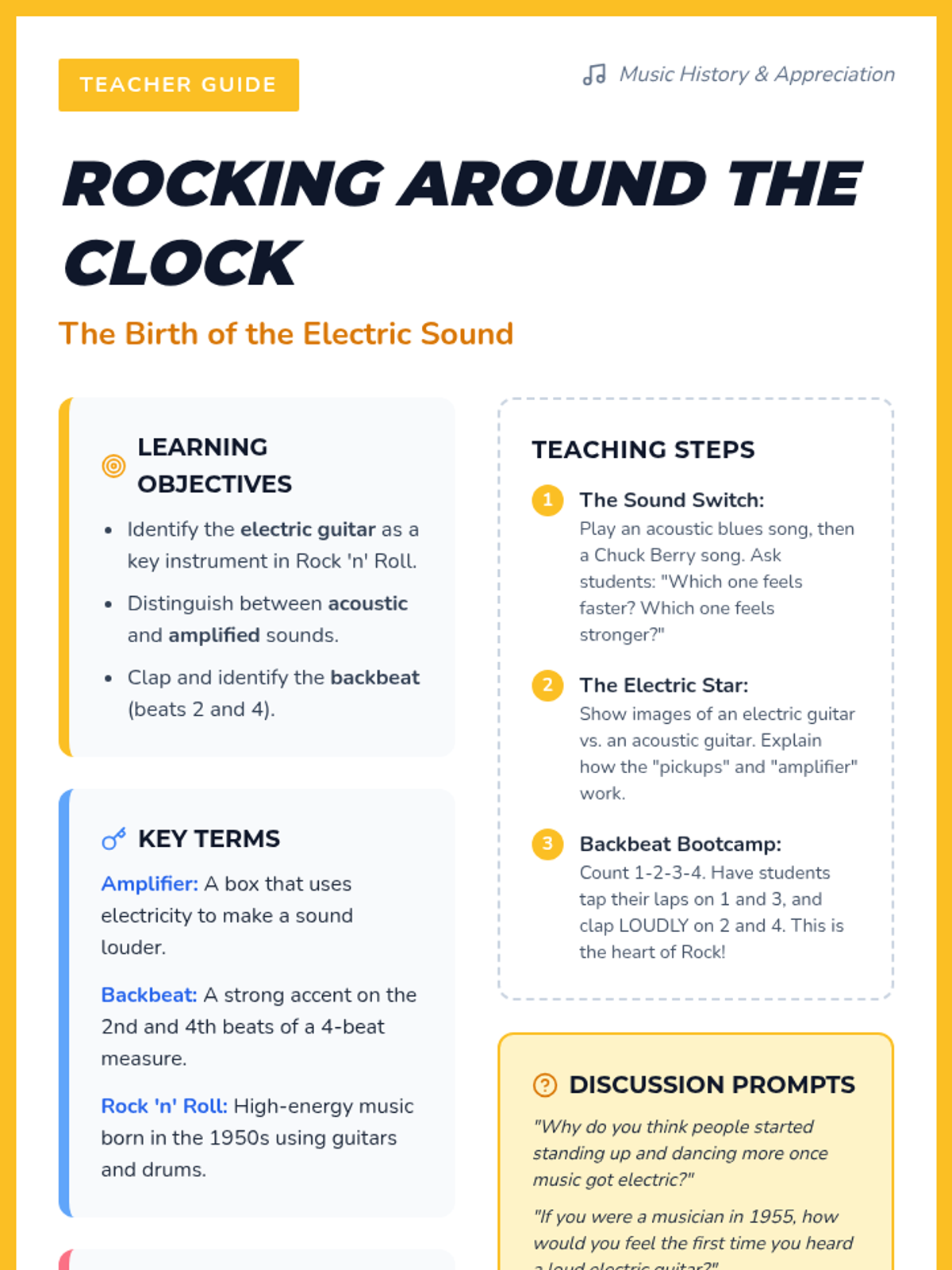
A comprehensive teacher guide for Lesson 1, covering the birth of Rock 'n' Roll, the backbeat, and the impact of the electric guitar. Includes listening suggestions and activity steps.
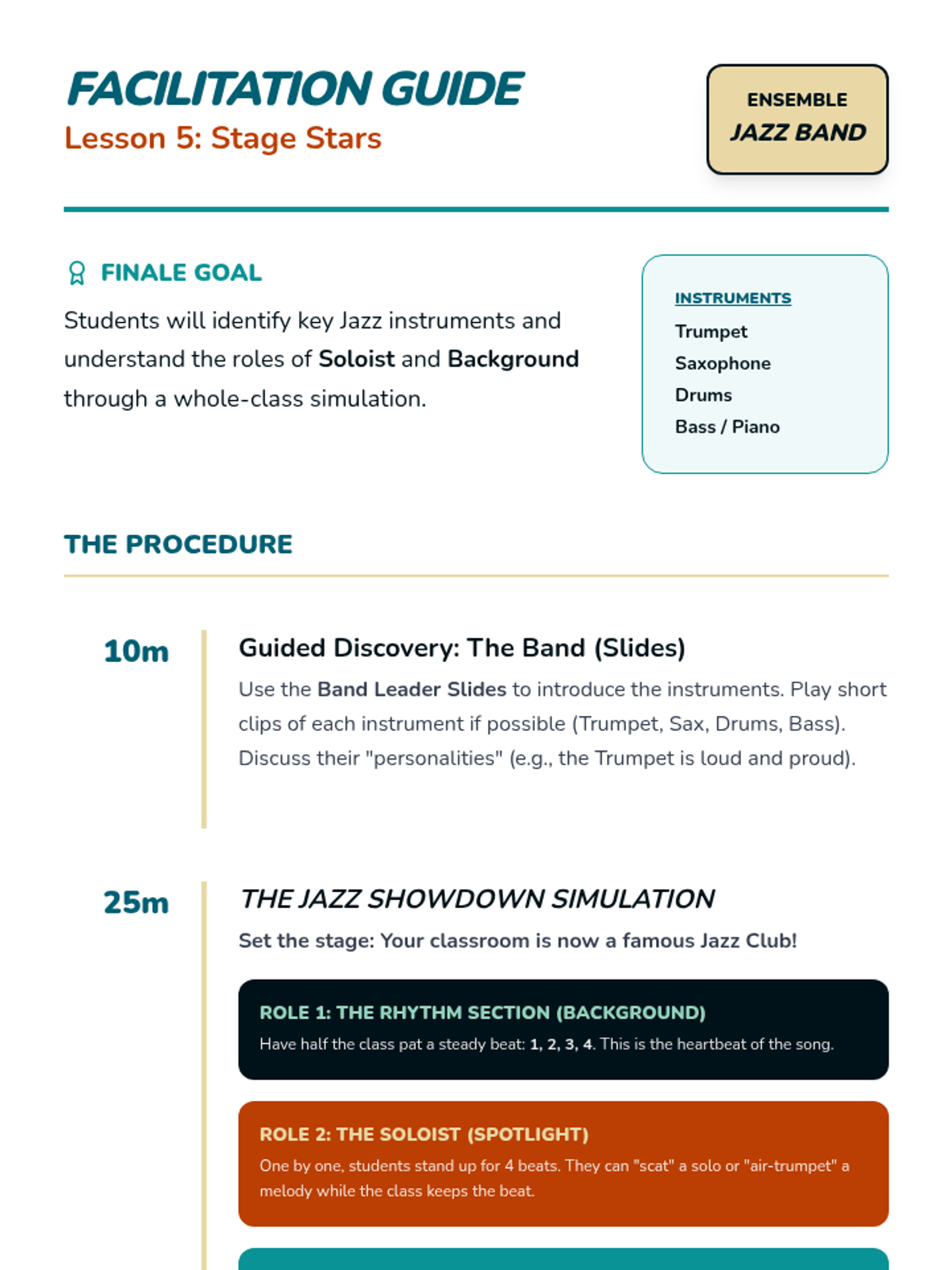
A teacher guide for Lesson 5 including a band simulation framework, instrument identification guide, and a final sequence reflection.
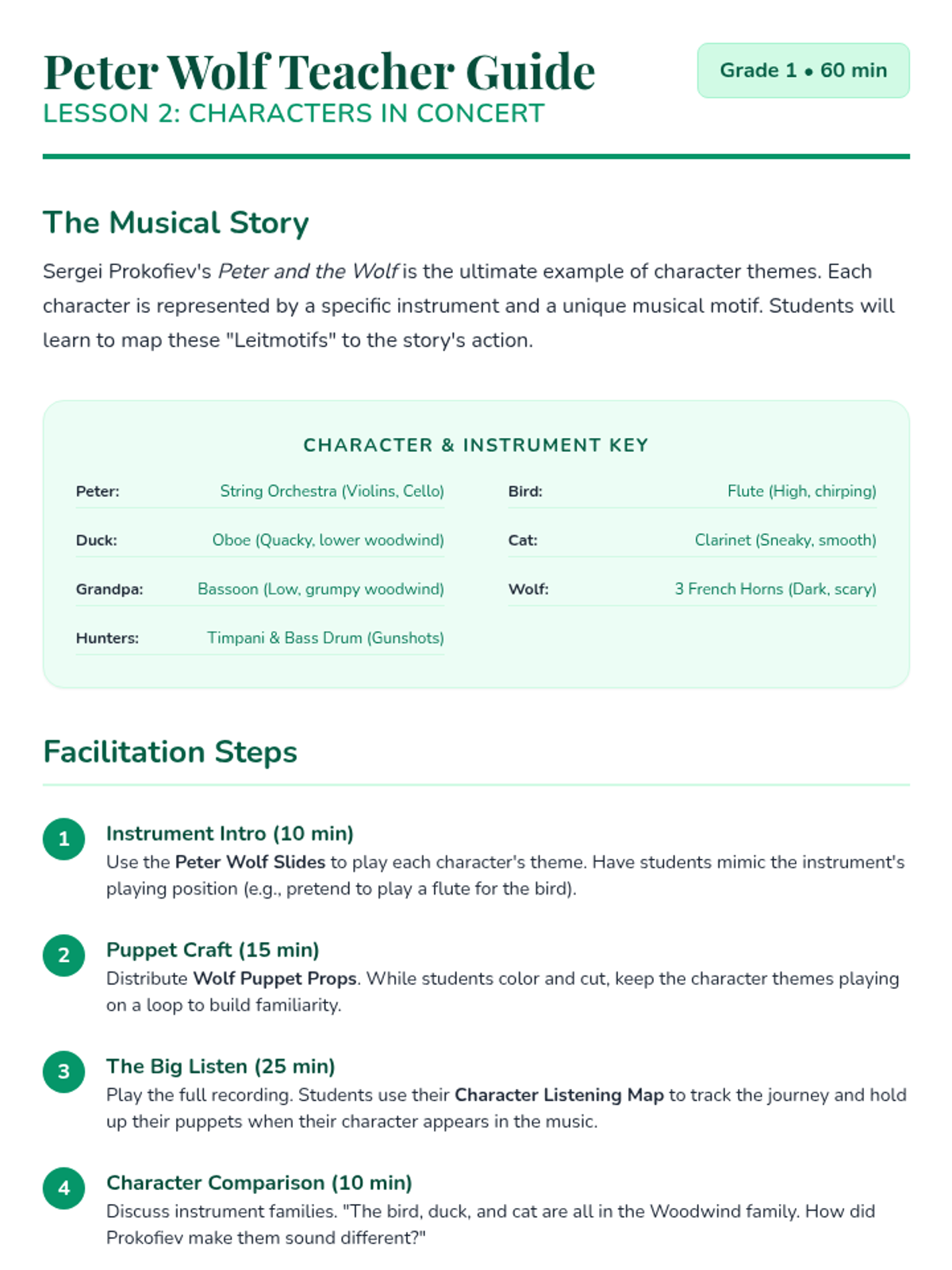
A teacher guide for Lesson 2, providing instructional steps and character mapping for Prokofiev's 'Peter and the Wolf'.
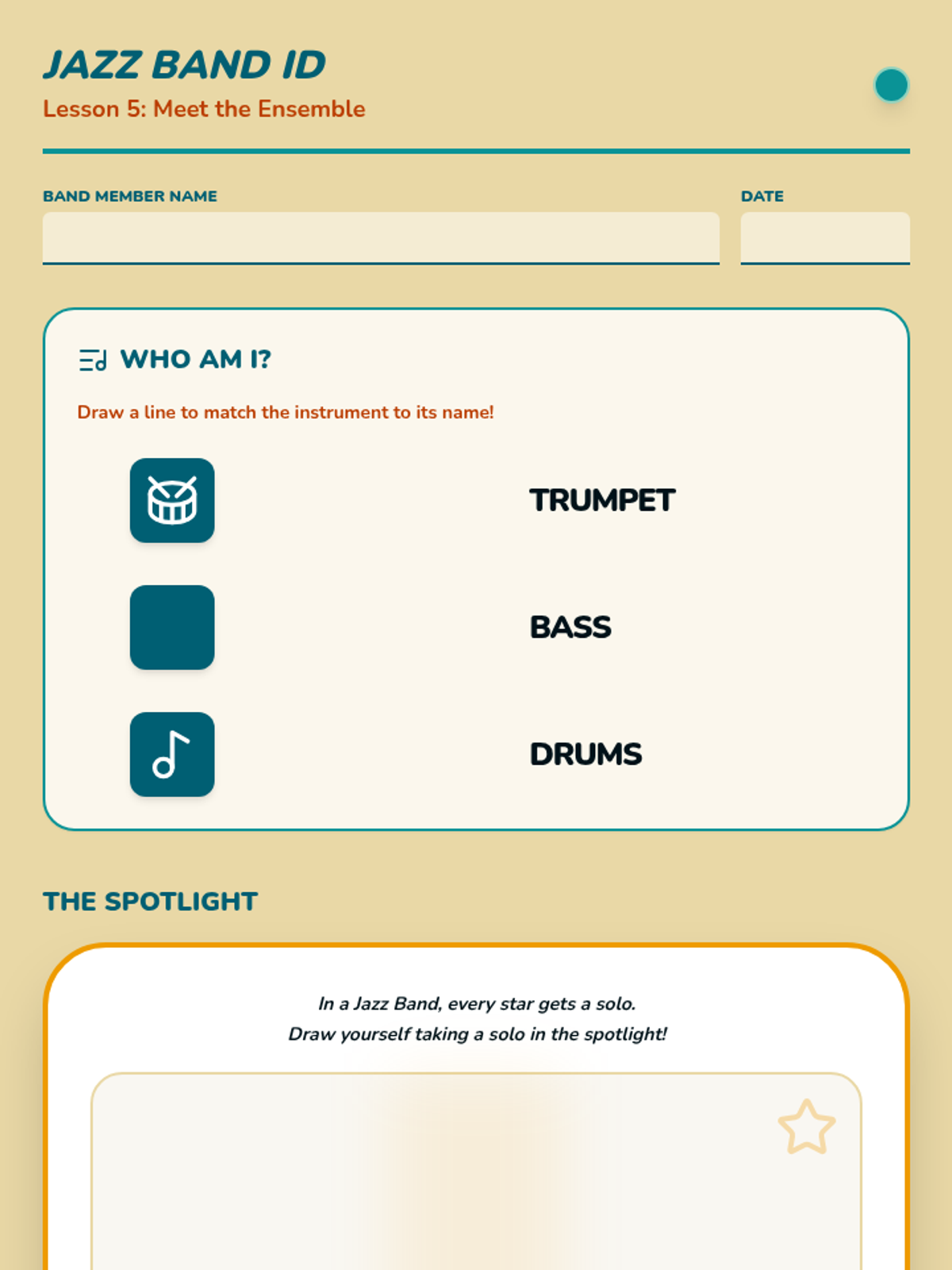
A 1st Grade instrument identification worksheet where students match Jazz instruments and draw themselves as a soloist.
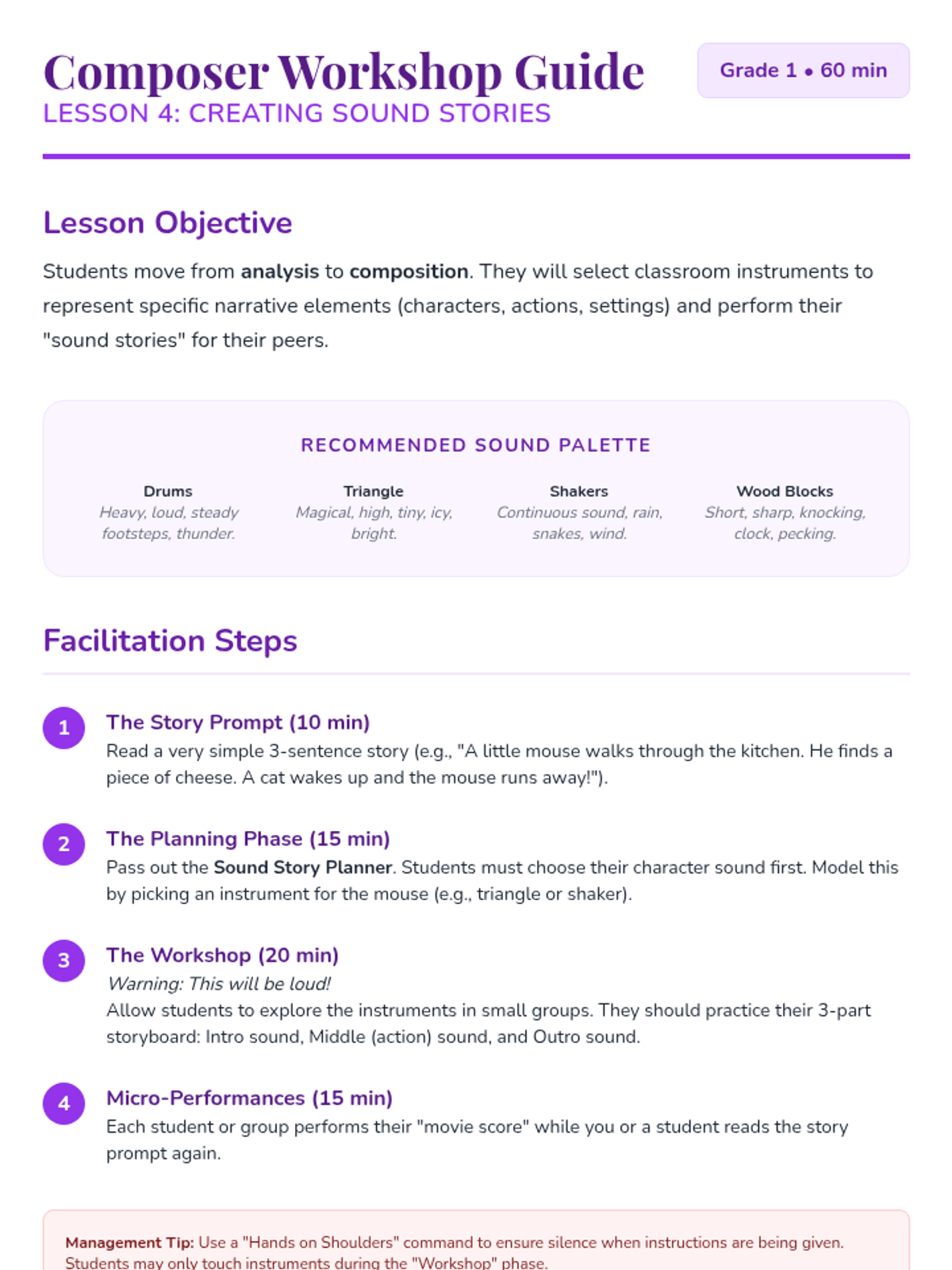
A facilitation guide for the Sound Story Creators lesson, providing tips for instrument management and instructional steps for student composition.
Intro to Jazz instruments and roles for Lesson 5.