Develops technical proficiency and creative movement skills across various styles. Examines choreographic principles alongside the historical and cultural origins of diverse global dance forms.
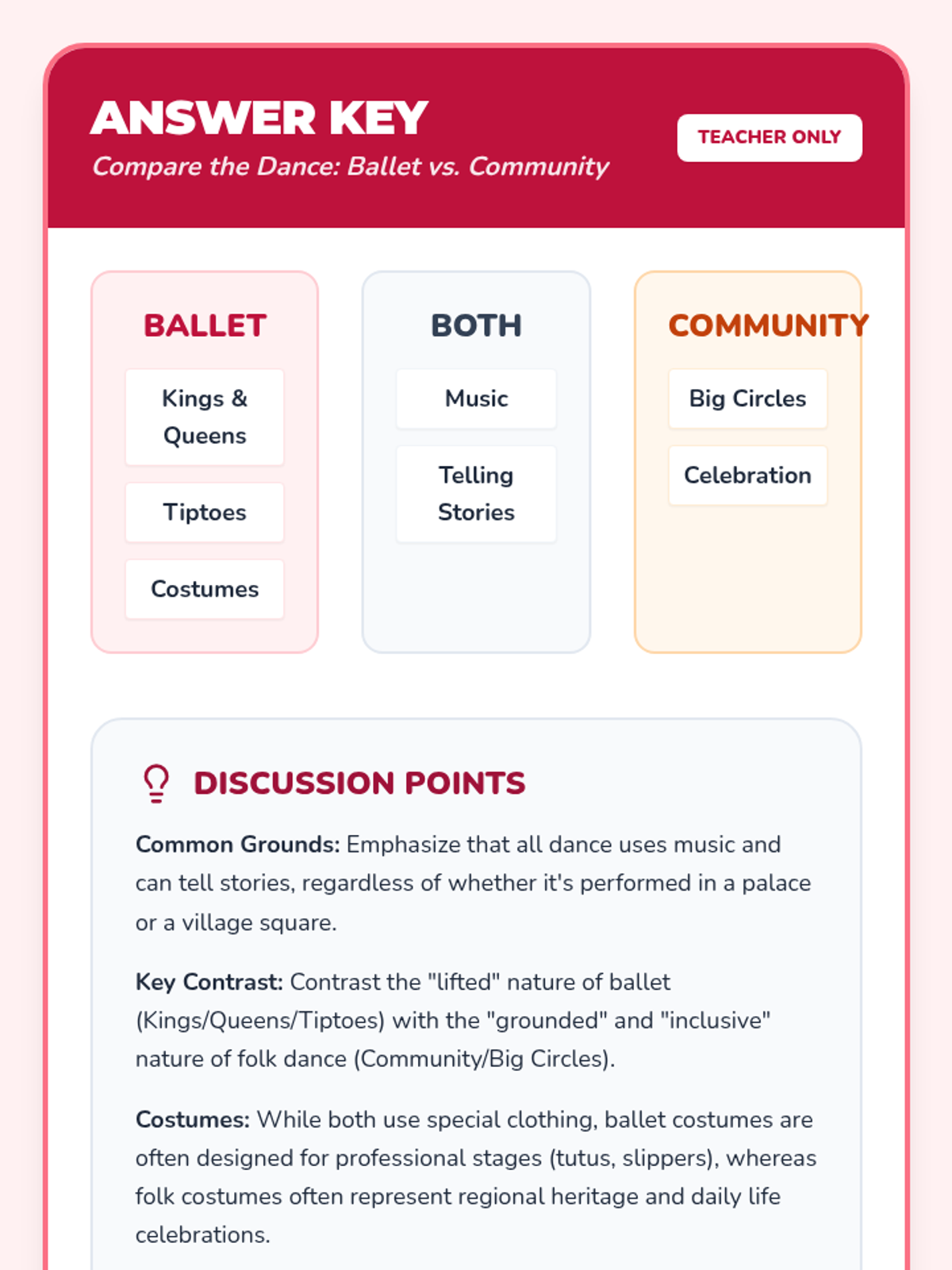
An answer key and teaching guide for the dance comparison activity, highlighting key differences between ballet and community folk traditions.
A concluding slide deck for the sequence, reviewing key concepts from previous lessons and guiding students through their final creative project.
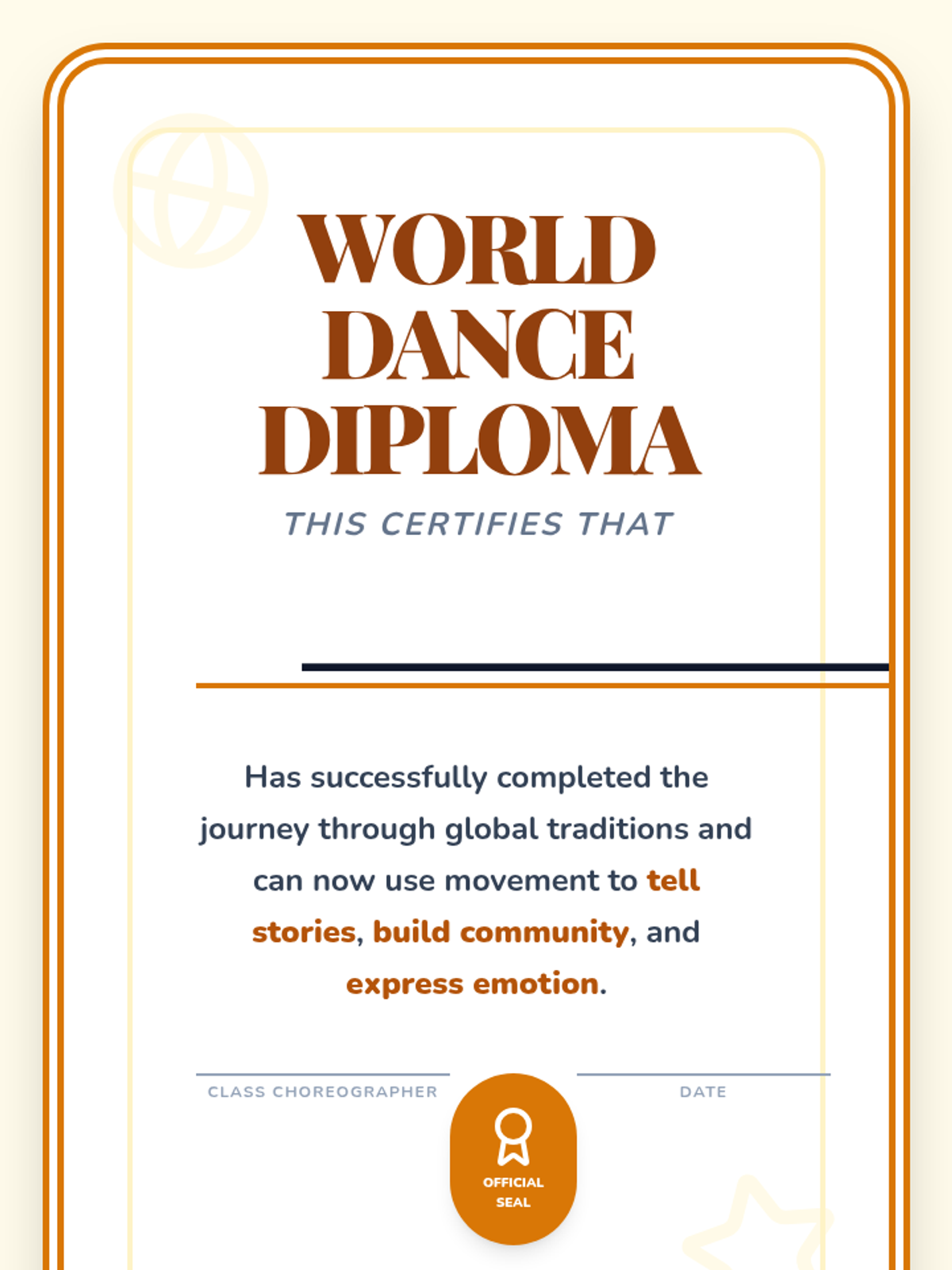
A commemorative diploma for 1st-grade students to celebrate their completion of the dance history and culture sequence.
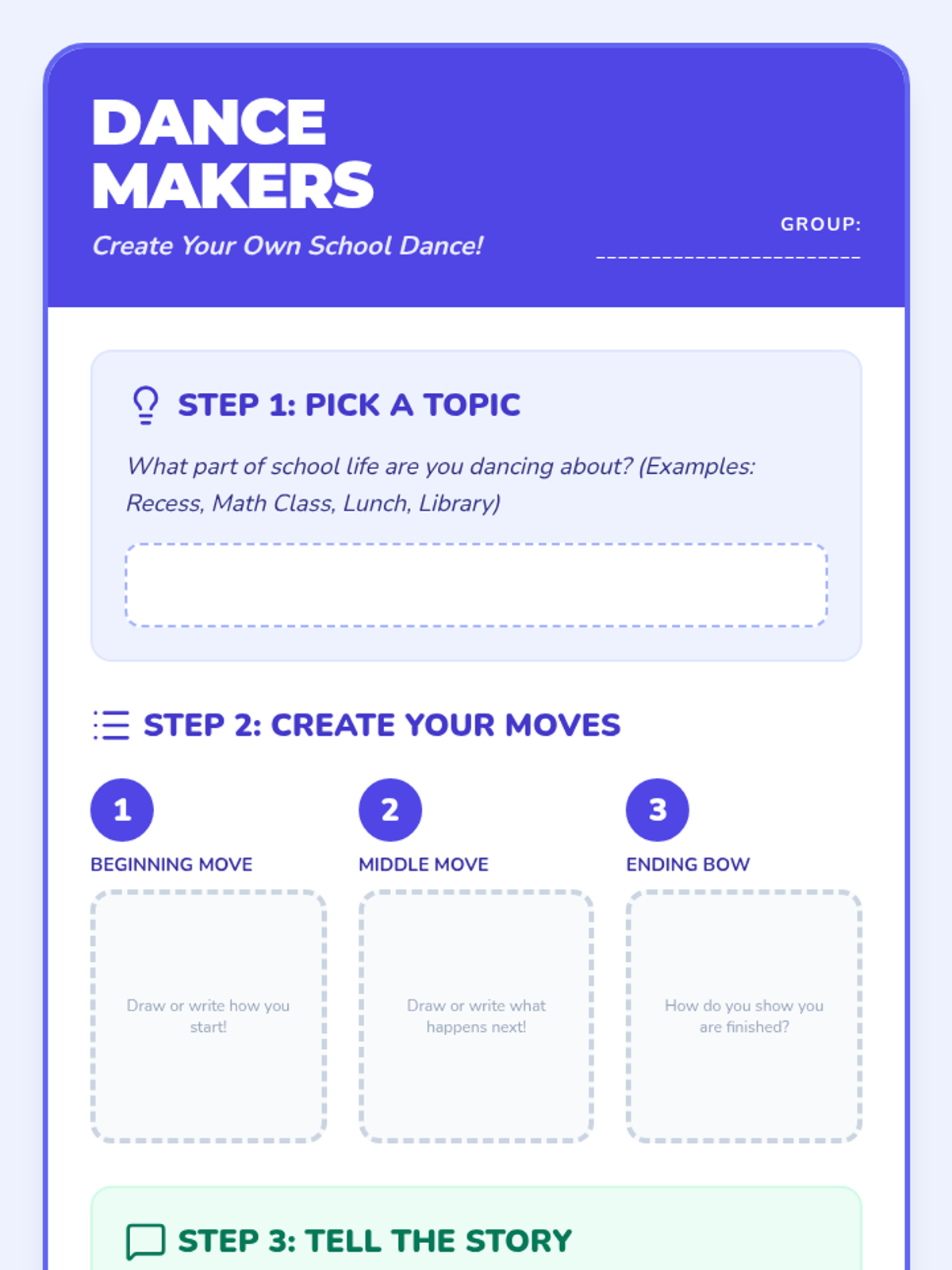
A choreography planning sheet for the final project, helping student groups organize their movements, topic, and purpose for their classroom dance.
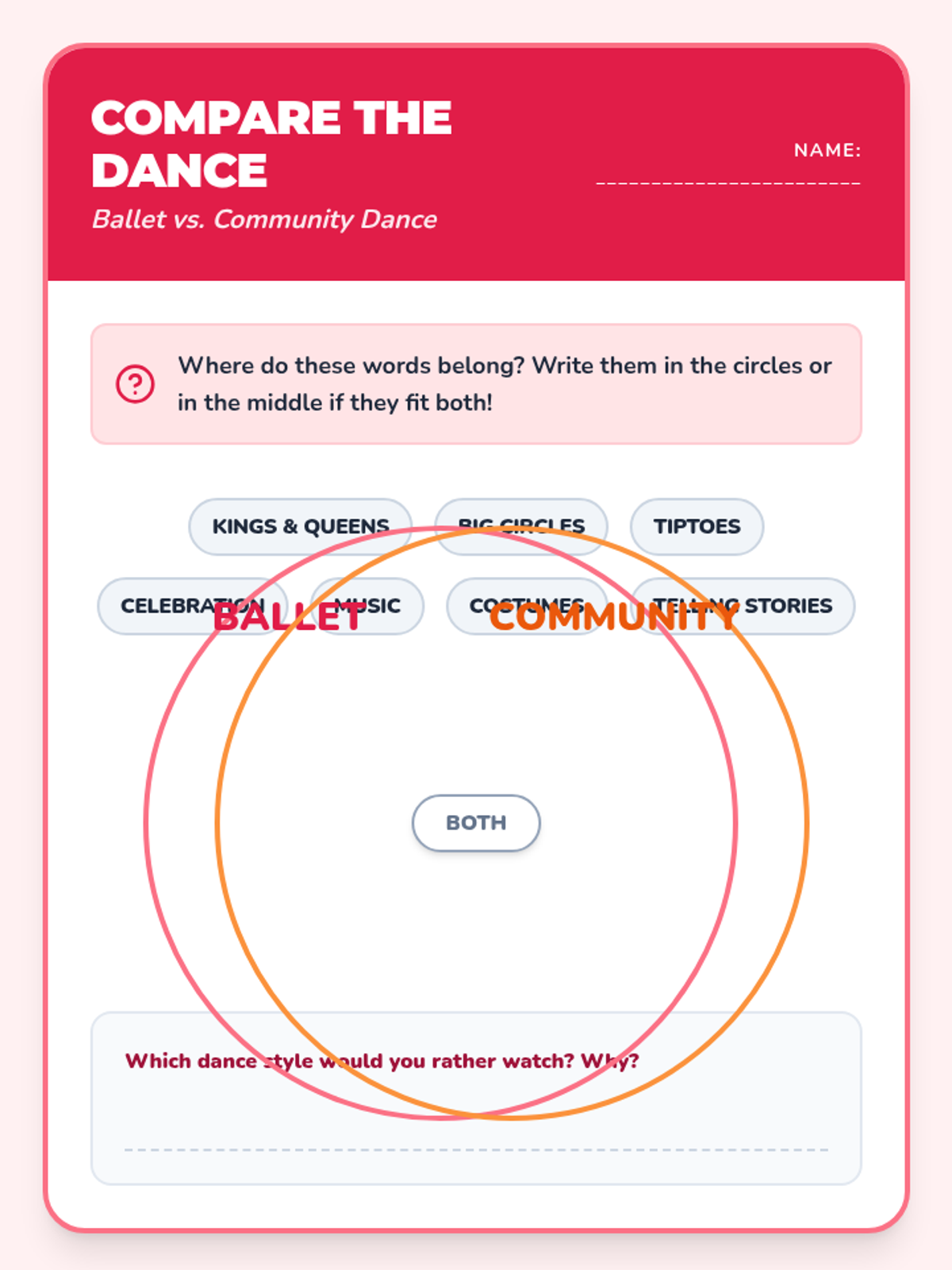
A visual comparison worksheet for students to identify similarities and differences between ballet and community folk dances.
A presentation introducing the history of ballet from royal courts to professional stages, including basic French terminology and posture concepts.
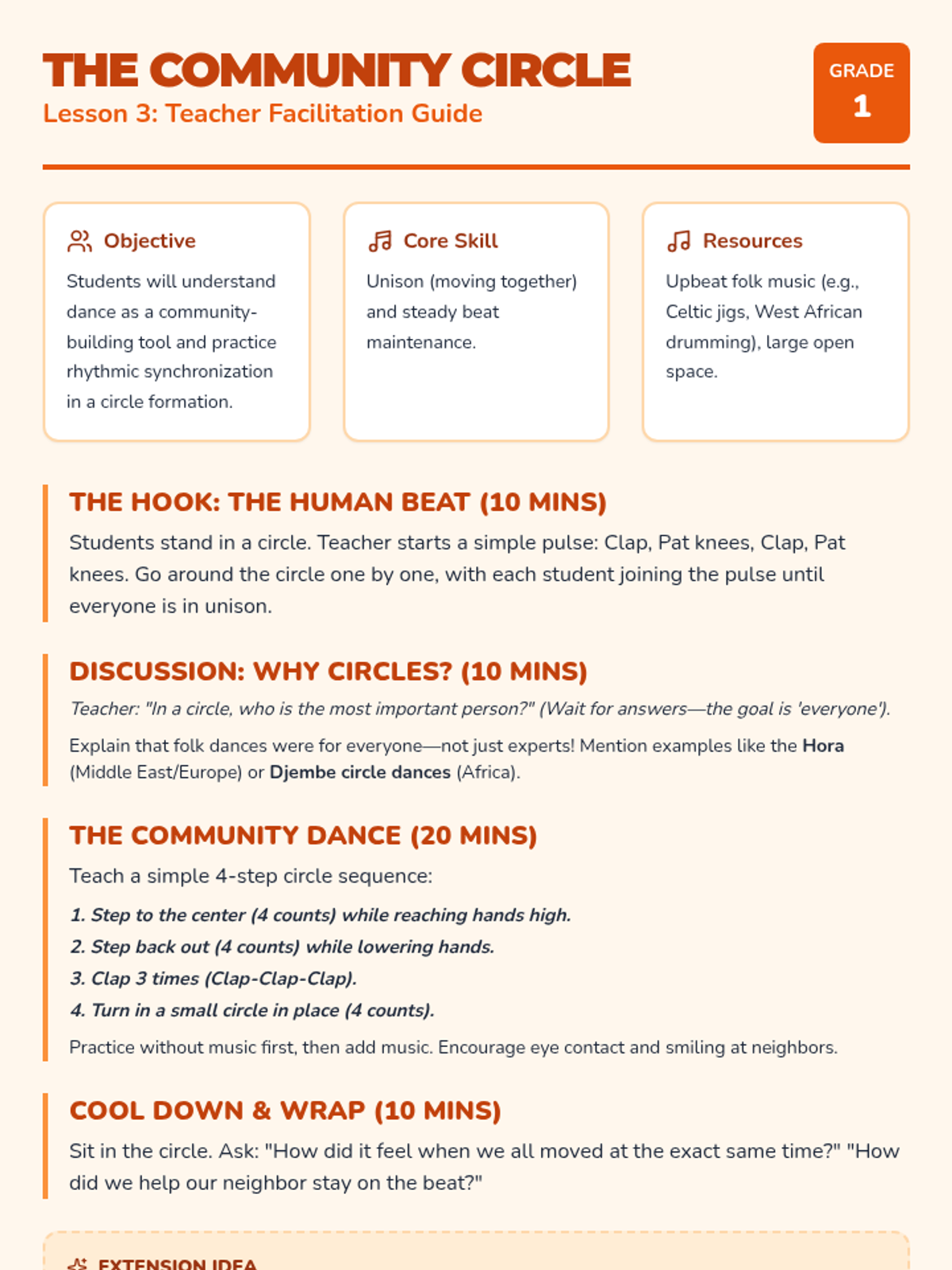
A teacher facilitation guide for Lesson 3, focusing on community bonding through circle dances, rhythmic unison, and simple choreography instructions.
A slide deck focusing on community folk dances, the significance of circle formations, and the concept of rhythmic unison.
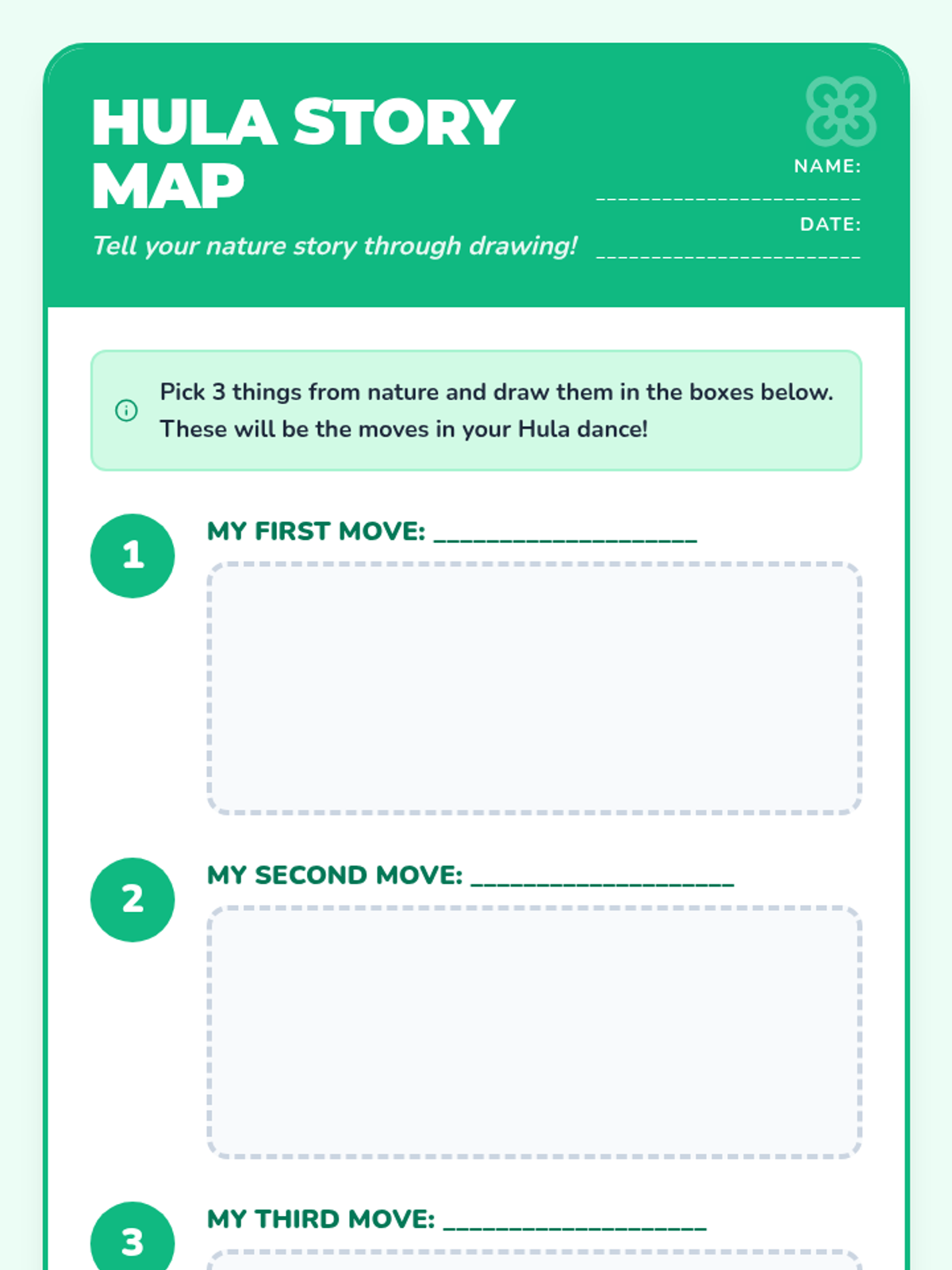
A worksheet for students to plan and illustrate a simple three-part Hula story by choosing nature symbols.
A presentation about Hawaiian Hula, explaining its cultural significance as a storytelling medium and demonstrating hand symbols for nature elements.
A vibrant presentation for Lesson 1, introducing students to the concept of dance as a language and exploring movement levels (high, middle, low).
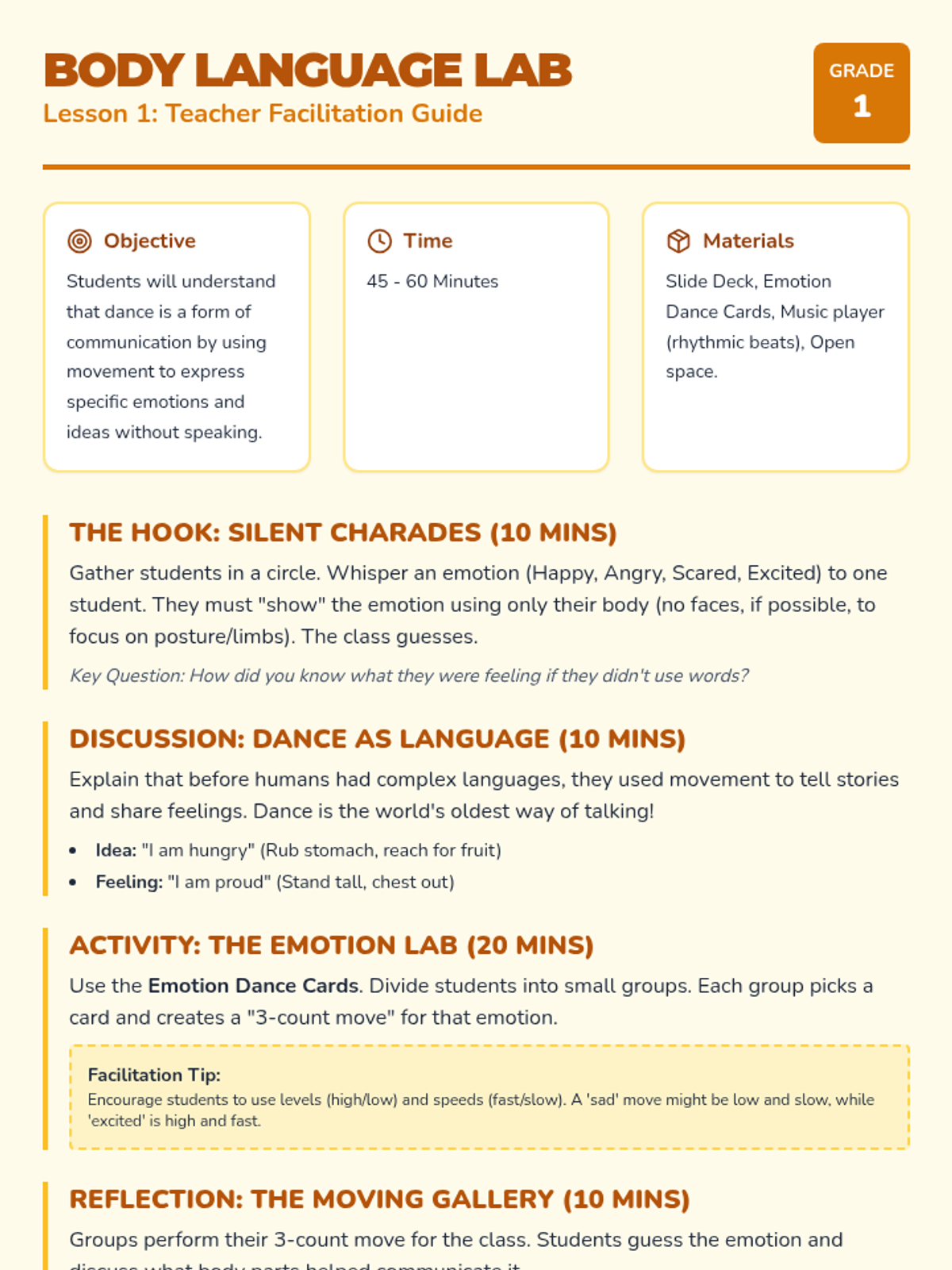
A comprehensive teacher guide for introducing dance as communication, including a lesson flow, facilitation tips, and a set of printable Emotion Dance Cards for student activities.
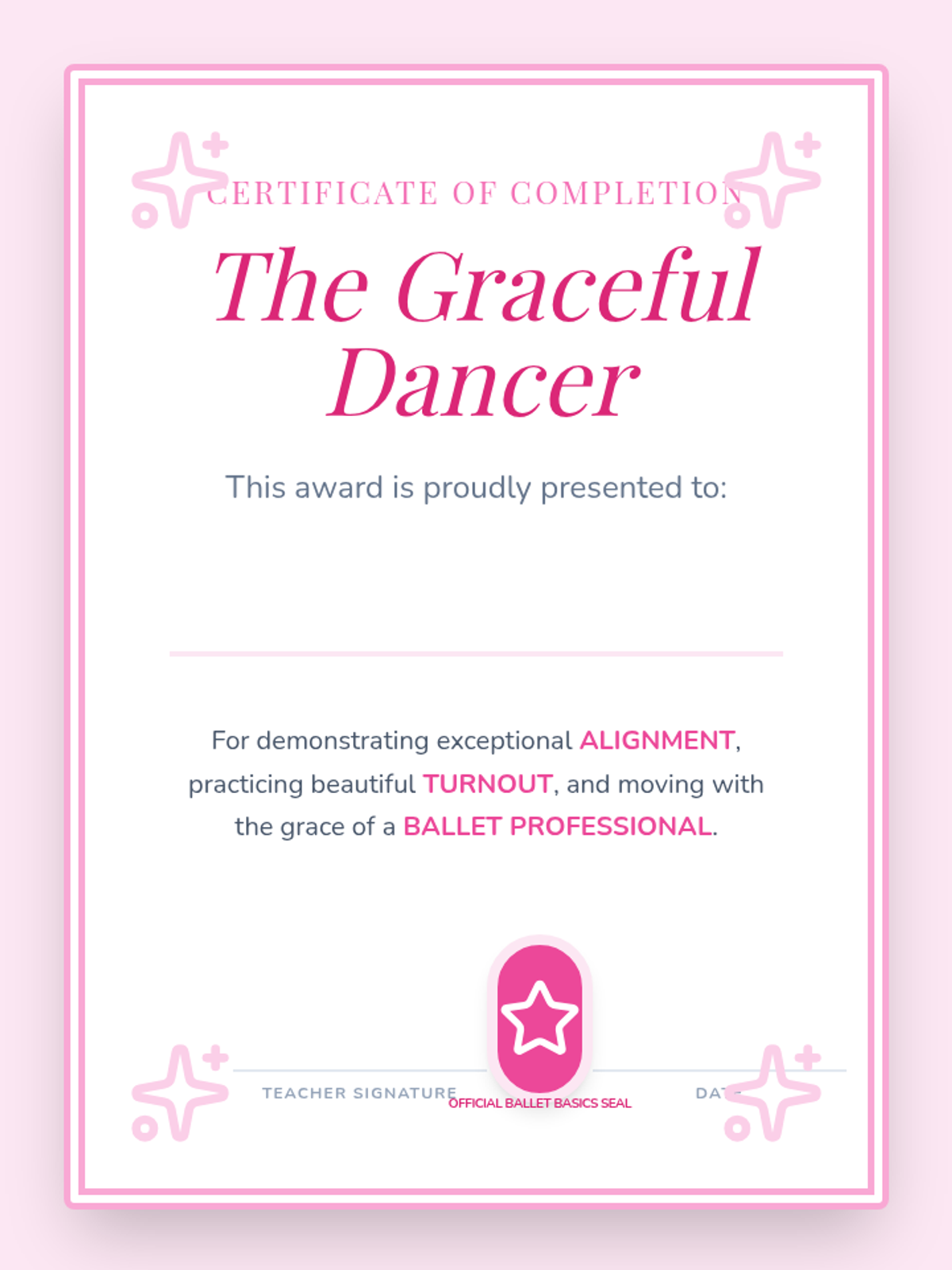
Commemorative certificate for students who have successfully completed the 'Ballet Basics' sequence.
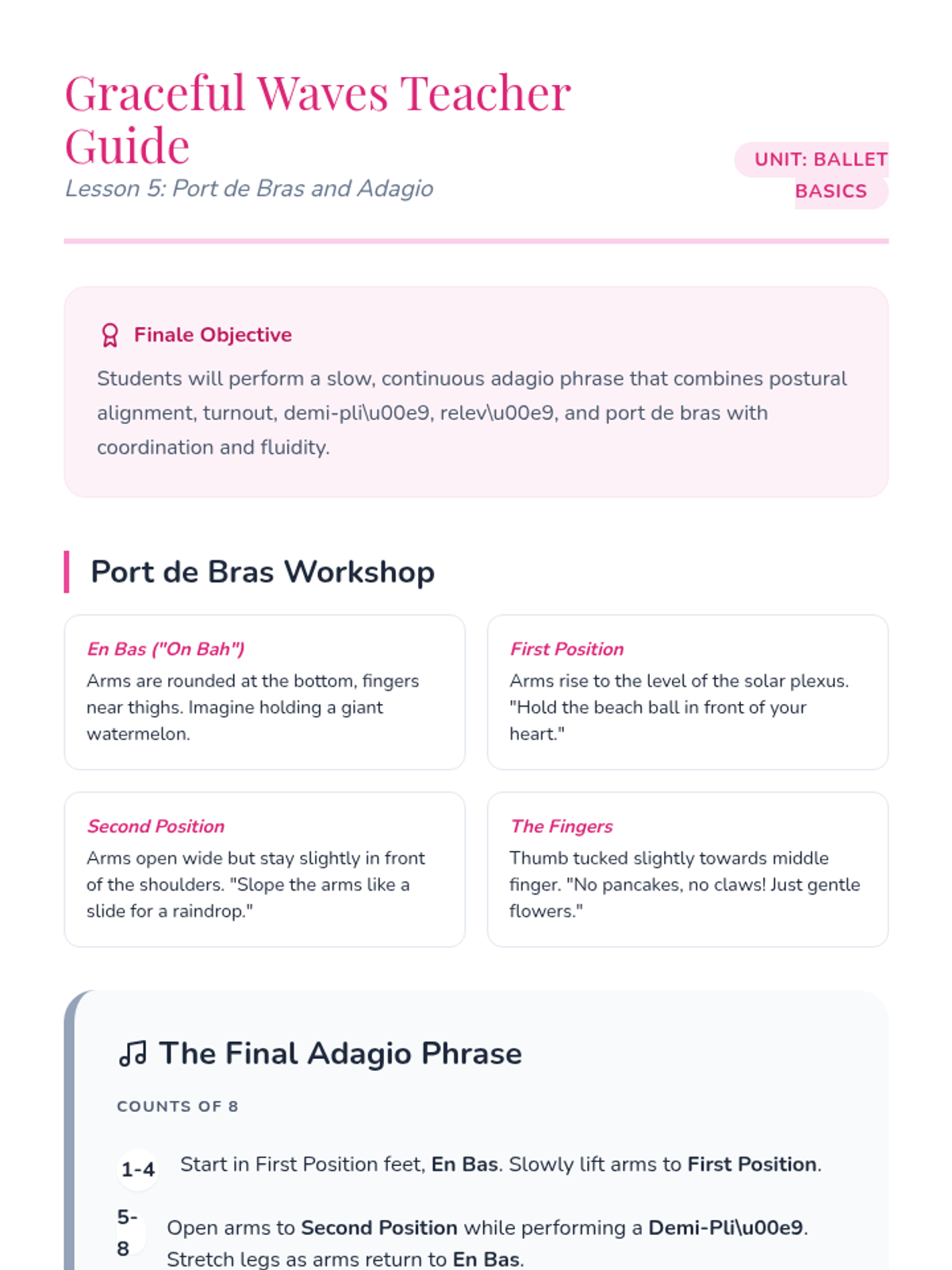
Teacher guide for Lesson 5, including arm positioning (Port de Bras), the Final Adagio phrase choreography, and instructional cues for coordination.
Visual presentation slides introducing Port de Bras (arm movements) and the concept of Adagio, combining all previous skills for 1st-grade ballet.
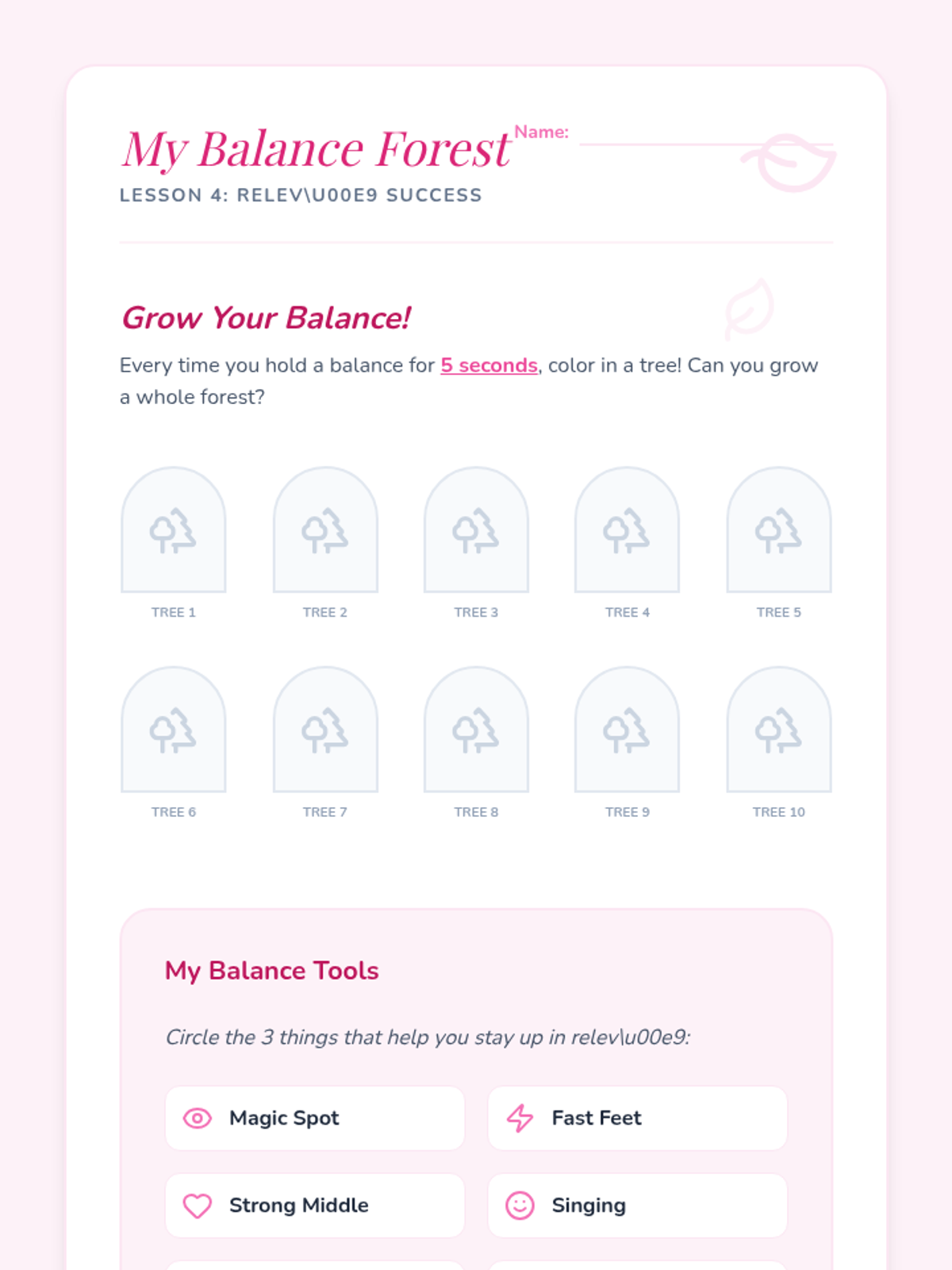
Student balance log and reflection worksheet for Lesson 4, focusing on building stamina in relev\u00e9 and identifying key stability cues.
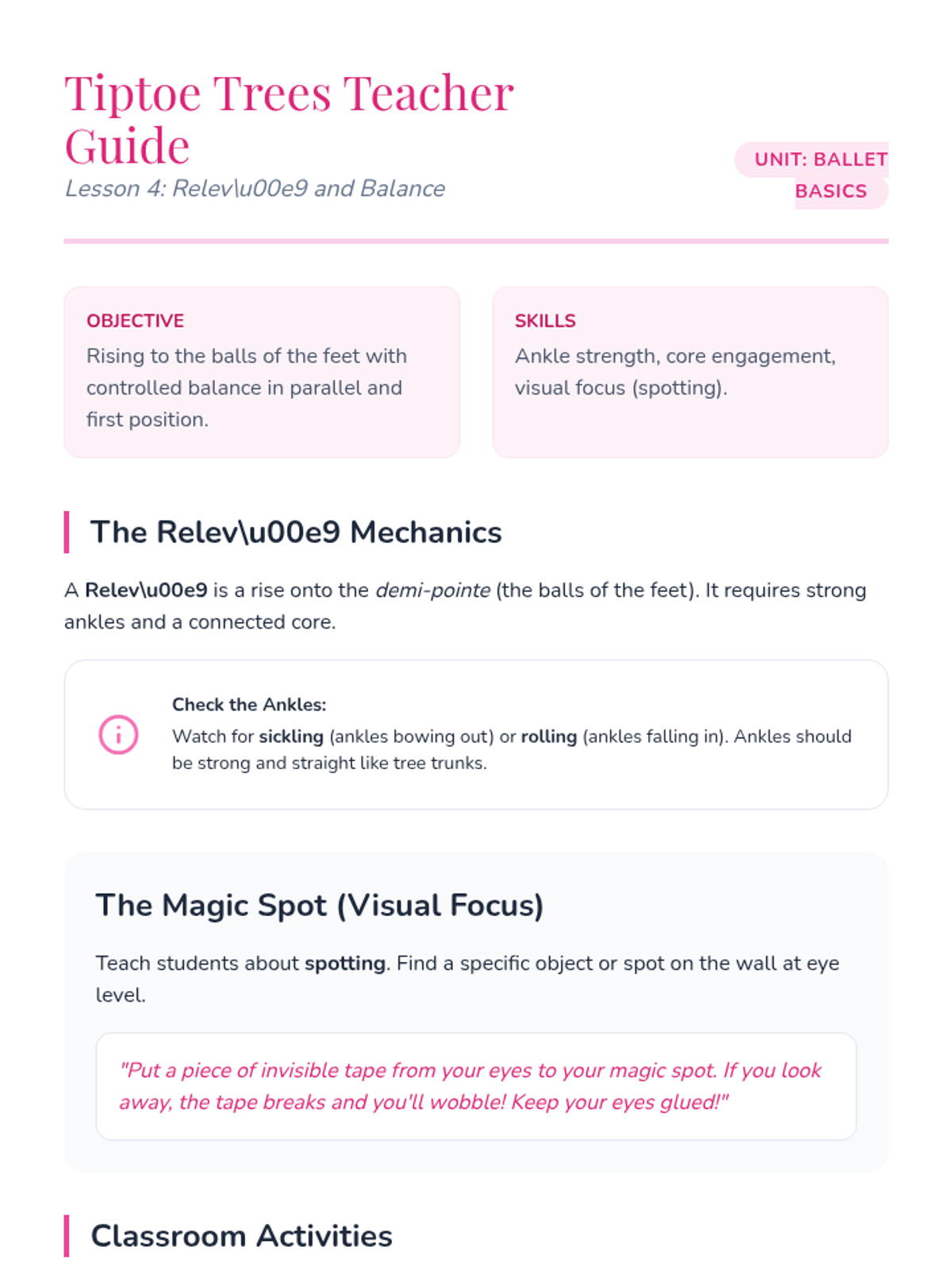
Teacher guide for Lesson 4, covering relev\u00e9 mechanics, ankle safety (avoiding sickling), and balance games like 'Tree in the Wind'.
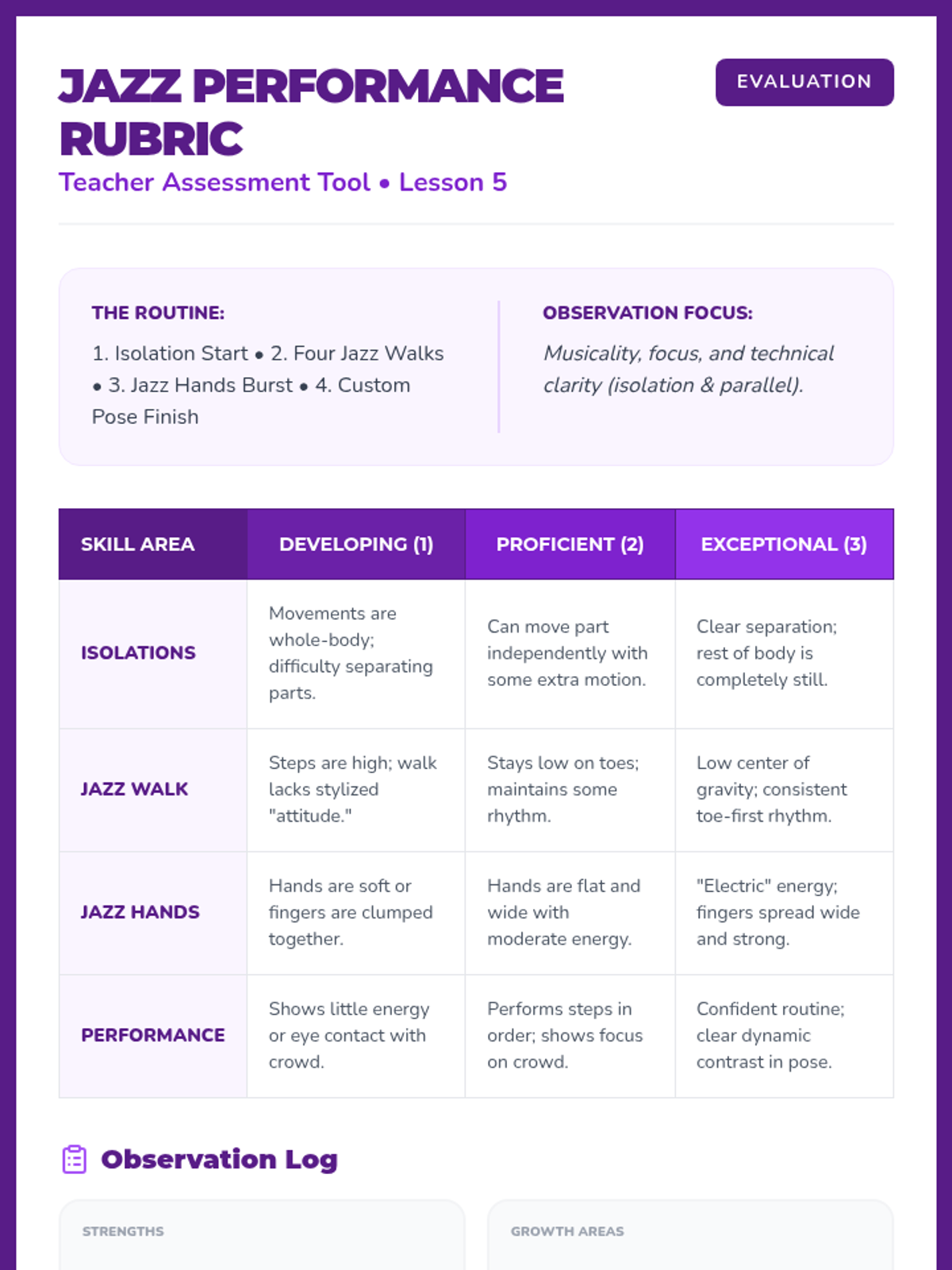
A detailed teacher rubric for assessing the final Jazz performance, covering isolations, jazz walks, hands technique, and overall performance quality.
Visual presentation slides introducing the relev\u00e9, featuring balance tips, the 'apple picking' metaphor, and core stability for 1st-grade ballet.
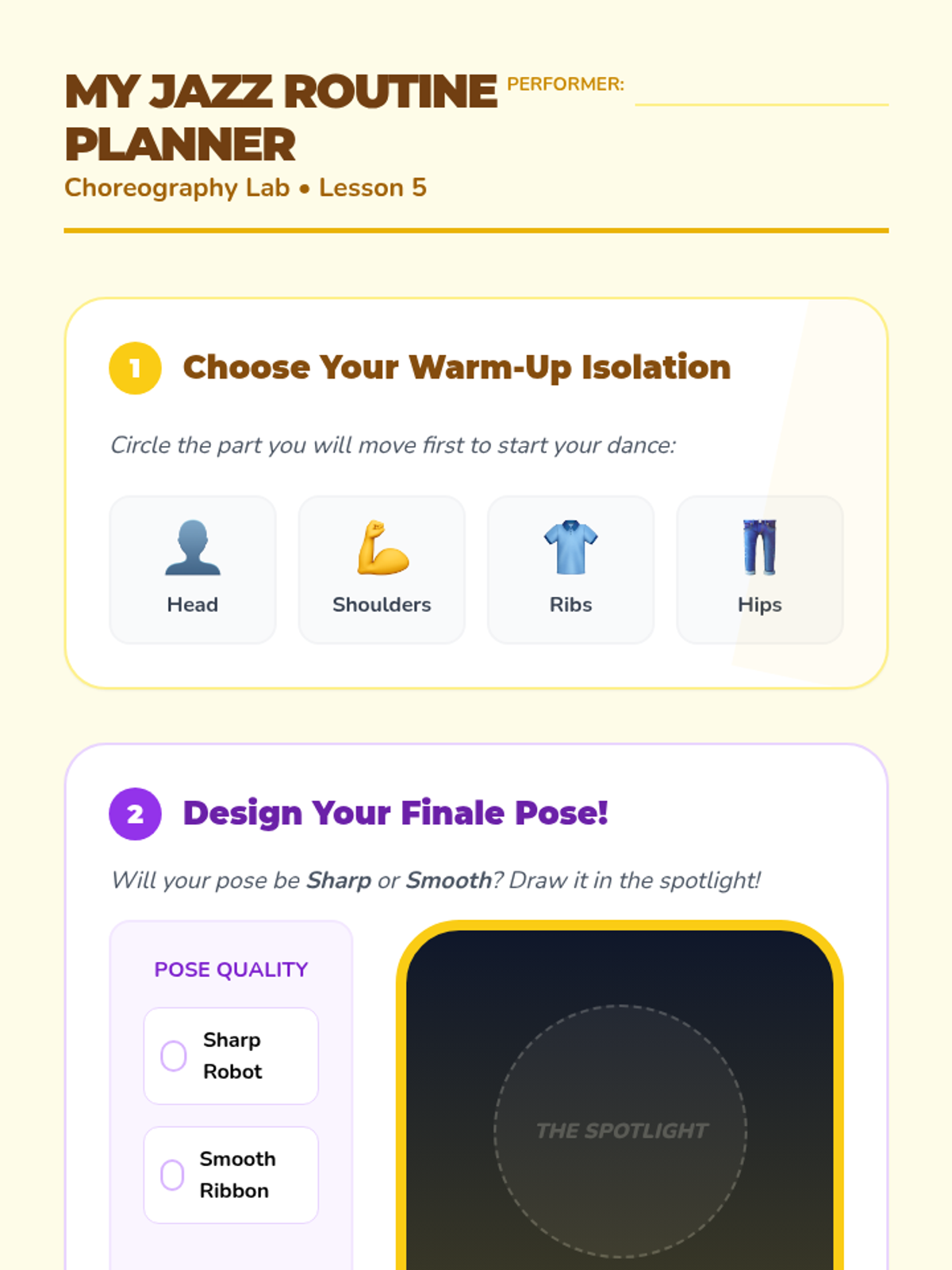
A student planning worksheet for the final Jazz routine in Lesson 5, allowing students to select their starting isolation and design their custom ending pose.
Final performance slides for Lesson 5, guiding students through combining their skills into a cohesive Jazz routine with a custom final pose.
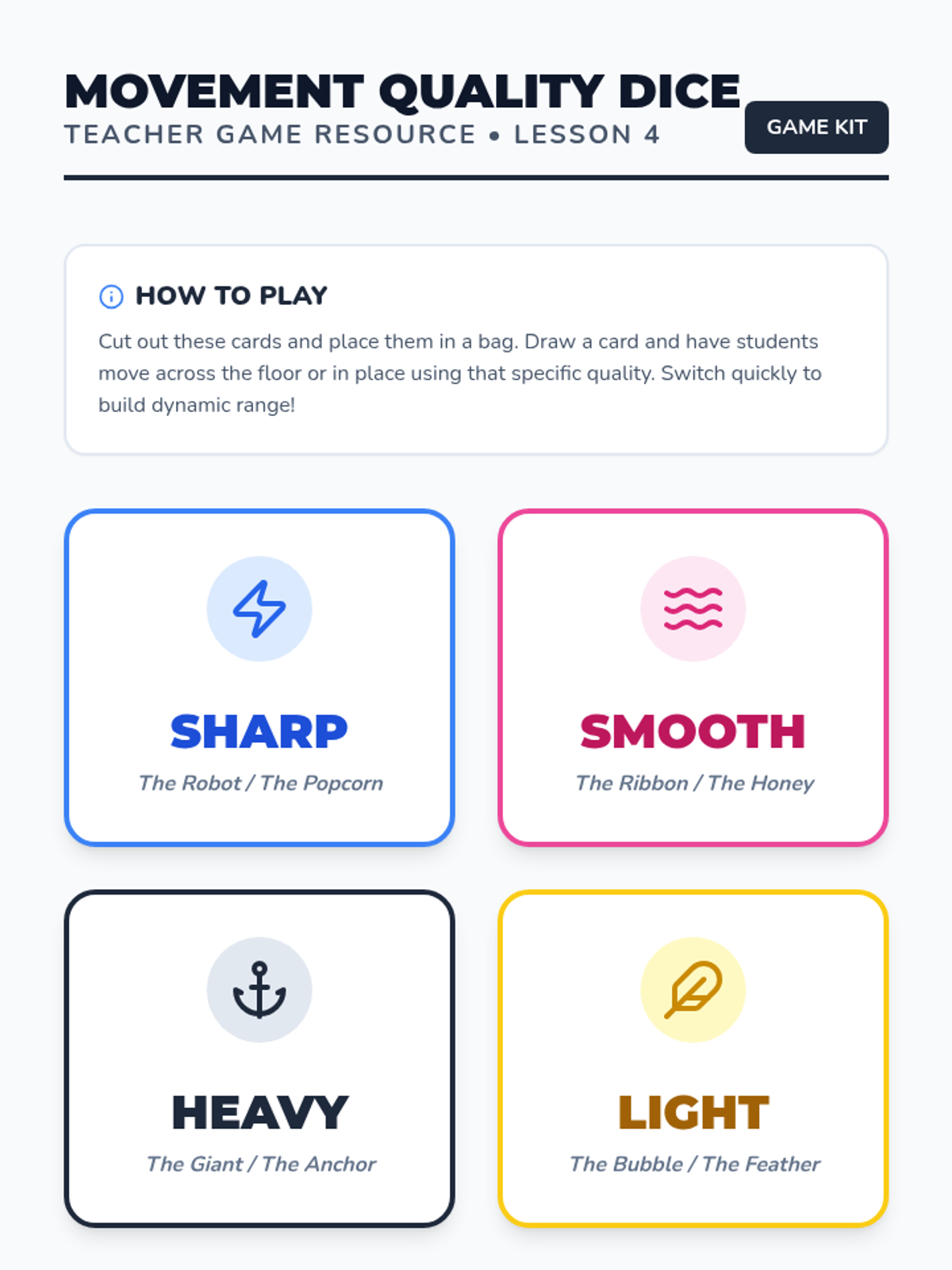
Teacher movement cards for Lesson 4 to facilitate a dynamic movement game, including sharp, smooth, heavy, and light movement qualities.
Dynamic slides for Lesson 4 that explore movement qualities, contrasting sharp staccato motions with smooth sustained movements through playful analogies.
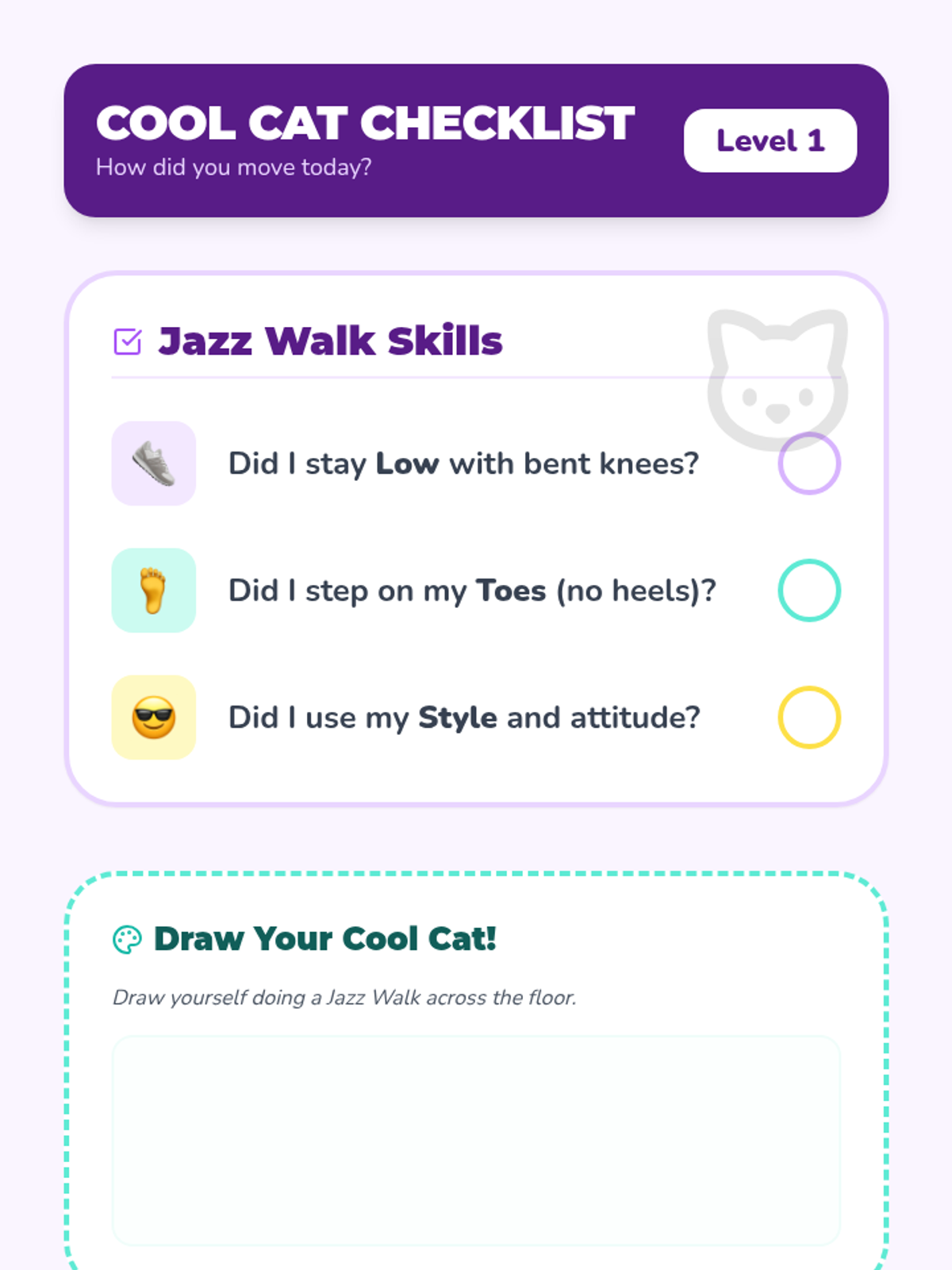
A student self-assessment and reflection worksheet for Lesson 3, featuring a checklist for Jazz Walk technique and a drawing area for creative expression.
Engaging slides for Lesson 3 that teach the "Jazz Walk" technique, emphasizing the low center of gravity and stylized movement across the floor.
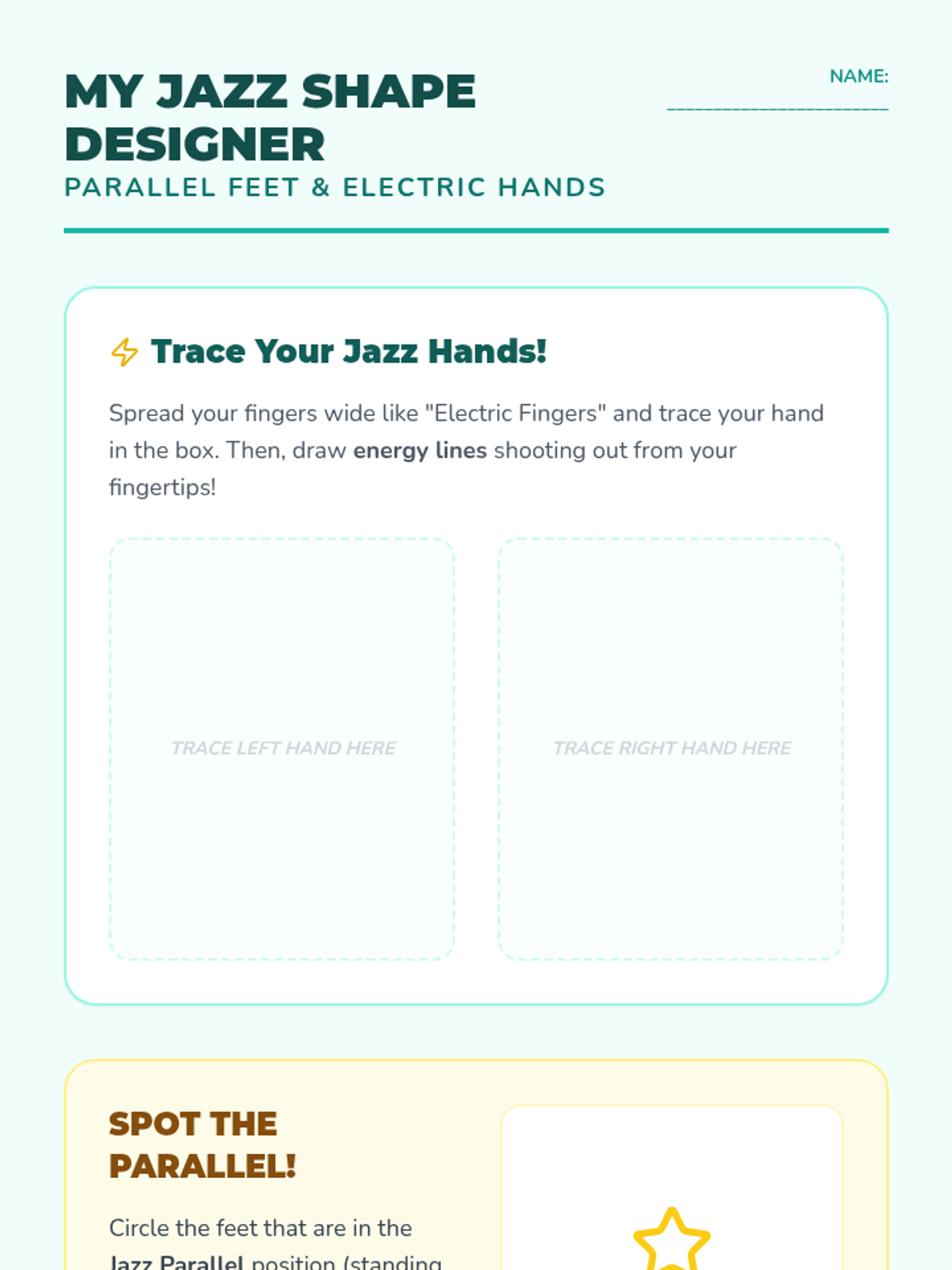
A creative student worksheet for Lesson 2 where students trace their "Jazz Hands" and identify parallel foot positions.
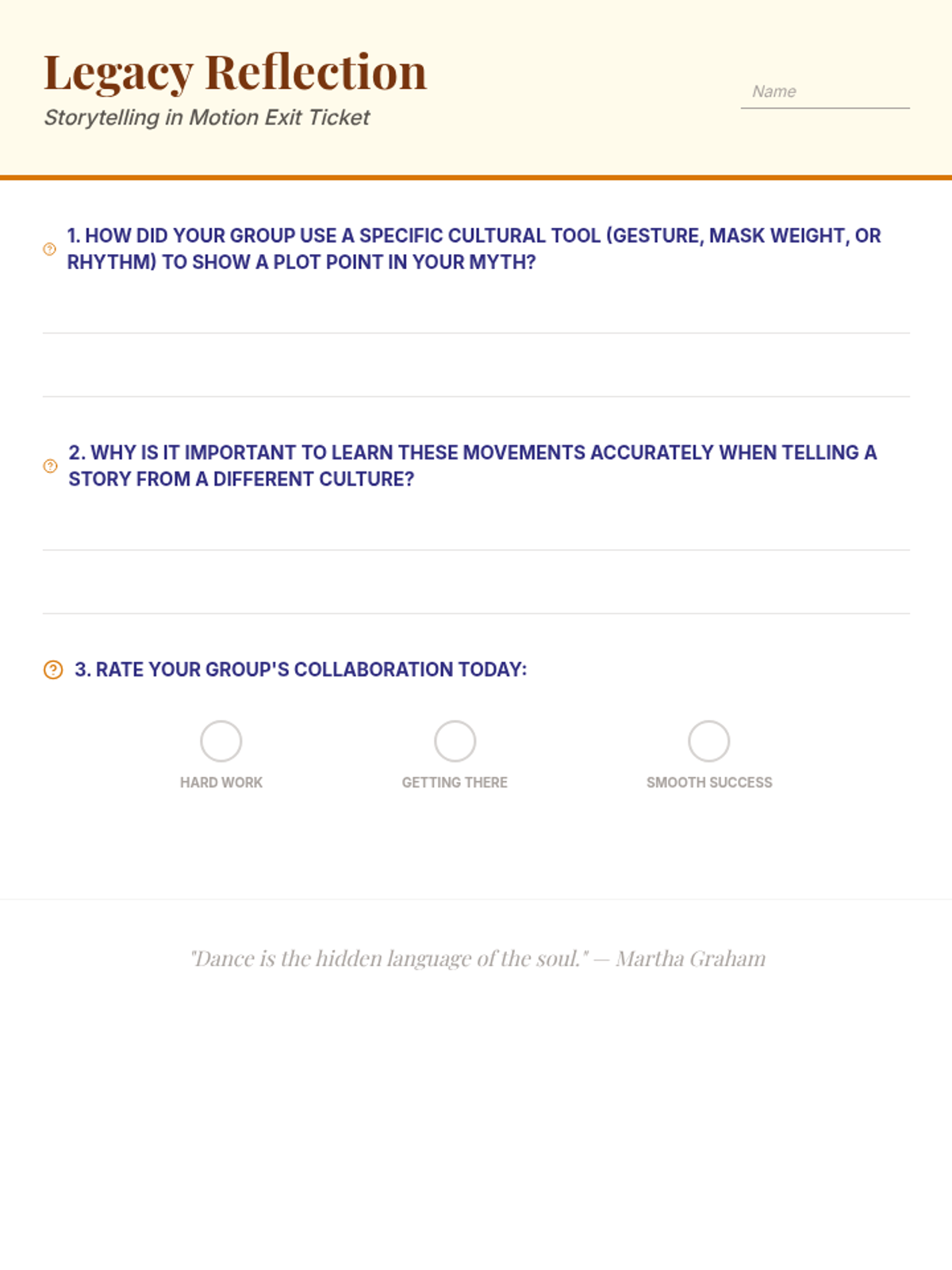
A short reflection exit ticket for the final lesson, asking students to connect their choreographic choices to the cultural tools learned in the unit.
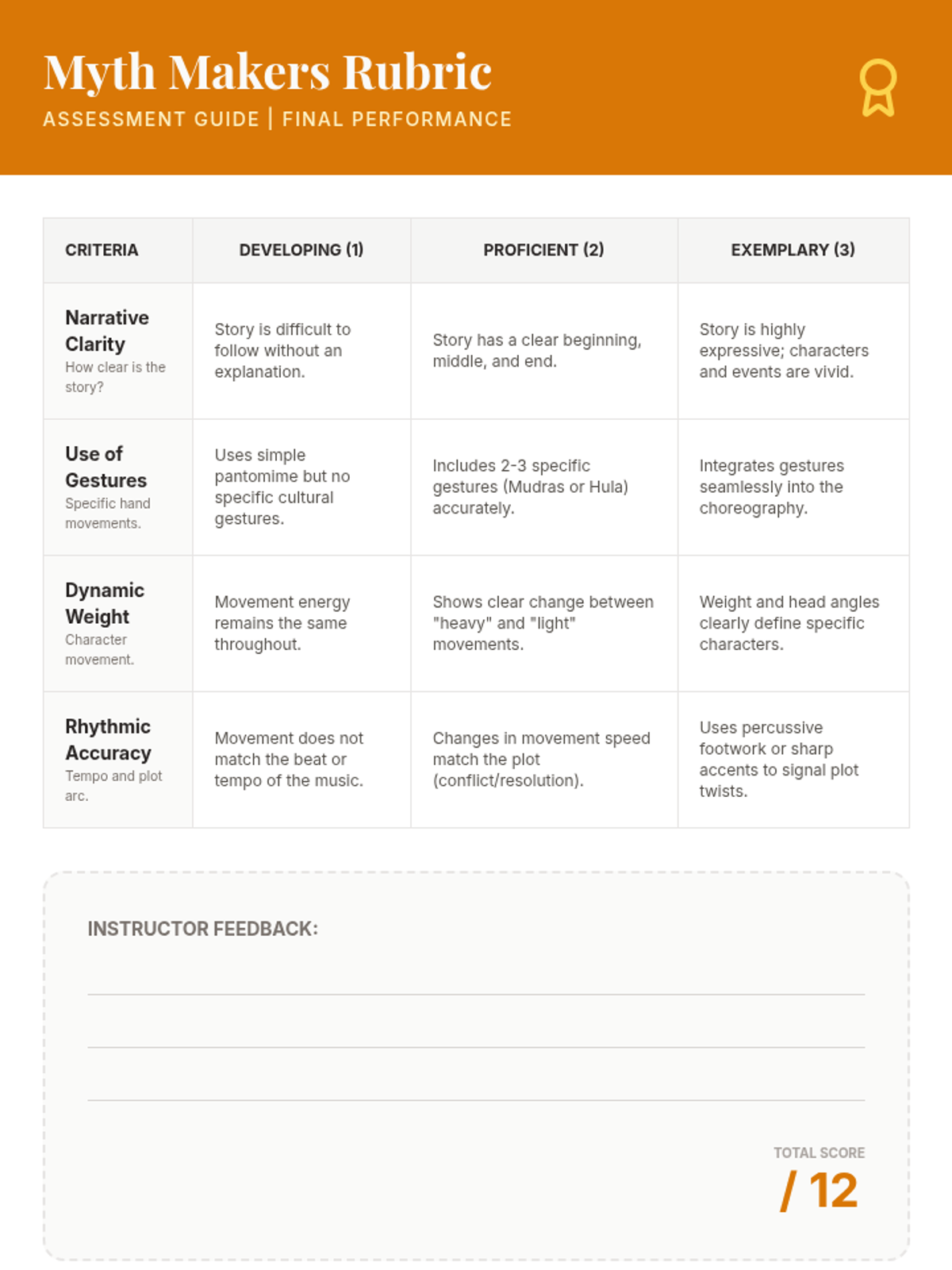
A grading rubric for the final narrative dance project, assessing narrative clarity, gesture usage, movement dynamics, and rhythm.
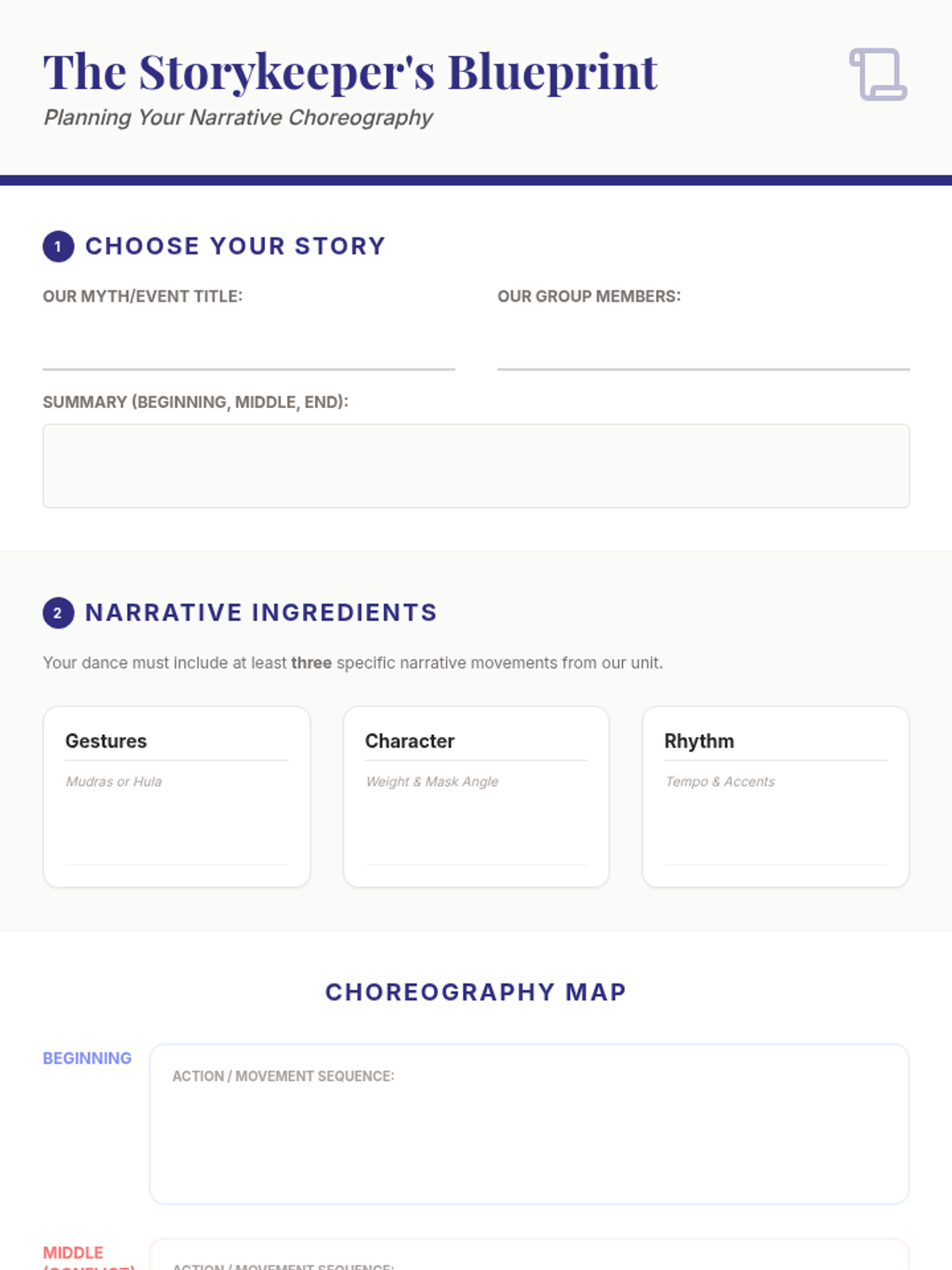
A planning worksheet for students to organize their group's narrative dance project, including story summary and movement choices.
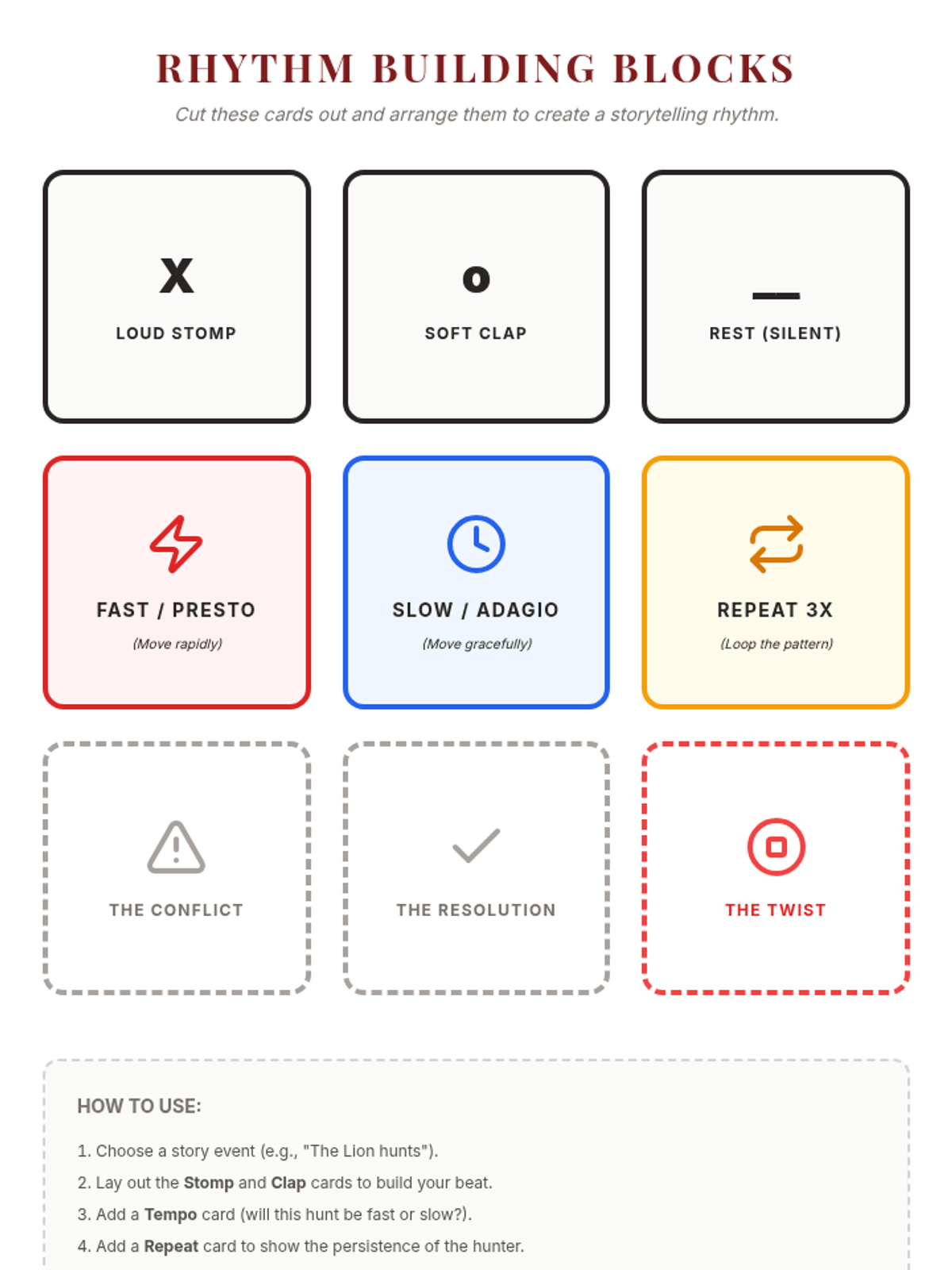
Rhythm pattern cards for student use in sequencing their own rhythmic story arcs.
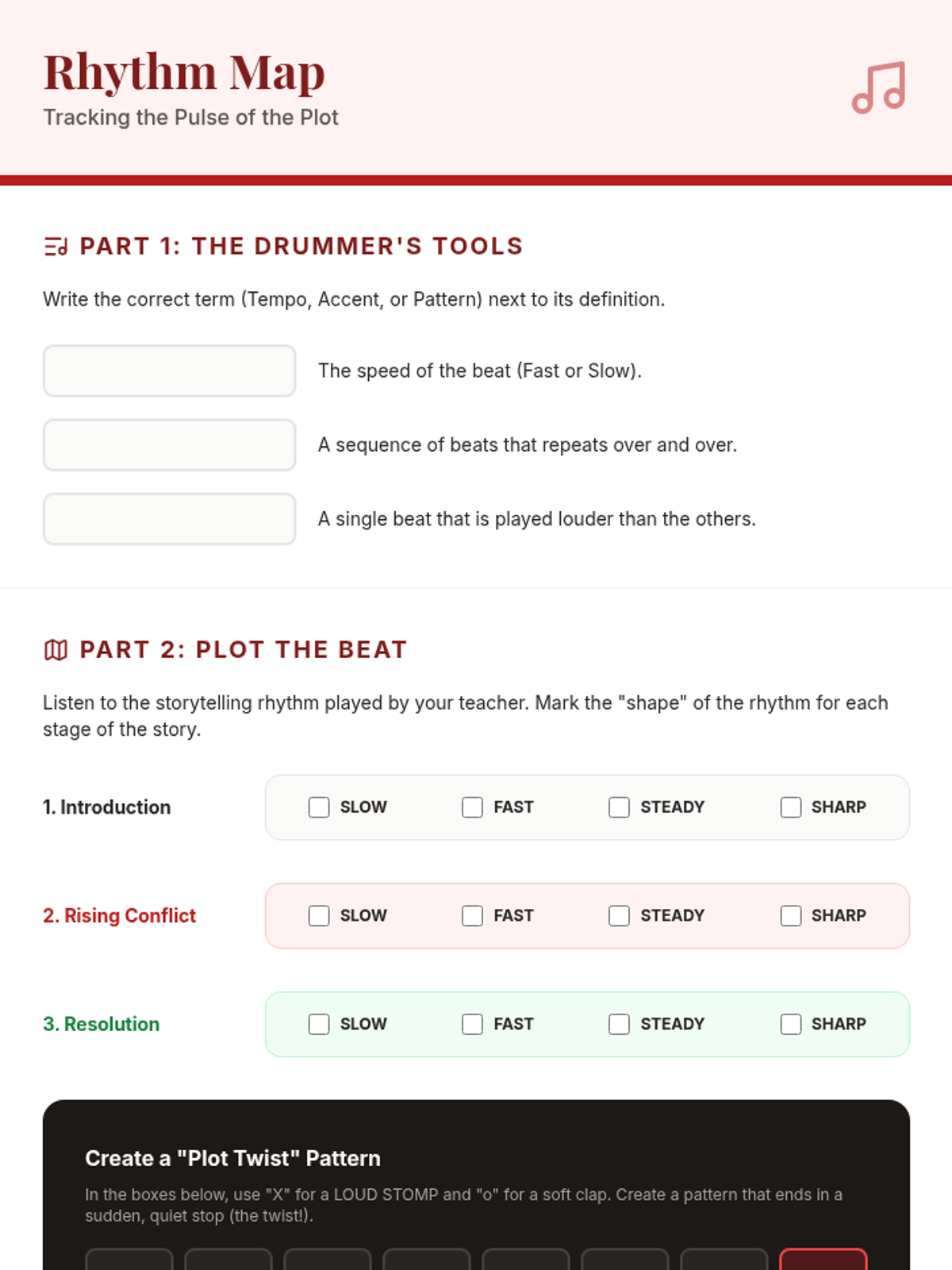
A worksheet for Lesson 4 where students map rhythmic changes to the dramatic structure of a story (Introduction, Conflict, Resolution).
Slide deck for Lesson 4, connecting drum beats and footwork to the dramatic arc of a story.
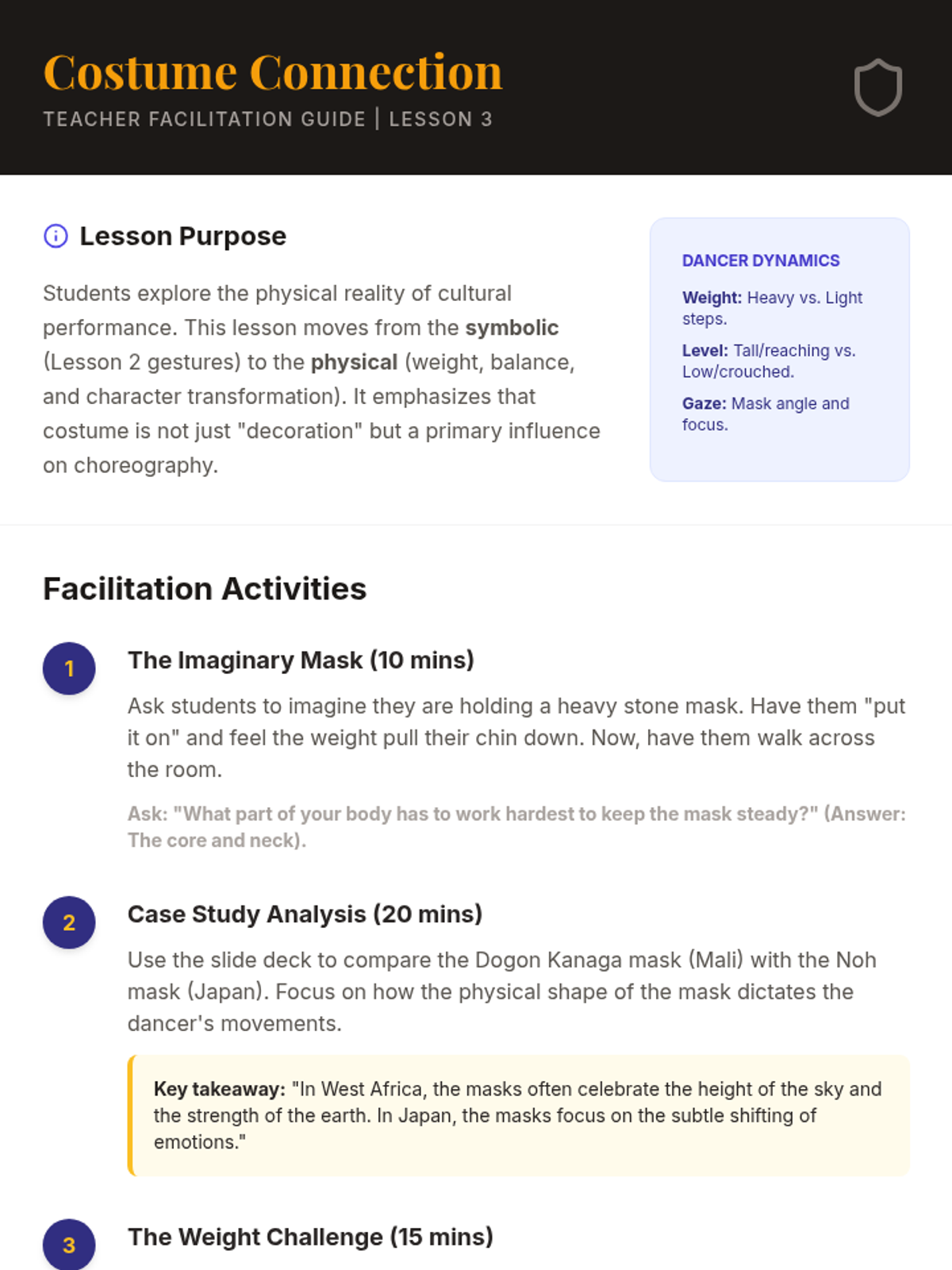
Teacher facilitation guide for Lesson 3, including activity instructions, discussion prompts, and cultural sensitivity notes.
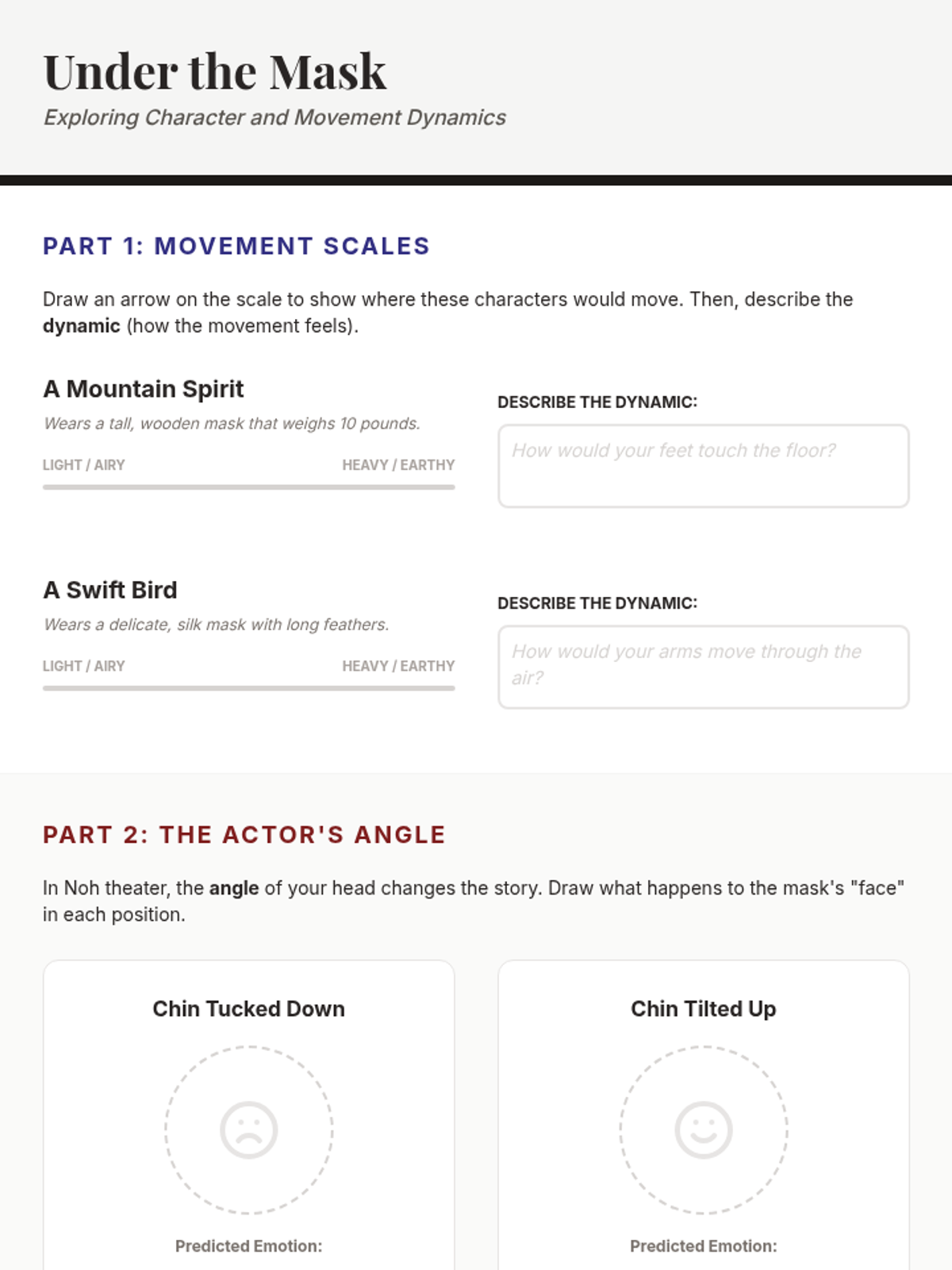
A worksheet for Lesson 3 where students explore the influence of mask weight and head angles on movement dynamics and emotion.