Fundamental techniques for drawing, painting, sculpture, and photography alongside modern digital design principles. Analyzes historical artistic movements while building skills in printmaking and graphic media.
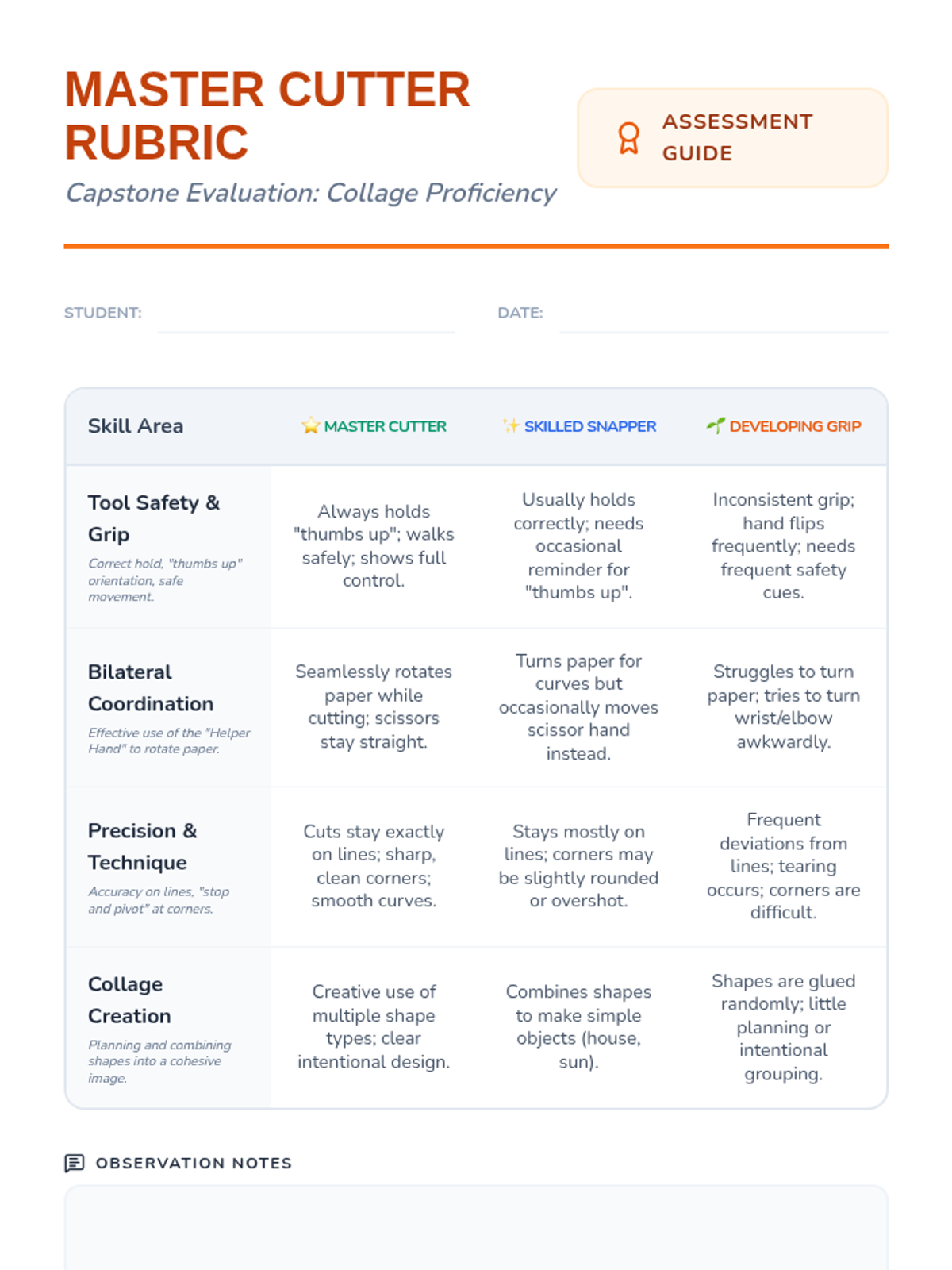
A teacher-facing assessment rubric for the scissor skills sequence. Evaluates four key areas: Tool Safety & Grip, Bilateral Coordination, Precision & Technique, and Collage Creation. Provides three levels of proficiency (Master Cutter, Skilled Snapper, Developing Grip).
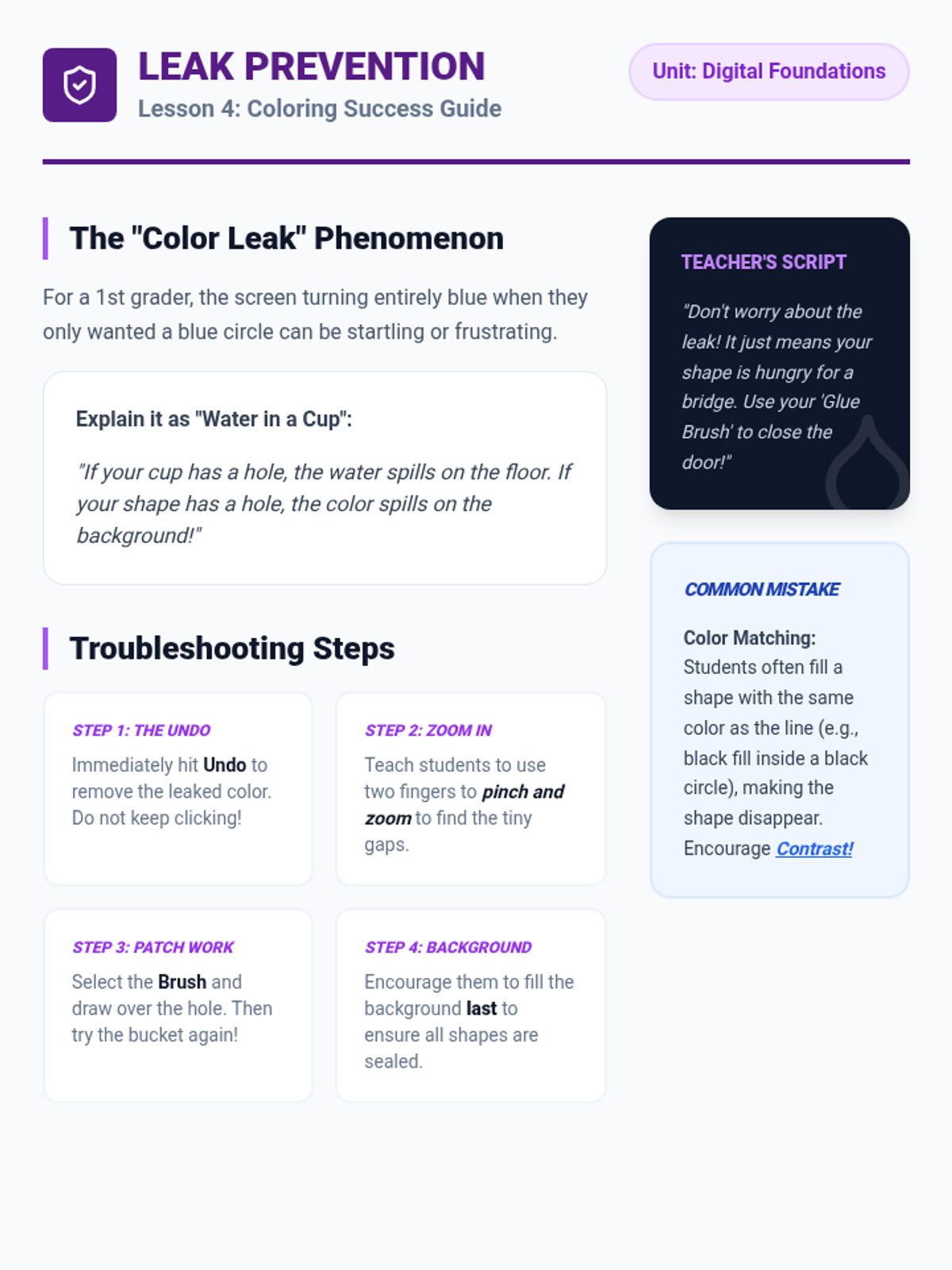
Teacher reference guide for Lesson 4, offering troubleshooting tips for the fill bucket tool and color leaks.
Instructional slides for the culminating collage project. Guides students through planning their art piece, selecting shapes for different objects (e.g., houses, trees), and provides a 'Master Cutter' checklist for self-evaluation.
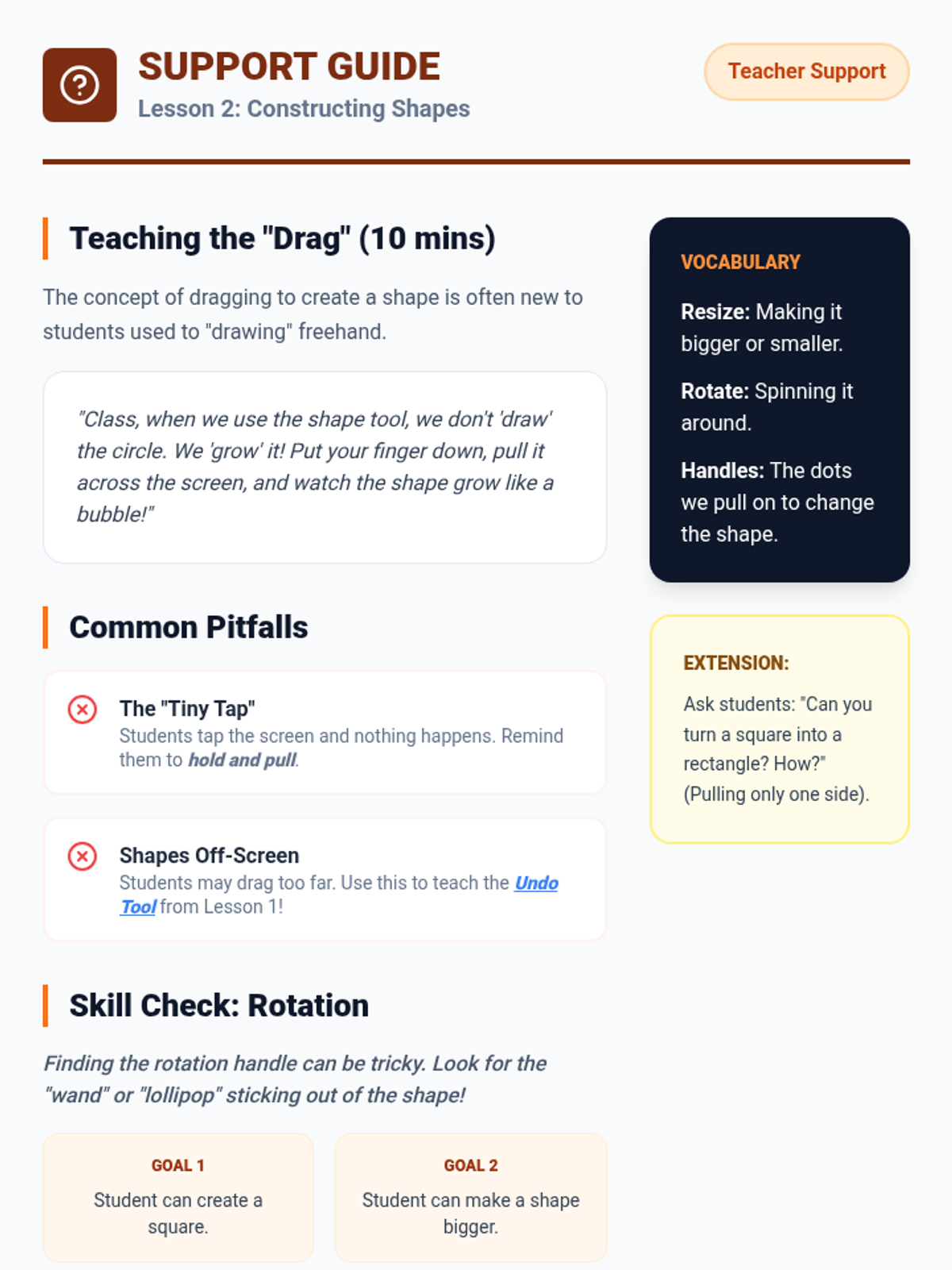
Teacher support guide for Lesson 2, offering troubleshooting tips for teaching the shape tool to young learners.
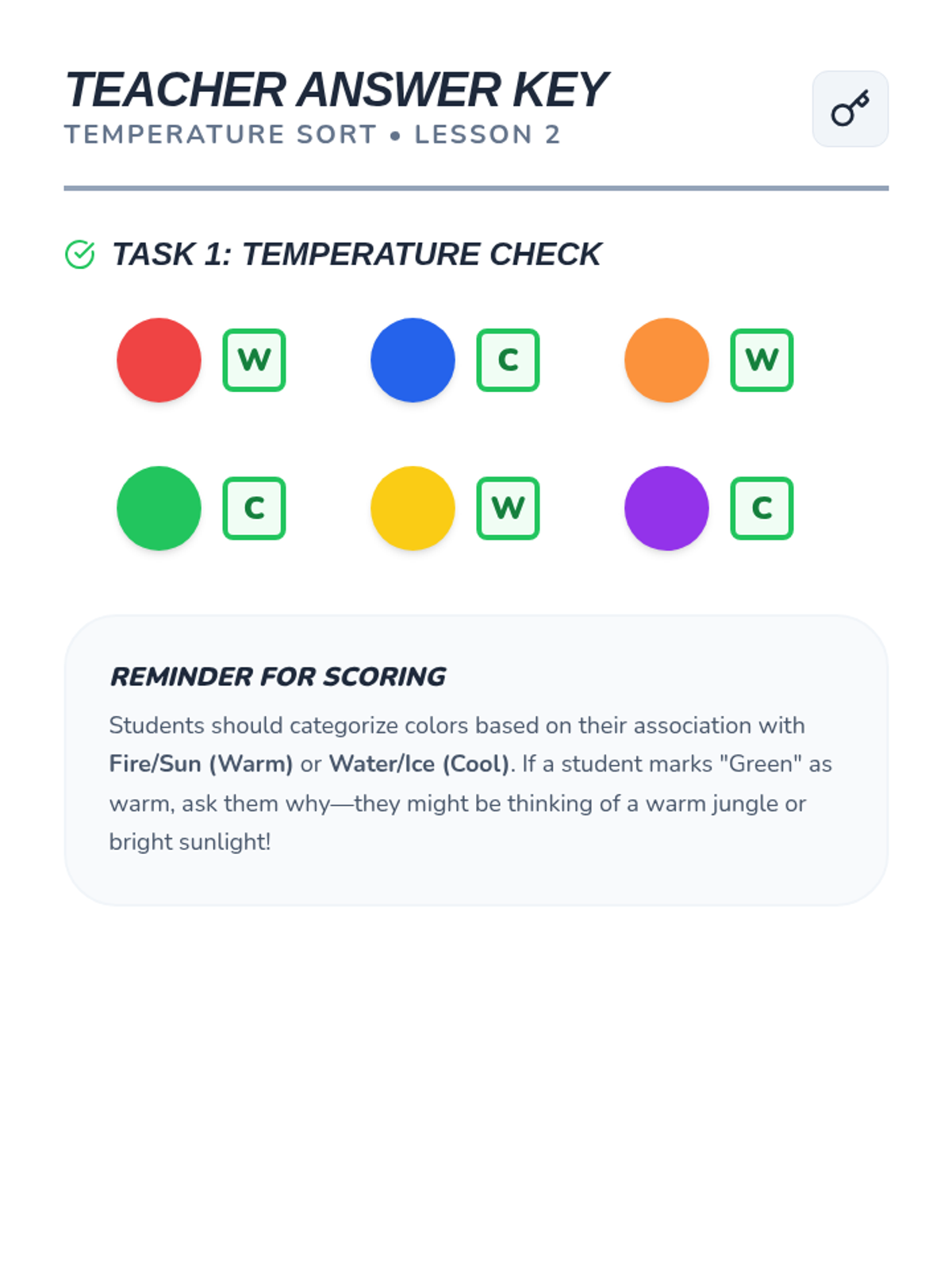
Answer key for the Temperature Sort Worksheet, identifying warm and cool colors.
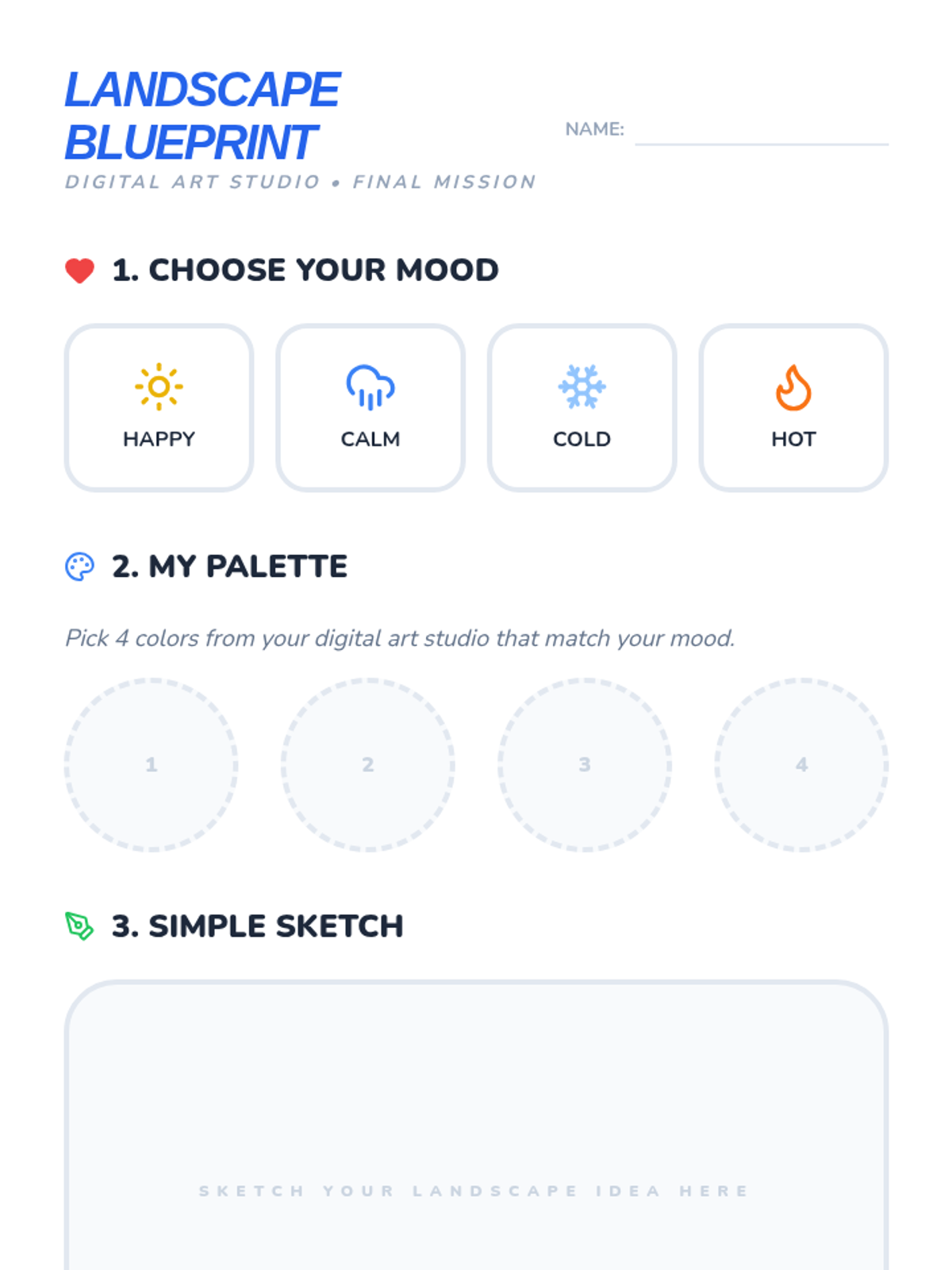
Student planning sheet for the final project, where they select a mood, create a 4-color palette, and sketch their landscape idea.
A certificate of completion for students who finish the Digital Drawing Foundations unit.
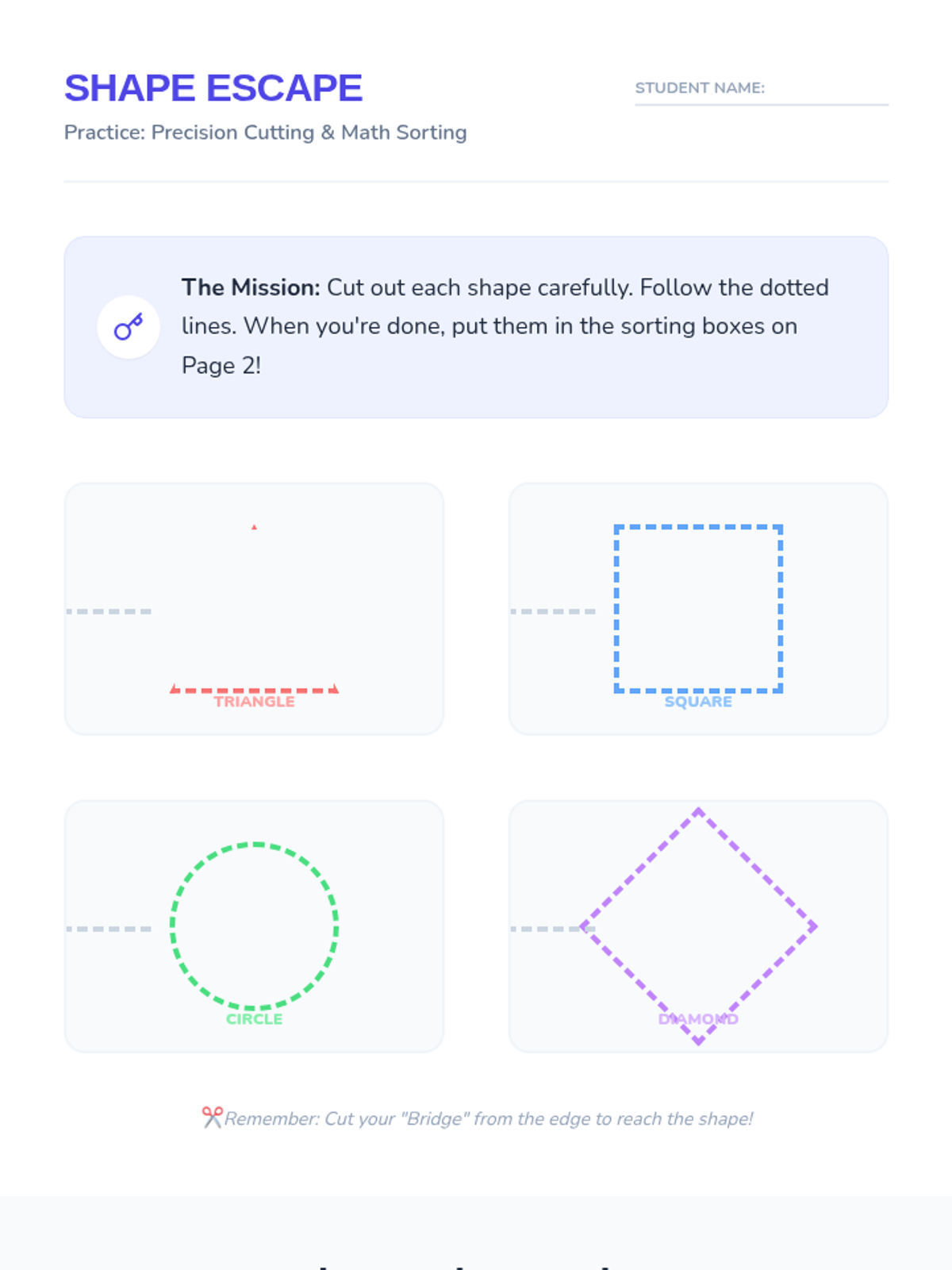
A student worksheet for precision cutting and sorting. Page 1 contains geometric shapes (triangle, square, circle, diamond) with 'bridge cut' cues. Page 2 provides a sorting mat for students to organize their cut shapes, reinforcing geometric recognition.
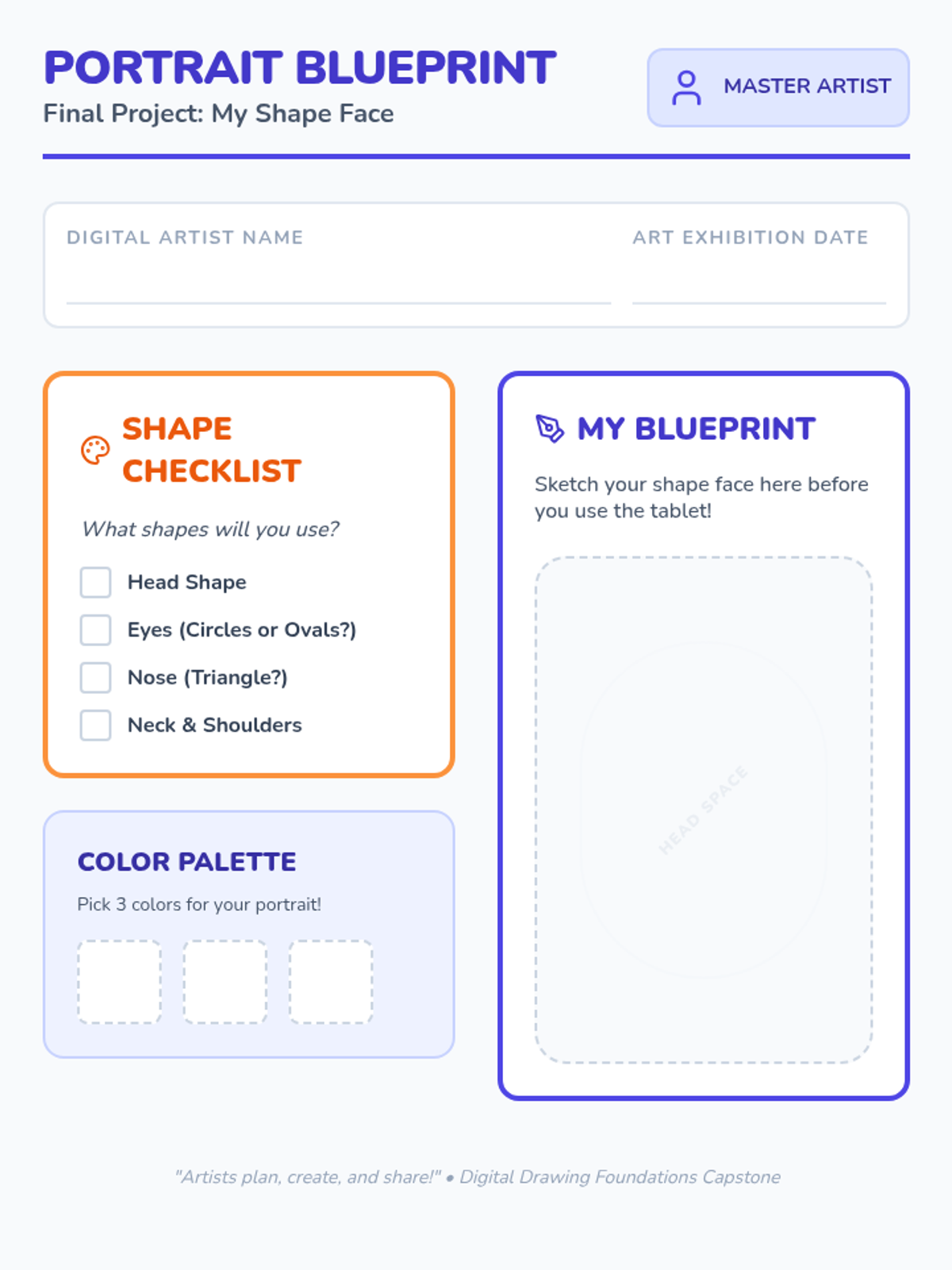
A worksheet for Lesson 5 where students plan their geometric self-portrait by selecting shapes and colors and sketching their design.
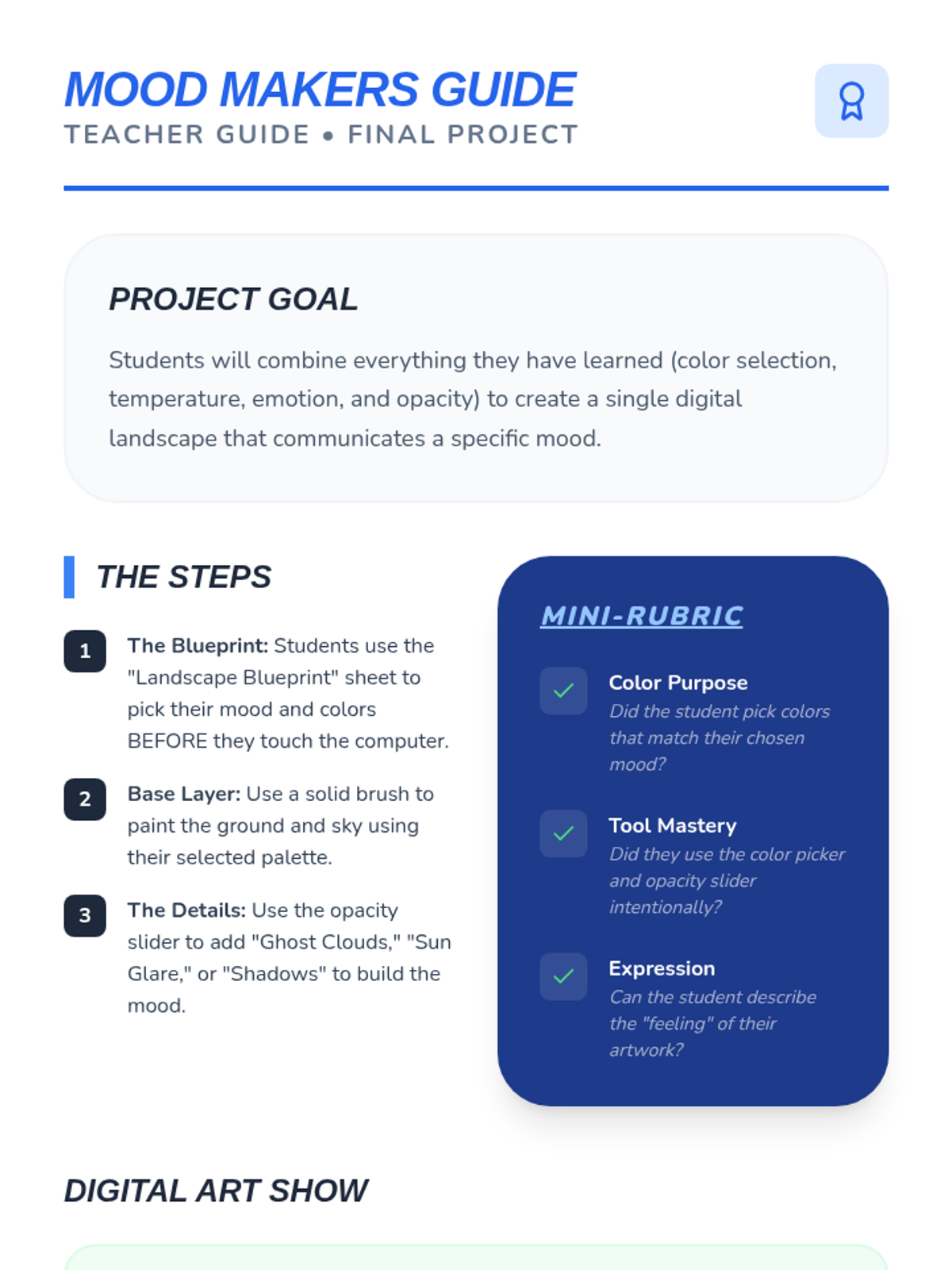
Teacher guide for the final project, including a project checklist, a mini-rubric for 1st grade, and ideas for a digital art show.
Instructional slides for cutting geometric shapes. Reviews the integration of straight, curved, and pivot cuts. Introduces the 'bridge cut' for accessing shapes from the paper edge.
Slides for Lesson 5, guiding students through the process of creating a geometric self-portrait.
Slides for the final lesson, guiding students through planning and creating an expressive digital landscape using their cumulative color skills.
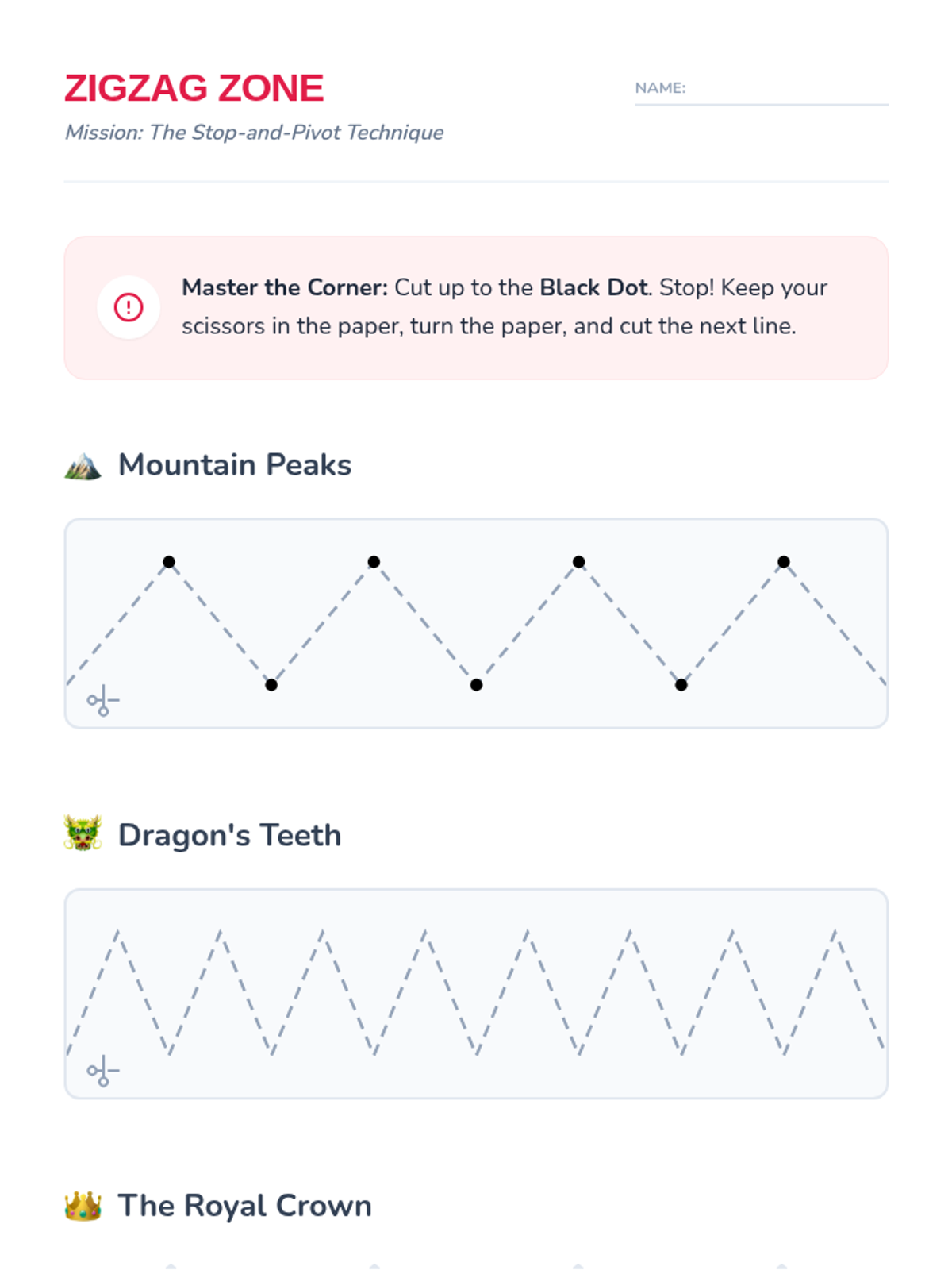
A practice worksheet for cutting zigzags and sharp corners. Features varying levels of difficulty from large 'Mountain Peaks' to tight 'Dragon Teeth' and a culminating royal crown shape. Includes 'stop dots' to visually cue the pivot technique.
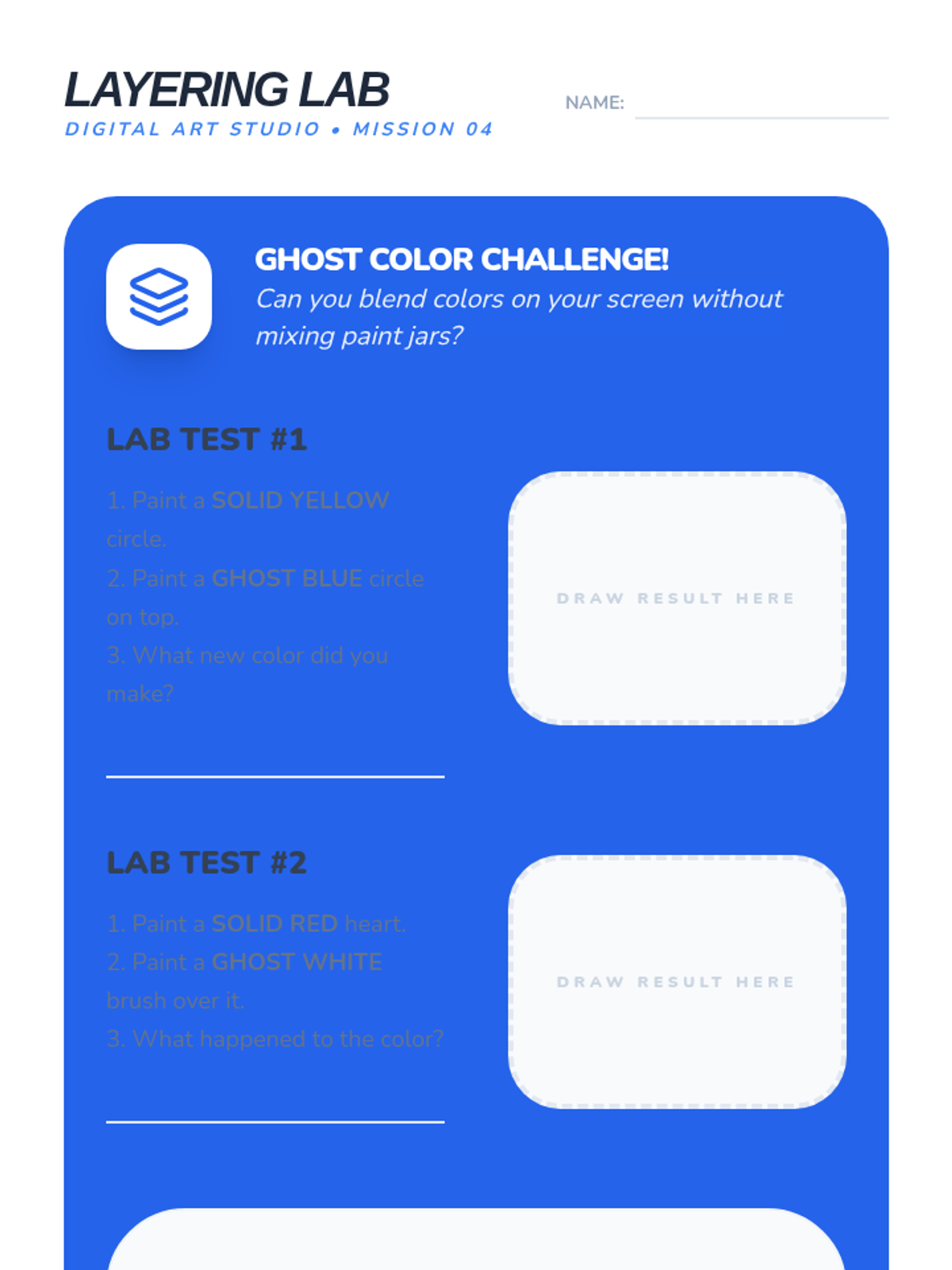
Student worksheet for experimenting with digital opacity, including color mixing predictions and result recording.
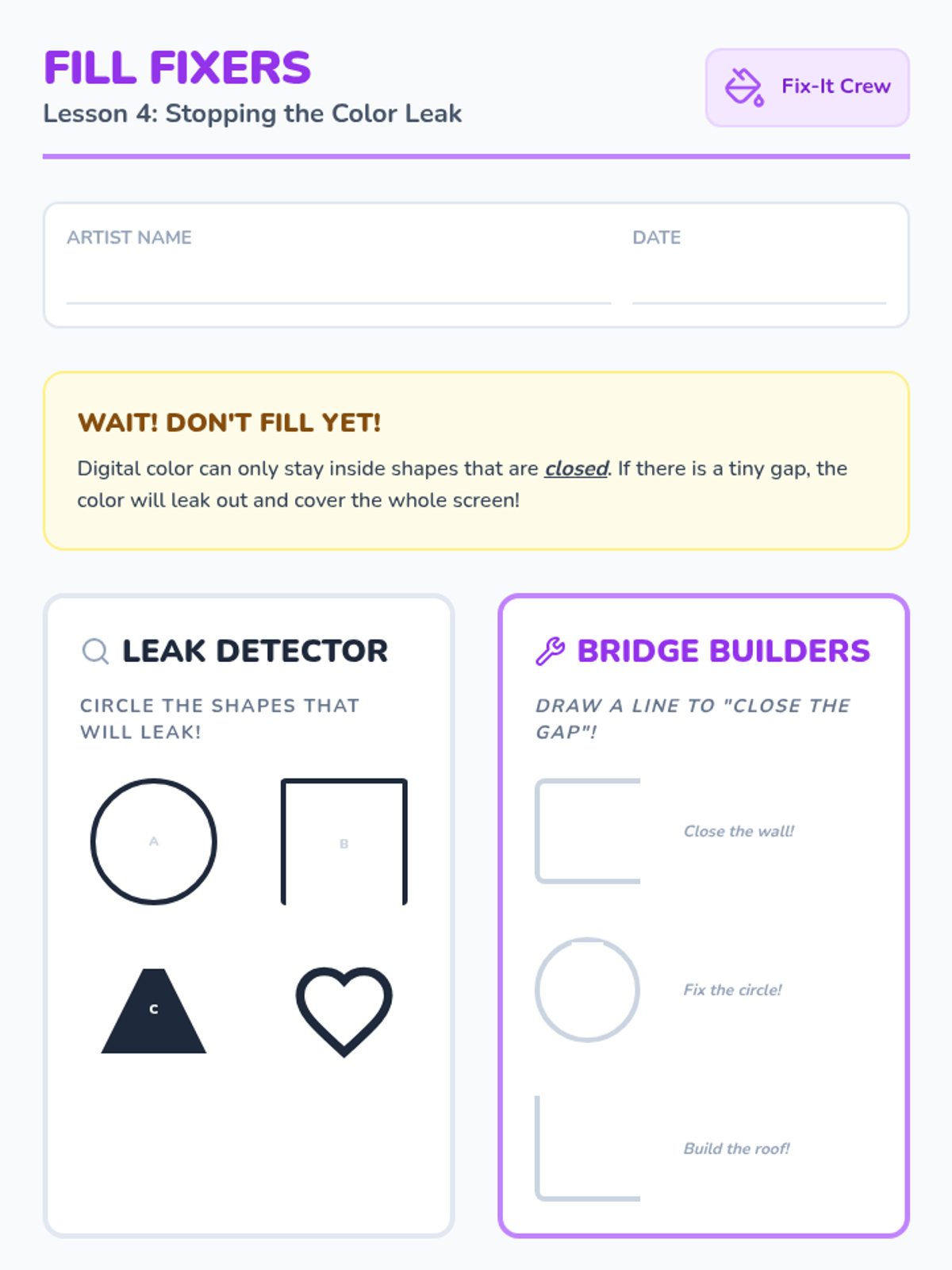
A worksheet for Lesson 4 where students identify and fix gaps in shapes to prevent color leaks.
Instructional slides for cutting sharp corners and zigzags. Introduces the 'stop-and-pivot' technique using mountain and crown analogies. Includes visual diagrams for peak and valley turns.
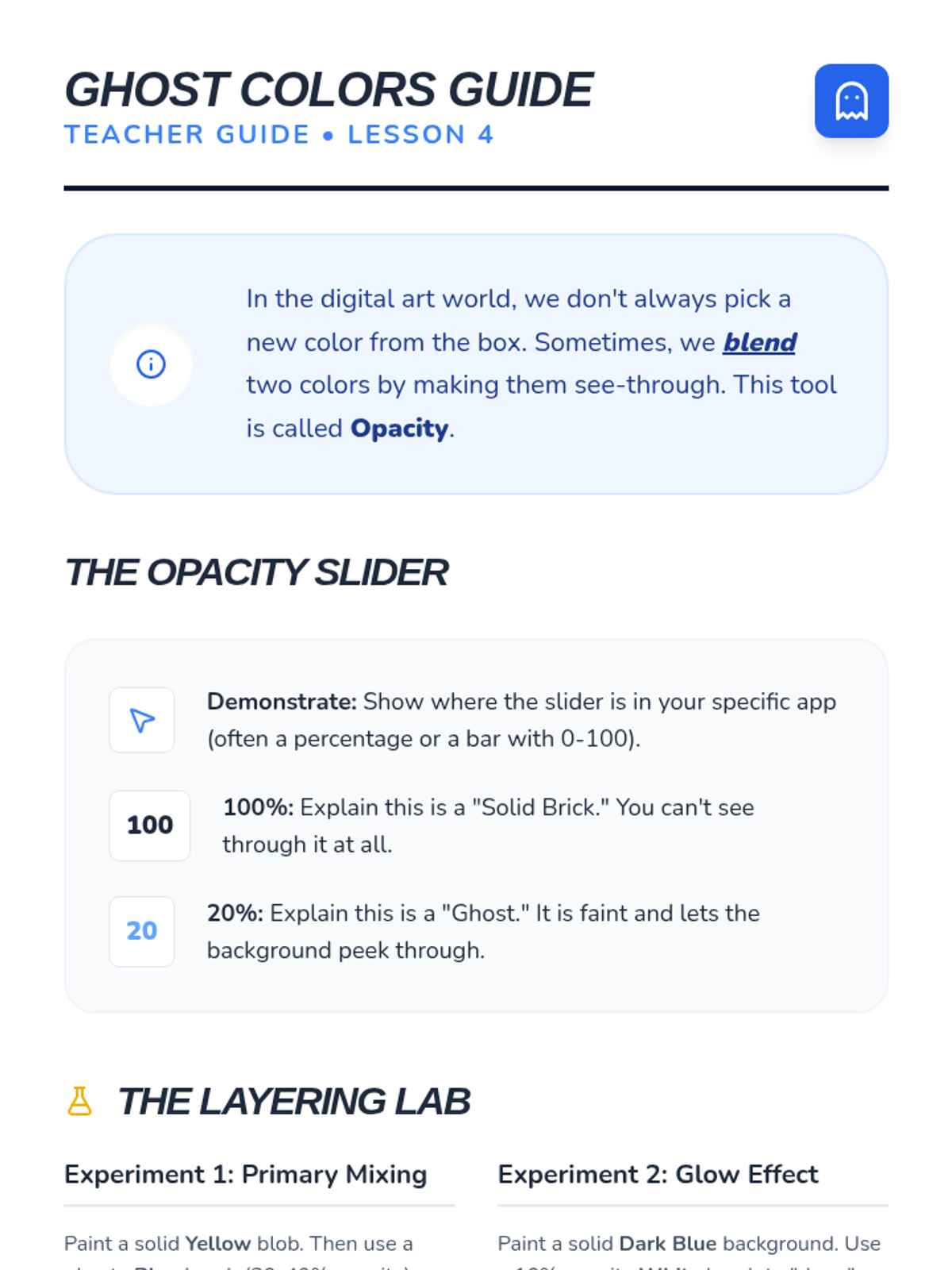
Teacher guide for the 'Ghost Colors' lesson, providing instructions for demonstrating opacity and facilitating the layering lab.
Slides for Lesson 4, introducing geometric shape tools, resizing, and rotation on a digital canvas.
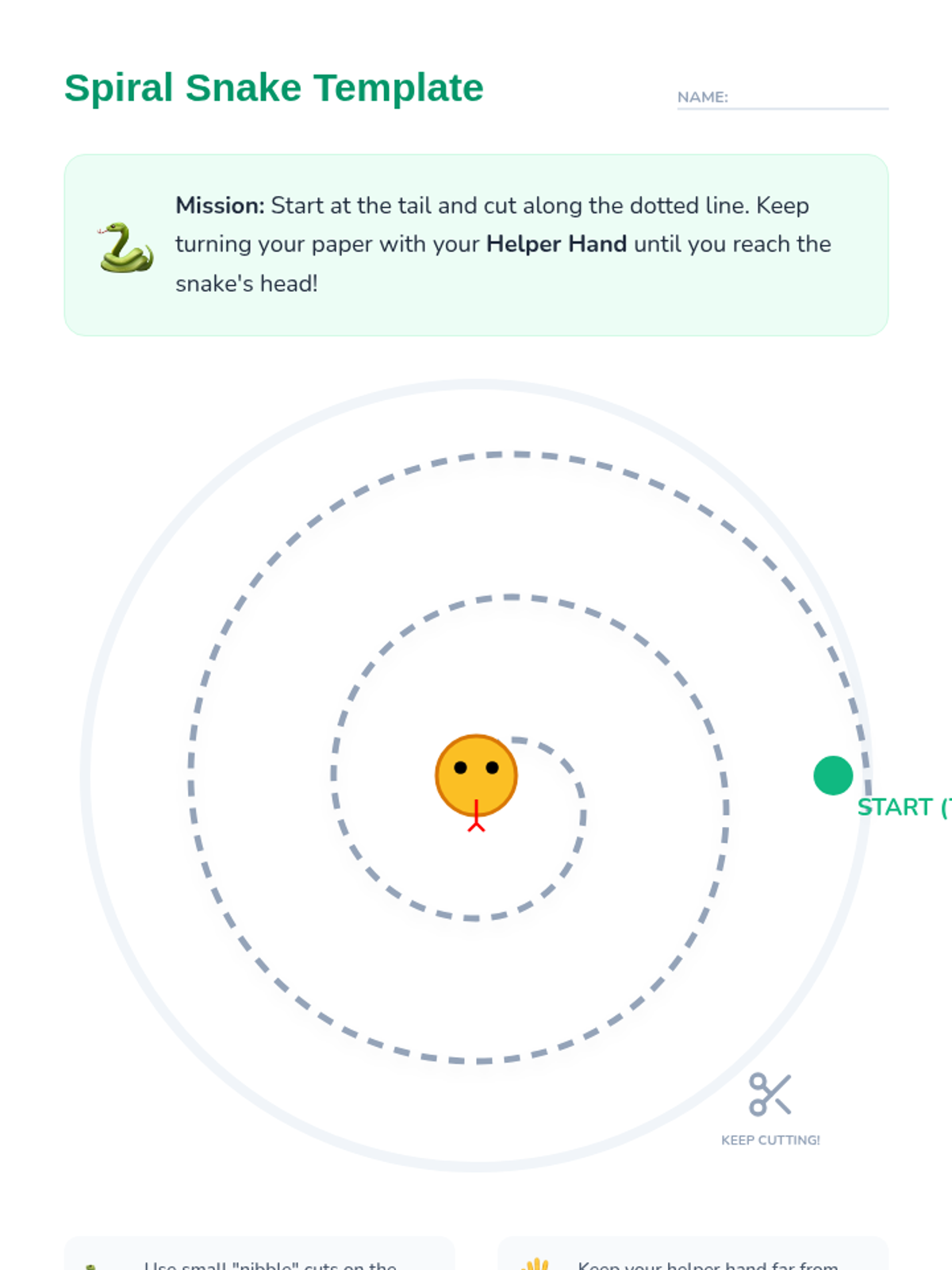
A student template for practicing curved and spiral cutting. Includes a large spiral snake template designed for continuous cutting and a second page for practicing rhythmic wave patterns.
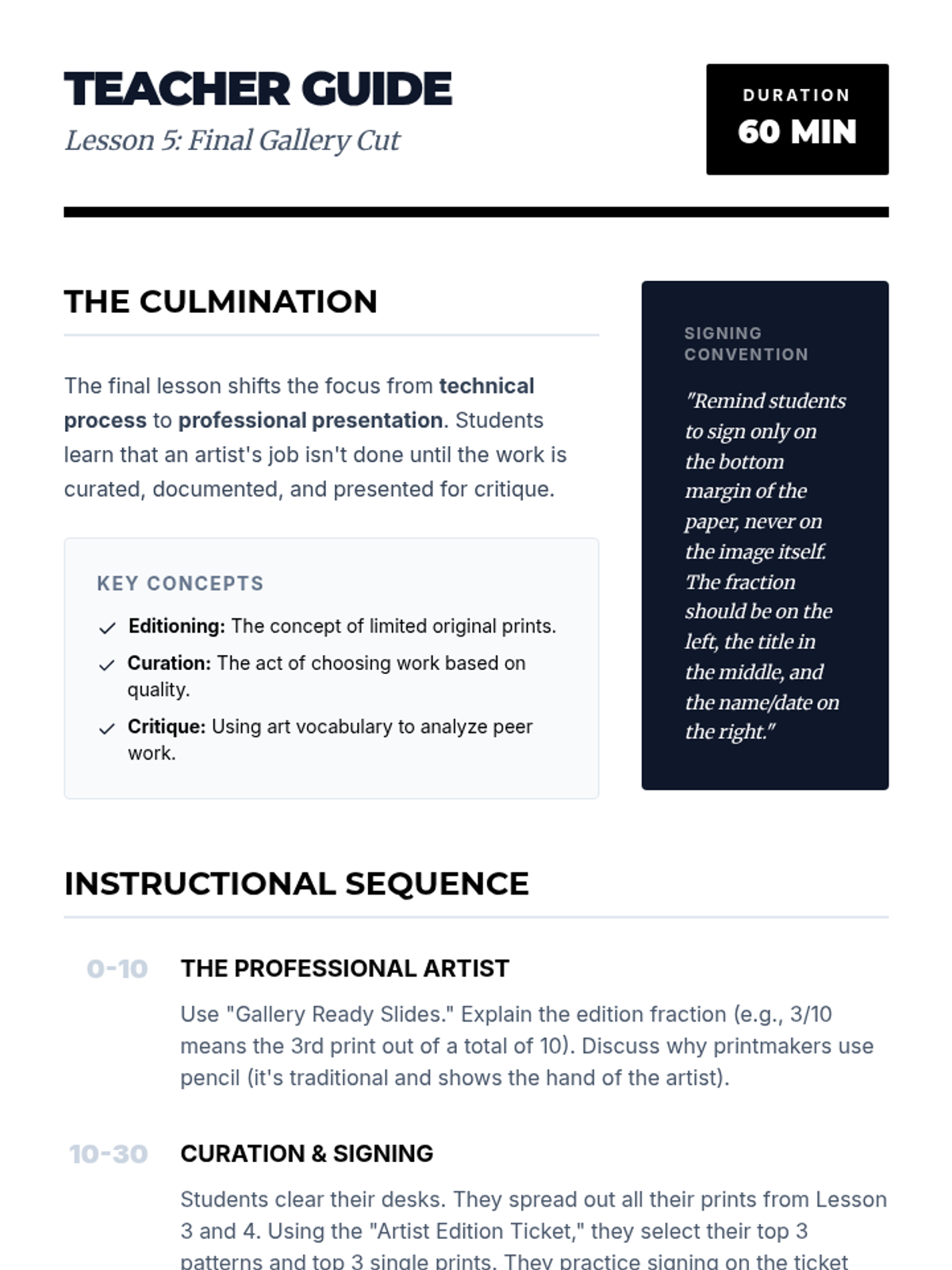
Teacher guide for Lesson 5, providing instructions for the curation process, print signing conventions, and facilitating a peer gallery walk.
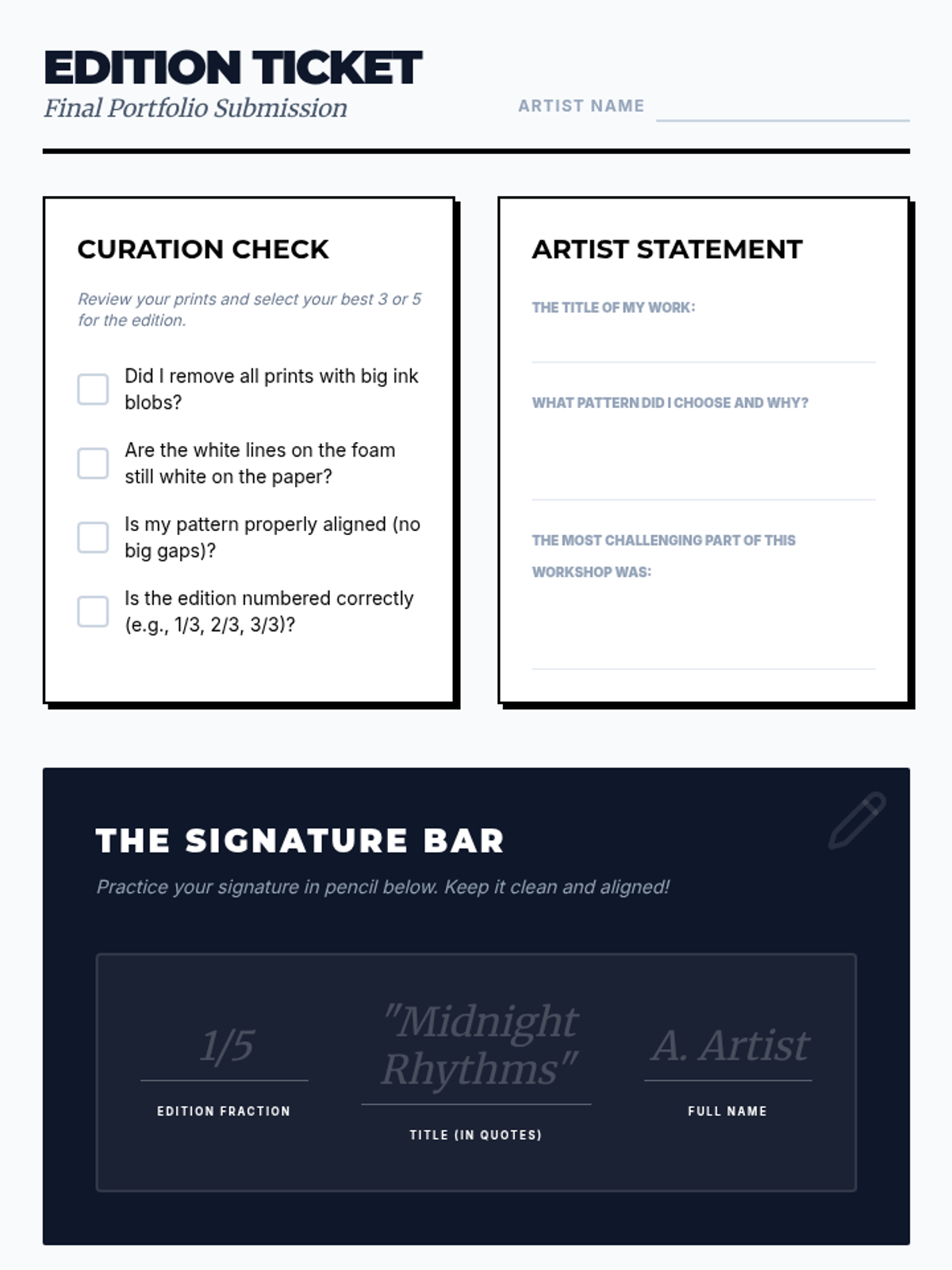
A student reflection and signing guide for the final lesson. Includes a curation checklist, artist statement prompts, and practice signing area.
Slides for Lesson 5 covering signing prints, numbering editions, and conducting a peer critique.
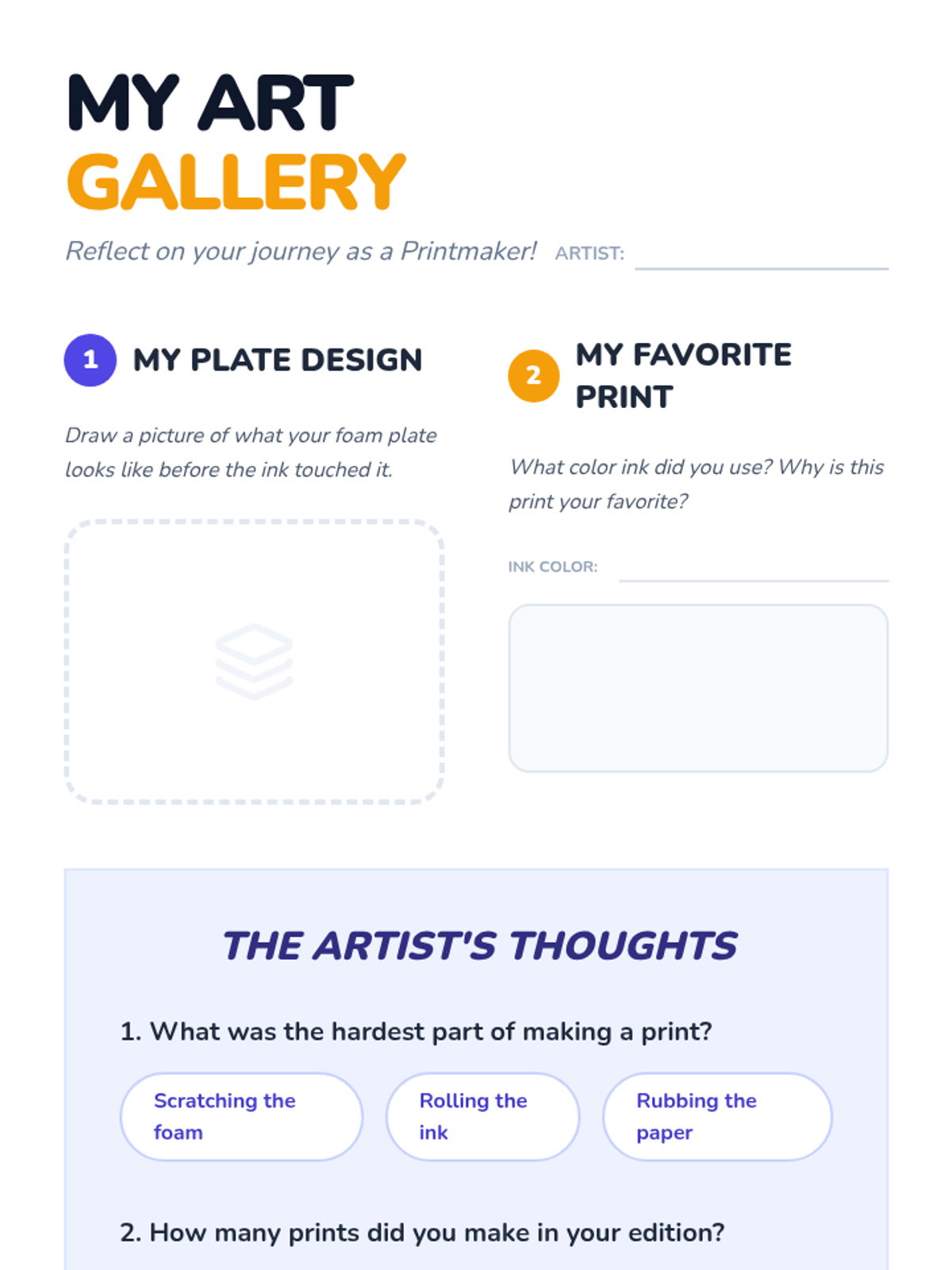
A 1st Grade reflection sheet for the final lesson, where students draw their plate design, evaluate their favorite print, and reflect on the technical process.
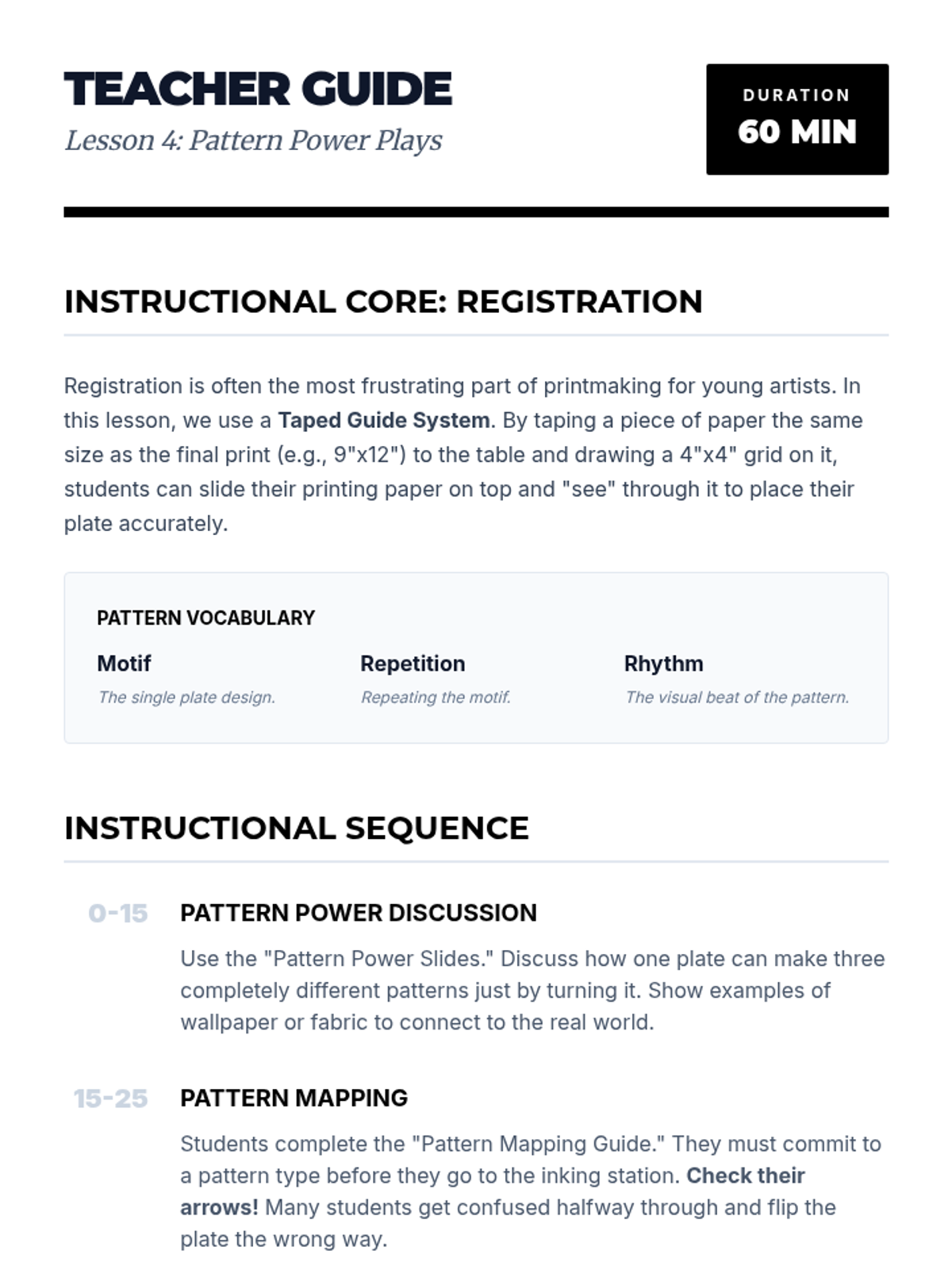
Teacher guide for Lesson 4, providing registration techniques, pattern vocabulary, and instructional pacing.
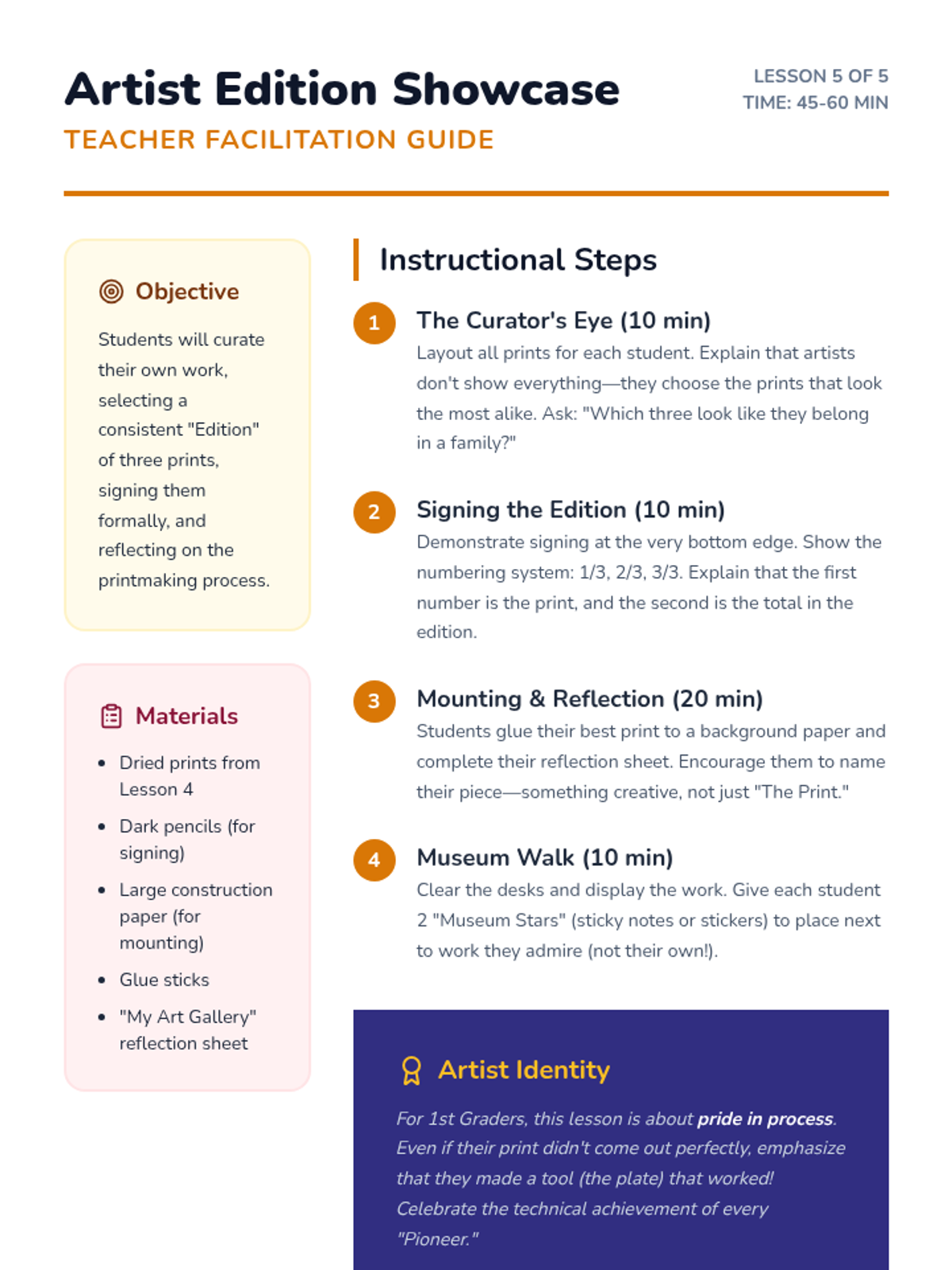
Teacher facilitation guide for the final lesson, including curation tips, signing instruction, and printable exhibition labels.
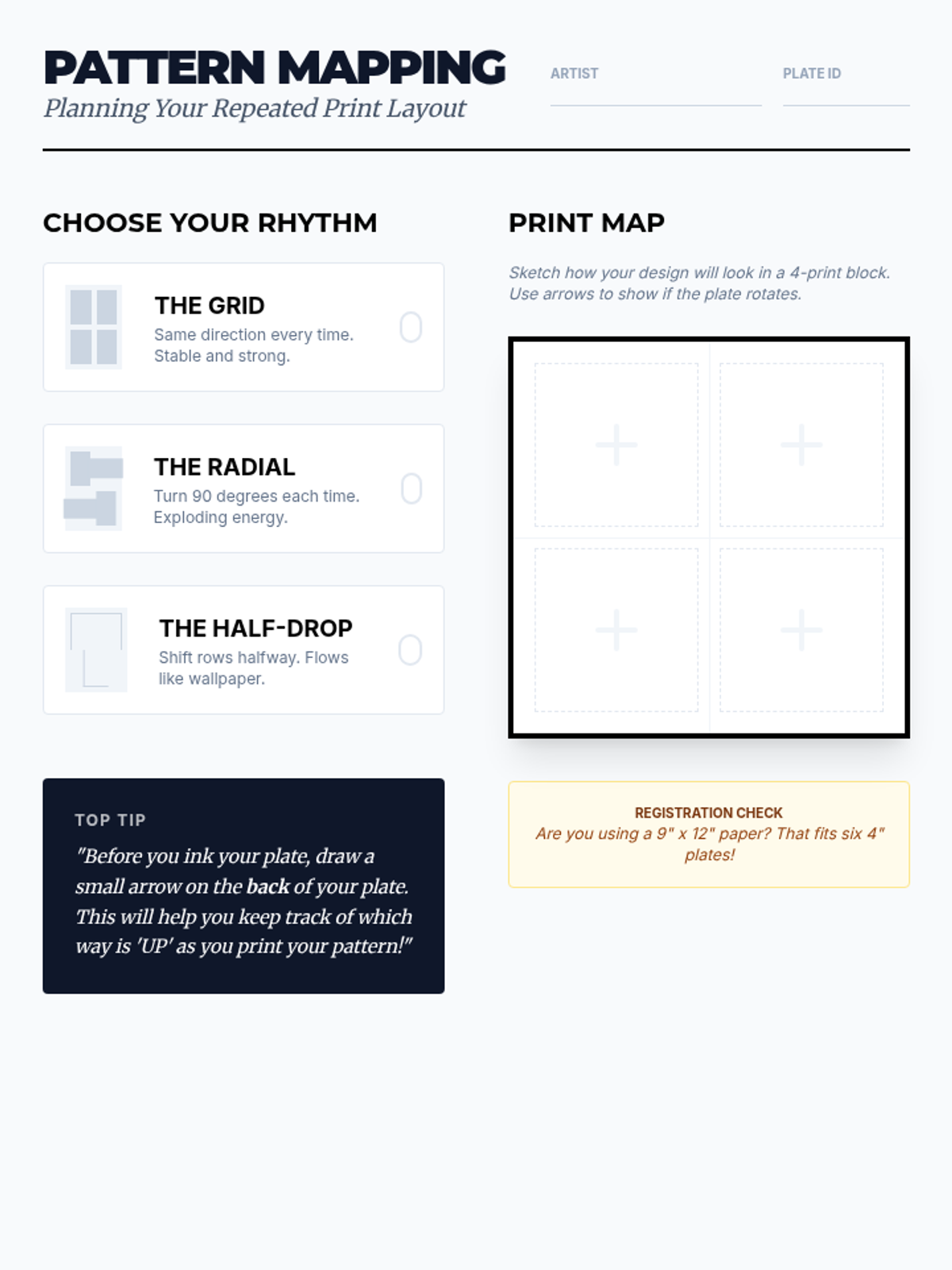
A planning guide for Lesson 4. Students choose a pattern type and sketch their intended layout to manage plate orientation and alignment.
Slides for Lesson 4 covering pattern types (grid, radial, half-drop) and registration techniques for aligning repeated prints.
Final slides for the sequence, focusing on the artist's edition, curation, signing work, and preparing for a classroom exhibition.
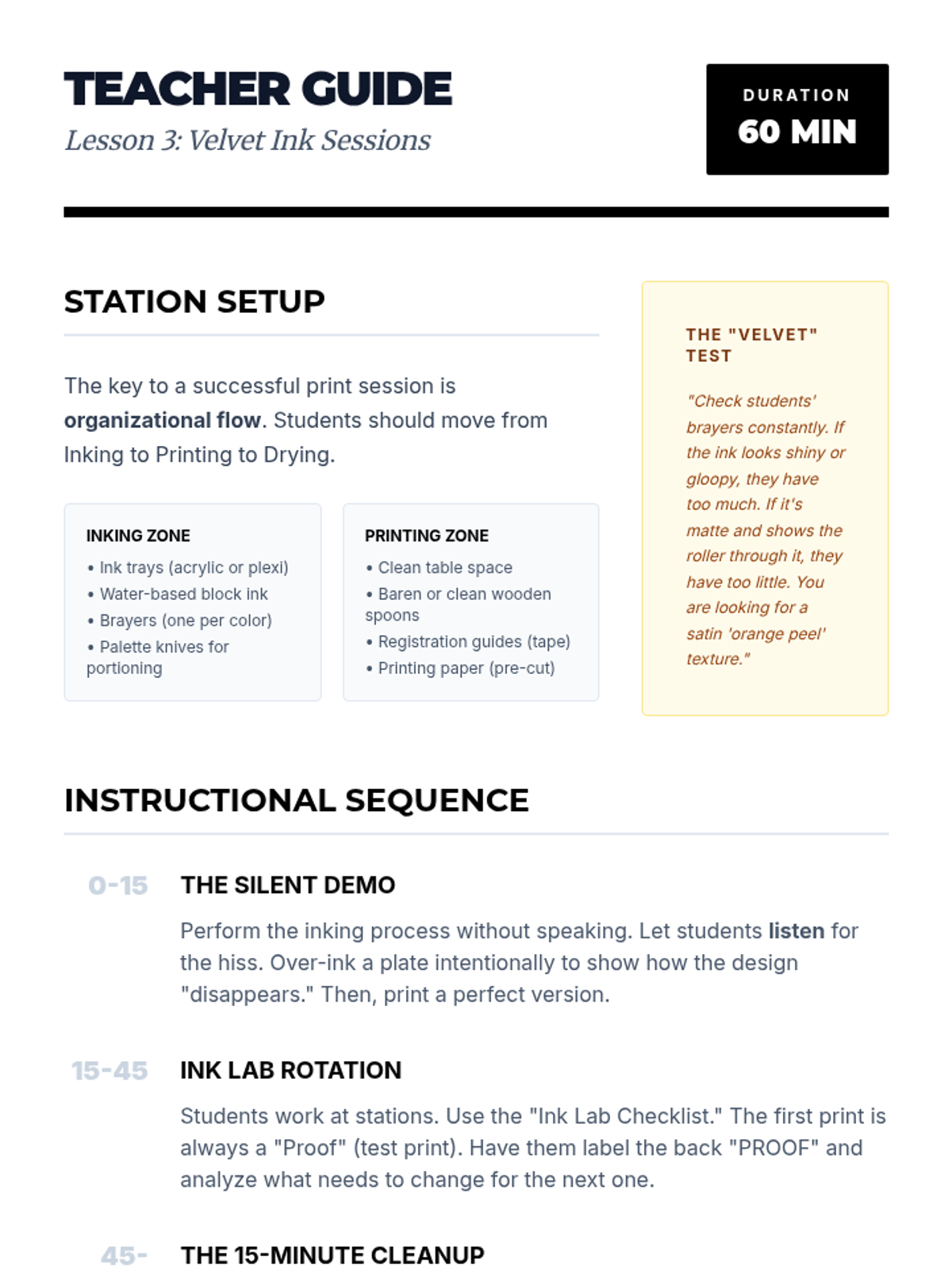
Teacher guide for Lesson 3, providing station setup instructions, the "Silent Demo" strategy, and cleanup procedures.
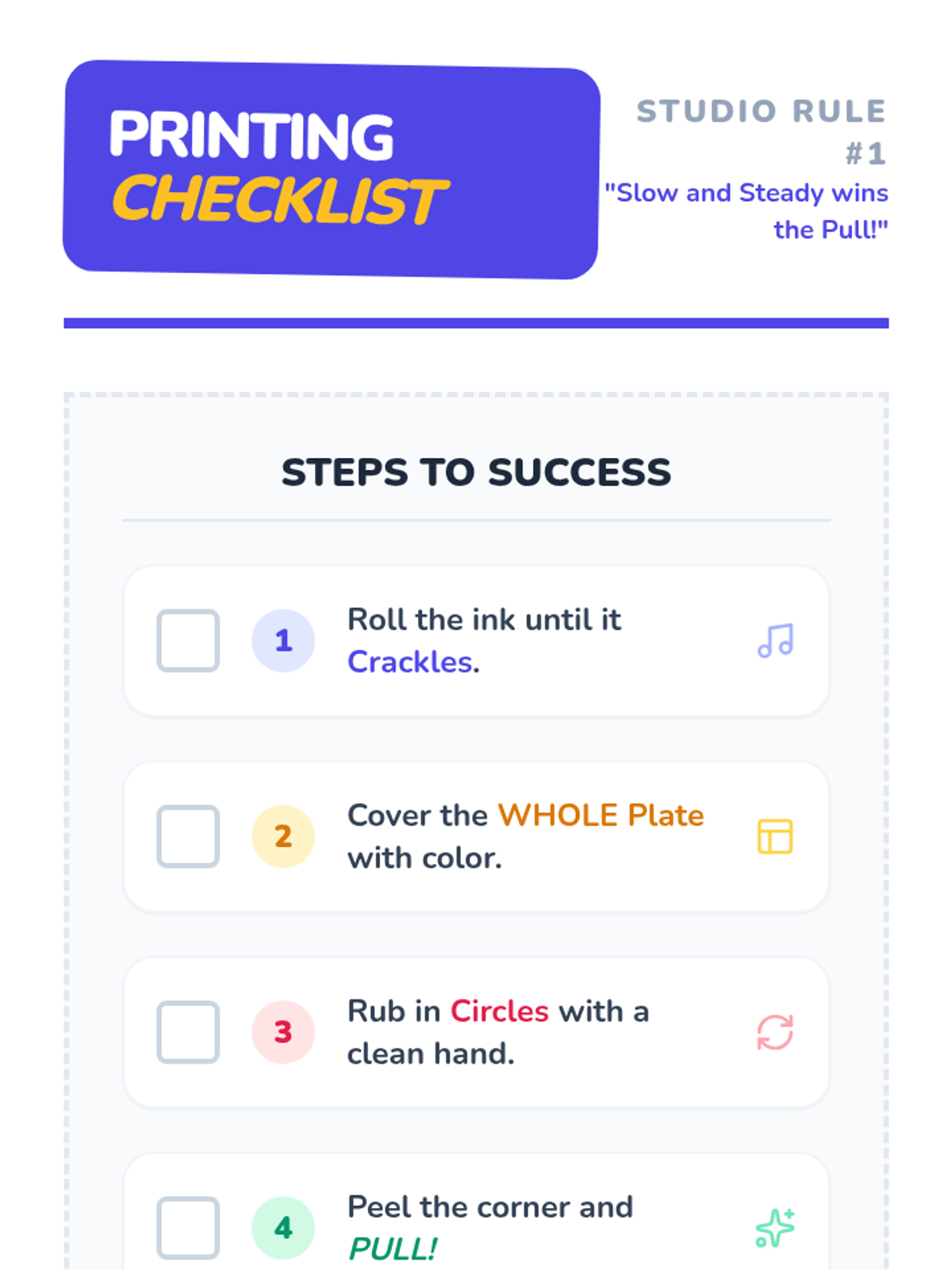
A visual checklist for 1st Graders to follow during the printing process to ensure technical success and a clean workspace.
A teacher facilitation guide for Lesson 5, covering visual communication, color associations, and design styles for expressing emotions.
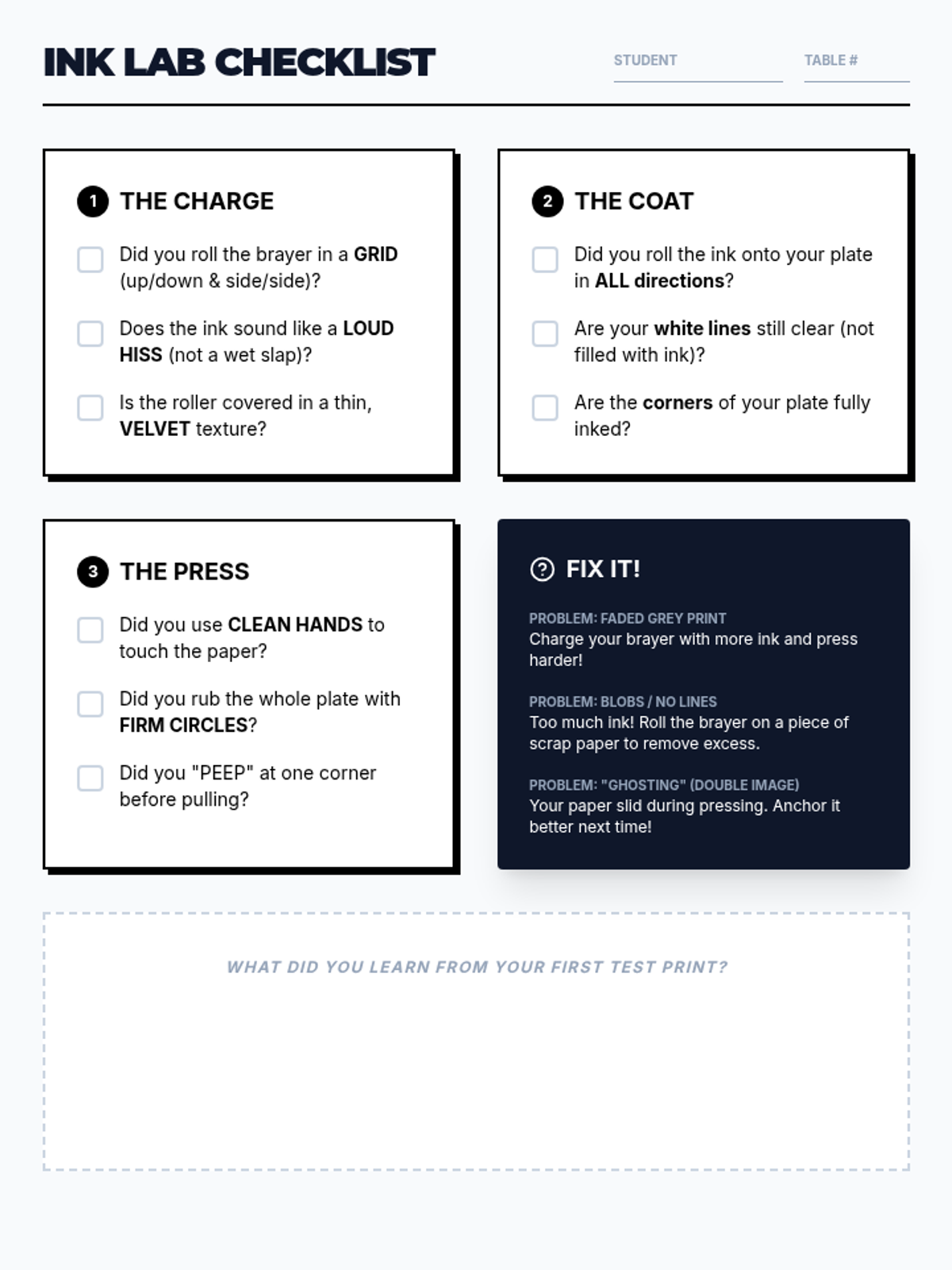
A student self-check list for Lesson 3 to ensure proper inking and pressing techniques.
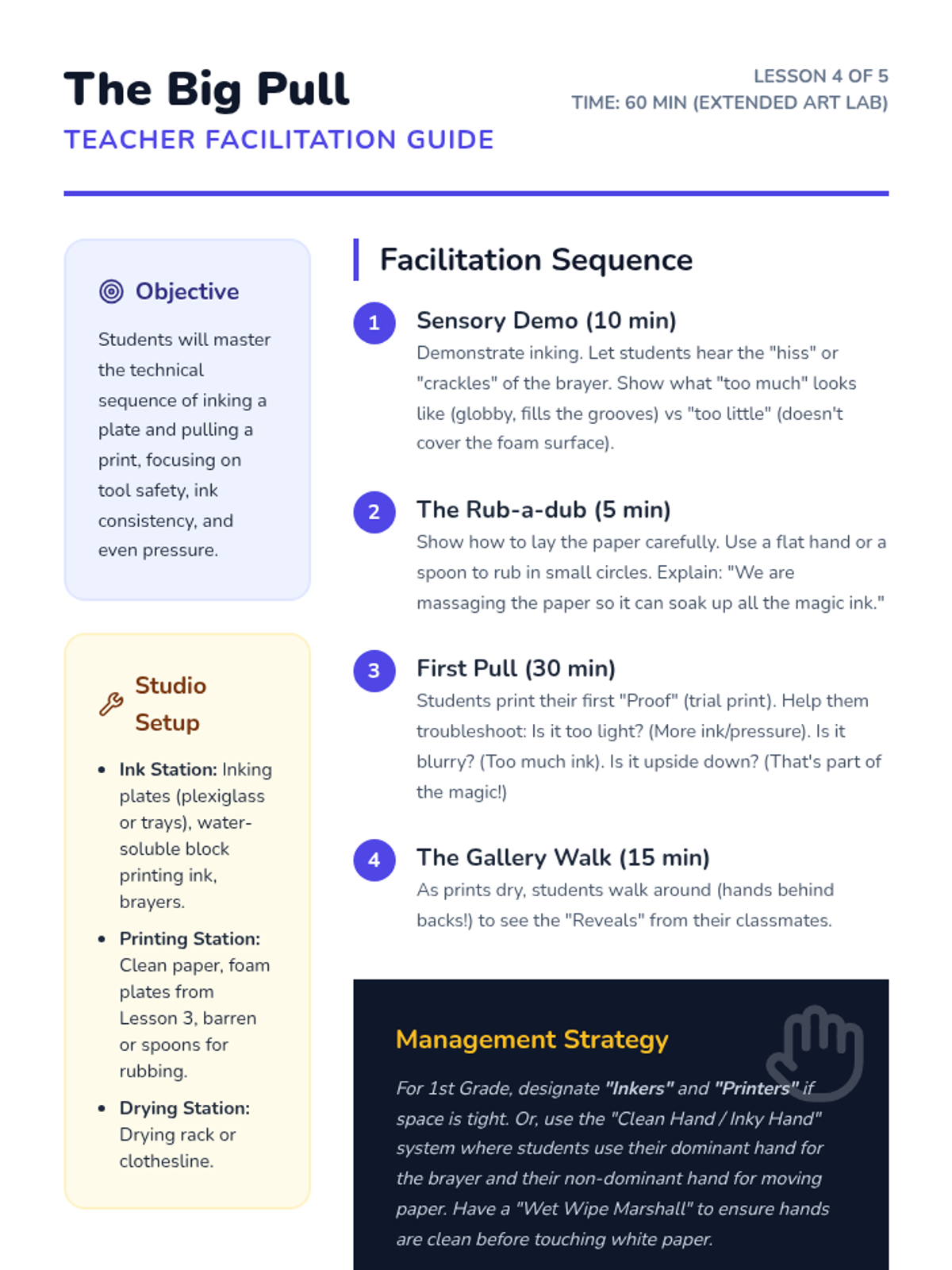
Teacher facilitation guide for Lesson 4, detailing the technical management of a printing lab for 1st Graders, including station setup and a troubleshooting guide.
Slides for Lesson 3 covering inking techniques, brayer anatomy, charging the roller, and hand-pressing methods.
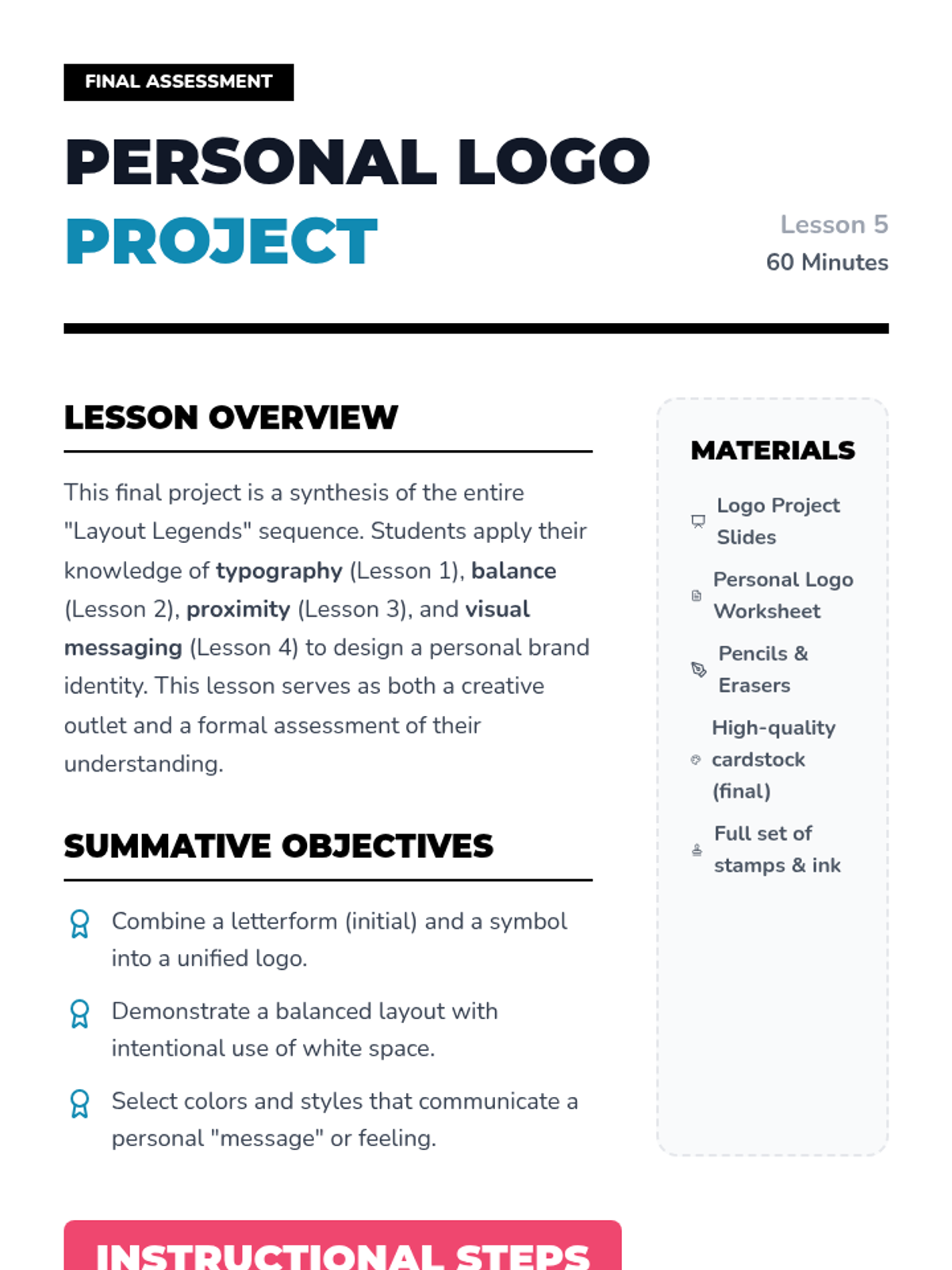
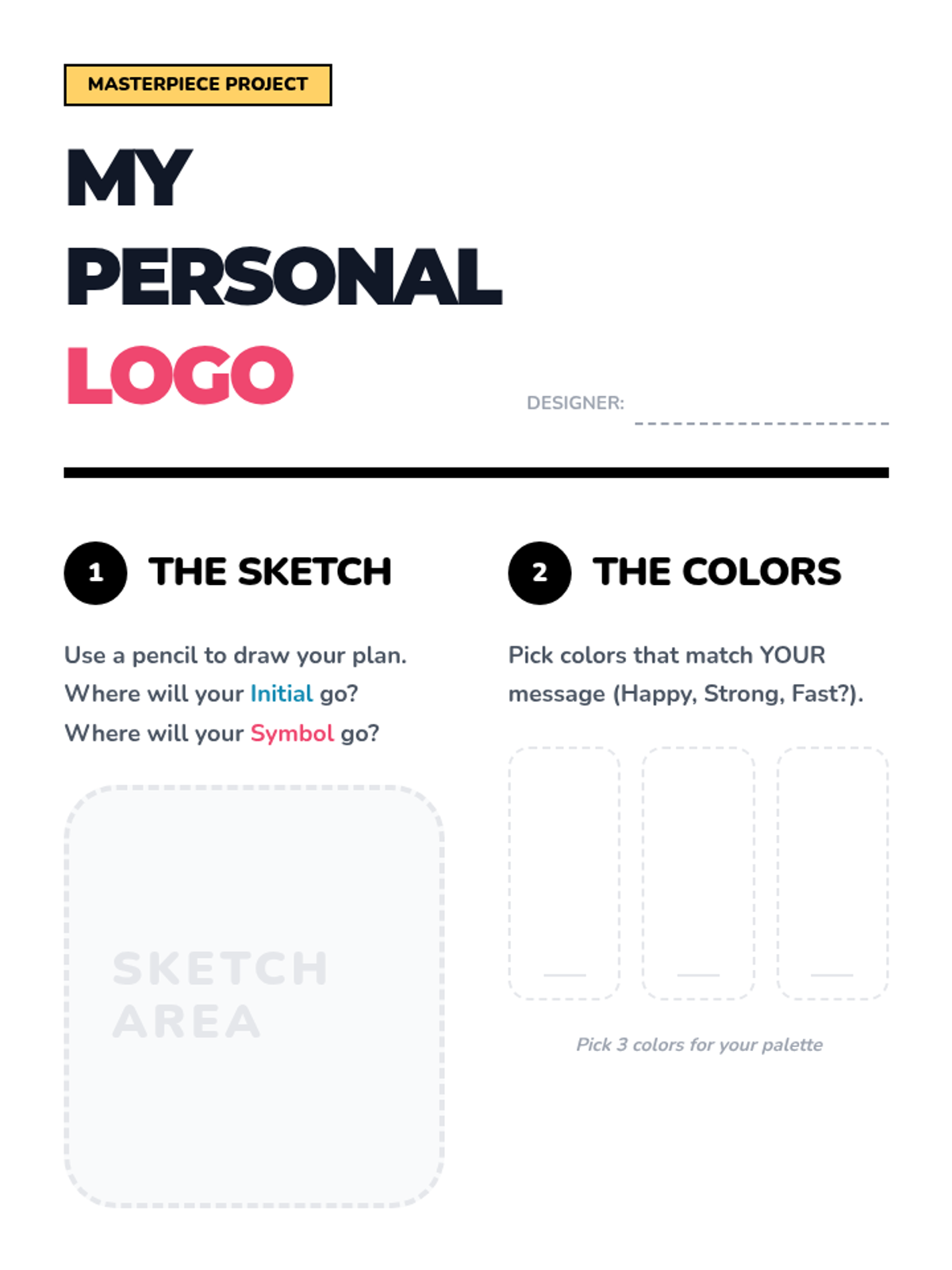
A student activity sheet for Lesson 5 where students plan and execute their final personal logo design, synthesizing all learned layout and typography skills.
Slides for Lesson 5 guiding students through the synthesis of skills to create a personal logo using an initial and a symbol.
Slides for Lesson 4, detailing the technical process of inking a foam plate and 'pulling' a print, including sensory cues like the 'velcro' sound of the ink.
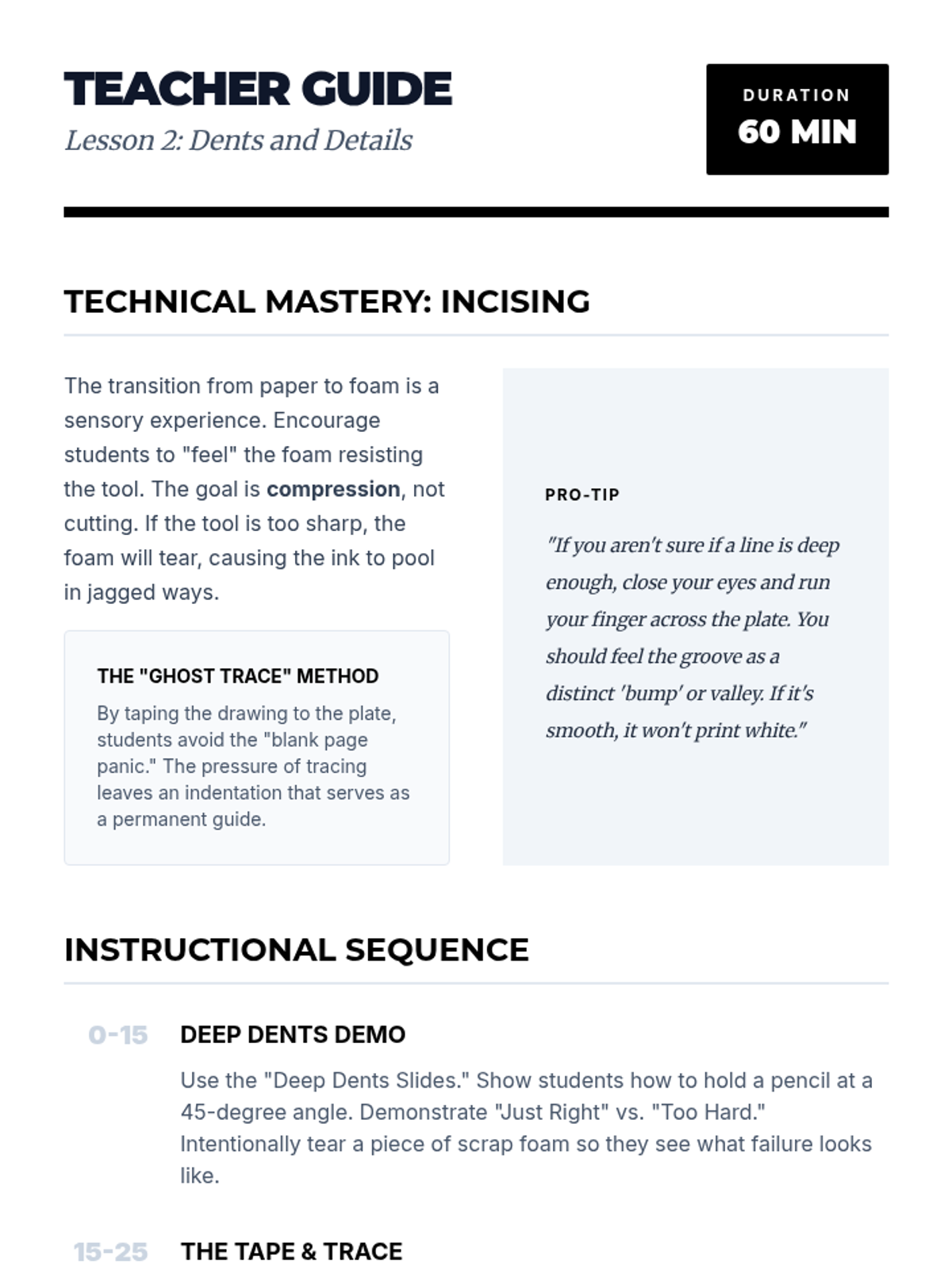
Teacher guide for Lesson 2, providing instructions on foam plate incising, the "Ghost Trace" transfer method, and instructional pacing.
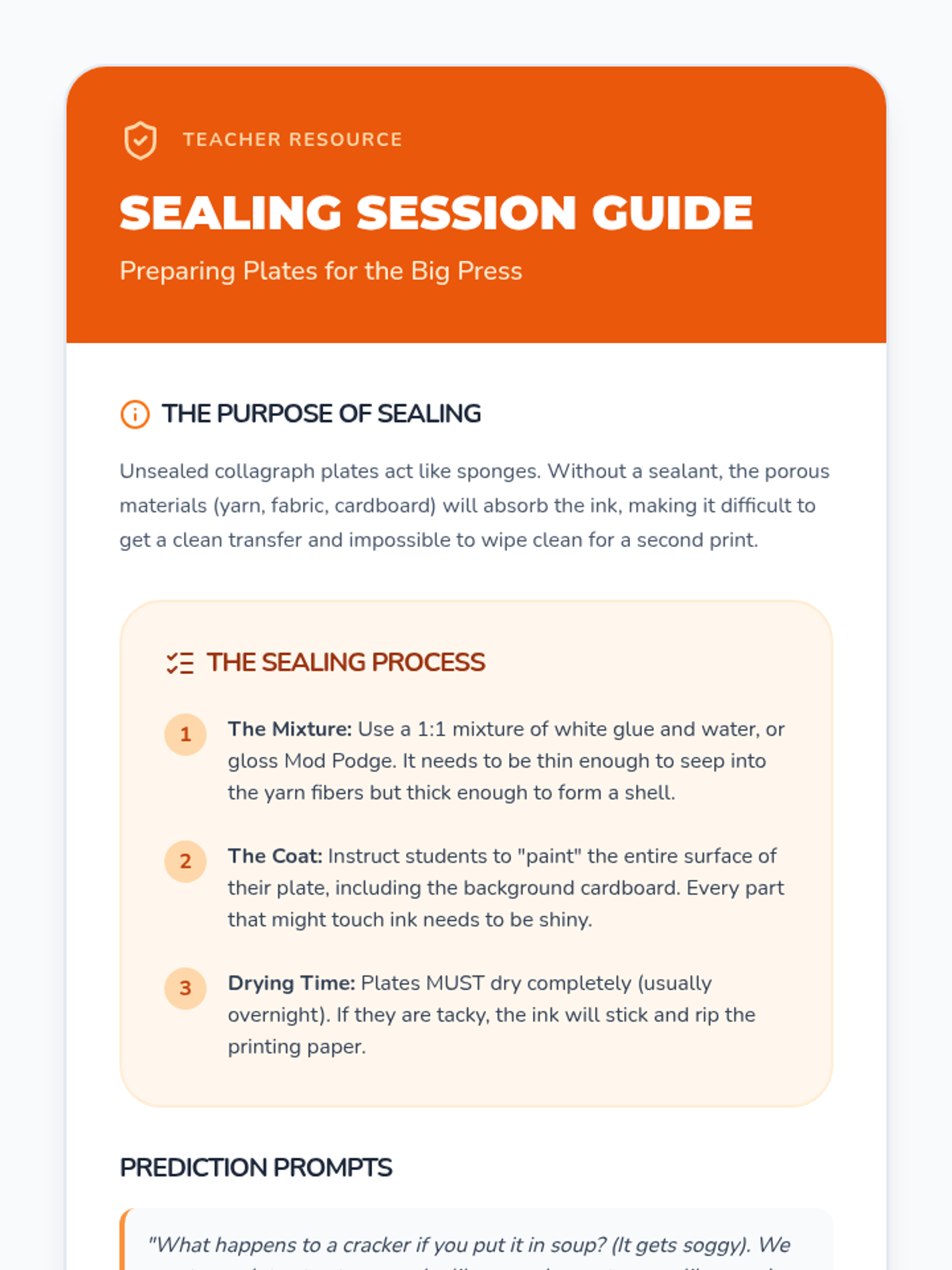
A facilitation guide for teachers on how to seal collagraph plates and lead a discussion on predictions.
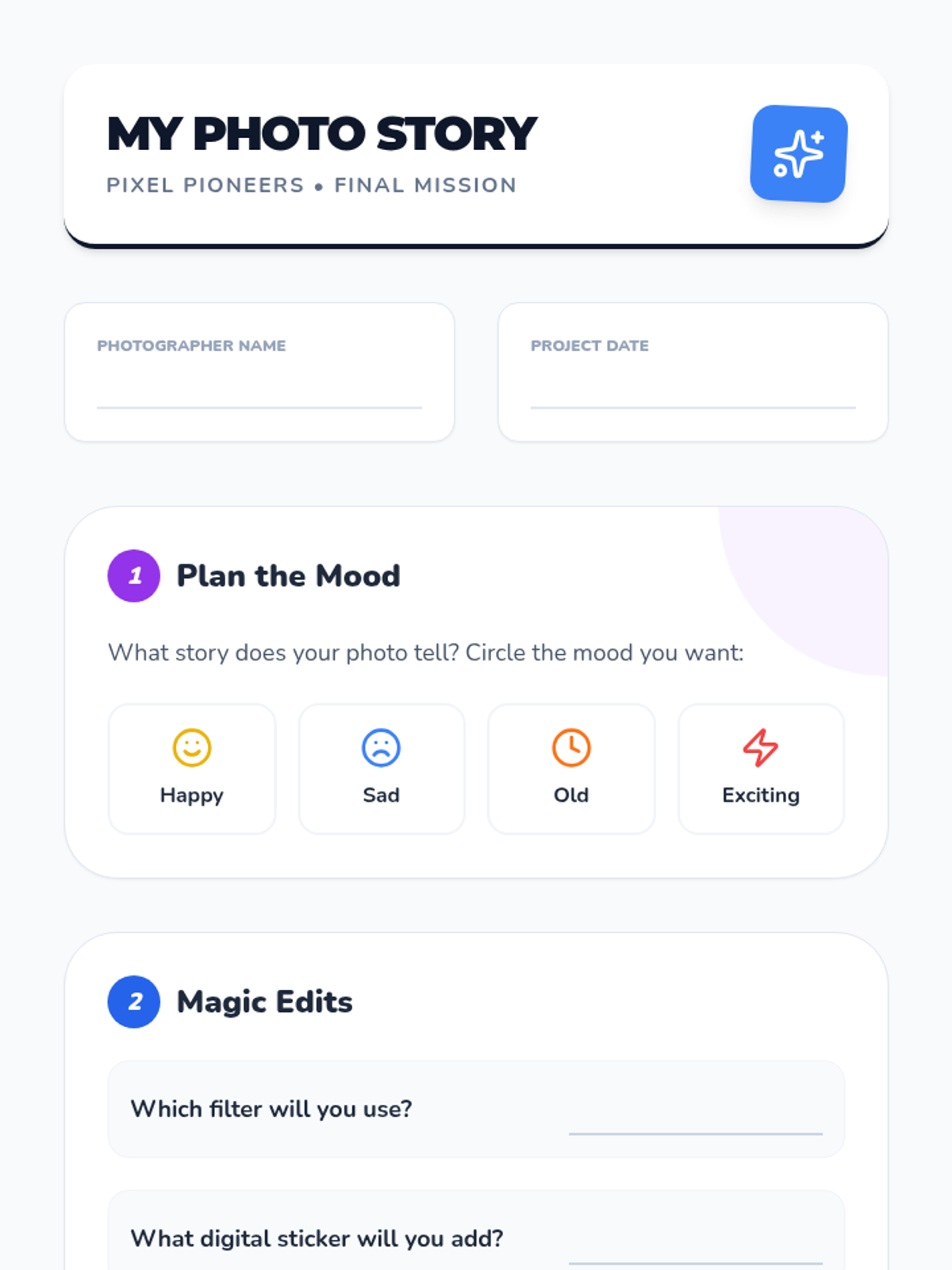
Student project planner for selecting a photo, choosing a filter, and planning digital additions for a final photo story.
Visual examples of how digital stickers and drawing tools can be used to add creative layers to photographs.
Slides explaining digital opacity and the concept of see-through 'ghost colors' for blending and layering.
Visual examples showing how digital filters like black-and-white, sepia, and vivid change the emotion of a photograph.
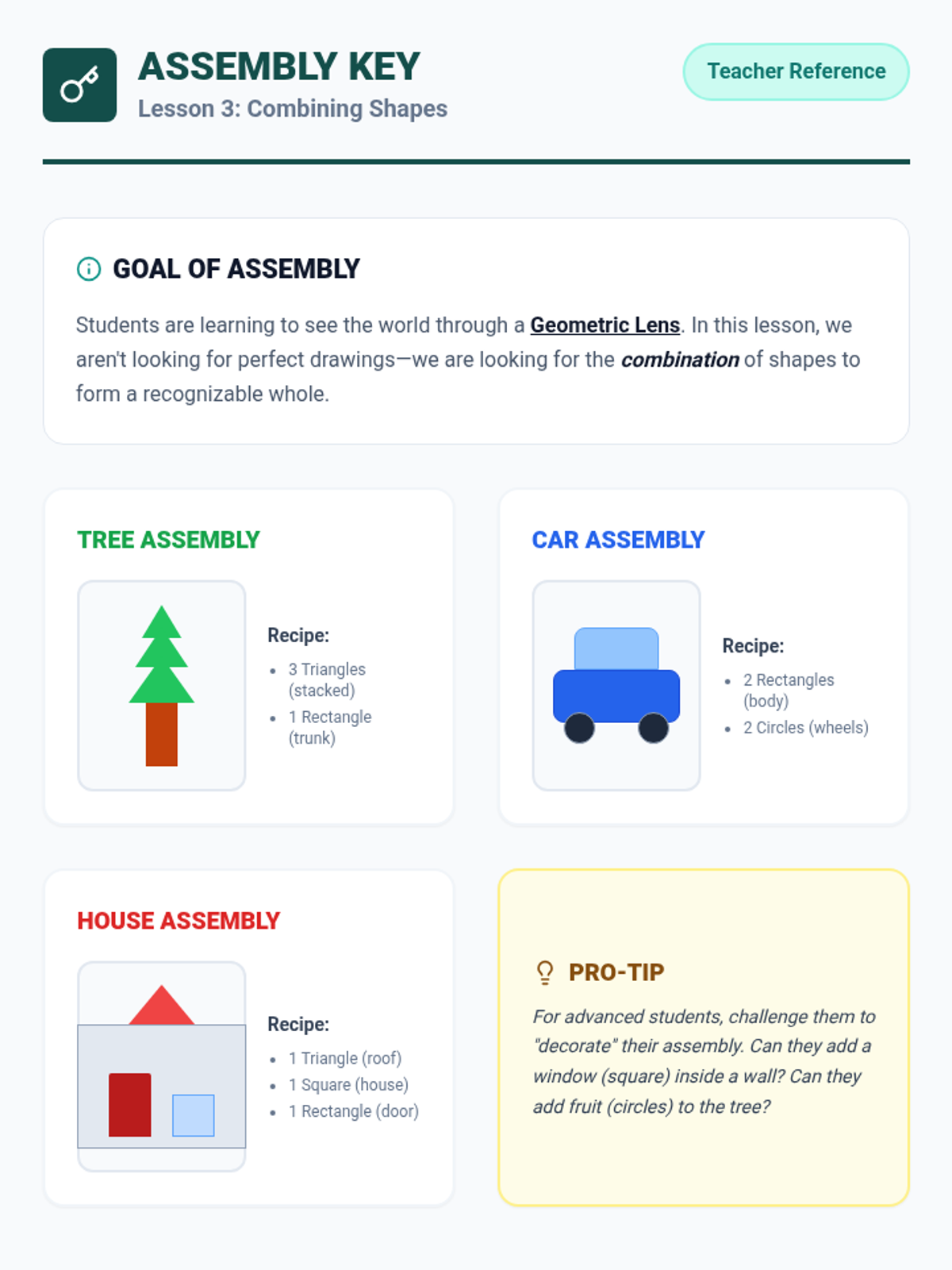
Teacher reference guide for Lesson 3, showing example shape assemblies and tips for differentiation.
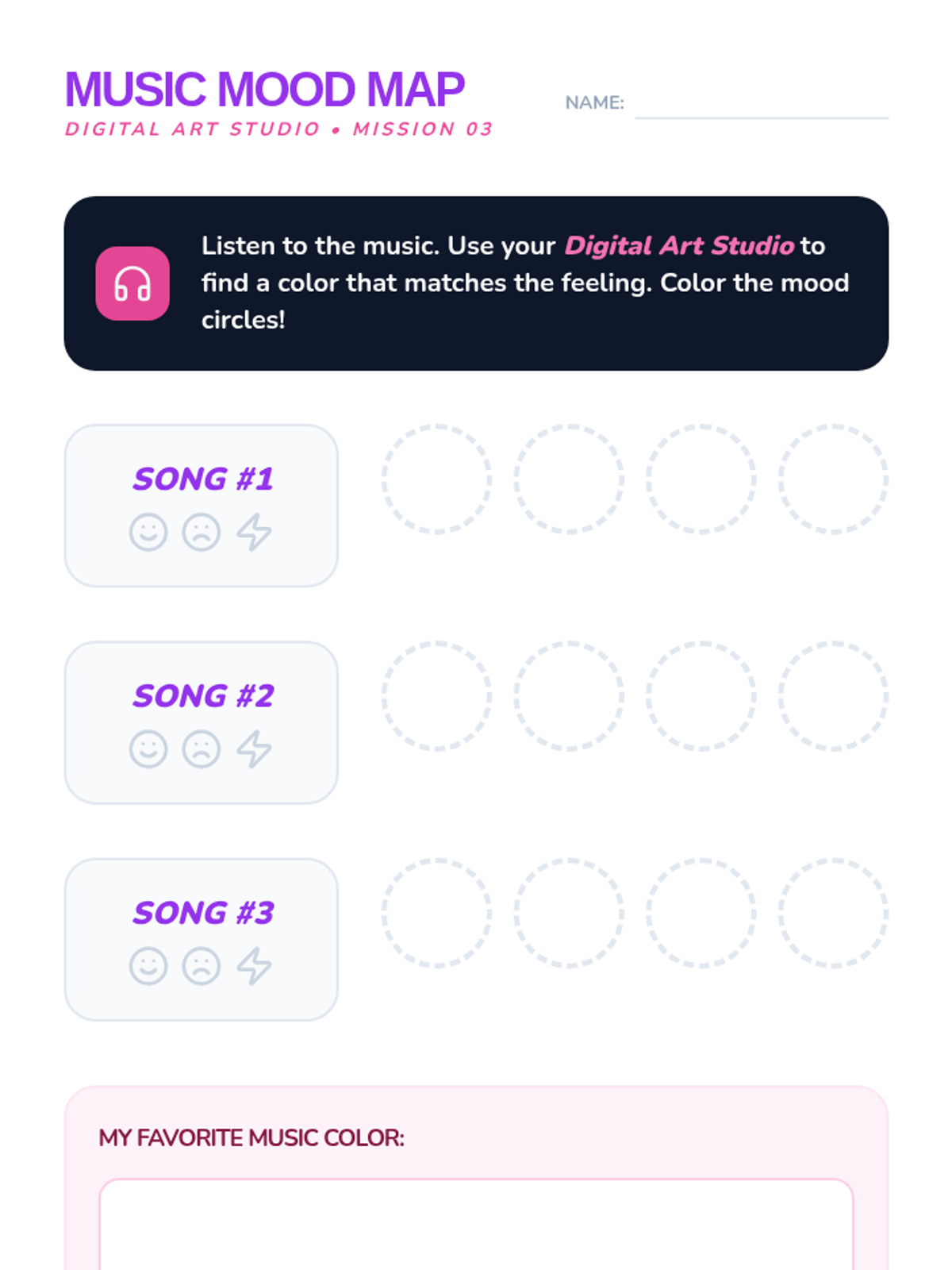
Student worksheet for recording color choices based on auditory cues from three different musical samples.
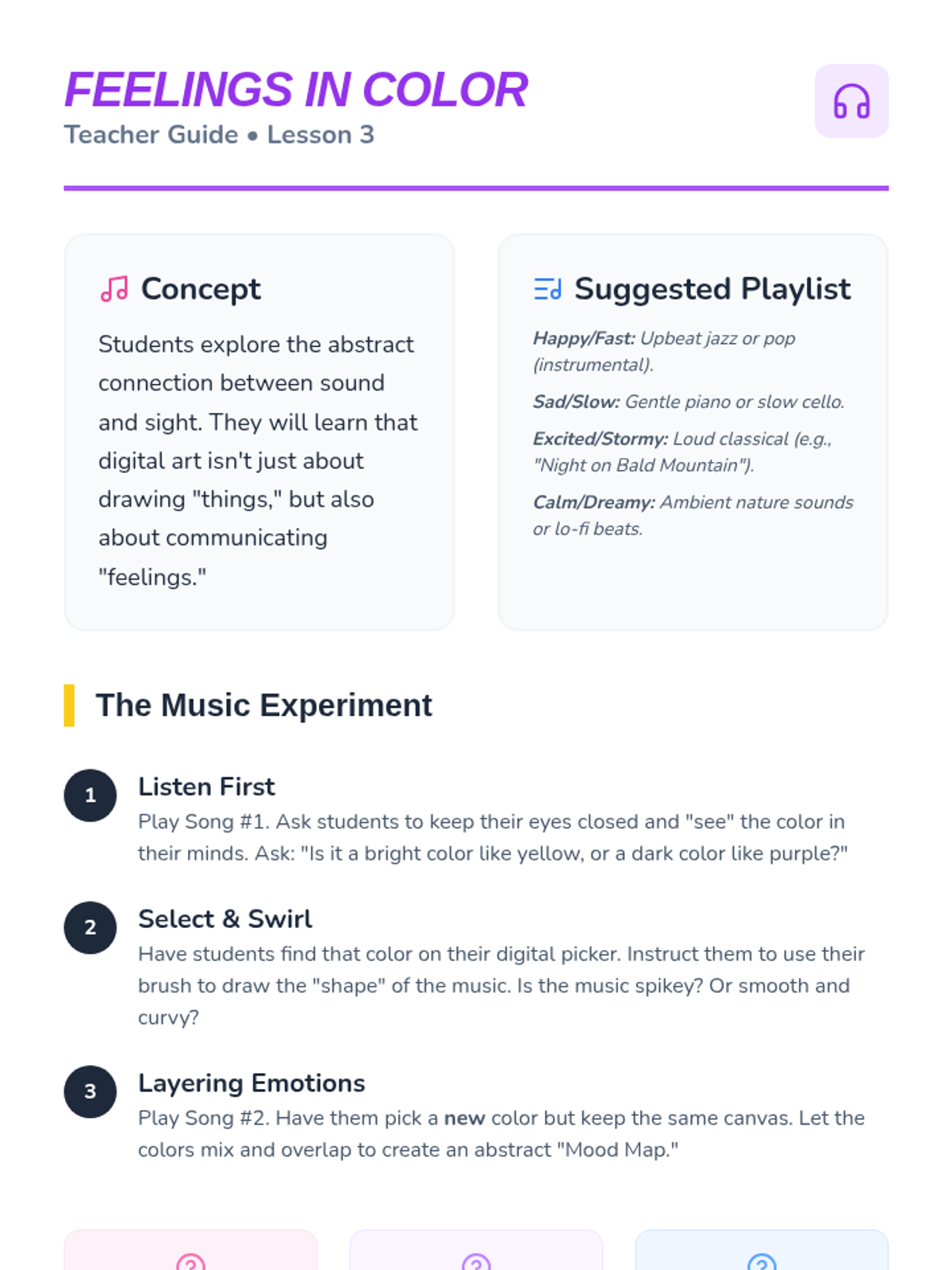
Teacher guide for the 'Feelings in Color' lesson, providing music suggestions and facilitating strategies for abstract color expression.
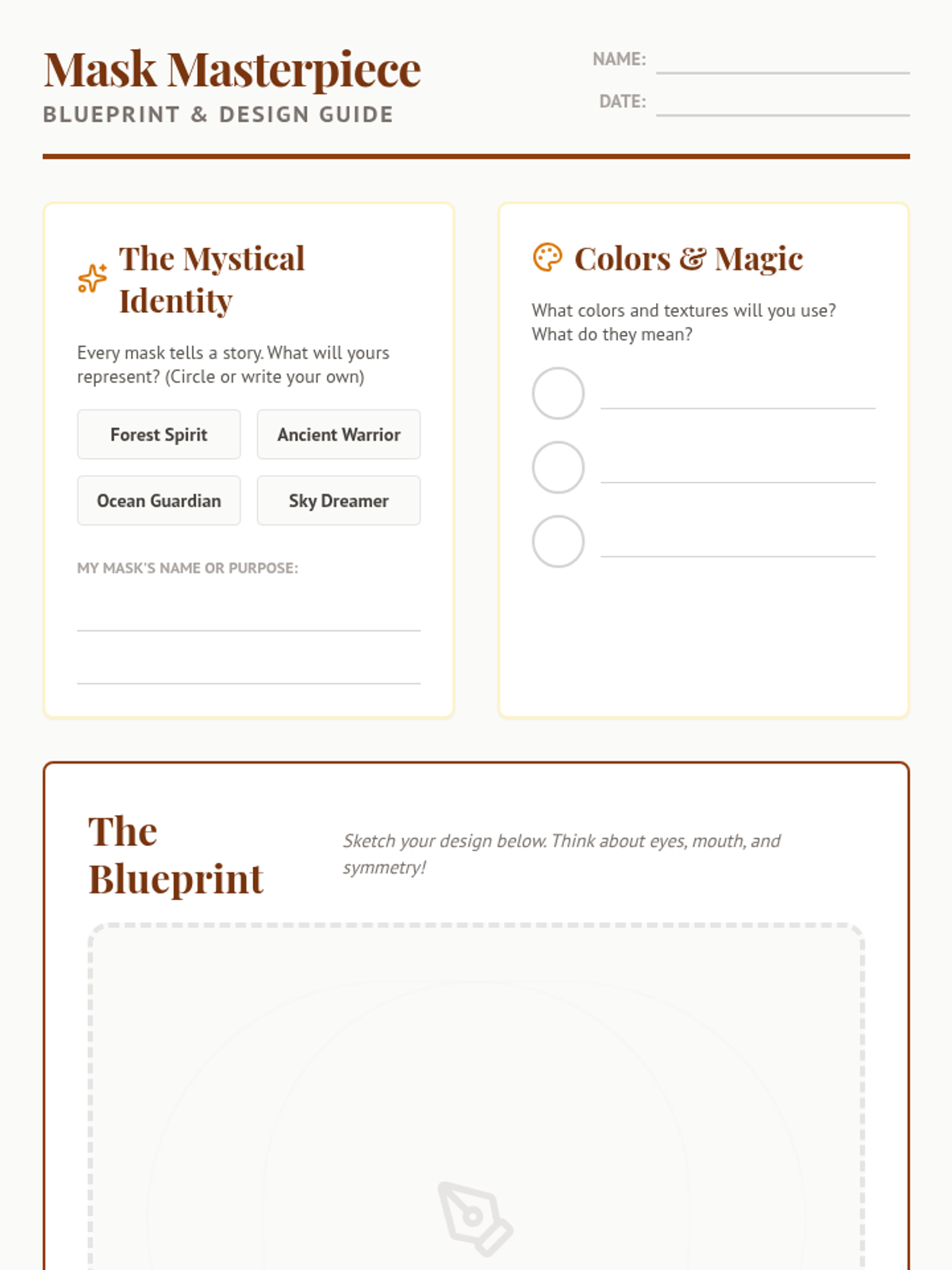
A design worksheet for students to plan their mystical mask identity, colors, and visual blueprint.
A visual presentation exploring mask traditions from Africa, Italy, Japan, and Mexico to inspire student creativity.
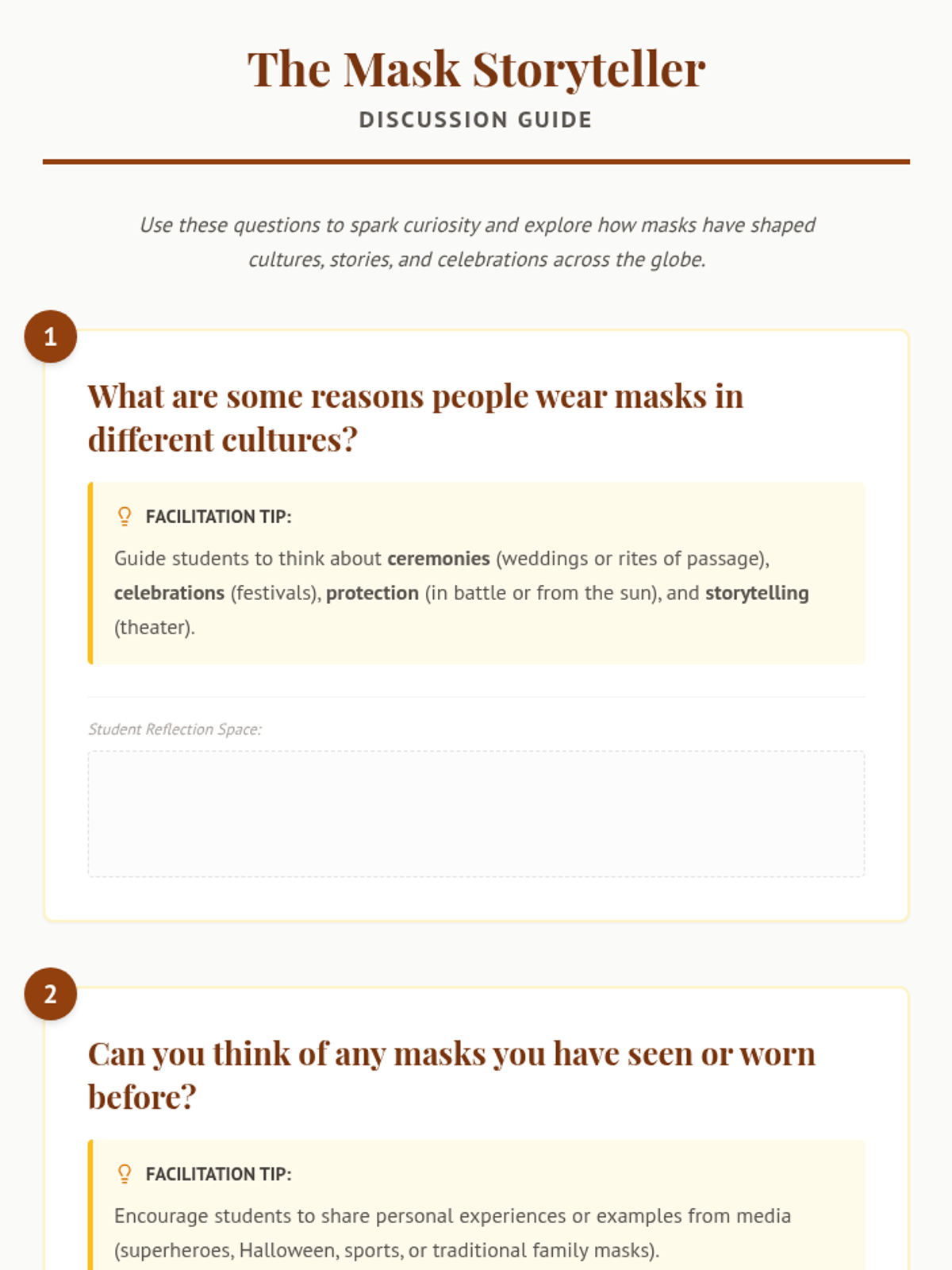
A set of structured discussion questions to help students explore the cultural and storytelling significance of masks.
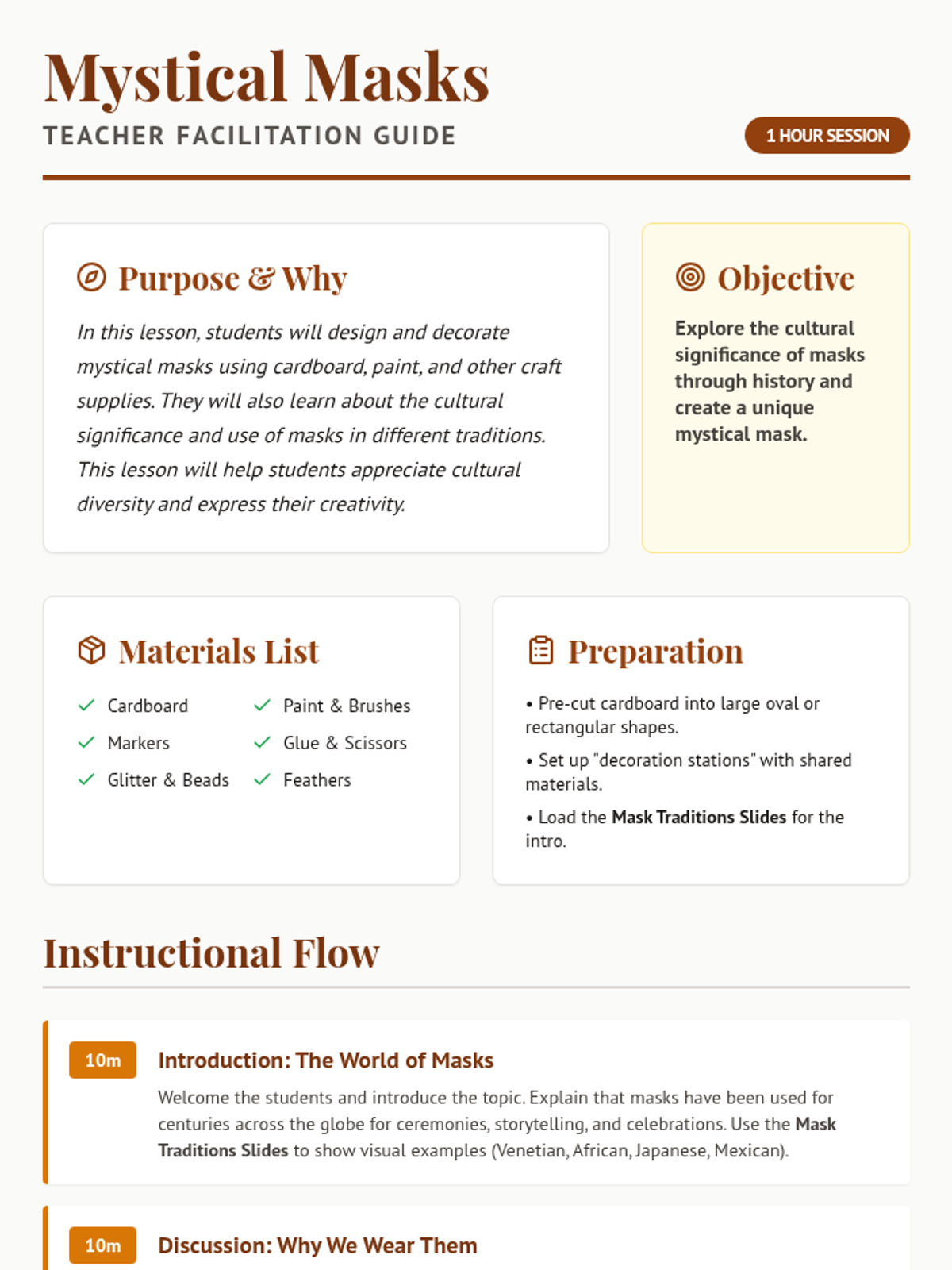
A comprehensive teacher guide for the Mystical Masks lesson, including a timeline, materials list, and instructional steps.
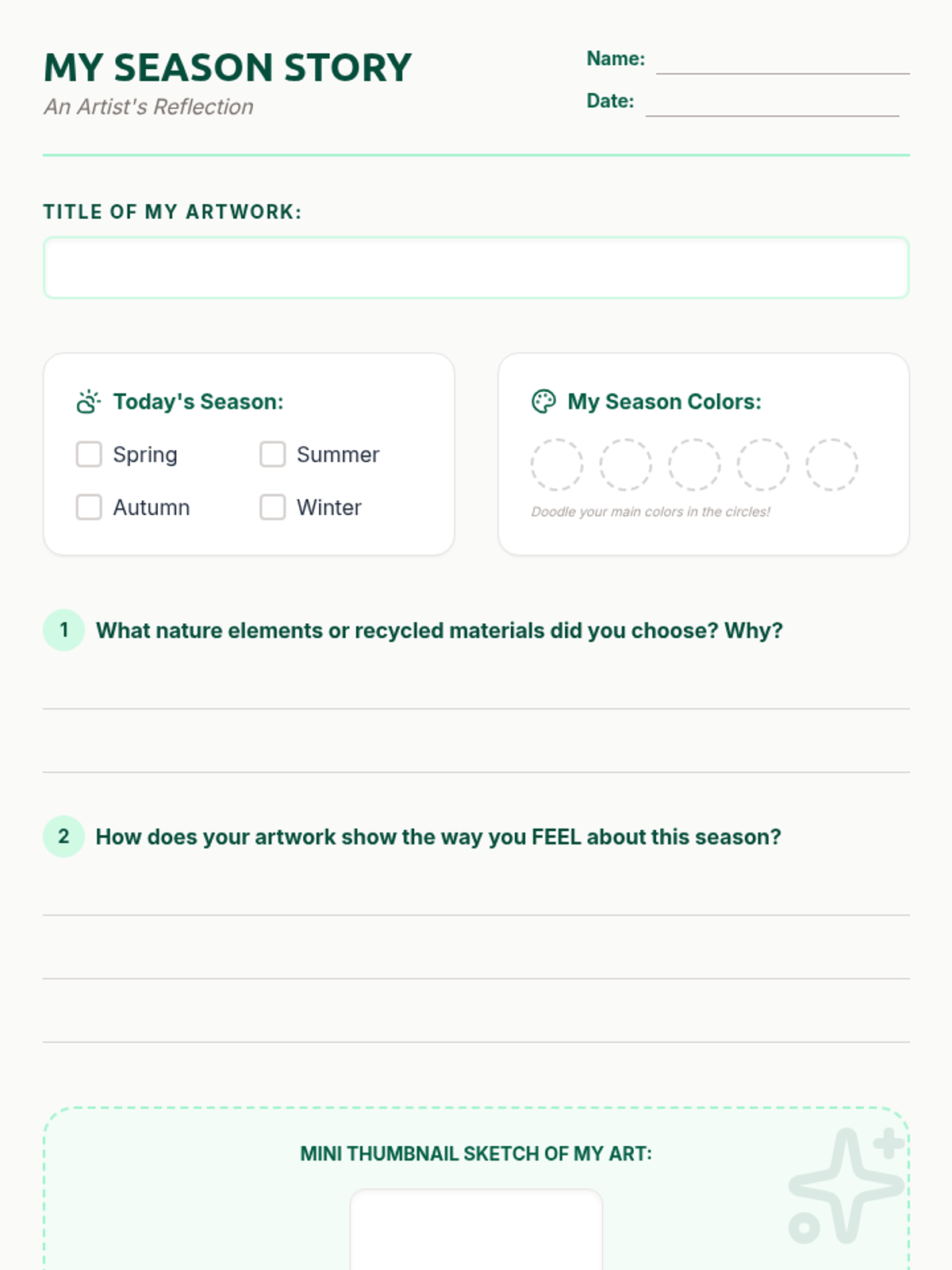
A student reflection worksheet to record the title of their artwork, their chosen seasonal colors, and written reflections on their materials and emotions.
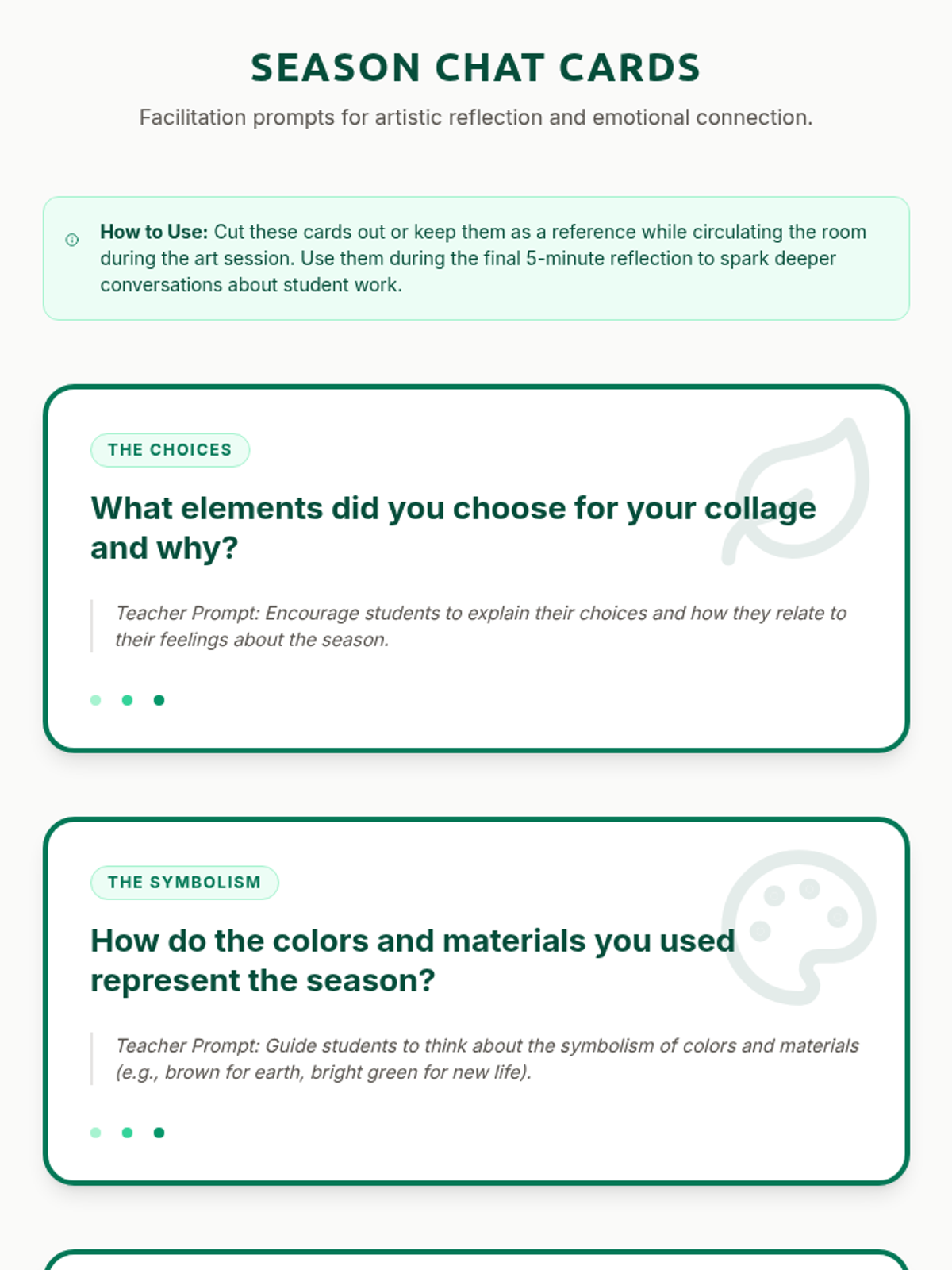
A set of teacher-facing cards with discussion prompts and facilitation tips for reflecting on students' seasonal artwork and emotions.
A visually engaging slide deck to guide students through the Seasonal Reflection Art lesson, featuring sensory prompts and creative instructions.
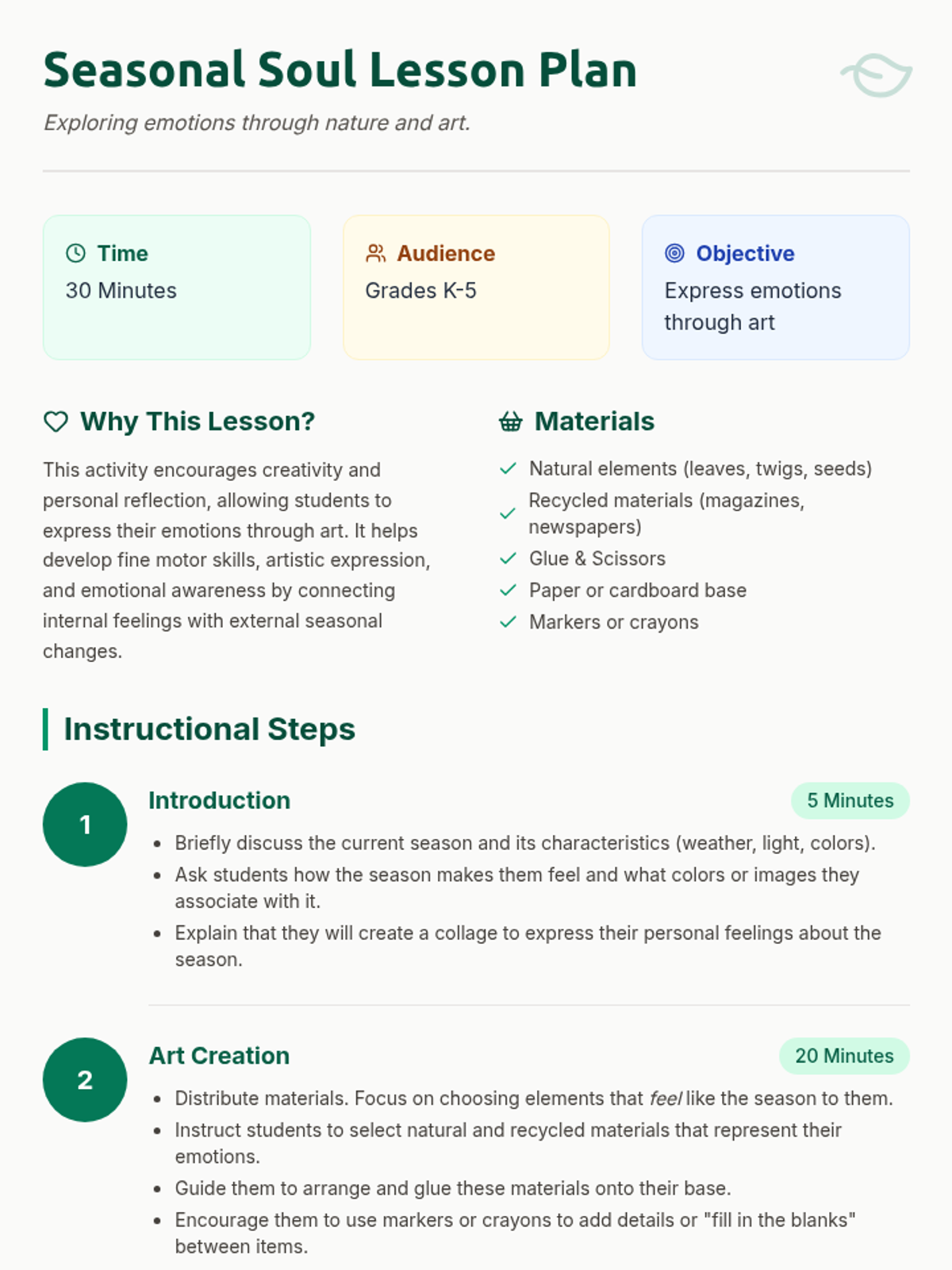
A comprehensive teacher lesson plan for the Seasonal Reflection Art activity, including objectives, materials, and a timed instructional procedure.
Teacher guide for Lesson 5 on Pacific Northwest totem traditions, focusing on animal traits, historical context, and clarifying common misconceptions.
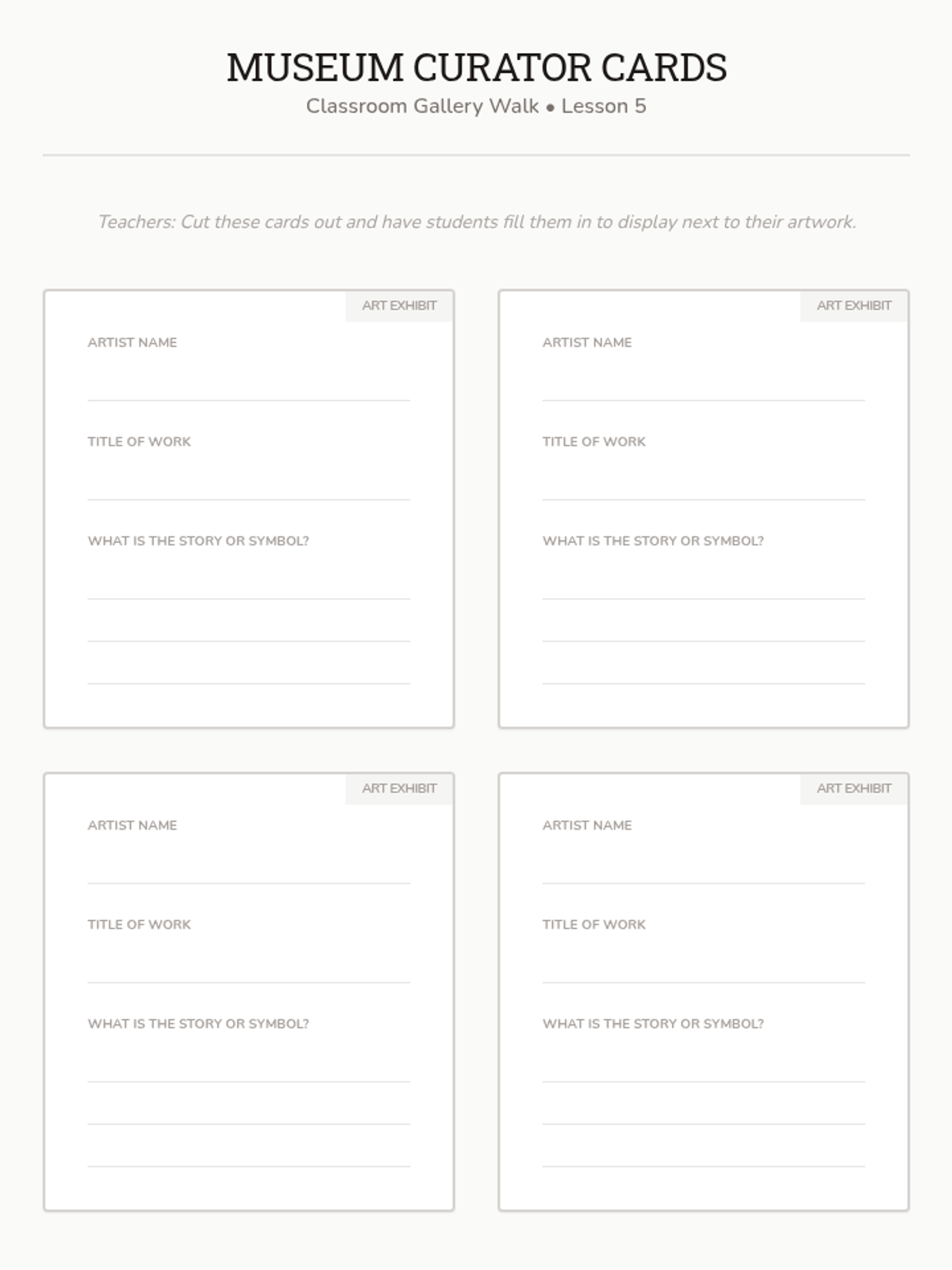
Small curator cards for 1st graders to label their art with their name and a brief 'Artist Statement' (meaning) for the classroom museum.
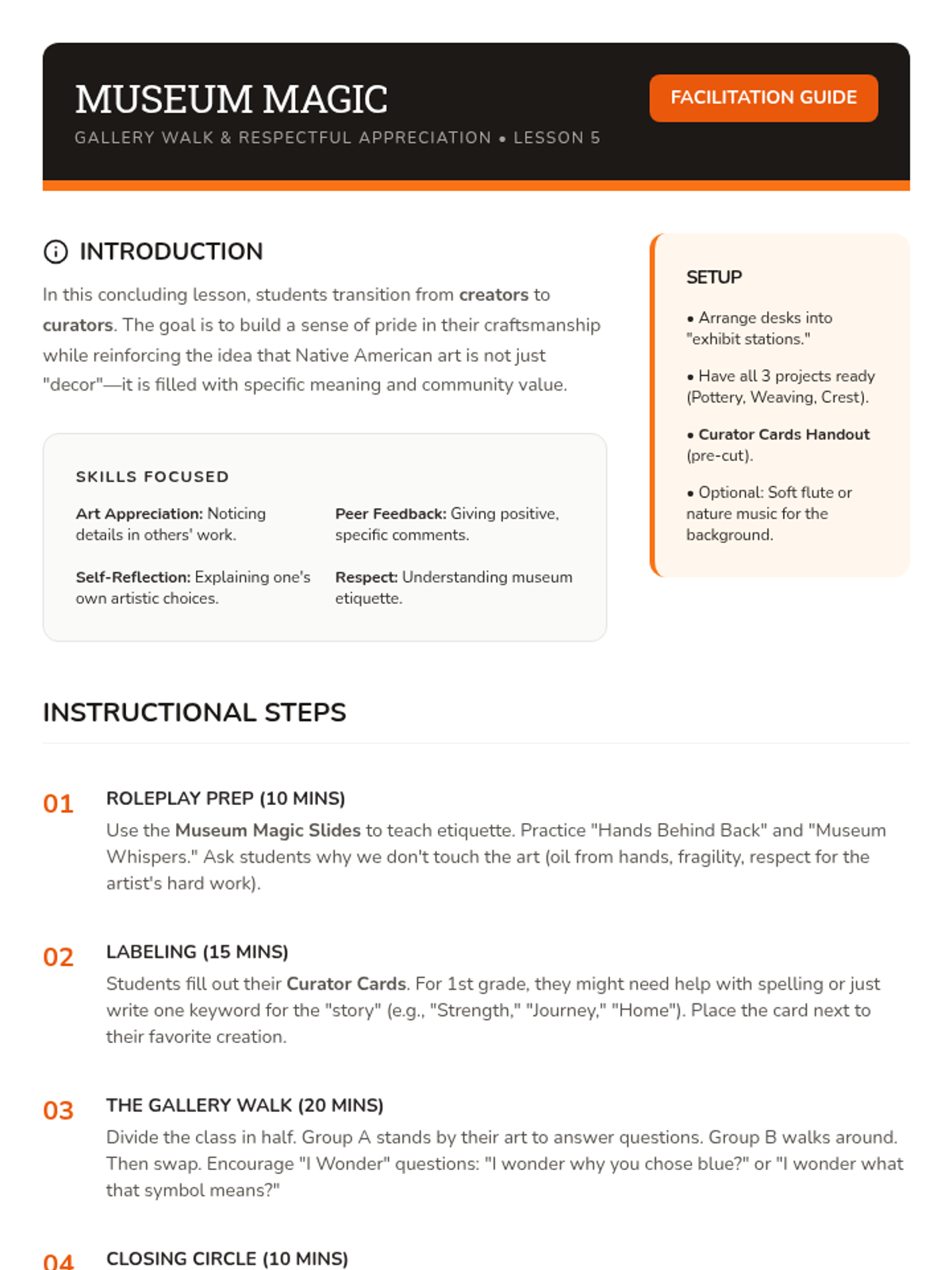
Visual presentation for Lesson 5 explaining museum etiquette and how to participate in a gallery walk for 1st graders.
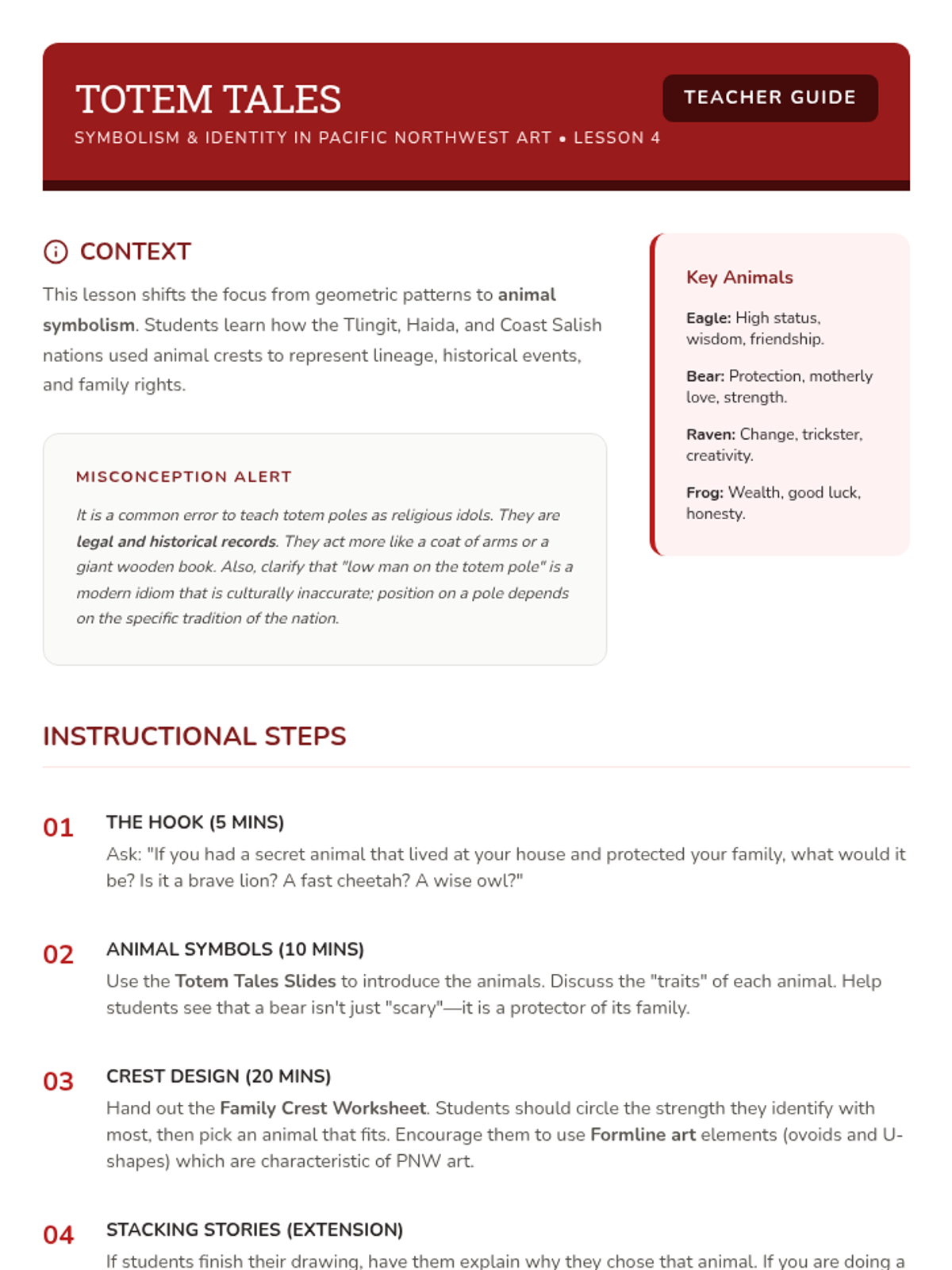
Teacher guide for Lesson 4 on Pacific Northwest totem traditions, focusing on animal traits, historical context, and clarifying common misconceptions.
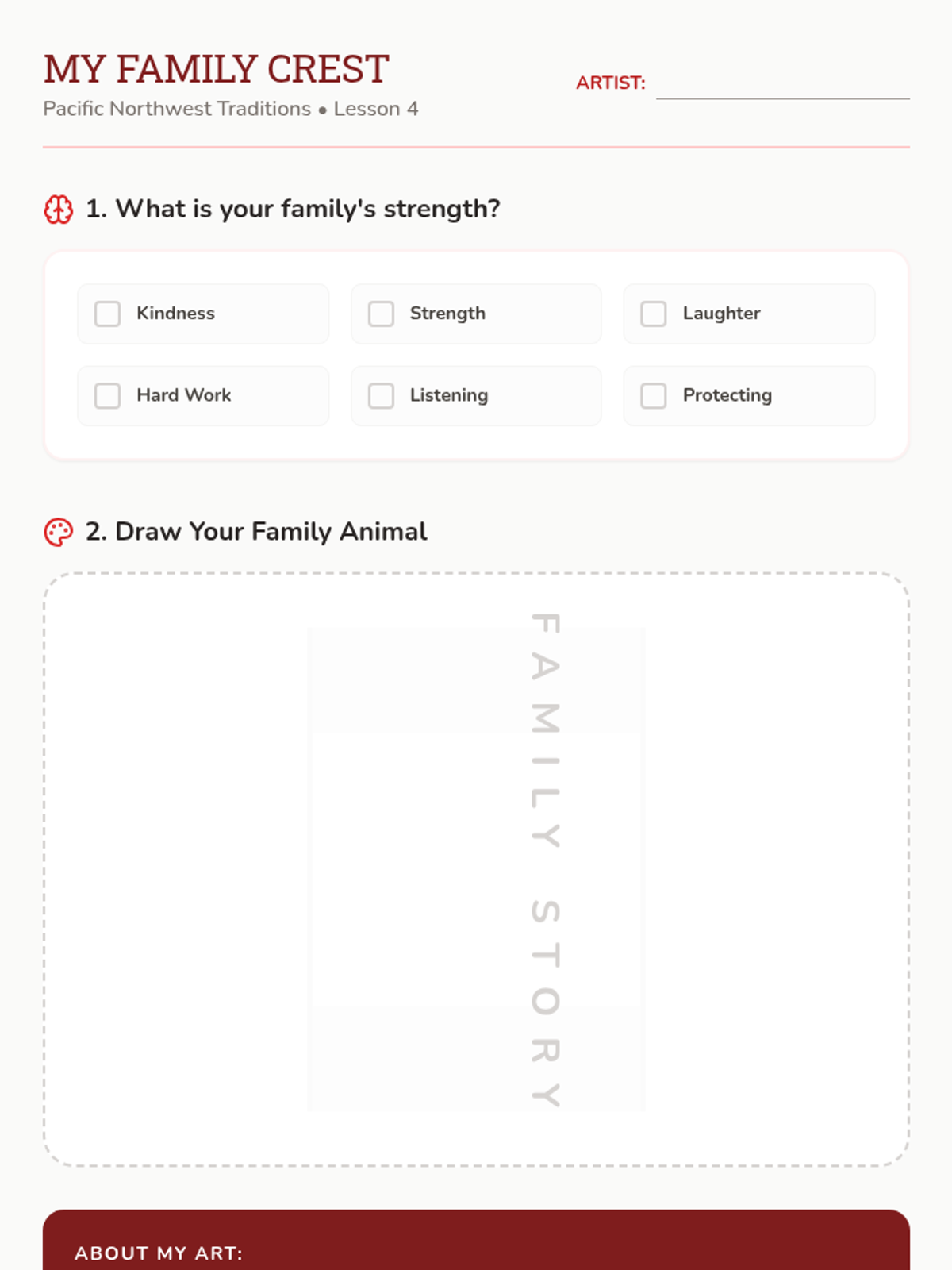
A worksheet for students to design an animal representing their family strengths, inspired by the animal crests on Pacific Northwest totem poles.
Visual presentation for Lesson 4 explaining Pacific Northwest carving traditions and animal symbolism for 1st graders.
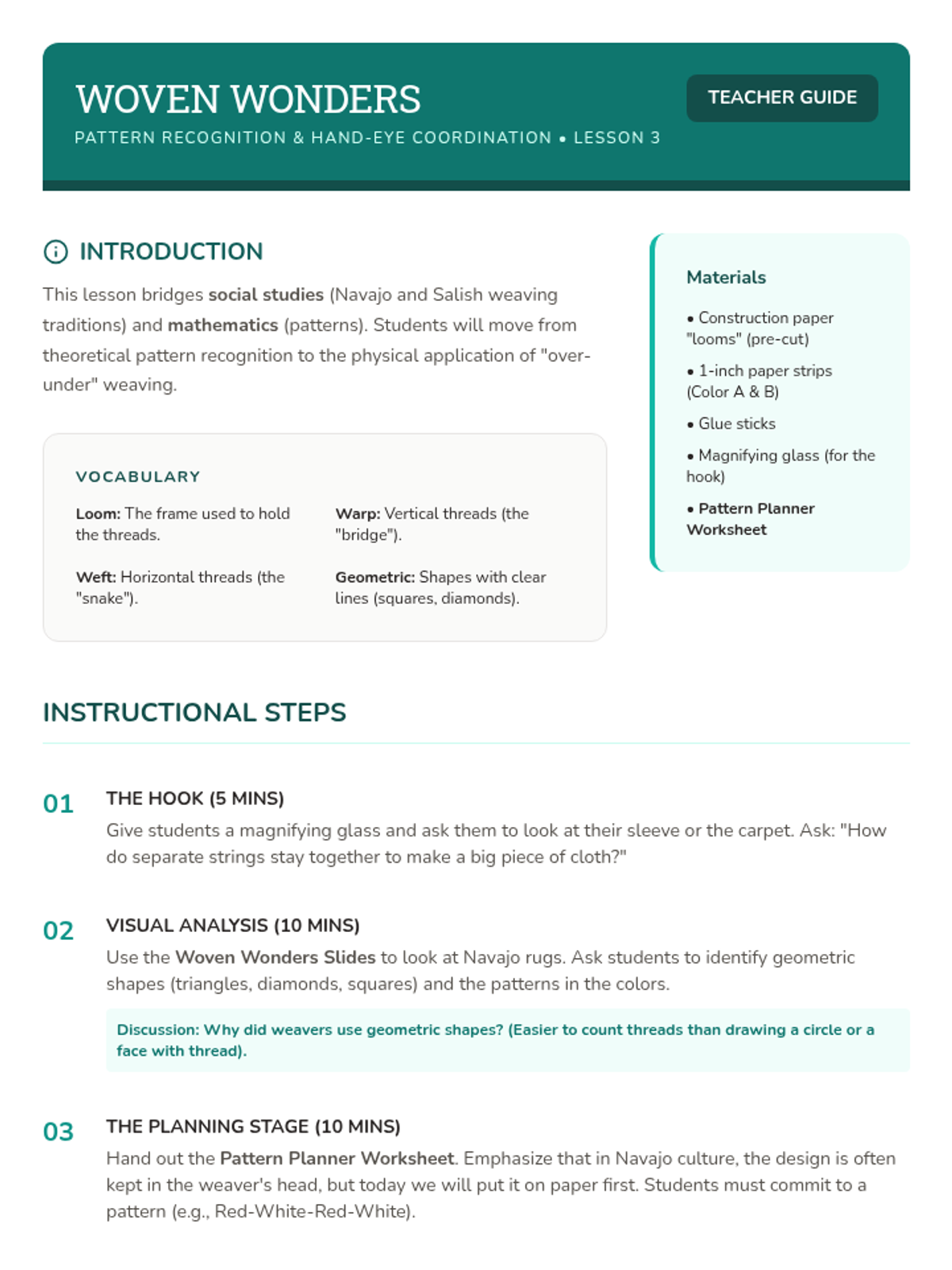
Instructions for setting up weaving activities, including pattern vocabulary, common student hurdles, and the 'pencil trick' for guiding 1st graders.
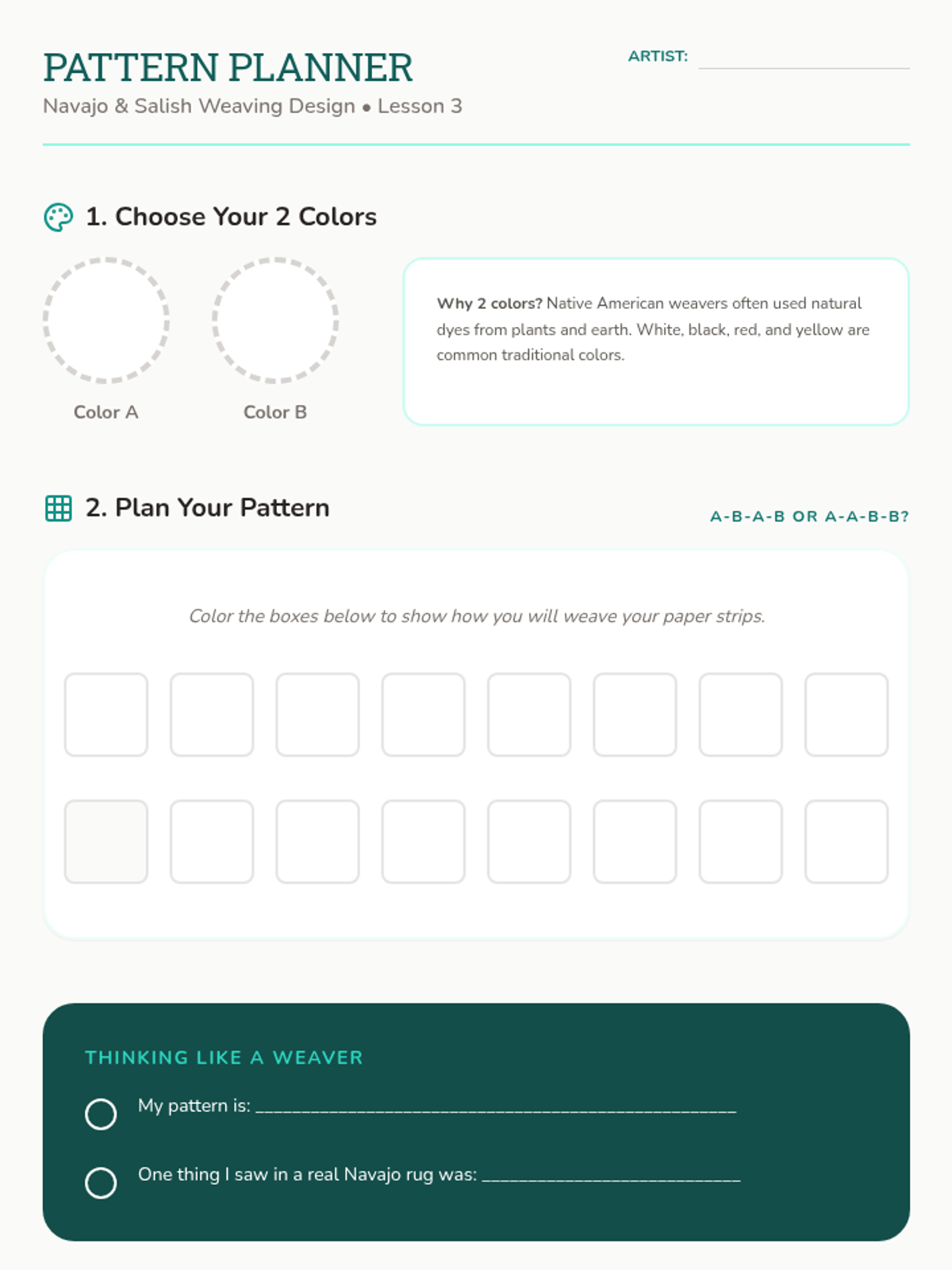
A geometric design worksheet for 1st graders to plan their color patterns before starting a paper weaving project, inspired by Navajo and Salish traditions.
Visual presentation for Lesson 3 explaining Navajo and Salish weaving traditions, focusing on the geometric patterns and over-under method.
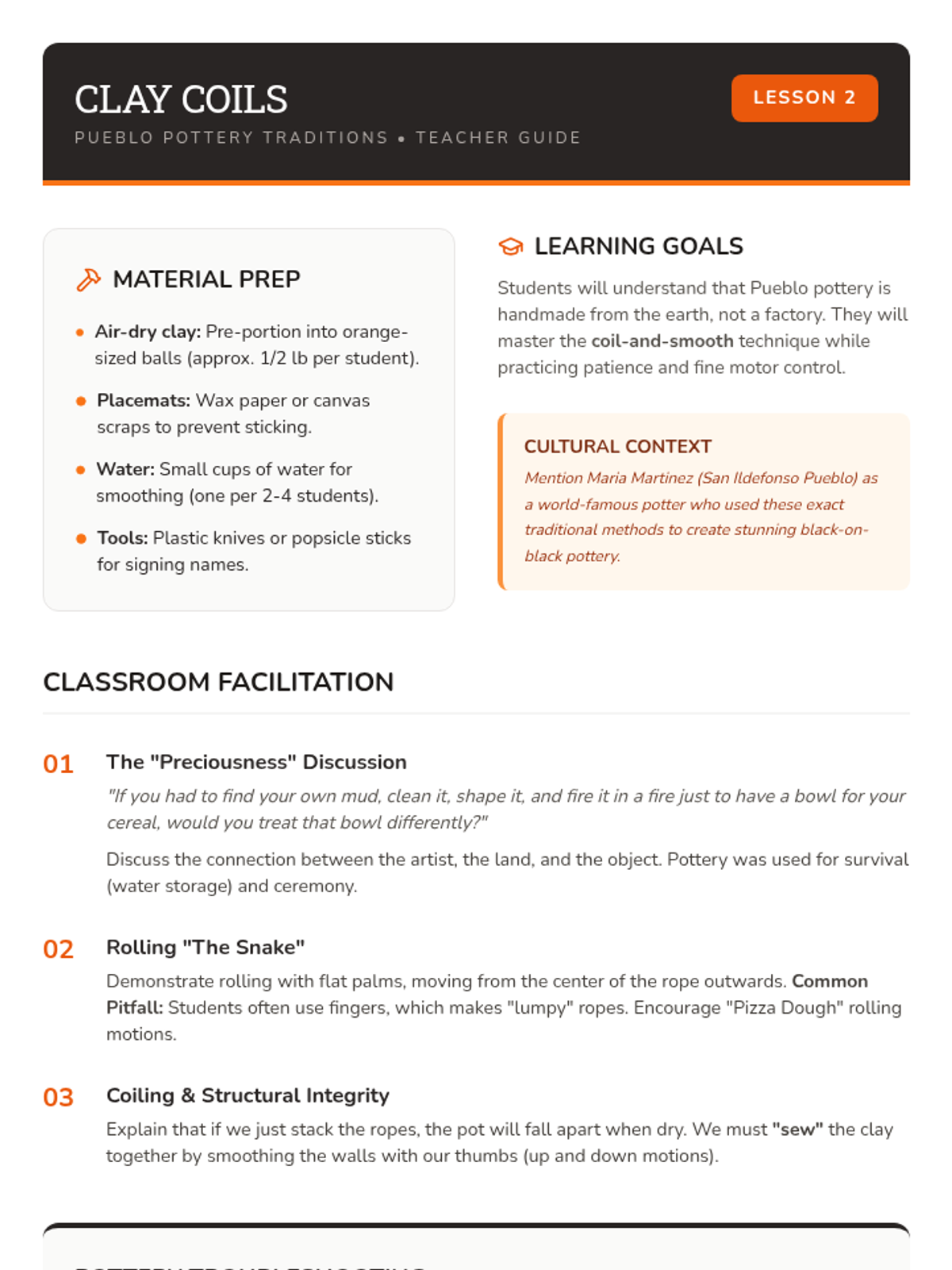
Facilitation guide for Lesson 2 clay activity, including material prep, cultural context (Southwest Pueblo pottery), and technical troubleshooting.
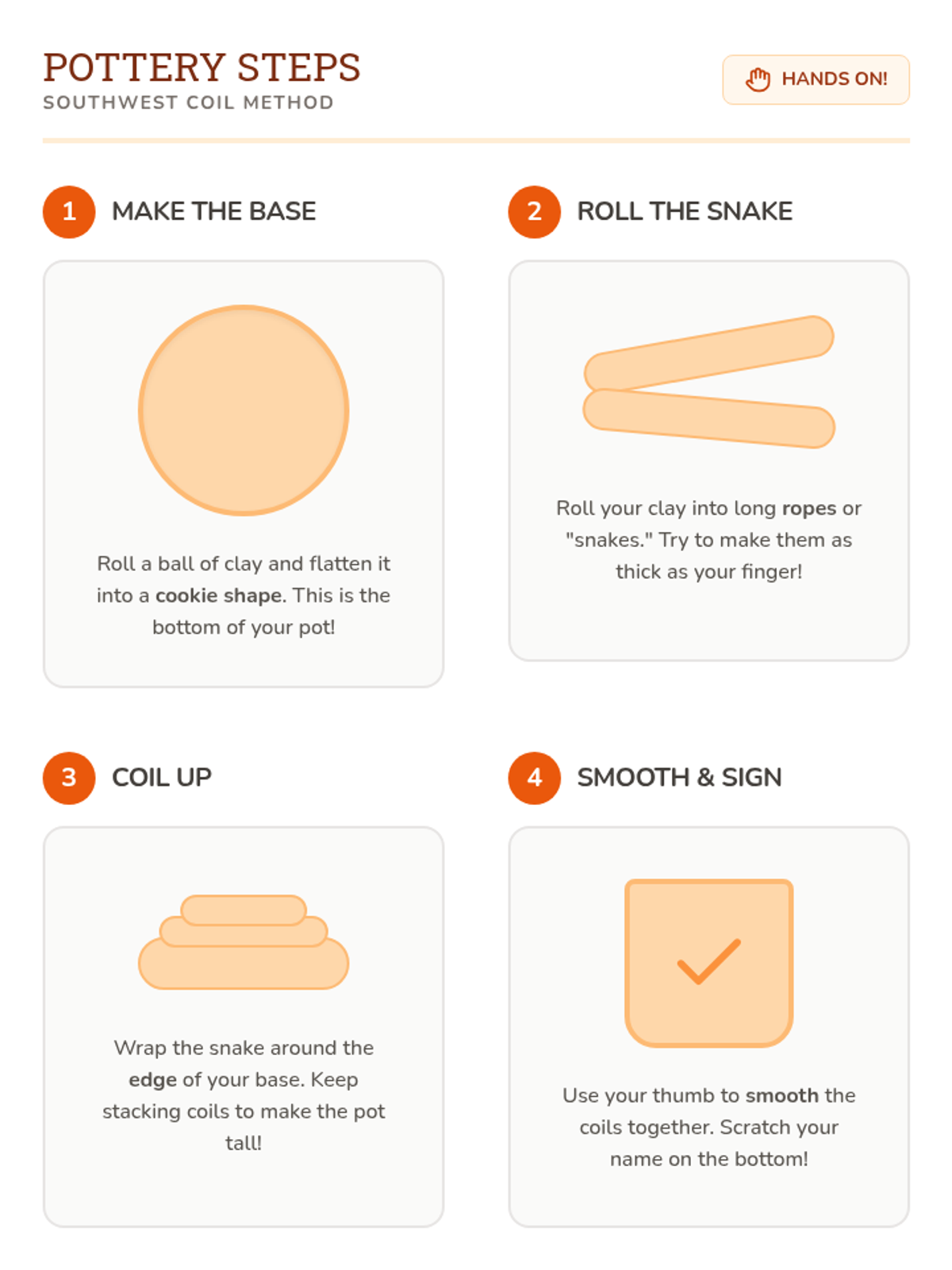
Visual step-by-step for Lesson 2 explaining the coil method of clay construction for 1st graders.
Visual presentation for Lesson 2 explaining Southwestern pottery traditions and the coil method of clay construction for 1st graders.
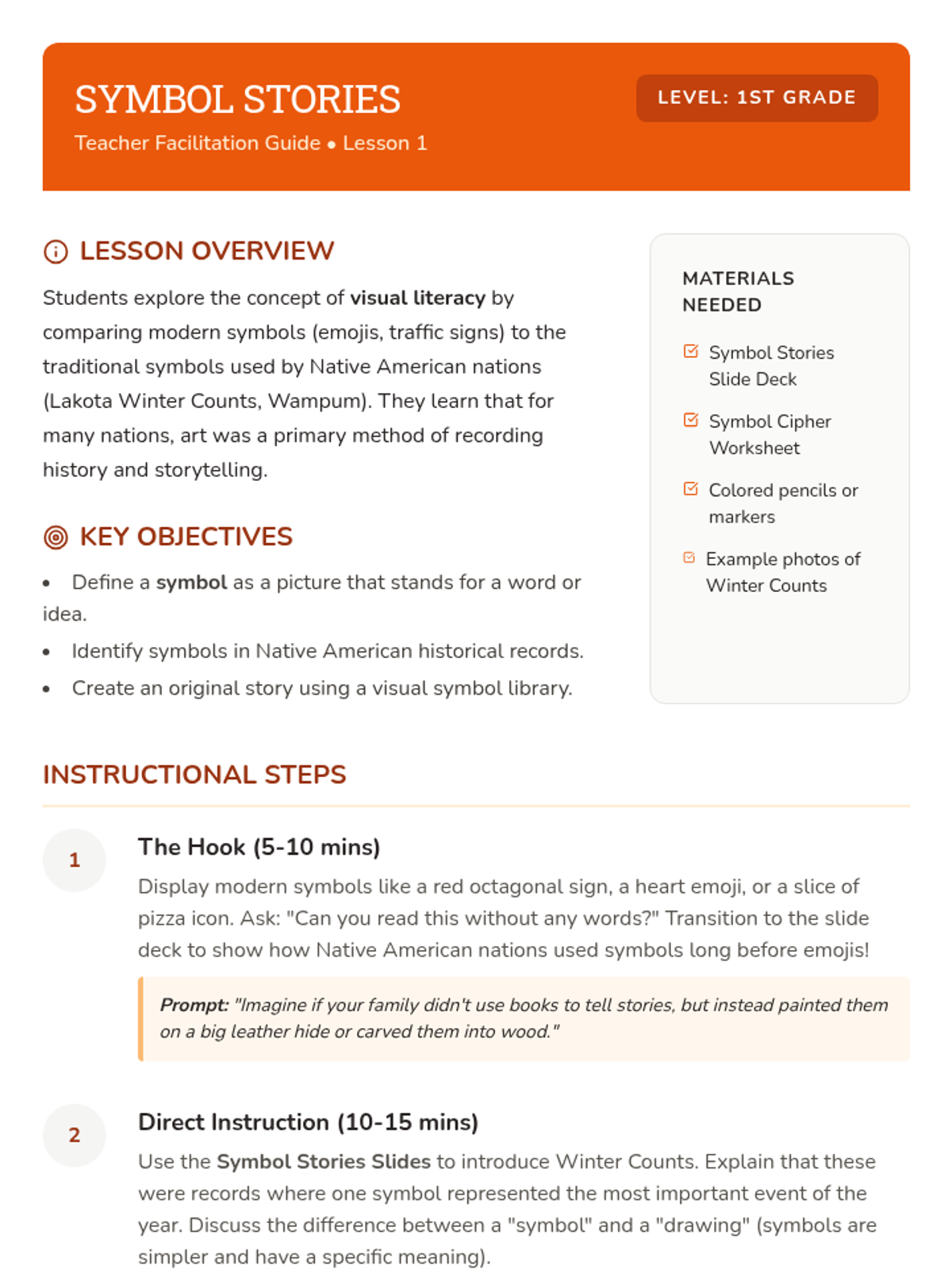
A facilitation guide for teachers to lead the Lesson 1 discussion on symbols, including instructional steps, prompts, and cultural context.
An introductory slide deck for 1st graders explaining how symbols act as a visual language in Native American traditions.
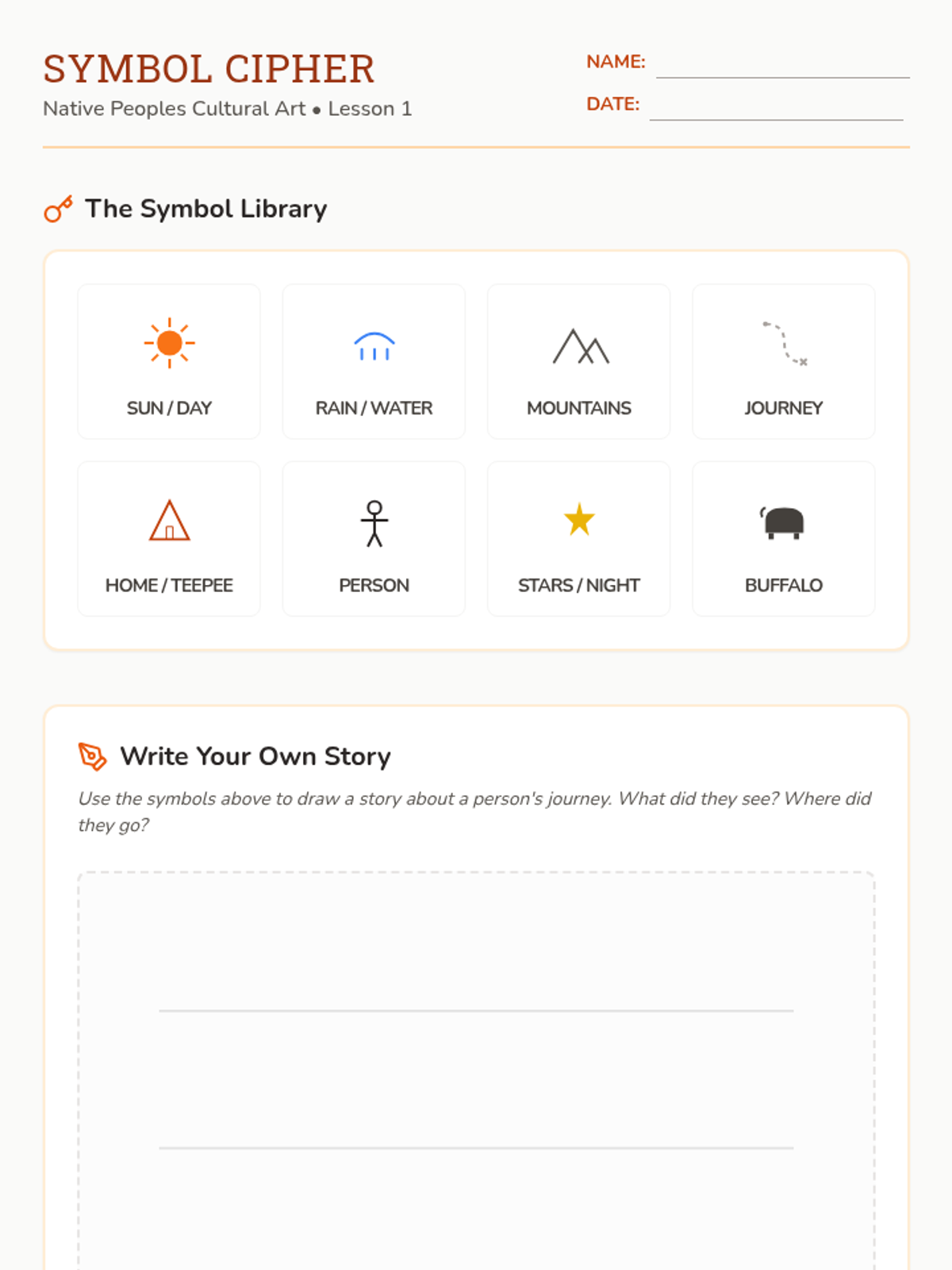
A visual symbol library and story-writing worksheet for 1st graders to practice symbolic representation inspired by Native American winter counts and art.
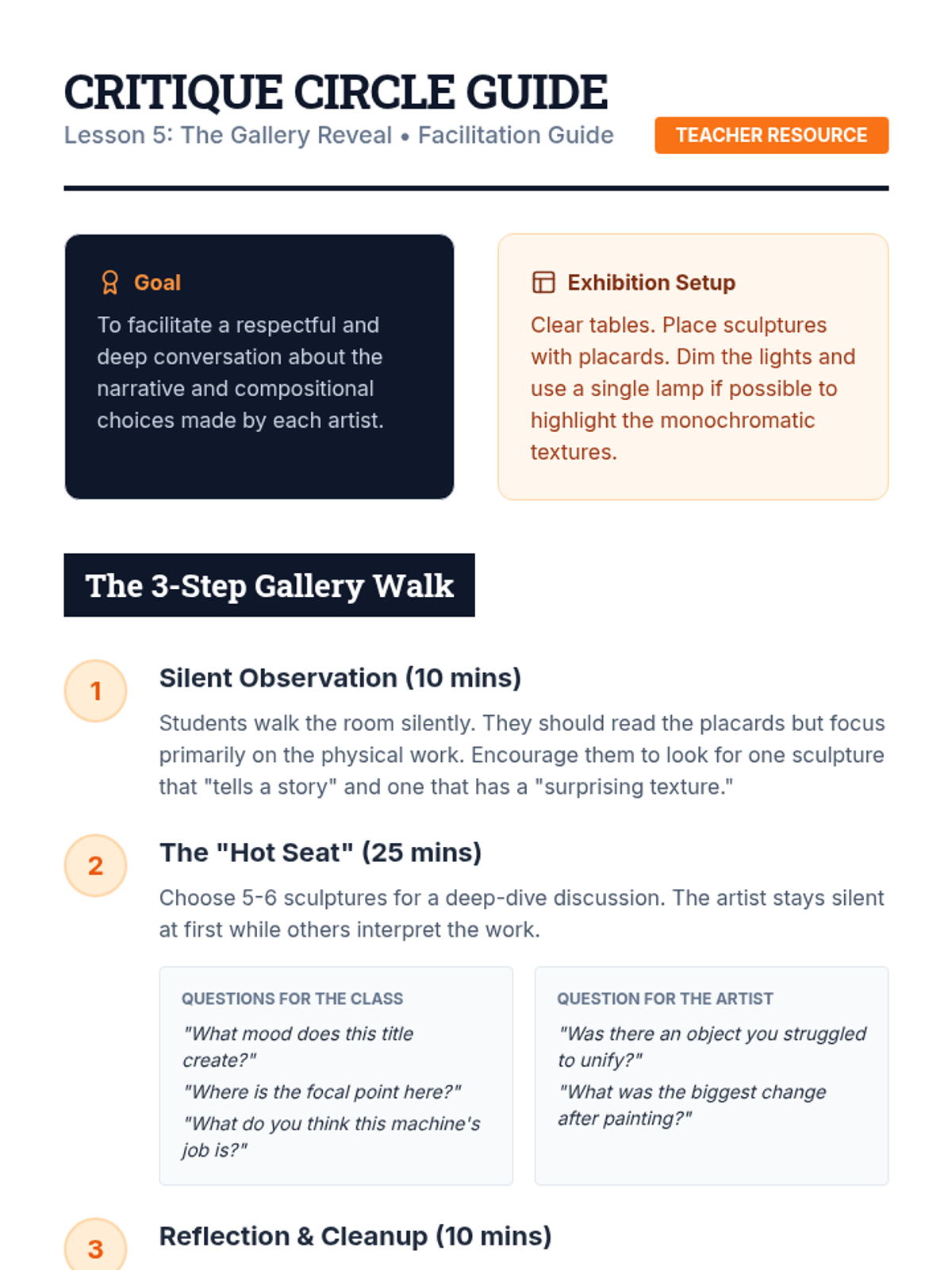
Facilitation guide for teachers to lead the final critique and gallery walk, including discussion prompts and assessment criteria.