Develops technical proficiency and creative movement skills across various styles. Examines choreographic principles alongside the historical and cultural origins of diverse global dance forms.
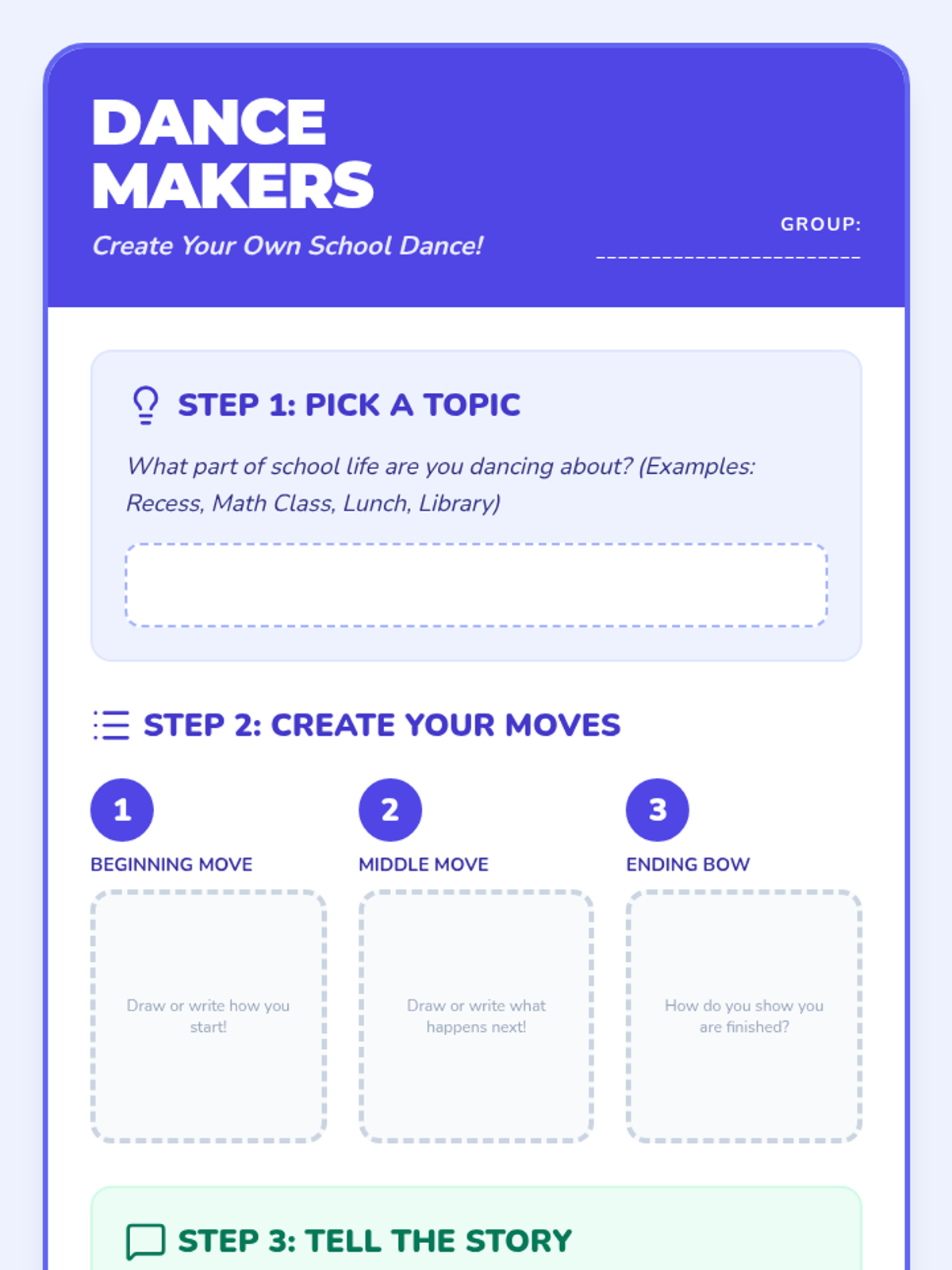
A culminating workshop where students combine storytelling, community, and performance to create and perform their own classroom dance.
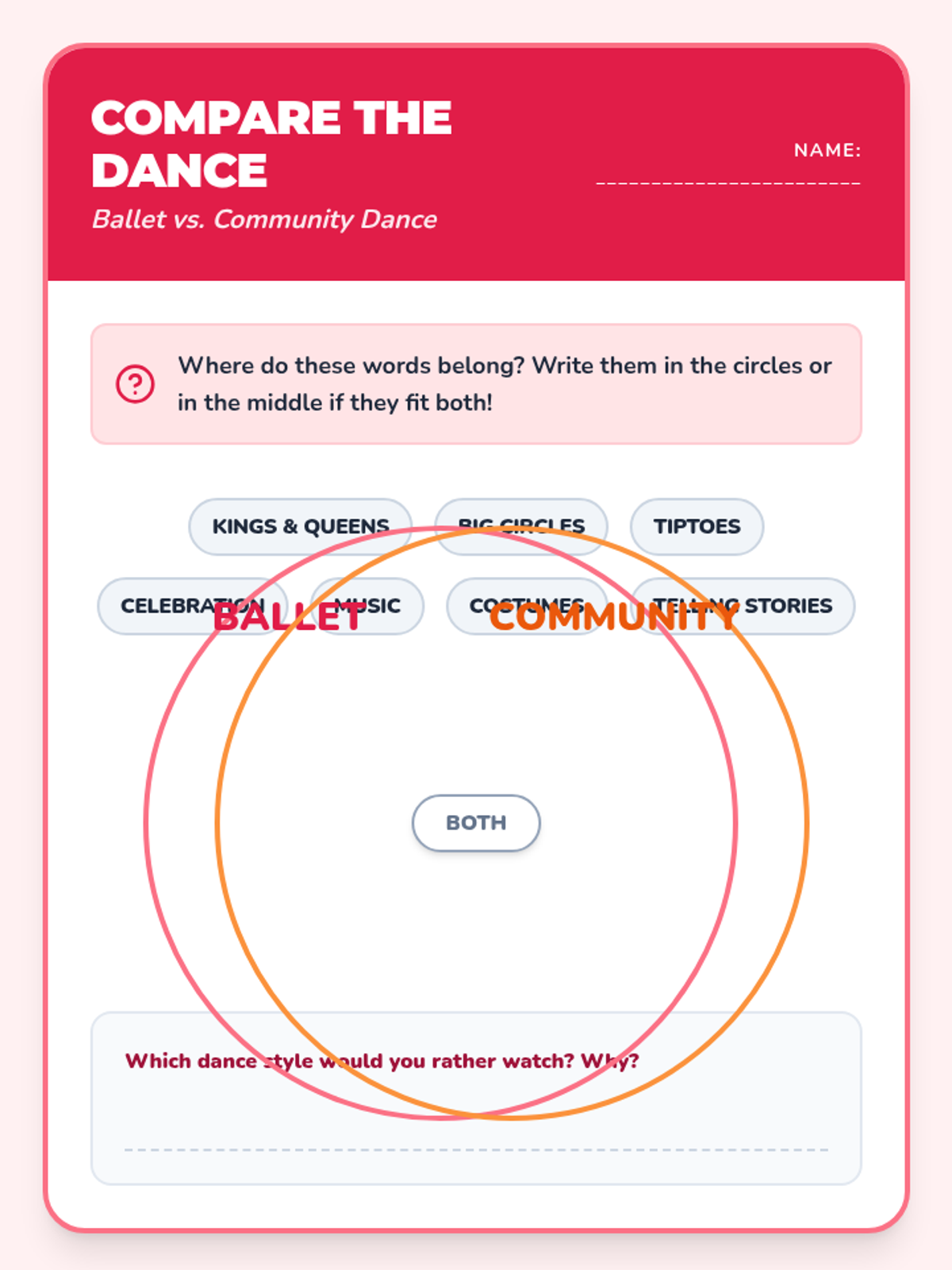
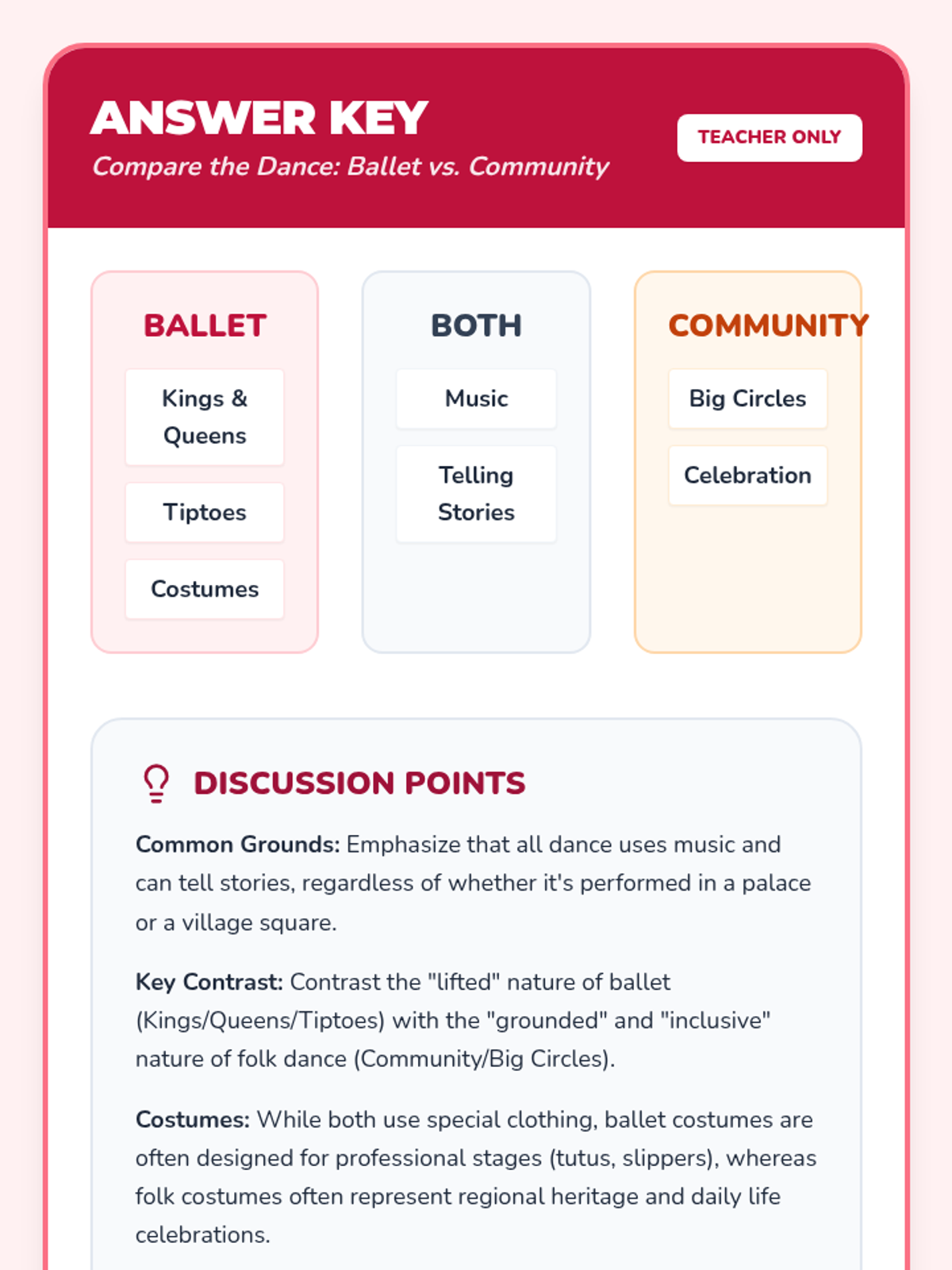
Introduces the history of ballet from royal courts to professional stages, contrasting grounded folk movements with lifted ballet posture.
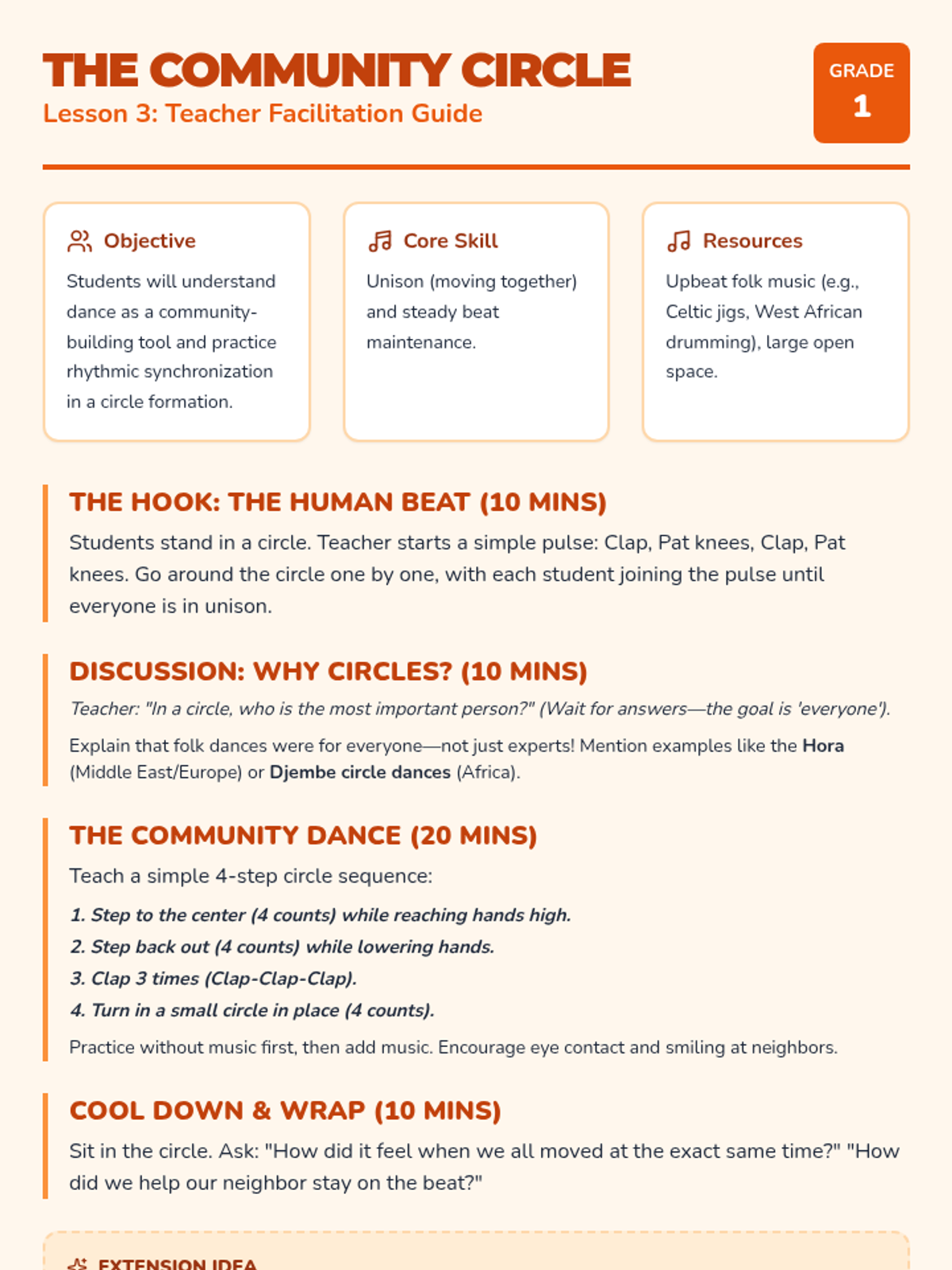
Focuses on dance as a tool for community bonding and celebration through European and African circle dance traditions.
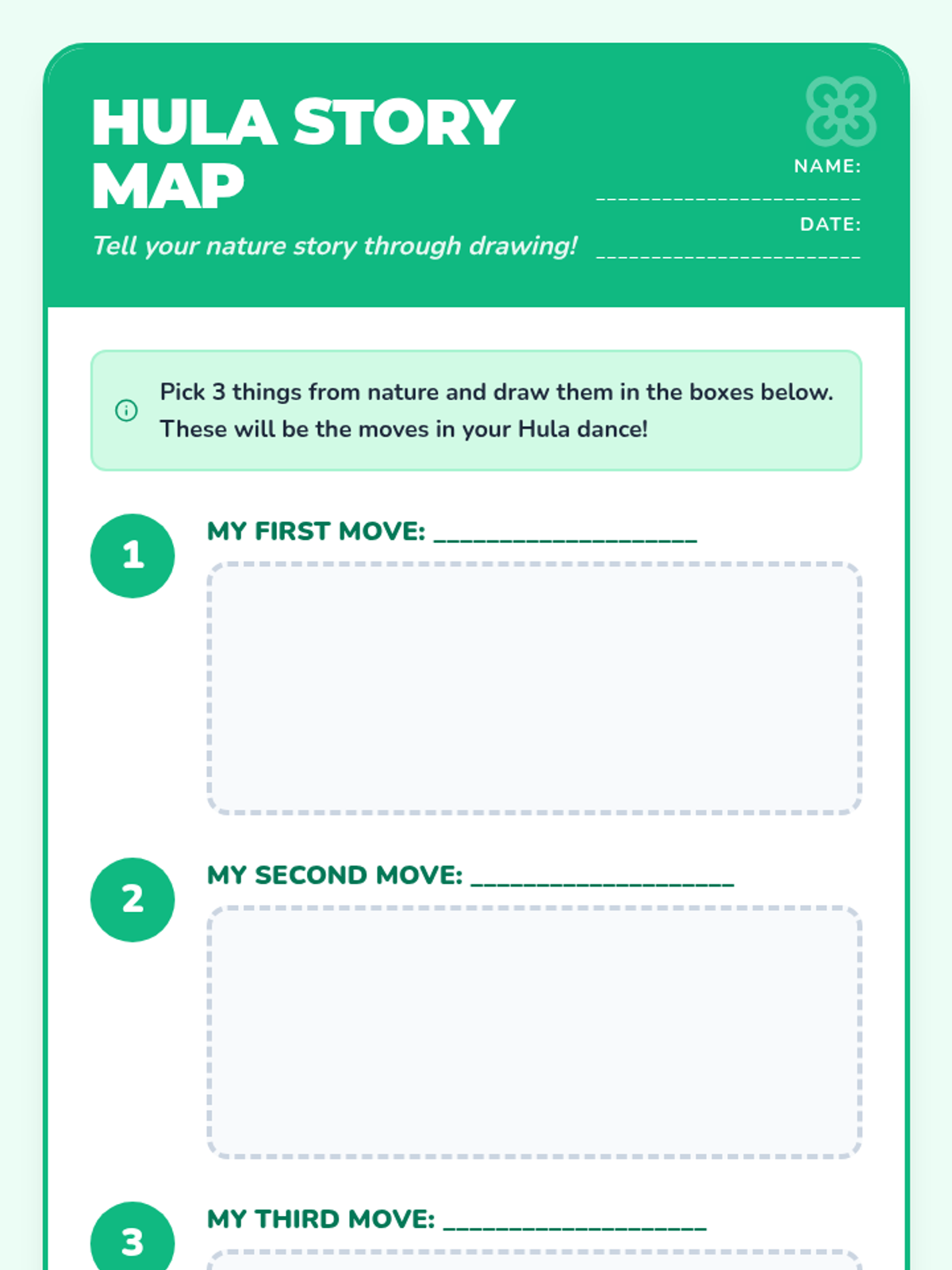
A study of Hula as a method of preserving history and storytelling, where hand motions represent elements of nature and cultural heritage.
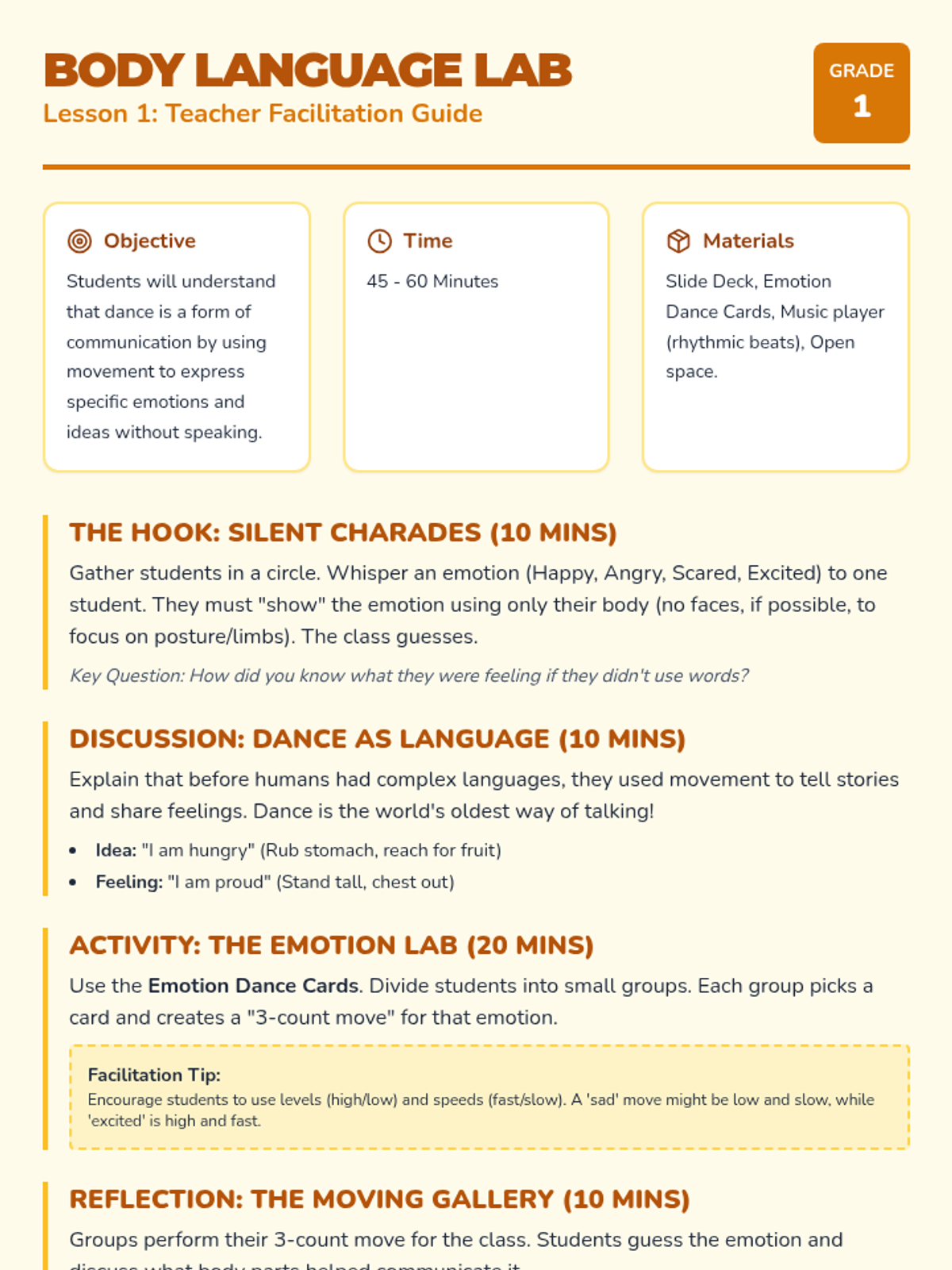
Students explore how movement can express ideas and emotions without words, mimicking early human communication and establishing dance as a universal language.
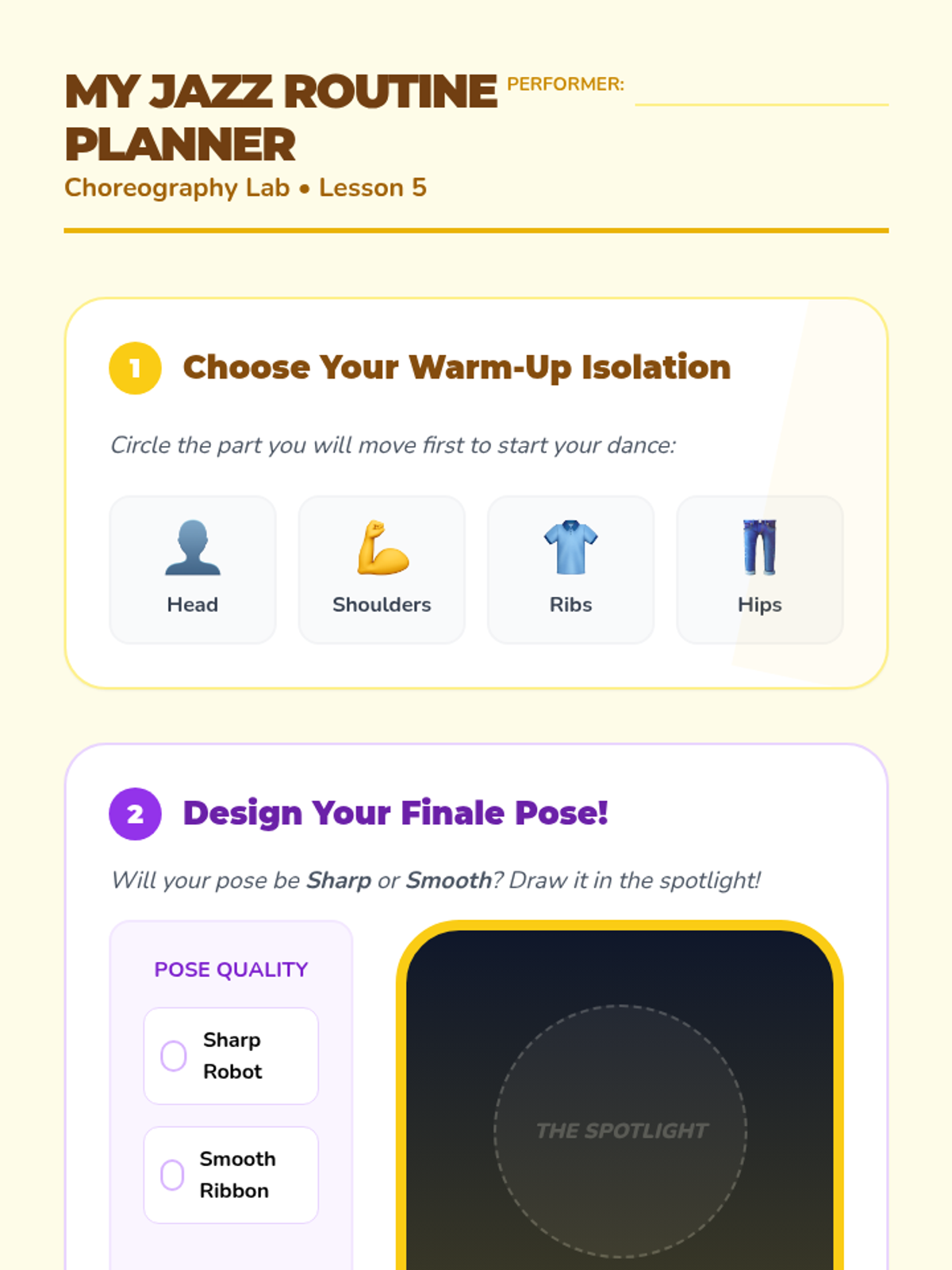
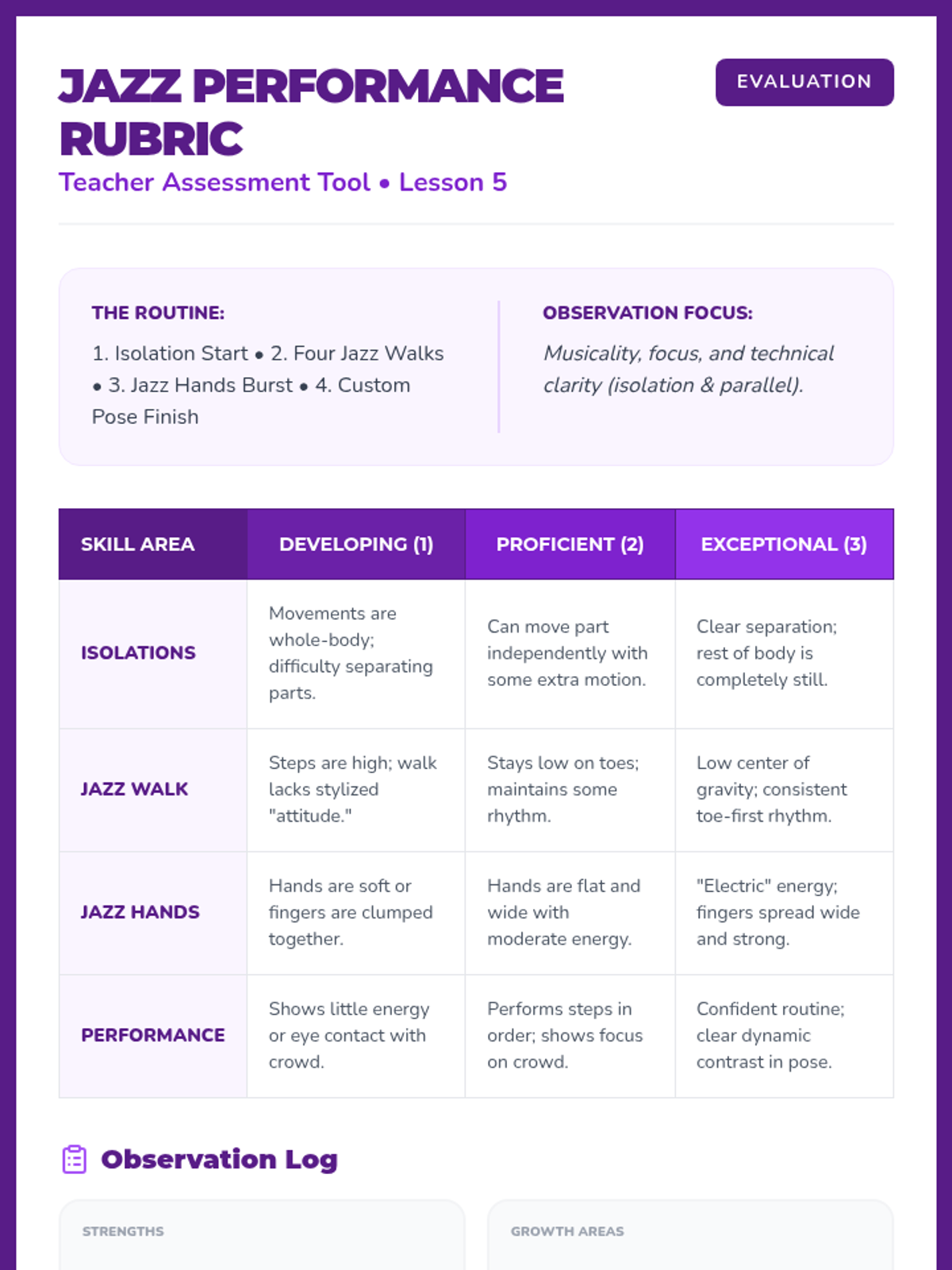
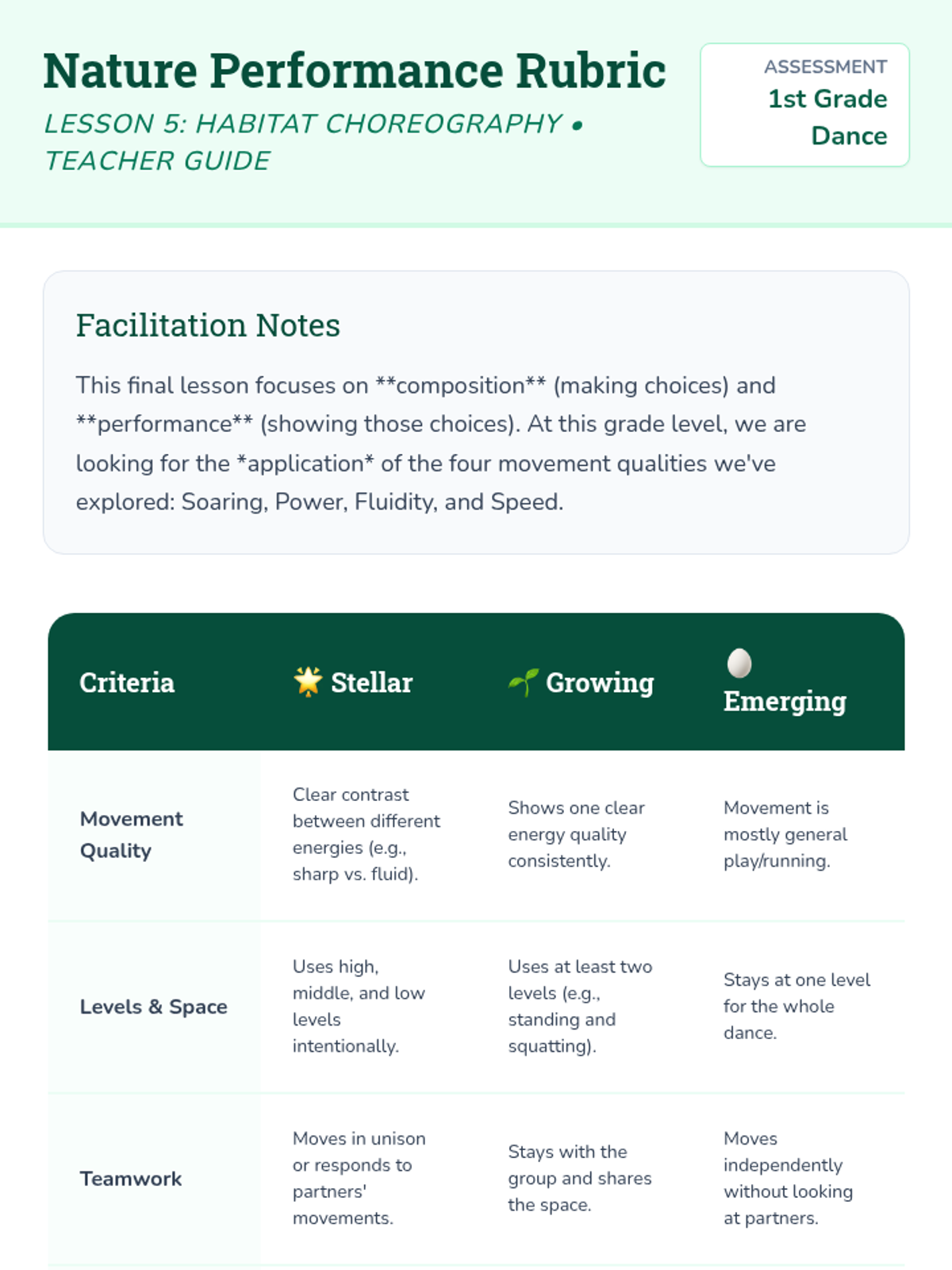
The capstone lesson where students combine their skills into a short choreographed routine with a custom ending.
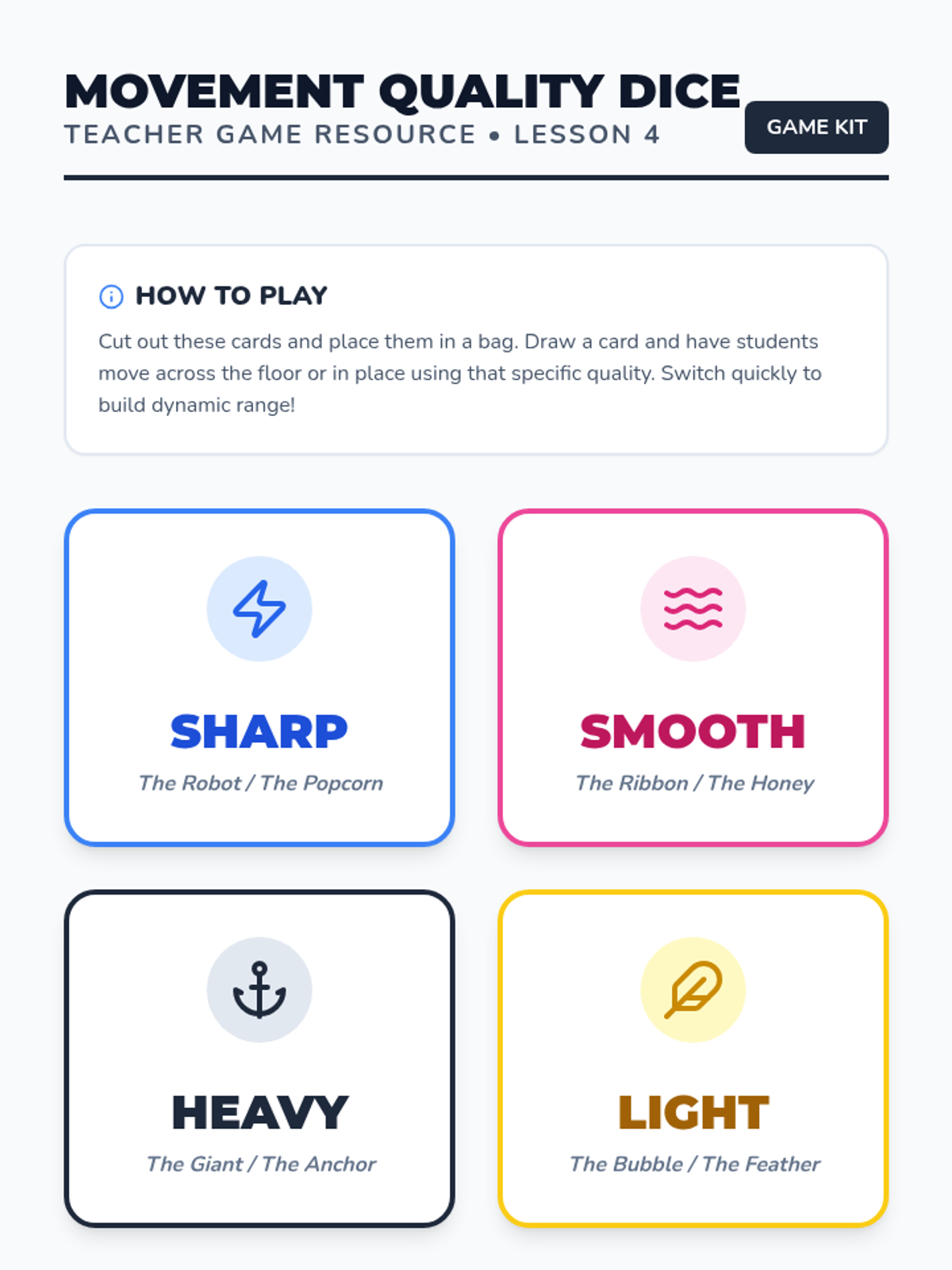
Students explore contrasting movement qualities, switching between sharp staccato freezes and smooth sustained motions.
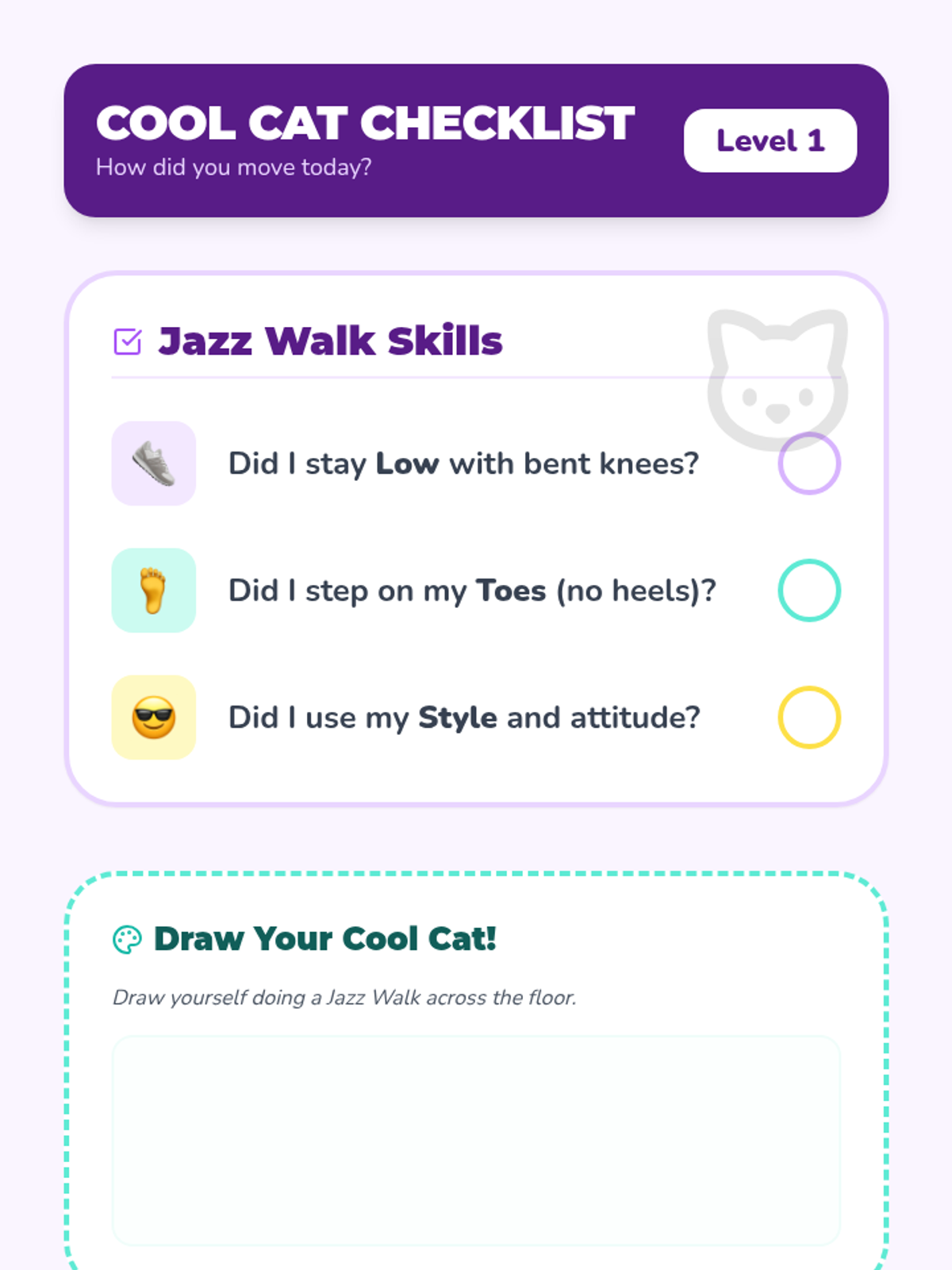
Focuses on the stylized low-center-of-gravity walk, teaching students to move with 'attitude' and rhythm across the floor.
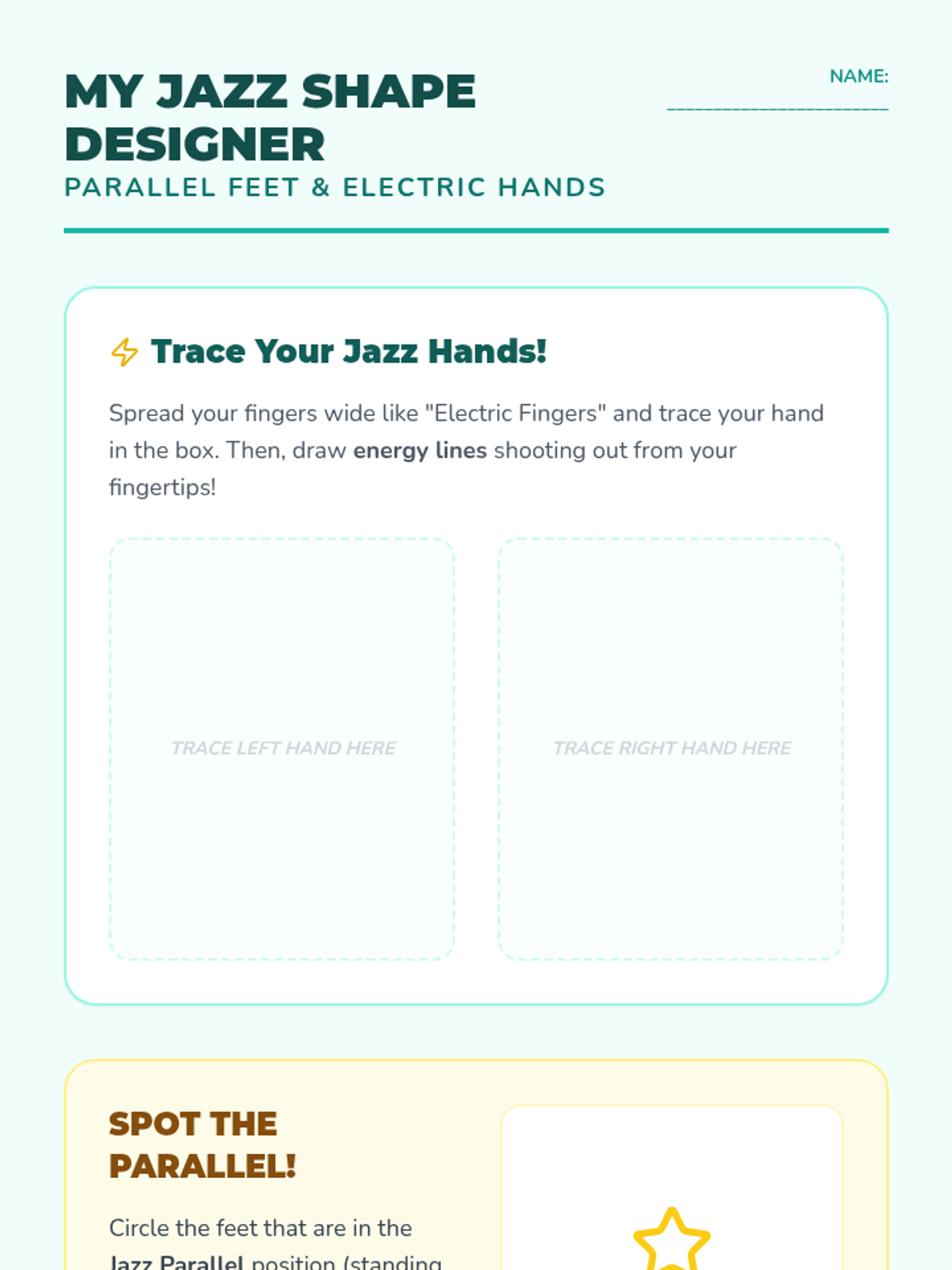
Students learn the difference between ballet turnout and jazz parallel positions while exploring the high-energy 'Jazz Hands' technique.
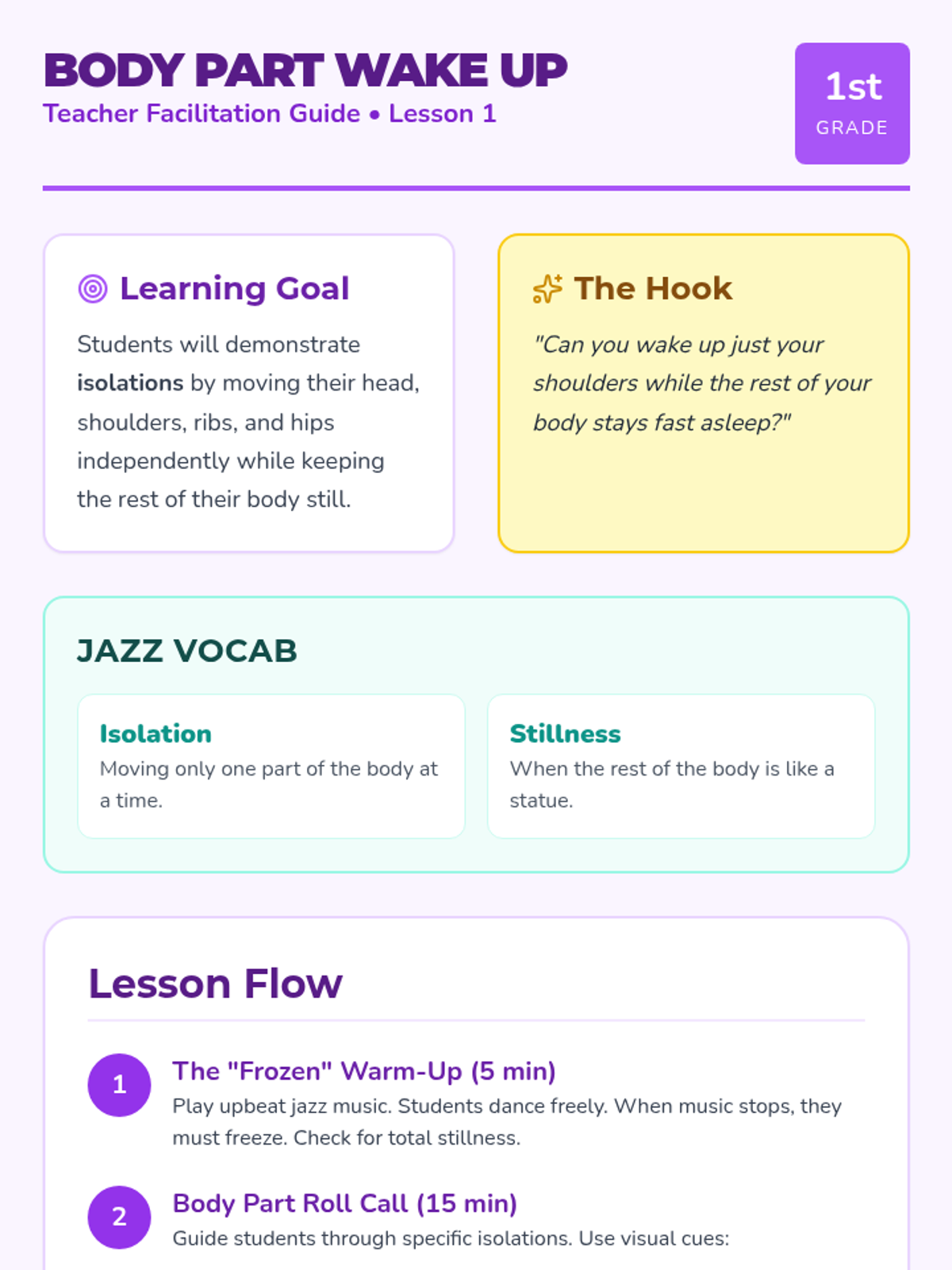
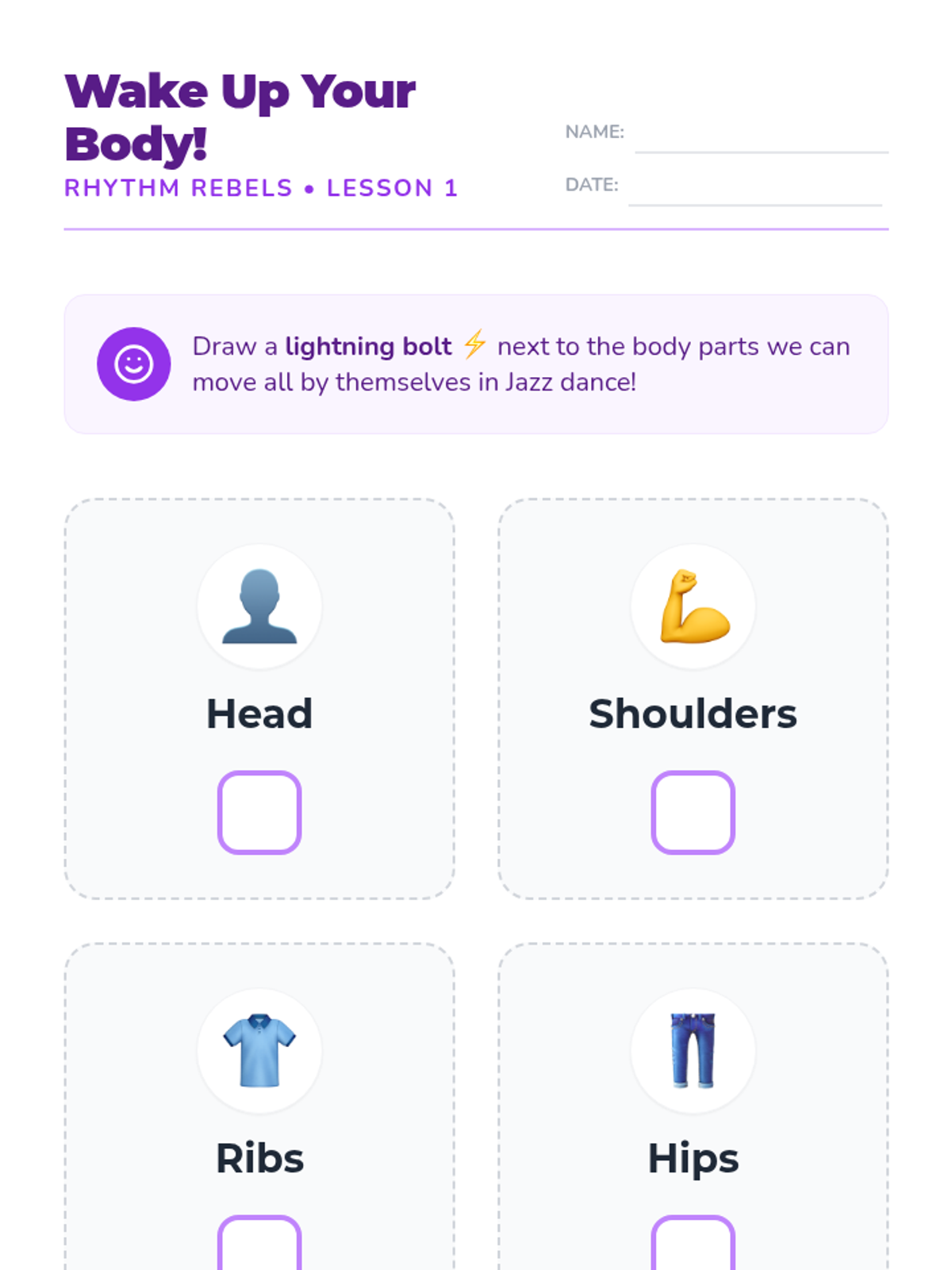
Students learn to move one body part at a time—head, shoulders, ribs, and hips—while keeping the rest of the body still to build coordination.
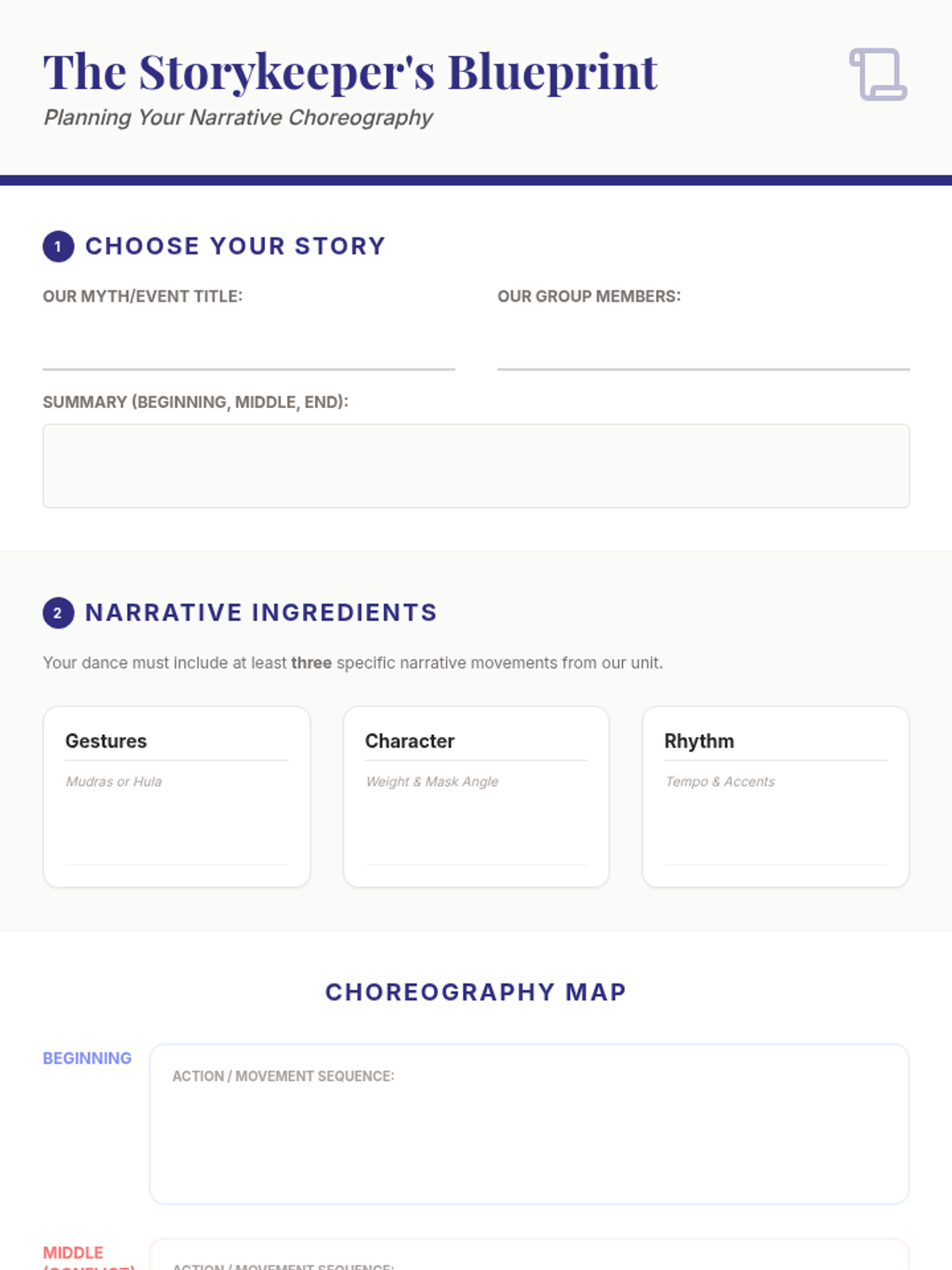
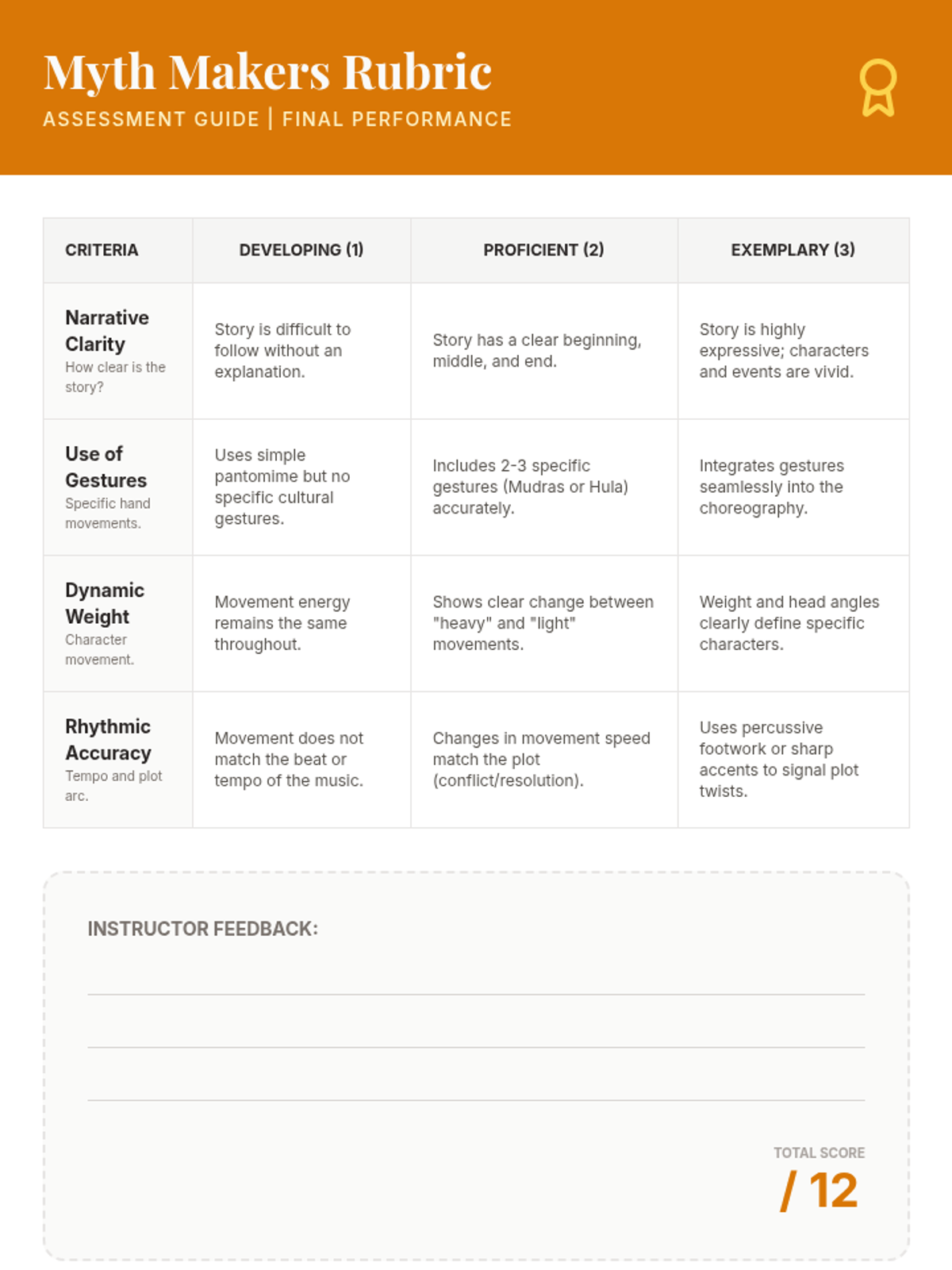
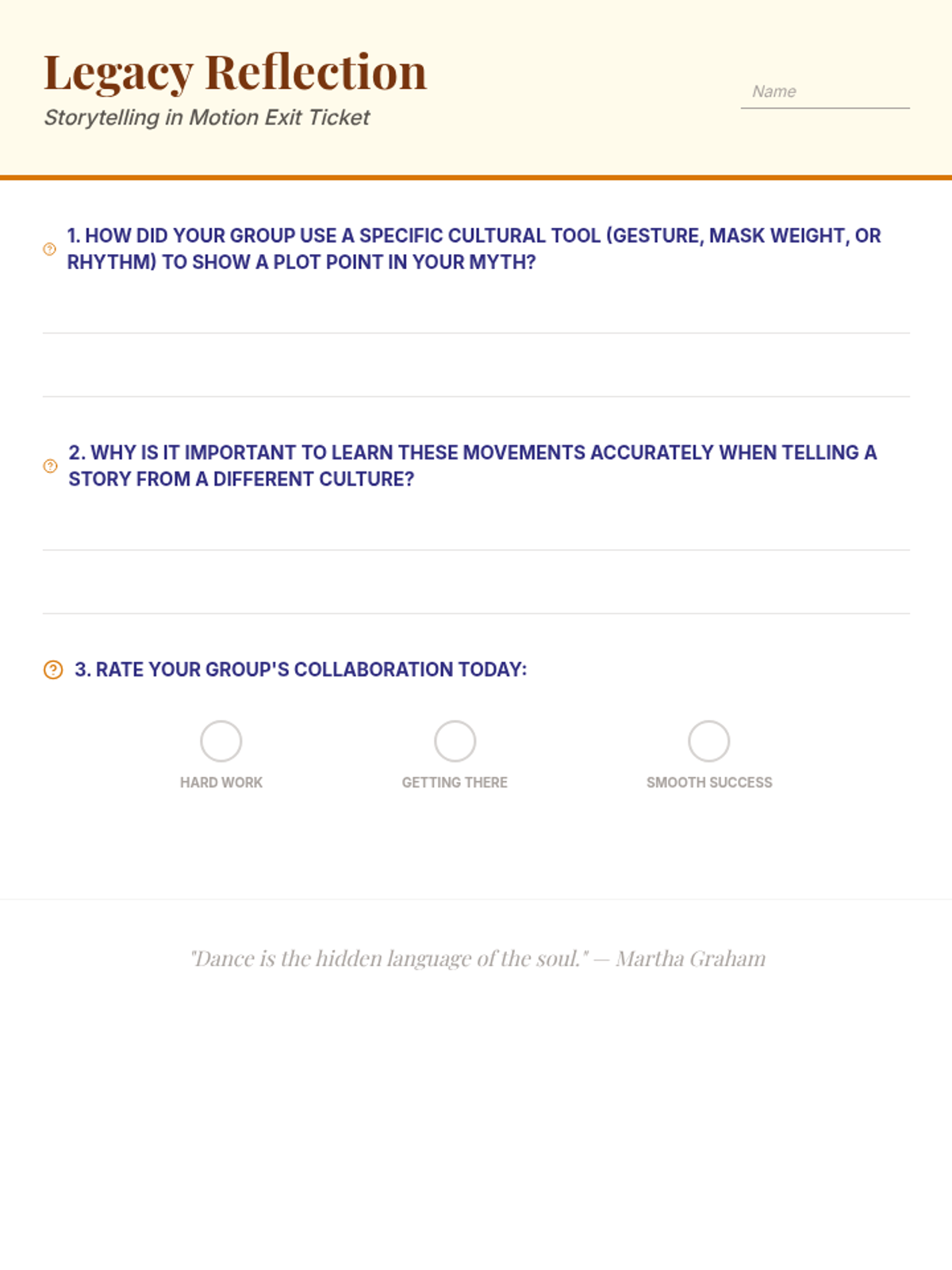
Working in small groups, students choreograph a short dance piece based on a myth or historical event using the gestures and rhythmic tools learned throughout the unit.
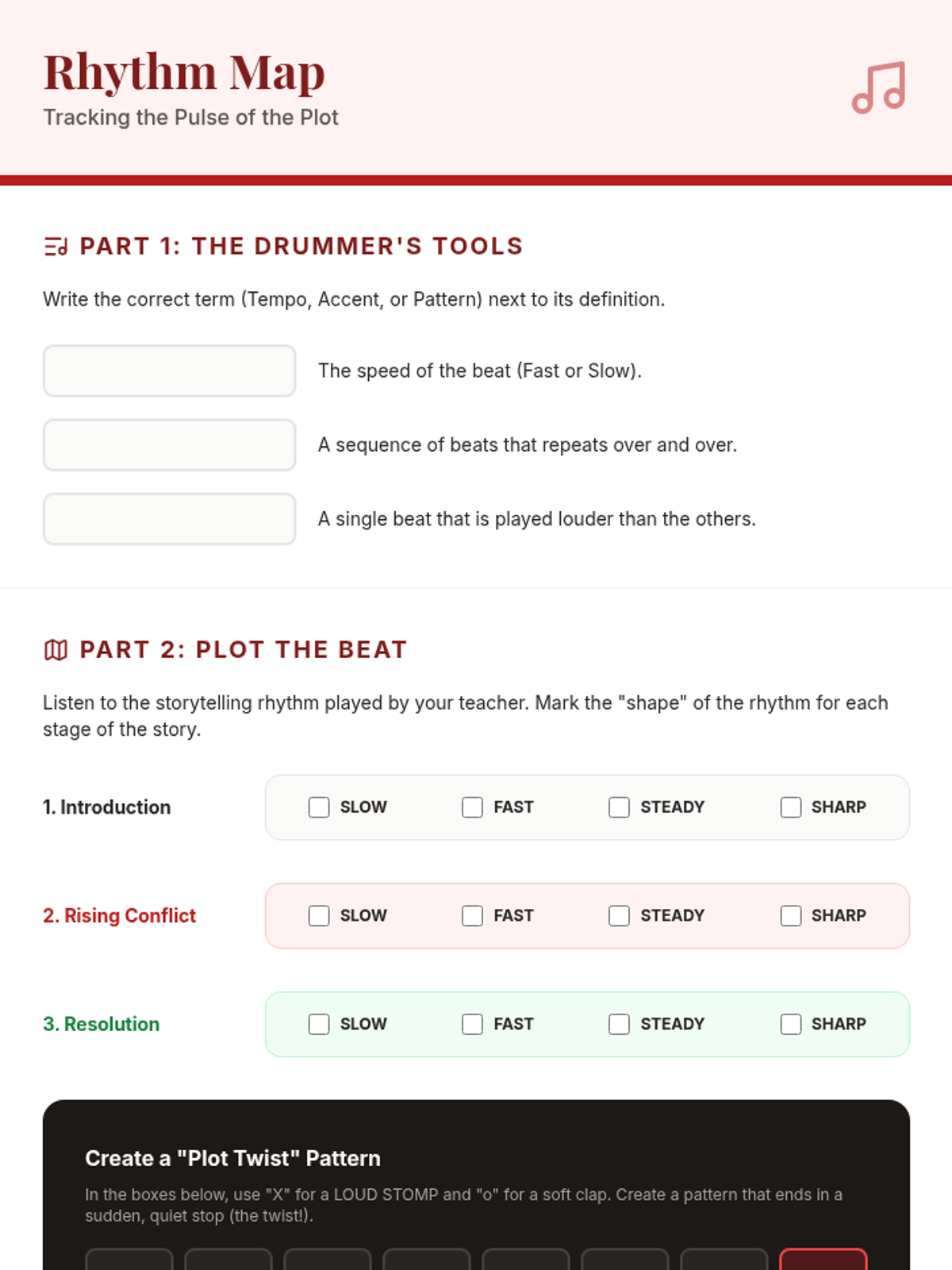
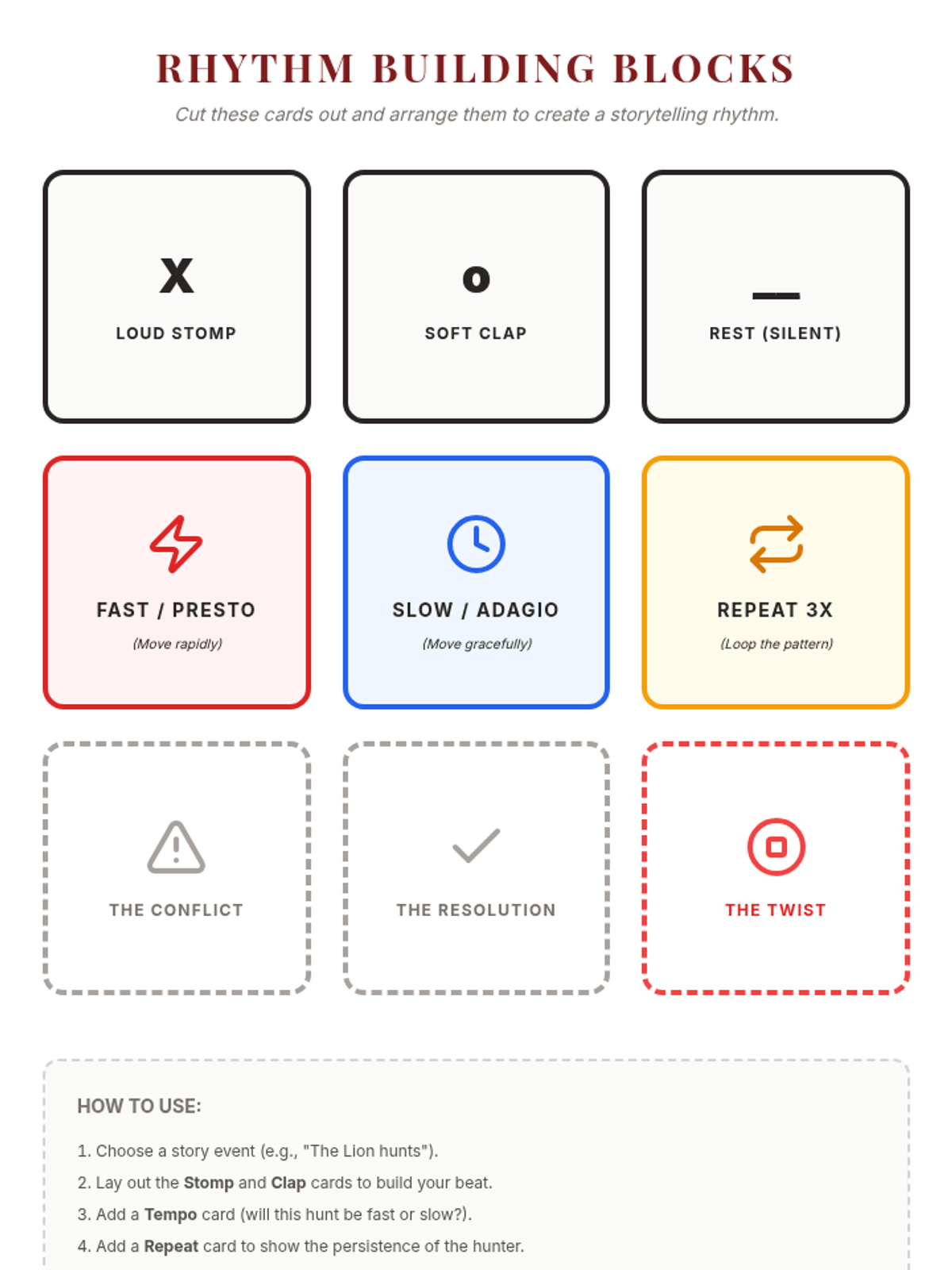
Students explore the relationship between rhythmic patterns, tempo, and dramatic arcs, mapping how drum beats signal conflict and resolution in dance.
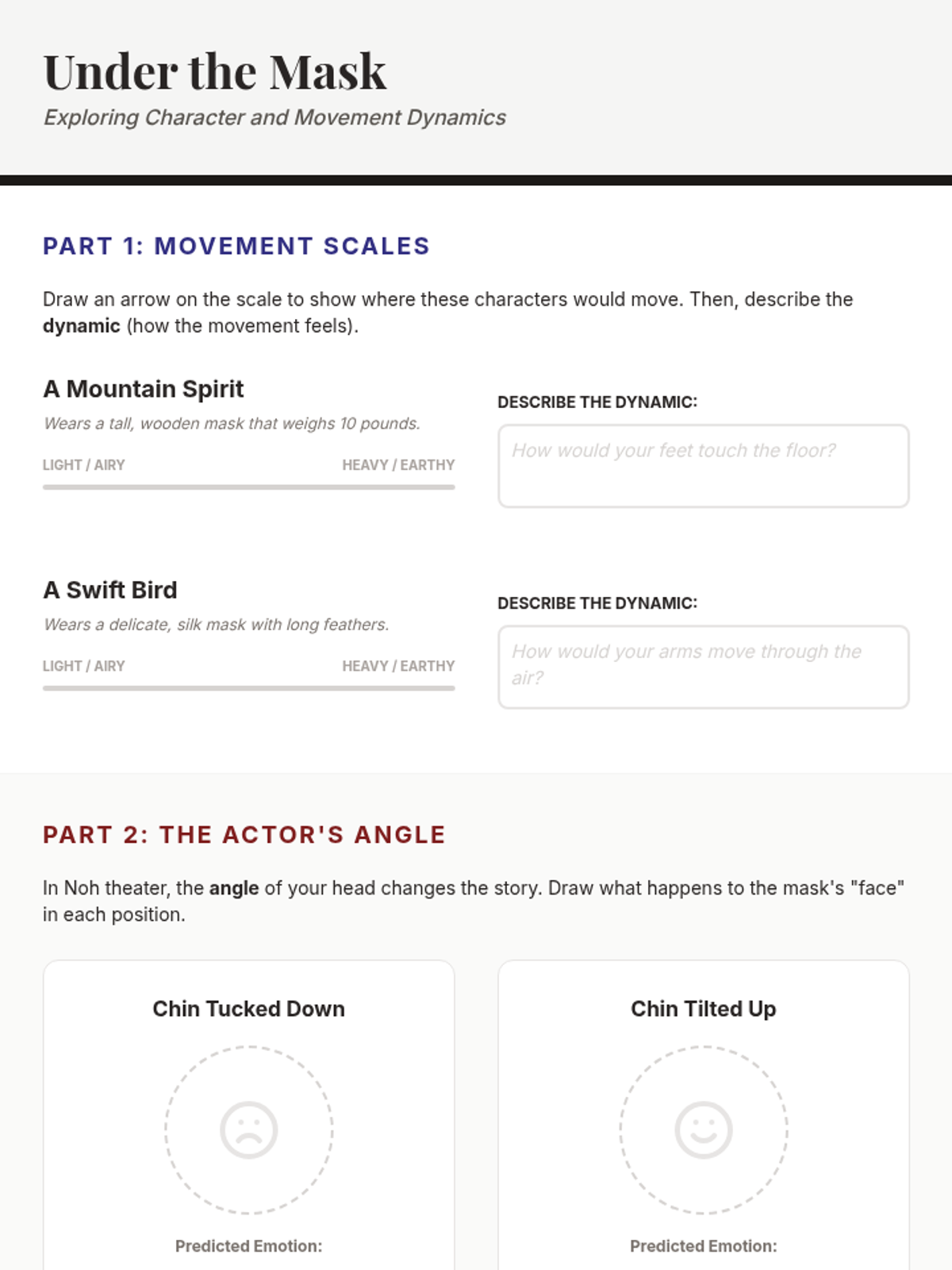
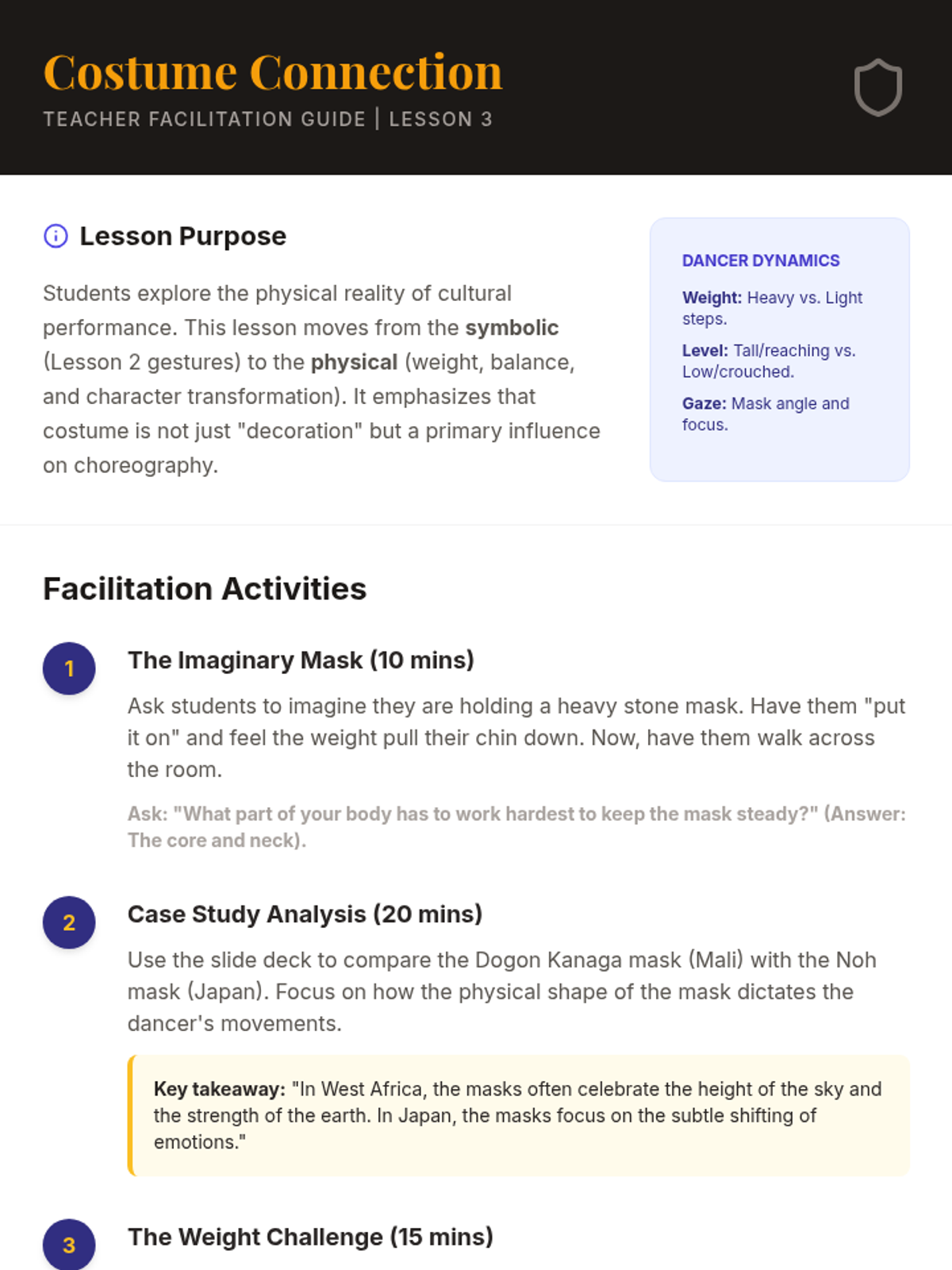
Students analyze how masks and heavy costumes in West African and Asian traditions influence character portrayal and movement dynamics.
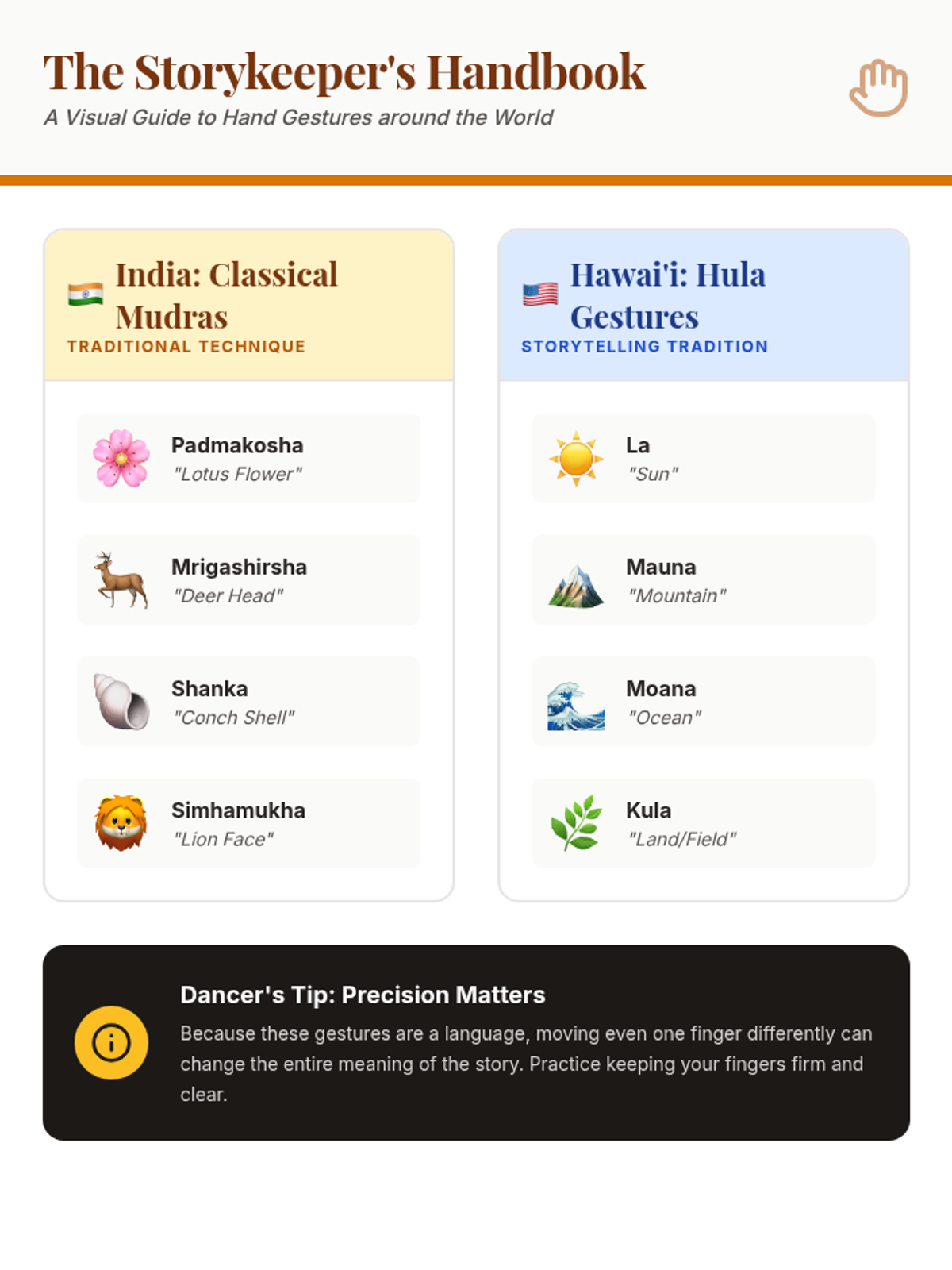
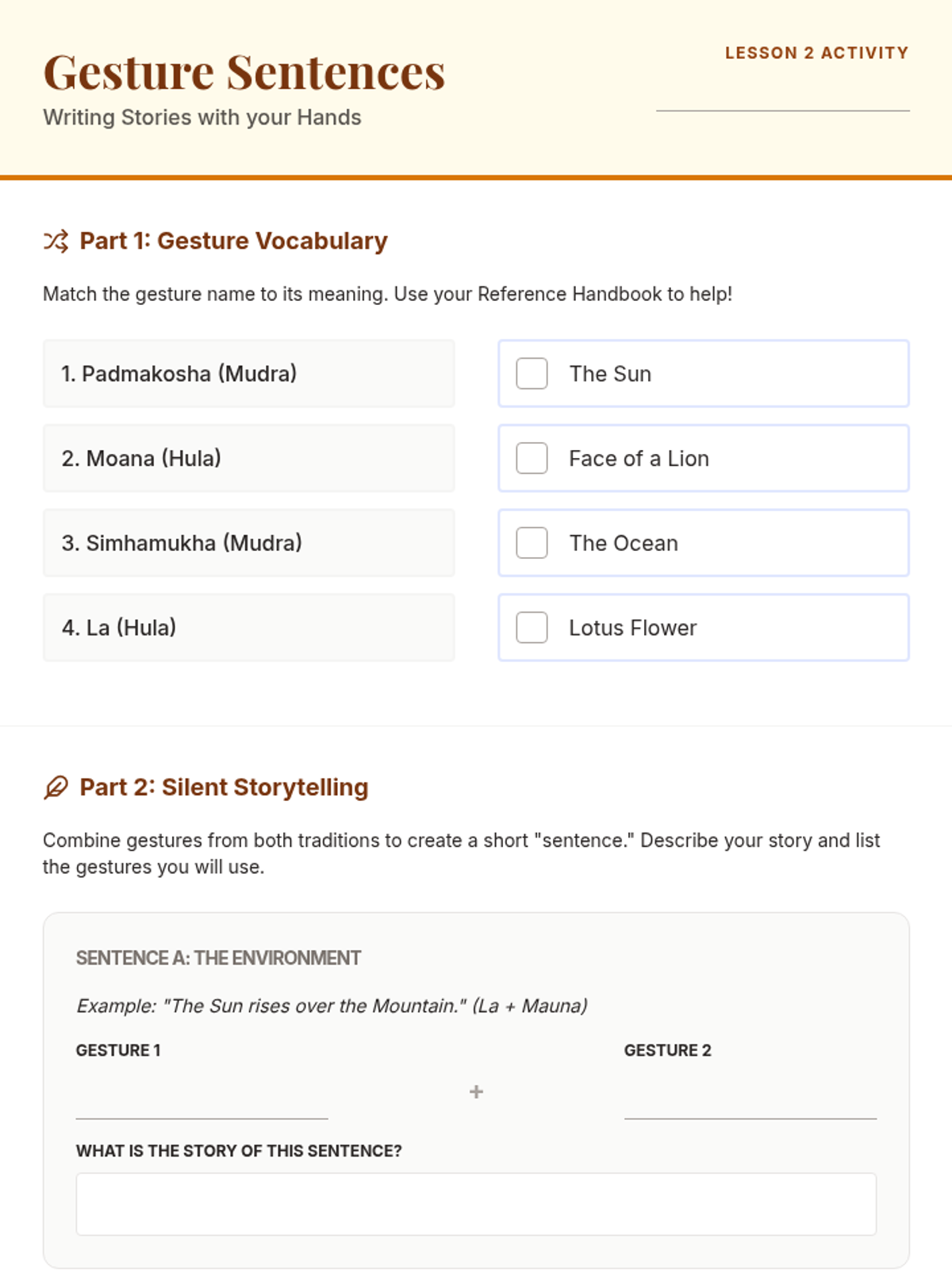
Students learn specific hand gestures from traditions like Classical Indian Mudras and Hawaiian Hula, exploring how these 'secret languages' preserve cultural narratives.
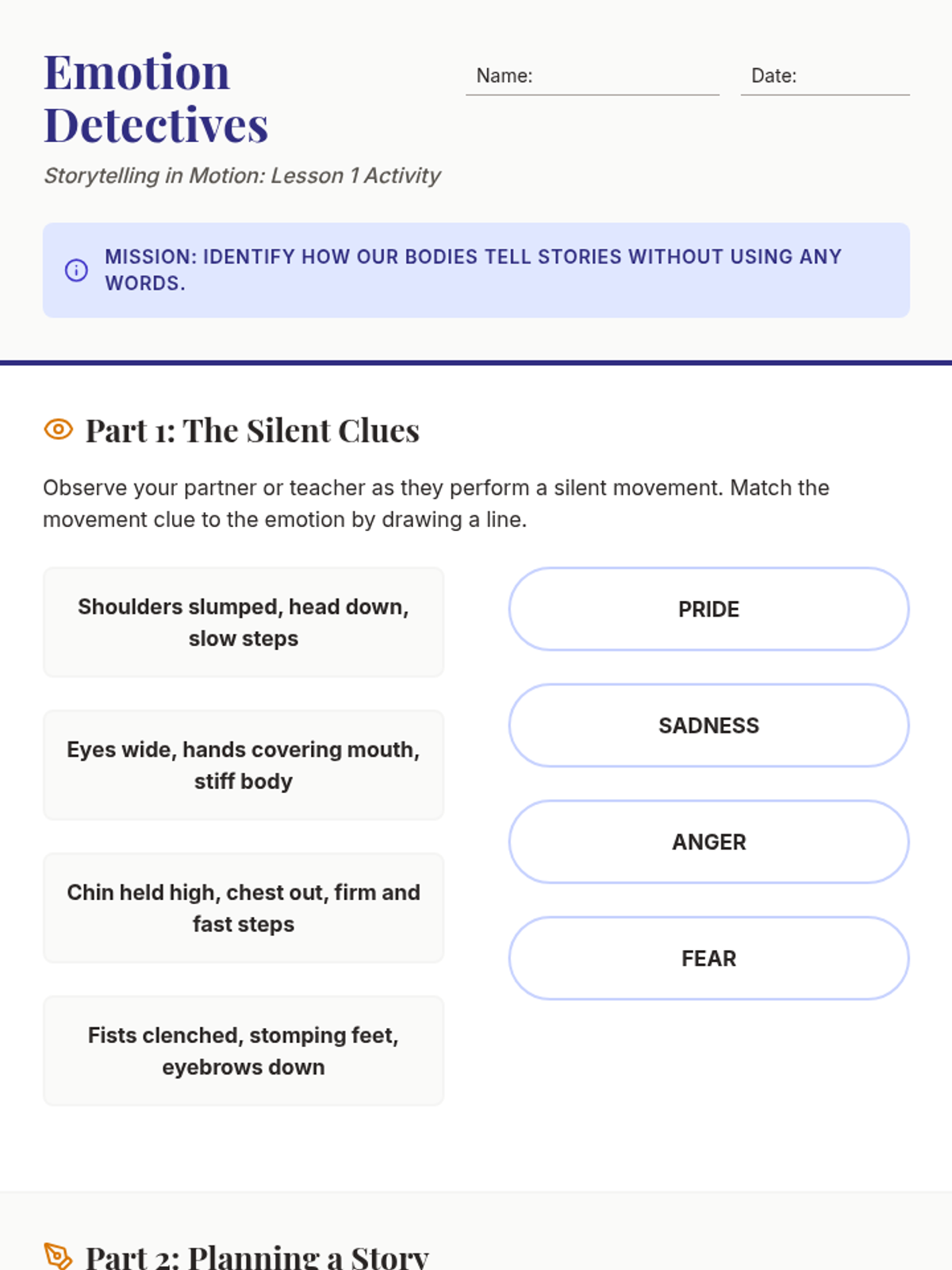
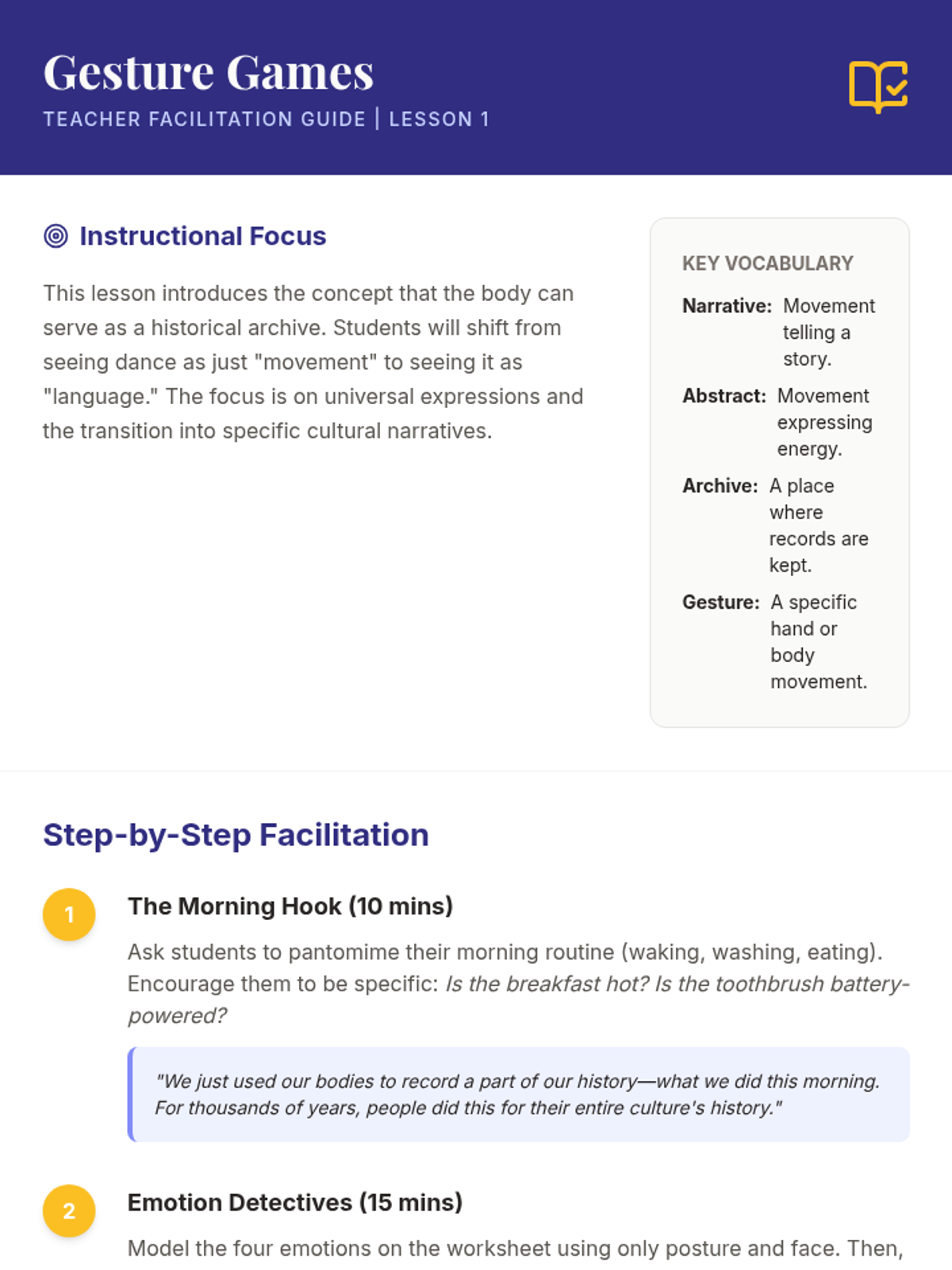
Students investigate the concept of pantomime and gestural language used in ancient cultures, identifying how universal emotions are communicated through posture and facial expression.
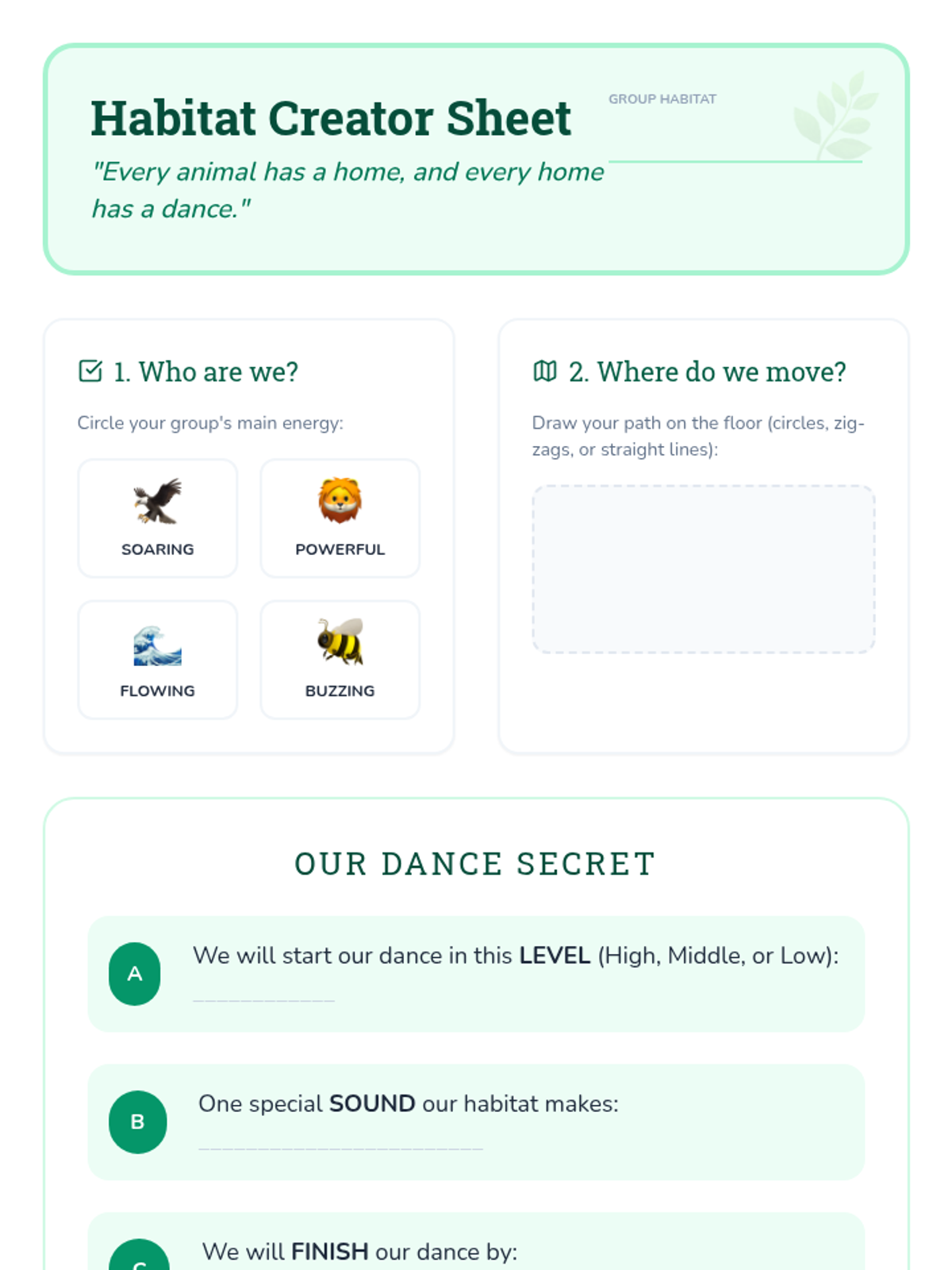
Students work in groups to create a 'habitat dance' that combines the animals and elements explored throughout the sequence.
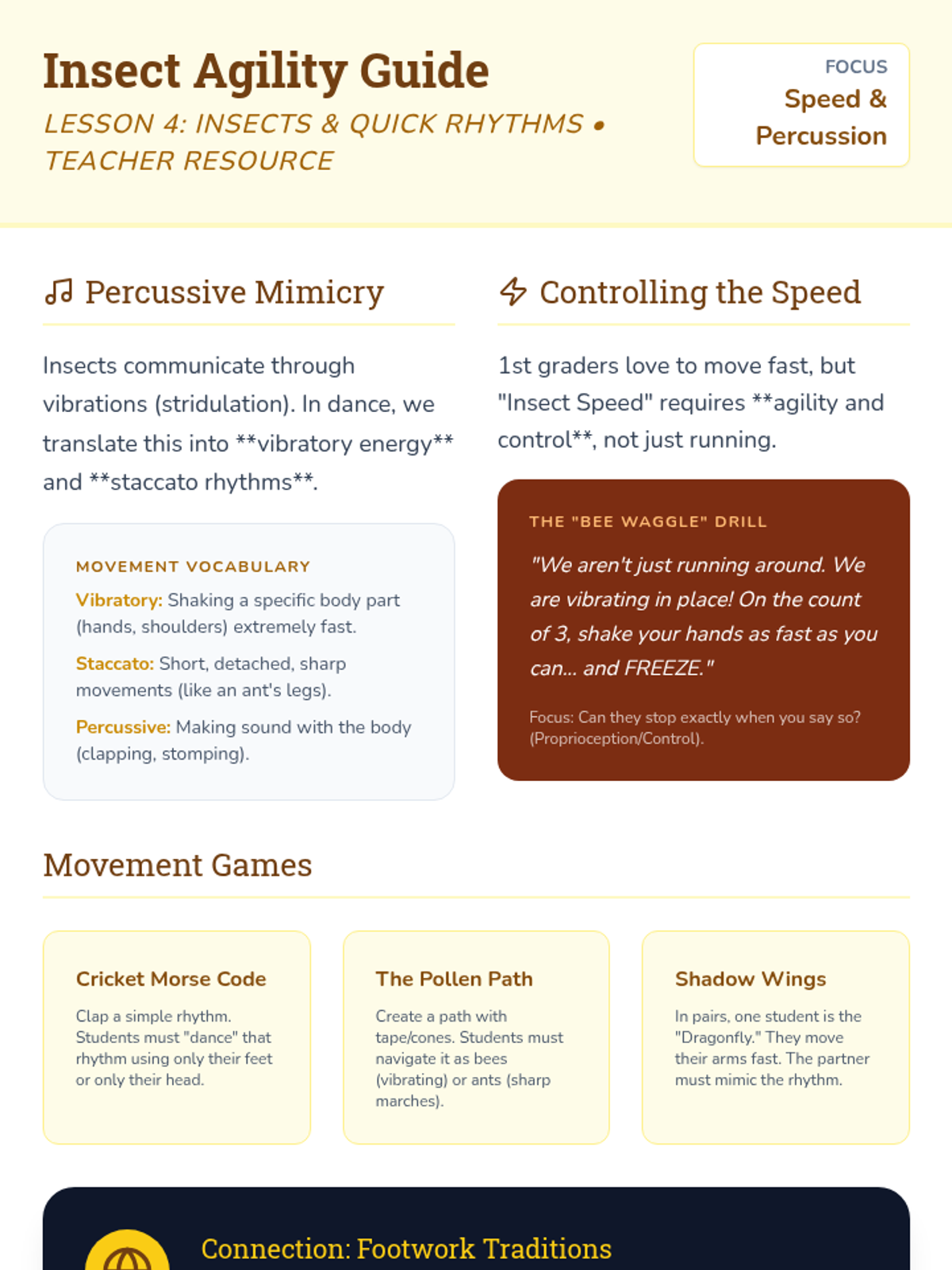
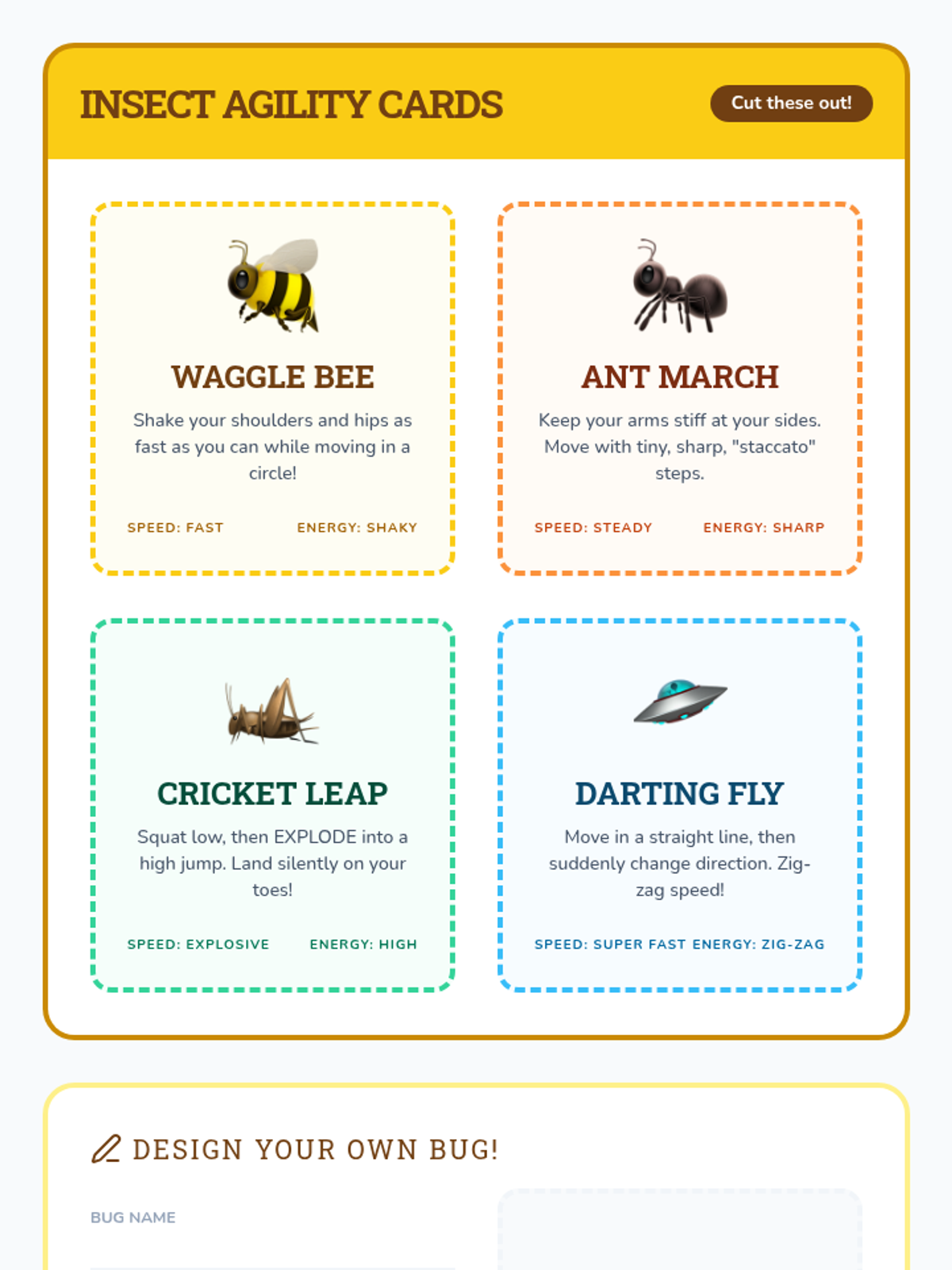
Students practice quick, small movements inspired by insects, exploring speed and vibratory rhythms.
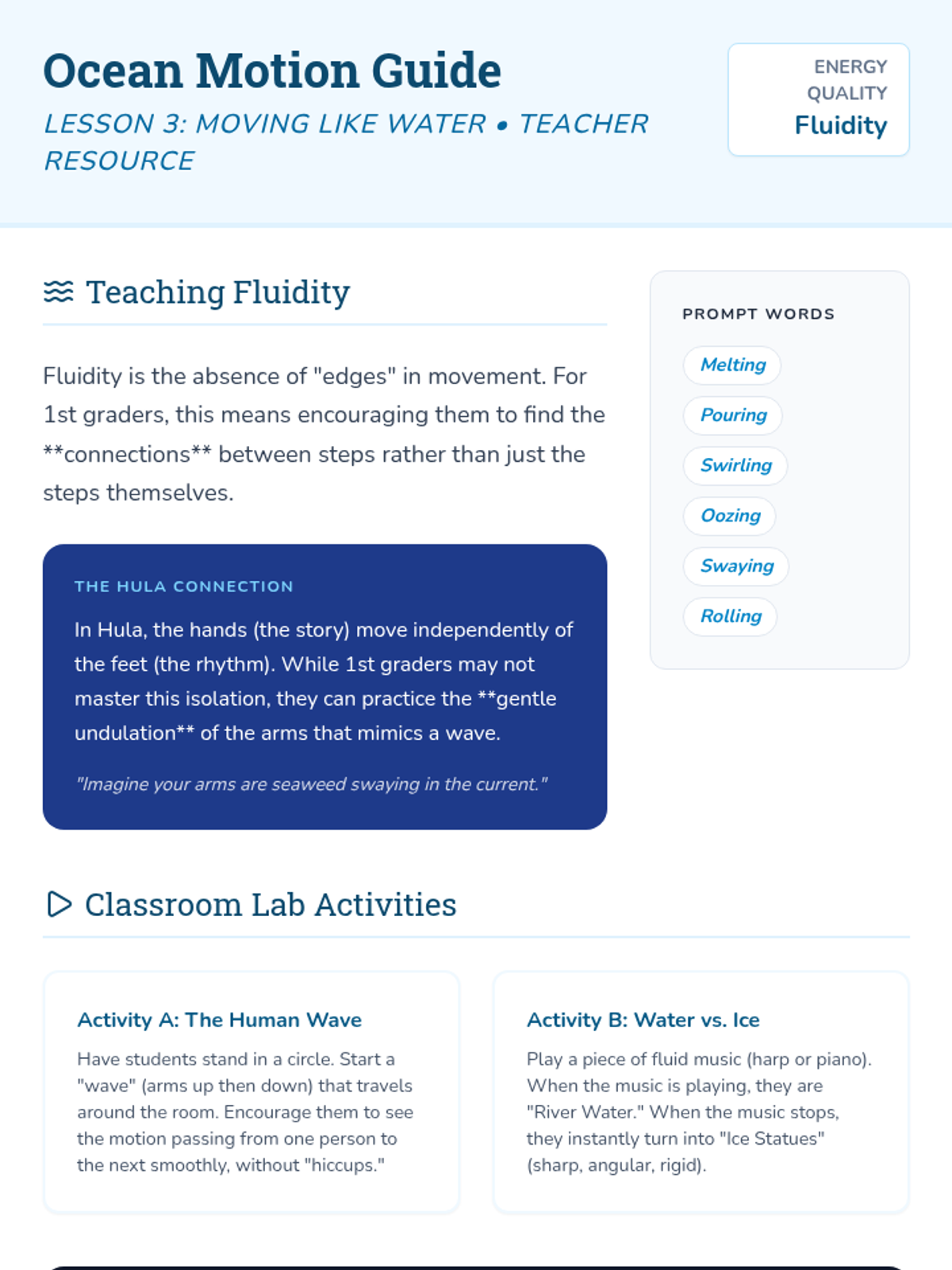
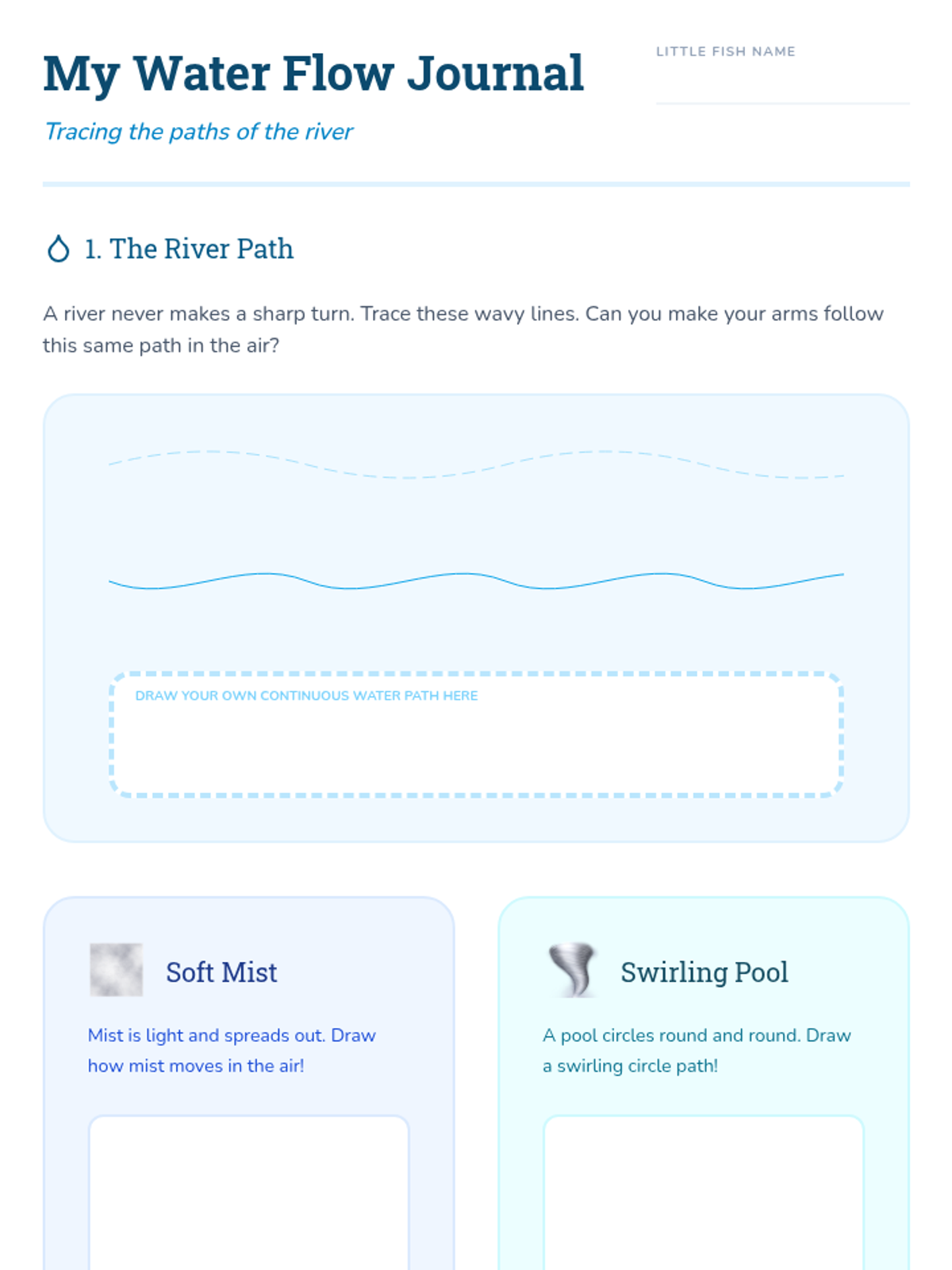
Students explore fluid movements inspired by water and Polynesian dance, contrasting flow with sharp shapes.
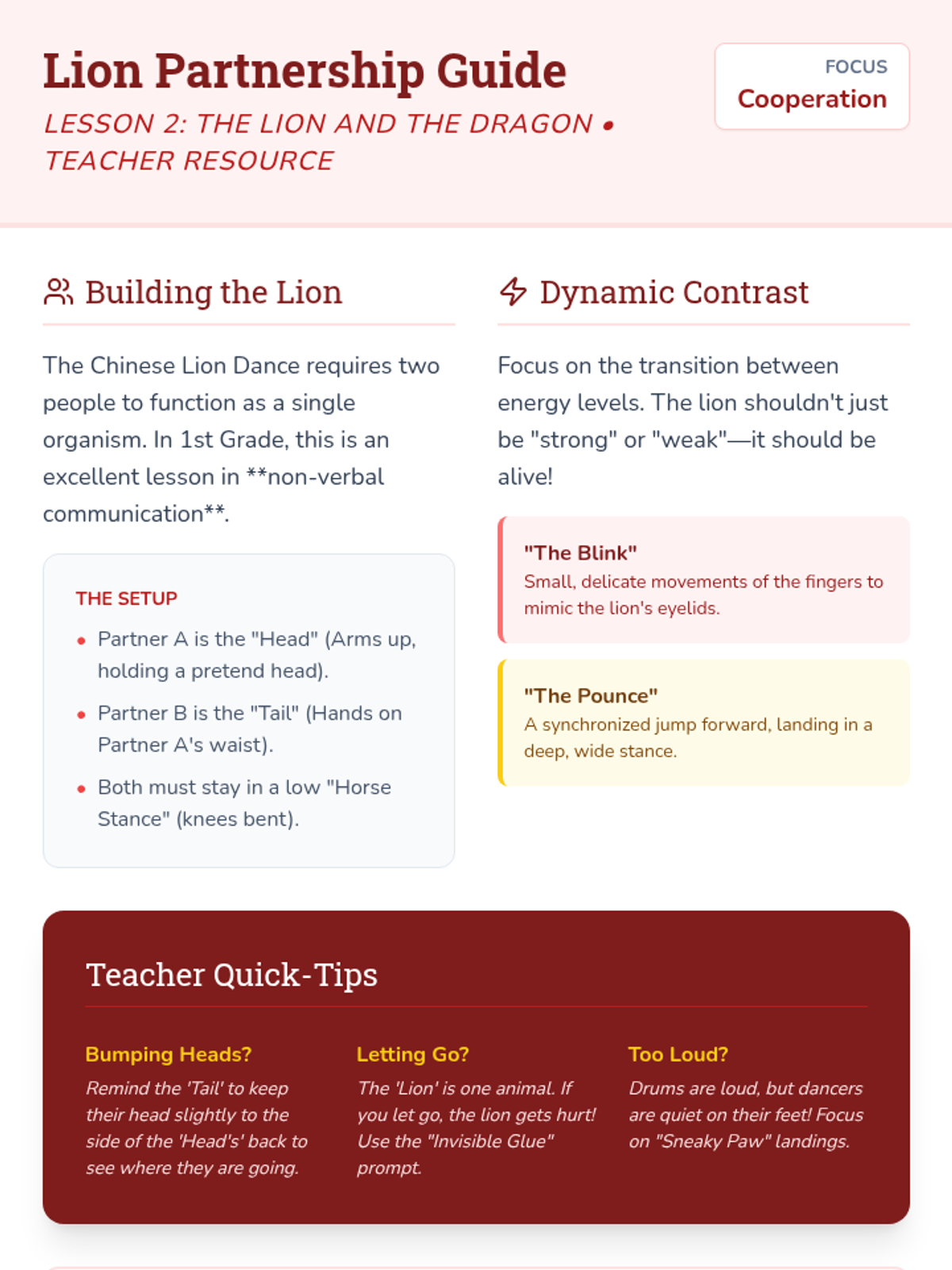
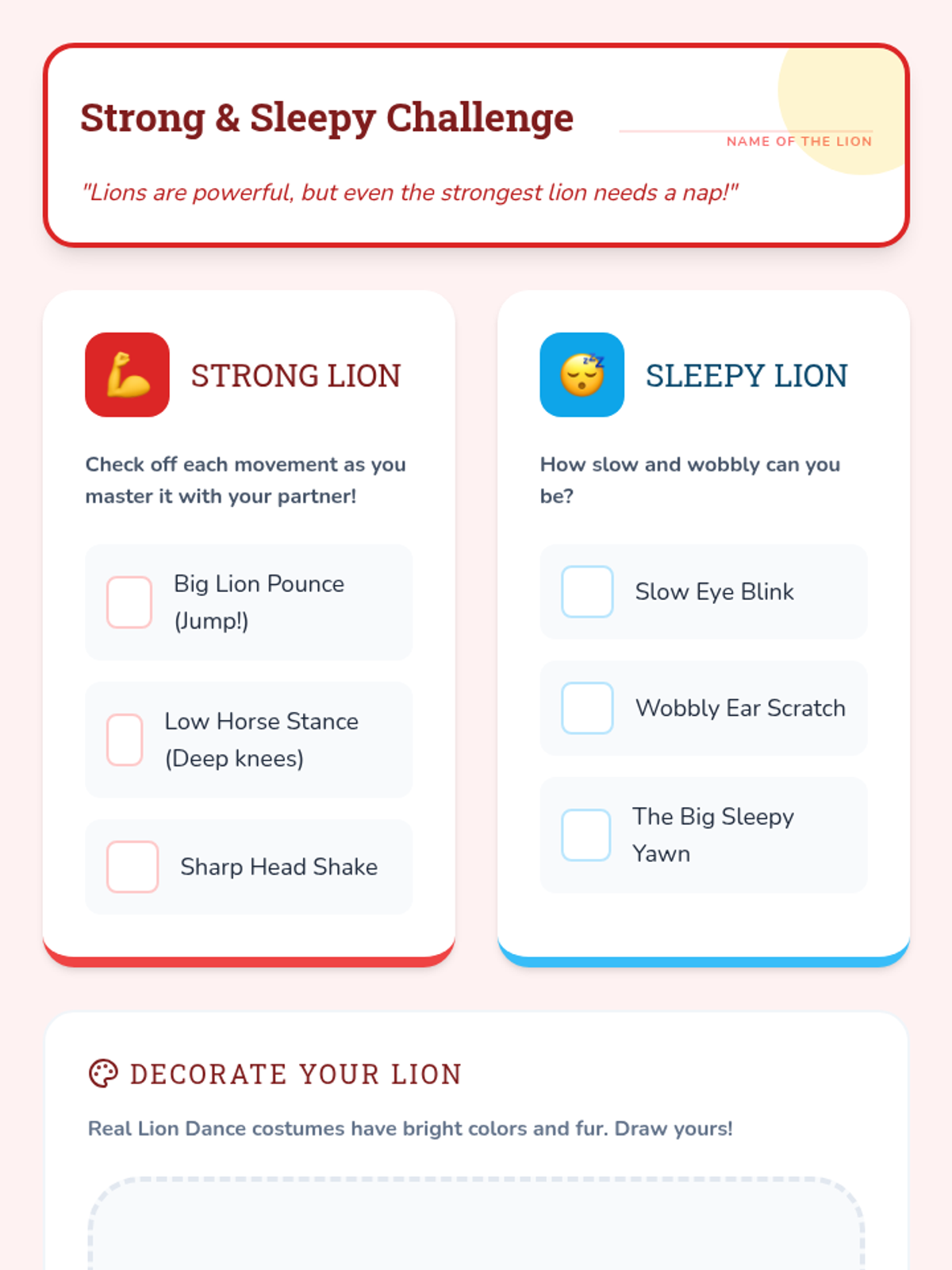
Students learn about the Chinese Lion Dance tradition, focusing on power, levels, and partner coordination.
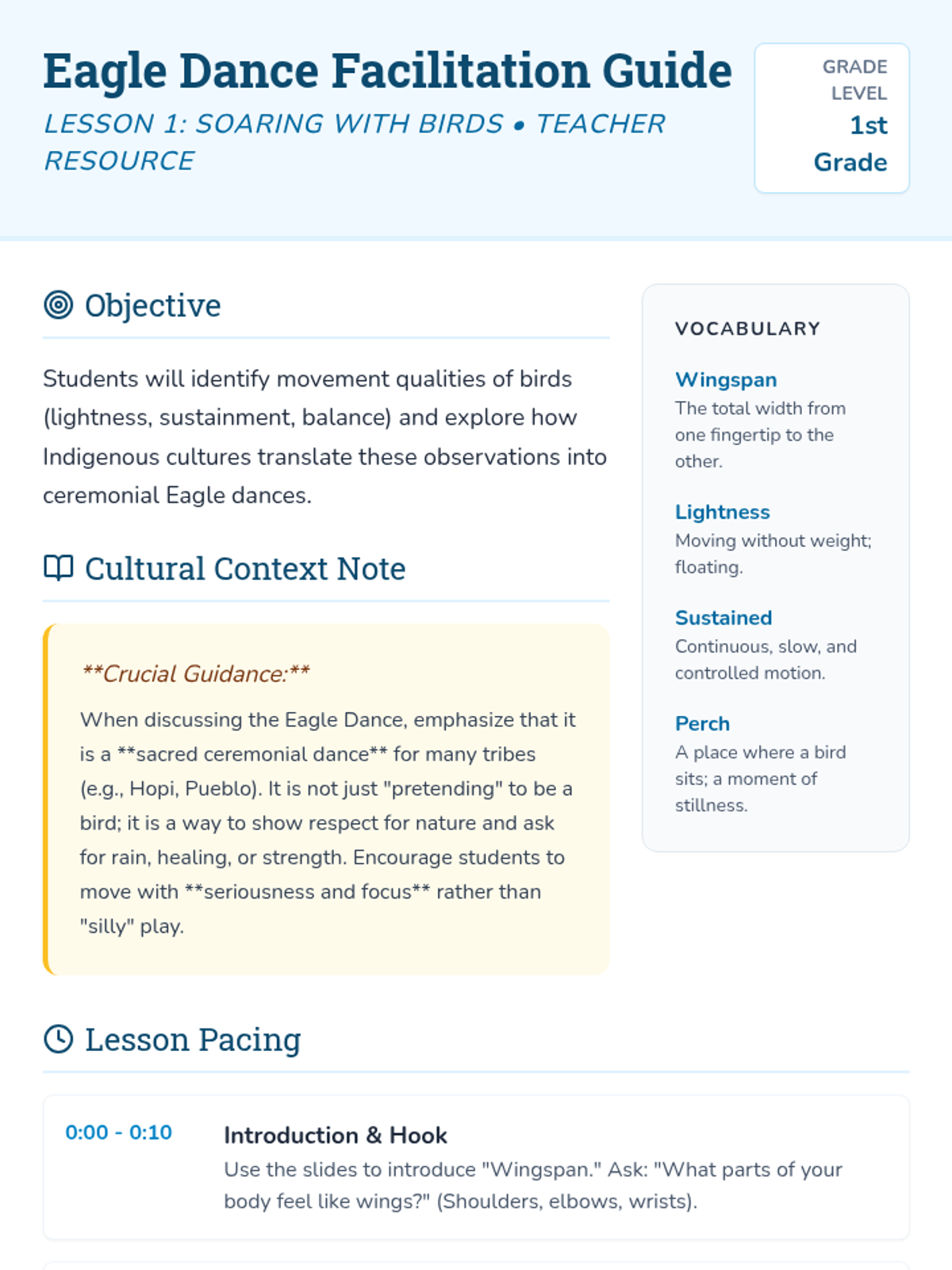
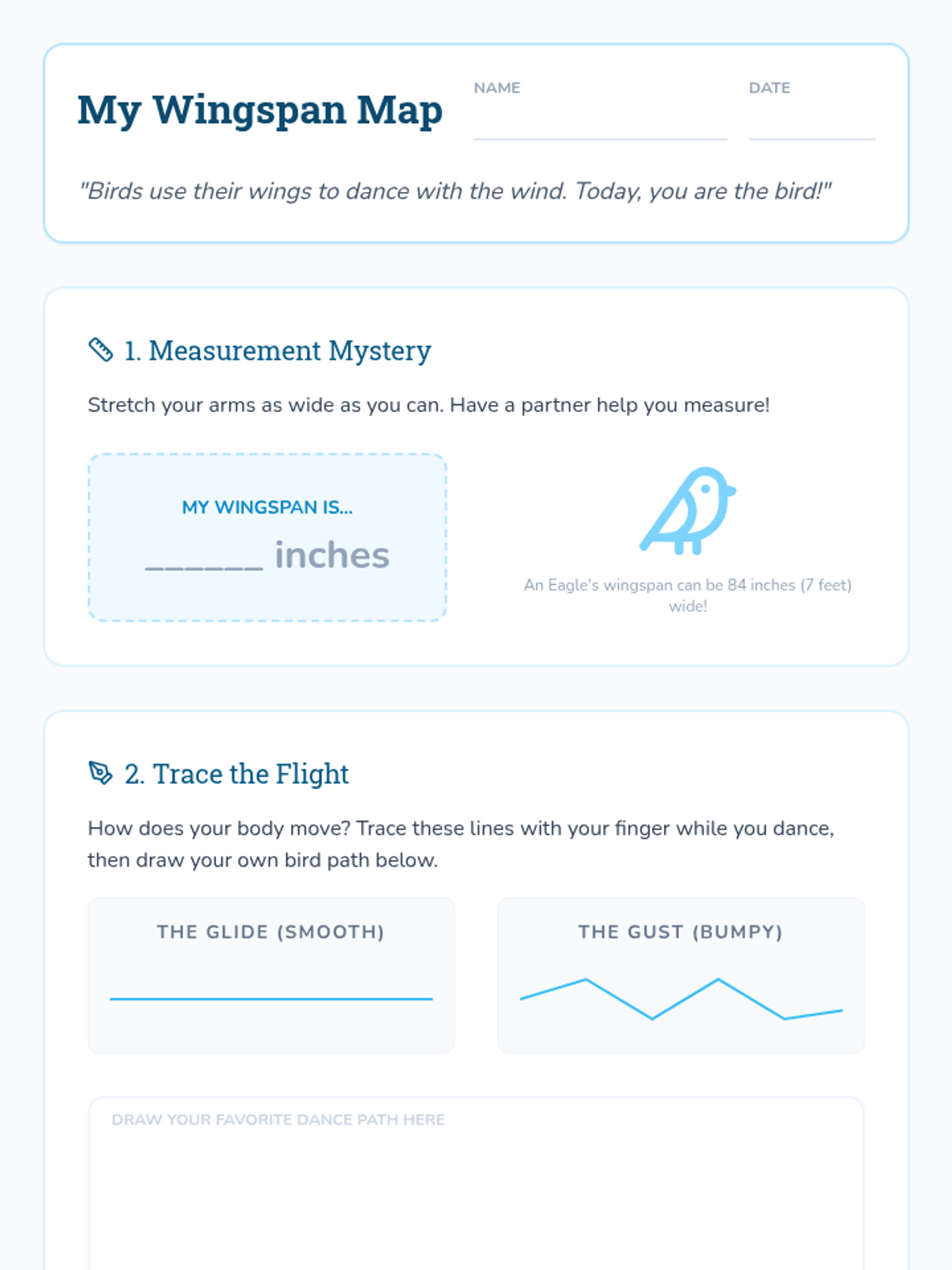
Students observe bird movements and traditional Eagle dances to explore balance and wingspan through light, airy motions.
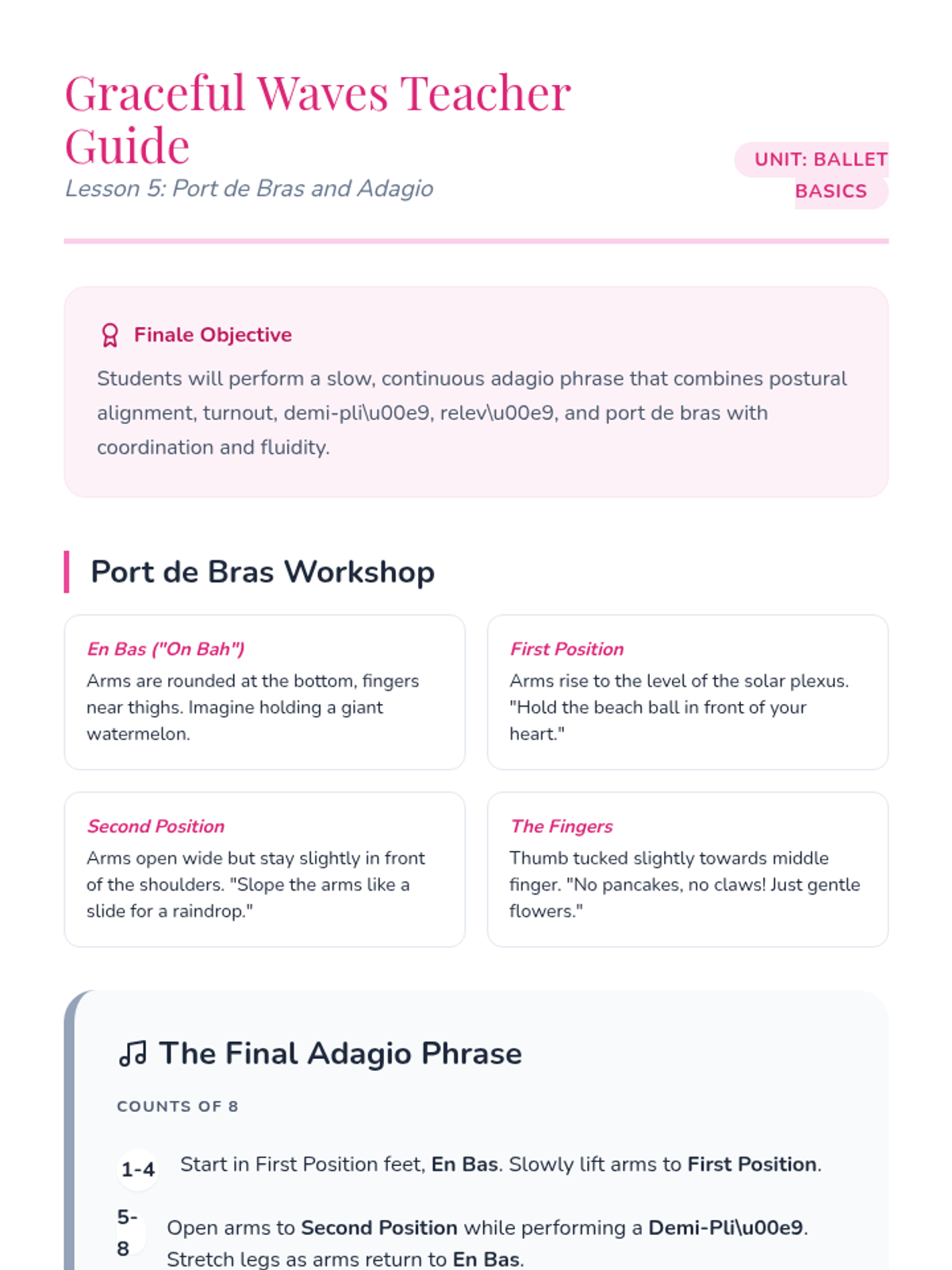
Students add arm movements (Port de Bras) to their footwork, learning to create curved, soft shapes. They combine pli\u00e9s, relev\u00e9s, and arm movements into a slow, continuous adagio sequence.
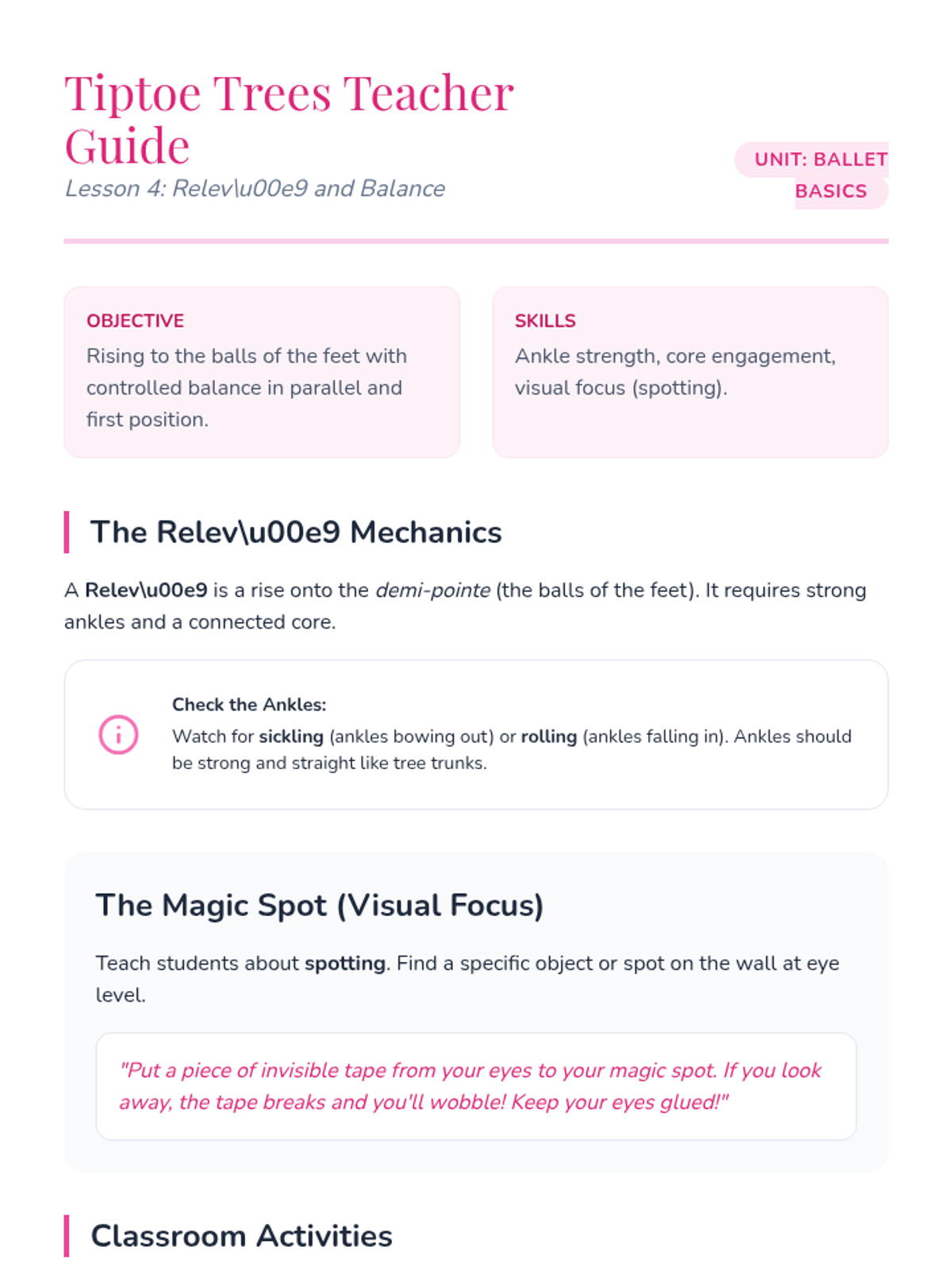
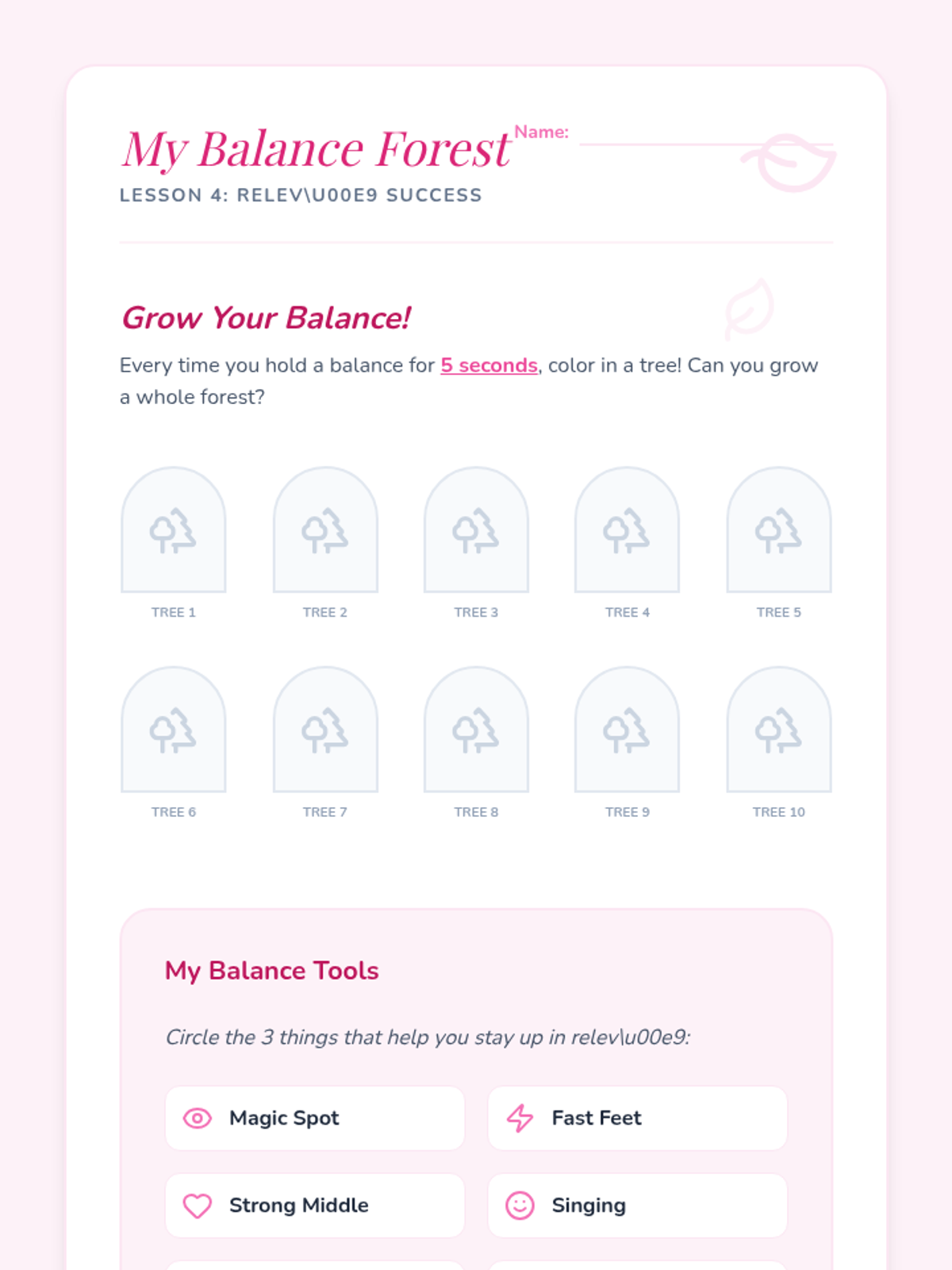
This lesson focuses on ankle strength and balance by rising onto the balls of the feet (relev\u00e9). Students practice holding the balance in parallel and First Position.
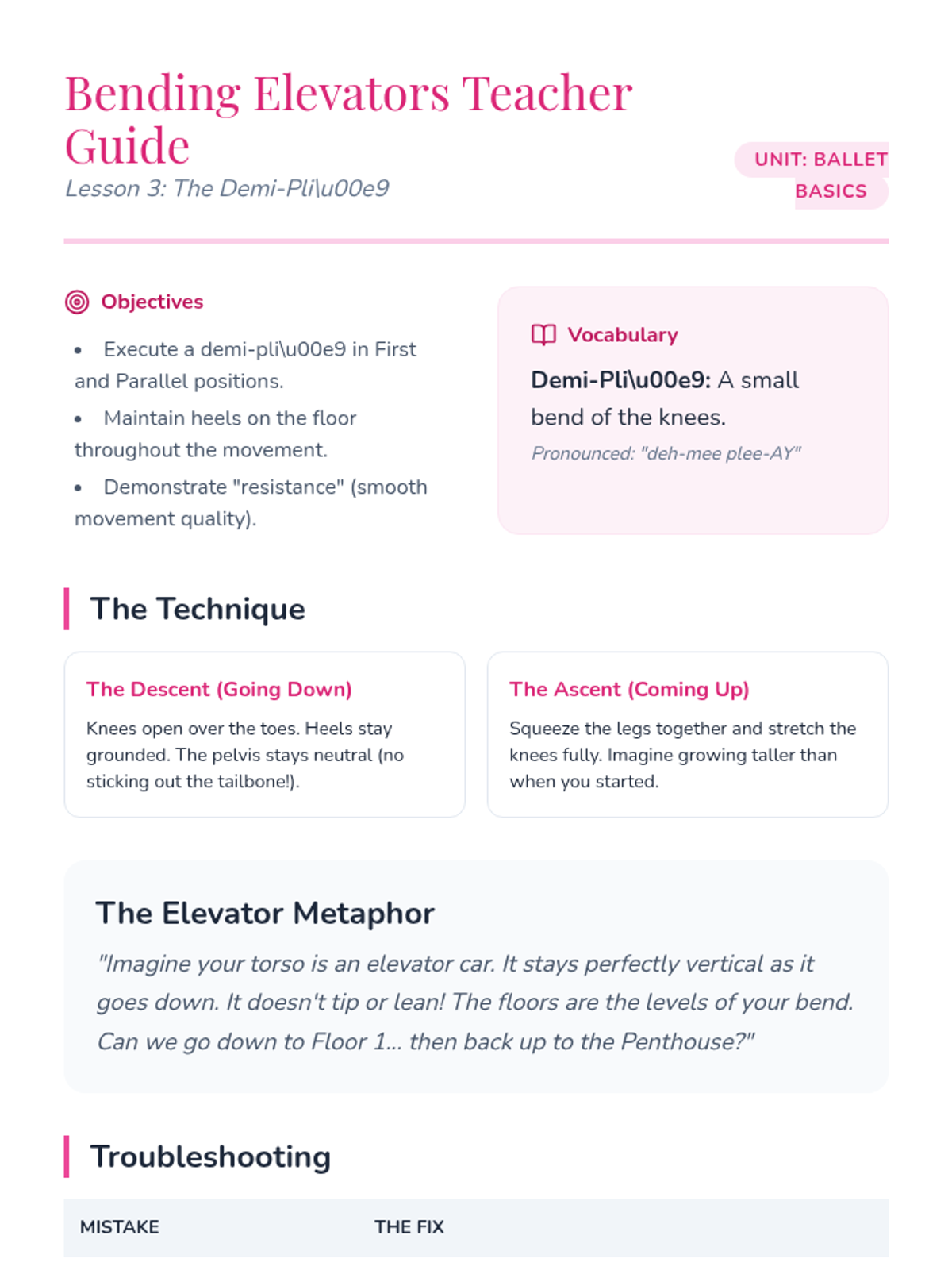
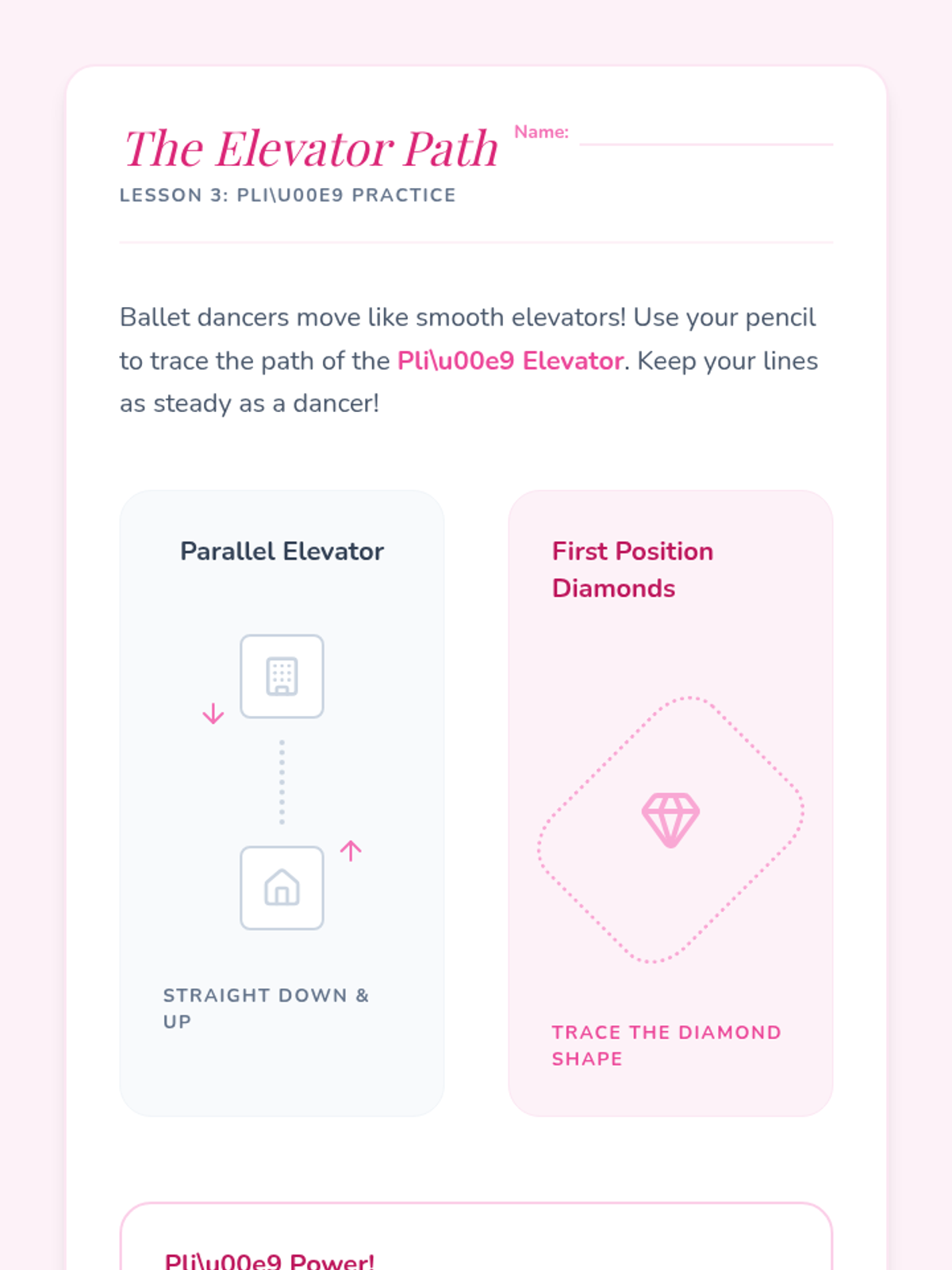
Students practice the demi-pli\u00e9 (small bend), focusing on keeping heels on the floor and knees over toes. They explore the concept of resistance and smooth movement quality.
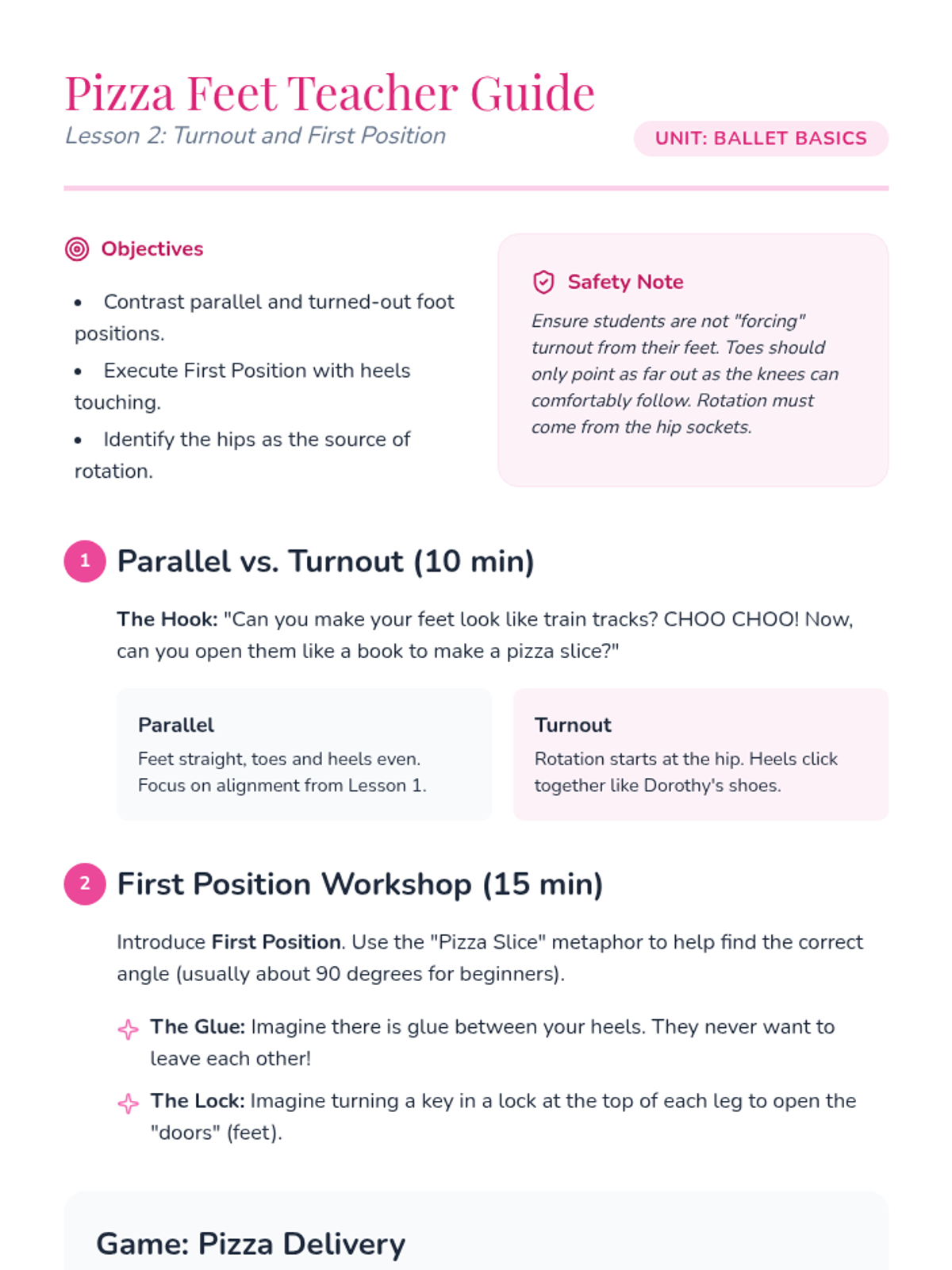
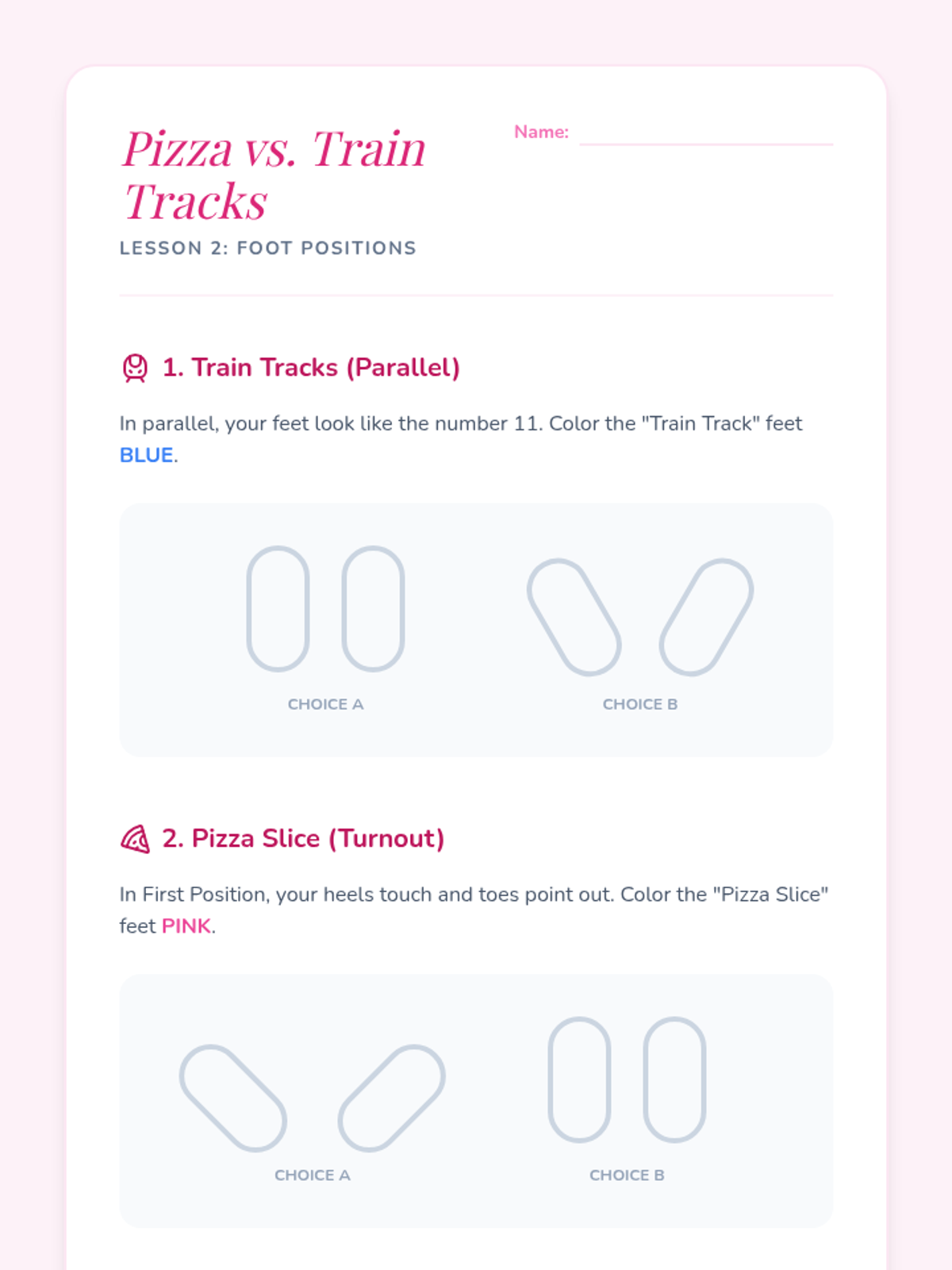
The lesson introduces the rotation of the legs from the hips, distinguishing between parallel (train tracks) and turnout (pizza slice). Students practice standing in First Position with proper knee alignment.
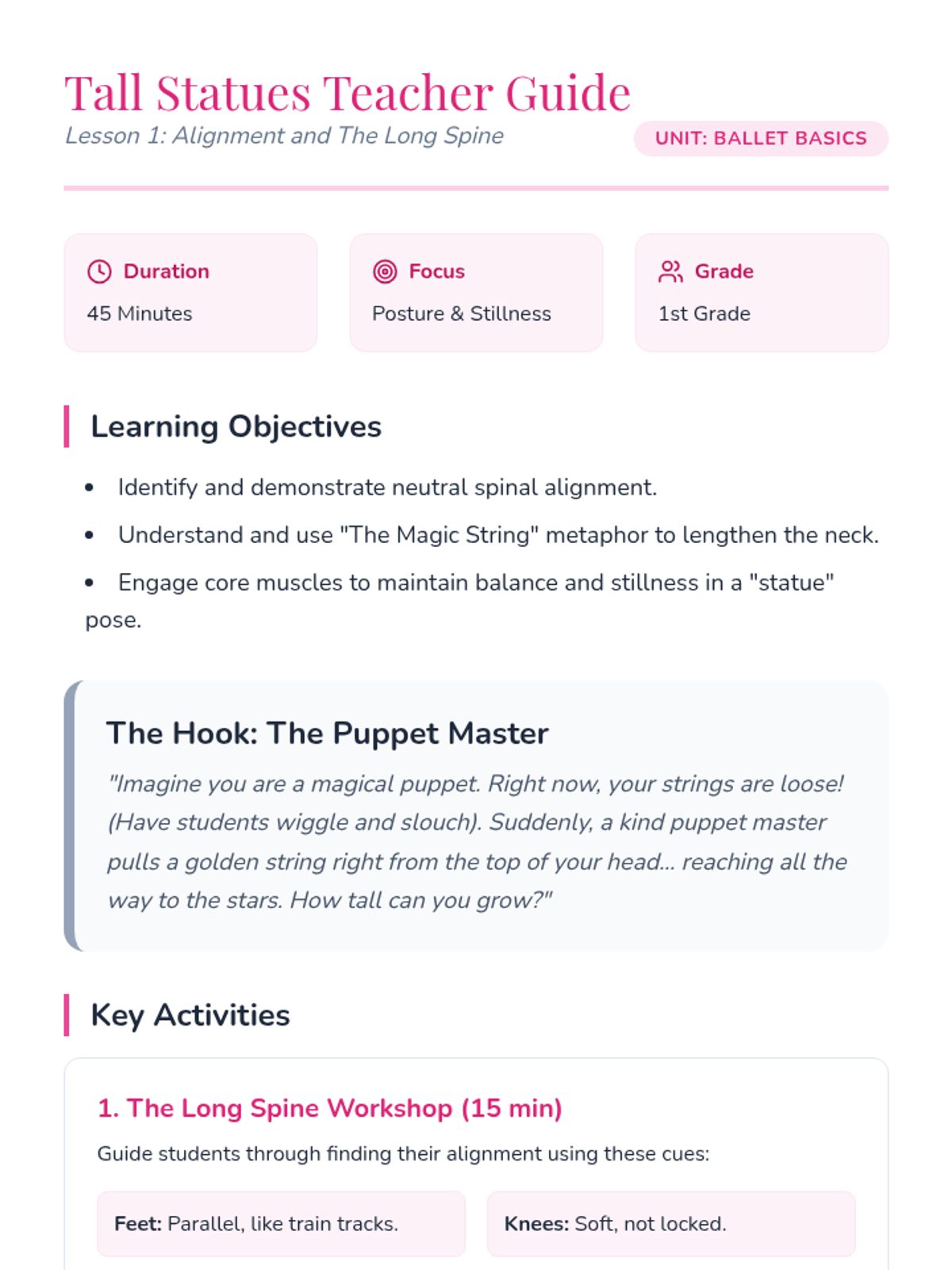
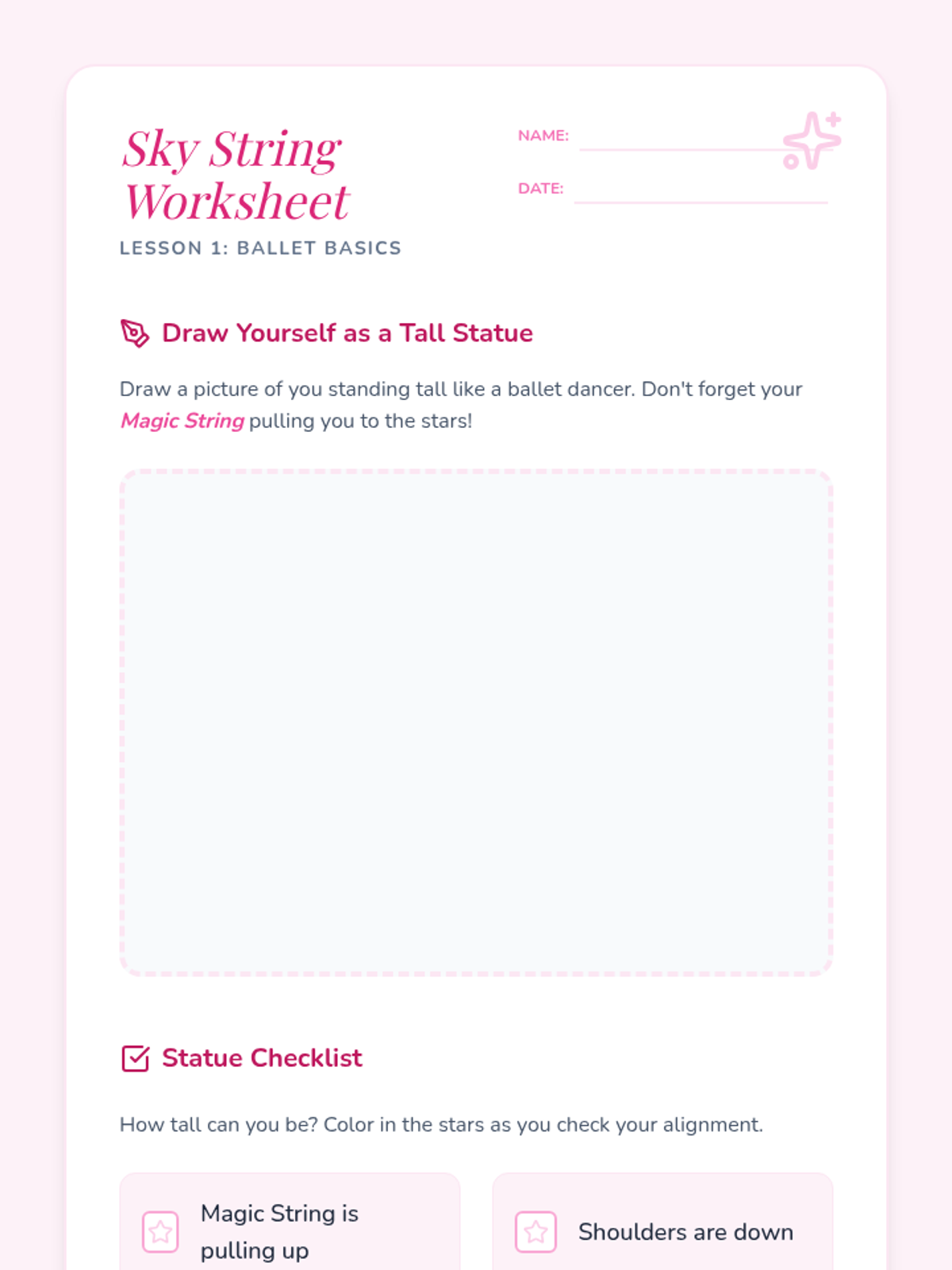
Students learn the concept of neutral alignment by imagining a string pulling them up from the crown of their head. They practice 'statues' to find stillness and engage their core muscles for stability.
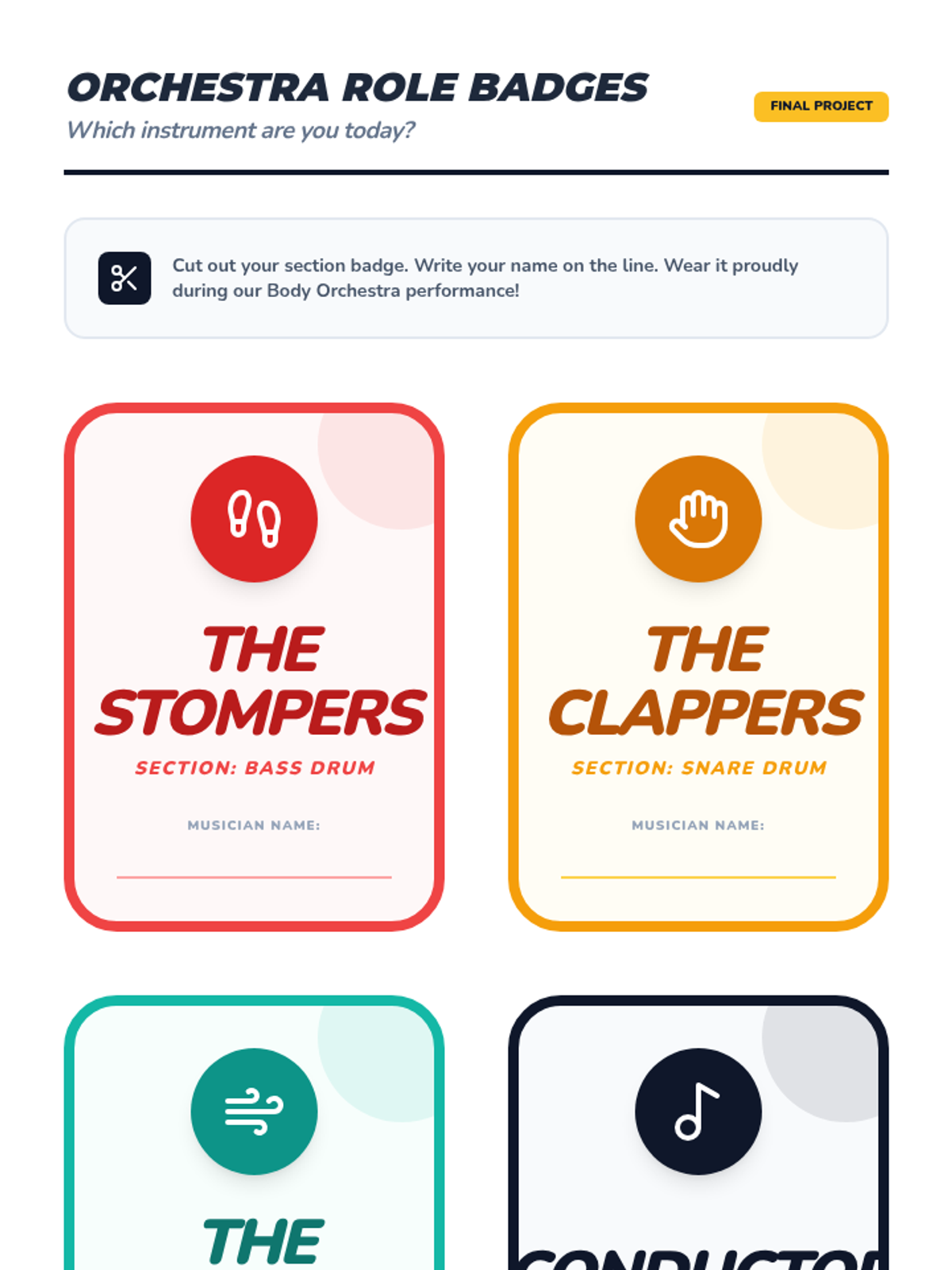
The final project brings all skills together as students form sections of a 'Body Orchestra.' They perform polyrhythmic patterns to create a full musical composition without instruments.
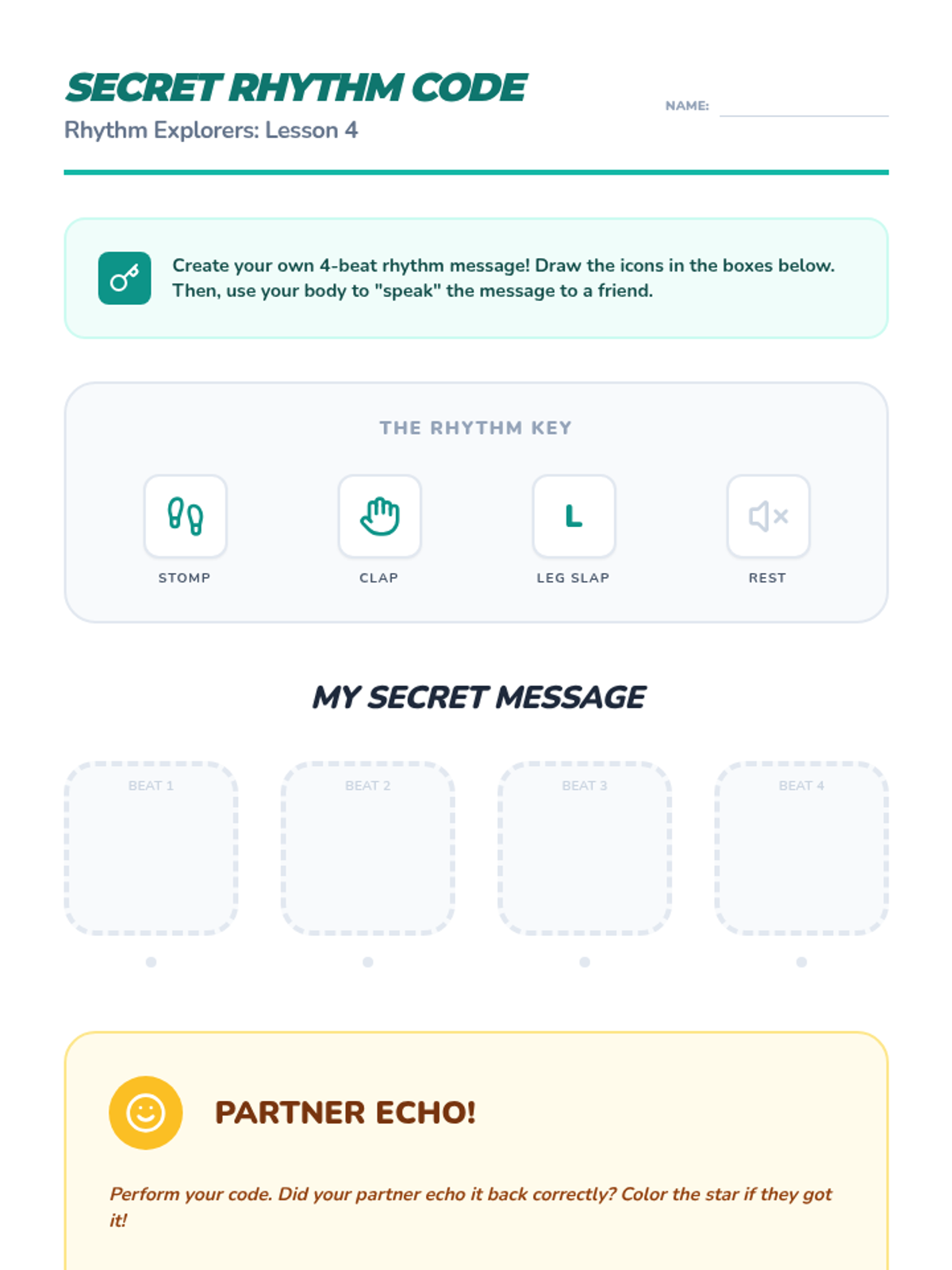
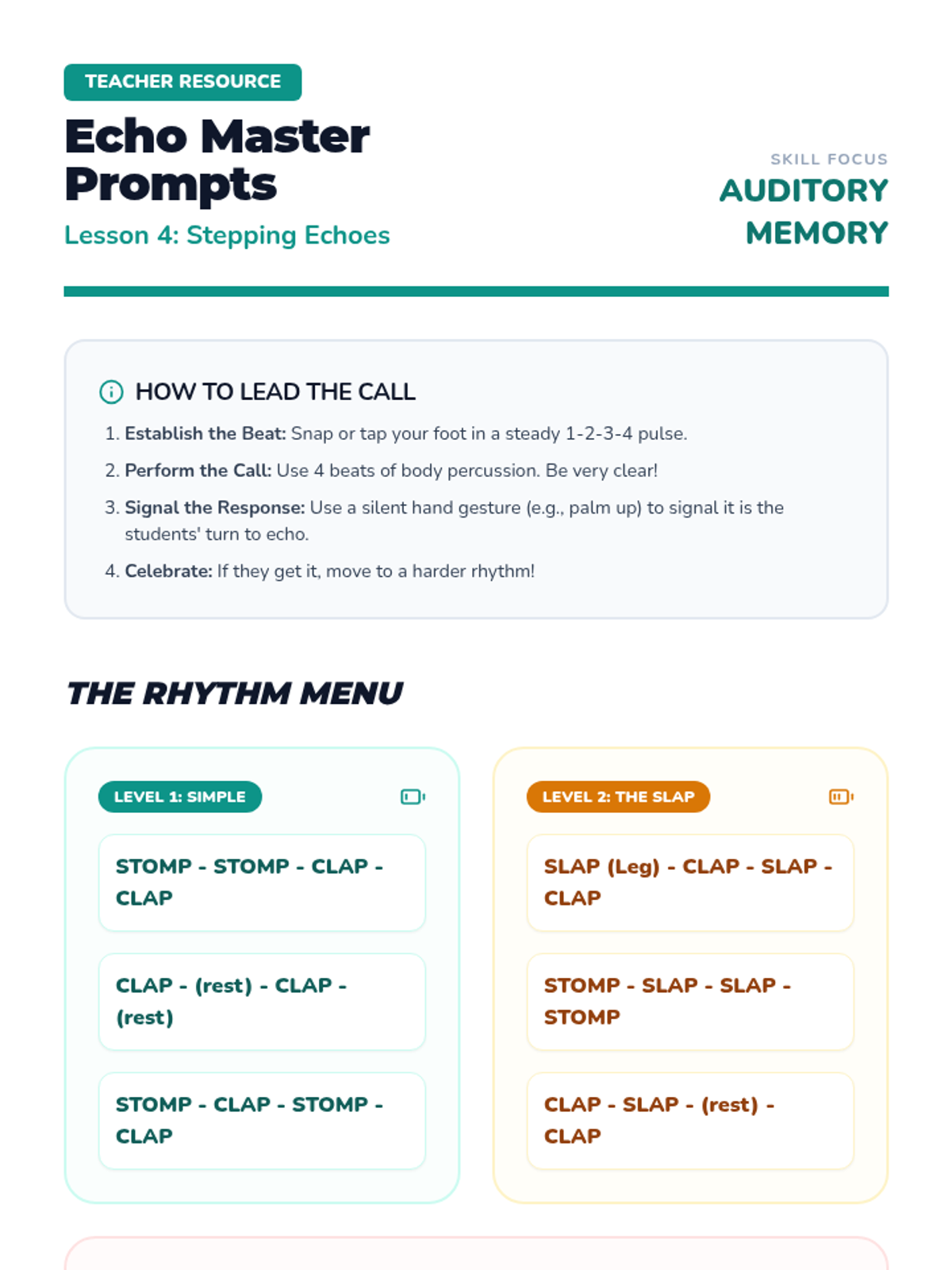
Inspired by Stepping and Gumboot dance, students practice auditory memory and group synchronization through call and response patterns. They learn to "speak" with their bodies.
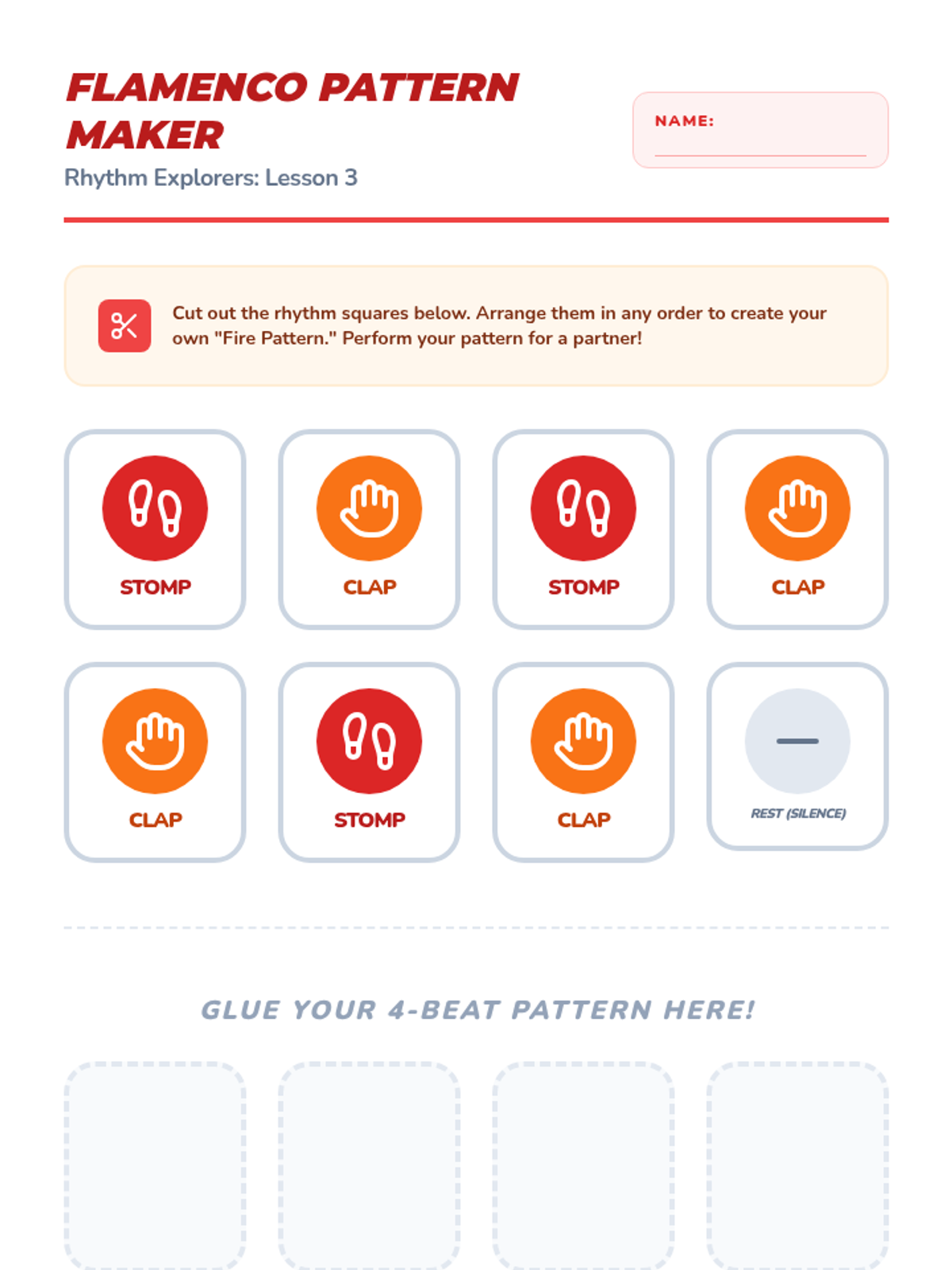
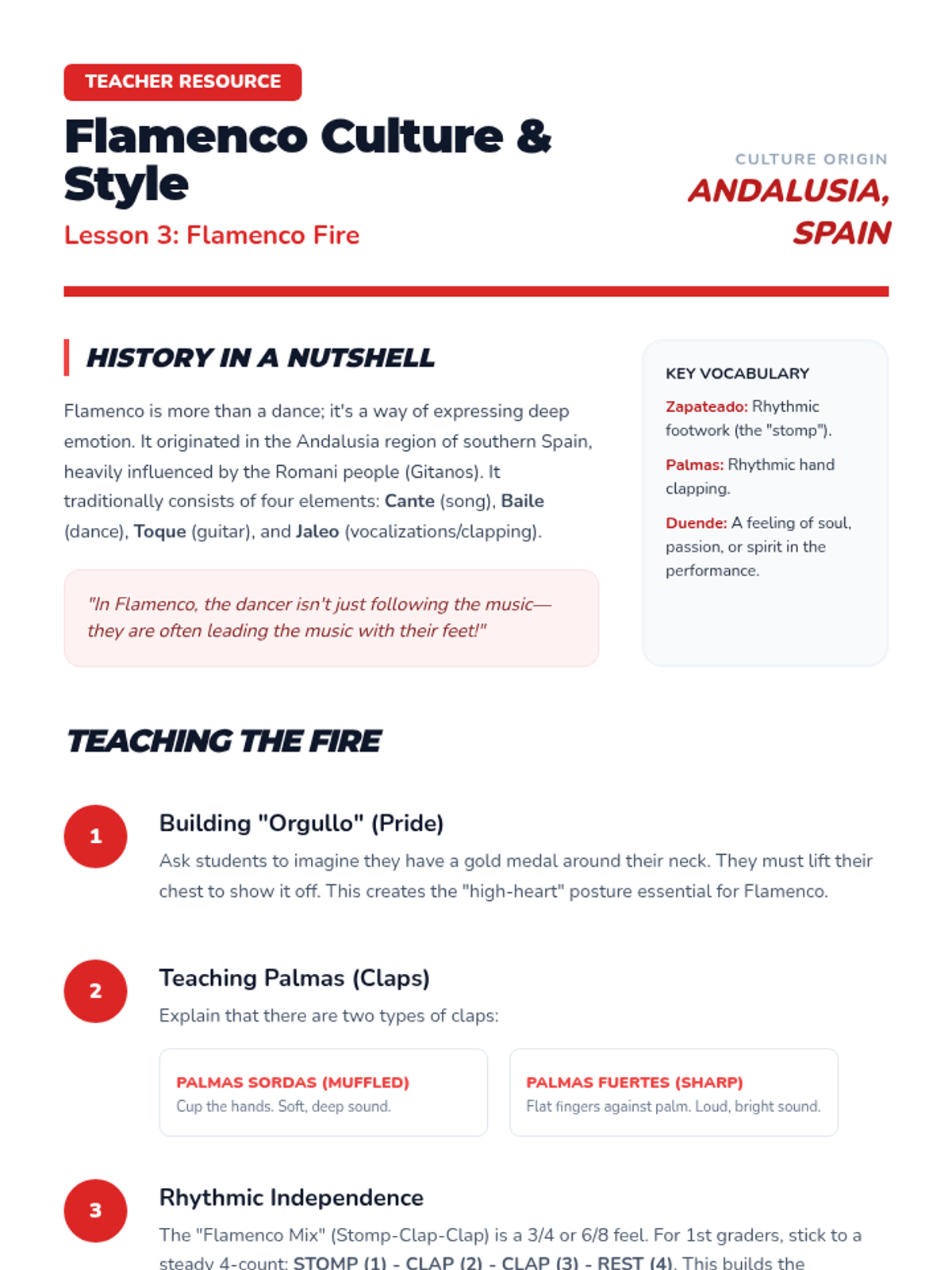
Students investigate the rhythmic layering of Flamenco, combining powerful stomps (zapateado) with specific hand claps (palmas). They focus on confidence and postural alignment.
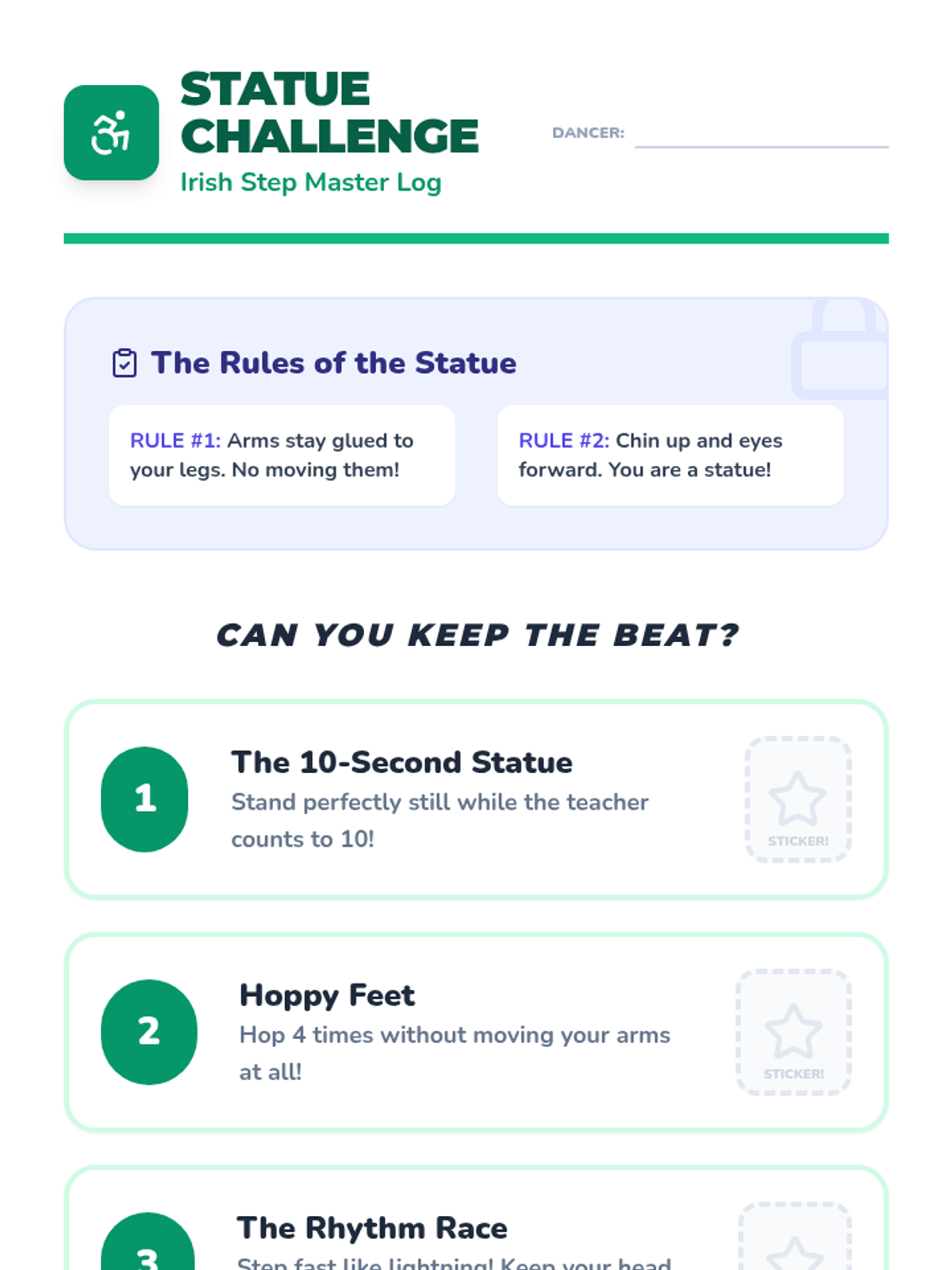
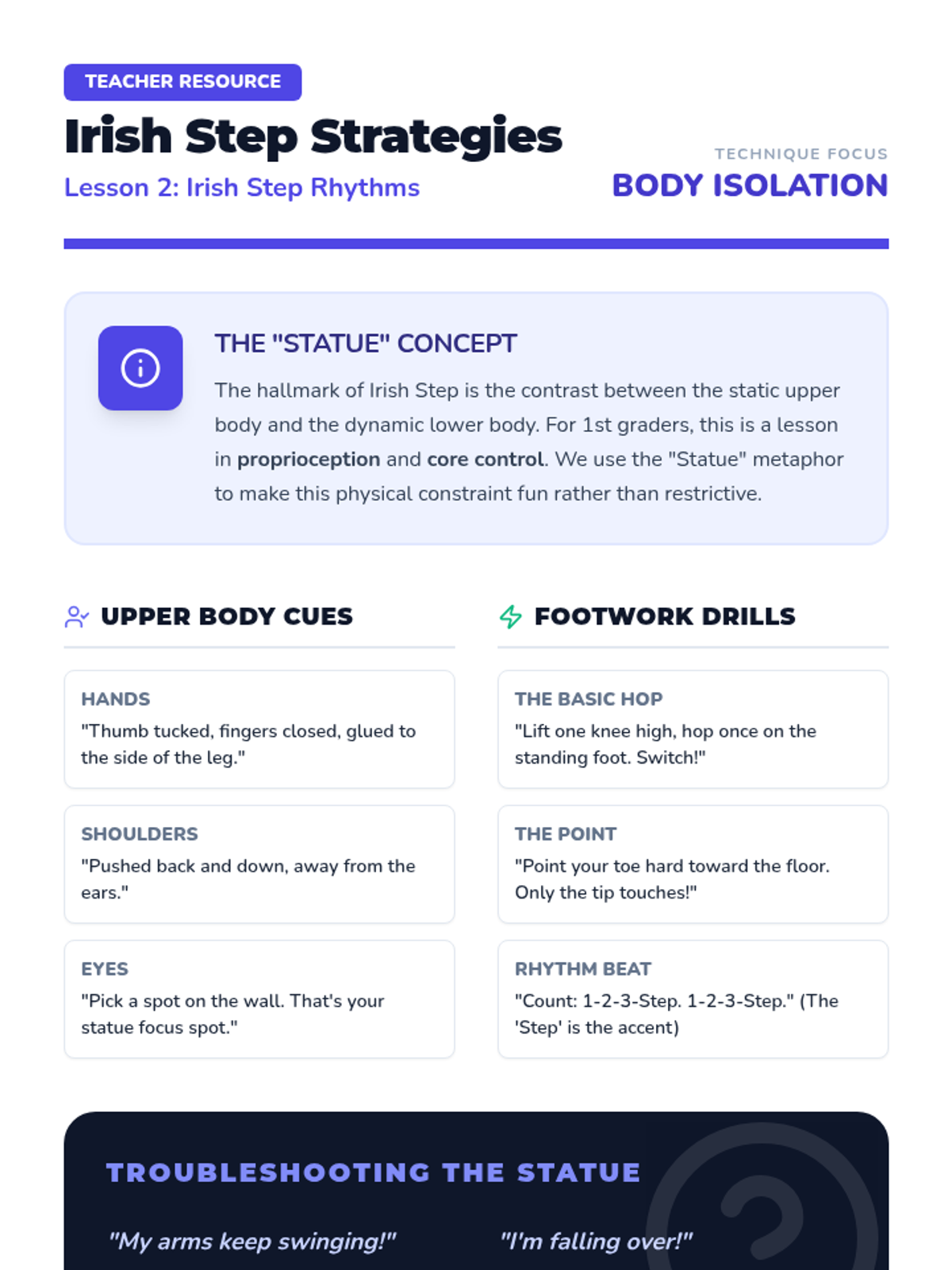
Focusing on body isolation, students learn the rigid upper body and lightning-fast footwork of Irish Step Dance. They practice maintaining a "stiff as a board" posture while creating rhythmic hops.
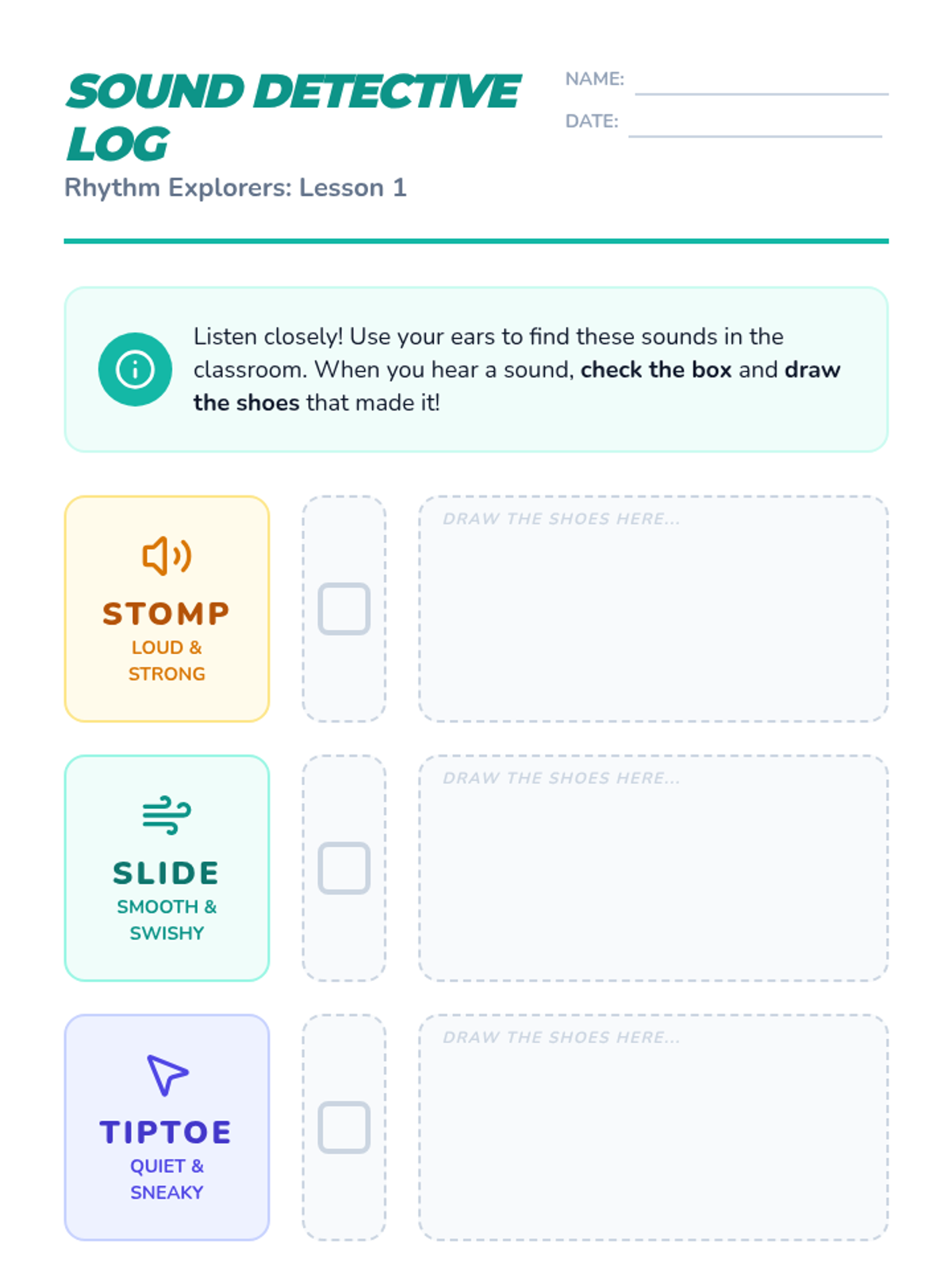
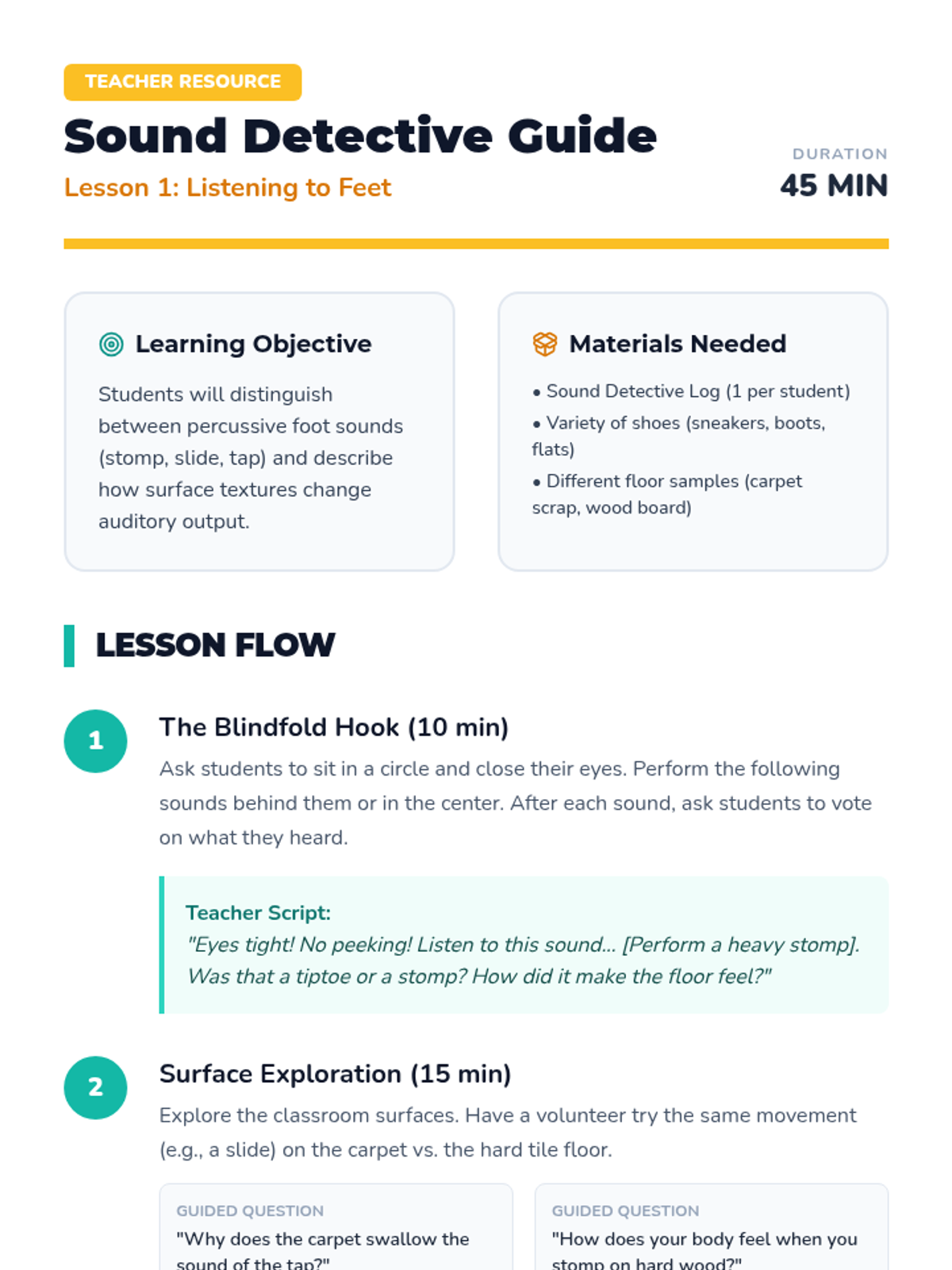
Students identify various sounds produced by feet on different surfaces and explore how movement changes auditory output. They build sensory awareness by guessing movements based solely on sound.
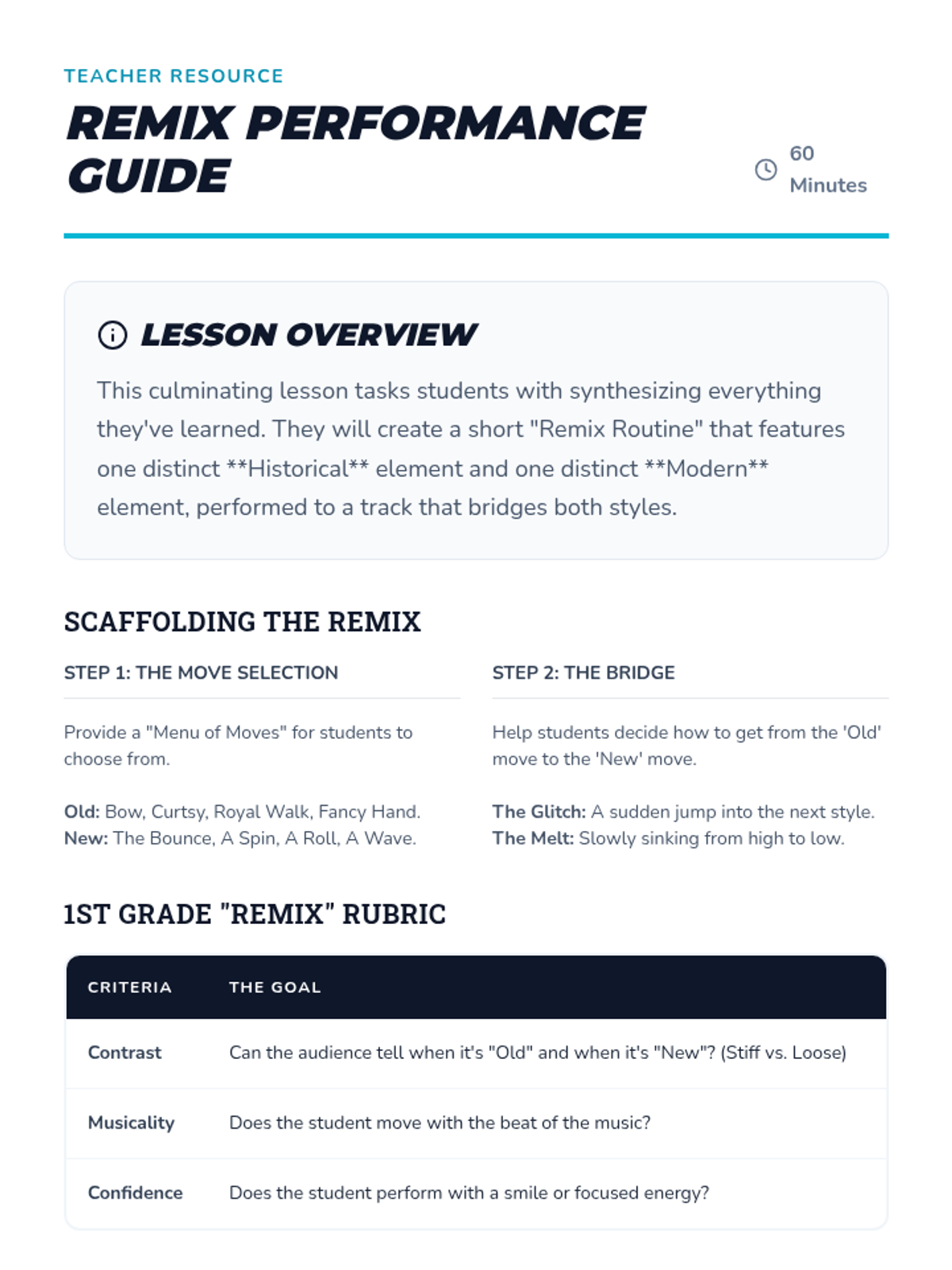
A culminating project where students 'remix' historical moves with modern styles to create a short performance bridging the past and present.
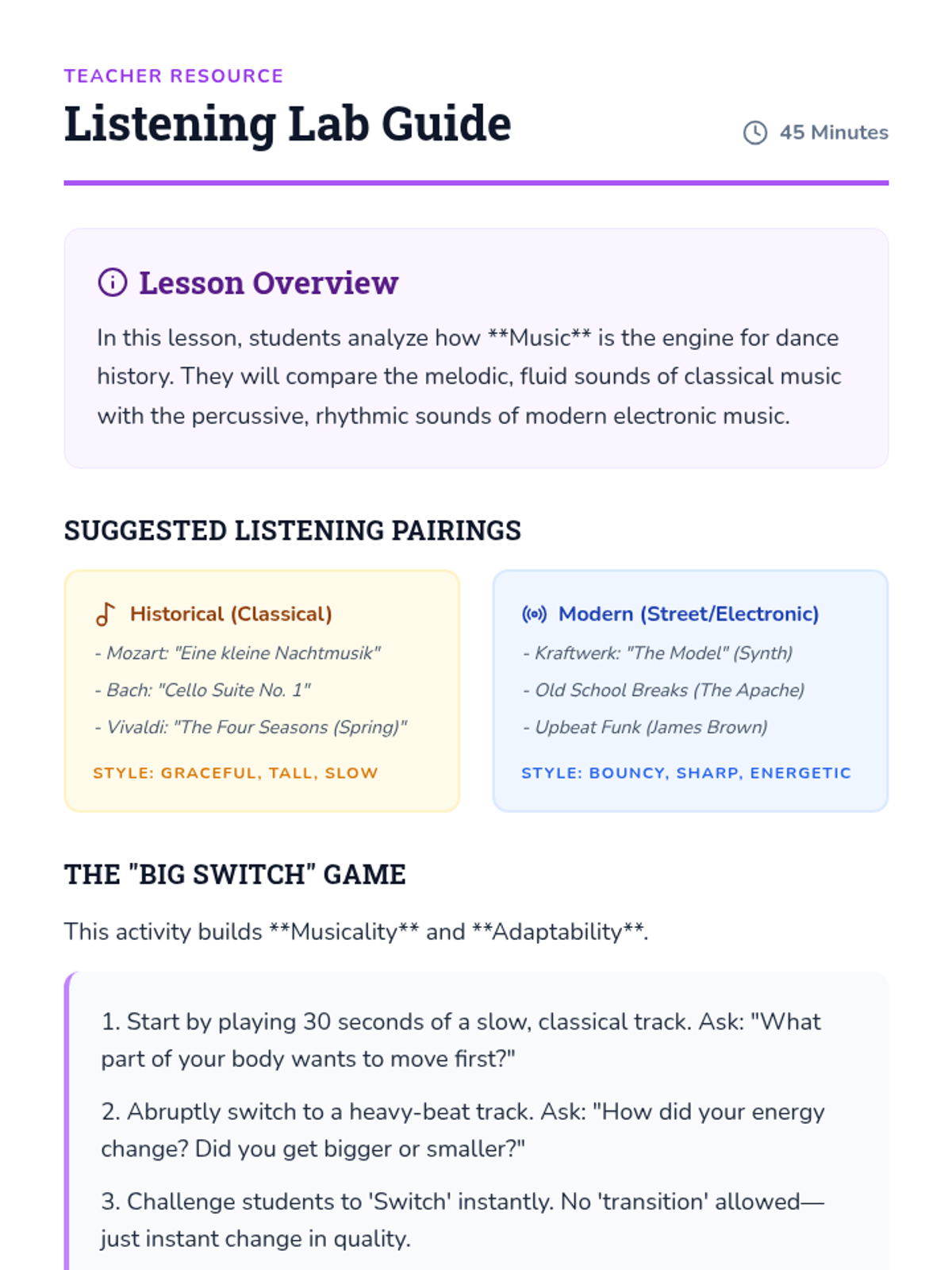
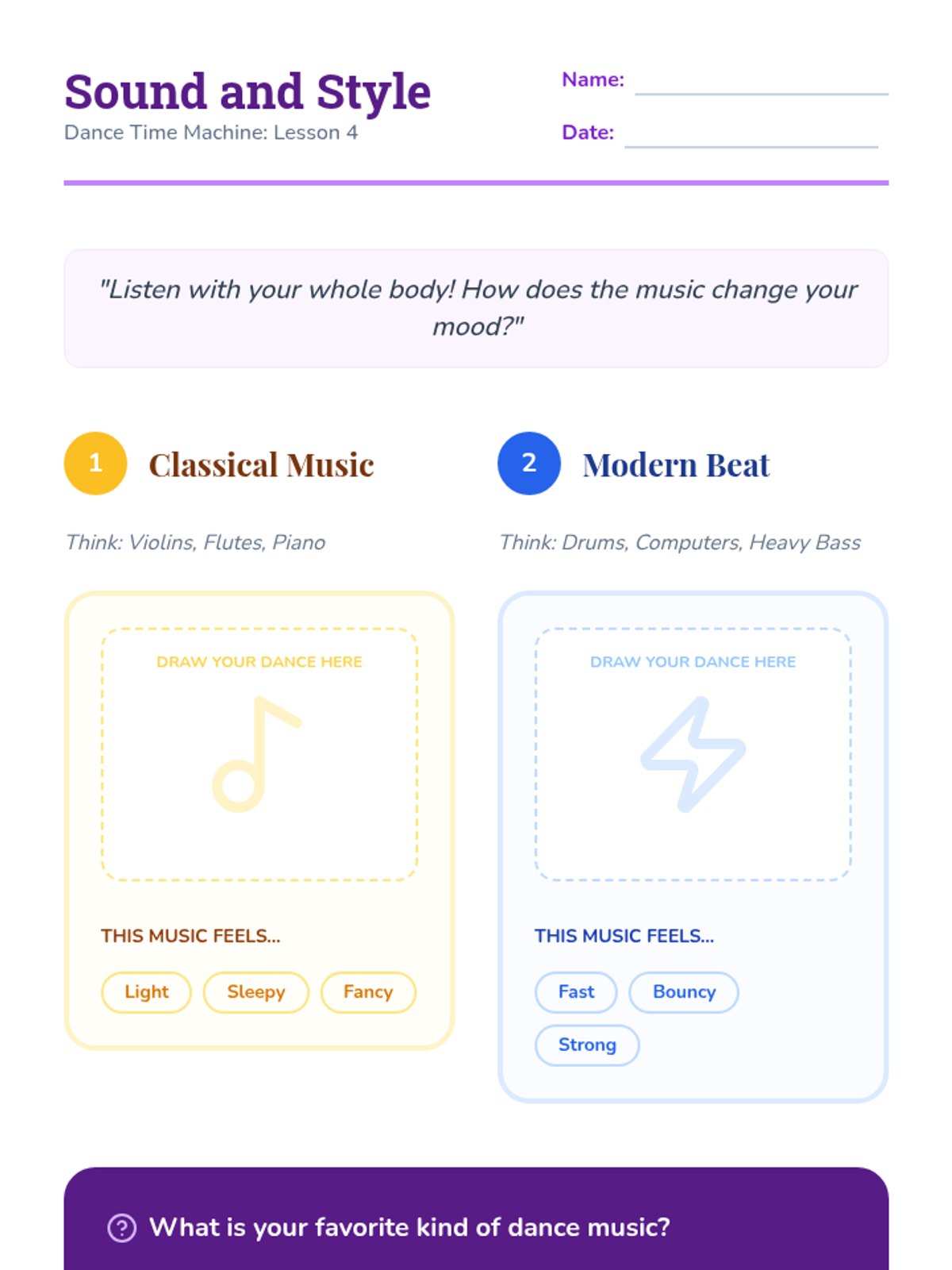
Students analyze how different genres of music—from classical violins to electronic beats—influence their body's natural movement and speed.