Historical evolution of performance, technical stagecraft, and core acting techniques. Develops playwriting skills and fosters imaginative expression through script development and production management.
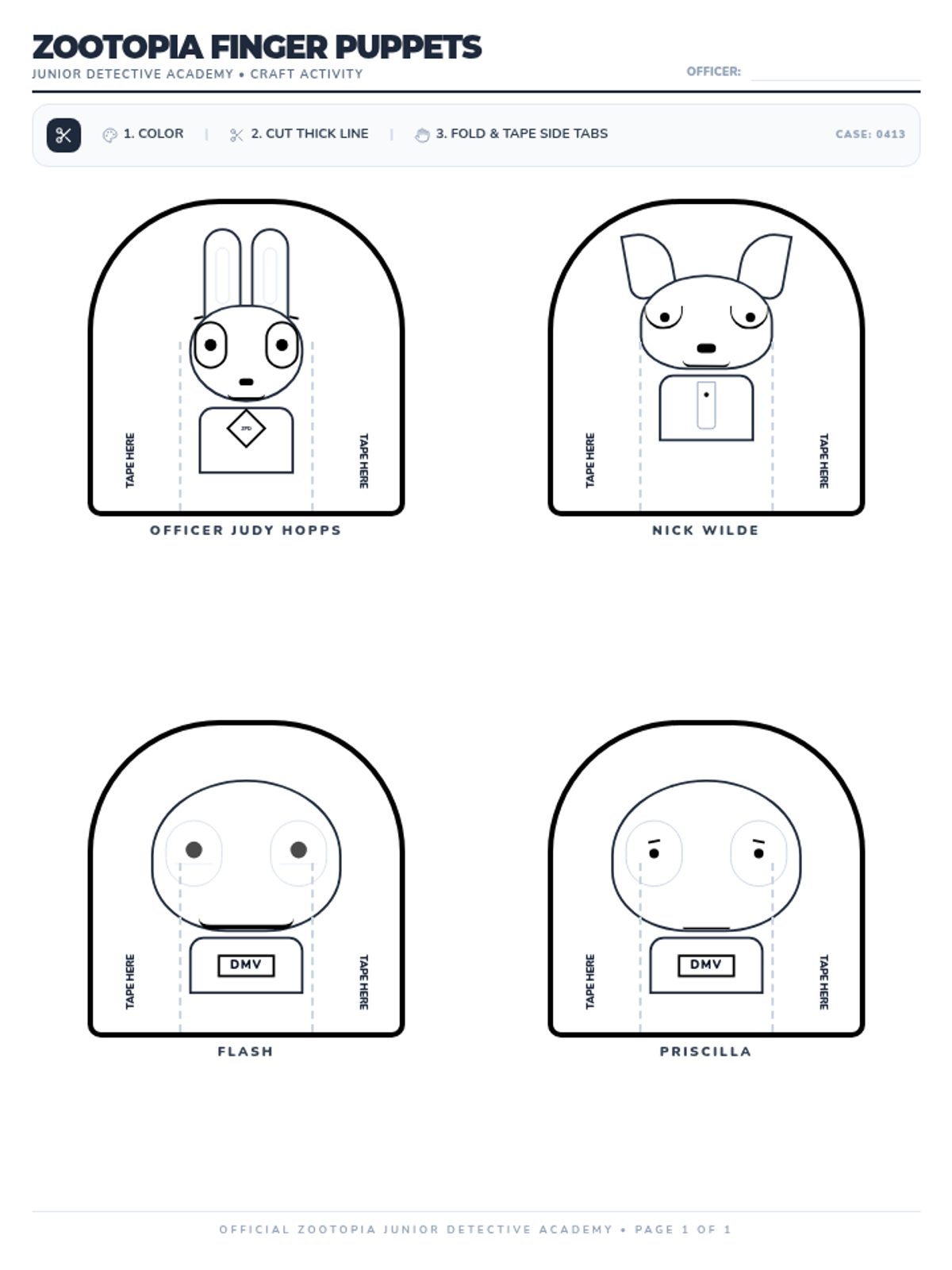
A creative craft lesson where students color and create their own finger puppets of favorite Zootopia characters to practice storytelling and role-playing.
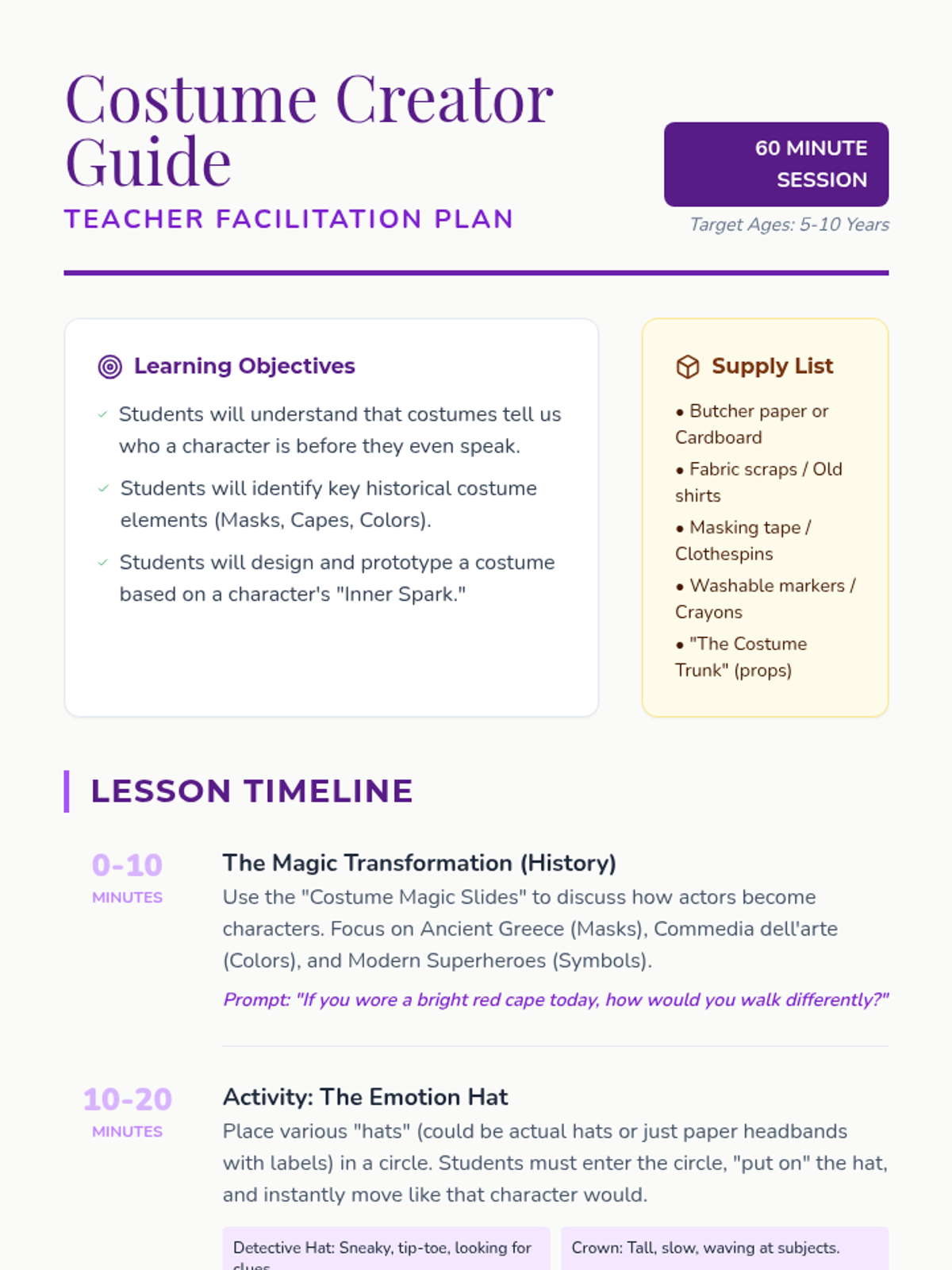
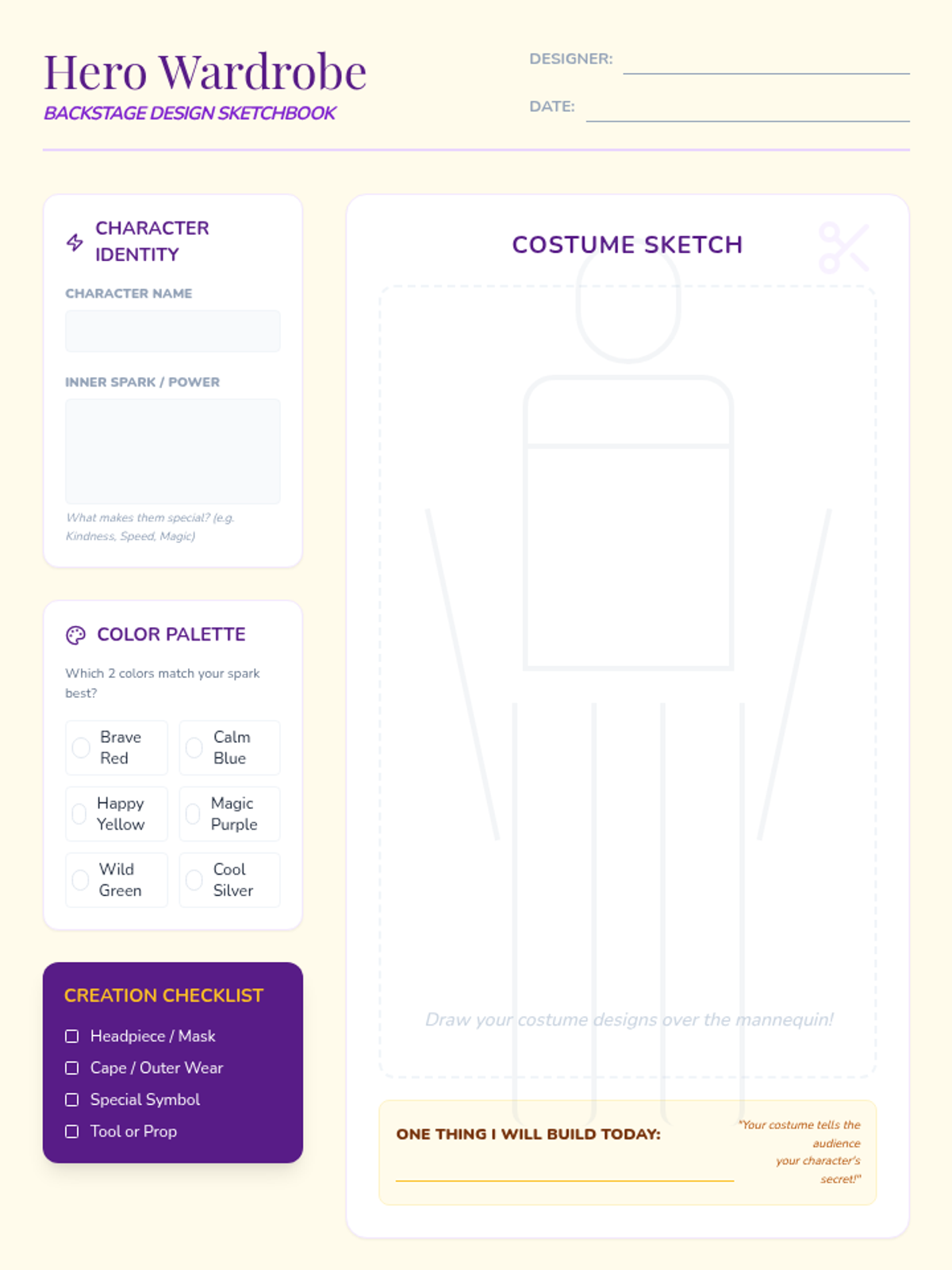
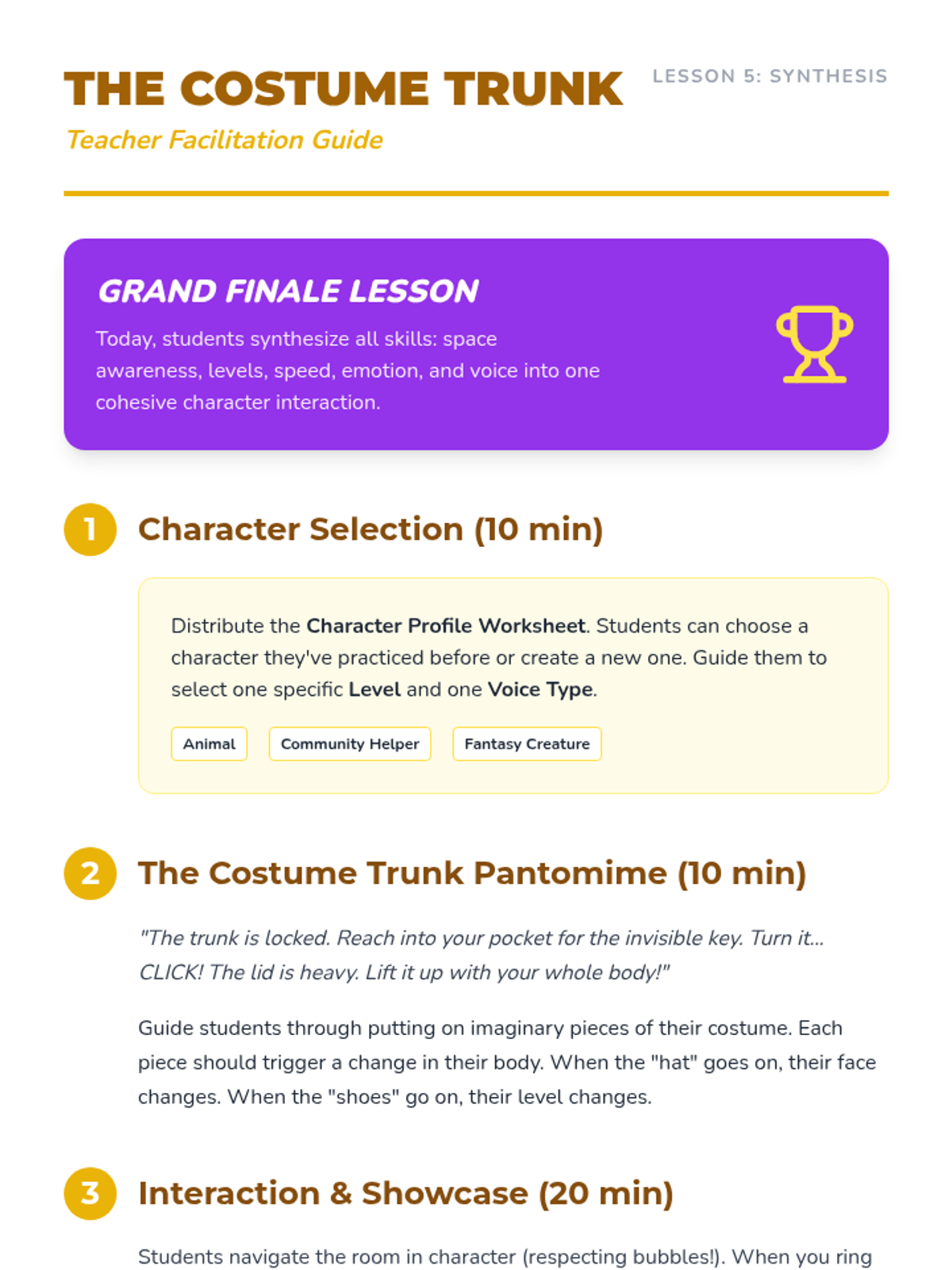
A 60-minute exploration into the world of theatrical costume design, featuring a simplified history of stage attire, interactive character-building games, and a hands-on design workshop for young creators.
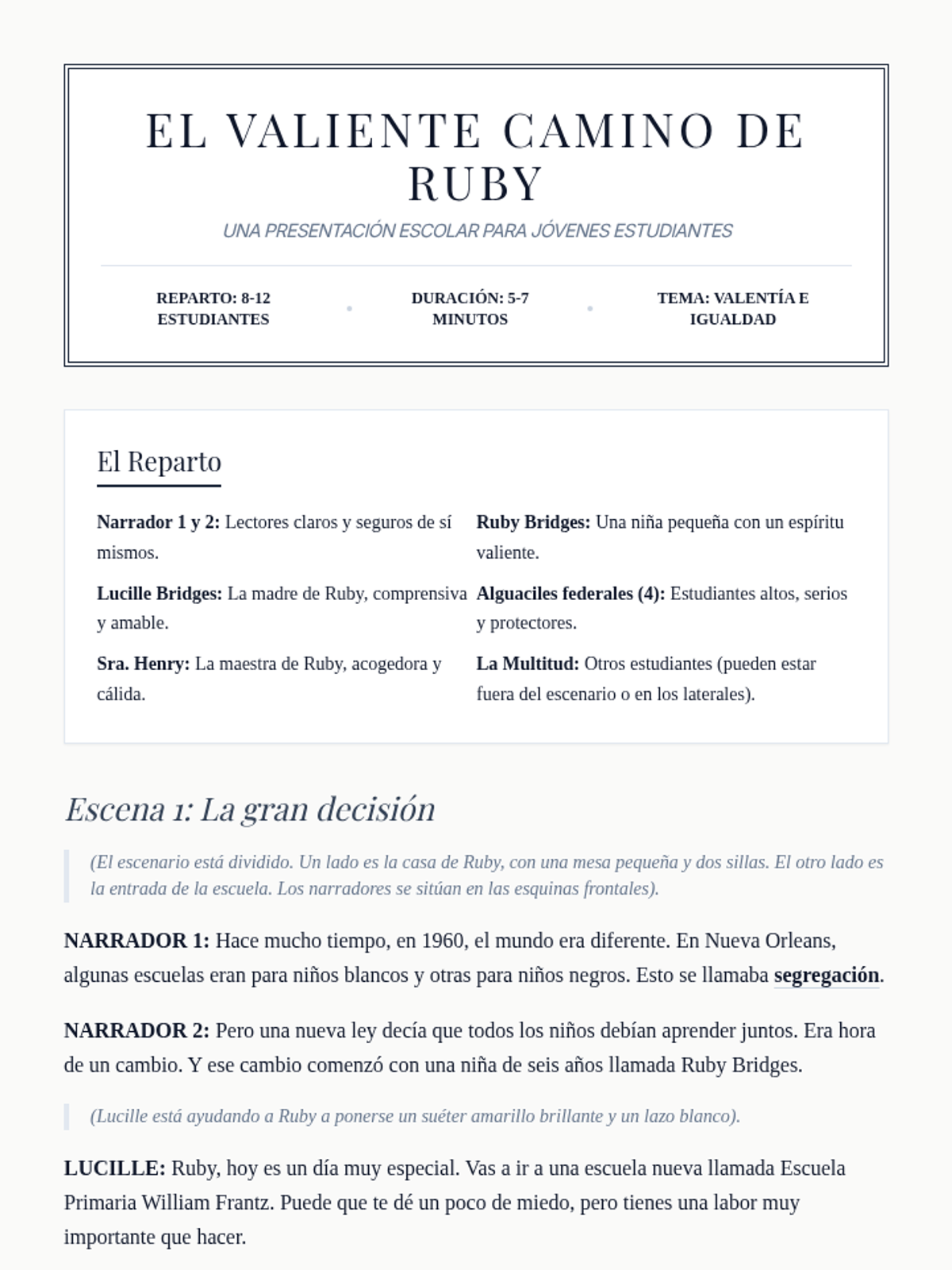
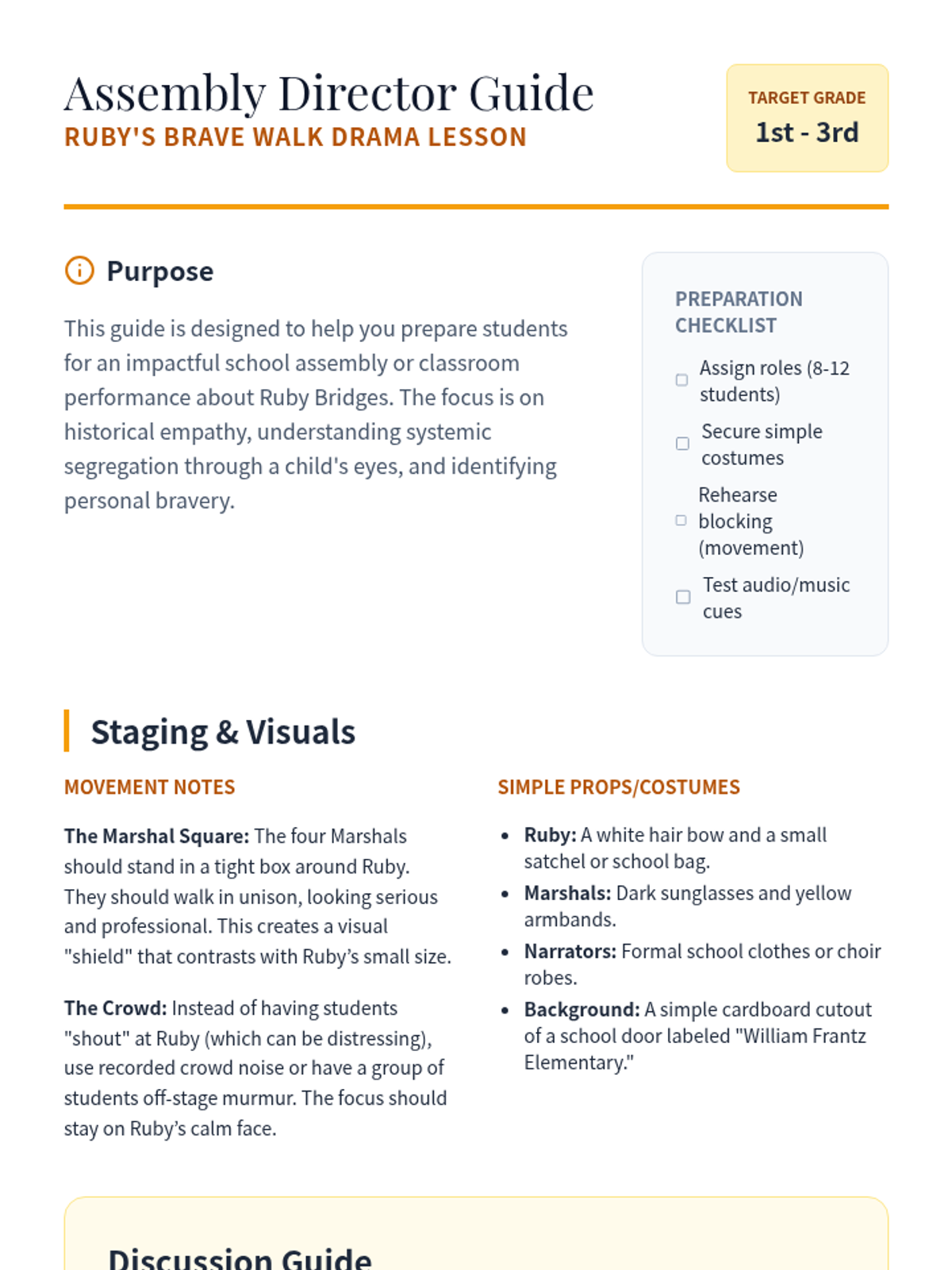
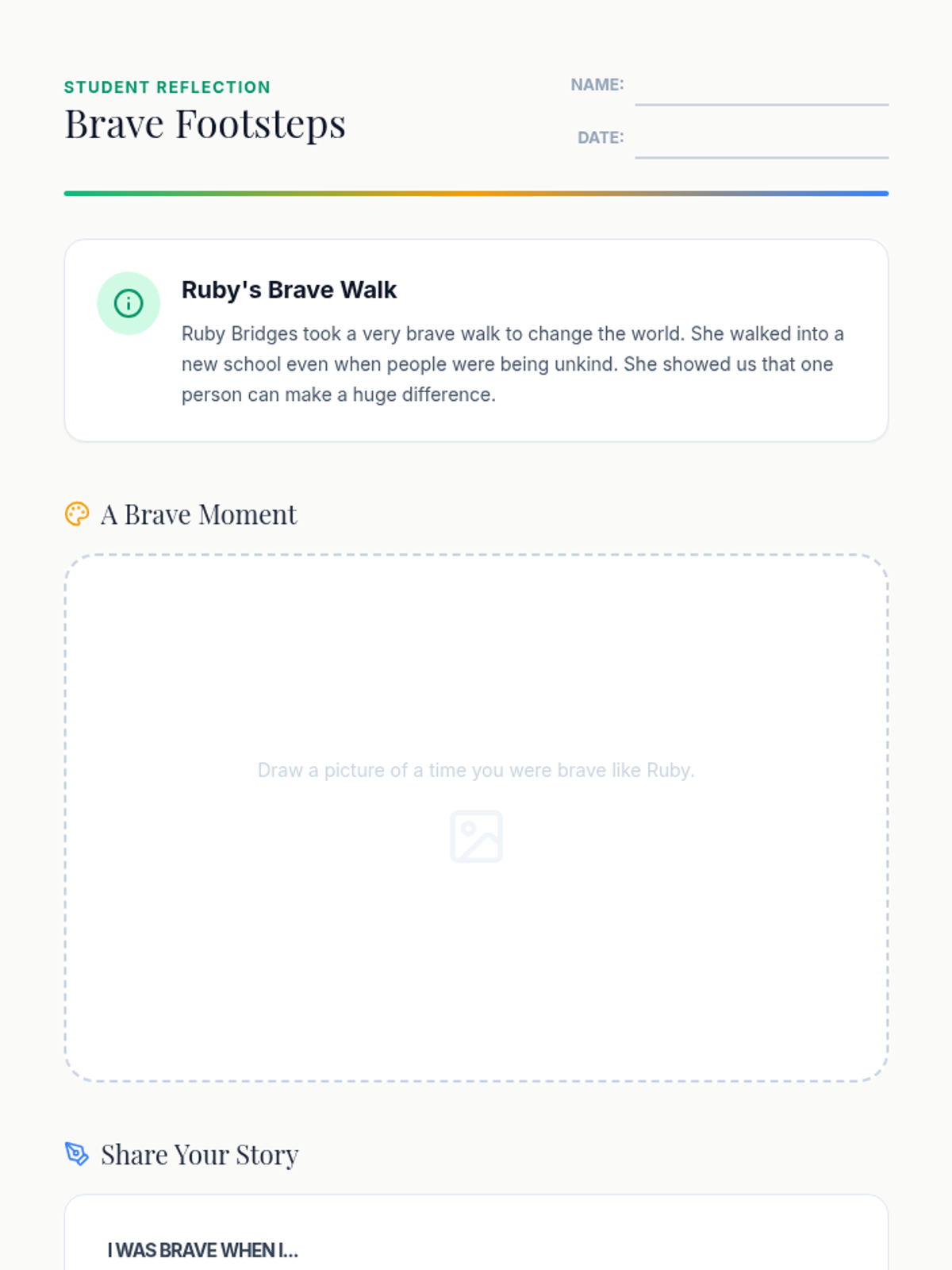
A short, impactful drama lesson centered around a school assembly script about Ruby Bridges. Students explore themes of bravery and segregation through performance, visual storytelling, and personal reflection.
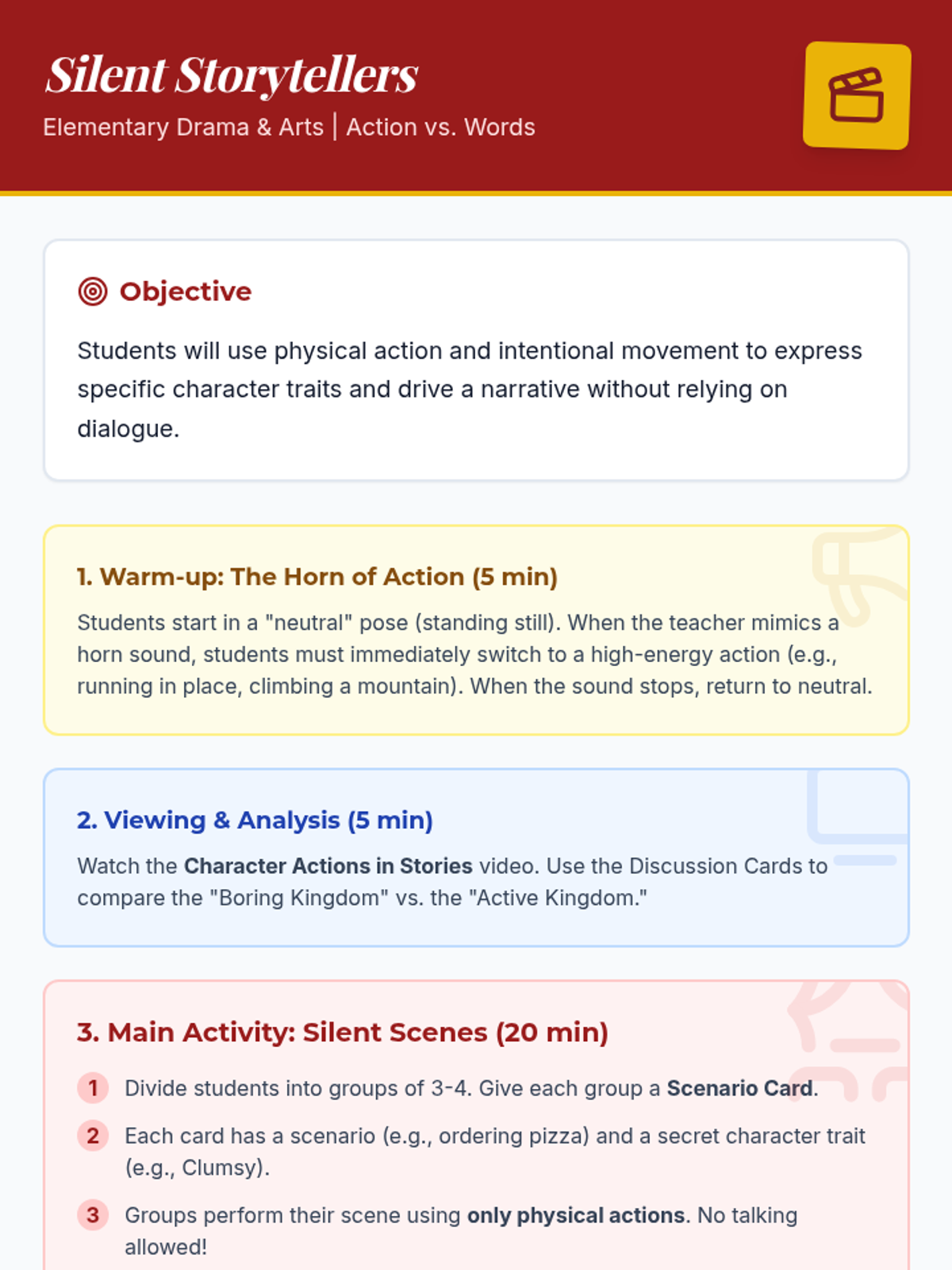
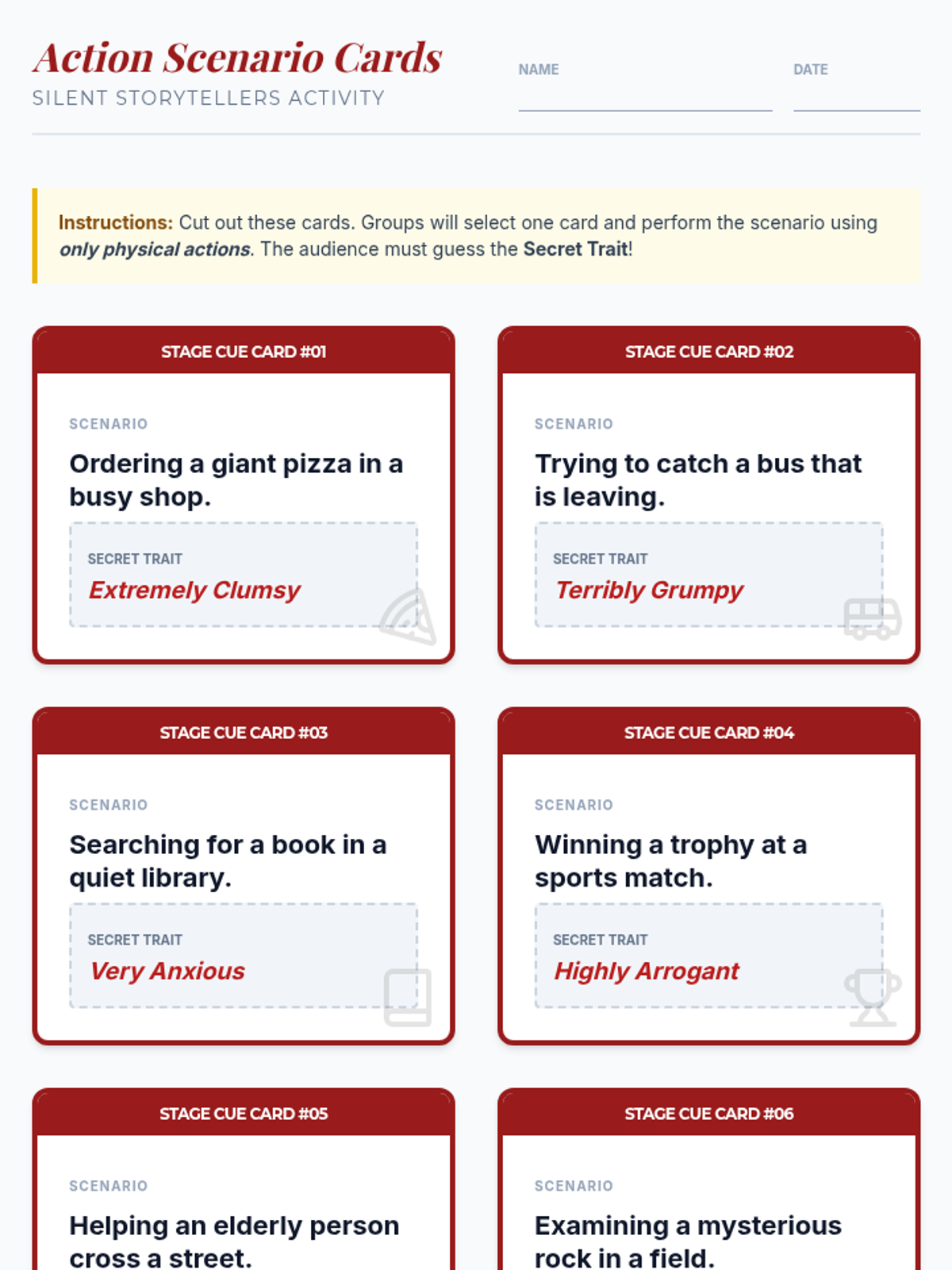
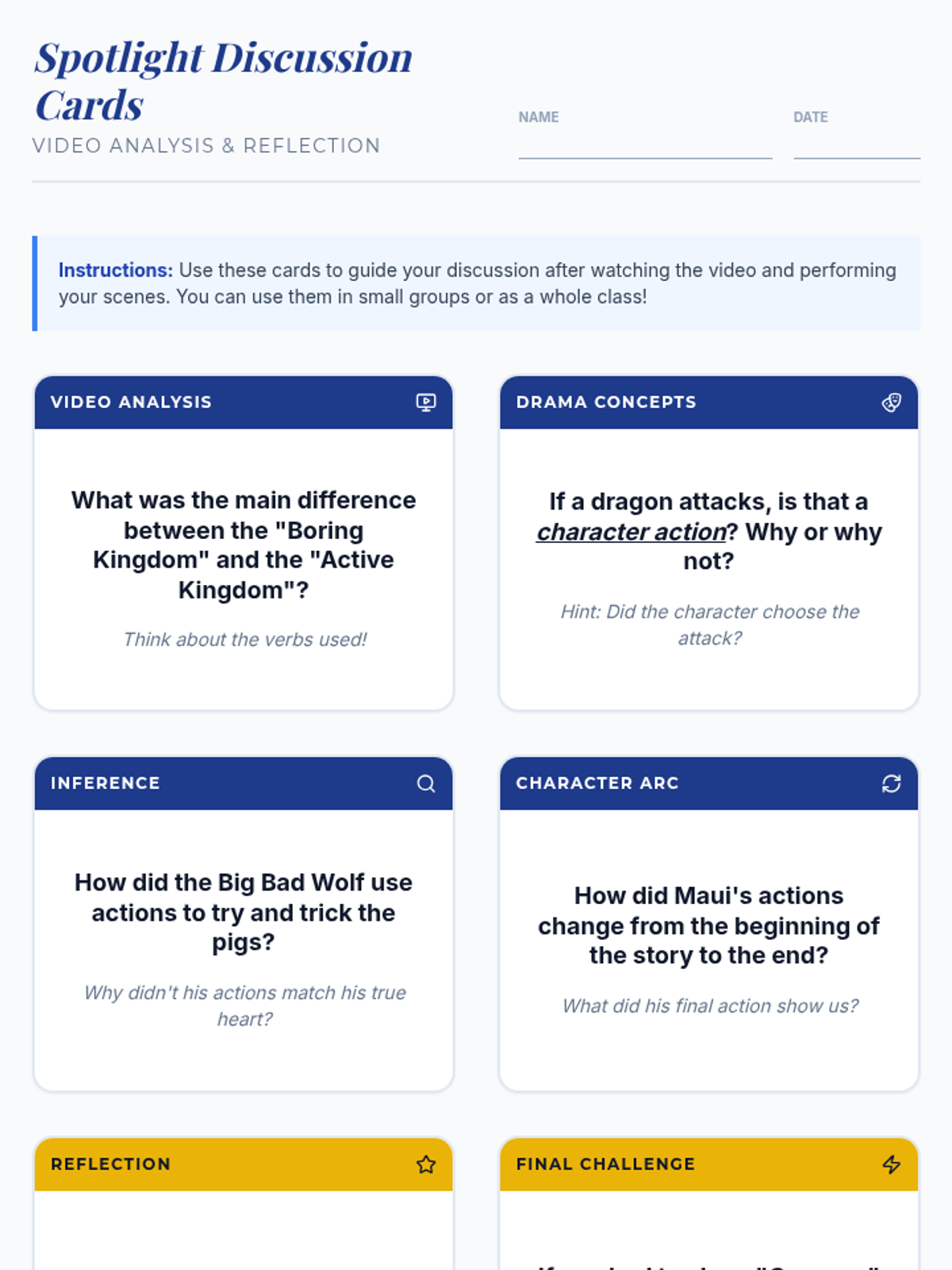
Students explore how physical action and decisions drive story and reveal character traits without using words, featuring a 'Silent Scenes' activity and a video analysis.
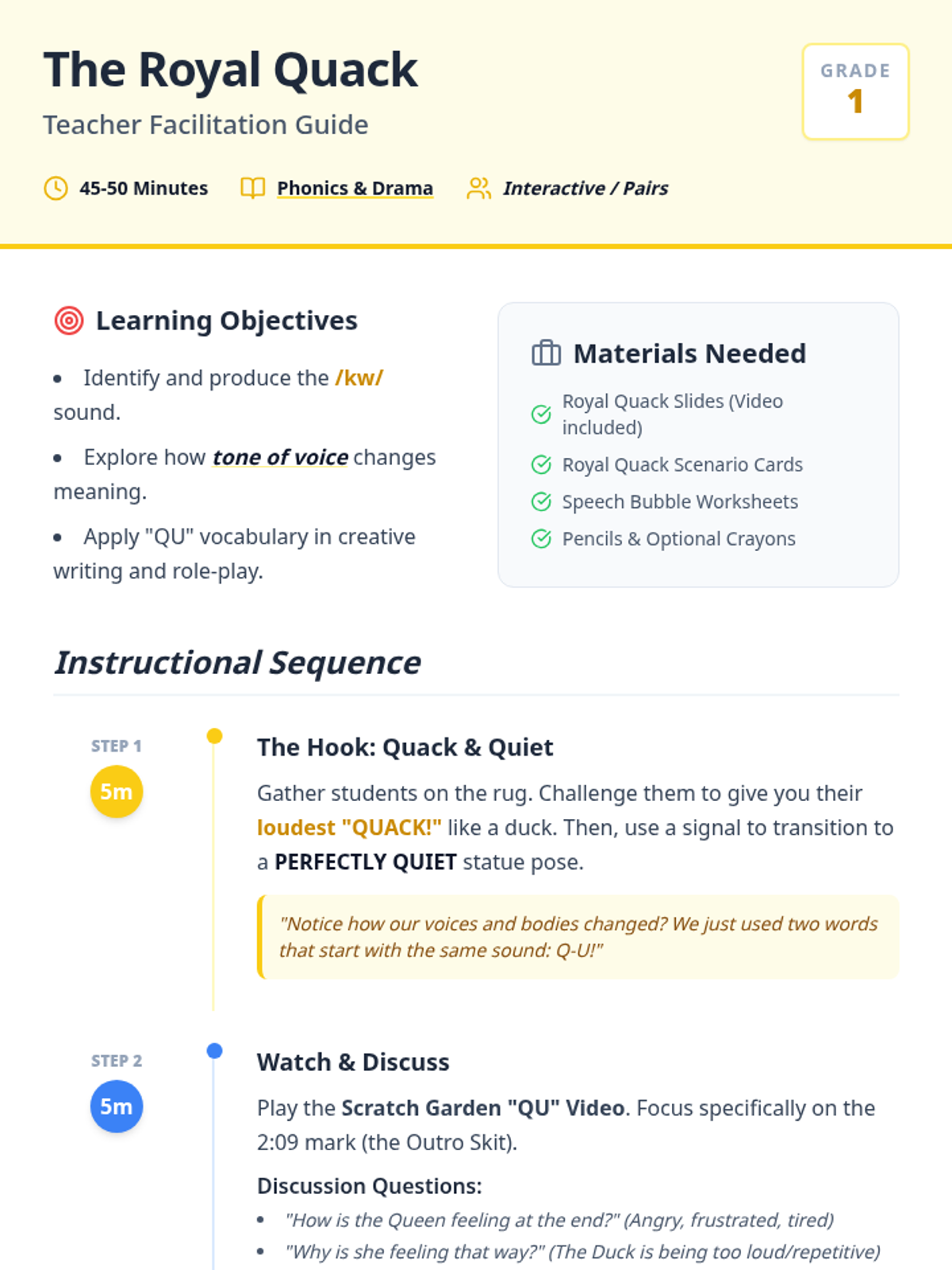
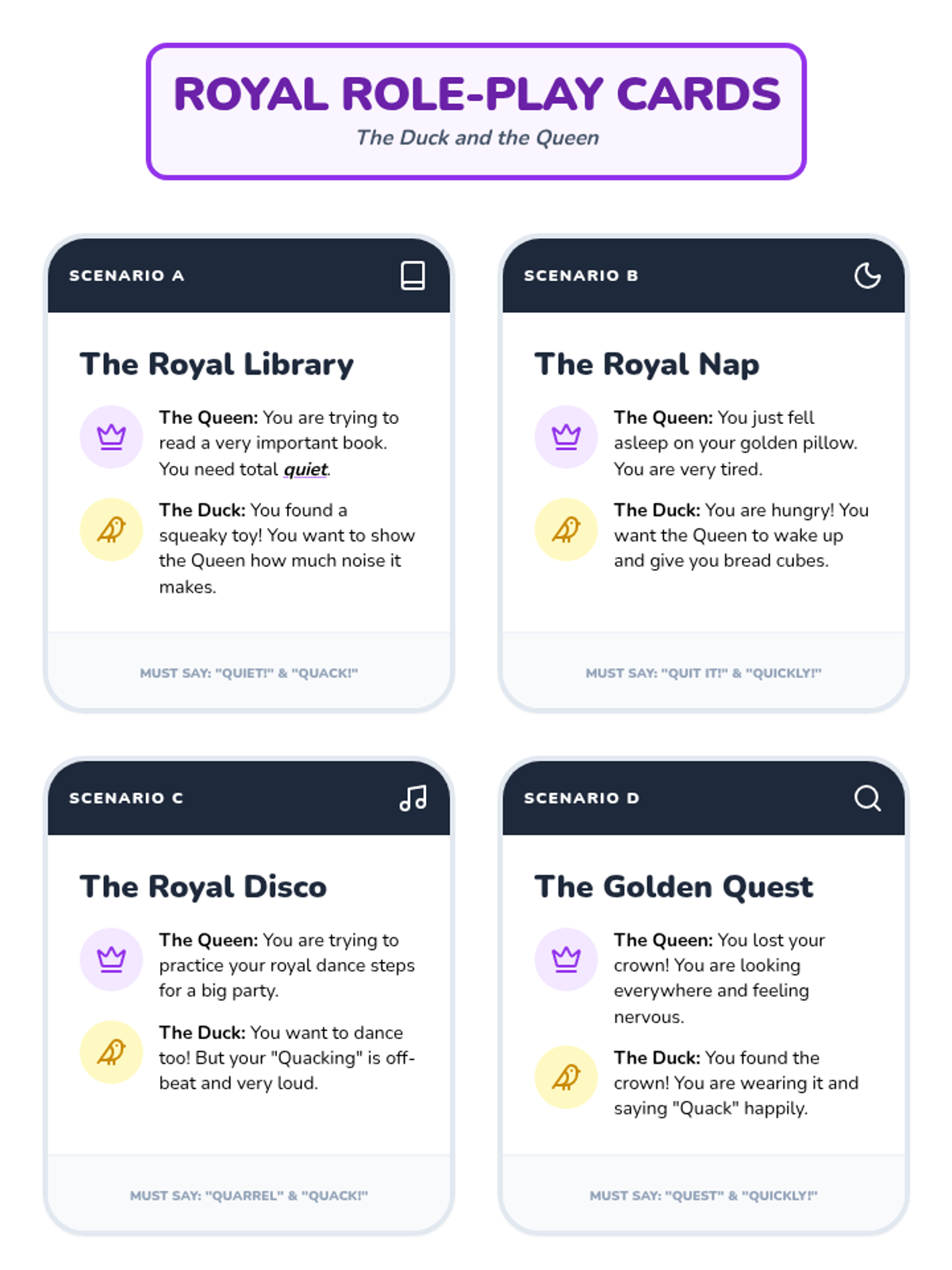
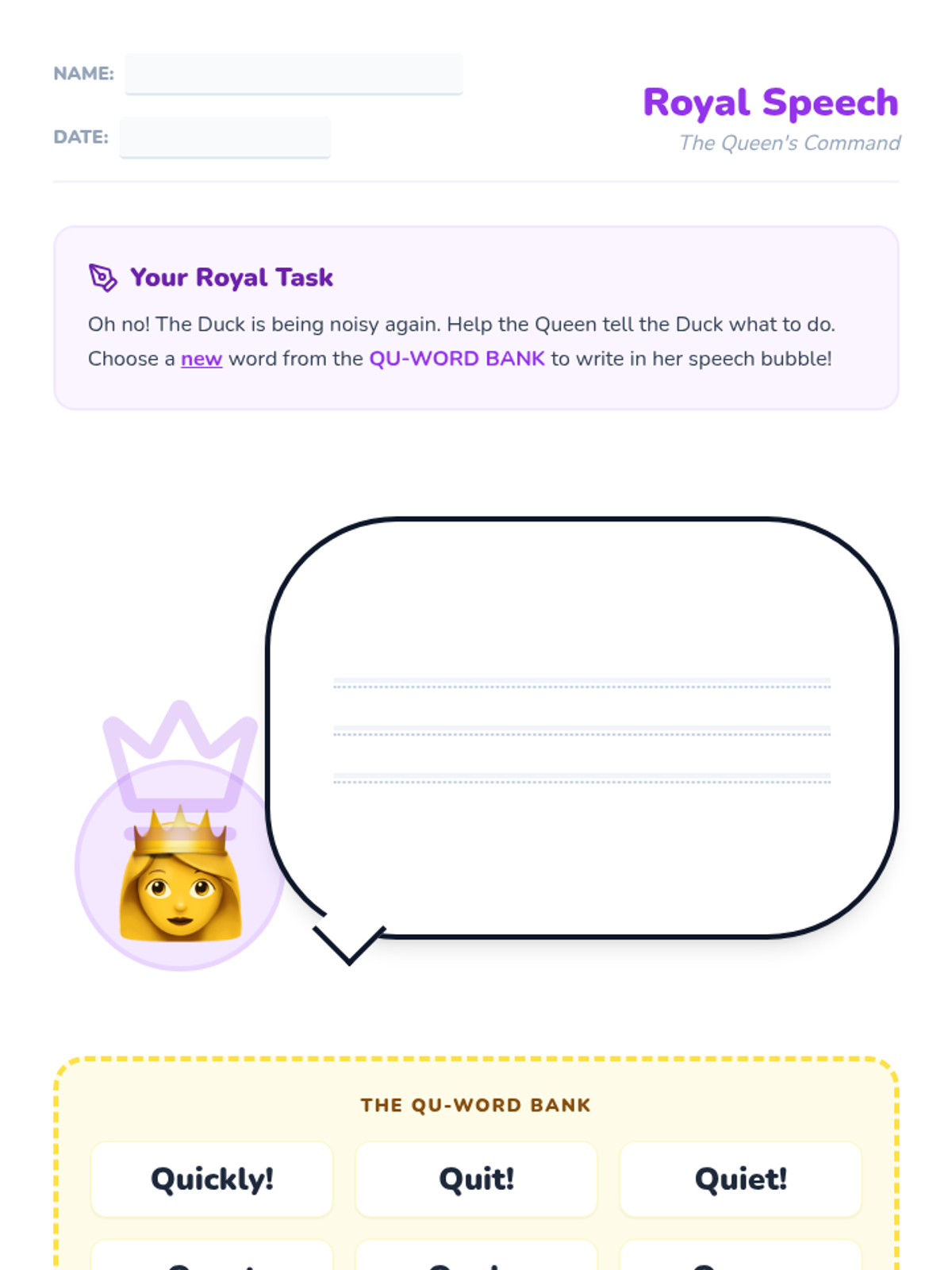
A 1st-grade drama and phonics lesson where students explore the /kw/ sound, tone, and character feelings through the interaction between a noisy Duck and a frustrated Queen.
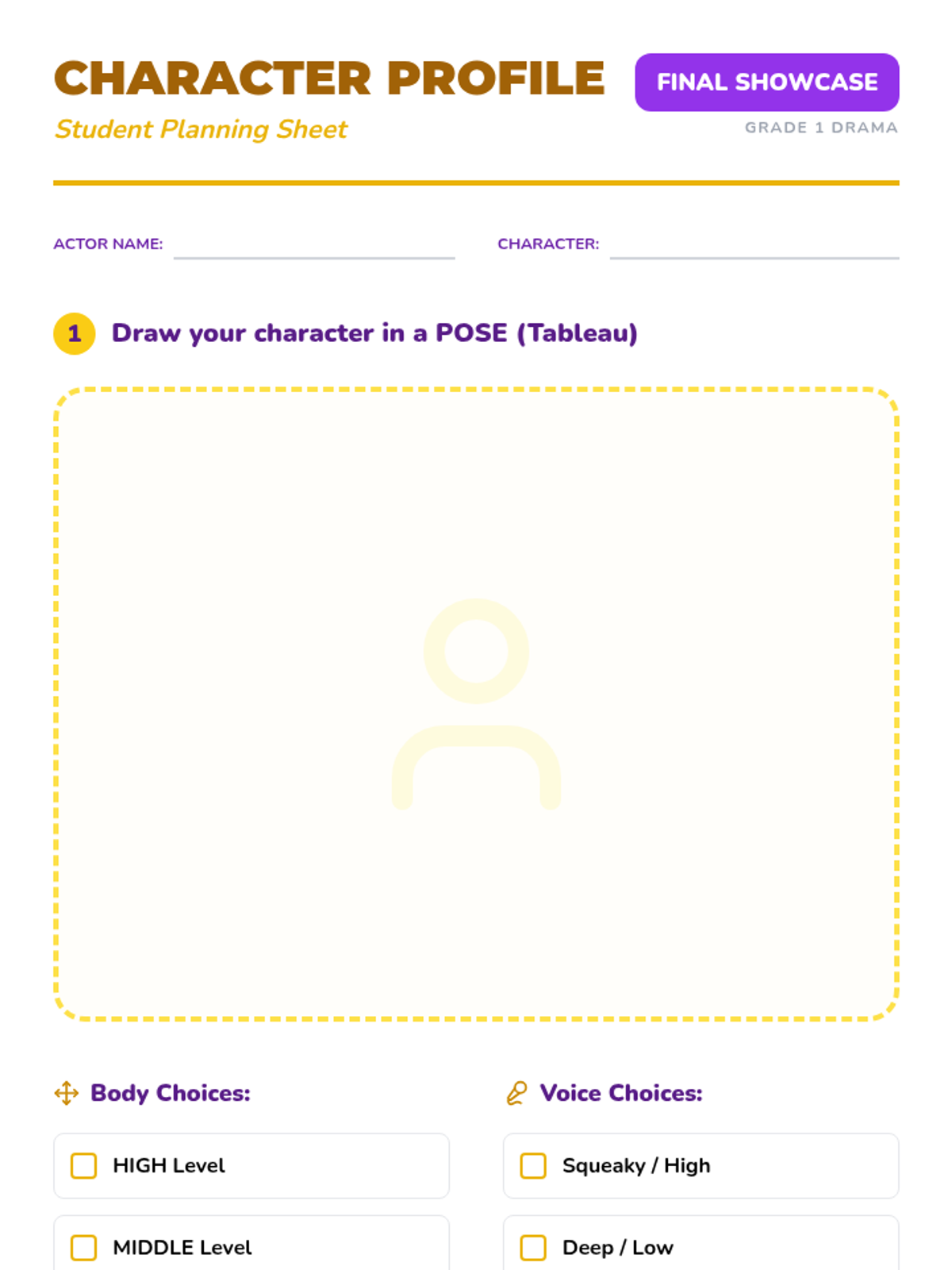
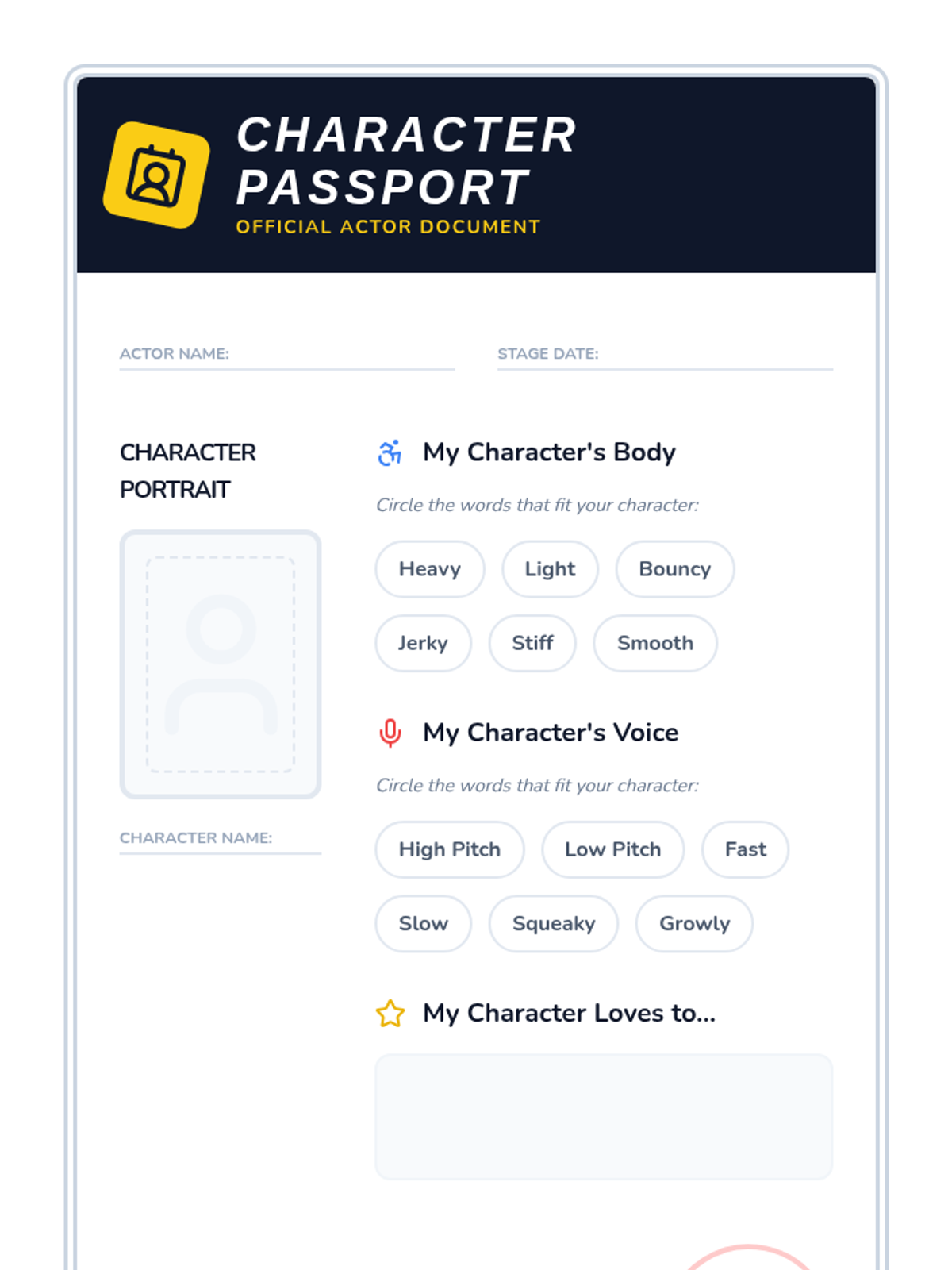
Students combine their physical choices and character voices to introduce themselves as a specific character, participating in a 'Character Walk' with peers.
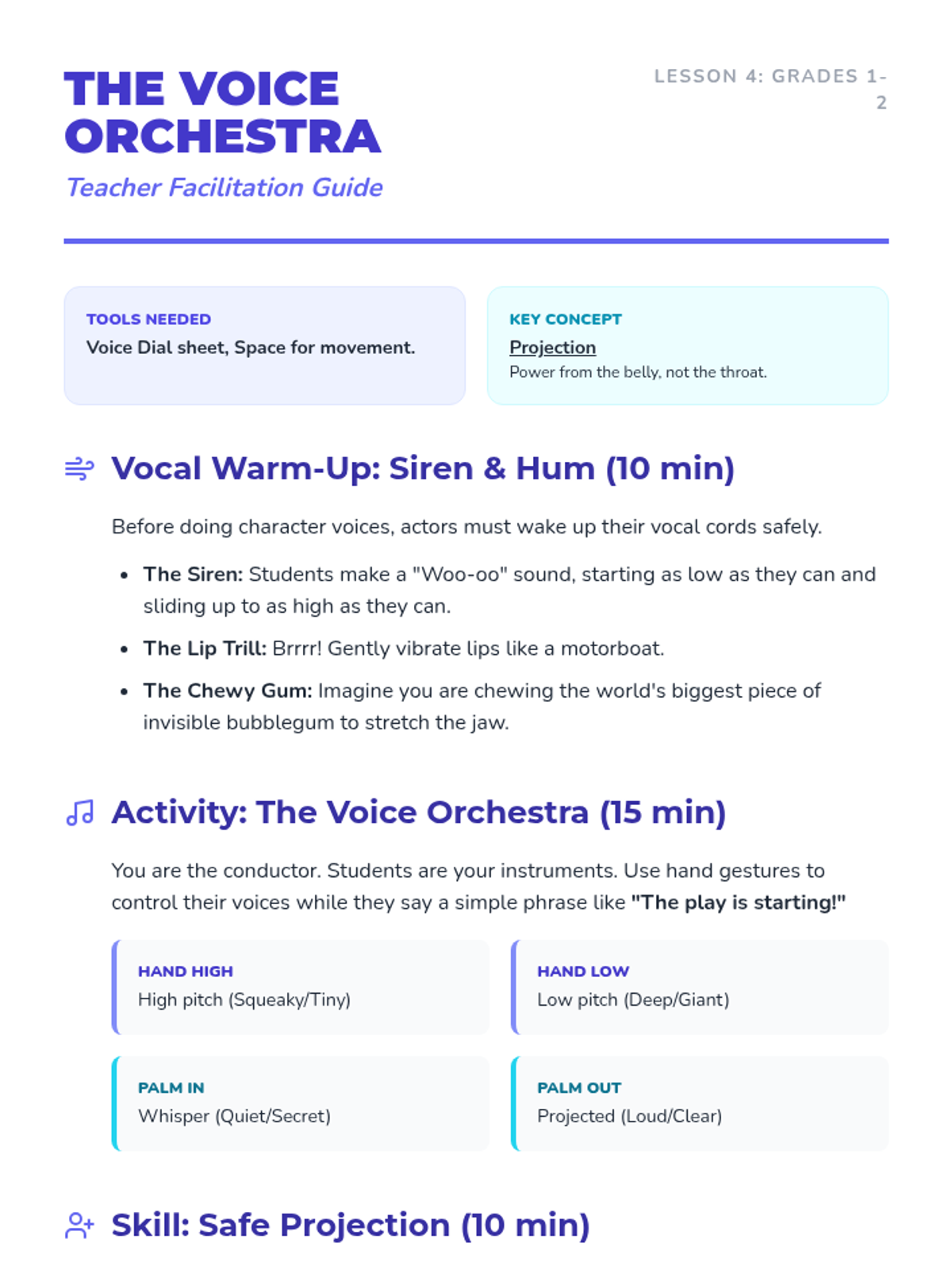
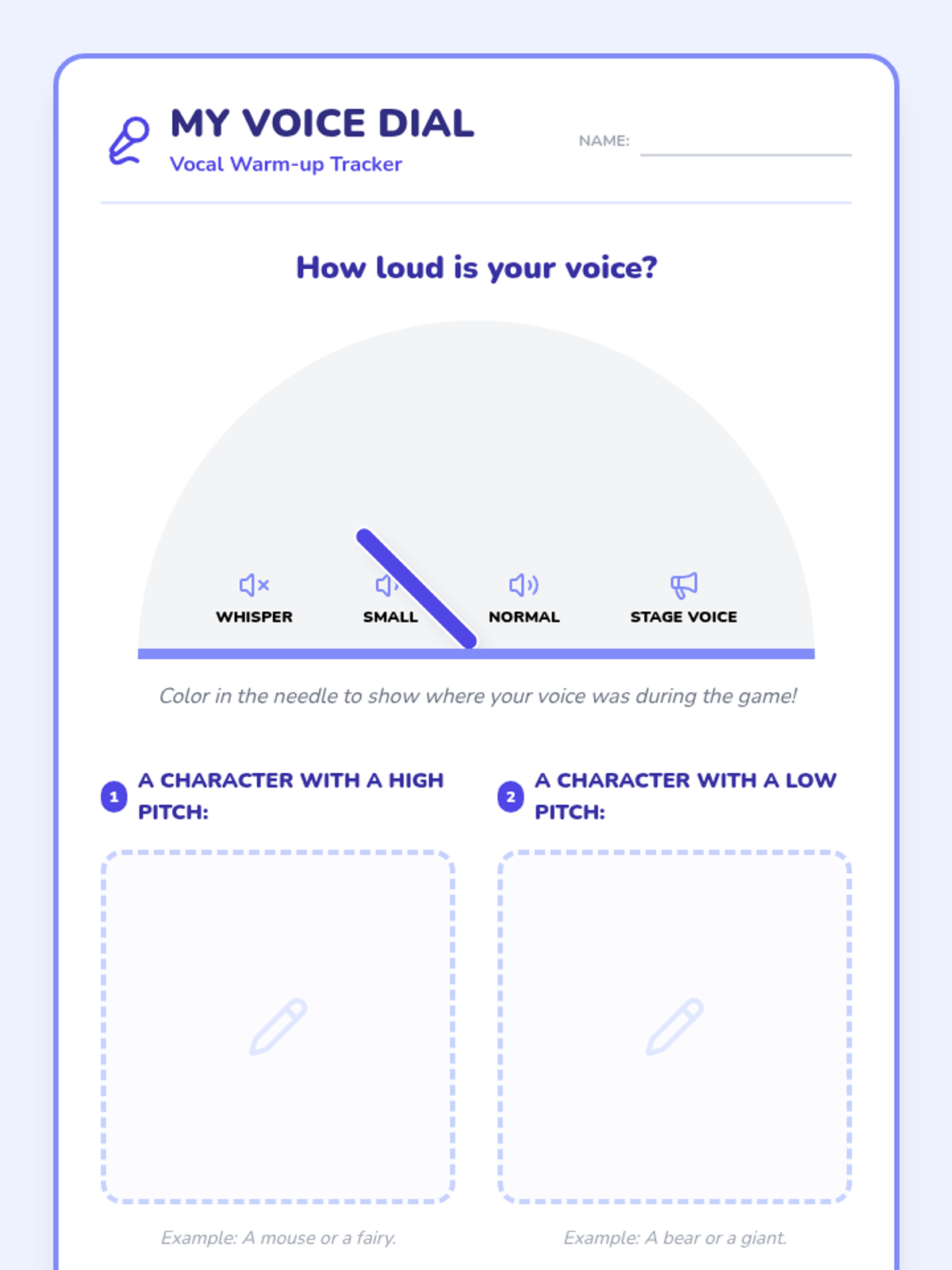
Students experiment with pitch, volume, and tone to create distinct voices for different characters, learning to project safely and match vocal qualities to physical traits.
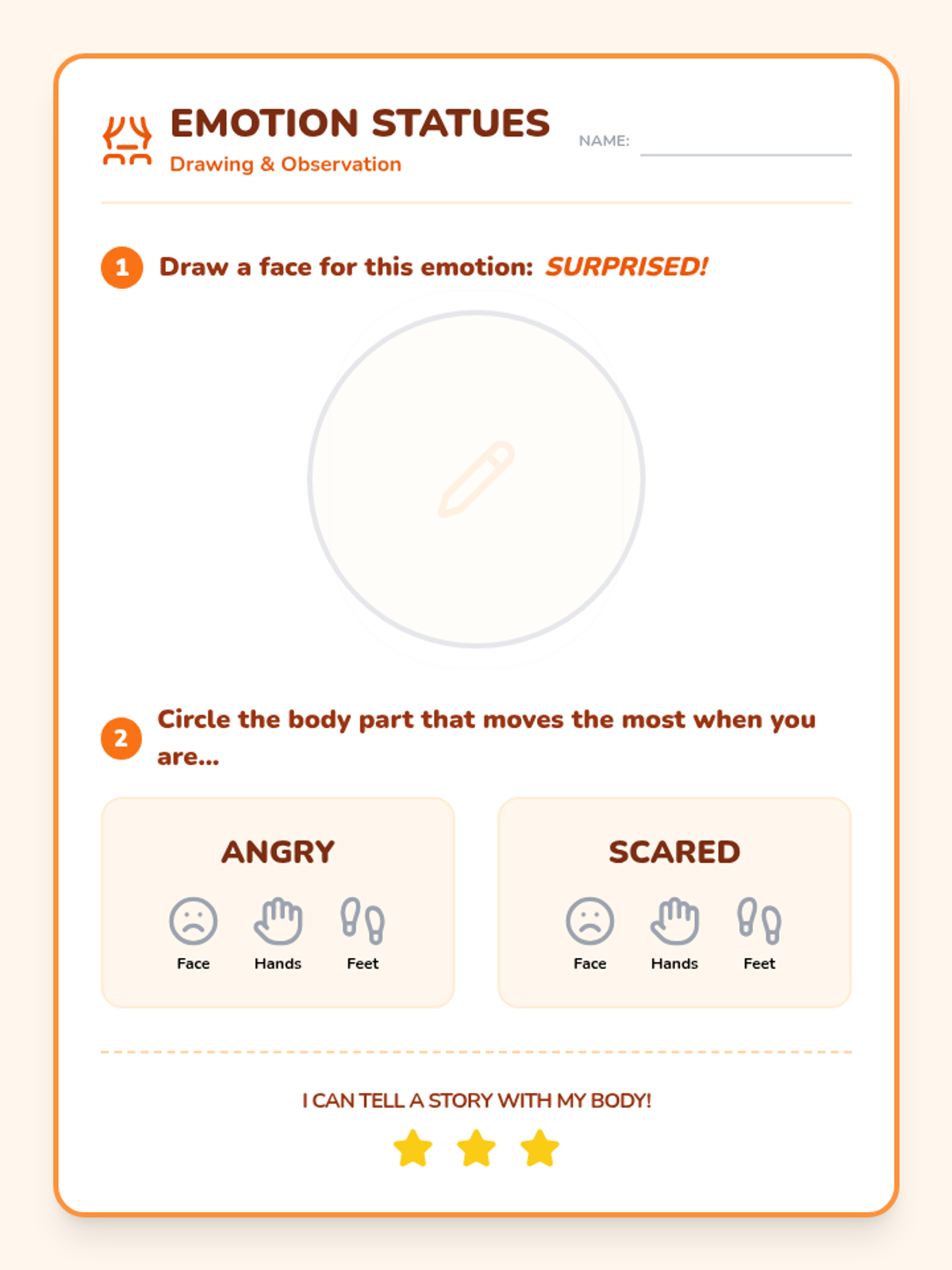
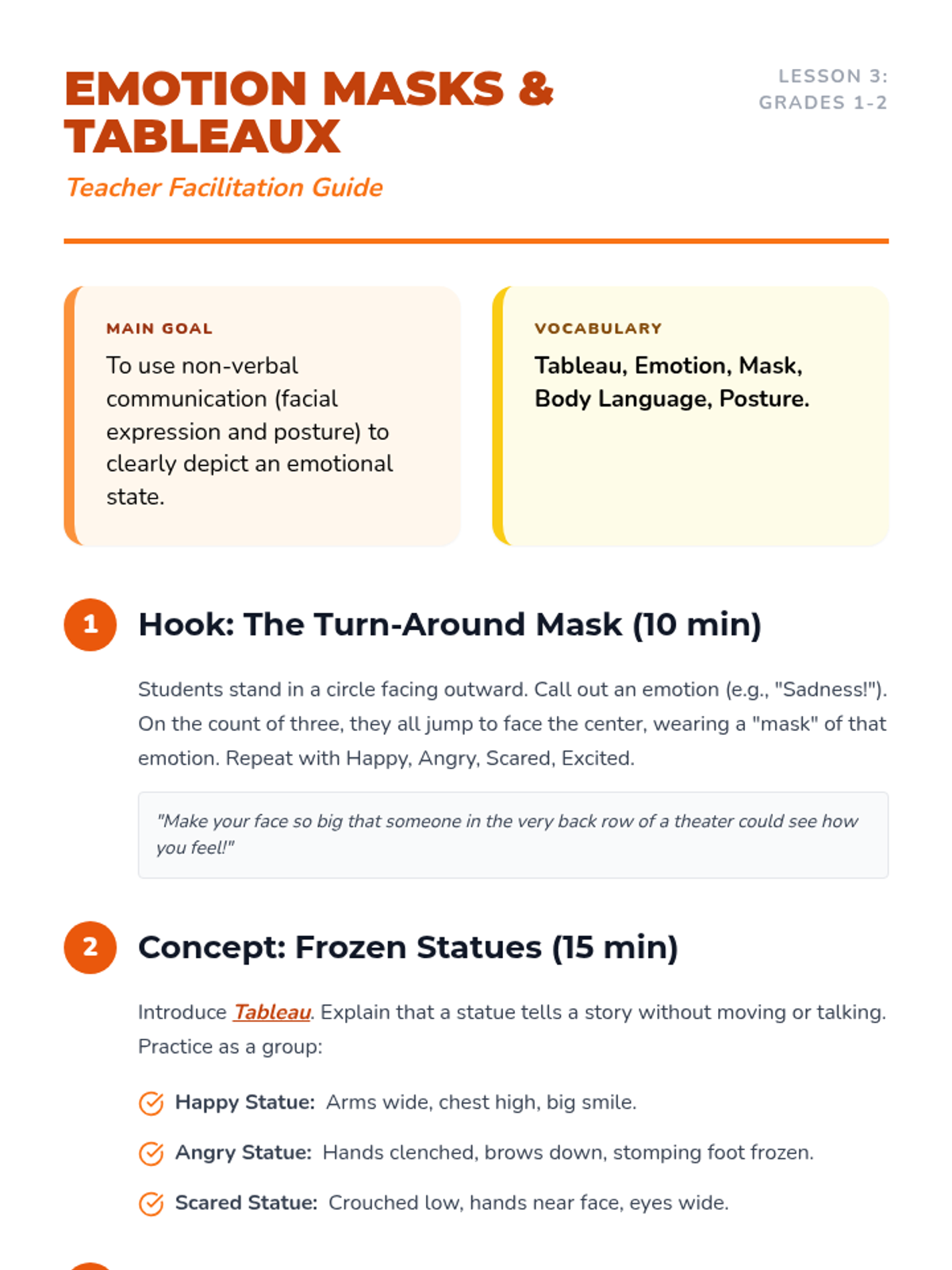
Focusing on facial expressions and body language, students create frozen statues (tableaux) to represent specific emotions, emphasizing non-verbal storytelling.
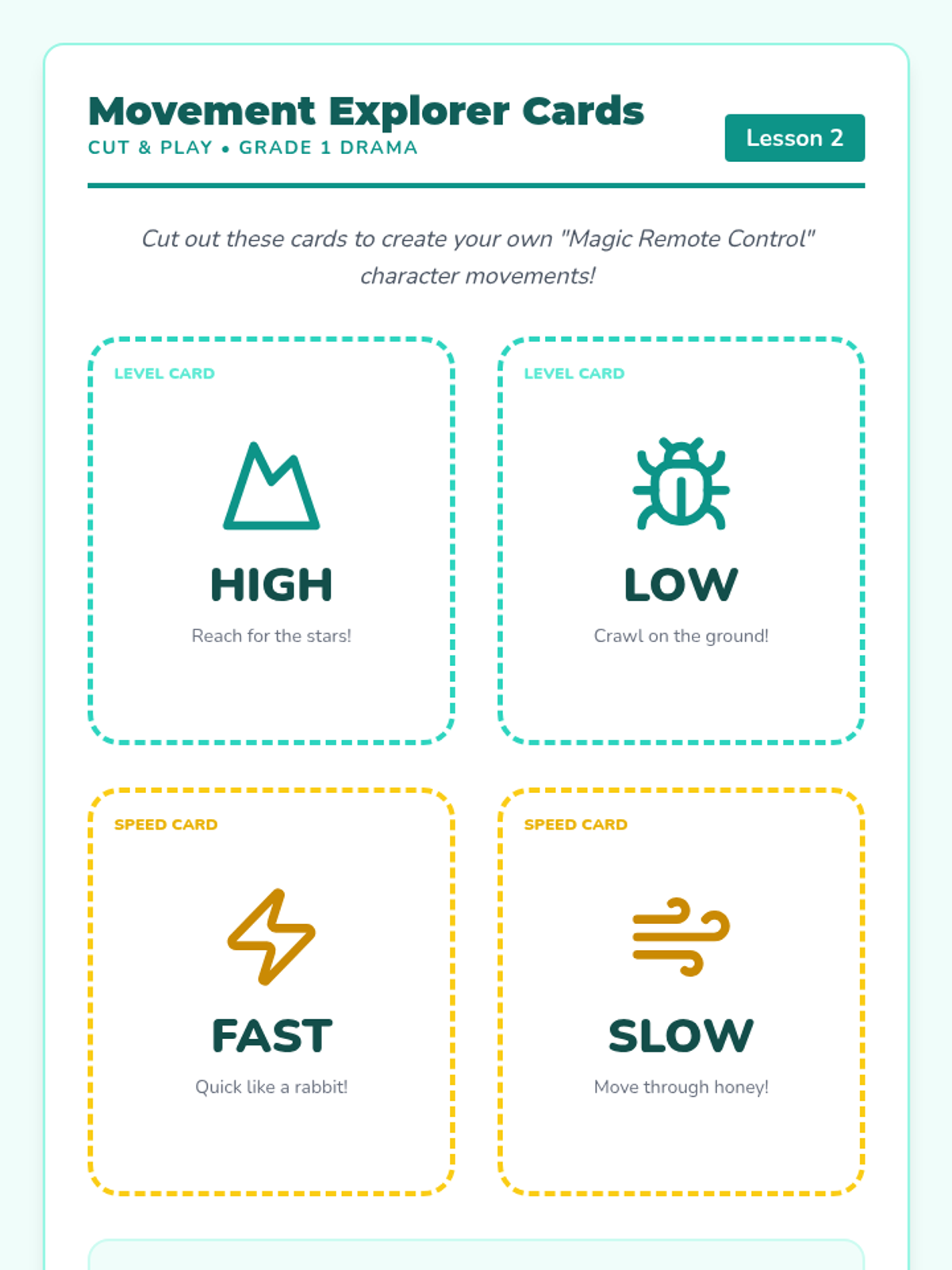
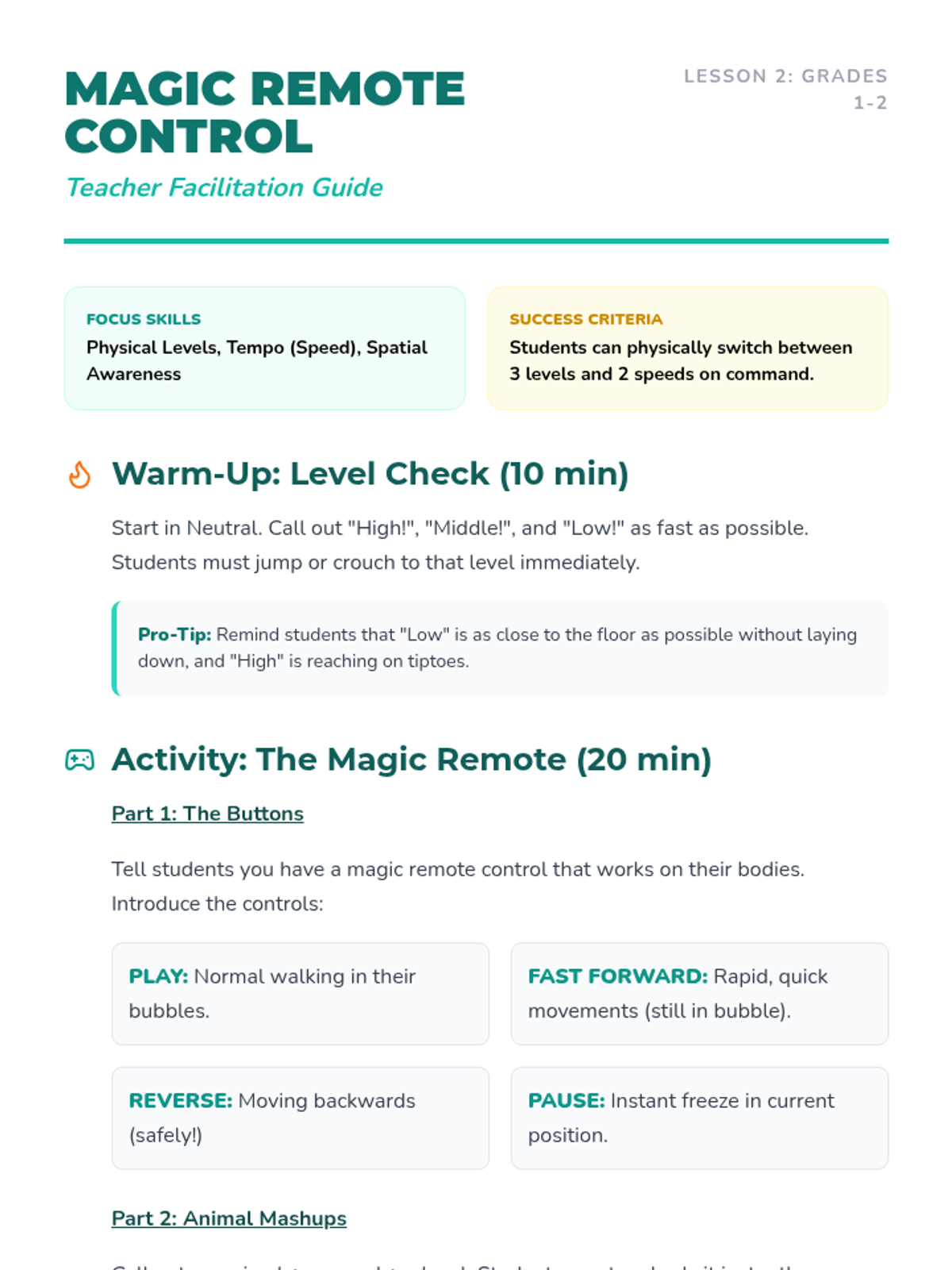
Students investigate how characters move differently by experimenting with high, middle, and low levels, as well as fast and slow tempos, embodying various animals to practice.
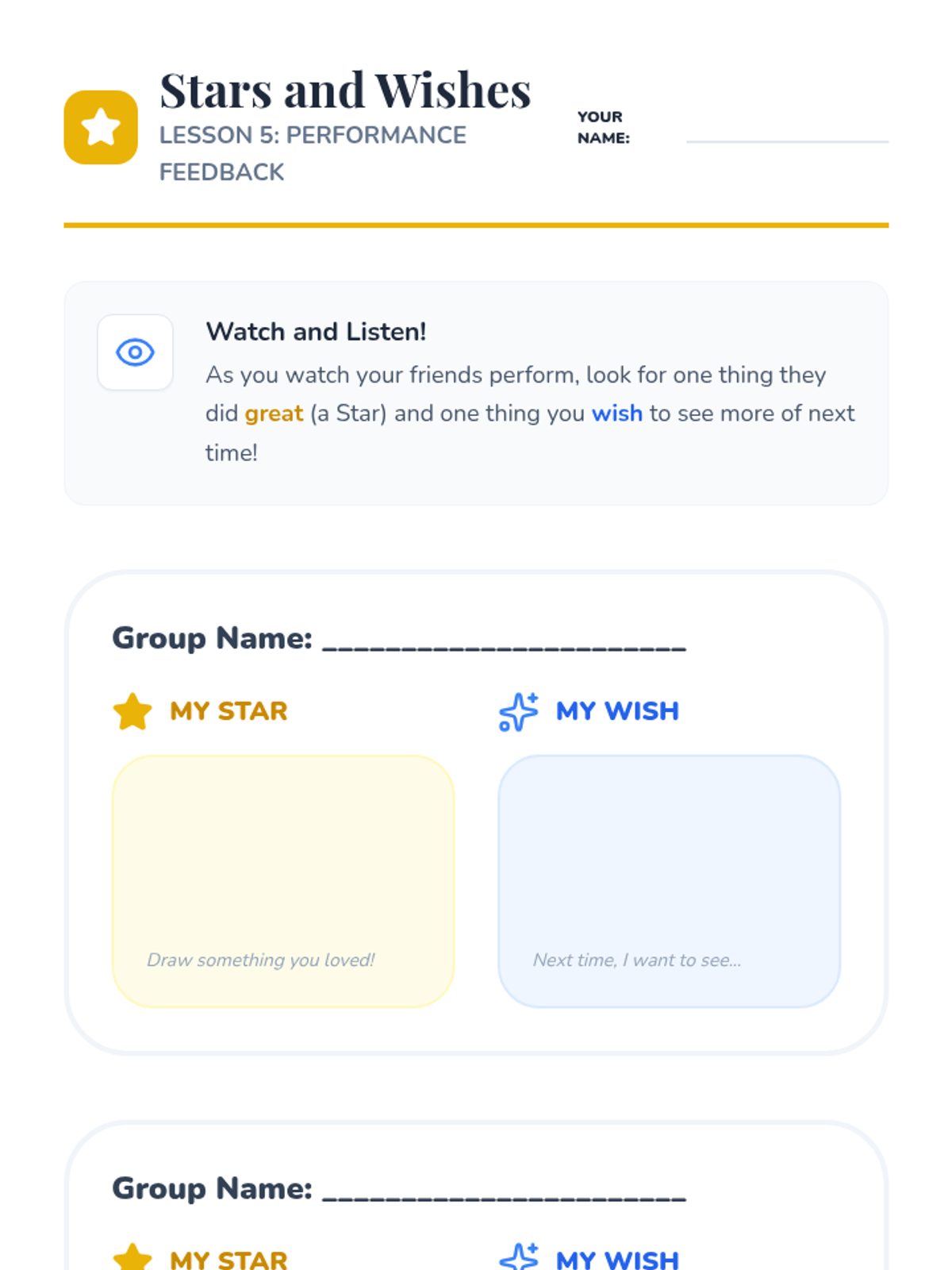
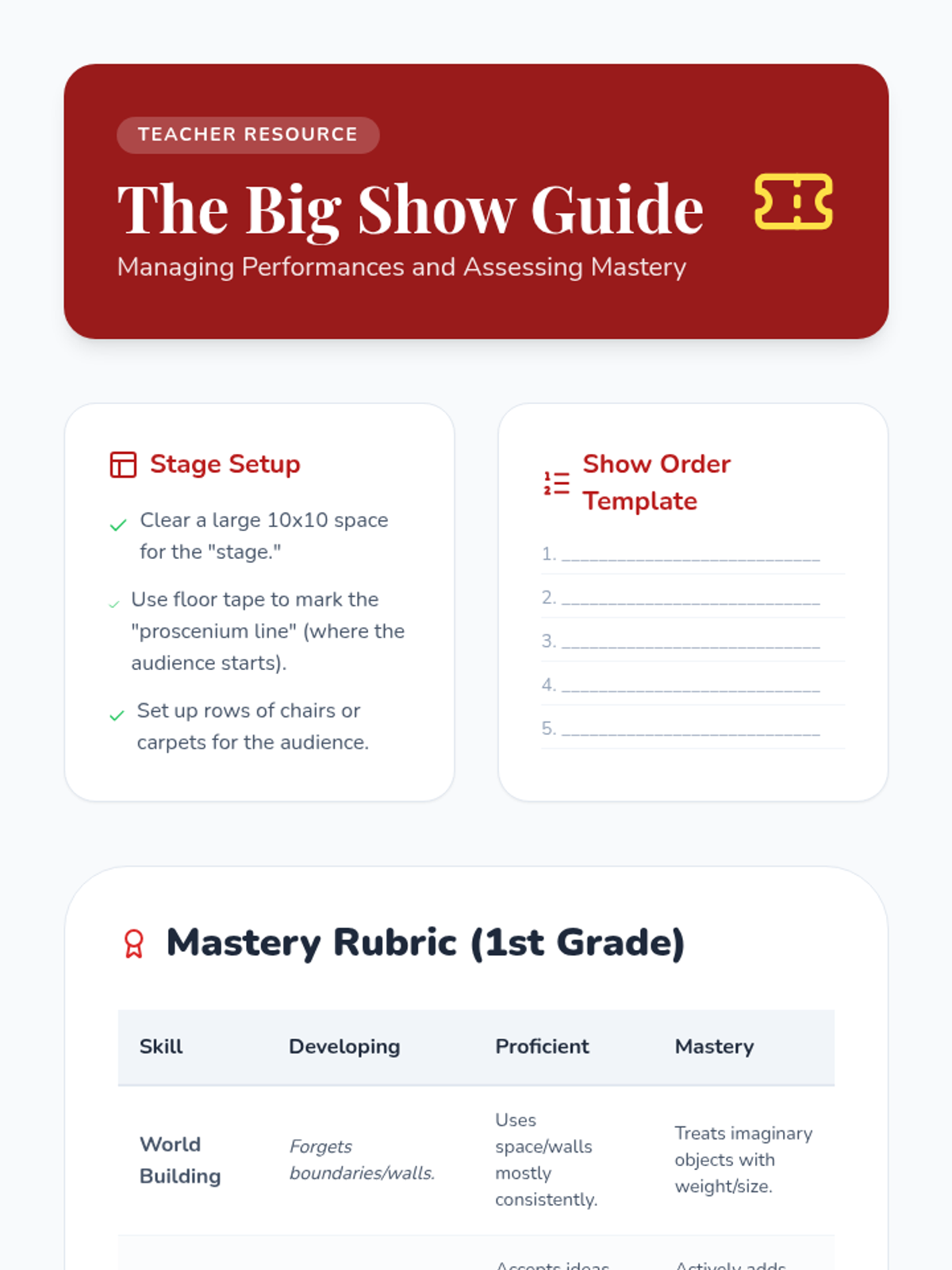
The culmination of the unit where groups perform their improvised scenes for an audience, practicing both performance and respectful viewing.
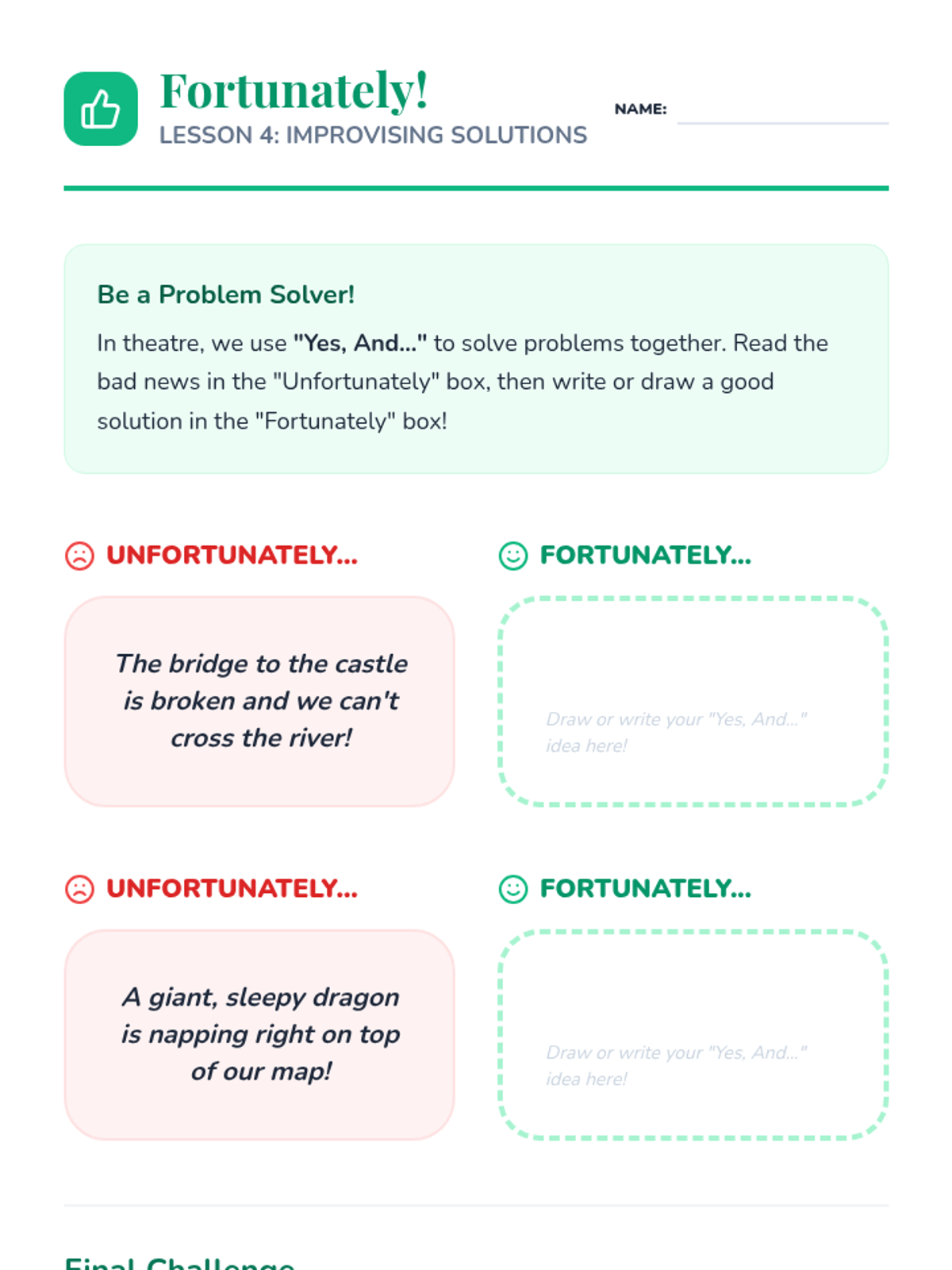
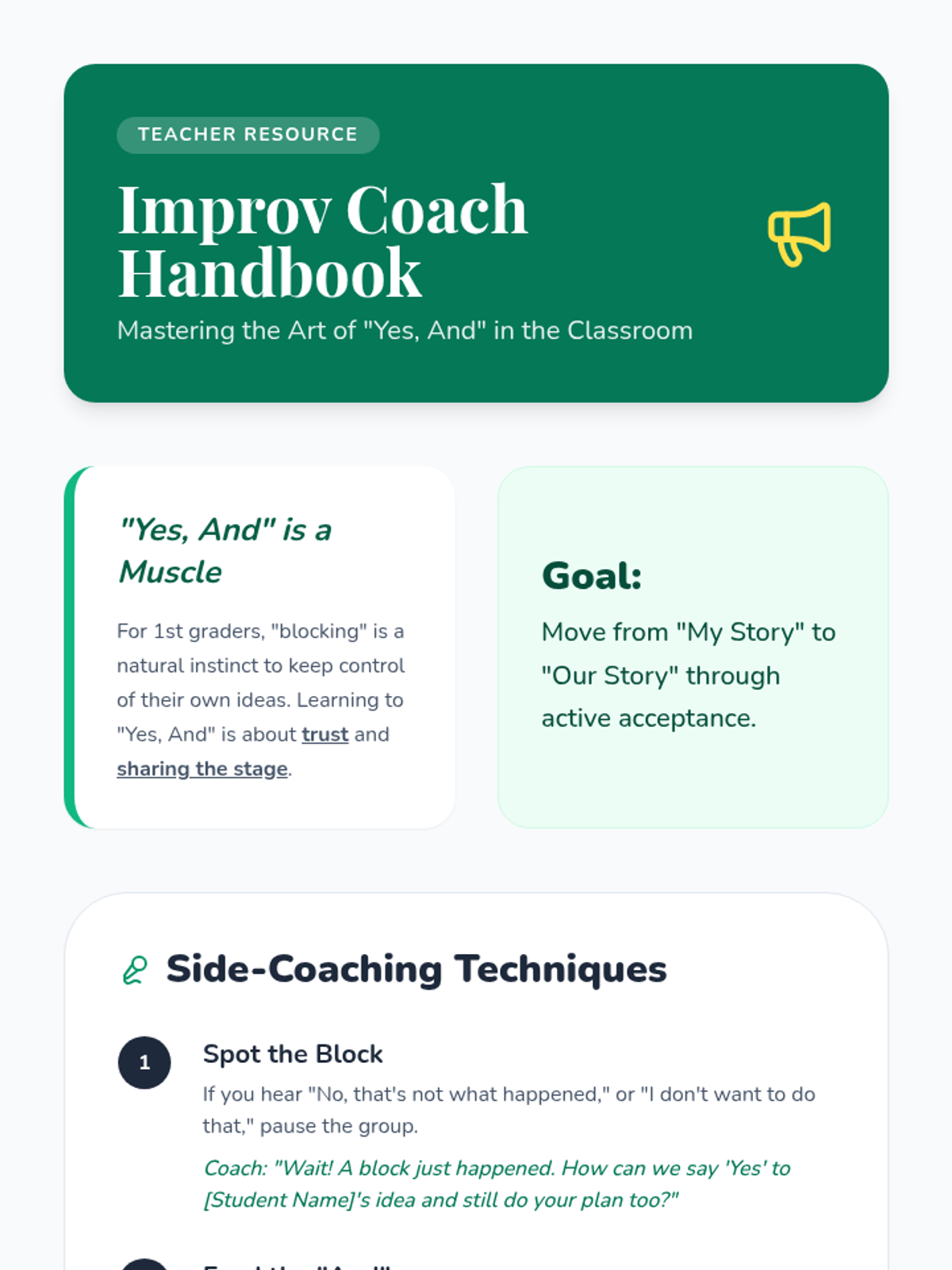
Students apply 'Yes, And' techniques to collaboratively solve story problems, focusing on active listening and support.
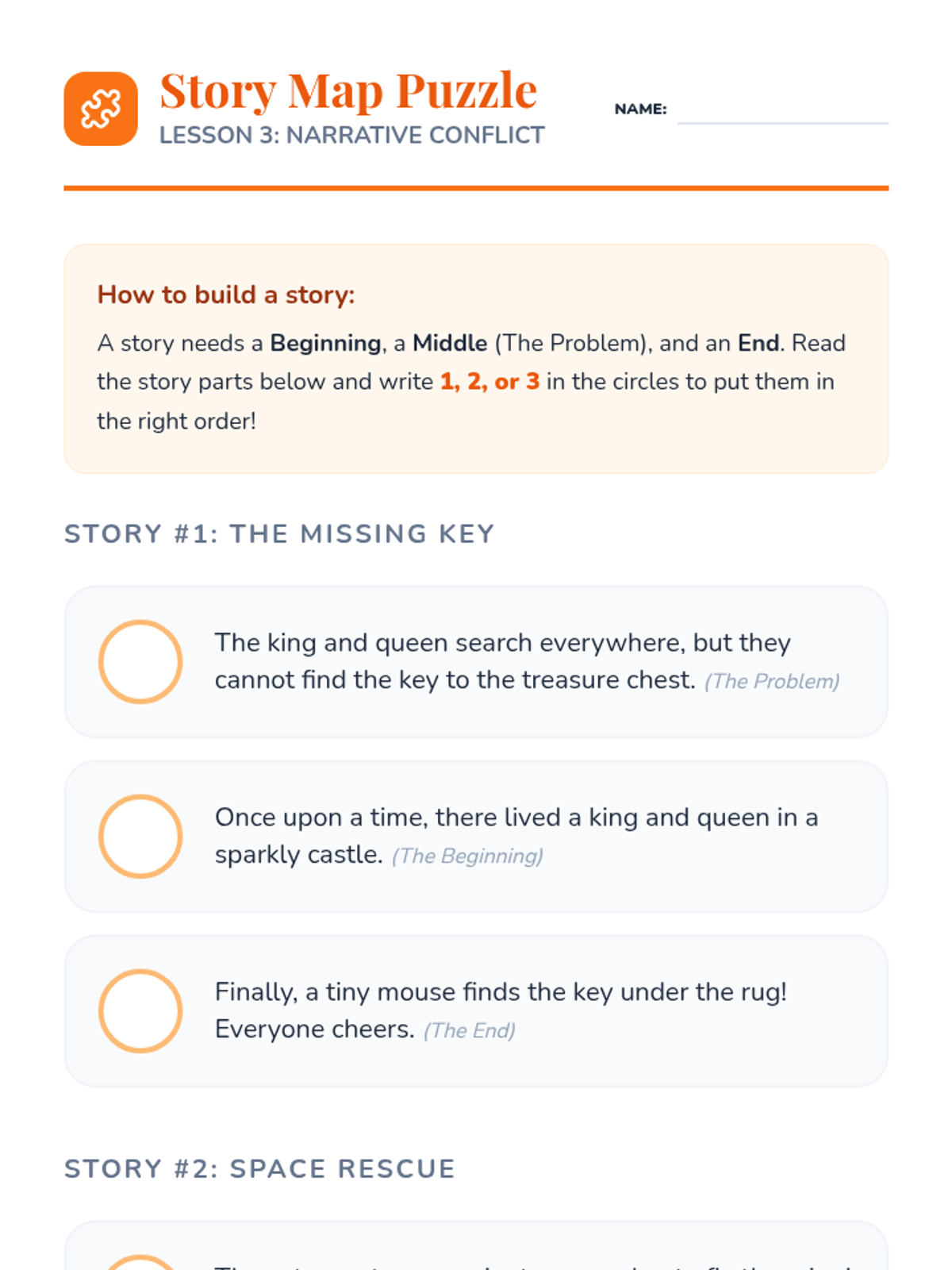
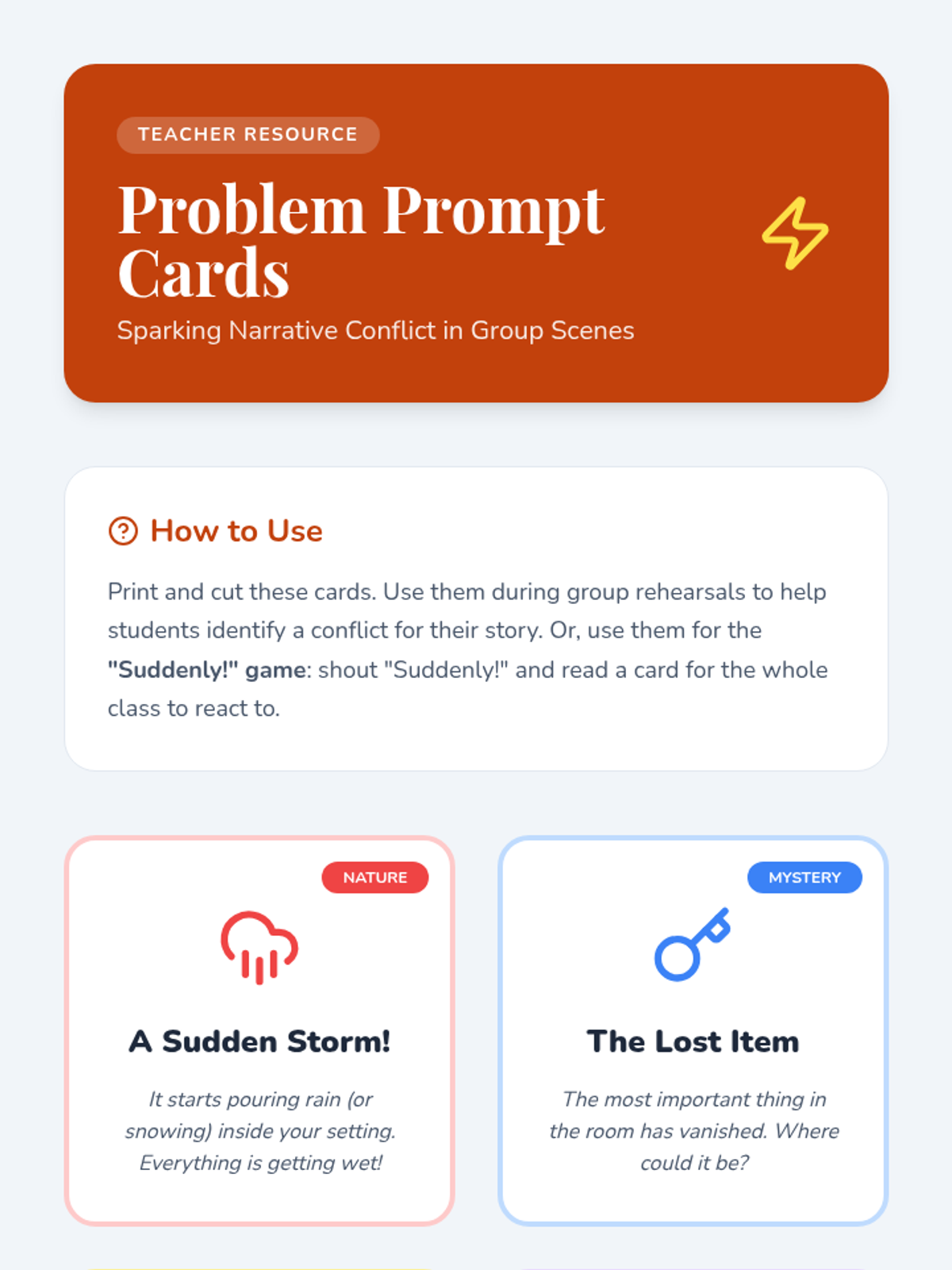
Introduction to basic story structure (Beginning, Middle, End) and the role of conflict in driving a narrative forward.
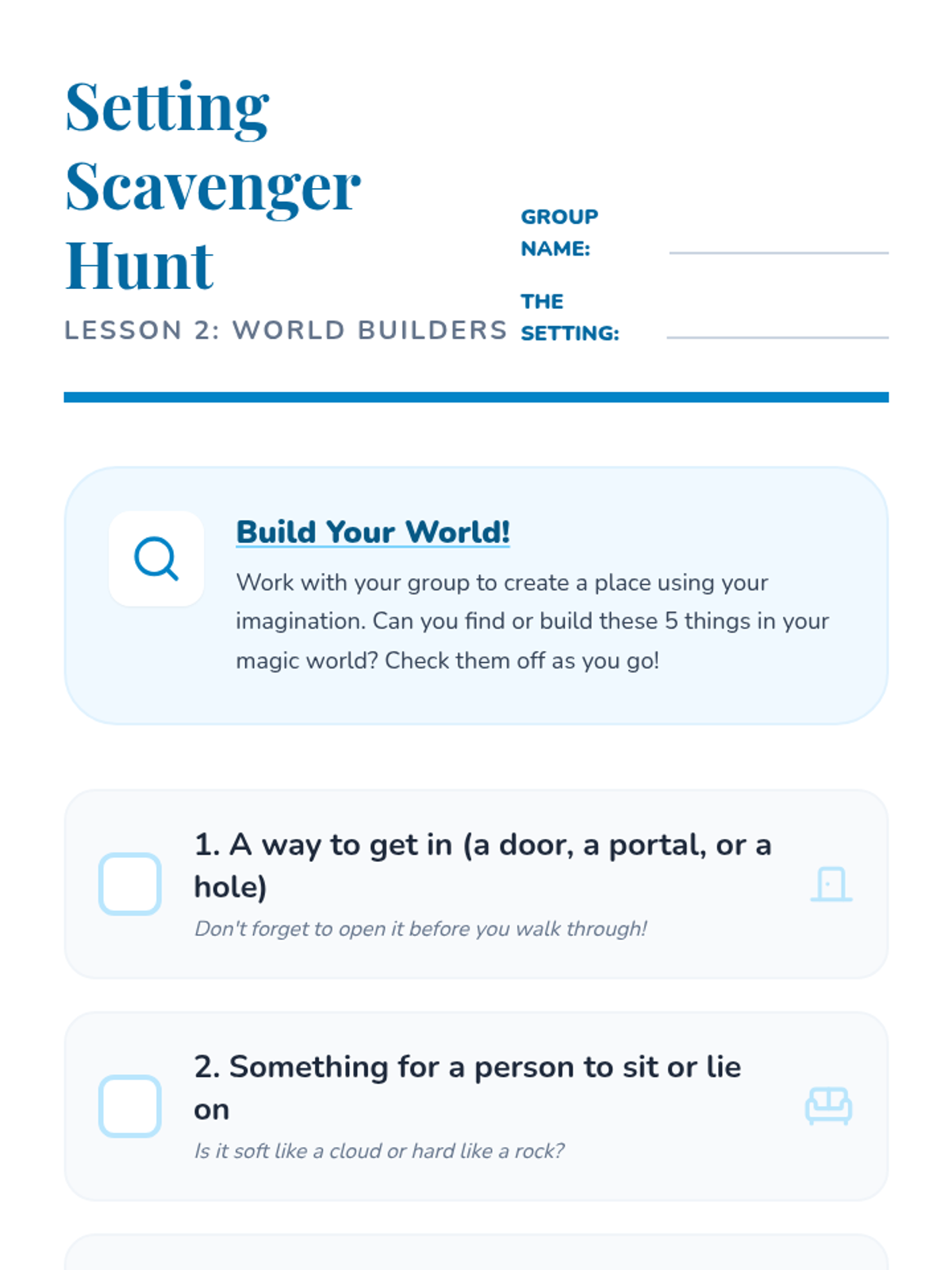
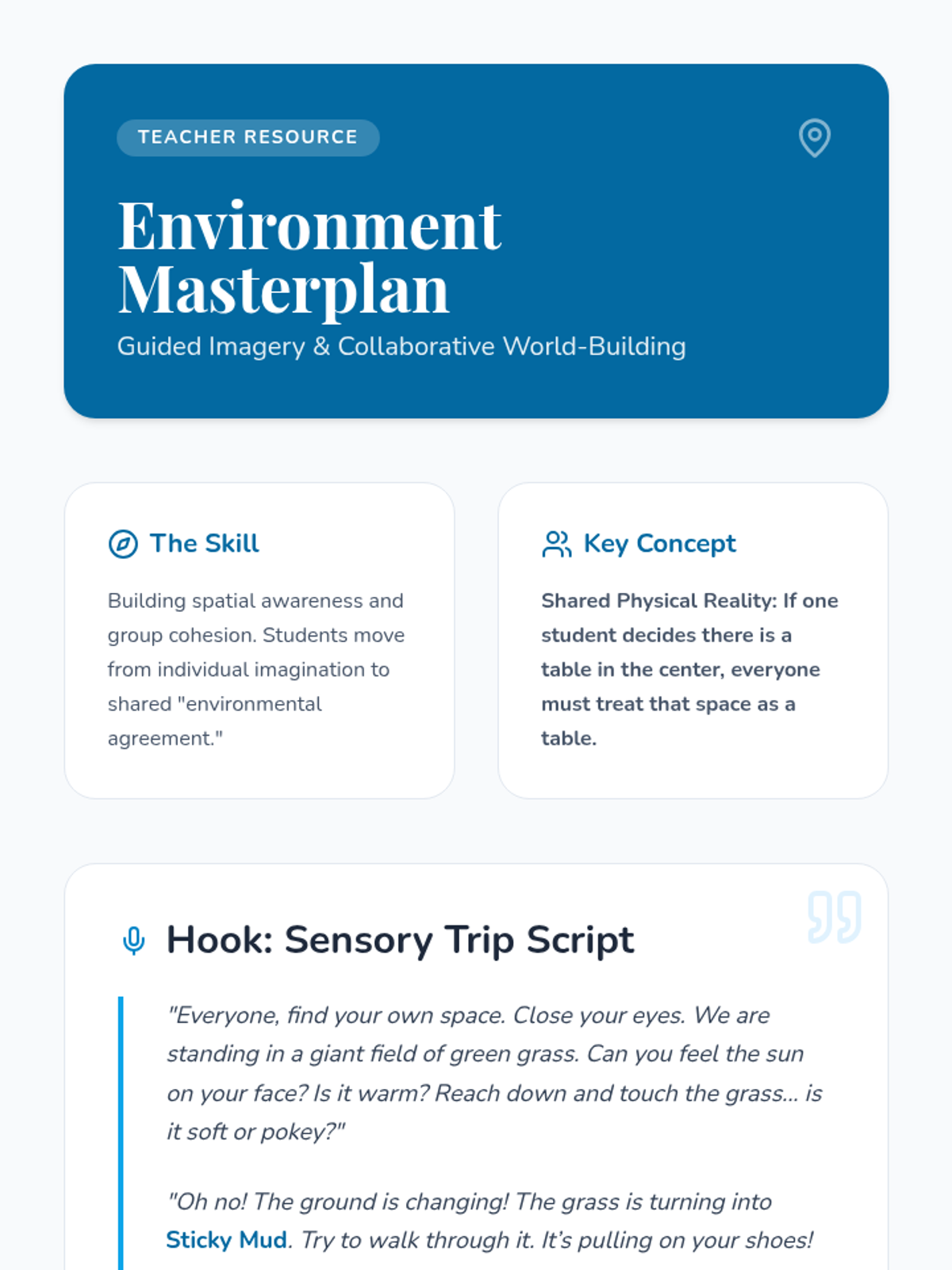
Small groups use their bodies and collective imagination to build environments, practicing spatial awareness and group collaboration.
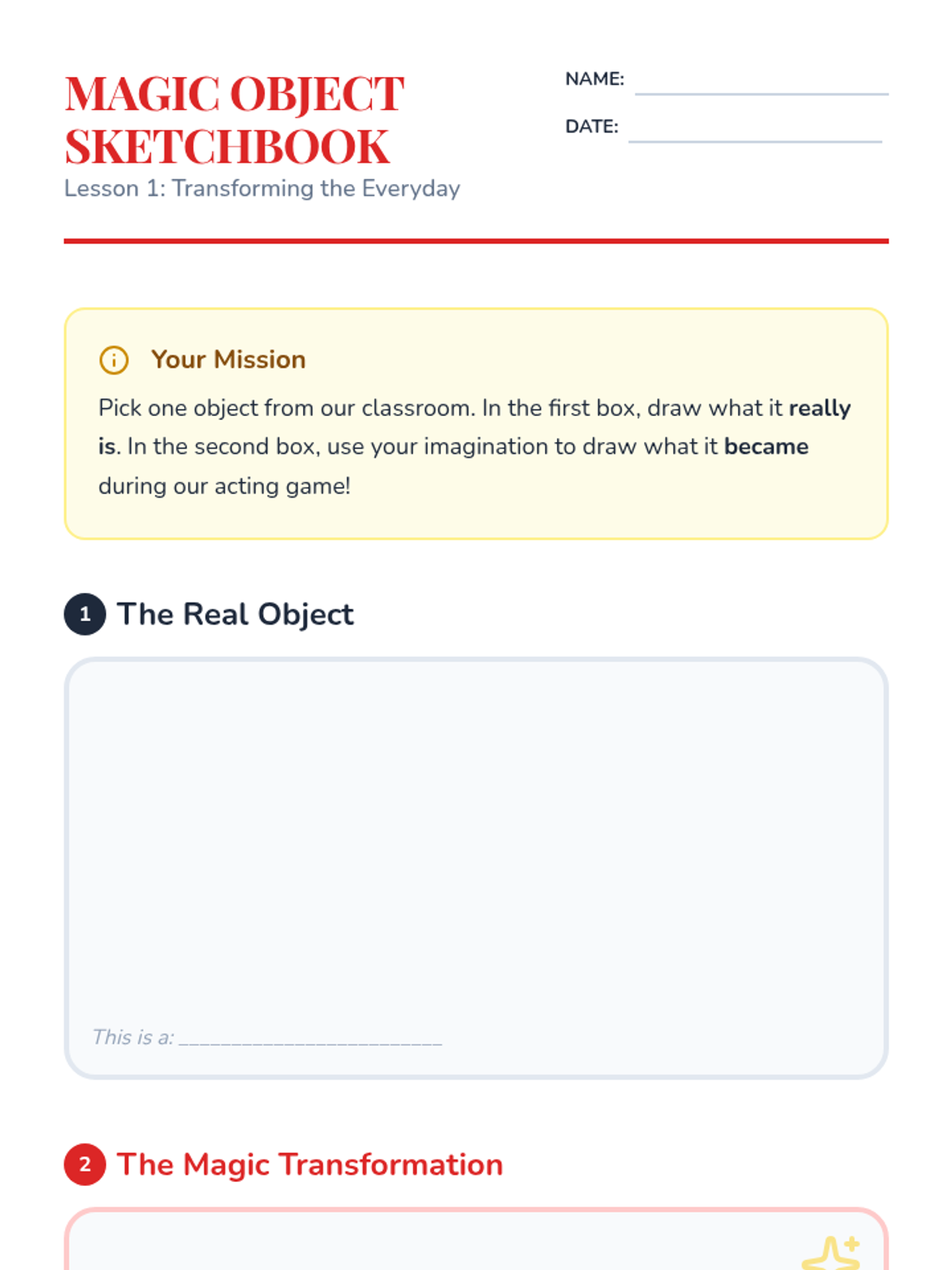
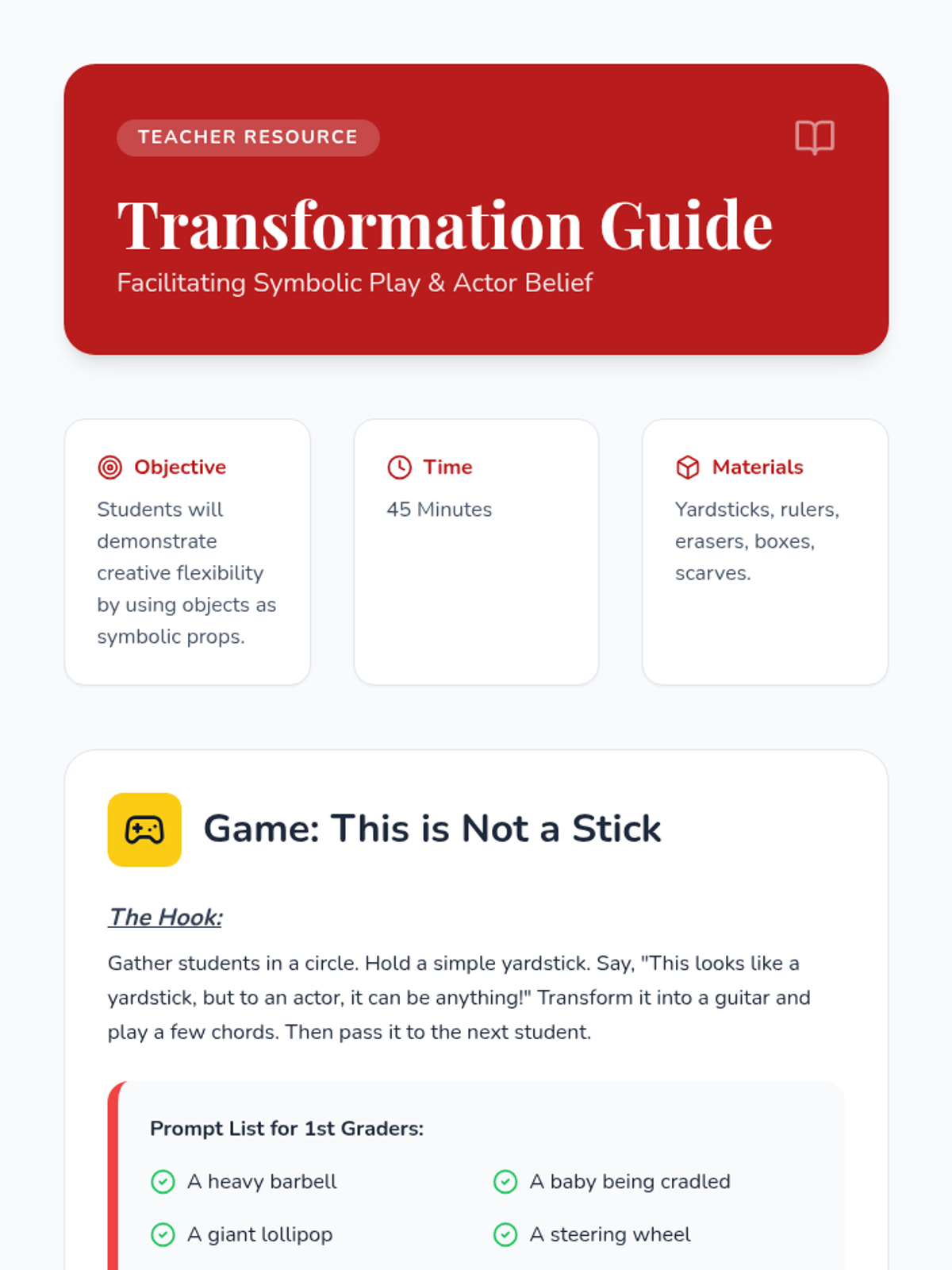
Students explore symbolic play by transforming ordinary objects into imaginary props, establishing the foundation of actor belief and creative flexibility.
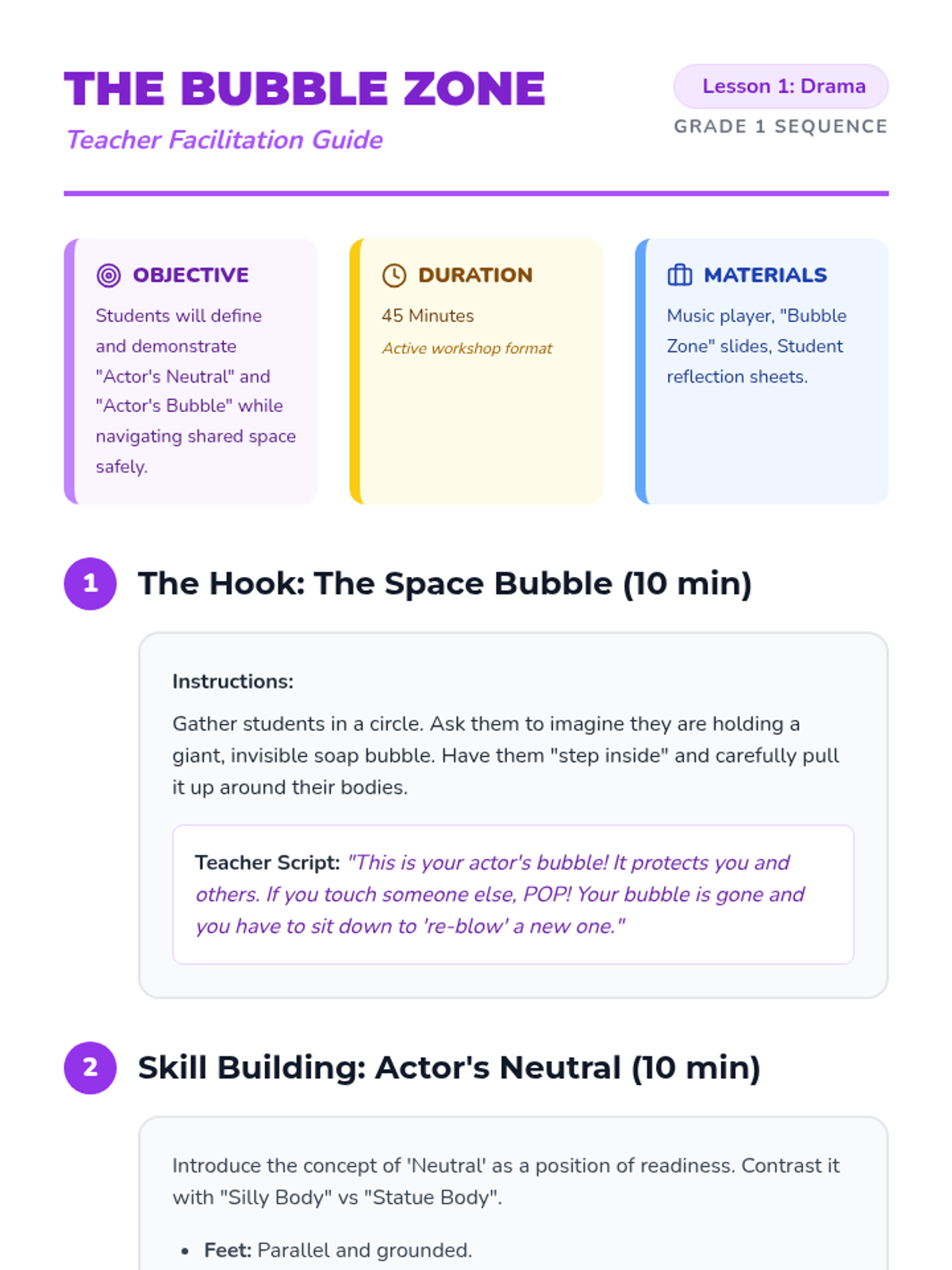
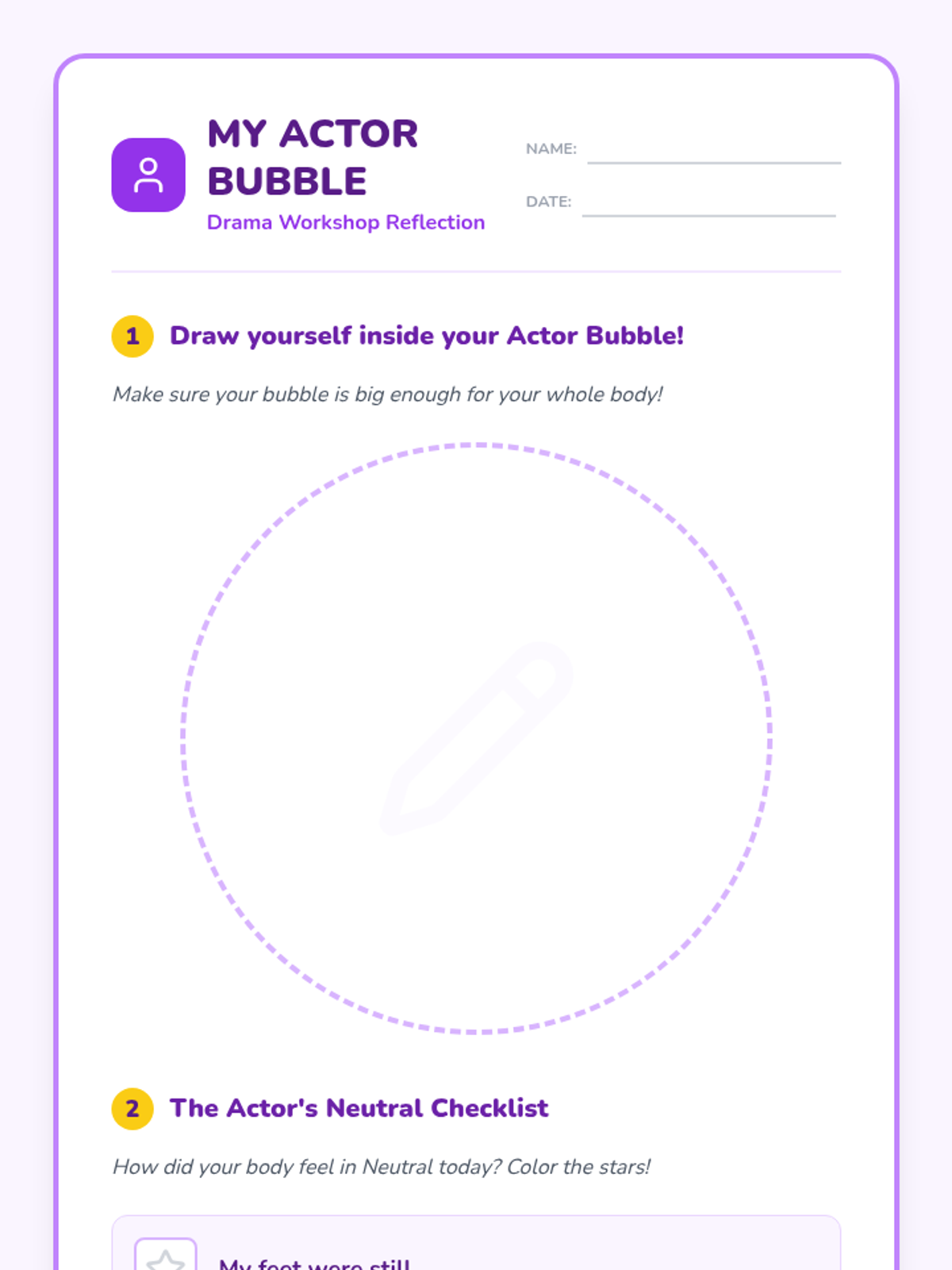
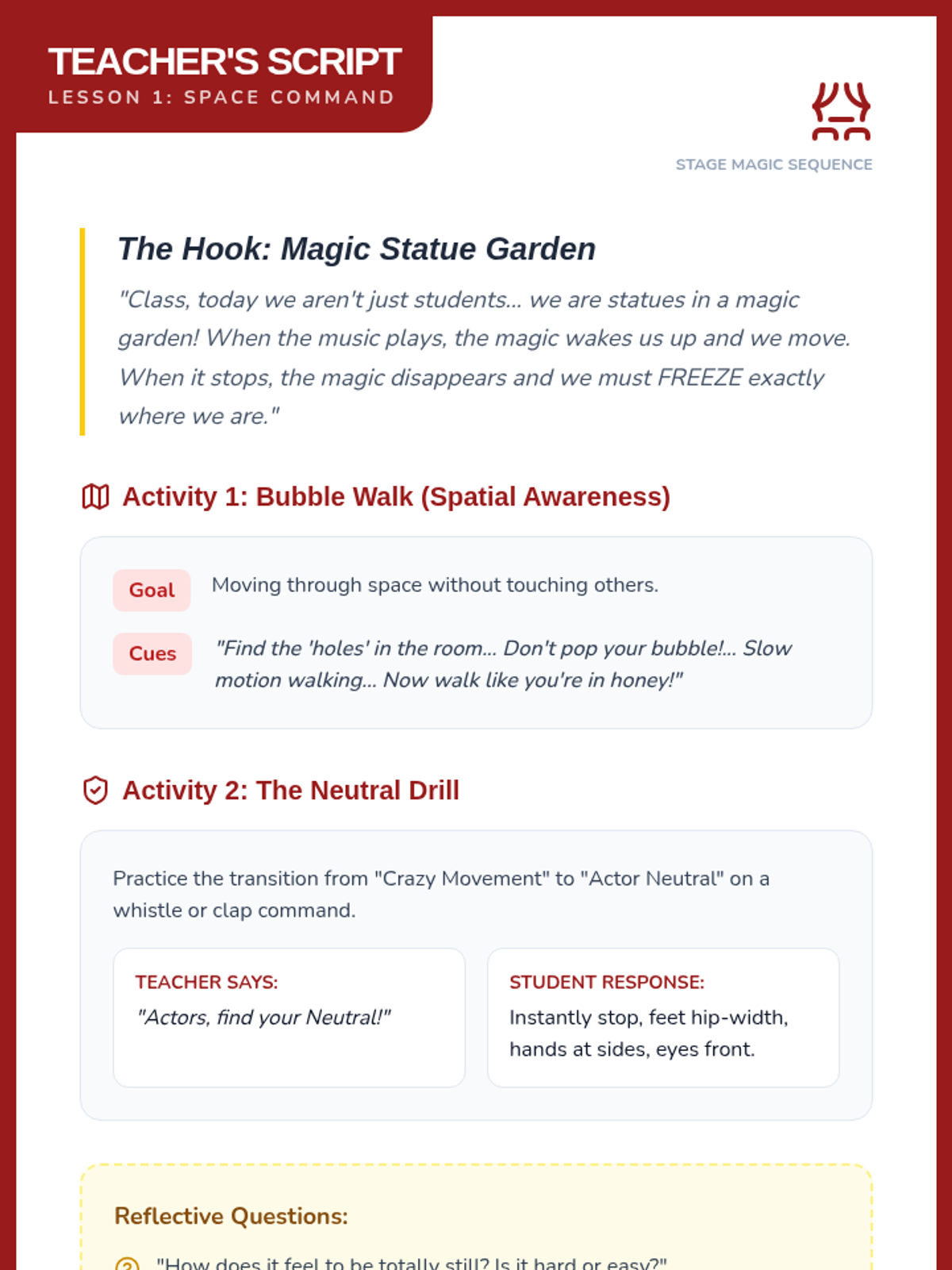
Students explore the concept of the 'actor's bubble' to understand personal space and safety on stage, practicing transitions between neutral and active states.
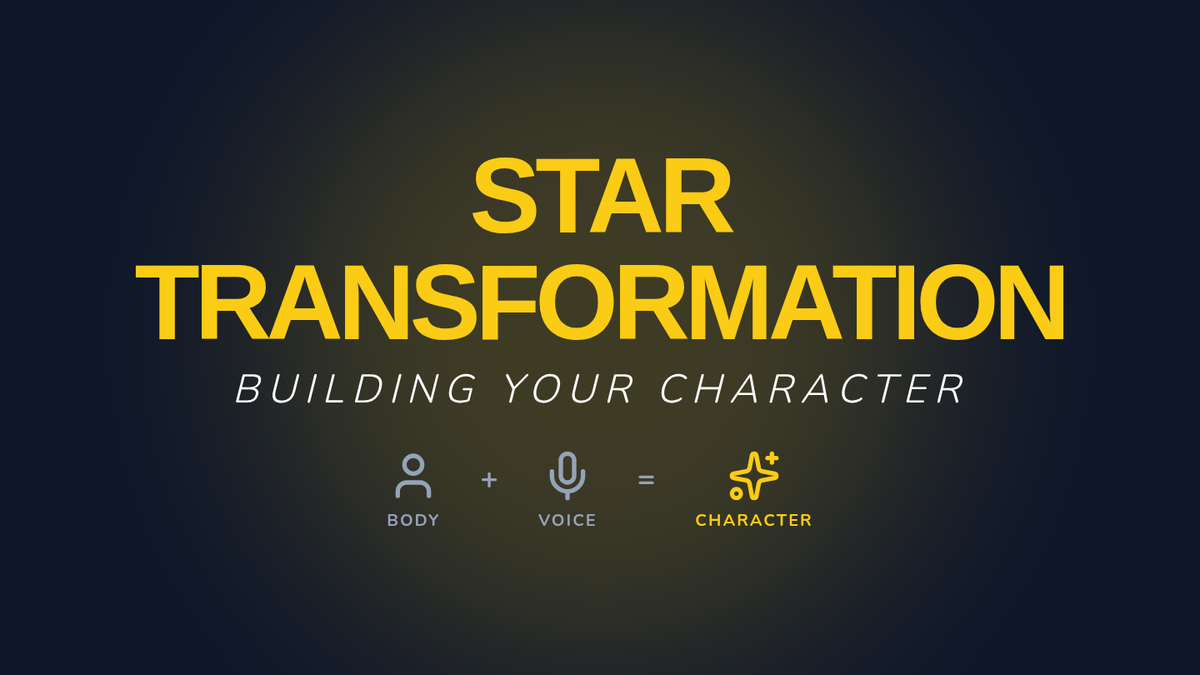
Culminates the sequence by having students combine movement and voice to create and perform simple character archetypes.
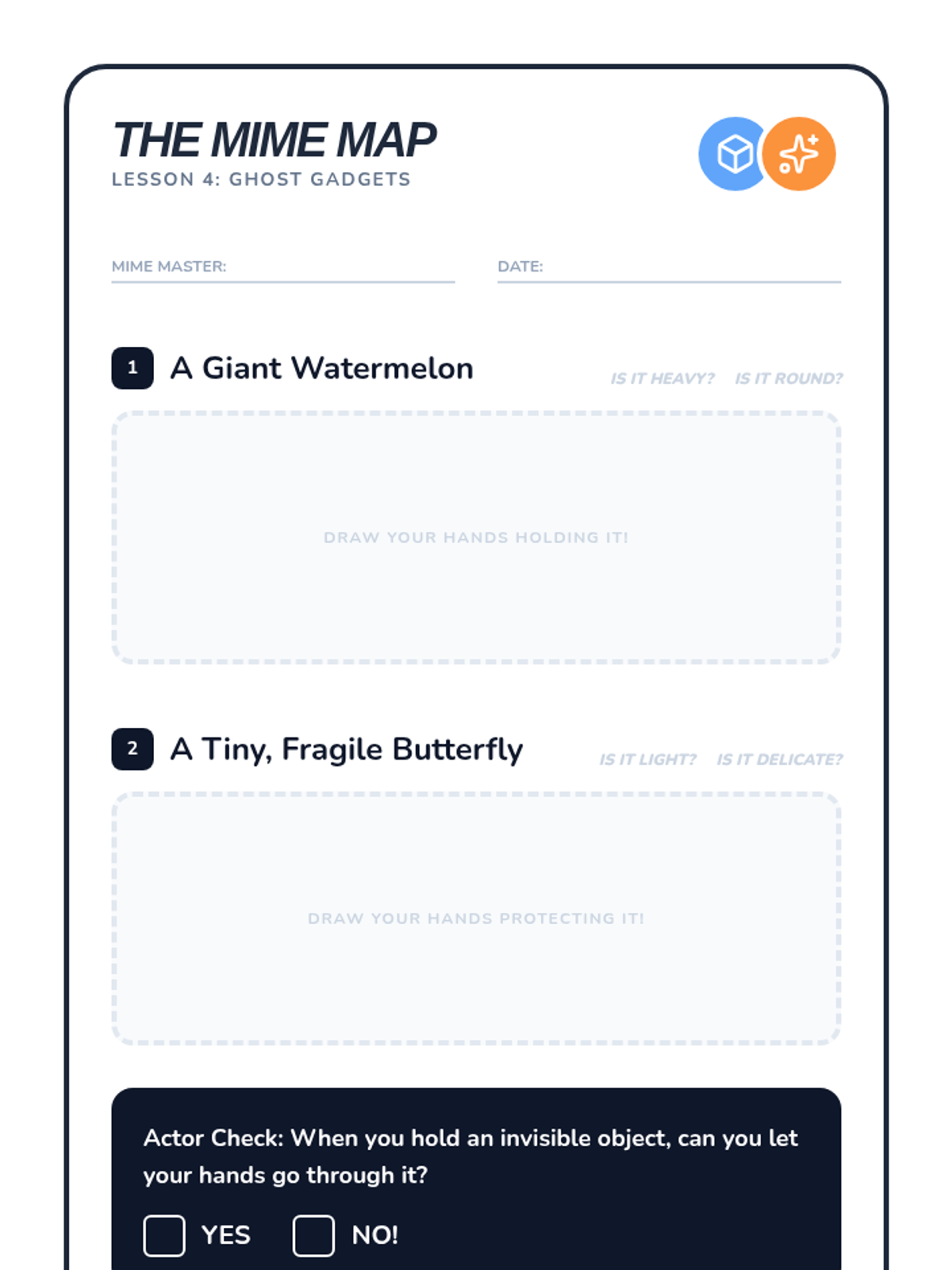
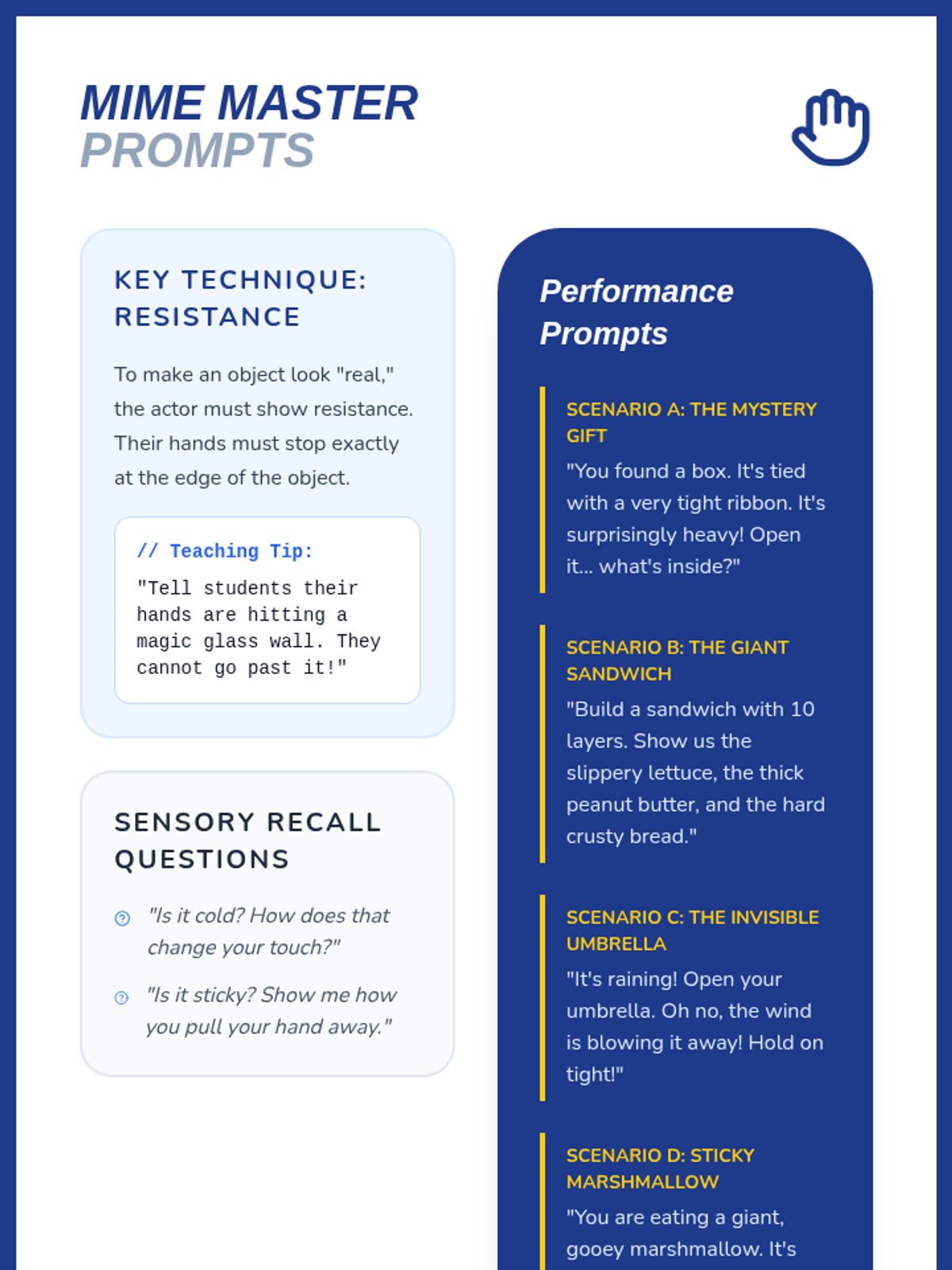
Explores pantomime by teaching students how to interact with imaginary objects through size, weight, and shape.
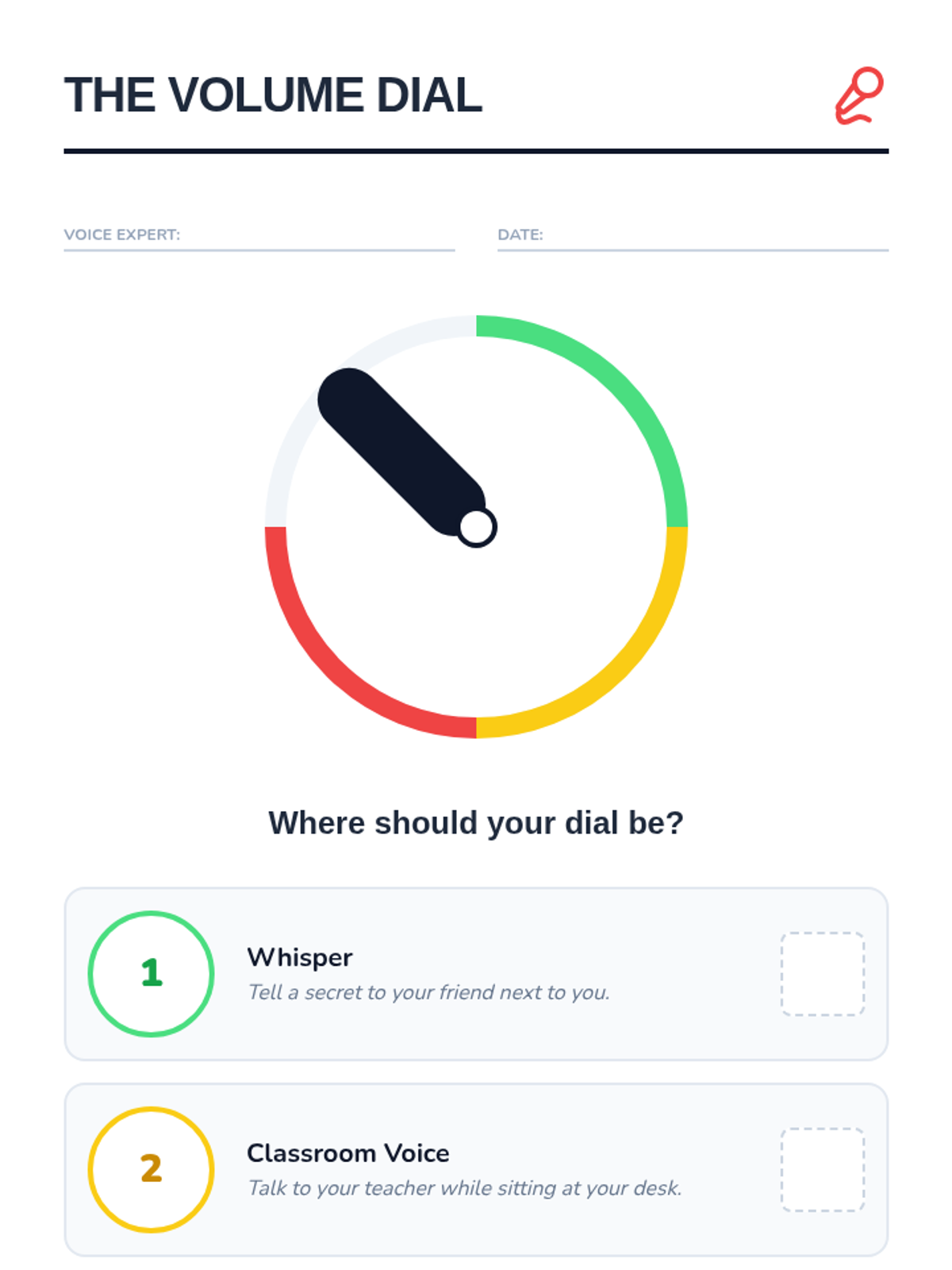
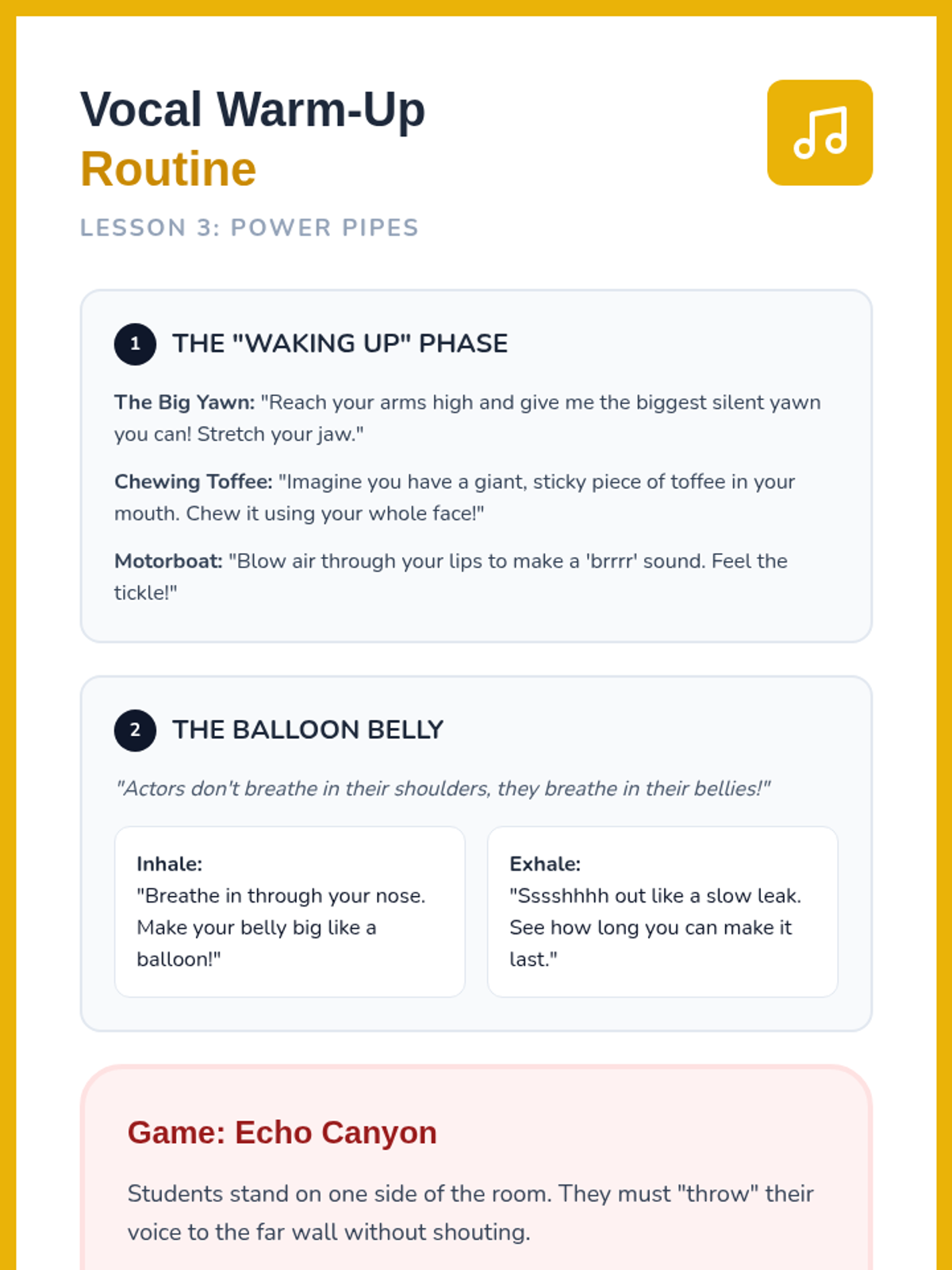
Teaches vocal projection and tonal variation, helping students use their voices safely and expressively.
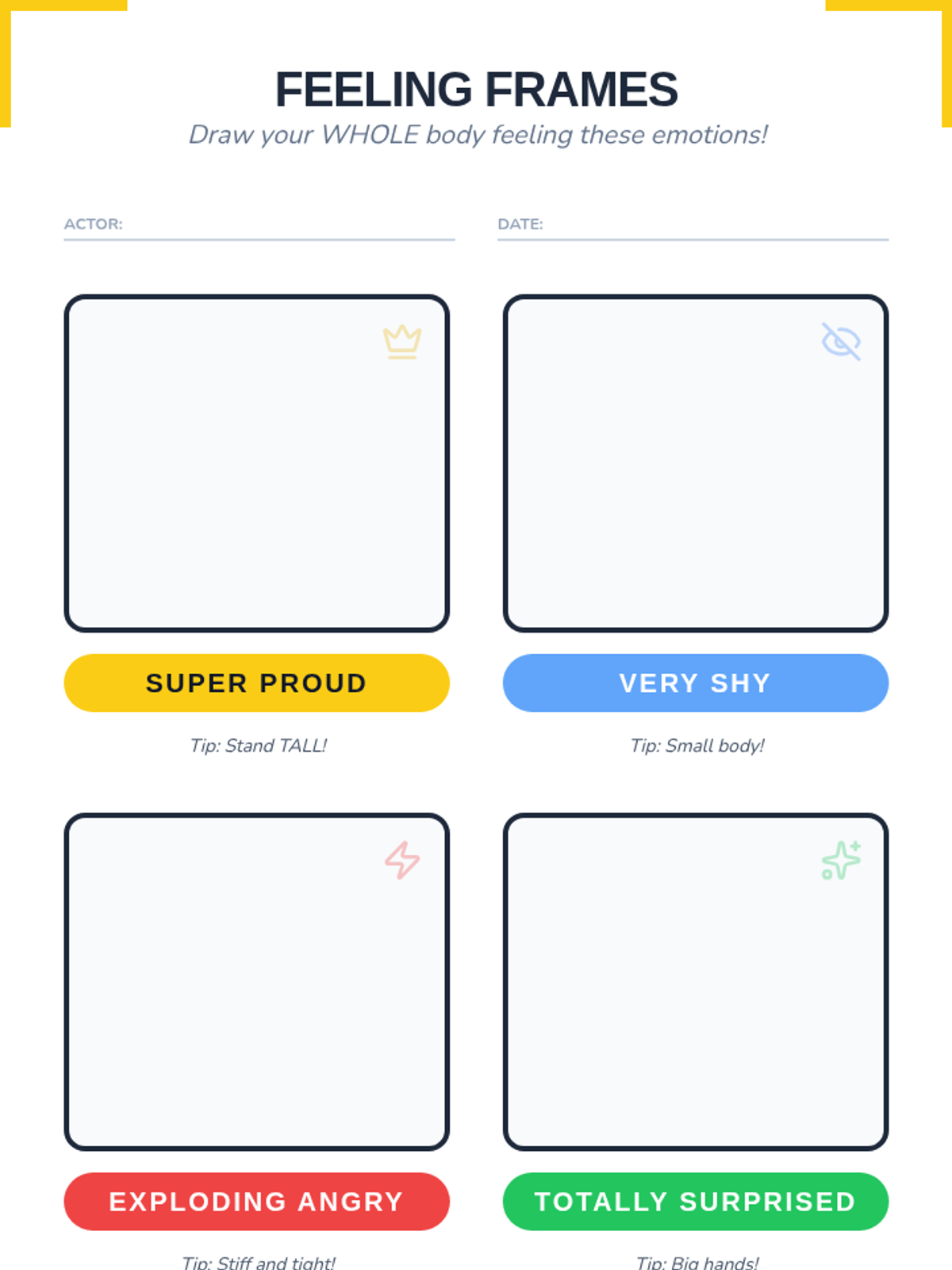
Focuses on using the whole body to communicate feelings, exploring how emotions change posture and gait.
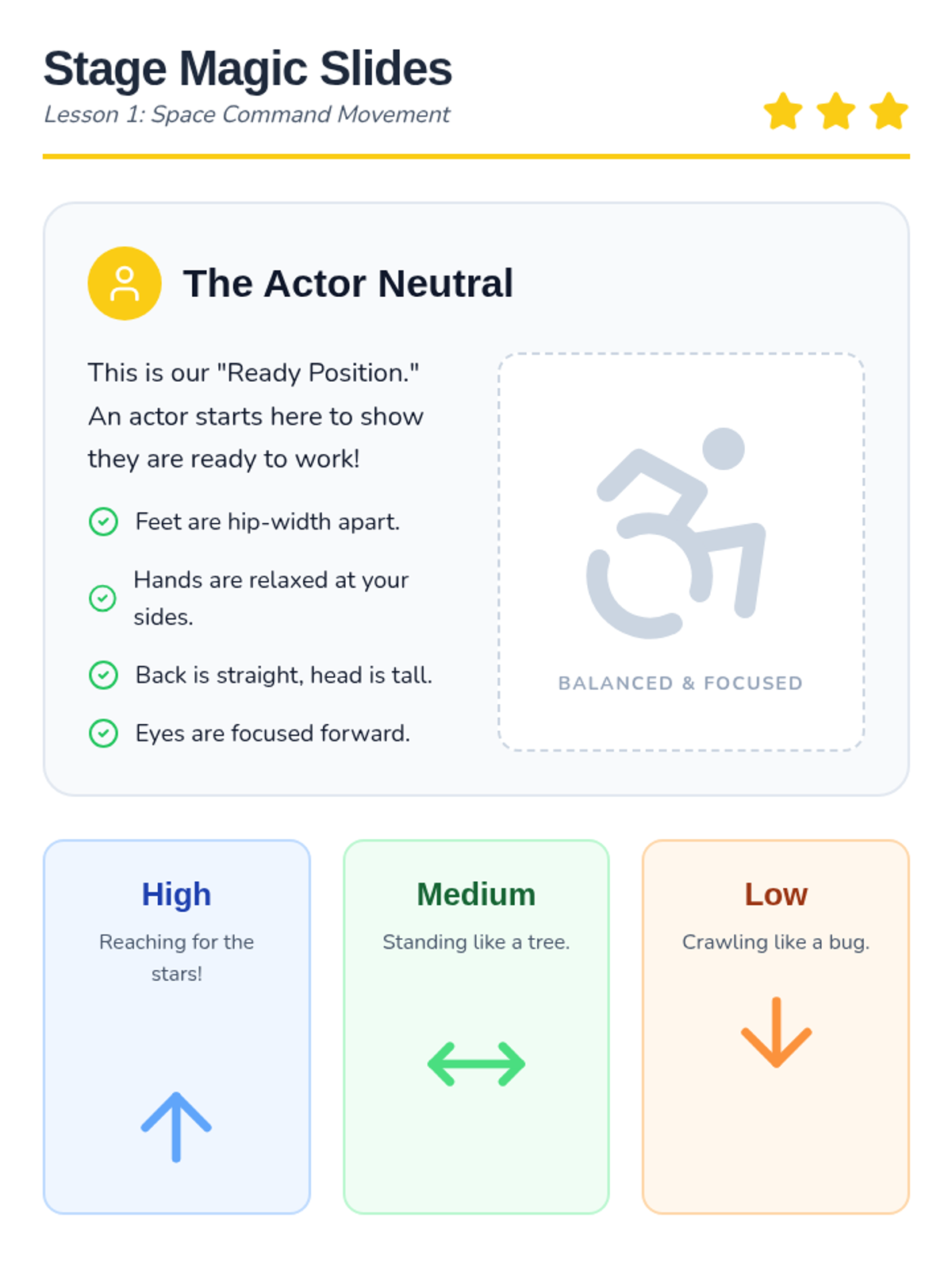
Introduces students to stage presence through 'Actor Neutral' and movement levels (high, medium, low) while emphasizing spatial awareness.
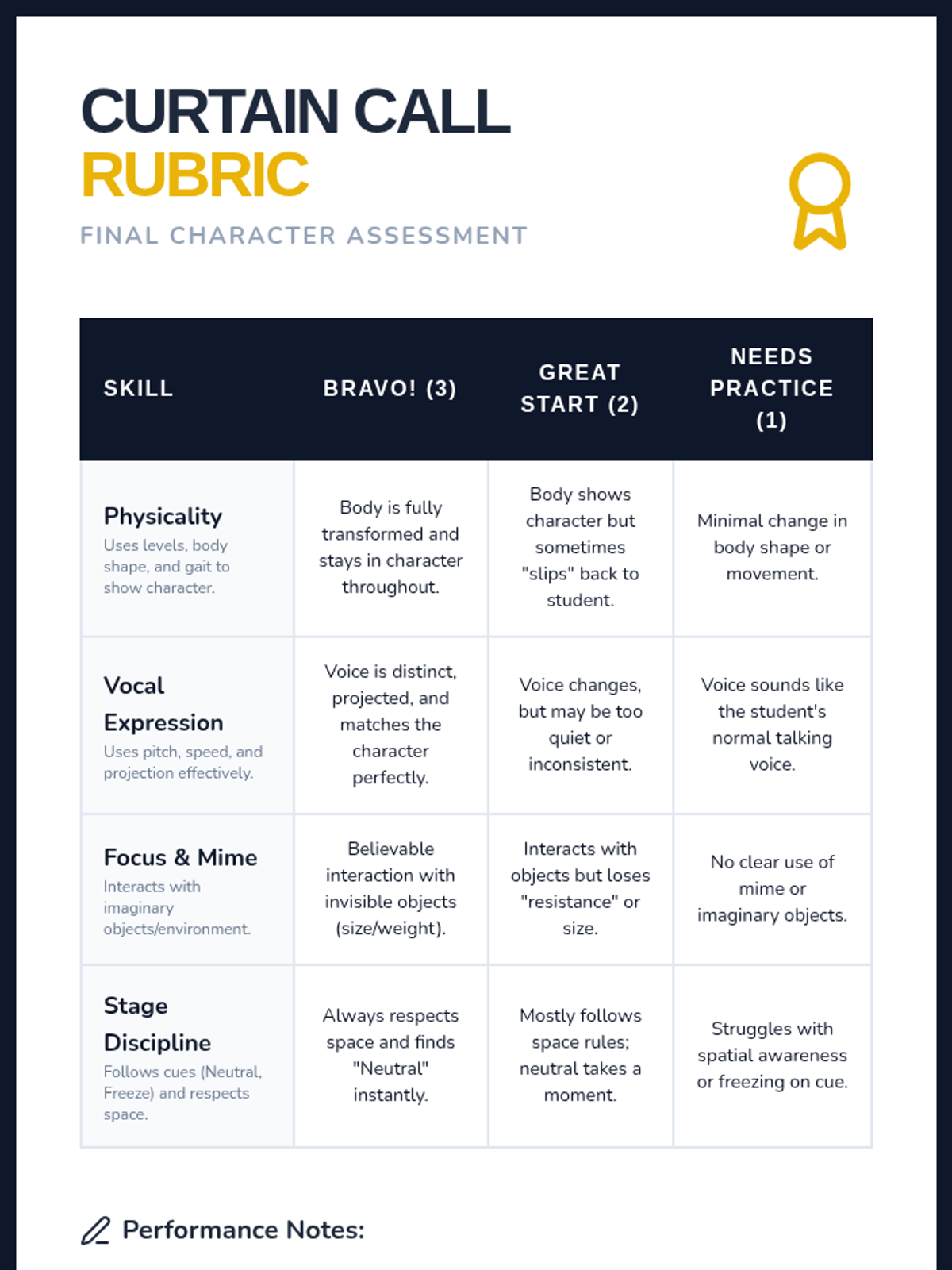
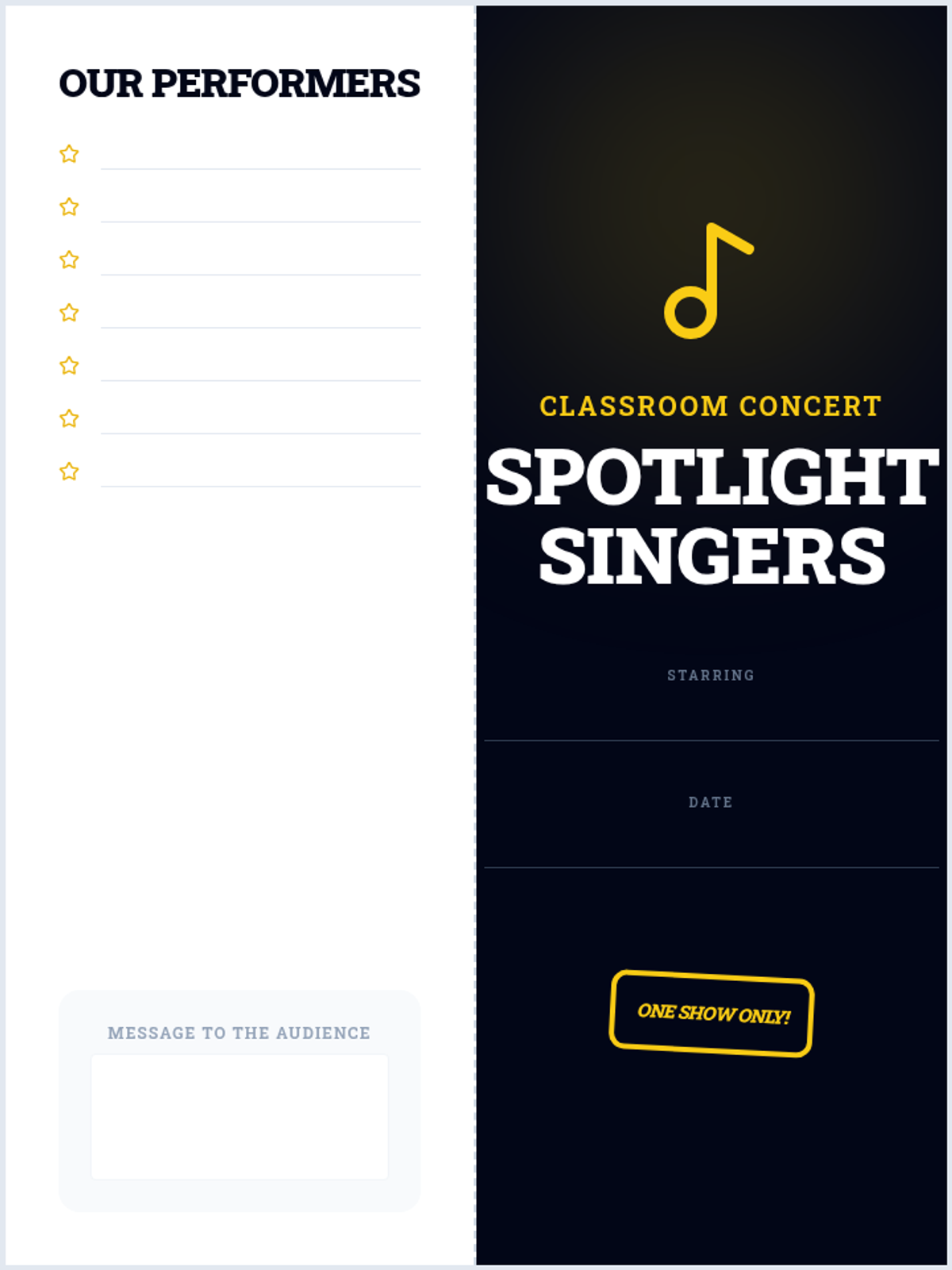
The culminating performance where students apply all their skills in a formal classroom concert for an audience or a recording.
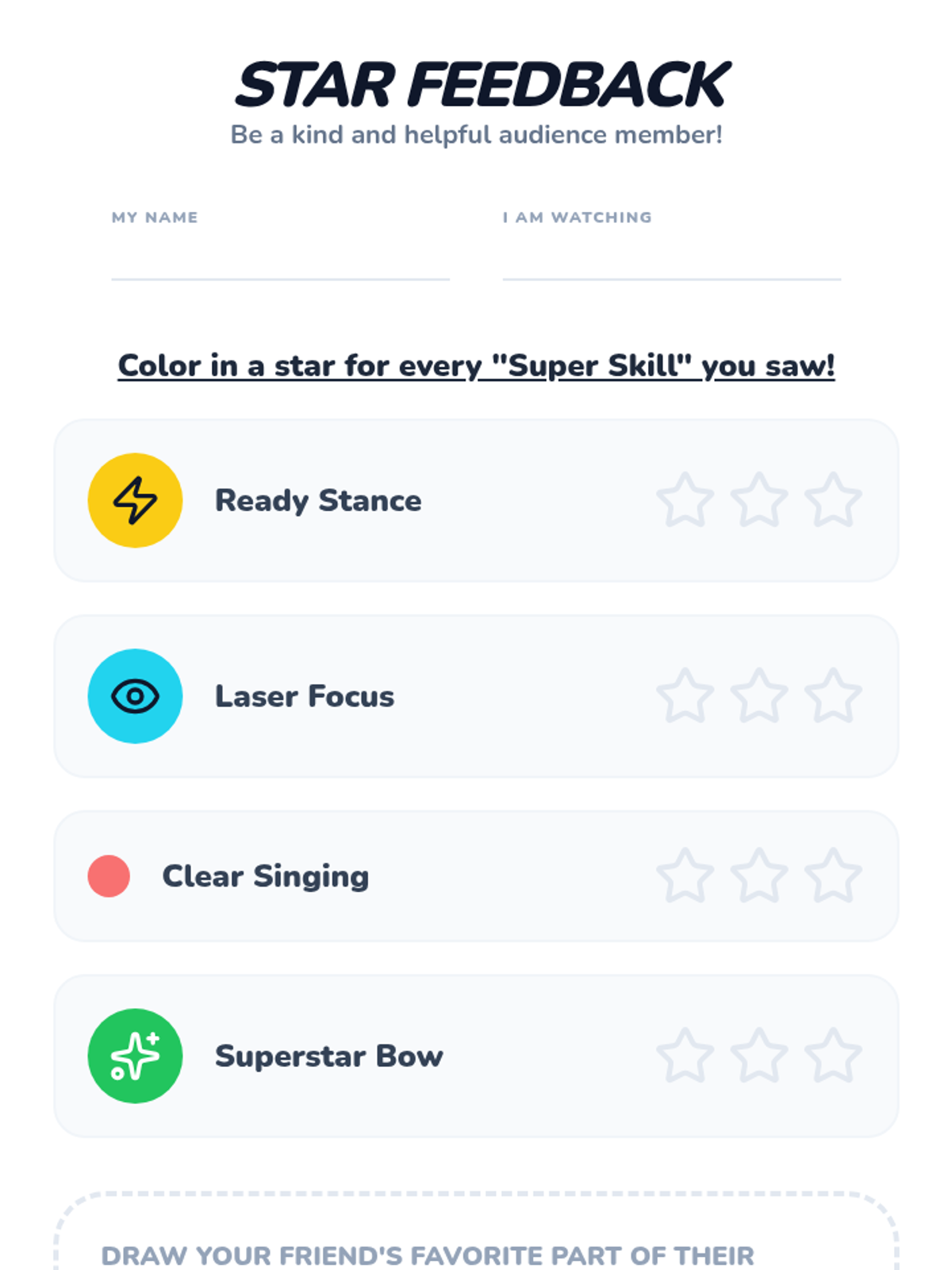
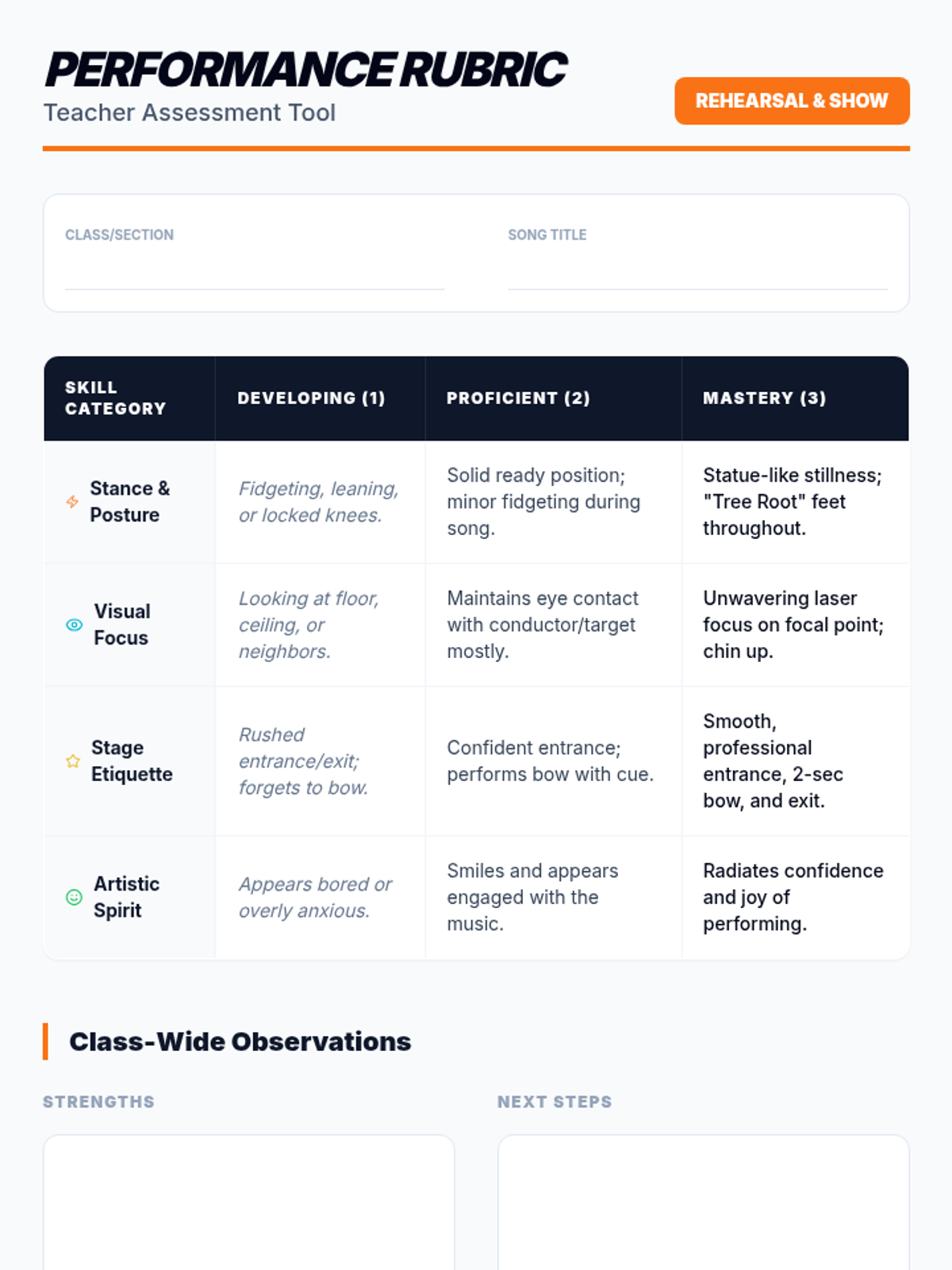
The class simulates a professional rehearsal environment. Students take turns as performers and audience members, using constructive feedback to polish their skills.
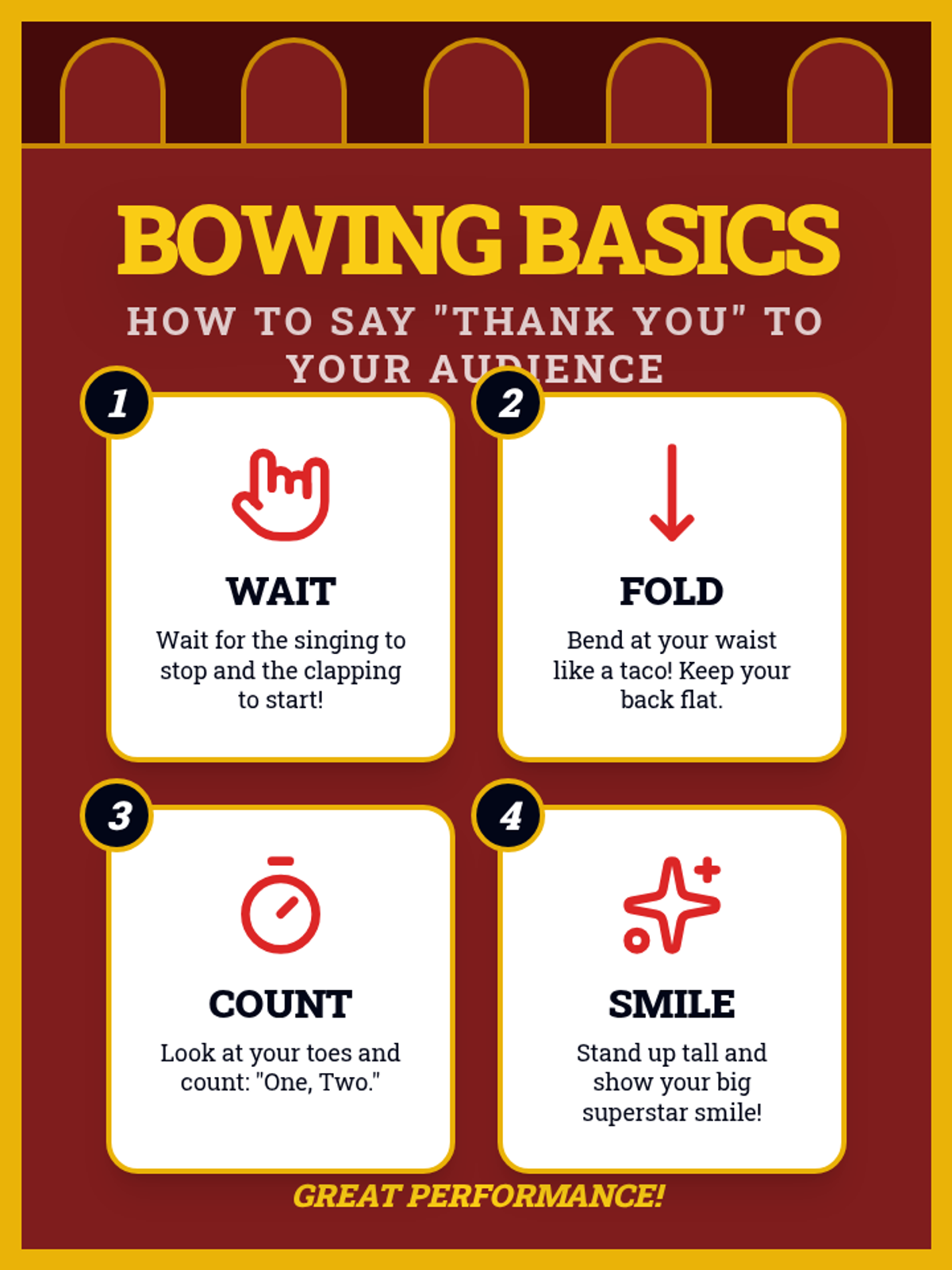
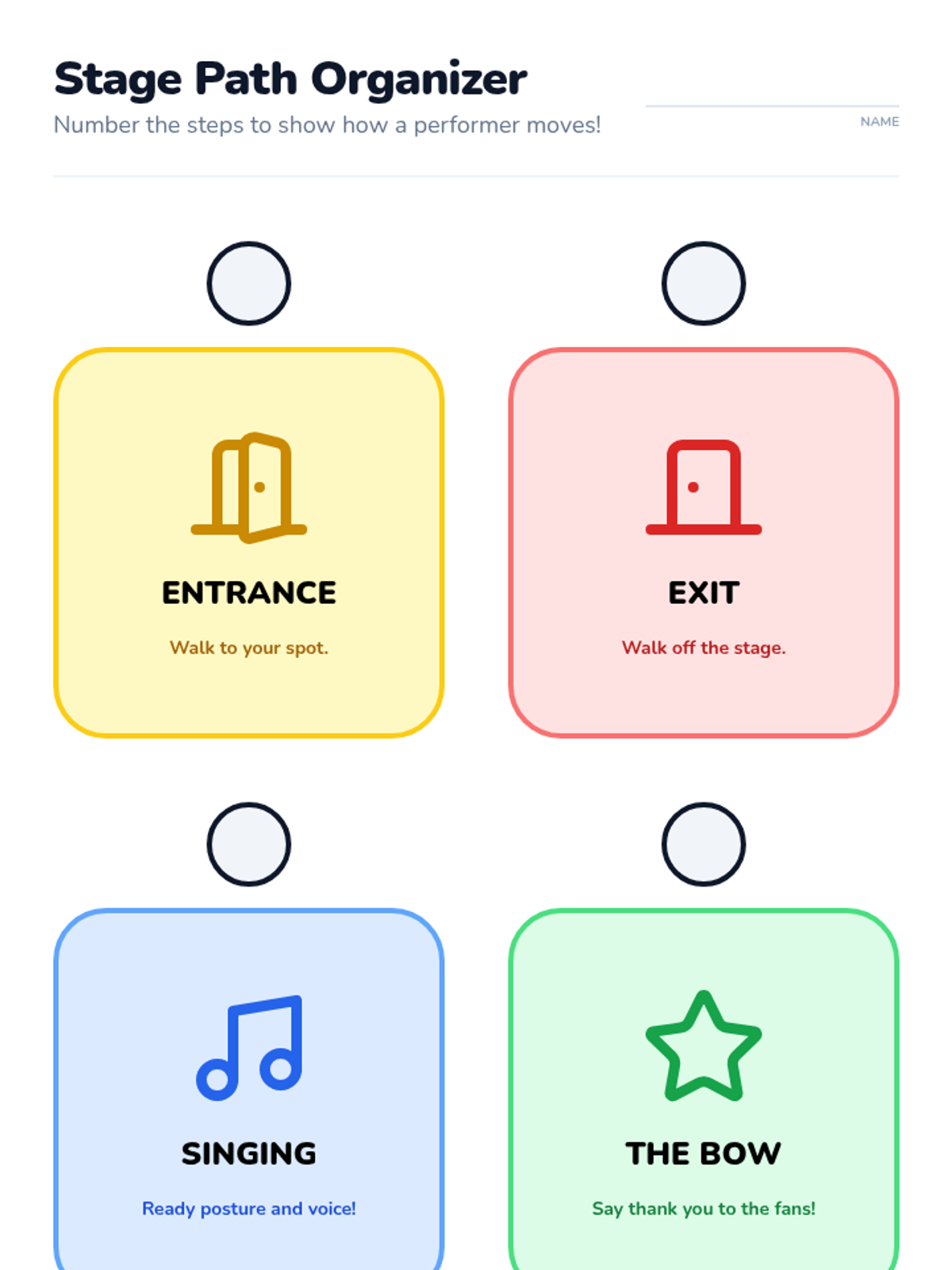
Students master the choreography of the stage: walking on with confidence, performing, acknowledging the audience with a respectful bow, and exiting calmly.
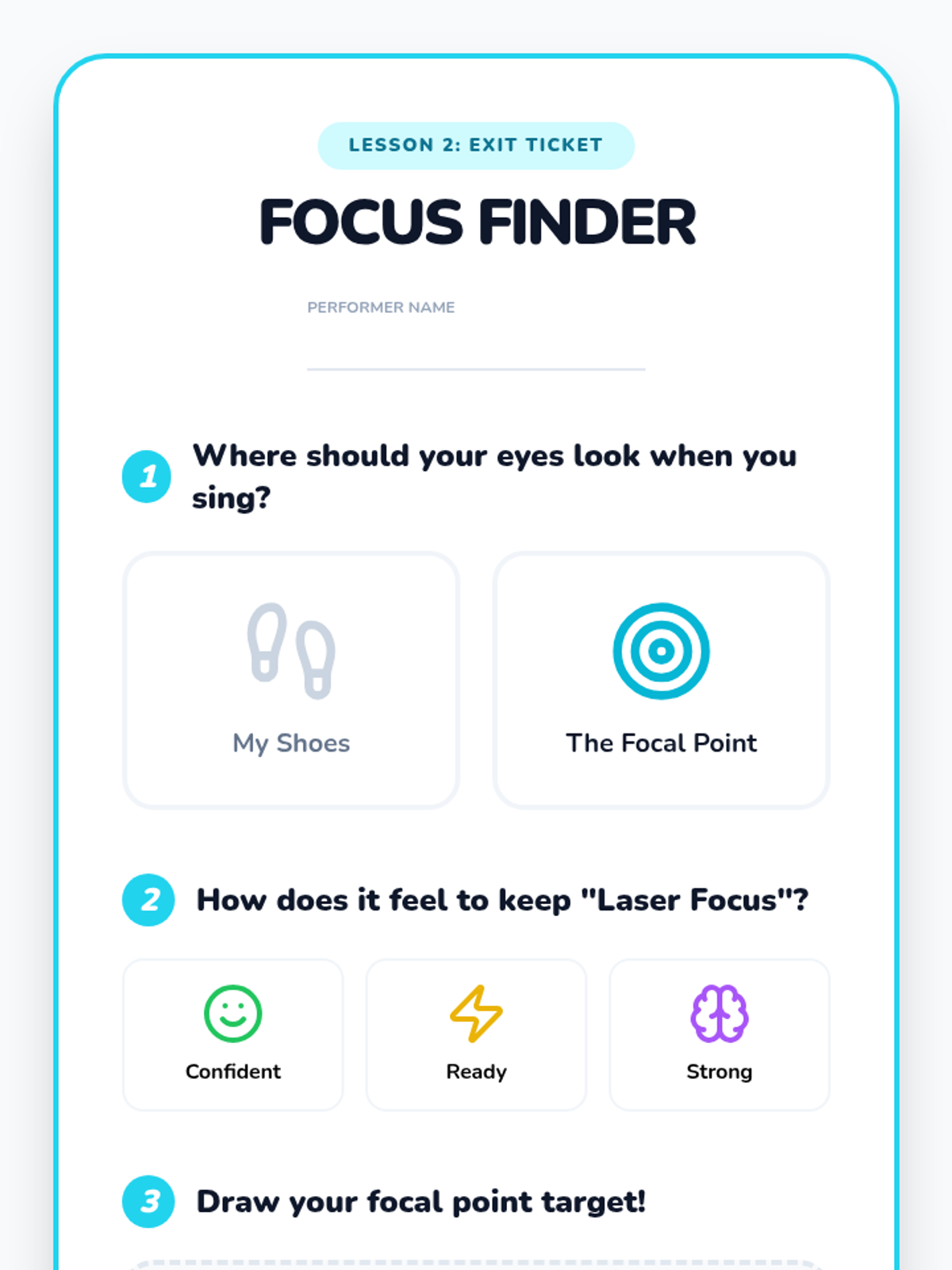
Students practice singing while maintaining focus on a specific point above the audience. This lesson builds concentration and reduces fidgeting through game-based practice.
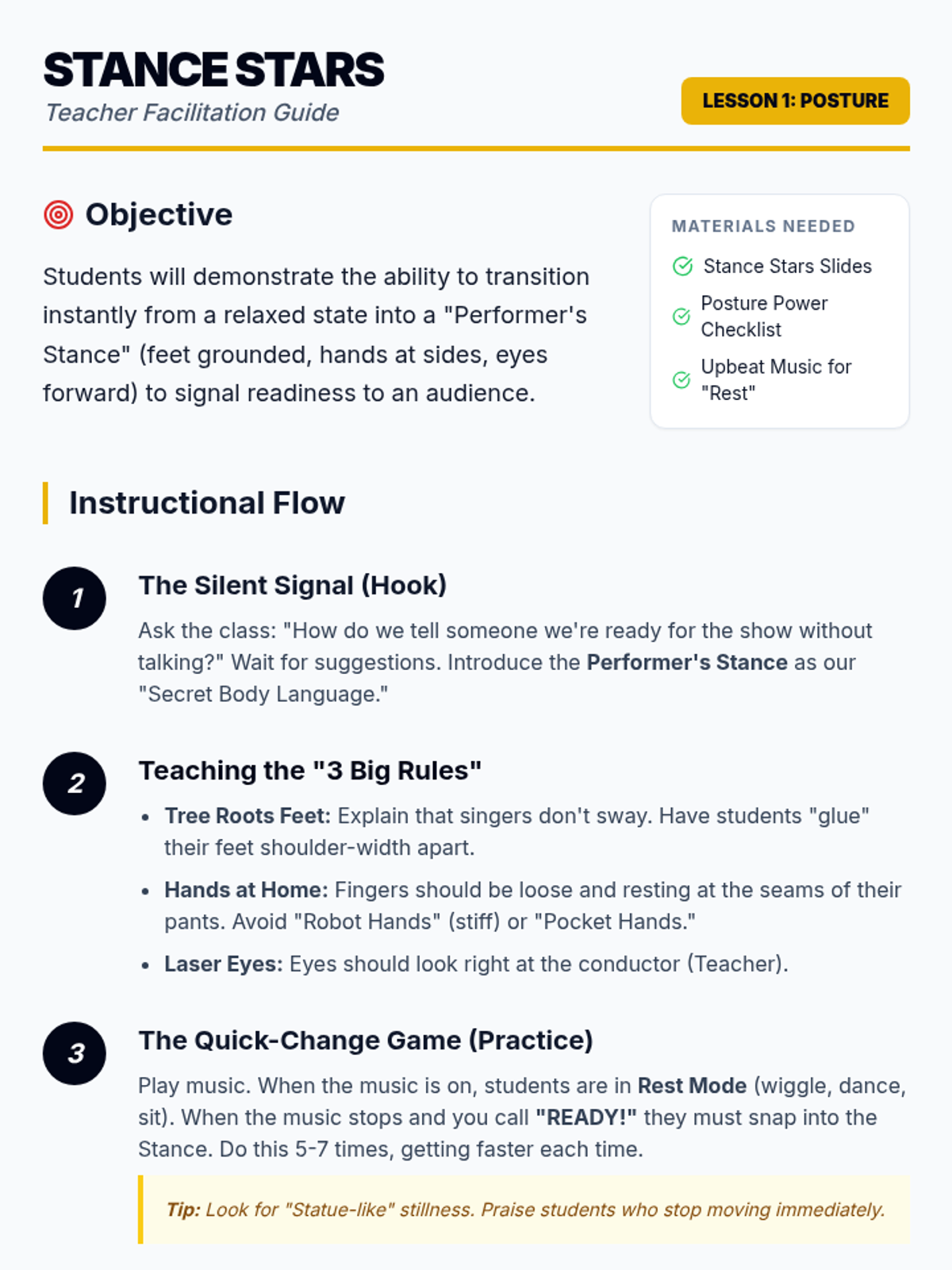
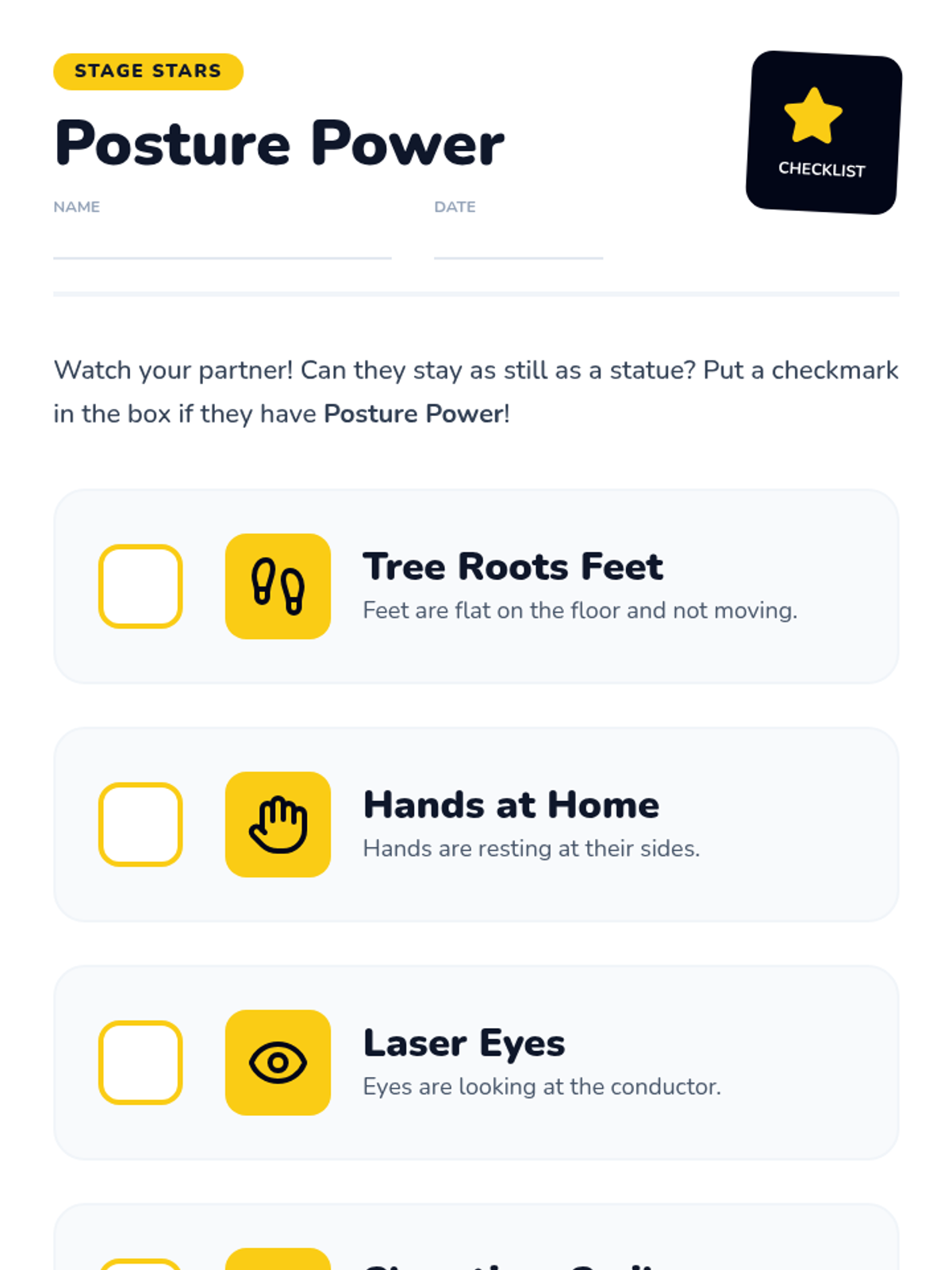
Students learn the 'ready position' for performance: feet grounded, hands at sides, and eyes forward. They practice switching instantly from relaxed 'rest mode' to 'performer mode'.