Historical evolution of performance, technical stagecraft, and core acting techniques. Develops playwriting skills and fosters imaginative expression through script development and production management.
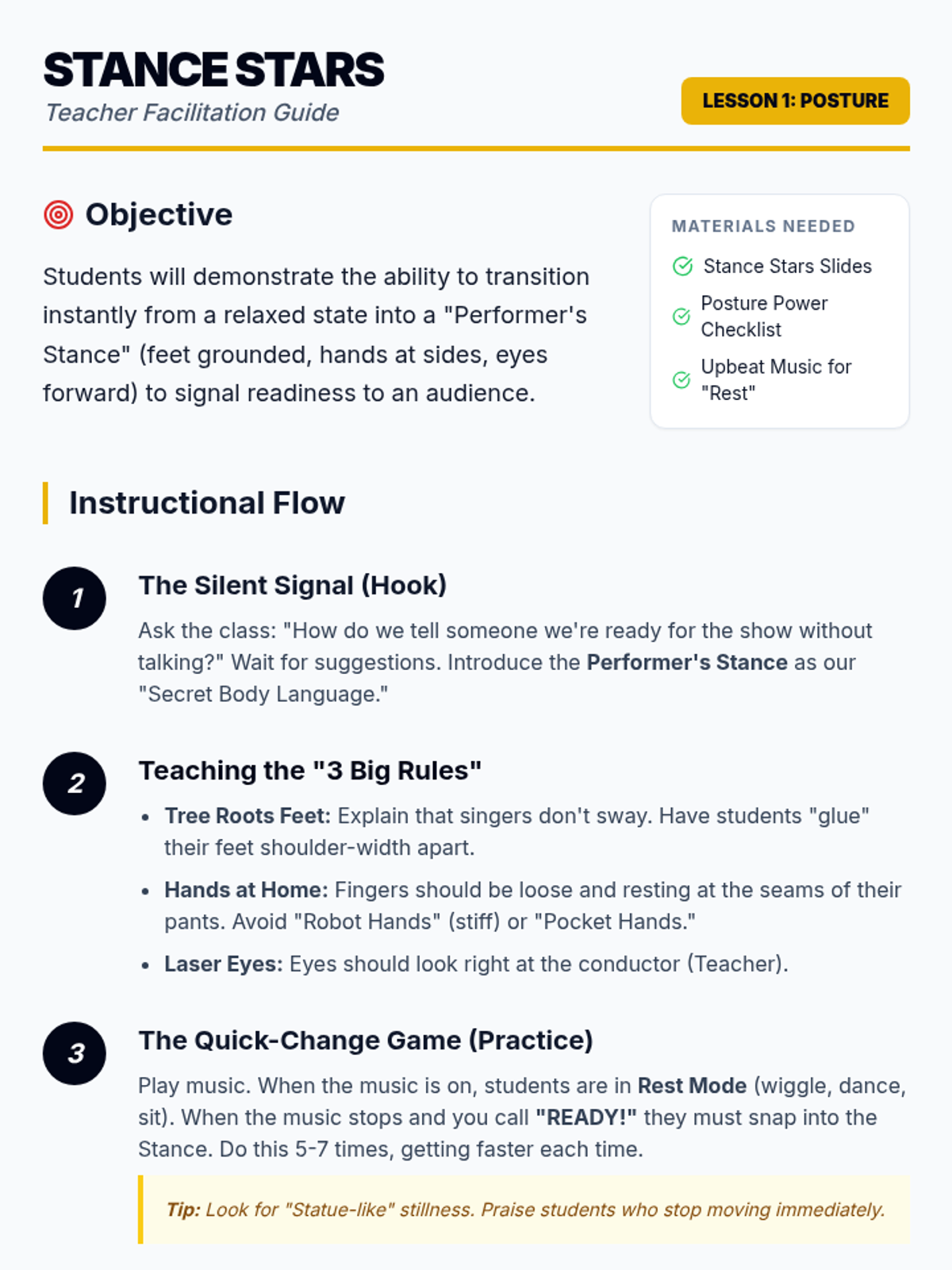
This sequence guides 1st-grade students through the transition from singers to performers. Over five lessons, students master the physical discipline of the performer's stance, visual focus, stage etiquette (entrances and bows), and the full rehearsal process, culminating in a classroom concert.
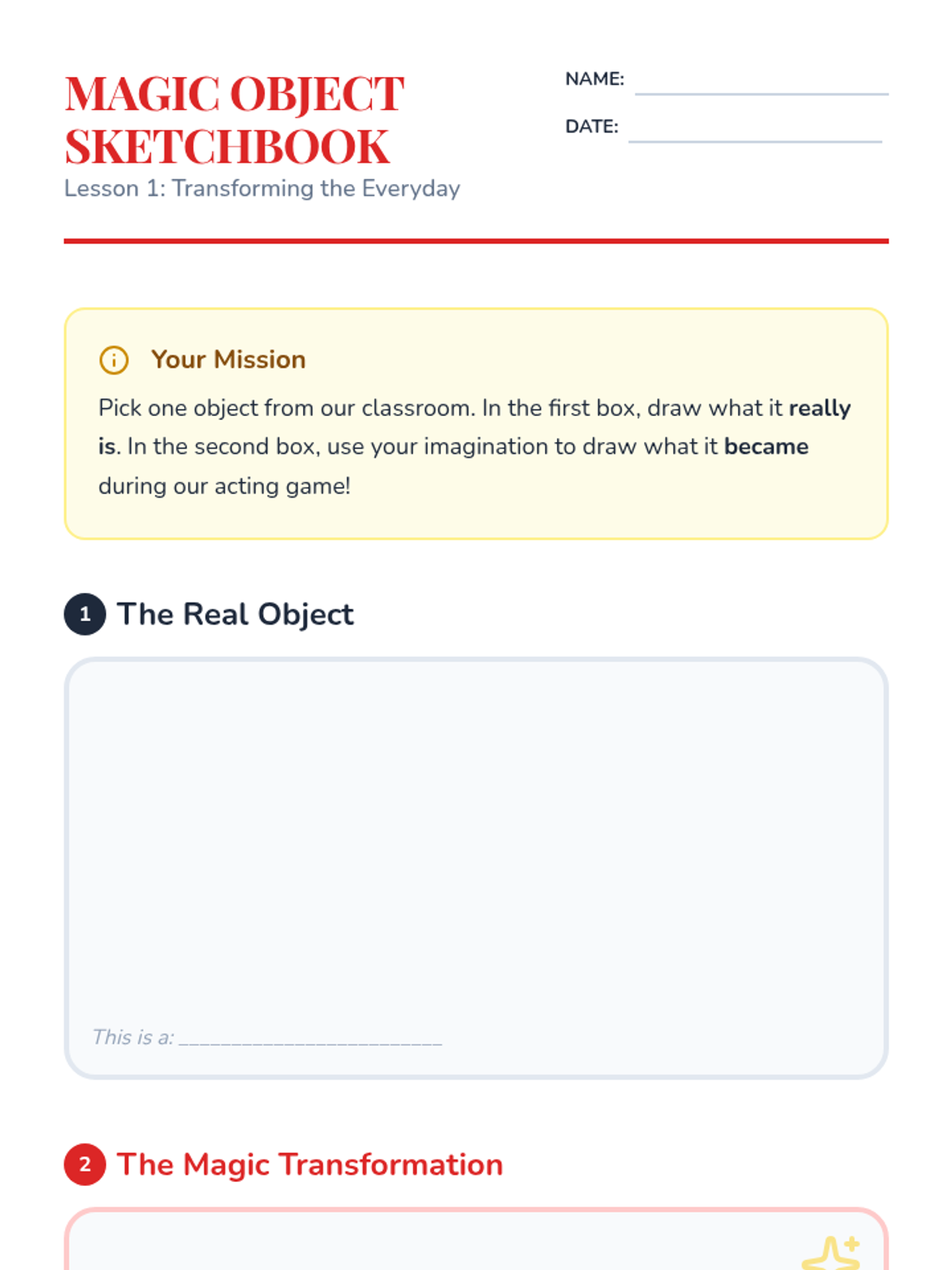
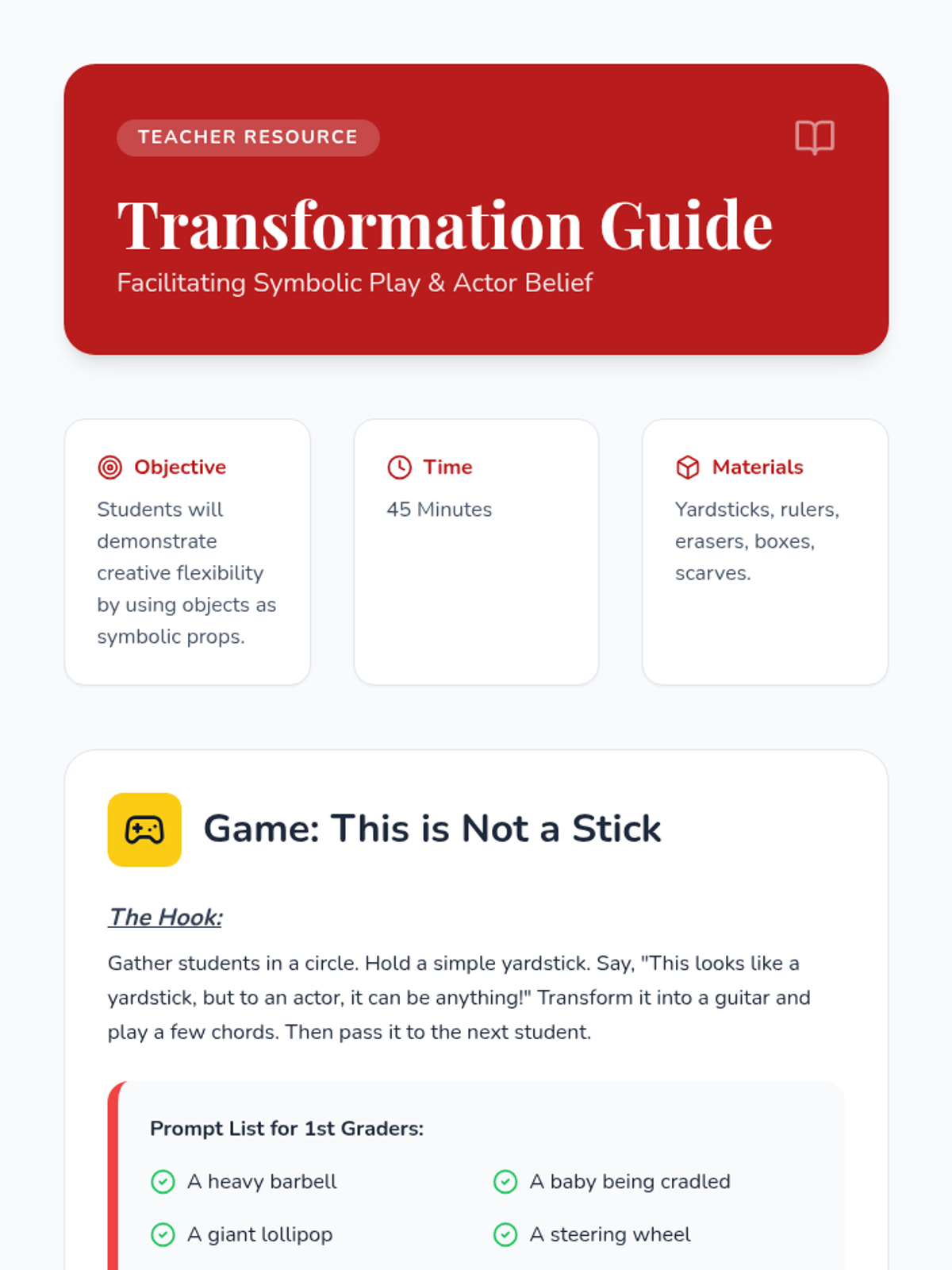
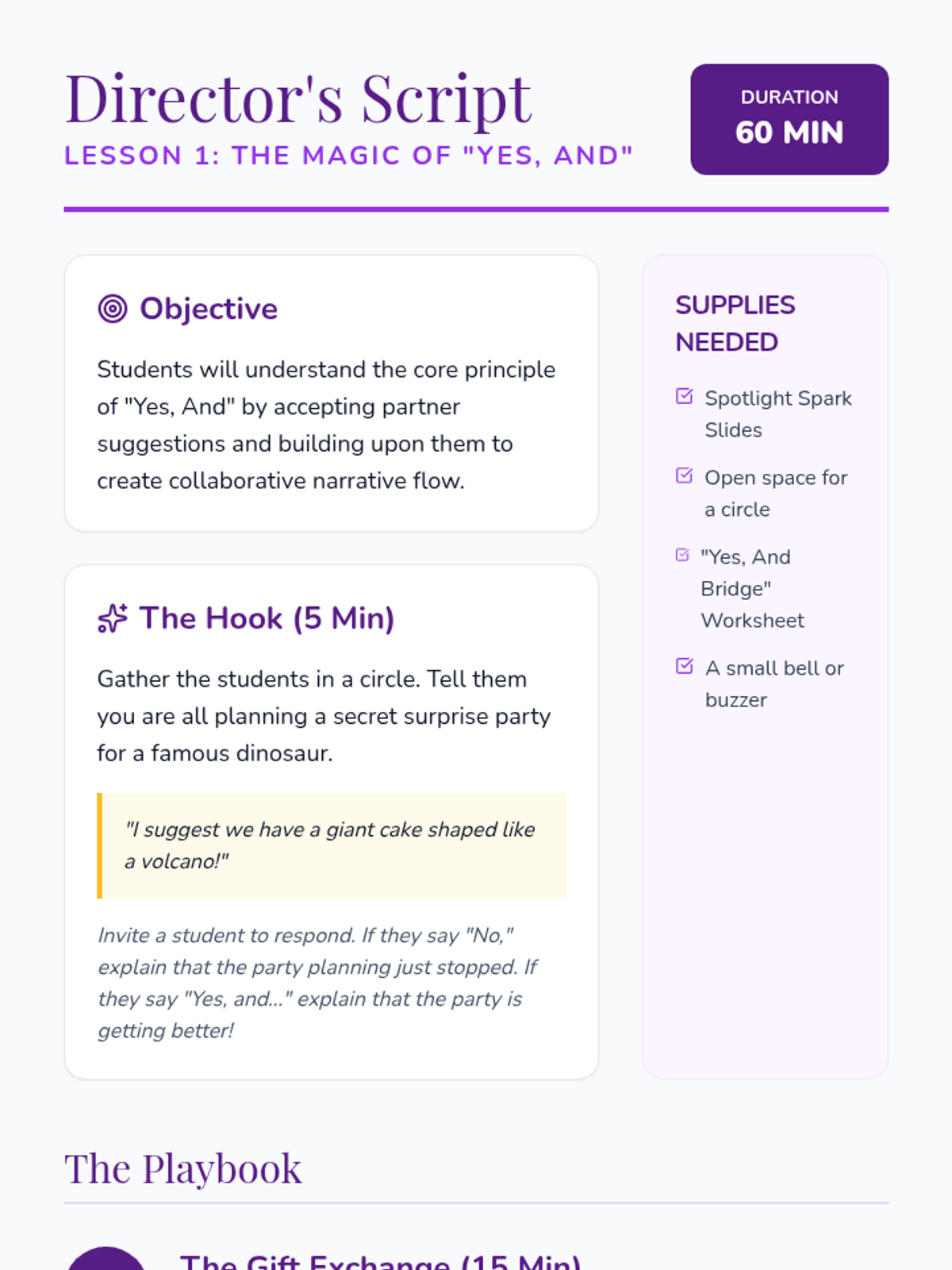
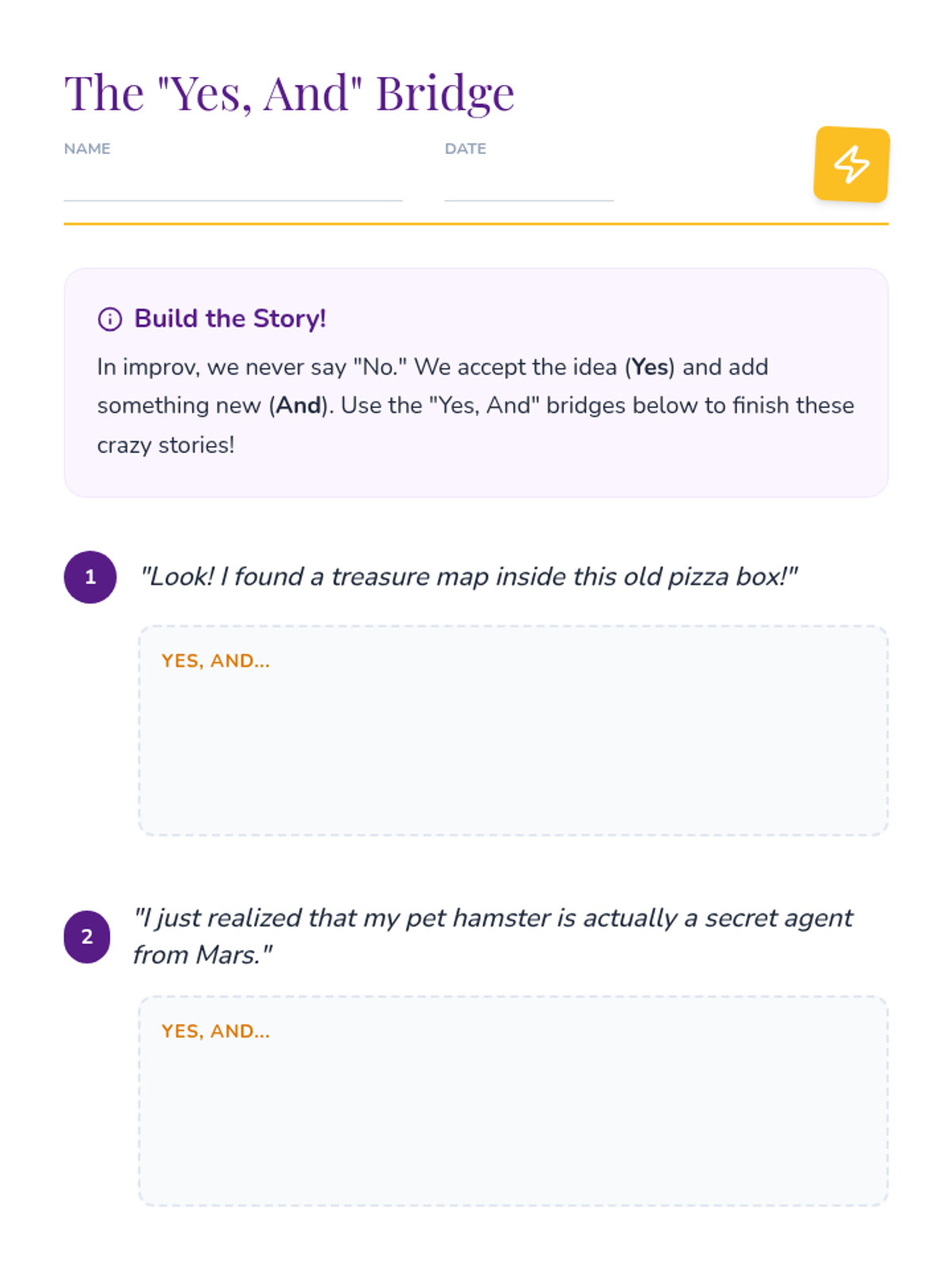
A 1st-grade theatre sequence focusing on symbolic play, collaborative world-building, and the 'Yes, And' principle of improvisation to create and perform original stories.
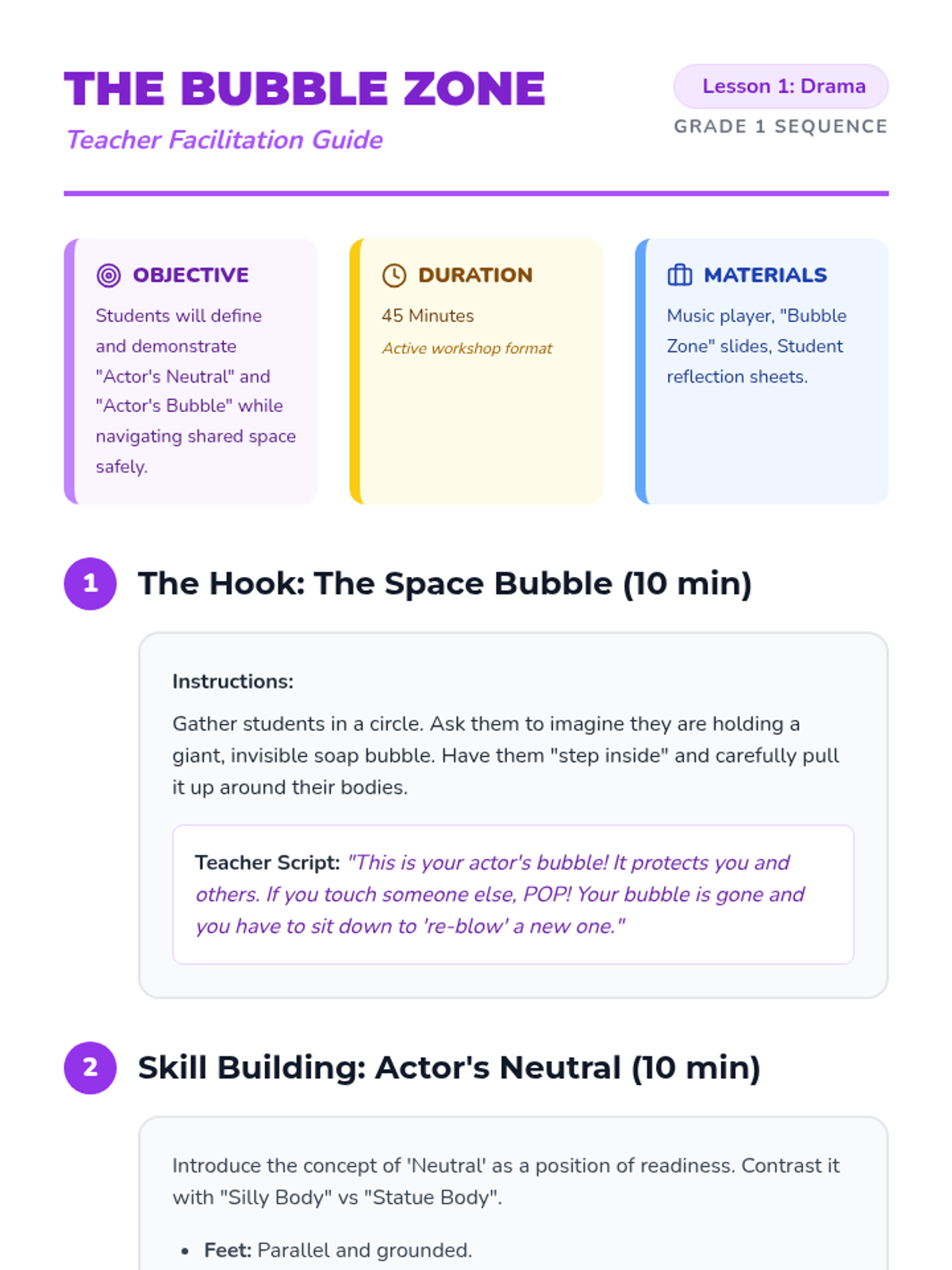
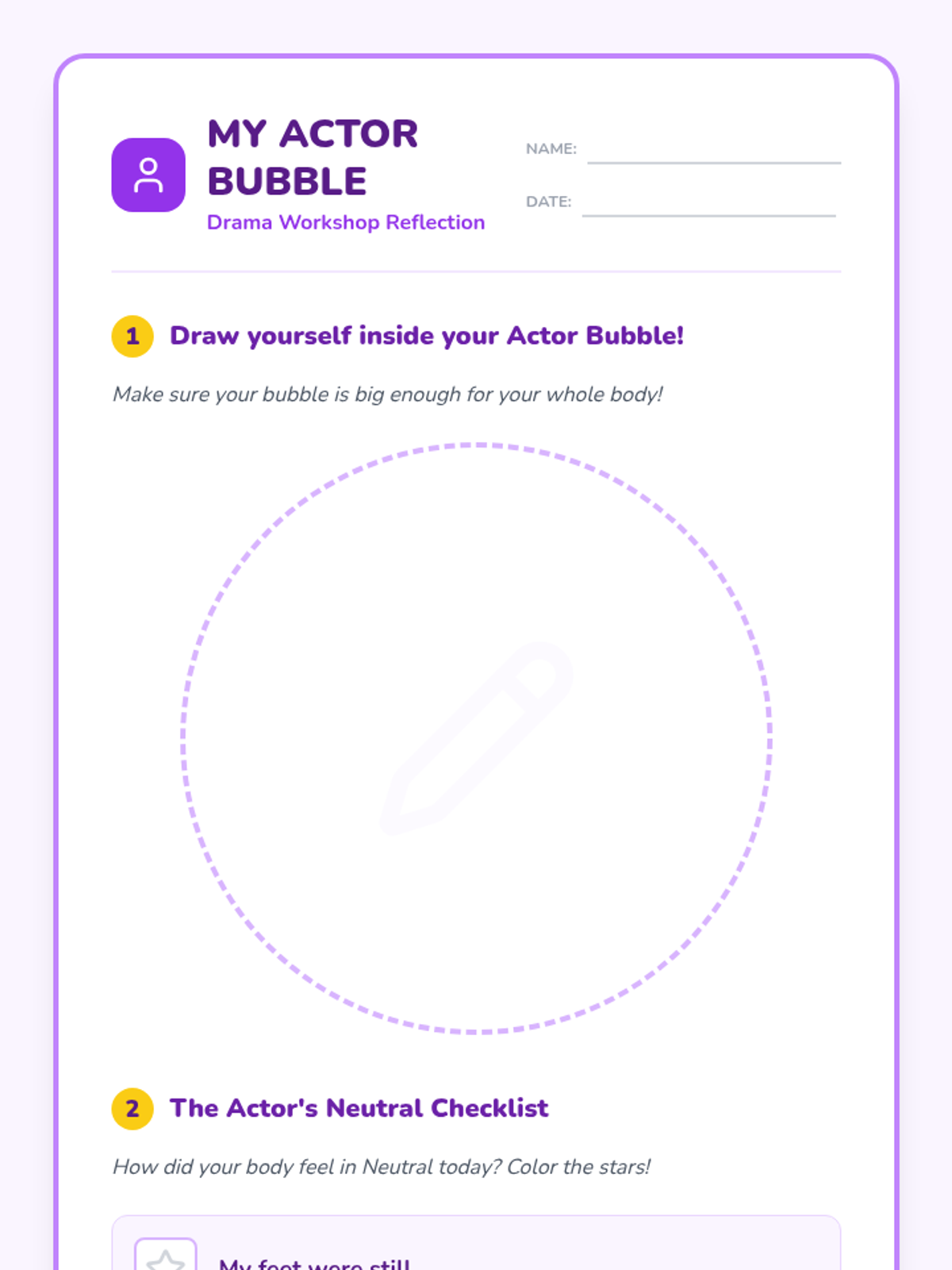
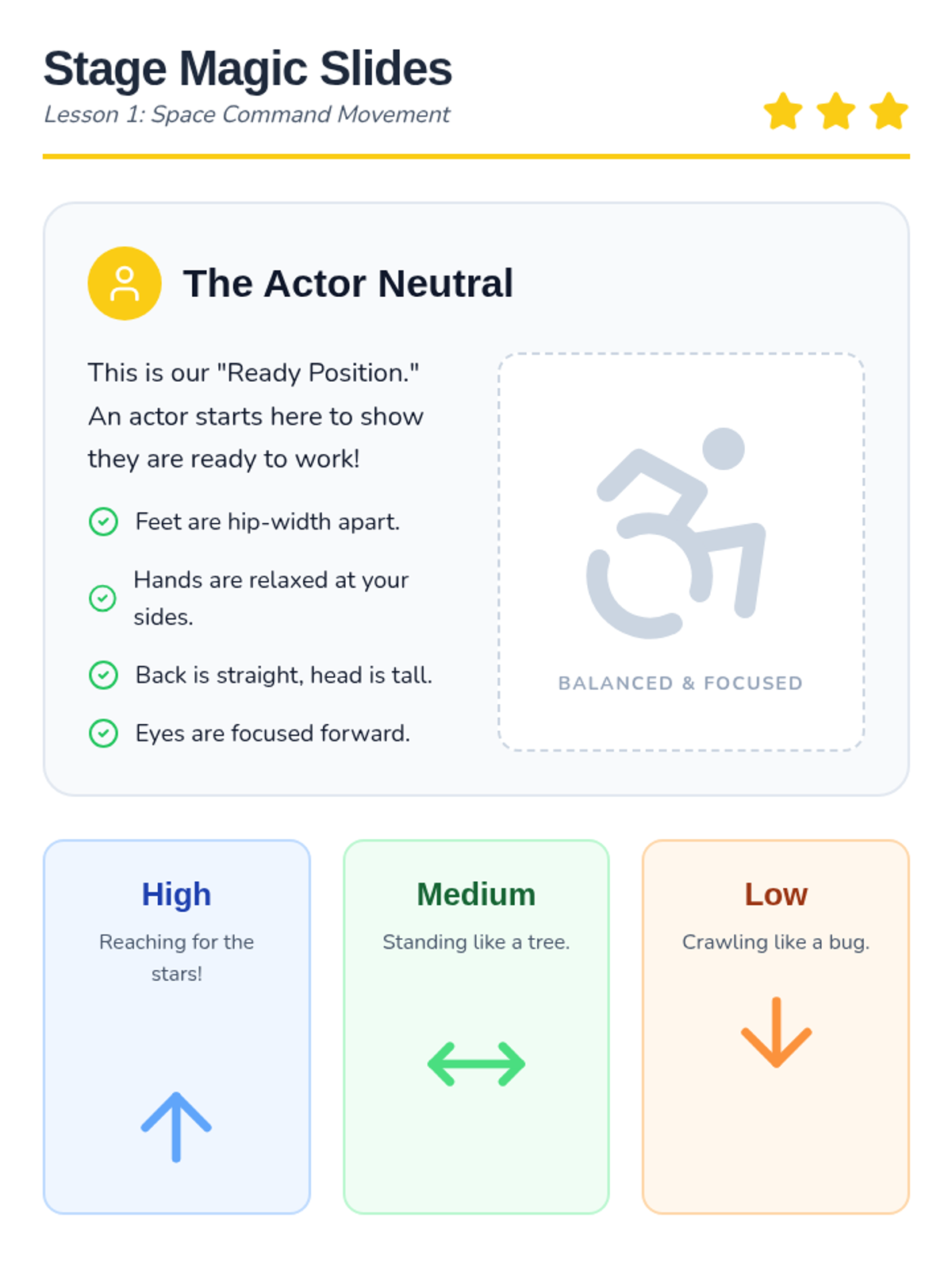
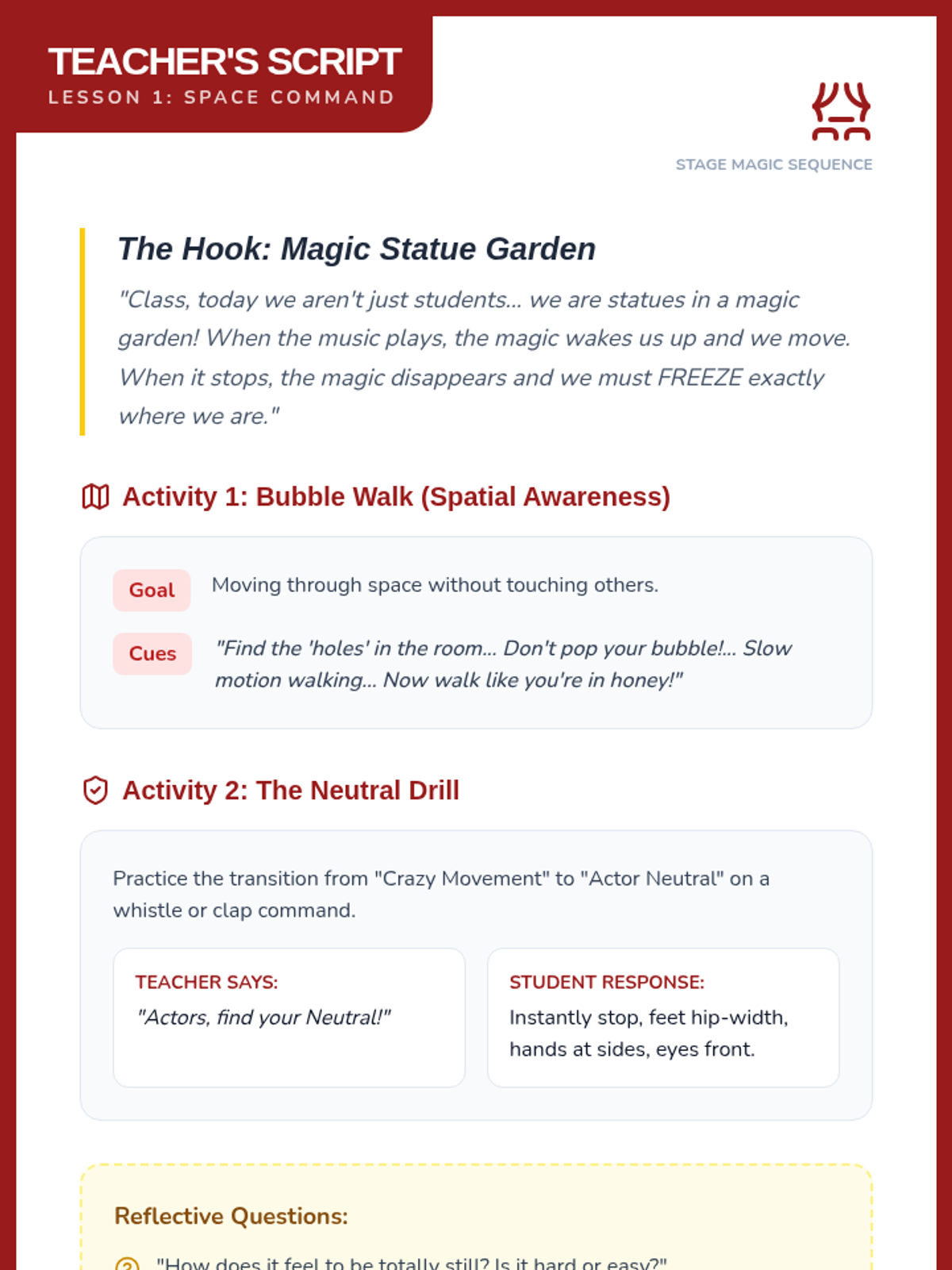
A 1st-grade theater sequence focusing on the actor's primary tools: the body and the voice. Students progress from spatial awareness and physical levels to emotional expression and vocal variety, culminating in a short character performance.
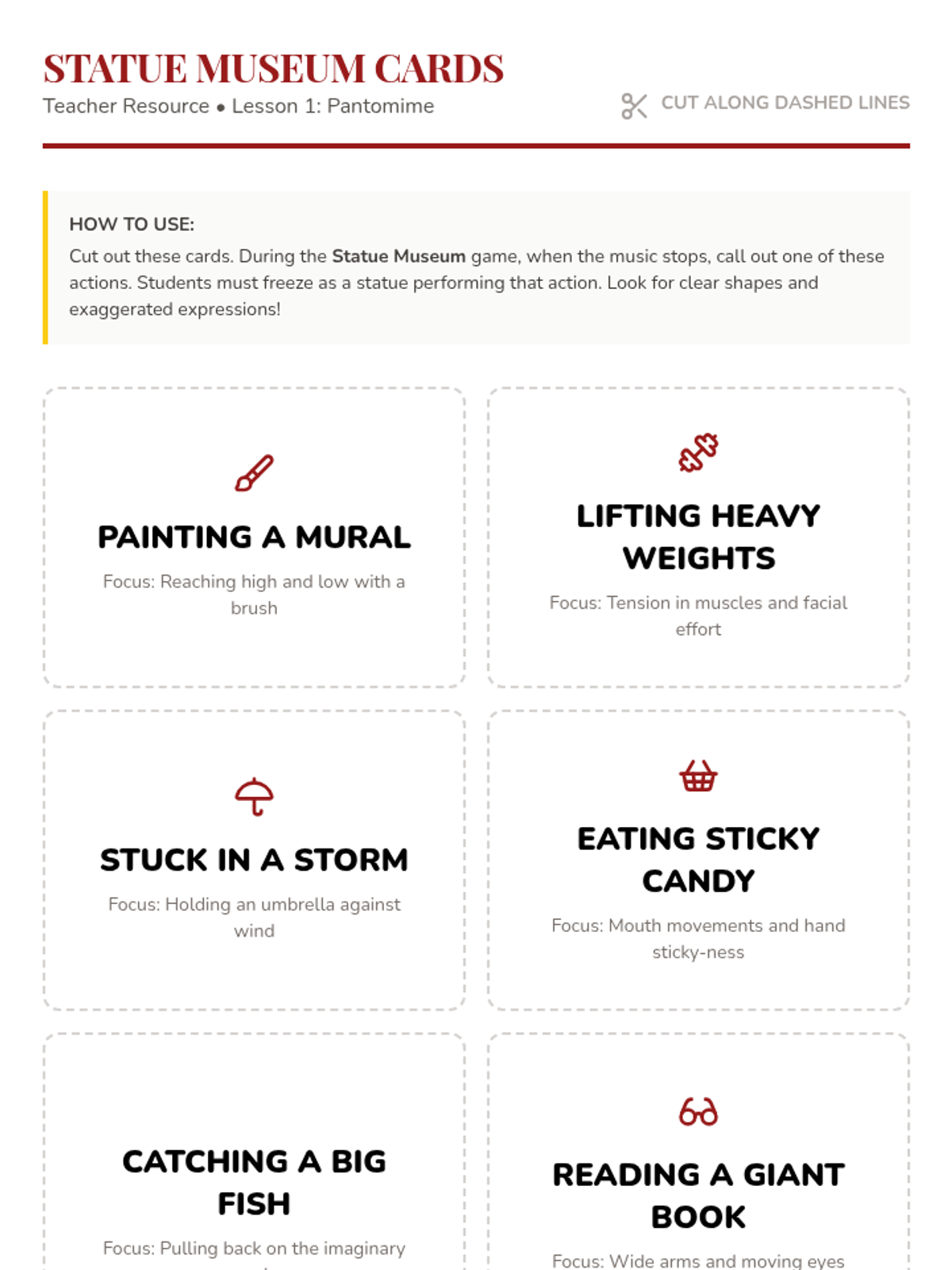
A 1st Grade theater sequence focused on developing physical and vocal expression through games, movement, and character exploration. Students learn to use their bodies and voices as tools to tell stories and portray characters.
This sequence develops improvisation skills and ensemble collaboration, teaching students to react authentically in the moment. Students build trust and creative confidence by practicing 'Yes, And,' establishing environments, and solving narrative problems as a team.
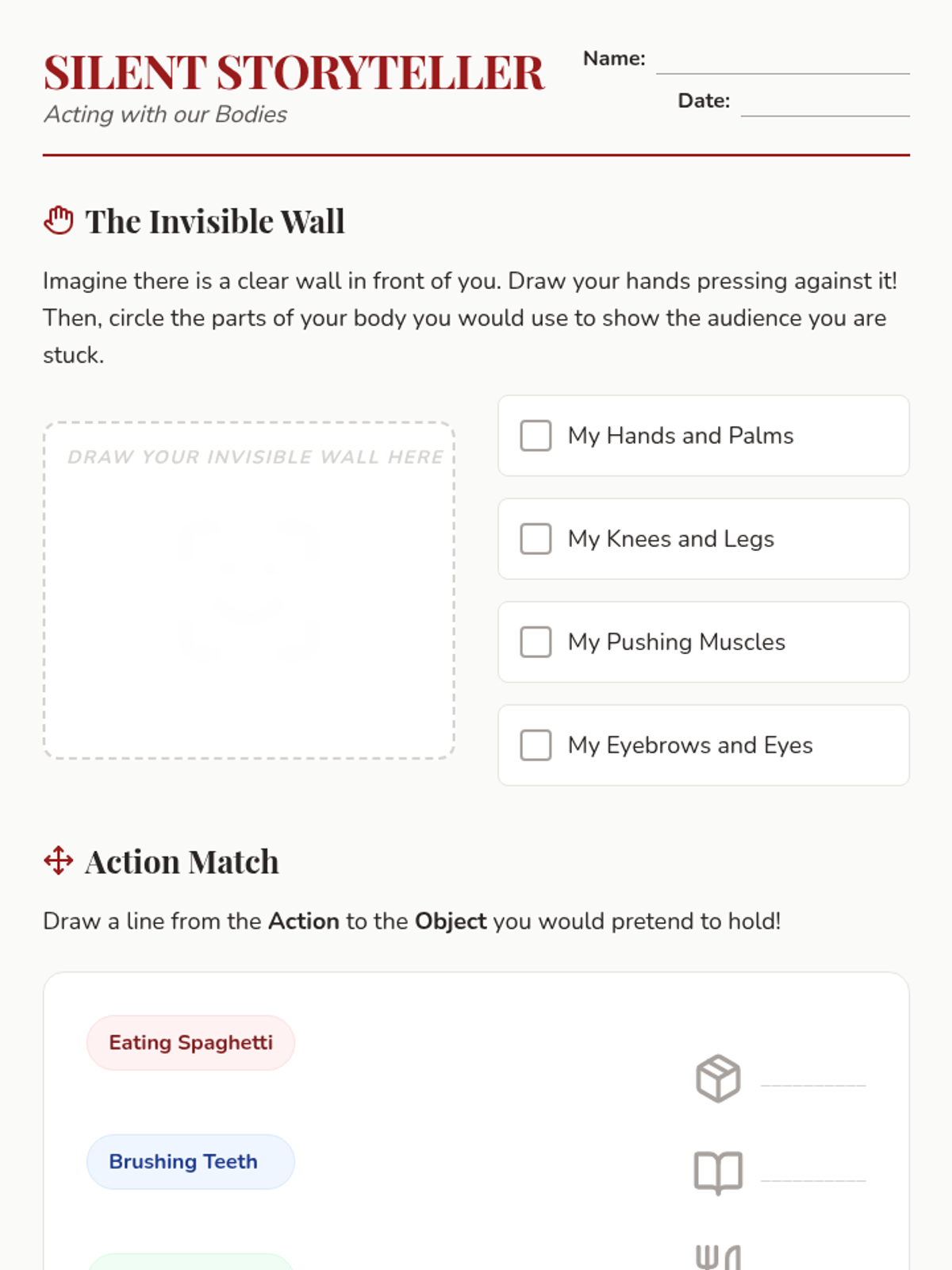
A foundational theater unit for 1st graders focused on the three tools of the actor: body, voice, and imagination. Students explore pantomime, facial expressions, vocal projection, and character movement, culminating in simple partner improvisations.
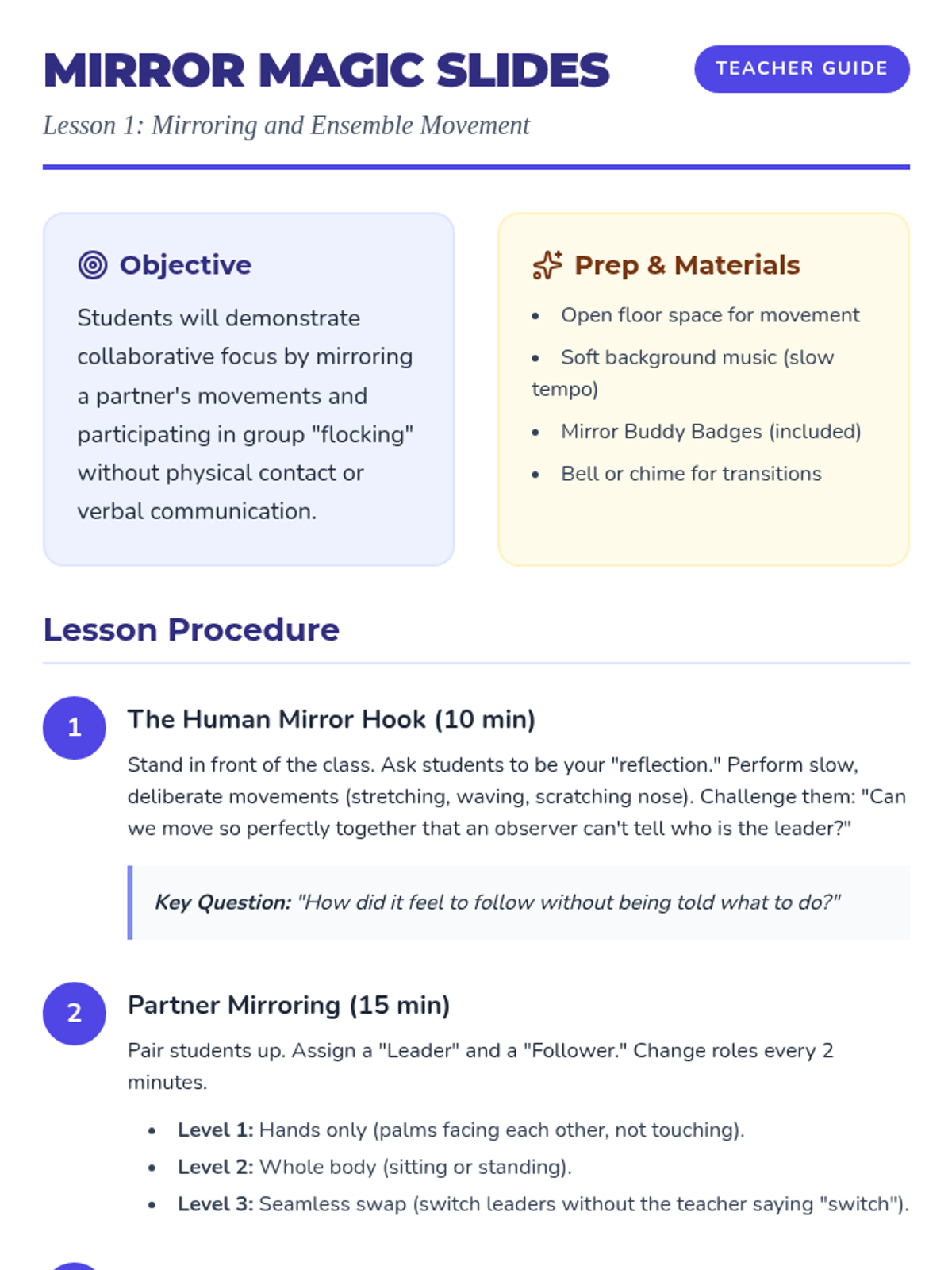
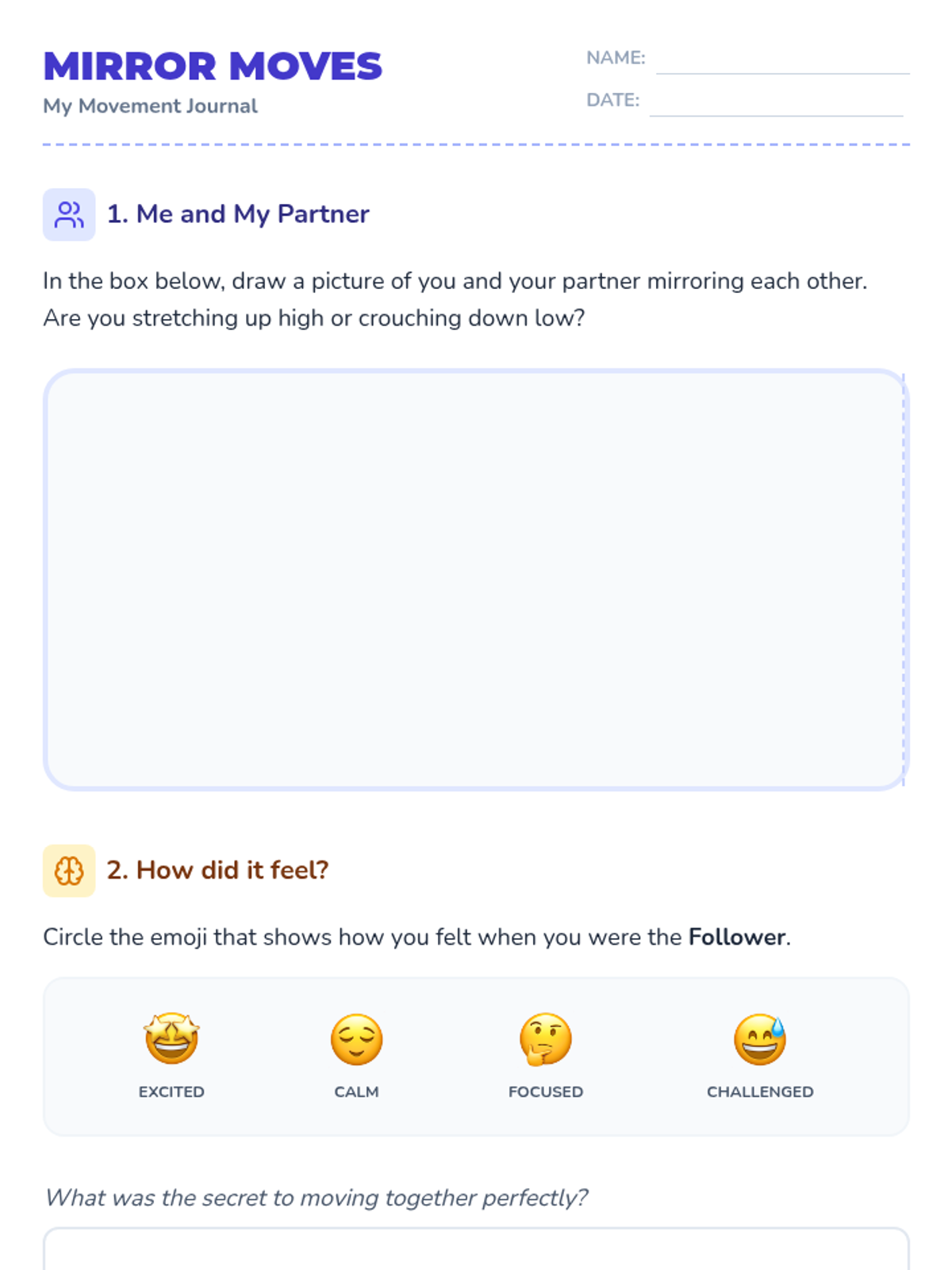
A 1st Grade performing arts sequence focused on ensemble skills, movement, and improvisational storytelling to develop collaboration and non-verbal communication.
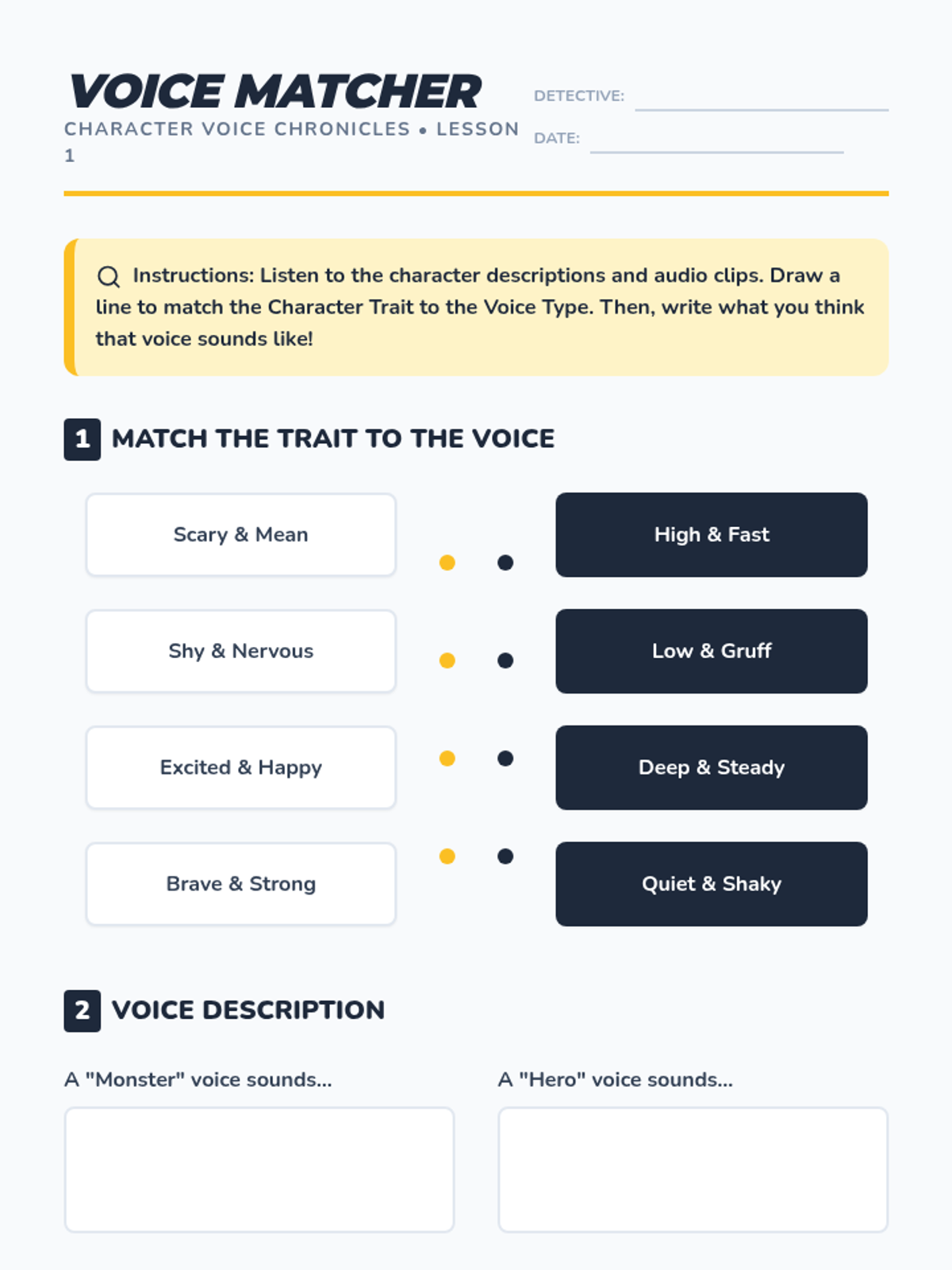
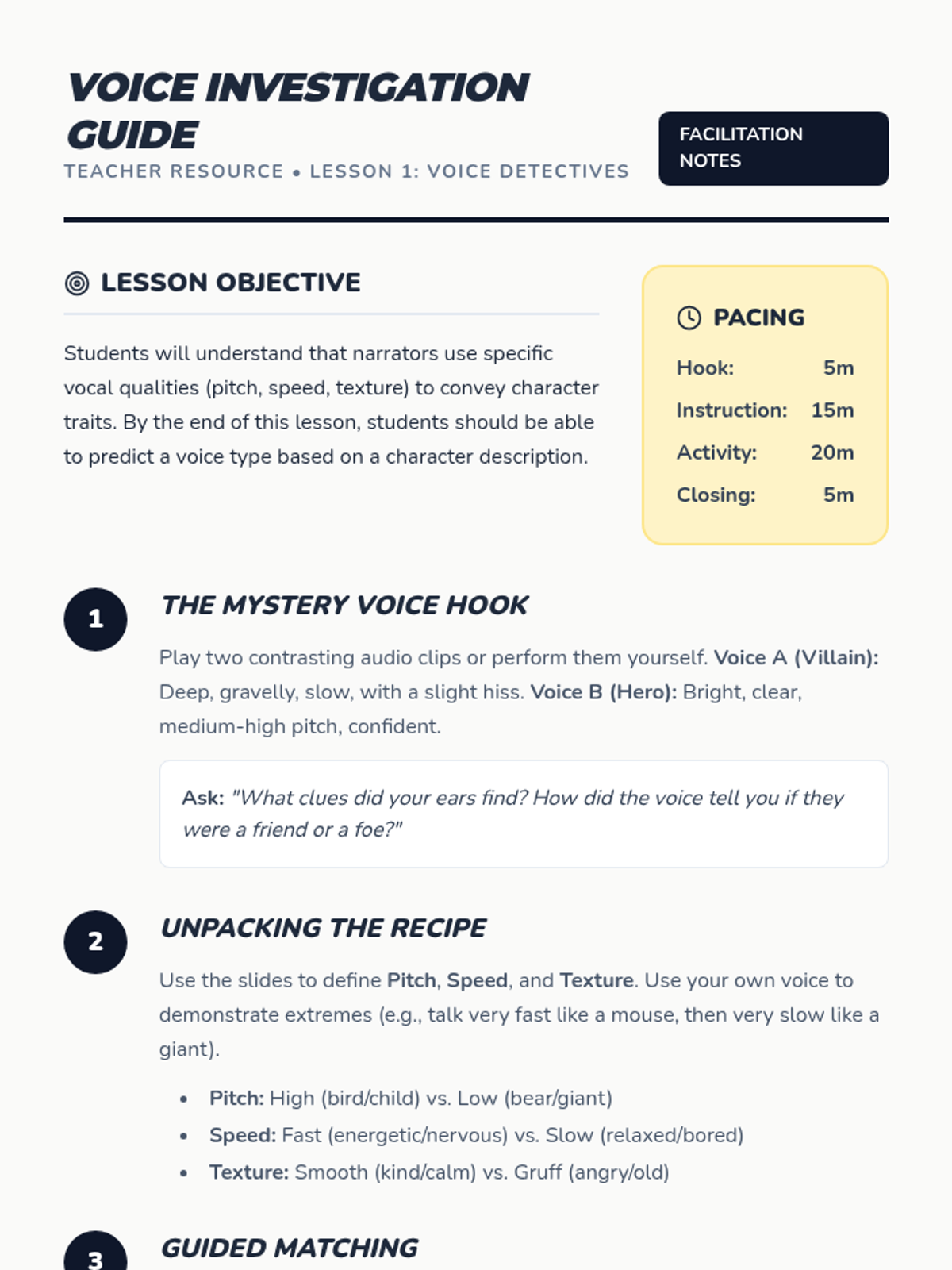
Students analyze how narrators use distinct voices to differentiate characters, map character traits to vocal qualities, and practice performing dialogue for a final Reader's Theater performance.