Students combine information from multiple short sources on a single topic to answer an inquiry question.
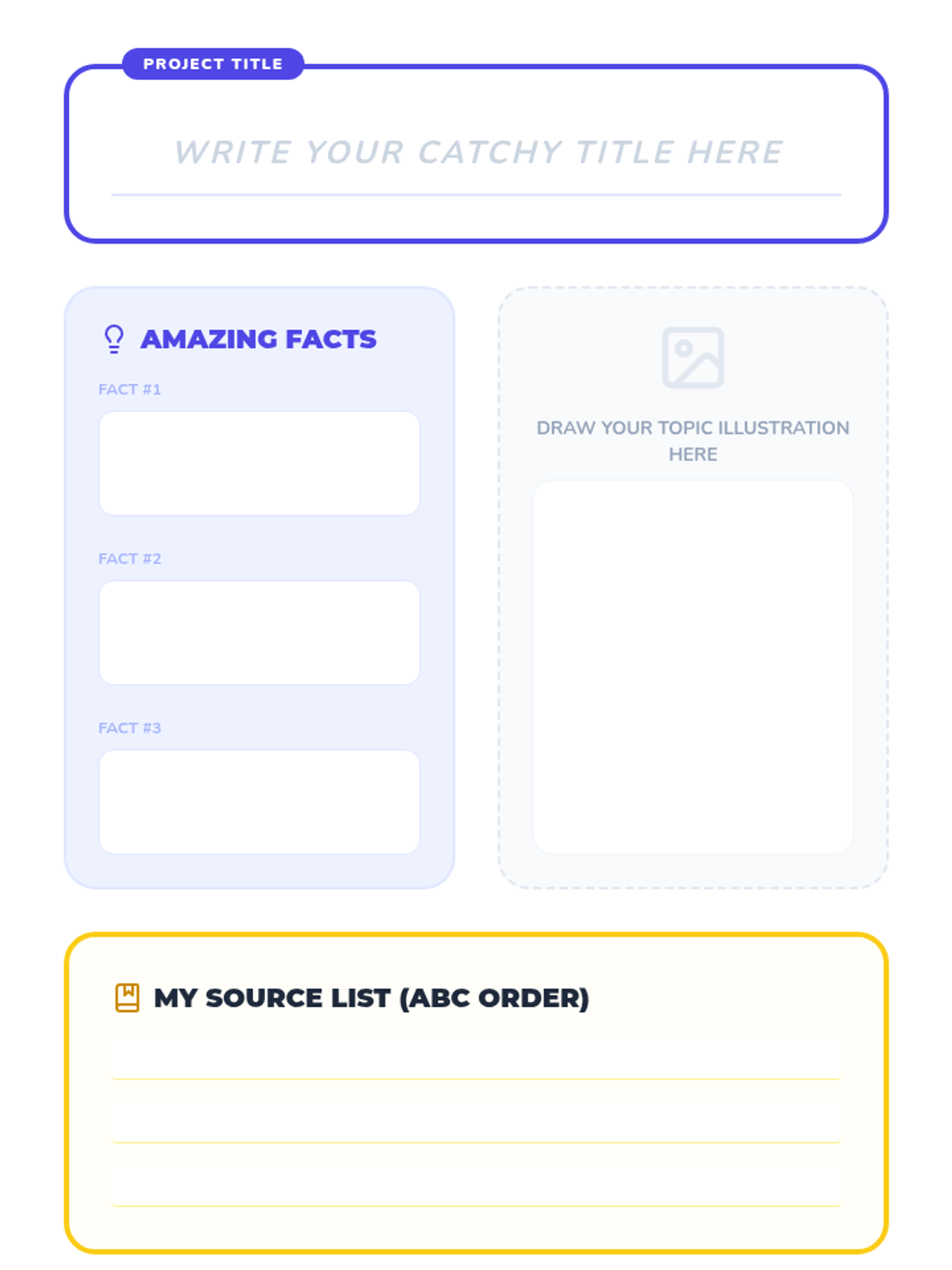
Students create a mini-research poster on a topic of their choice. They apply their knowledge by including three facts and a correctly formatted, alphabetized bibliography with at least three sources. The lesson includes a gallery walk for peer feedback.
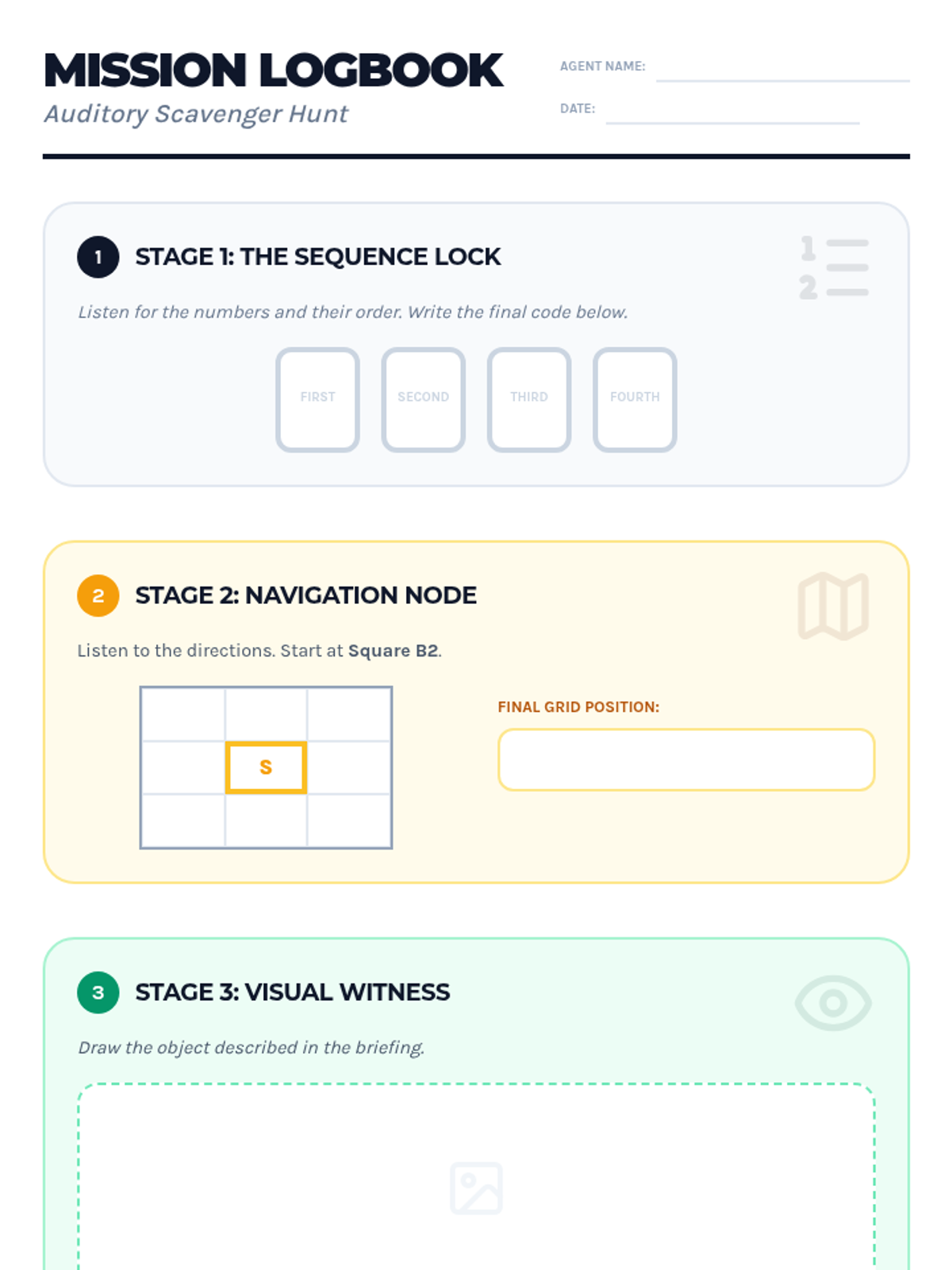
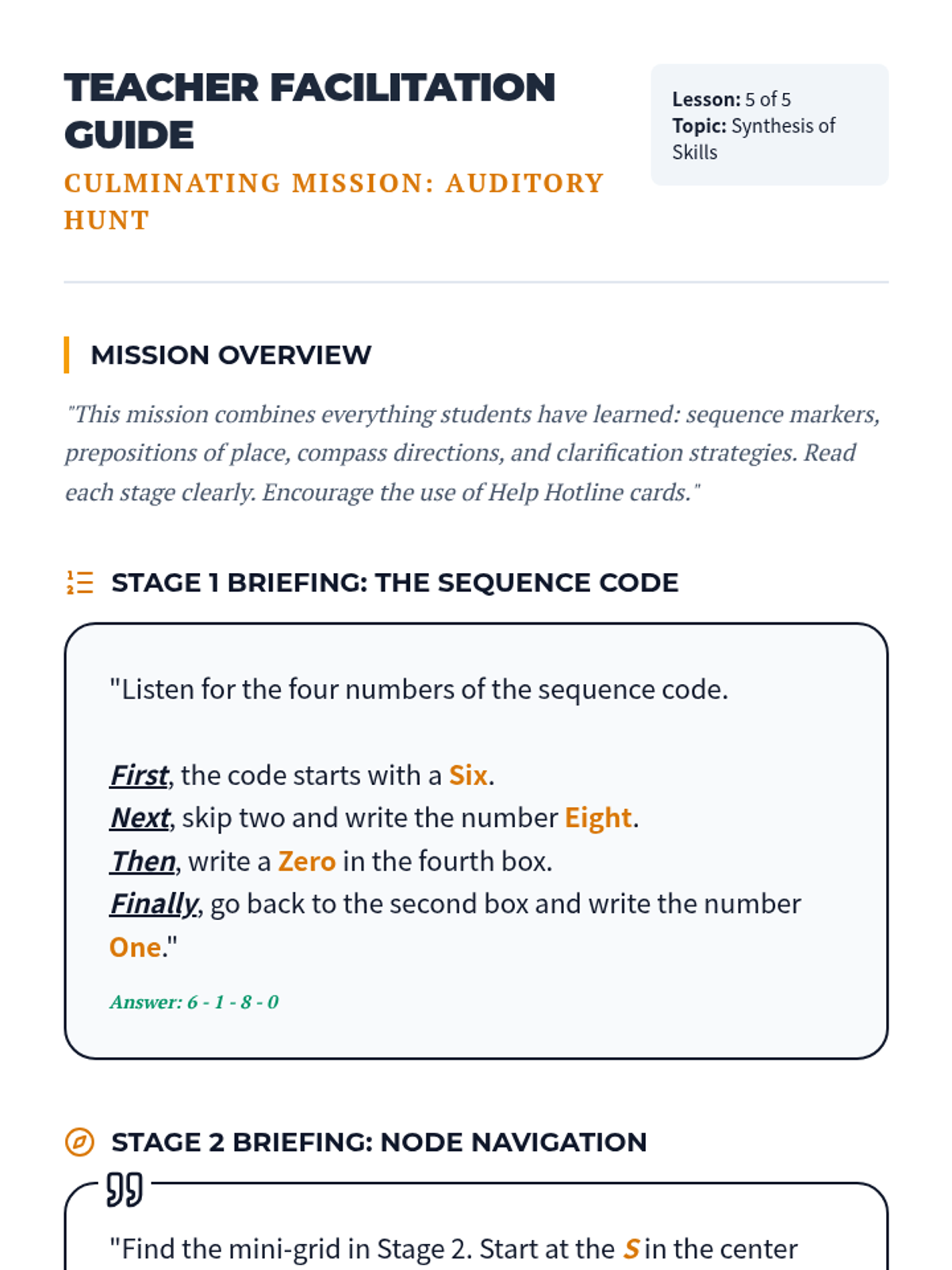
In this culminating activity, students solve a series of puzzles where the clues are delivered via audio recordings. Success depends on synthesizing sequence markers, spatial details, and specific vocabulary.
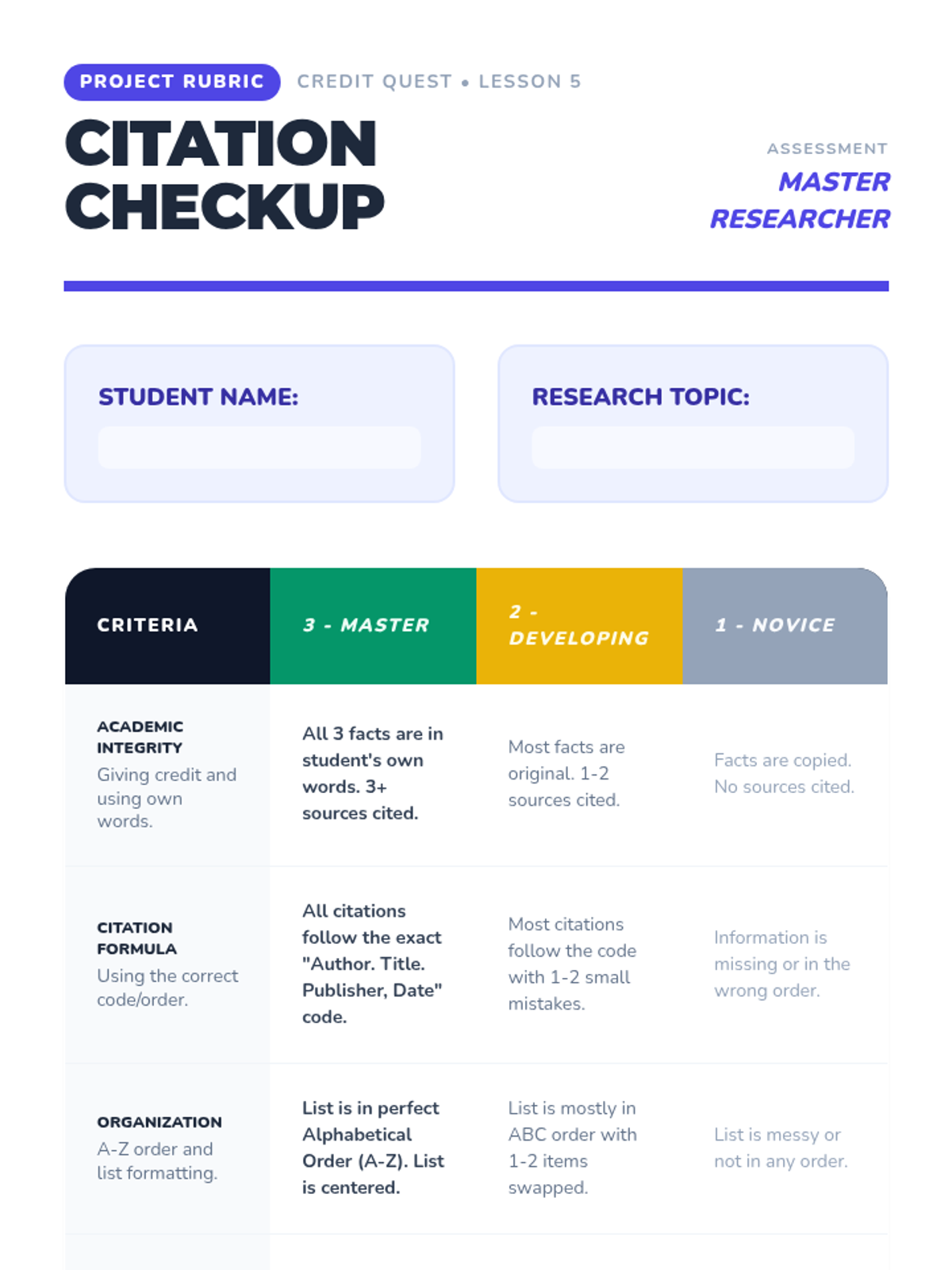
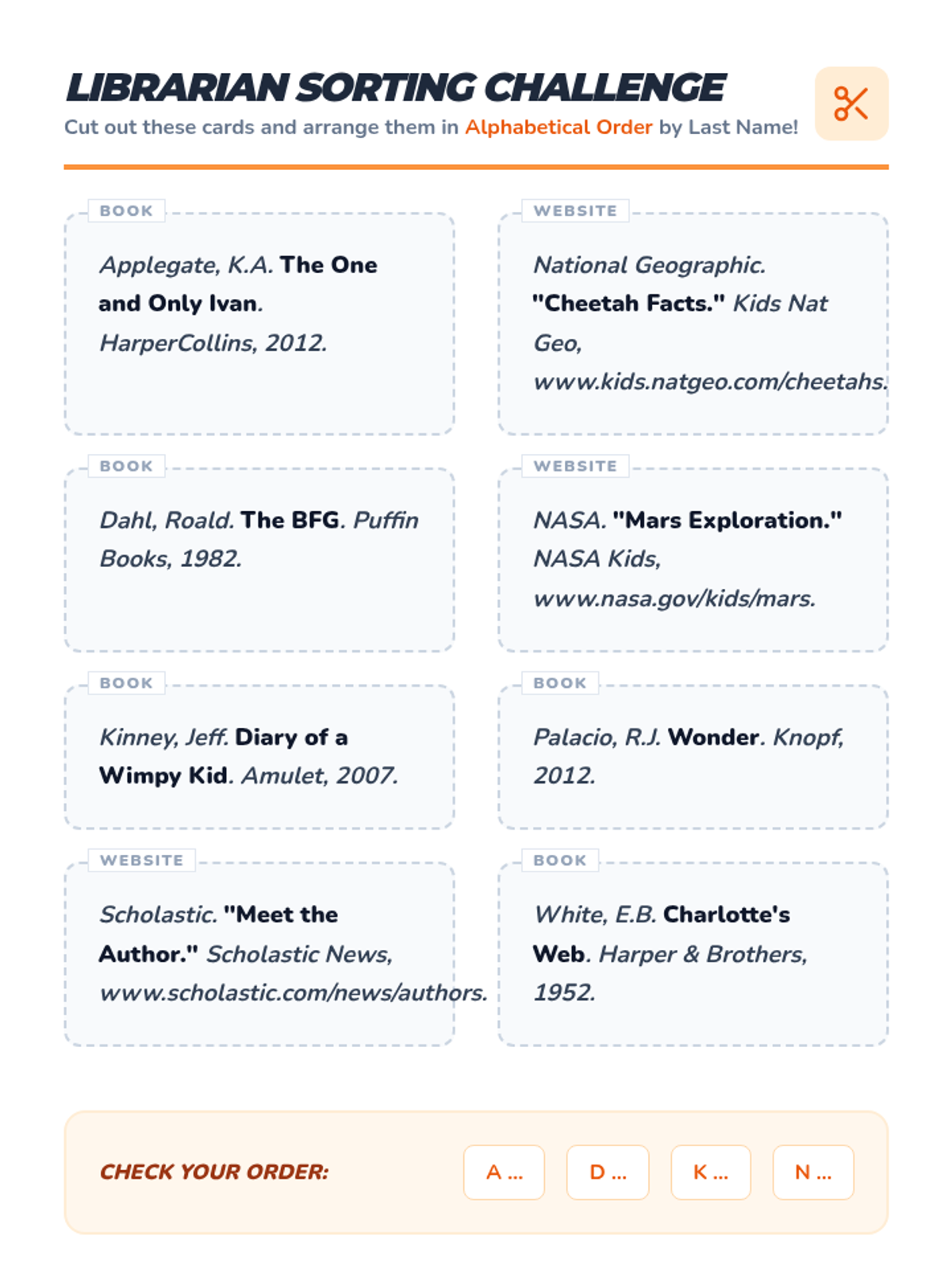
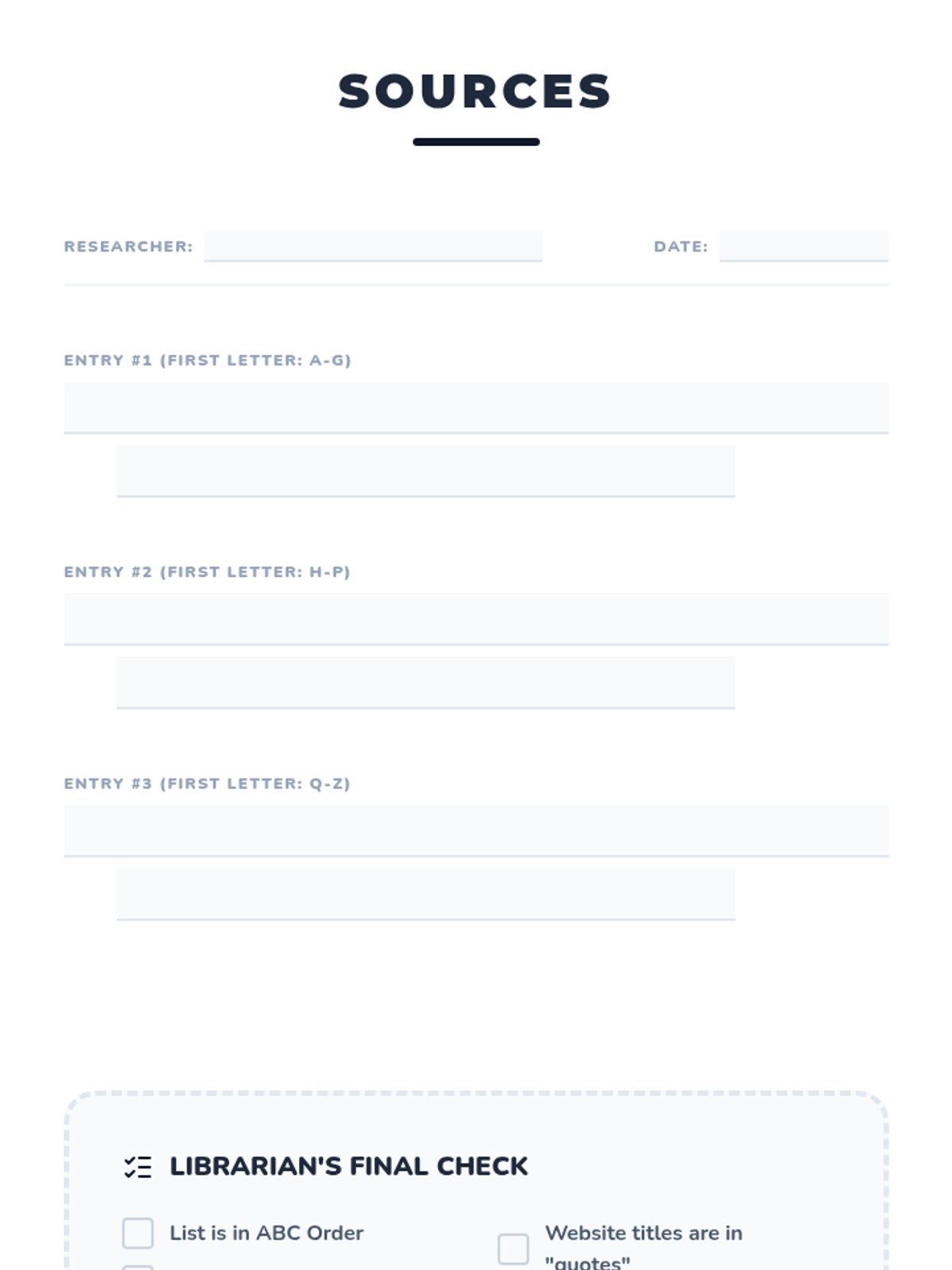
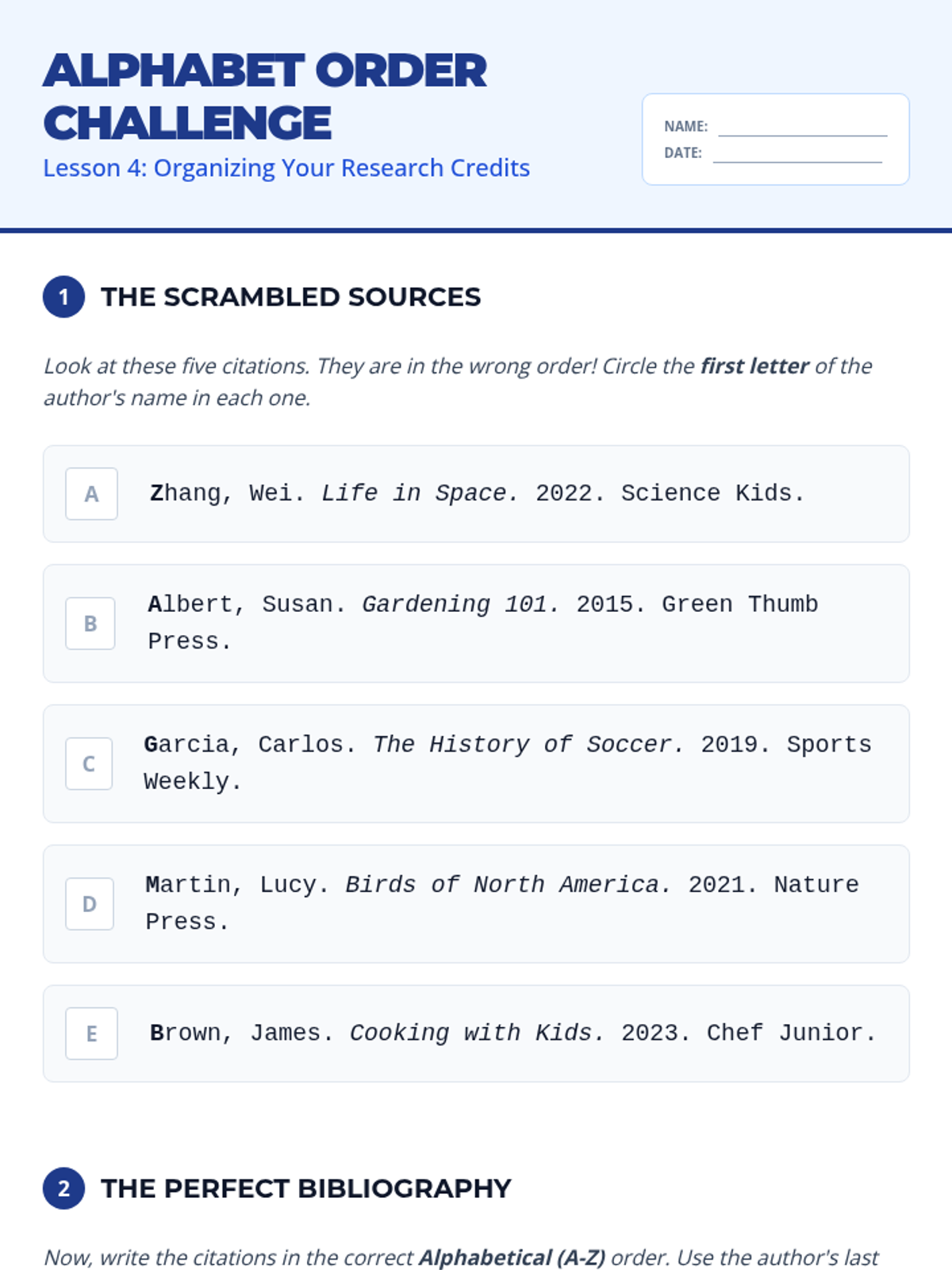
Students learn how to organize individual citations into a list, emphasizing alphabetical order. They practice formatting a simple bibliography page using citations generated in previous lessons. This prepares them for the final structural requirement of research papers.
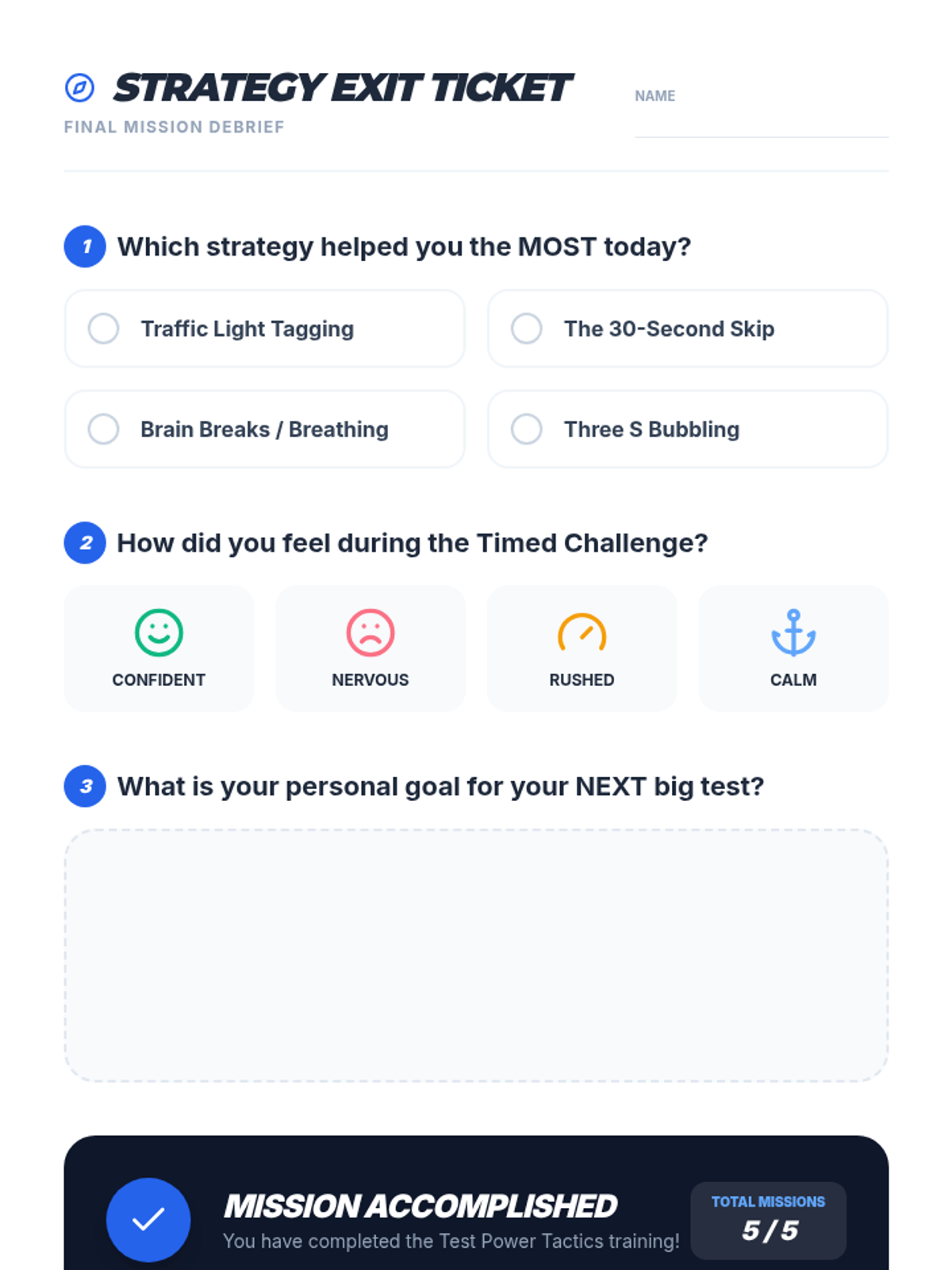
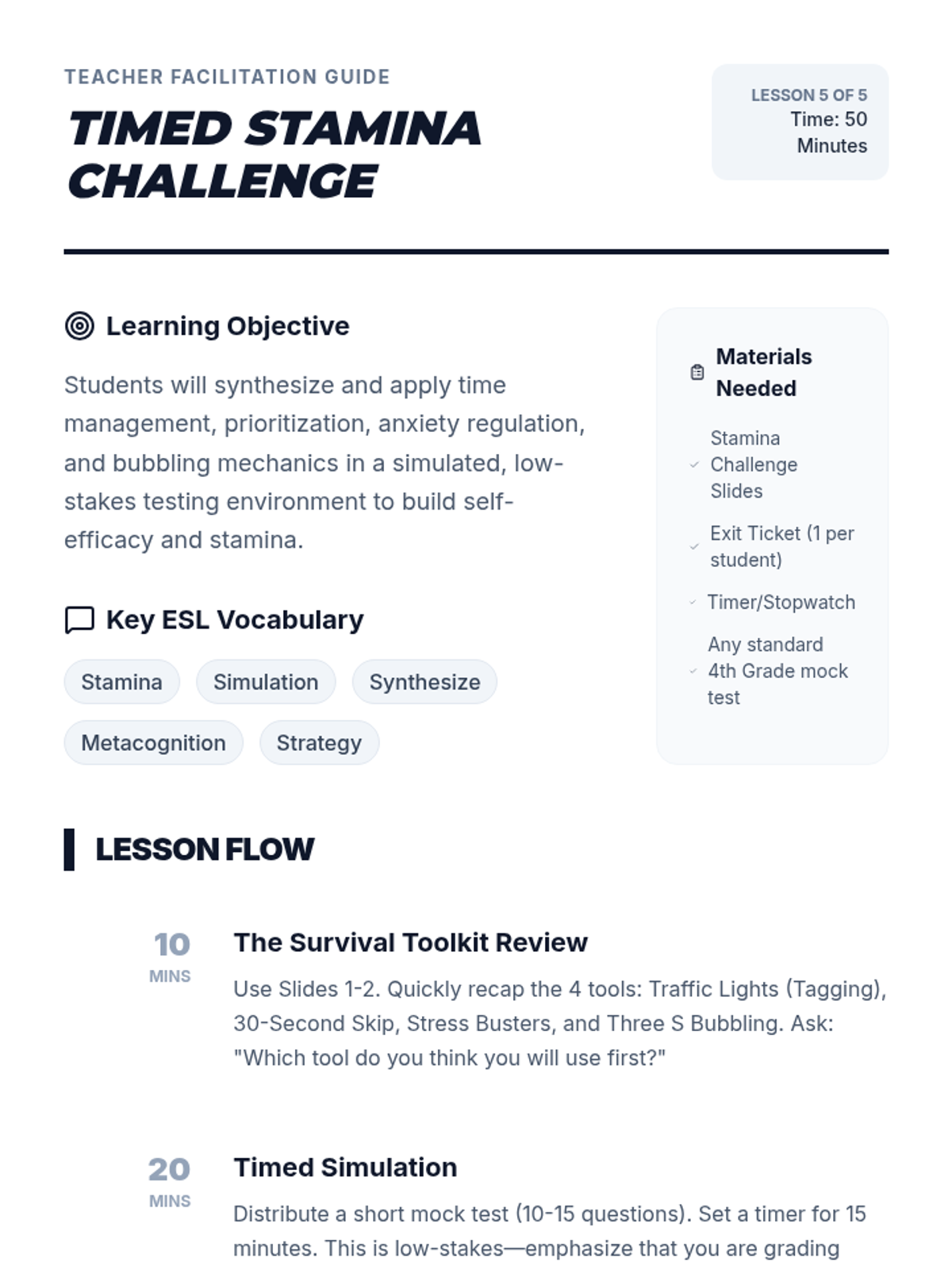
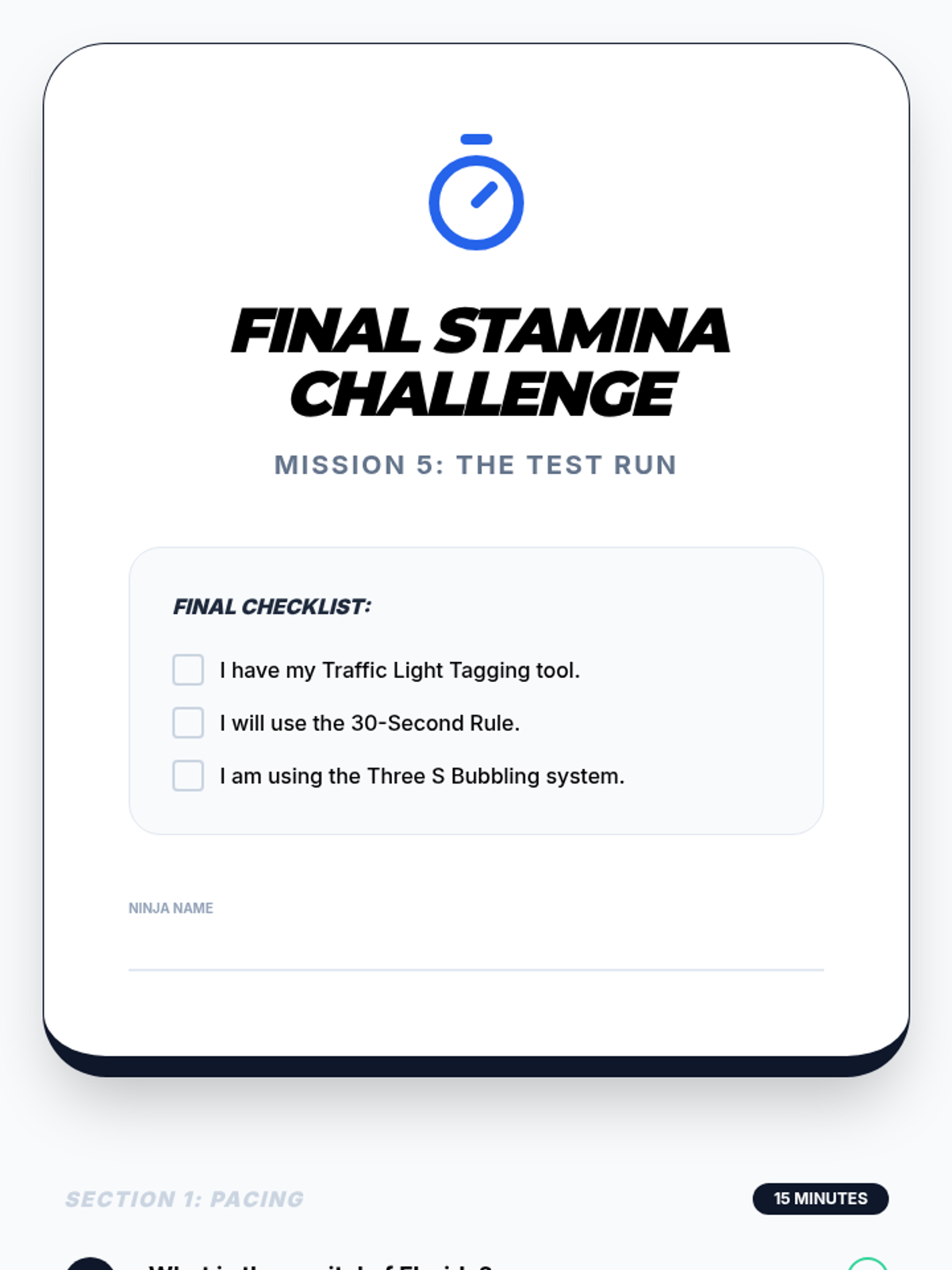
Students engage in a timed simulation that combines pacing, skipping, and anxiety management strategies. Afterwards, they debrief on which strategies helped them feel calm and finish on time.
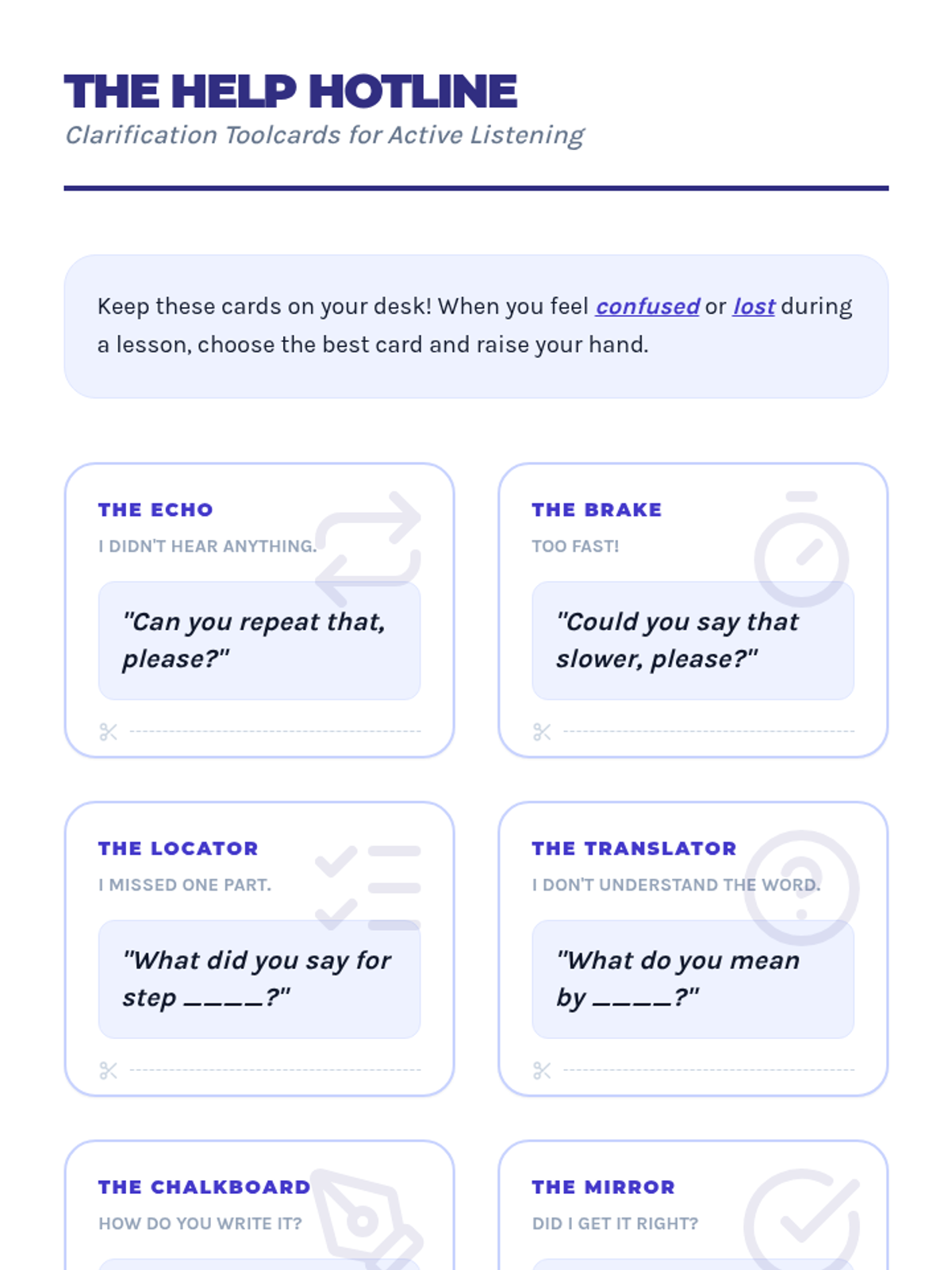
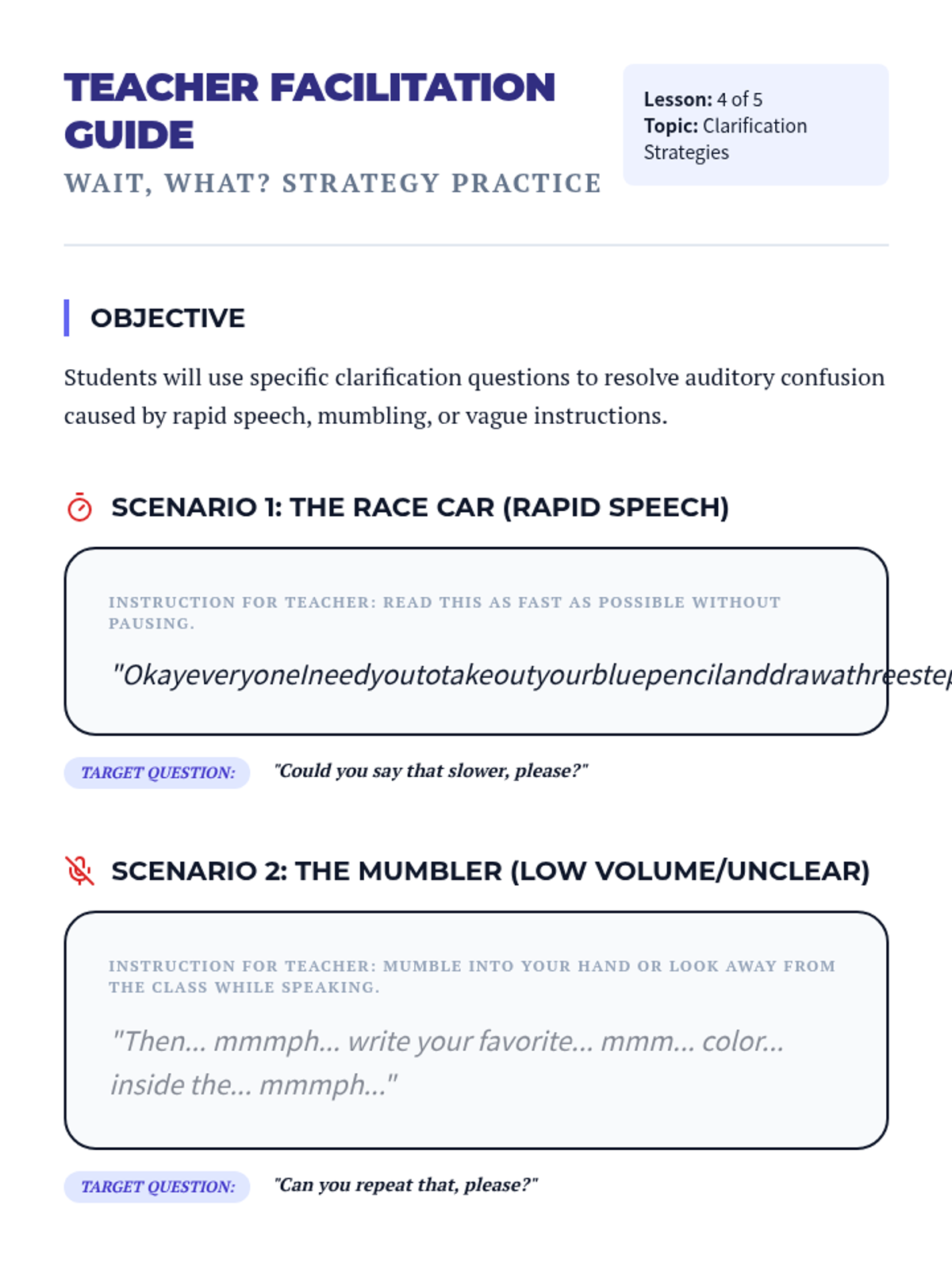
Students are given intentionally vague or rapid instructions and must use specific question structures to ask for repetition or clarification. The class analyzes which questions yield the best information.
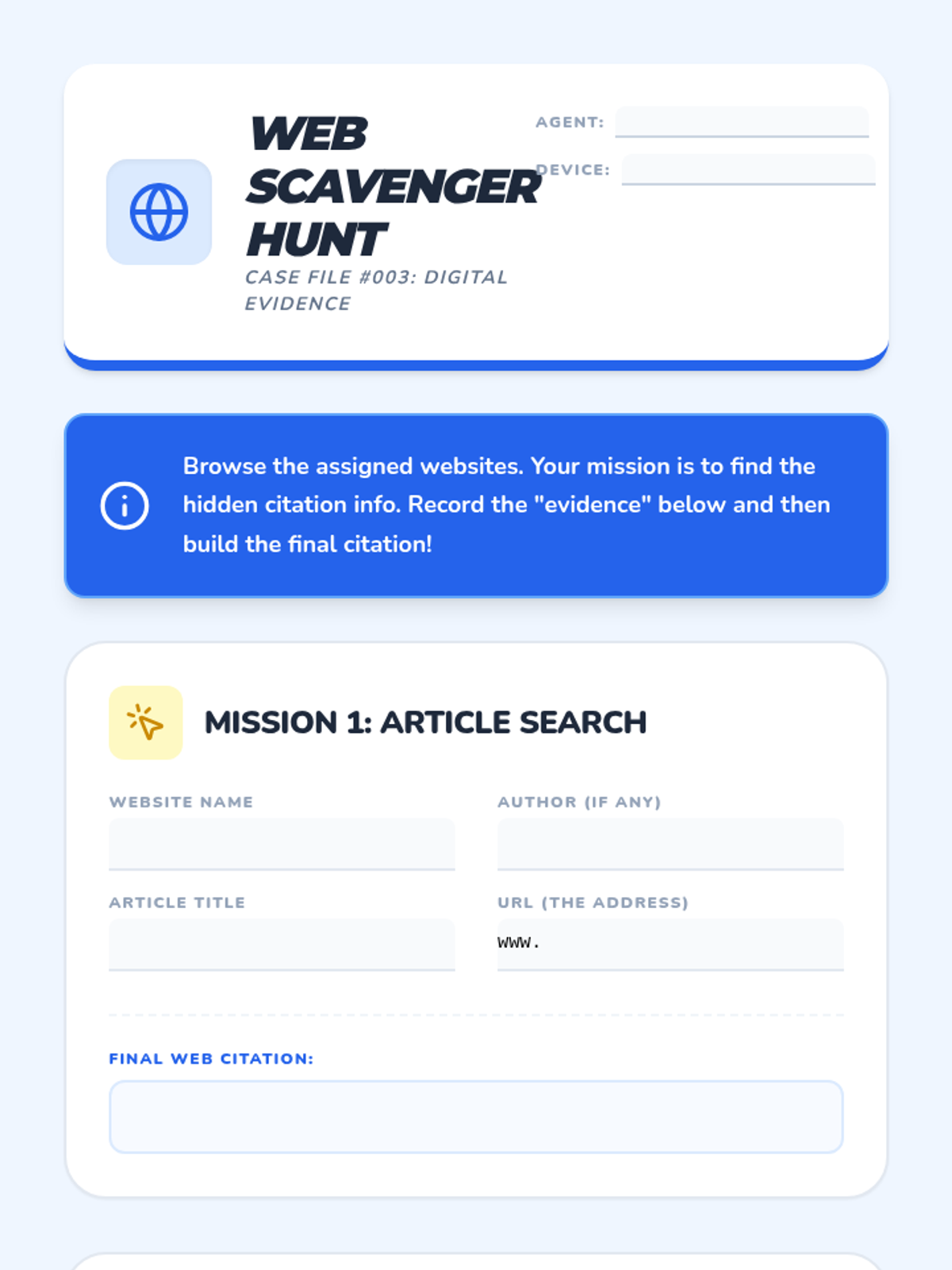
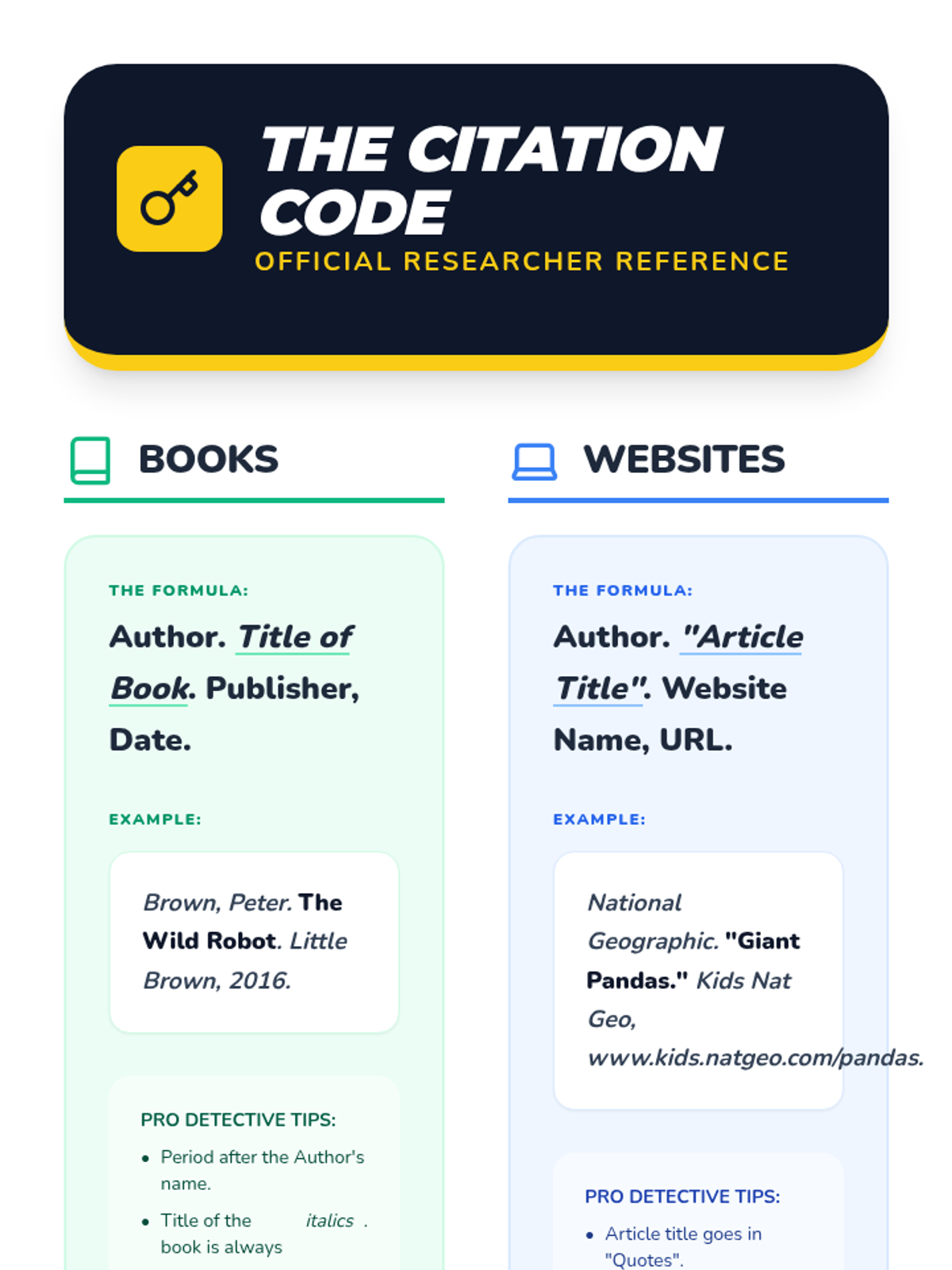
Students learn how to find citation information on websites, which is often harder to locate. They practice finding the URL, site name, and access date. Students compare the differences between book and website citations.
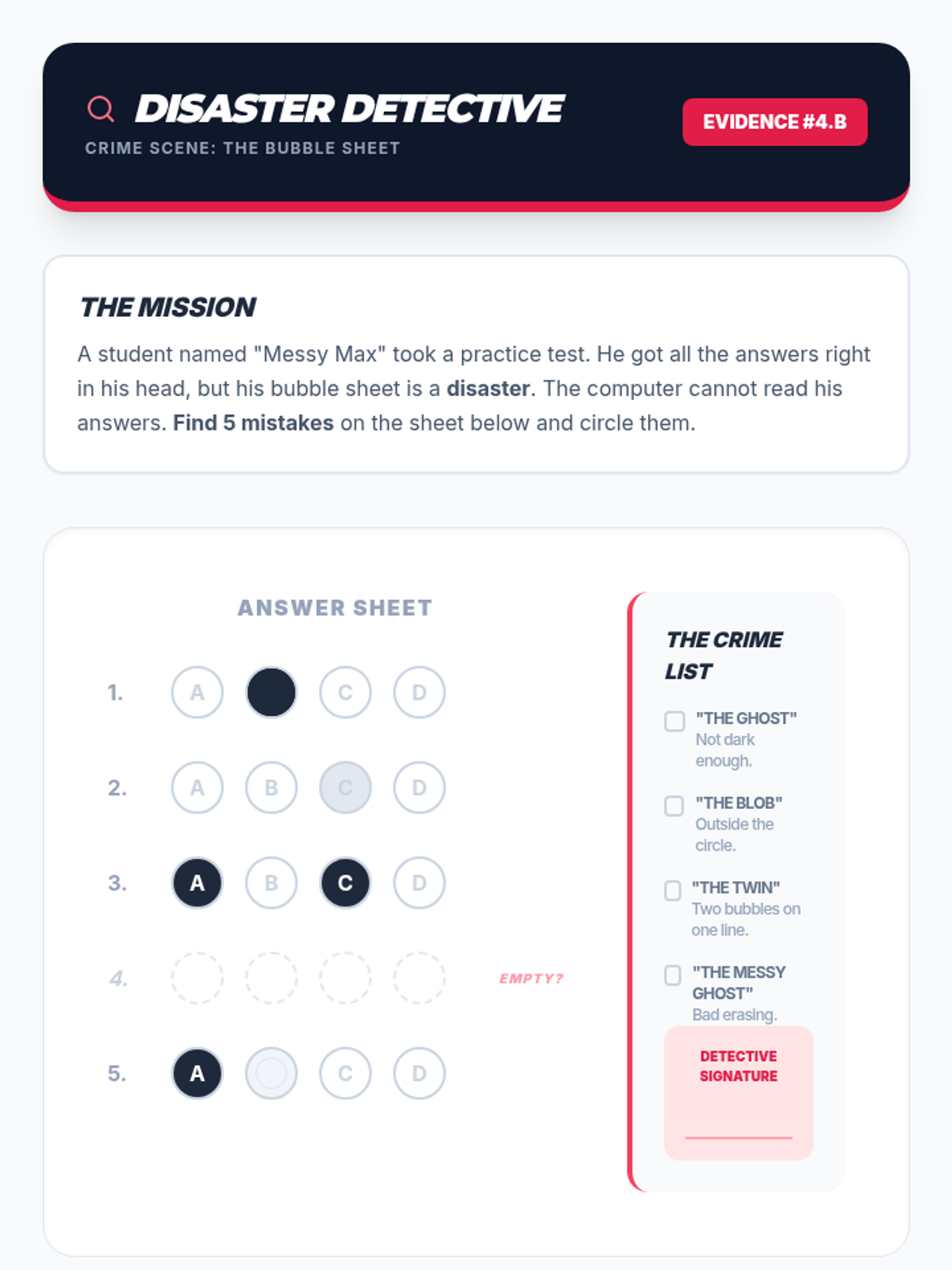
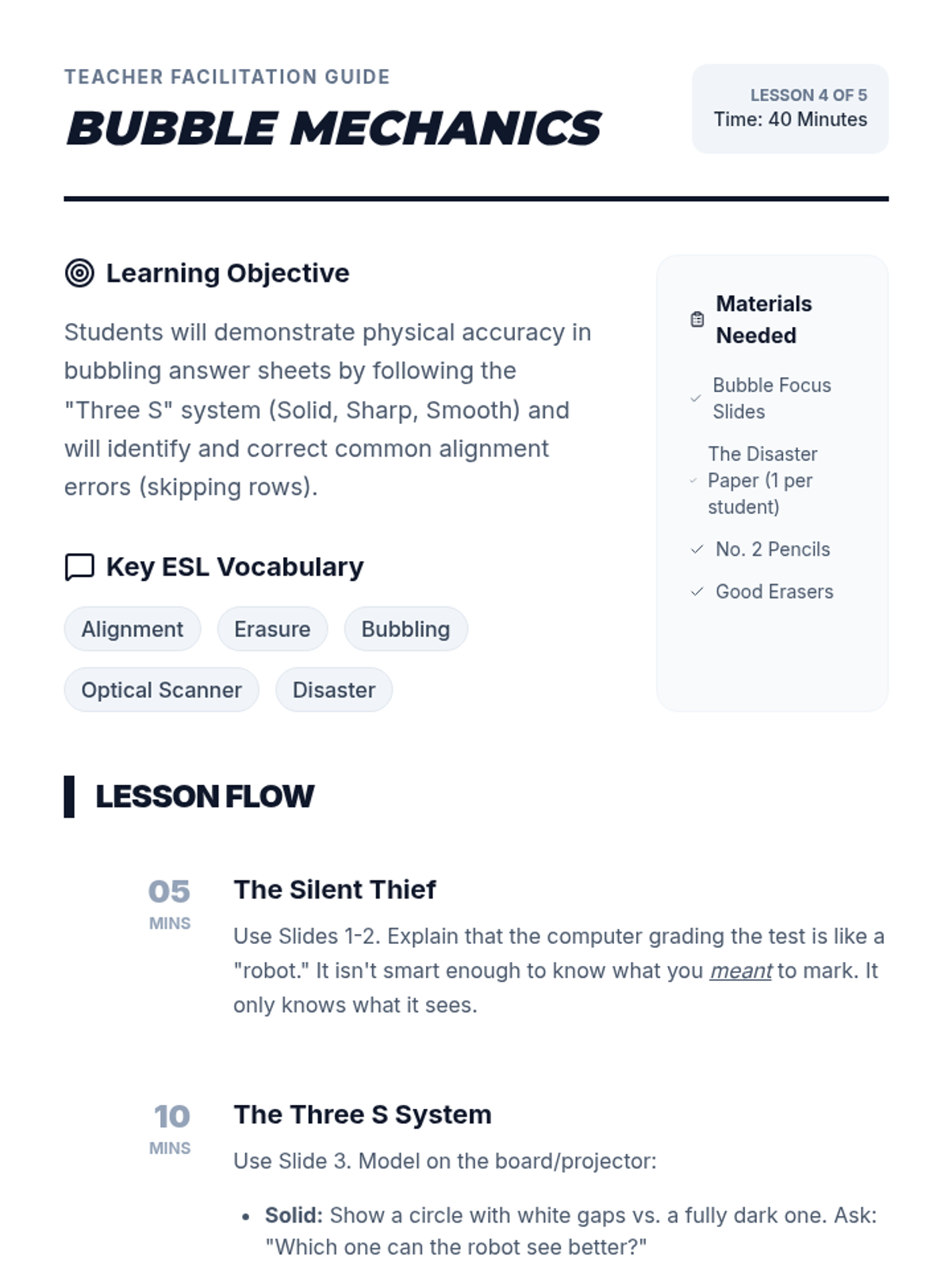
A practical lesson on the physical act of testing: bubbling correctly, checking that question numbers match answer numbers, and maintaining focus. Students correct a 'messy' answer sheet to identify common pitfalls.
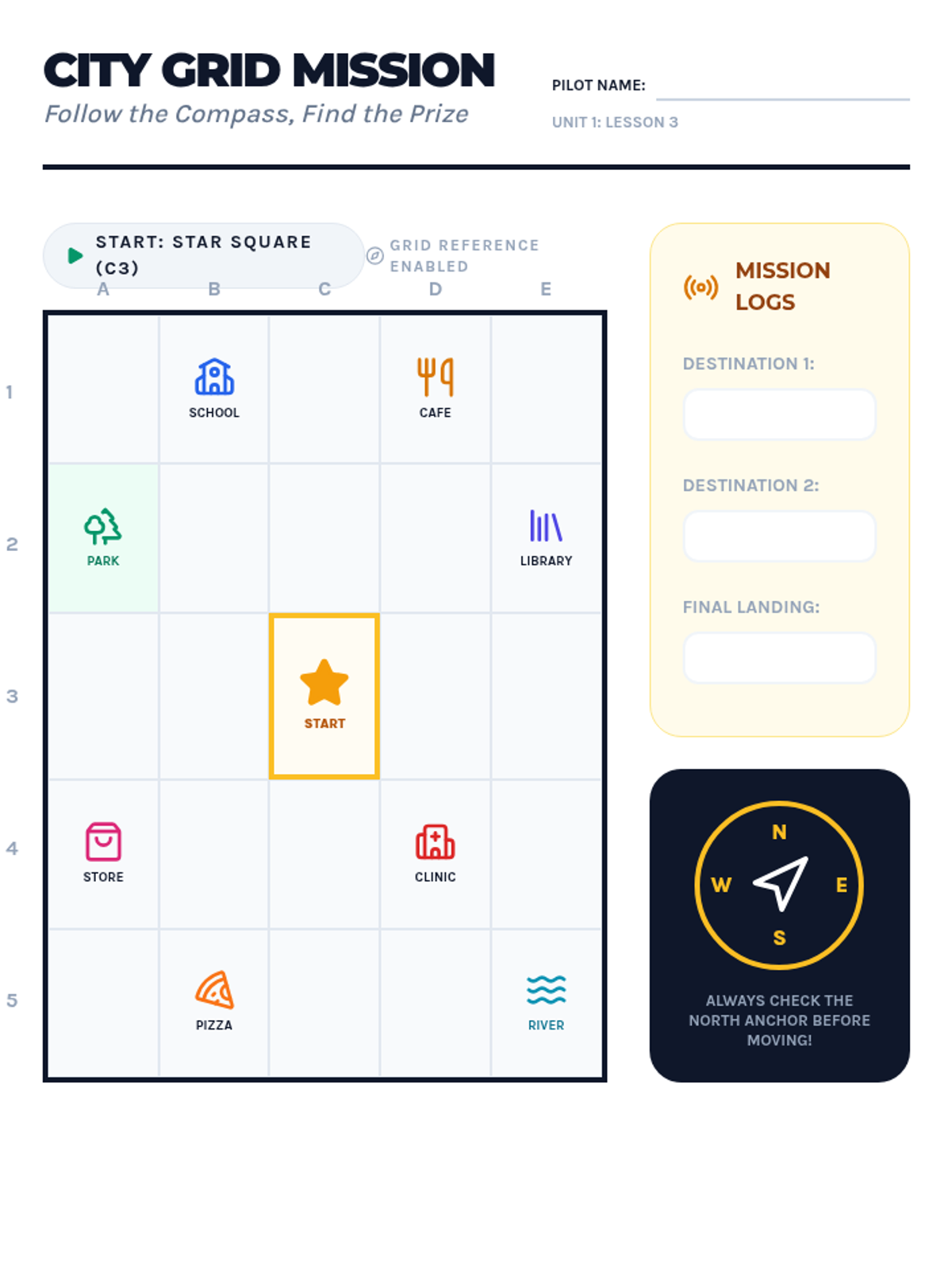
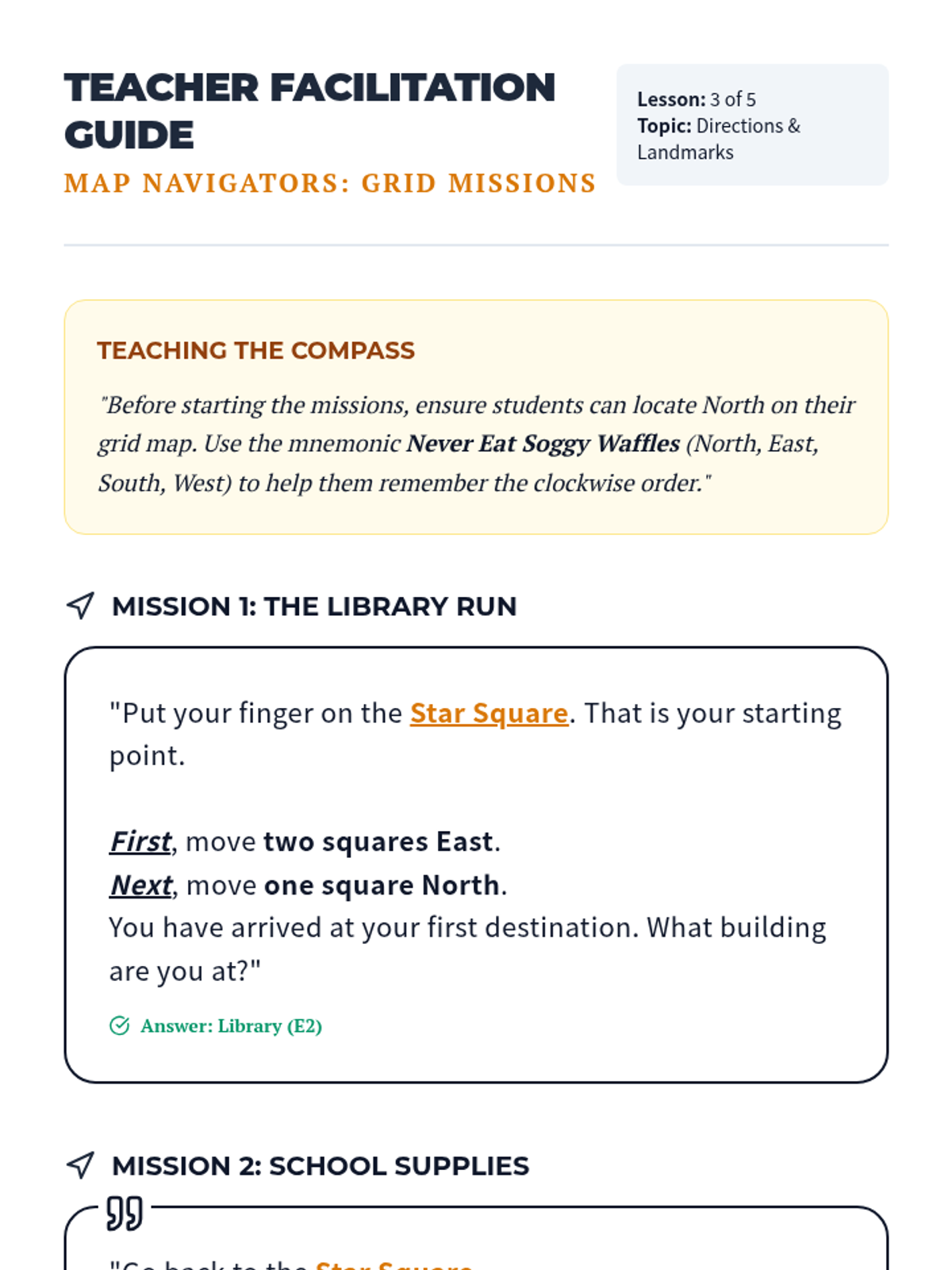
Using a grid map, students follow oral directions to navigate from a starting point to a destination. The lesson introduces compass directions and landmarks as key listening anchors.
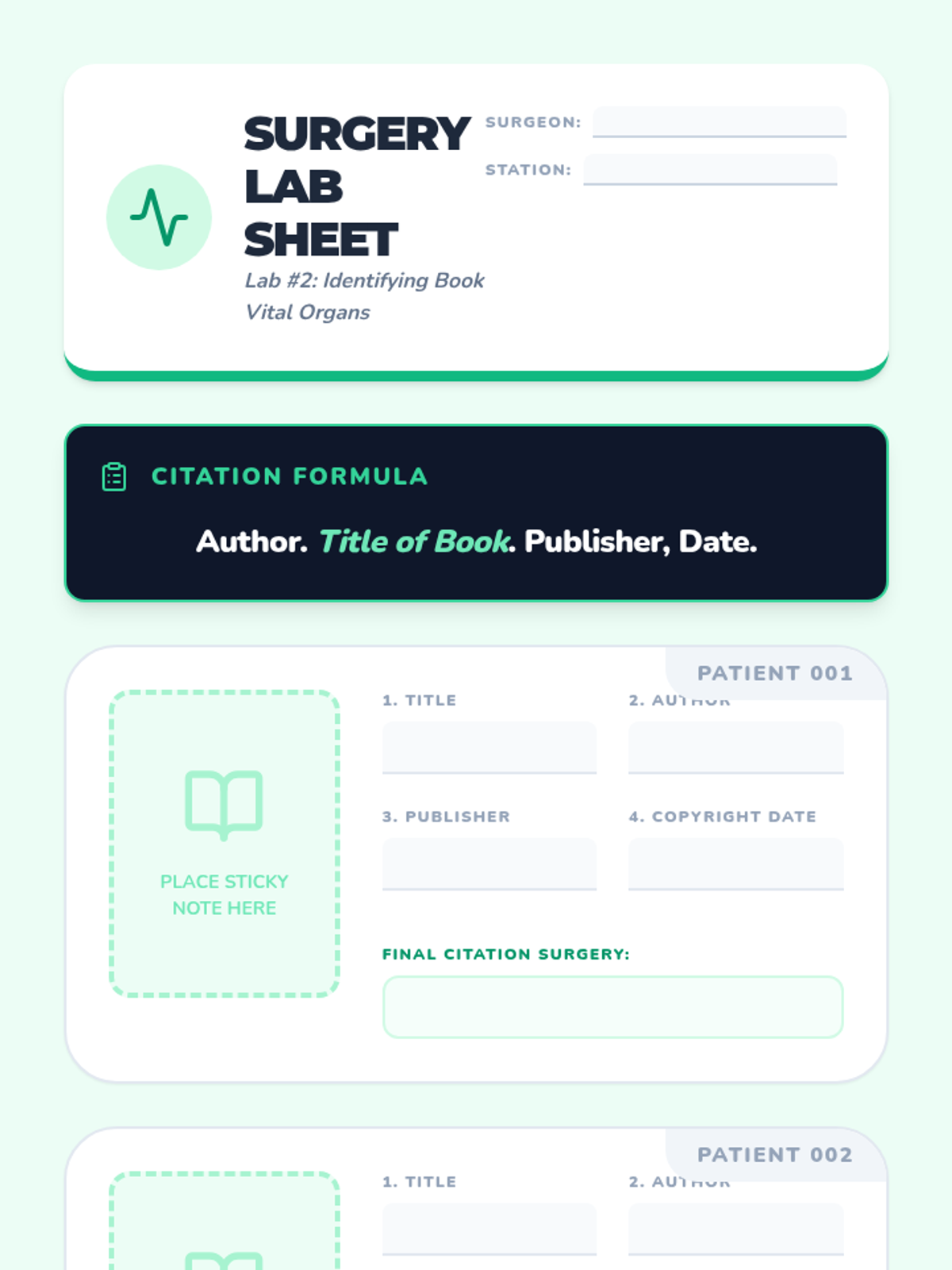
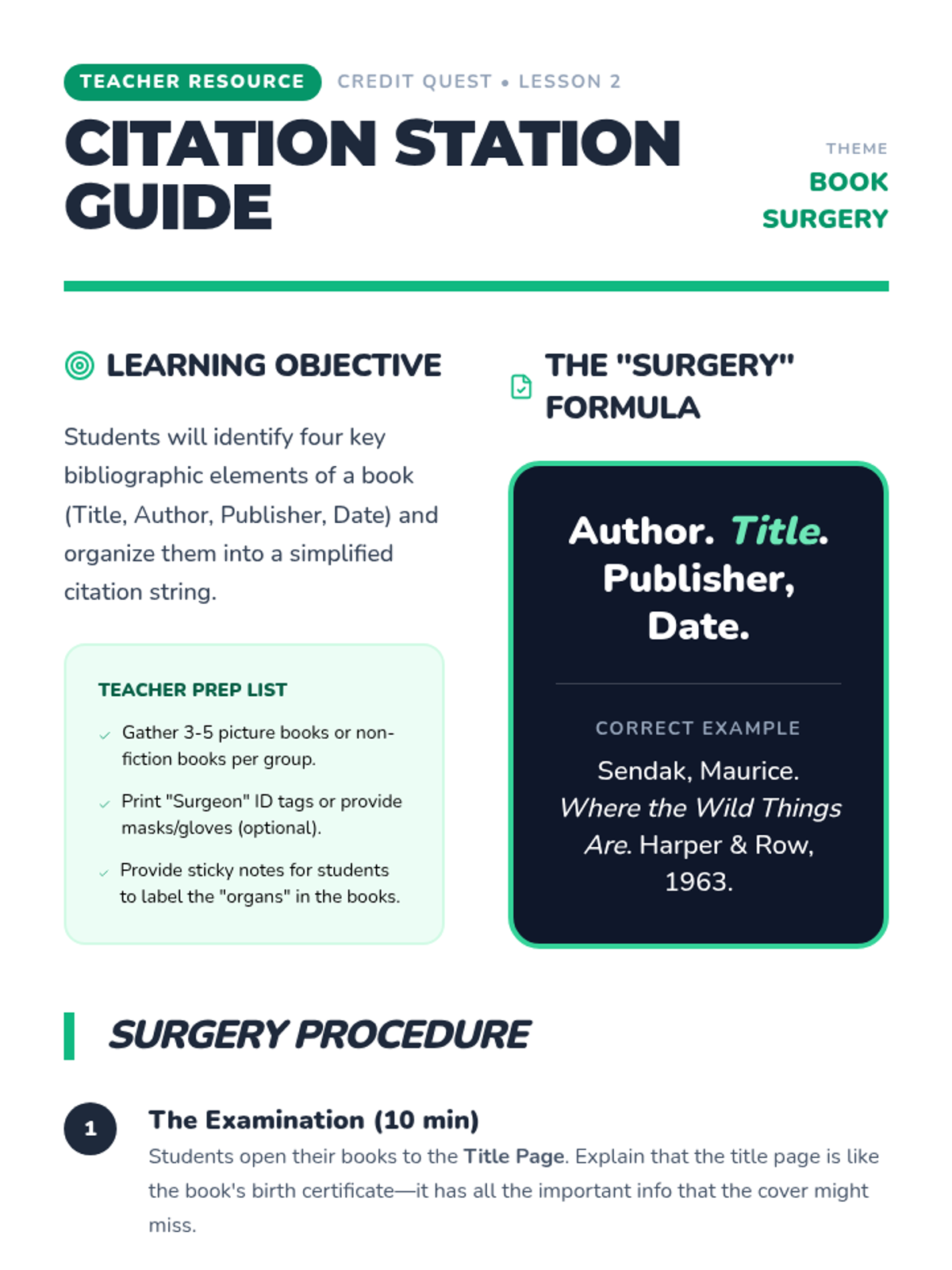
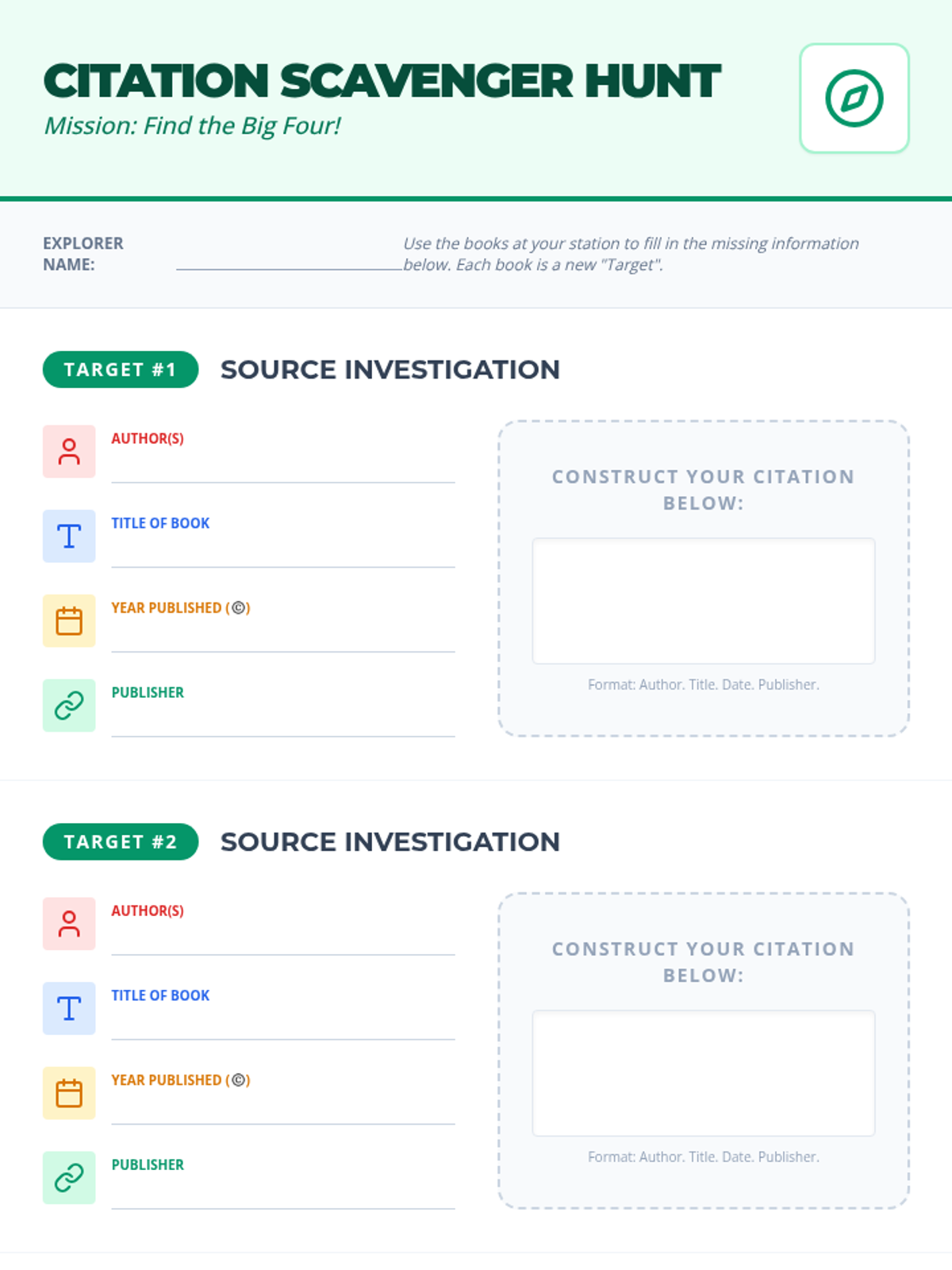
Students handle physical books to locate the title page, author, publisher, and copyright date. They learn a simplified citation format and practice finding bibliographic data.
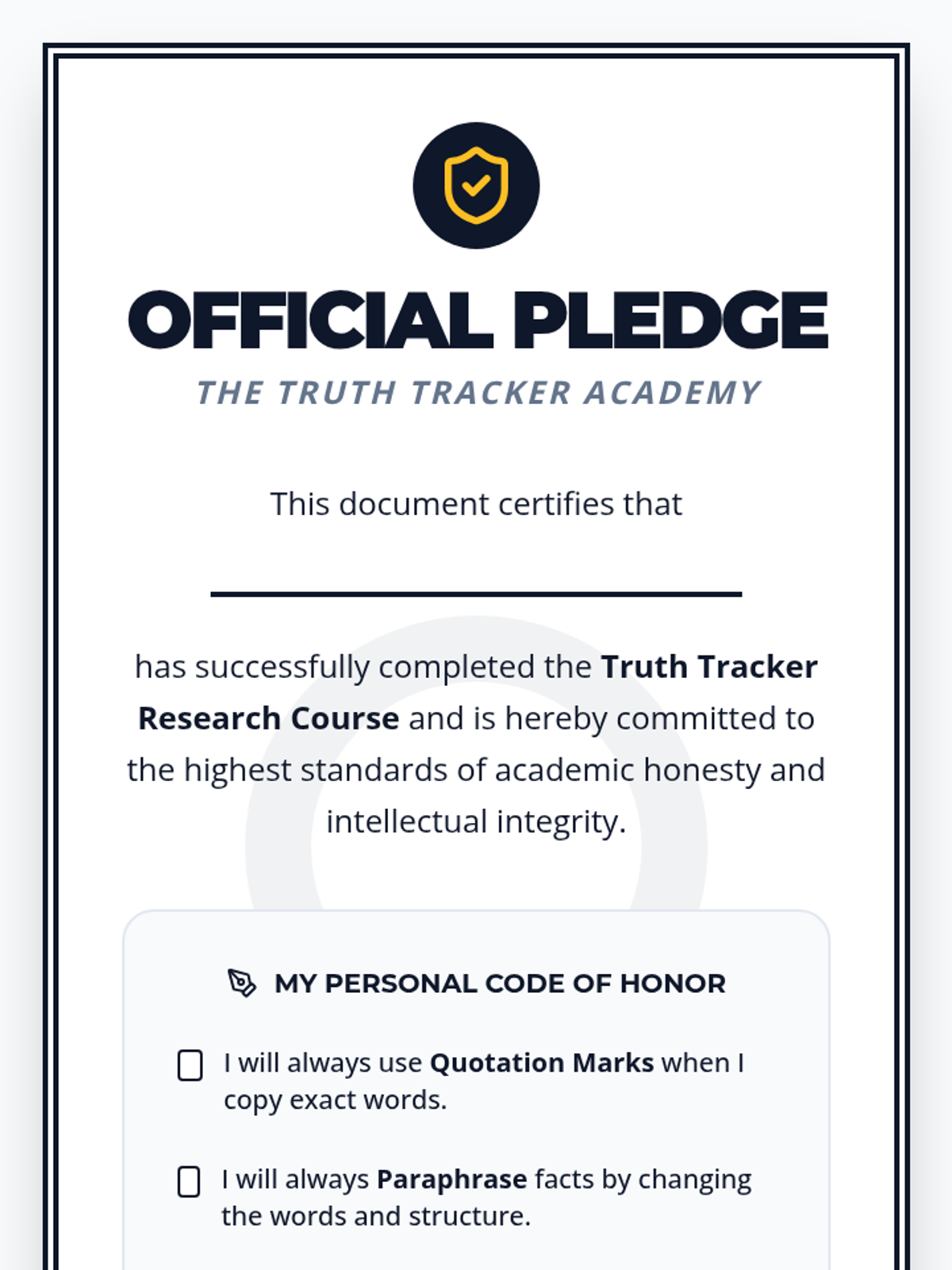
Synthesizes learning through case studies of intentional vs. accidental plagiarism and concludes with an academic integrity pledge.
Teaches students how to compile individual citations into a cohesive, alphabetized reference list.
Introduces the four core elements of a basic citation (Author, Title, Date, Source) and provides practice in locating this information.
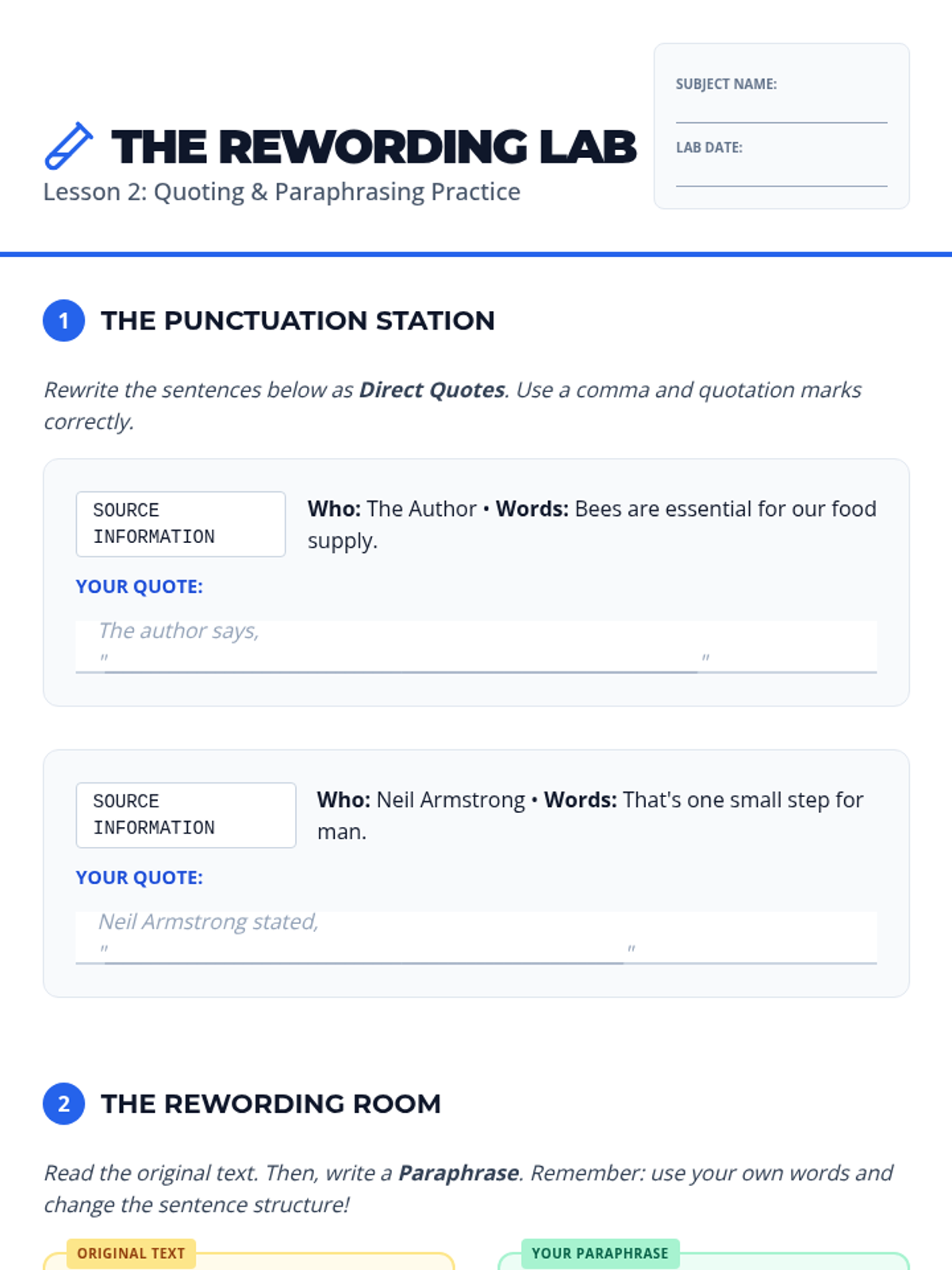
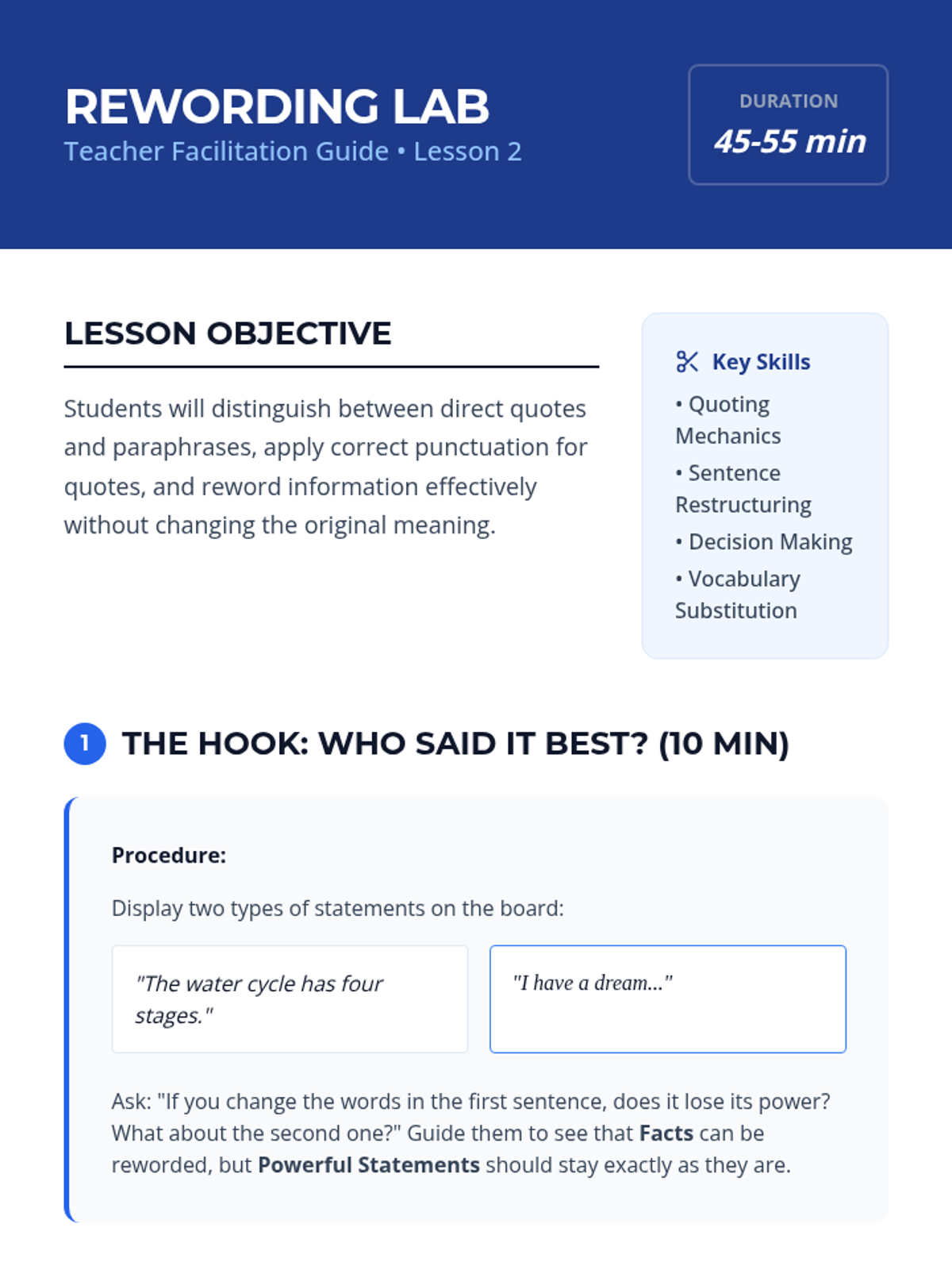
Students learn the mechanical and logical differences between direct quotes and paraphrasing, focusing on when to use each.
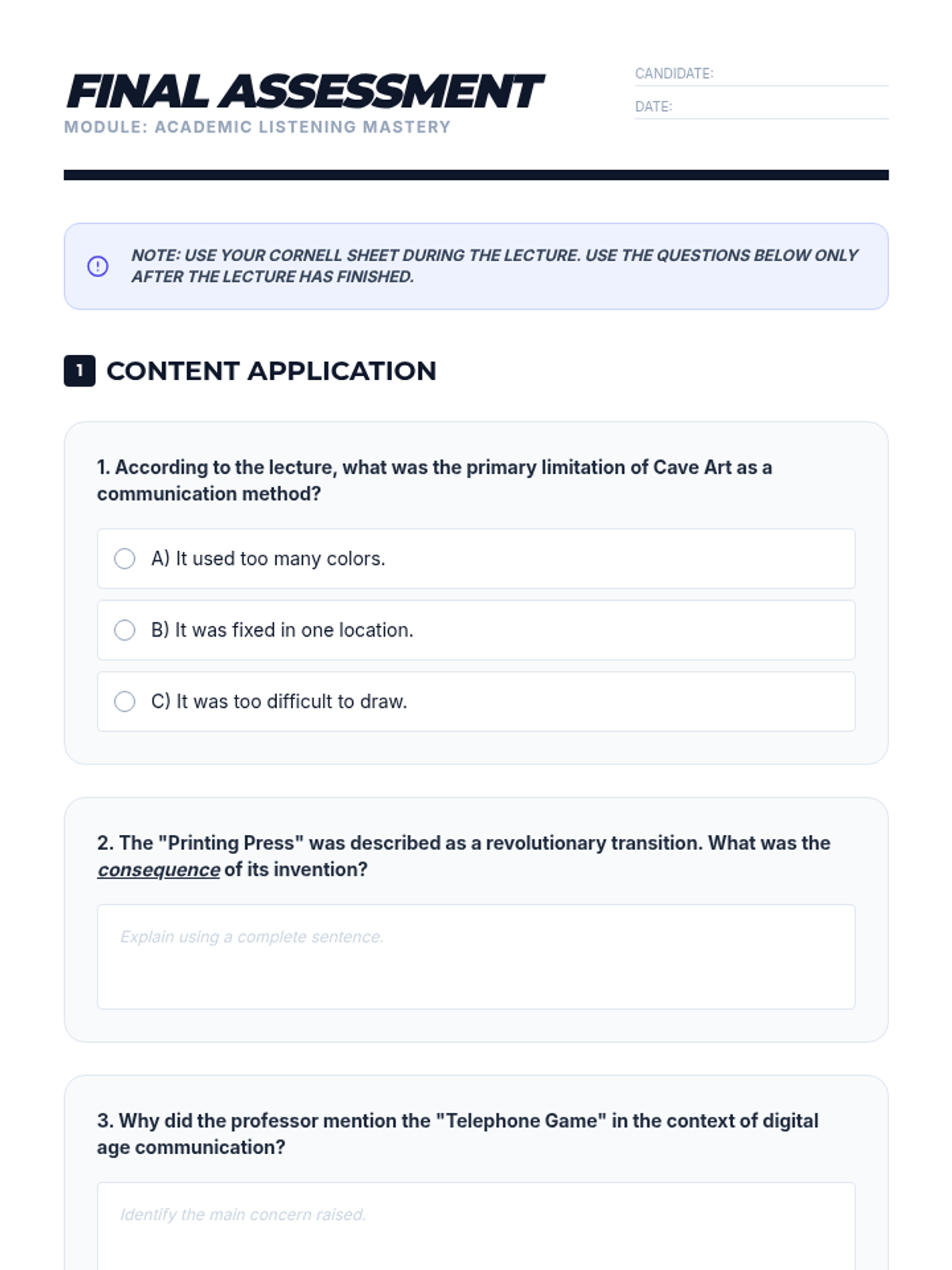
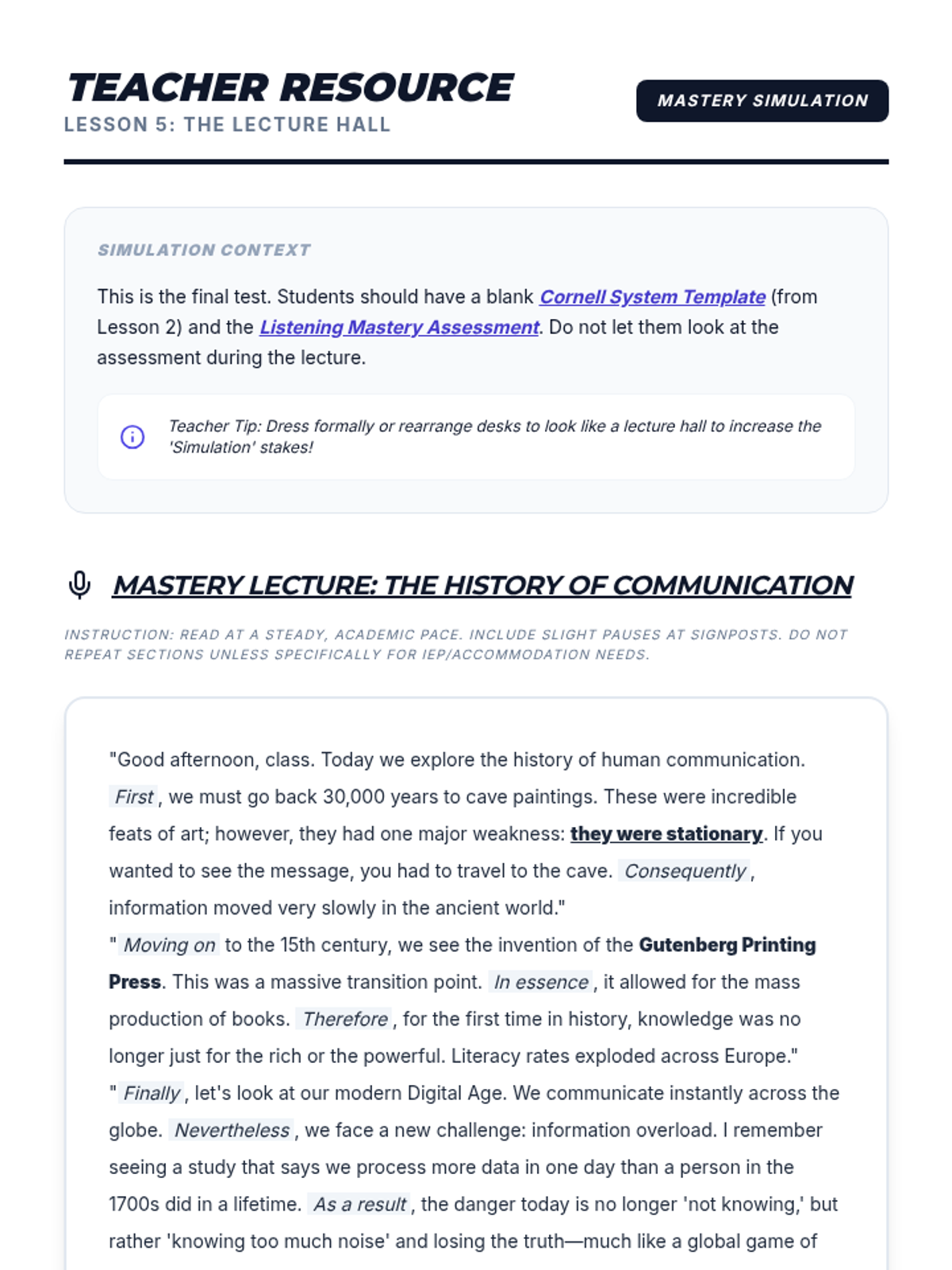
Students participate in a university-style mini-lecture simulation. They apply all learned strategies—signpost identification, Cornell note-taking, and synthesis—to capture information and complete a formal assessment.