Students participate in a high-energy spelling bee to improve vocabulary, spelling accuracy, and public speaking confidence through friendly competition.
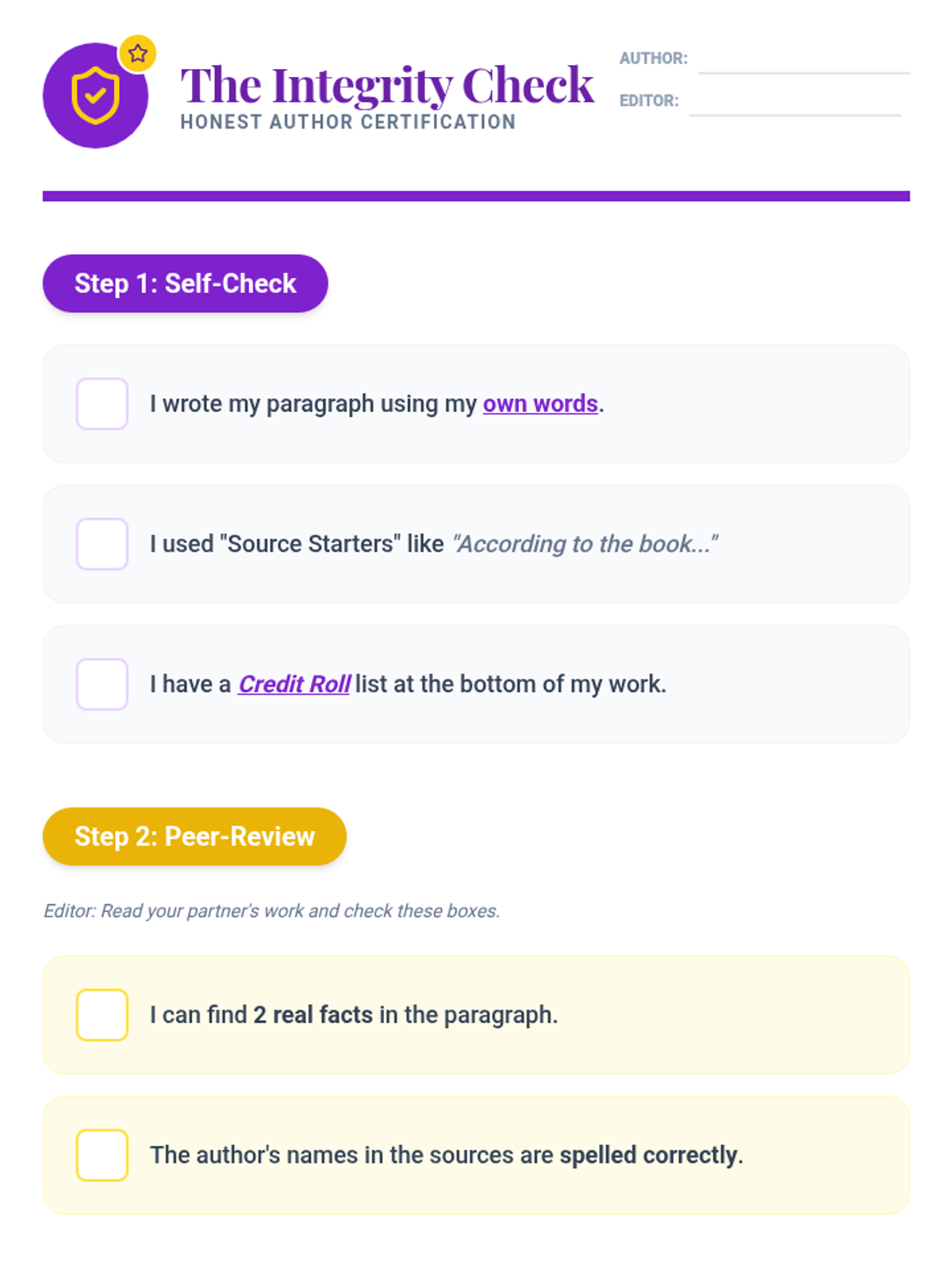
In the final phase, students use an 'Integrity Checklist' to peer-review their work for originality, accuracy, and proper sourcing.
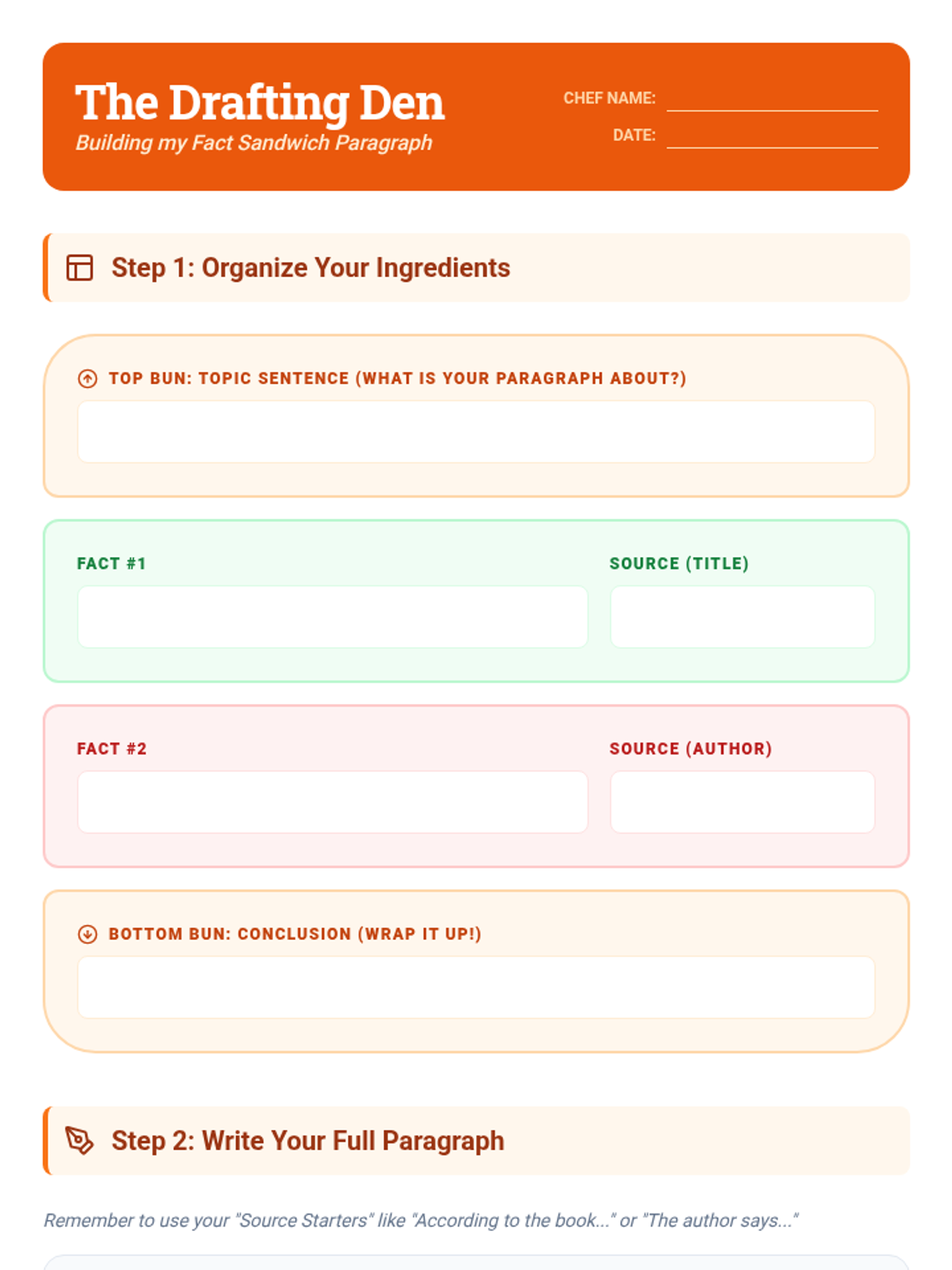
Students combine their research notes into a logical paragraph, using a 'Fact Sandwich' structure to organize their thoughts.
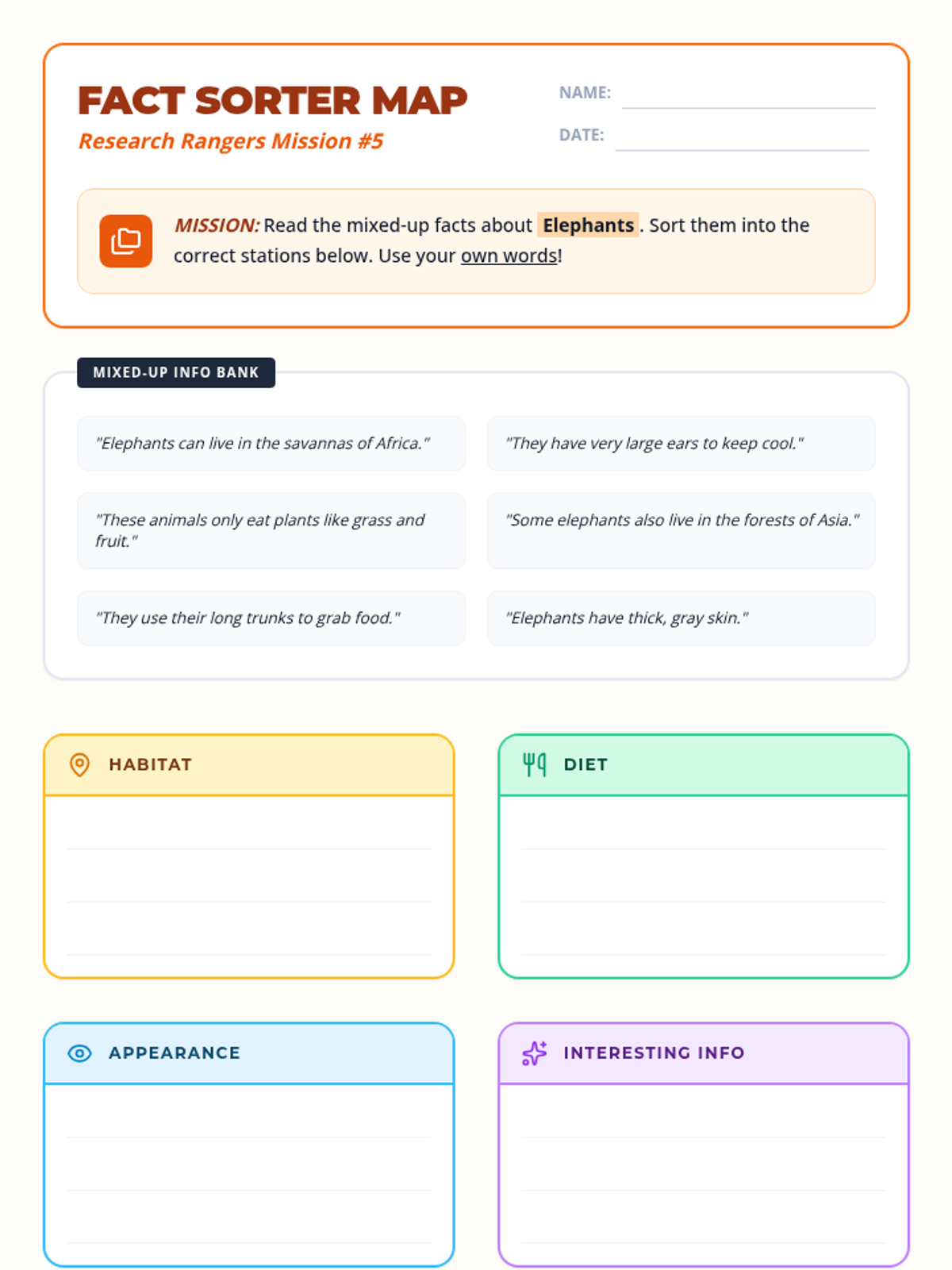
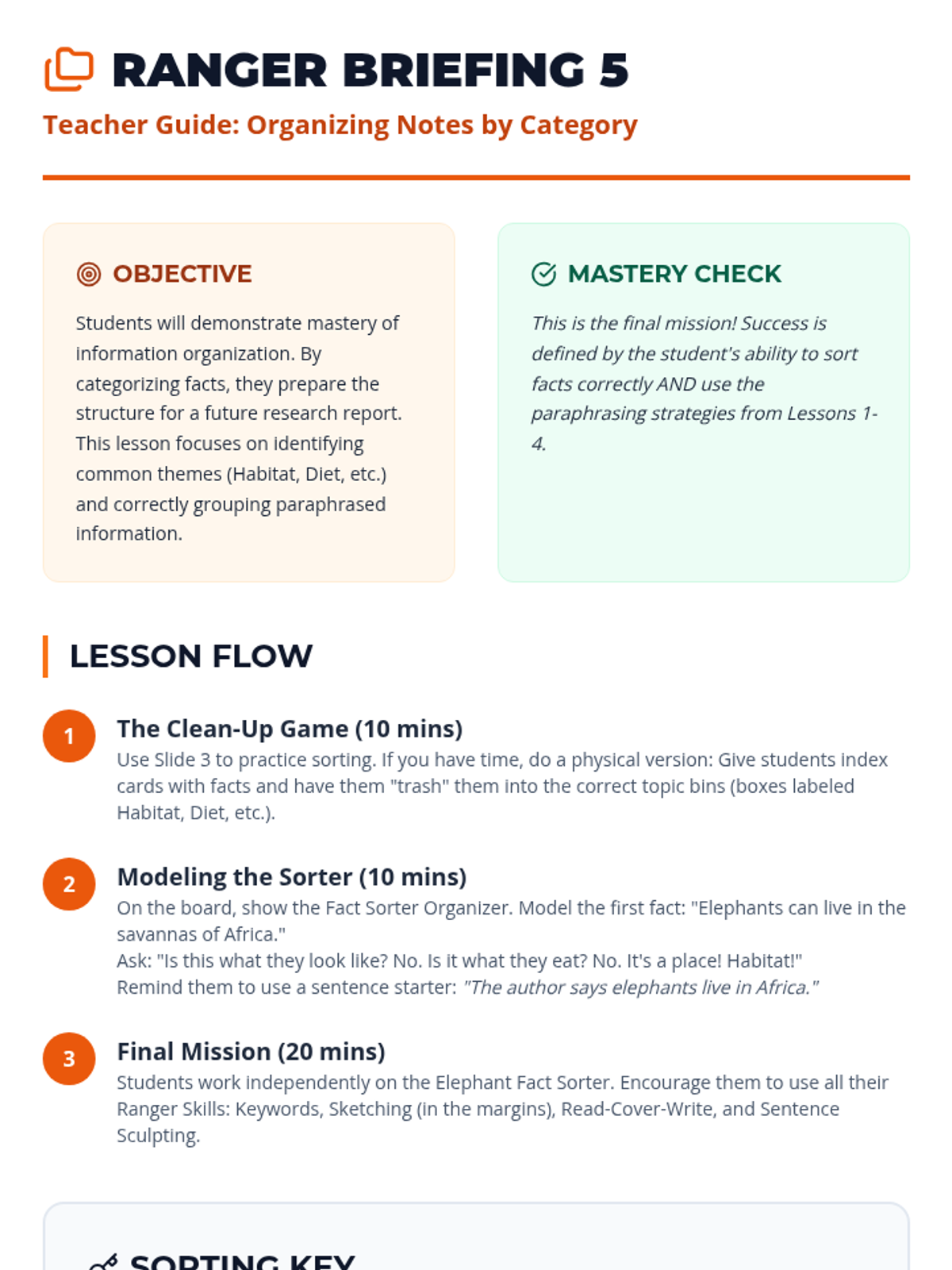
Students organize loose facts into logical categories using a graphic organizer. They learn to group information by topic to prepare for structured writing.
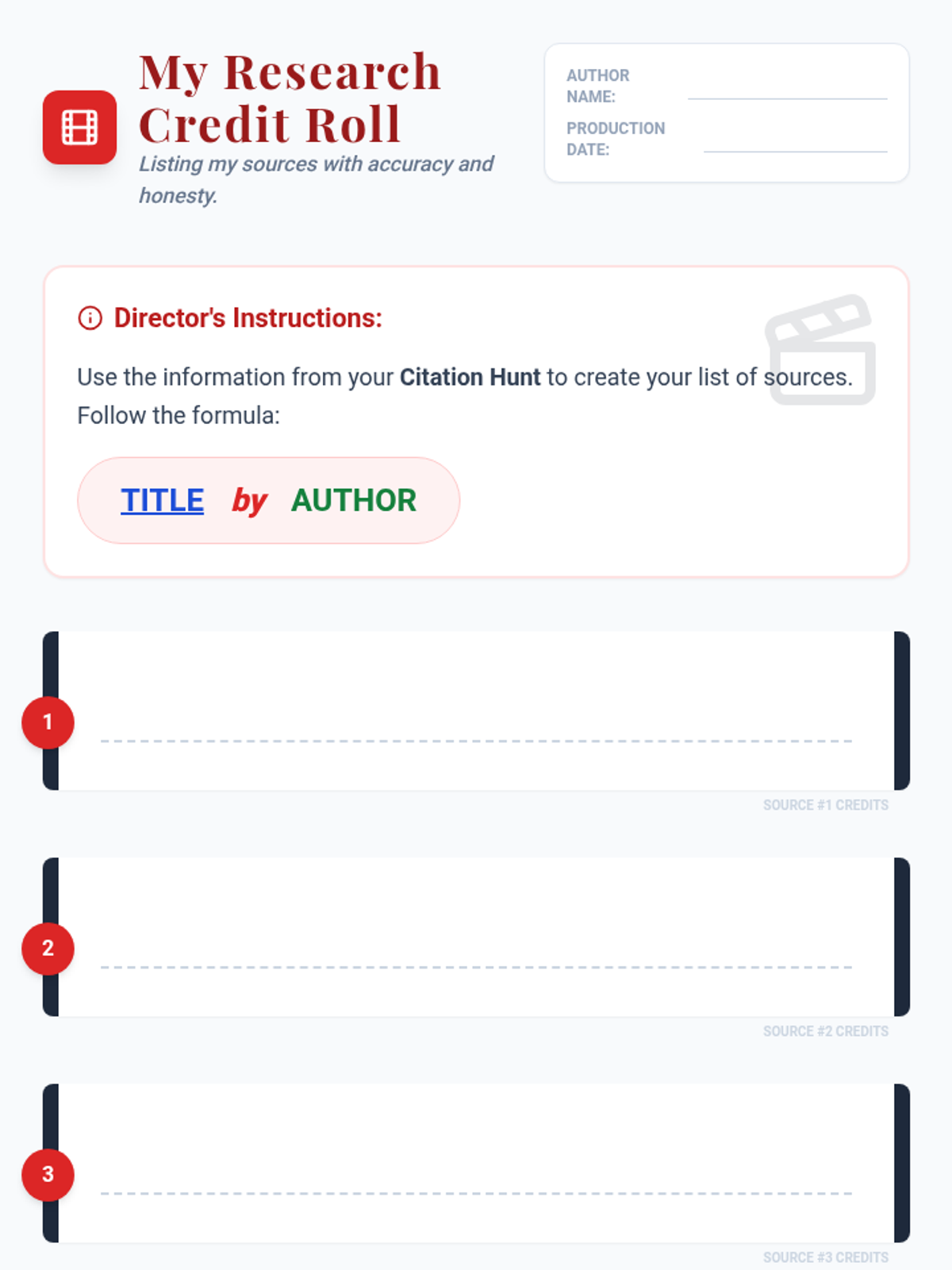
Students practice the mechanics of creating a simplified bibliography using the 'Title by Author' format to credit their sources.
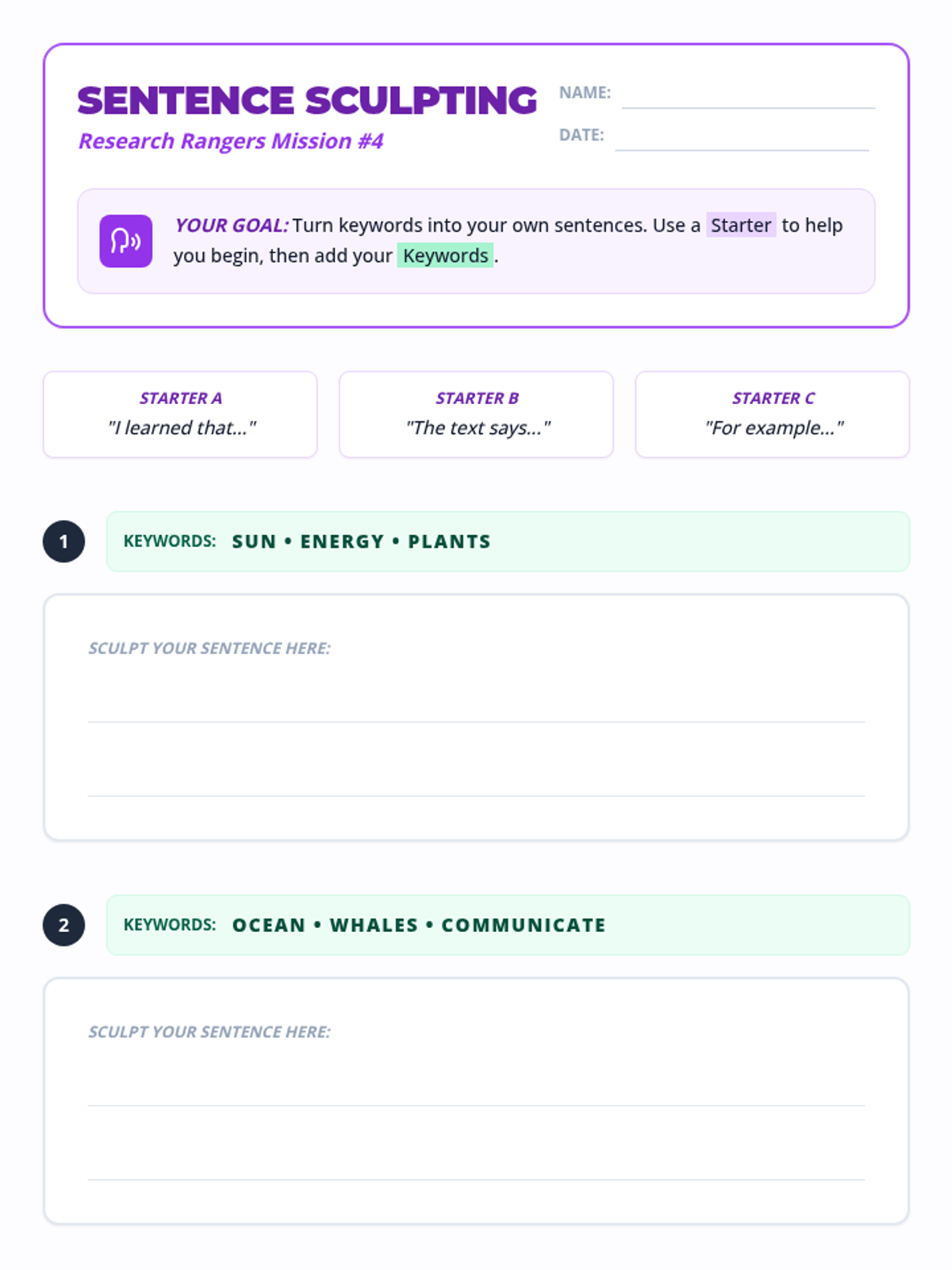
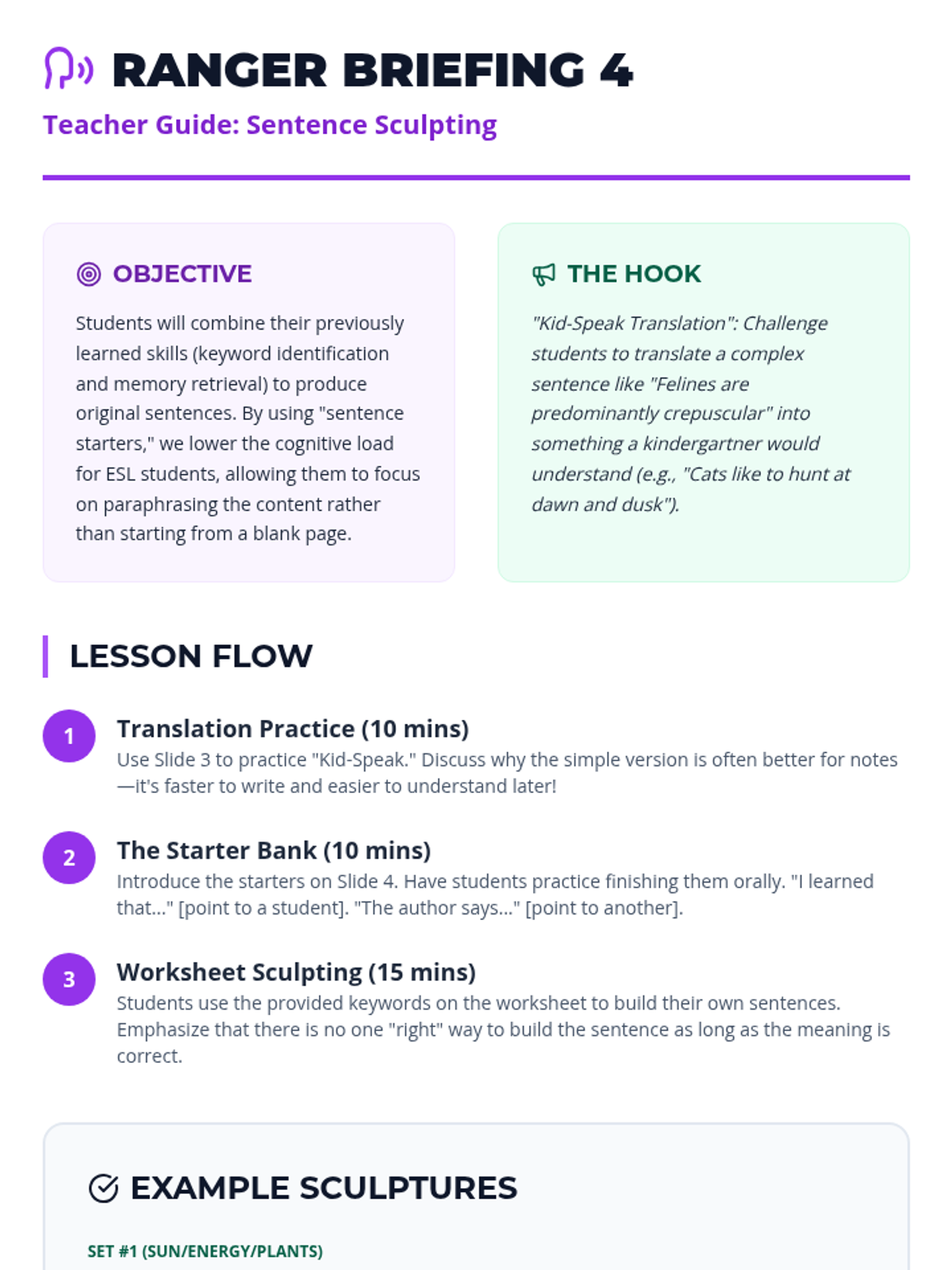
Using keywords and visual notes, students use sentence frames to construct complete sentences in their own voice. They 'translate' complex text into simpler language.
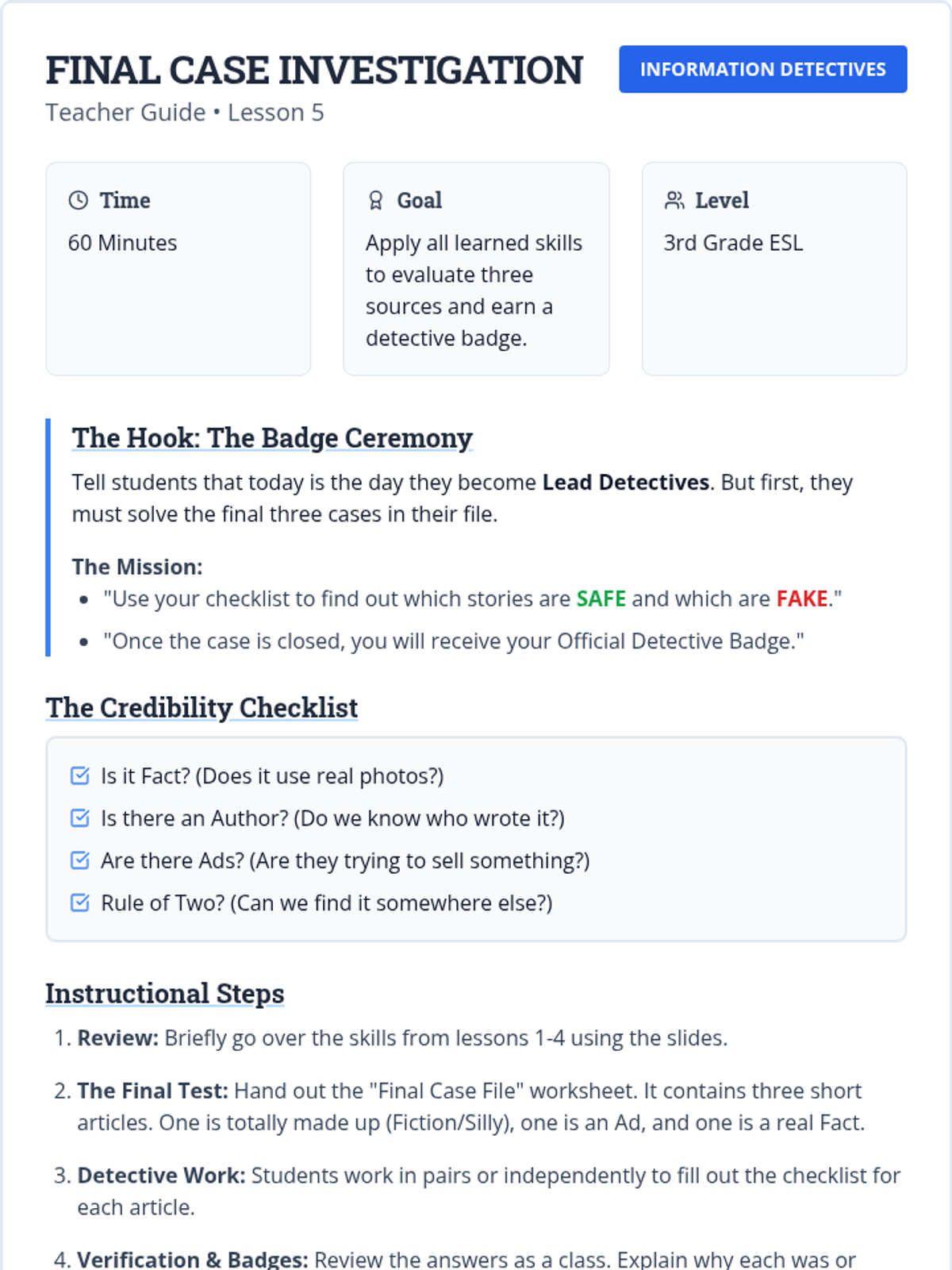
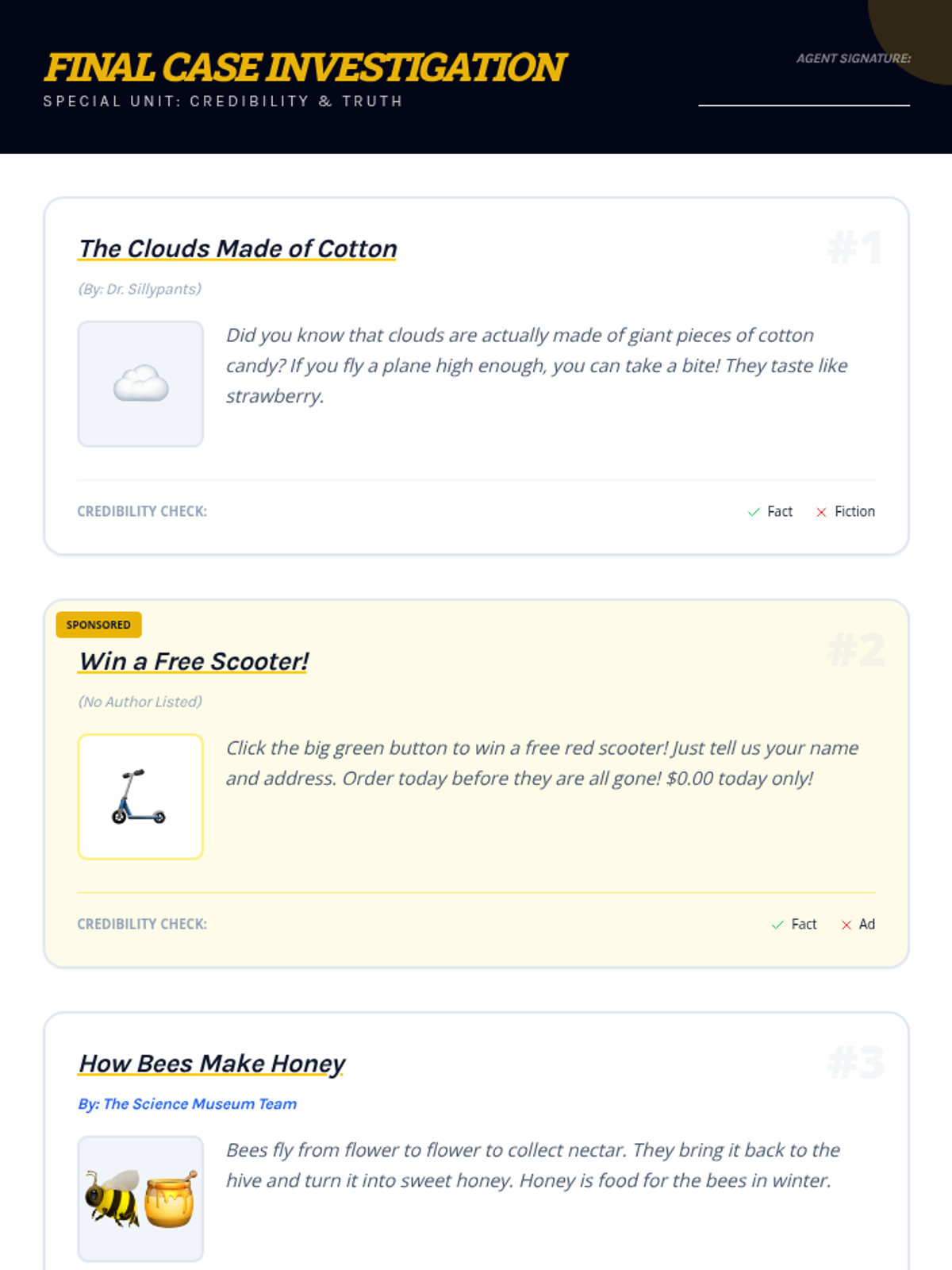
Students use a credibility checklist to investigate three suspect articles and determine which are true, earning their detective badges.
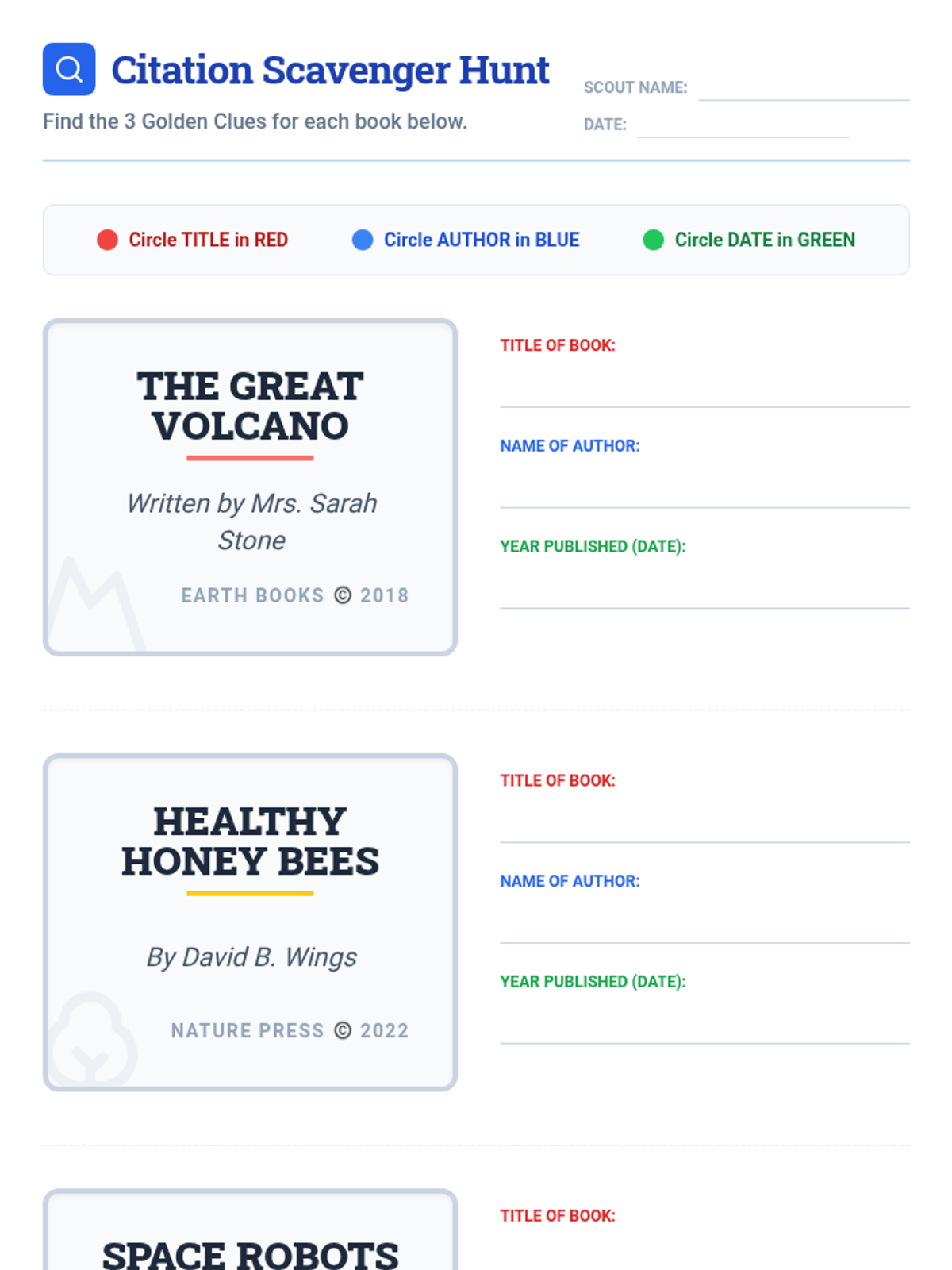
A hands-on exploration where students learn to identify and record key citation details like Title, Author, and Date from books and websites.
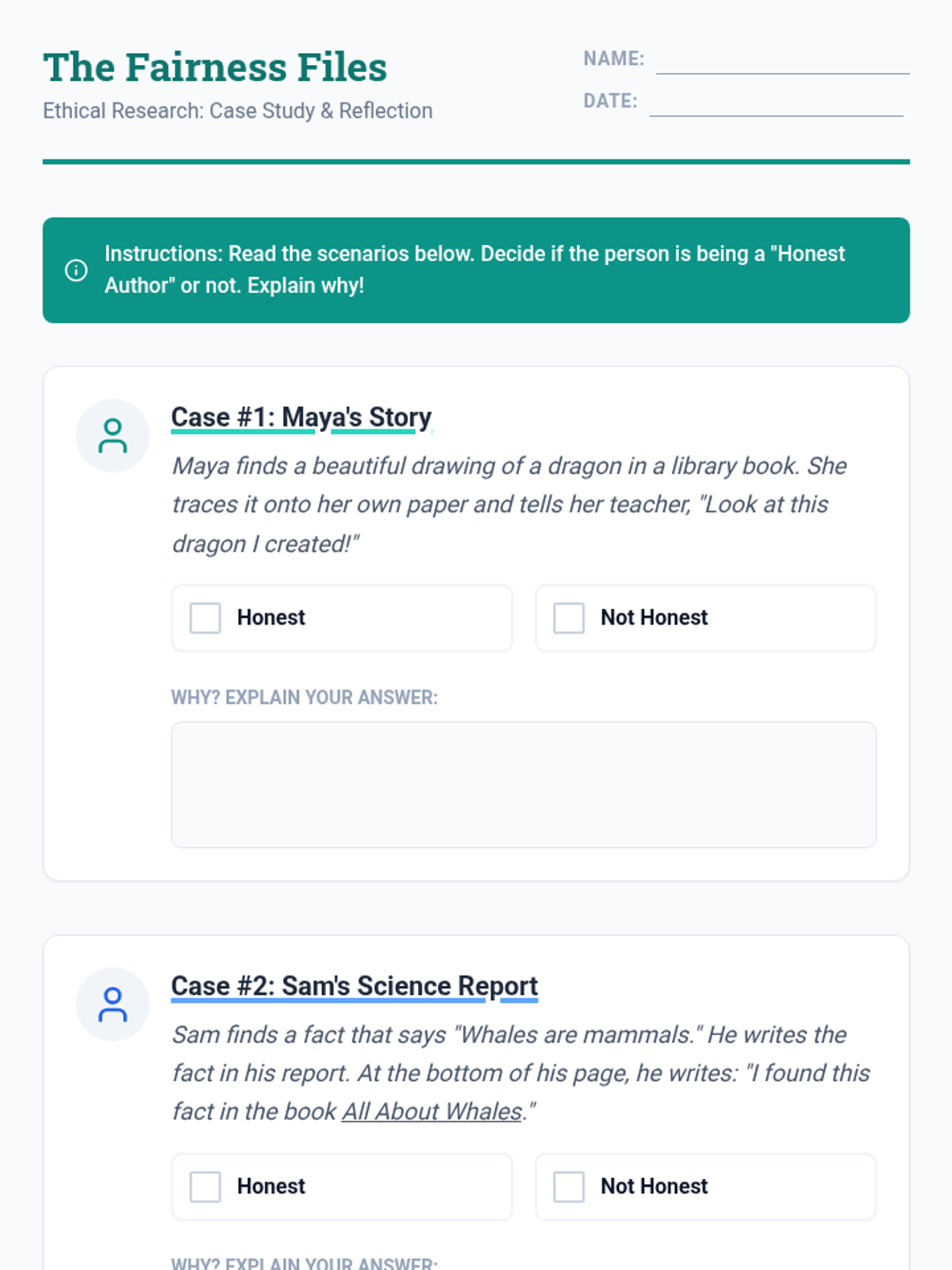
Students explore the concept of intellectual property through analogies of ownership and fairness, discussing the importance of acknowledging others' work.
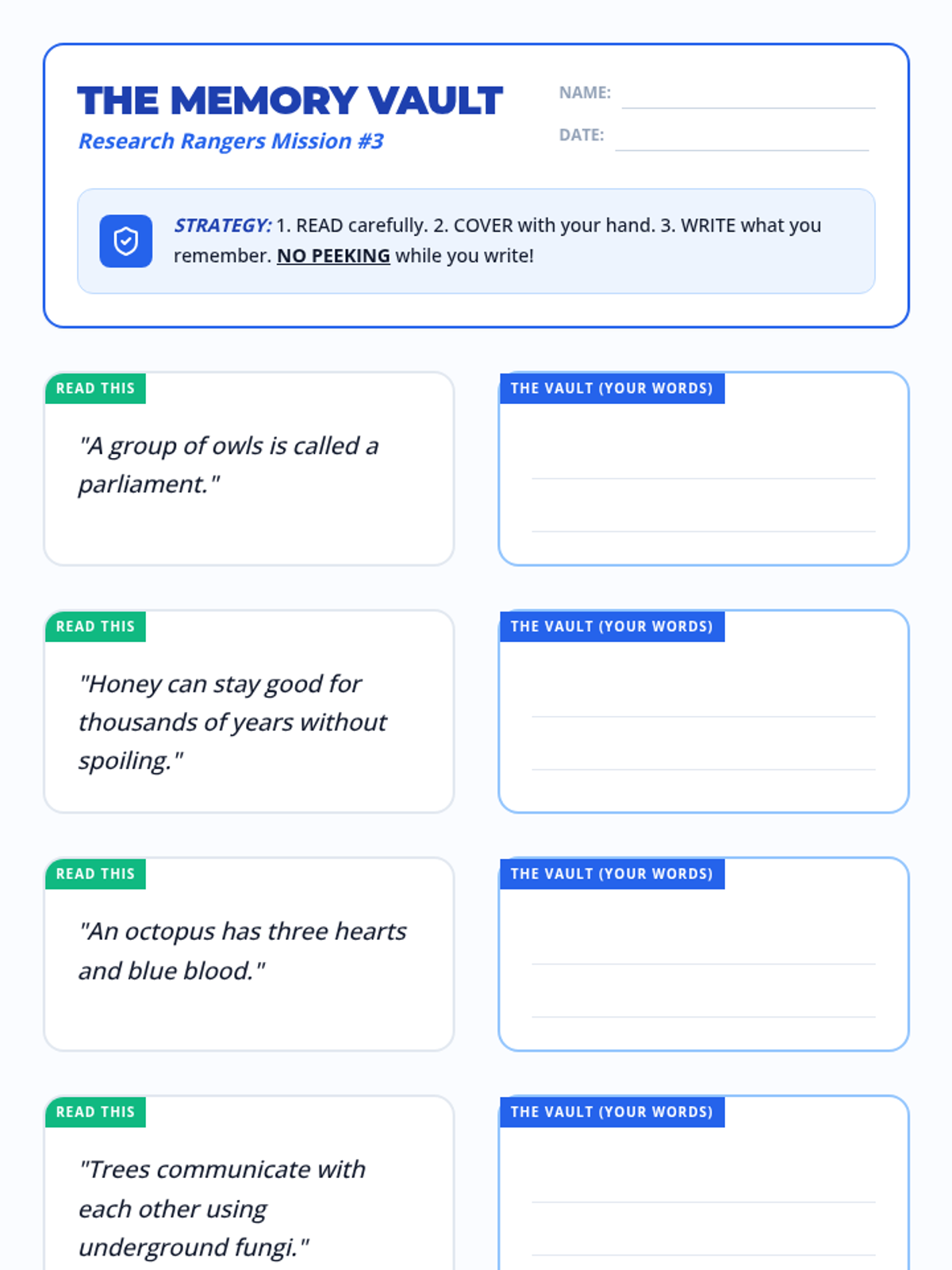
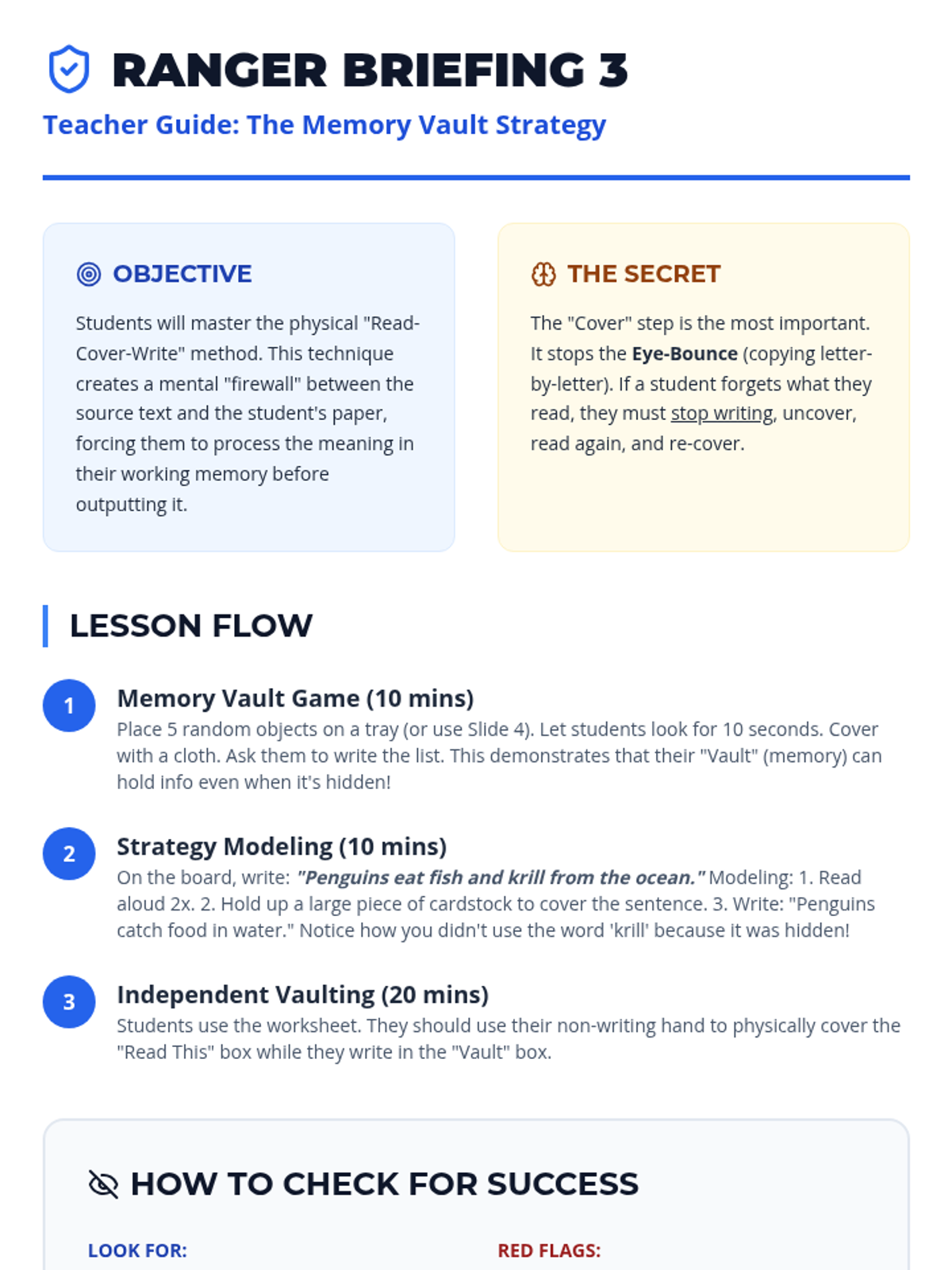
Students learn the 'Read-Cover-Write' strategy to prevent plagiarism. They practice reading a sentence, covering it, and writing what they remember in their own words.
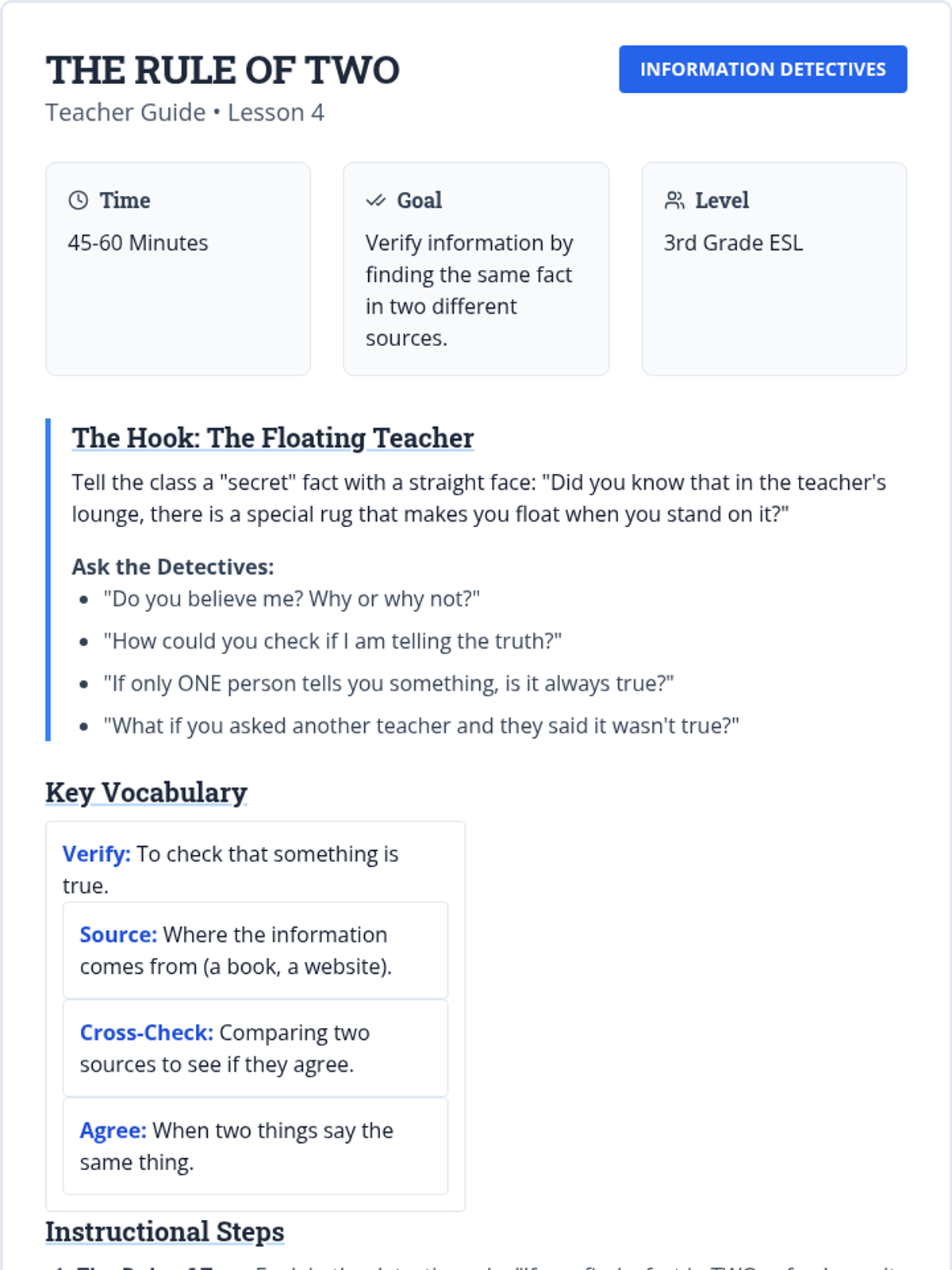
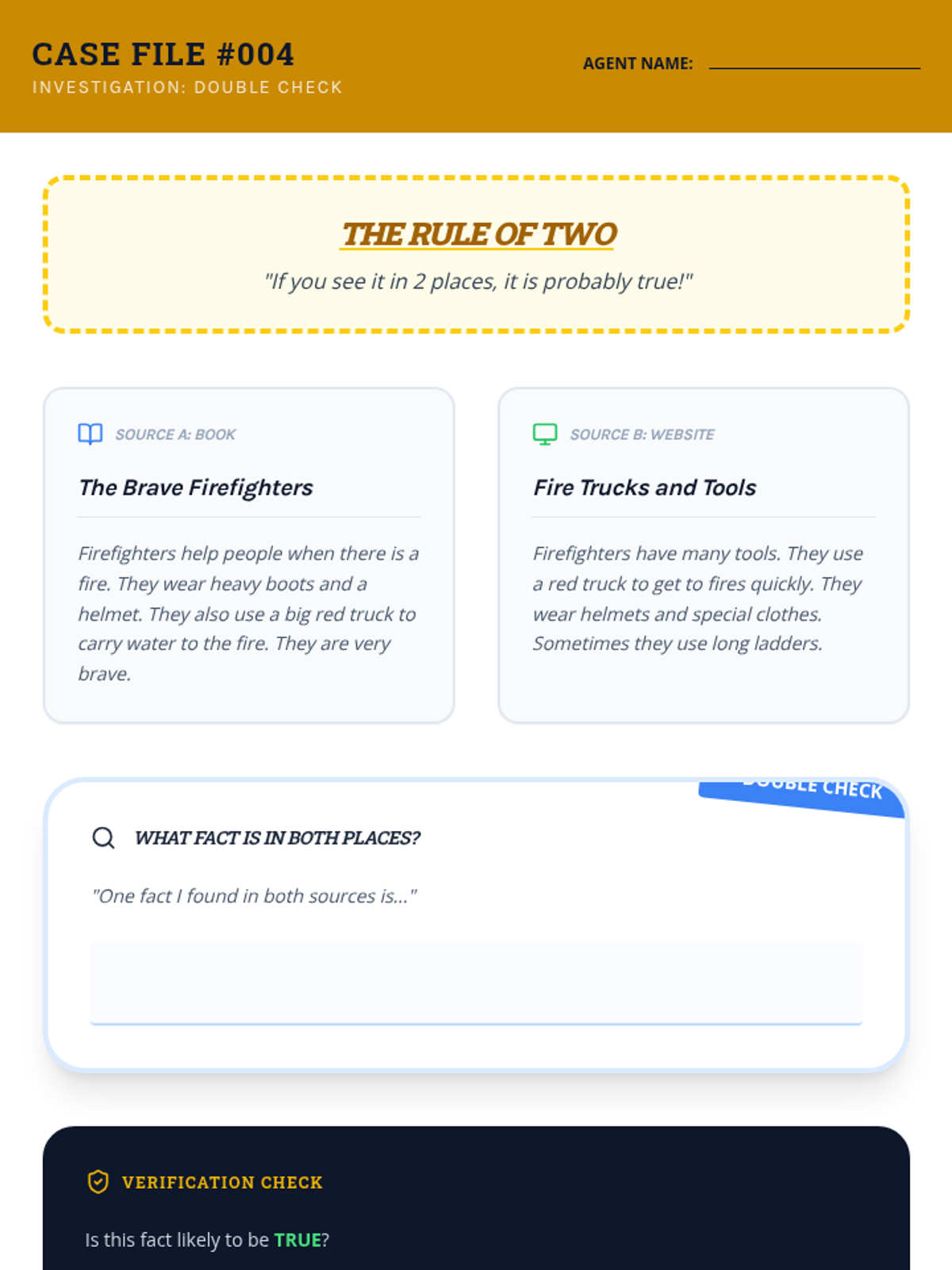
Students practice the 'Rule of Two' by finding the same fact in two different sources to verify its accuracy.
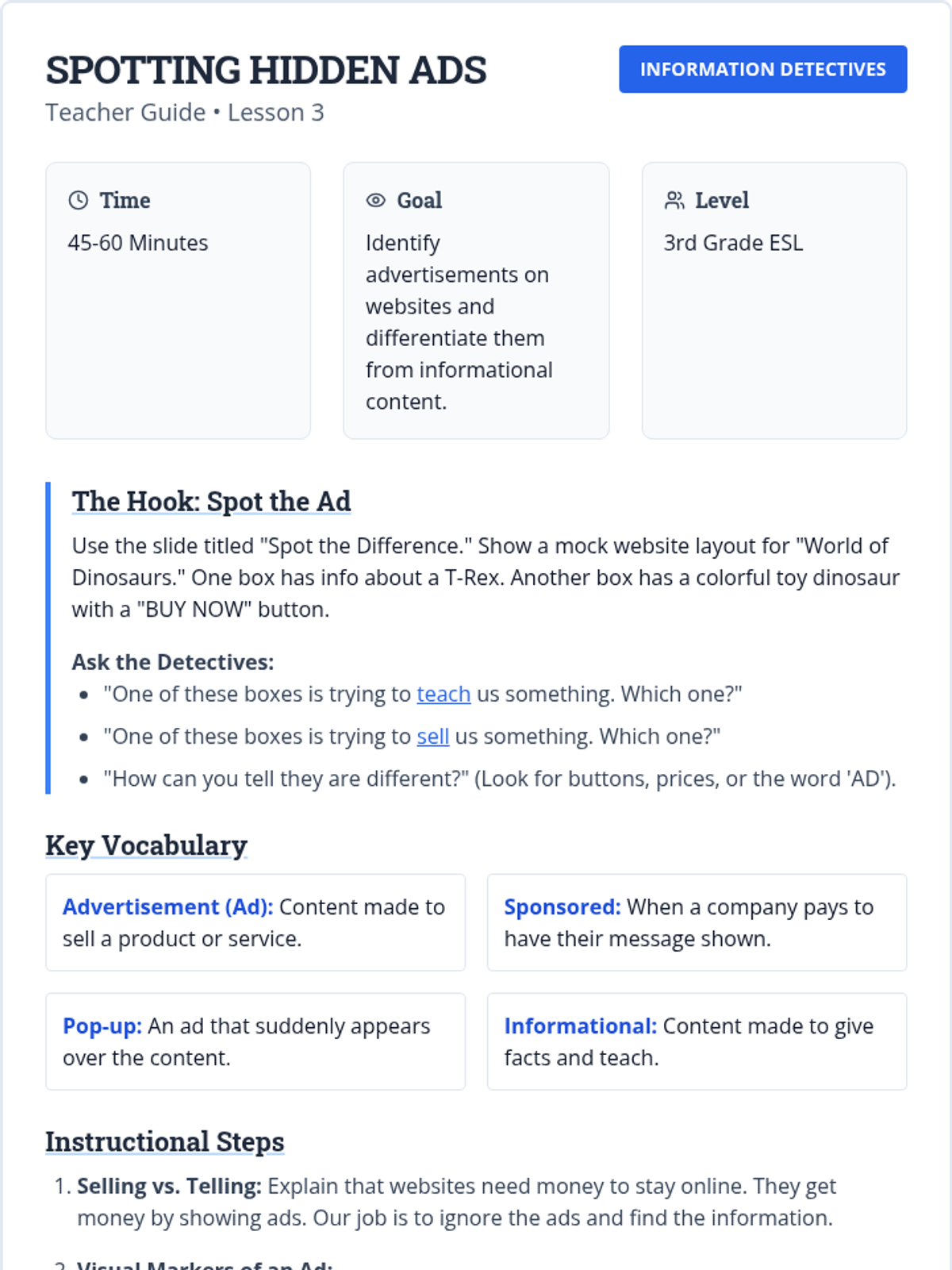
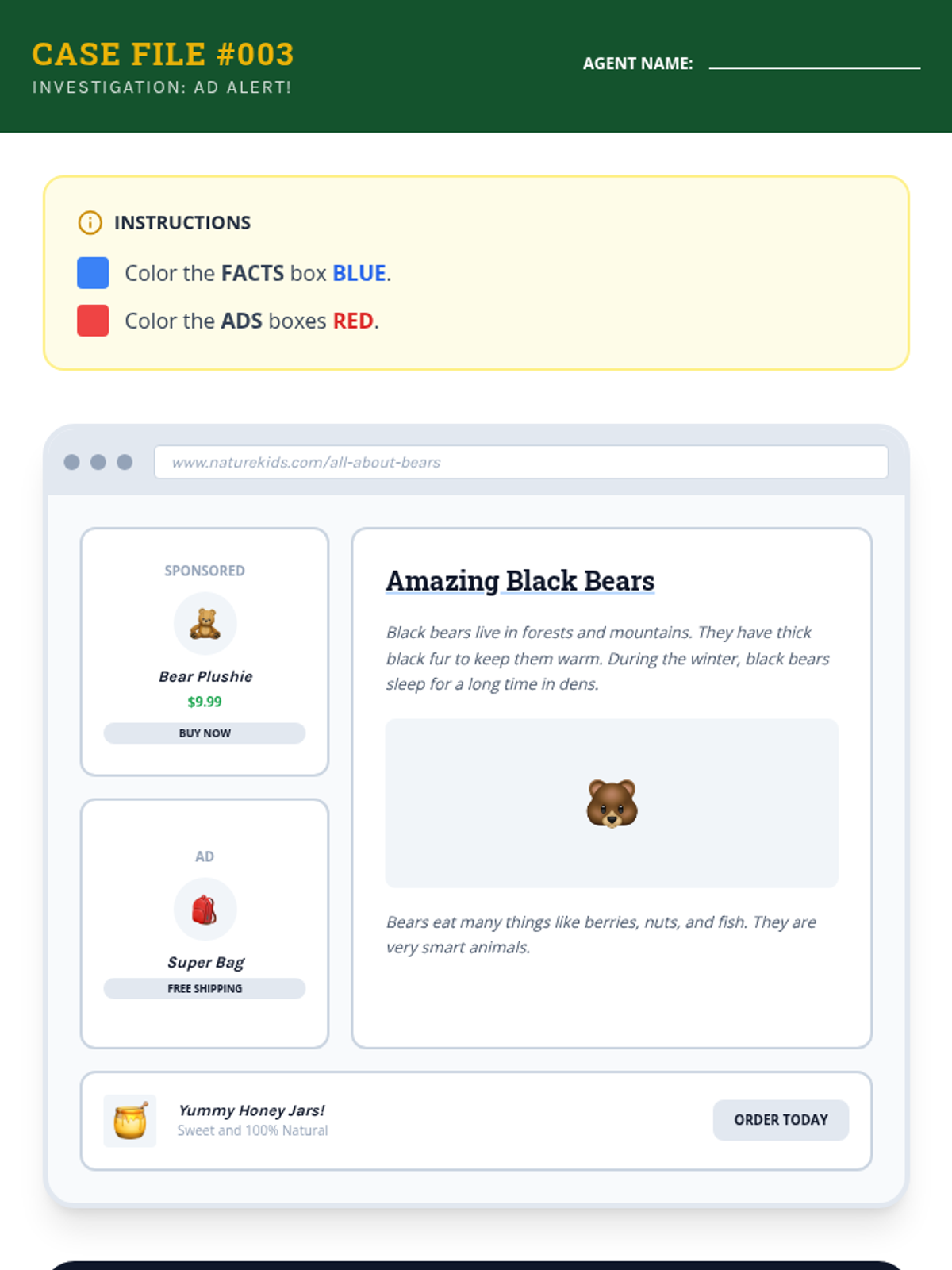
Students learn to differentiate between informational content and advertisements on websites, identifying visual markers that signal an ad.
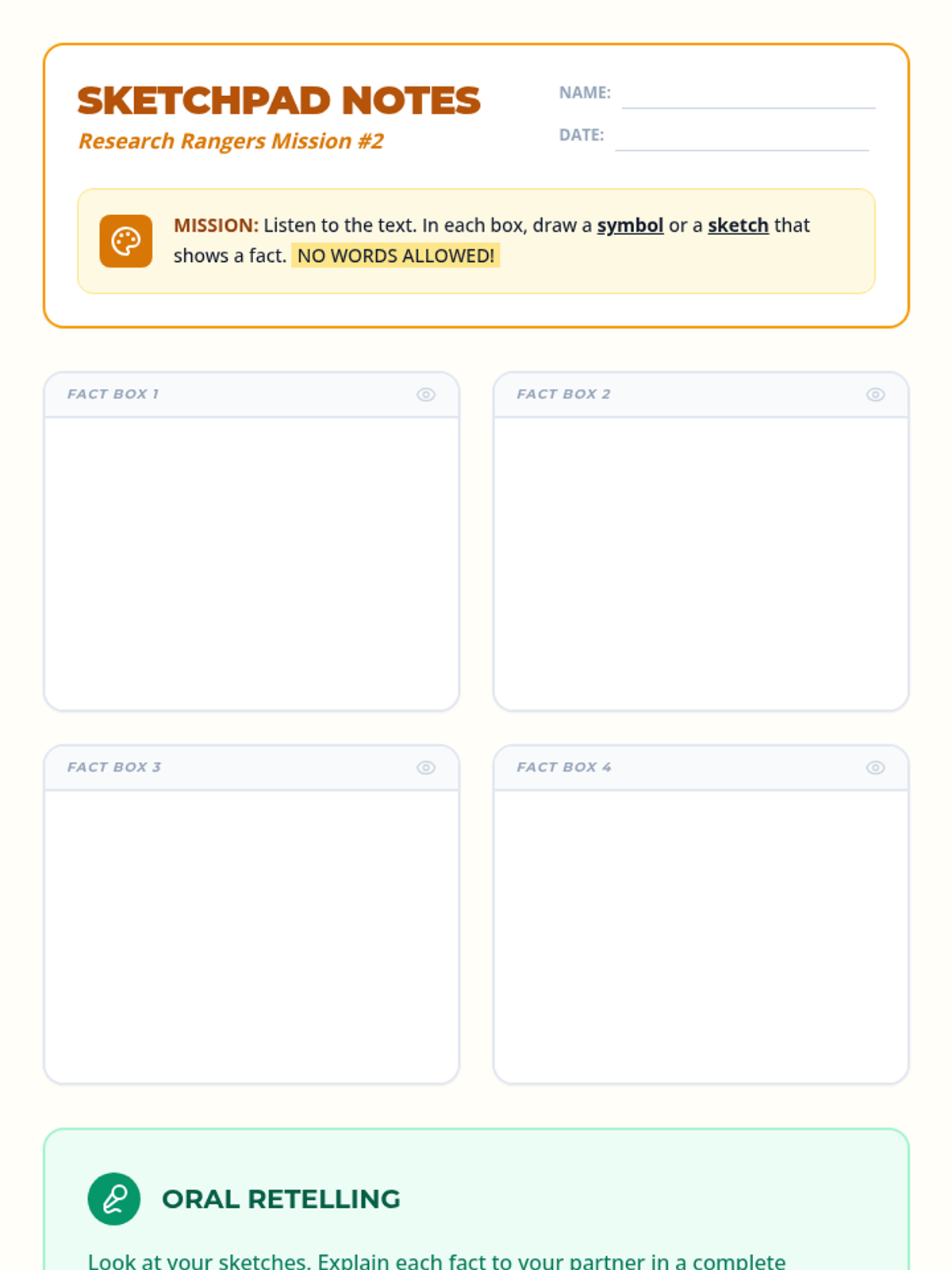
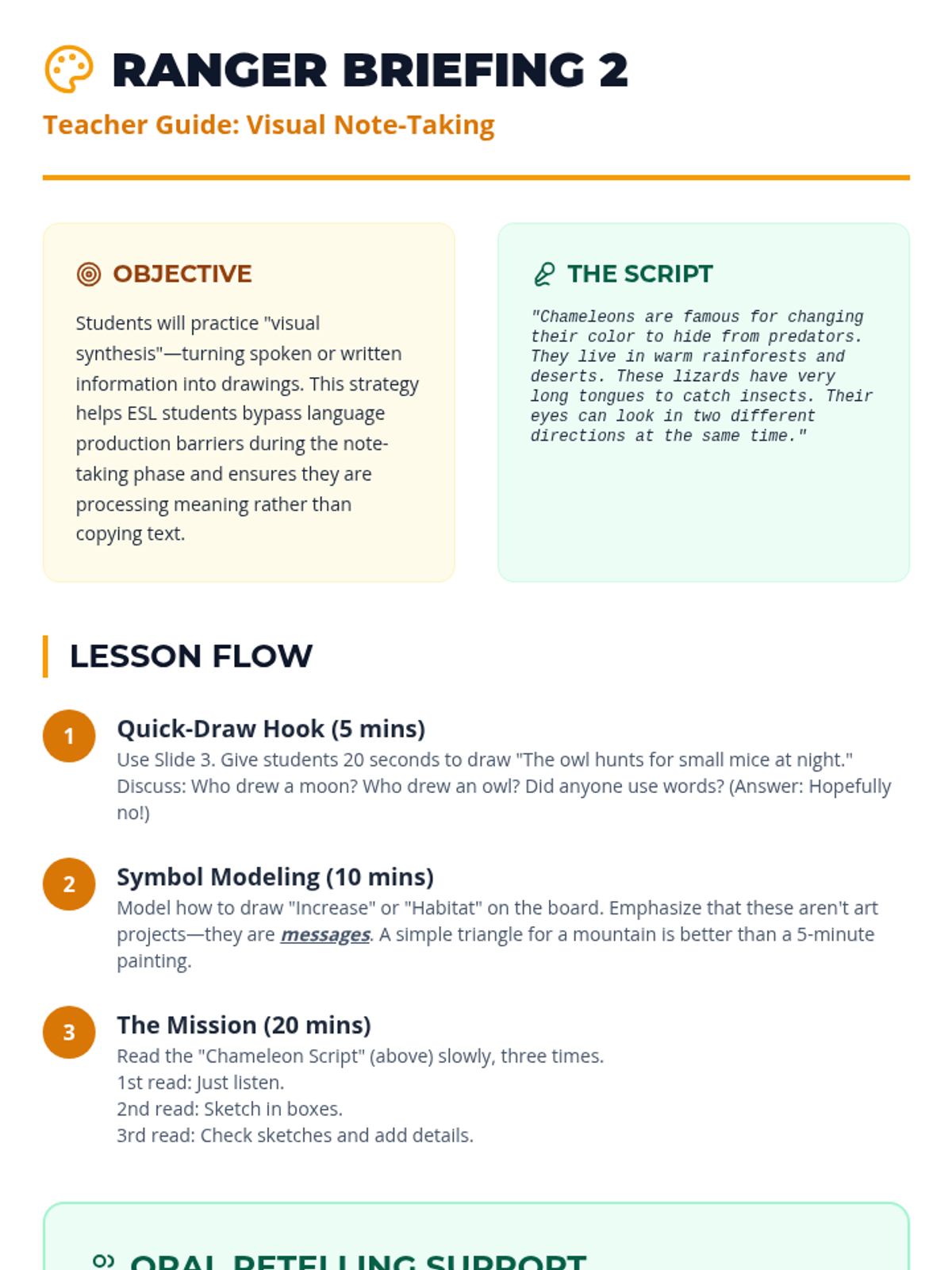
Students take notes using only drawings and symbols to bypass language barriers and prevent copying. They practice oral retelling by explaining their sketches to a partner.