Students are introduced to red, blue, and yellow through a 'magic water' hook and sorting activities to reinforce visual discrimination and vocabulary.
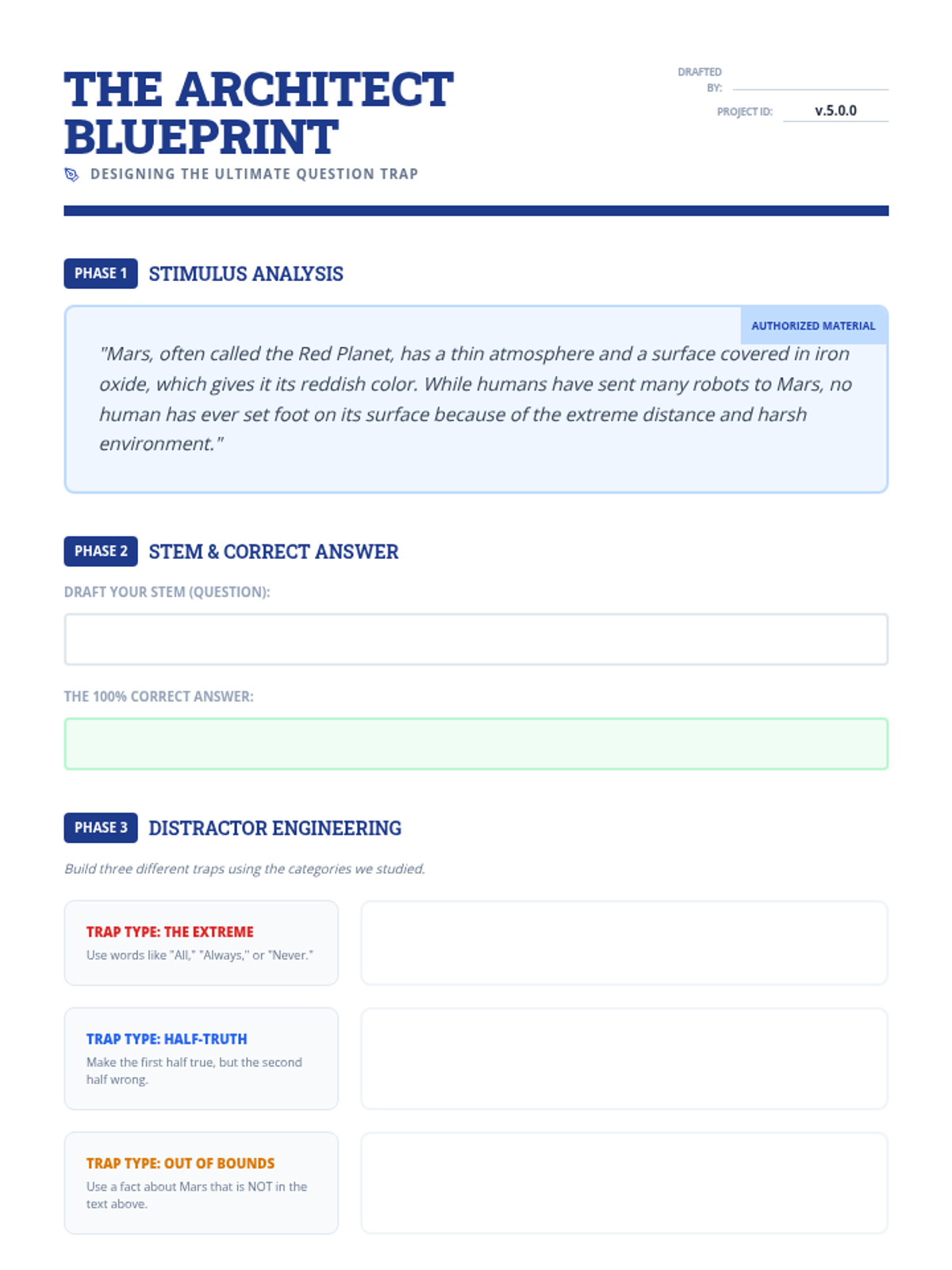
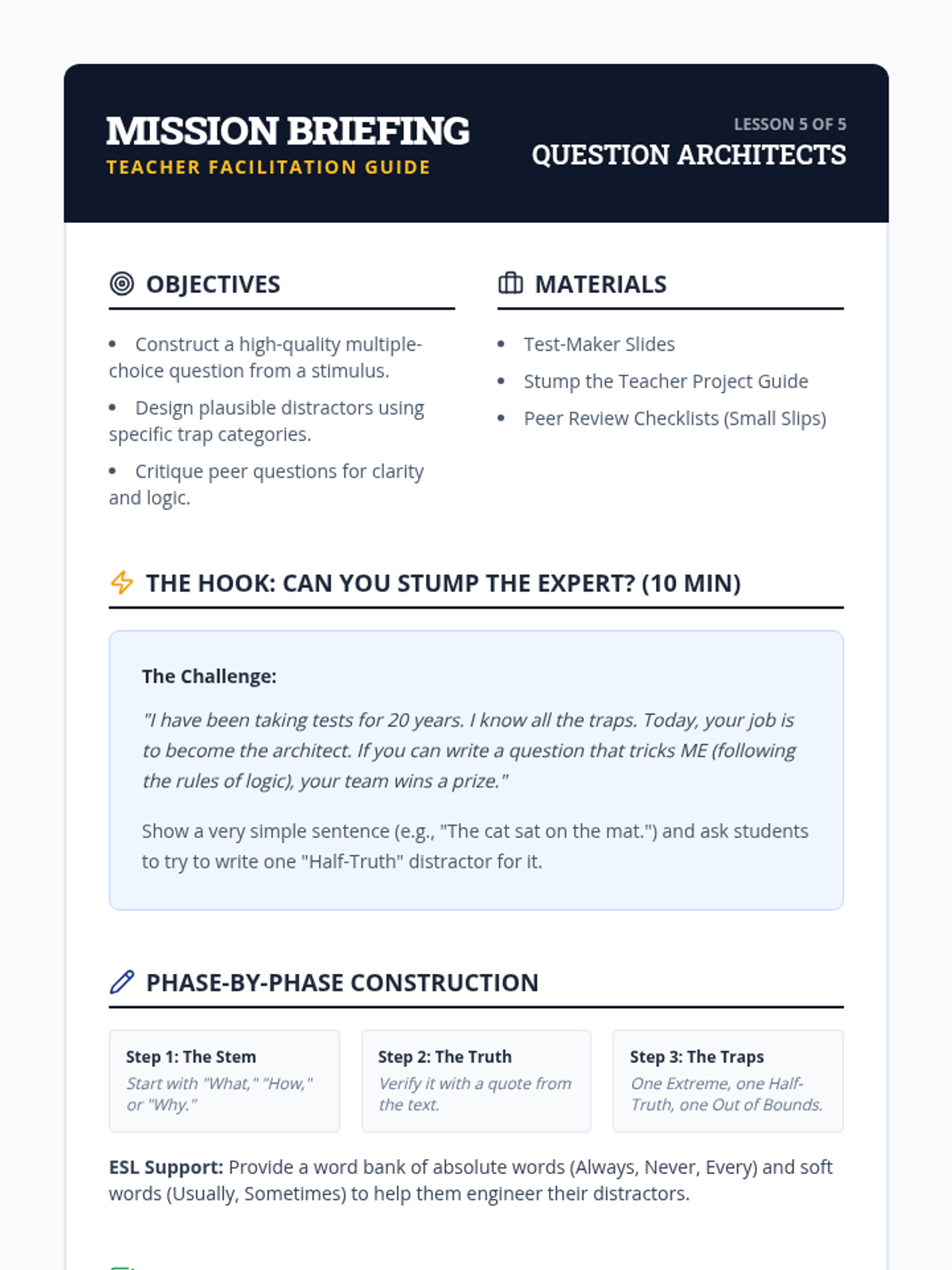
Students switch roles and become the test-makers. They write their own multiple-choice questions based on a shared text, intentionally creating plausible distractors.
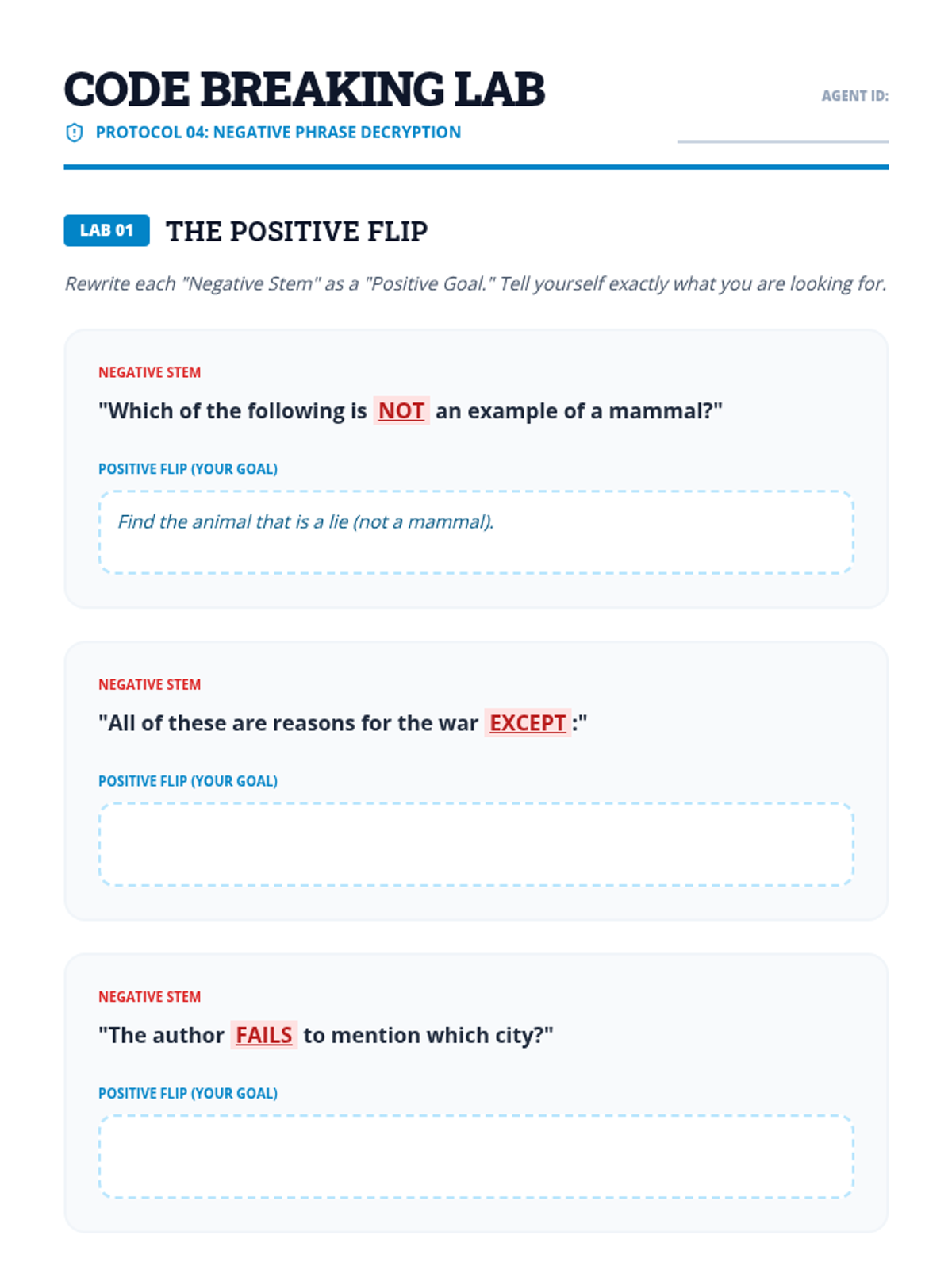
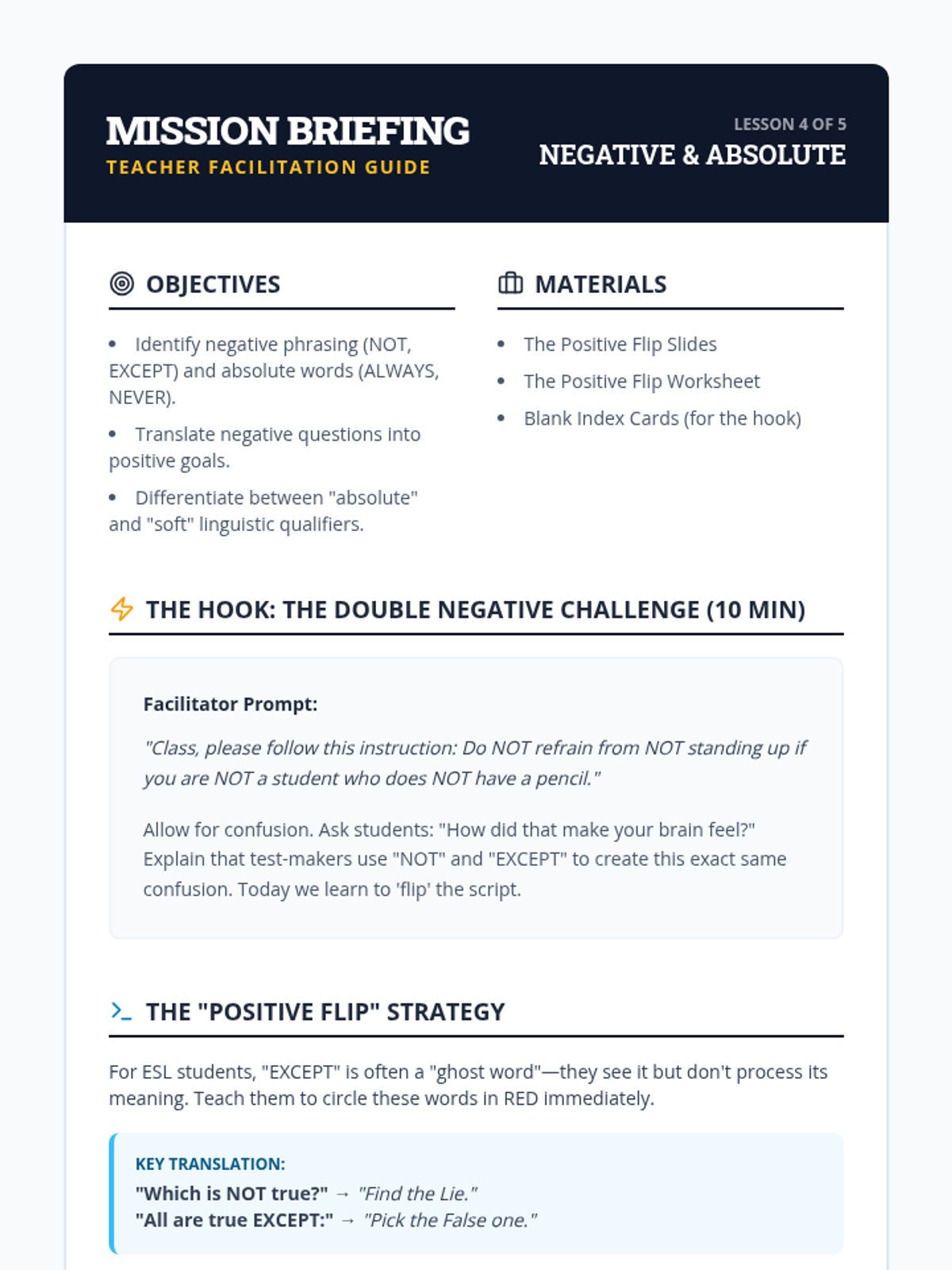
Students specifically target questions using words like 'NOT,' 'EXCEPT,' 'ALWAYS,' or 'NEVER.' They rewrite these questions in positive terms to clarify meaning.
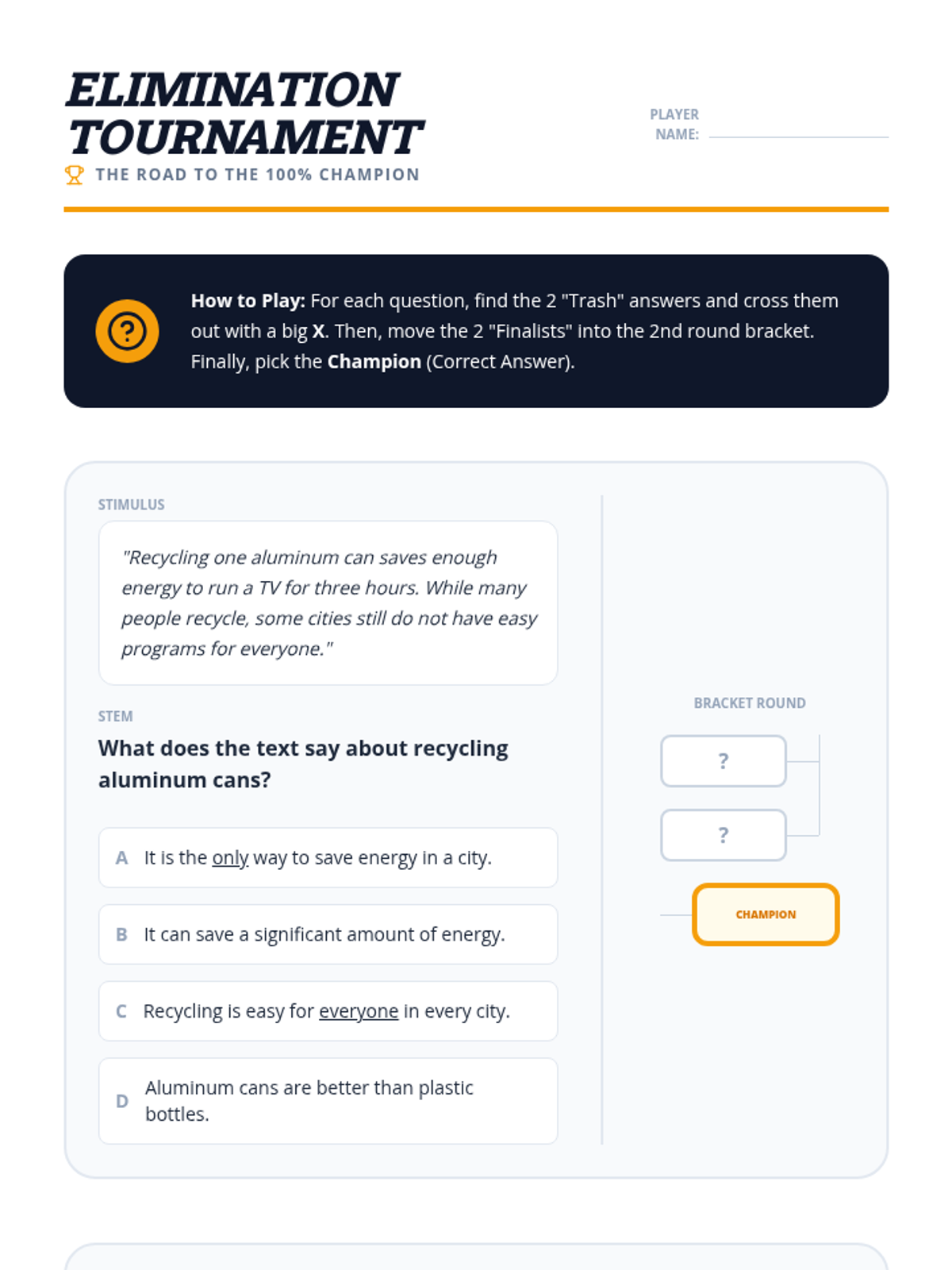
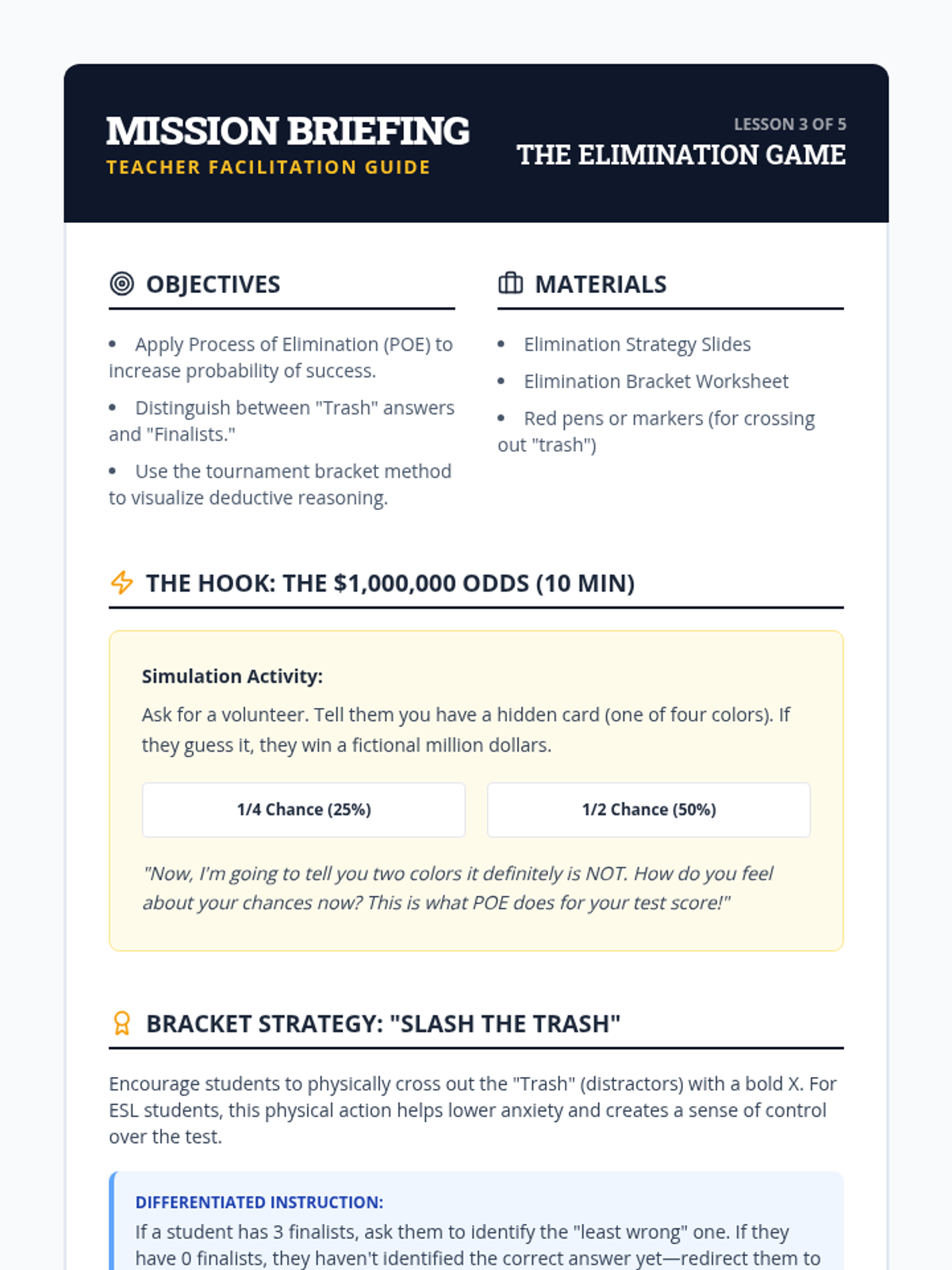
Students practice the physical and mental habit of crossing out clearly wrong answers to increase their probability of success. The lesson focuses on narrowing choices down to two options and using text evidence to make the final selection.
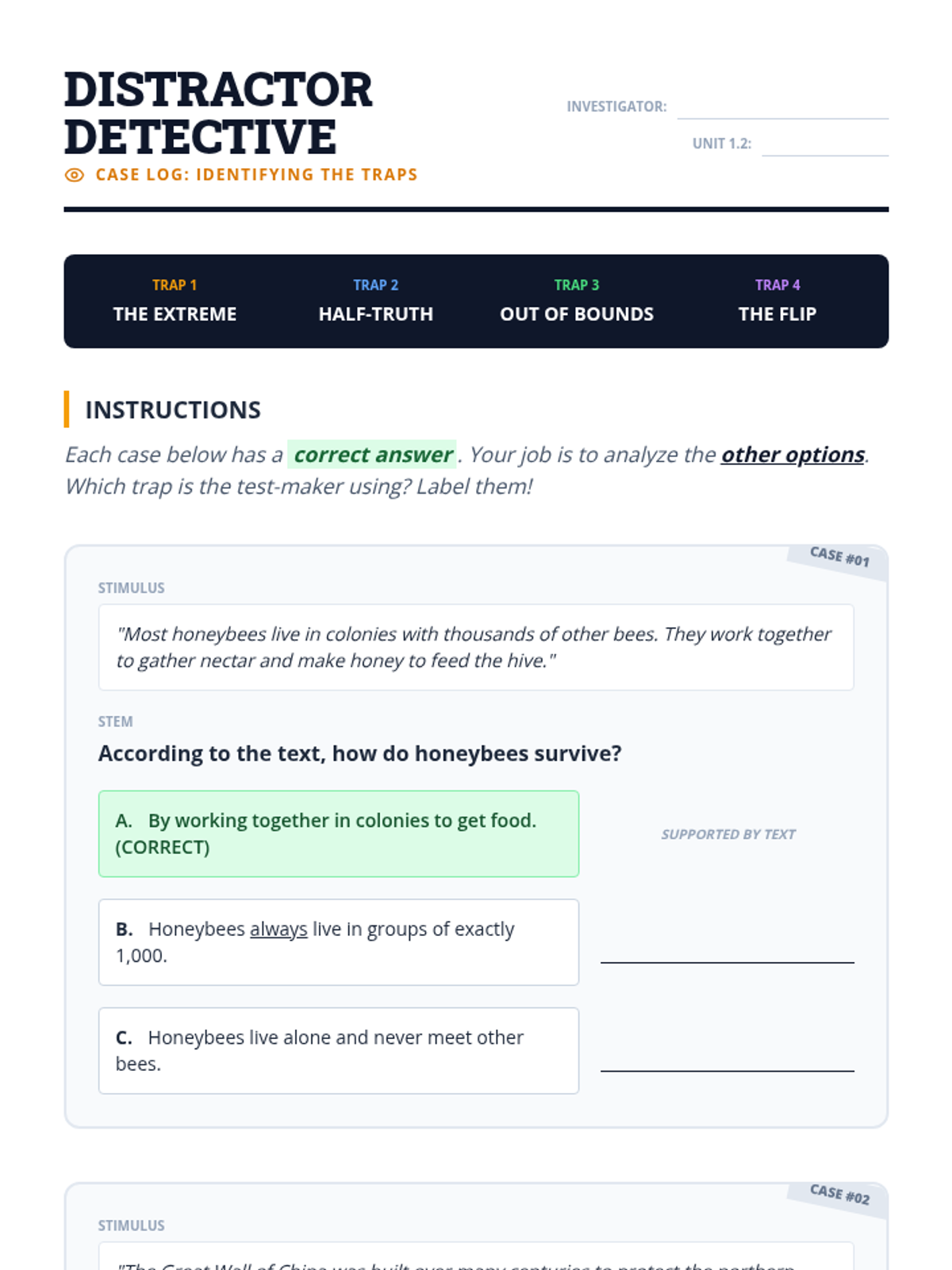
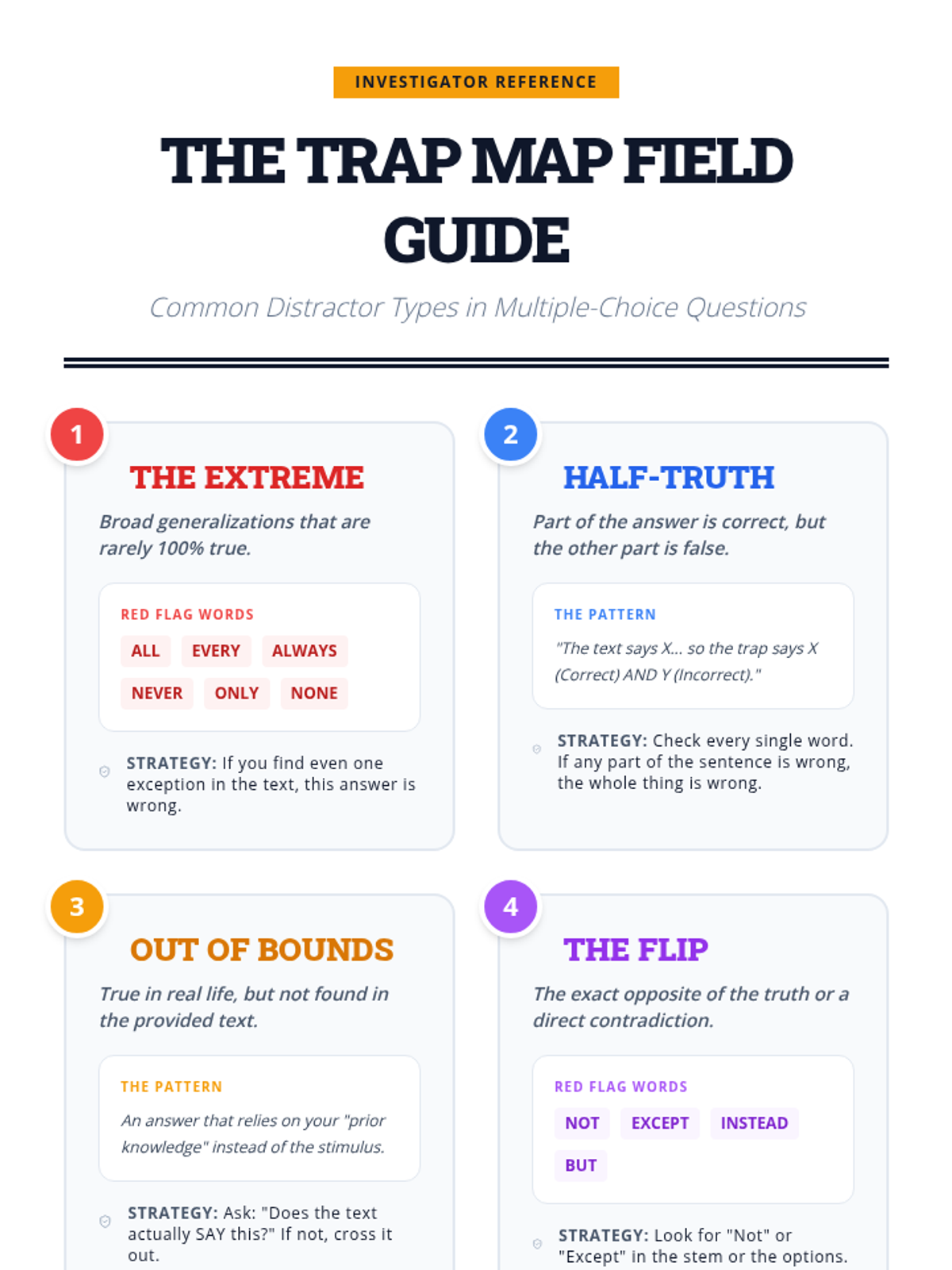
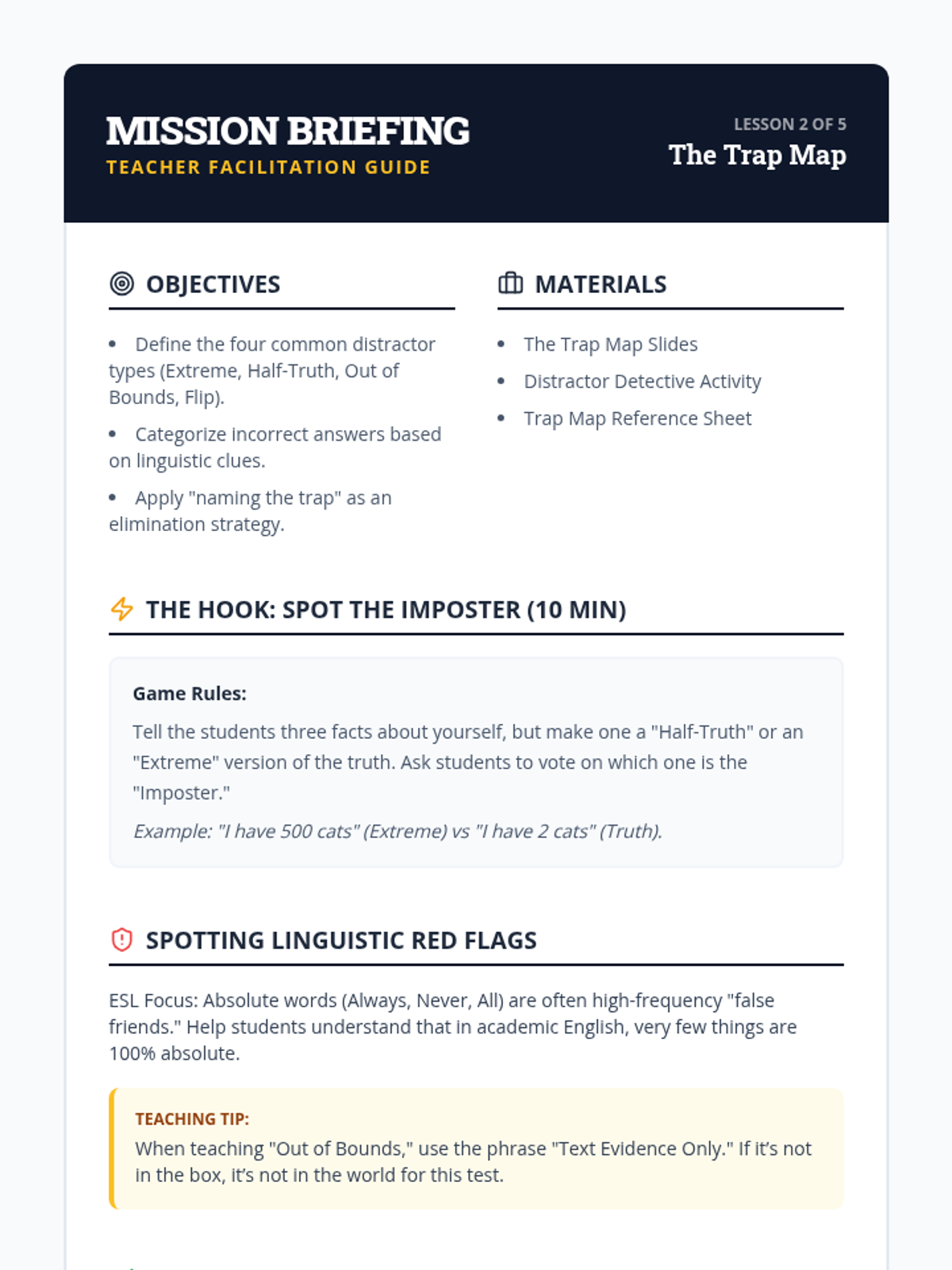
This lesson categorizes common types of wrong answers, such as 'too extreme,' 'partially true,' or 'irrelevant info.' Students label incorrect answers in sample questions with these categories.
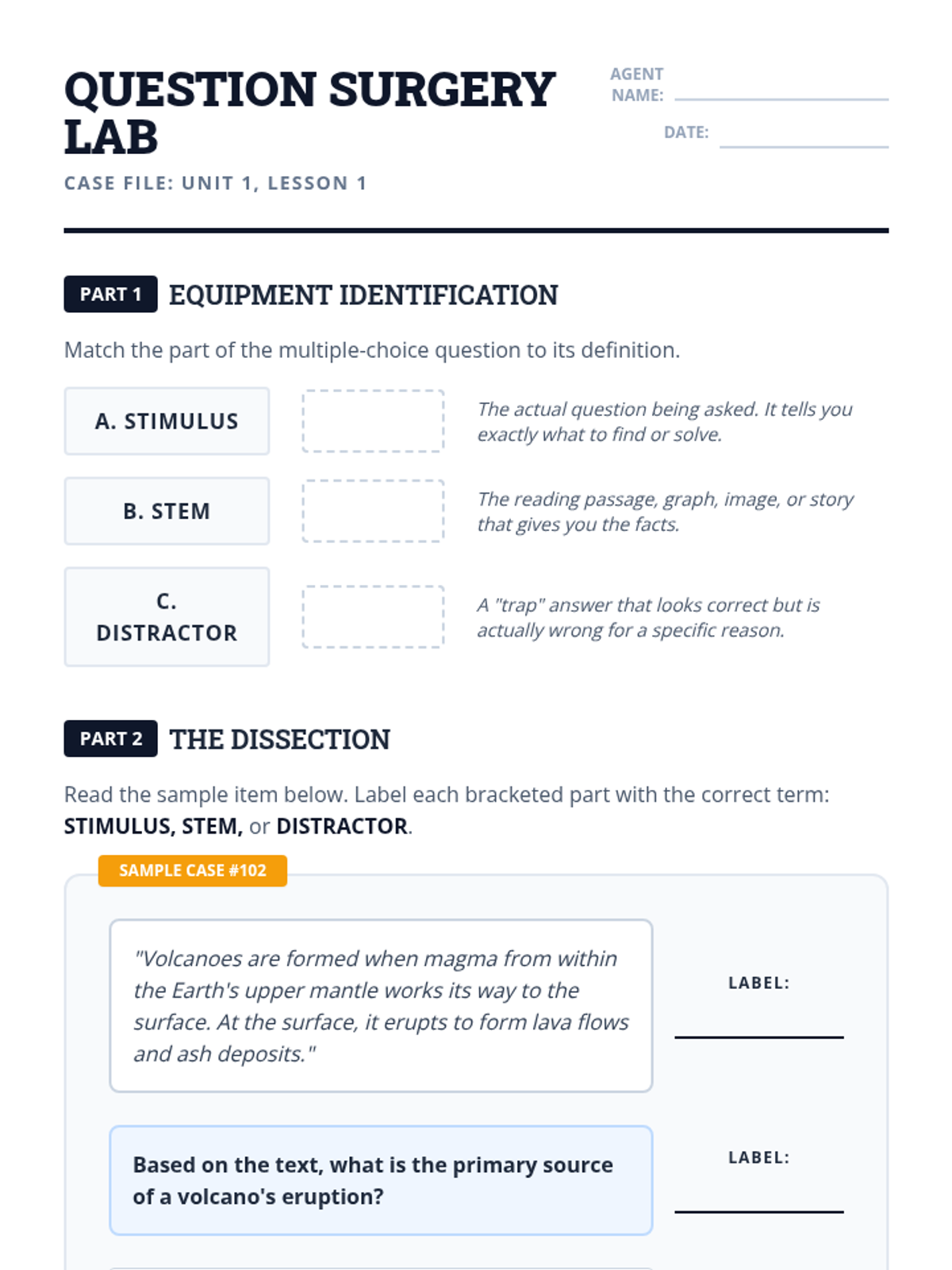
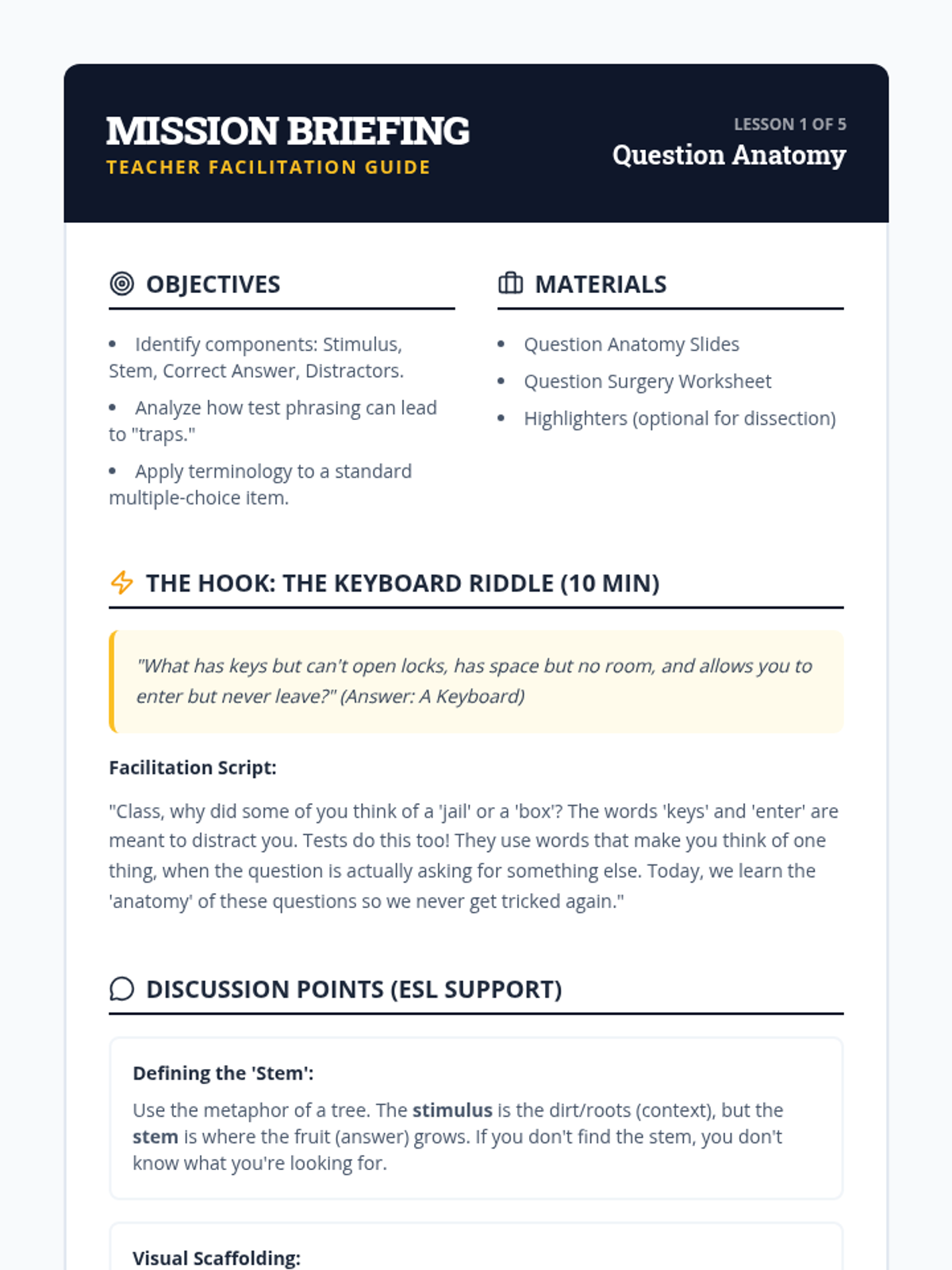
Students break down the components of a test item: the stimulus, the stem (question), the correct answer, and the distractors. They learn to identify what the stem is actually asking before looking at the options.
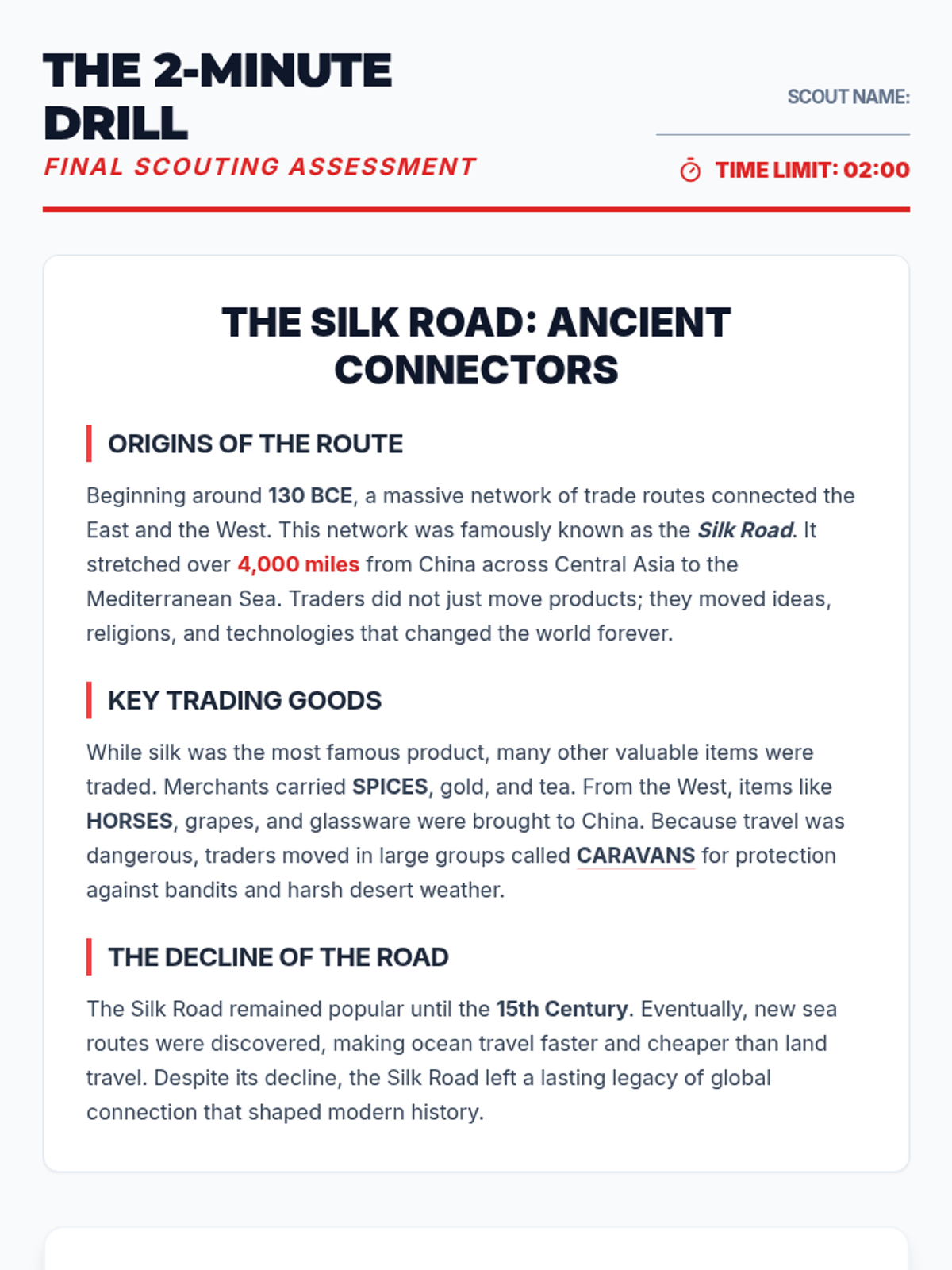
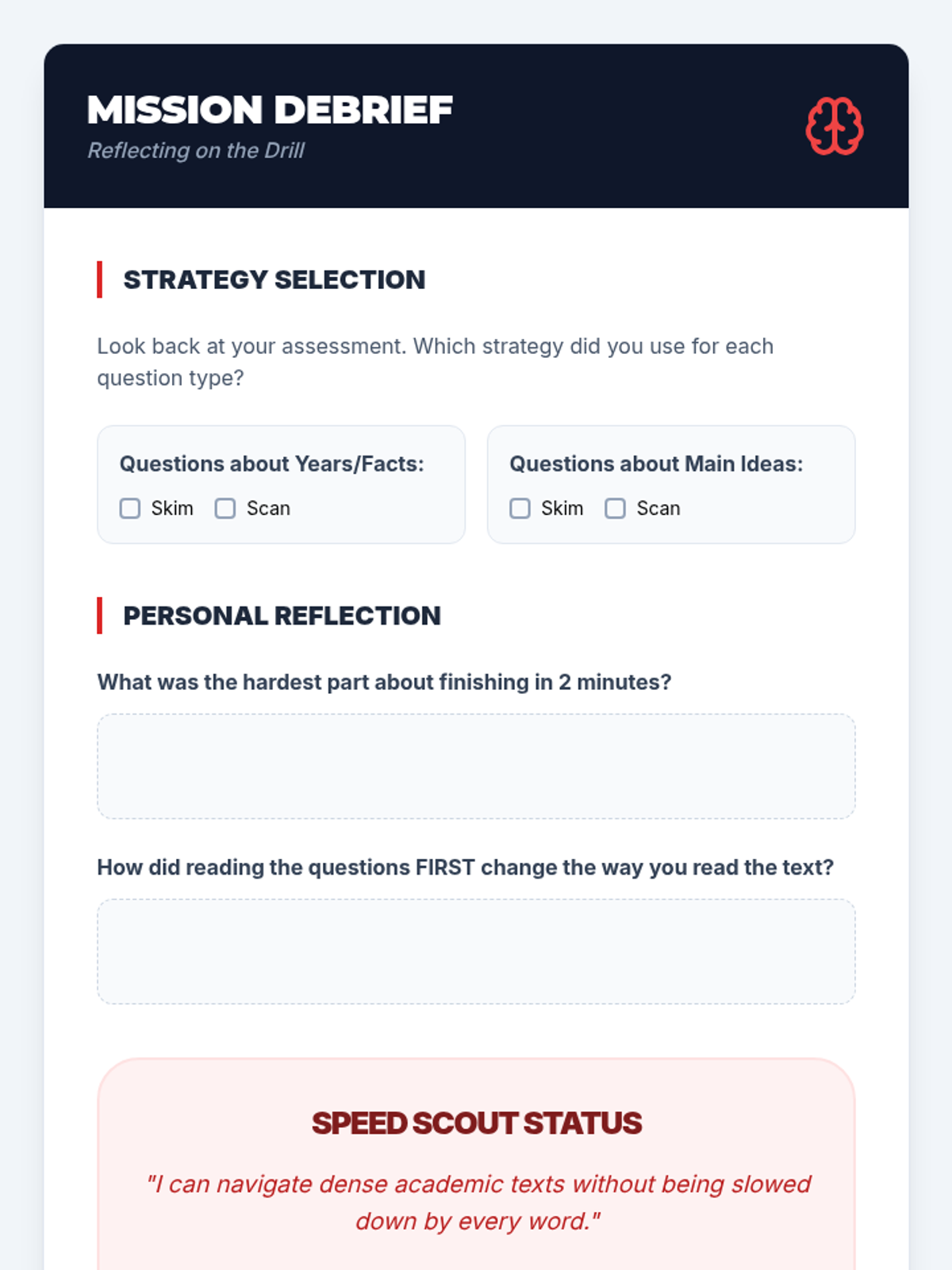
A culminating simulation where students apply their skimming and scanning skills to a timed reading comprehension challenge, followed by a metacognitive reflection.
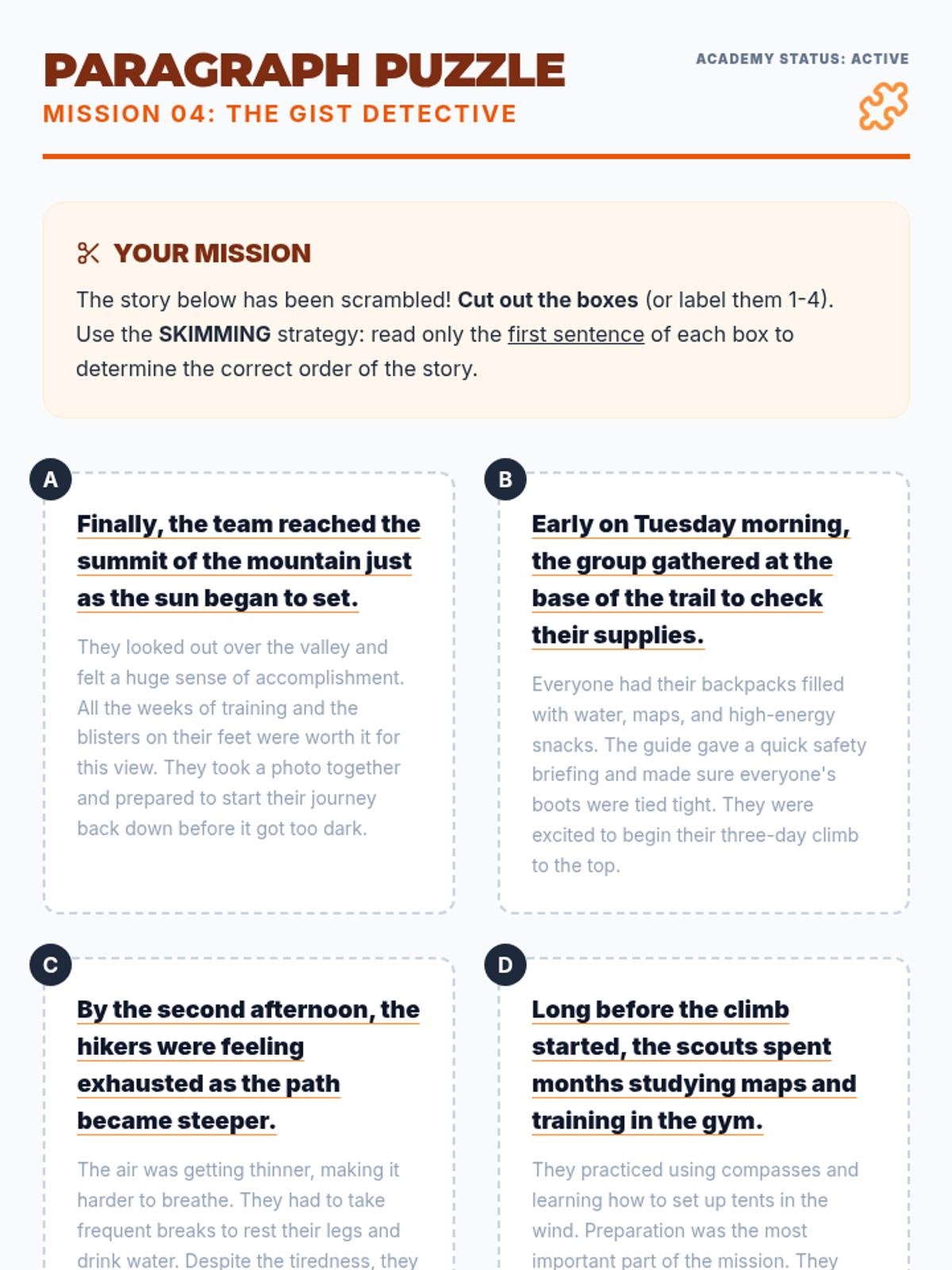
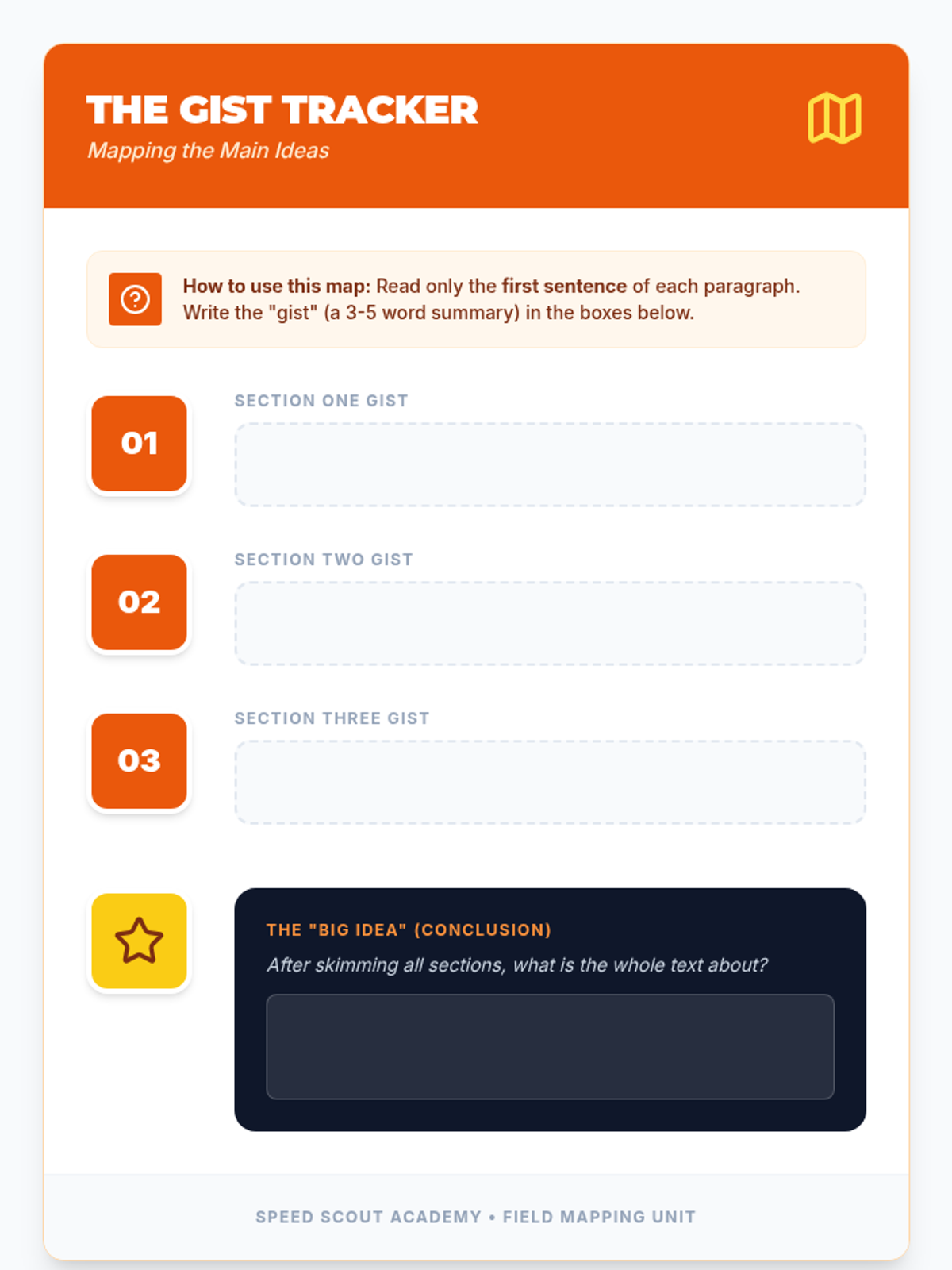
Focuses on the 'first and last' strategy to identify main ideas and topic sentences, allowing students to map out the structure of a text quickly.
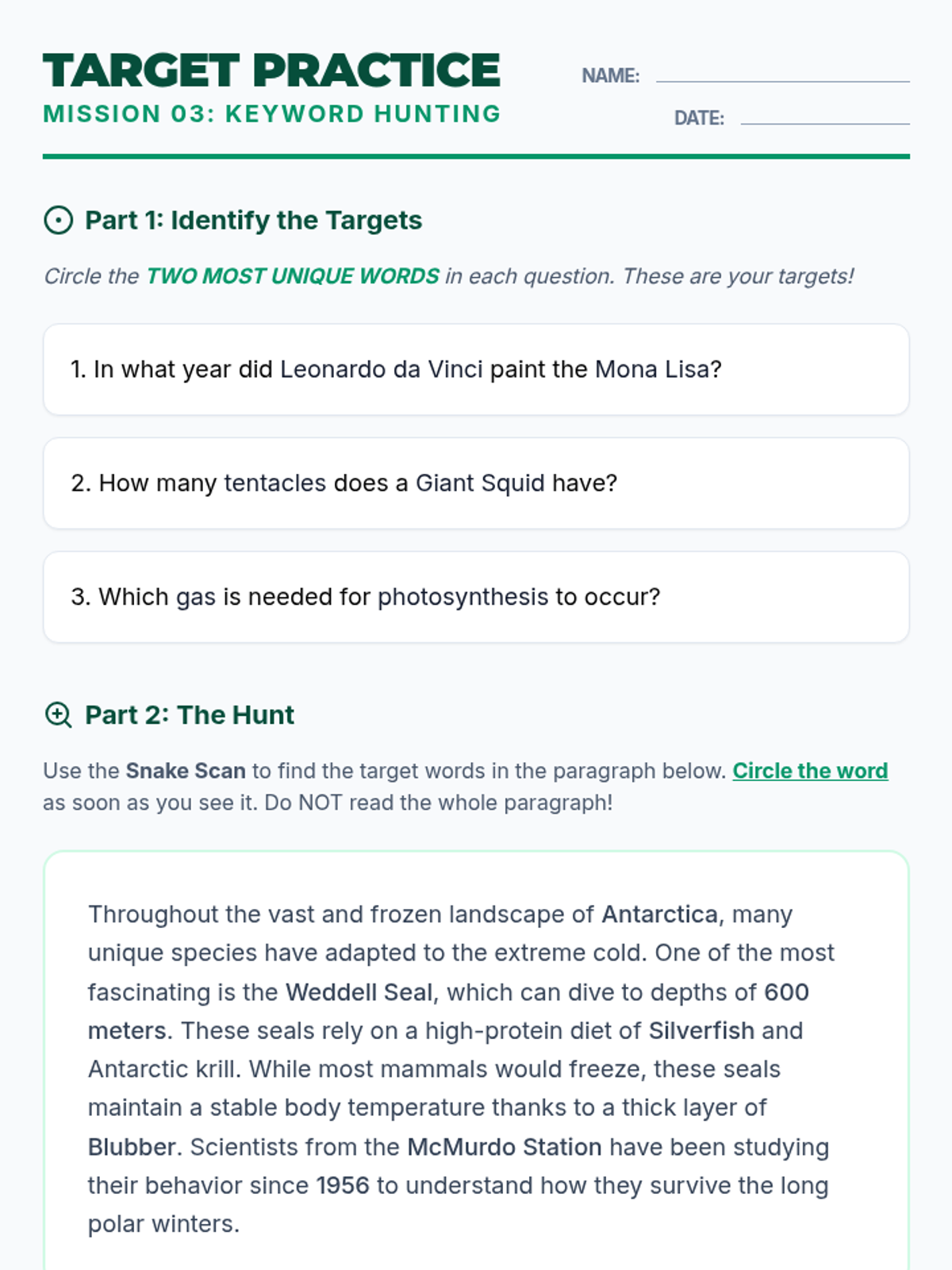
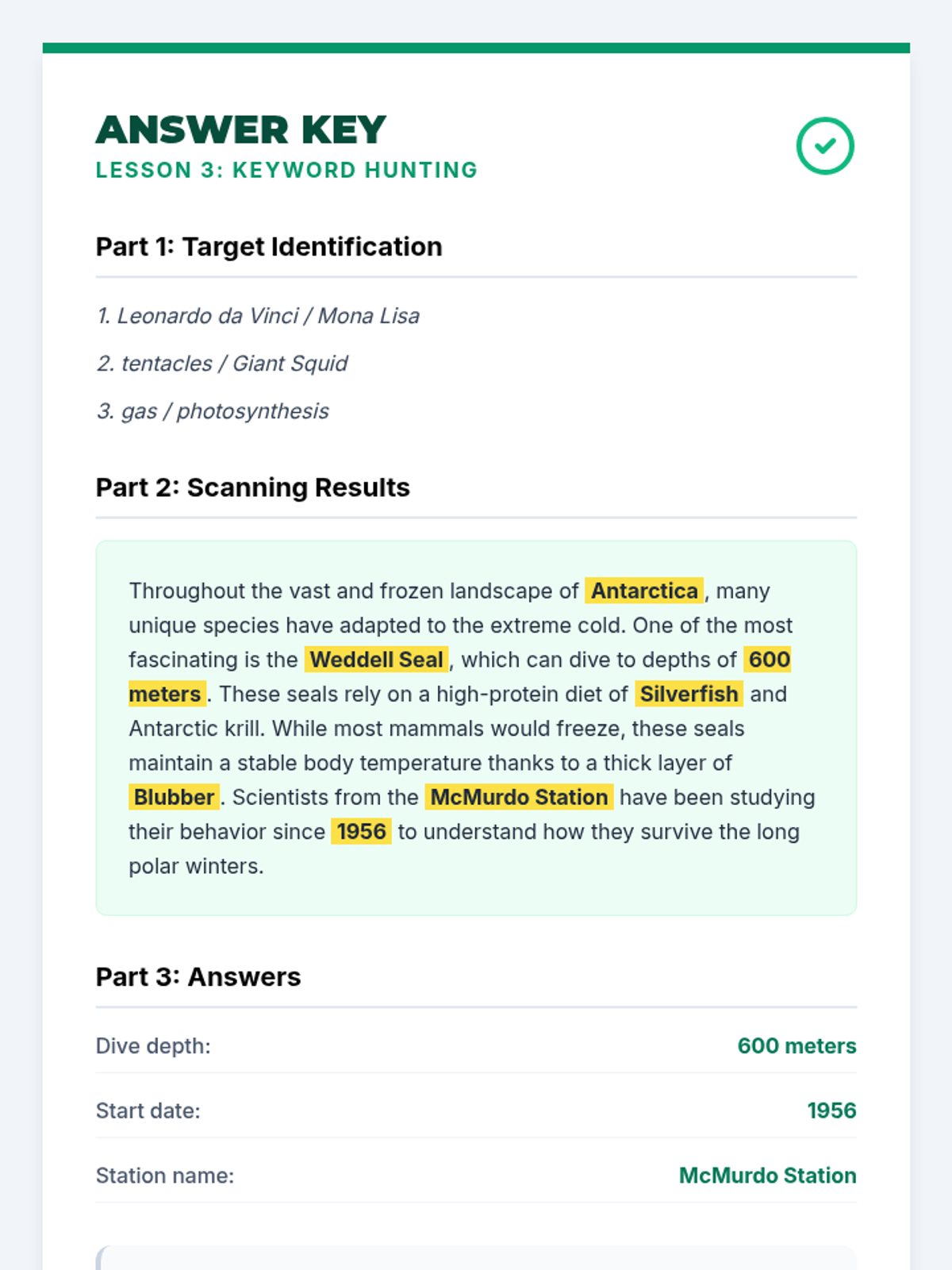
Students master the art of identifying high-value keywords in questions and quickly locating them within dense academic passages.
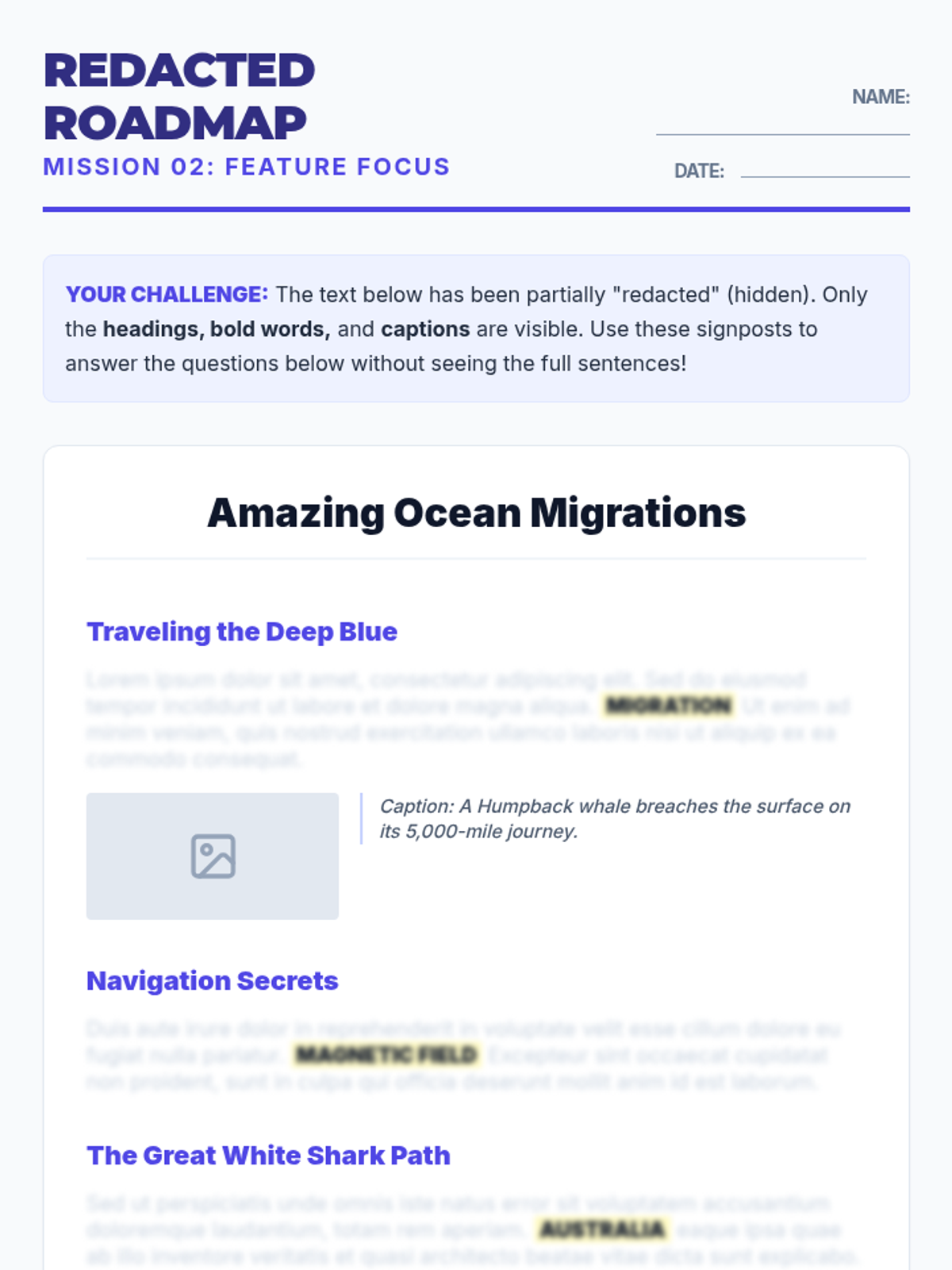
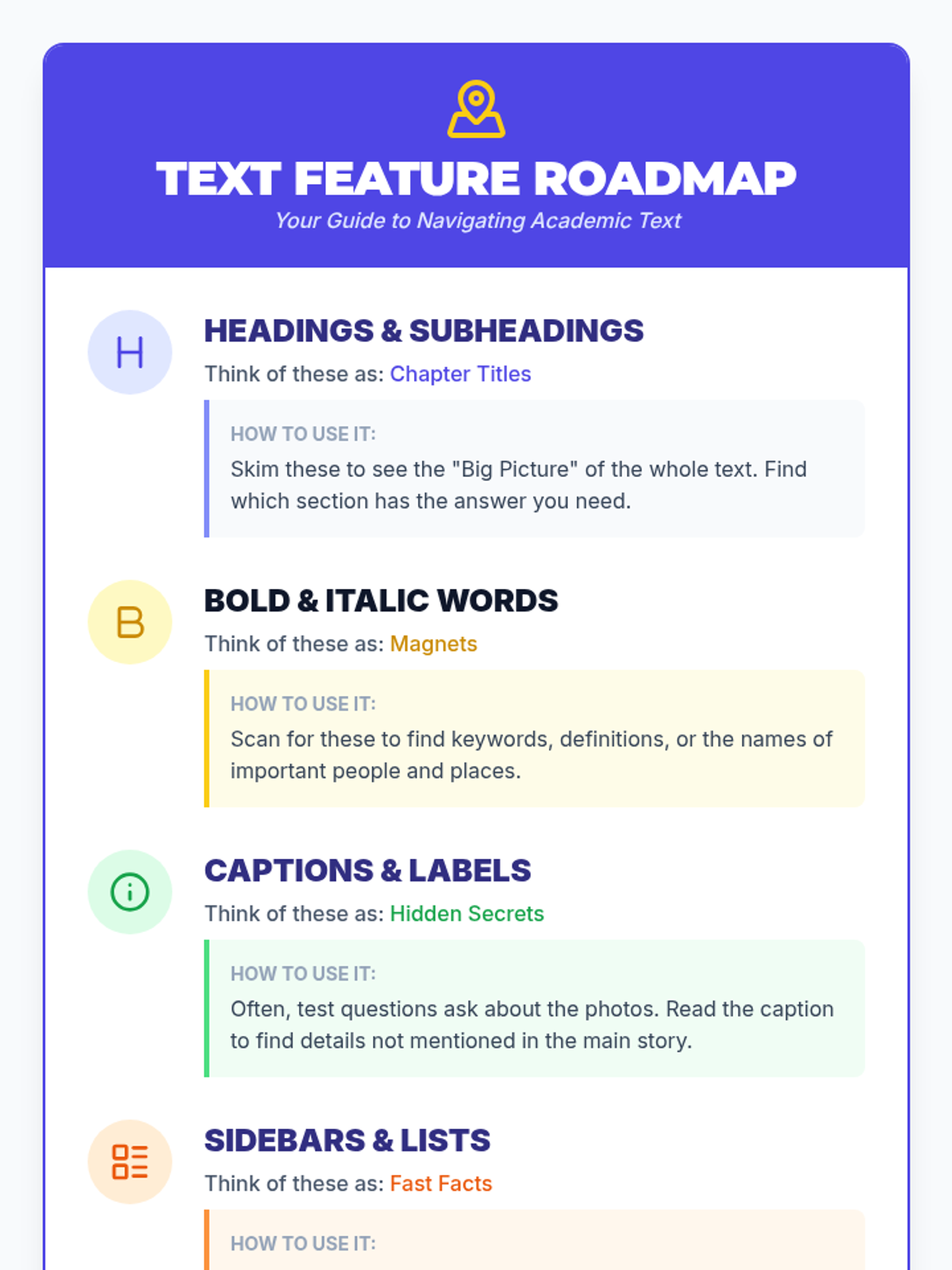
Learners practice using text features like headings, bold words, and captions as navigation tools to predict content and locate information without reading every word.
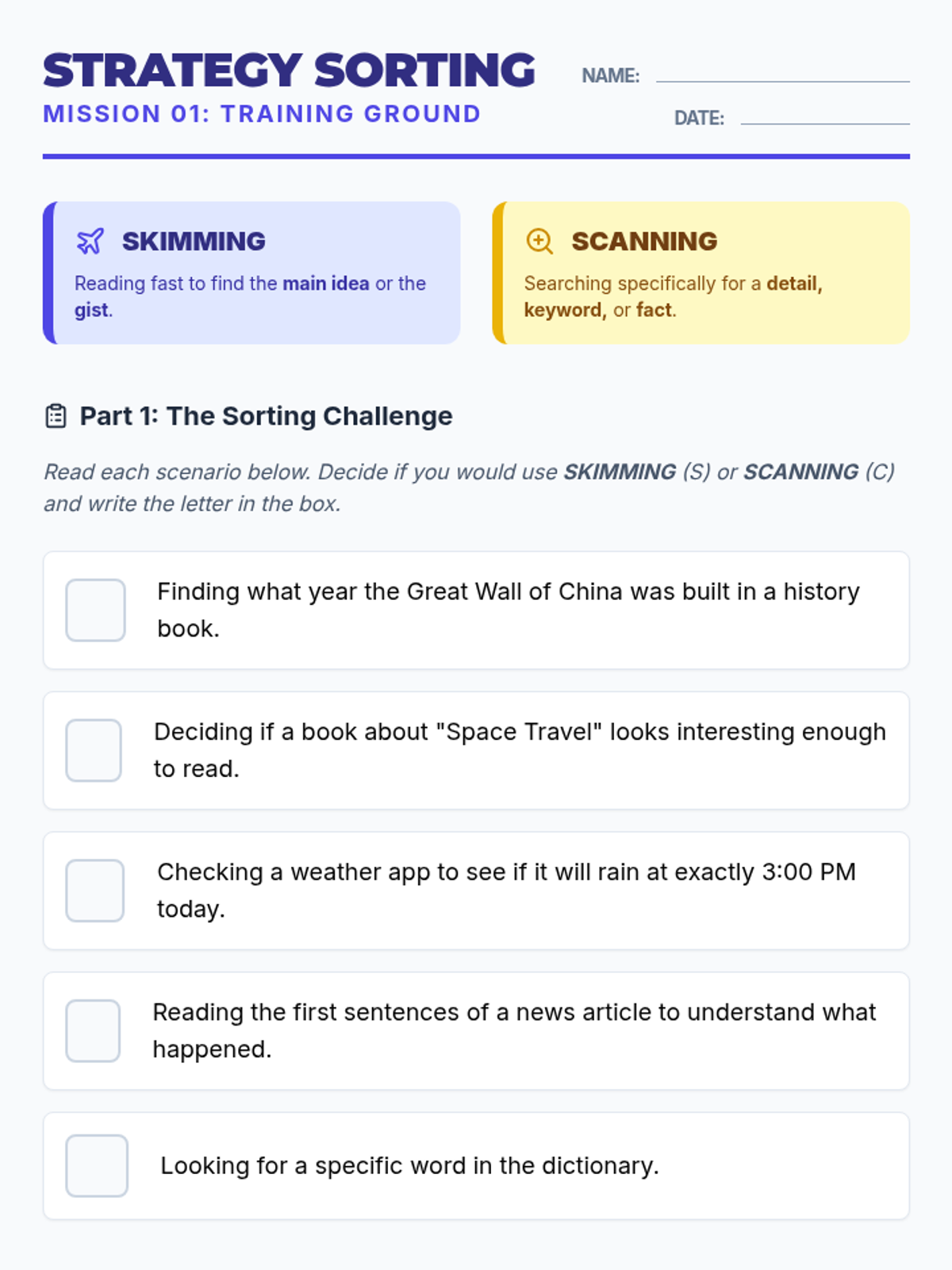
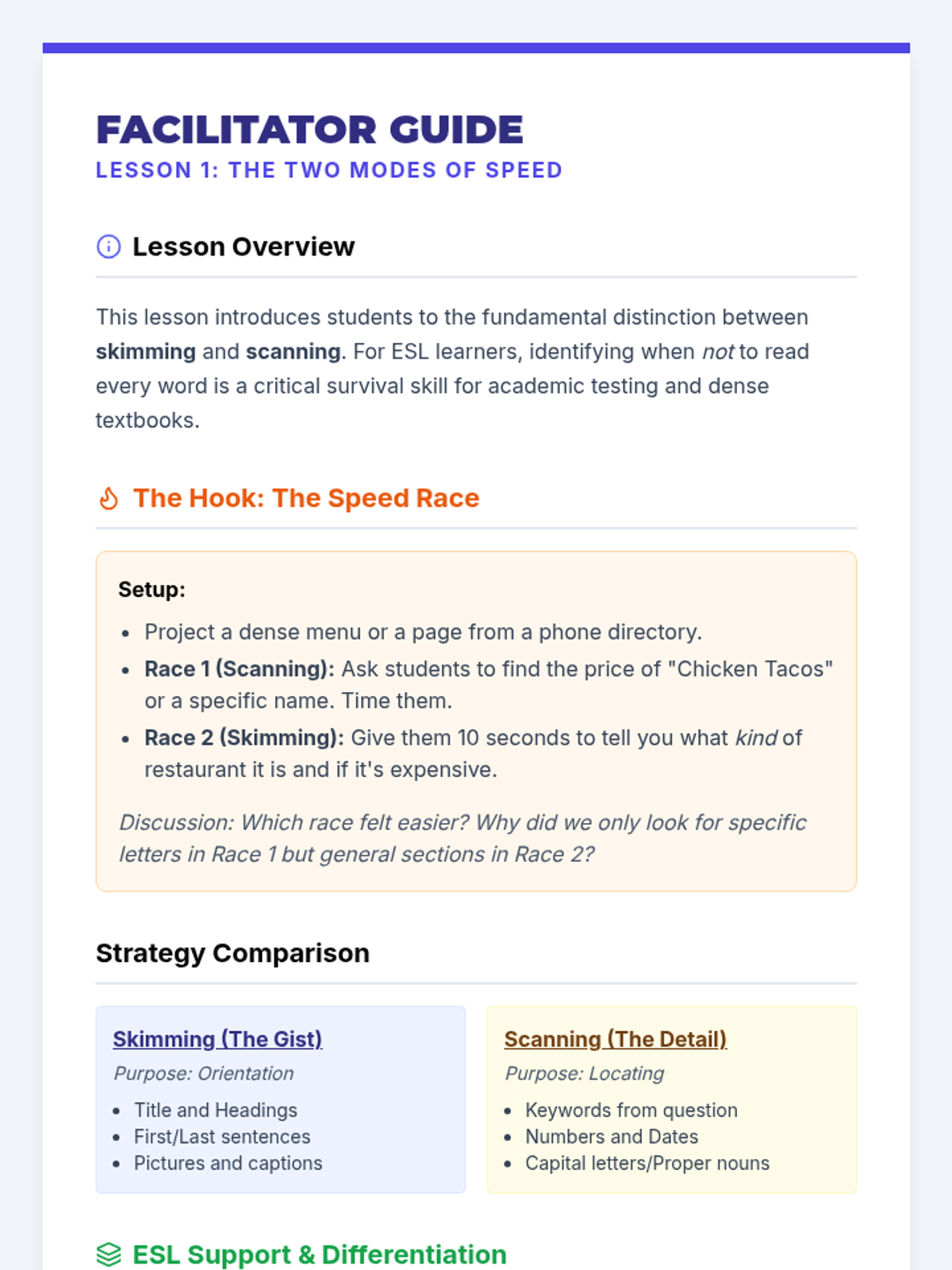
Students explore the fundamental differences between skimming for a general overview and scanning for specific information through interactive sorting and rapid-fire exercises.
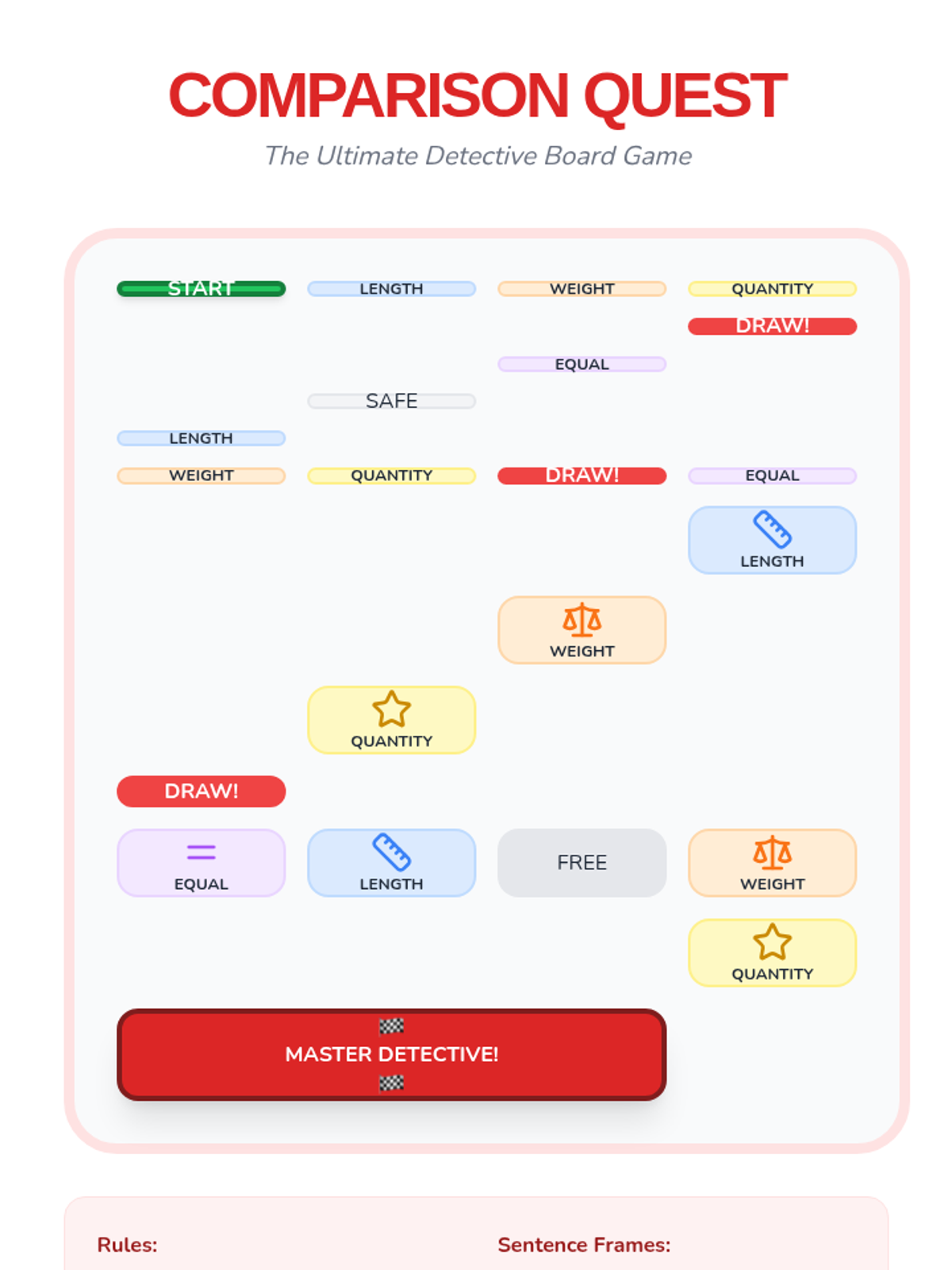
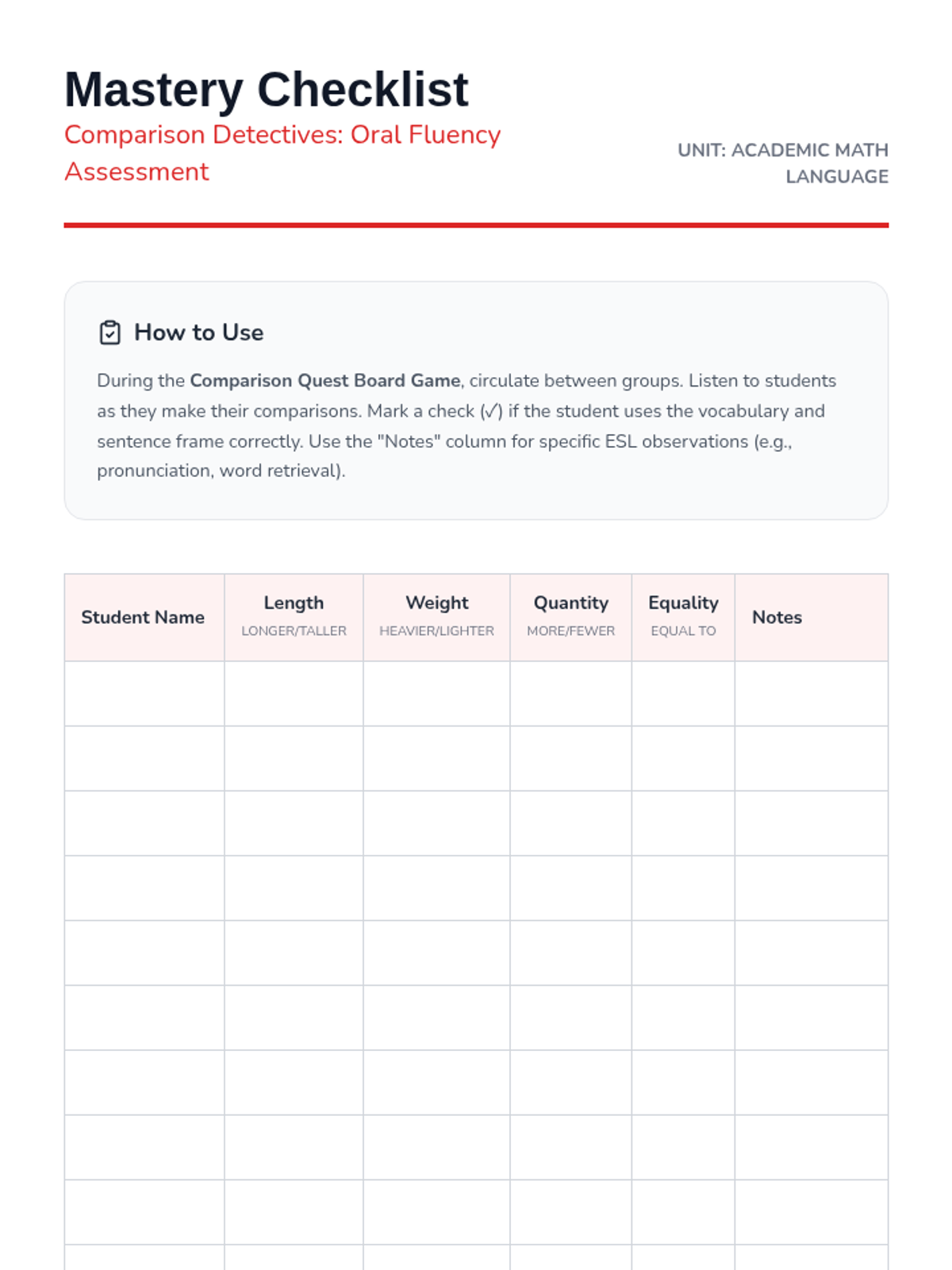
Students participate in a station rotation that requires them to apply all comparative language learned (length, weight, quantity). They must draw cards with two items and orally compare them to a partner to advance on a game board.
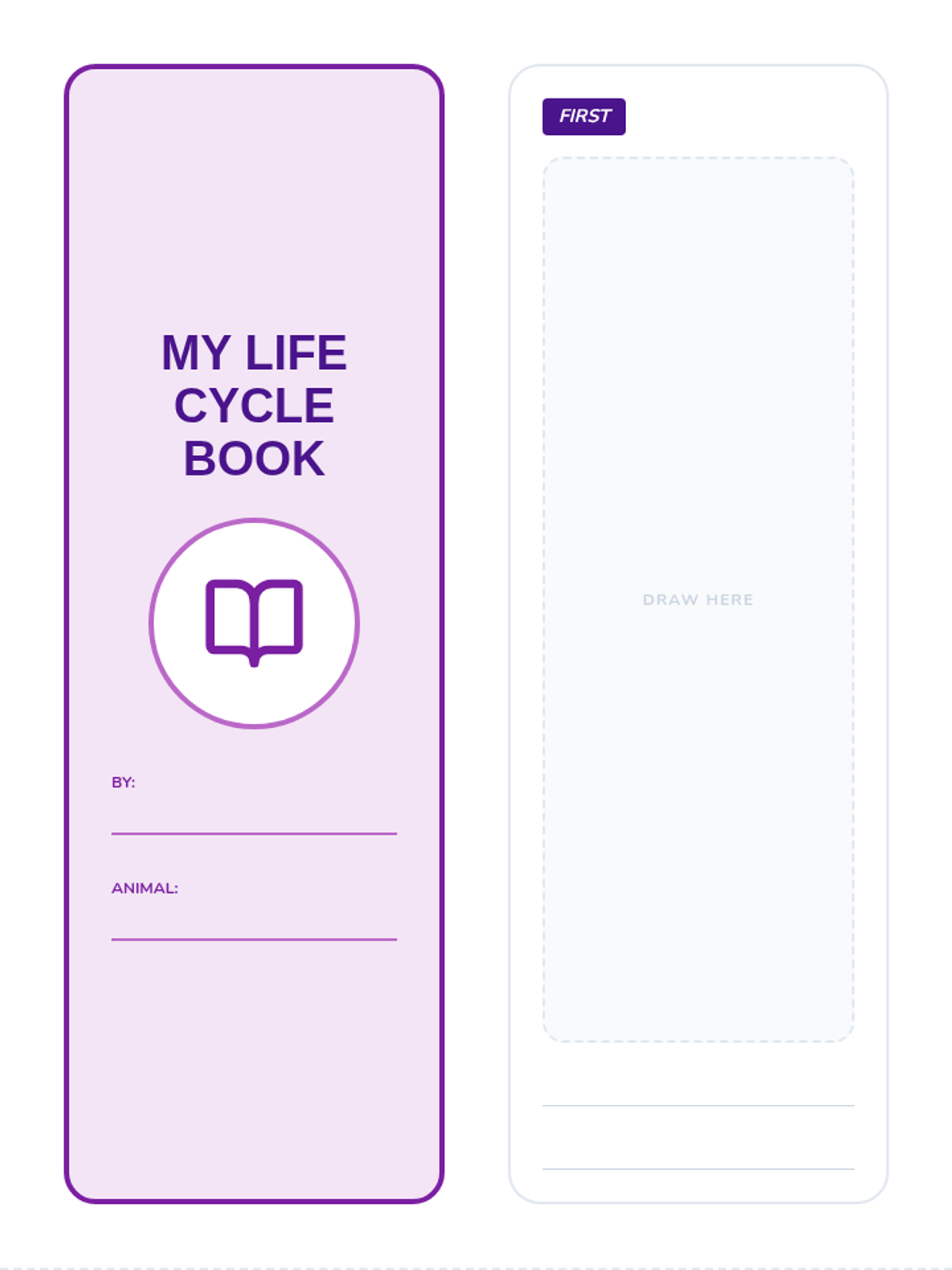
Students create a mini-book illustrating and describing the life cycle of a butterfly or frog. They must write a sentence for each stage using the correct temporal transition words.
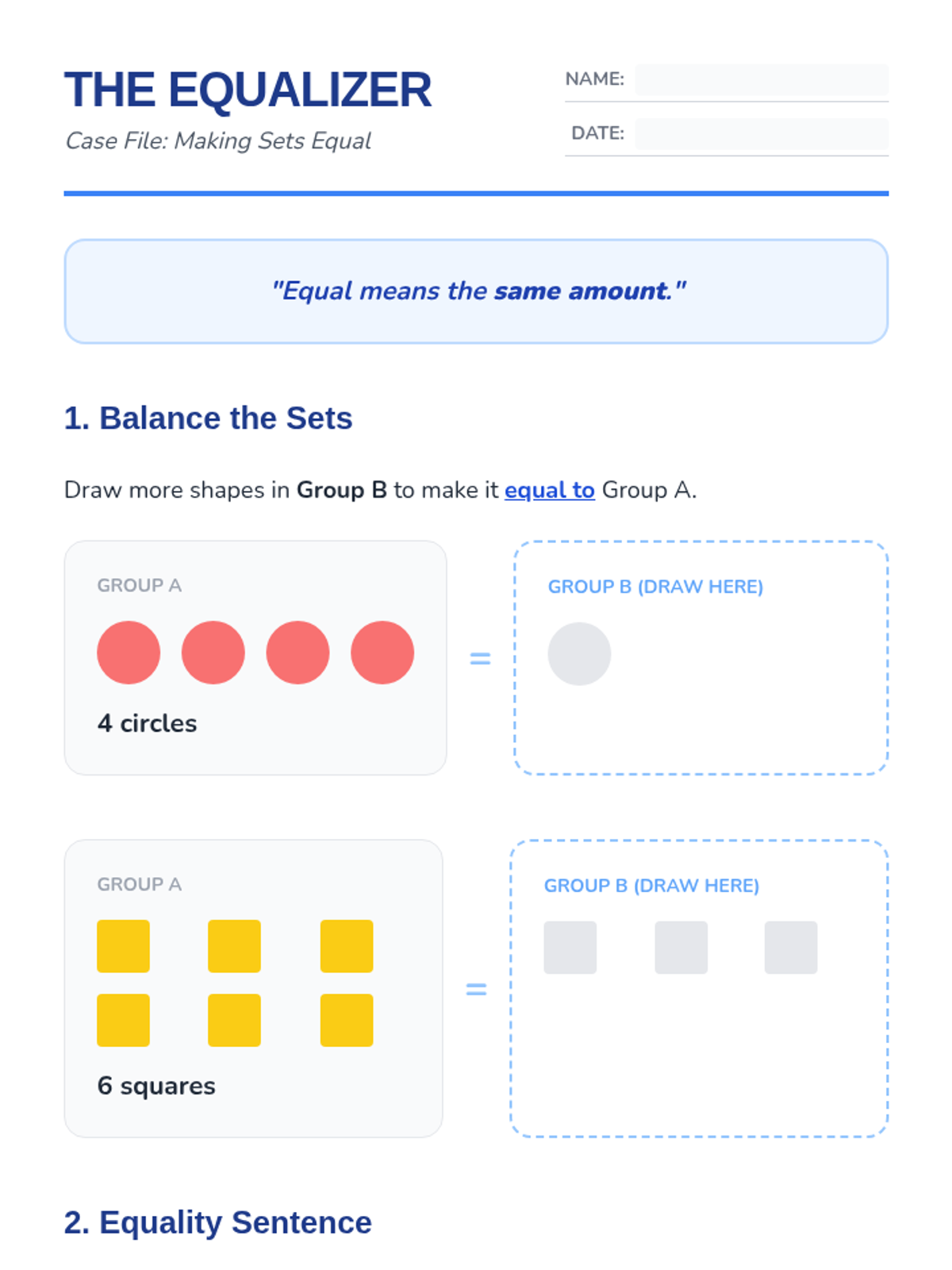
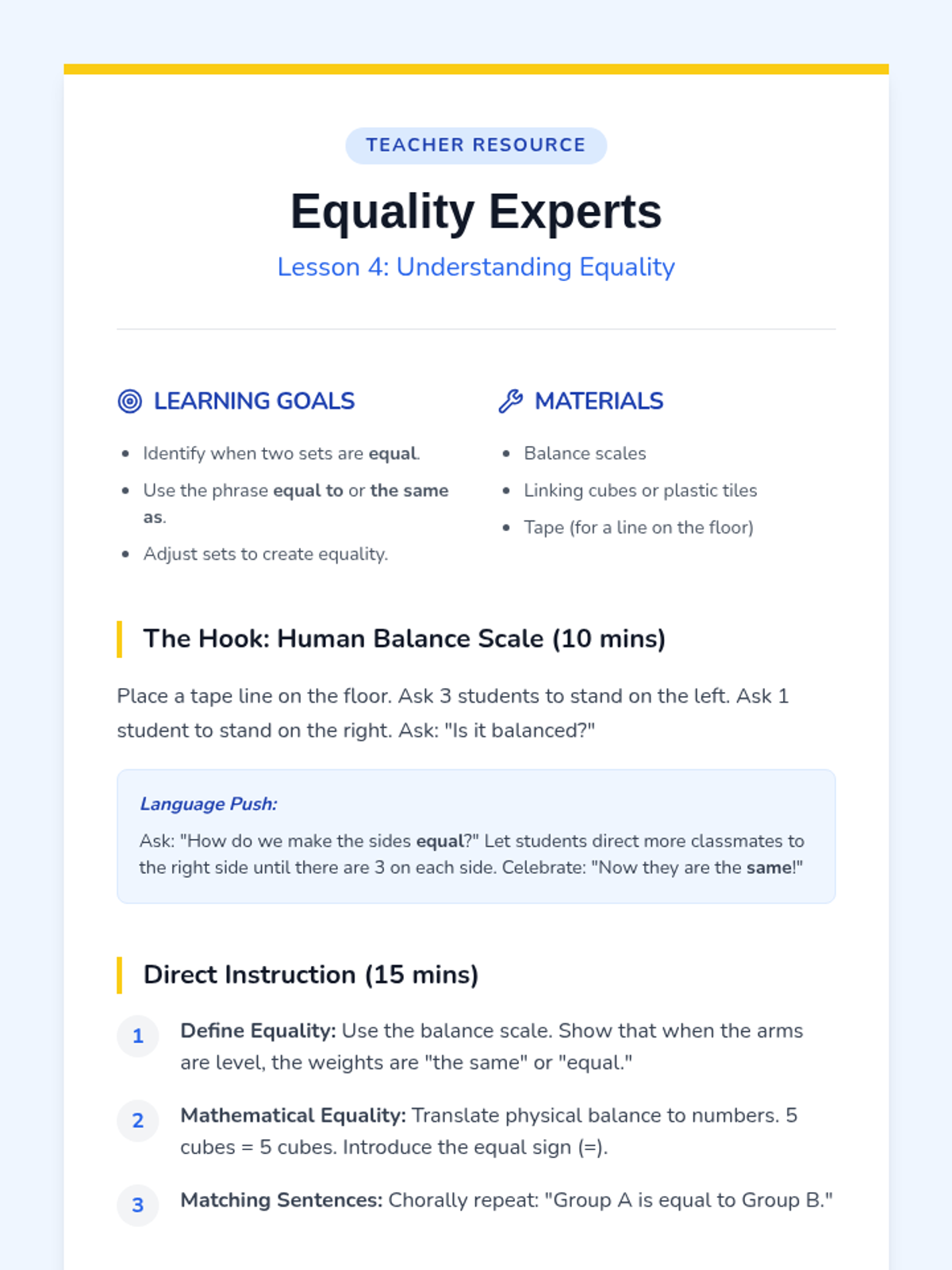
This lesson focuses on the concept of 'equal to' or 'the same as.' Students manipulate groups of objects to make them equal and practice using the term in mathematical sentences.
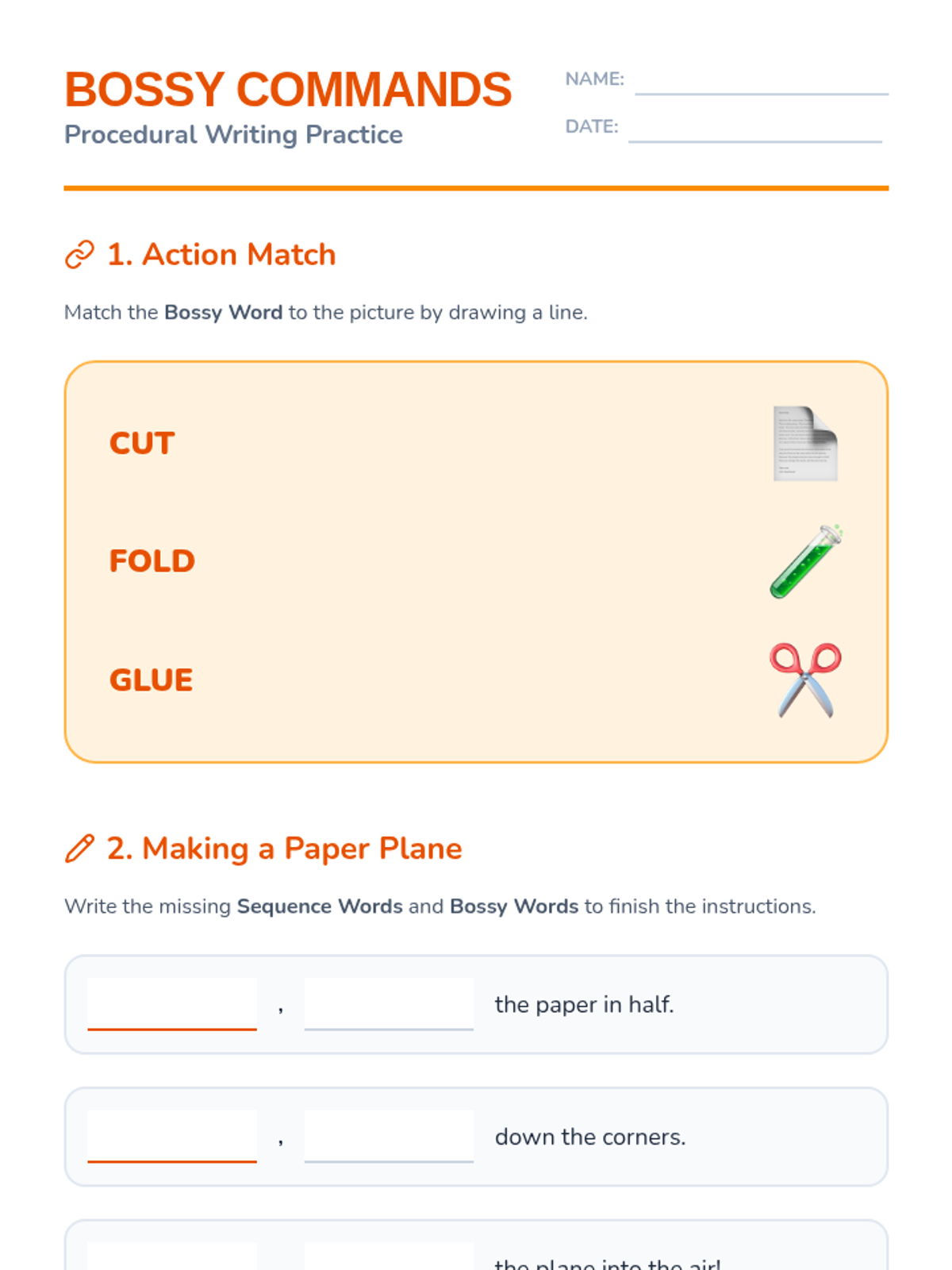
Students practice giving instructions for a specific task. The lesson focuses on using imperative verbs (cut, glue, fold) in conjunction with sequence words to give clear commands.
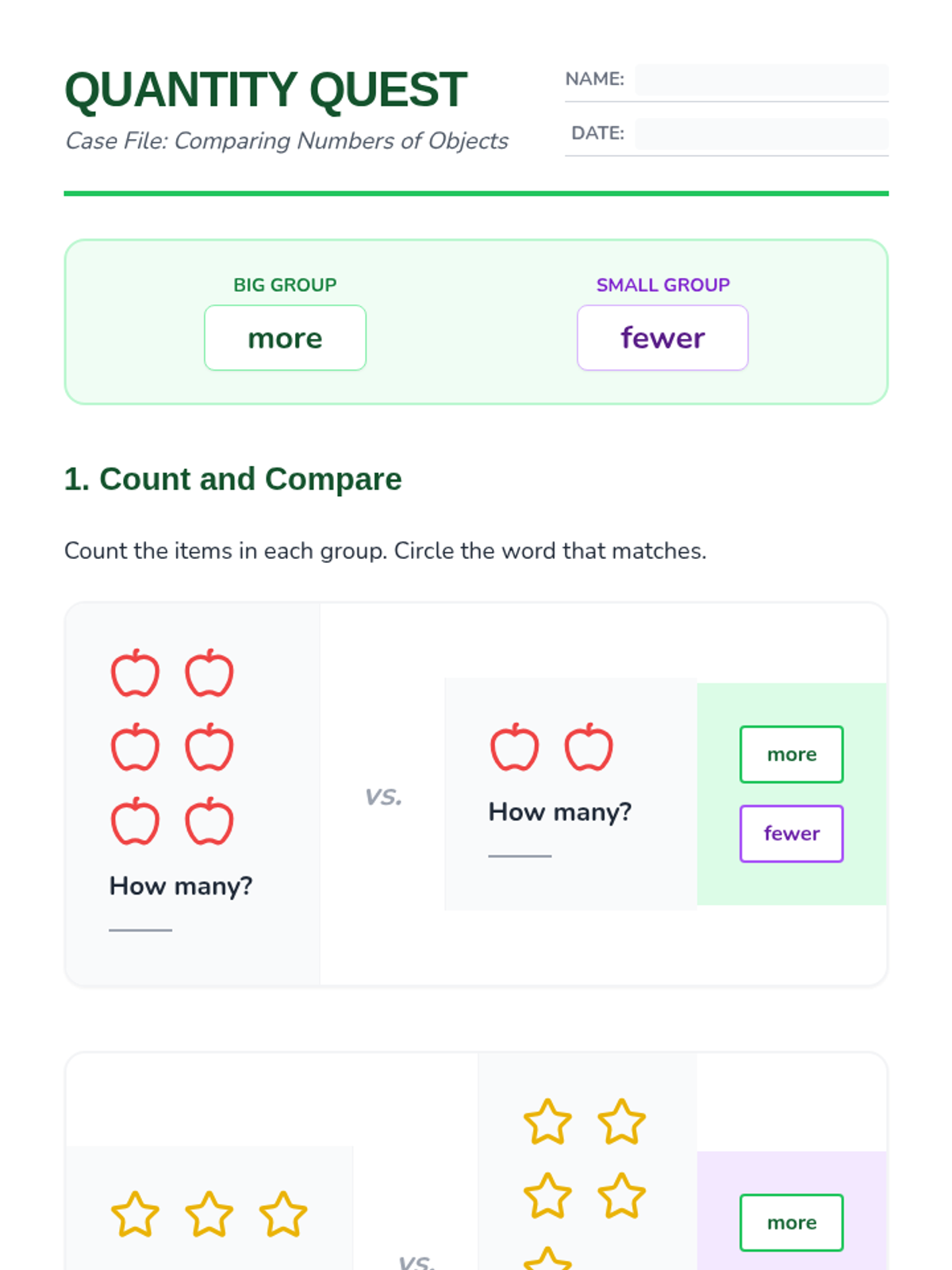
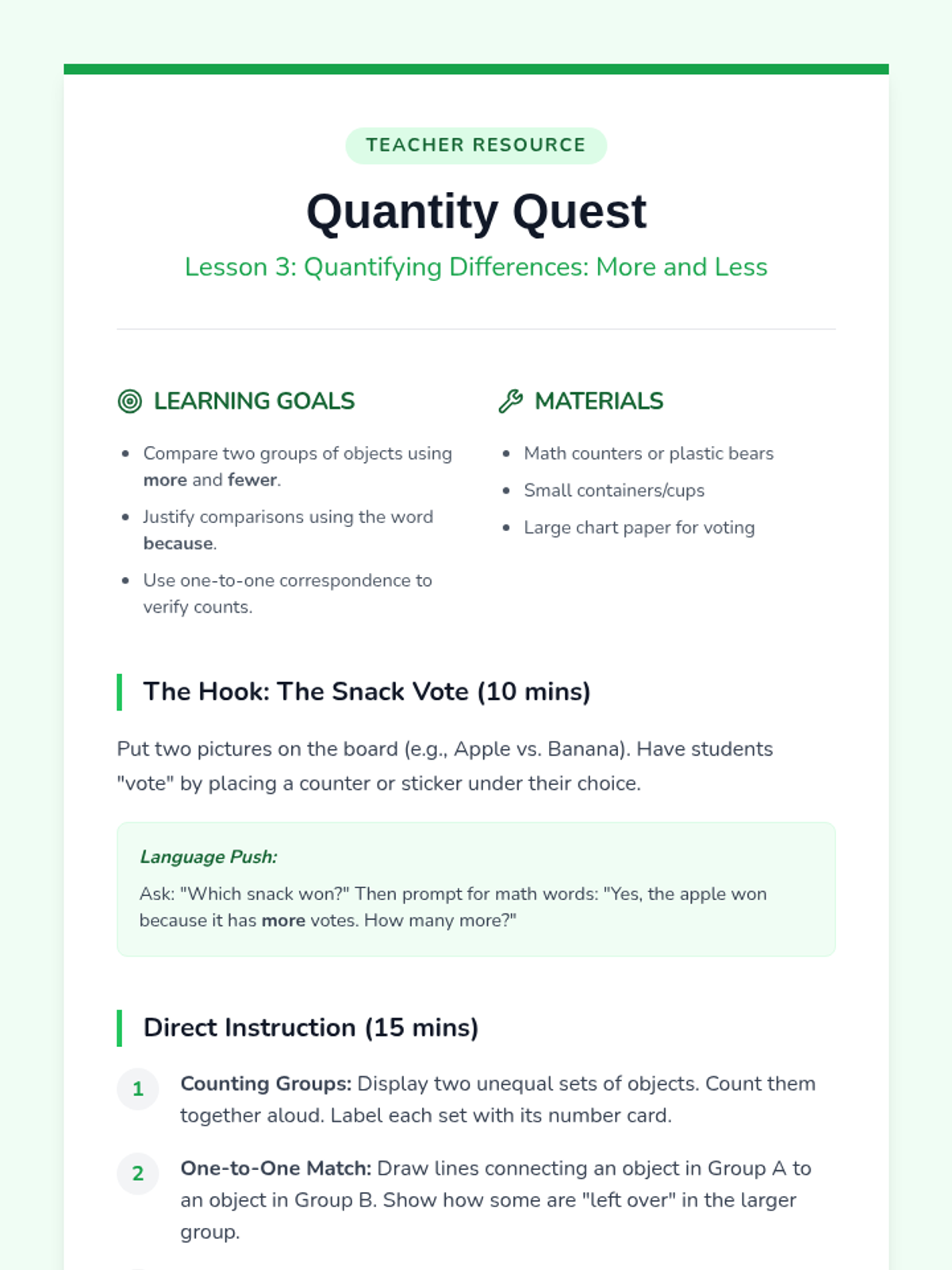
Students work with collections of counters to determine which groups have 'more,' 'fewer,' or 'less.' The lesson focuses on distinct counting and one-to-one correspondence to justify the choice of vocabulary.
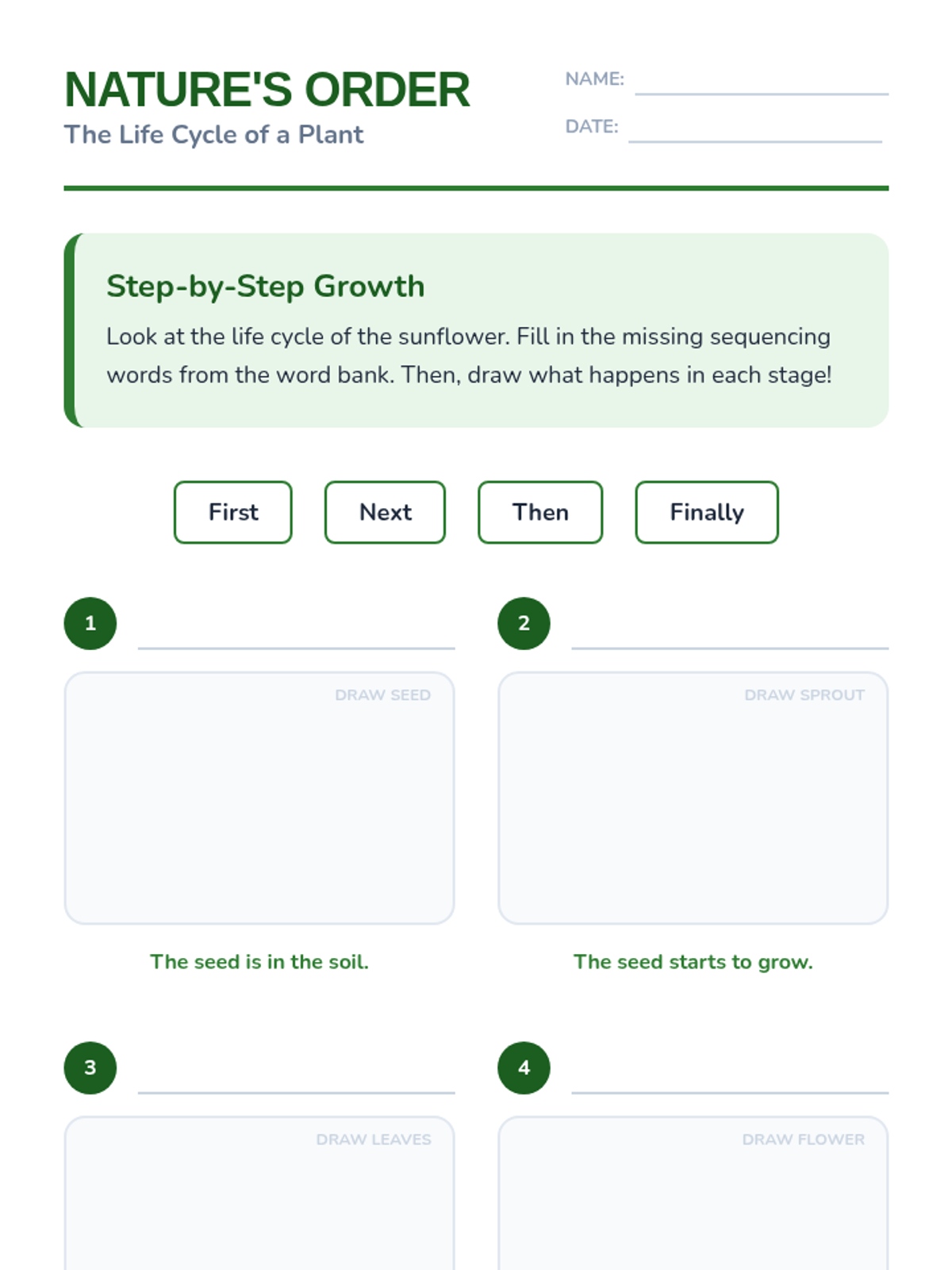
Applying sequencing skills to science content, students study the life cycle of a plant. They use their transition words to verbally describe the stages from seed to sprout to flower.
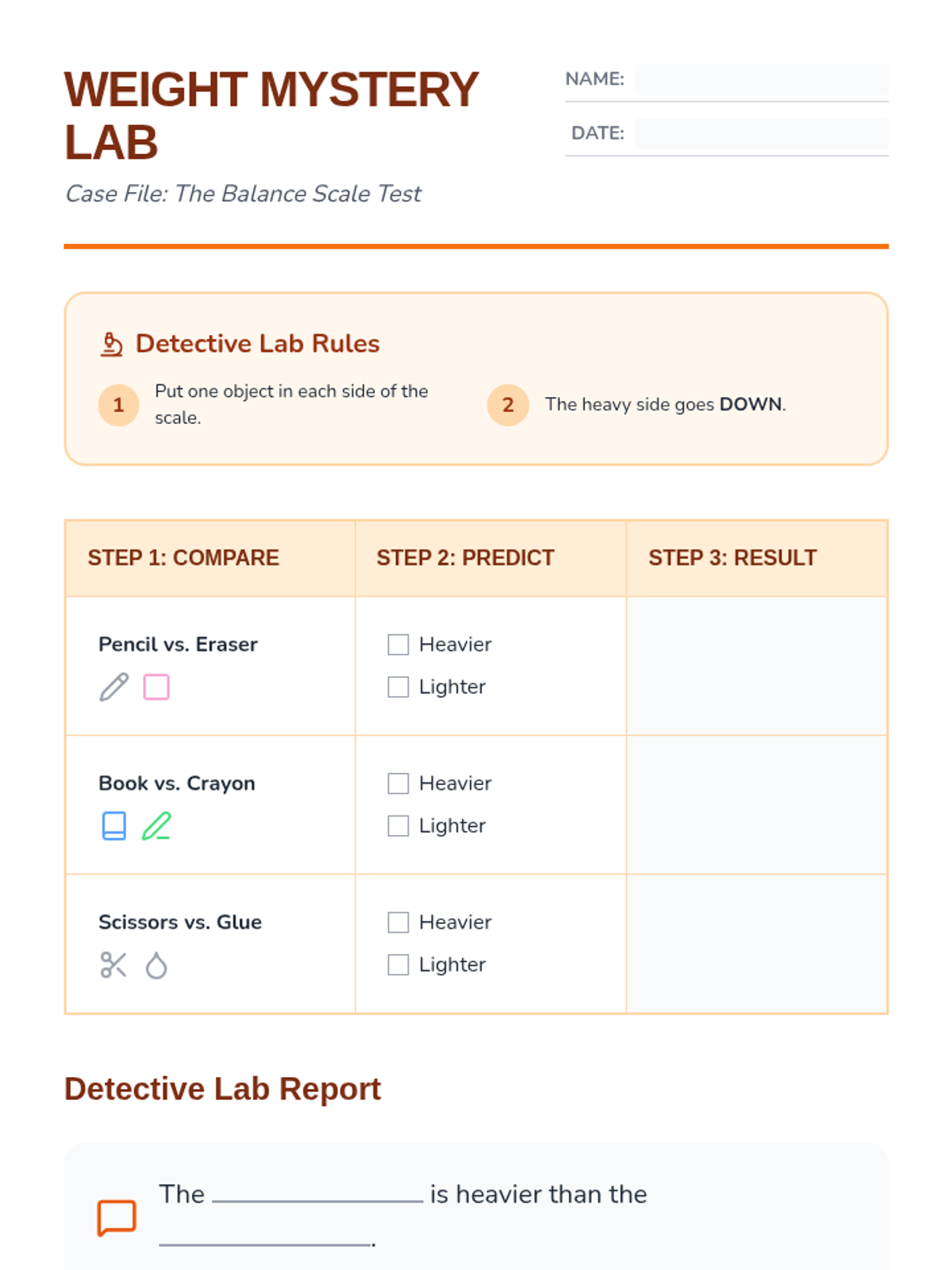
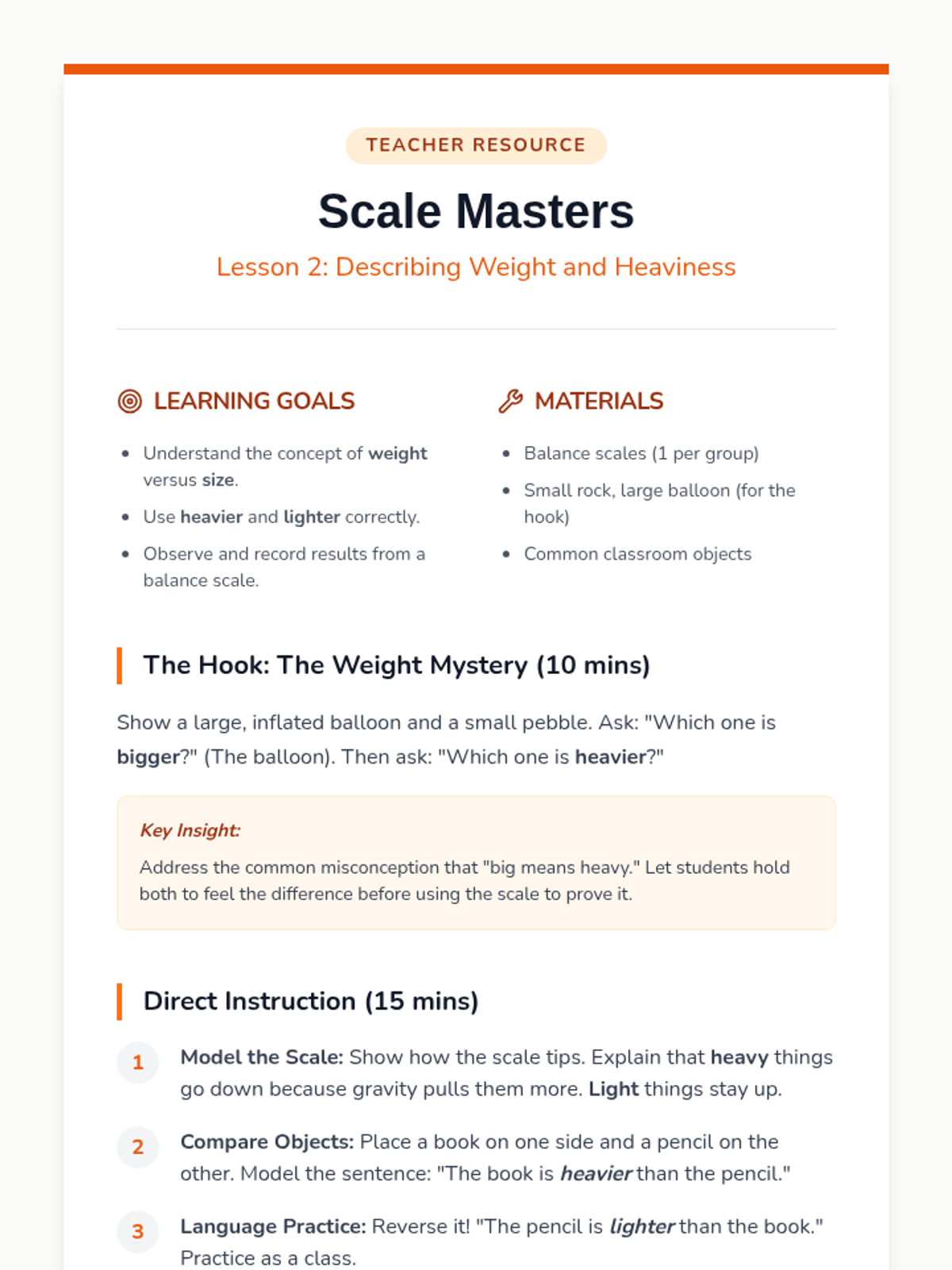
Using balance scales, students explore the concepts of weight and mass. They learn to differentiate between size and weight, using vocabulary like 'heavy,' 'heavier,' 'light,' and 'lighter' to describe outcomes of the balance scale.
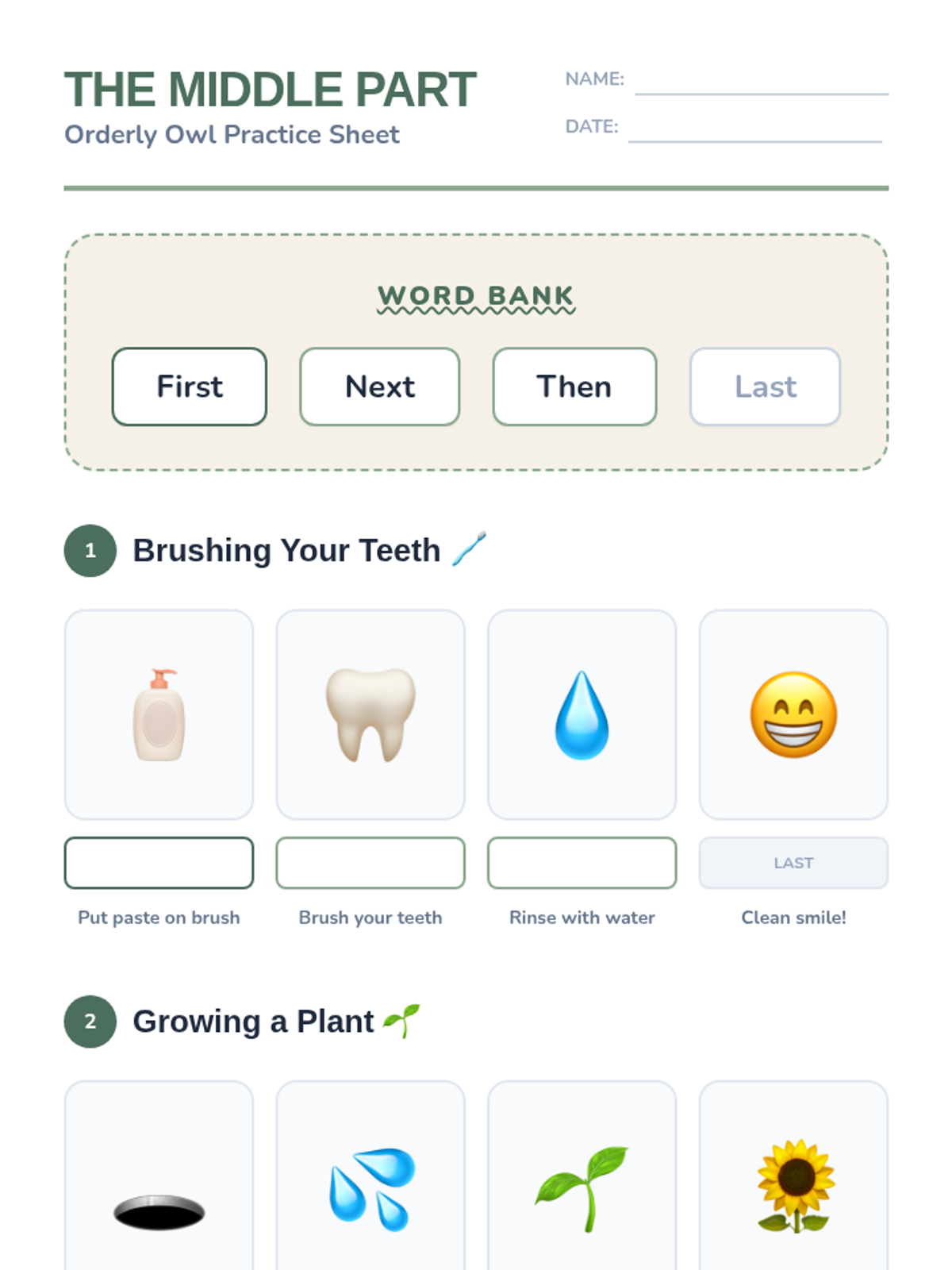
Students expand their sequencing toolkit to include the middle steps. They use picture cards of simple activities to practice using 'next' and 'then' to link ideas.
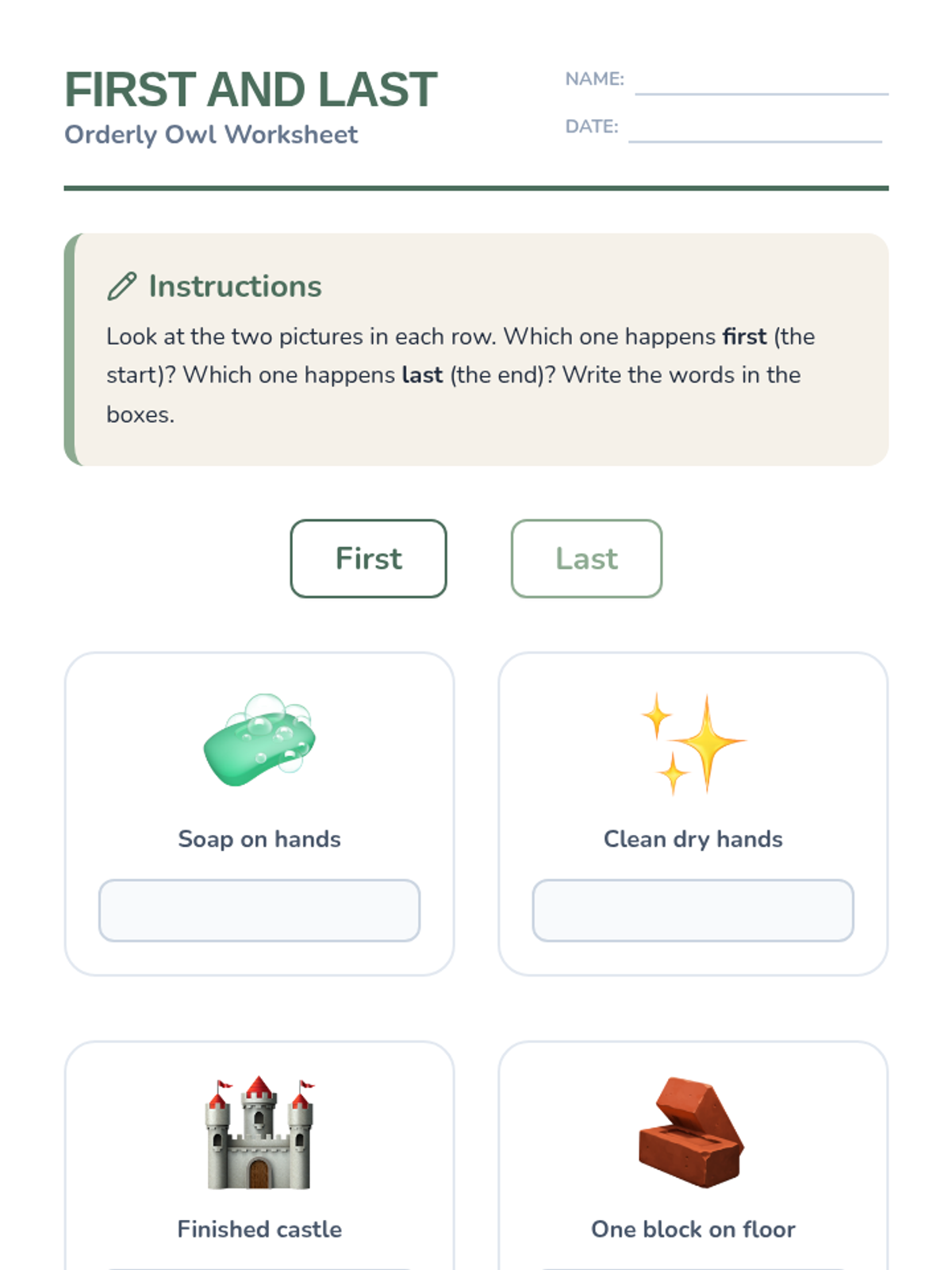
Students are introduced to the concept of order. They practice identifying the beginning and end of familiar daily routines and use the terms 'first' and 'last' to describe them.