Learners explore how the addition of an 'e' changes short vowels to long vowels through a 'magic wand' transformation activity. This lesson focuses on long vowel decoding and morphological awareness.
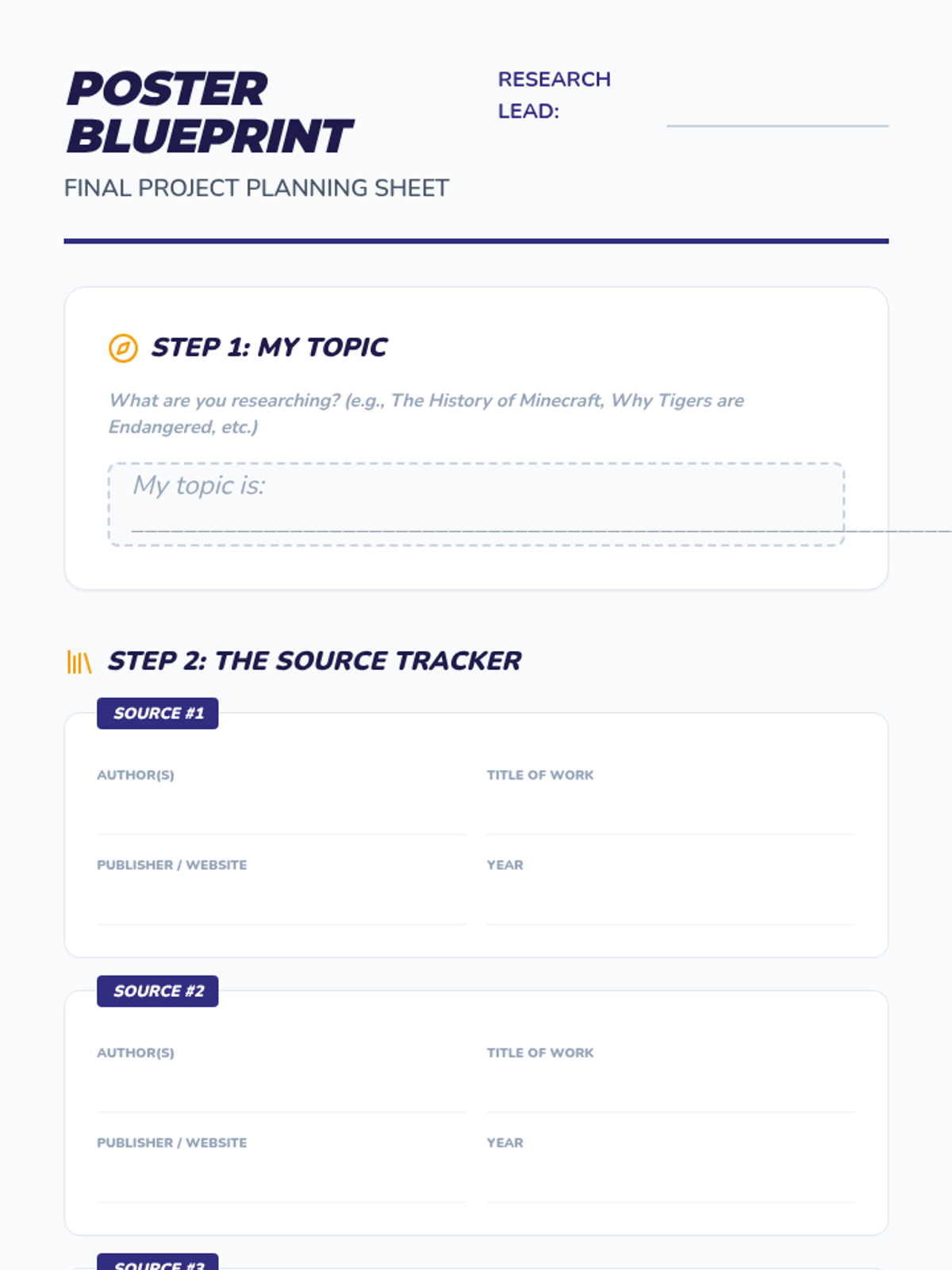
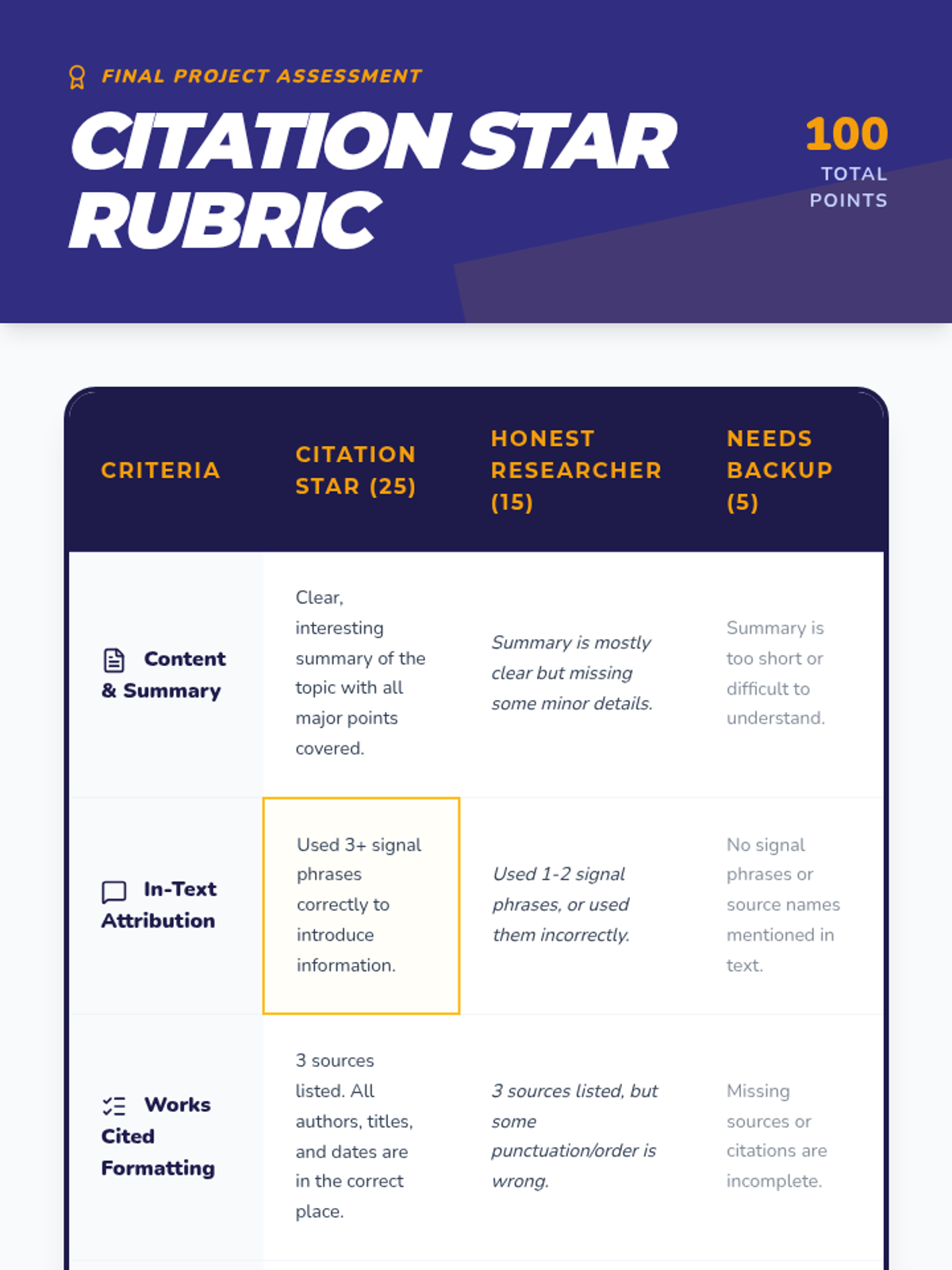
In this final project-based lesson, students synthesize their learning by creating a "Research Credits" poster. They select a topic of interest, find three sources, summarize key information, and produce a perfectly formatted Works Cited section.
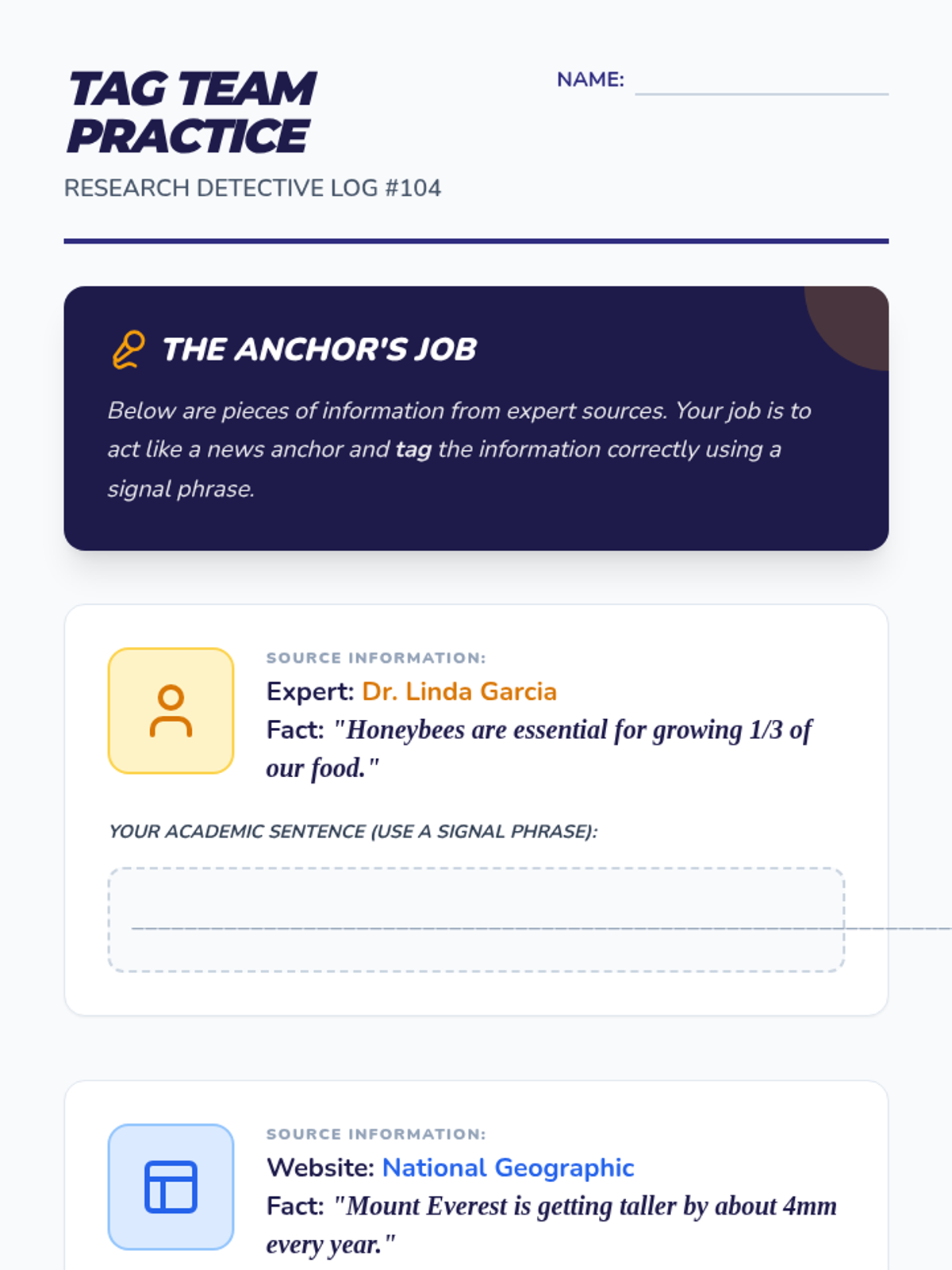
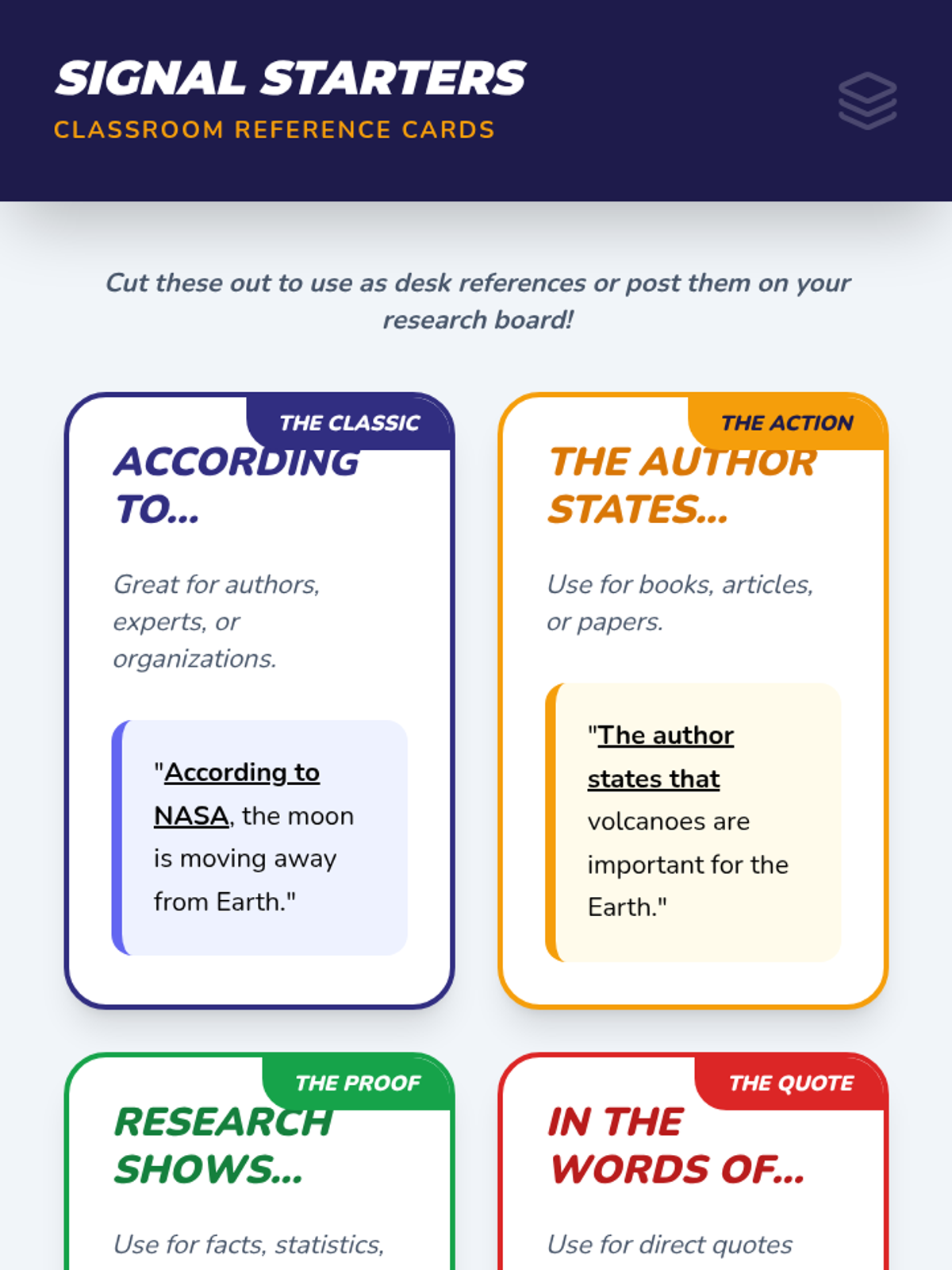
Students learn the mechanics of in-text attribution, practicing how to introduce sources using "signal phrases" (e.g., 'According to...'). They understand how to bridge the gap between their own ideas and those of external experts.
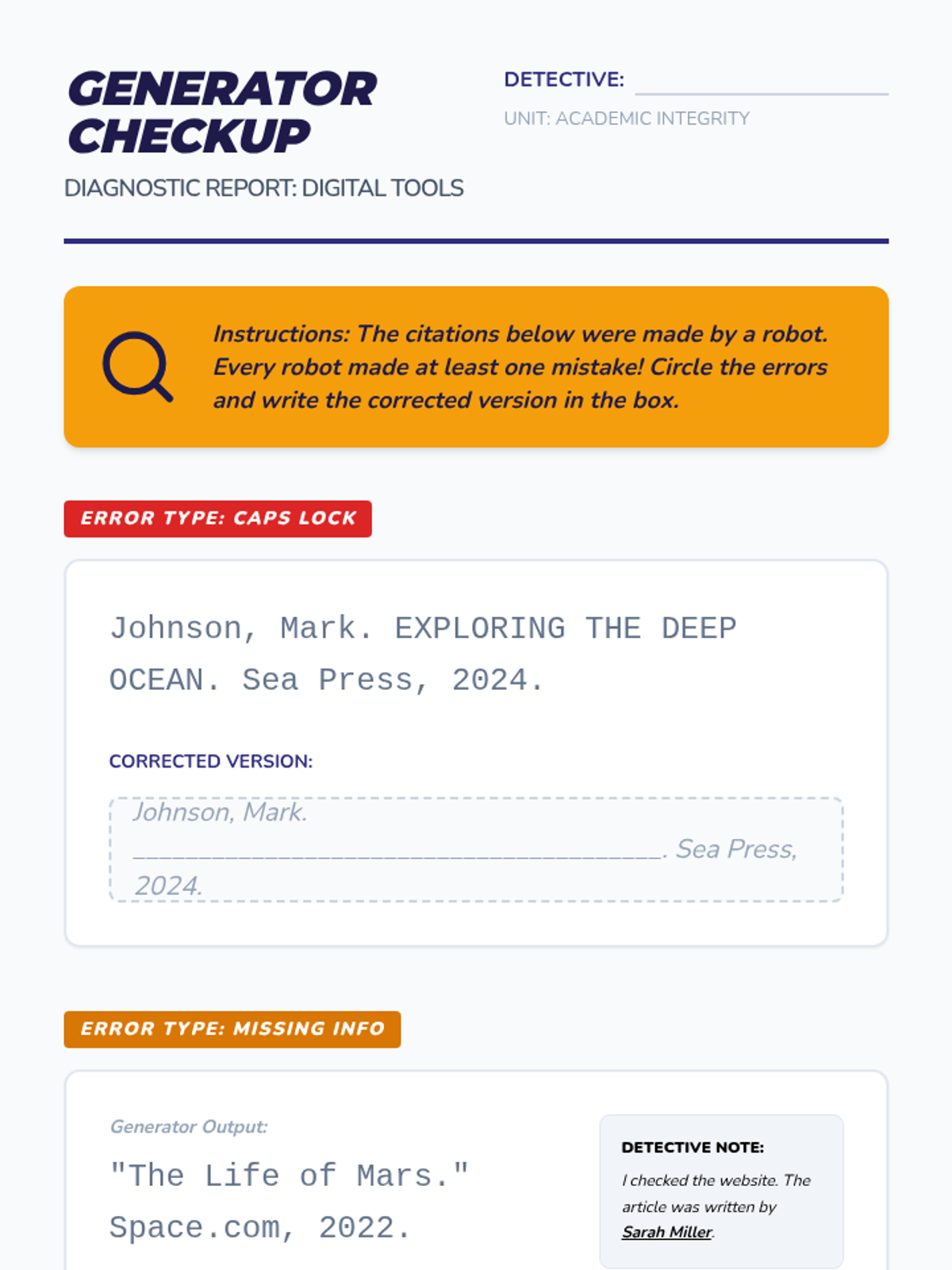
Students learn the benefits and risks of using digital citation tools. This lesson focuses on identifying common machine errors, such as capitalization issues and missing data, and emphasizes student accountability for final accuracy.
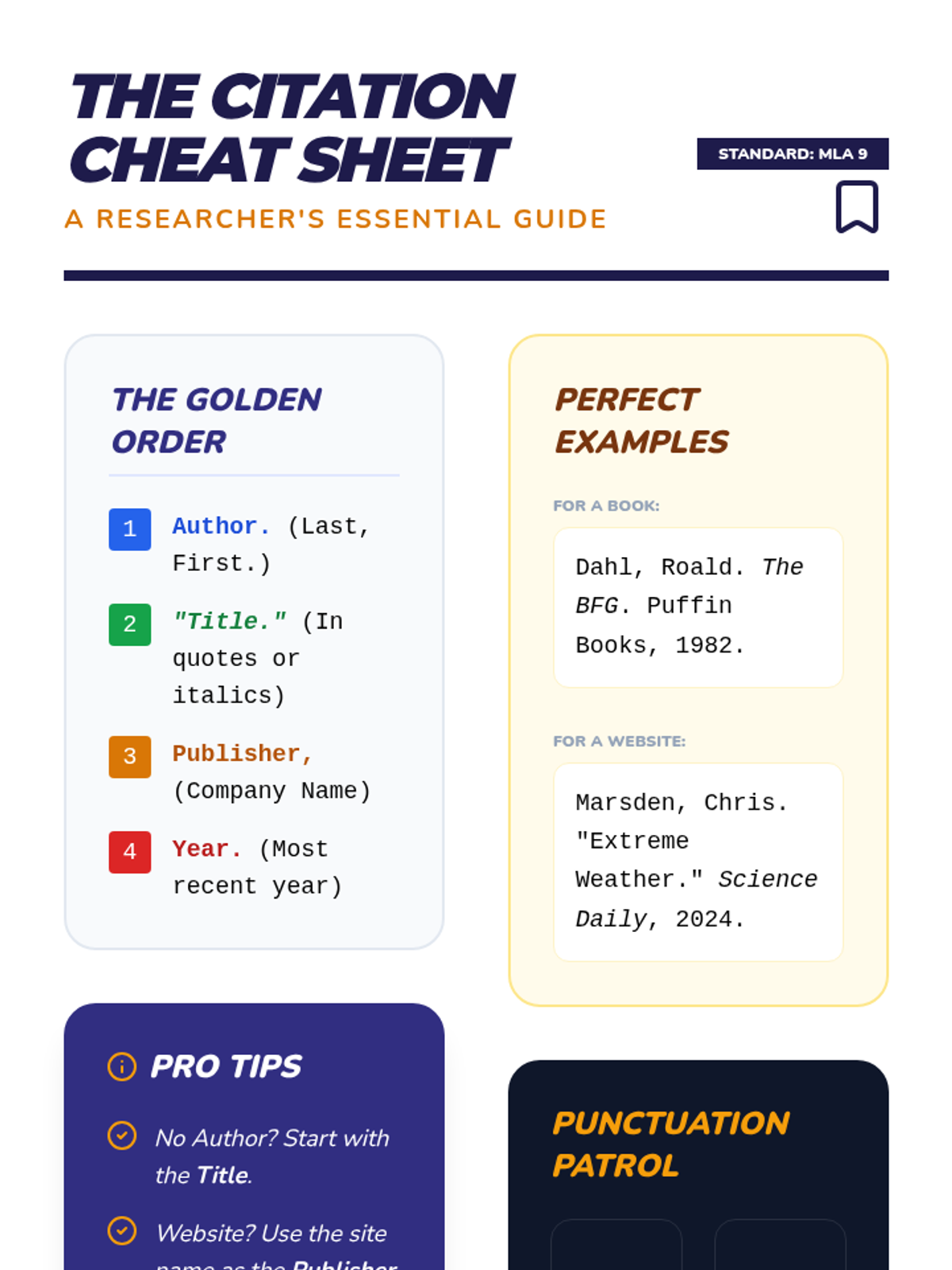
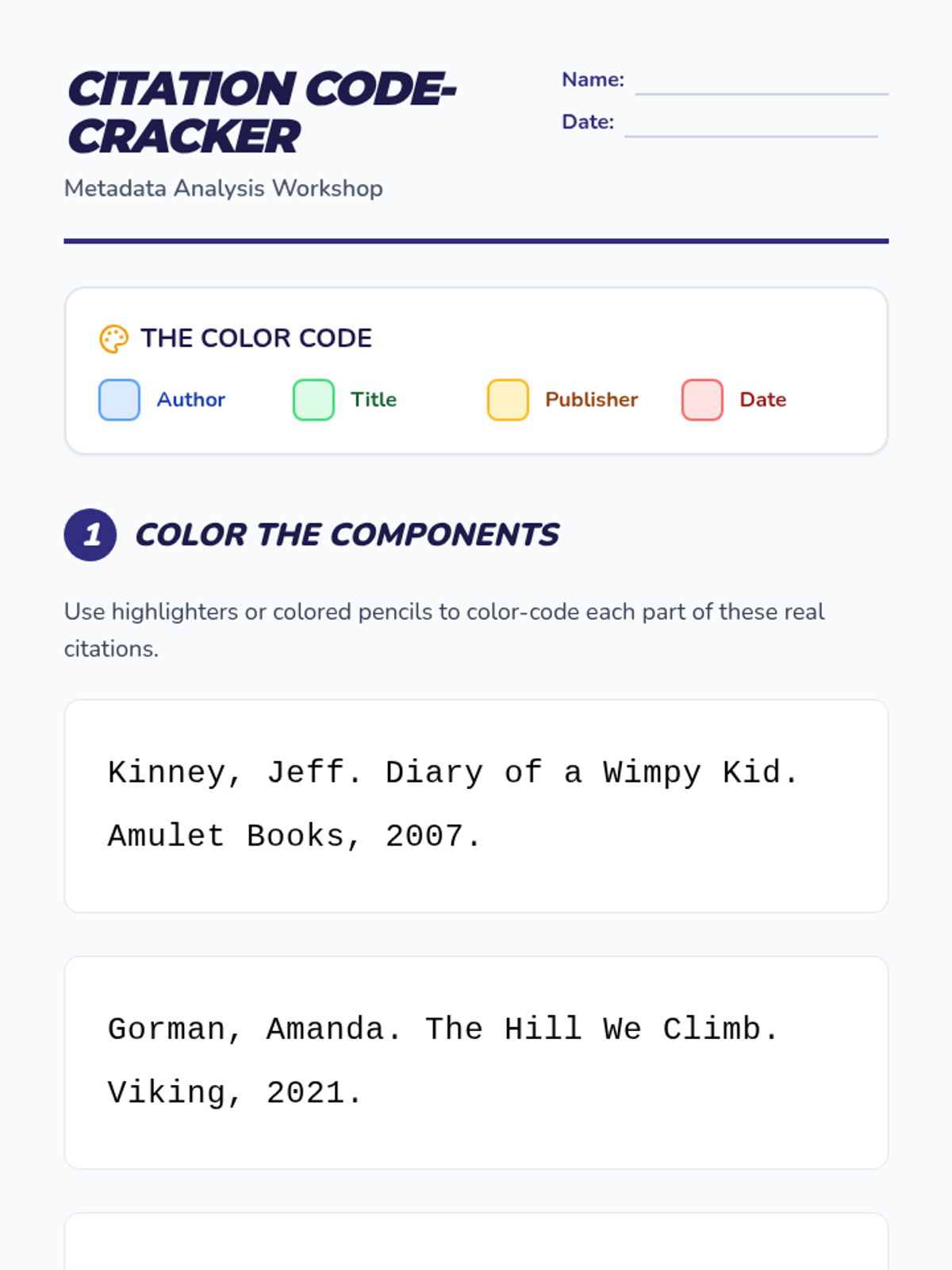
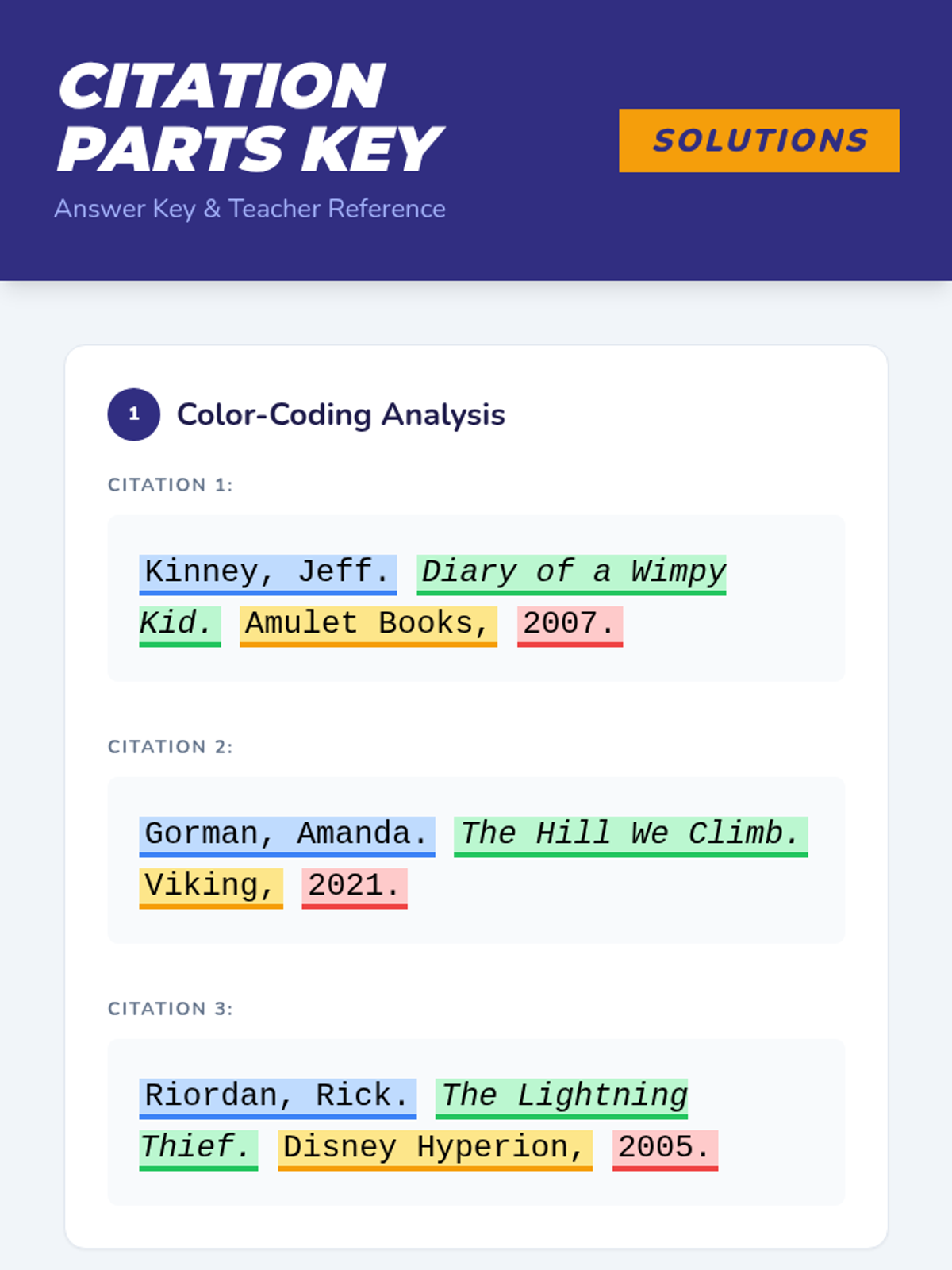
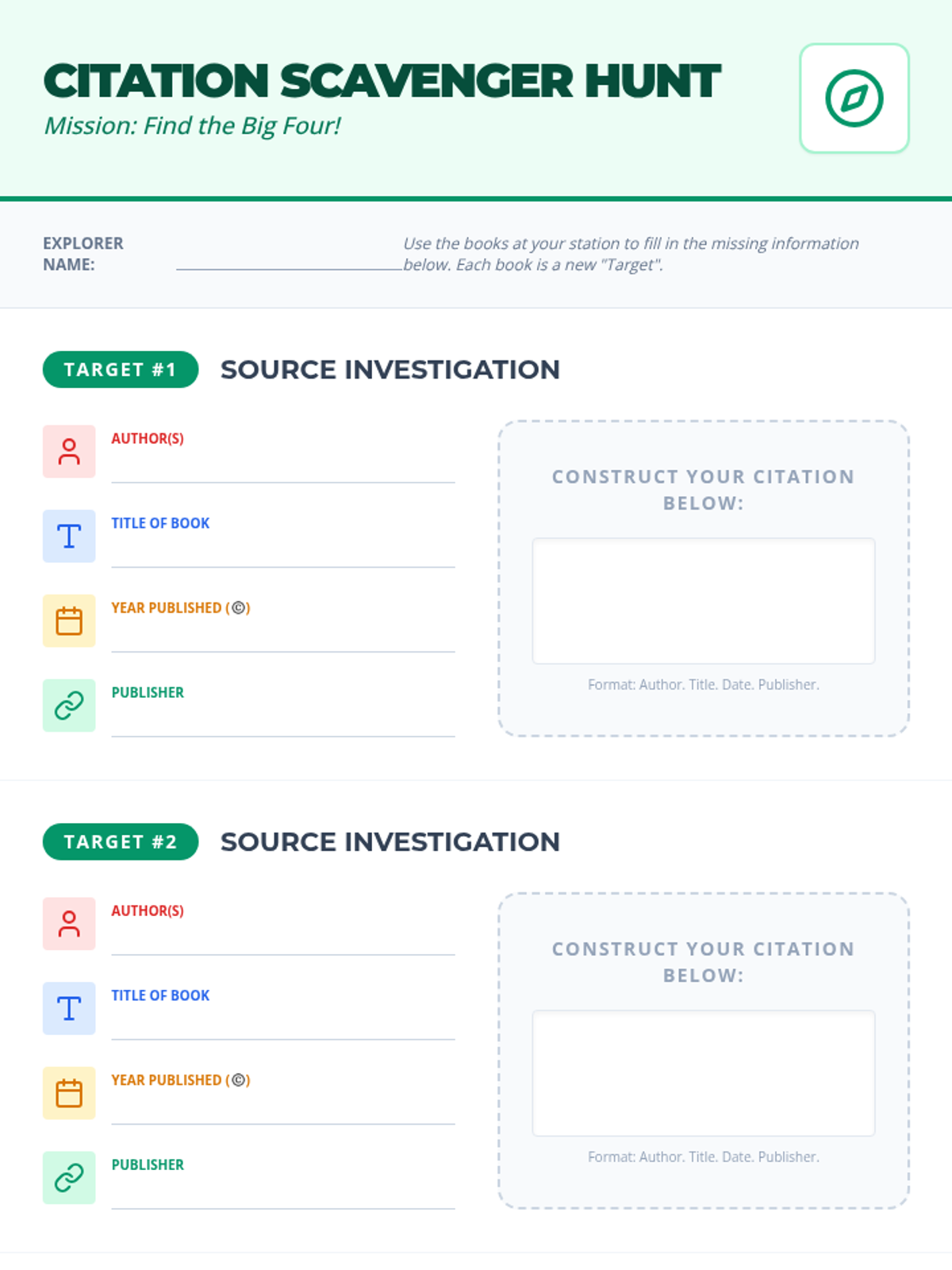
Students learn to identify and format the four core elements of an MLA citation: Author, Title, Publisher, and Date. They use color-coding to demystify the punctuation and structure of citations.
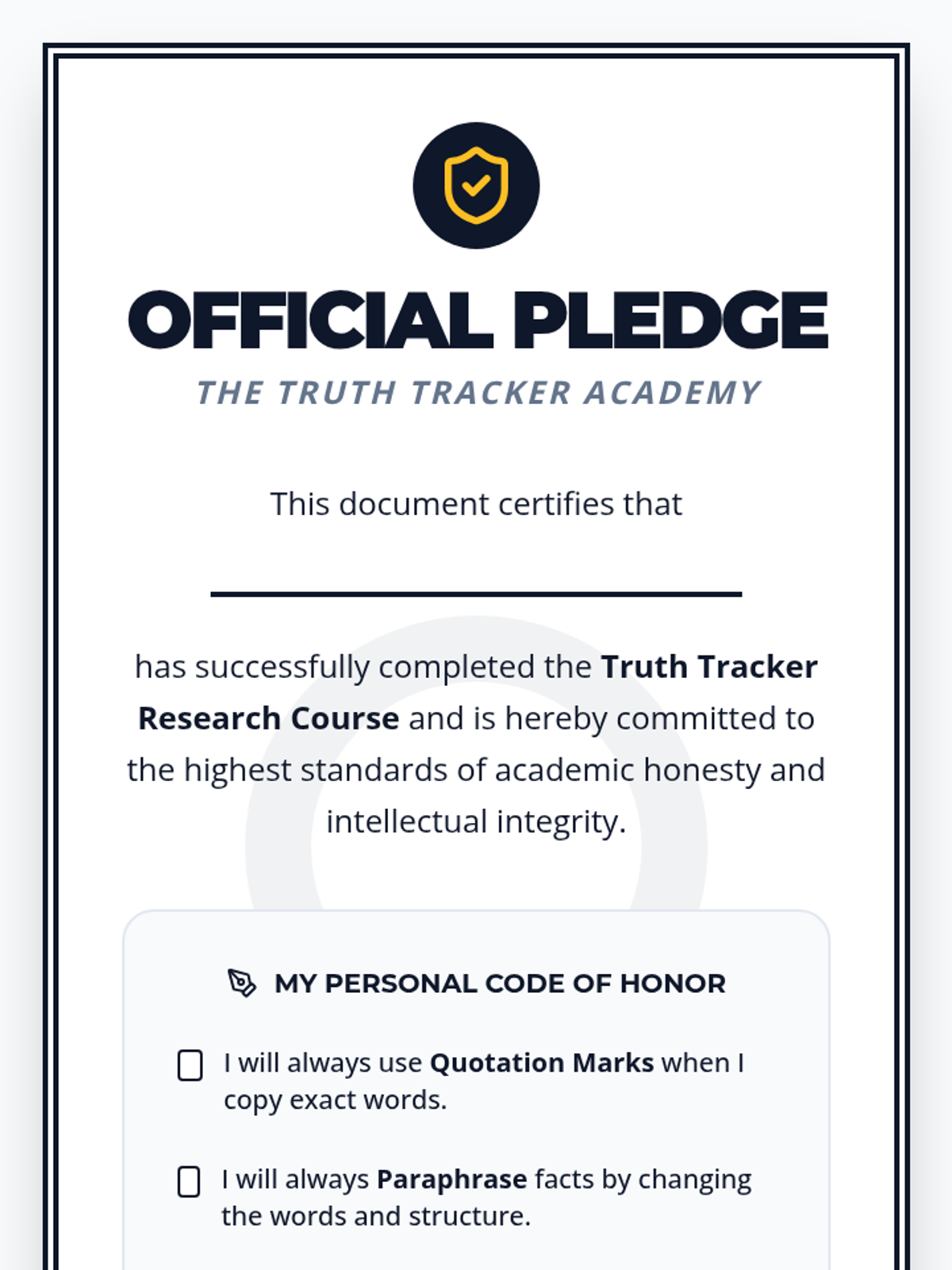
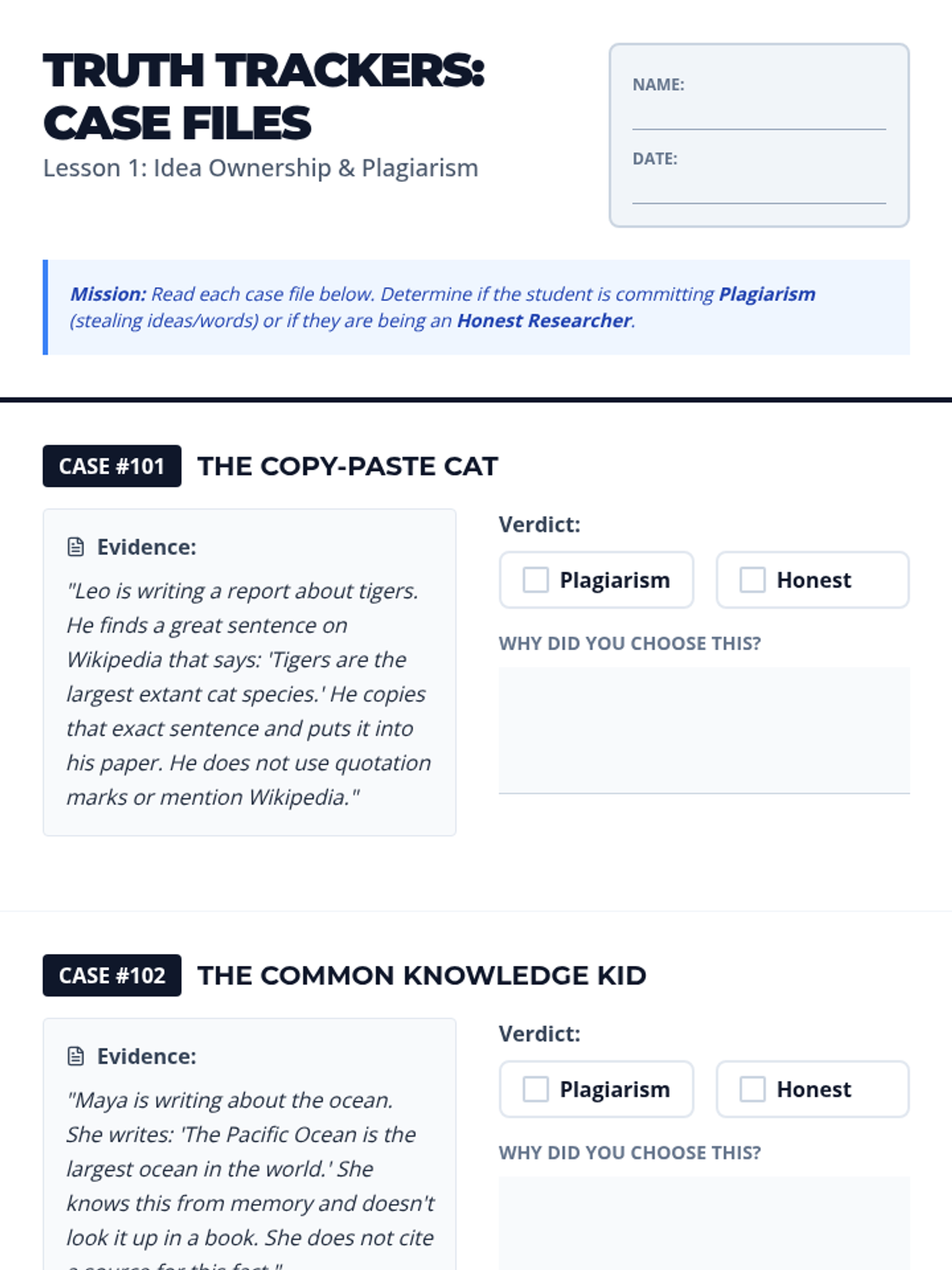
Synthesizes learning through case studies of intentional vs. accidental plagiarism and concludes with an academic integrity pledge.
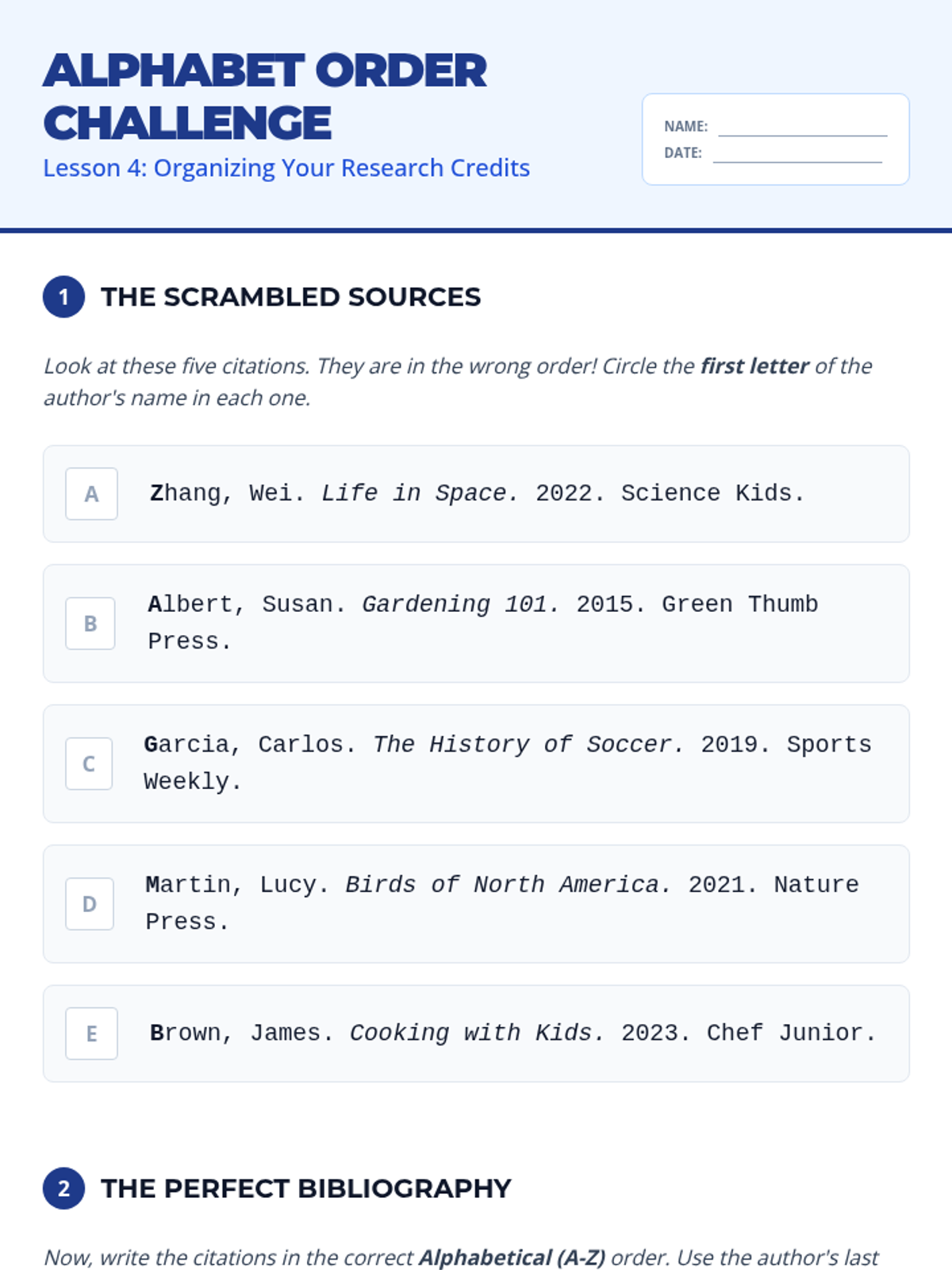
Teaches students how to compile individual citations into a cohesive, alphabetized reference list.
Introduces the four core elements of a basic citation (Author, Title, Date, Source) and provides practice in locating this information.
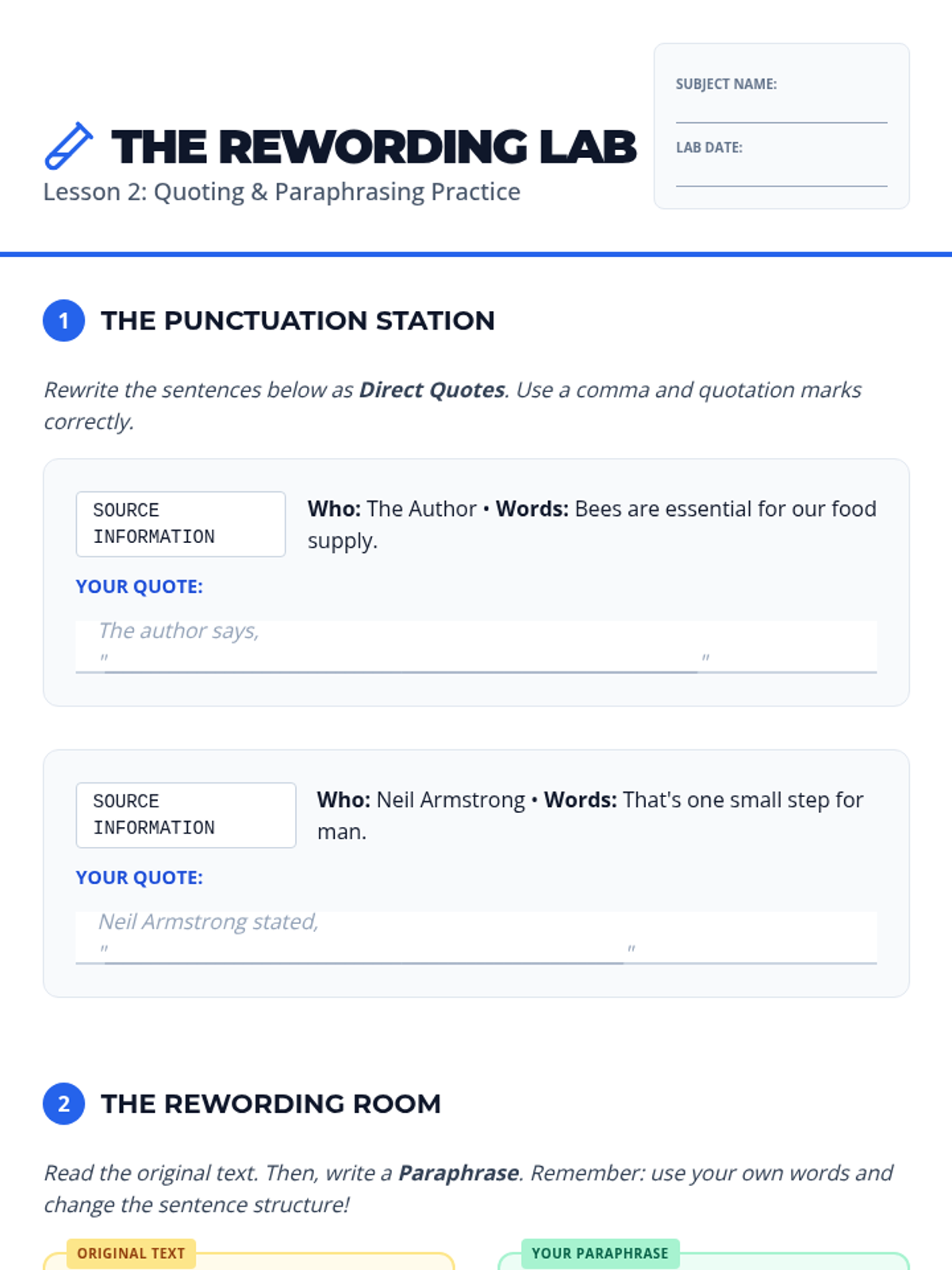
Students learn the mechanical and logical differences between direct quotes and paraphrasing, focusing on when to use each.
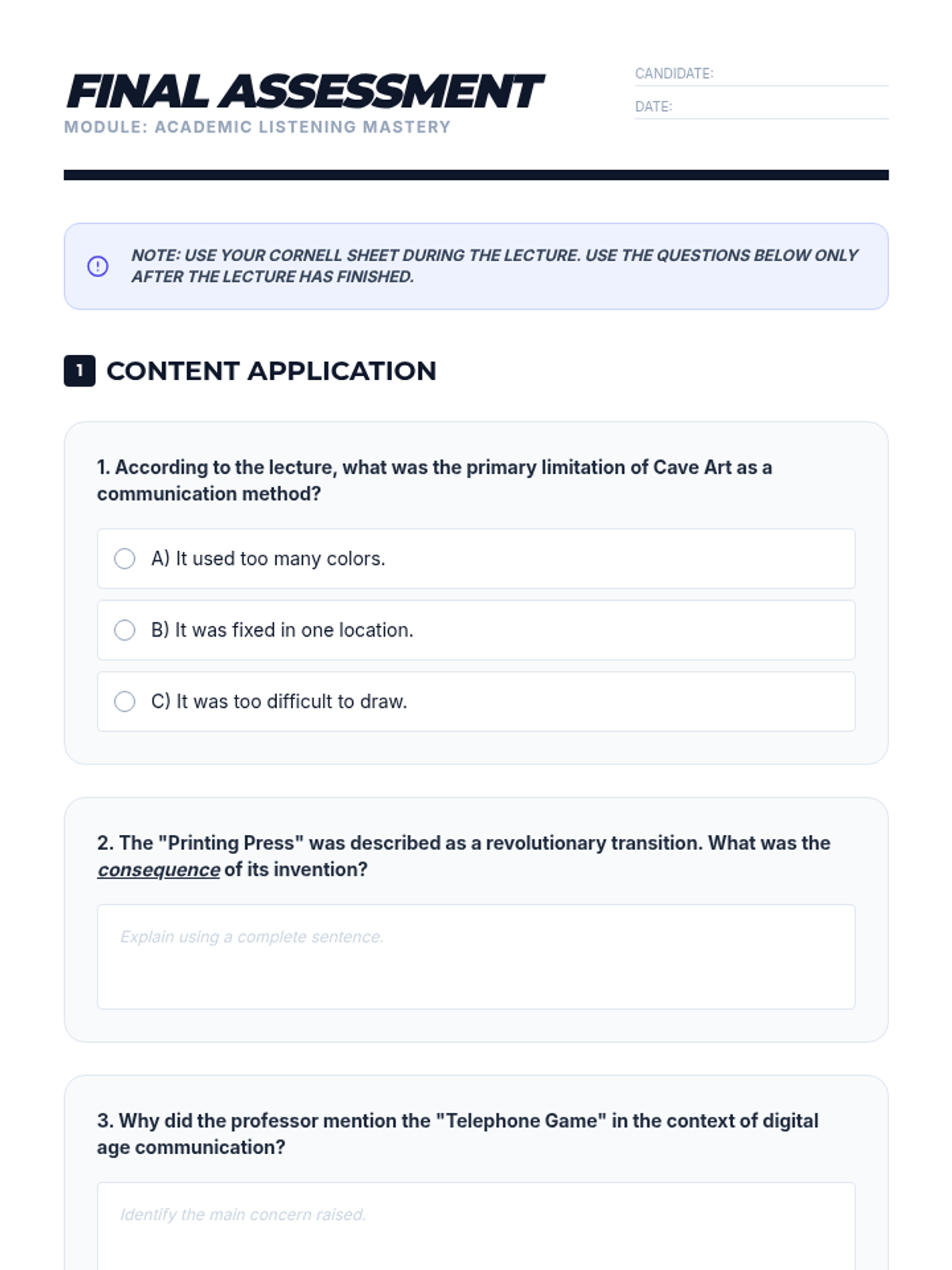
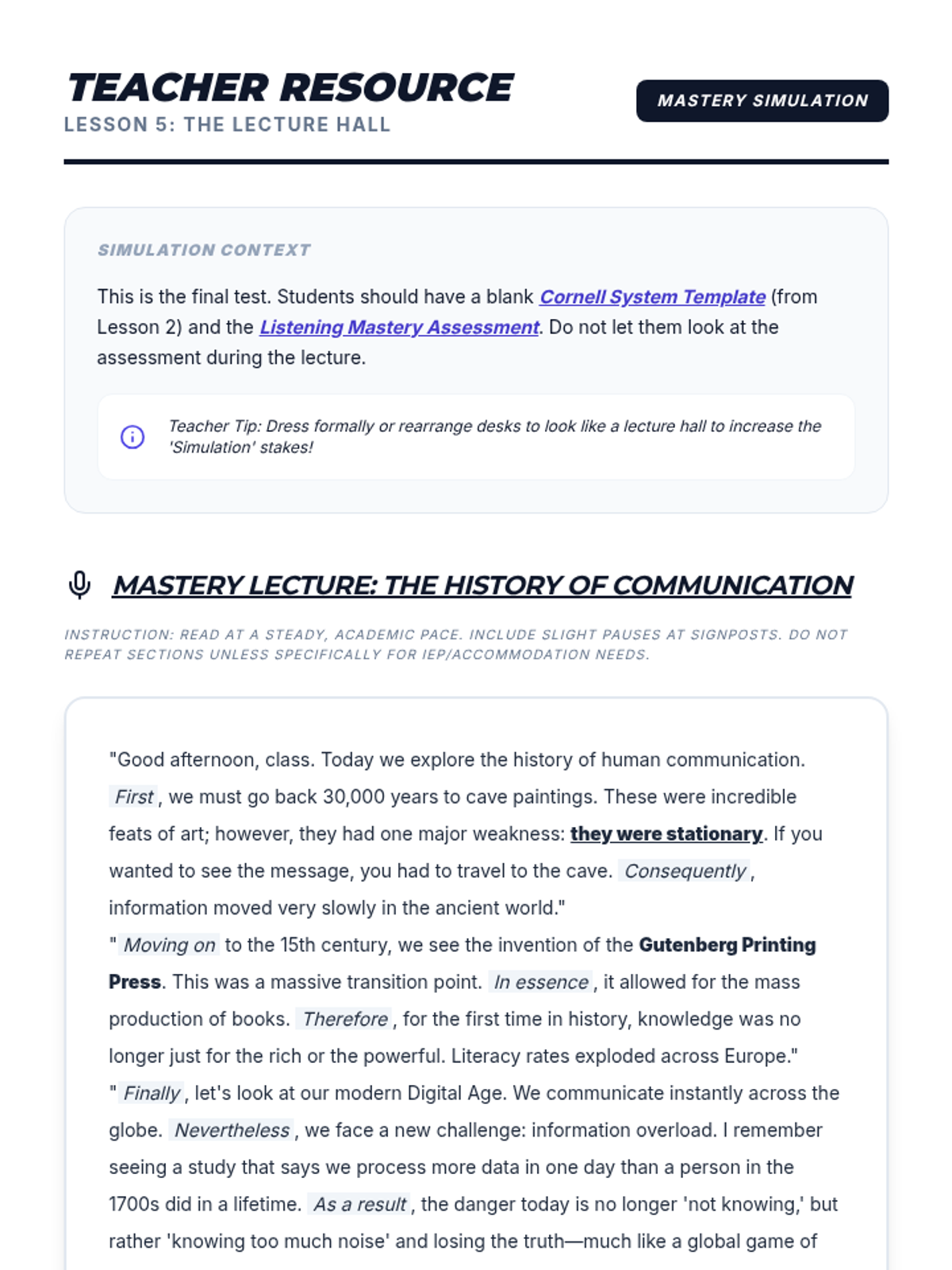
Students participate in a university-style mini-lecture simulation. They apply all learned strategies—signpost identification, Cornell note-taking, and synthesis—to capture information and complete a formal assessment.
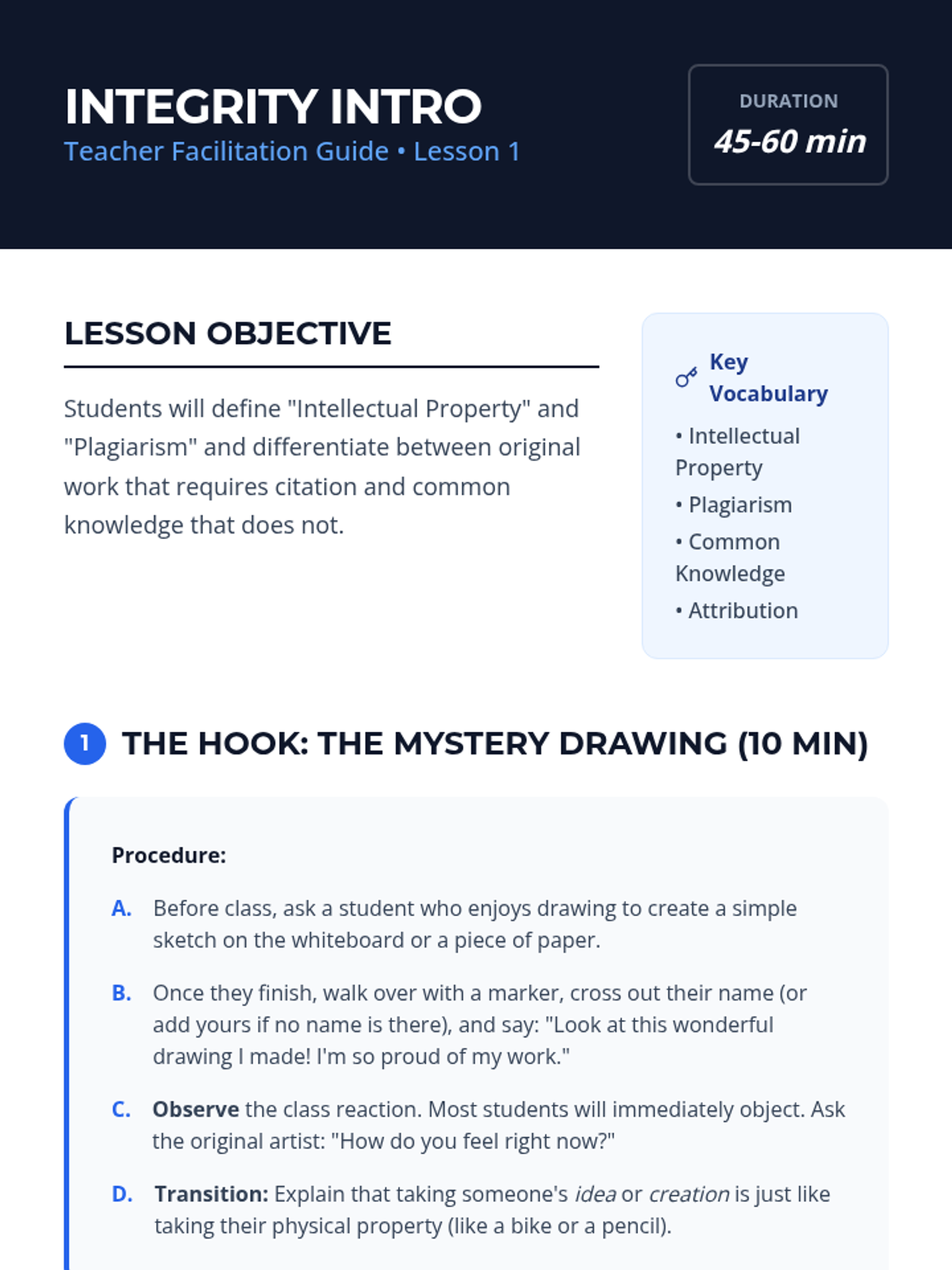
Students explore the concept of intellectual property through physical analogies and define plagiarism in an academic context.
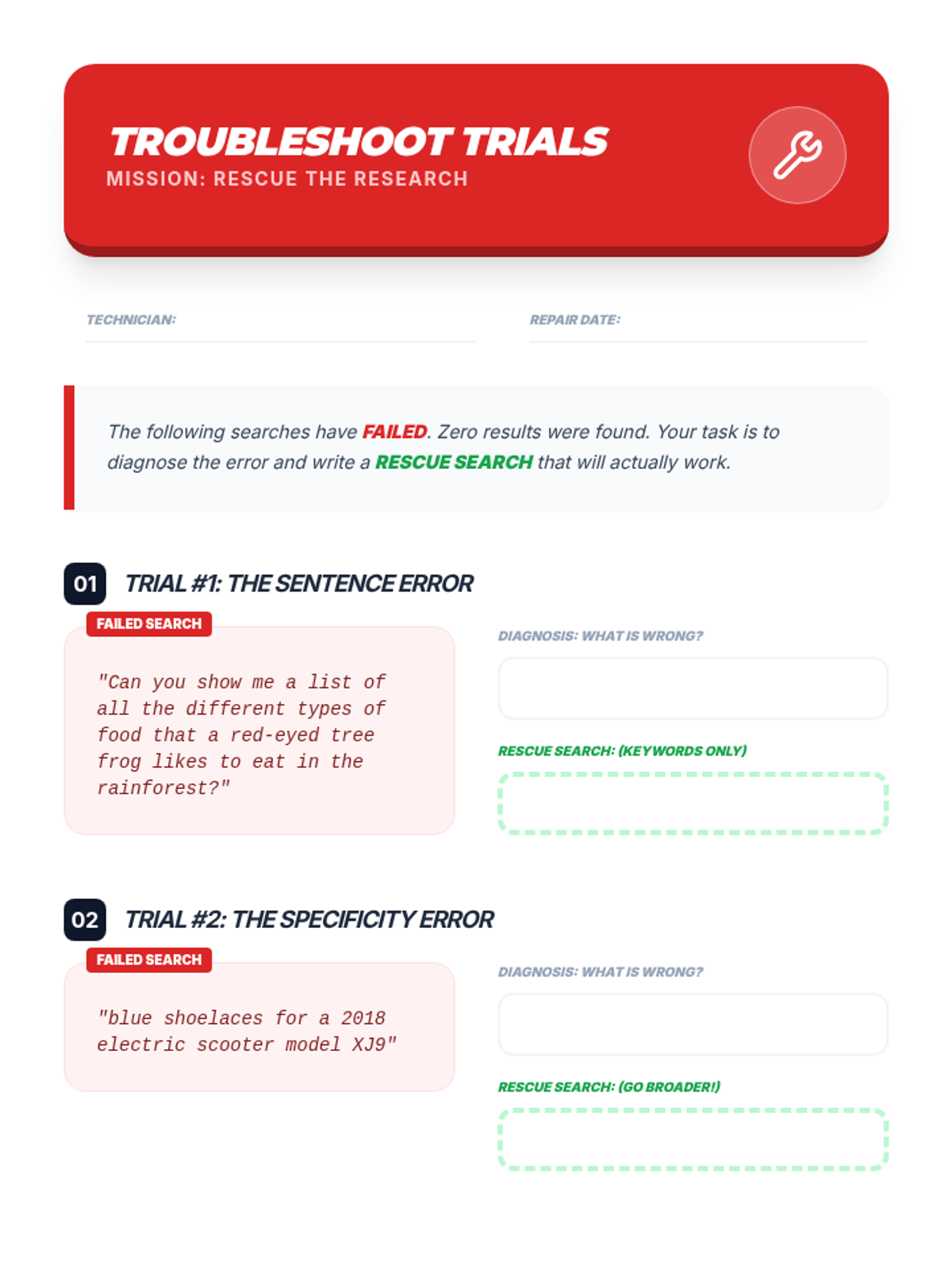
Students analyze search failures and practice iterative strategies to refine their inquiries when initial attempts don't yield the desired results.
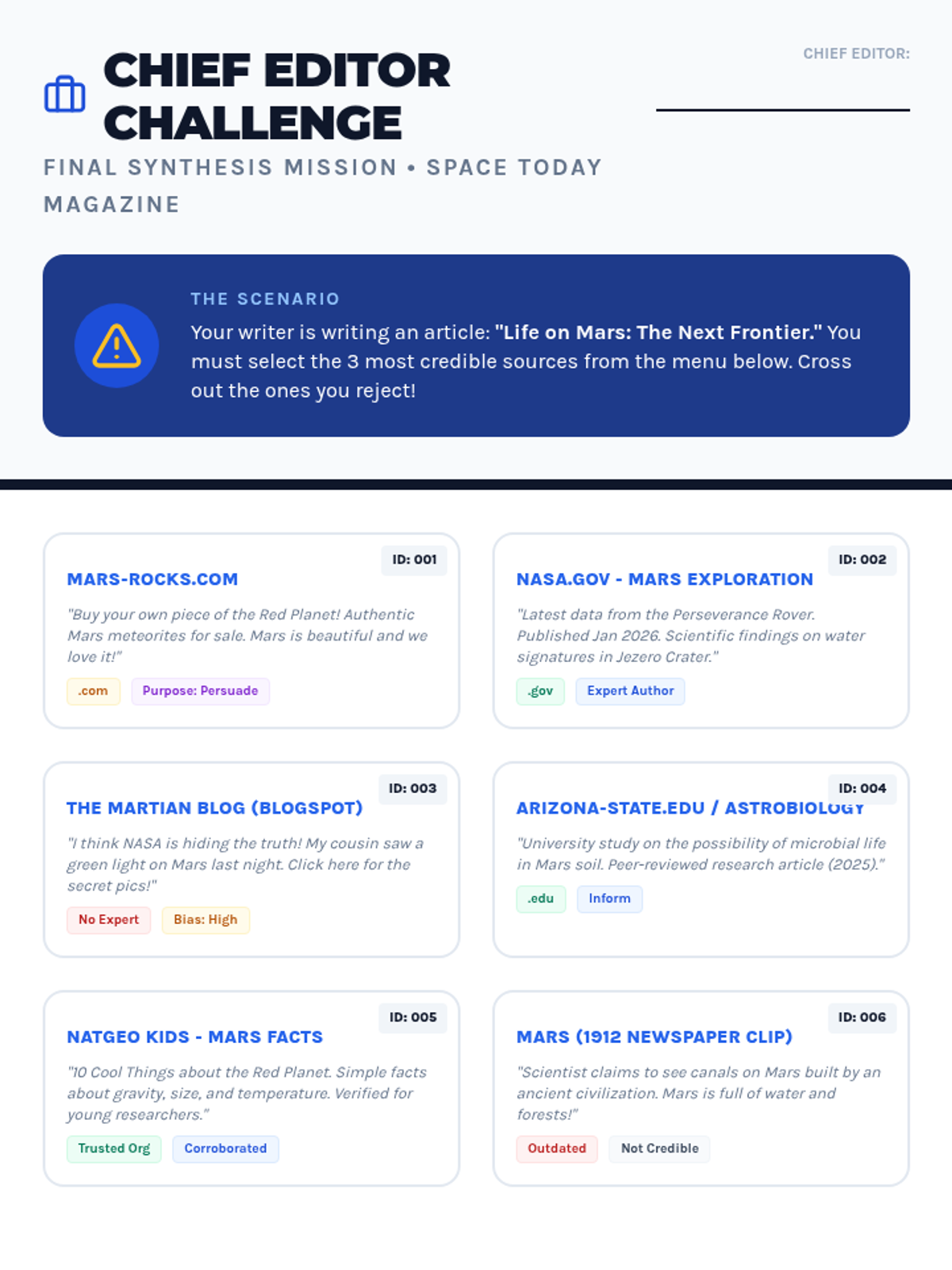
Students synthesize their evaluation skills to select the best resources for a hypothetical research scenario. They curate a small bibliography of trusted sources and justify their choices.
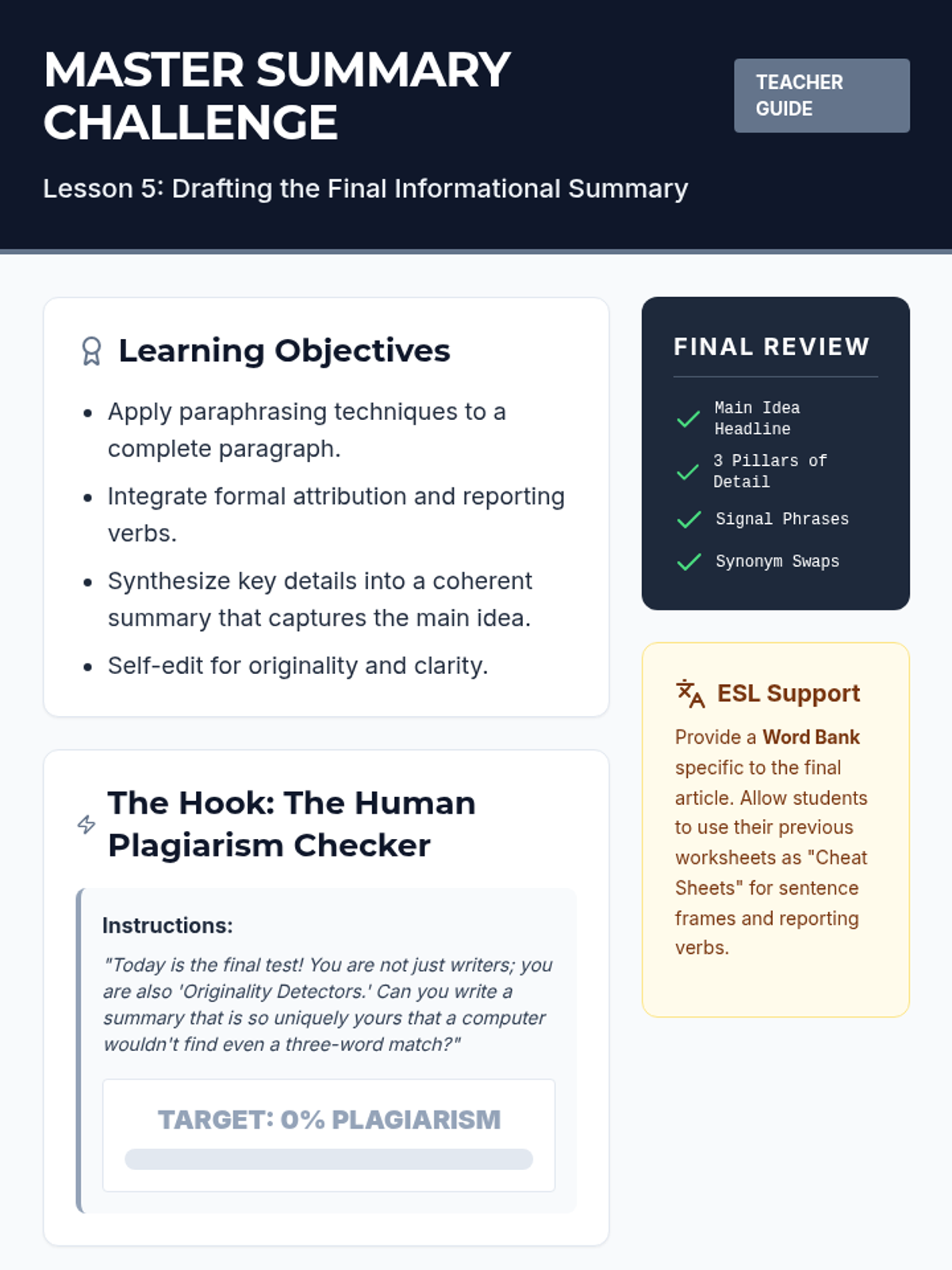
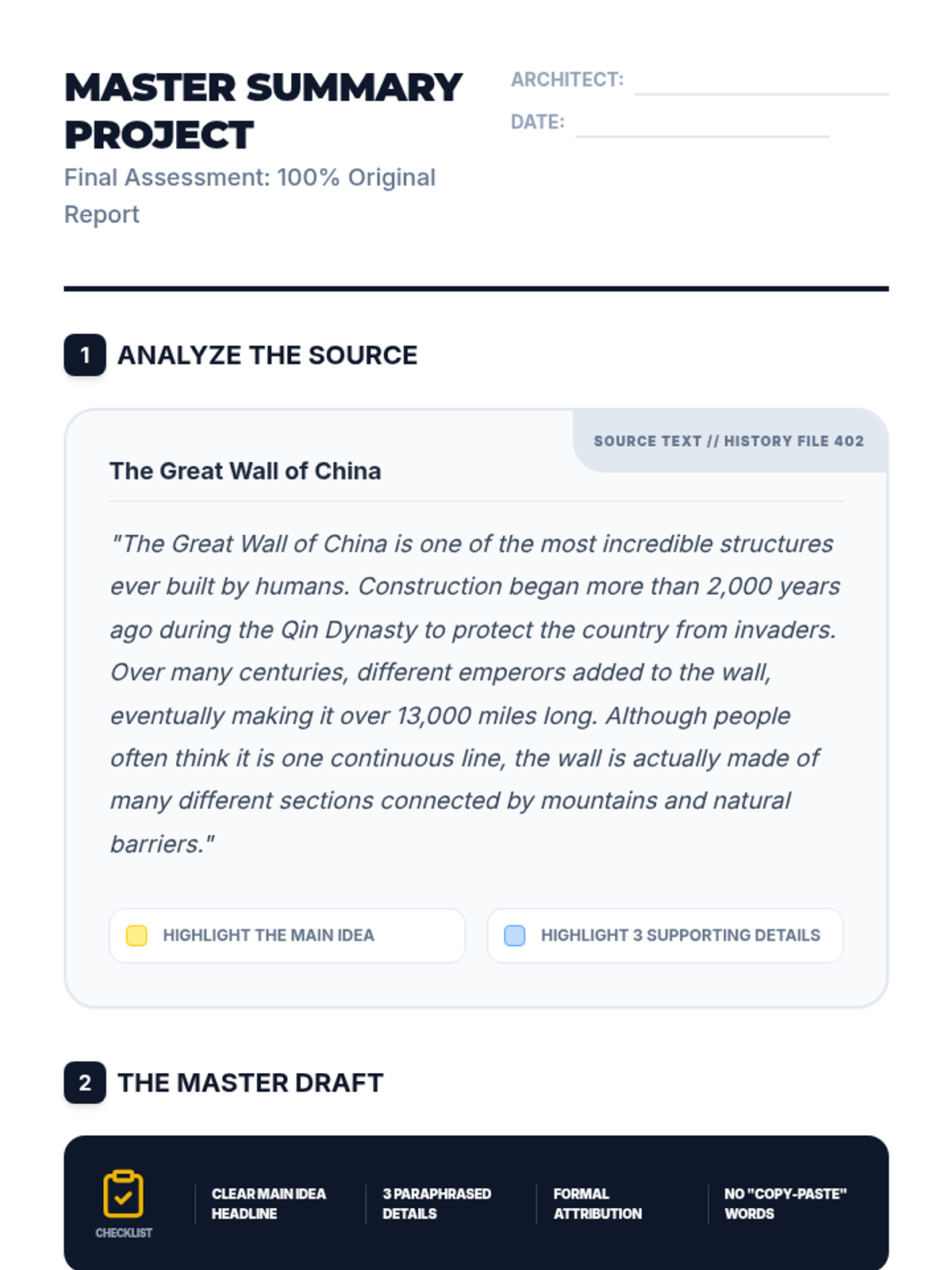
The culminating lesson where students apply all previous skills to write an original summary report based on an informational article.
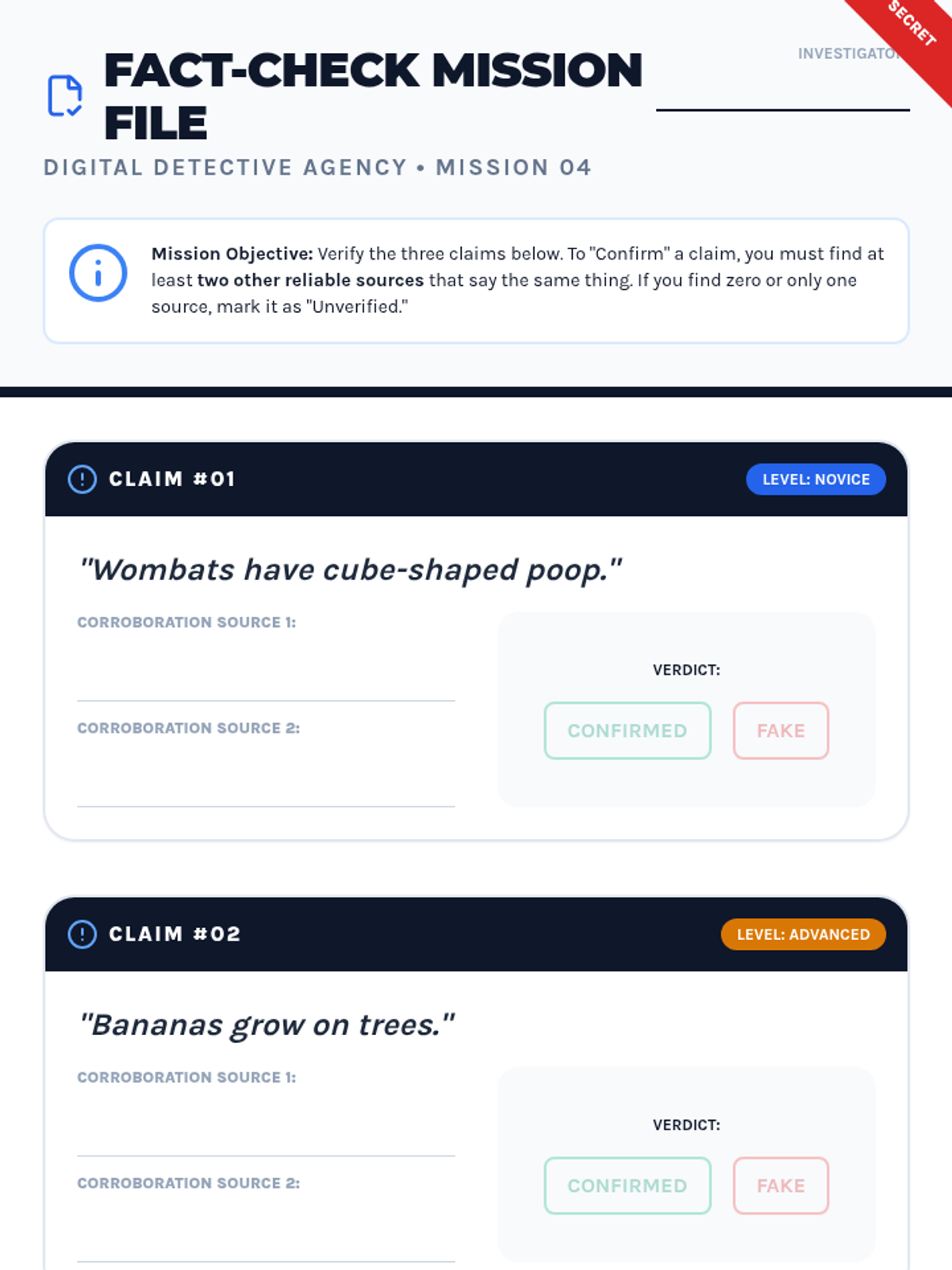
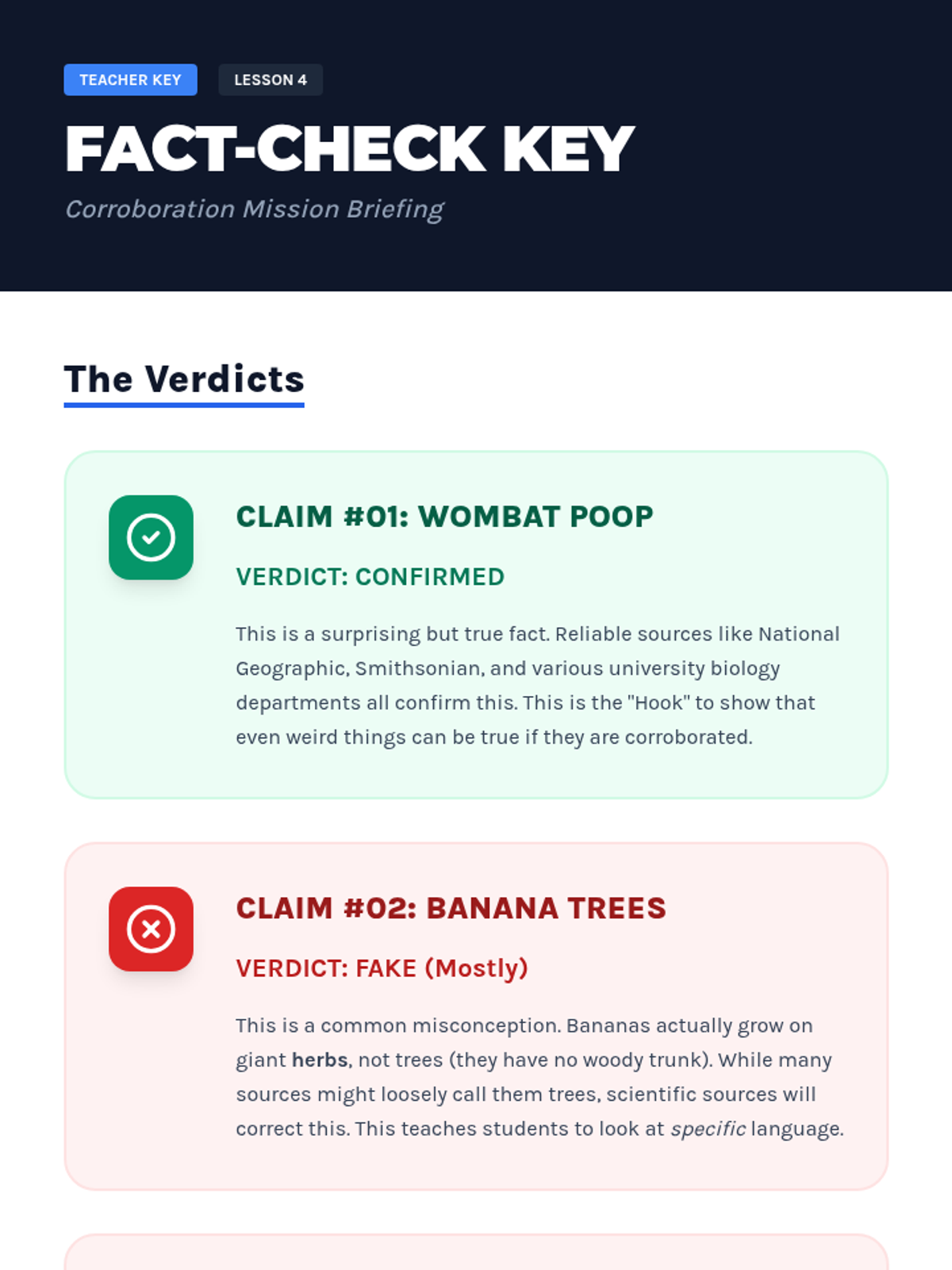
This lesson teaches the strategy of verifying information by finding it in multiple reliable sources. Students engage in a 'Fact-Check Challenge' to confirm or debunk specific claims.
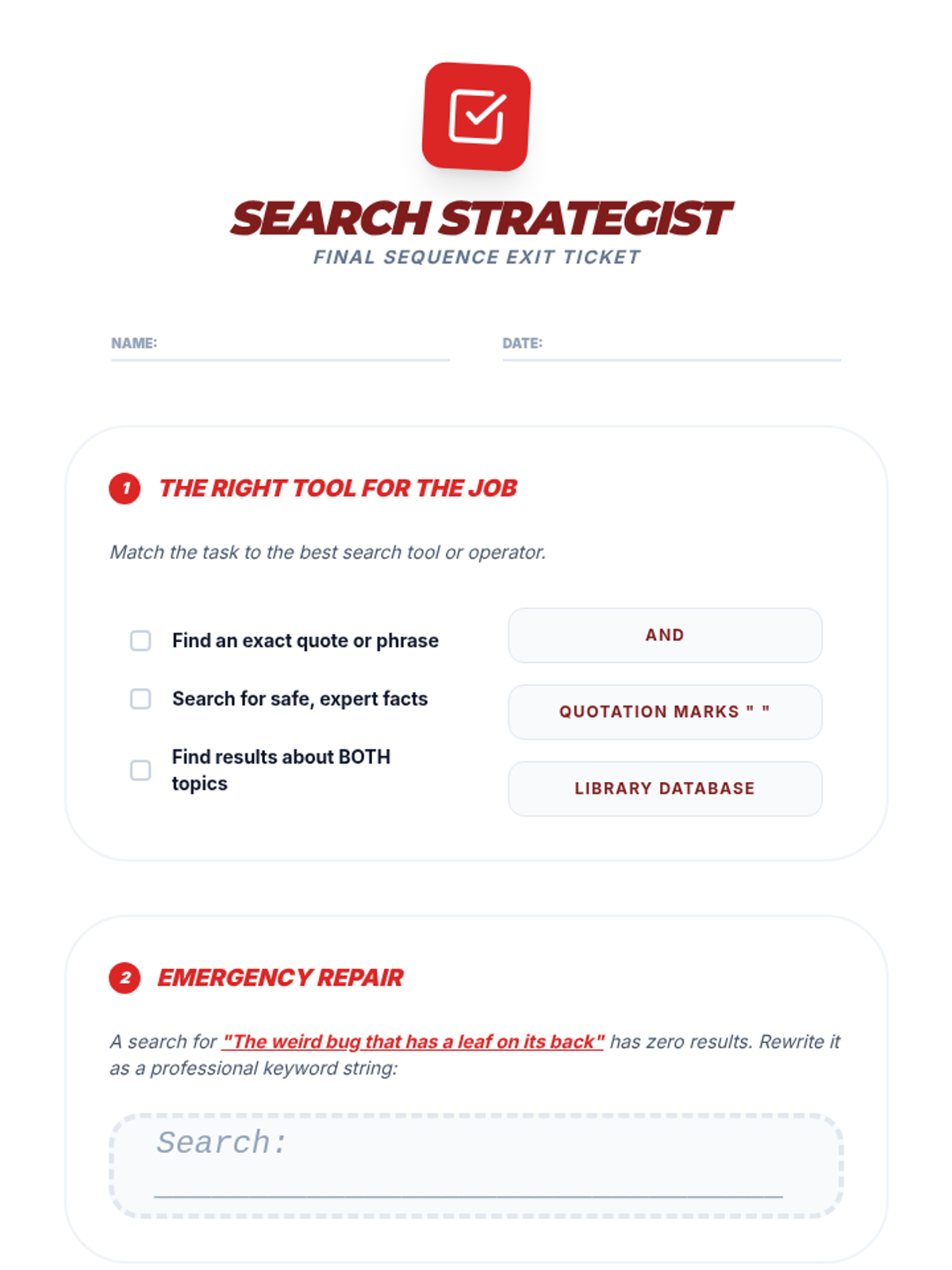
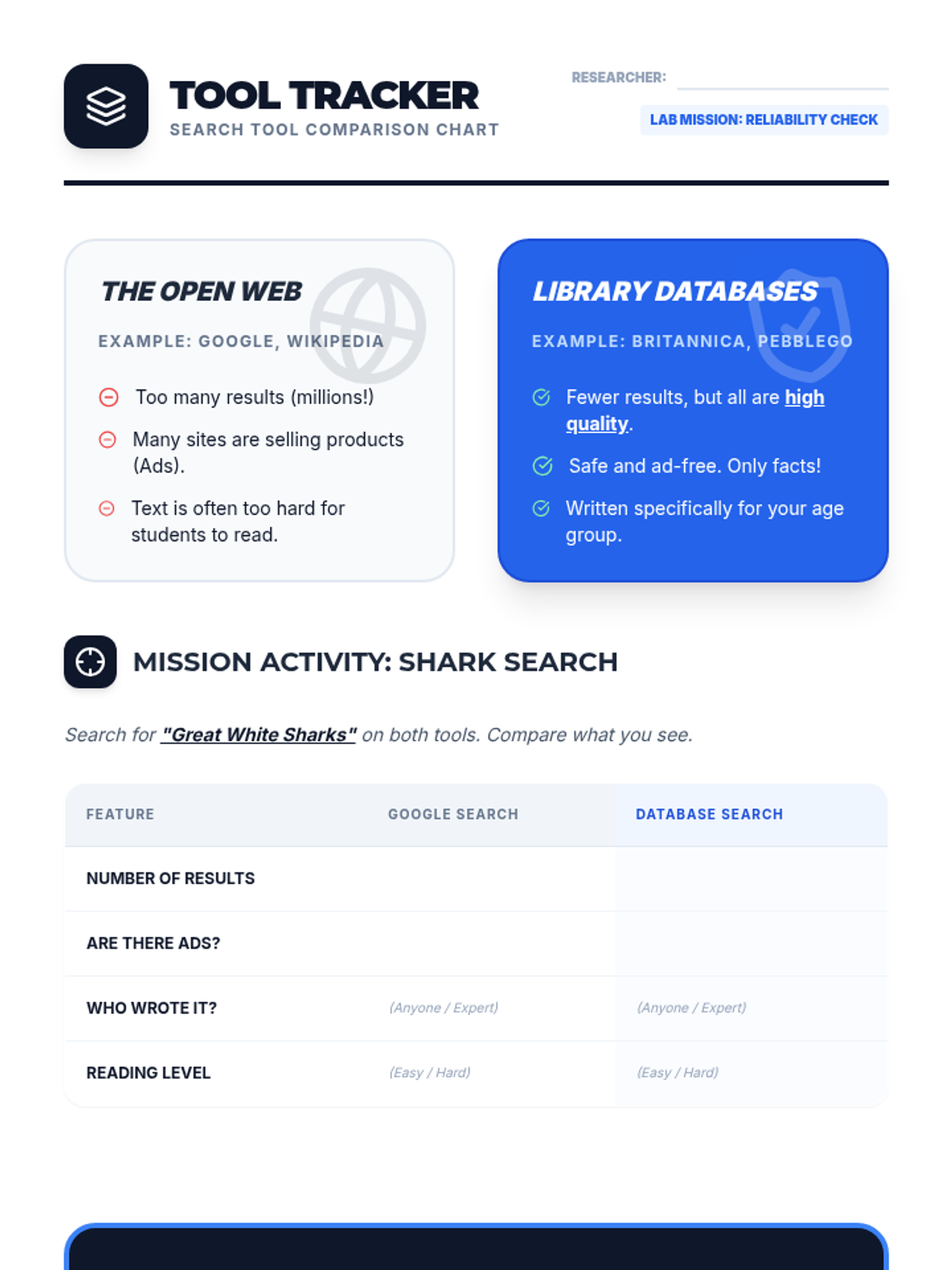
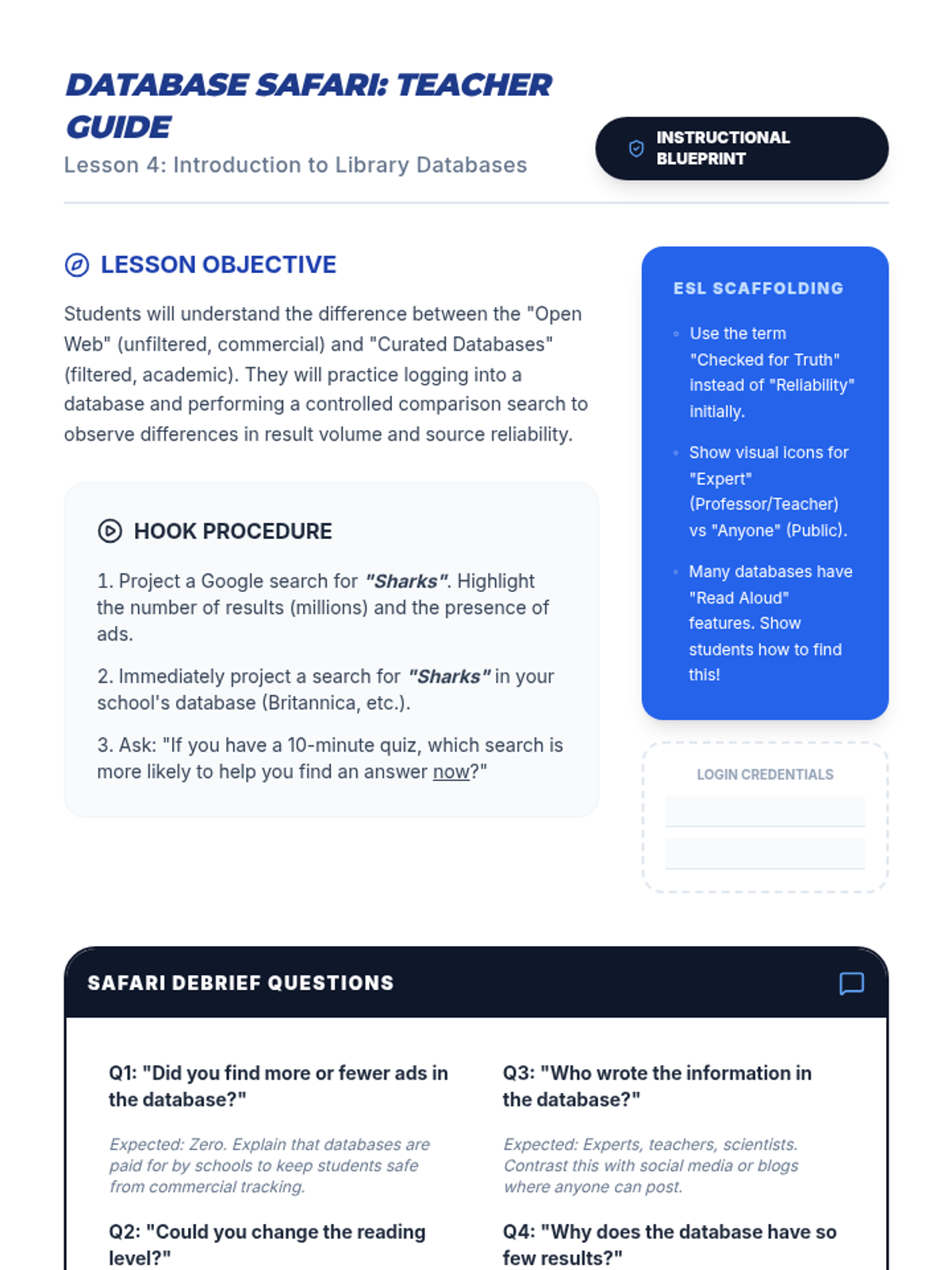
Students transition from open web searches to curated databases, comparing the reliability and organization of professional search tools.
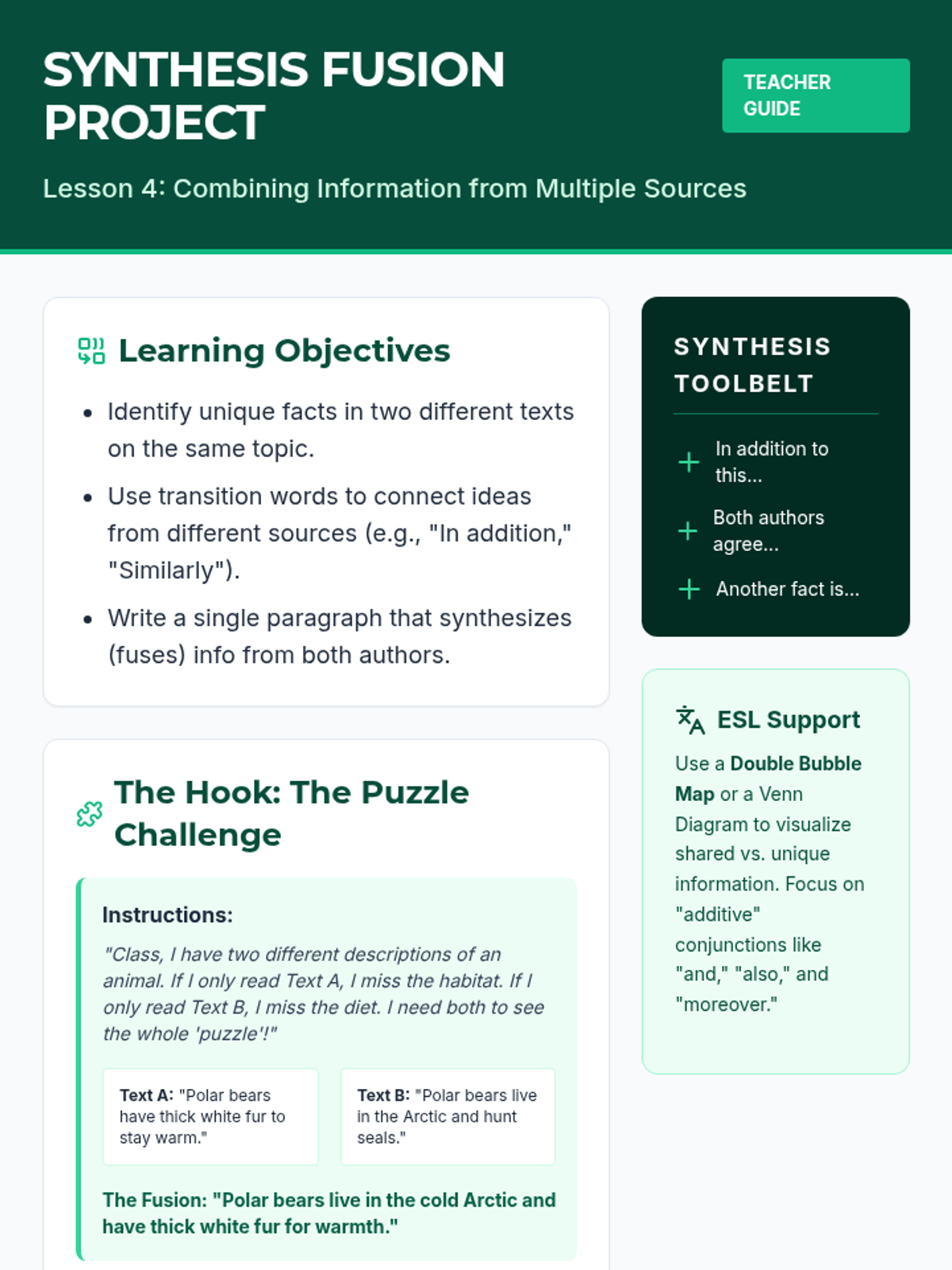
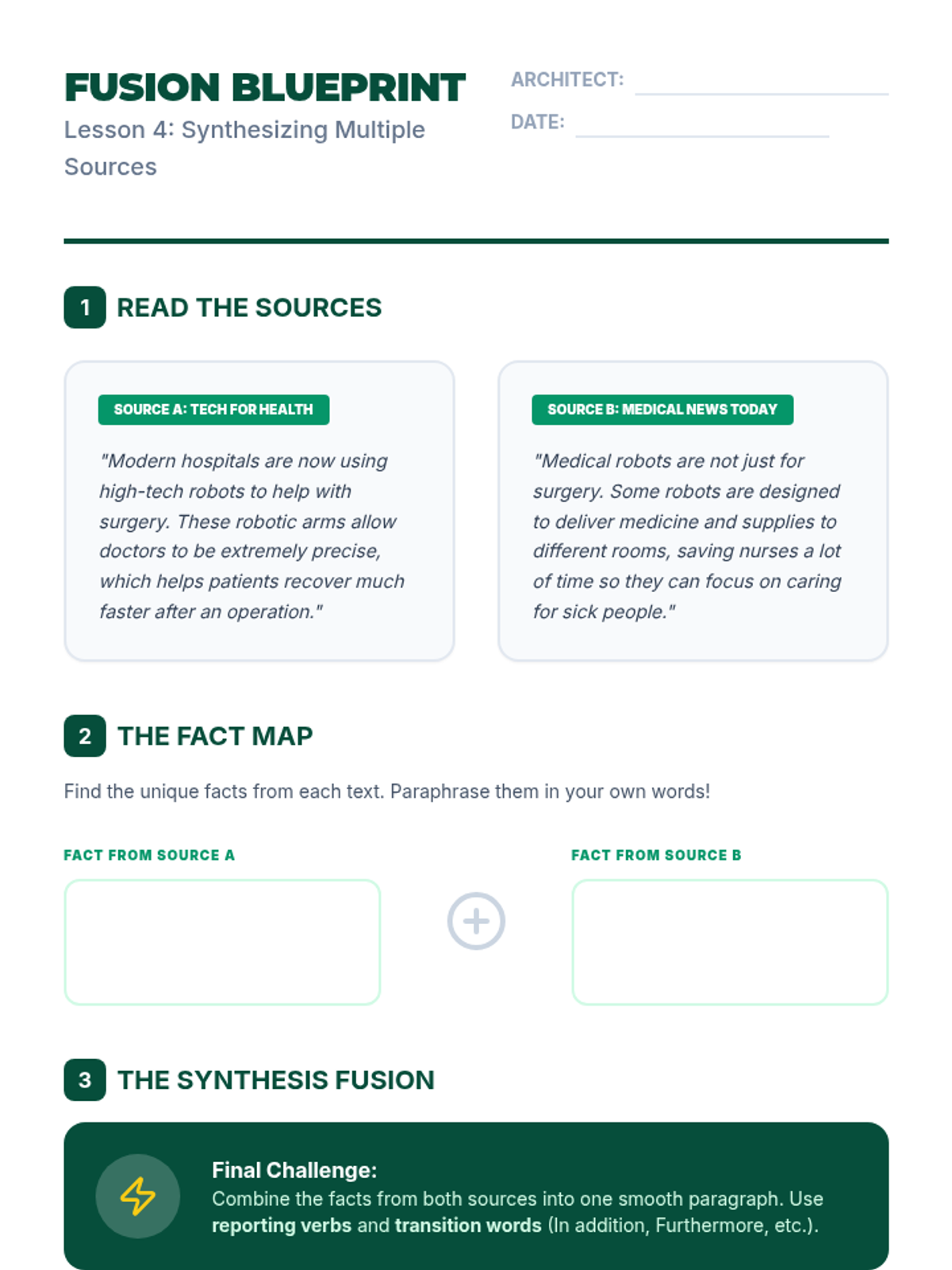
Students read and combine facts from two different texts on the same topic into a single, coherent paragraph.
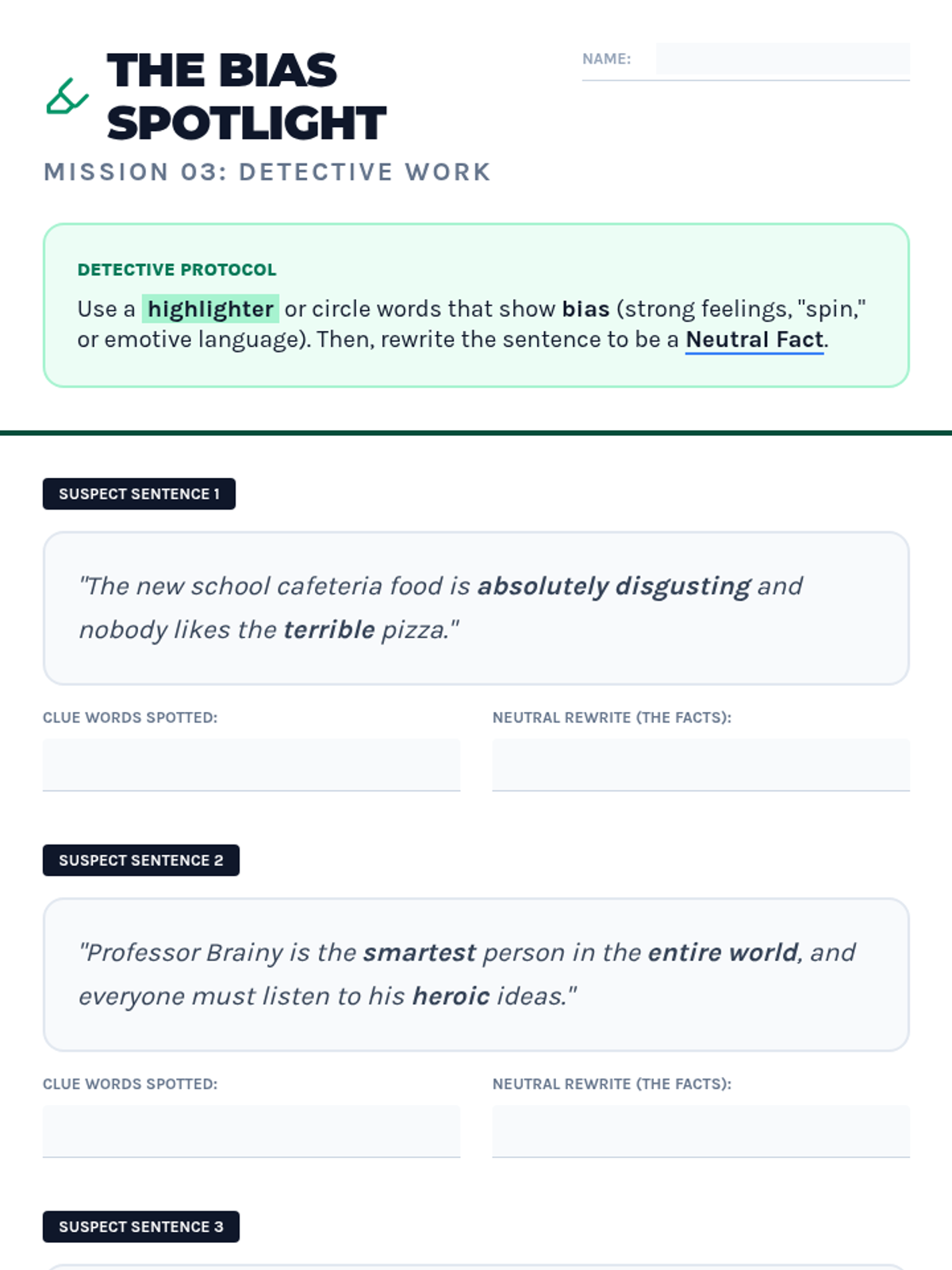
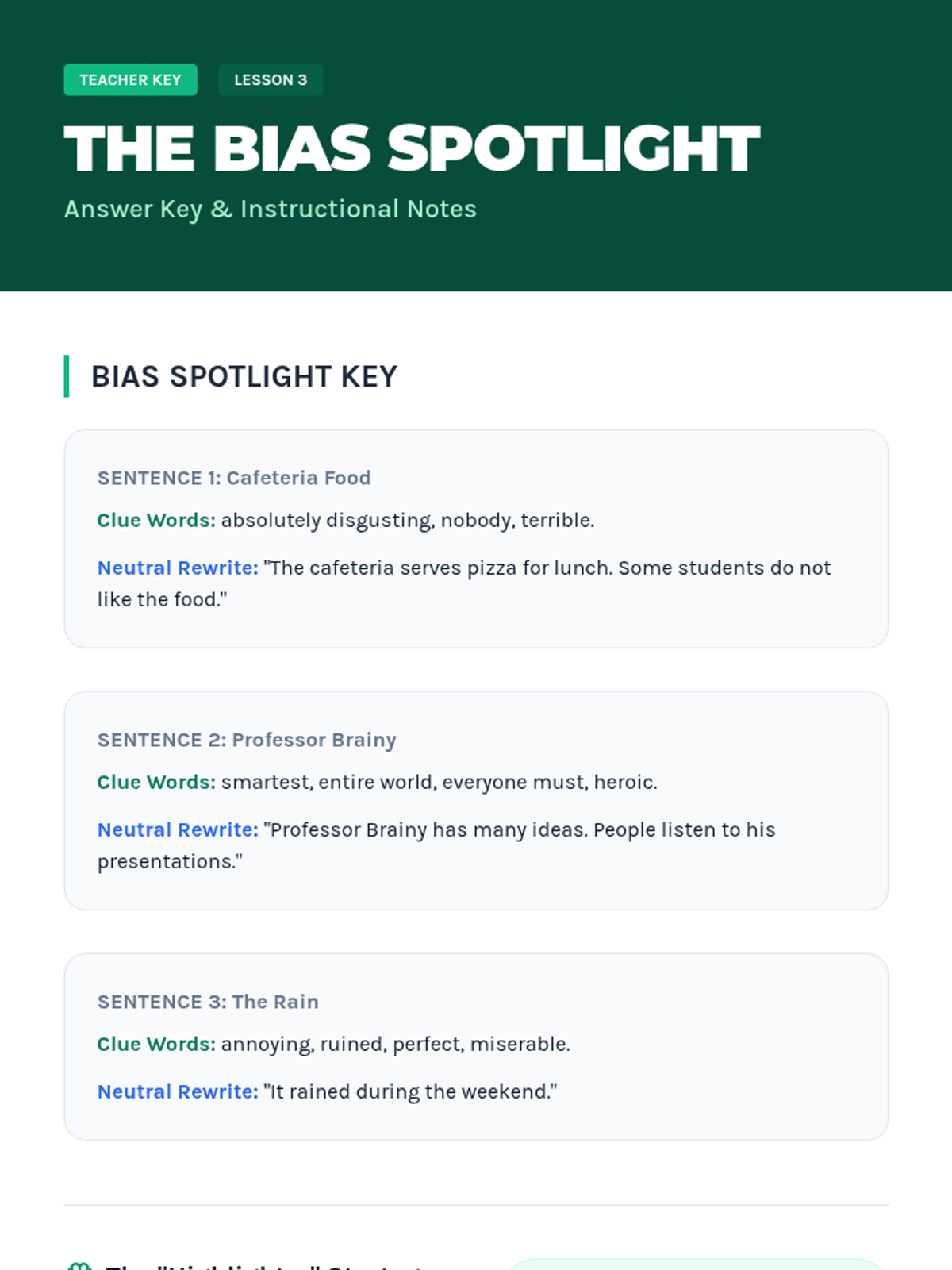
Students examine texts to differentiate between objective facts and subjective opinions or bias. They practice highlighting emotive language and unsupported claims within informational texts.
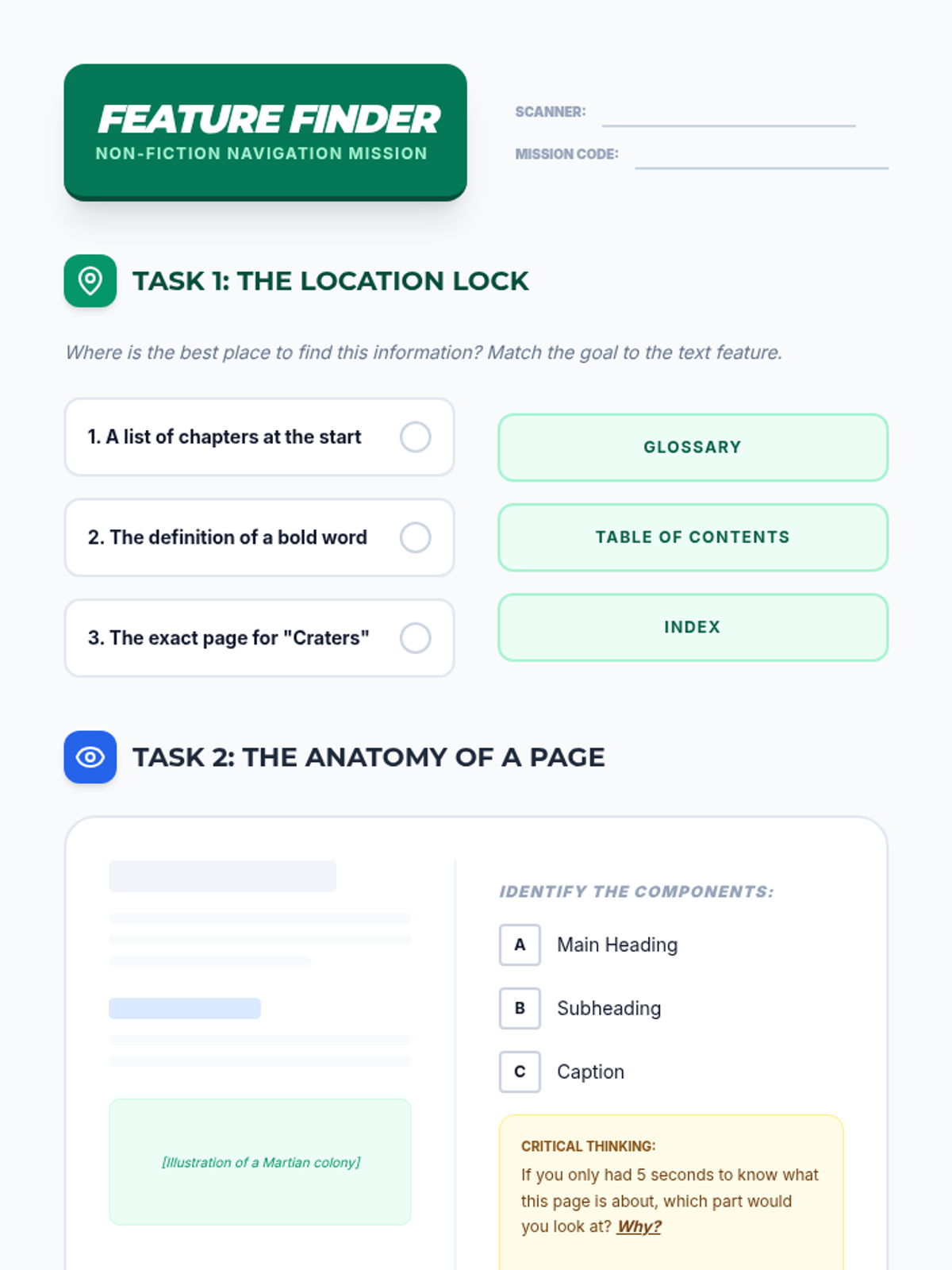
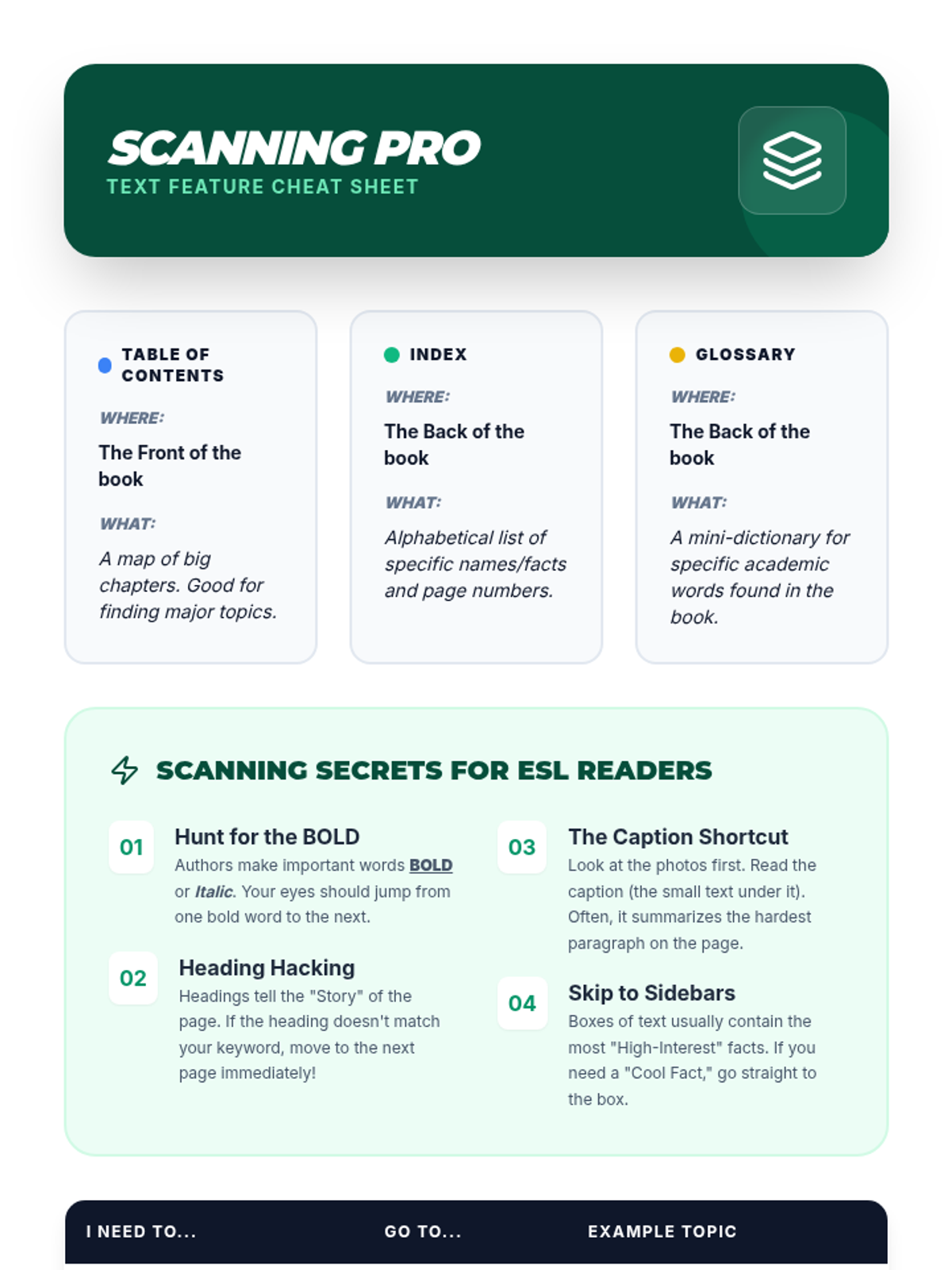
Students practice using text features like indices, headings, and sidebars to locate information quickly through skimming and scanning techniques.
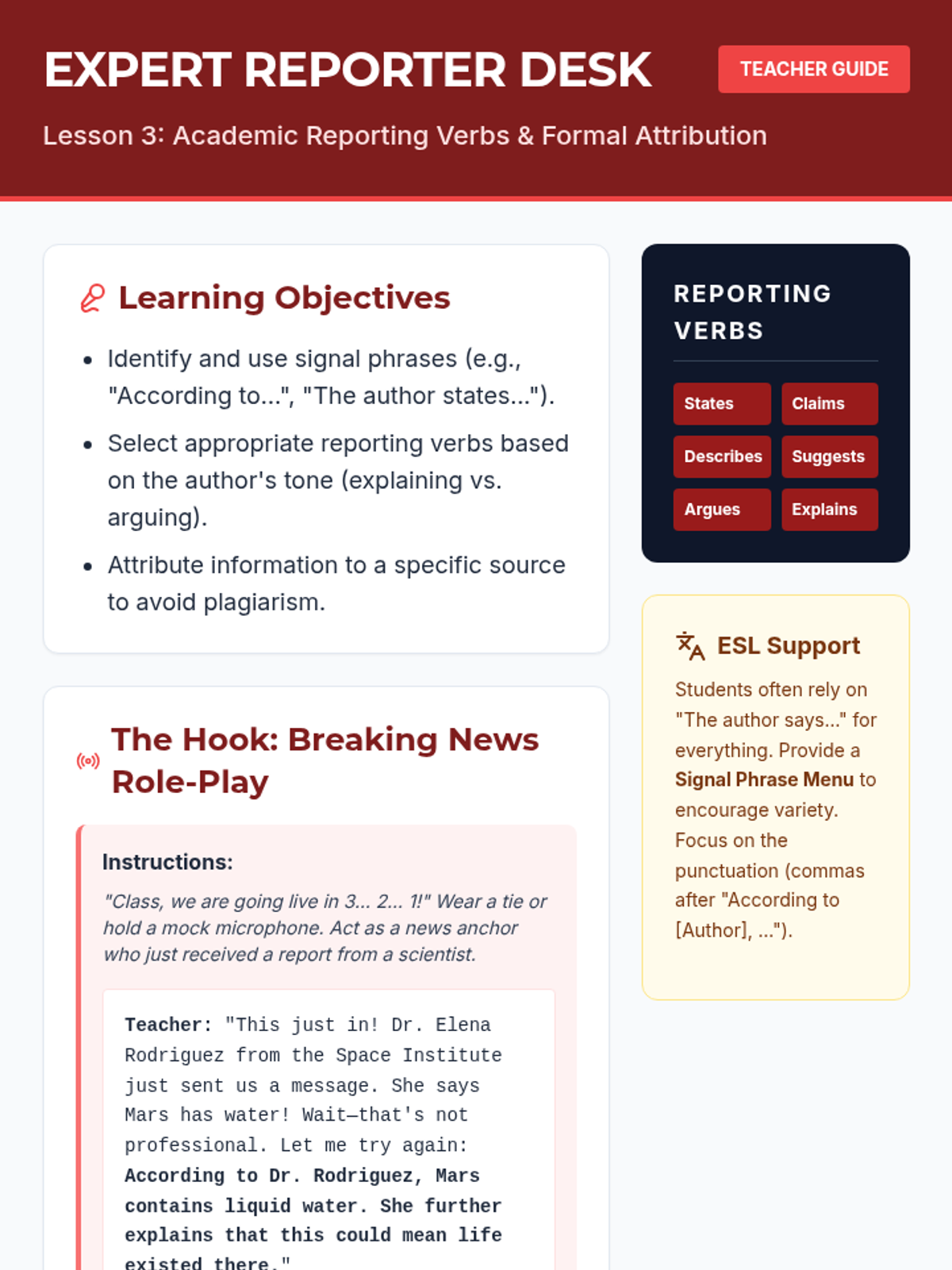
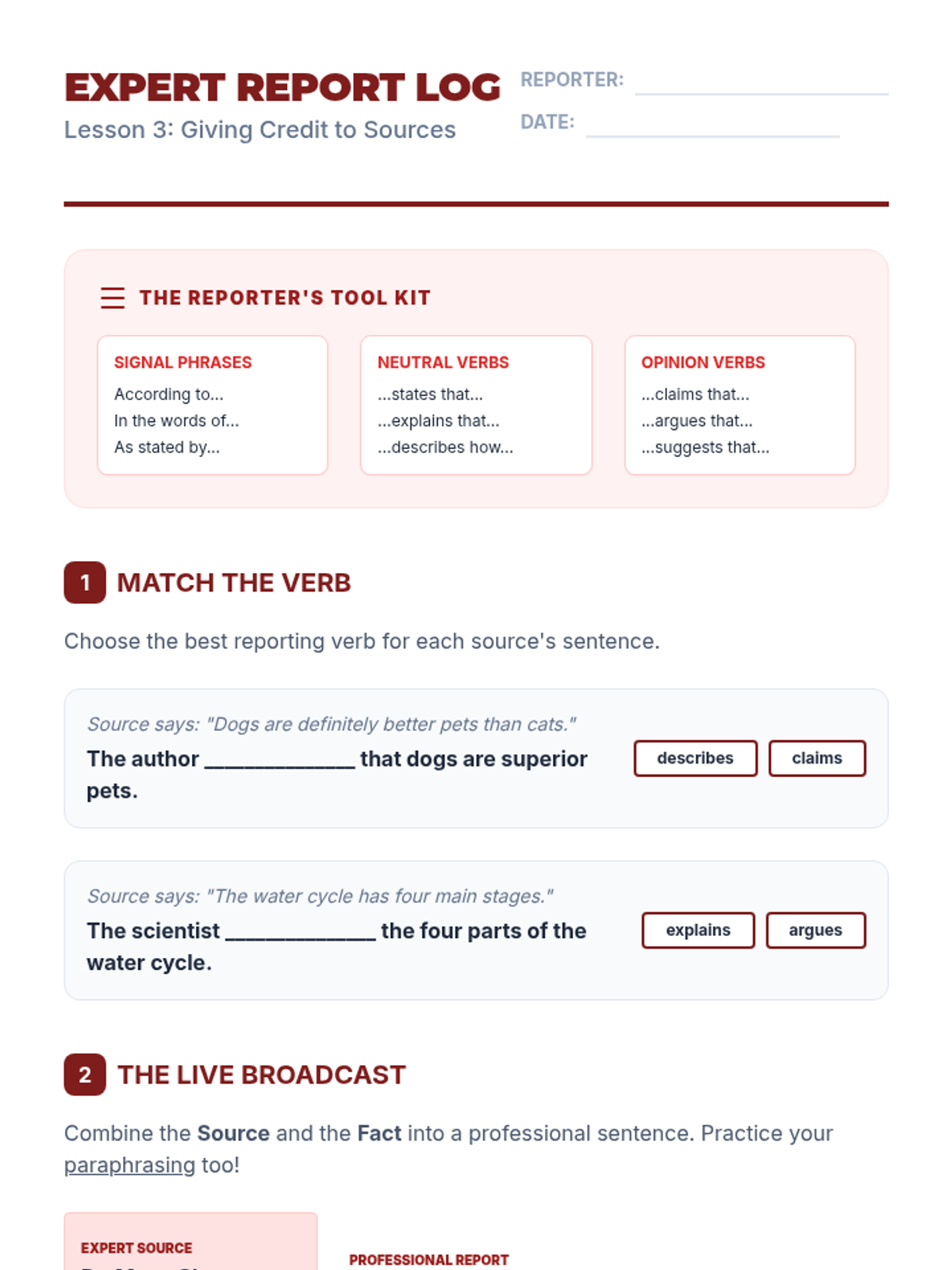
Students learn and practice using academic reporting verbs and formal attribution to credit authors in their writing.
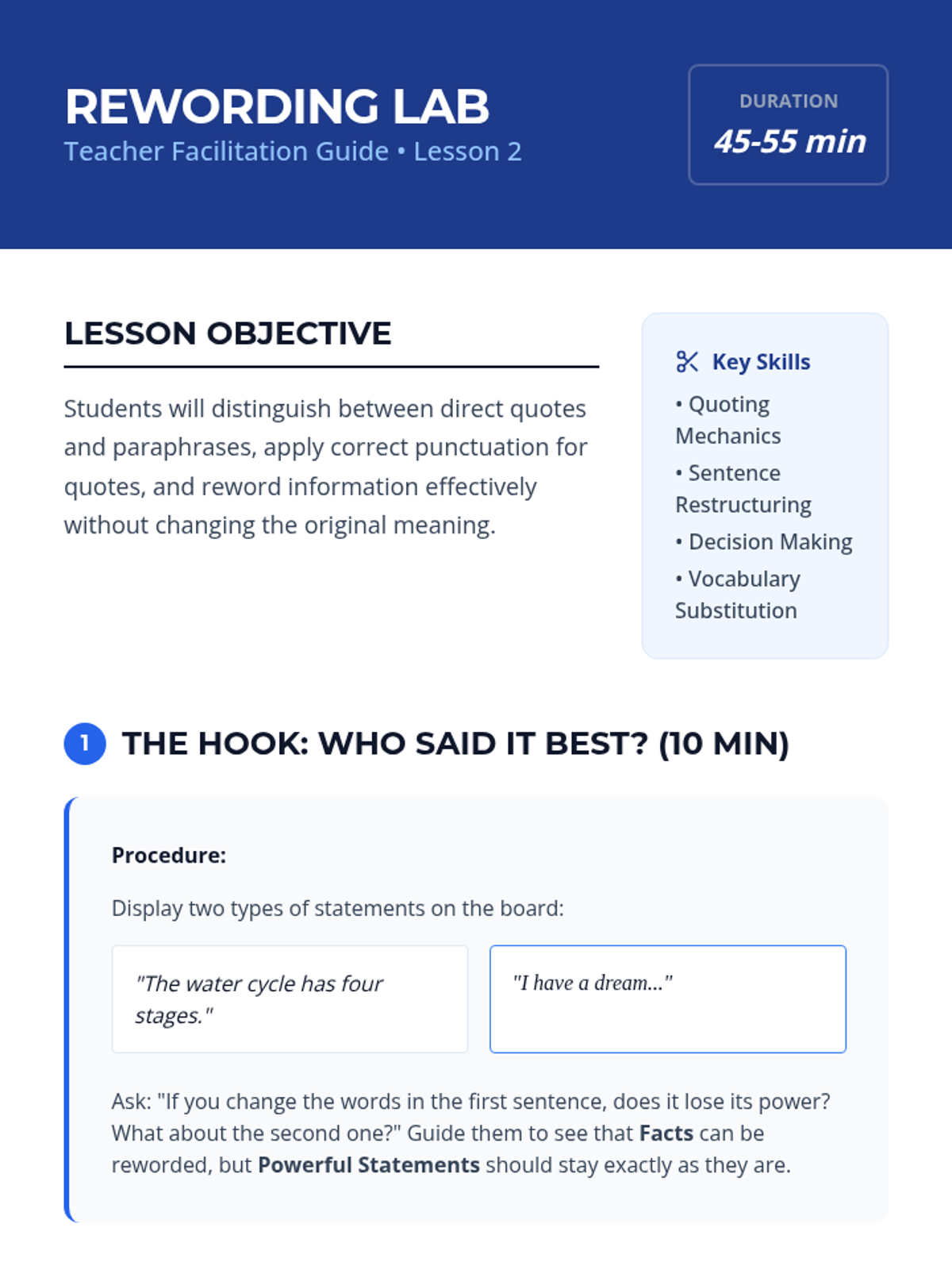
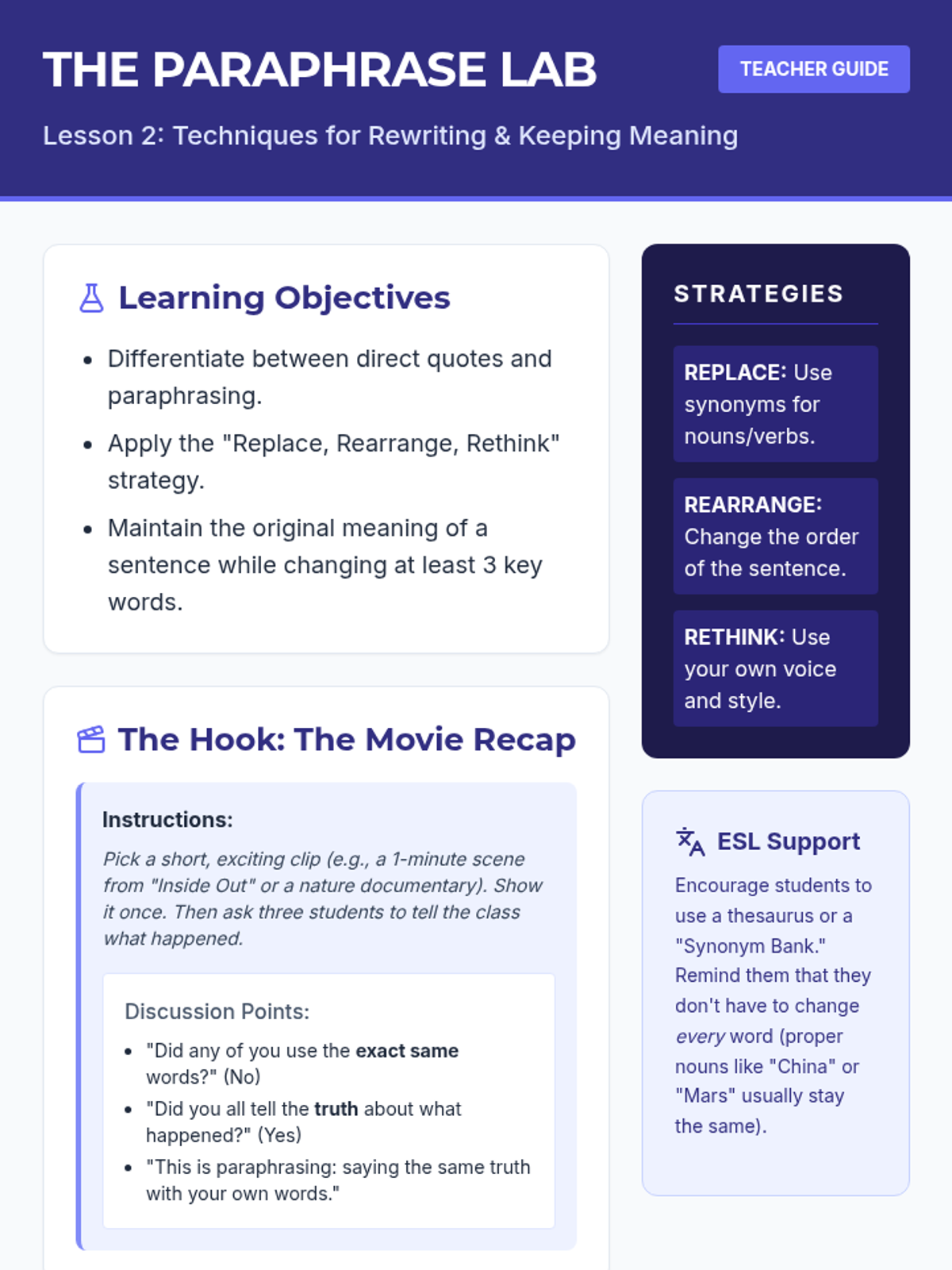
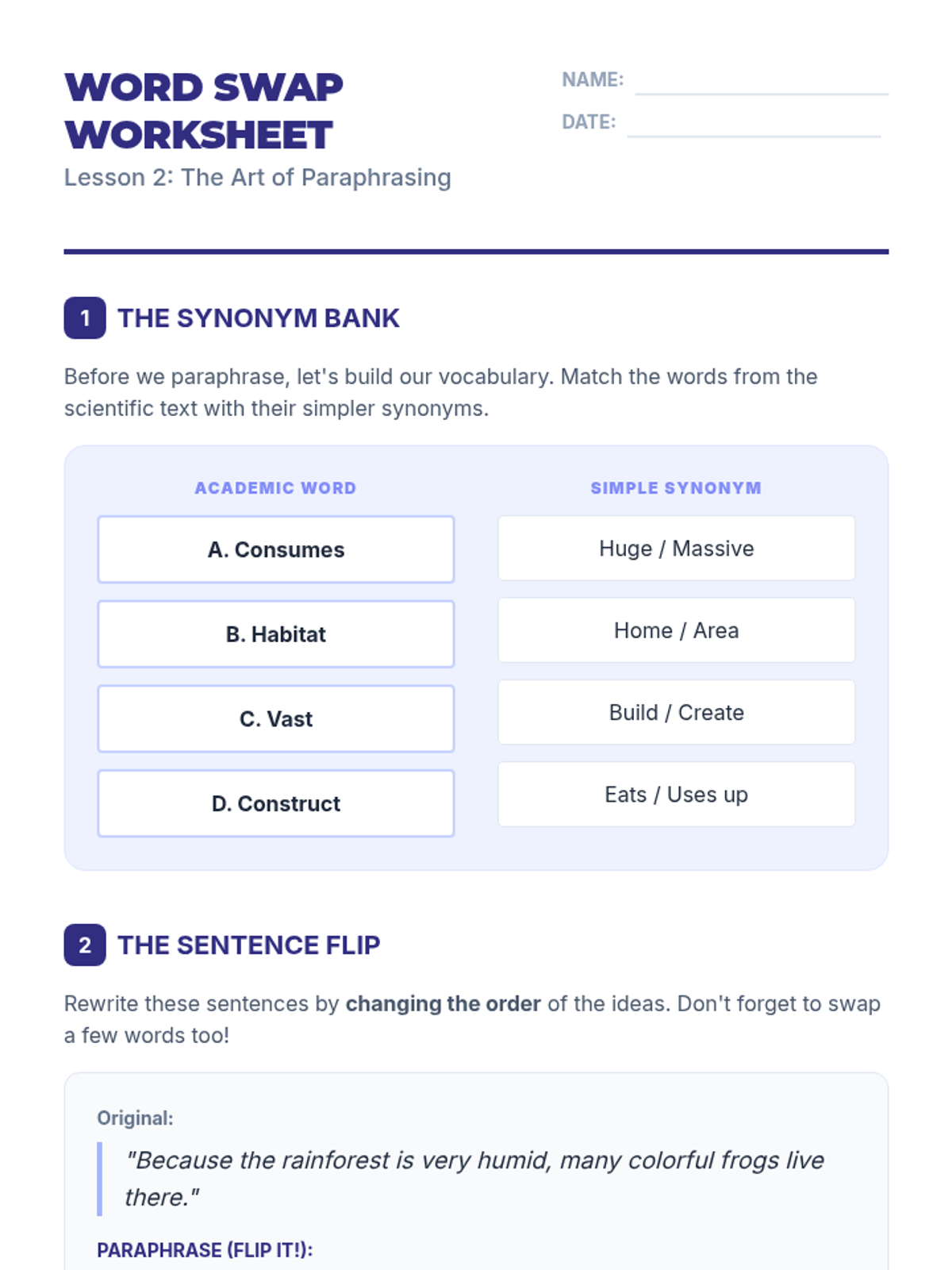
Learners study techniques for rewriting sentences while maintaining original meaning, focusing on vocabulary substitution and structural changes.
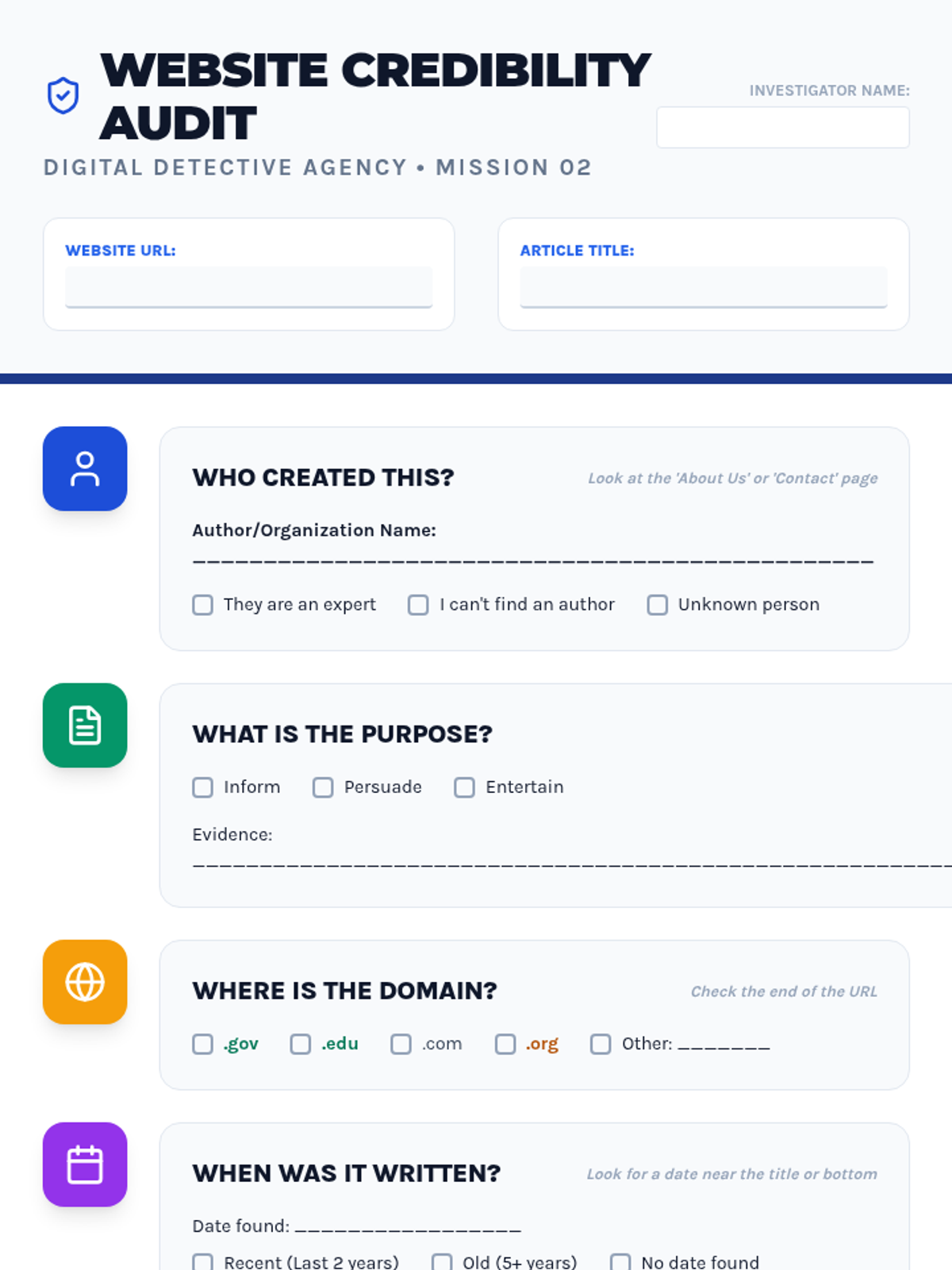
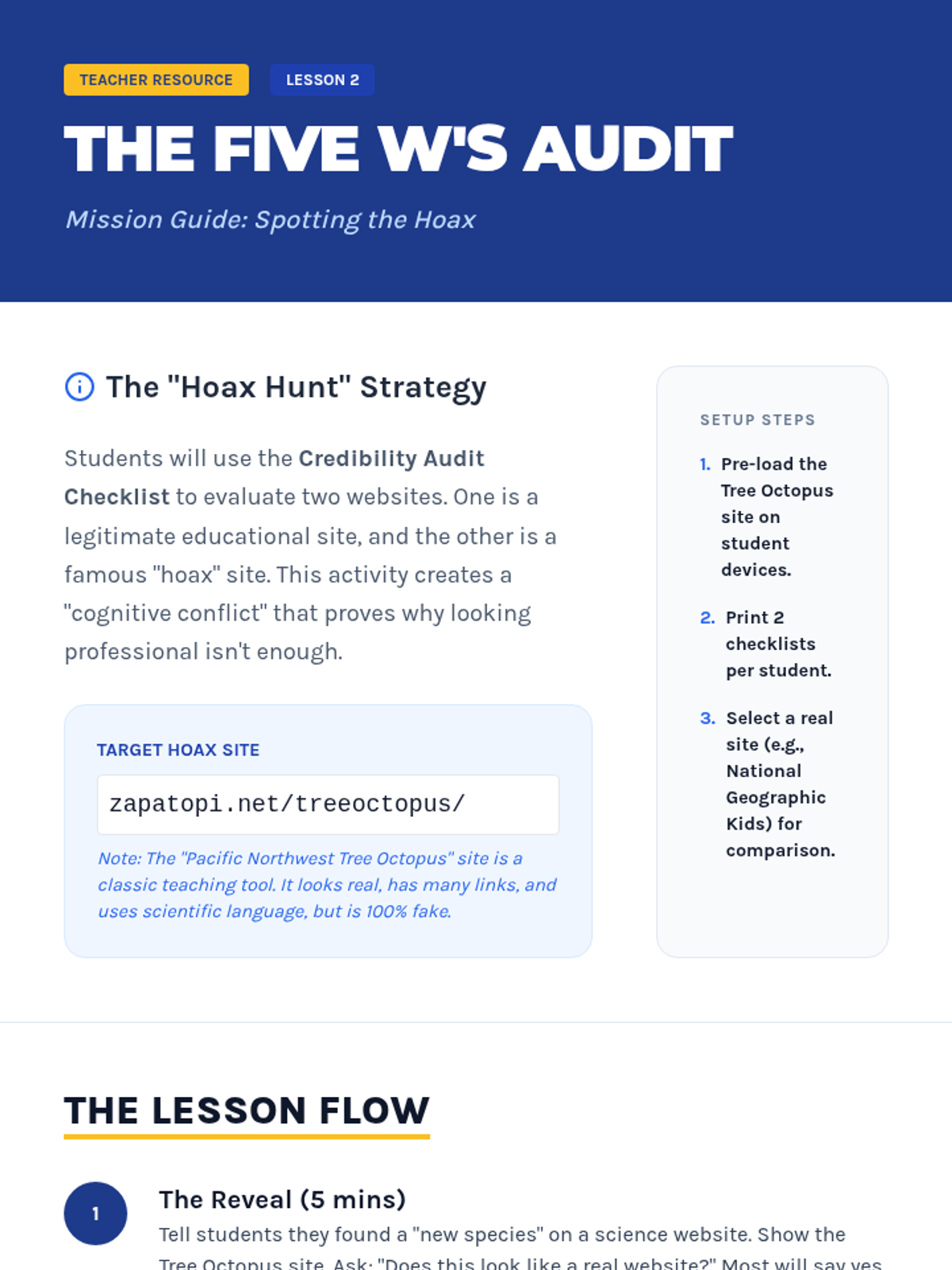
Learners apply the Who, What, Where, When, and Why framework to evaluate digital sources. The lesson introduces a simplified credibility checklist that students use to audit pre-selected websites, including 'hoax' sites.
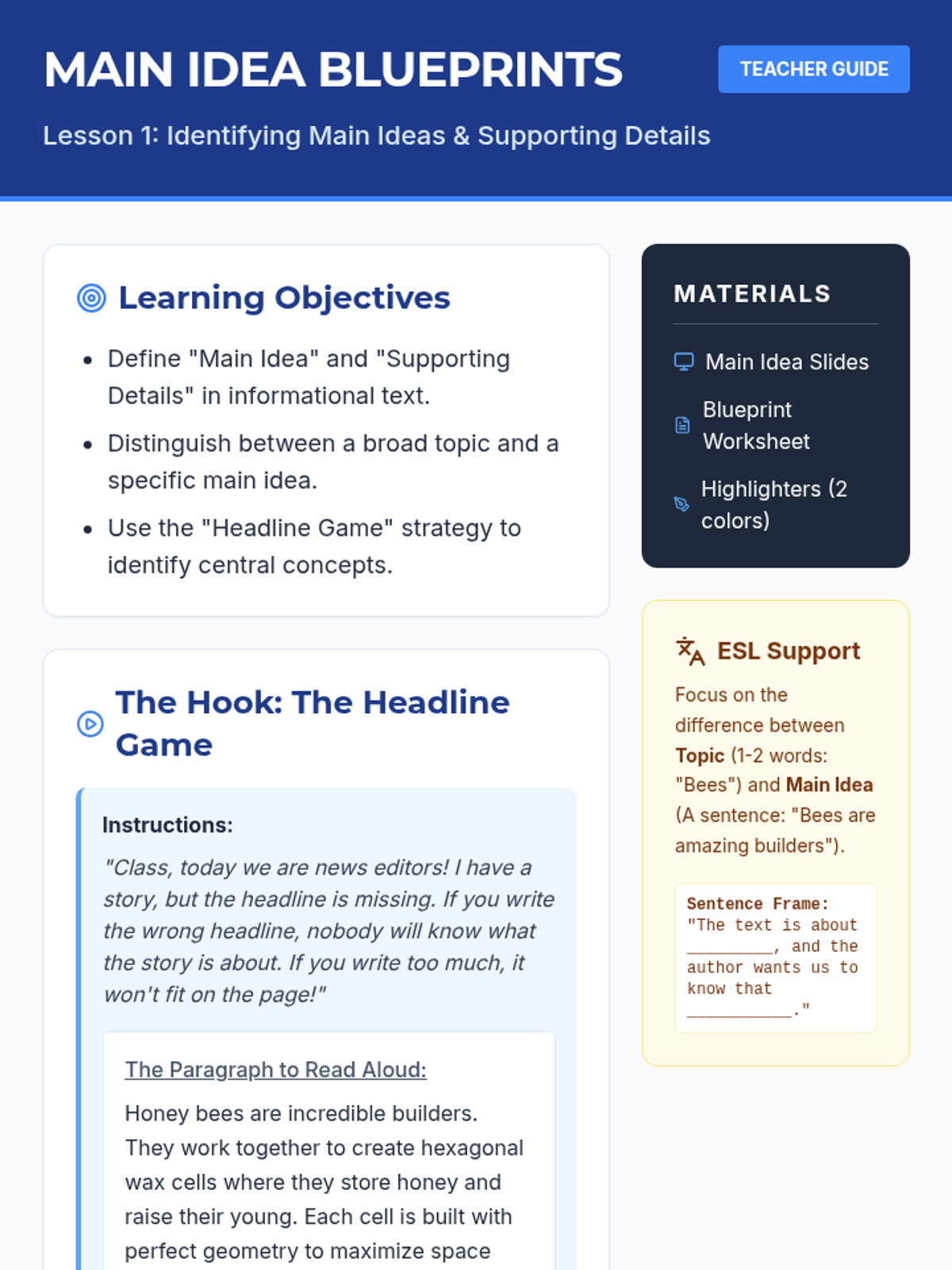
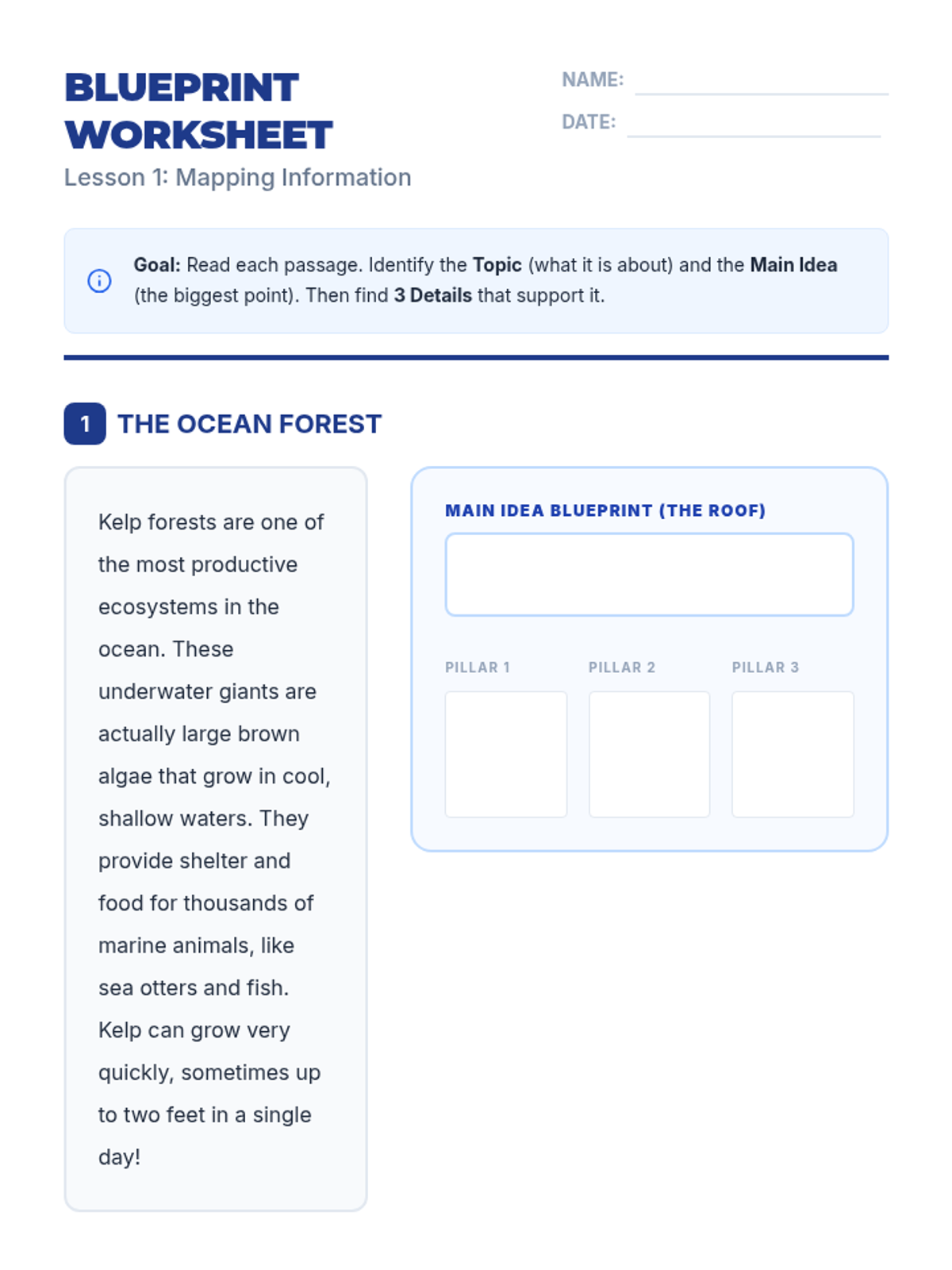
Students practice reading short informational passages to distinguish the central concept from the details using the 'Headline Game' and graphic organizers.