Students explore the differences between open web searches and curated academic databases. They practice navigating database interfaces, reading abstracts, and using built-in citation tools.
Synthesizes learning through case studies of intentional vs. accidental plagiarism and concludes with an academic integrity pledge.
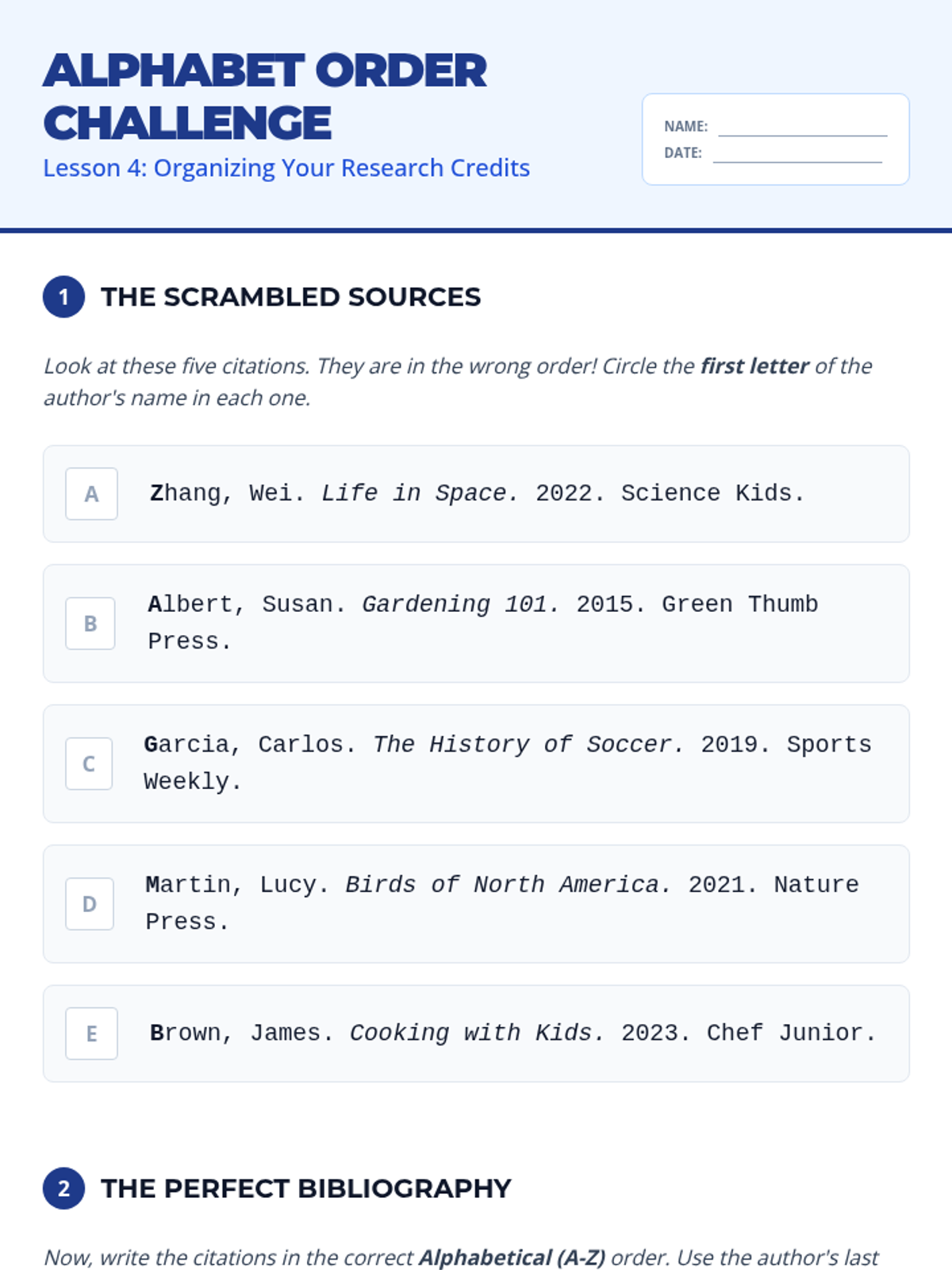
Teaches students how to compile individual citations into a cohesive, alphabetized reference list.
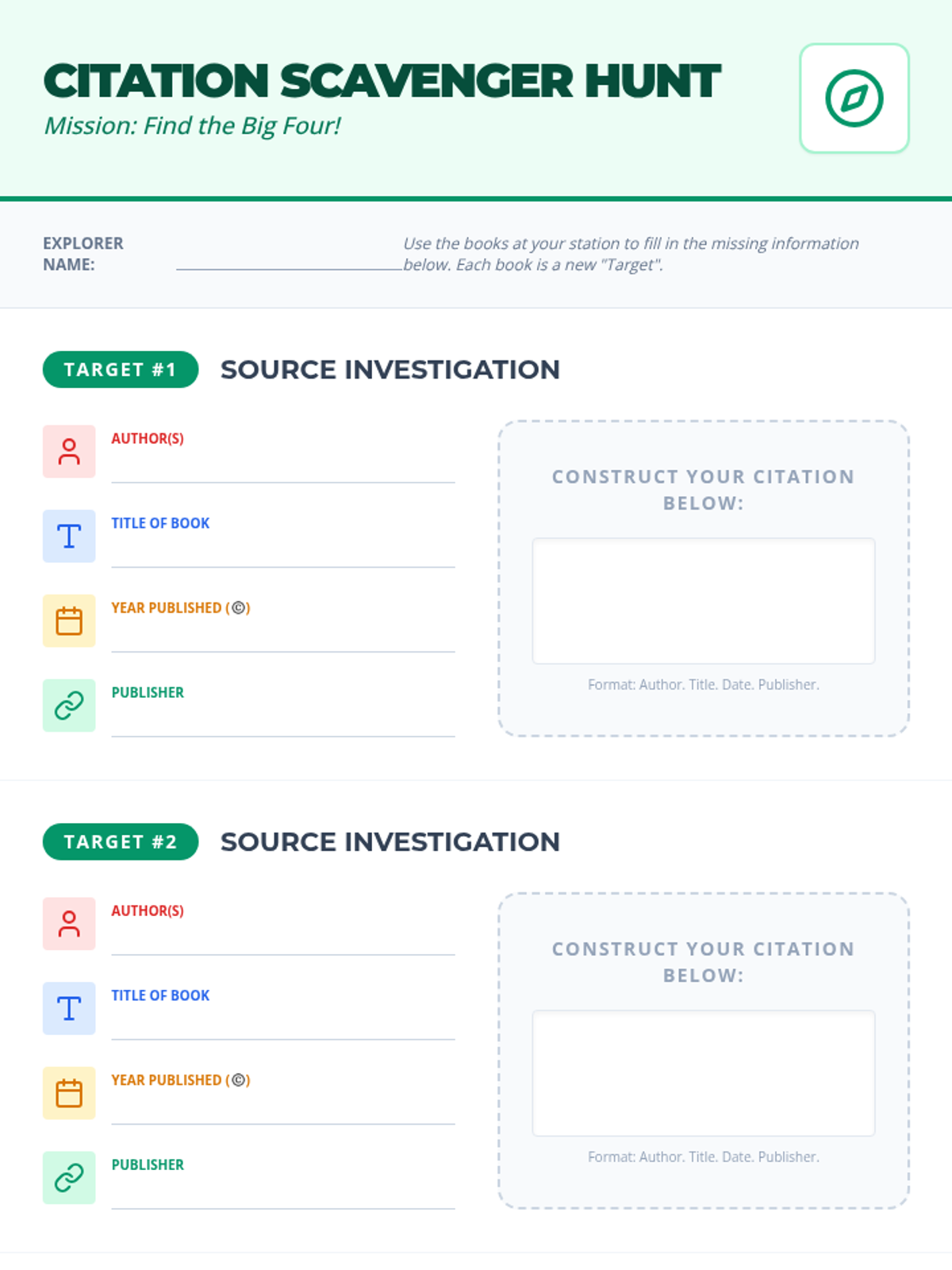
Introduces the four core elements of a basic citation (Author, Title, Date, Source) and provides practice in locating this information.
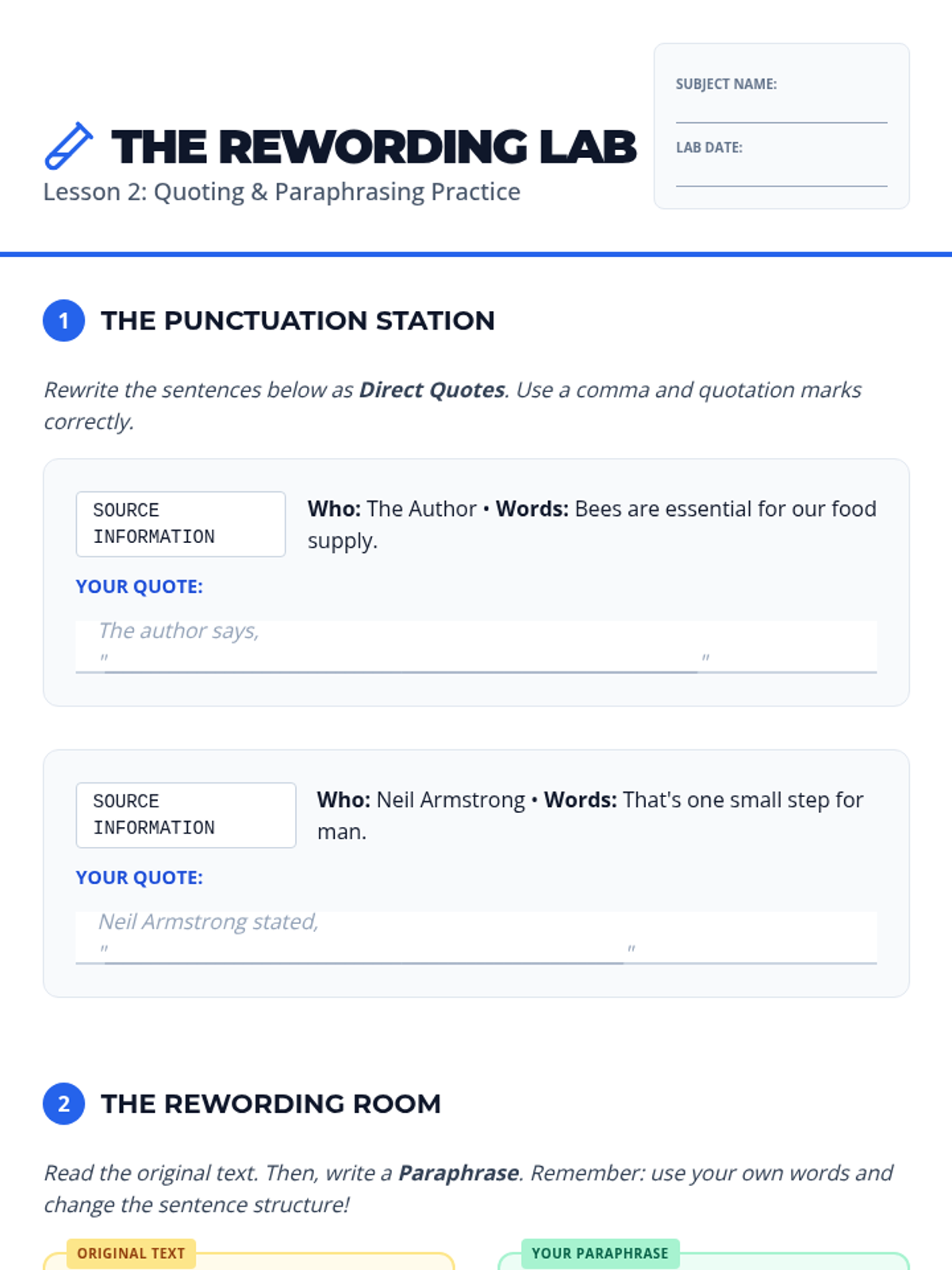
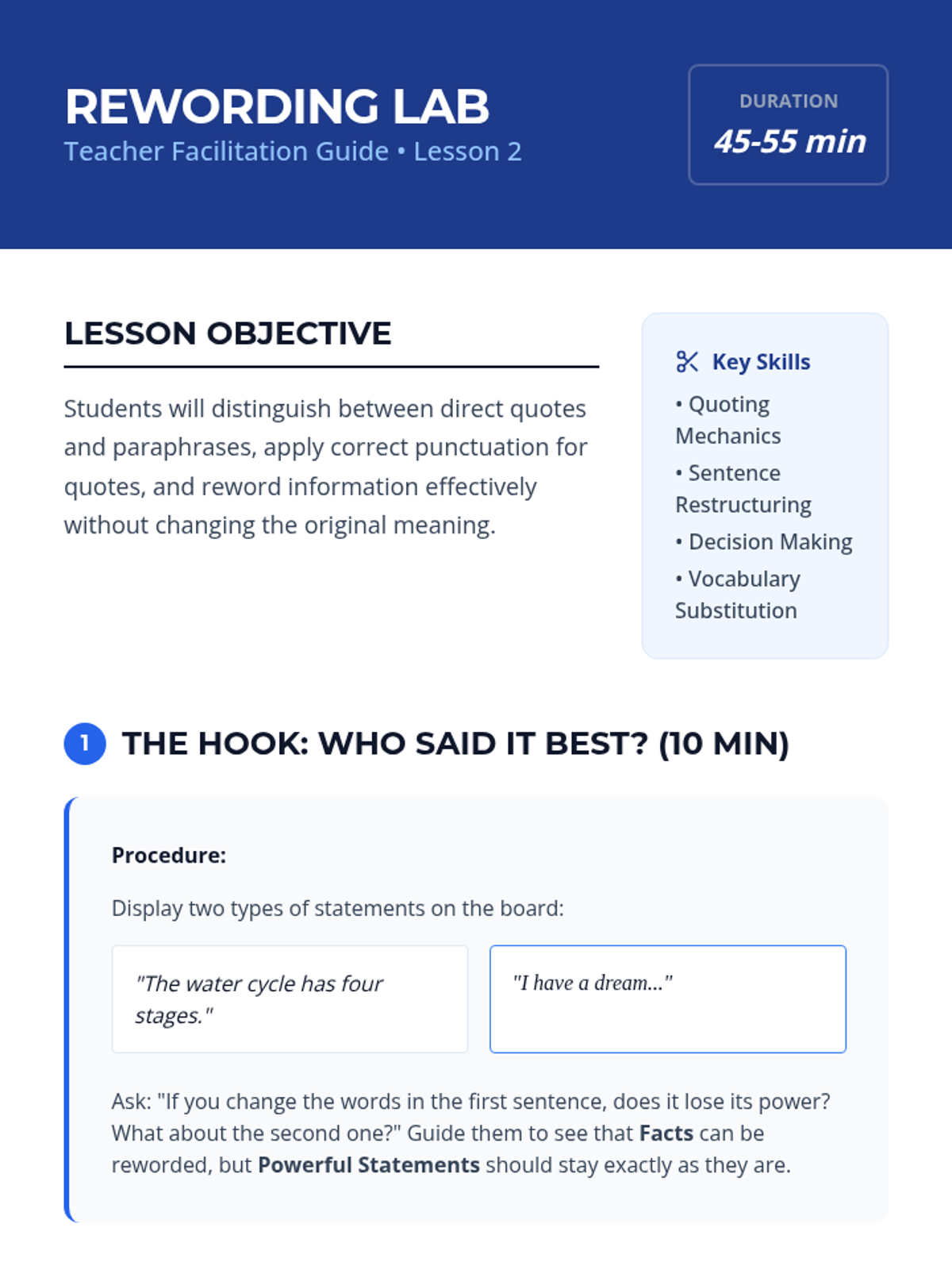
Students learn the mechanical and logical differences between direct quotes and paraphrasing, focusing on when to use each.
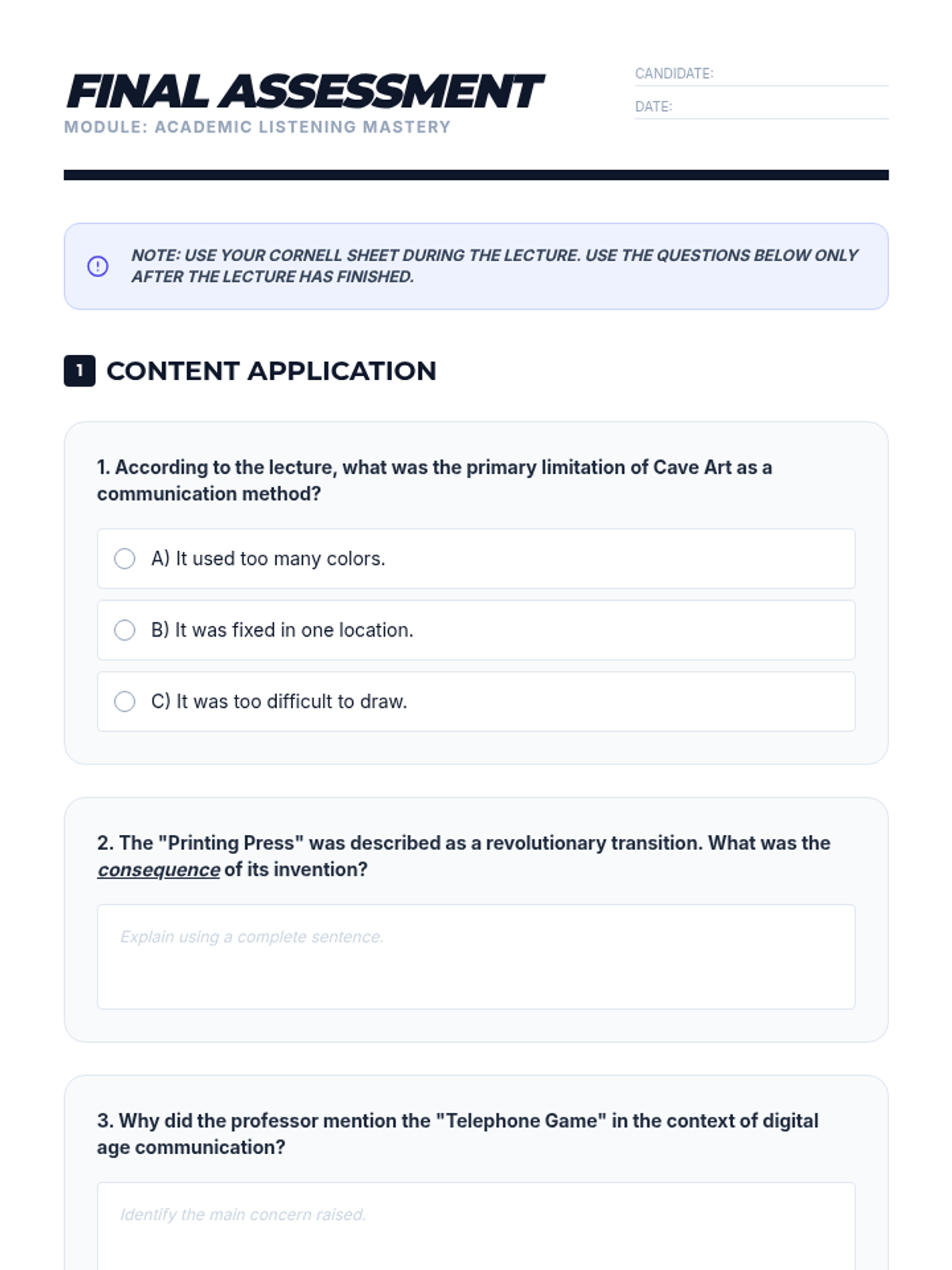
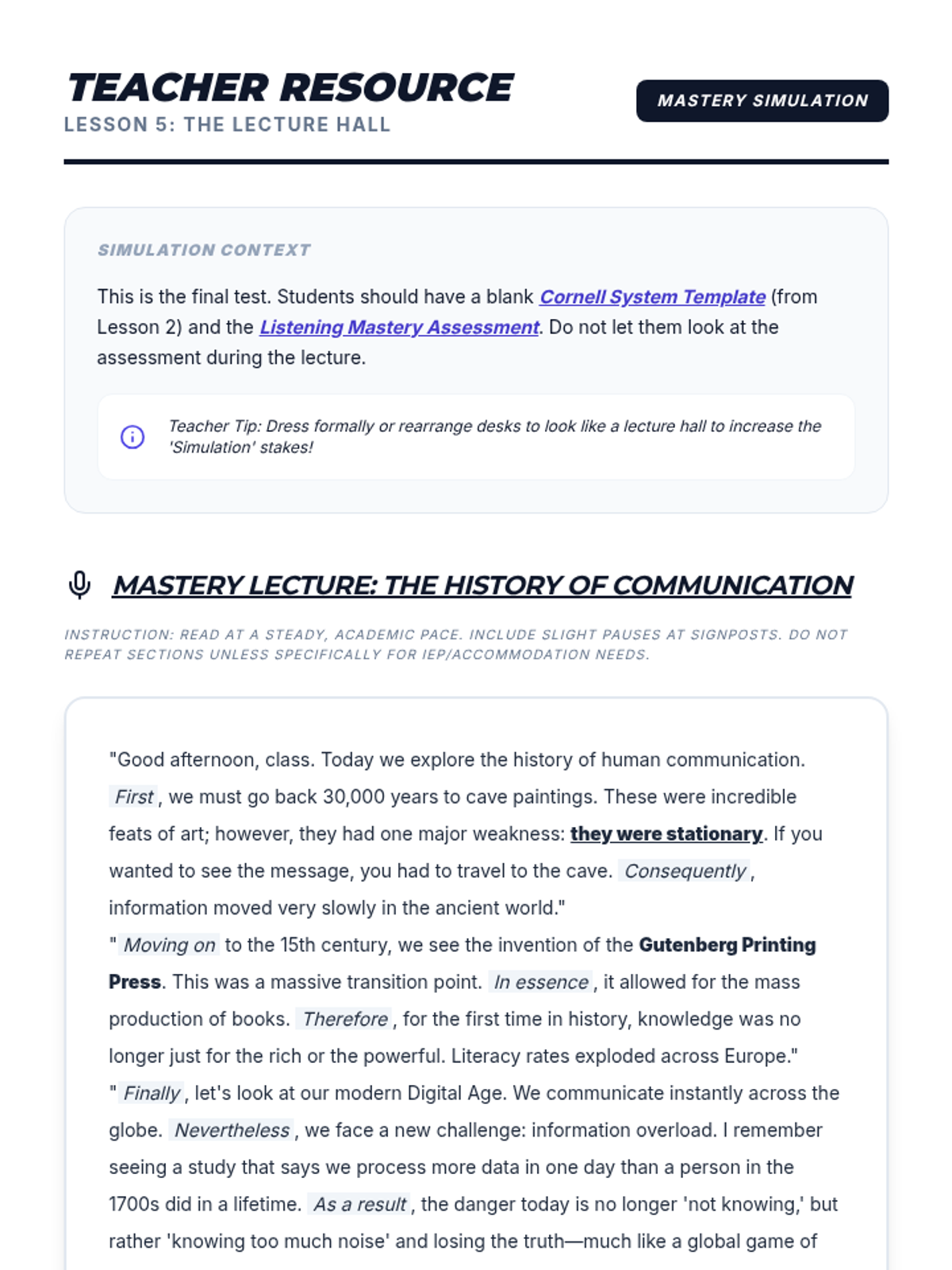
Students participate in a university-style mini-lecture simulation. They apply all learned strategies—signpost identification, Cornell note-taking, and synthesis—to capture information and complete a formal assessment.
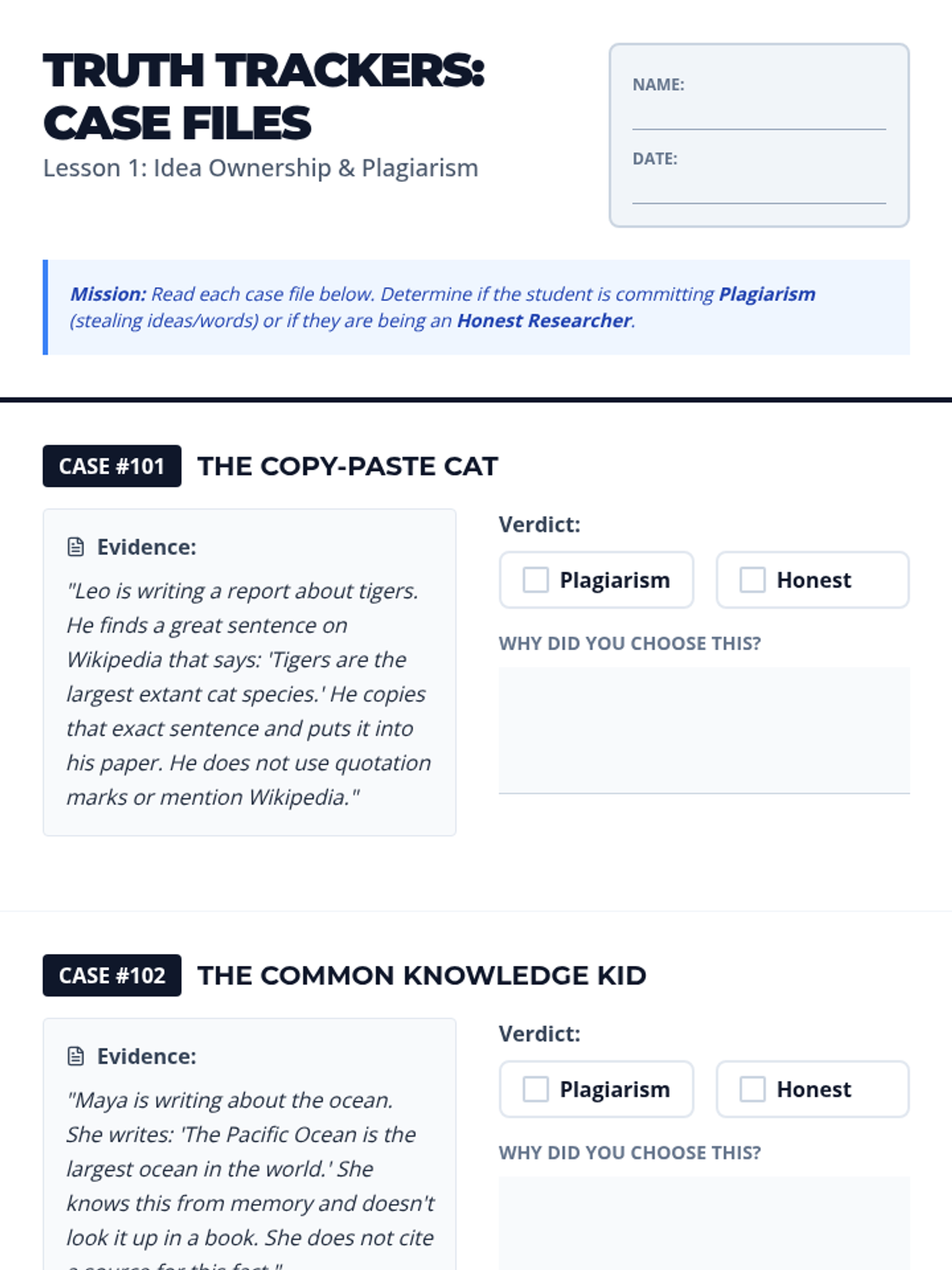
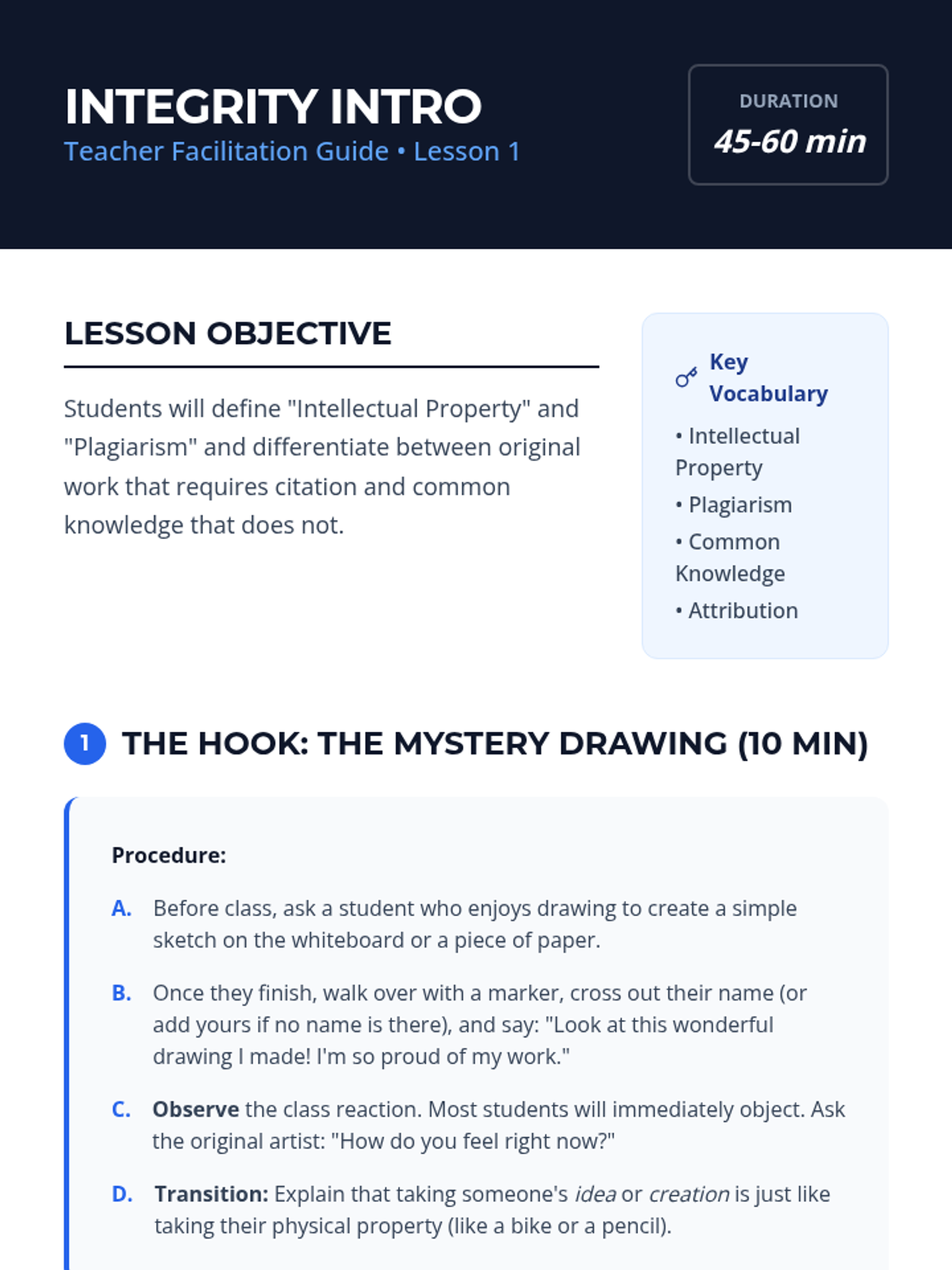
Students explore the concept of intellectual property through physical analogies and define plagiarism in an academic context.
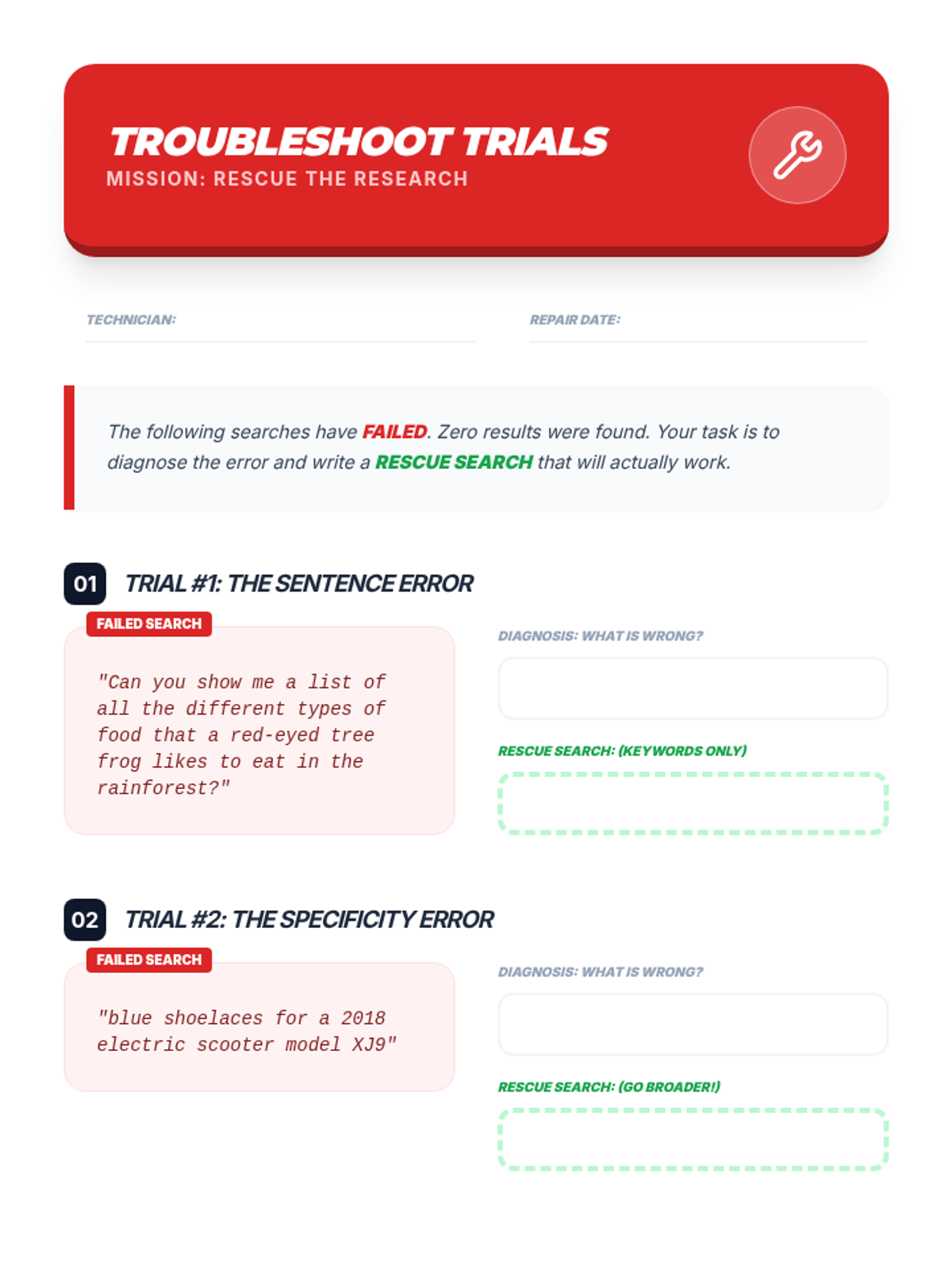
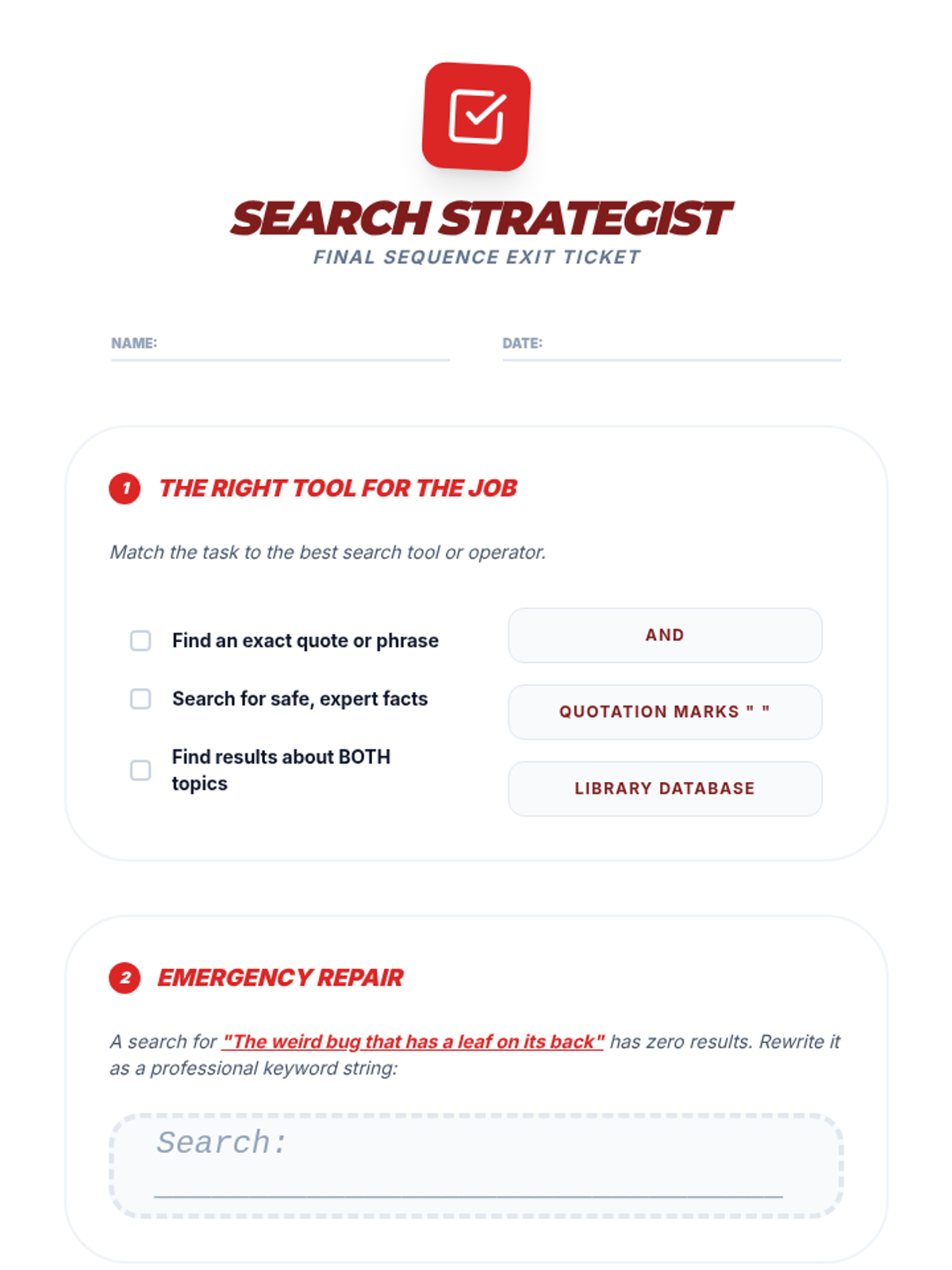
Students analyze search failures and practice iterative strategies to refine their inquiries when initial attempts don't yield the desired results.
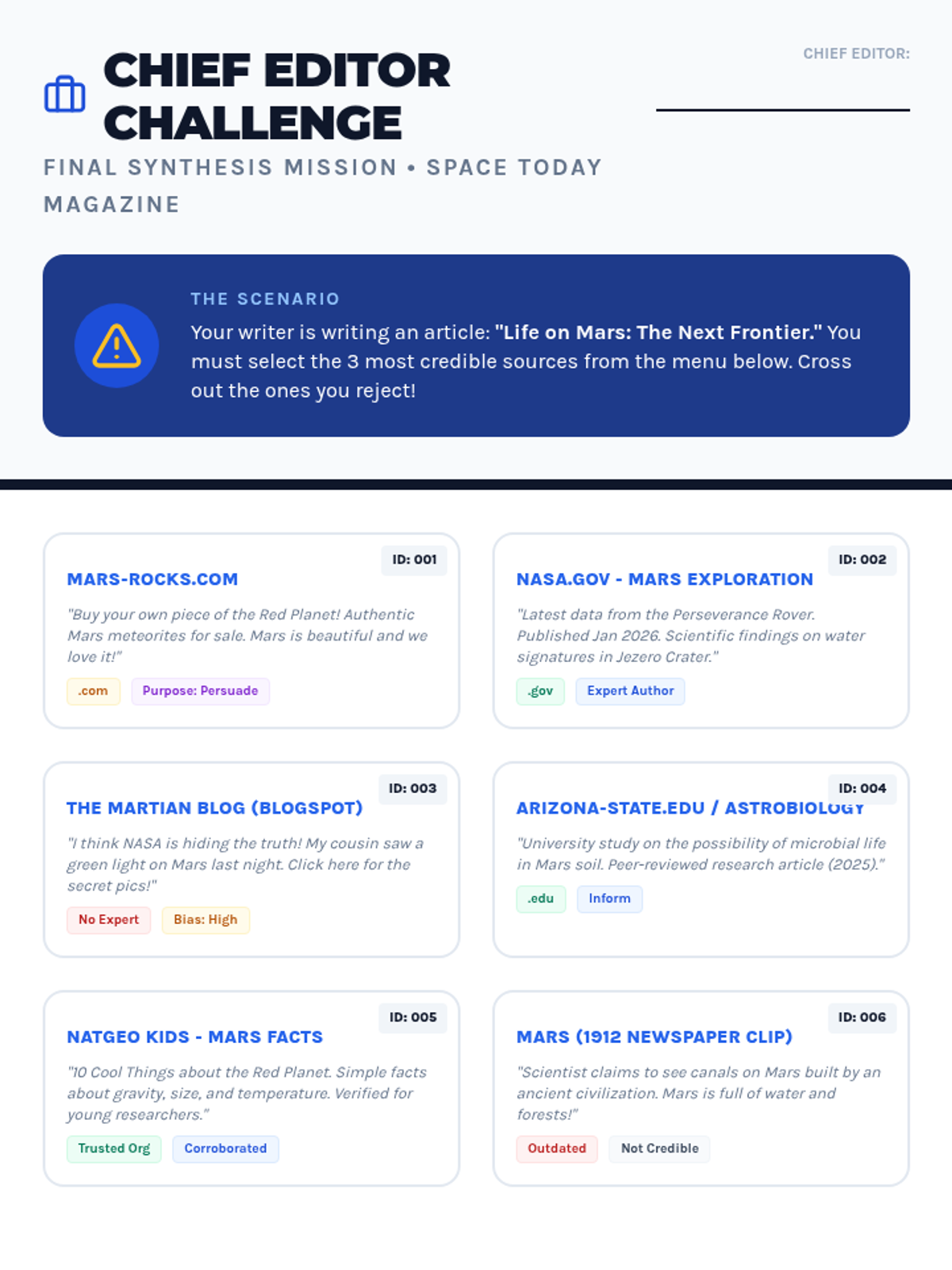
Students synthesize their evaluation skills to select the best resources for a hypothetical research scenario. They curate a small bibliography of trusted sources and justify their choices.