A foundational exploration of the first three chapters of Harry Potter and the Sorcerer's Stone, focusing on bilingual comprehension and key vocabulary.
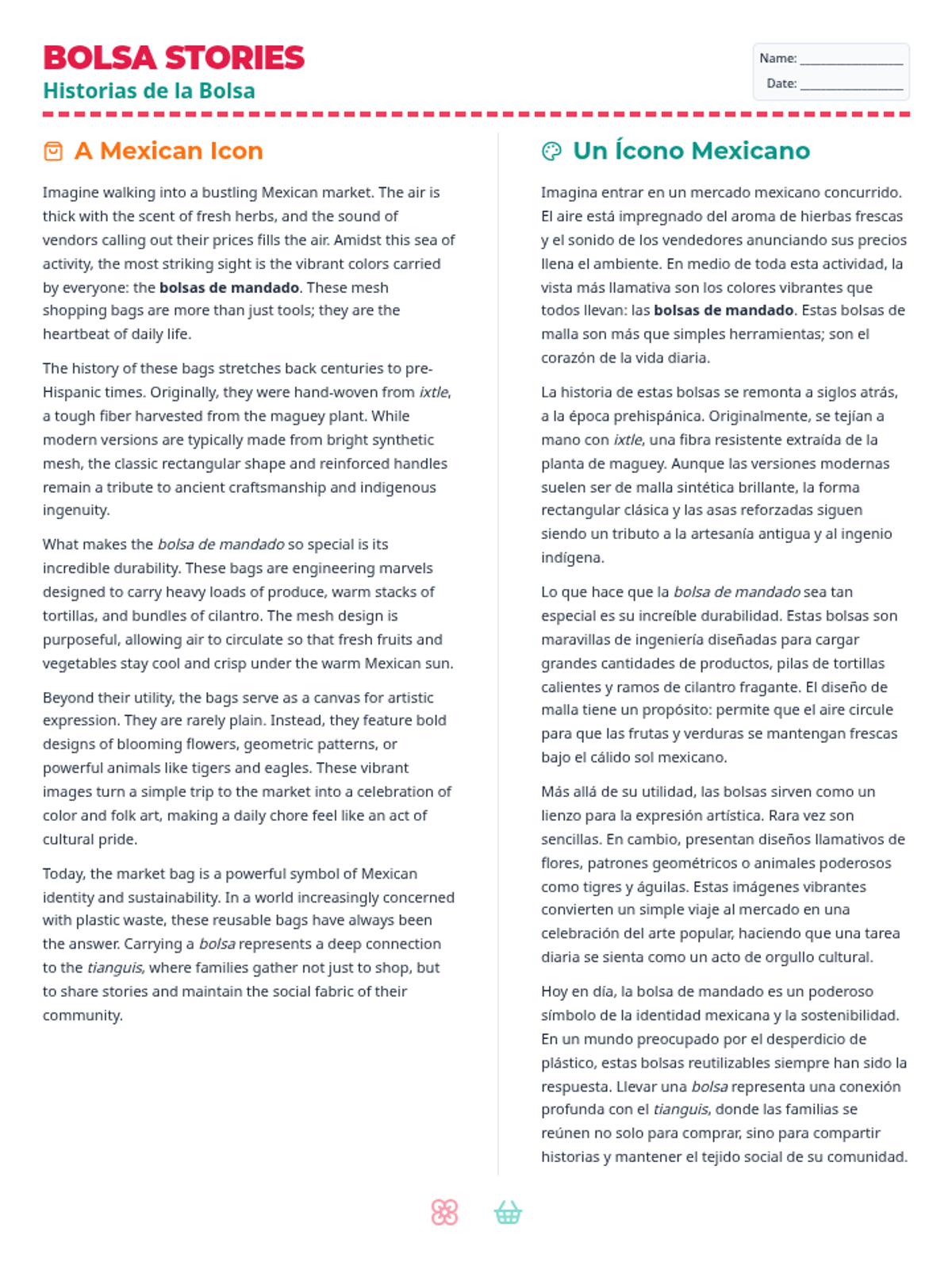
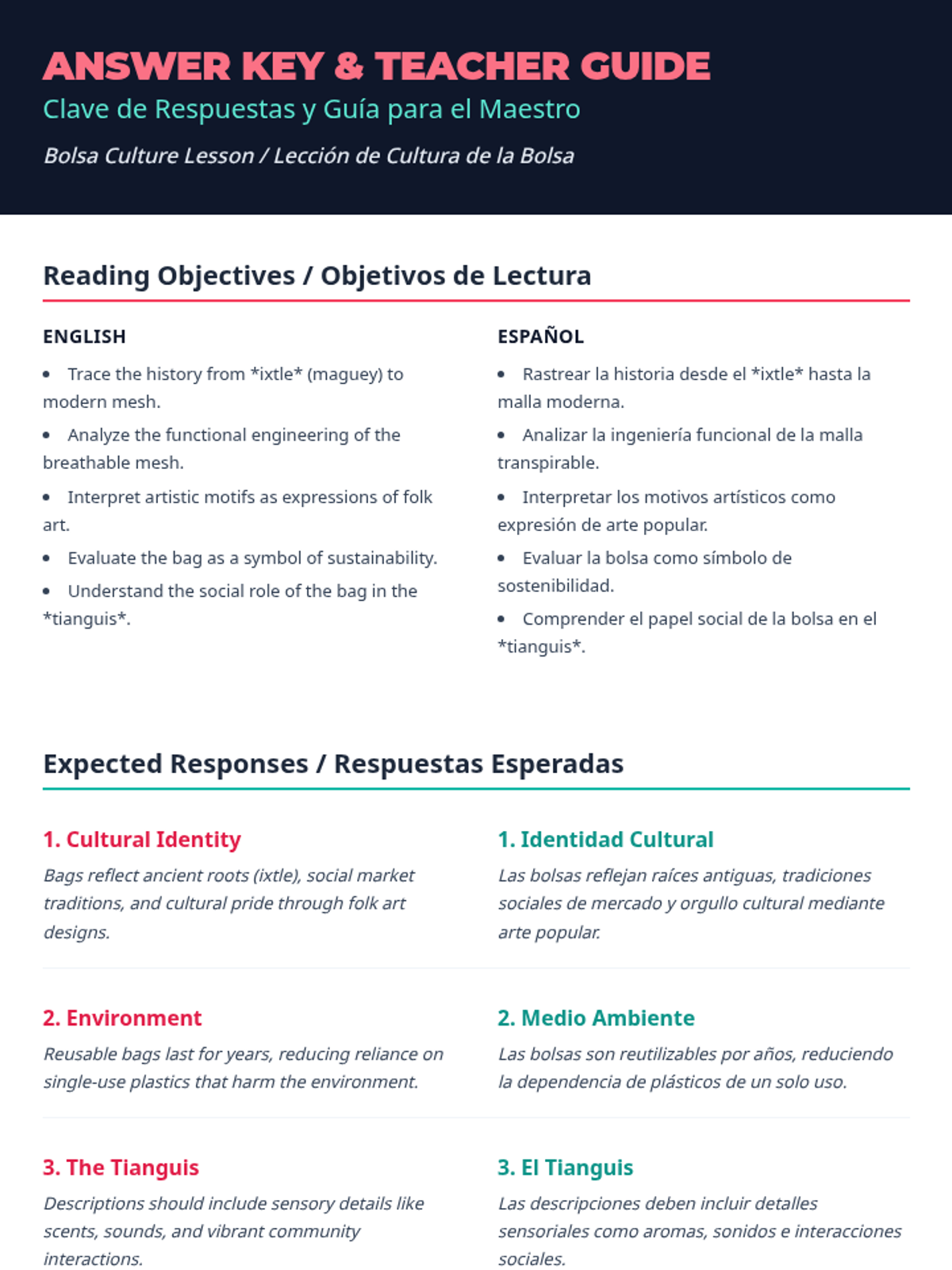
A dual-language exploration of the iconic Mexican market bag (bolsa de mandado), focusing on its history, utility, and cultural significance in Mexican traditions.
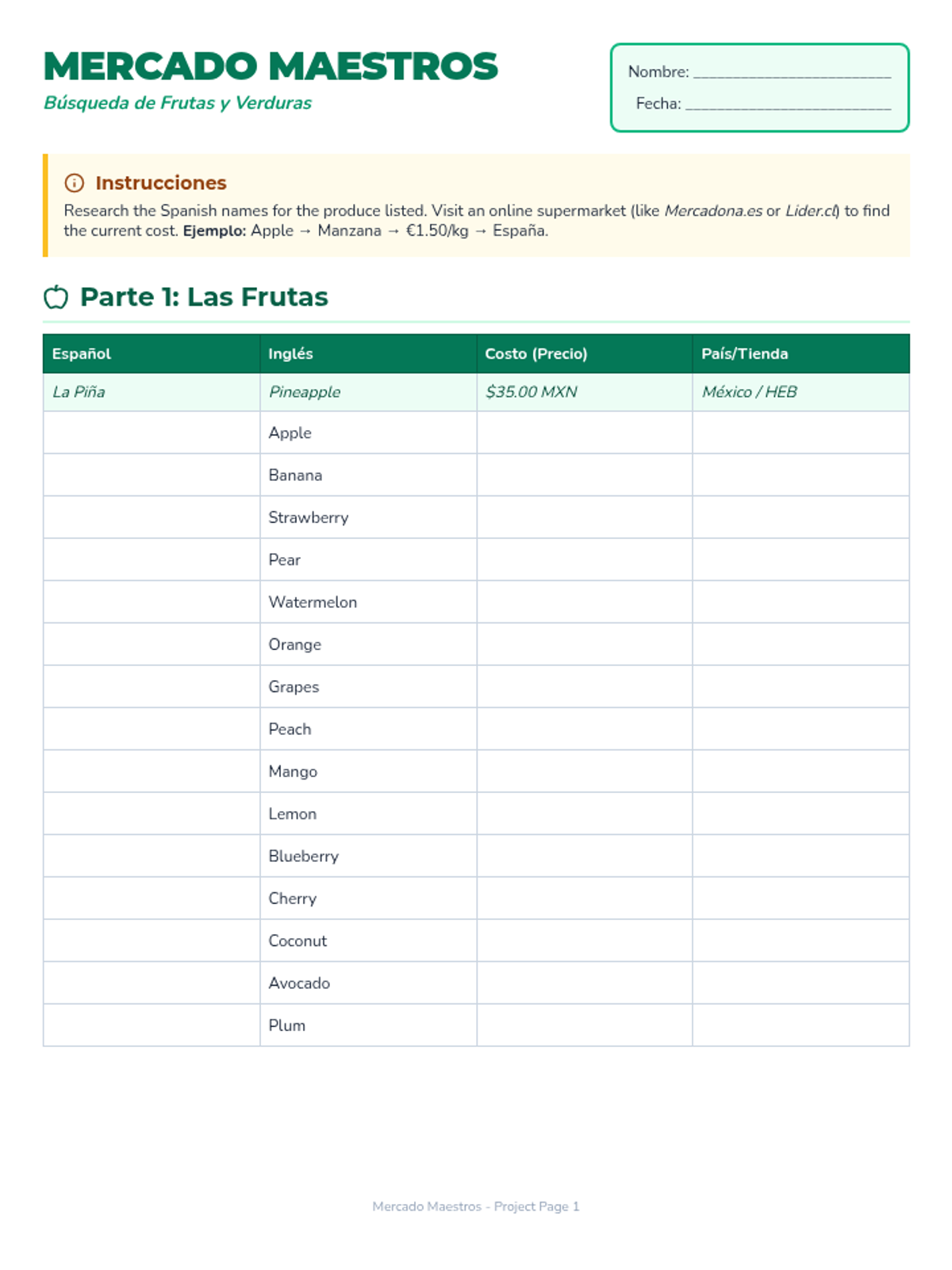
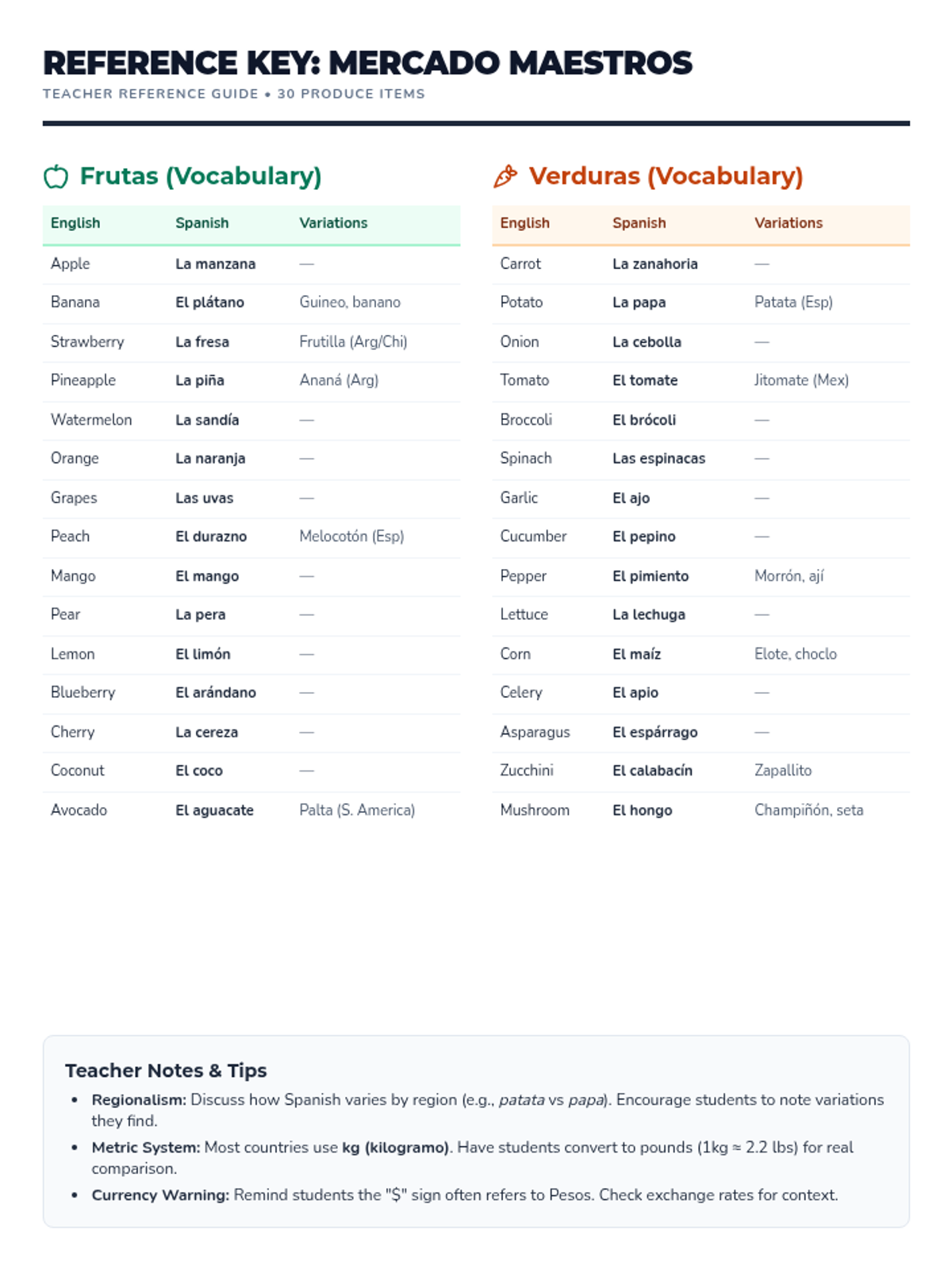
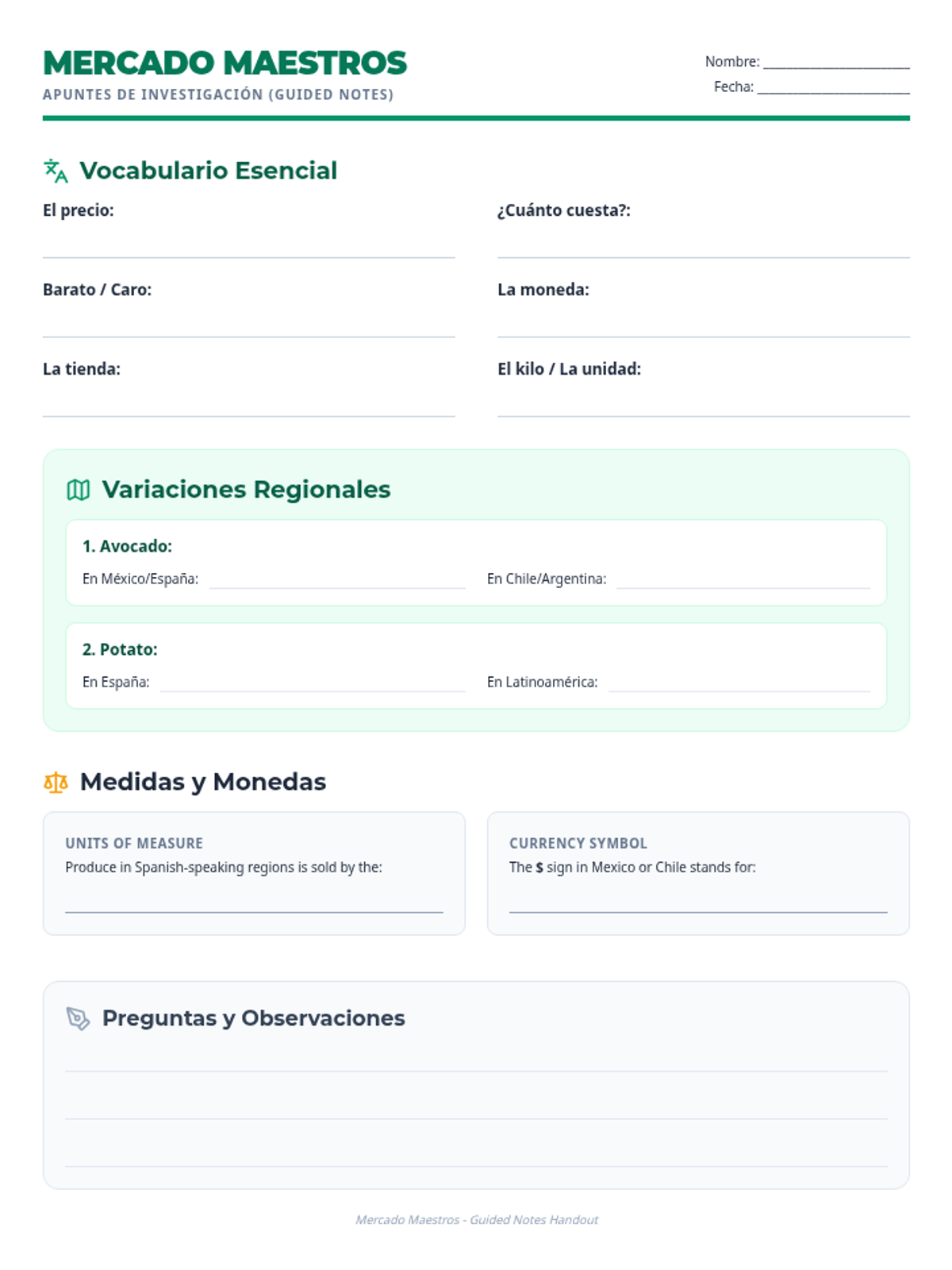
A research-based project where students explore Spanish vocabulary for produce and investigate real-world pricing from Spanish-speaking regions.
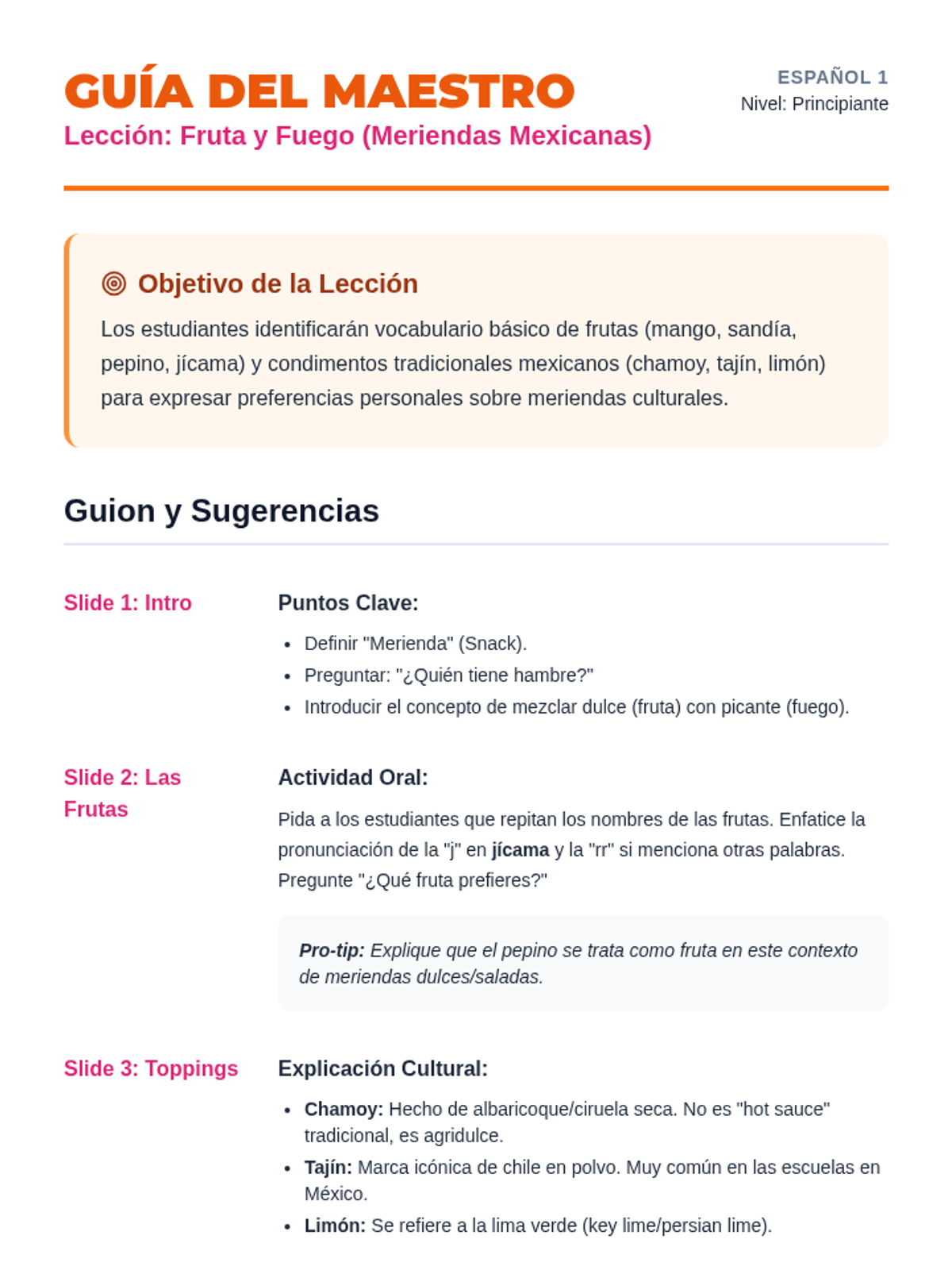
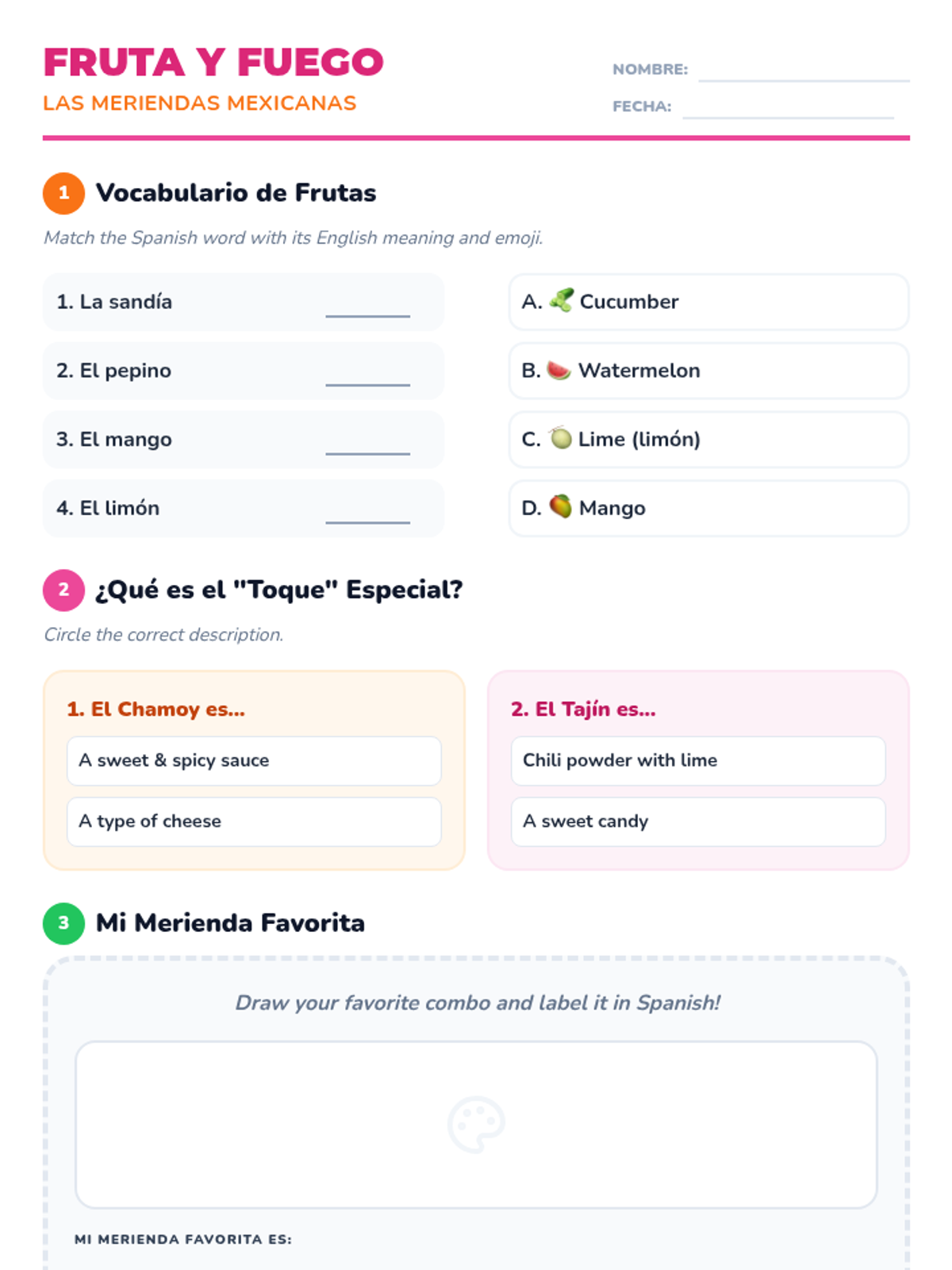
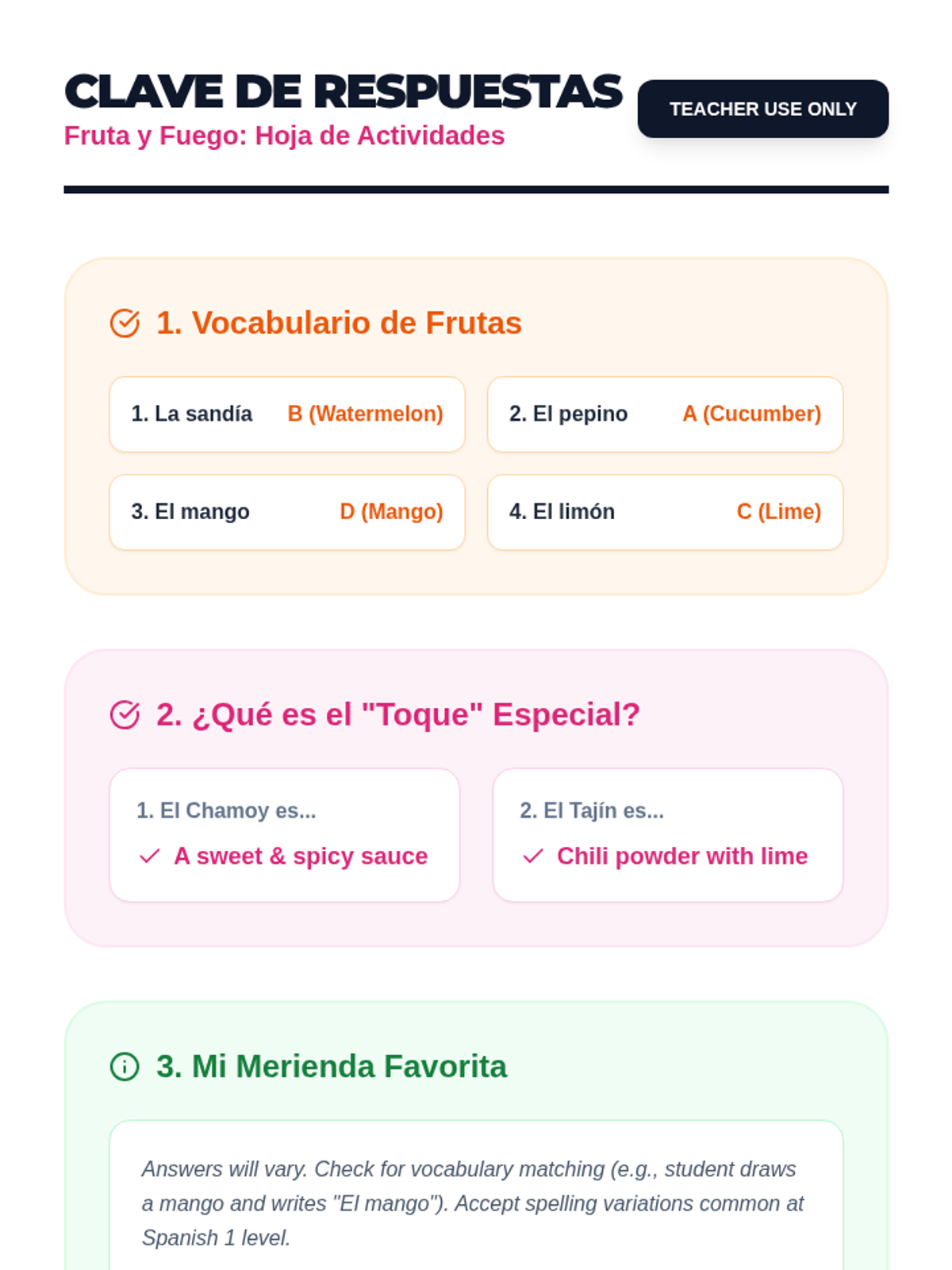
A beginner Spanish lesson exploring traditional Mexican fruit snacks, focusing on common fruit vocabulary and popular toppings like chamoy and tajín.
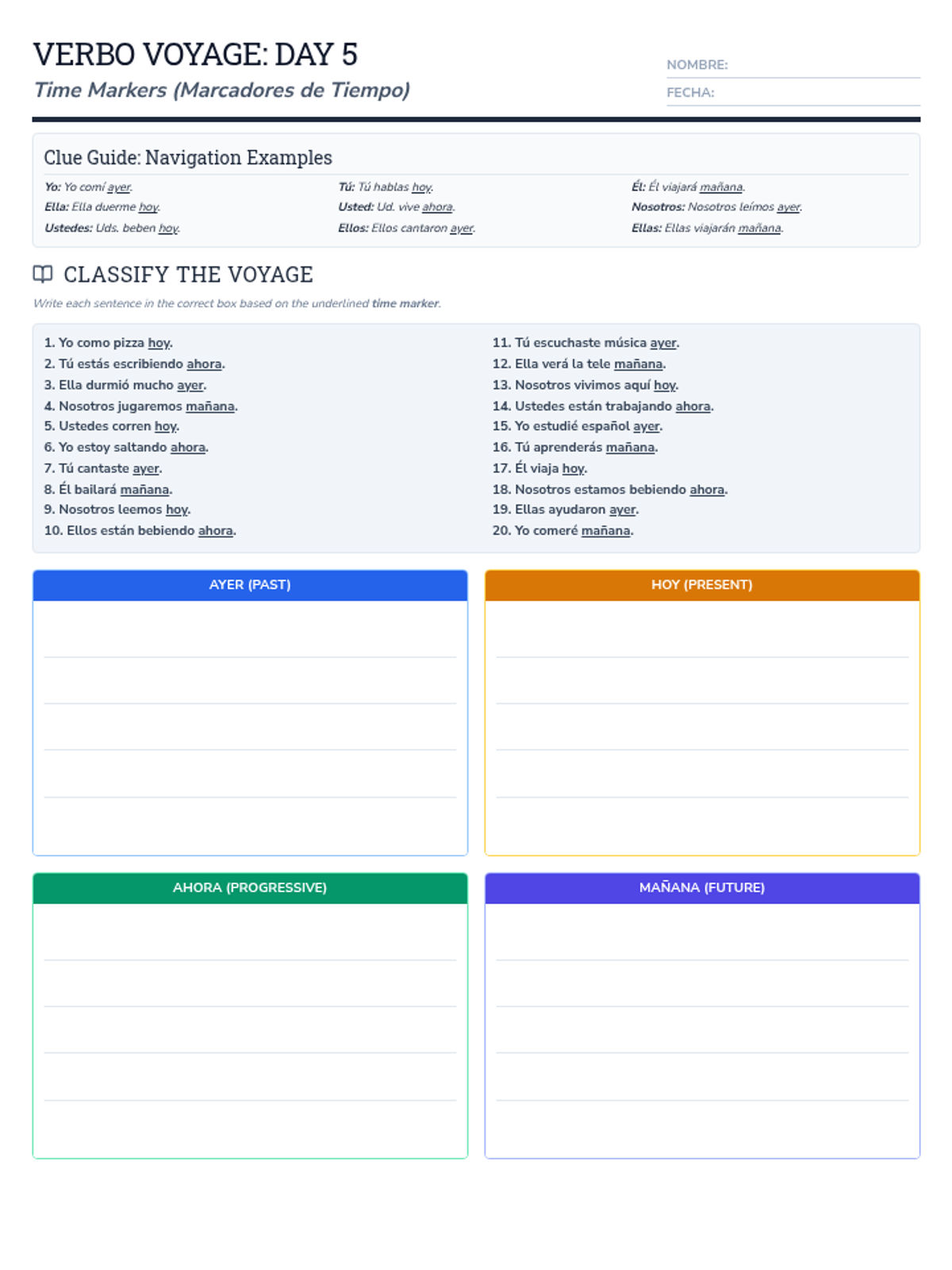
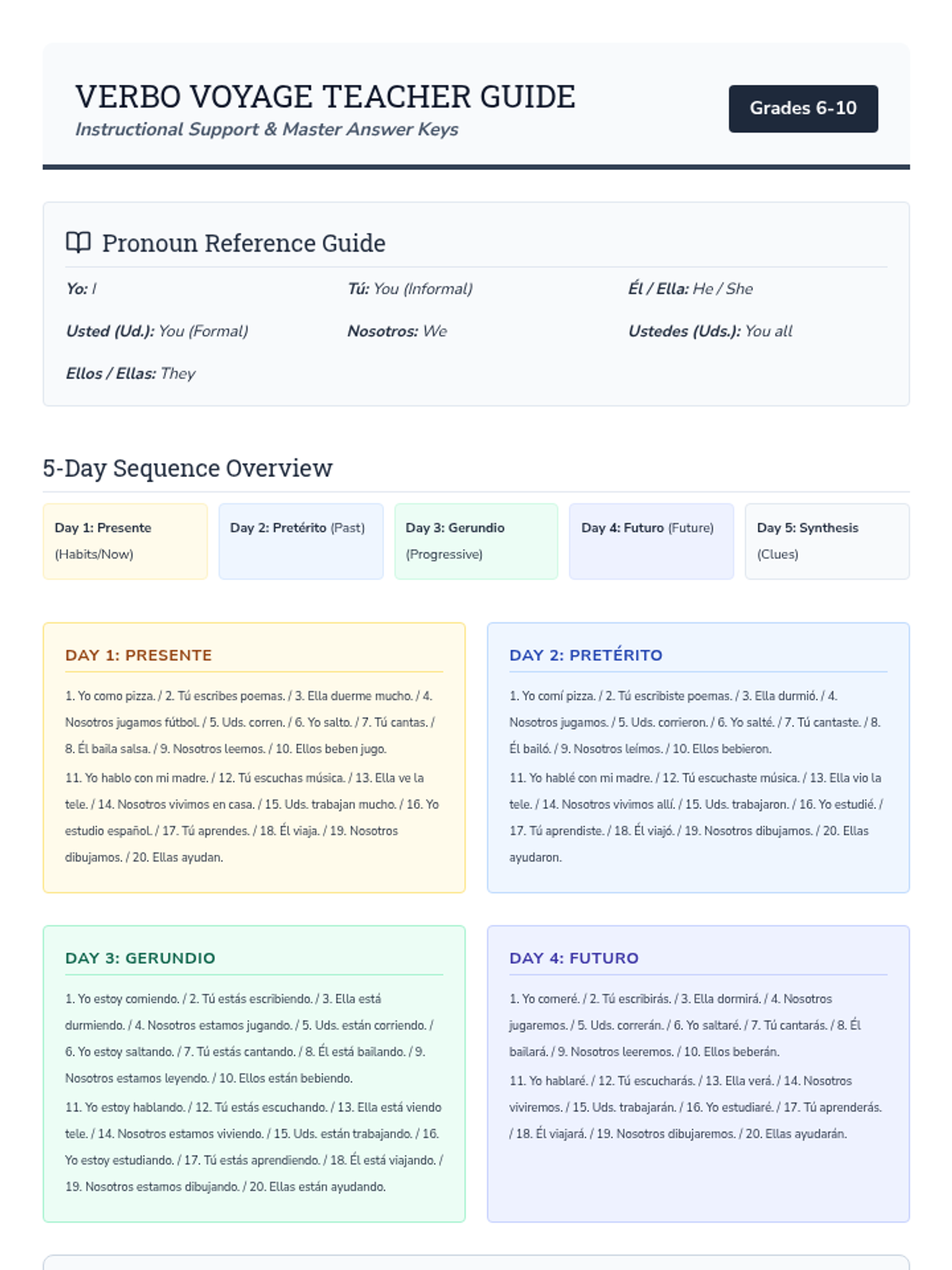
Synthesizes the week's learning by having students classify simple sentences based on time markers like 'hoy', 'ayer', 'mañana', and 'ahora'.
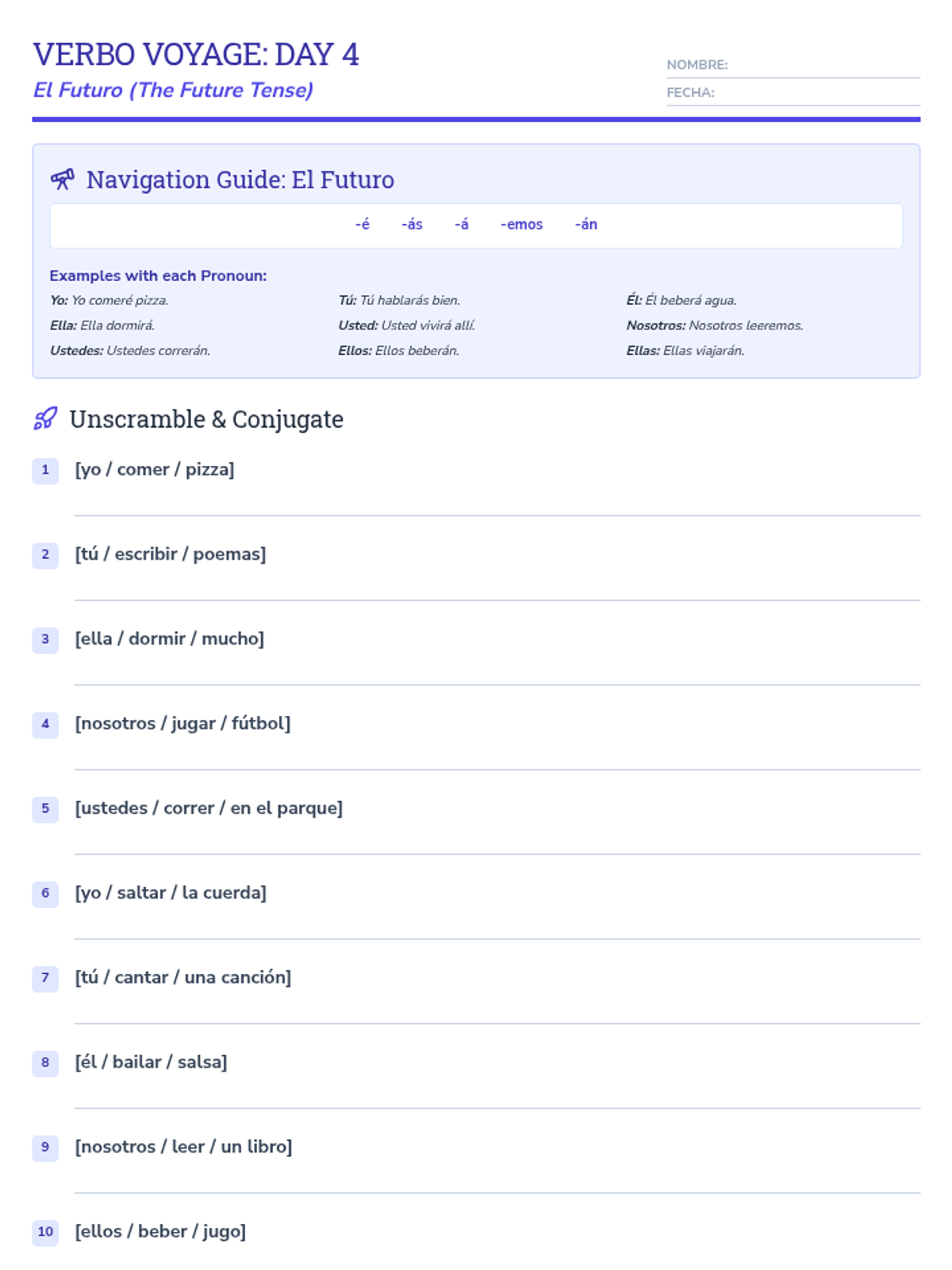
Explores the Future tense (Futuro) in Spanish, teaching students how to talk about upcoming events using 20 common verbs.
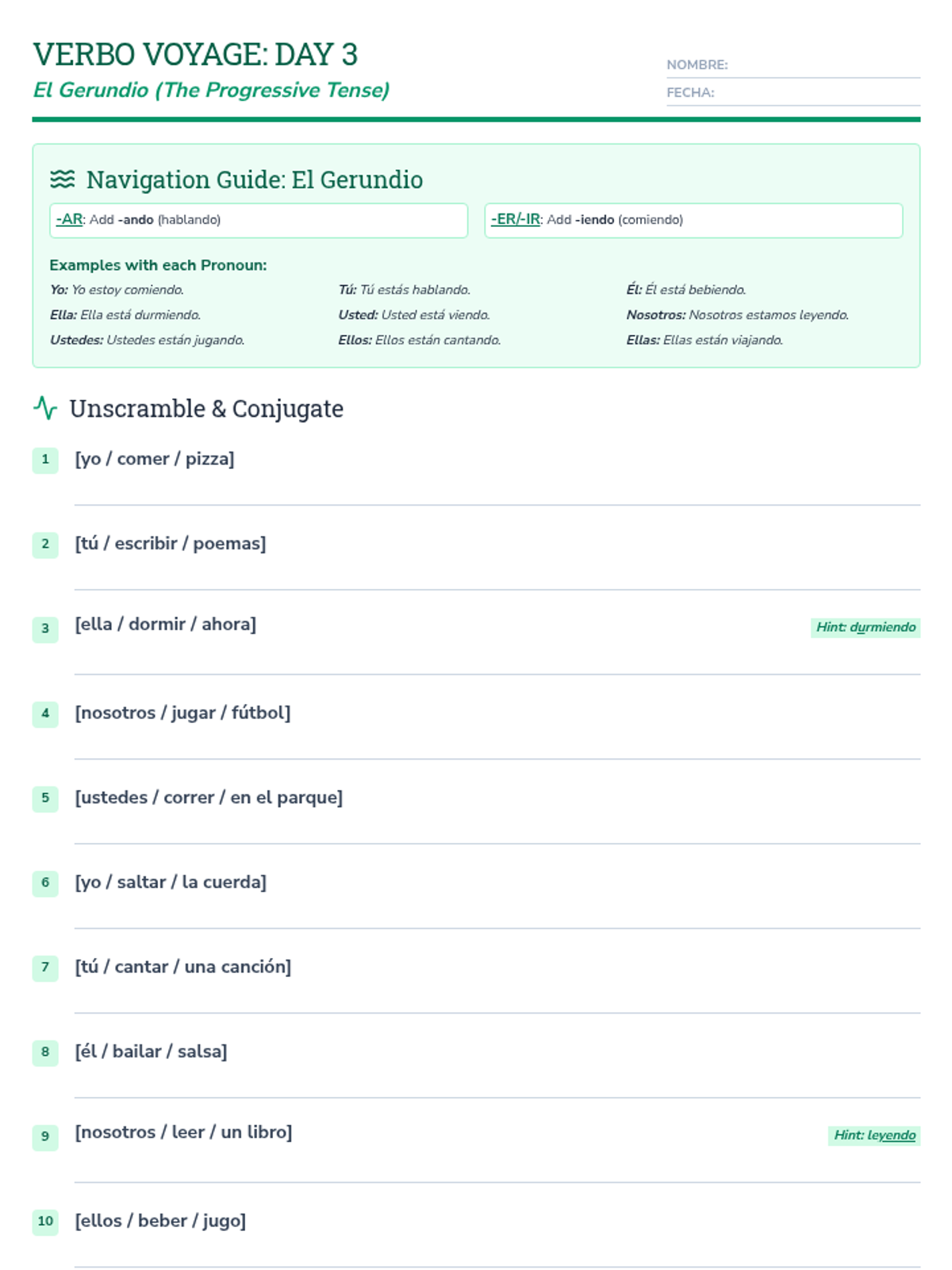
Introduces the Gerund (Gerundio) for ongoing actions, teaching the 'estar + -ndo' structure with intensive practice across all subject pronouns.
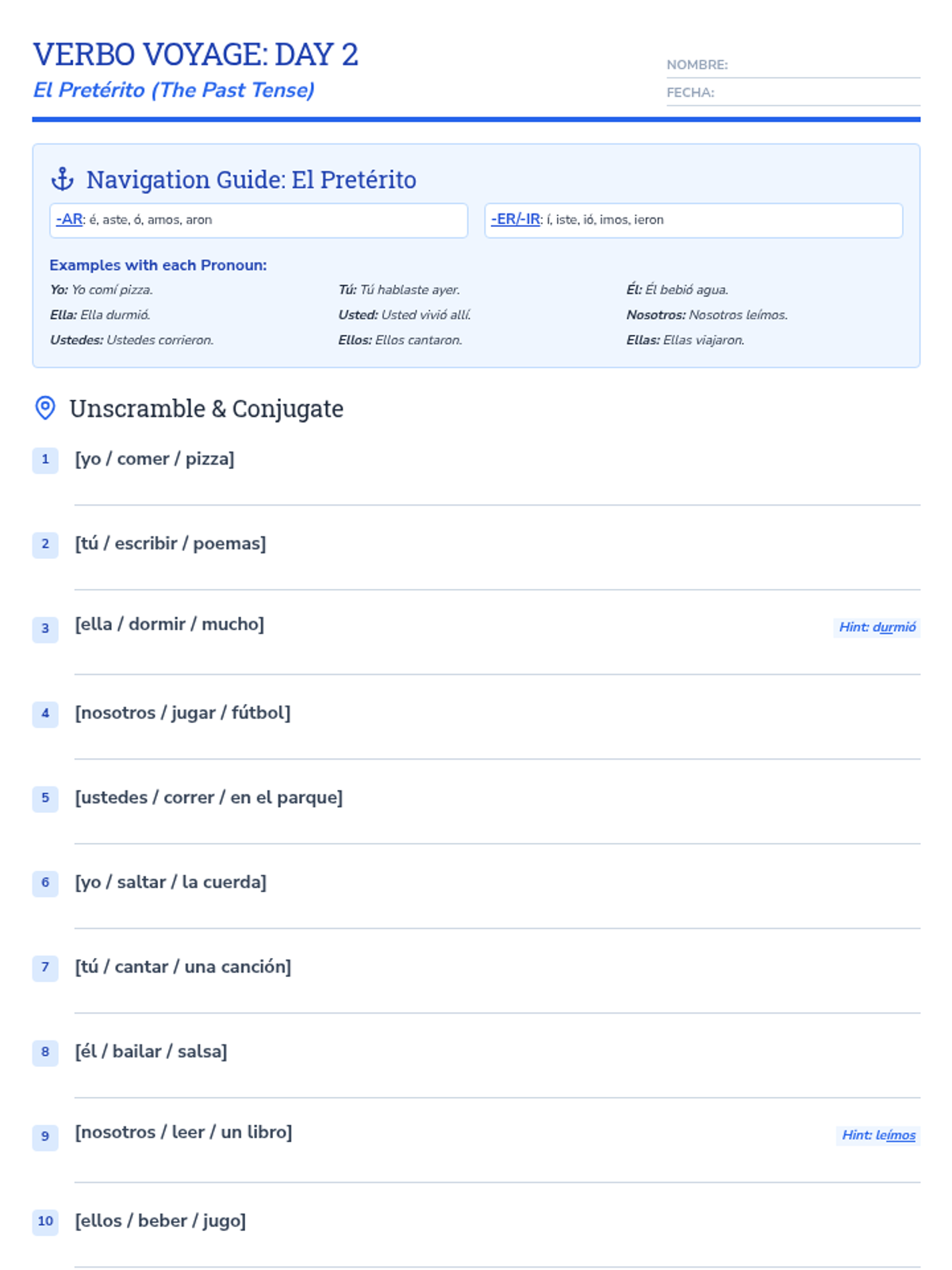
Covers the Preterite tense (Pretérito) for past actions, including an explanation of endings and a 20-sentence unscrambling activity using common verbs.
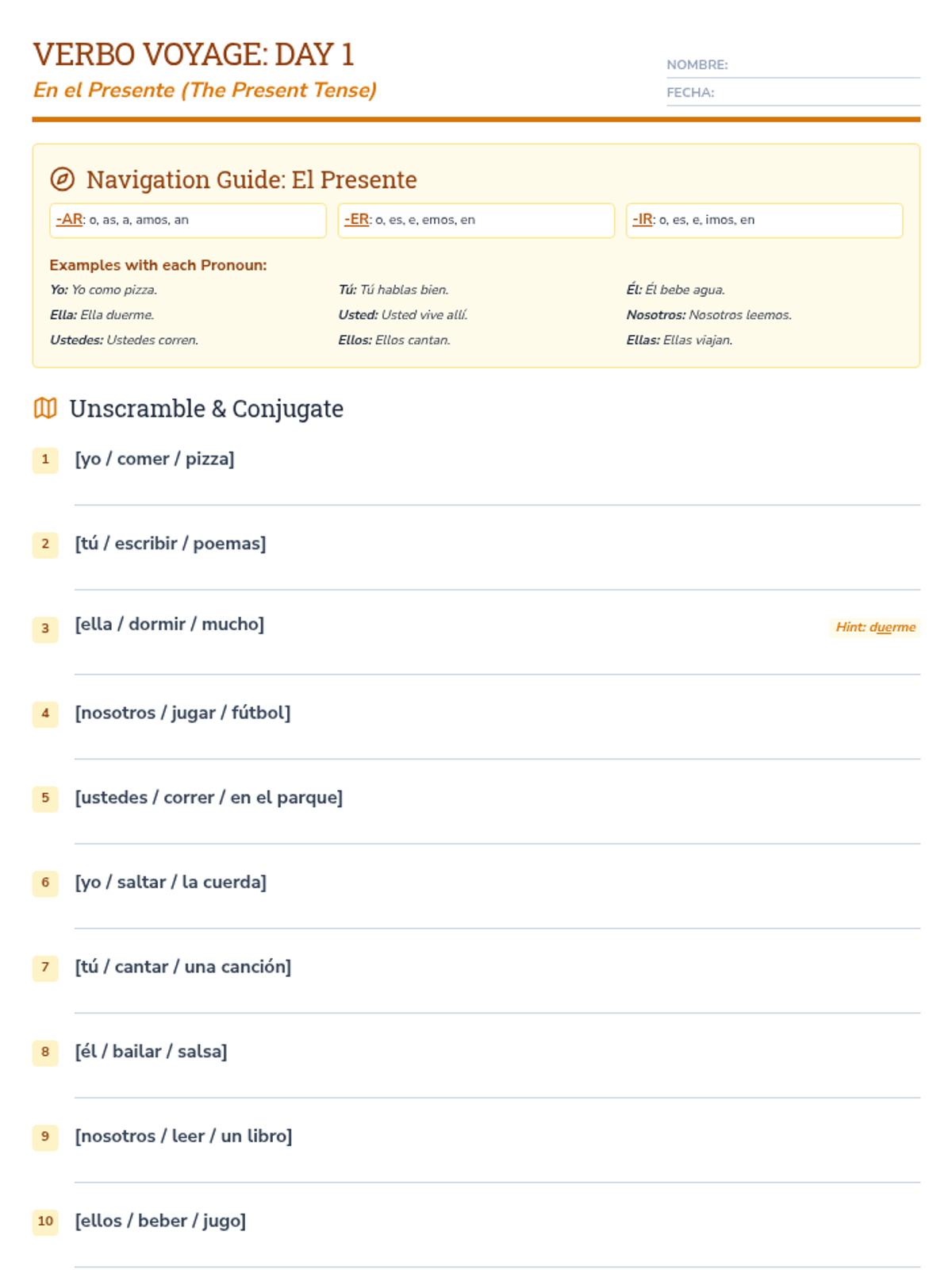
Focuses on the Present tense (Presente) in Spanish, introducing regular verb endings and practice unscrambling sentences with 20 common verbs and all subject pronouns.
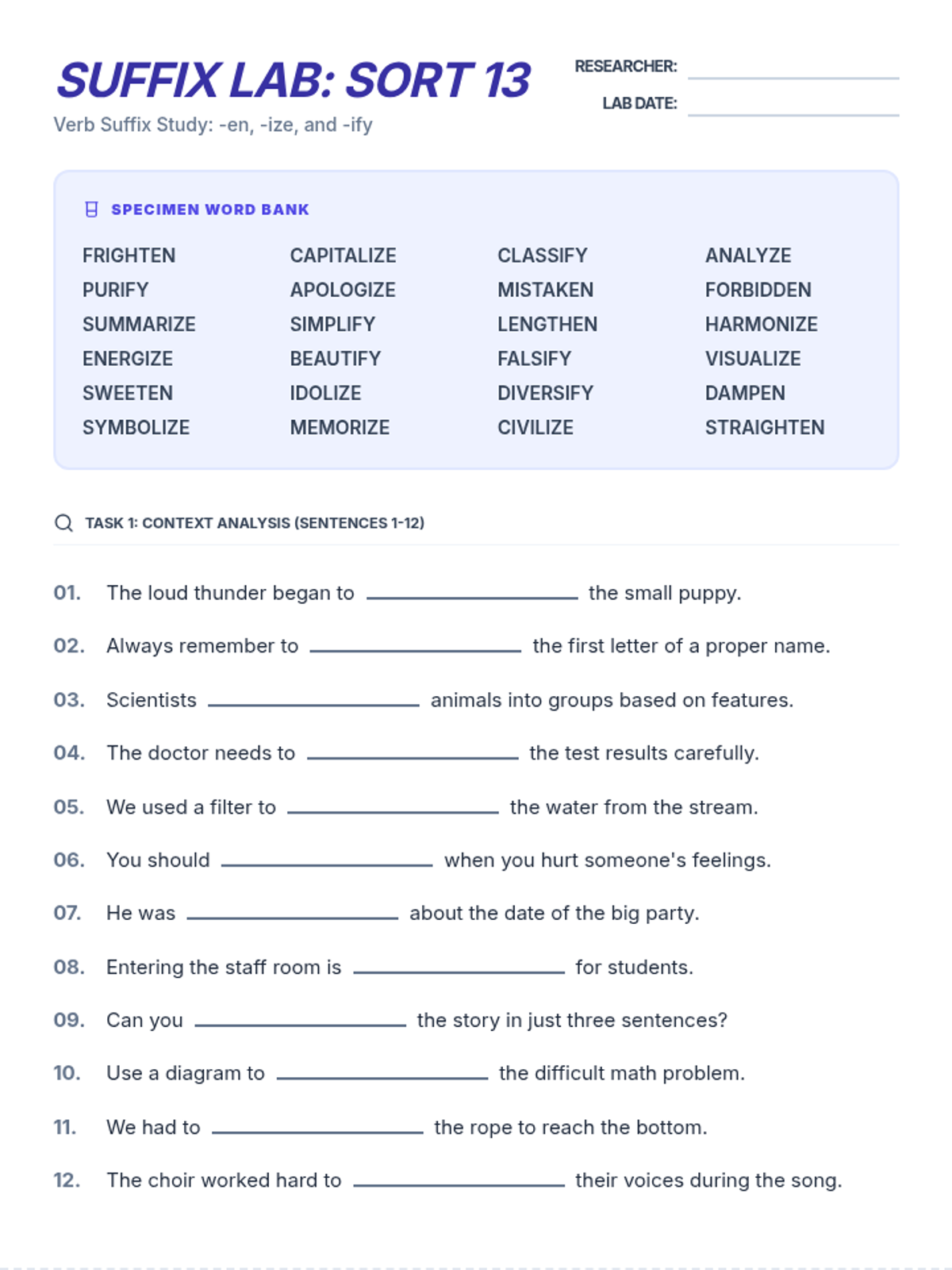
A lesson focused on the suffixes -en, -ize, and -ify. Students investigate how these suffixes transform base words into verbs representing actions or states.
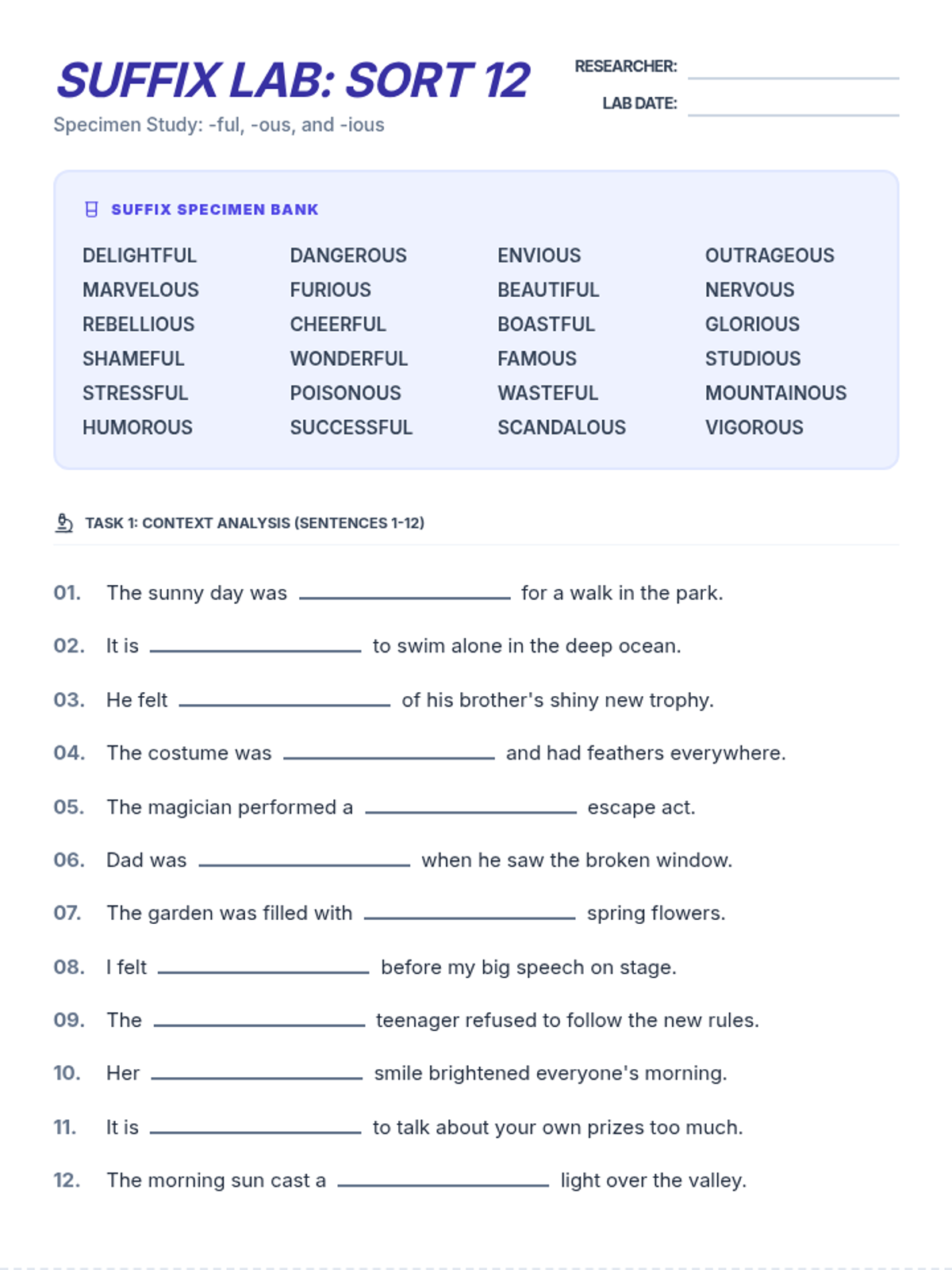
A lesson focused on the suffixes -ful, -ous, and -ious. Students analyze how these suffixes form adjectives from nouns, representing full of or having qualities of.
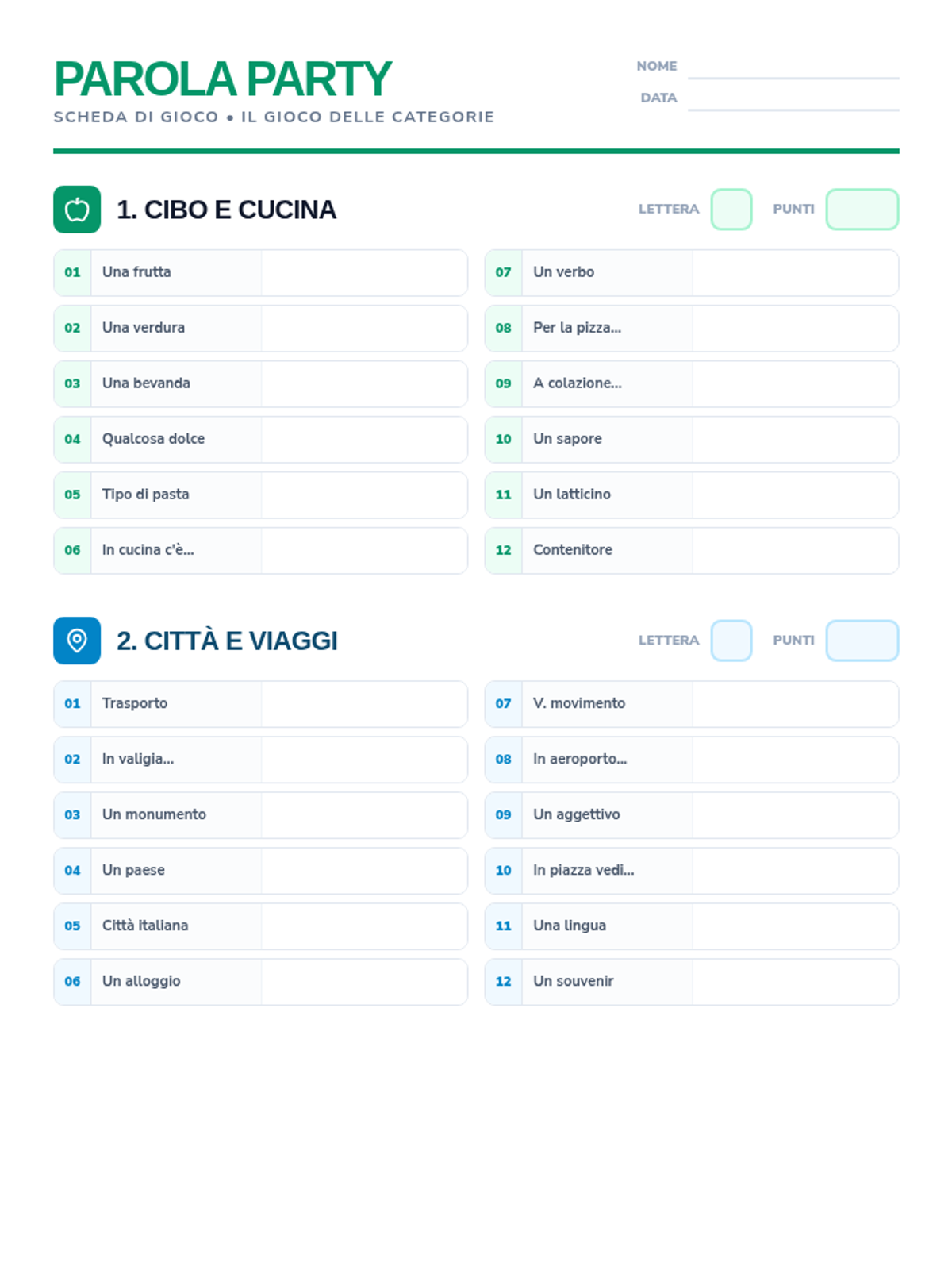
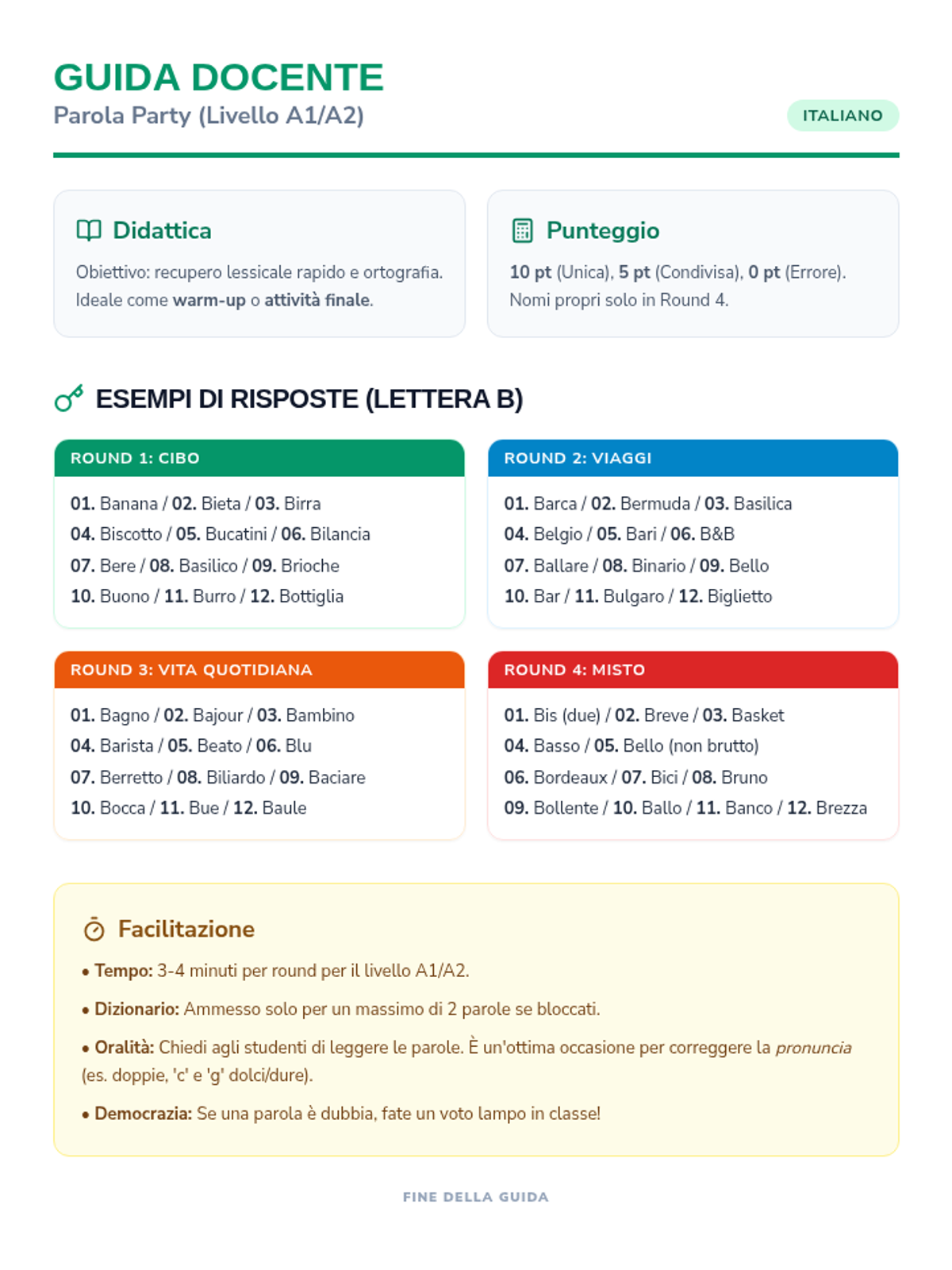
A fast-paced Italian vocabulary game for A1/A2 students covering food, travel, daily life, and general topics. Includes a presentation for class gameplay, printable game boards, and a teacher facilitation guide.
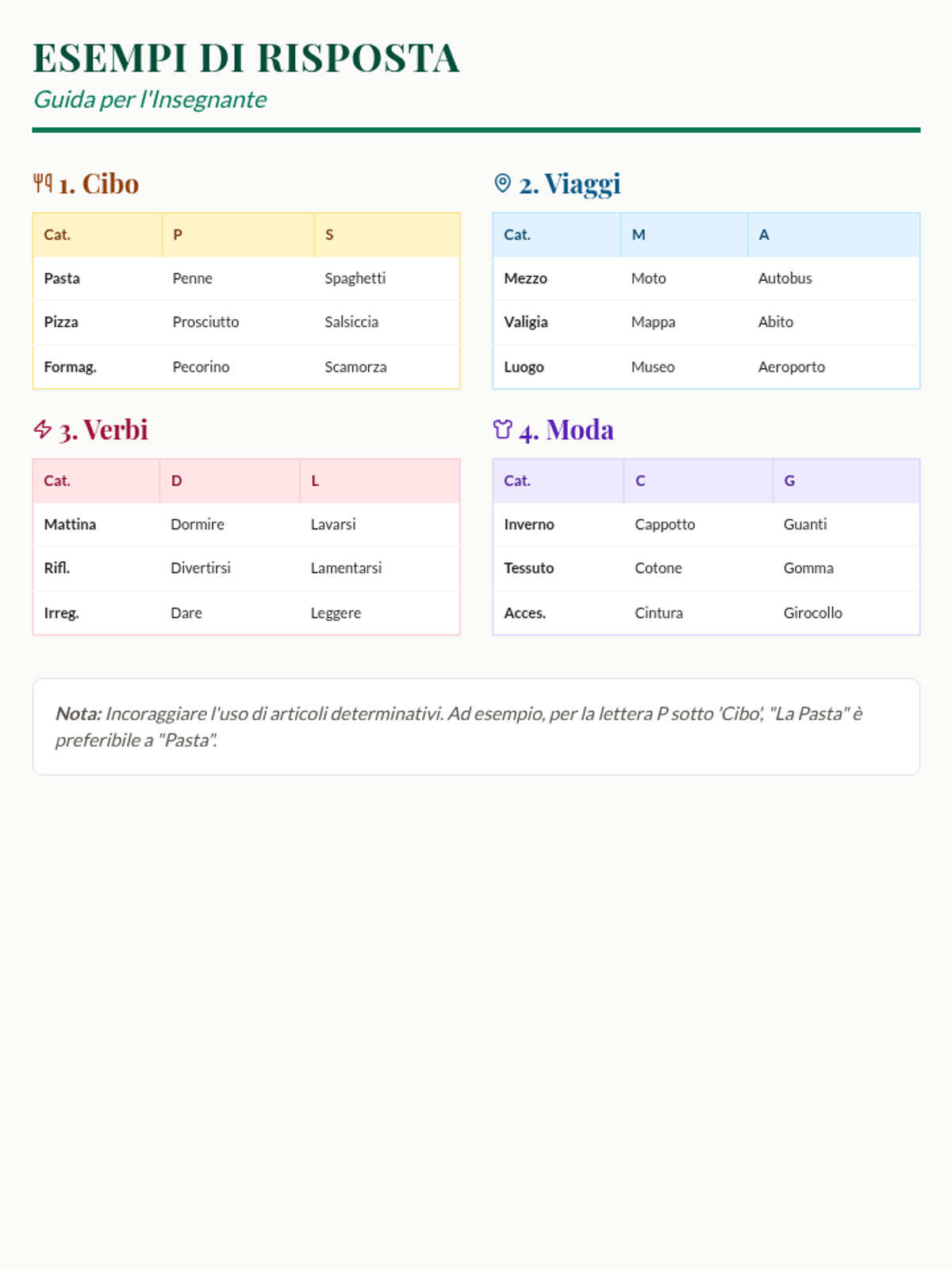
A high-energy vocabulary game designed for intermediate Italian learners to practice specific lexicon across four key themes: Food, Travel, Verbs, and Fashion. Students compete to find unique words for specific categories within a time limit.
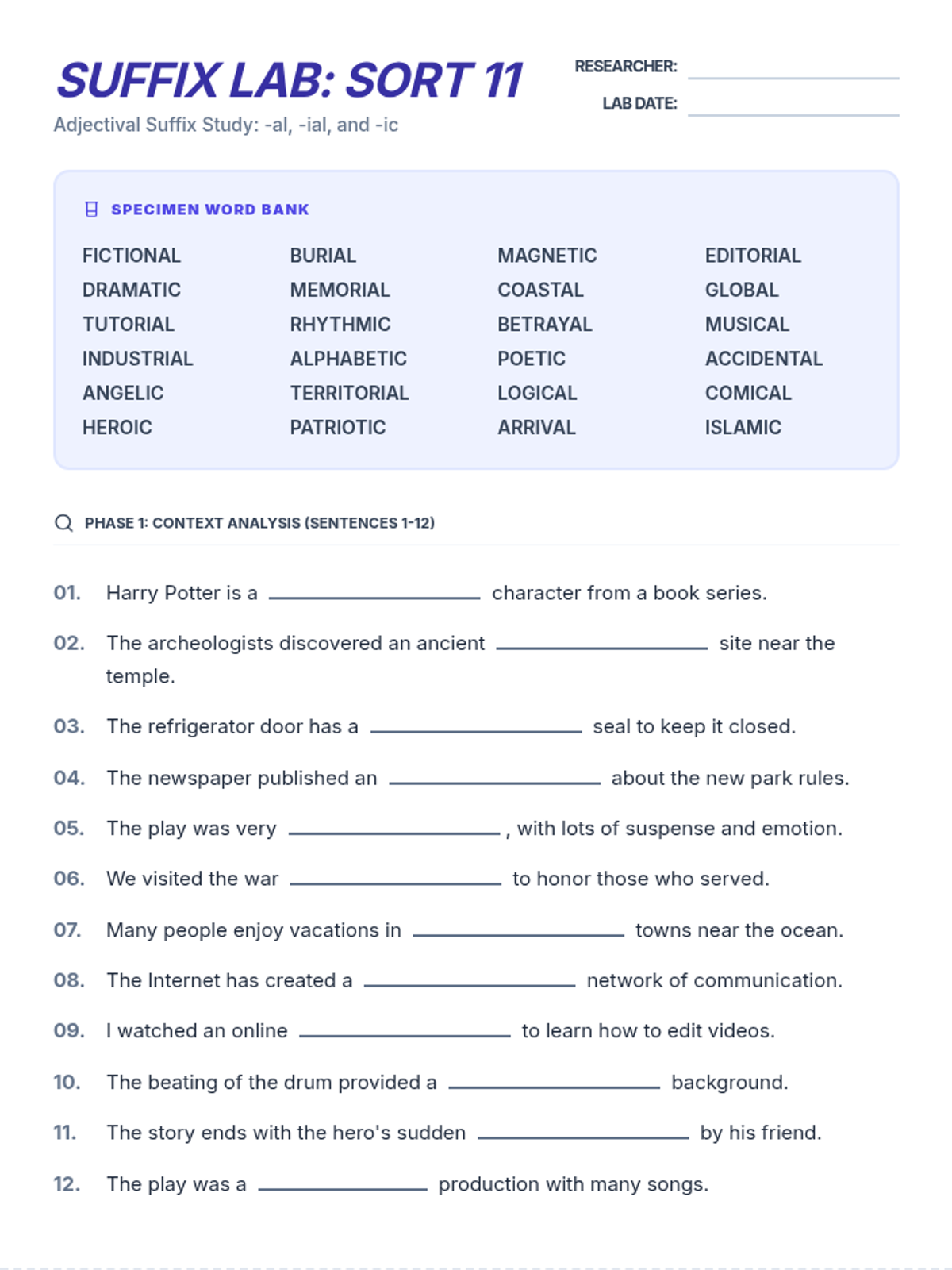
A lesson focused on the suffixes -al, -ial, and -ic. Students analyze how these suffixes form adjectives from nouns, representing relating to or having qualities of.
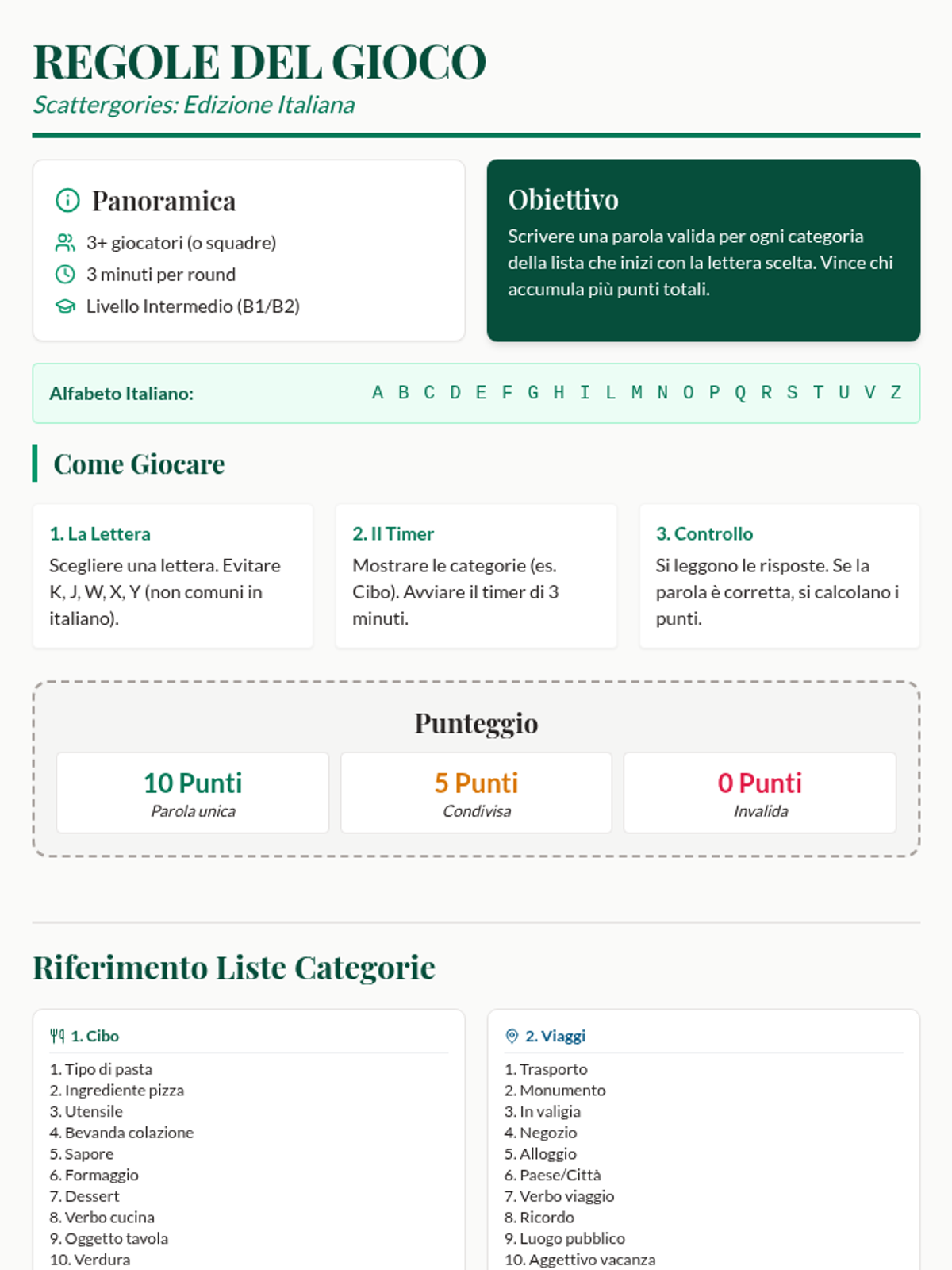
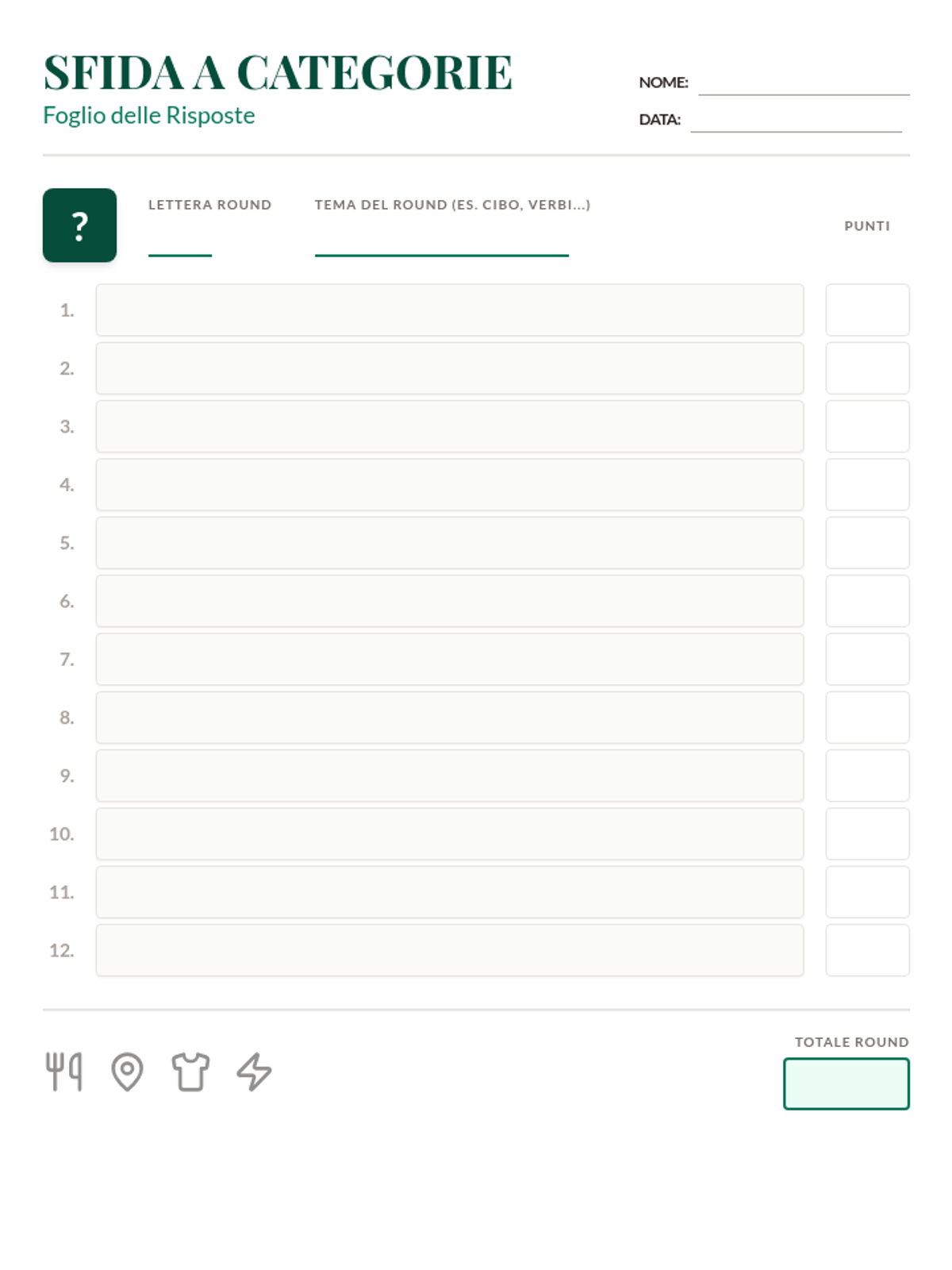
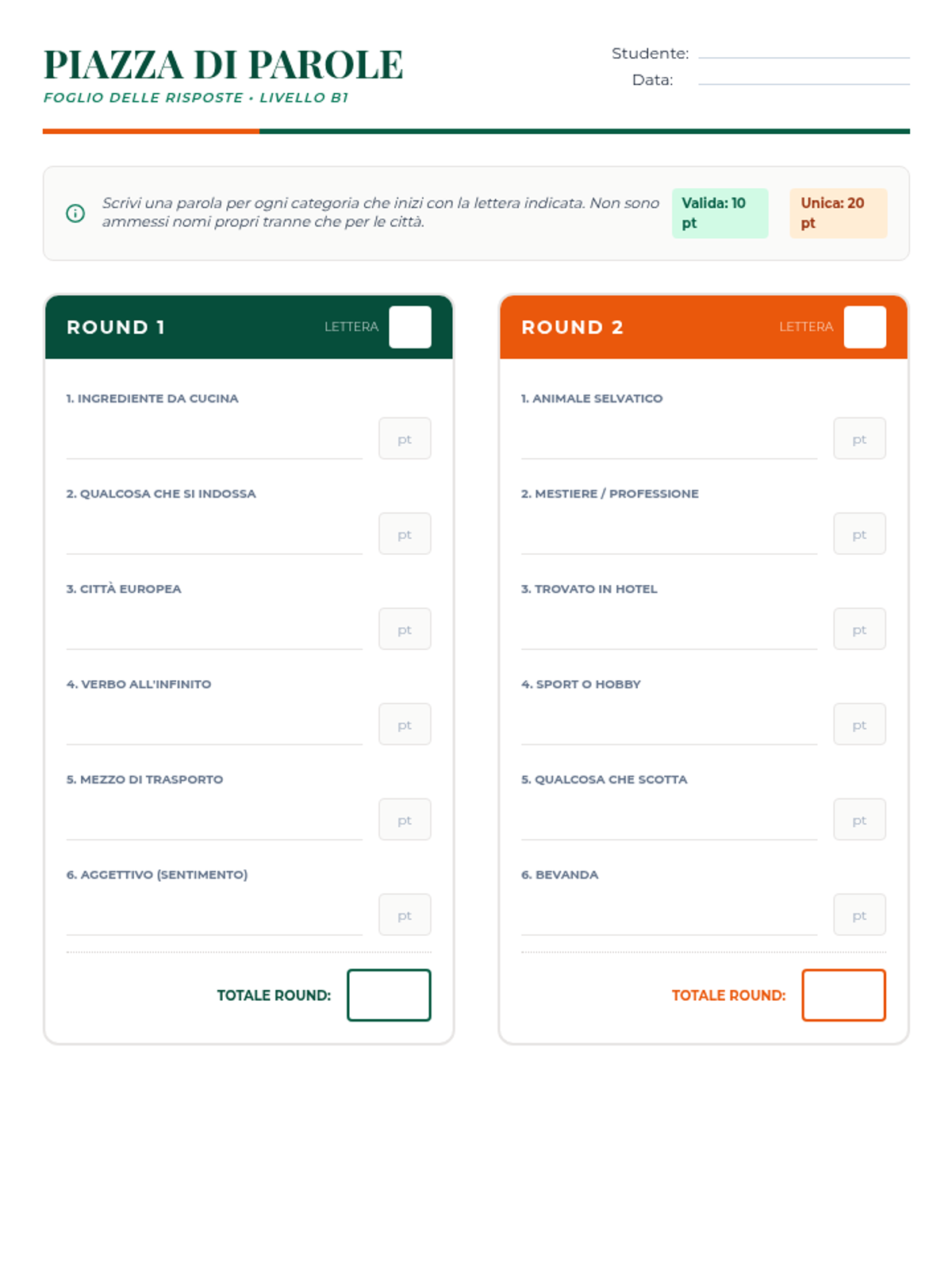
A high-energy vocabulary game for B1 Italian students designed to boost word retrieval and cultural knowledge through the classic Scattergories format.
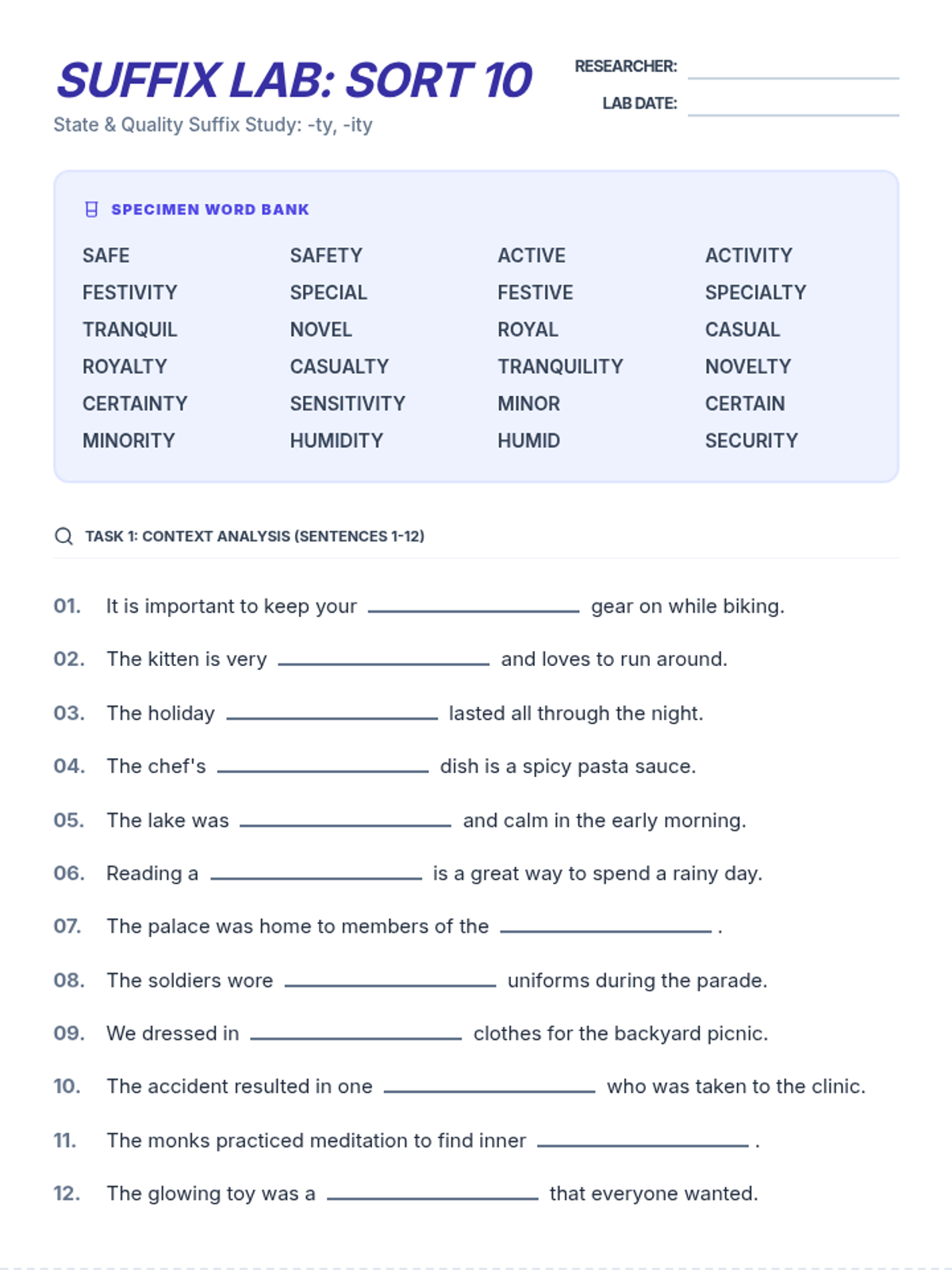
A lesson focused on the suffixes -ty and -ity. Students analyze how these suffixes form nouns from adjectives, representing states or qualities.
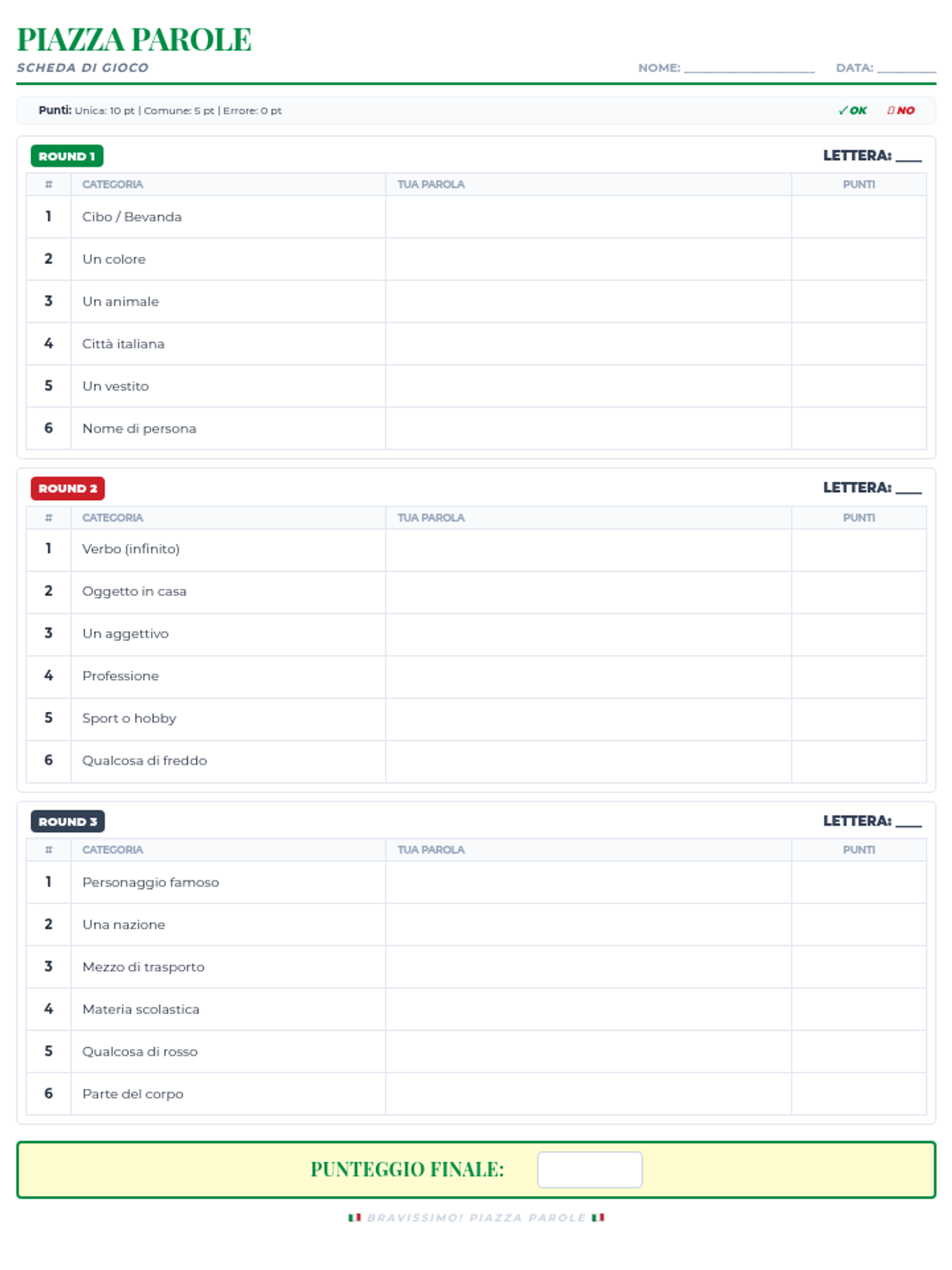
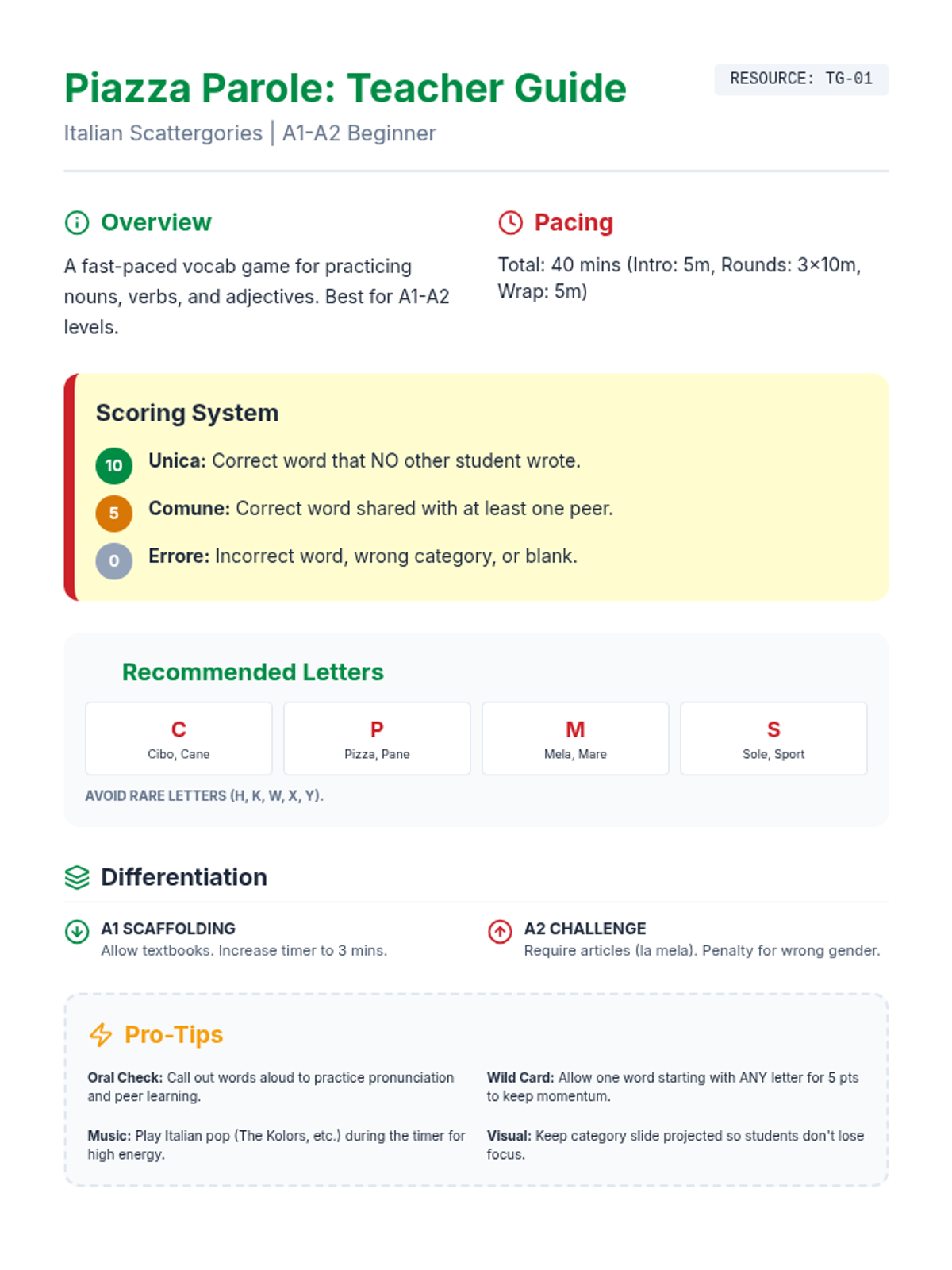
A fast-paced Italian vocabulary game based on Scattergories, designed for A1-A2 beginner learners to practice common nouns, verbs, and adjectives.
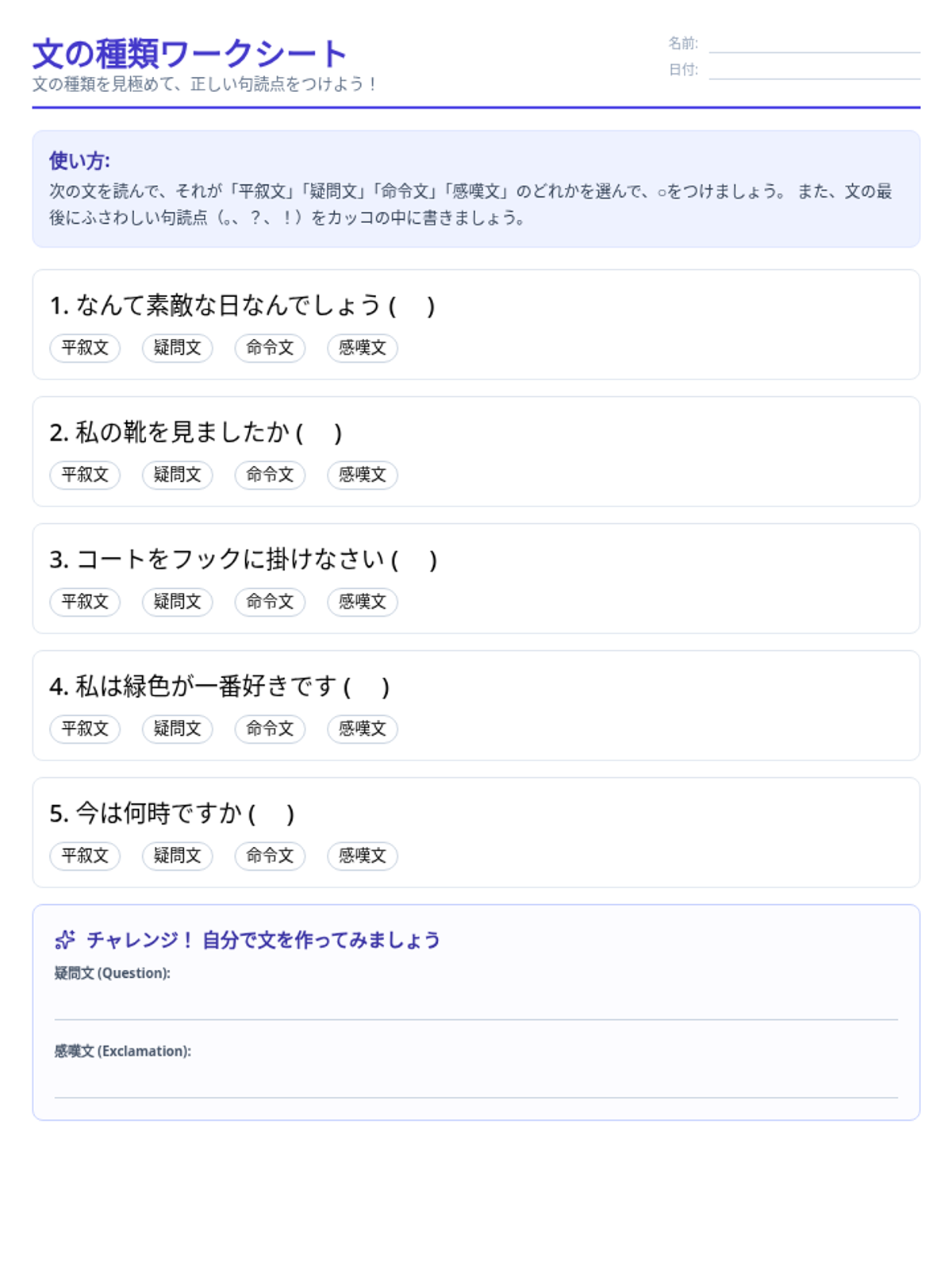
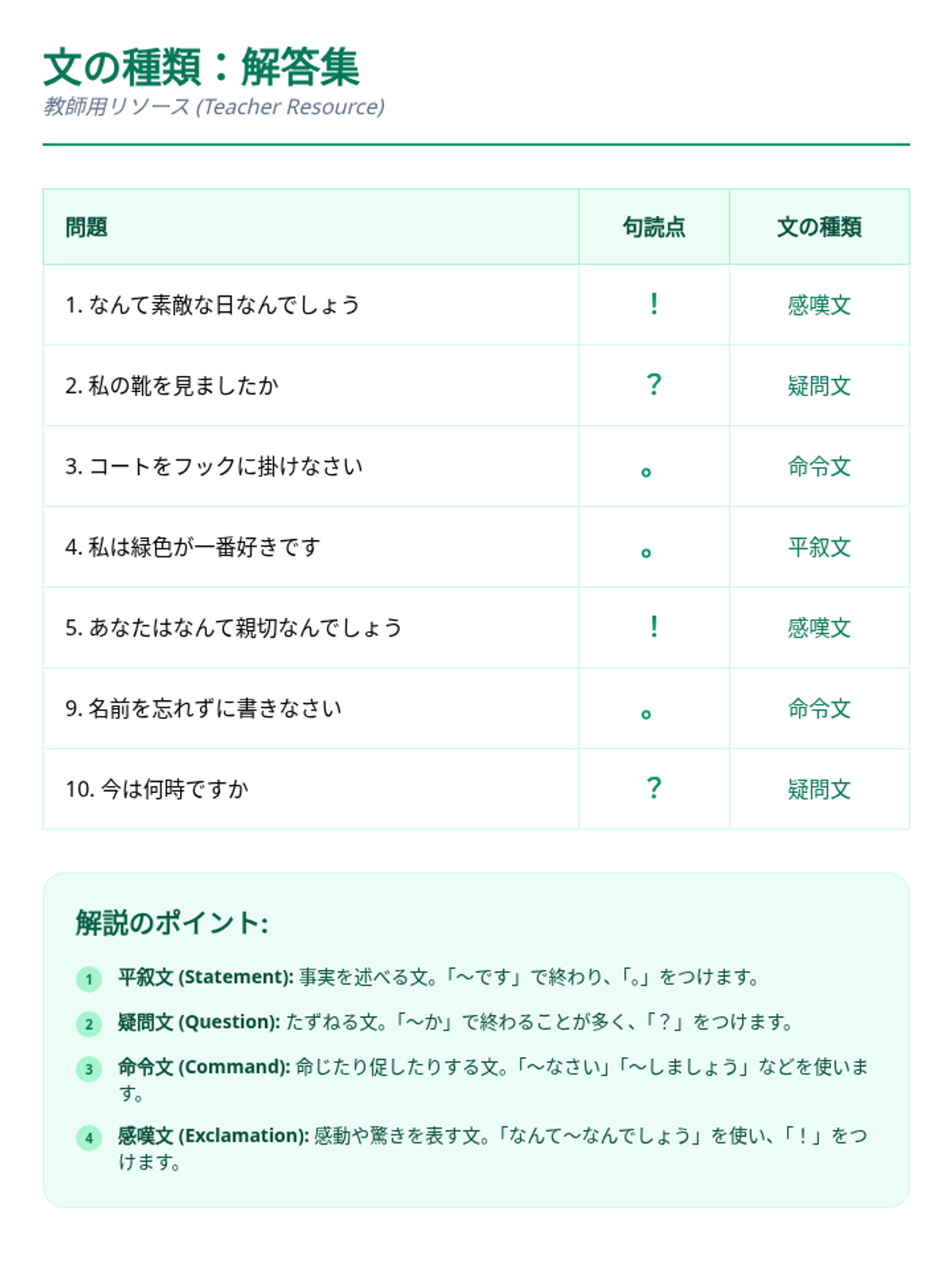
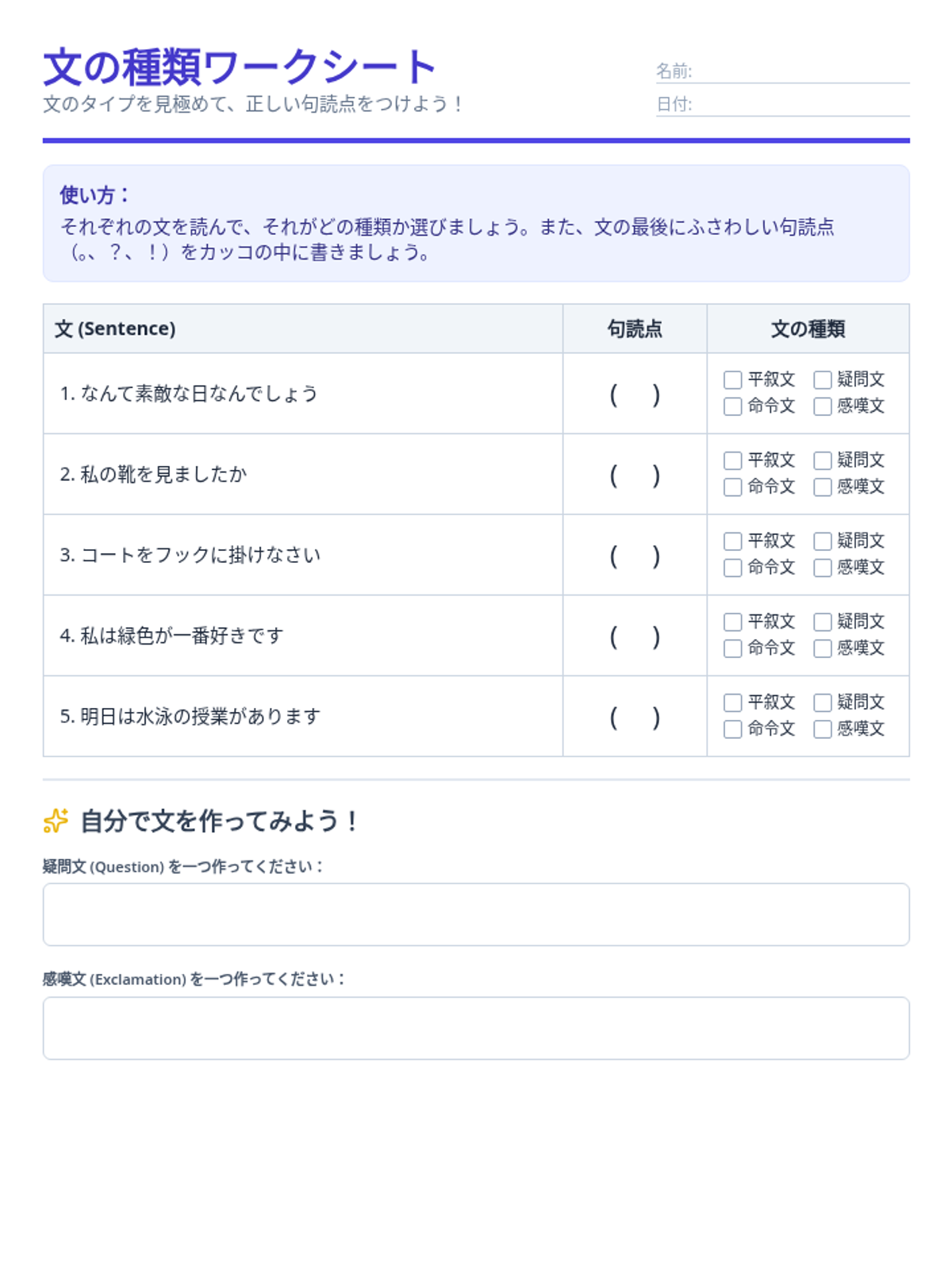
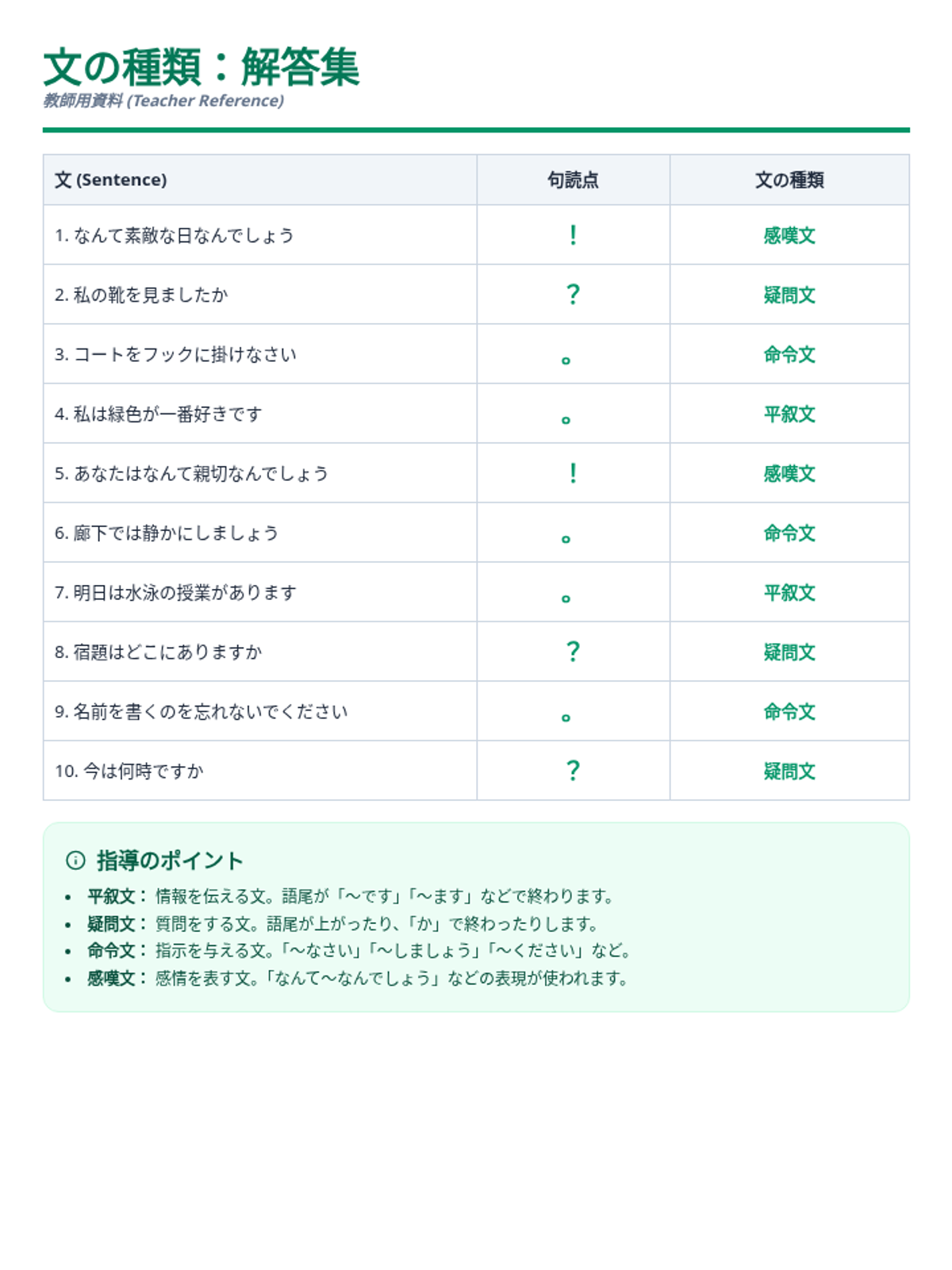
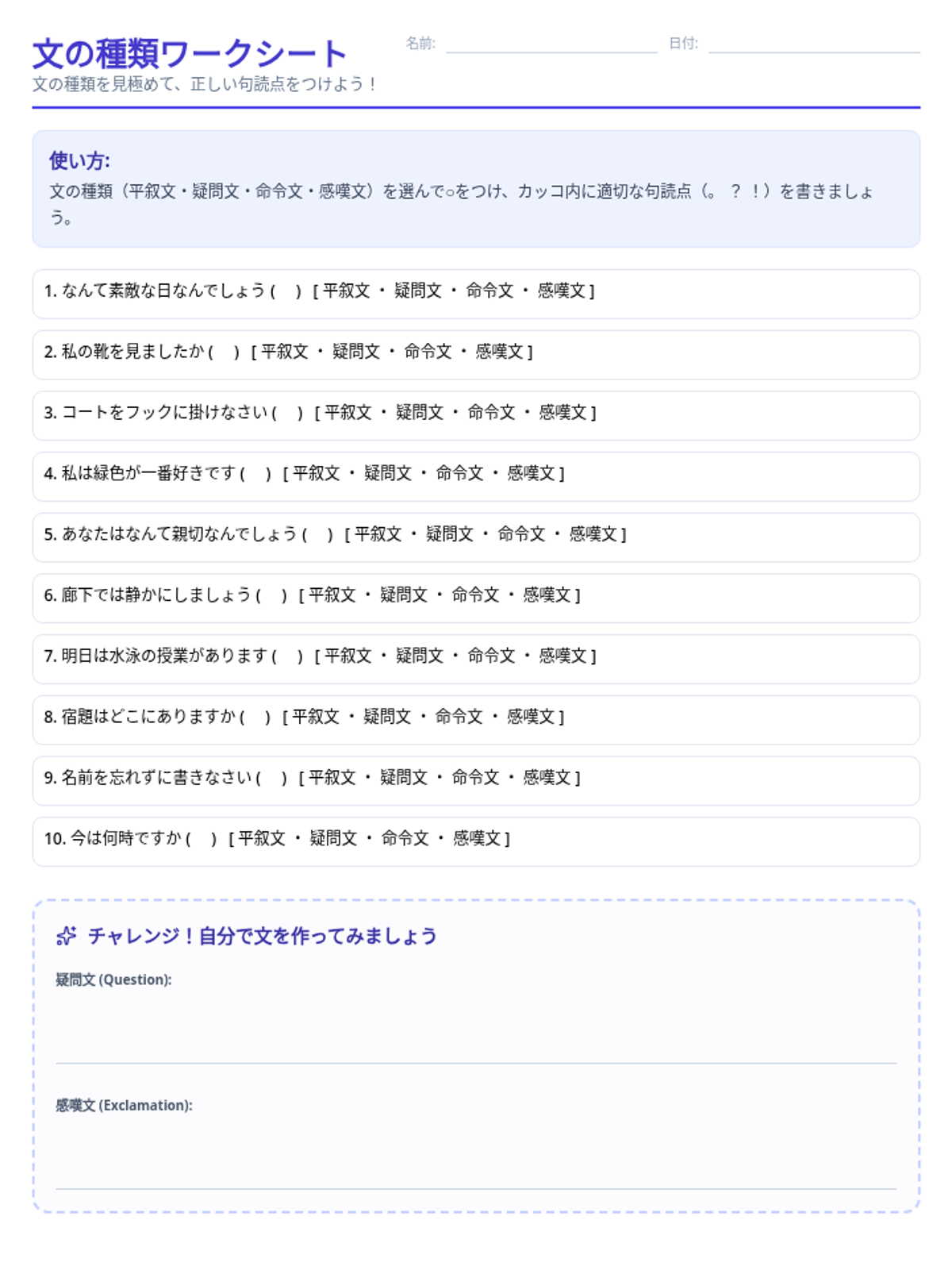
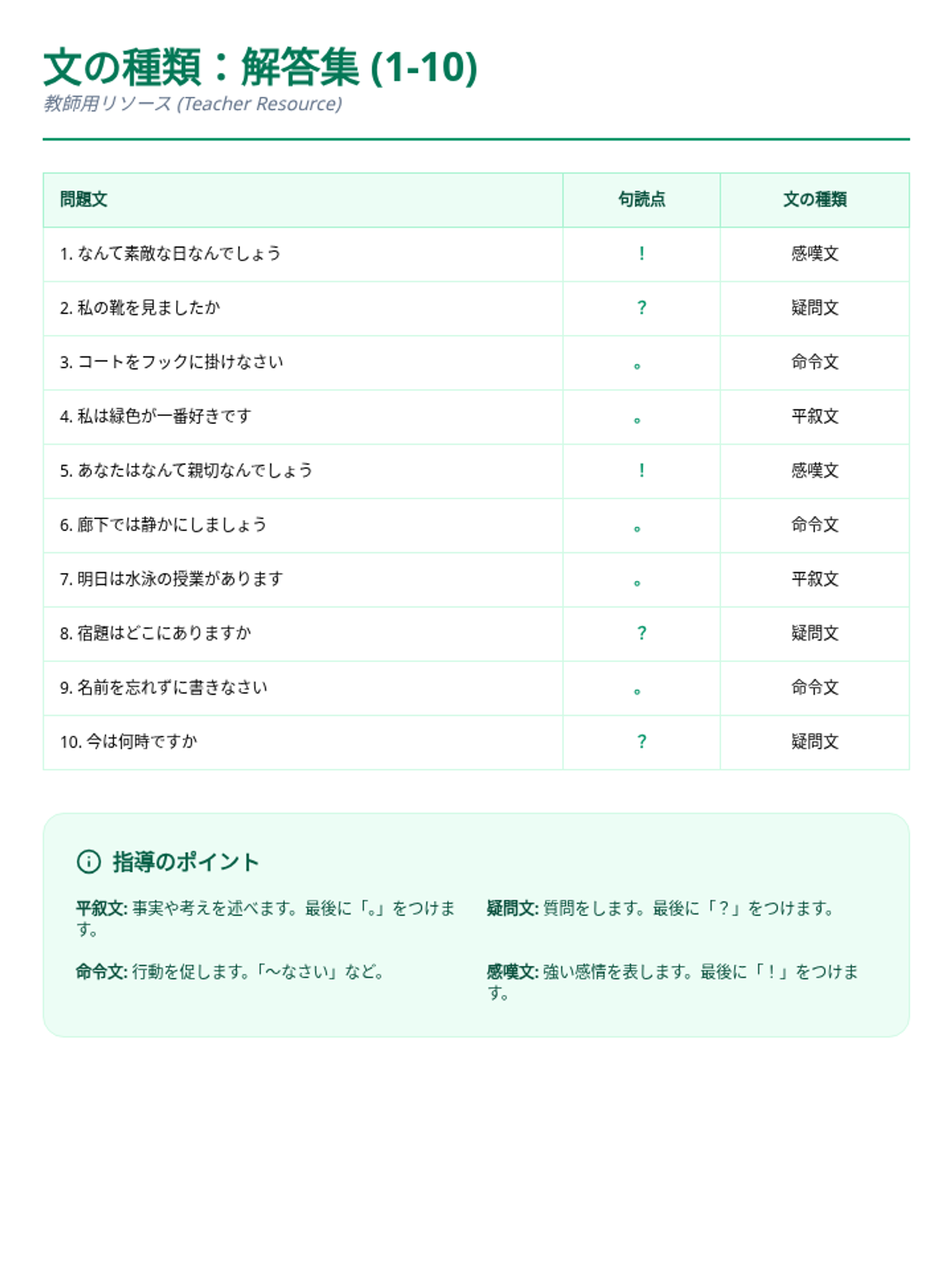
A lesson focused on identifying and using different types of sentences in Japanese: statements, questions, commands, and exclamations. Students will learn the appropriate punctuation for each.
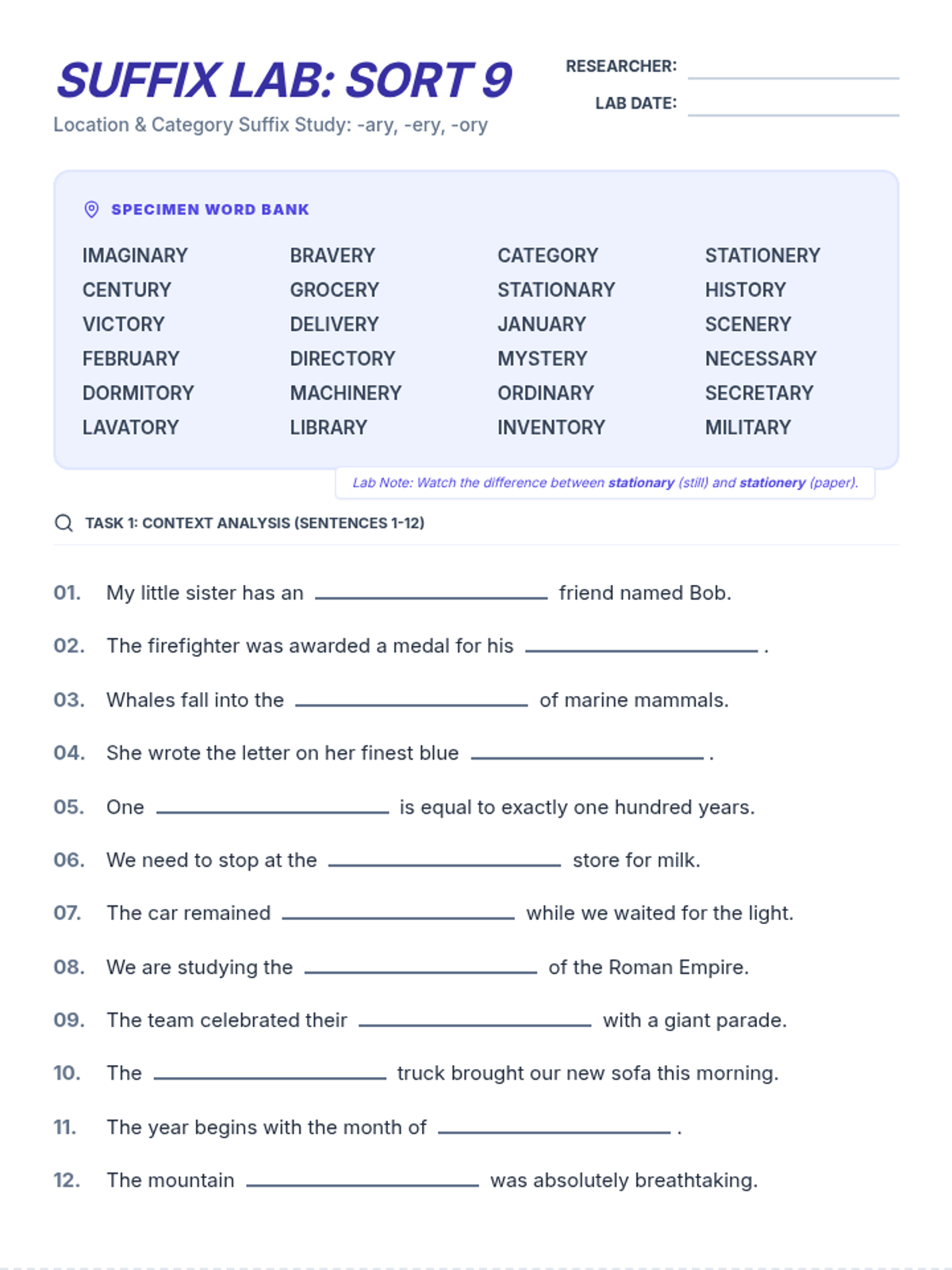
A lesson focused on location and category suffixes (-ary, -ery, -ory). Students analyze how these suffixes form nouns and adjectives related to places, groups, and qualities.
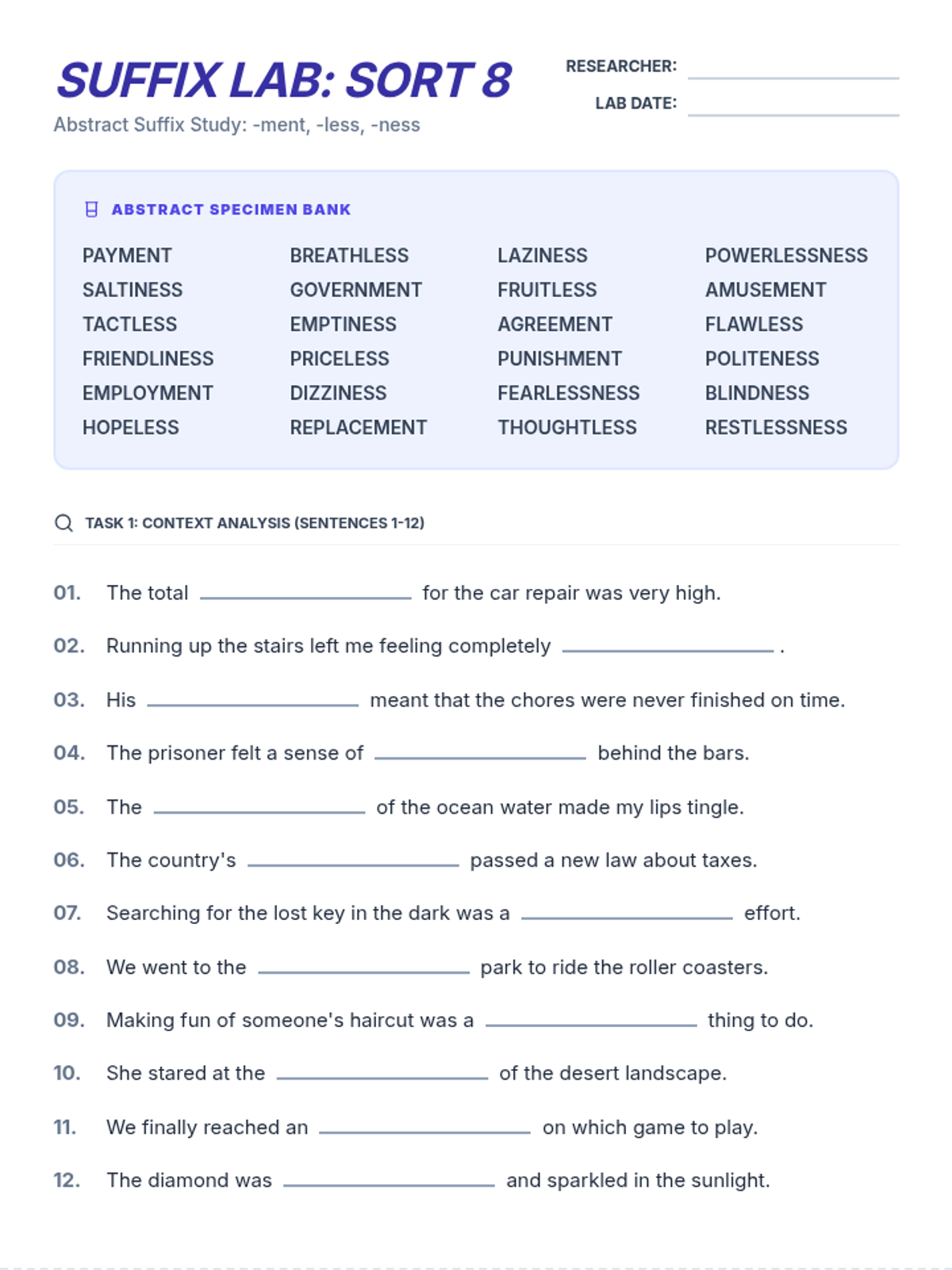
A lesson focused on abstract suffixes (-ment, -less, -ness). Students explore how these suffixes form nouns and adjectives related to states, qualities, and actions.
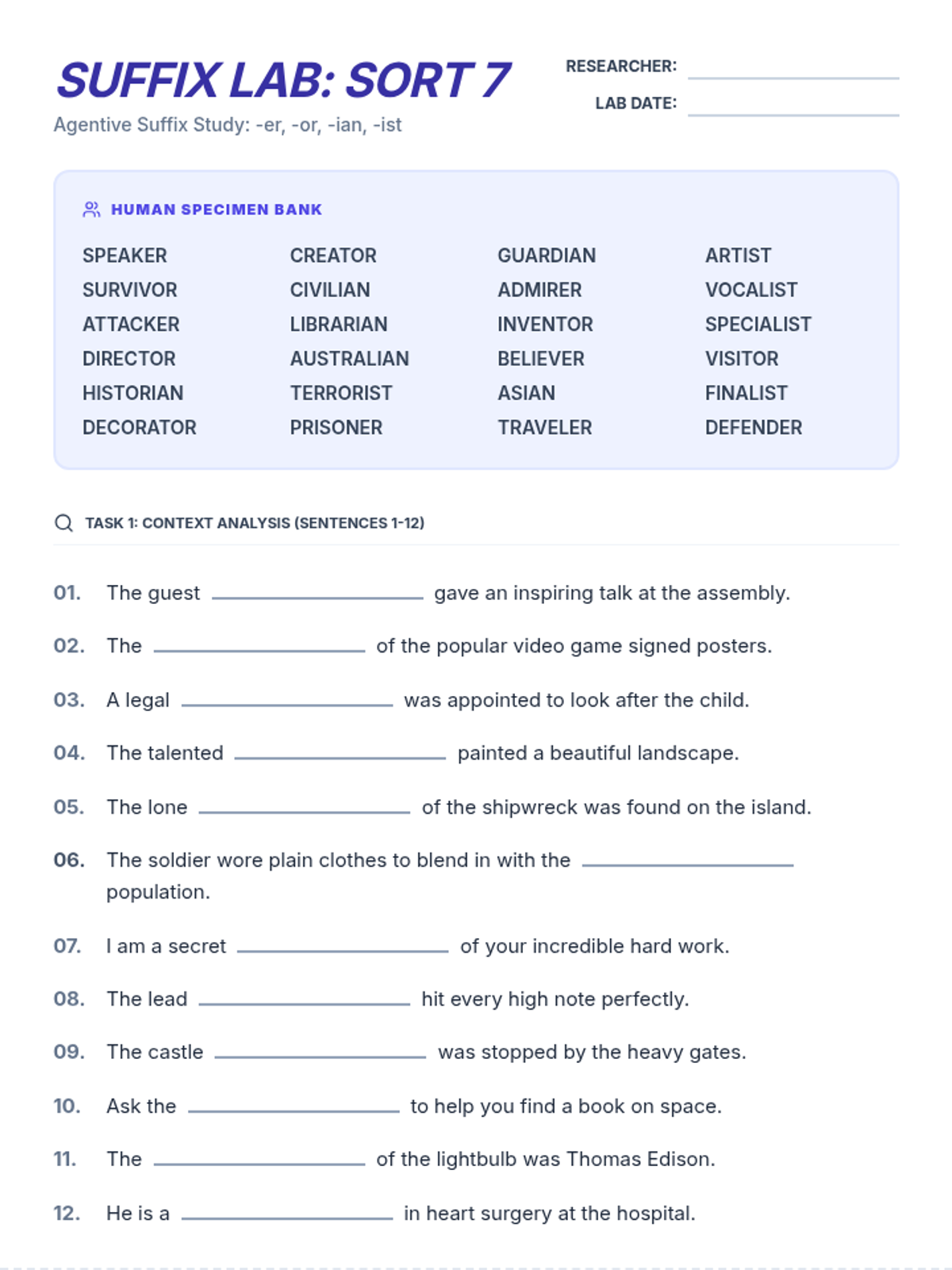
A lesson focused on agentive suffixes (-er, -or, -ian, -ist). Students analyze how these suffixes identify people who perform specific actions or hold certain roles.
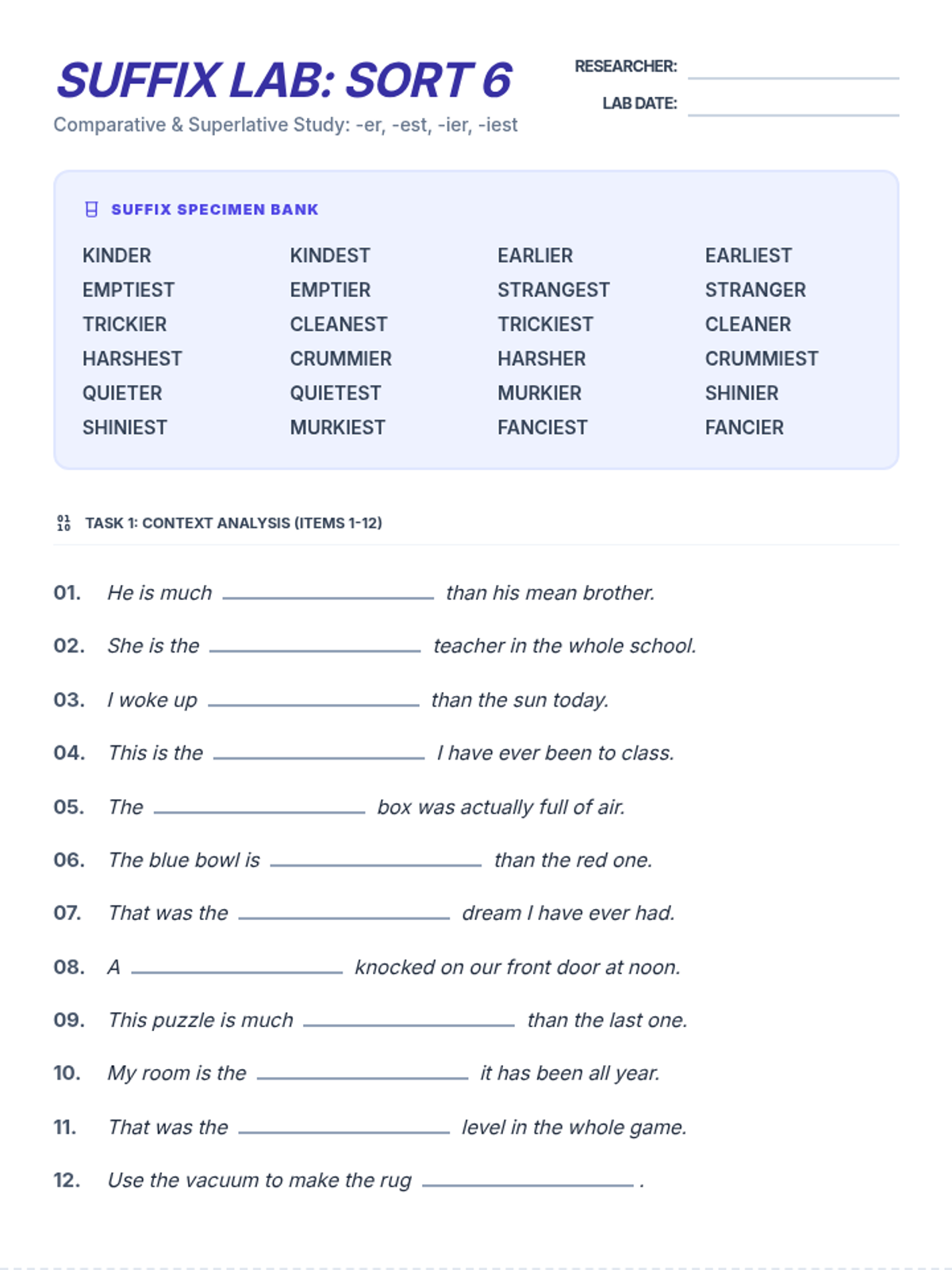
A lesson focused on comparative and superlative suffixes (-er, -est, -ier, -iest). Students explore how these suffixes change adjectives to compare two or more things.
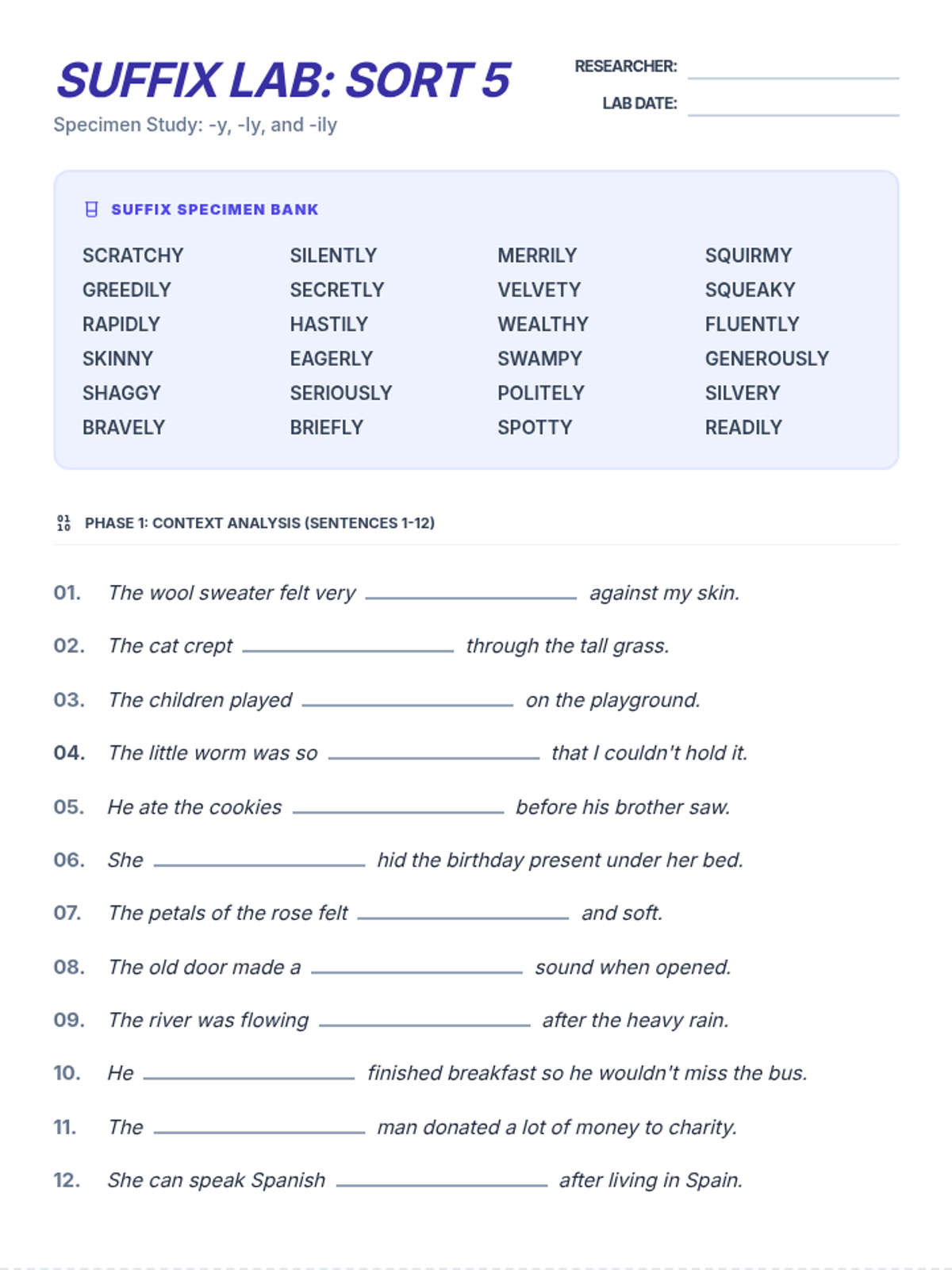
A lesson focused on the suffixes -y, -ly, and -ily. Students analyze how these suffixes change word meanings and usage through contextual application.
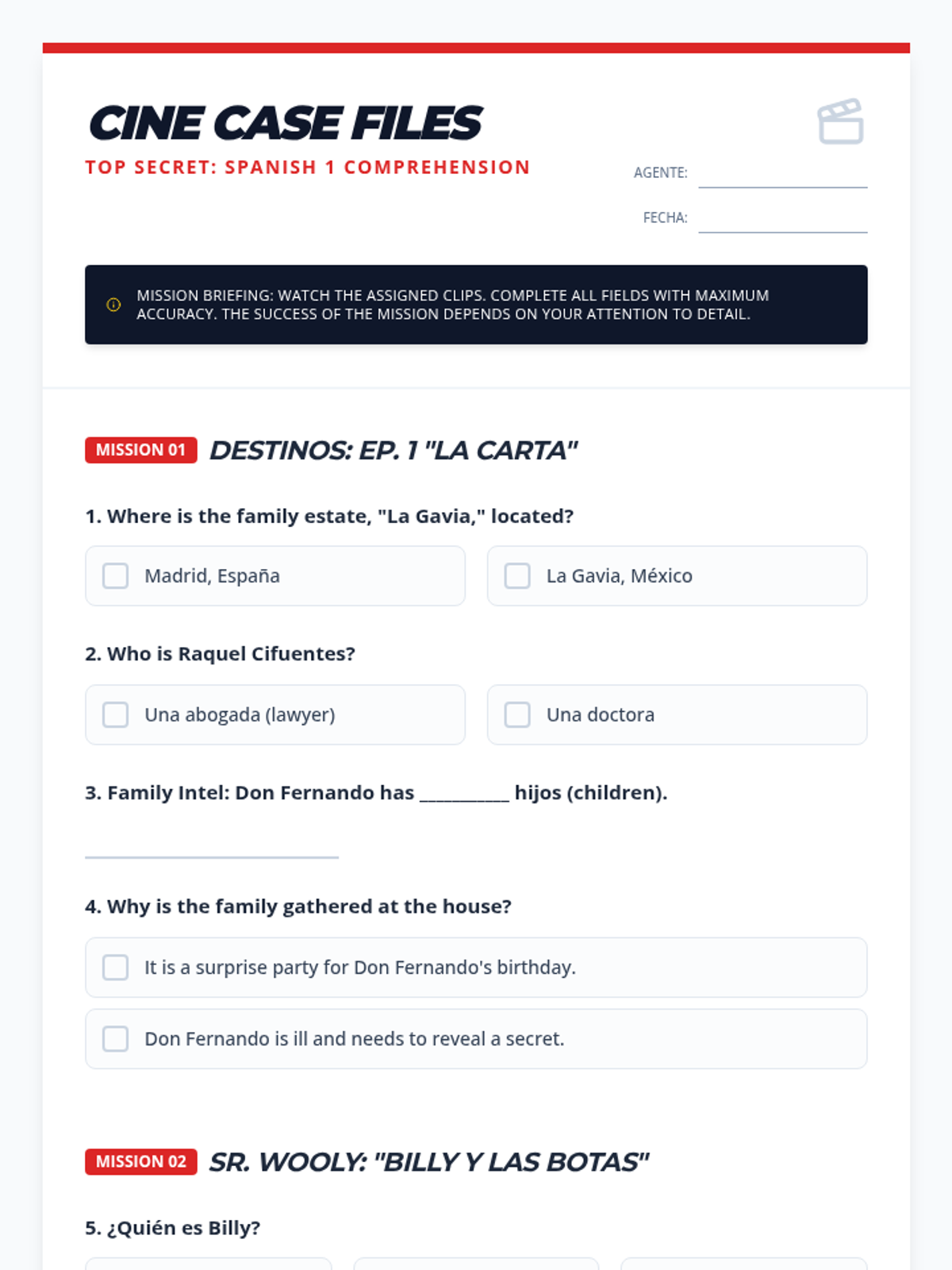
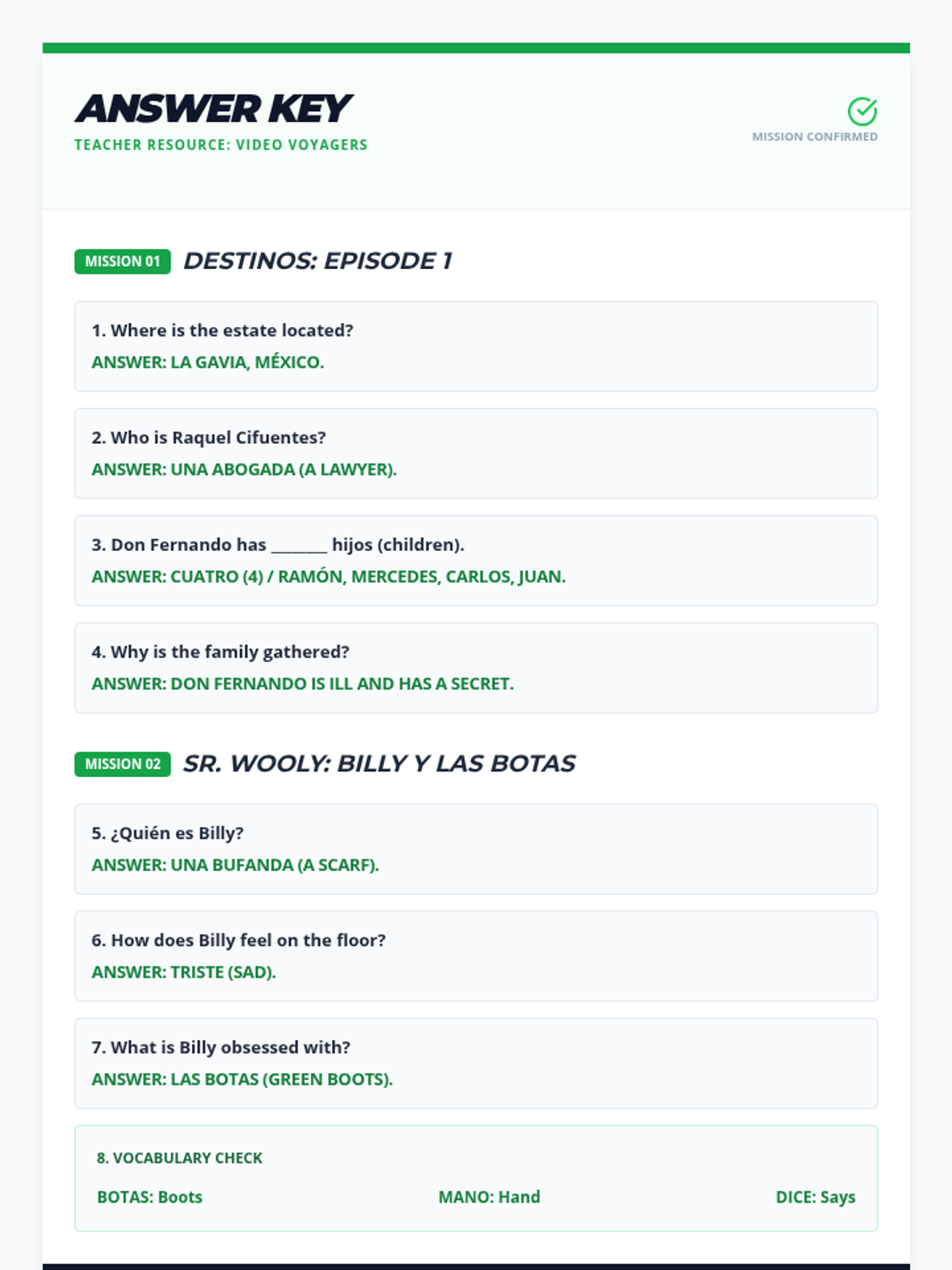
A beginner-friendly Spanish lesson centered on visual comprehension using the classic 'Destinos' series and the catchy 'Sr. Wooly' music videos. Students practice identifying basic vocabulary and plot points while viewing.
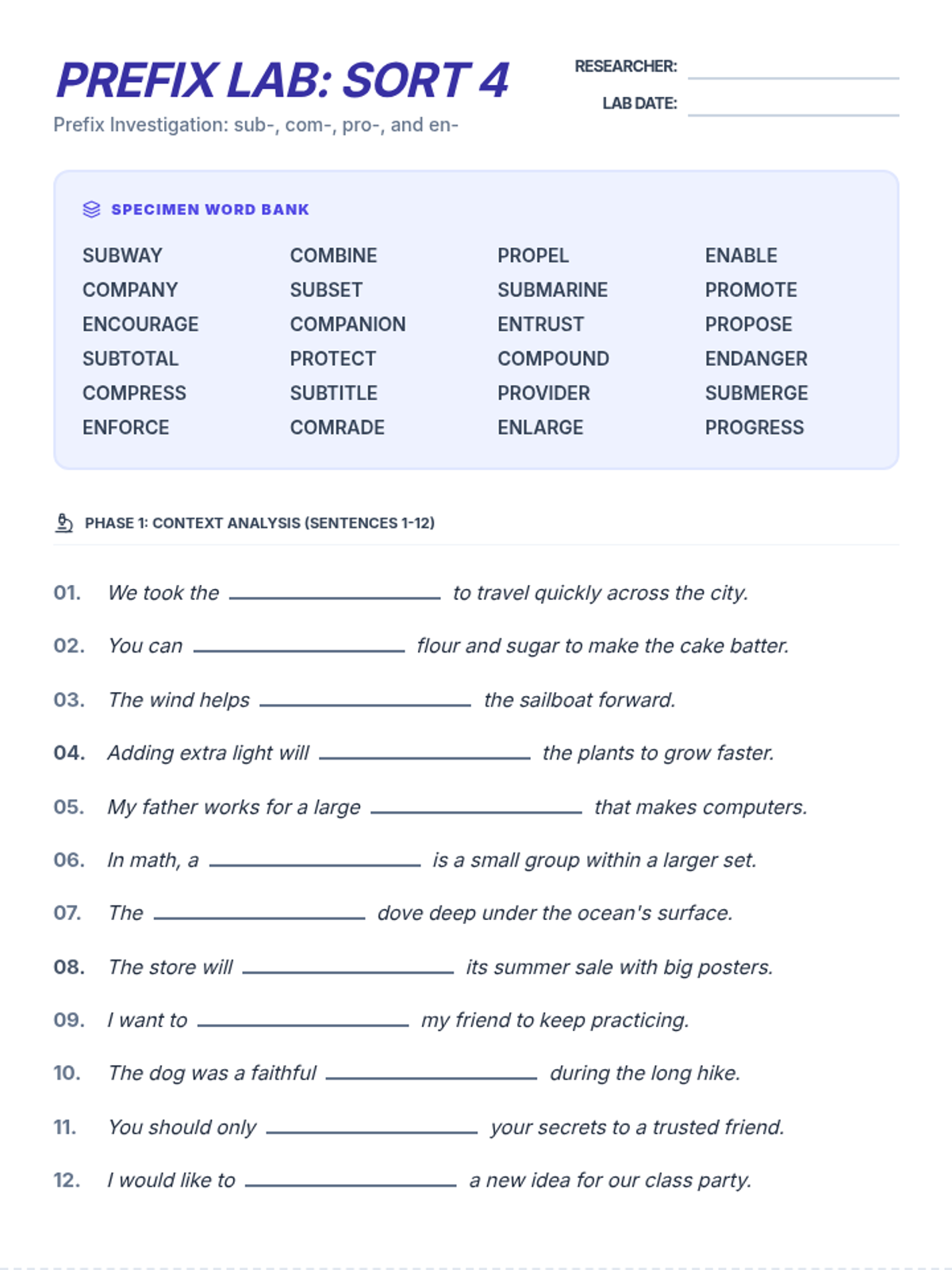
A lesson focused on the prefixes sub-, com-, pro-, and en-. Students apply their knowledge of these prefixes to identify and use words in various contexts.
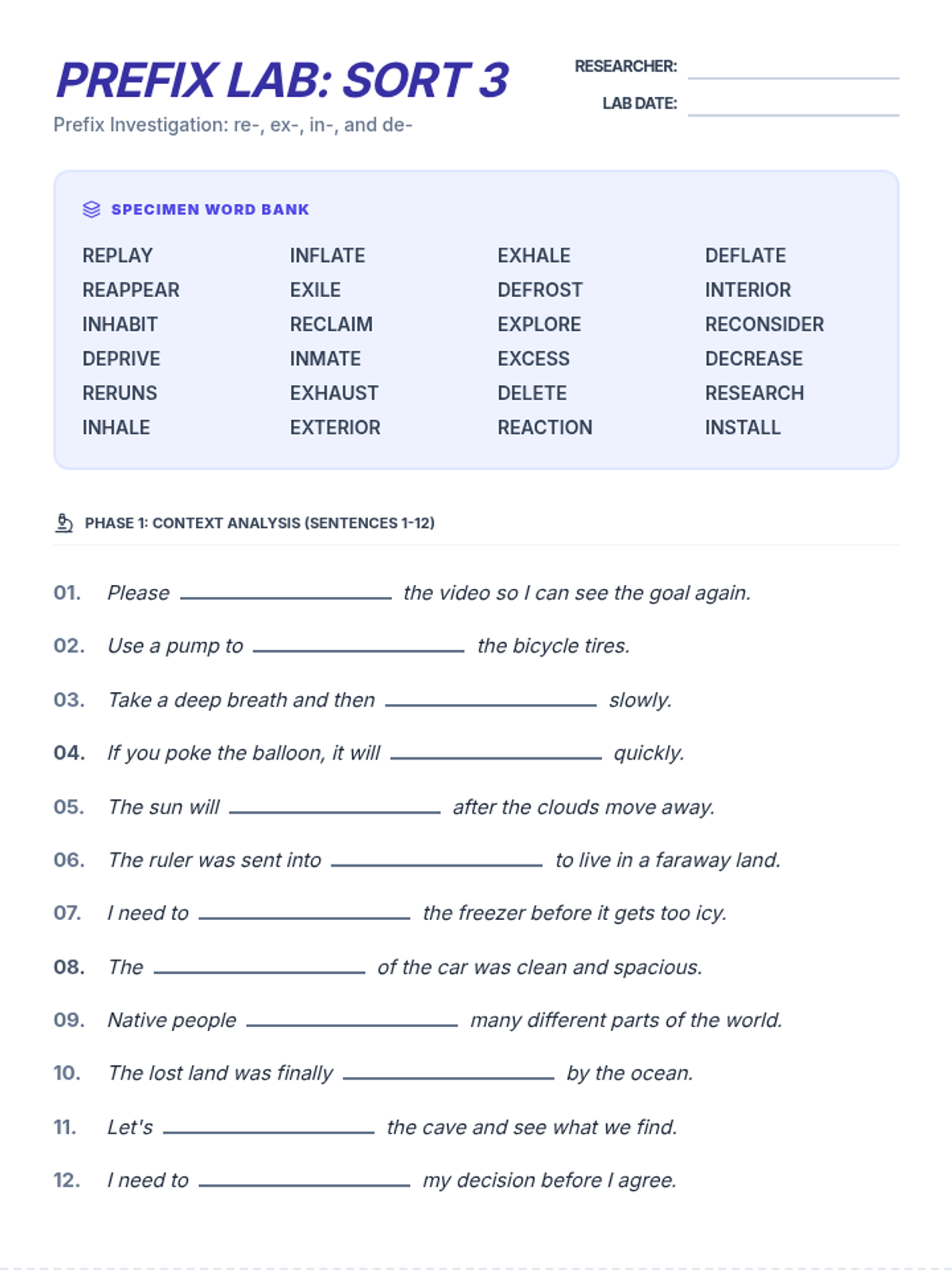
A lesson focused on the prefixes re-, ex-, in-, and de-. Students explore meanings like "again," "out," "in," and "down" through application.
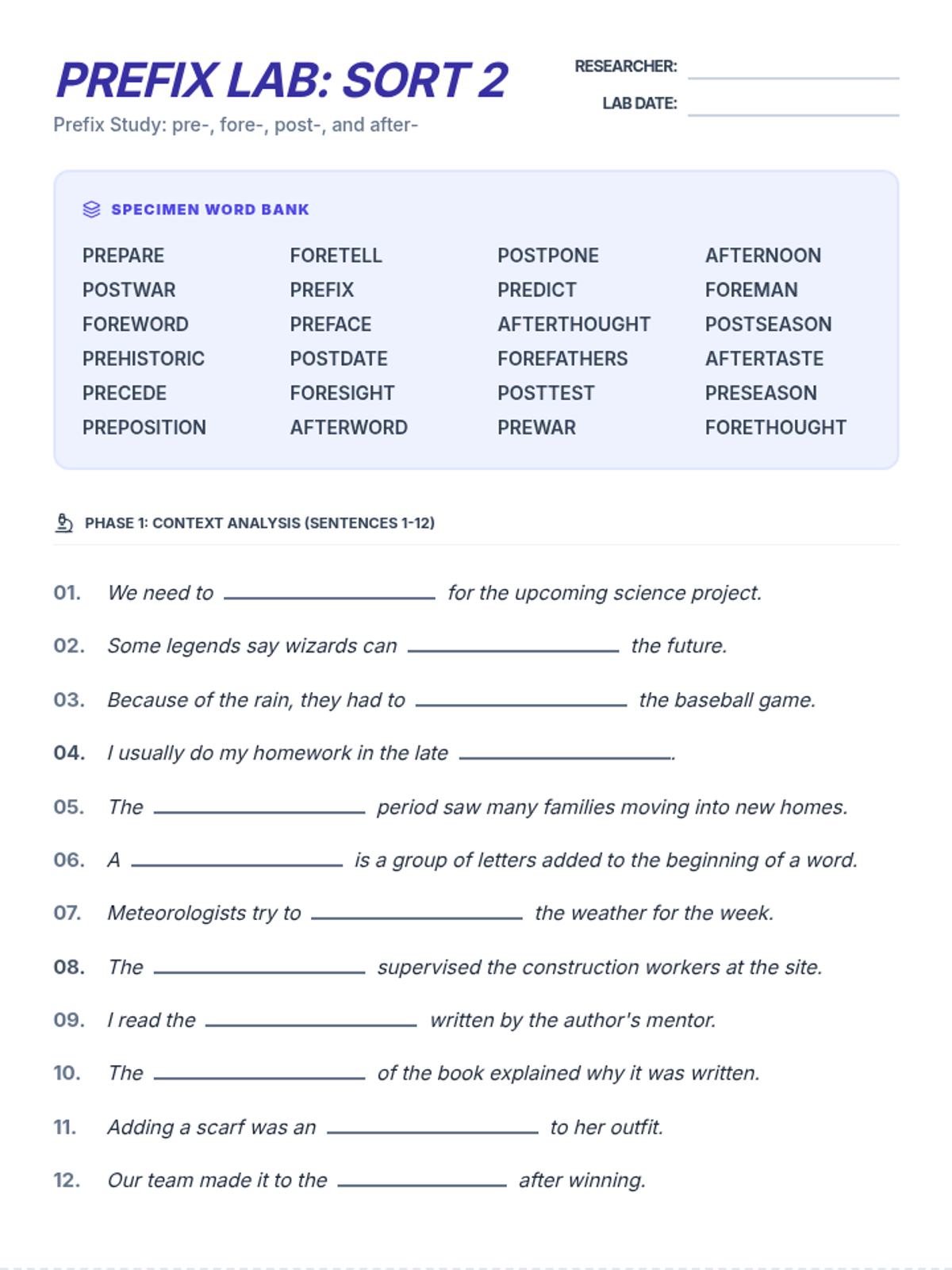
A lesson focused on the prefixes pre-, fore-, post-, and after-. Students practice using these temporal and directional prefixes in context.