Students learn to replace 'if' with auxiliary inversion (Should/Were/Had) to elevate the register of their speech and writing.
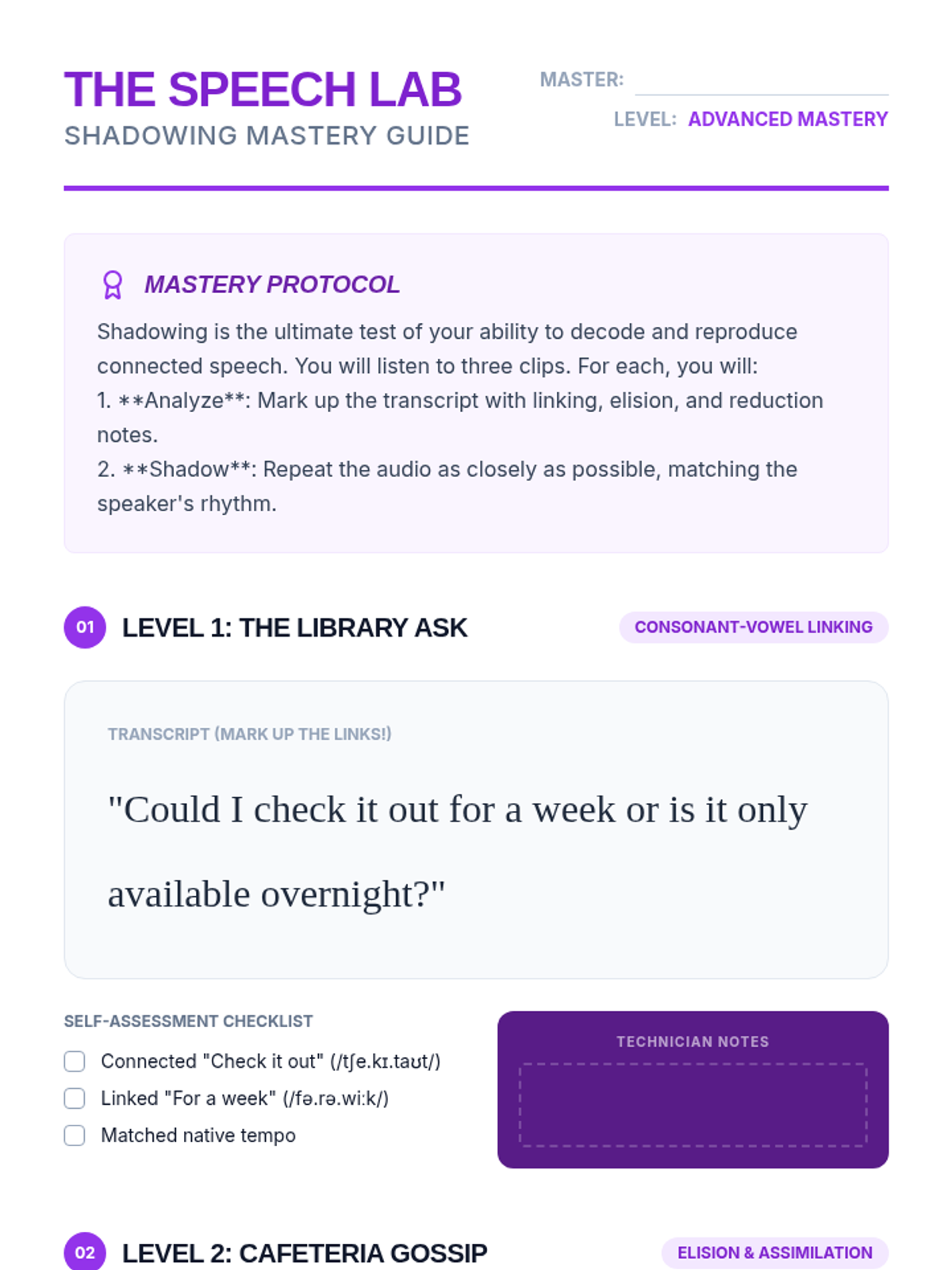
Students engage in a 'shadowing' technique, repeating audio immediately after hearing it to internalize the rhythm and flow of connected speech. This active processing reinforces their ability to predict and process sound streams.
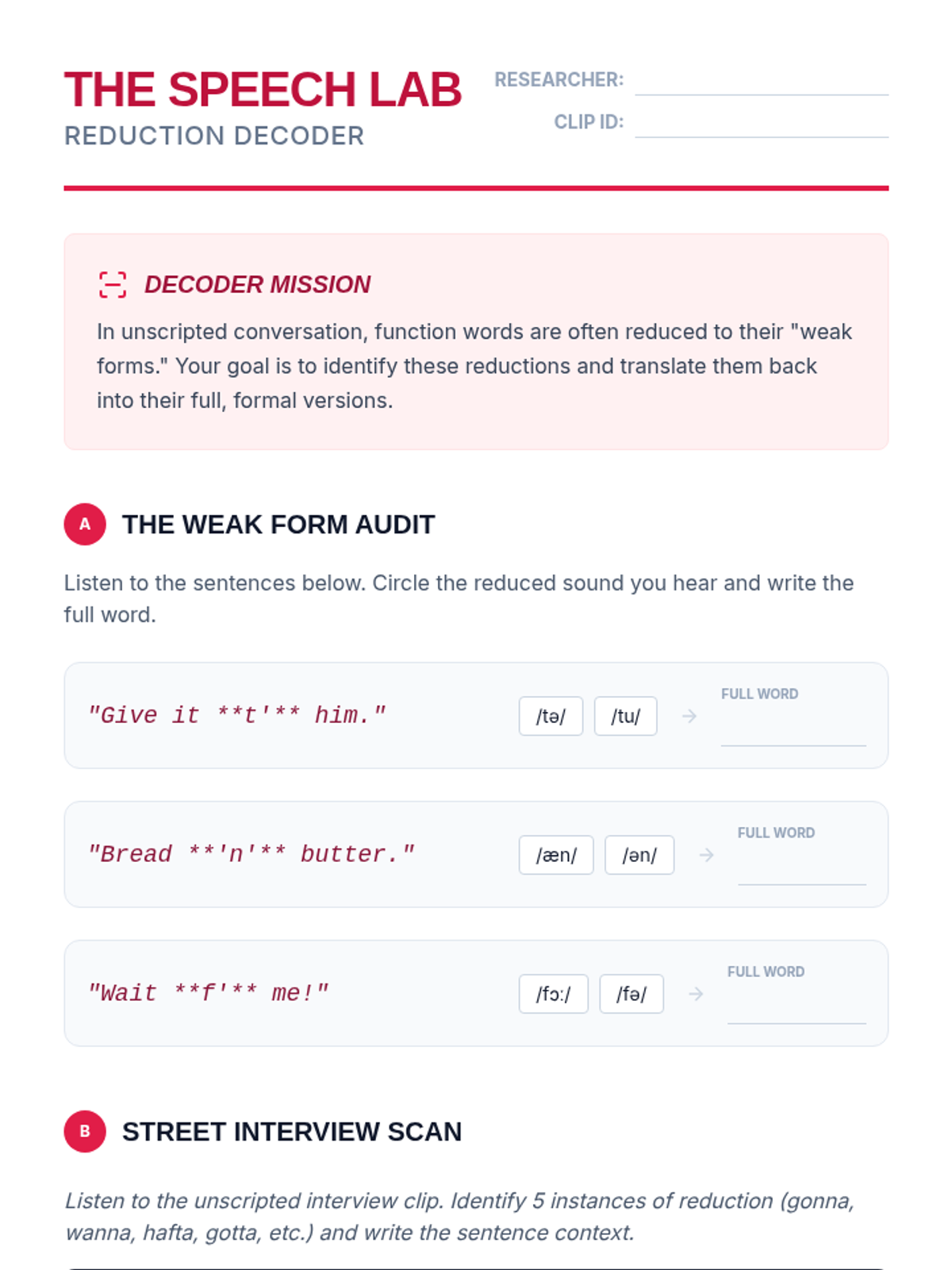
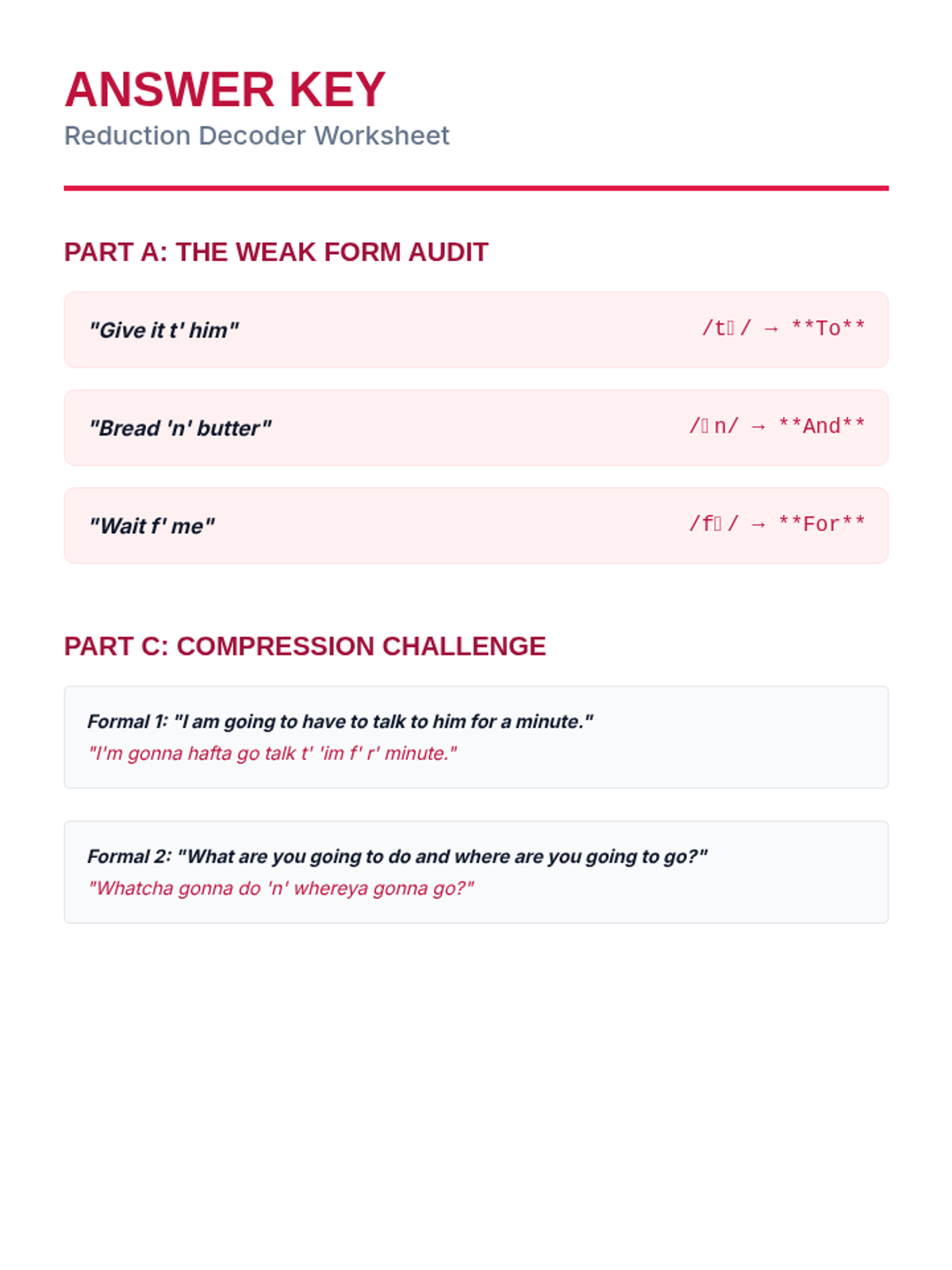
Focusing on function words, this lesson tackles common reductions like 'gonna,' 'wanna,' and weak forms of auxiliary verbs. Students analyze unscripted interviews to catch these reductions in context.
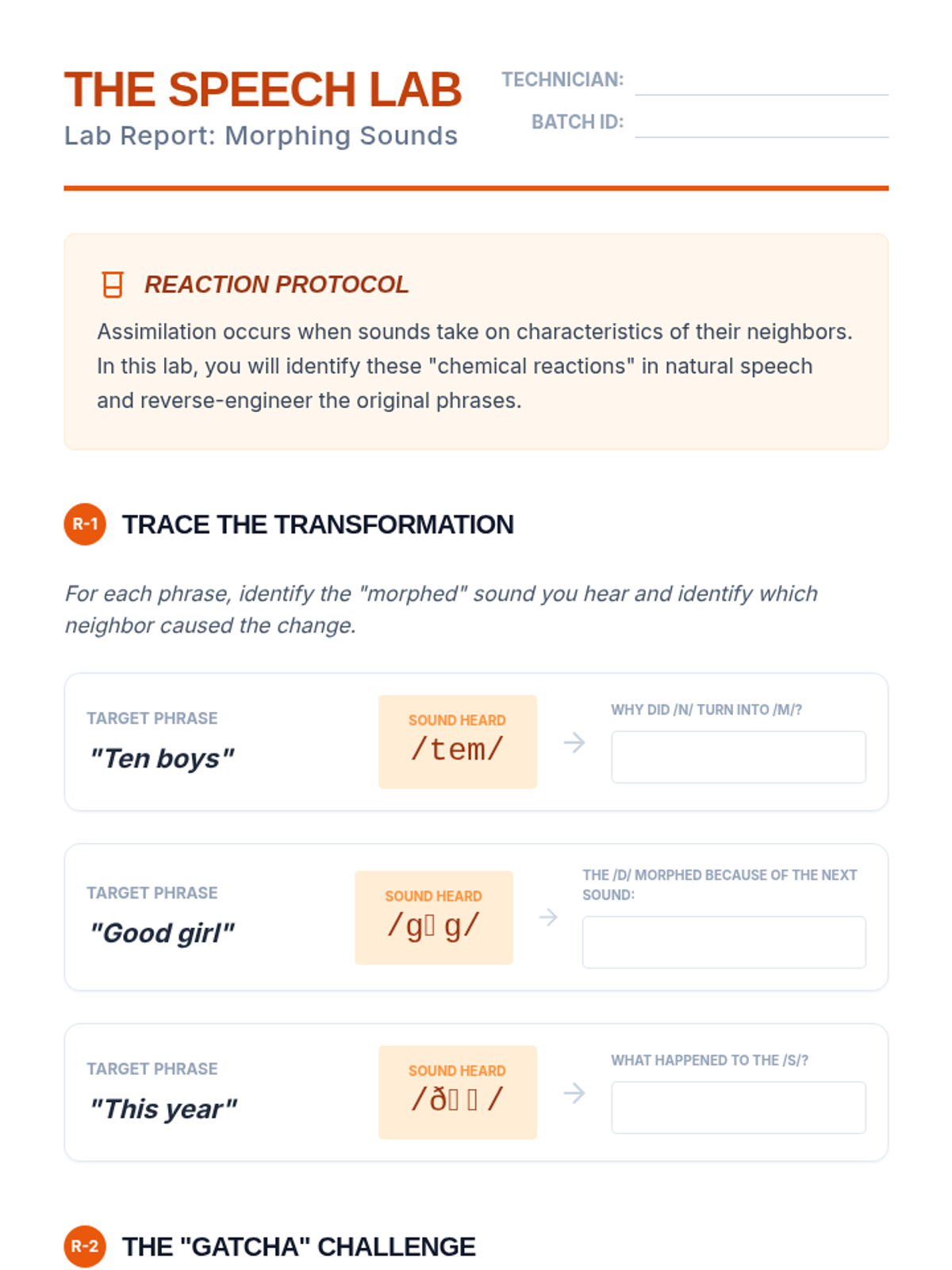
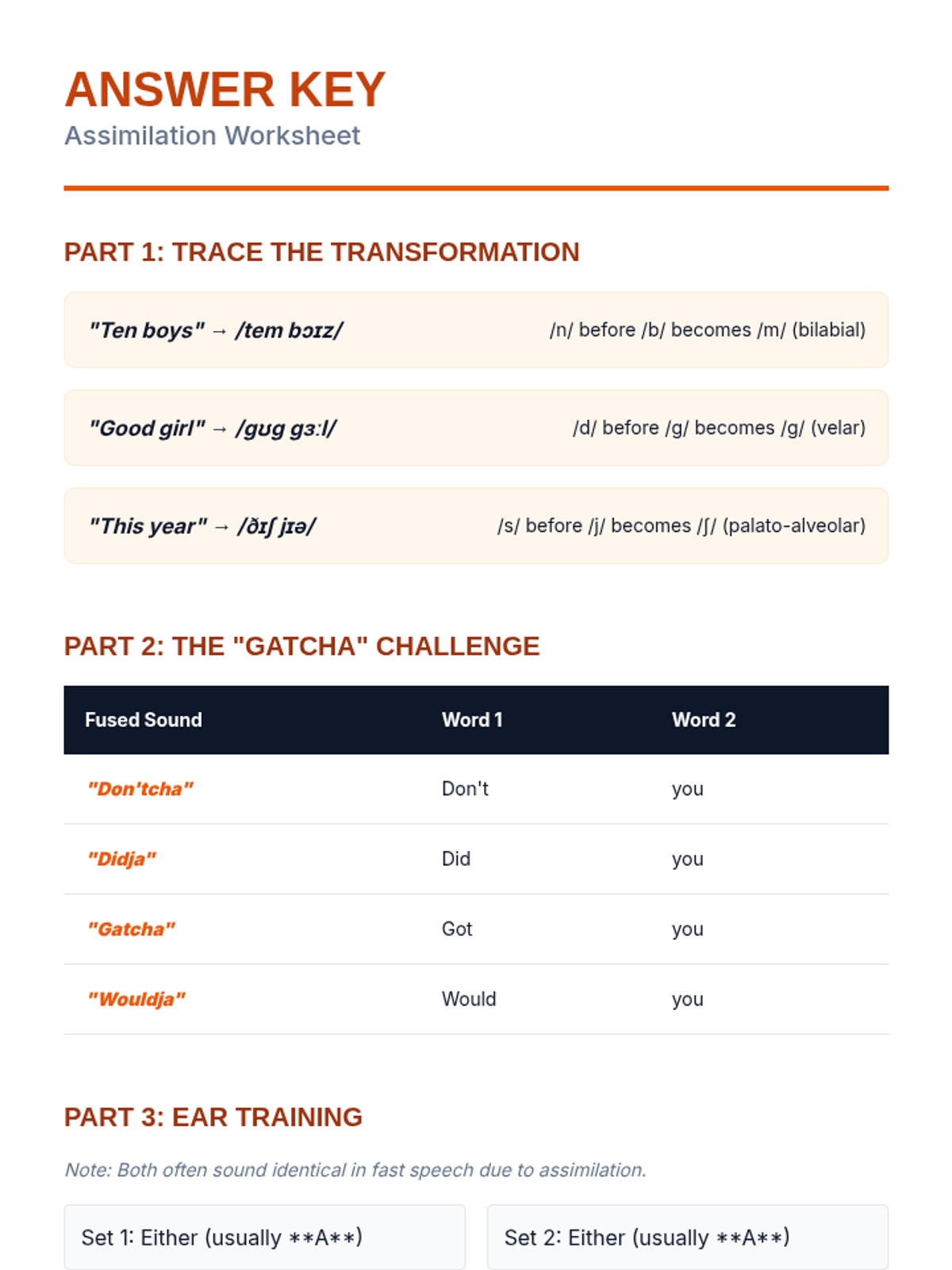
Students learn how sounds influence their neighbors (e.g., 'hand bag' becoming 'hambag'). The lesson uses minimal pair discrimination and dictation exercises to train ears to recognize words despite phonological changes.
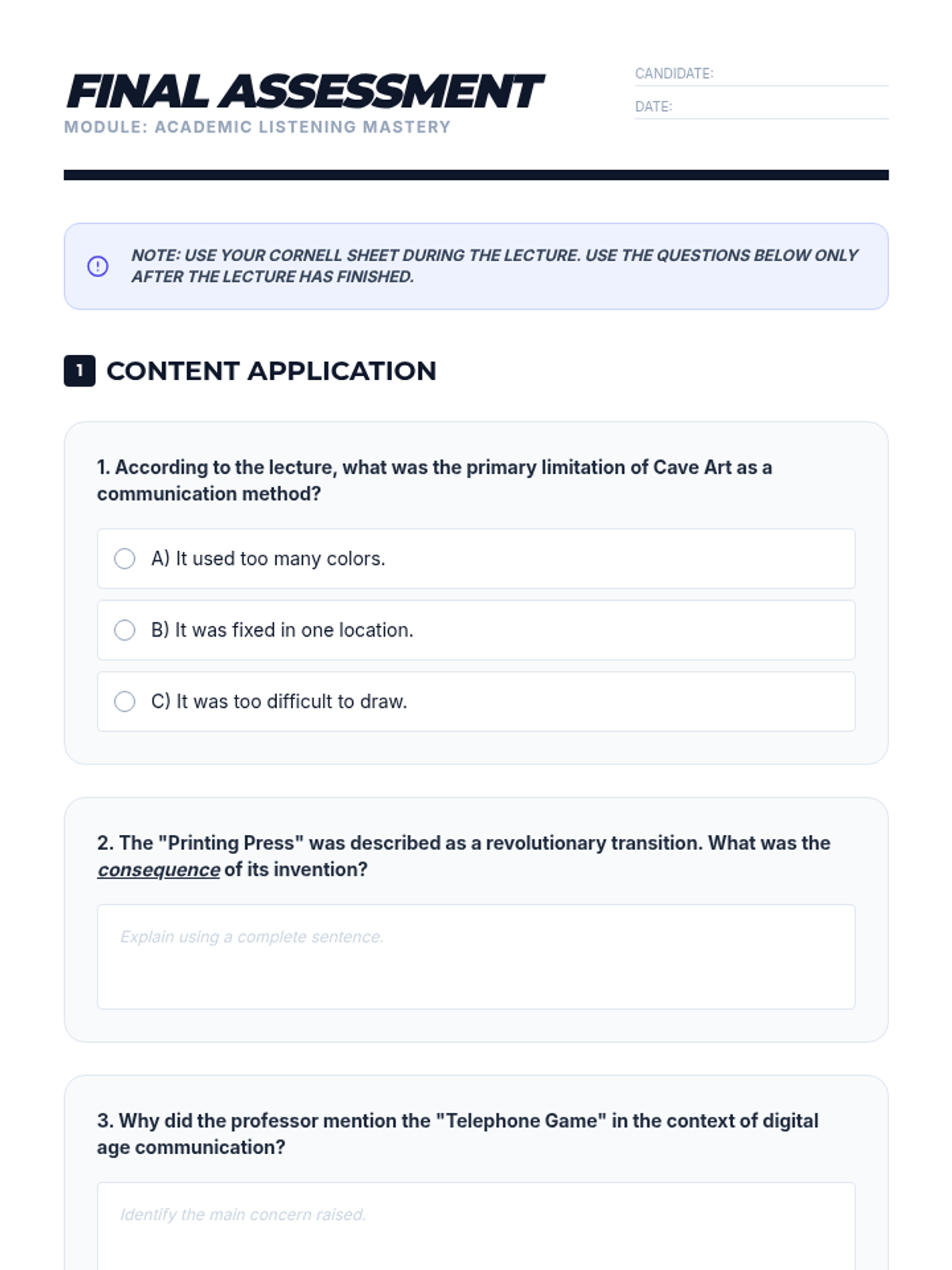
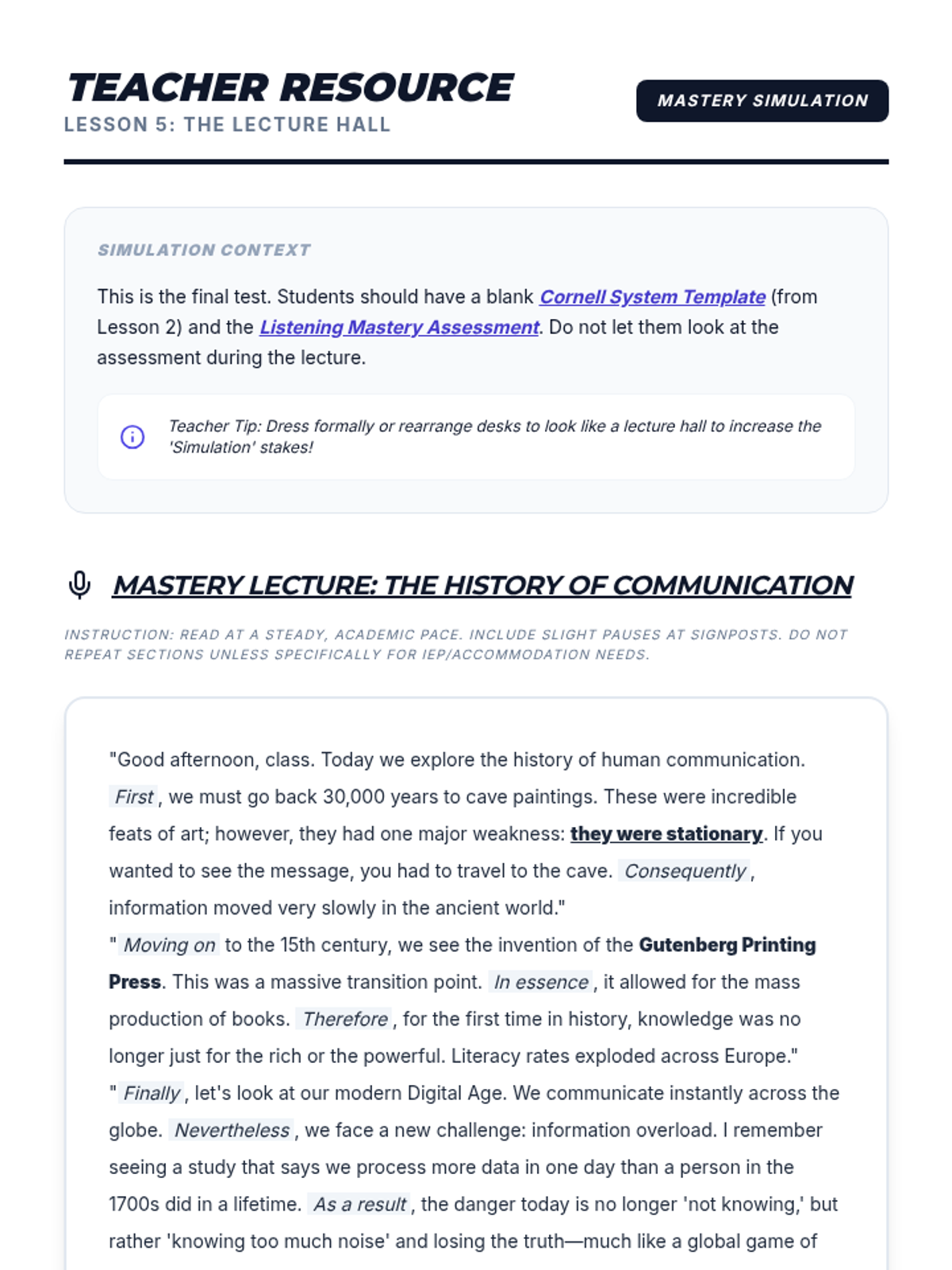
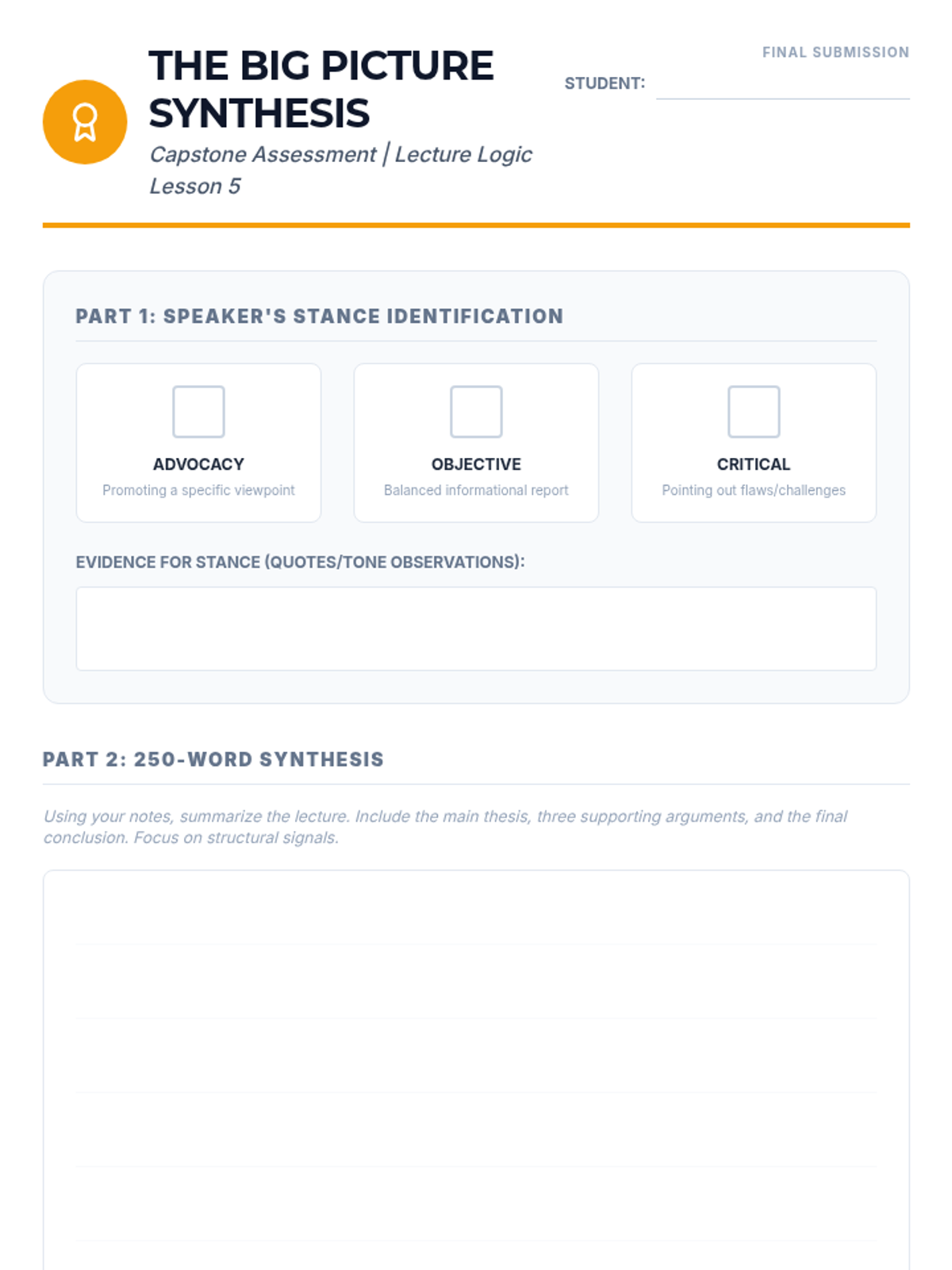
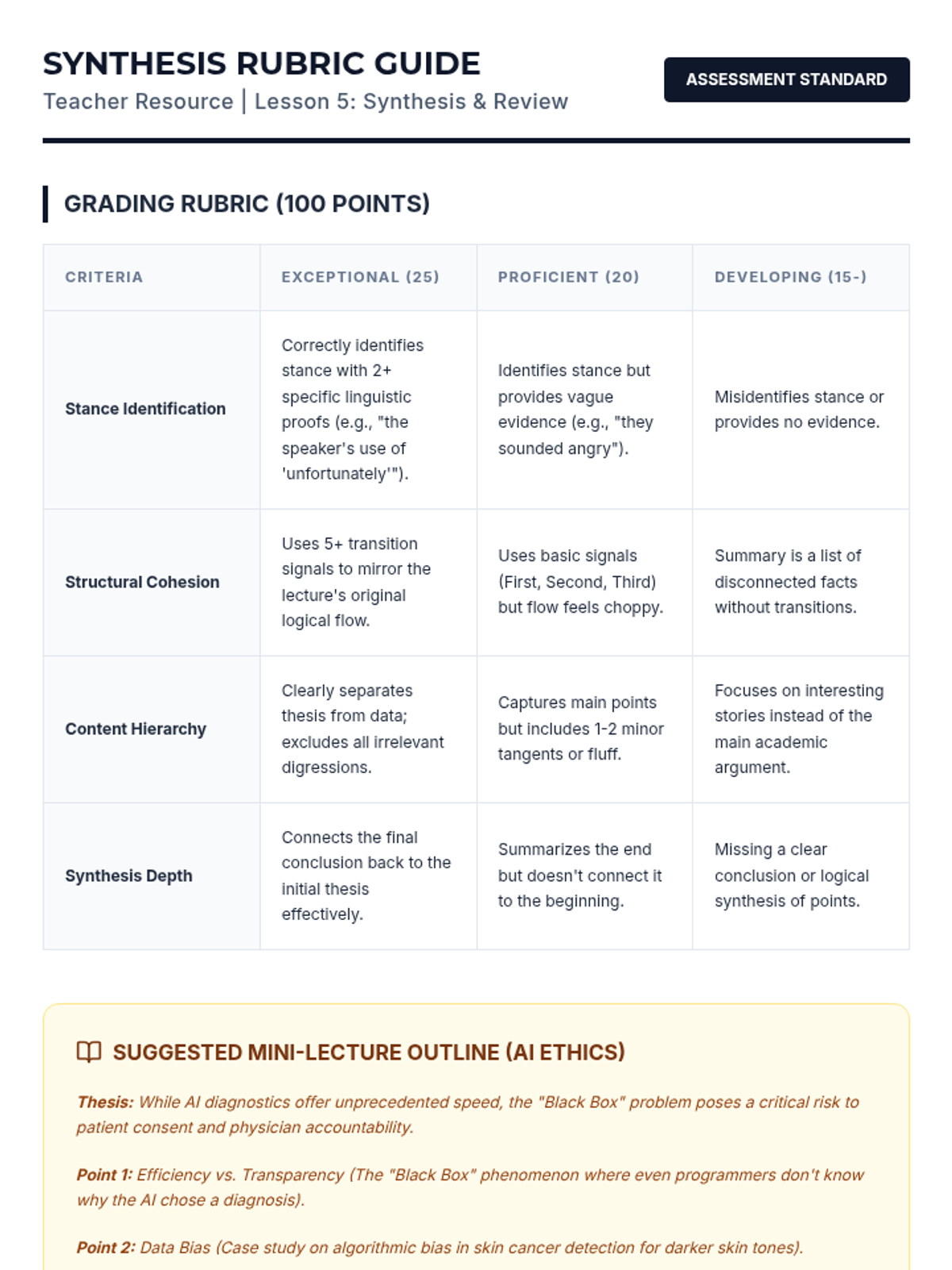
Students participate in a university-style mini-lecture simulation. They apply all learned strategies—signpost identification, Cornell note-taking, and synthesis—to capture information and complete a formal assessment.
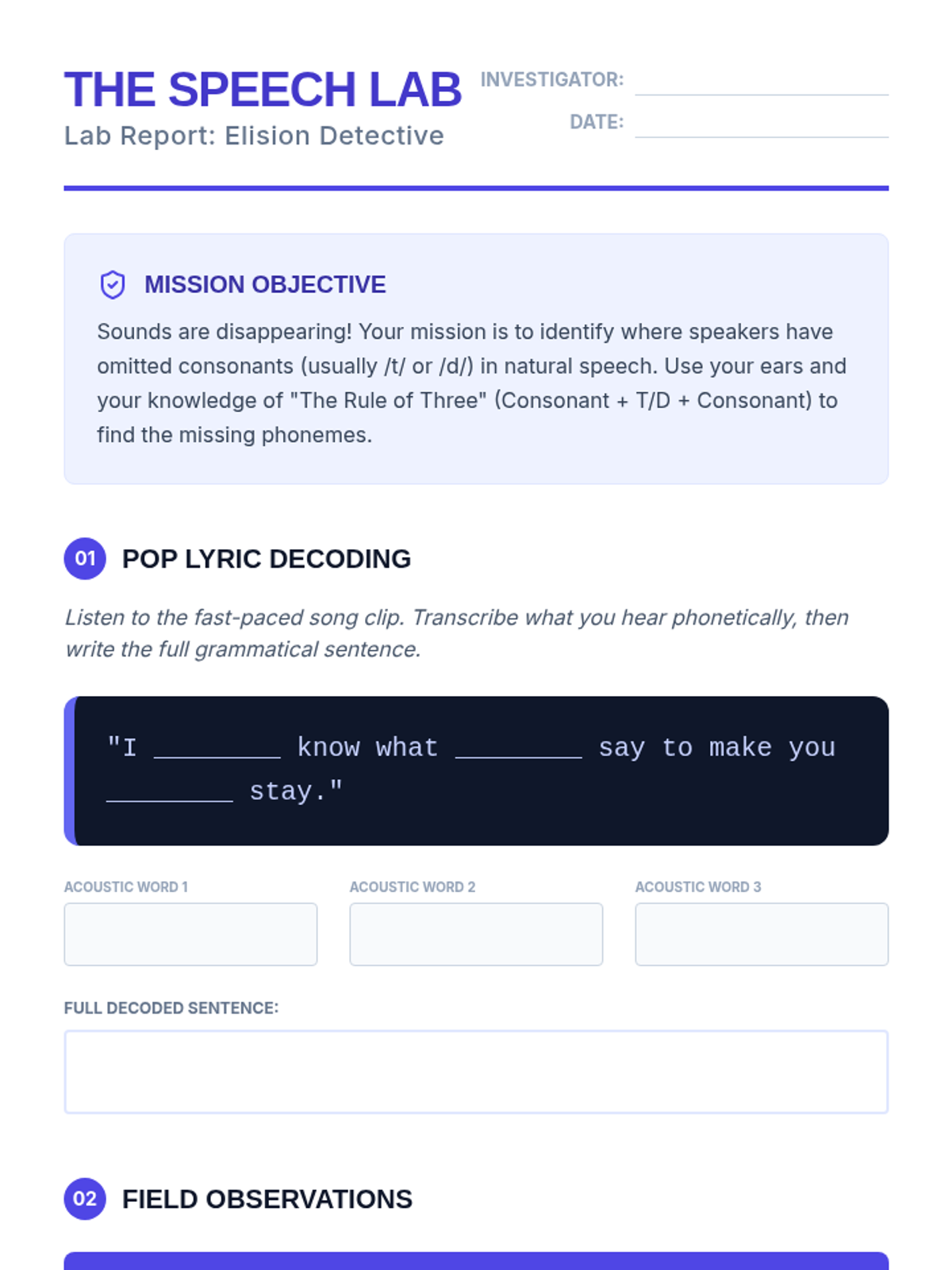
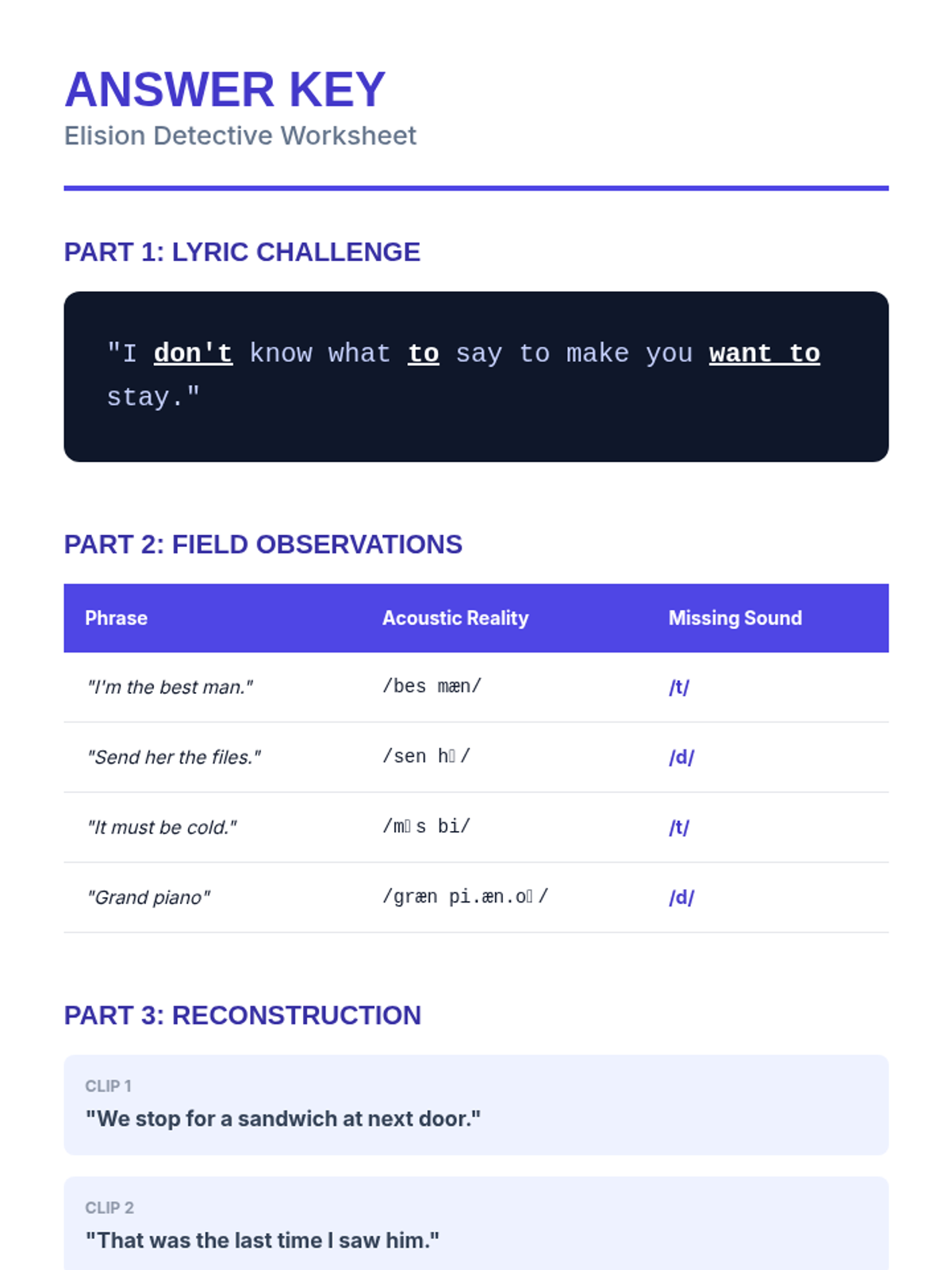
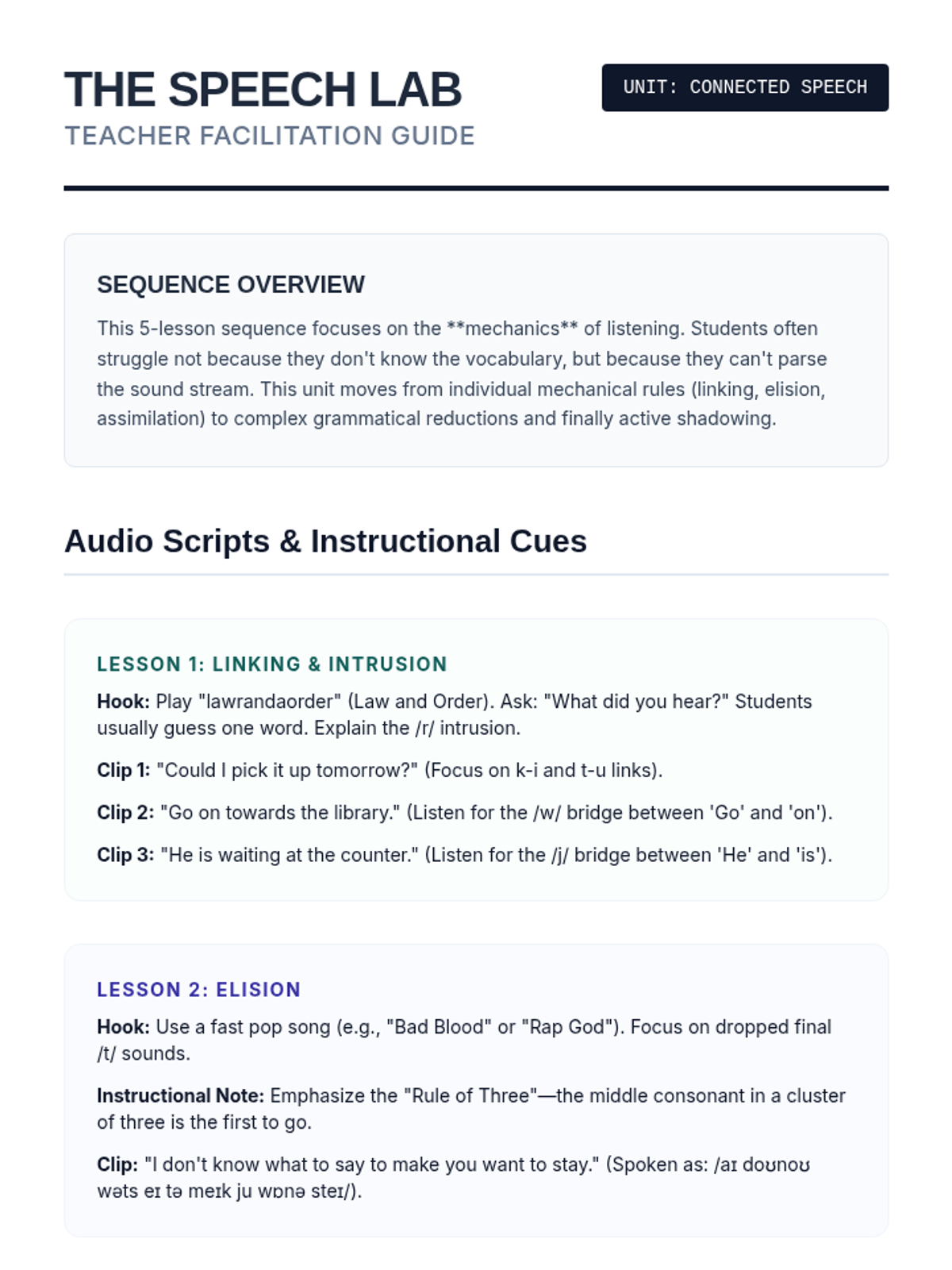
This lesson covers the phenomenon of elision, where sounds (particularly /t/ and /d/) disappear in rapid speech. Students practice listening to high-speed dialogues to identify words that have been 'swallowed' by the speaker.
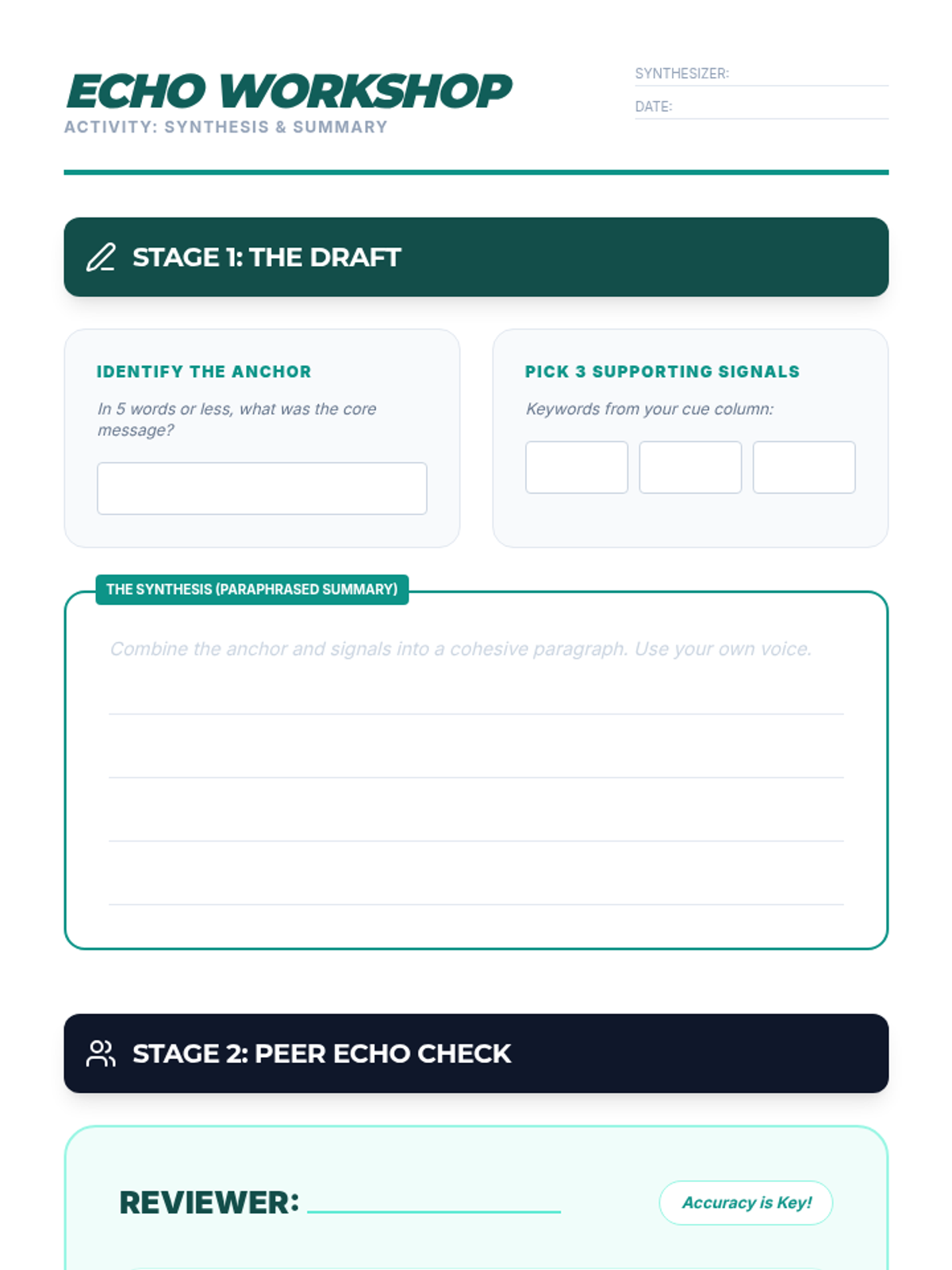
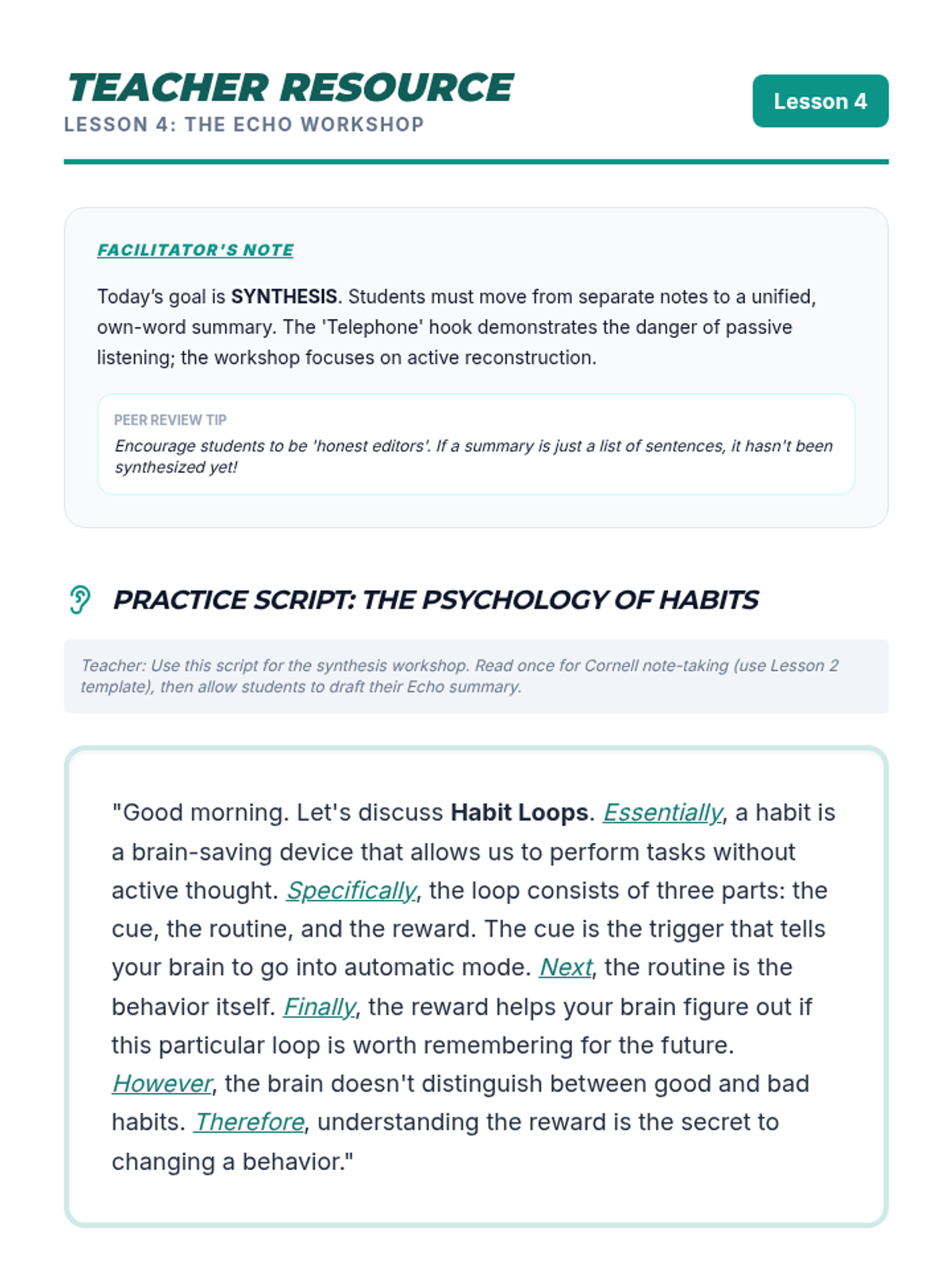
Learners practice reconstructing audio messages in their own words, focusing on paraphrasing rather than direct quotation. Peer evaluation ensures accuracy and comprehension through a synthesis-based workshop.
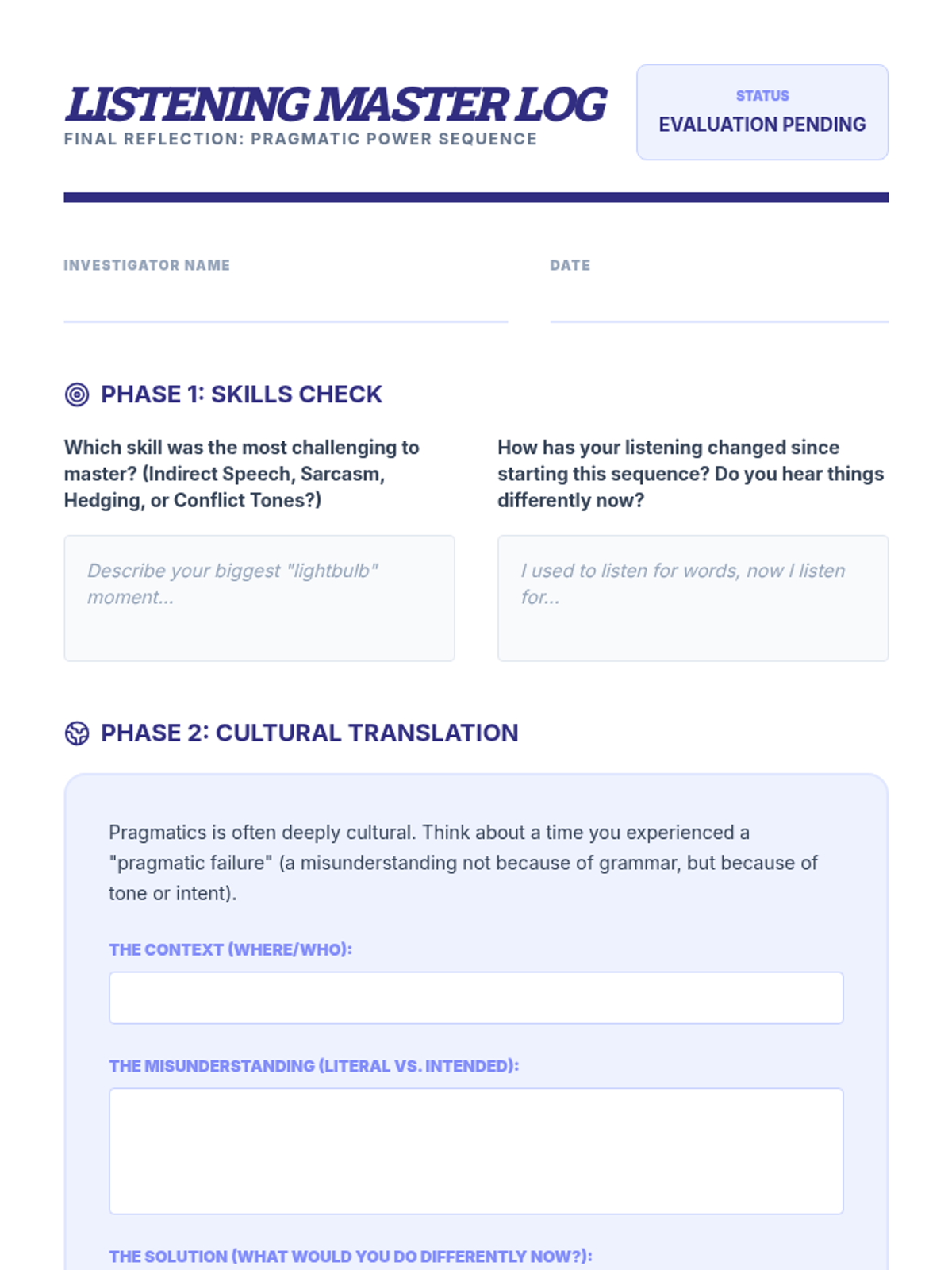
An exploration of how cultural backgrounds influence communication styles, focusing on silence, interruption, and pragmatic markers.
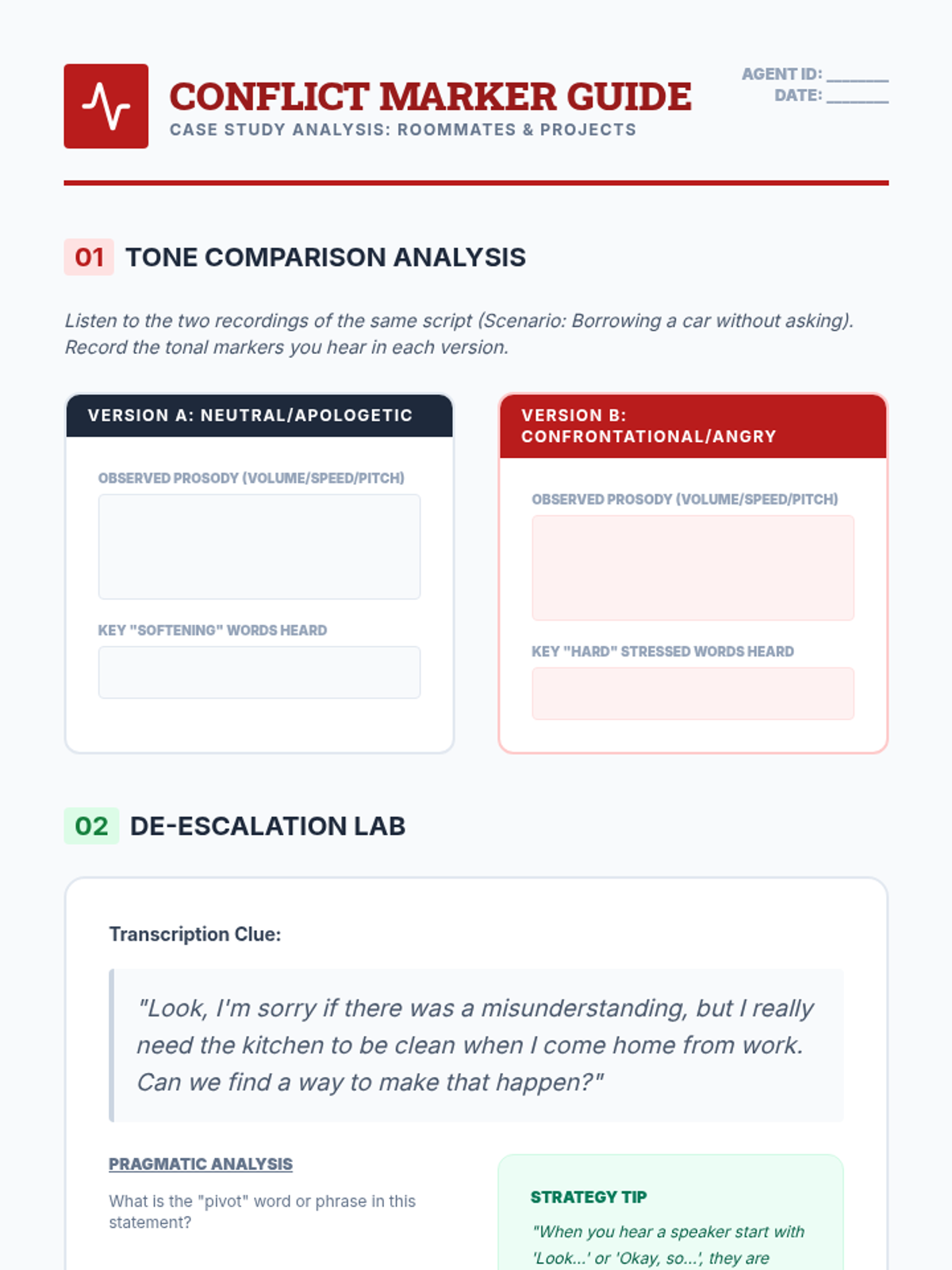
Students analyze tone in high-stakes social interactions, identifying markers of escalation, de-escalation, and negotiation in conflict scenarios.
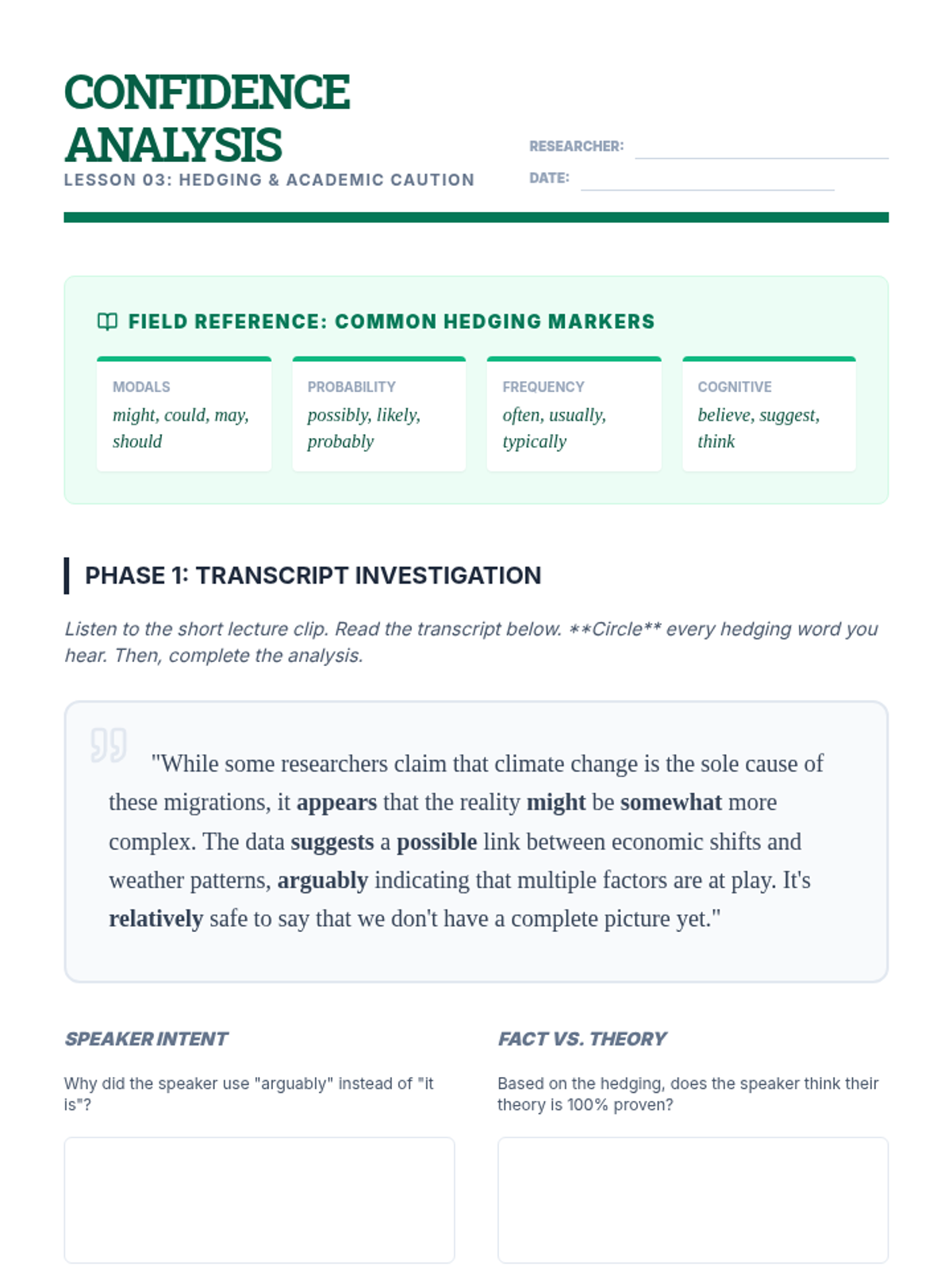
Students learn to identify hedging language (e.g., 'somewhat', 'it appears') to gauge a speaker's confidence and distinguish between facts and cautious opinions.
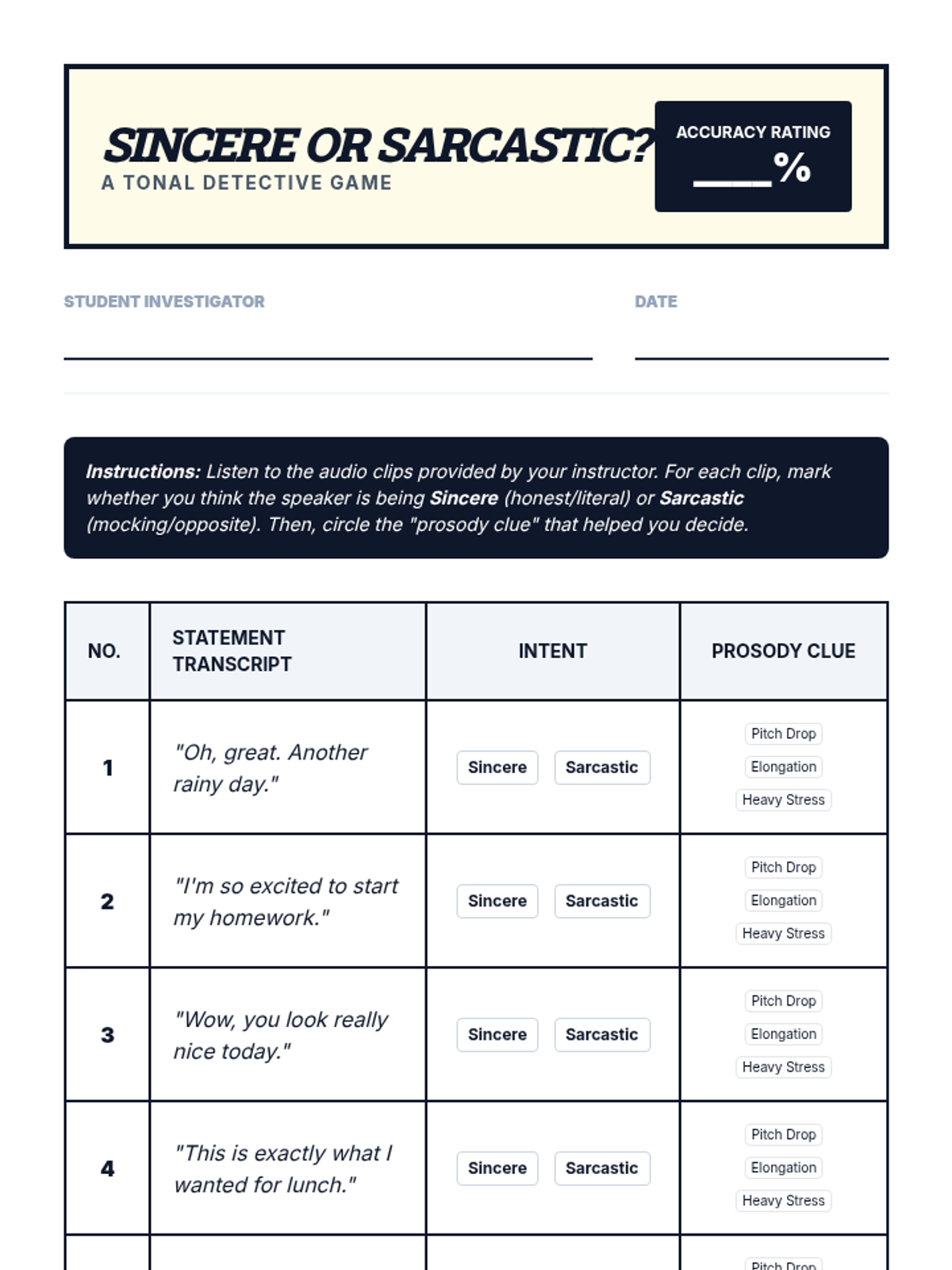
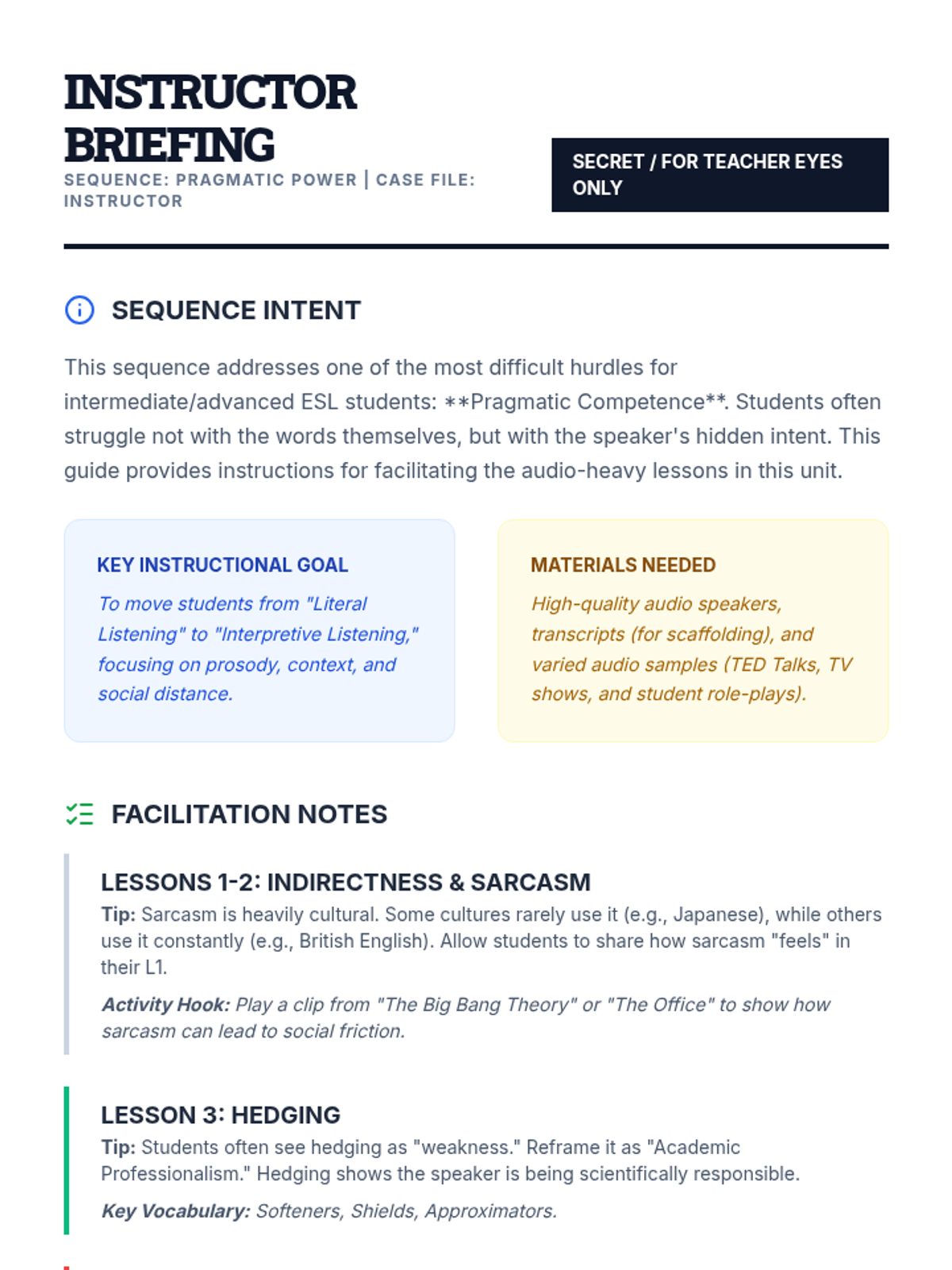
This lesson focuses on identifying sarcasm and irony through prosody, pitch, and context clues, helping students avoid literal misinterpretations.
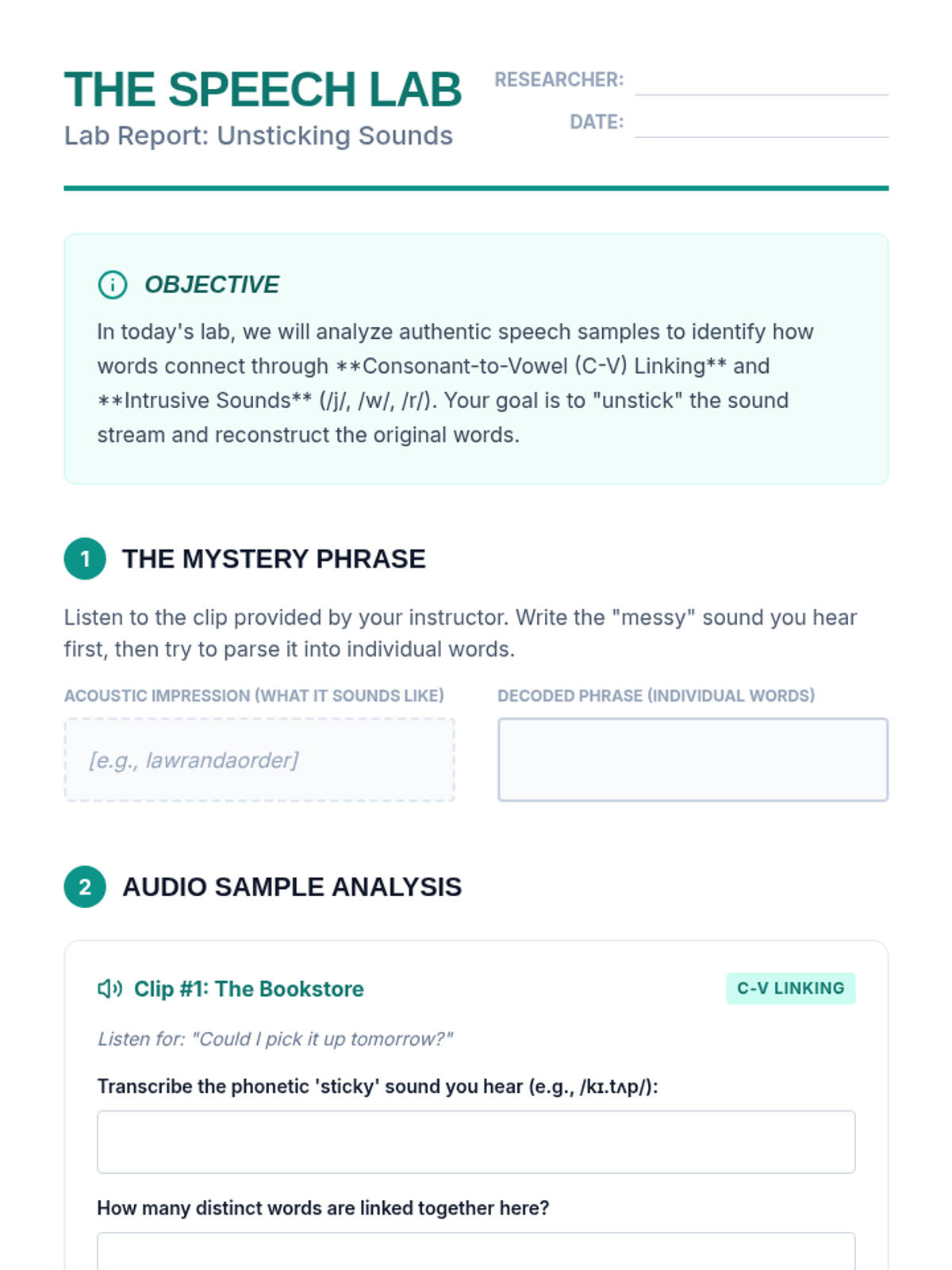
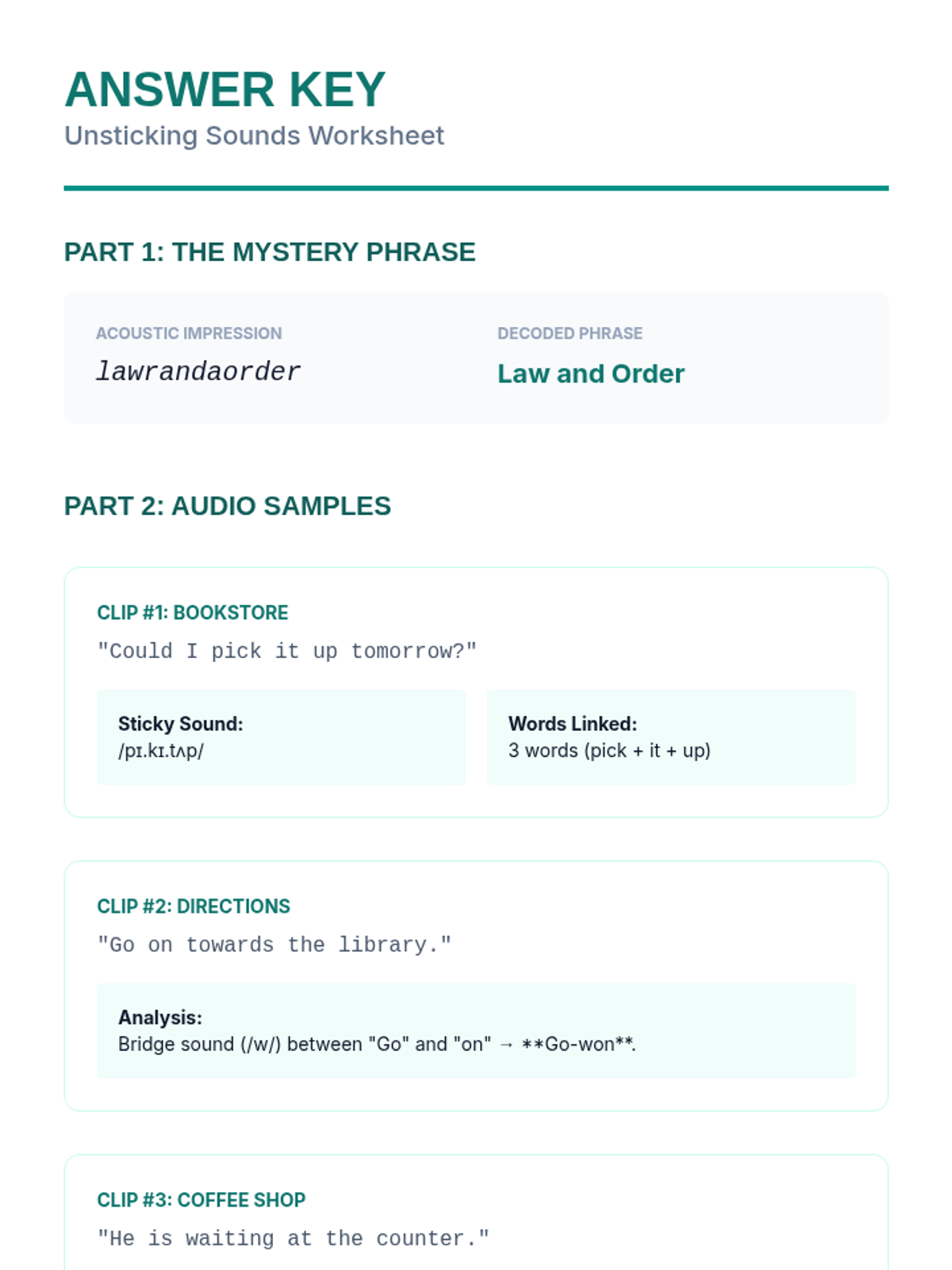
Students investigate how words flow together in natural speech, specifically focusing on consonant-vowel linking and intrusive sounds (/r/, /w/, /j/). They analyze audio samples to 'unstick' connected words.
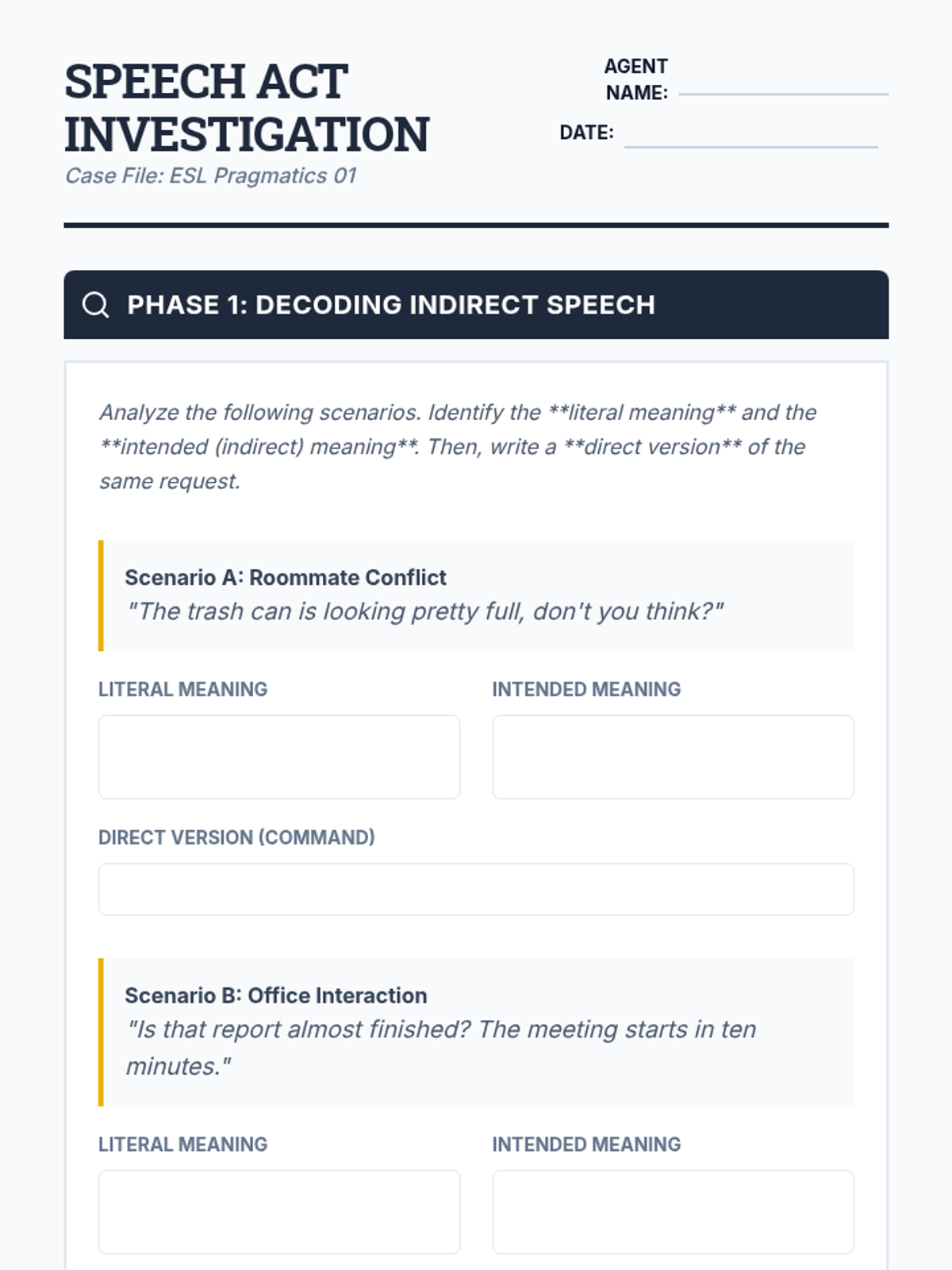
Students explore the difference between what is said and what is meant by analyzing indirect speech acts and politeness strategies in everyday scenarios.
Students synthesize a full mini-lecture into a coherent summary, identifying stance and major takeaways.
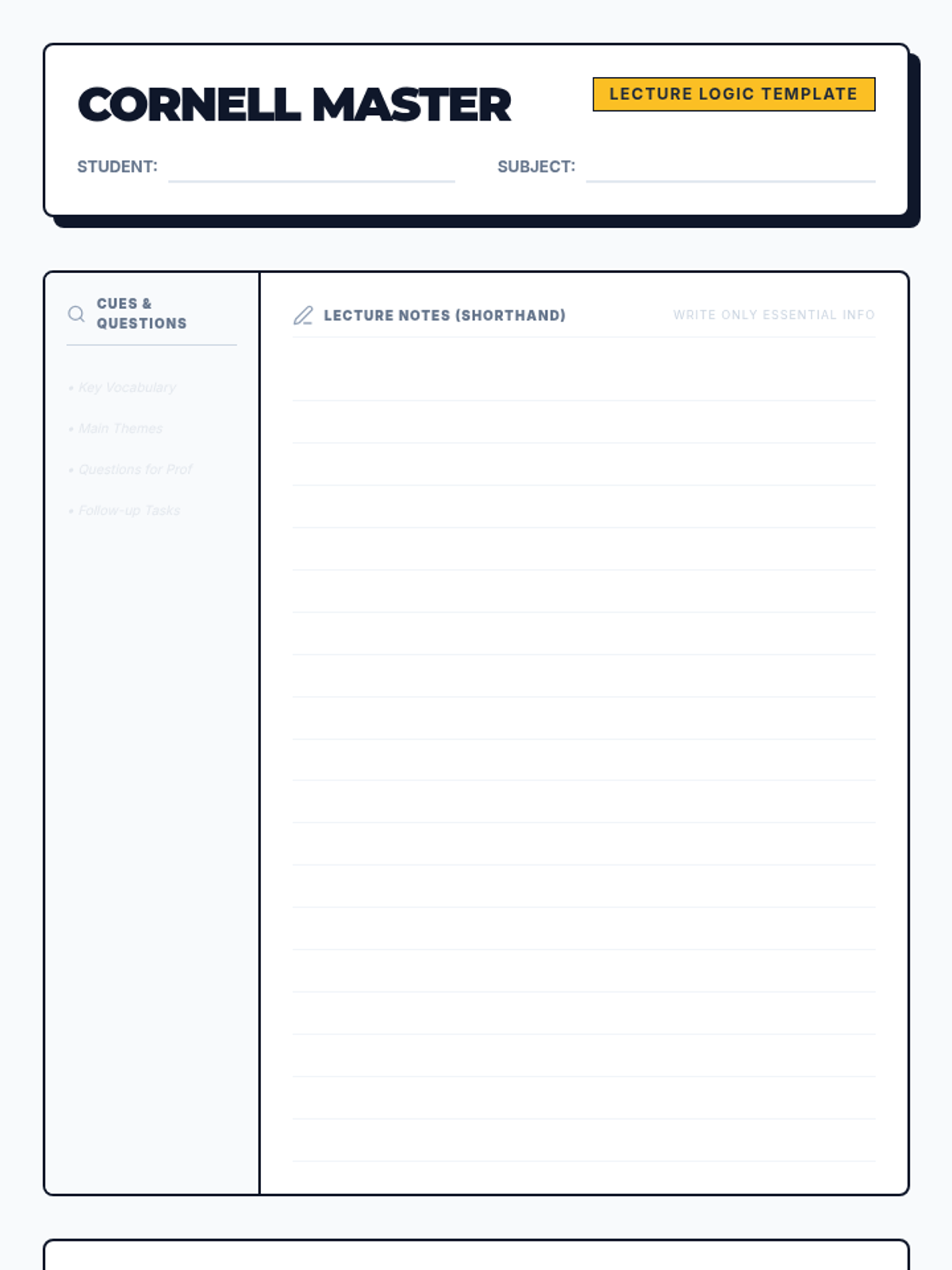
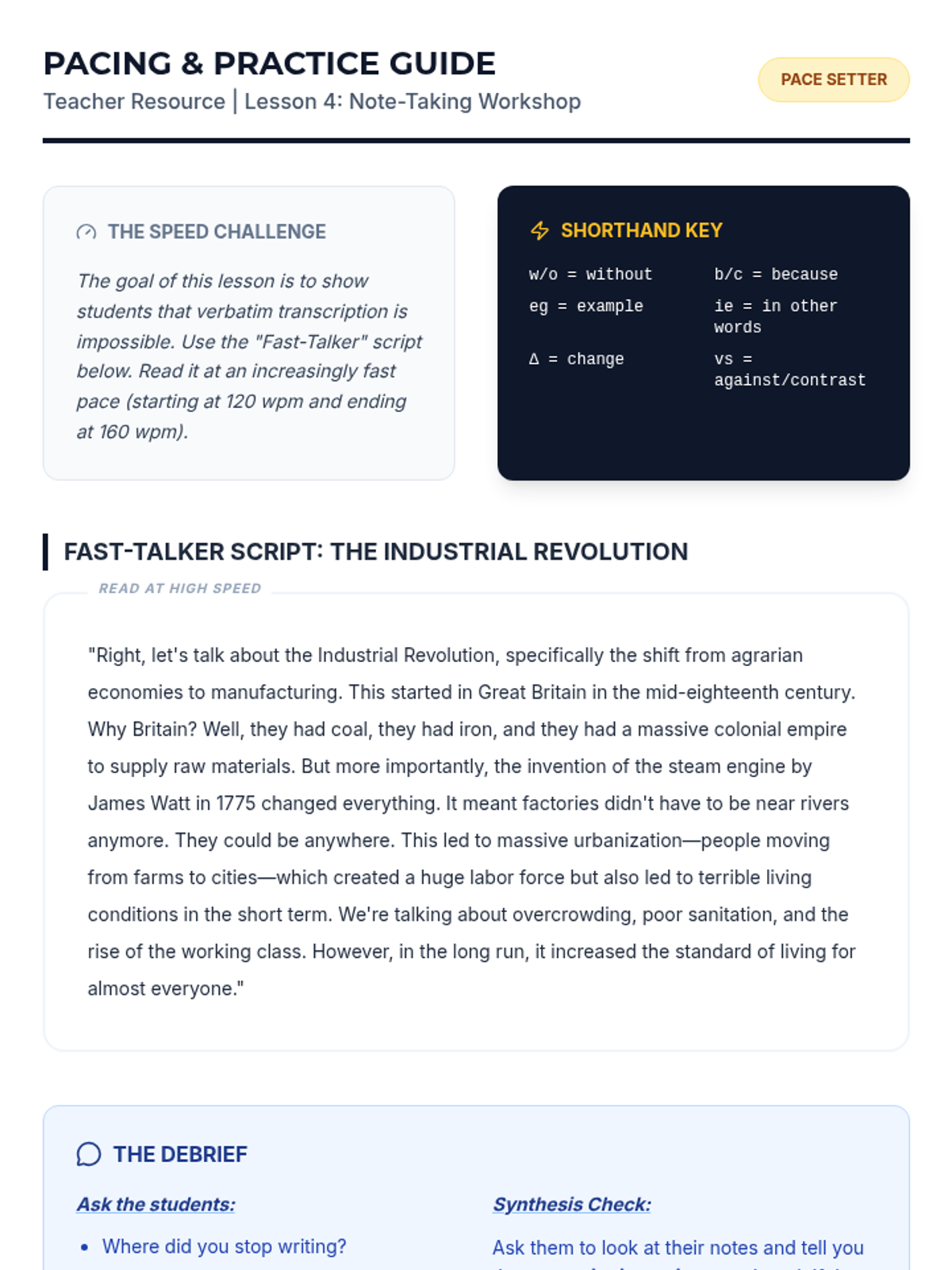
A workshop on the Cornell, Outline, and Mapping methods, emphasizing shorthand and relationship visualization.
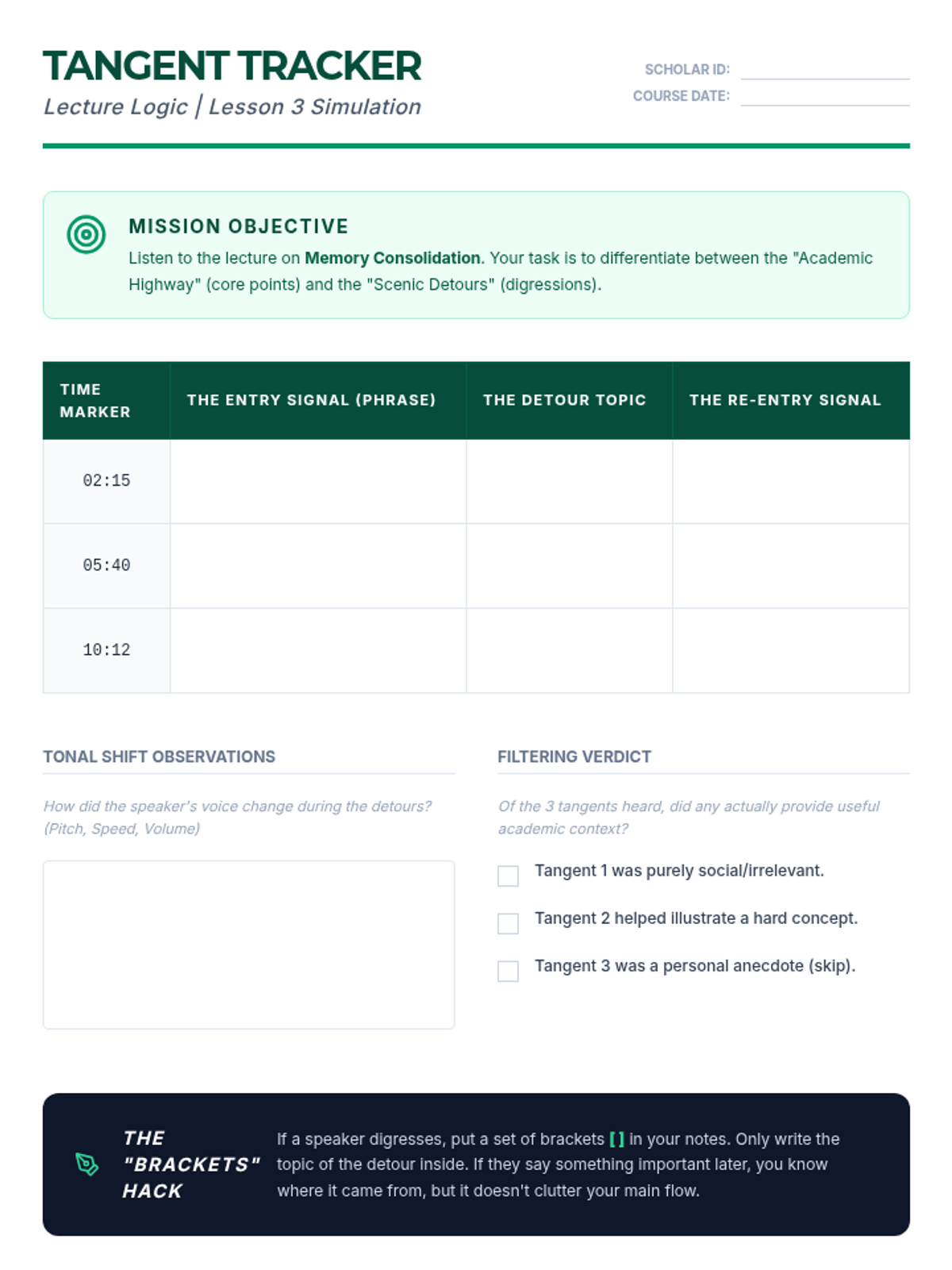
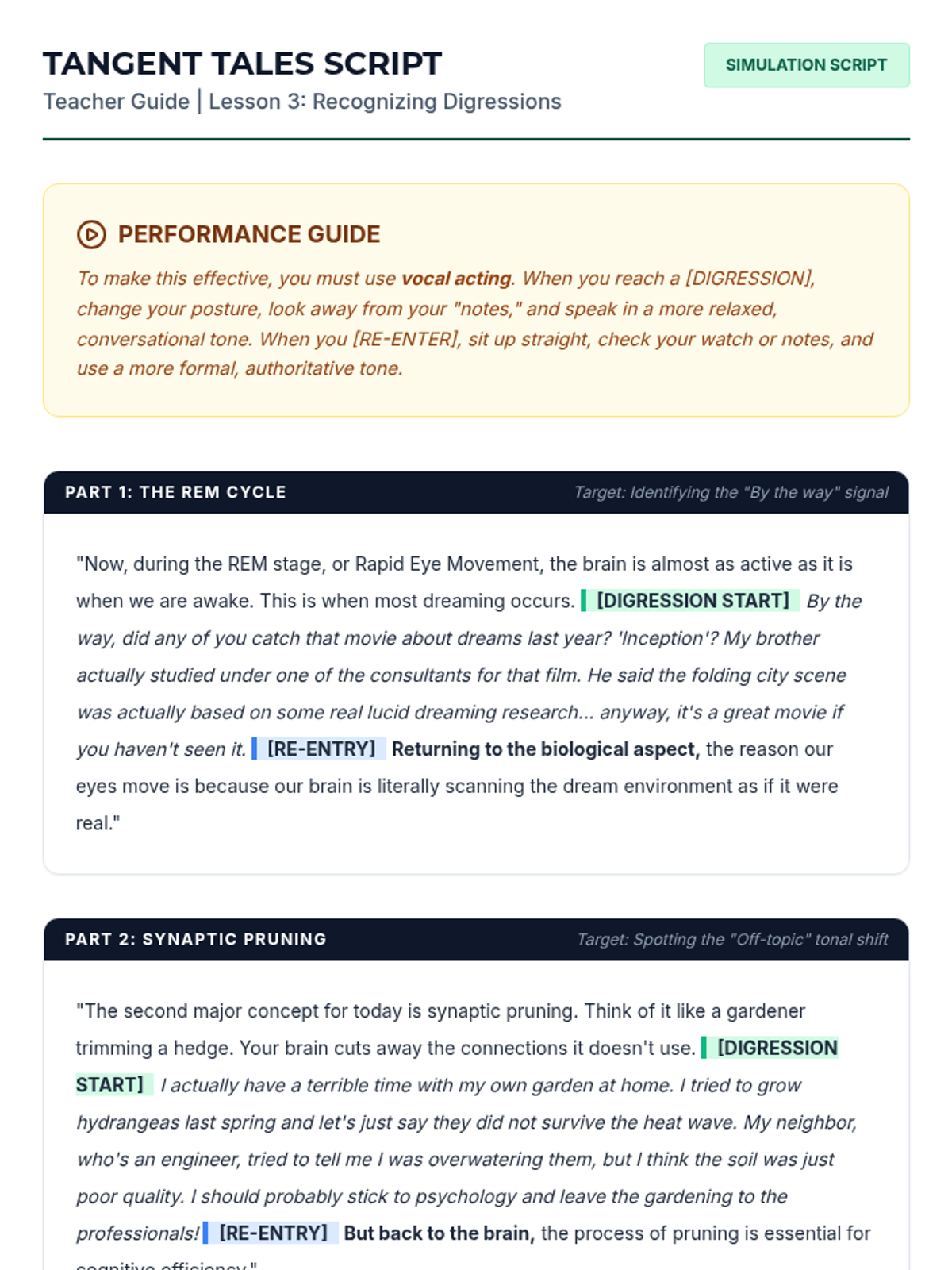
This lesson trains students to identify tonal shifts and linguistic markers that signal tangents or personal asides.
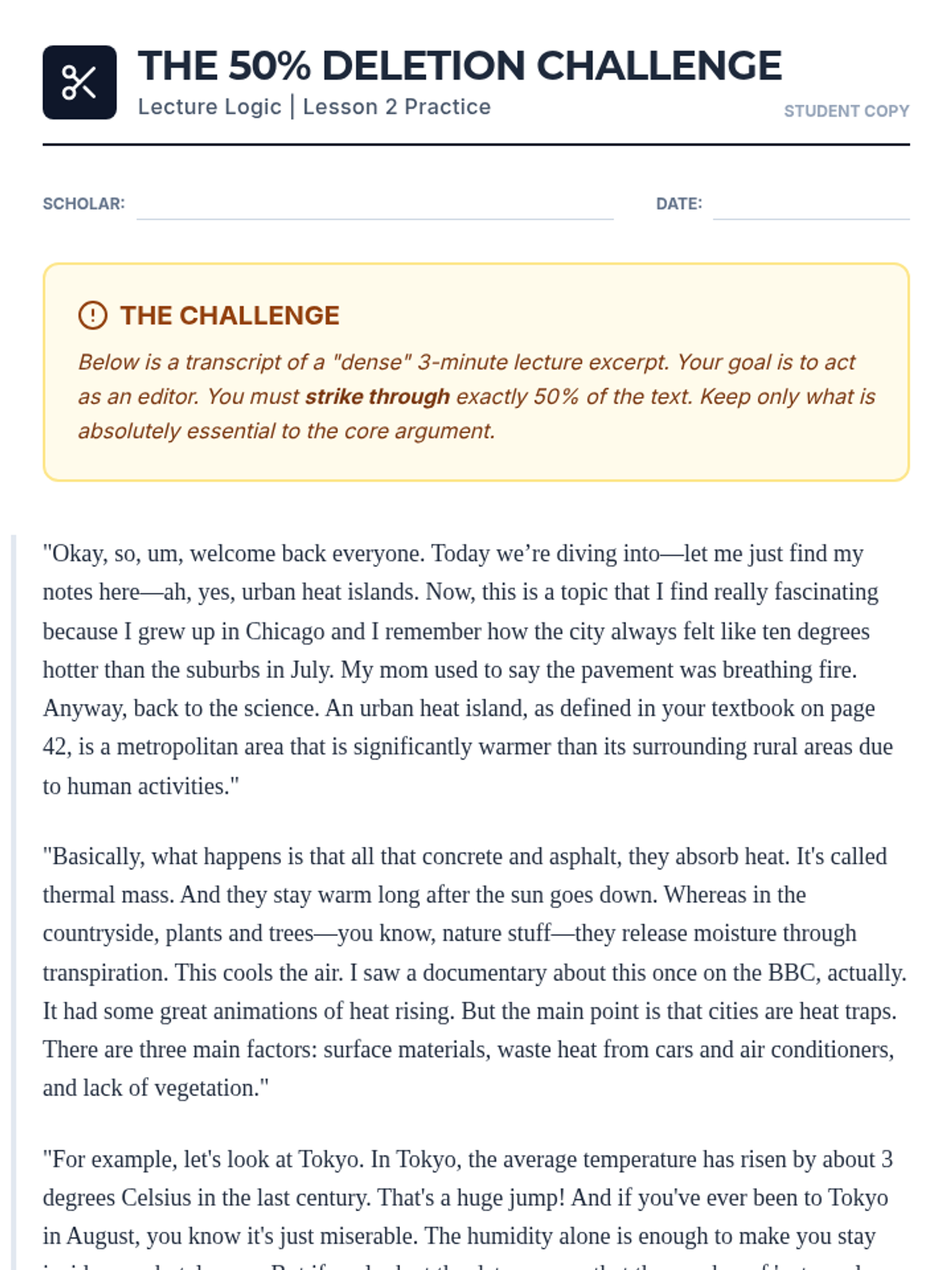
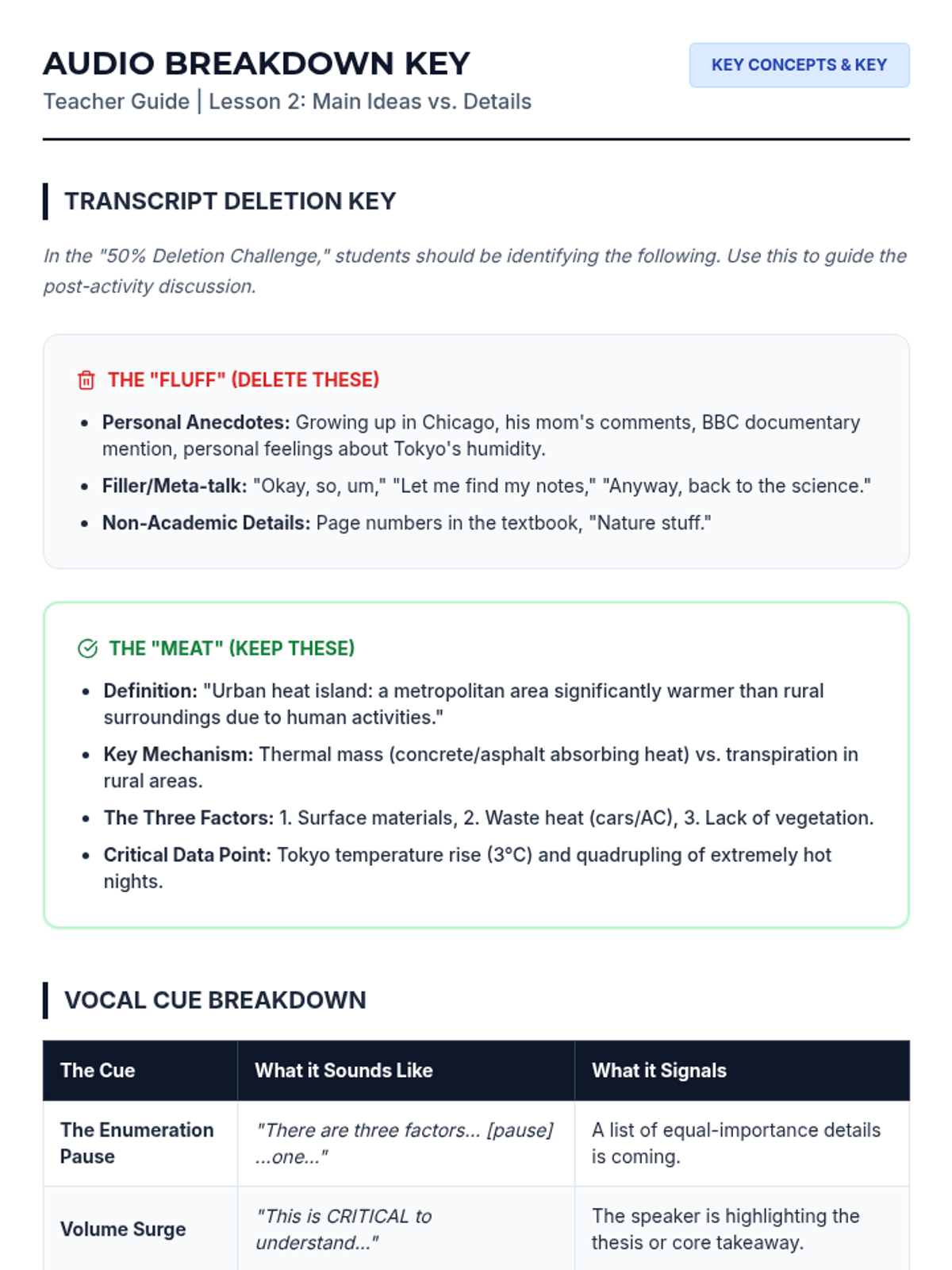
Learners differentiate between core arguments and supporting examples using vocal cues and structural patterns.