Data representation, distributions, and statistical variability using sampling and inference techniques. Integrates probability models, compound events, bivariate patterns, and linear models to guide data-driven decision making.
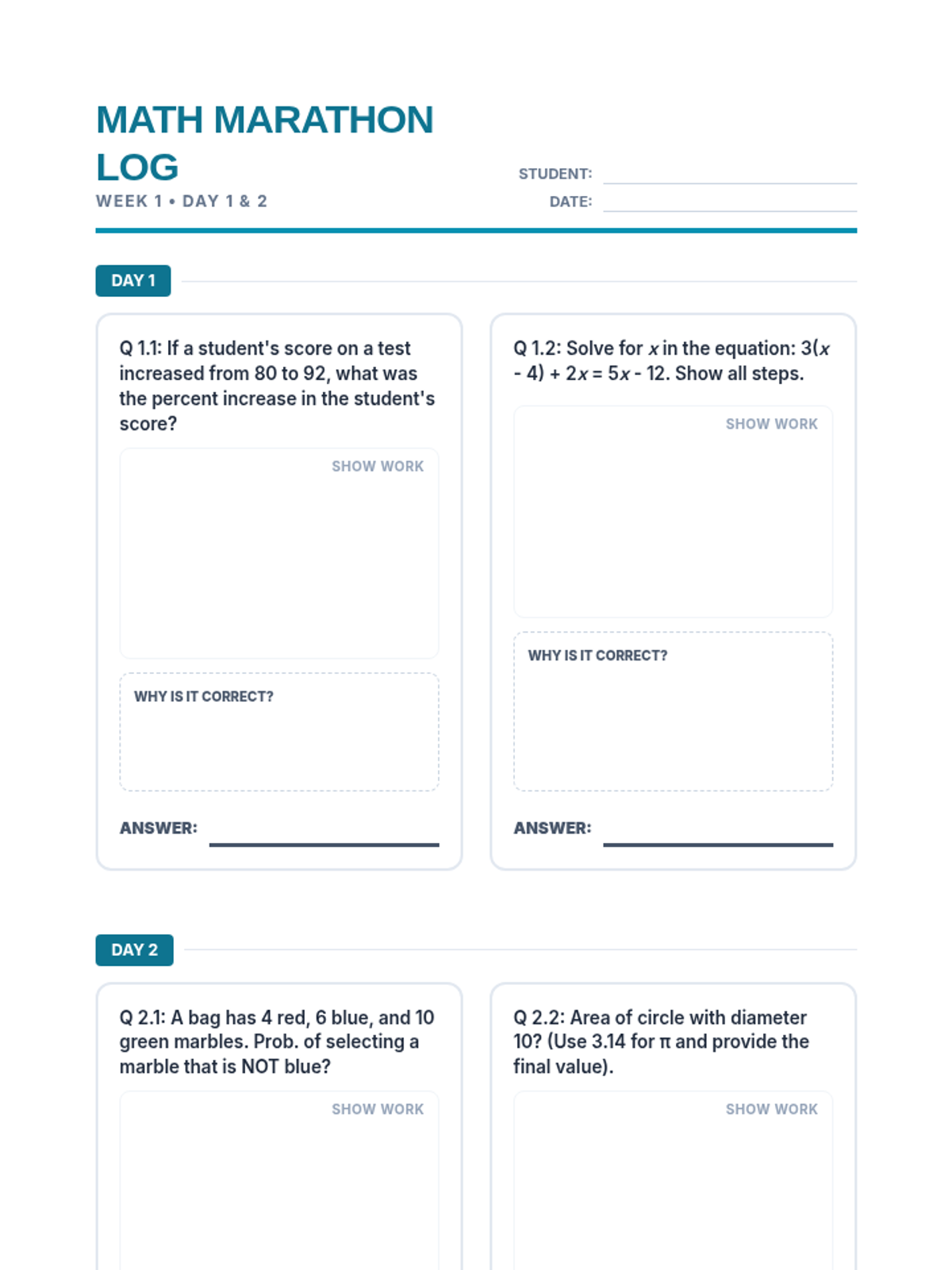
A comprehensive 15-day TSIA2 math review sequence featuring daily warm-up questions and weekly progress logs for students. The program covers all four TSIA2 domains through a "Math Marathon" theme.
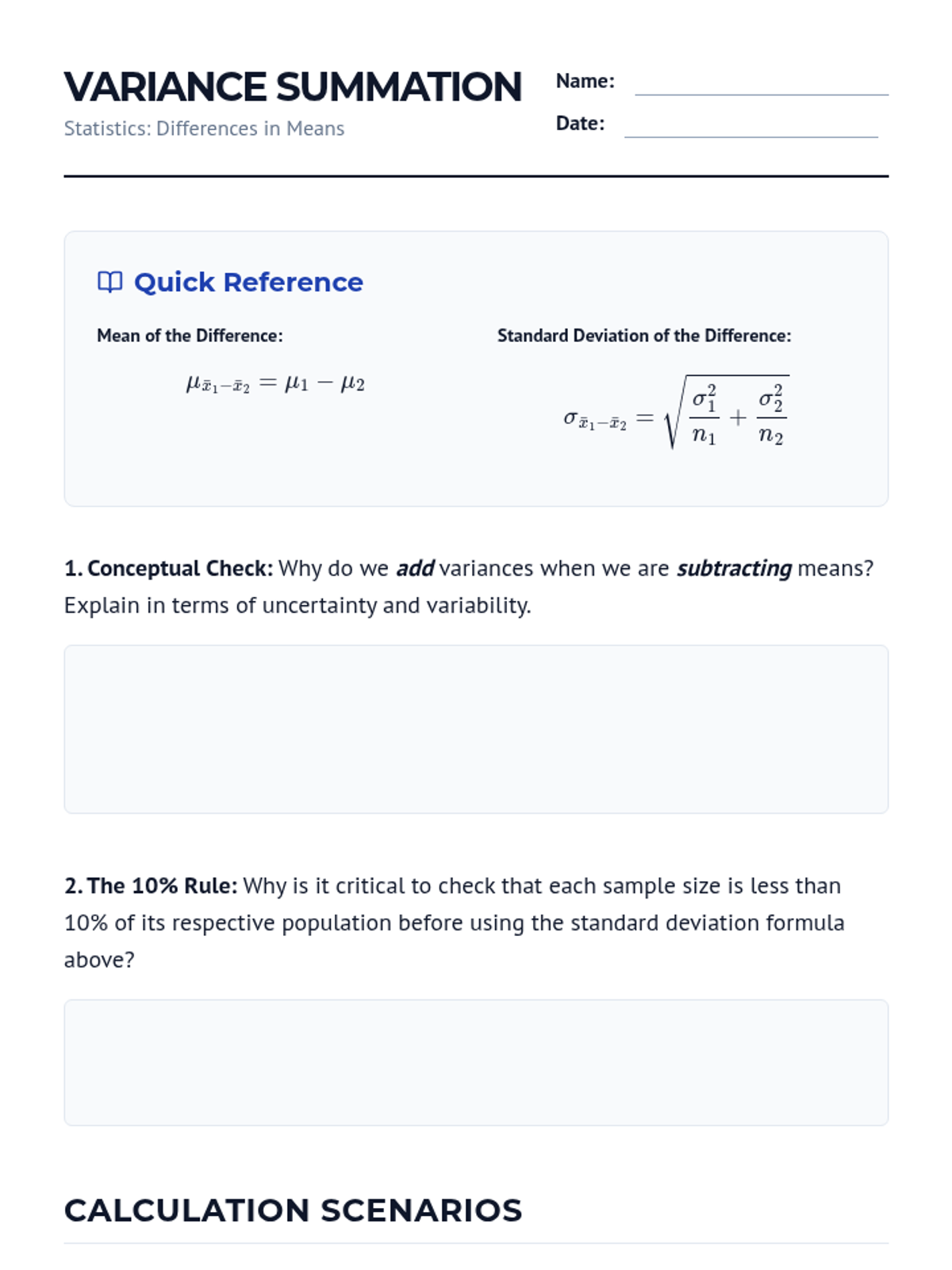
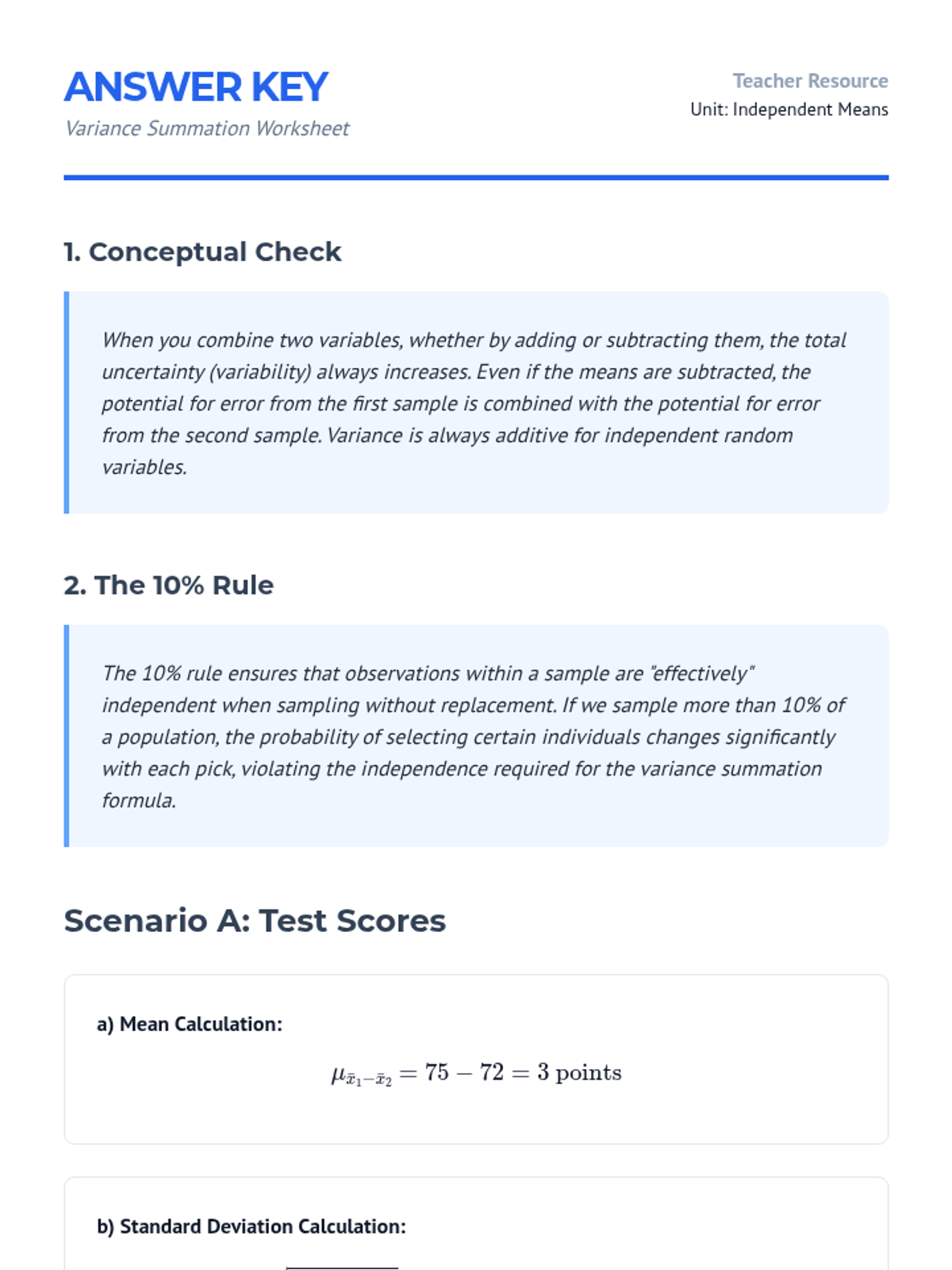
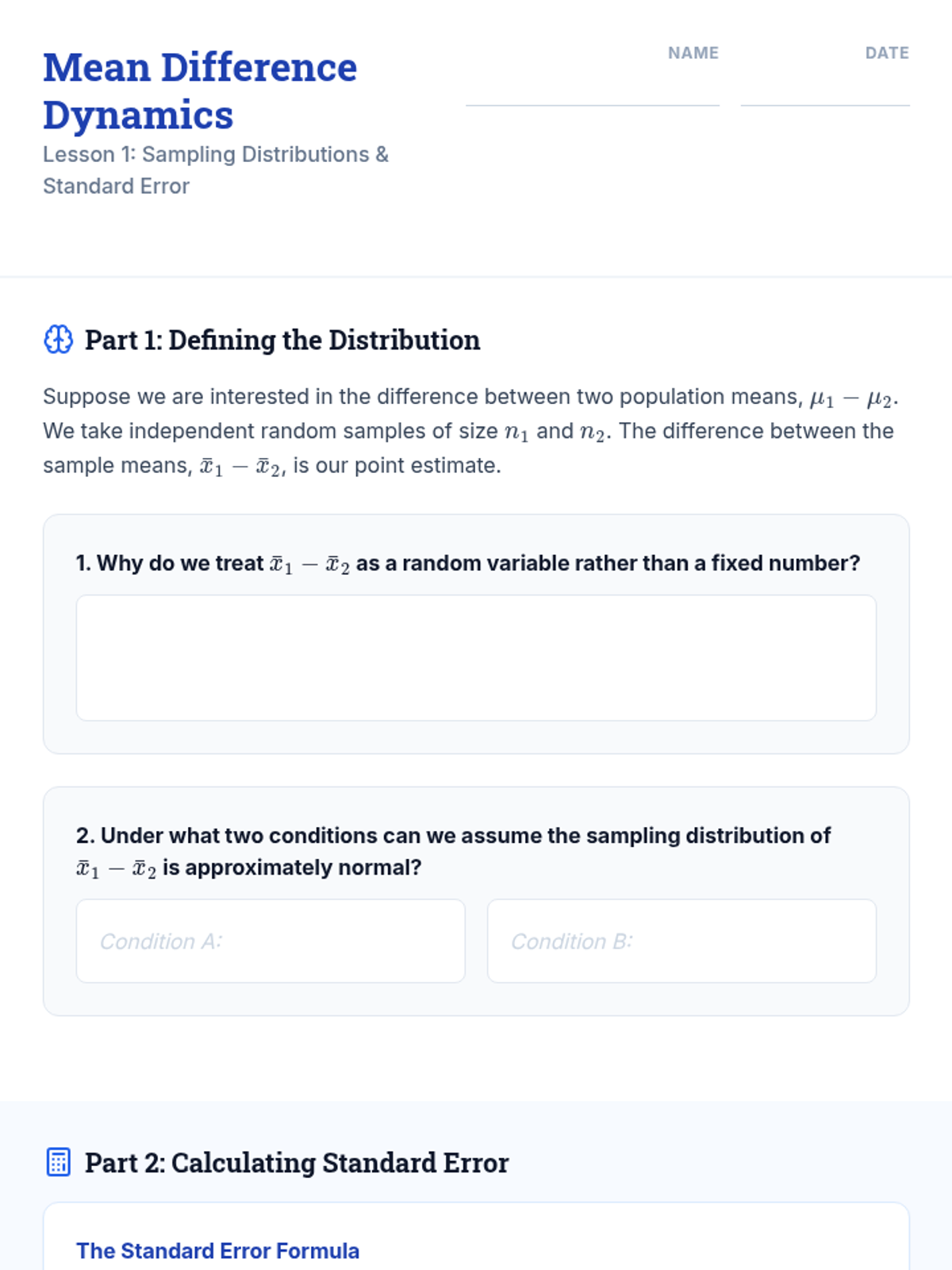
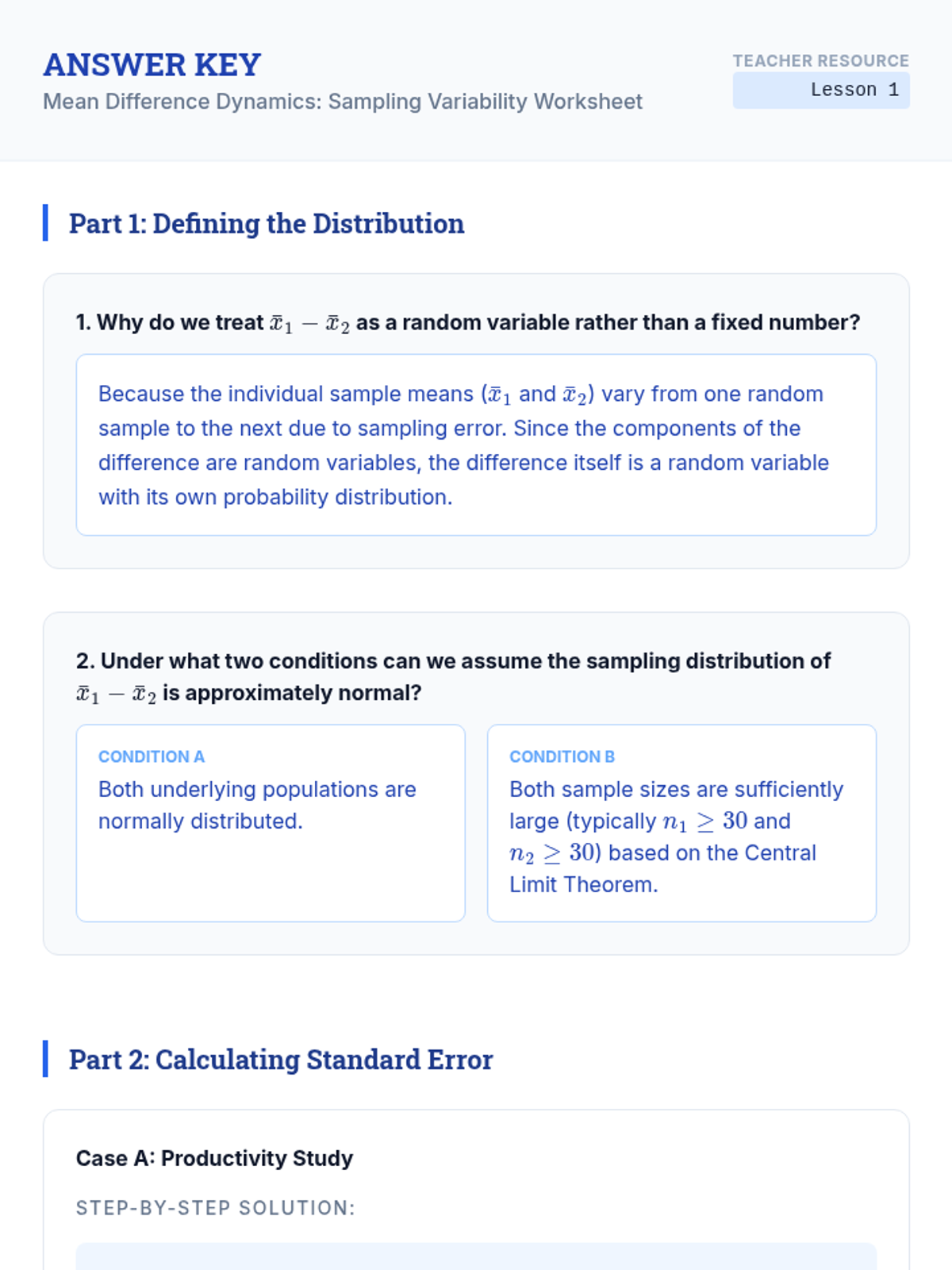
A comprehensive unit on comparing means from two independent populations. Students move from the theoretical foundations of sampling distributions to practical applications in clinical trials, mastering two-sample t-procedures, degrees of freedom, and robustness analysis.
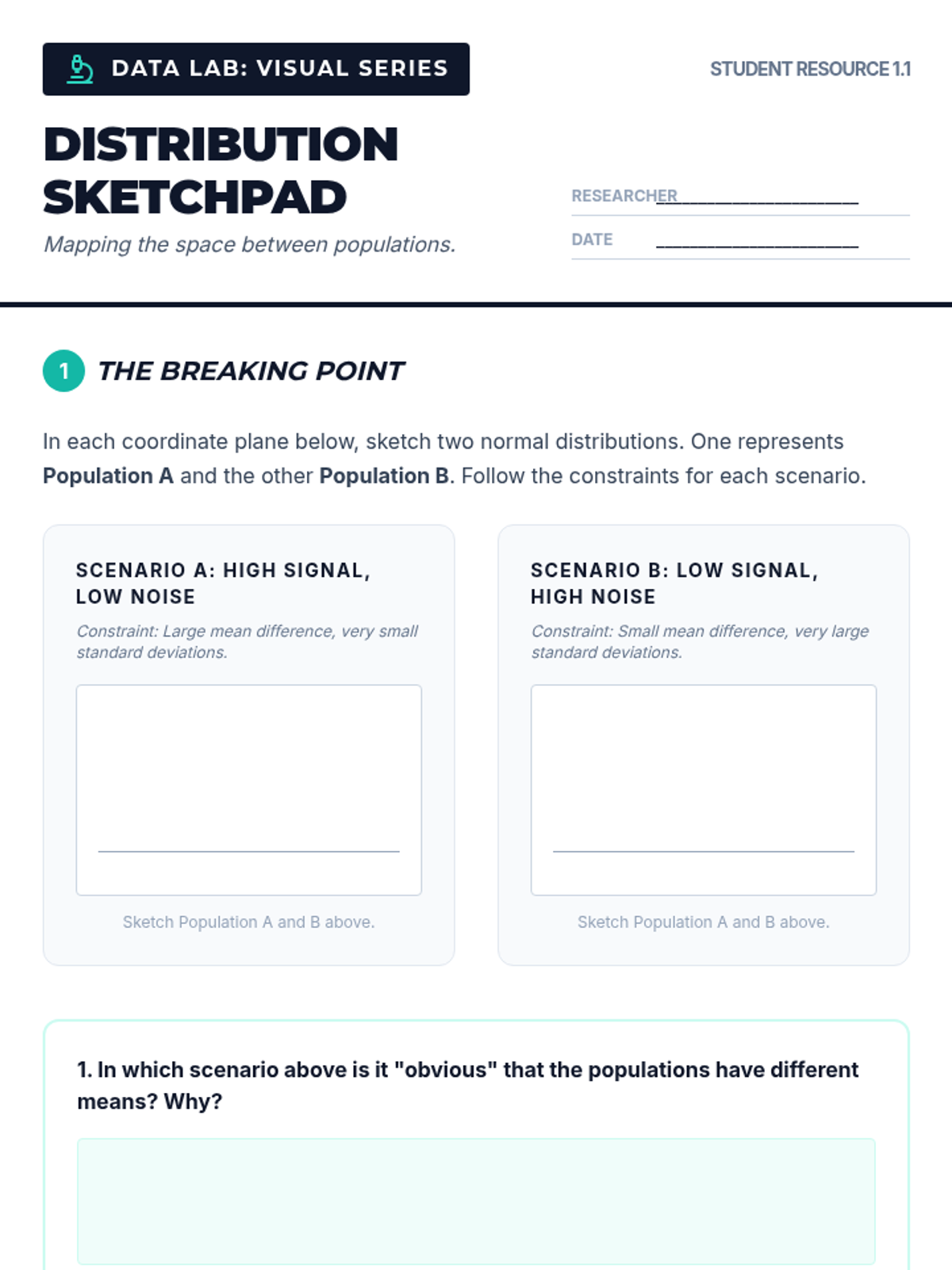
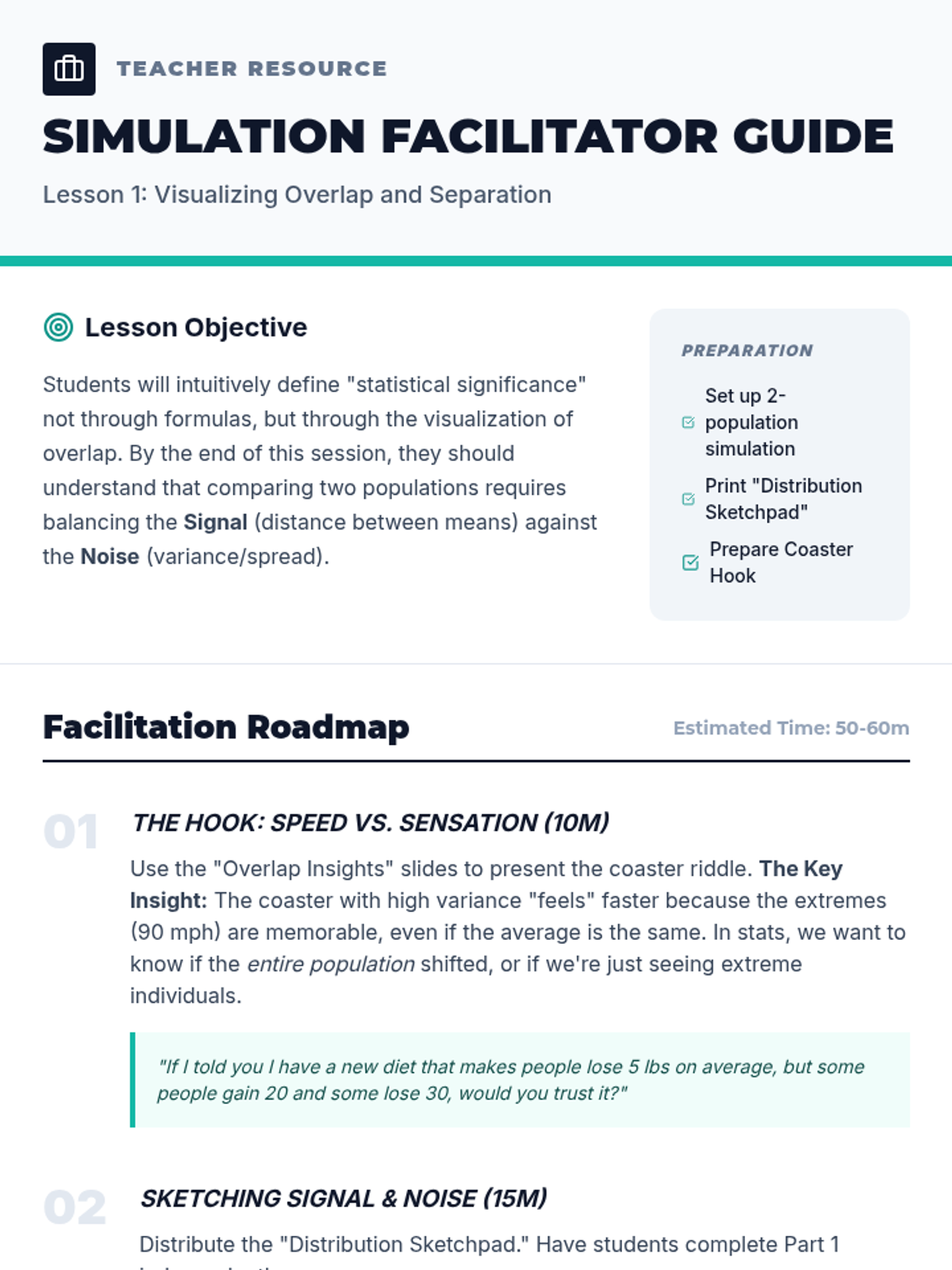
This sequence moves beyond binary decisions to quantify relationships using confidence intervals and effect sizes. Students explore population overlap, calculate margins of error for means and proportions, and learn to communicate statistical findings to non-technical audiences.
This sequence covers the comparison of means from two independent groups in quantitative data. Students explore the standard error of the difference, degrees of freedom complexities, hypothesis testing through clinical trials, confidence intervals, and the distinction between statistical and practical significance.
This sequence covers the theoretical and practical application of comparing means between two independent groups. Students progress from understanding sampling distributions and standard errors to performing pooled and unpooled t-tests, constructing confidence intervals, and verifying statistical assumptions using diagnostic tools.
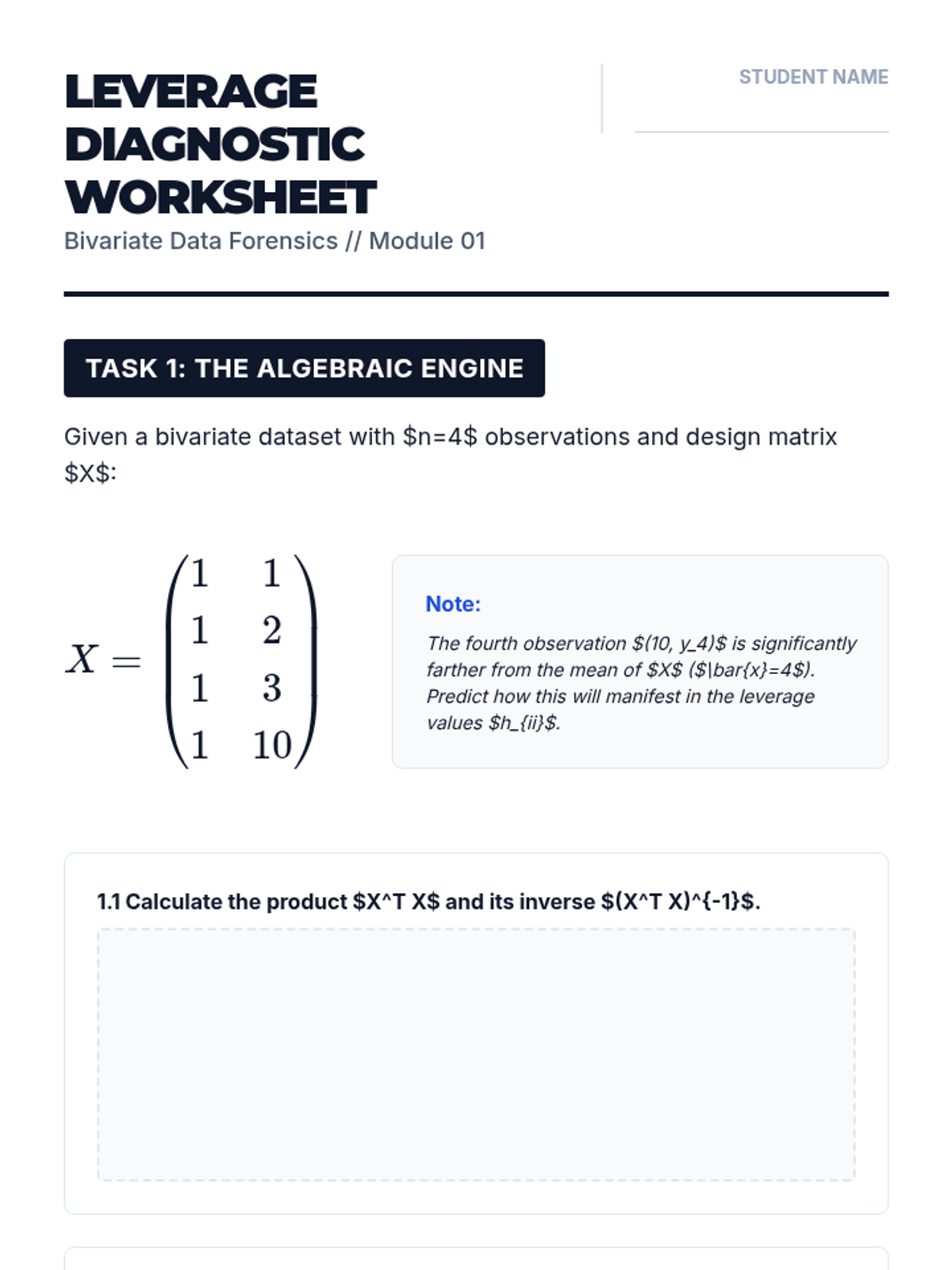
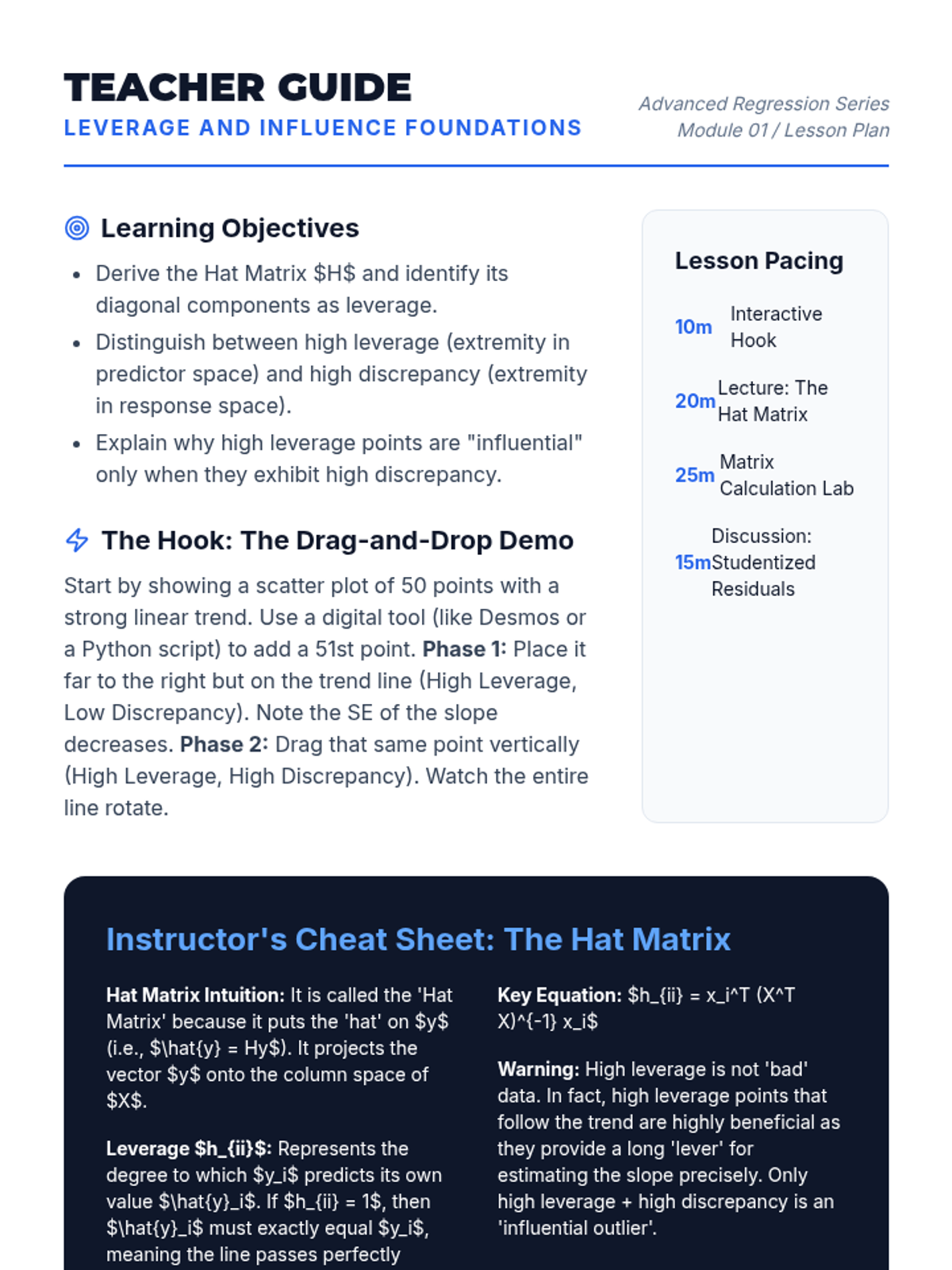
A graduate-level sequence exploring outlier detection, influence diagnostics, and robust regression techniques. Students will progress from identifying anomalies using leverage and Cook's Distance to implementing robust algorithms like RANSAC and M-estimators.
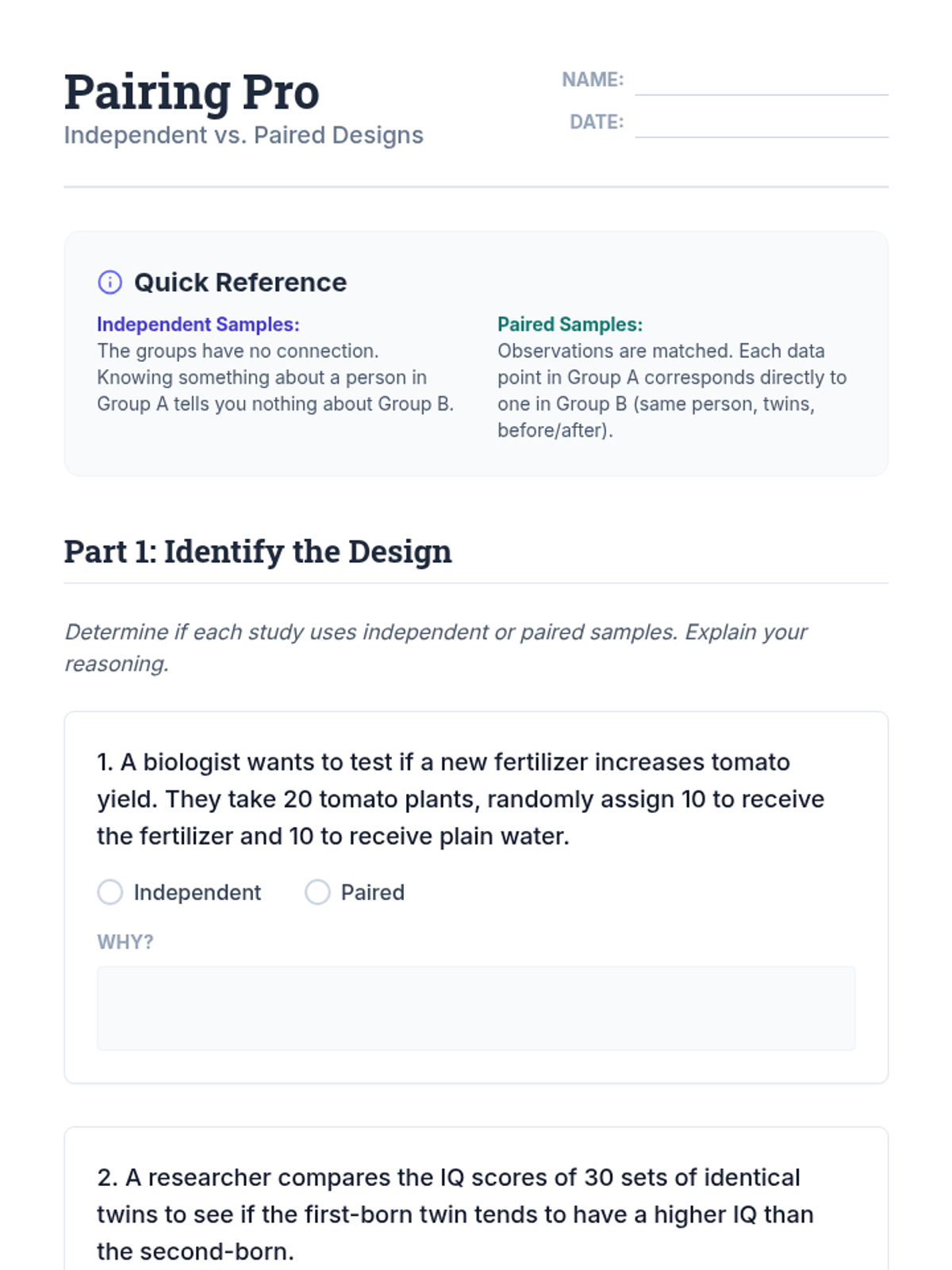
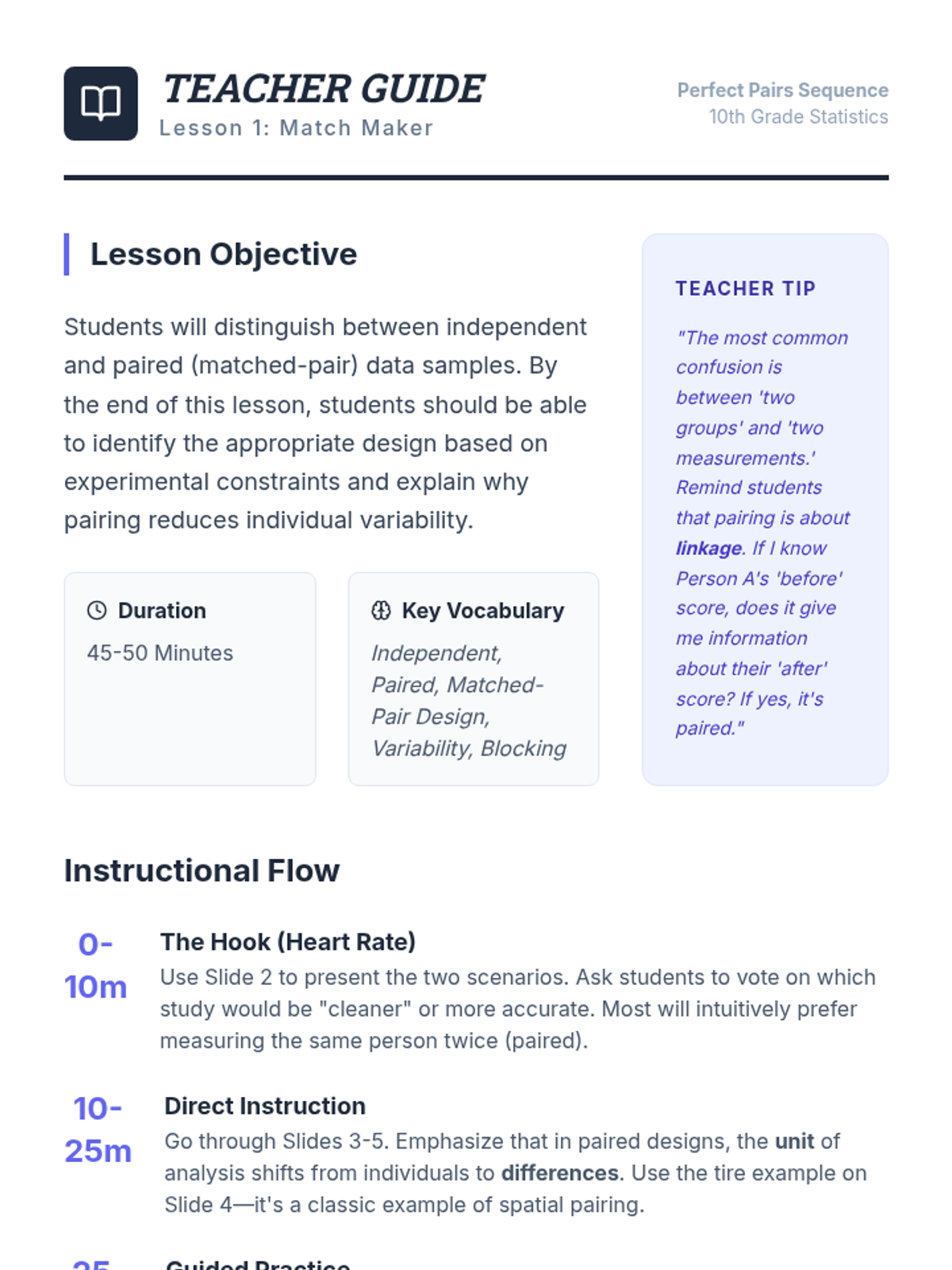
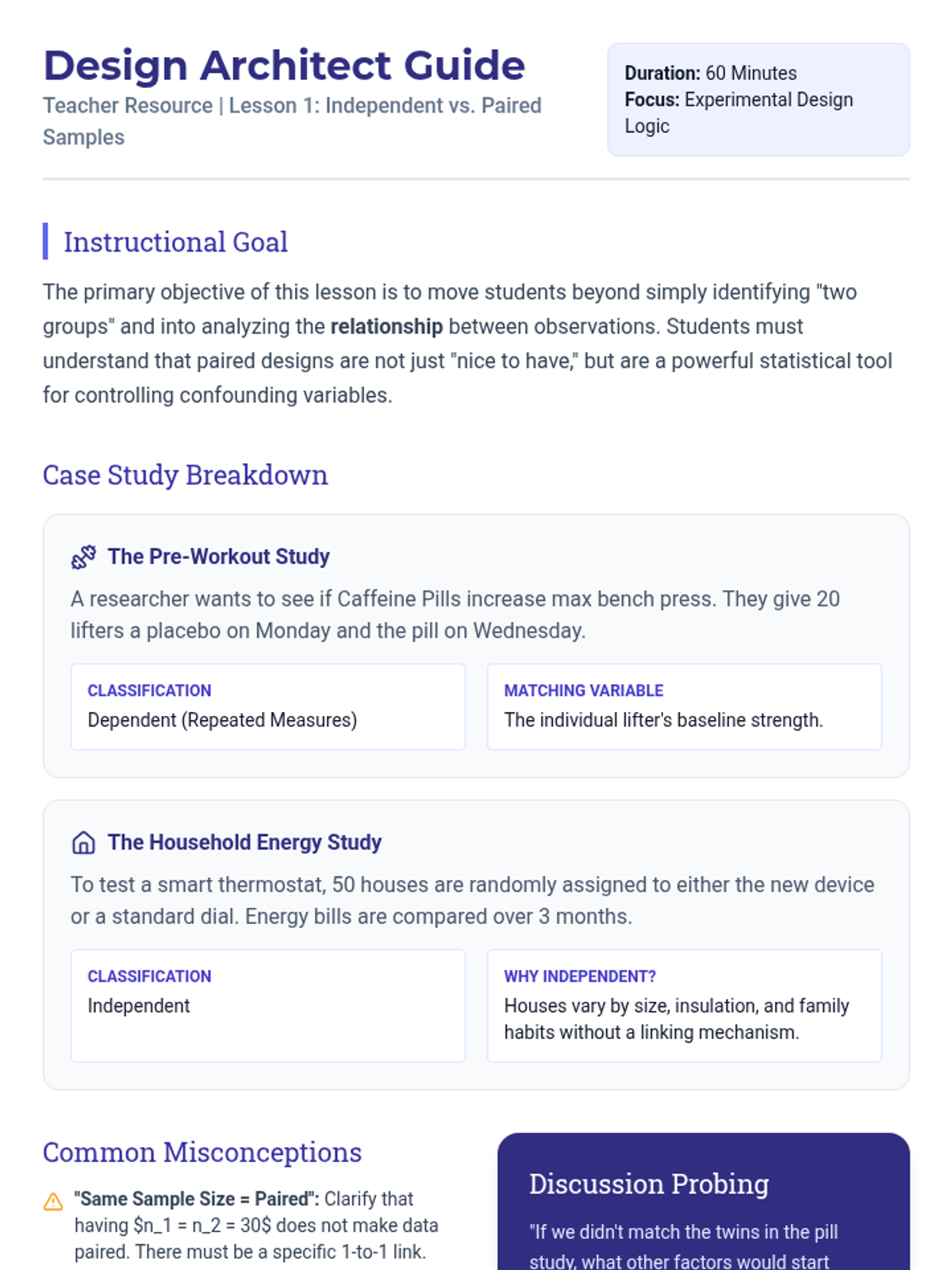
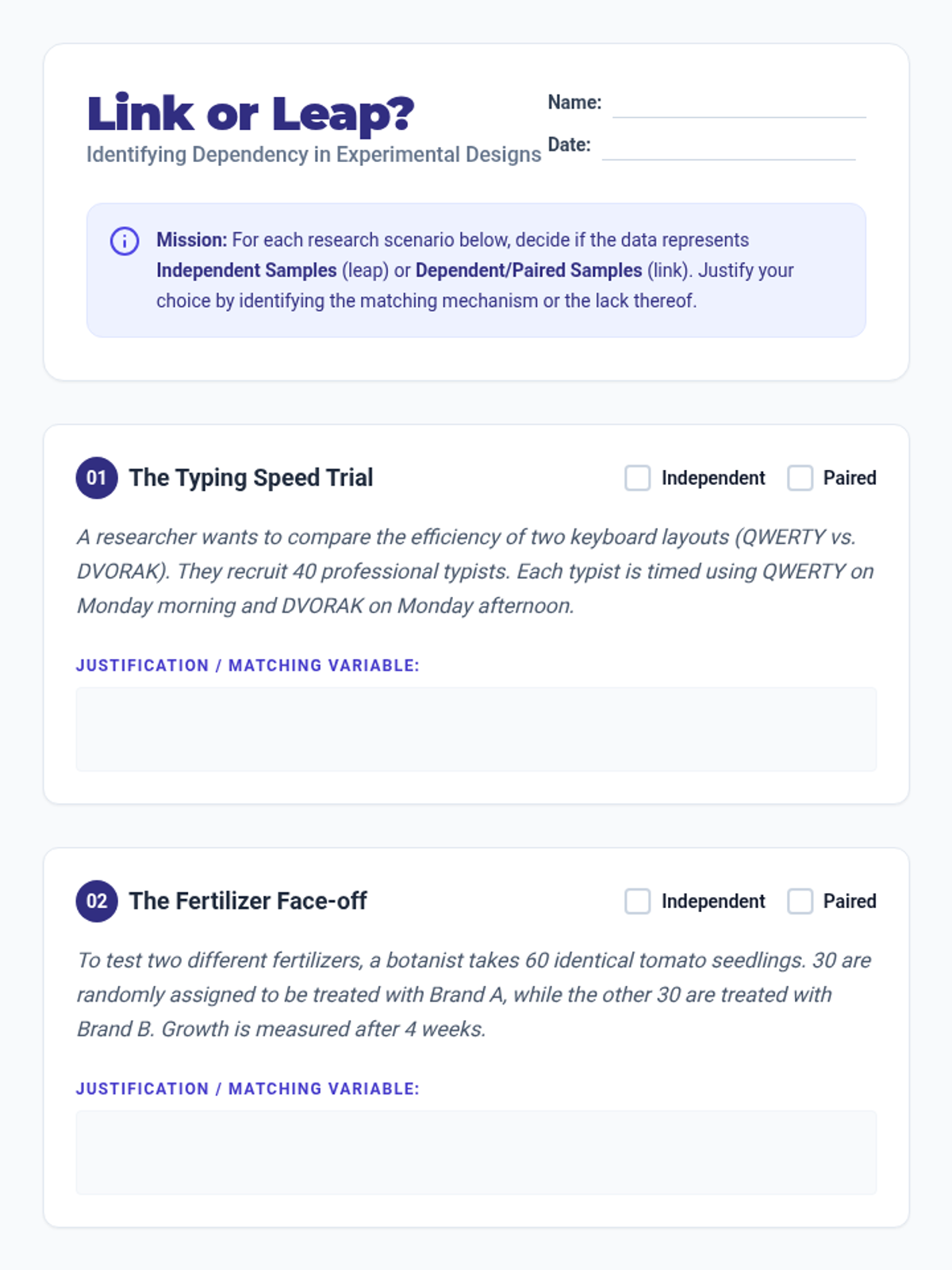
This sequence explores the distinction between independent and paired samples in statistics. Students learn to identify matched-pair designs, calculate paired differences, conduct hypothesis tests for means of differences, and understand how pairing increases statistical power by reducing variability.
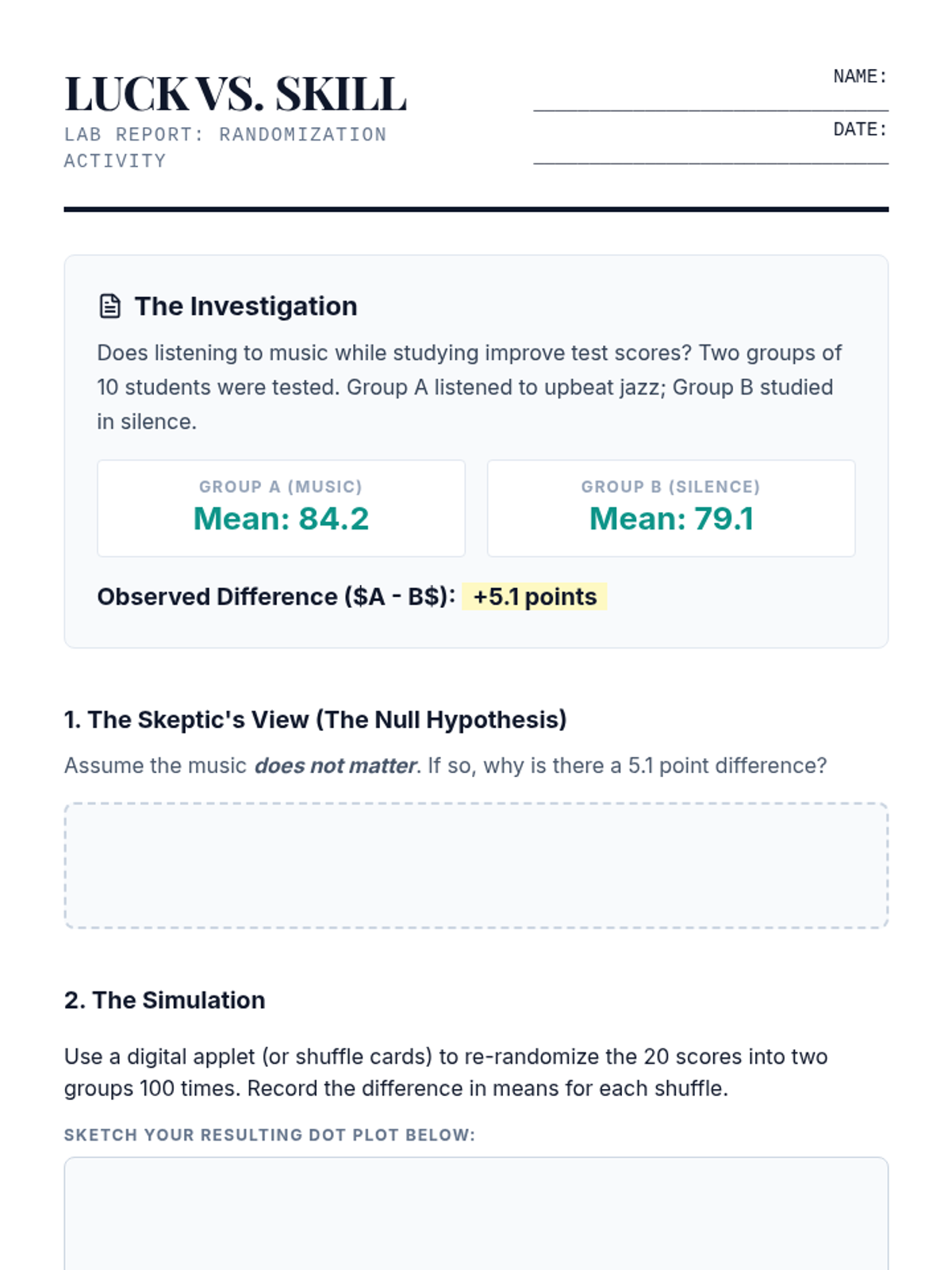
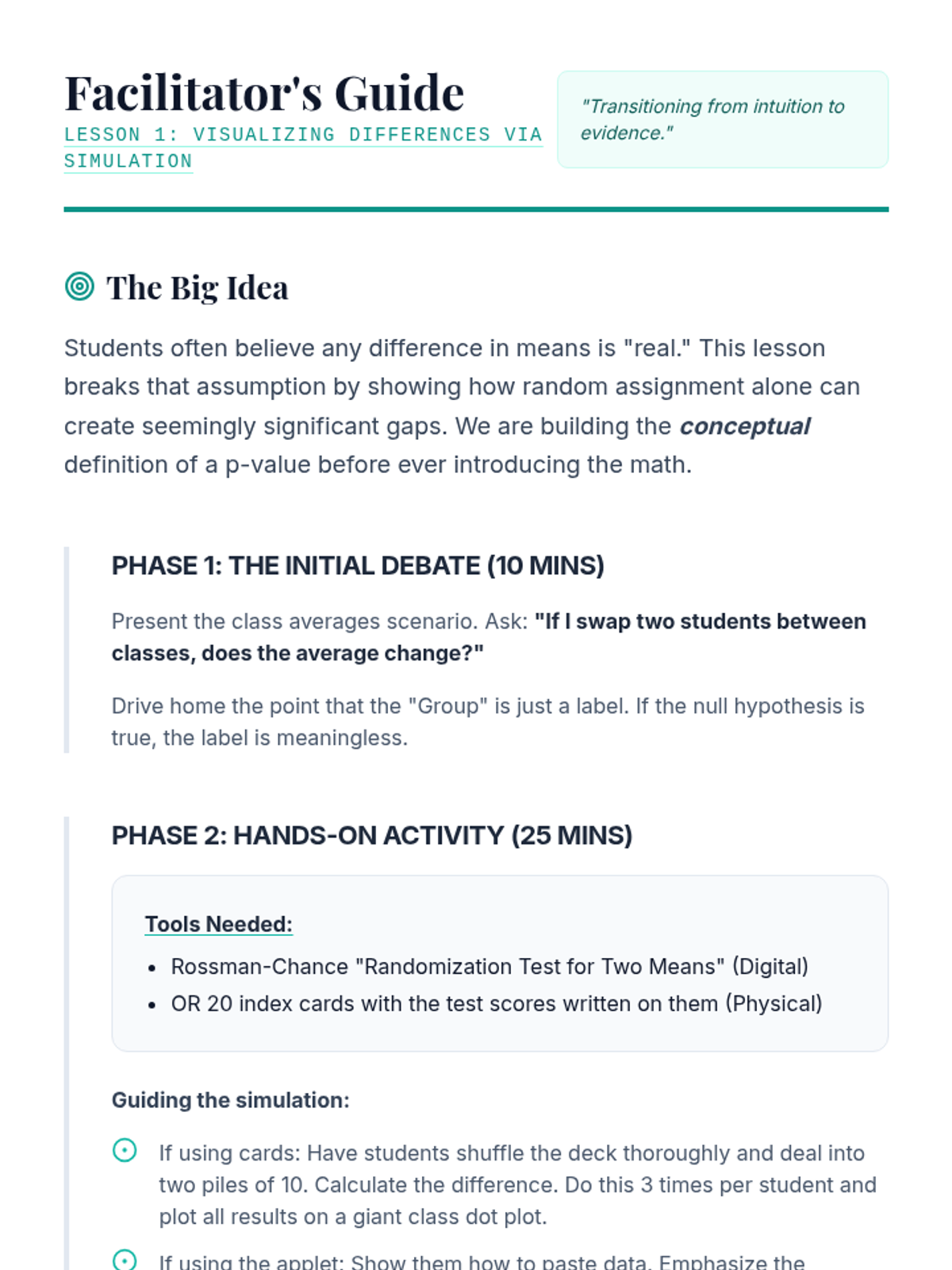
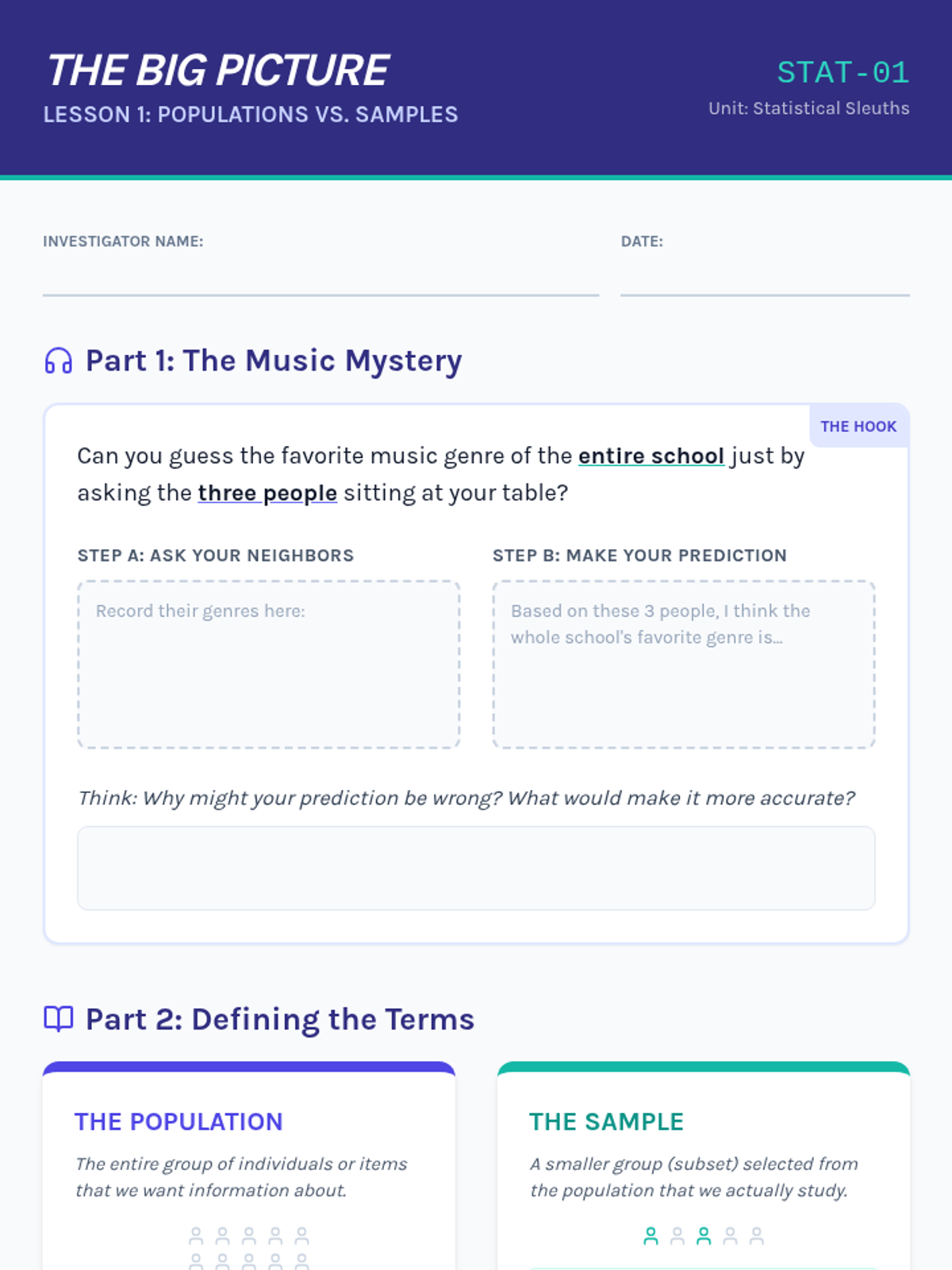
A comprehensive unit for 10th-grade students on comparing two independent population means. Students move from intuitive simulation-based reasoning to formal hypothesis testing and confidence intervals, focusing on variability and statistical significance.
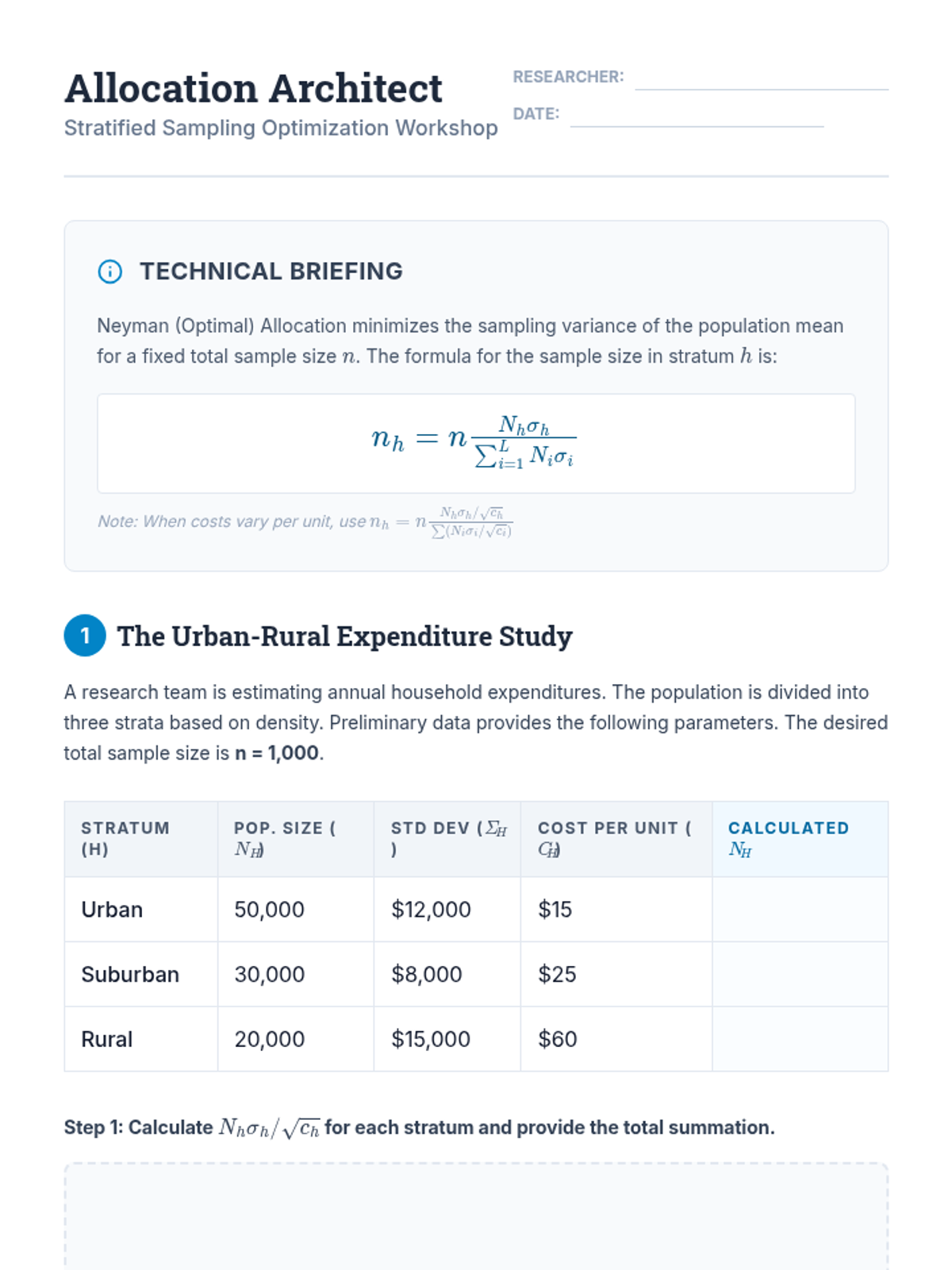
This graduate-level sequence covers advanced statistical sampling techniques, focusing on the optimization of stratified, cluster, and multi-stage designs. Students learn to navigate the trade-offs between precision and cost, calculate design effects, and mitigate biases like periodicity.
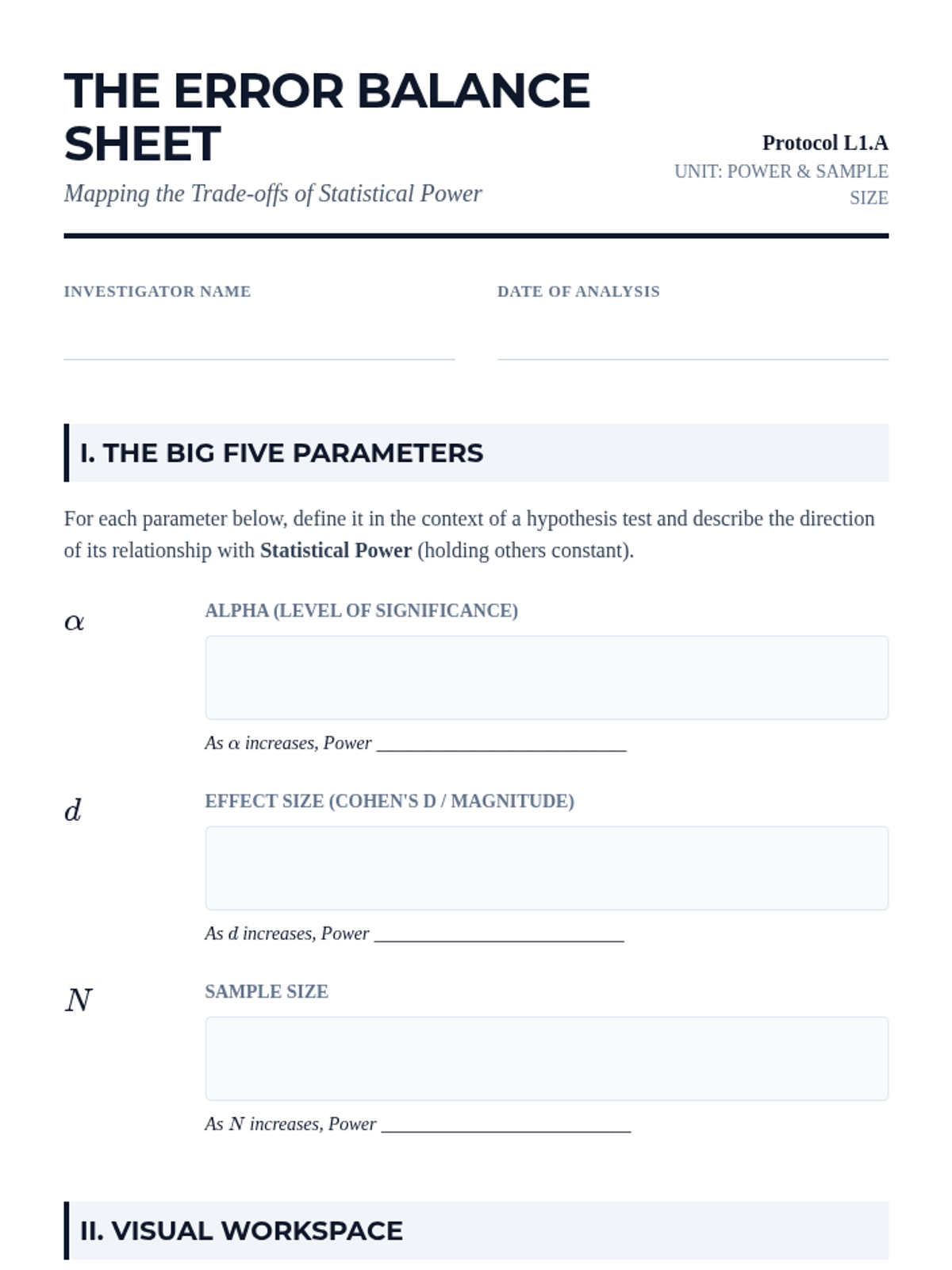
This graduate-level sequence covers the theoretical foundations and practical applications of power analysis. Students will learn to determine necessary sample sizes for various statistical models, conduct sensitivity analyses, and write robust justifications for research protocols.
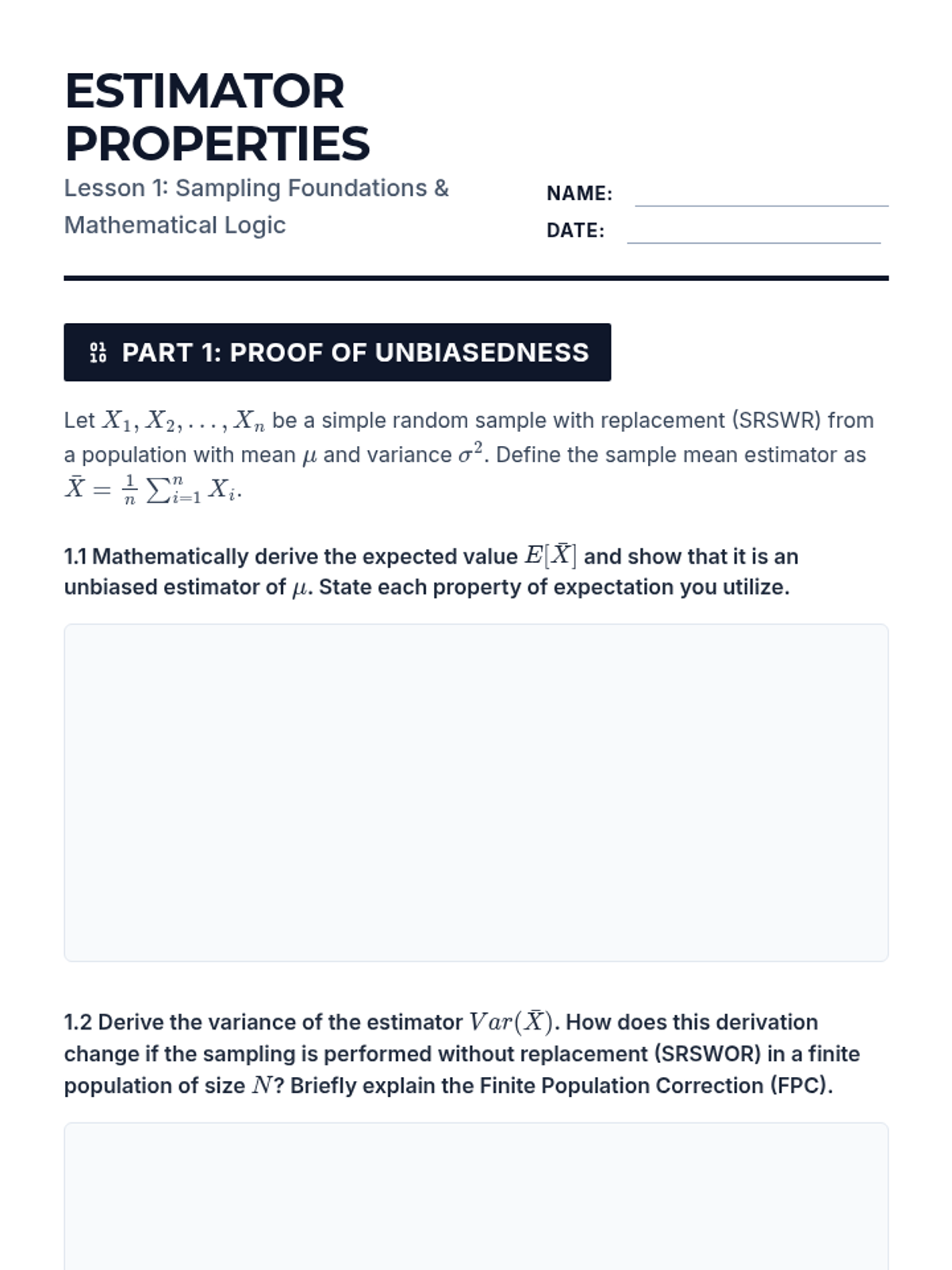
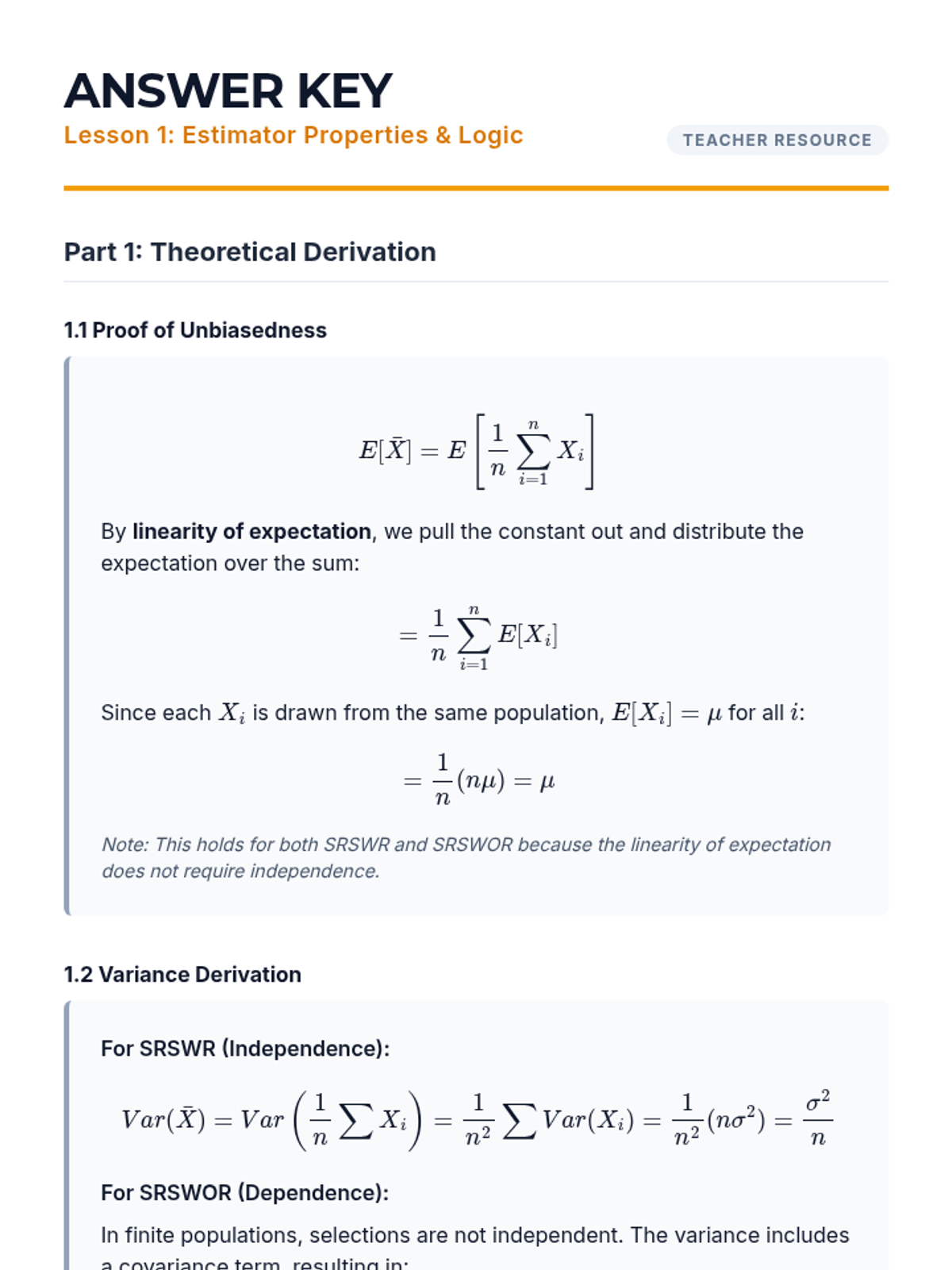
A rigorous graduate-level examination of probability sampling theory, focusing on the mathematical properties of estimators, the mechanics of selection bias, and the use of Monte Carlo simulations to validate sampling designs. Students explore simple random sampling, sampling frame errors, and the 'Big Data Paradox' through proofs and simulation logic.
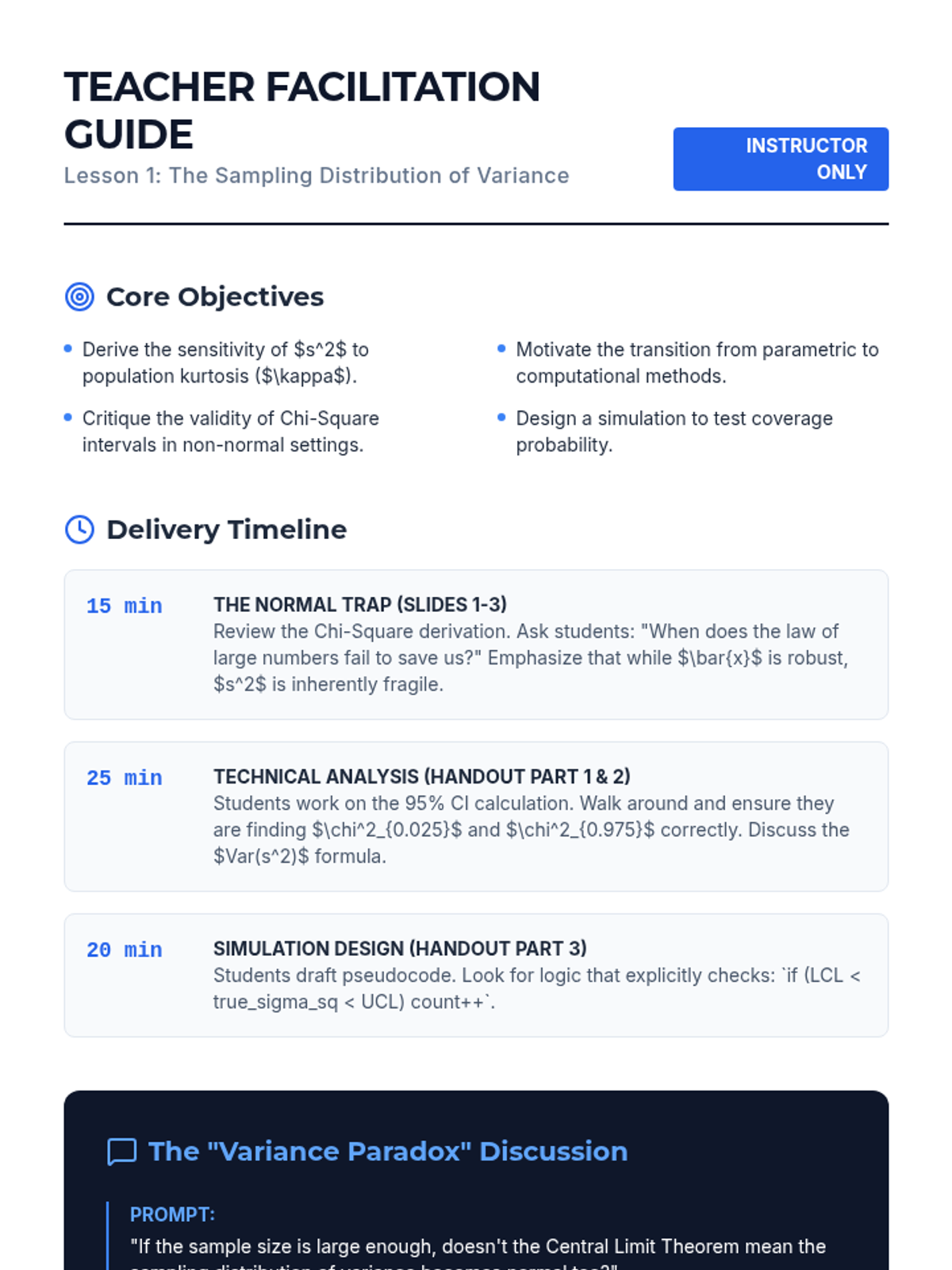
A graduate-level sequence exploring computational resampling methods (Bootstrap, Jackknife, Permutation) to estimate the variability and uncertainty of dispersion statistics when parametric assumptions fail.
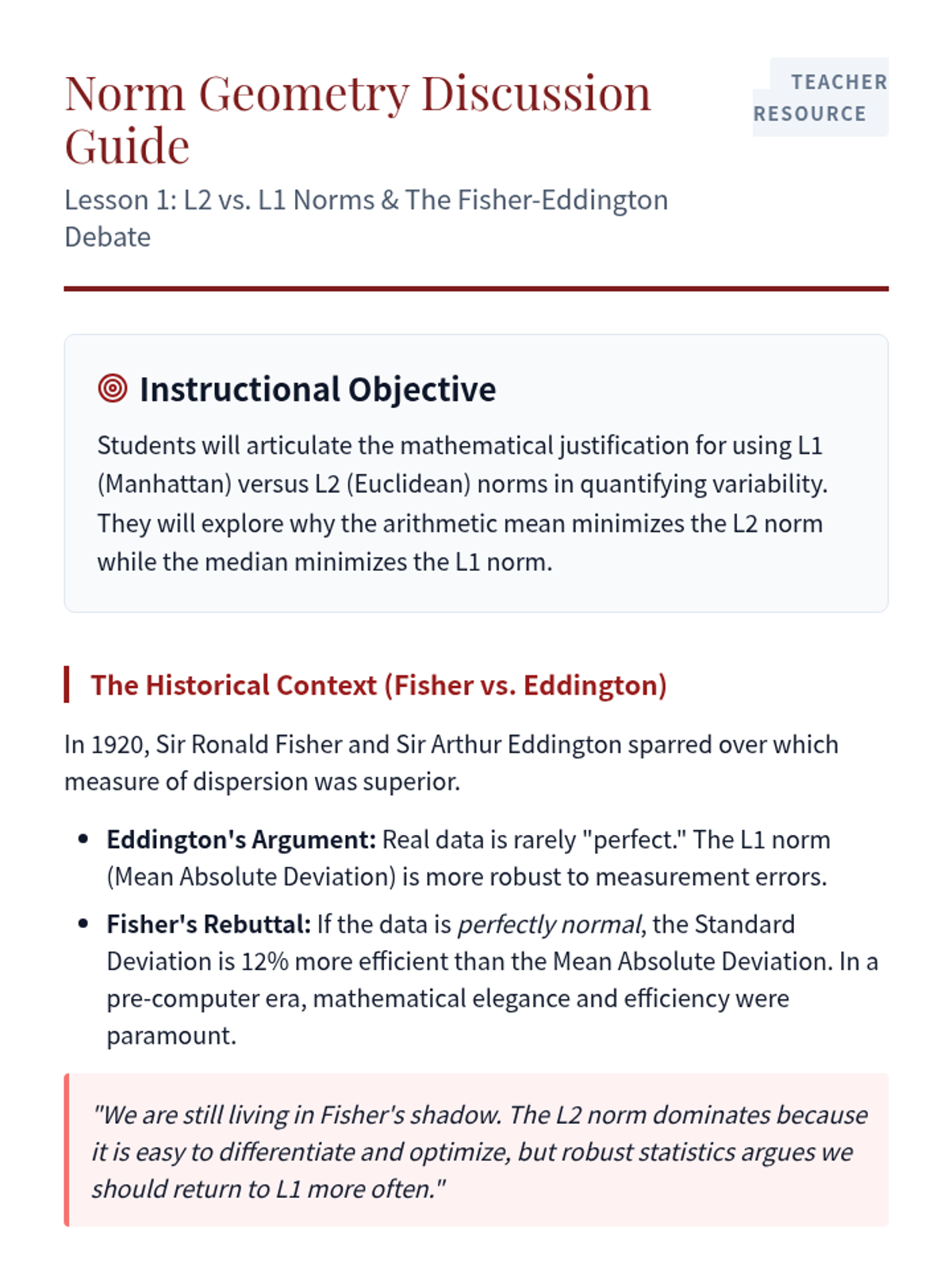
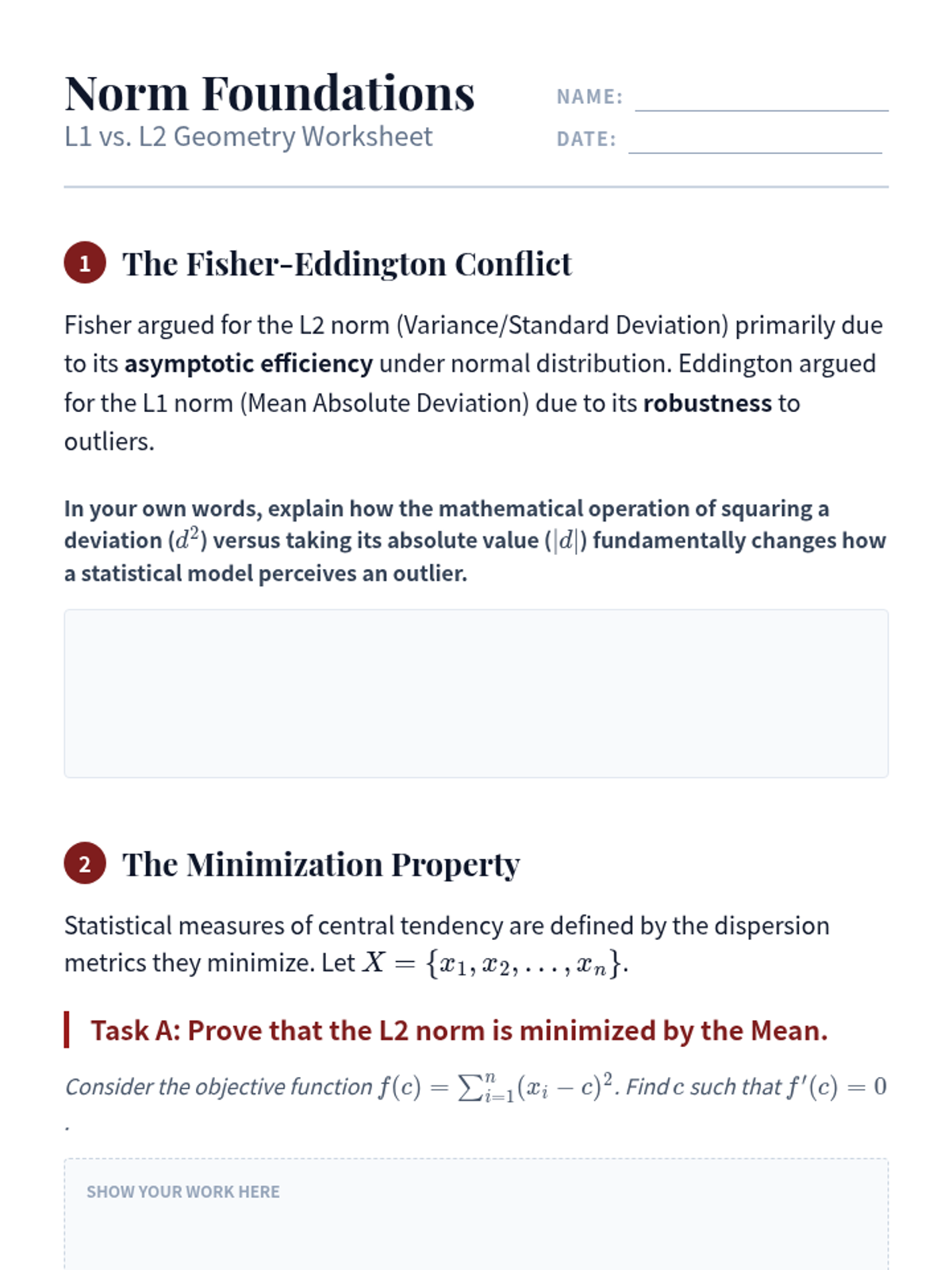
An advanced exploration of robust statistical methods for quantifying variability, focusing on the mathematical foundations of L1 vs L2 norms, breakdown points, and efficiency trade-offs in the presence of outliers.
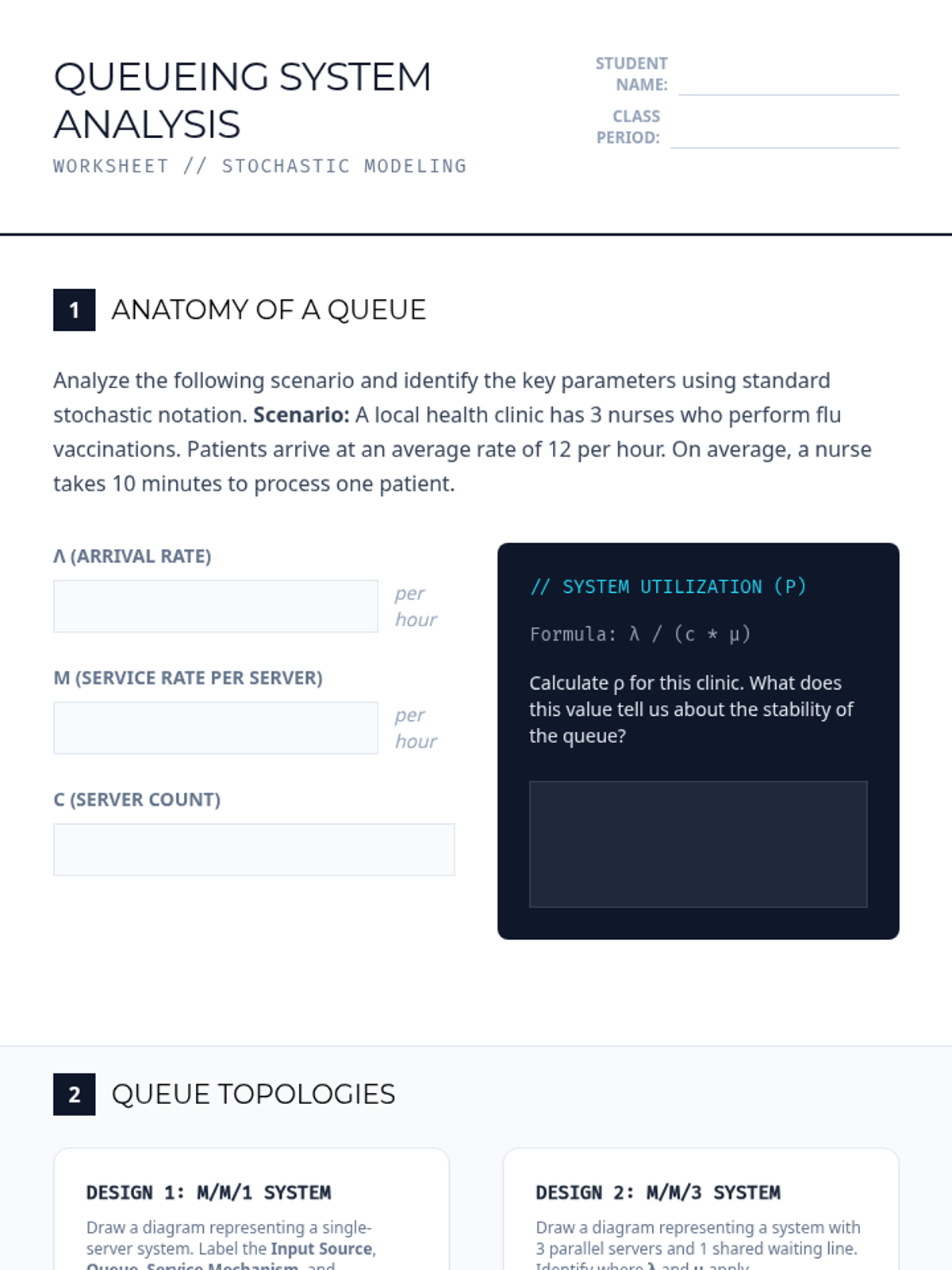
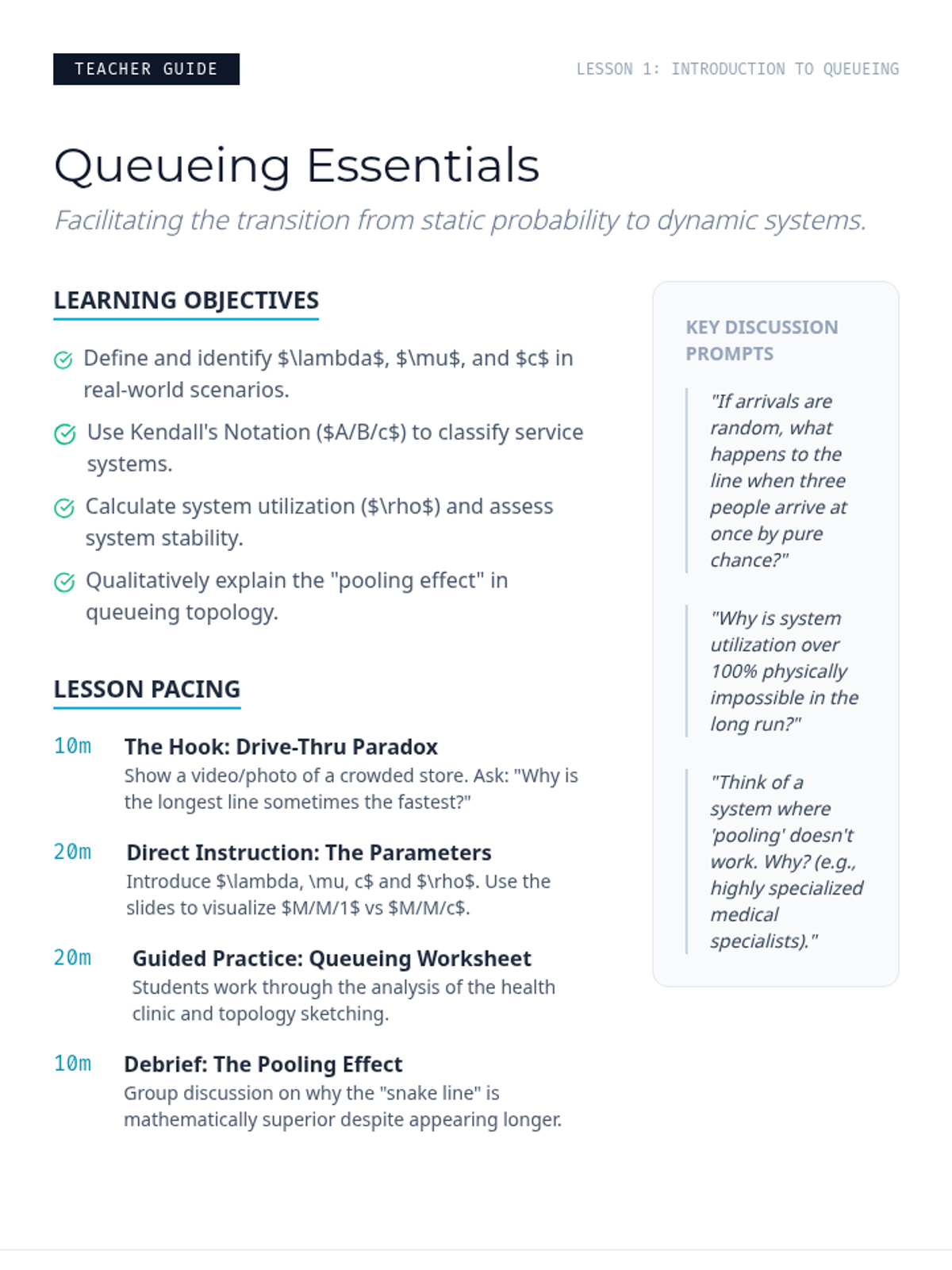
A project-based exploration of stochastic modeling, focusing on Queueing Theory and Monte Carlo simulations. Students design and build computational models to optimize real-world systems like traffic flow and service lines.
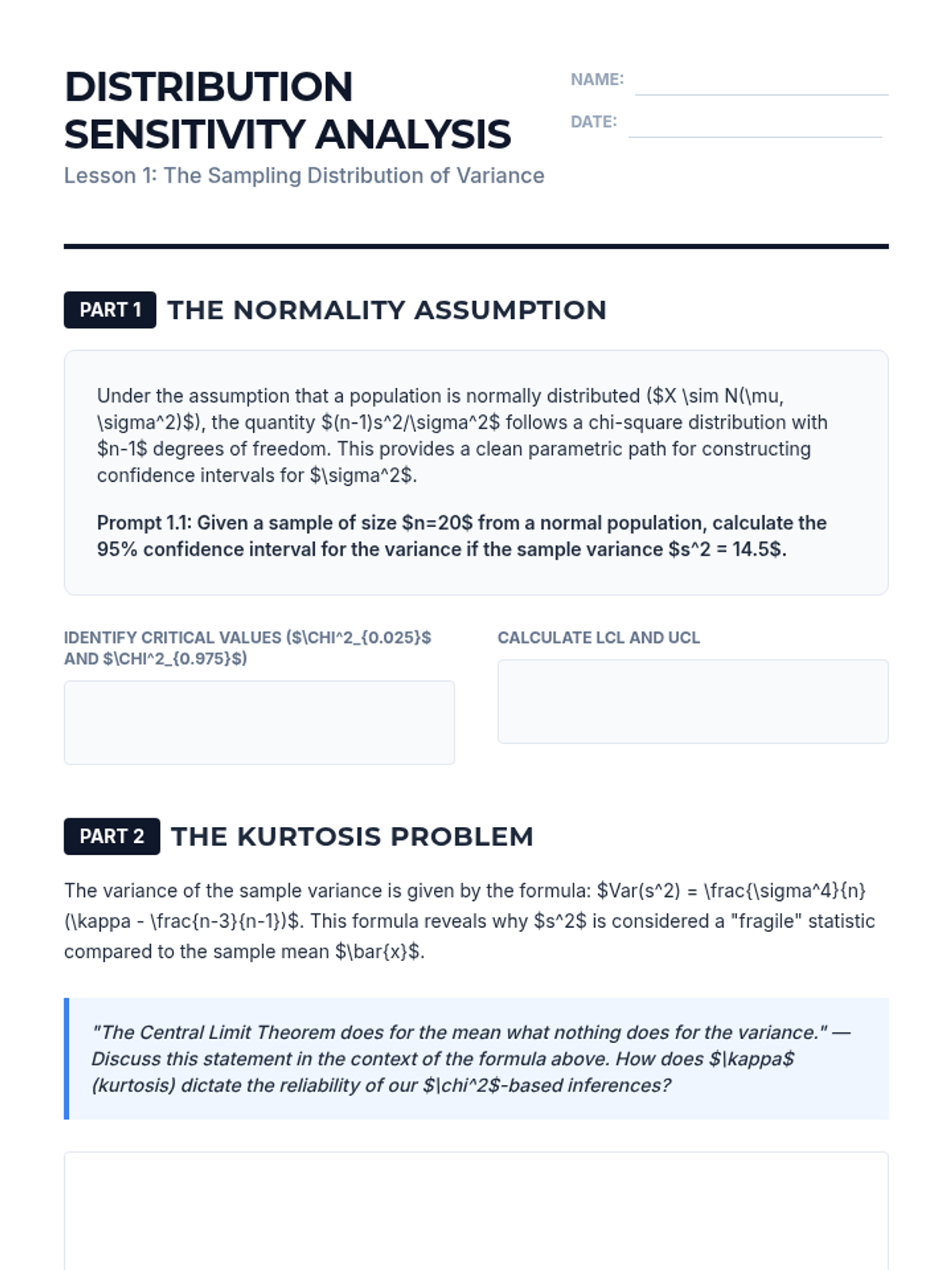
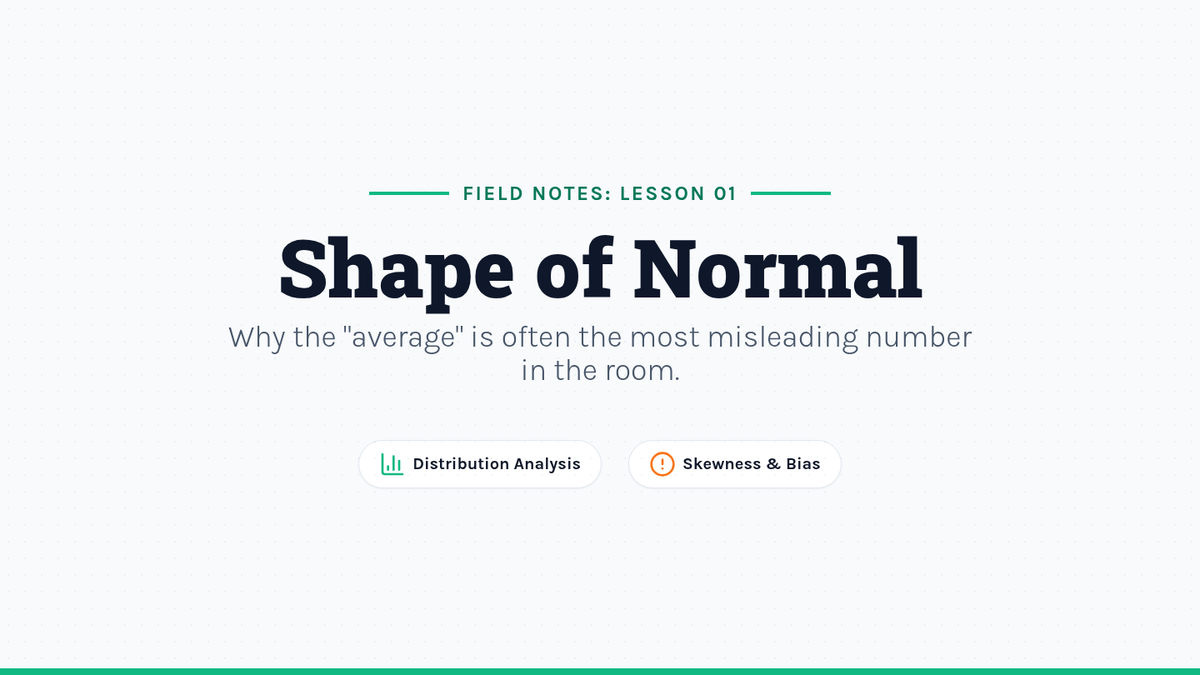
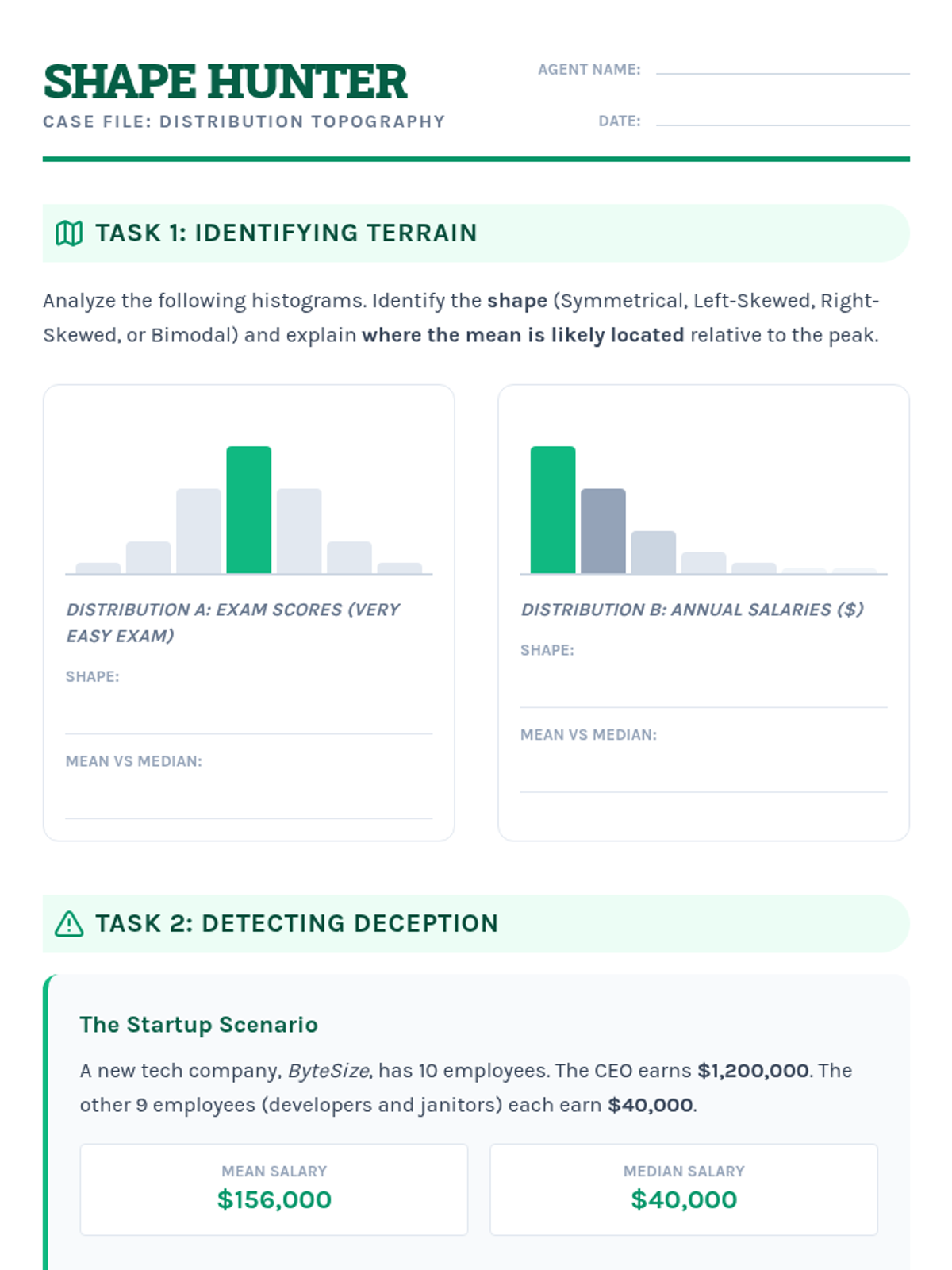
An inquiry-based exploration of statistical variability, focusing on how data spread reveals truths about inequality, climate instability, and diversity that averages often hide. Students transition from visual distribution analysis to quantifying disparity using IQR and MAD, culminating in an independent investigation.
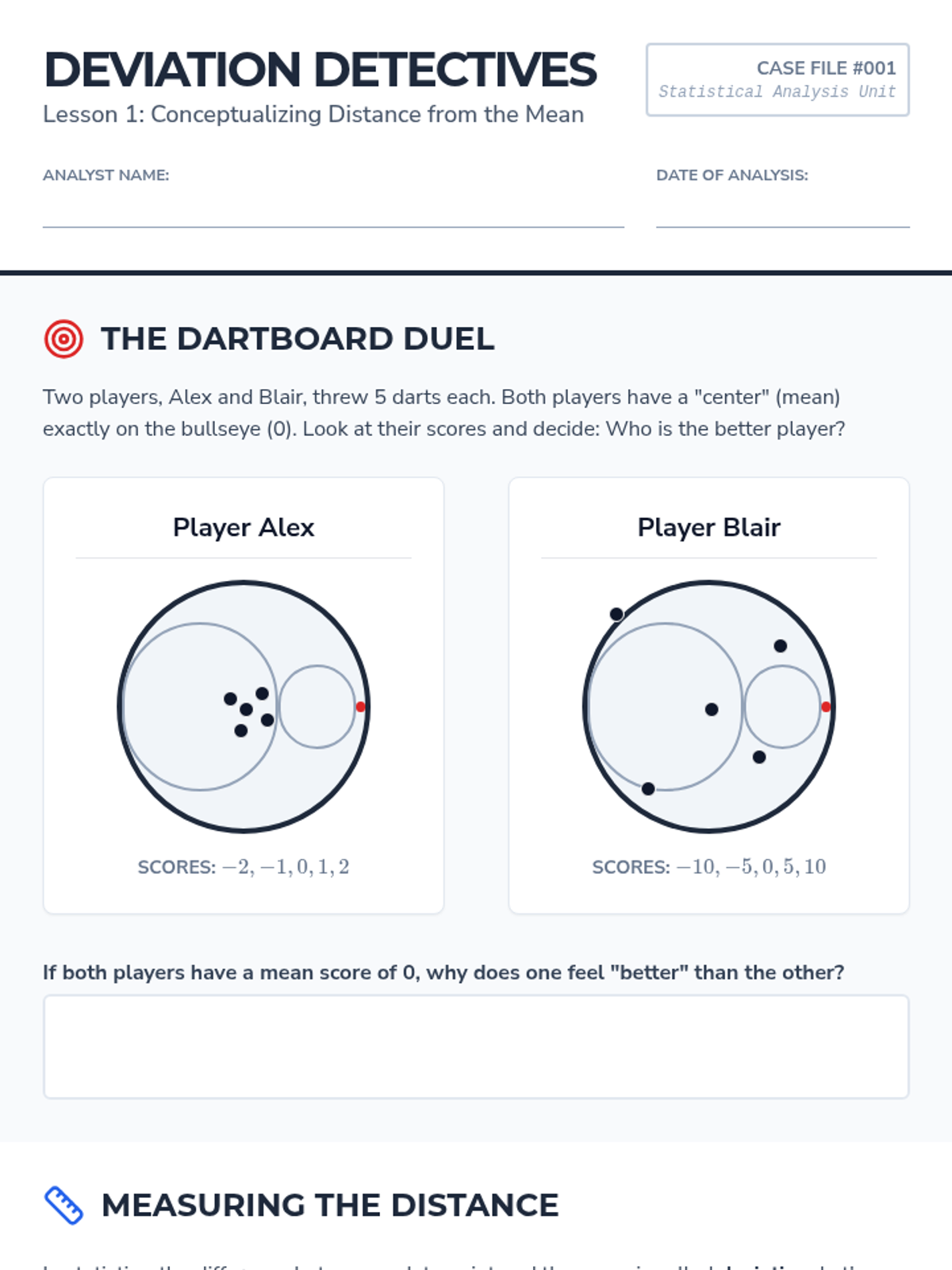
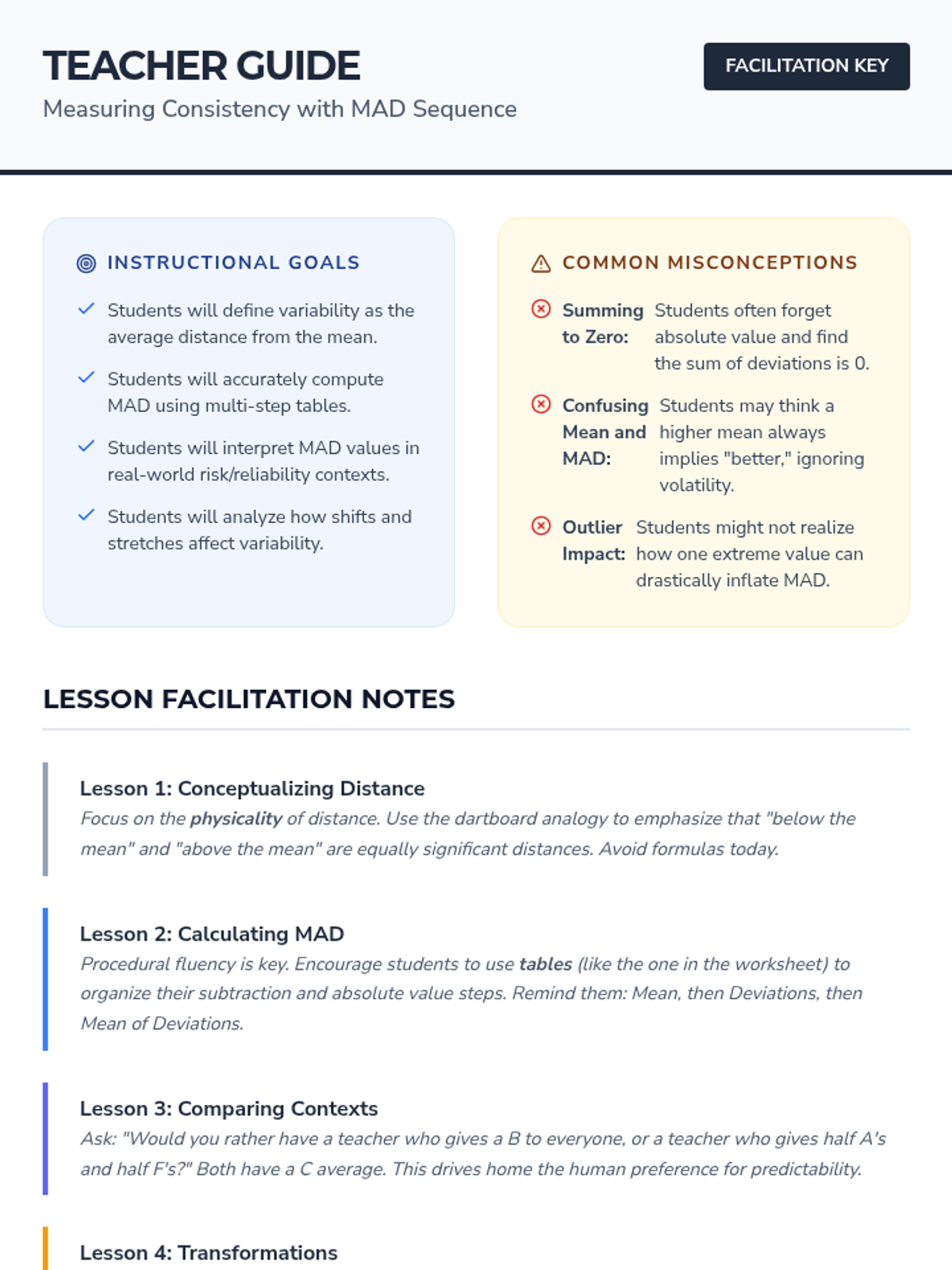
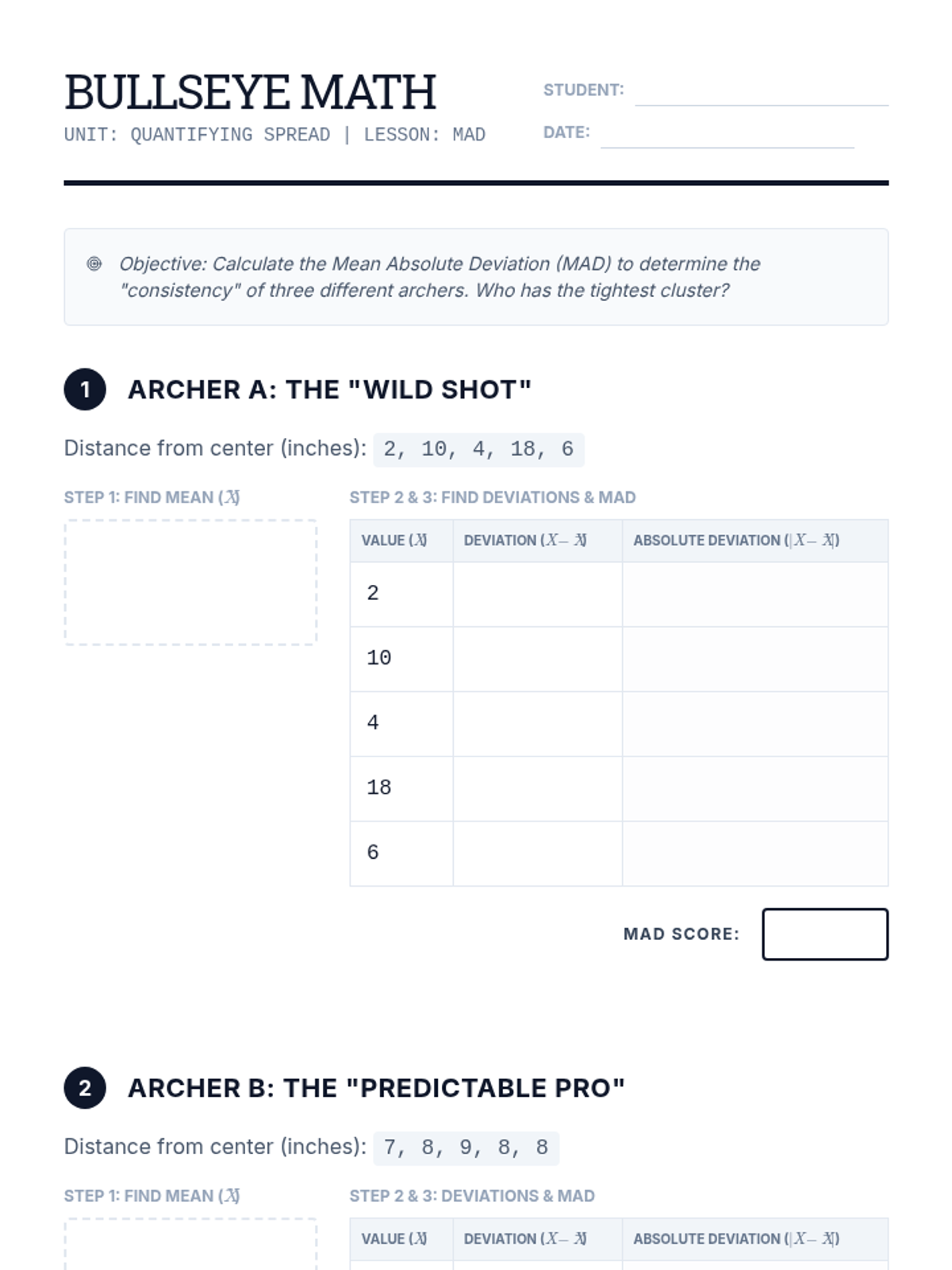
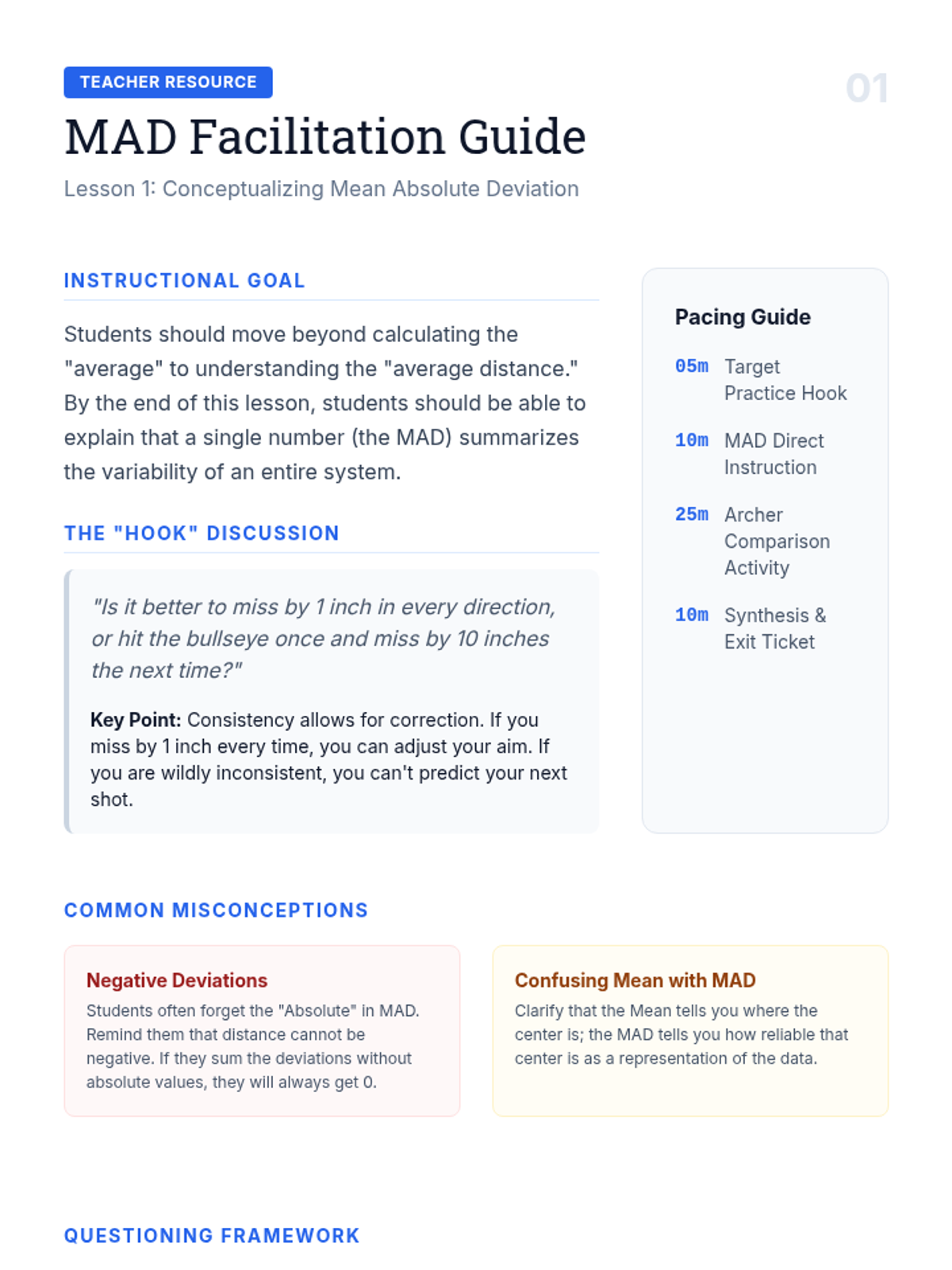
This project-based sequence explores consistency and volatility through the lens of Mean Absolute Deviation (MAD). Students analyze real-world datasets to understand how variability quantifies 'reliability' beyond simple averages.
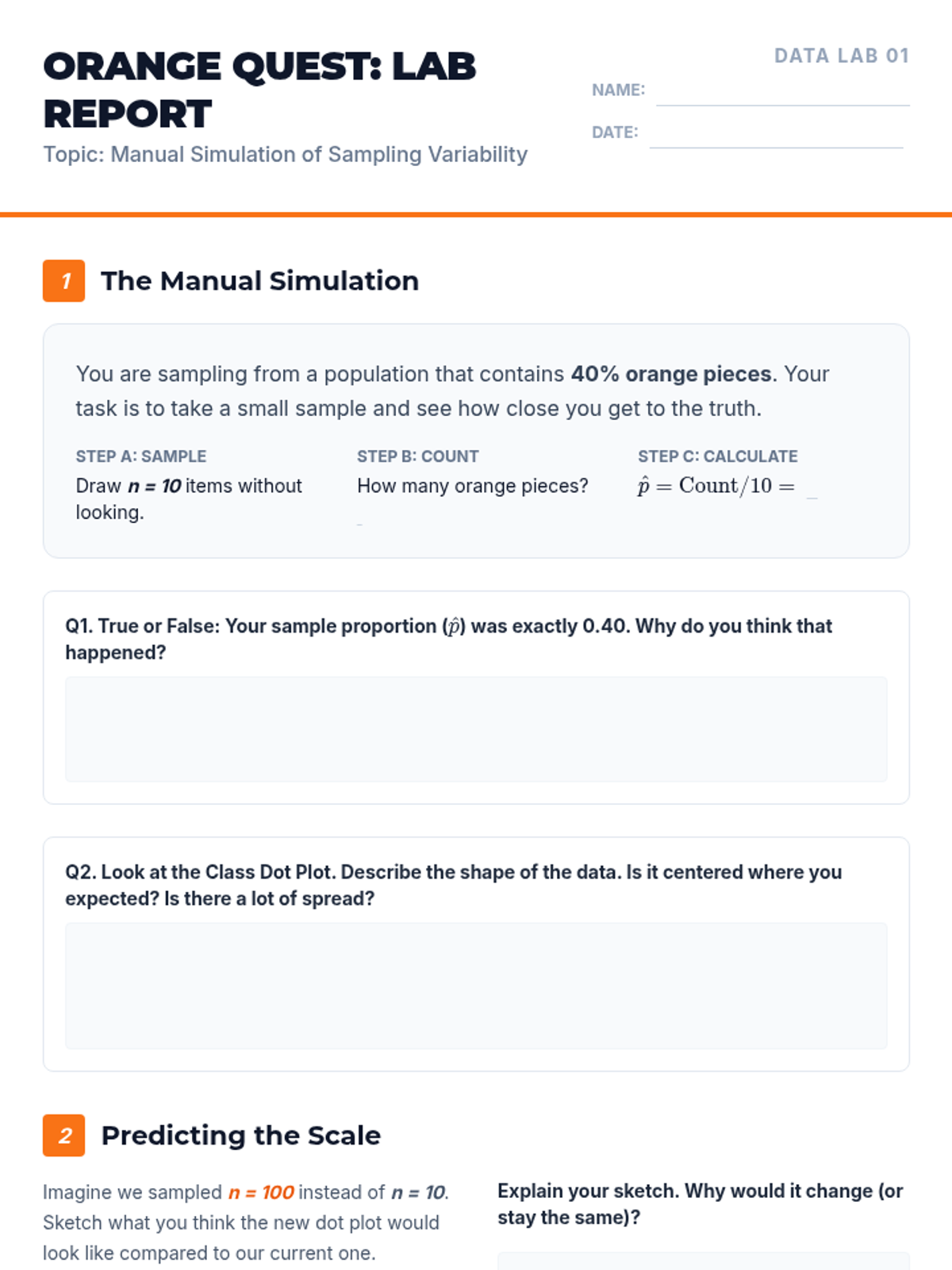
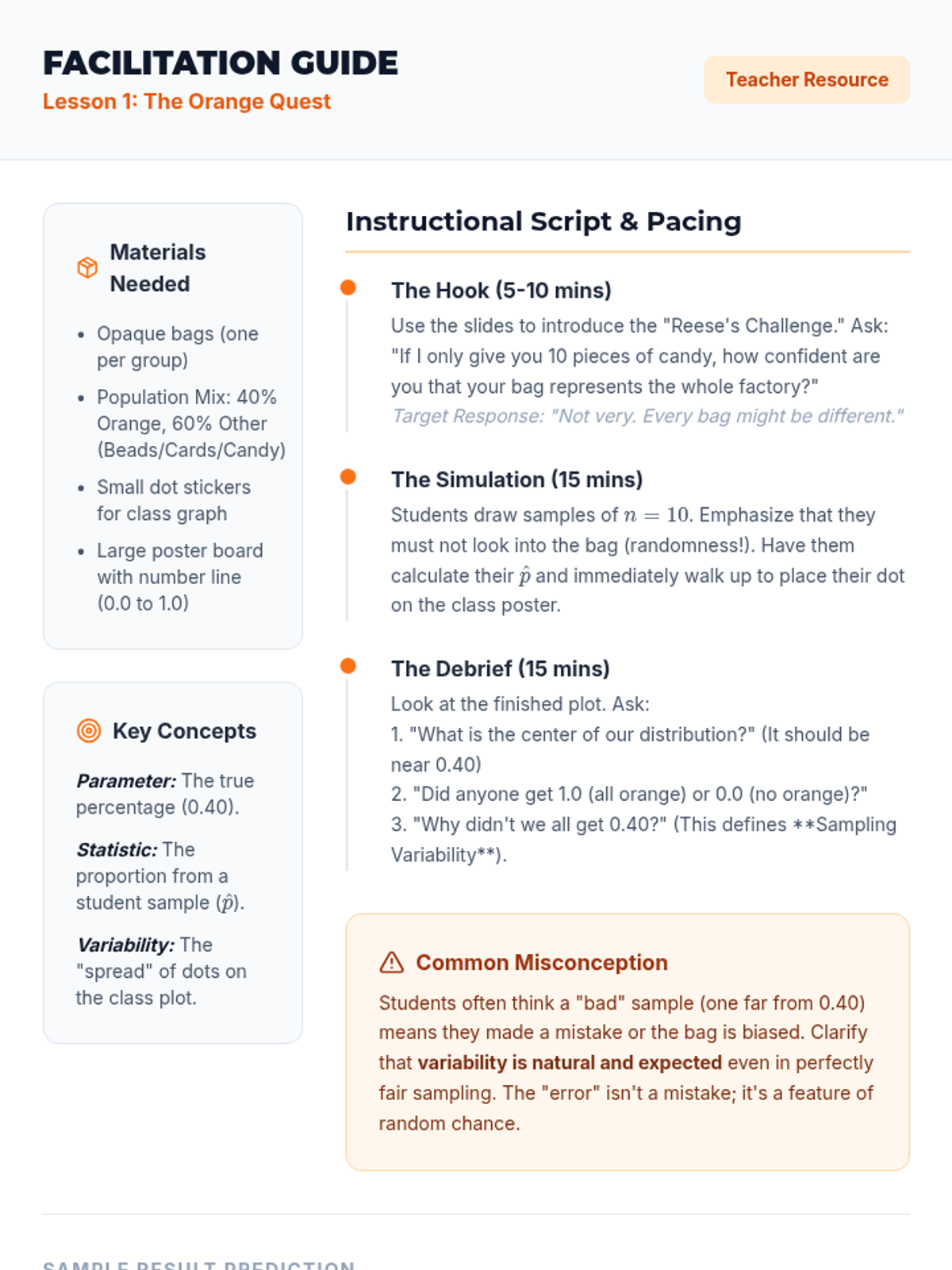
A simulation-based journey through statistical sampling, focusing on the Law of Large Numbers, variability, and the distinction between bias and precision. Students move from manual experiments to digital simulations to build intuition for statistical inference.
A 10th-grade statistics workshop exploring the mathematical transition from Mean Absolute Deviation to Standard Deviation. Students analyze data spread, the logic of variance, and the application of the Empirical Rule and Z-scores to real-world datasets.
A project-based exploration of statistical sampling where students learn to define populations, determine sample sizes, design protocols, and make valid inferences. Students act as data consultants, moving from theoretical understanding to simulated data collection and analysis.
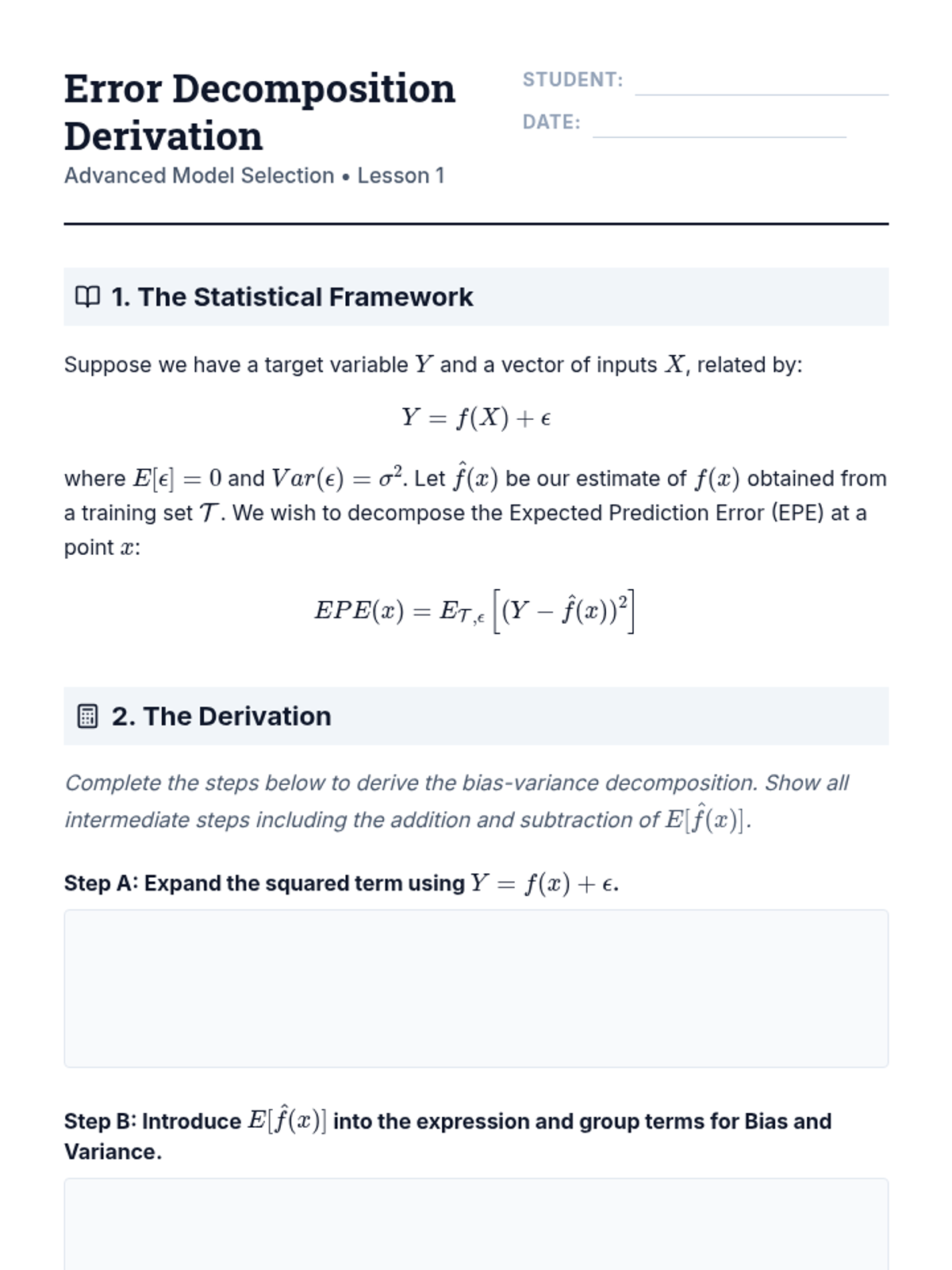
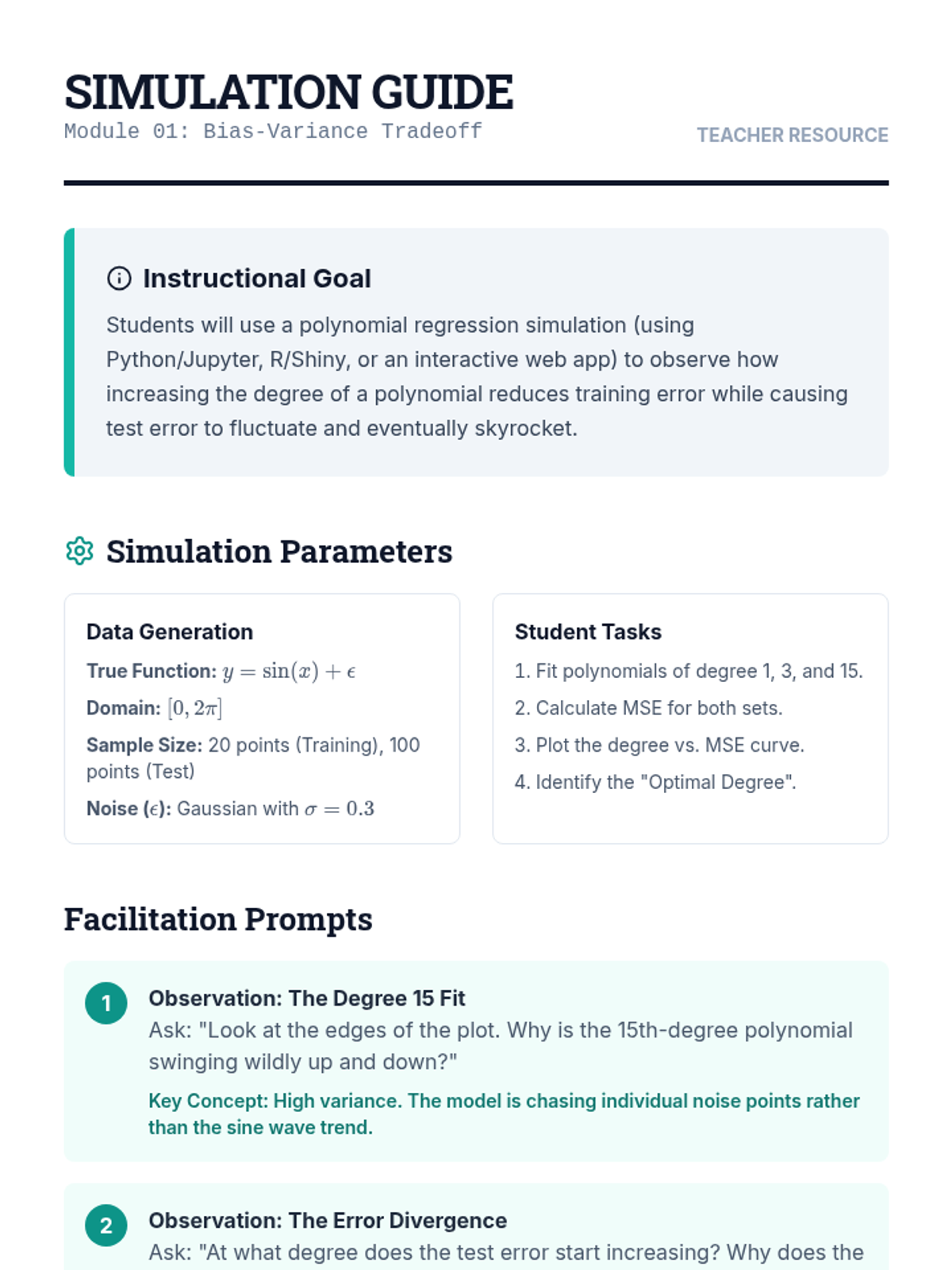
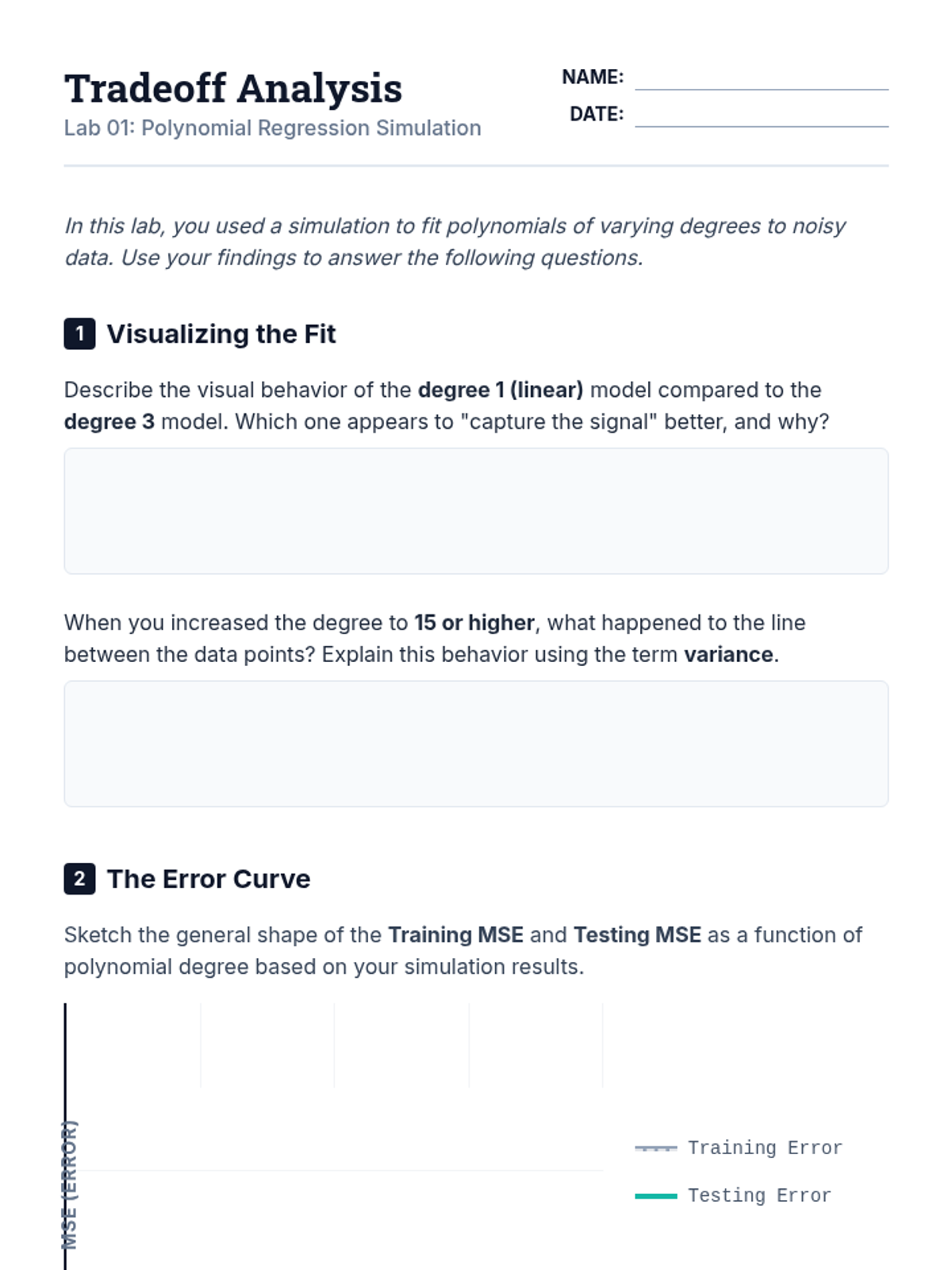
An advanced graduate-level sequence exploring the mathematical foundations of model selection, including bias-variance decomposition, information criteria (AIC/BIC), resampling methods, and high-dimensional diagnostic strategies.
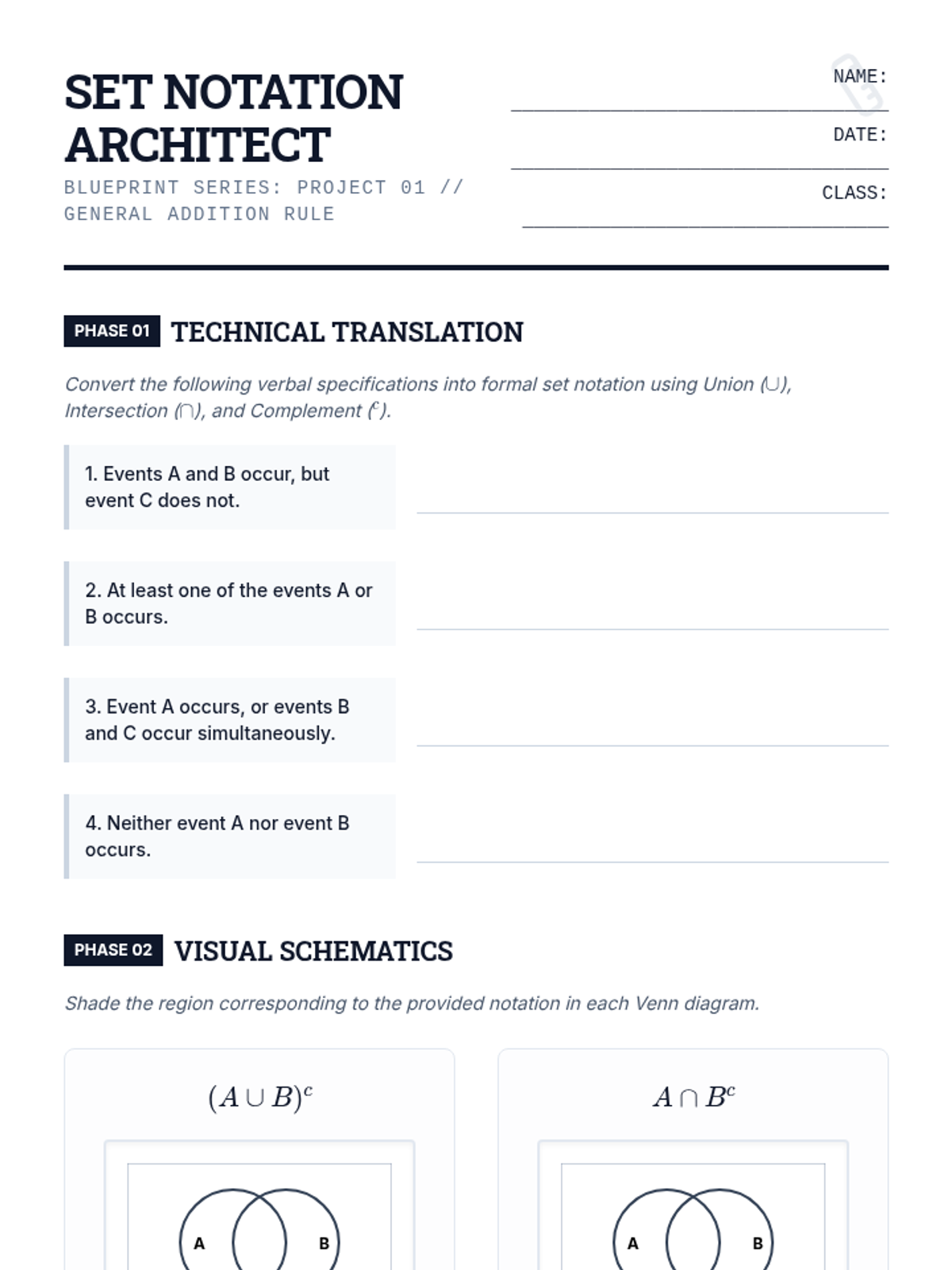
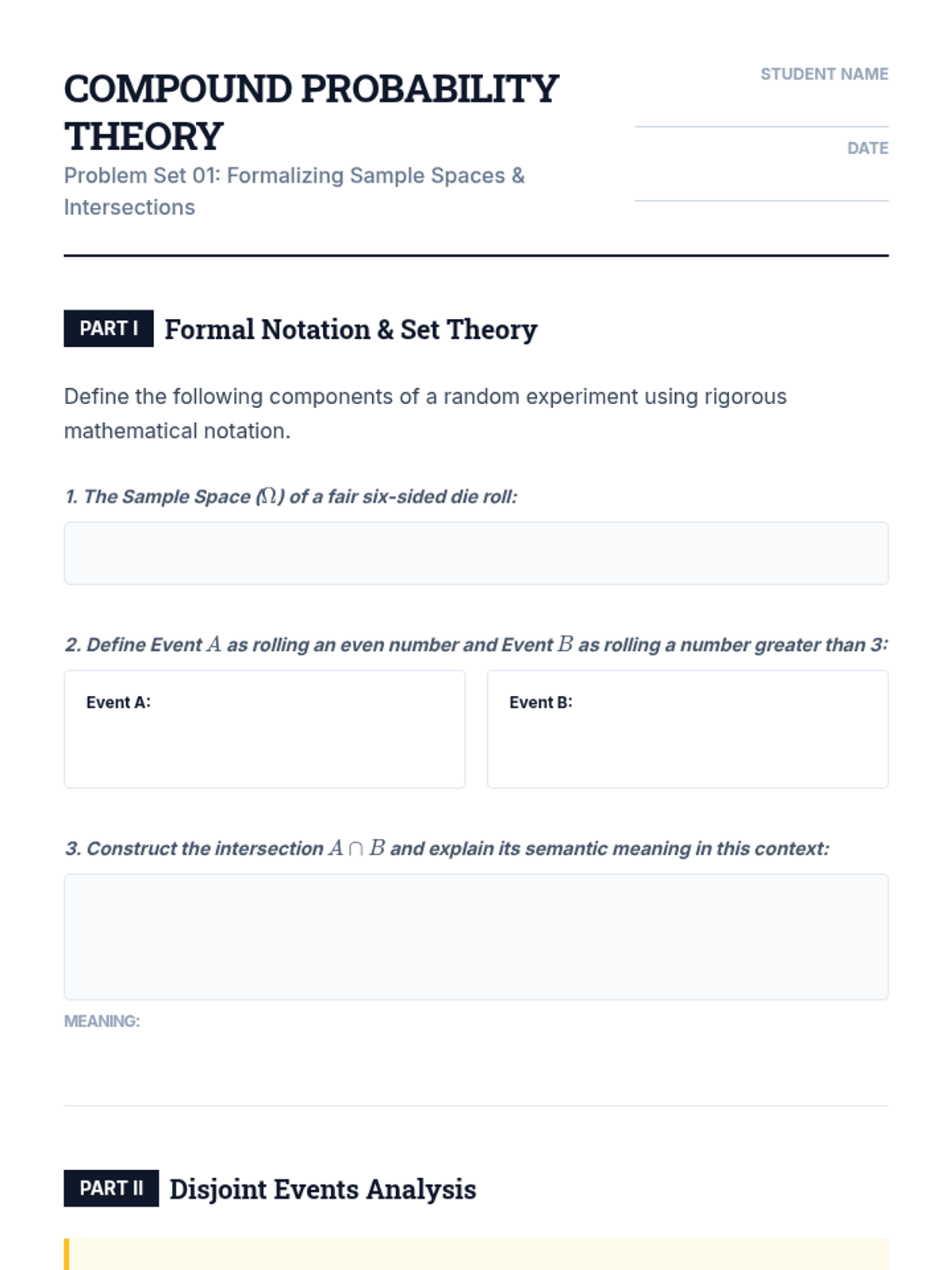
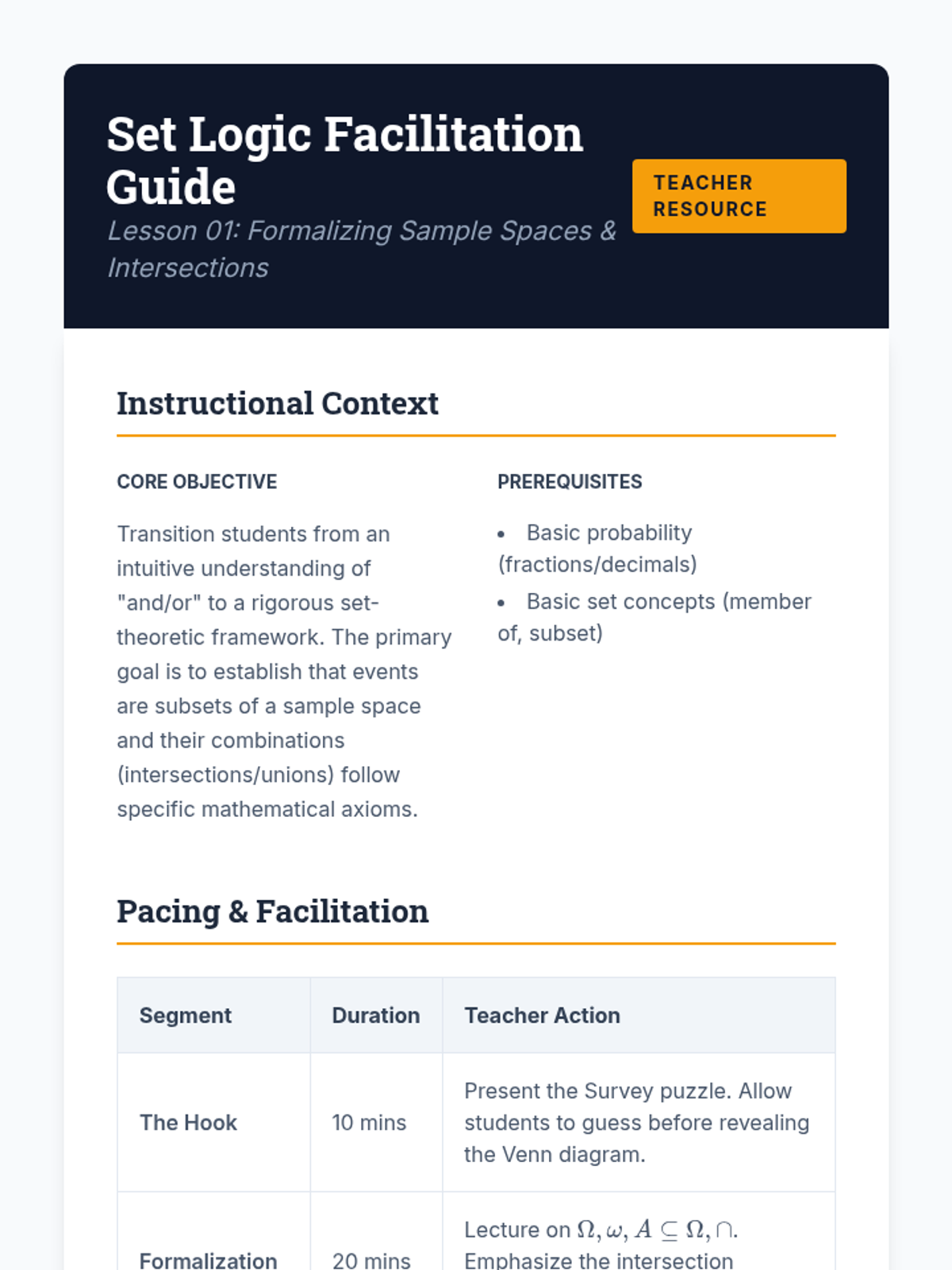
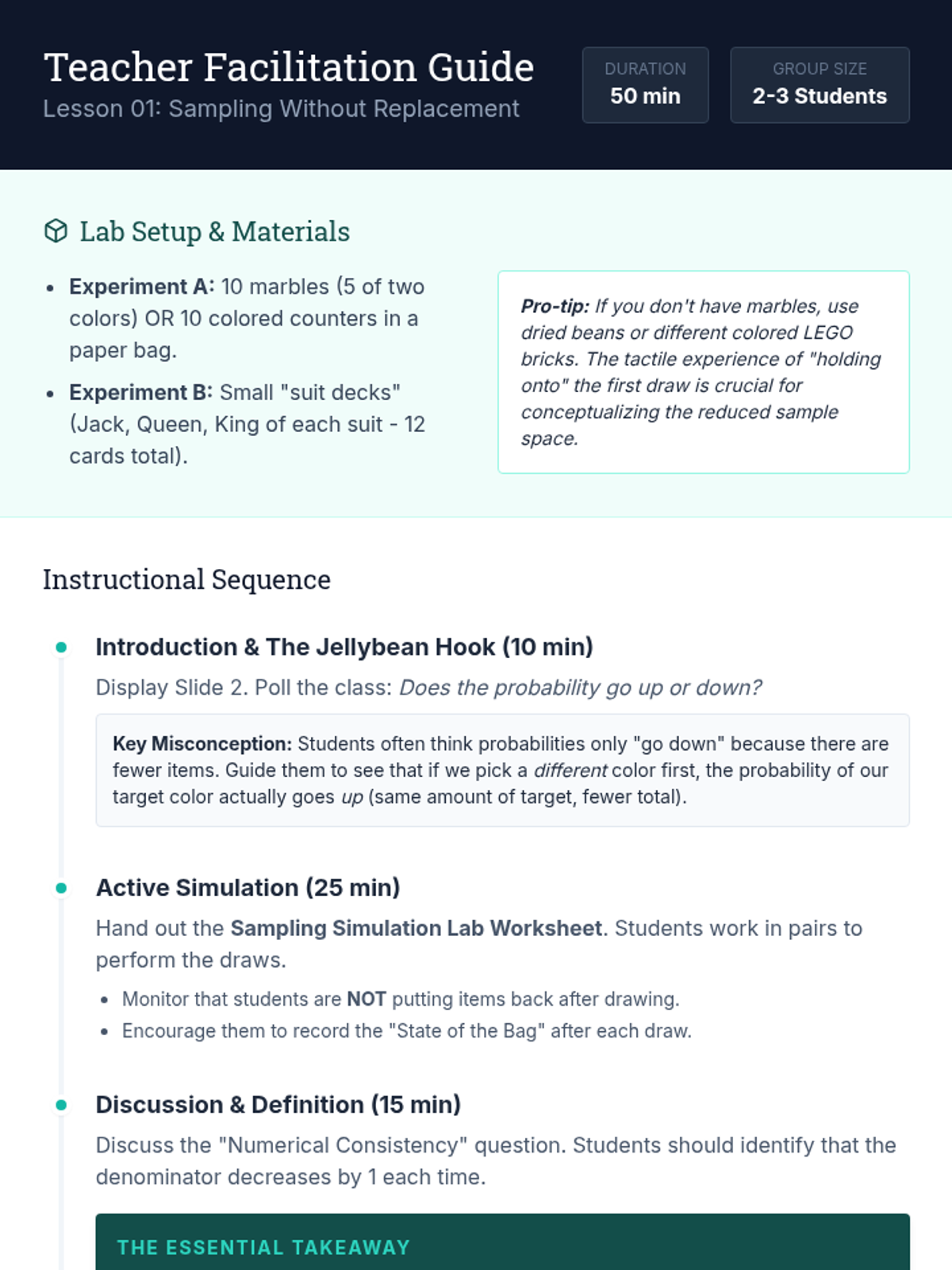
A rigorous, theoretical approach to compound event probabilities for 12th-grade students. This sequence covers set notation, formal definitions of independence, the general addition and multiplication rules, and the distinction between mutually exclusive and independent events.
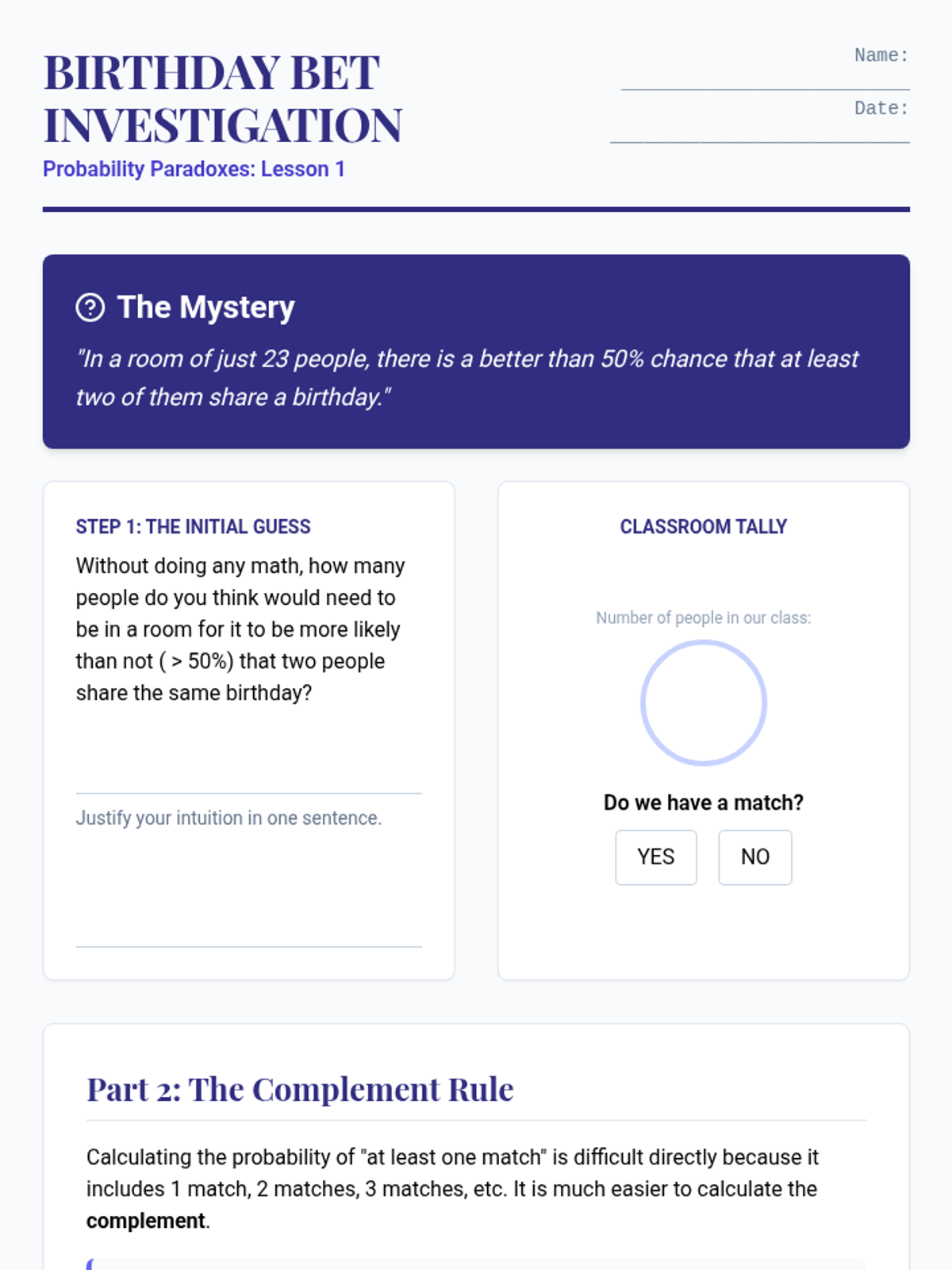
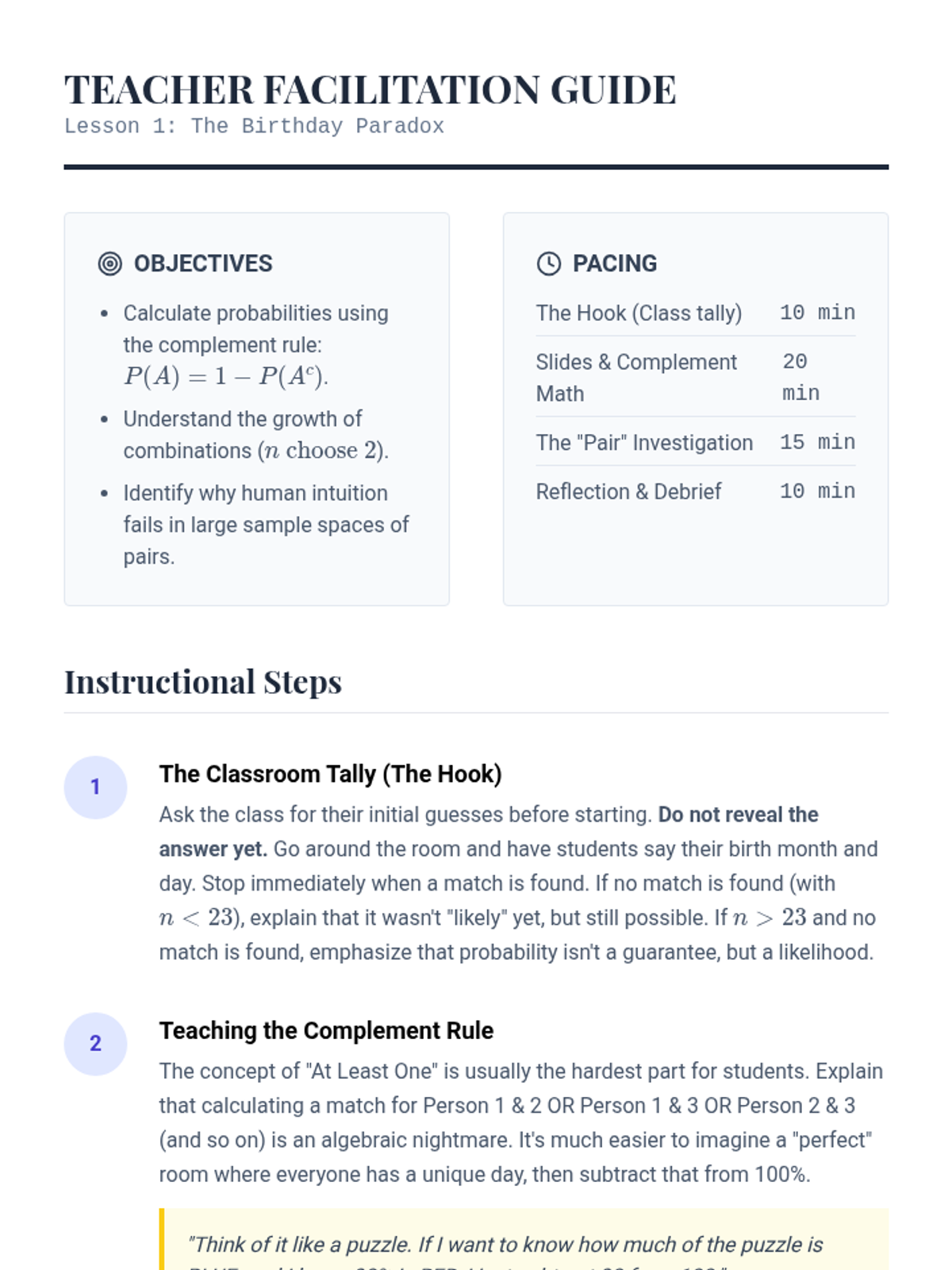
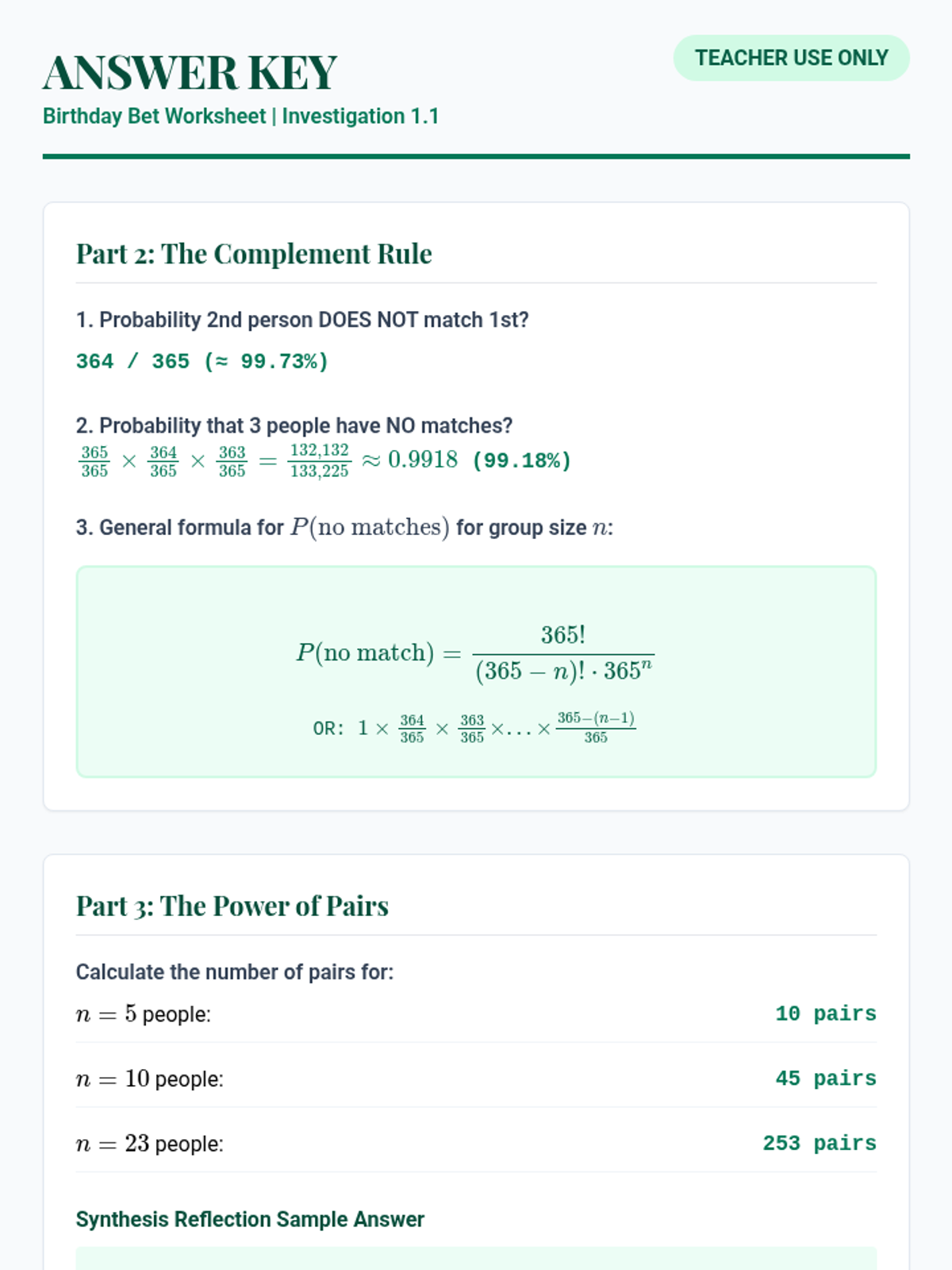
An inquiry-driven investigation into counter-intuitive probability. Students explore the Birthday Problem, Gambler's Fallacy, Monty Hall Problem, and Simpson's Paradox to understand why human intuition often fails in the face of compound event logic.
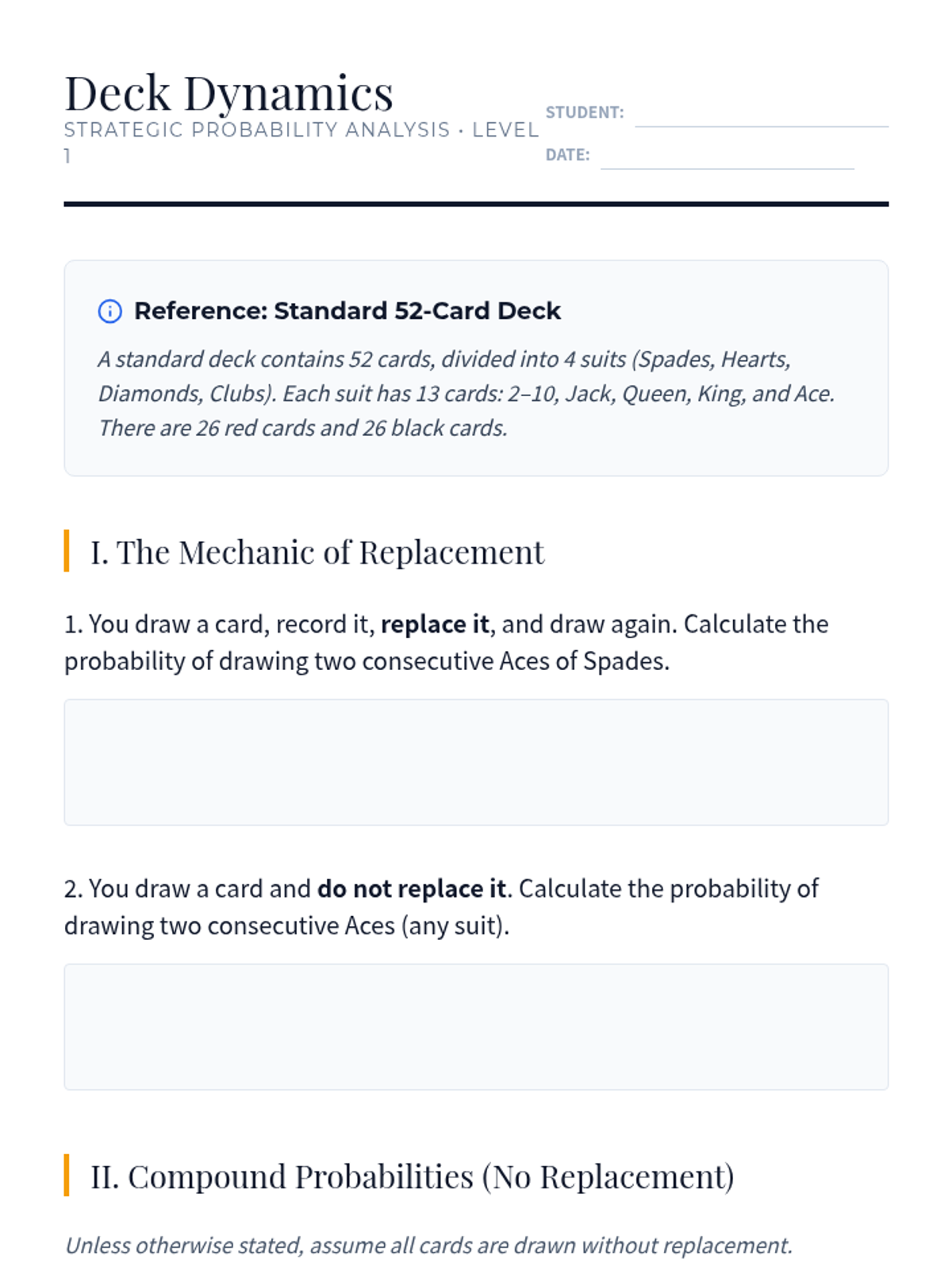
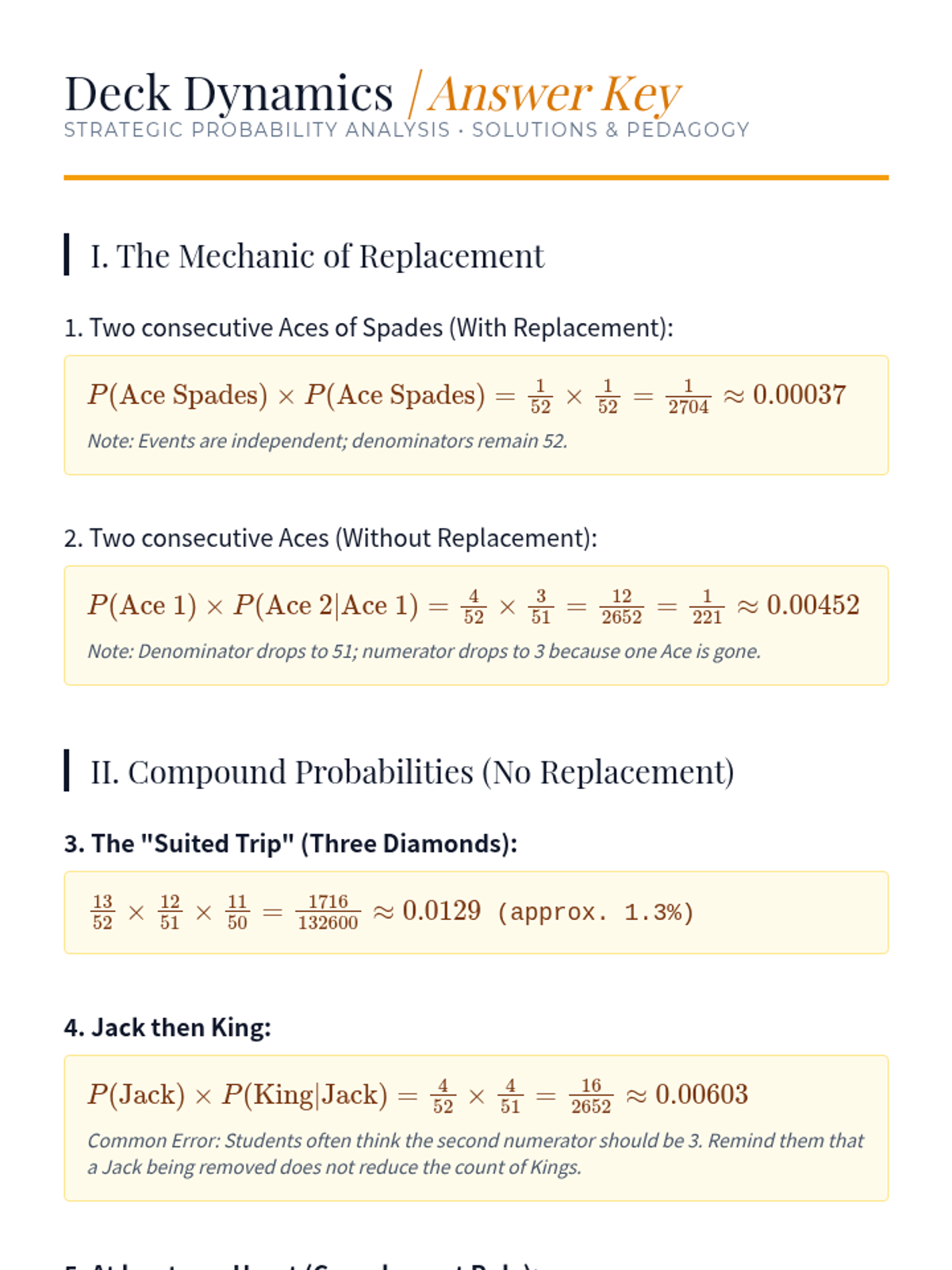
An undergraduate-level exploration of compound event probabilities through the lens of games of chance, focusing on combinatorics, non-replacement scenarios, and expected value.
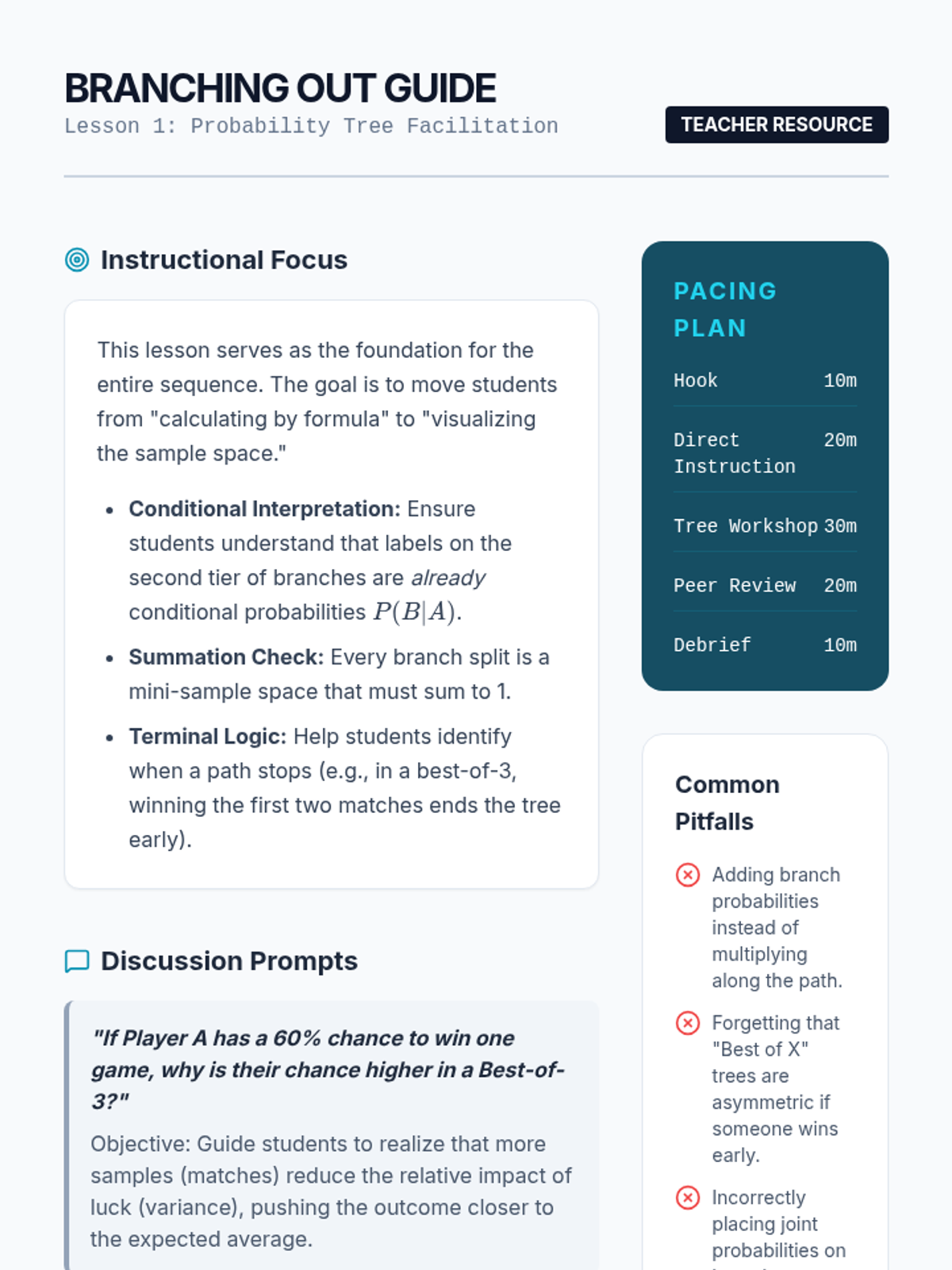
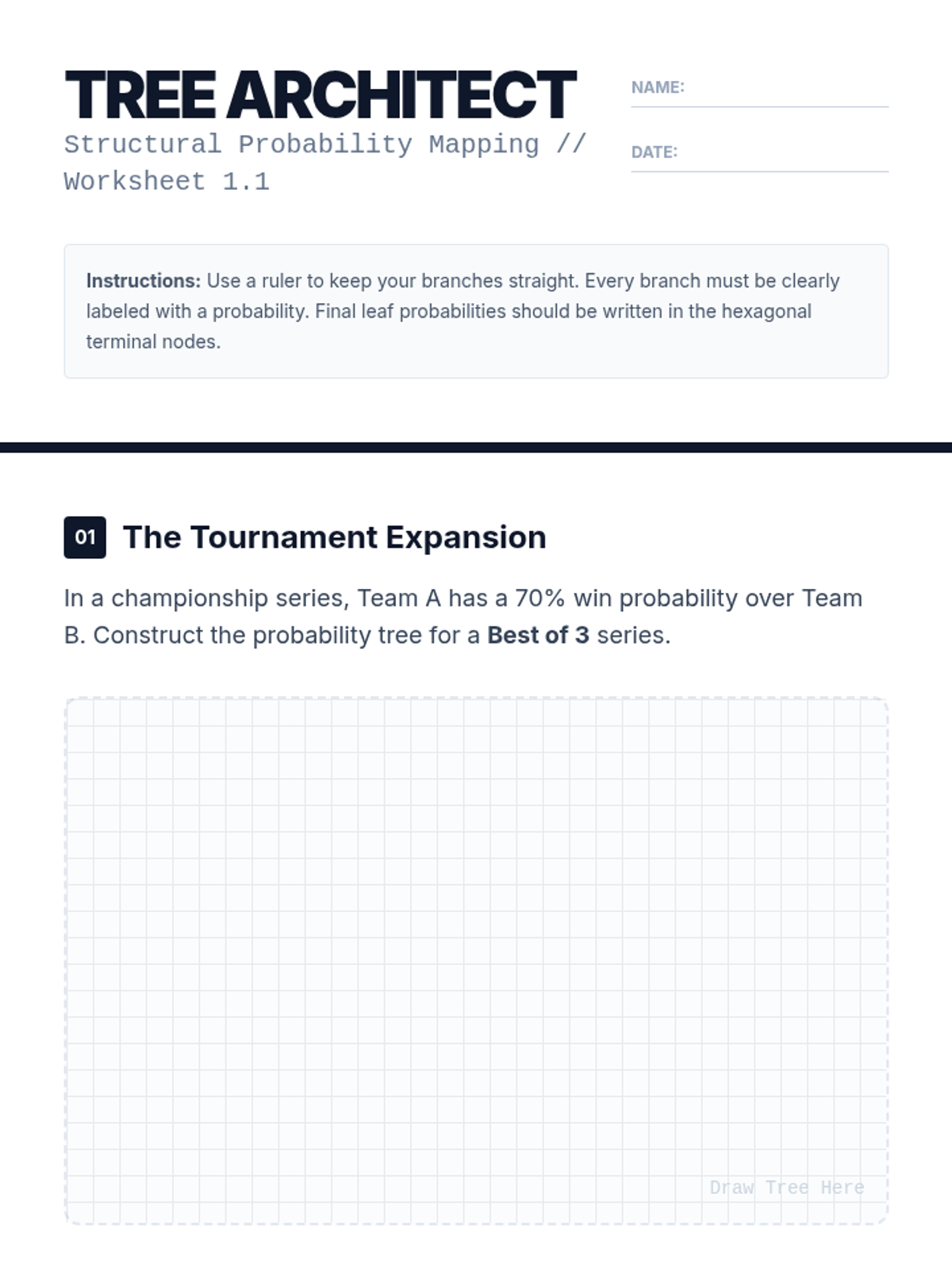
A comprehensive module for undergraduate students focusing on visual methods for solving compound probability problems. The sequence progresses from basic tree diagrams and contingency tables to the Law of Total Probability and Bayesian reasoning in medical diagnostics, concluding with decision analysis simulations.
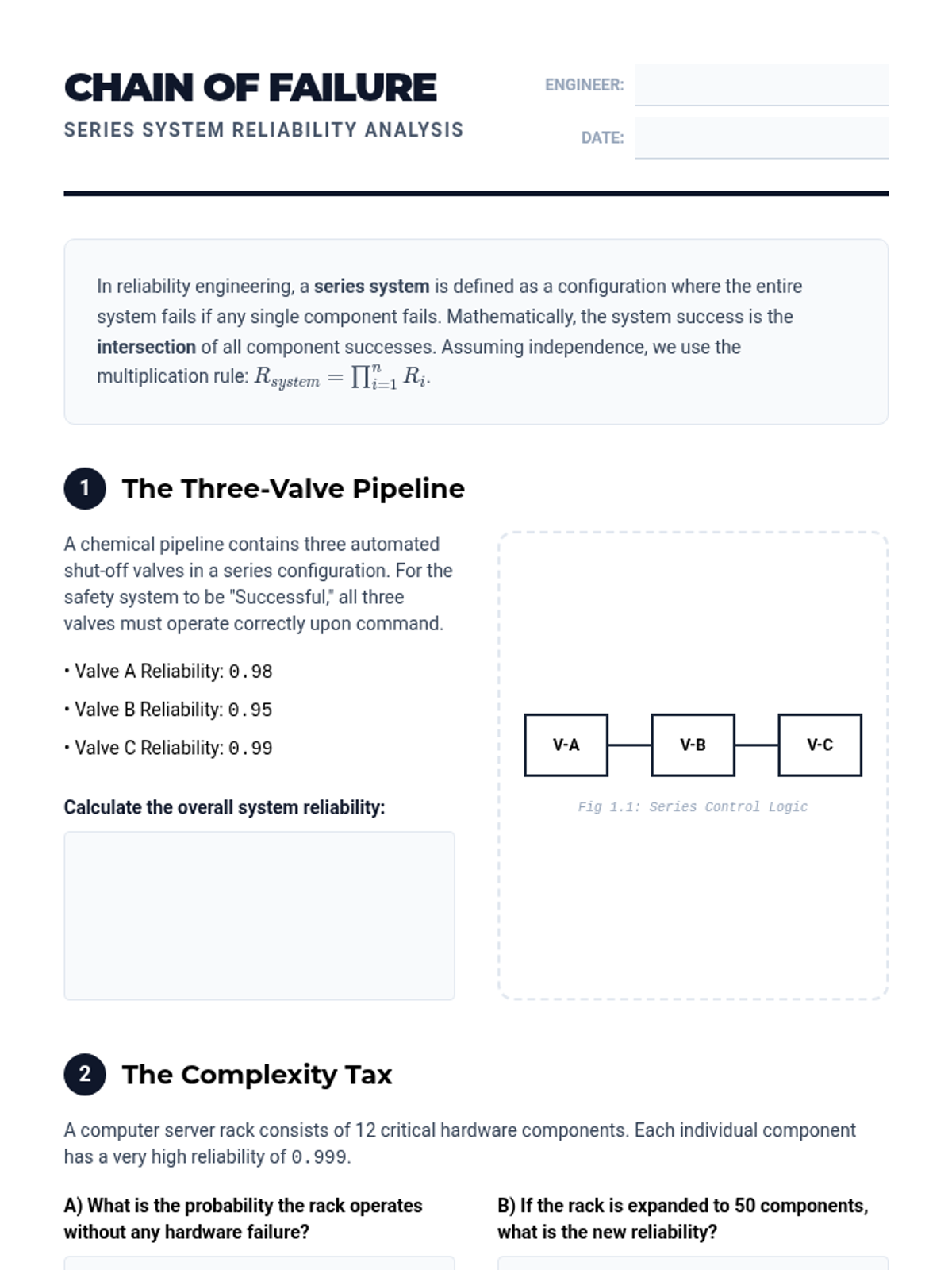
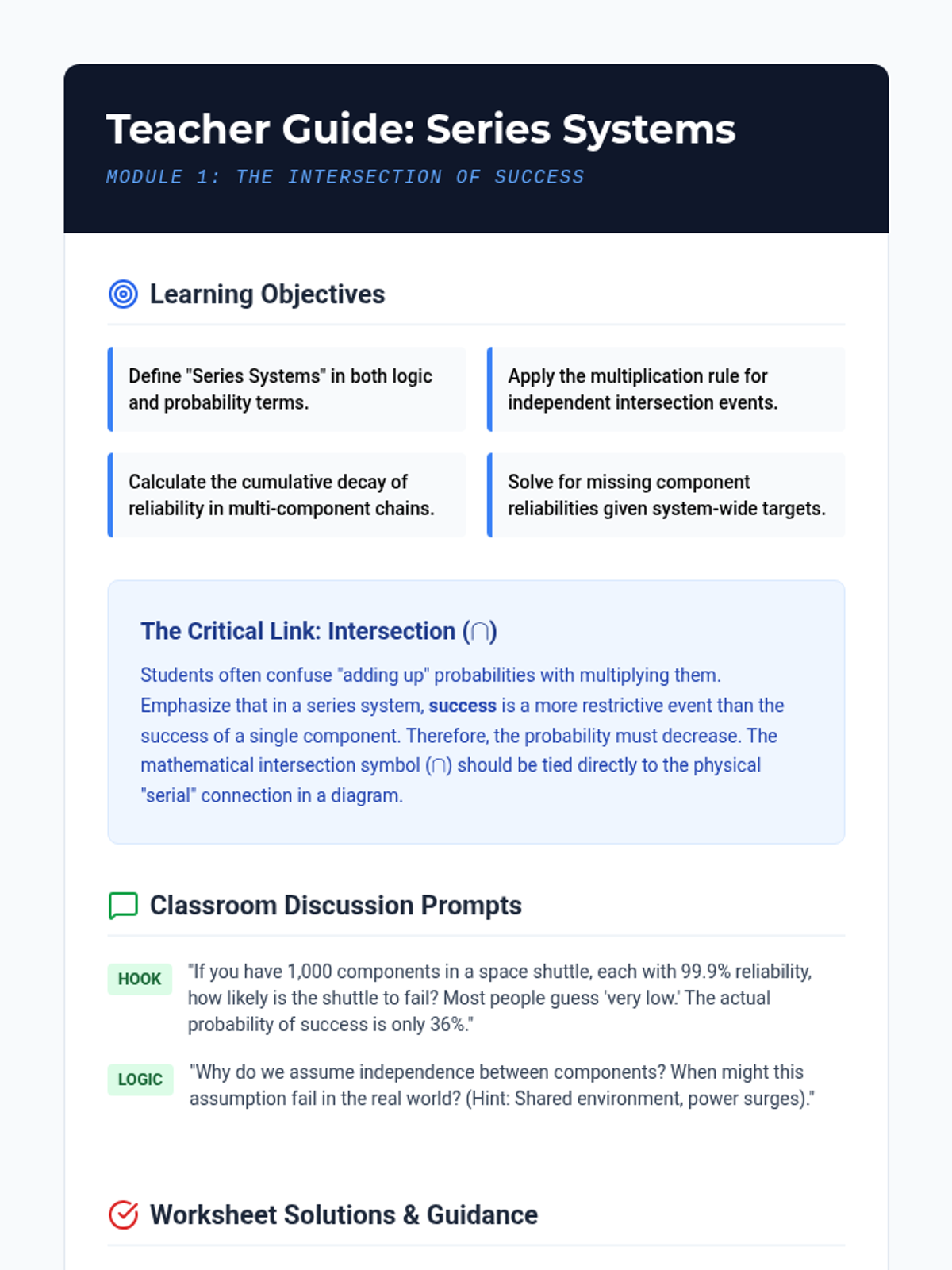
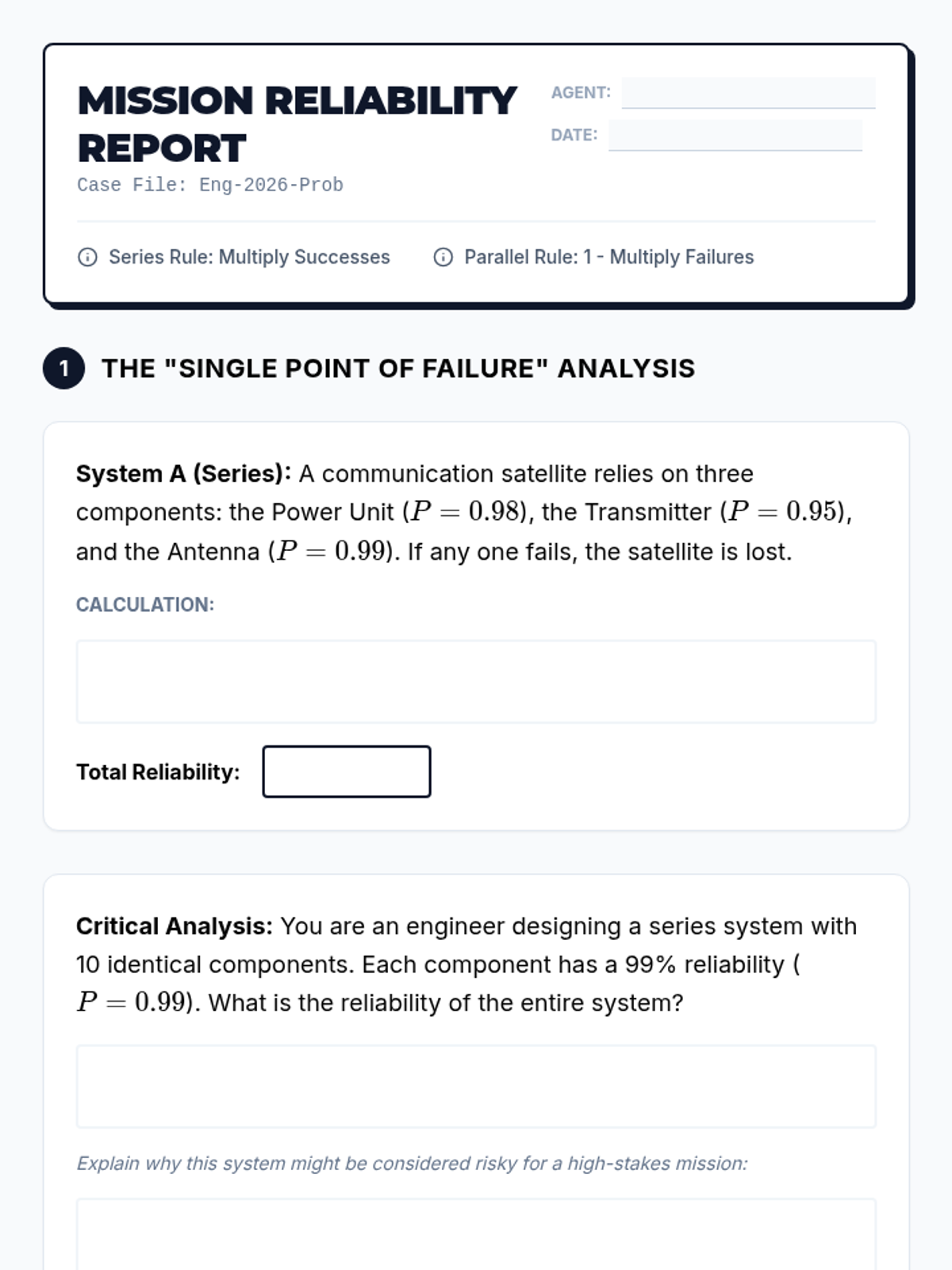
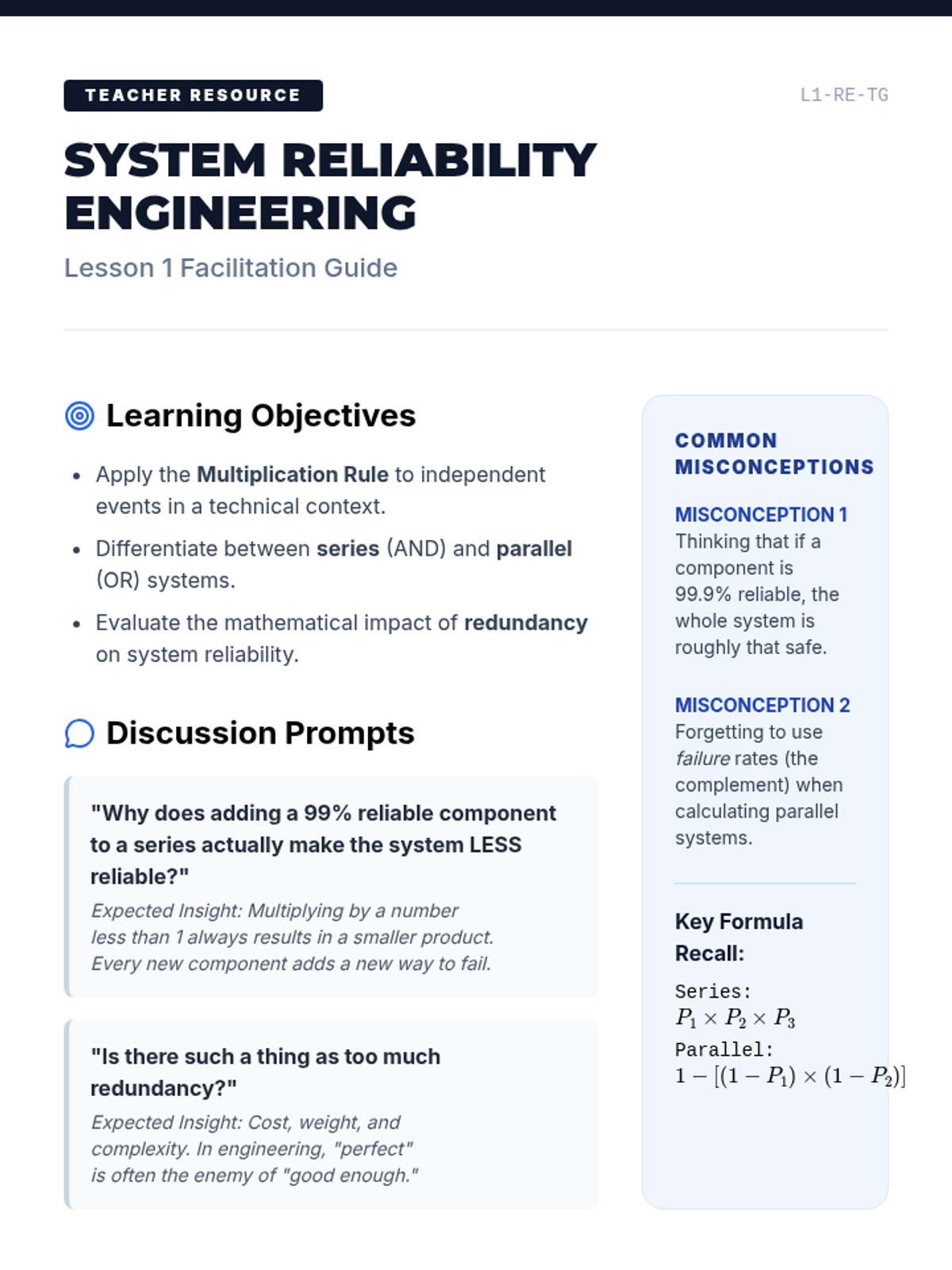
This sequence explores compound probability through the lens of engineering reliability. Students learn to model series and parallel systems, analyze hybrid structures, and account for dependent failures in complex risk environments.
A rigorous undergraduate sequence exploring the mathematical axioms of compound probability, focusing on set theory, independence, and conditional logic.
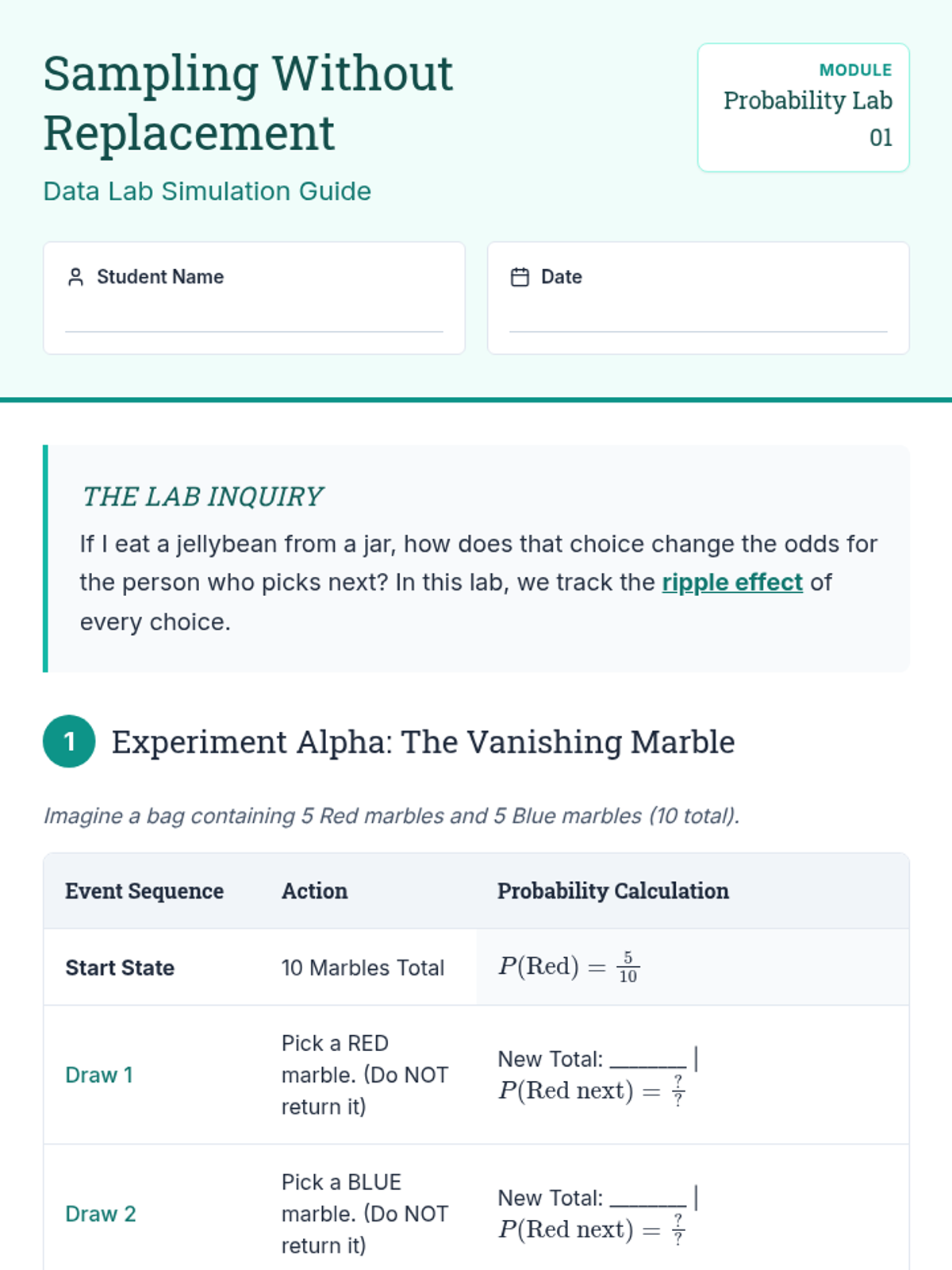
A comprehensive unit on dependent events and conditional probability, exploring how sequential choices change outcomes through simulations, formal notation, and real-world case studies.
This sequence explores how compound probability and risk assessment are used in professional fields like engineering, medicine, insurance, and law. Students apply the multiplication rule and conditional probability to high-stakes real-world scenarios.
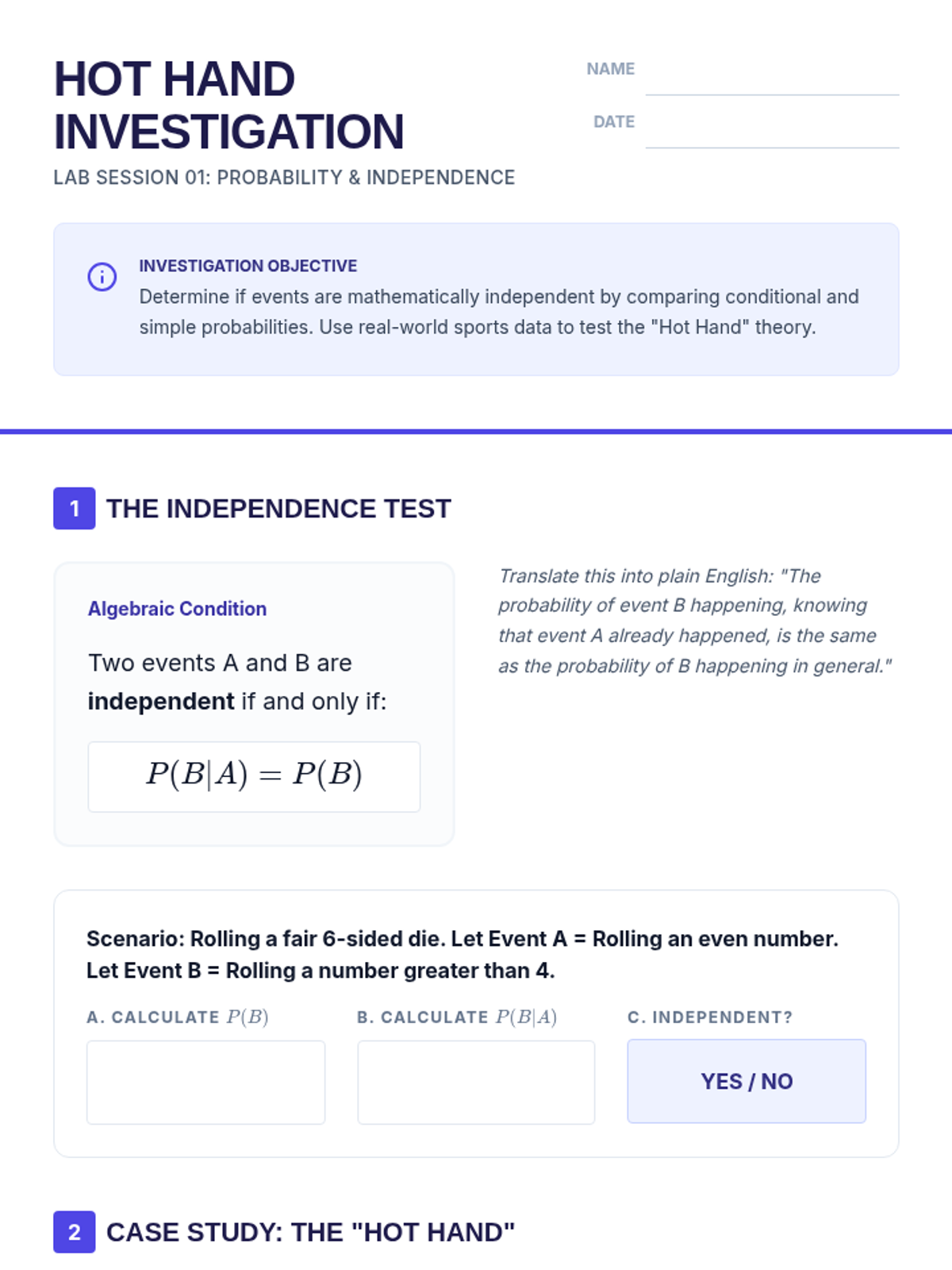
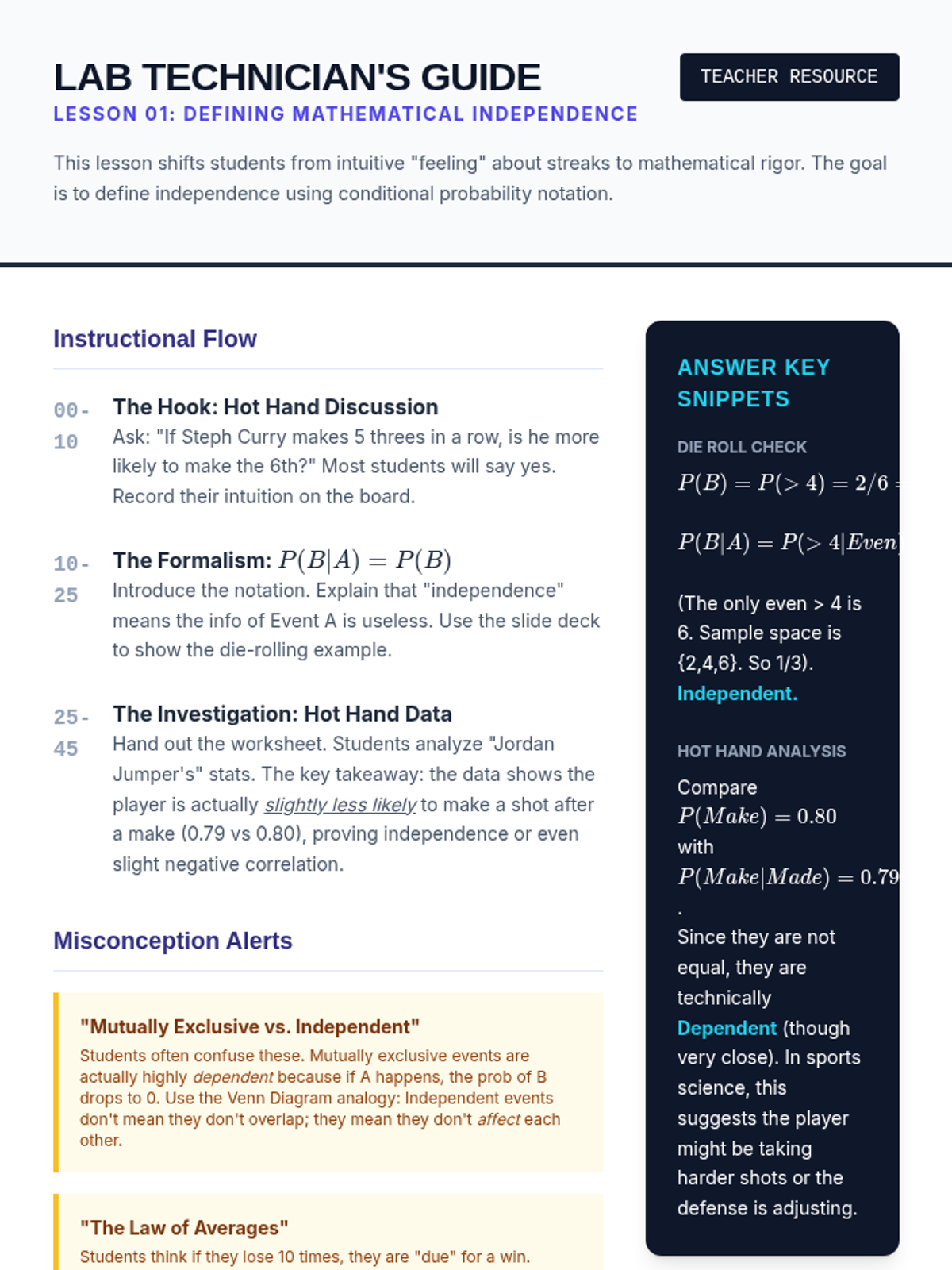
A deep dive into compound event probability, moving from conceptual independence to the algebraic rigor of the Multiplication Rule and conditional logic. Students analyze sports streaks, card games, and forensic evidence to master independent and dependent probabilities.
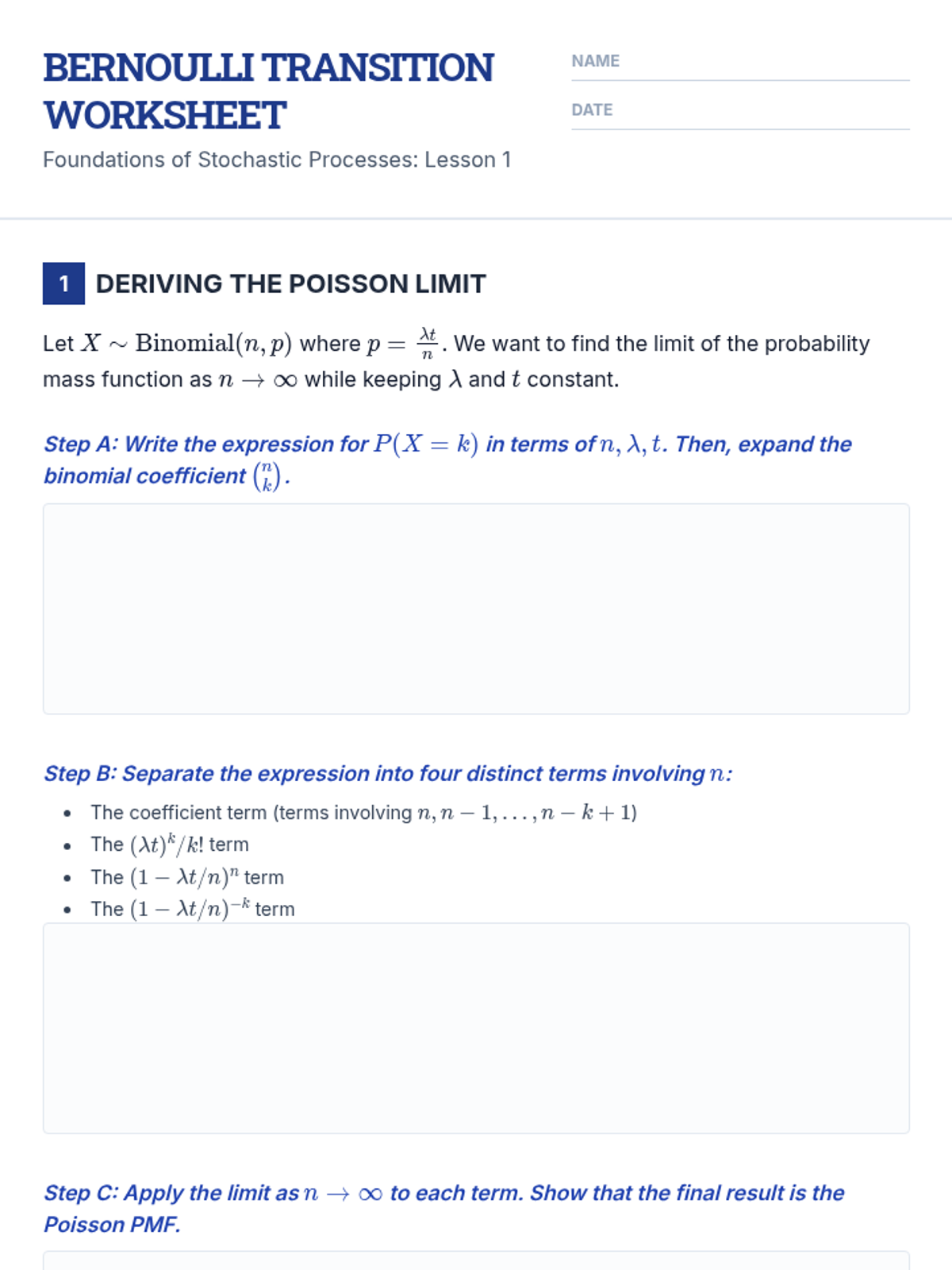
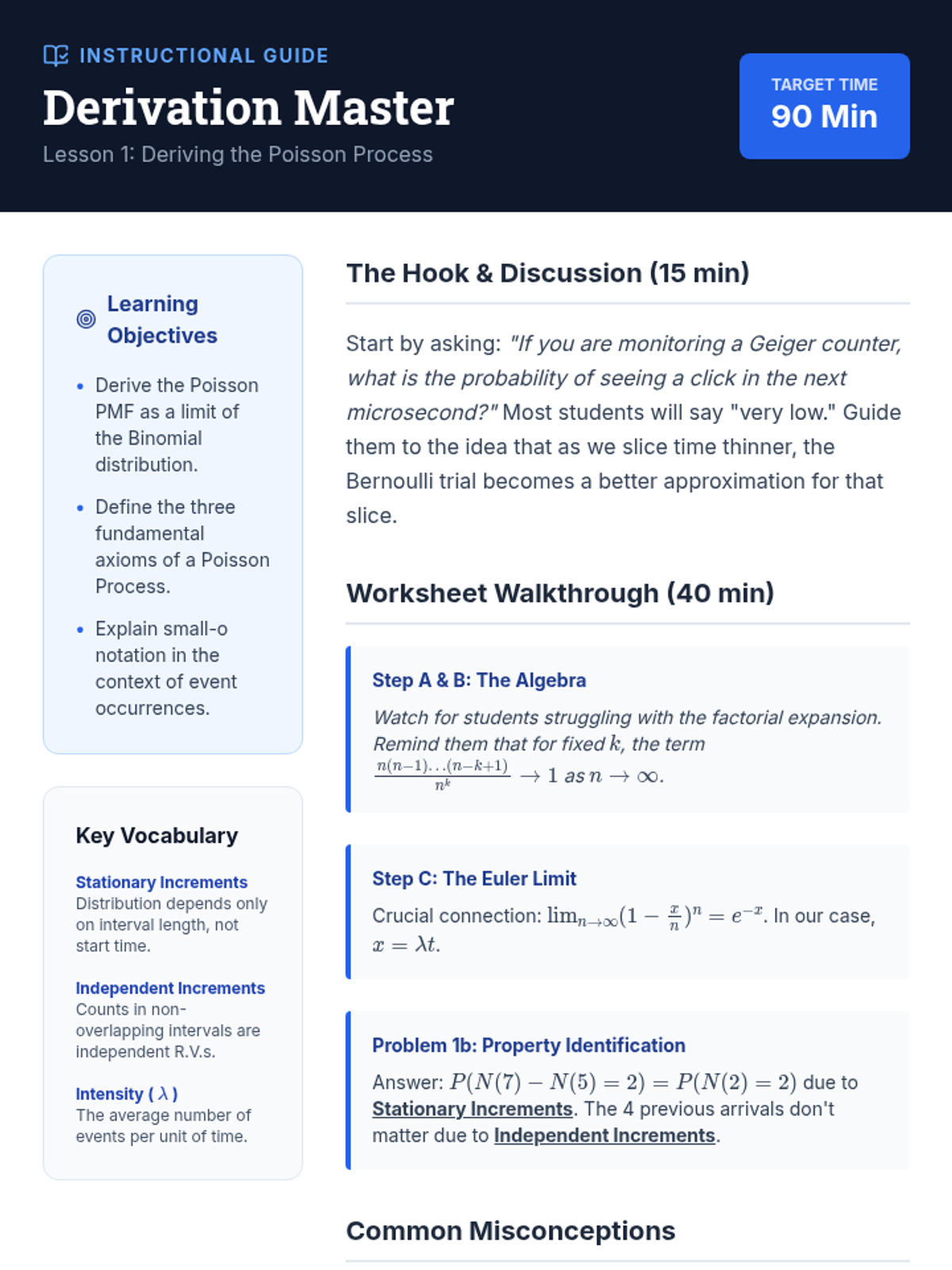
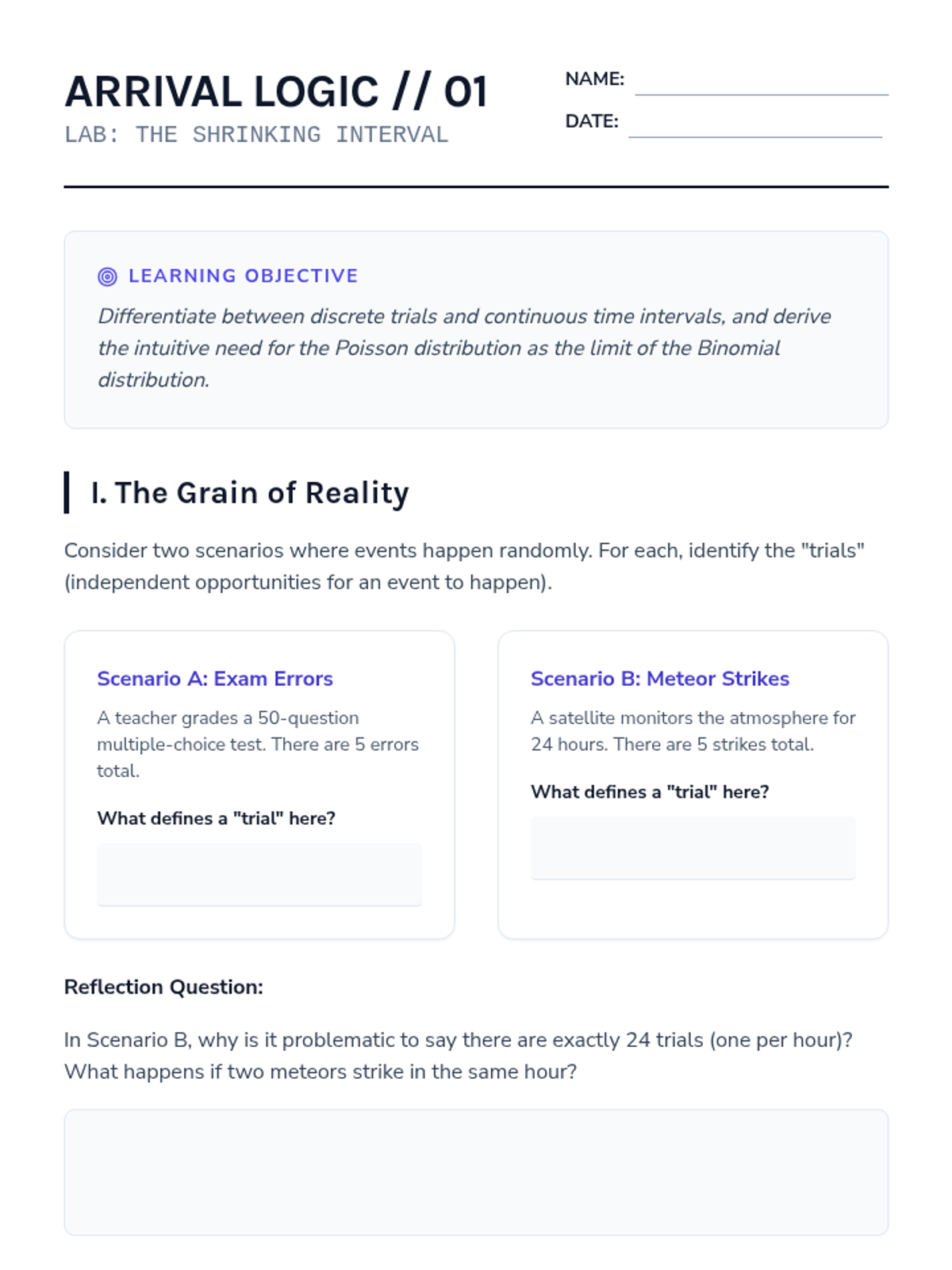
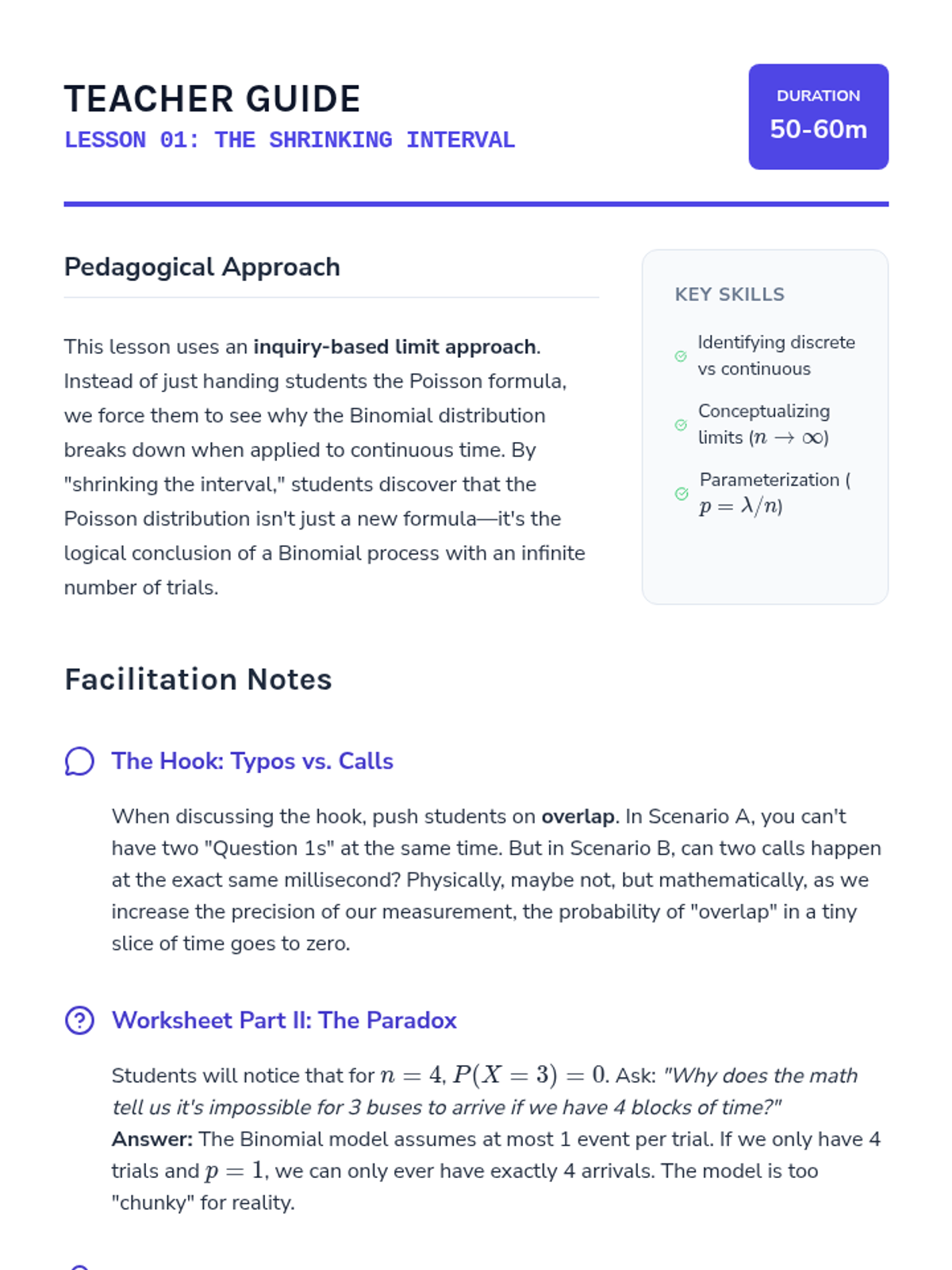
An undergraduate-level sequence exploring Poisson processes as continuous-time counting models, covering derivations, inter-arrival times, superposition, order statistics, and non-homogeneous variations.
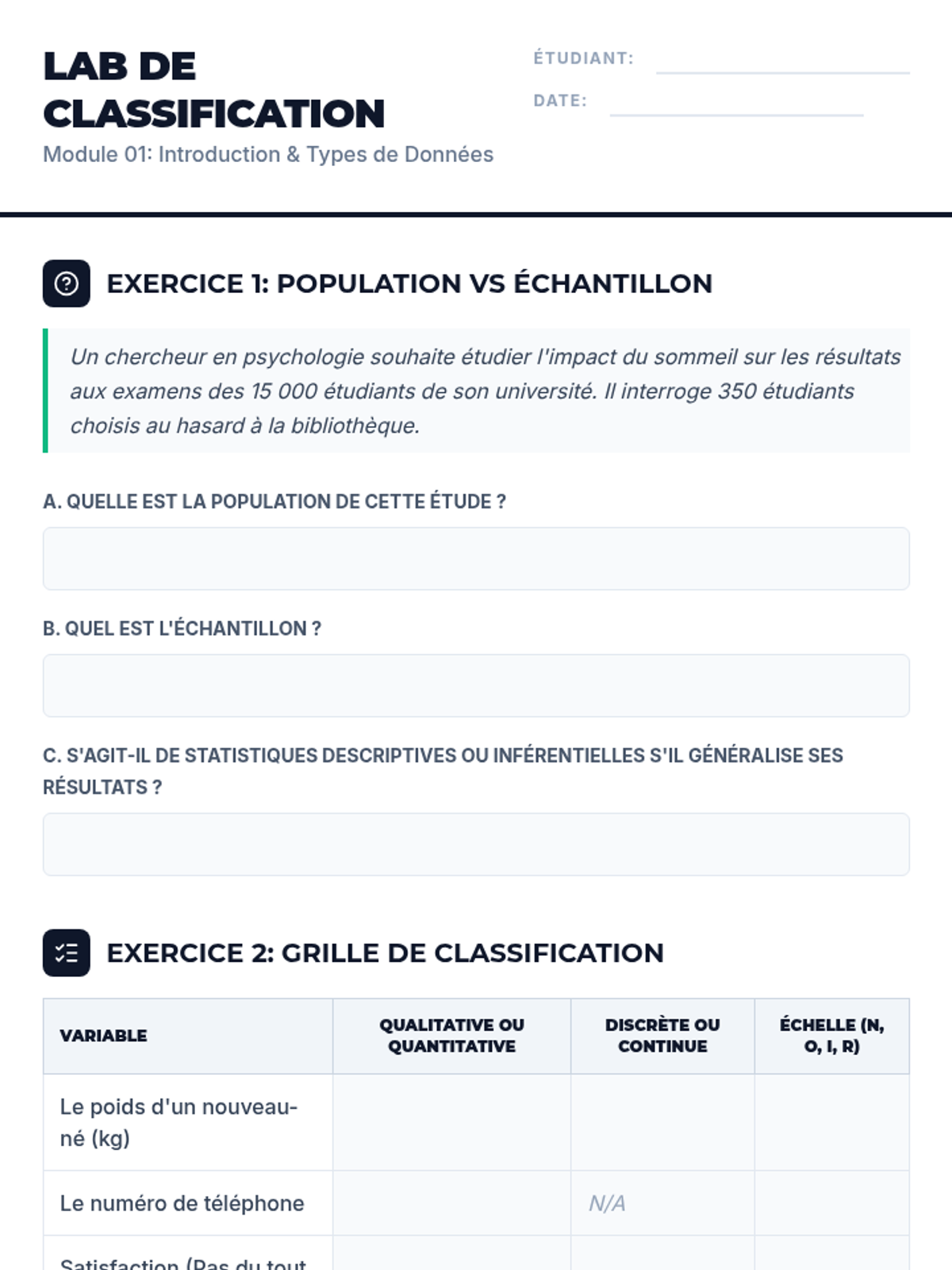
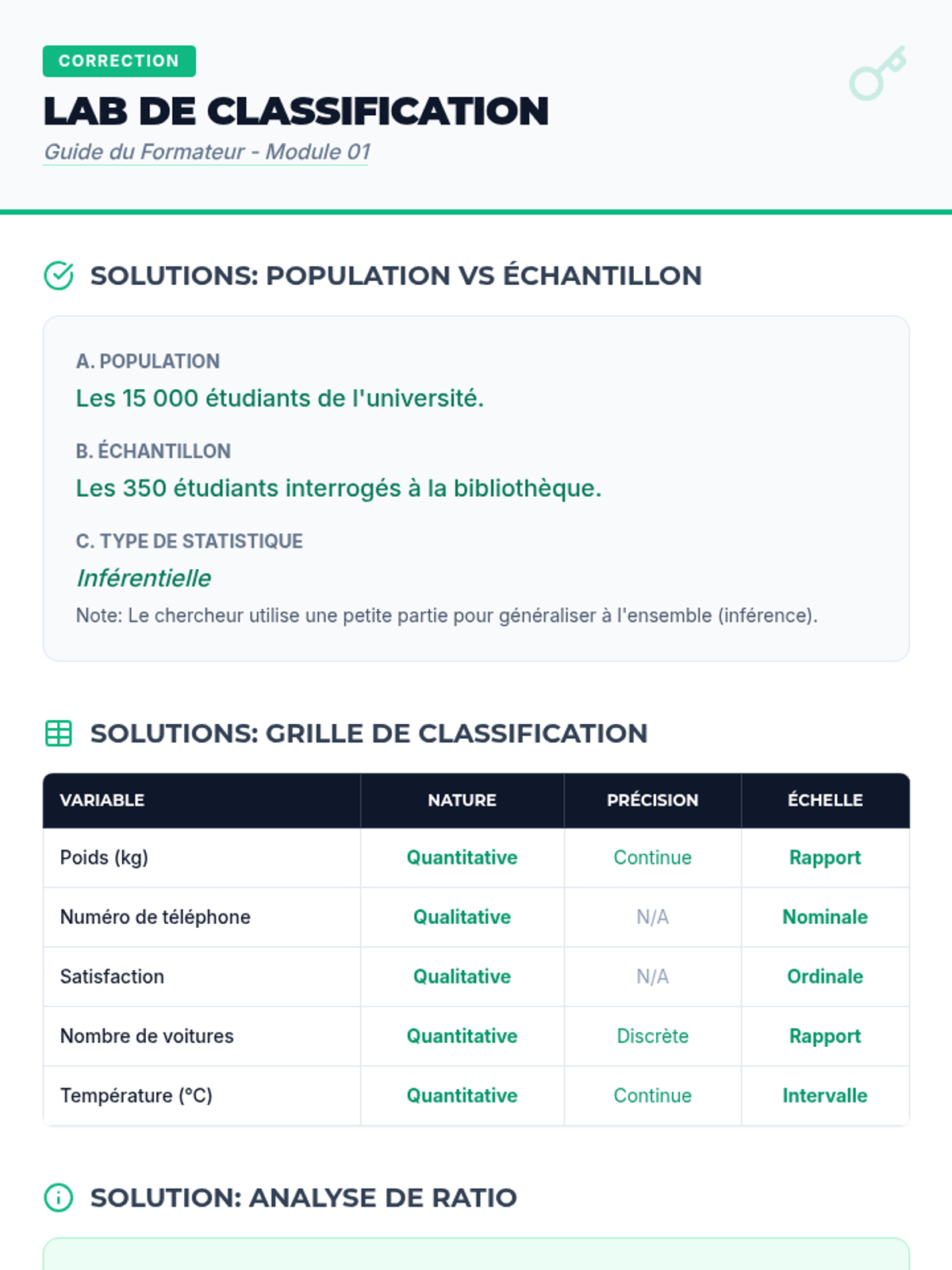
Une introduction complète aux statistiques universitaires, couvrant la classification des données, les mesures descriptives, la visualisation et les fondements de la loi normale. L'approche est axée sur l'analyse de données réelles et la compréhension conceptuelle.
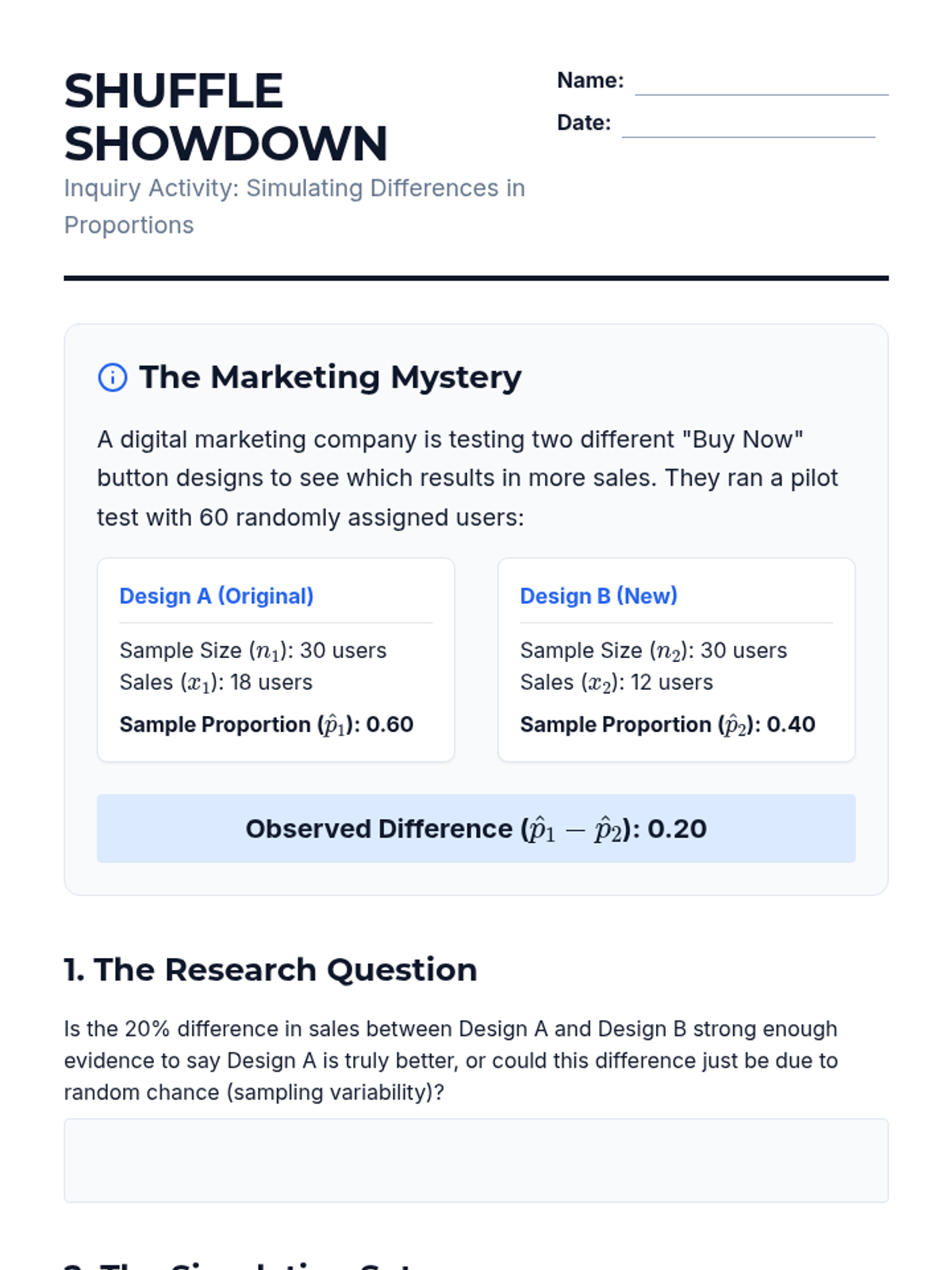
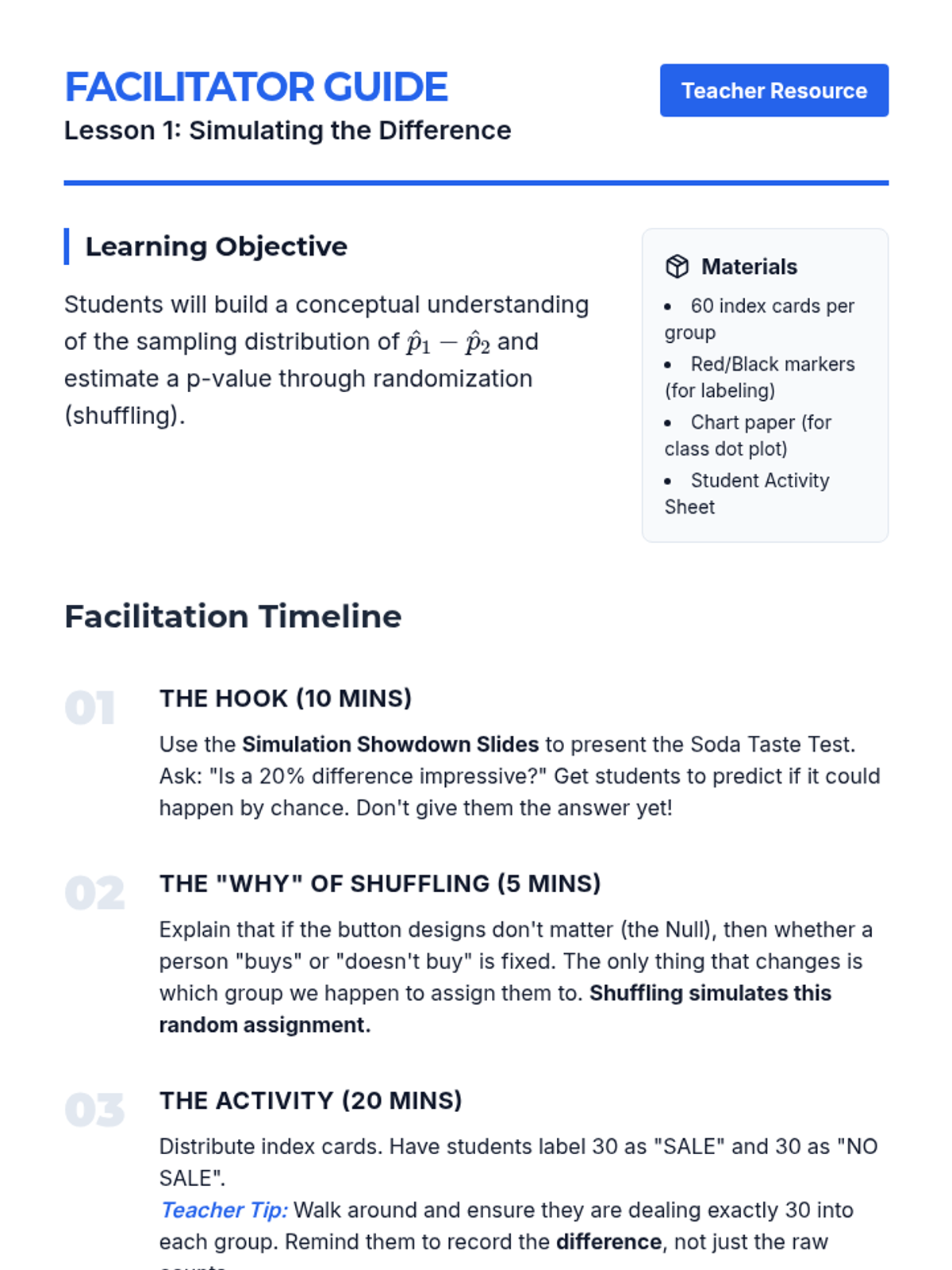
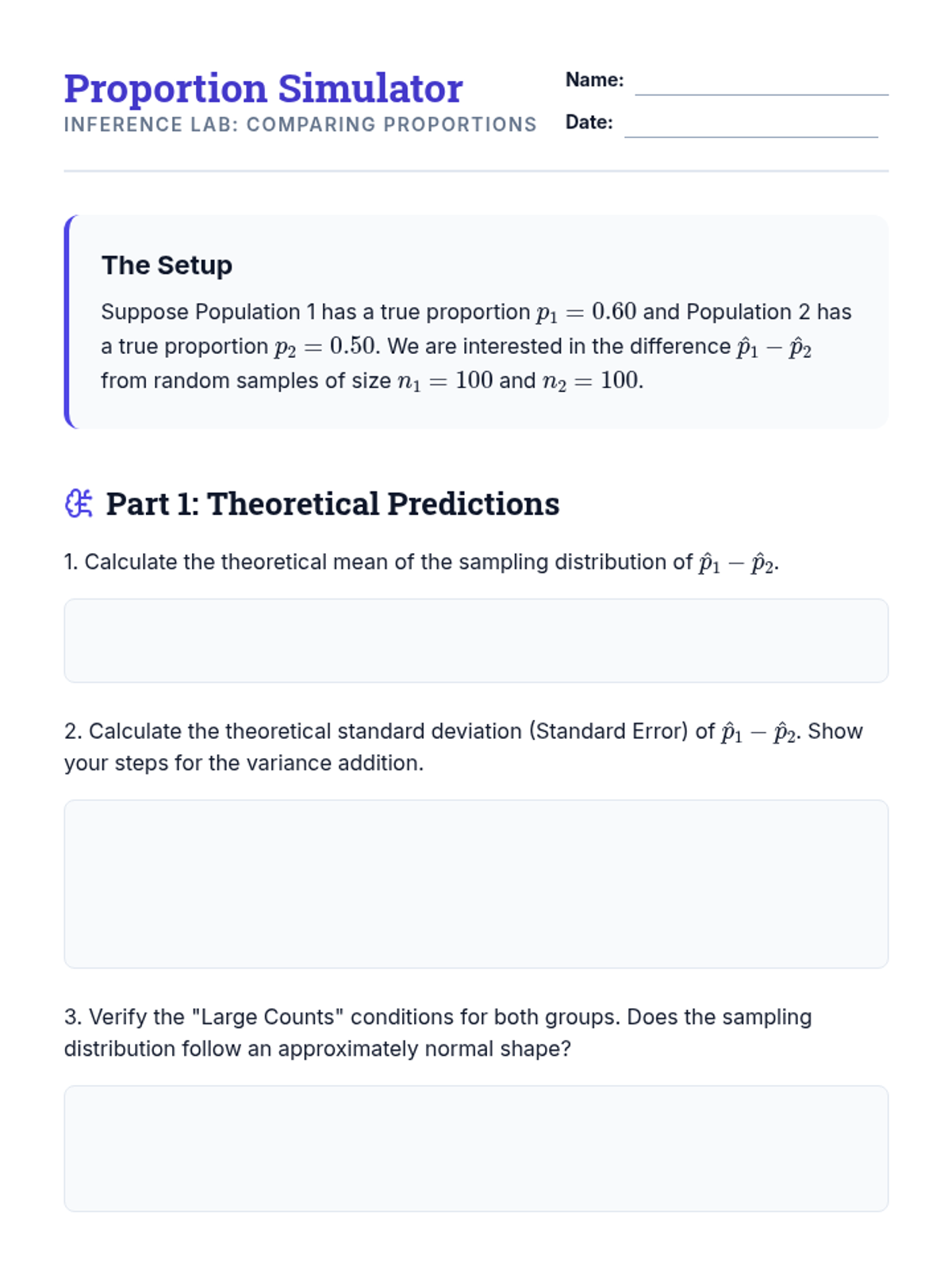
Students build a conceptual understanding of comparing two proportions through simulation before formalizing the math. They learn to conduct and interpret 2-sample z-tests and confidence intervals for differences in proportions in real-world contexts like marketing and public opinion.
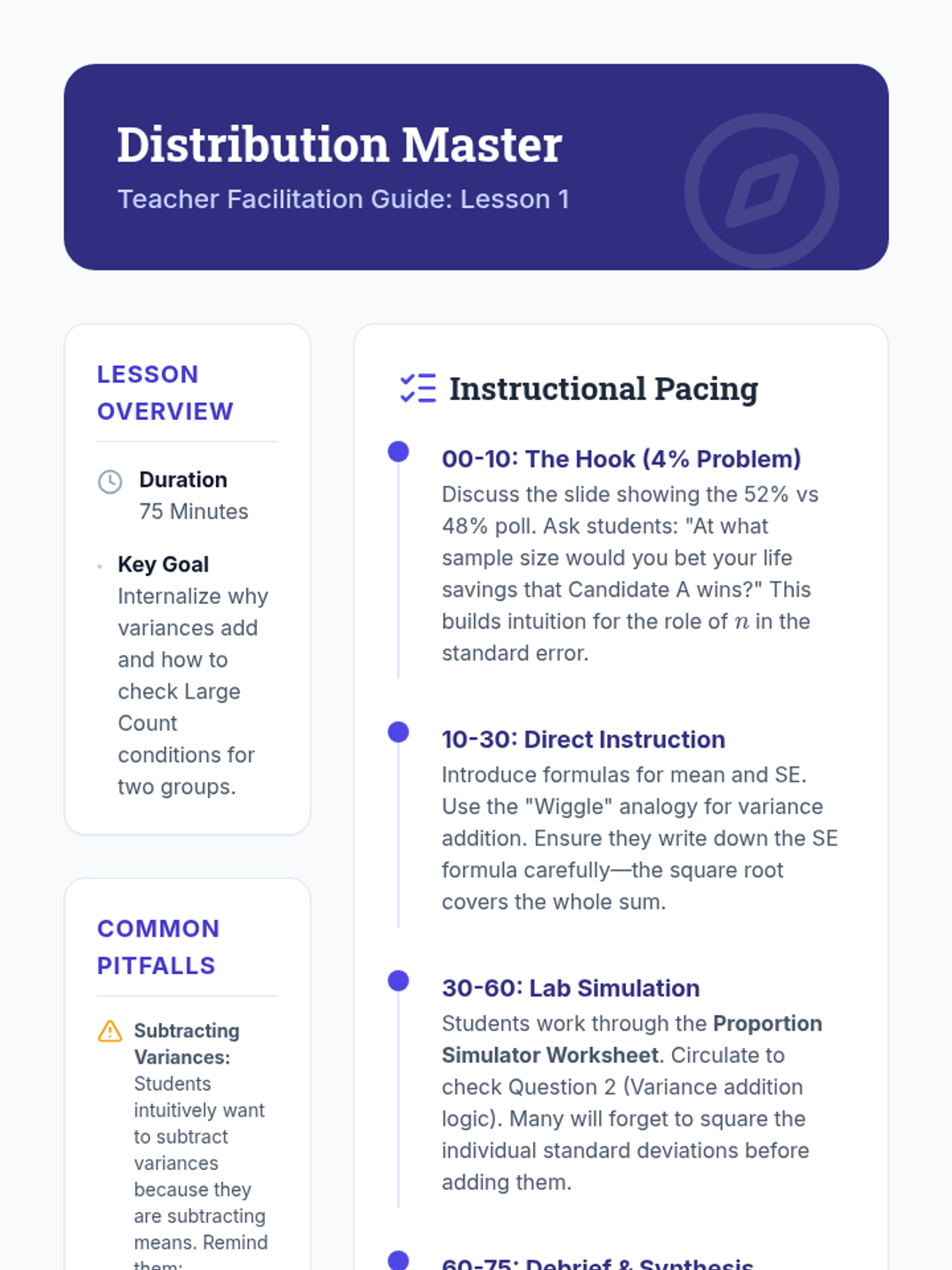
A comprehensive undergraduate statistics sequence on comparing two population proportions and rates. Students move from the theoretical sampling distribution to practical A/B testing, clinical risk assessment, and project-based experimental design.
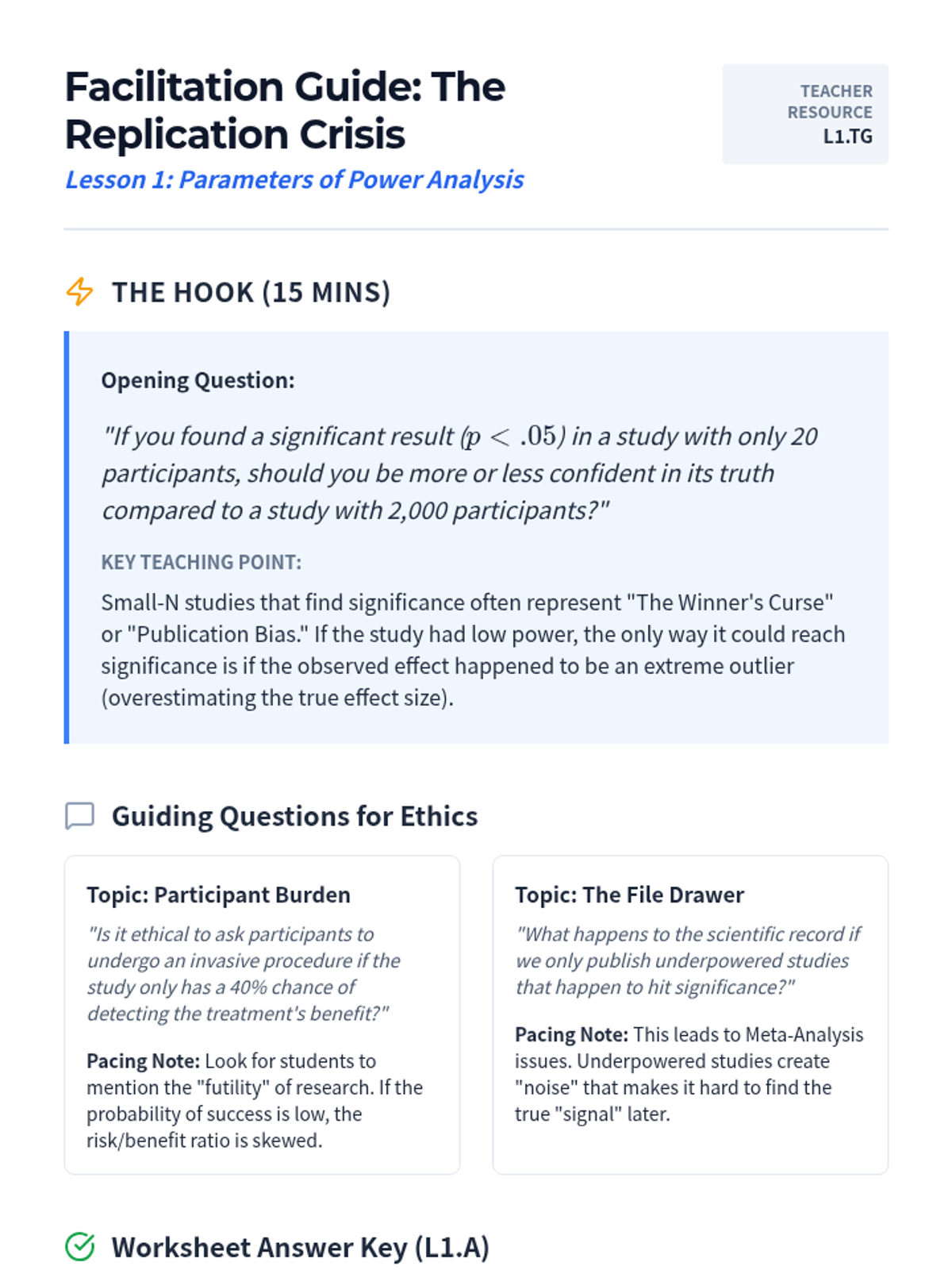
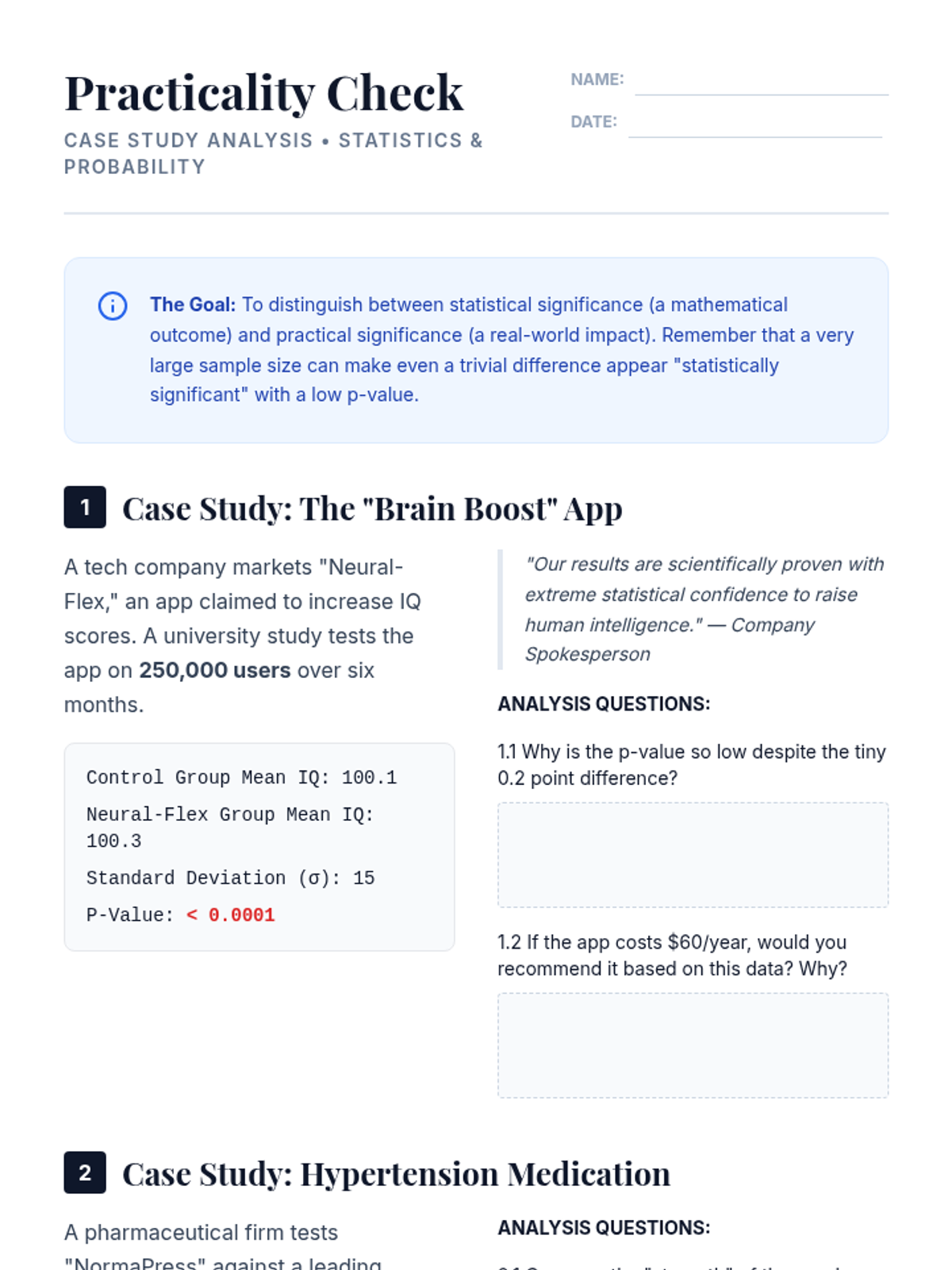
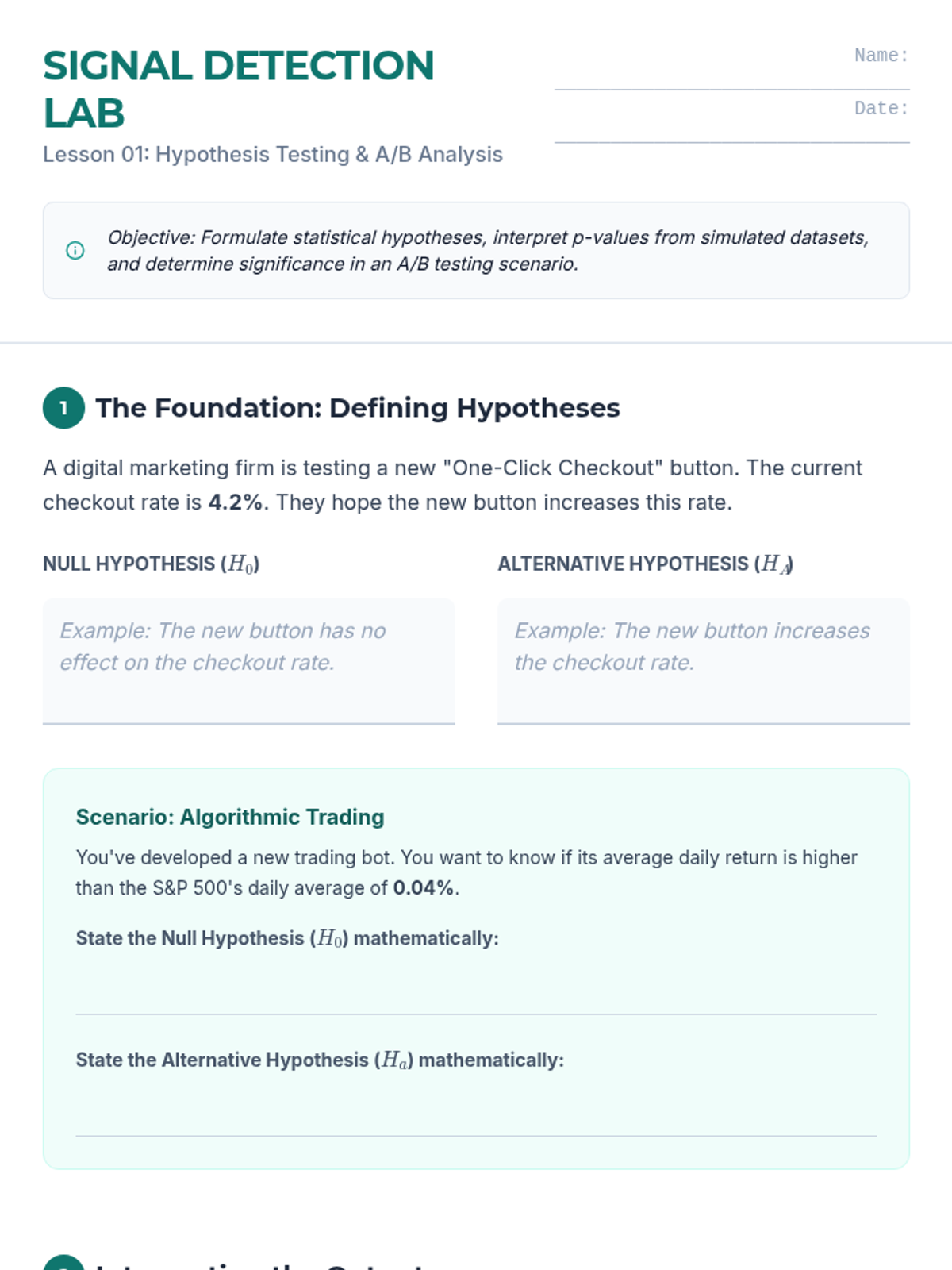
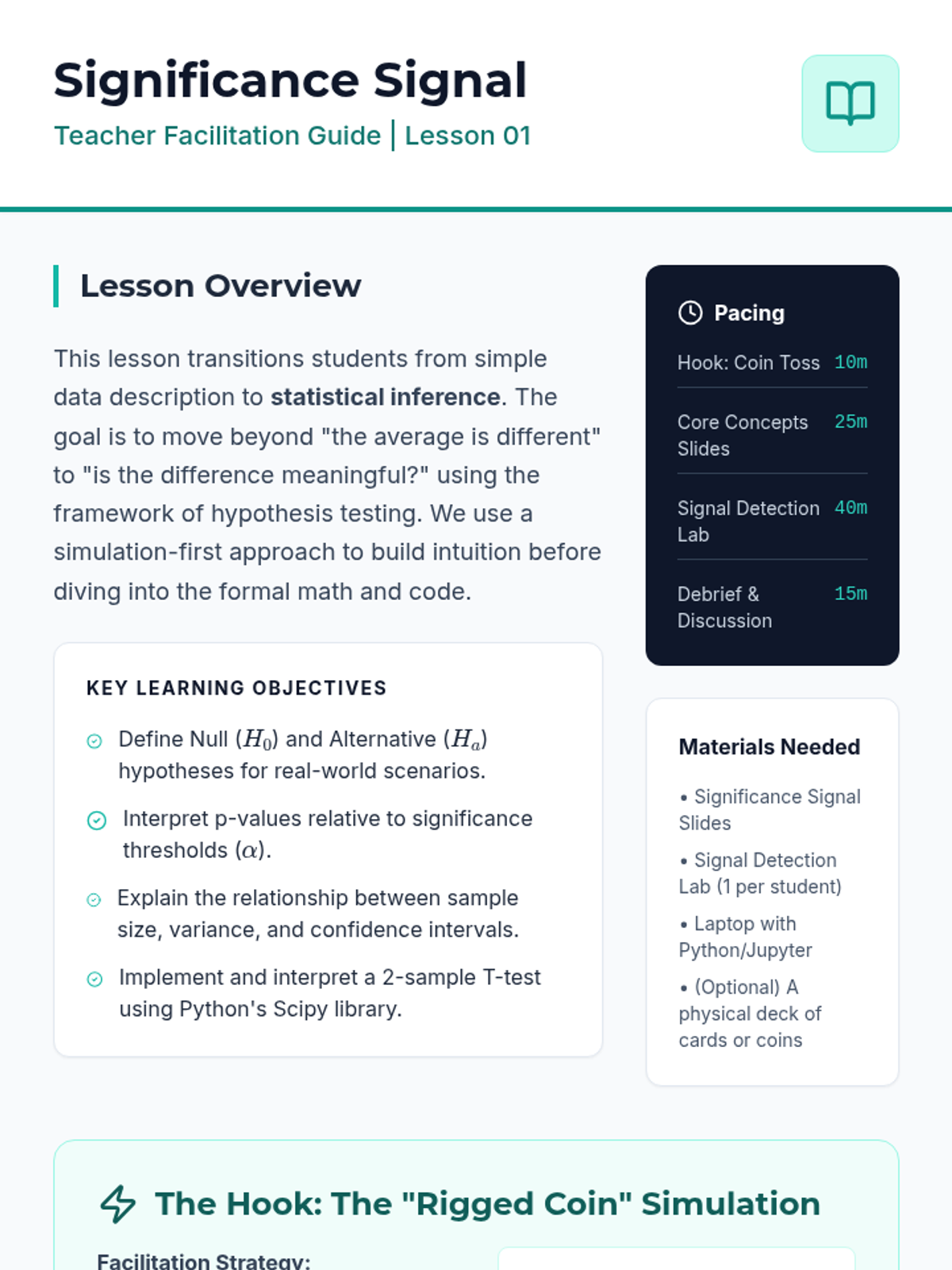
This advanced sequence for undergraduate students explores the critical distinction between statistical significance and practical importance. Students move beyond p-values to master effect size measures like Cohen's d and the principles of statistical power, culminating in a critical analysis of the replication crisis and the role of rigorous study design in scientific integrity.
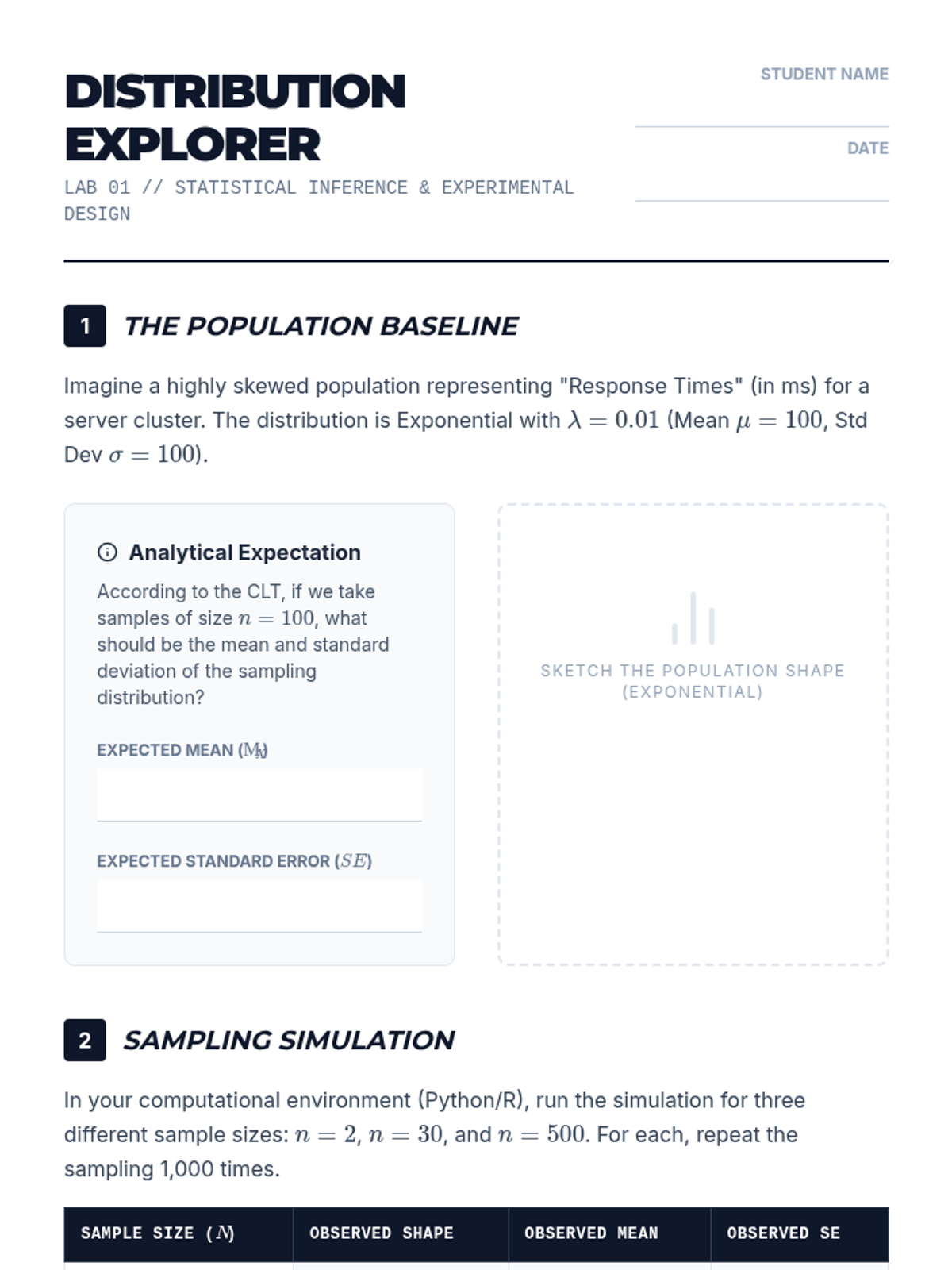
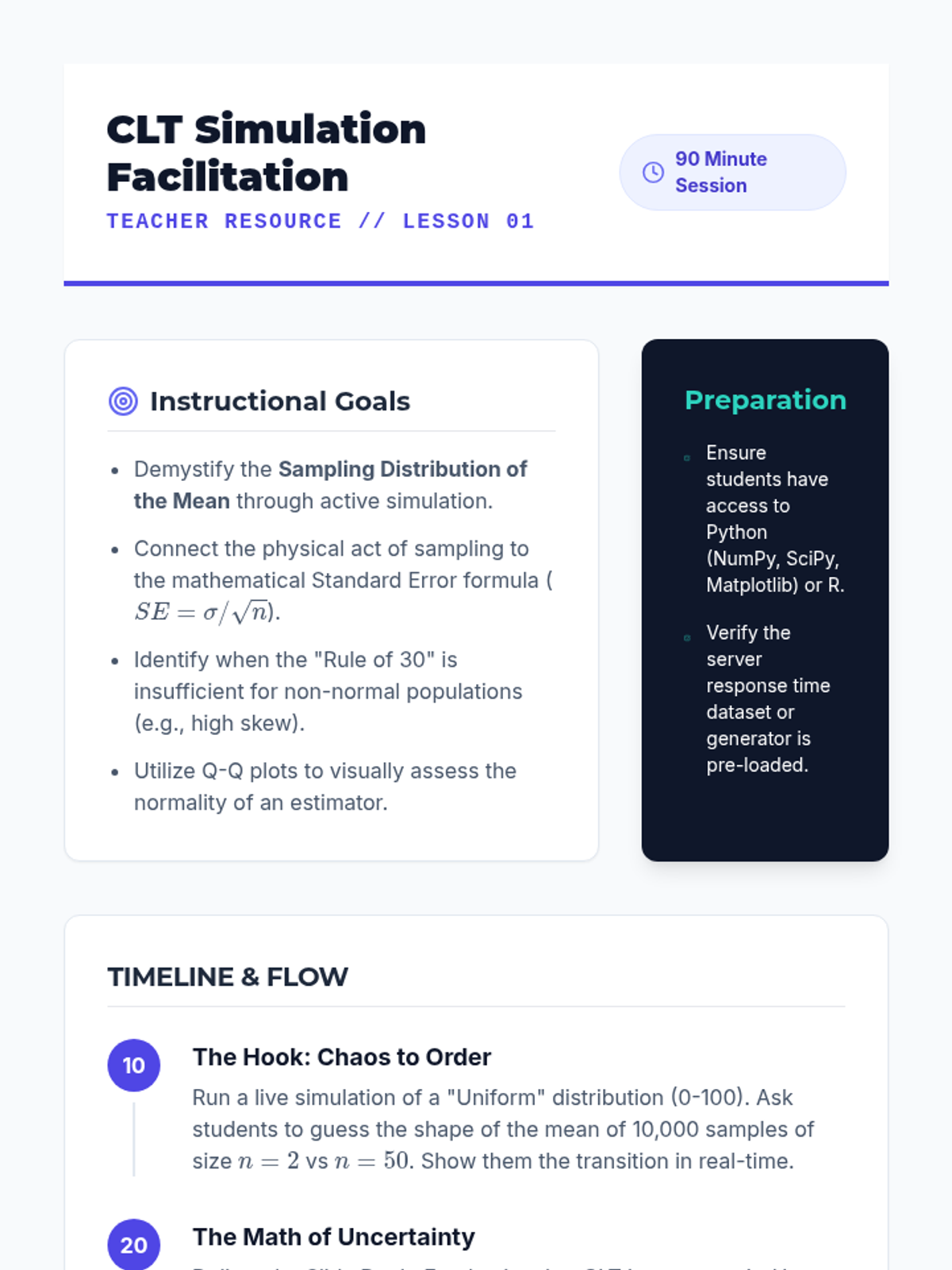
This sequence bridges the gap between theoretical probability and practical data science applications through rigorous statistical inference. Students explore sampling distributions and the Central Limit Theorem before diving into parametric and non-parametric hypothesis testing, culminating in experimental design and Bayesian fundamentals.
This sequence explores the critical world of statistical sampling, teaching students to identify bias, understand the importance of randomness, and evaluate the validity of data-driven claims in media and history.
A comprehensive unit for undergraduate statistics students focusing on the identification, calculation, and interpretation of paired (dependent) sample designs. Students explore why controlling for individual variation through matching increases statistical power and narrows confidence intervals.
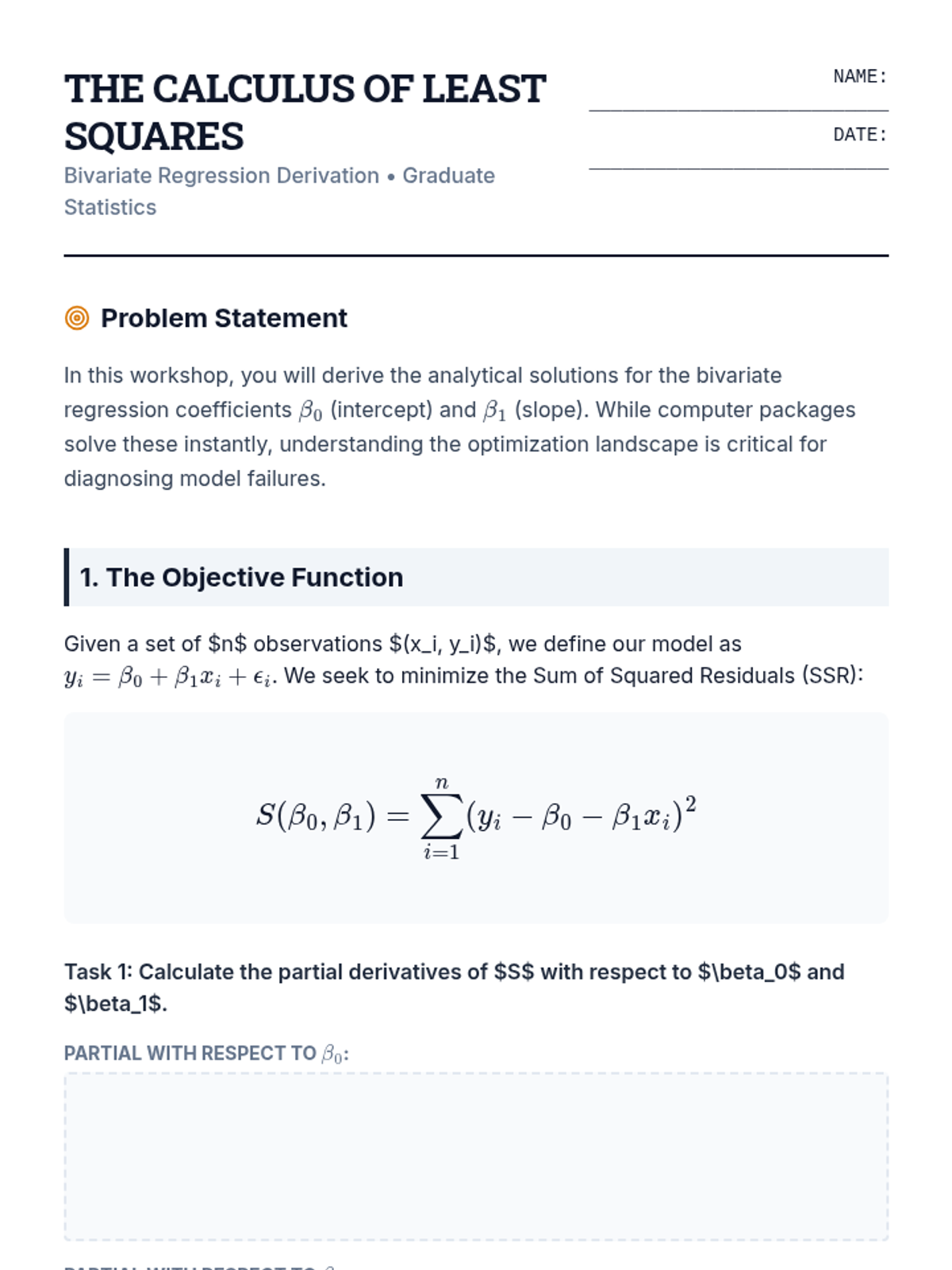
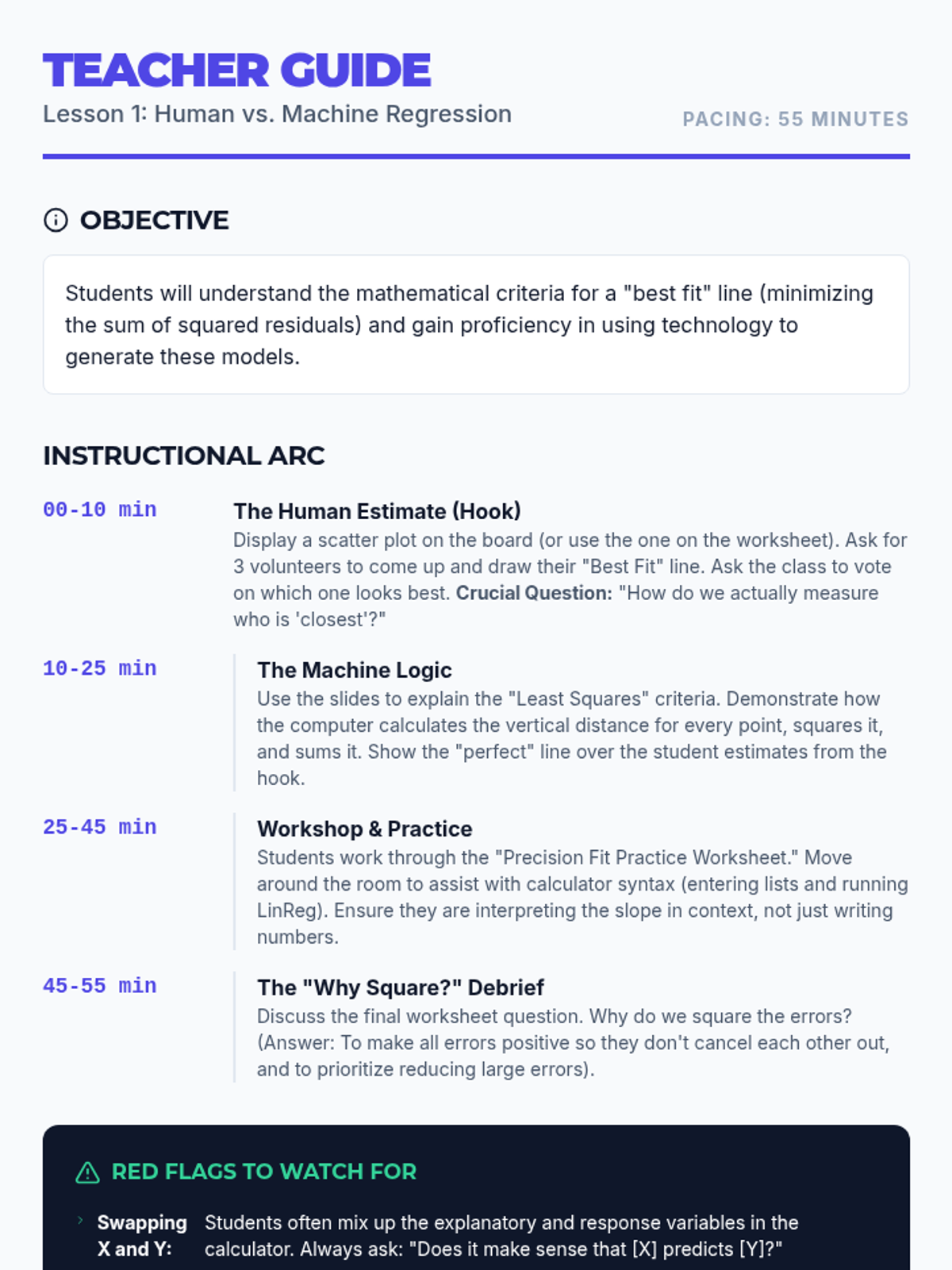
A graduate-level sequence focused on the theoretical derivation of OLS estimators and the rigorous diagnostic procedures required to validate bivariate linear models. Students progress from matrix algebra proofs to advanced residual analysis, transformations, and cross-validation techniques.
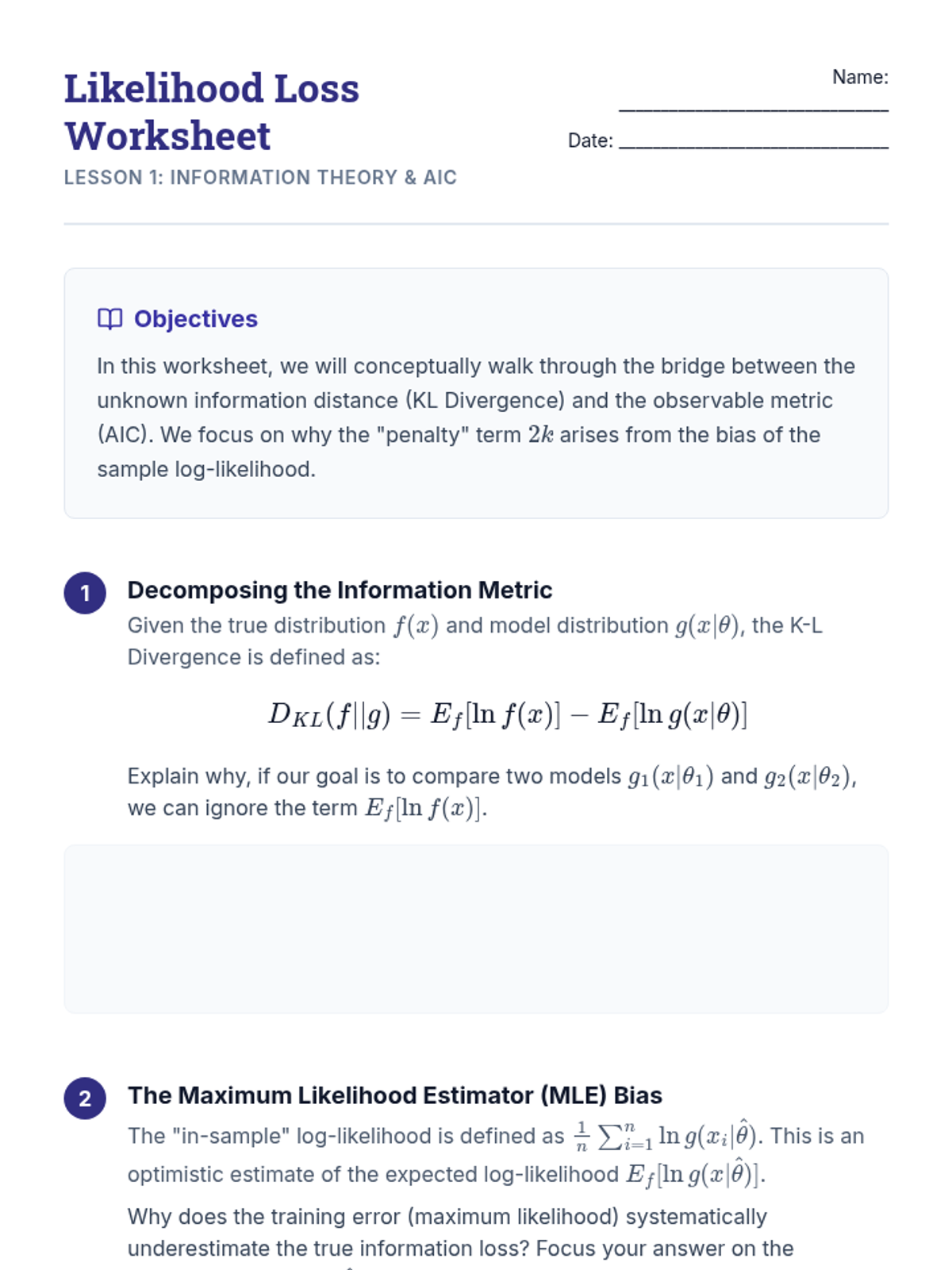
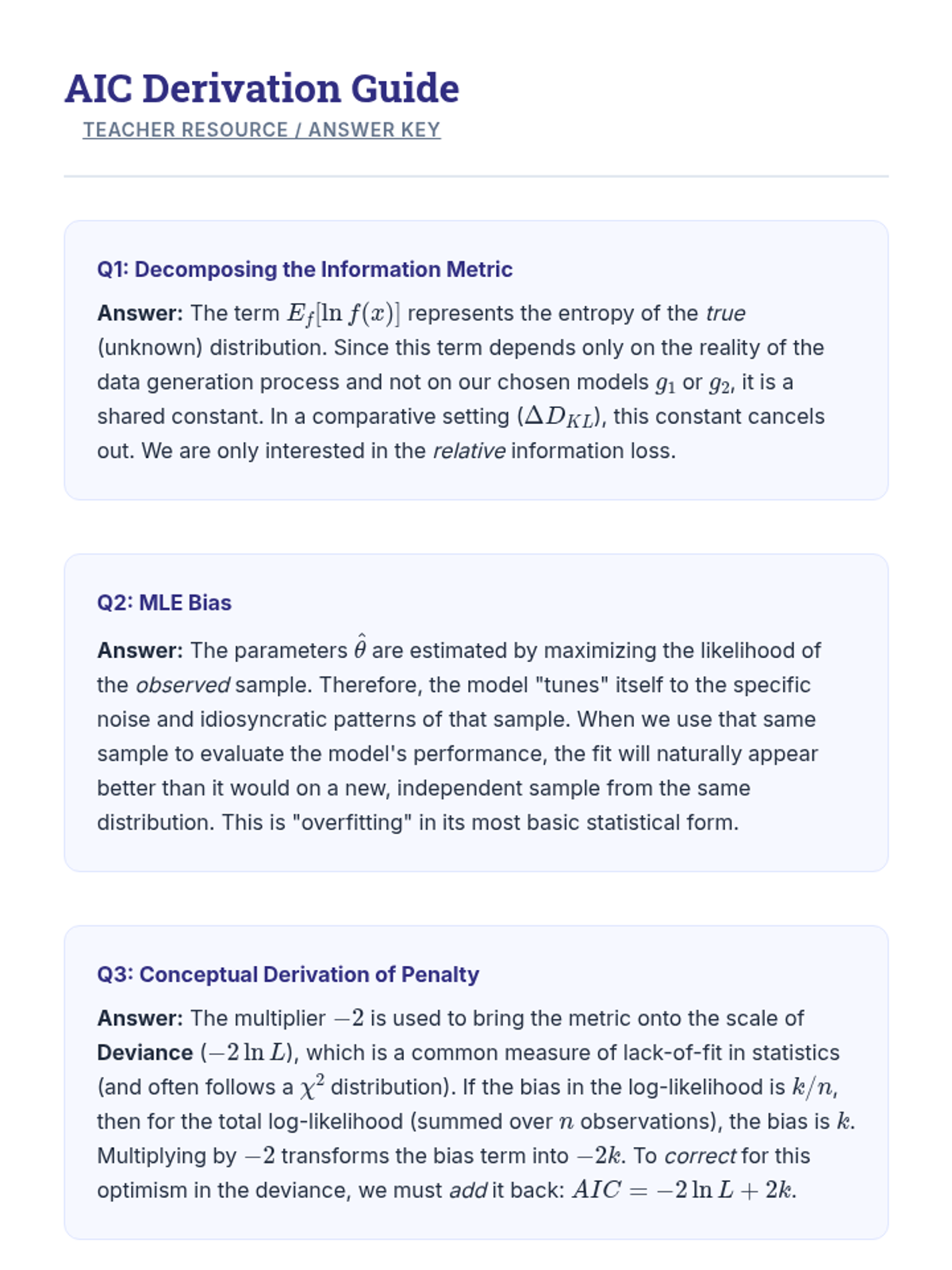
A graduate-level exploration of probabilistic model selection, focusing on AIC and BIC, their information-theoretic foundations, and practical application in statistical modeling.
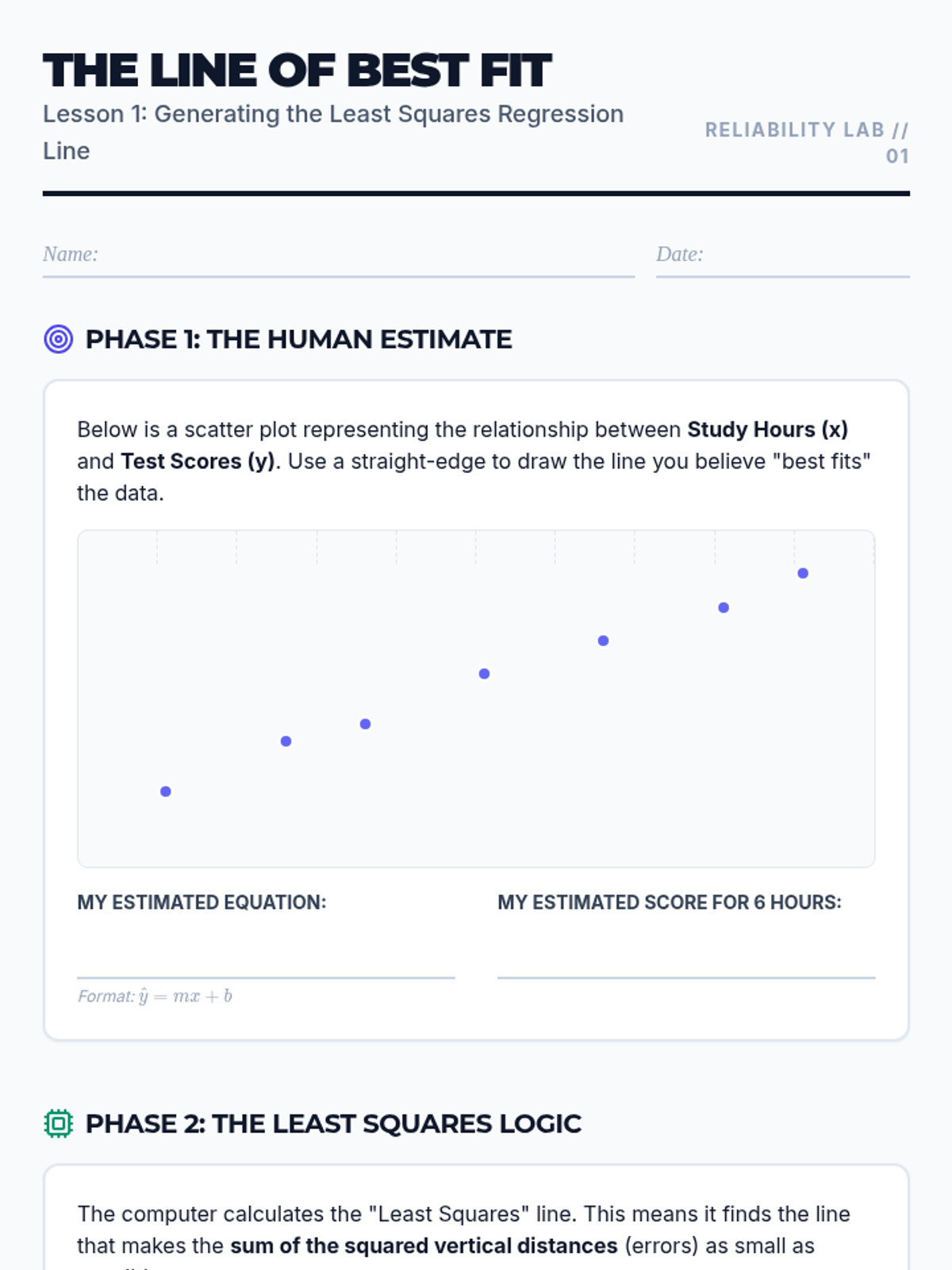
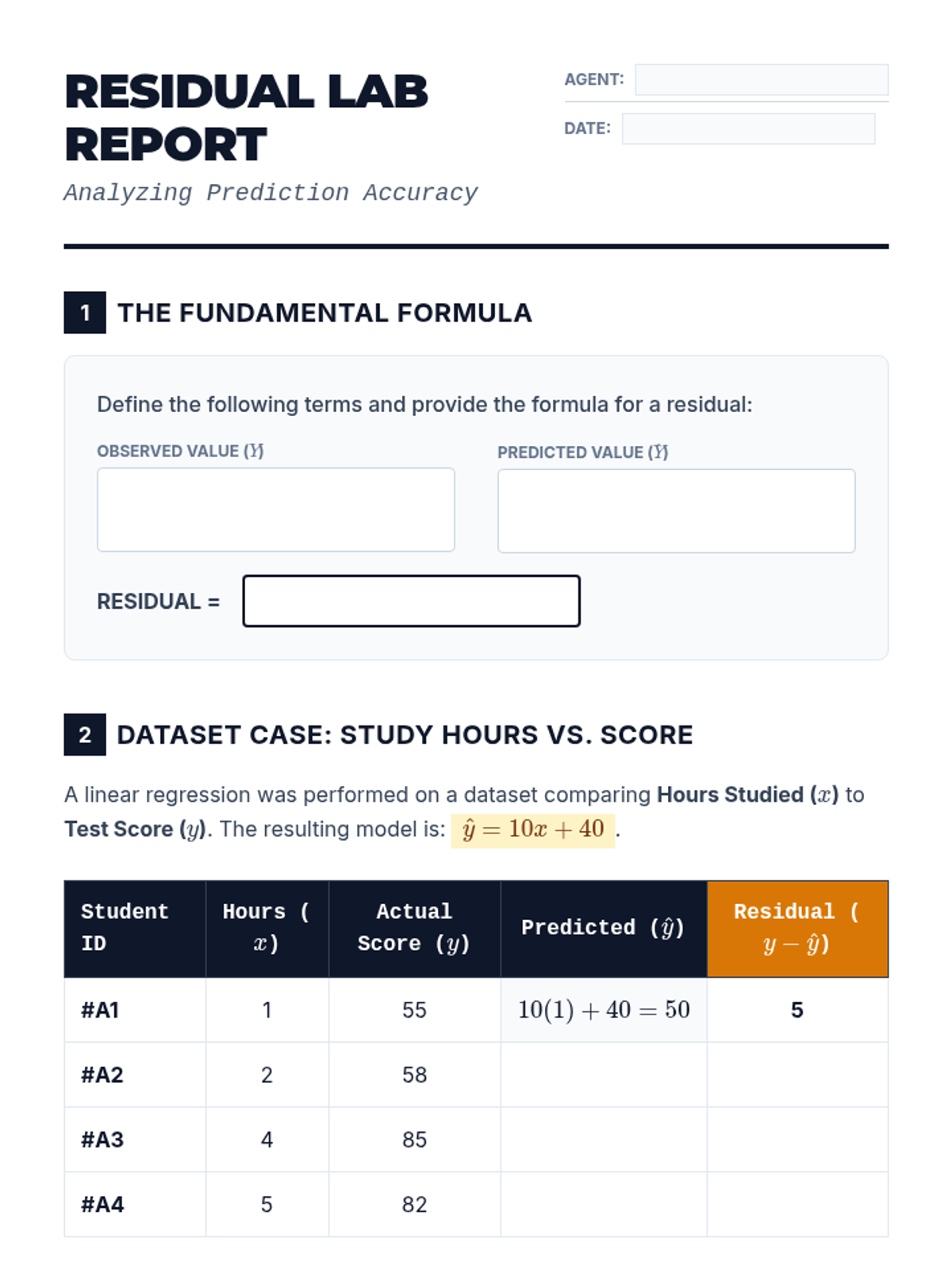
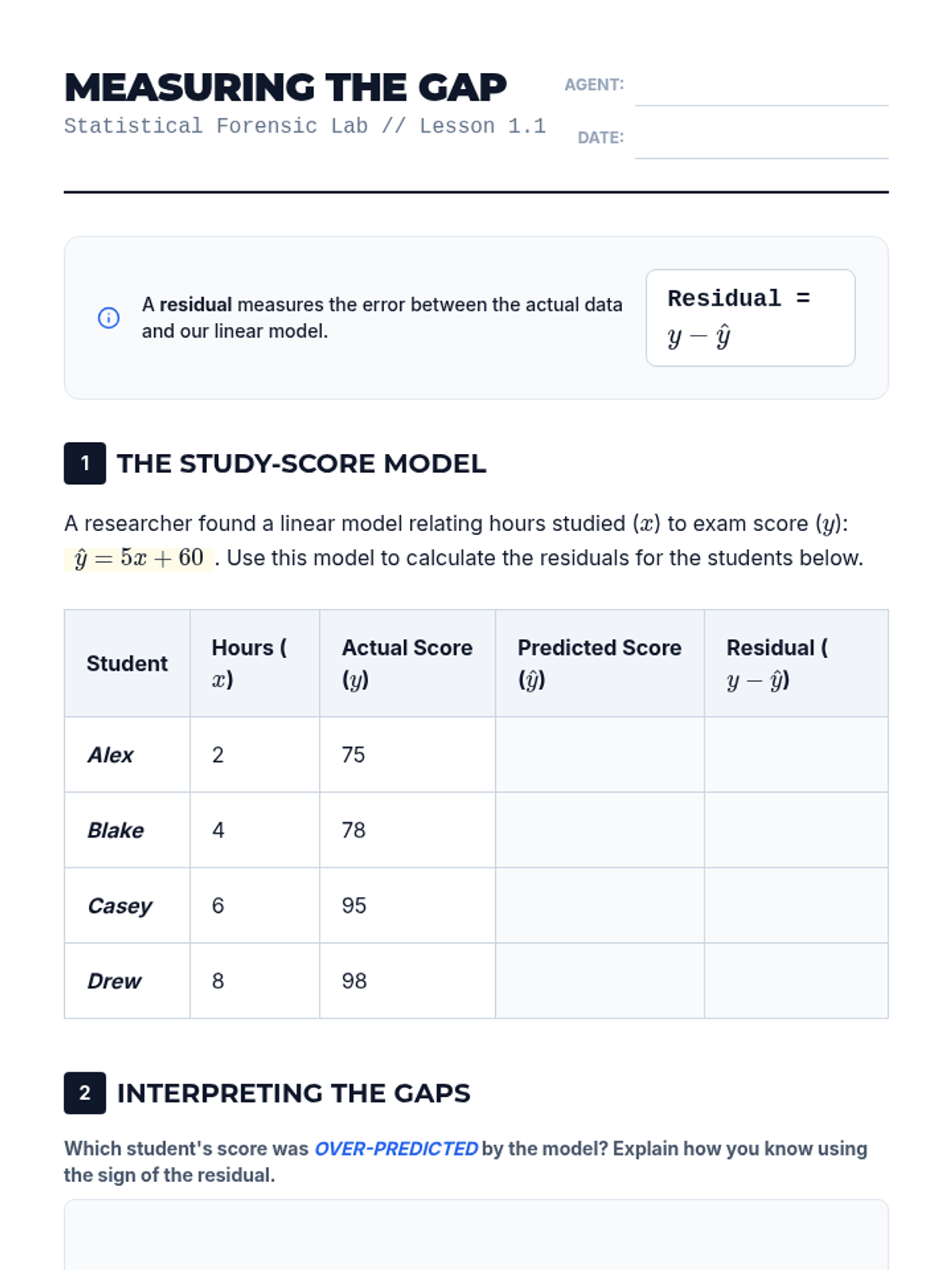
This 11th-grade statistics sequence focuses on evaluating the reliability of linear models. Students progress from generating least squares regression lines to performing advanced residual analysis, identifying non-linear patterns, and assessing the impact of influential outliers through a forensic data analysis lens.
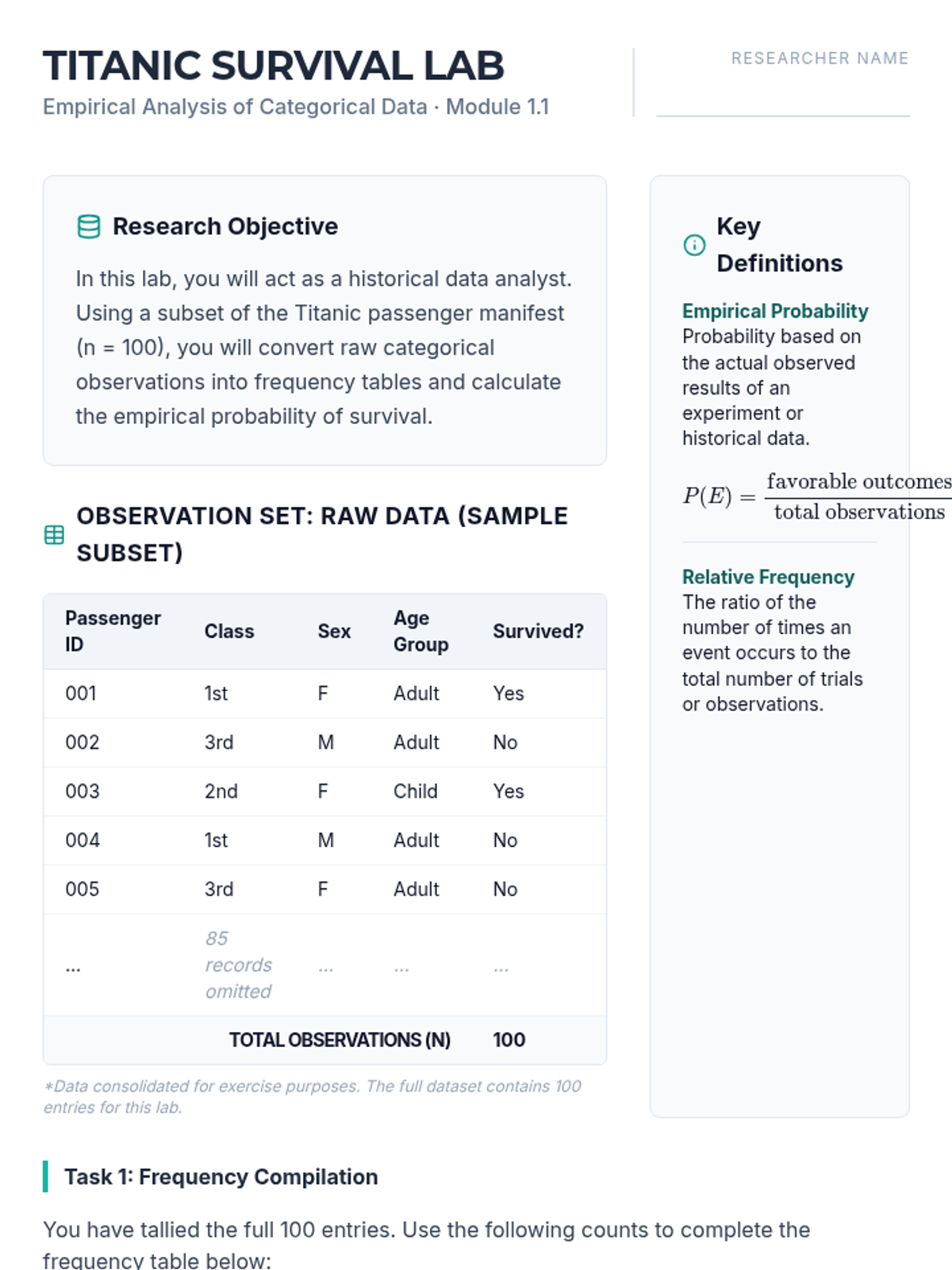
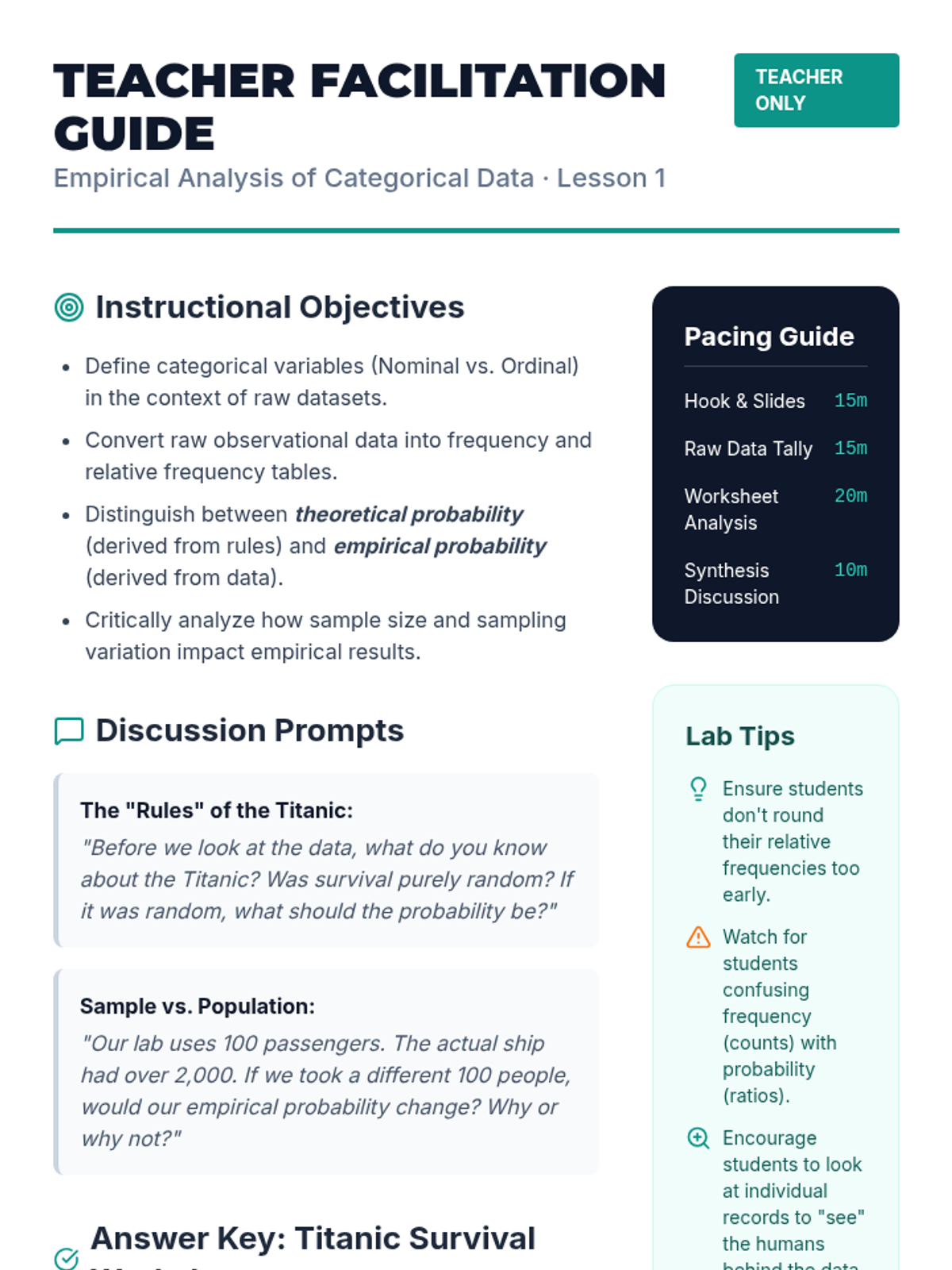
An undergraduate-level statistics sequence where students act as data scientists to analyze categorical data. They move from raw data cleaning to frequency tables, joint/marginal distributions, conditional probability, and formal independence testing, culminating in a data analysis capstone.
This sequence guides undergraduate students through the transition from descriptive statistics to predictive modeling. It covers hypothesis testing, linear and multiple regression, model evaluation, and logistic classification, emphasizing both mathematical foundations and practical coding implementation.
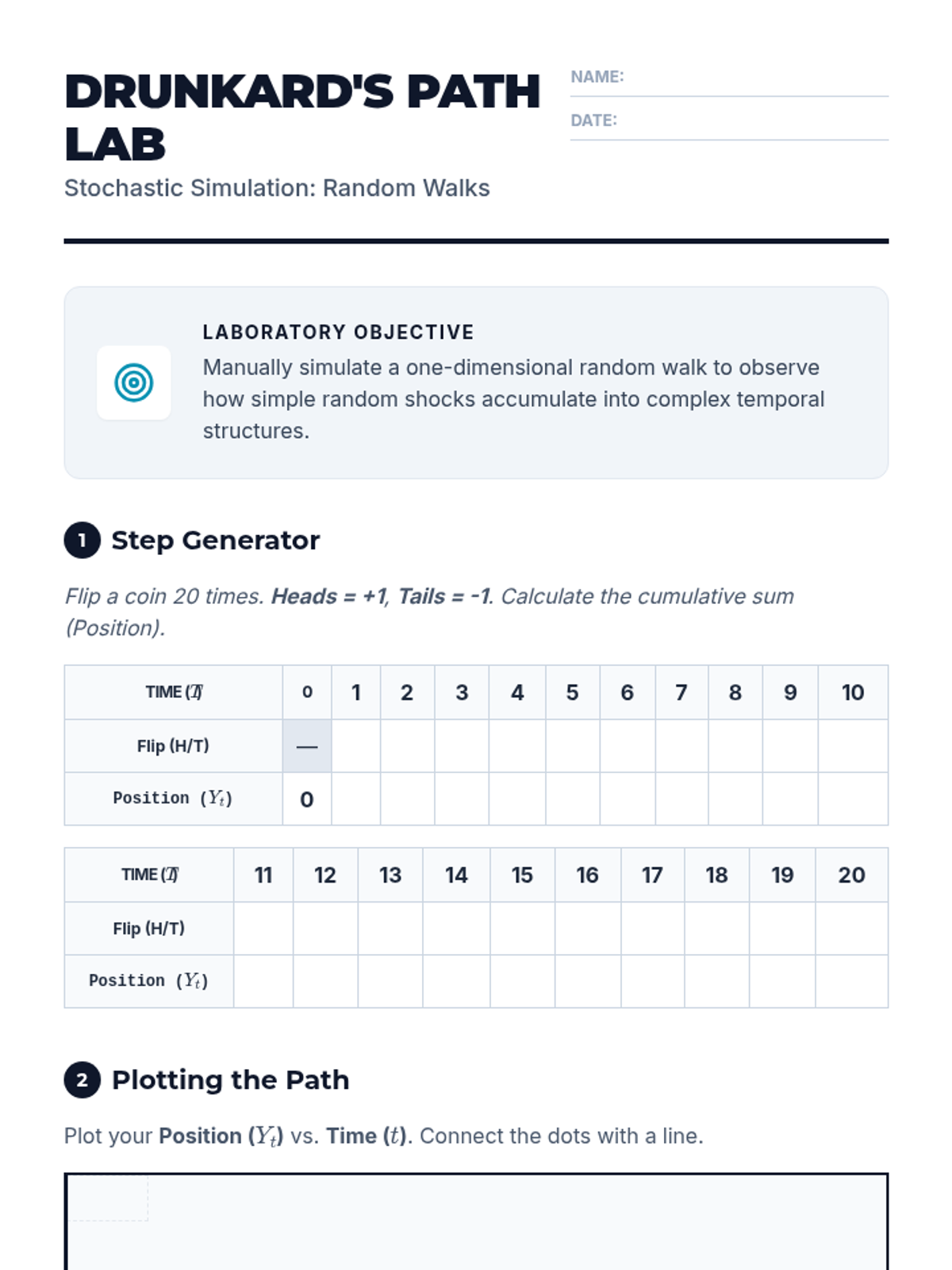
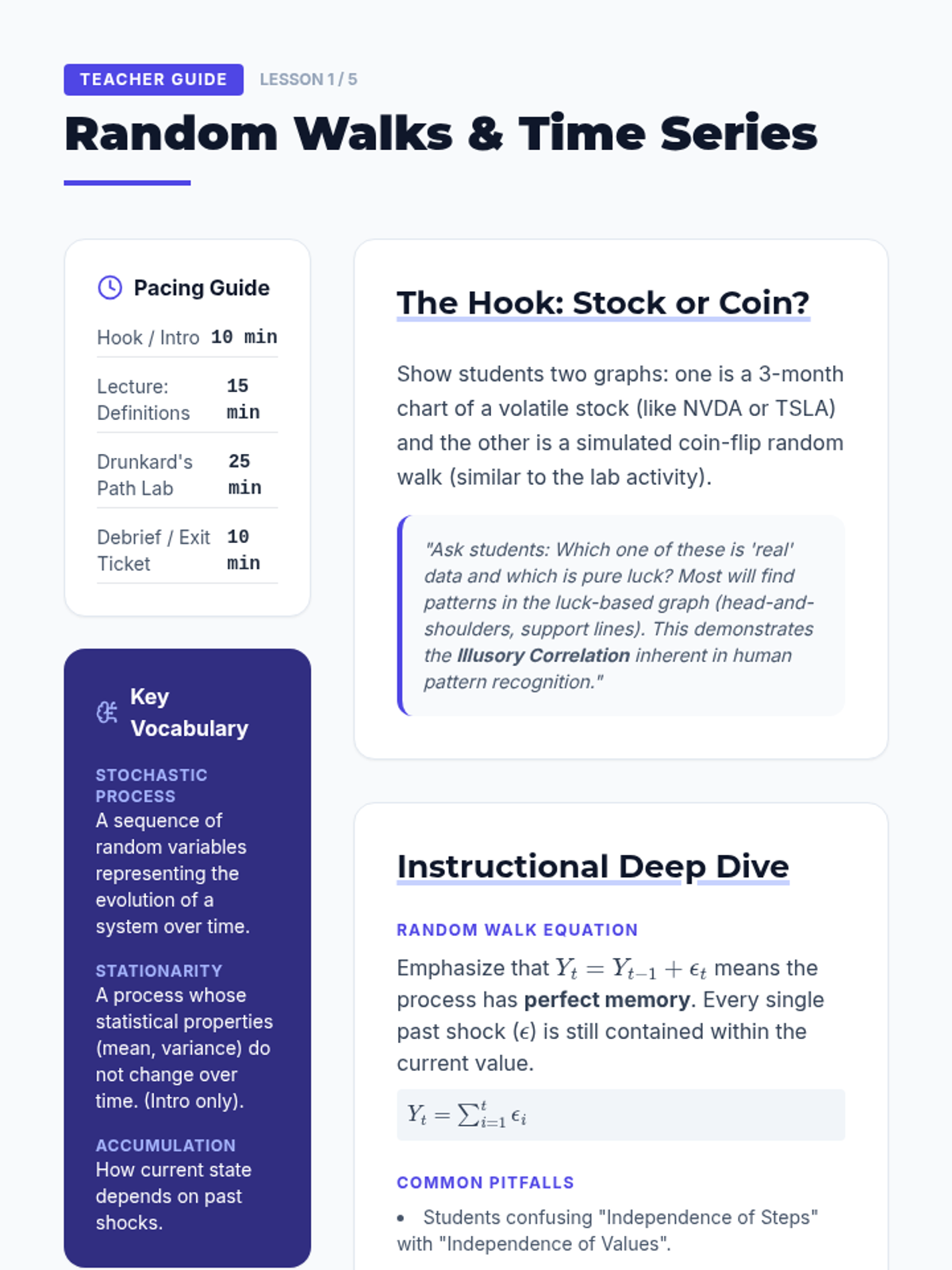
A comprehensive introduction to Time Series Analysis for 12th-grade students, focusing on random processes, autocorrelation, stationarity, and smoothing techniques. Students move from basic random walks to understanding complex dependencies in temporal data.
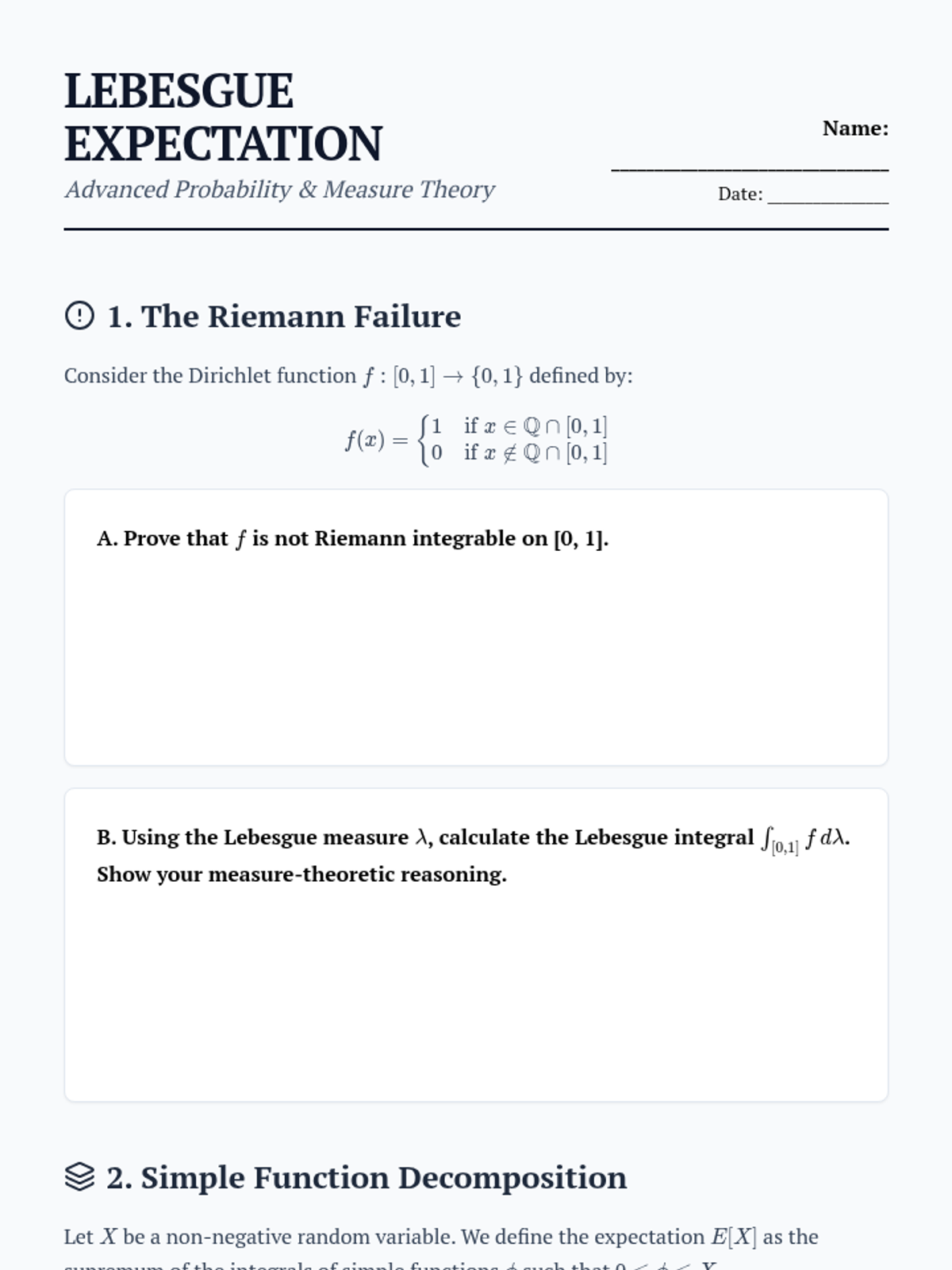
A graduate-level exploration of expected value through the lens of measure theory, covering Lebesgue integration, fundamental inequalities, convergence theorems, and conditional expectation using Sigma-algebras.
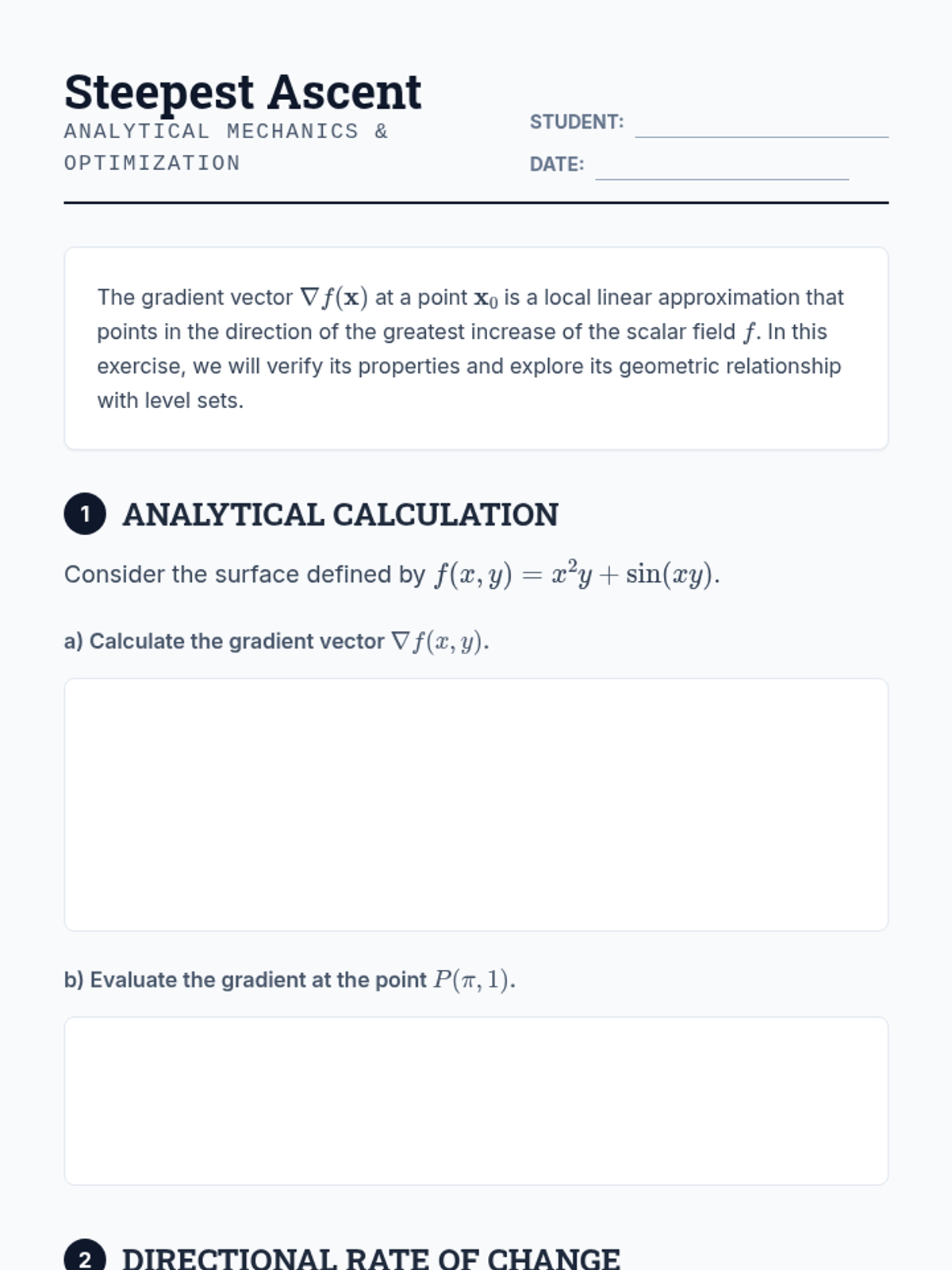
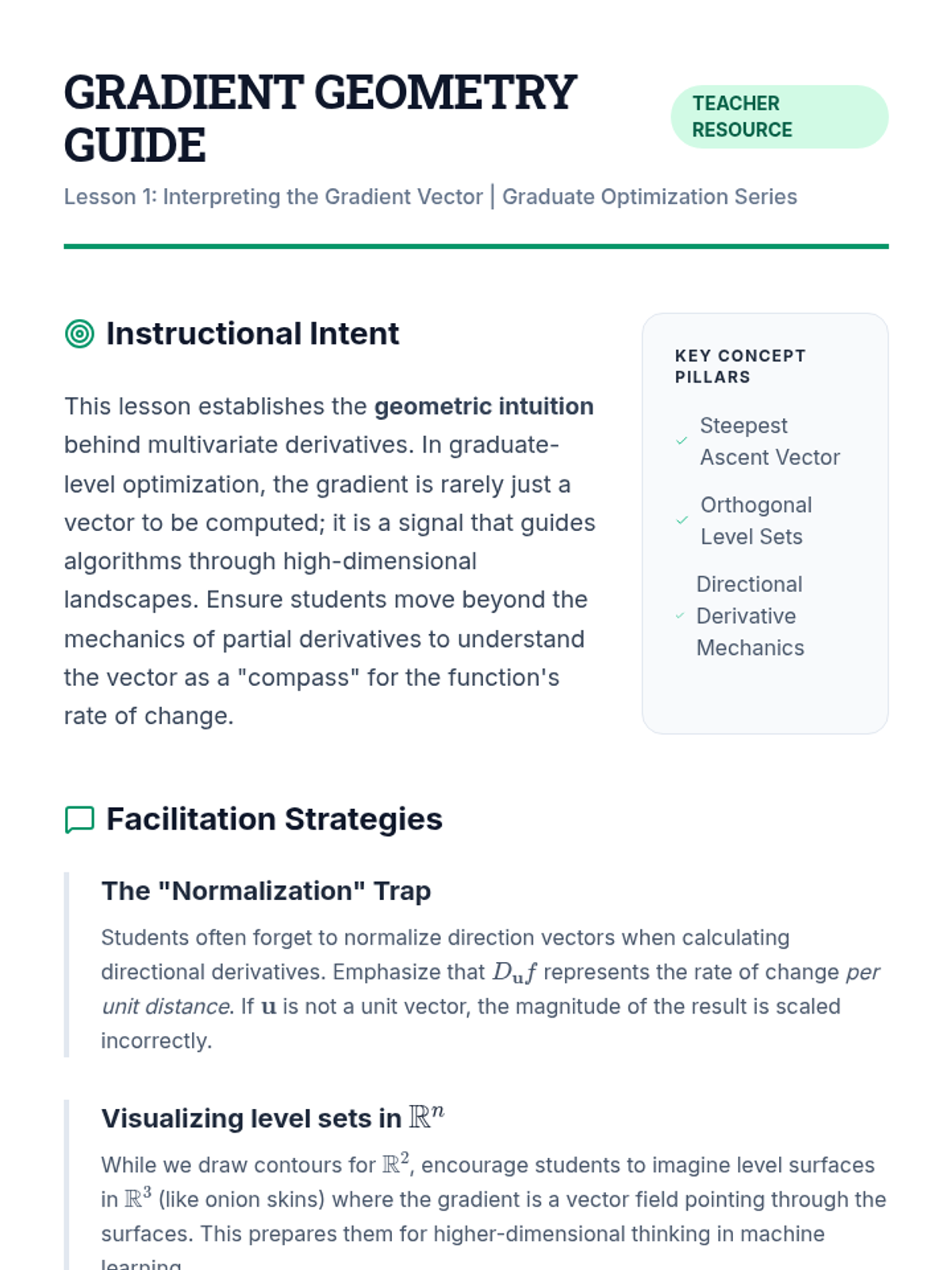
A graduate-level sequence exploring the gradient vector as the foundational tool for modern optimization. Students move from the geometric interpretation of multivariate derivatives to the implementation of stochastic algorithms used in machine learning.
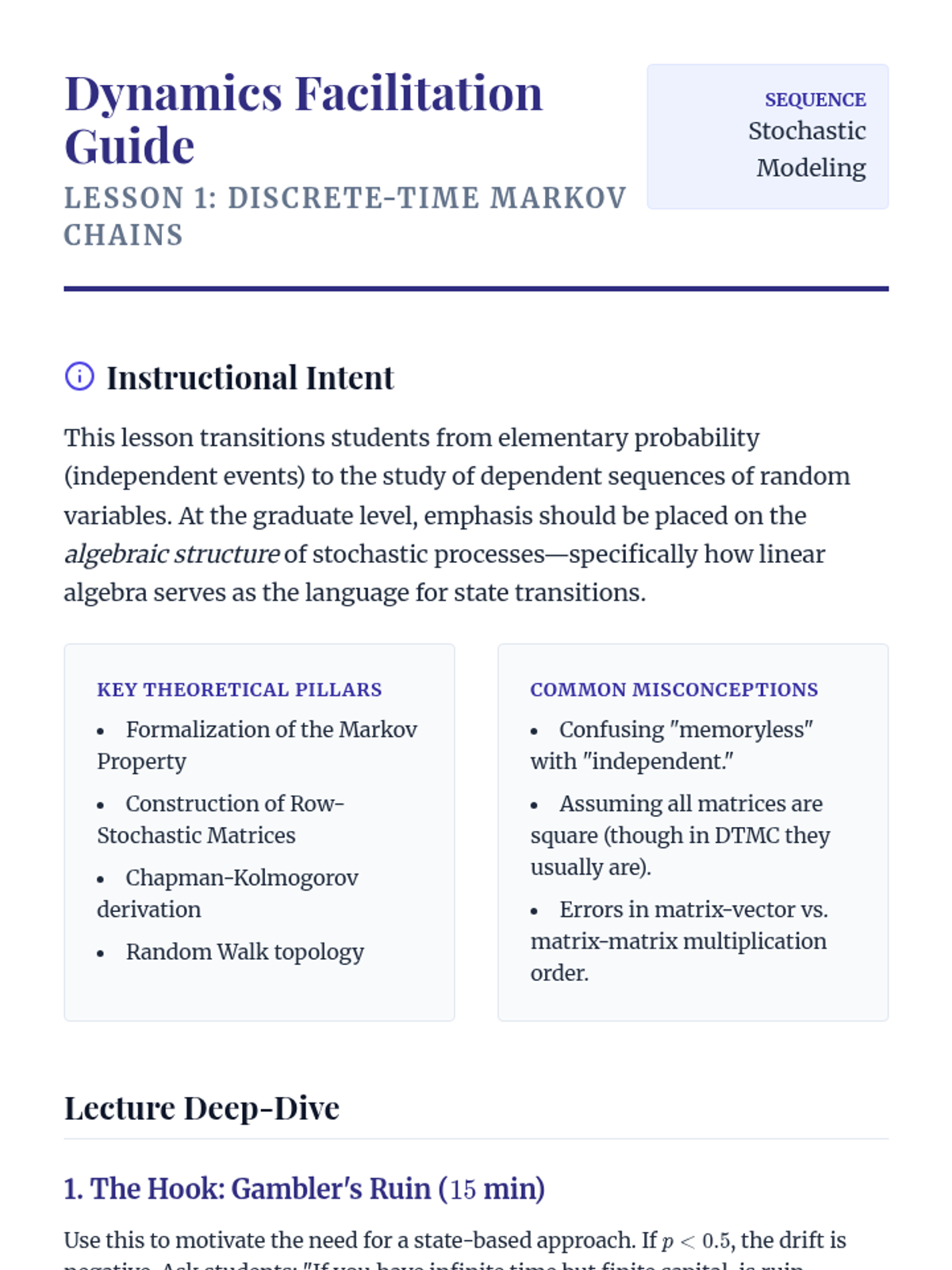
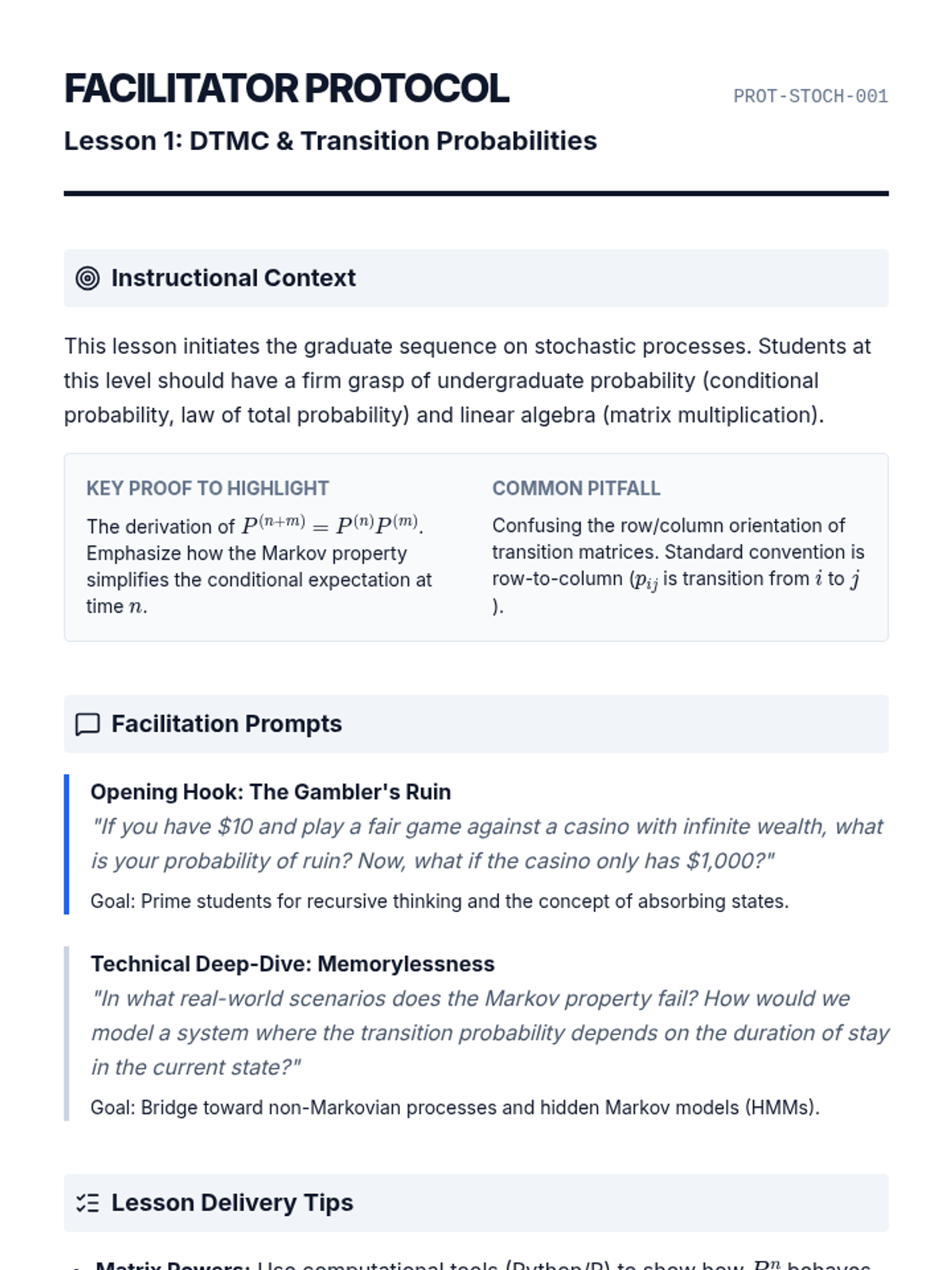
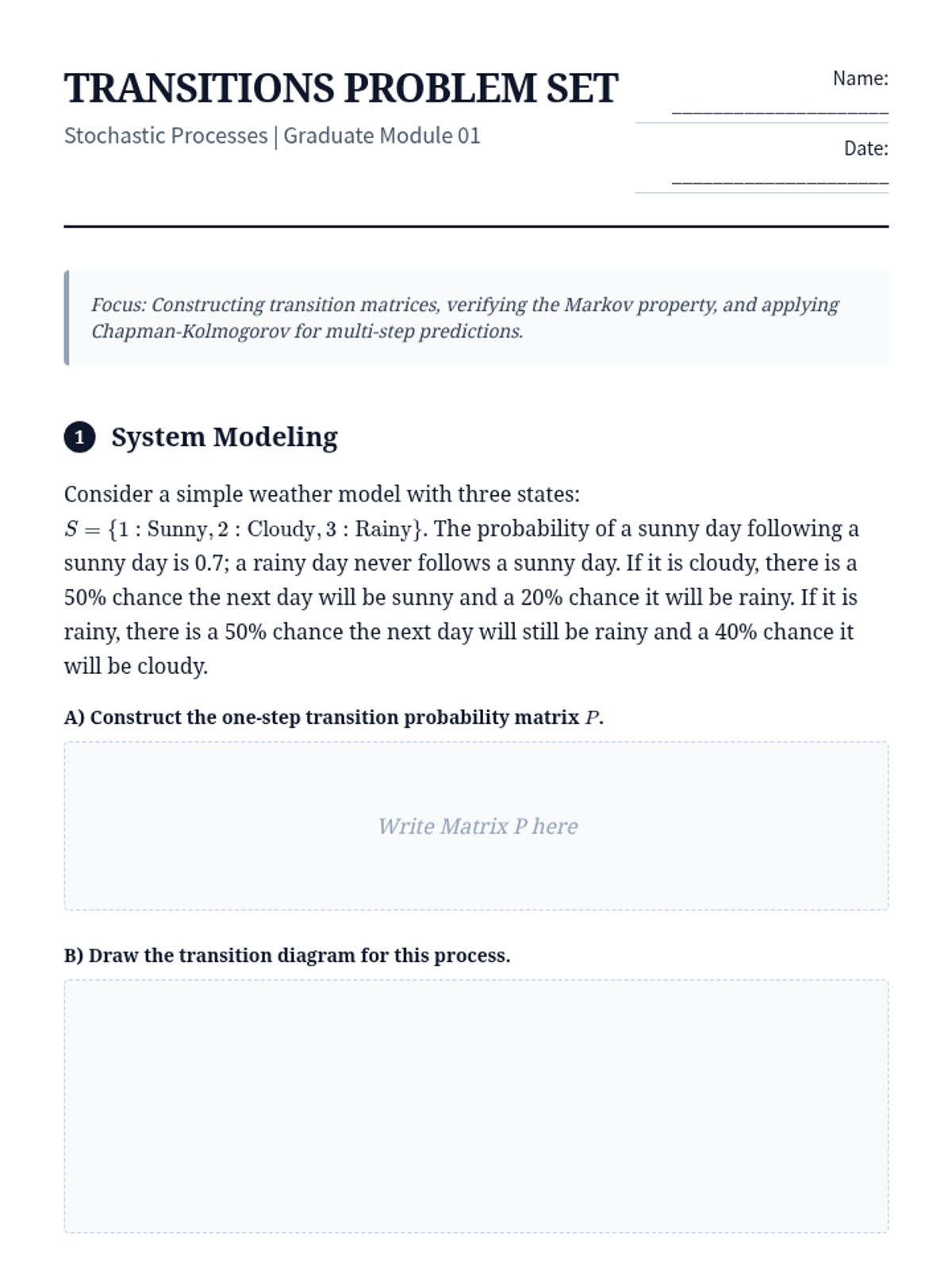
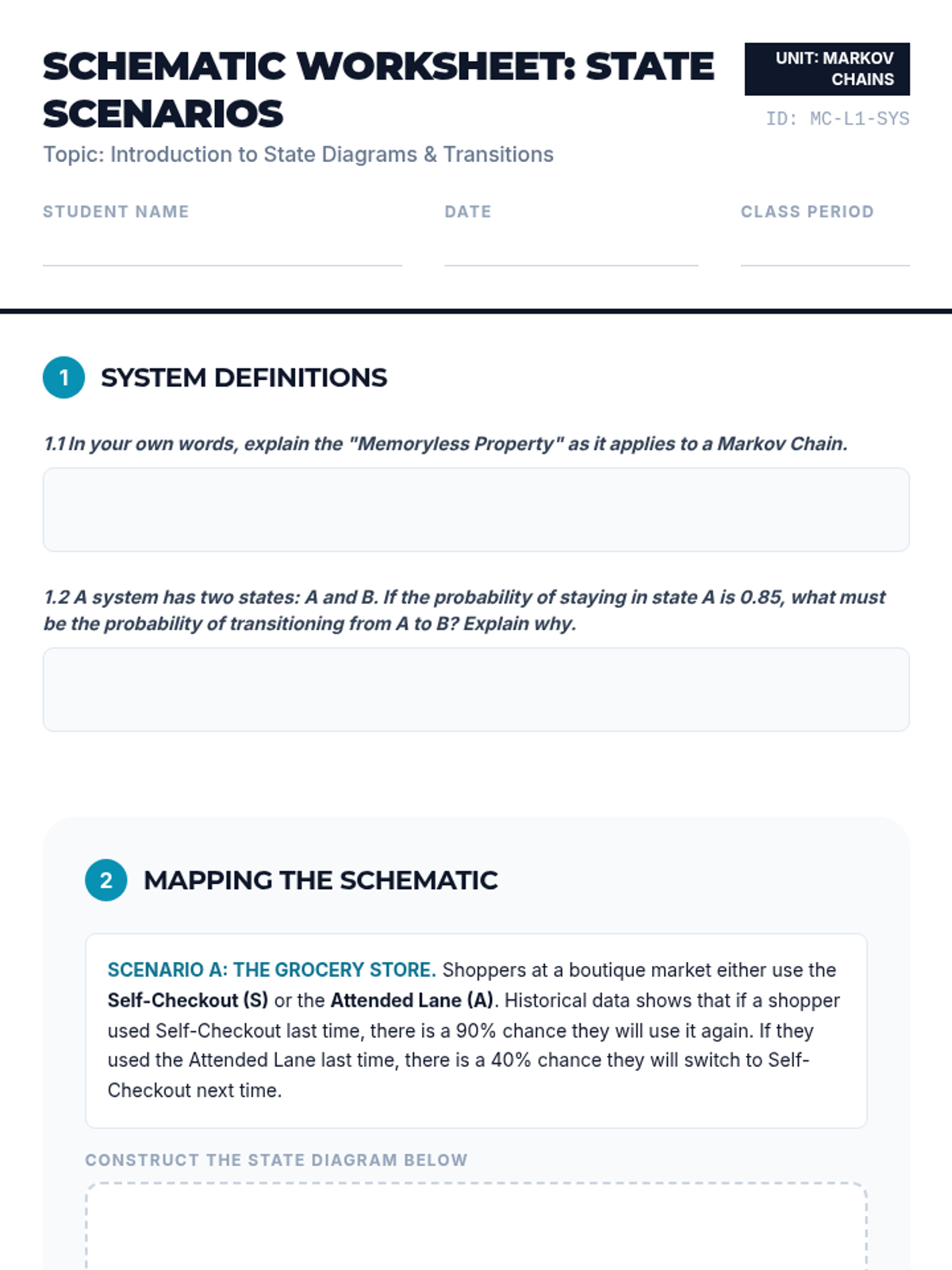
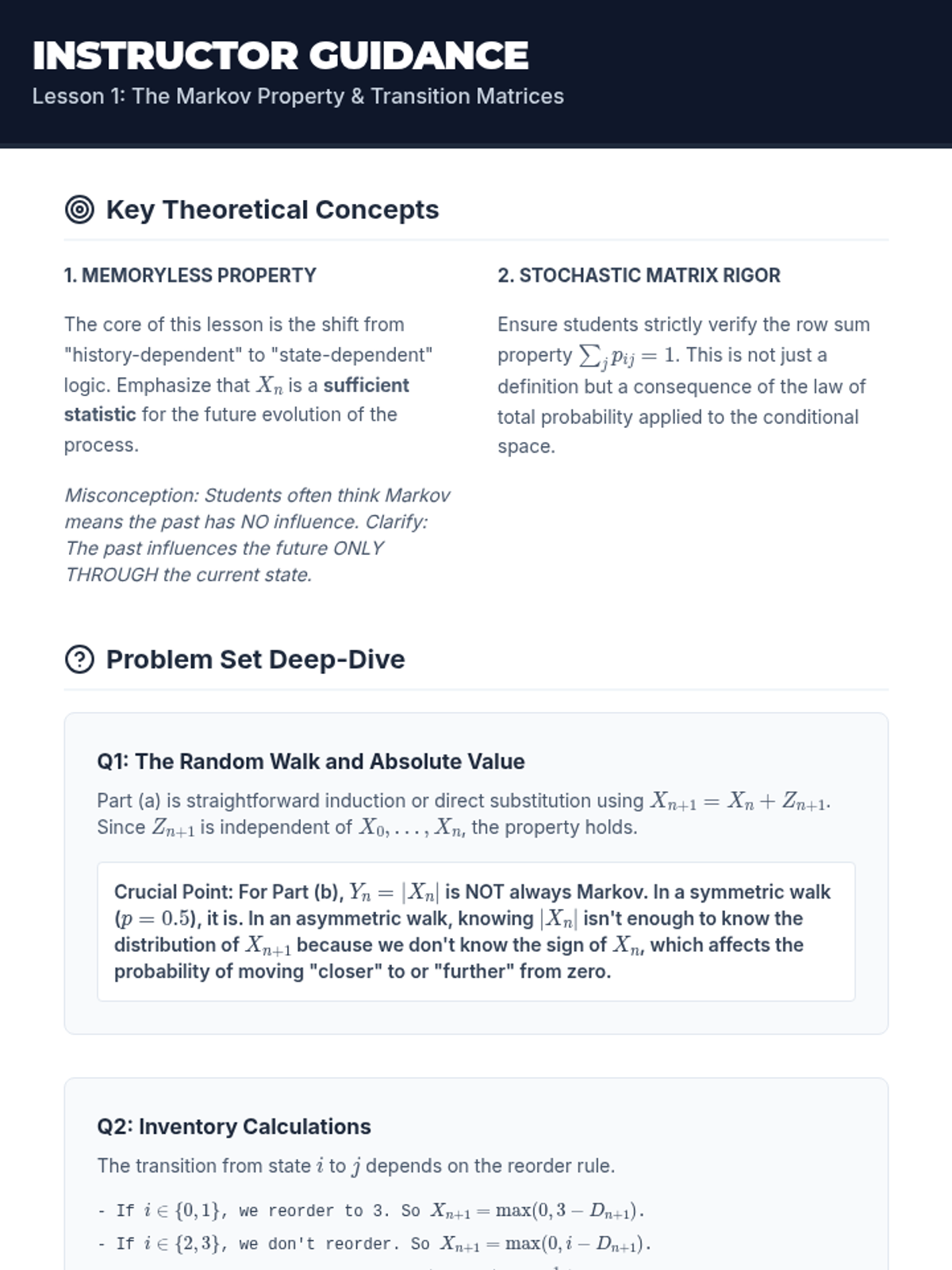
An advanced graduate-level exploration of stochastic processes, covering discrete and continuous-time Markov chains, Poisson processes, and queueing theory. The sequence bridges theoretical rigor with computational application through simulations and real-world modeling.
An advanced graduate-level sequence exploring the mathematical foundations and computational applications of stochastic processes, from discrete-time Markov chains to Monte Carlo simulations.
A 12th-grade statistics sequence exploring Poisson processes, transitioning from discrete counts to continuous time intervals and waiting times. Students will investigate arrival rates, the exponential distribution, and the unique memoryless property through inquiry and simulation.
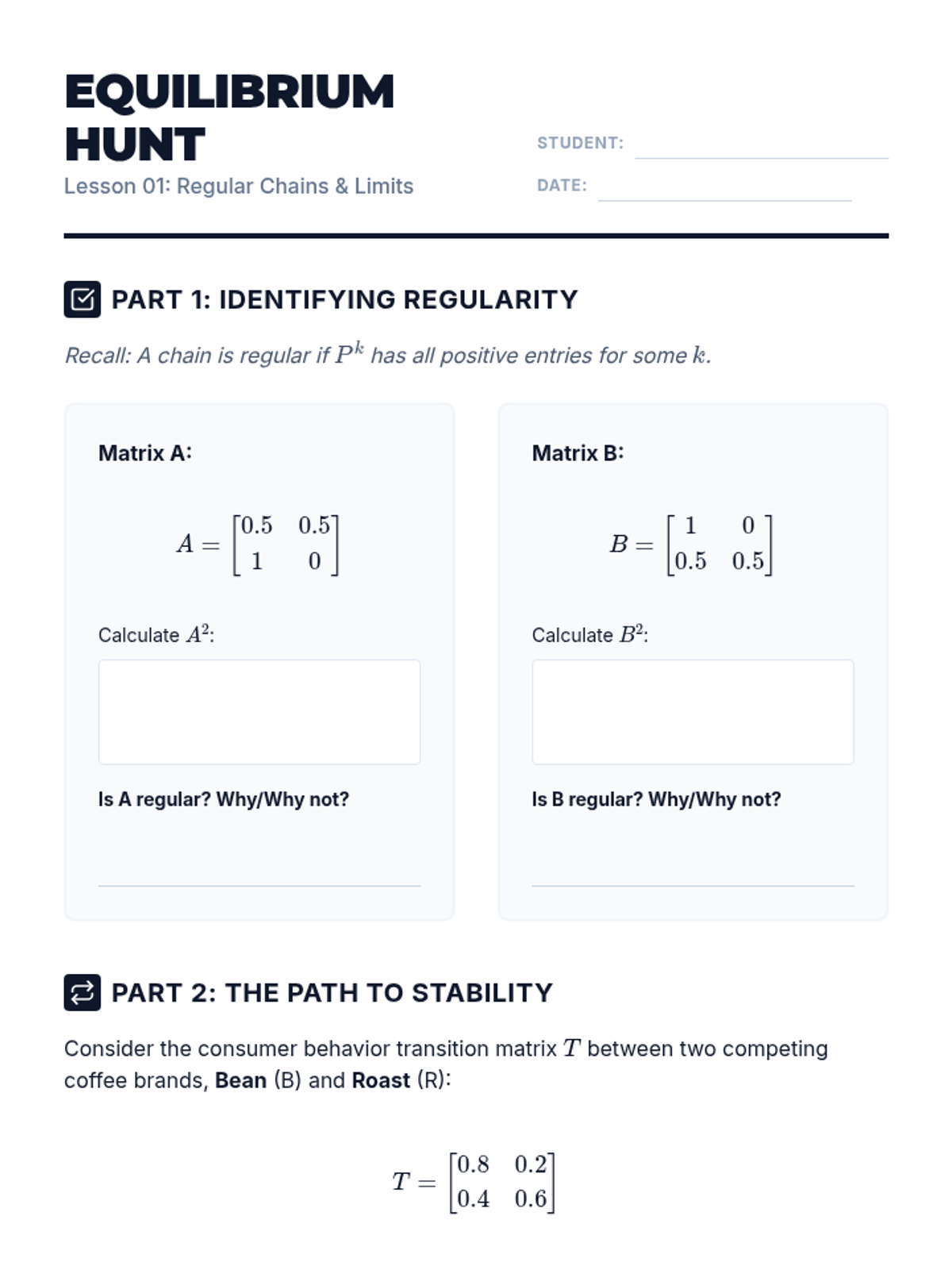
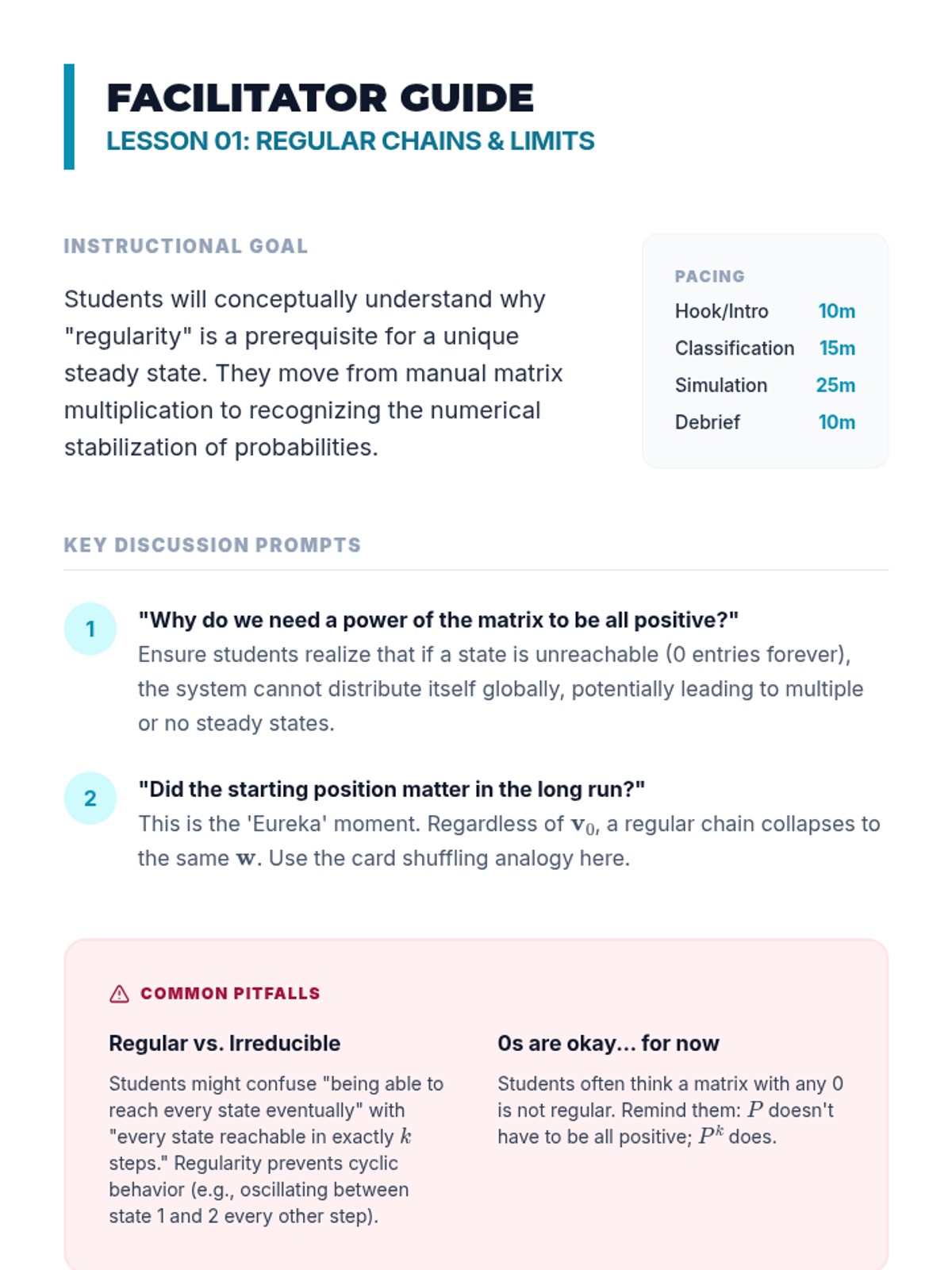
A high-level exploration of stochastic processes, focusing on how random systems reach equilibrium. Students will master Markov chains, steady-state algebra, and real-world applications like Google's PageRank algorithm.
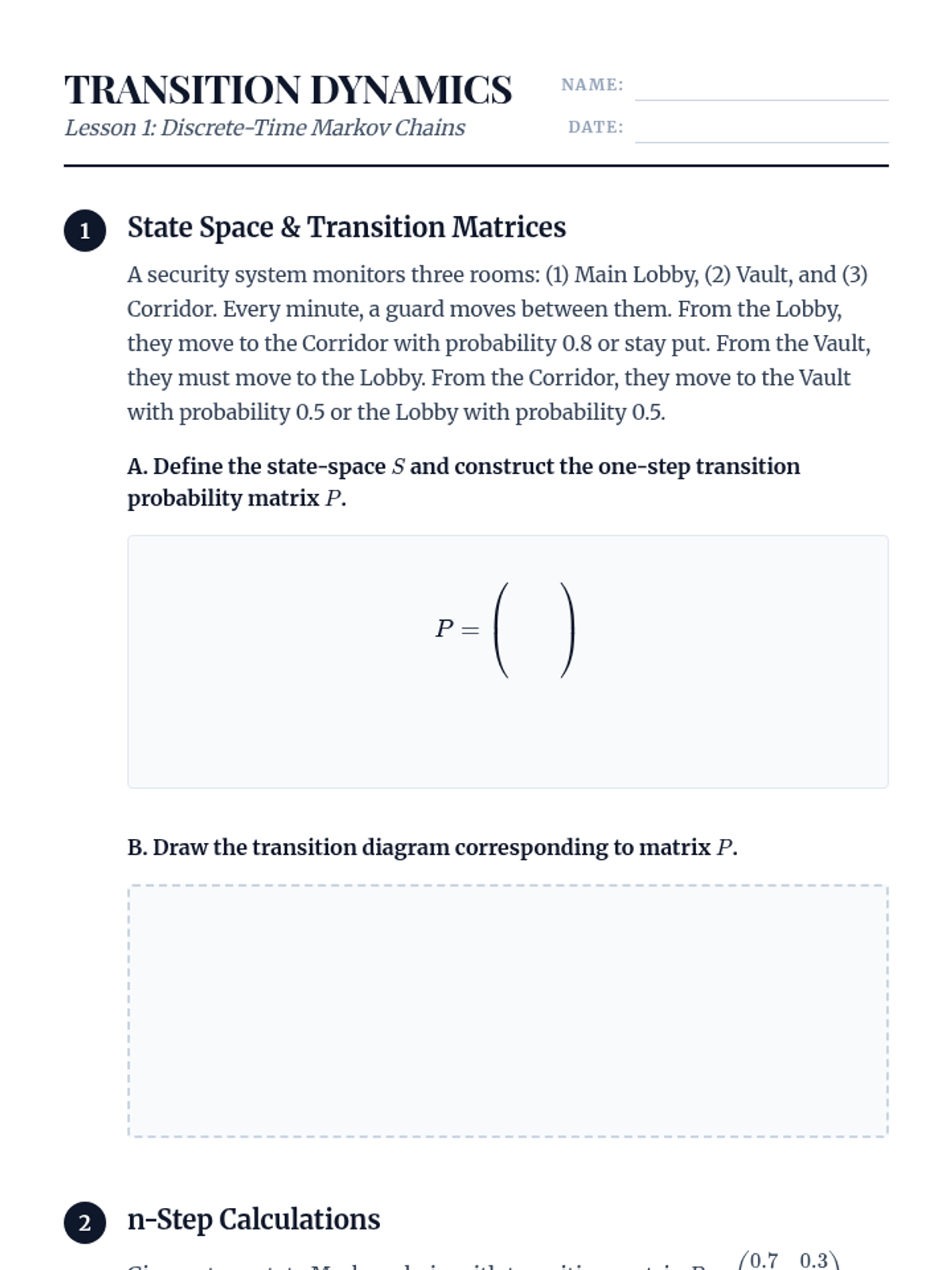
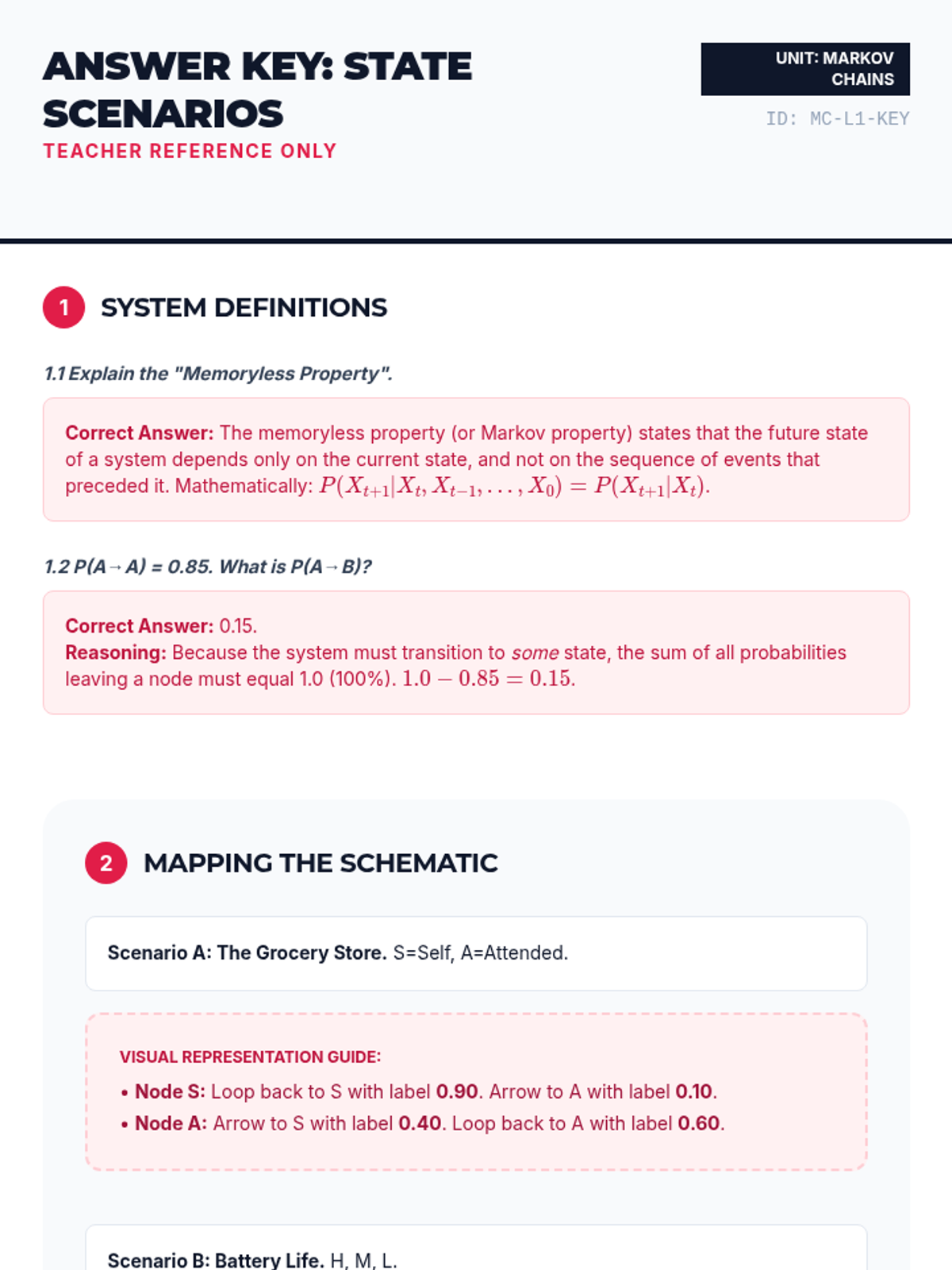
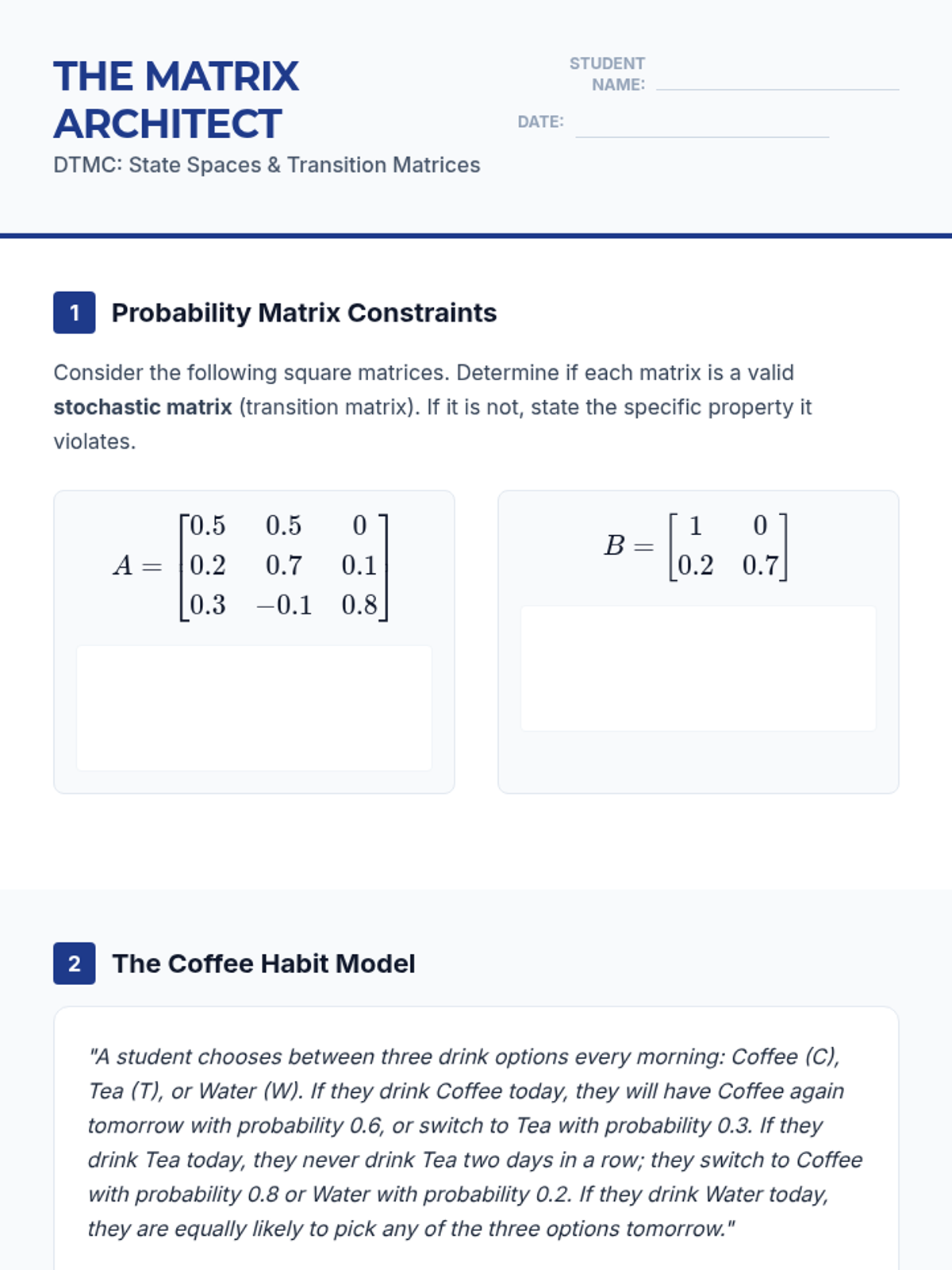
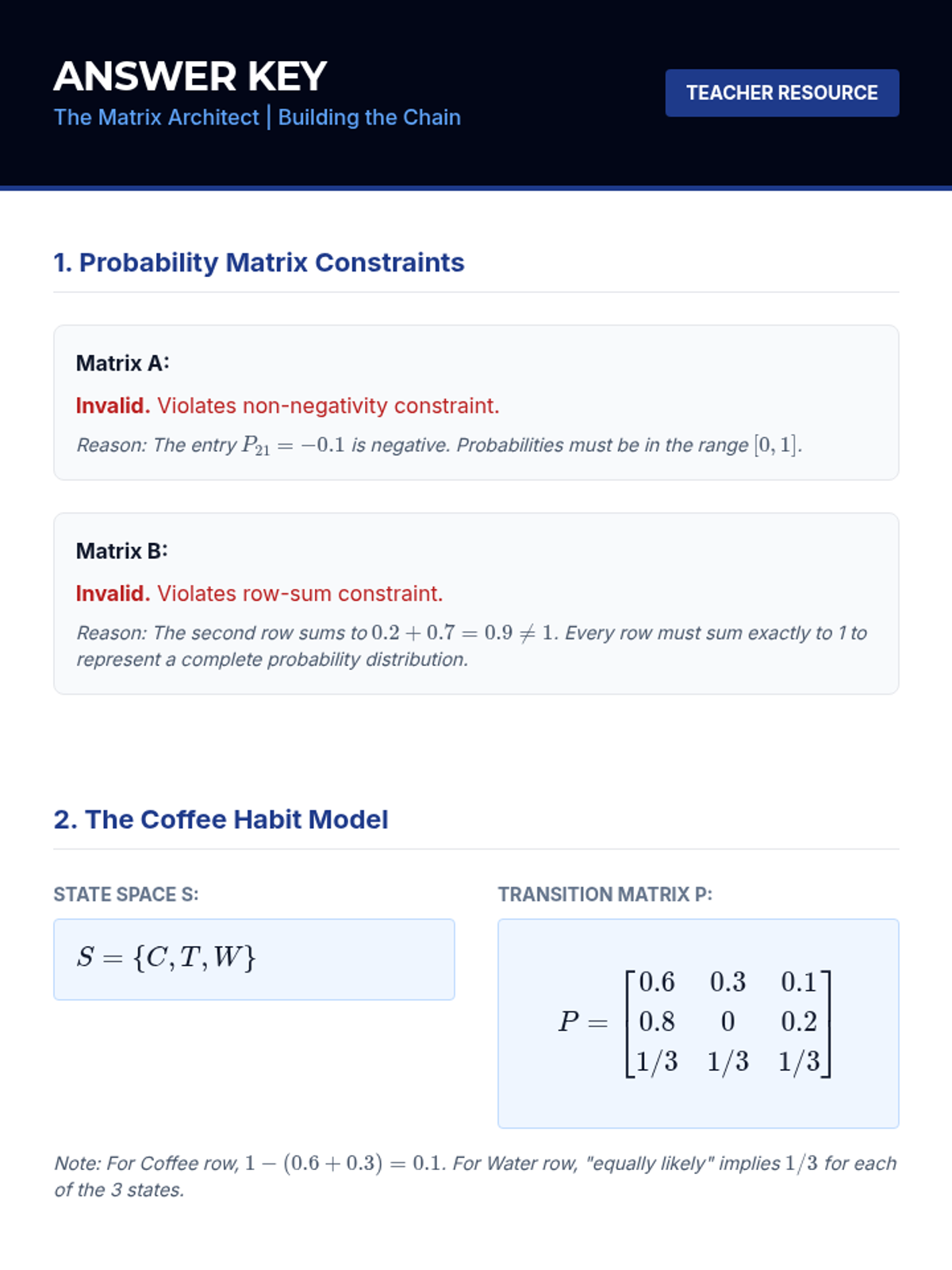
A comprehensive sequence for 12th-grade students on discrete-time Markov chains, covering state diagrams, transition matrices, and n-step probability calculations using matrix algebra.
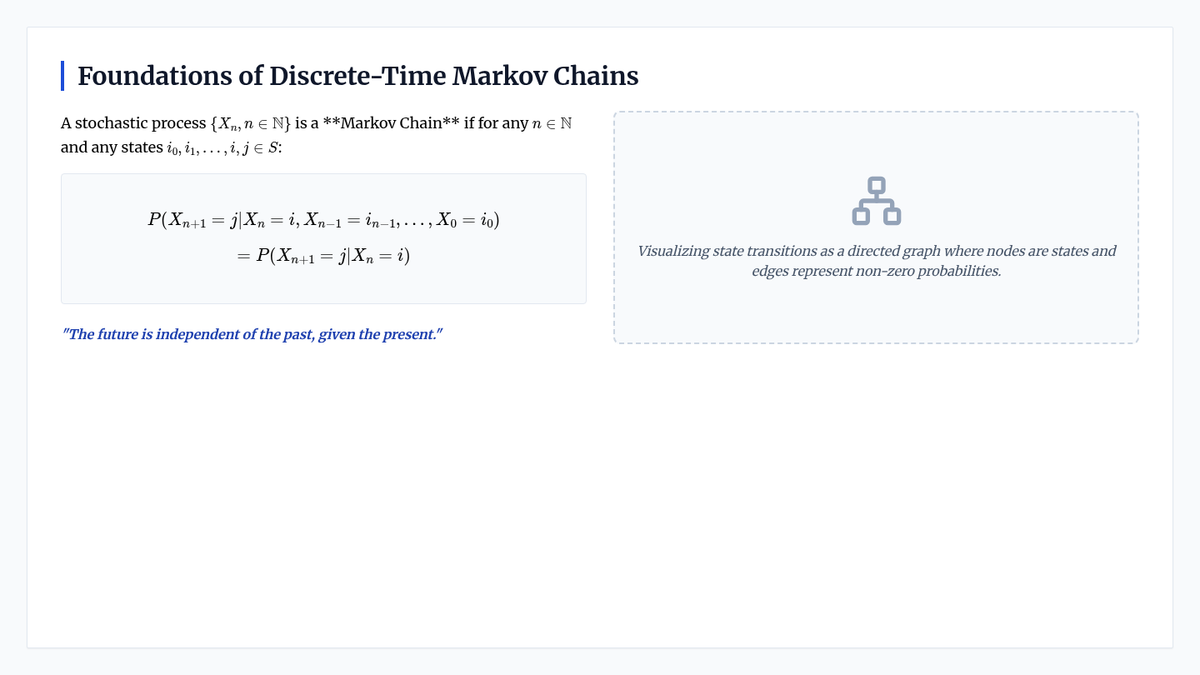
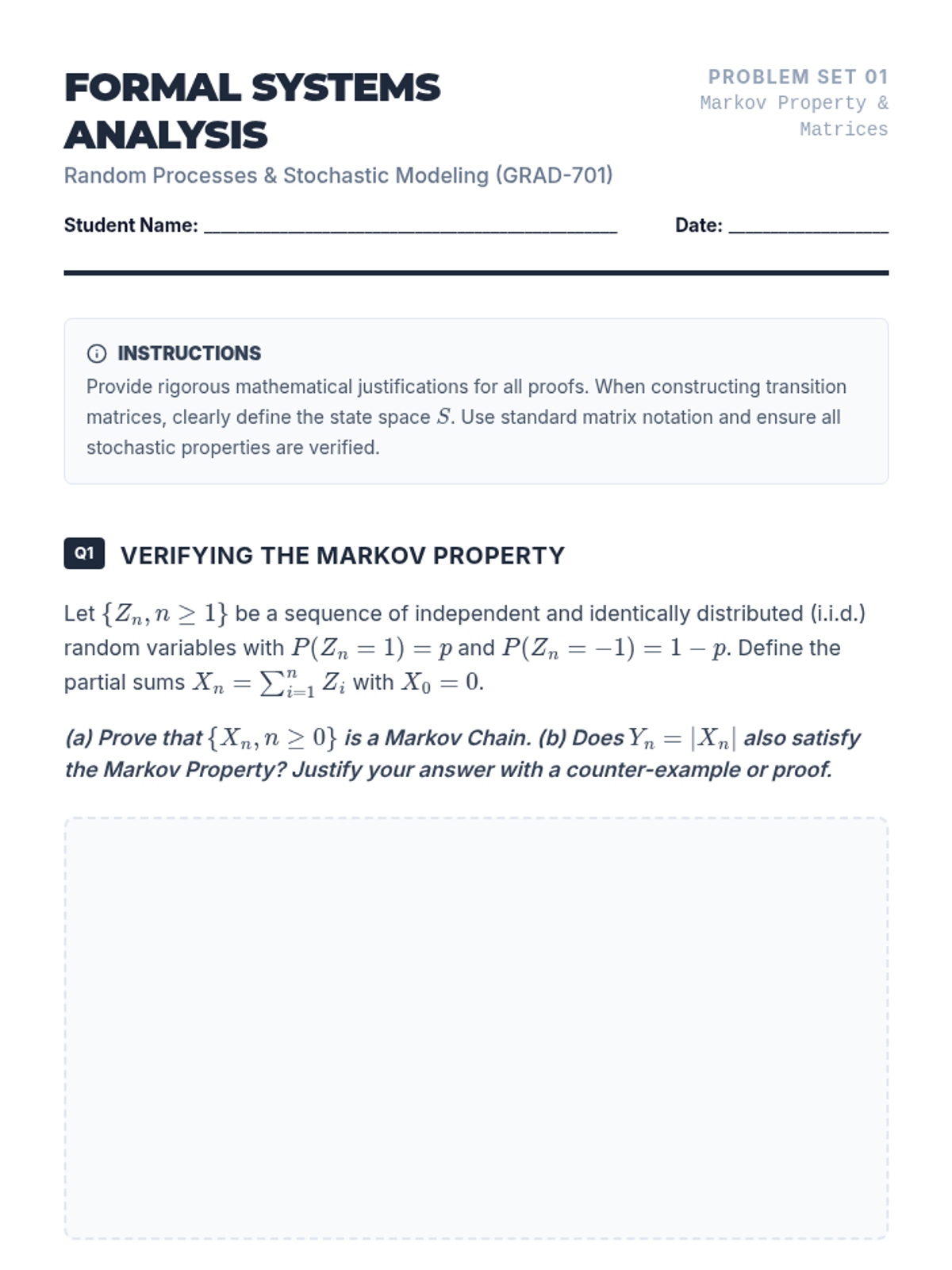
A graduate-level exploration of the mathematical foundations of discrete-time Markov chains, focusing on state classification, limiting behavior, and time reversibility. This sequence emphasizes formal derivation, proofs, and the application of linear algebra to stochastic systems.
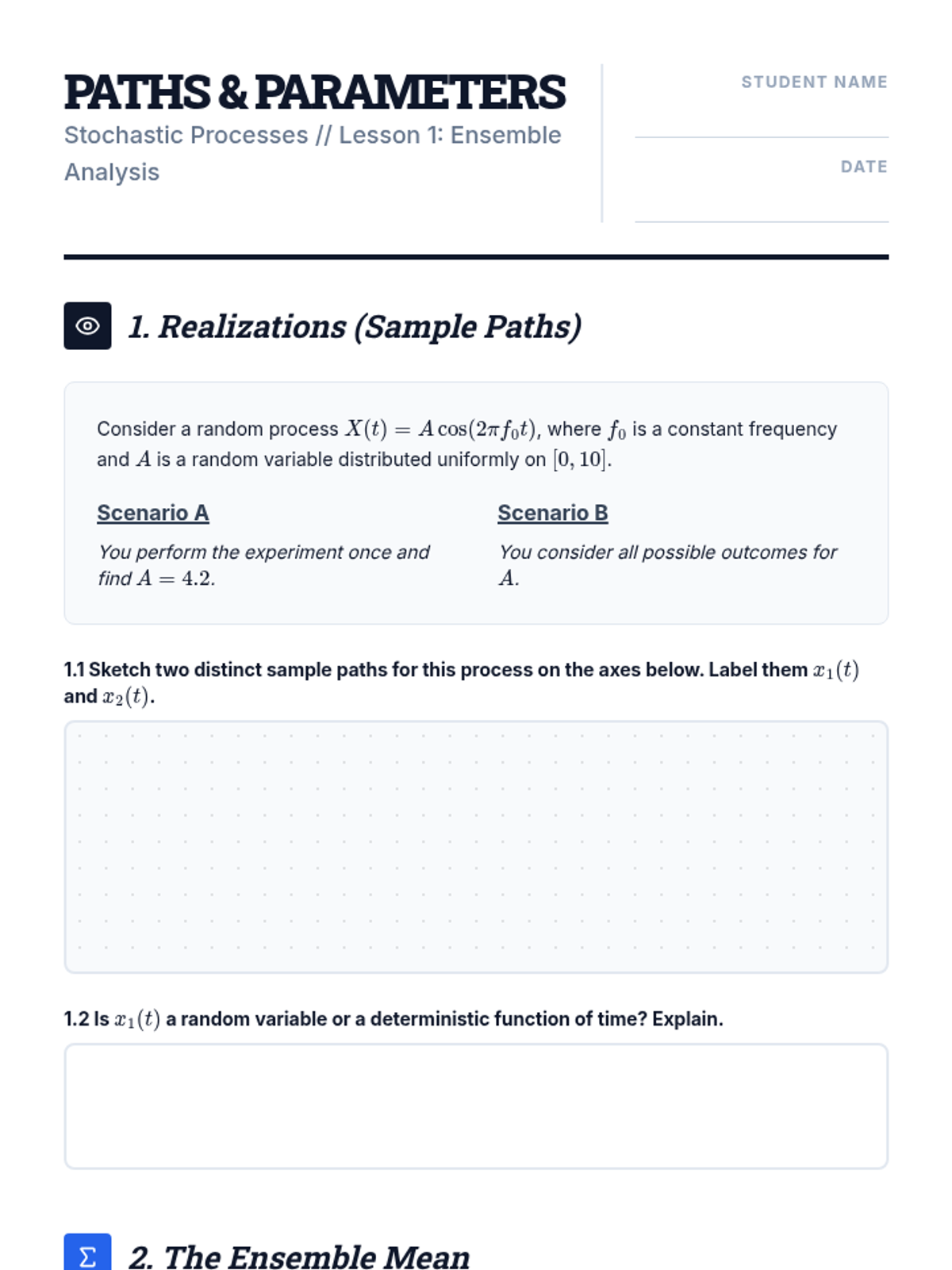
A comprehensive sequence on stochastic processes, stationarity, autocorrelation, and ergodicity, designed for undergraduate statistics and engineering students. The sequence moves from basic definitions of ensemble averages to the complex relationship between time and statistical averages.
An undergraduate-level introduction to Discrete-Time Markov Chains, covering state classification, transition matrices, n-step probabilities, and stationary distributions. Students will apply linear algebra and probability theory to model stochastic systems and solve classic problems like Gambler's Ruin.
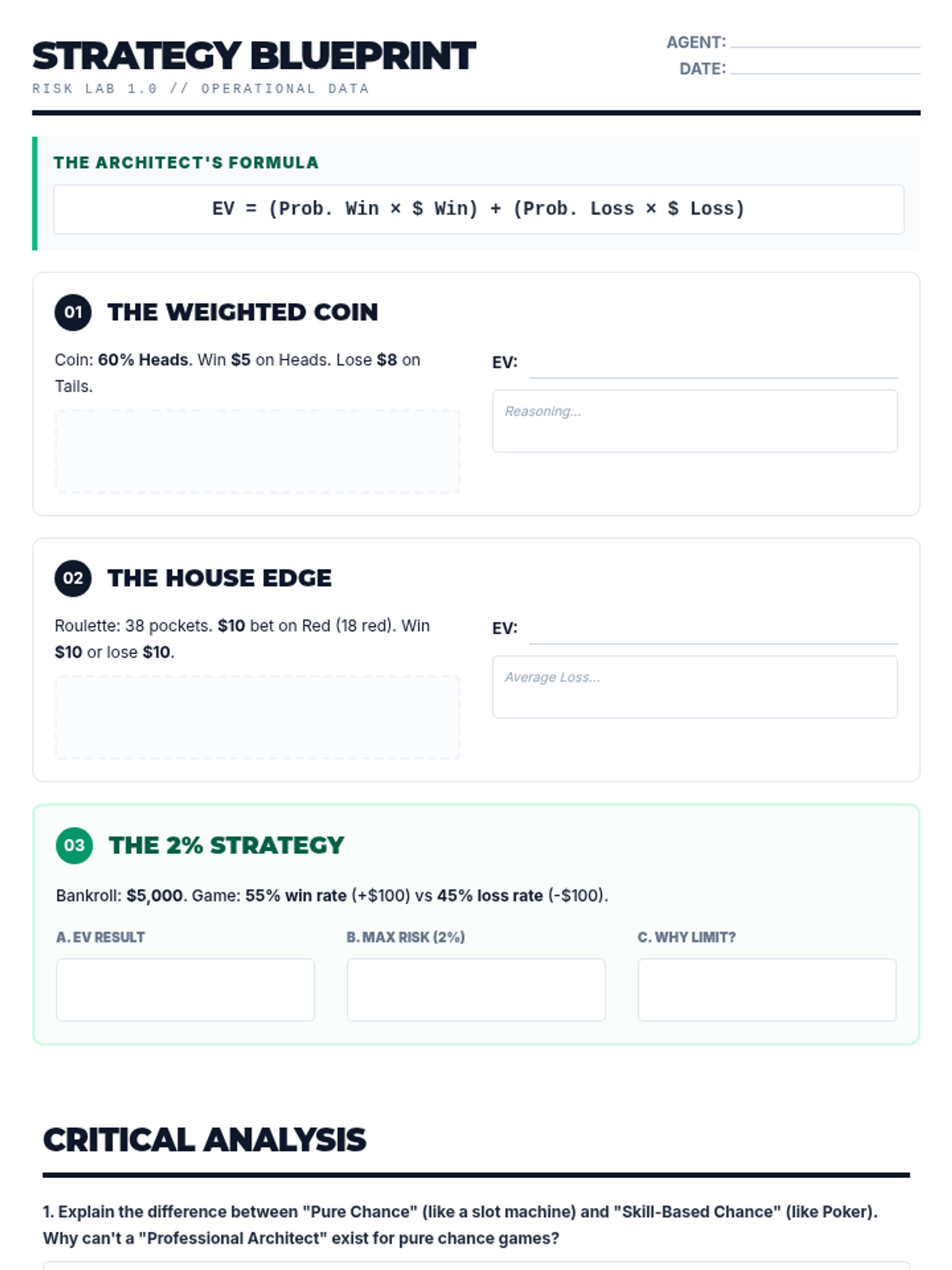
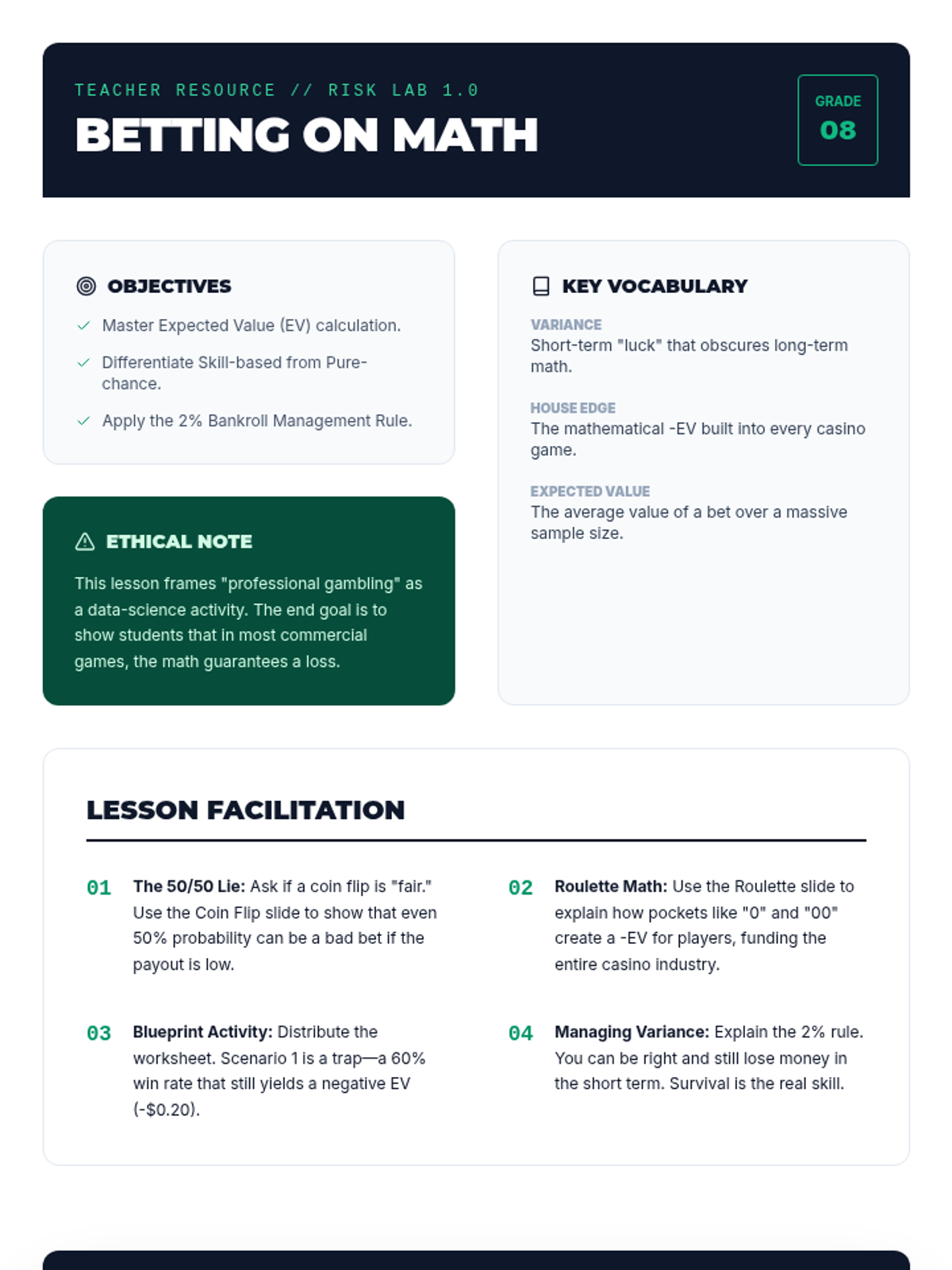
A high-stakes dive into the mathematics of probability, risk assessment, and expected value, teaching students how to analyze games of chance and skill through a professional lens.
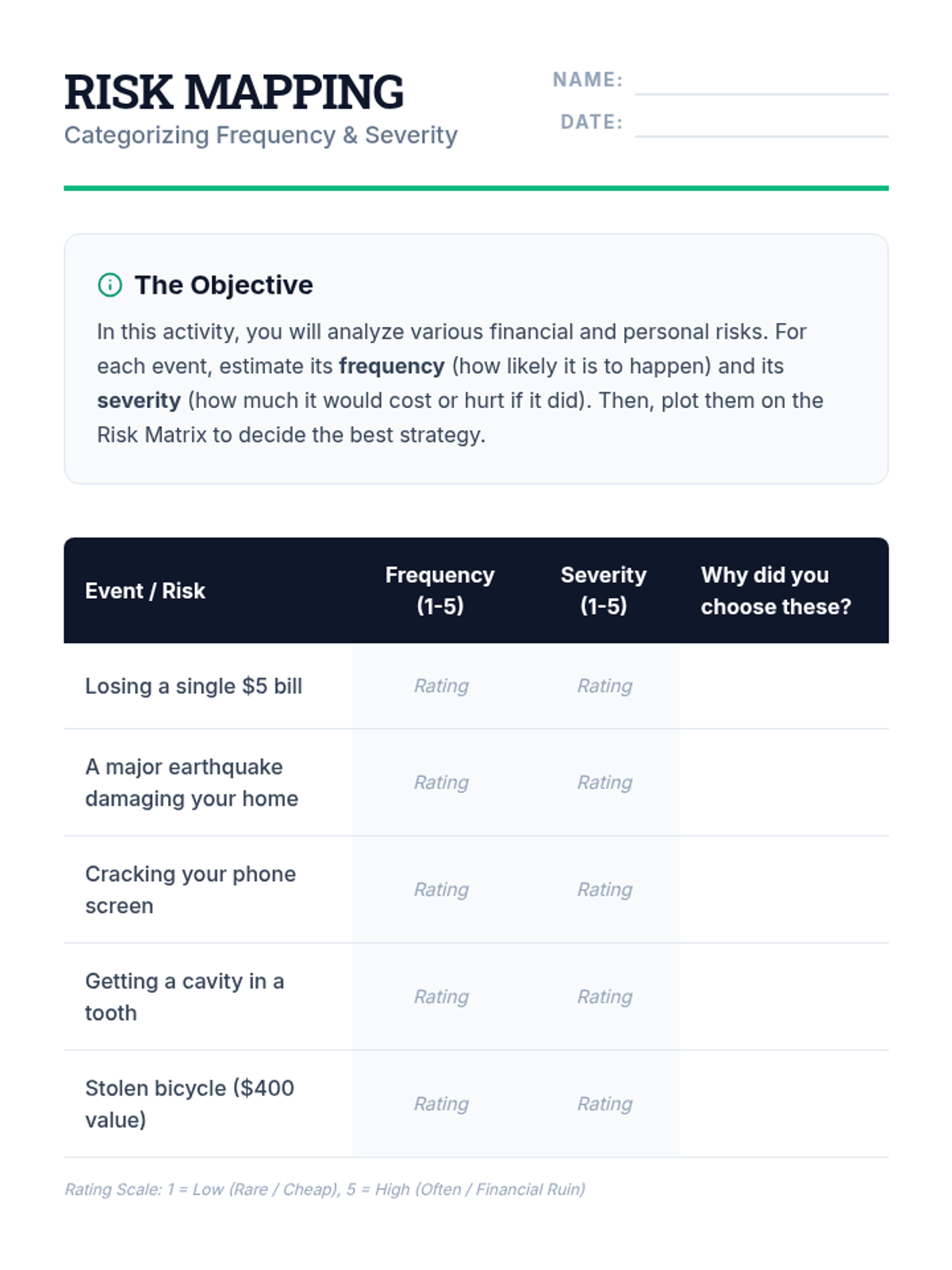
This sequence explores probability-based decision making through the lens of financial literacy. Students apply expected value and risk assessment to evaluate insurance, extended warranties, and the mathematical trade-off between known costs and unknown risks.
A comprehensive 12th-grade sequence exploring conditional probability through high-stakes real-world applications in medicine, forensics, and public safety. Students move from tabular data analysis to Bayesian reasoning, learning to navigate the counter-intuitive nature of false positives and the logical pitfalls of legal evidence.
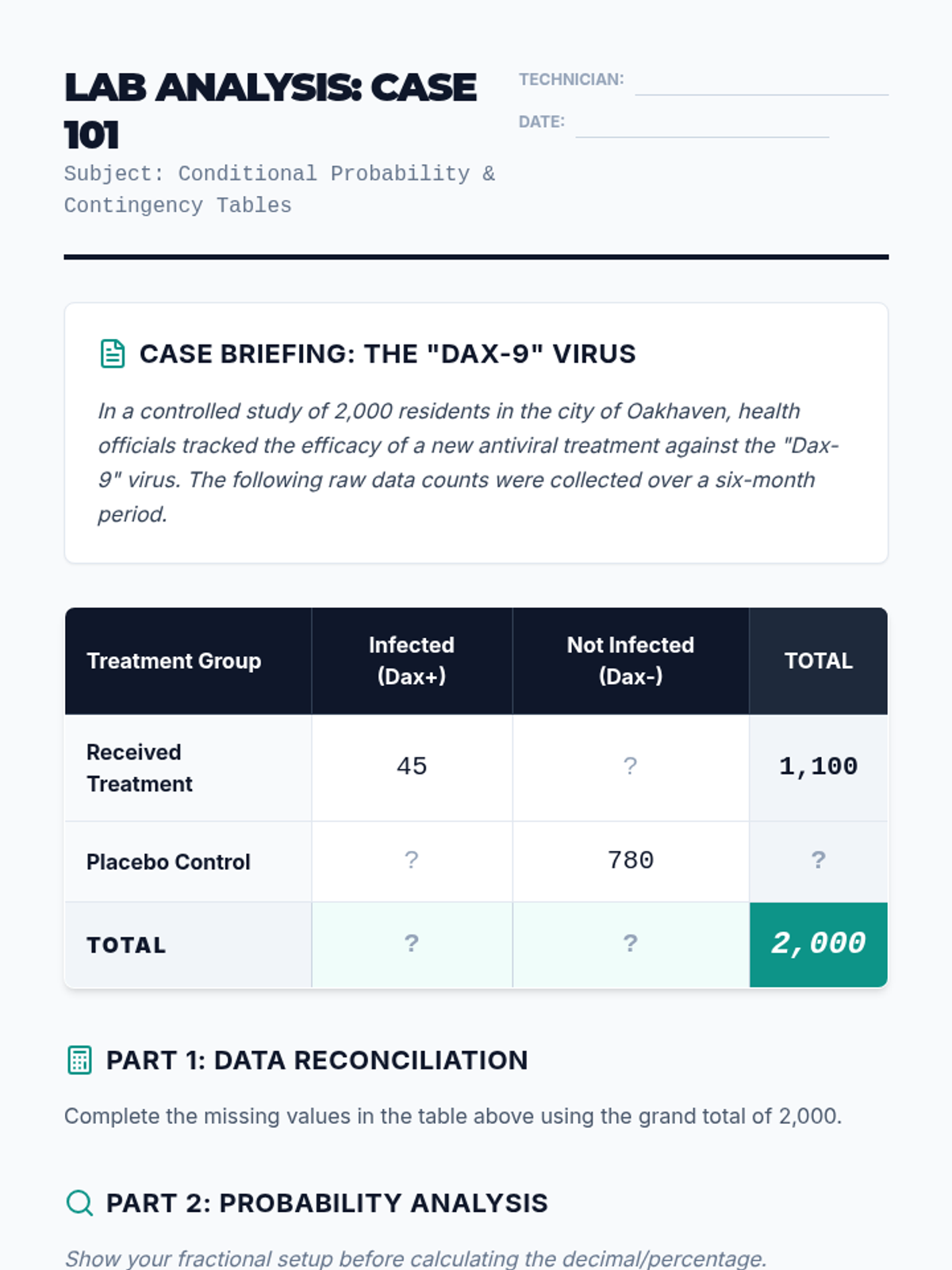
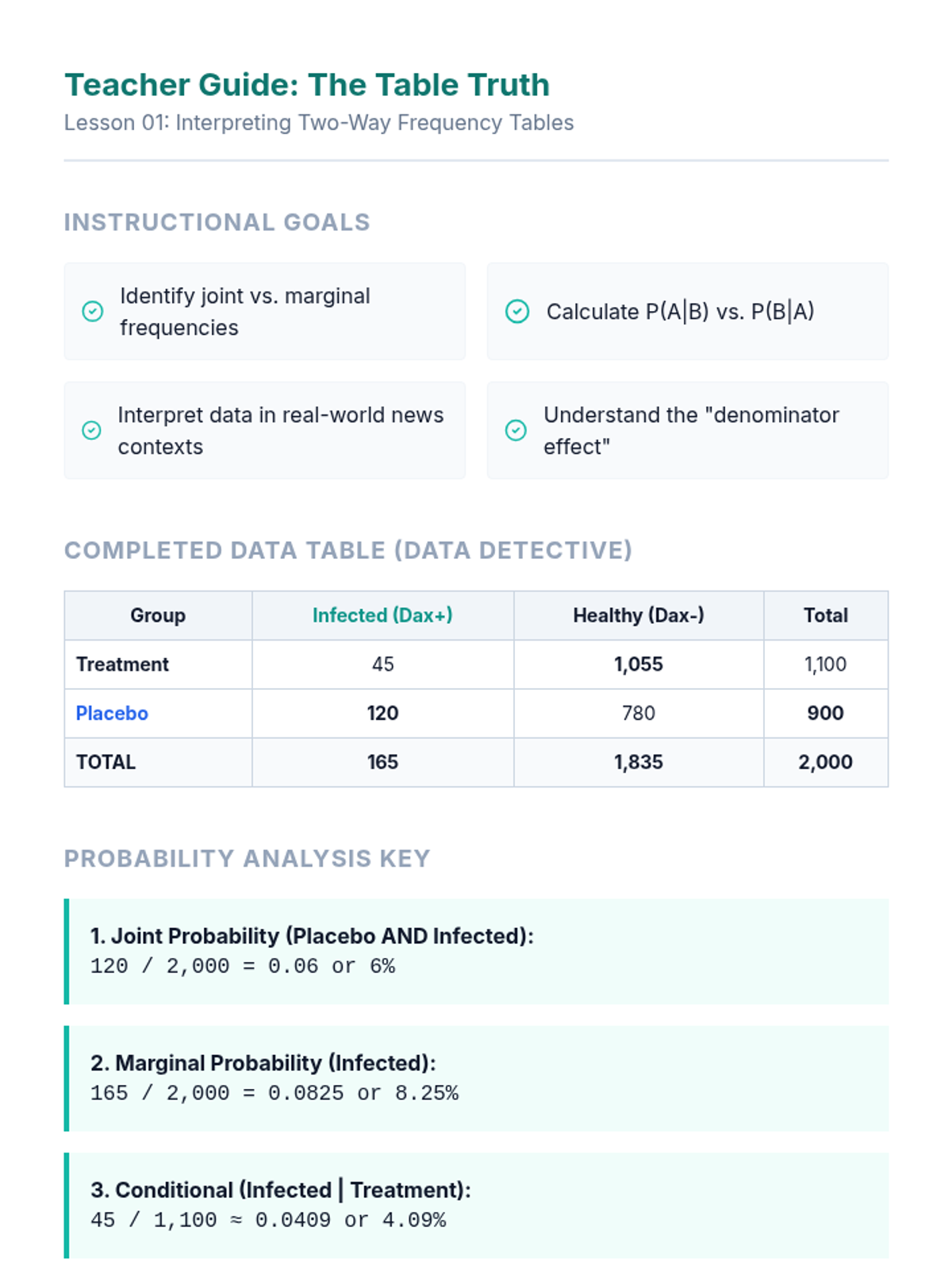
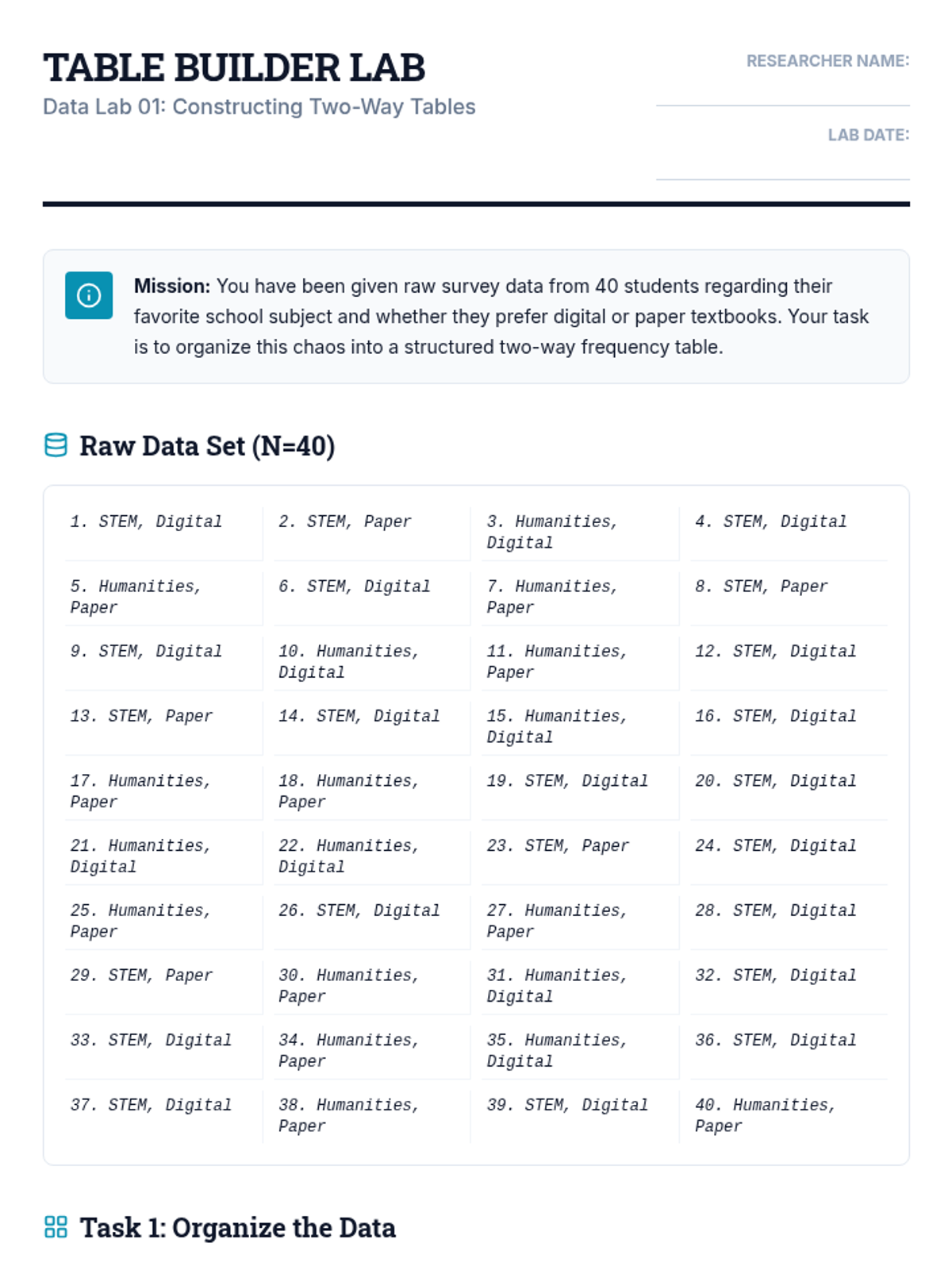
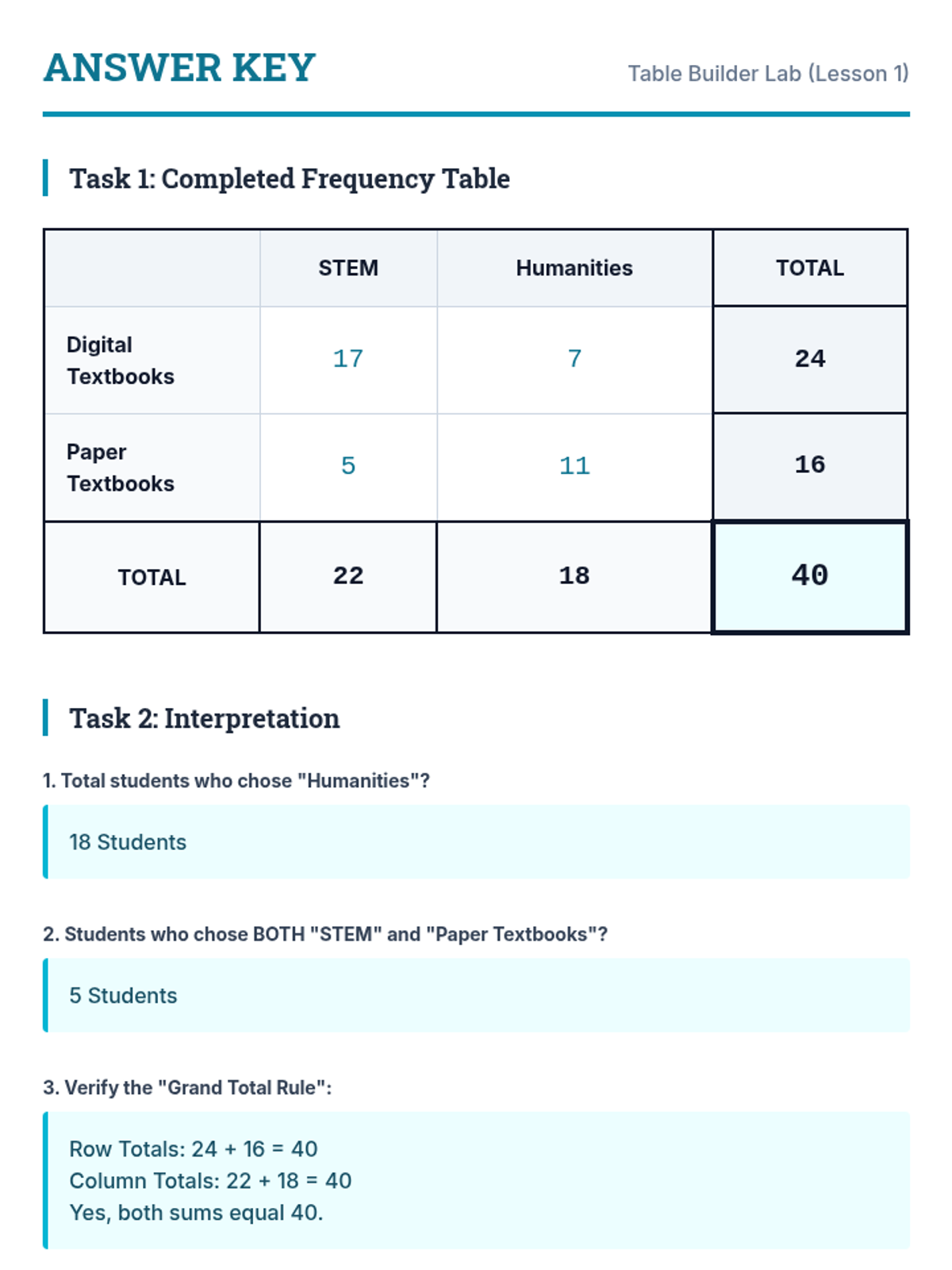
A comprehensive unit on two-way frequency tables, moving from data organization to complex probability analysis and independence testing. Students will bridge the gap between categorical counts and real-world statistical claims.
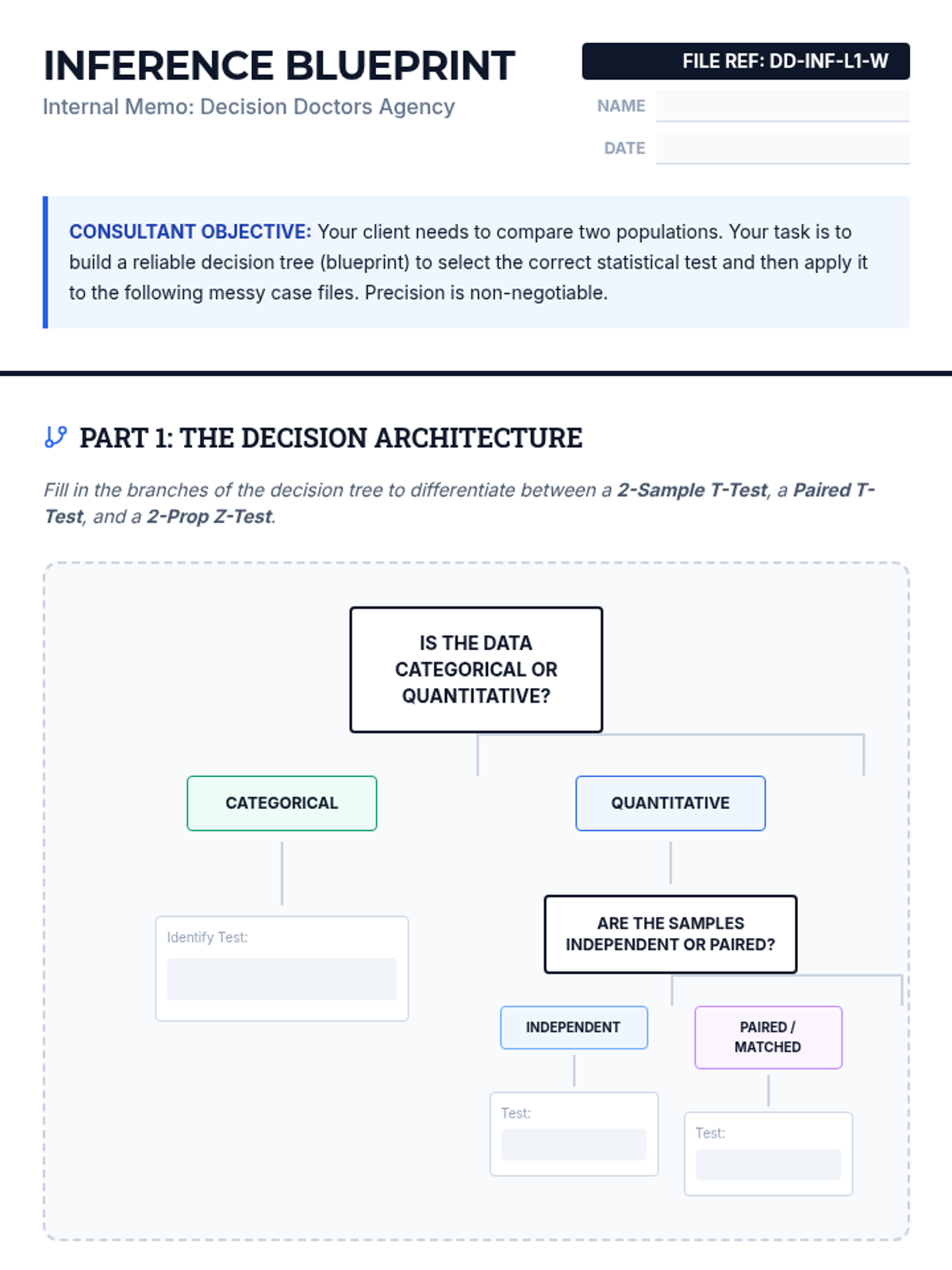
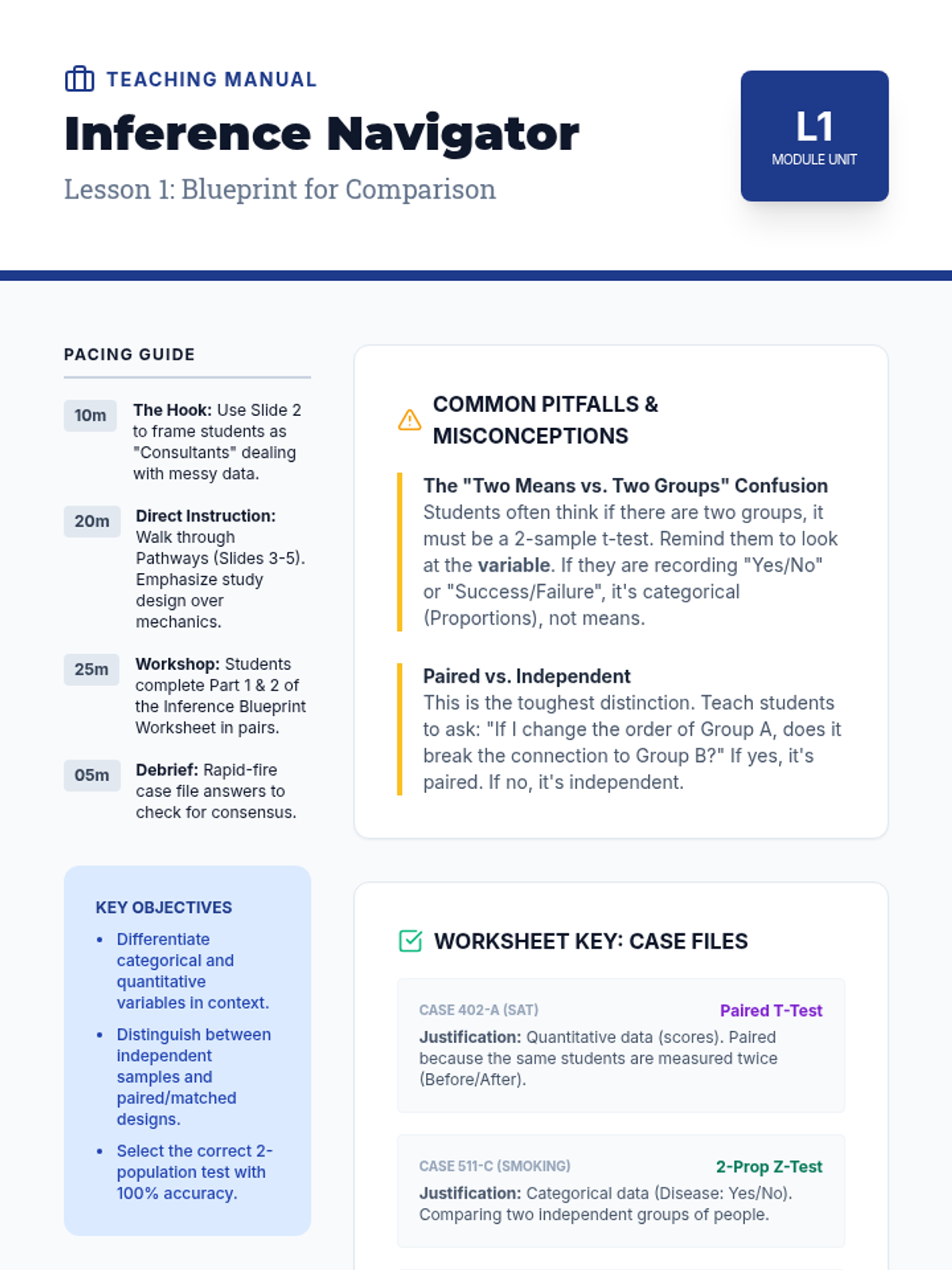
An advanced 11th-grade statistics sequence focusing on the selection, application, and ethical implications of two-population inference tests through a professional consultant simulation.
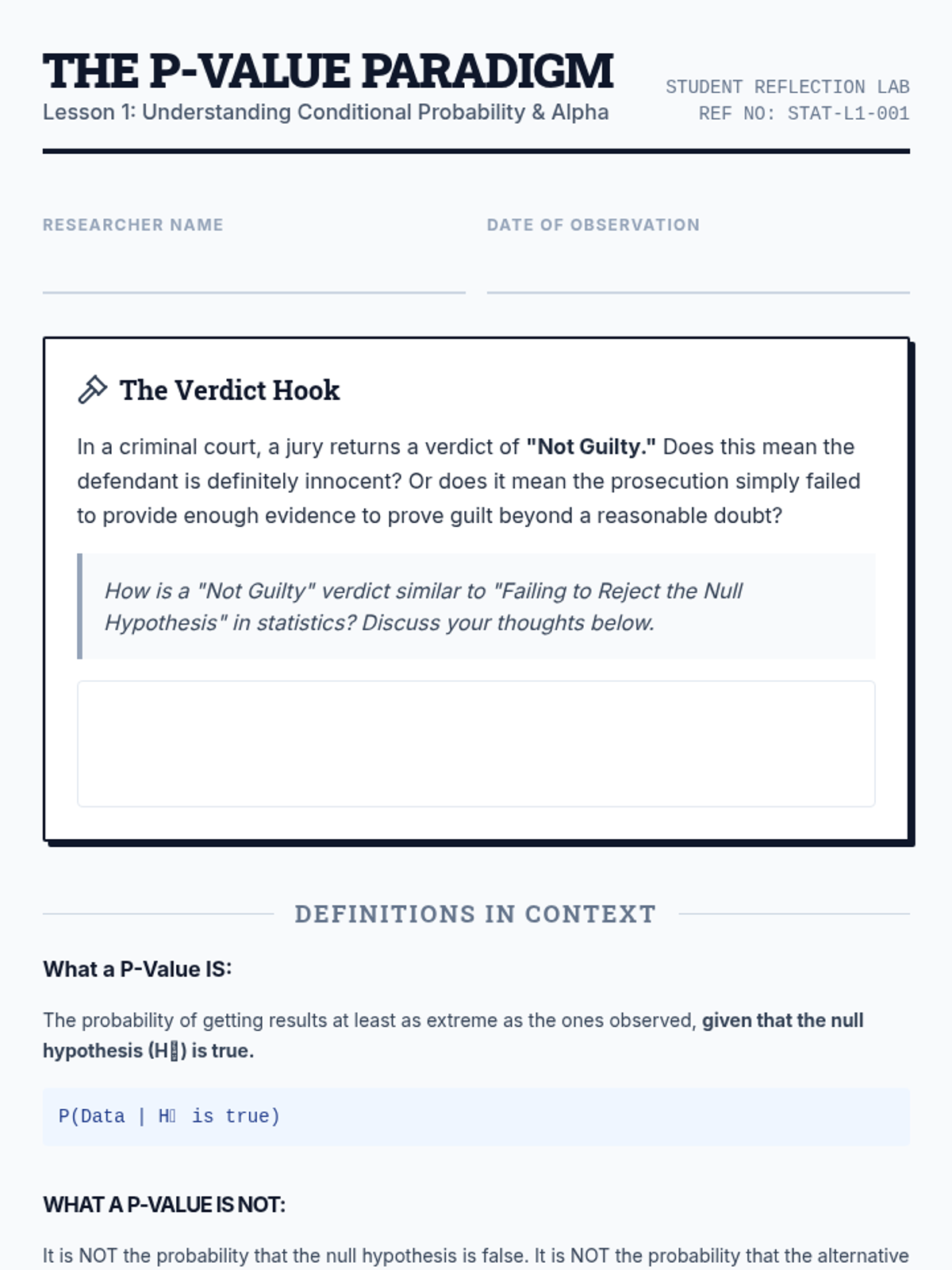
An advanced statistics sequence for 10th graders focusing on the nuance of hypothesis testing. Students move beyond calculations to explore P-values, Type I/II errors, practical significance, and effect size through real-world case studies and a culminating funding simulation.
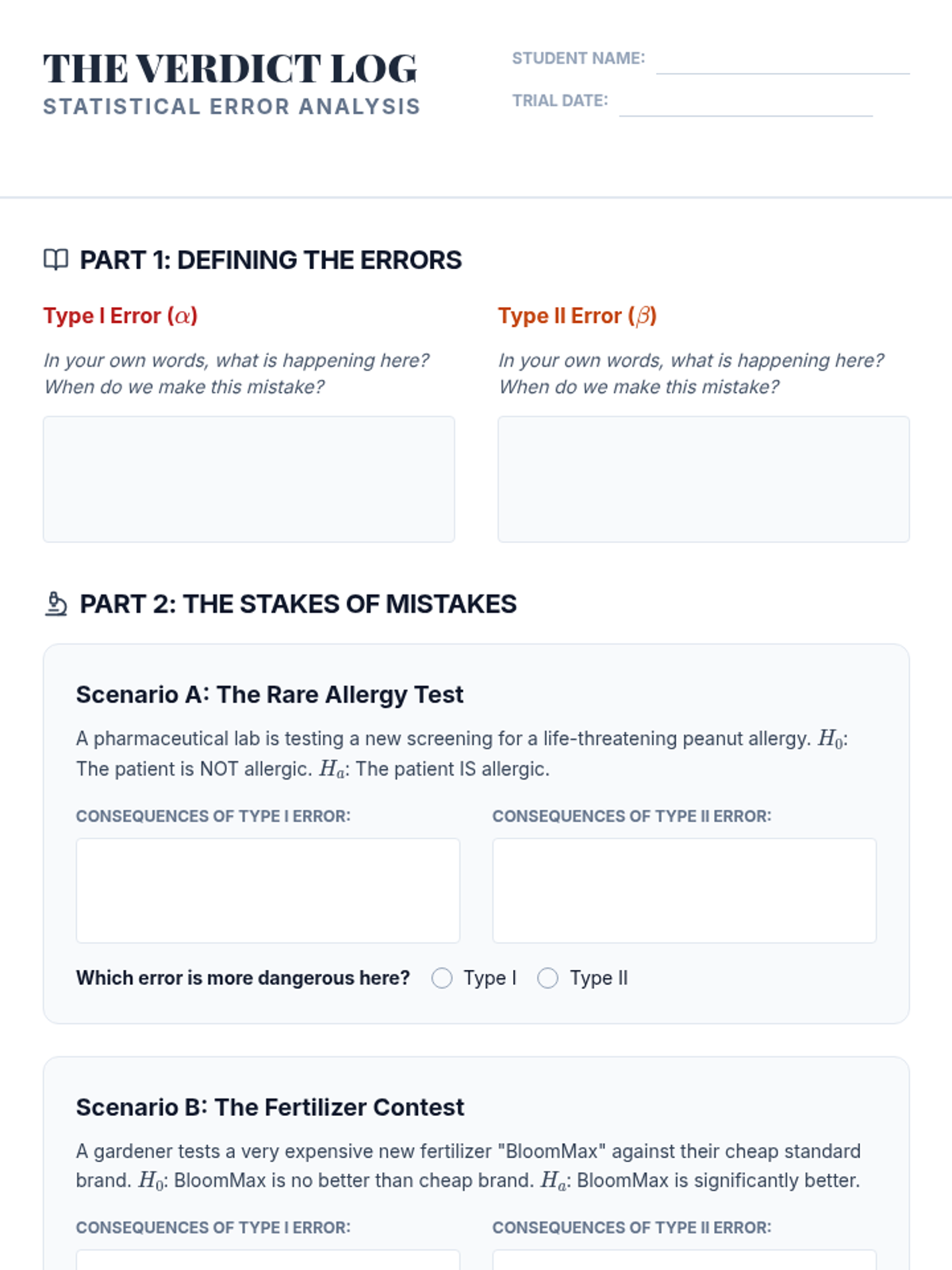
An advanced exploration of statistical power, error types, and effect sizes in the context of comparing two populations, teaching students to look beyond p-values to evaluate the practical importance and reliability of scientific findings.
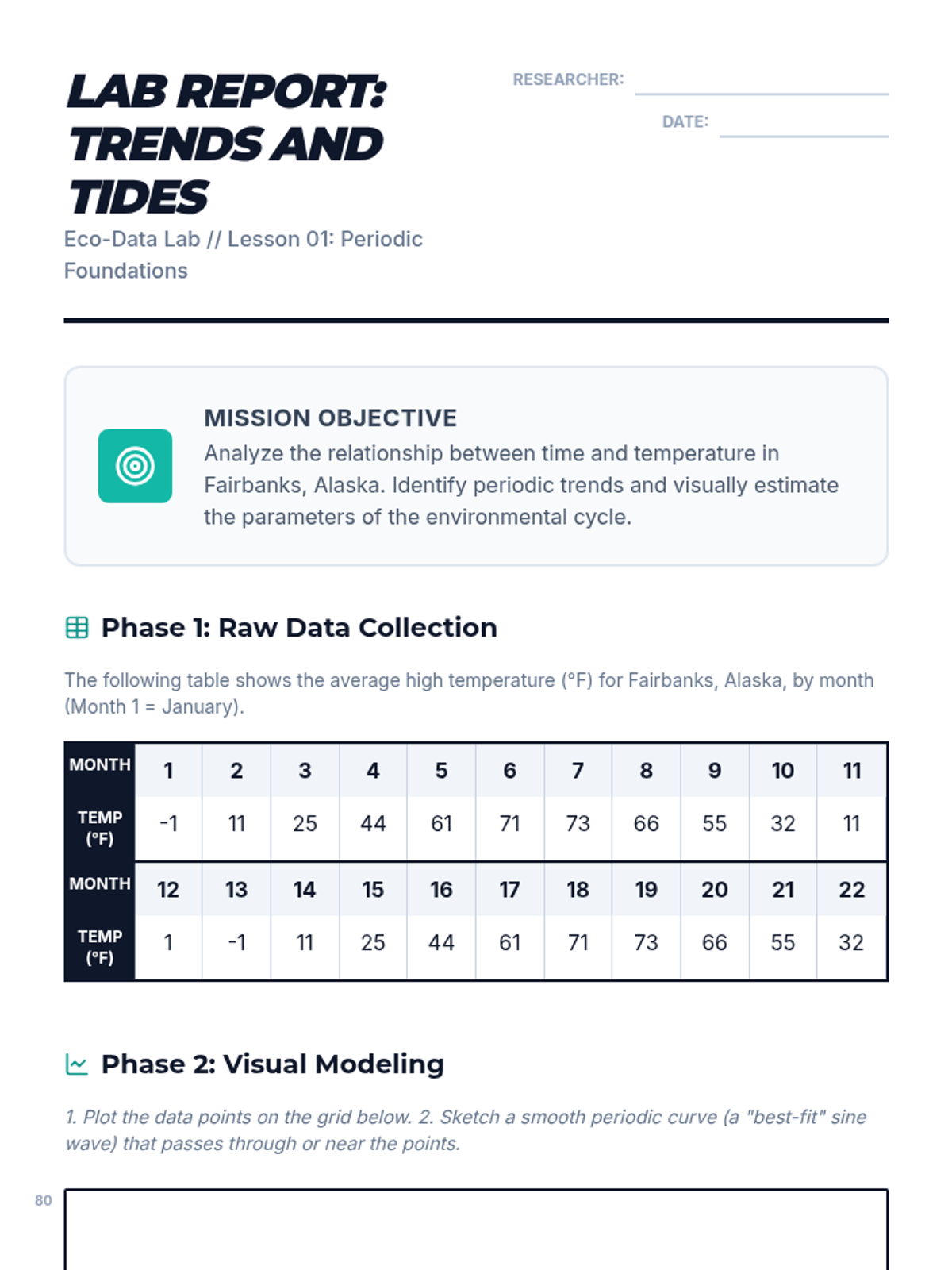
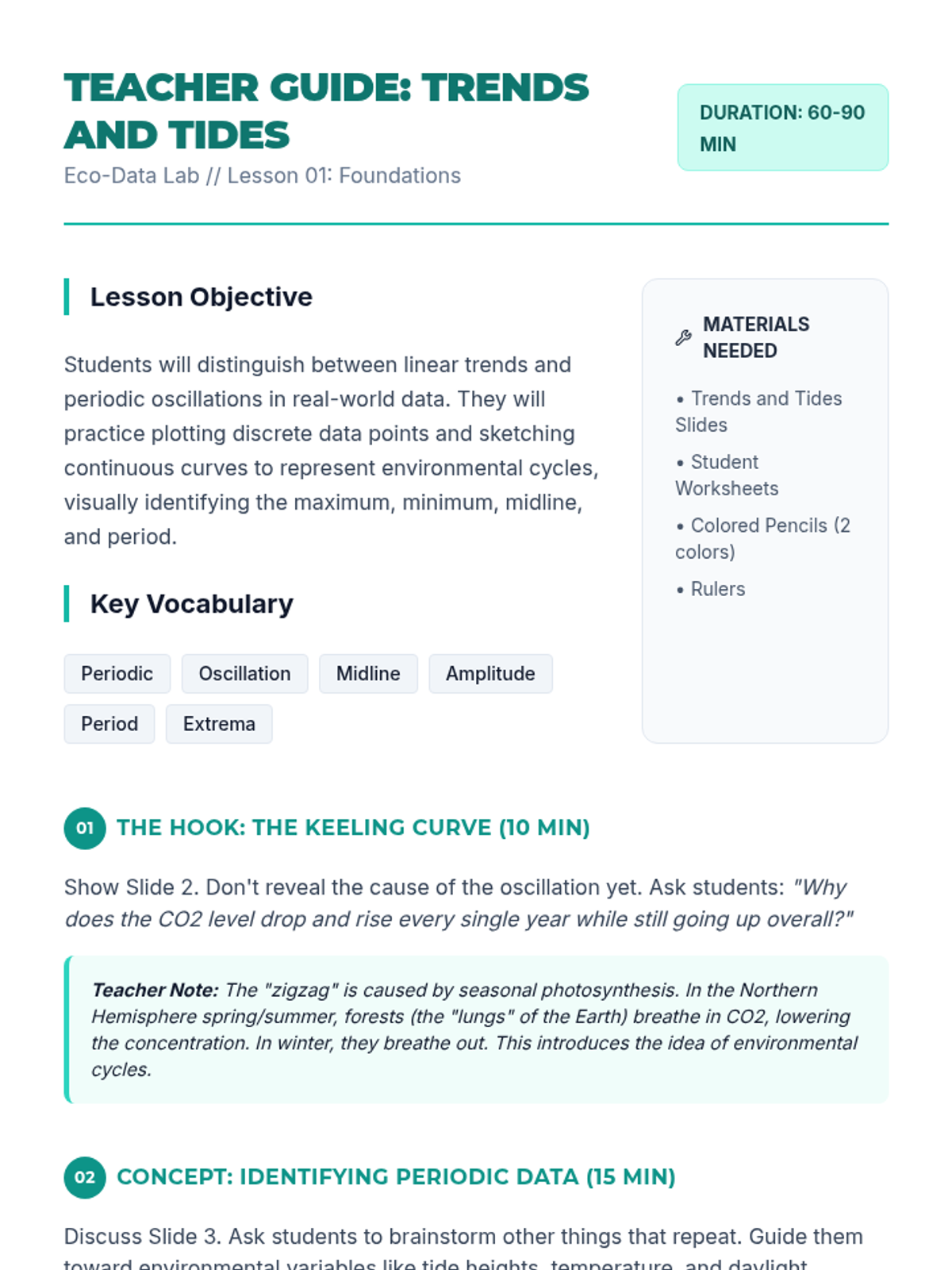
A comprehensive unit where students act as data scientists to model real-world environmental phenomena using trigonometric functions. They progress from visual estimation to precise algebraic modeling and technological regression to predict future environmental conditions.
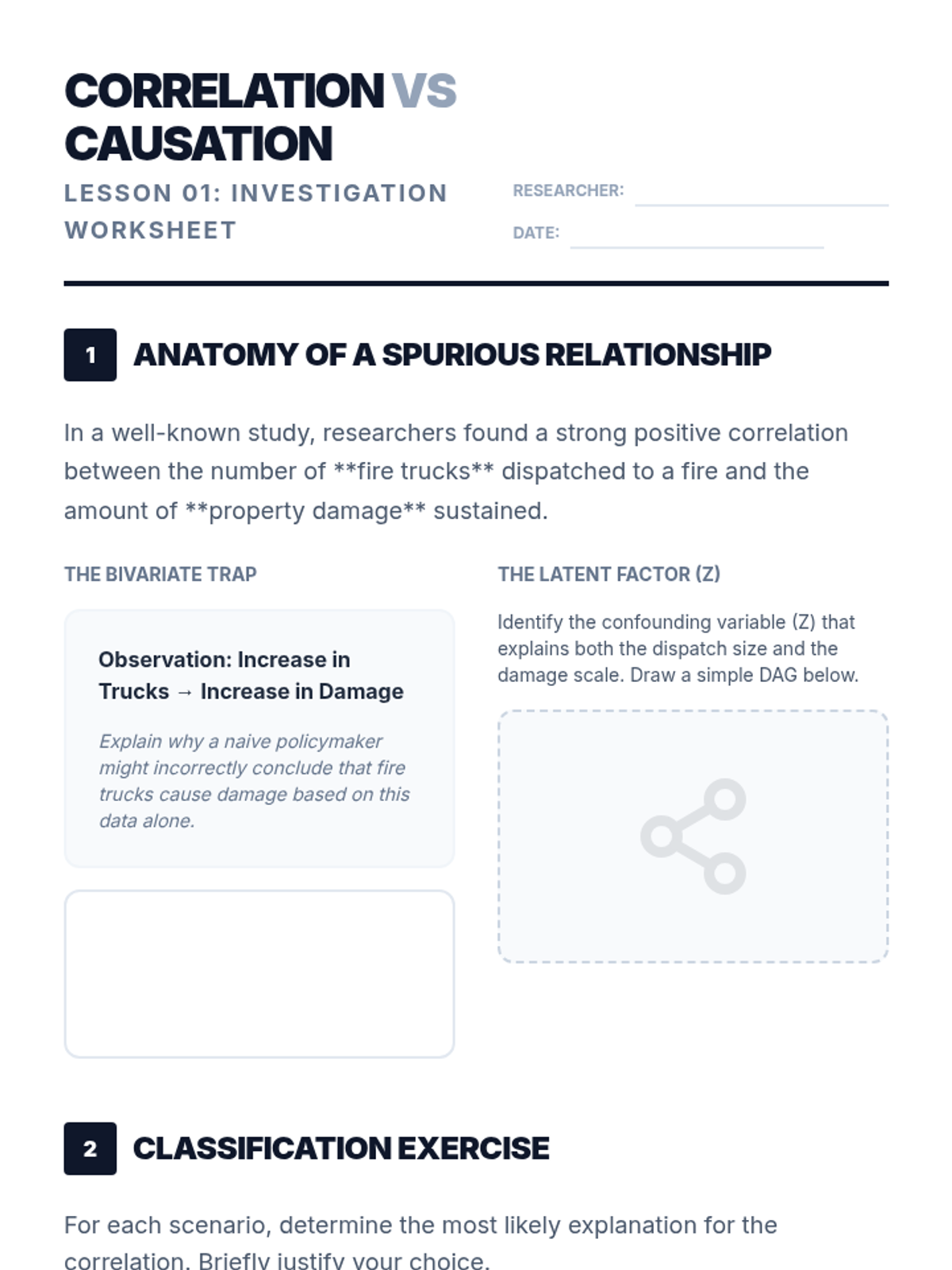
This graduate-level sequence bridges the gap between statistical association and causal inference. Students explore pitfalls like Simpson's Paradox and collider bias while learning to use Directed Acyclic Graphs (DAGs) and Instrumental Variables to isolate causal mechanisms in bivariate data.
A comprehensive 5-lesson unit on evaluating the validity of linear regression models. Students move from basic residual calculation to sophisticated analysis of residual plots, correlation coefficients, outliers, and the fundamental distinction between correlation and causation.
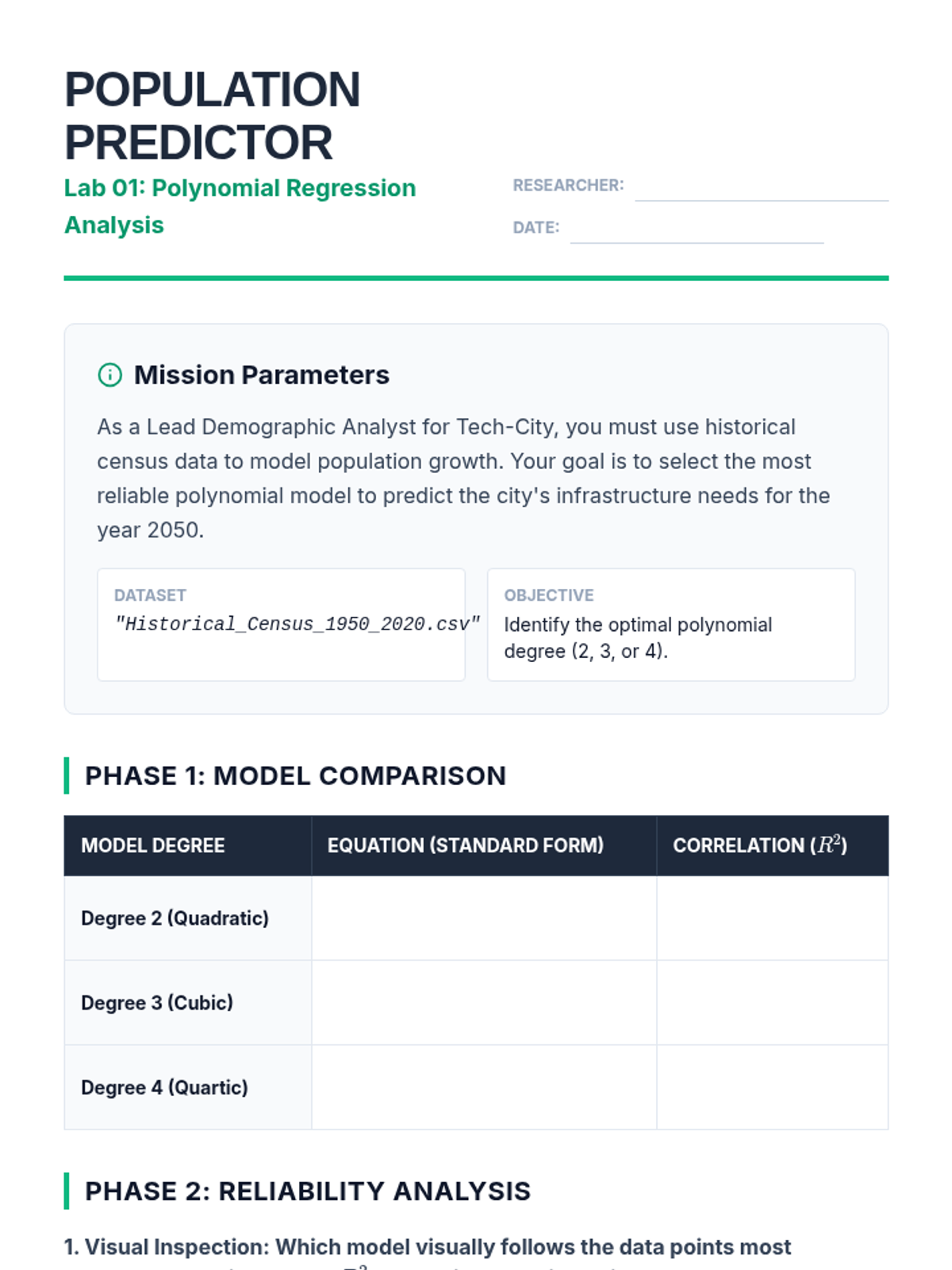
A project-based unit where students apply polynomial calculus concepts to real-world scenarios like business profits, projectile motion, and engineering design. Students transition from abstract solving to modeling data and optimizing outcomes using regression, intercepts, and extrema.
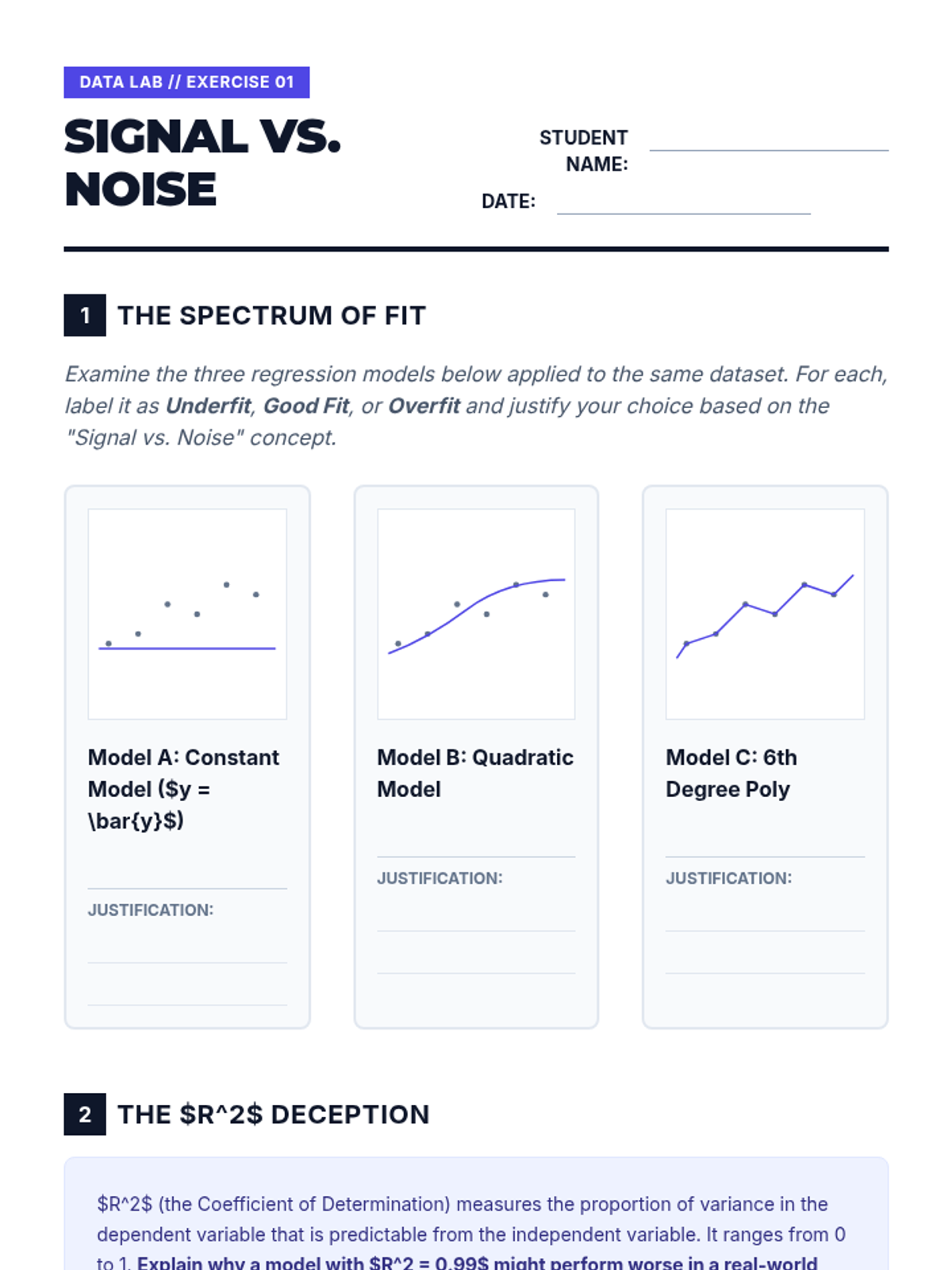
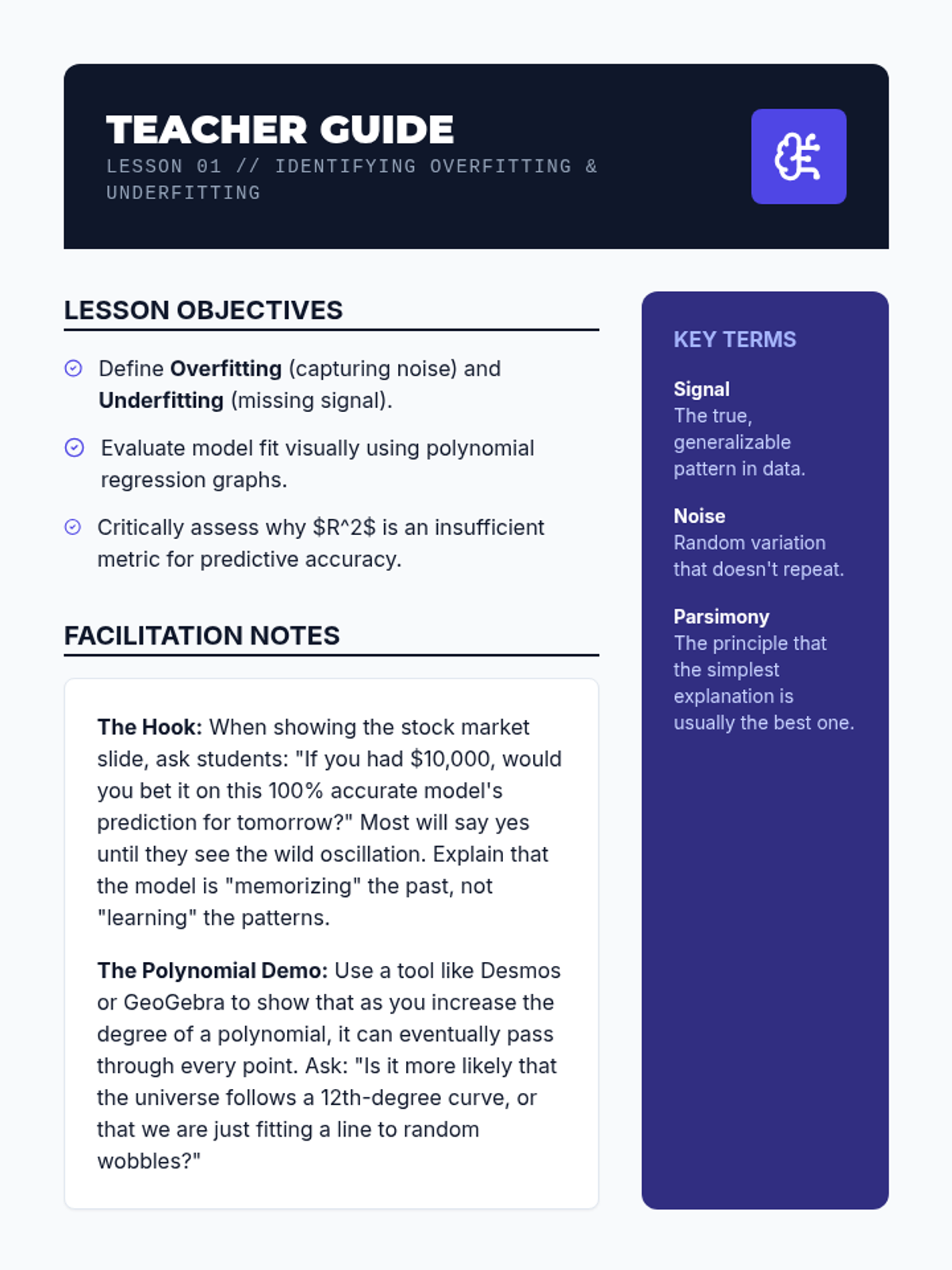
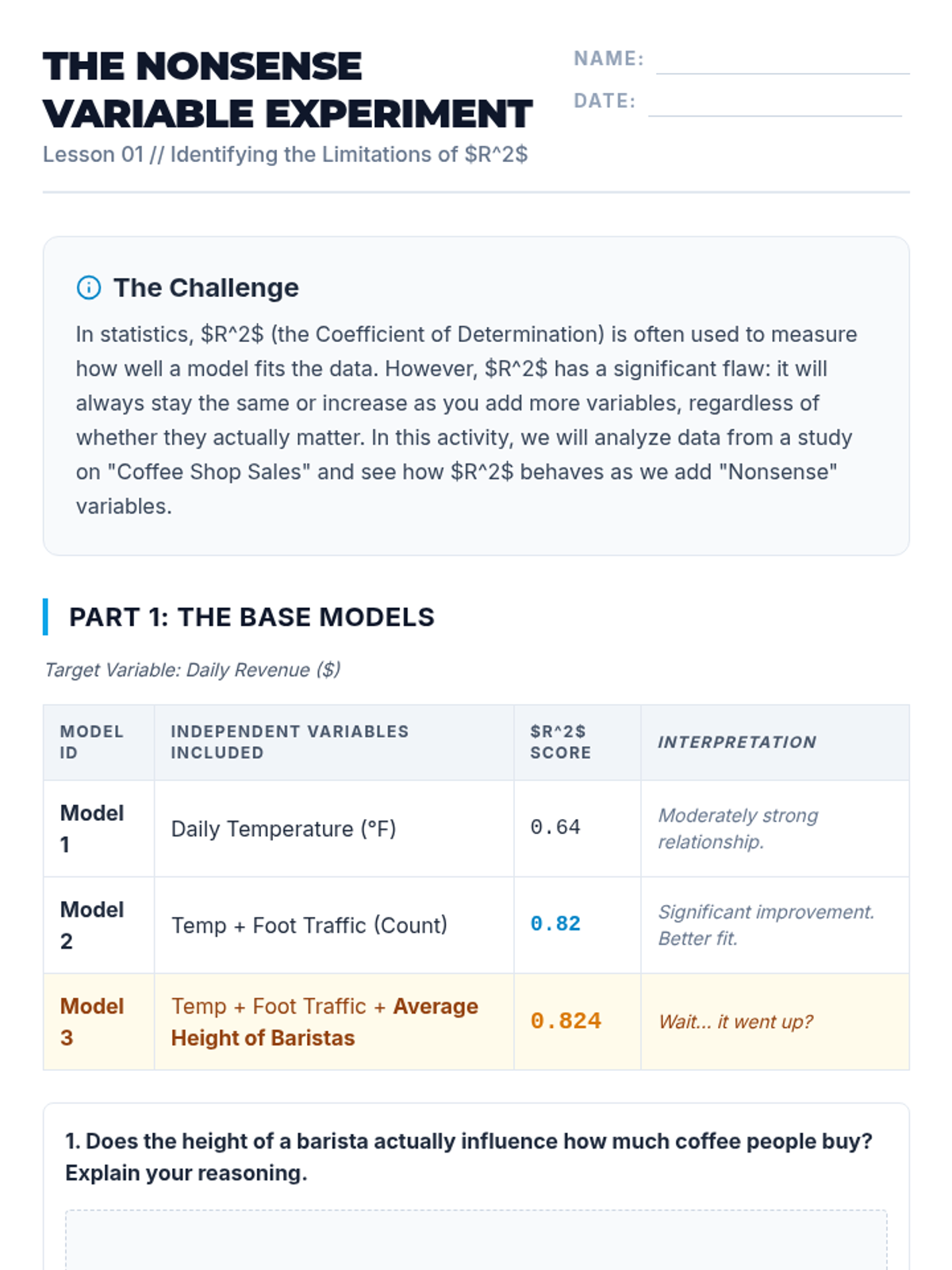
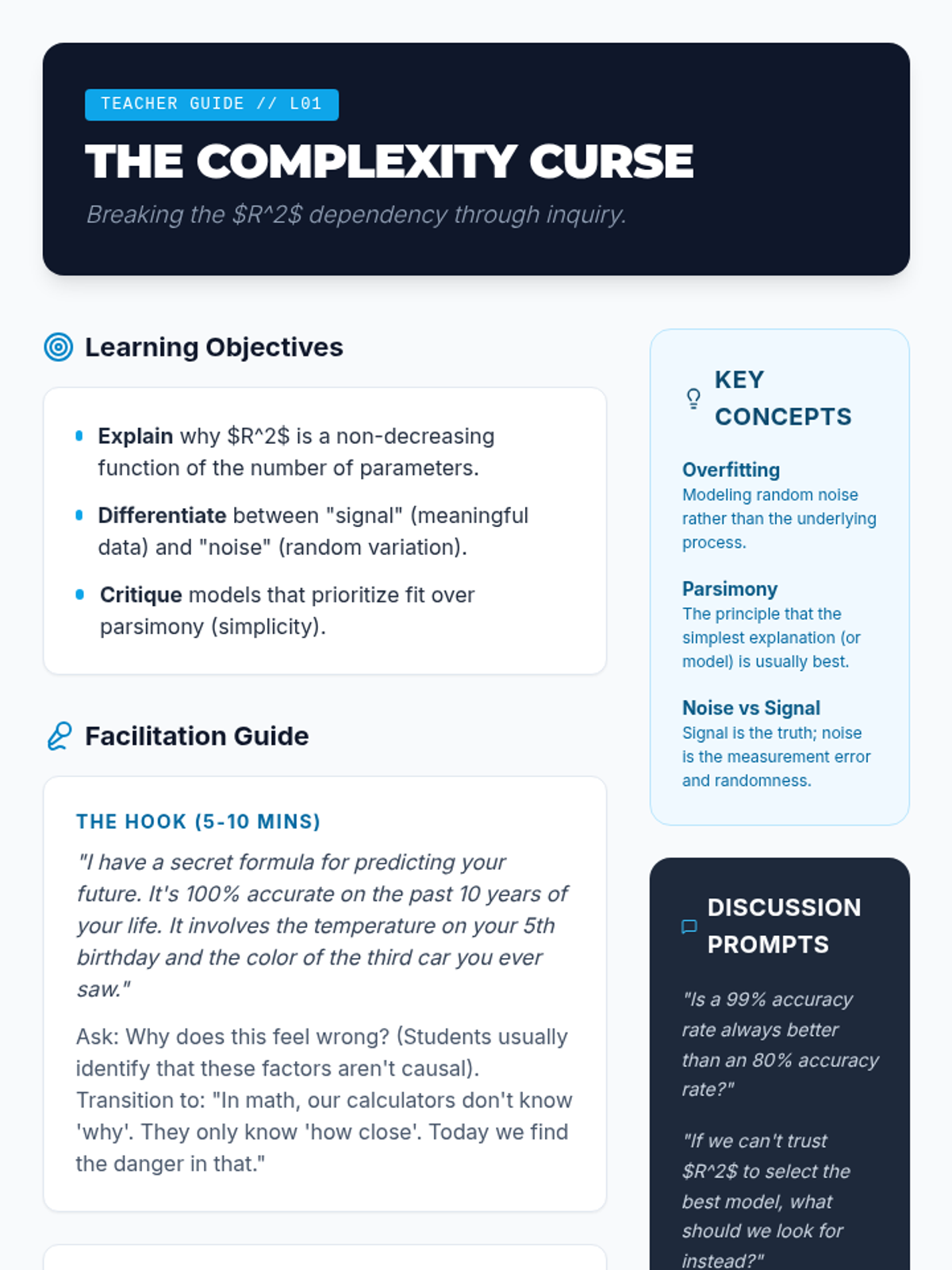
This advanced 12th Grade sequence explores how to evaluate mathematical models for predictive accuracy. Students move from identifying overfitting and underfitting to implementing cross-validation, understanding the bias-variance tradeoff, and using information criteria (AIC/BIC) to select robust models.
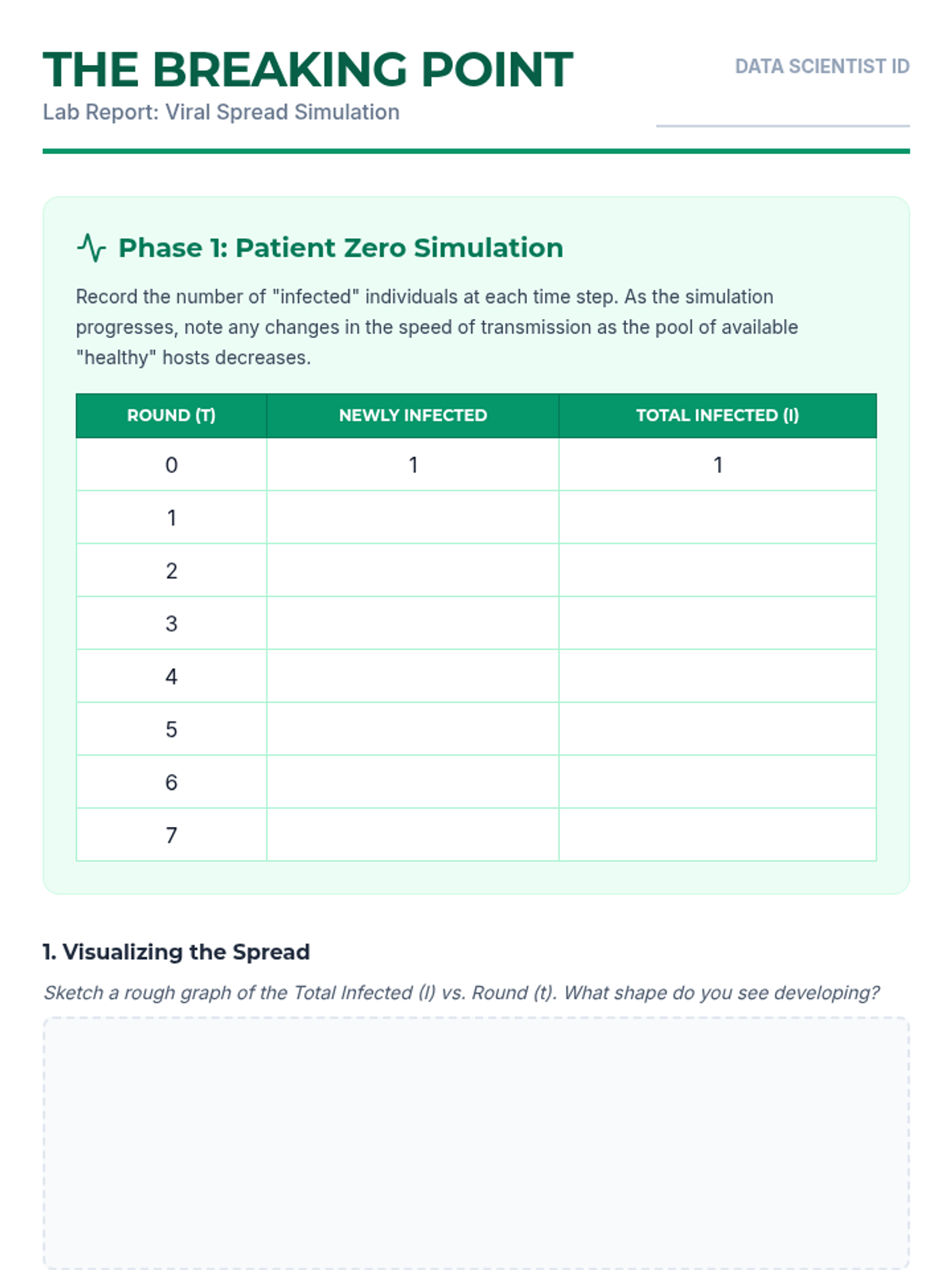
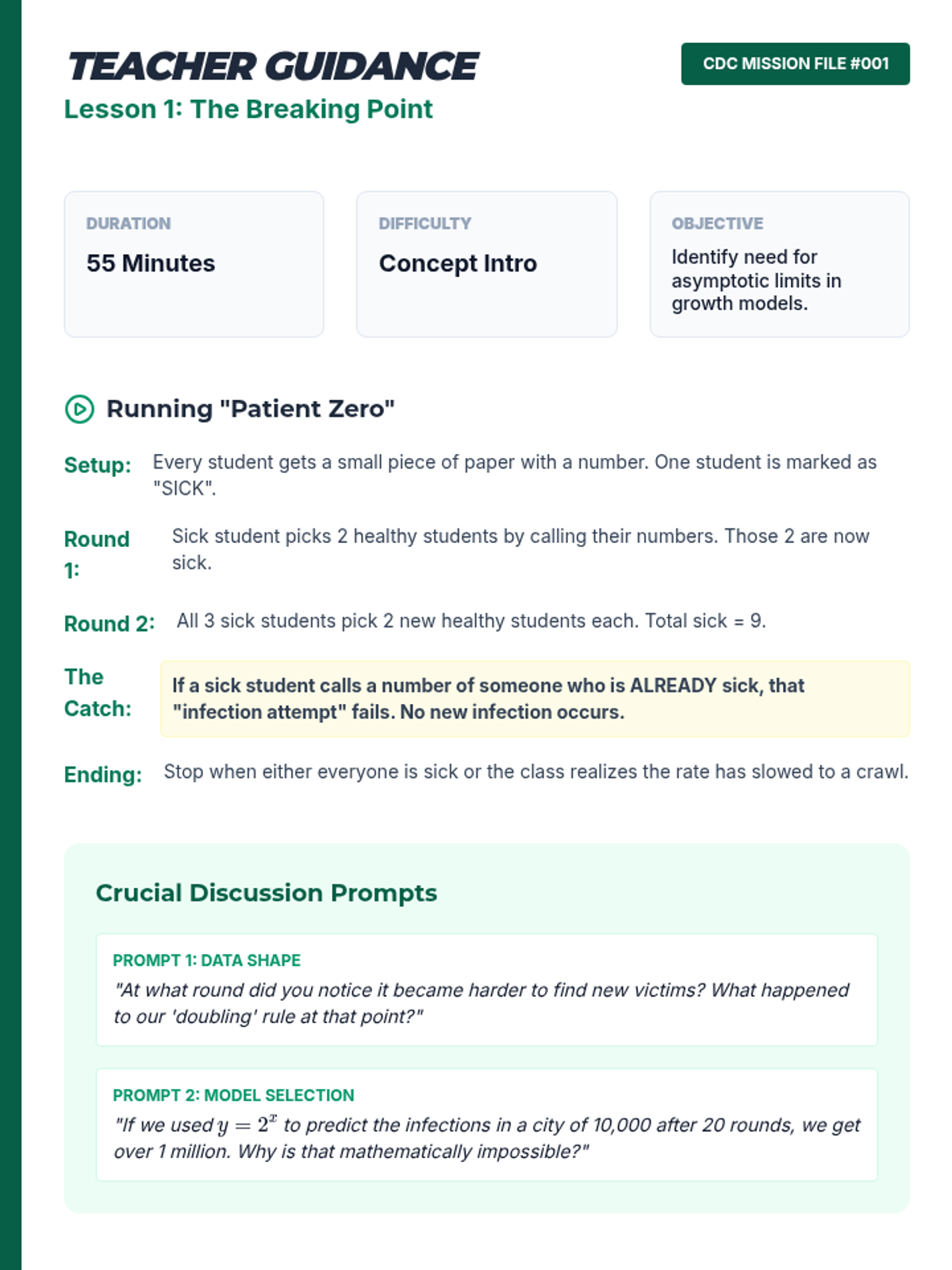
A high-level mathematics sequence for 12th-grade students exploring the transition from exponential growth to logistic models in the context of epidemiology. Students will analyze parameters, perform regression on real-world data, and use mathematical modeling to inform policy decisions.
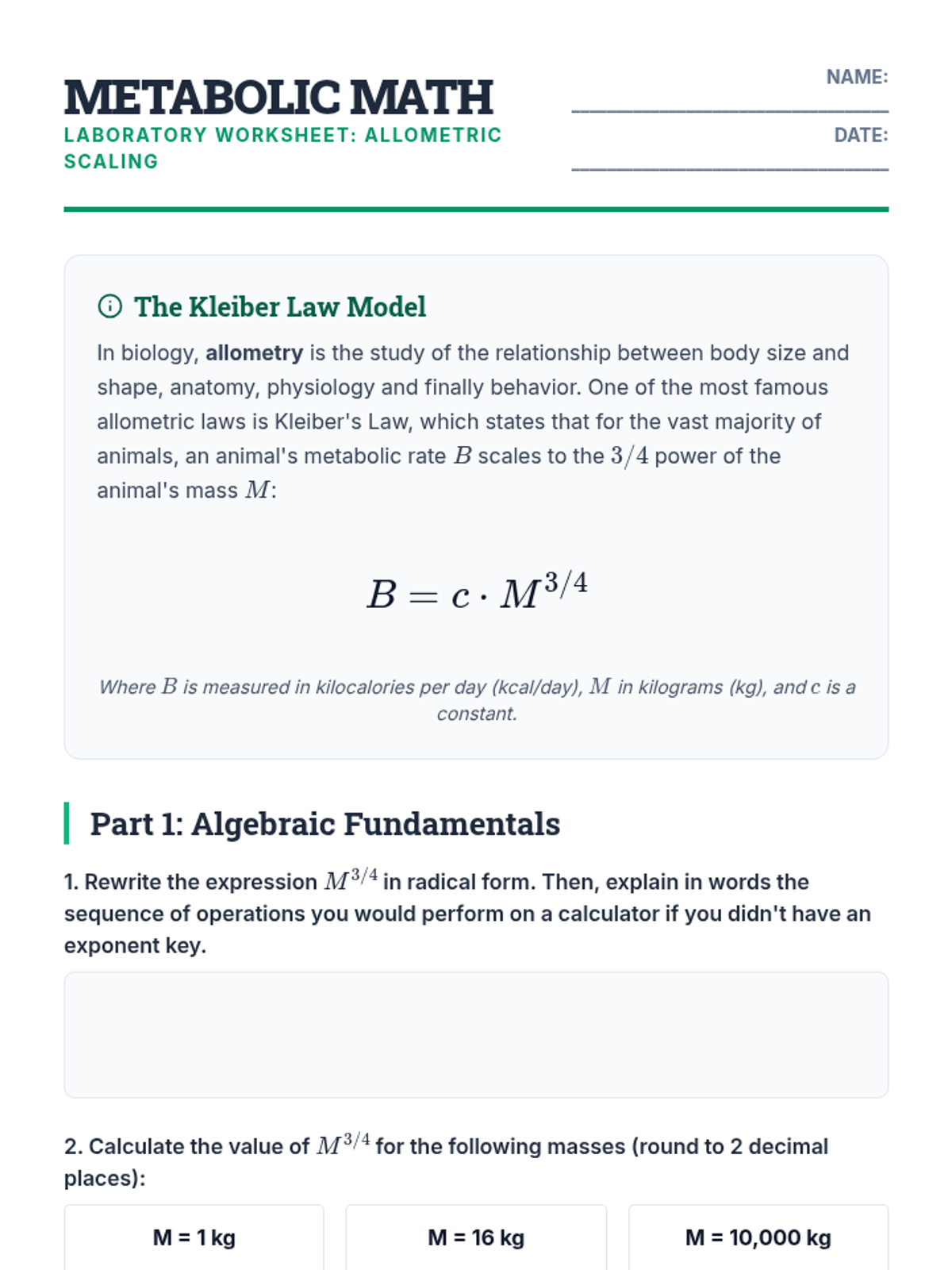
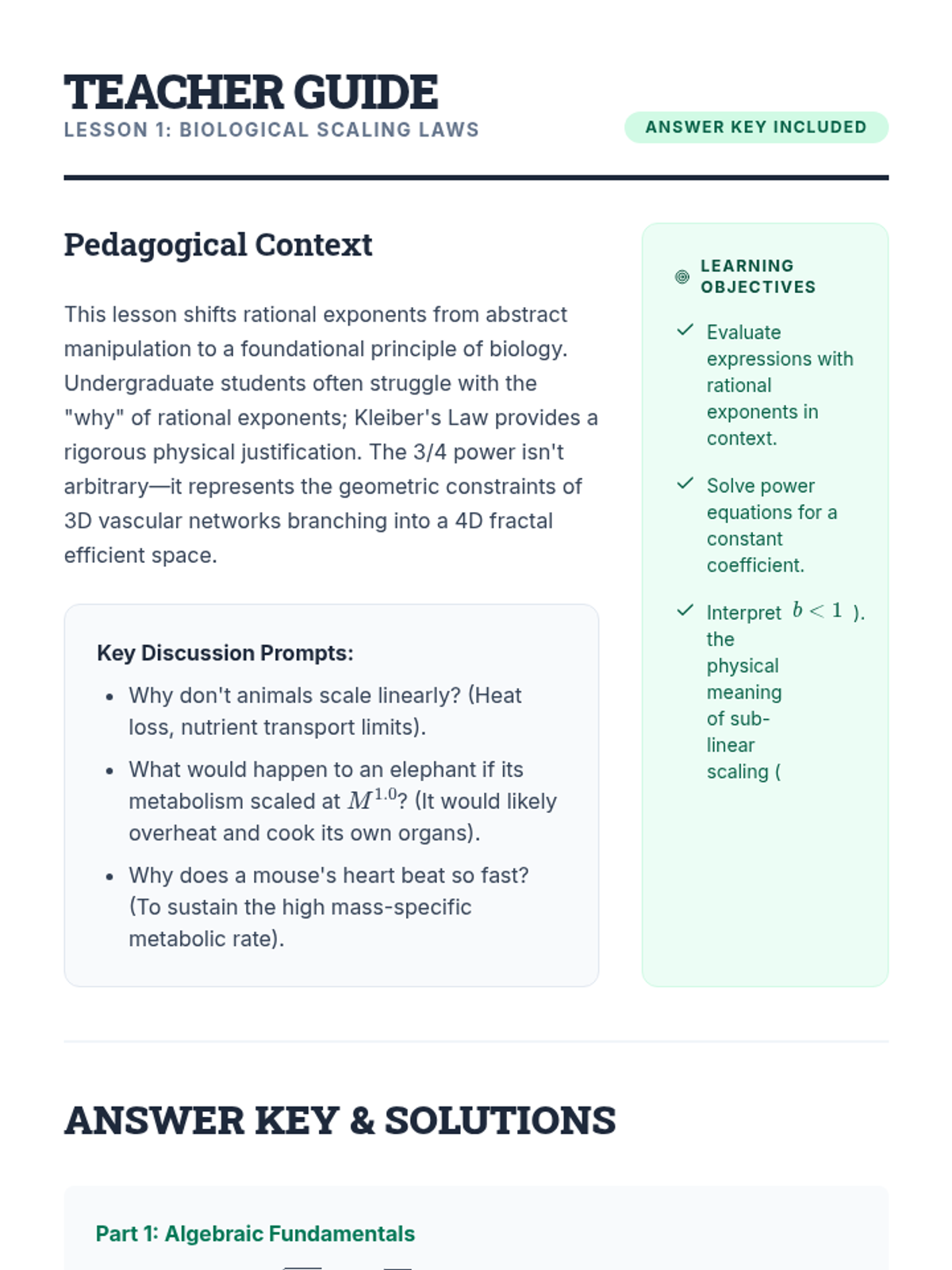
This sequence explores the practical application of rational exponents and power functions in biology, physics, and finance. Students will progress from evaluating existing models like Kleiber's Law and Kepler's Third Law to constructing their own mathematical models from empirical data.
This sequence explores the statistical evaluation of linear models, covering residuals, linear regression technology, correlation coefficients, residual plots, and the distinction between correlation and causation. Students will learn to assess the reliability of models and use statistical tools to interpret data accurately.
This sequence moves beyond simple error metrics to explore sophisticated selection criteria that penalize complexity, specifically AIC and BIC. Students learn to balance model fit with parsimony through real-world datasets and comparative analysis.
This sequence guides undergraduate students through model comparison and selection, covering the bias-variance tradeoff, cross-validation methods, and information criteria (AIC/BIC). Students will learn to balance model complexity with generalization ability to select the most robust models for prediction and inference.
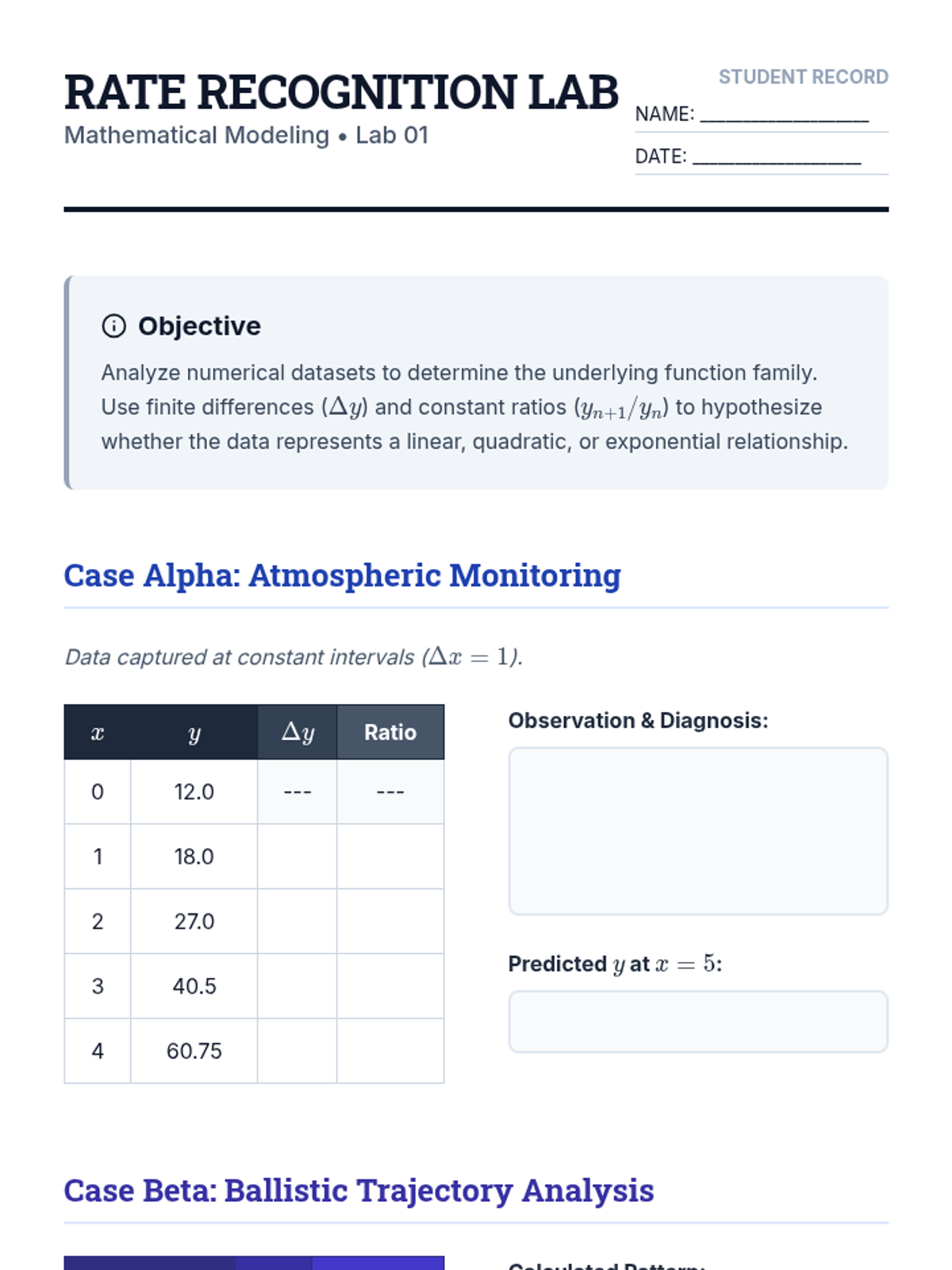
This sequence guides undergraduate students through the rigorous process of mathematical modeling, from identifying function families via rates of change to validating complex models using residual analysis. Students explore linear, exponential, logistic, sinusoidal, and piecewise models in real-world contexts.
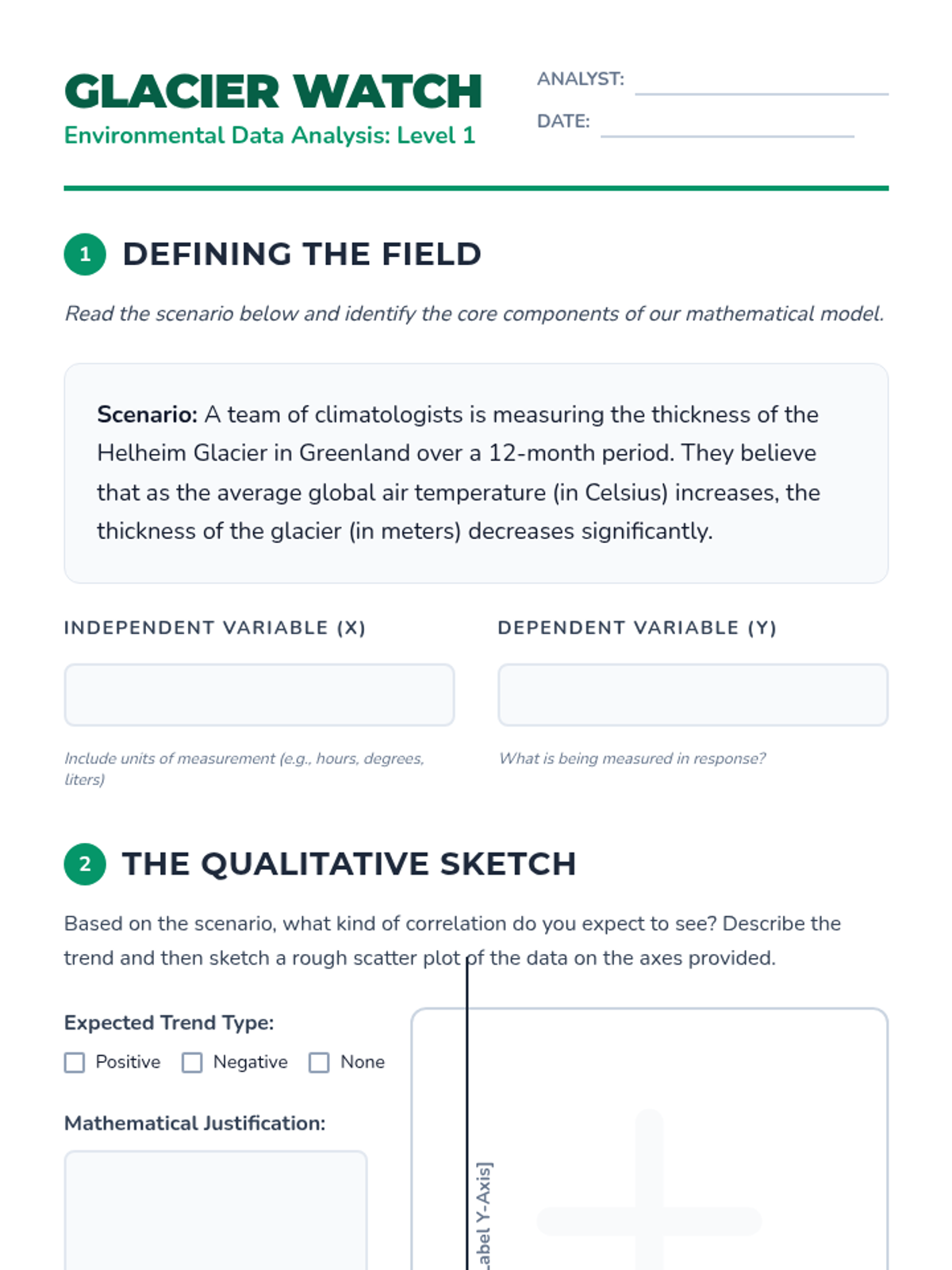
A 10th-grade mathematics sequence focusing on modeling real-world environmental data using linear, exponential, and piecewise functions. Students progress from identifying variables to performing complex regression analysis and presenting predictive models.