Syllogisms, deductive validity, and the principles of inductive probability for evaluating evidence-based claims. Targets common logical fallacies and the construction of sound, persuasive arguments.
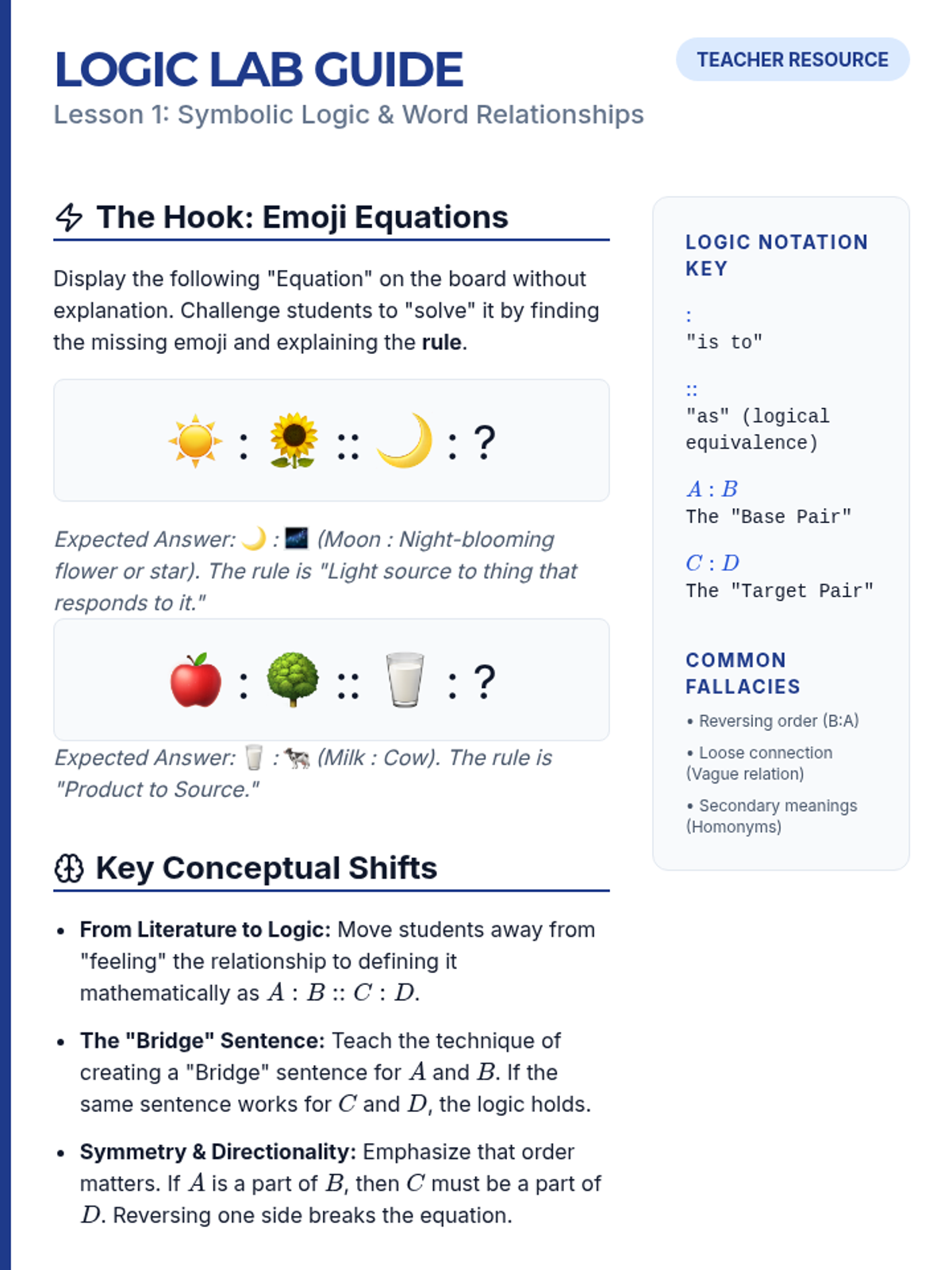
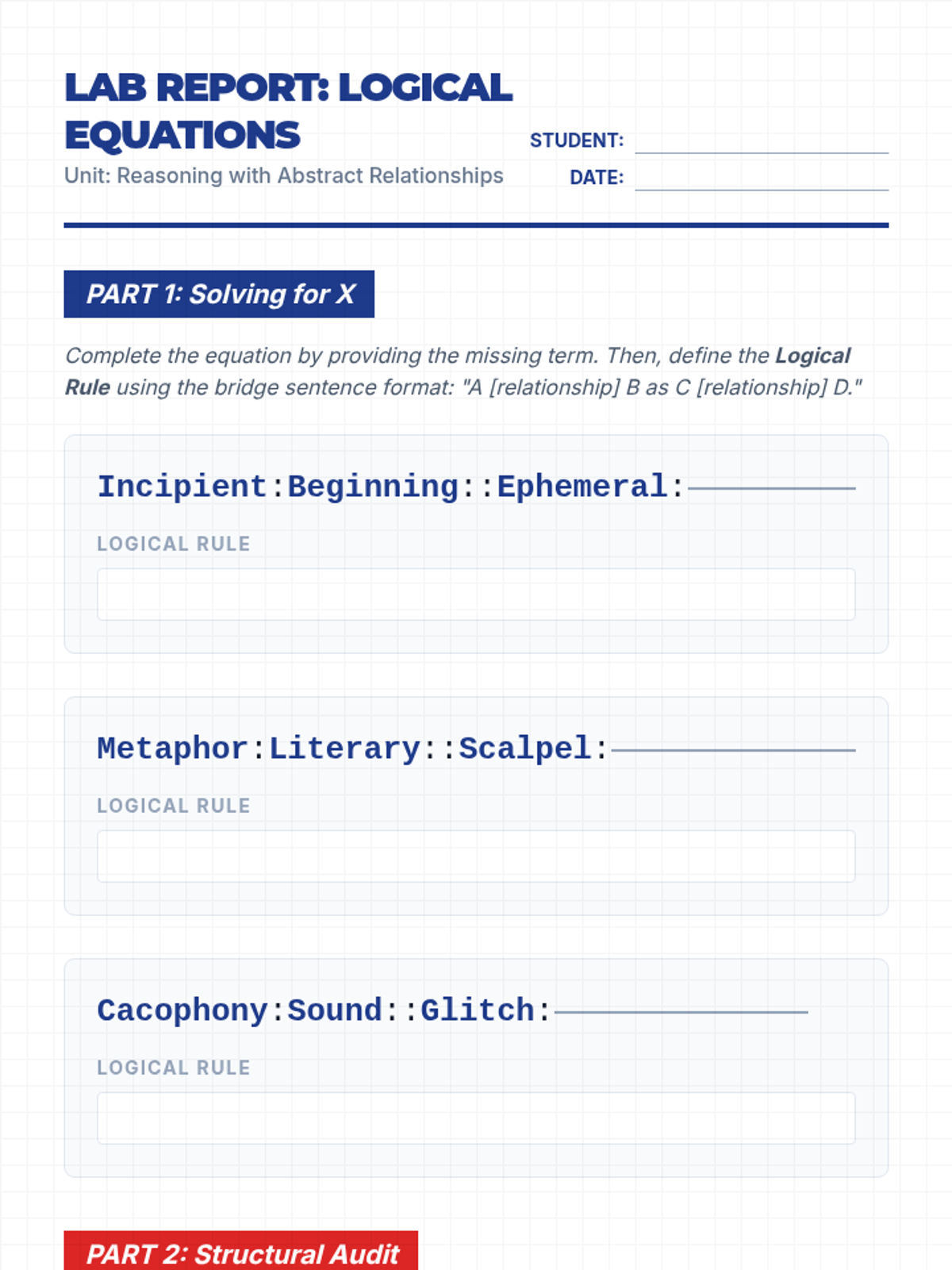
A high-level bridging of English Language Arts and formal logic, focusing on the structural patterns of reasoning through analogies. Students move from basic symbolic notation to complex deductive puzzles, treating language with mathematical precision.
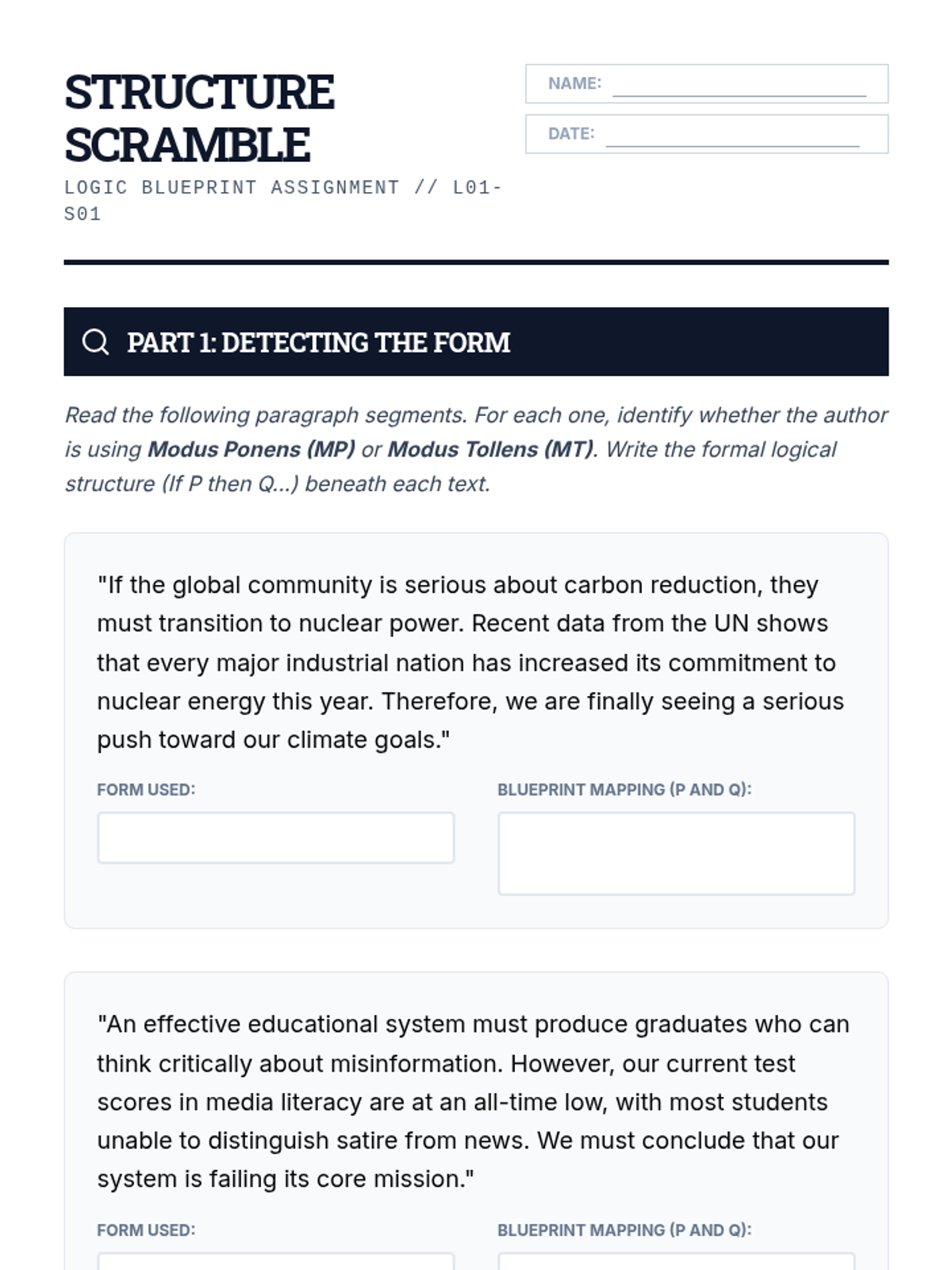
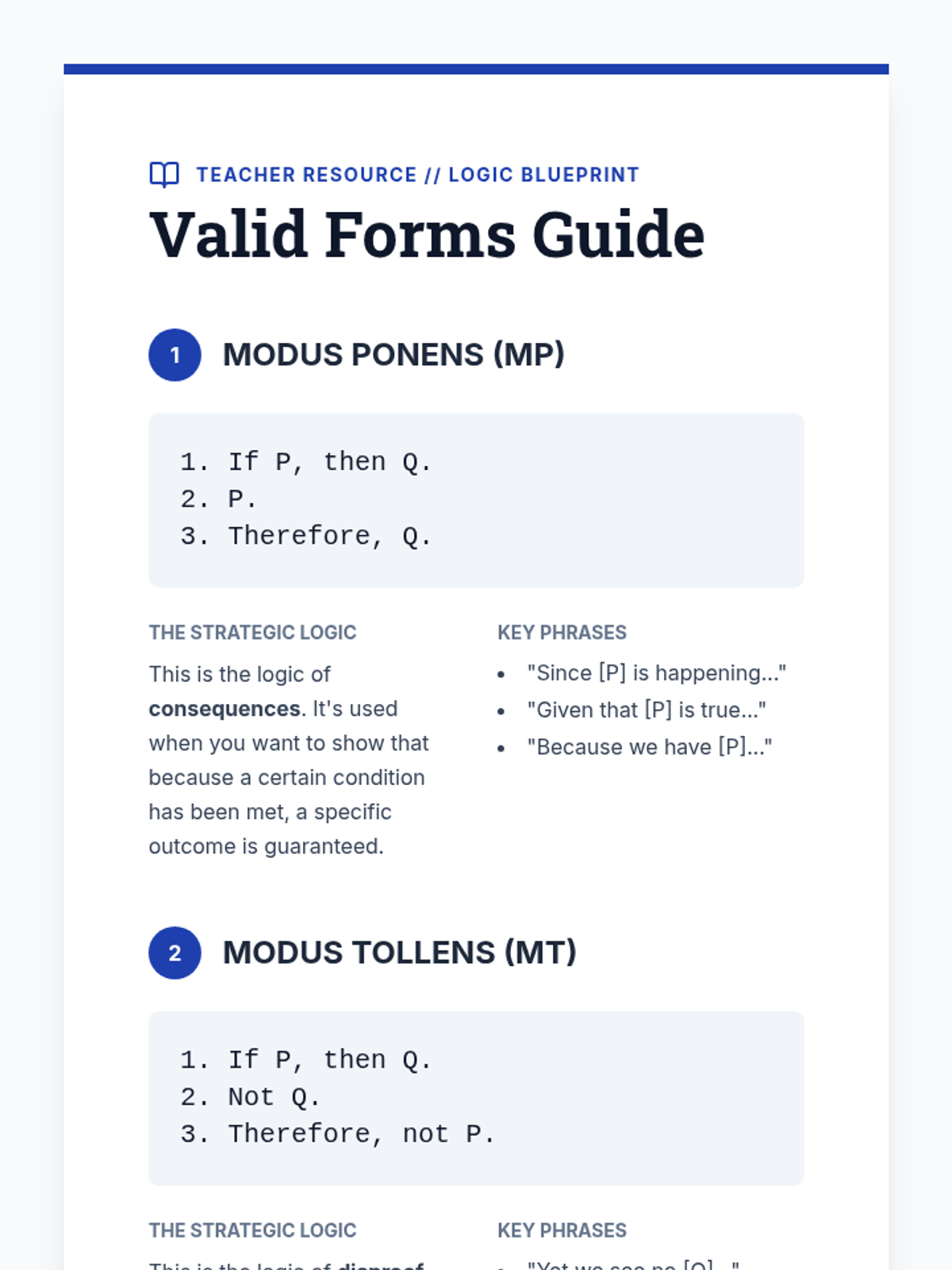
A 9th-grade English Language Arts sequence that bridges formal logic with argumentative writing. Students learn to use valid argument forms like Modus Ponens, Modus Tollens, and Hypothetical Syllogisms as structural blueprints for high-quality, undeniable writing.
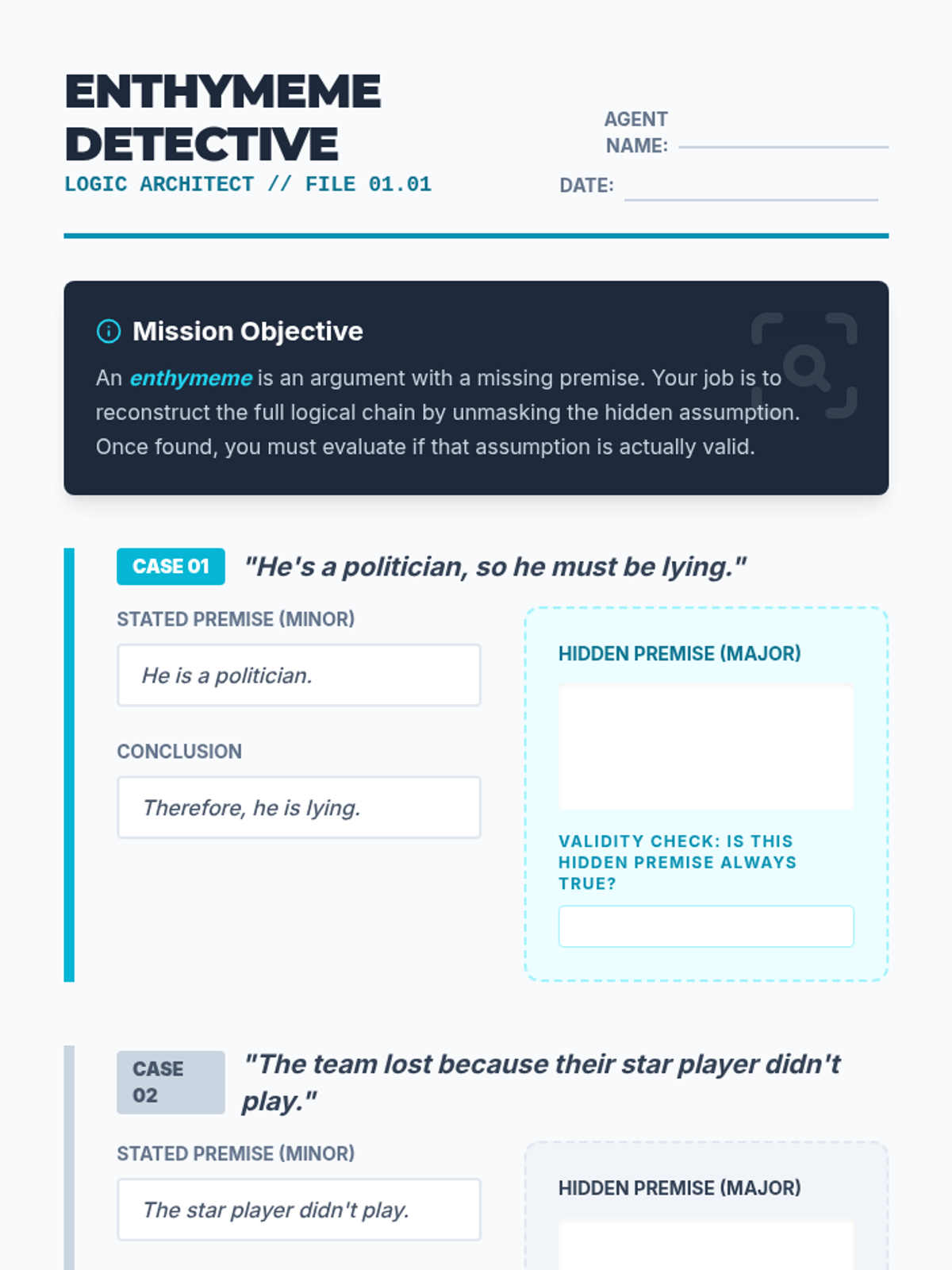
A high-level ELA unit for 11th graders that bridges formal logic and argumentative writing. Students move from identifying hidden premises (enthymemes) to constructing complex essays built on valid deductive frameworks like Modus Ponens and Modus Tollens.
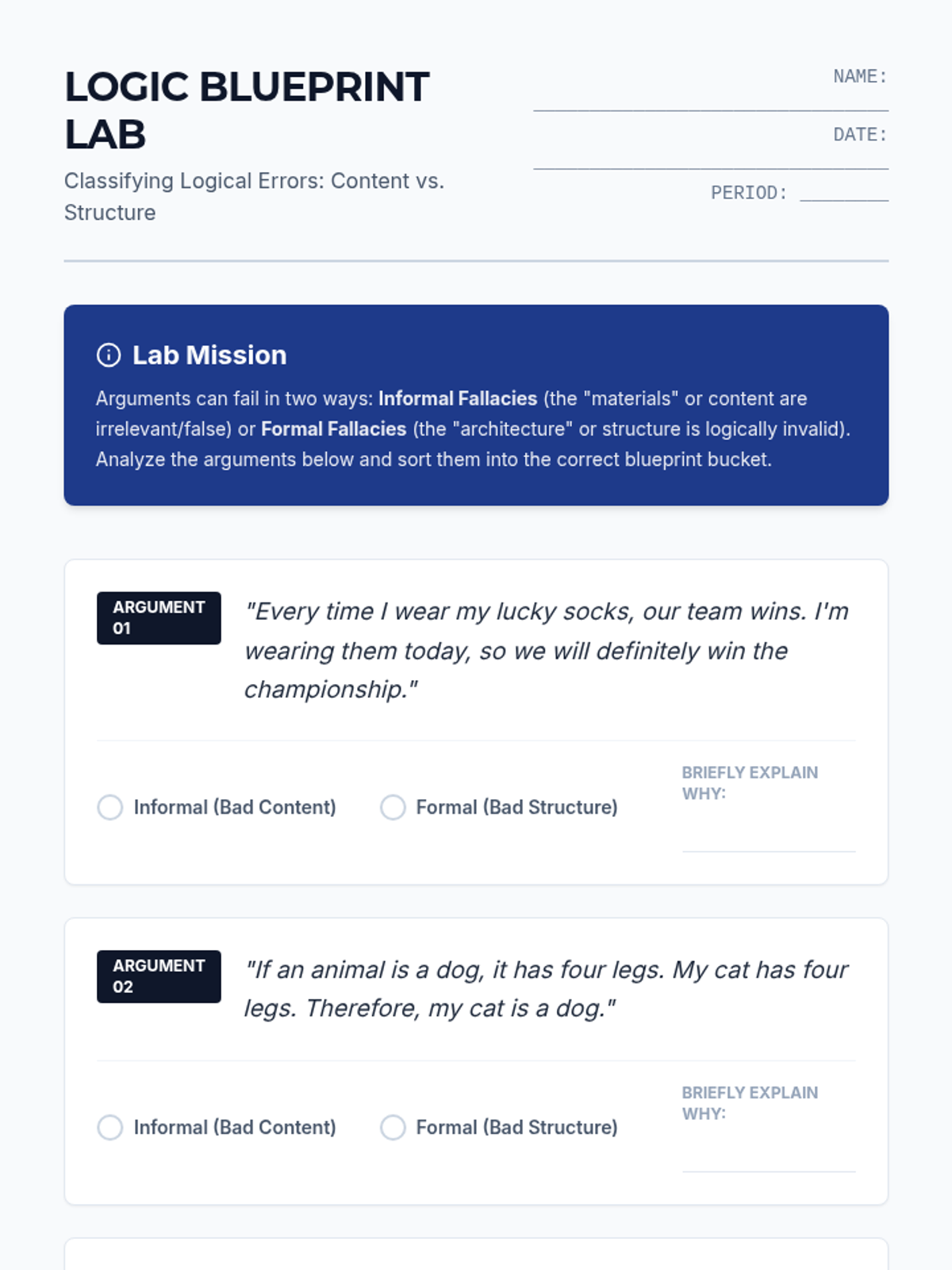
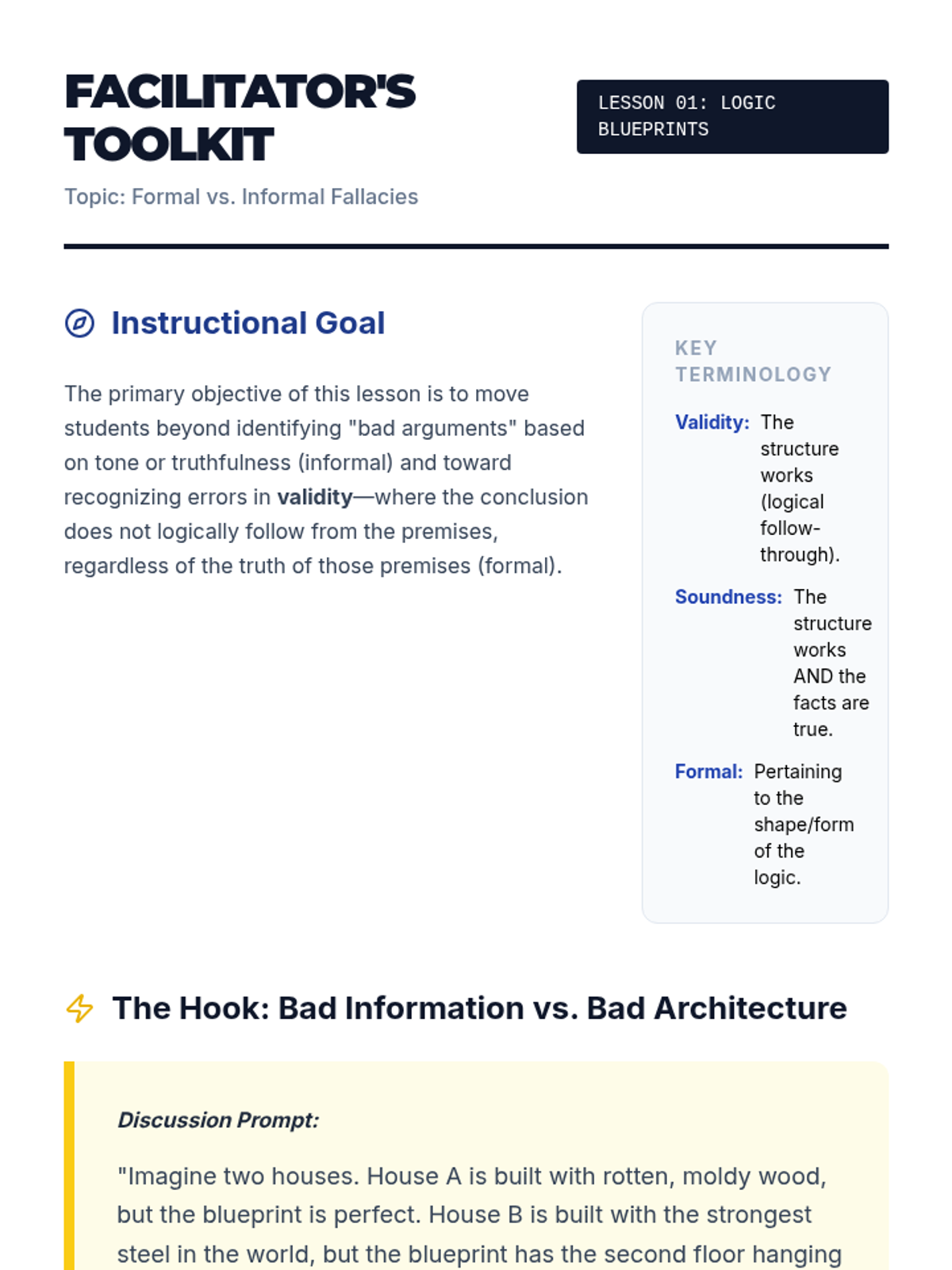
A high school ELA sequence focused on identifying structural errors in reasoning. Students learn to distinguish between informal fallacies (content-based) and formal fallacies (structure-based), specifically mastering affirming the consequent, denying the antecedent, and the undistributed middle.
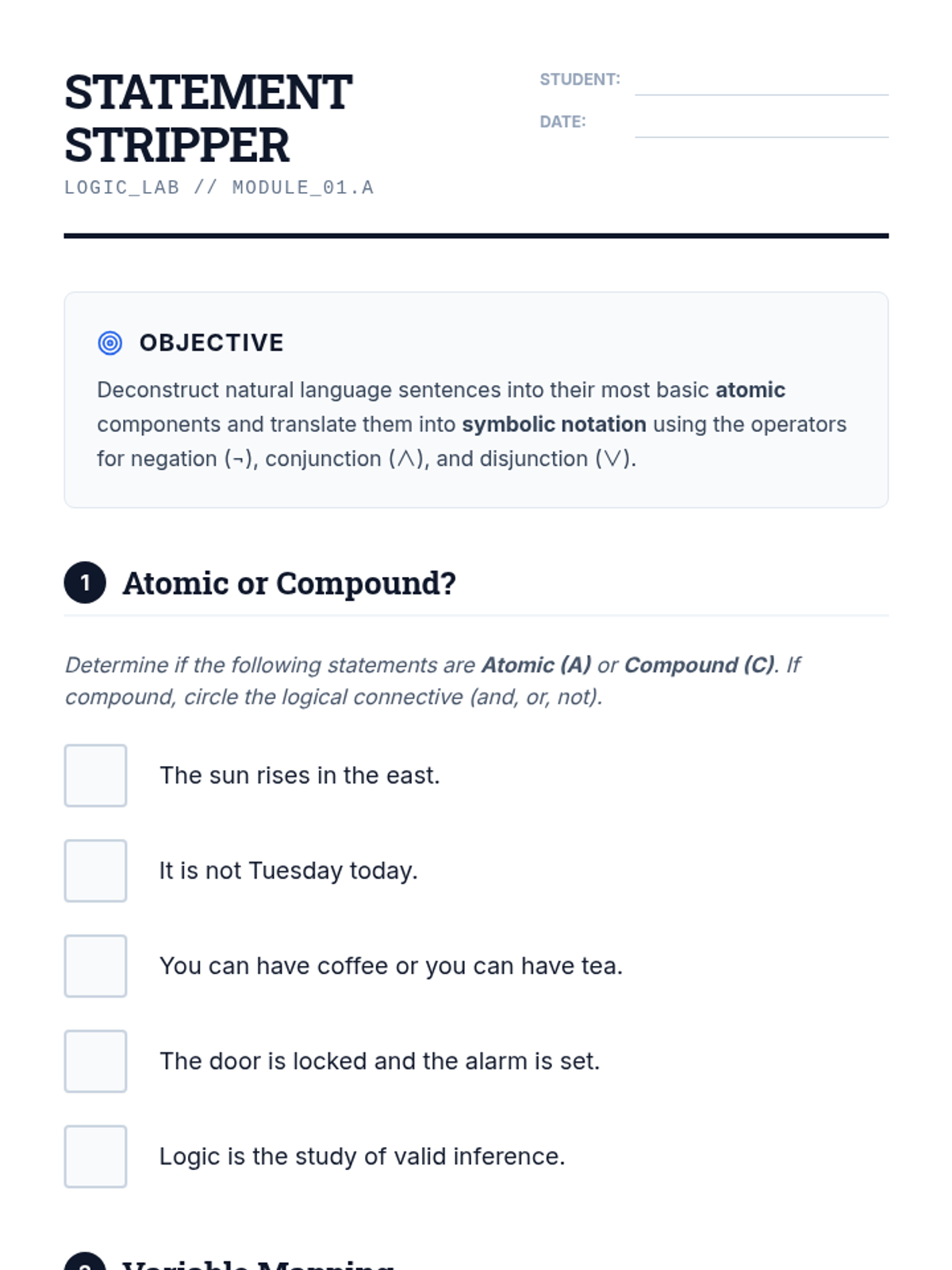
A high school ELA sequence on formal logic, teaching students to translate natural language into symbolic notation and evaluate logical consistency through truth tables. Students progress from basic connectives to analyzing complex rhetorical arguments for tautologies and contradictions.
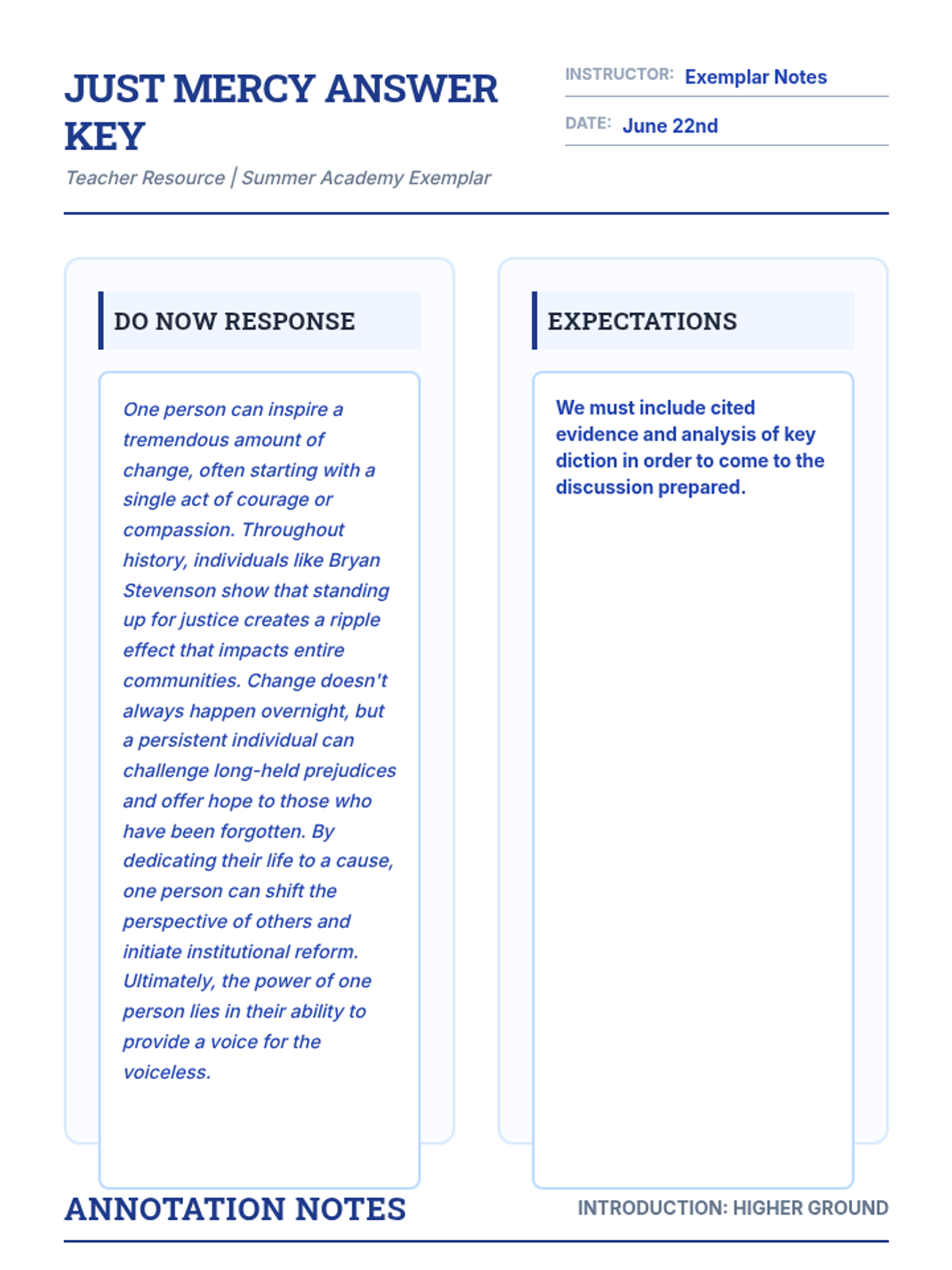
A unit exploring Just Mercy, focusing on the legal system, racial injustice, and restorative justice through literature.
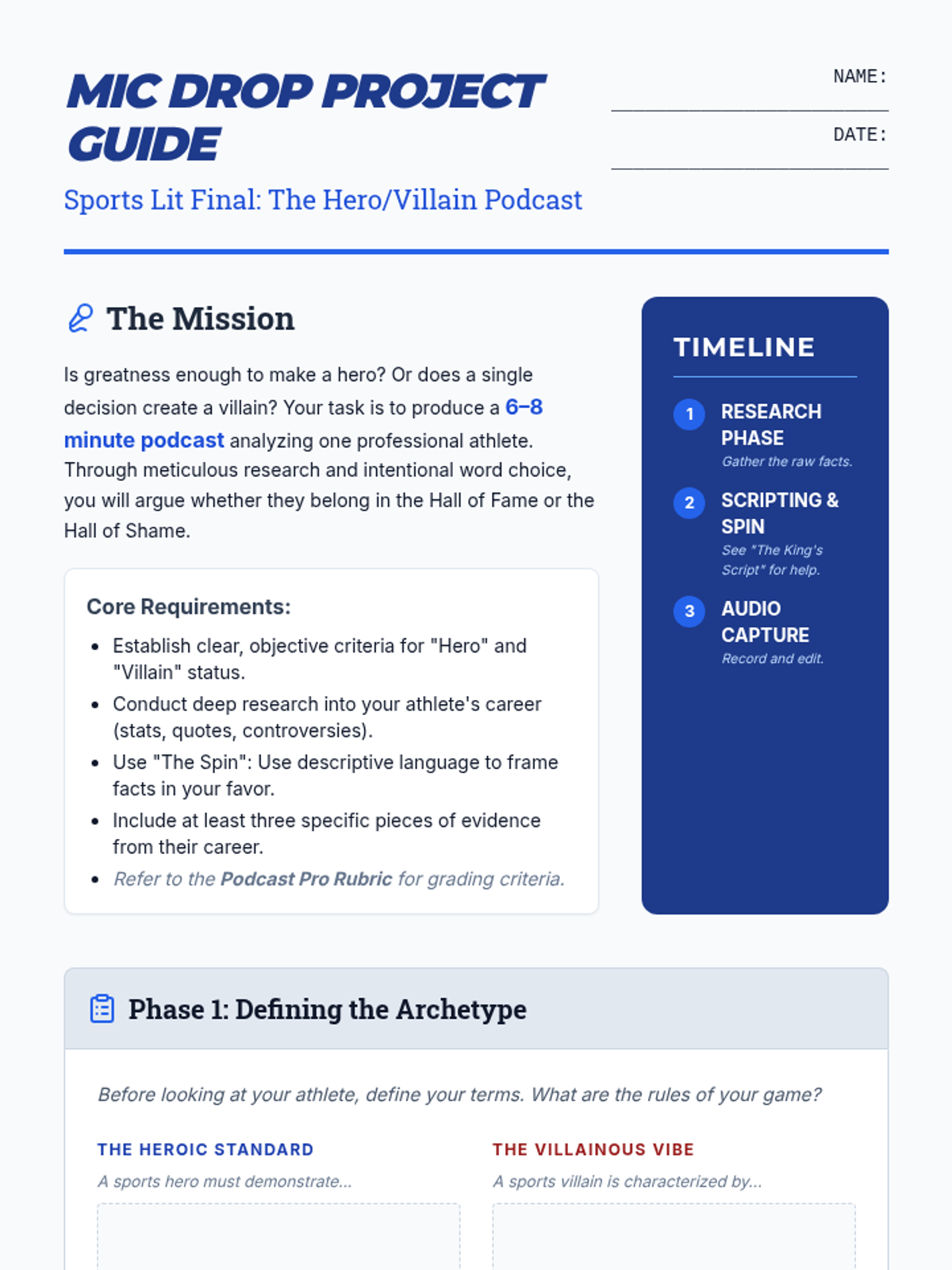
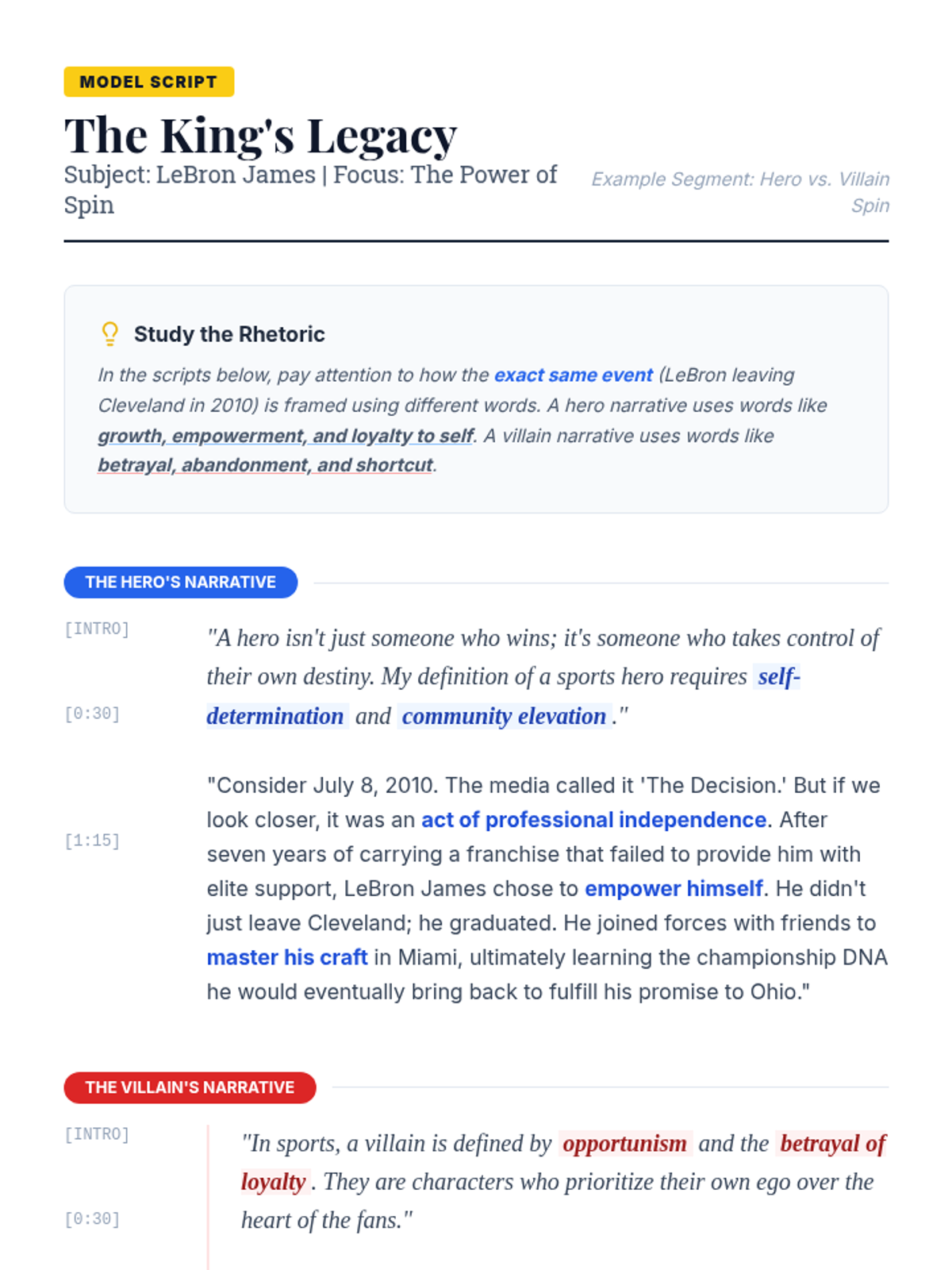
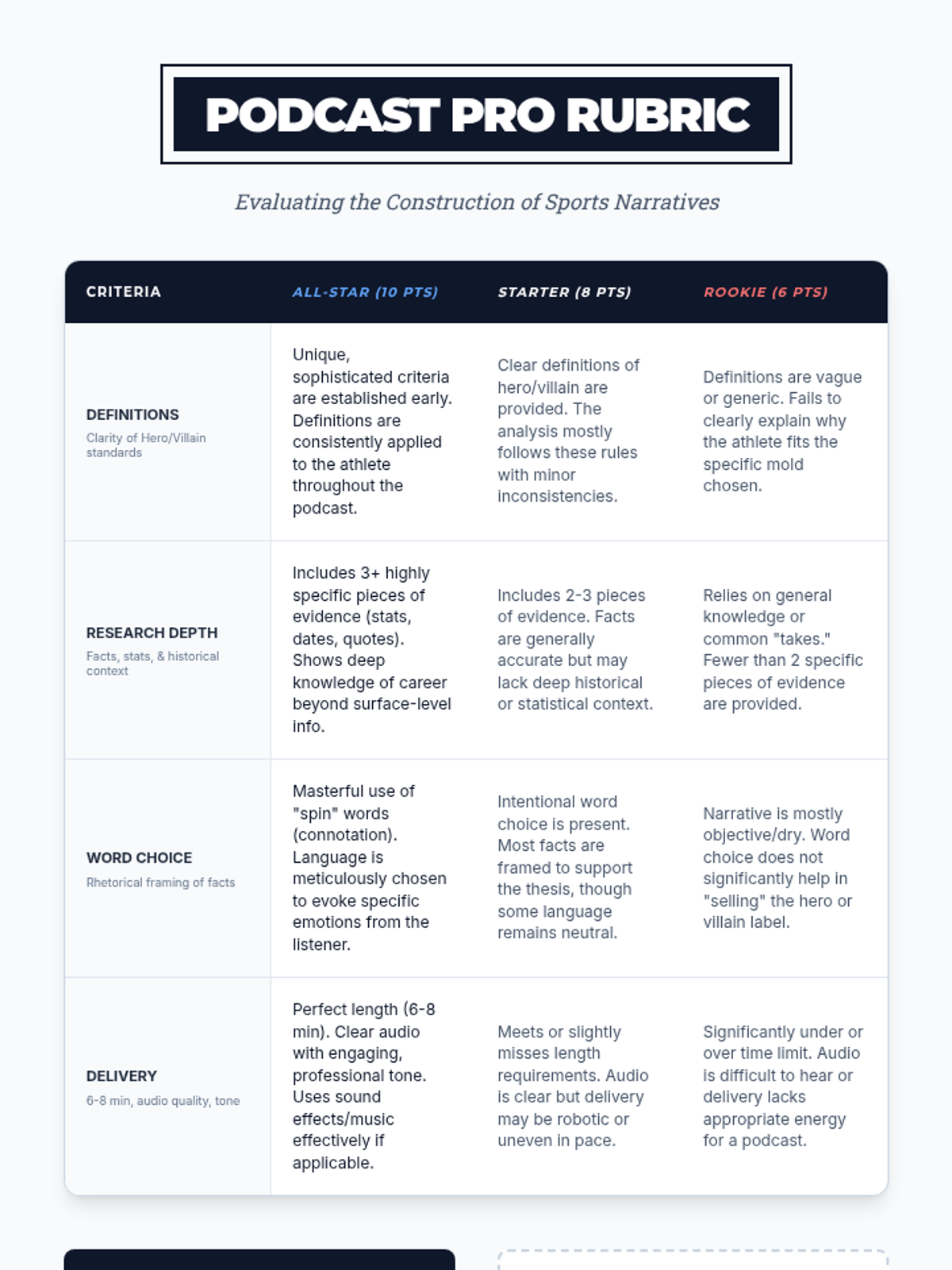
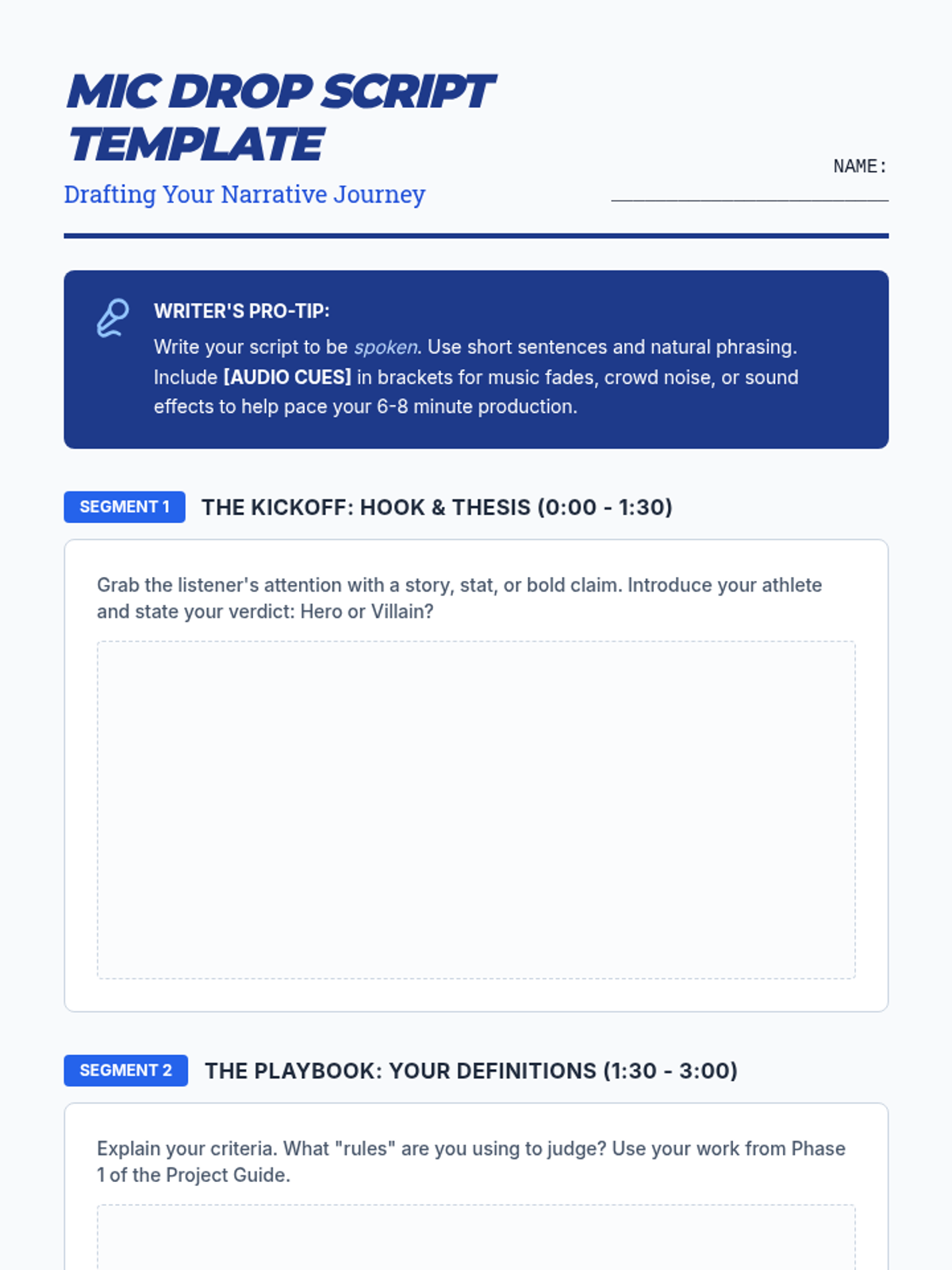
A project-based unit exploring the narrative construction of heroes and villains in sports media through podcasting.
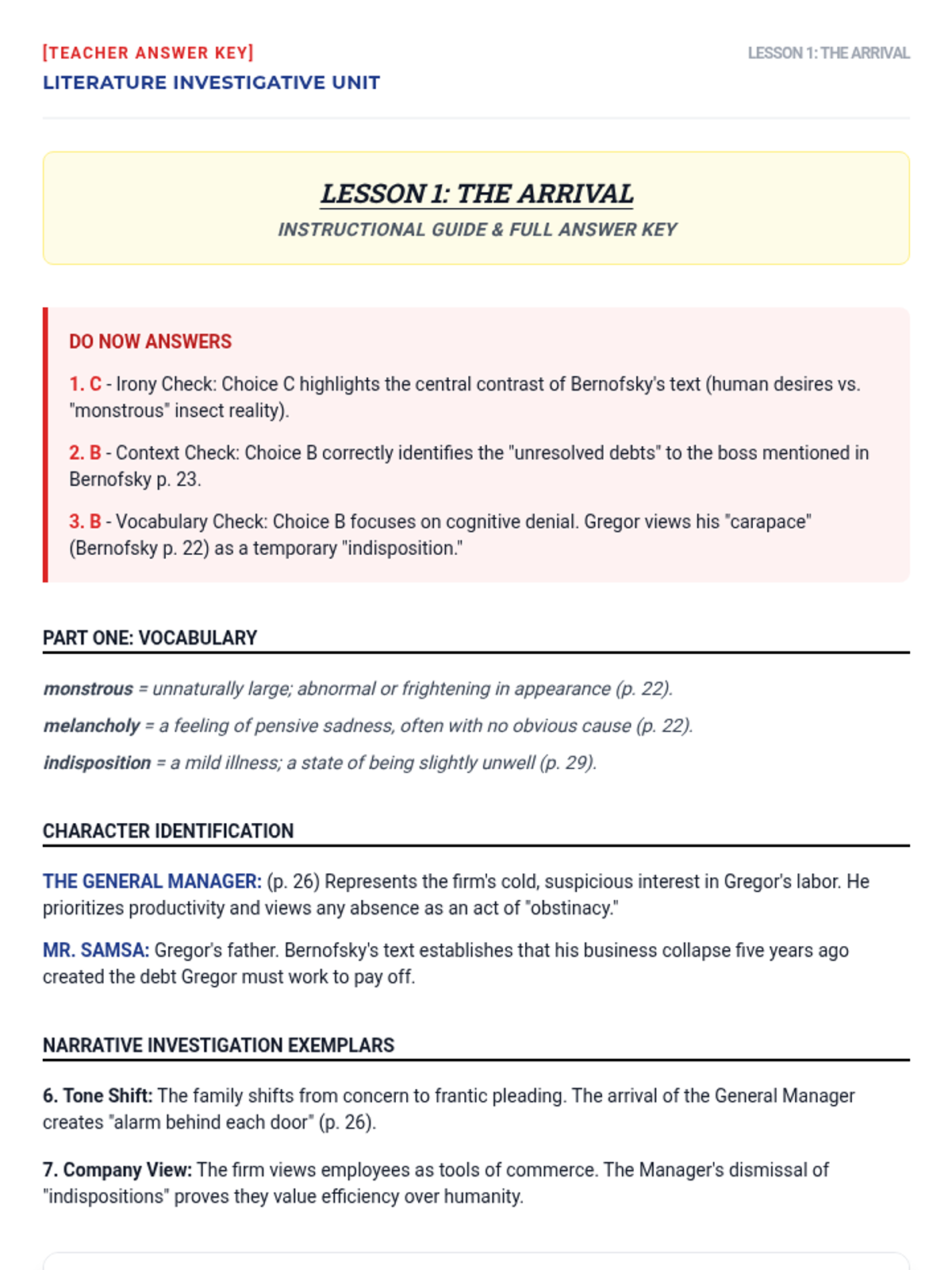
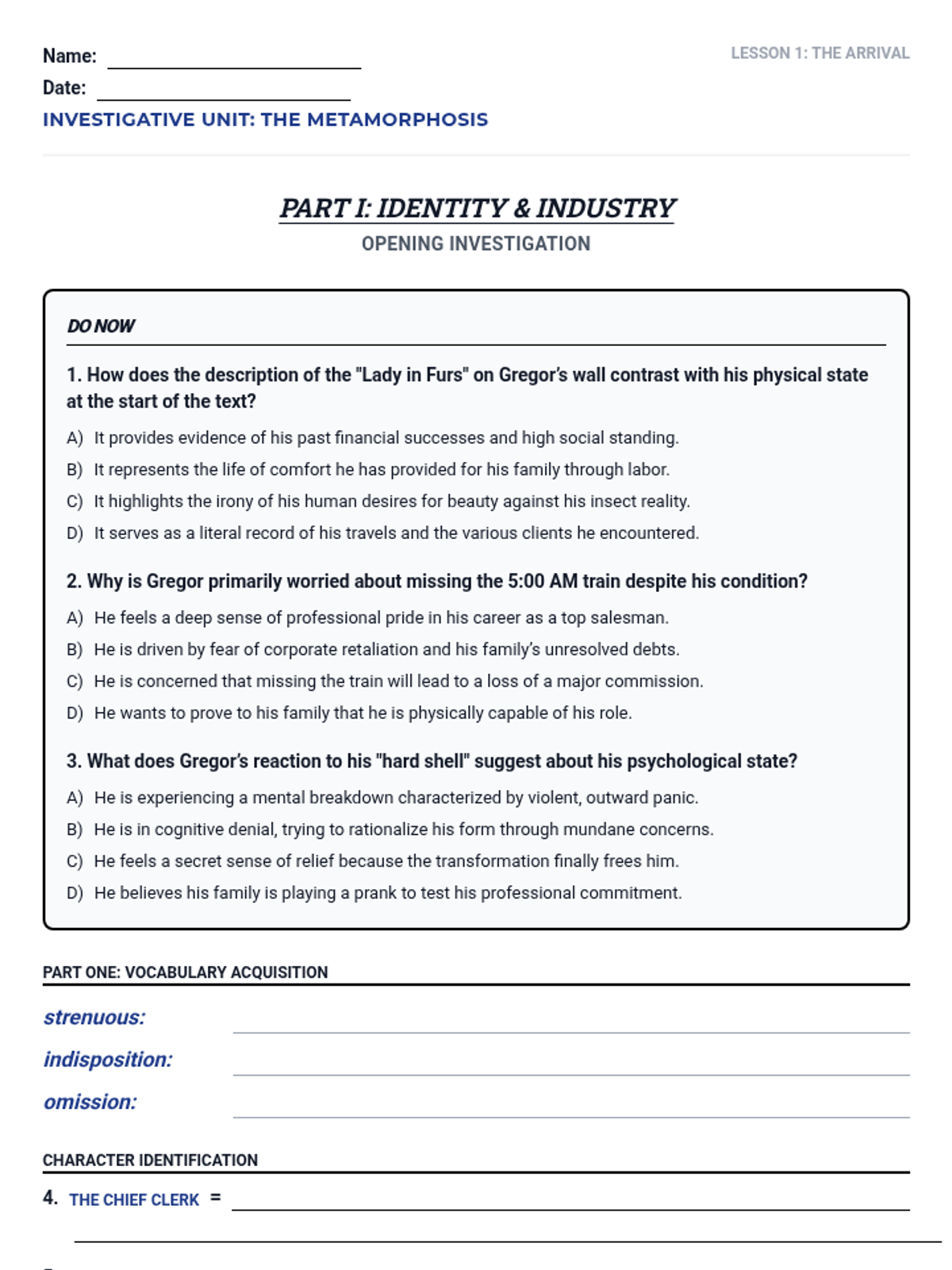
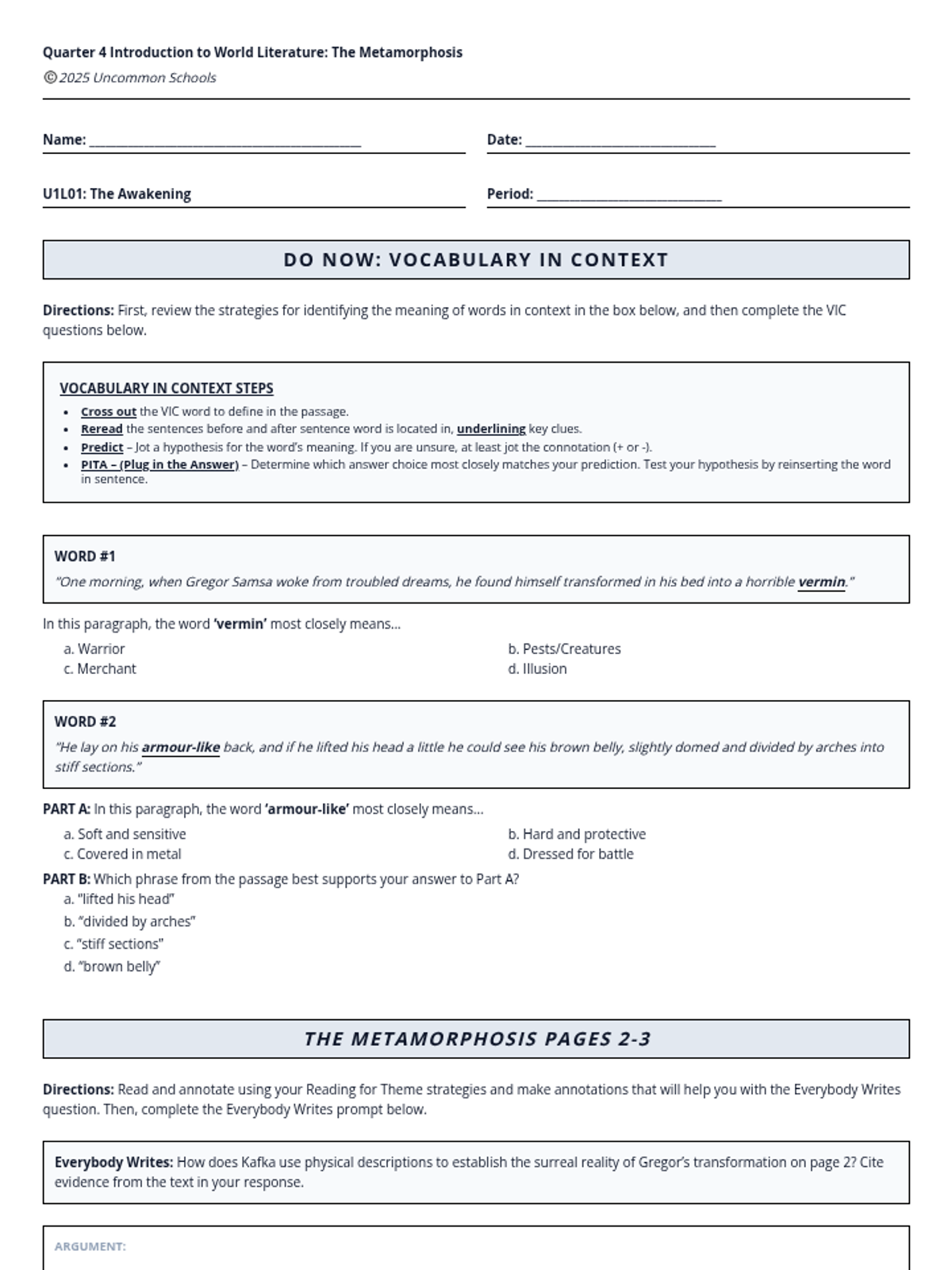
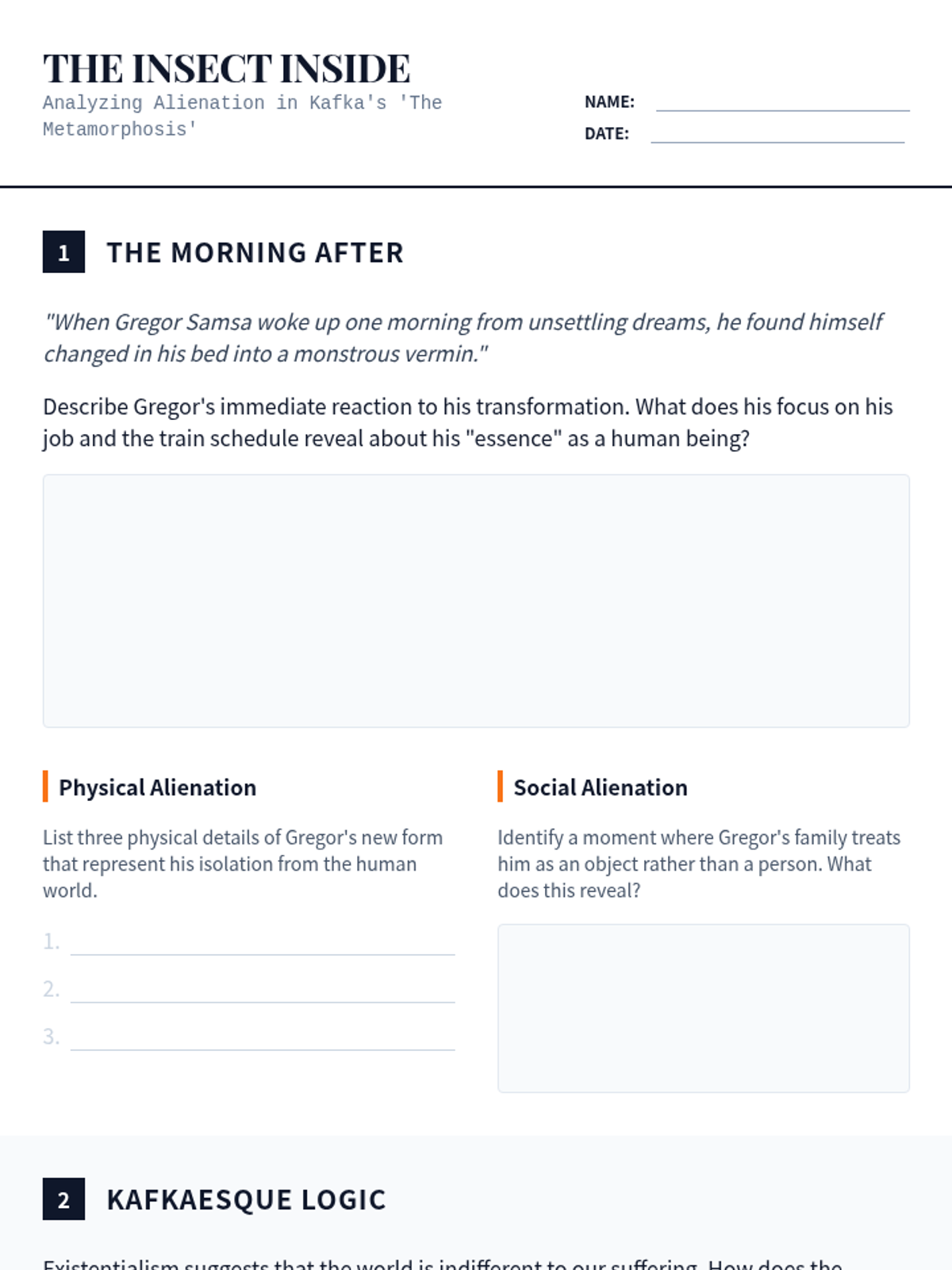
An intensive investigative unit on Franz Kafka's *The Metamorphosis* following the North Star/Uncommon Schools instructional model. The unit focuses on the thematic intersection of labor, identity, and dehumanization. Students analyze Gregor's alienation from his family and society through a structured rigorous framework including vocabulary acquisition, character identification, and thematic synthesis.
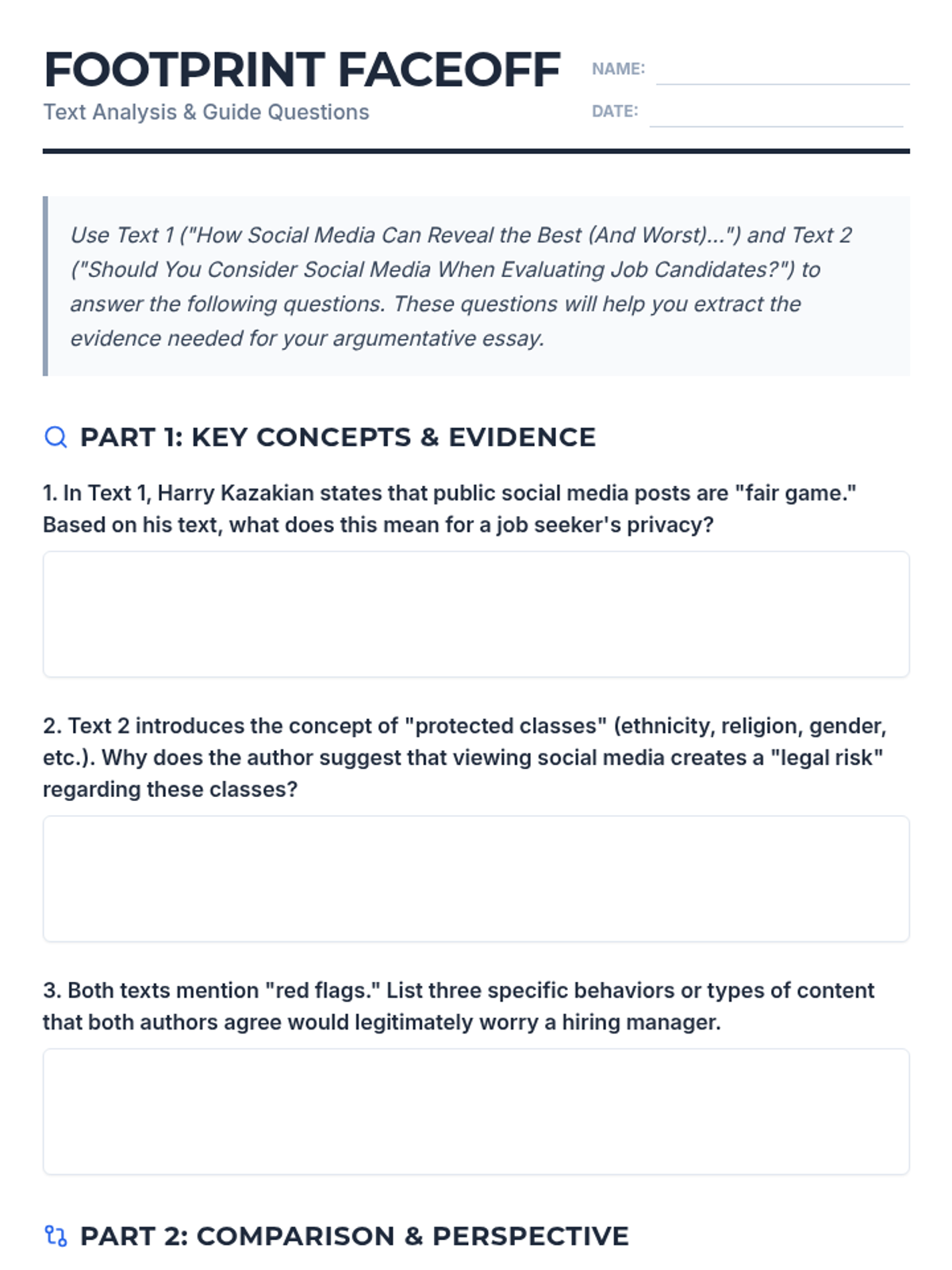
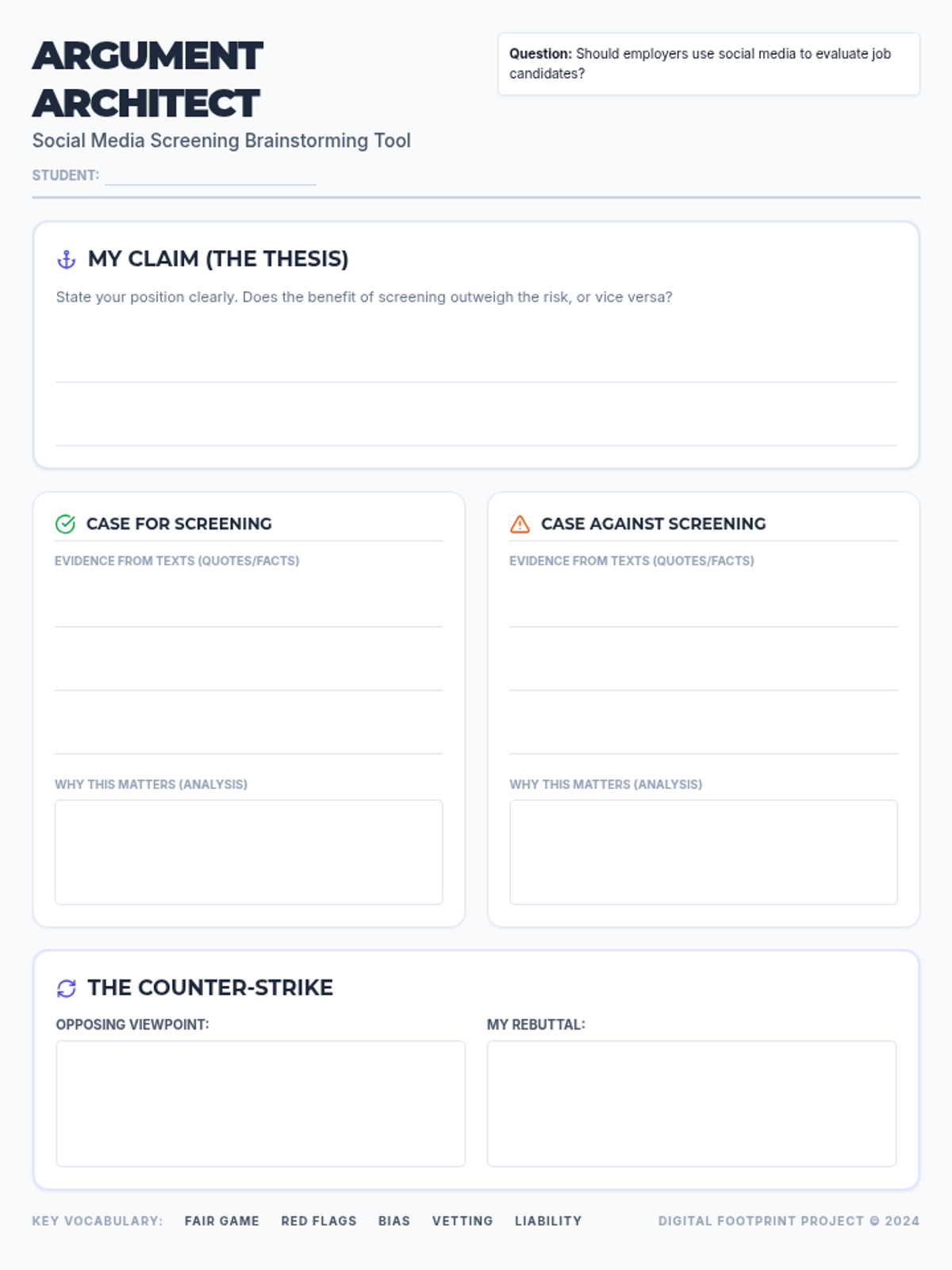
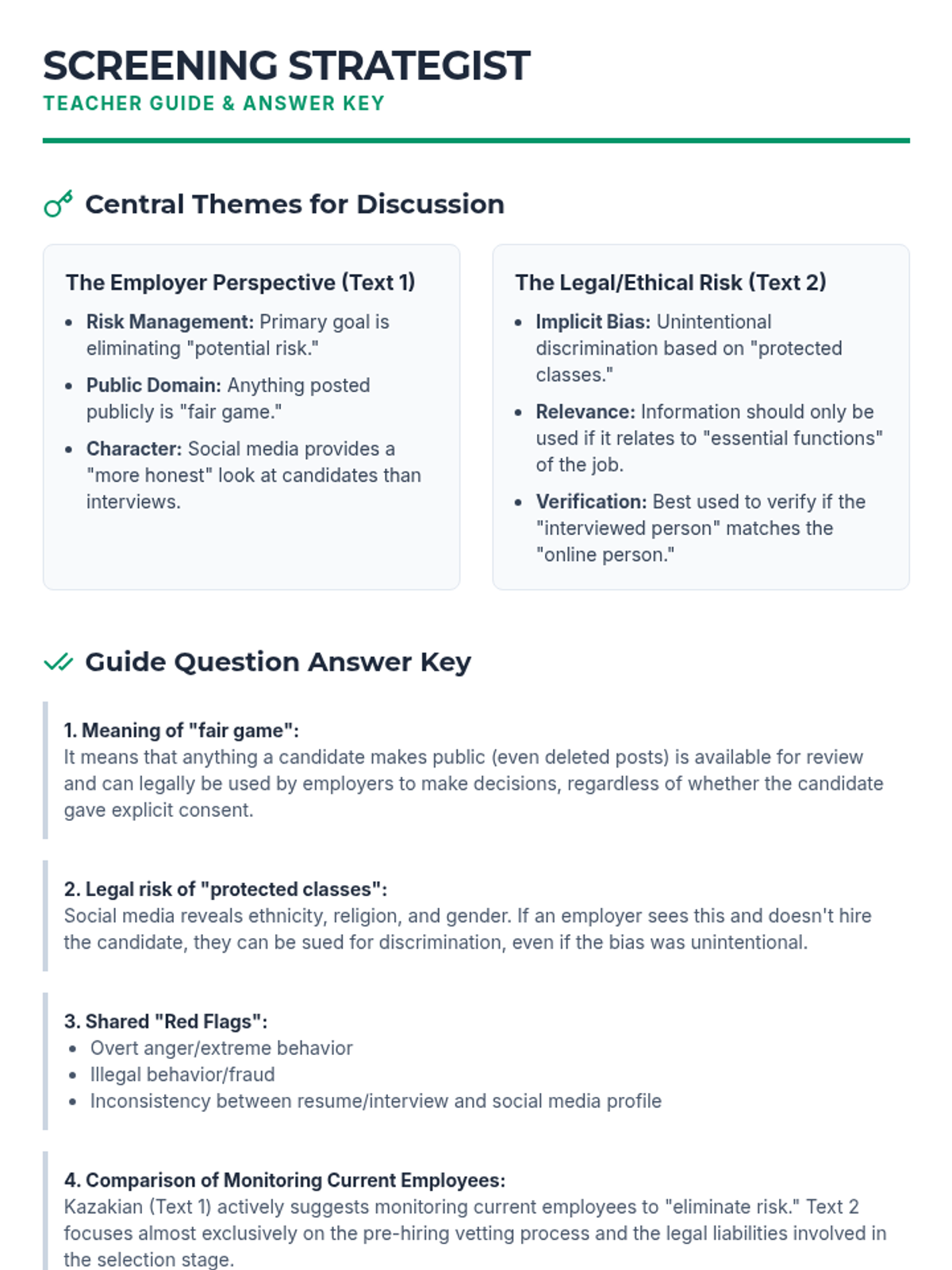
A comprehensive lesson sequence exploring the ethical and legal implications of social media screening in the hiring process, based on real-world perspectives.
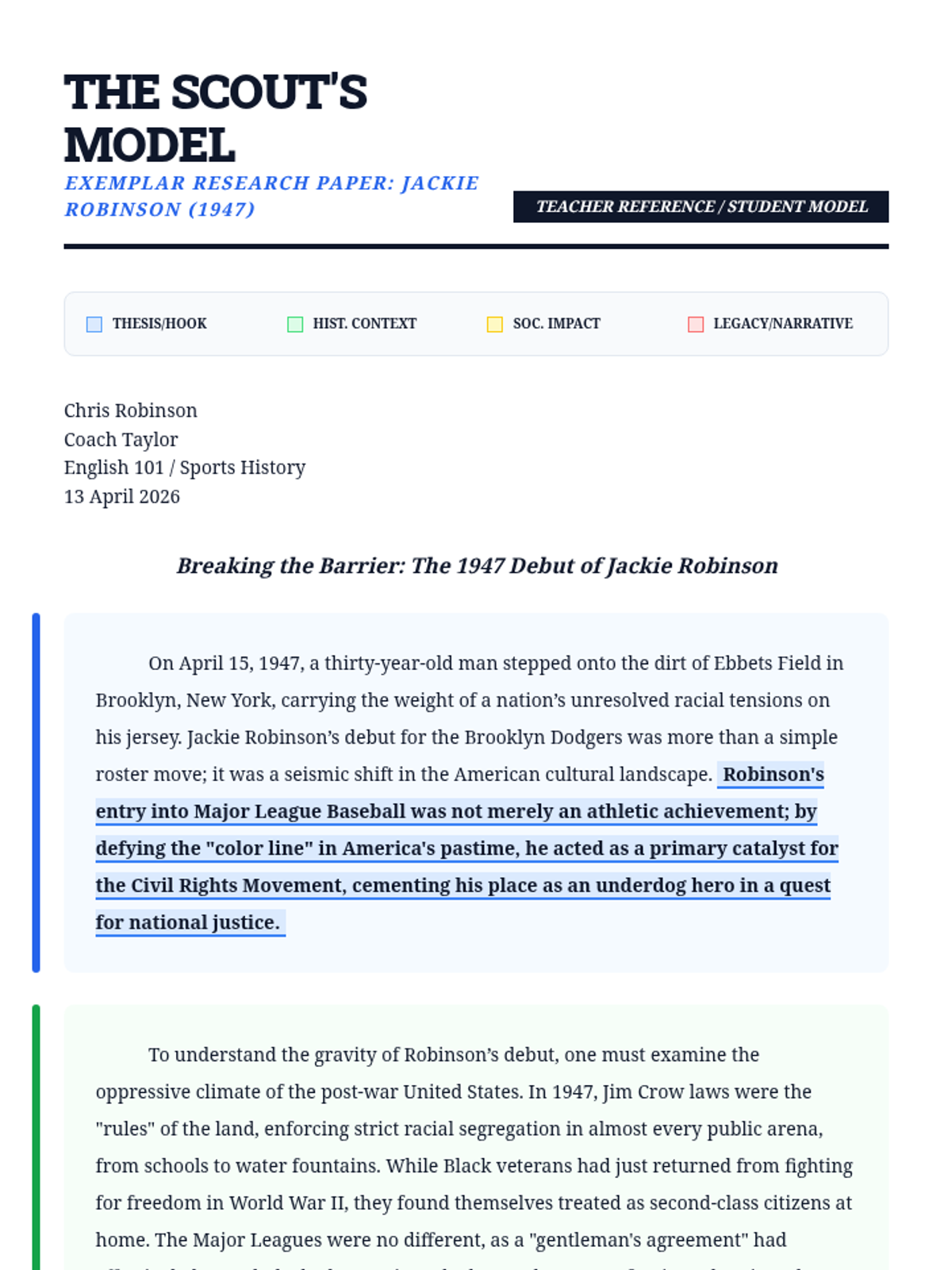
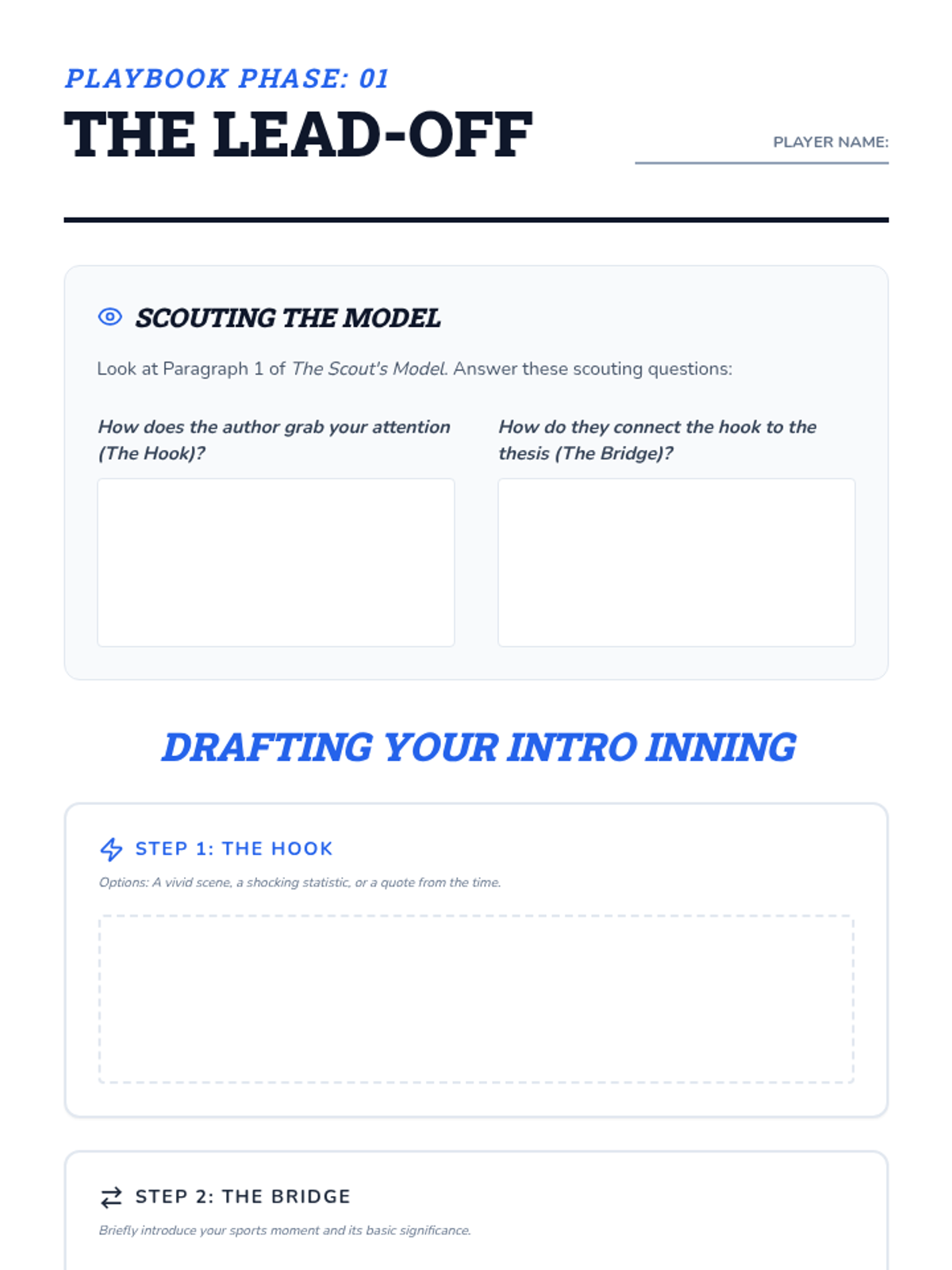
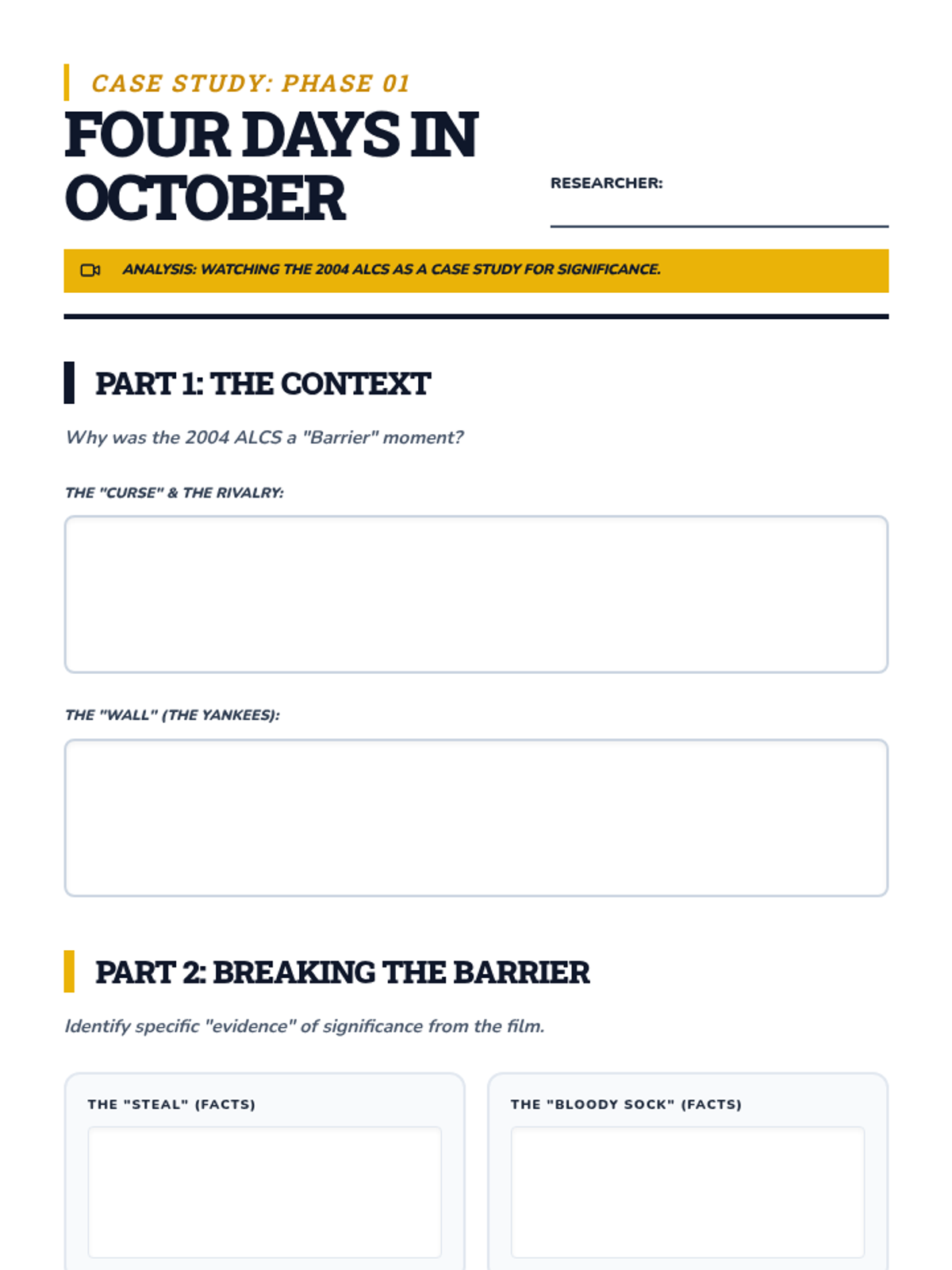
A 5-week research unit that scaffolds the process paragraph-by-paragraph. Students define significance, analyze the 'Four Days in October' case study, and turn in each paragraph separately, focusing on historical context, systemic barriers, and societal impact with a dedicated lesson on counterarguments.
A comprehensive 9-week study of Franz Kafka's 'Metamorphosis', focusing on argumentative writing through textual evidence and narrative expansion. The sequence utilizes graphic organizers, visual scaffolding, and increased opportunities to respond to deepen student engagement with the surrealist text.
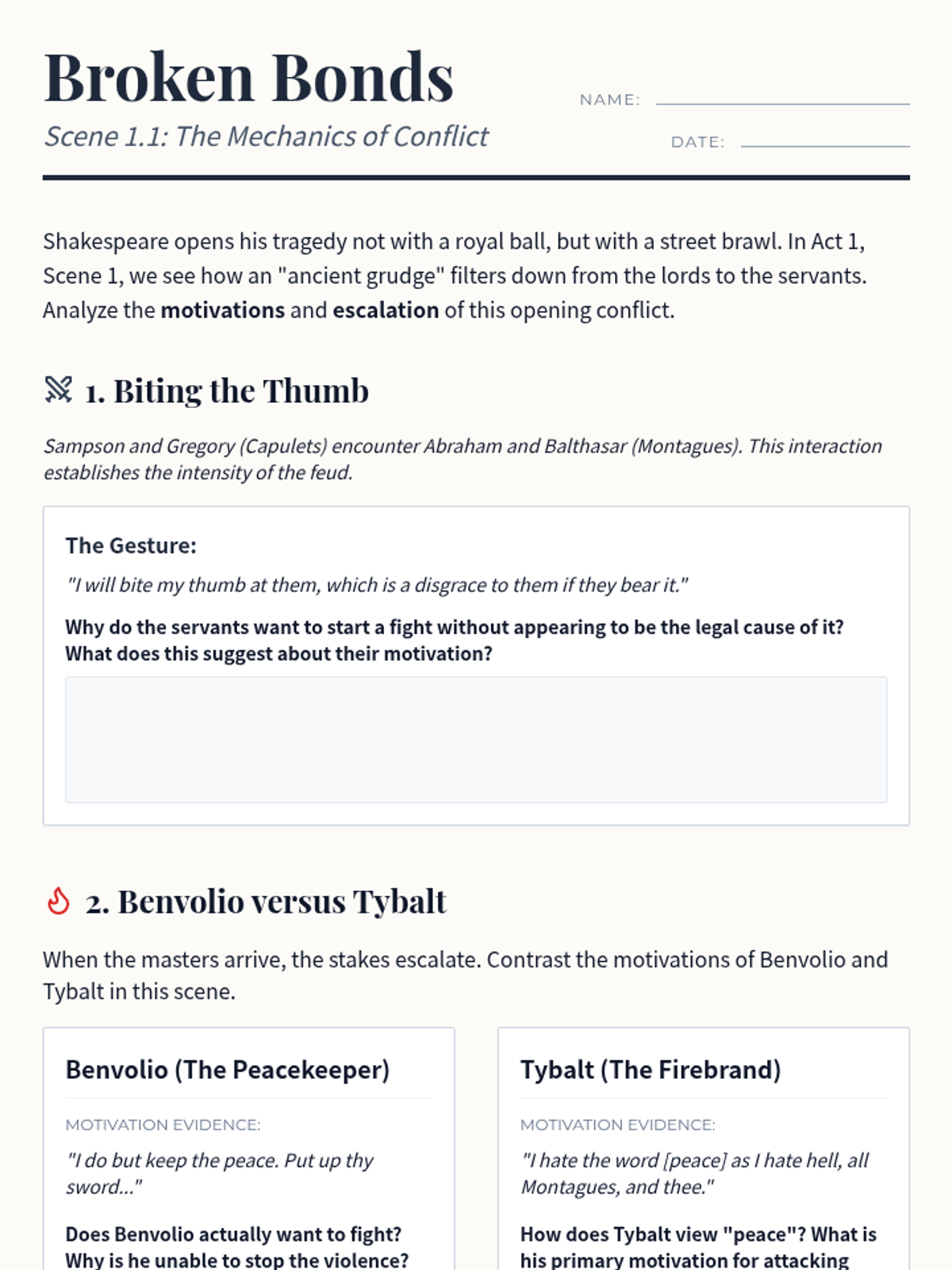
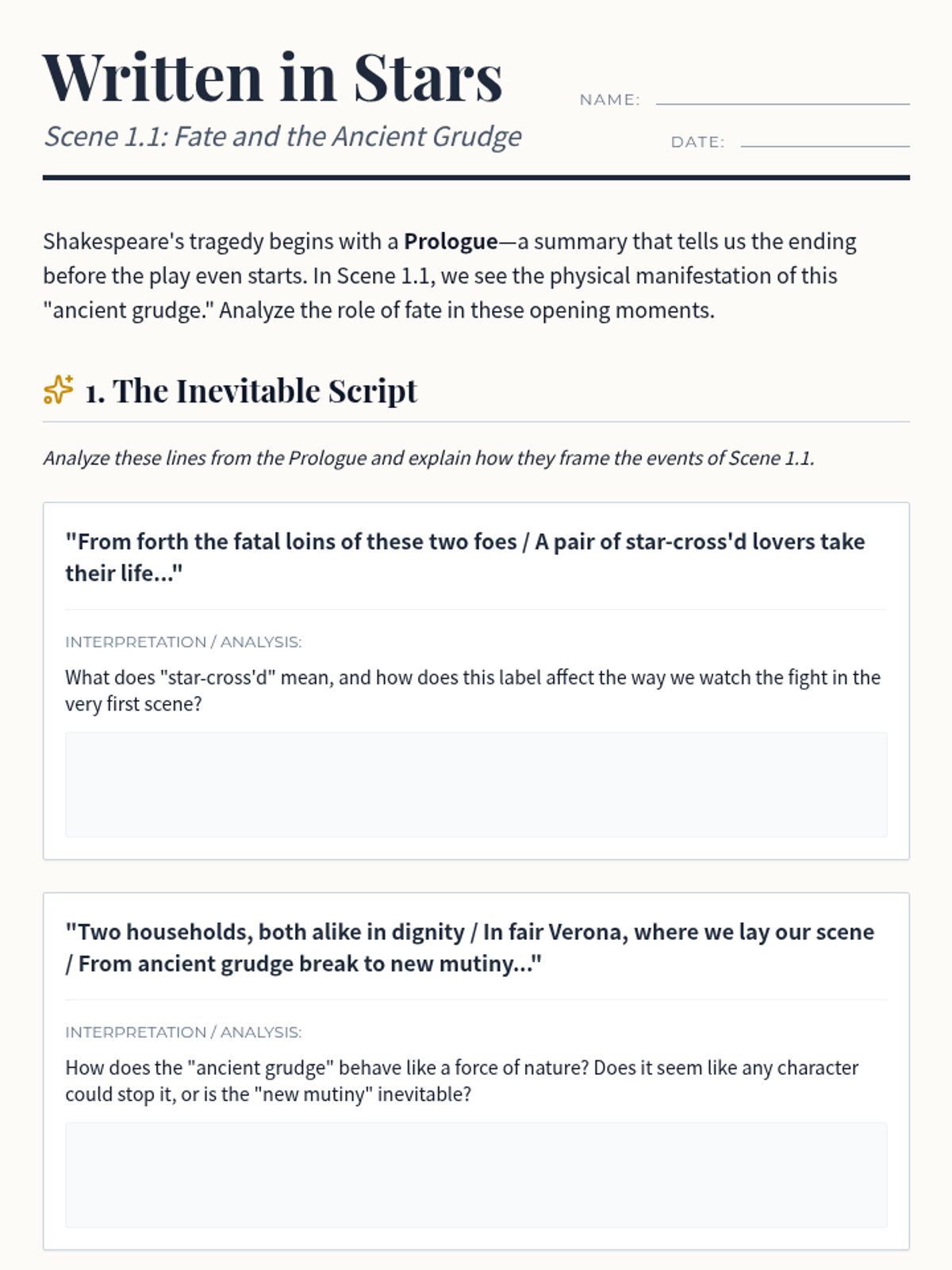
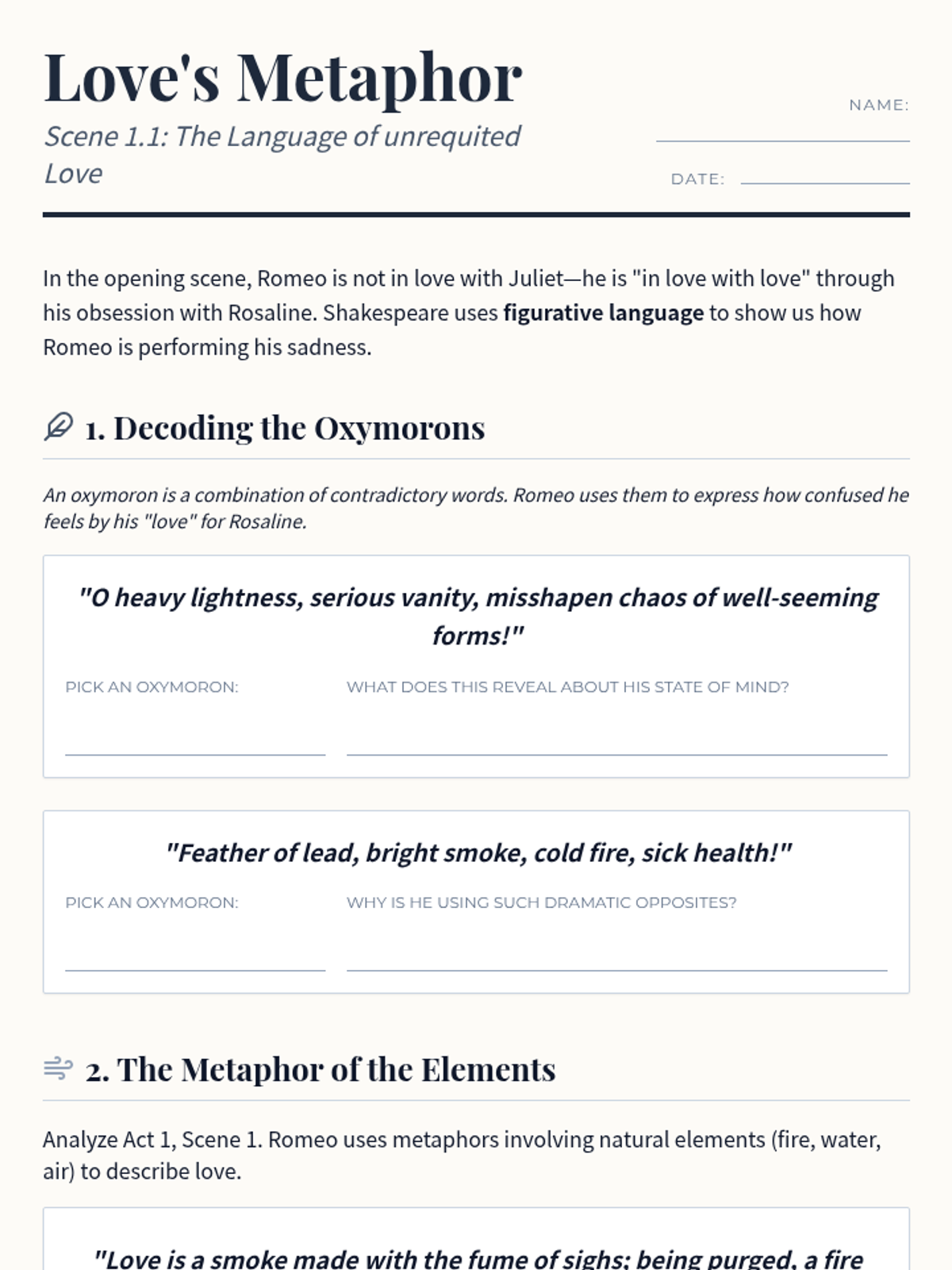
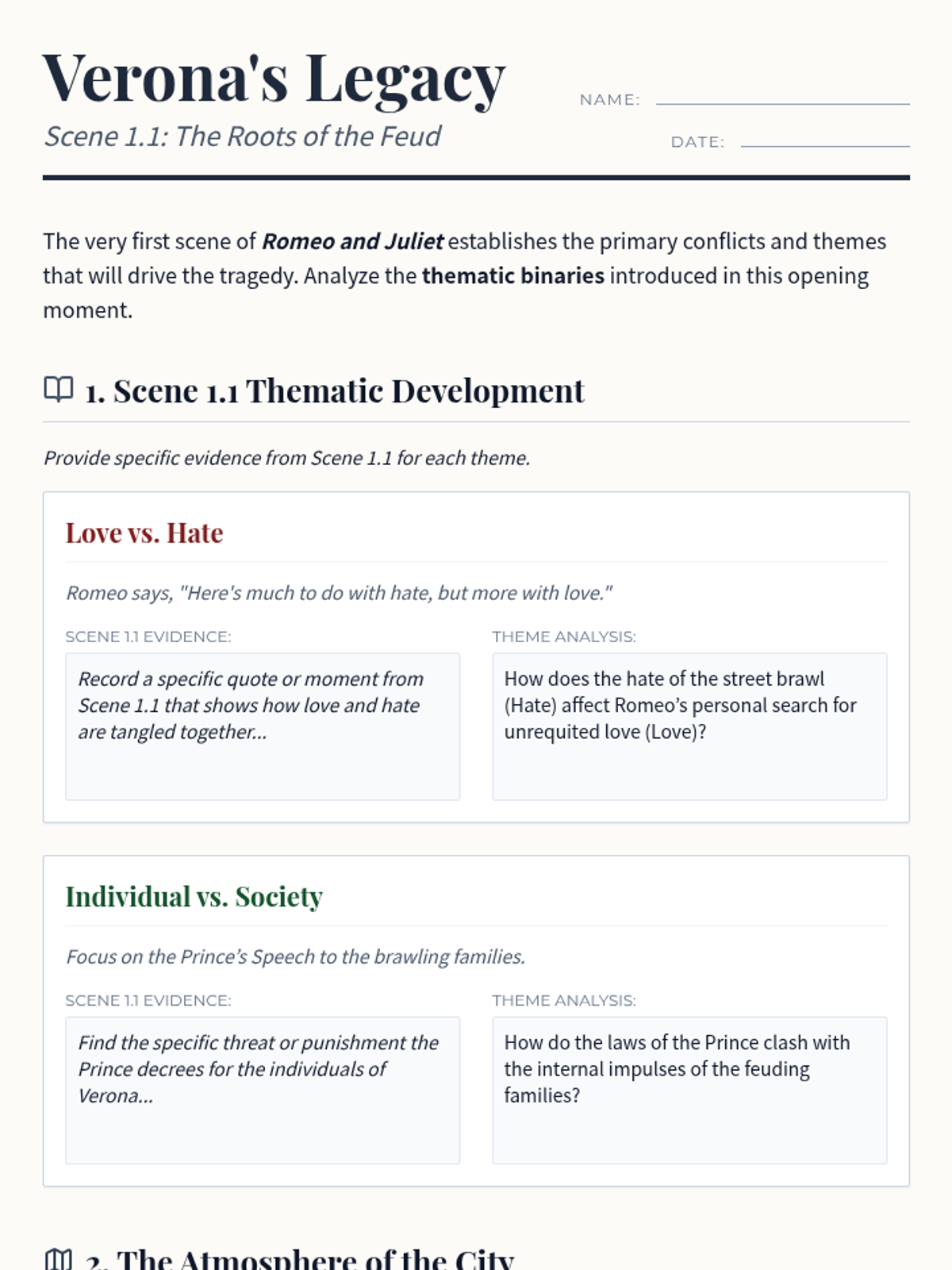
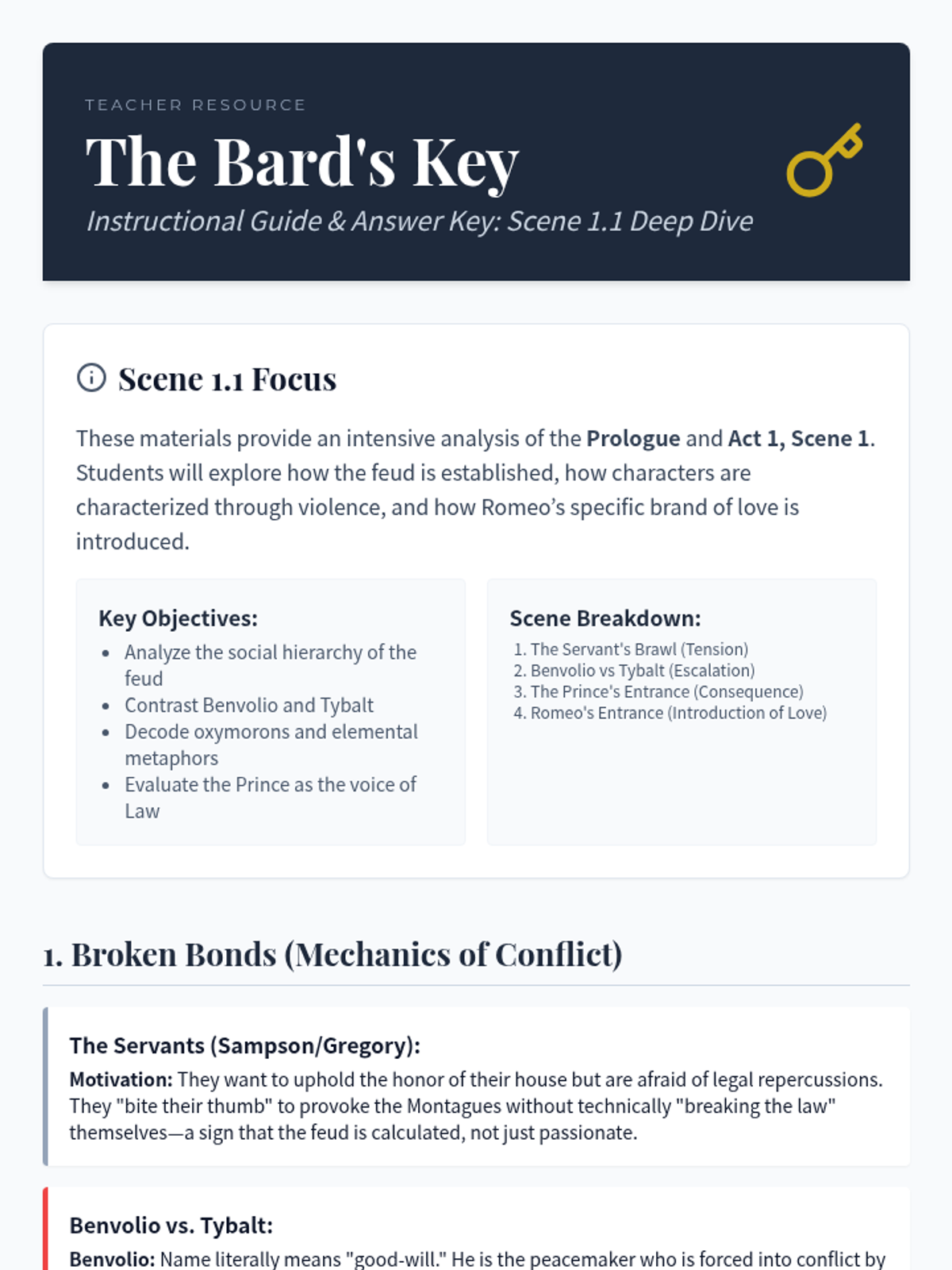
A comprehensive deep-dive into Shakespeare's Romeo and Juliet, focusing on Act 1. Students will analyze character dynamics, the tension between destiny and choice, and the rich poetic language of the play across individual scenes.
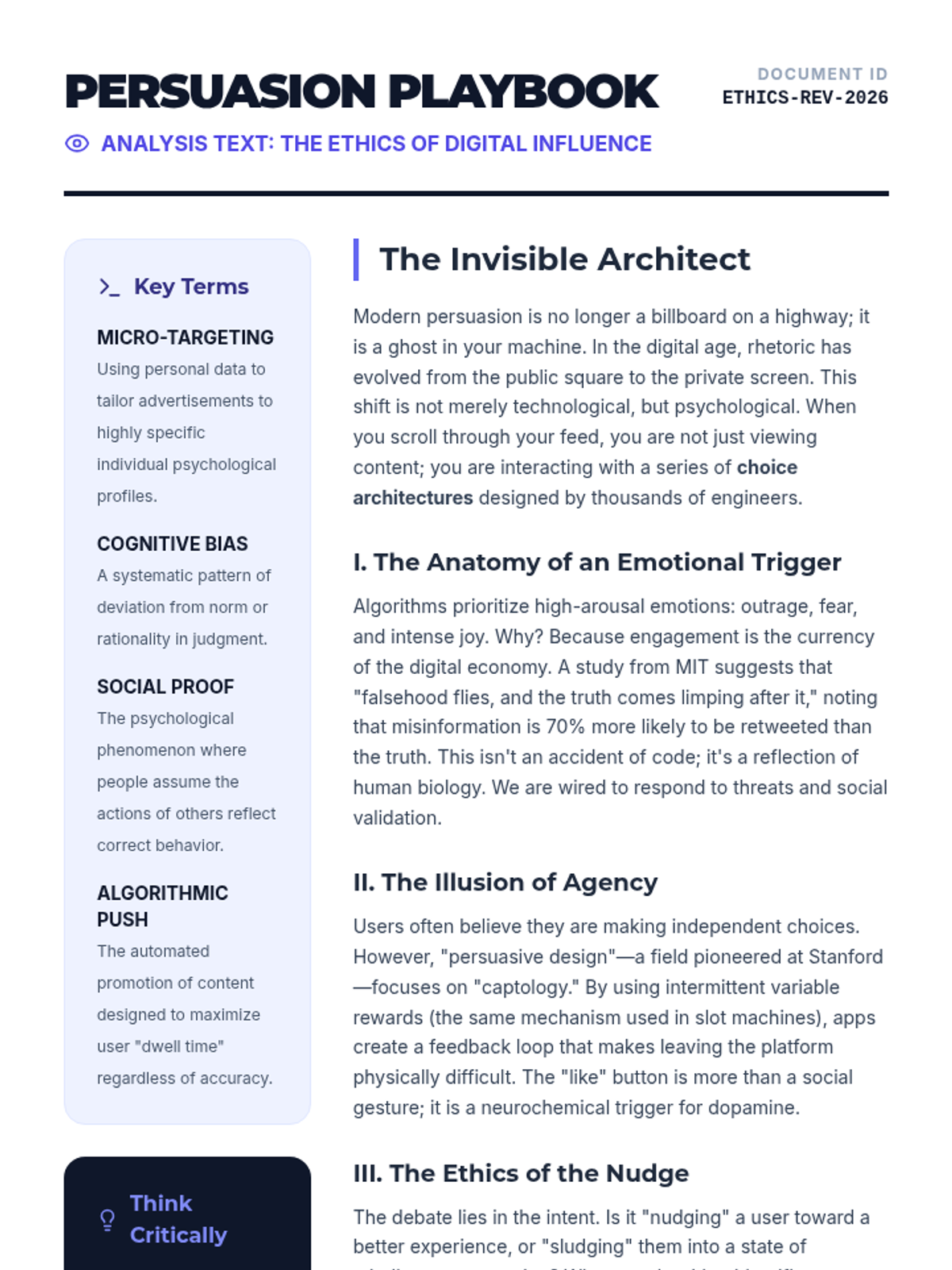
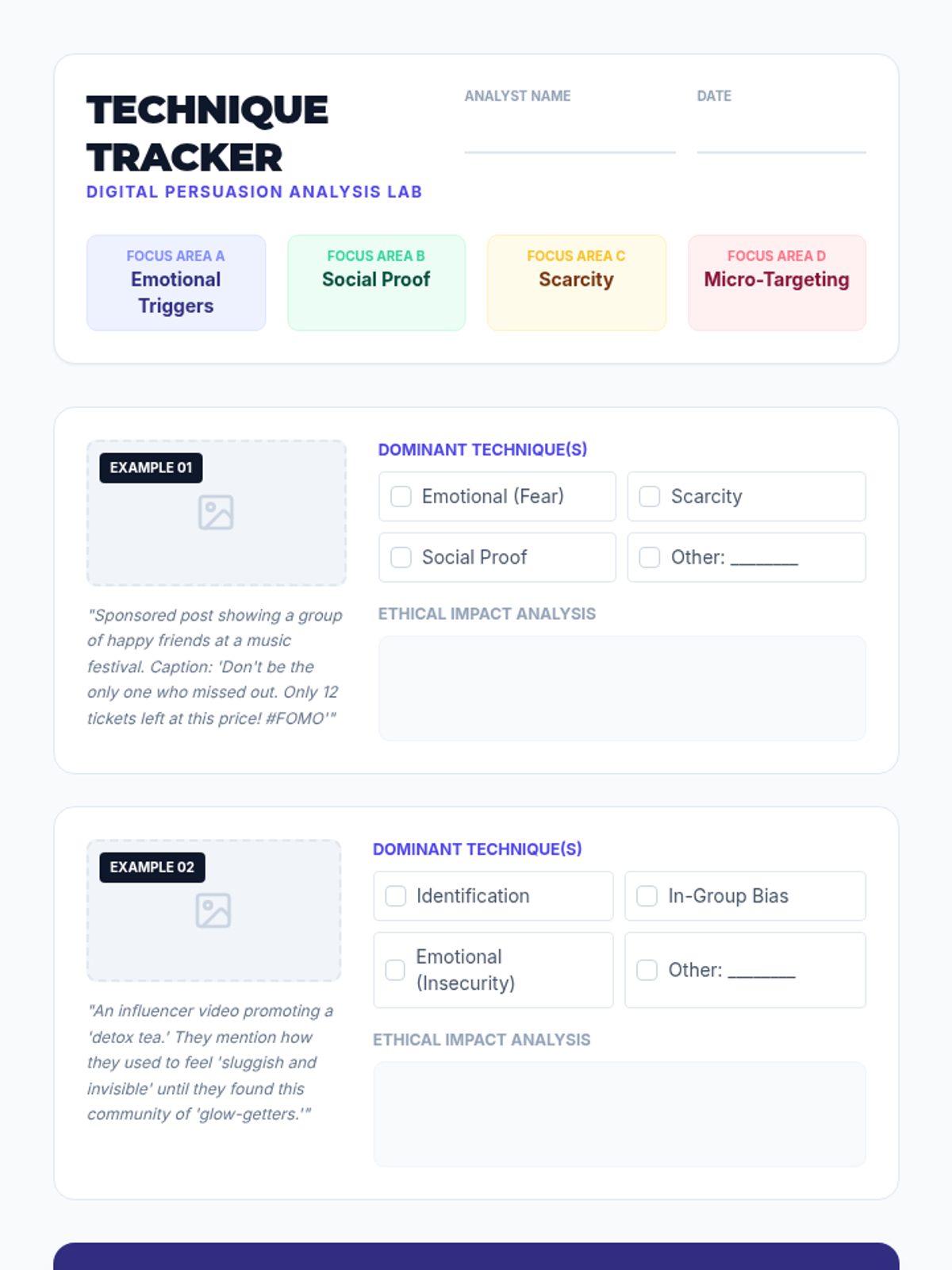
A high-engagement sequence where students evaluate persuasive techniques in modern digital media, practicing active listening and evidence-based argumentation through a Socratic Seminar format. Students analyze the ethics of micro-targeting, influencer marketing, and algorithmic persuasion.
A comprehensive four-week high school or college-level literature unit exploring the core tenets of existentialism through the lens of short fiction by Kafka, Sartre, Camus, Ellison, and Lispector, culminating in a creative philosophical project.
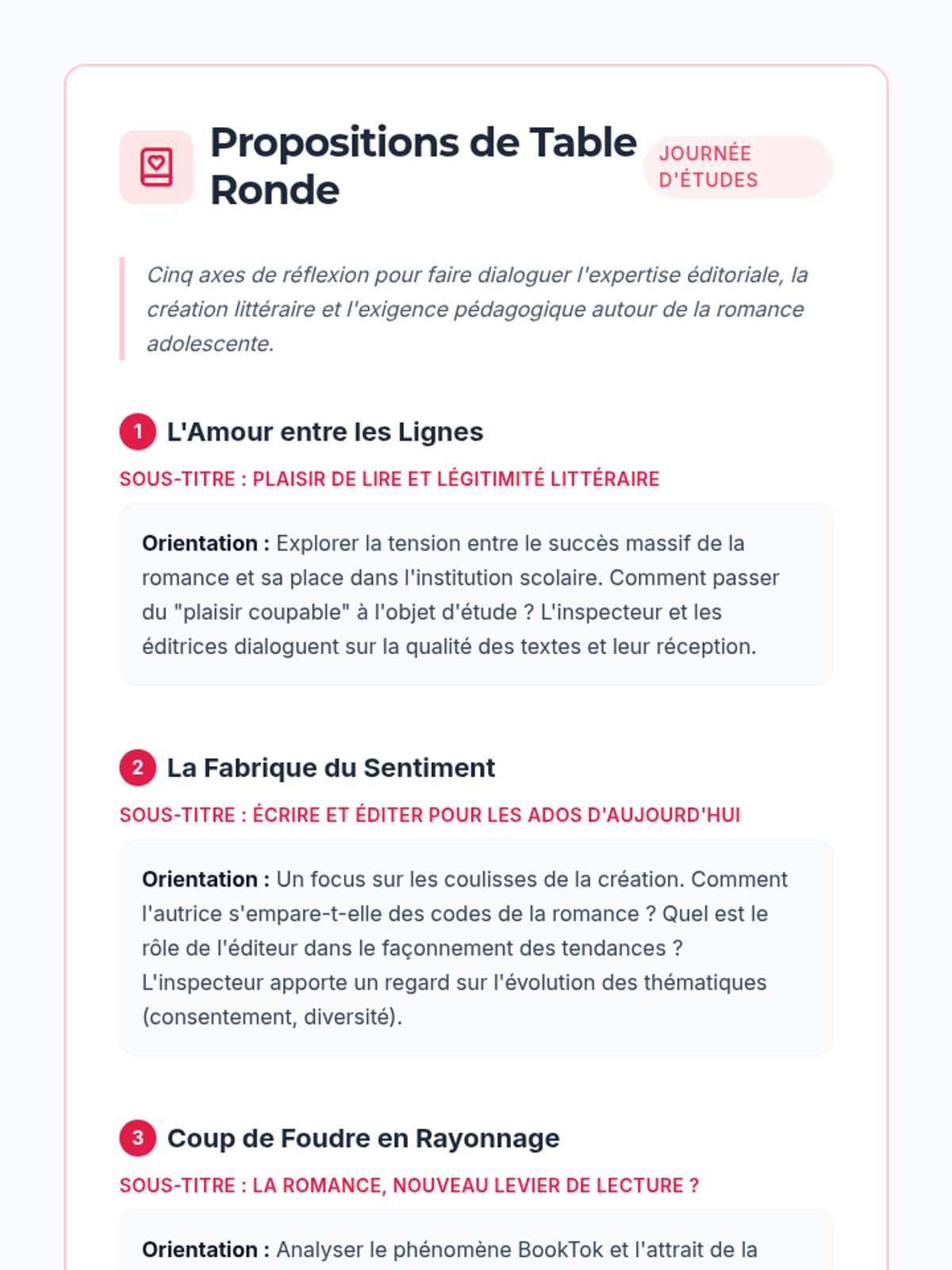
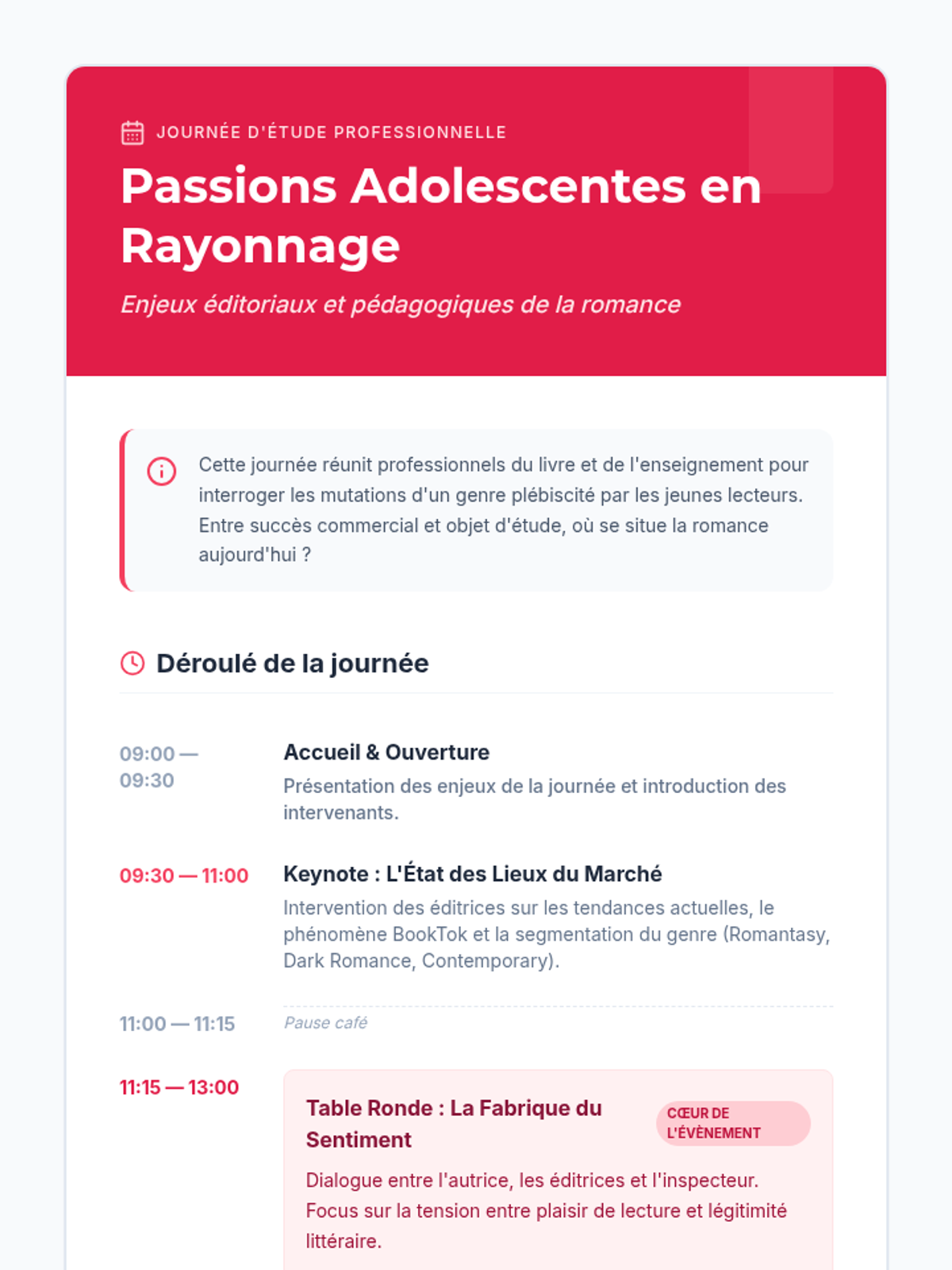
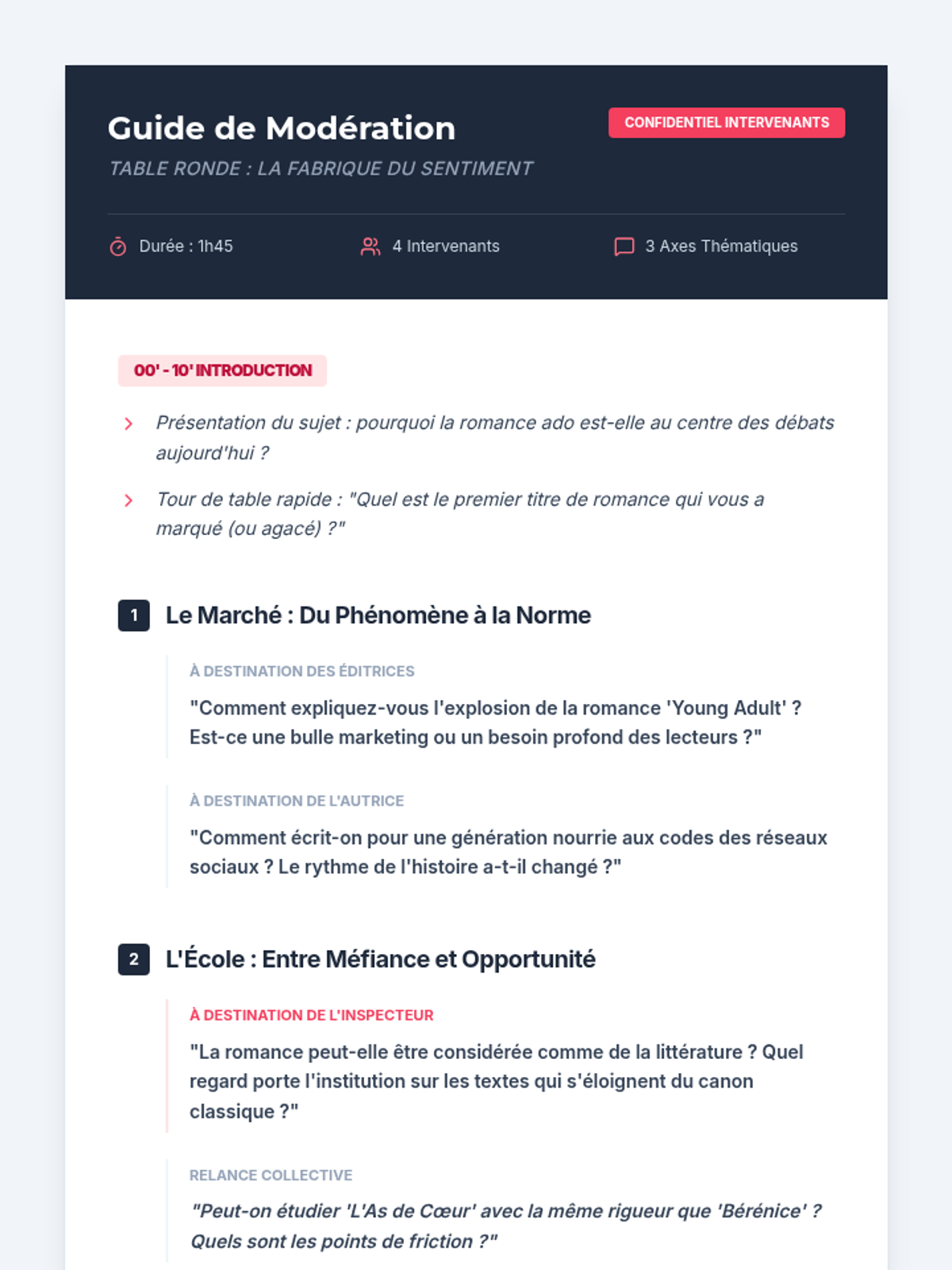
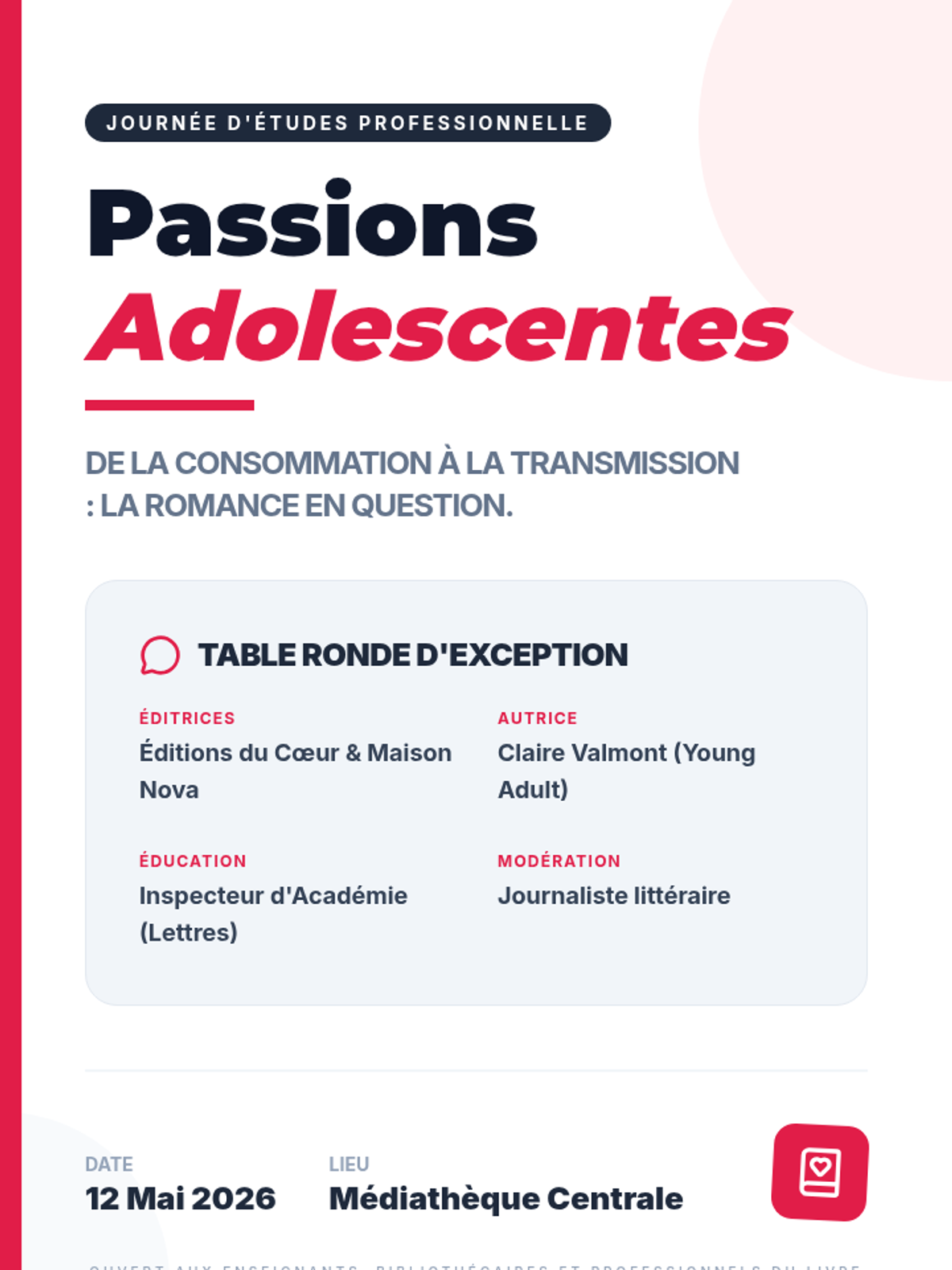
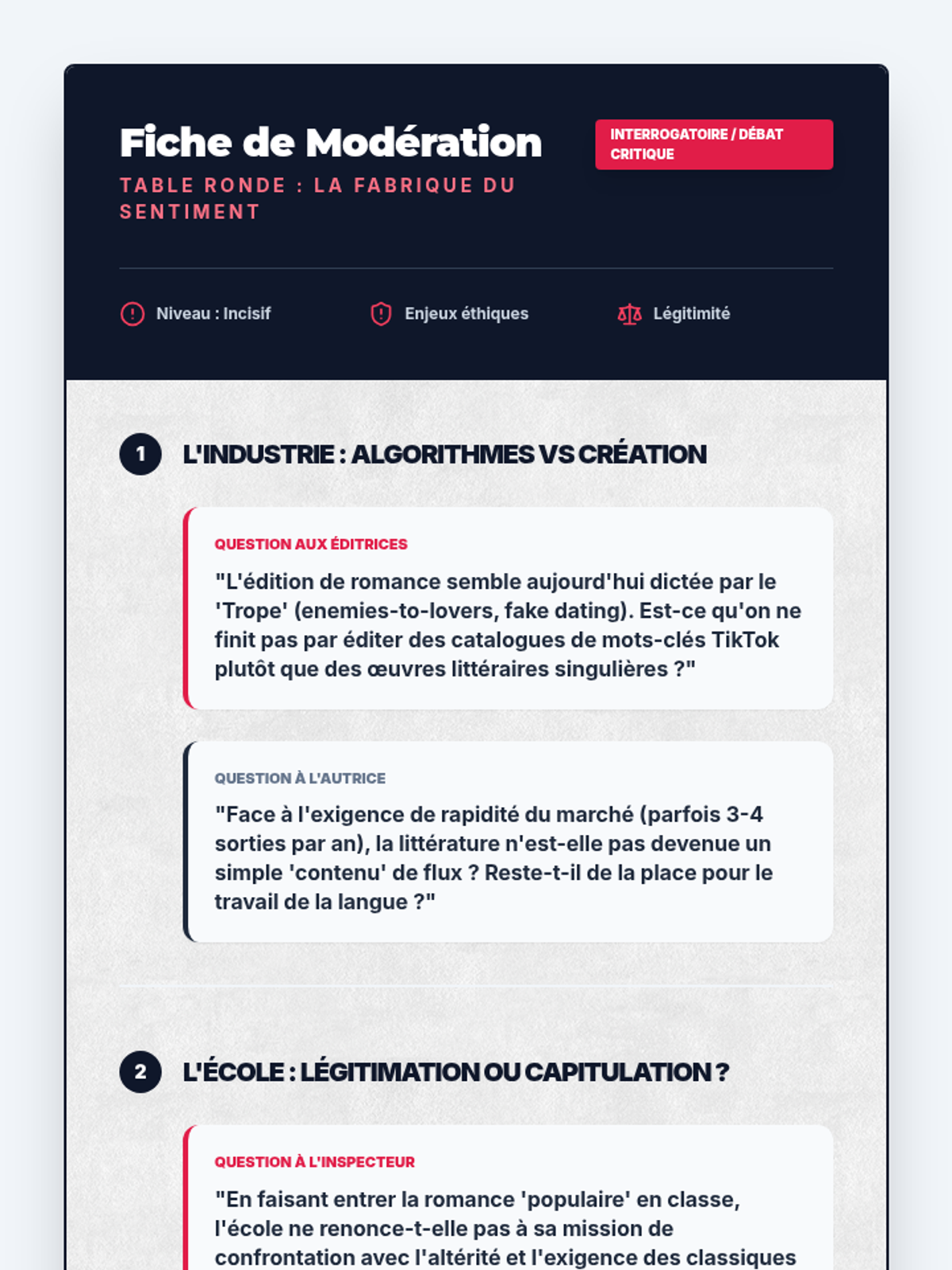
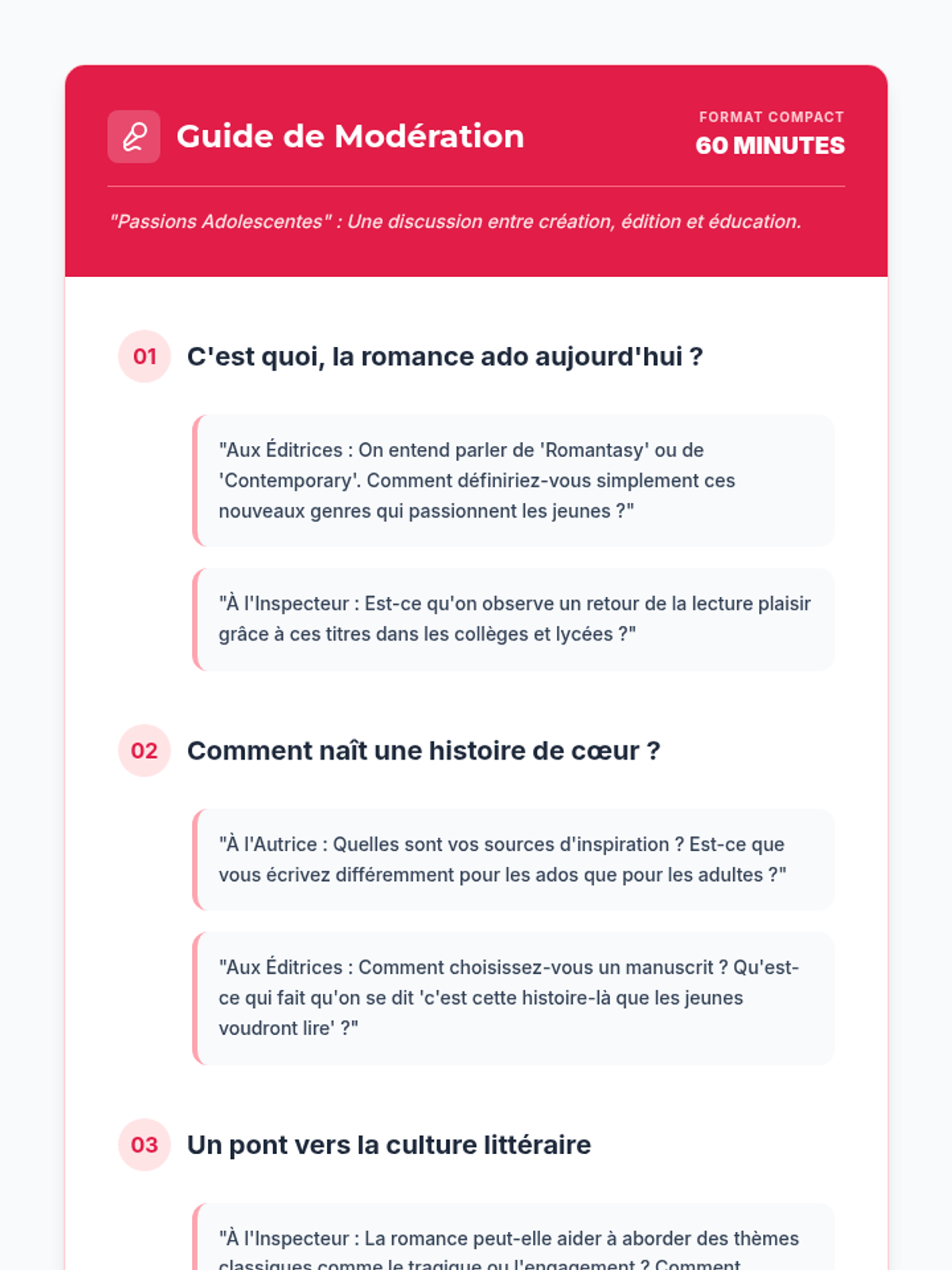
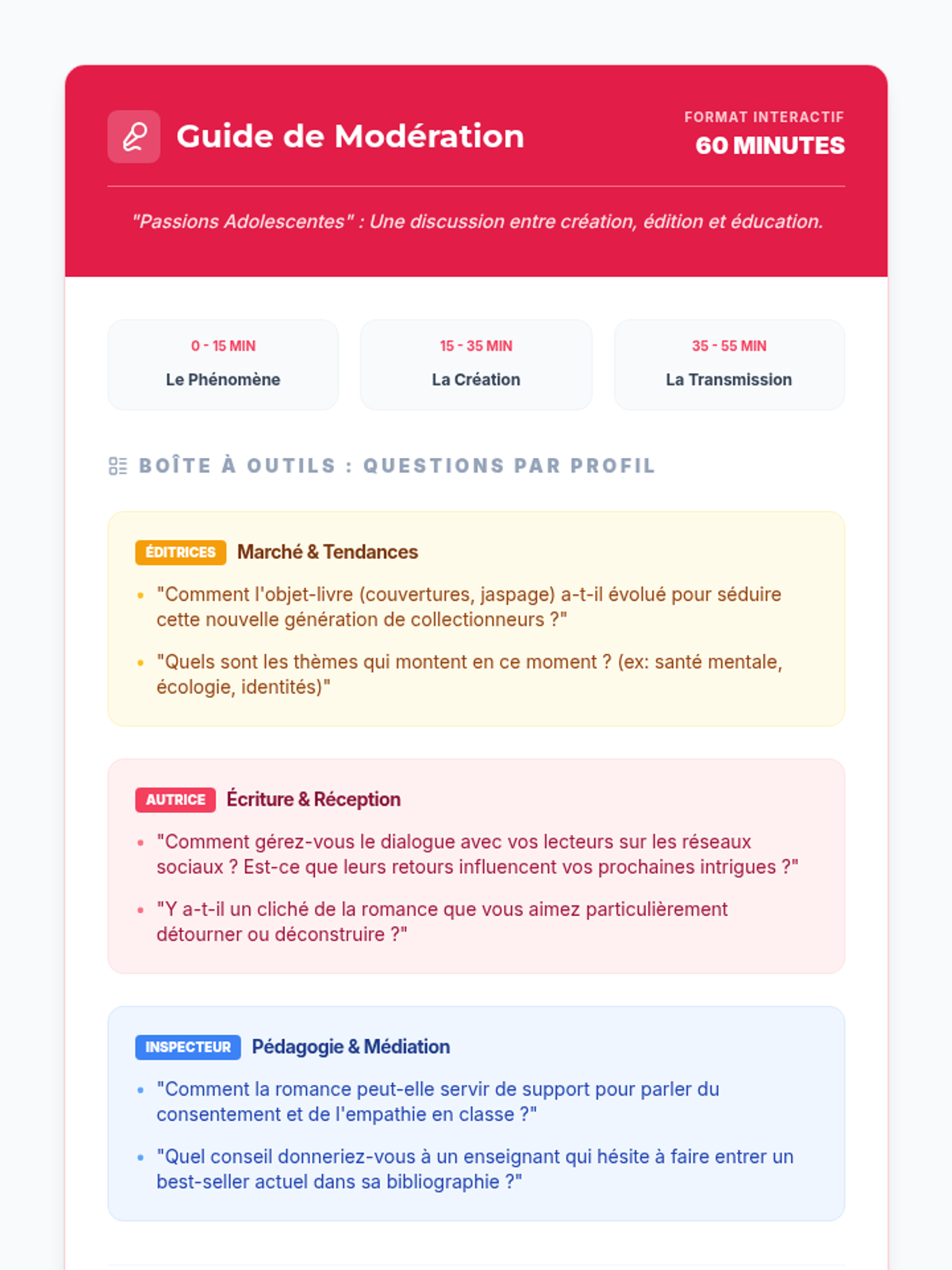
Une série de ressources pour organiser et promouvoir une table ronde sur la littérature romance pour adolescents, incluant programme, guide de discussion et supports de communication.
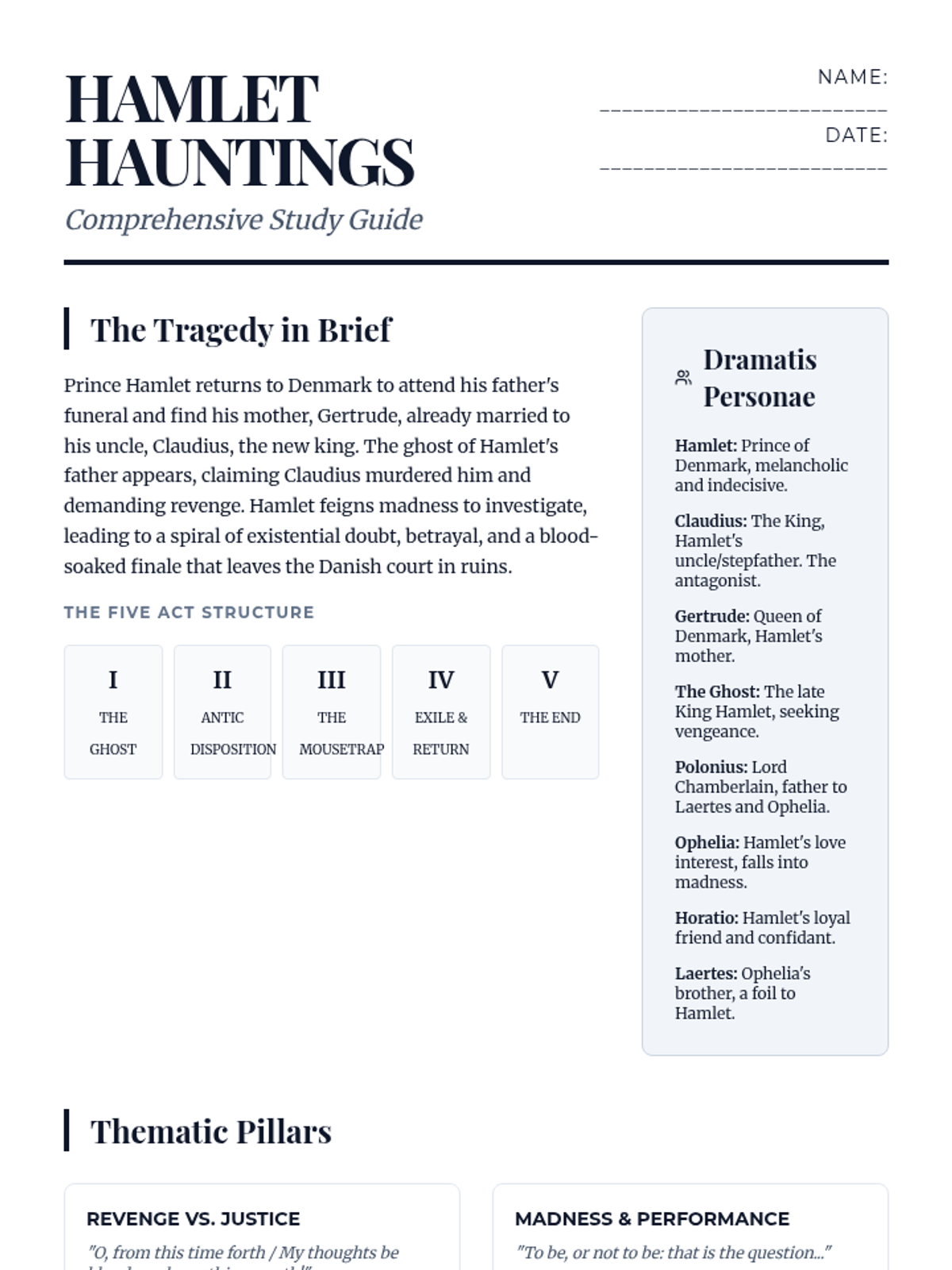
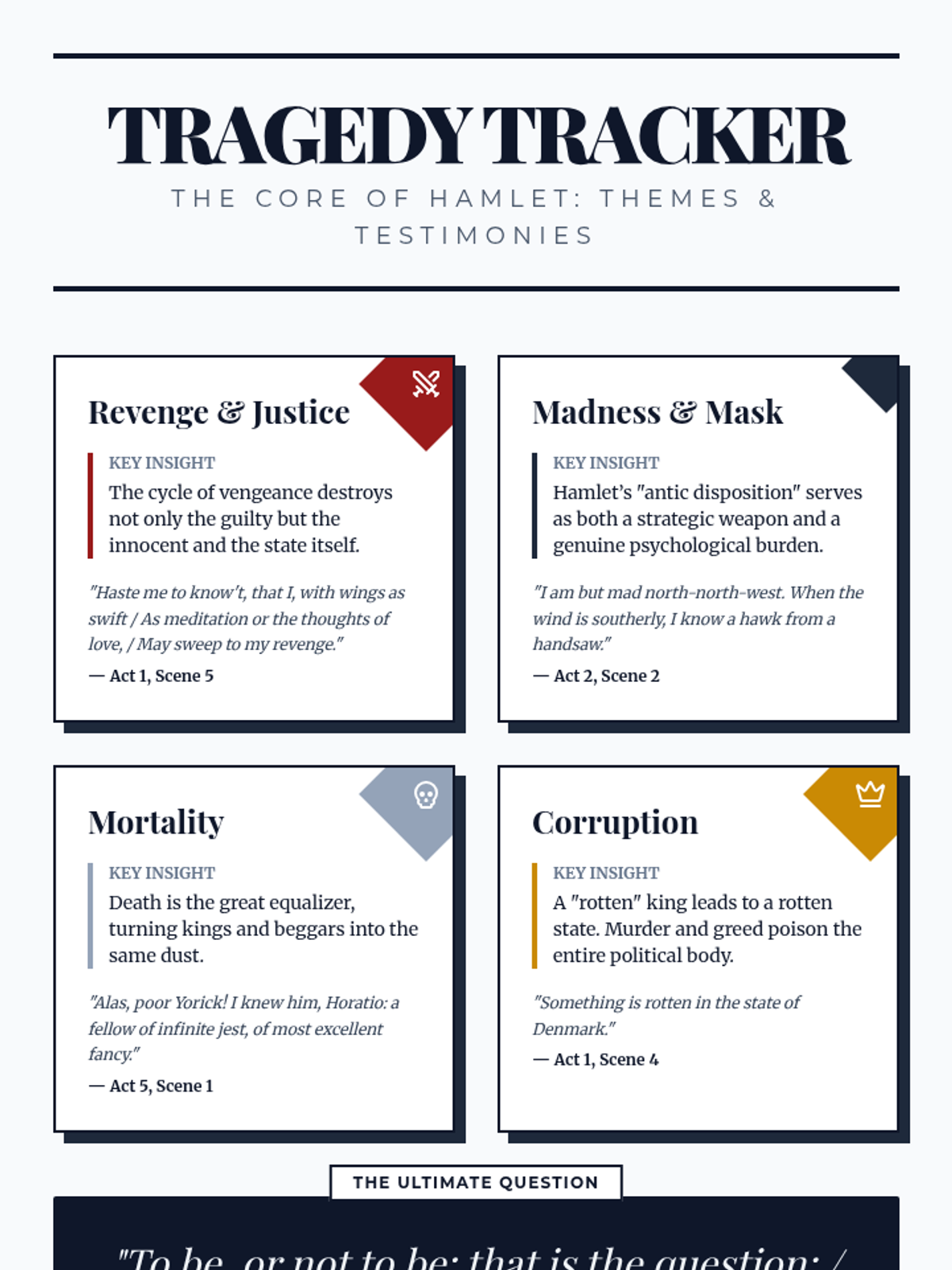
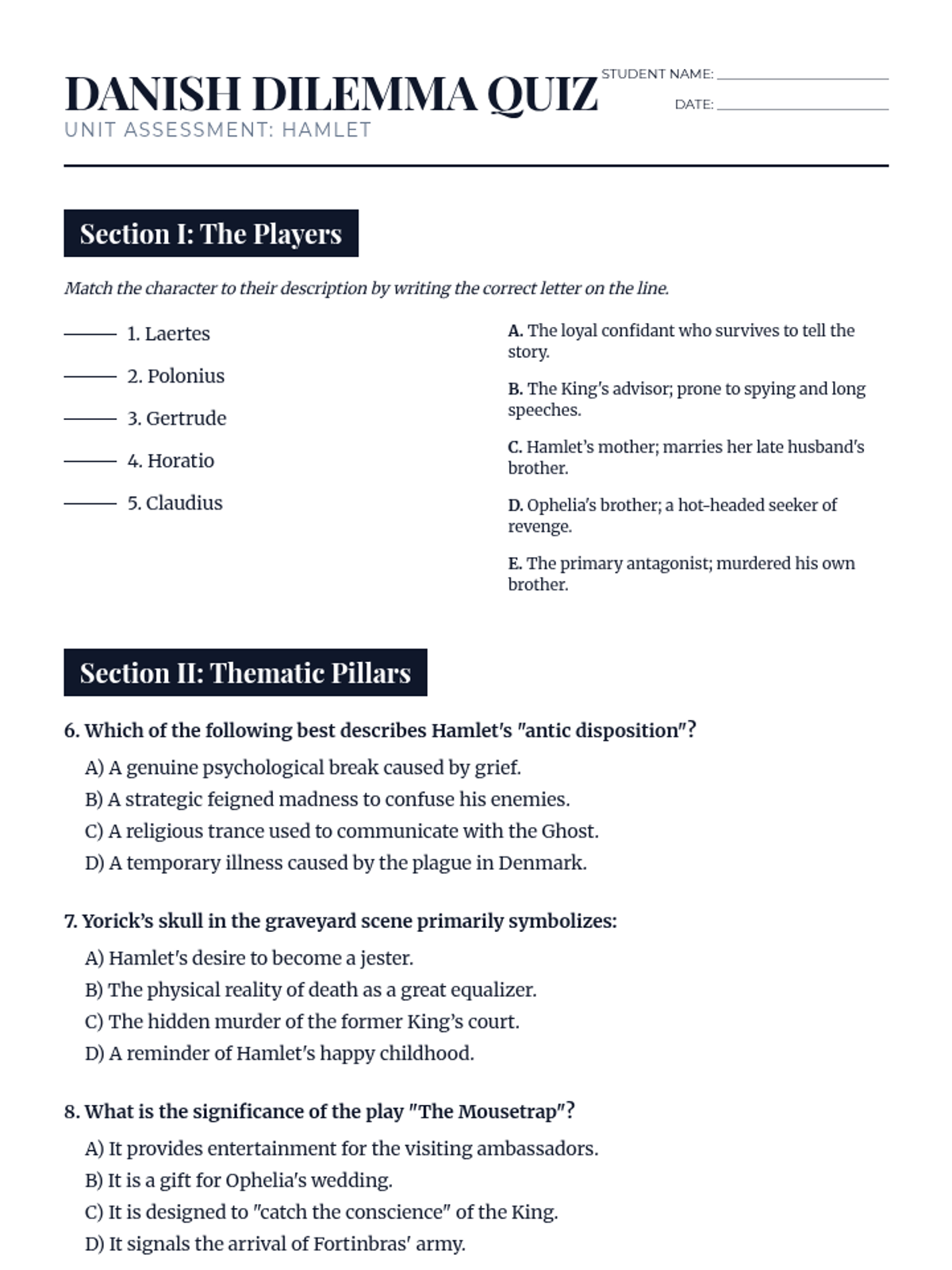
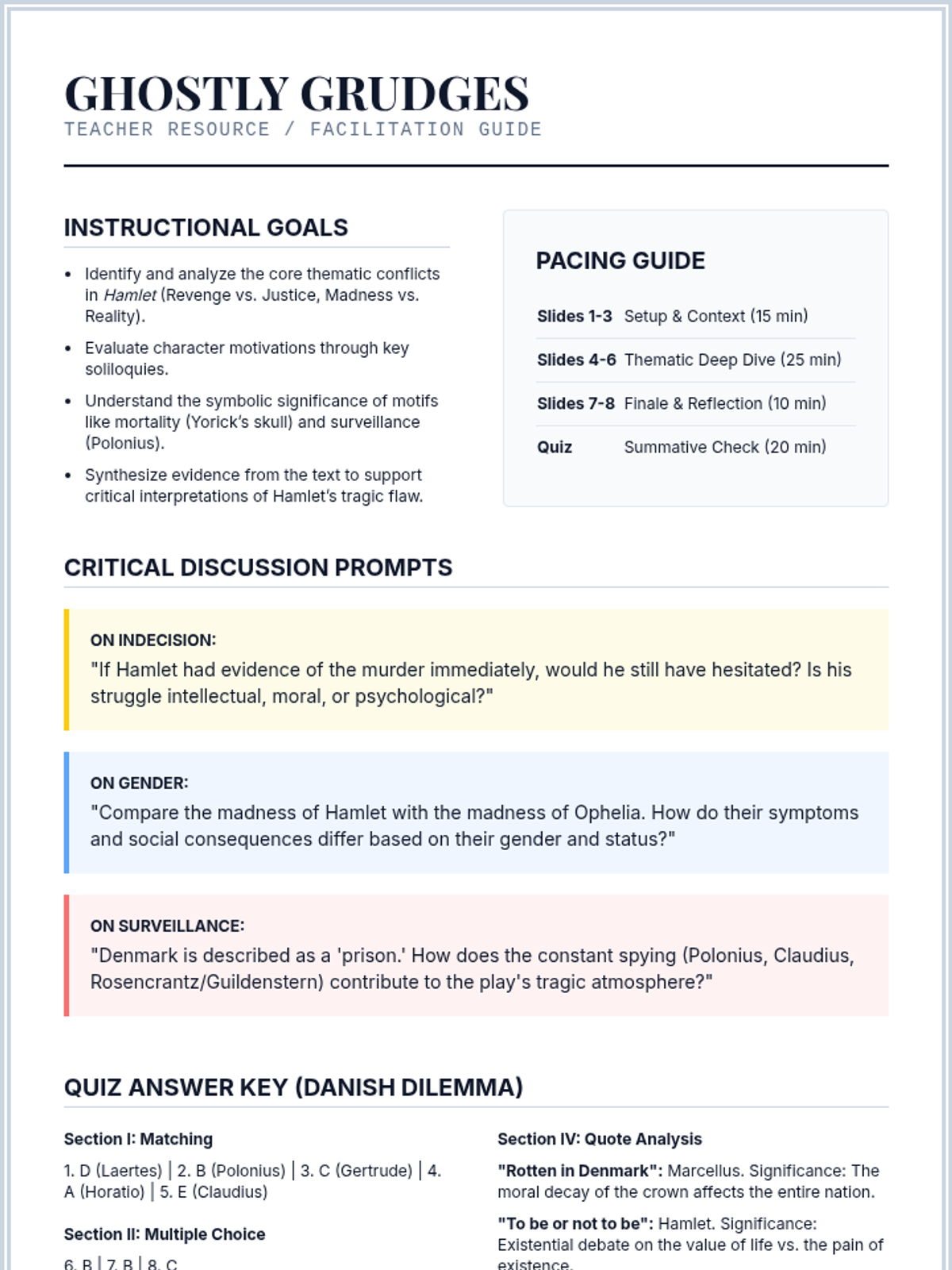
An in-depth exploration of William Shakespeare's 'Hamlet,' focusing on its complex themes of existentialism, revenge, and the human condition.
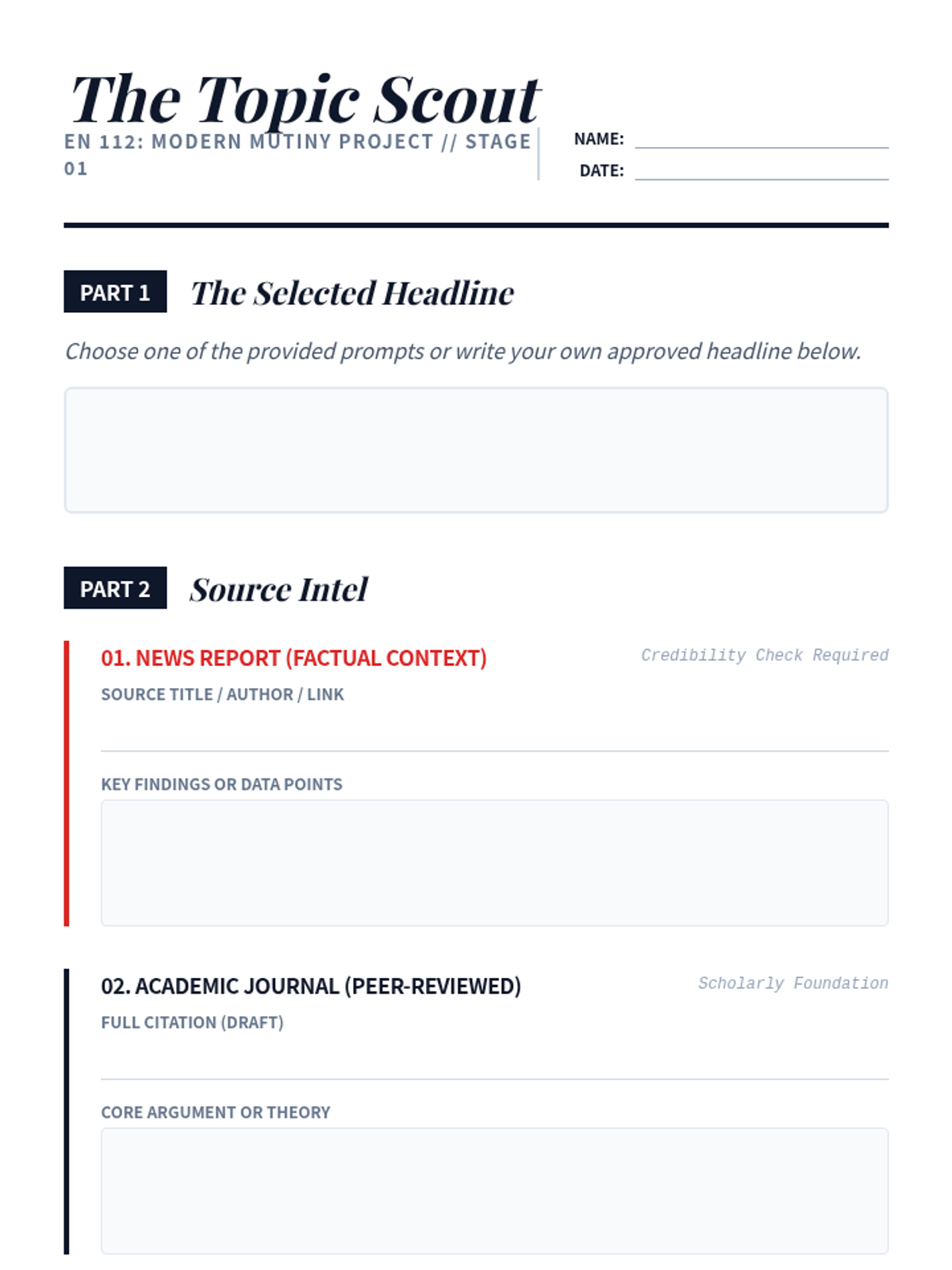
A comprehensive 5-day unit for college-level writing focused on argumentative essay construction using modern news events. Students progress from research and outlining to peer review and final submission.
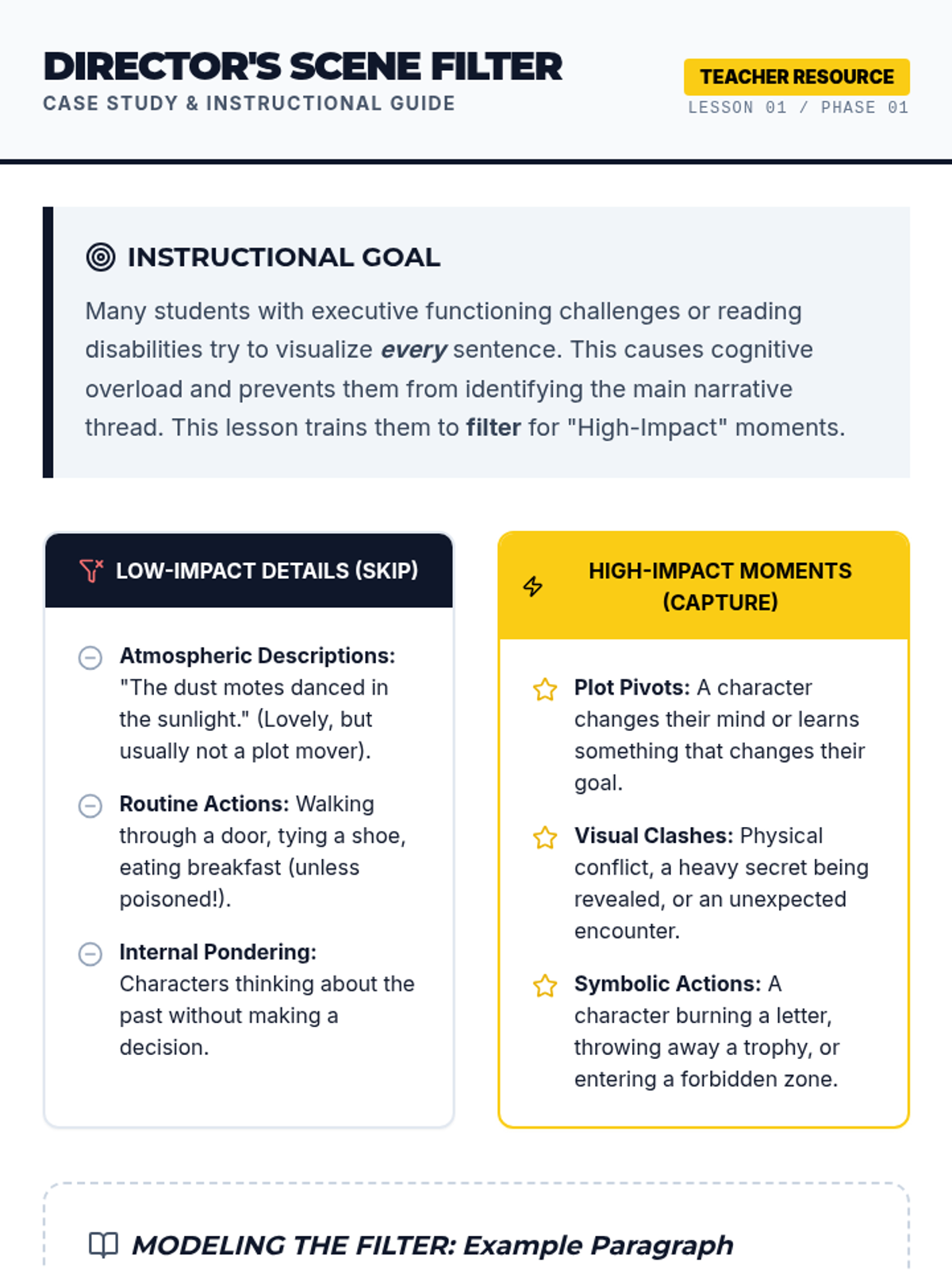
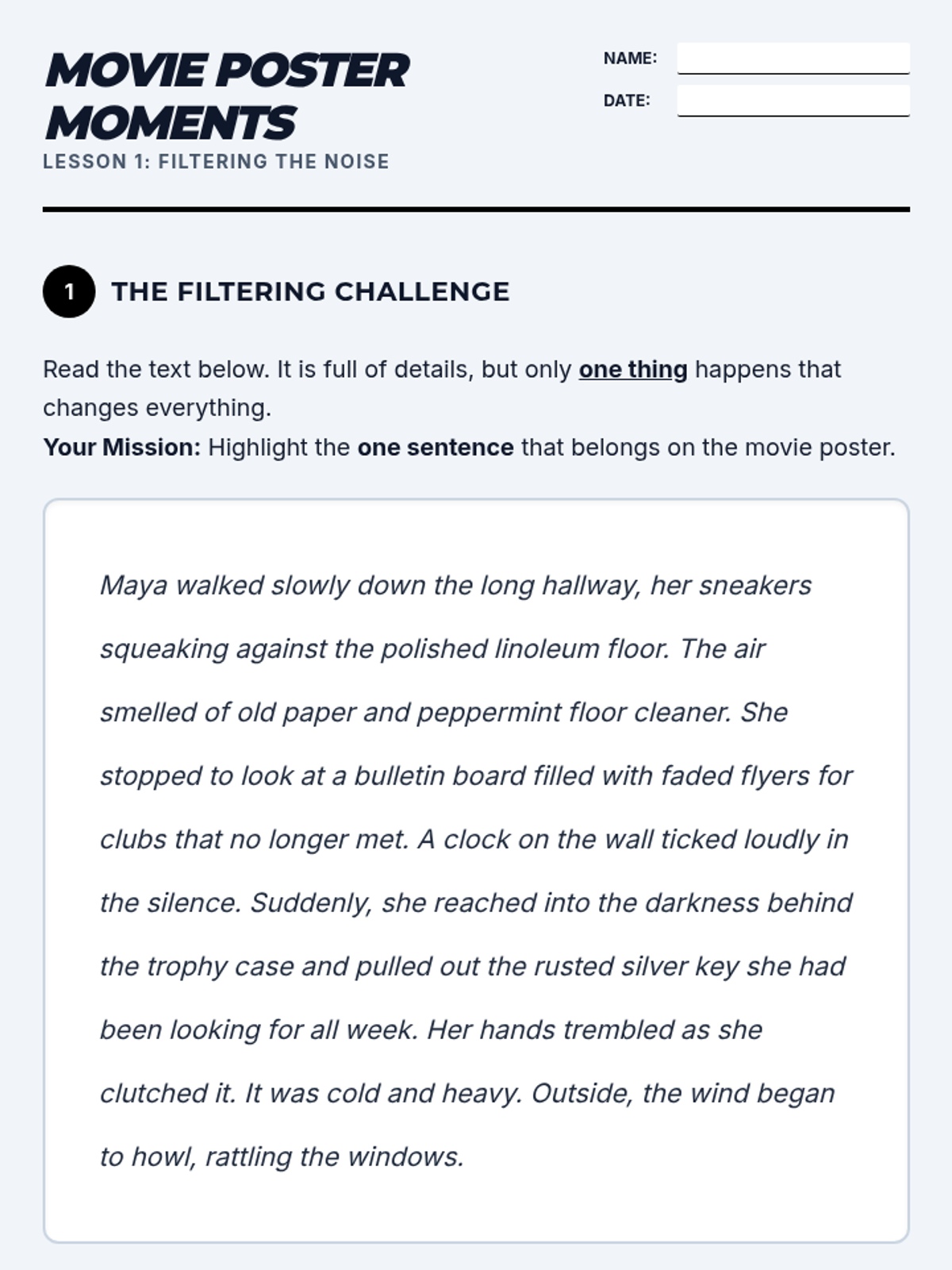
A comprehensive sequence for 9th-grade students to improve reading comprehension through visualization and storyboarding, focusing on filtering key information and interpreting abstract concepts.
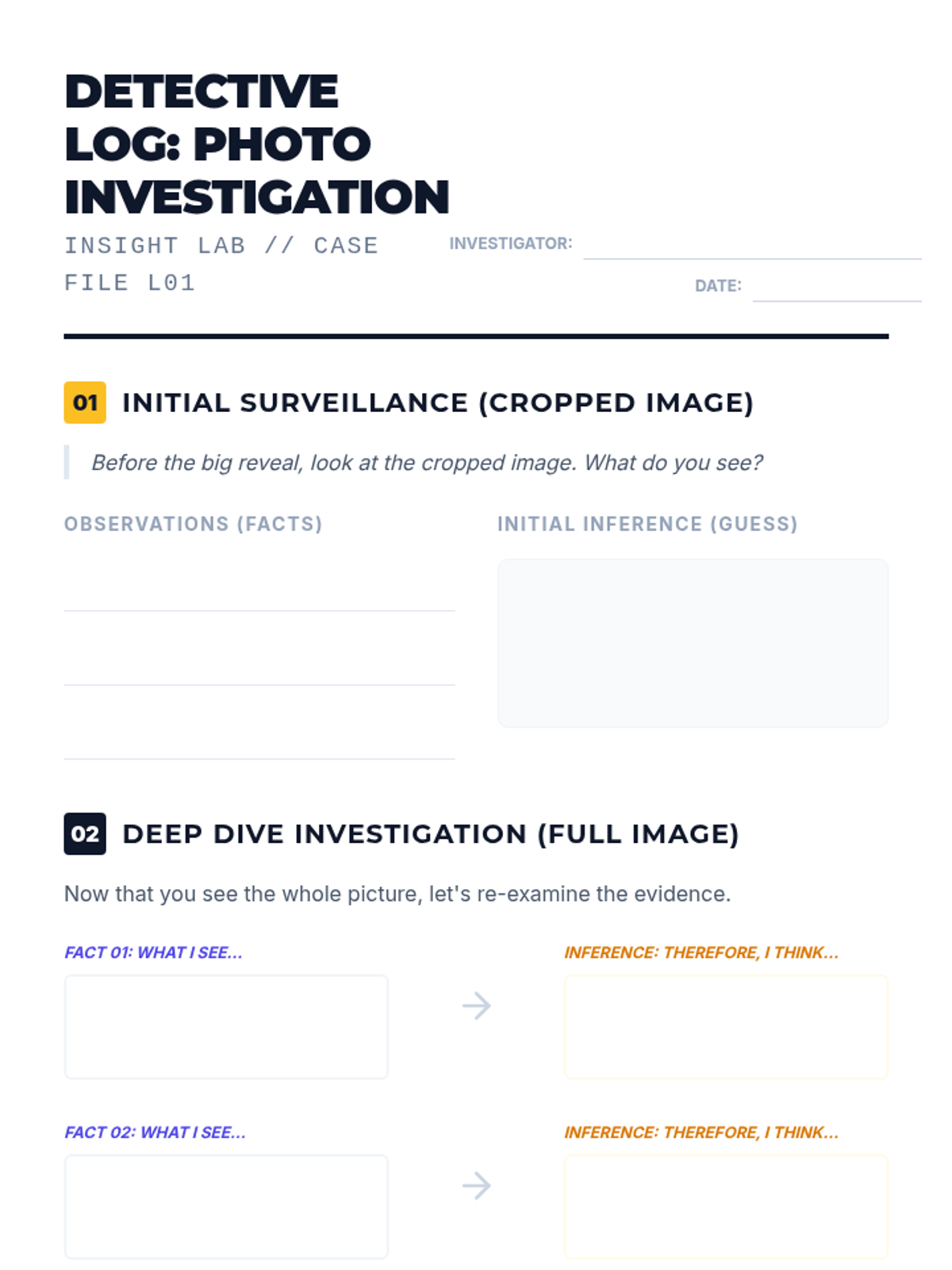
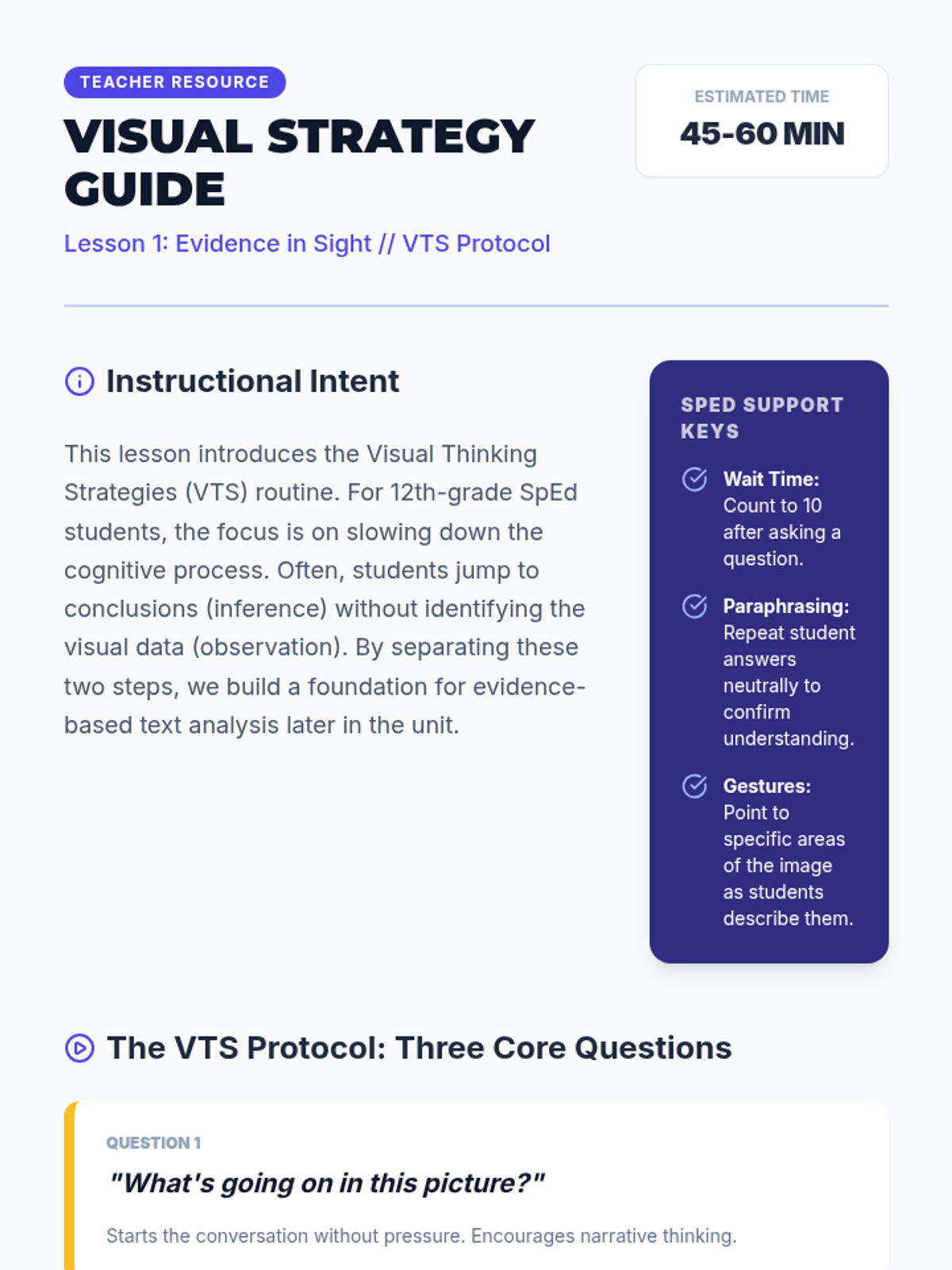
A scaffolded sequence for 12th-grade students that uses visual media to build inference and prediction skills, eventually transitioning from photography and film to complex text analysis.
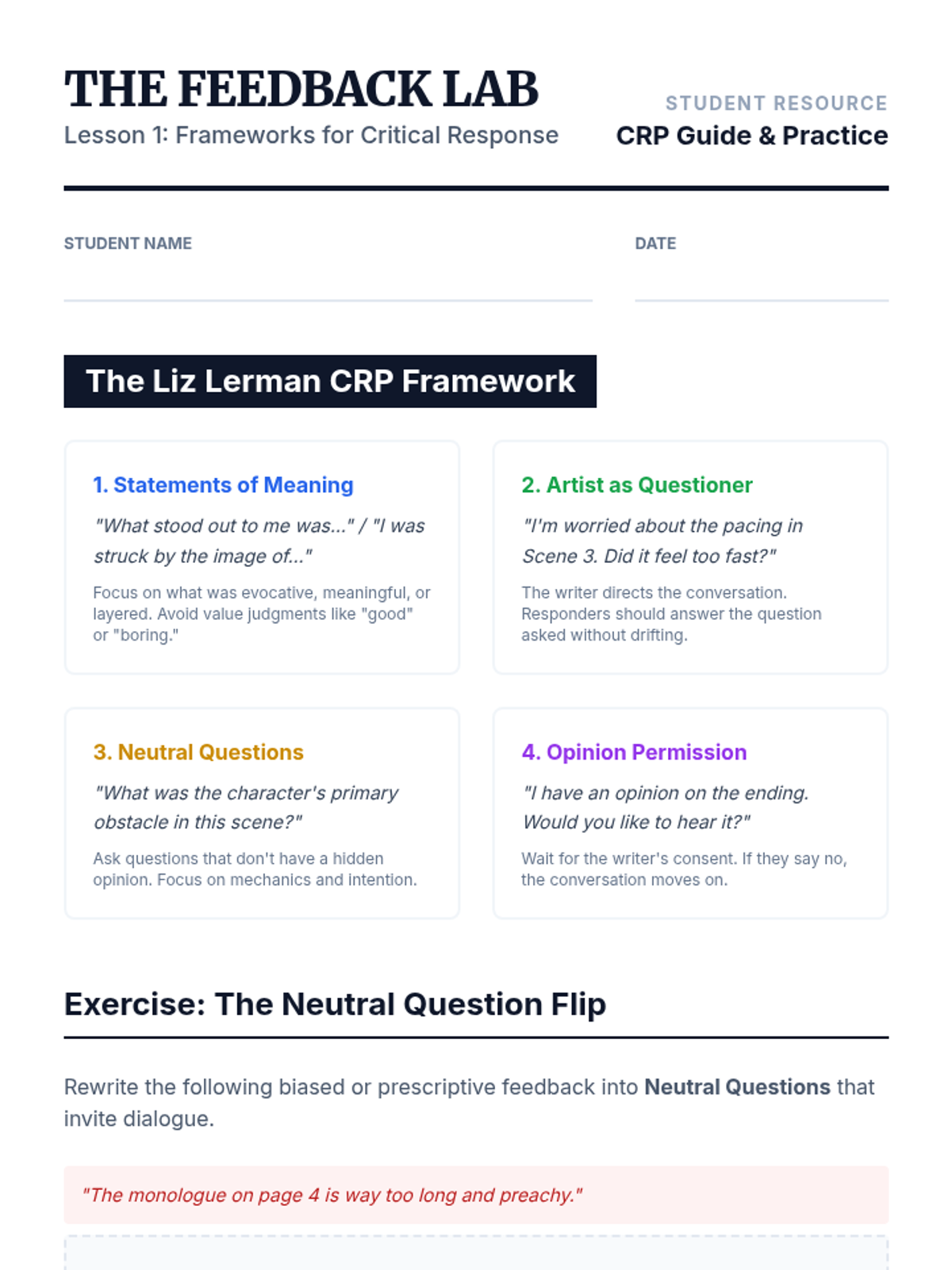
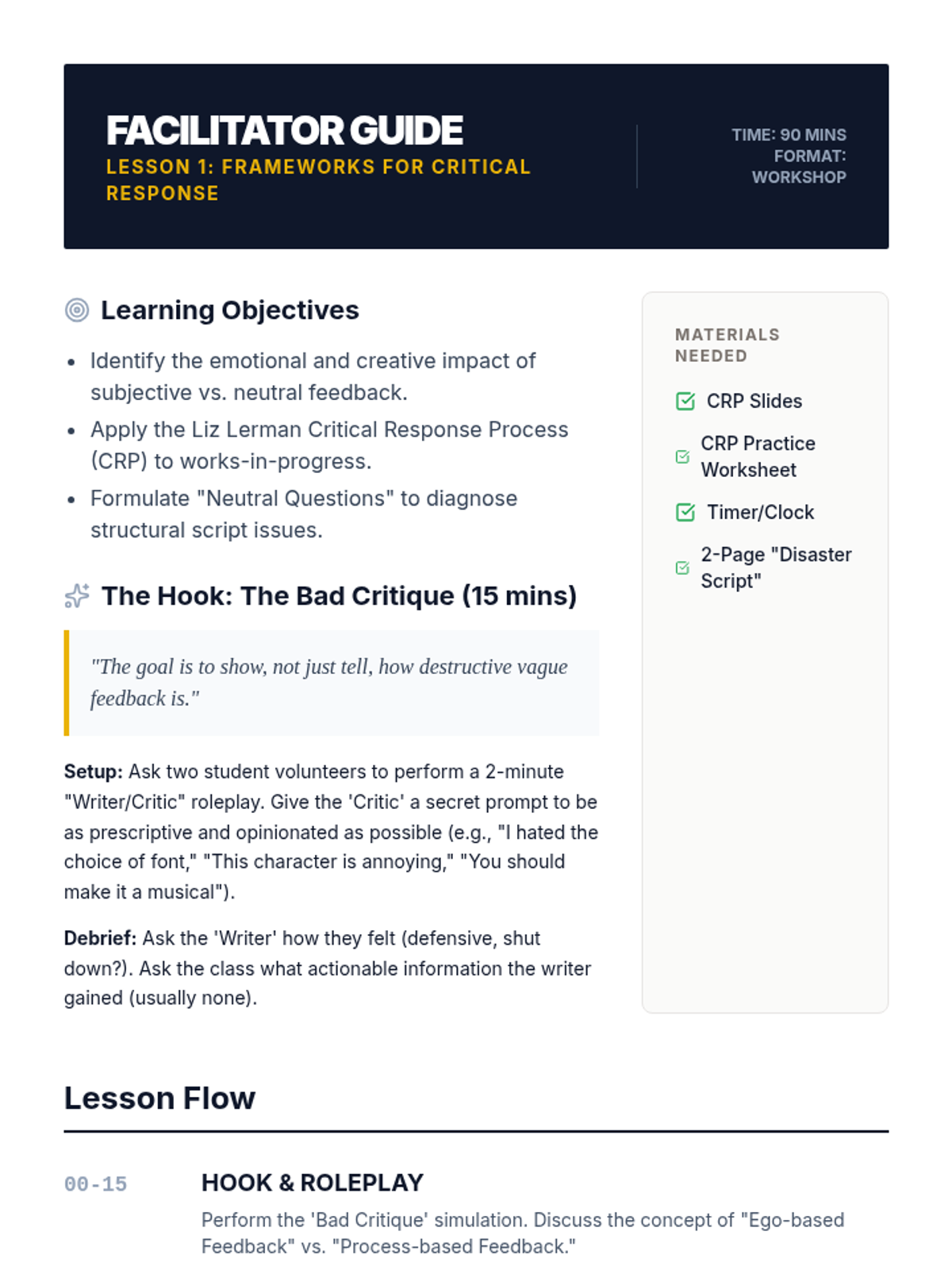
An immersive sequence for undergraduate playwriting students focusing on the professional iterative process of drafting, hearing work aloud, and executing rigorous rewrites using structured feedback frameworks.
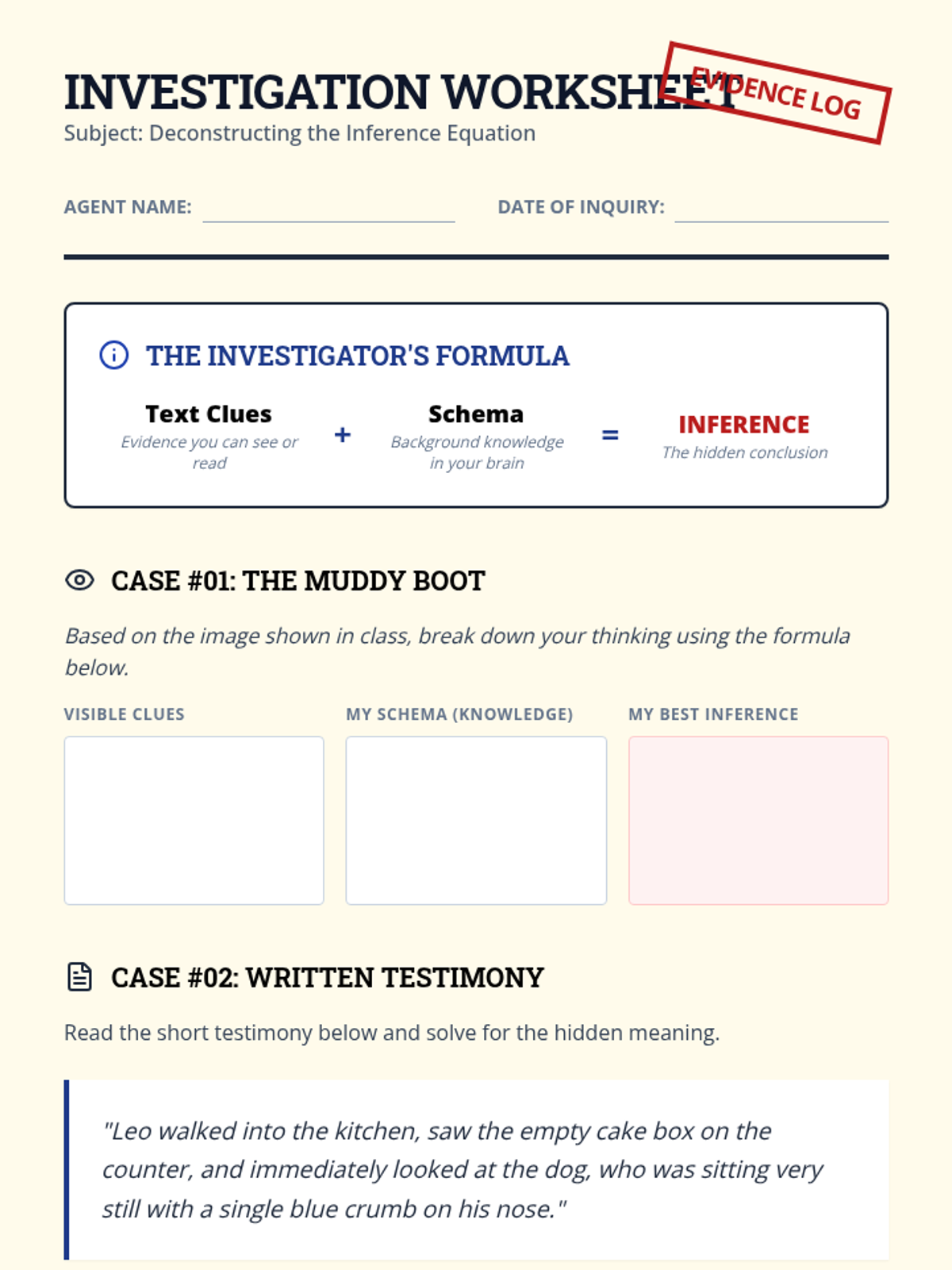
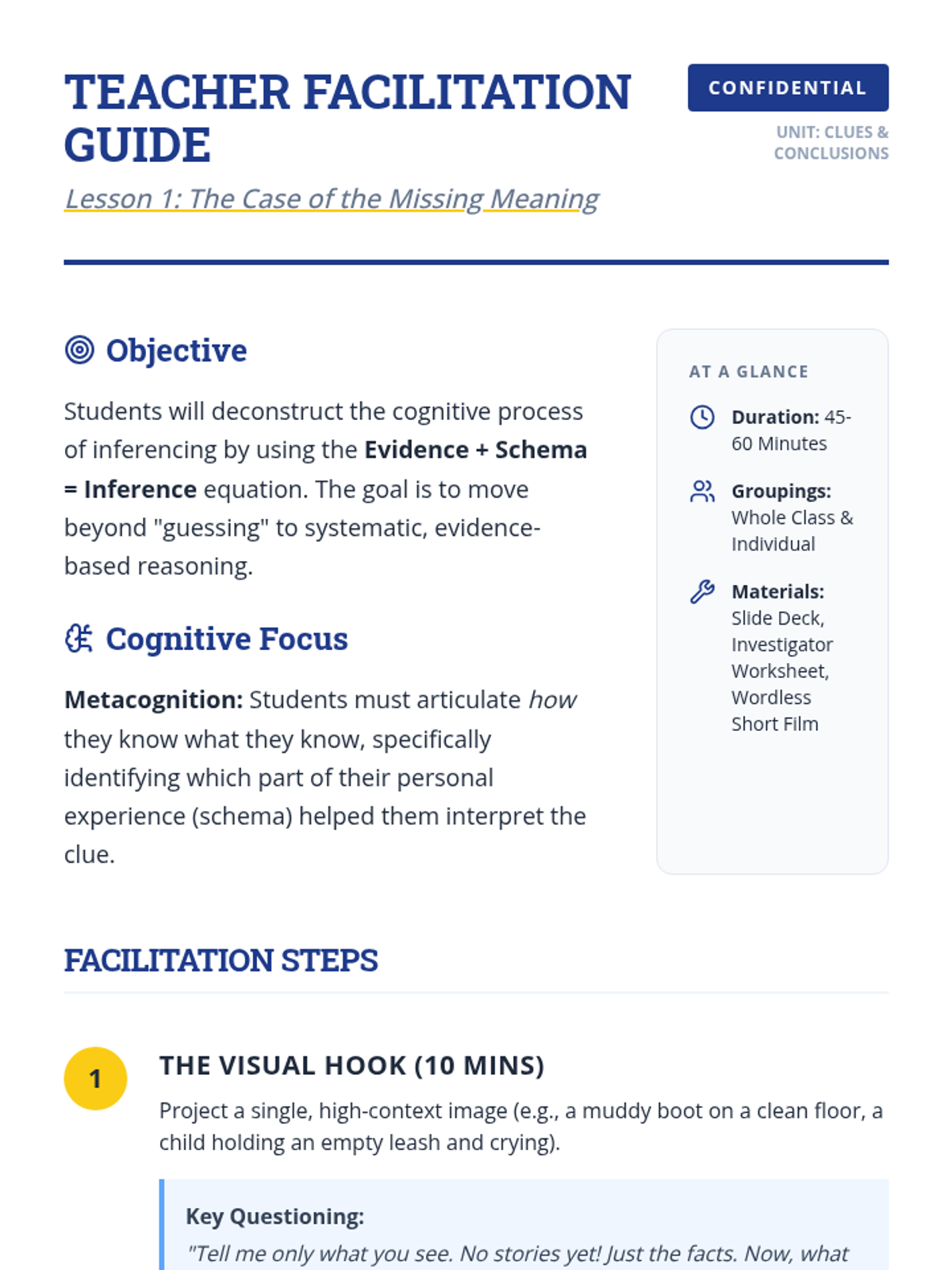
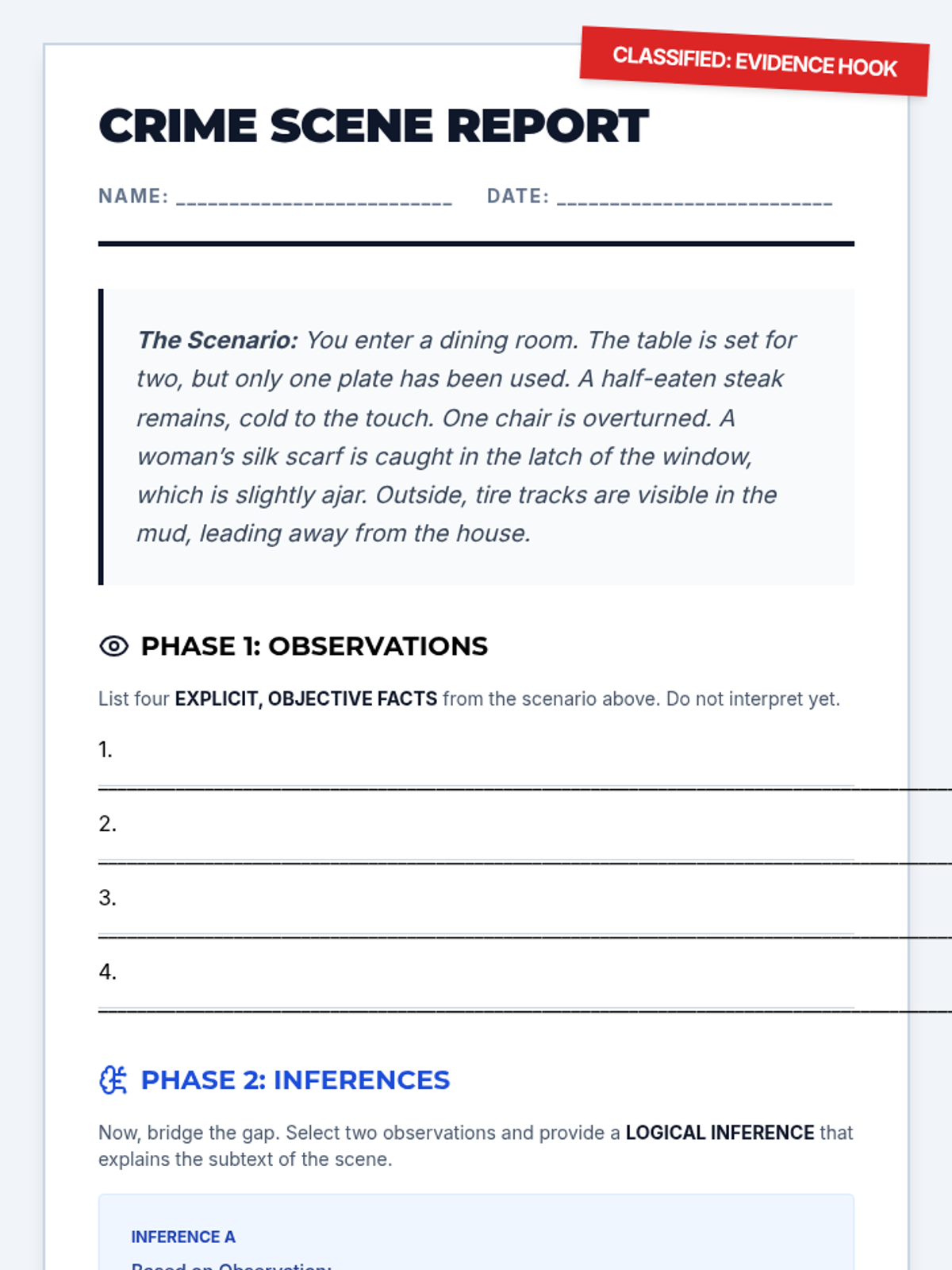
A structured ELA workshop sequence for 11th-grade academic support, focusing on the cognitive process of making inferences and predictions. Students move from visual analysis to complex text synthesis using the 'Evidence + Schema = Inference' equation.
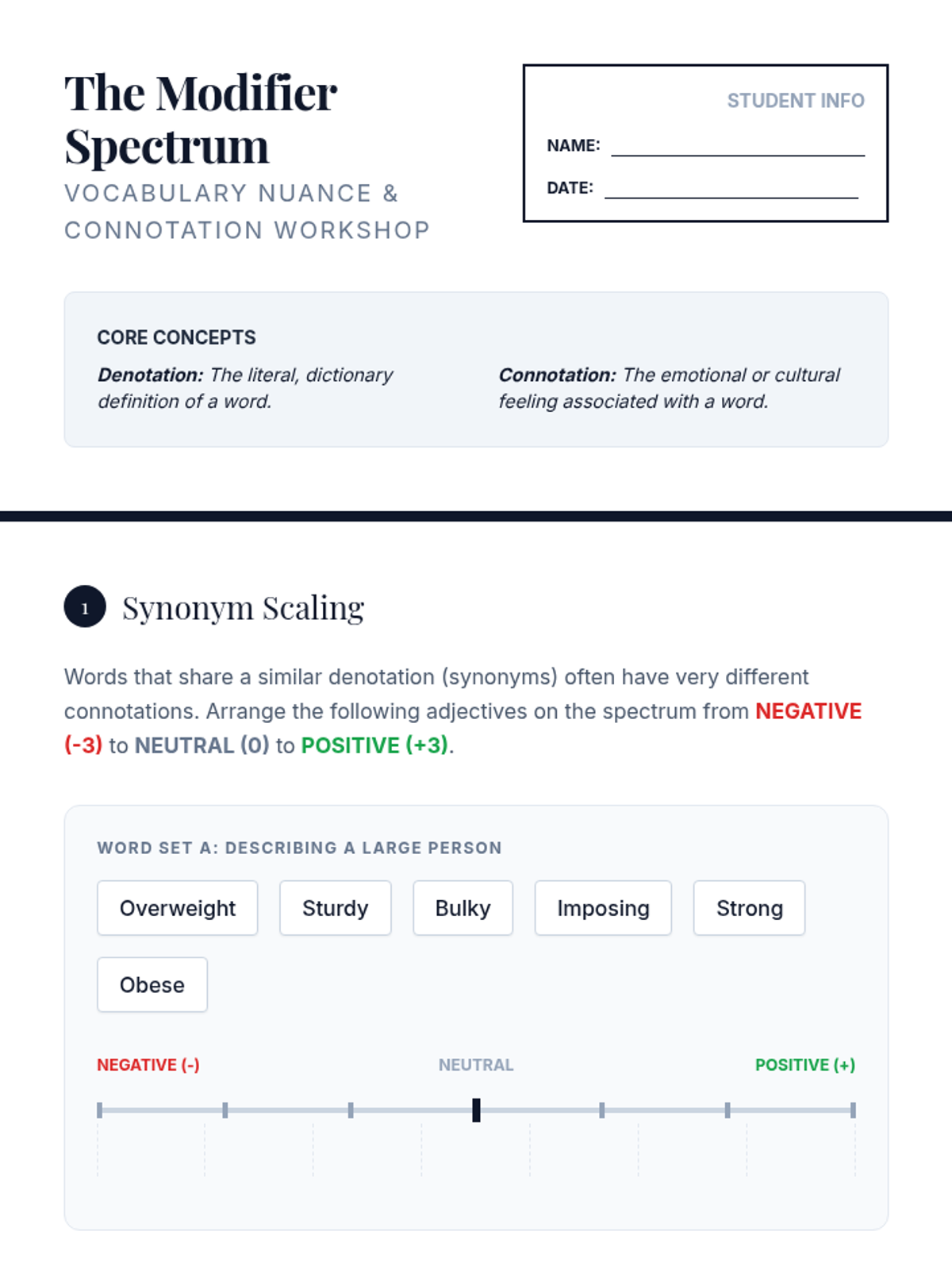
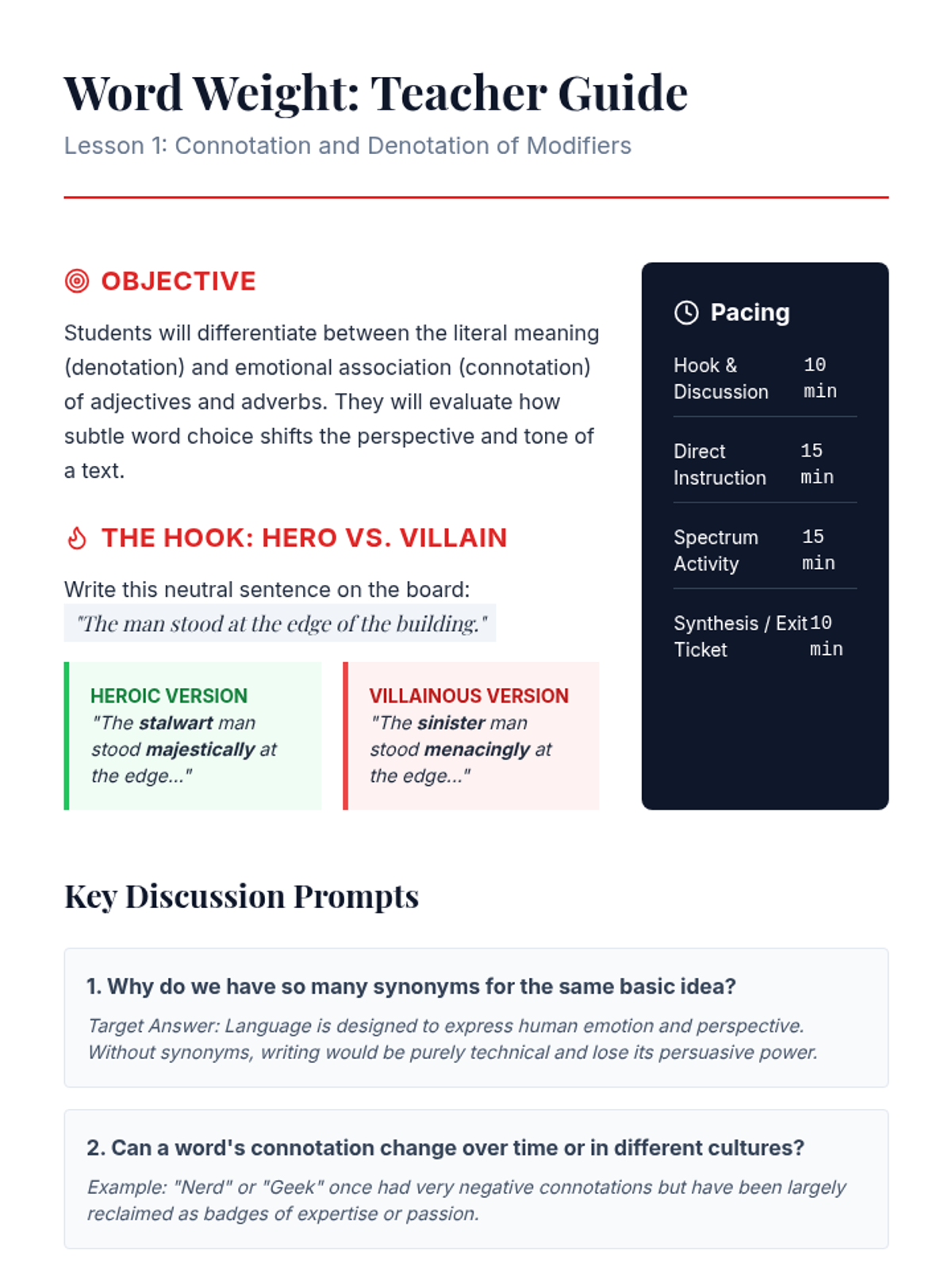
A 9th-grade grammar and rhetoric unit focused on how adjectives and adverbs influence bias, connotation, and persuasion in media and non-fiction. Students move from understanding word nuance to analyzing news and advertising, culminating in writing a persuasive editorial.
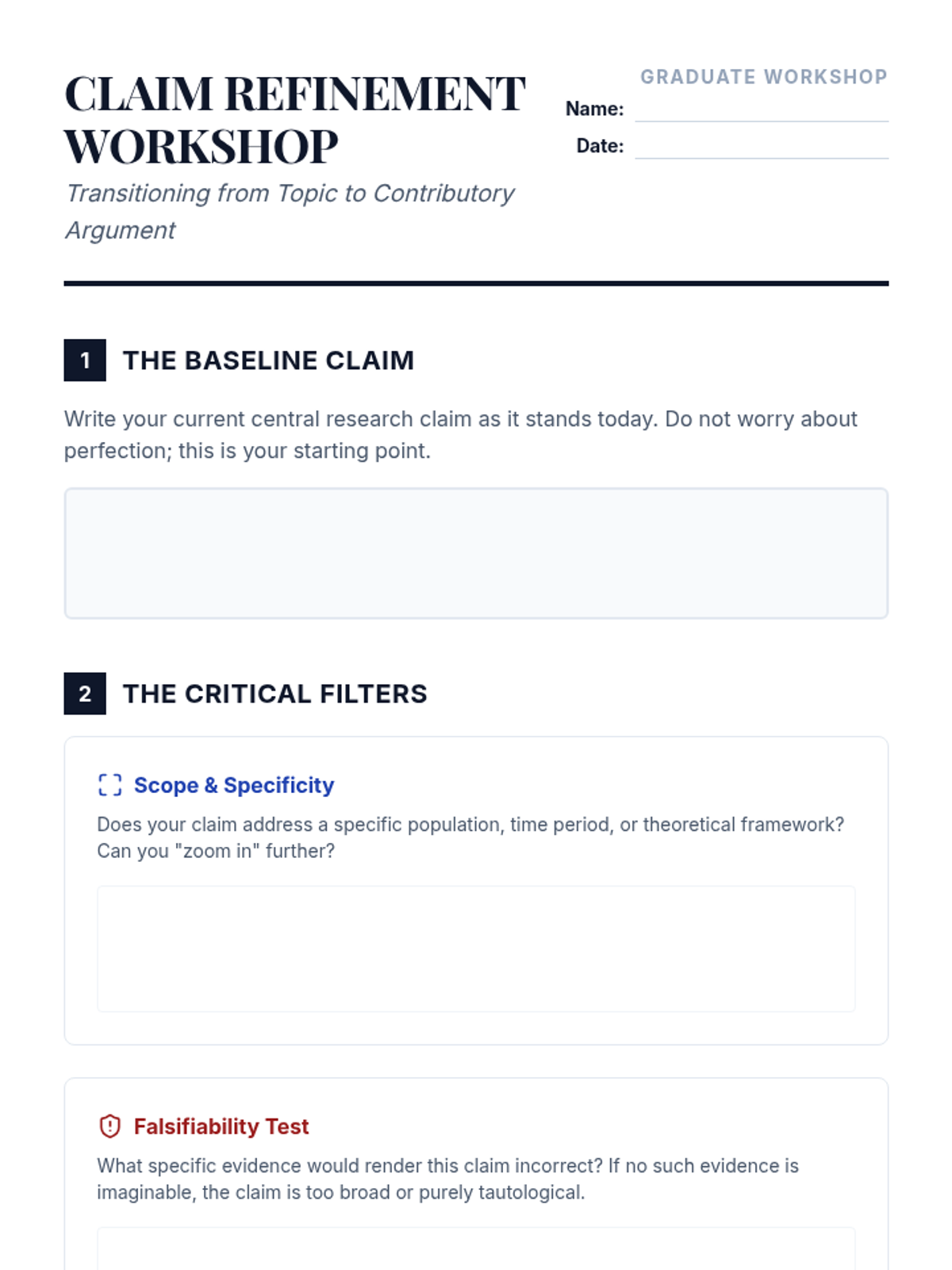
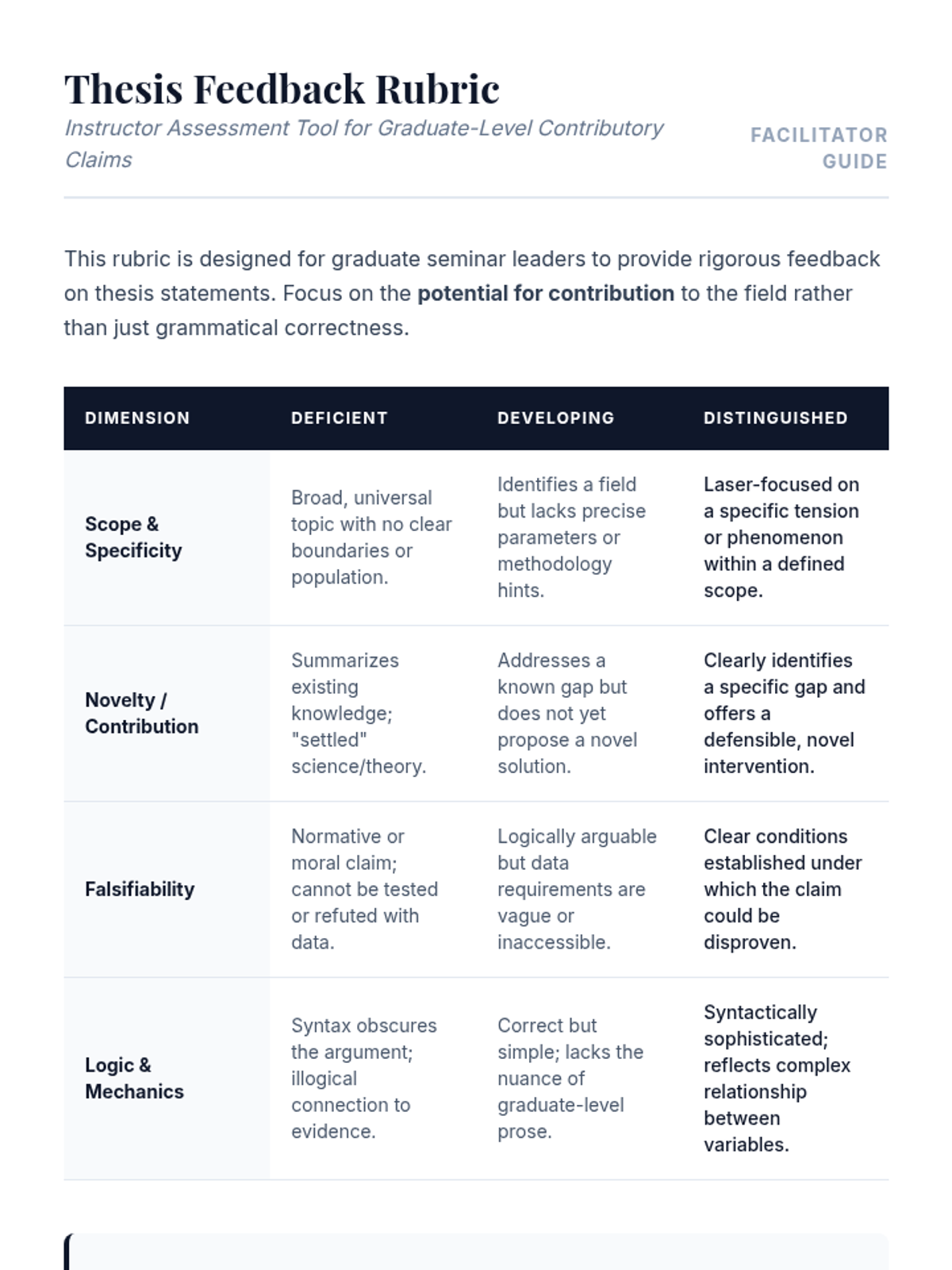
A comprehensive graduate-level workshop series focused on transitioning from research topics to defensible academic contributions. Students will master thesis refinement, literature synthesis, counter-argument strengthening (steelmanning), and the oral defense of evidentiary choices.
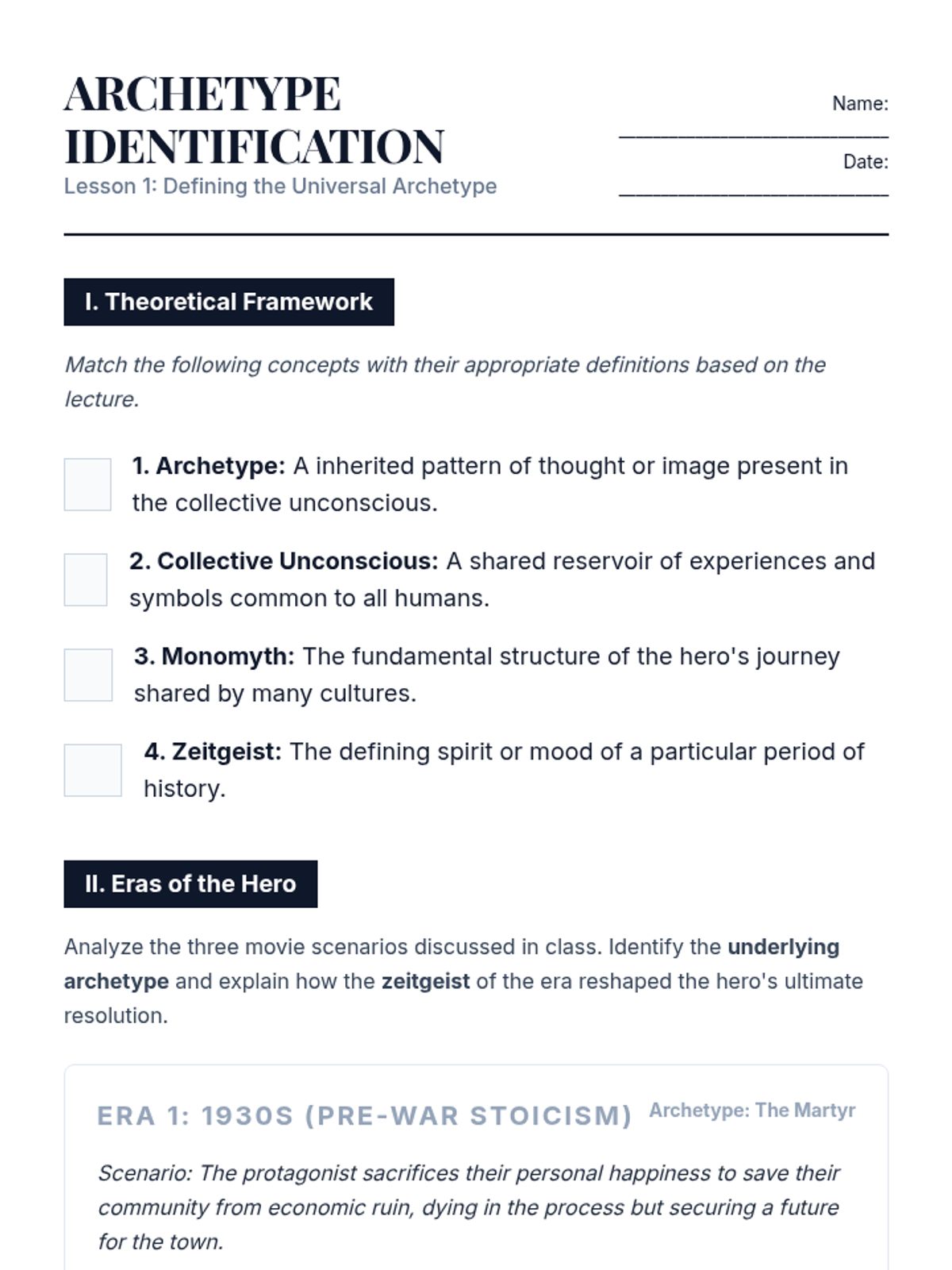
This undergraduate sequence explores how universal themes are reinterpreted across historical and cultural contexts. Students analyze paired texts to understand how the zeitgeist of an era reshapes human archetypes and thematic construction.
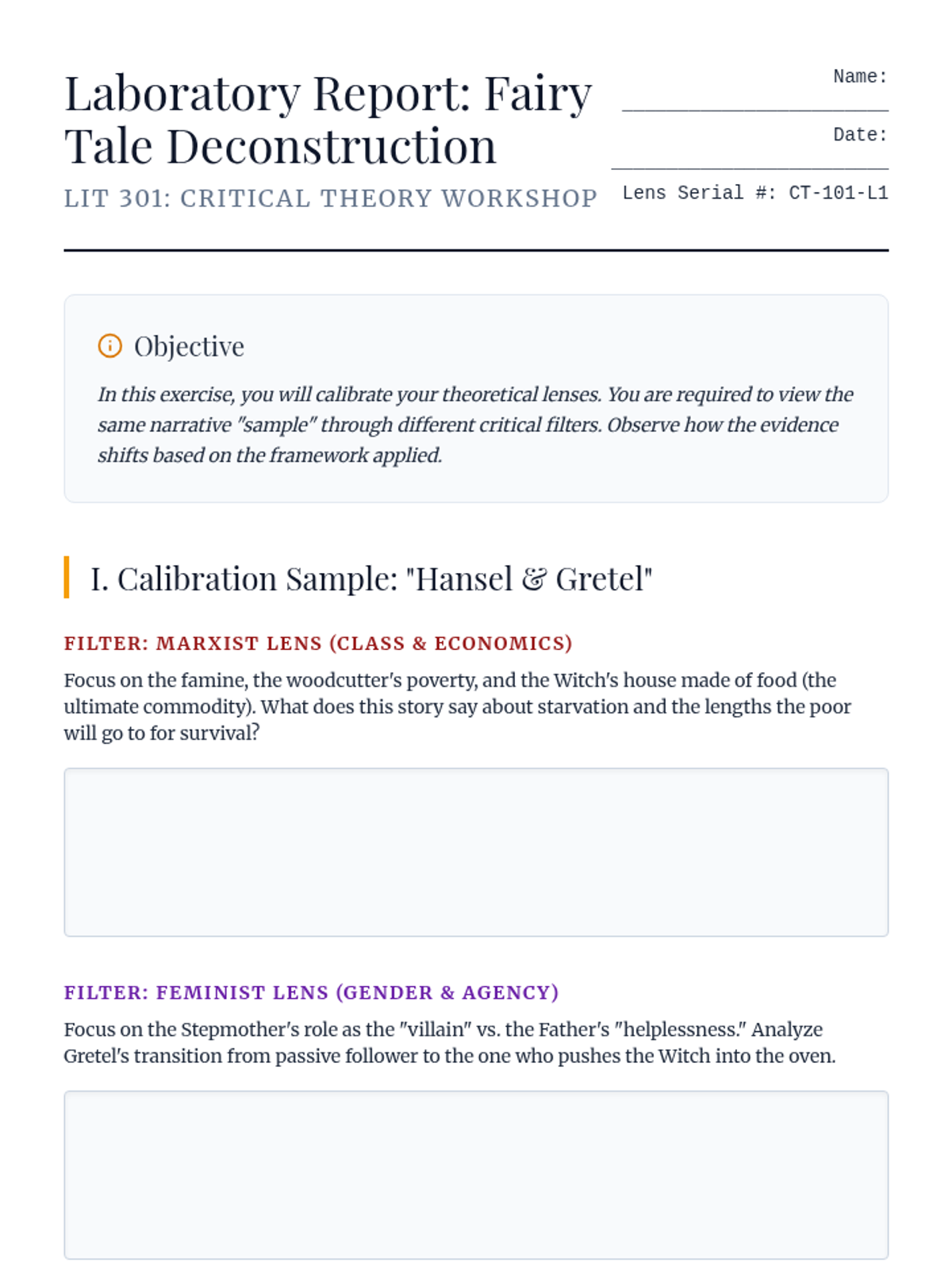
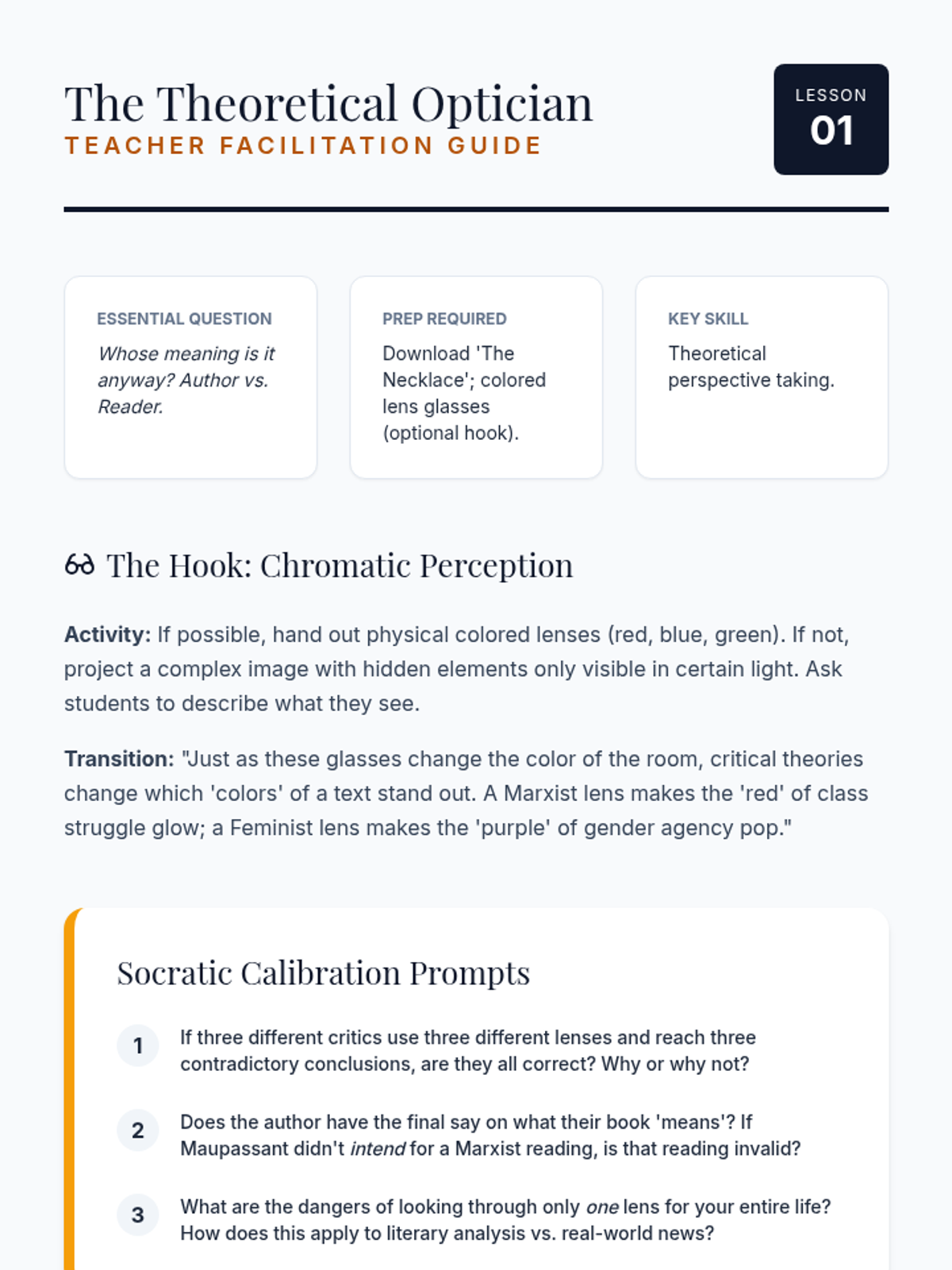
This undergraduate-level sequence explores literary theme through the application of various critical theory lenses (Marxist, Feminist, and Post-Structuralist) using Guy de Maupassant's 'The Necklace' as a central text. Students move from understanding theory as a metaphoric lens to deconstructing the stability of meaning itself, culminating in a multi-perspectival portfolio.
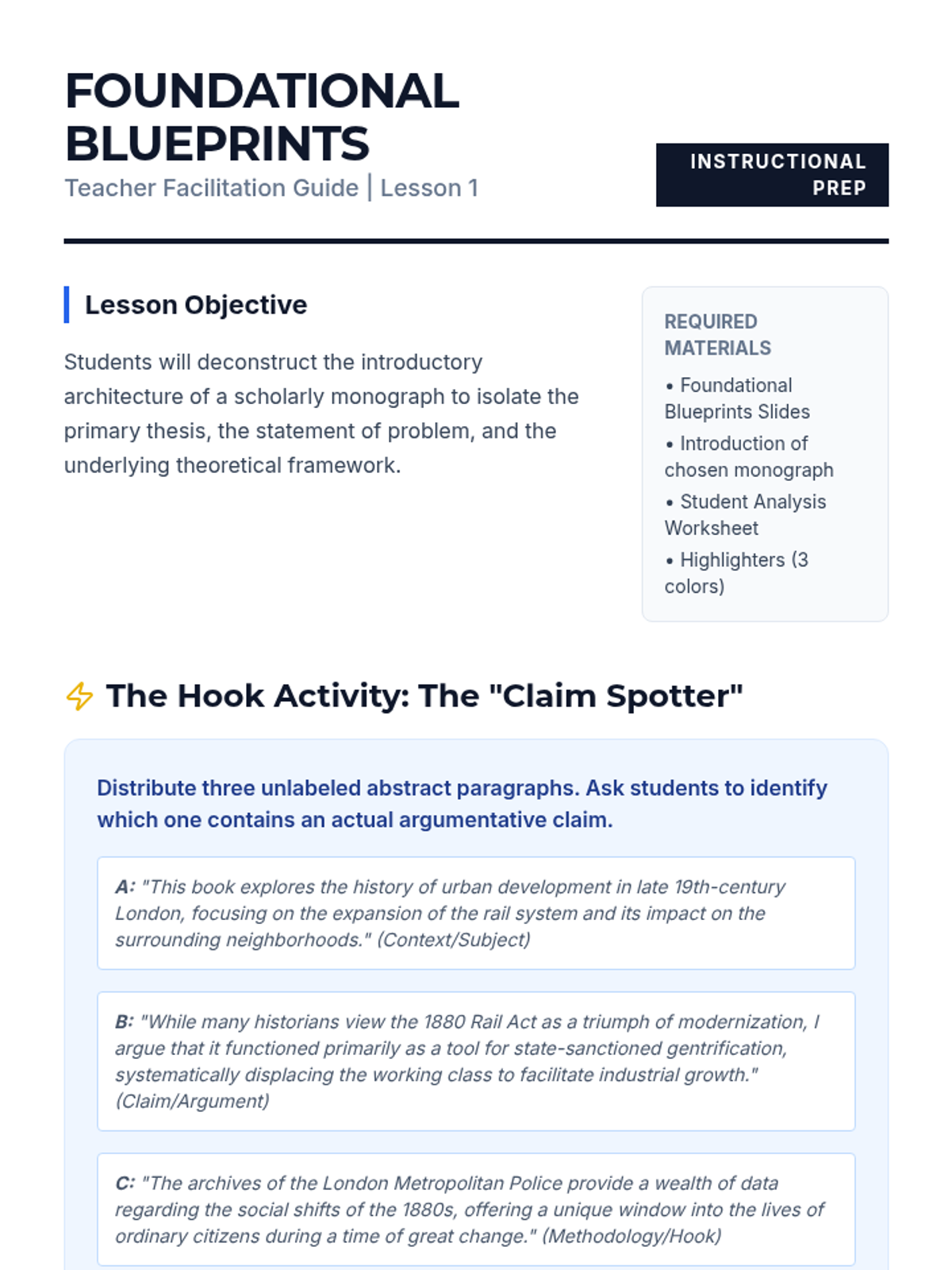
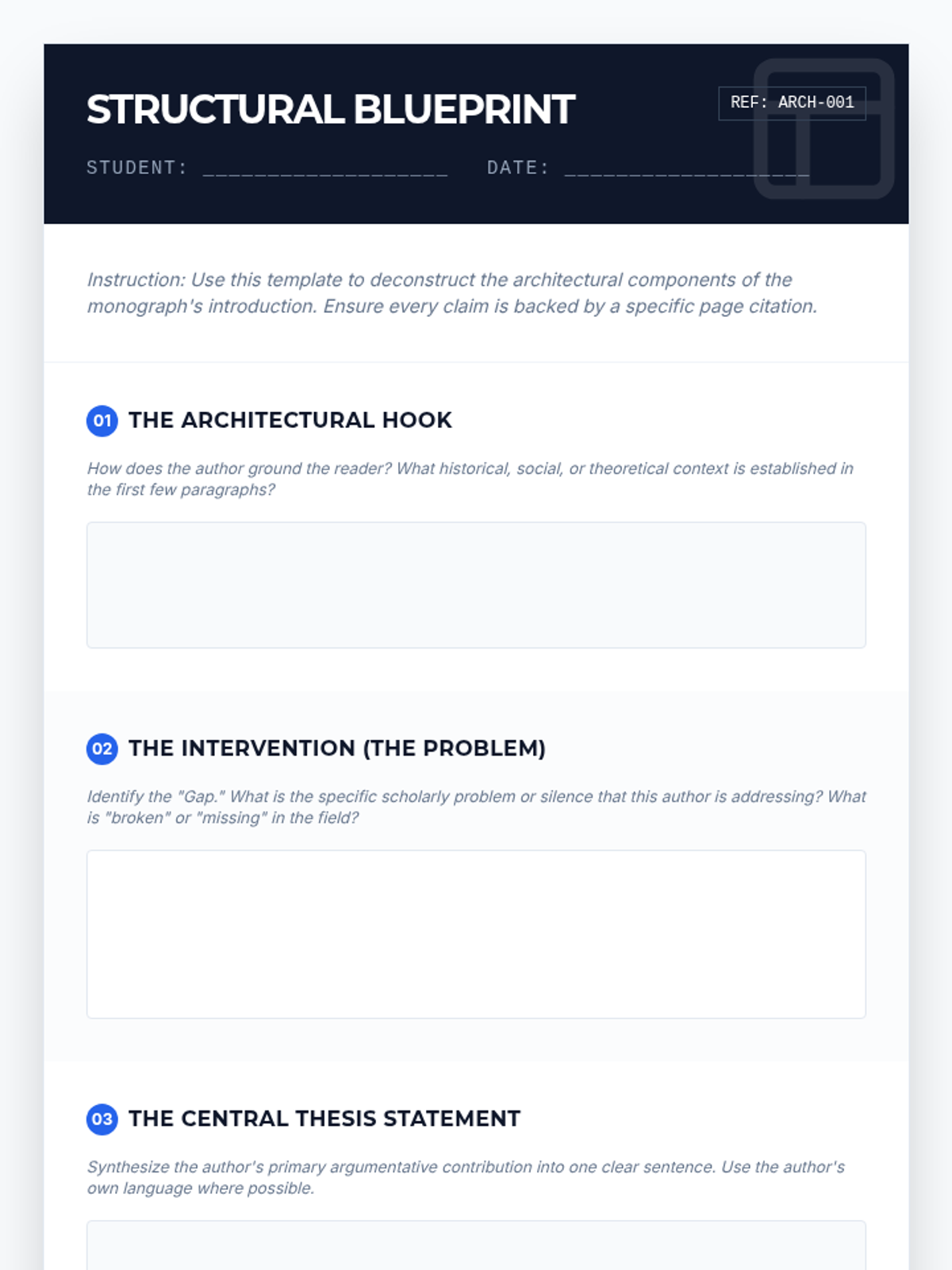
An intensive sequence for undergraduate students focused on the structural and rhetorical deconstruction of academic monographs. Students will master the Toulmin model, evaluate evidence types, and analyze how scholarly authority is constructed through language and methodology.
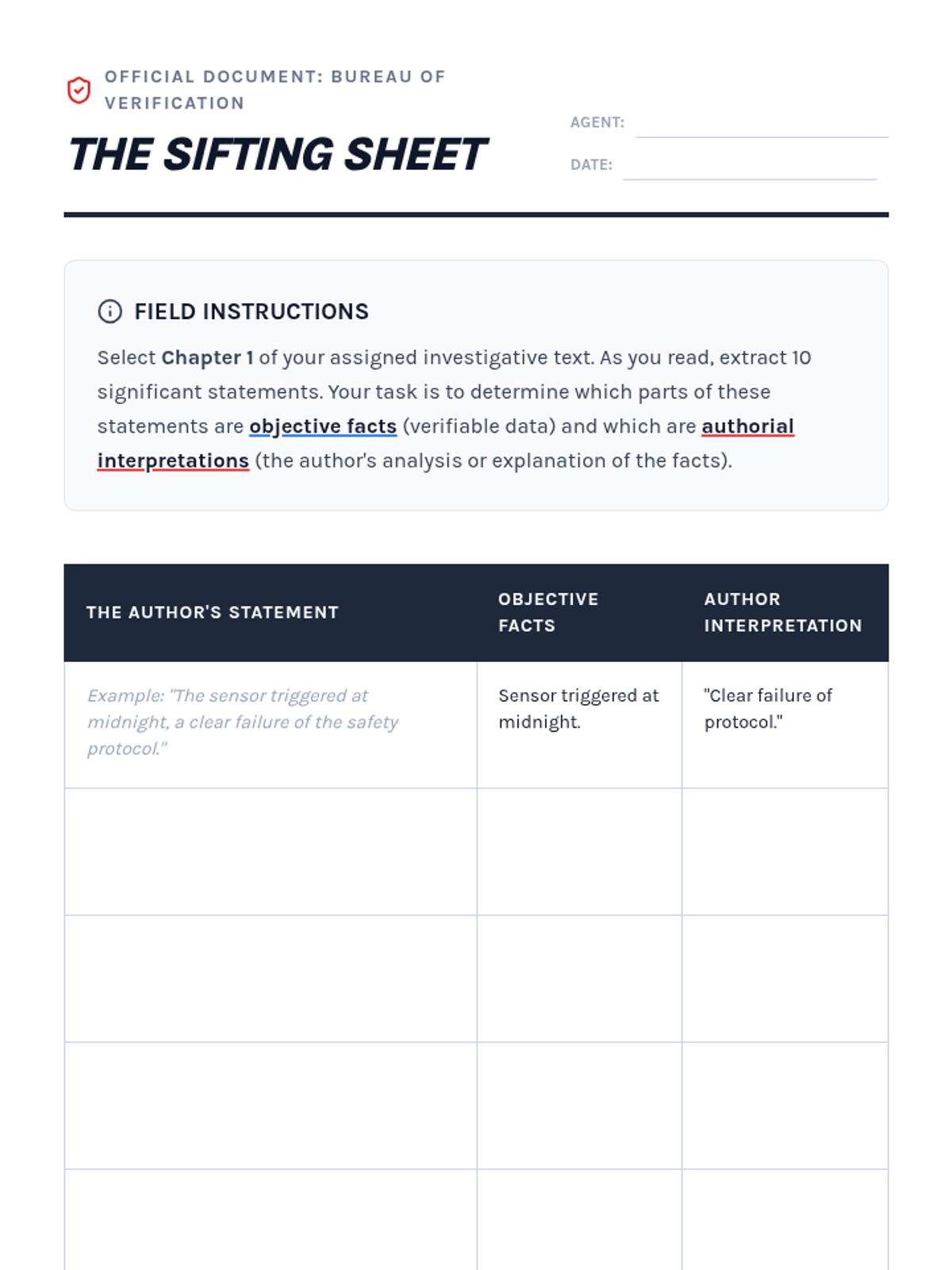
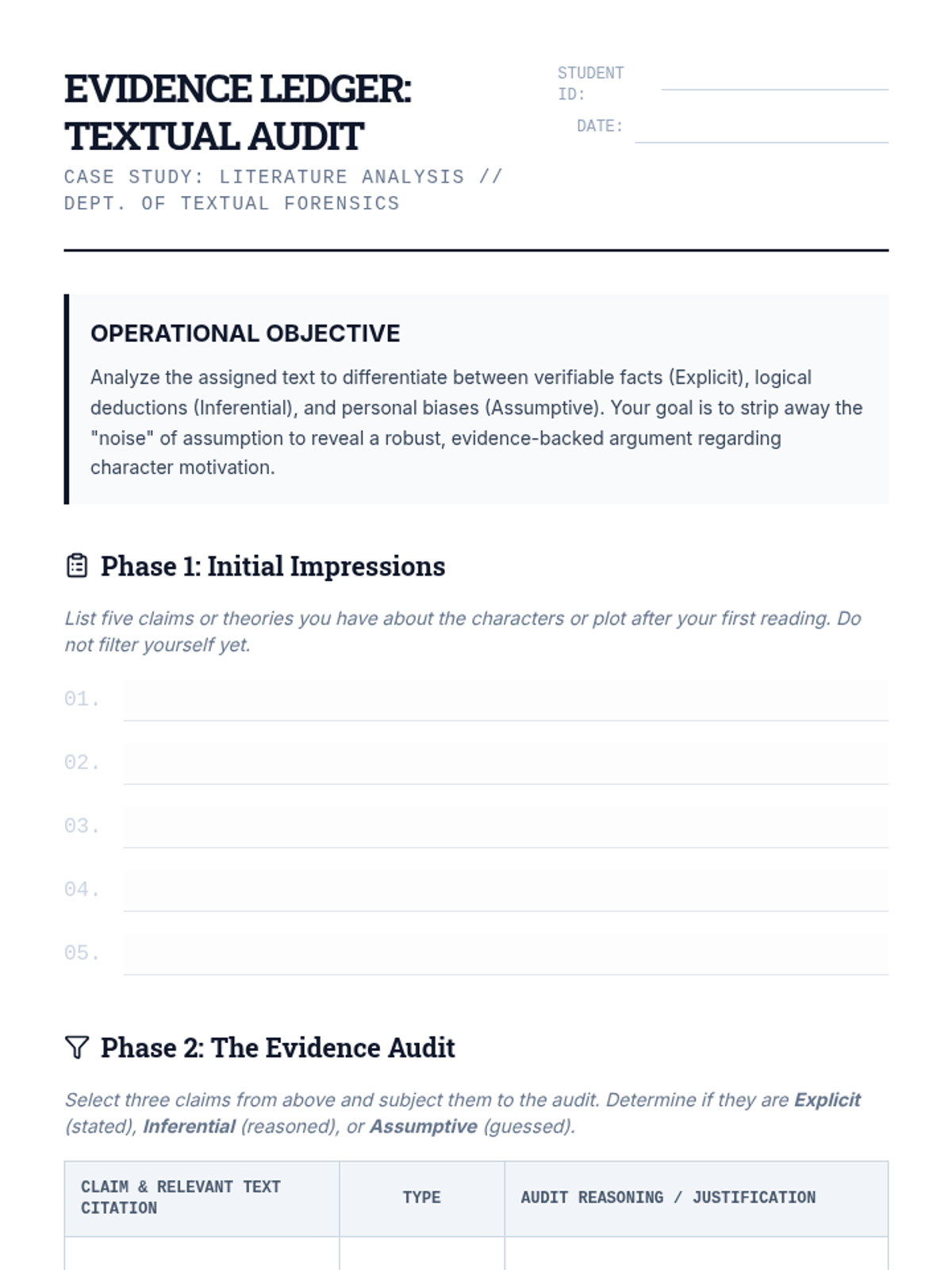
A 10th-grade ELA sequence focused on critical reading and source evaluation in investigative nonfiction. Students learn to separate fact from interpretation, verify citations, and conduct comprehensive validity audits.
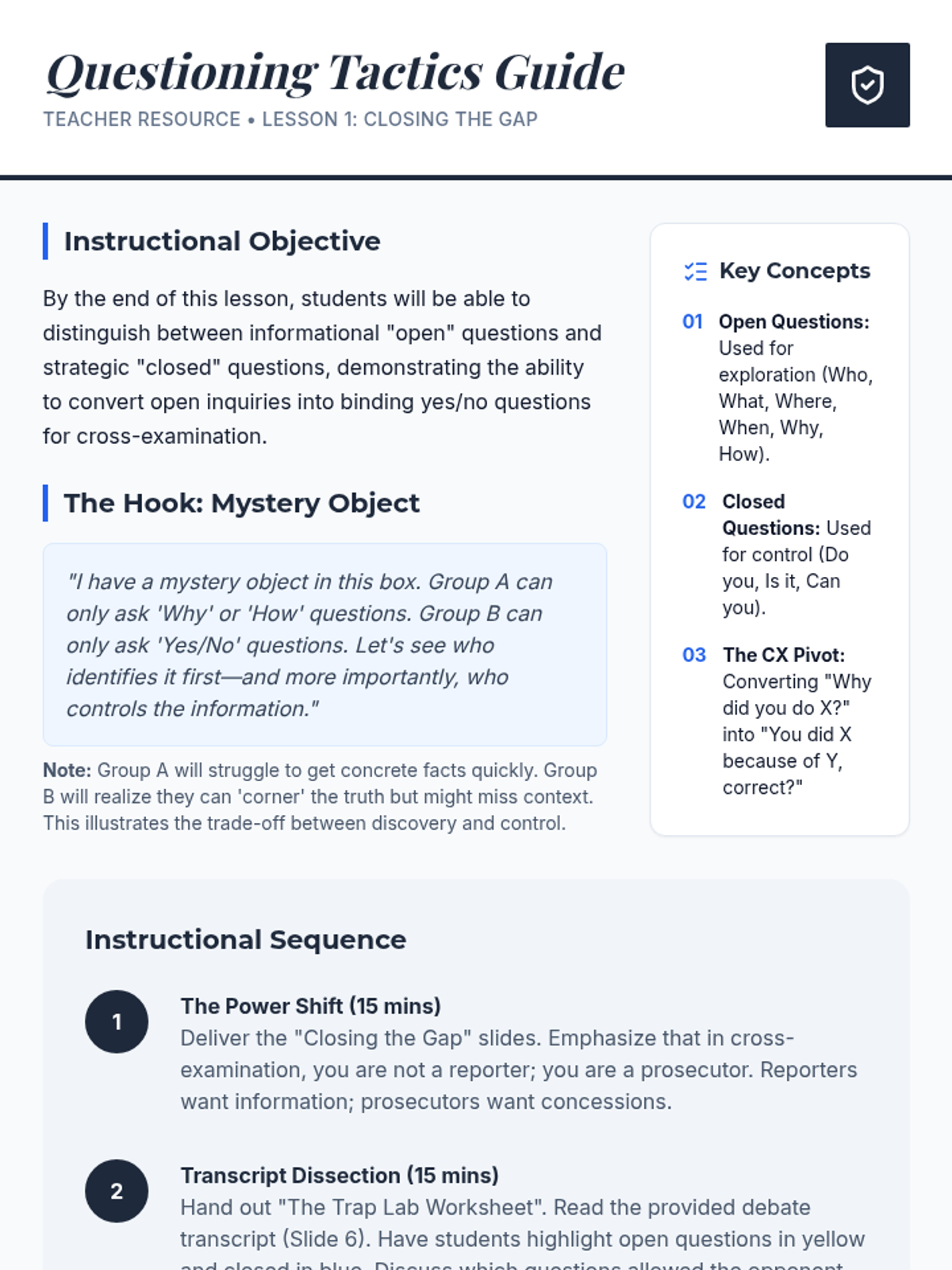
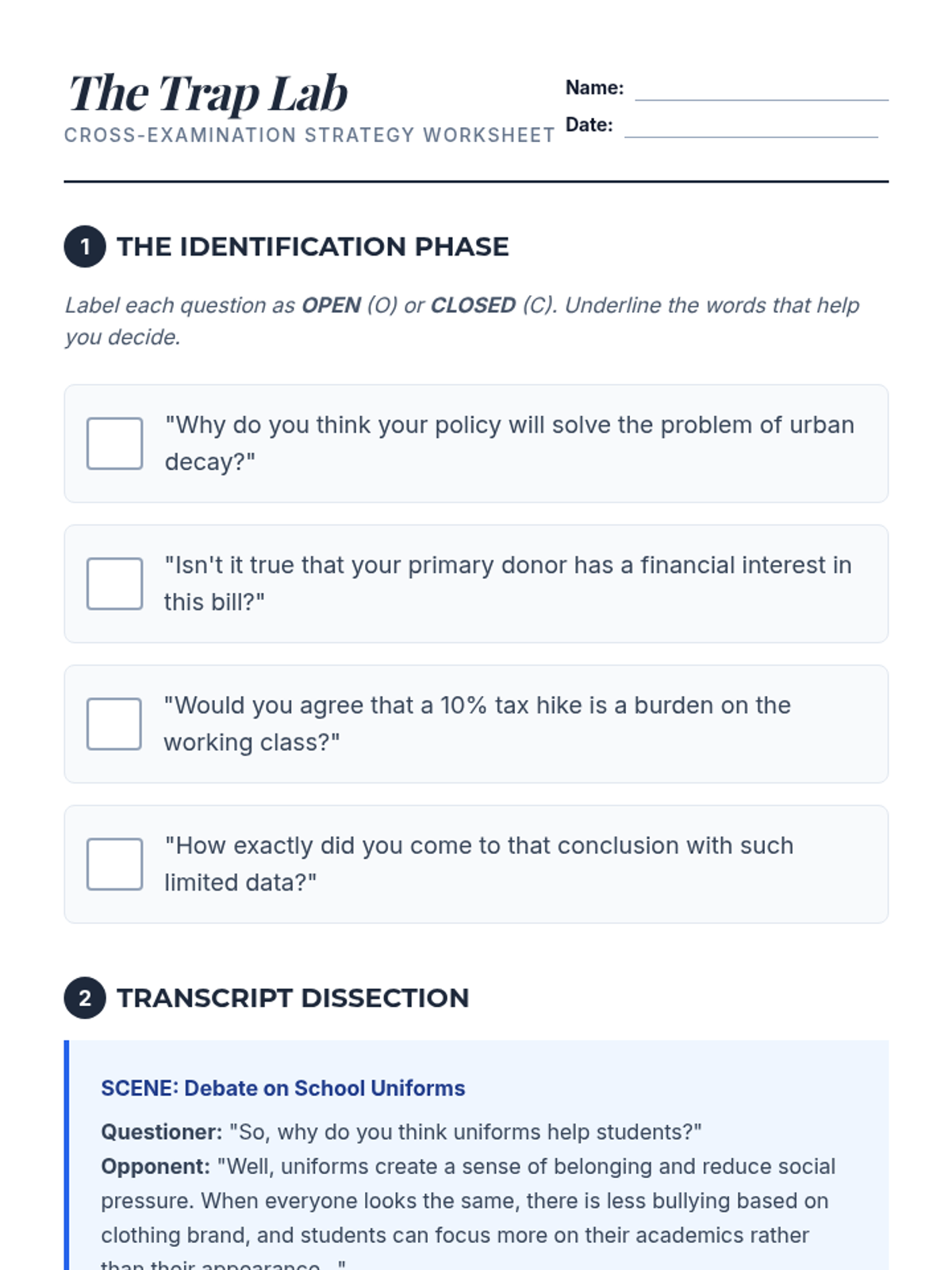
This 9th-grade ELA sequence focuses on the mechanics of strategic questioning in debate. Students progress from basic question types to complex 'lines of questioning' designed to deconstruct arguments and expose evidentiary weaknesses through active listening and logical traps.
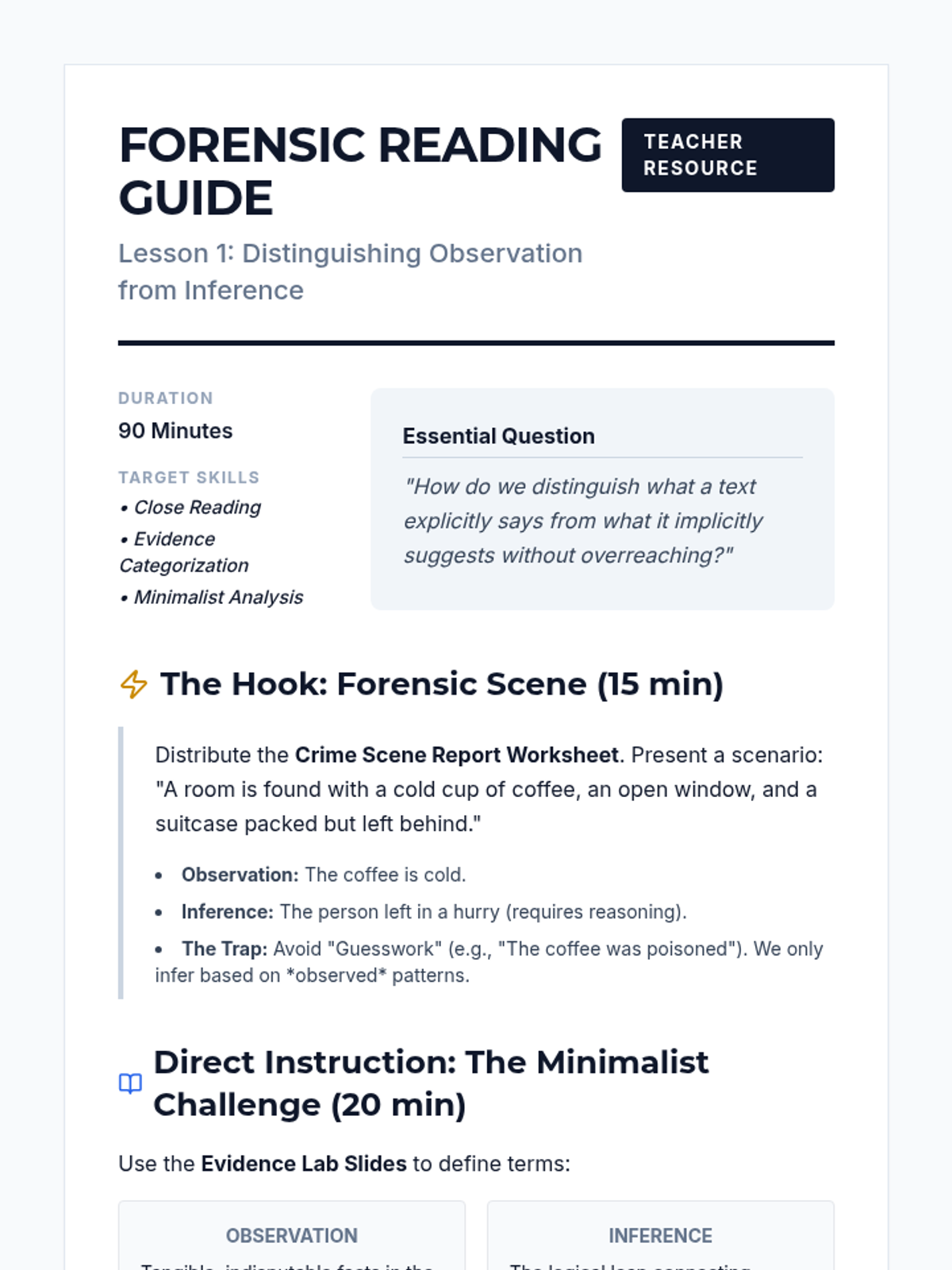
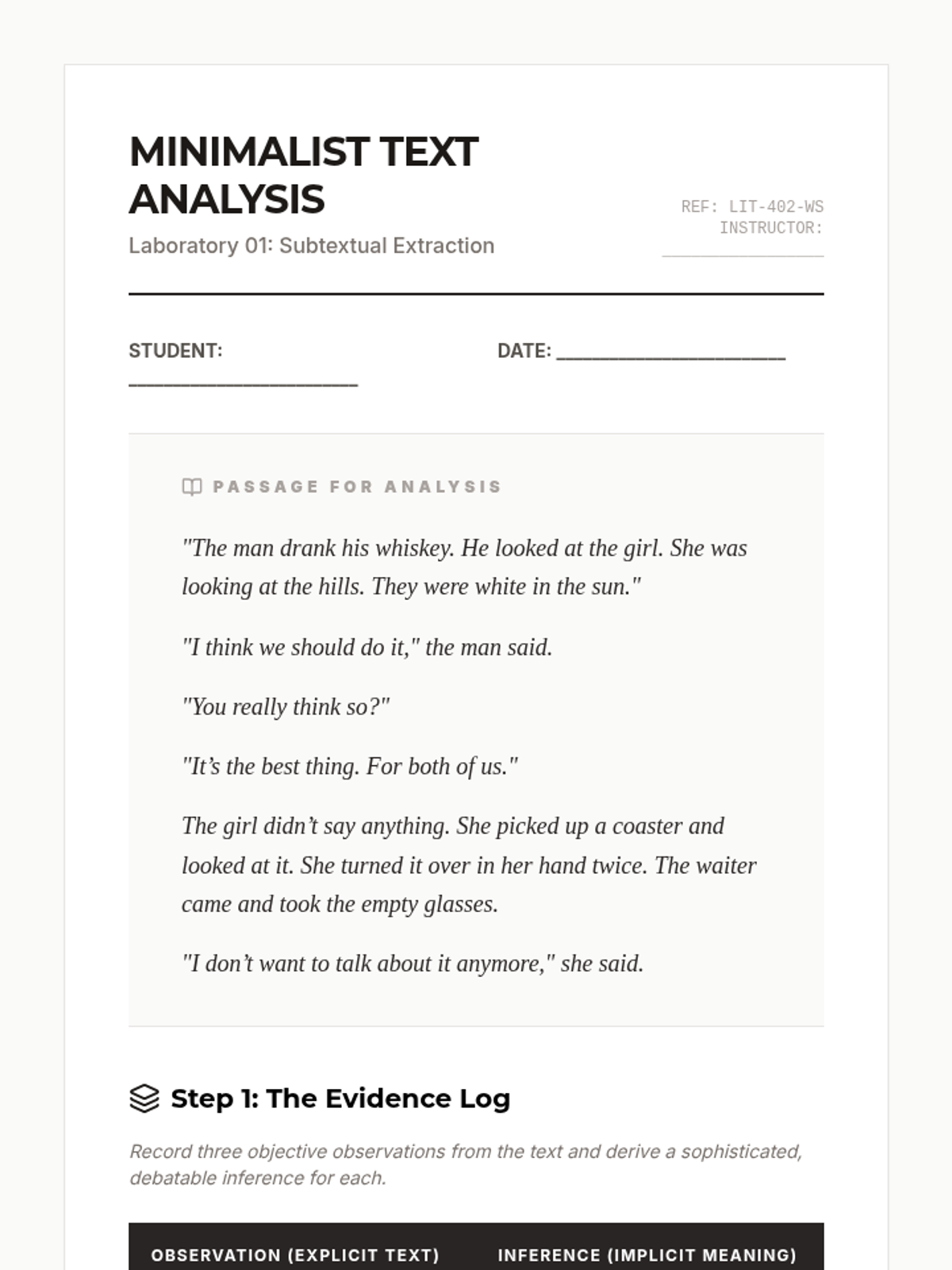
An advanced workshop for undergraduate students focusing on the mechanics of close reading, subtextual analysis, and the construction of evidence-based thematic arguments. Students progress from basic inference to analyzing complex narrative voices and synthesizing evidence into scholarly writing.
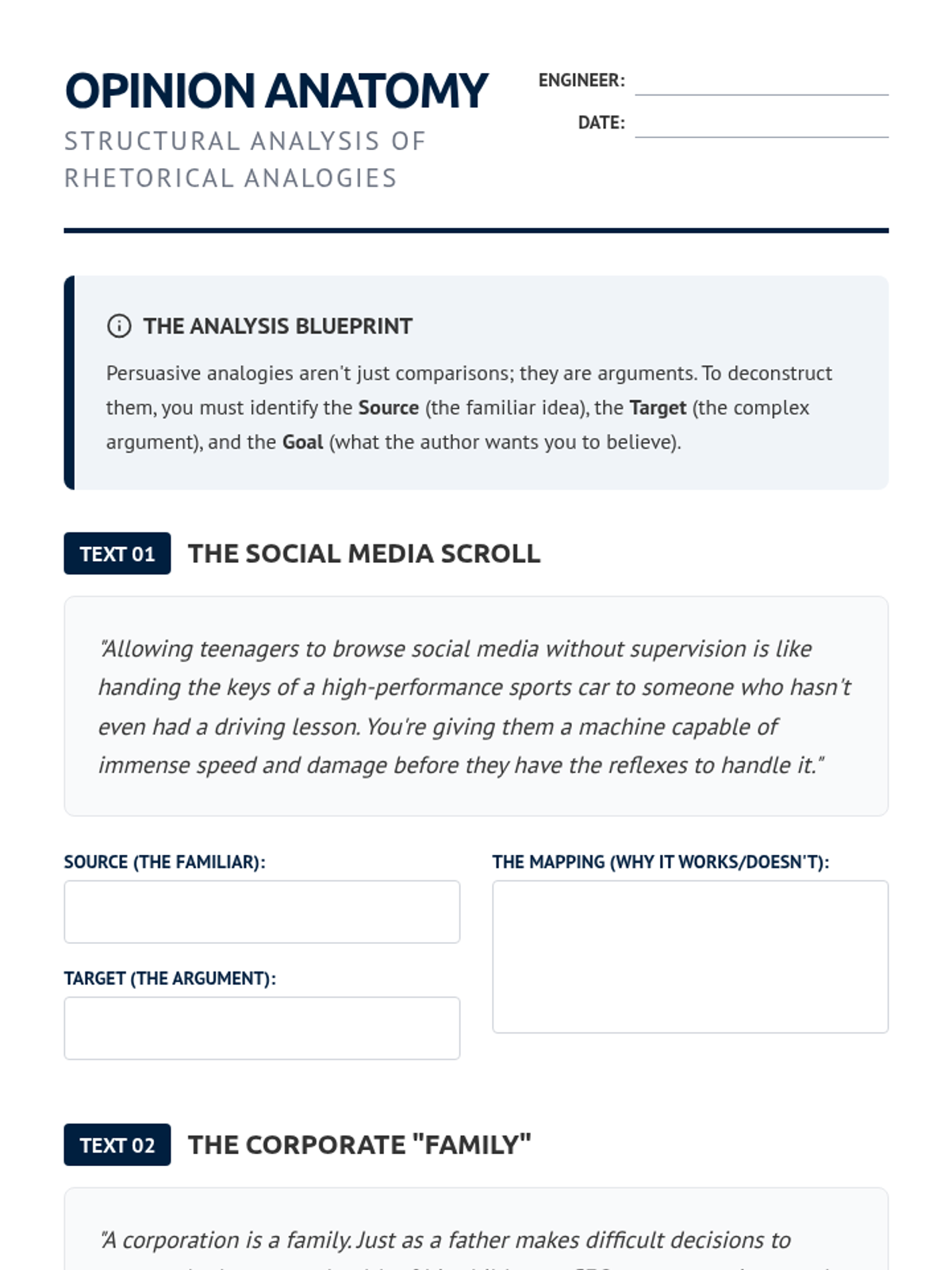
This sequence explores analogies as rhetorical devices in persuasive writing and speech, teaching students to analyze, evaluate, and craft powerful comparisons for argumentation.
A high-level literary analysis sequence for 12th-grade students focused on moving from basic thematic identification to constructing complex, evidence-based arguments using subtext, motif, and narrator reliability.
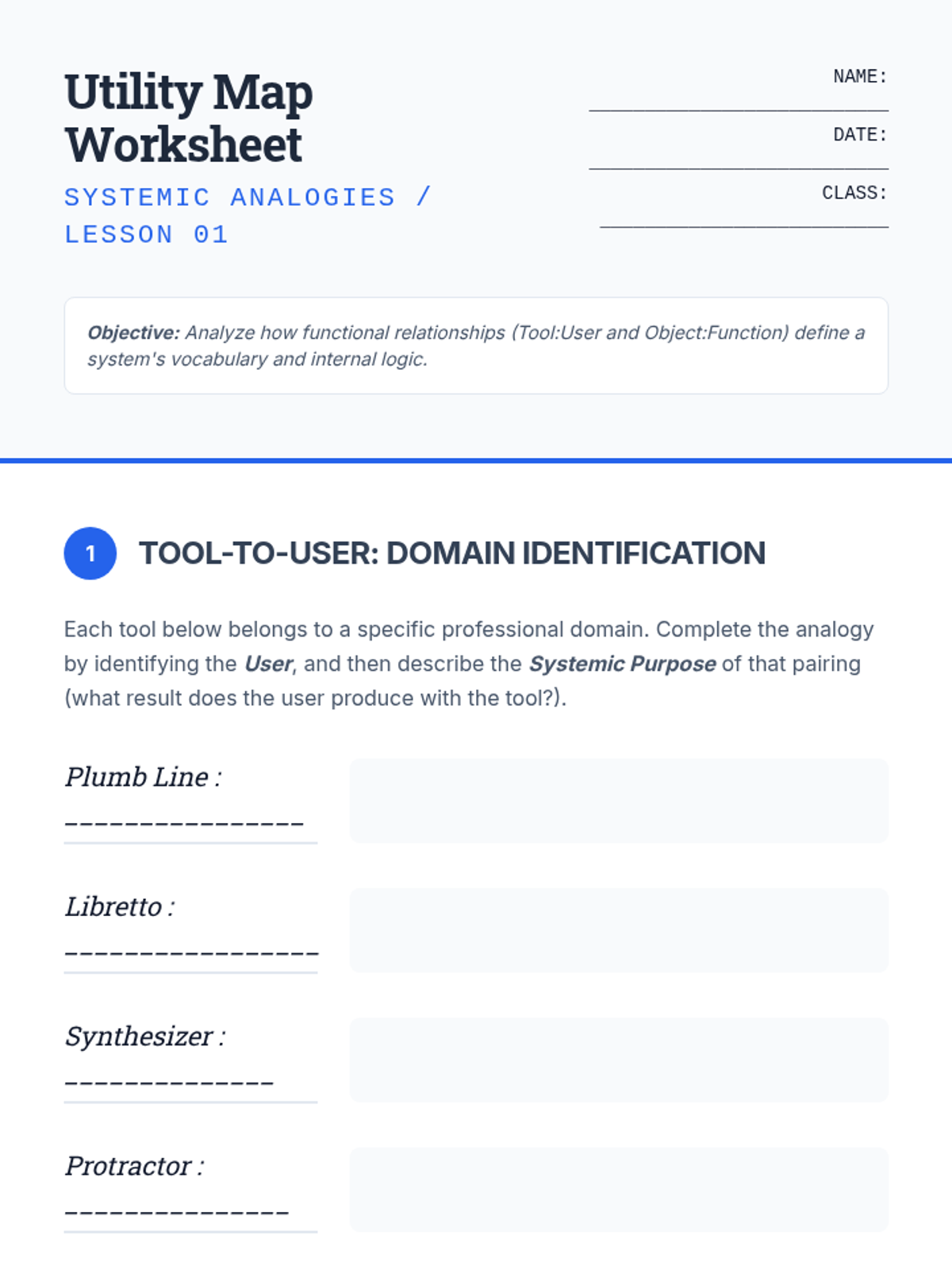
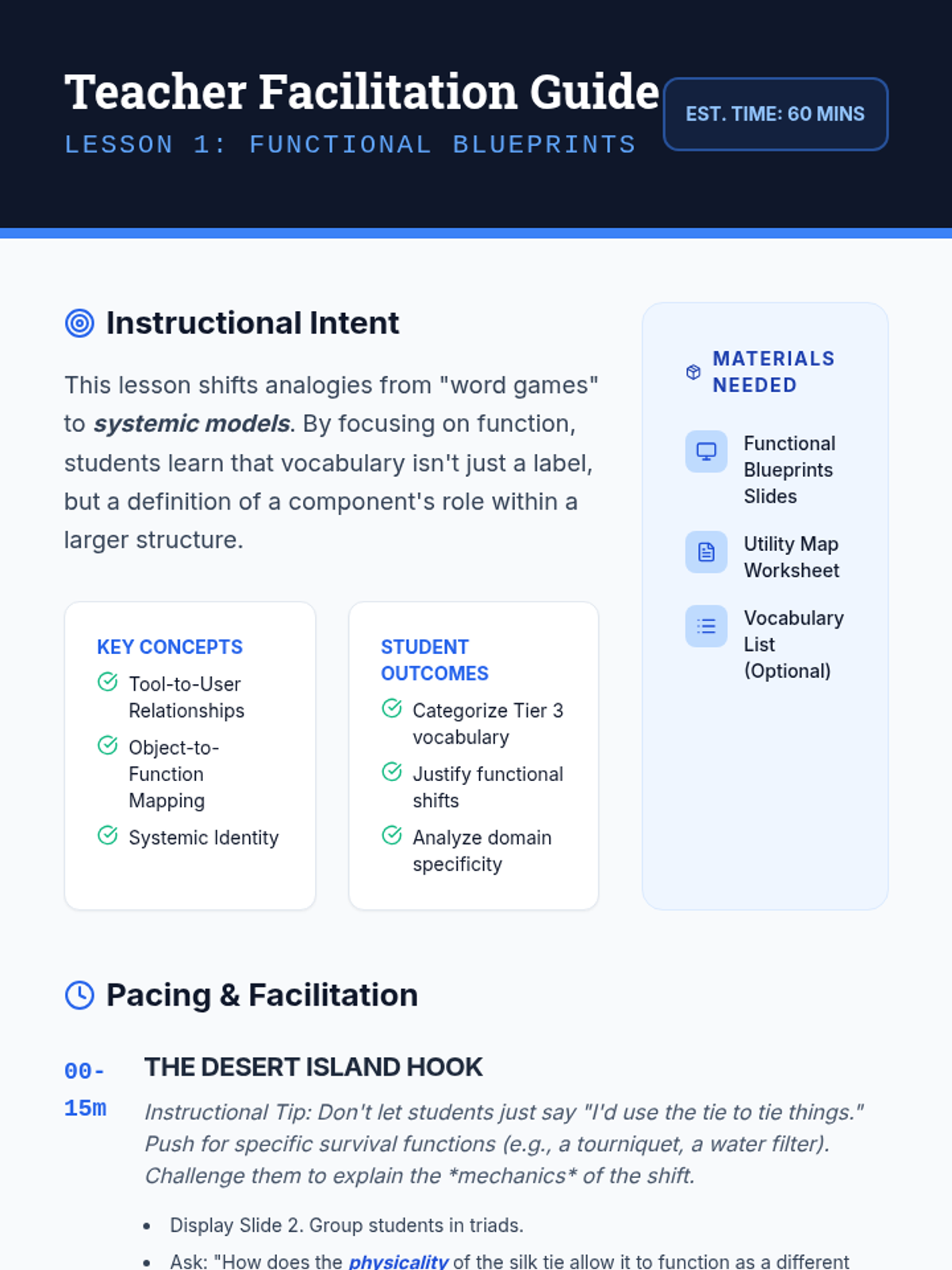
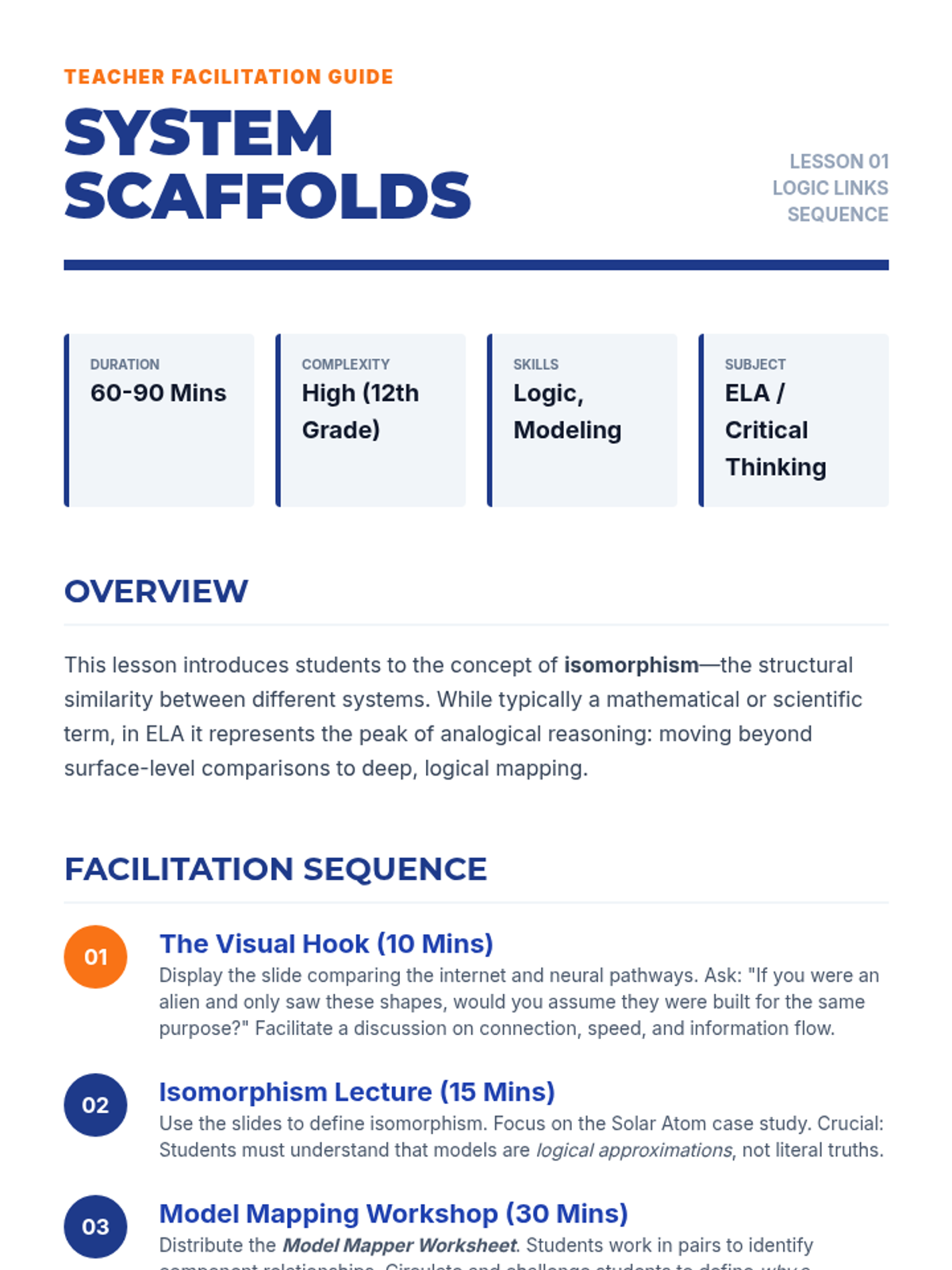
A high-level ELA sequence for 11th grade that explores analogies as cognitive models for complex systems across biology, physics, and history. Students progress from basic functional relationships to constructing and defending interdisciplinary models.
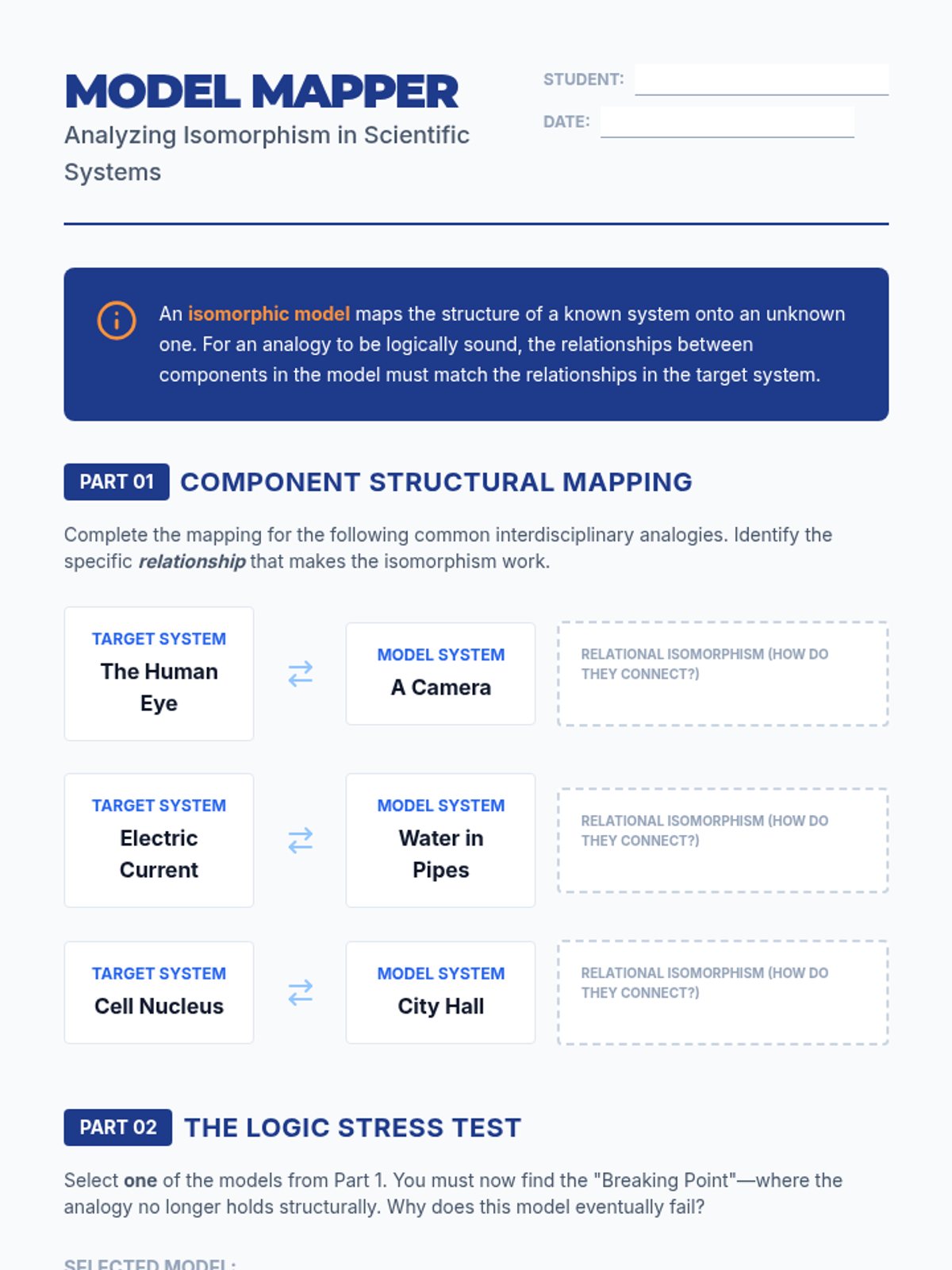
A 12th-grade ELA sequence exploring analogies as structural models across science, history, and technology. Students move from analyzing existing models to designing their own analogical solutions for complex systems.
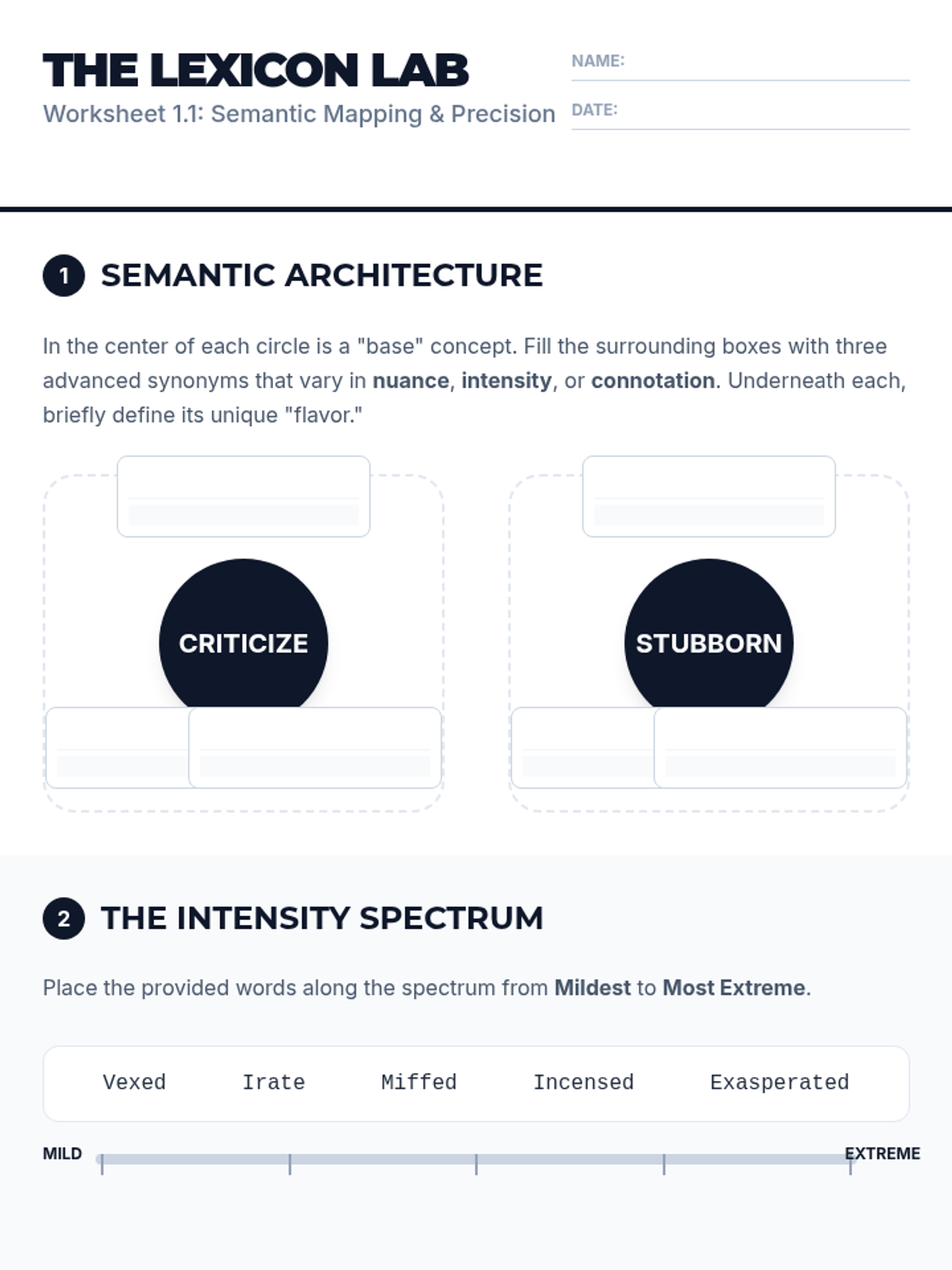
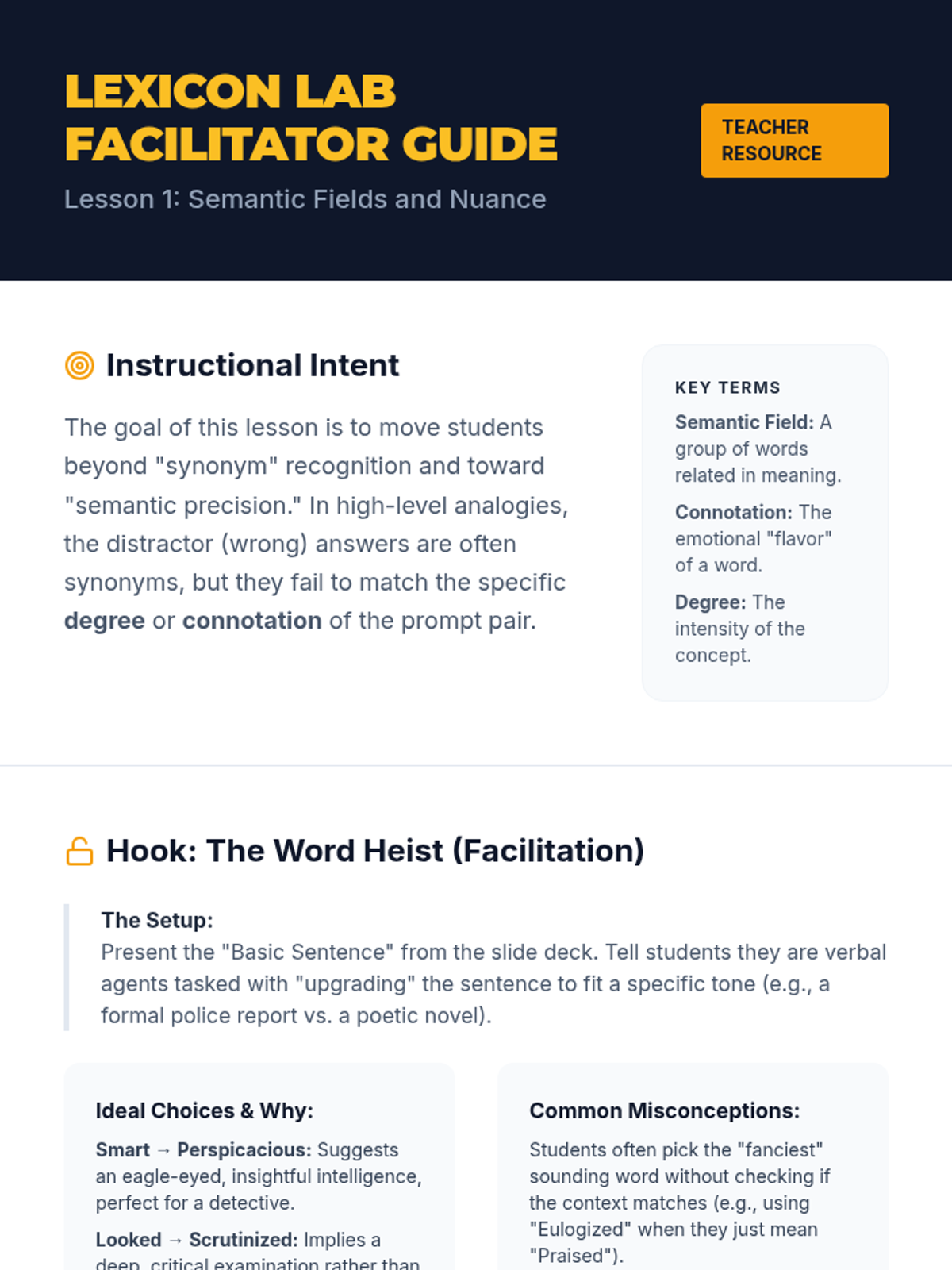
A high-level vocabulary sequence for 12th graders focusing on the semantic precision and logical reasoning required for complex analogies. Students progress from concrete semantic fields to abstract etymological decoding and timed mastery, culminating in a student-led design tournament.
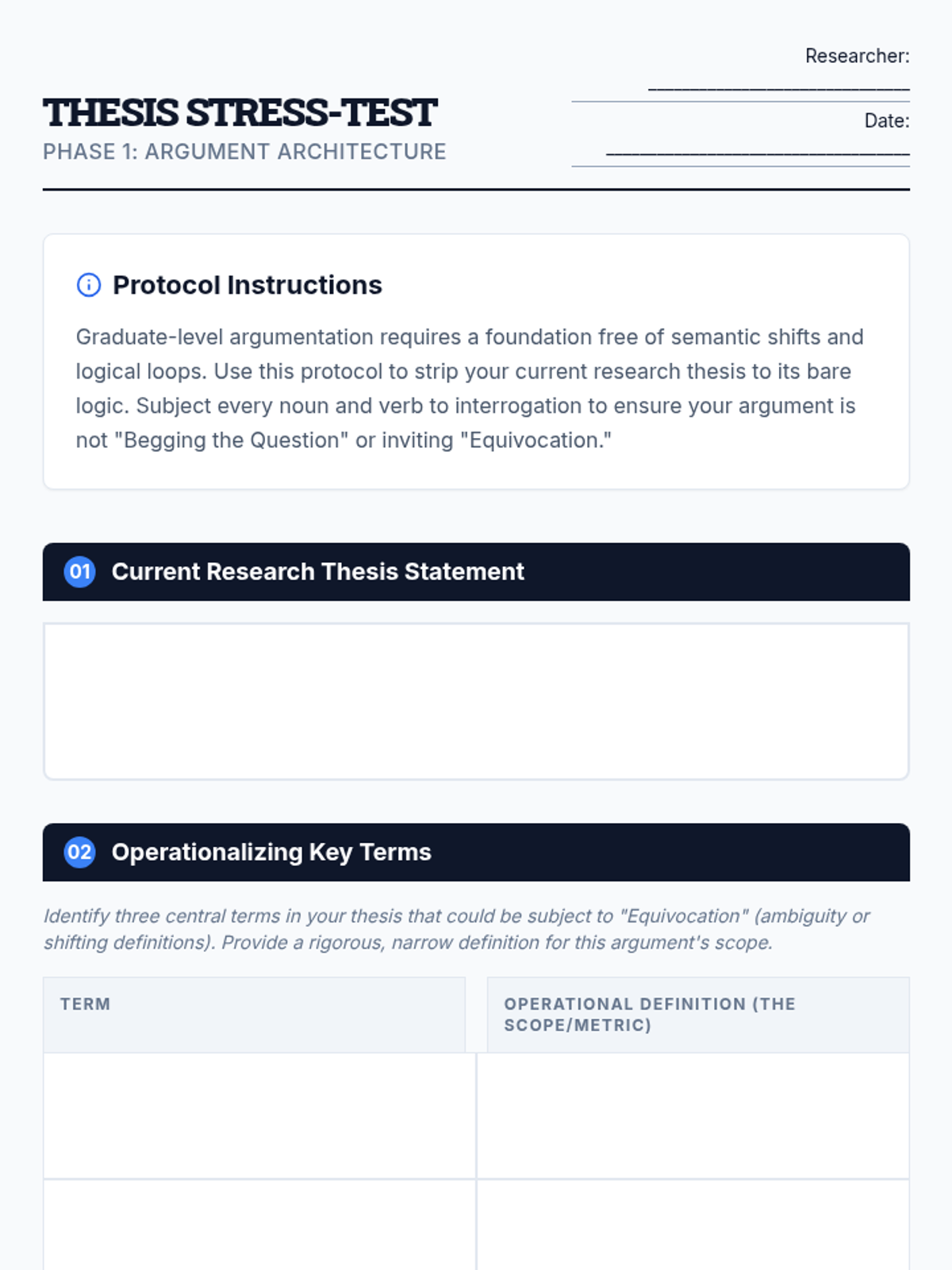
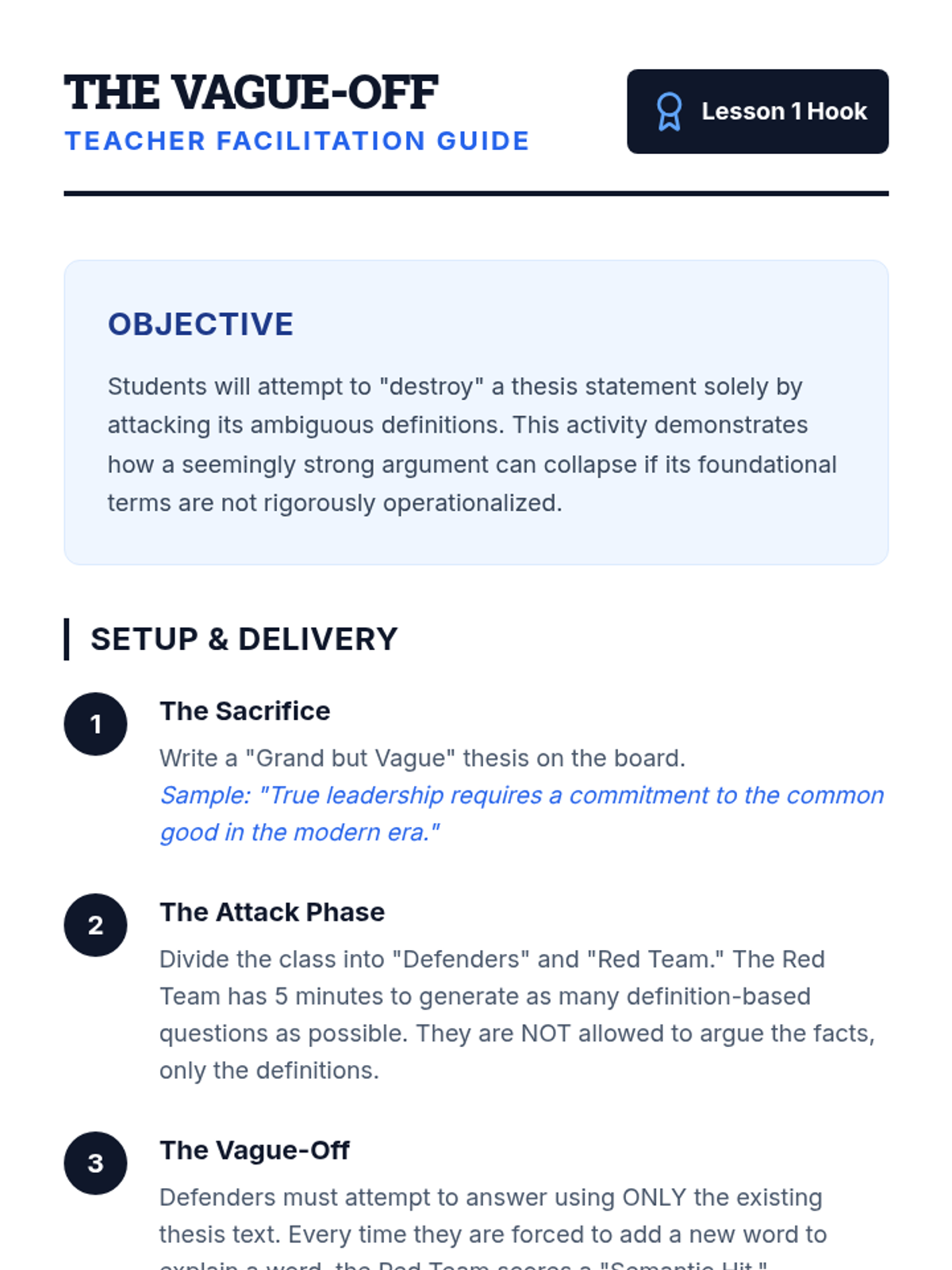
A graduate-level sequence focused on the construction of rigorous, fallacy-free arguments. Students move from thesis stress-testing to oral defense, learning to anticipate counter-attacks and use strategic concession to build unassailable academic positions.
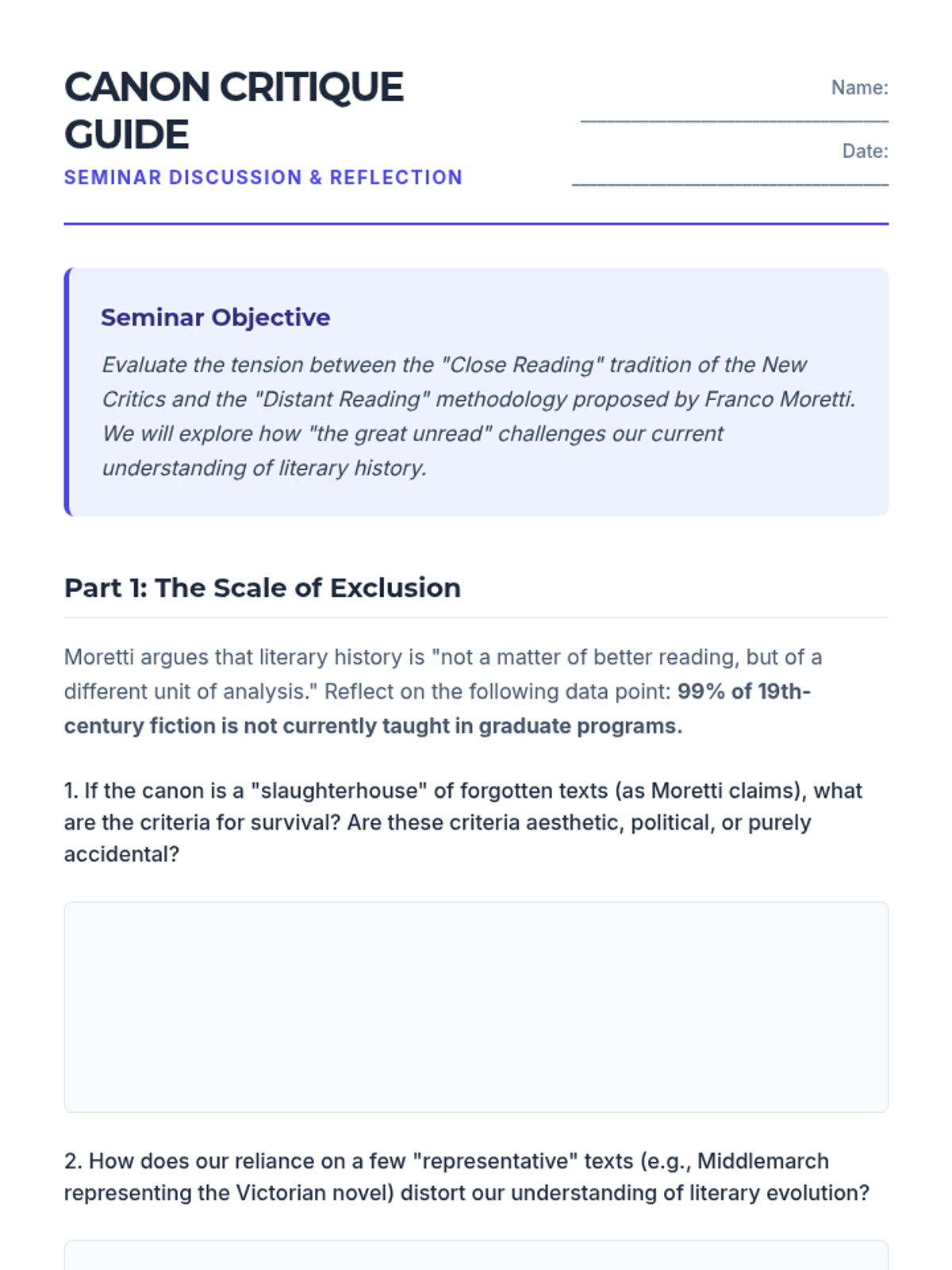
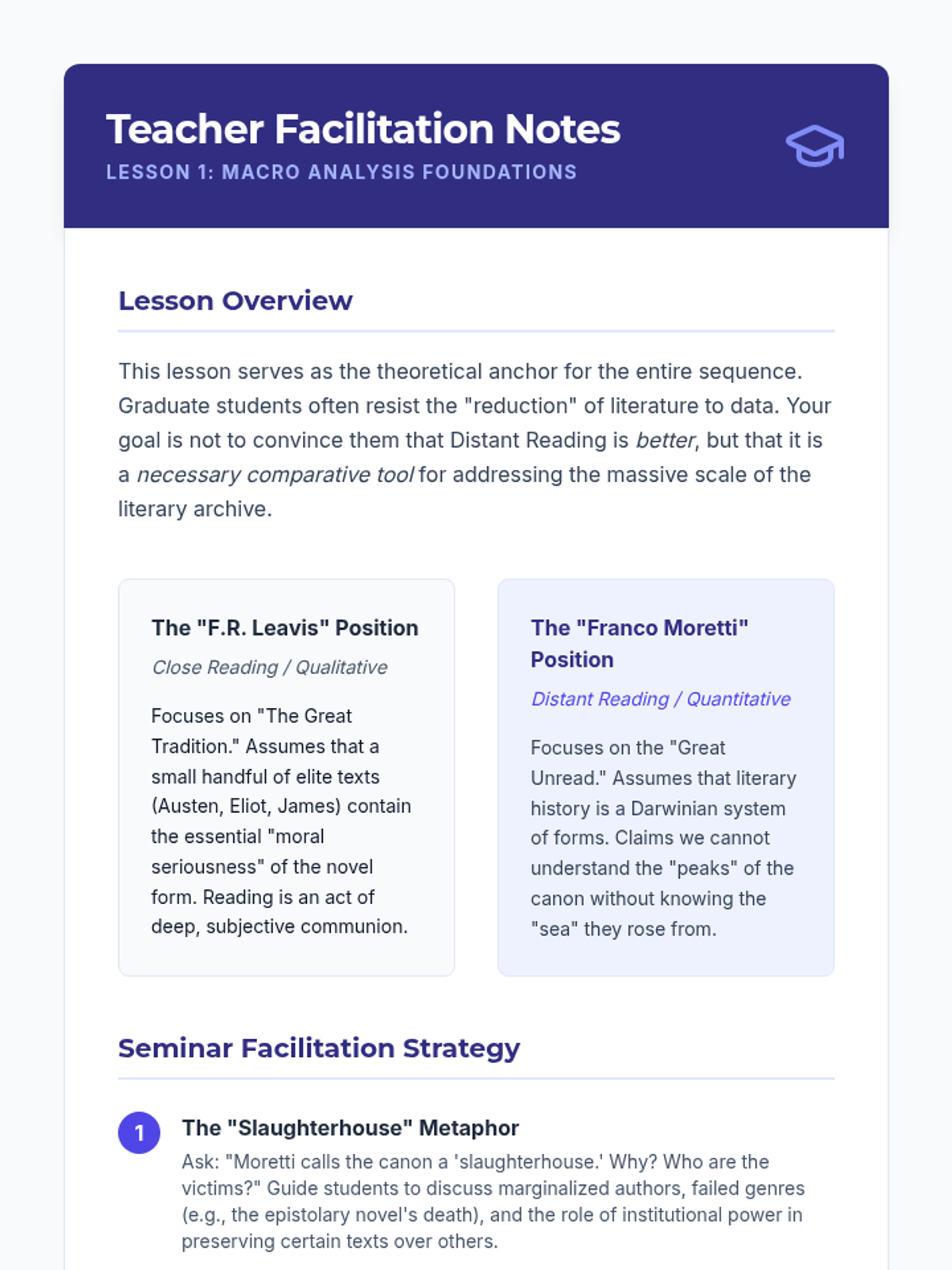
A graduate-level sequence exploring Digital Humanities (DH) methodologies for comparative literary analysis. Students progress from theoretical foundations of 'distant reading' to practical applications in stylometry, topic modeling, and network analysis, culminating in the integration of computational data with traditional critical theory.
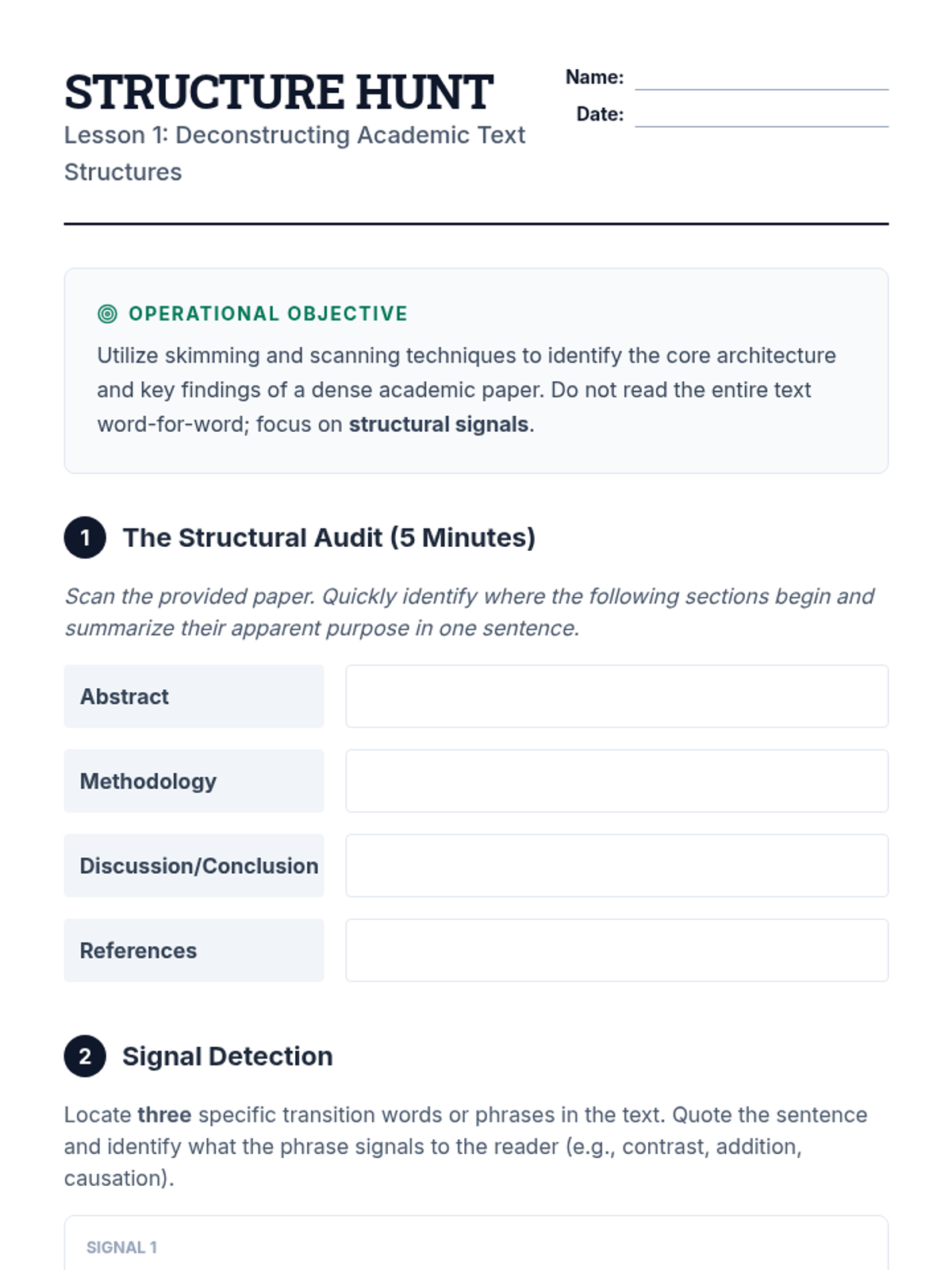
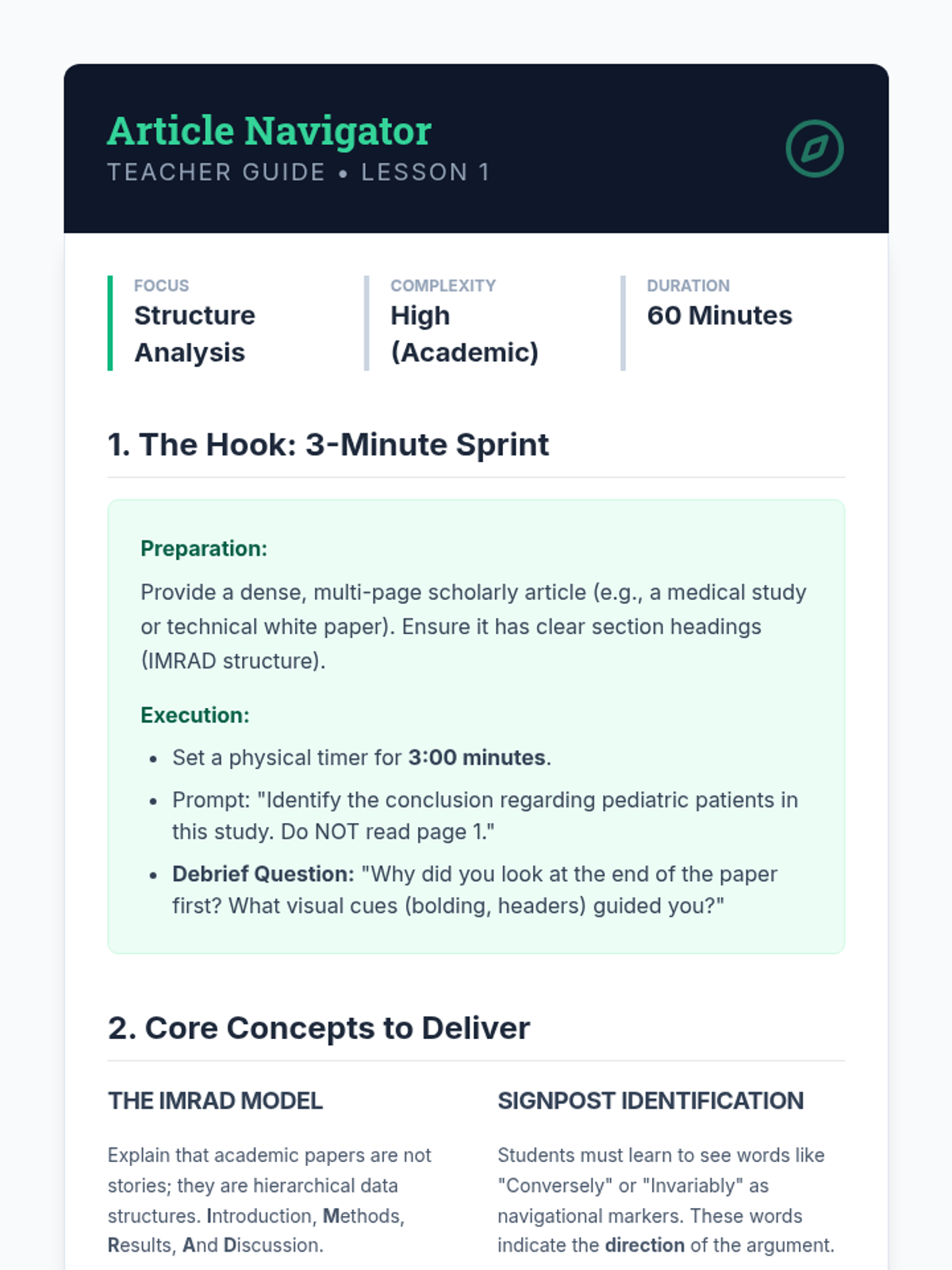
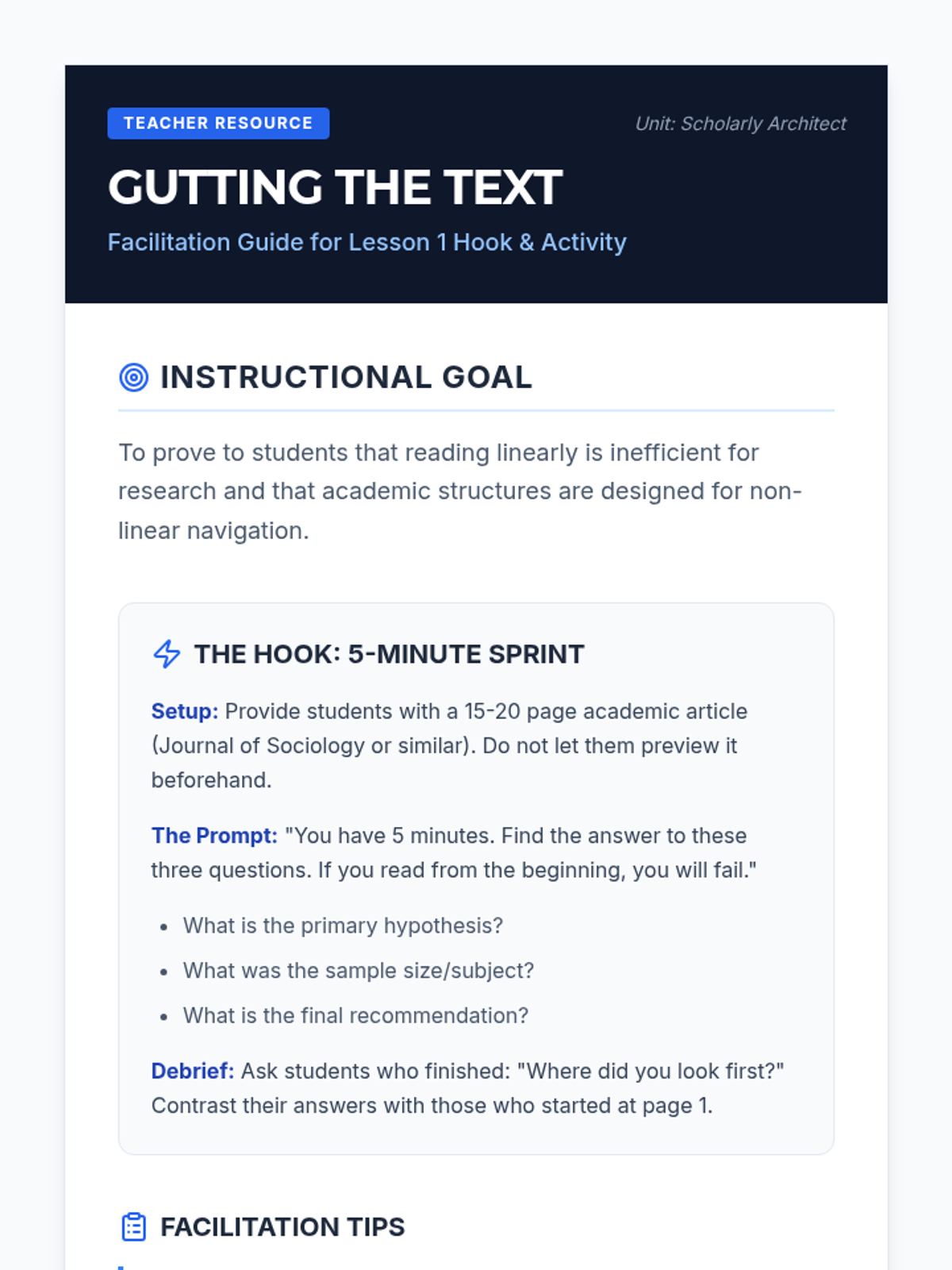
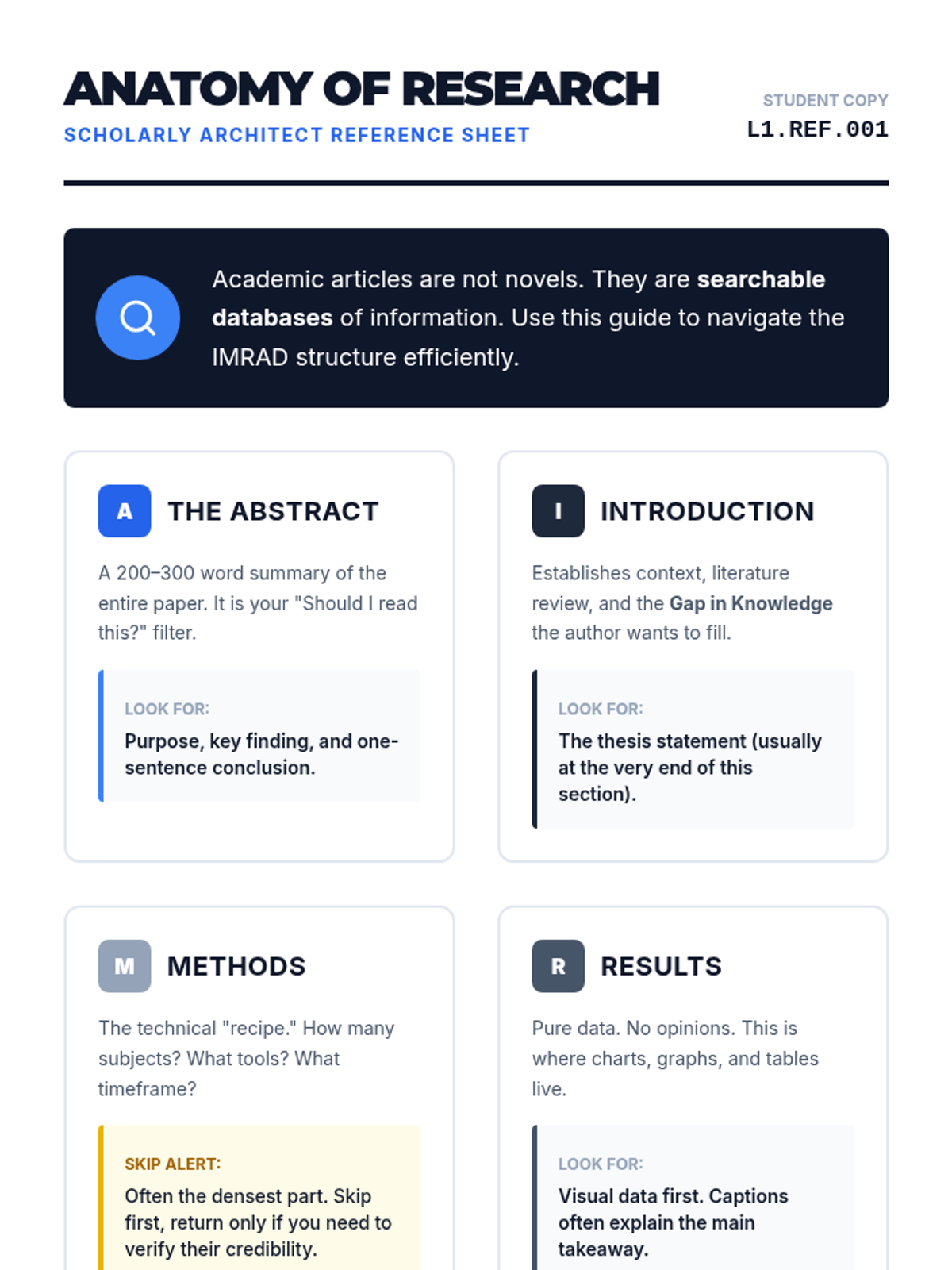
A high-level reading sequence for 12th-grade students focusing on the deconstruction, analysis, and synthesis of complex academic and technical texts to prepare for university-level research.
A comprehensive sequence for 12th Grade students to transition from passive reading to active synthesis of multiple academic sources. Students learn to deconstruct academic papers, annotate critically, paraphrase ethically, and organize findings into a thematic literature review matrix.
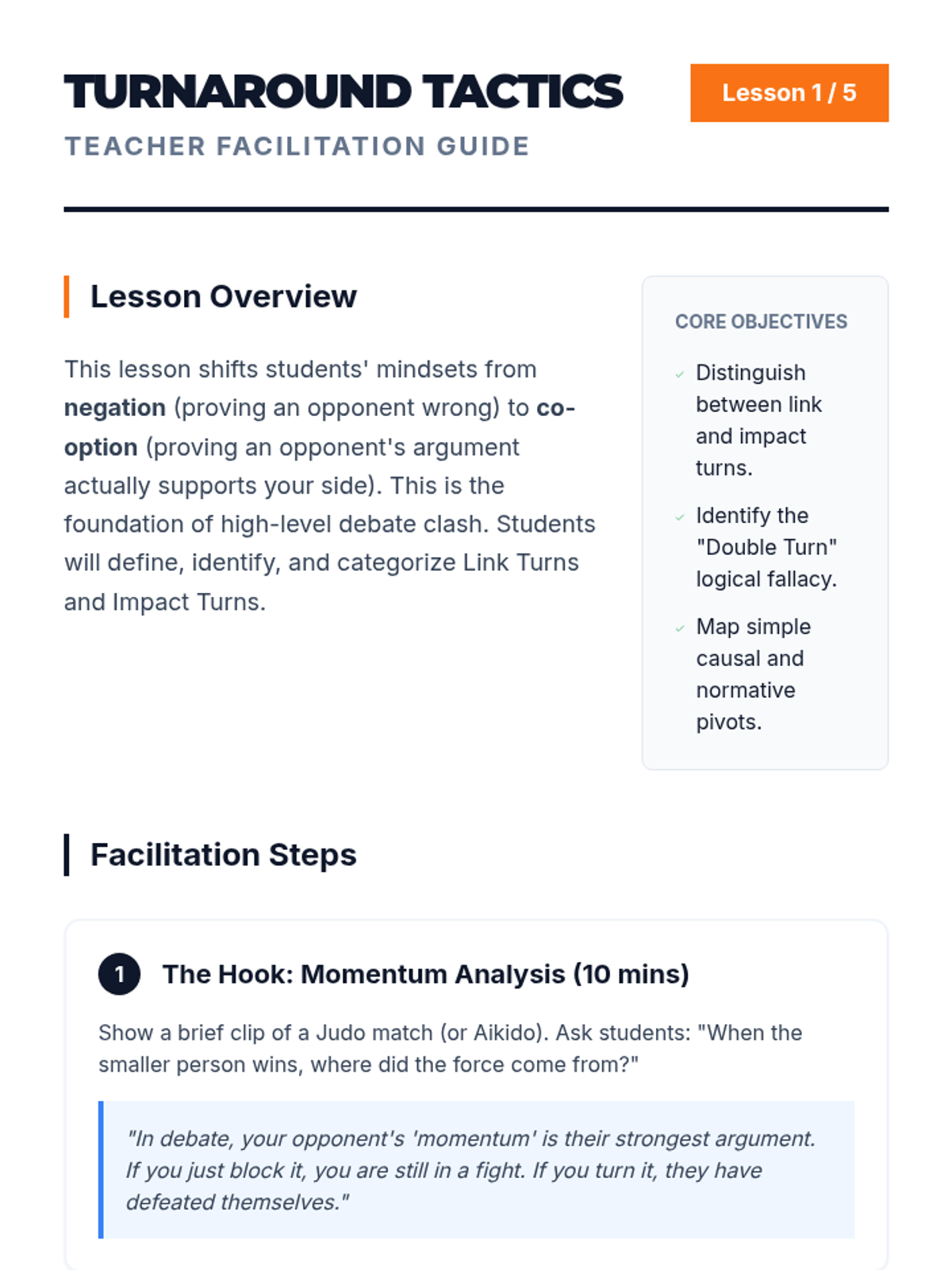
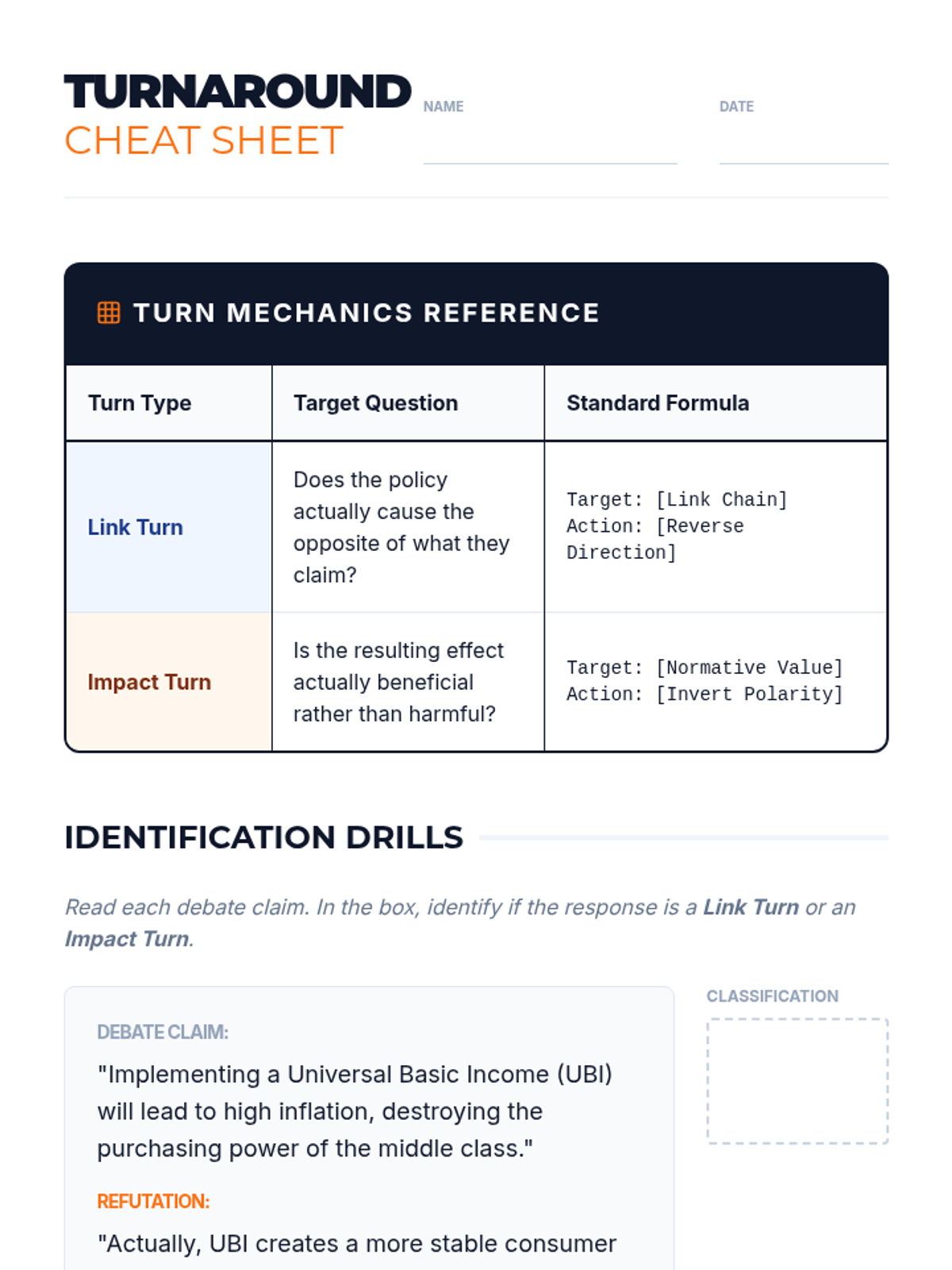
An advanced debate sequence for undergraduate students focused on offensive refutation strategies. Students learn to master link turns, impact turns, and double binds to repurpose opponent logic into their own offensive gains.