Syllogisms, deductive validity, and the principles of inductive probability for evaluating evidence-based claims. Targets common logical fallacies and the construction of sound, persuasive arguments.
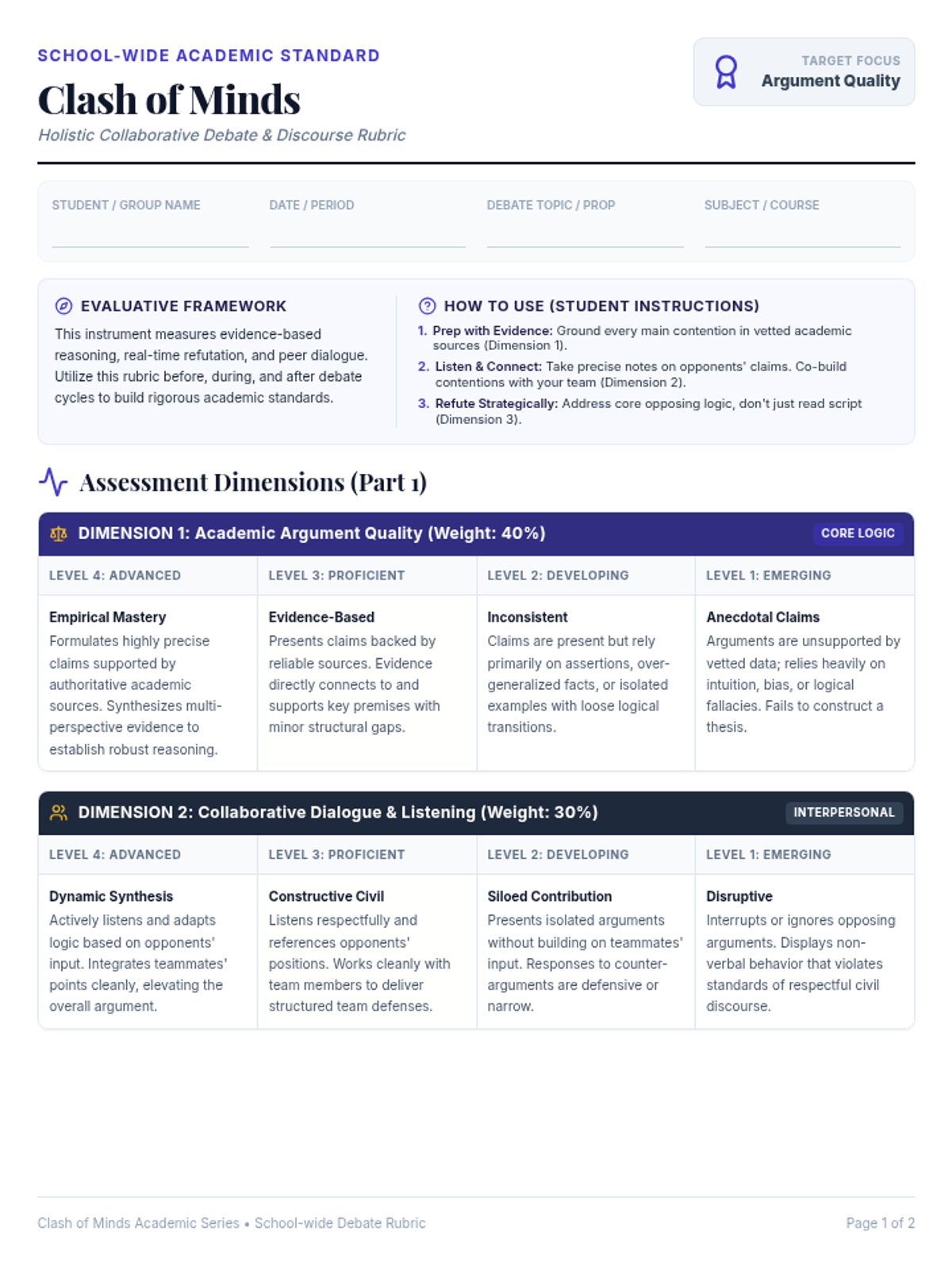
A foundational lesson containing frameworks and evaluative tools to support rigorous, evidence-based collaborative debate. It focuses on elevating academic argument quality, critical thinking, and respectful civil dialogue across different subjects and grade levels.
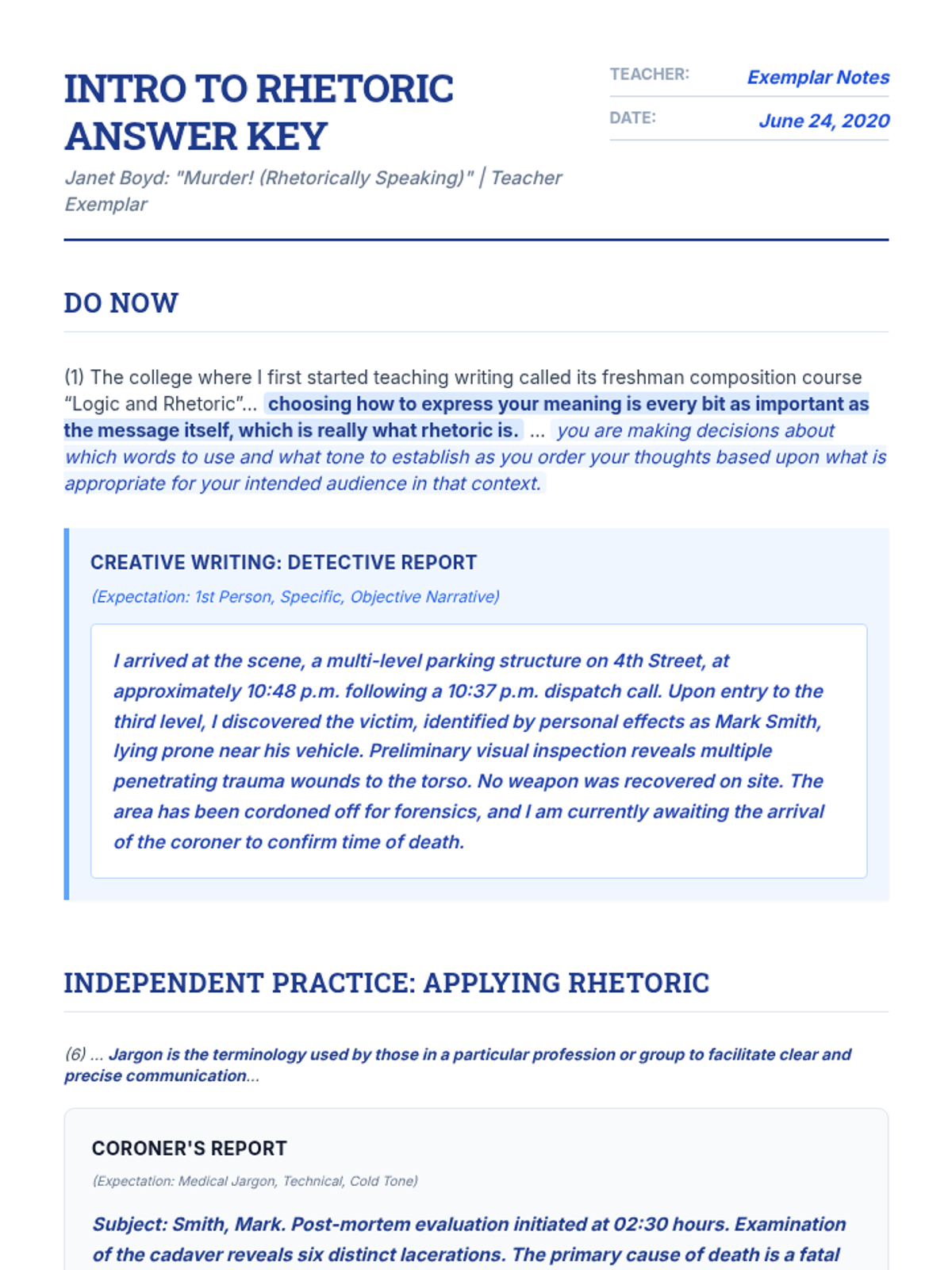
An introductory lesson on rhetoric through Janet Boyd's "Murder! (Rhetorically Speaking)", where students explore how audience, context, and genre shape rhetorical choices.
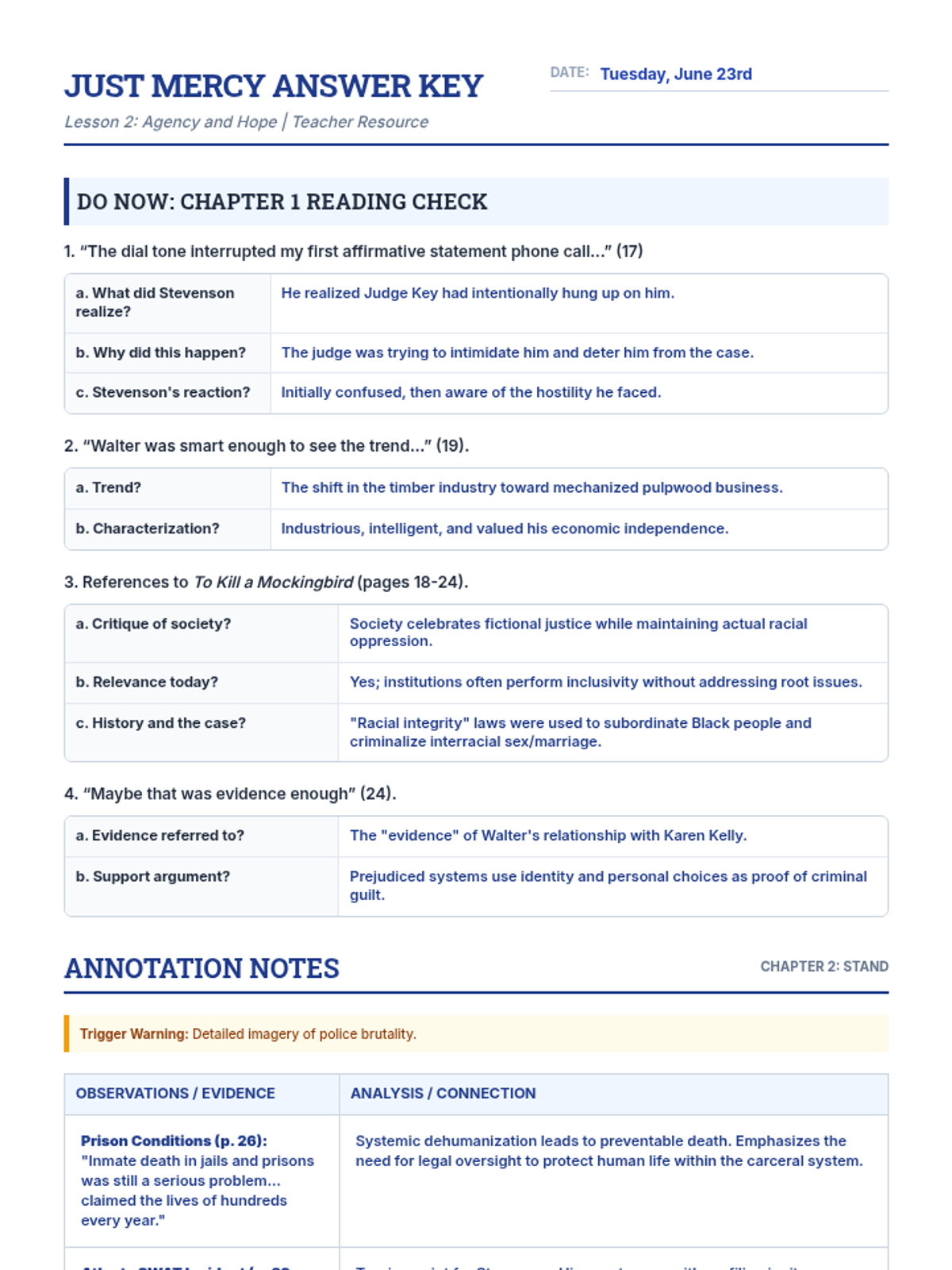
This lesson analyzes Chapter 2 of Just Mercy, focusing on how Stevenson develops his argument about individual agency and the inciting of change through knowledge and hope.
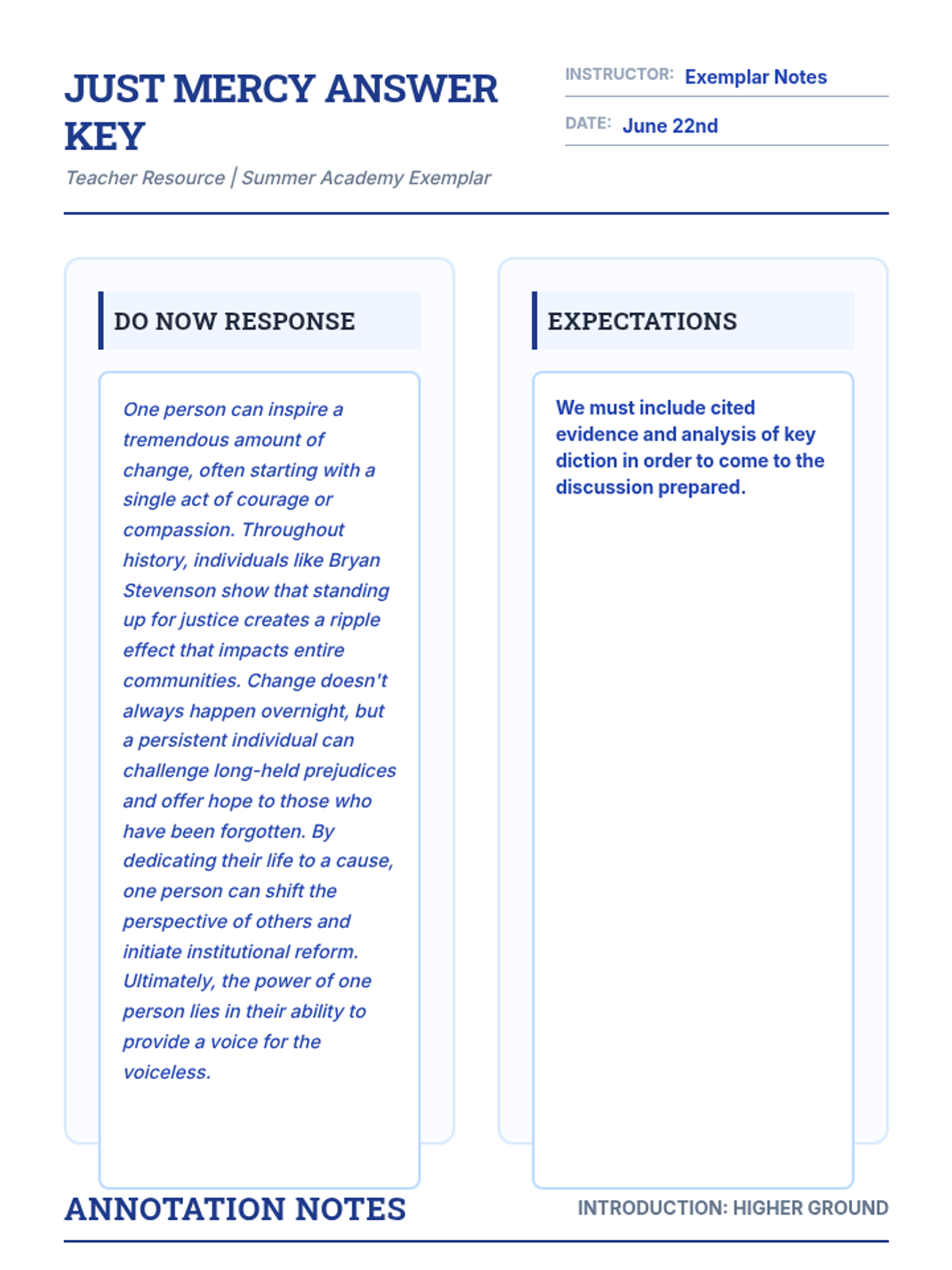
An introductory lesson on Just Mercy by Bryan Stevenson, focusing on characterization, systemic injustice, and the power of hope in the Introduction and Chapter 1.
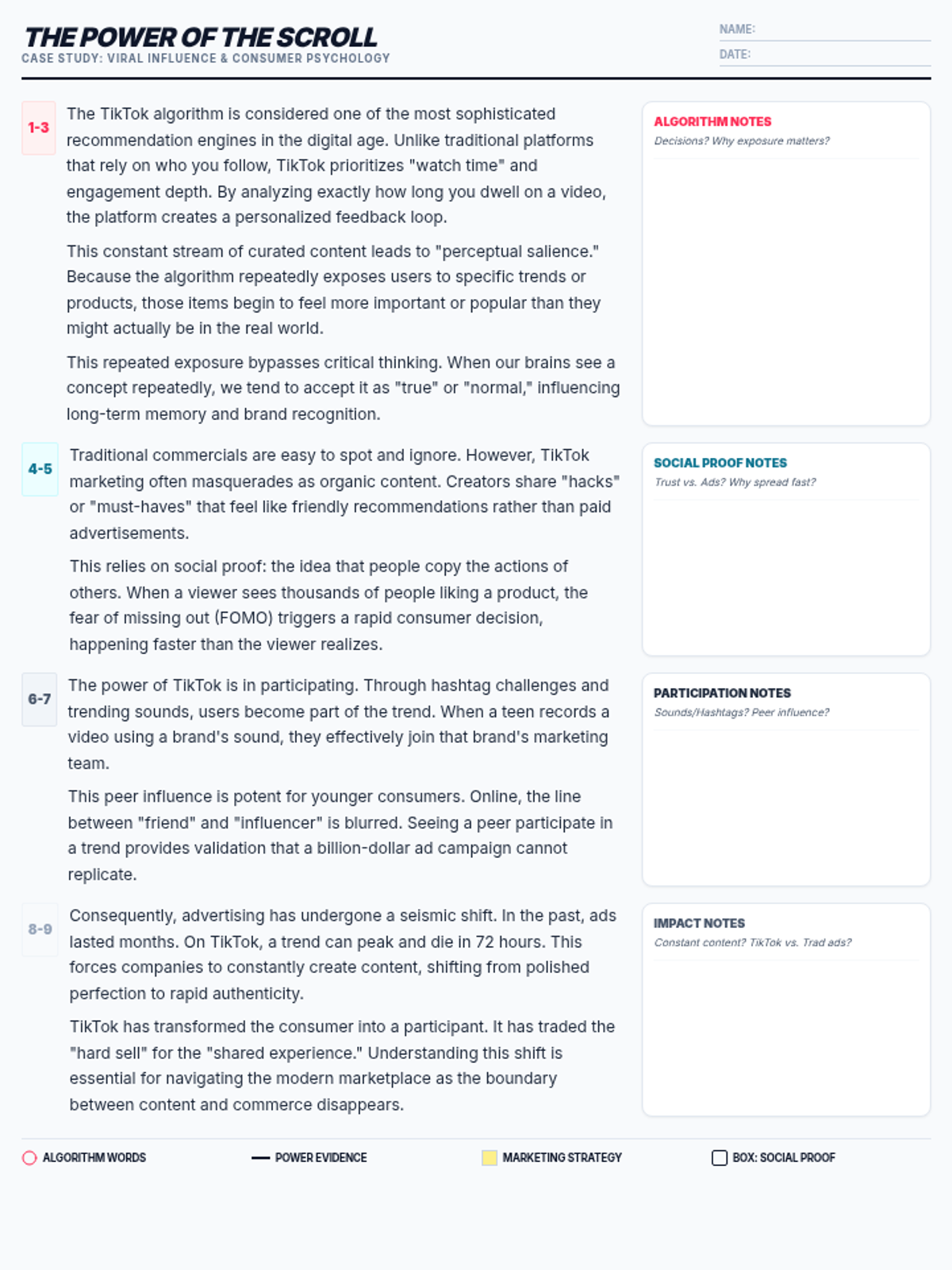
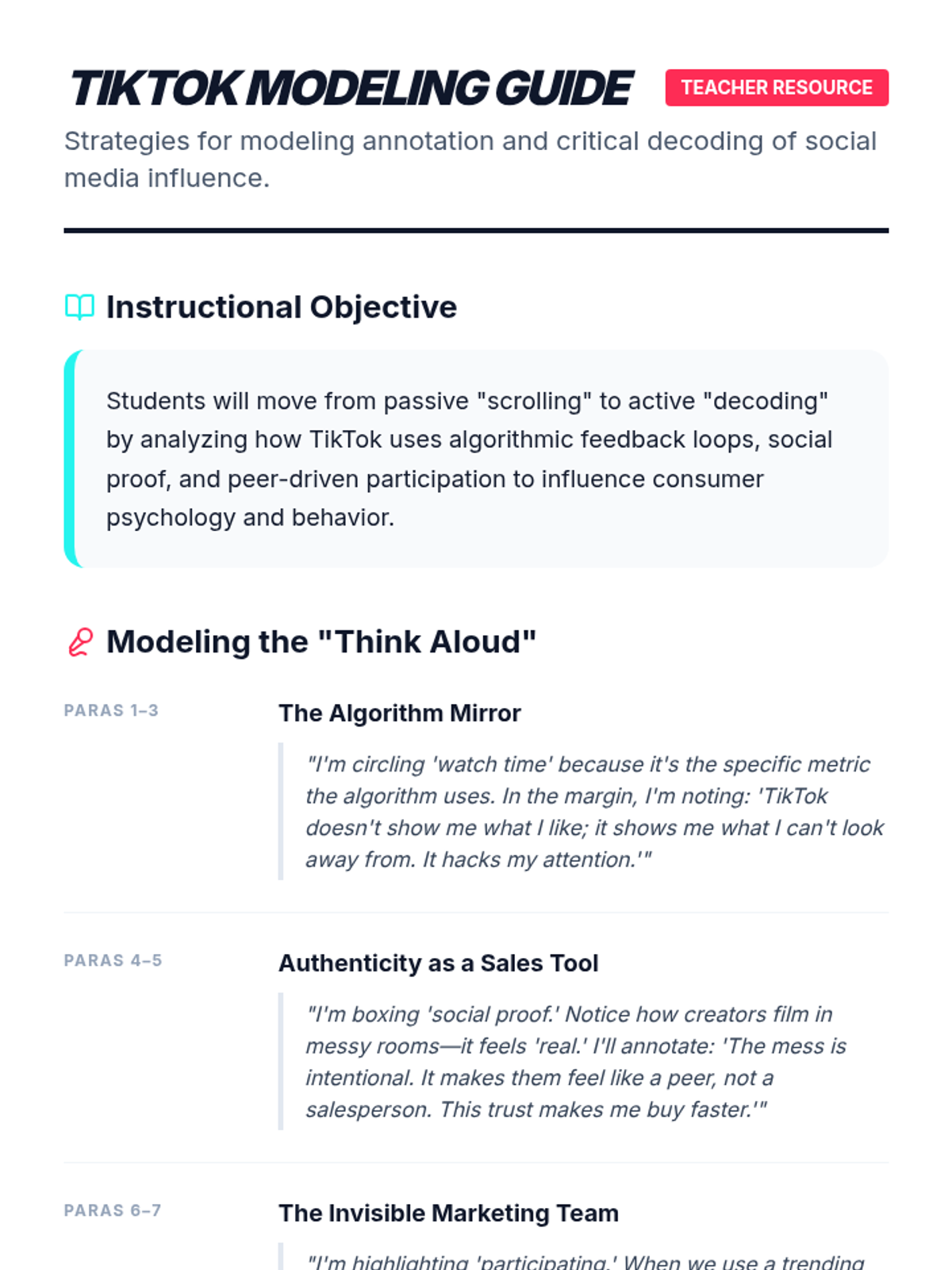
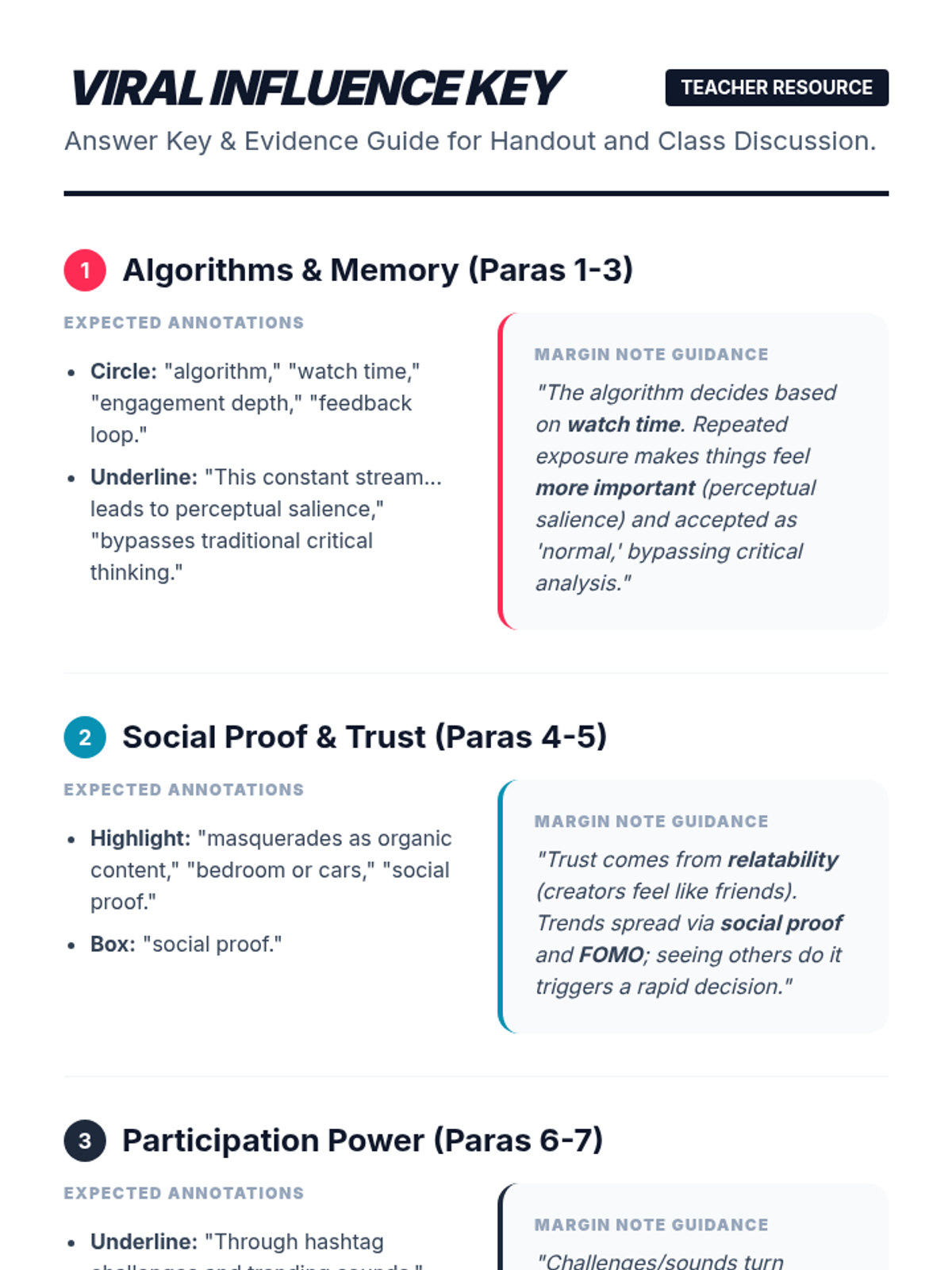
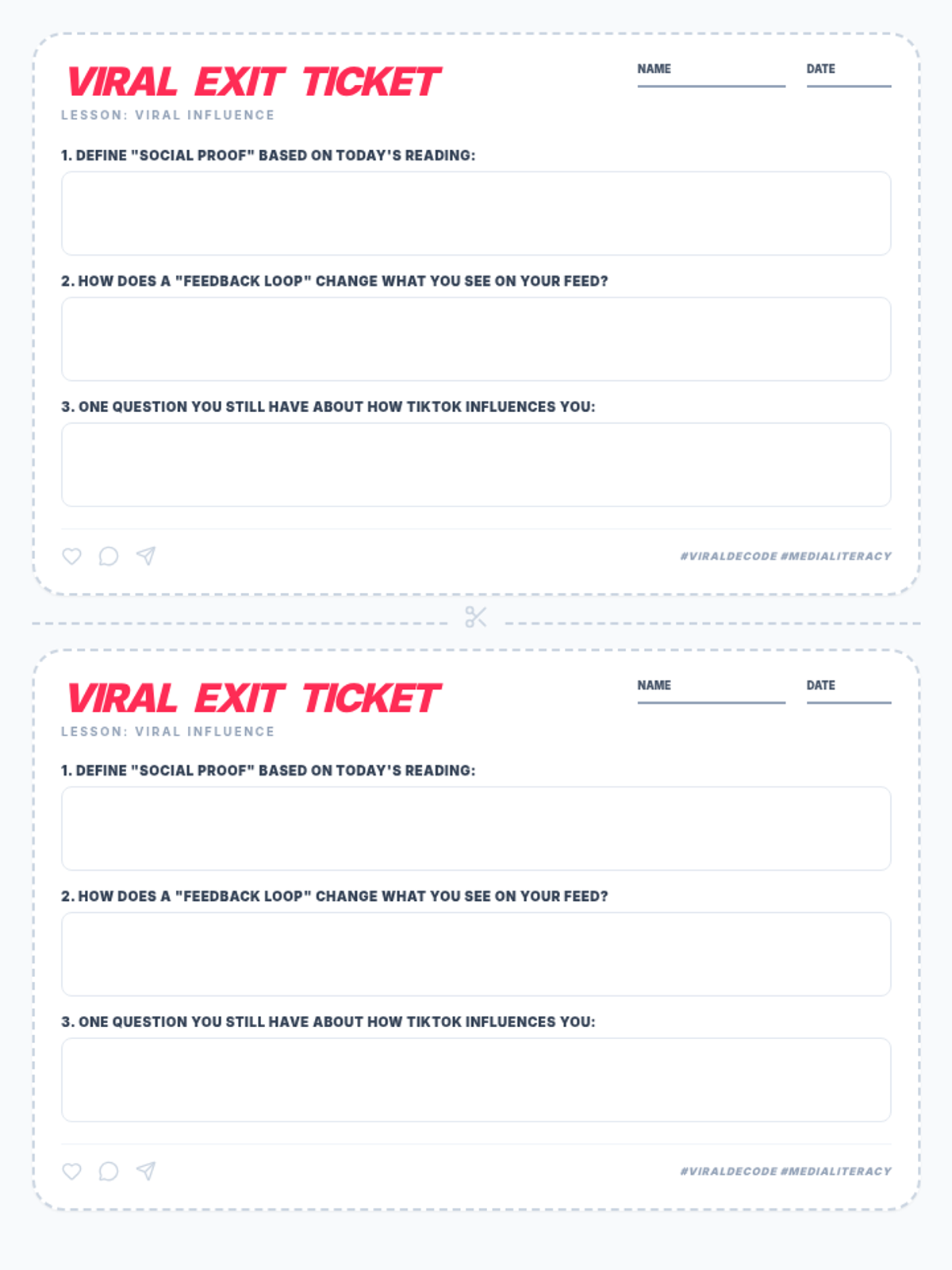
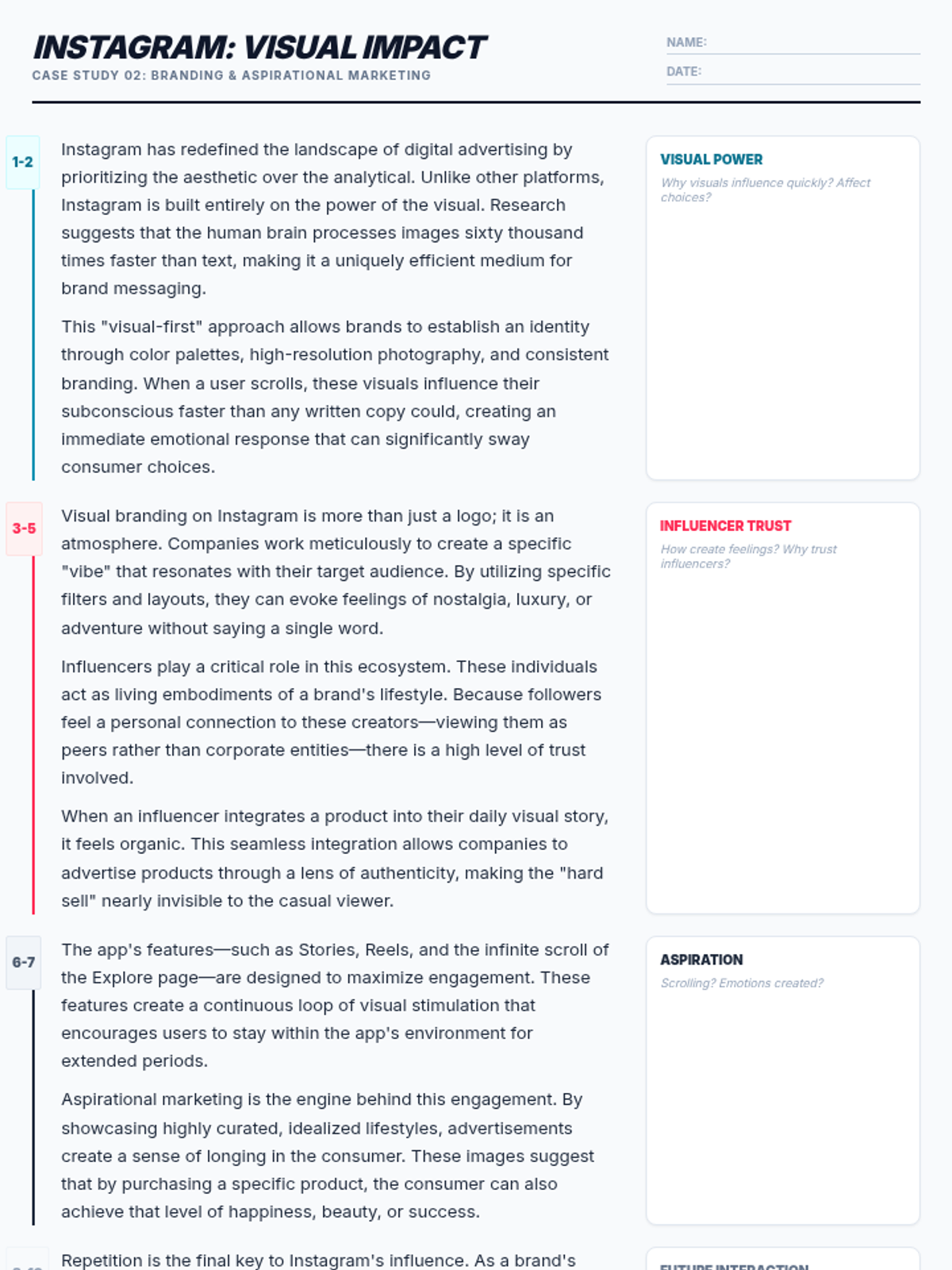
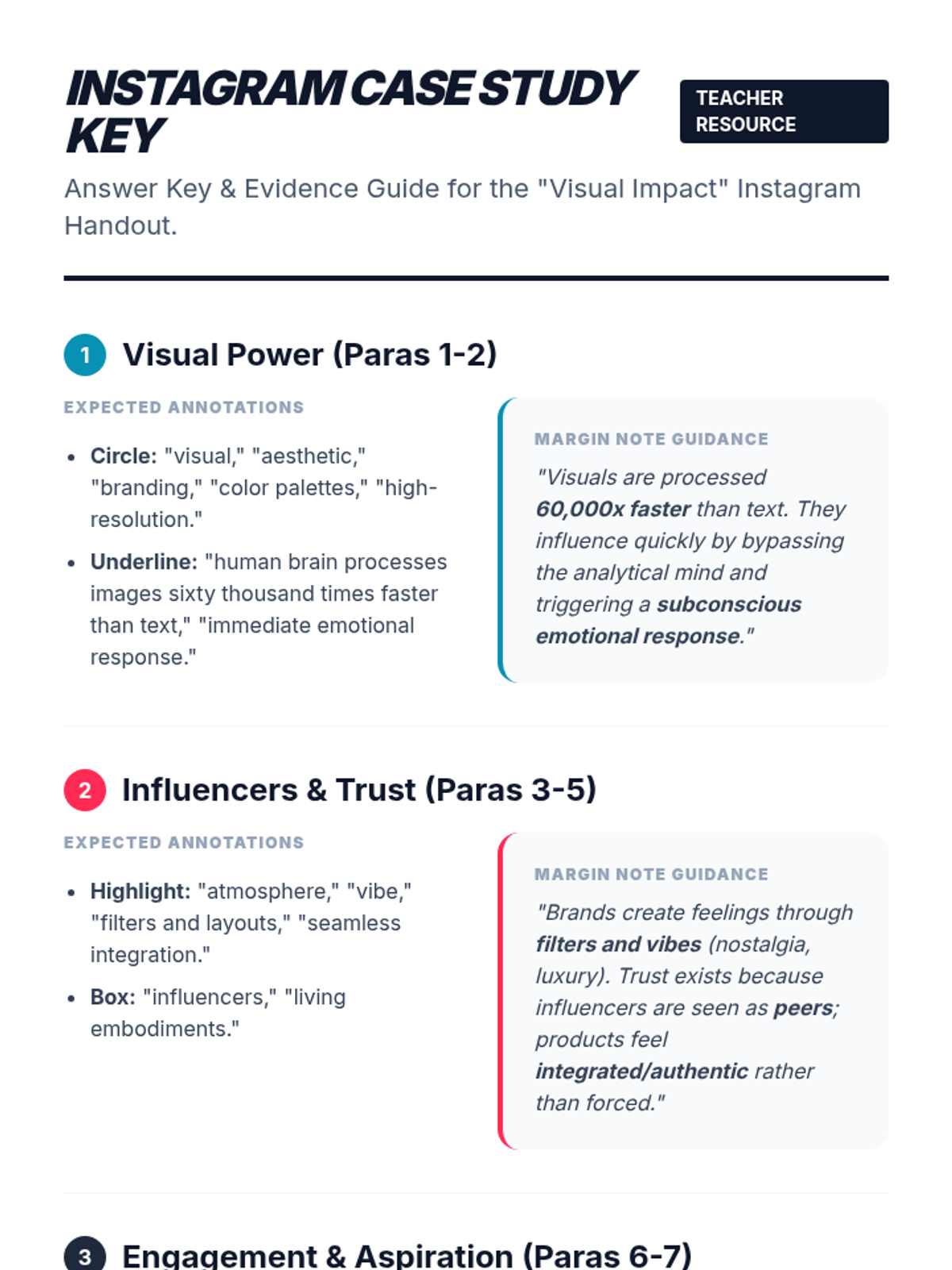
An exploration of TikTok's psychological and marketing influence, focusing on algorithmic power, social proof, and peer-driven trends through modeled annotation practices.
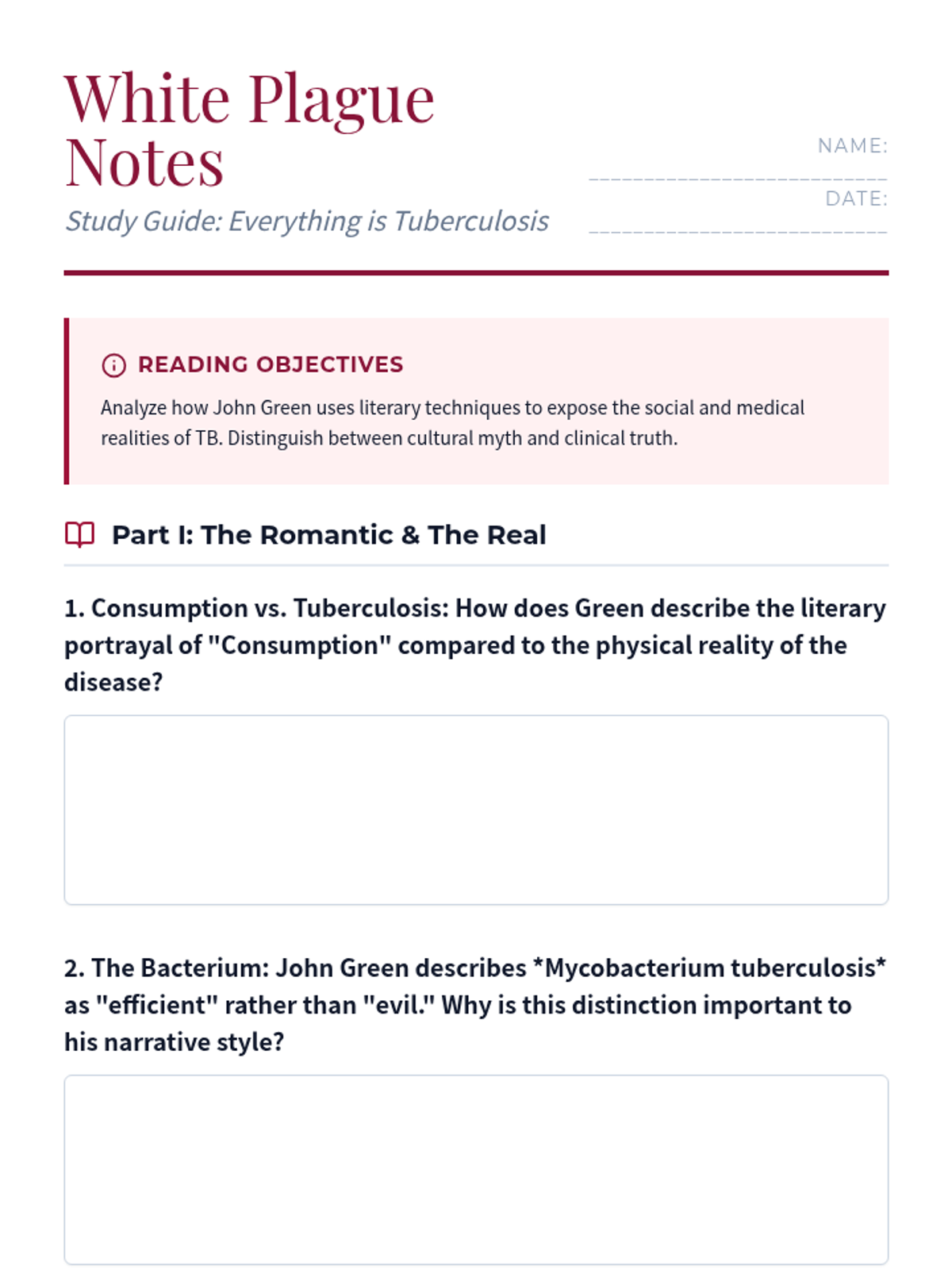
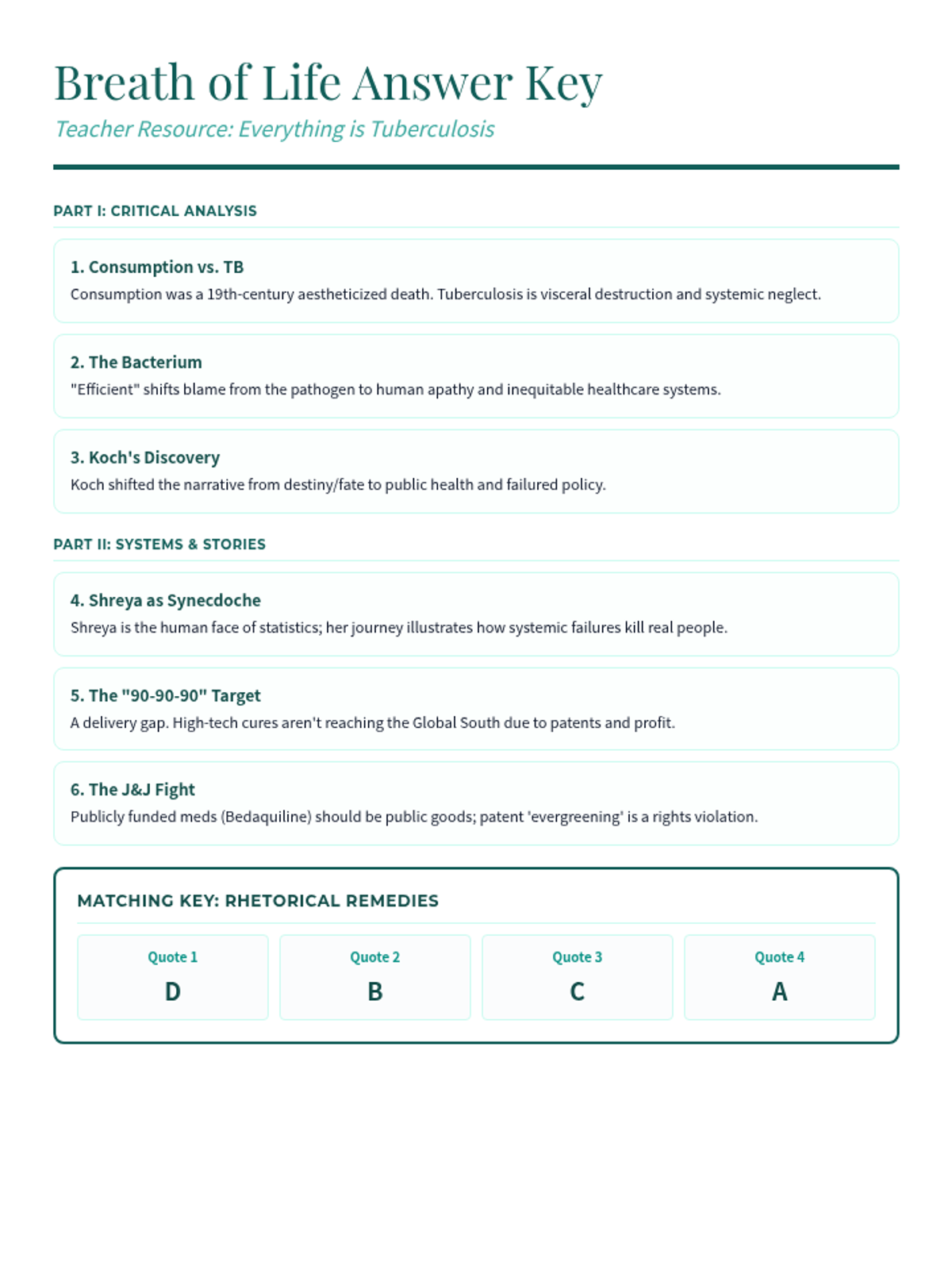
A comprehensive study of John Green's 'Everything is Tuberculosis', focusing on the history of the disease, its impact on human history, and the literary techniques used to convey its devastating reality.
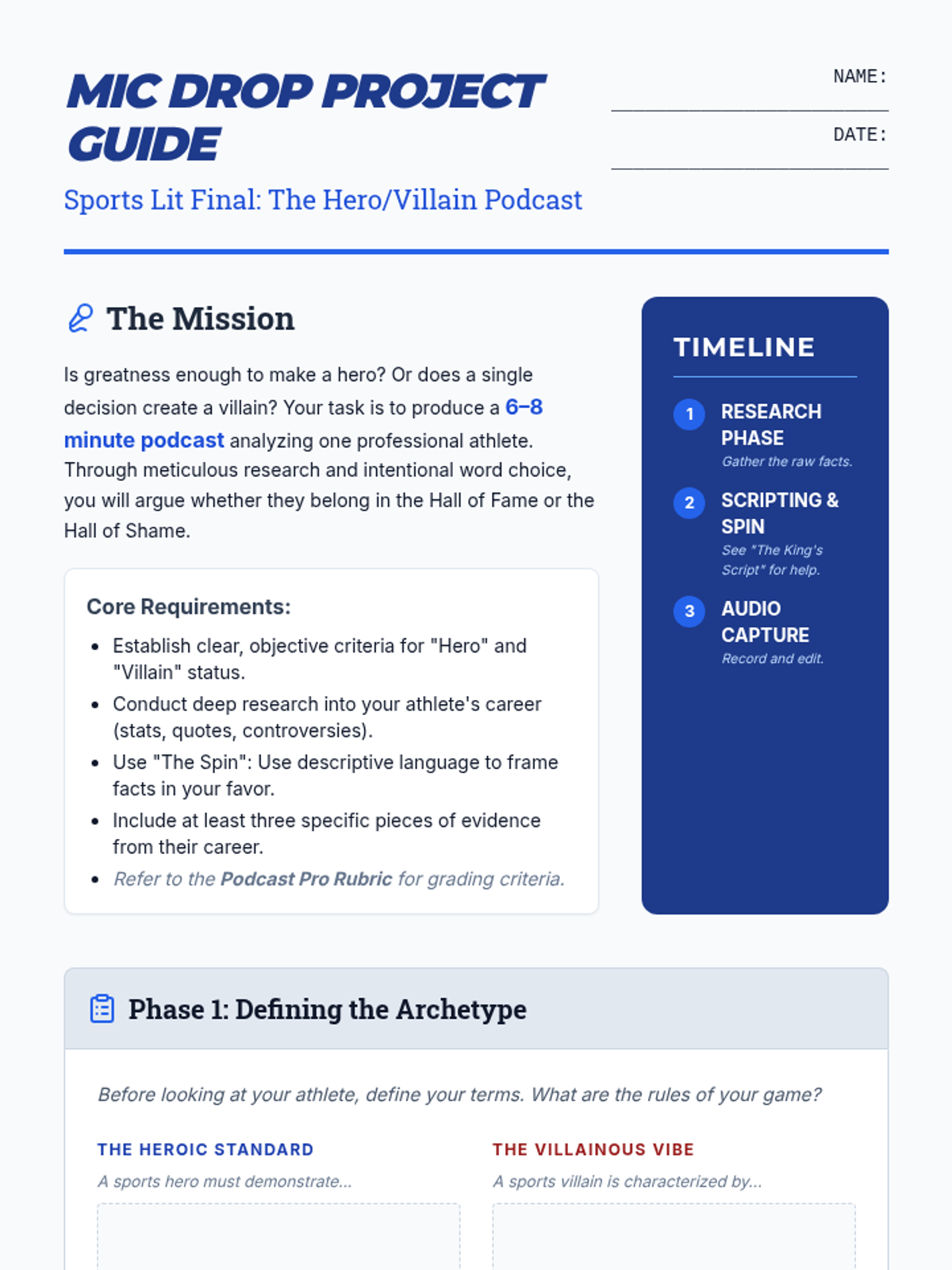
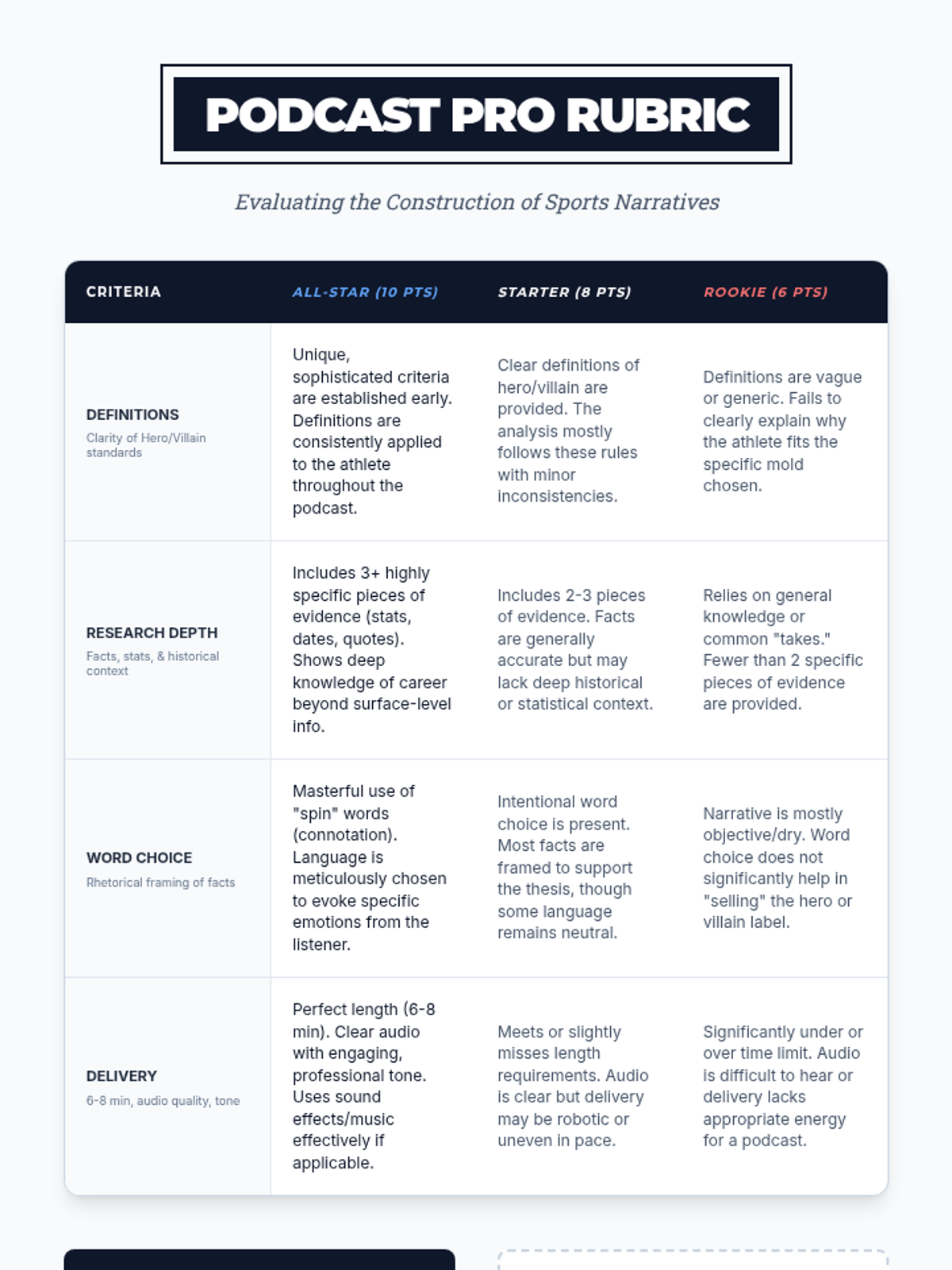
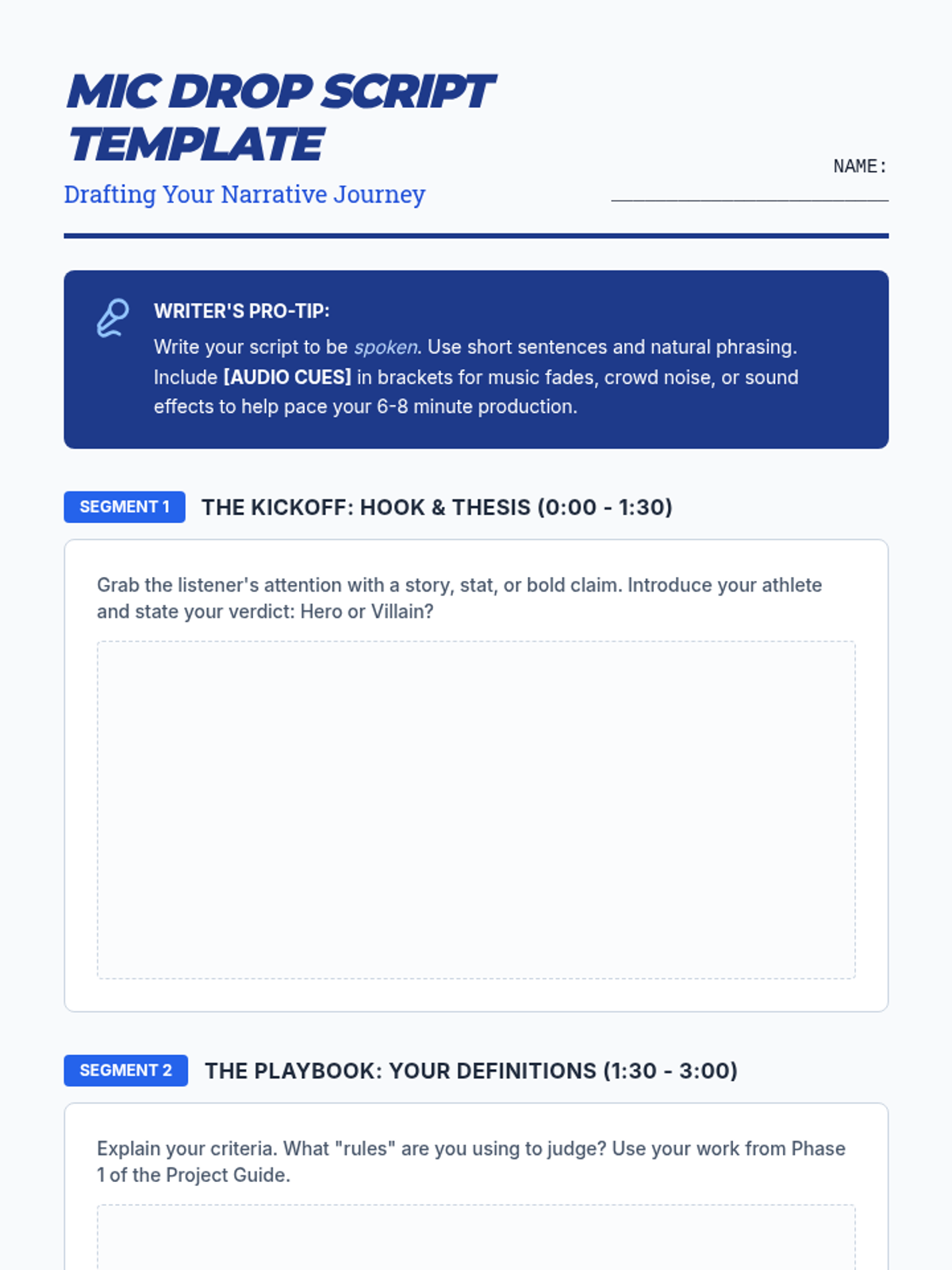
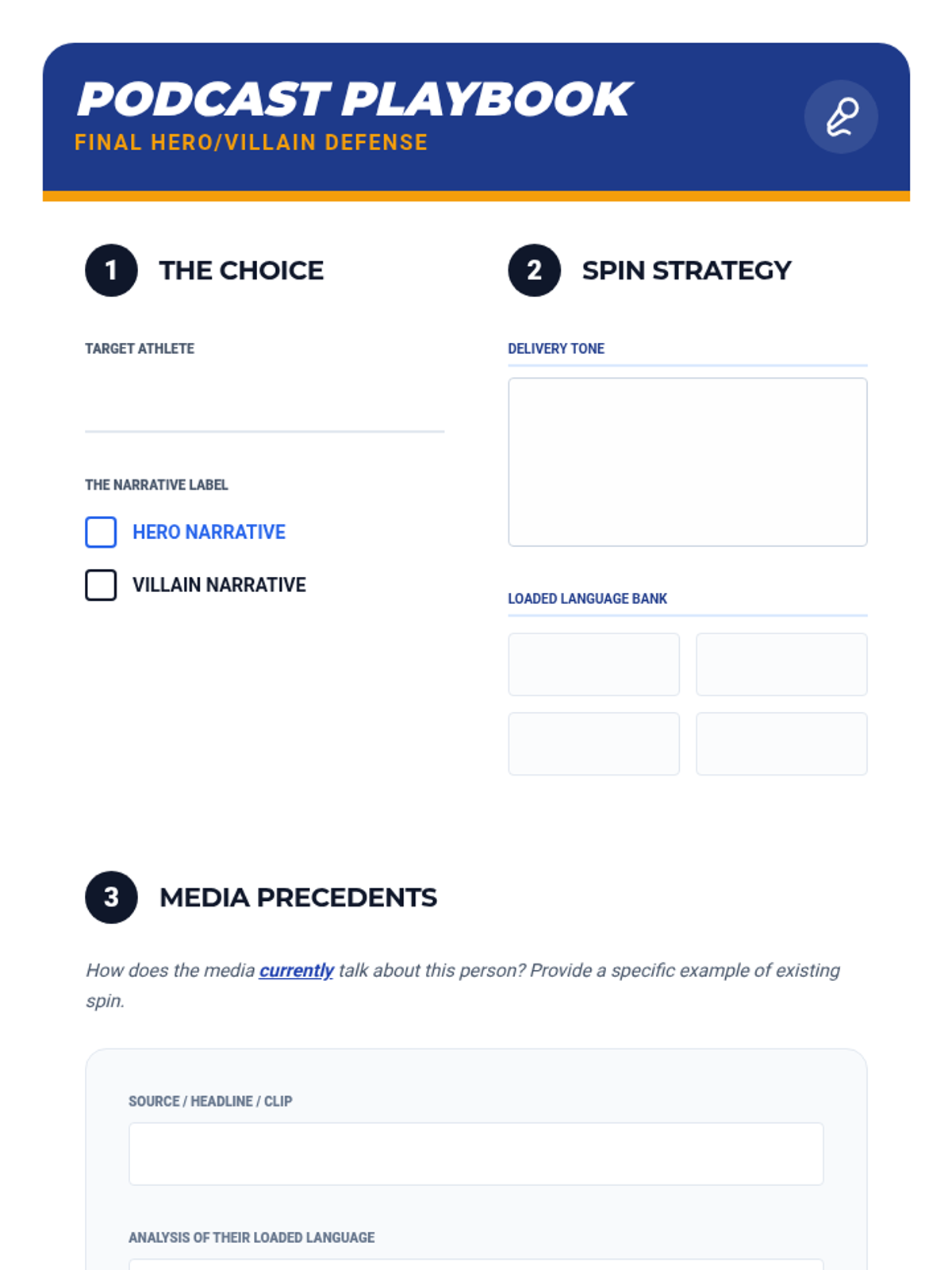
Students design and record a podcast that analyzes a chosen athlete through the lens of hero or villain narratives, utilizing specific criteria and rhetorical spin.
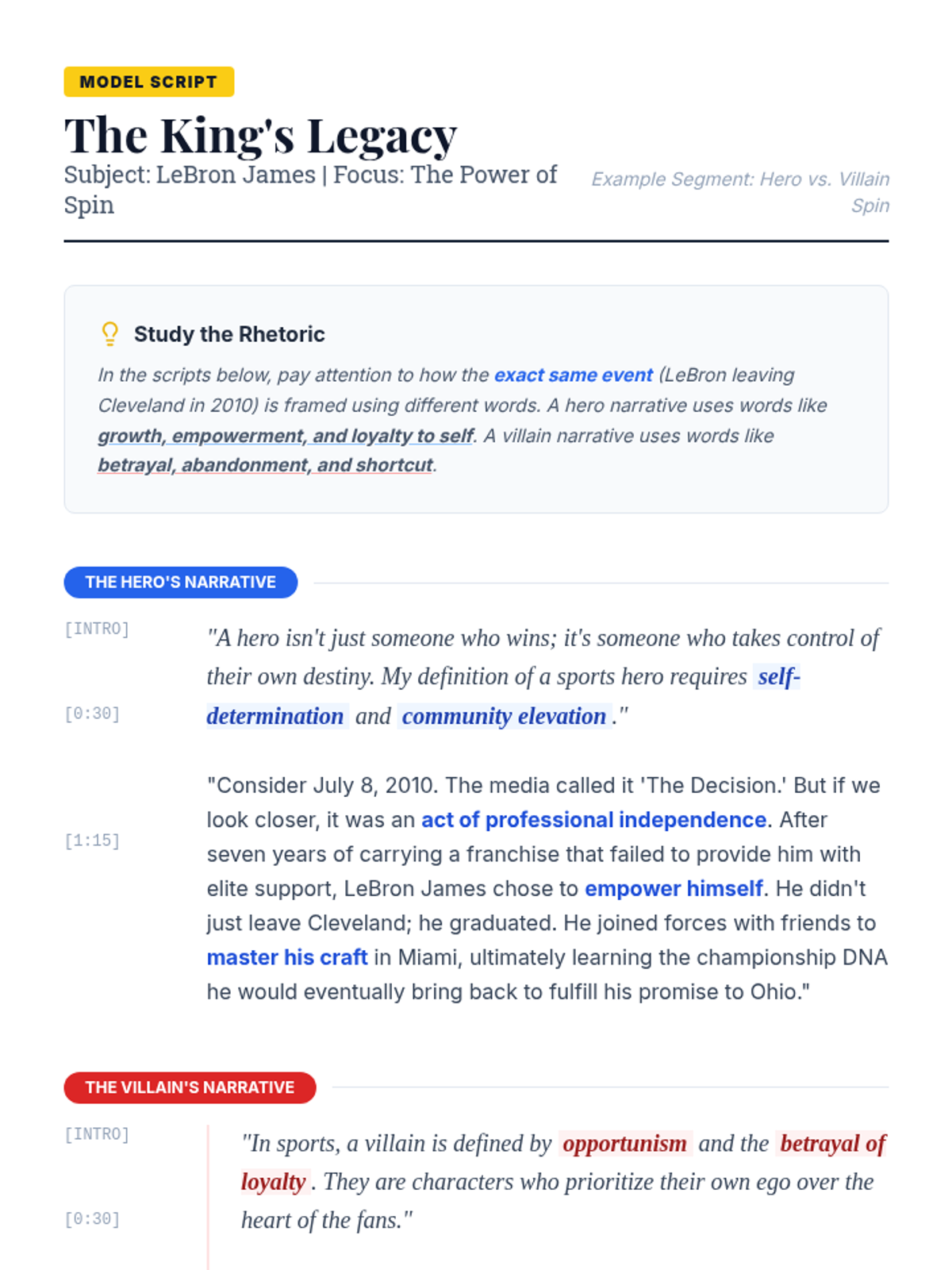
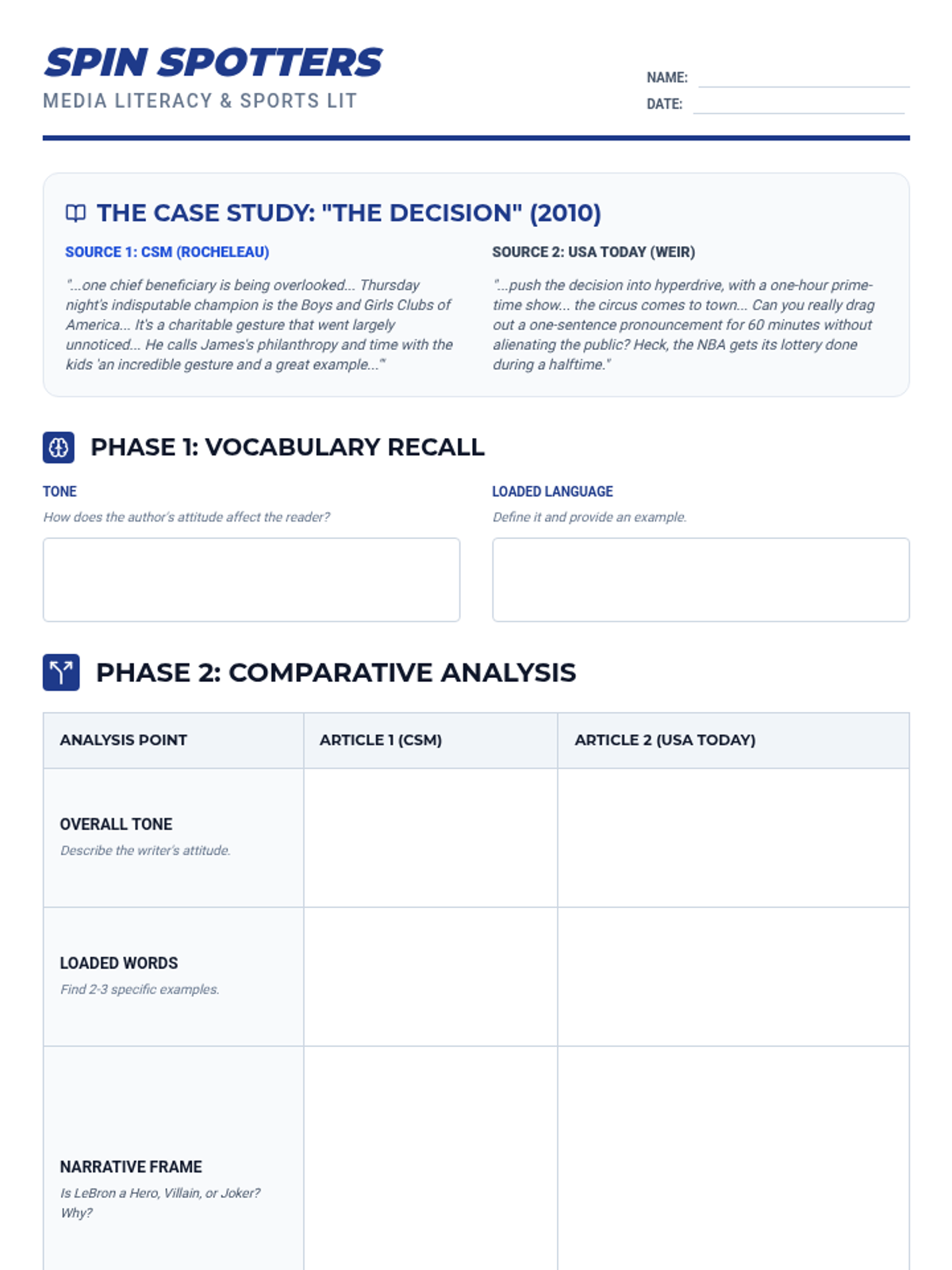
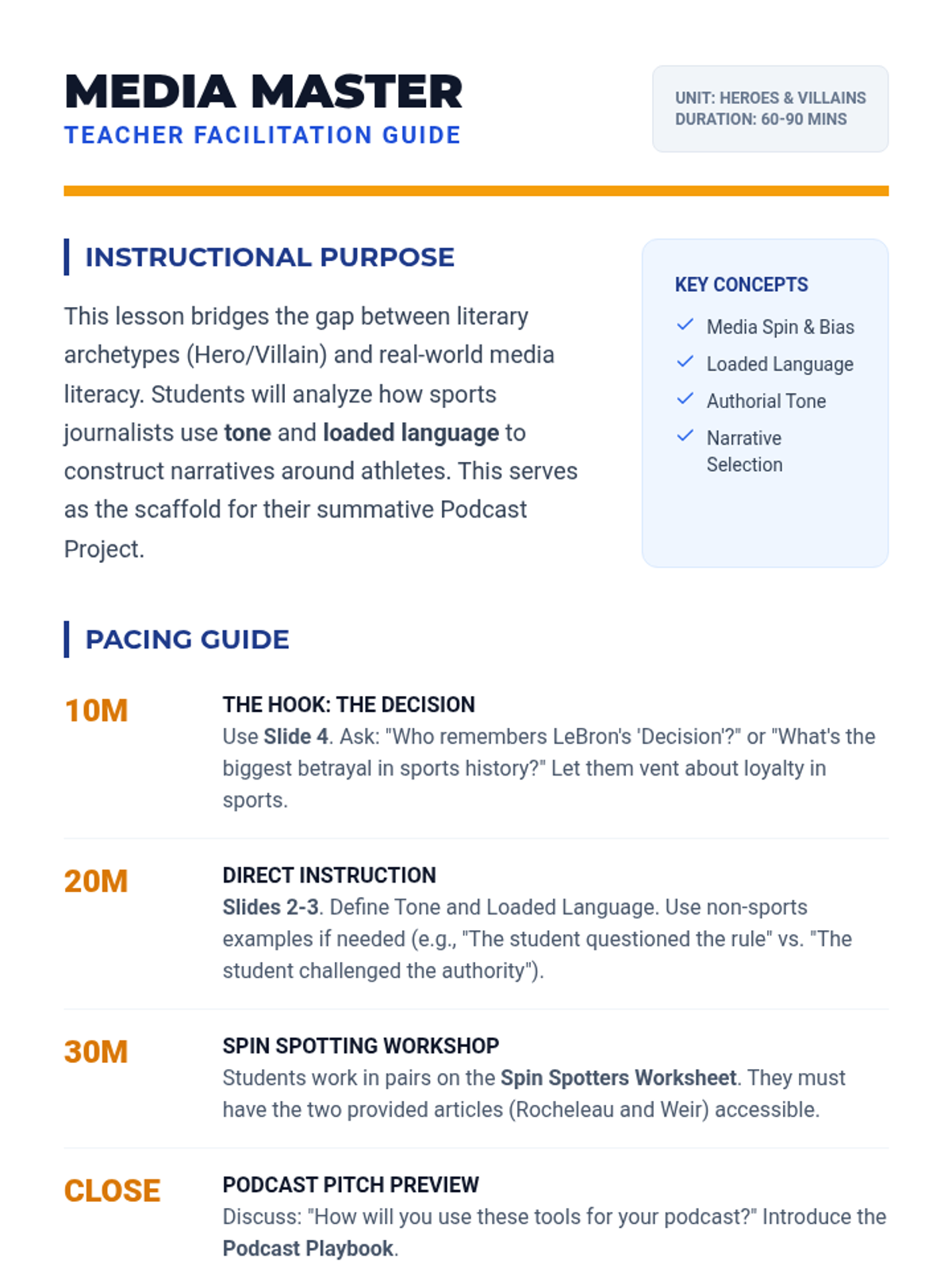
A lesson exploring media spin, tone, and loaded language in sports journalism, using LeBron James's 'The Decision' as a case study to help students prepare for their hero/villain podcast project.
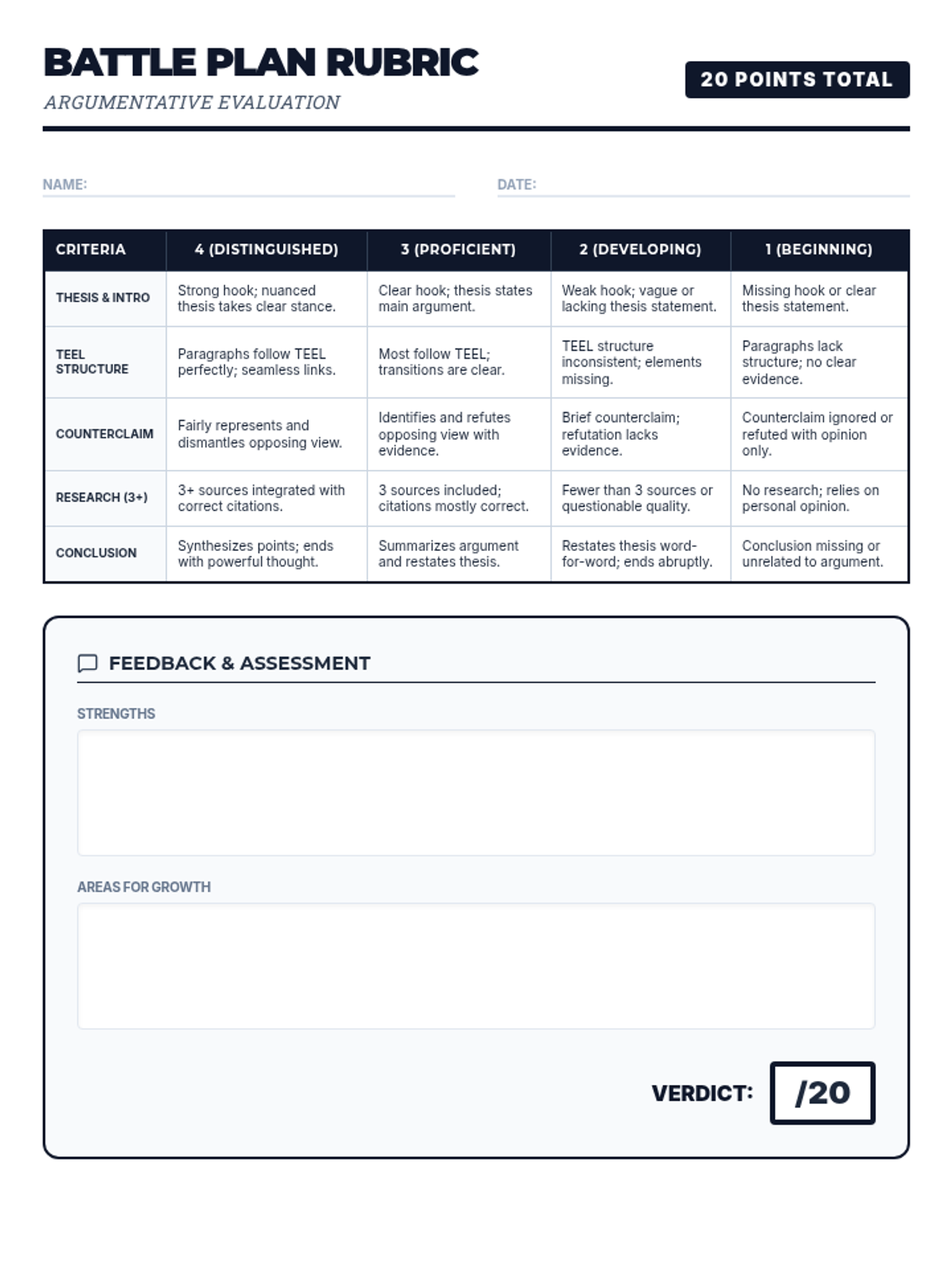
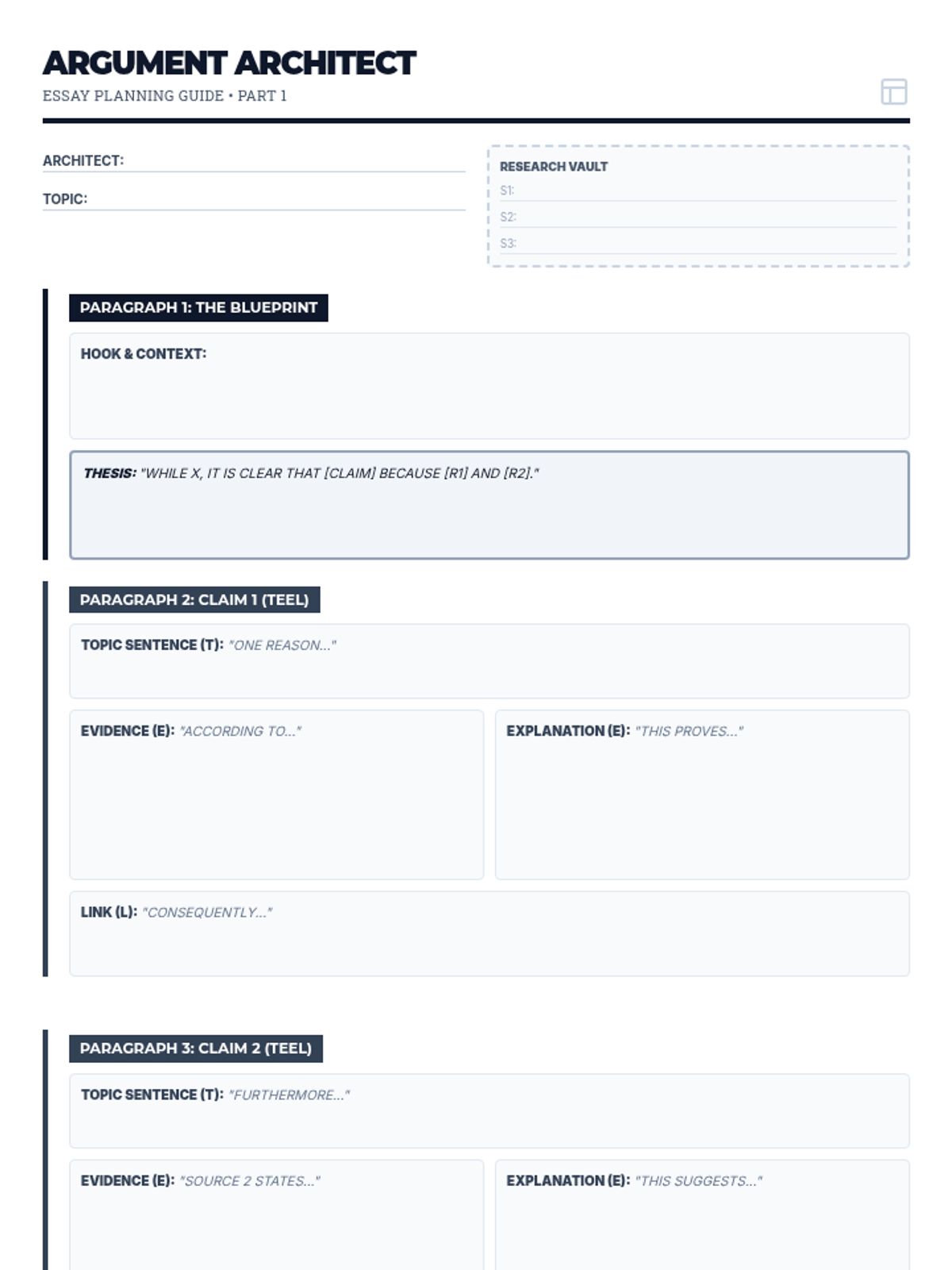
A comprehensive guide for students to plan and evaluate a five-paragraph argumentative essay, focusing on research integration and the refutation of counterclaims using the TEEL structure.
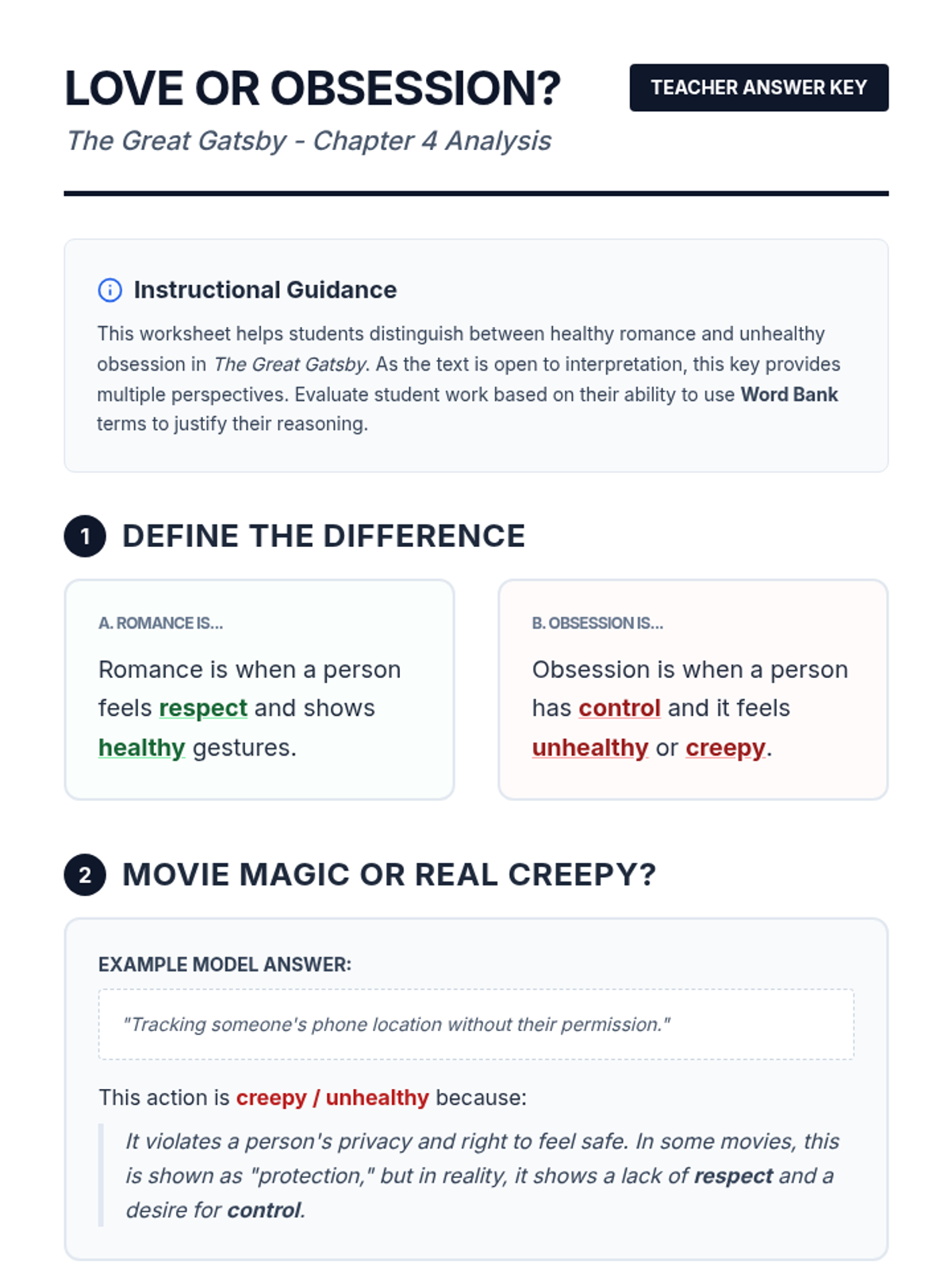
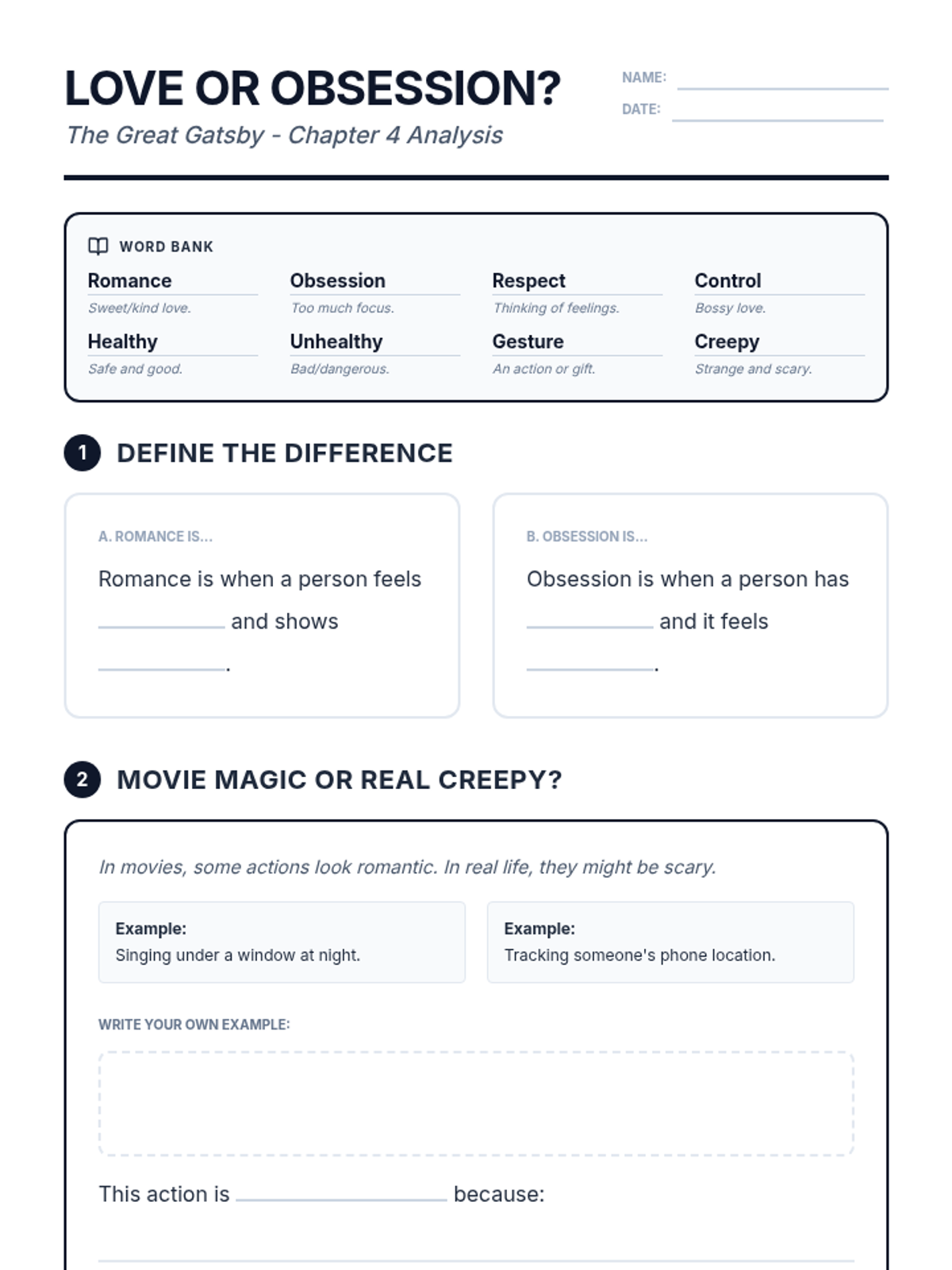
A deep dive into Gatsby's motivations in Chapter 4, challenging students to evaluate whether his grand gestures for Daisy are romantic or represent an unhealthy obsession.
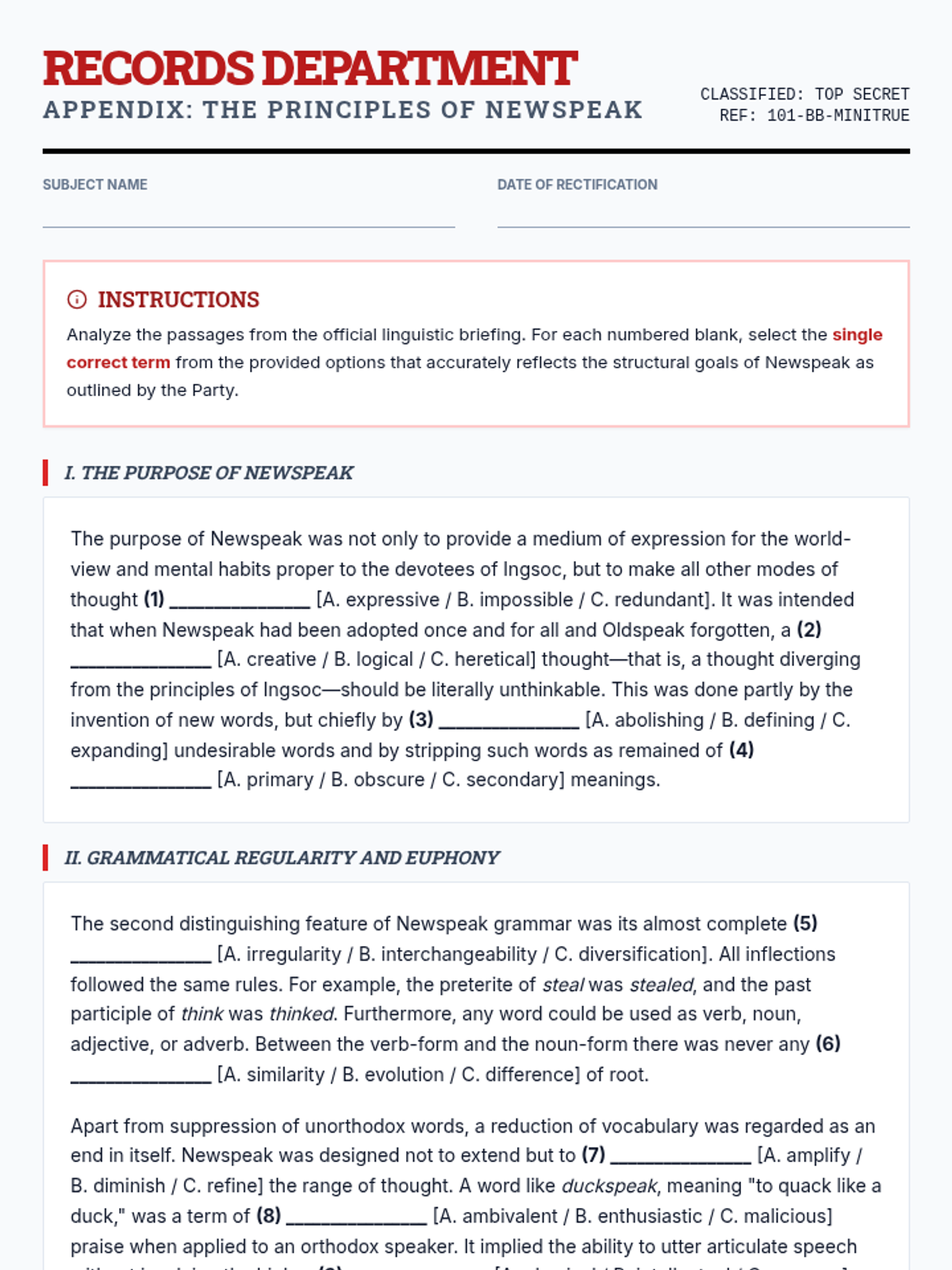
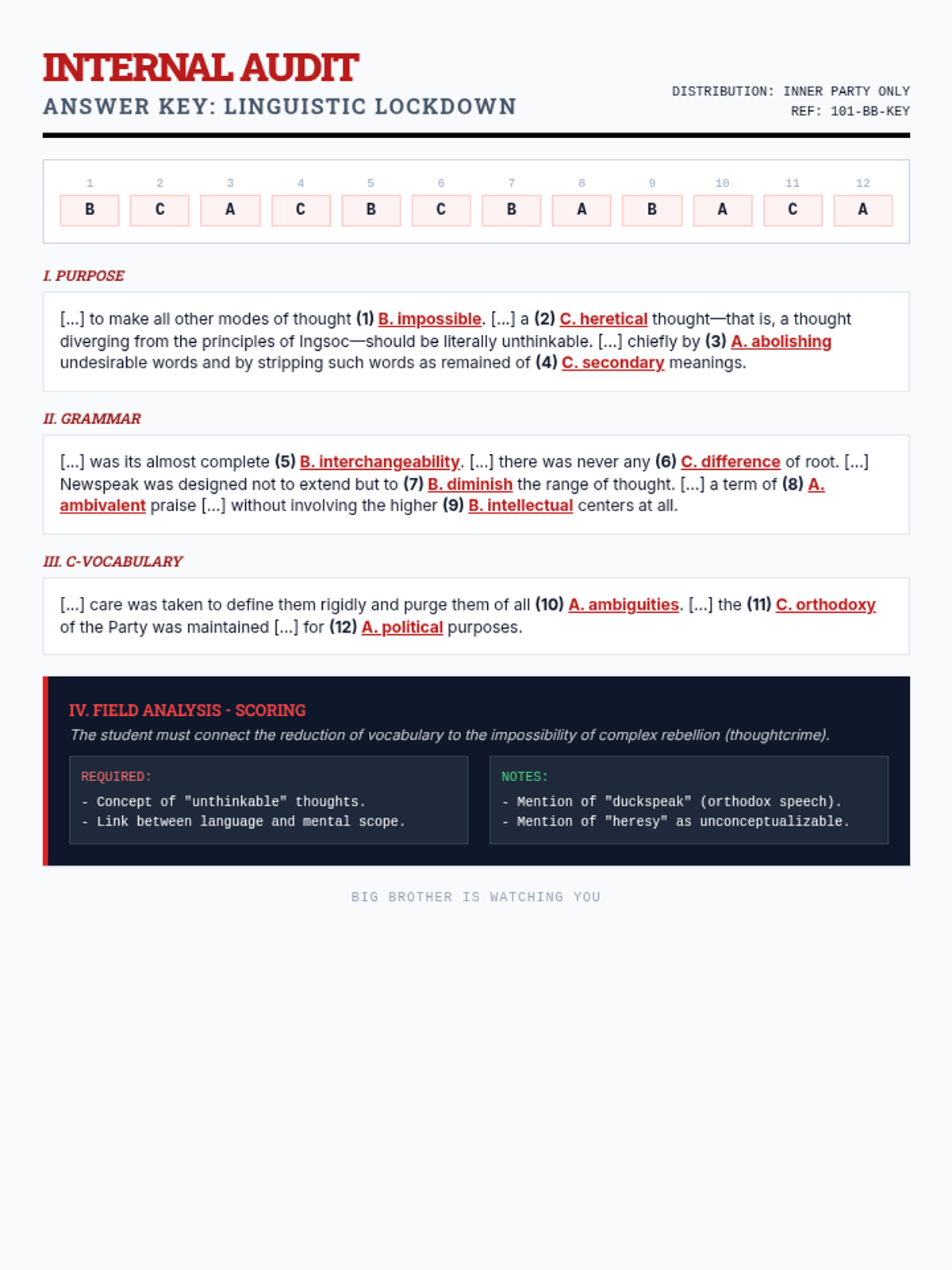
A deep dive into the linguistic control mechanisms of Oceania, focusing on the vocabulary and structural goals of Newspeak as described in George Orwell's 1984.
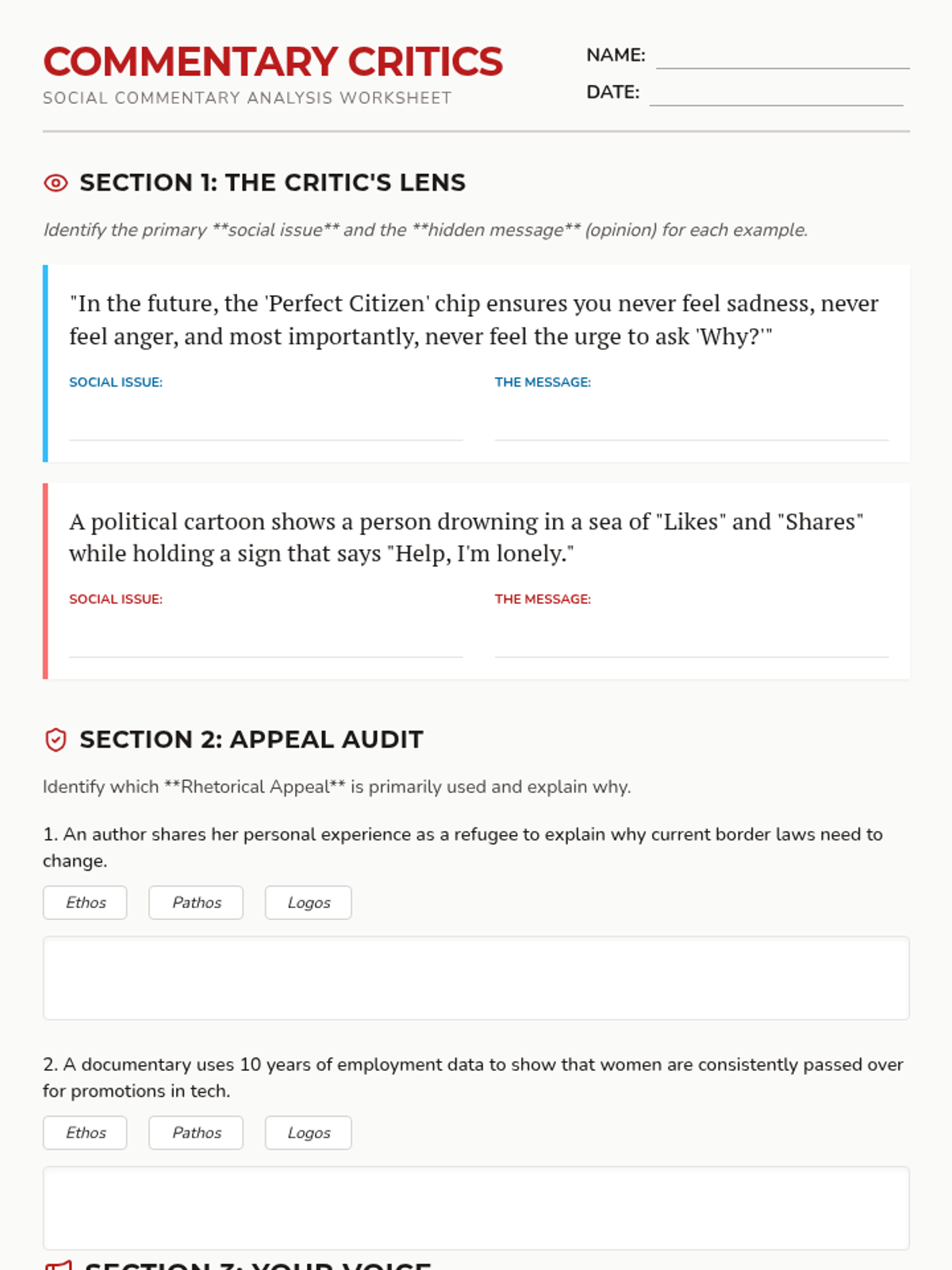
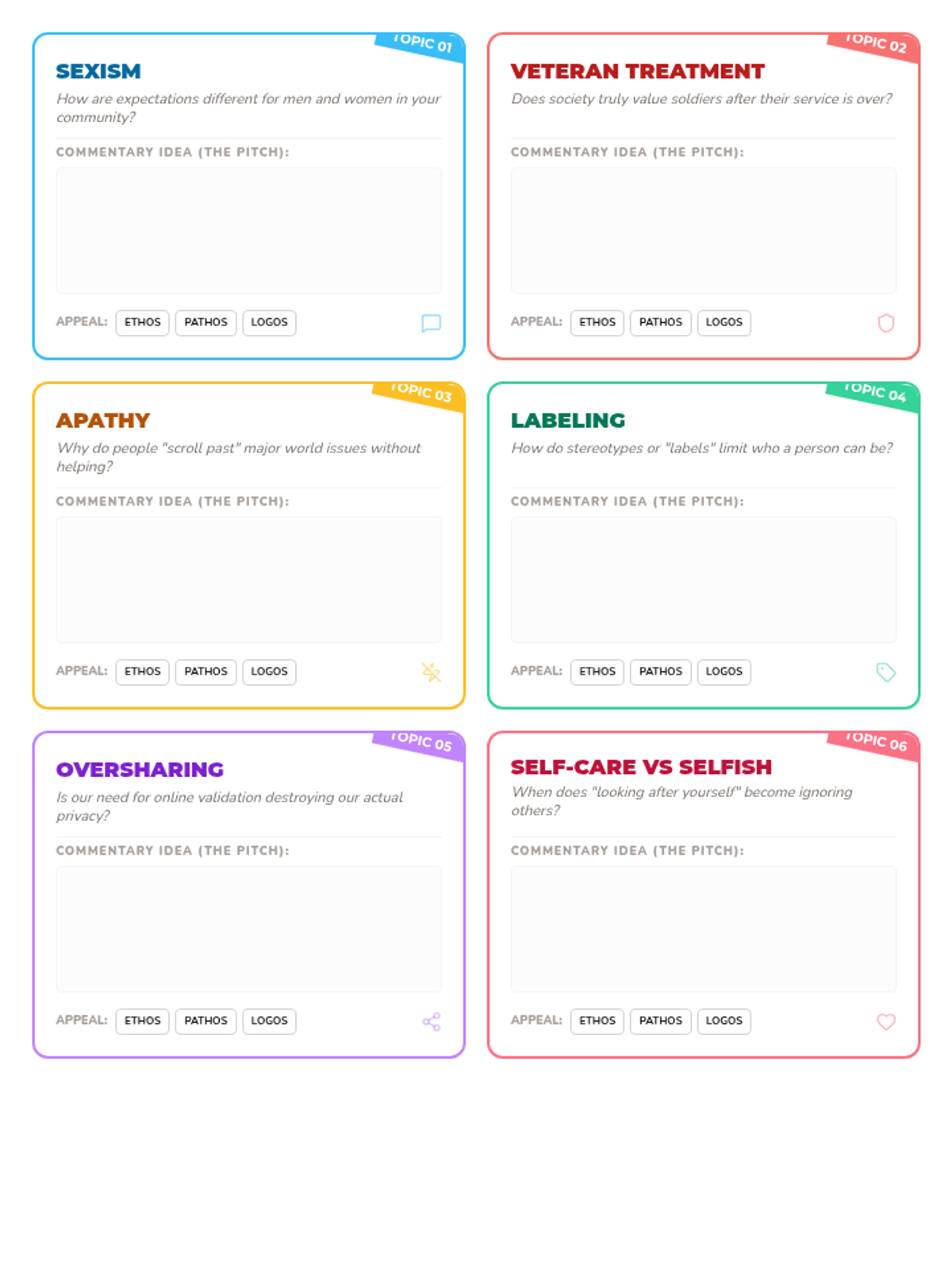
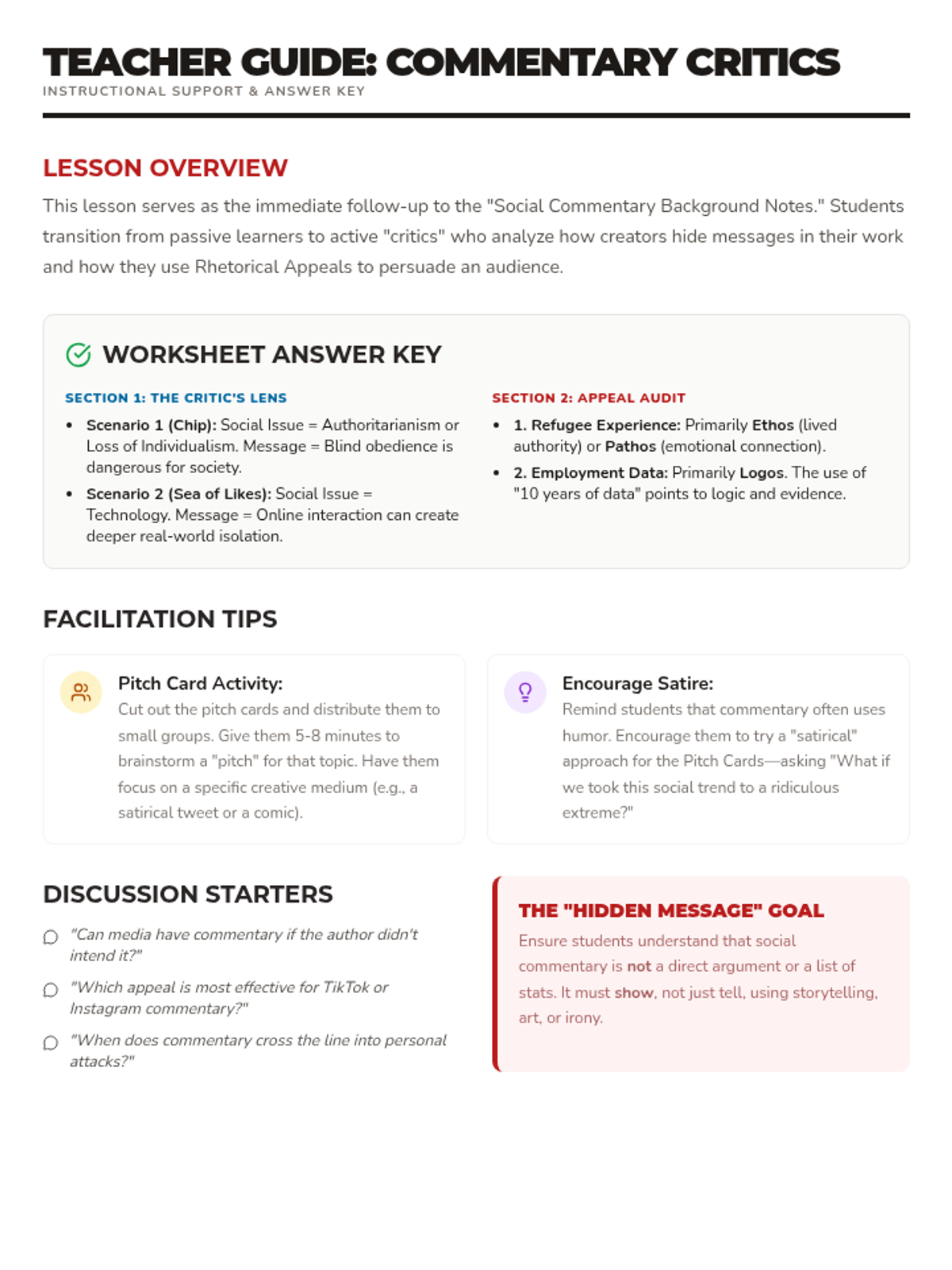
A follow-up lesson to 'Social Commentary Background Notes' where students analyze examples of social commentary and brainstorm their own creative messages using rhetorical appeals.
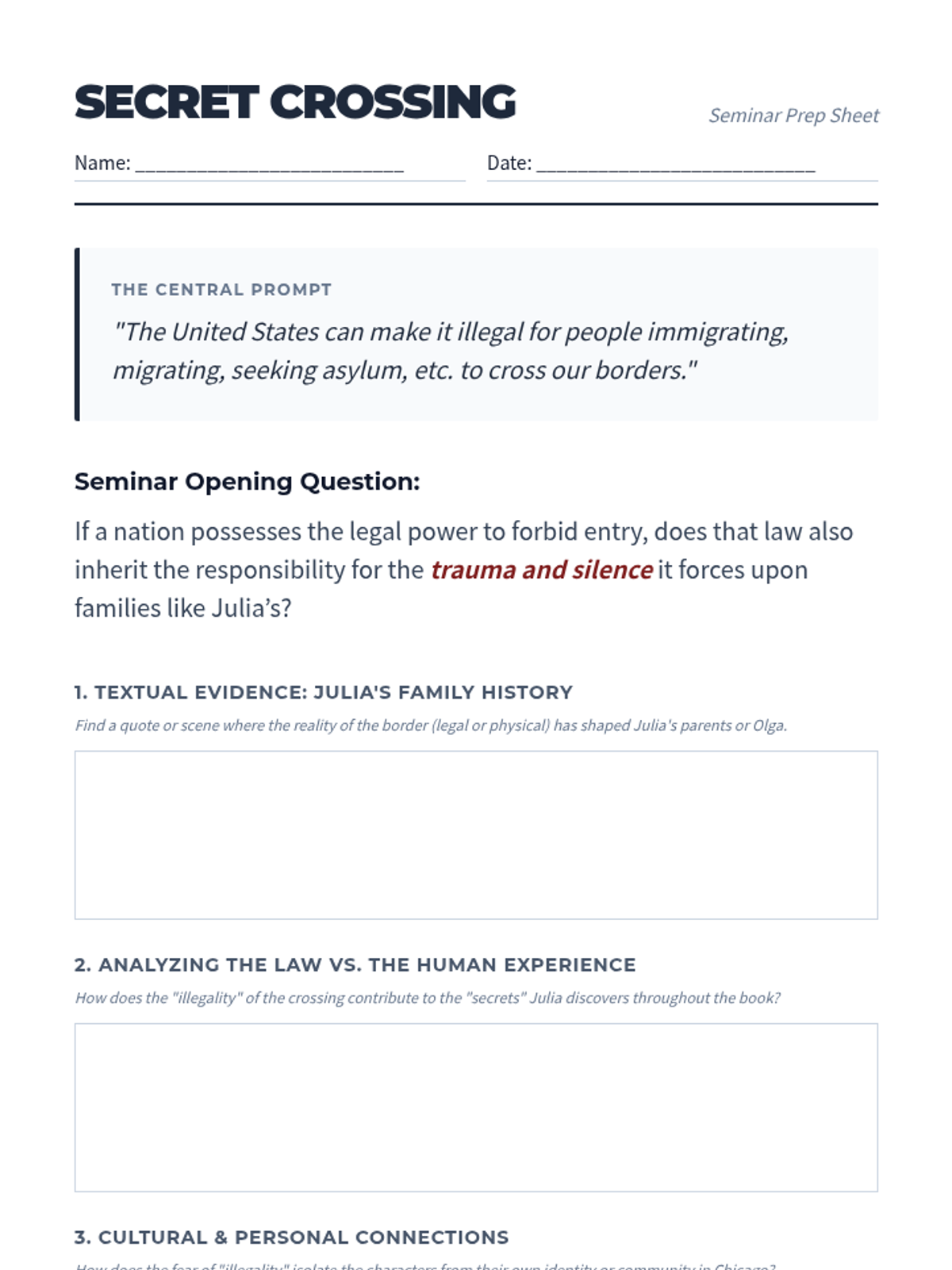
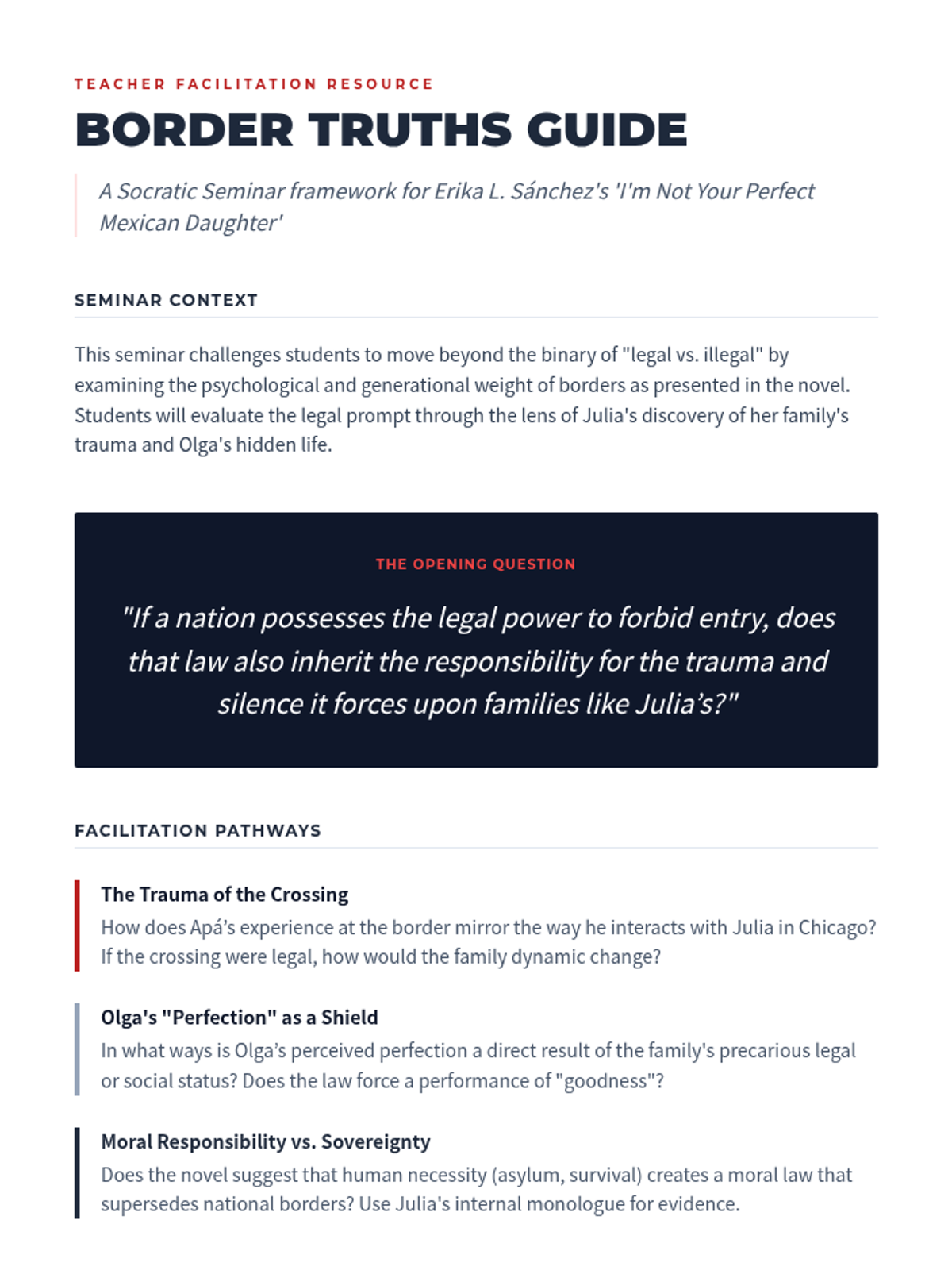
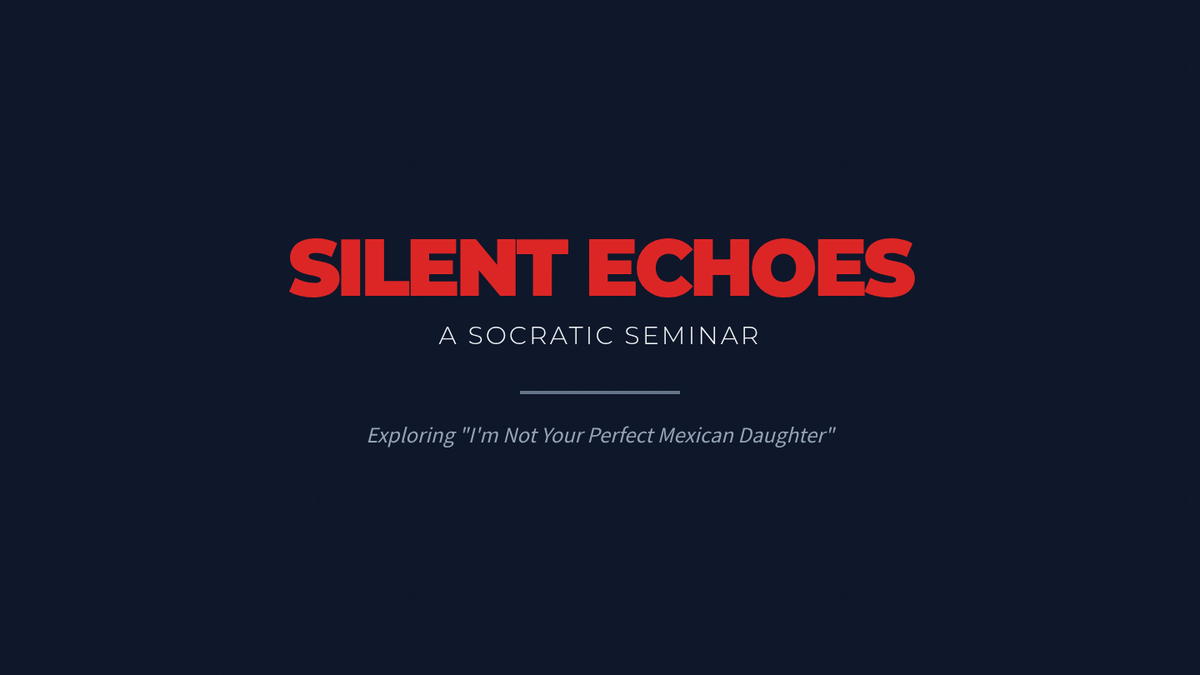
A formal Socratic Seminar centered on the novel 'I'm Not Your Perfect Mexican Daughter', focusing on the legality of borders versus the human cost of migration and family secrets.
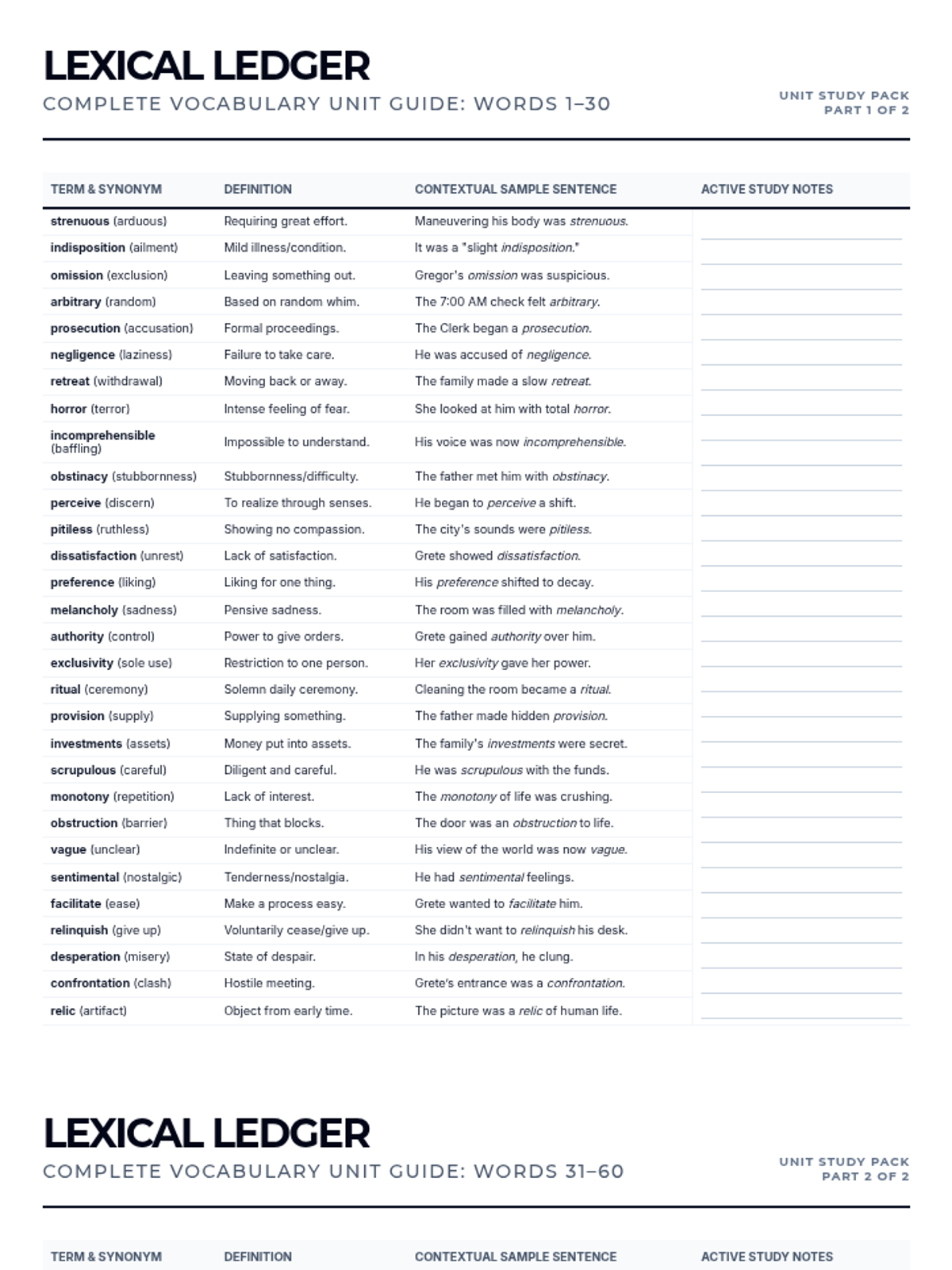
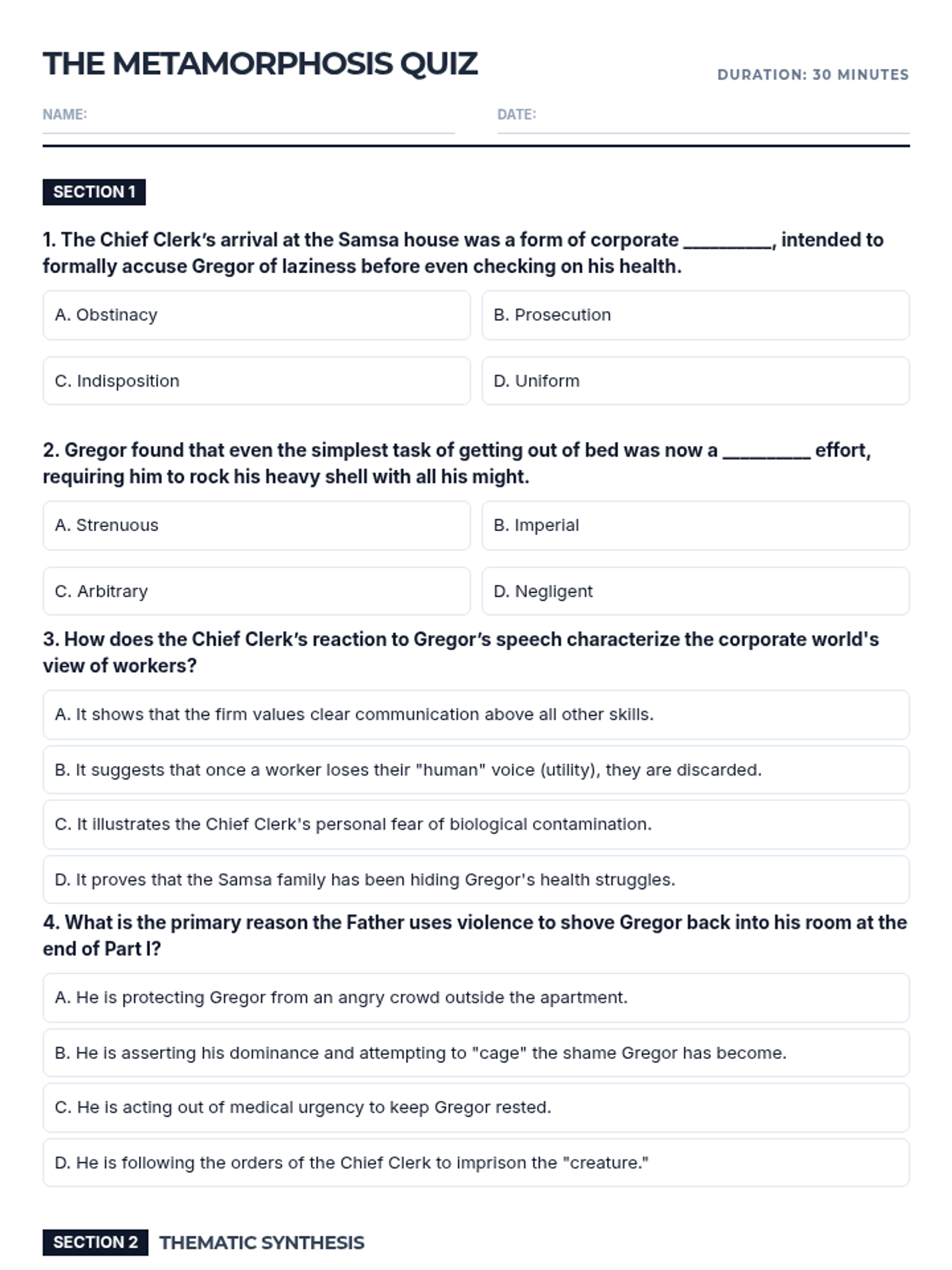
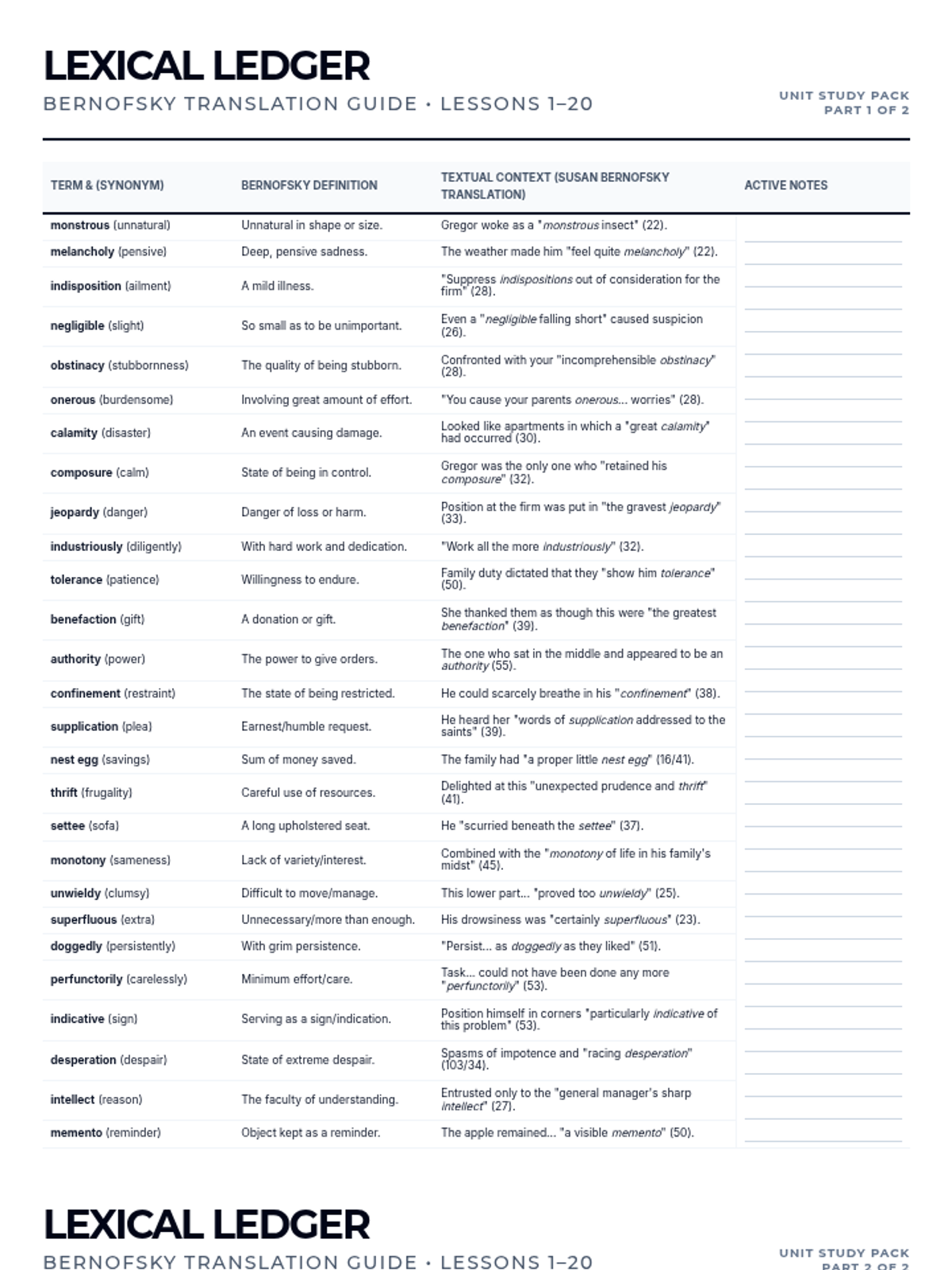
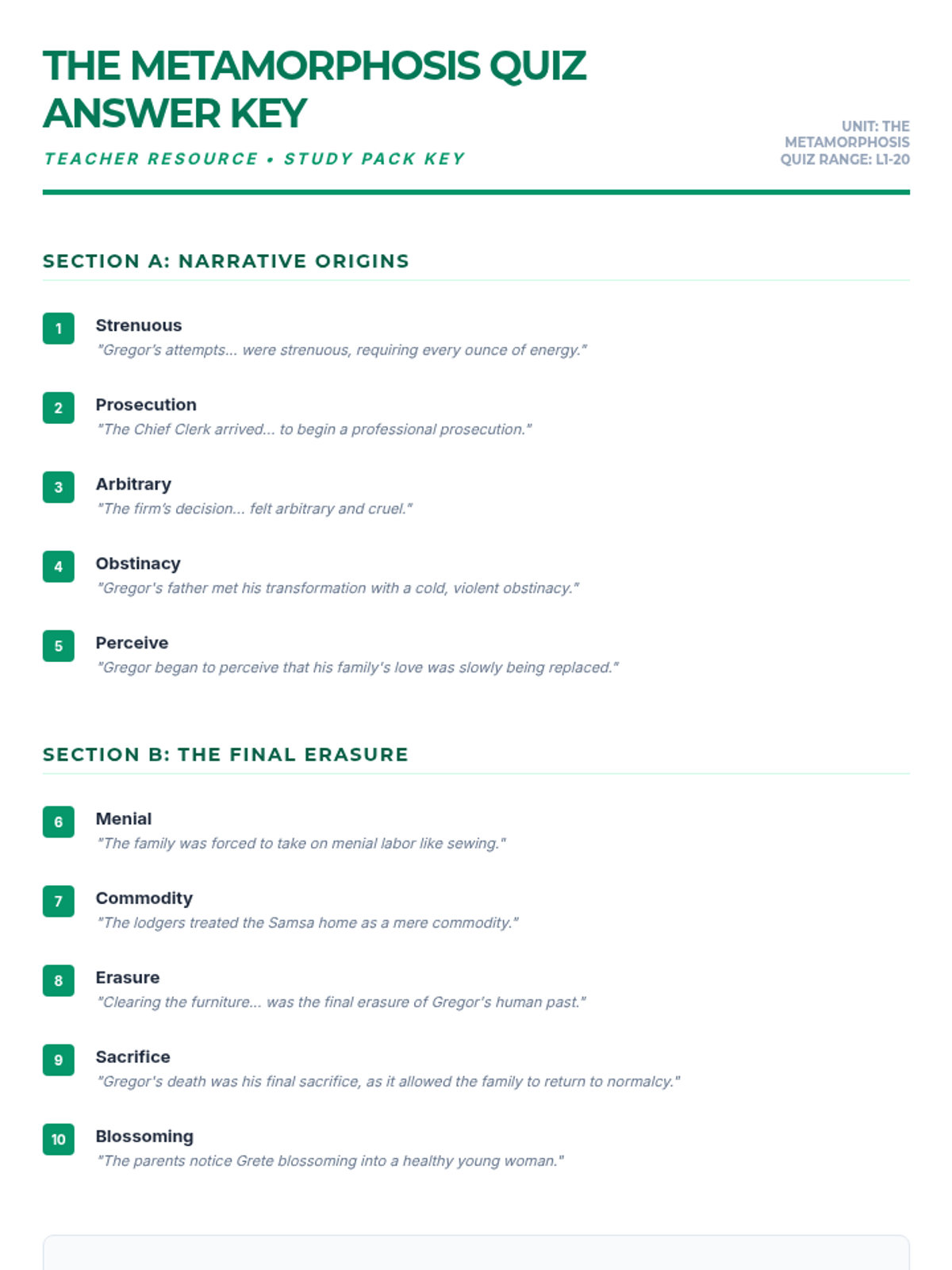
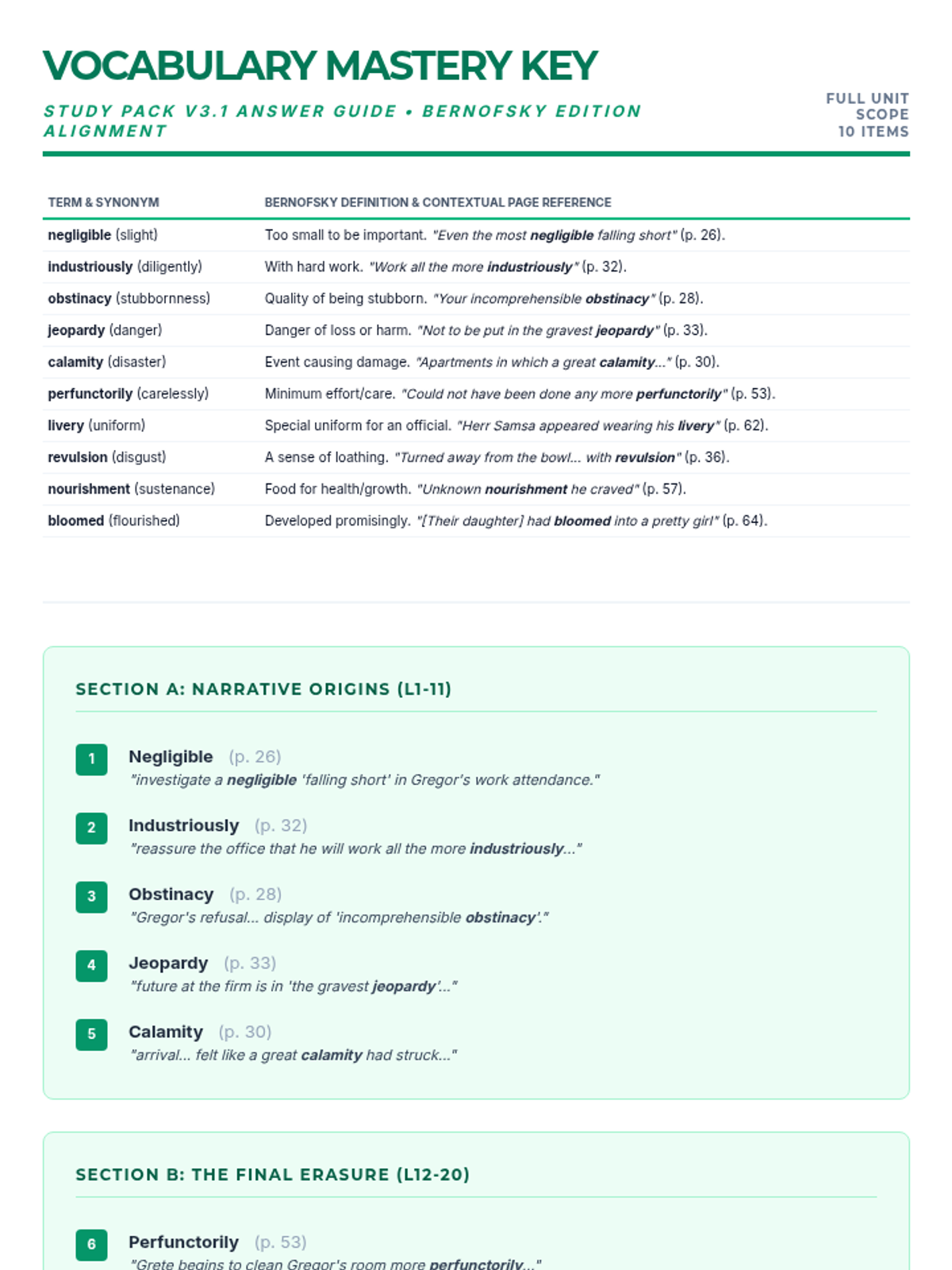
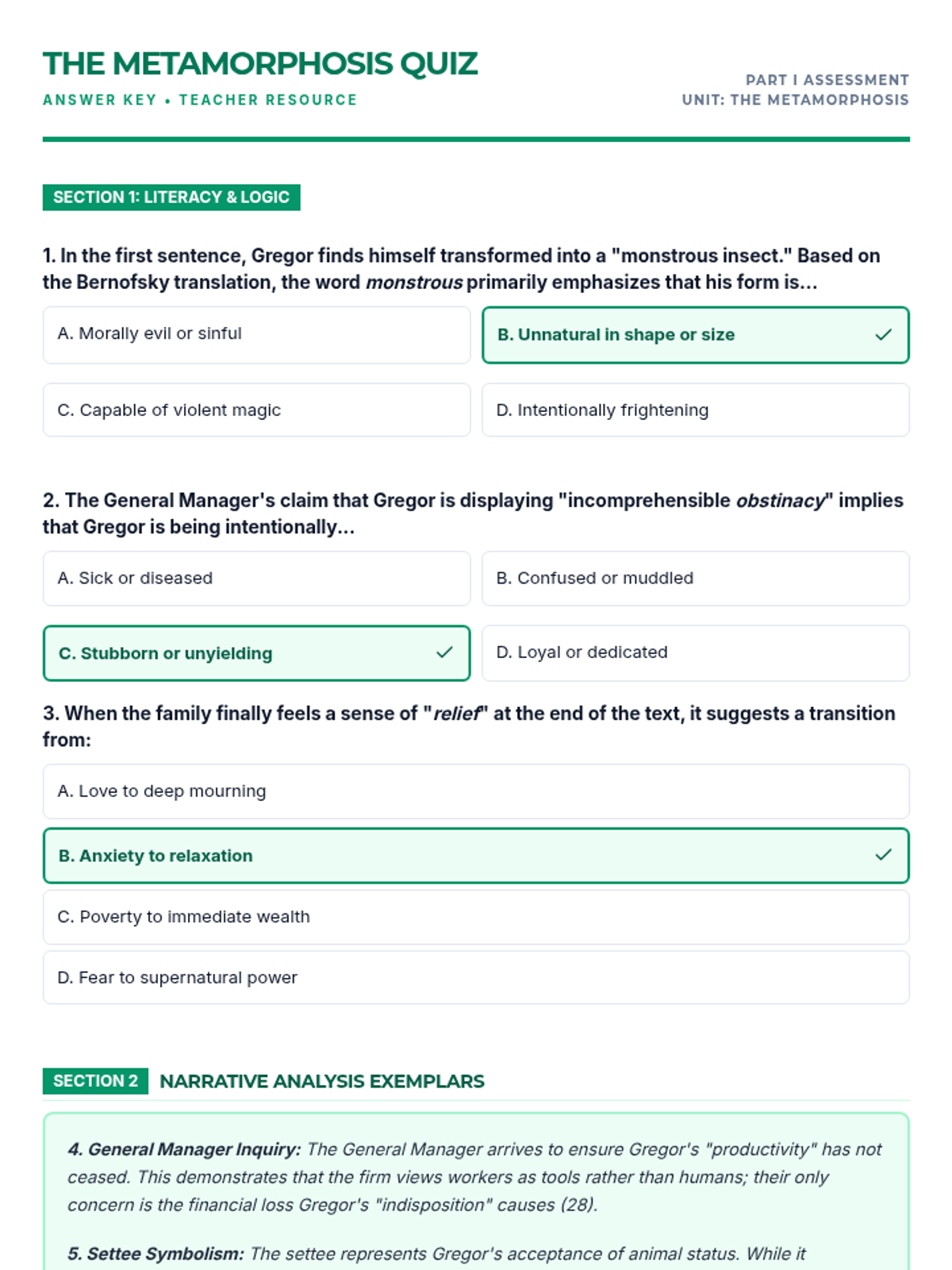
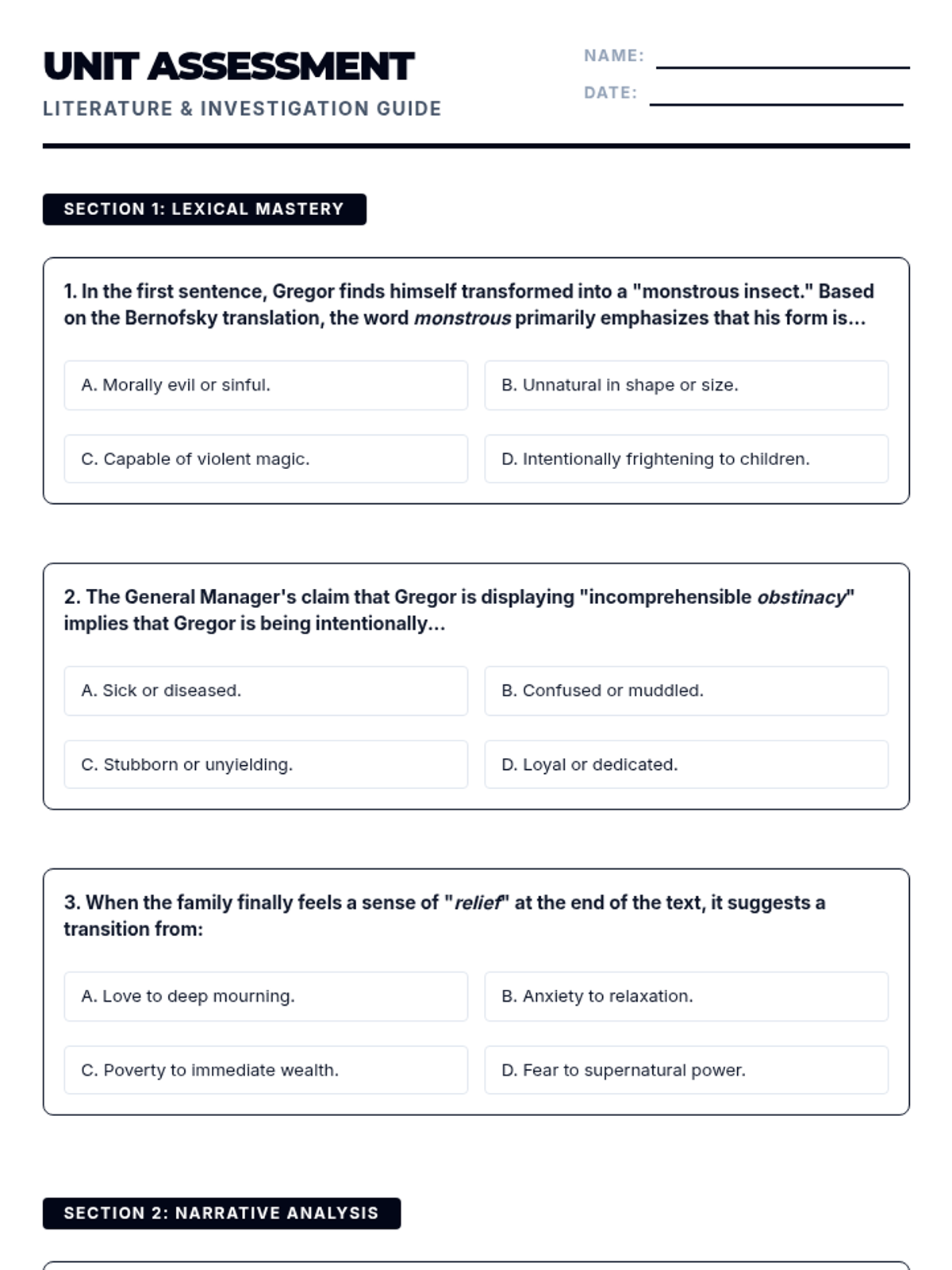
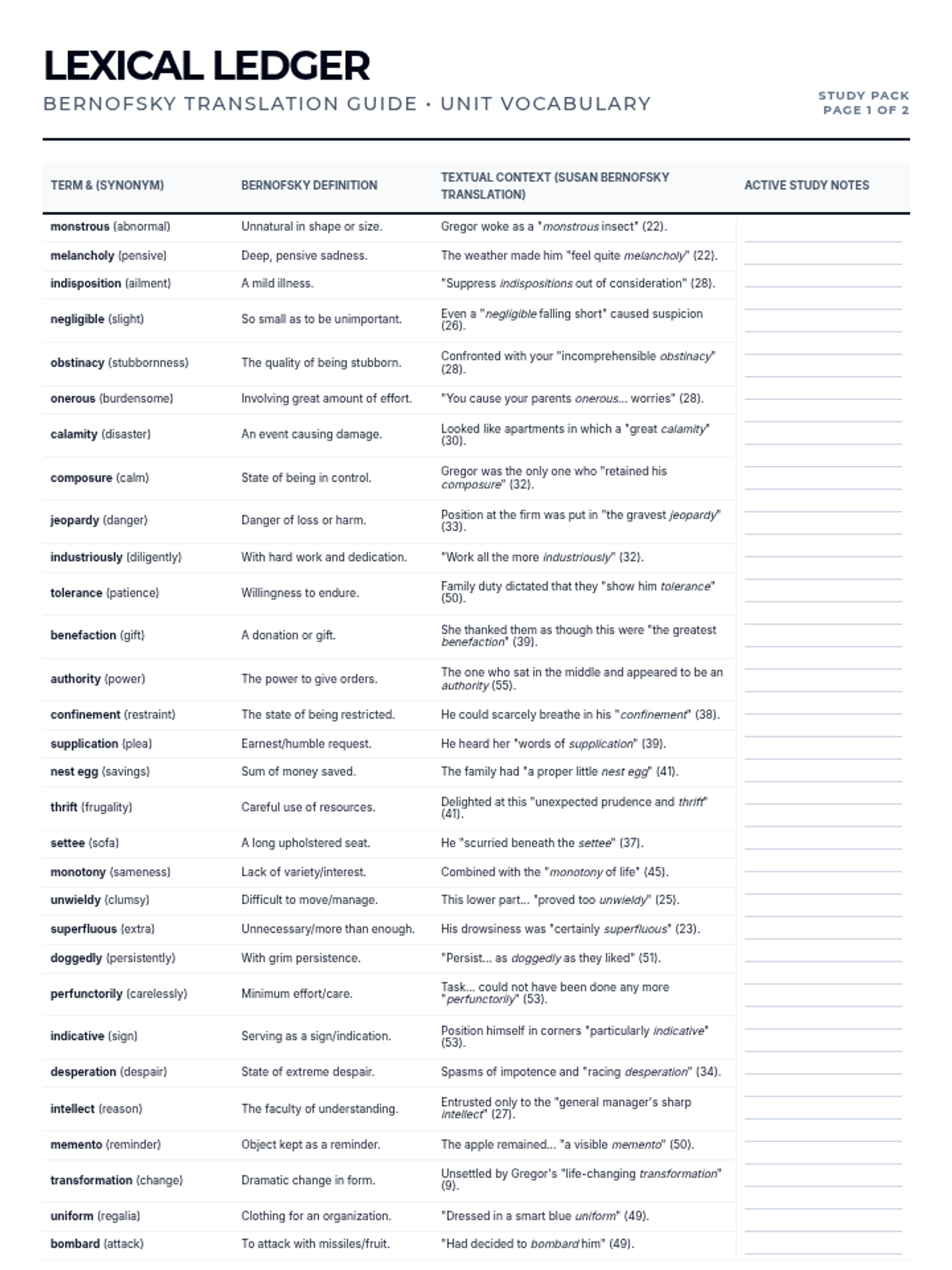
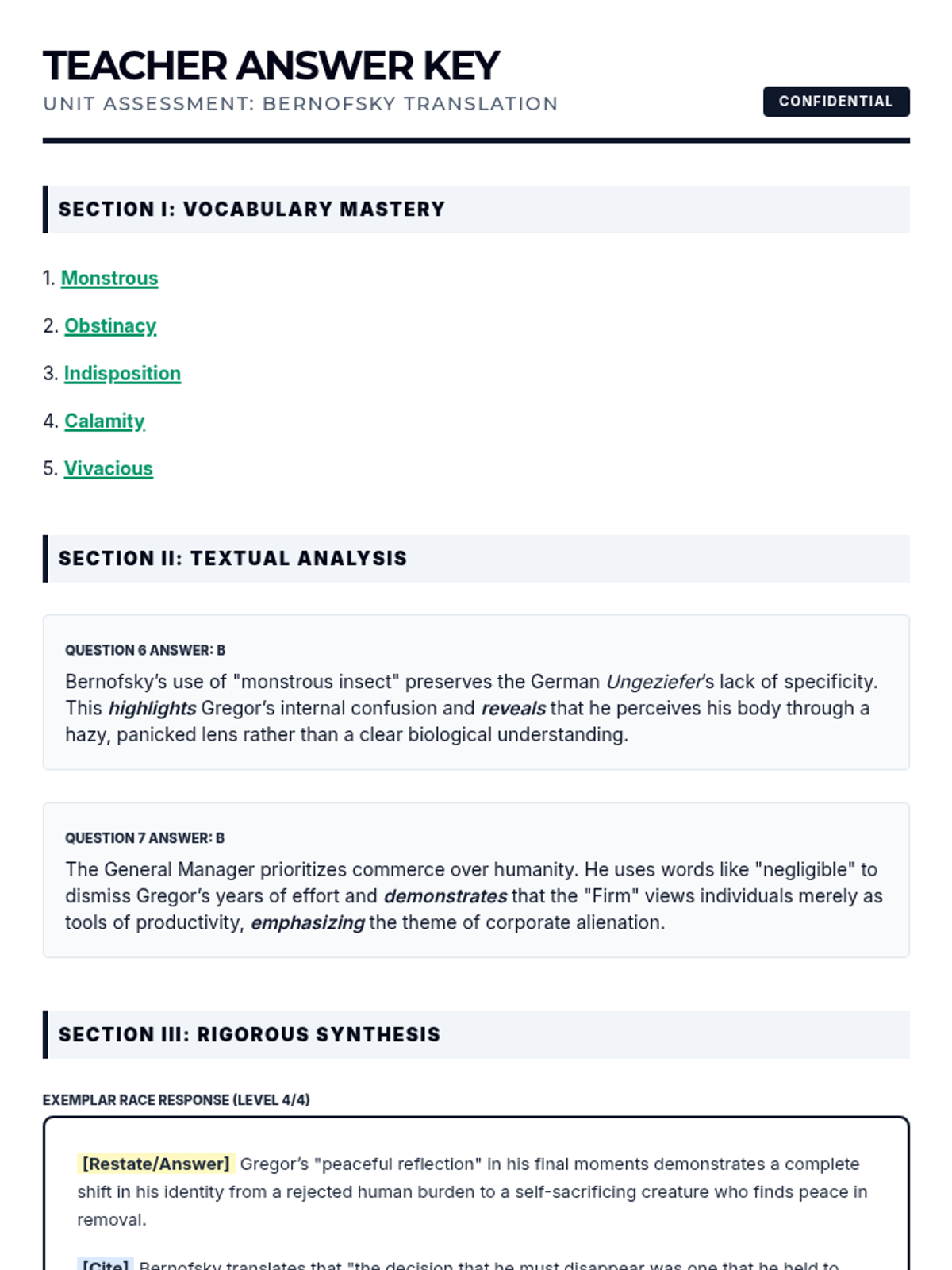
A summative assessment for the first third of the novel. Evaluates student mastery of vocabulary from Lessons 1-11, character motivation, and the central theme of corporate alienation through a mix of multiple choice, short answer, and a rigorous RACE response.
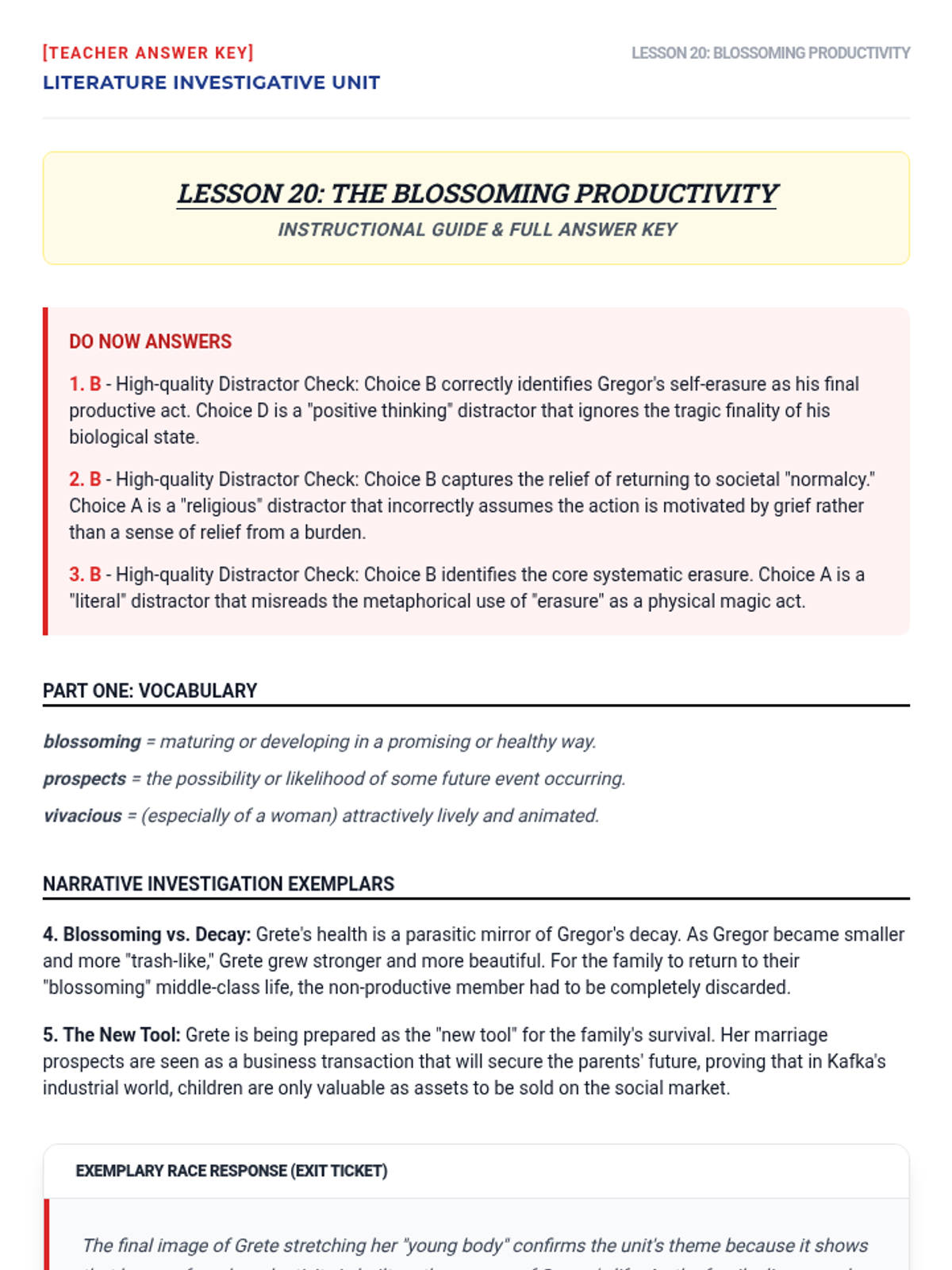
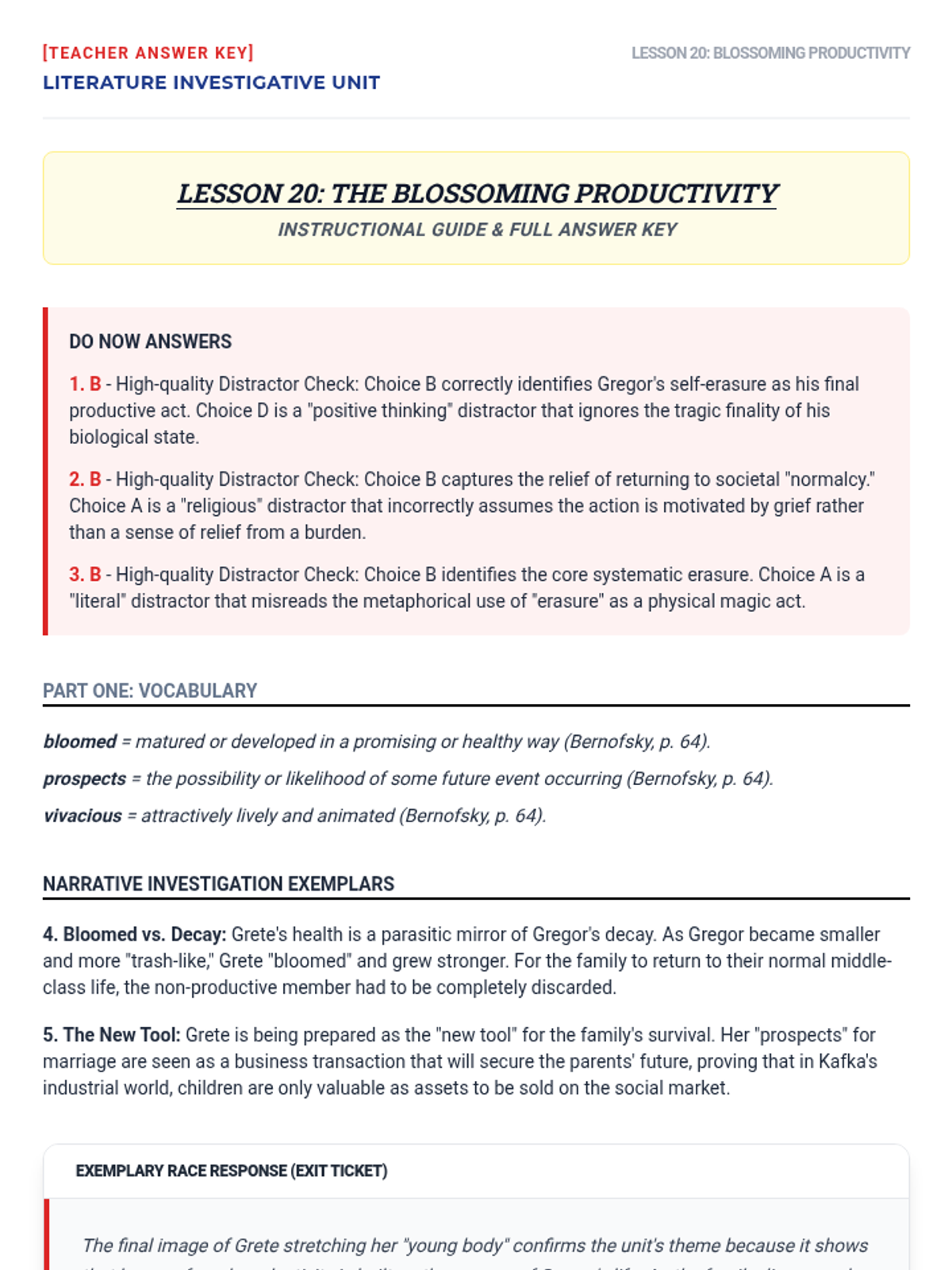
The family's recovery and the transition to a new source of productivity (Grete). Synthesis of the unit's themes.
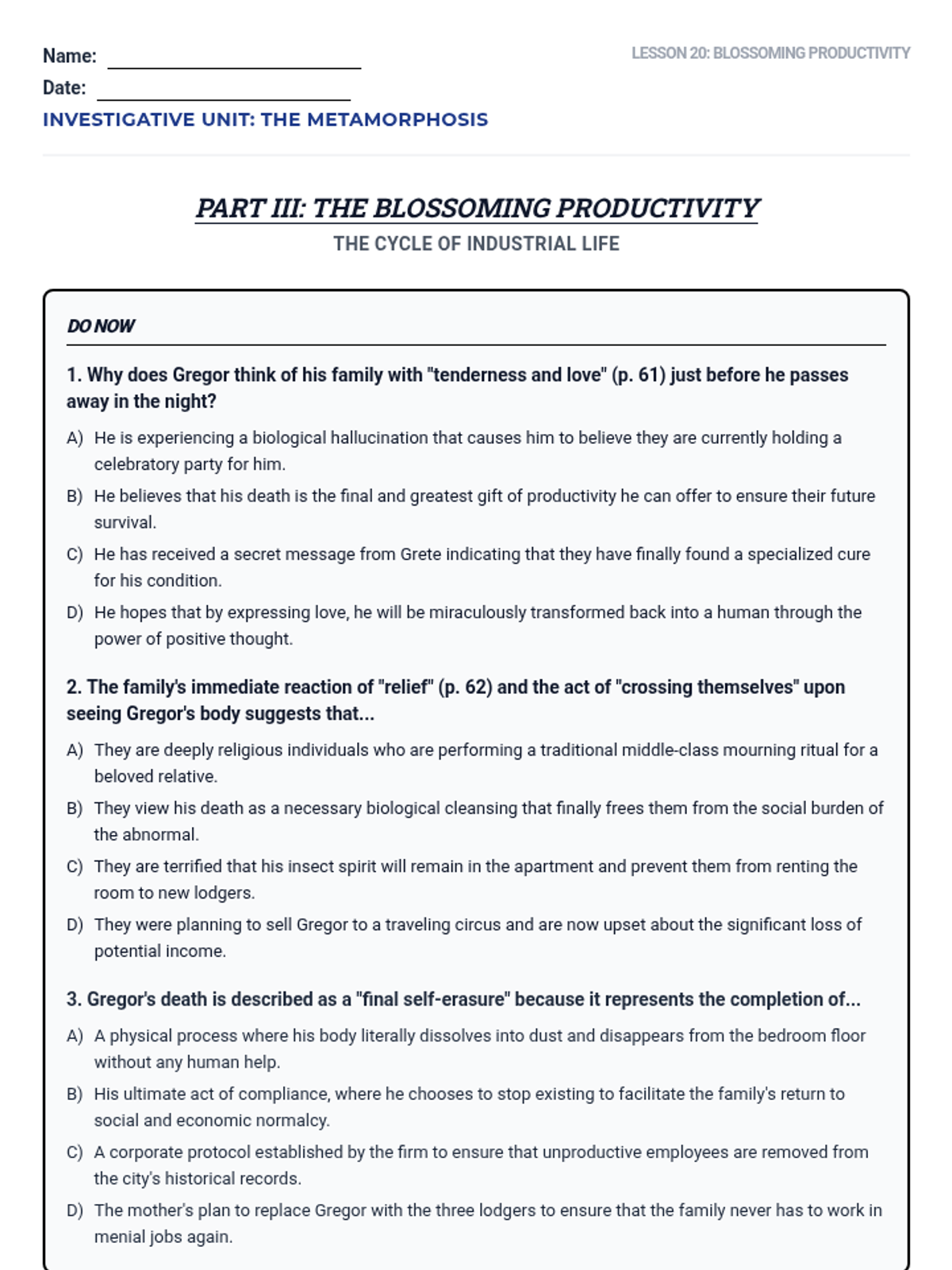
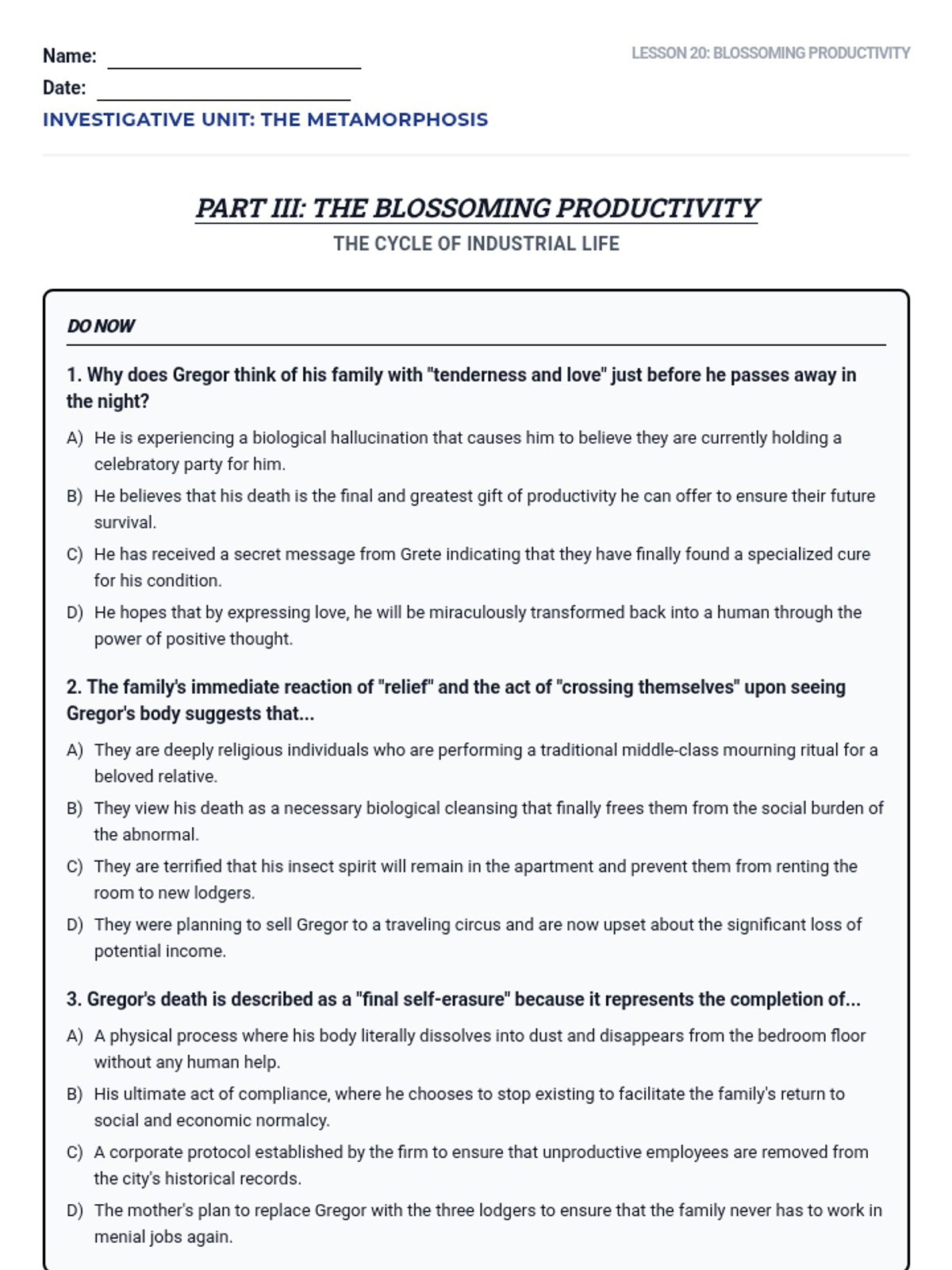
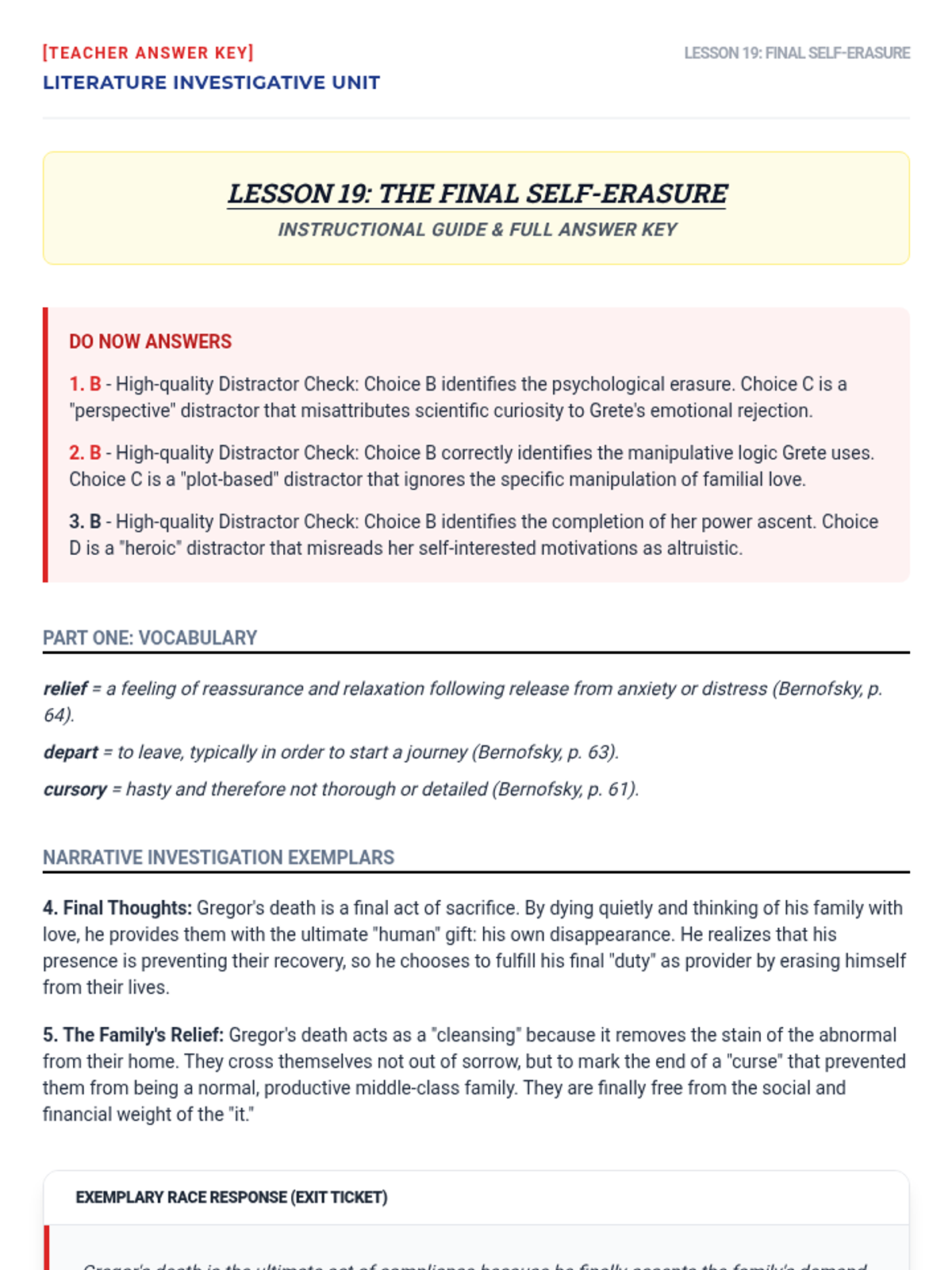
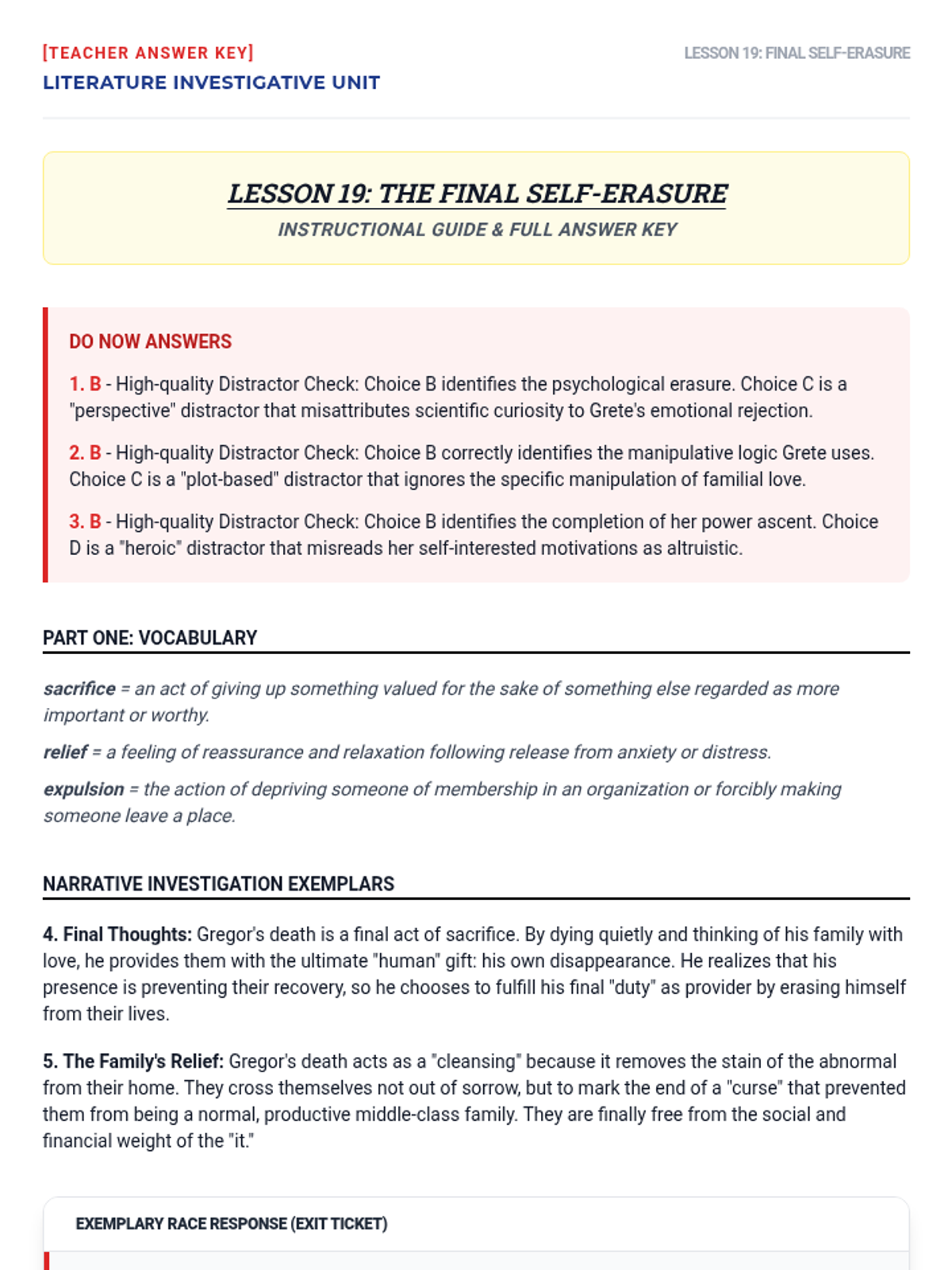
Gregor's death and self-sacrifice. Analysis of the relief of the family and the 'cleansing' of the home.
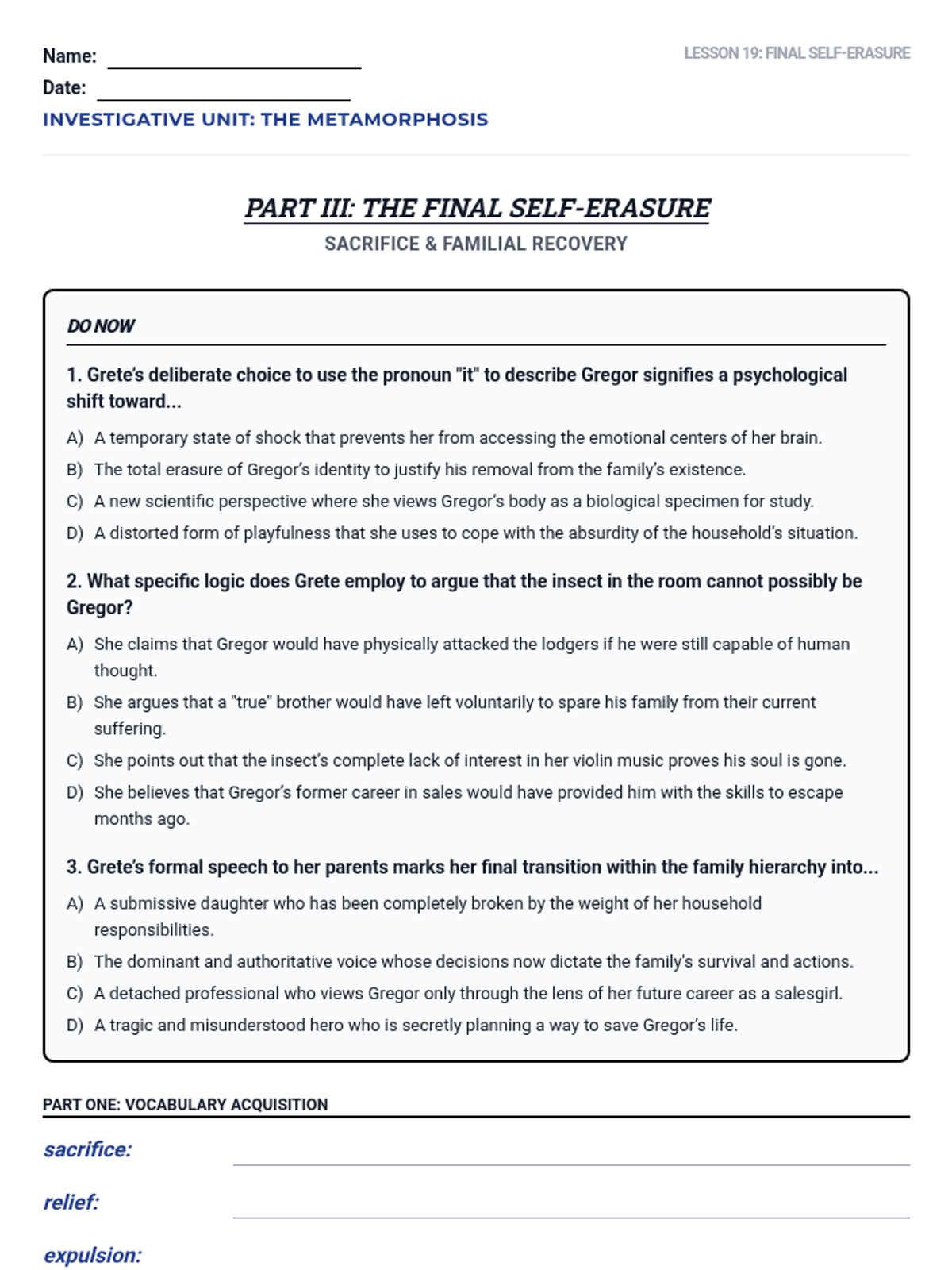
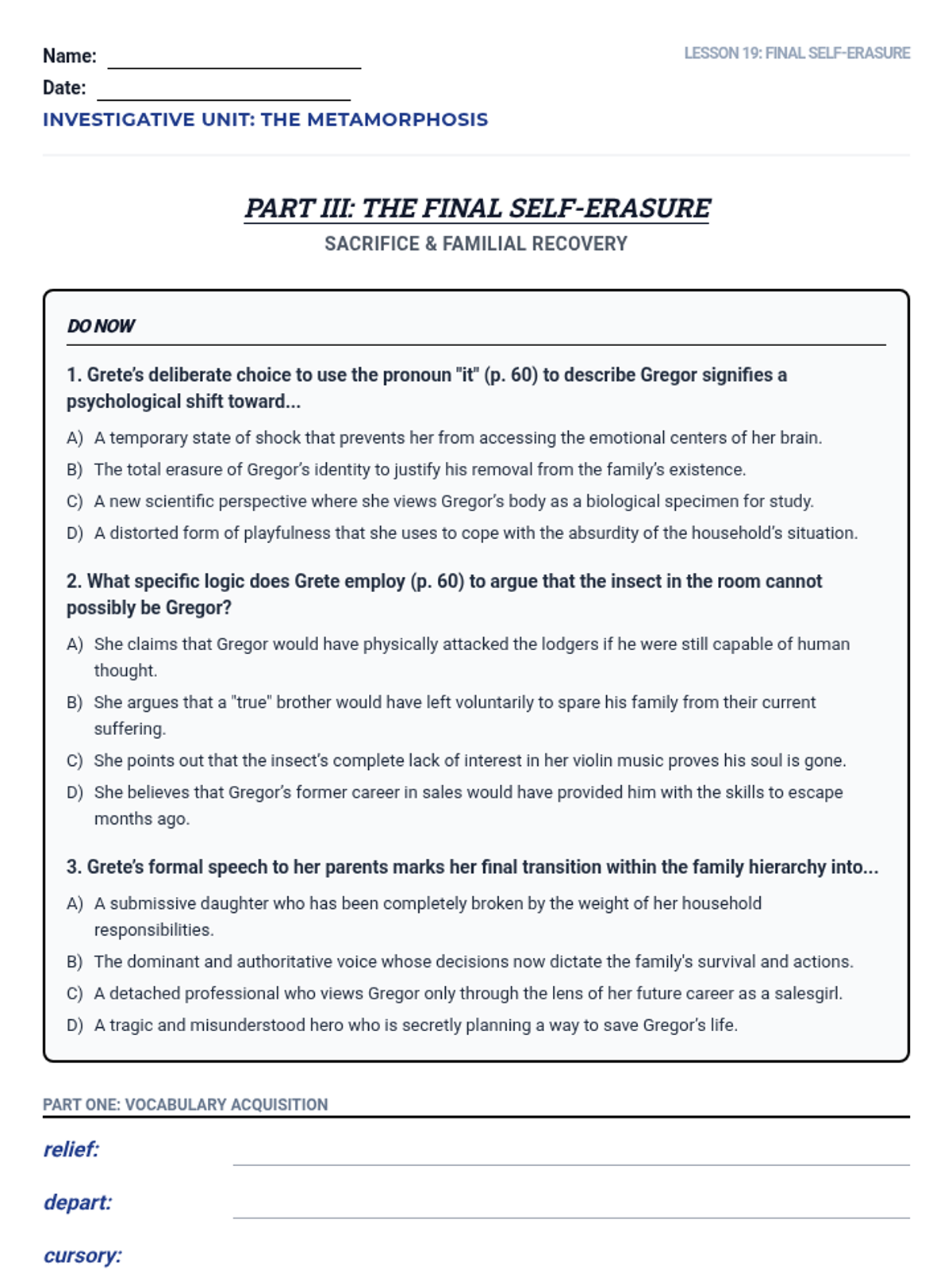
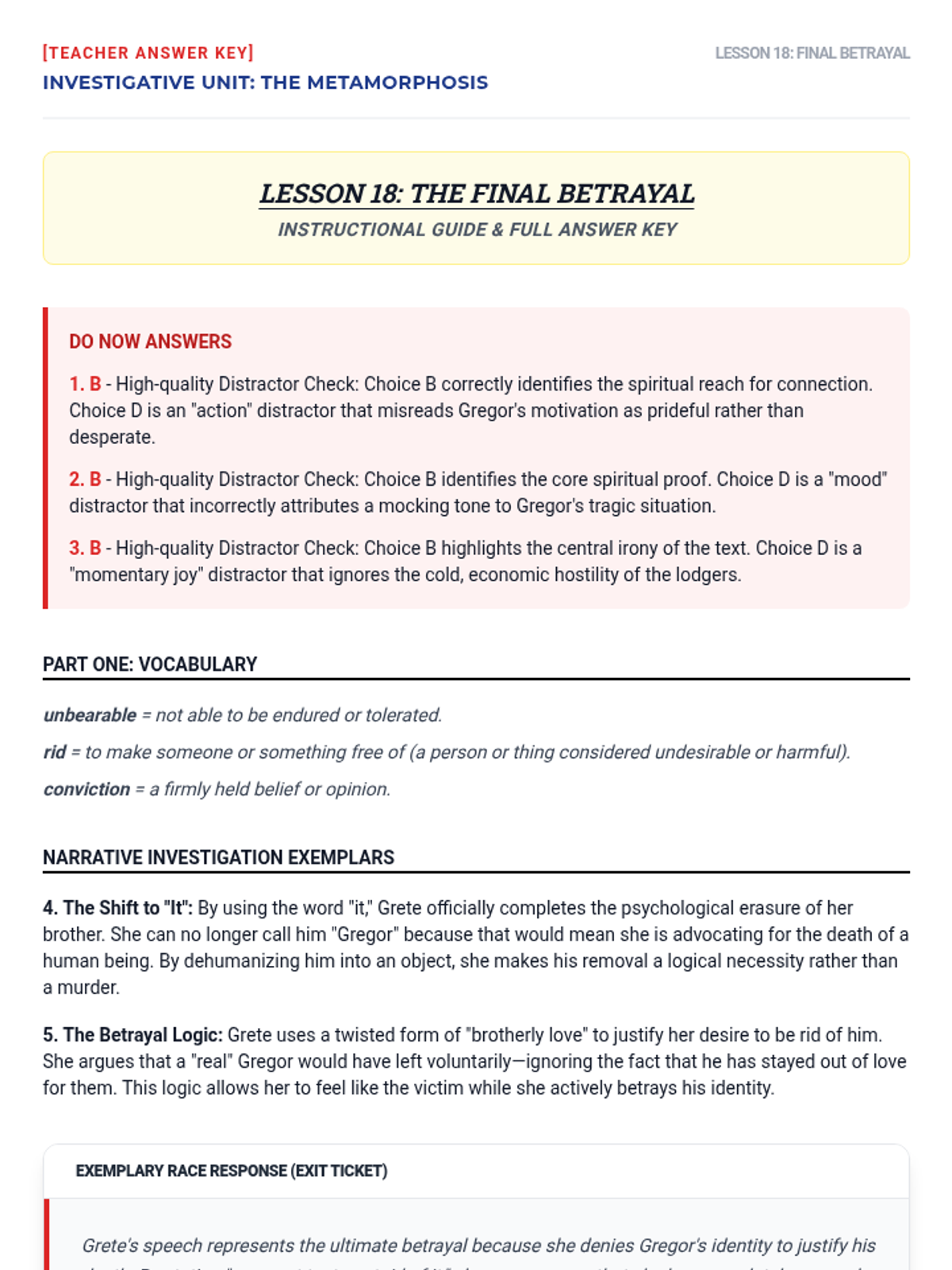
Grete's formal rejection of Gregor's identity. Analysis of the shift from sibling love to the necessity of his removal.
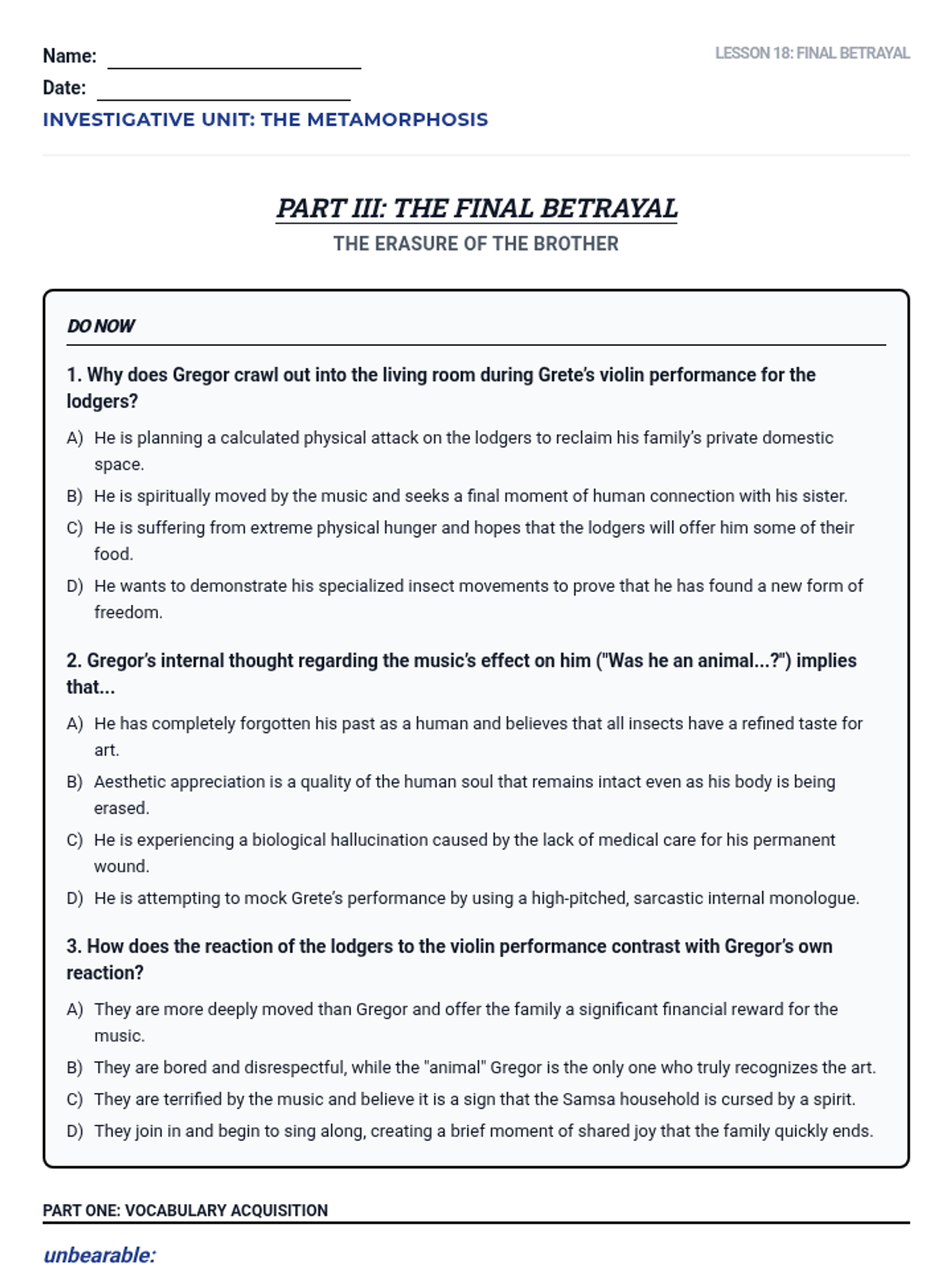
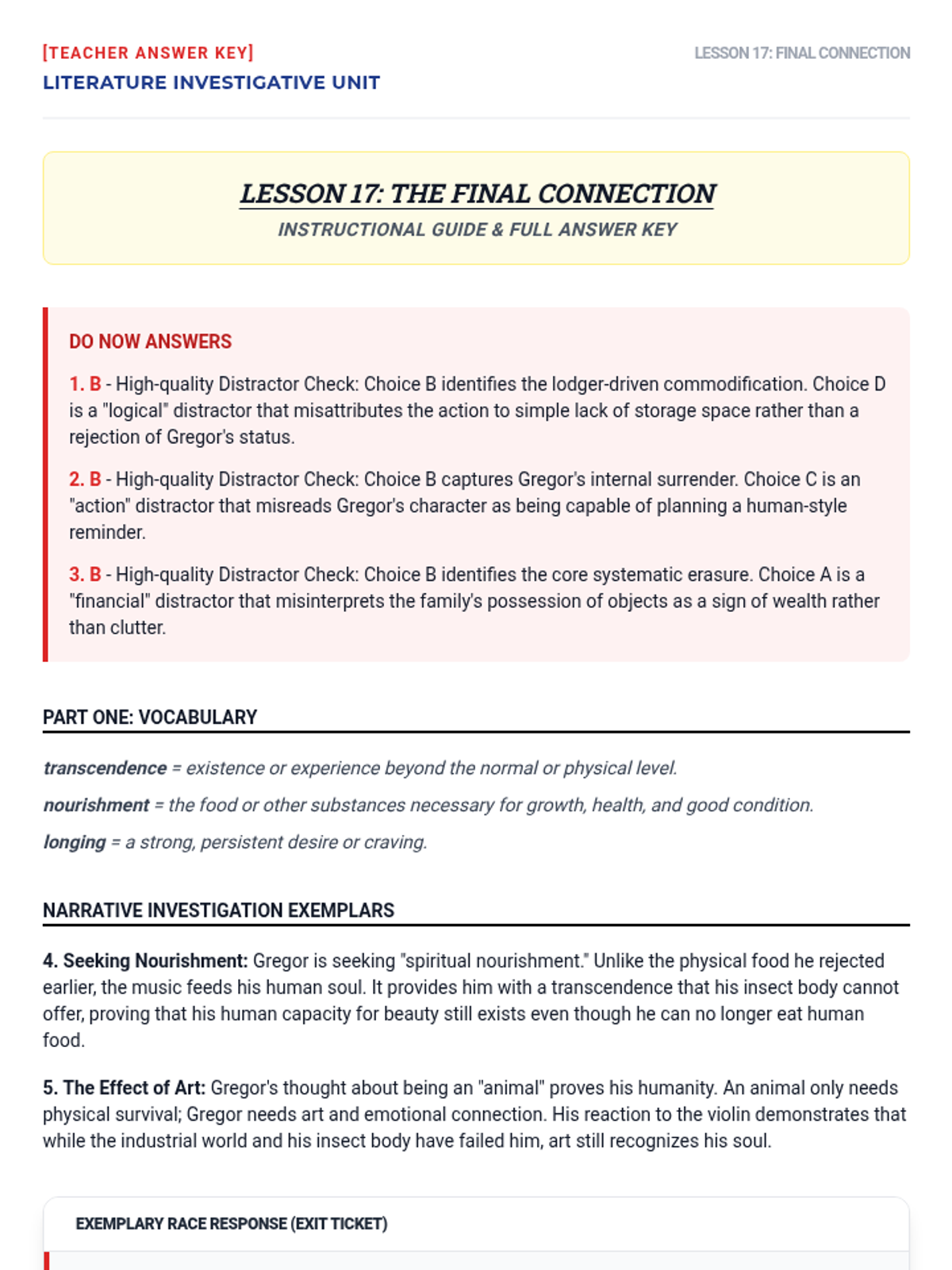
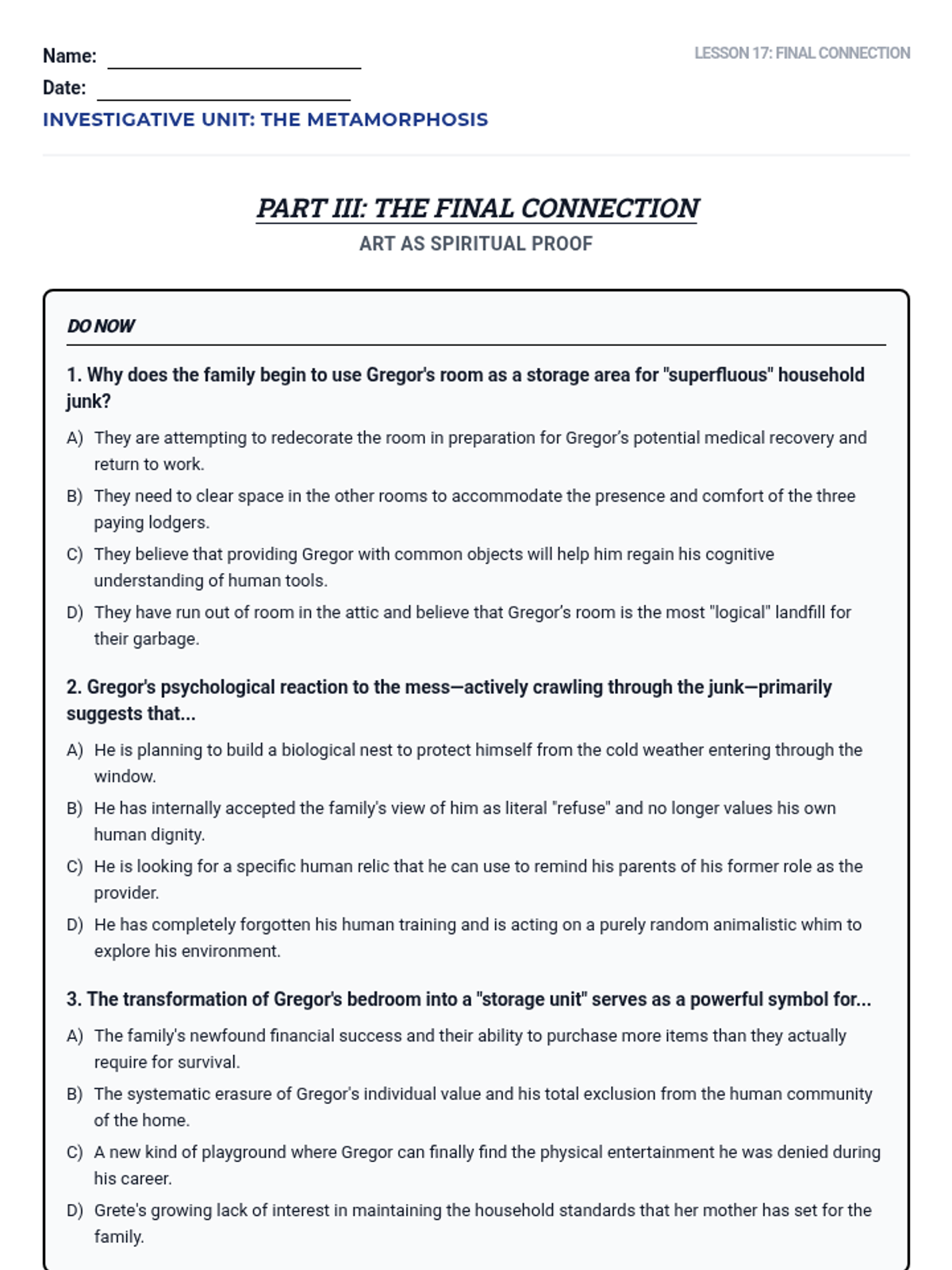
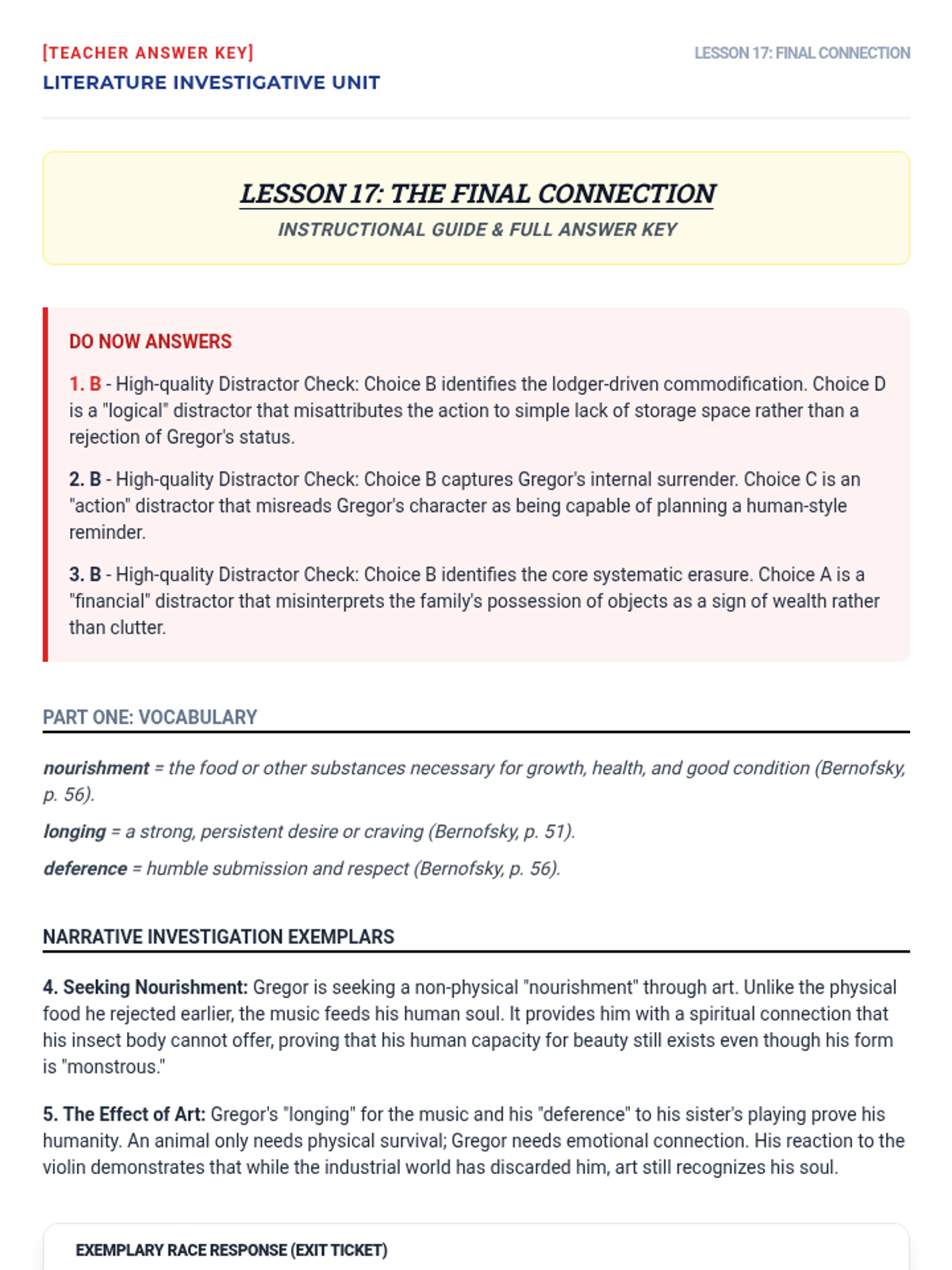
Gregor's reaction to Grete's violin performance. Themes of art, human connection, and the final reach for his human spirit.
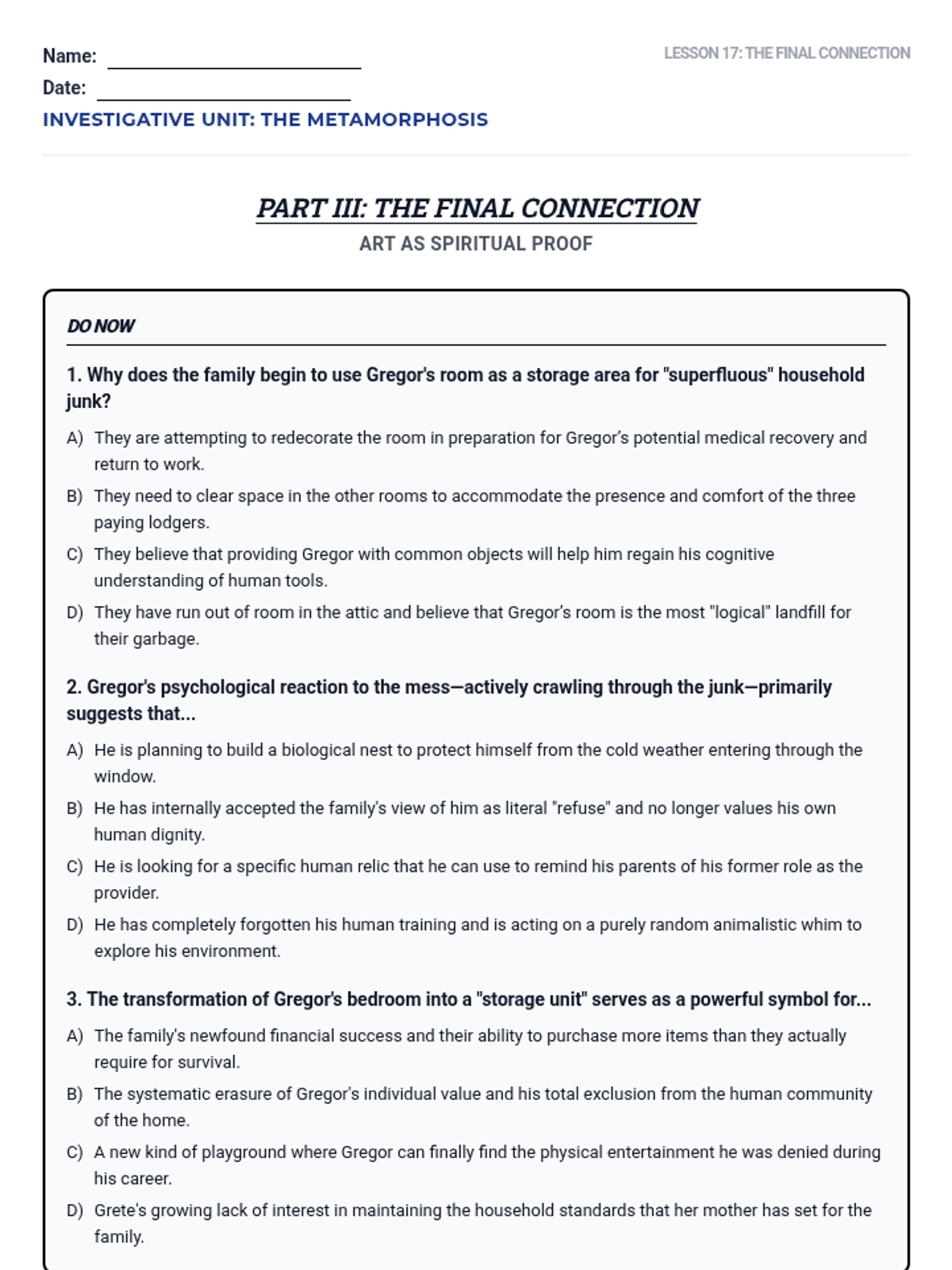
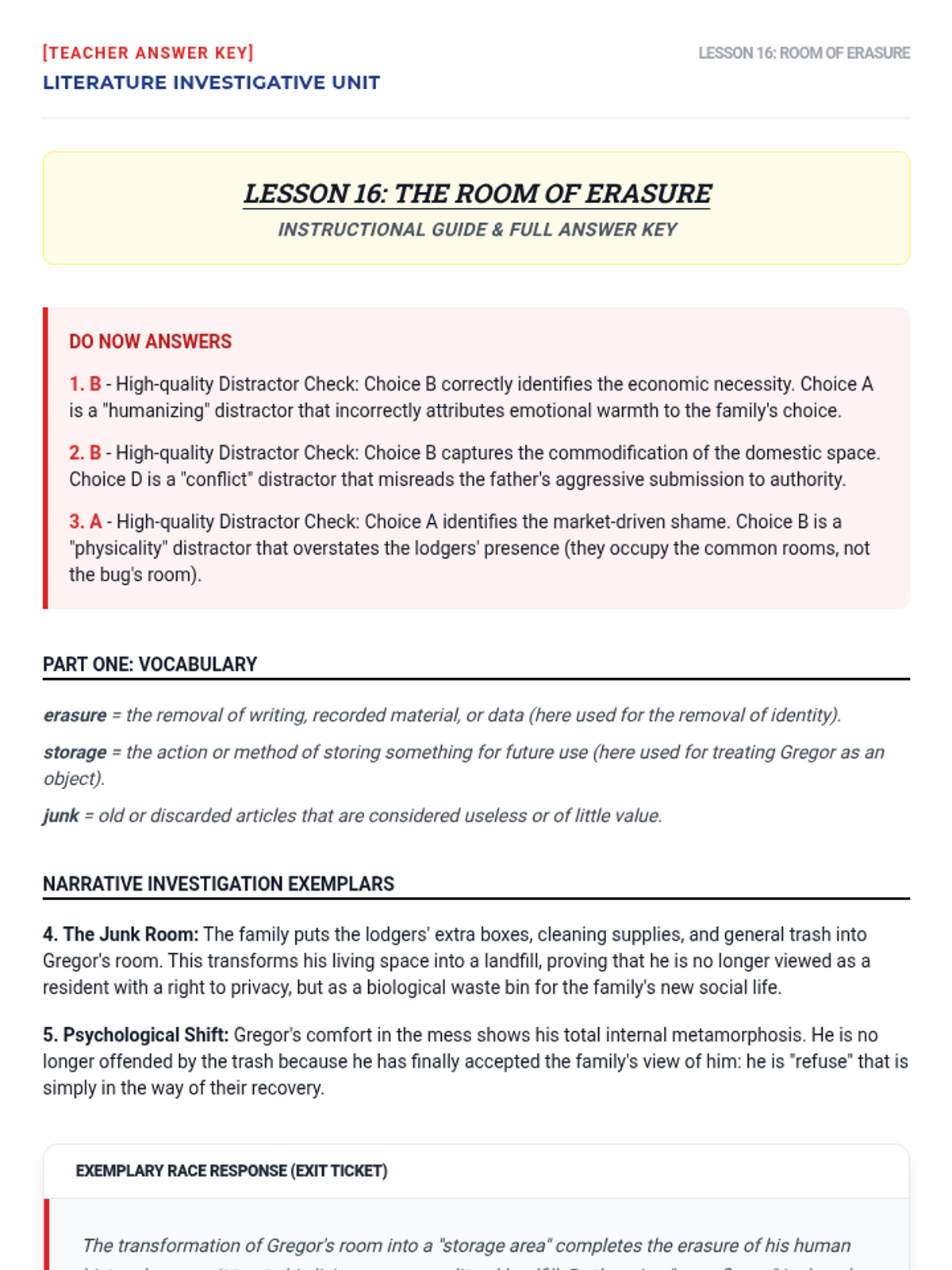
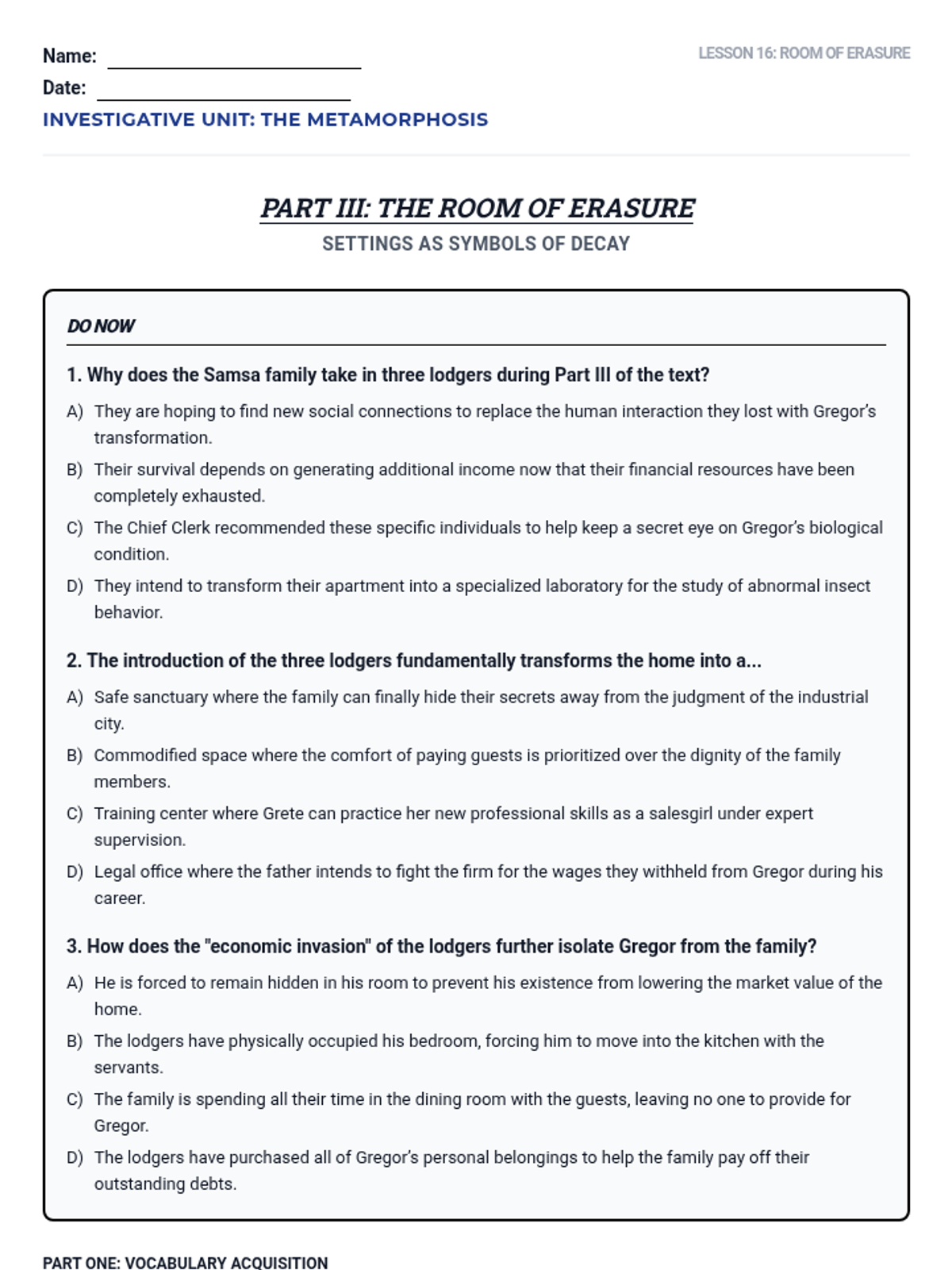
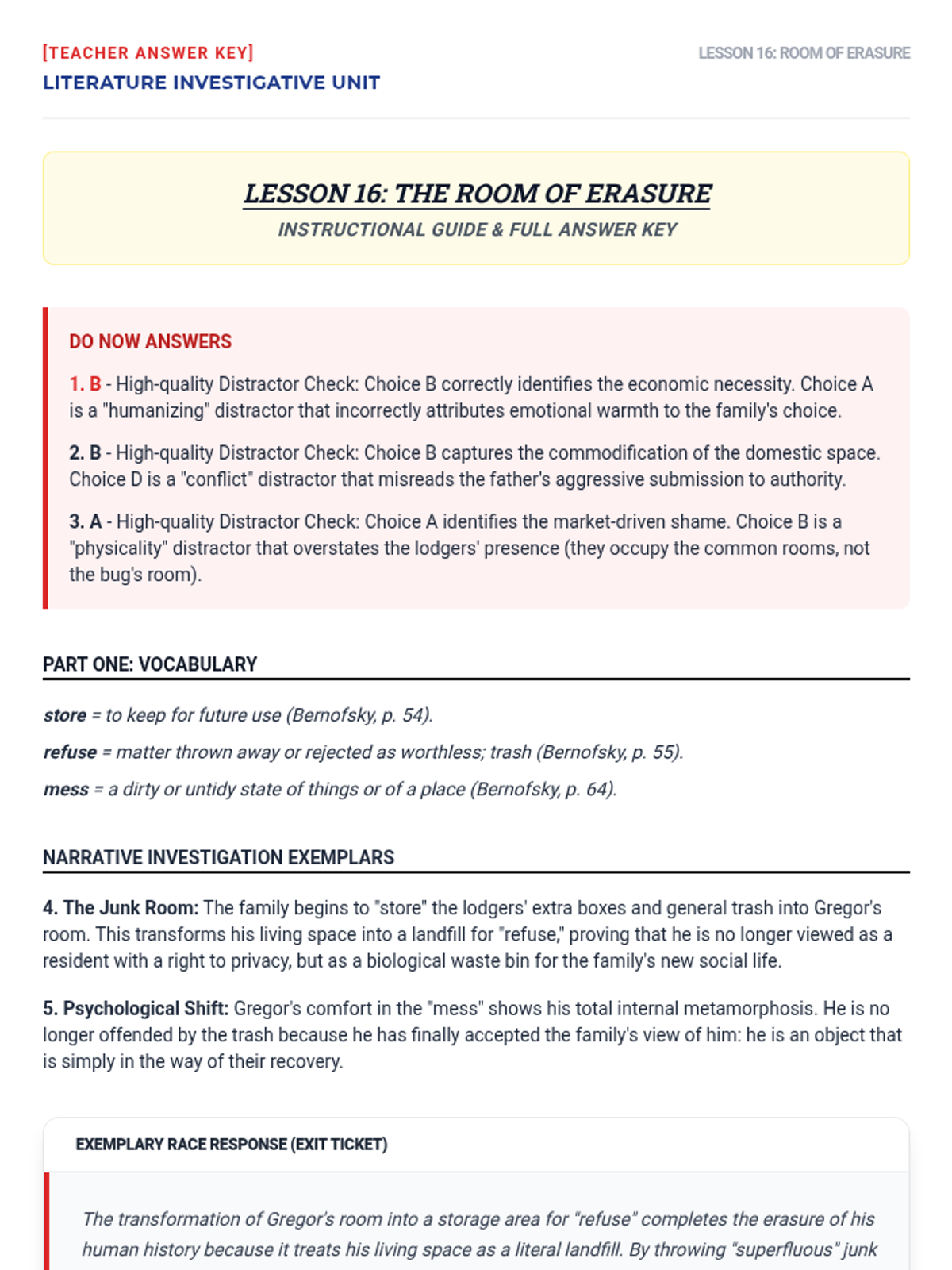
Gregor's room becomes a storage area for trash. Analysis of the complete erasure of his human space and history.
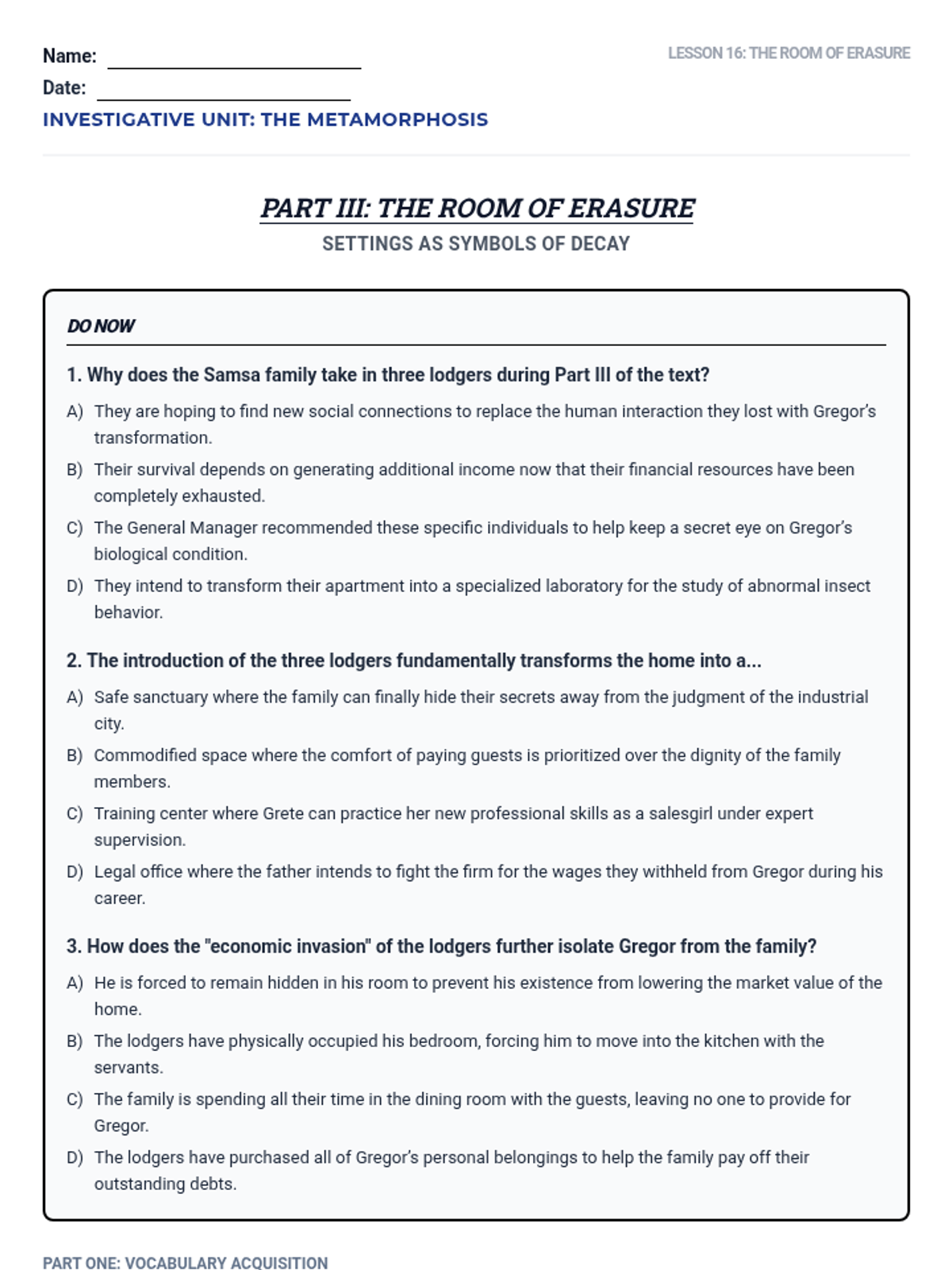
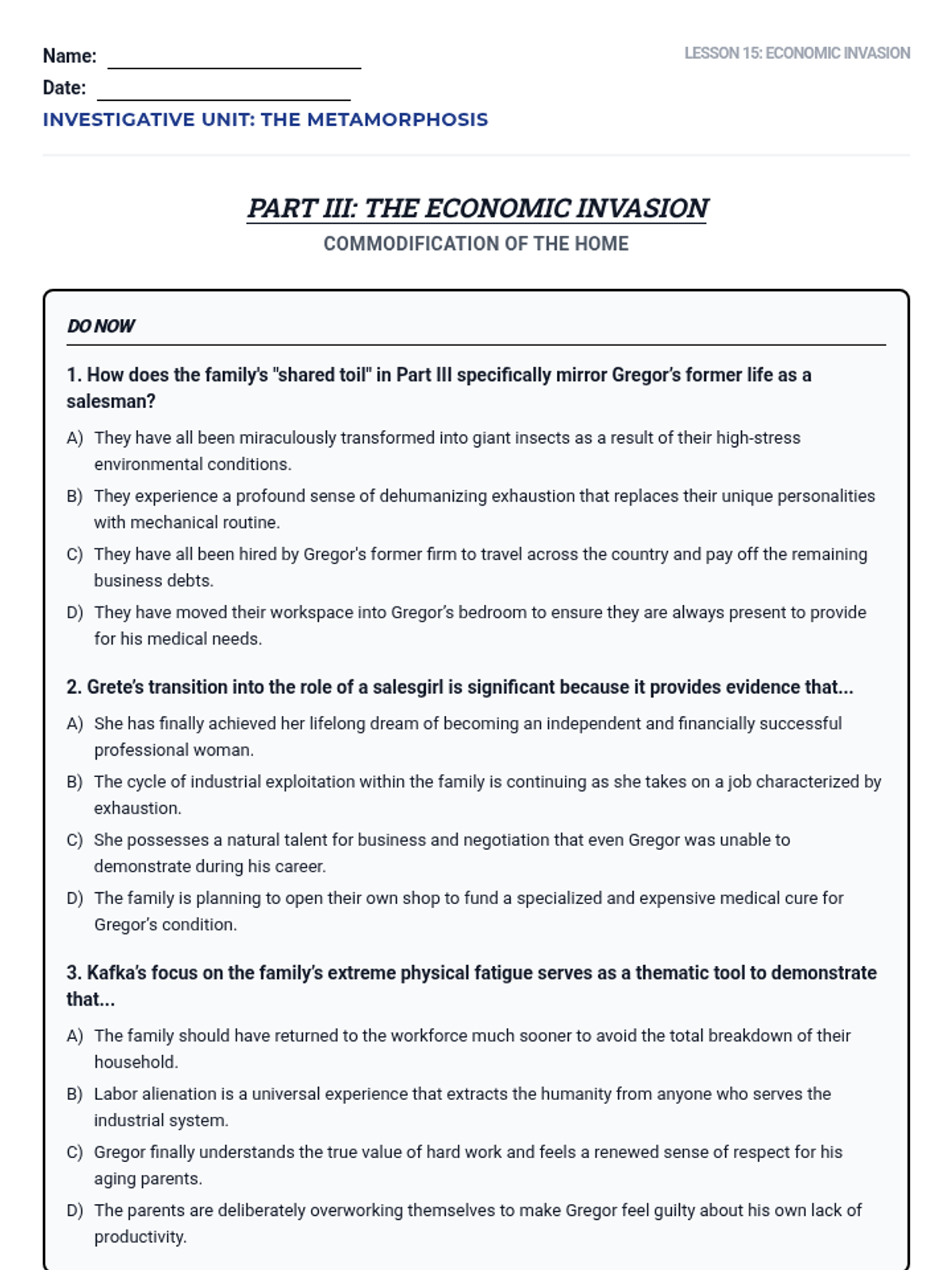
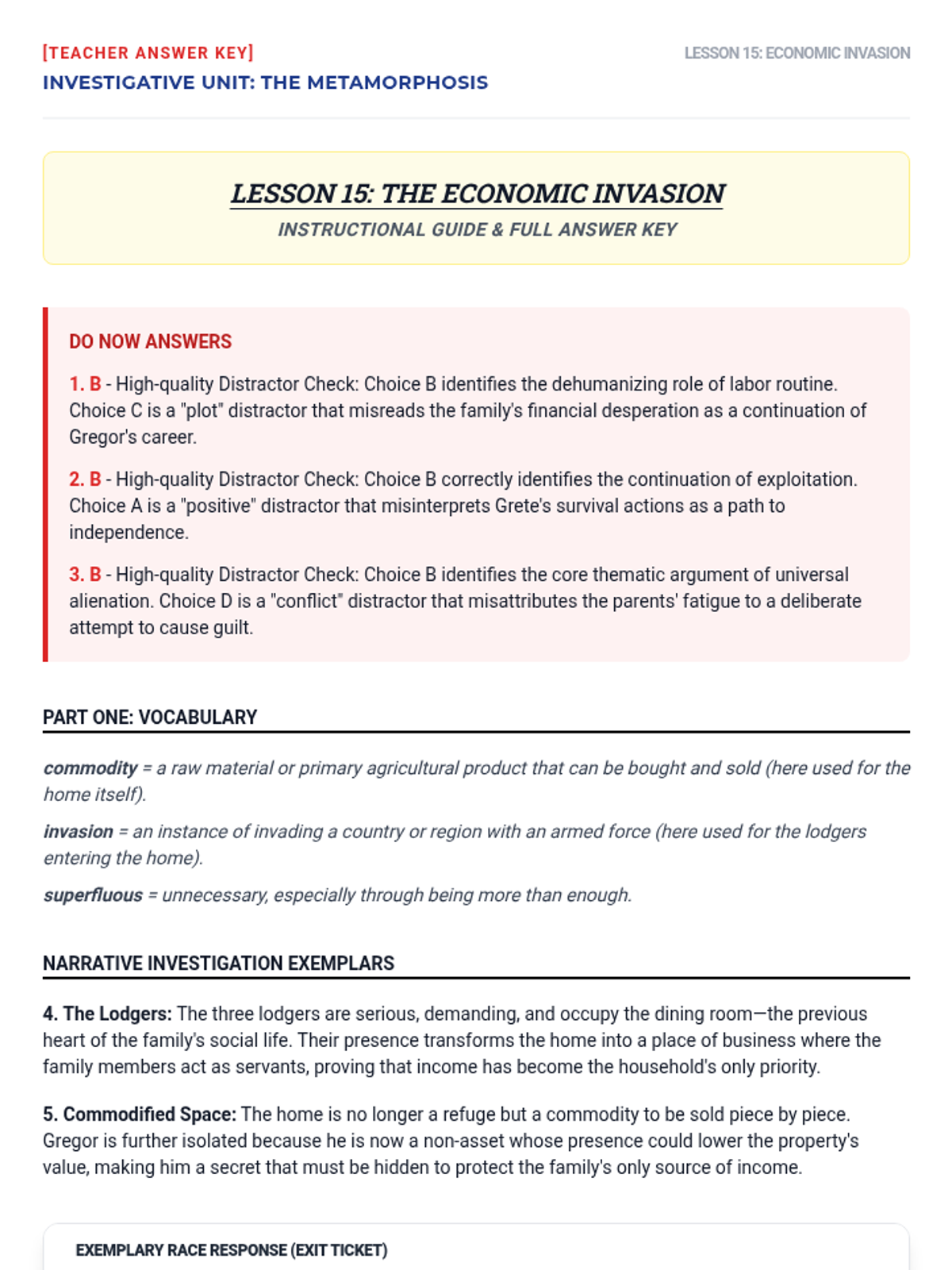
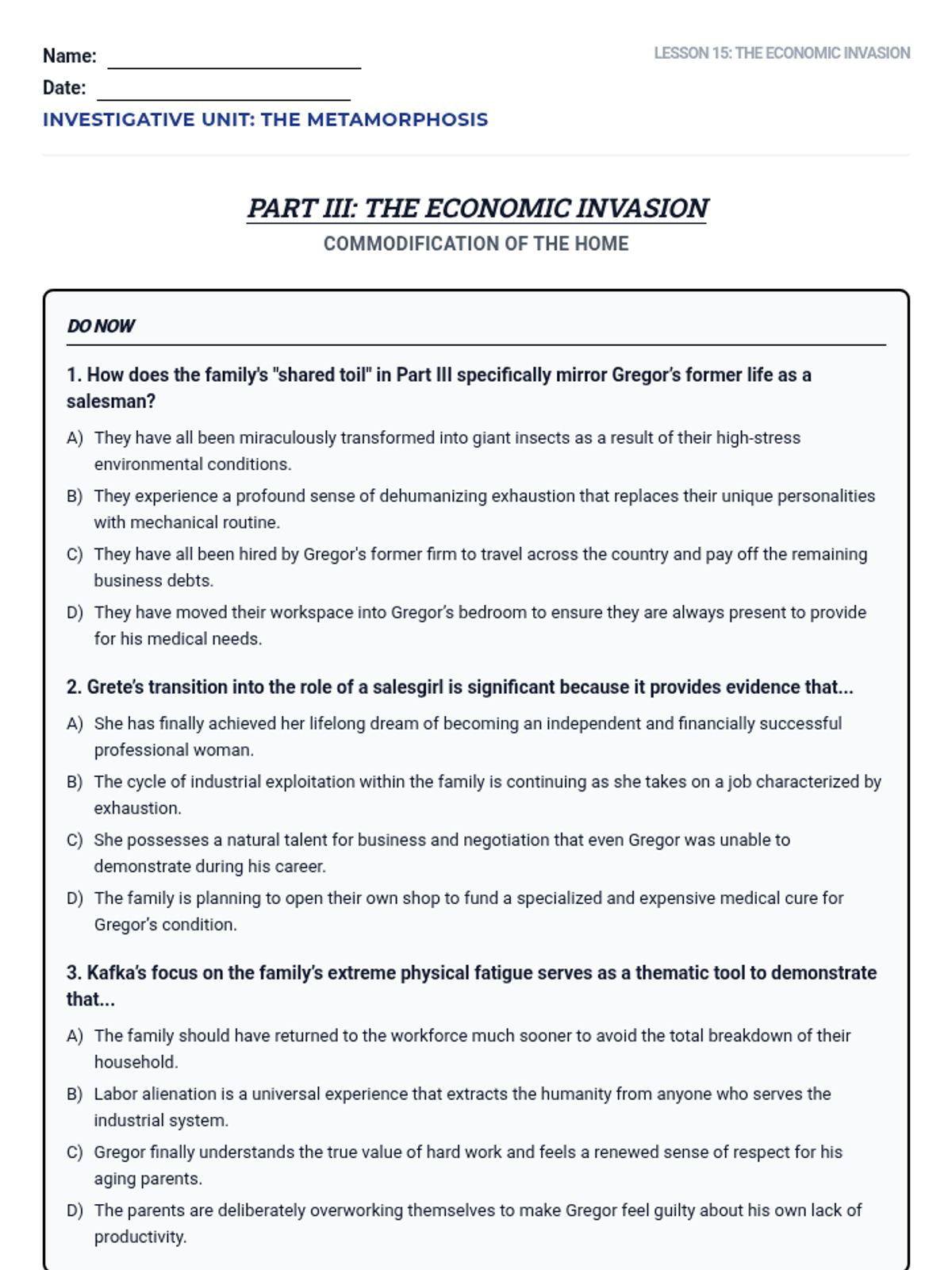
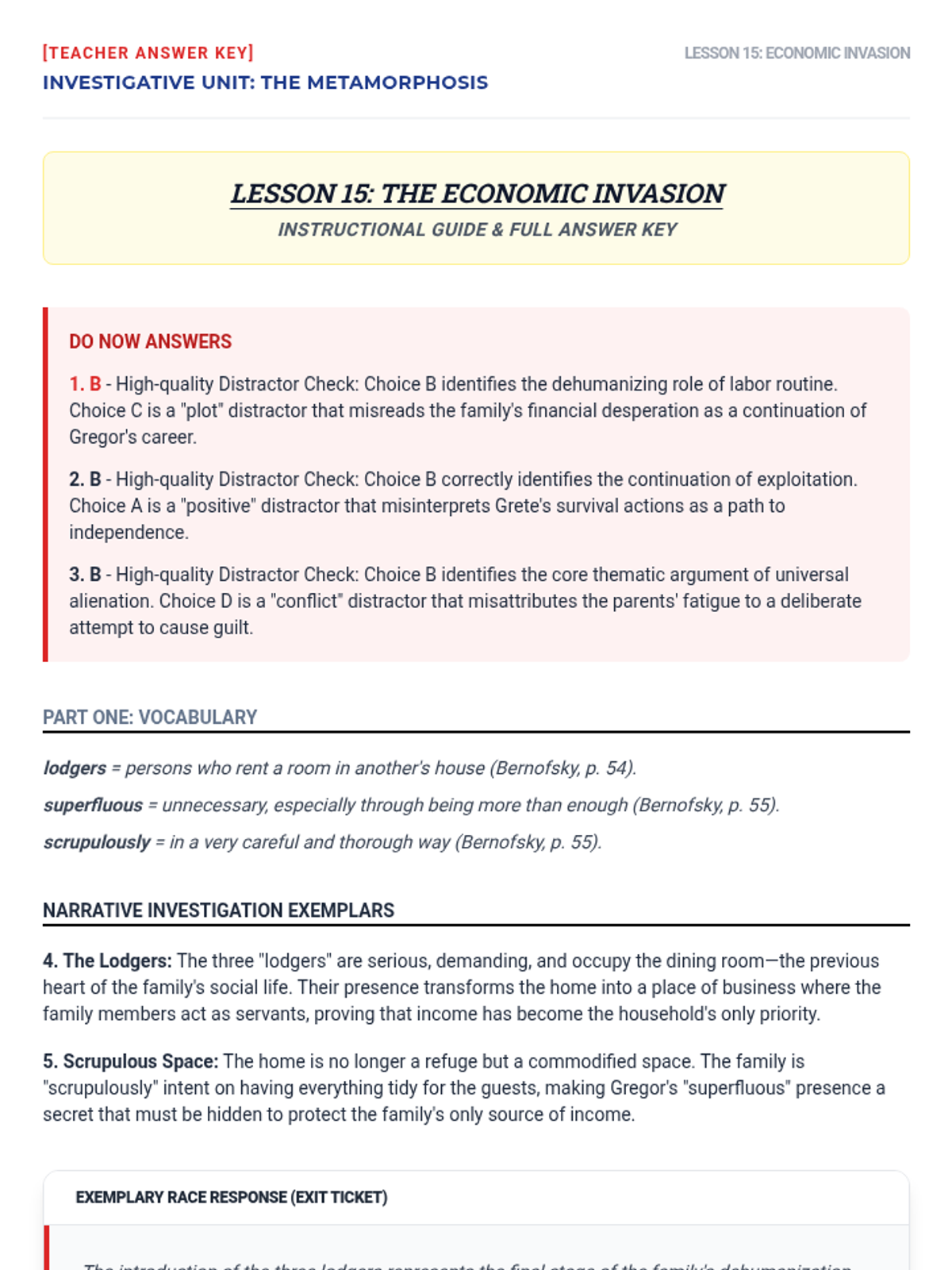
The introduction of the three lodgers. Analysis of the home as a commodified space and Gregor's further displacement.
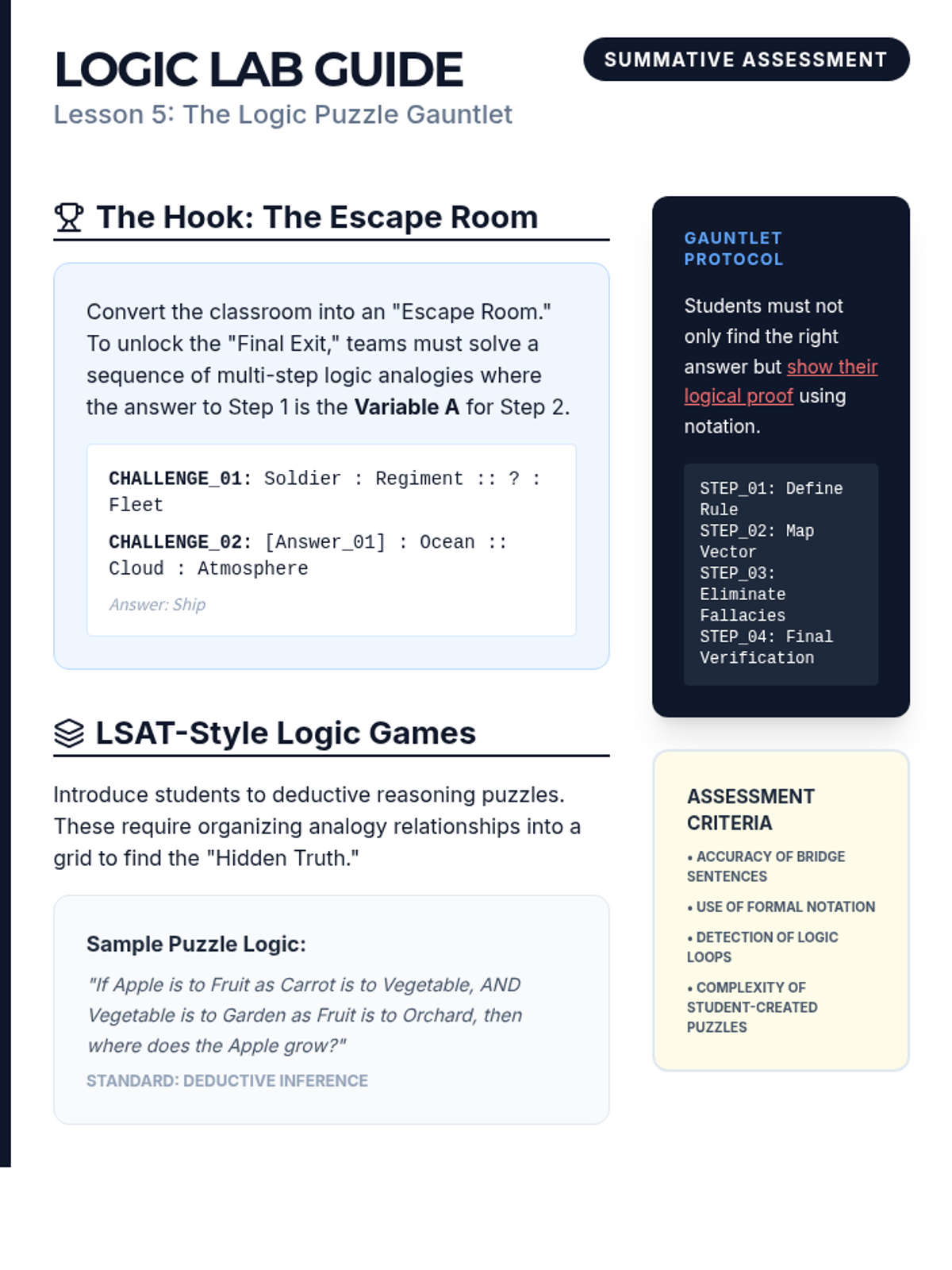
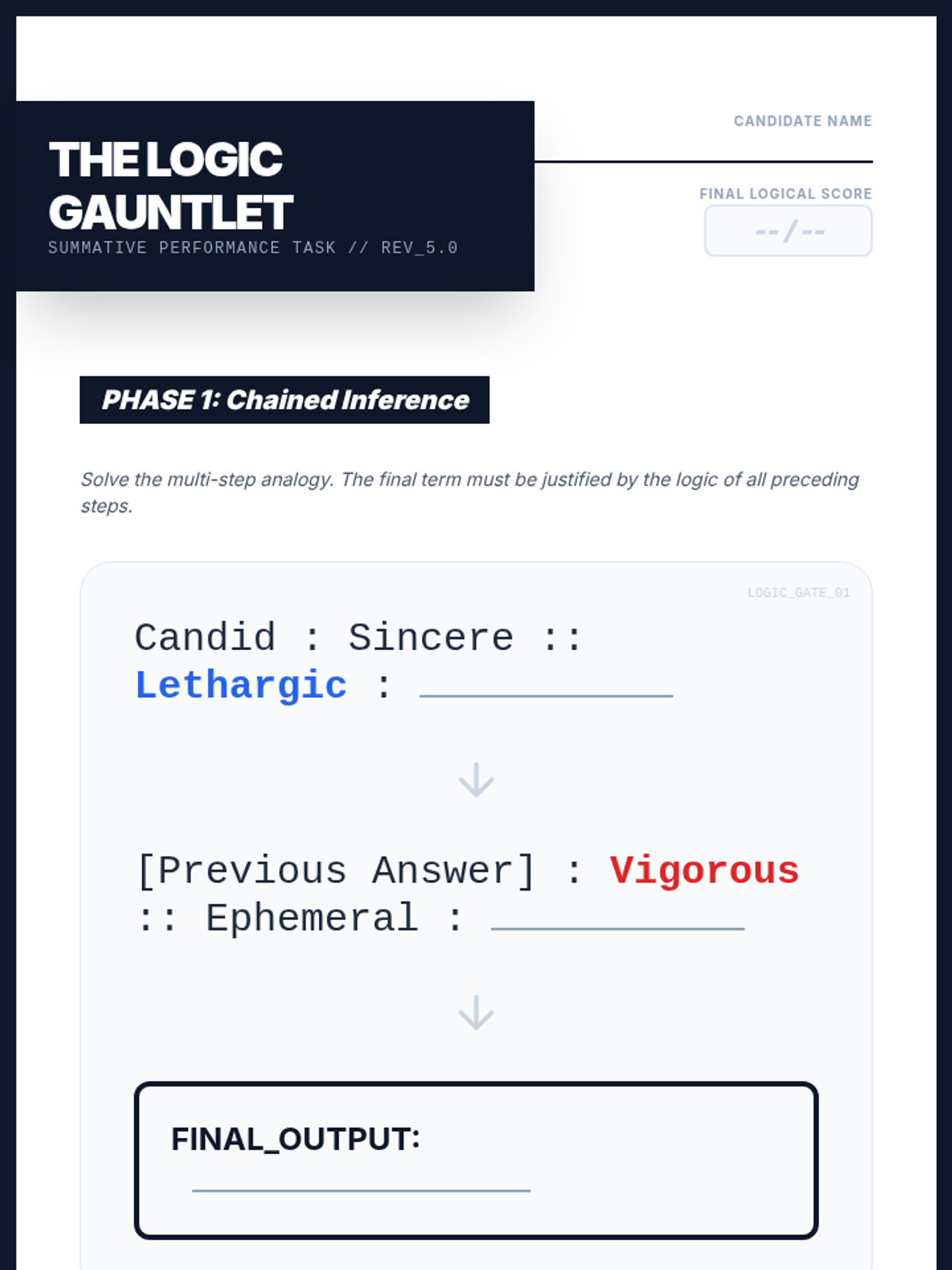
A summative assessment where students solve and create multi-step logic puzzles and LSAT-style games based on verbal analogies.
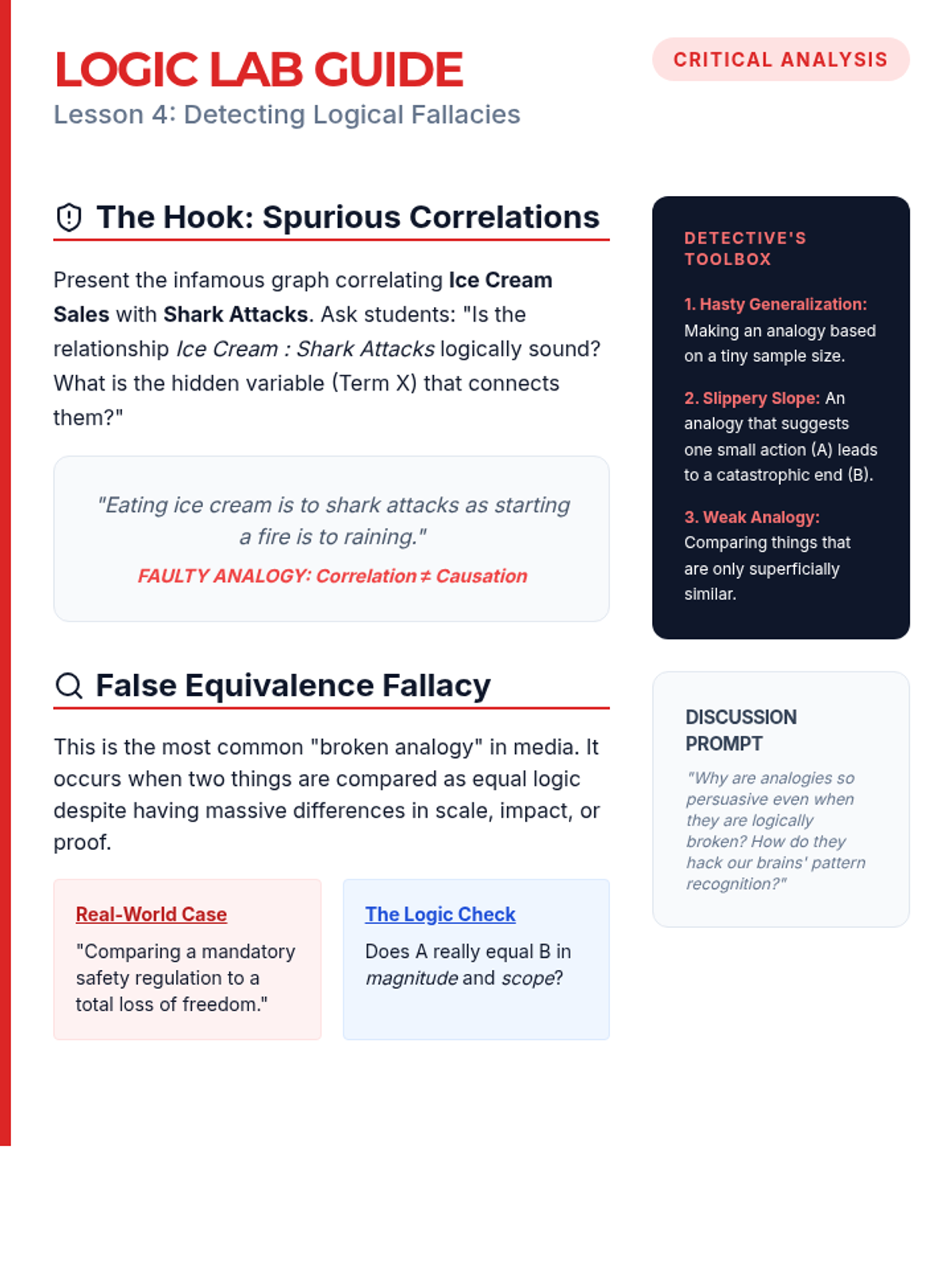
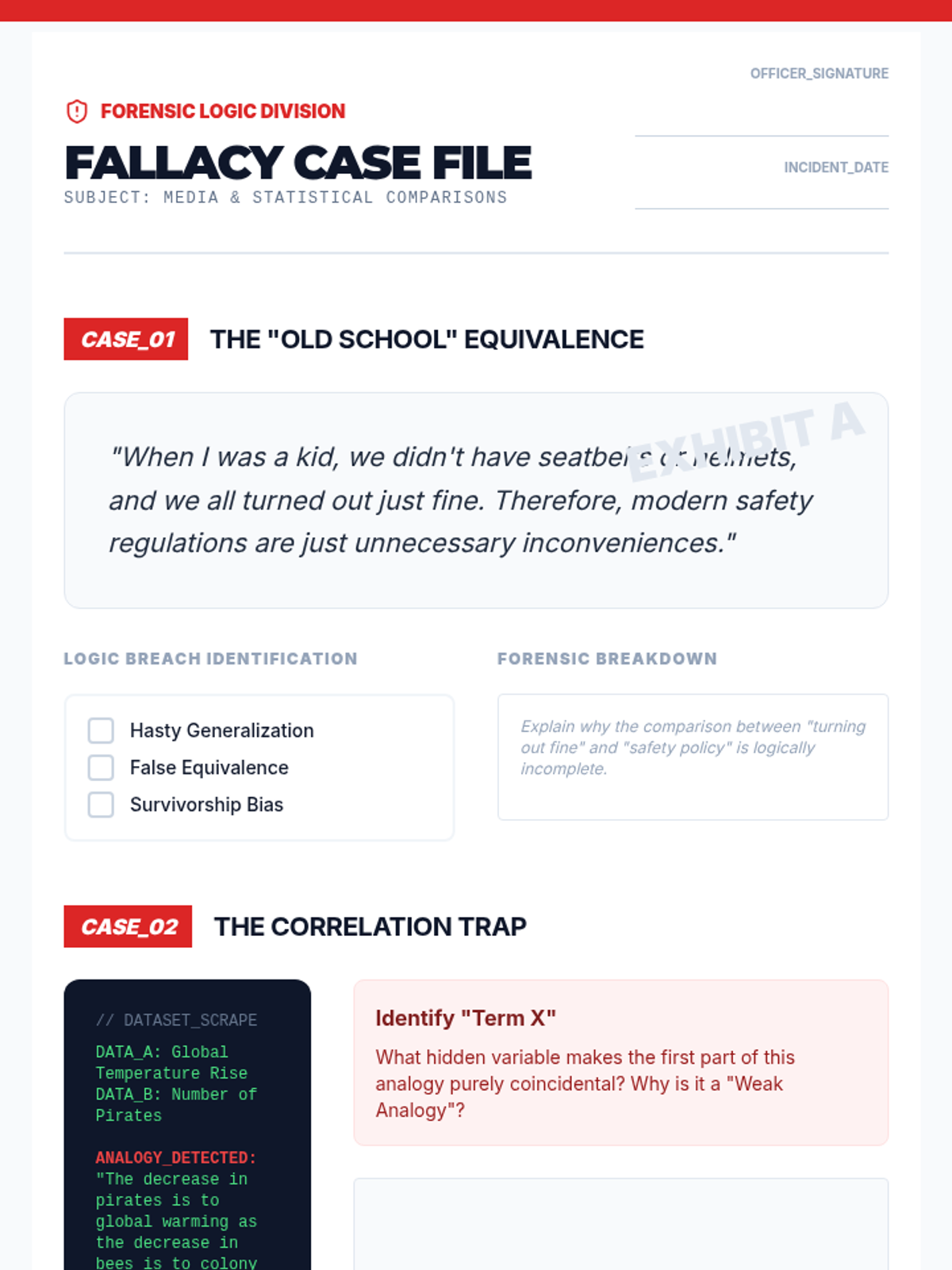
Investigates false equivalence and other logical fallacies in real-world data and media, applying analogy skills to information literacy.
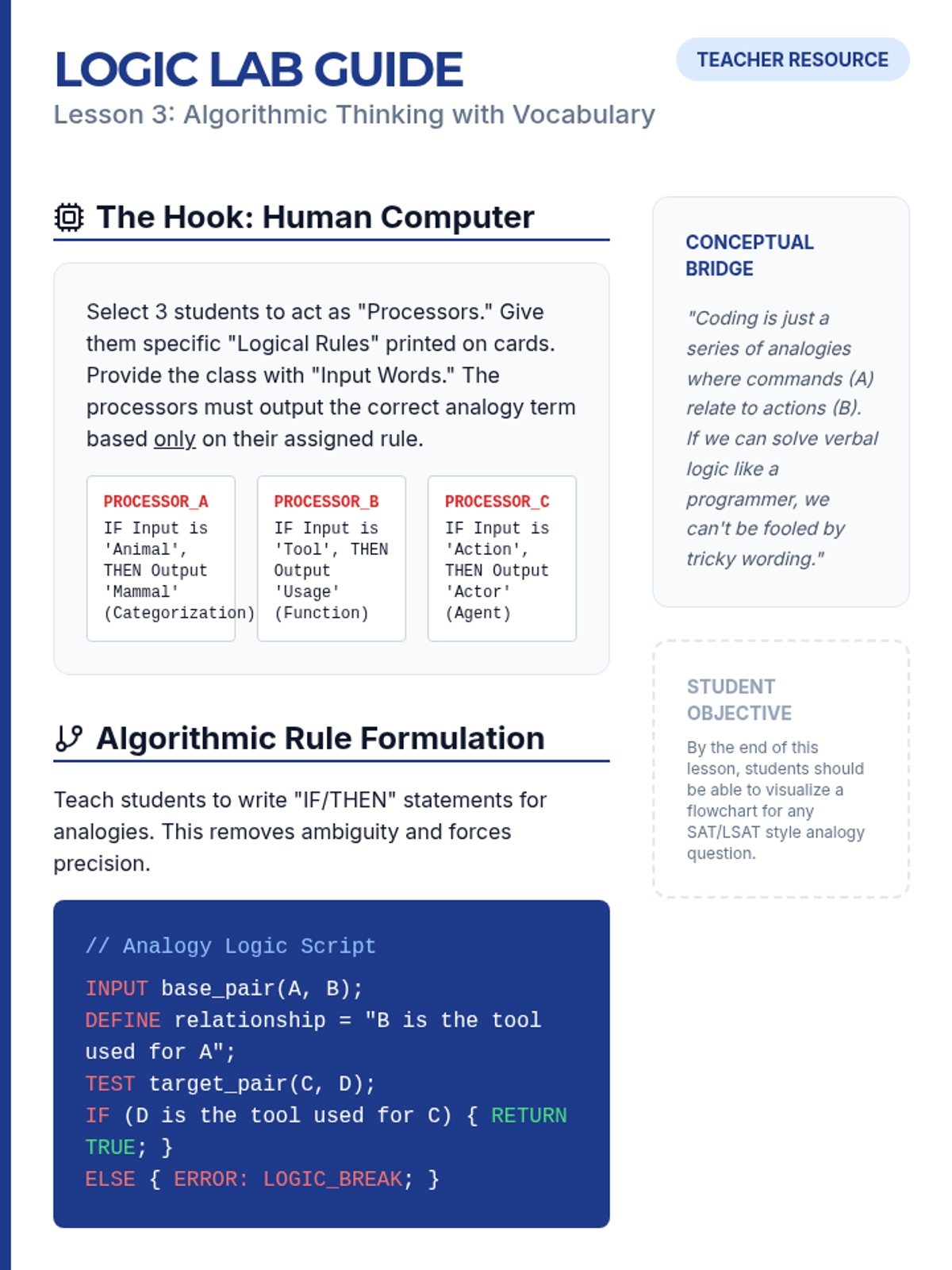
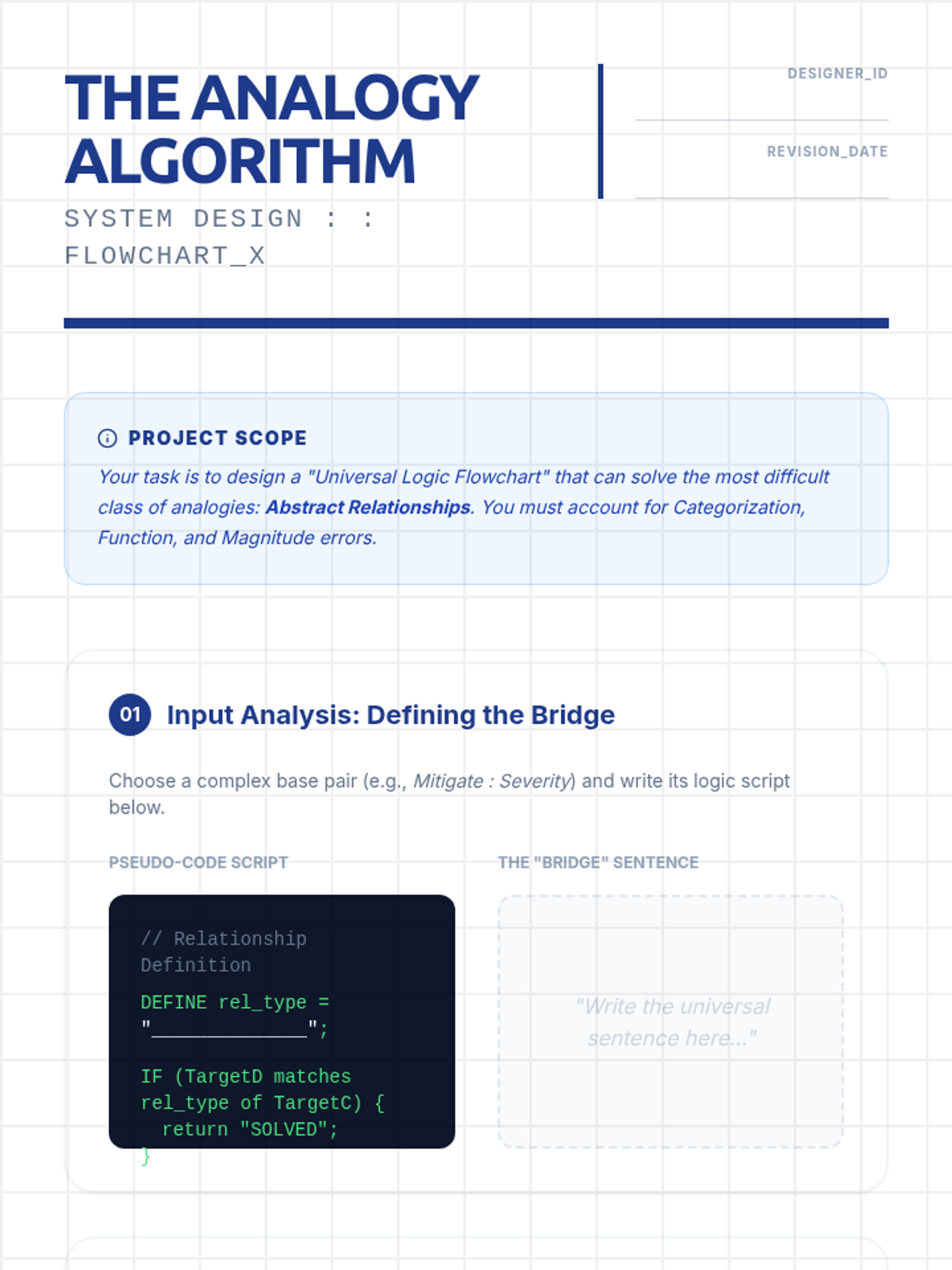
Connects coding concepts to linguistics by having students design flowcharts and 'rules' to solve for unknown terms in complex analogies.
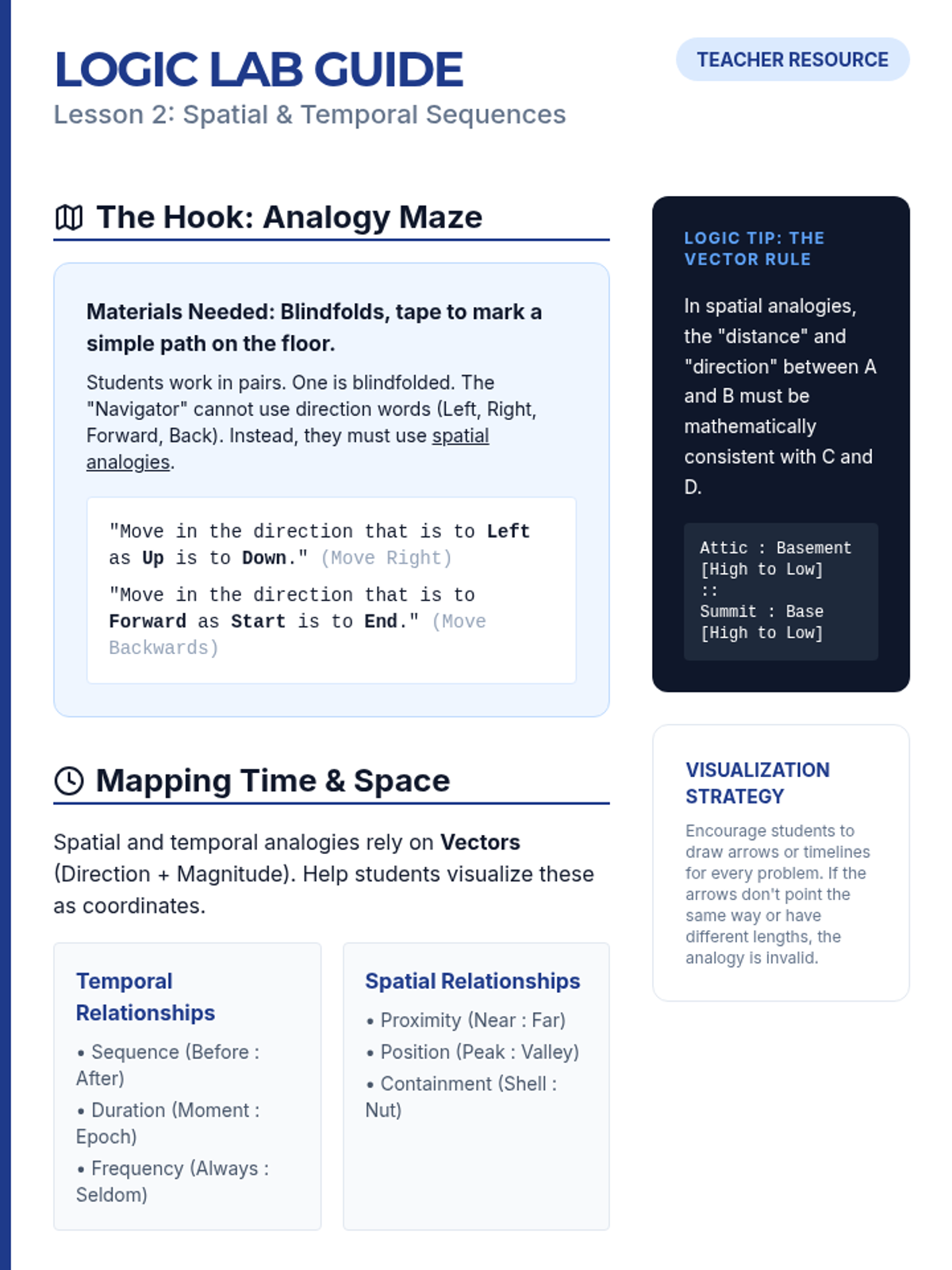
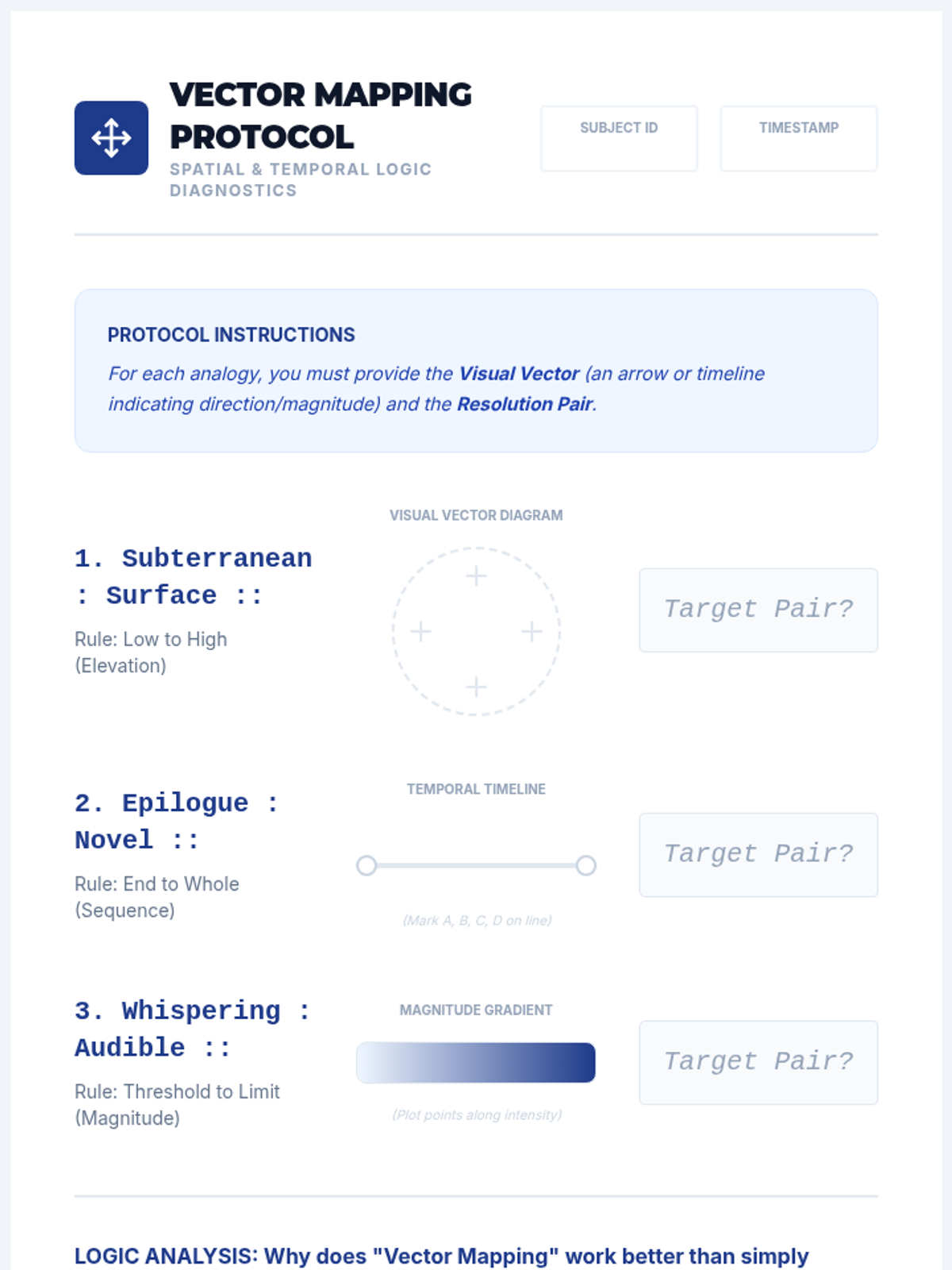
Explores analogies through the lens of space and time, using diagramming to visualize movement between terms and sequences.
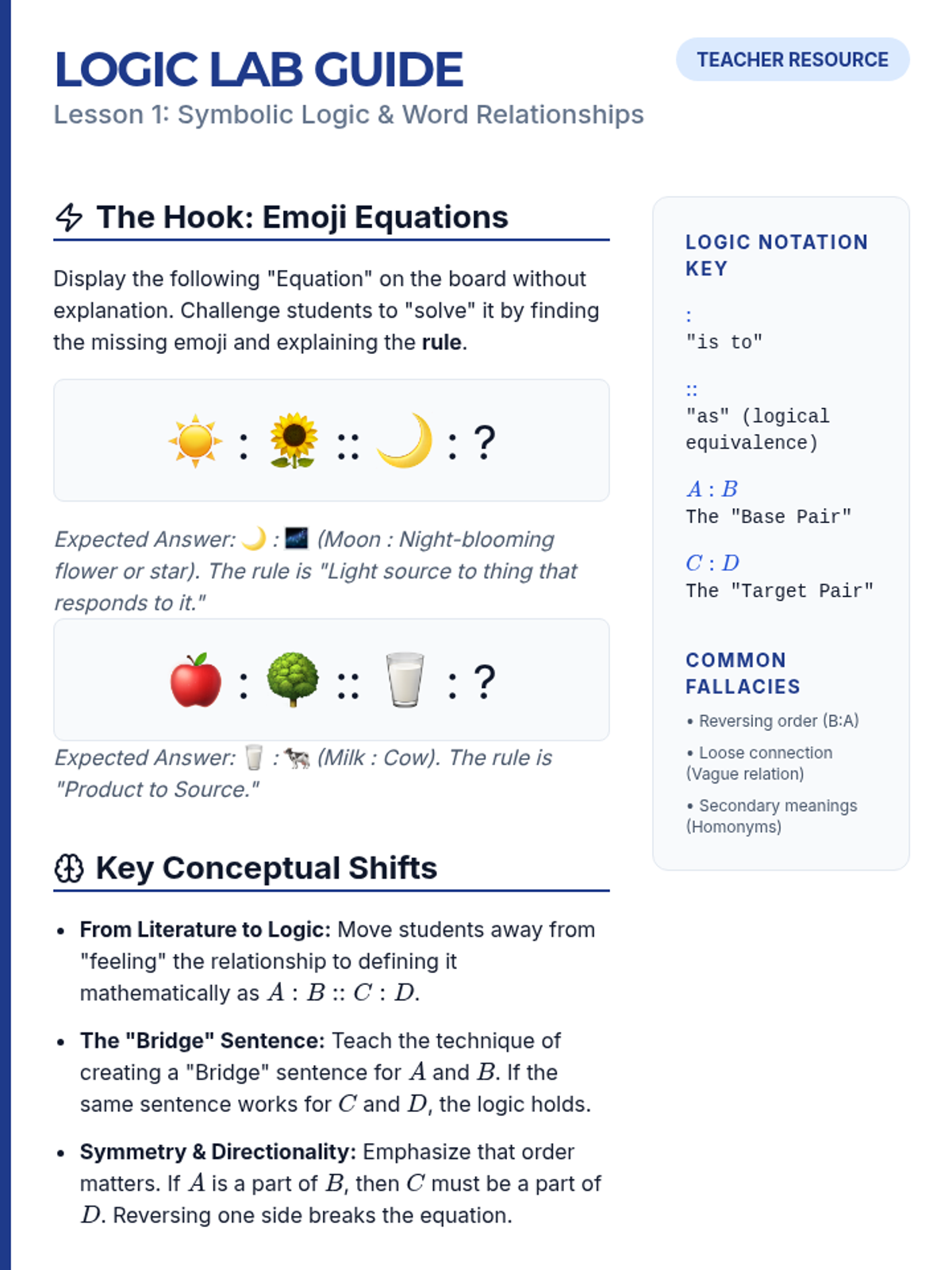
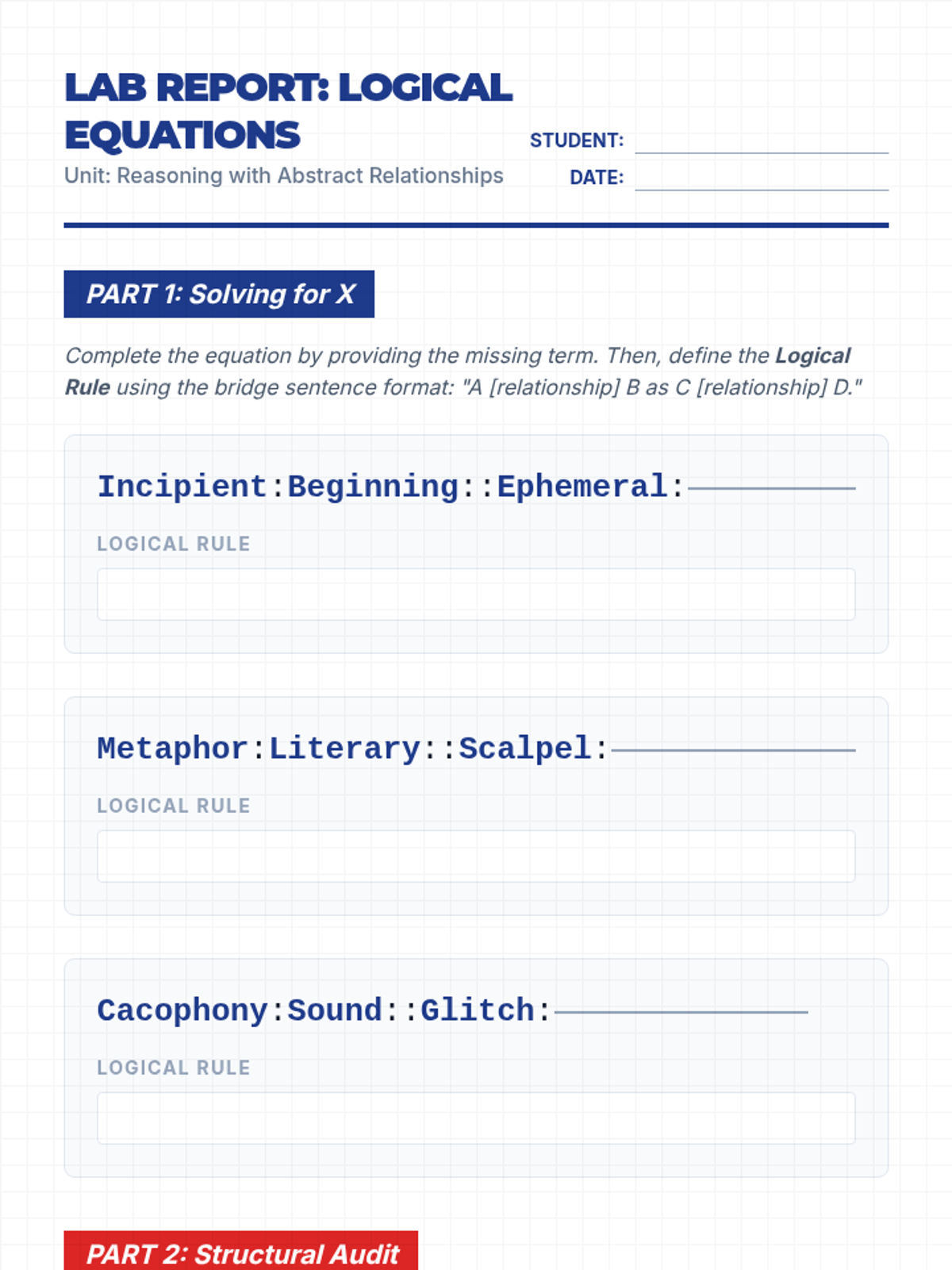
Introduces formal logic notation (A:B :: C:D) and maps word relationships onto these structures, emphasizing the importance of order and symmetry in verbal reasoning.
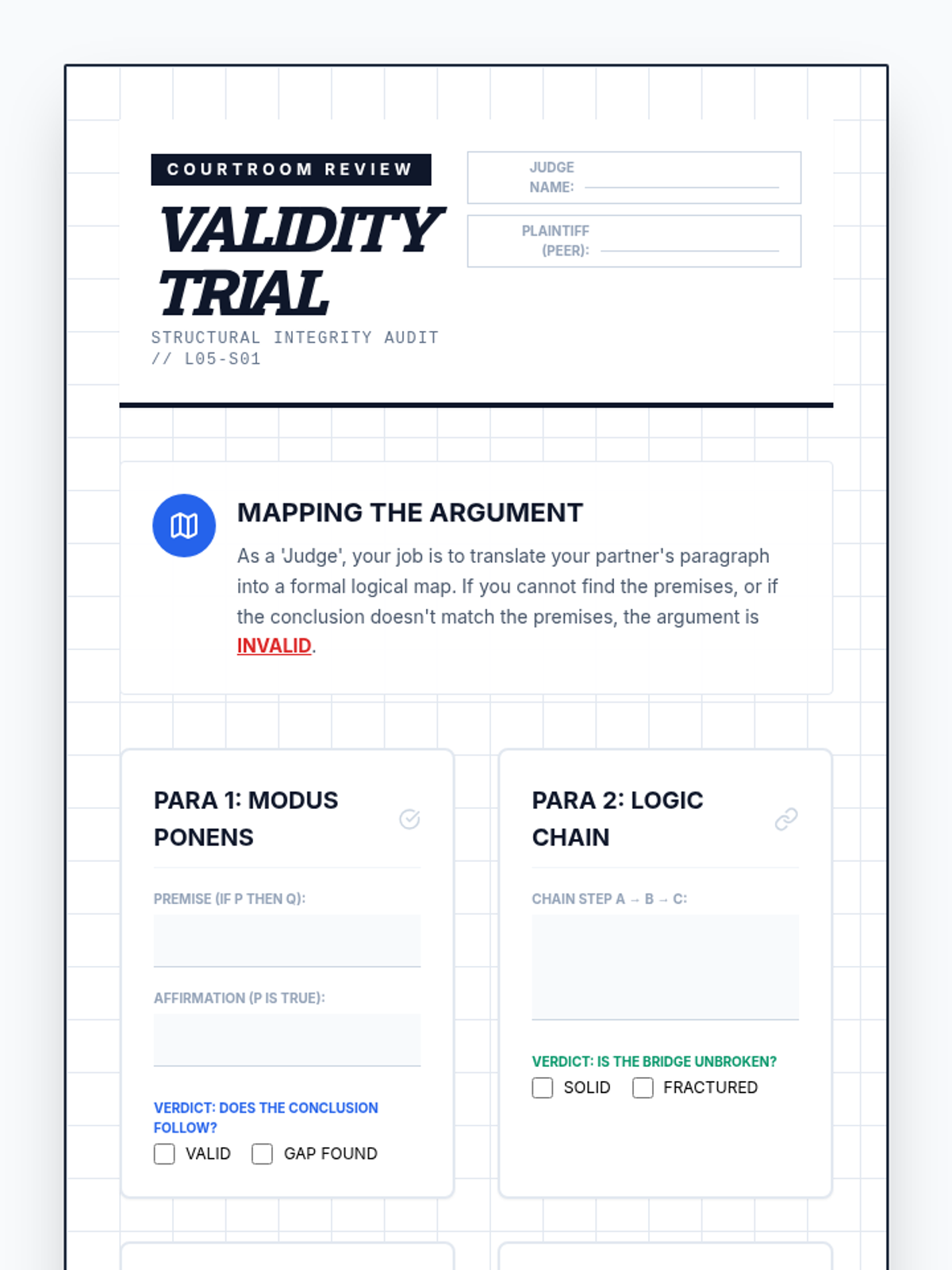
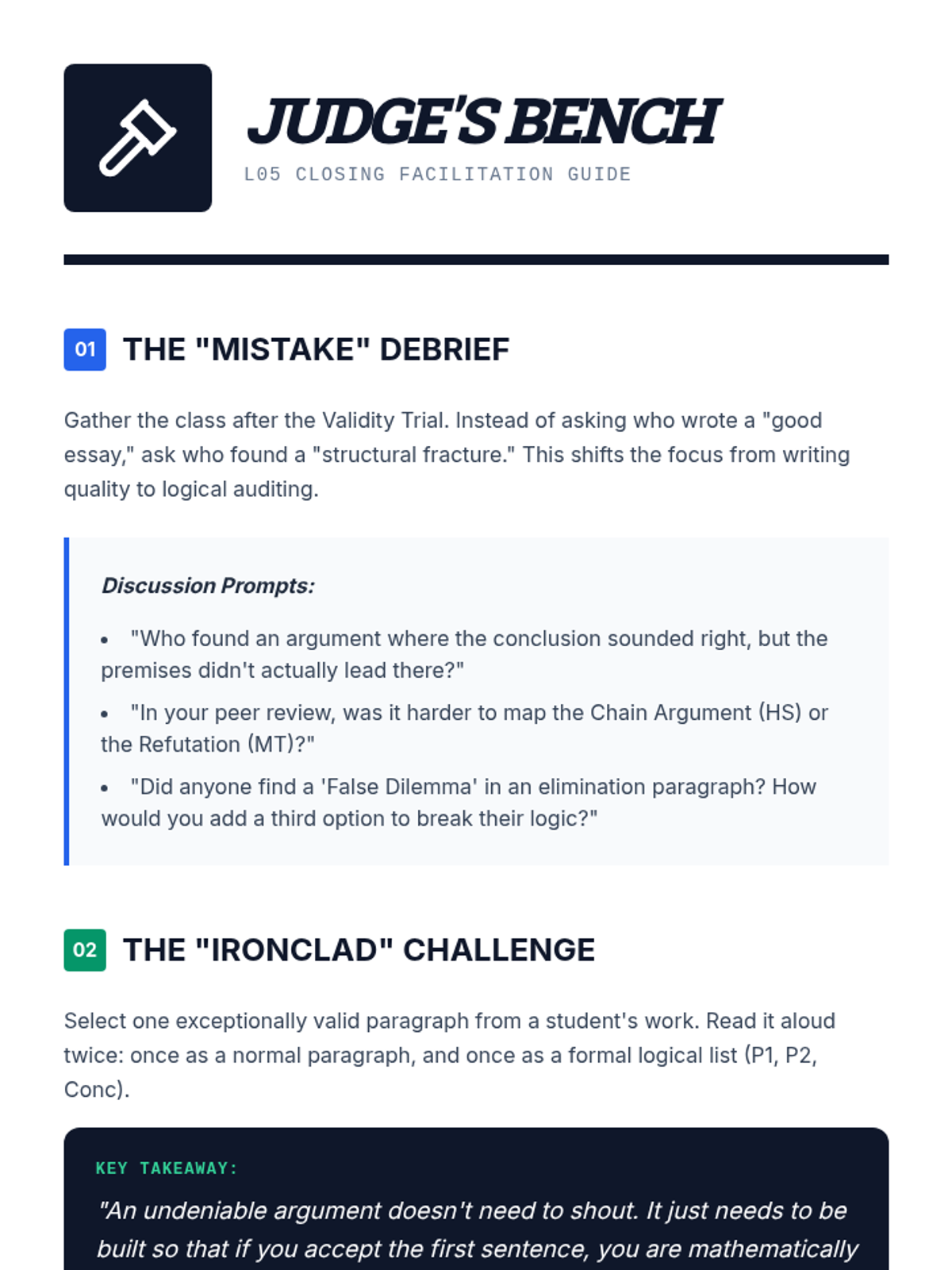
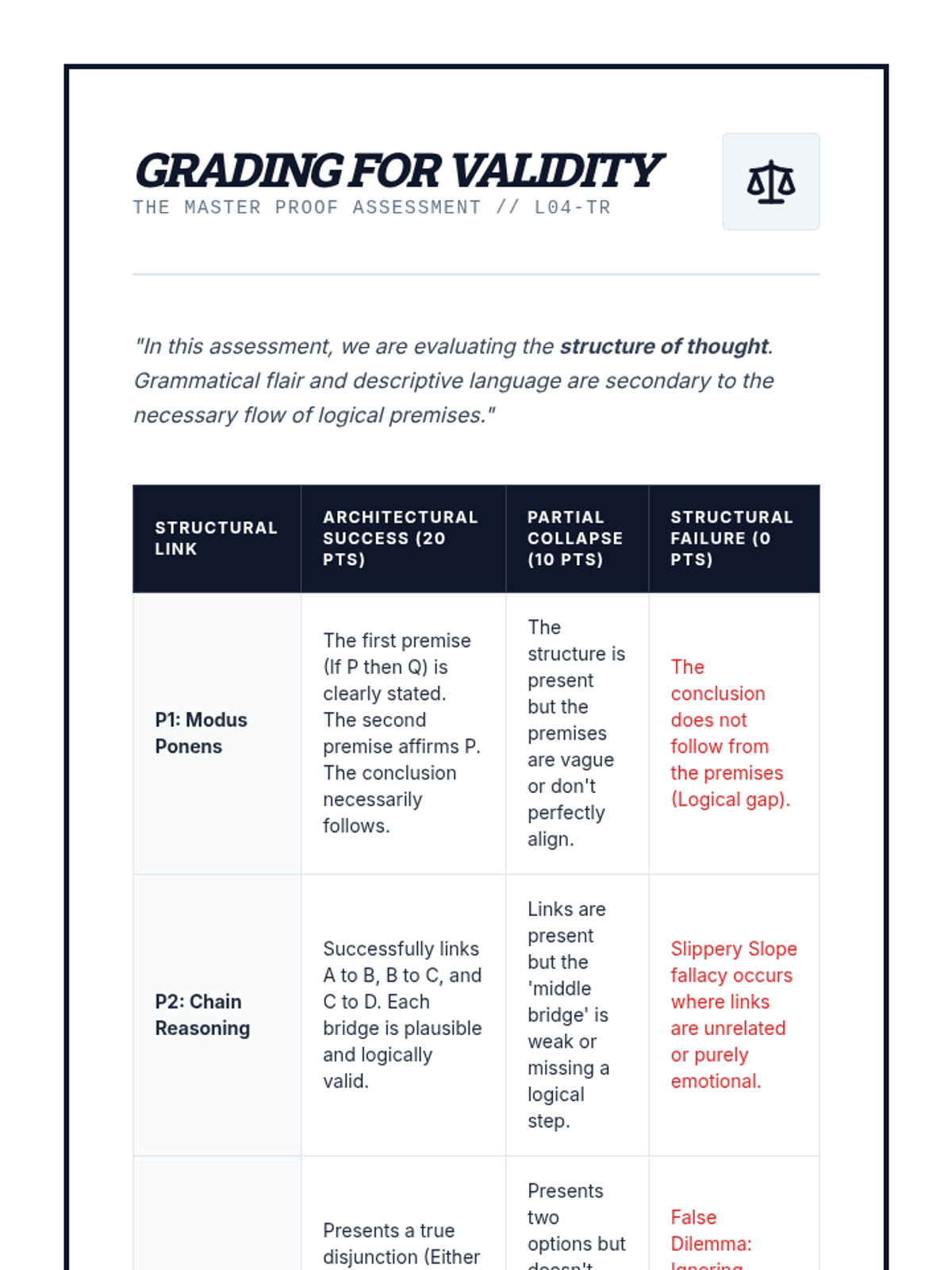
A peer review session where students map out the logical validity of each other's essays, acting as 'judges' to ensure conclusions follow necessarily from premises.
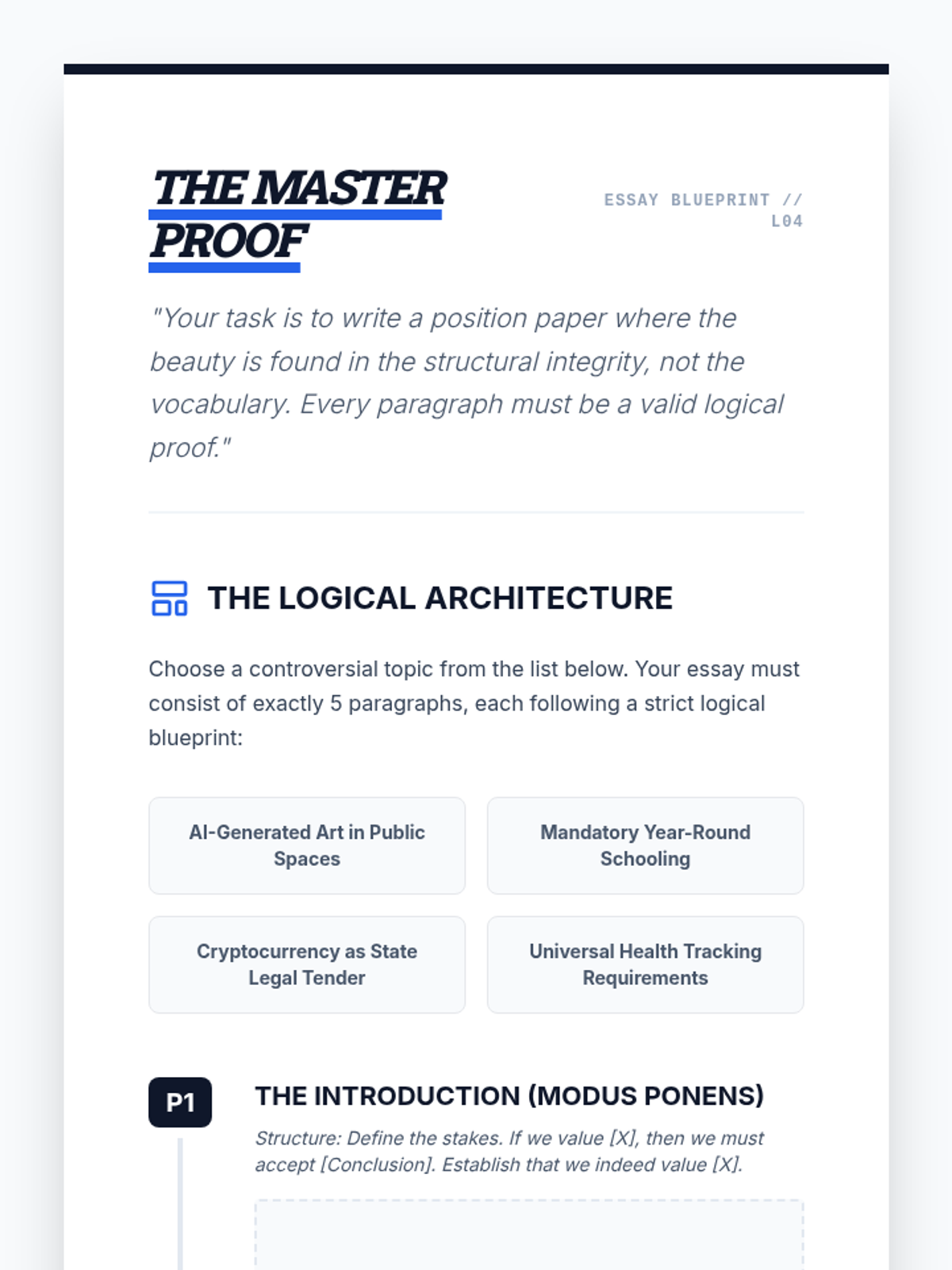
Synthesis lesson where students draft a position paper structured entirely around the logical forms learned in previous lessons. The focus is on structural integrity and logical necessity.
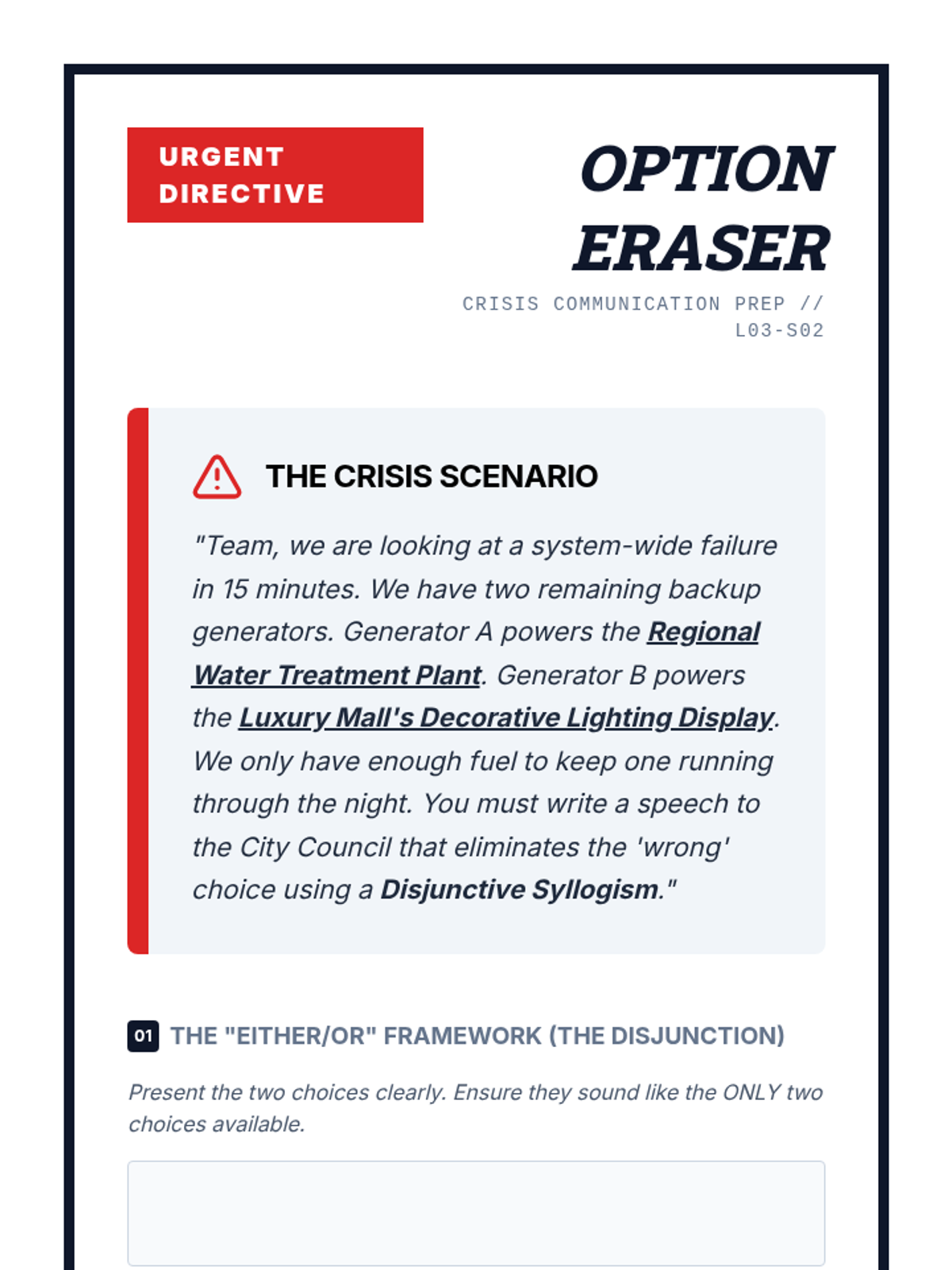
Using Disjunctive Syllogisms to present alternatives and prove a conclusion by process of elimination. Students apply this strategy to persuasive speechwriting.
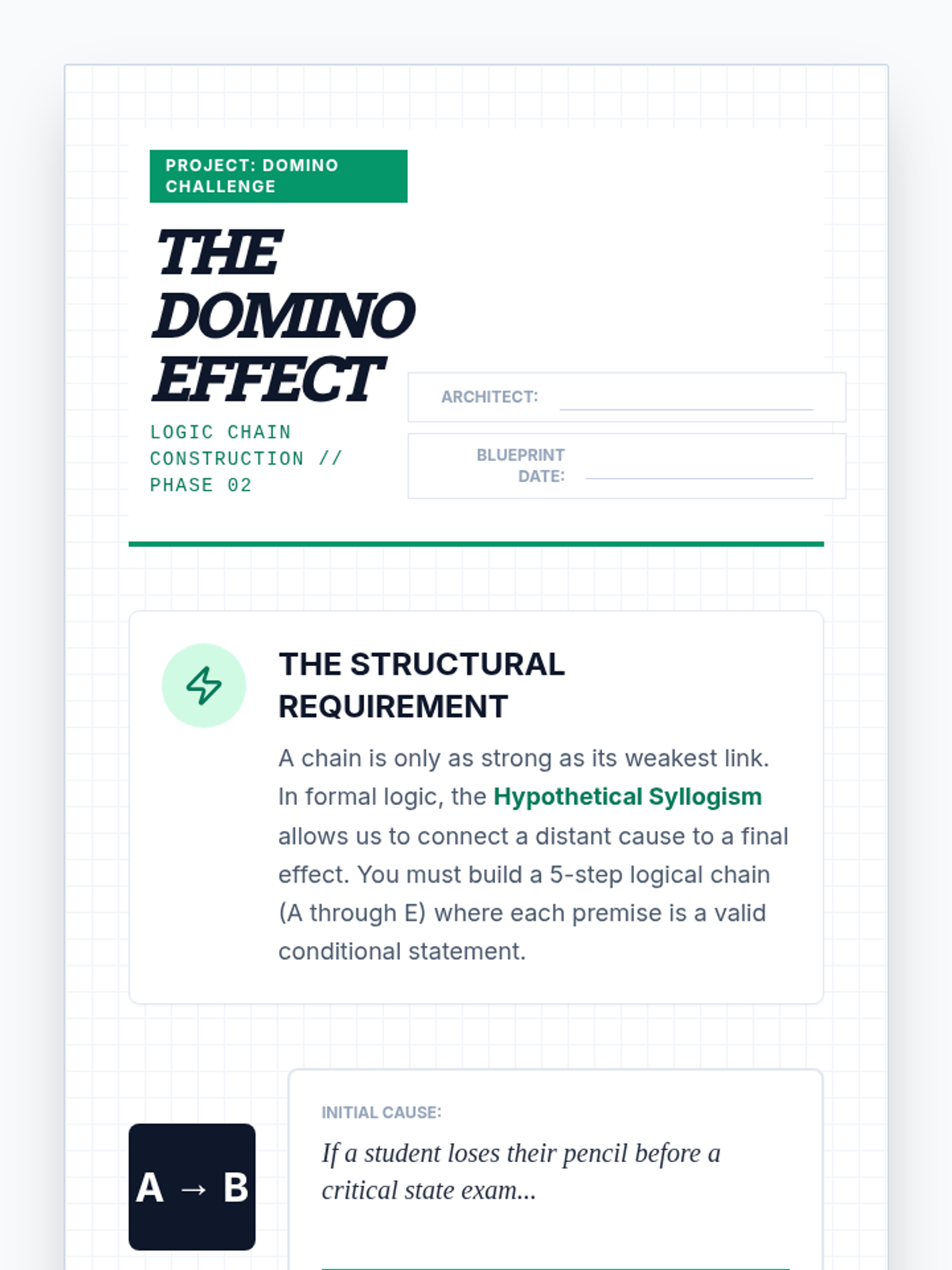
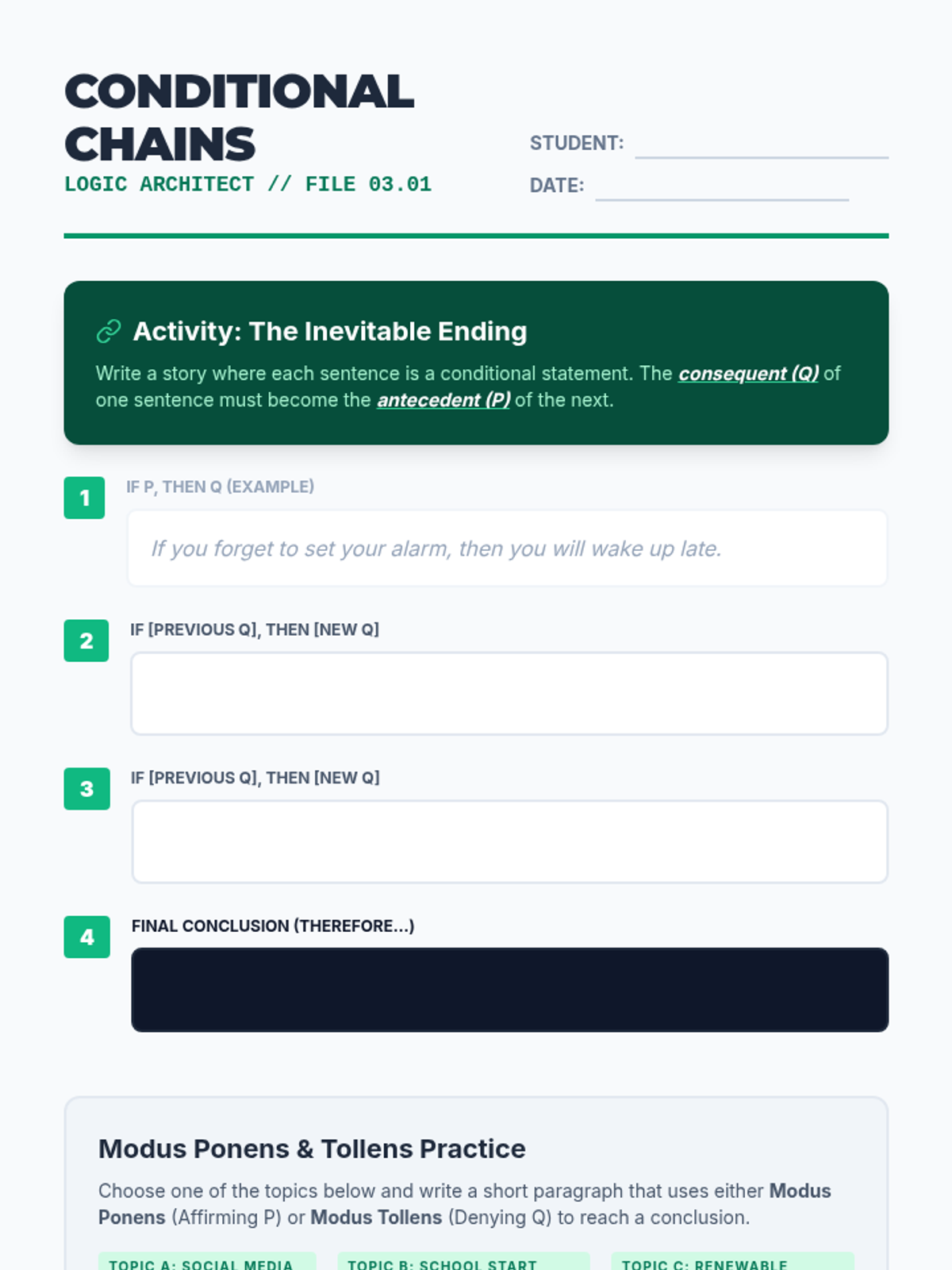
Exploring the Hypothetical Syllogism to create sustained, coherent chains of reasoning. Students practice linking conditional statements to build complex, multi-paragraph arguments.
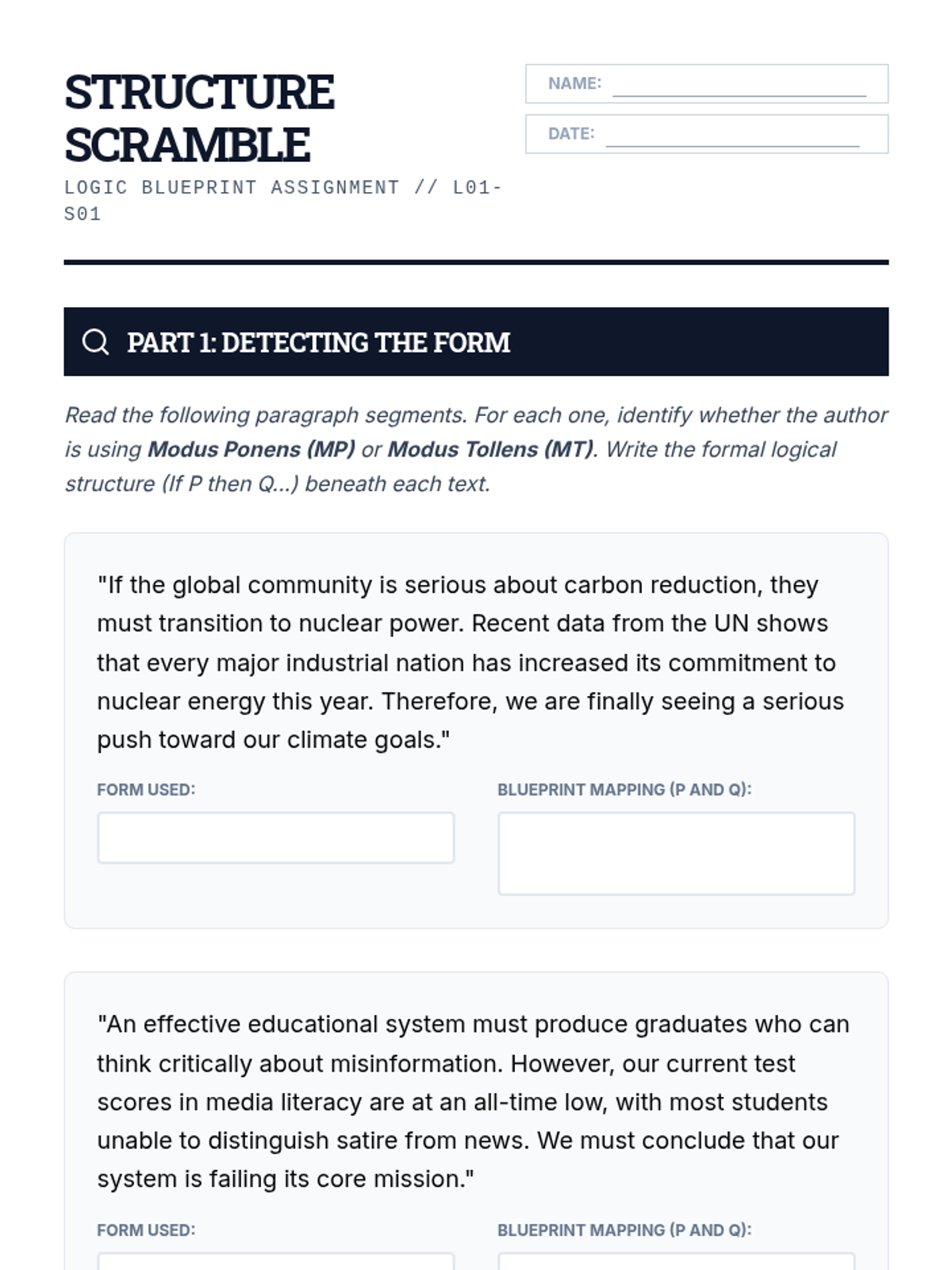
Introduction to Modus Ponens and Modus Tollens as fundamental structures for persuasive writing. Students learn to identify these forms in professional editorials and draft their own logical blueprints.
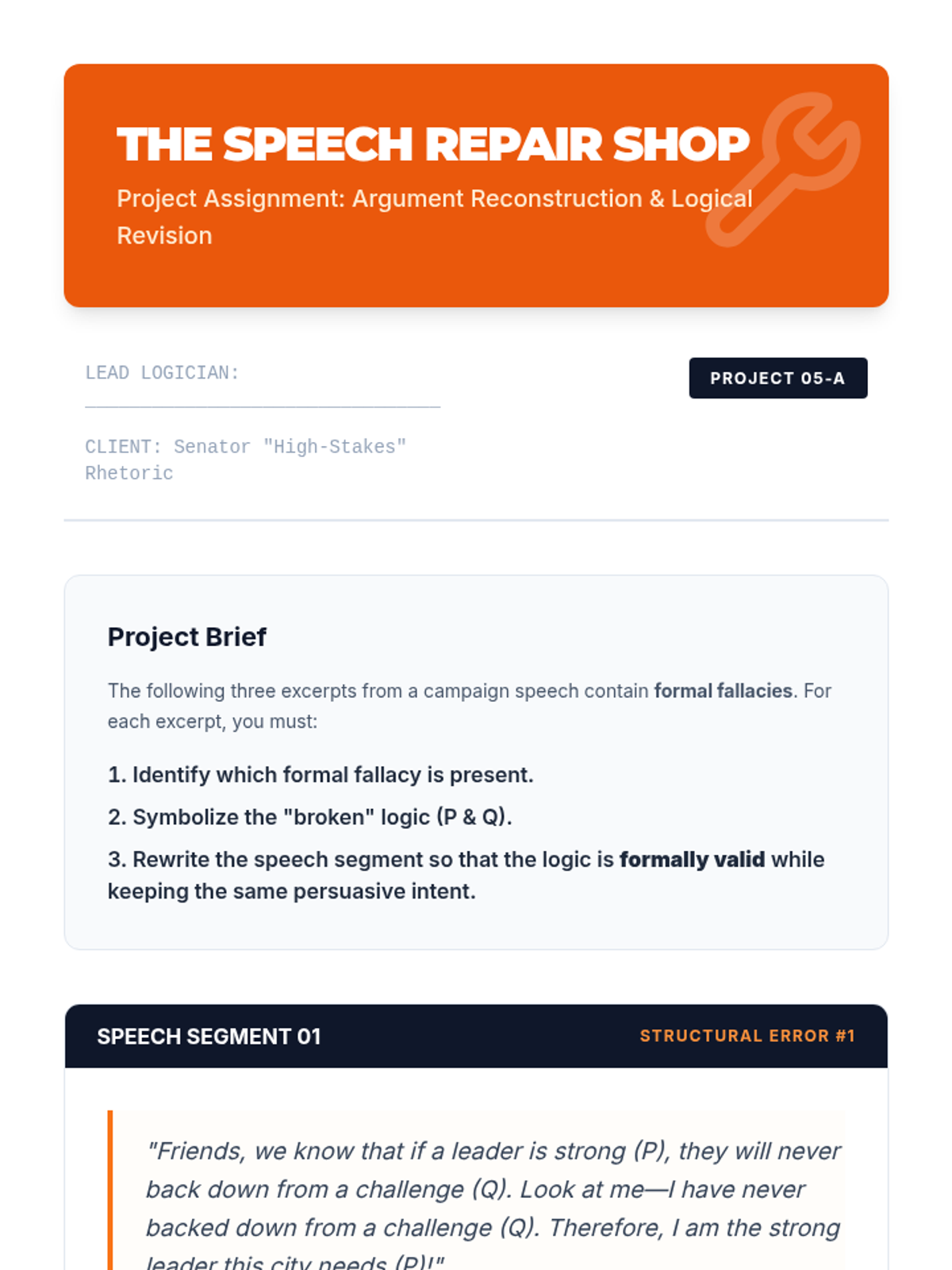
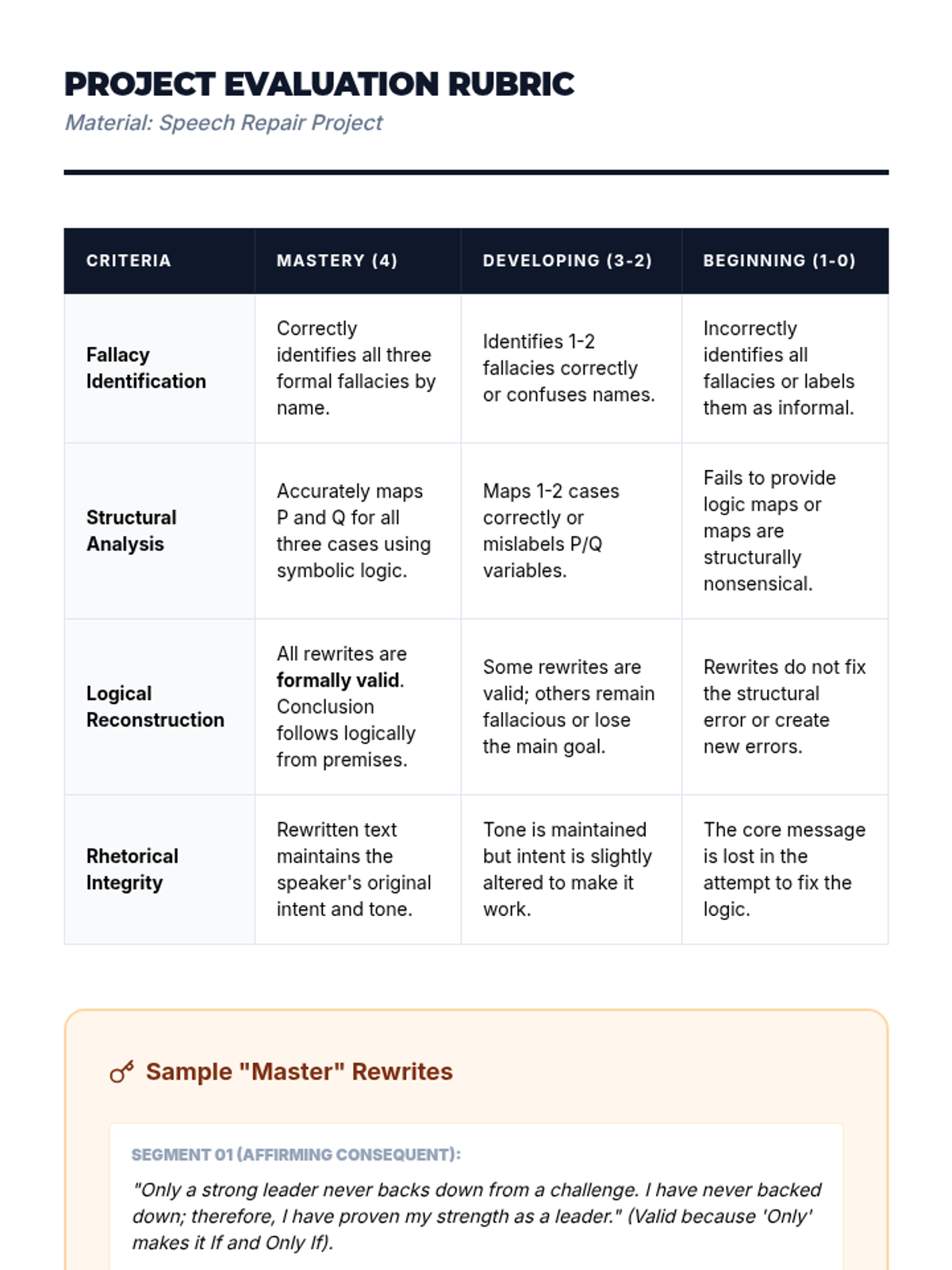
In this application lesson, students take text containing formal fallacies and rewrite it. They must alter the premises or the conclusion to make the argument formally valid, understanding the difficulty of maintaining truth while fixing structure.
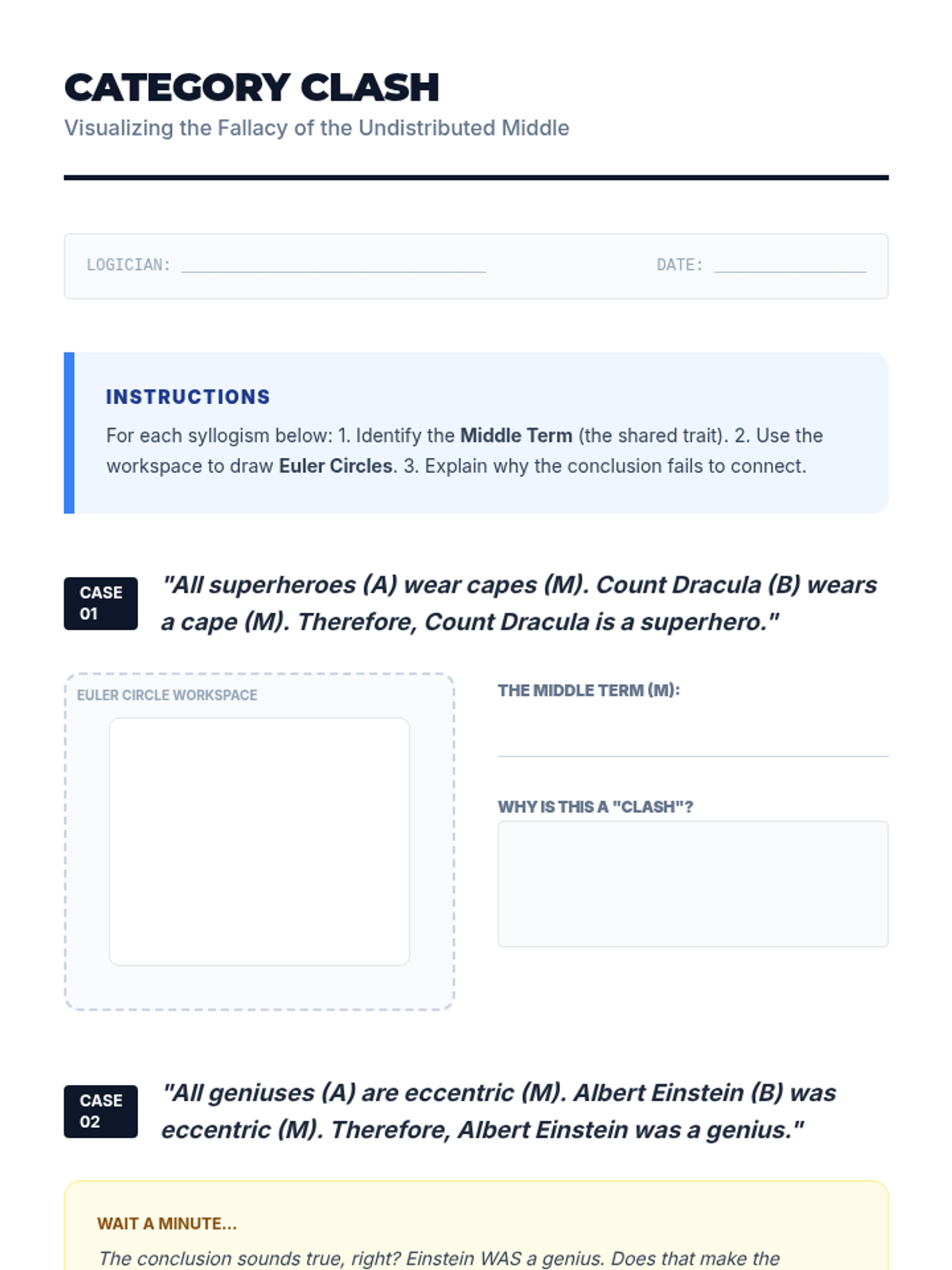
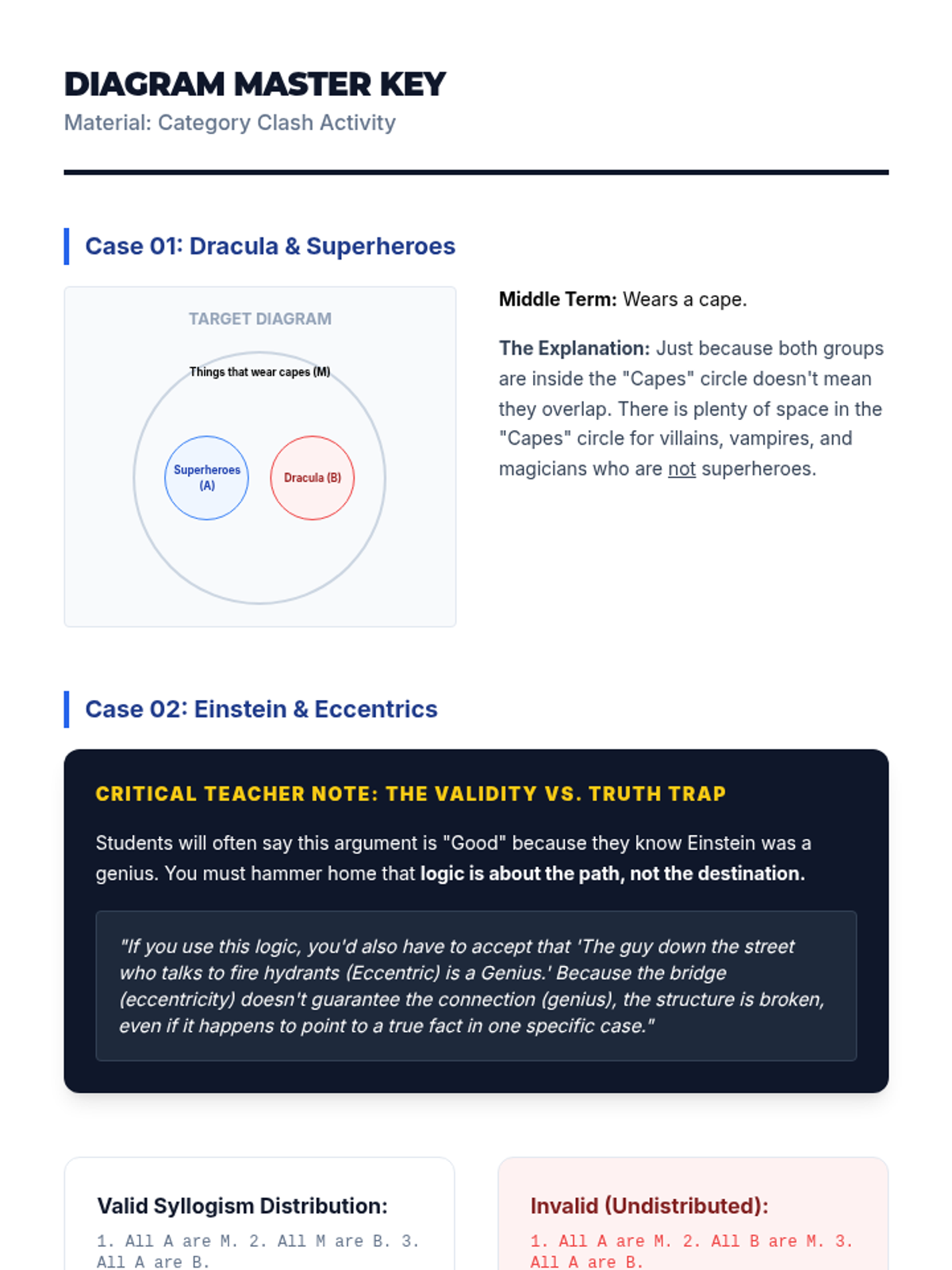
Students analyze syllogisms where the middle term does not cover all members of the category, leading to false connections. They use Euler circles or diagrams to visualize why the connection fails.
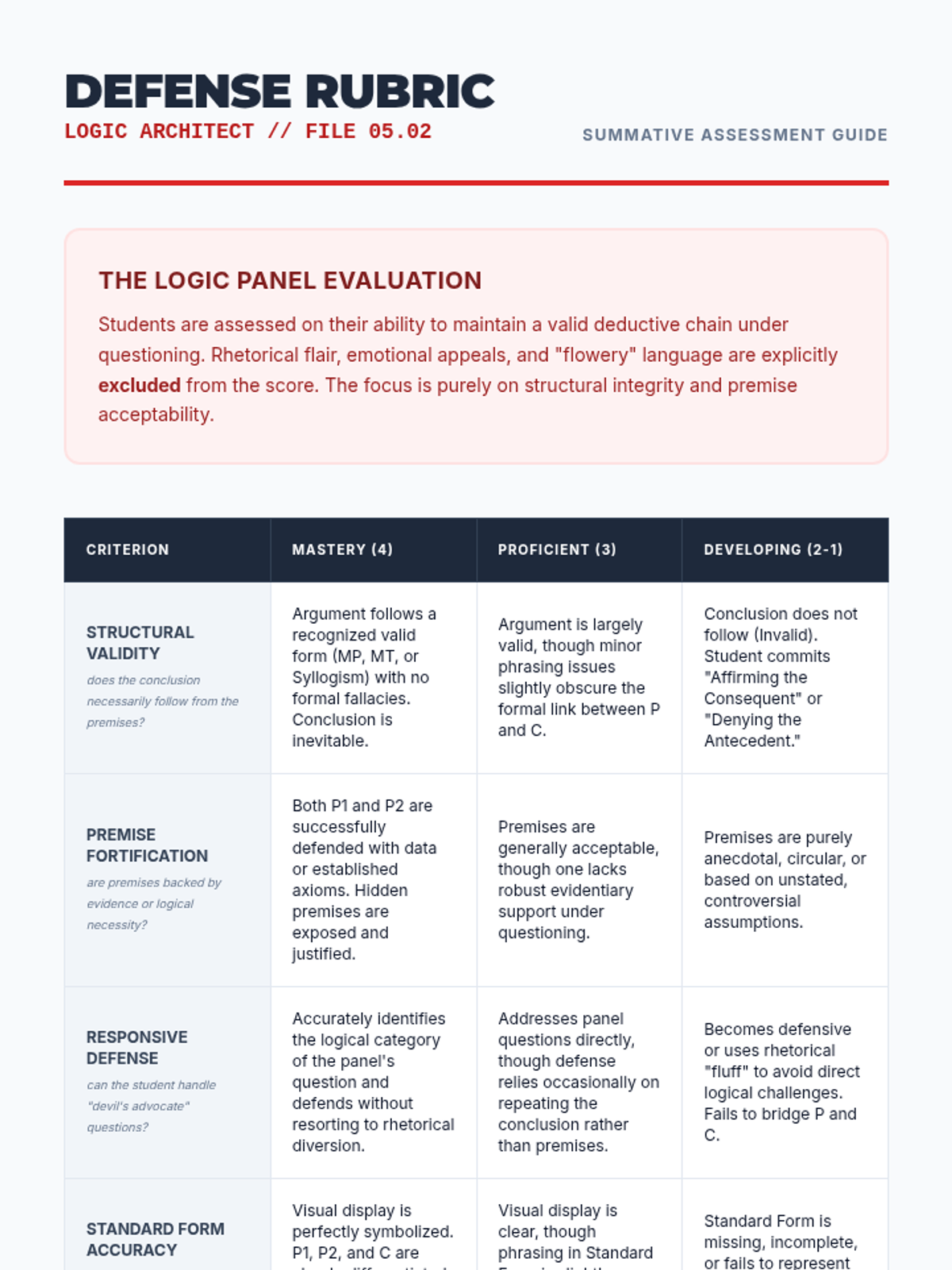
The summative assessment where students present and defend their logical chains against questioning in a simulated high-stakes environment.
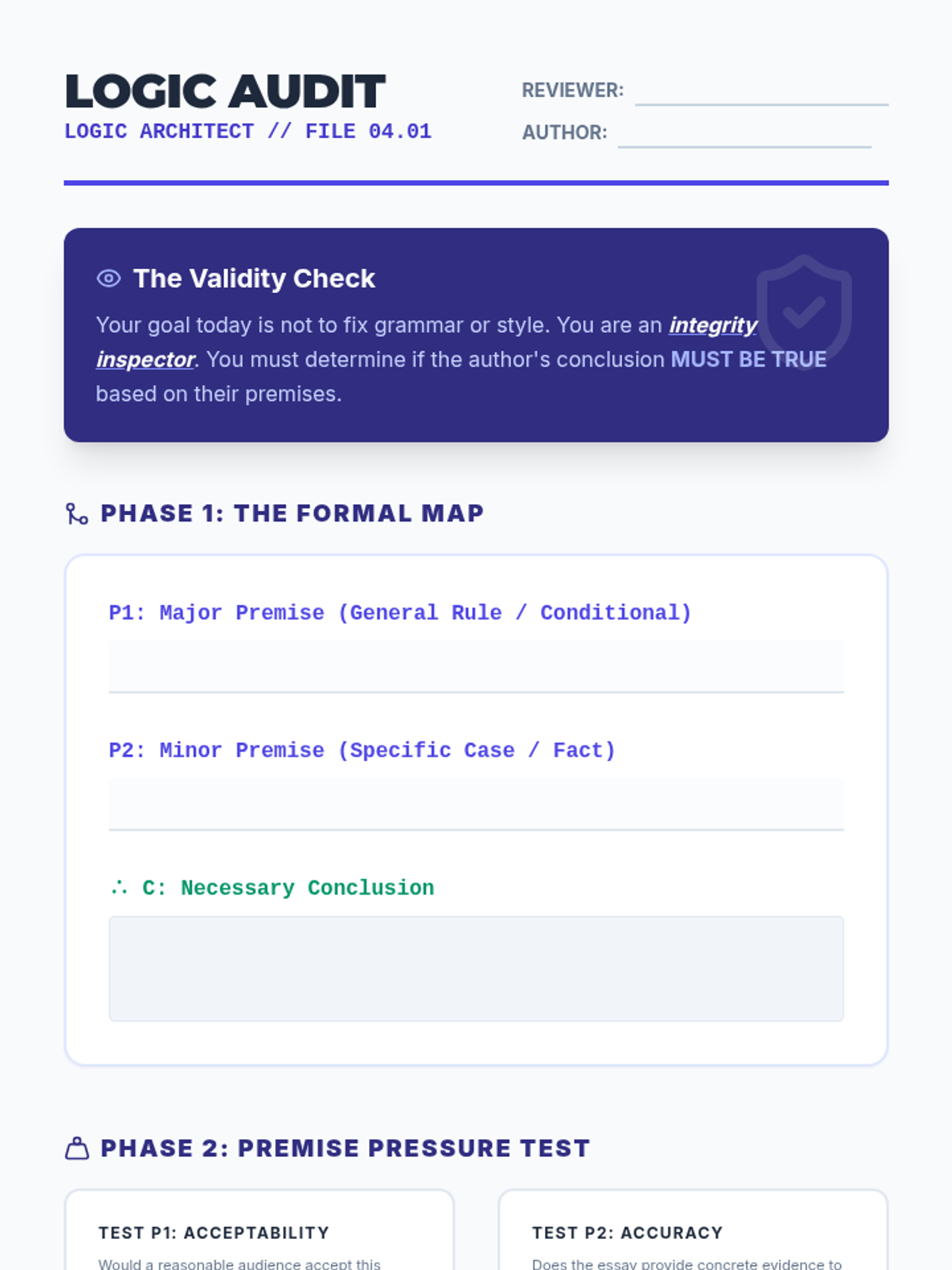
A logic-focused workshop where students evaluate peer drafts based on structural validity rather than rhetorical style or grammar.
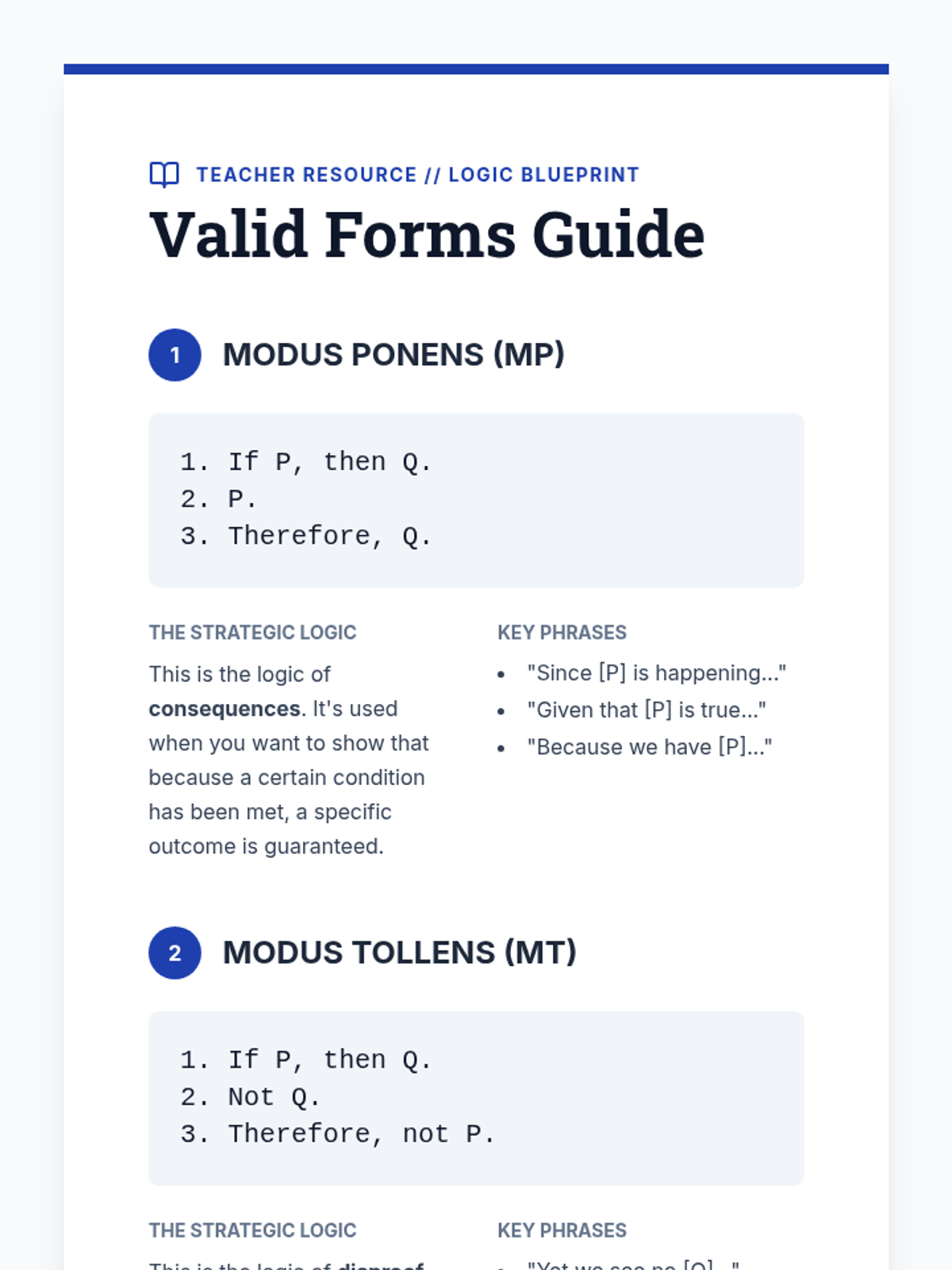
Students master the valid deductive forms of Modus Ponens and Modus Tollens, applying them to paragraph development and conditional reasoning.
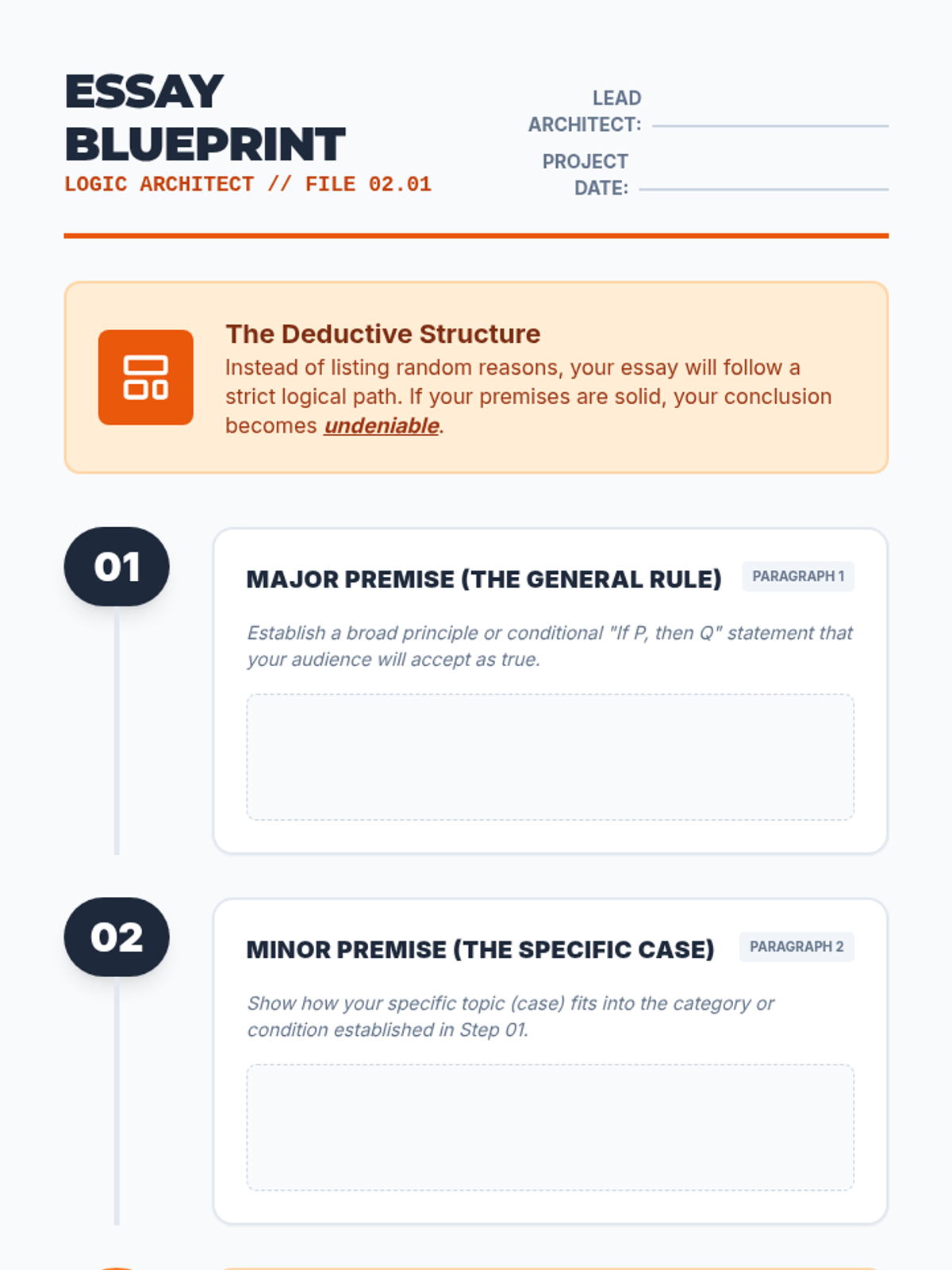
Moving beyond the 5-paragraph essay, students learn to outline papers where topic sentences serve as premises in a larger syllogistic structure.
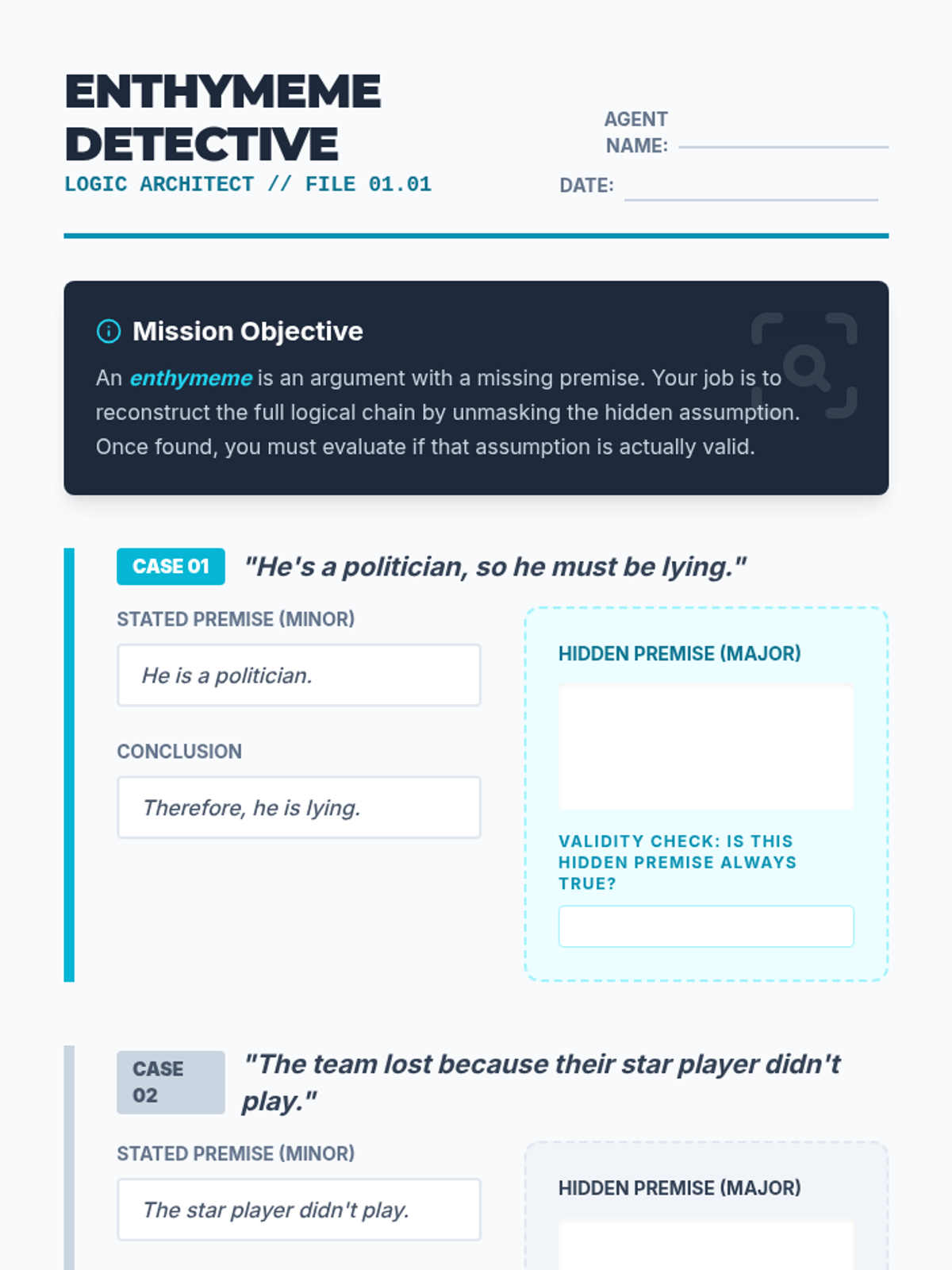
Students investigate arguments where a premise is assumed rather than stated, practicing how to unmask these hidden links in everyday discourse and social media.
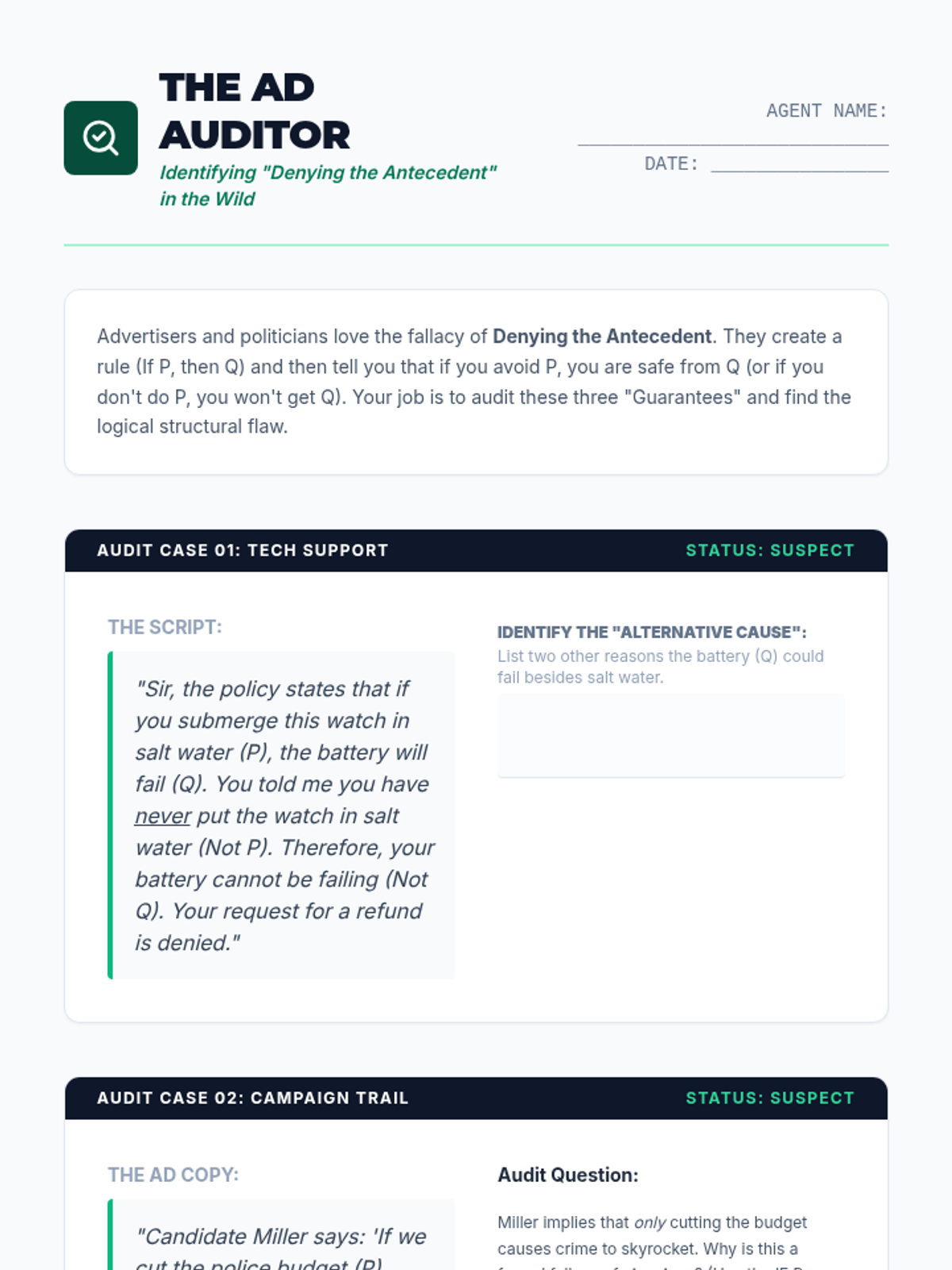
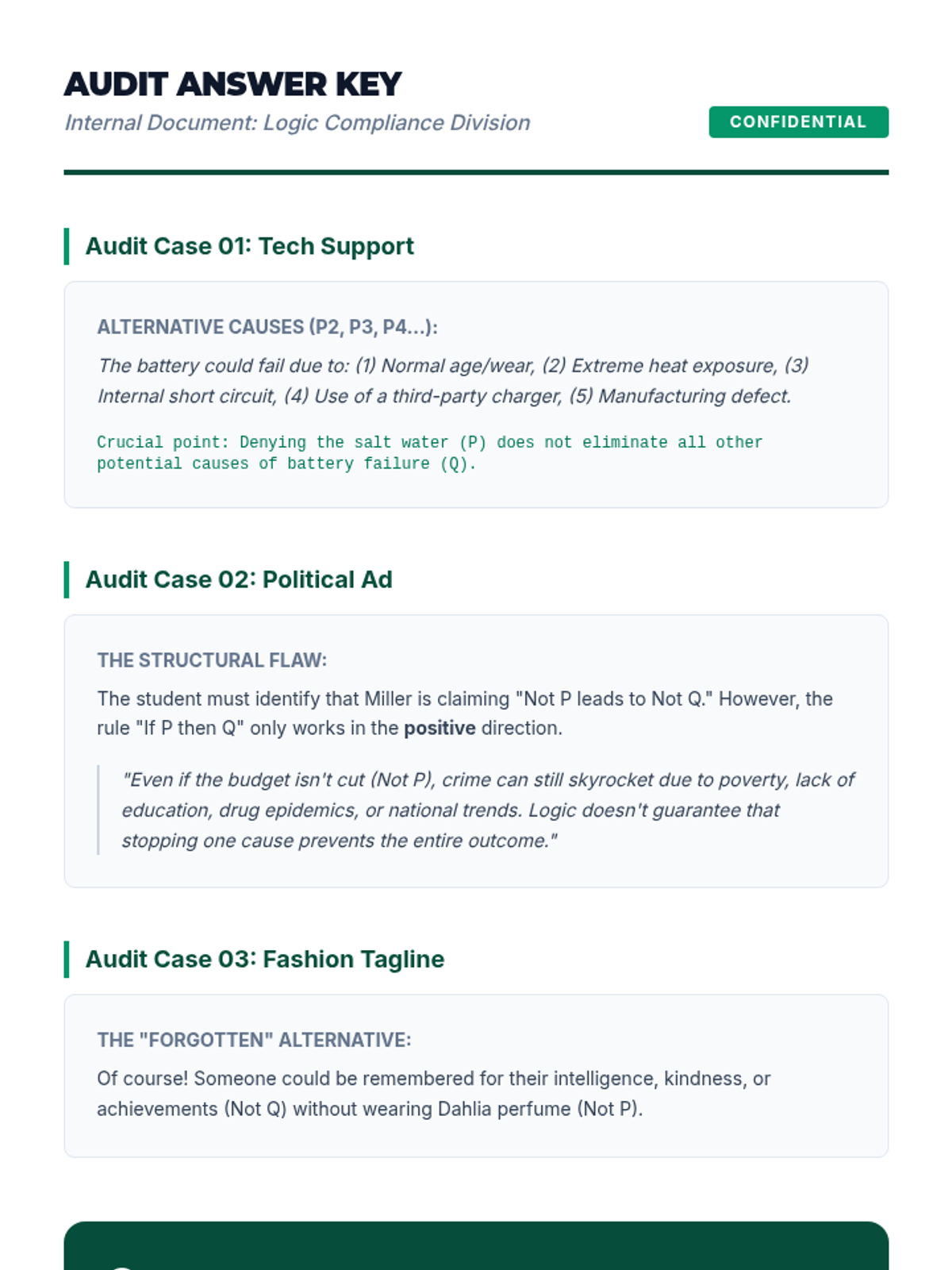
This lesson examines the inverse error (If P then Q; Not P; therefore Not Q). Students look at political promises and advertising guarantees to see how this structure is used to mislead consumers.
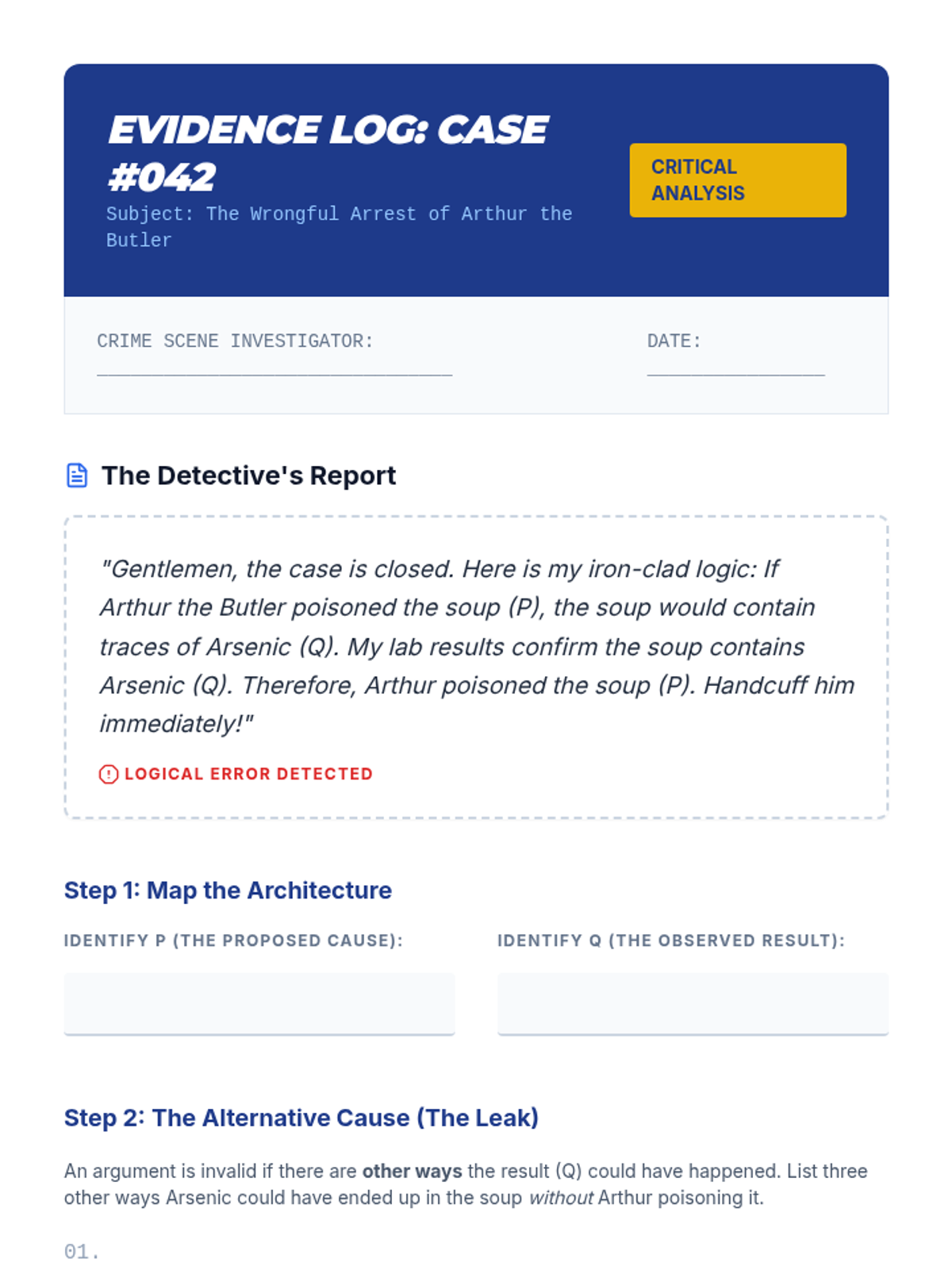
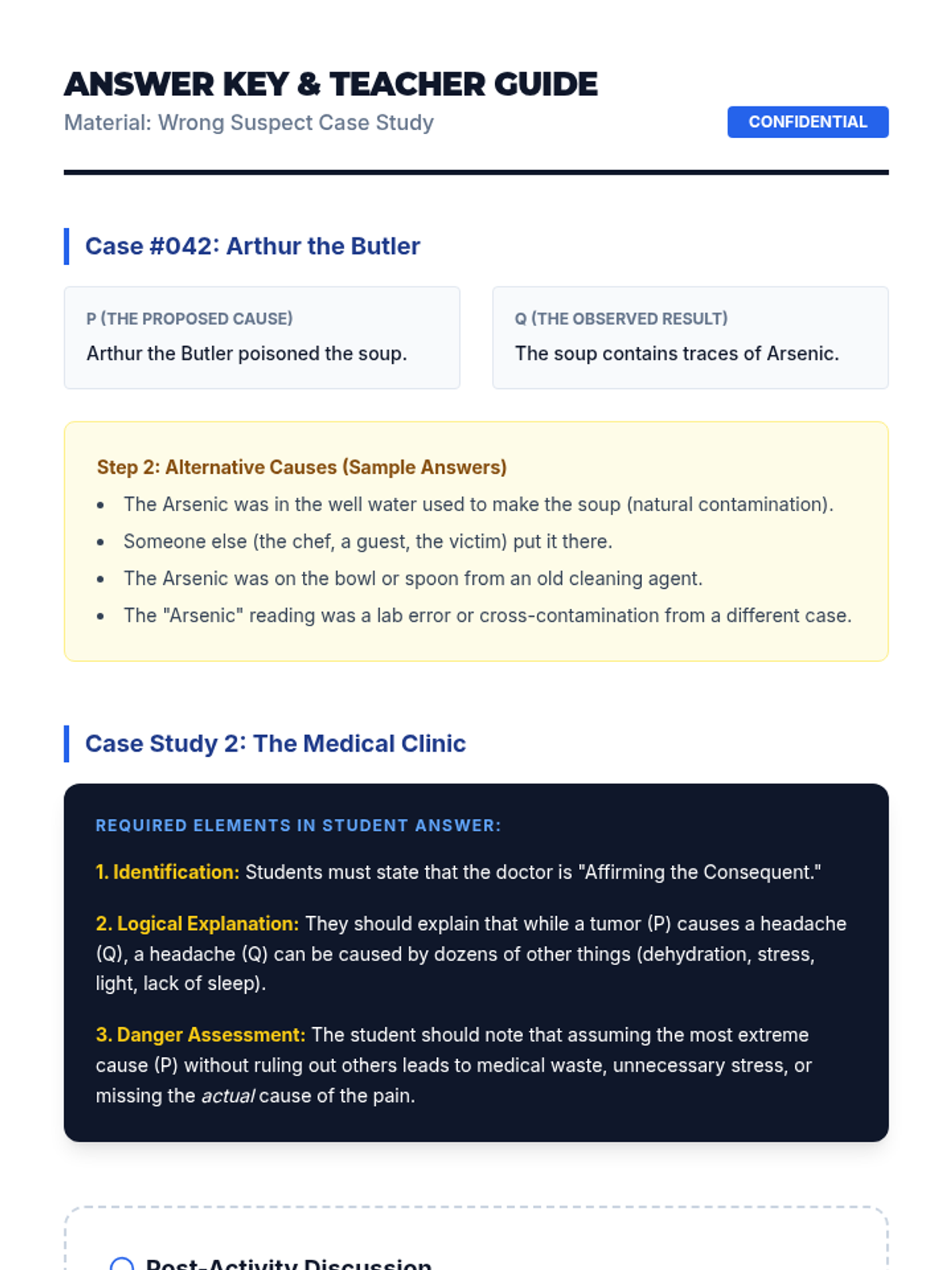
Students dive deep into the error of assuming that because a result occurred, a specific cause must have happened (If P then Q; Q; therefore P). They analyze forensic and medical scenarios where this error leads to false convictions or diagnoses.
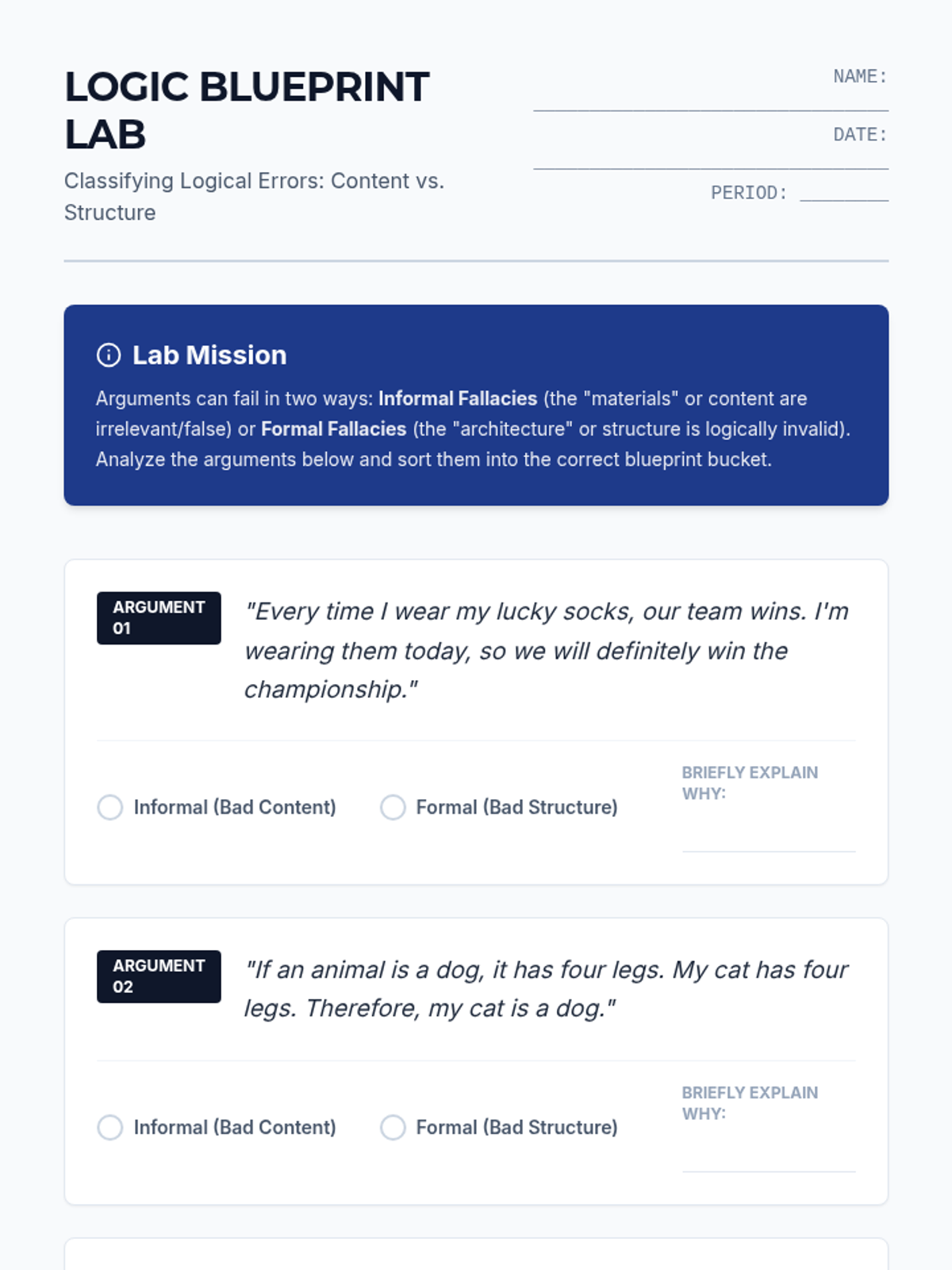
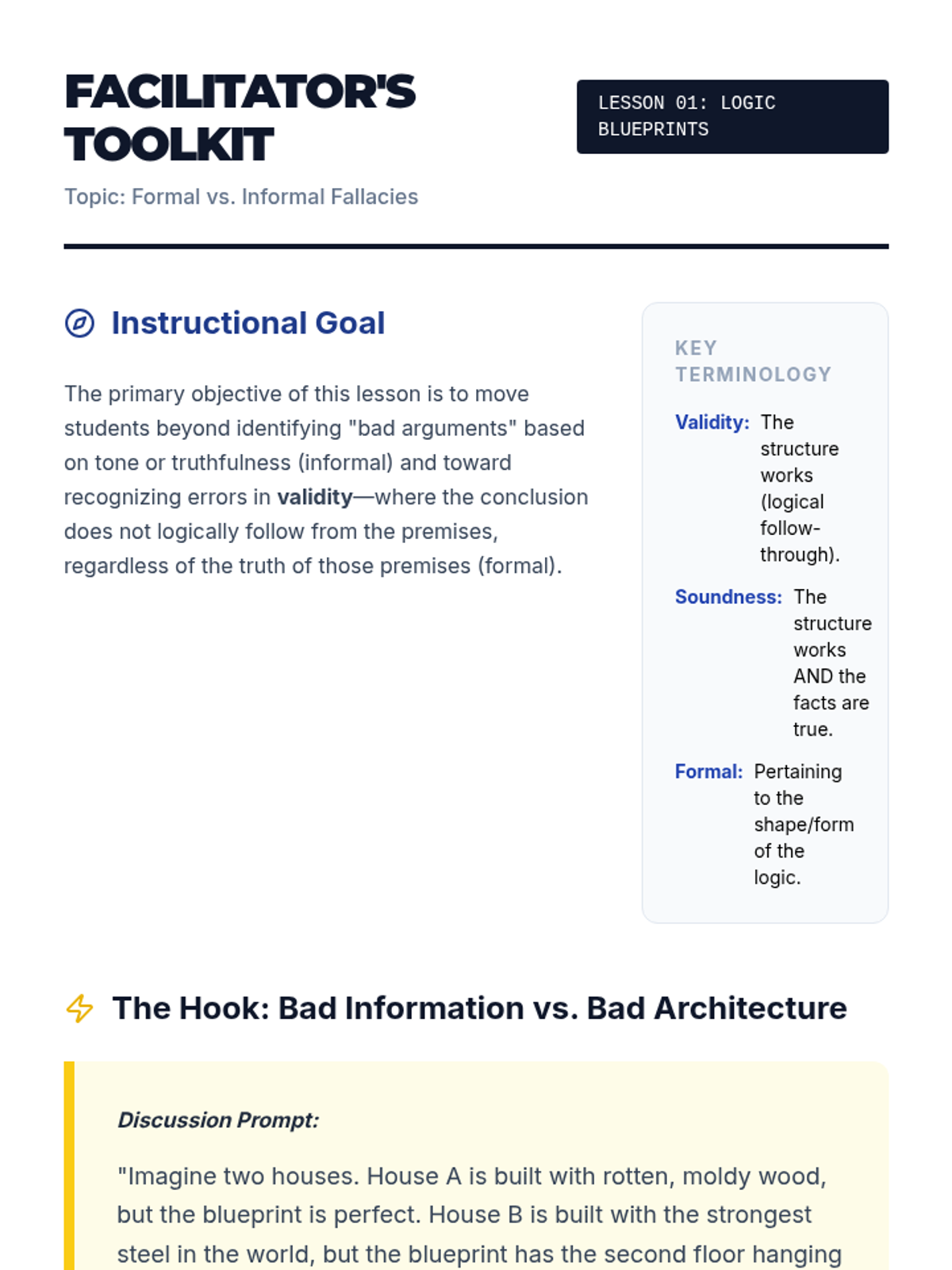
Students distinguish between informal fallacies (errors in content/relevance) and formal fallacies (errors in the logical structure). They review examples to categorize errors based on whether the 'math' of the logic is broken.
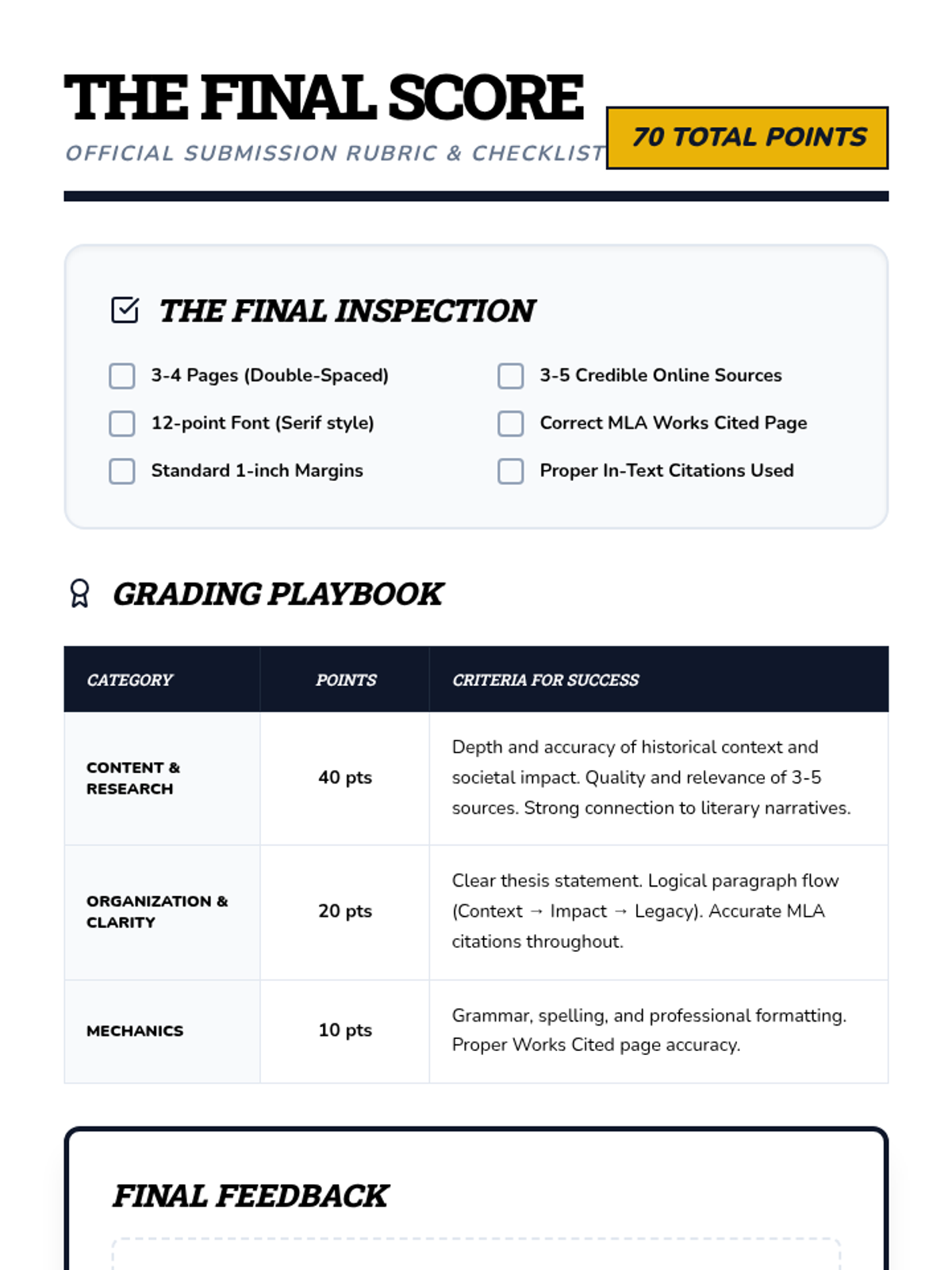
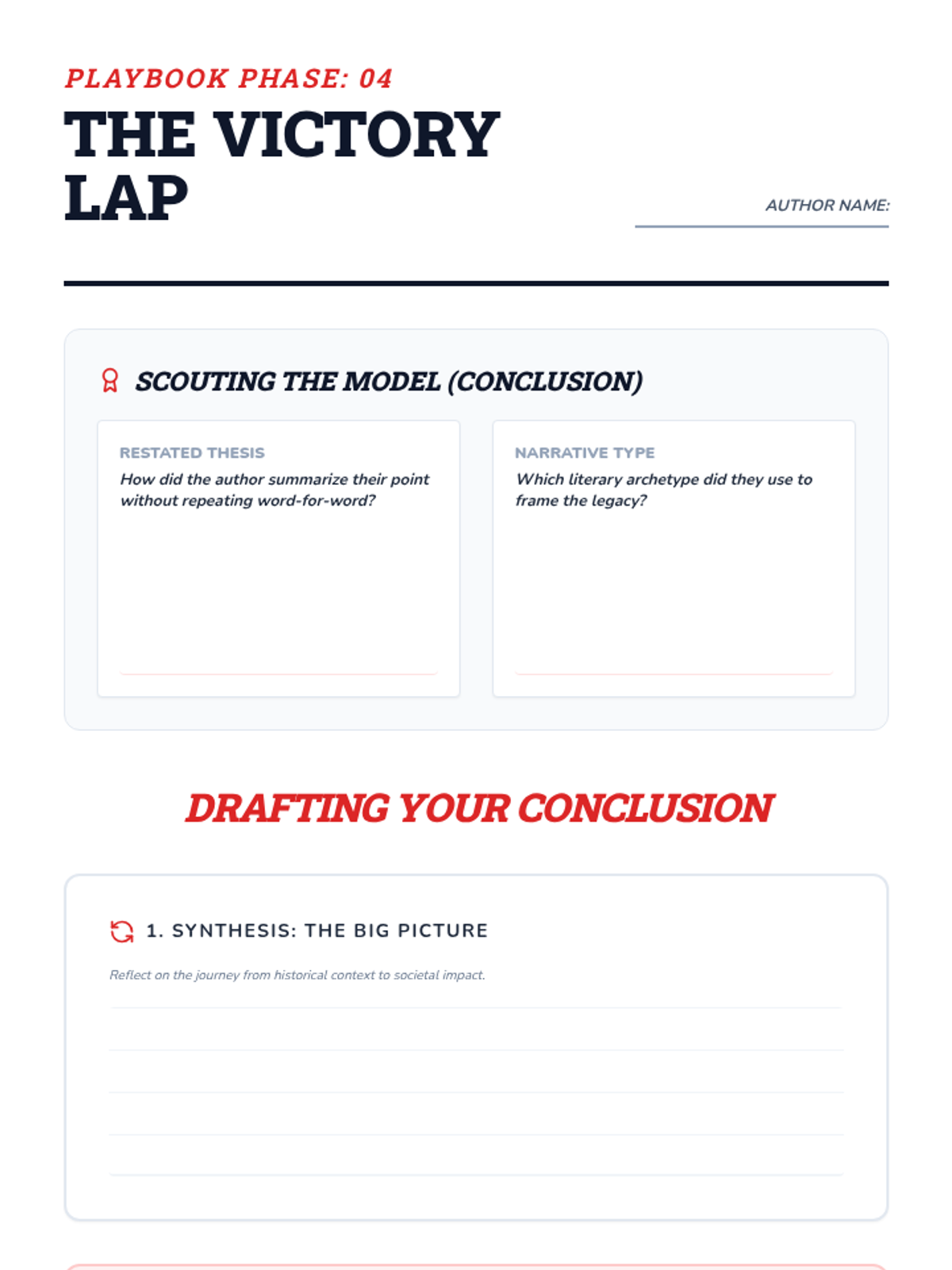
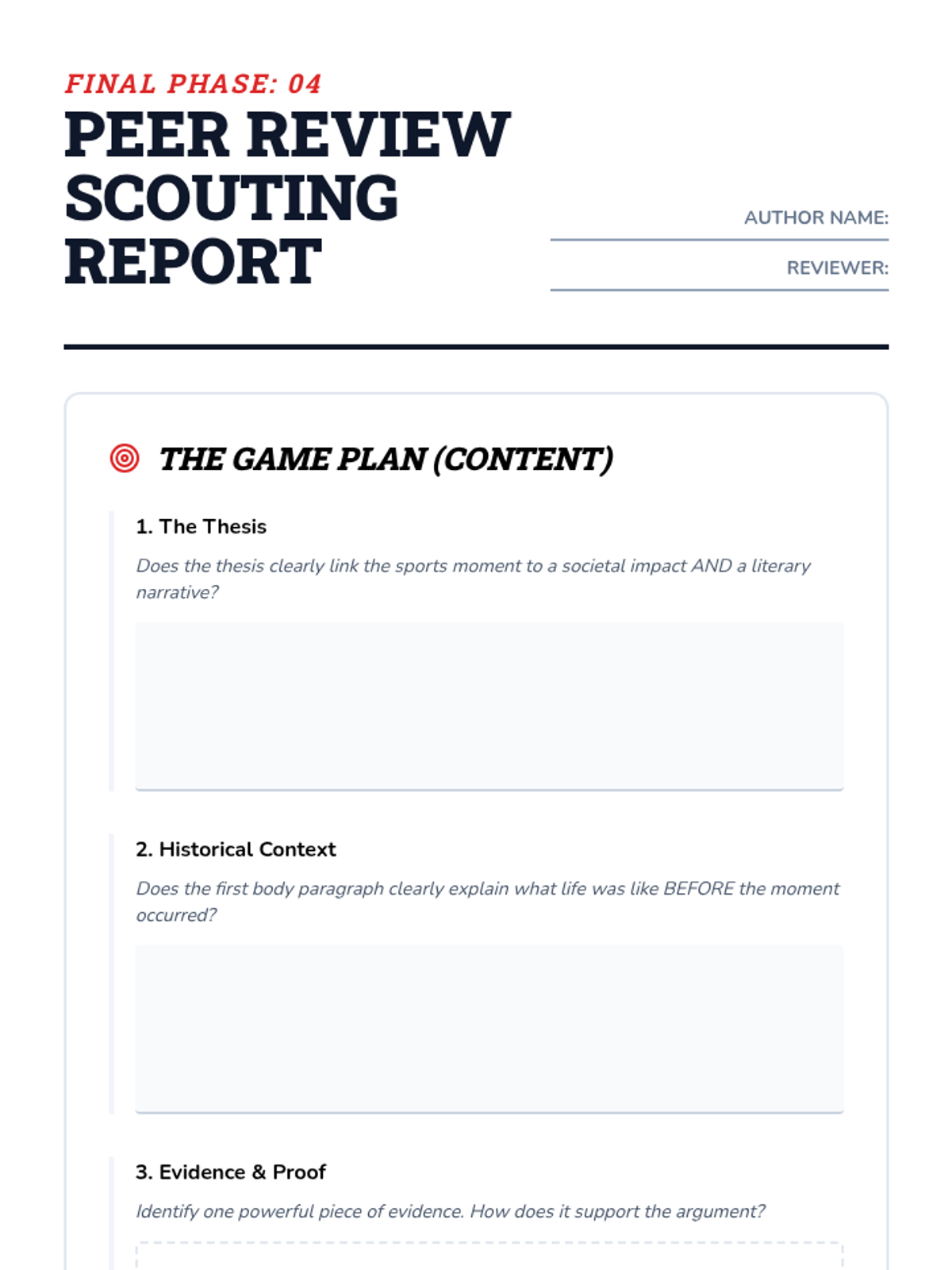
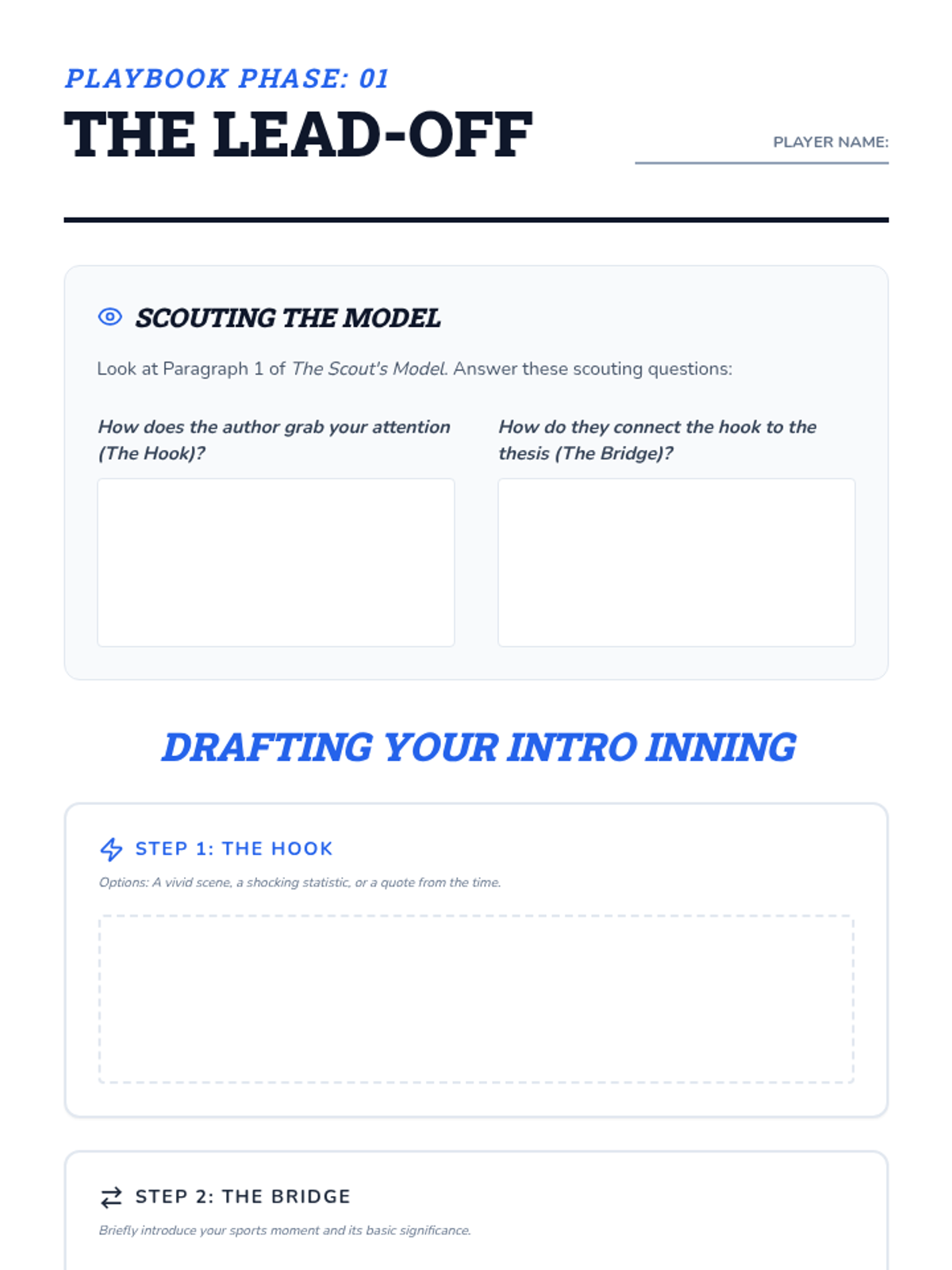
Drafting the final introduction and conclusion (bookending the paper), peer reviewing the full paper, and final polishing using the rubric.
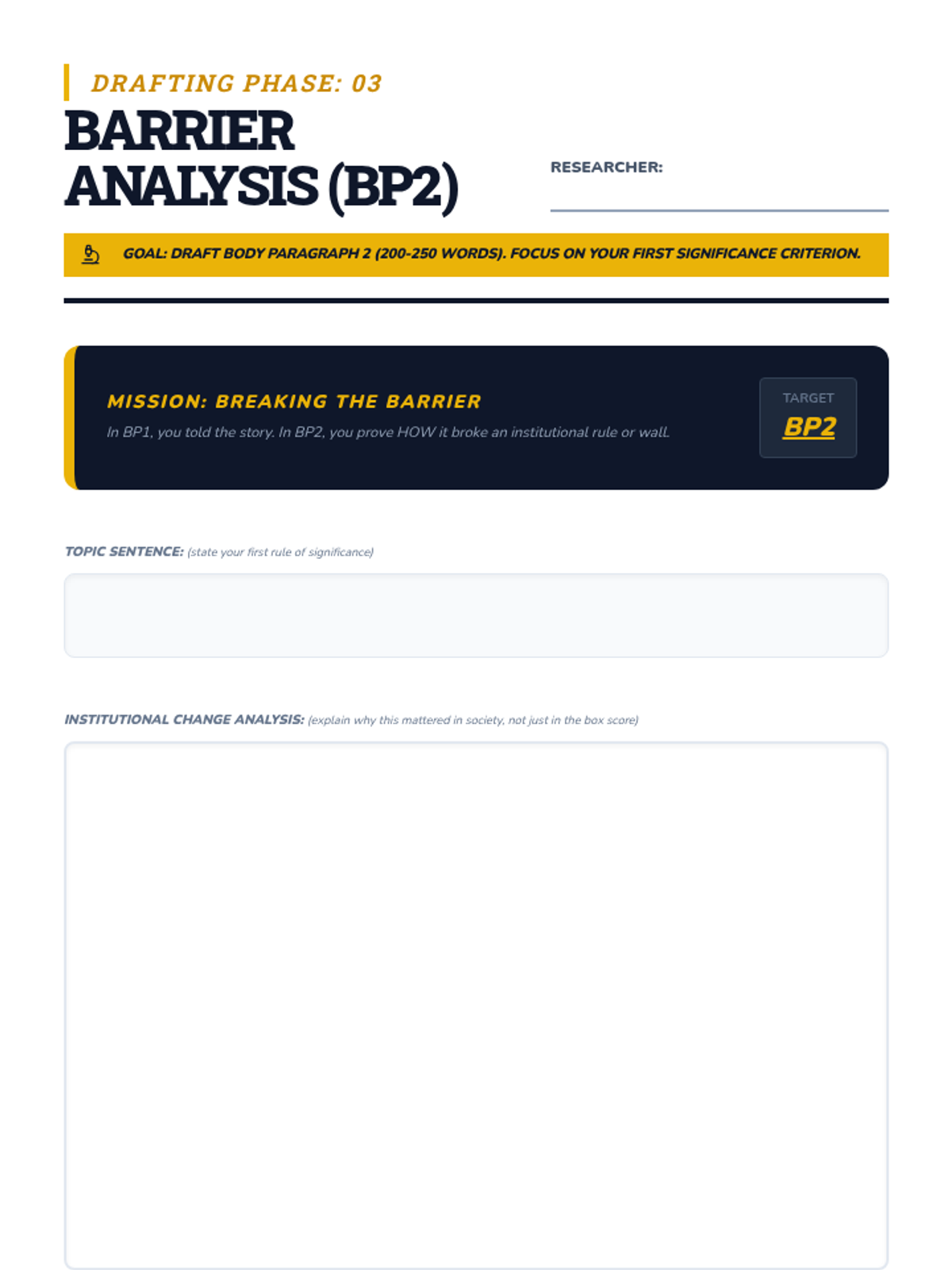
Drafting the second body paragraph, focusing on institutional changes and the breaking of systemic barriers.
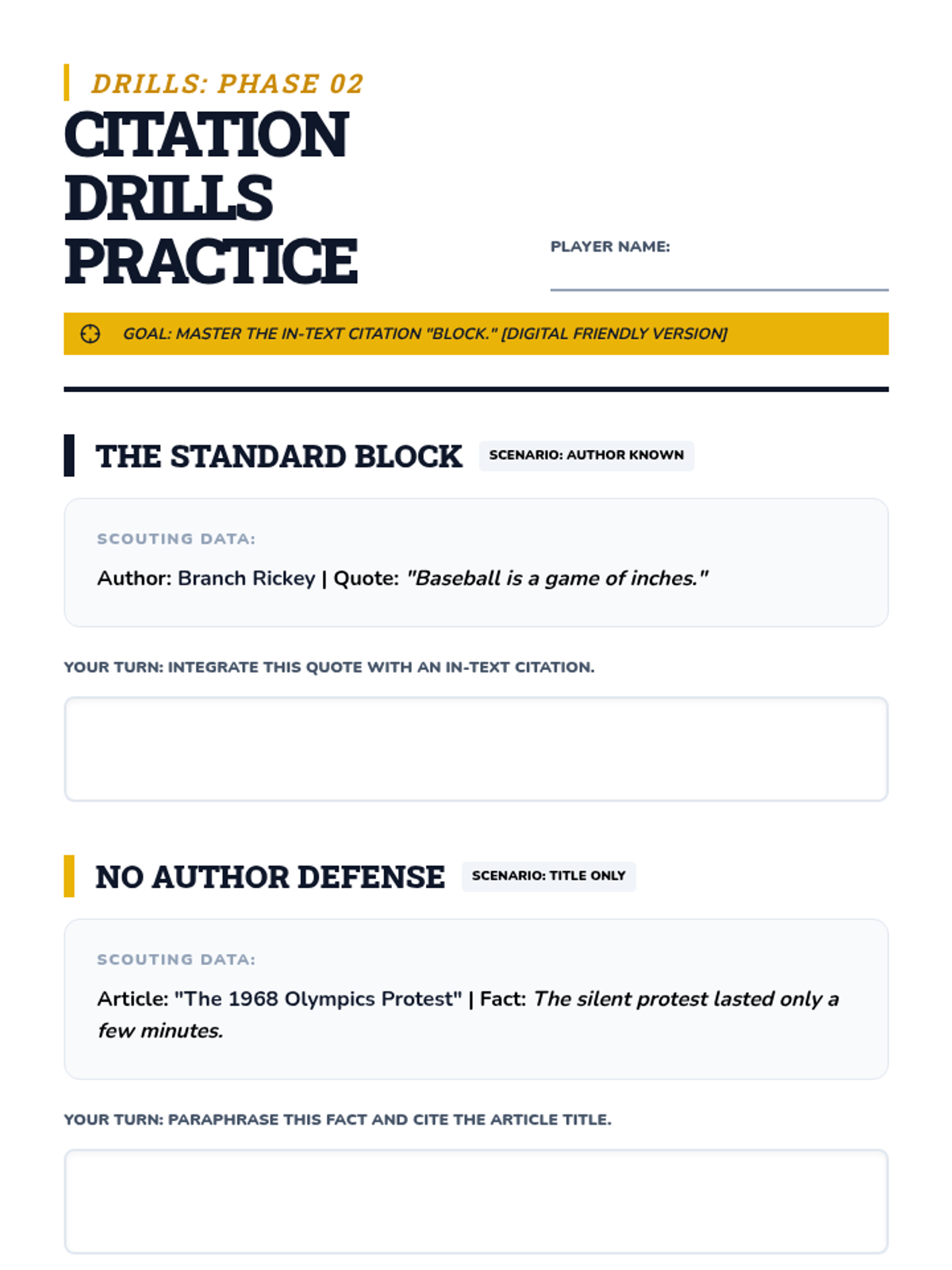
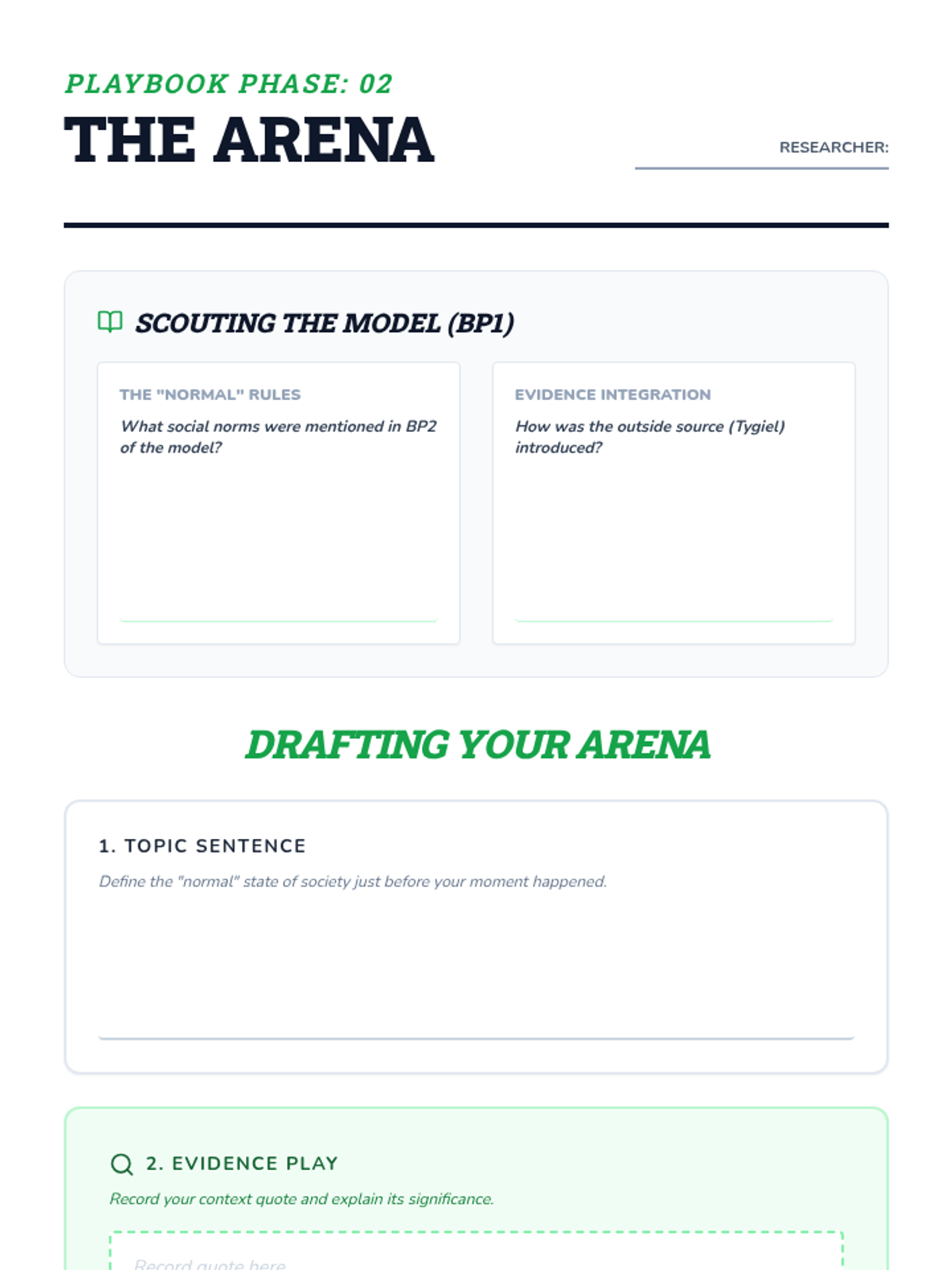
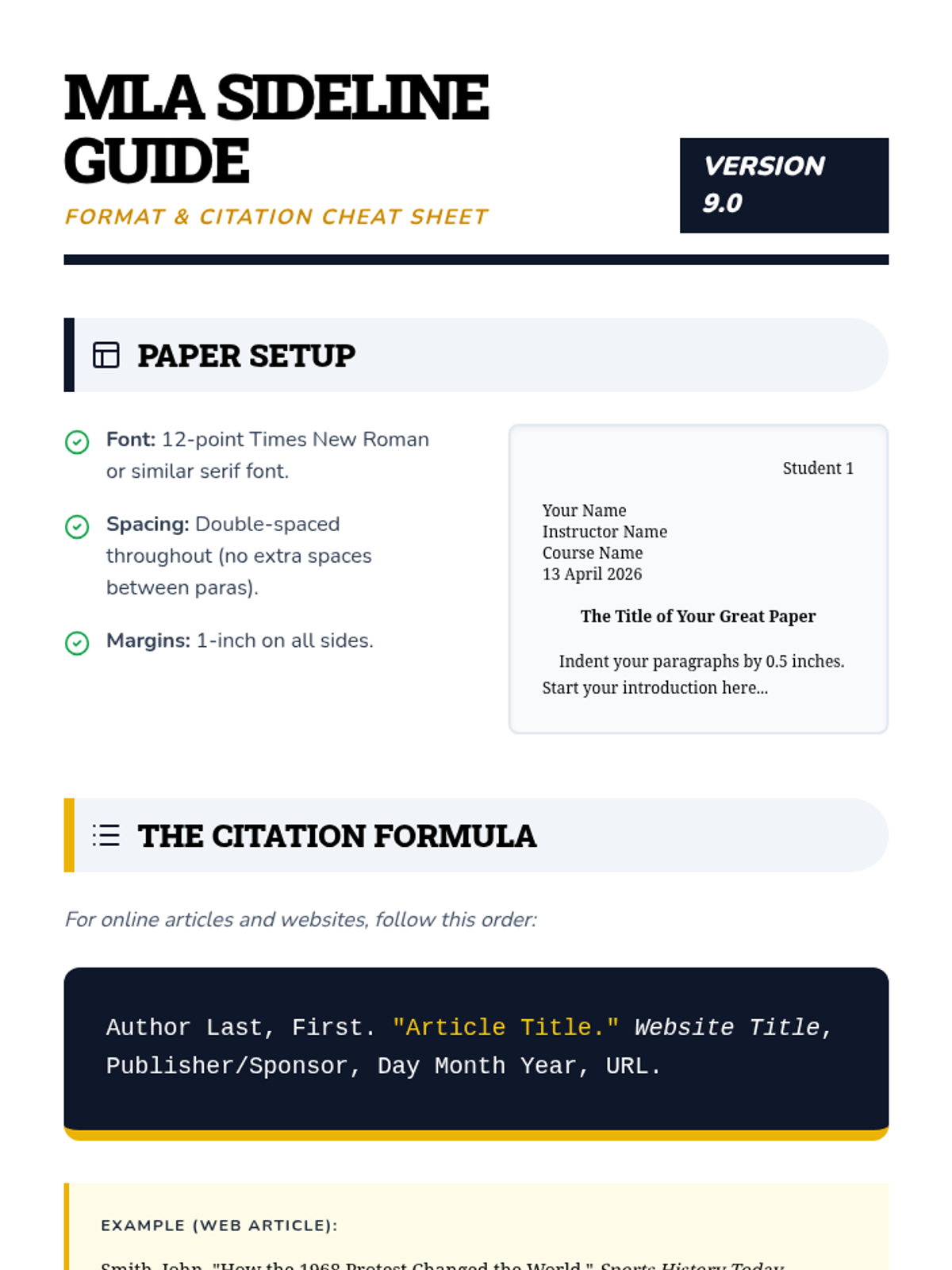
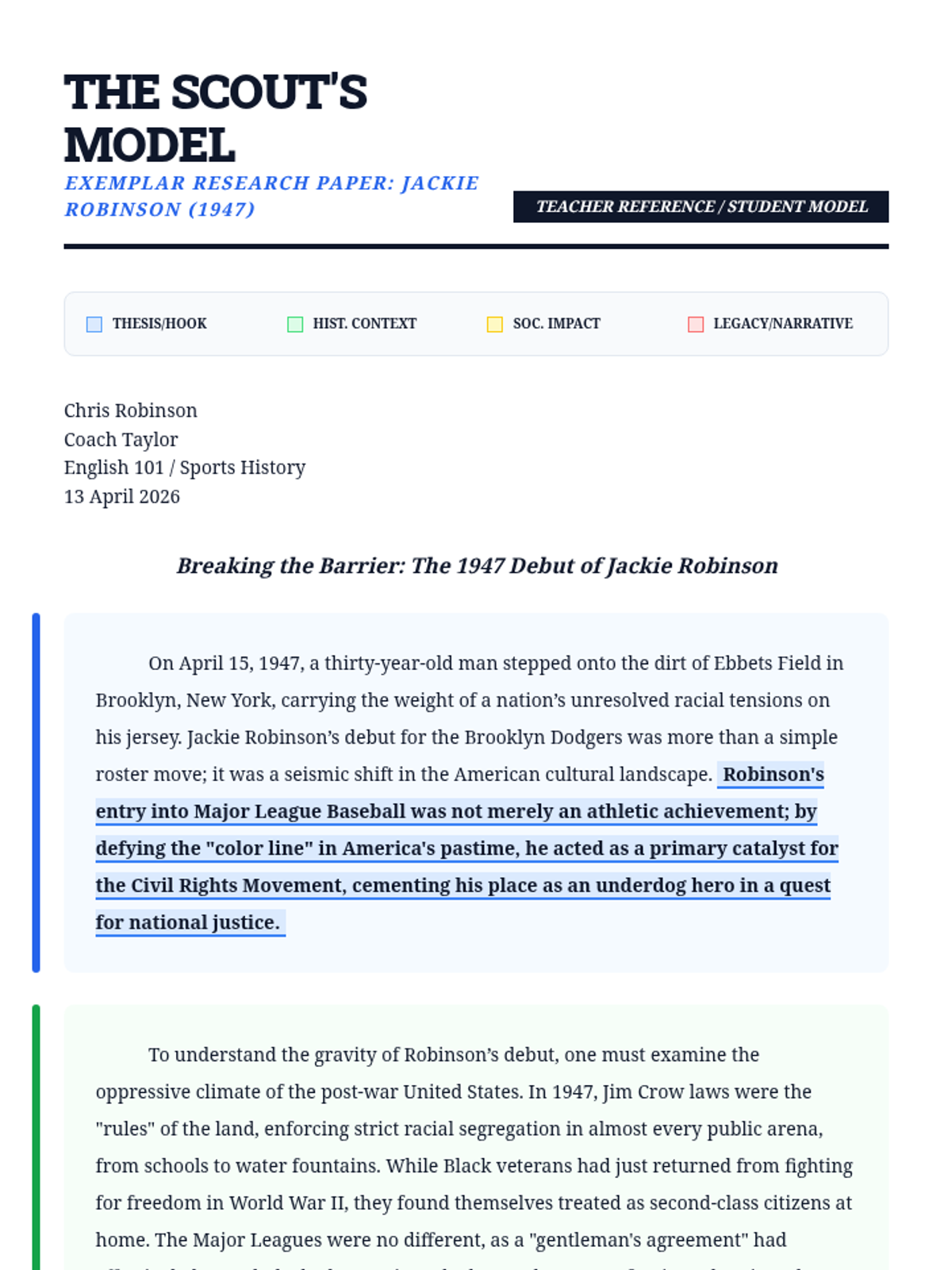
Students research and draft their first body paragraph, focusing on the historical context of their sports moment.
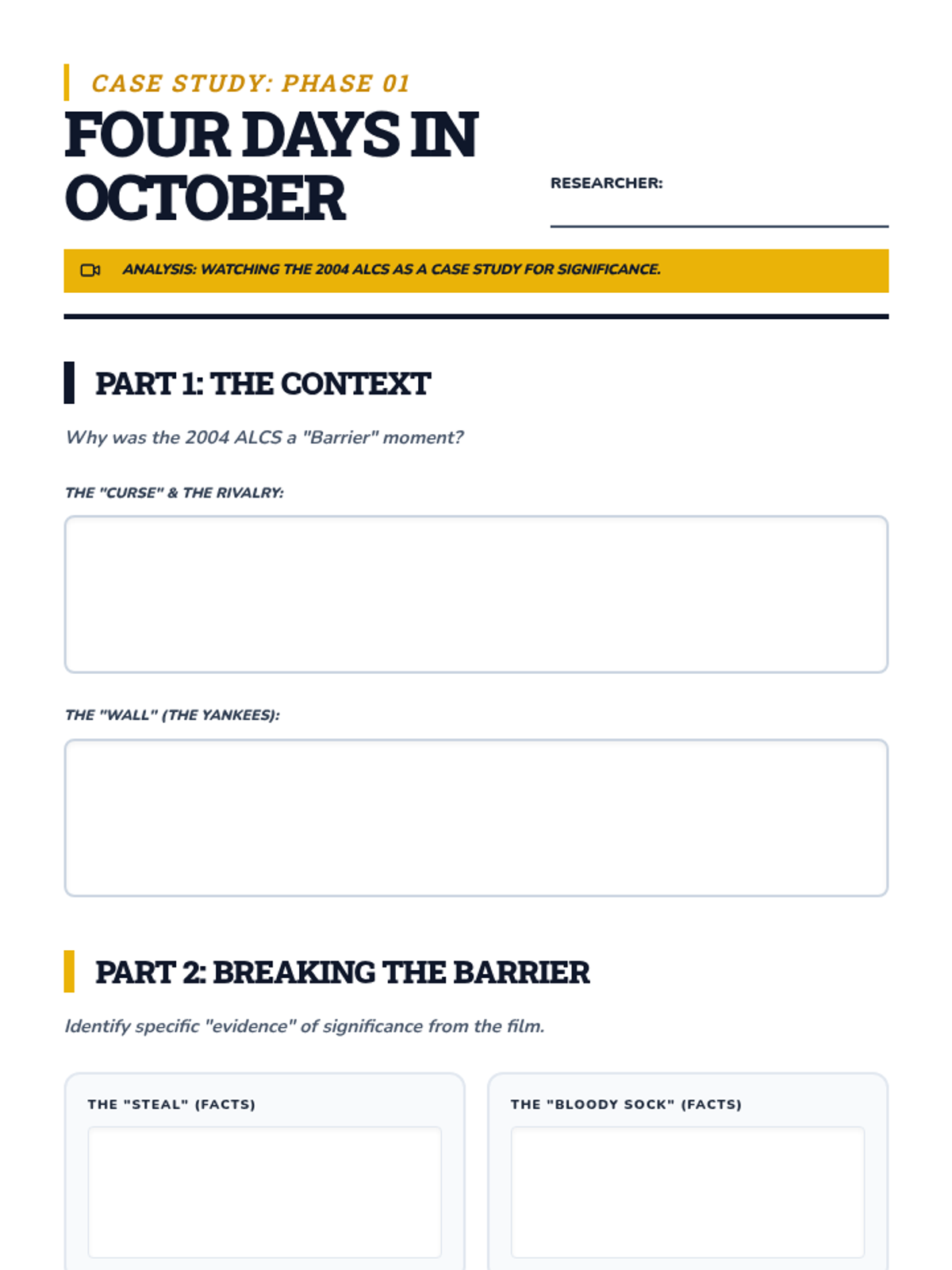
Brainstorming significant moments, defining specific criteria for "significance," and analyzing the 'Four Days in October' 30 for 30 documentary as a case study.
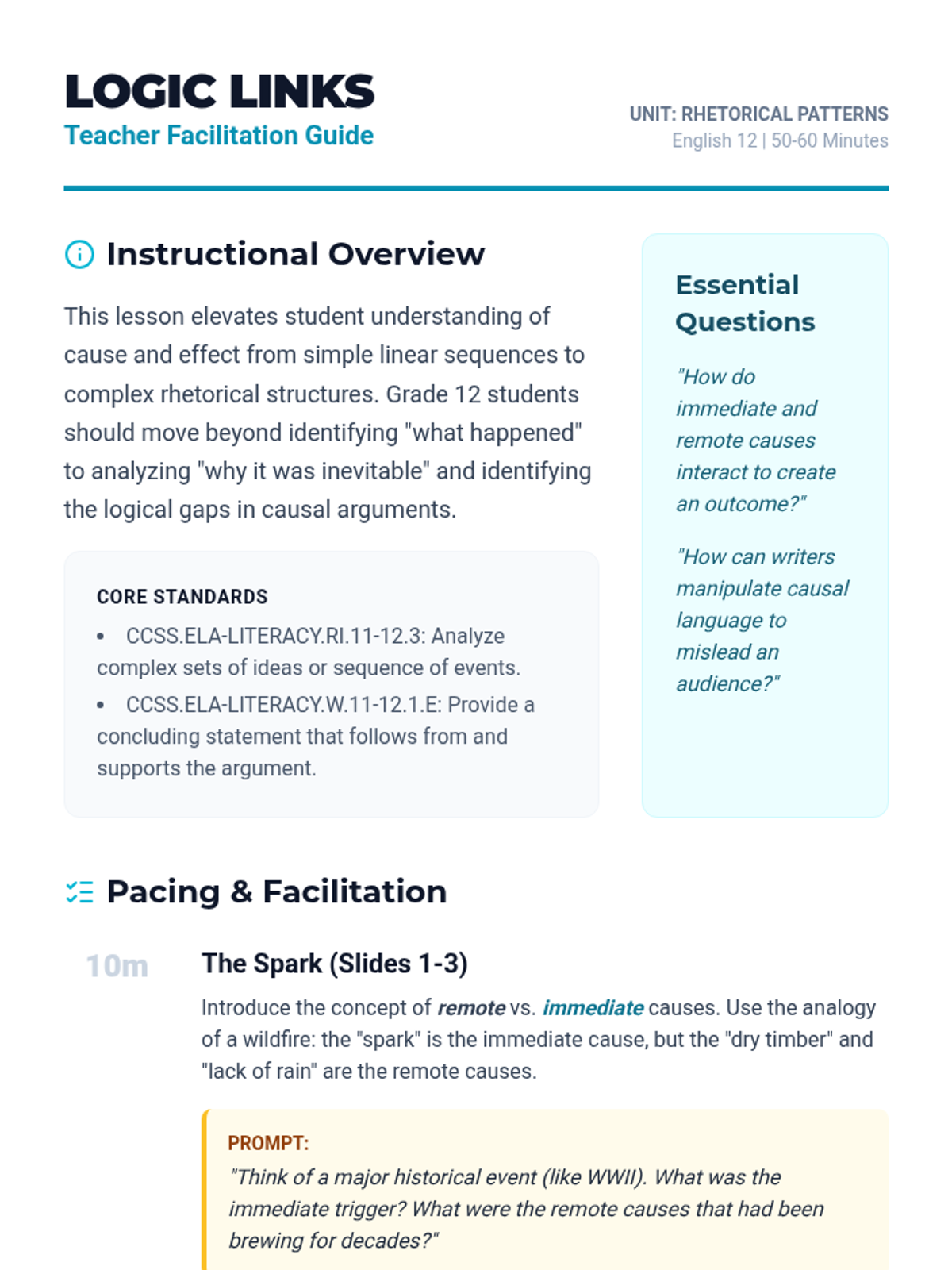
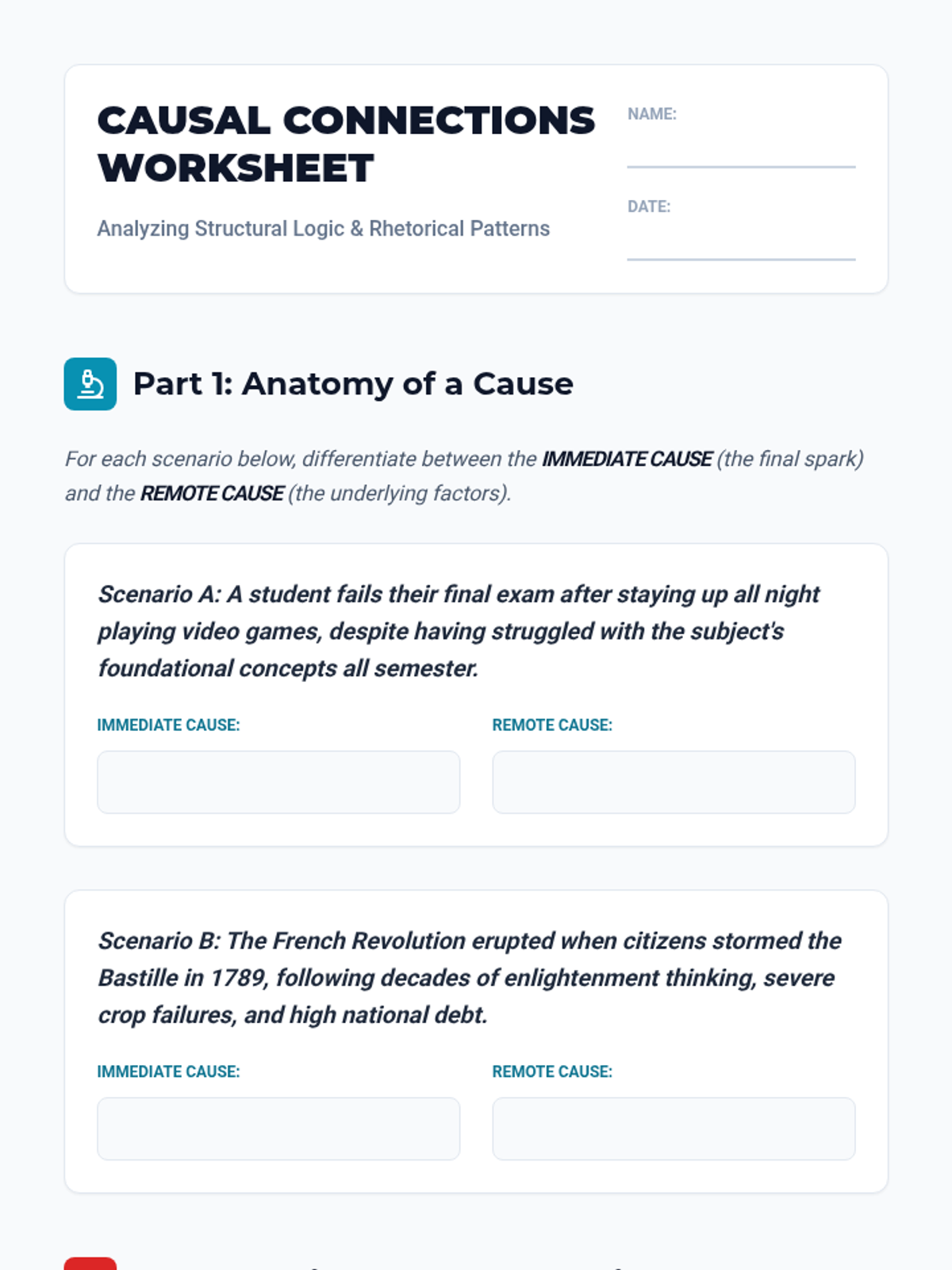
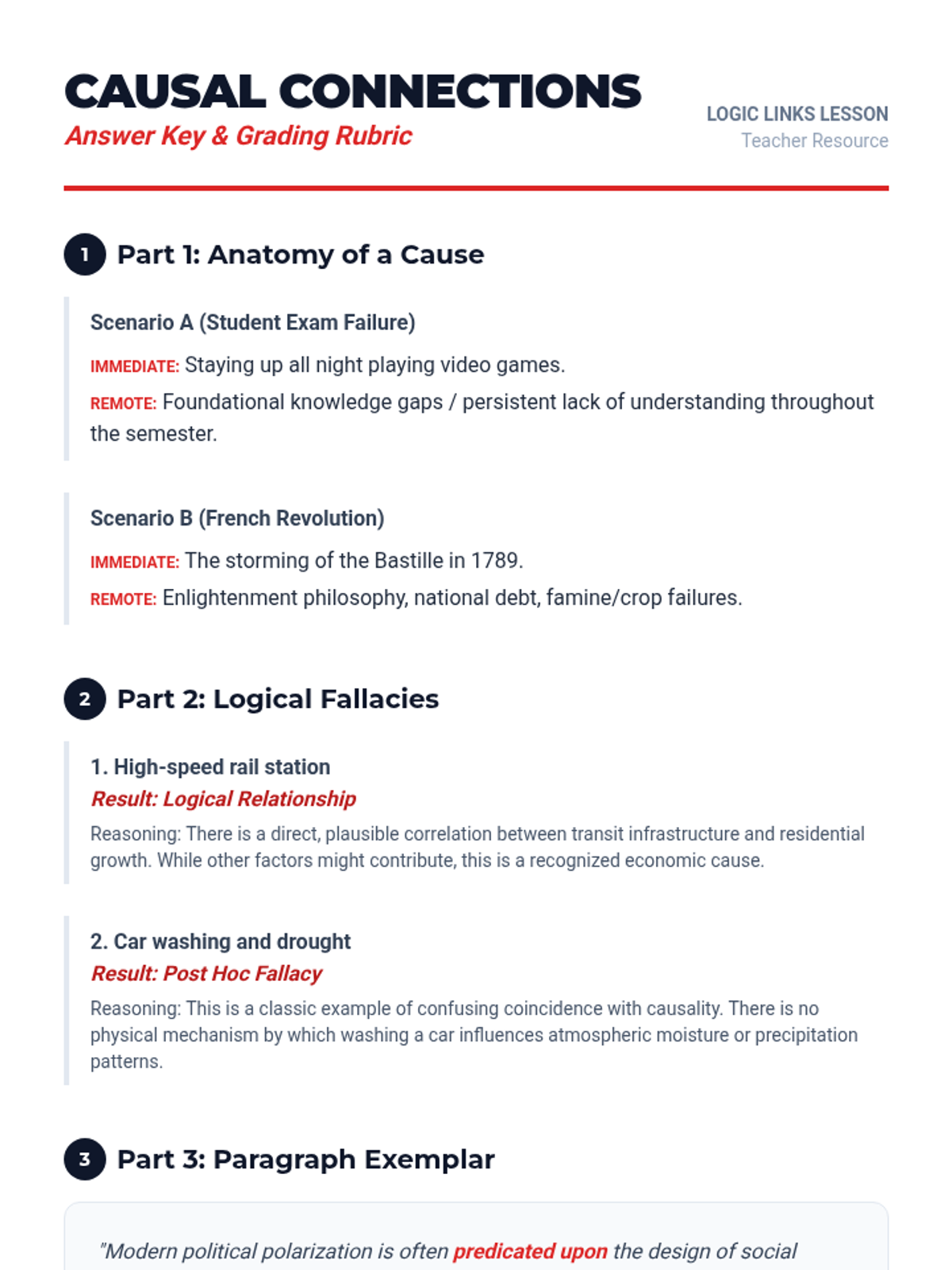
A comprehensive lesson for 12th-grade English focusing on the nuances of cause and effect analysis, logical fallacies, and structural organization in academic writing.
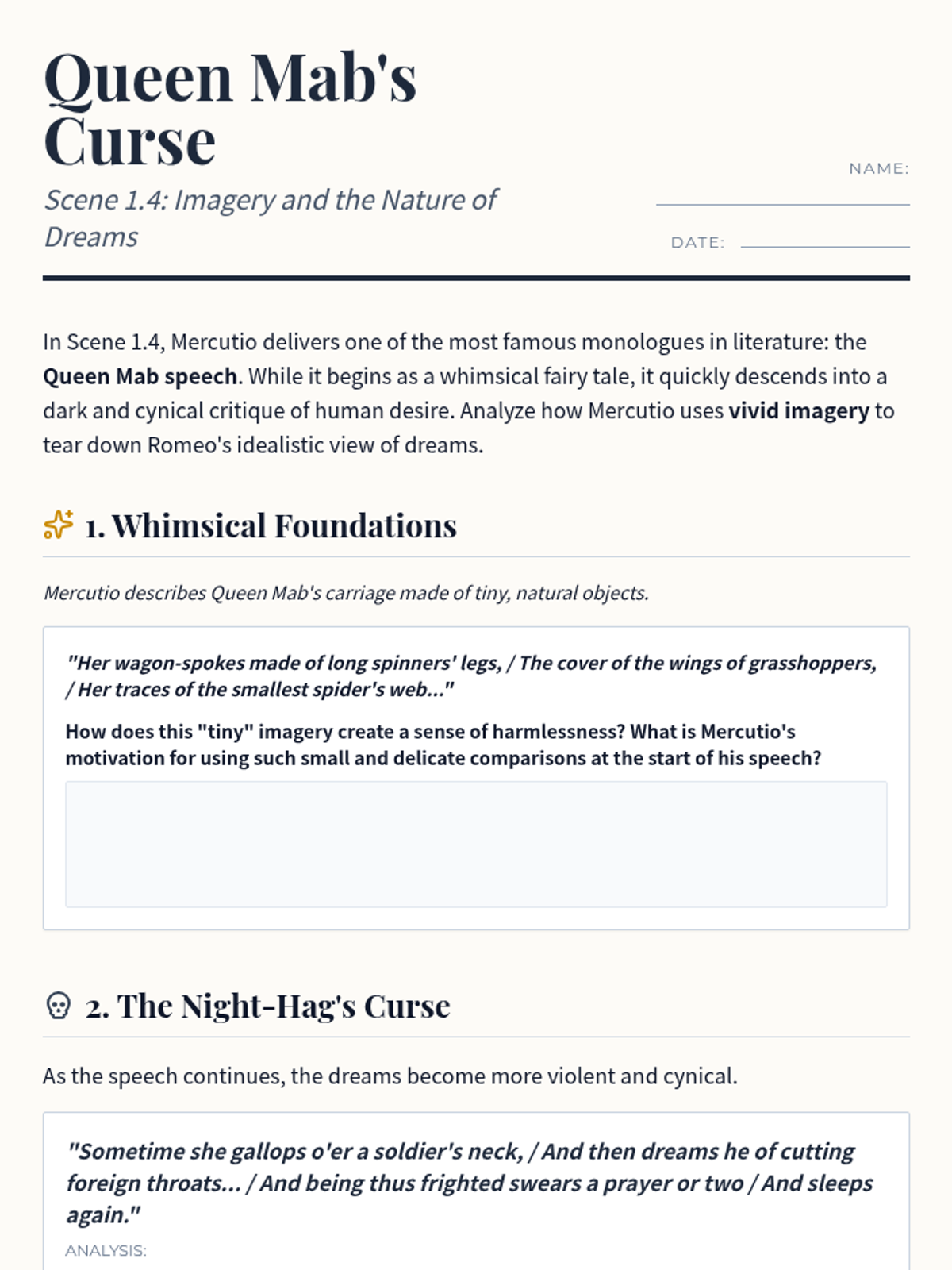
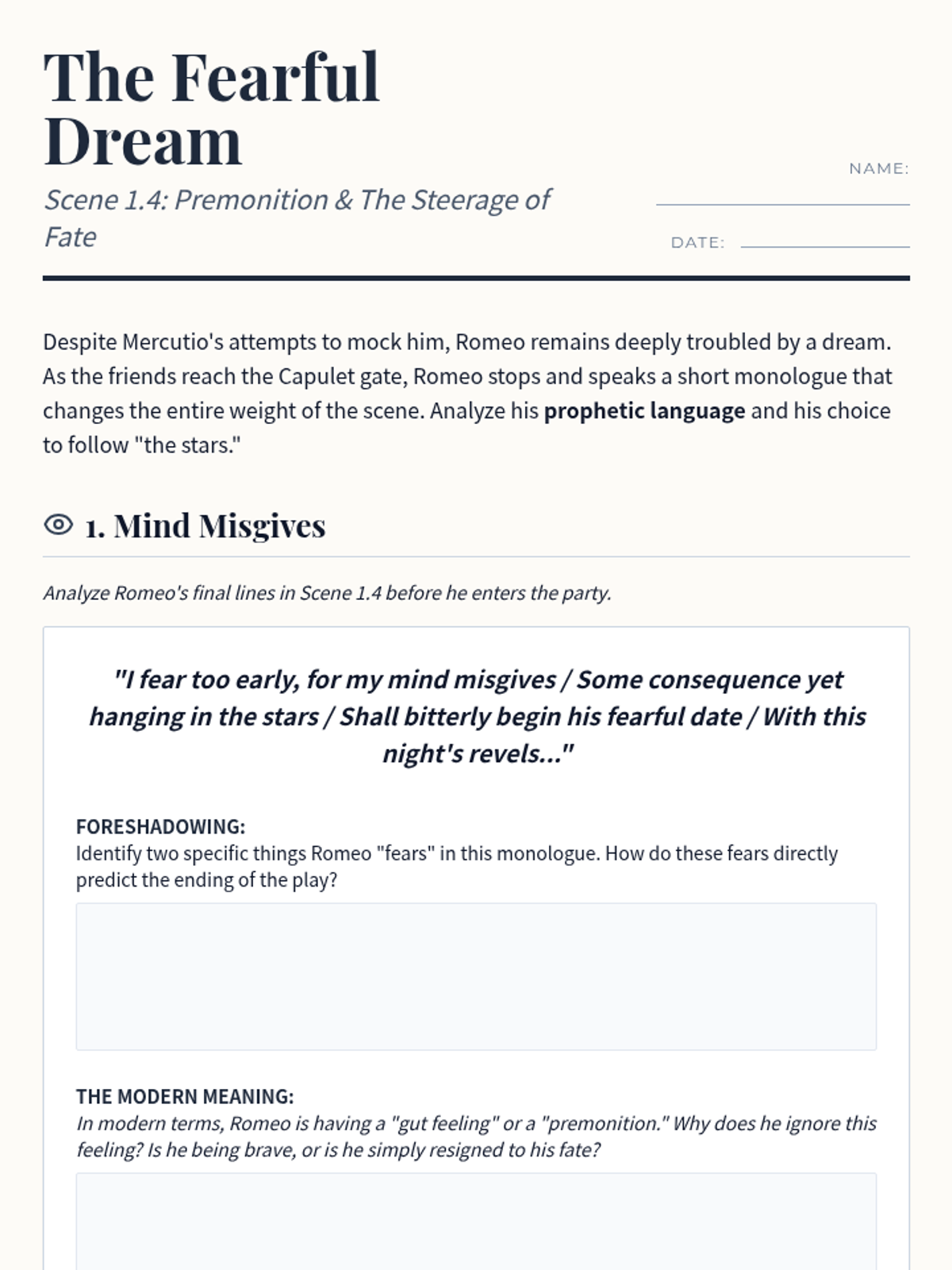
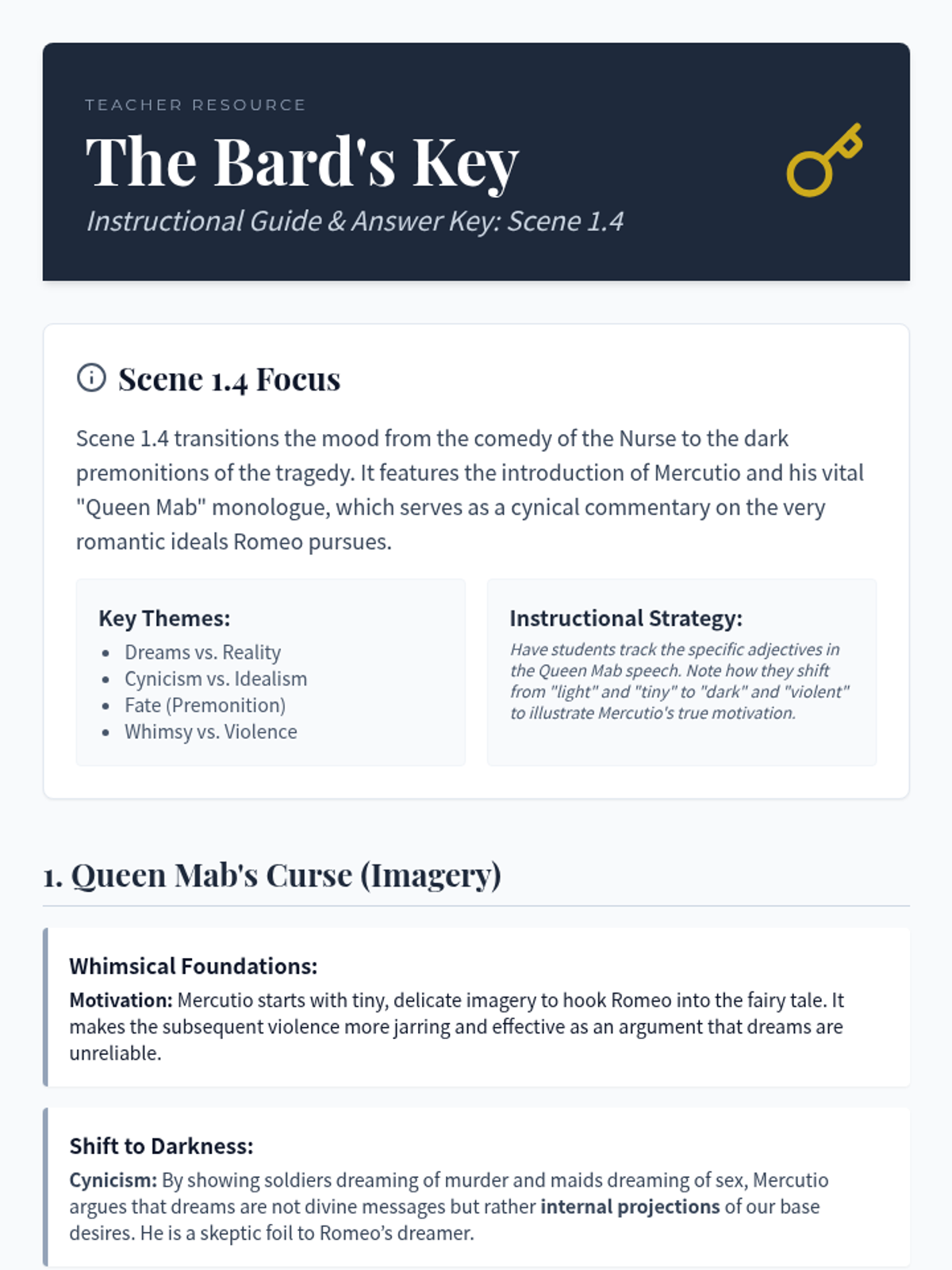
A study of Act 1, Scene 4, where Romeo, Mercutio, and Benvolio prepare to crash the Capulet ball. Students will analyze Mercutio's vivid Queen Mab speech, Romeo's persistent melancholy and prophetic dreams, and the tension between whimsical fantasy and dark reality.
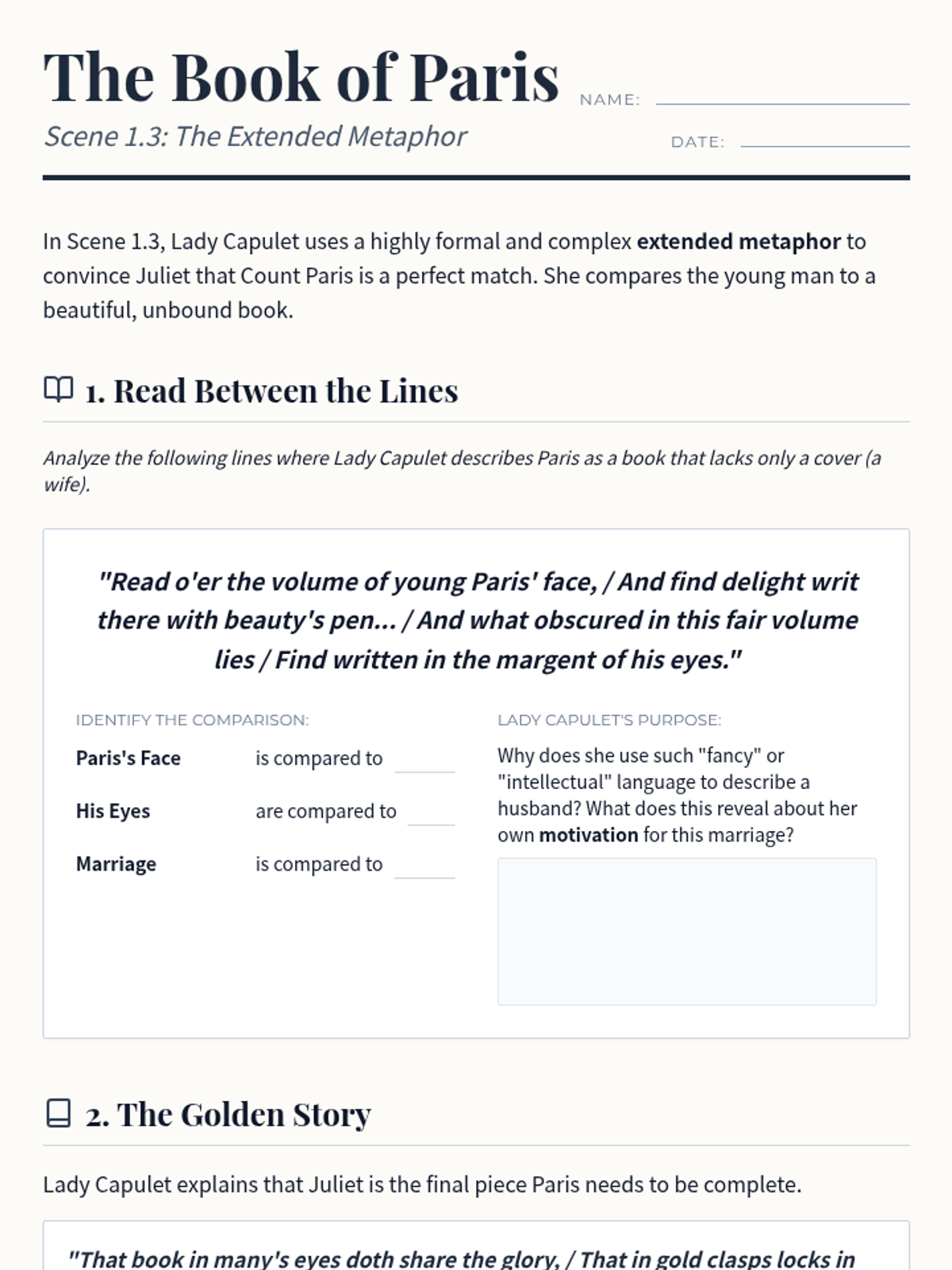
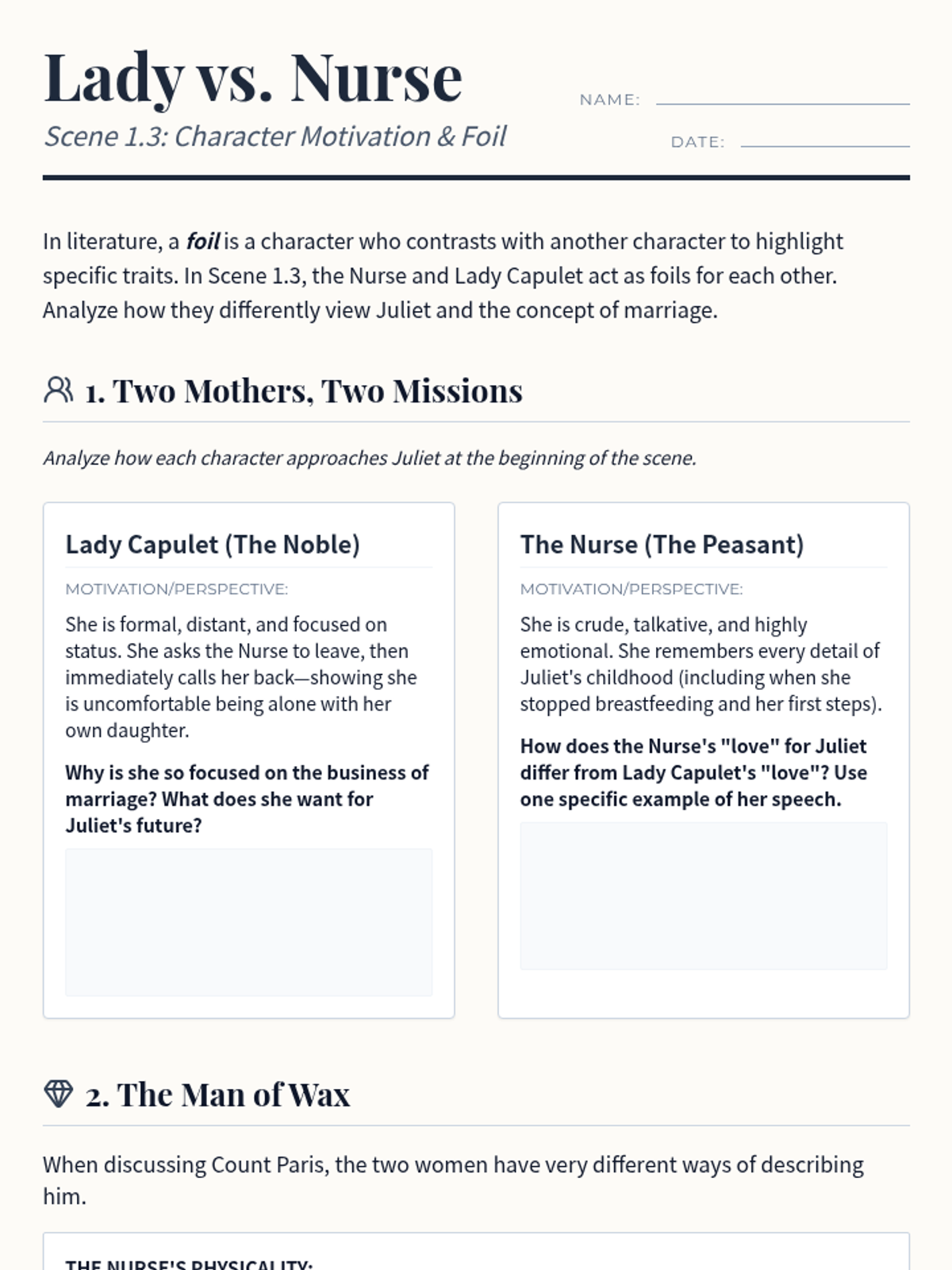
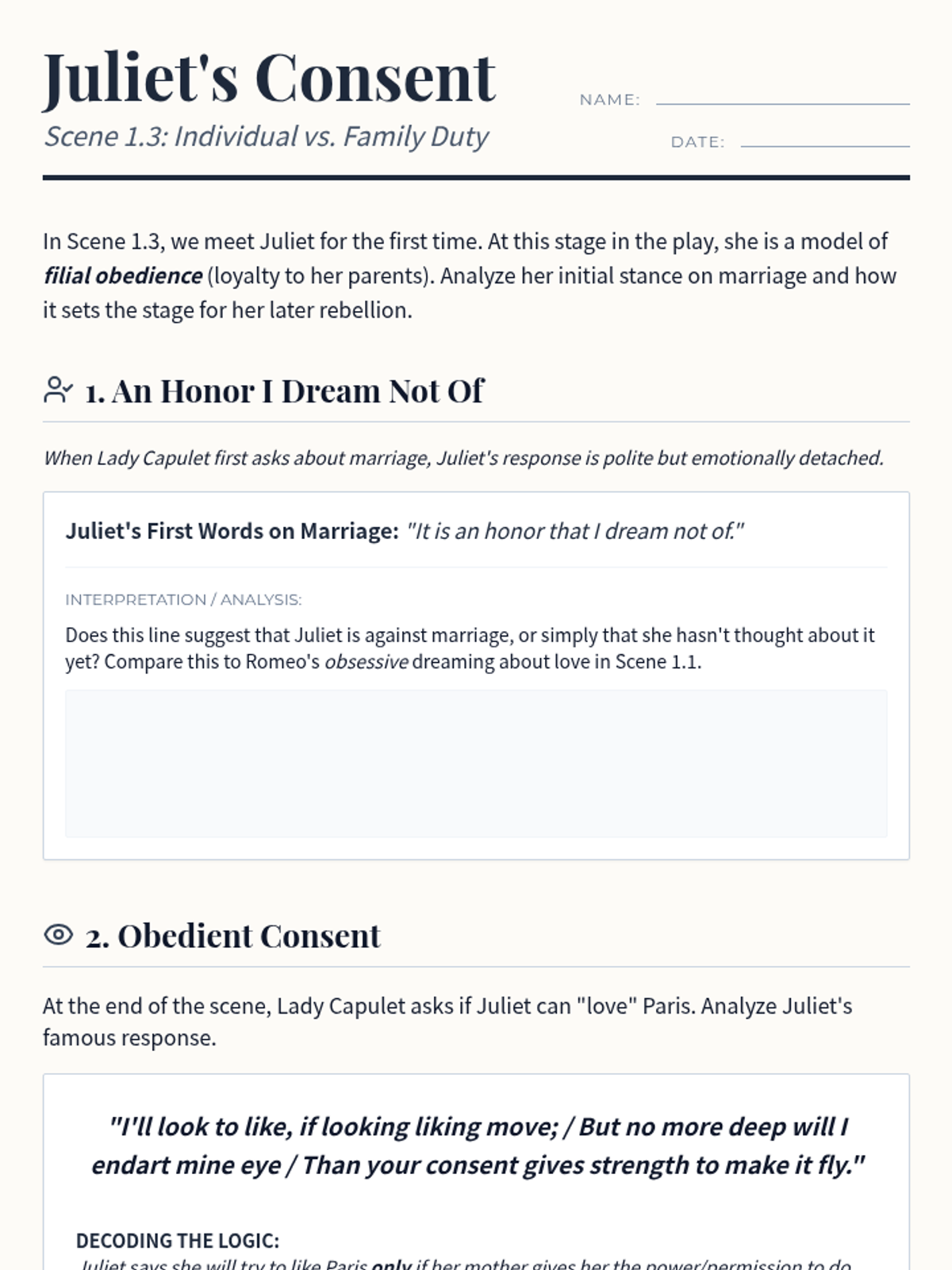
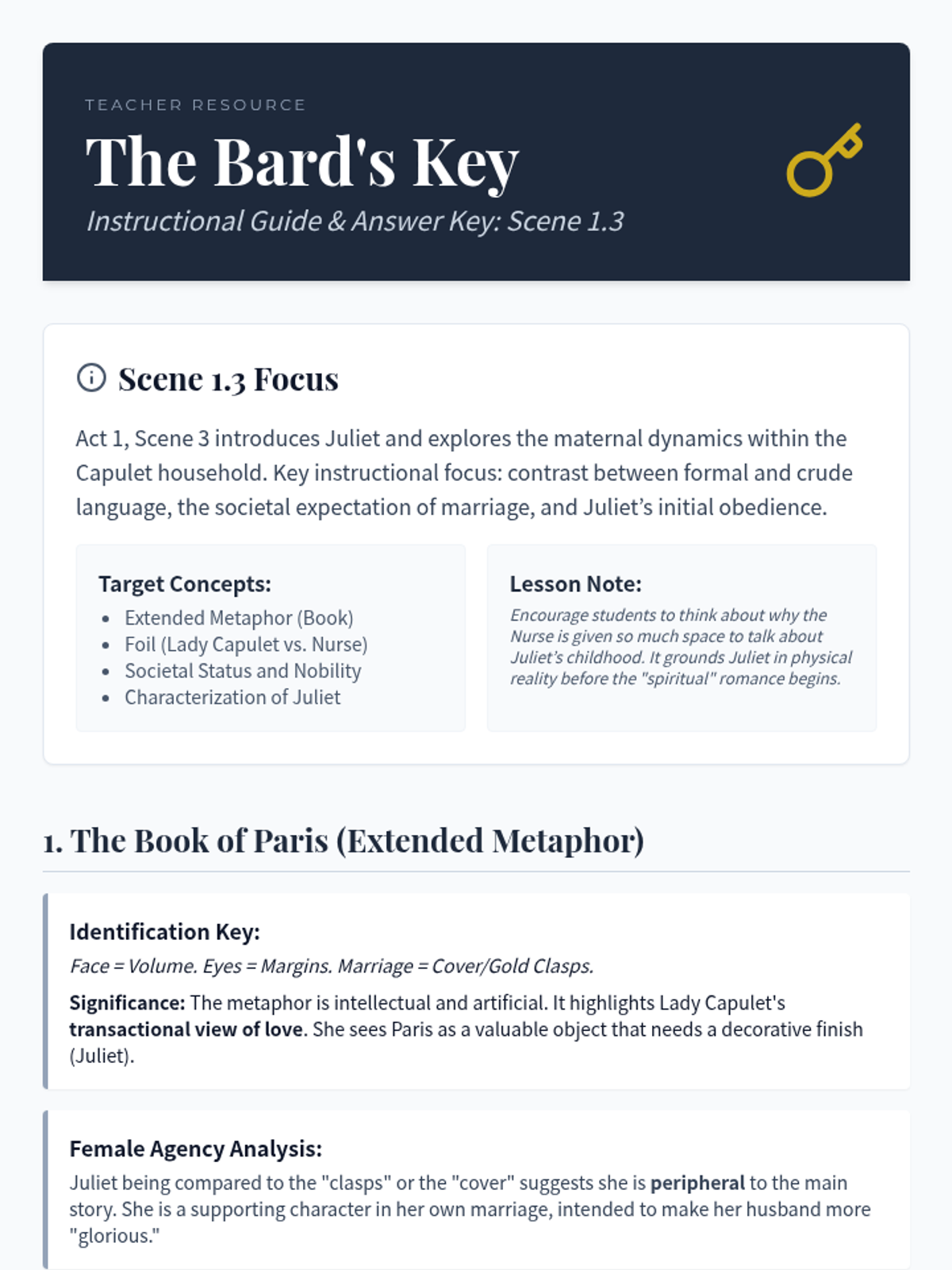
A study of Act 1, Scene 3, introducing the Nurse and Lady Capulet's proposal of marriage to Paris. Students will analyze the Nurse's coarse humor, Lady Capulet's extended metaphor of Paris as a book, and Juliet's initial stance on marriage and obedience.
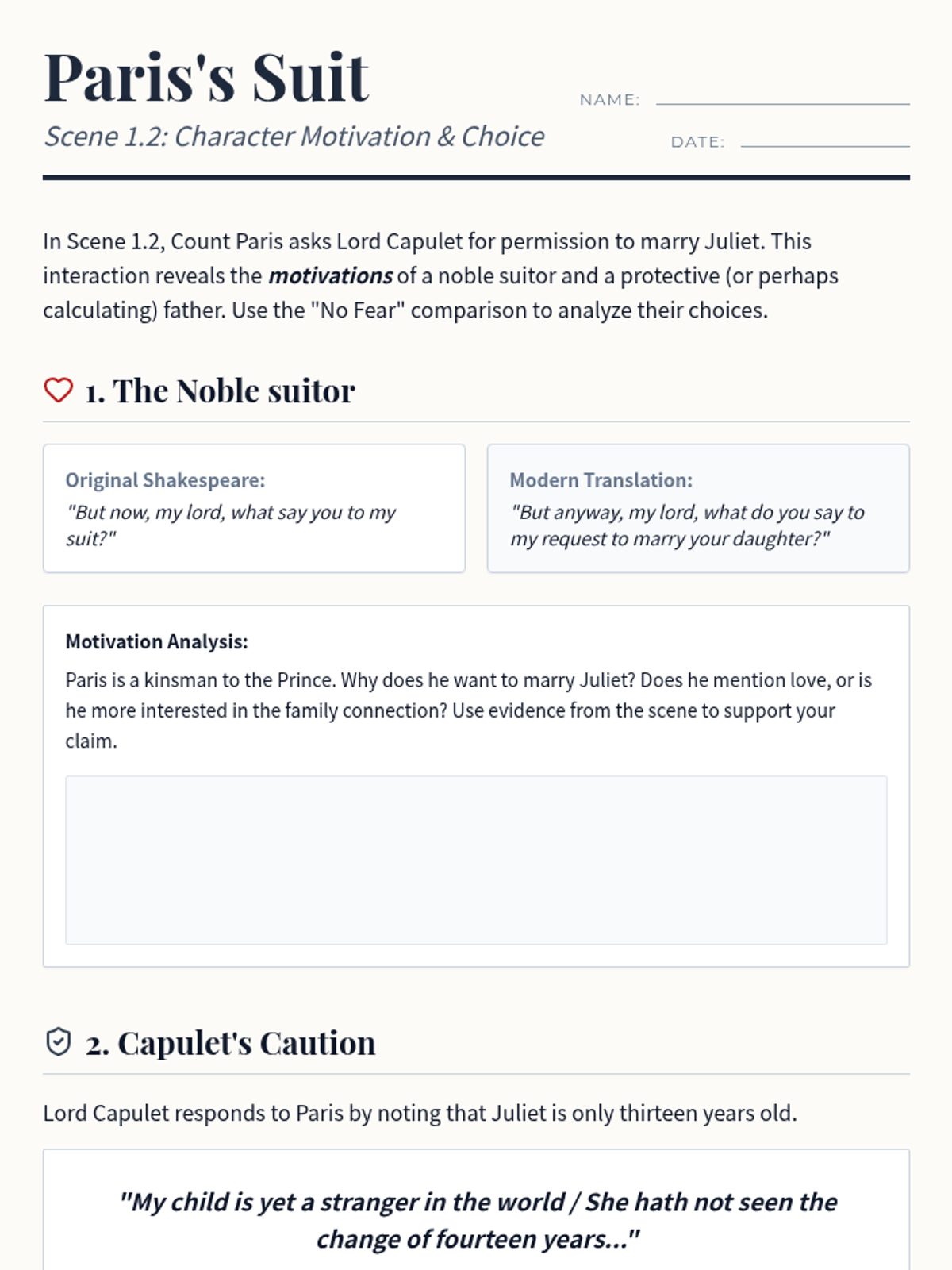
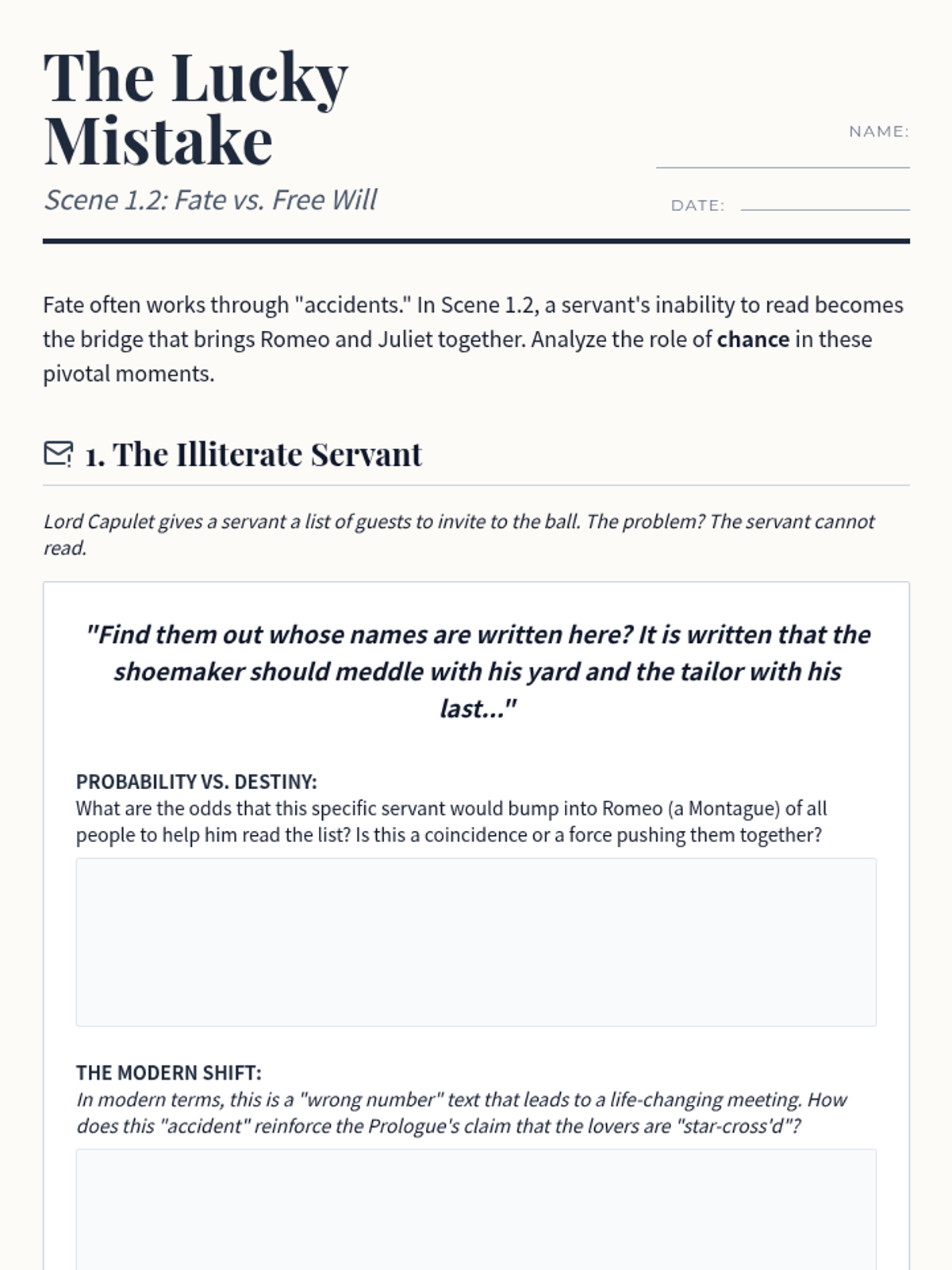
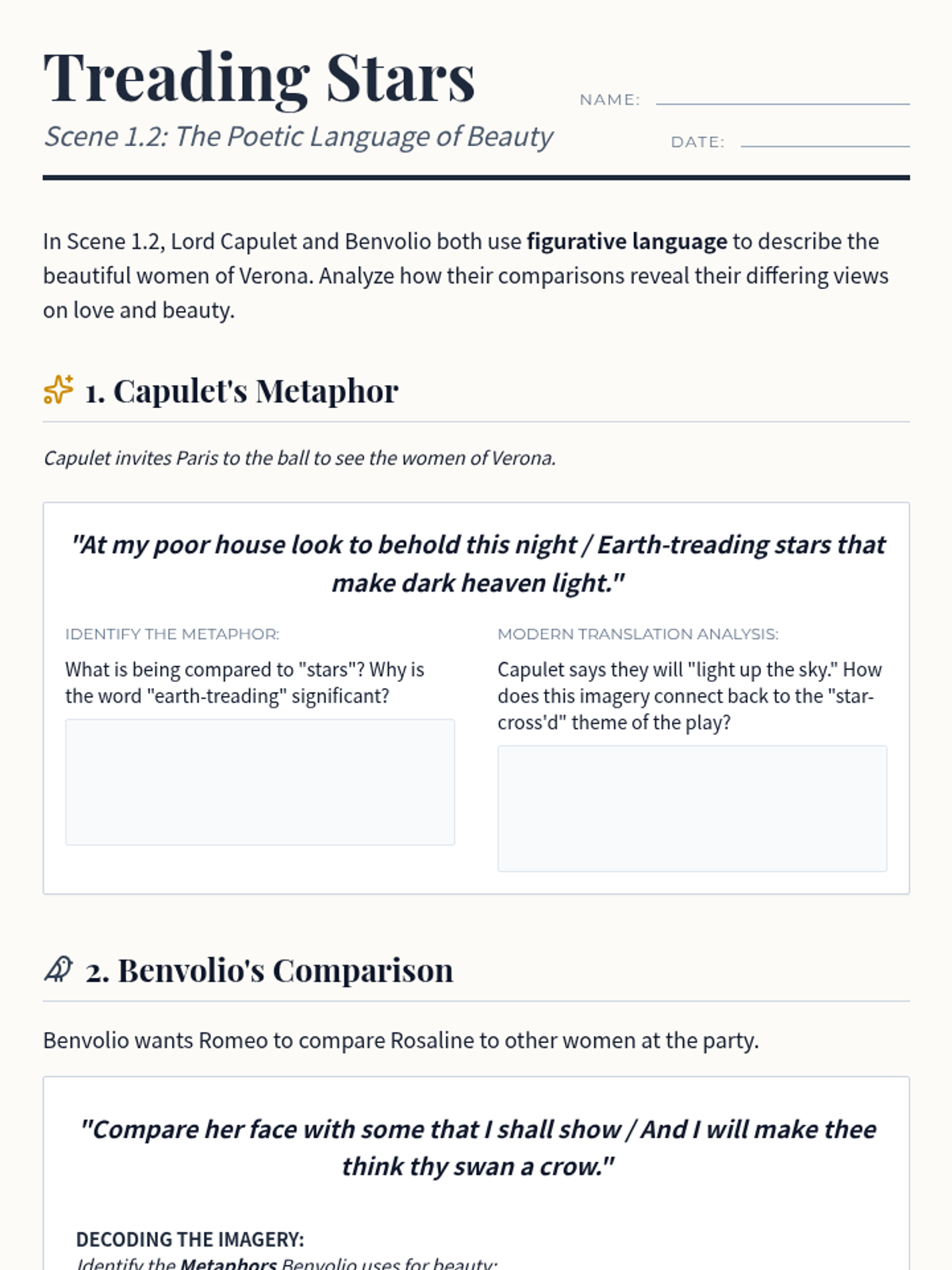
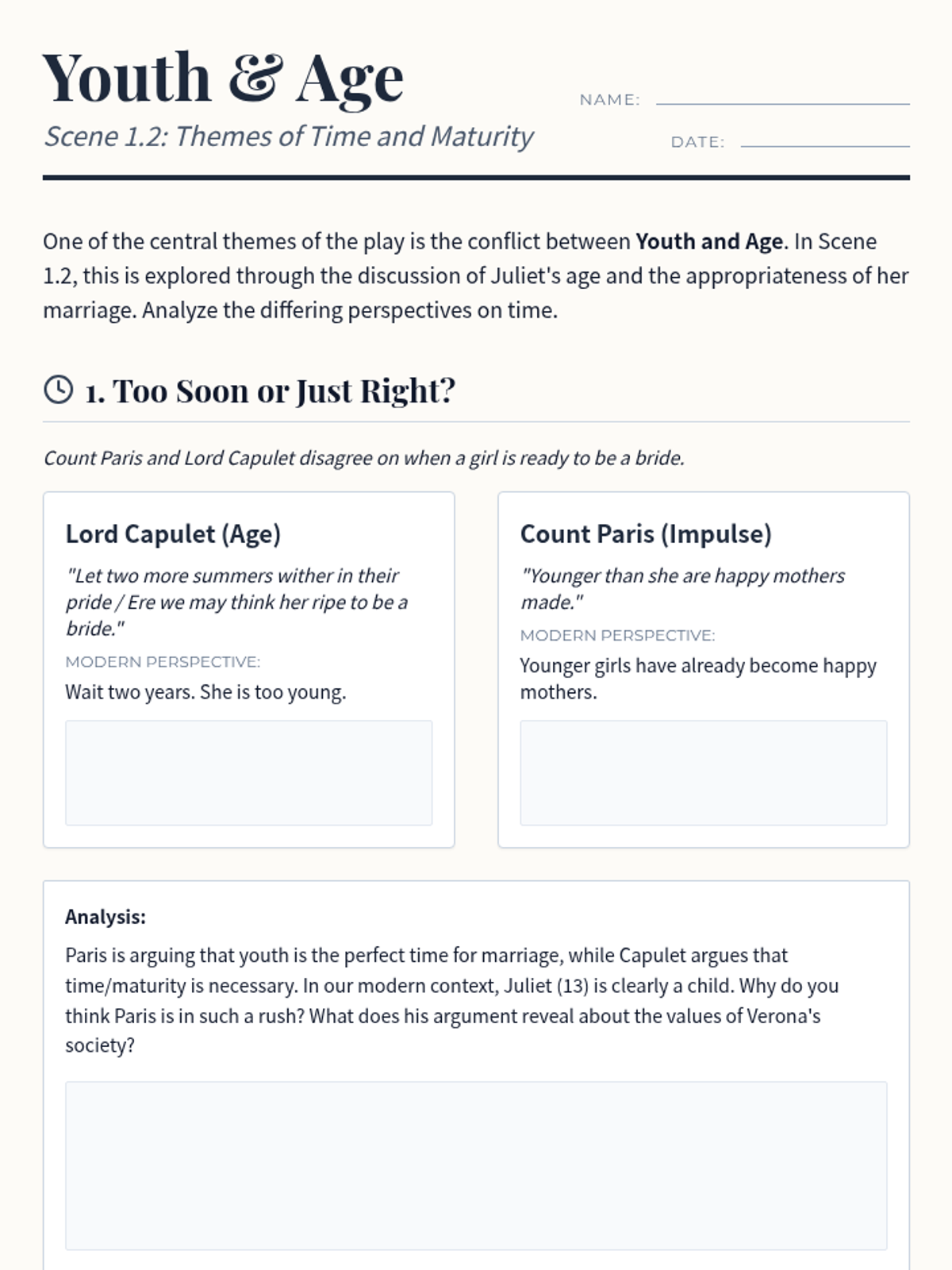
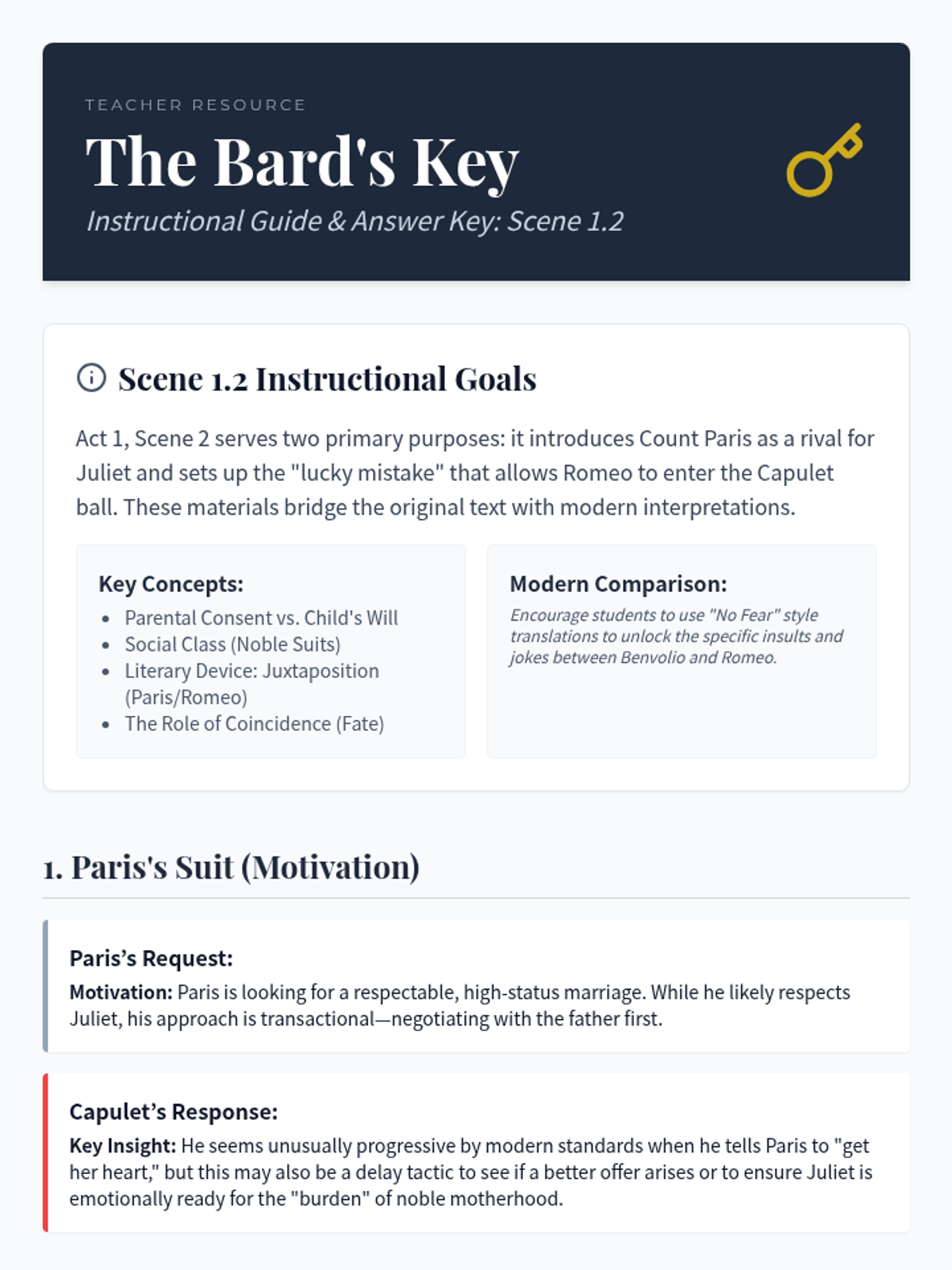
A study of Act 1, Scene 2, where Count Paris asks for Juliet's hand and Romeo and Benvolio discover the Capulet party through a chance encounter. Students will analyze the dynamics of parental choice, the role of chance, and the poetic language used to describe the ladies of Verona.
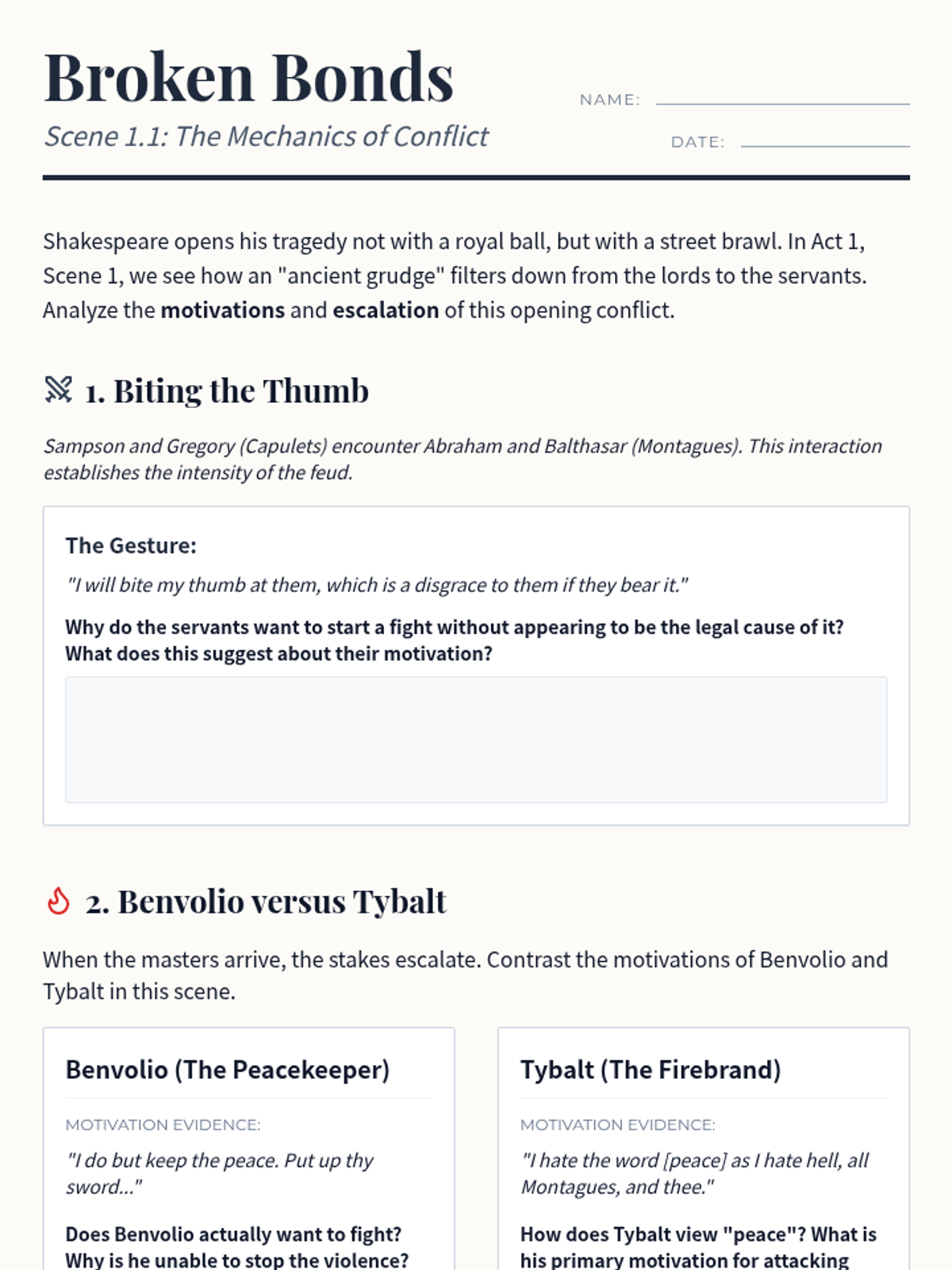
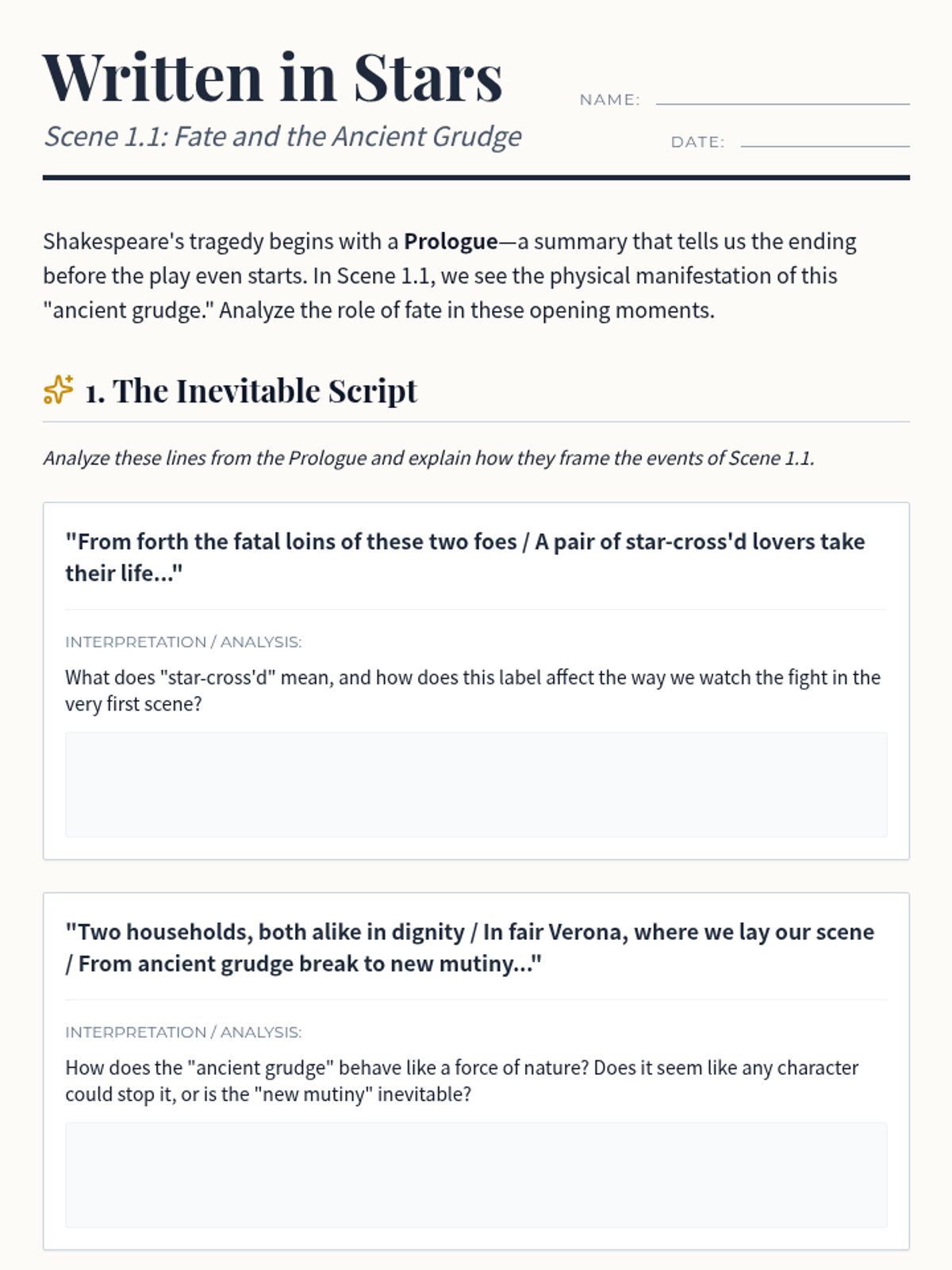
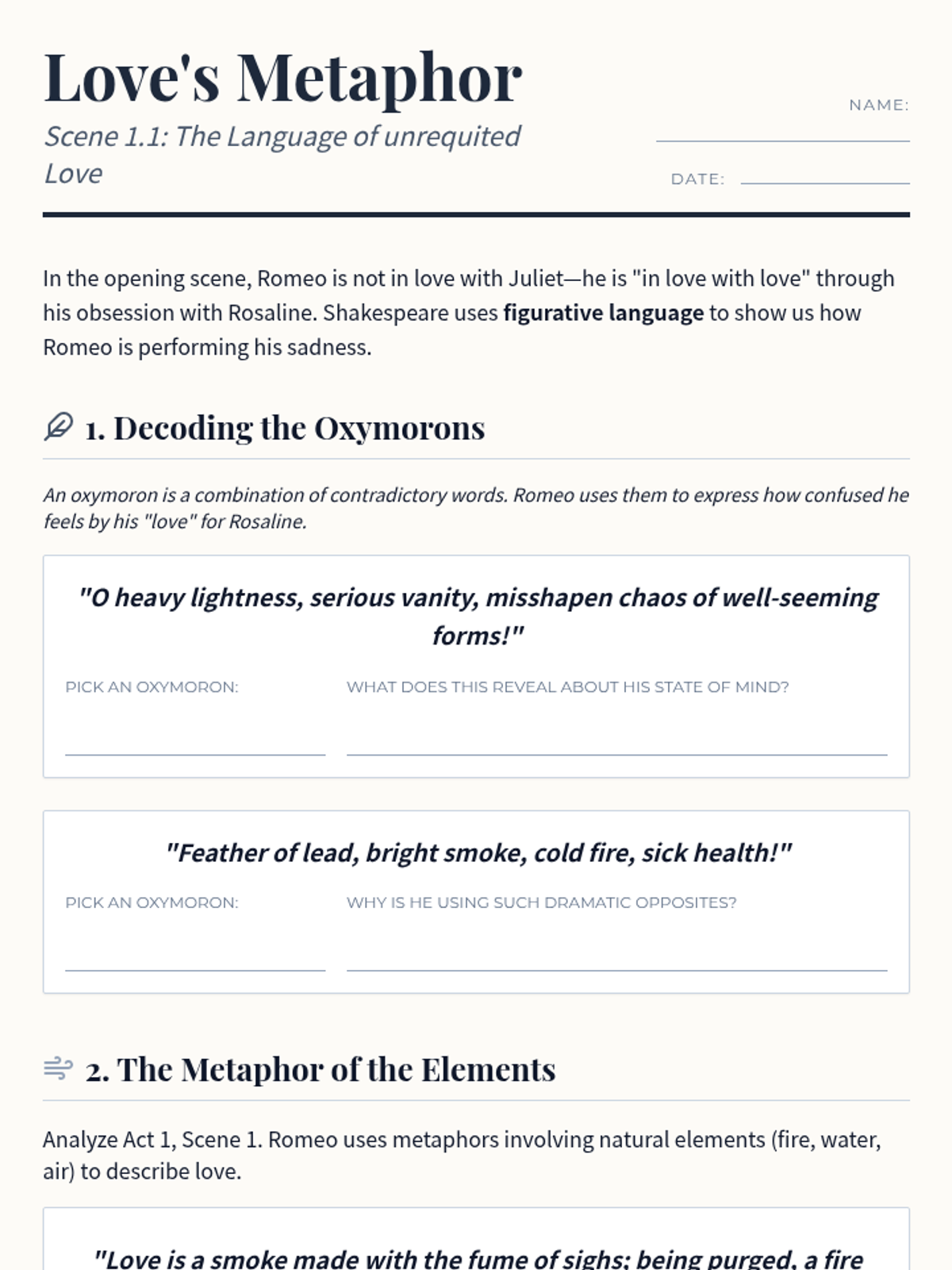
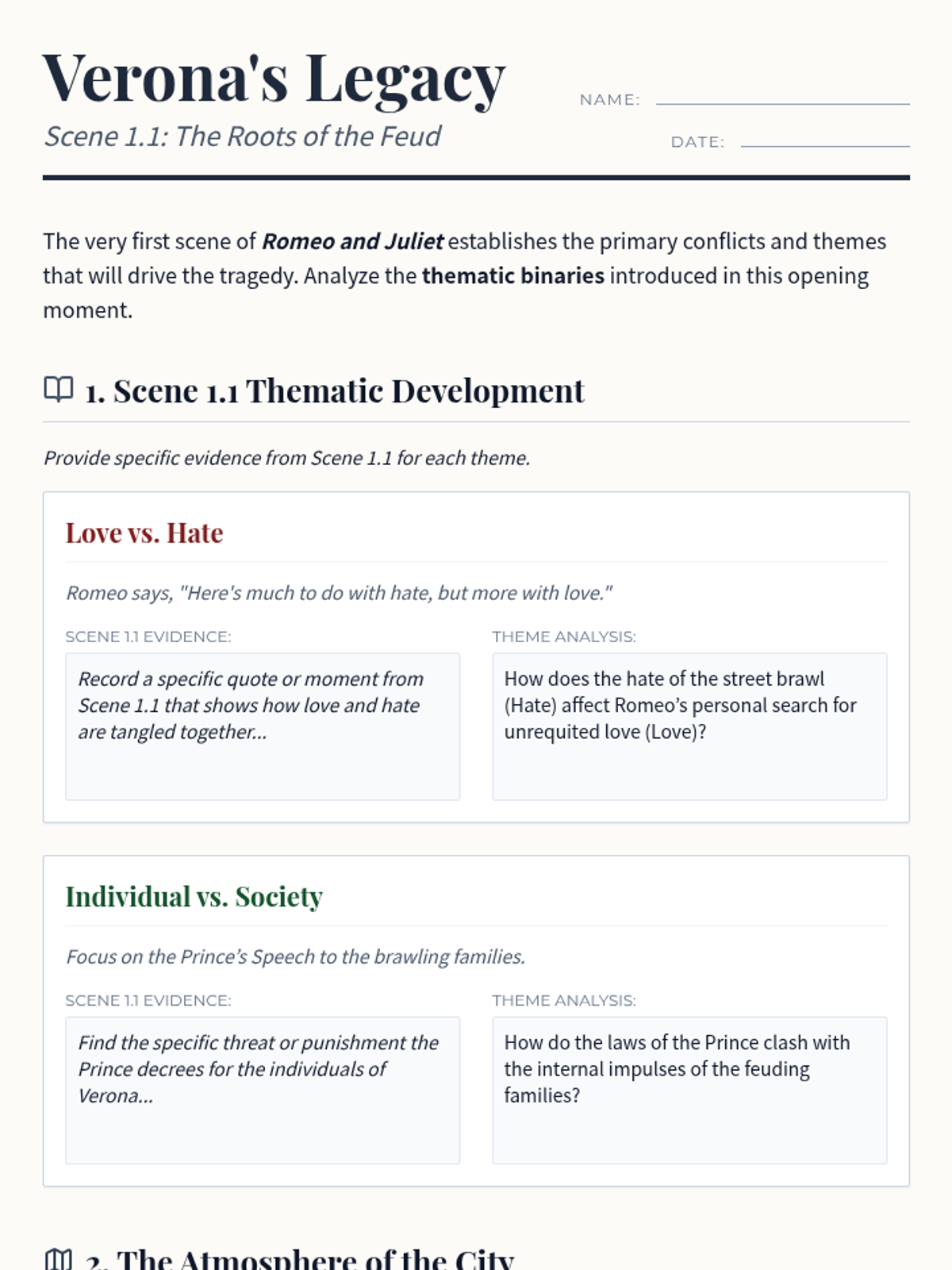
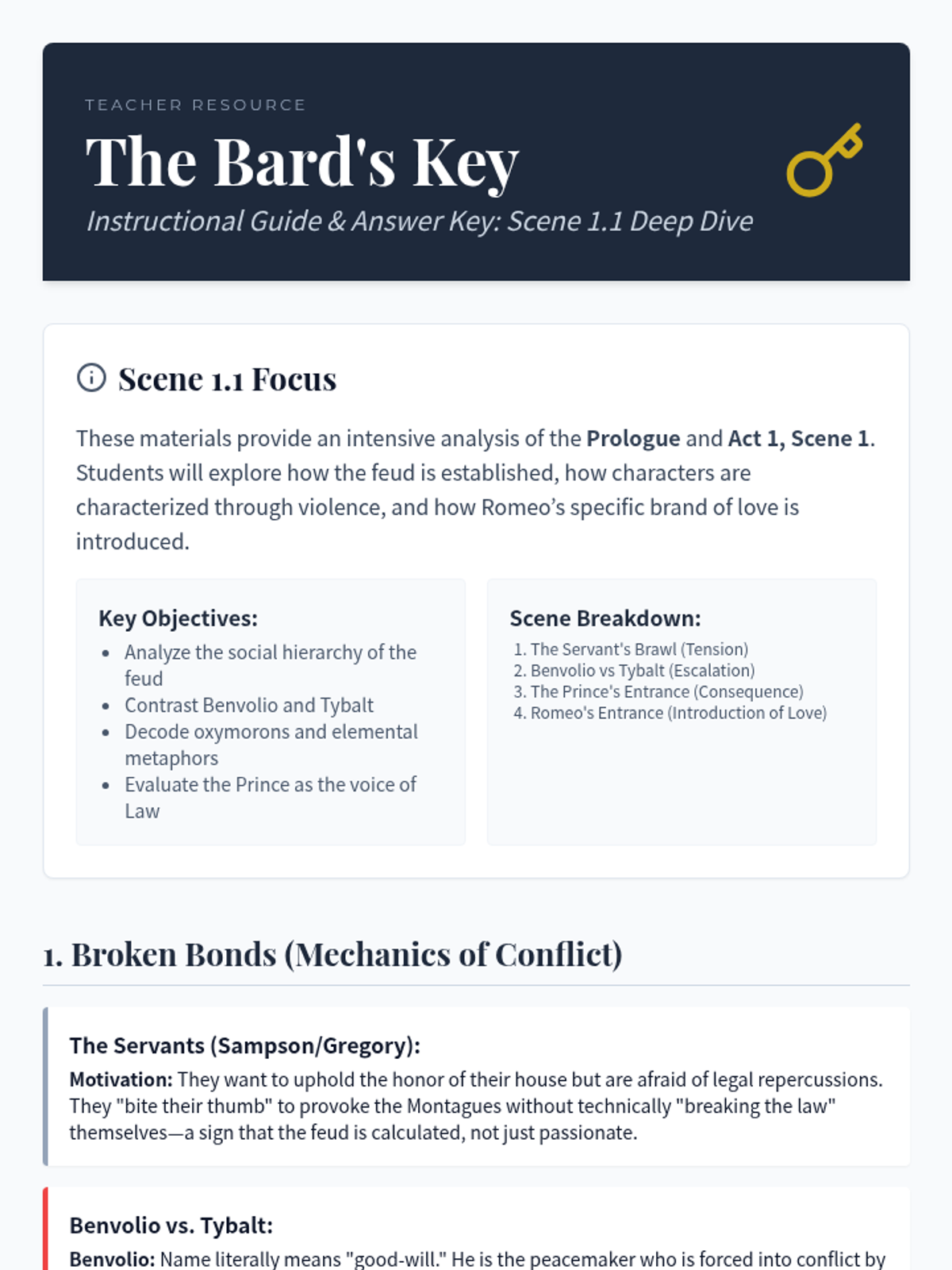
An intensive study of the opening scene and prologue of Shakespeare's Romeo and Juliet. Students will analyze the mechanics of the ancient grudge, the characterization of the principal families, and the specific poetic techniques used to establish Romeo's unrequited love for Rosaline.
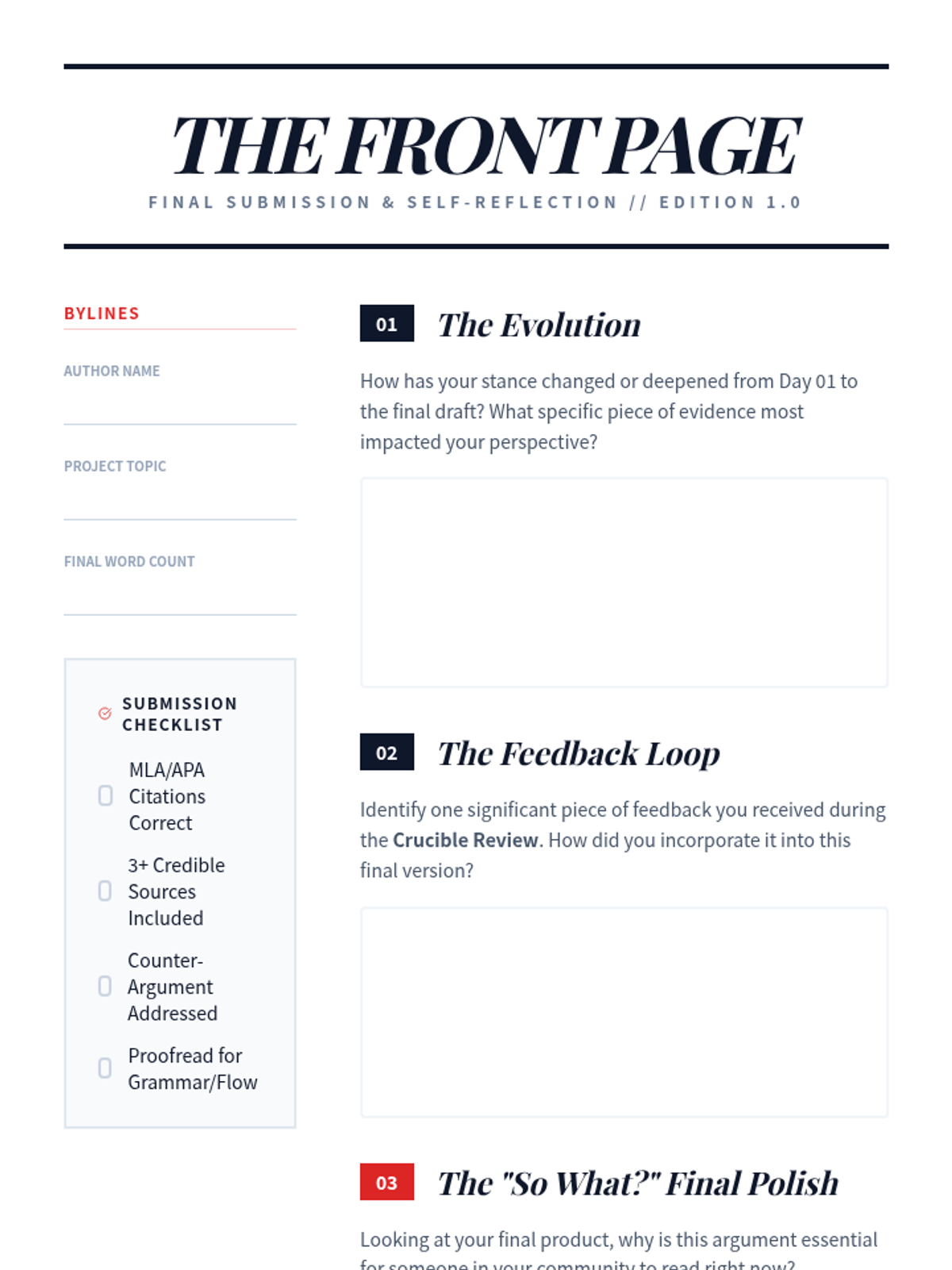
Final essay submission along with a self-reflection on the writing process and feedback implementation.
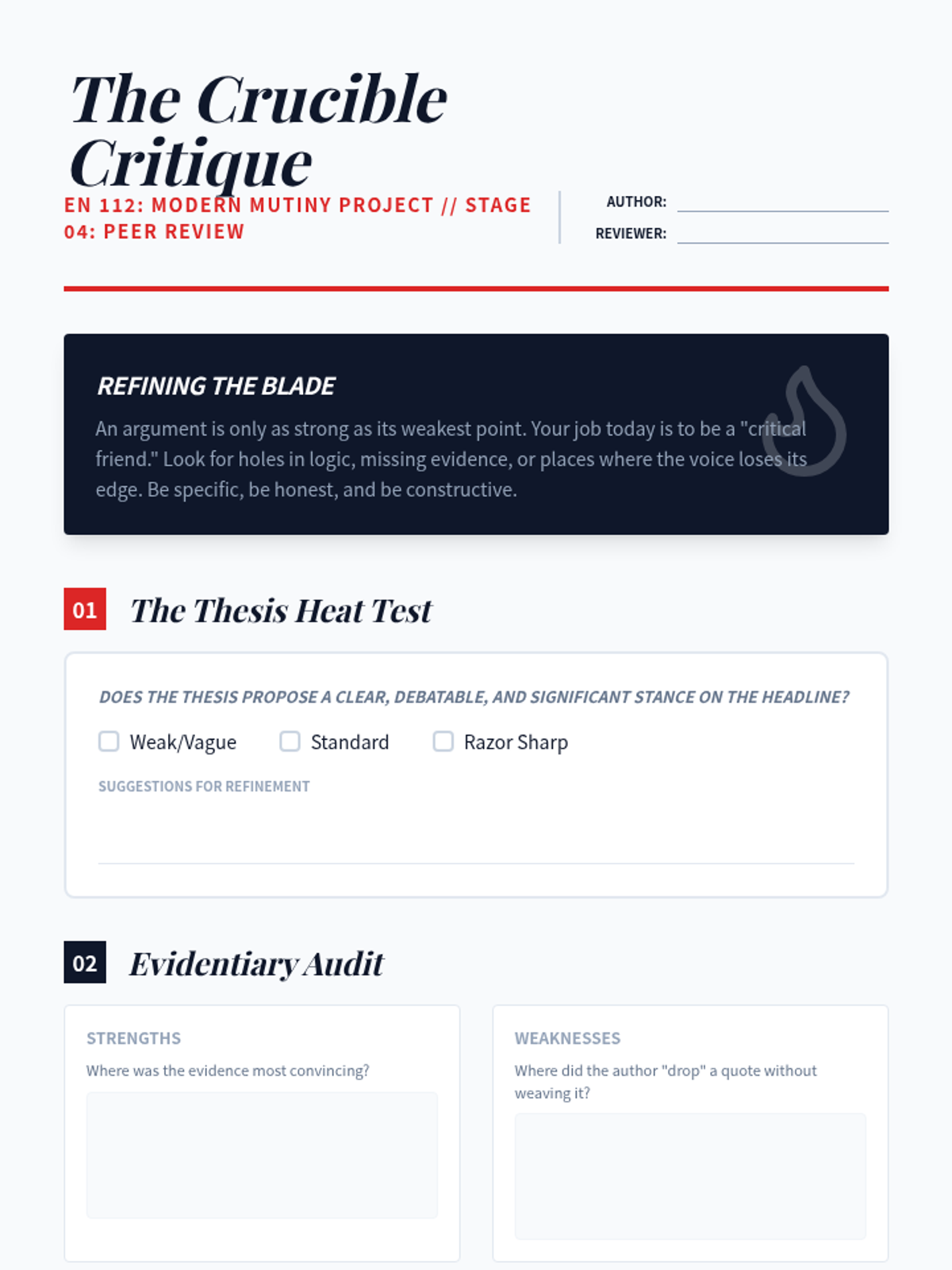
A collaborative workshop where students evaluate peer arguments for logic, flow, and evidentiary support.
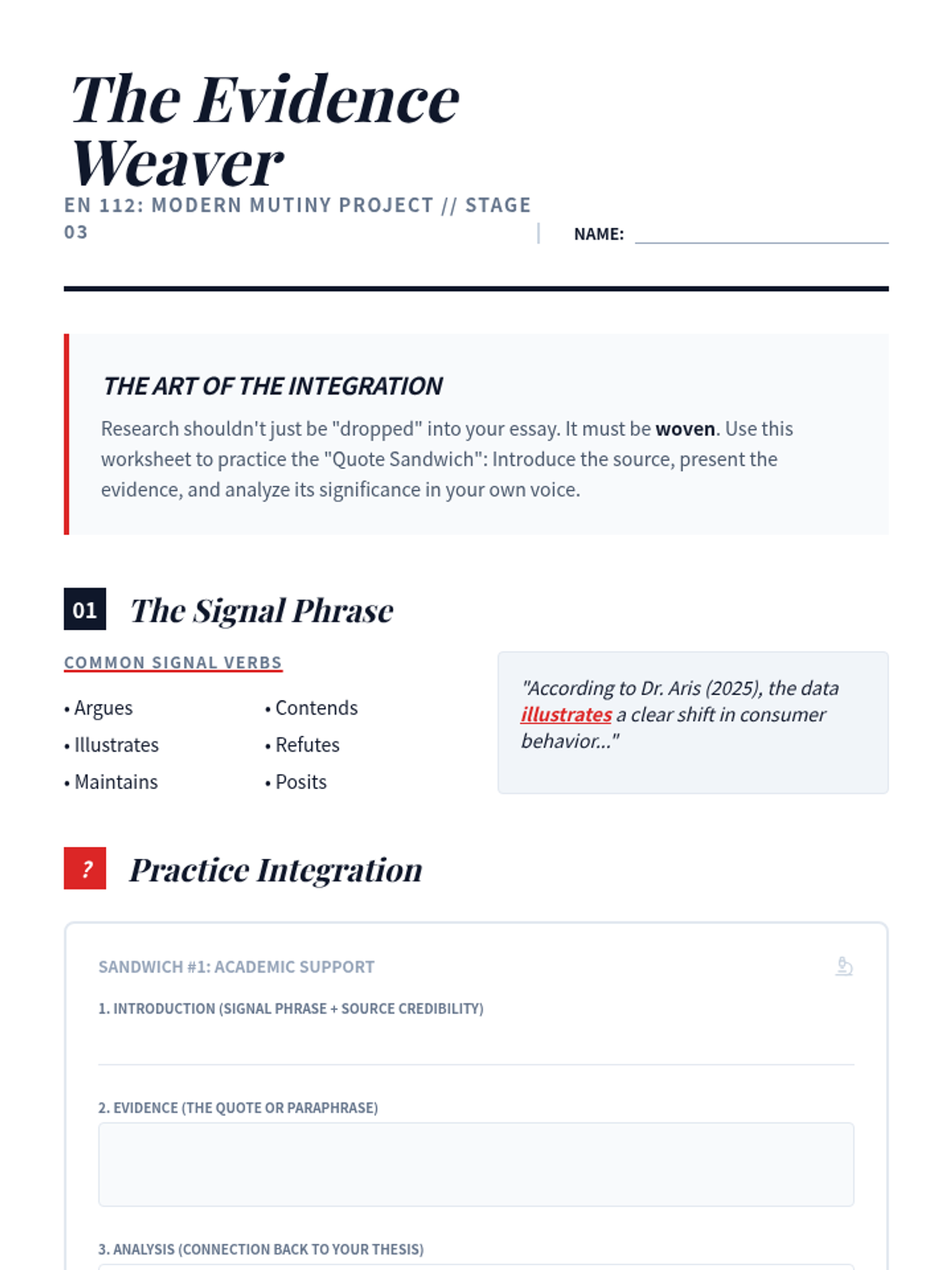
Focuses on the mechanics of writing, including transitions, tone, and the effective integration of academic research into the narrative.
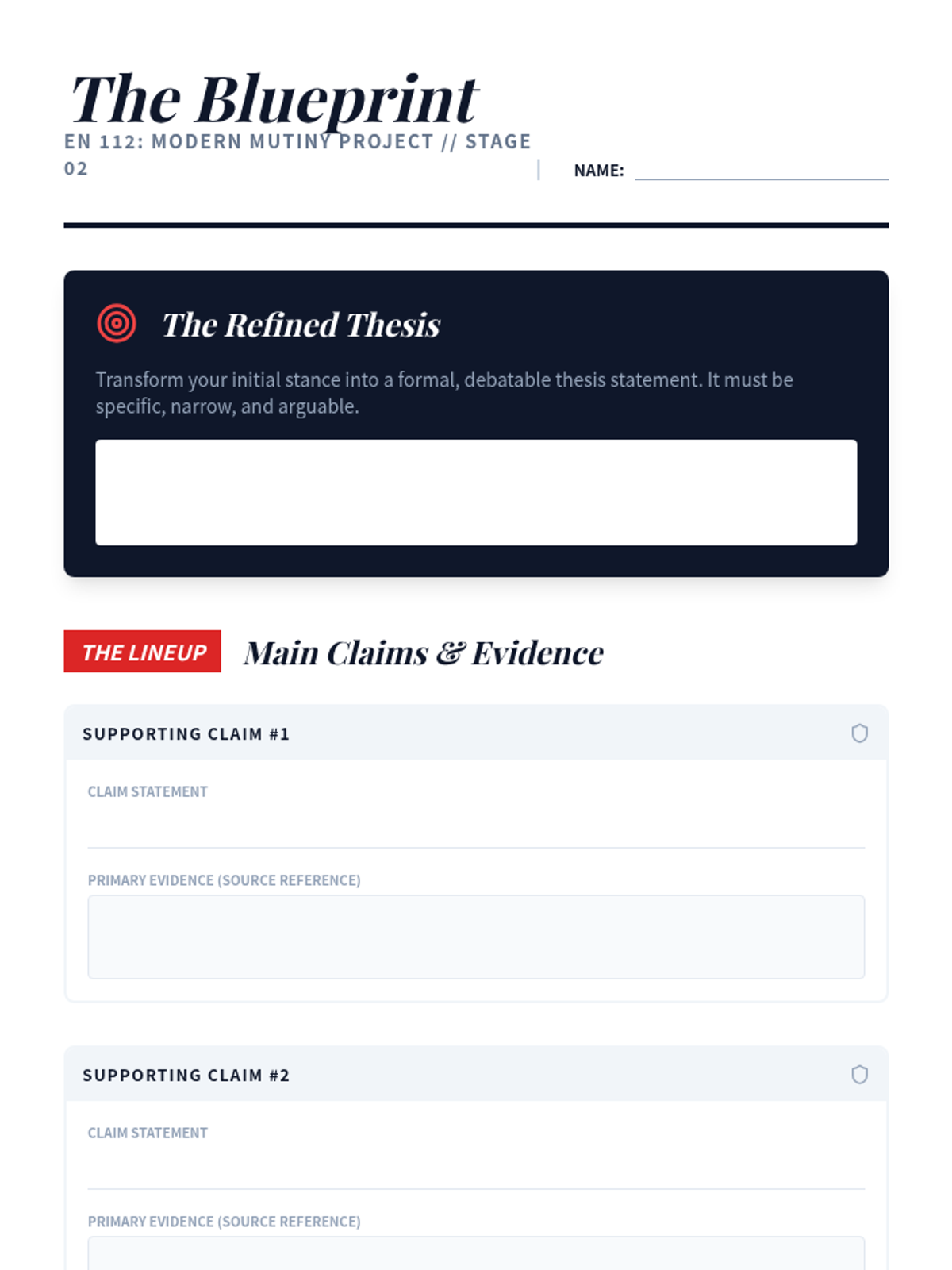
Students transform their research into a structured argument, focusing on thesis development and mapping out evidence.
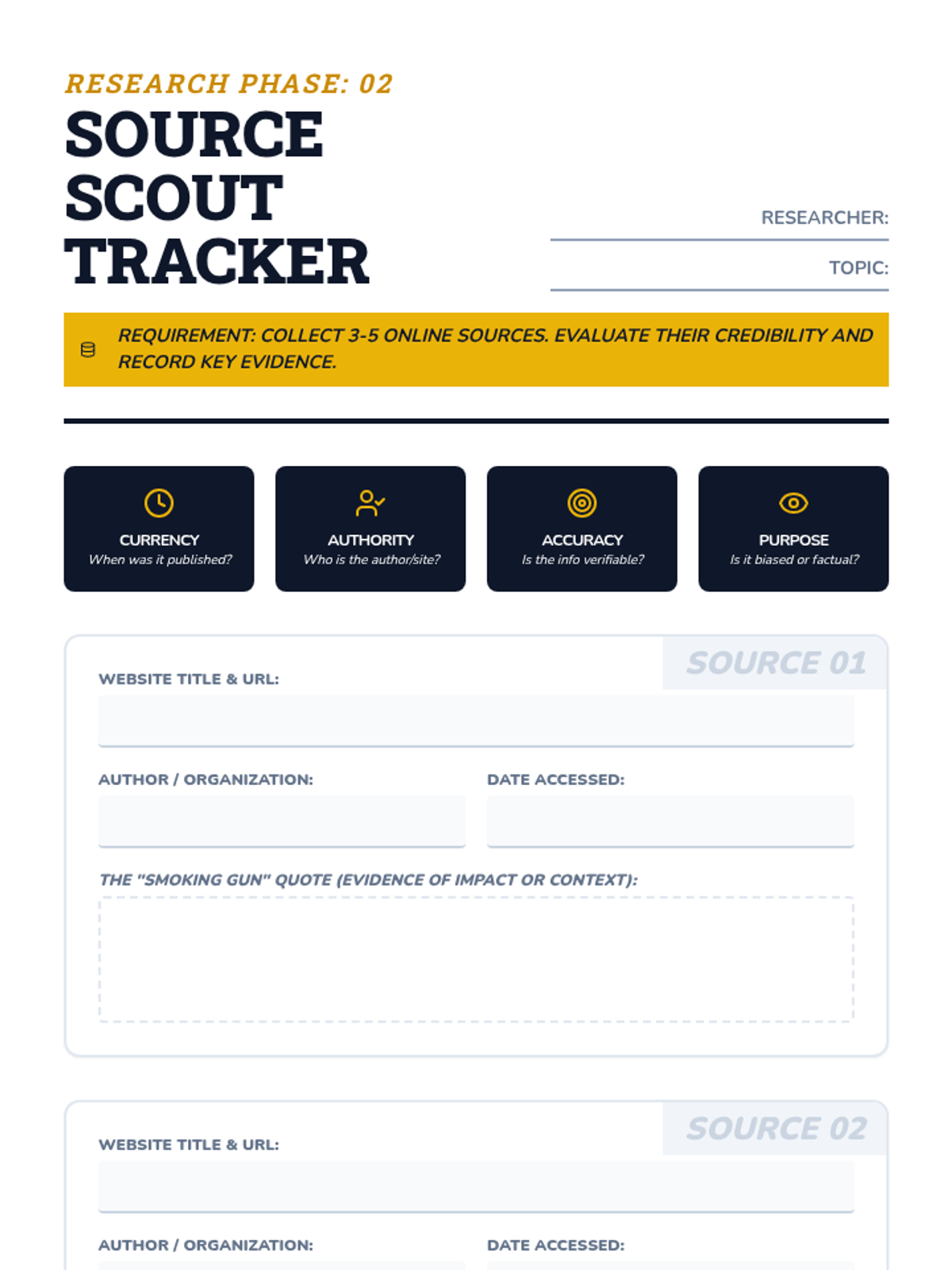
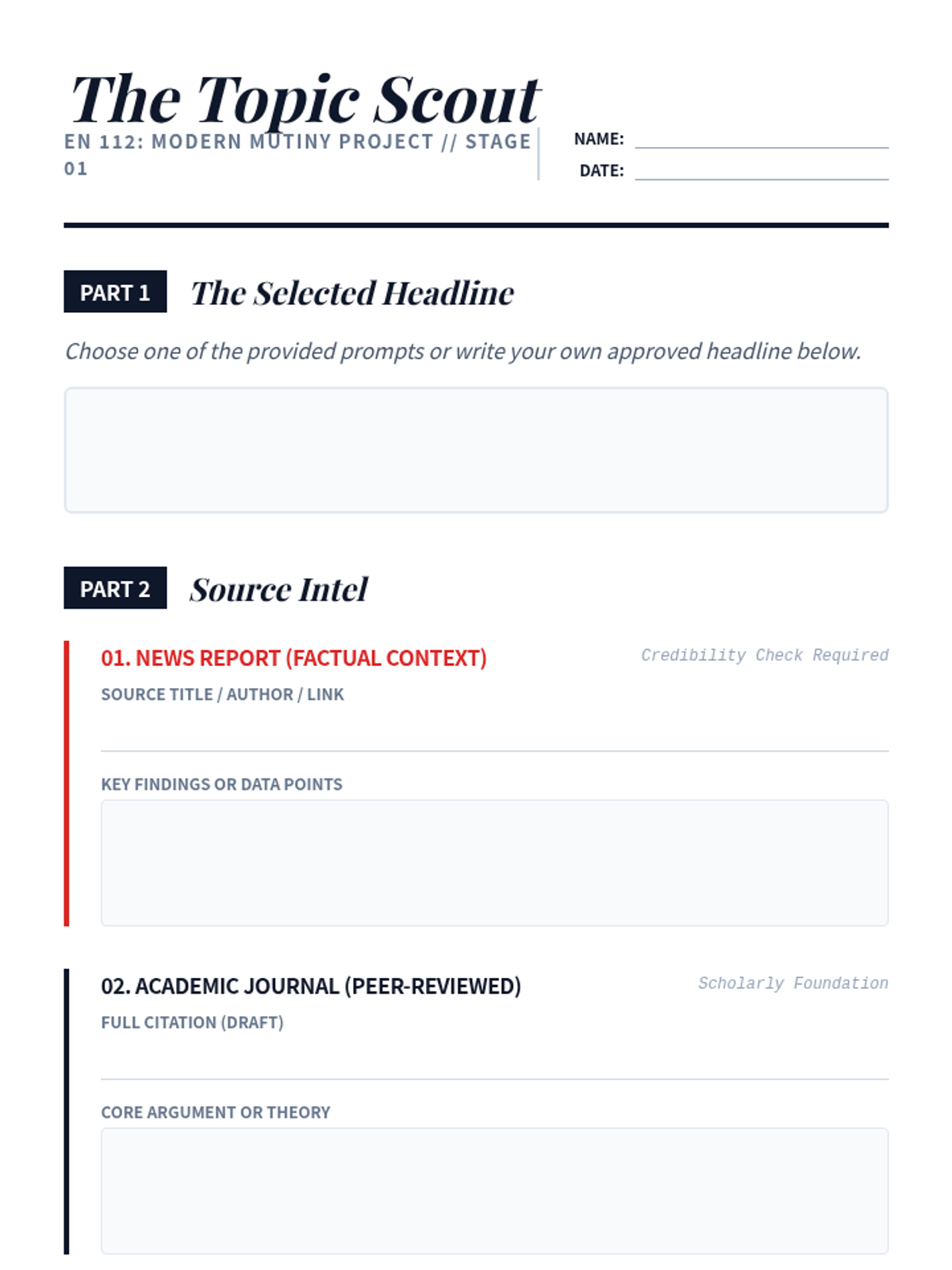
Students explore contemporary news cycles, select a controversial topic, and perform initial source evaluation. Includes argumentative prompts and a research log.
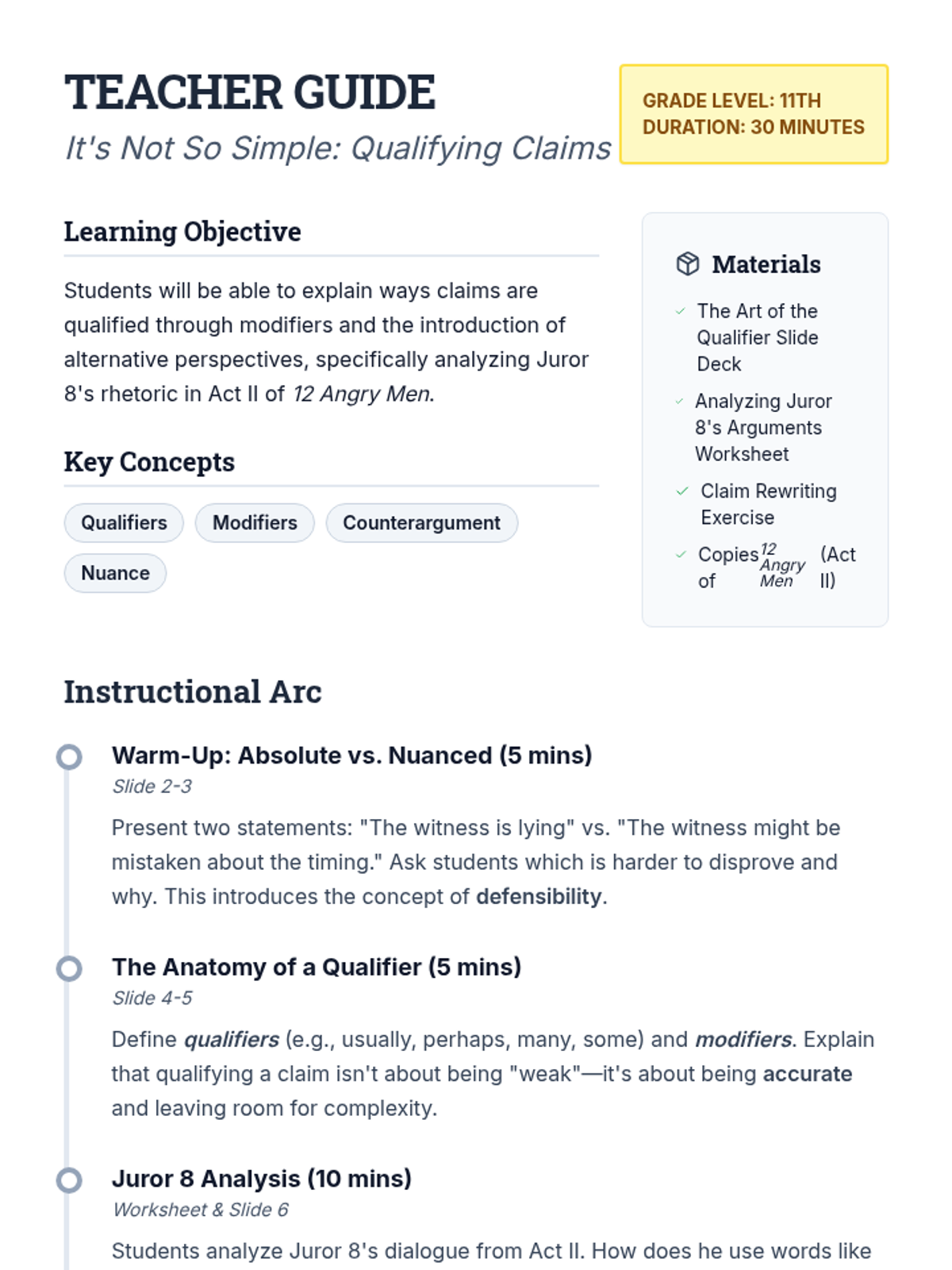
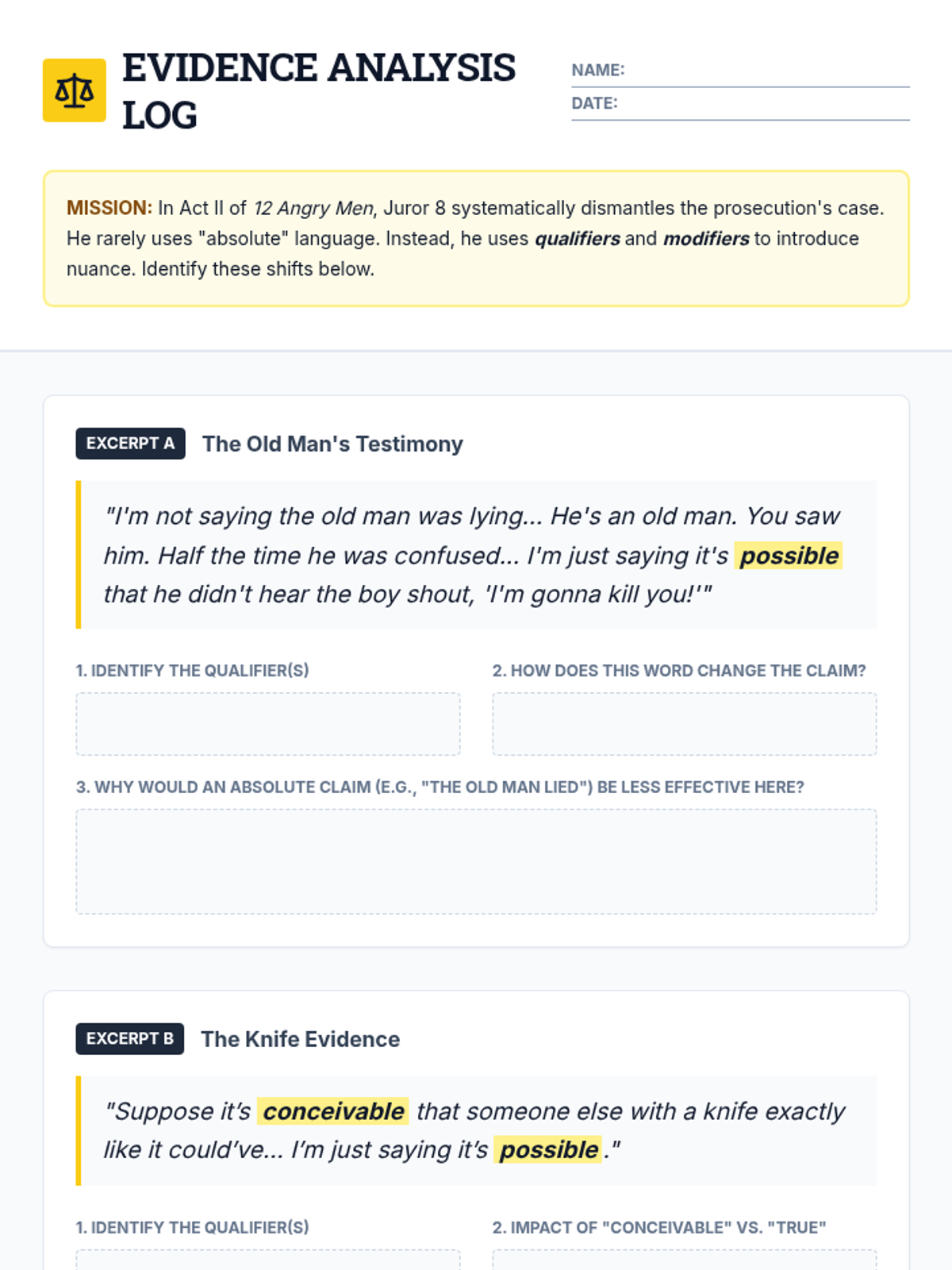
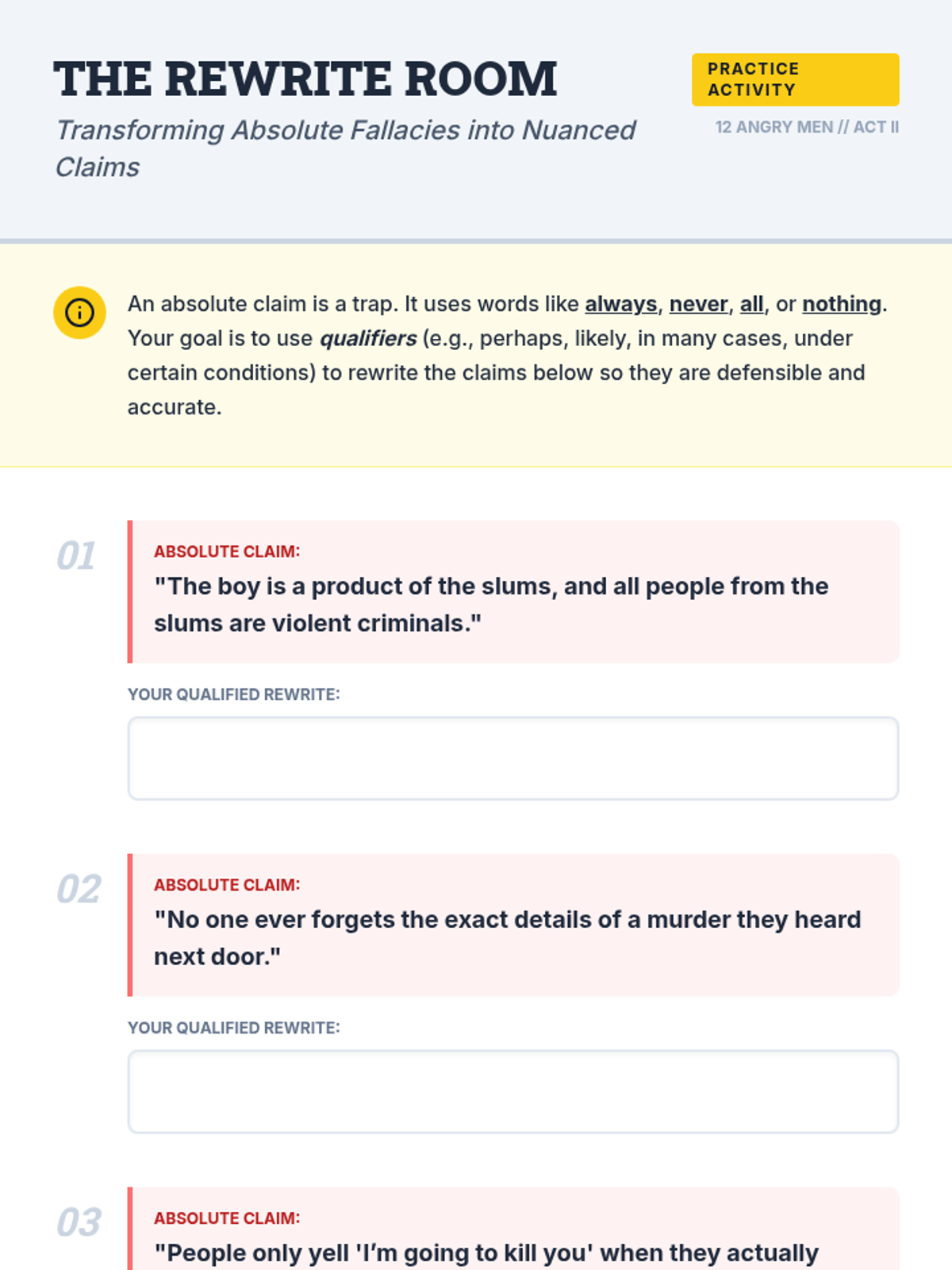
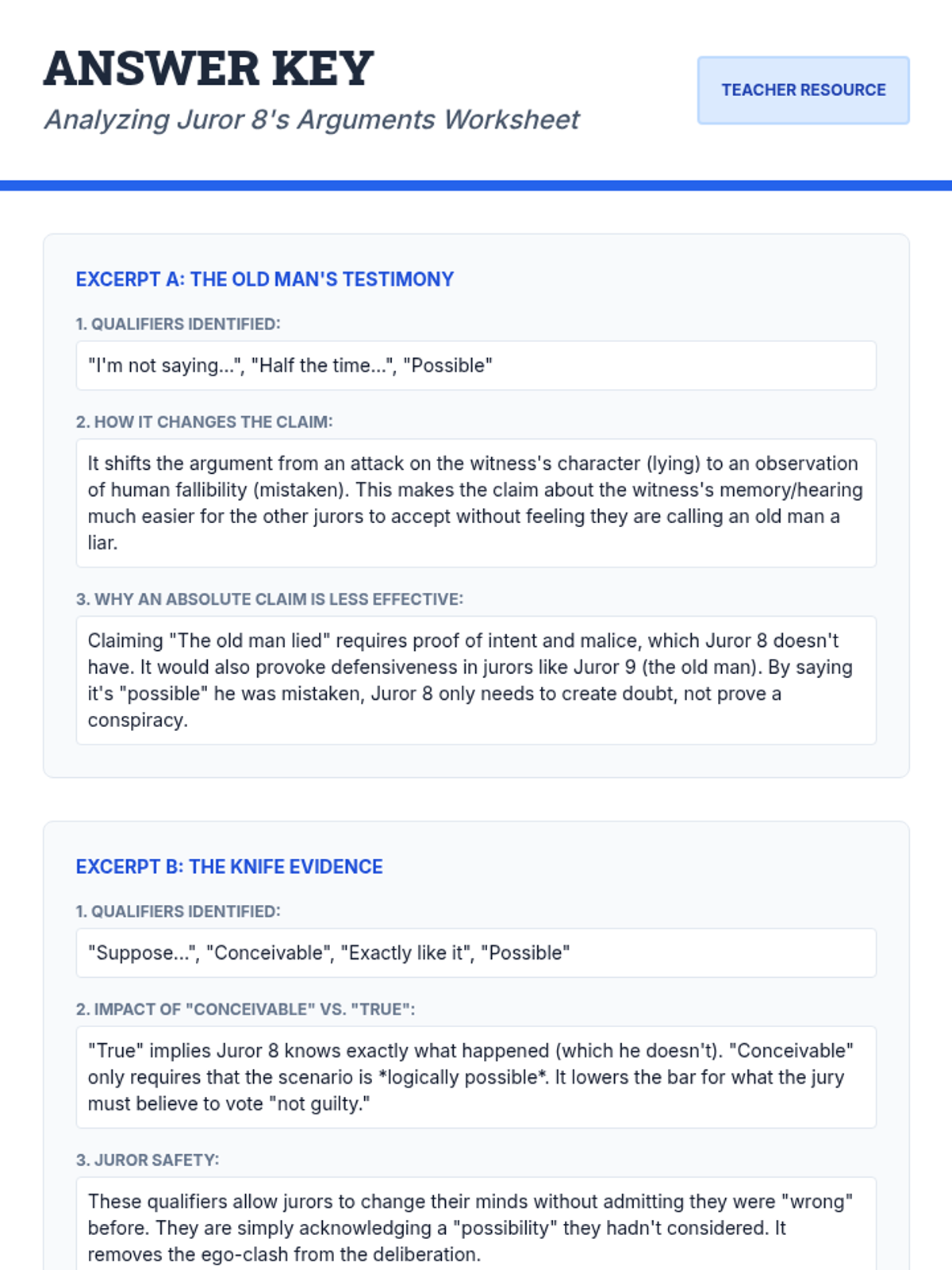
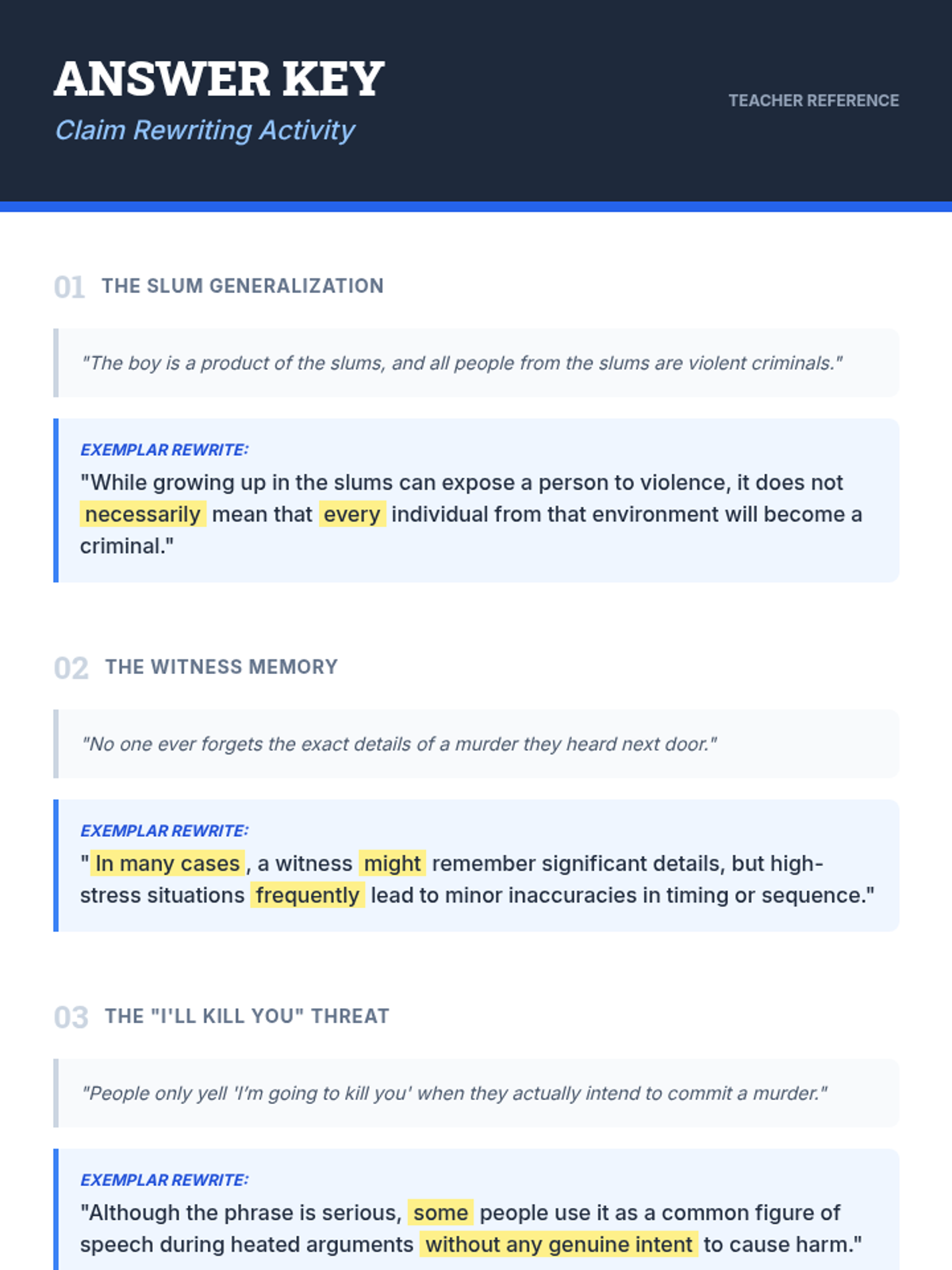
A high-school level exploration of how to use qualifiers and modifiers to create nuanced arguments, using Juror 8's rhetoric in 12 Angry Men as a primary case study. Students learn to move beyond absolute claims to build more persuasive, credible arguments.
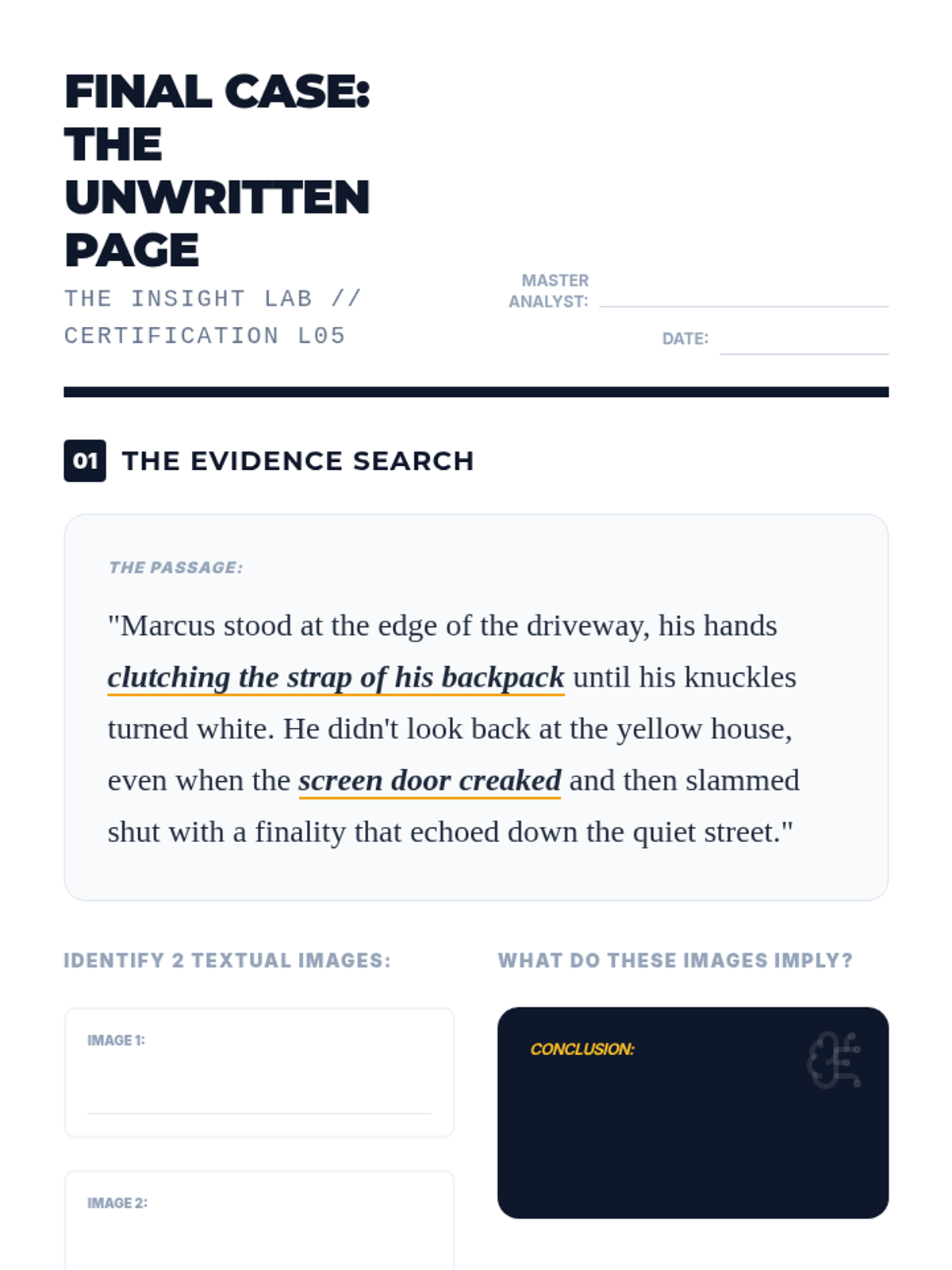
Students apply the 'Observation + Knowledge = Inference' formula to purely textual passages, identifying 'textual images' and their implications.
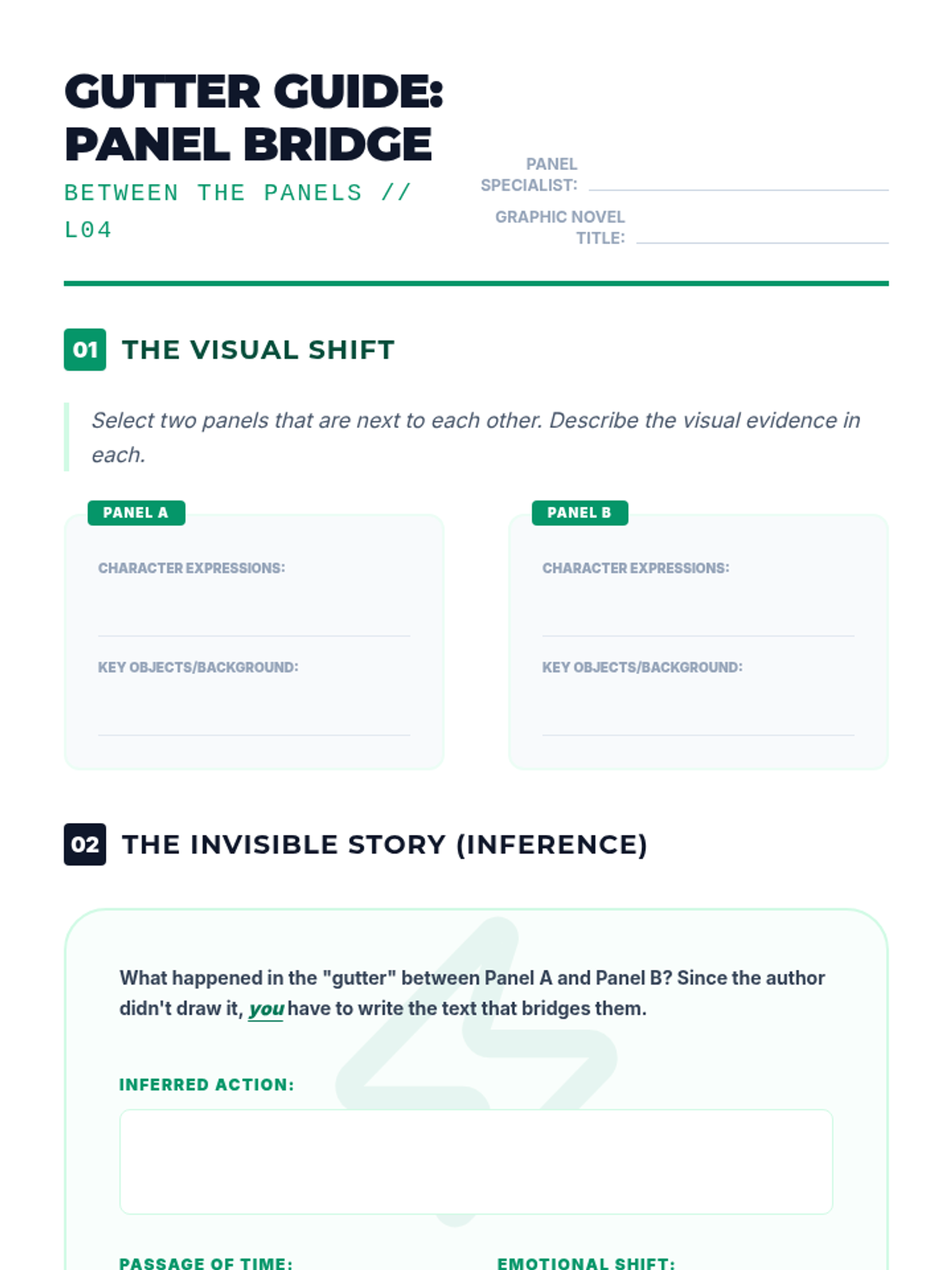
Students use graphic novels to bridge the gap between visual and textual inference, focusing on the meaning created in the 'gutters' between panels.
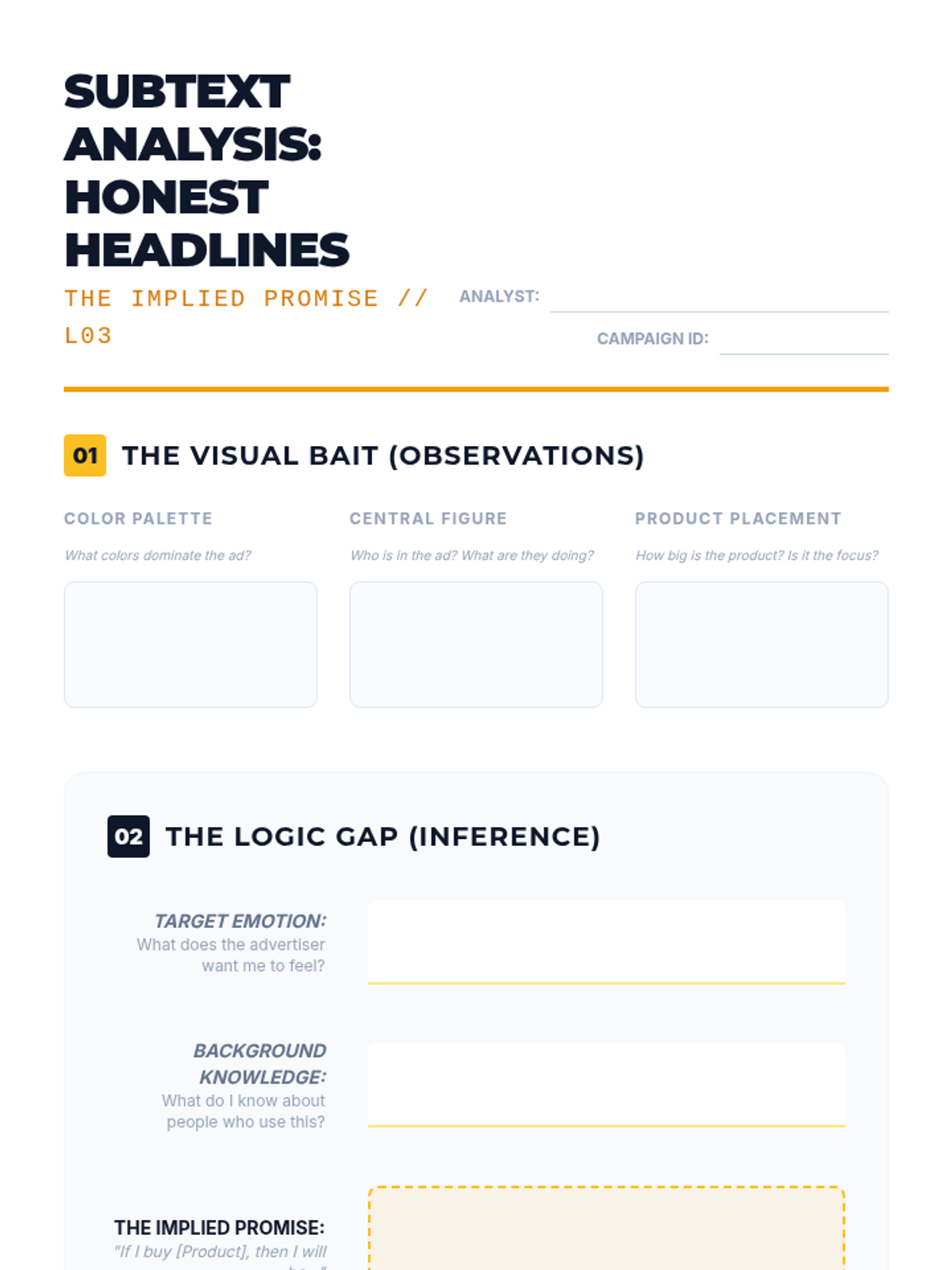
Students deconstruct the implied promises of advertisements, identifying how visual cues create persuasive subtext without explicit statements.
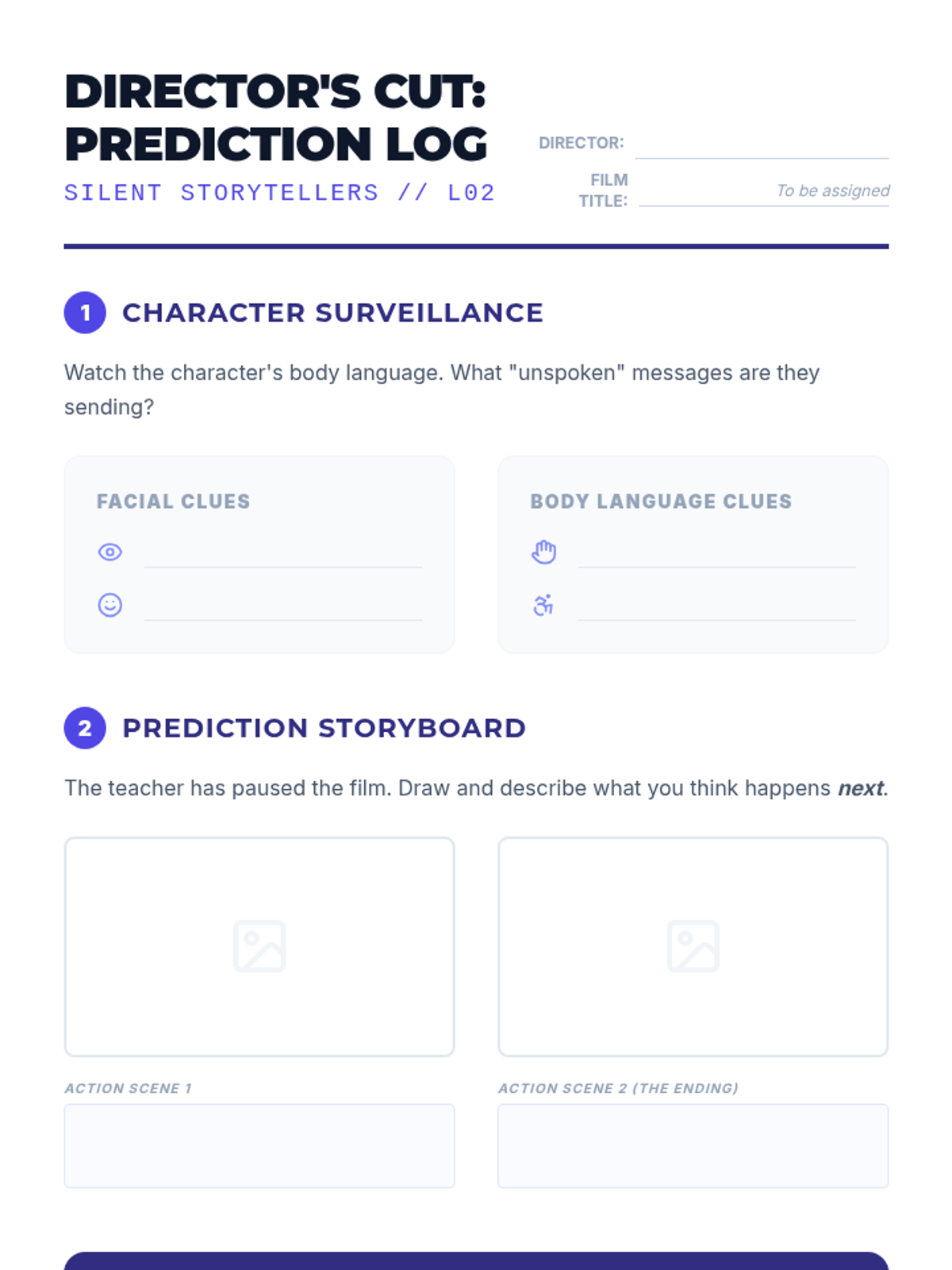
Students analyze silent films to predict narrative outcomes based on character body language, facial expressions, and environmental cues.
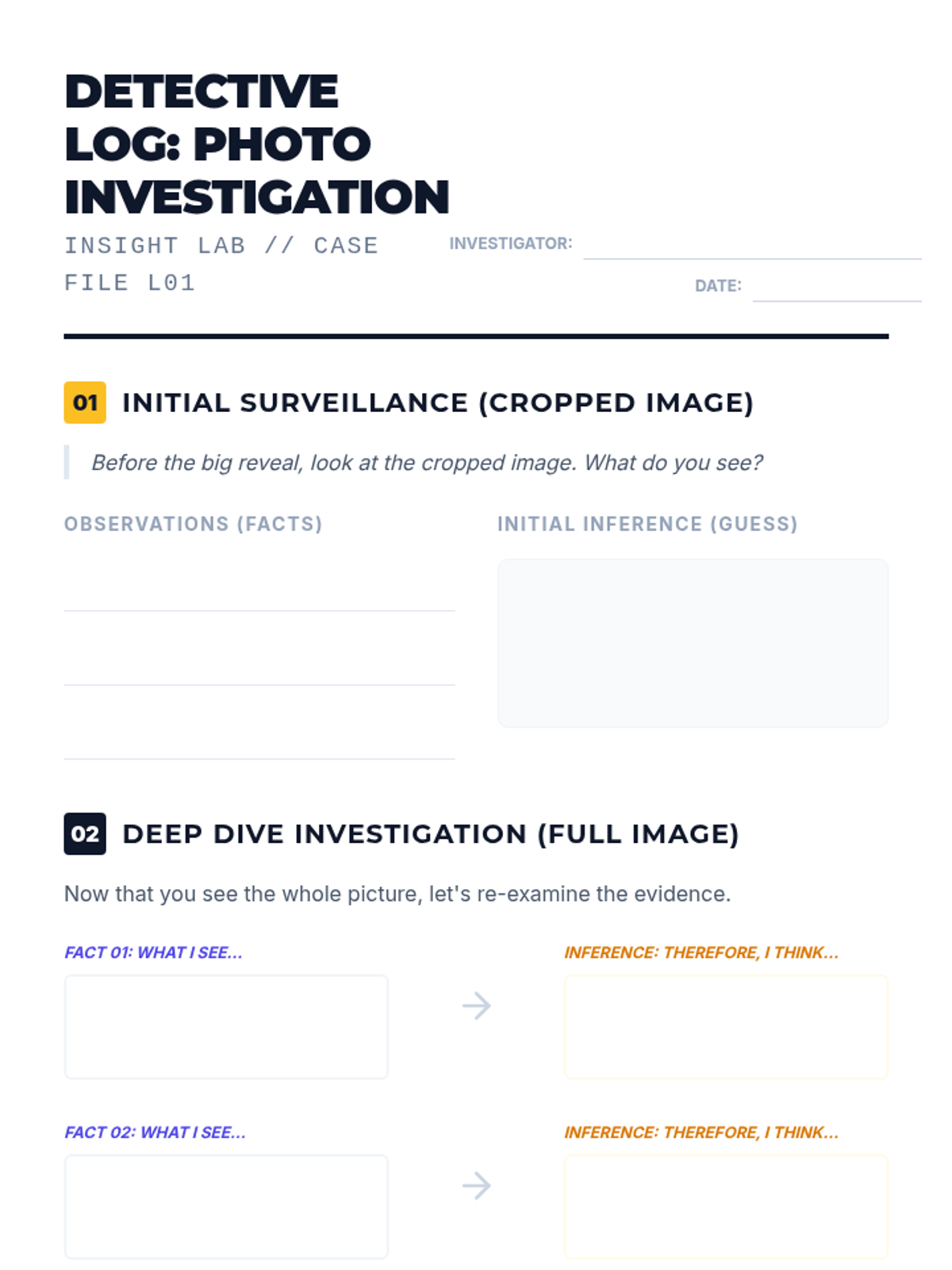
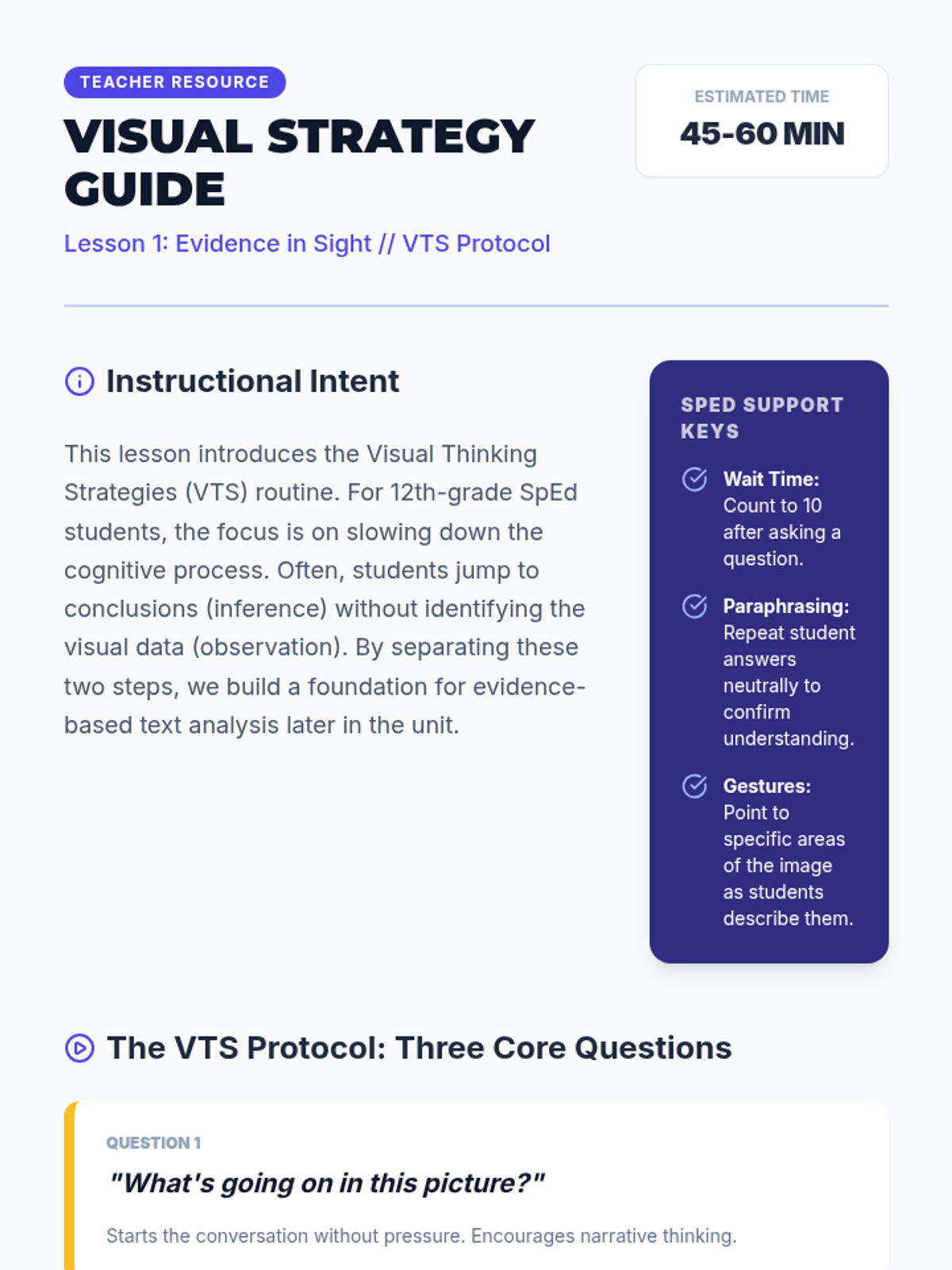
Students use Visual Thinking Strategies (VTS) to distinguish between objective observation and subjective inference using high-impact photography.