Systematic research, evidence evaluation, and logical reasoning skills for formal discourse. Equips speakers to organize persuasive arguments, identify fallacies, and execute strategic impact calculus during competitive engagement.
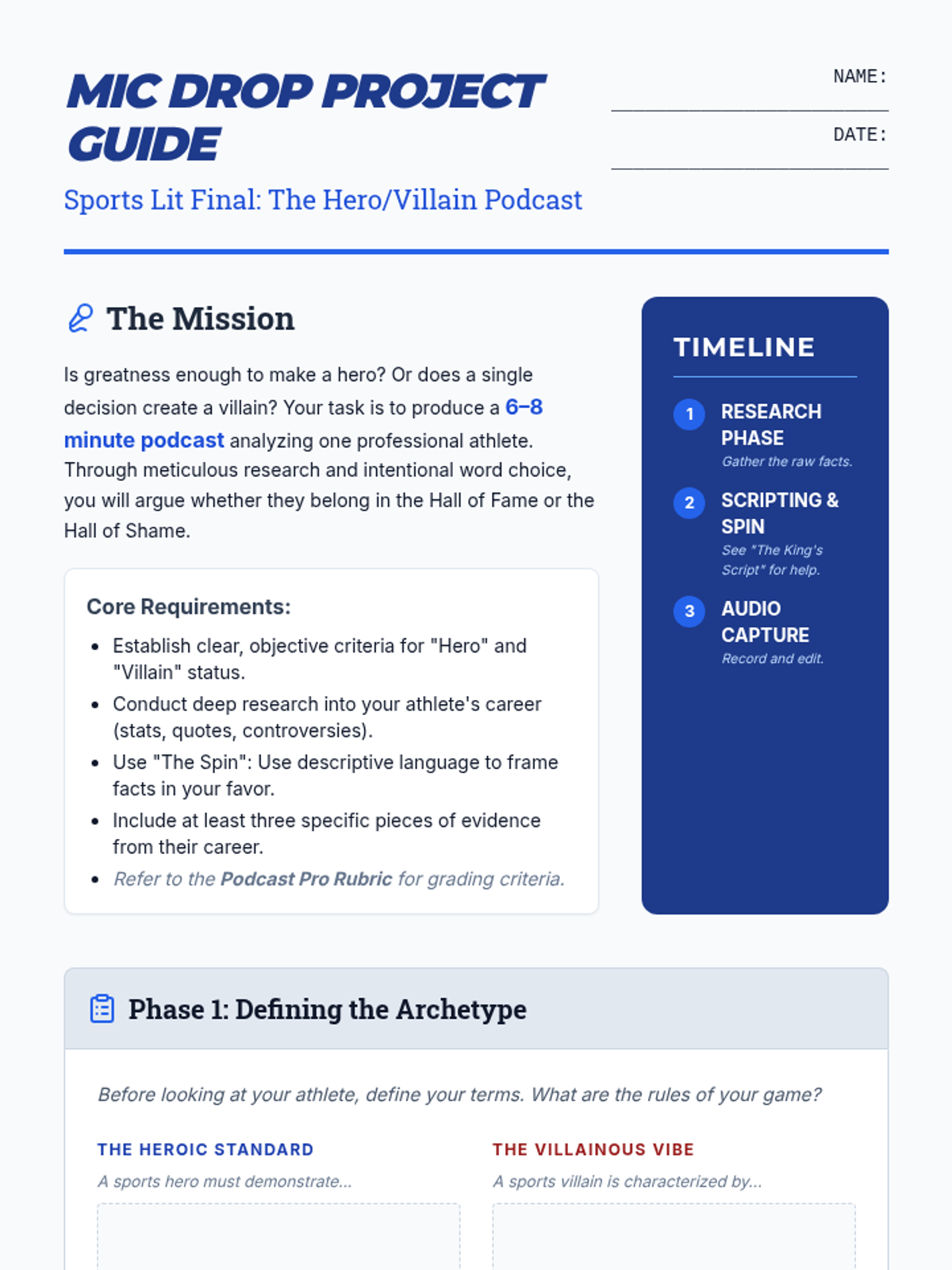
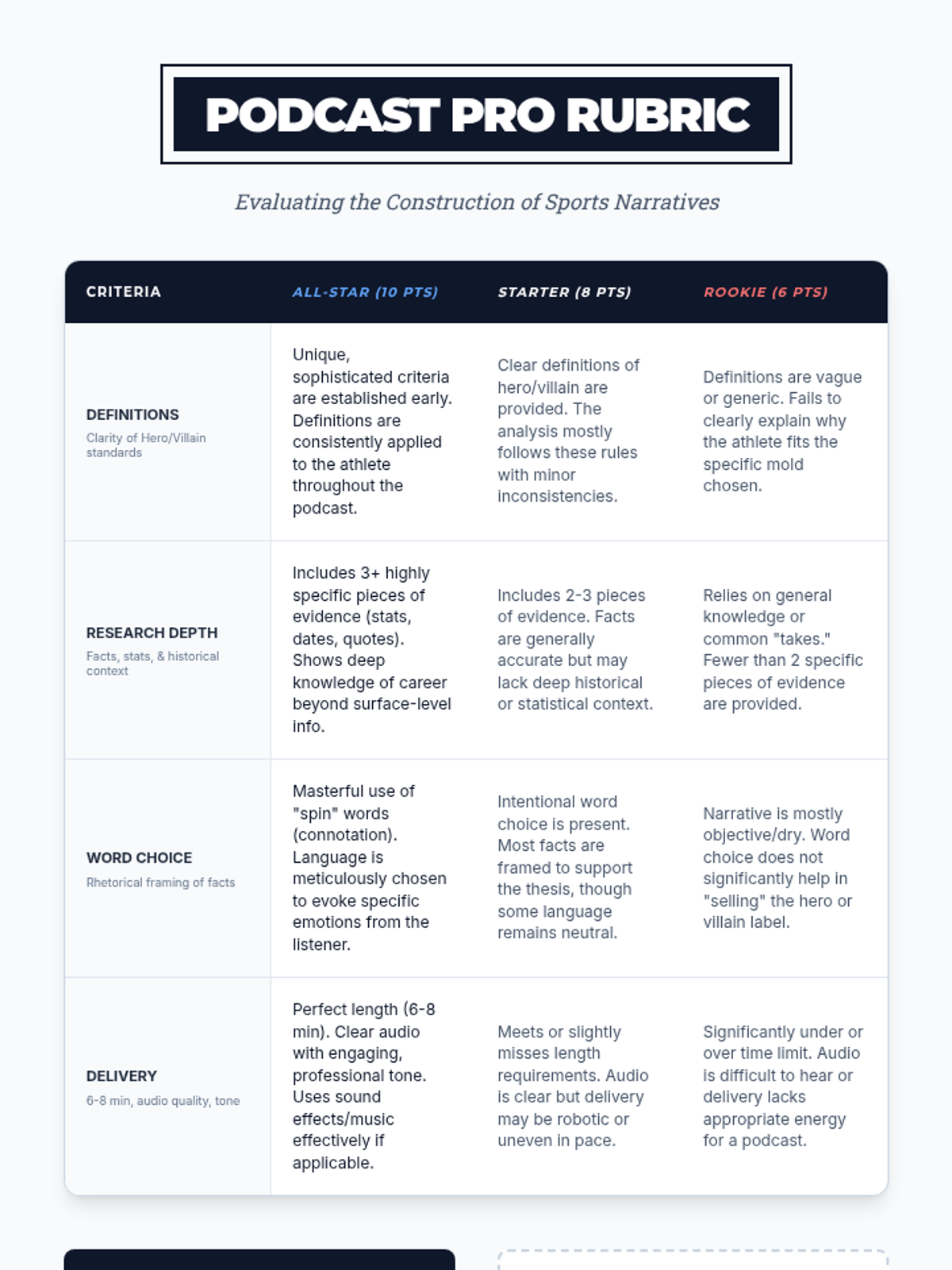
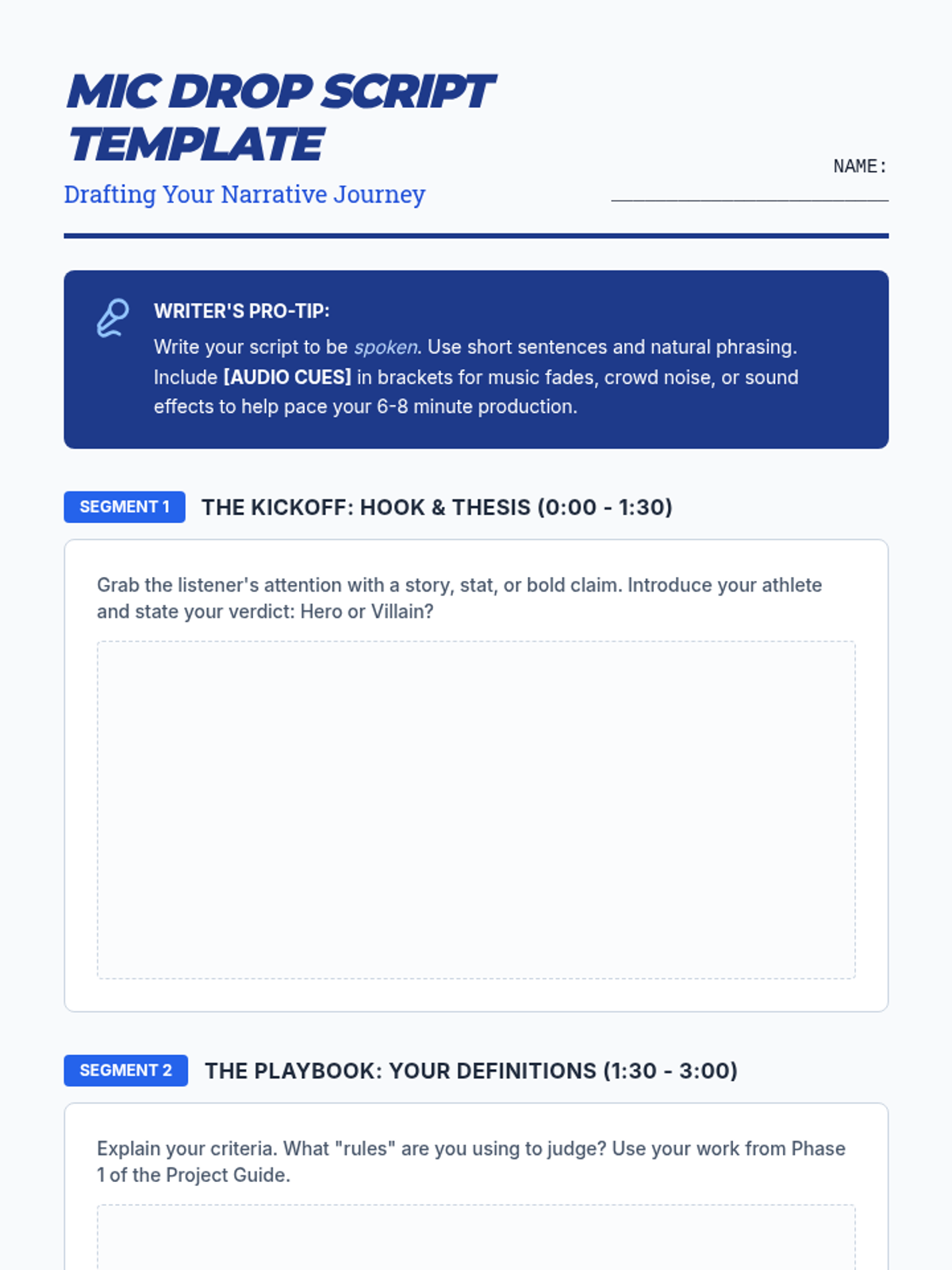
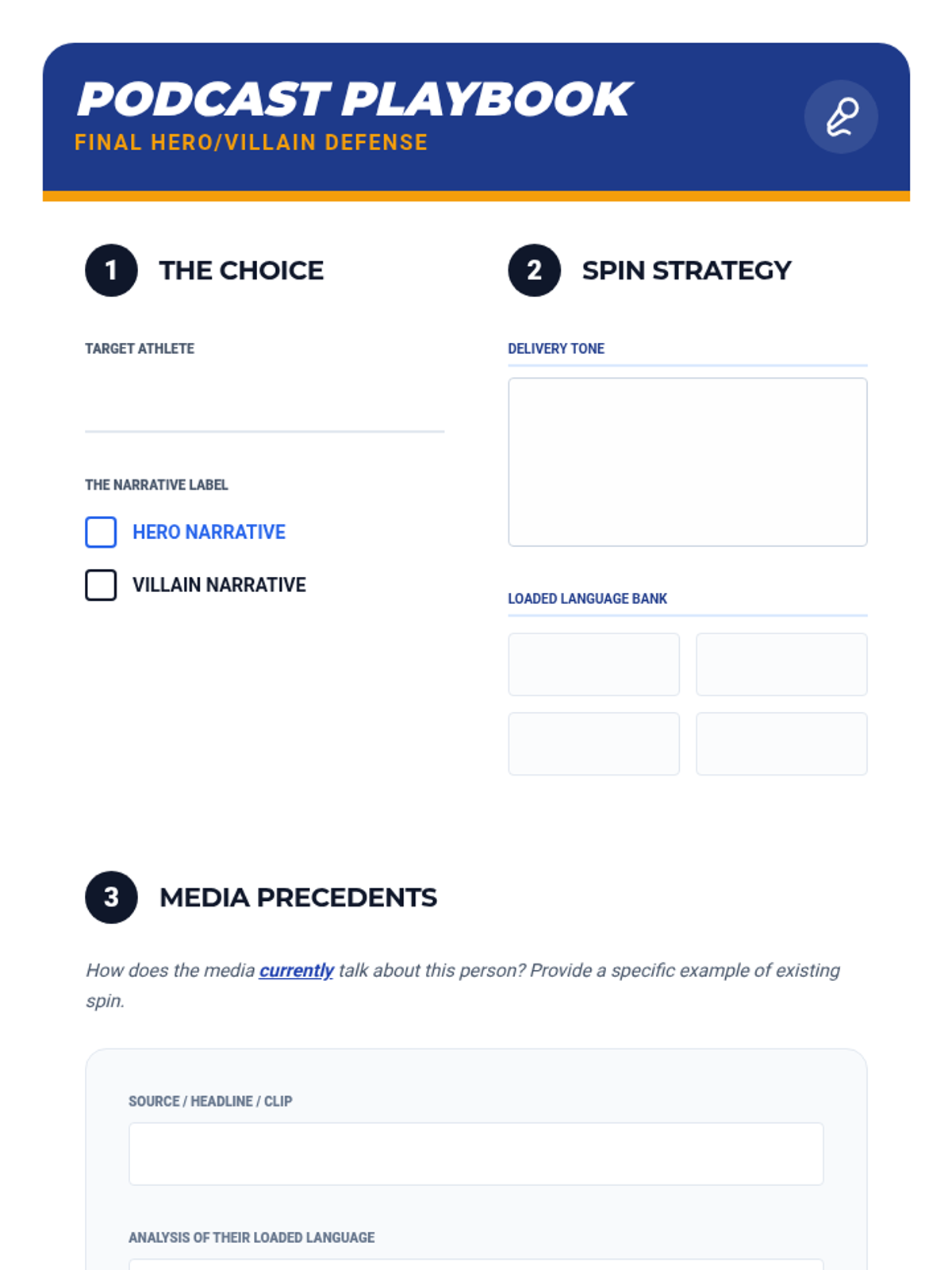
Students design and record a podcast that analyzes a chosen athlete through the lens of hero or villain narratives, utilizing specific criteria and rhetorical spin.
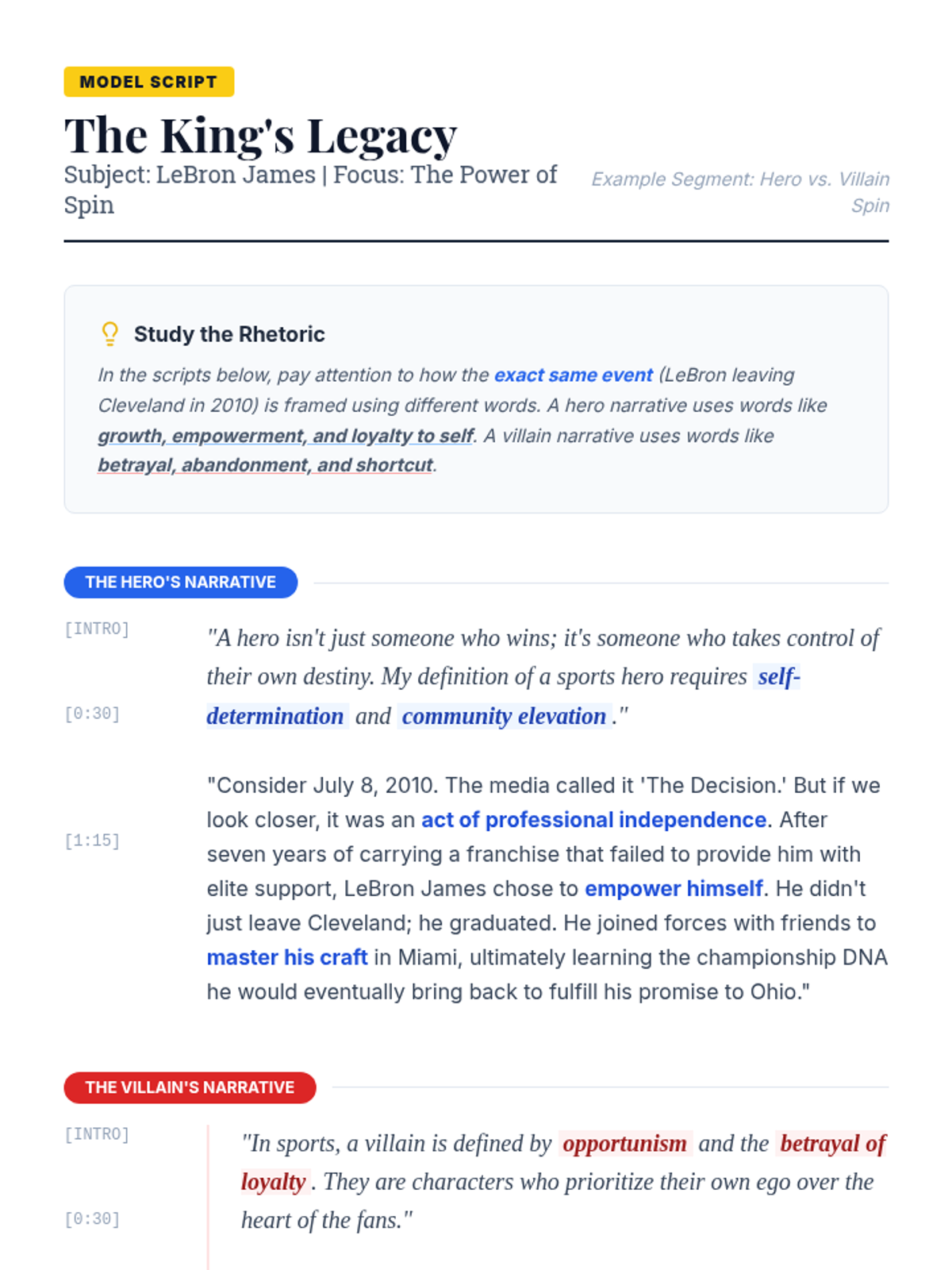
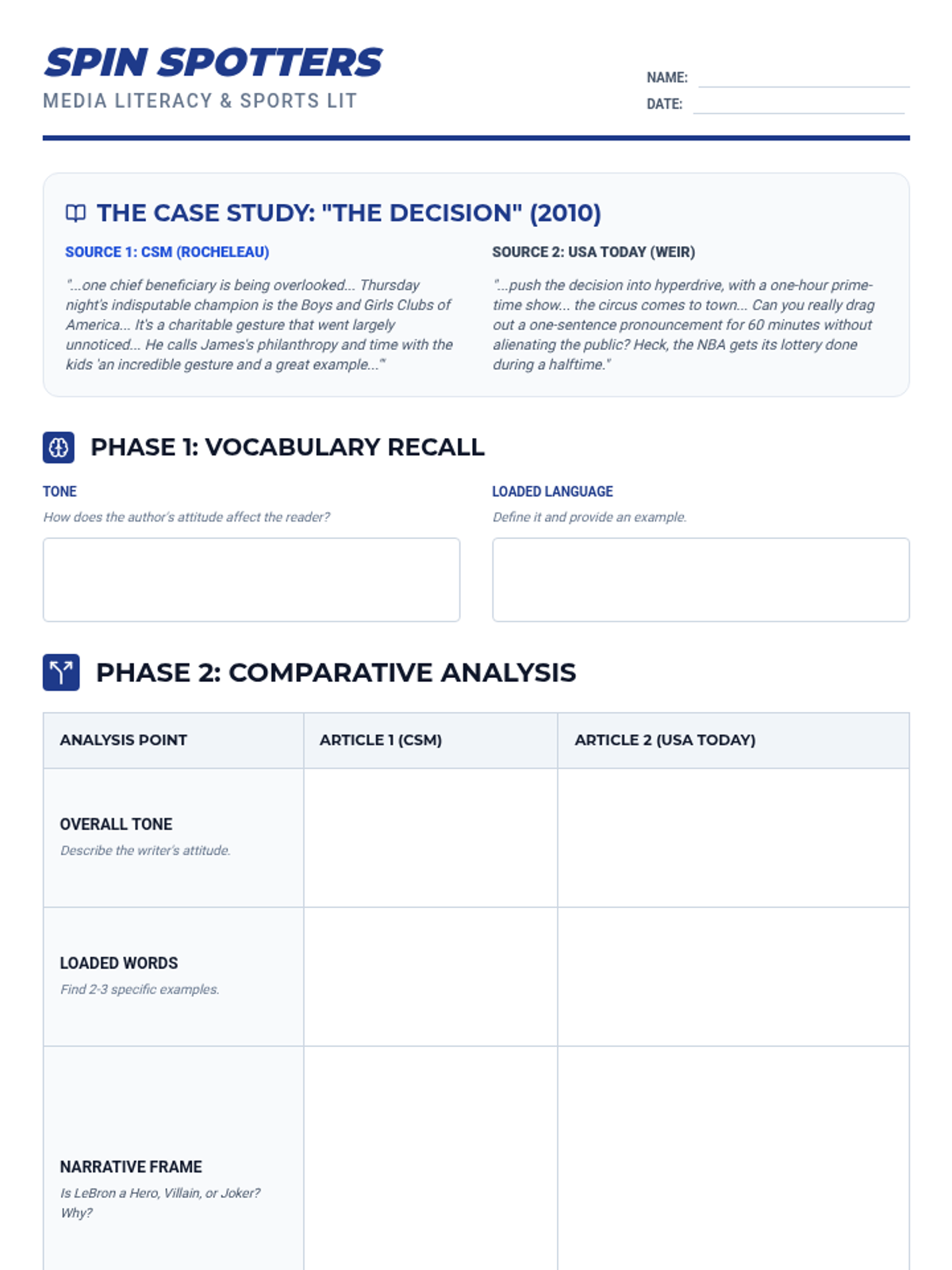
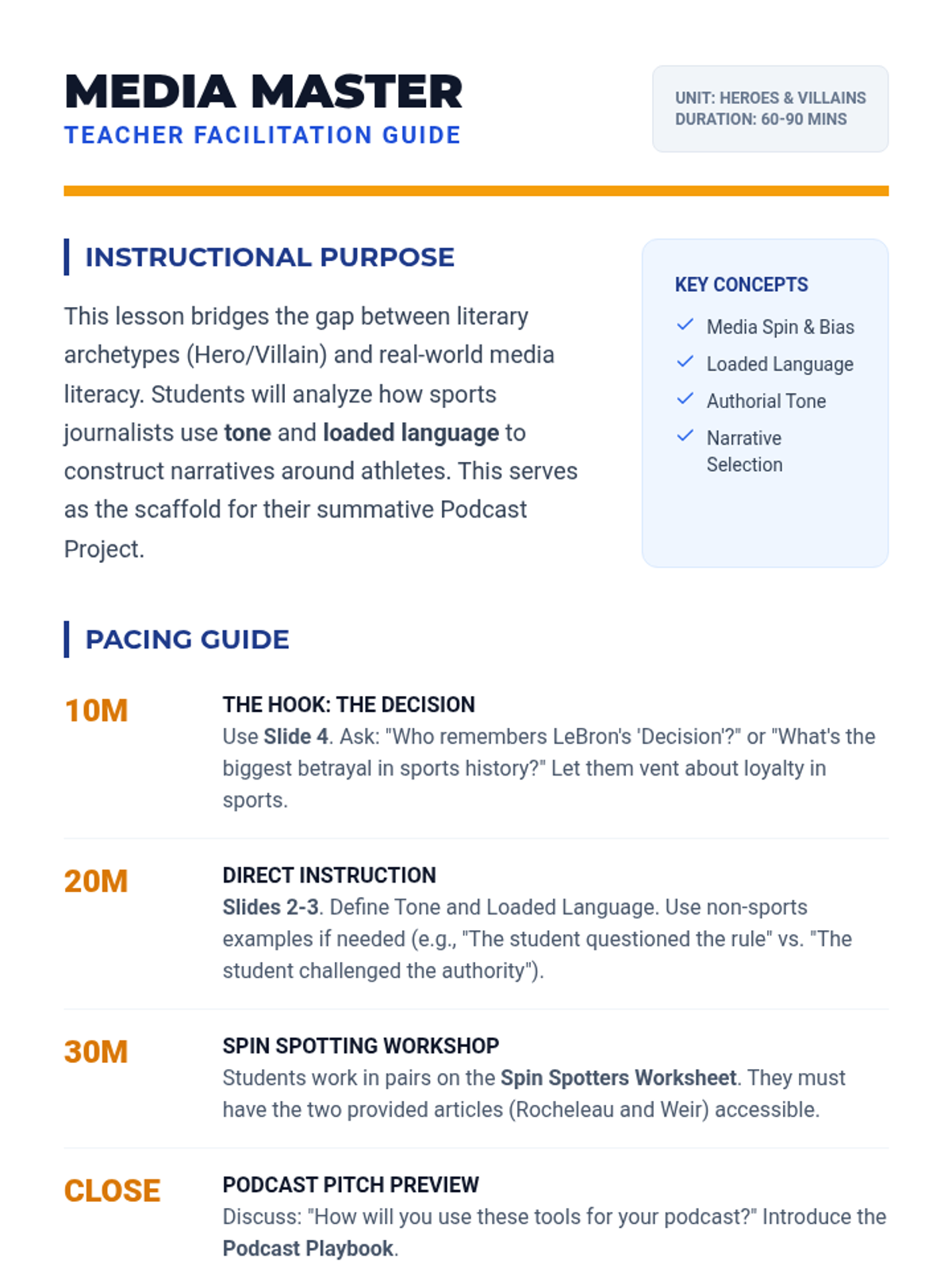
A lesson exploring media spin, tone, and loaded language in sports journalism, using LeBron James's 'The Decision' as a case study to help students prepare for their hero/villain podcast project.
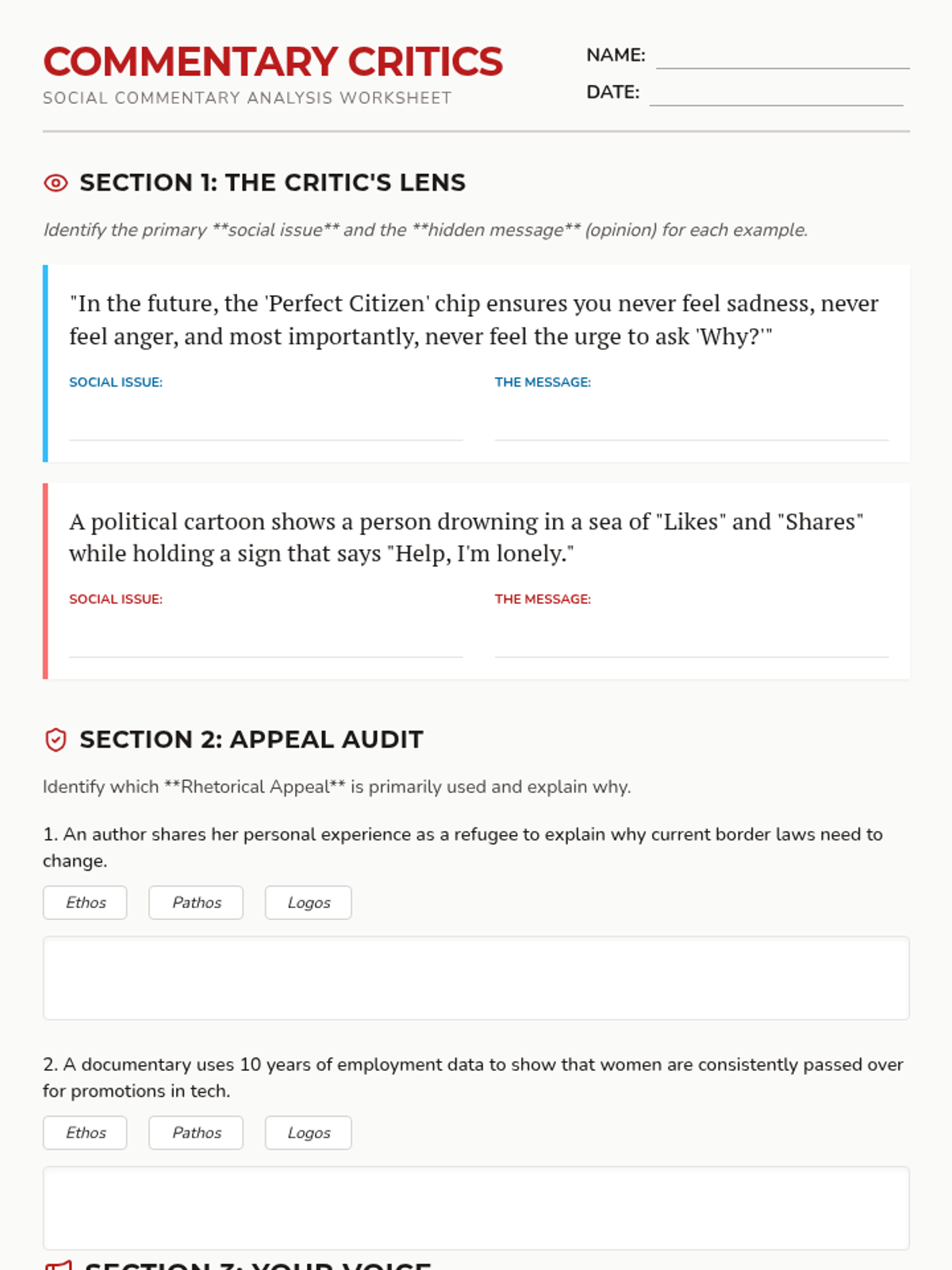
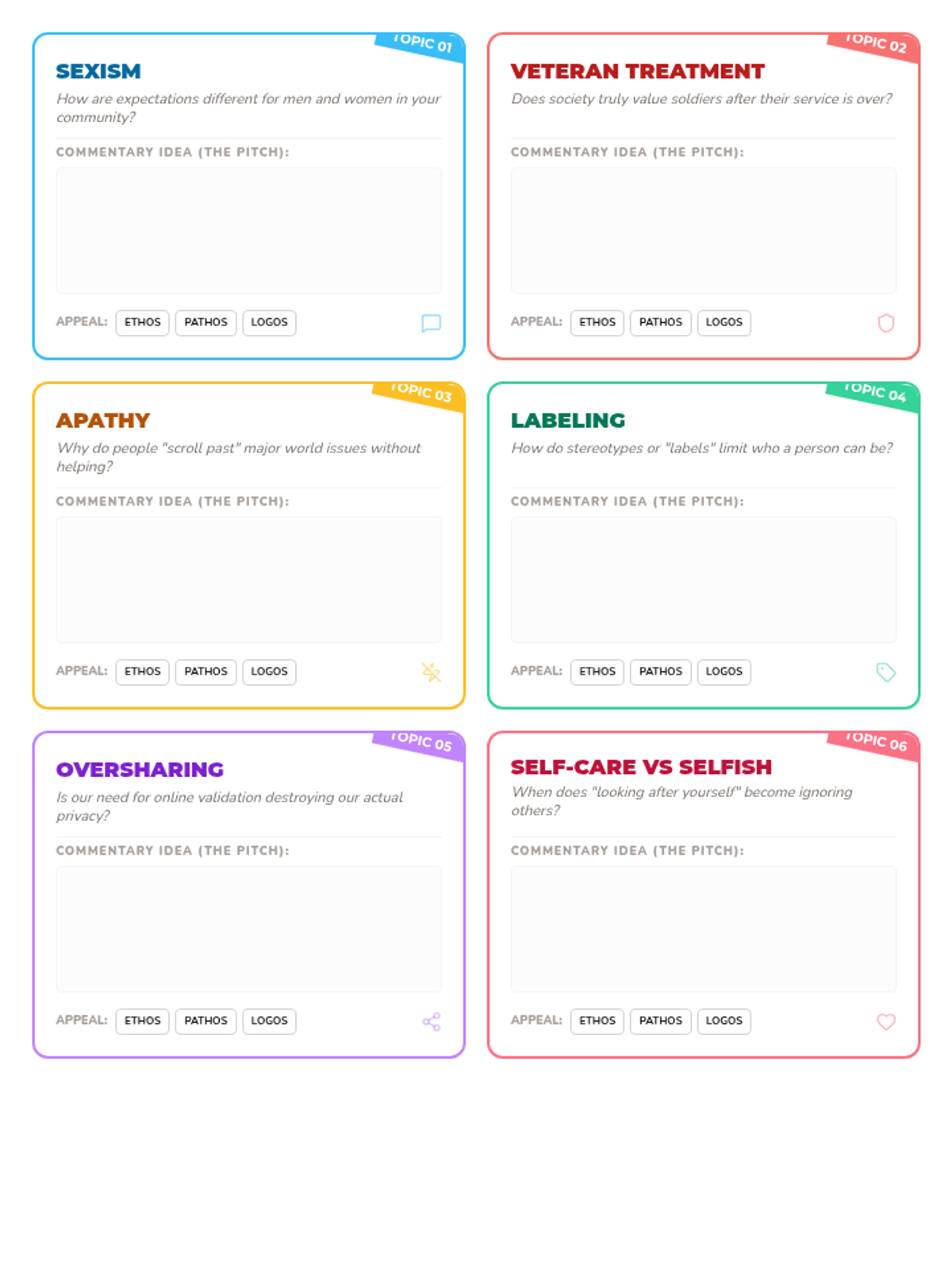
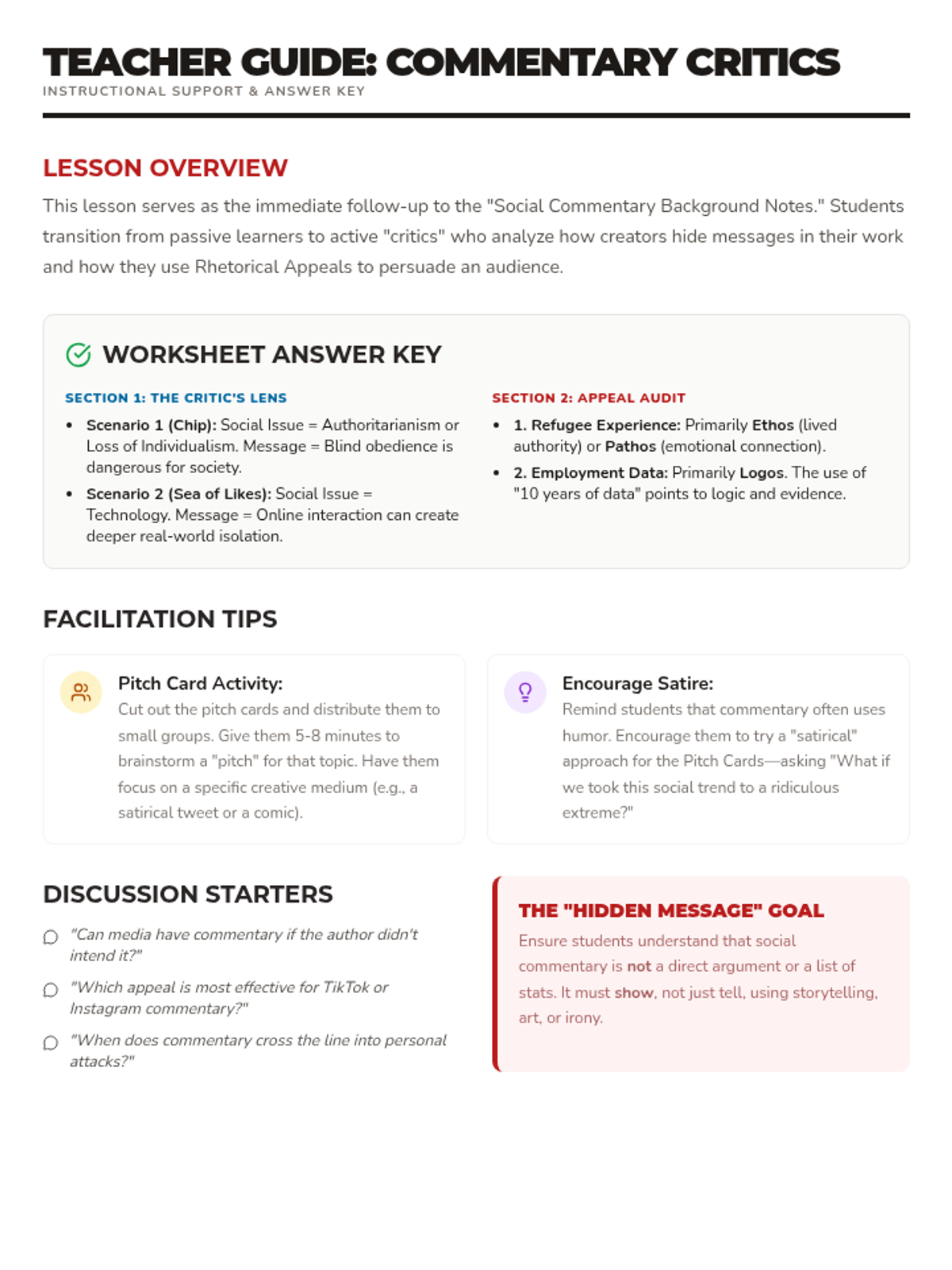
A follow-up lesson to 'Social Commentary Background Notes' where students analyze examples of social commentary and brainstorm their own creative messages using rhetorical appeals.
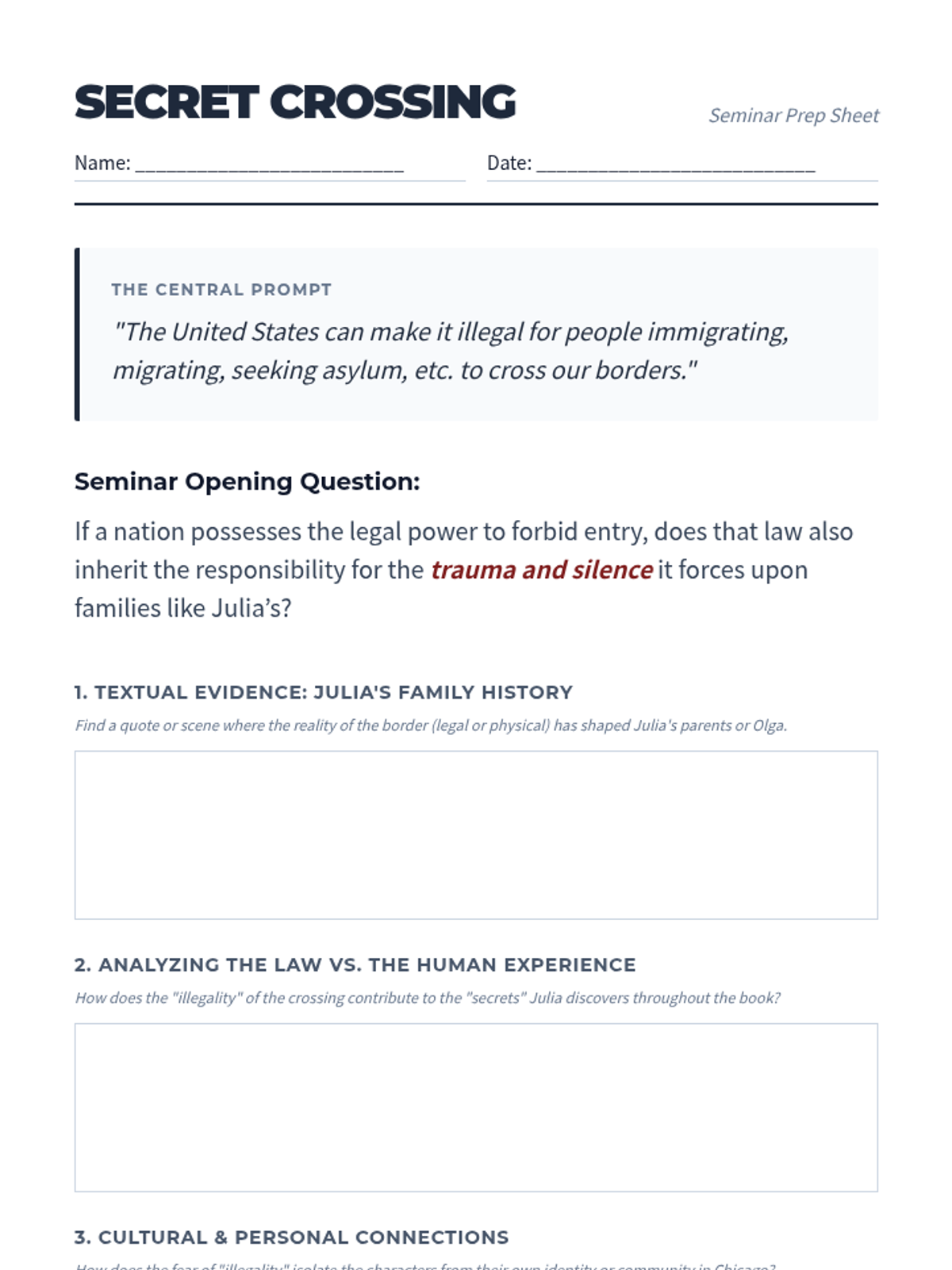
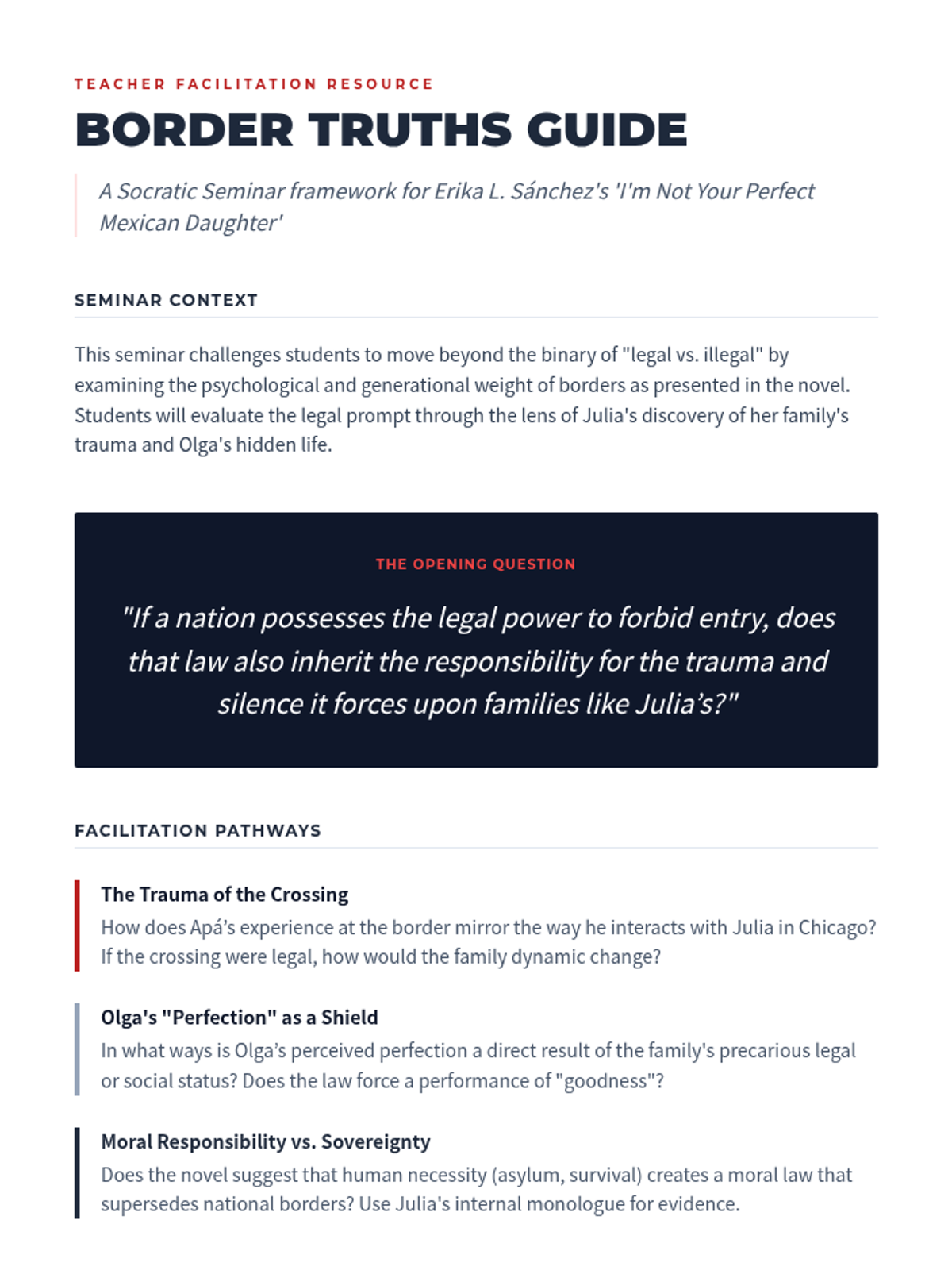
A formal Socratic Seminar centered on the novel 'I'm Not Your Perfect Mexican Daughter', focusing on the legality of borders versus the human cost of migration and family secrets.
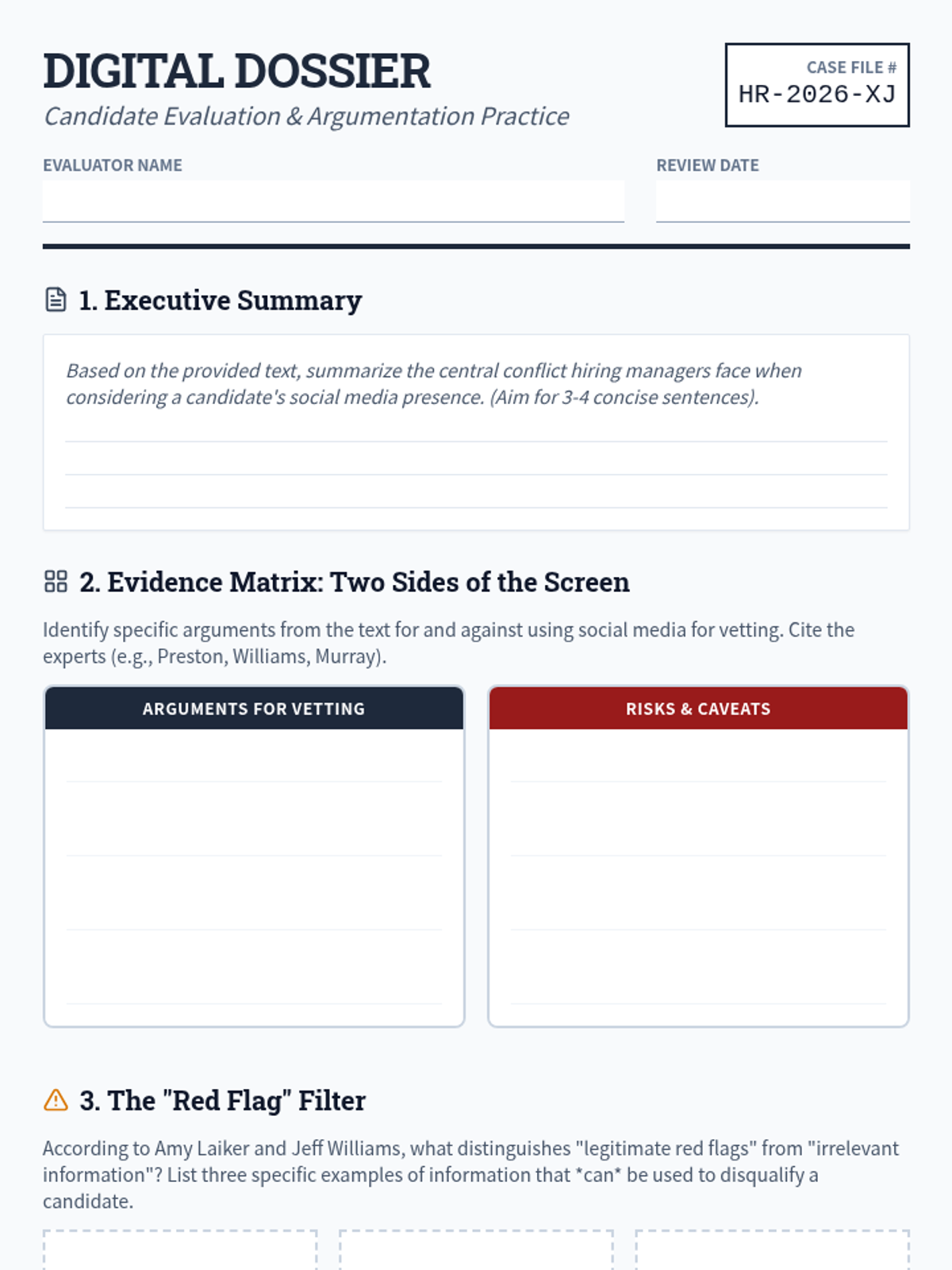
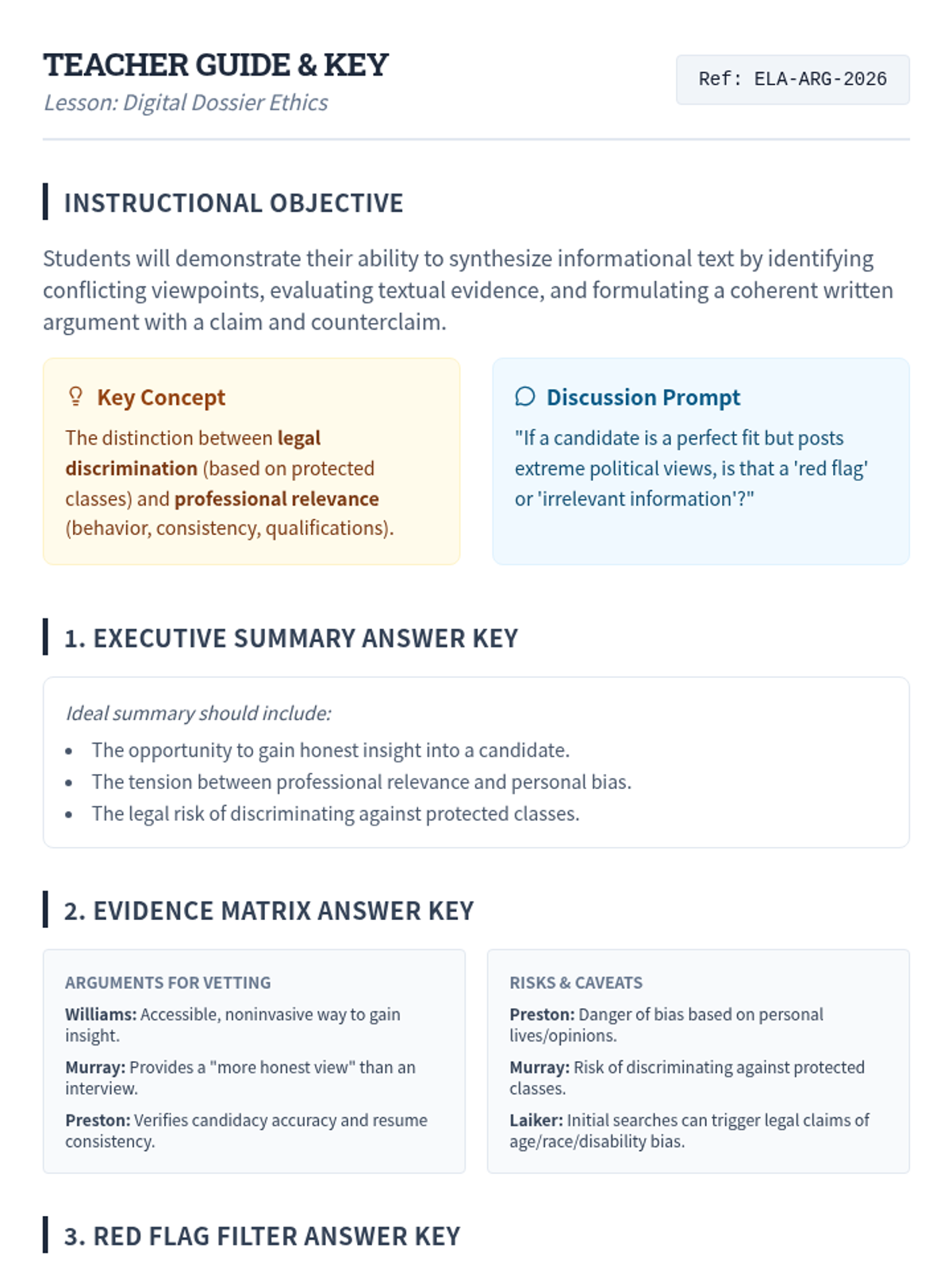
This lesson guides students through the complexities of using social media for job candidate vetting. Students will analyze expert testimony, identify legal risks, and construct a evidence-based argument on whether social media should influence hiring decisions.
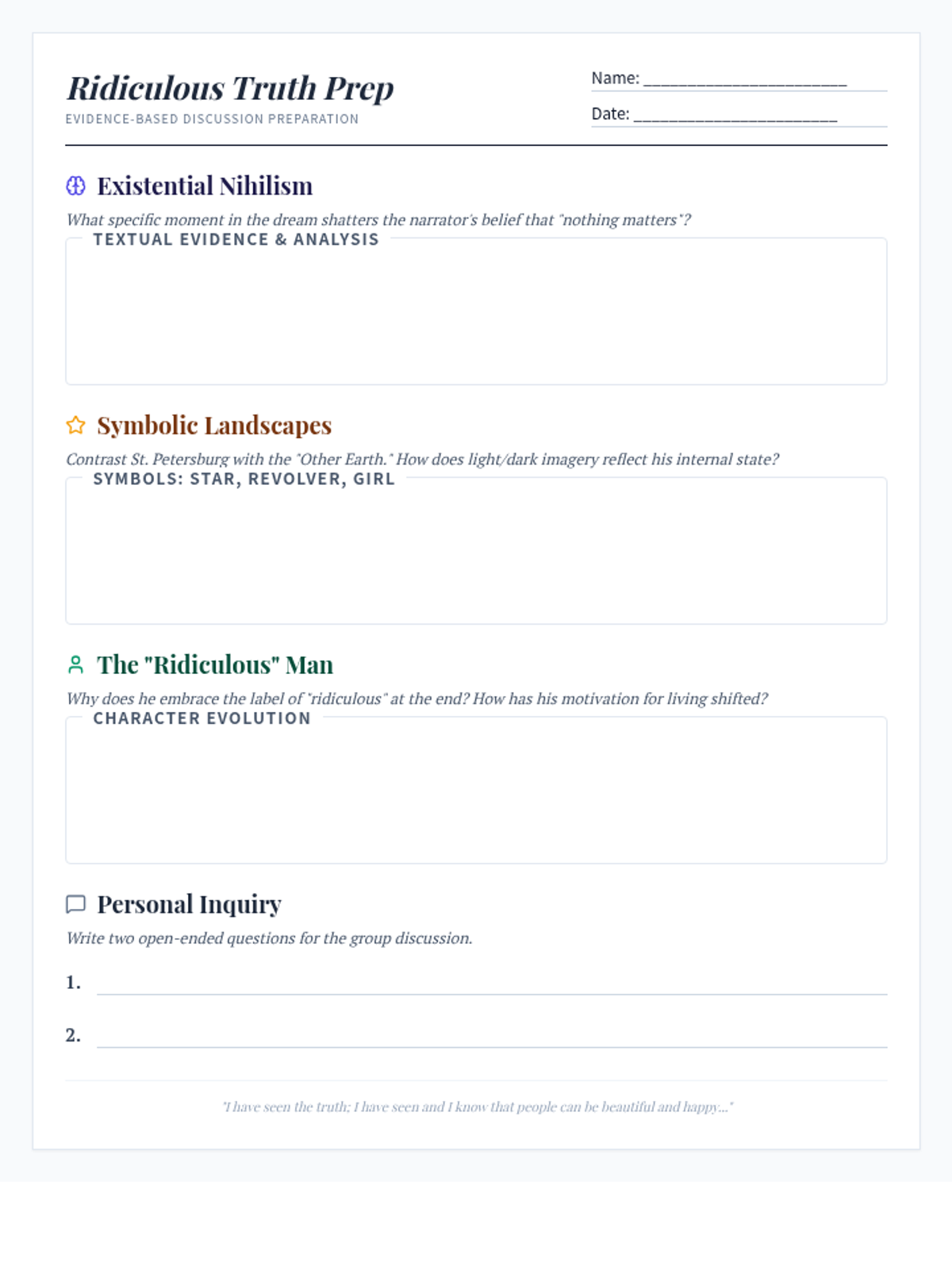
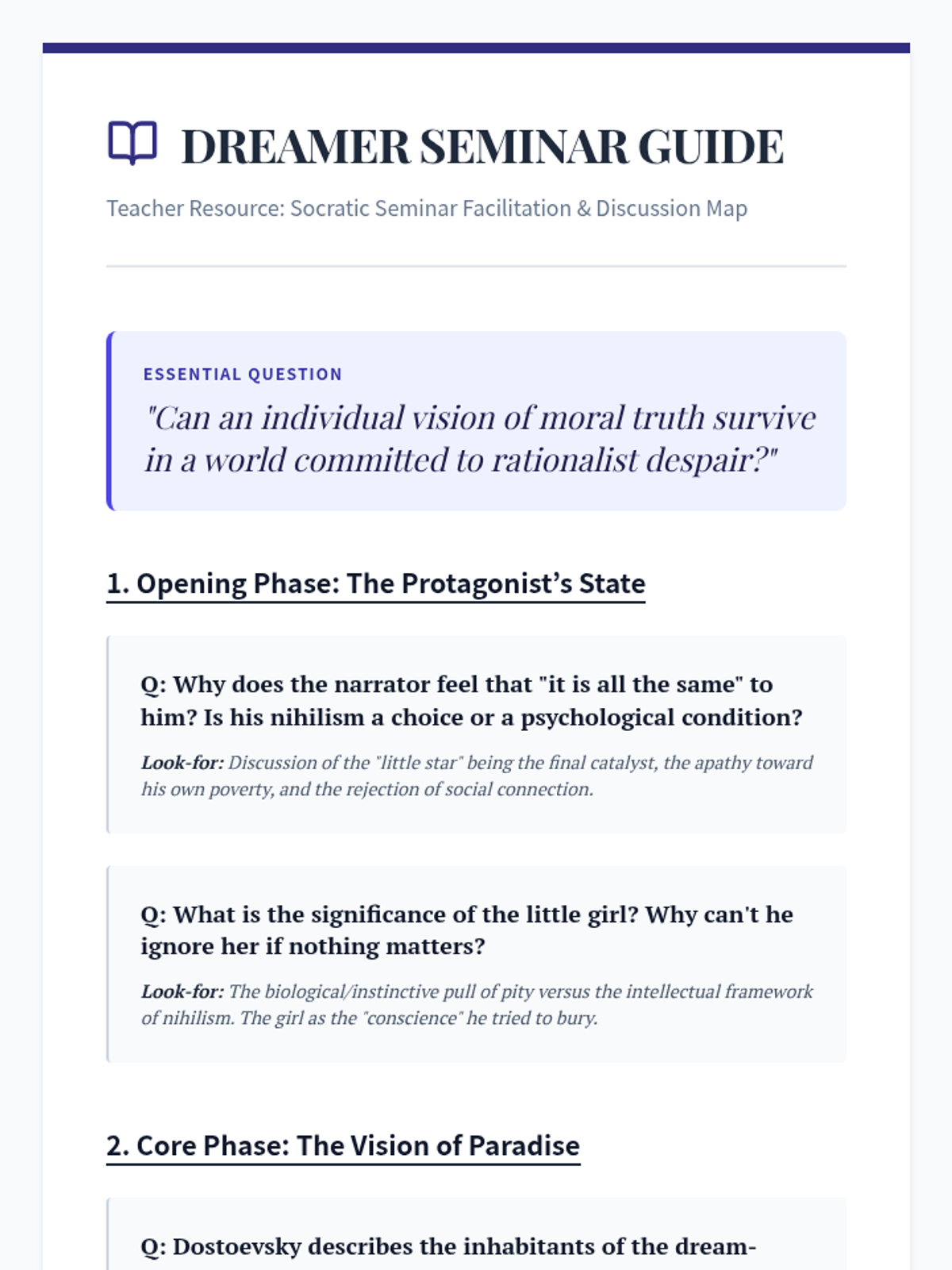
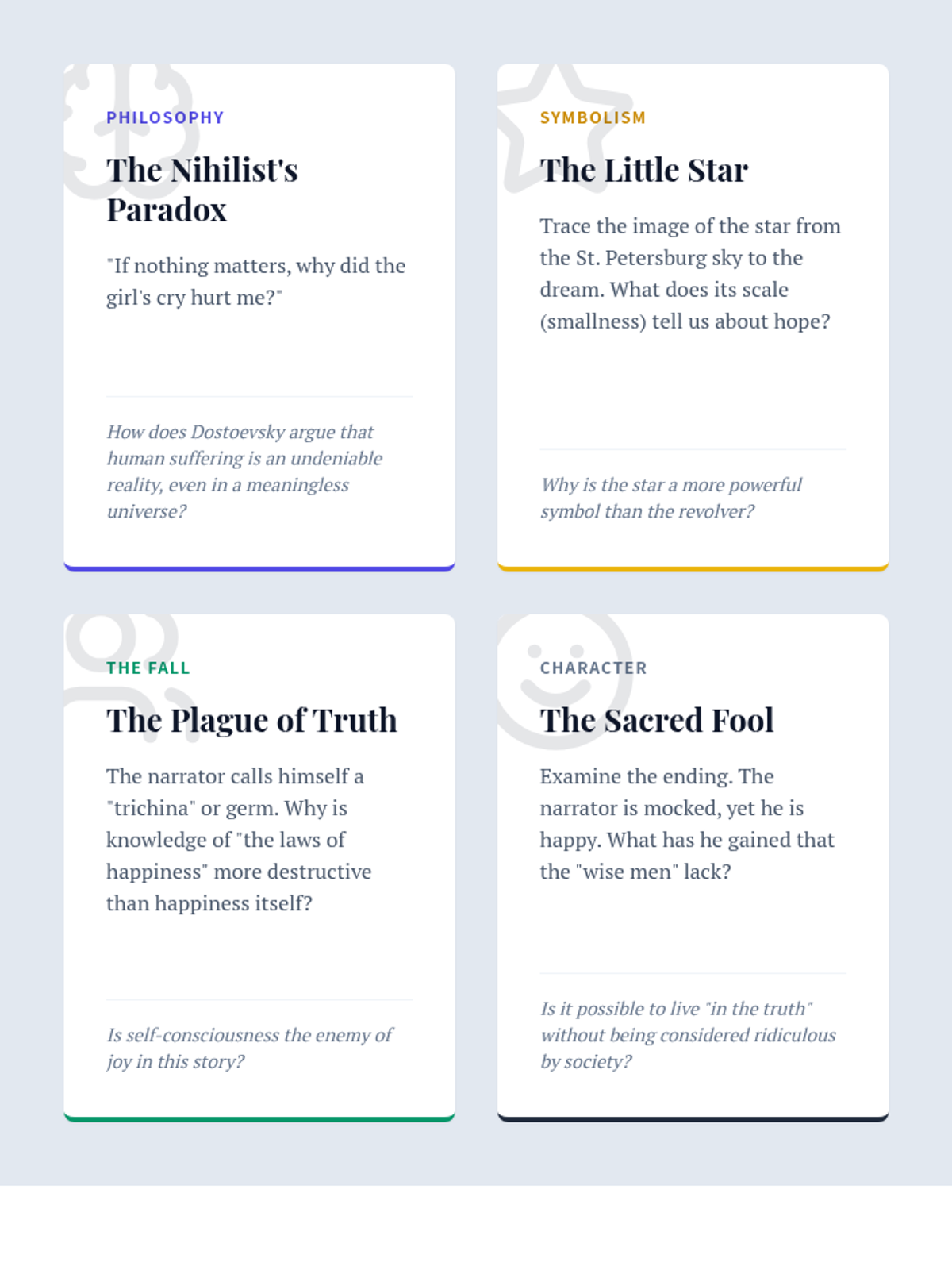
A deep-dive Socratic Seminar centered on Dostoevsky's 'The Dream of a Ridiculous Man,' exploring themes of nihilism, the Fall of Man, and the power of individual empathy. Students prepare textual evidence and engage in peer-led discussion.
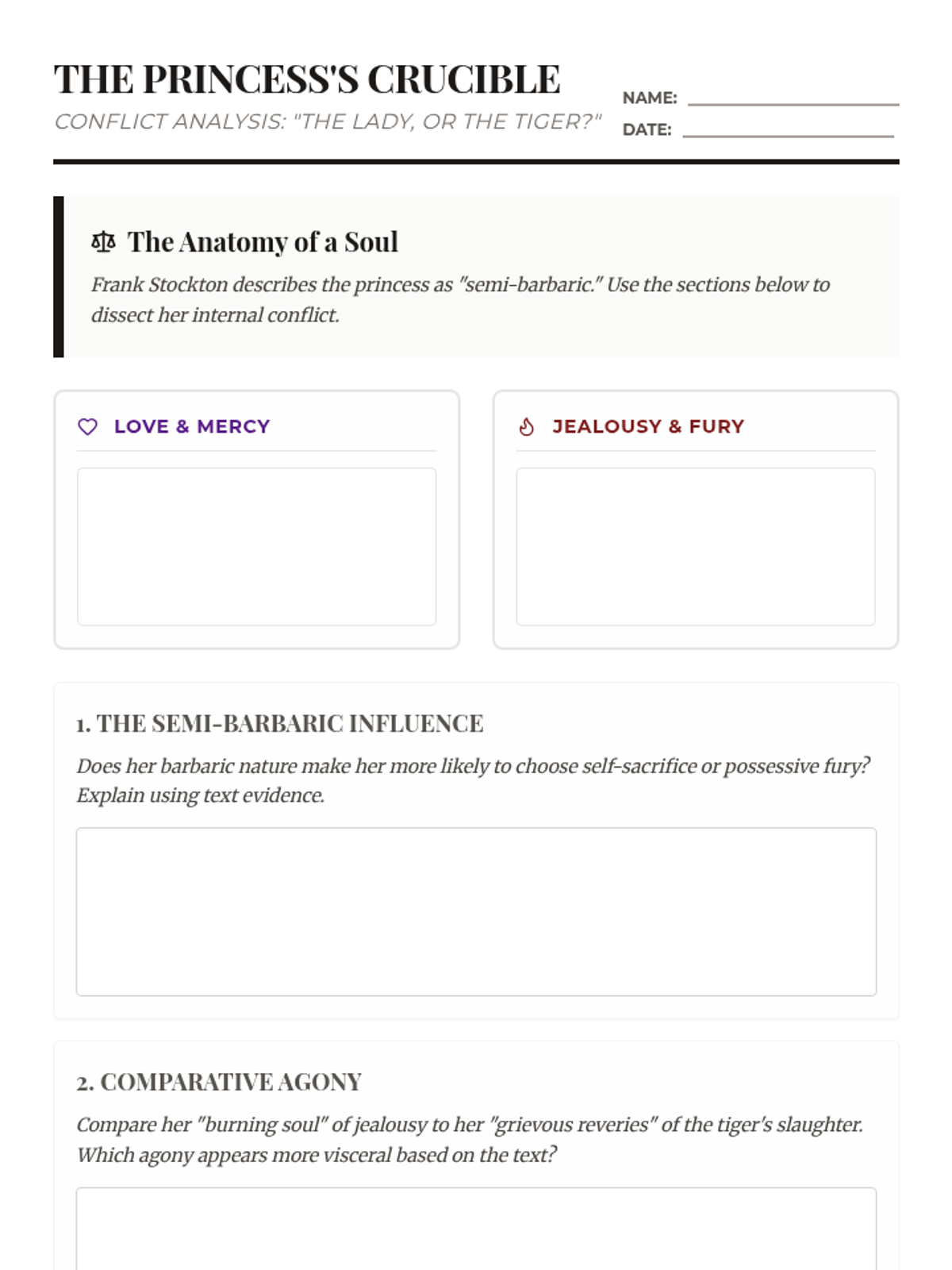
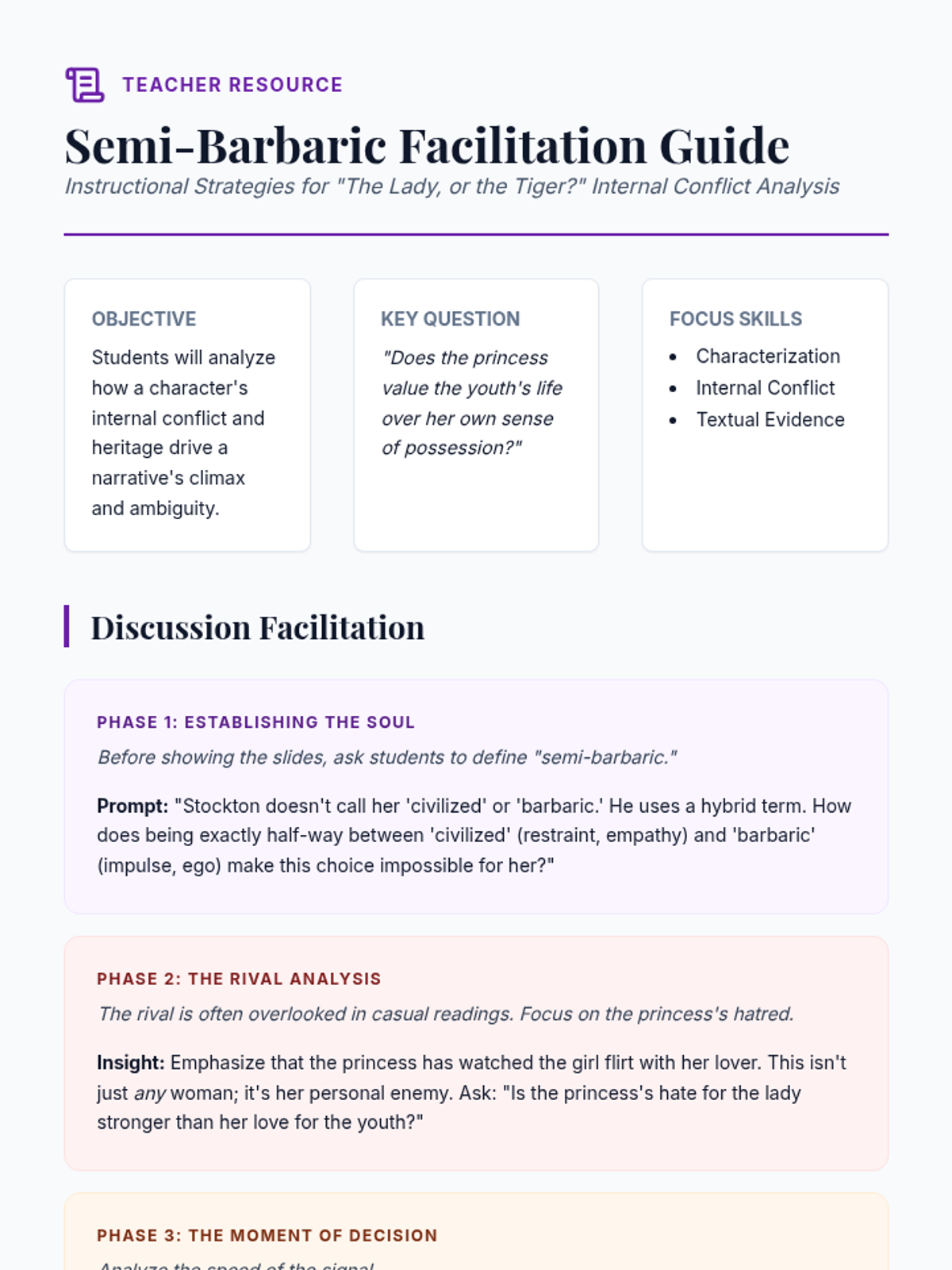
A deep-dive analysis of the internal conflict faced by the princess in Frank R. Stockton's classic short story. Students will explore themes of jealousy, love, and barbaric nature through guided discussion and analytical writing.
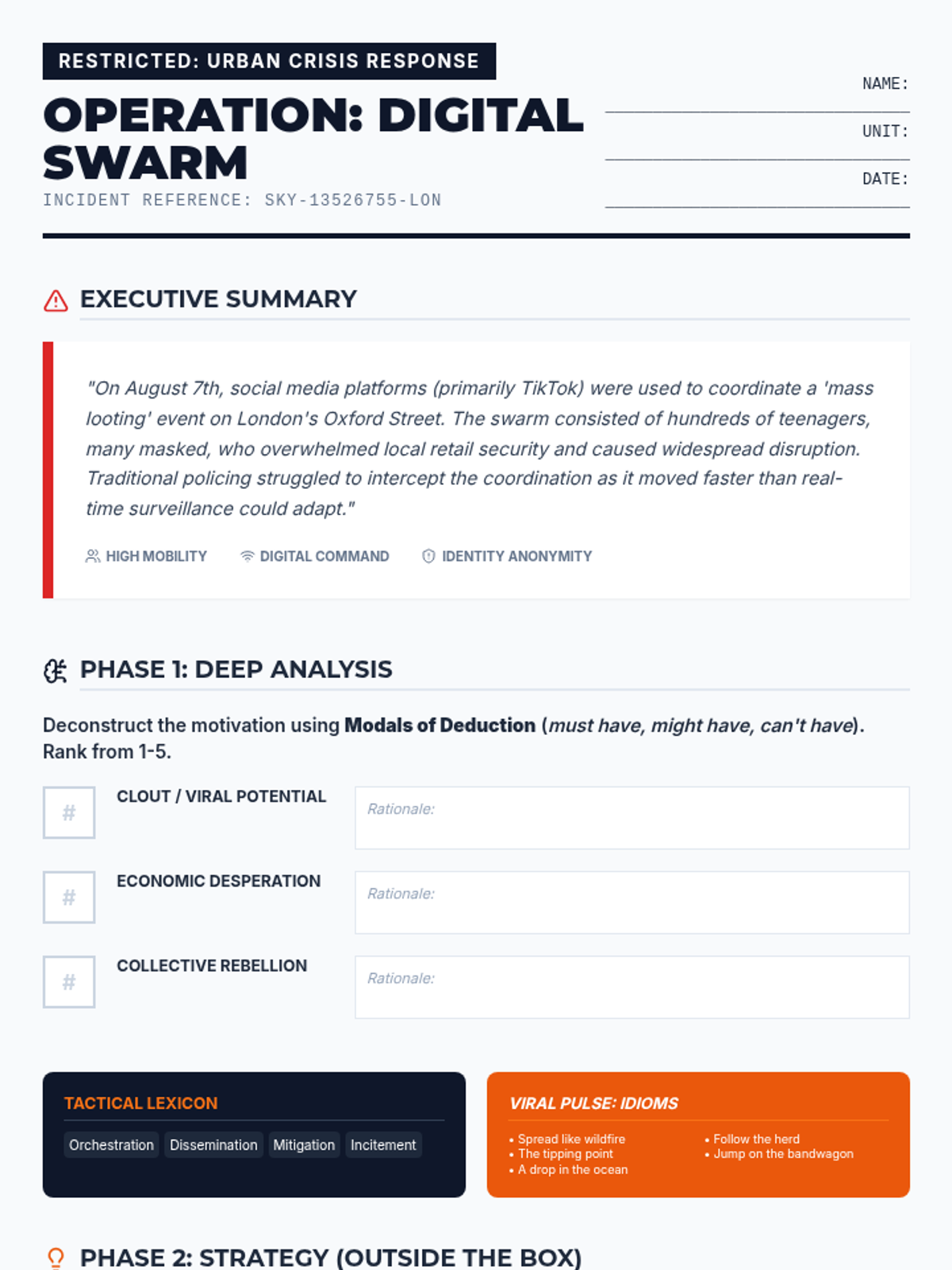
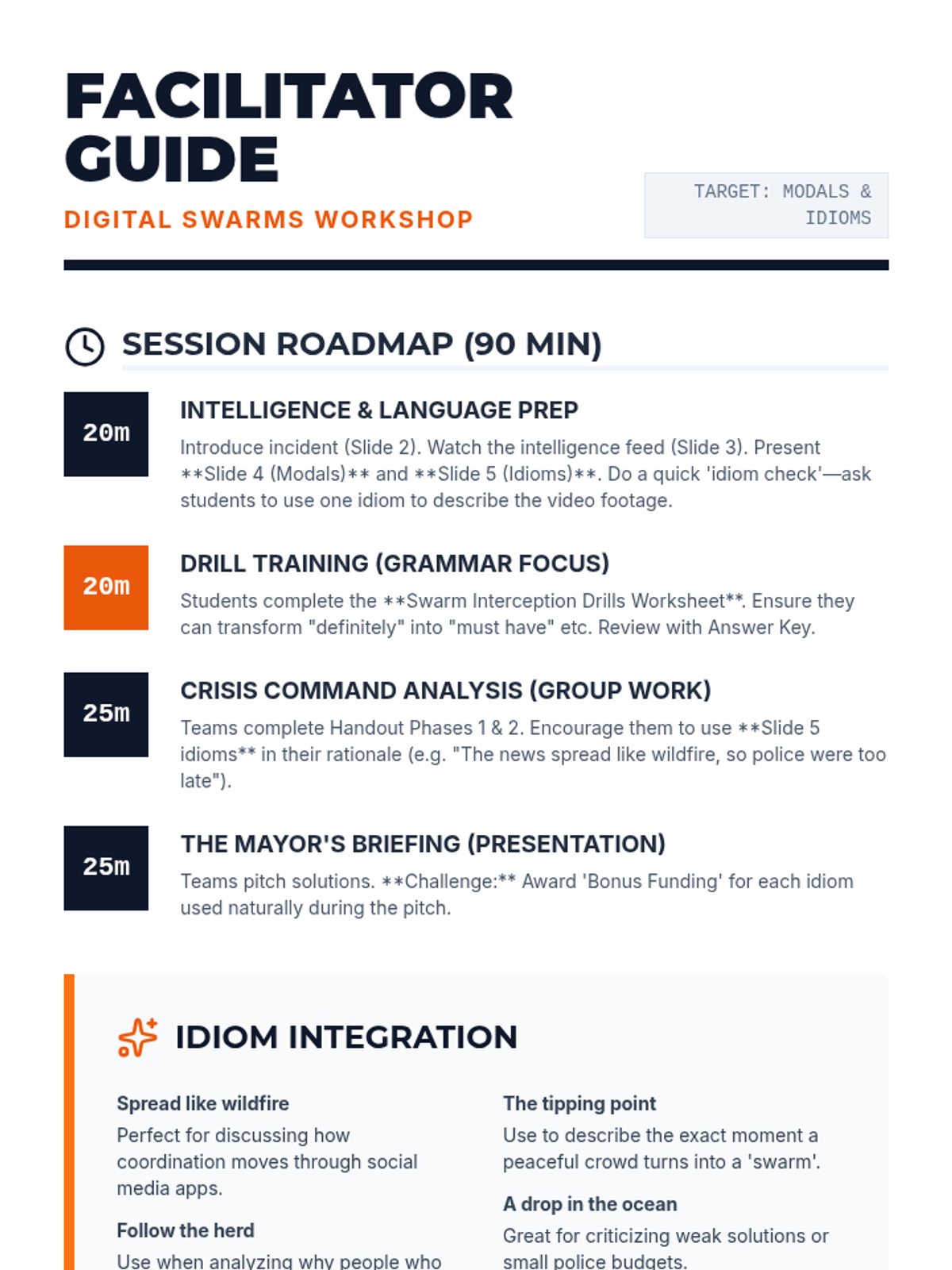
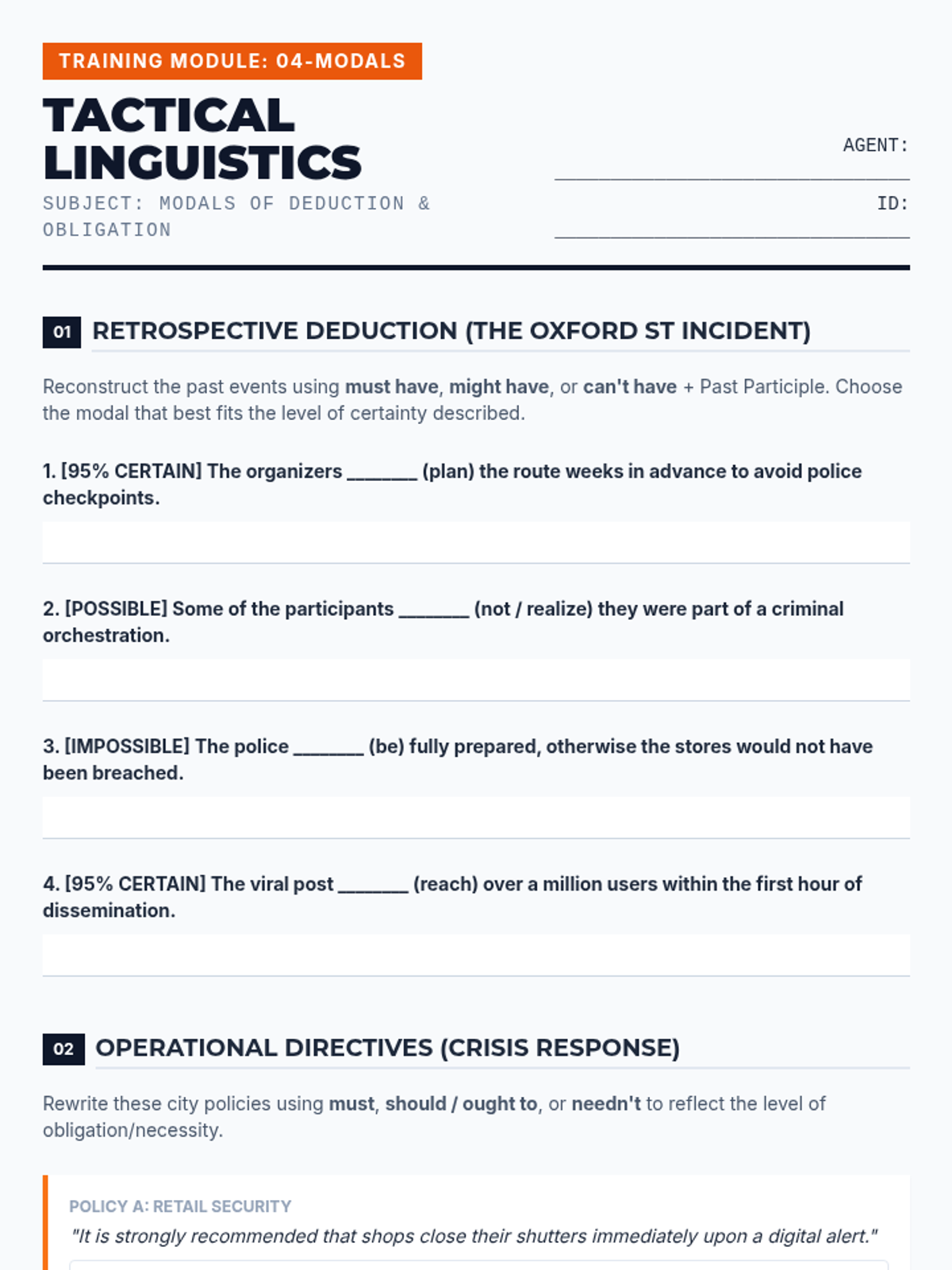
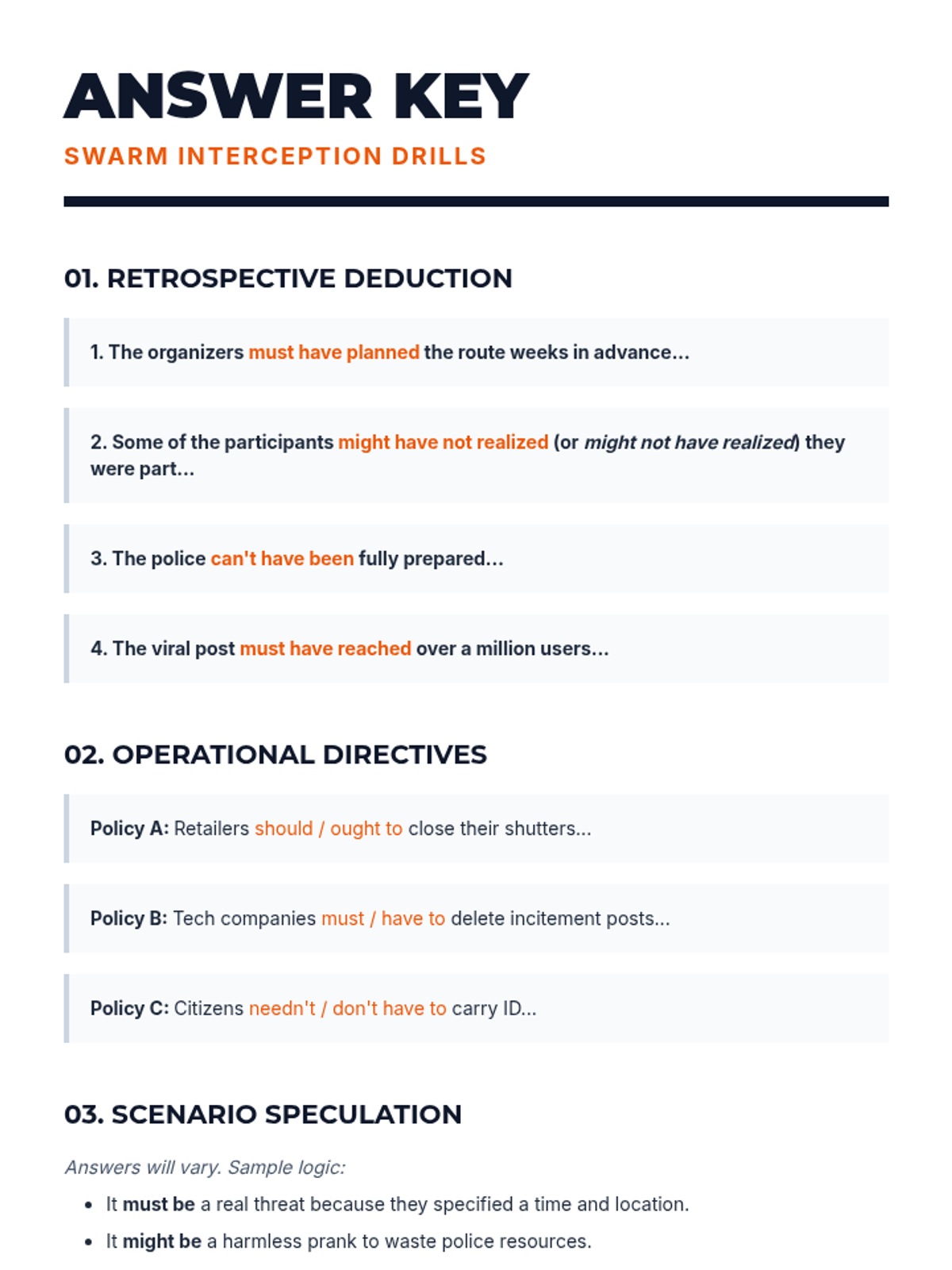
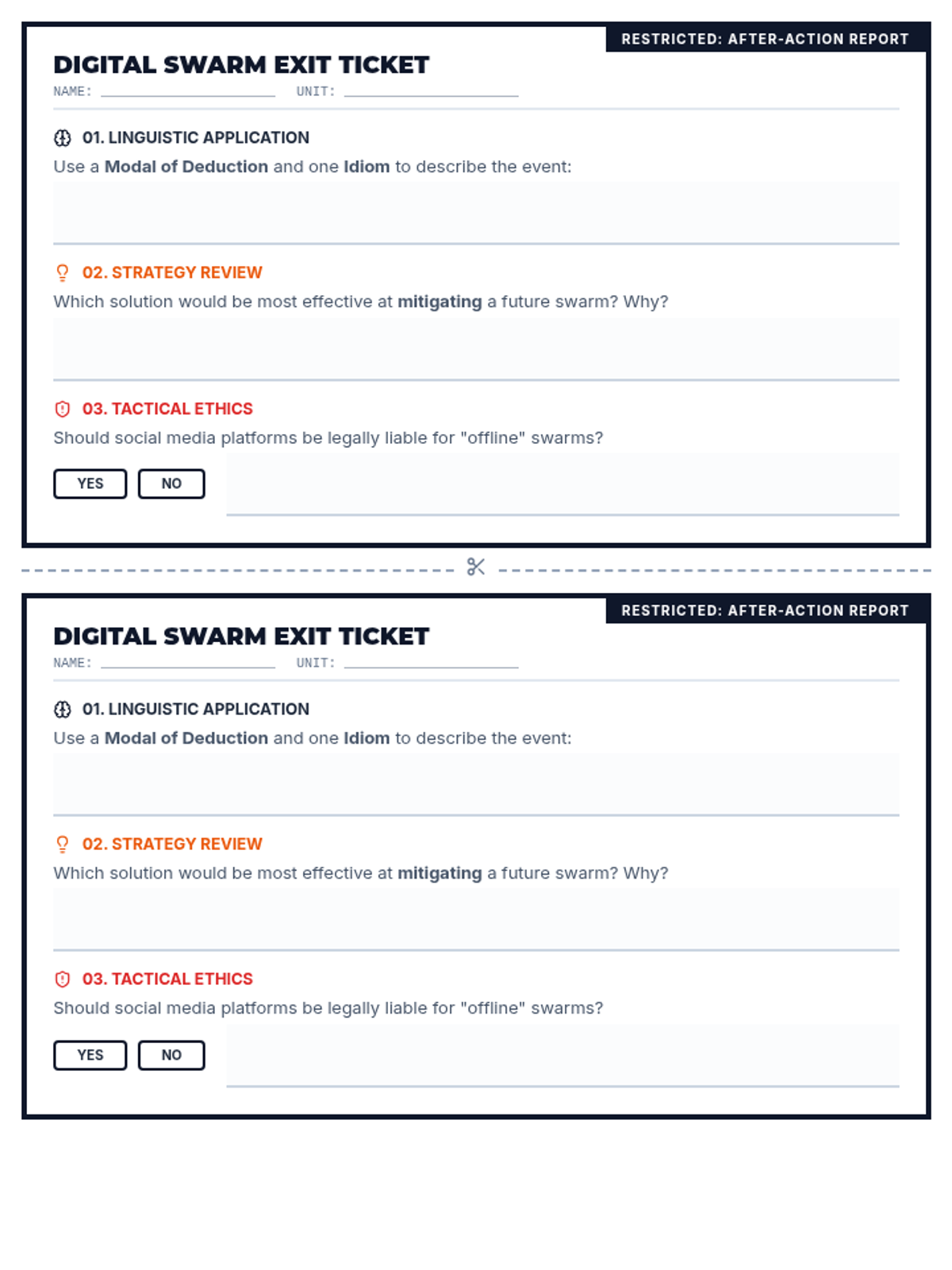
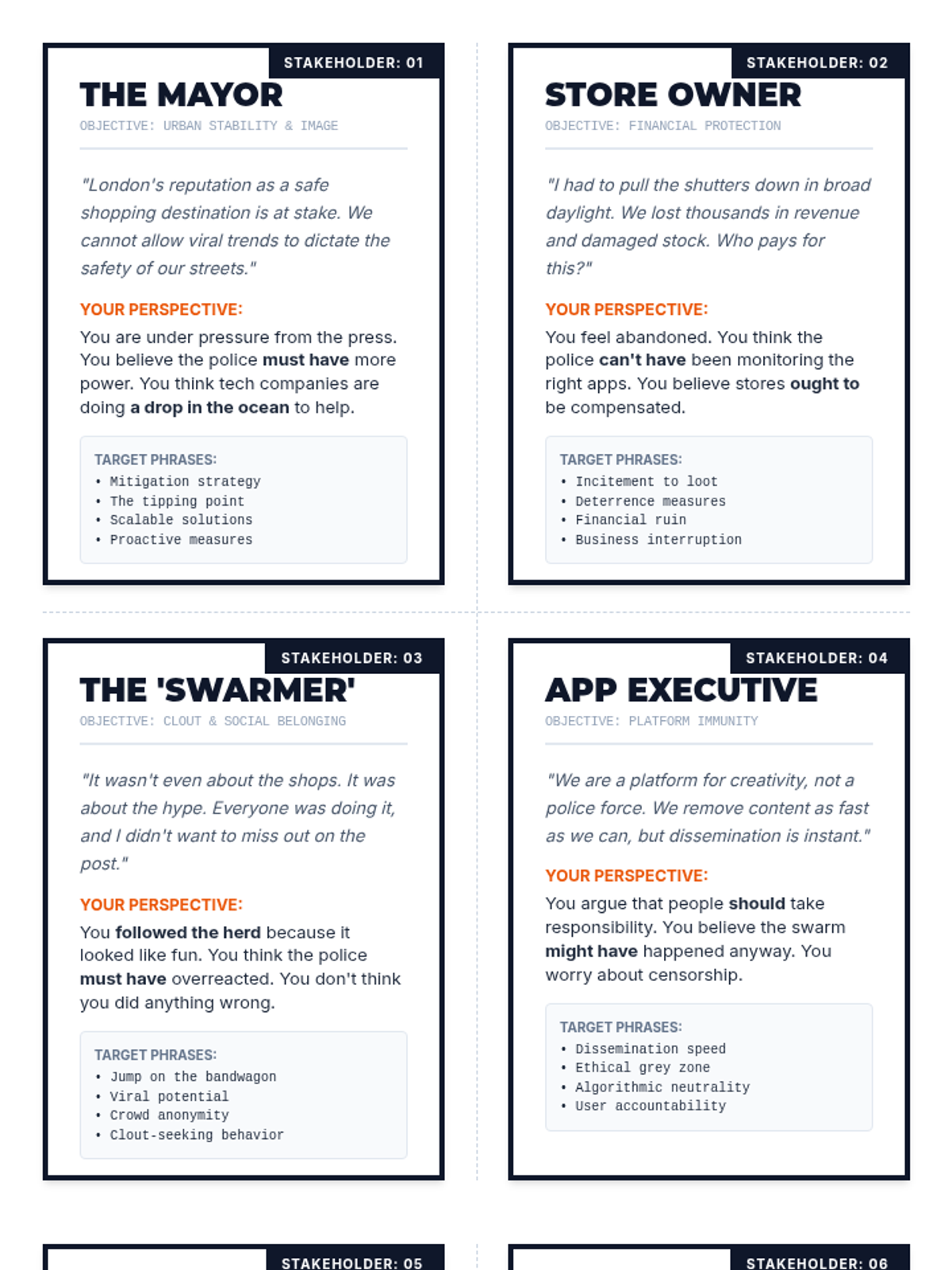
A problem-solving workshop for B2+ students based on social media flash mobs. Students act as a city's 'Digital Response Team' to design innovative solutions for urban chaos triggered by viral trends.
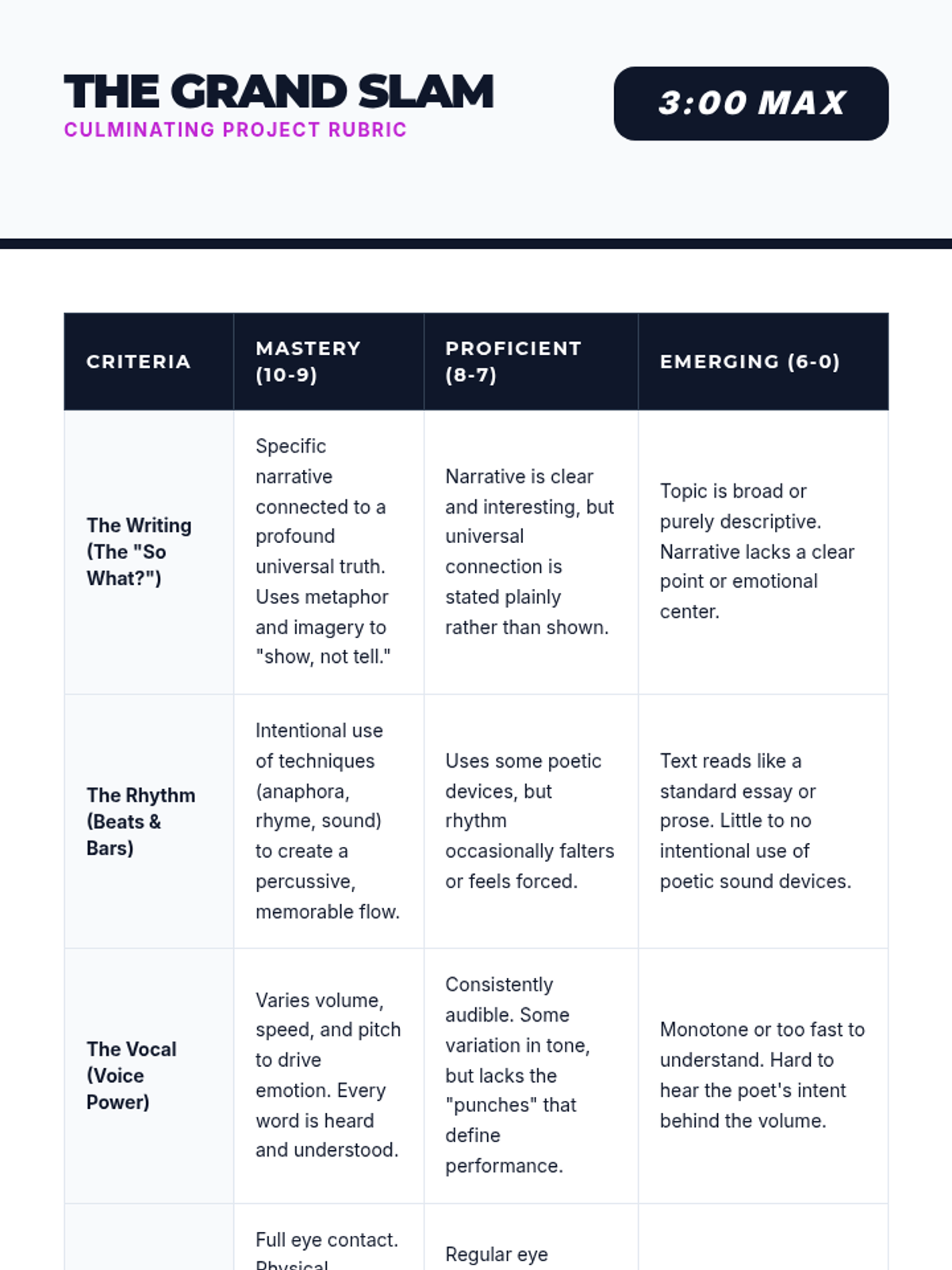
The culminating event: a class-wide slam competition with audience judges, followed by a written reflection on the journey of voice.
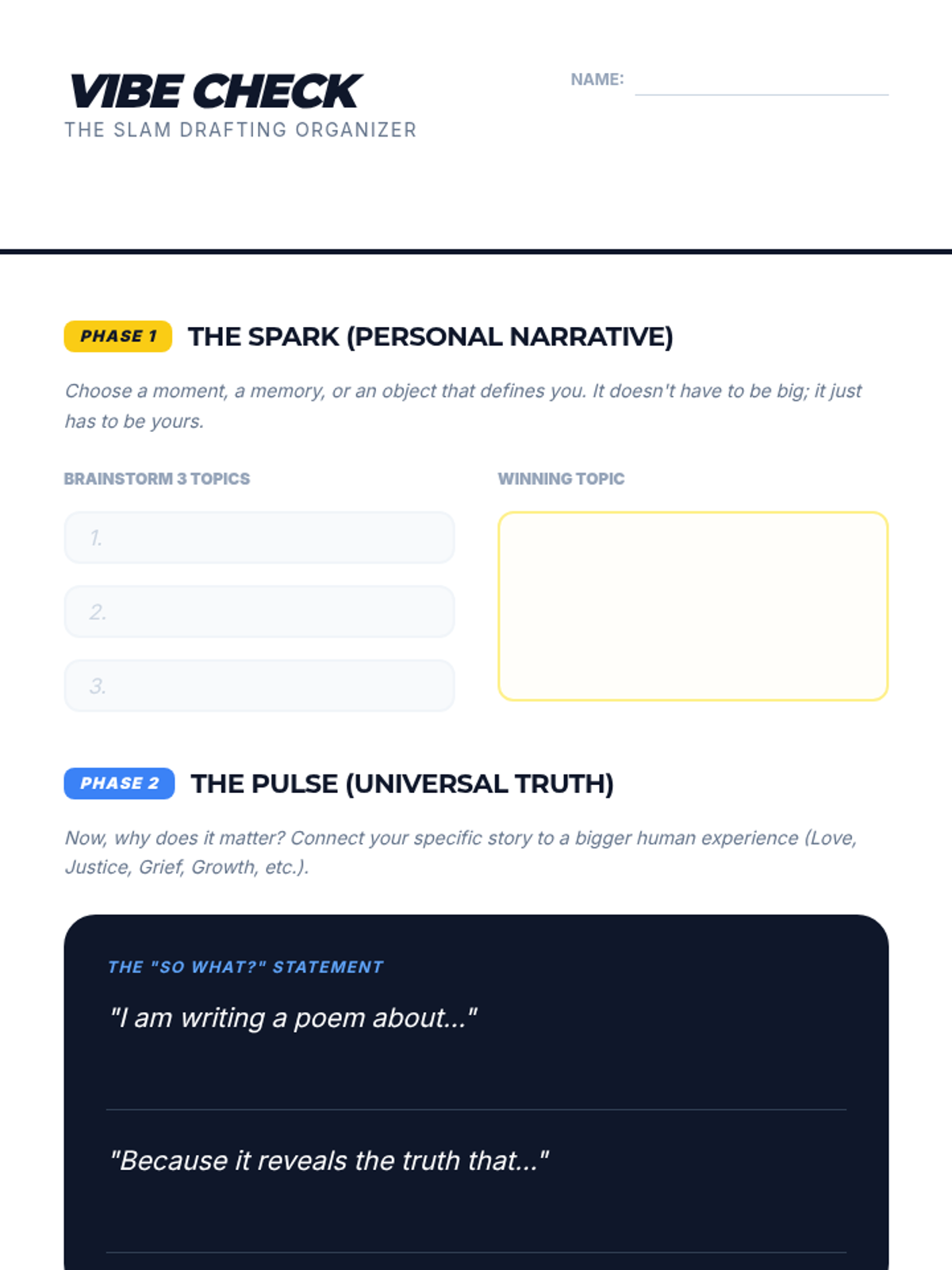
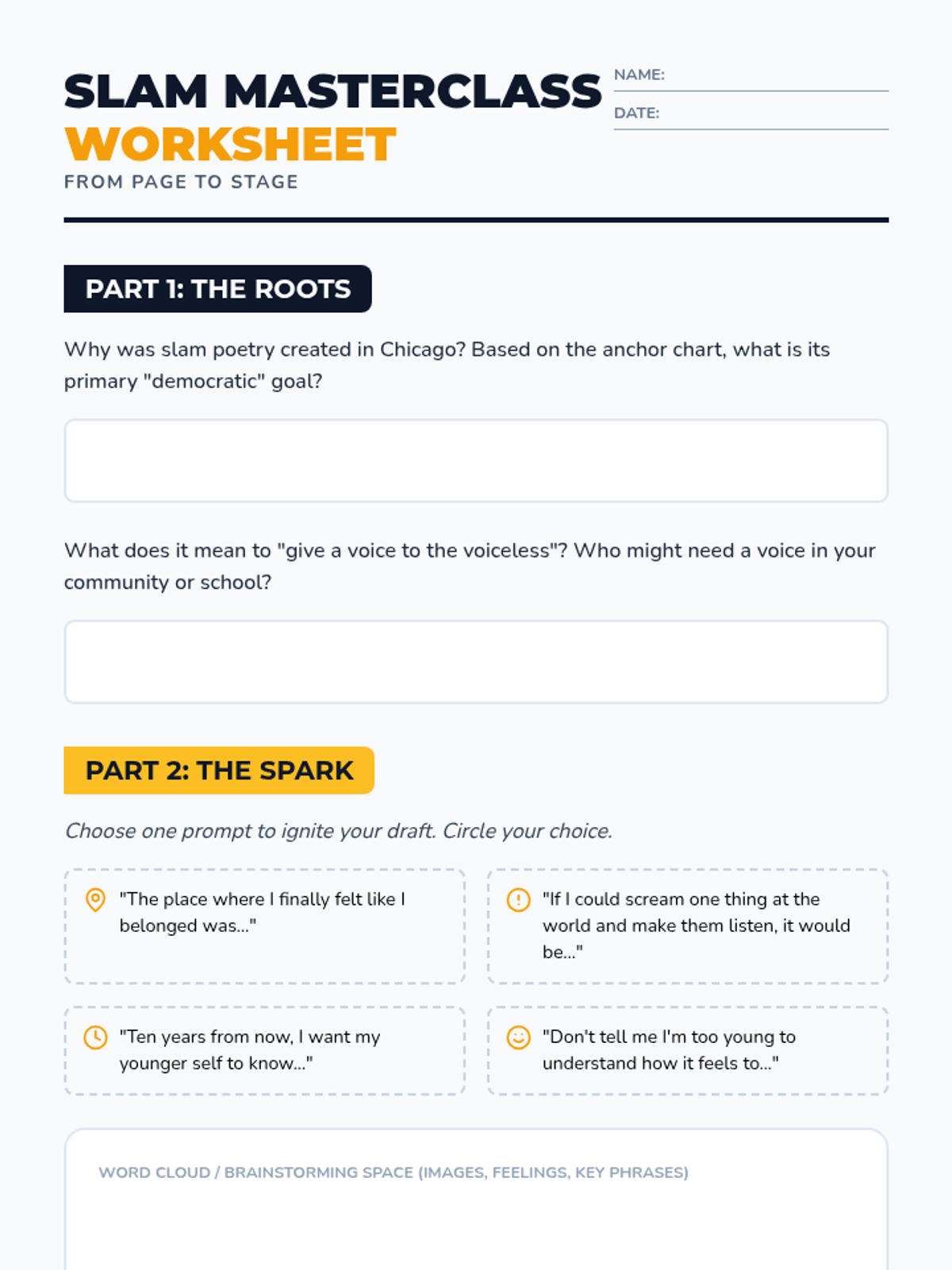
Guiding students through the process of choosing a personal topic, finding their unique voice, and drafting a 3-minute slam poem using the techniques learned.
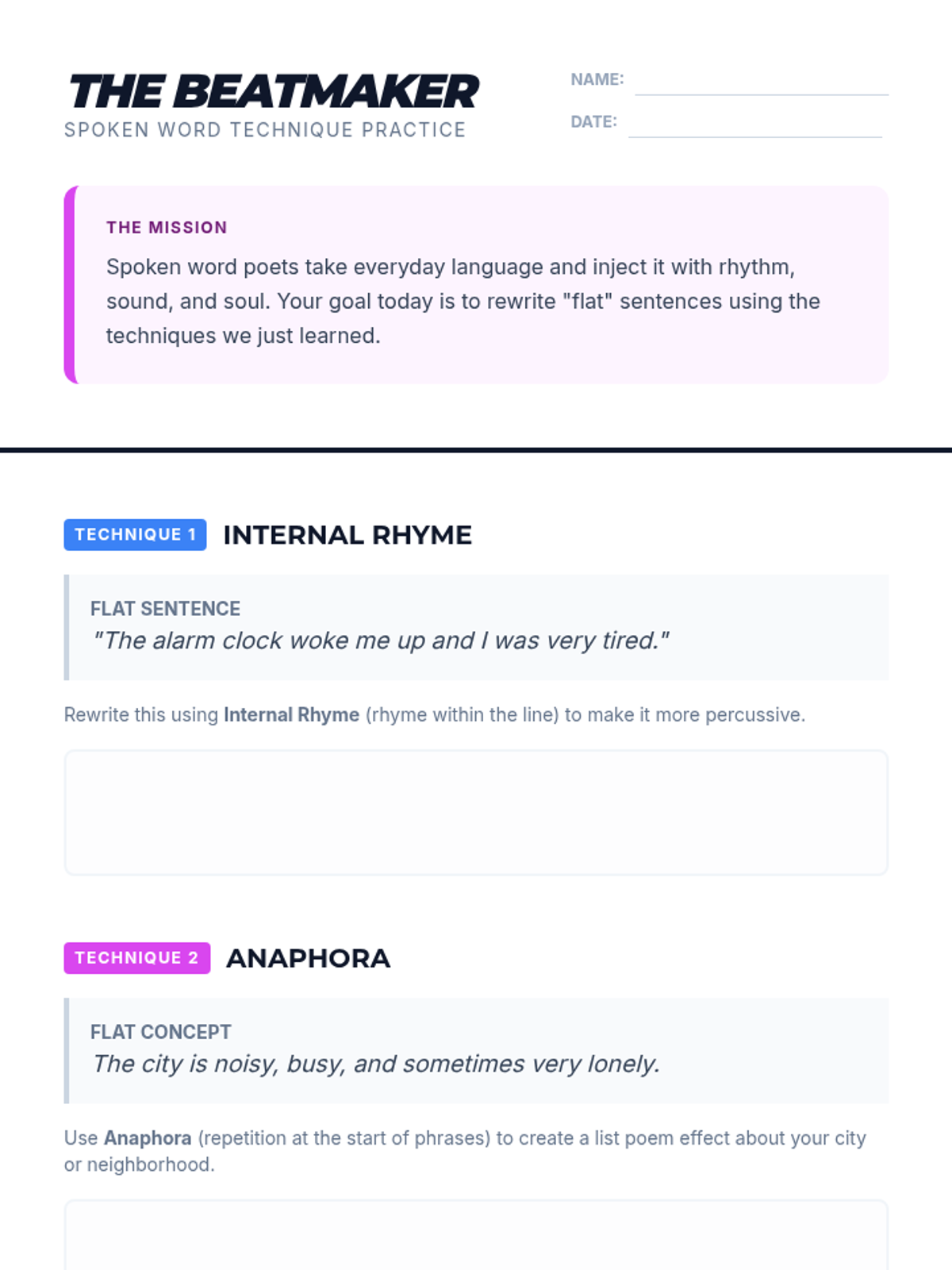
Focusing on the literary and performance techniques that give slam poetry its rhythm, including internal rhyme, repetition, and the 'beat' of the spoken word.
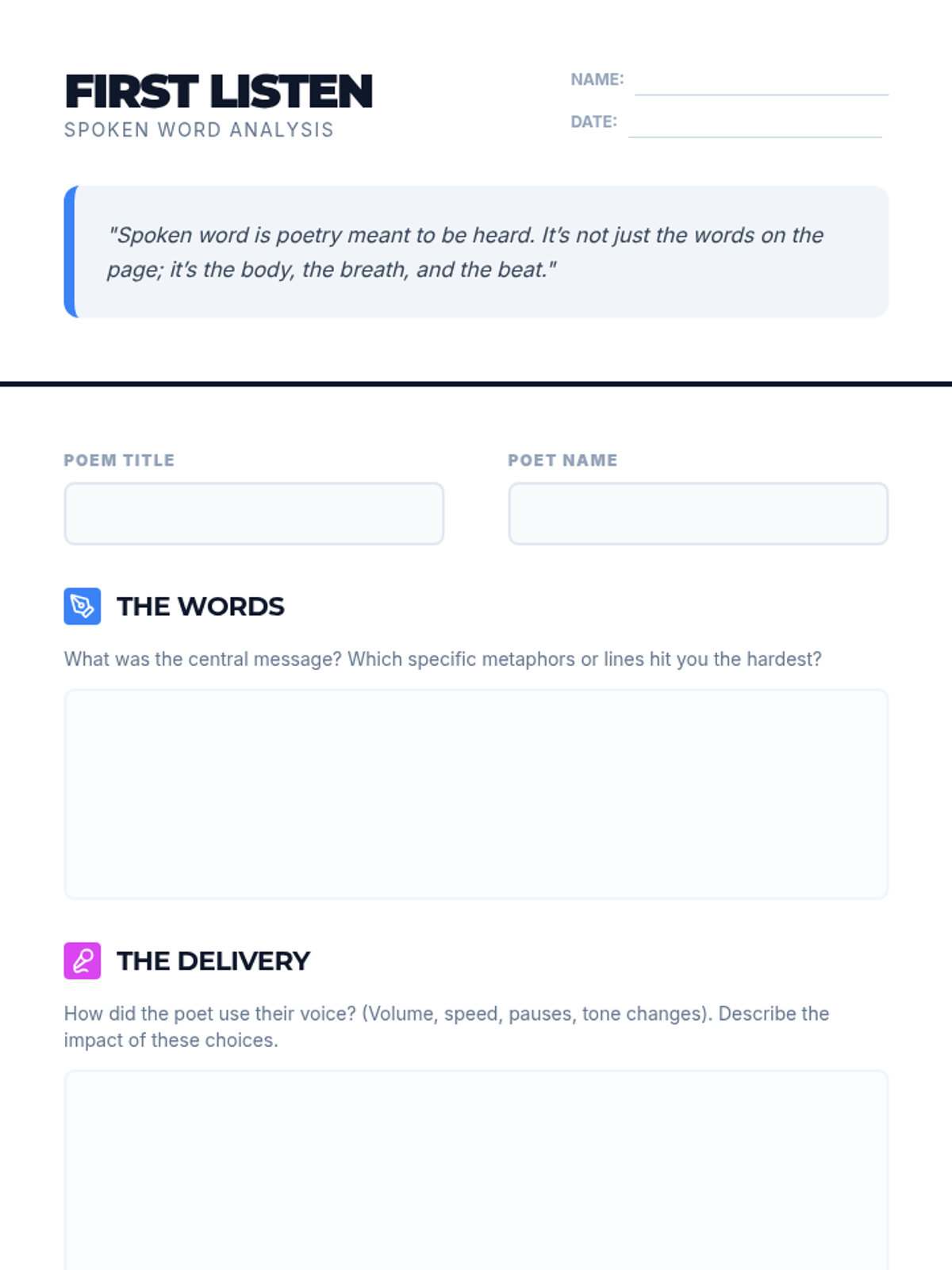
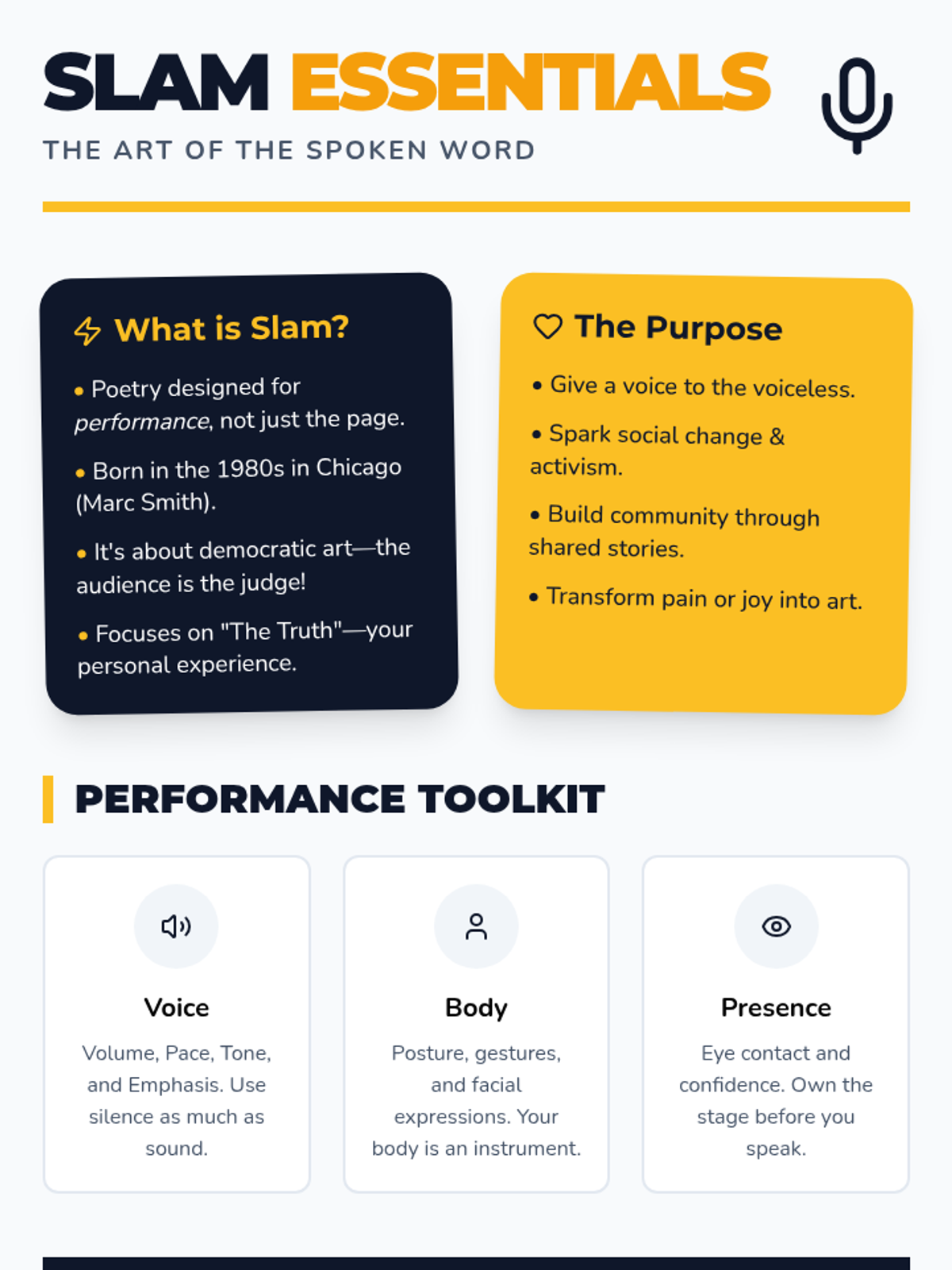
Introducing the history and impact of spoken word poetry, focusing on how voice and identity shape modern performance art.
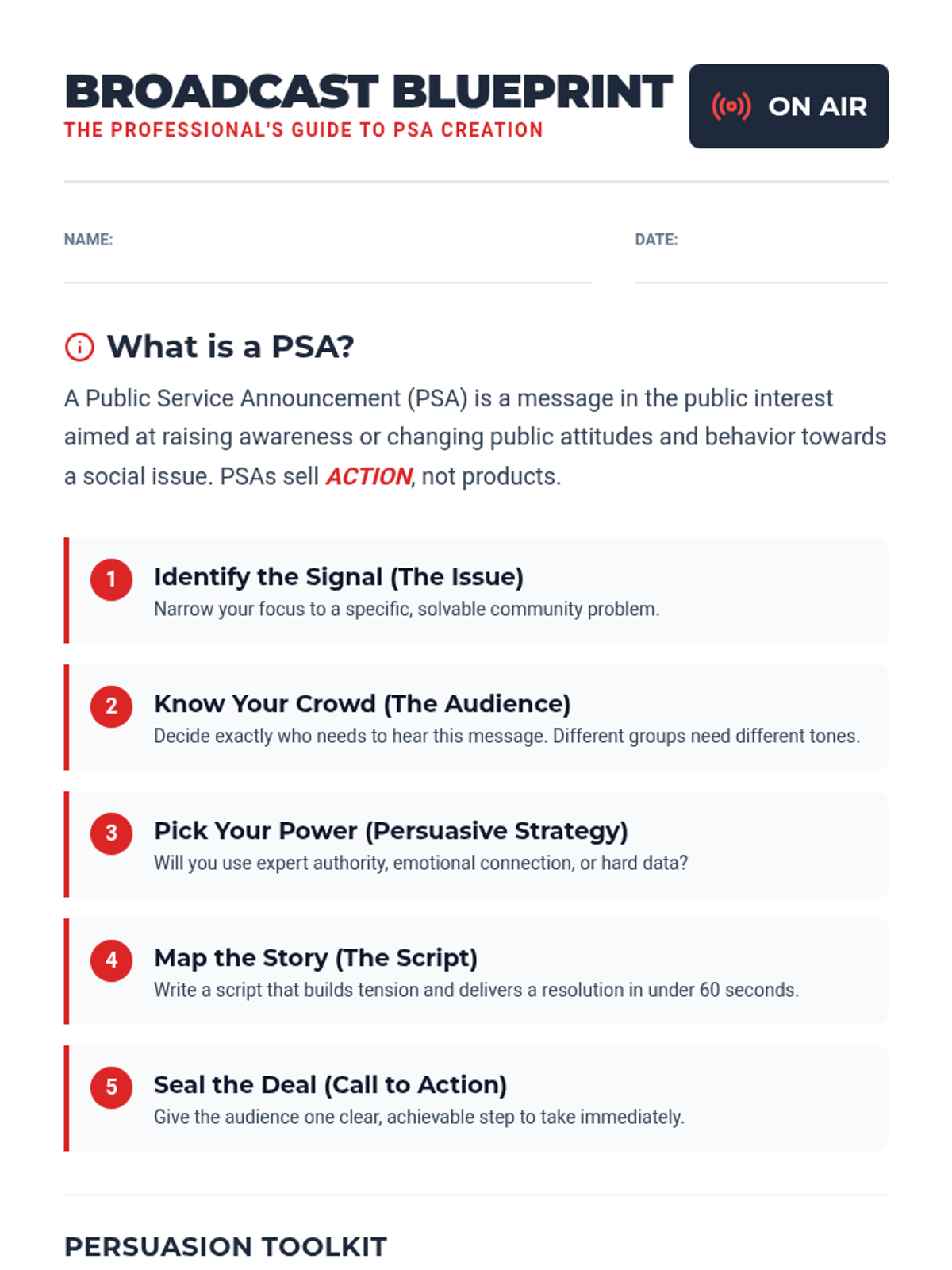
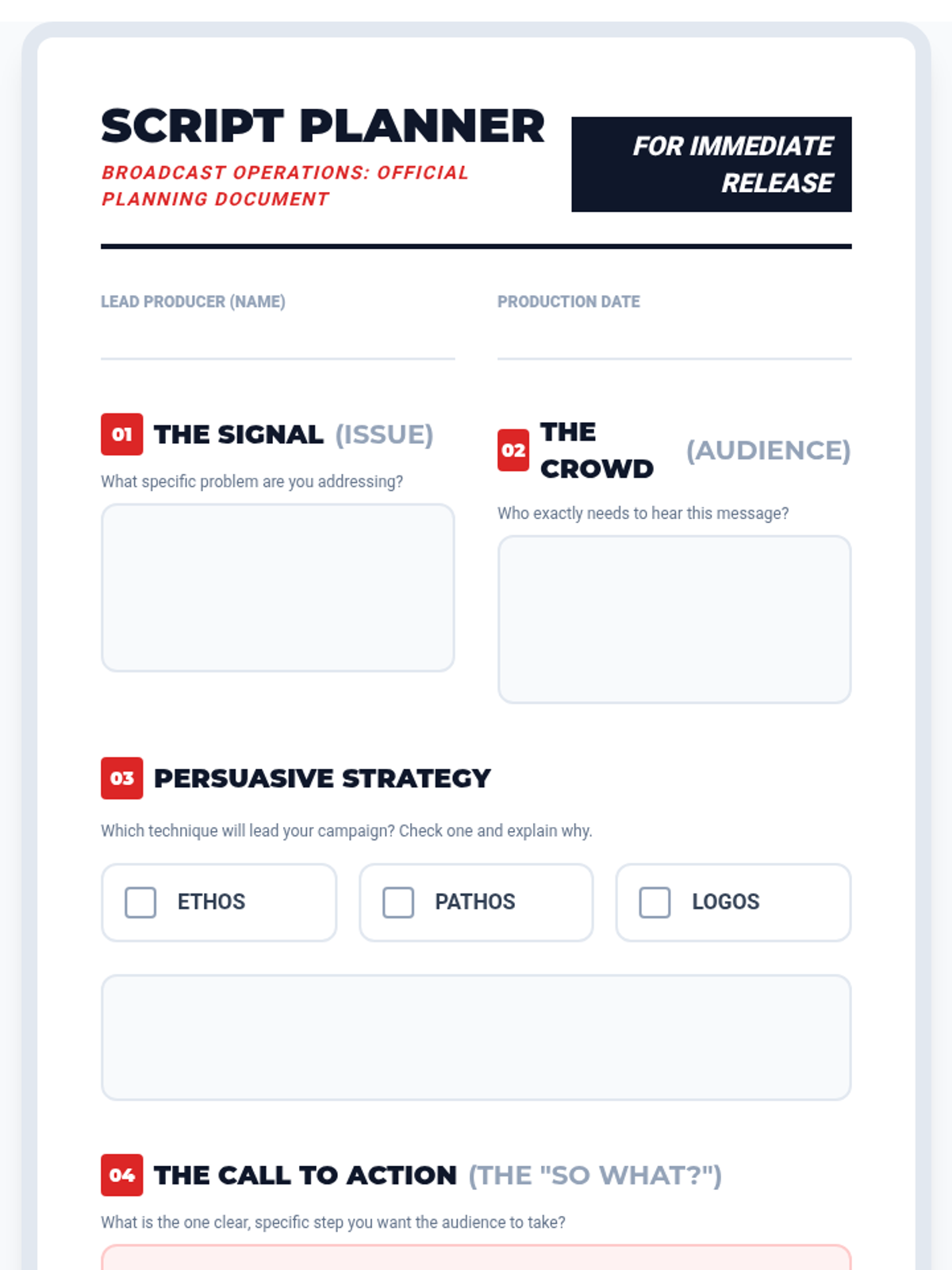
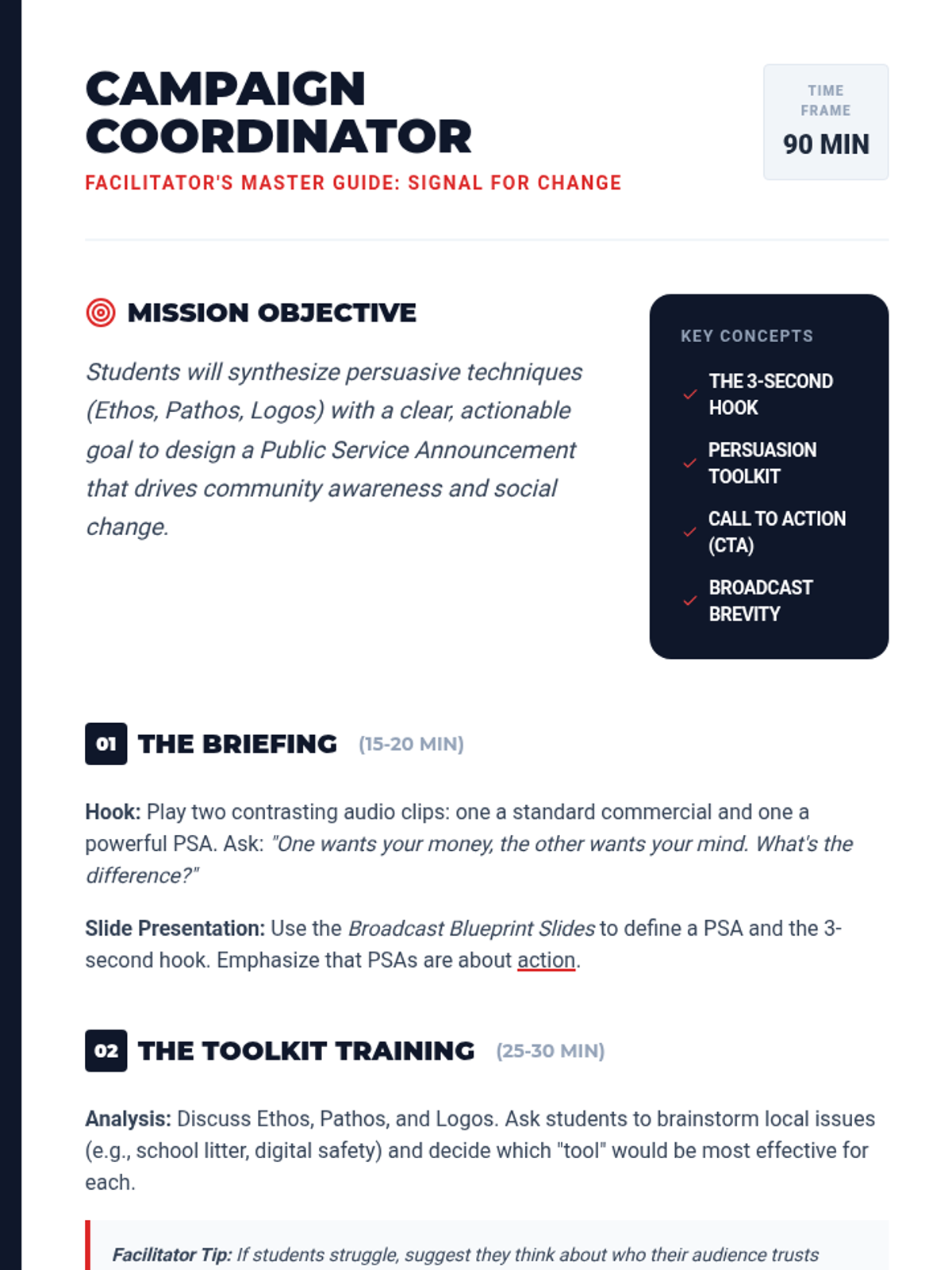
Students will learn the essential components of a Public Service Announcement, focusing on persuasive techniques and crafting a compelling call to action to drive social change.
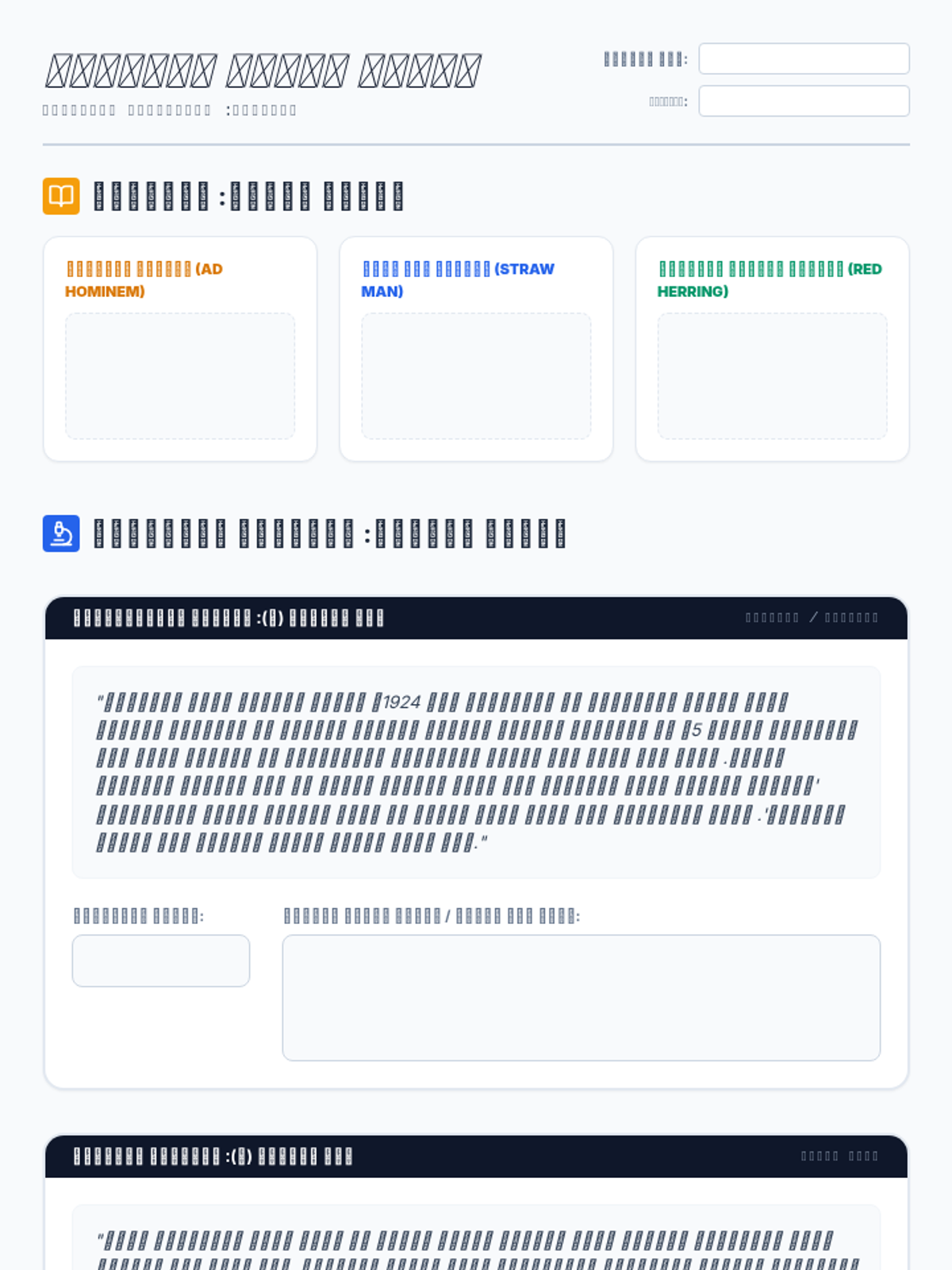
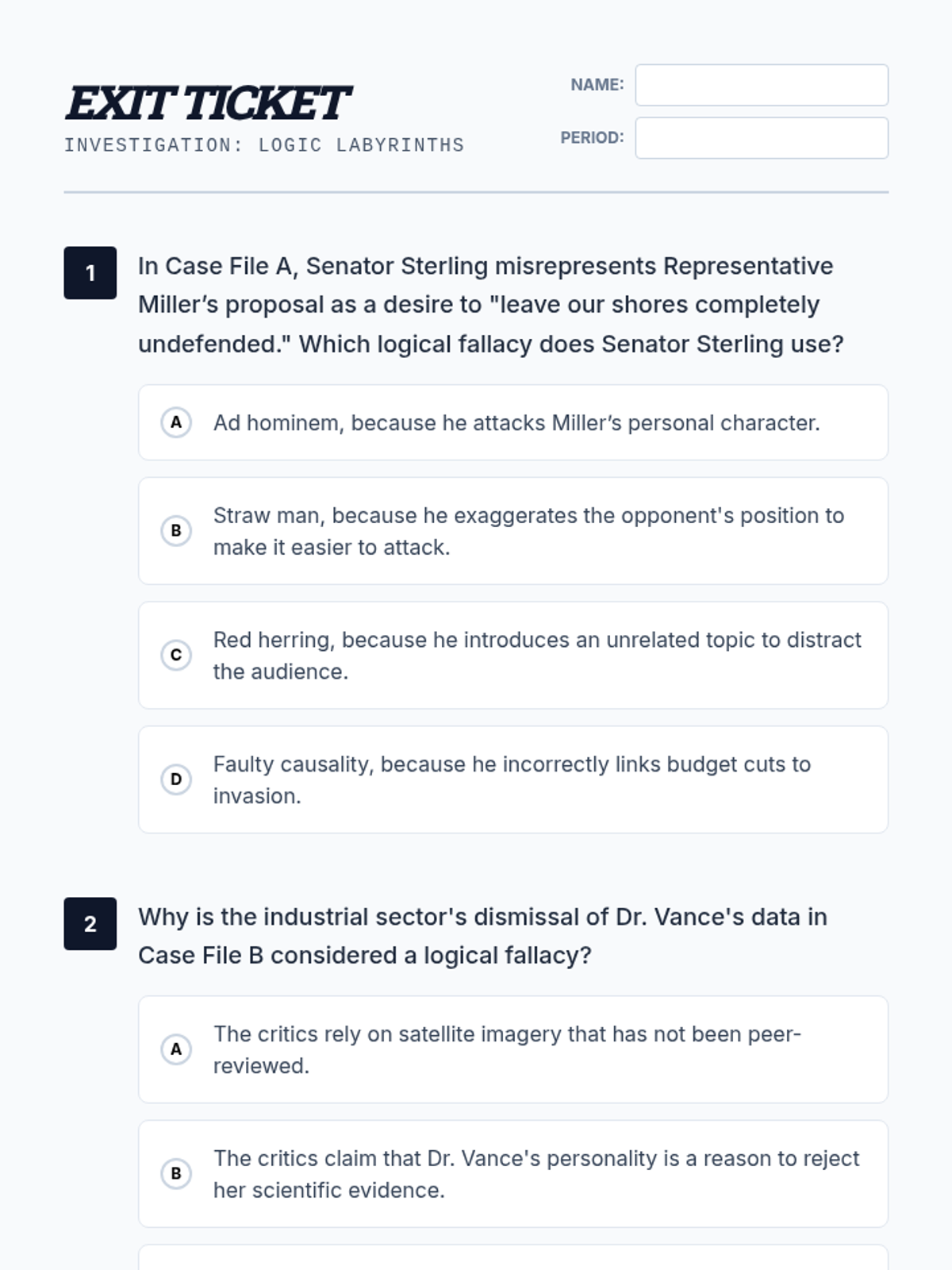
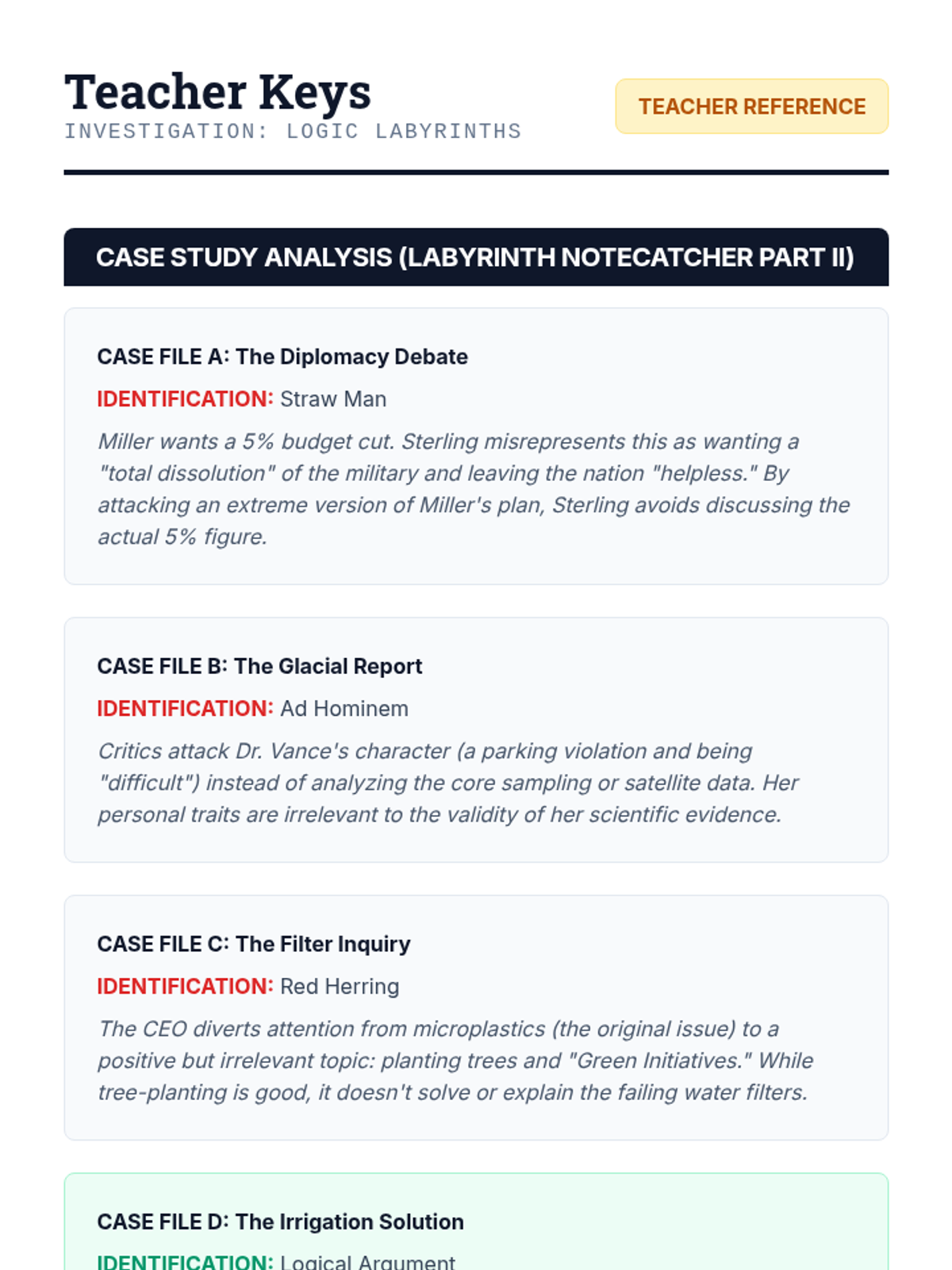
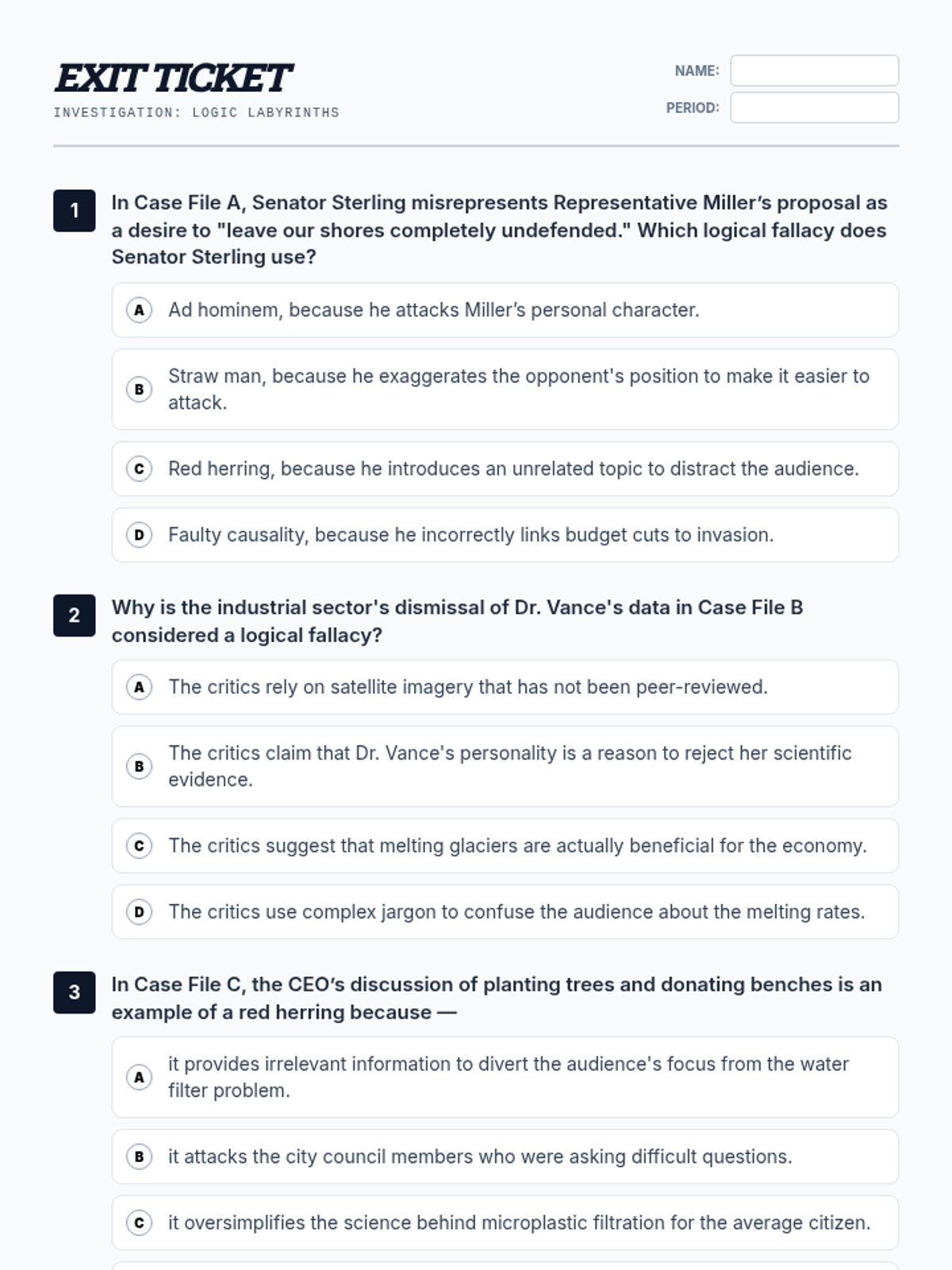
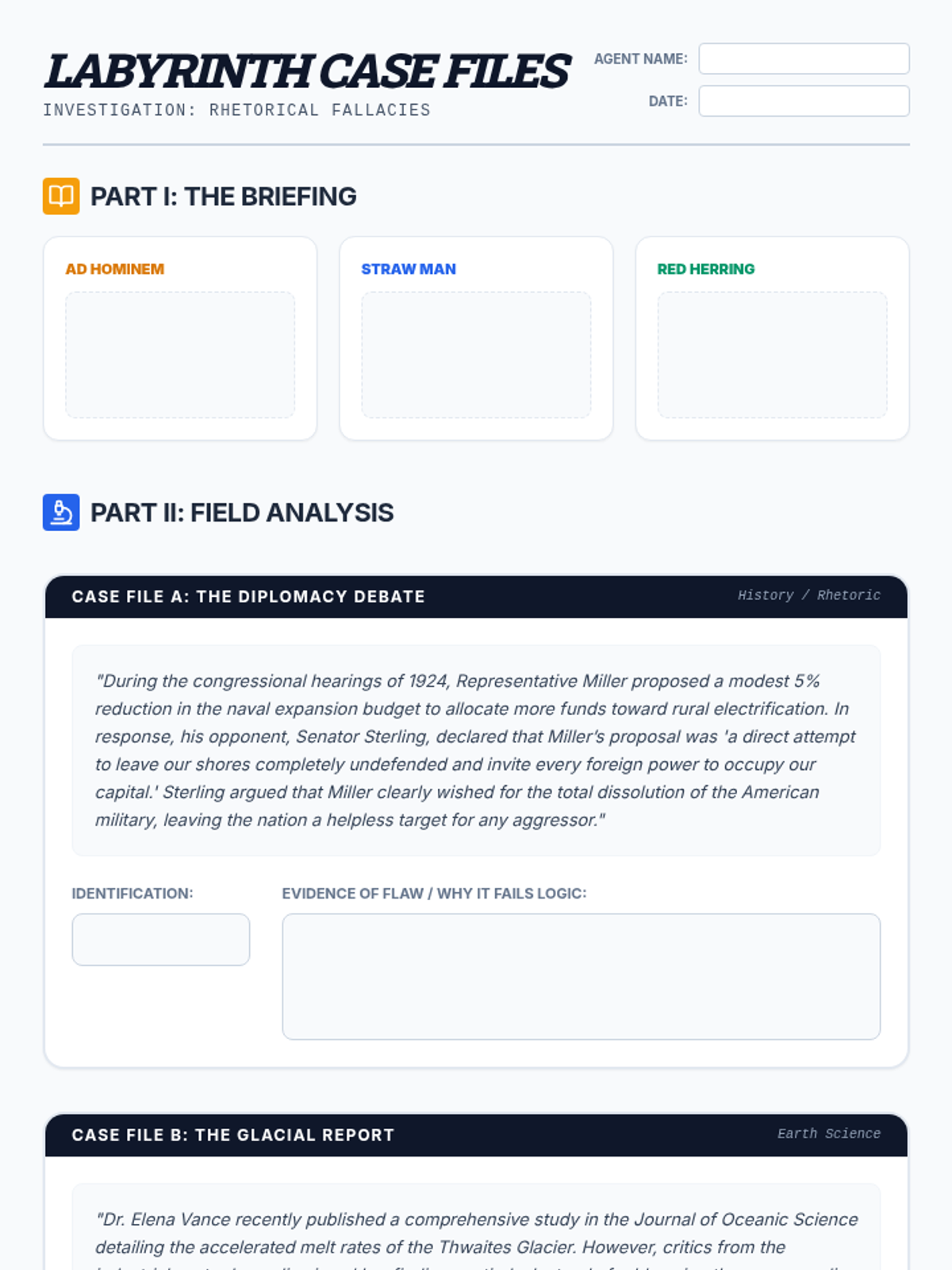
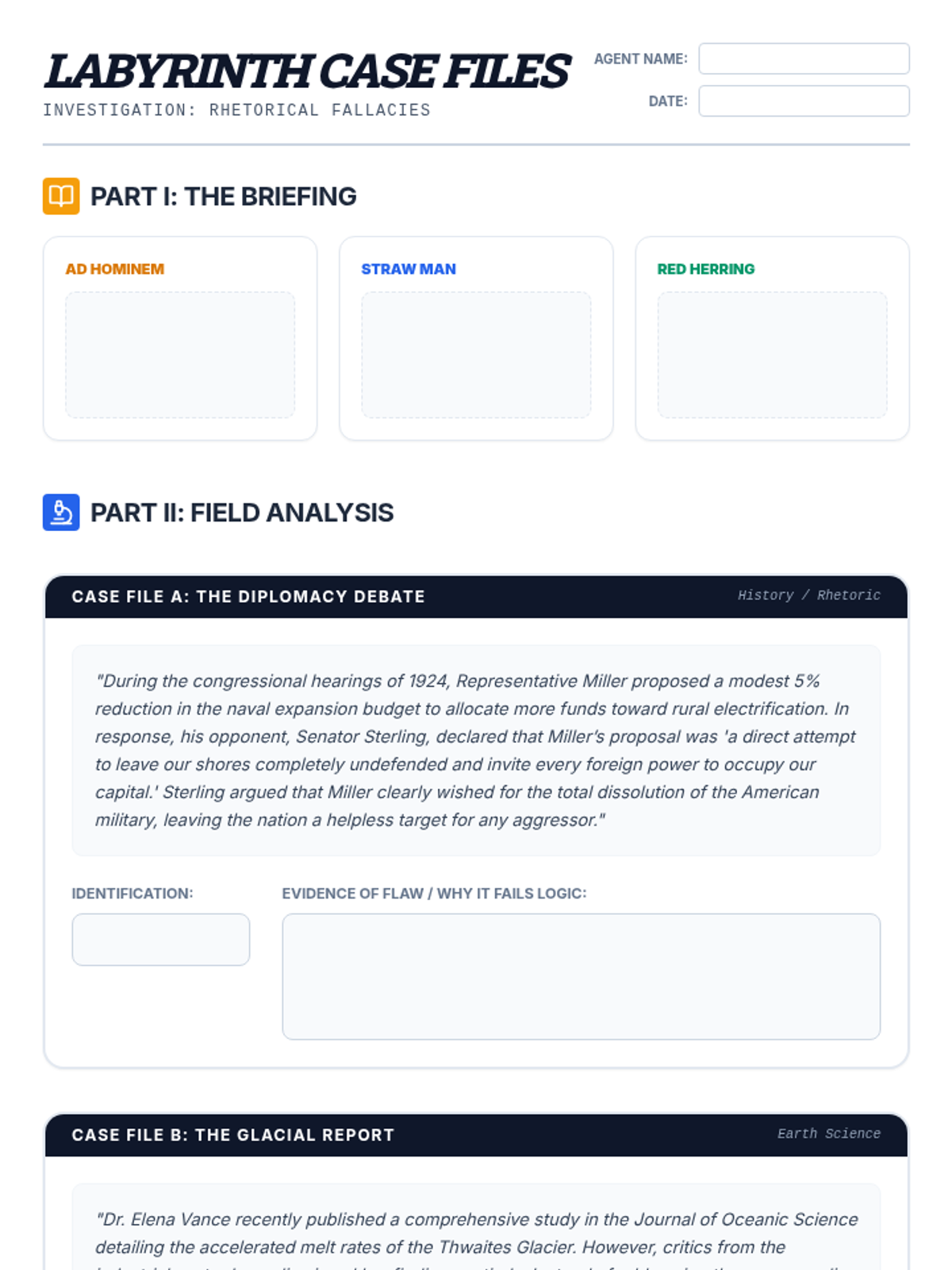
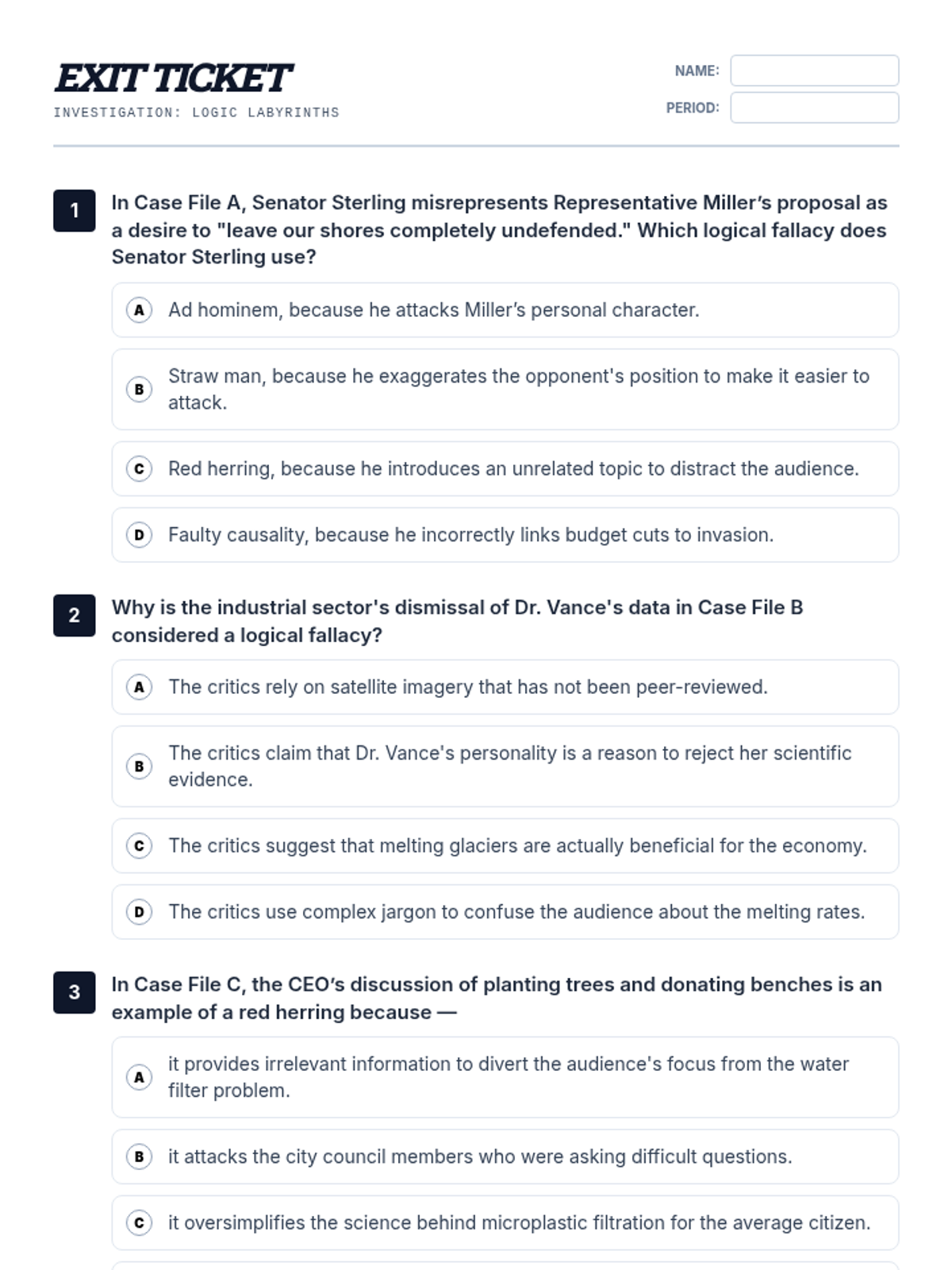
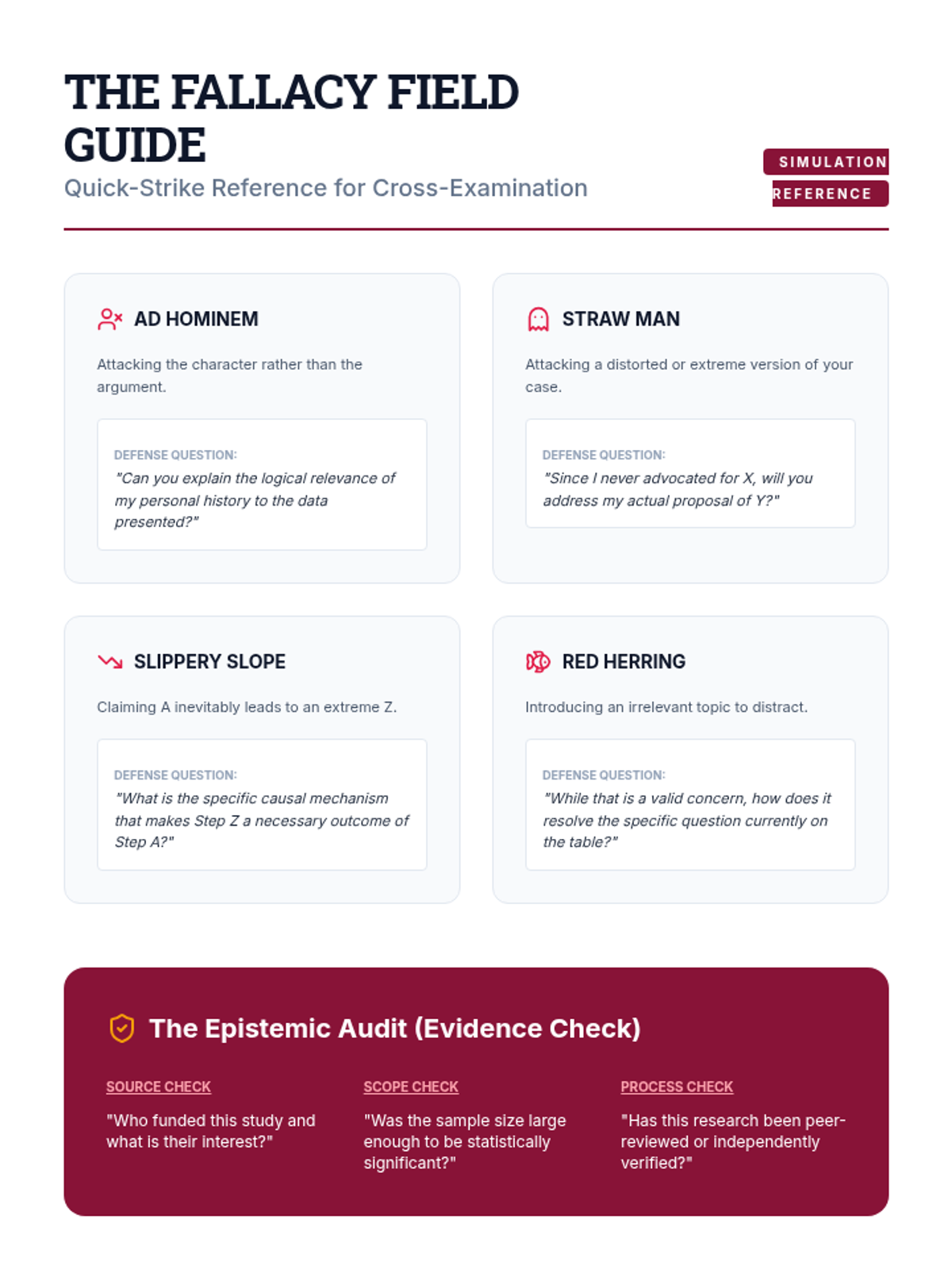
A comprehensive introduction to identifying logical fallacies—ad hominem, straw man, and red herring—using historical and scientific contexts to prepare English I students for STAAR-level rhetorical analysis.
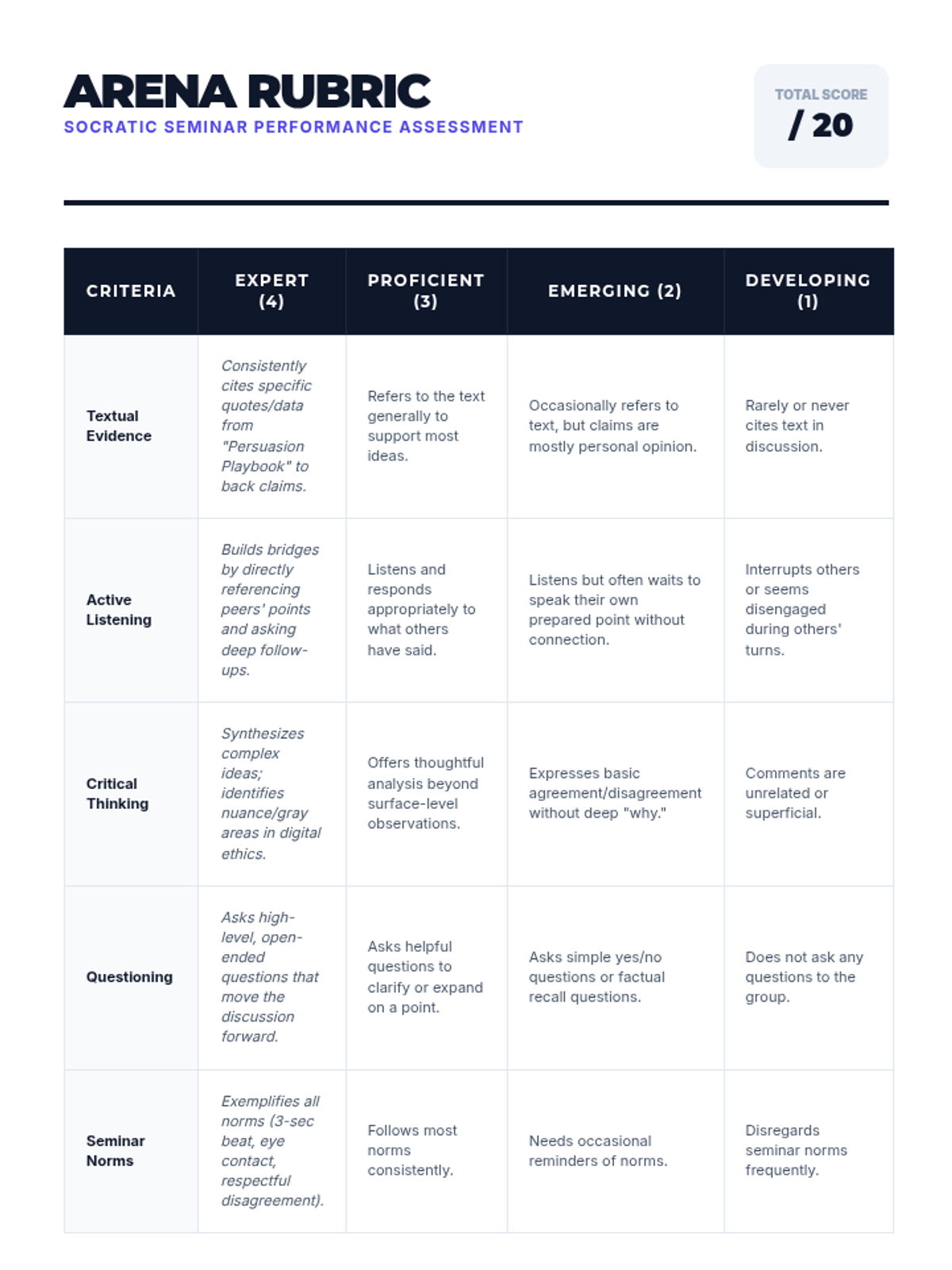
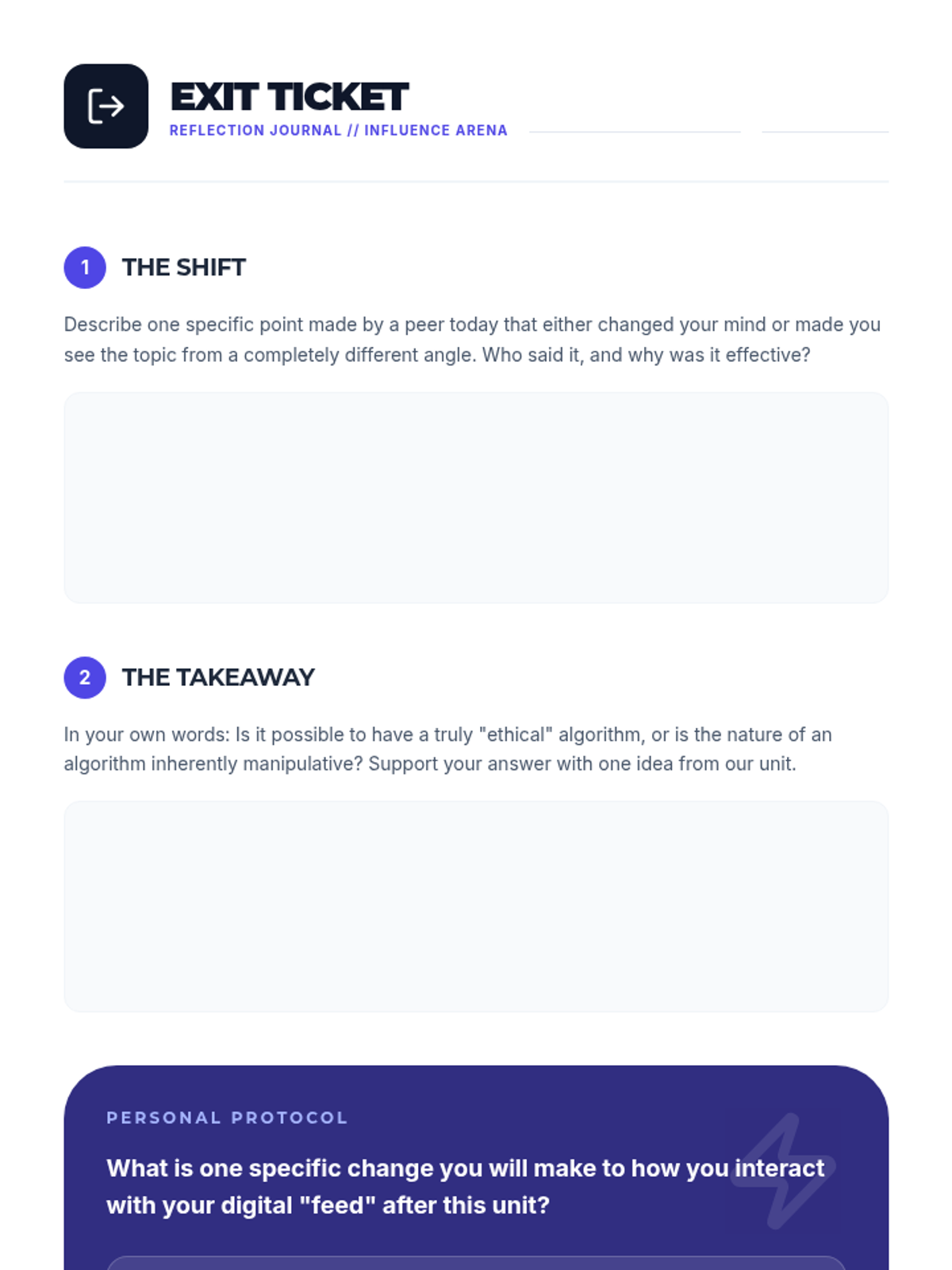
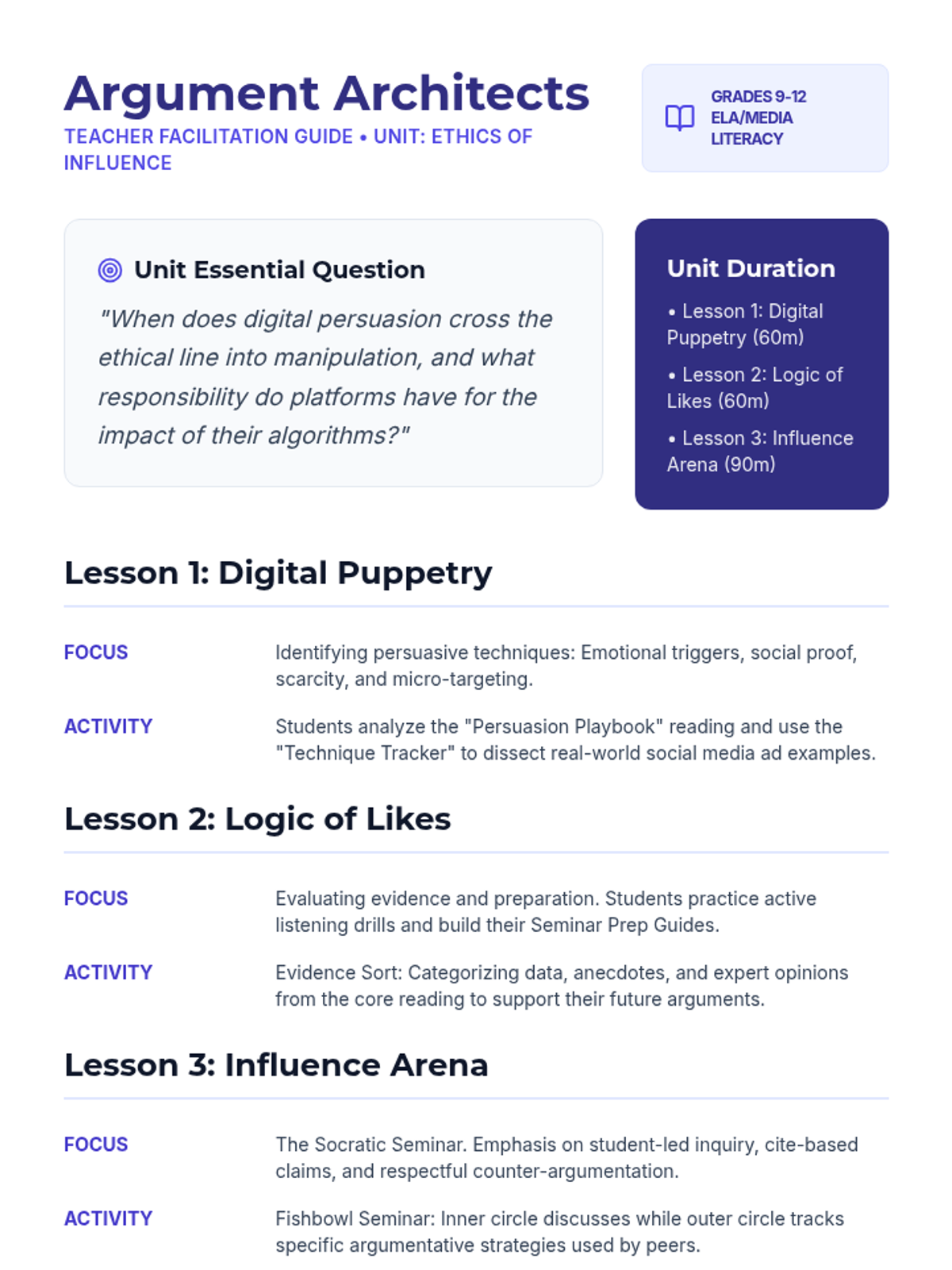
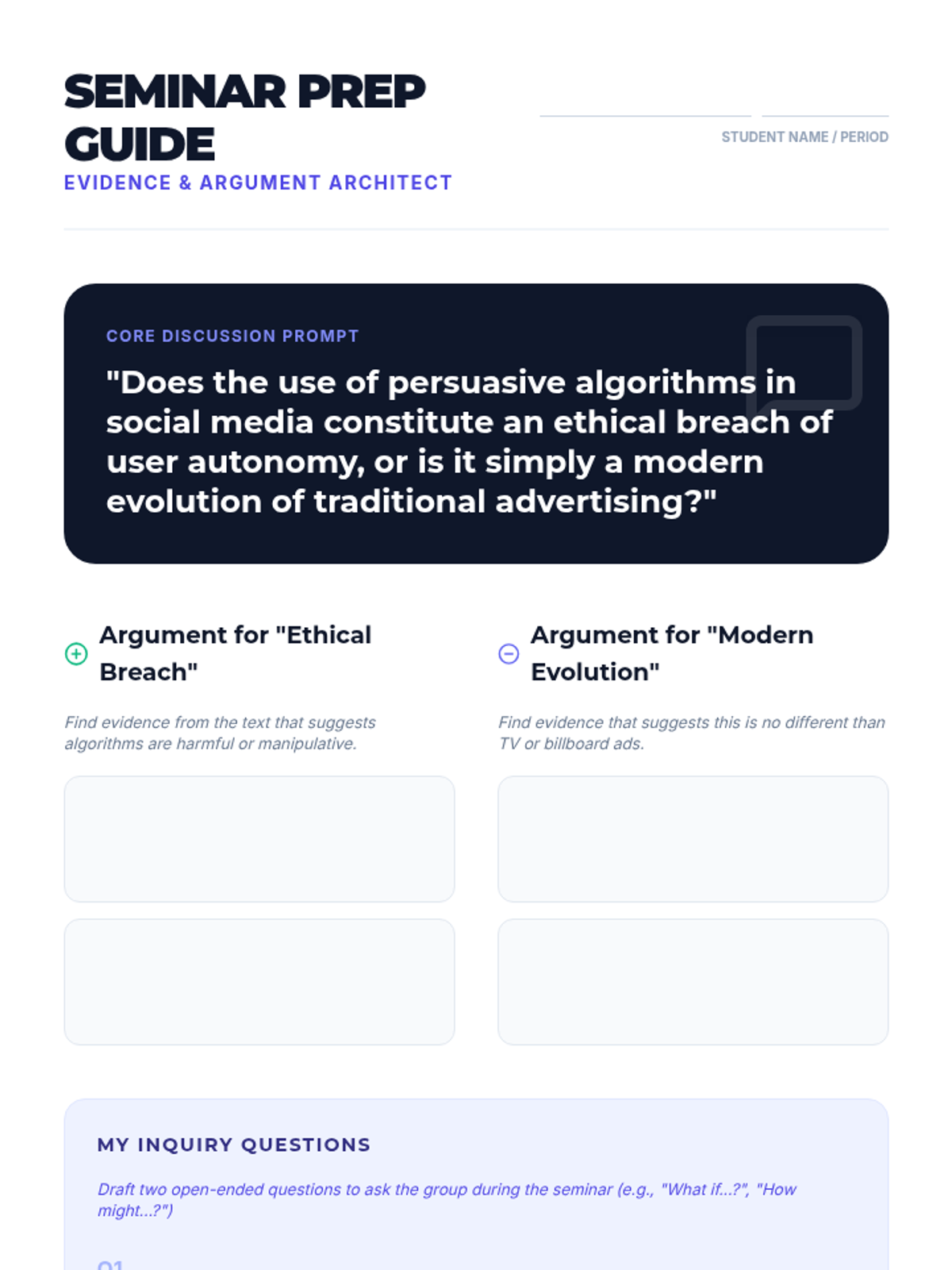
The capstone Socratic Seminar where students engage in a structured, evidence-based discussion about the ethics of modern digital persuasion.
Students evaluate the ethics of digital influence and prepare evidence-based arguments for a Socratic Seminar, focusing on active listening and logical fallacies.
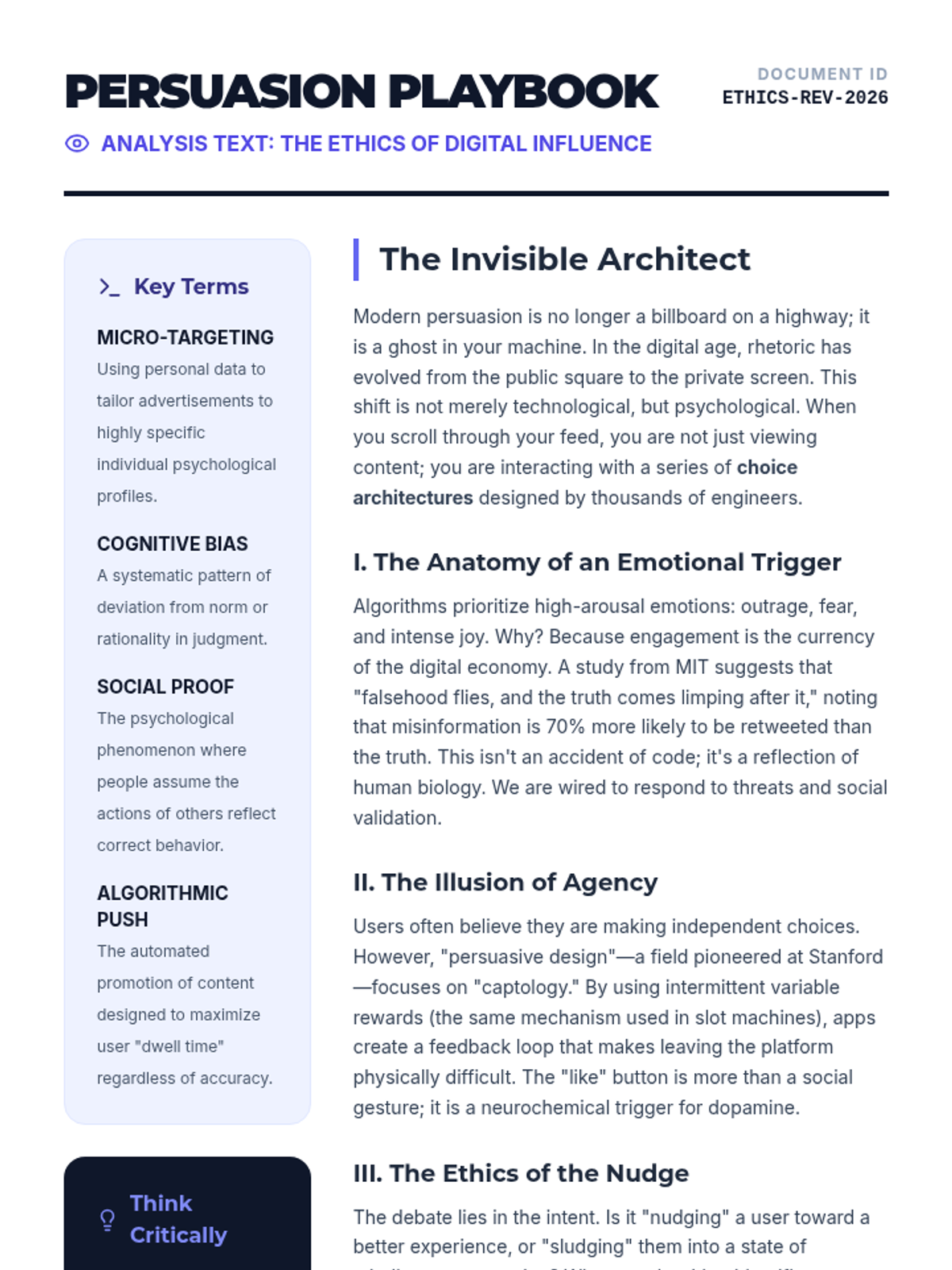
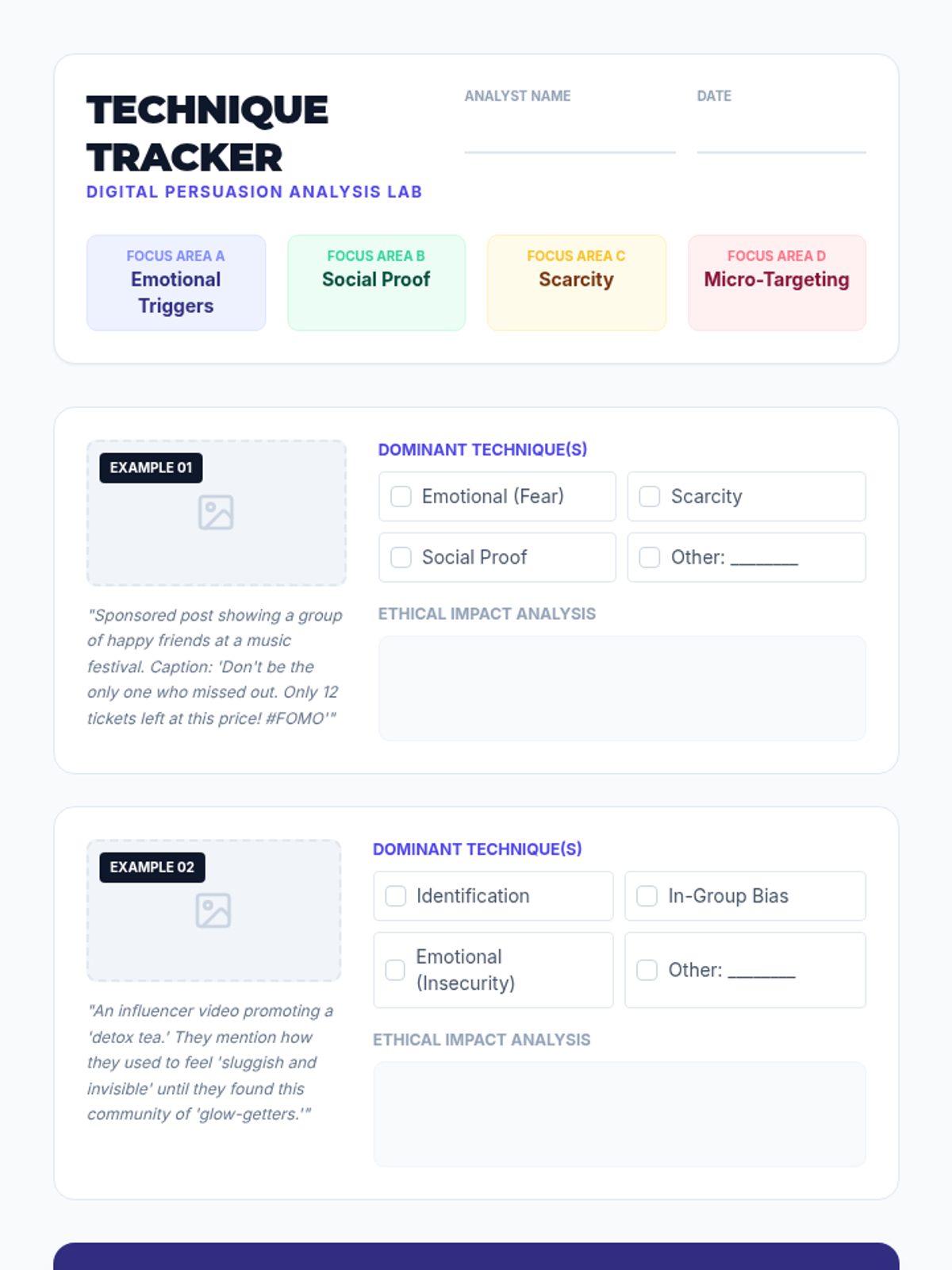
Students identify and analyze modern persuasive techniques used in social media and digital advertising, focusing on emotional triggers and algorithmic micro-targeting.
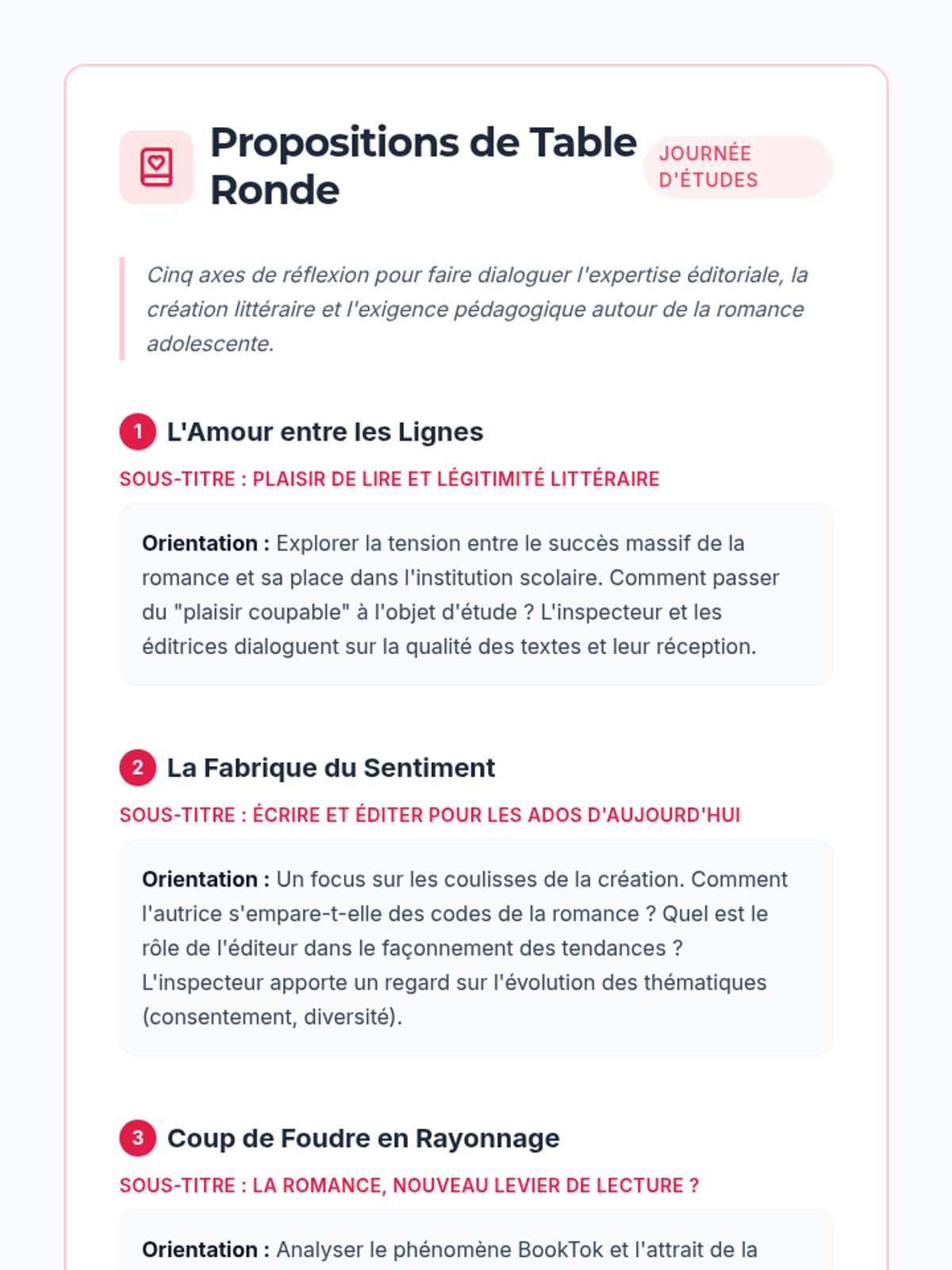
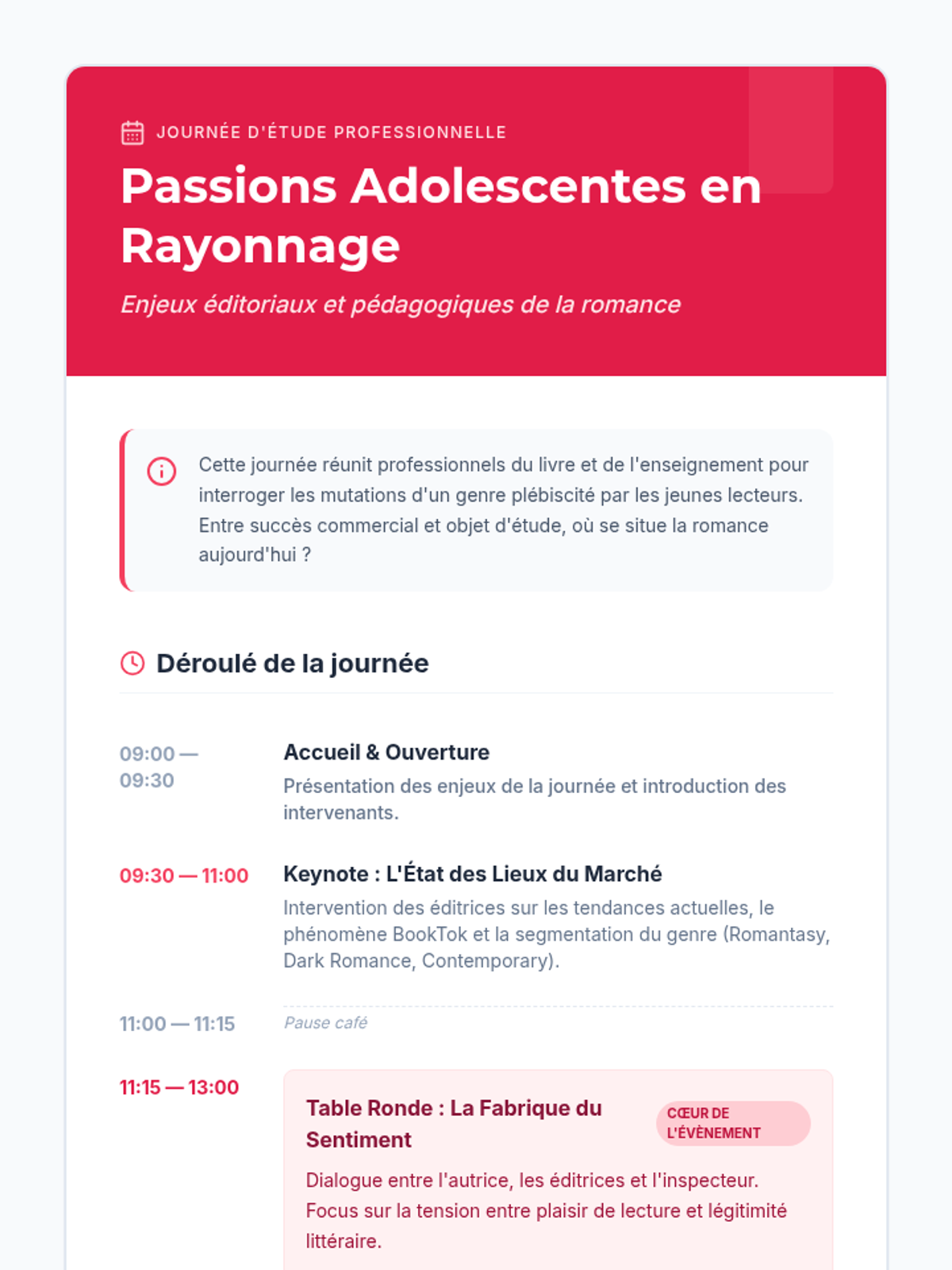
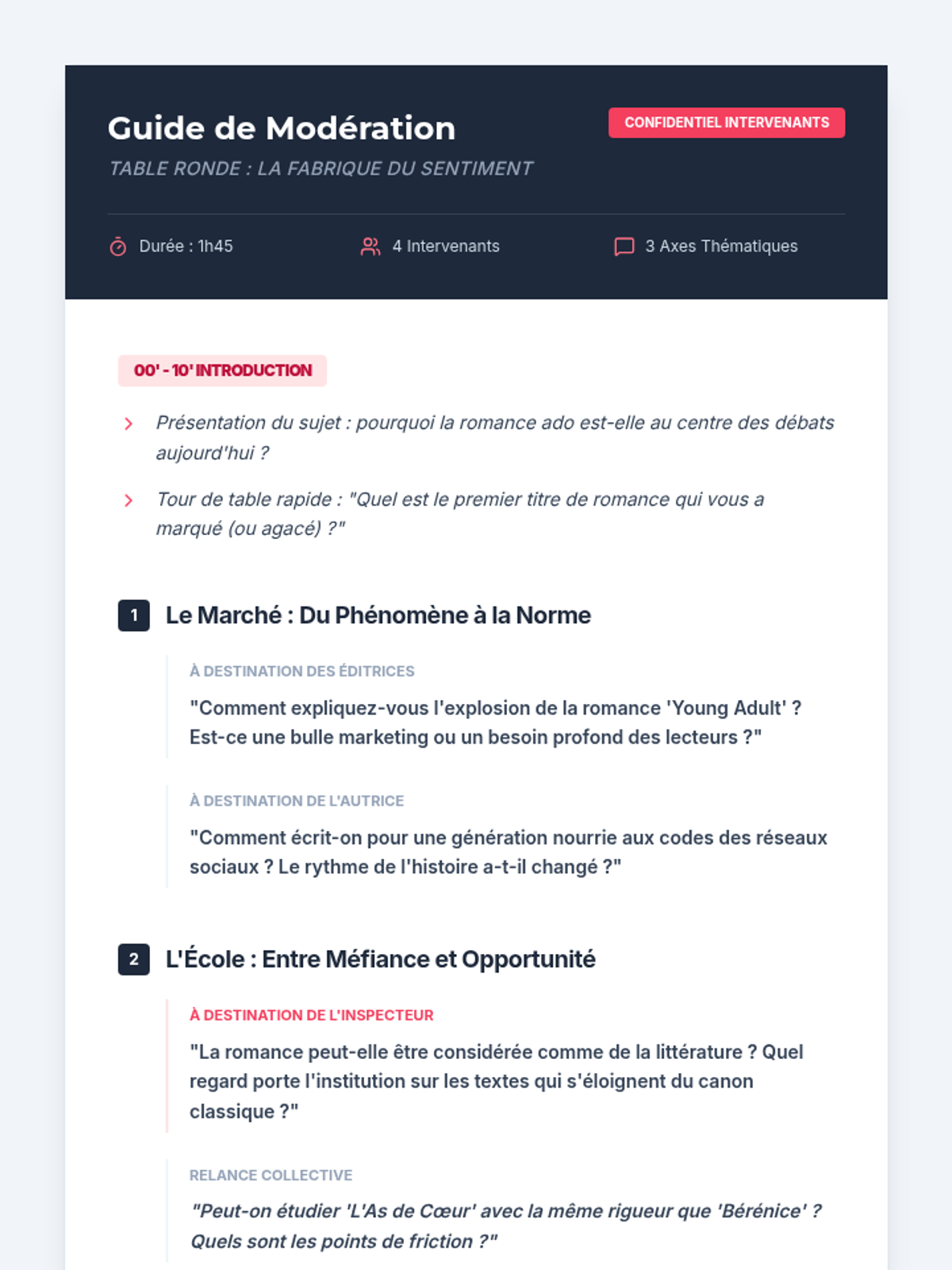
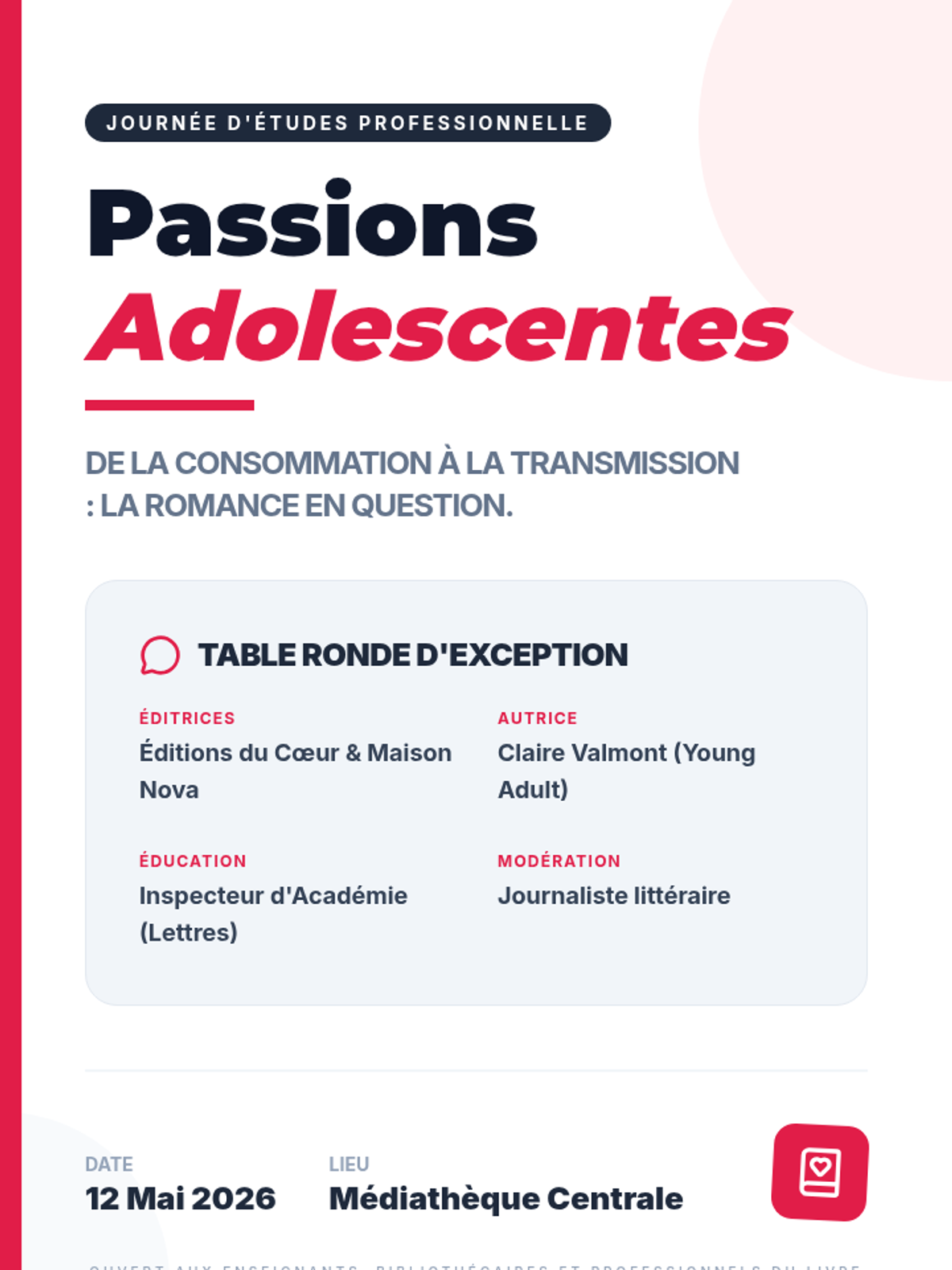
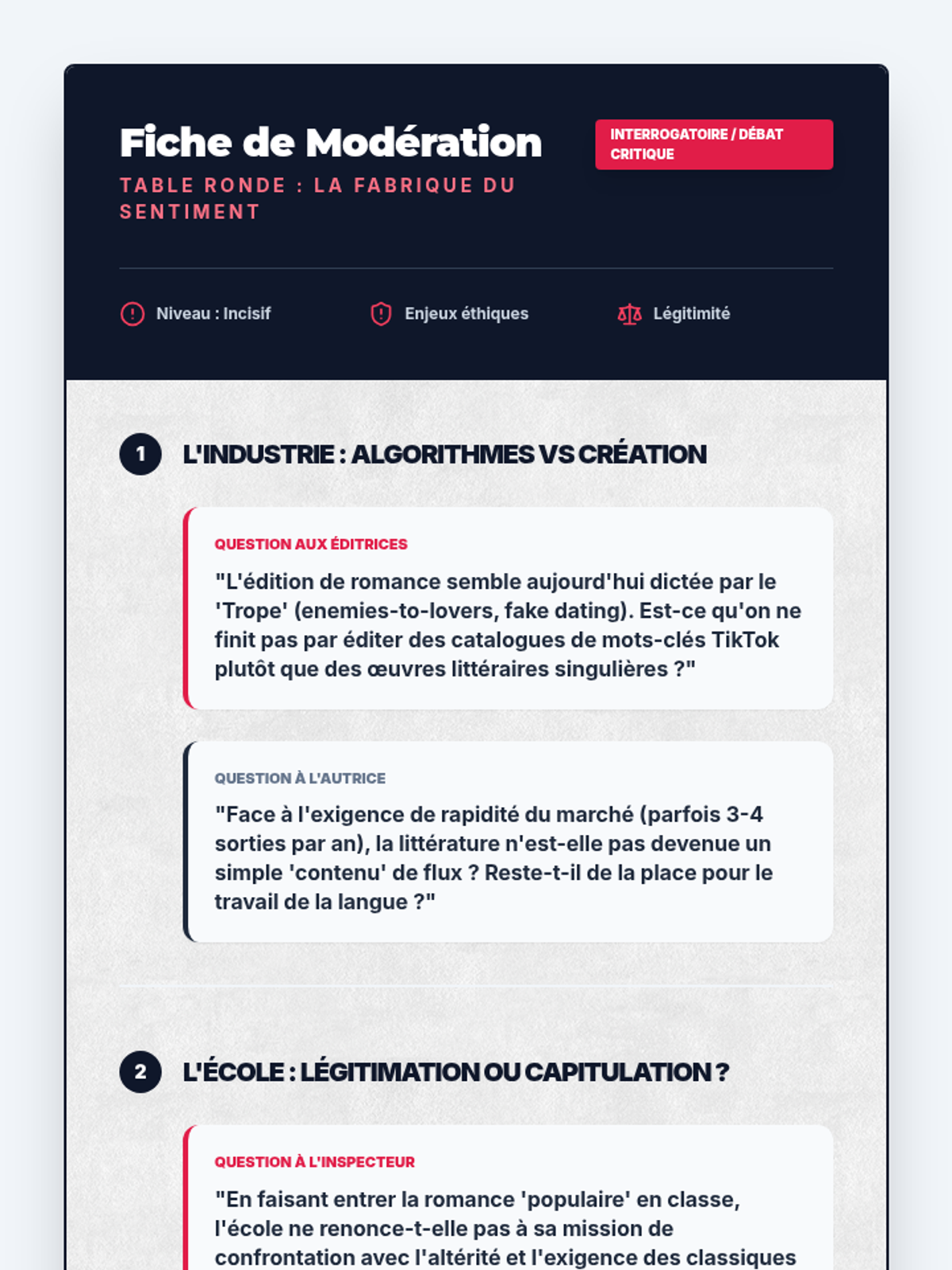
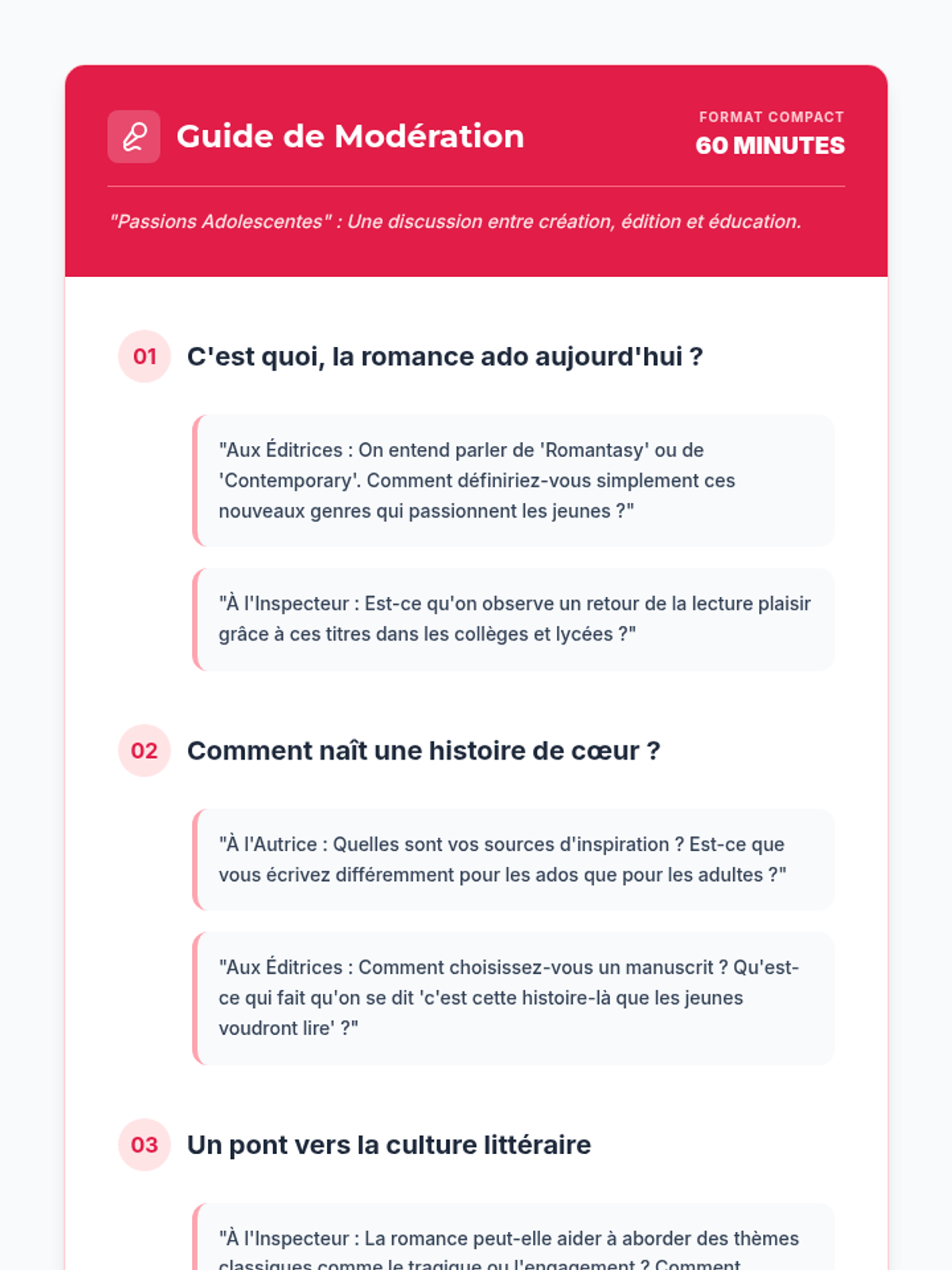
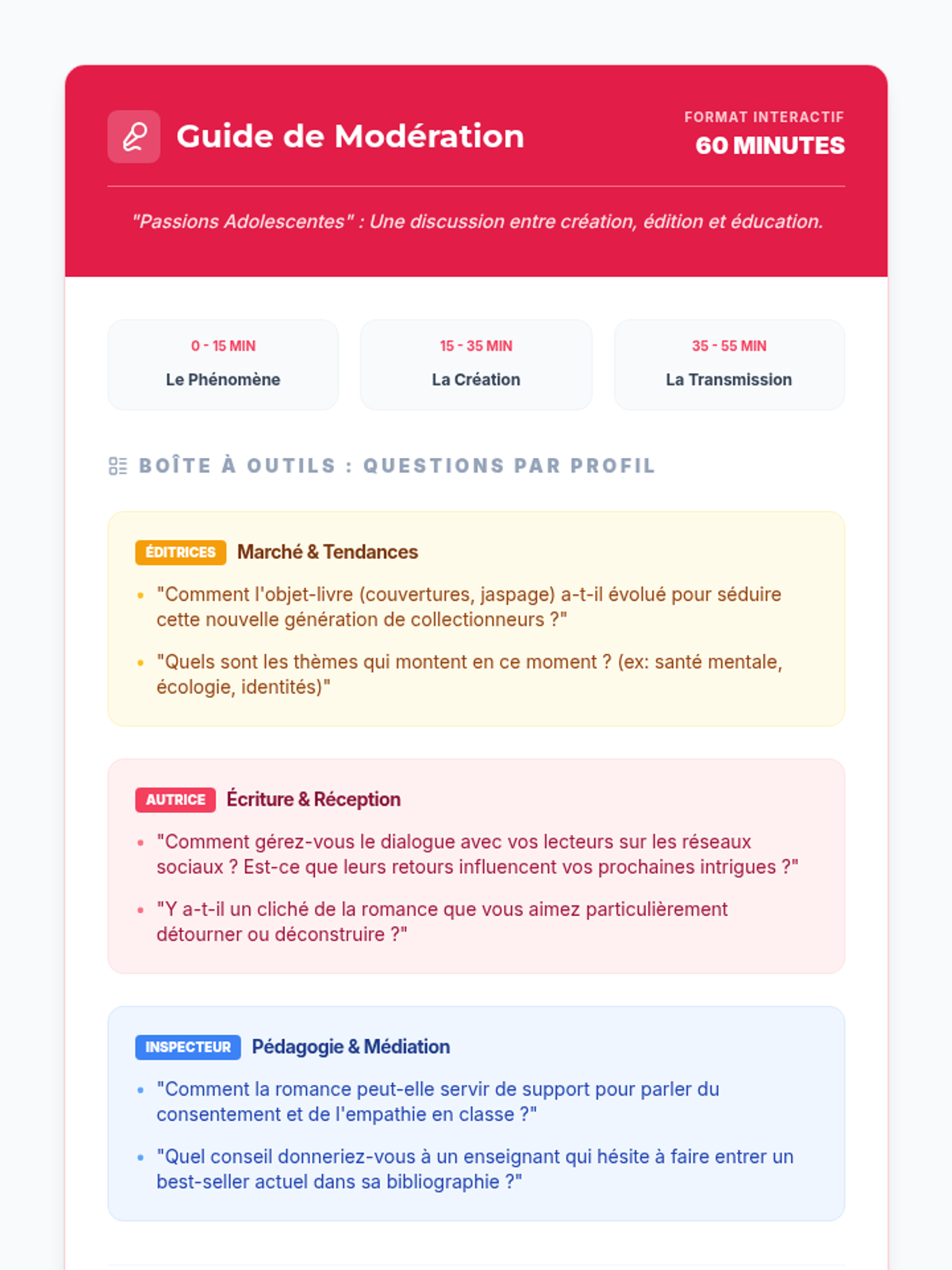
Préparation et organisation de la table ronde sur la romance adolescente avec des professionnels de l'édition et de l'éducation.
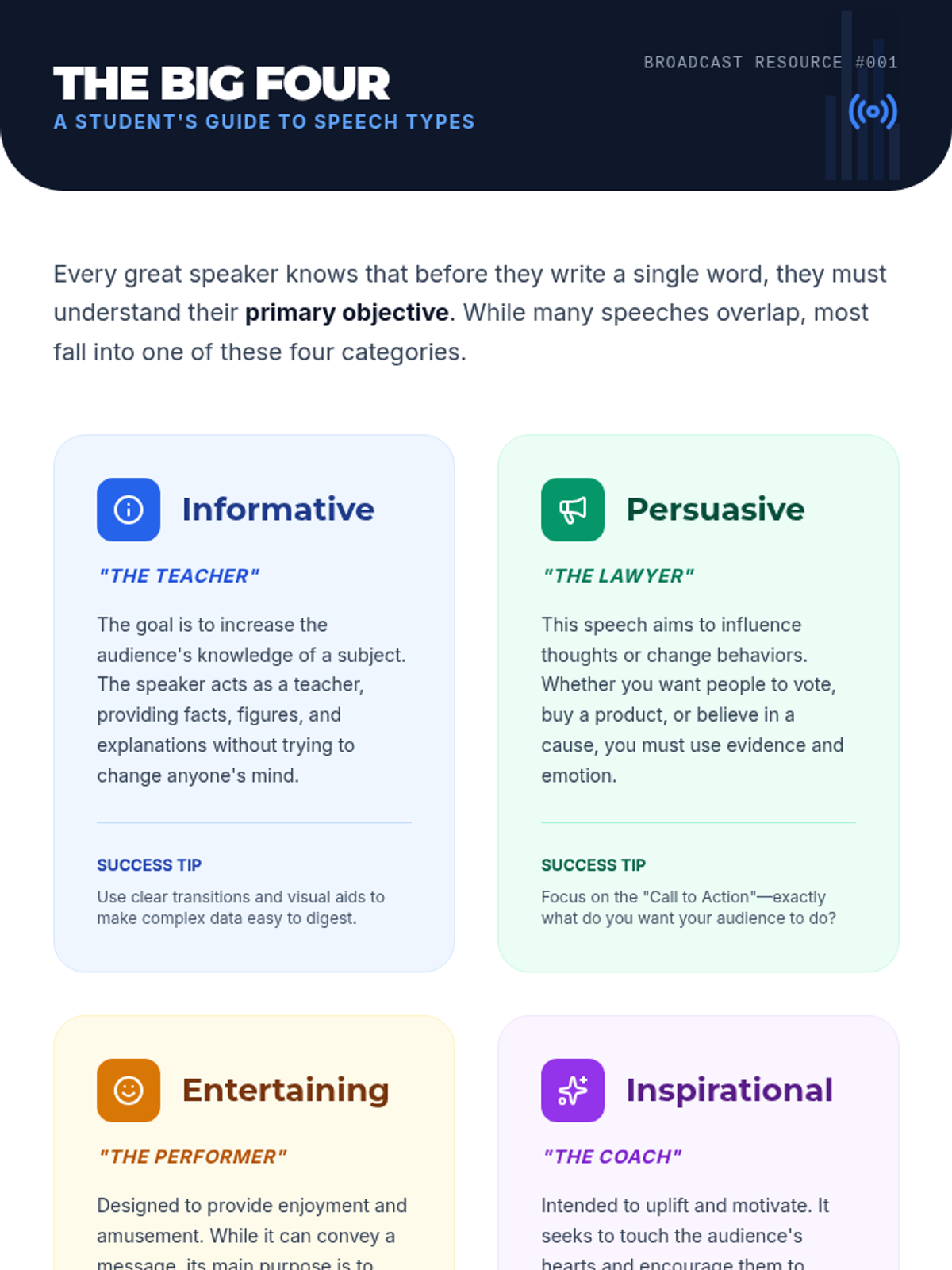
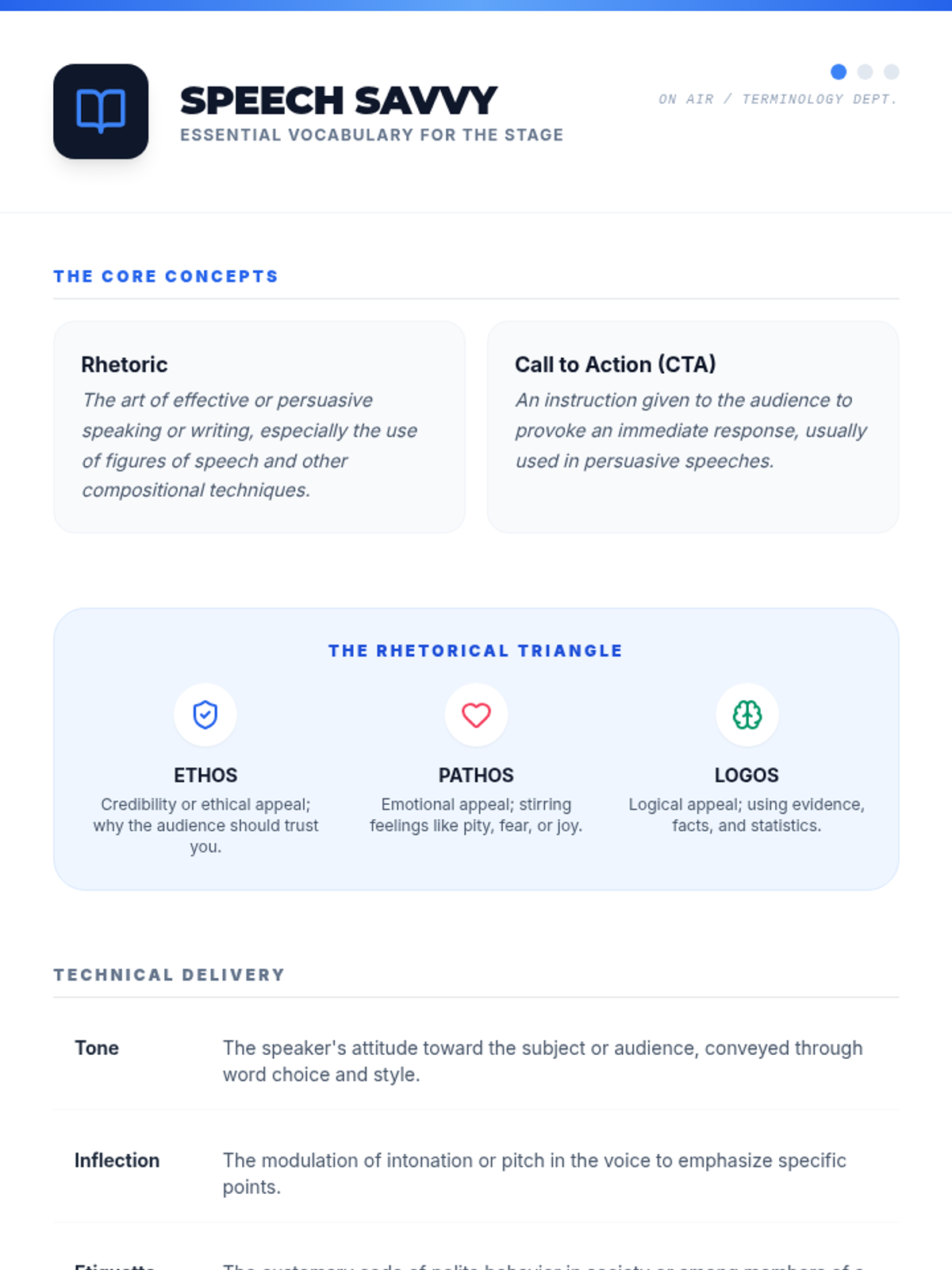
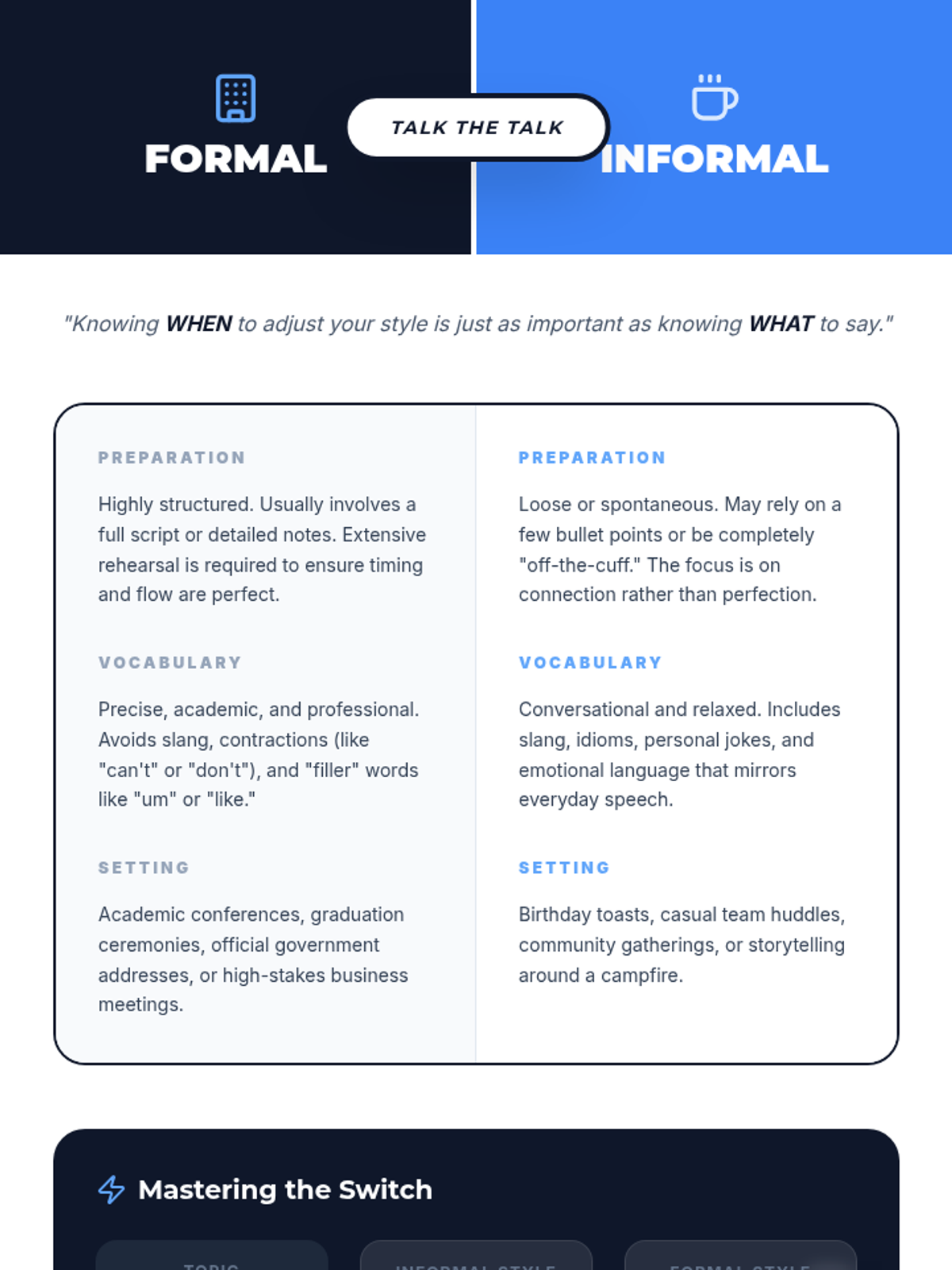
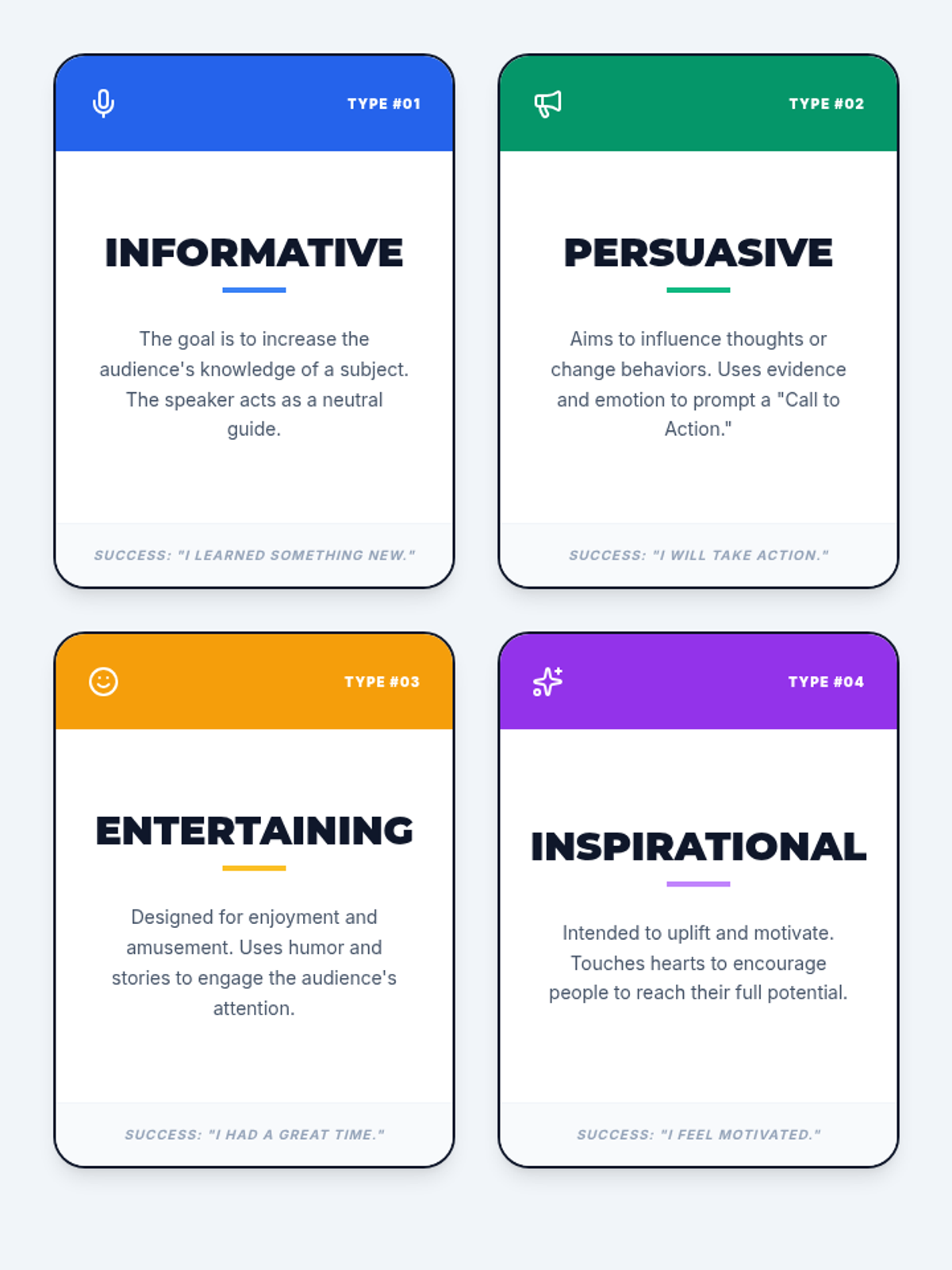
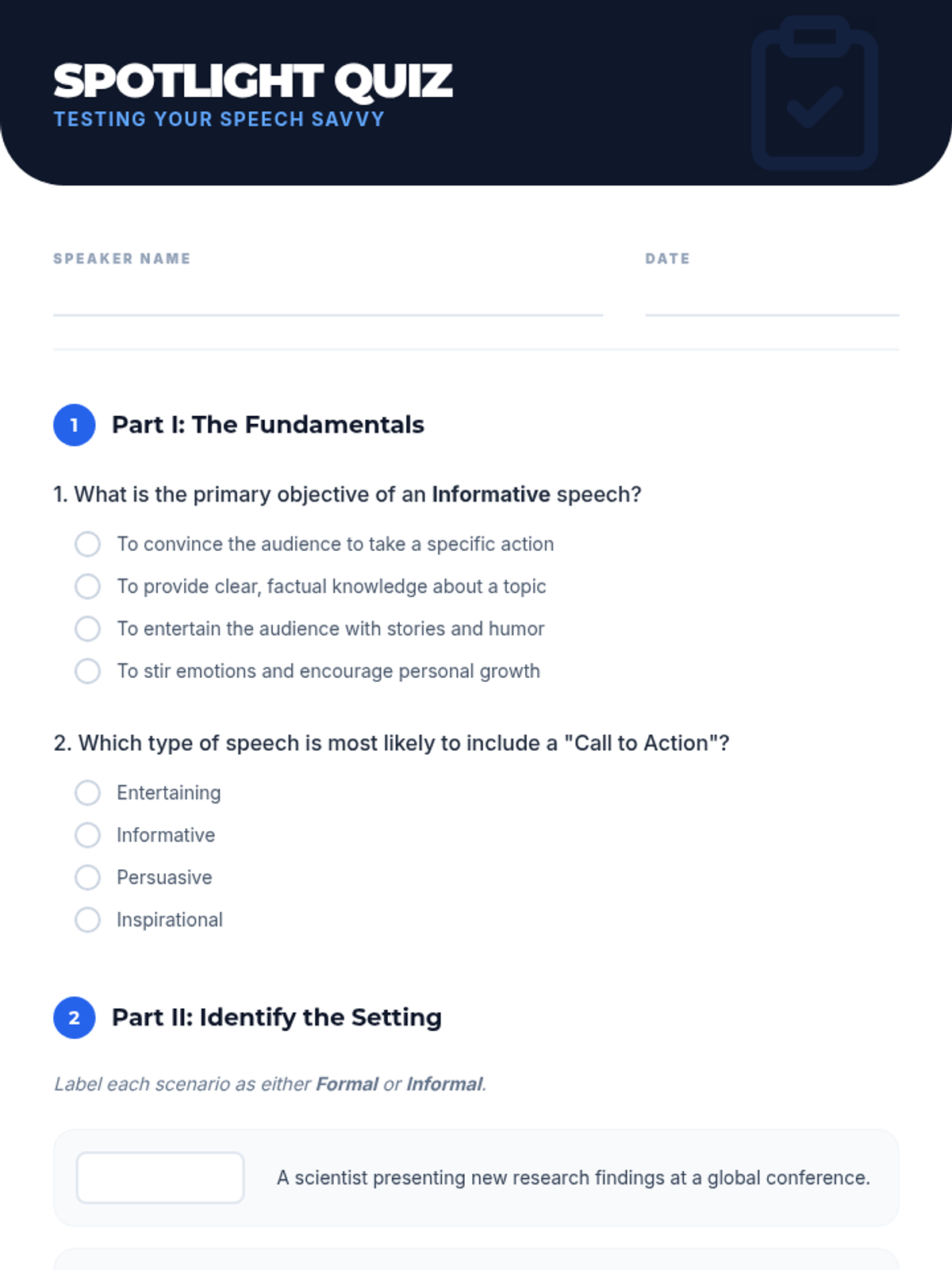
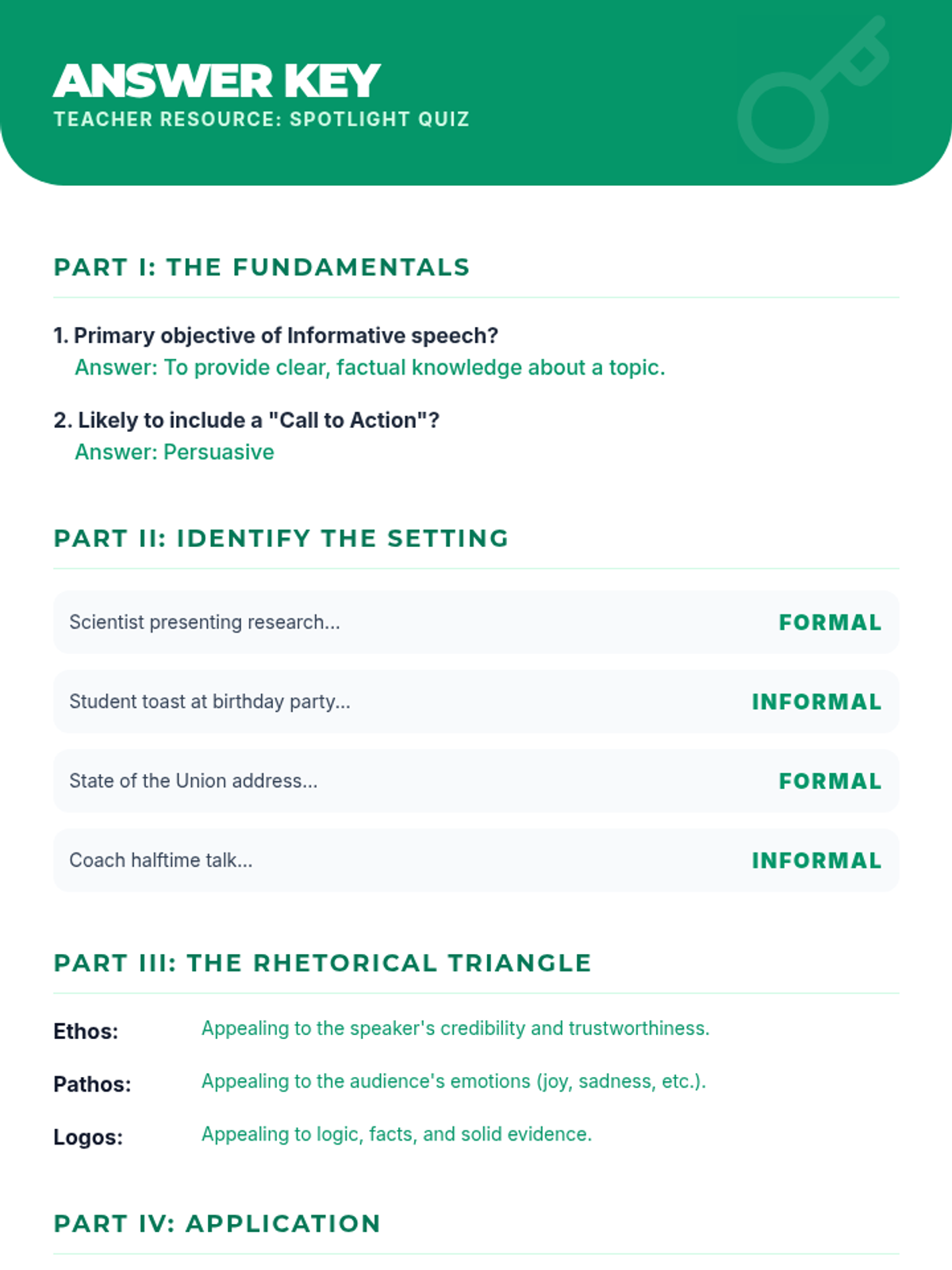
A comprehensive introduction to the four primary types of speeches and the nuances of formal versus informal public speaking. Students explore informative, persuasive, entertaining, and inspirational speaking styles through detailed guides and vocabulary.
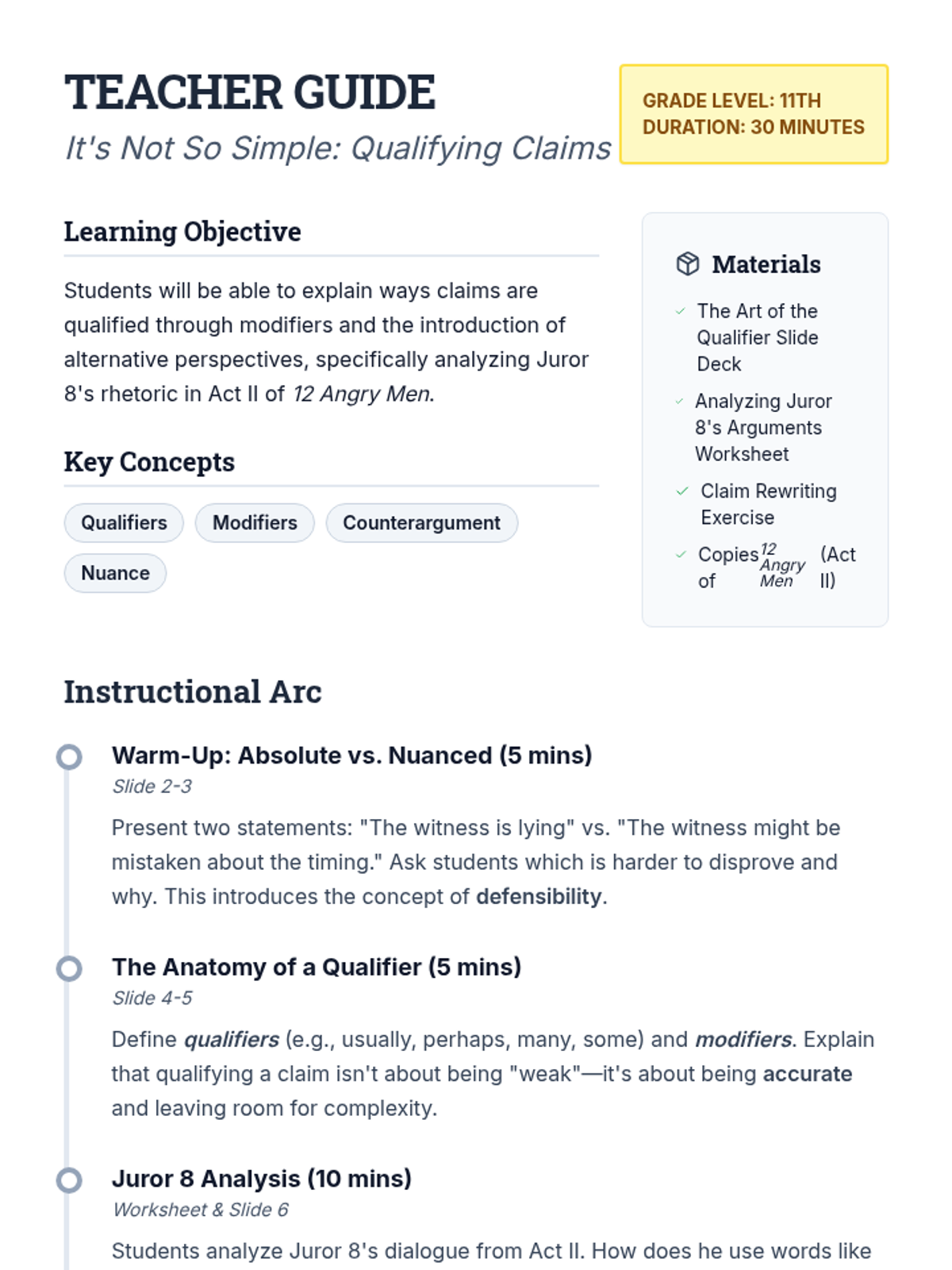
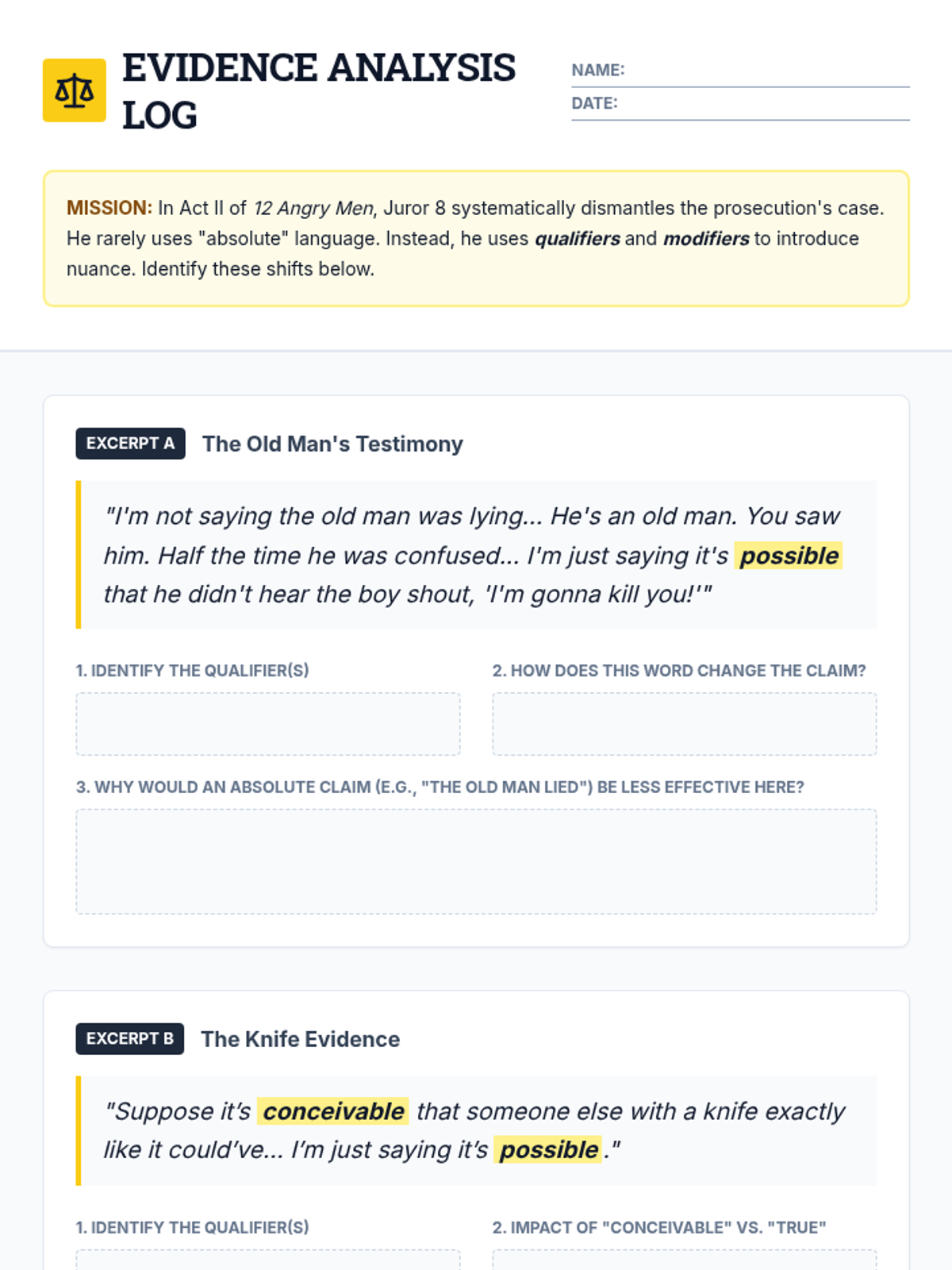
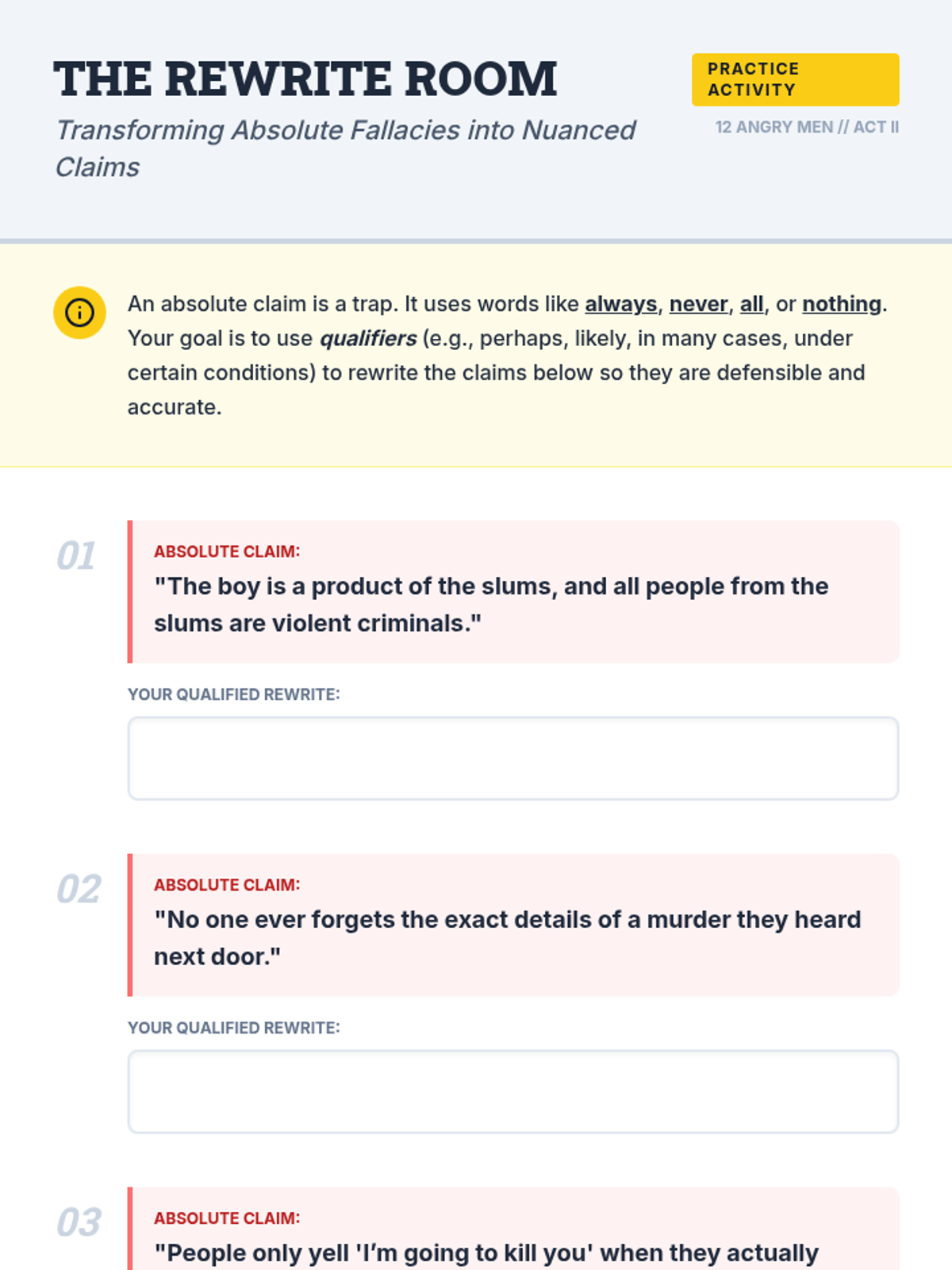
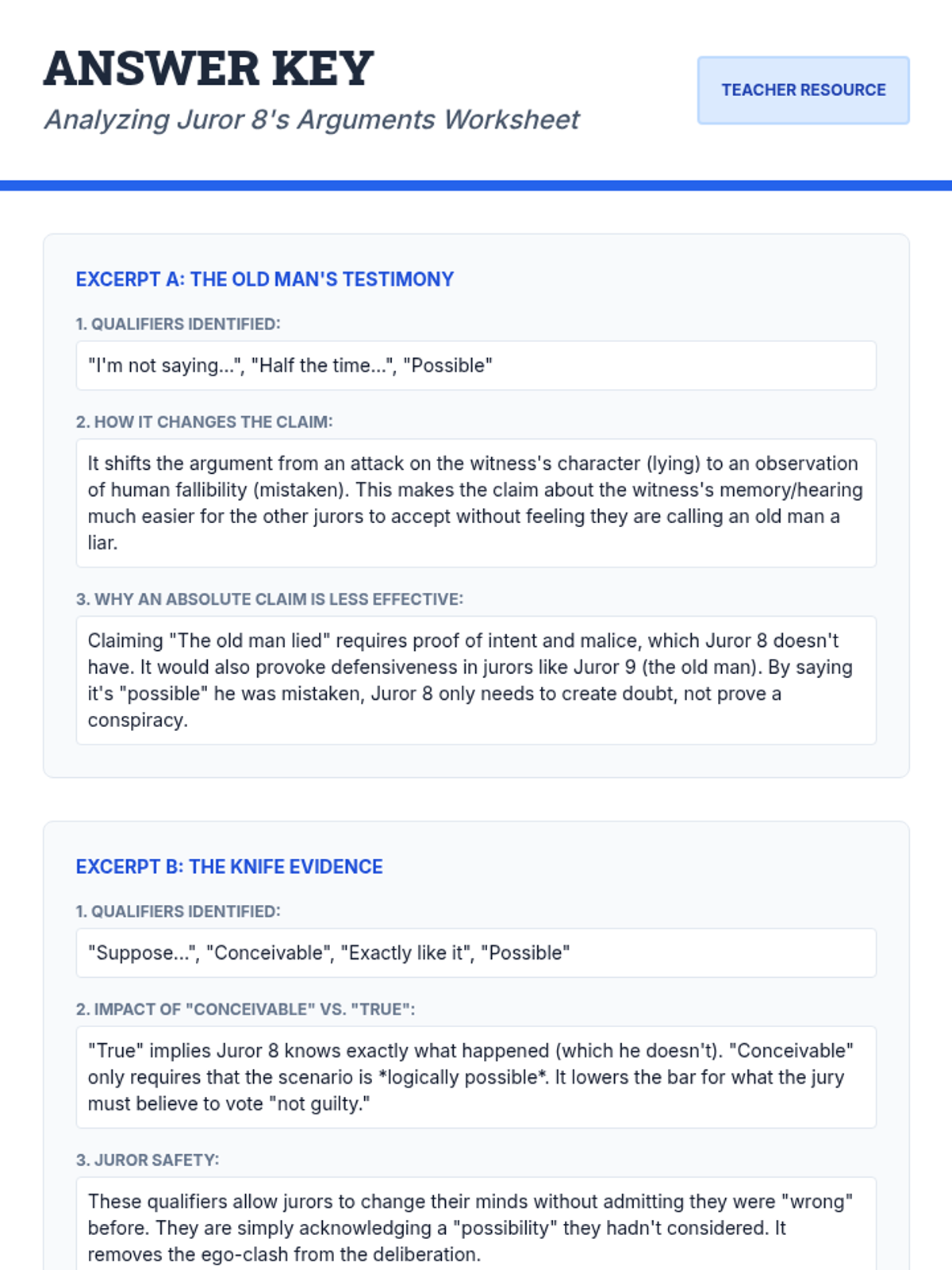
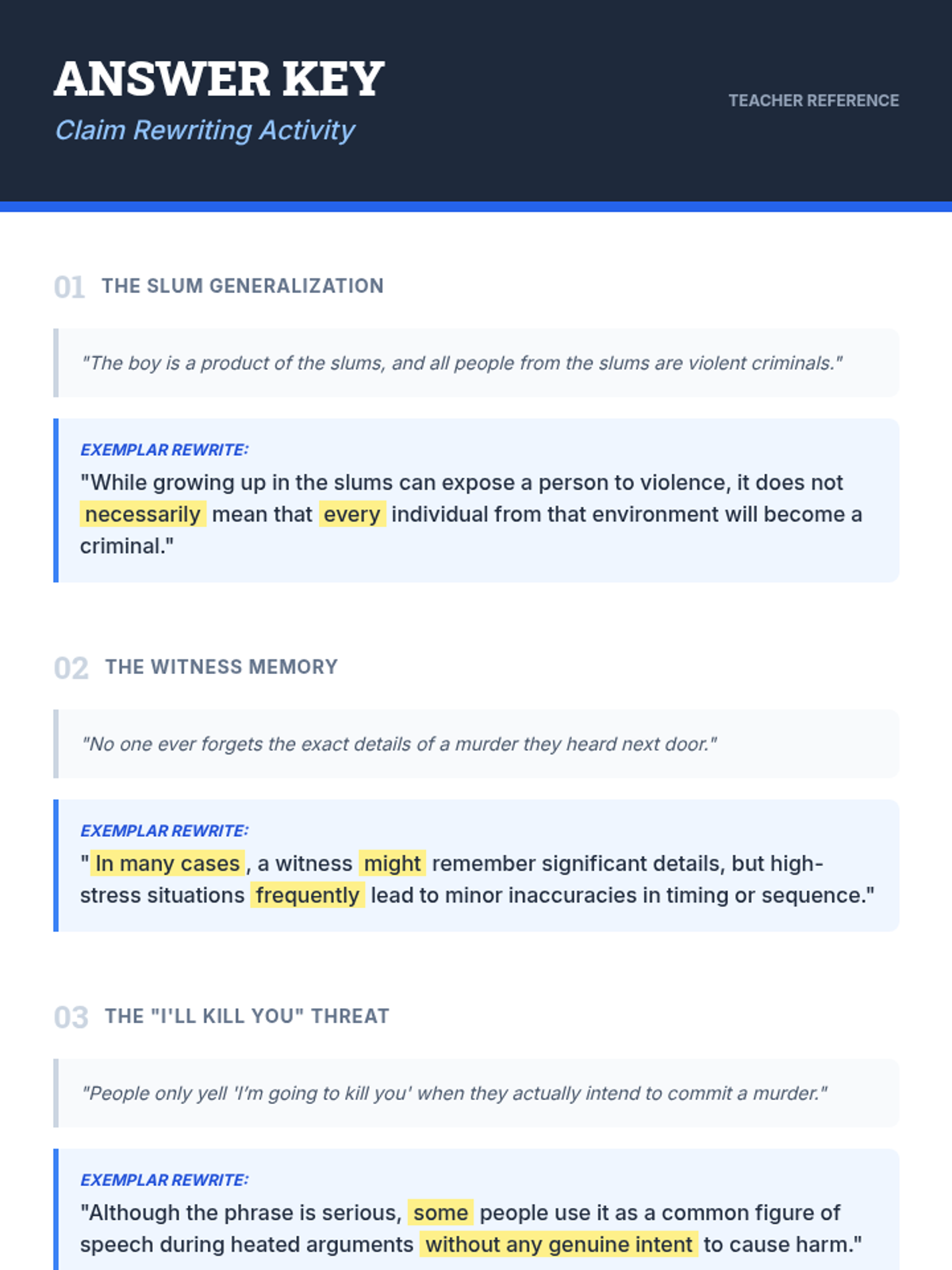
A high-school level exploration of how to use qualifiers and modifiers to create nuanced arguments, using Juror 8's rhetoric in 12 Angry Men as a primary case study. Students learn to move beyond absolute claims to build more persuasive, credible arguments.
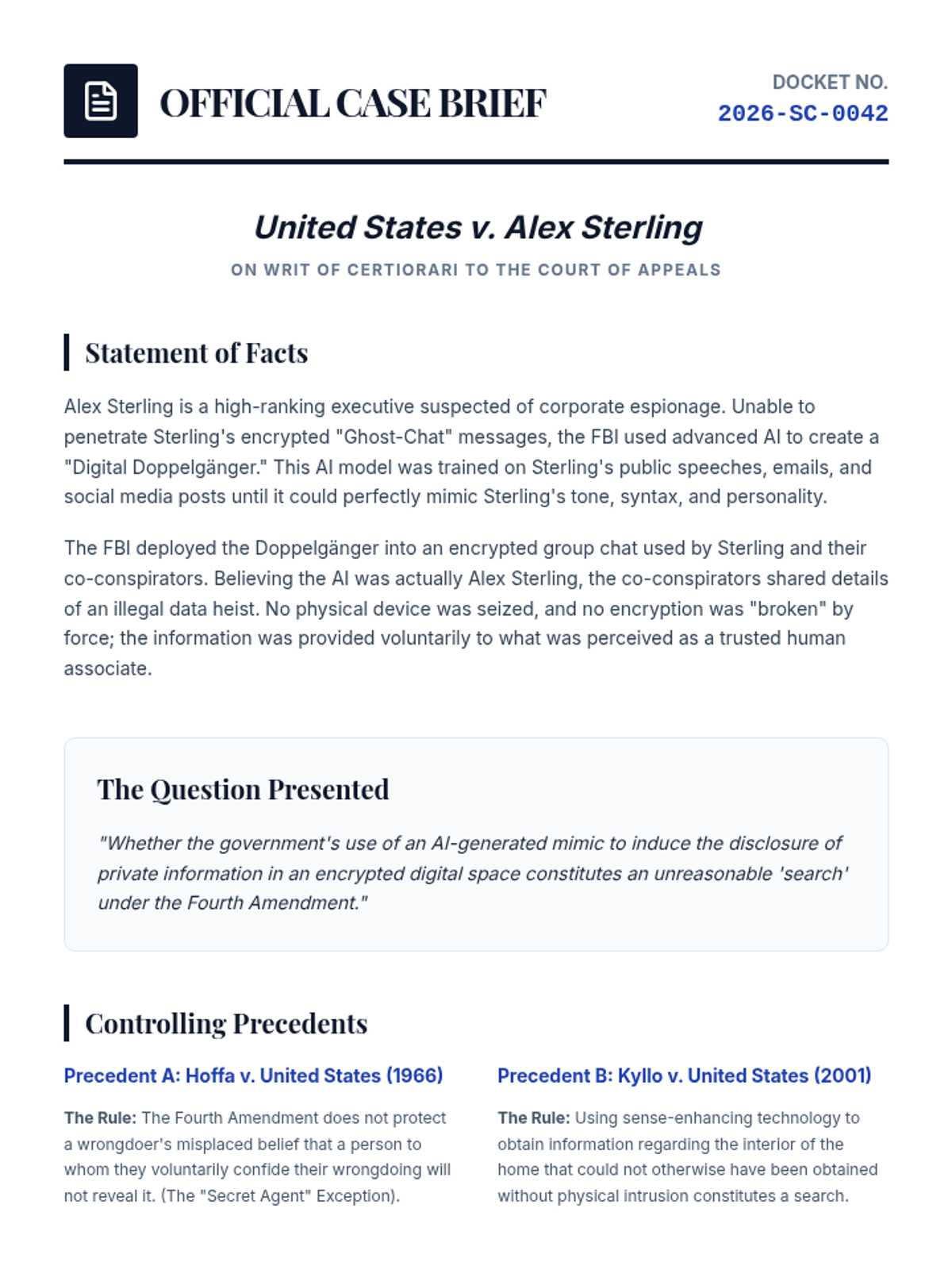
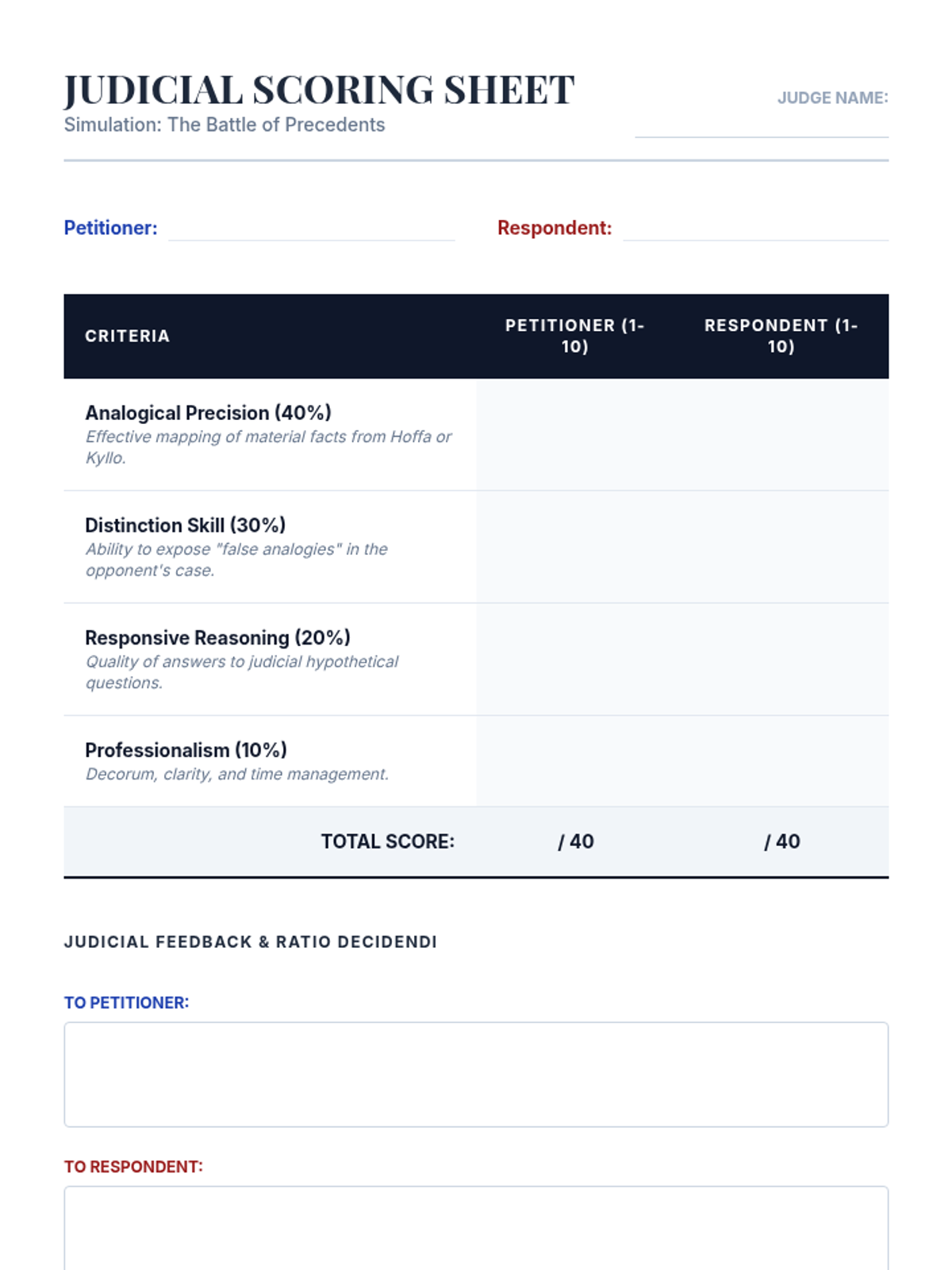
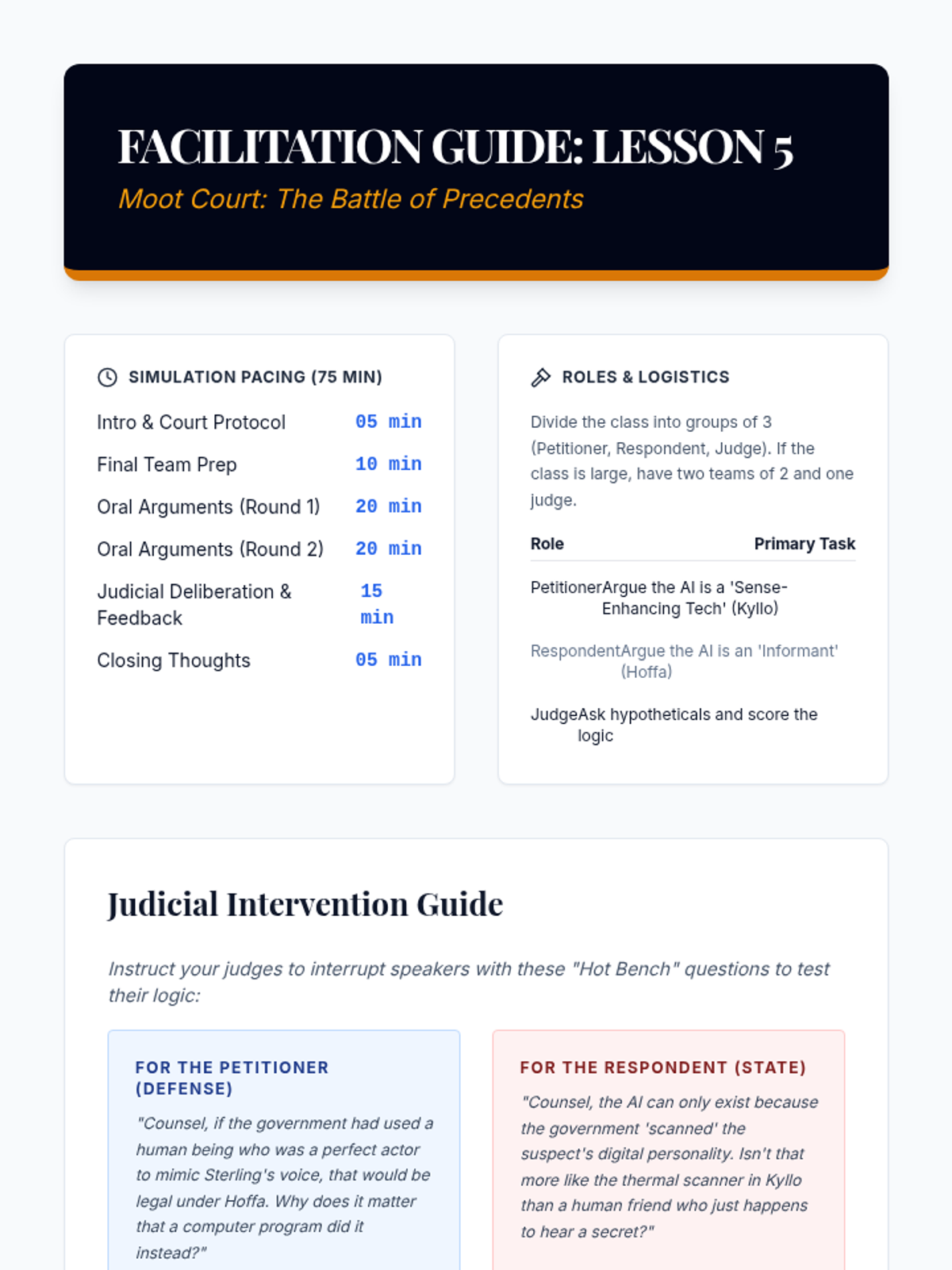
In this culminating simulation, students present oral arguments on a fictional constitutional issue. They must rely exclusively on analogical reasoning and case precedent to persuade a panel of judges. Feedback focuses on the tight application of the analogy rather than rhetorical flair.
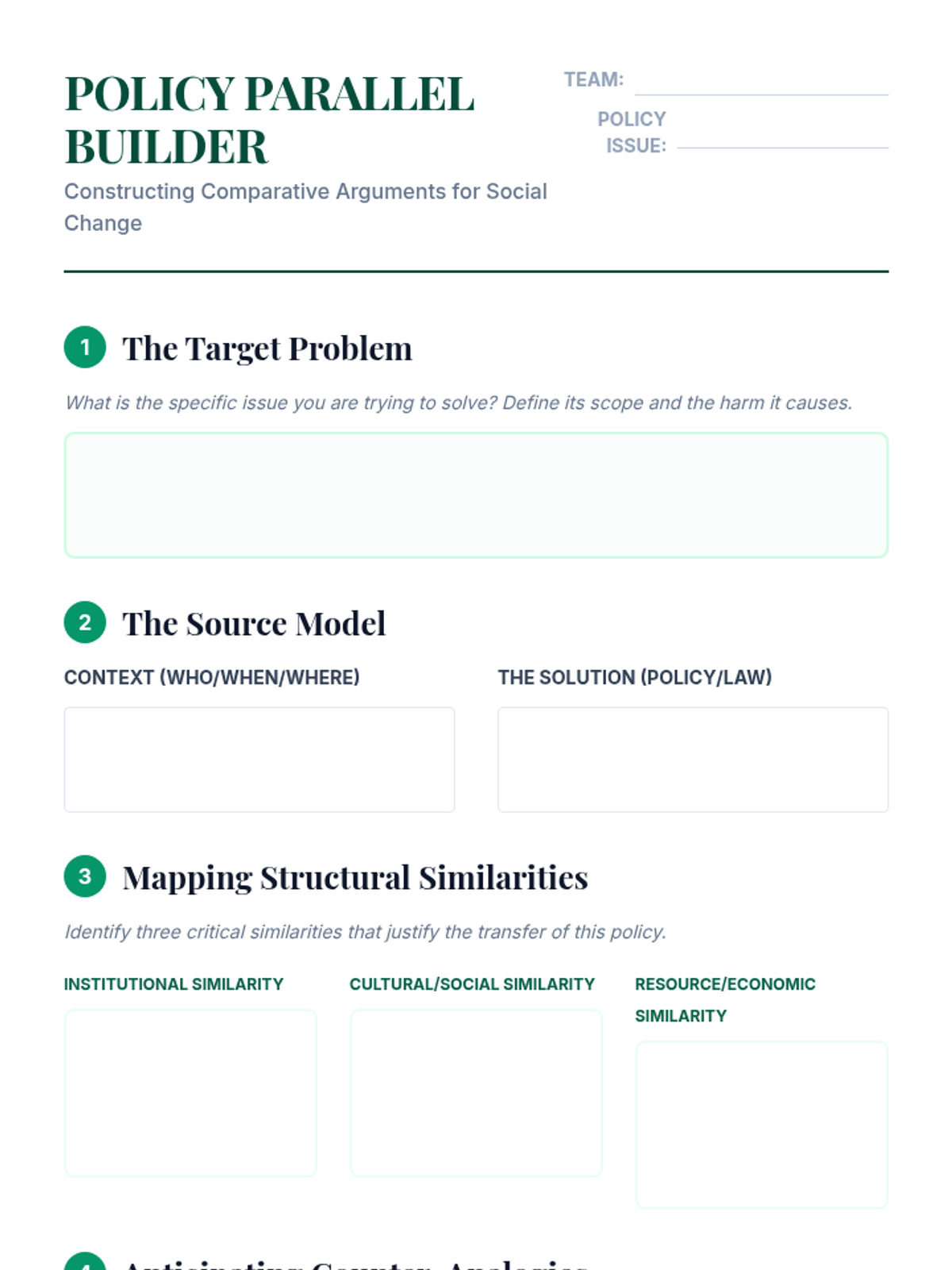
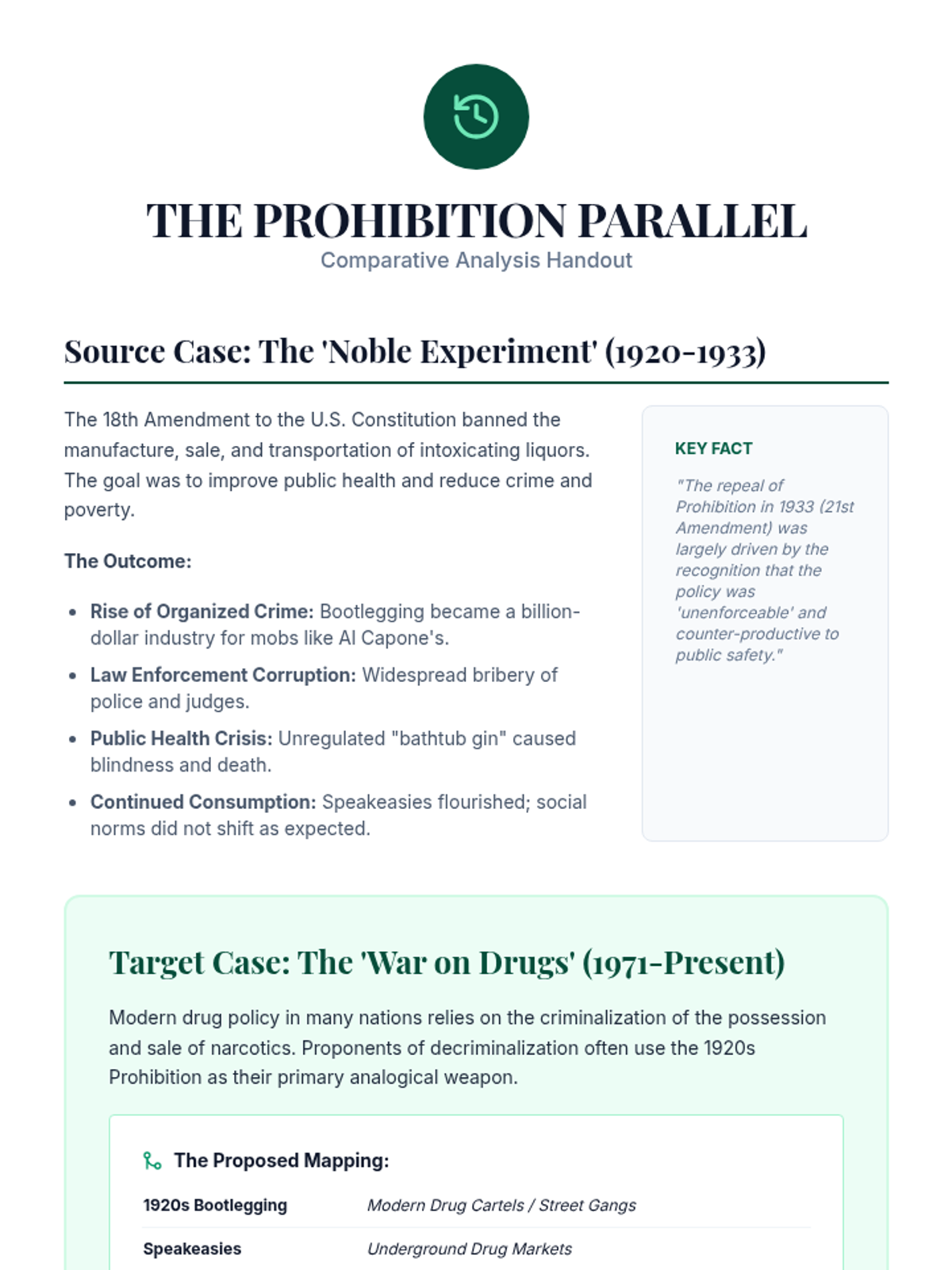
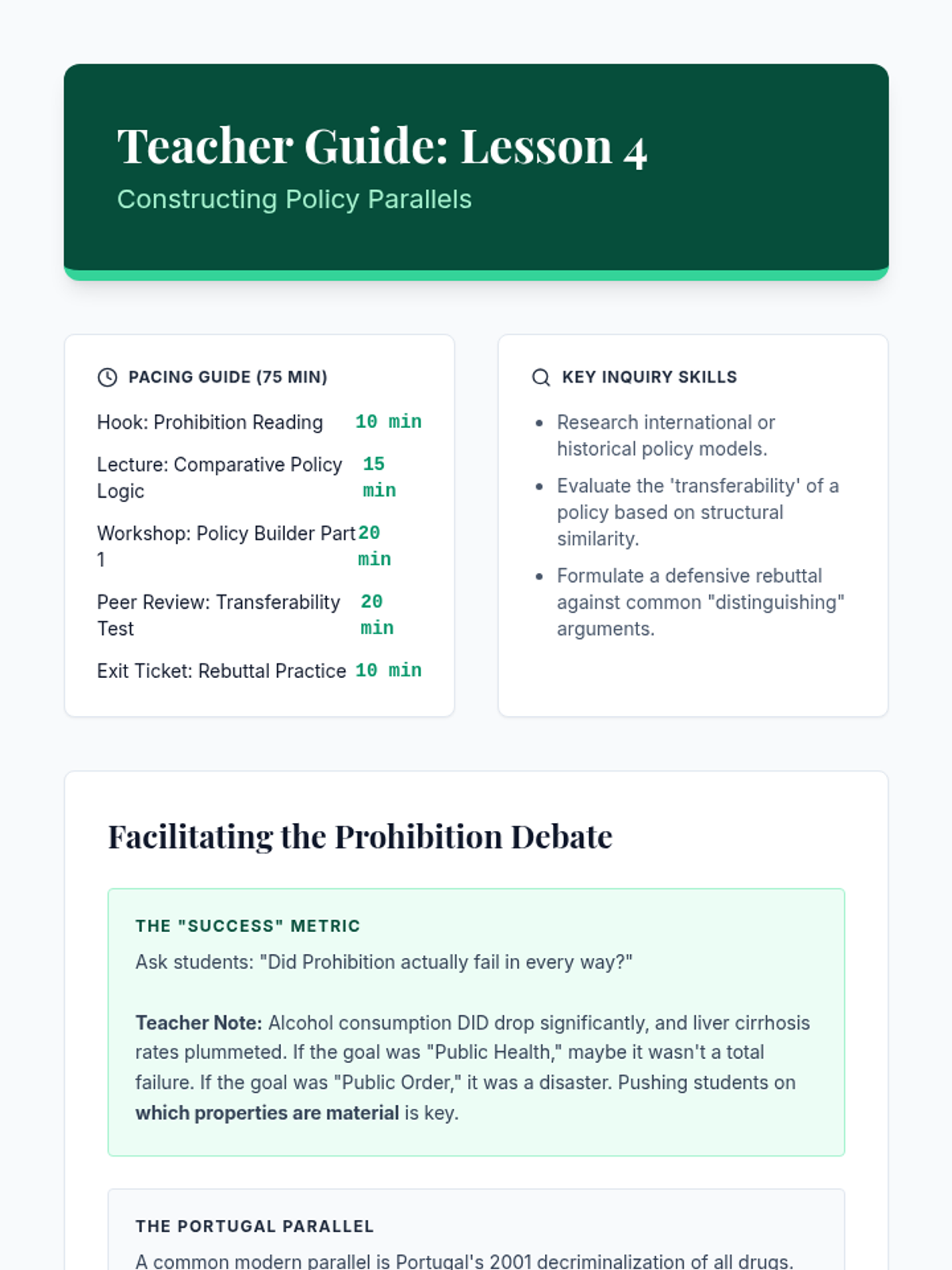
Moving to public policy, students use analogical reasoning to advocate for solutions by comparing current problems to successful historical or international examples. Teams research a policy issue (e.g., healthcare, transit) and build an argument based on a successful model from another country. Peer review focuses on the validity of the transfer.
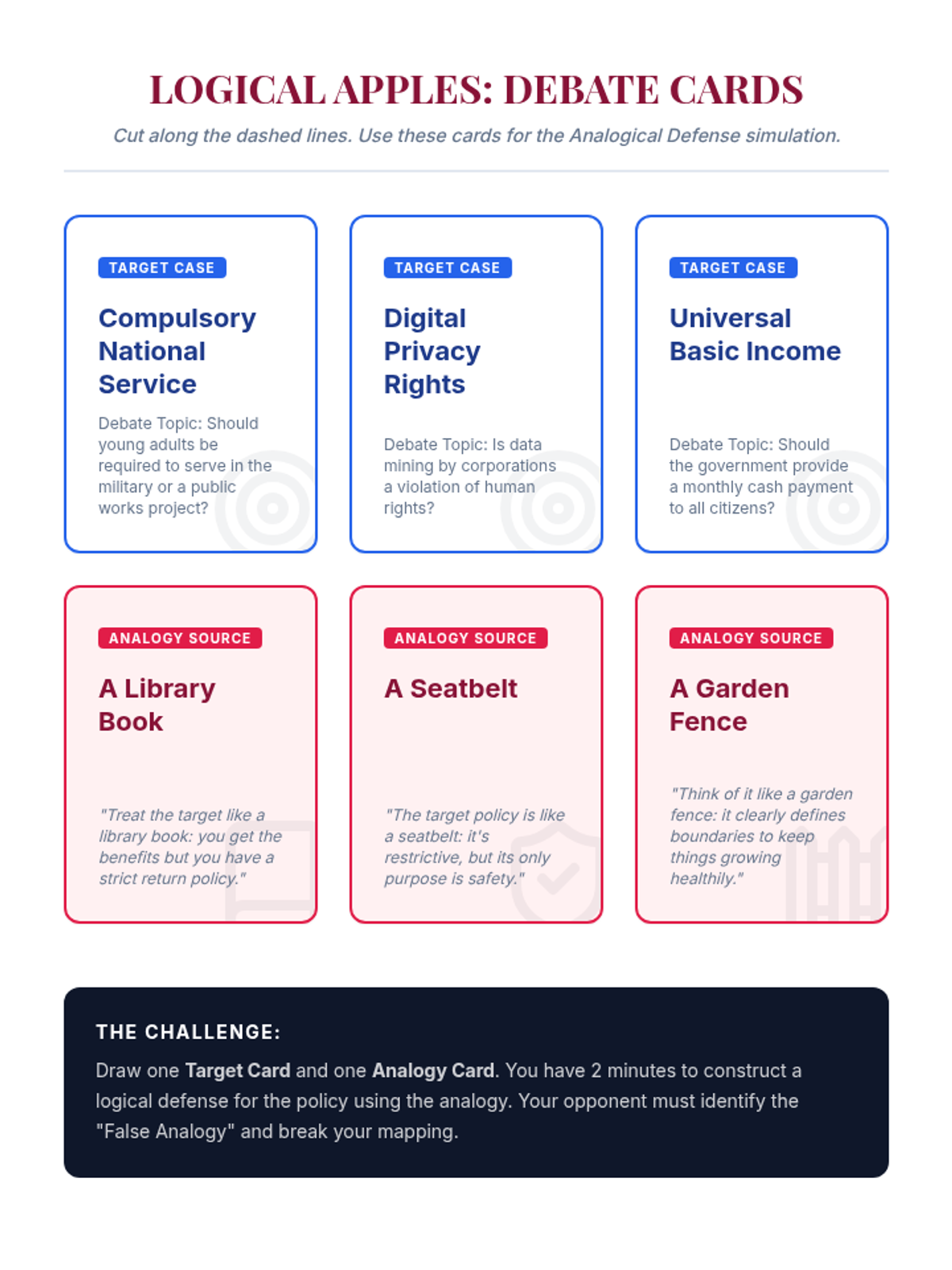
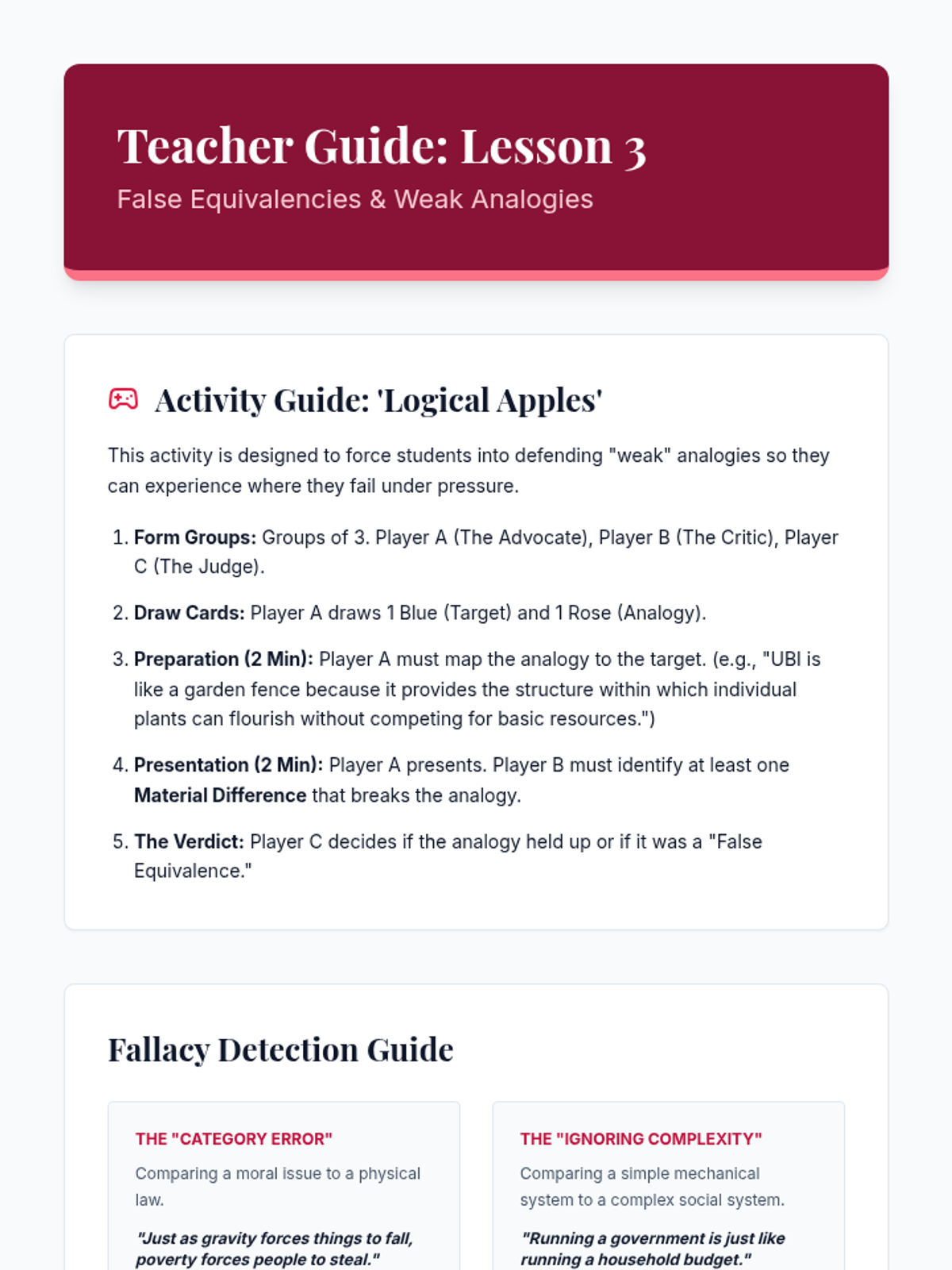
Students focus on the 'False Analogy' fallacy, learning to identify when a comparison breaks down. The lesson emphasizes the difference between literal and figurative analogies in argumentation. Students workshop their own analogies to strengthen them against counter-arguments.
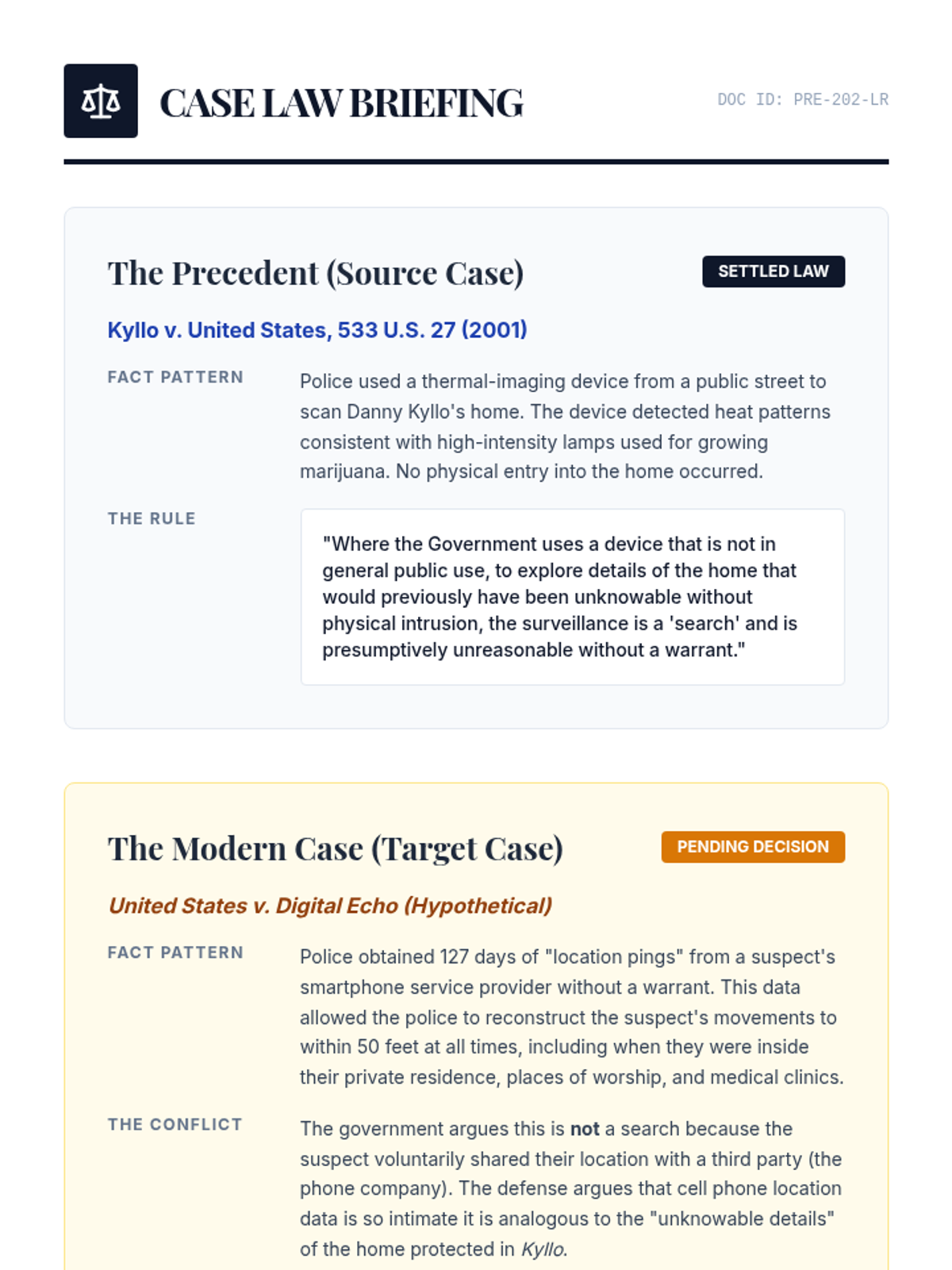
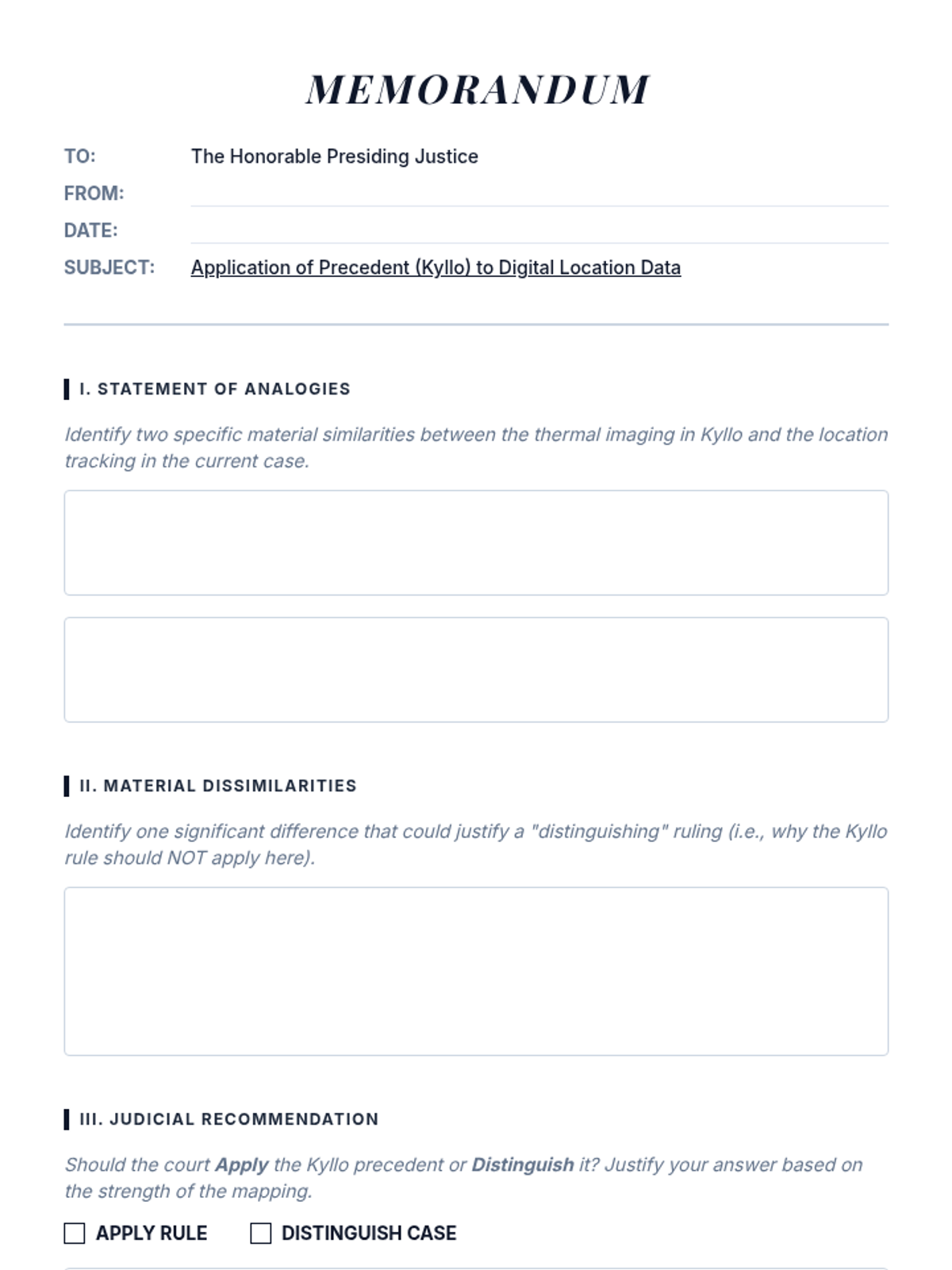
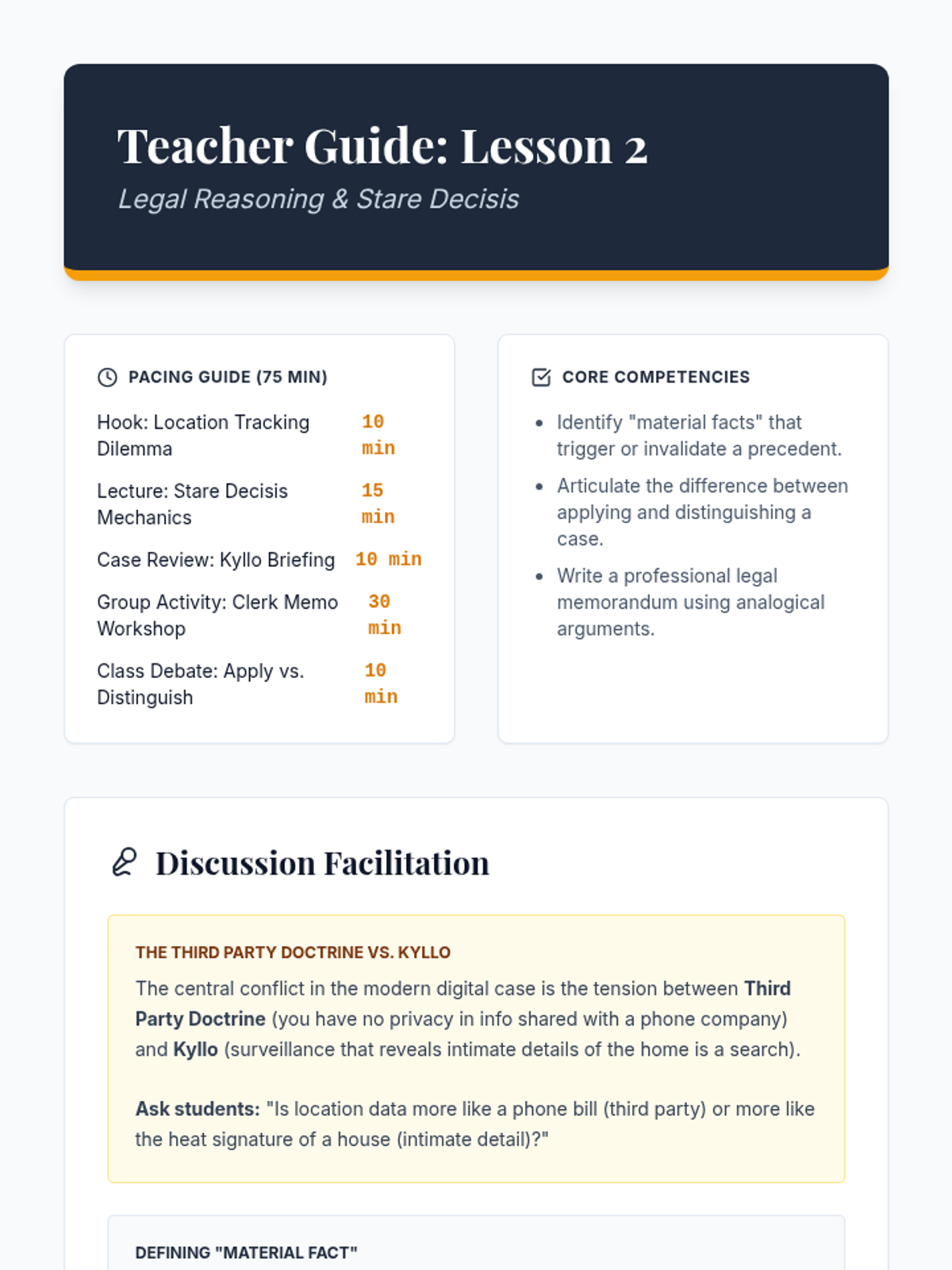
This lesson focuses on how analogical reasoning functions in the legal system through the doctrine of precedent. Students review case summaries to see how judges distinguish or apply previous rulings to new fact patterns. Small groups act as clerks, writing memos on whether a new case is analogous to a landmark ruling.
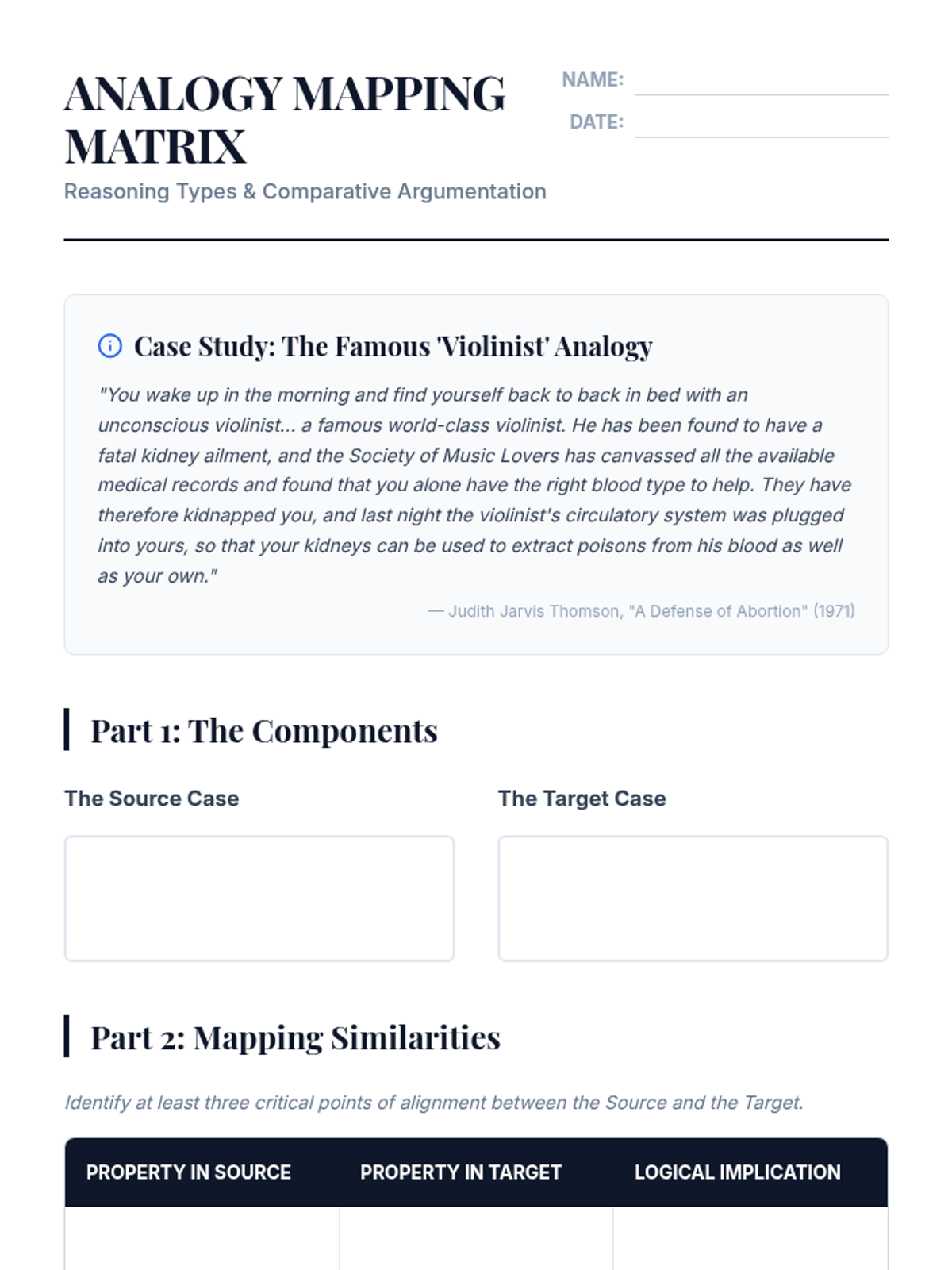
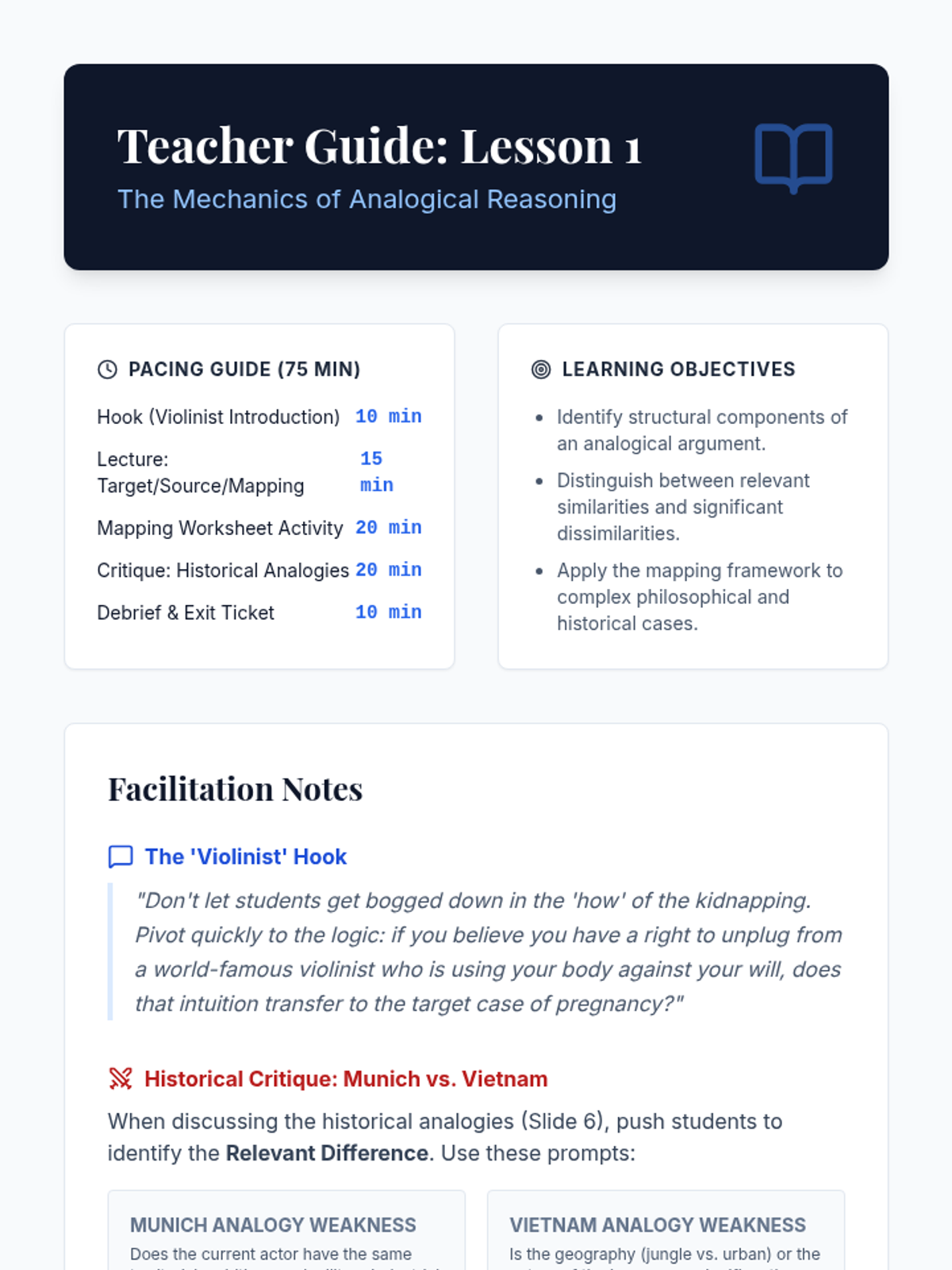
Students explore the structural components of analogical arguments (Target, Source, and Mapping) and apply evaluative criteria to assess their strength. The lesson uses famous philosophical and historical analogies to practice identifying relevant similarities and significant dissimilarities.
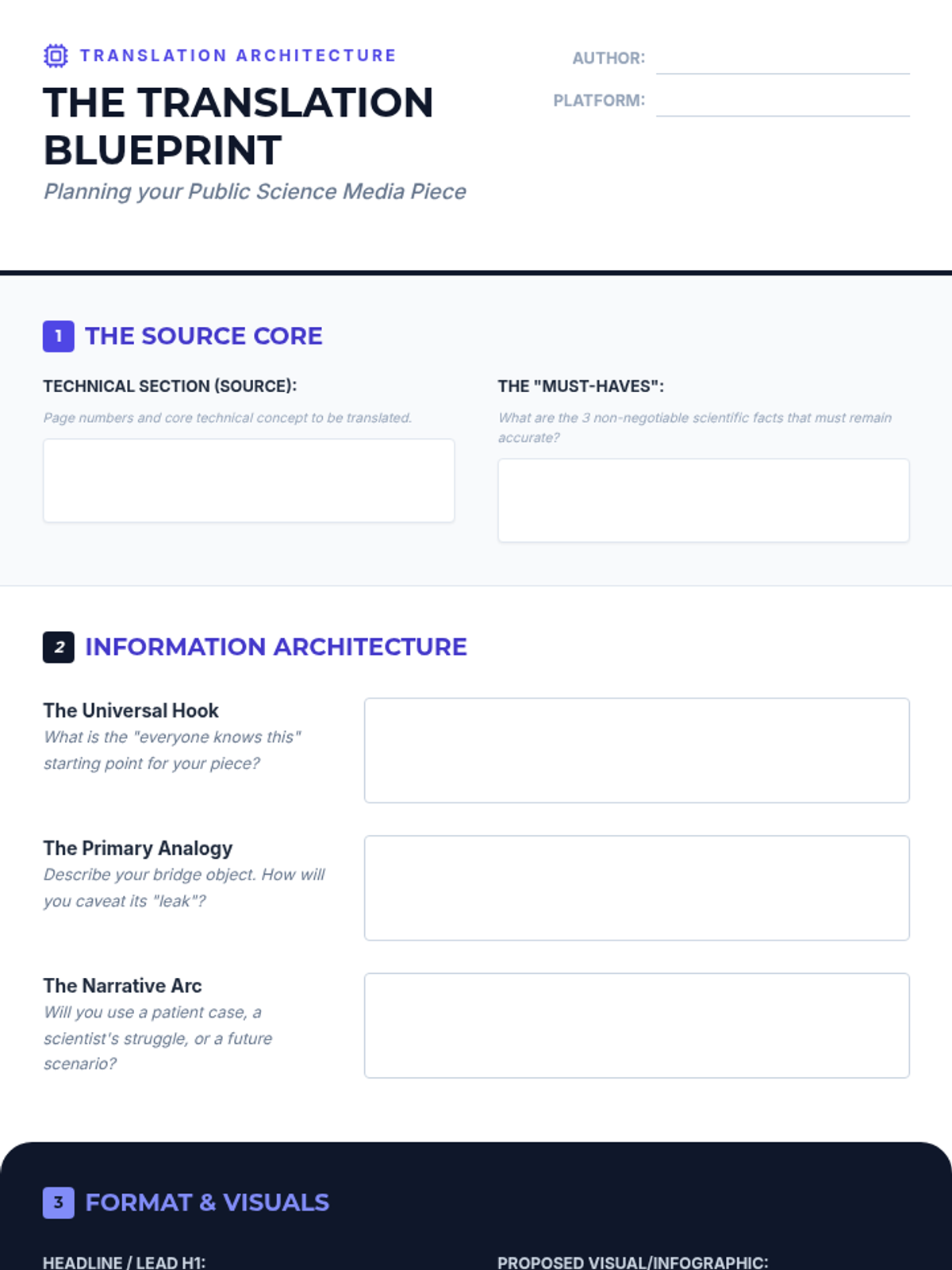
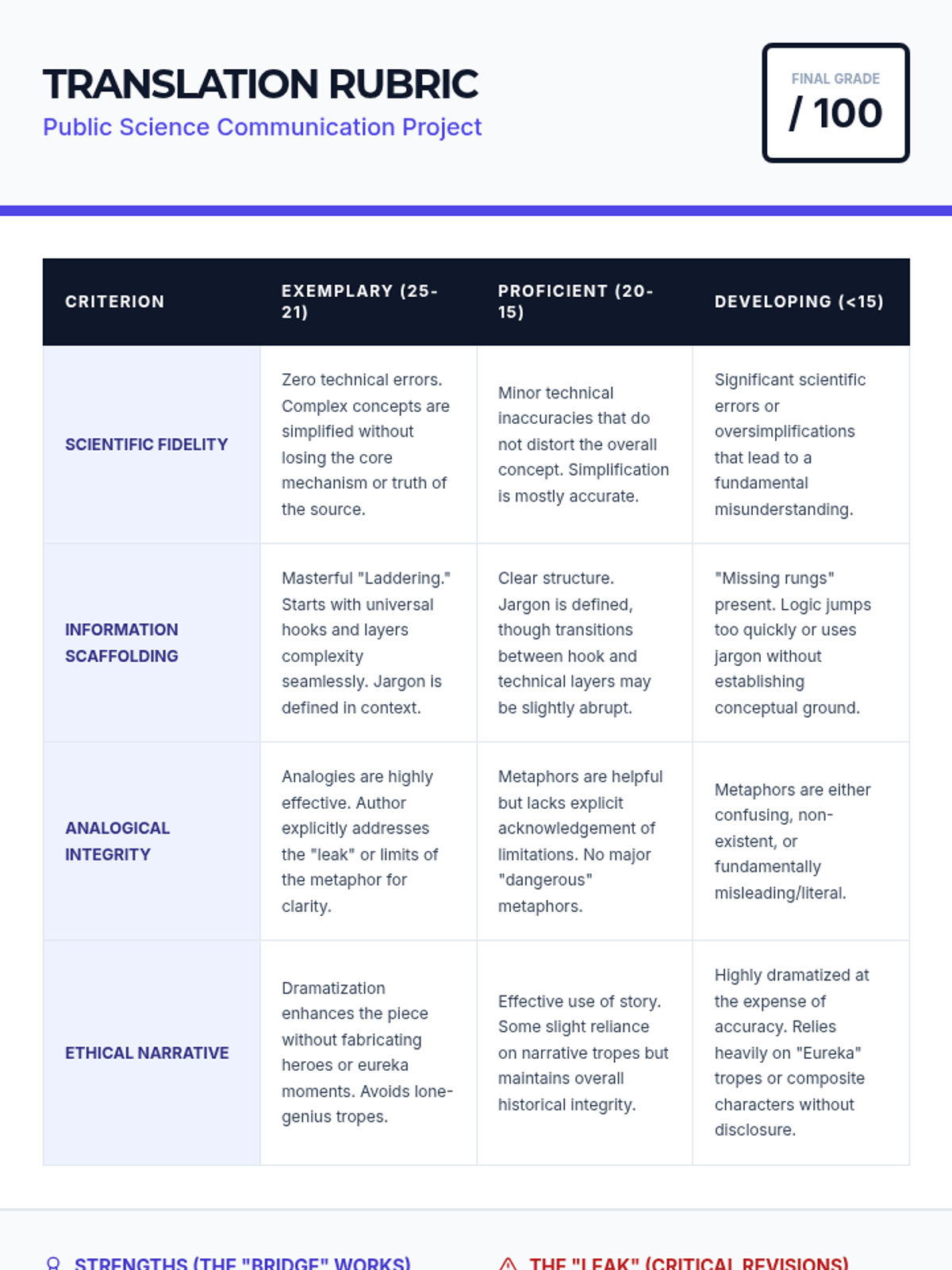
Students synthesize their learning by translating a technical passage into a piece of public-facing media.
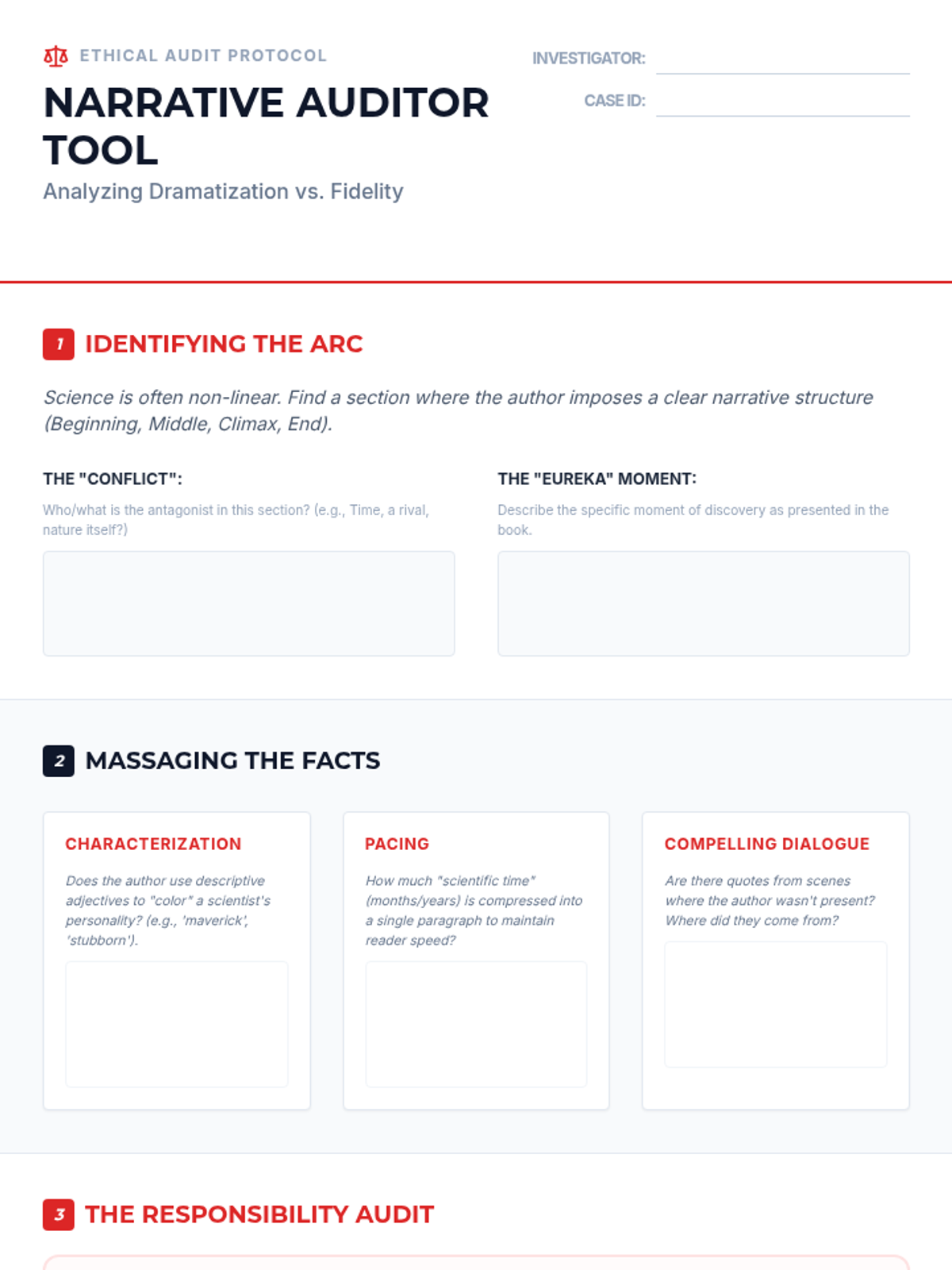
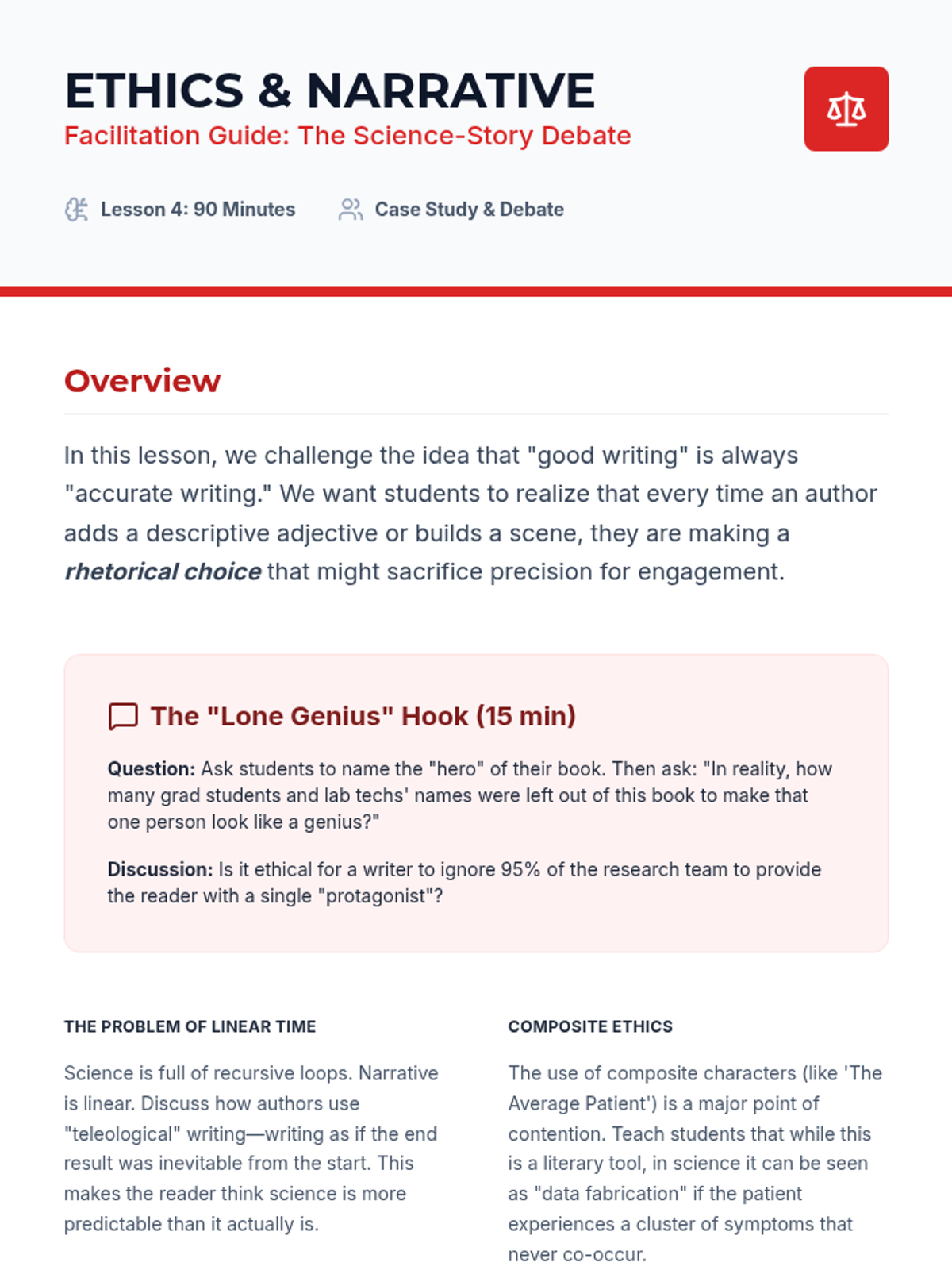
Students debate the tension between narrative storytelling and scientific rigor, focusing on the ethics of dramatization.
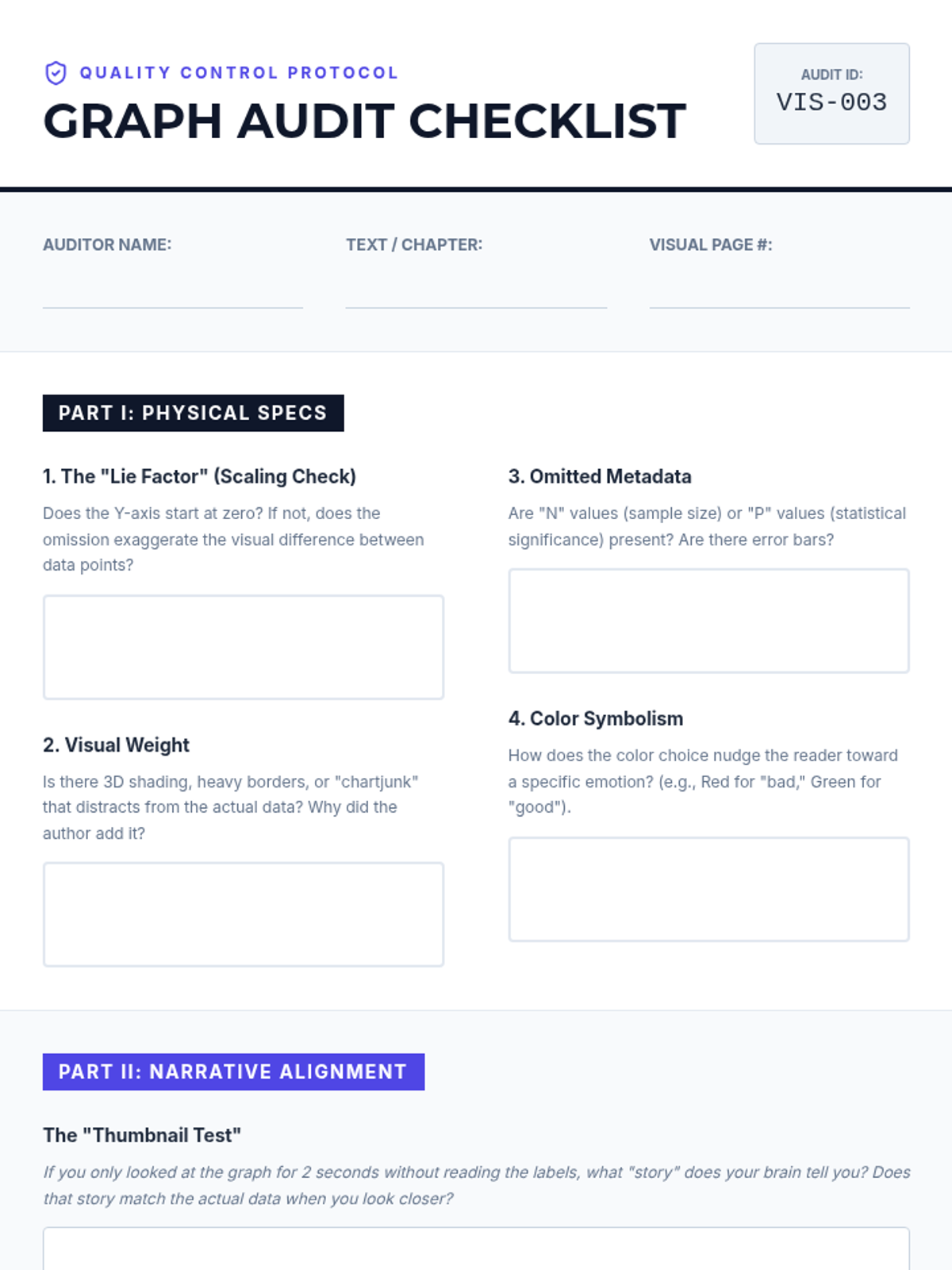
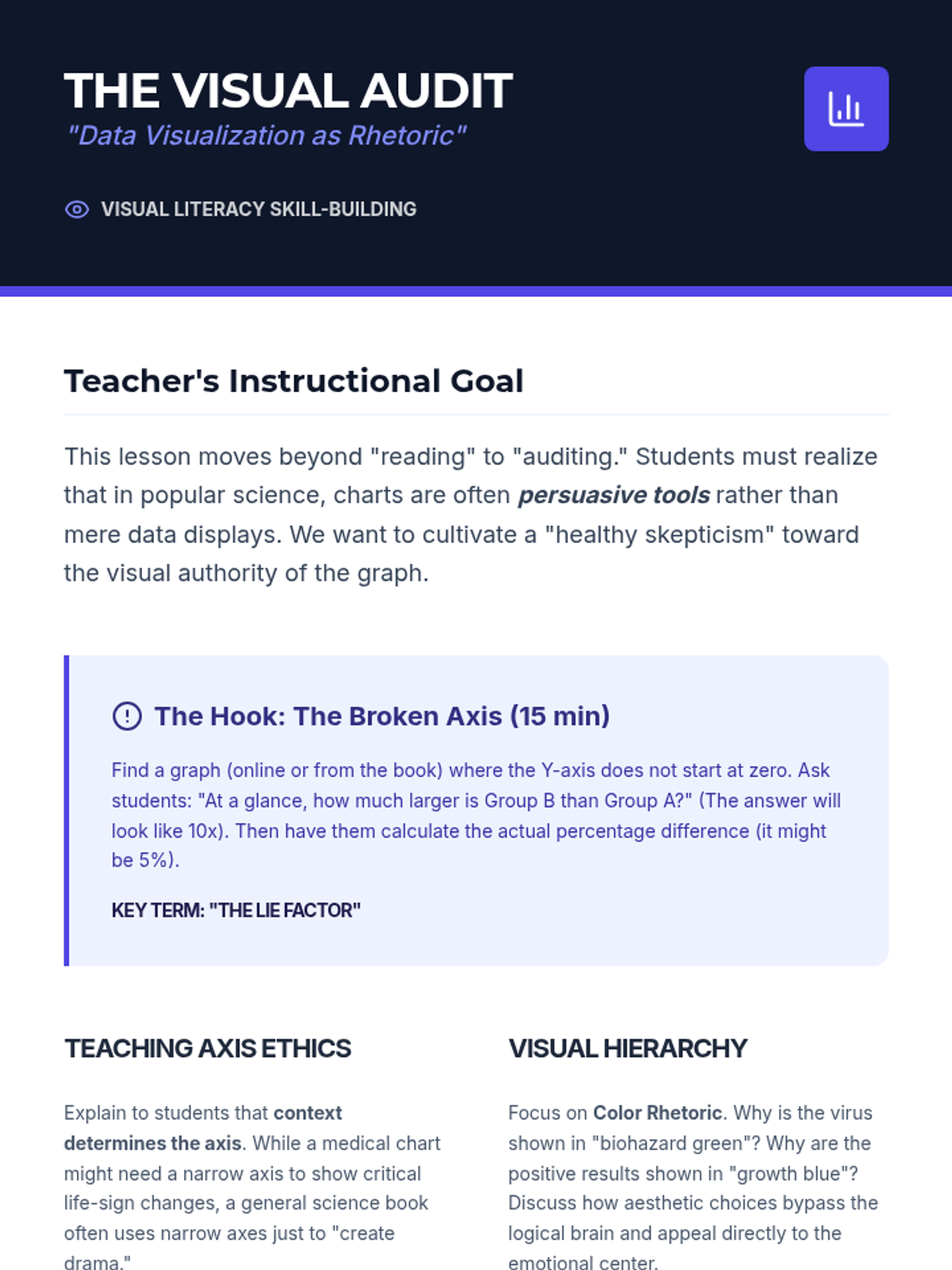
Students audit visual data representation in popular science texts, checking for accuracy and potential rhetorical manipulation.
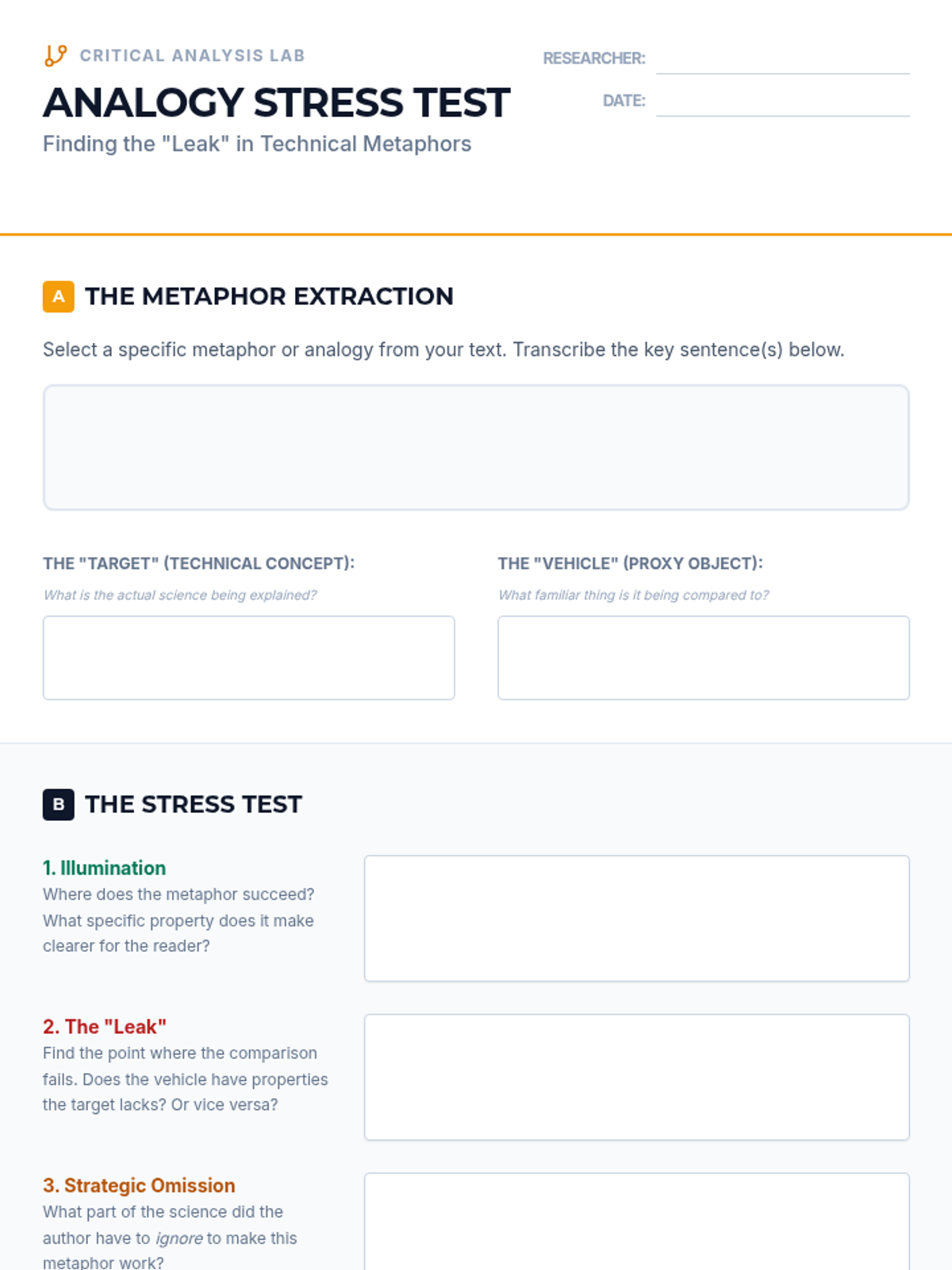
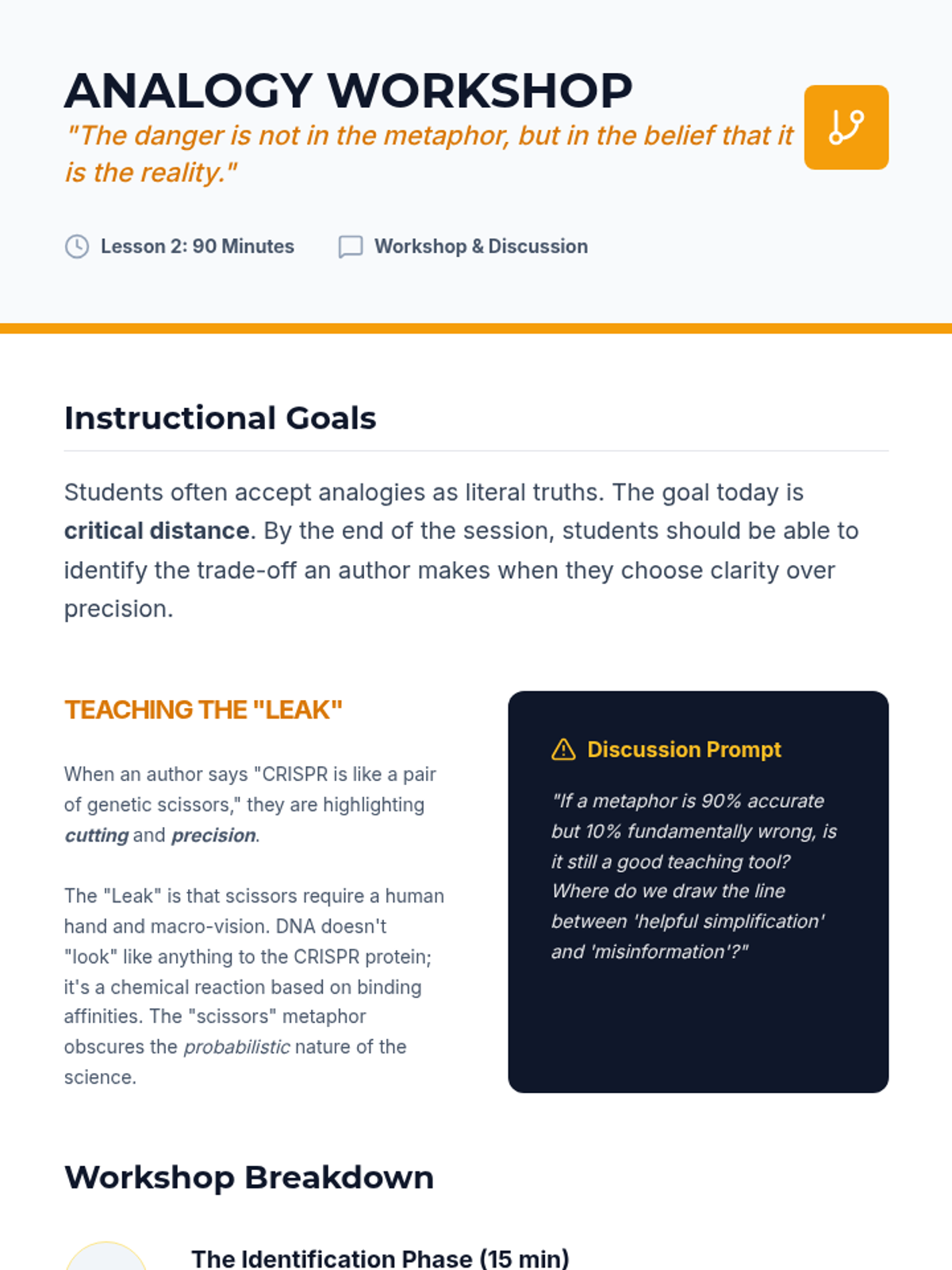
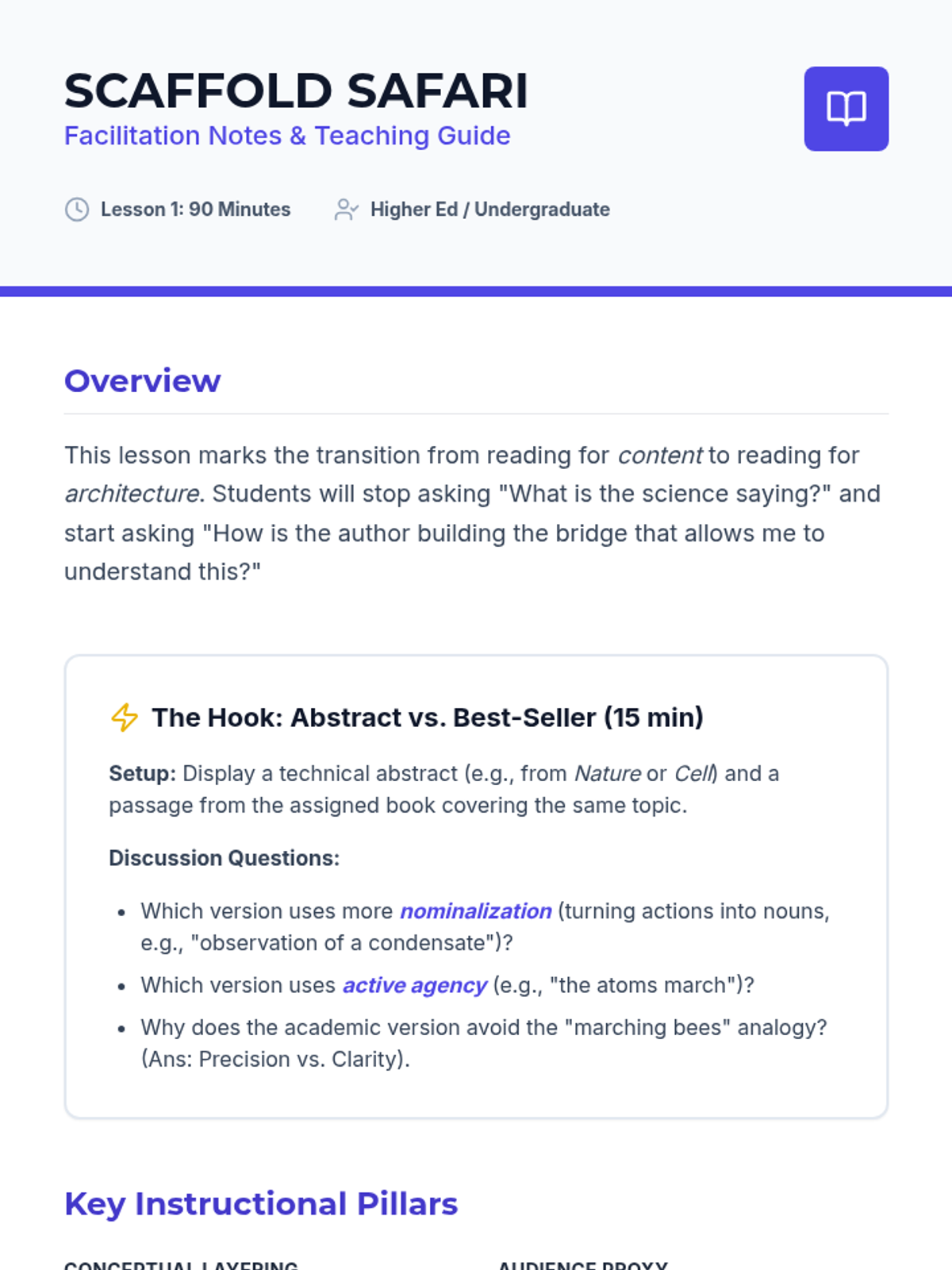
Students critique the use of analogies and metaphors in science writing, identifying where they clarify and where they may oversimplify.
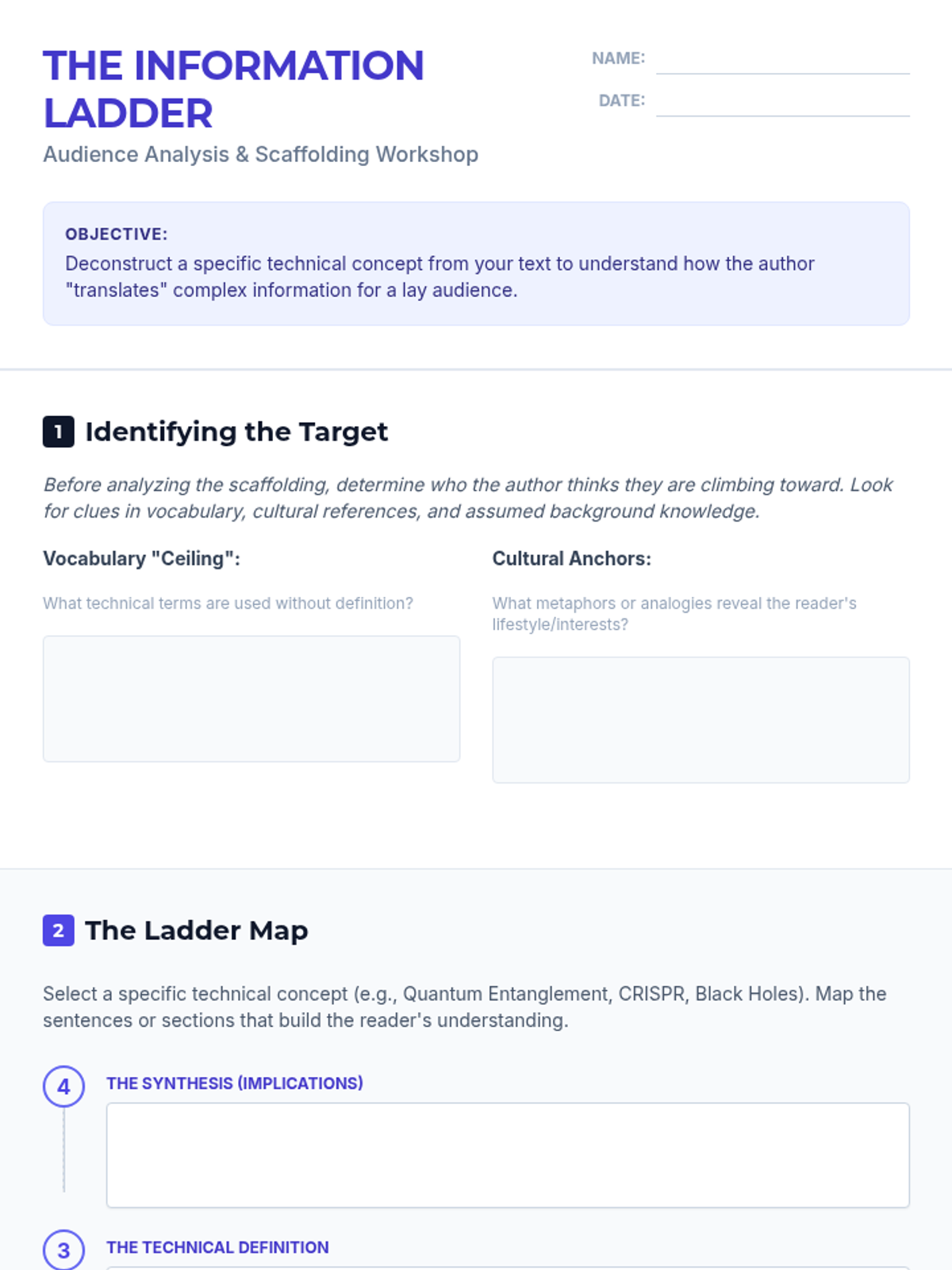
Students investigate how authors identify their target audience and scaffold complex information to build a 'ladder of understanding'.
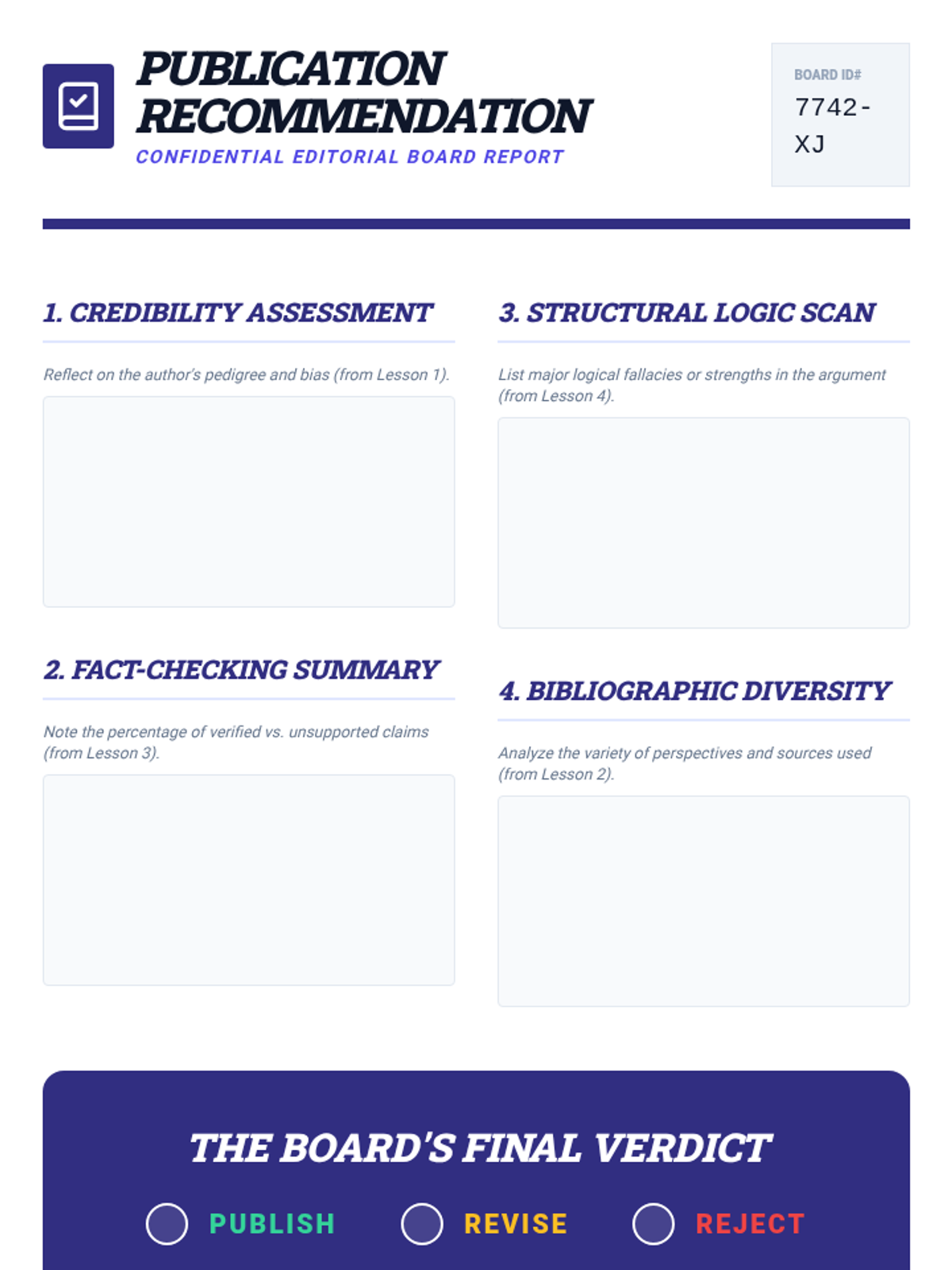
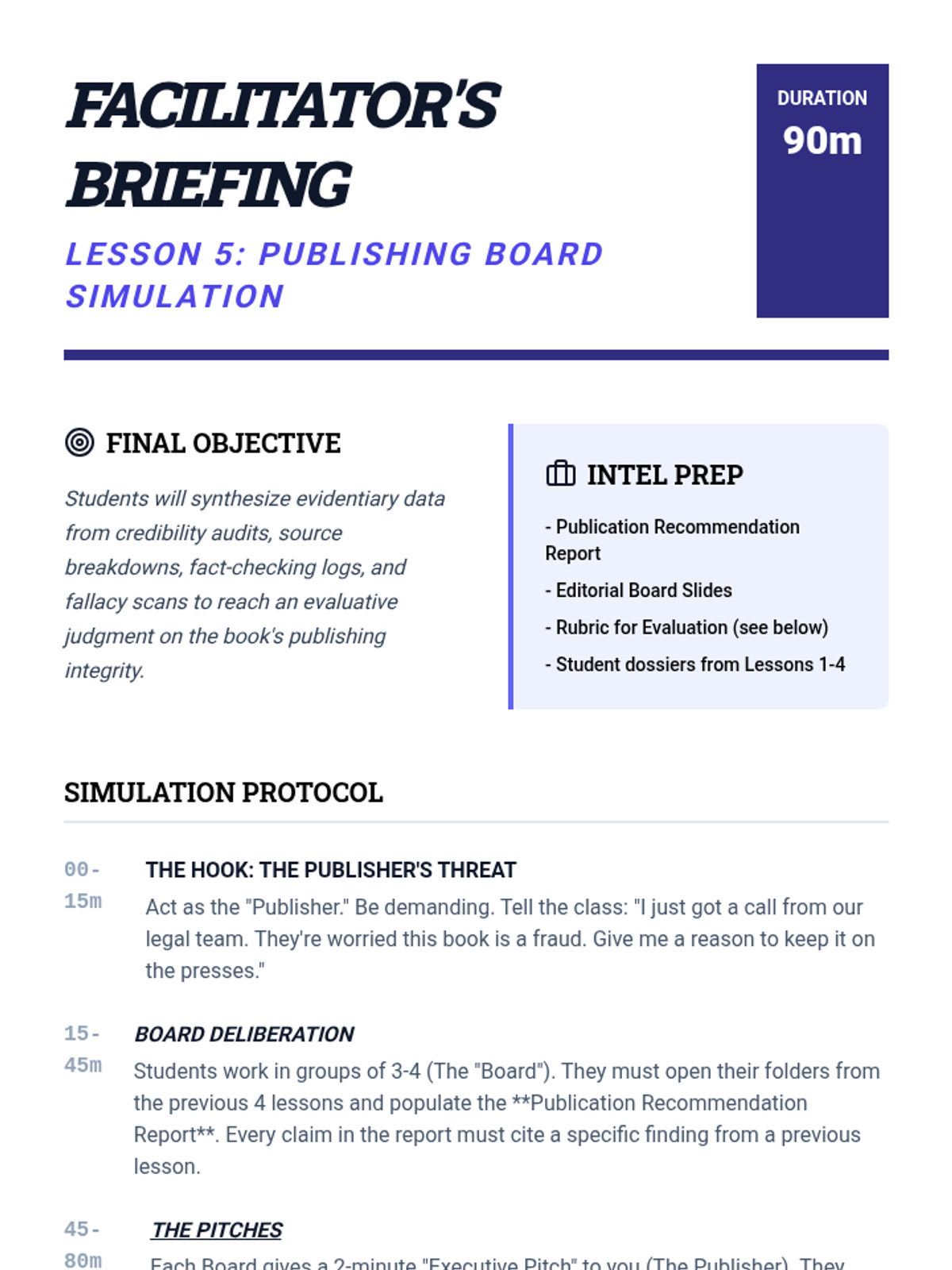
Students role-play as an editorial board deciding the publication fate of the book based on its research integrity. They must present a final recommendation backed by evidence from the previous lessons.
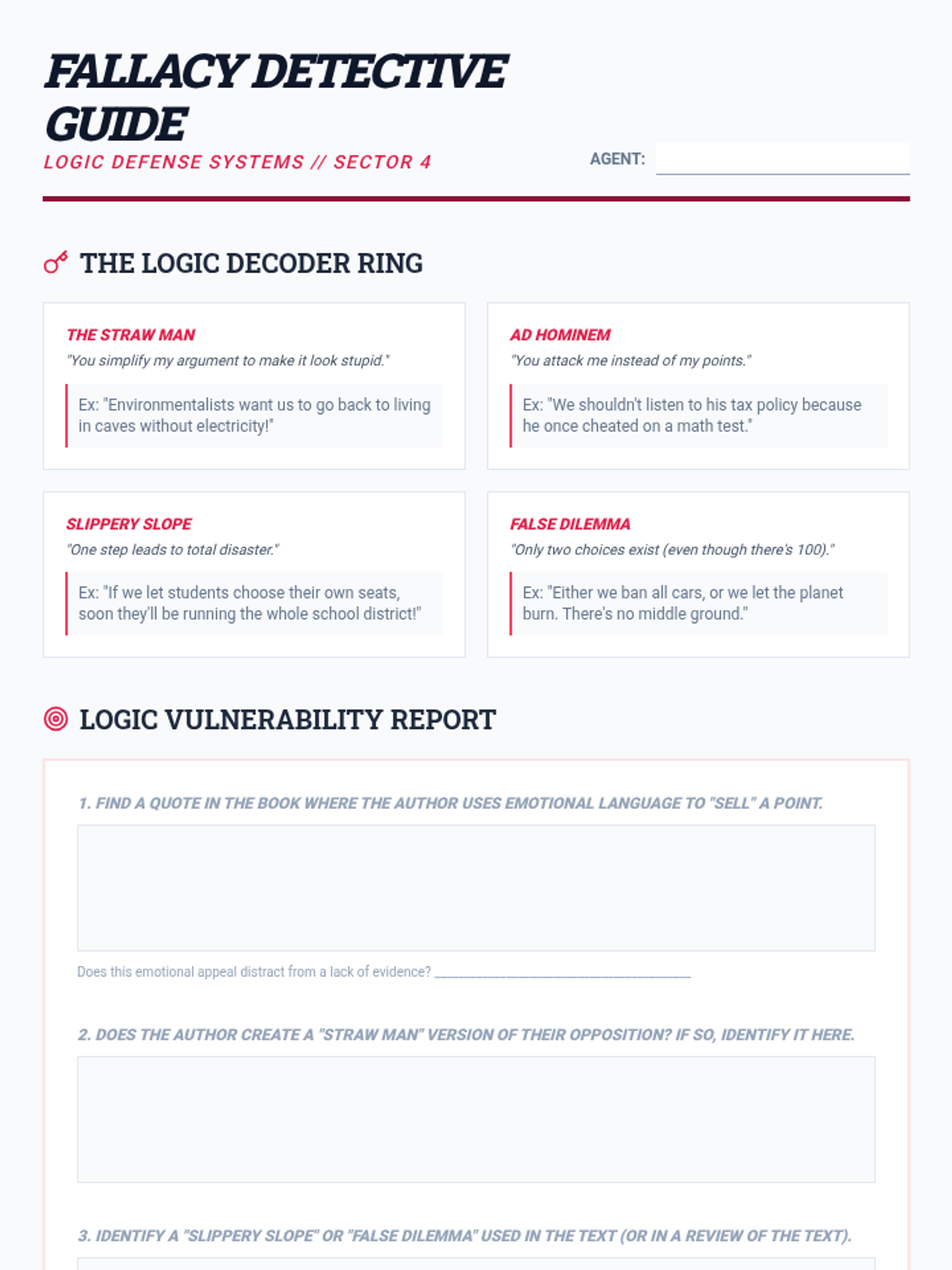
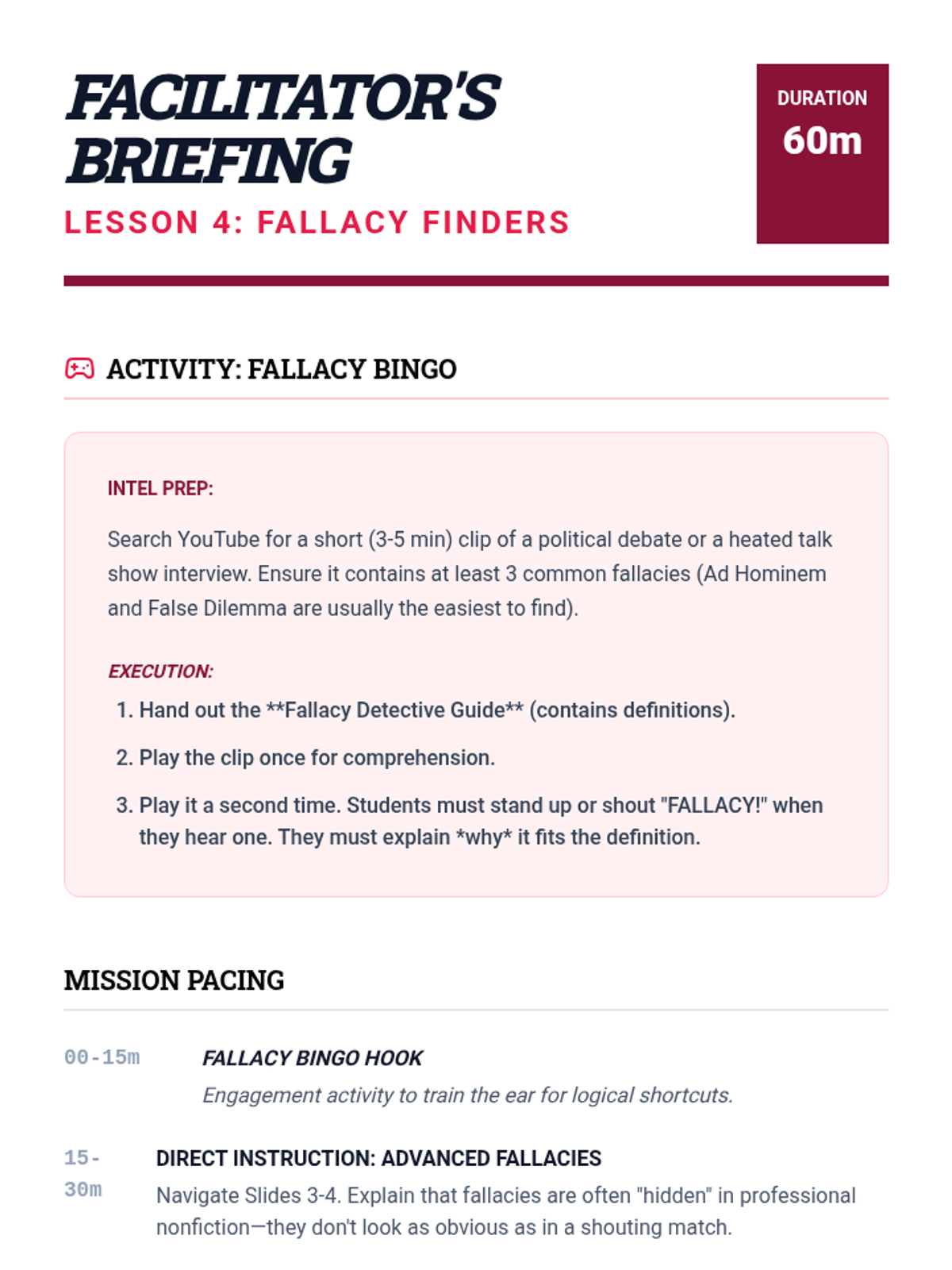
Students learn to identify common logical fallacies within the text's arguments and reviews. They analyze how these fallacies impact the overall validity of the author's message.
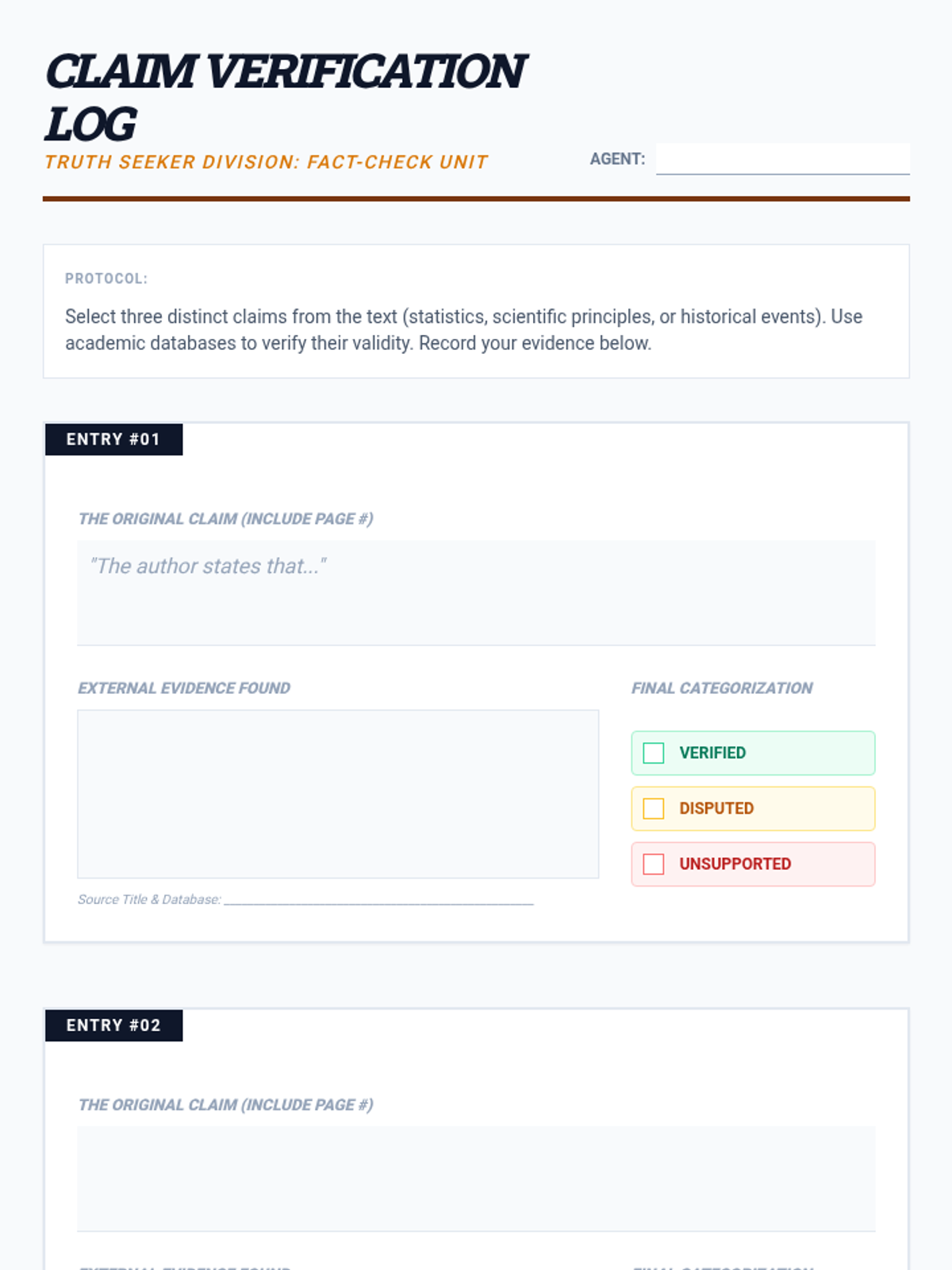
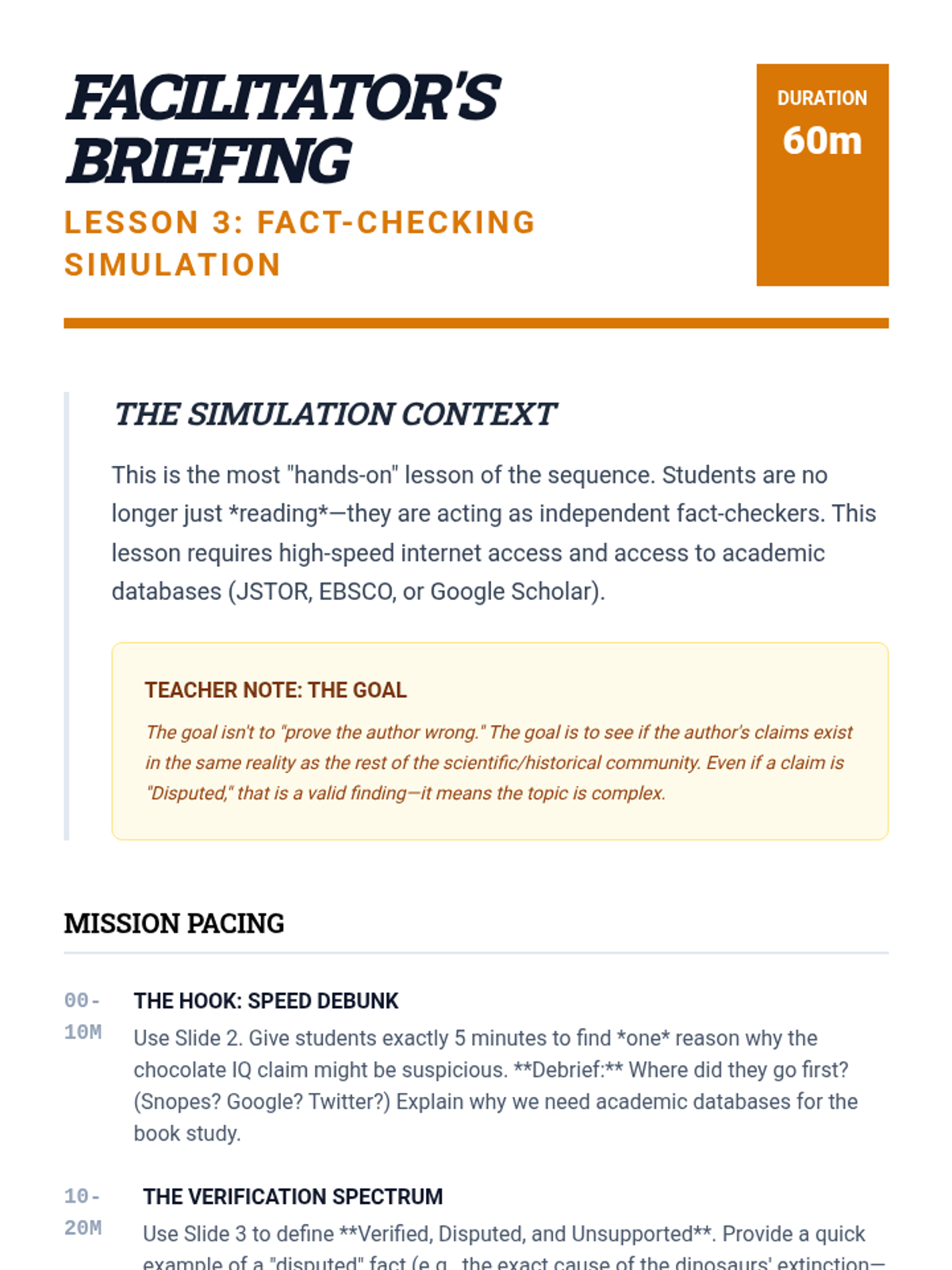
A hands-on simulation where students cross-reference specific claims from the text with external academic databases. They categorize findings as verified, disputed, or unsupported.
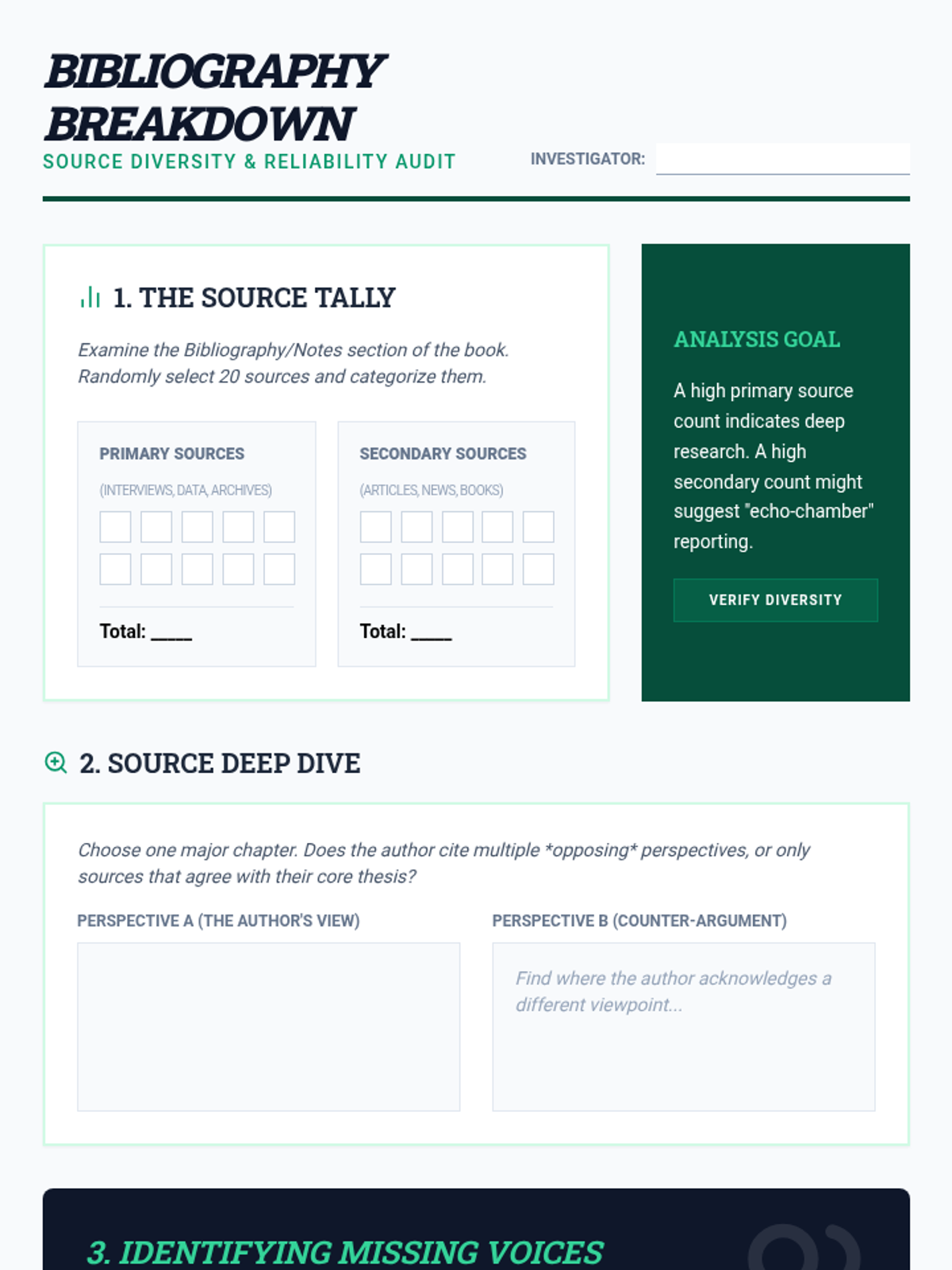
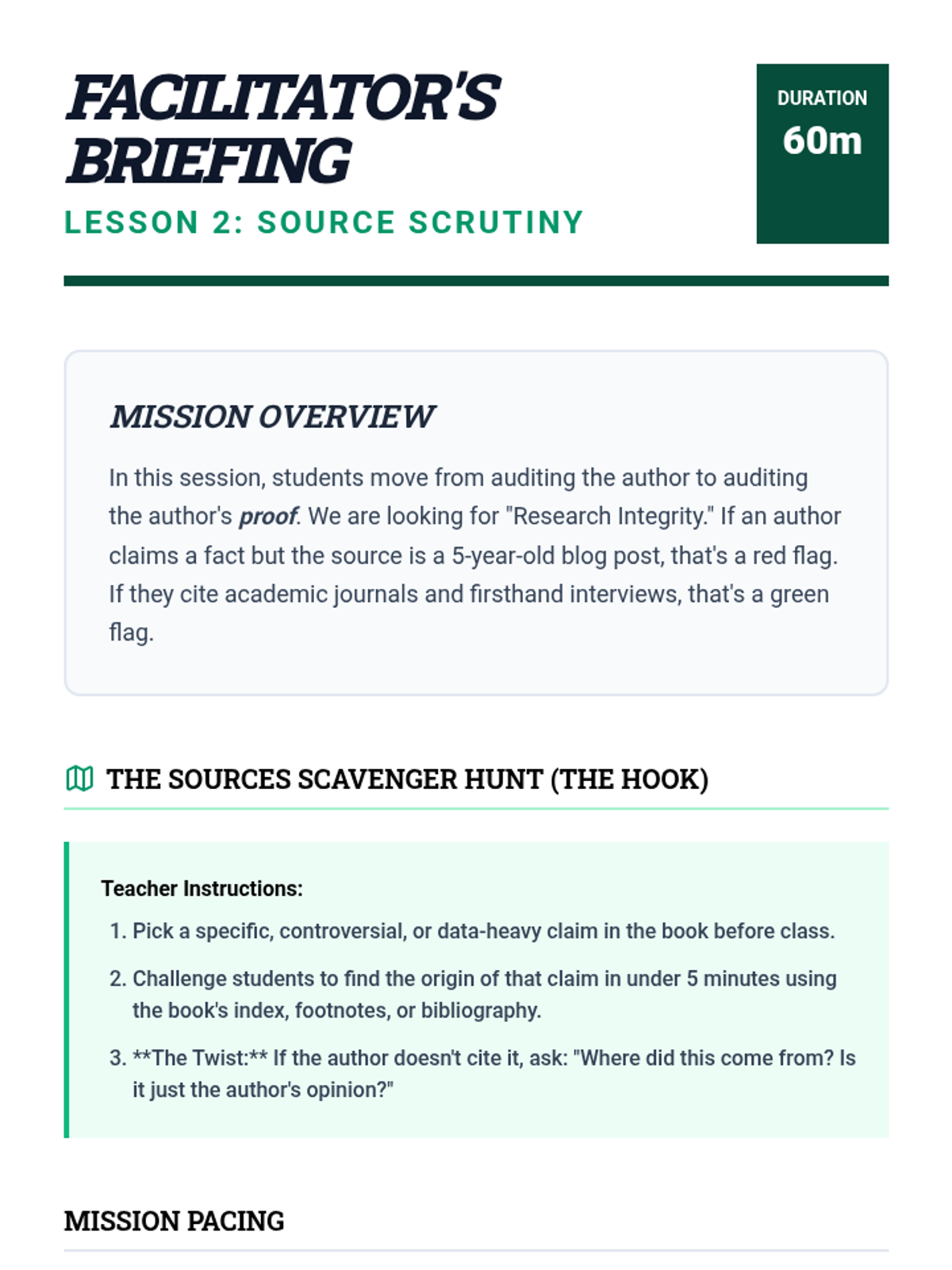
Students analyze the author's bibliography and citation methods to evaluate the diversity and reliability of the sources used. They identify missing perspectives and the types of evidence prioritized.
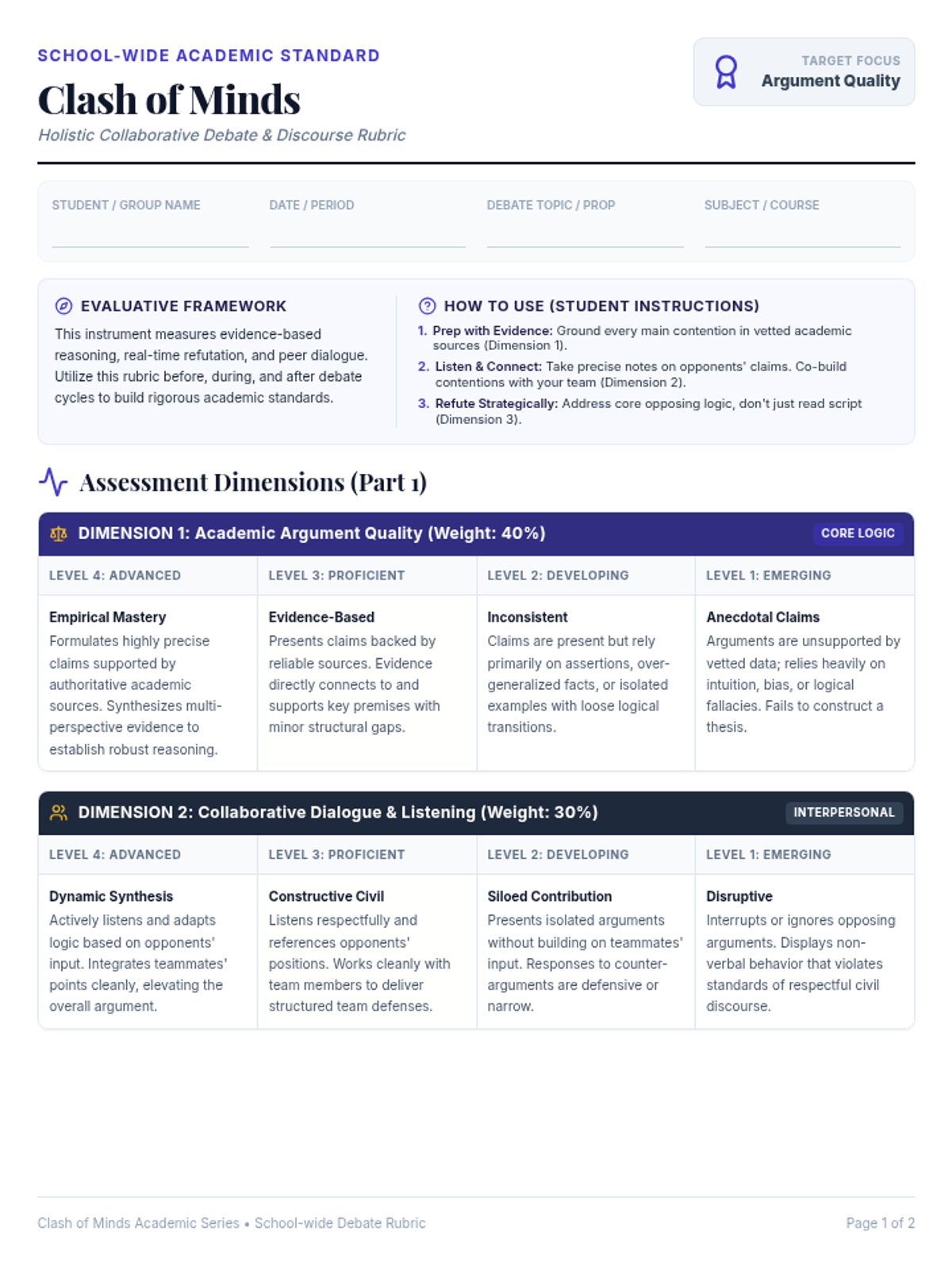
A foundational lesson containing frameworks and evaluative tools to support rigorous, evidence-based collaborative debate. It focuses on elevating academic argument quality, critical thinking, and respectful civil dialogue across different subjects and grade levels.
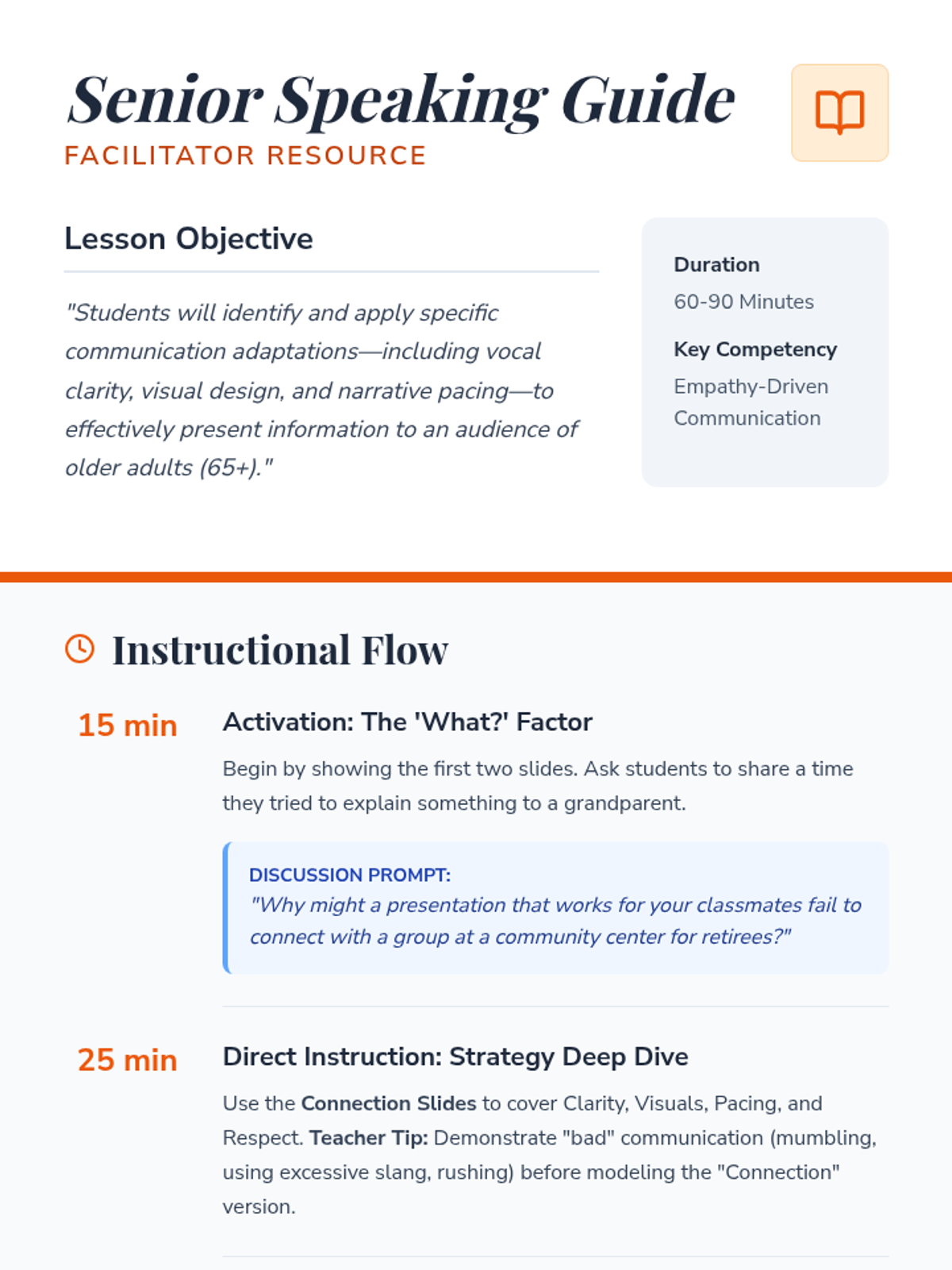
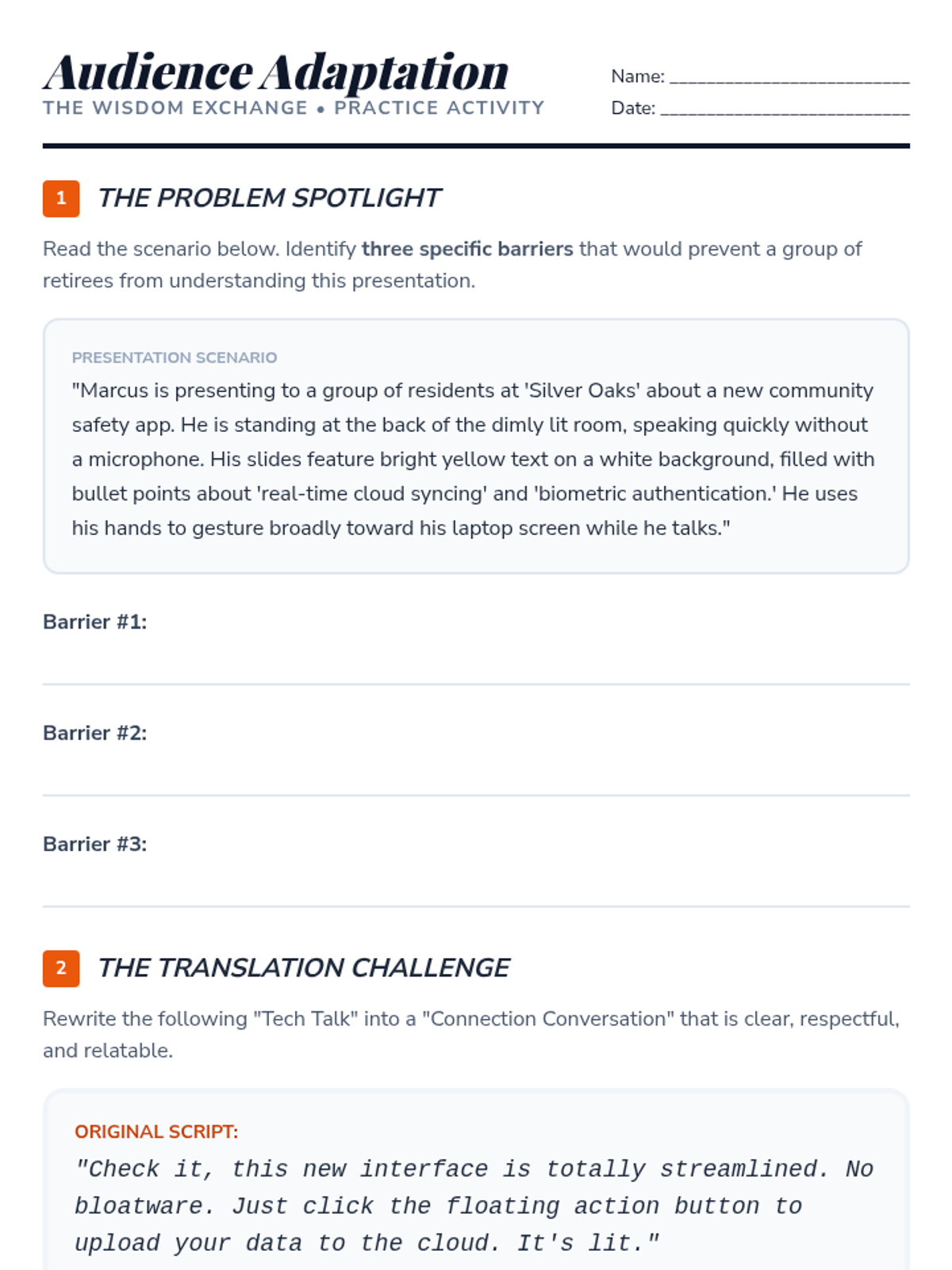
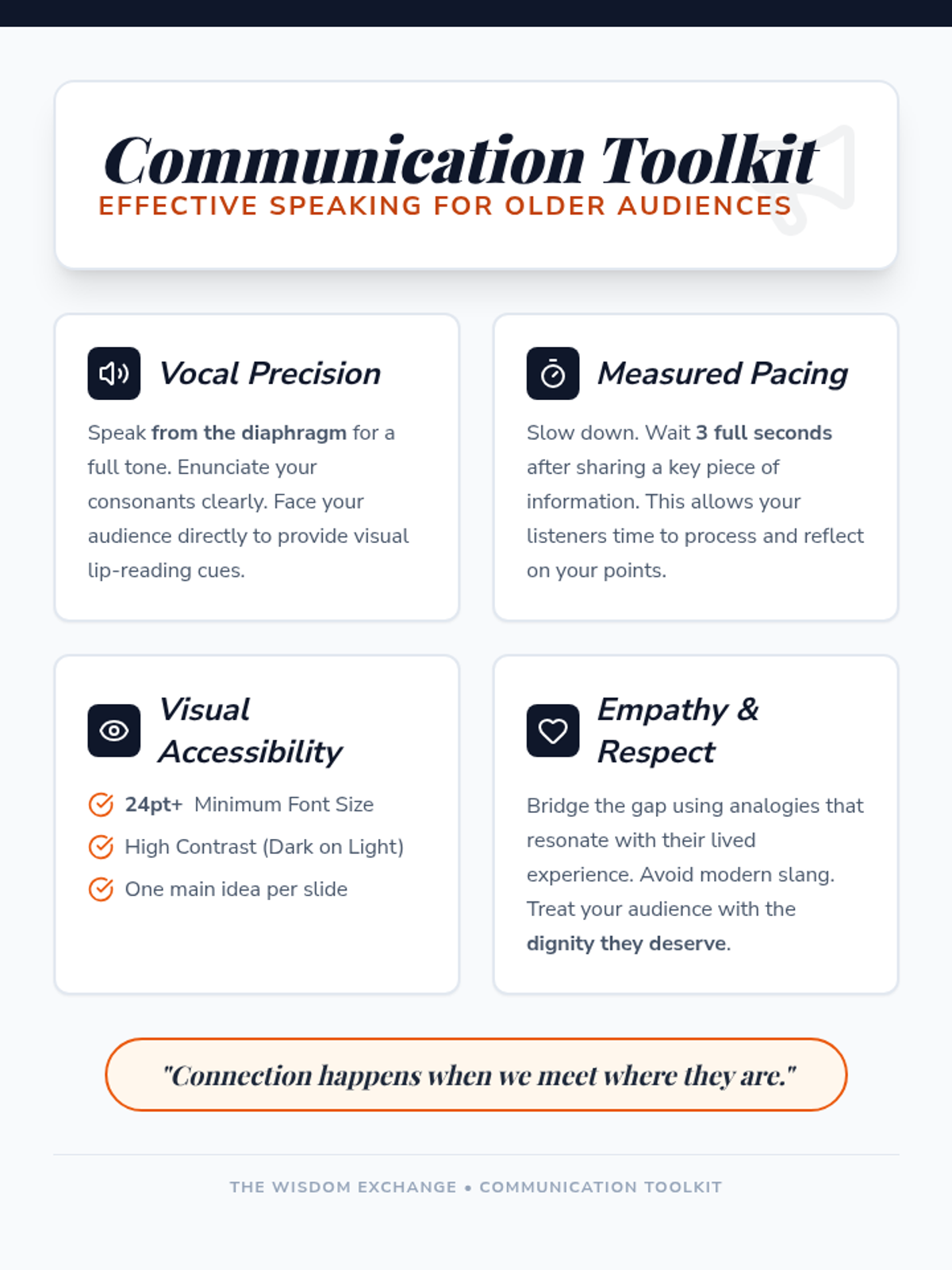
A comprehensive lesson on adapting communication styles for older audiences, focusing on clarity, pacing, and respectful engagement. Students will learn practical strategies to bridge the generational gap in public speaking and presentations.
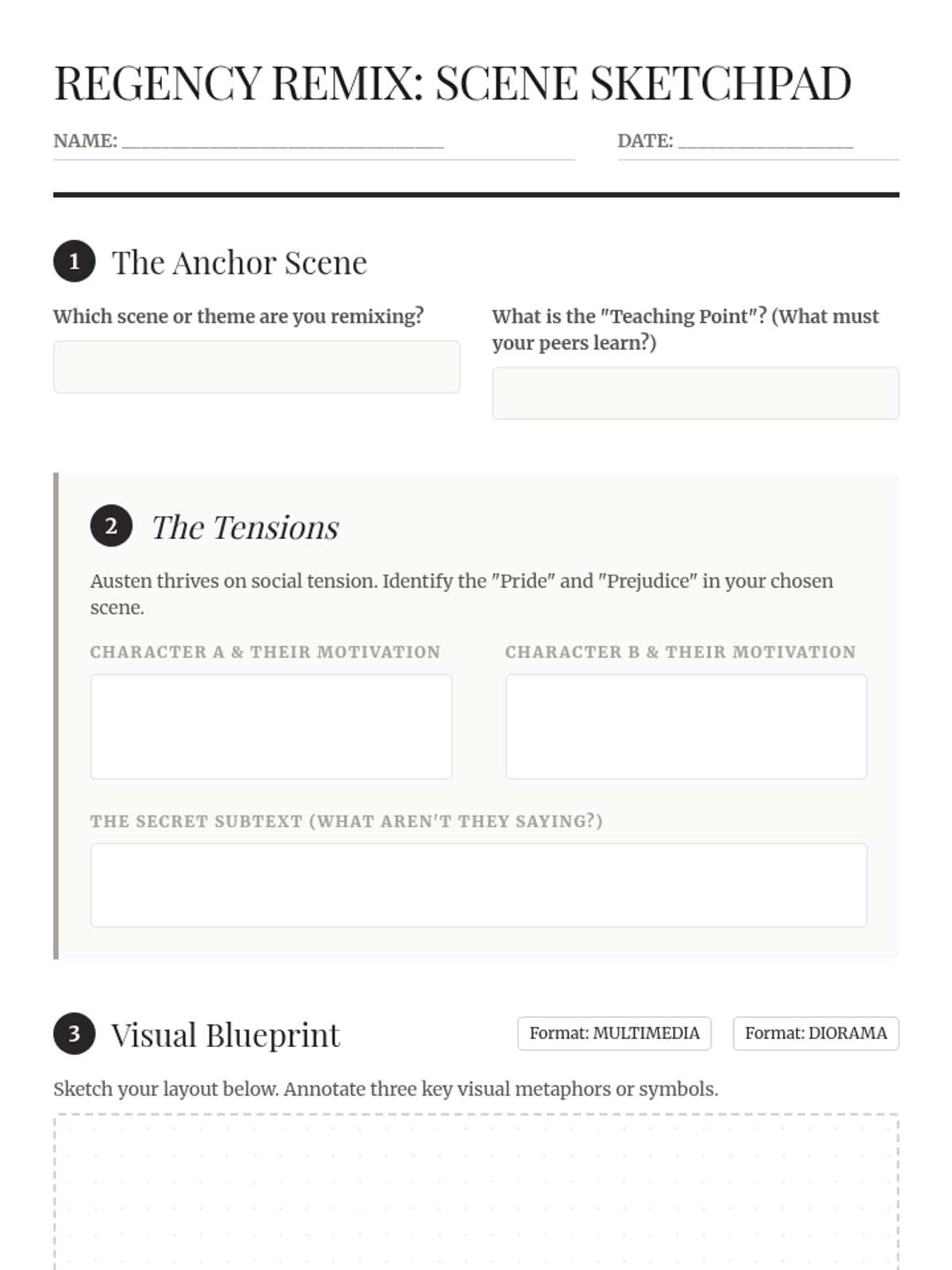
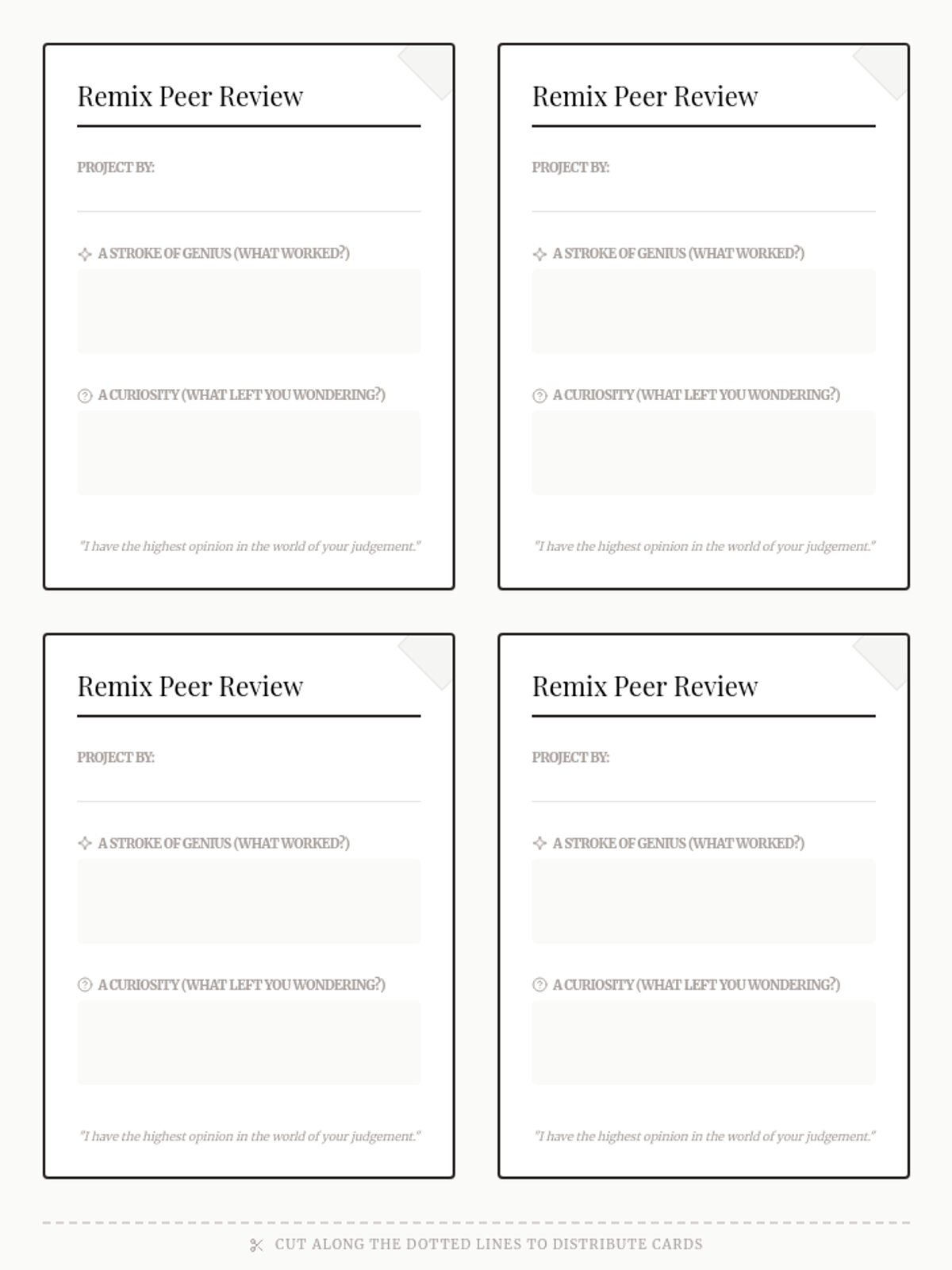
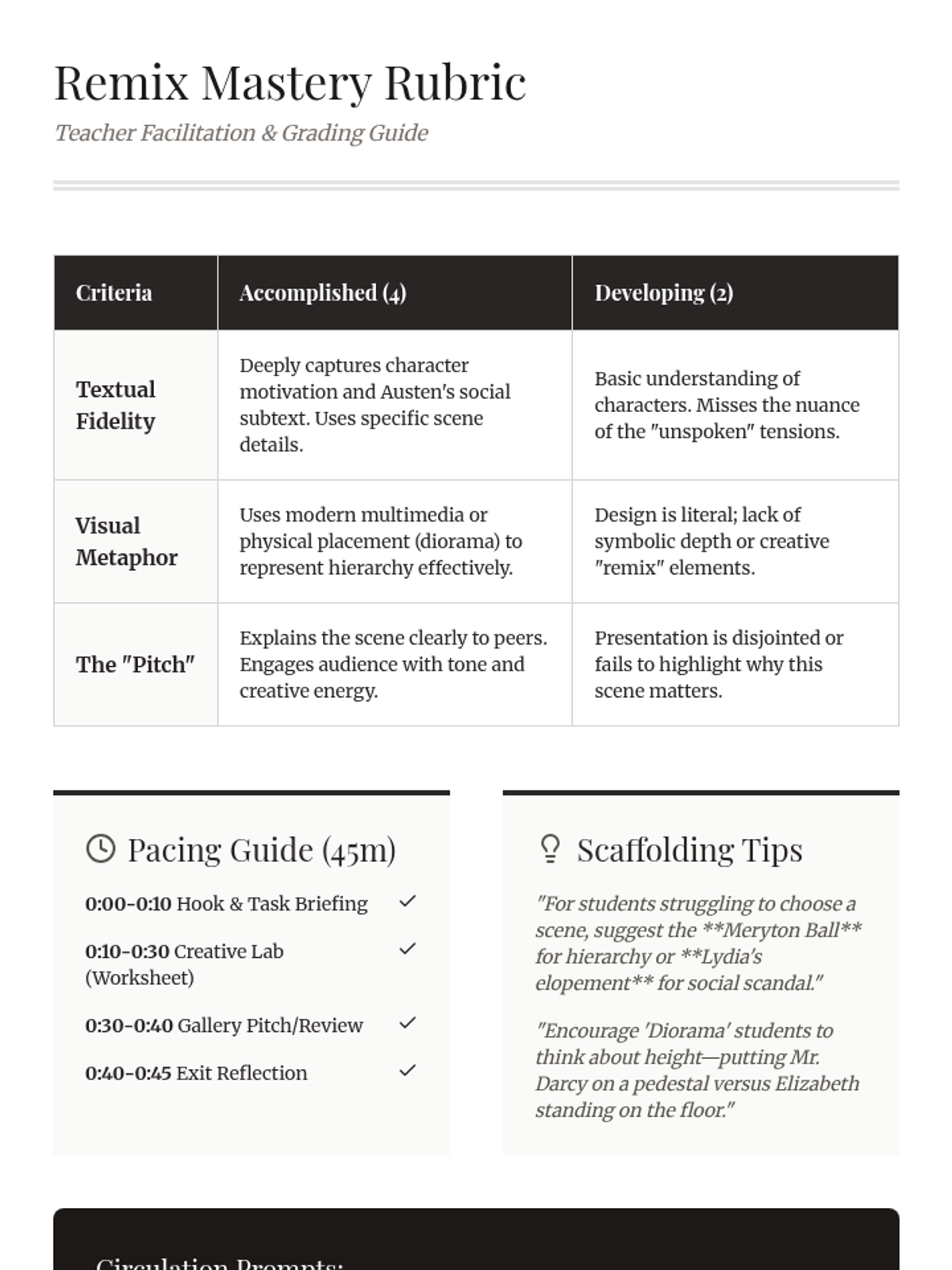
A fast-paced creative challenge where students design and pitch a multimedia or physical interpretation of a key scene from Pride and Prejudice. Students focus on capturing social dynamics and character motivations through modern or miniature lenses.
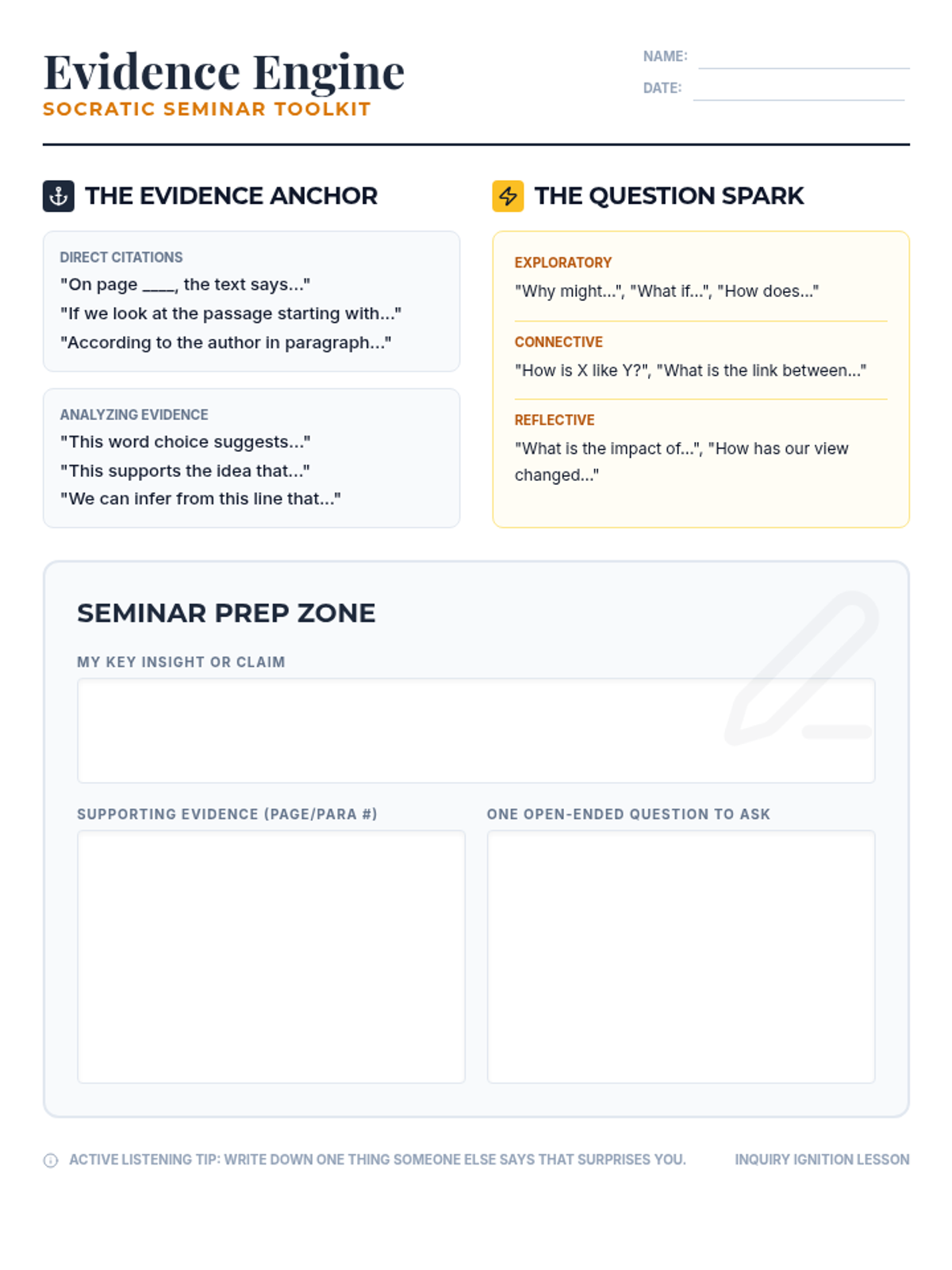
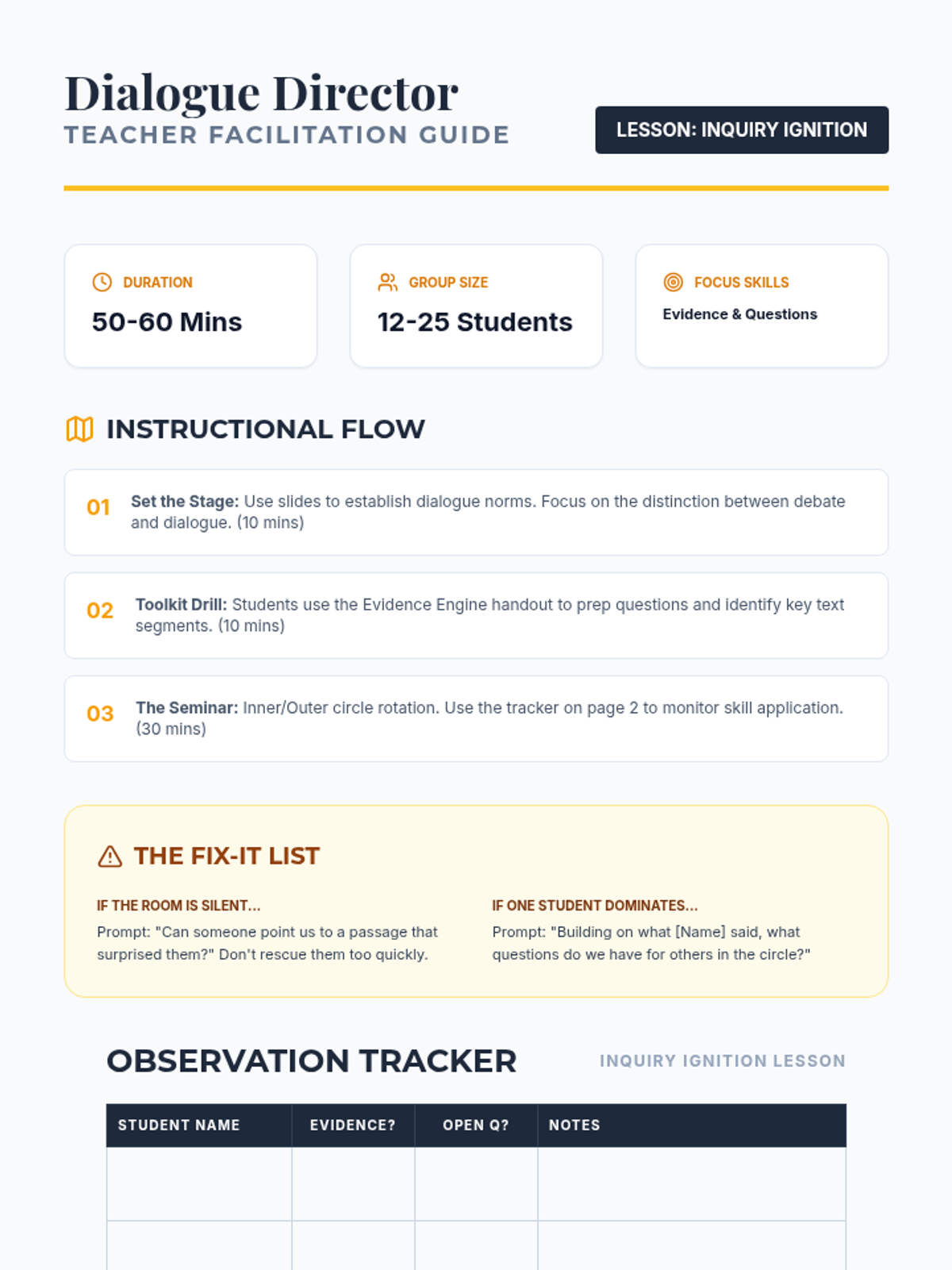
A lesson focused on the two core pillars of a successful Socratic Seminar: grounding claims in textual evidence and propelling dialogue through open-ended questioning. Students will learn to move beyond simple 'yes/no' answers to deep, evidence-based inquiry.
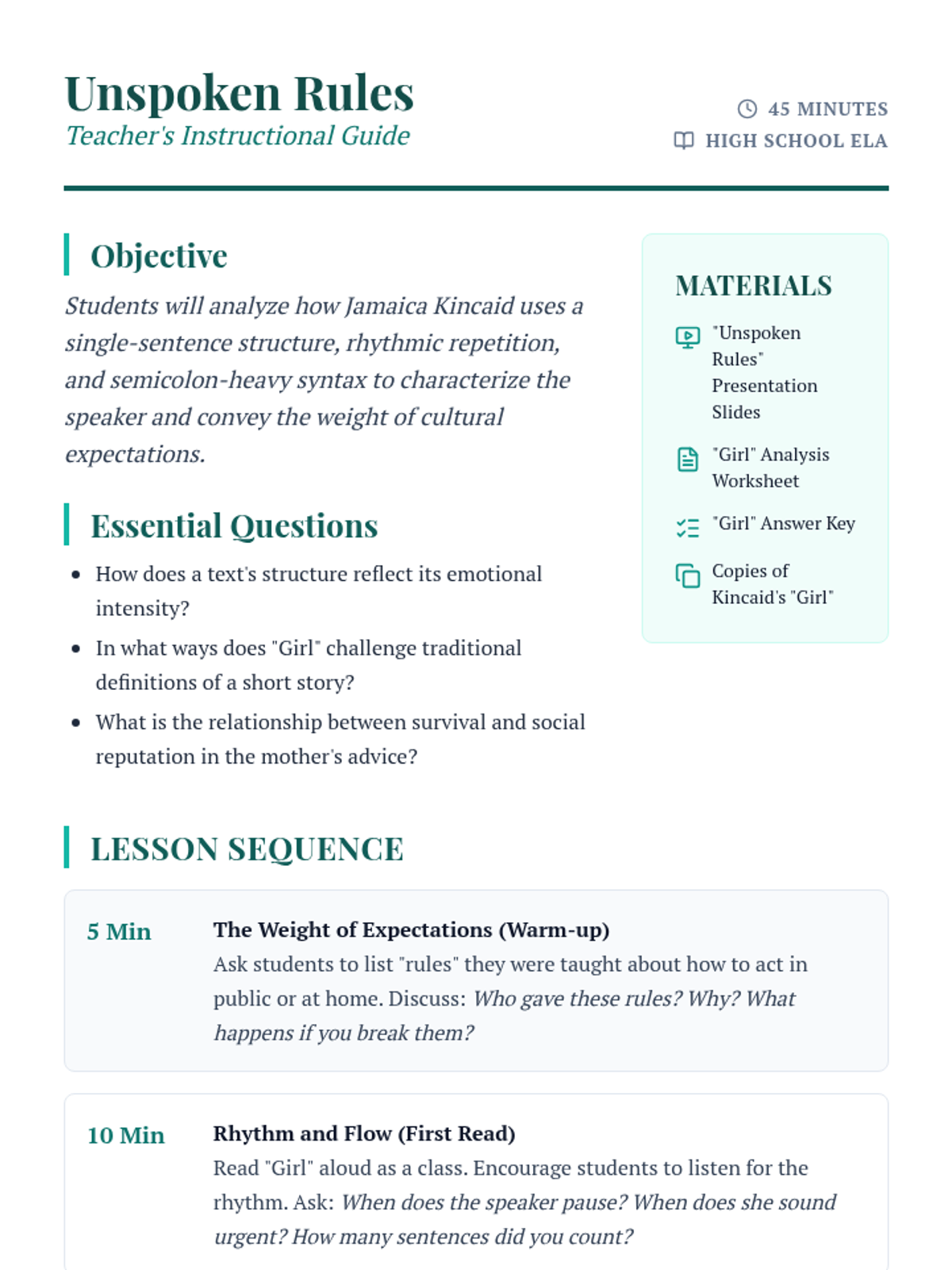
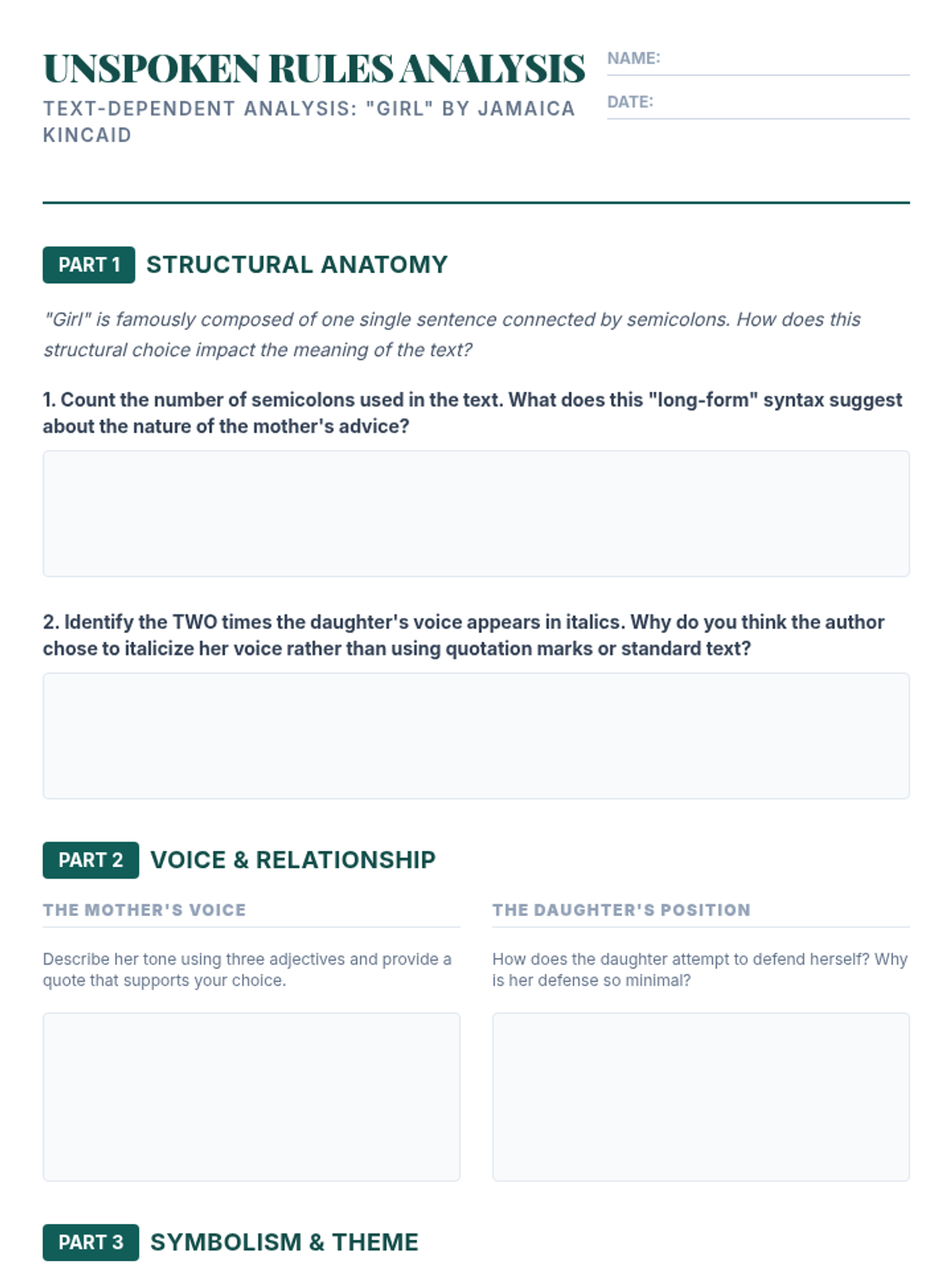
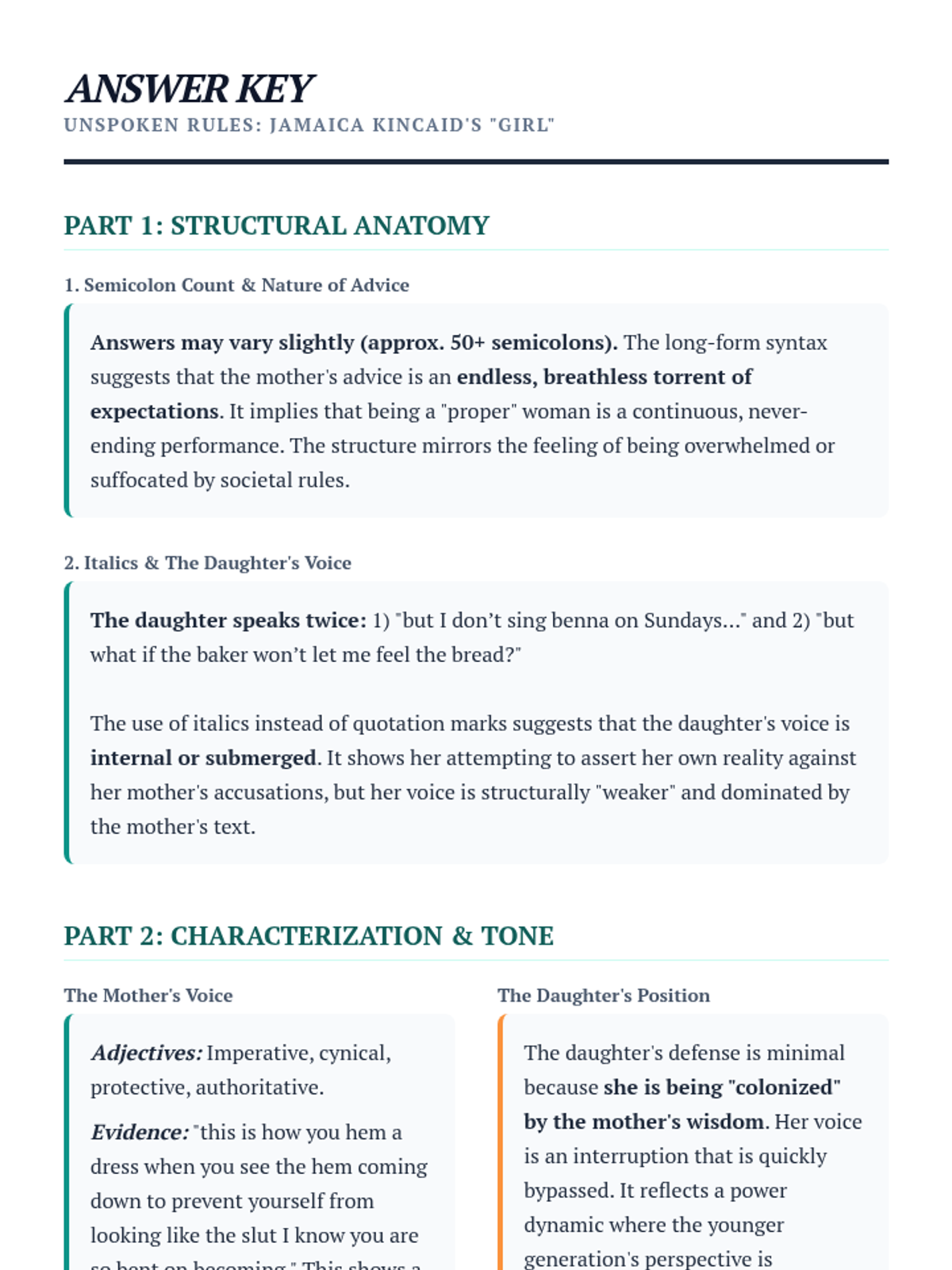
An introductory lesson on Jamaica Kincaid's 'Girl' focusing on the unique structural choice of a single-sentence narrative, its rhythmic style, and the complex characterization of the mother-daughter relationship.
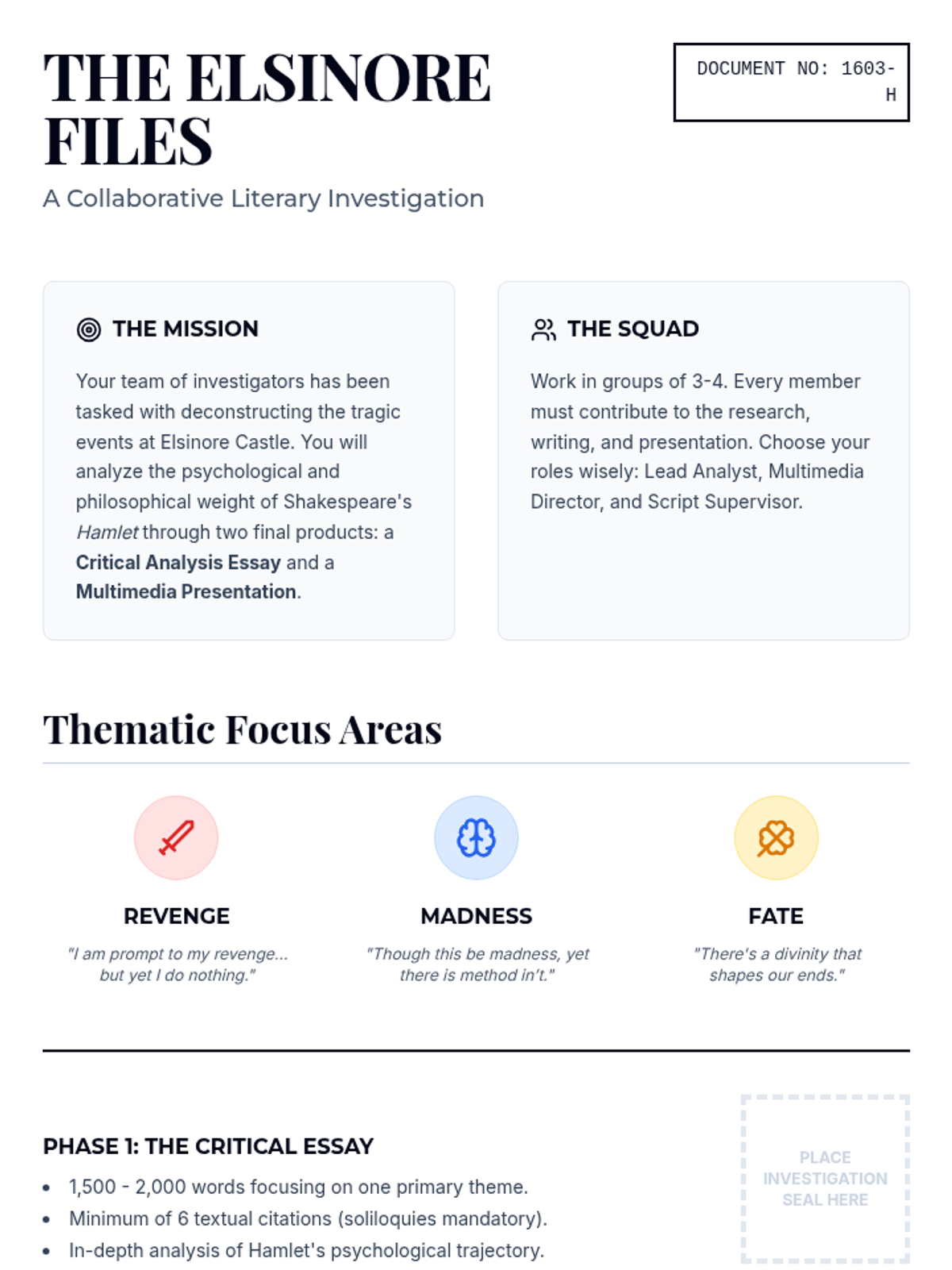
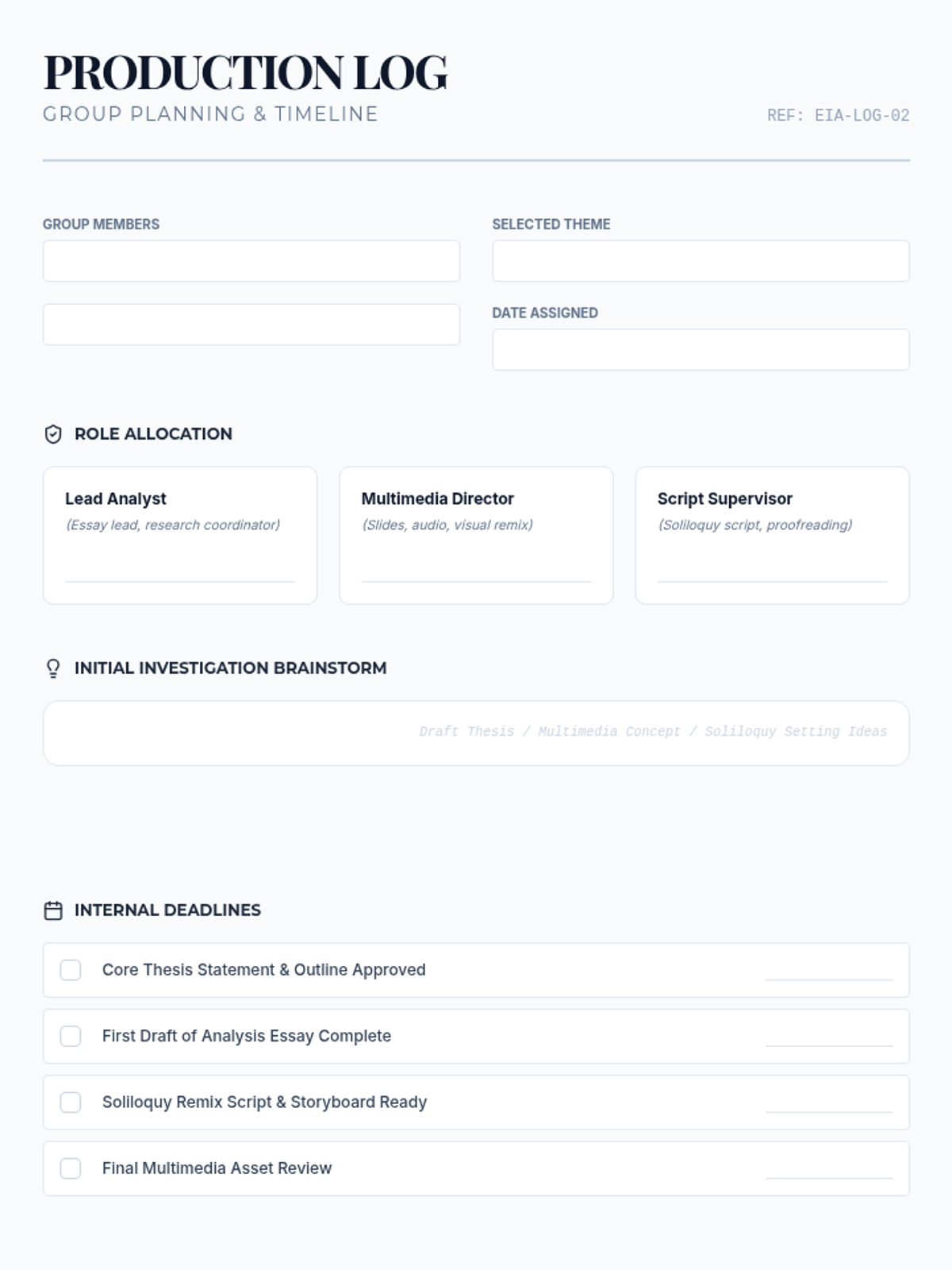
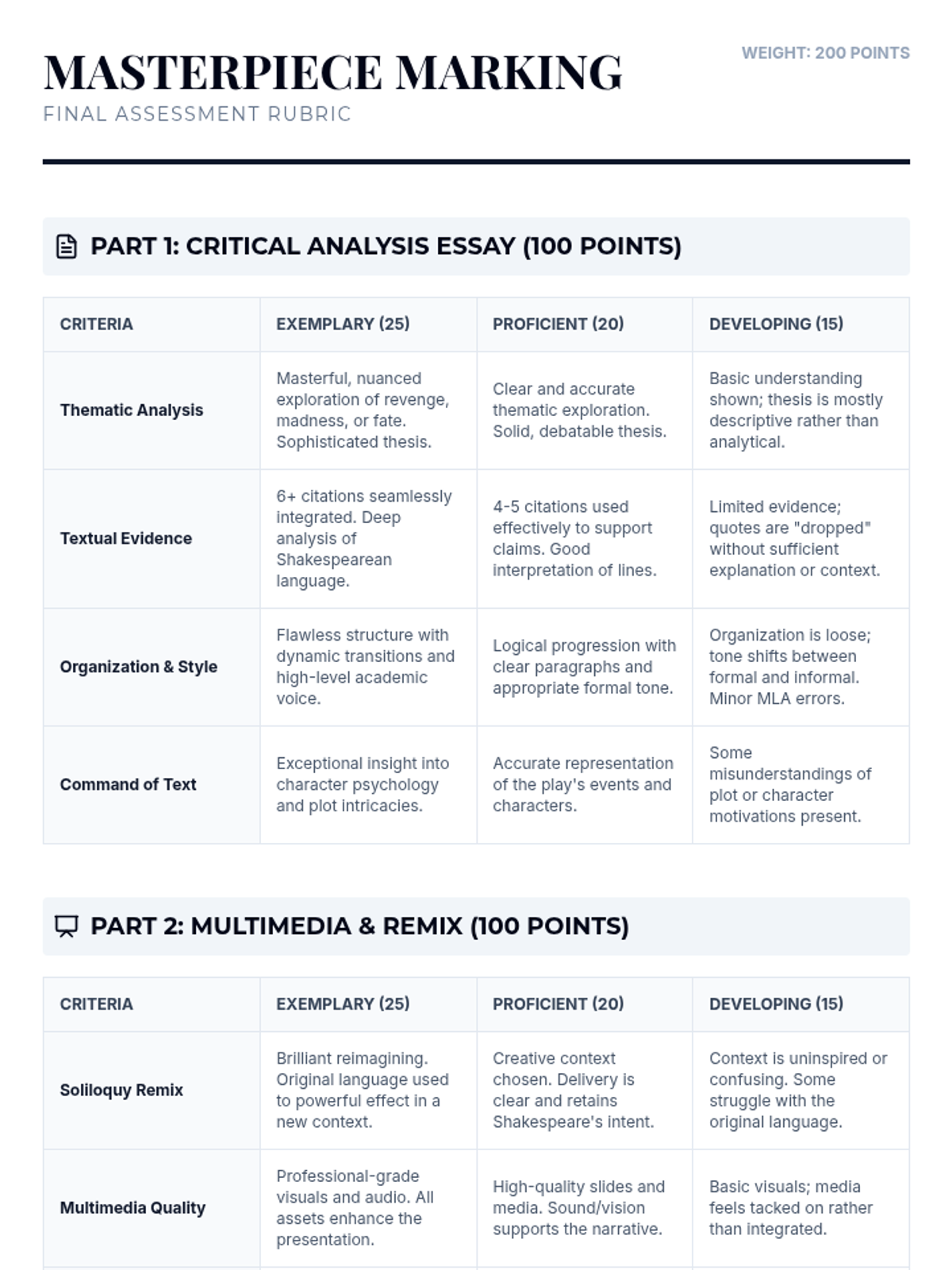
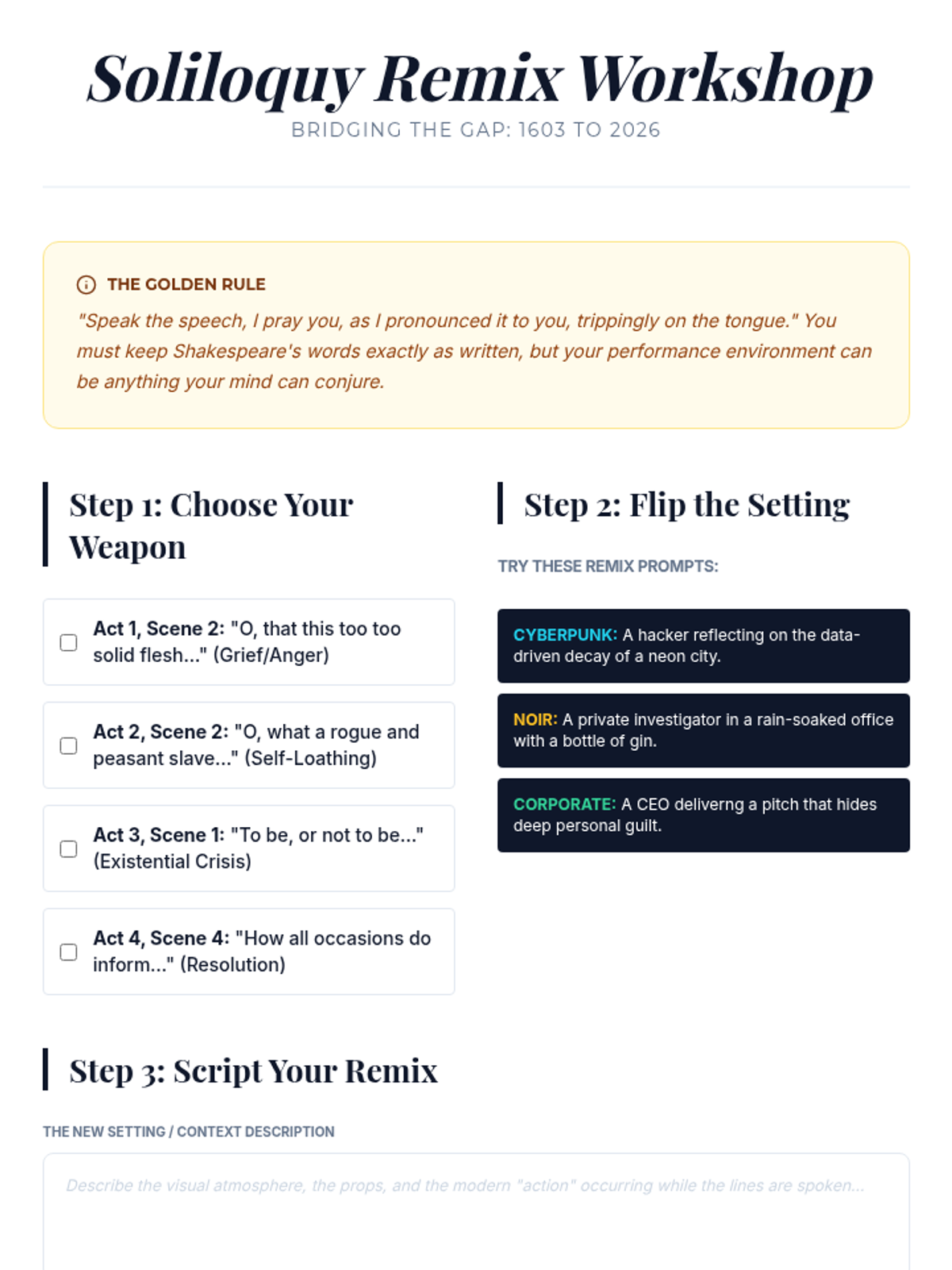
The core lesson for the Hamlet collaborative project, guiding students through thematic analysis, soliloquy performance, and final presentation preparation.
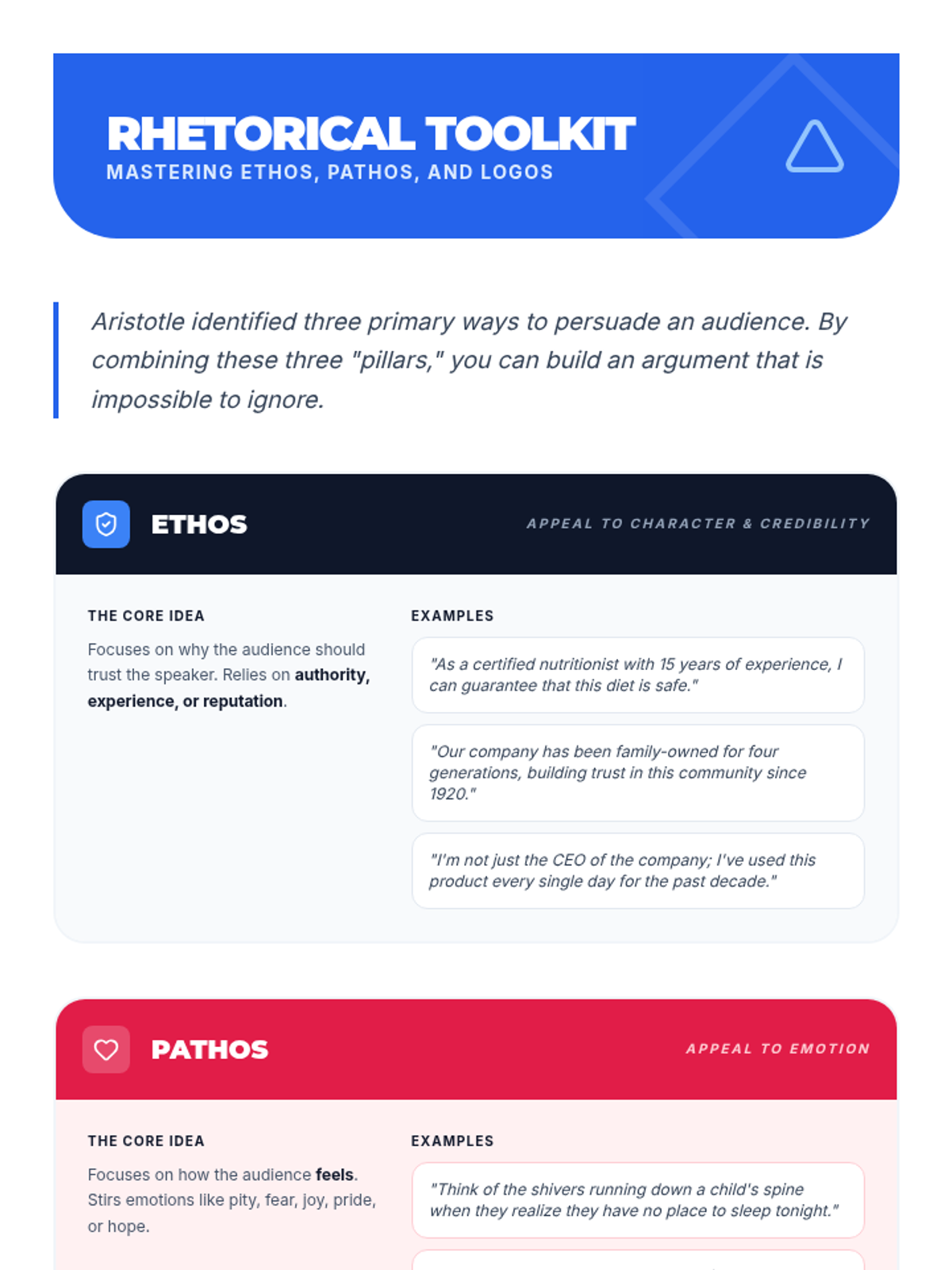
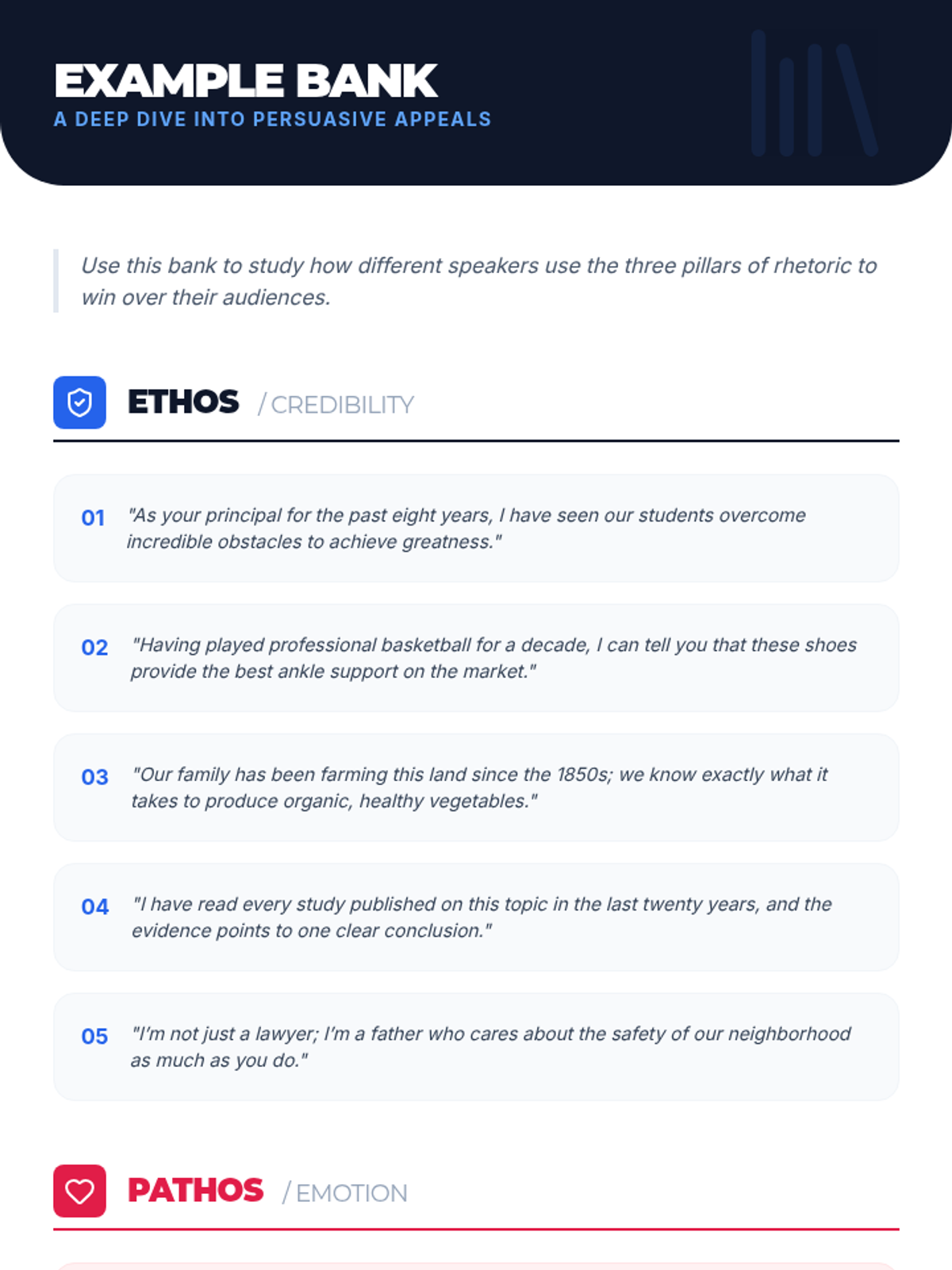
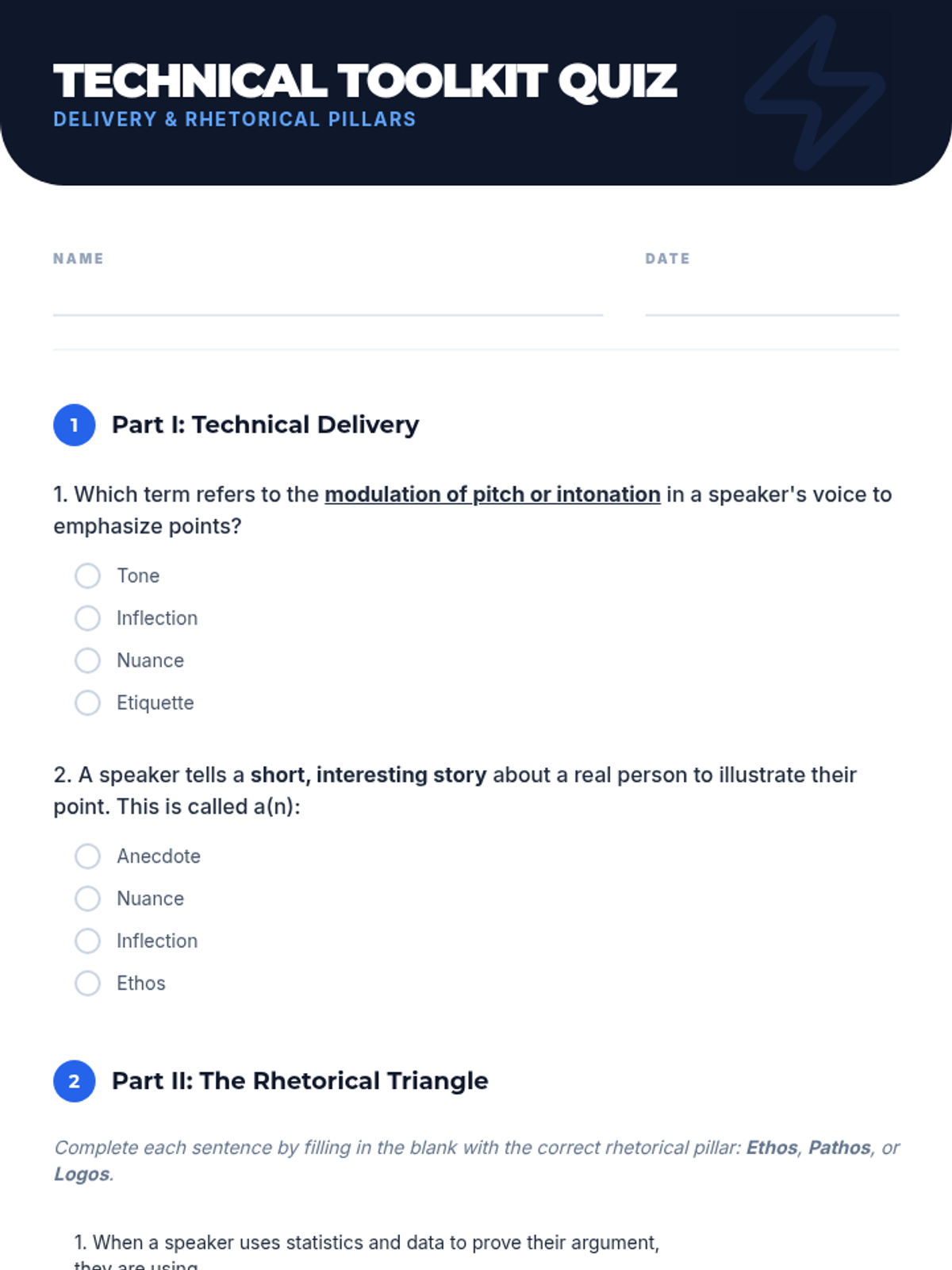
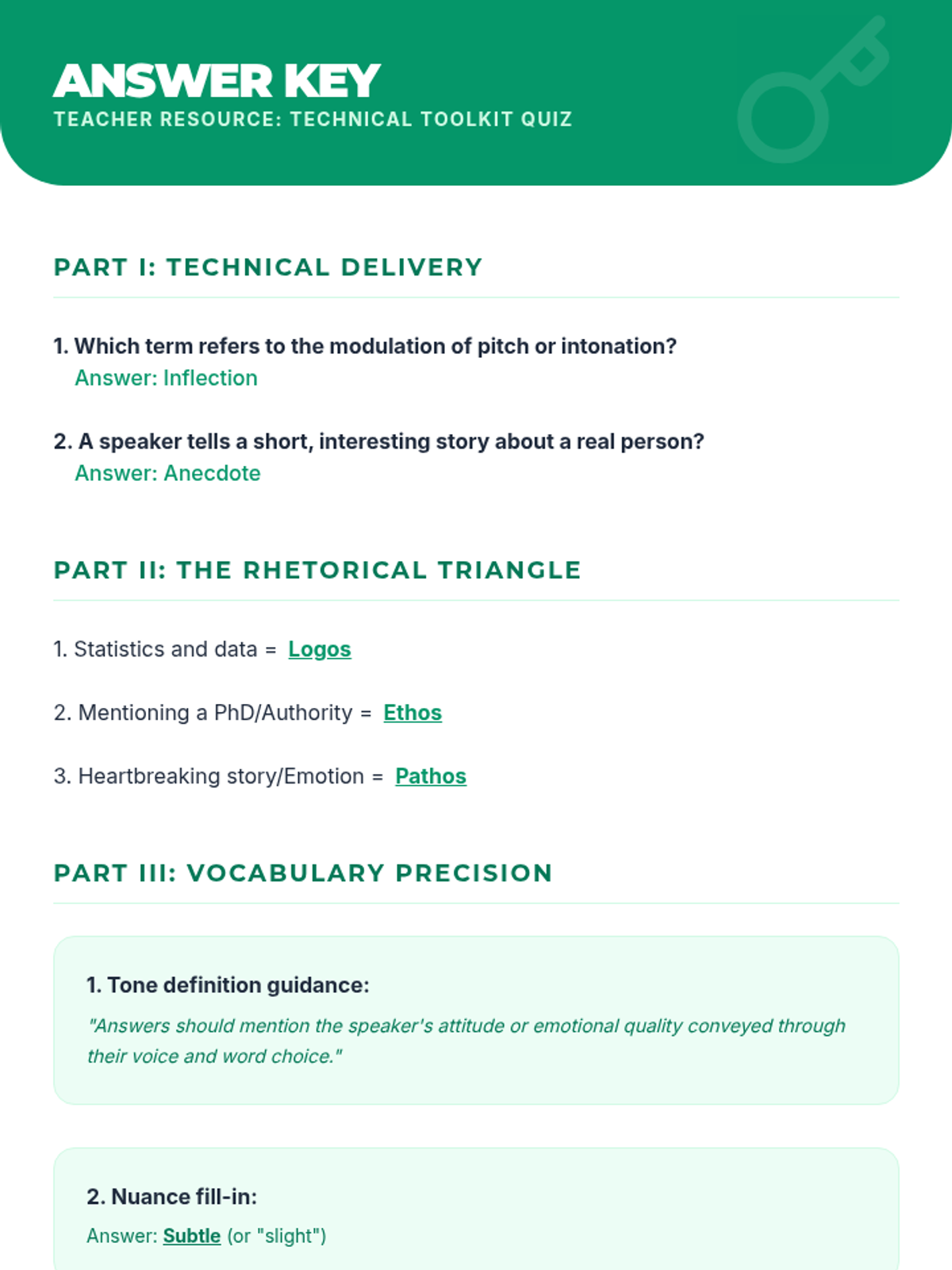
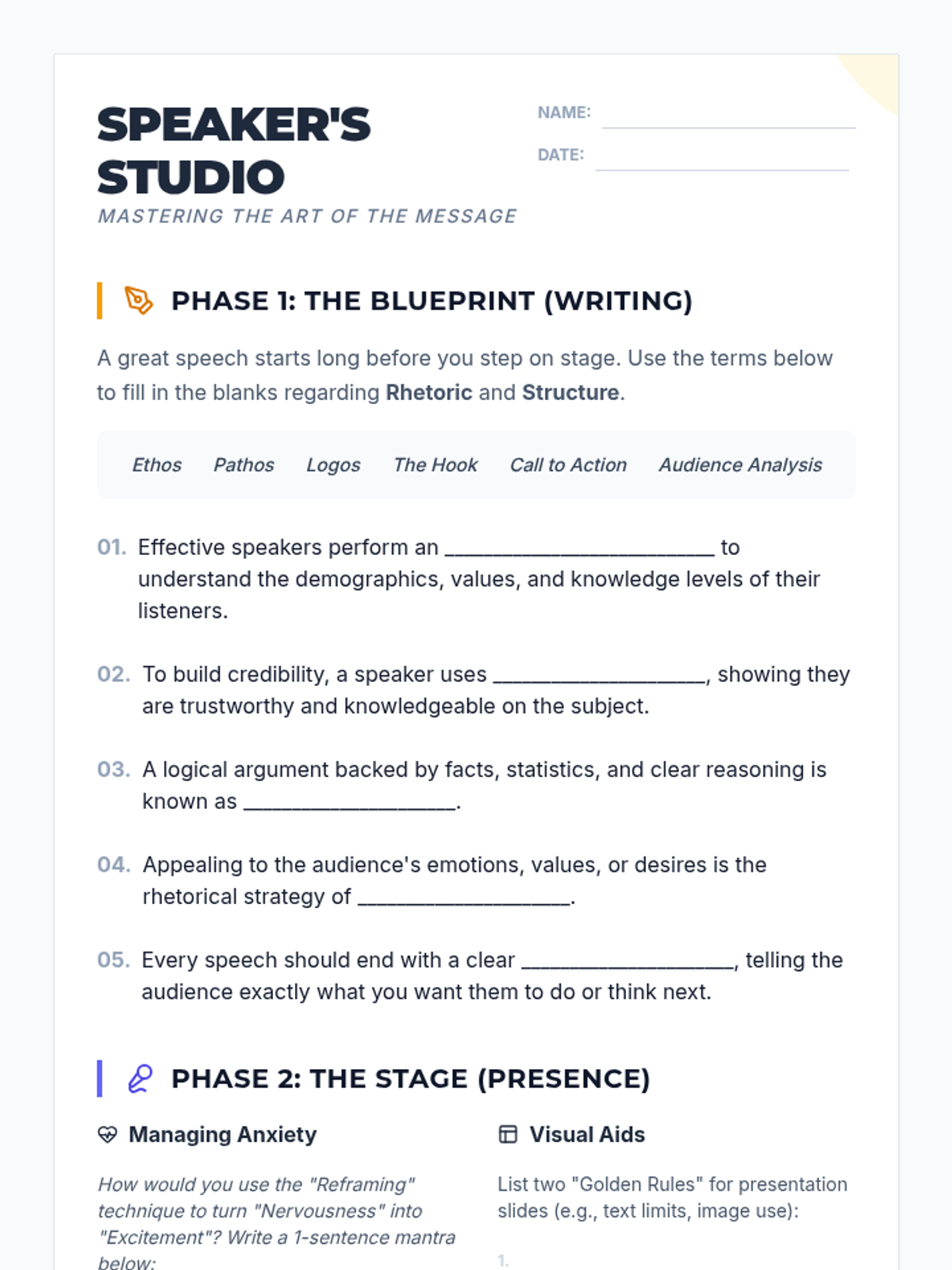
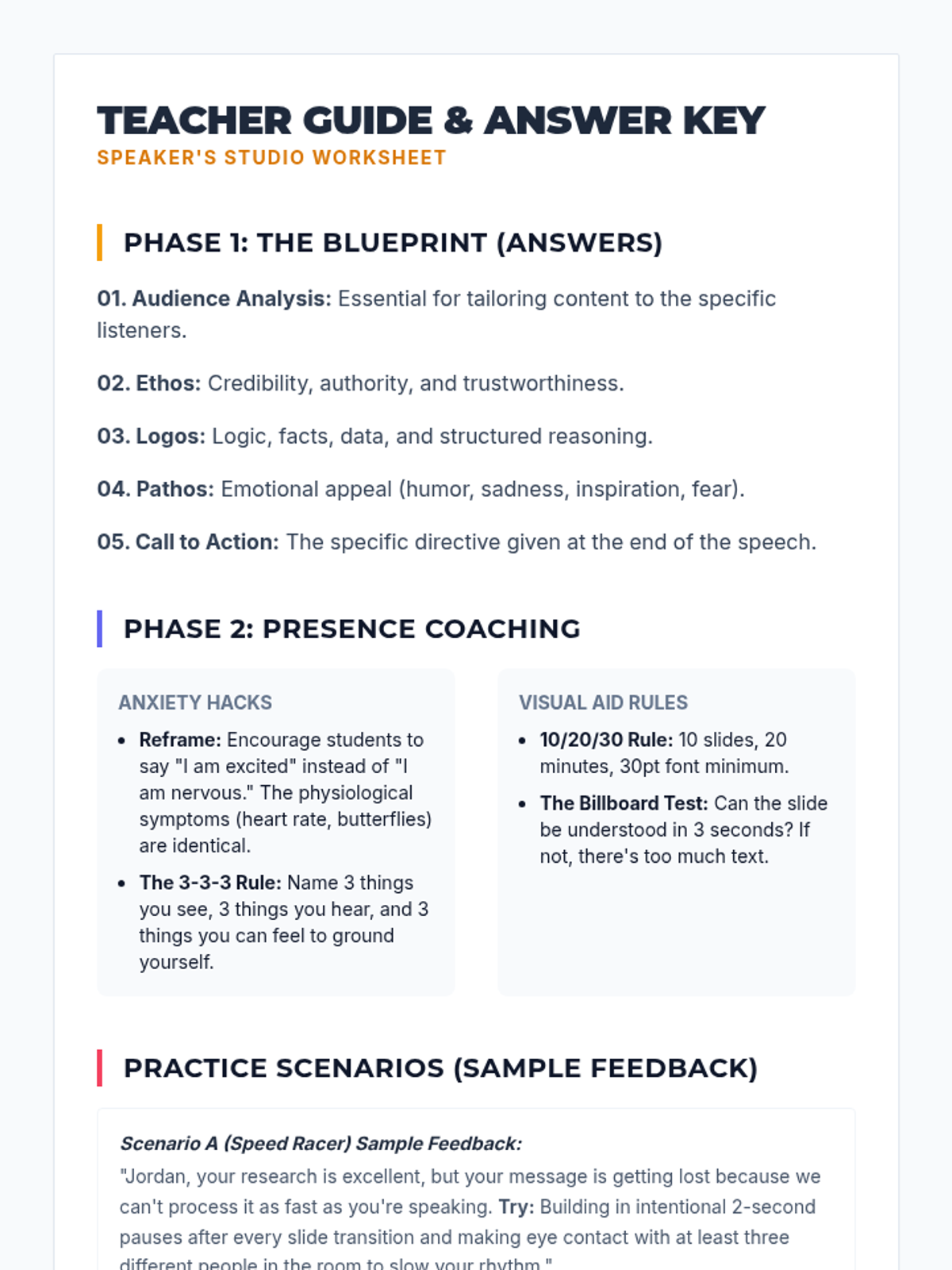
A comprehensive guide to mastering the art of public speaking, covering the entire process from rhetorical writing to confident stage delivery.
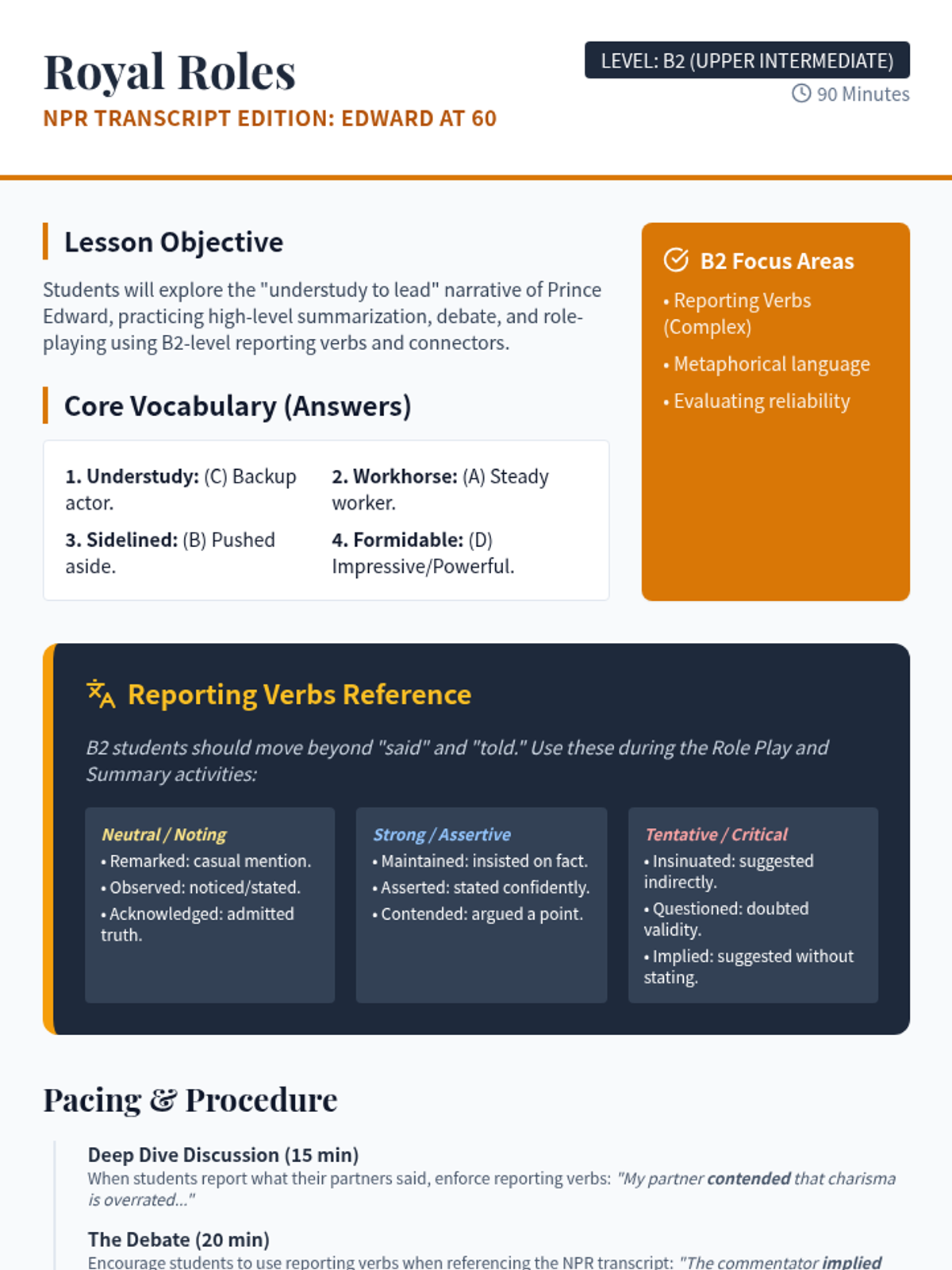
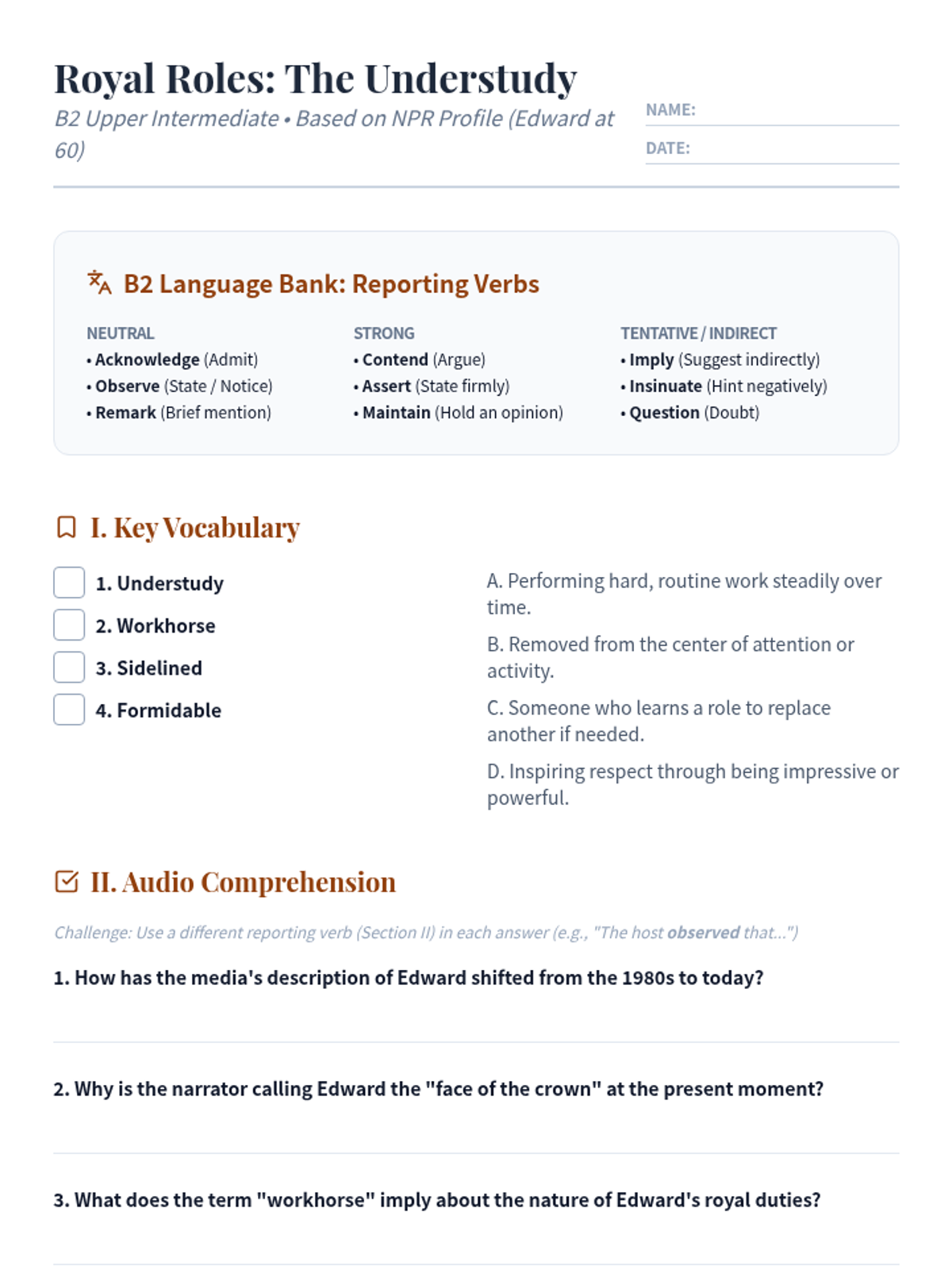
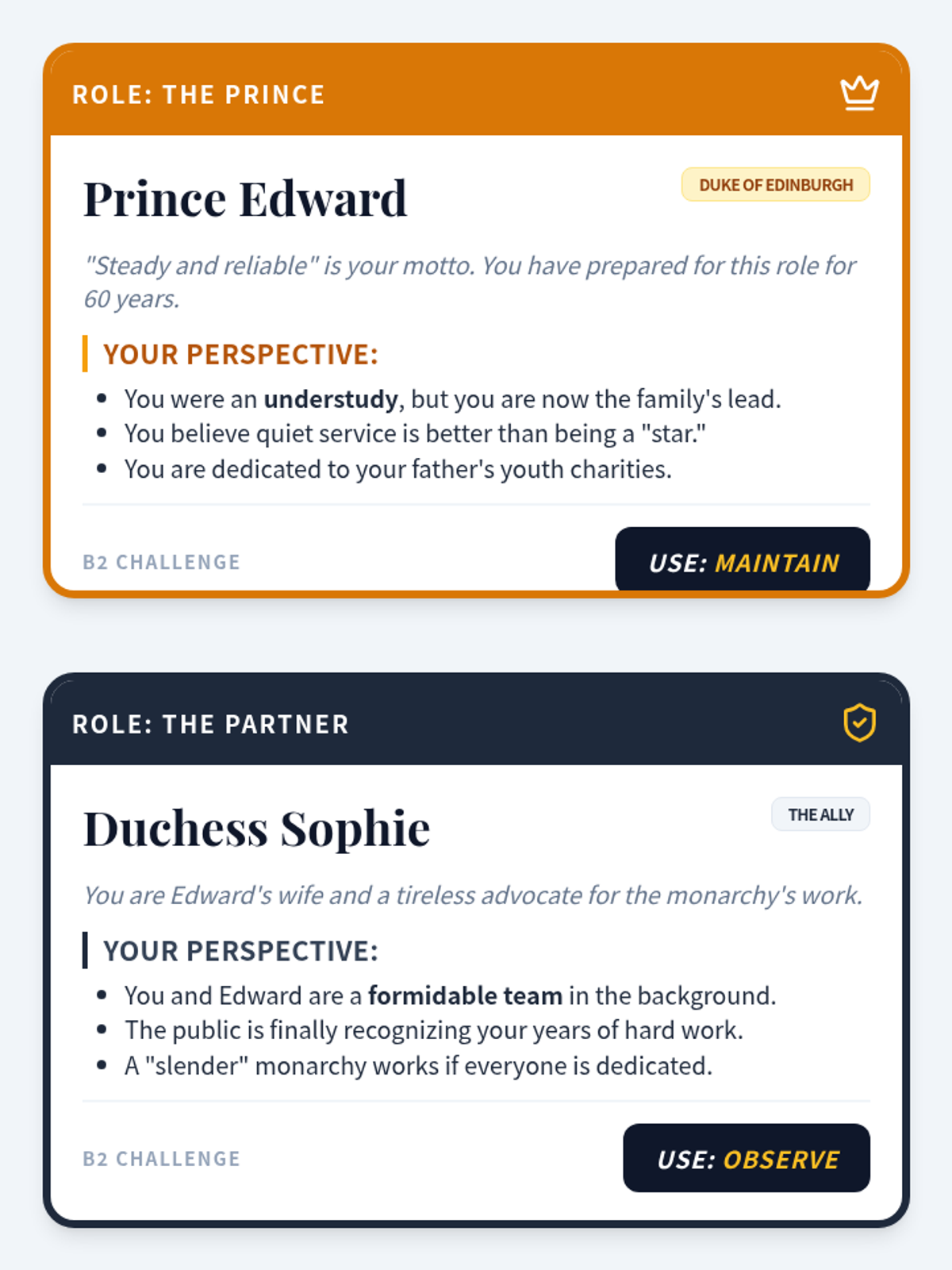
A 90-minute B2-level English lesson focused on the life and public role of Prince Edward, Duke of Edinburgh, featuring listening comprehension and intensive speaking activities.
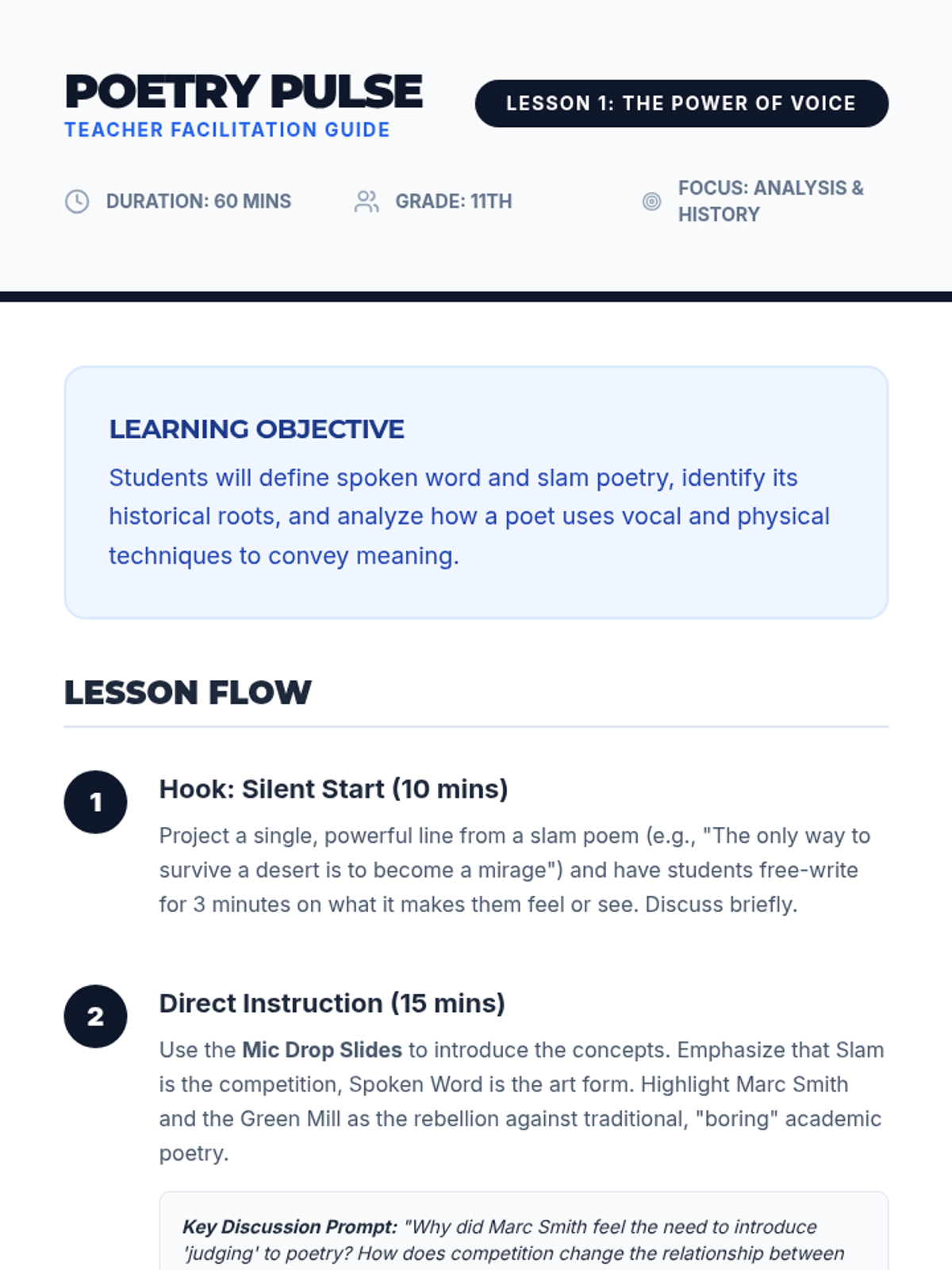
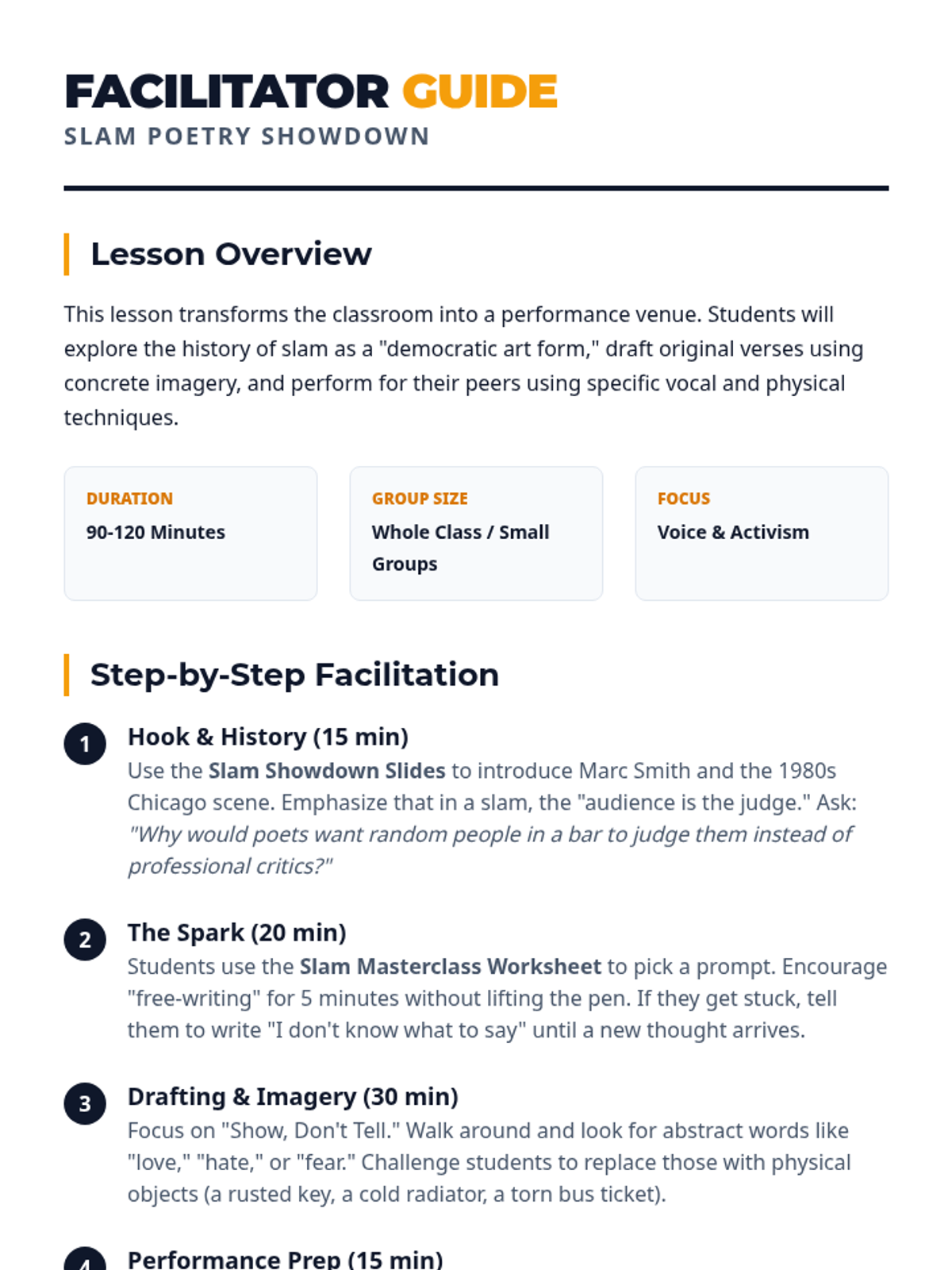
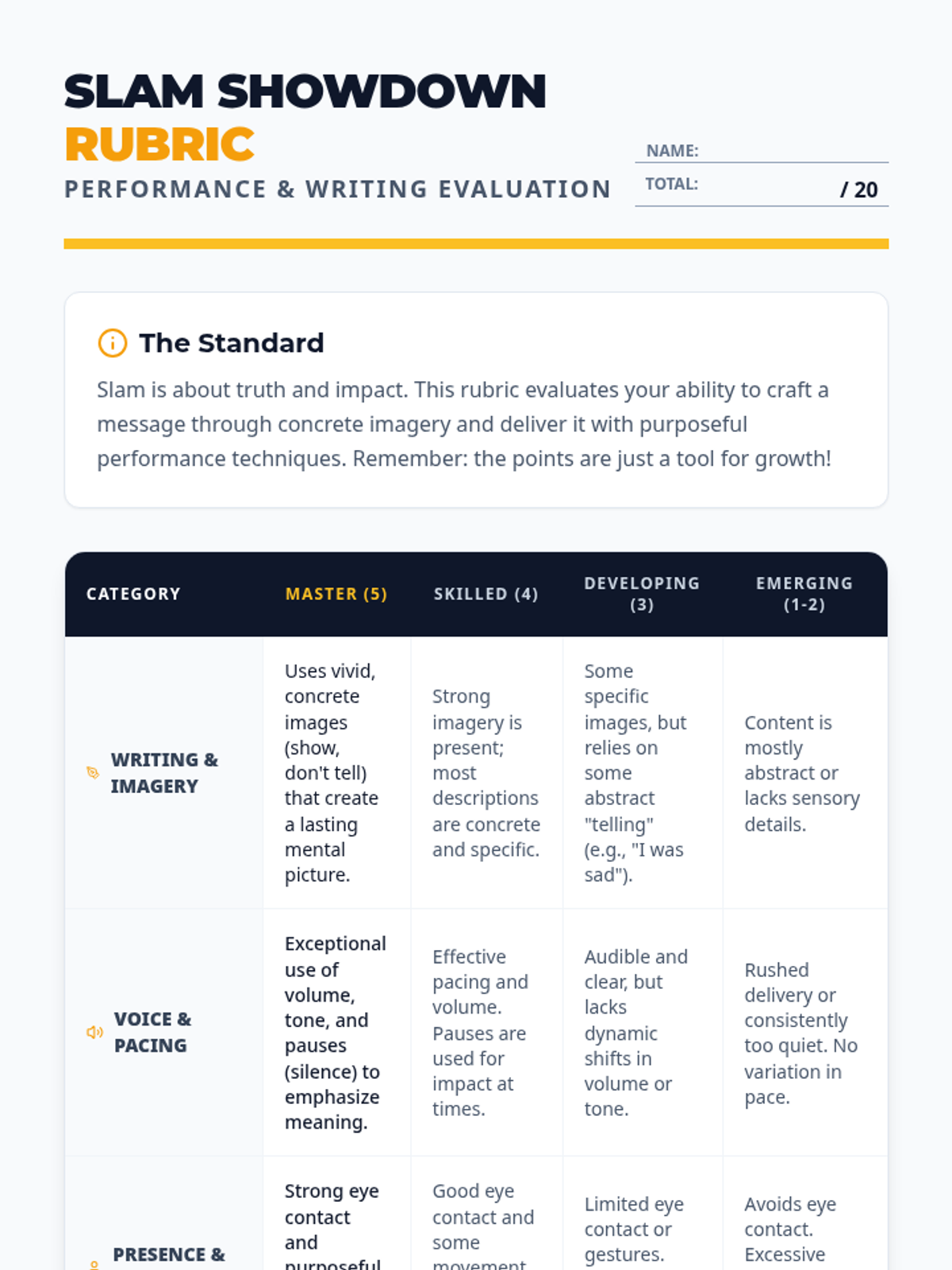
A comprehensive lesson guiding students from the history and purpose of slam poetry through writing original verses to performing with impact and giving constructive peer feedback.
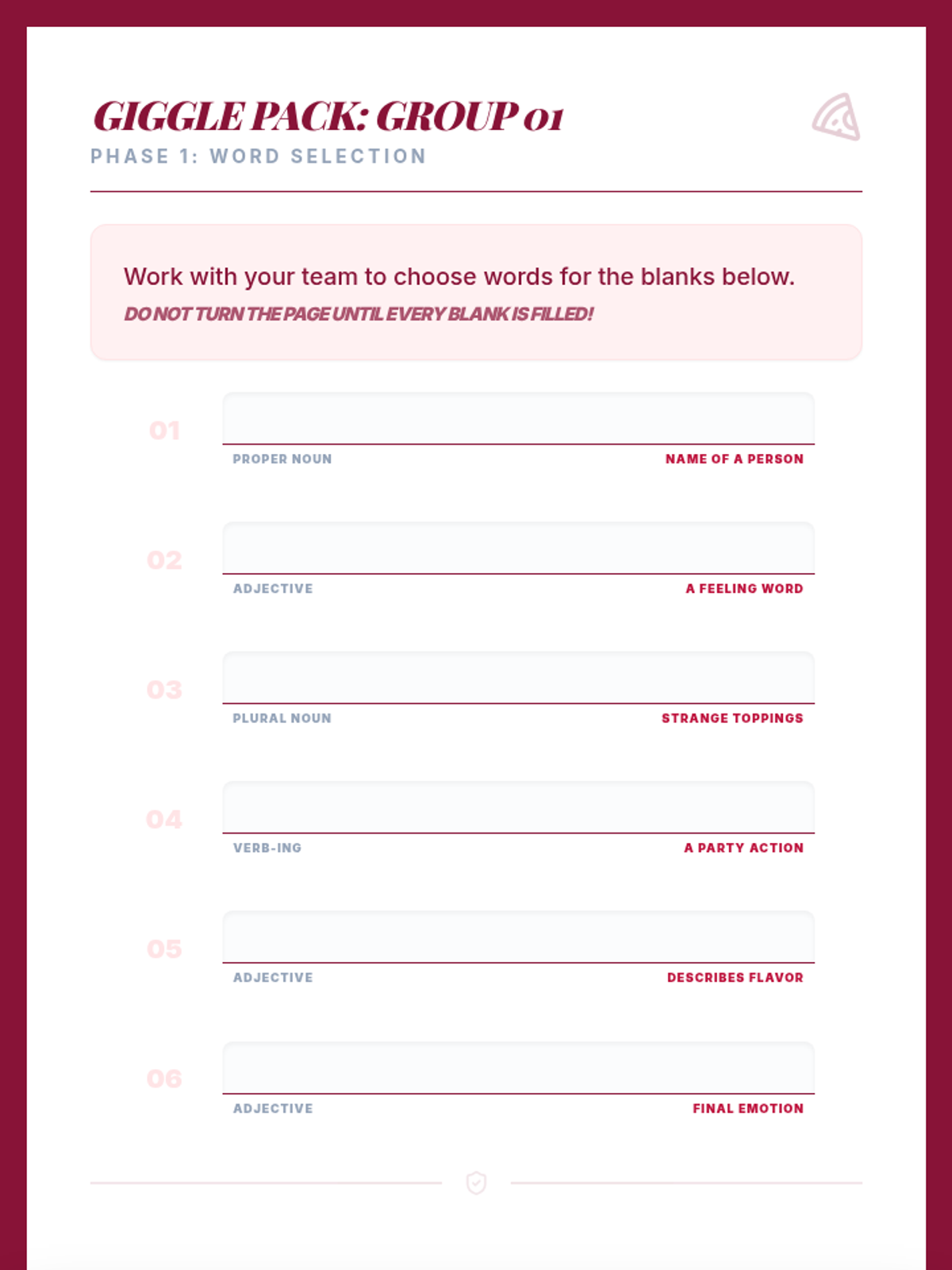
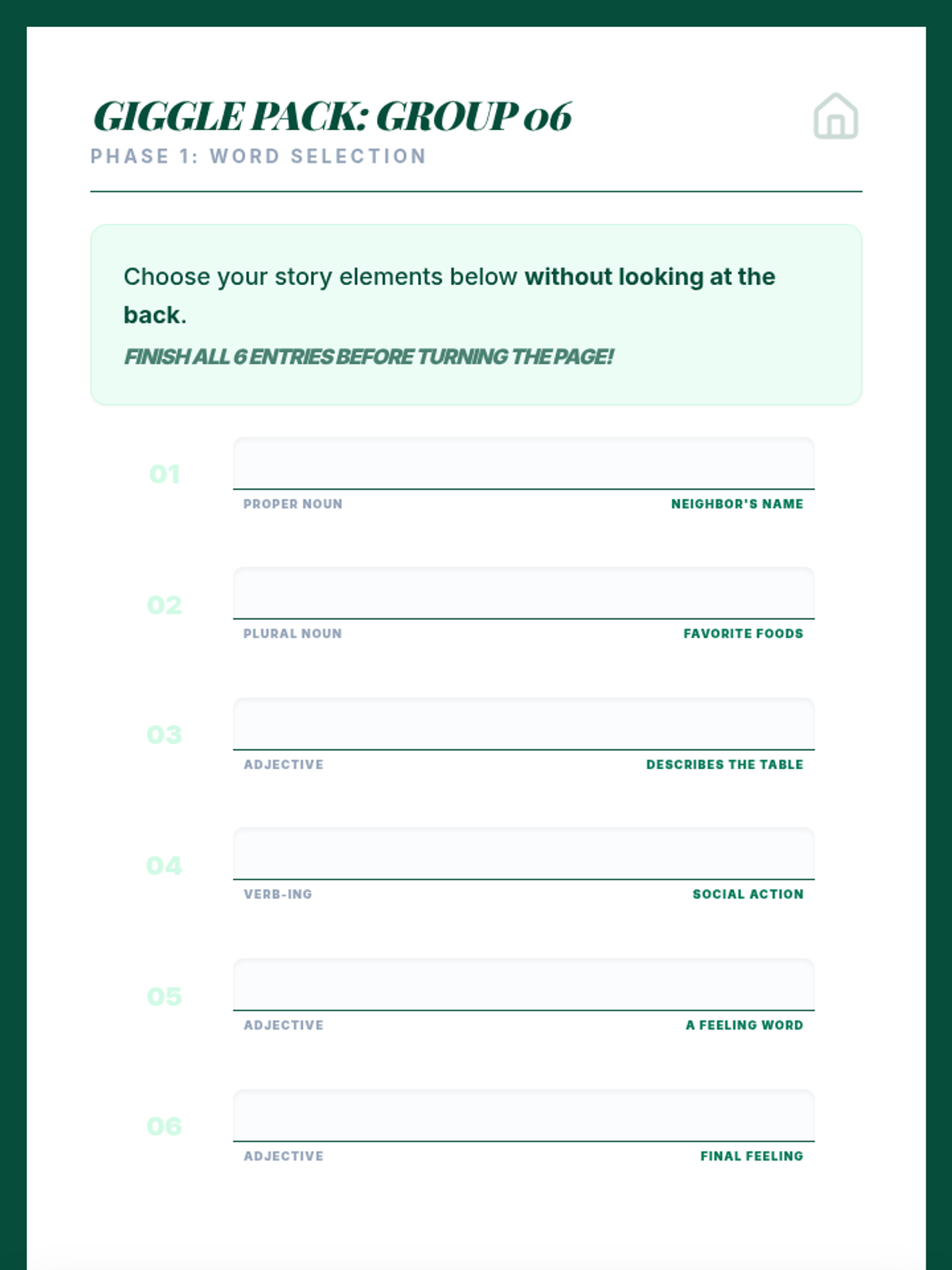
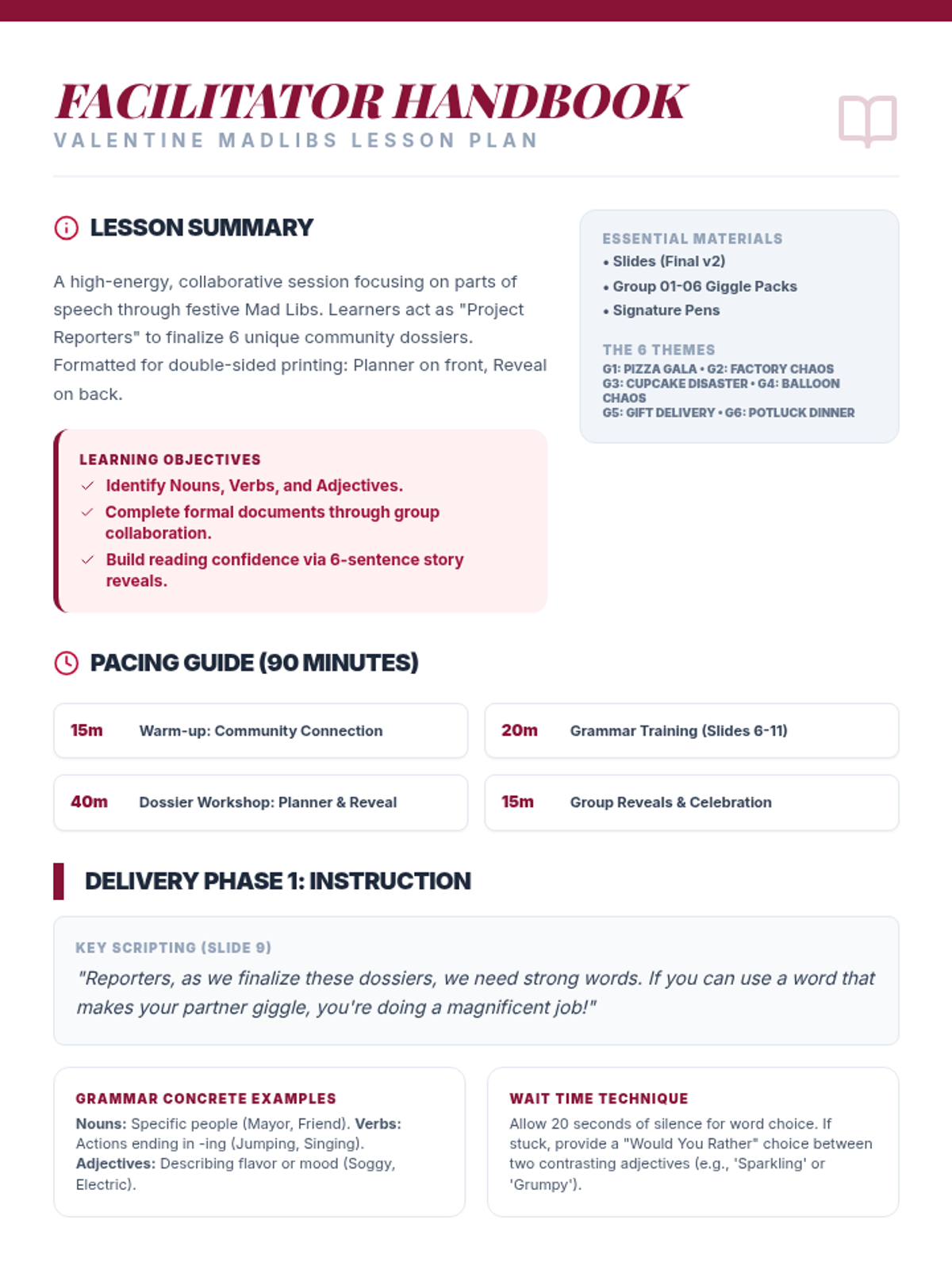
A high-energy, collaborative lesson focusing on parts of speech through funny Valentine's Day themed Mad Libs. All romantic content has been replaced with themes of friendship and celebration.
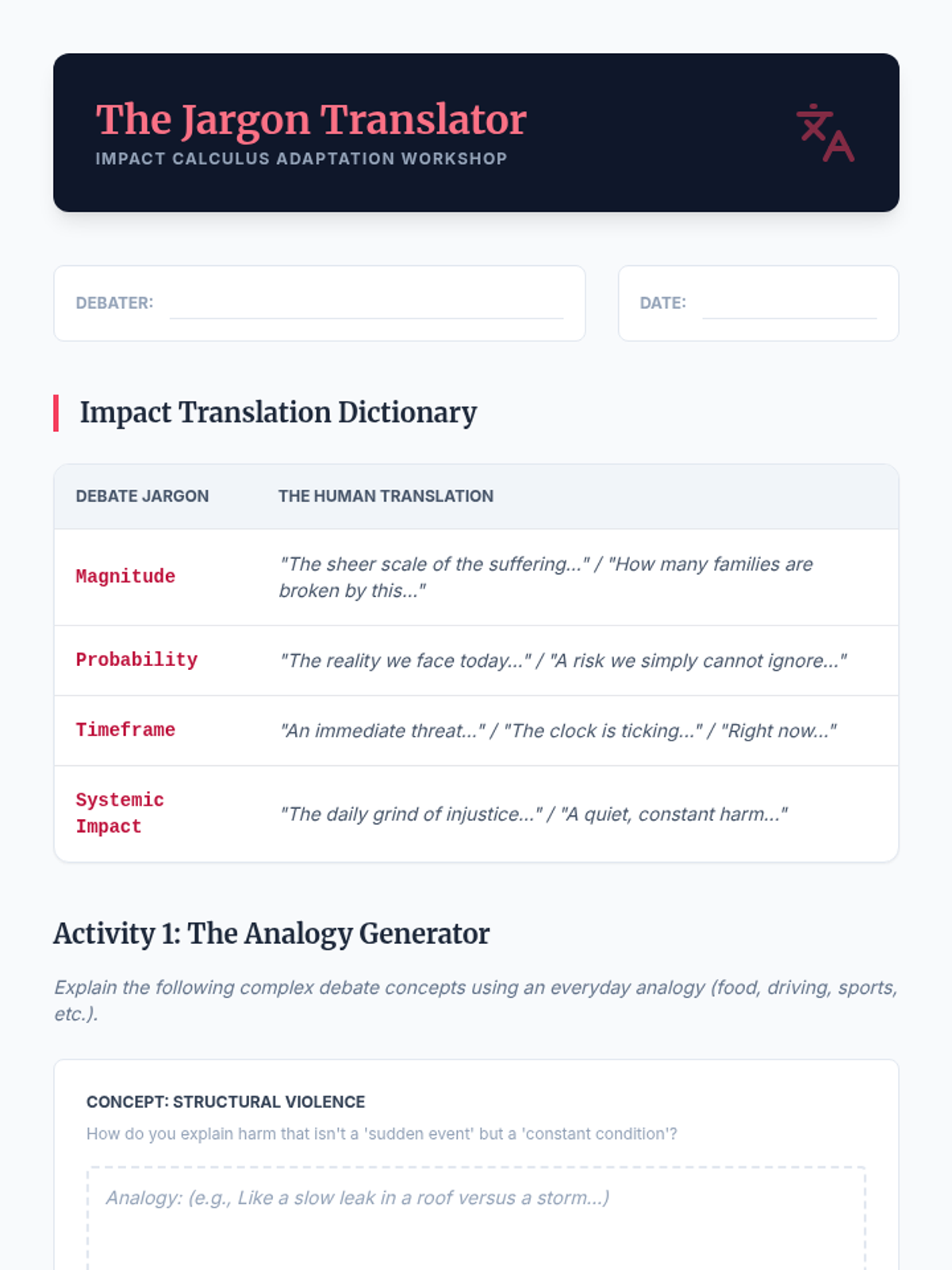
Focuses on adapting complex impact calculus for lay audiences by translating jargon into relatable analogies and common language.
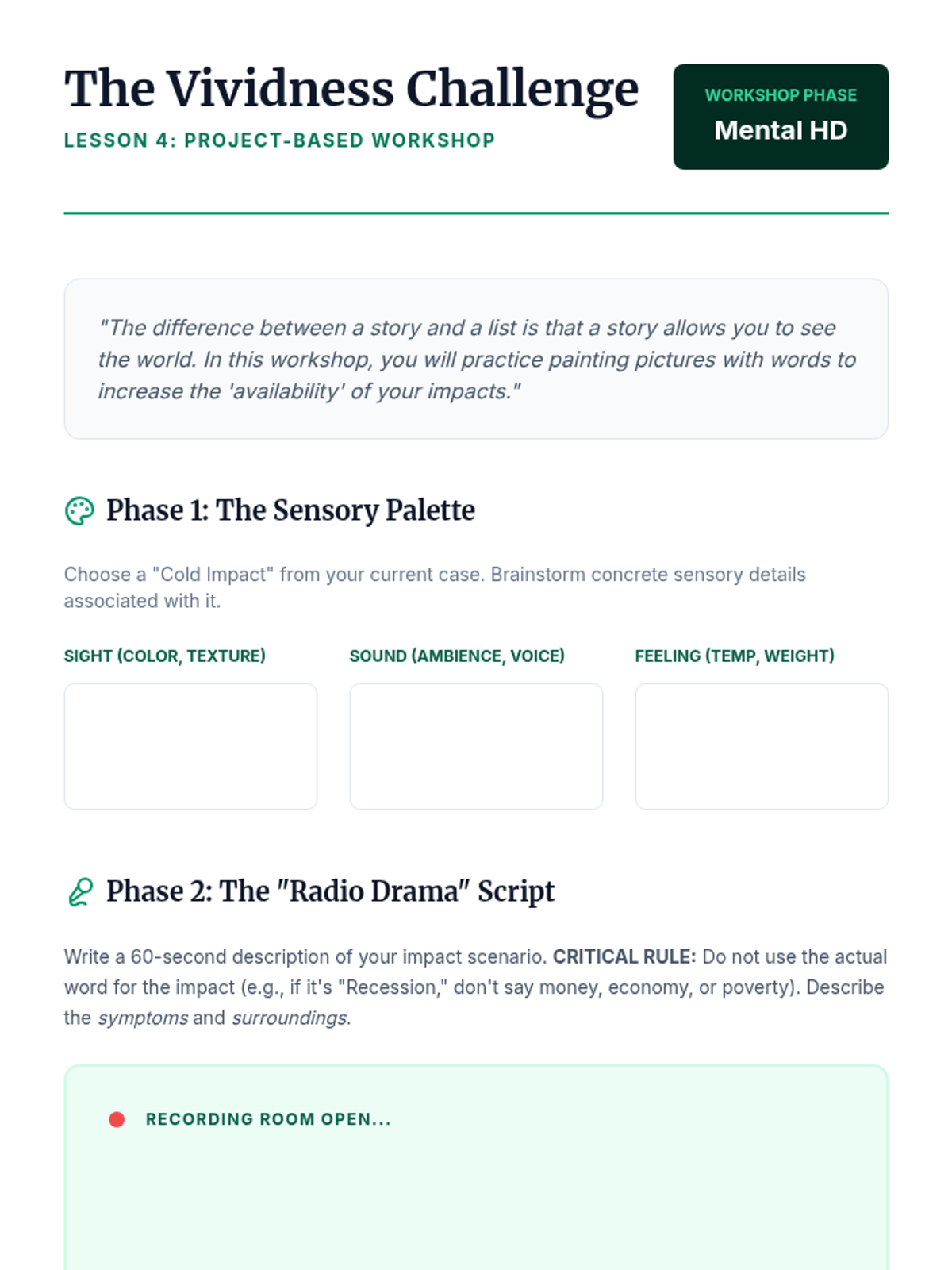
Focuses on the availability heuristic and how descriptive imagery creates mental anchors that make impacts feel more probable.
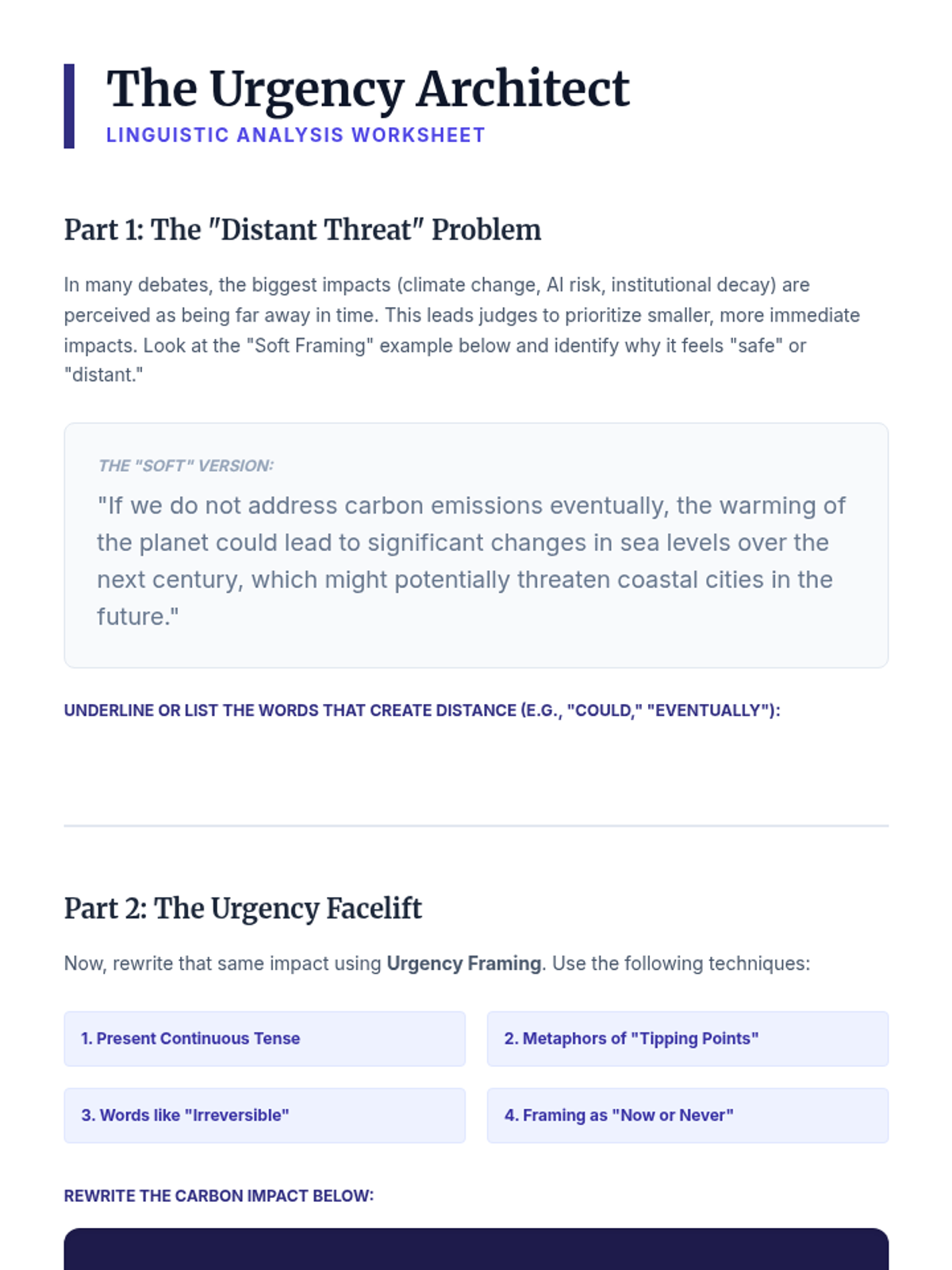
Analyzes linguistic techniques to create a sense of urgency and immediacy, making distant threats feel like 'now or never' scenarios.
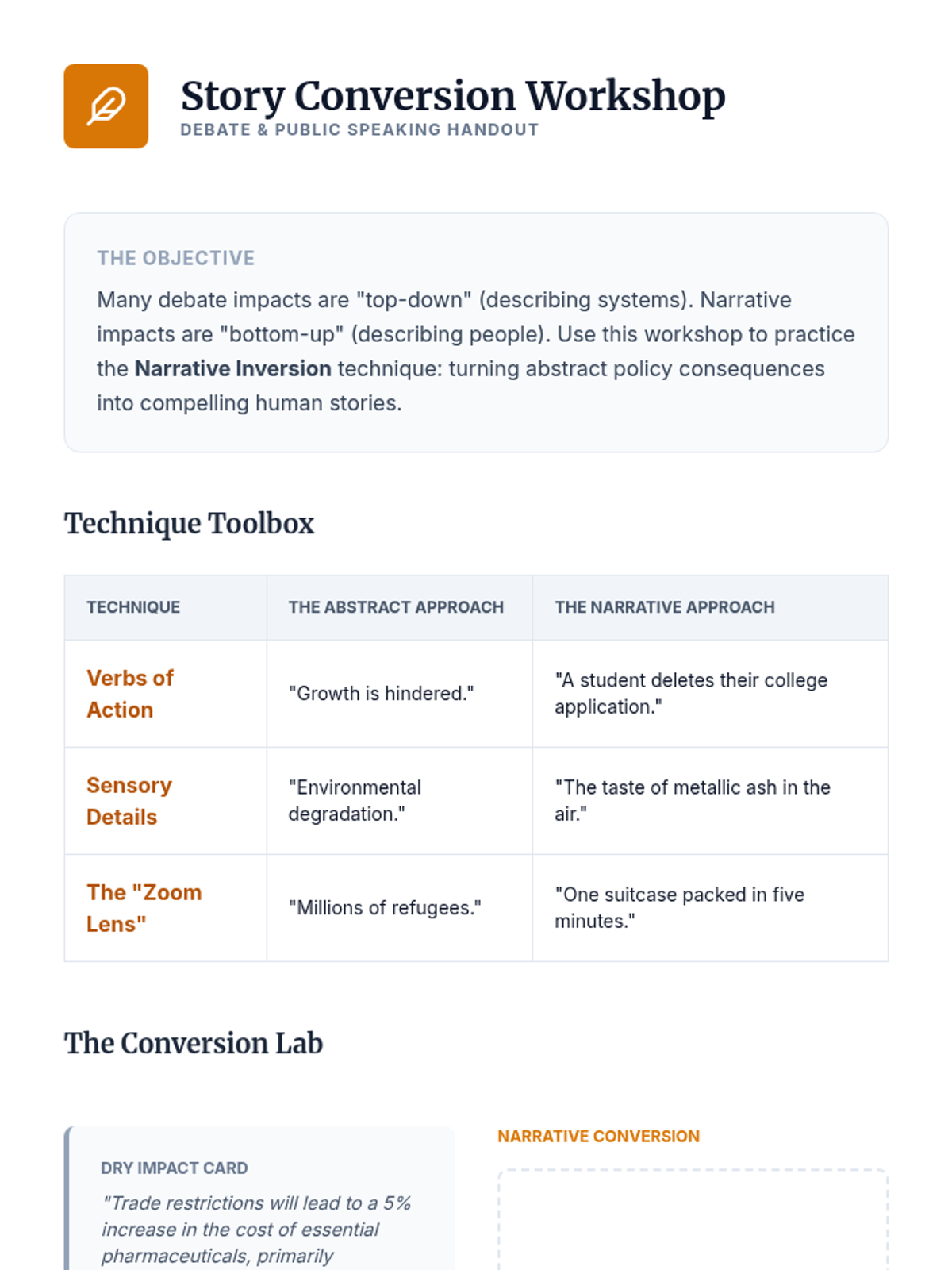
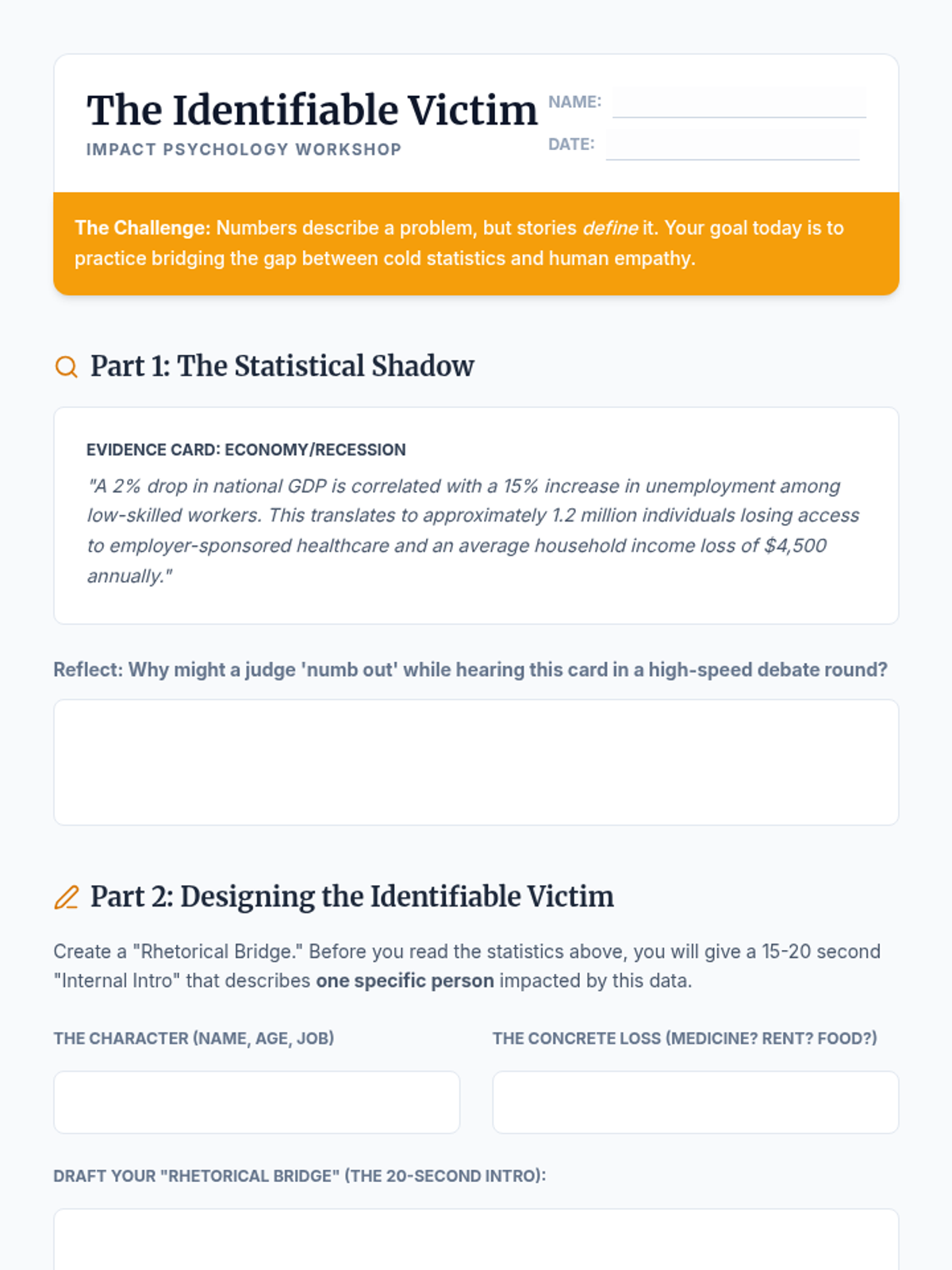
Teaches students to convert statistical impact data into compelling human narratives that resonate emotionally with audiences.
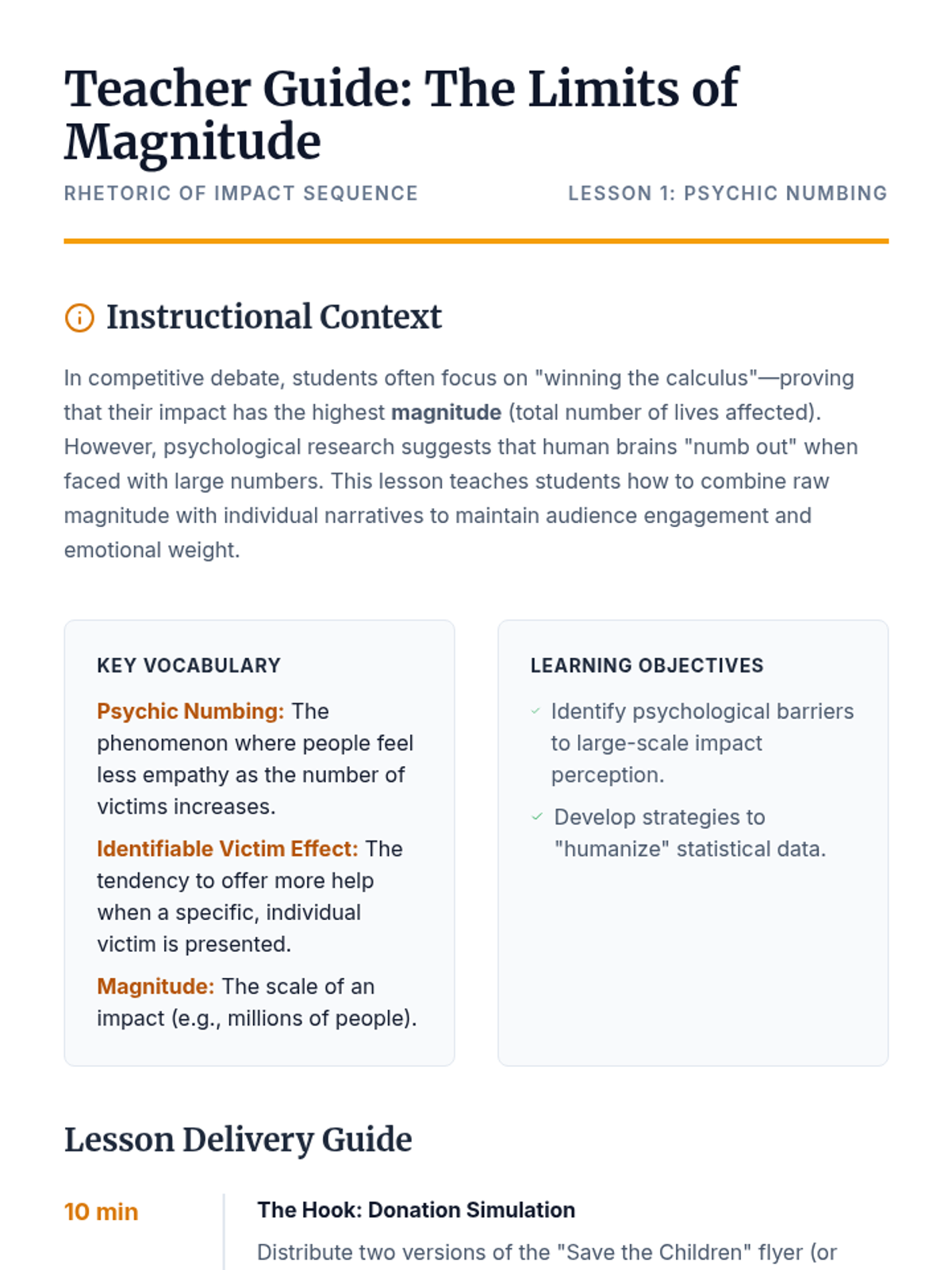
Explores why large-scale statistics often fail to move audiences and how the 'identifiable victim effect' can be used to overcome psychic numbing.
A rapid-fire practice session where students synthesize all weighing mechanisms in 30-second competitive speeches.
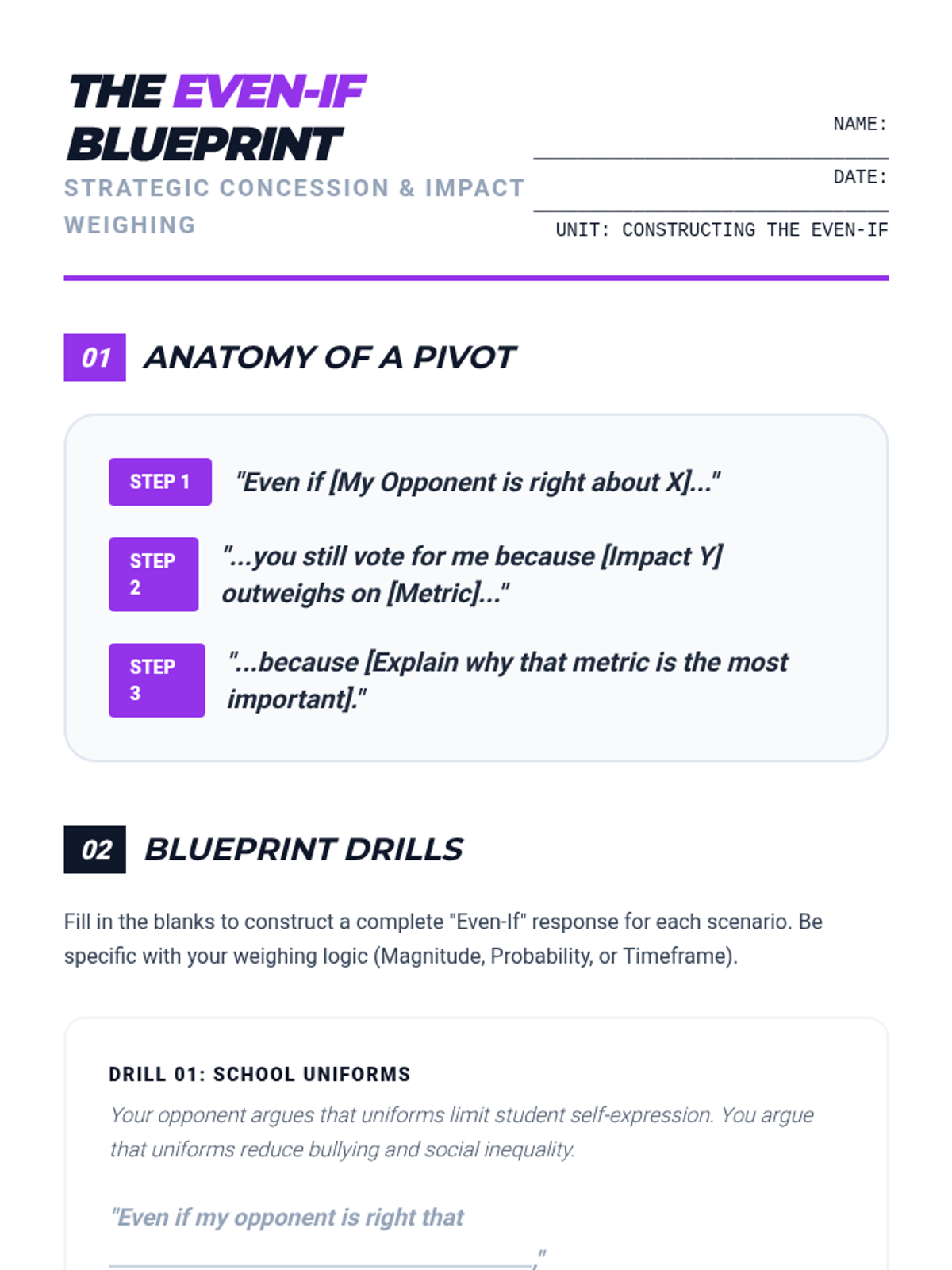
Teaches students the 'Even-If' structure to concede an opponent's premise while winning on the impact level.
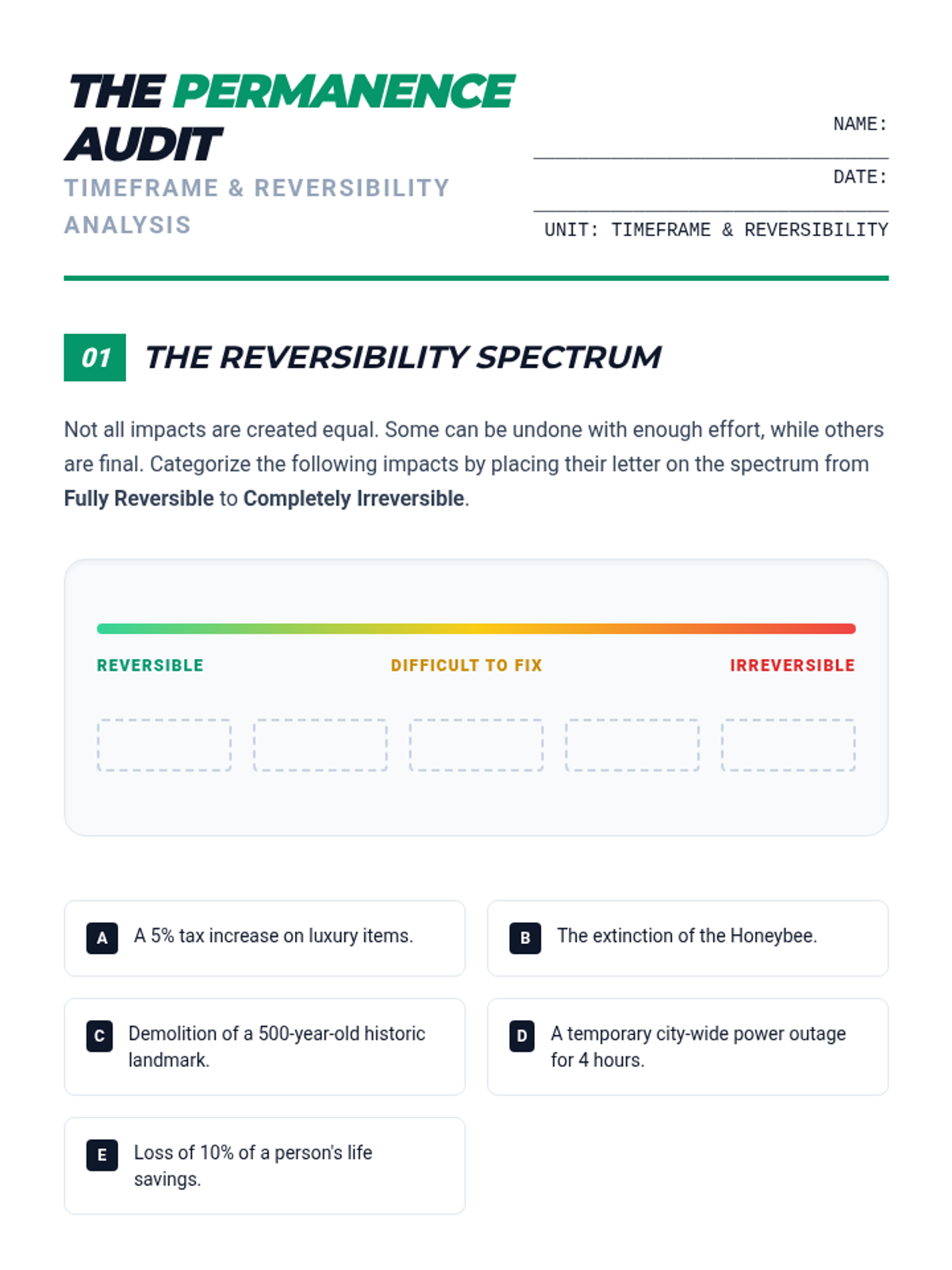
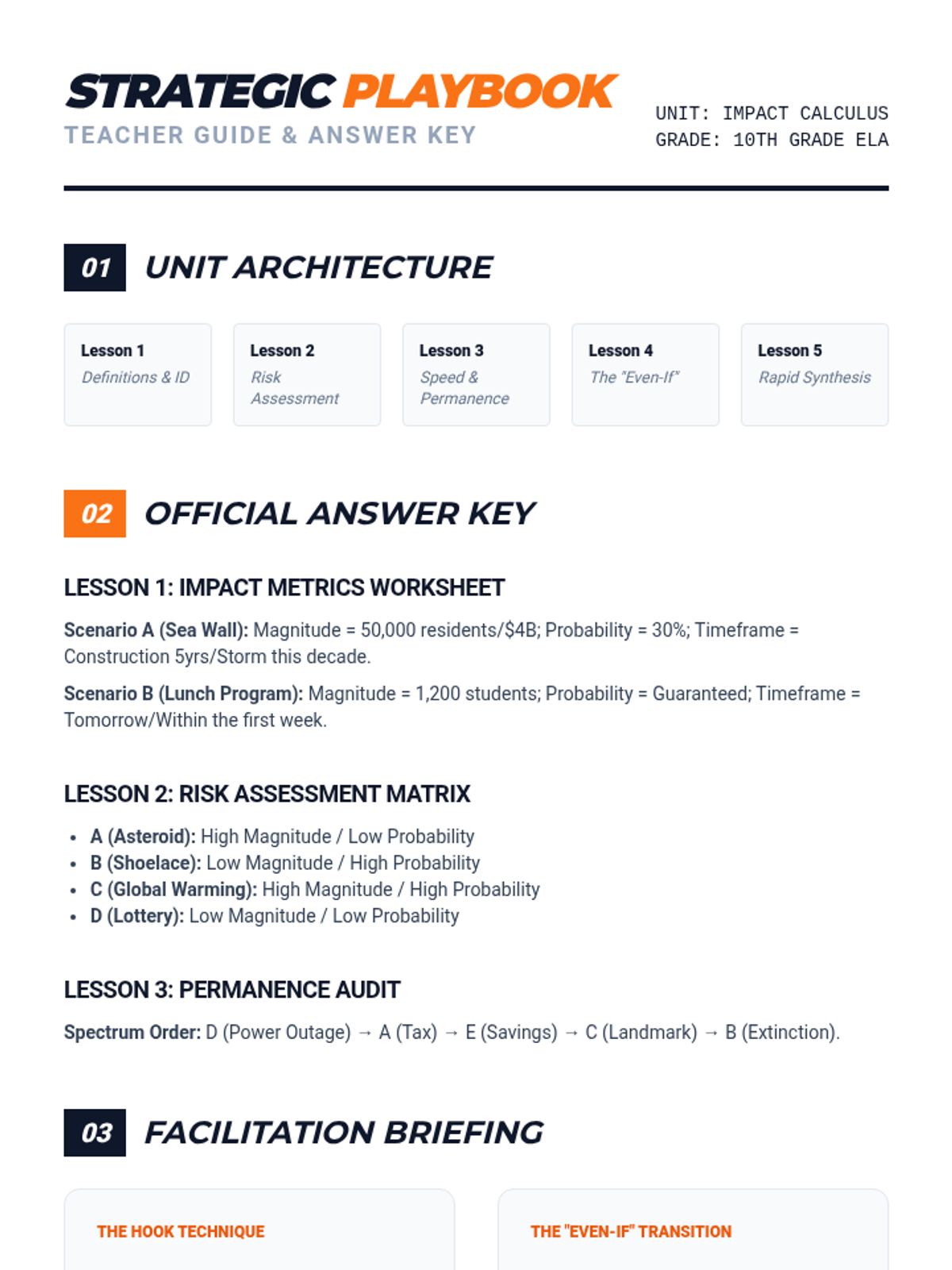
Explores how the speed of an impact and its permanence (reversibility) influence strategic prioritization.
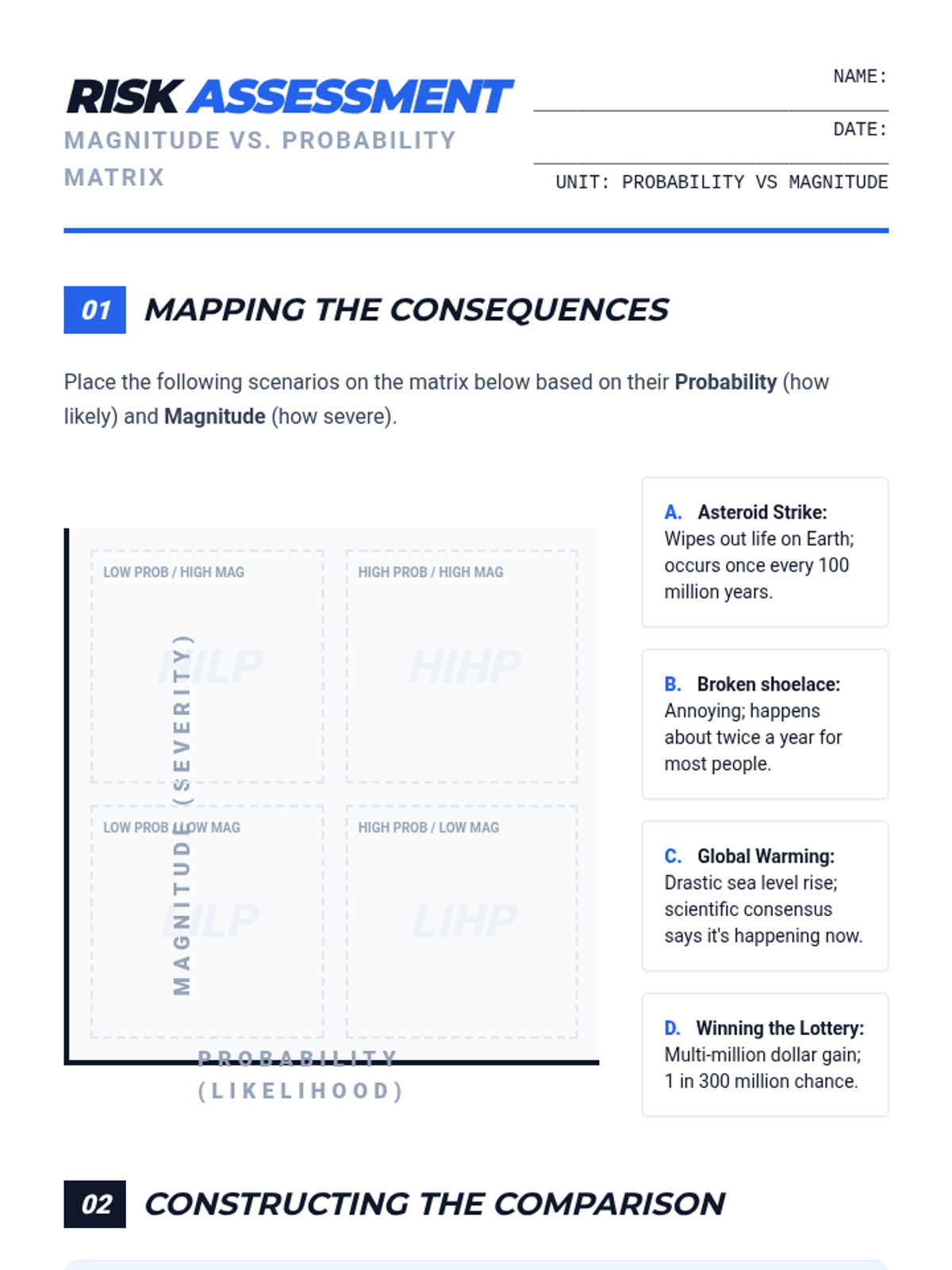
Focuses on the tension between high-impact/low-probability events and low-impact/high-probability events using risk assessment models.
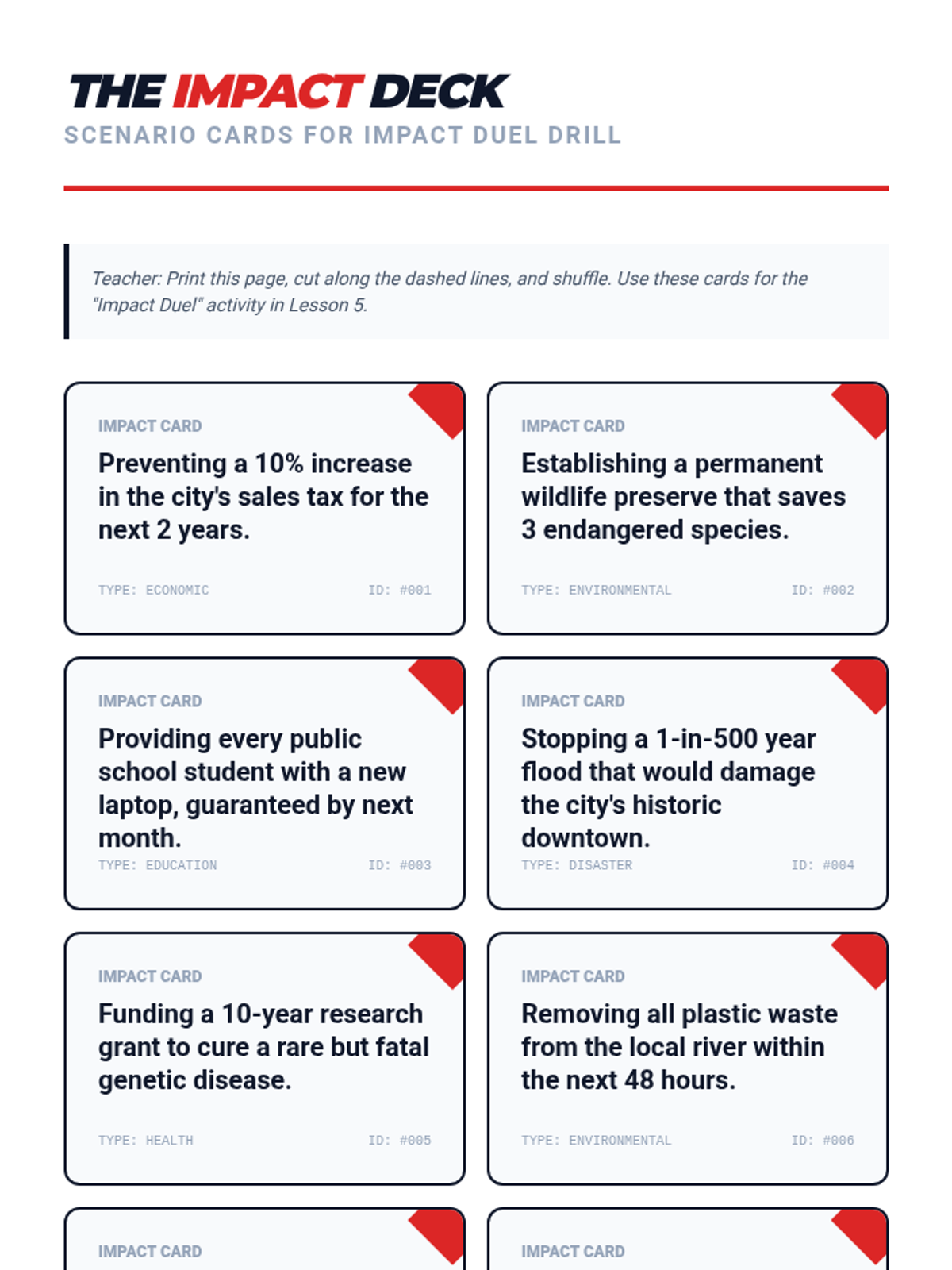
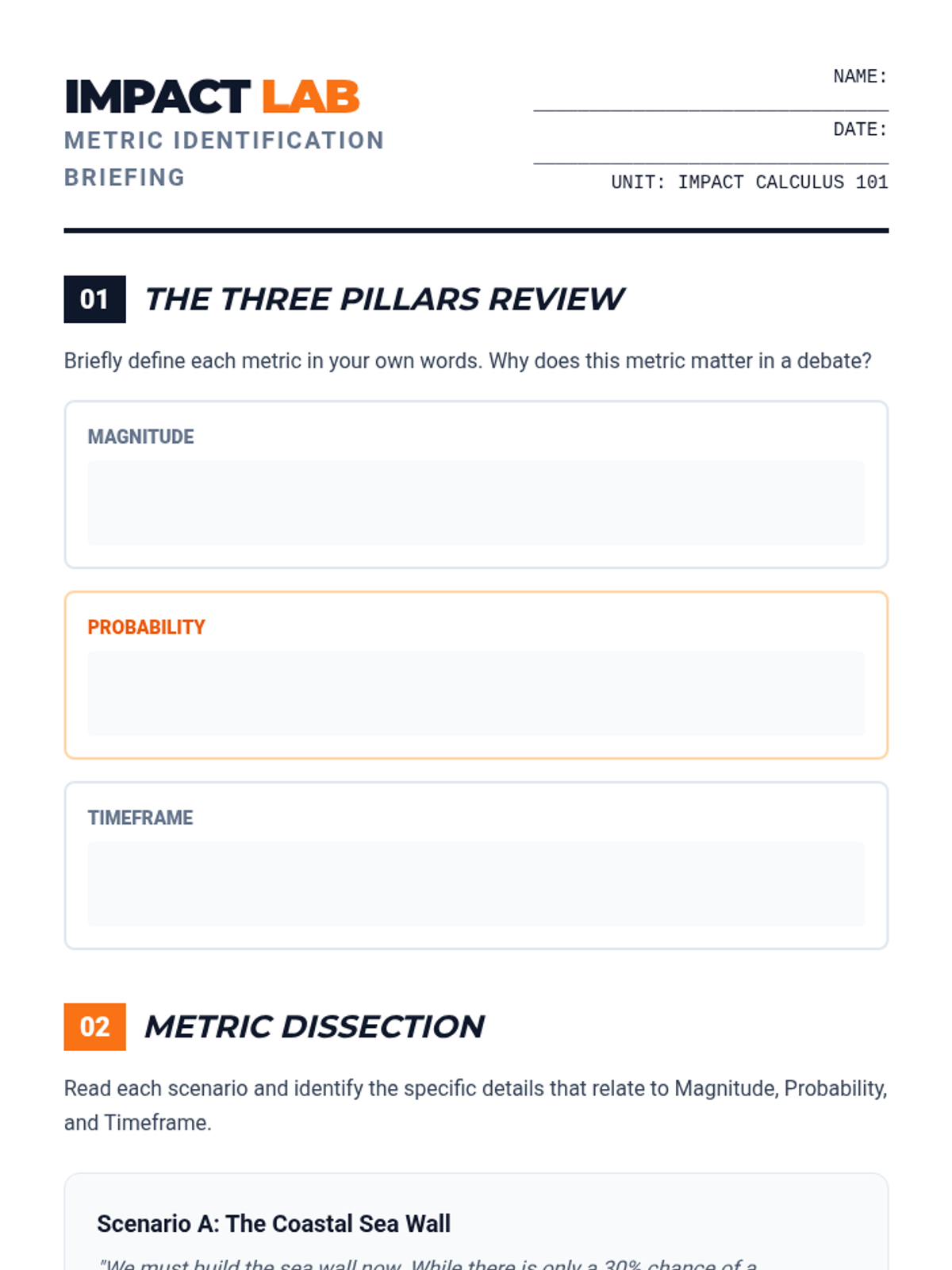
Students define and identify the three pillars of impact calculus: Magnitude, Probability, and Timeframe through scenario analysis.
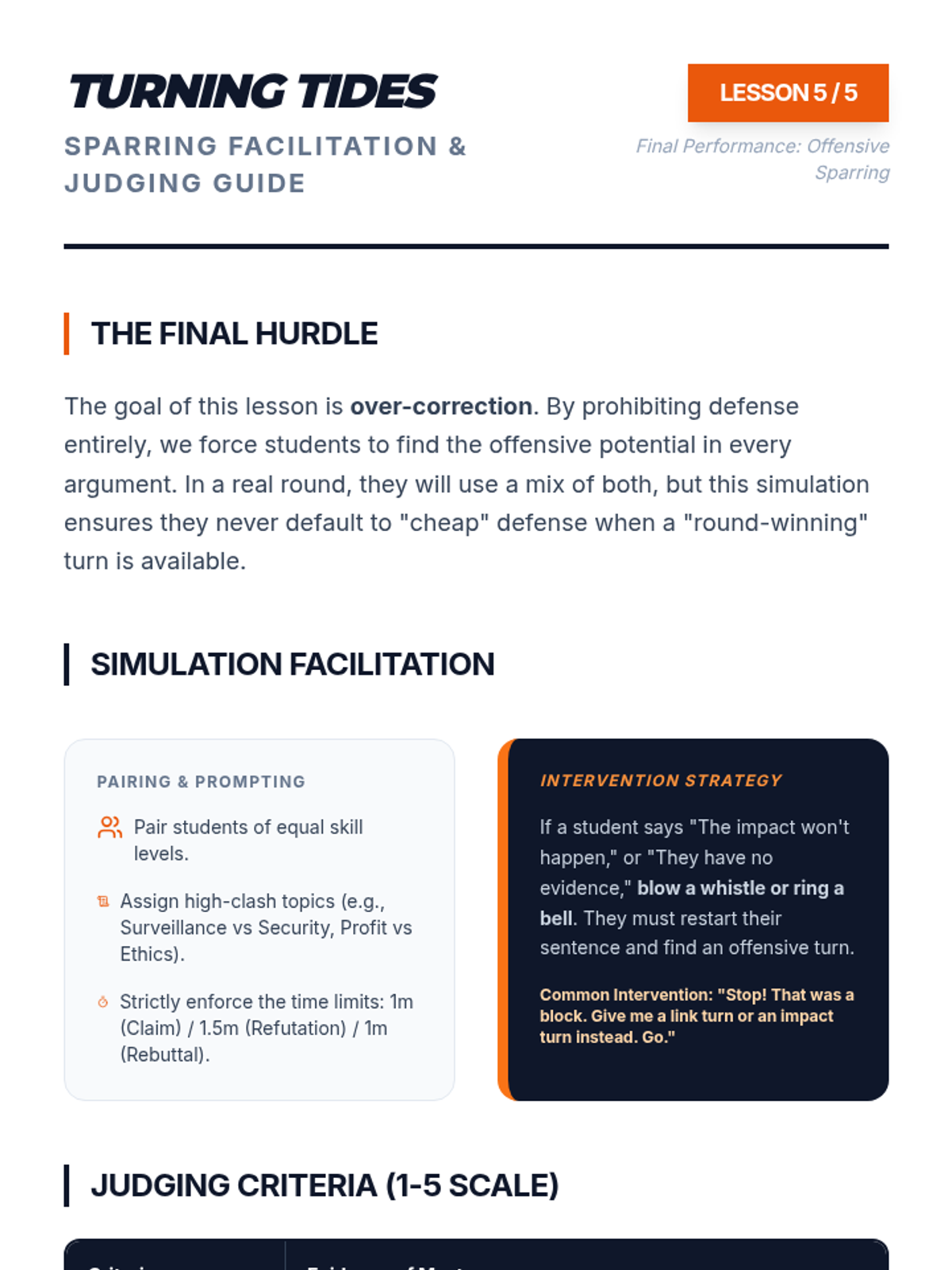
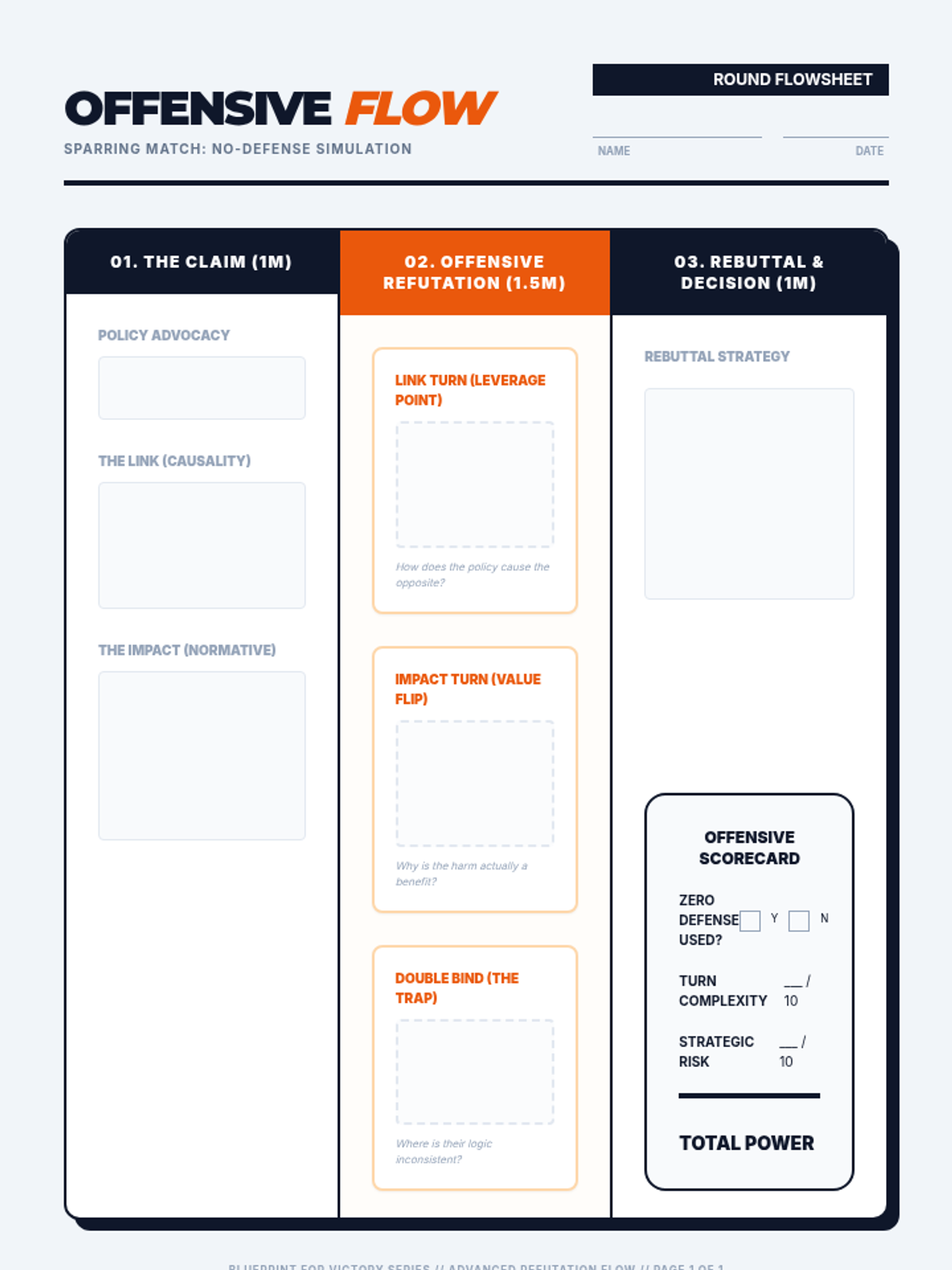
Students engage in high-intensity sparring matches where defensive blocks are prohibited. The session emphasizes rapid-fire offensive turns and real-time adaptation to opponent claims.
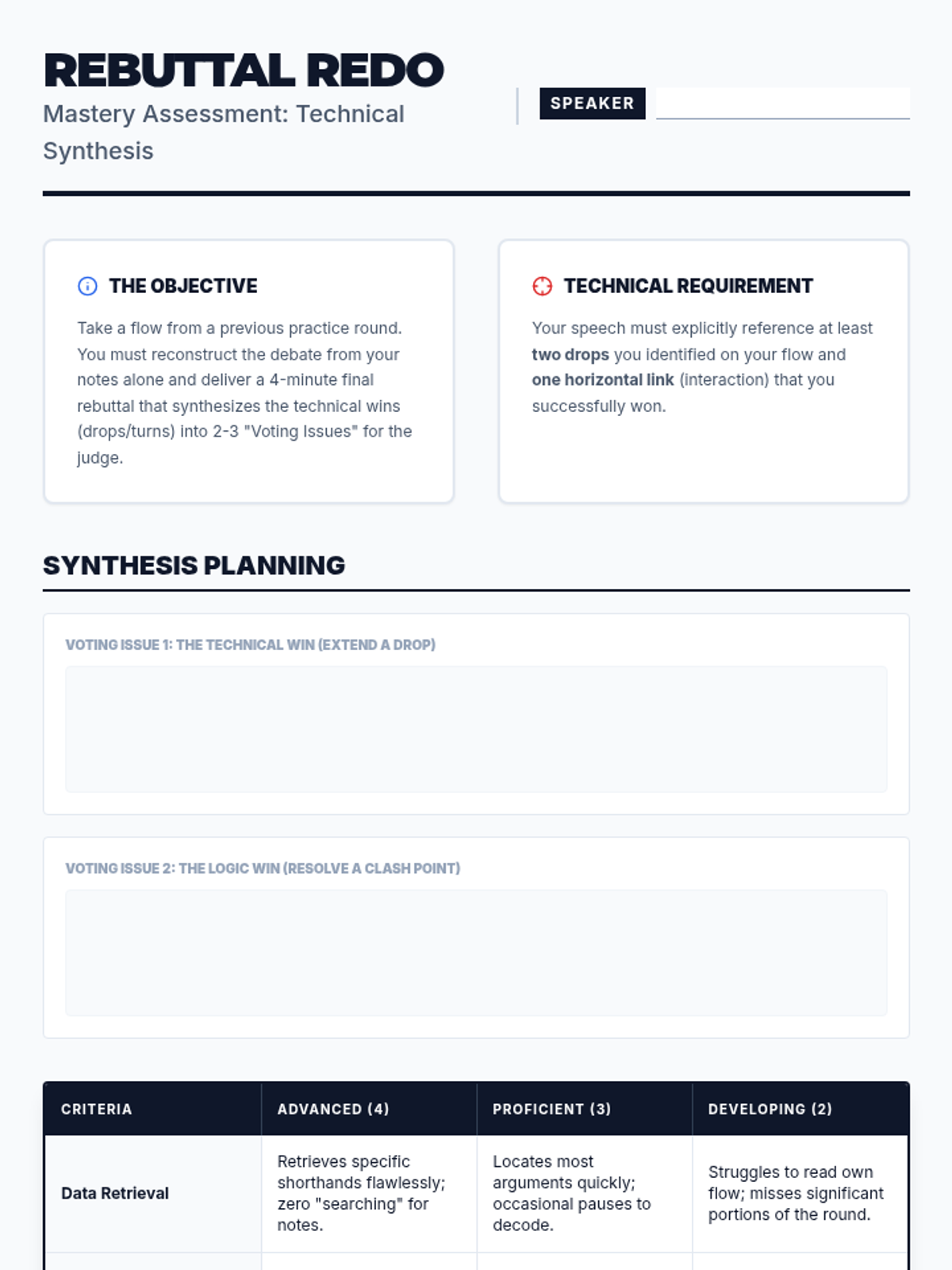
In this final workshop, students use their flows to reconstruct a chaotic round and deliver a clean, organized synthesis speech. This validates the quality of their technical tracking and shorthand.
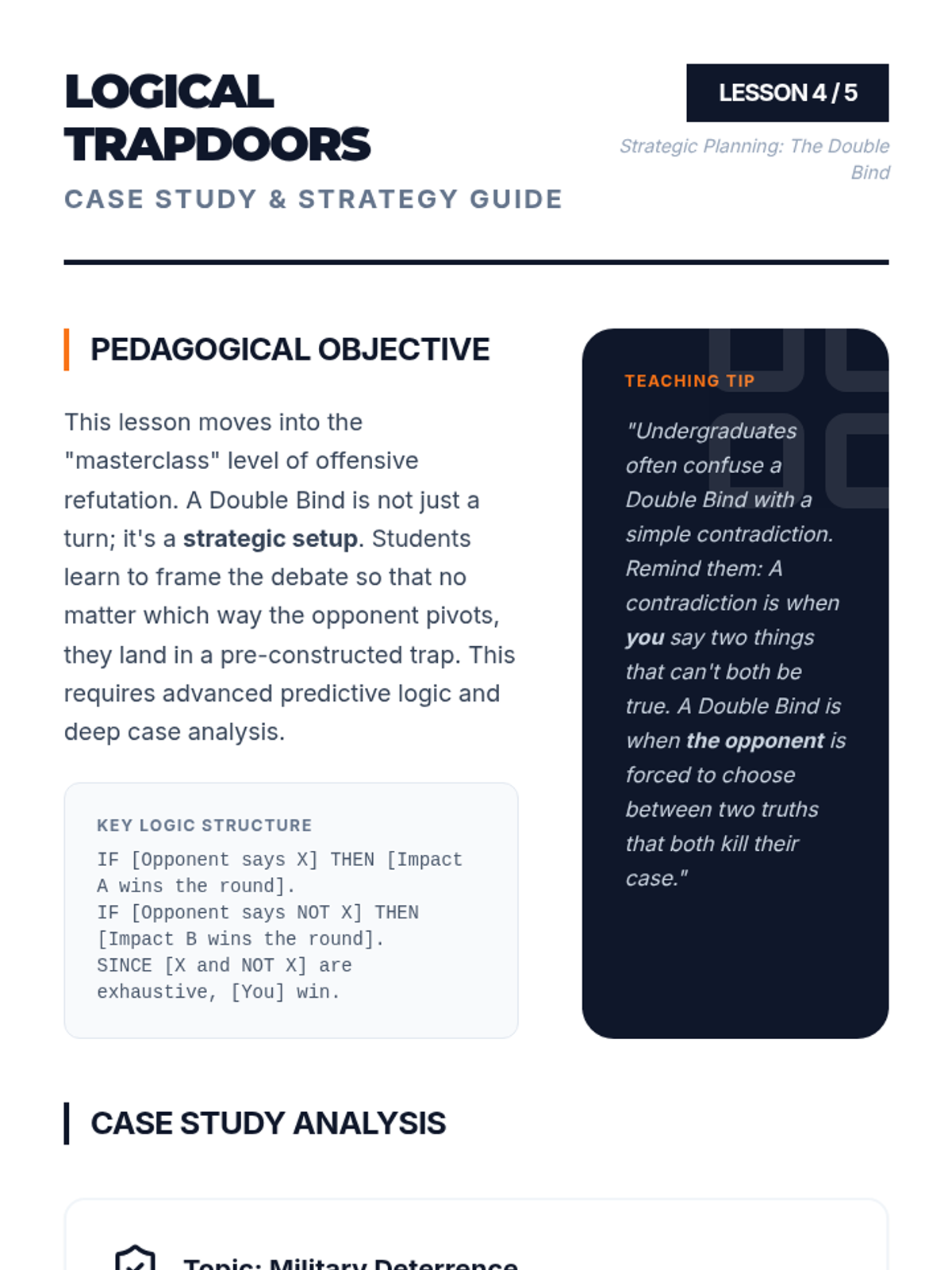
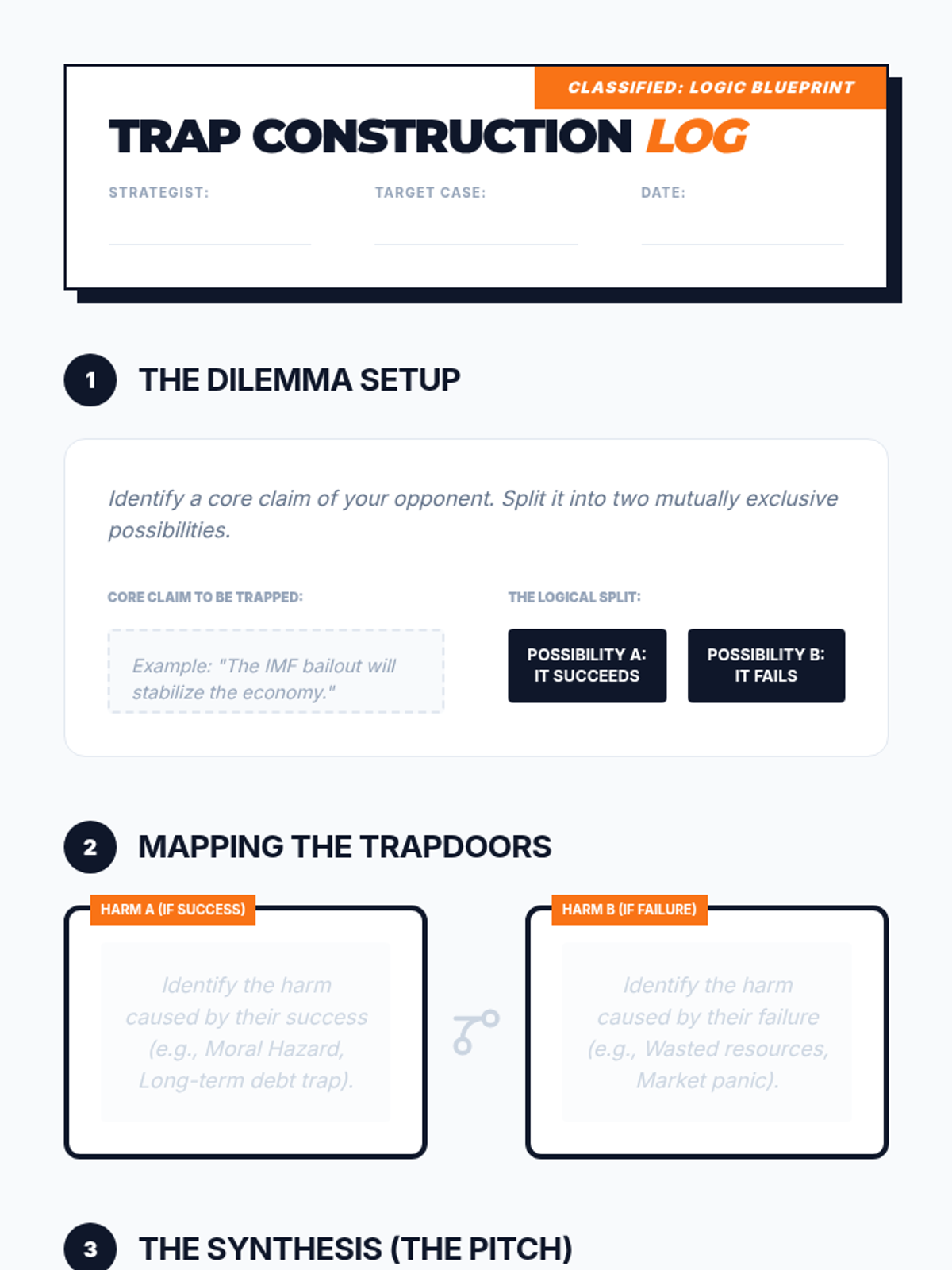
Students master the 'Double Bind'—a sophisticated logical trap where an opponent's every response leads to a strategic disadvantage. The lesson uses case studies to map the architecture of logical dilemmas.
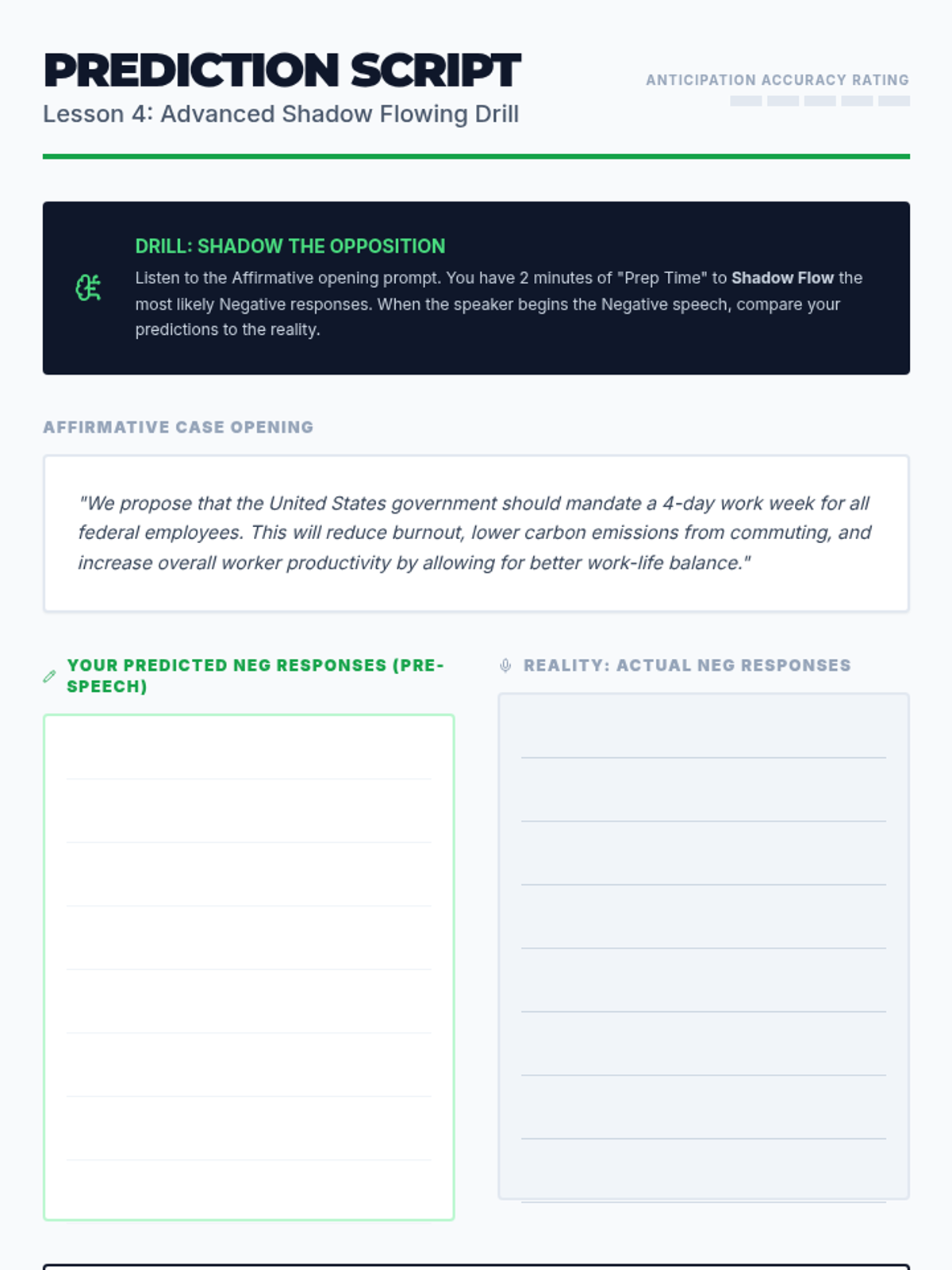
Advanced students learn to 'shadow flow'—writing down what the opponent should say or is likely to say before they say it. This predictive technique allows for pre-writing responses and faster reaction times.
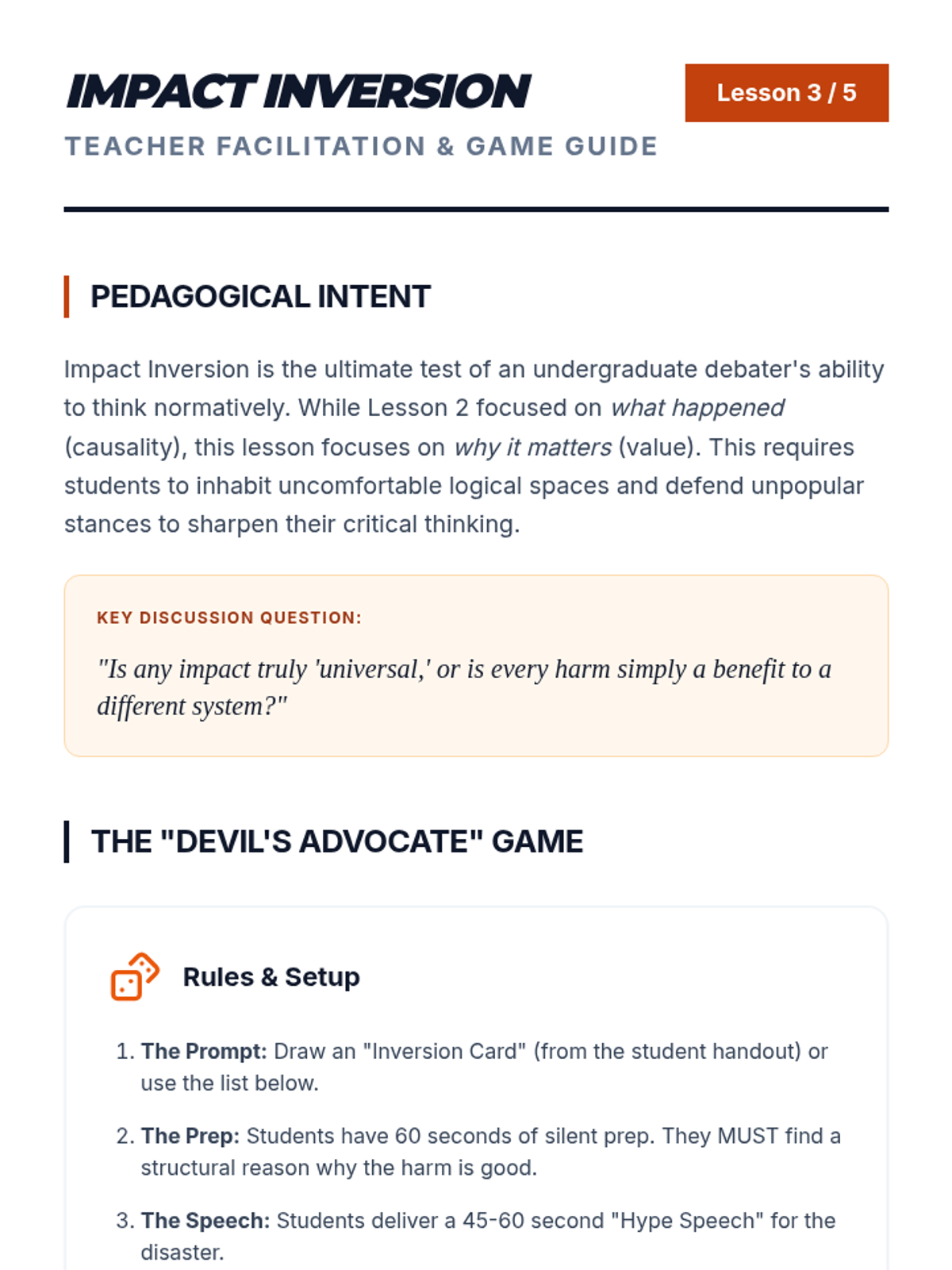
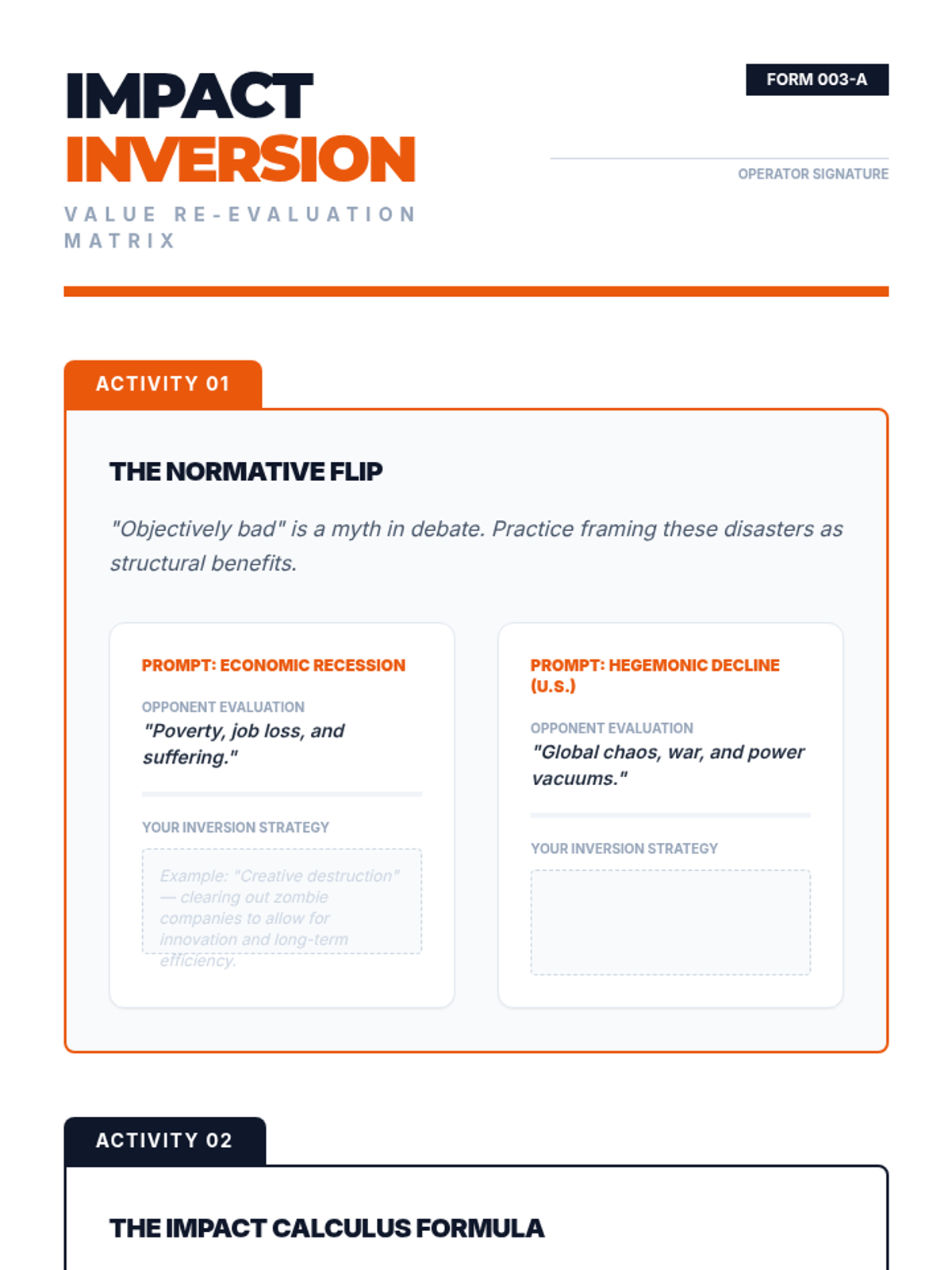
Students explore the normative dimension of refutation, learning to argue that a perceived bad impact is actually beneficial. The lesson emphasizes ethical risk management and bold value re-evaluations.
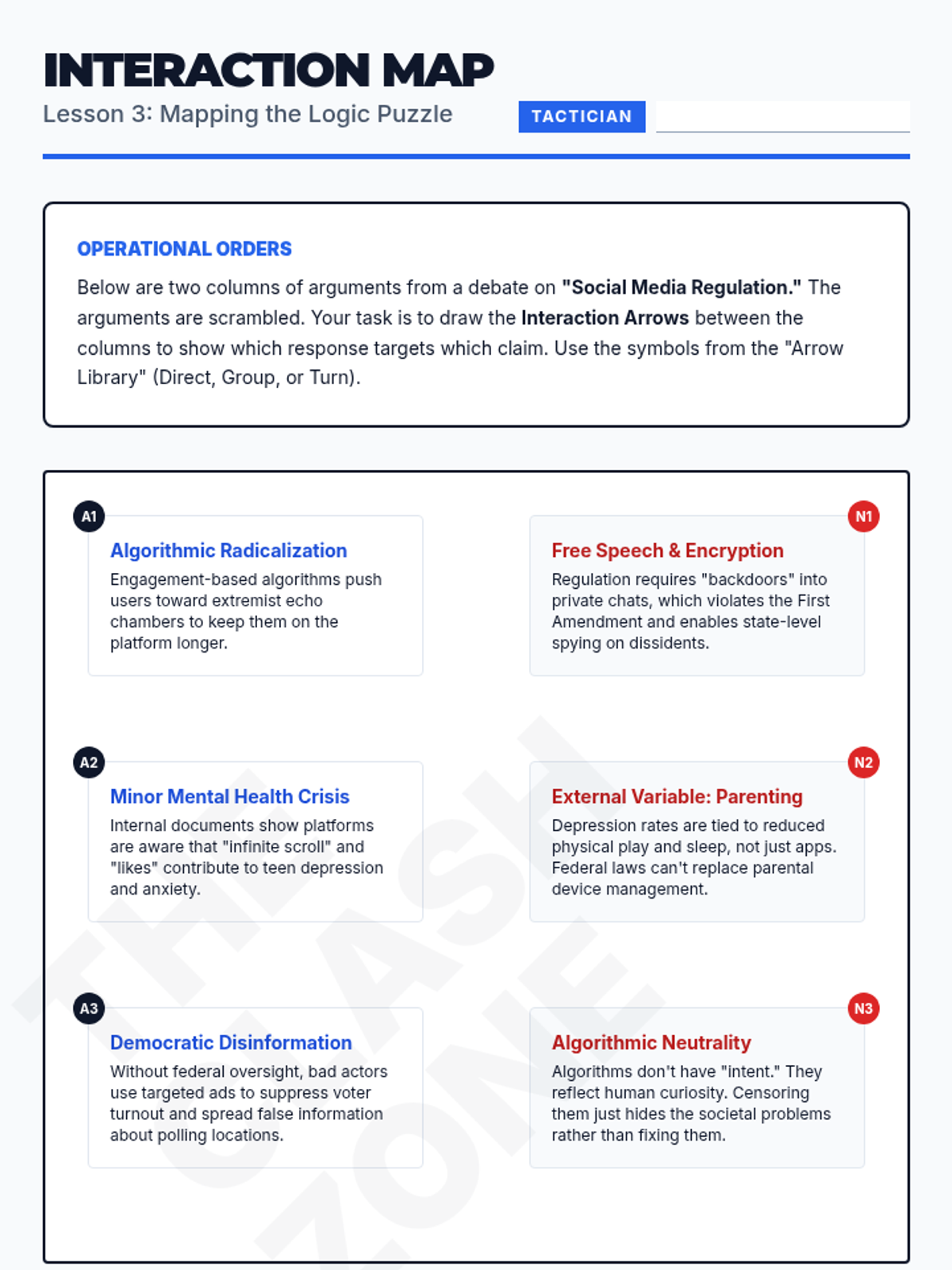
Moving beyond recording speeches, students focus on drawing connections across the flow (arrows and lines) to visualize the interaction of arguments. They learn to identify where the 'clash' is happening and where 'ships are passing in the night'.
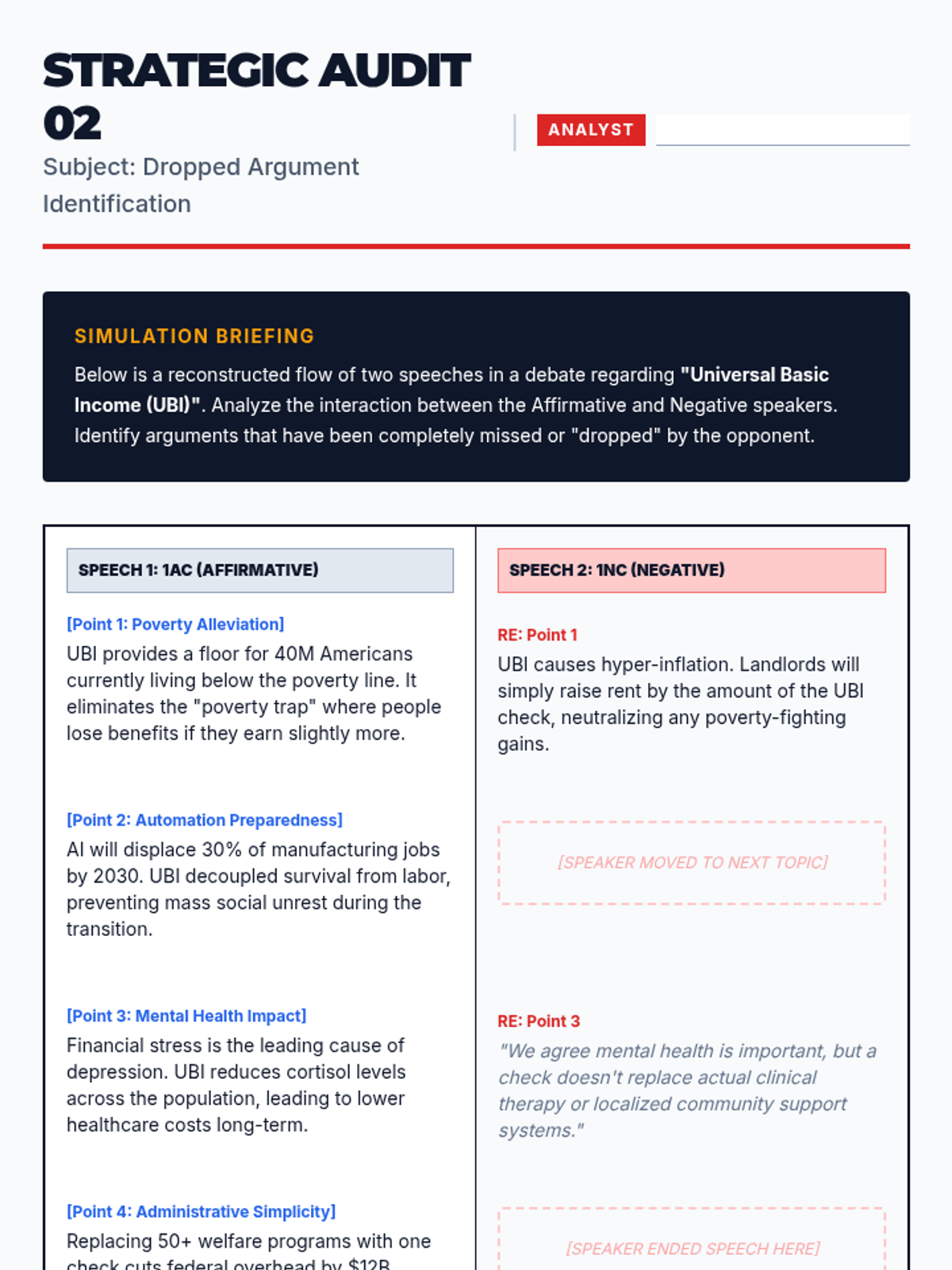
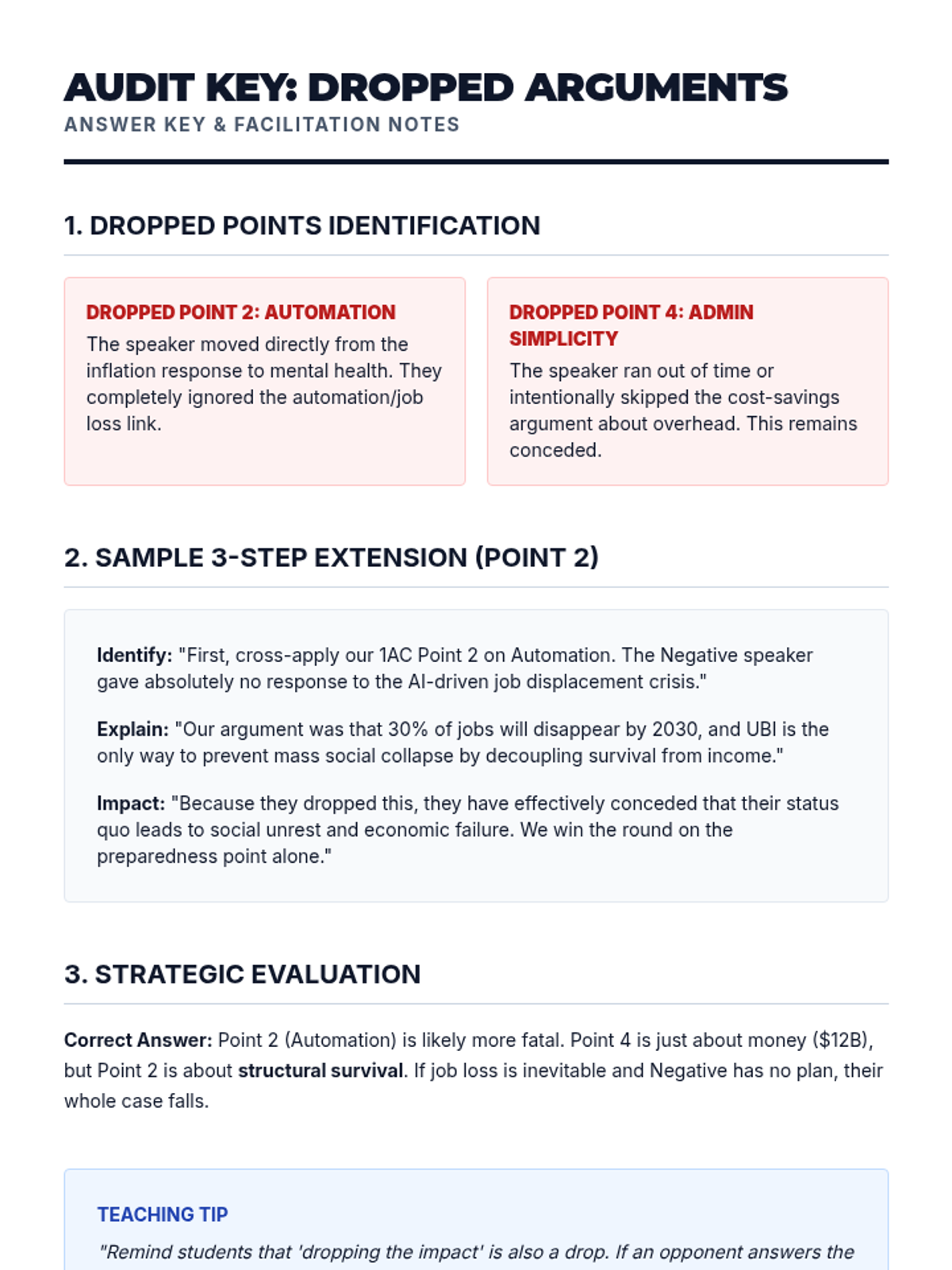
This lesson teaches students to recognize when an opponent has failed to answer an argument ('dropped' it). Students learn the rhetorical phrasing necessary to 'extend' a drop and explain its significance to the judge.
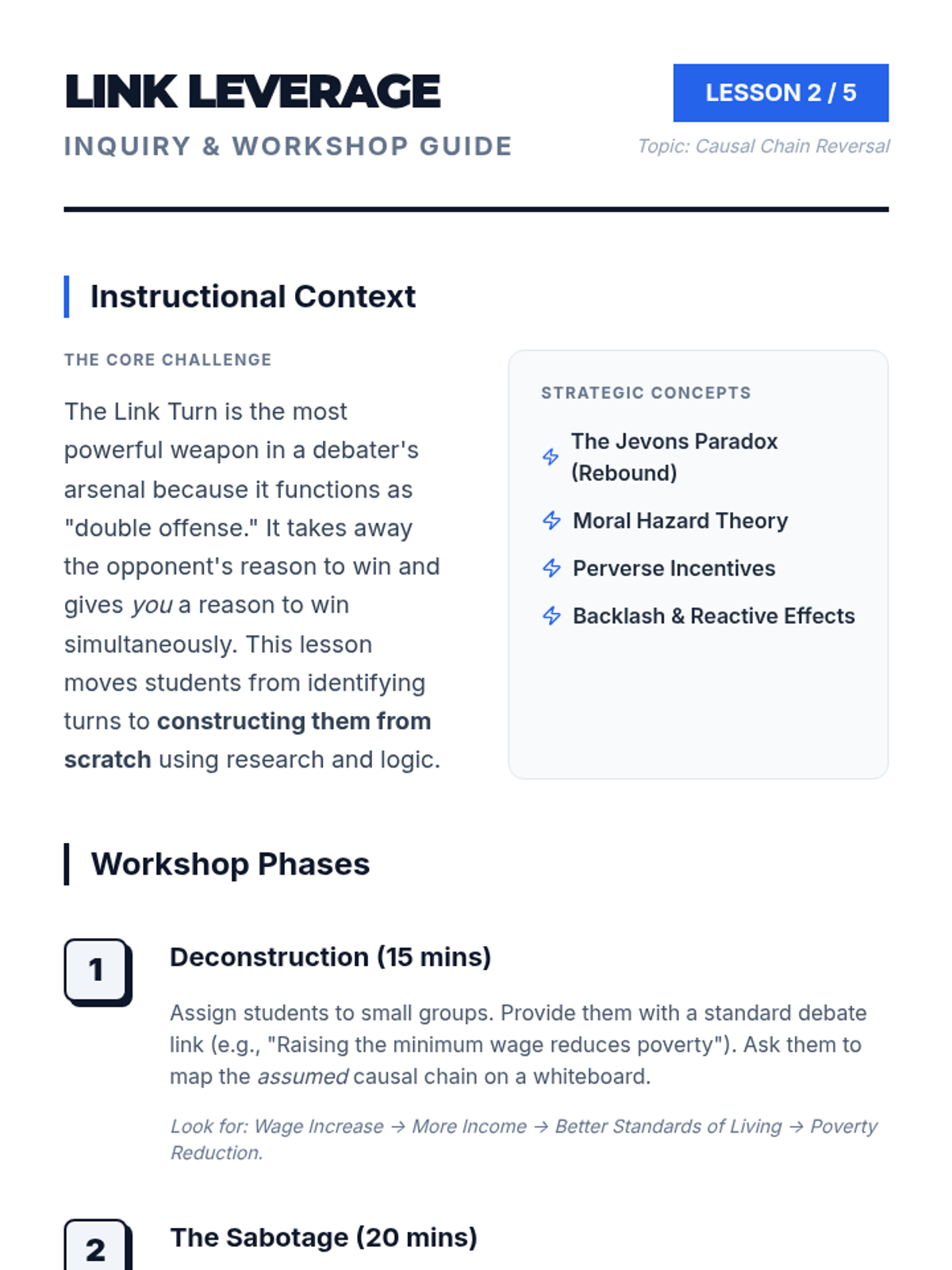
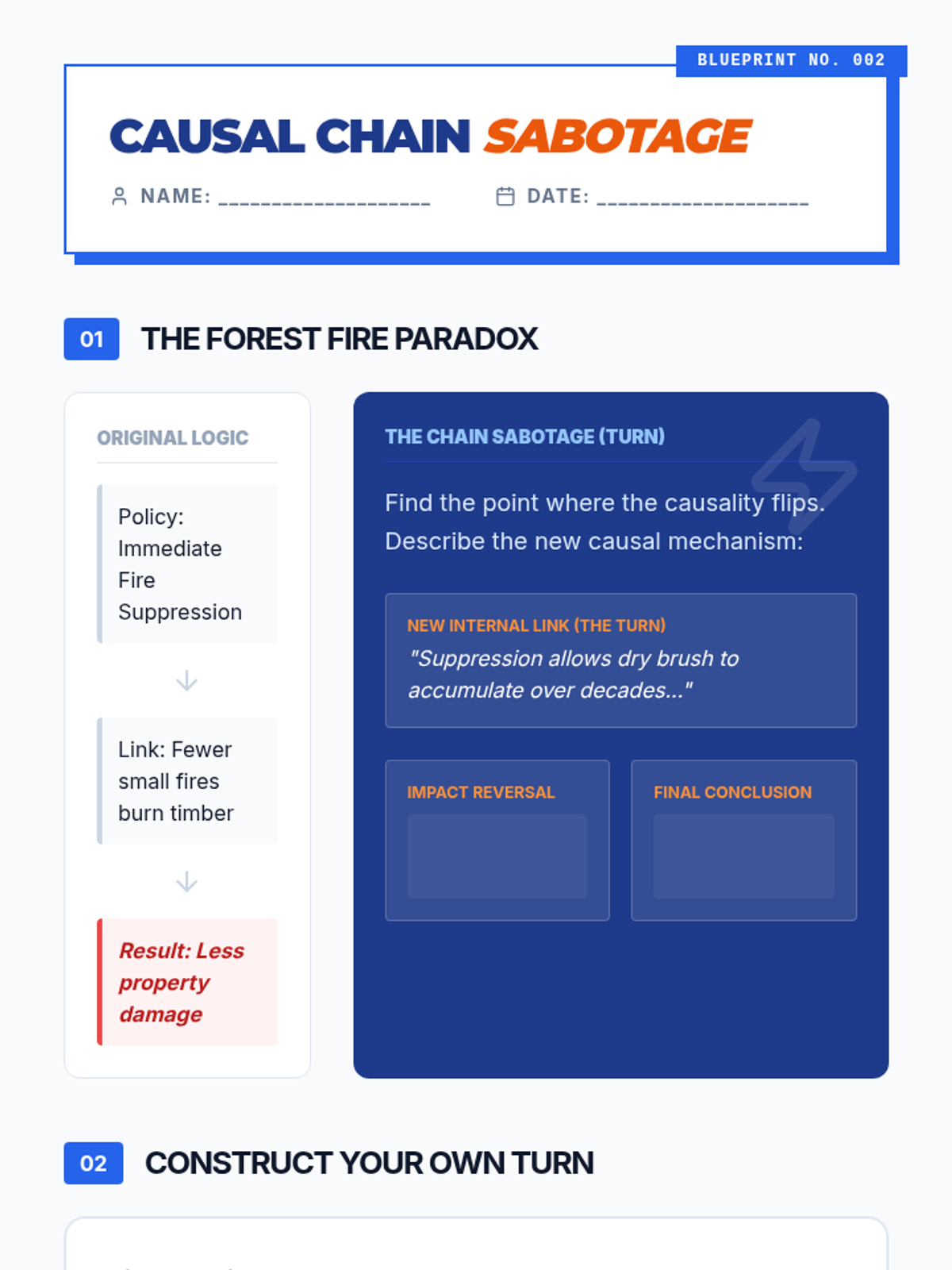
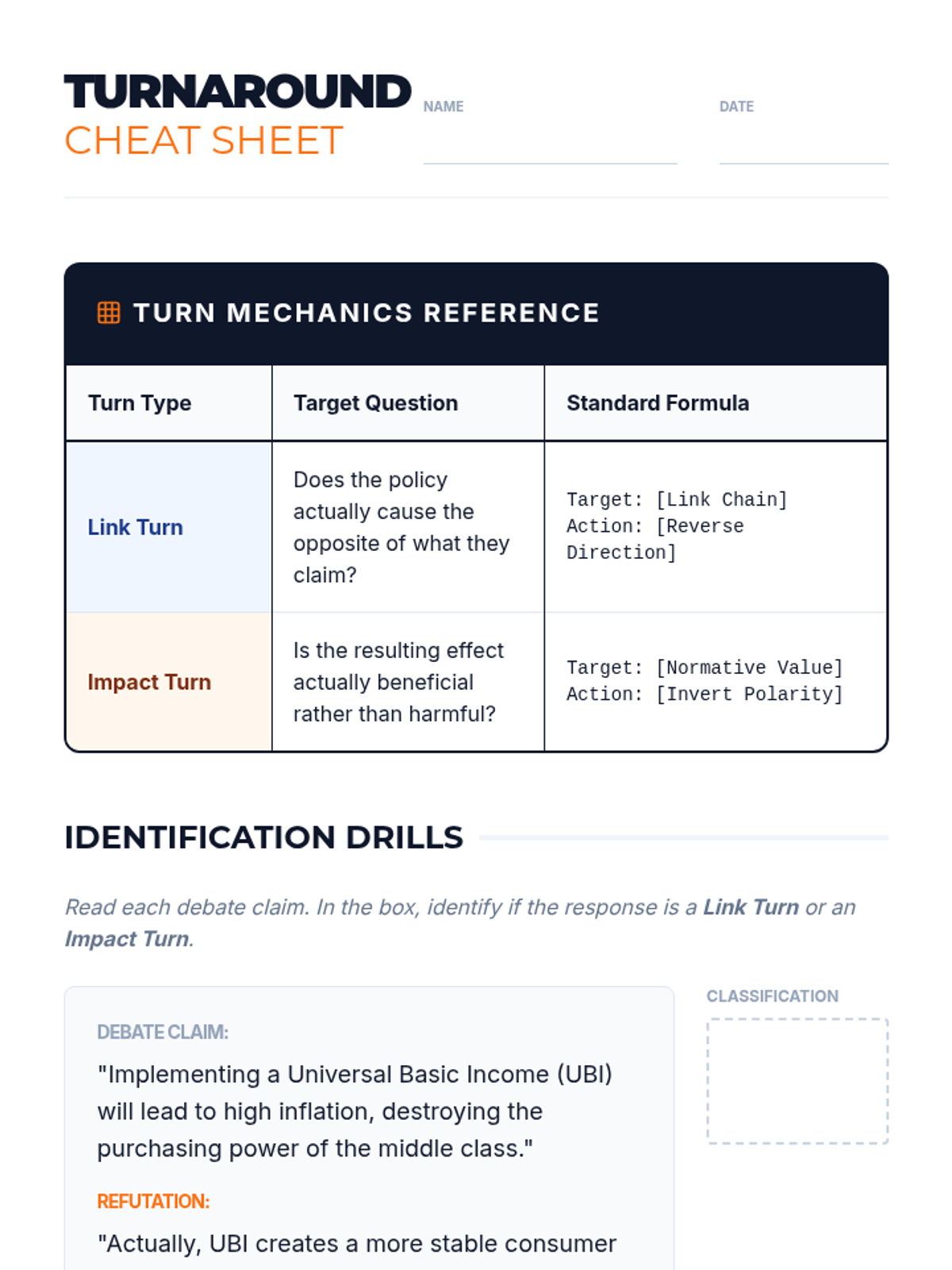
Students master the mechanics of link turns by analyzing causal chains and researching counter-intuitive evidence. The lesson focuses on arguing that an opponent's policy causes the very harm it aims to solve.
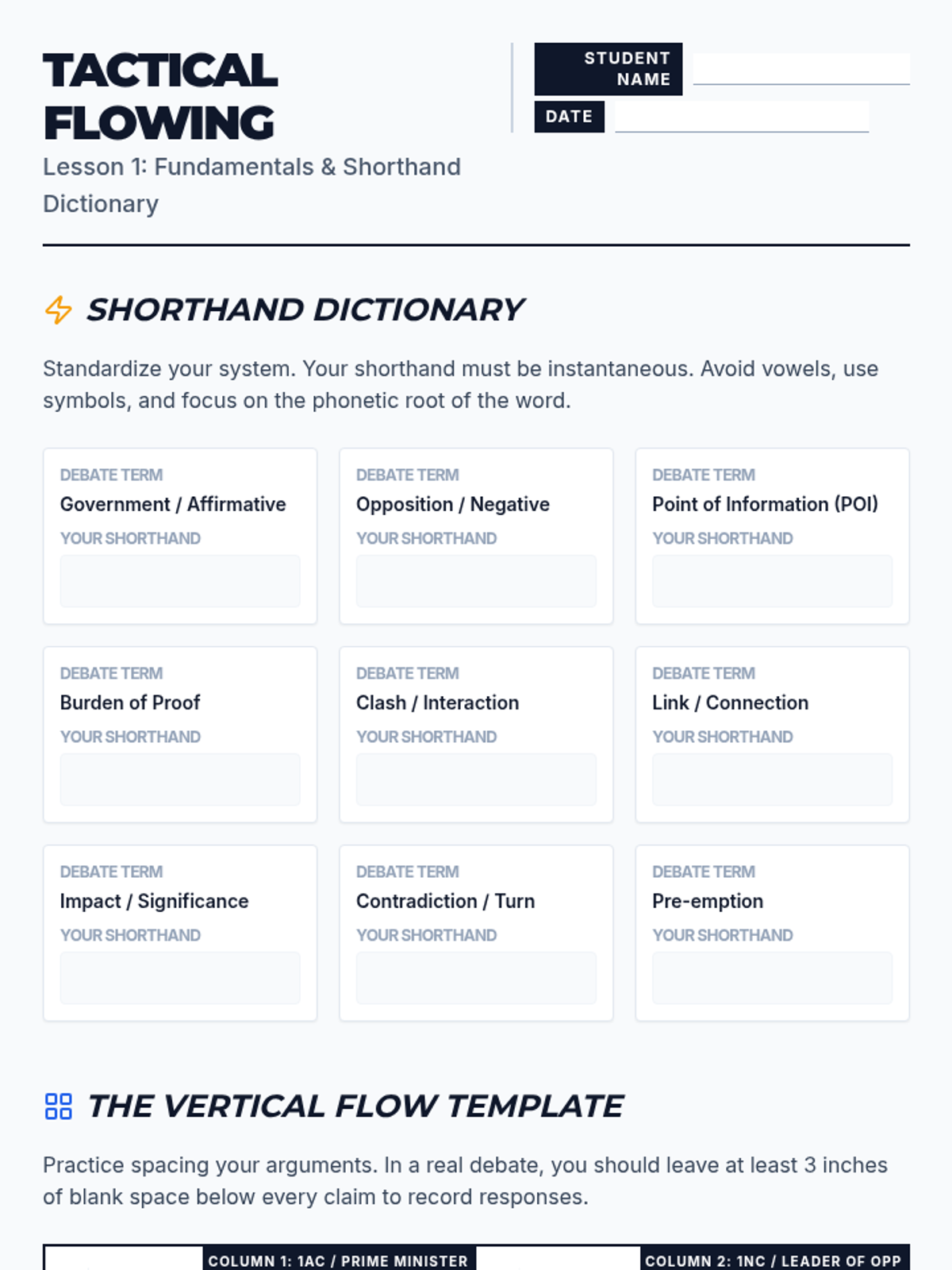
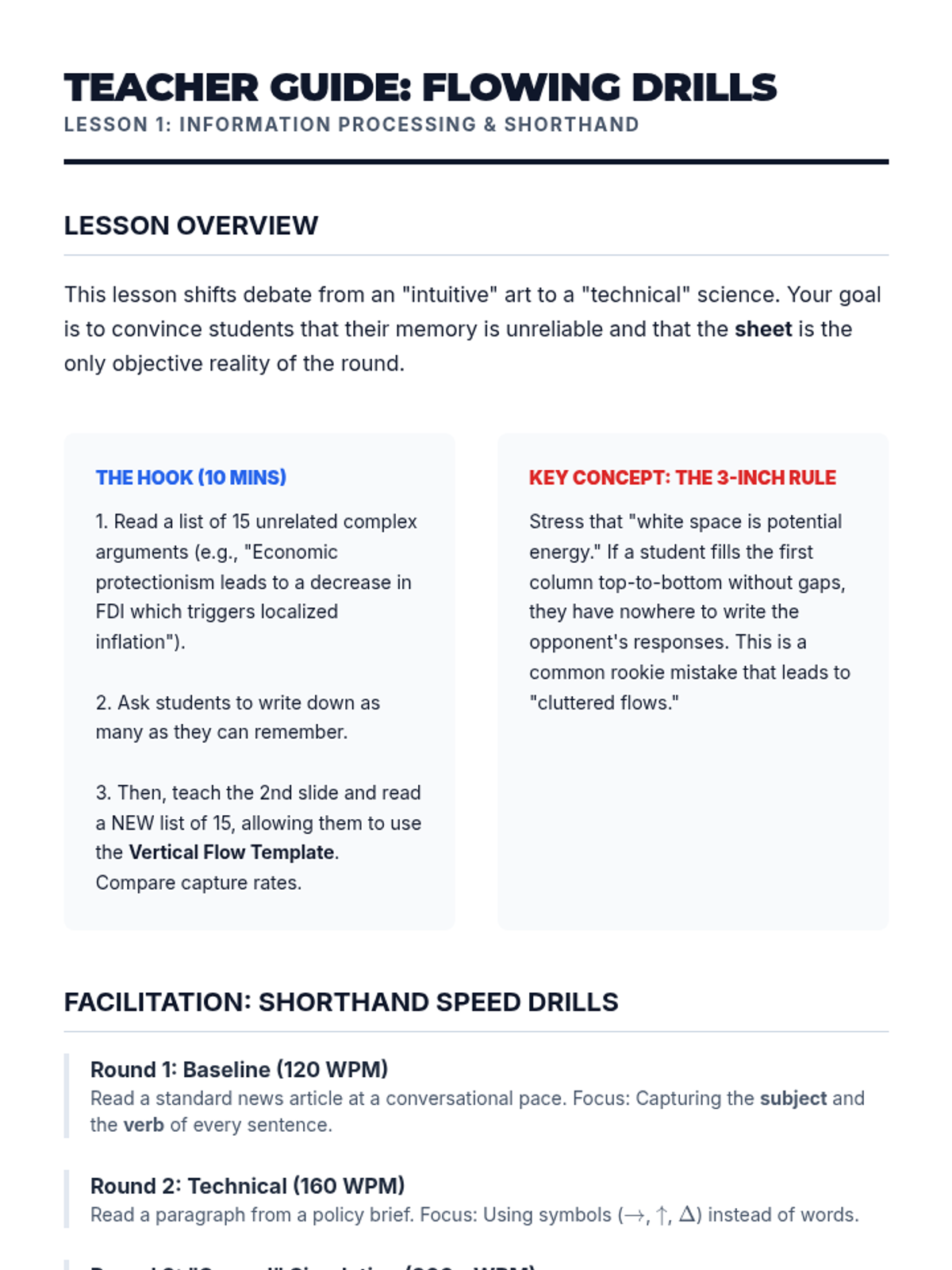
Students learn the multi-column structure of a flow sheet and develop a personalized shorthand system for common debate terms. The lesson emphasizes vertical spacing and column alignment through fast-paced drills.
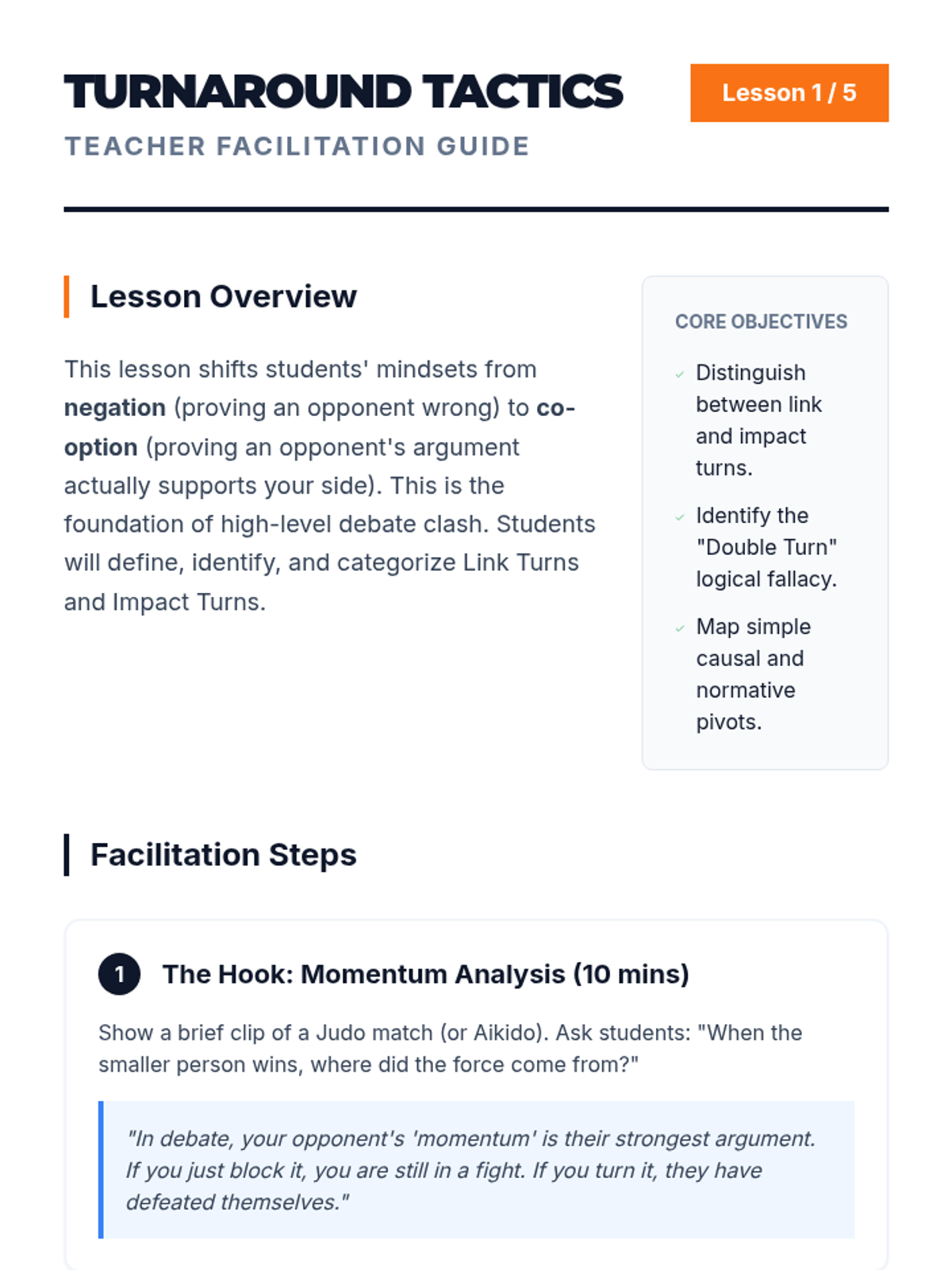
An introduction to the fundamental shift from defensive blocking to offensive turning in debate. Students learn to distinguish between link and impact turns and the strategic risks associated with both.
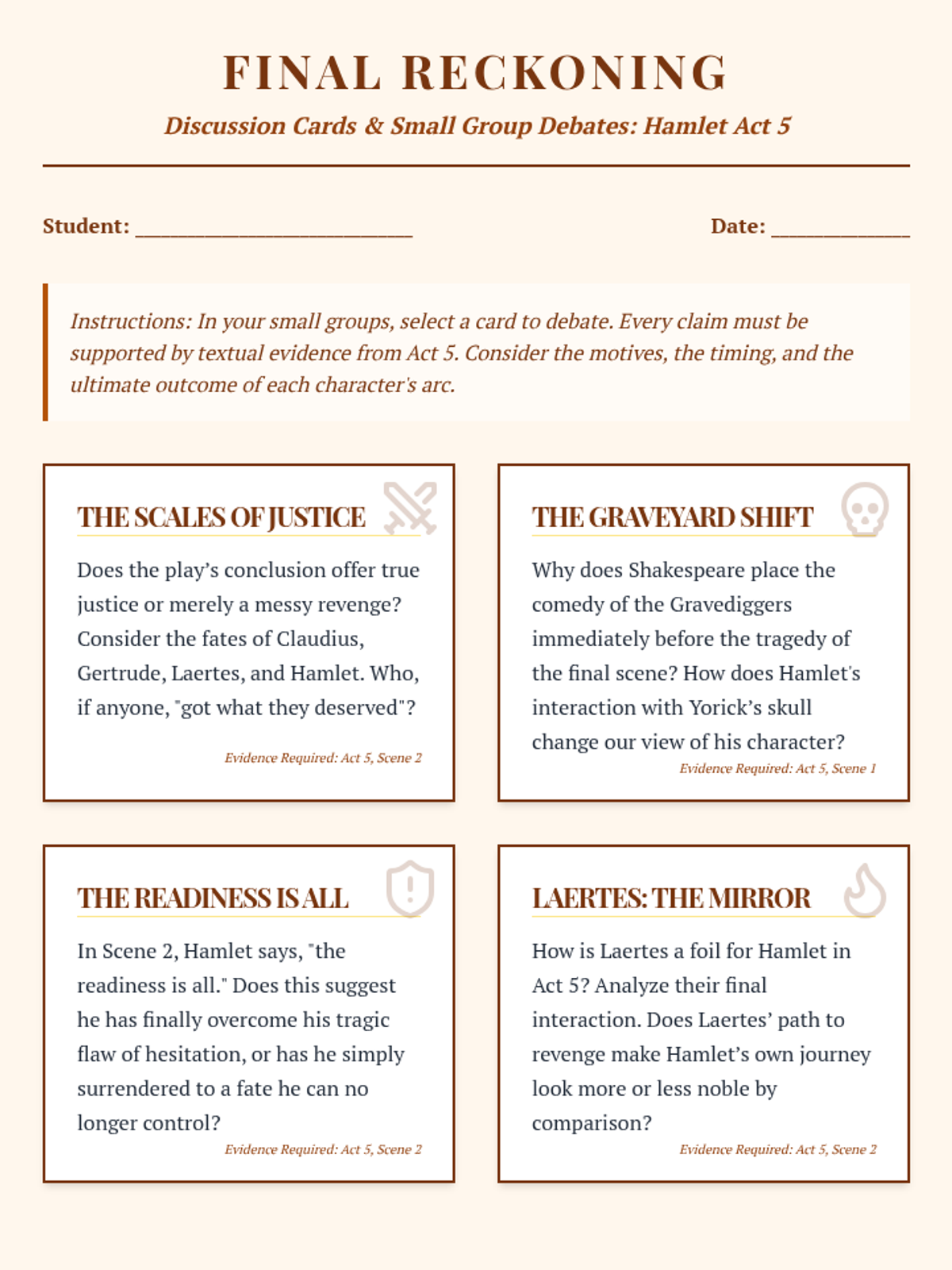
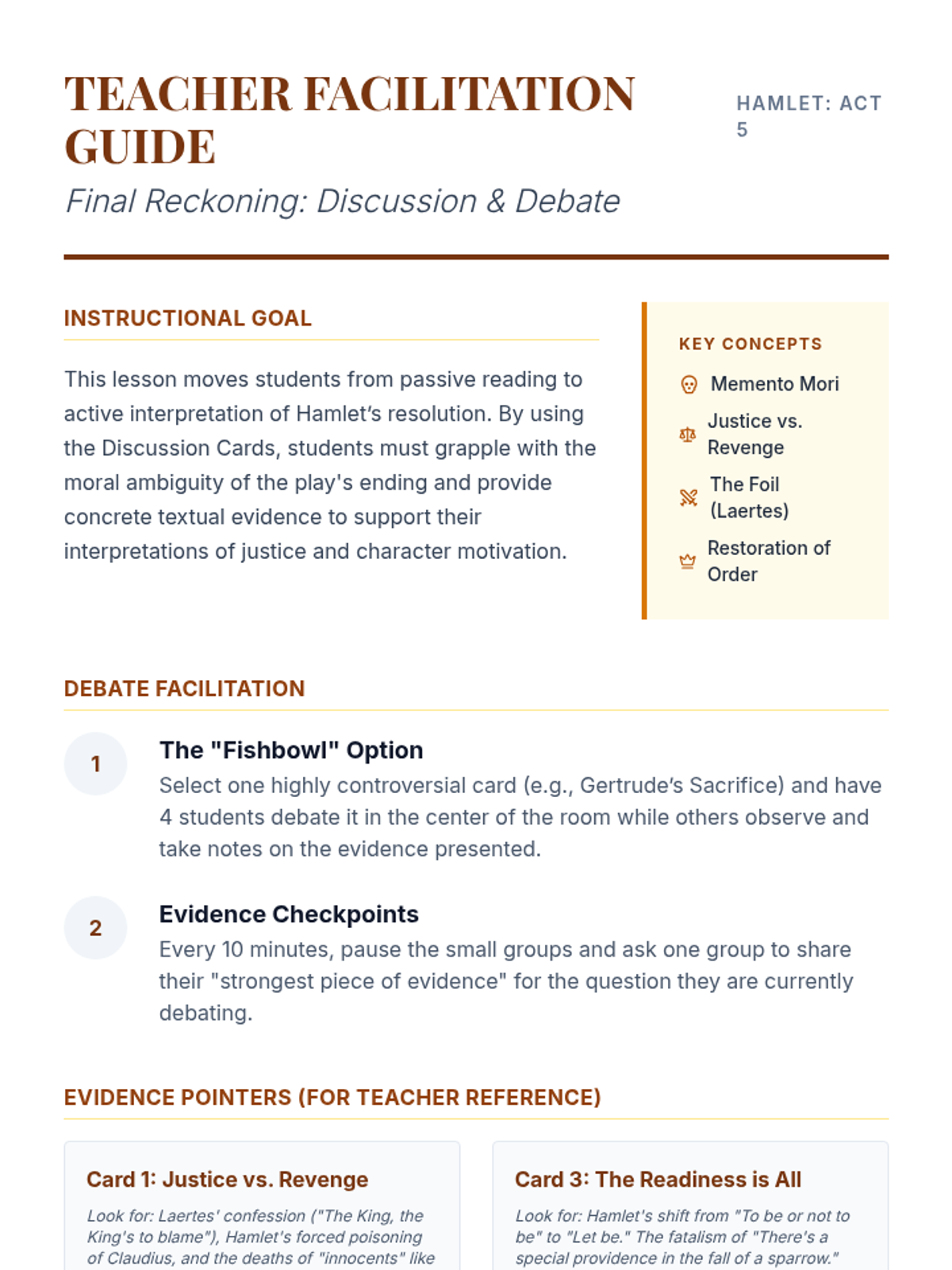
A deep dive into the climactic finale of Shakespeare's Hamlet, focusing on the themes of revenge, the nature of justice, and the ultimate resolution of Hamlet's tragic journey. Students will engage in evidence-based debates to analyze character motivations and the play's tragic conclusion.
A fast-paced, 10-15 minute video-based introduction to Macbeth, using white board responses to track student thinking on whether Macbeth deserves the throne.
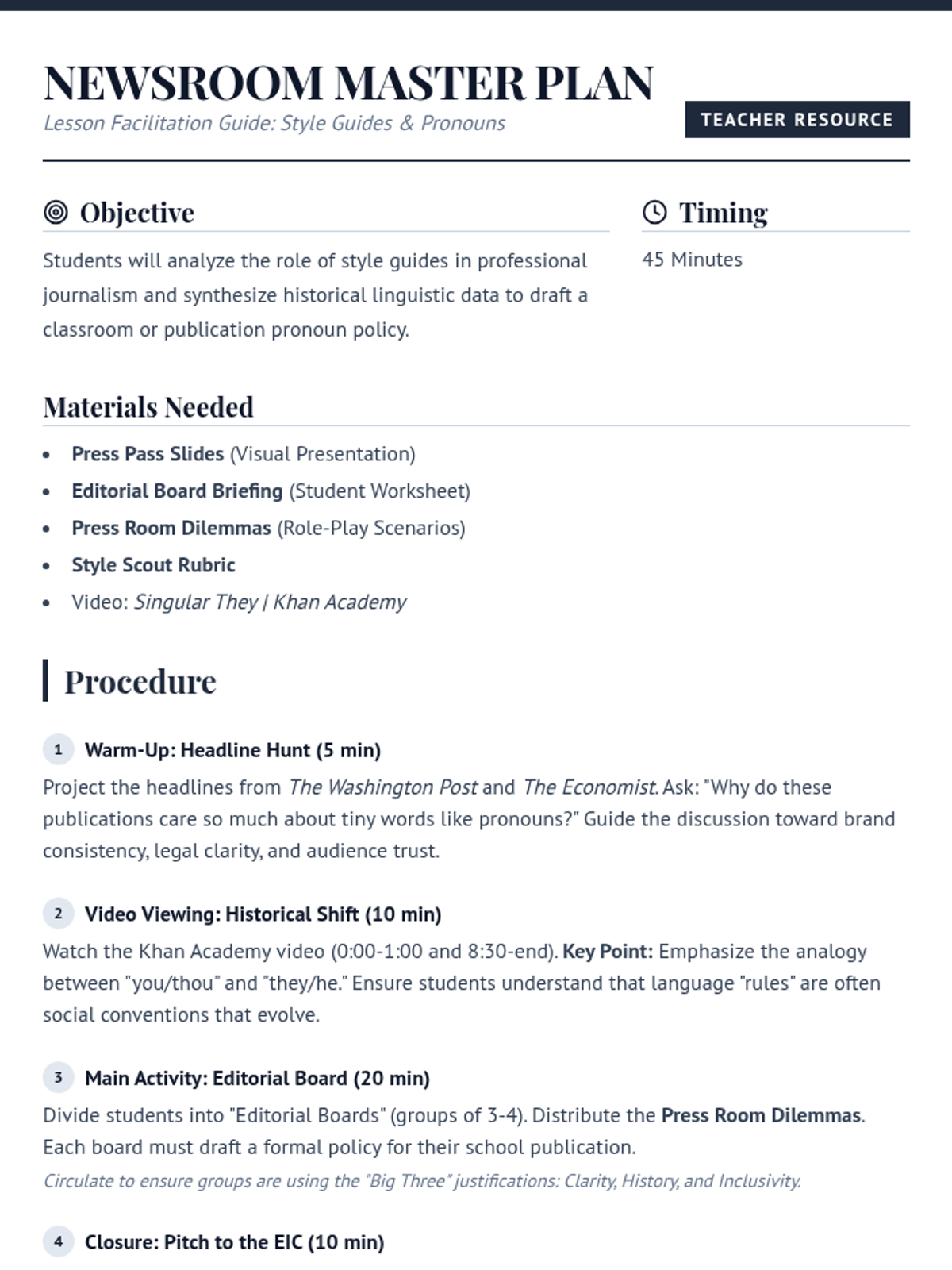
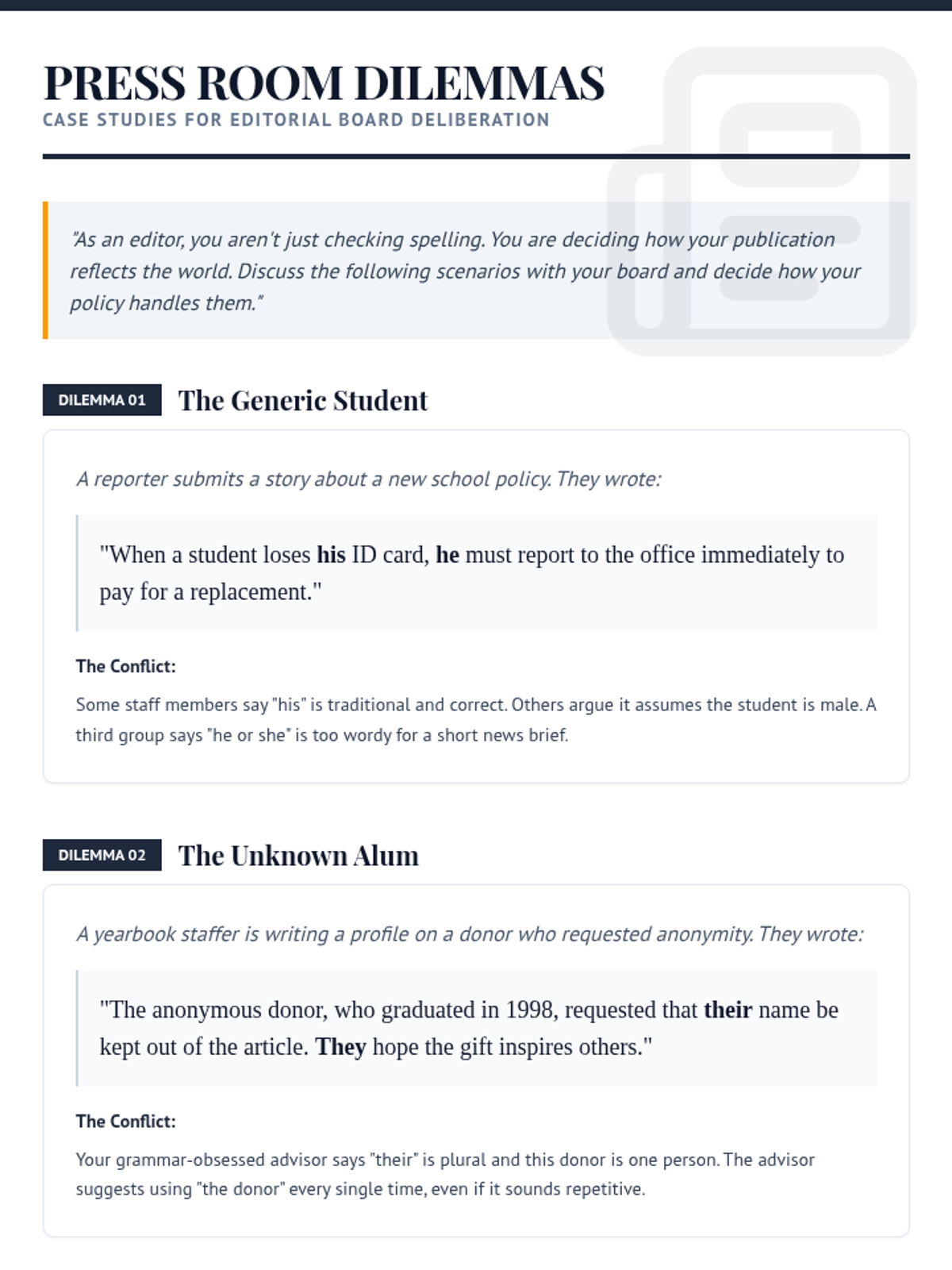
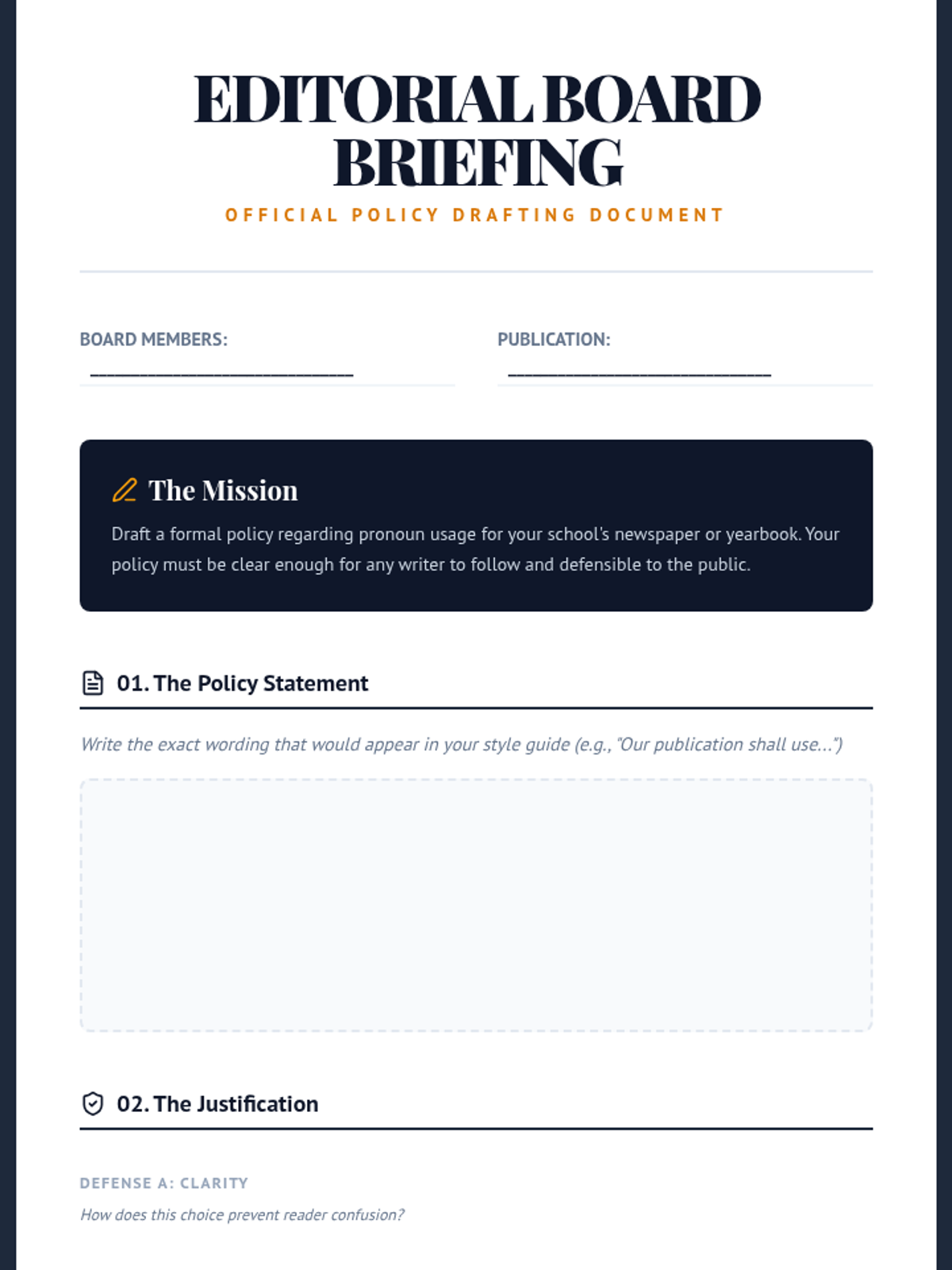
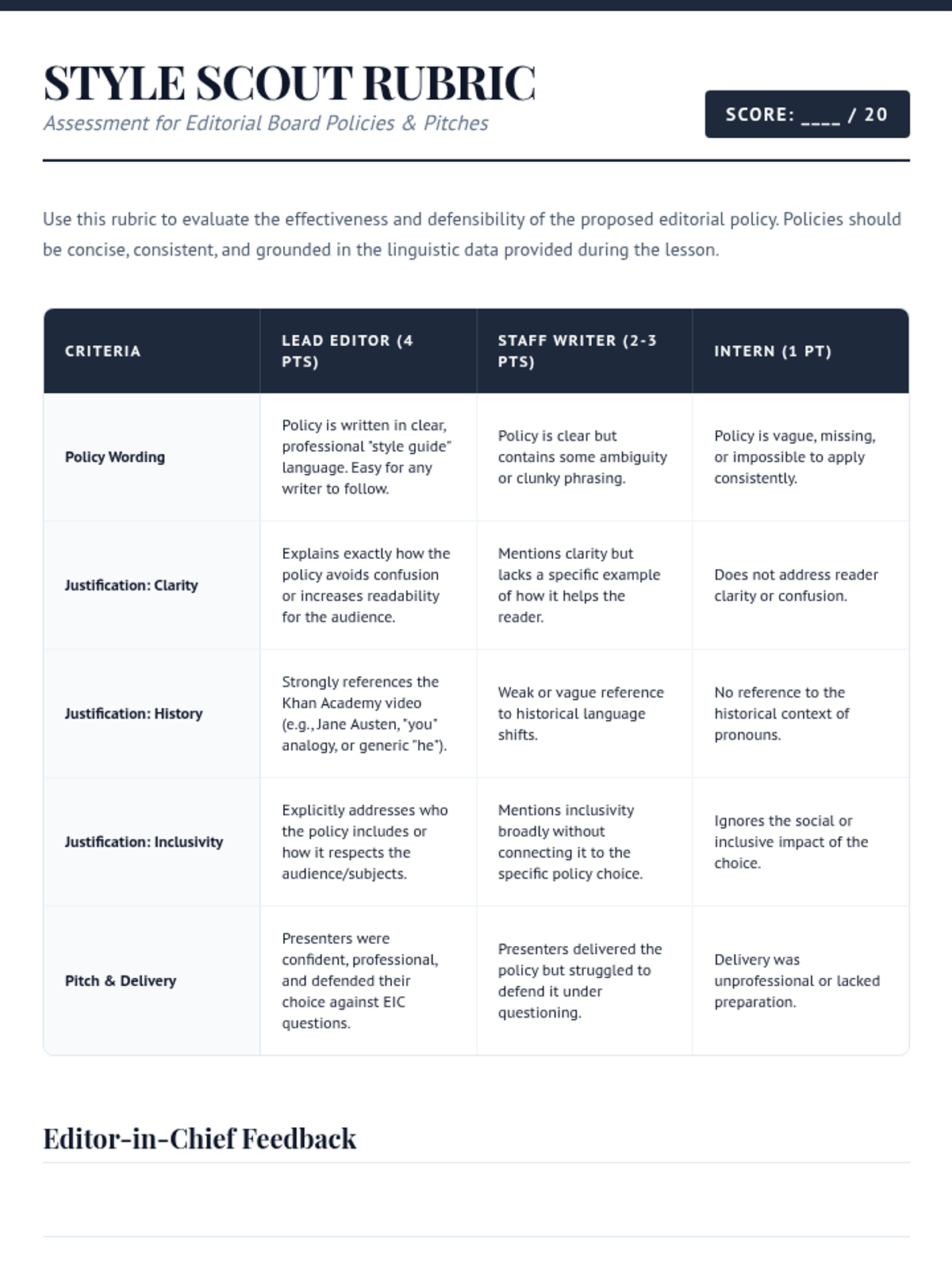
This lesson explores the history and utility of style guides in journalism, focusing on the evolution of pronouns. Students analyze the transition from 'generic he' to 'singular they' and collaborate to draft a formal style policy for their own publication.
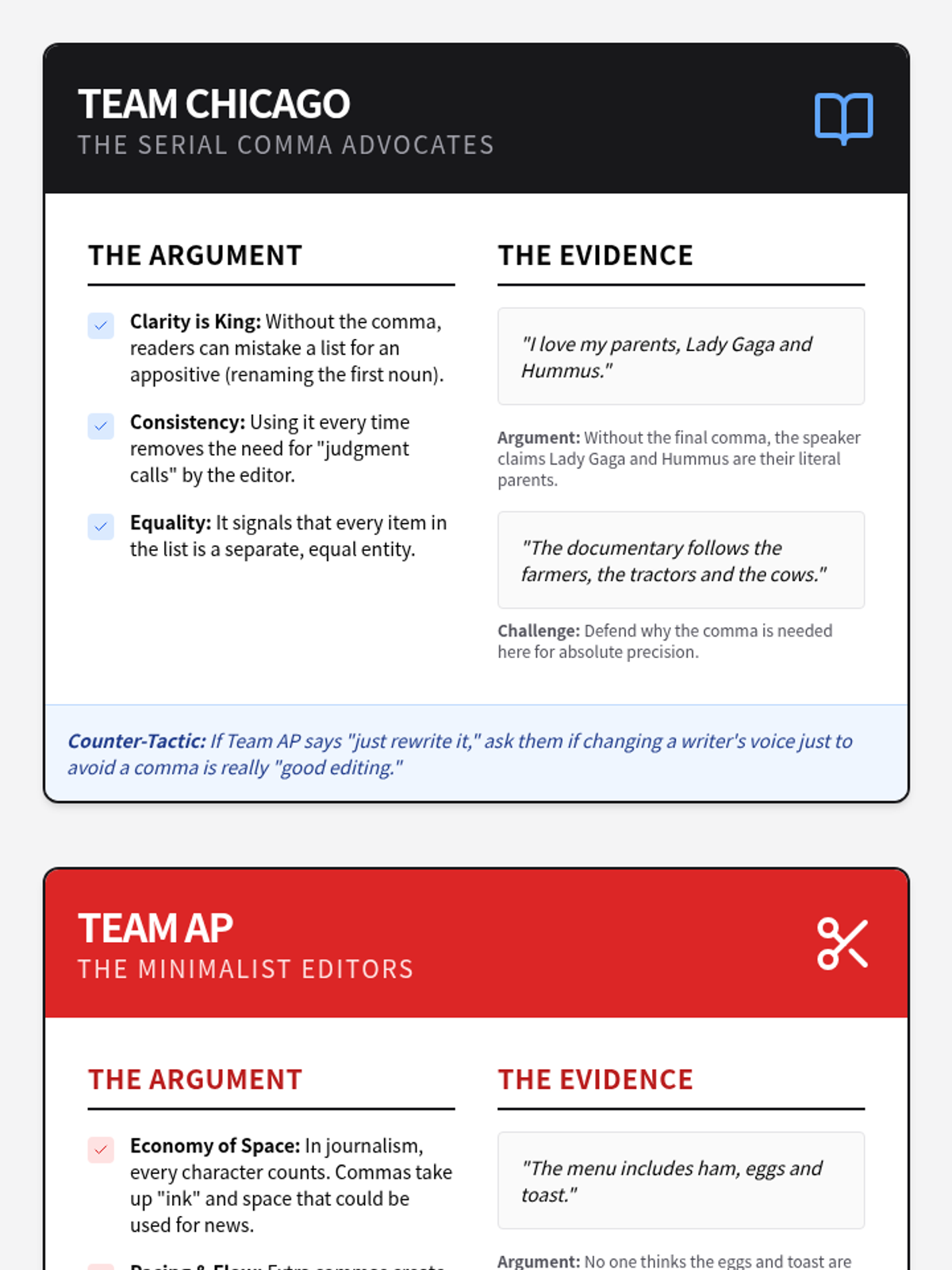
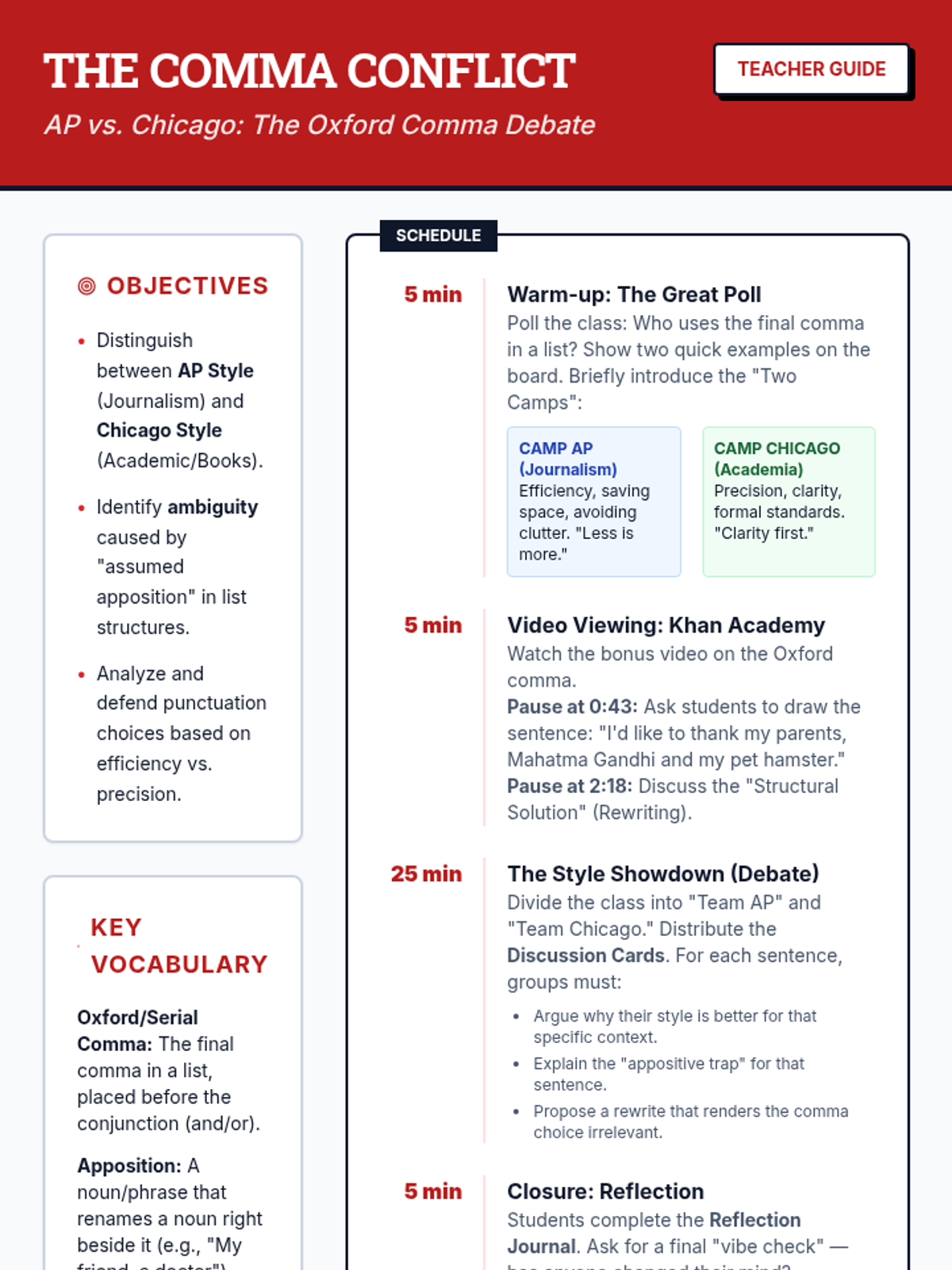
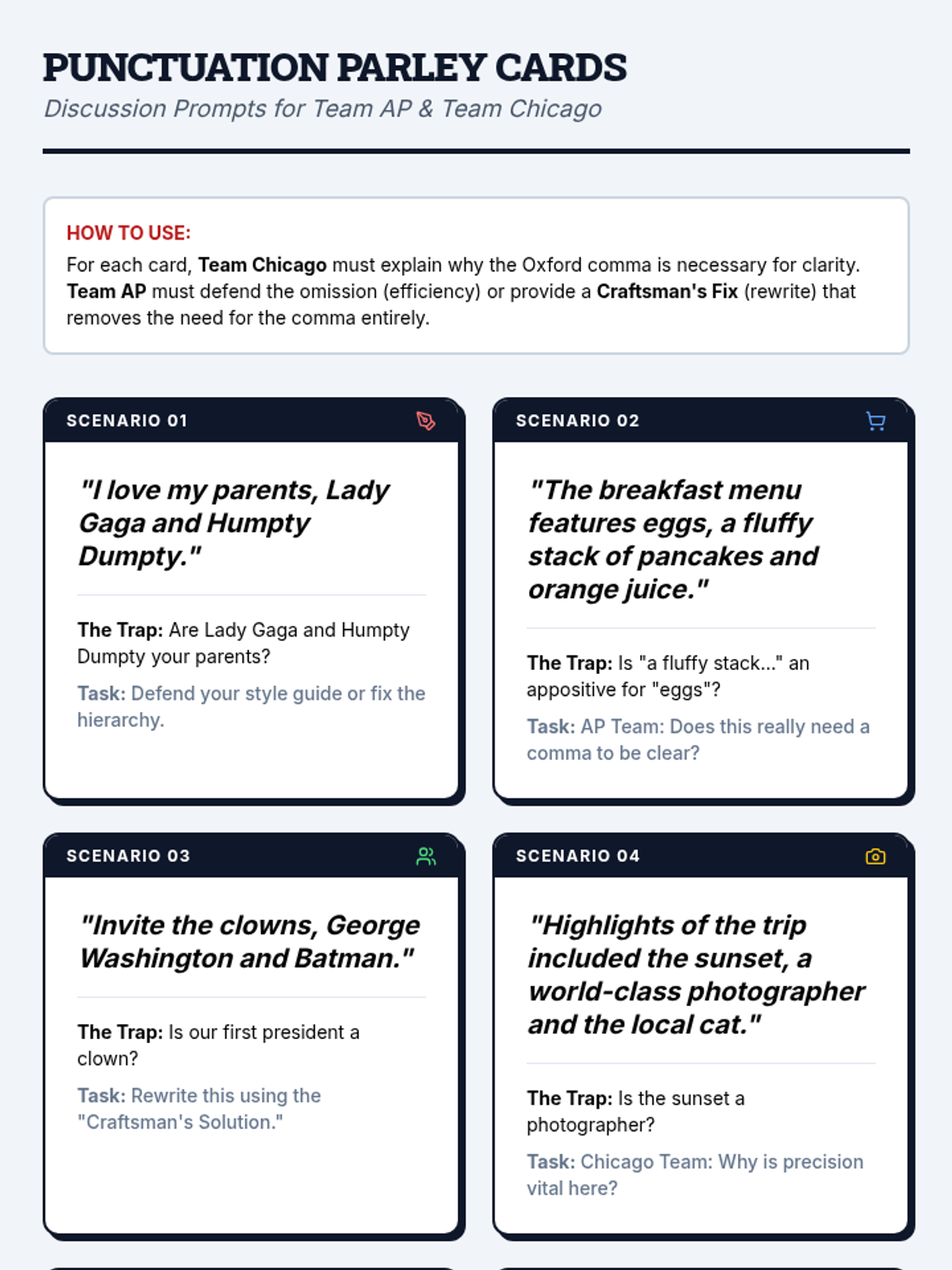
A journalism-focused lesson exploring the intense debate between AP and Chicago style guides regarding the Oxford comma, featuring real-world legal stakes and a structured classroom debate.
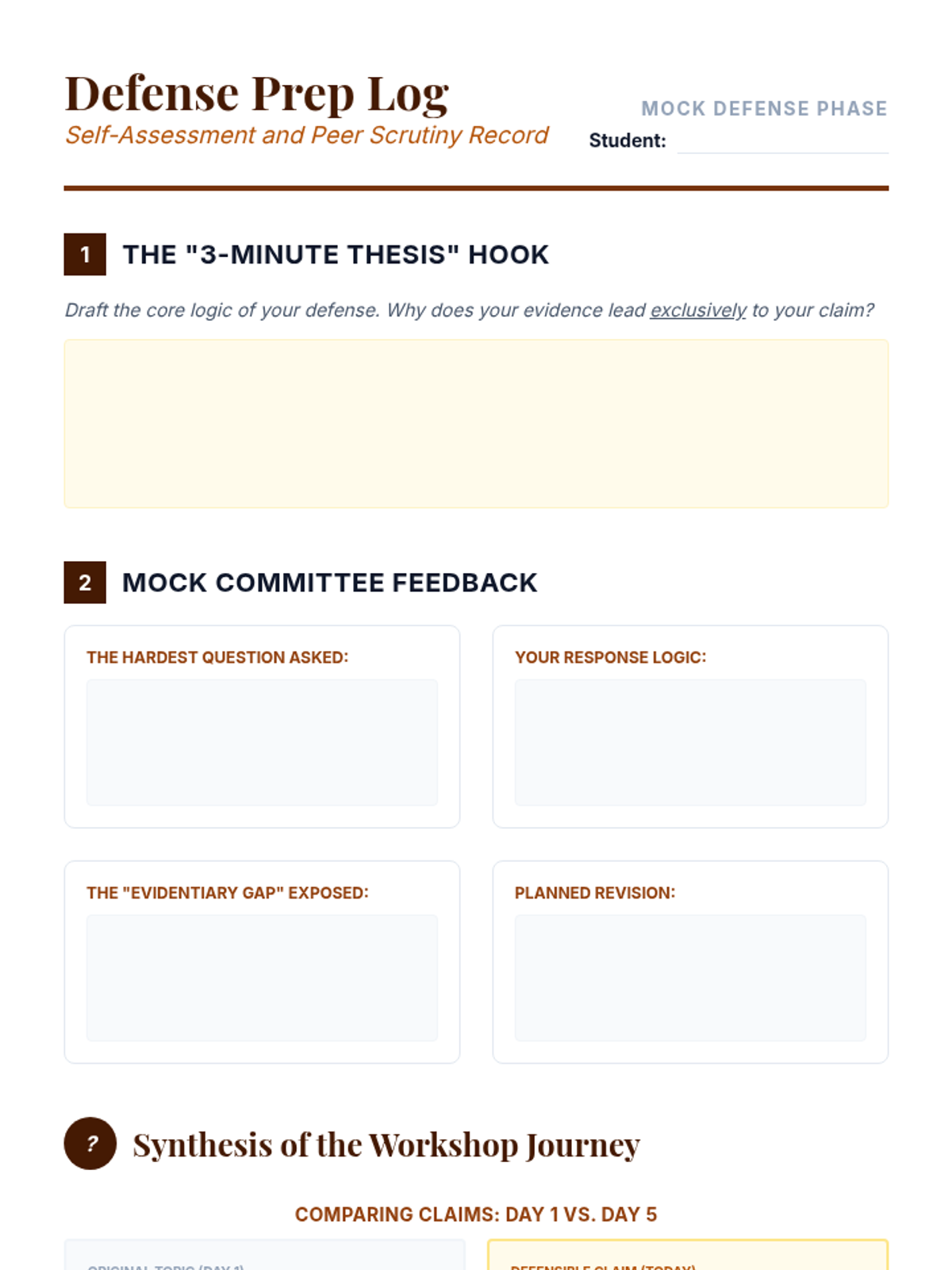
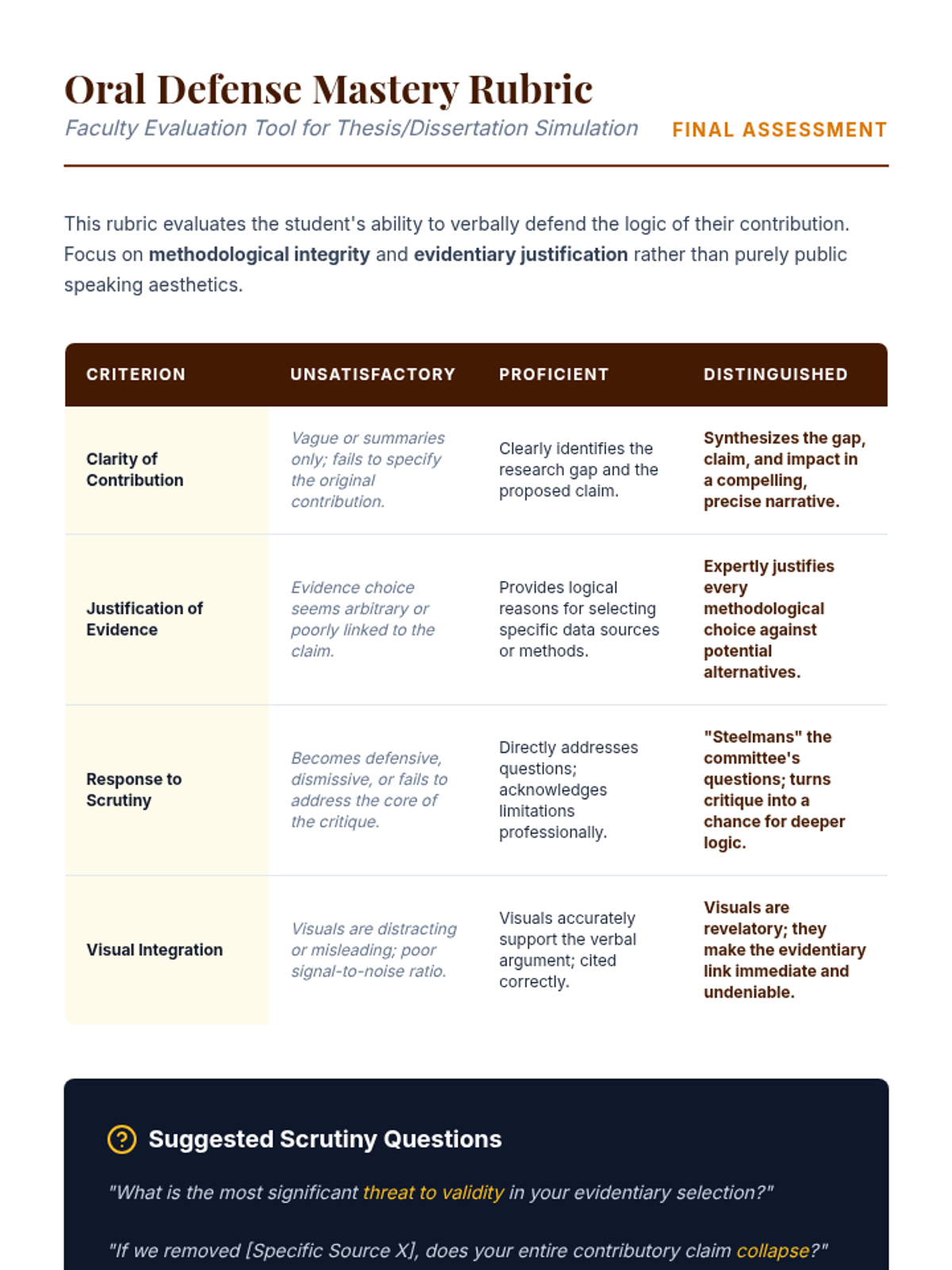
A simulated oral defense where students verbally justify their evidentiary choices and methodology under scrutiny.
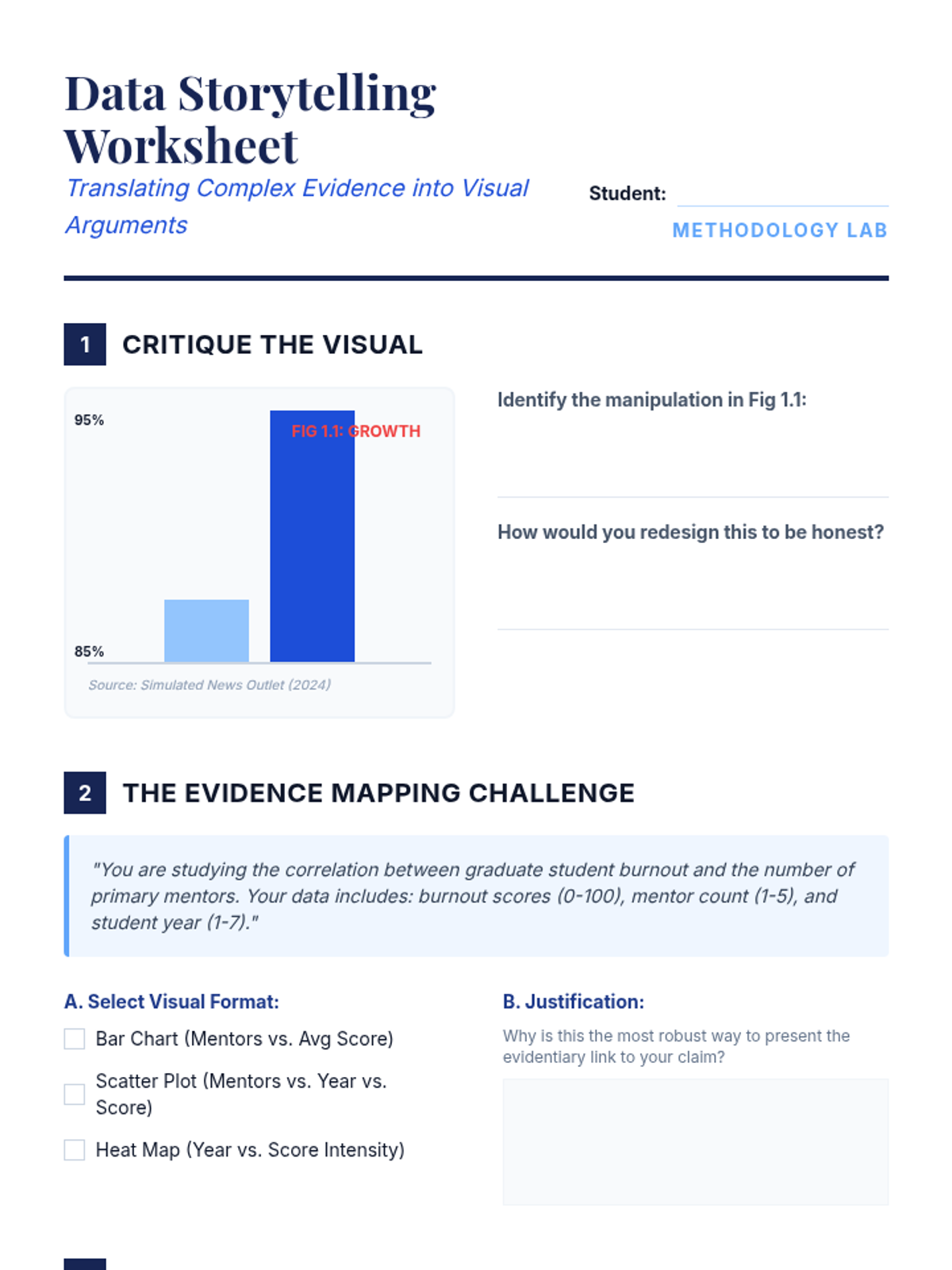
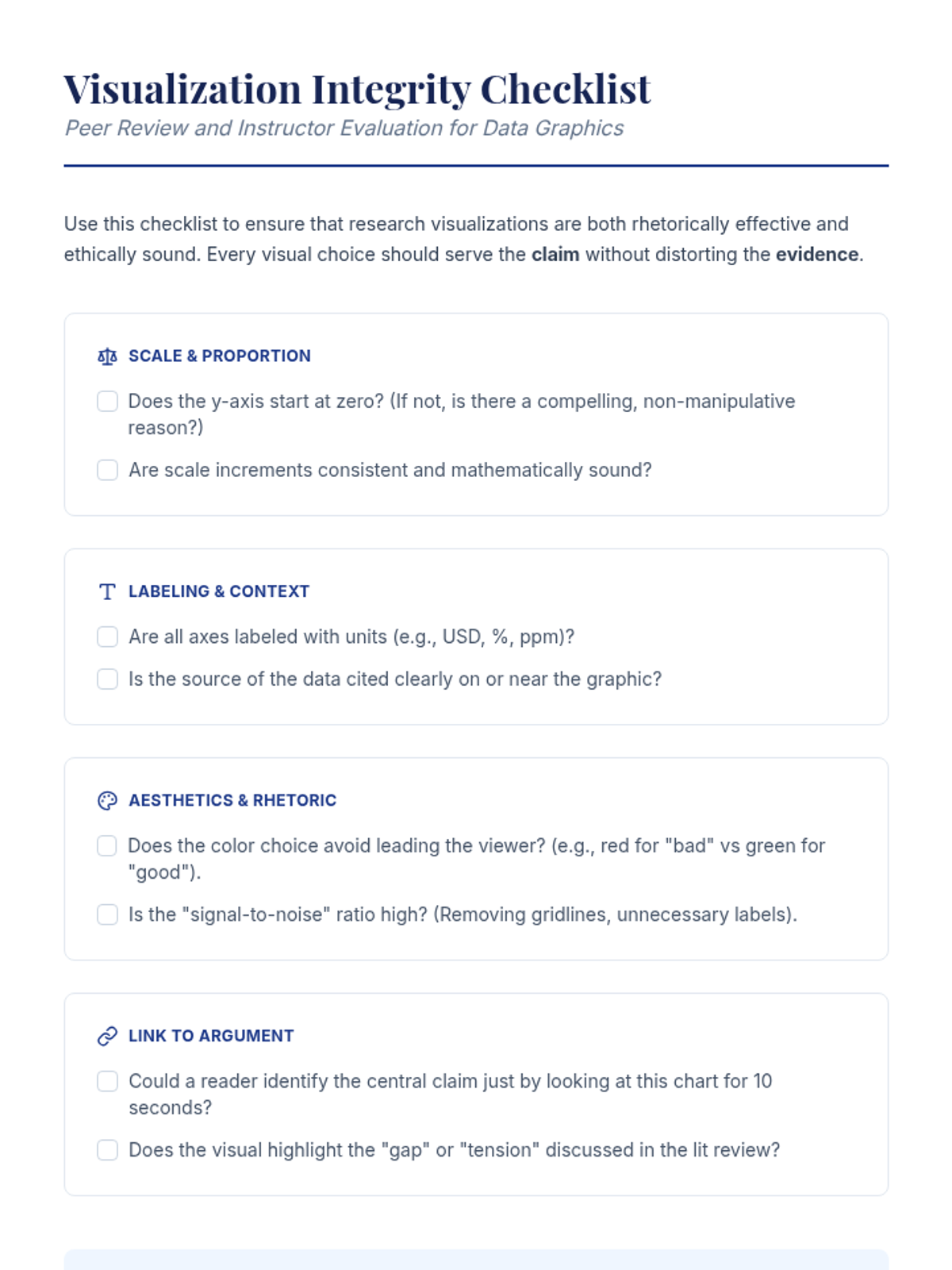
Focuses on the honest and effective presentation of evidence through charts, graphs, and evidence matrices, avoiding visual manipulation.
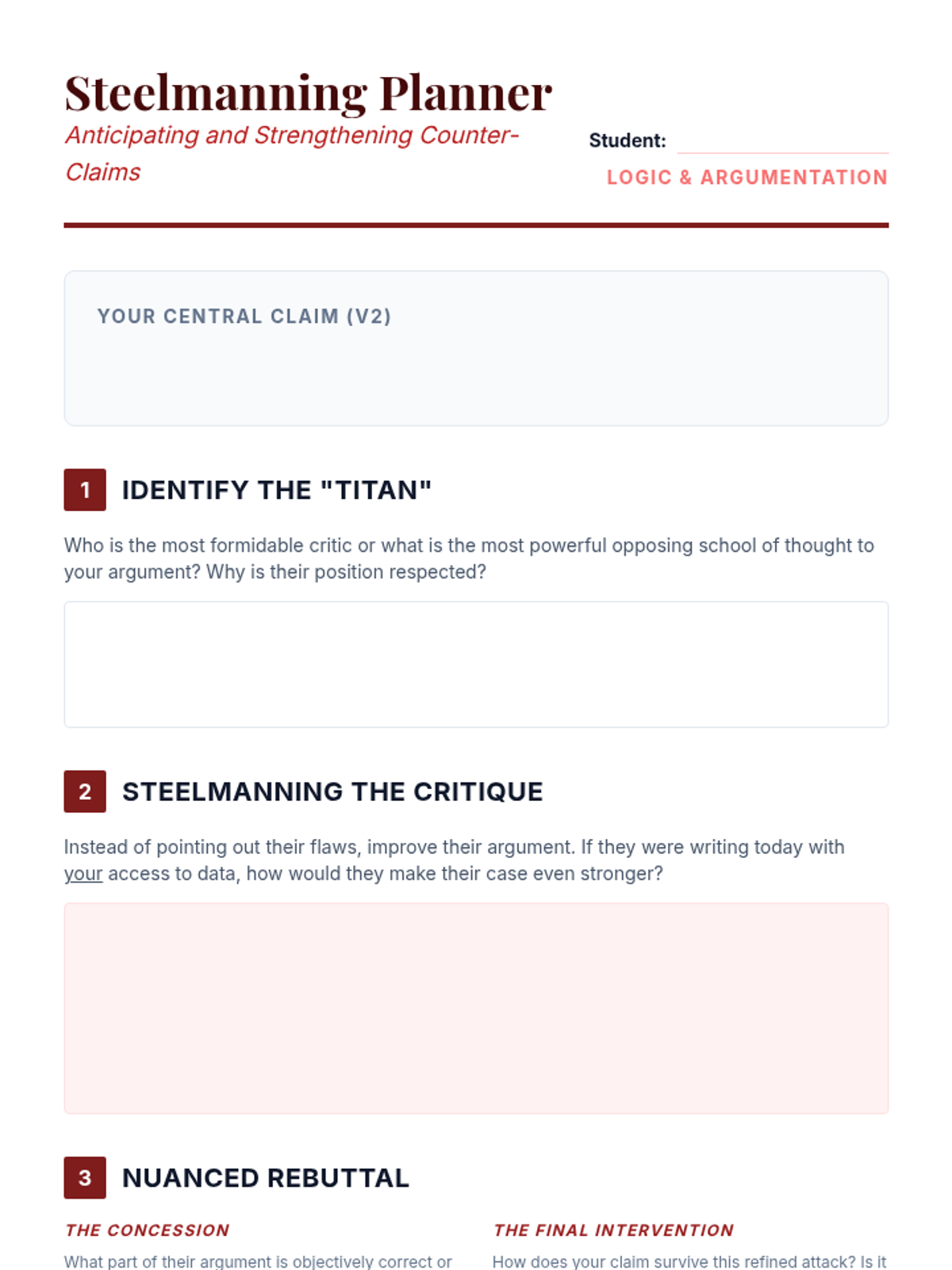
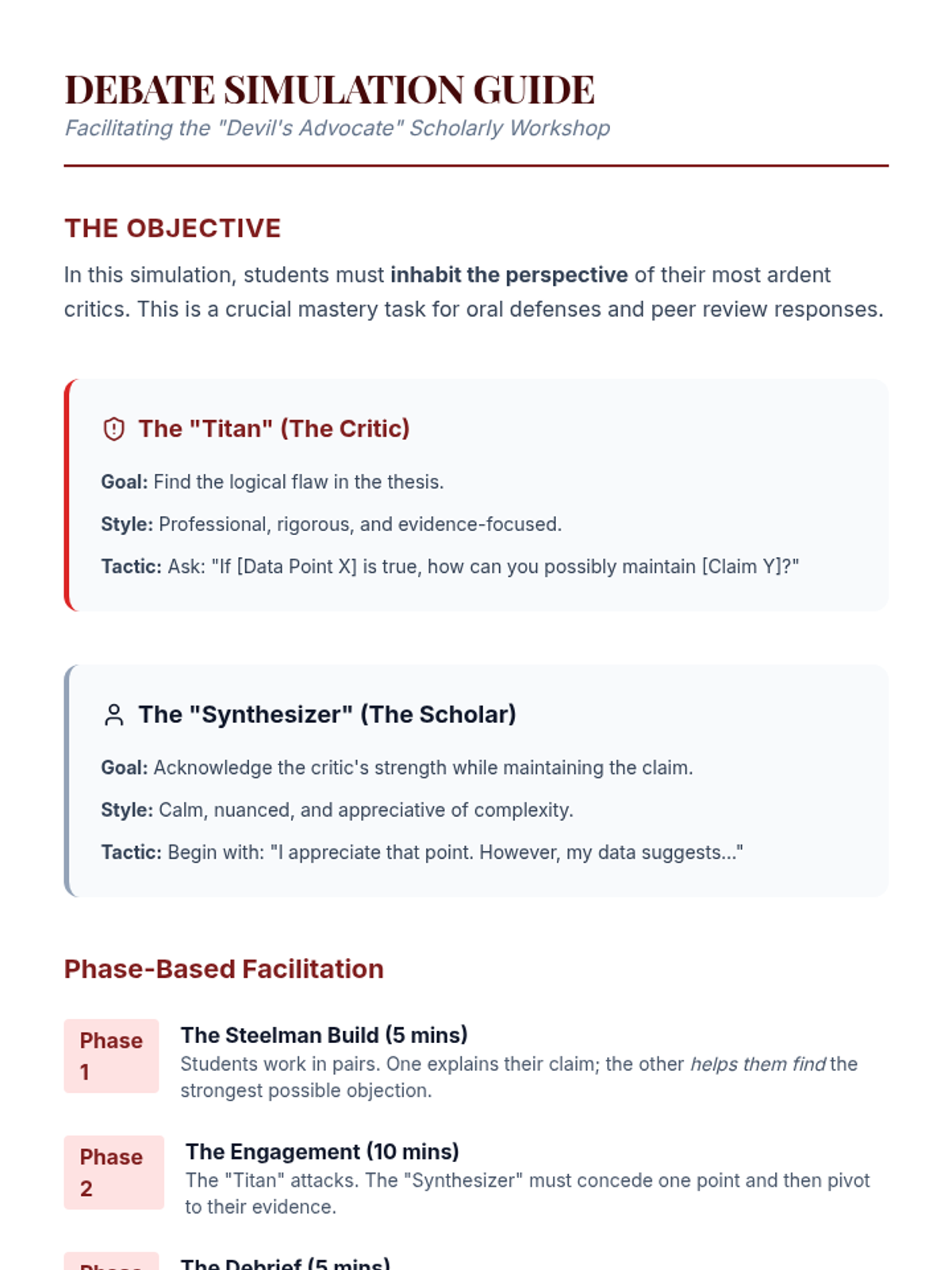
Students identify and strengthen opposing views (steelmanning) before refuting them, ensuring their final argument is robust and nuanced.
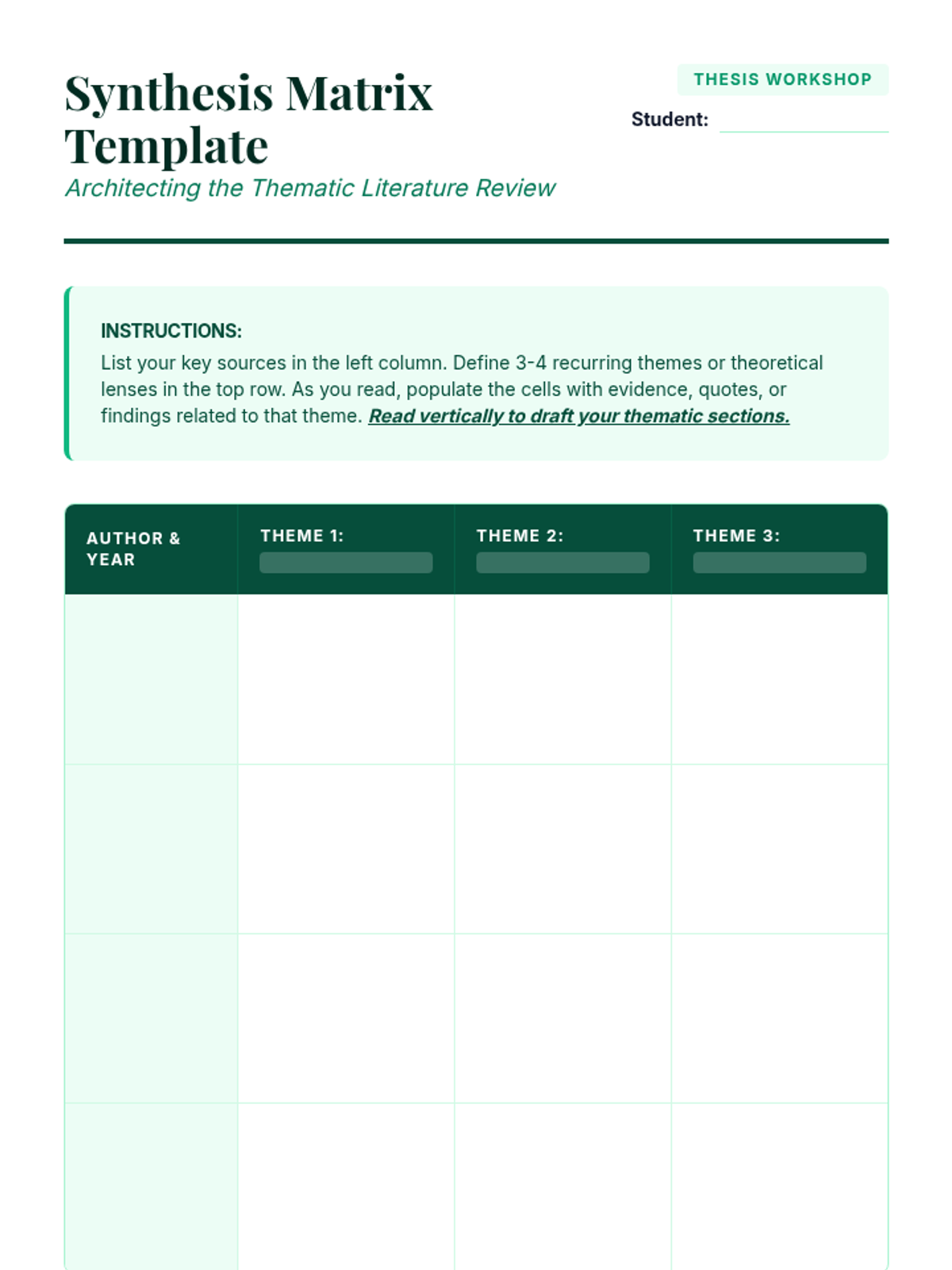
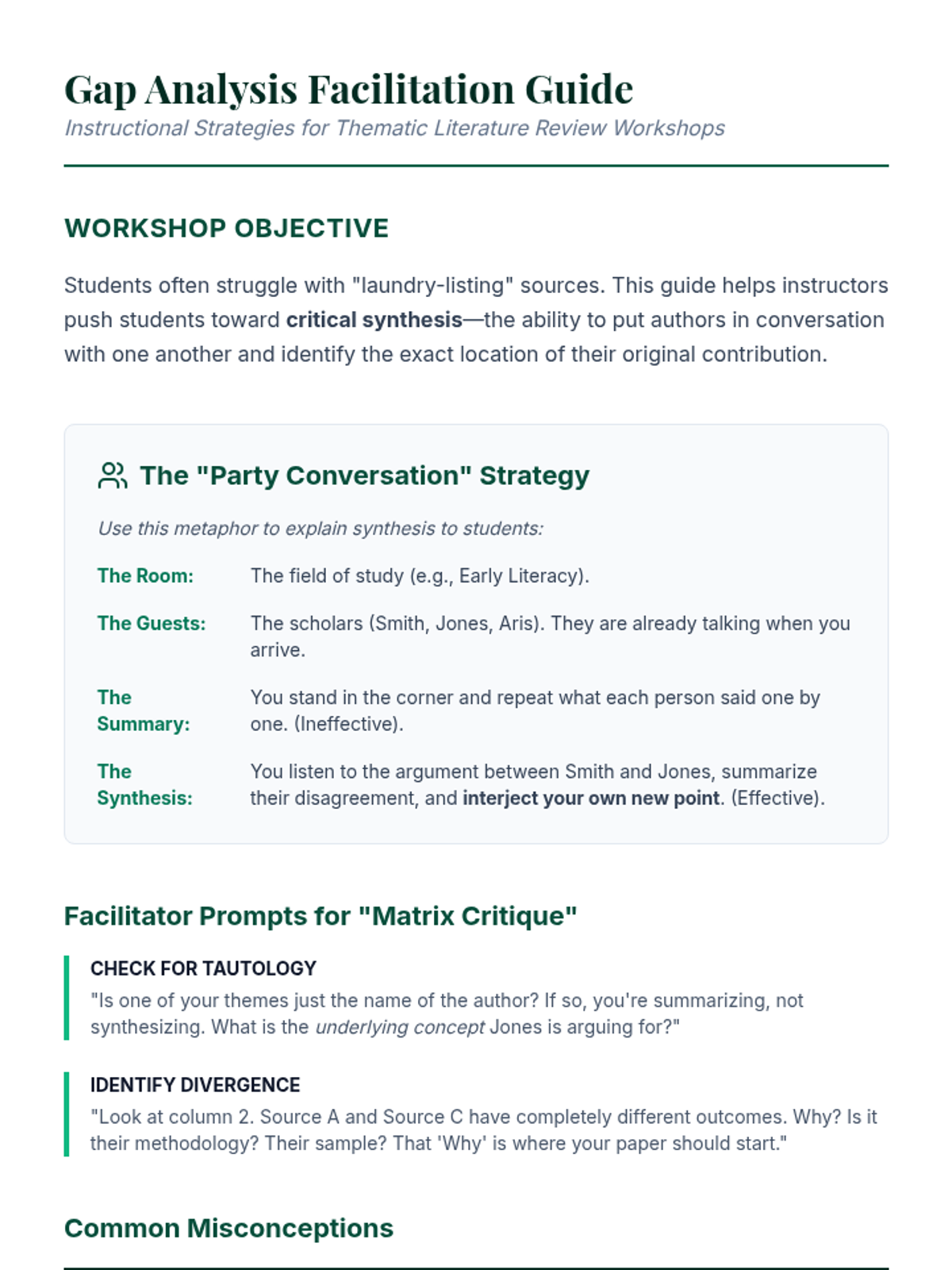
Students learn to move beyond summaries to synthesize literature thematically, identifying gaps in current knowledge that their central claim will fill.
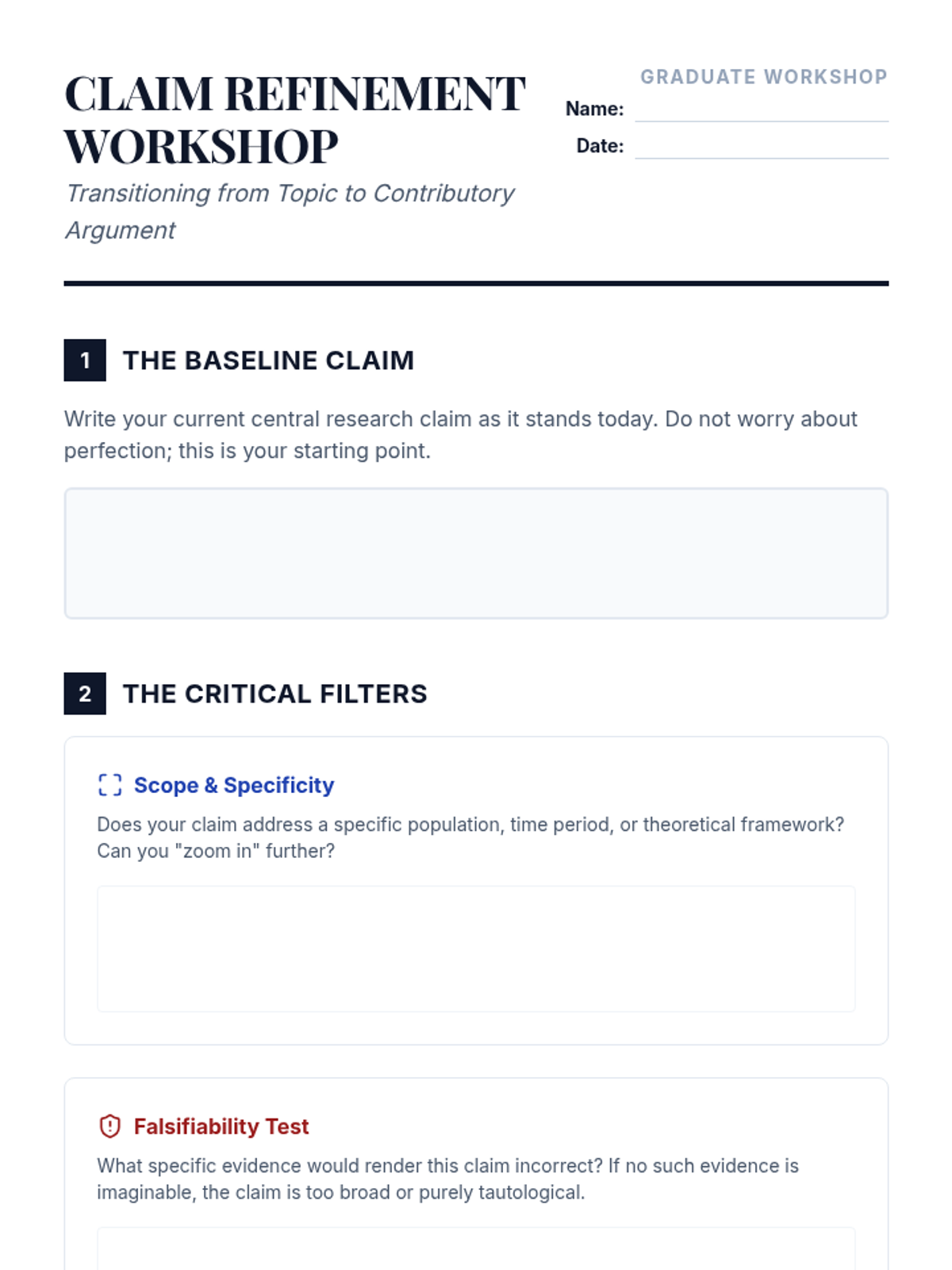
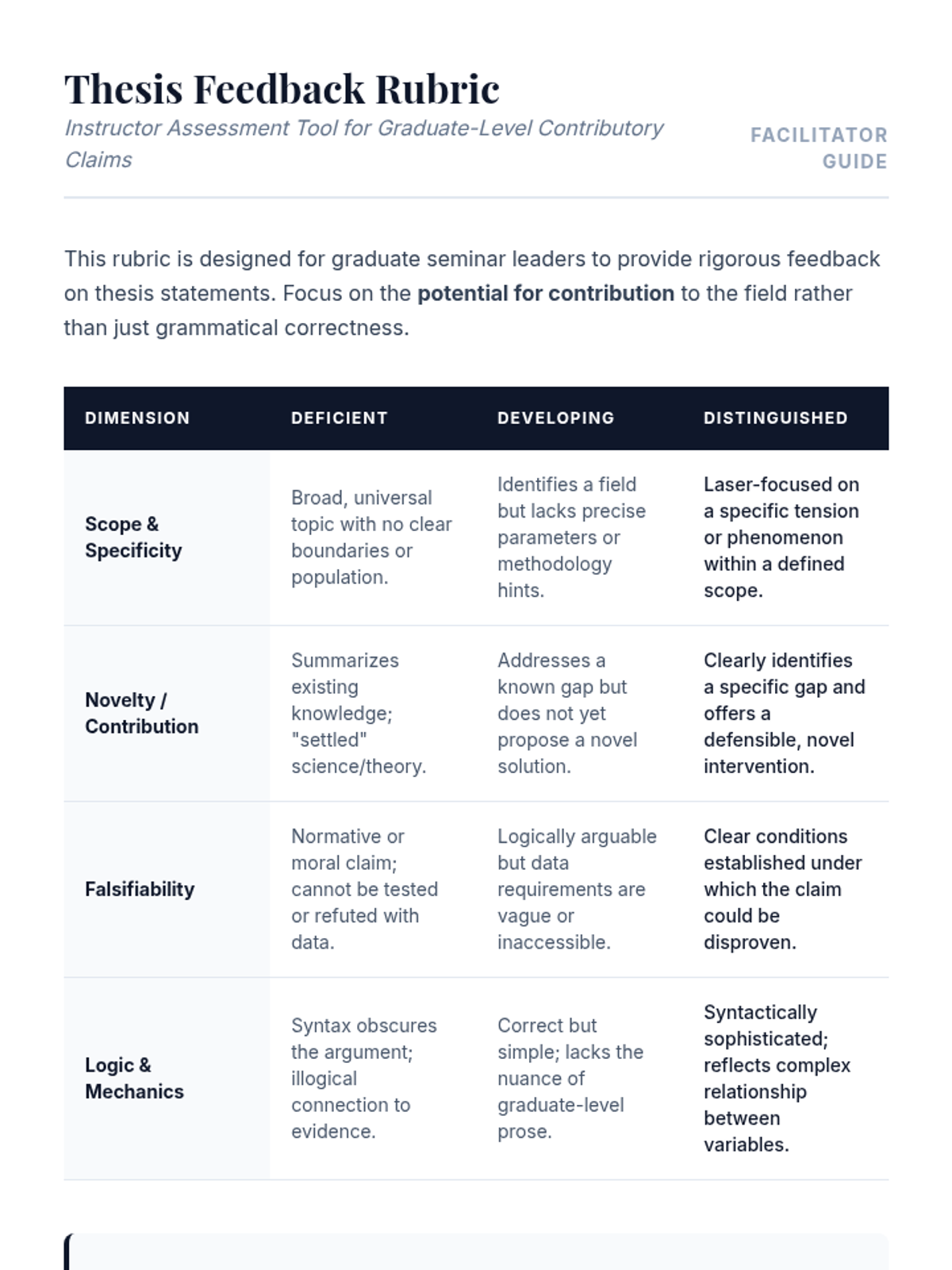
Students transition from broad topics to specific, arguable claims suitable for graduate-level research, focusing on narrowing scope and ensuring claims are falsifiable.
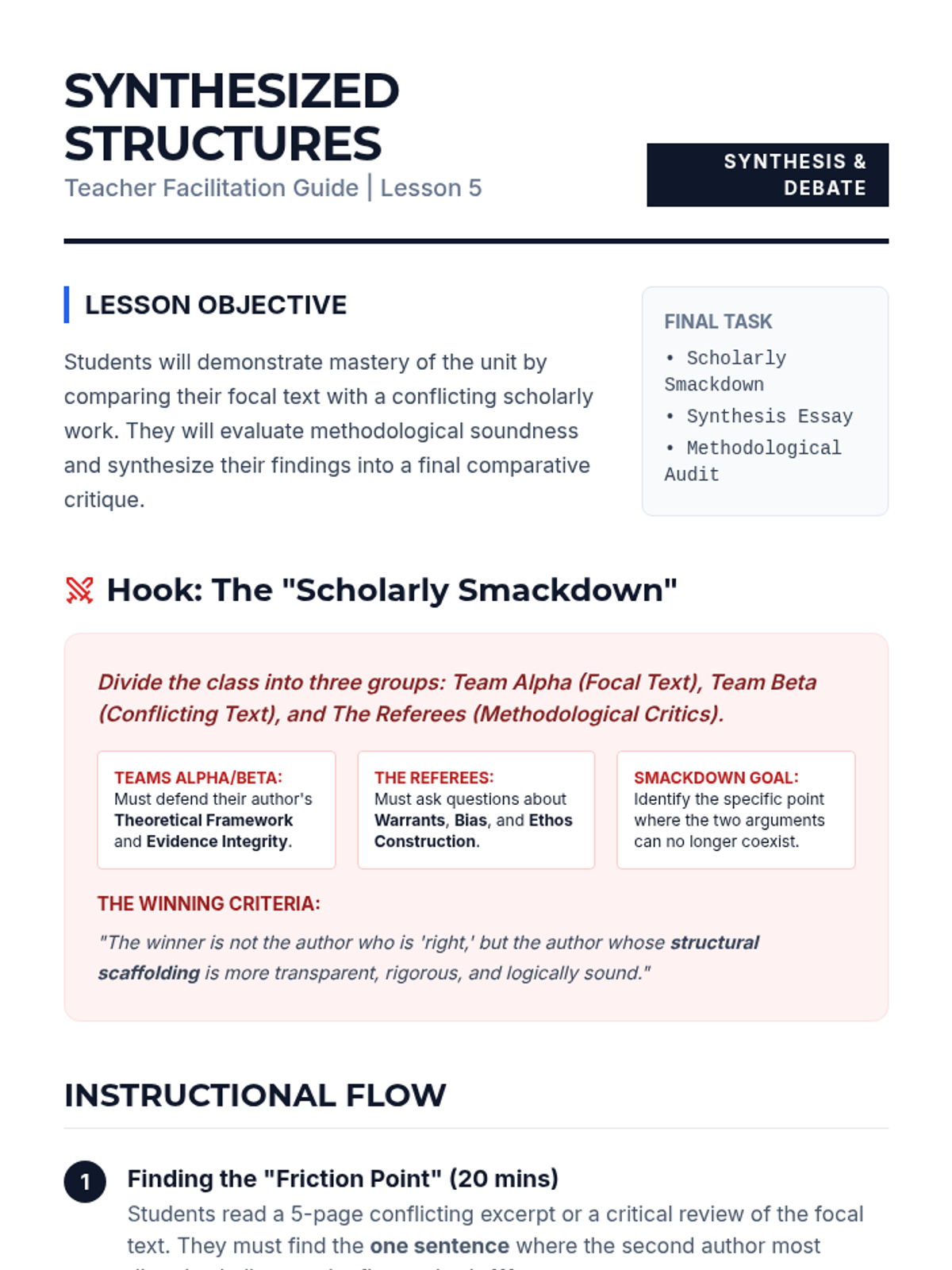
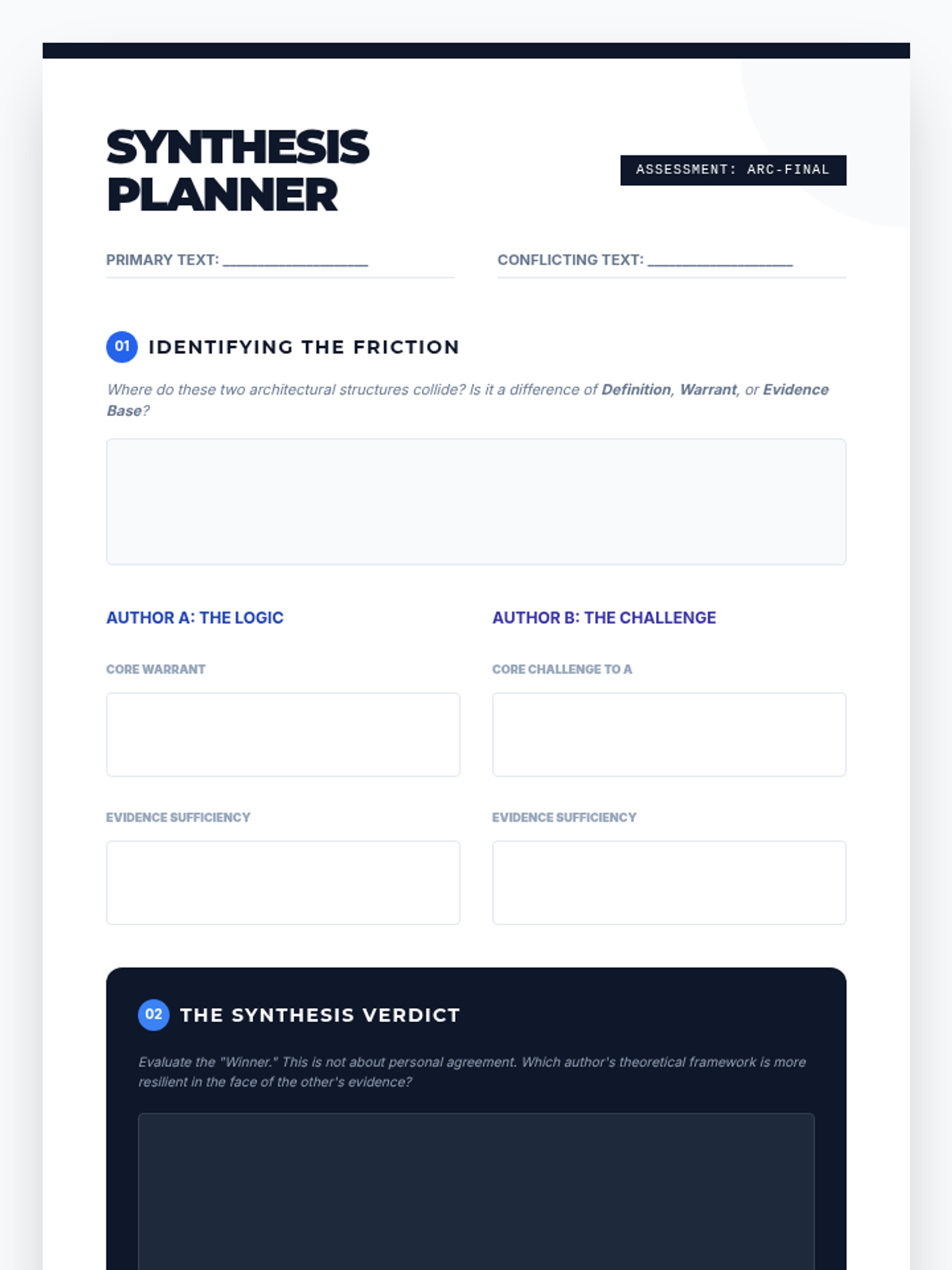
Students compare a focal text with a conflicting scholarly work, writing a synthesis that evaluates methodological soundness. This culminates in a 'scholarly smackdown' debate based on textual evidence.
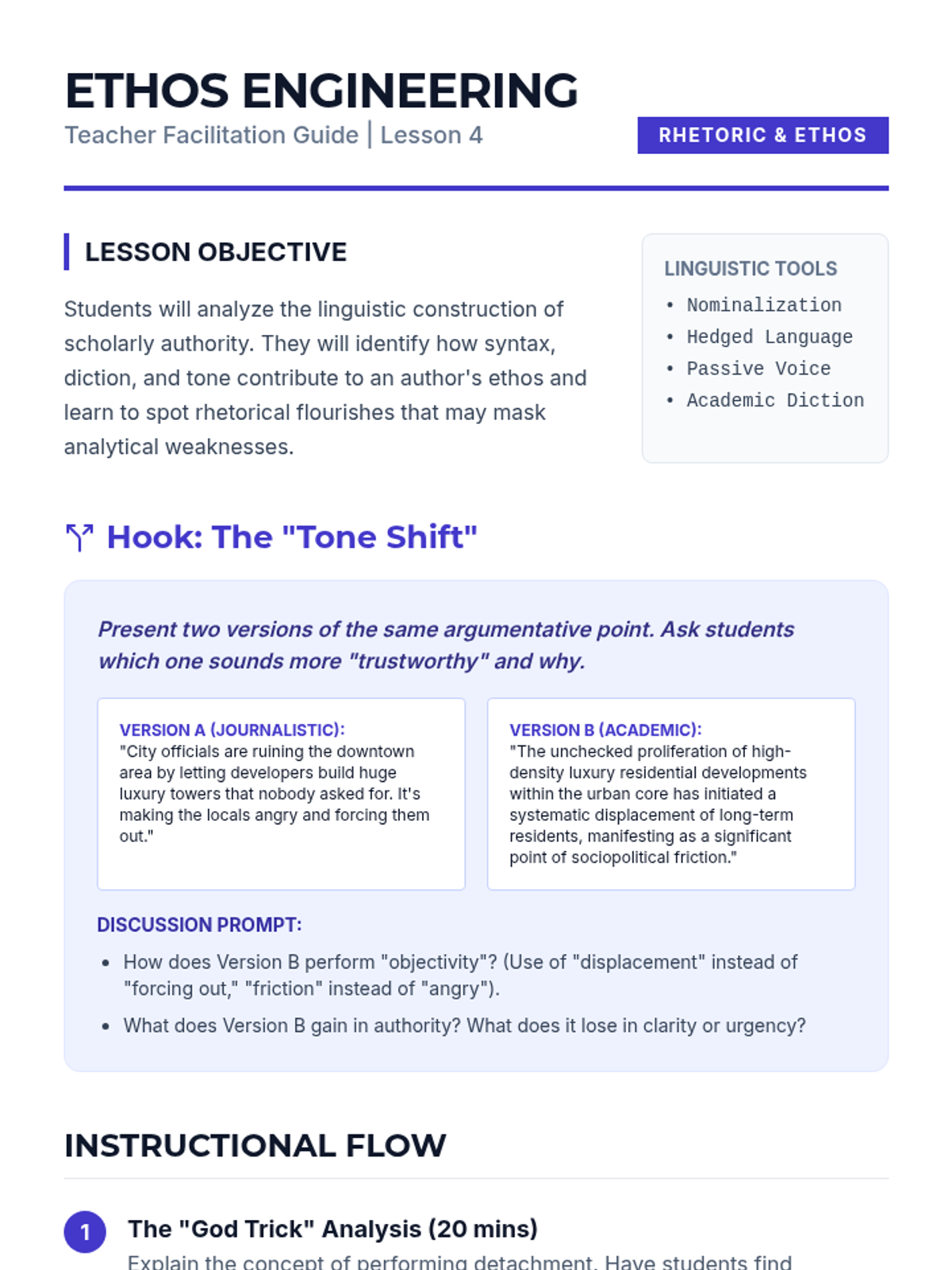
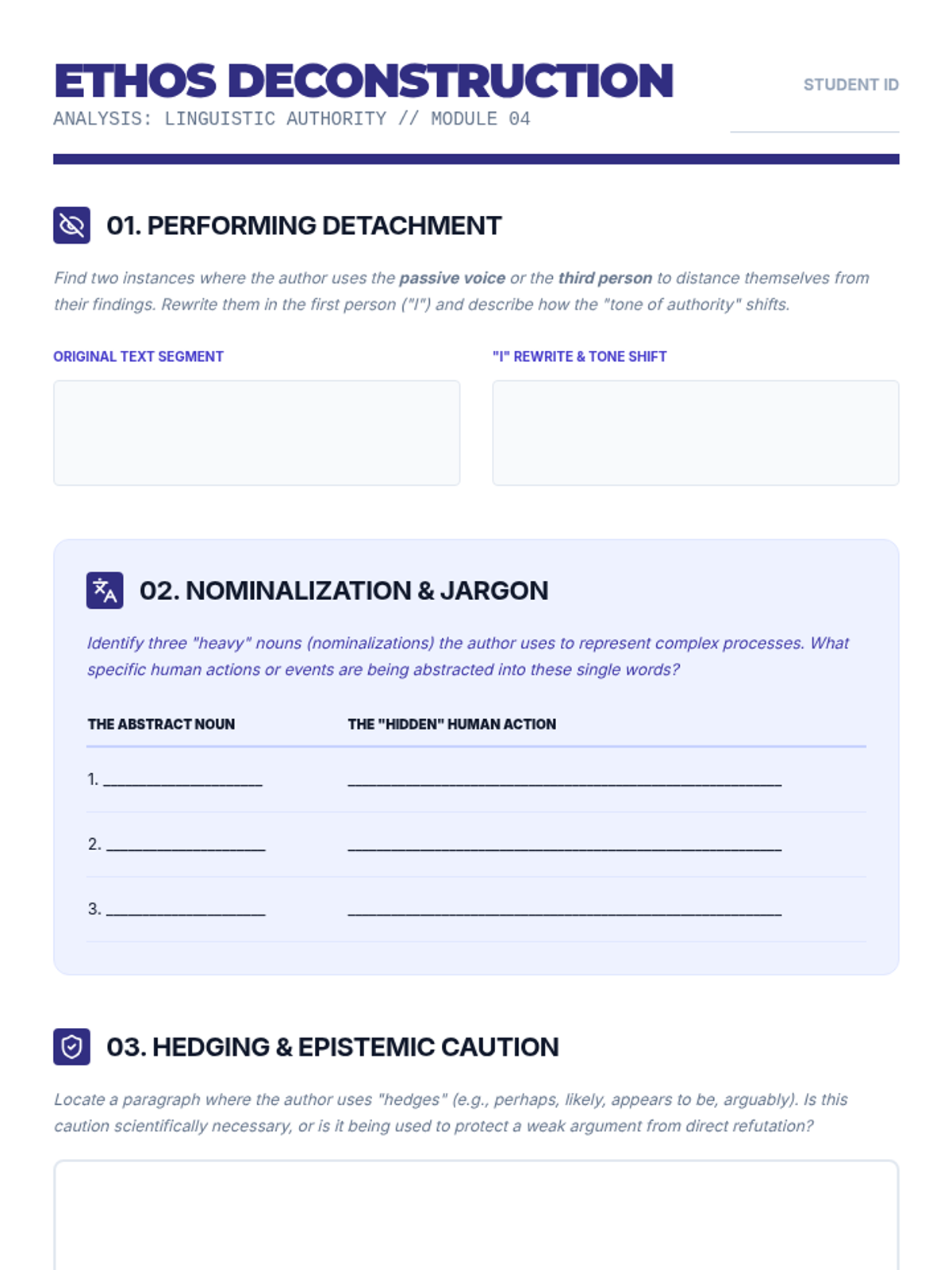
Examination of syntax, diction, and tone as tools for ethos construction. Students analyze how scholarly objectivity is performed and where rhetorical flourishes mask analytical gaps.
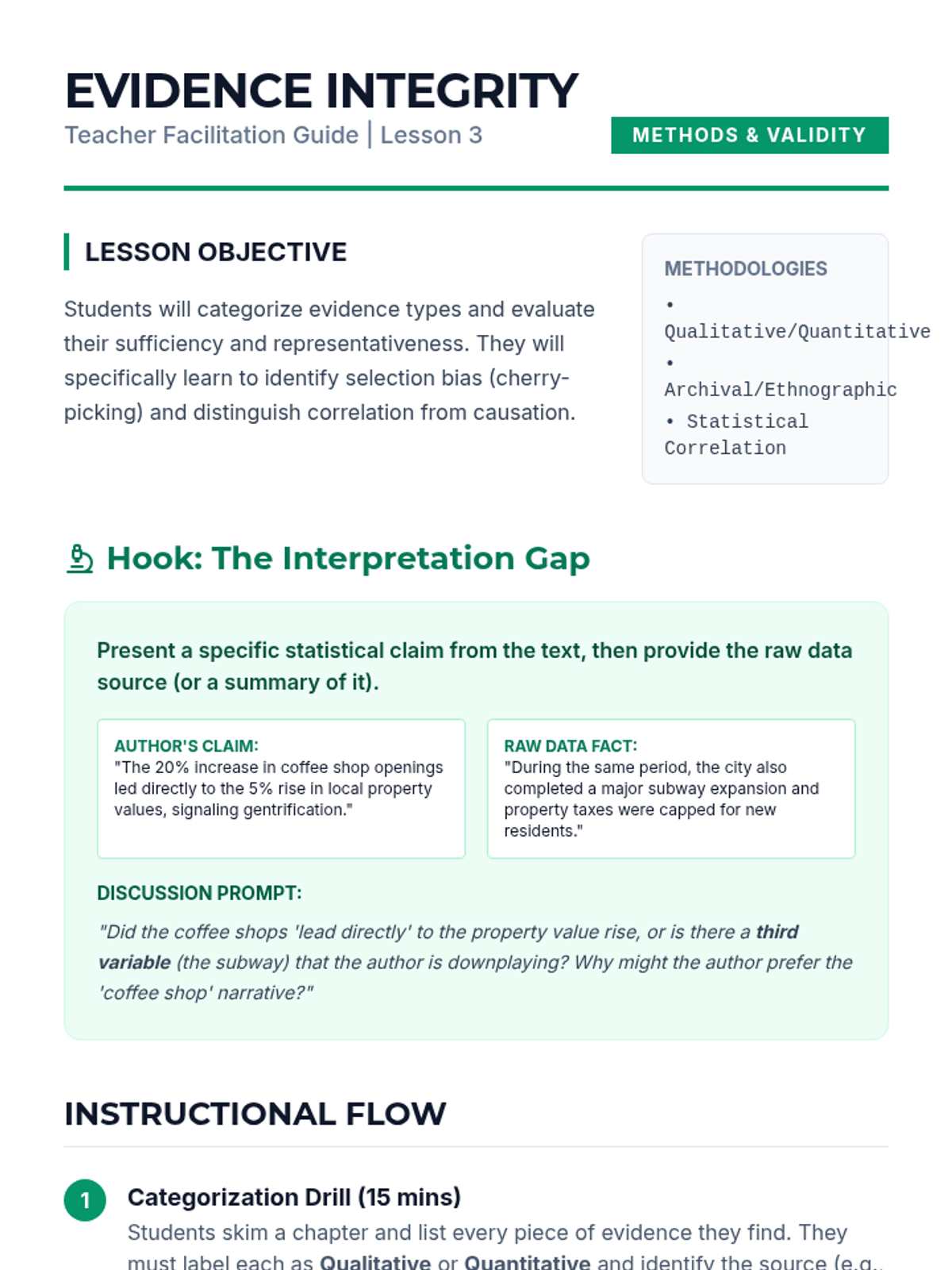
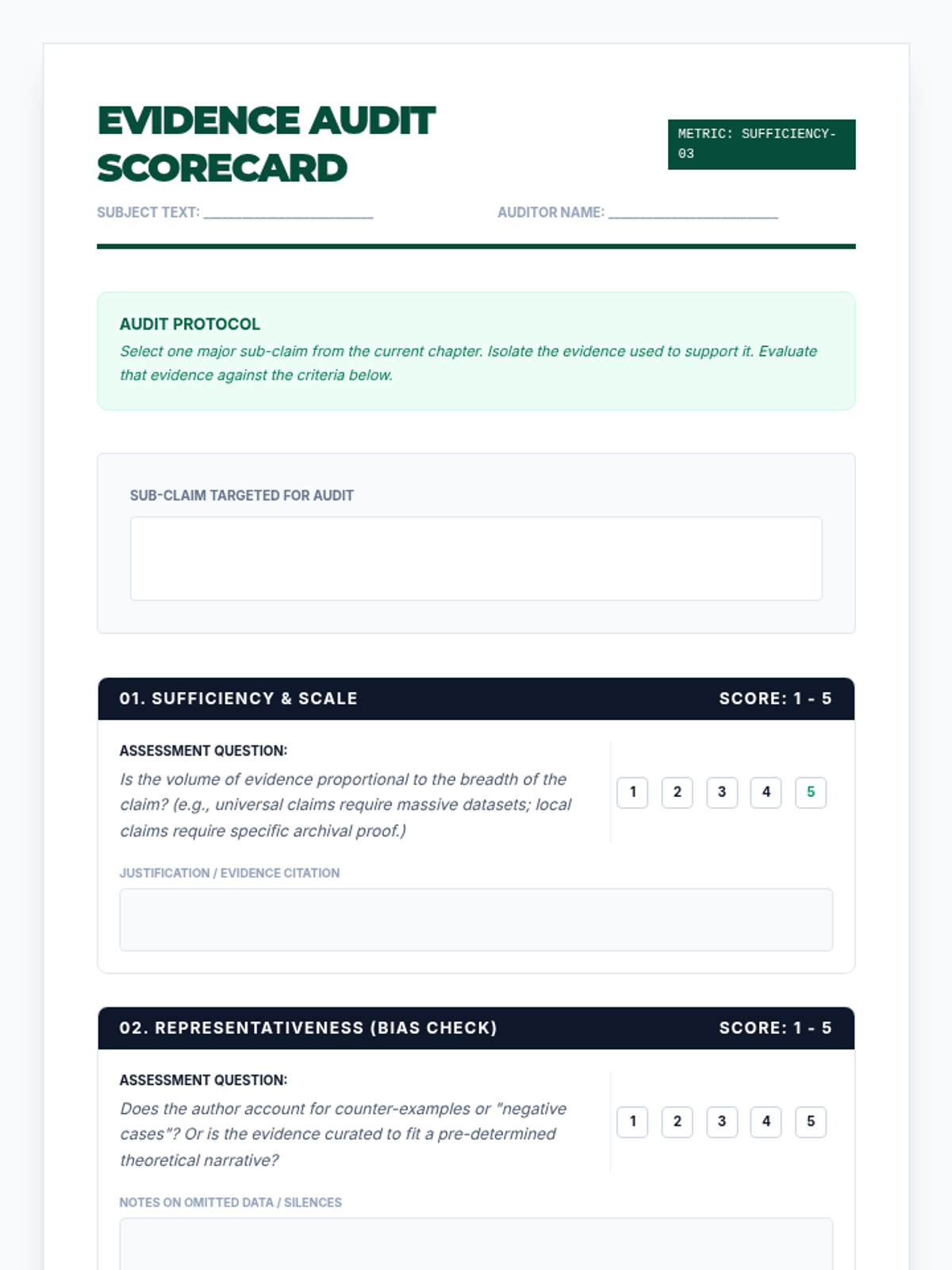
Students categorize and assess the sufficiency of qualitative, quantitative, and archival evidence. The lesson focuses on recognizing selection bias and distinguishing between correlation and causation in scholarly narratives.
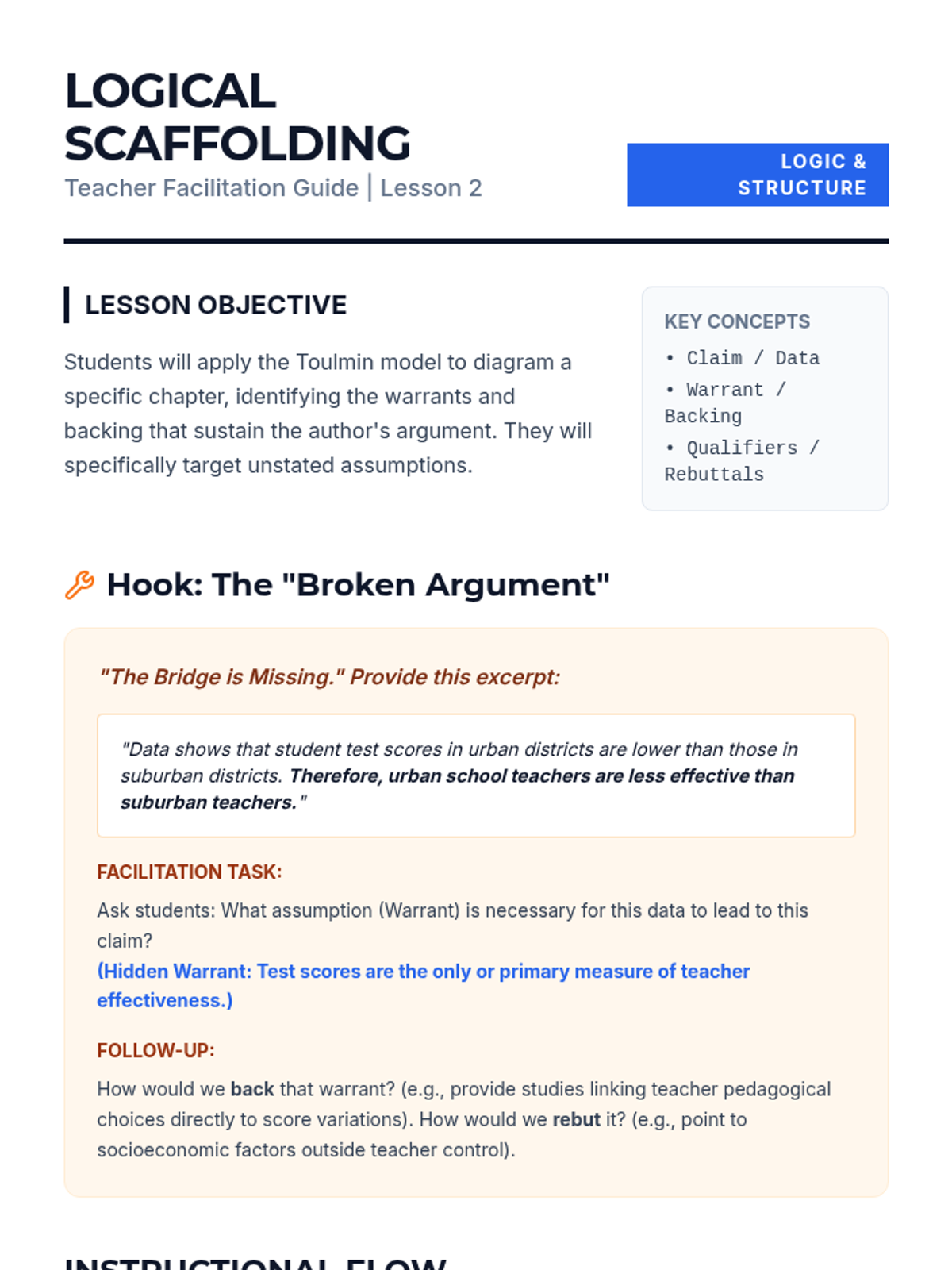
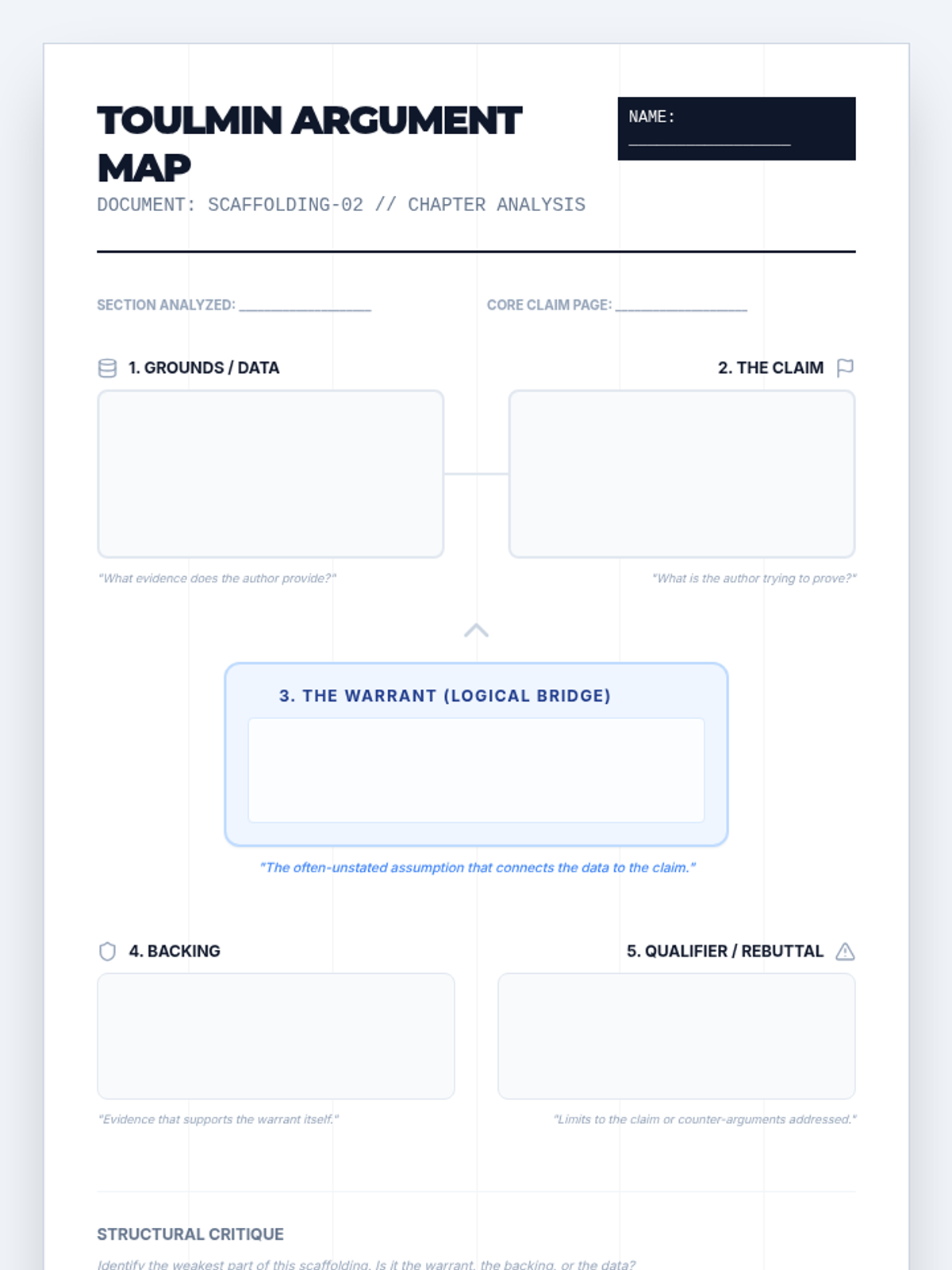
Using the Toulmin model, students diagram specific chapters to identify warrants and backing. They examine how authors use logical bridges to connect data to claims and identify unstated assumptions.
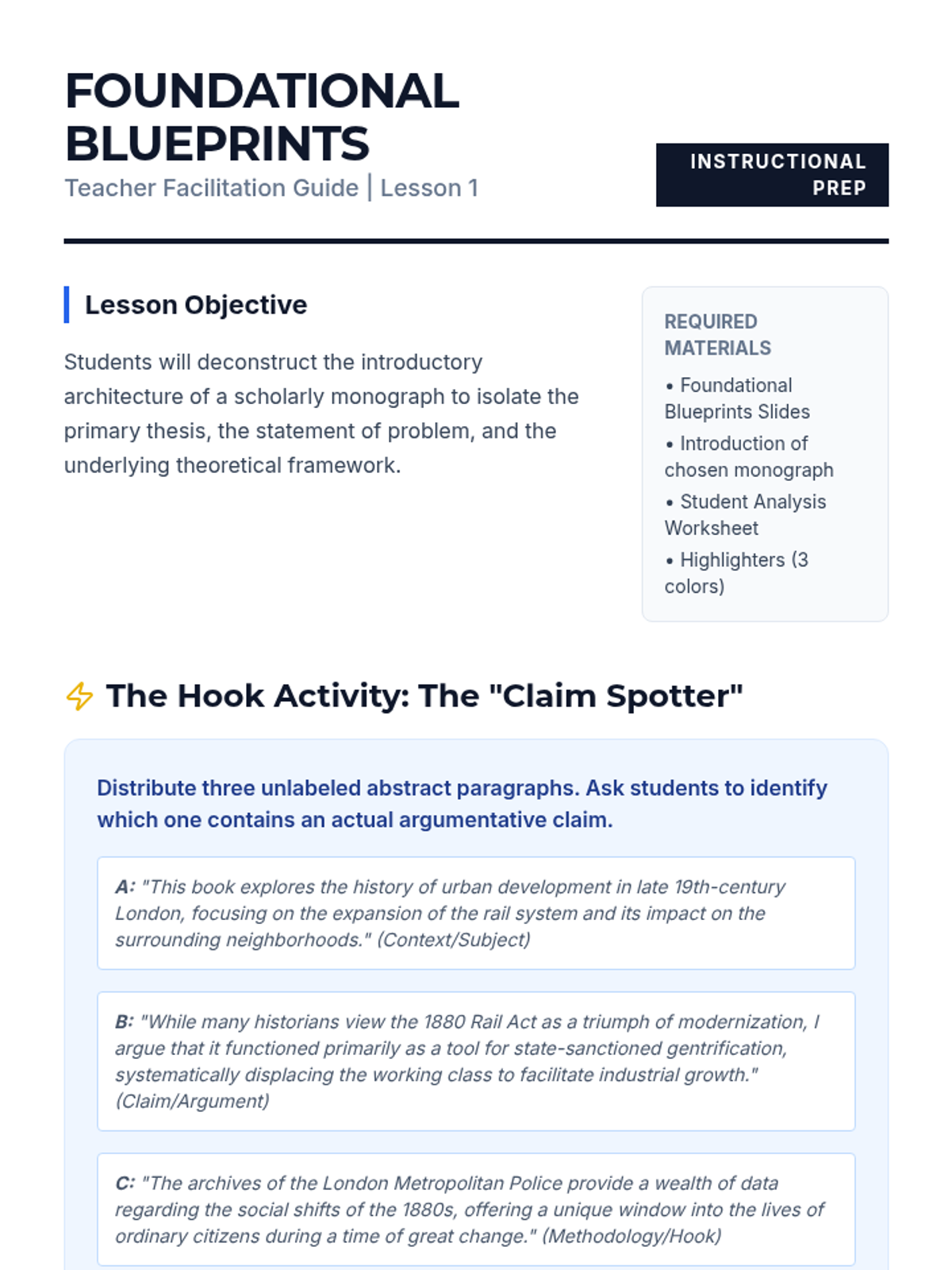
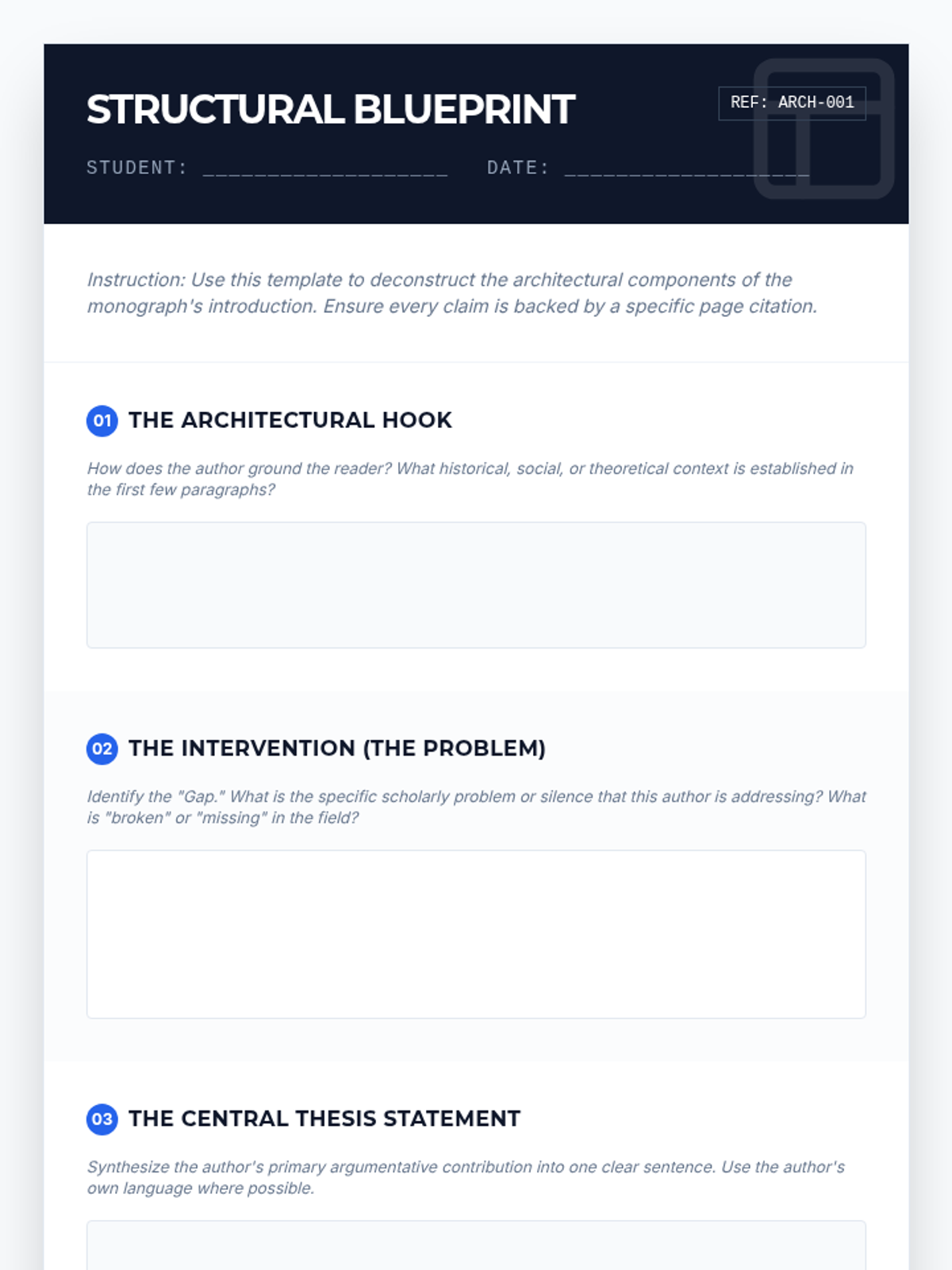
Students analyze the introduction and first chapter of a scholarly monograph to isolate the primary thesis and the theoretical framework. They will distinguish between the 'hook,' the statement of the problem, and the specific argumentative contribution.
A culminating simulation where students must identify and name fallacies in real-time through diagnostic questioning alone.
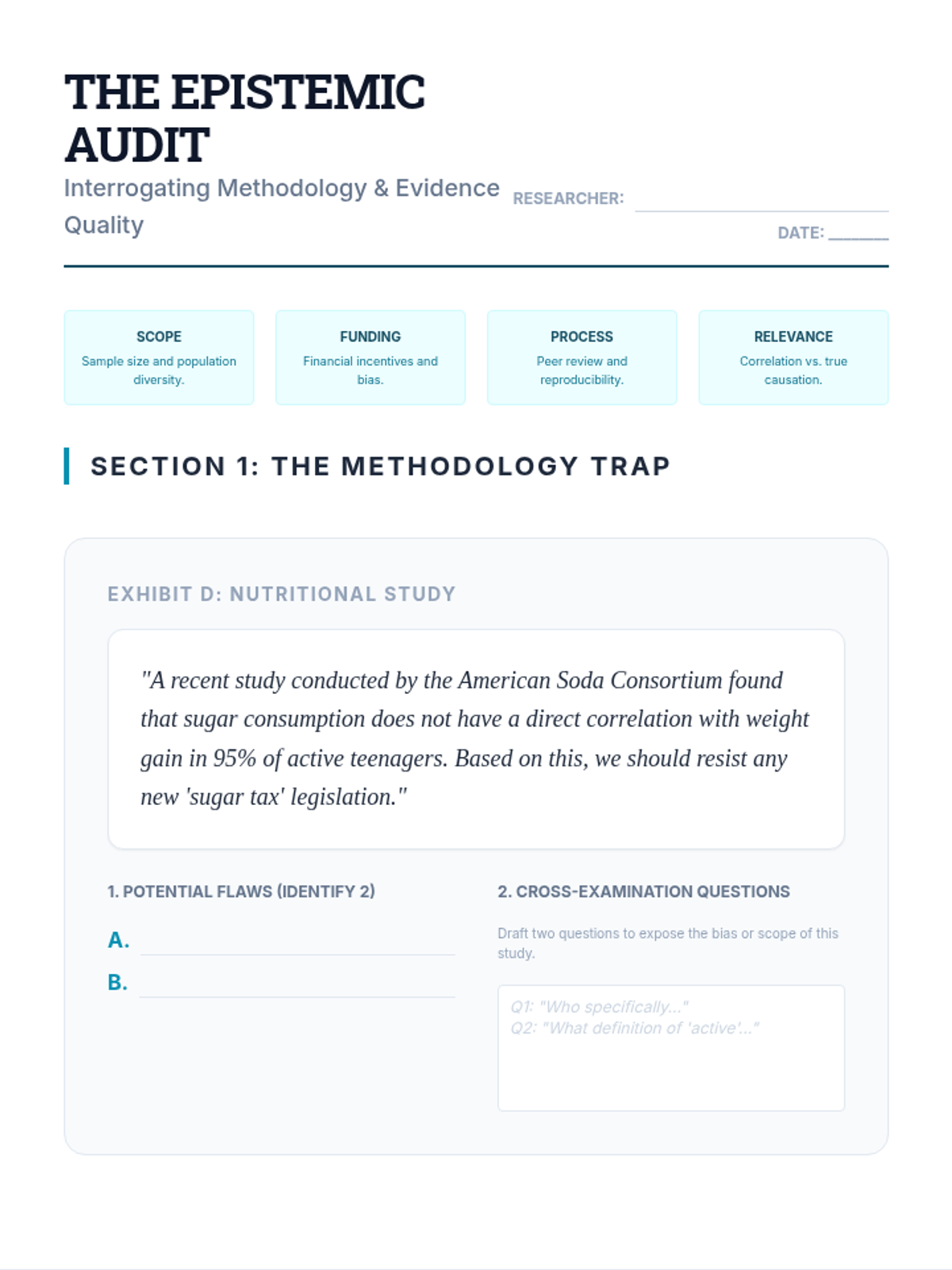
An exploration of evidence and methodology, teaching students how to question the 'how' behind an opponent's factual claims.
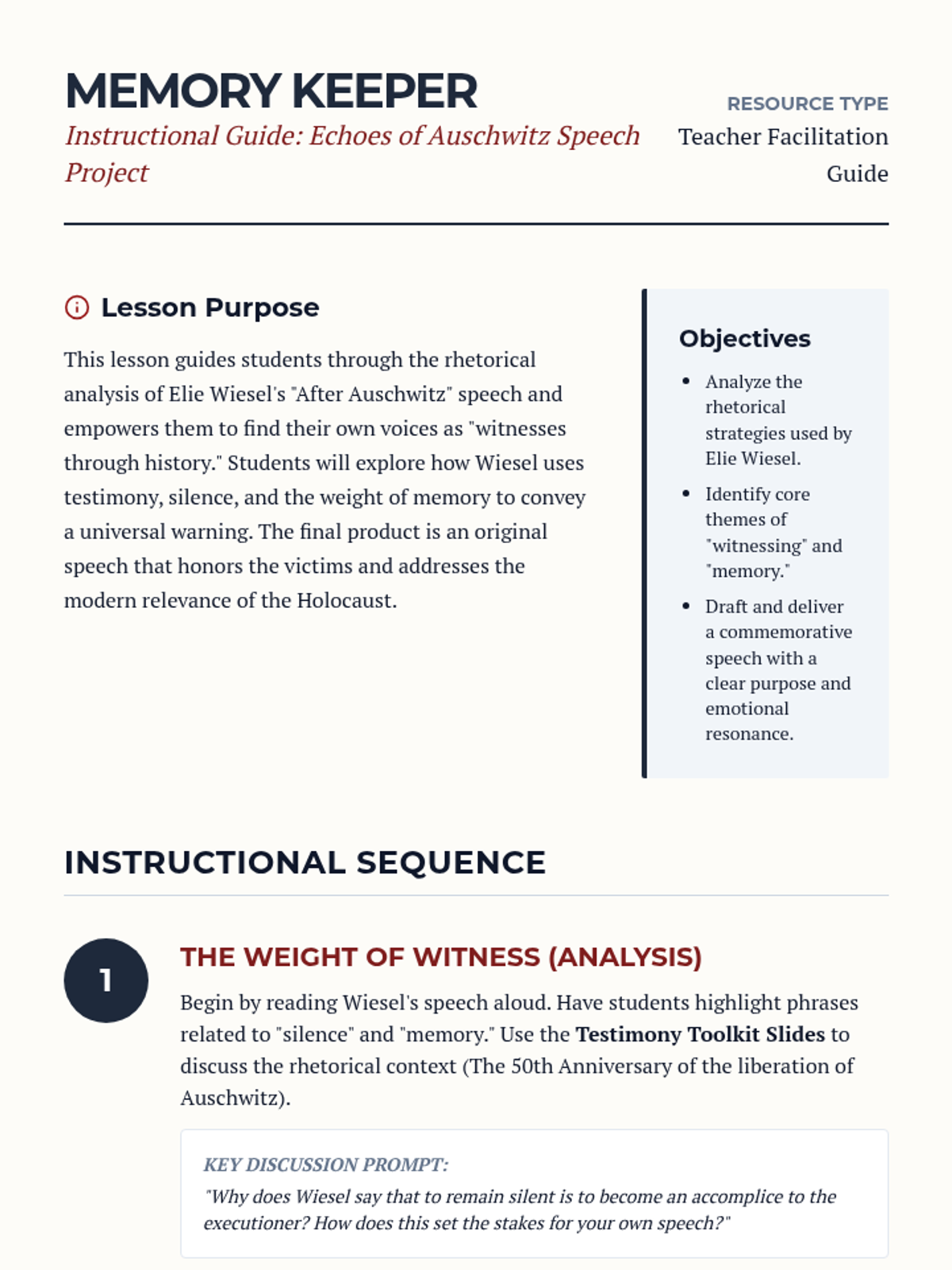
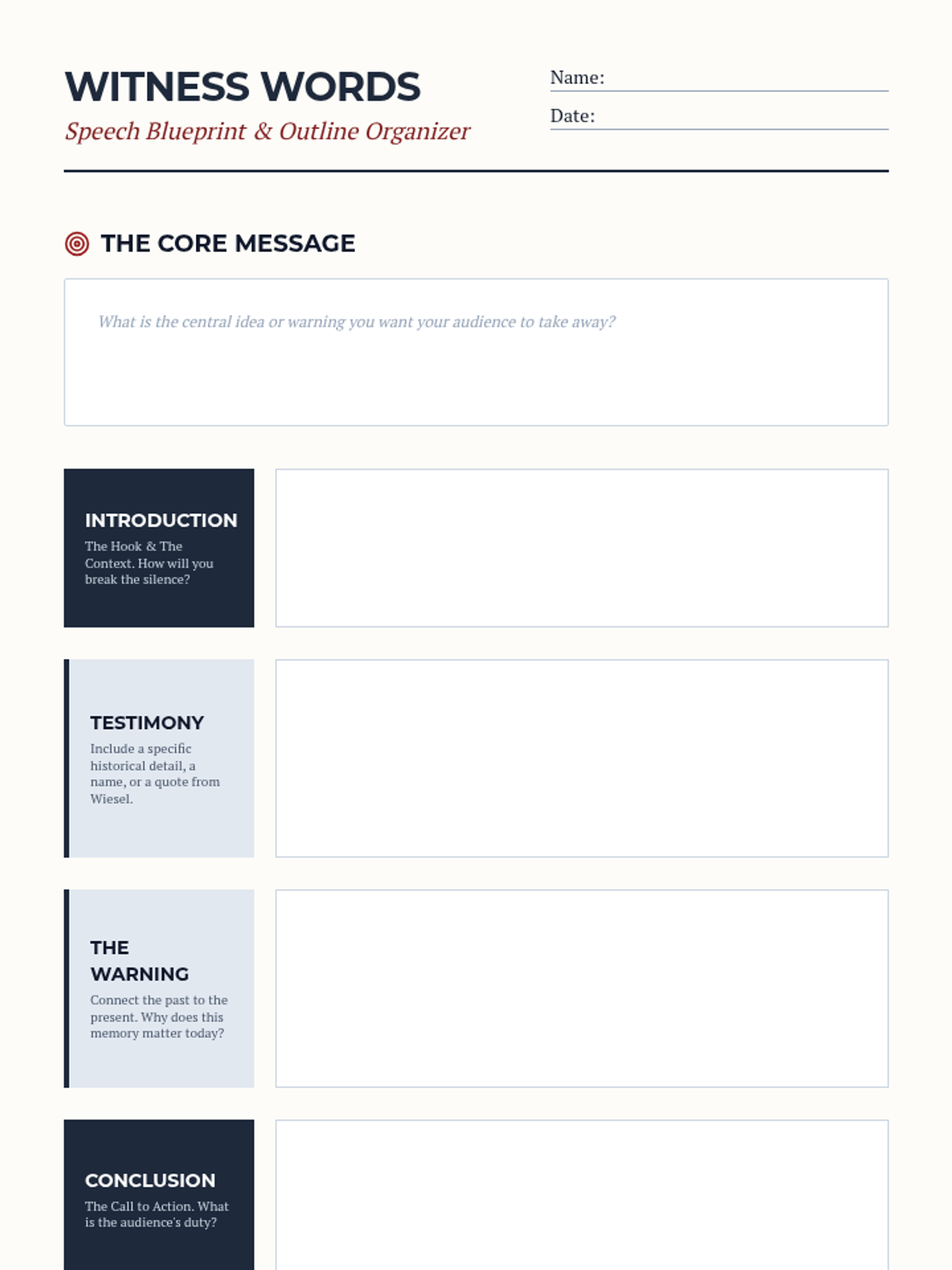
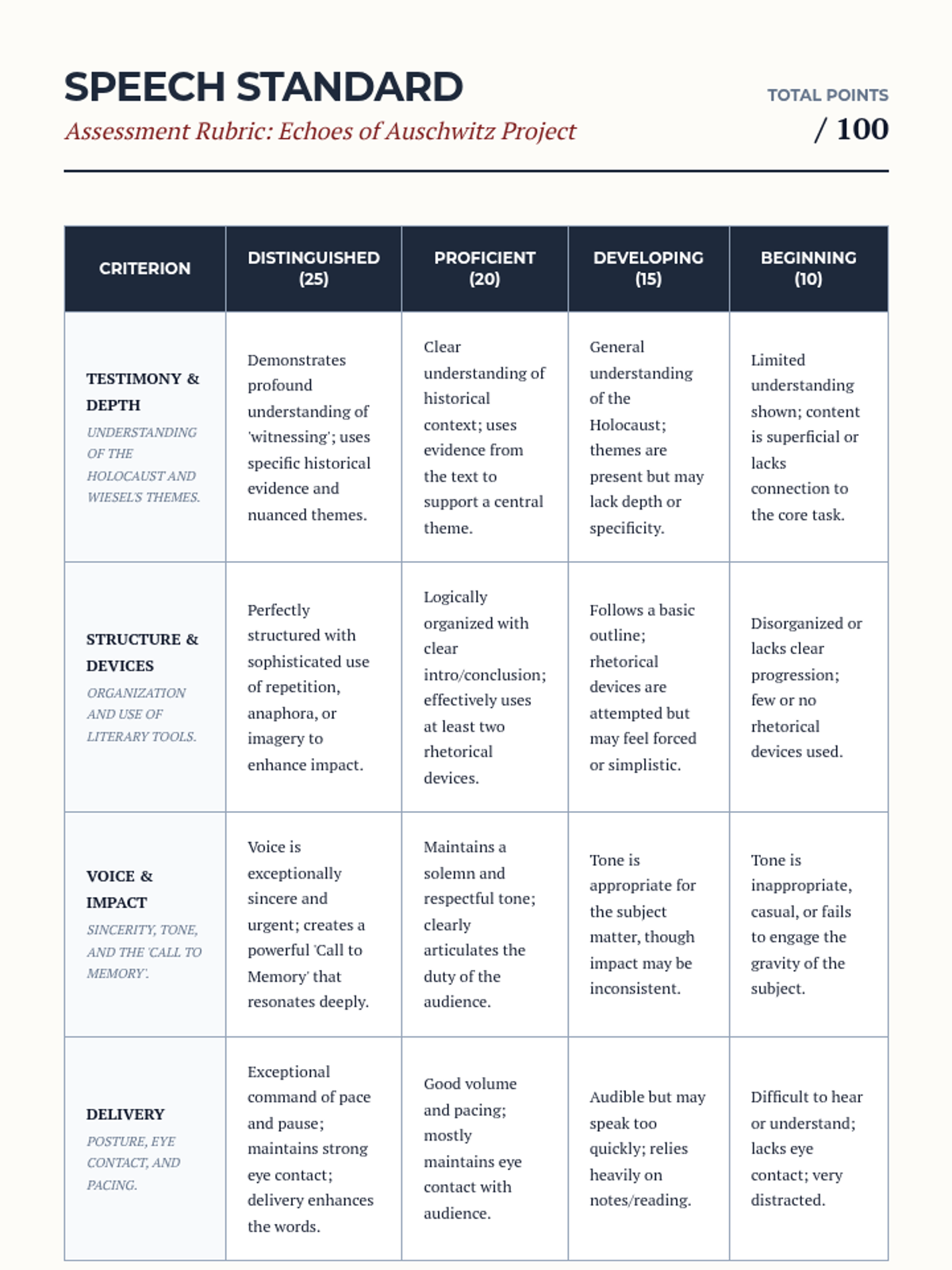
A comprehensive lesson where students analyze Elie Wiesel's 'After Auschwitz' speech and craft their own commemorative speeches about the Holocaust, focusing on the power of testimony and the duty of memory.
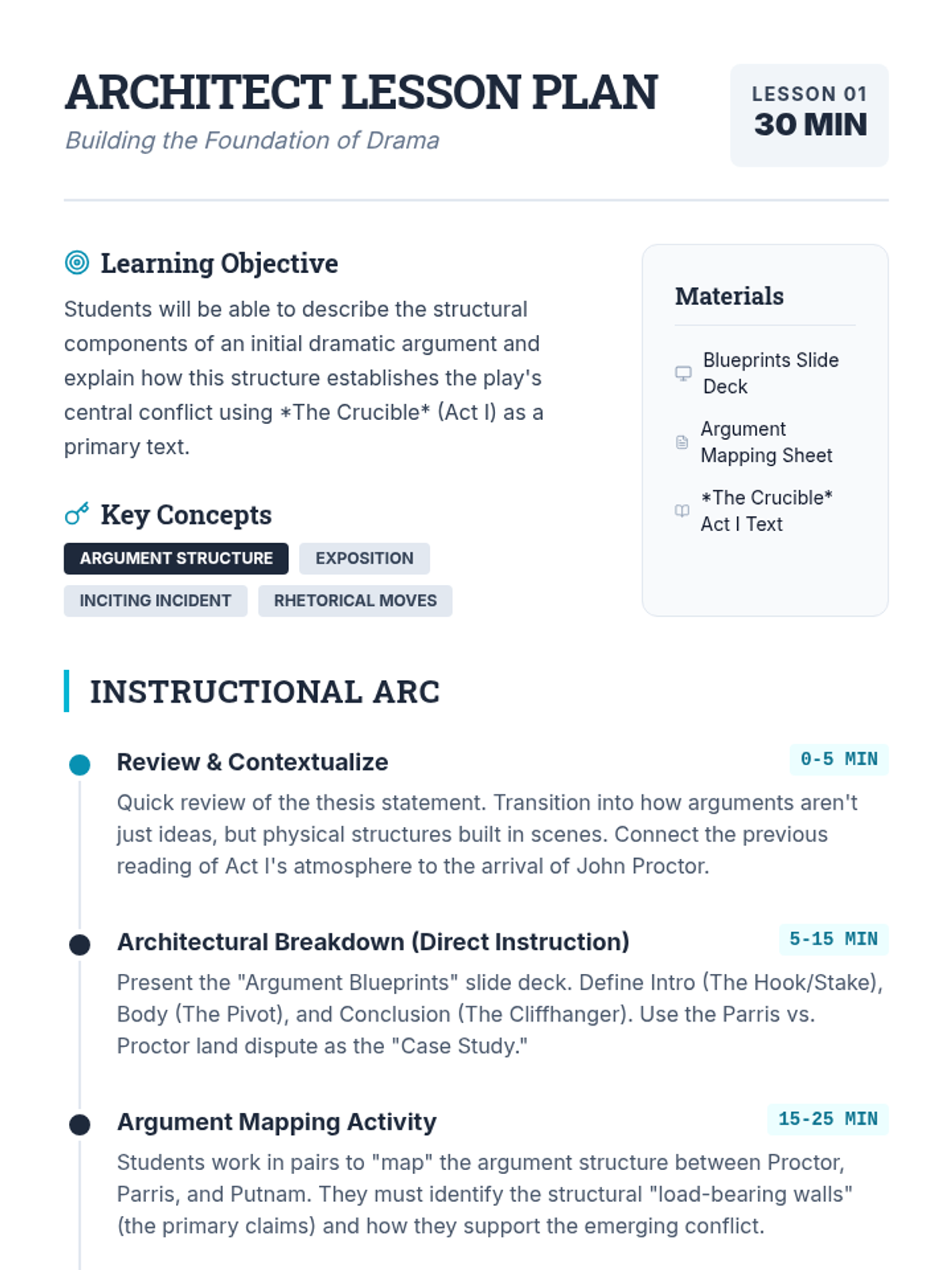
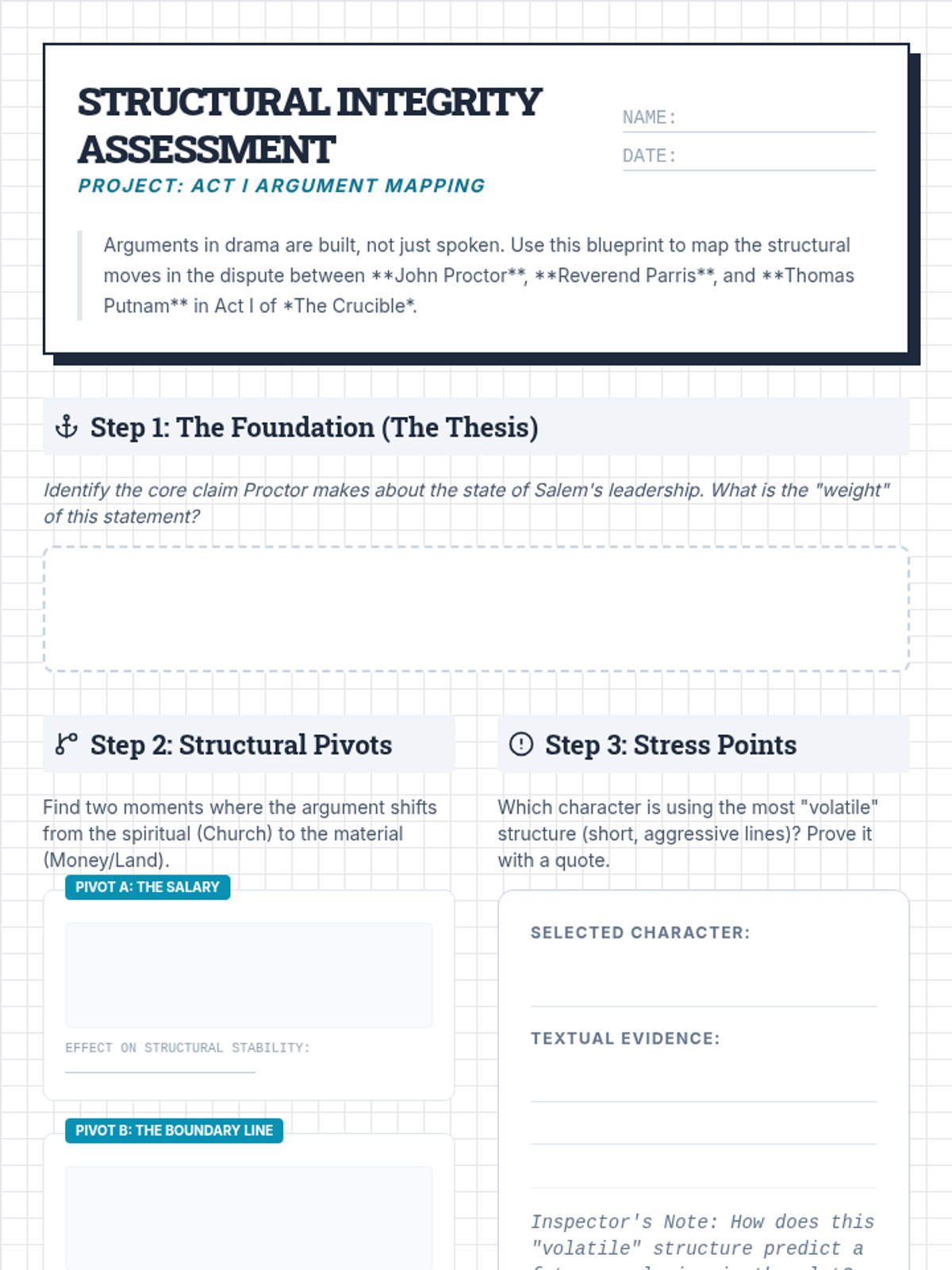
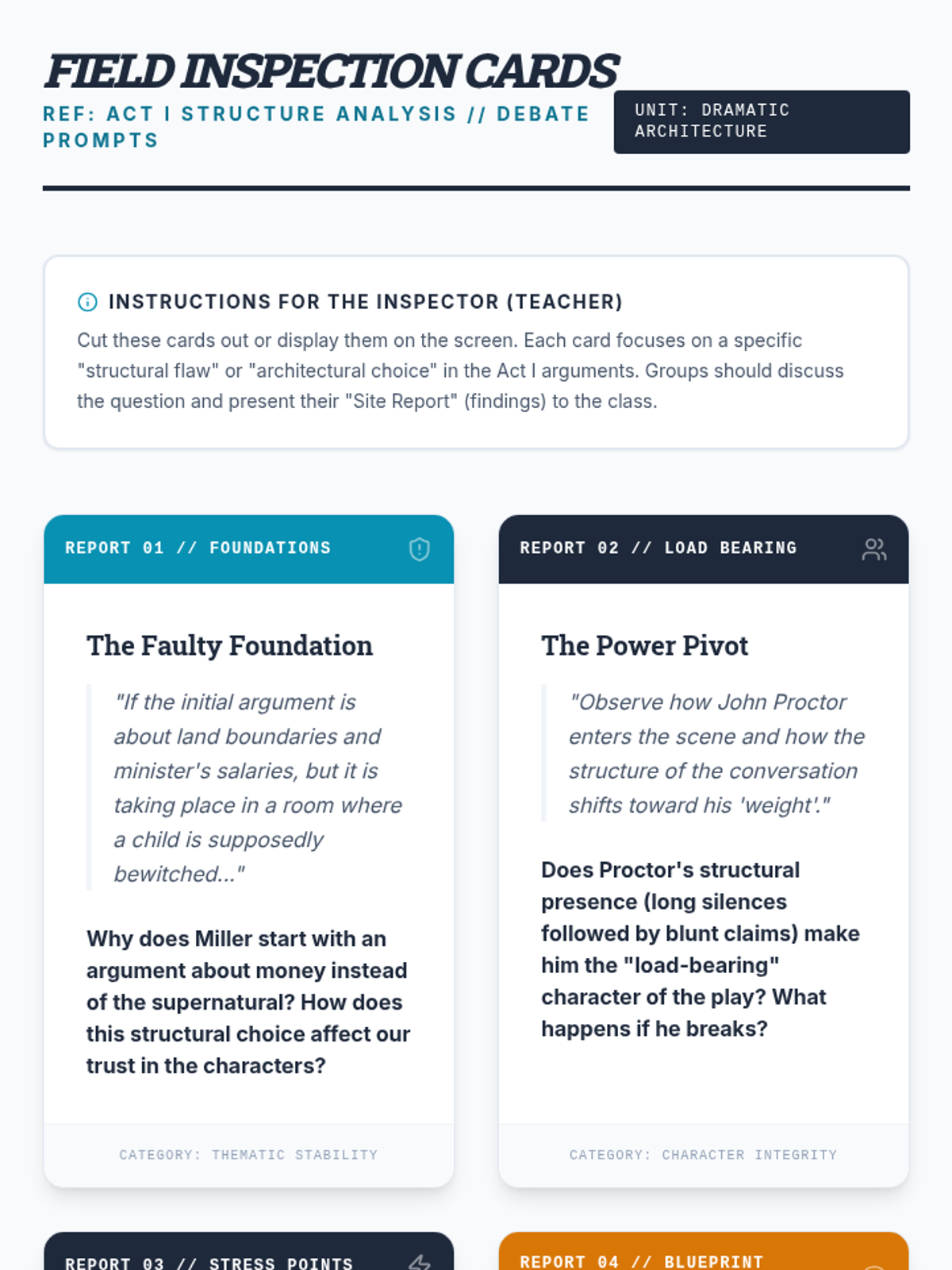
A lesson focused on analyzing the structural components of Act I arguments in drama, specifically how they establish the foundation for central conflicts. Students will map out rhetorical moves and predict plot developments based on structural clues.
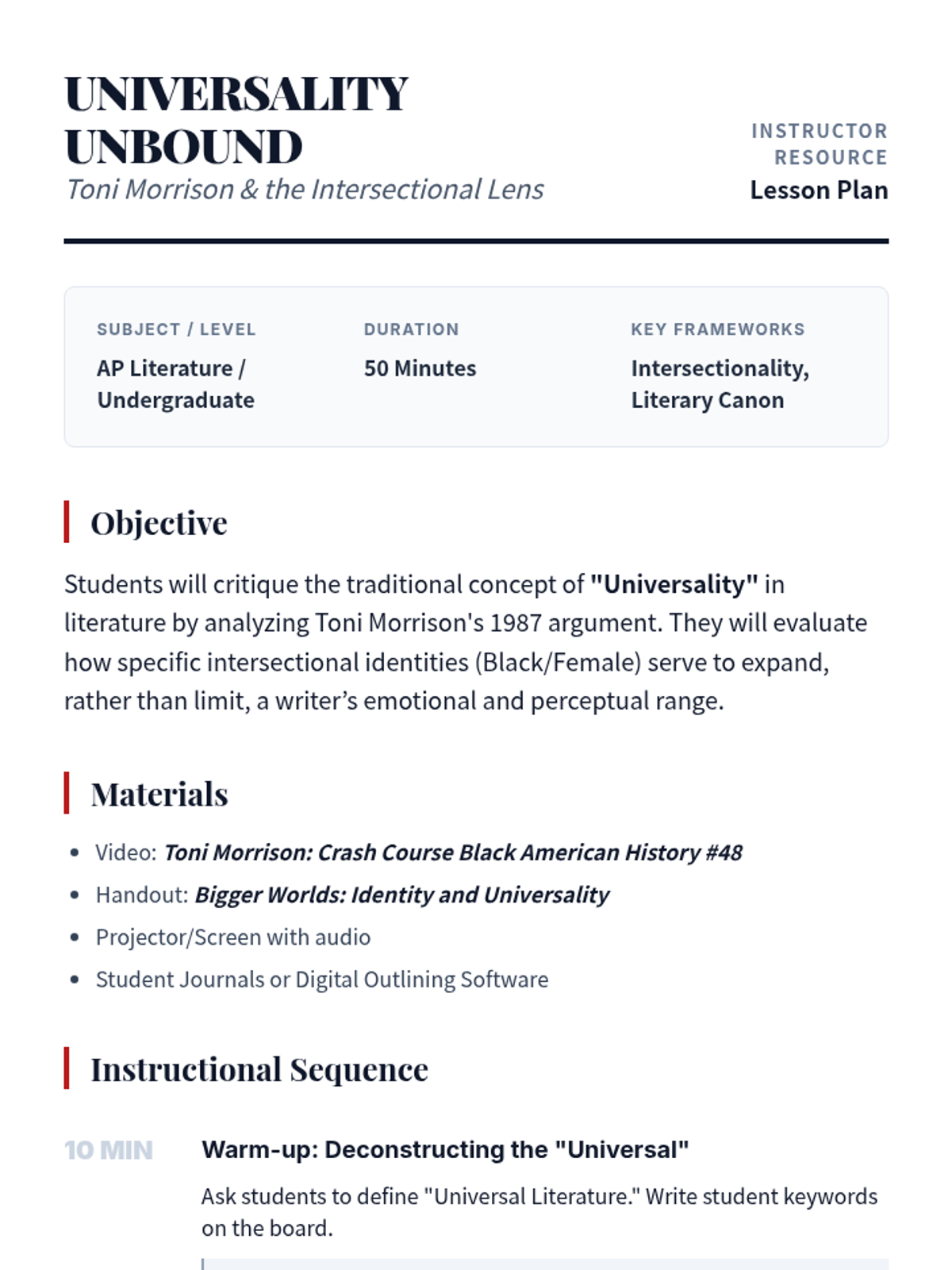
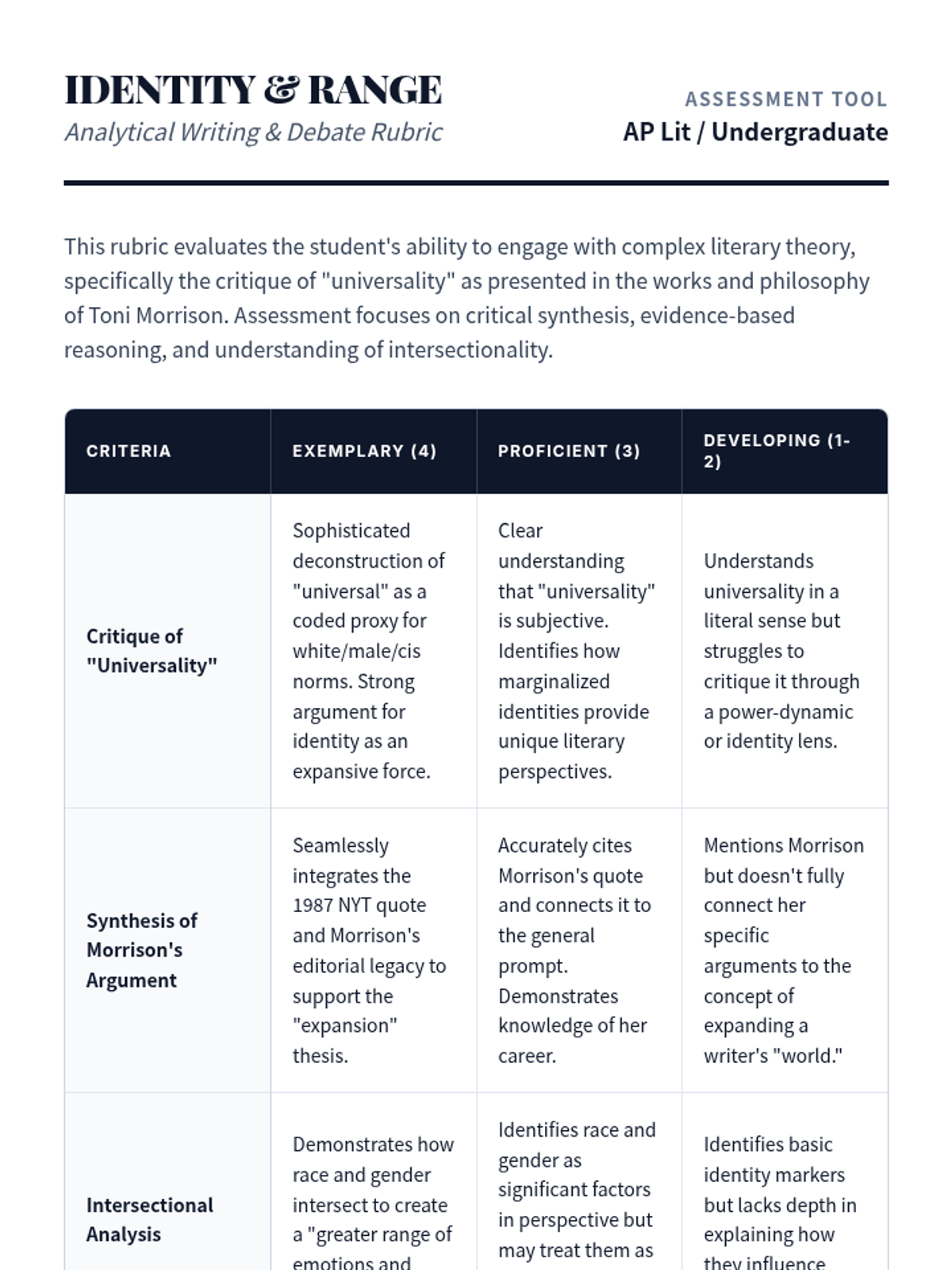
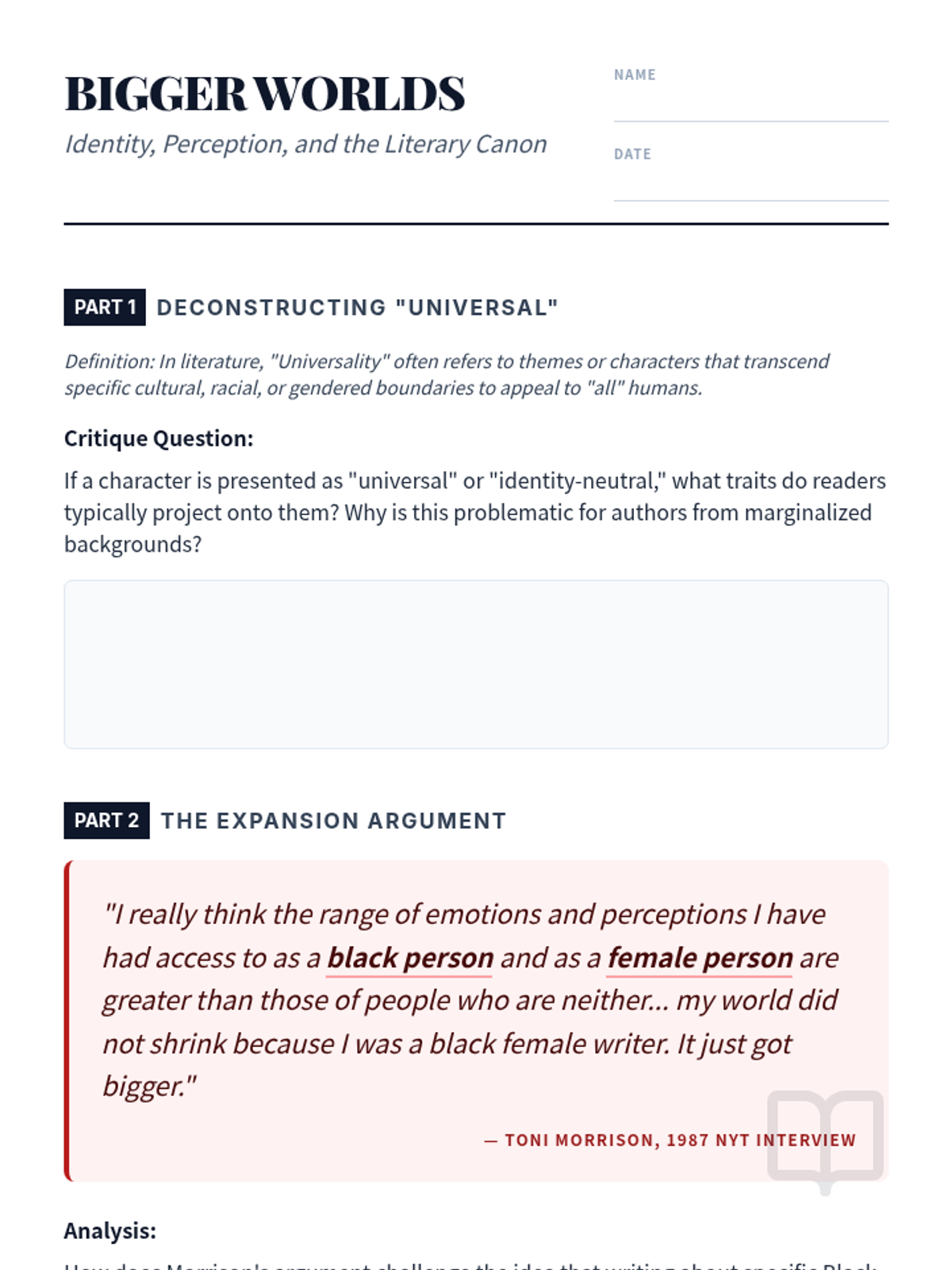
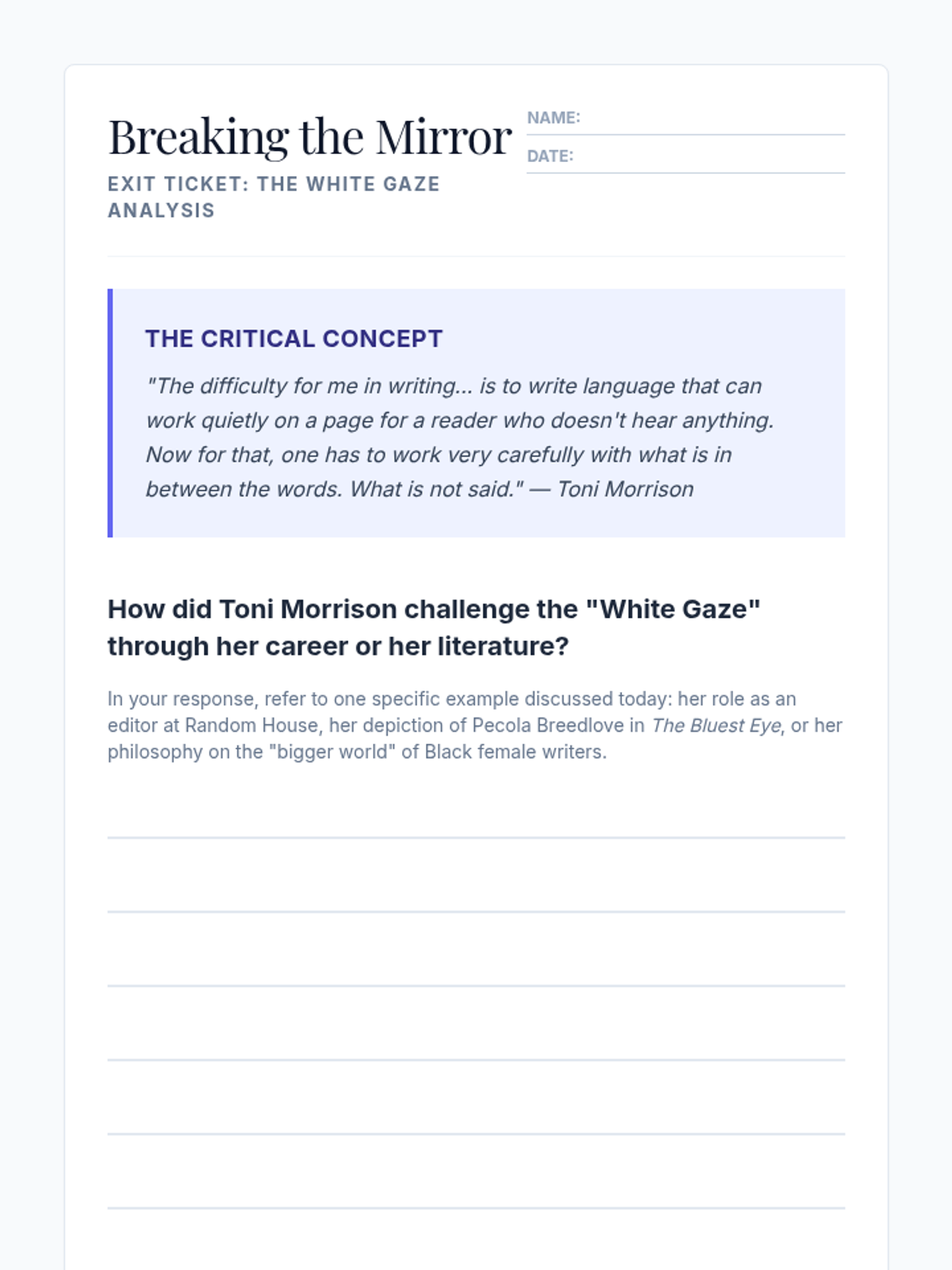
A high-level literary critique lesson exploring Toni Morrison's challenge to the 'universal' canon. Students will analyze how intersectional identity expands rather than limits a writer's scope, culminating in a debate or essay outline.
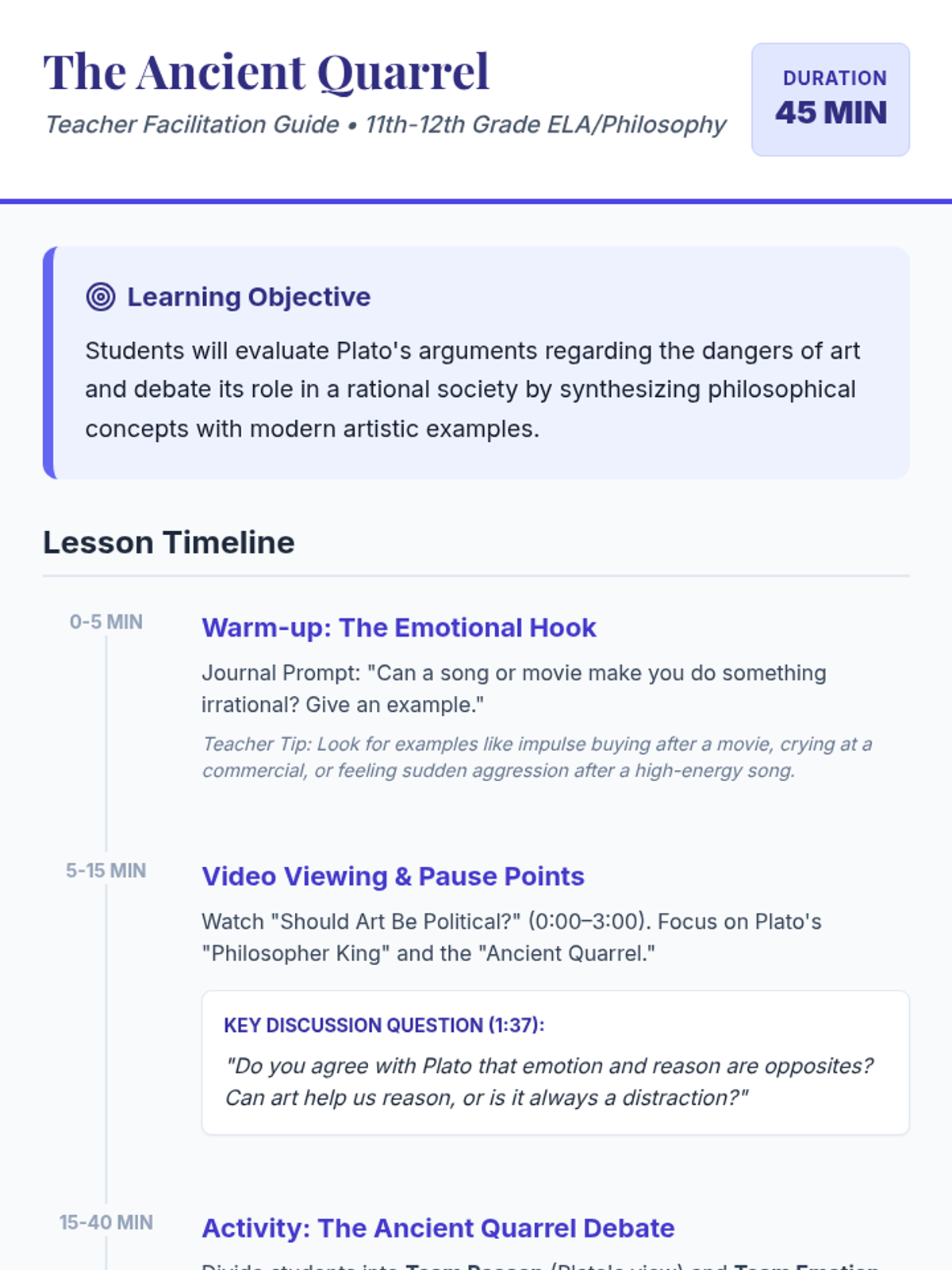
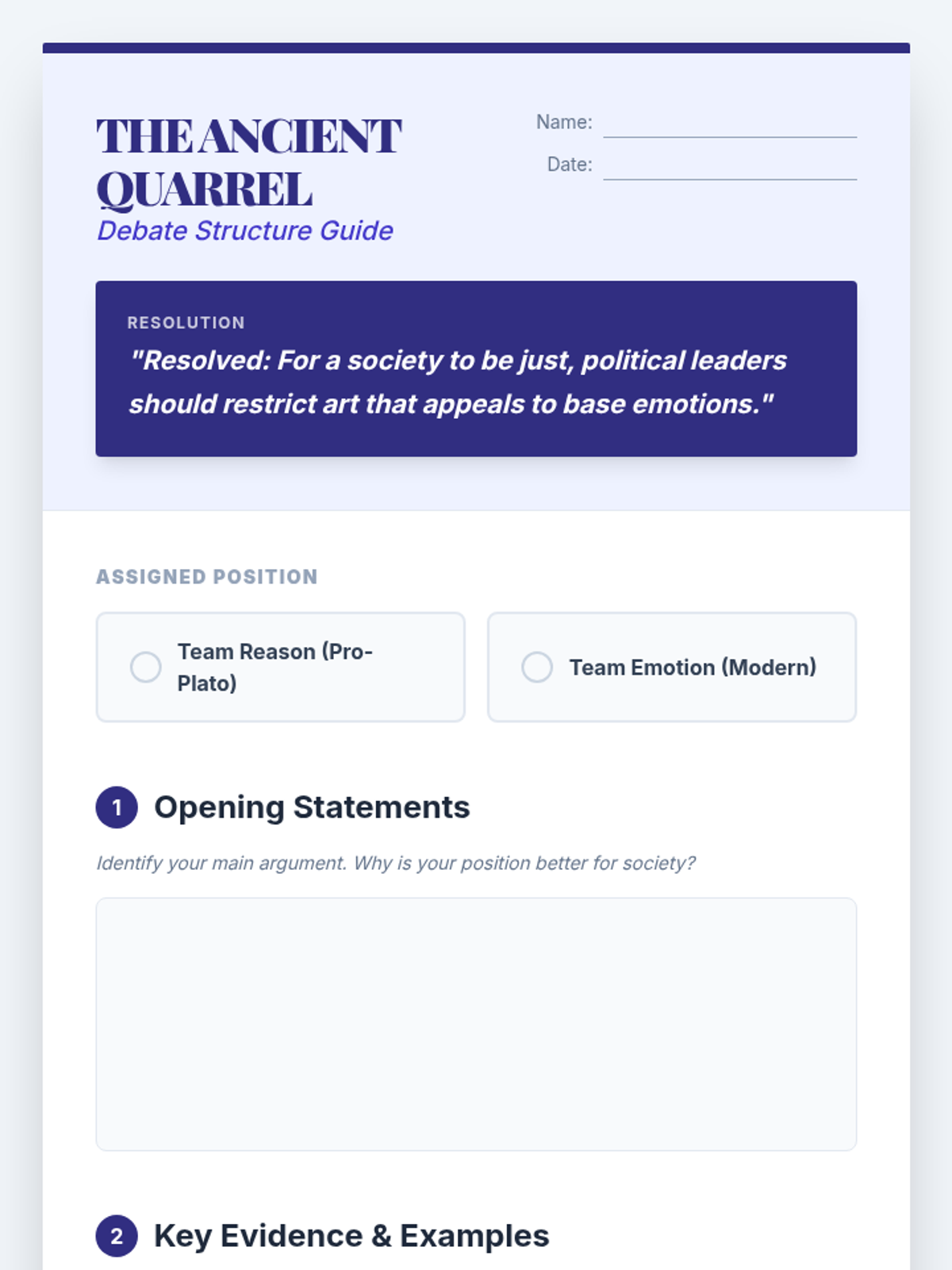
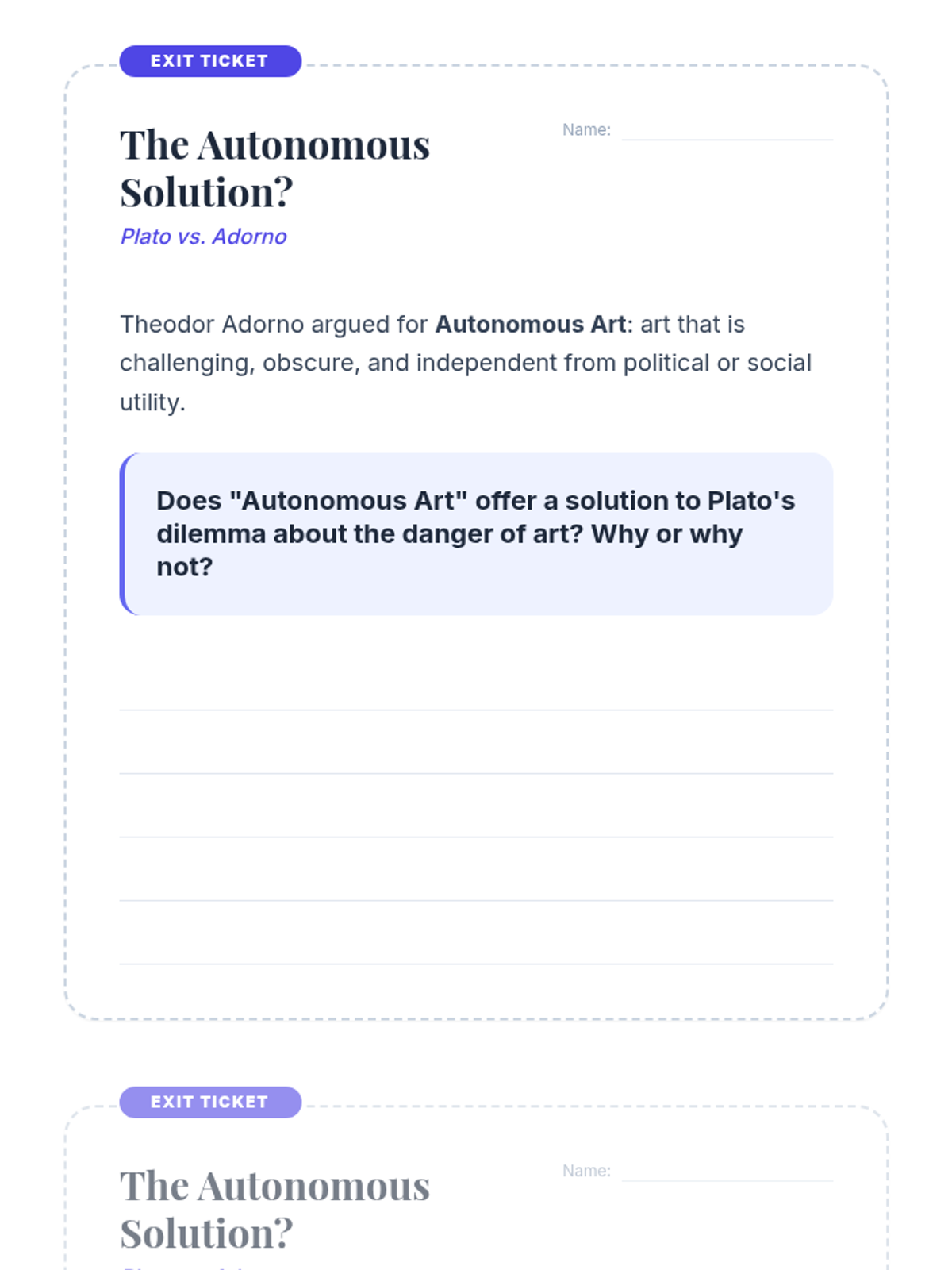
A high school ELA and Philosophy lesson exploring Plato's 'Ancient Quarrel' between reason and art, featuring a debate on censorship and the role of aesthetics in a just society.
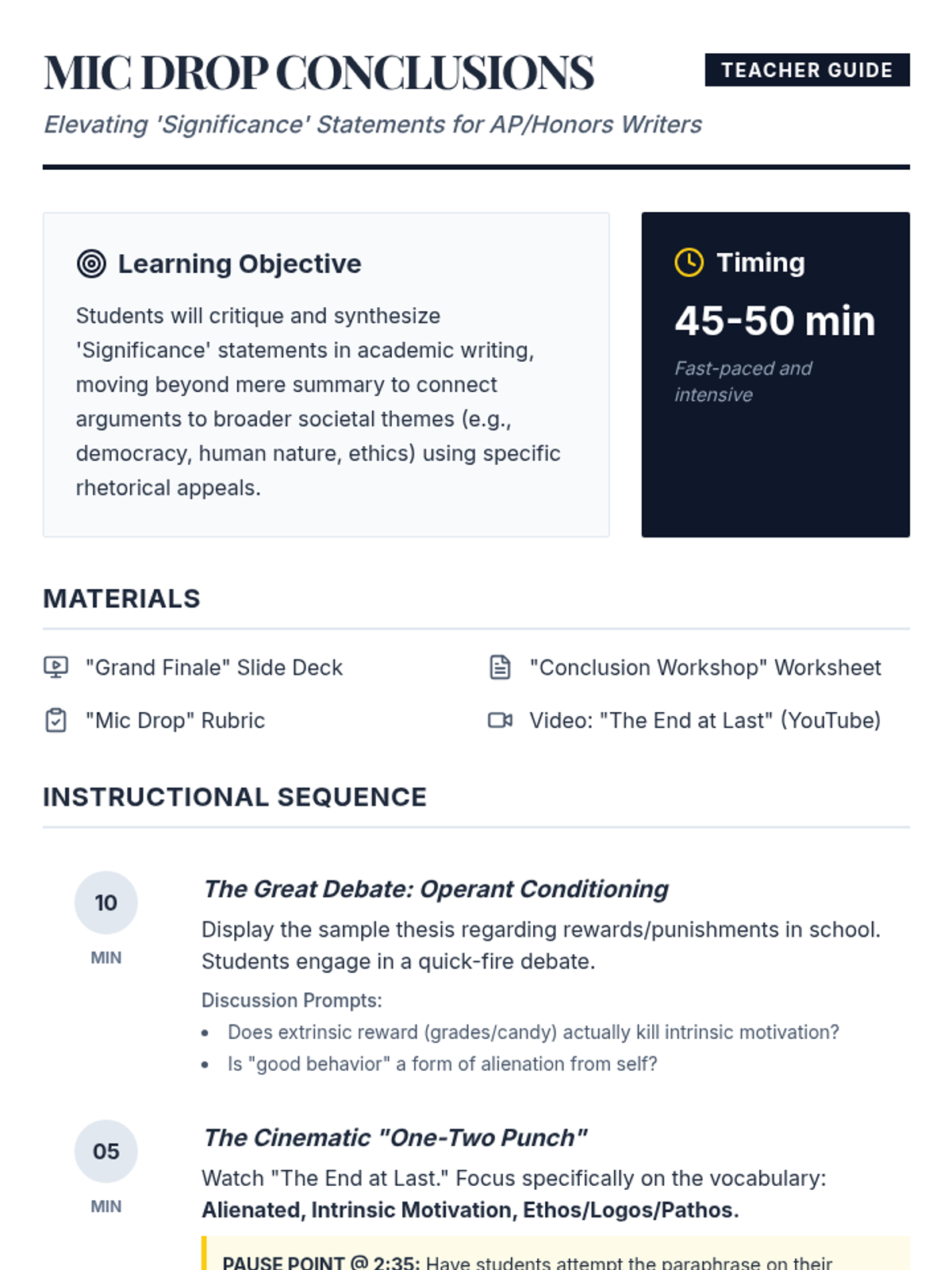
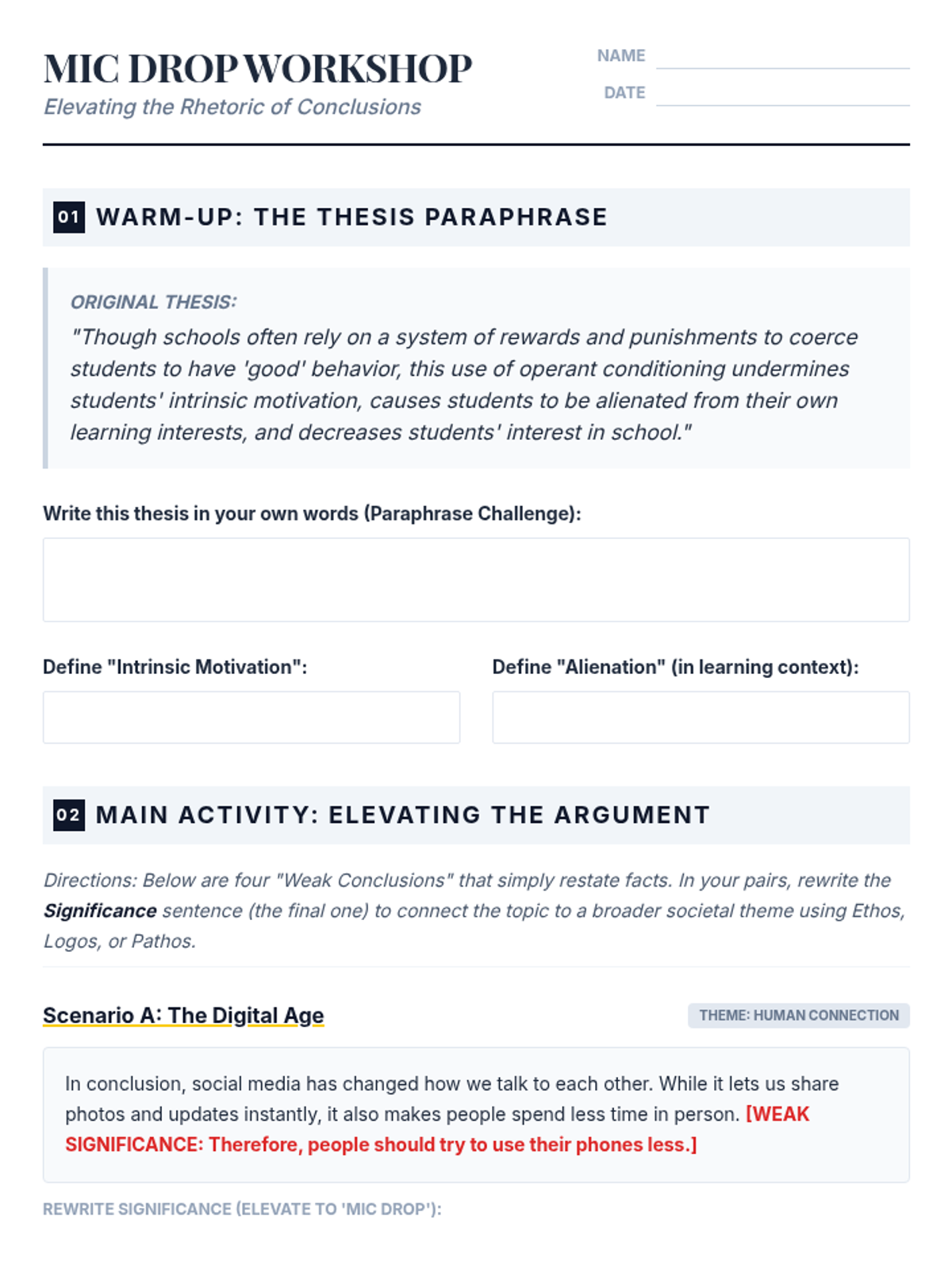
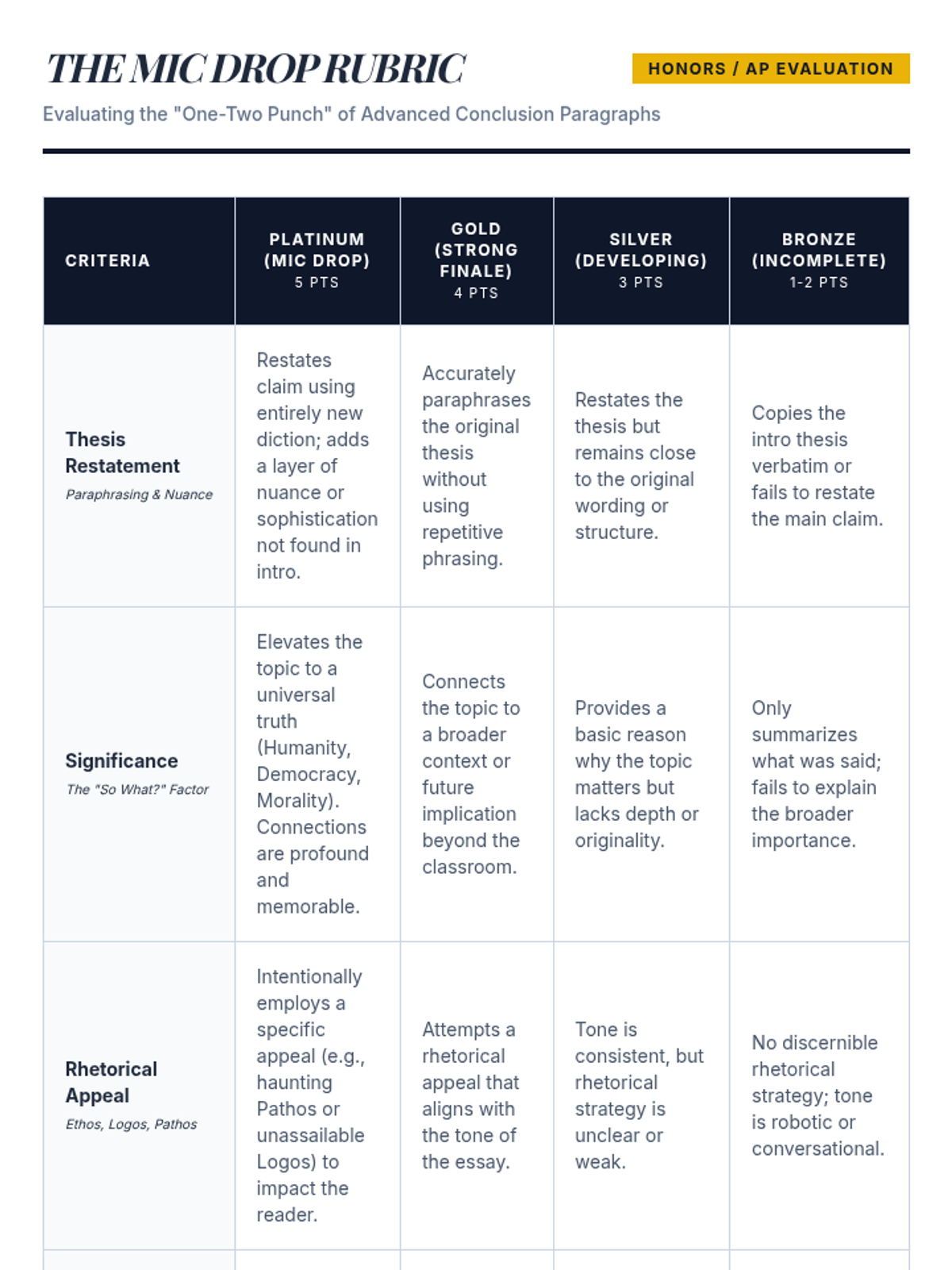
A high-level rhetoric lesson for AP/Honors students focusing on the 'Significance' portion of conclusion paragraphs, using a dramatic cinematic theme to explore the 'mic drop' ending.
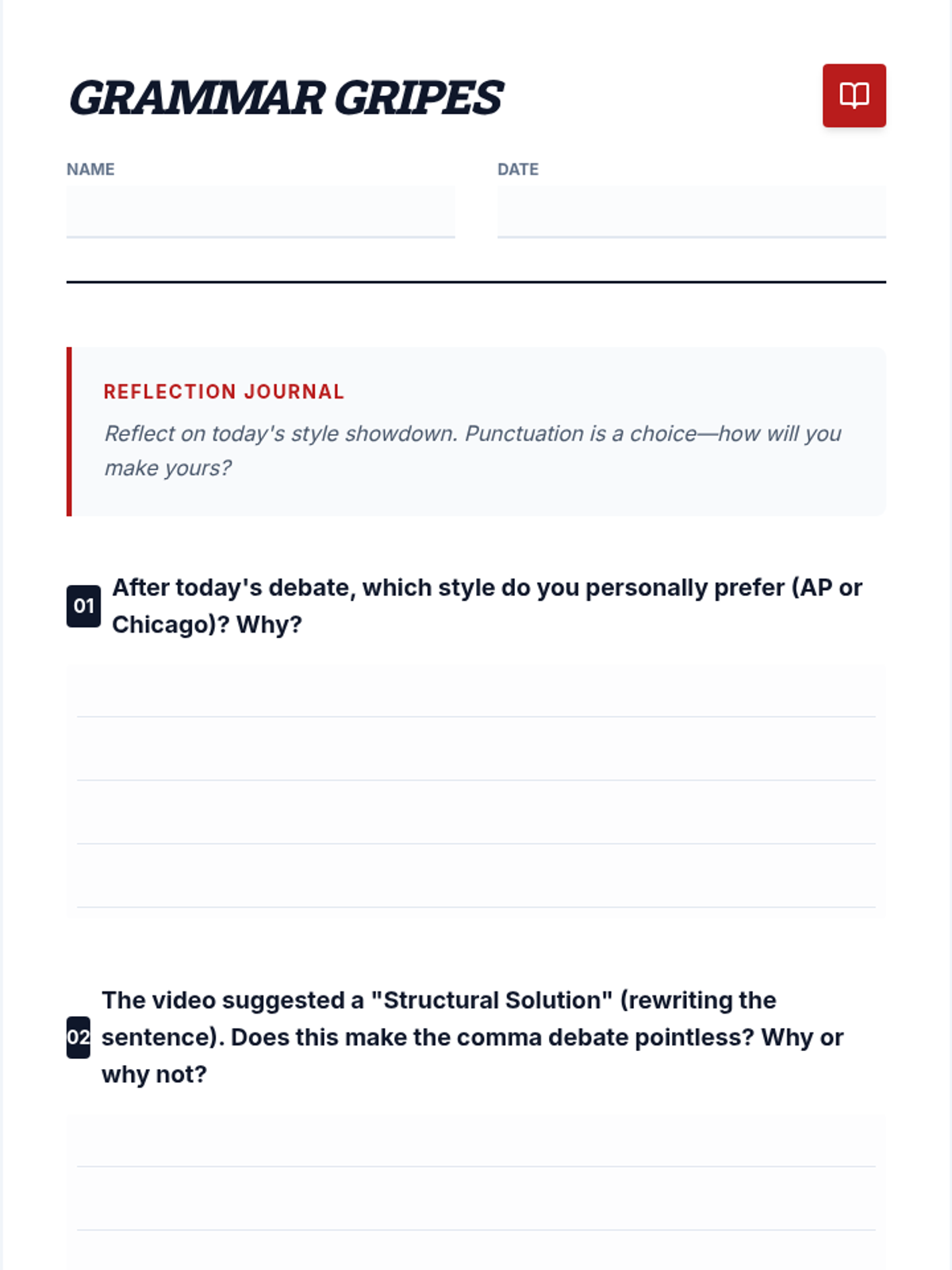
A high-school level grammar lesson exploring the stylistic debate between AP and Chicago style guides regarding the Oxford comma, focusing on clarity, ambiguity, and sentence structure.
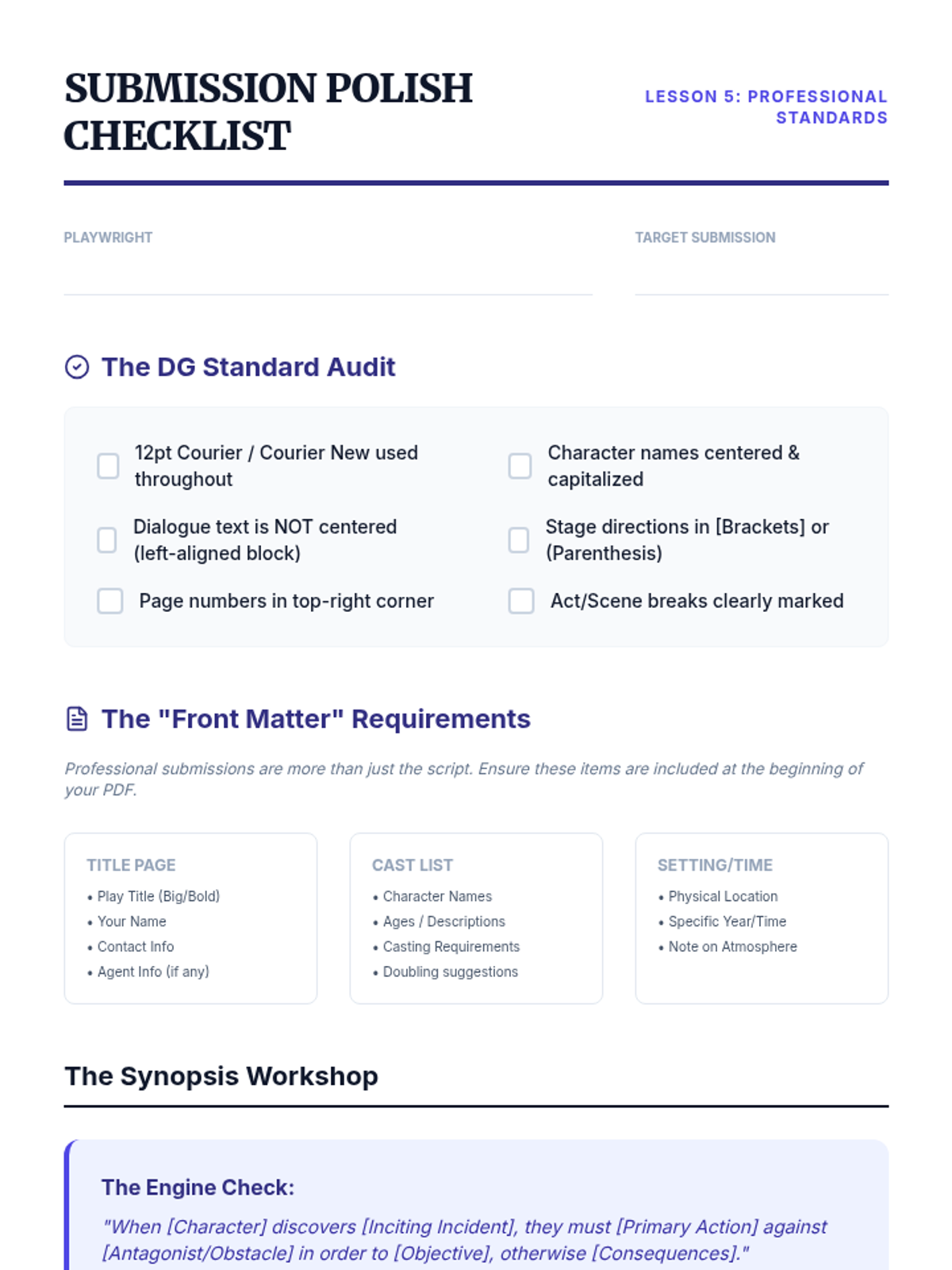
Students finalize their scripts for industry standards, focusing on formatting, synopses, and the professional submission process.
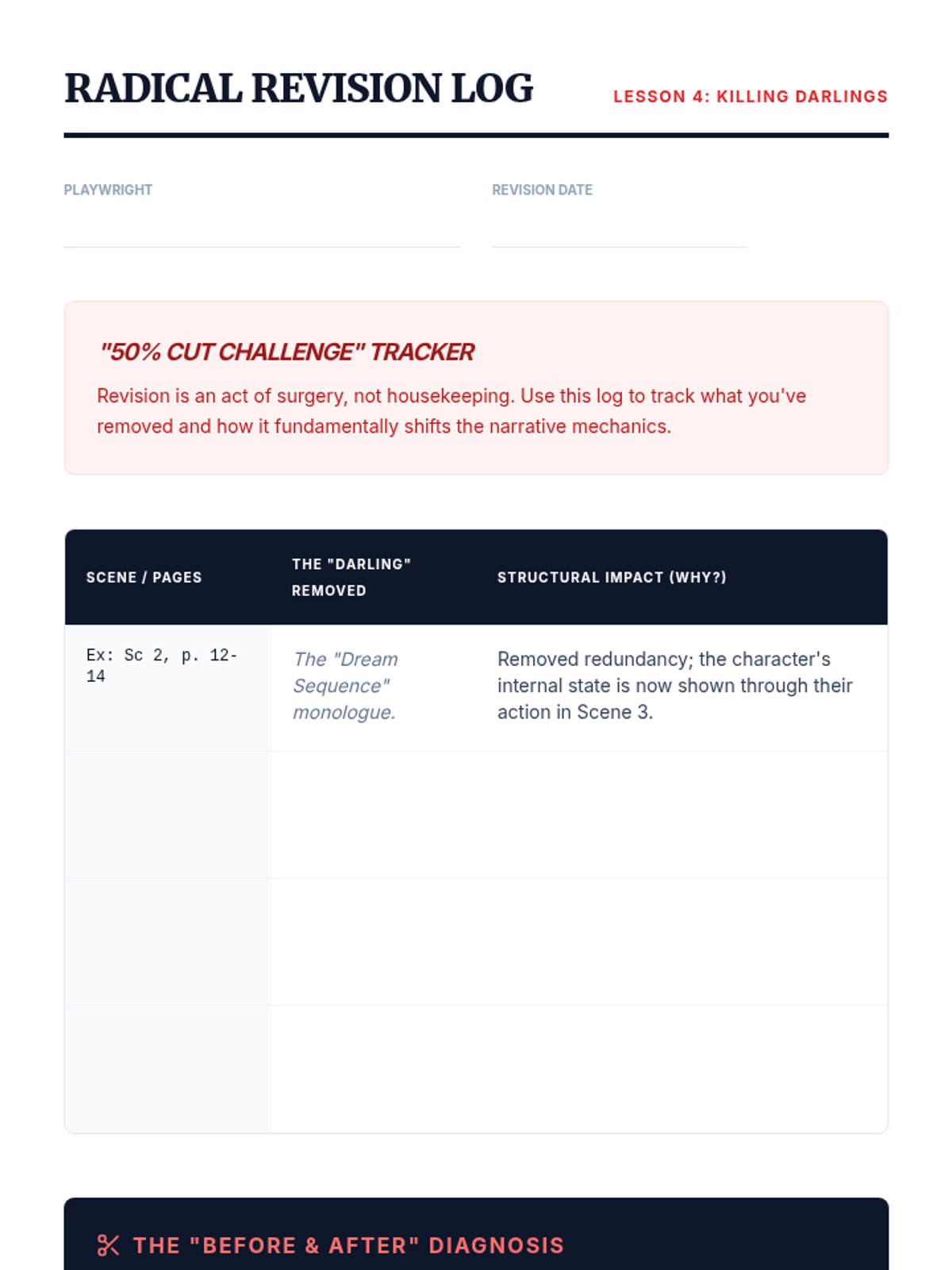
A workshop on radical revision, focusing on the discipline of cutting beloved but unnecessary text to strengthen the core conflict.
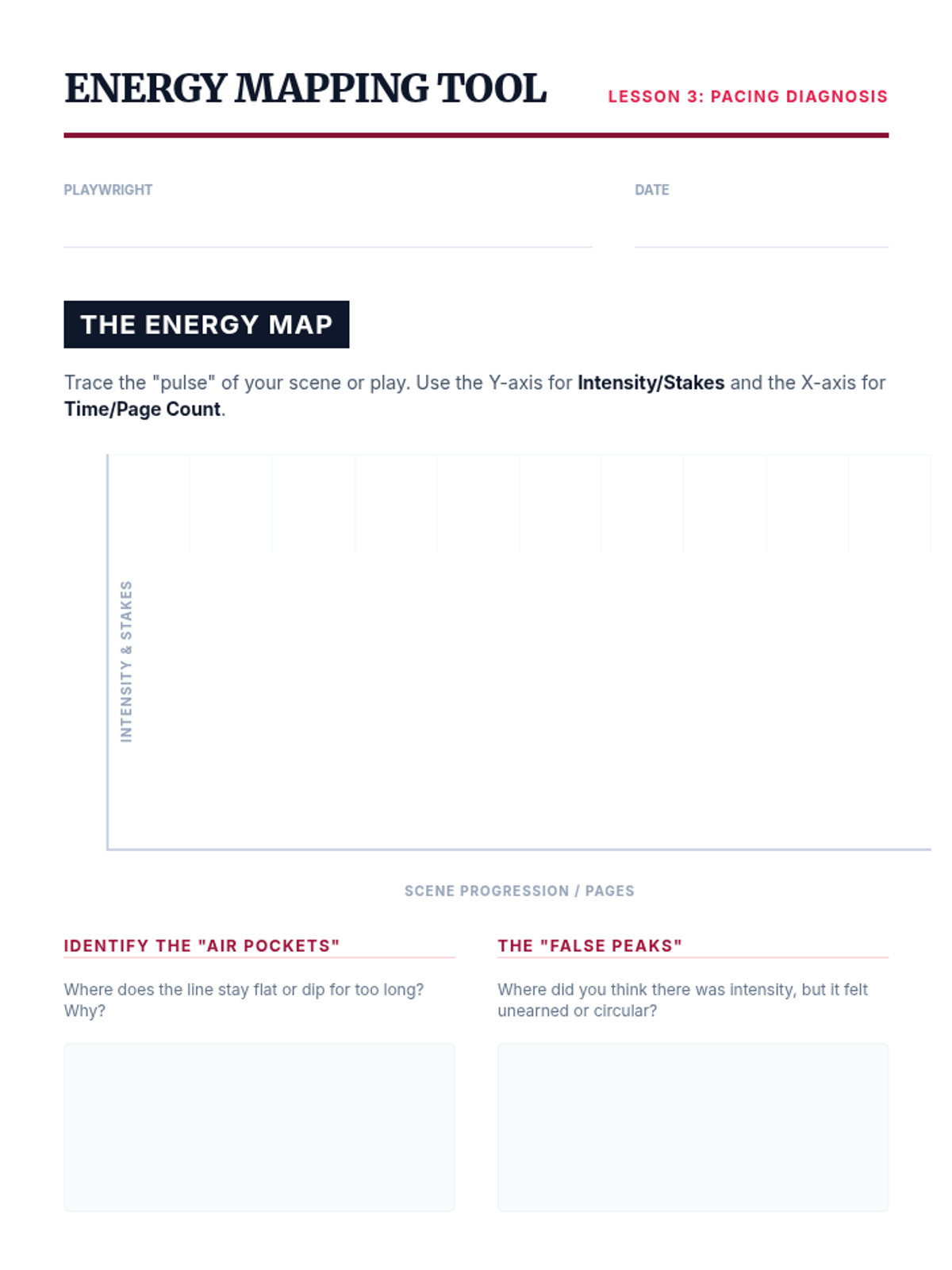
Students map narrative energy and diagnose exposition 'info-dumps' to ensure their scripts maintain dramatic tension.
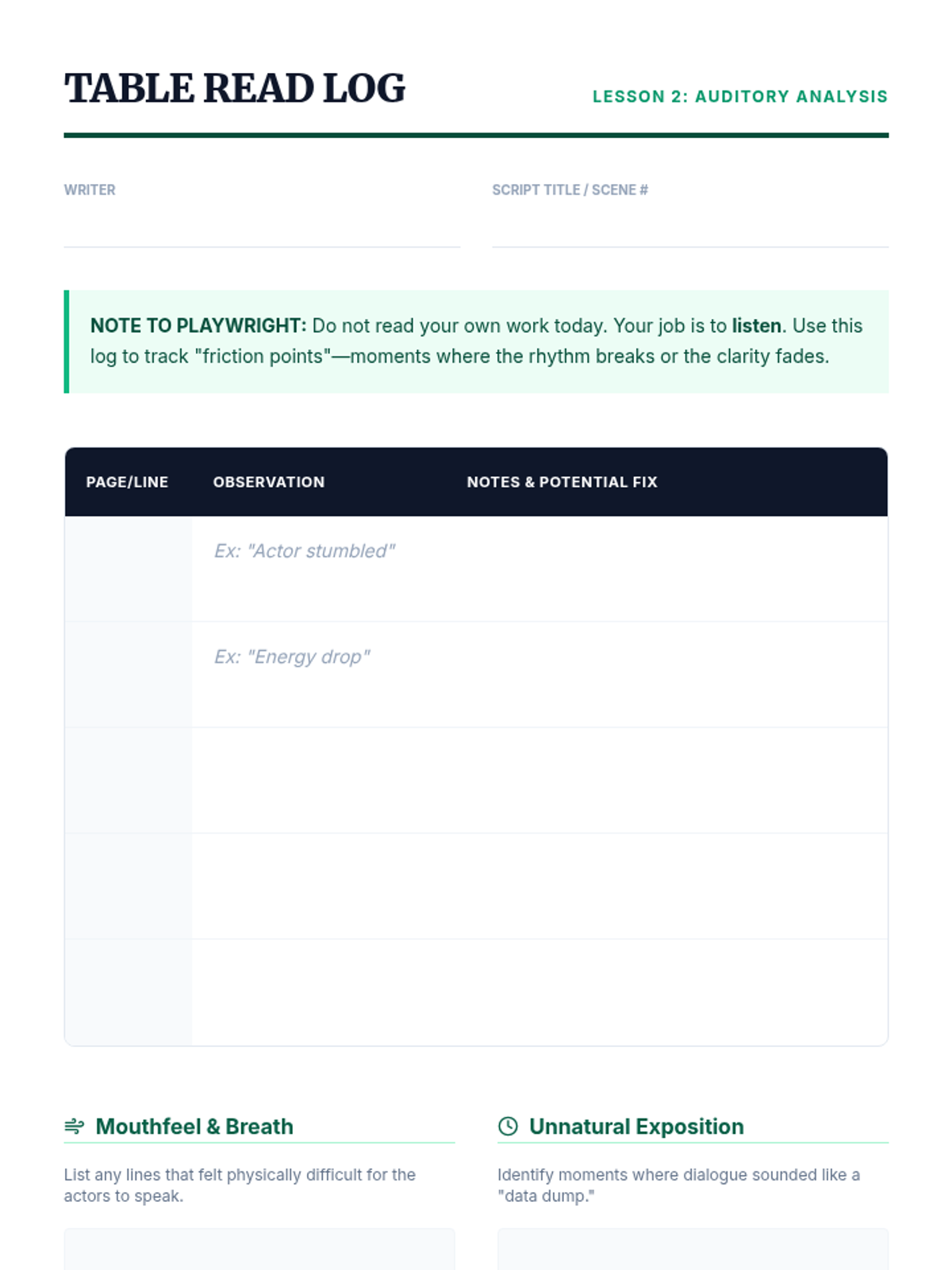
Through cold readings and auditory analysis, students identify pacing issues and clunky phrasing that are often invisible on the page.
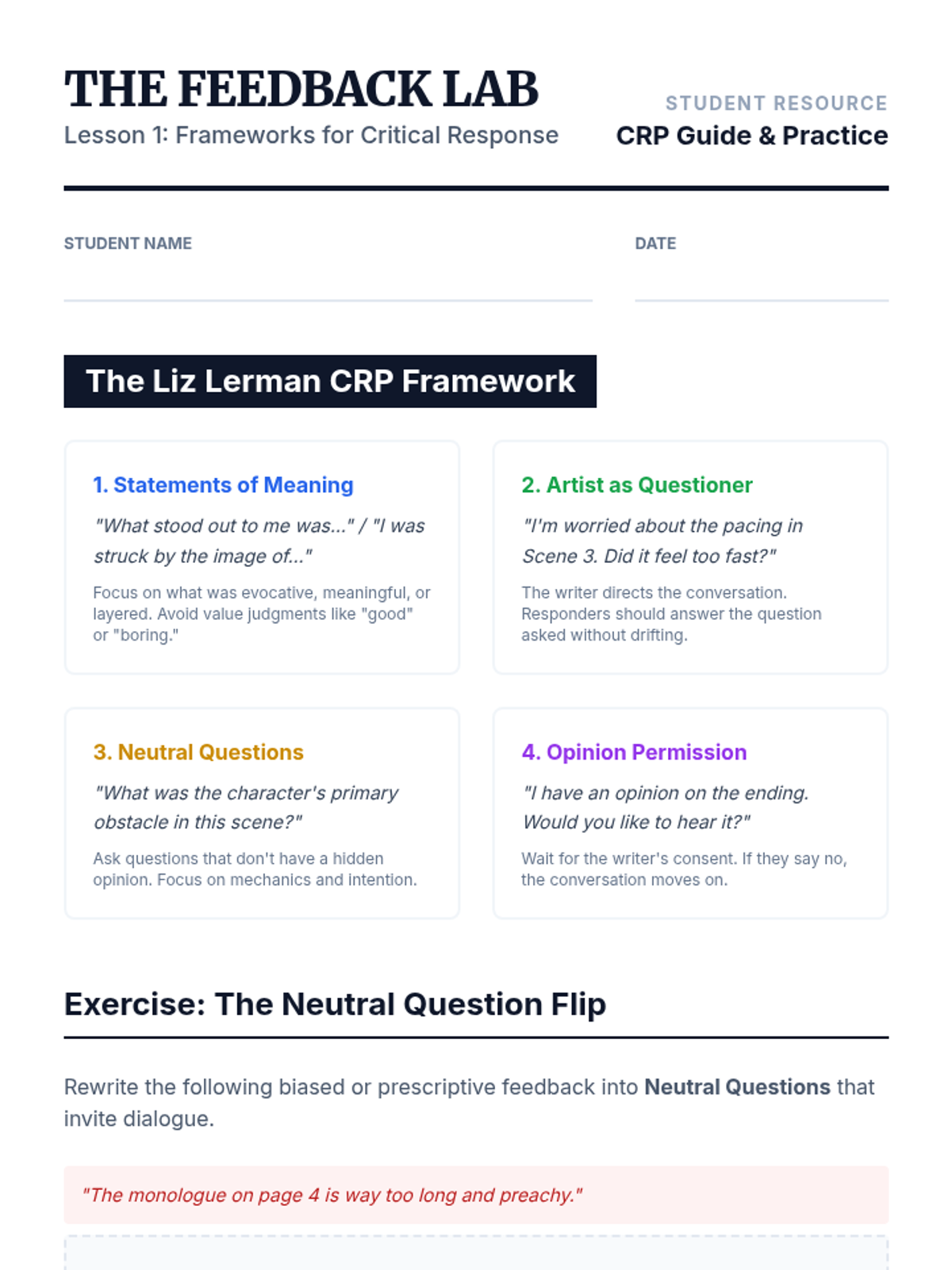
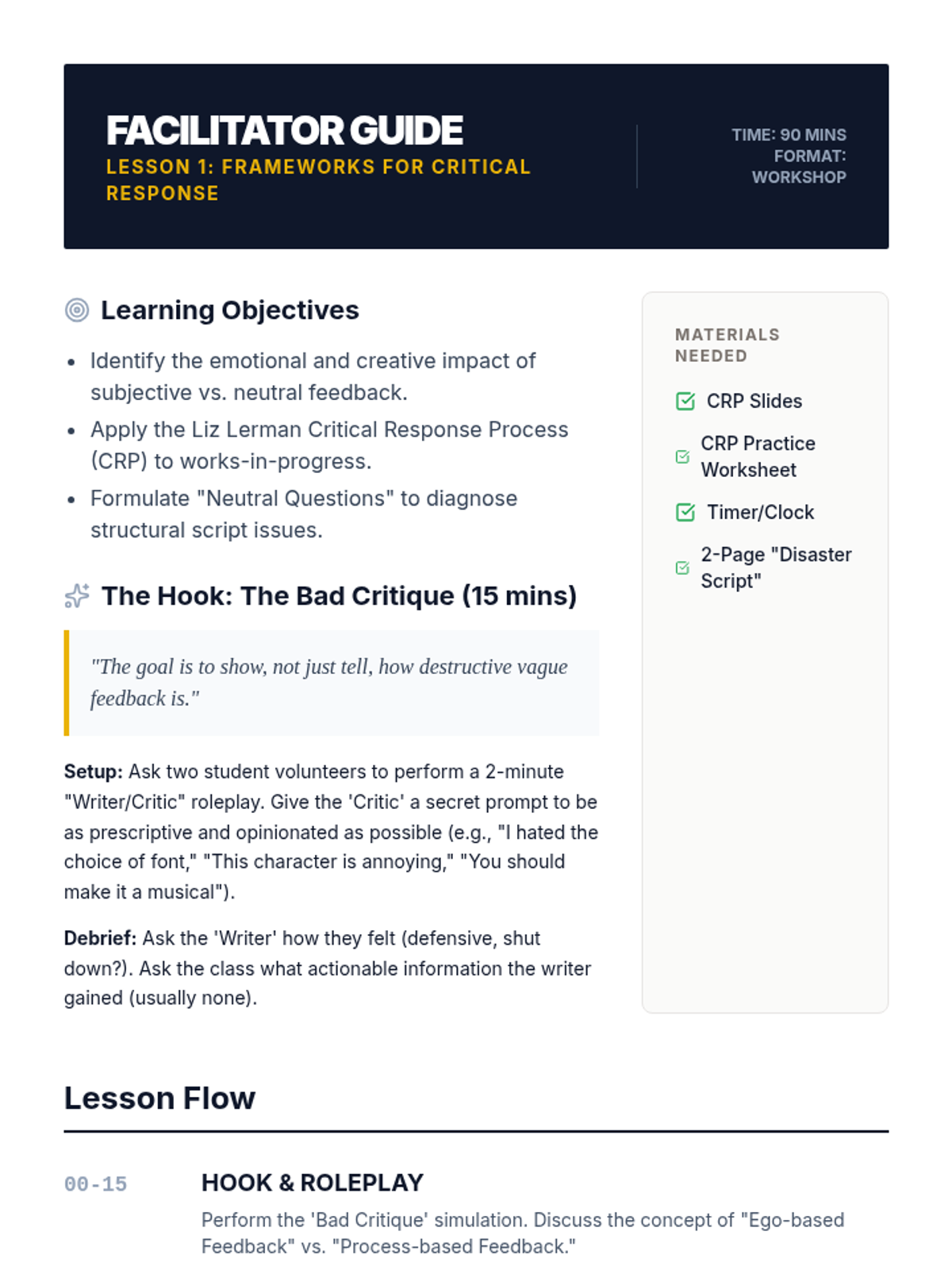
Students master the Liz Lerman Critical Response Process to provide and receive structured, ego-free feedback on plays-in-progress.
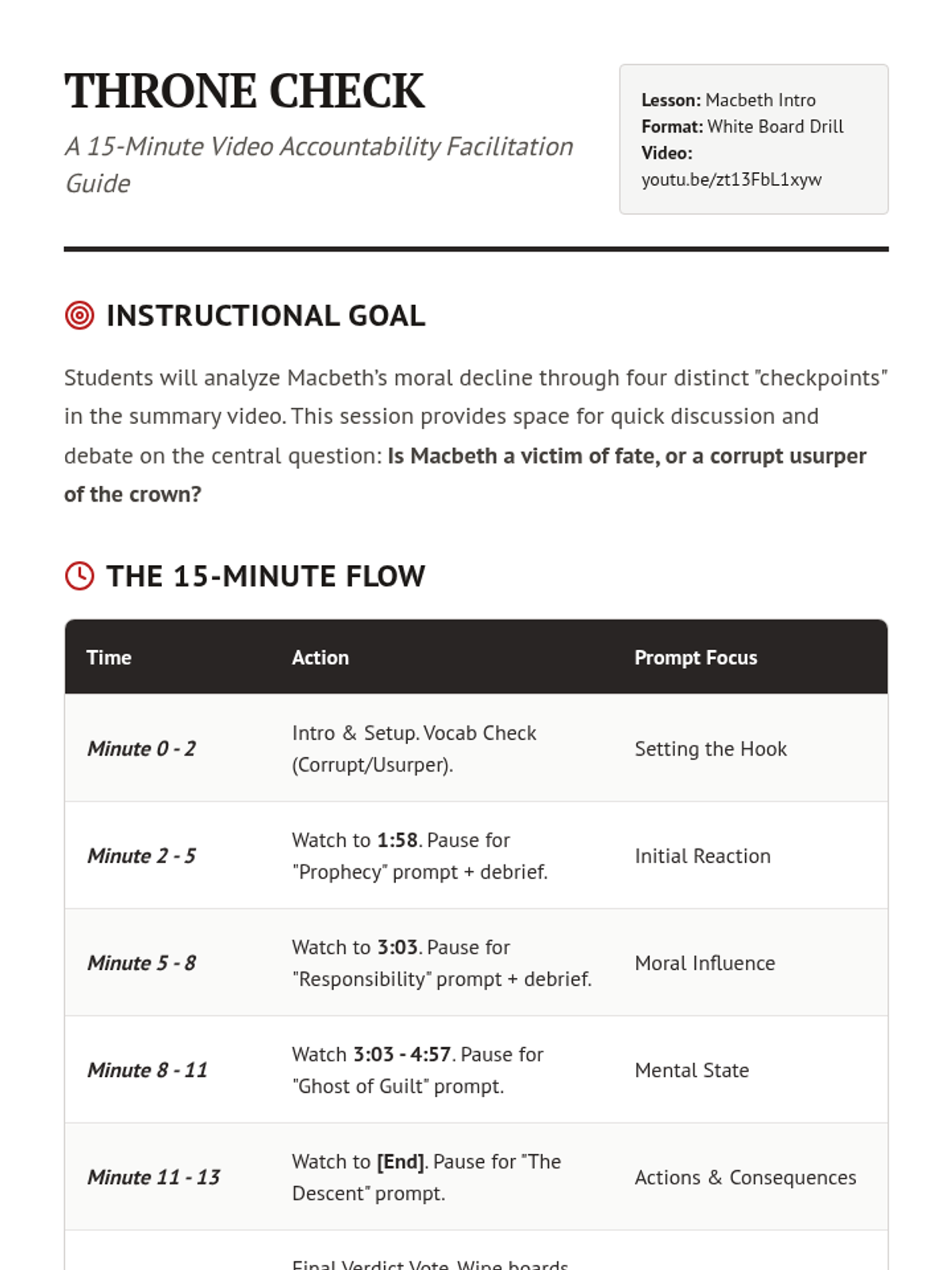
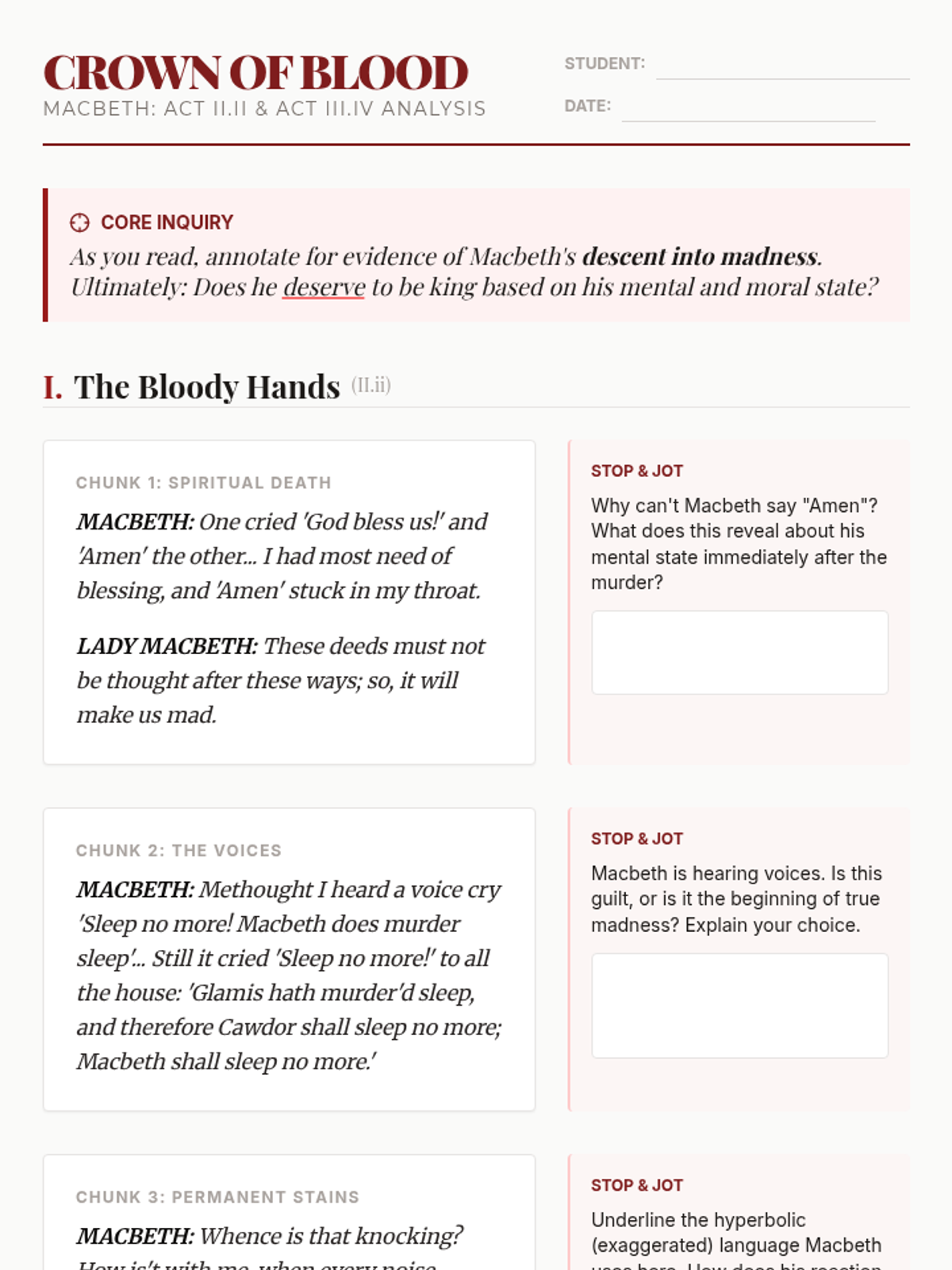
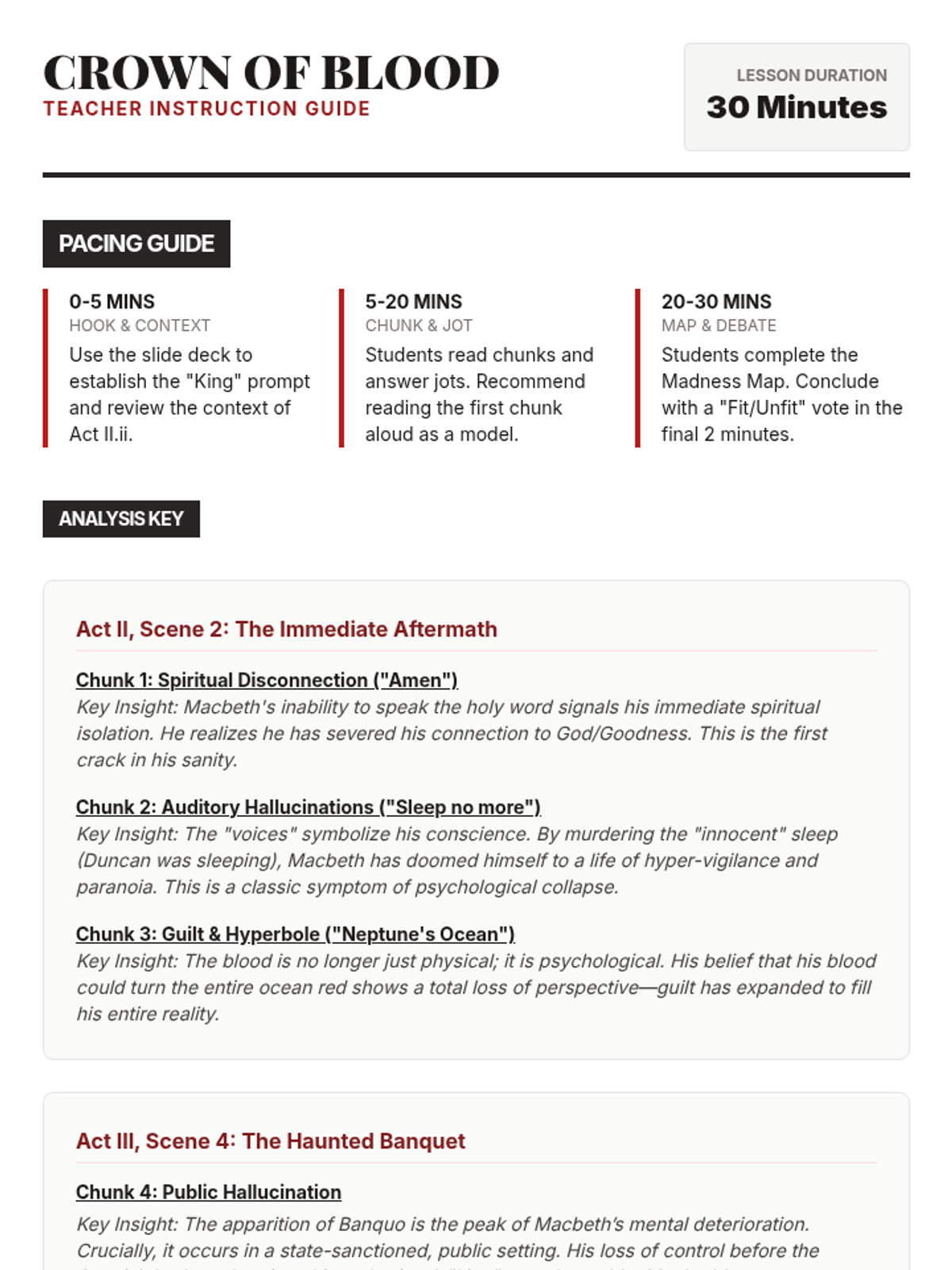
A focused 30-minute exploration of Macbeth's moral decay and psychological collapse across Act II, Scene 2 and Act III, Scene 4. Students analyze the immediate aftermath of regicide and the public appearance of Banquo's ghost to determine if Macbeth is fit for the crown.
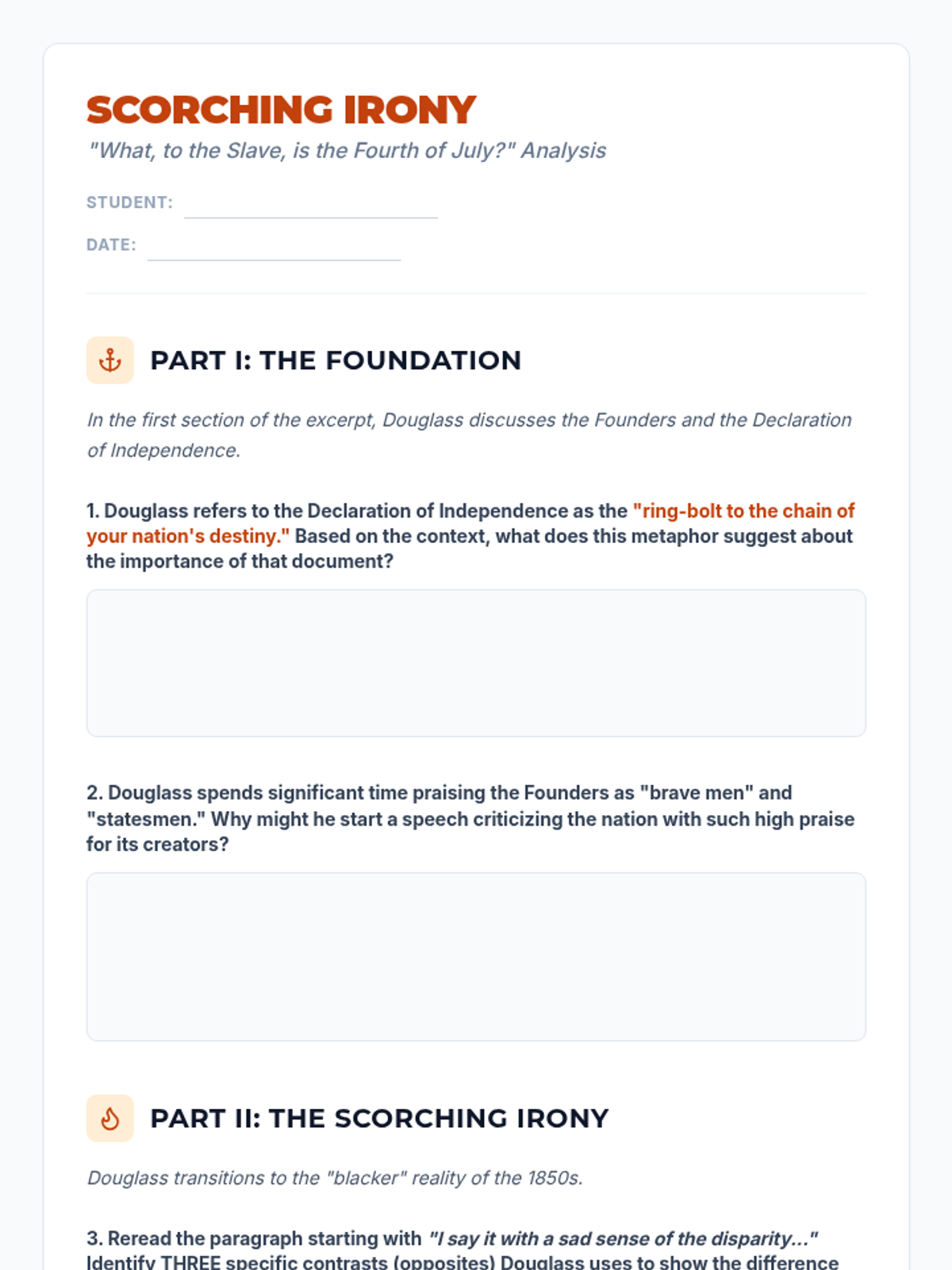
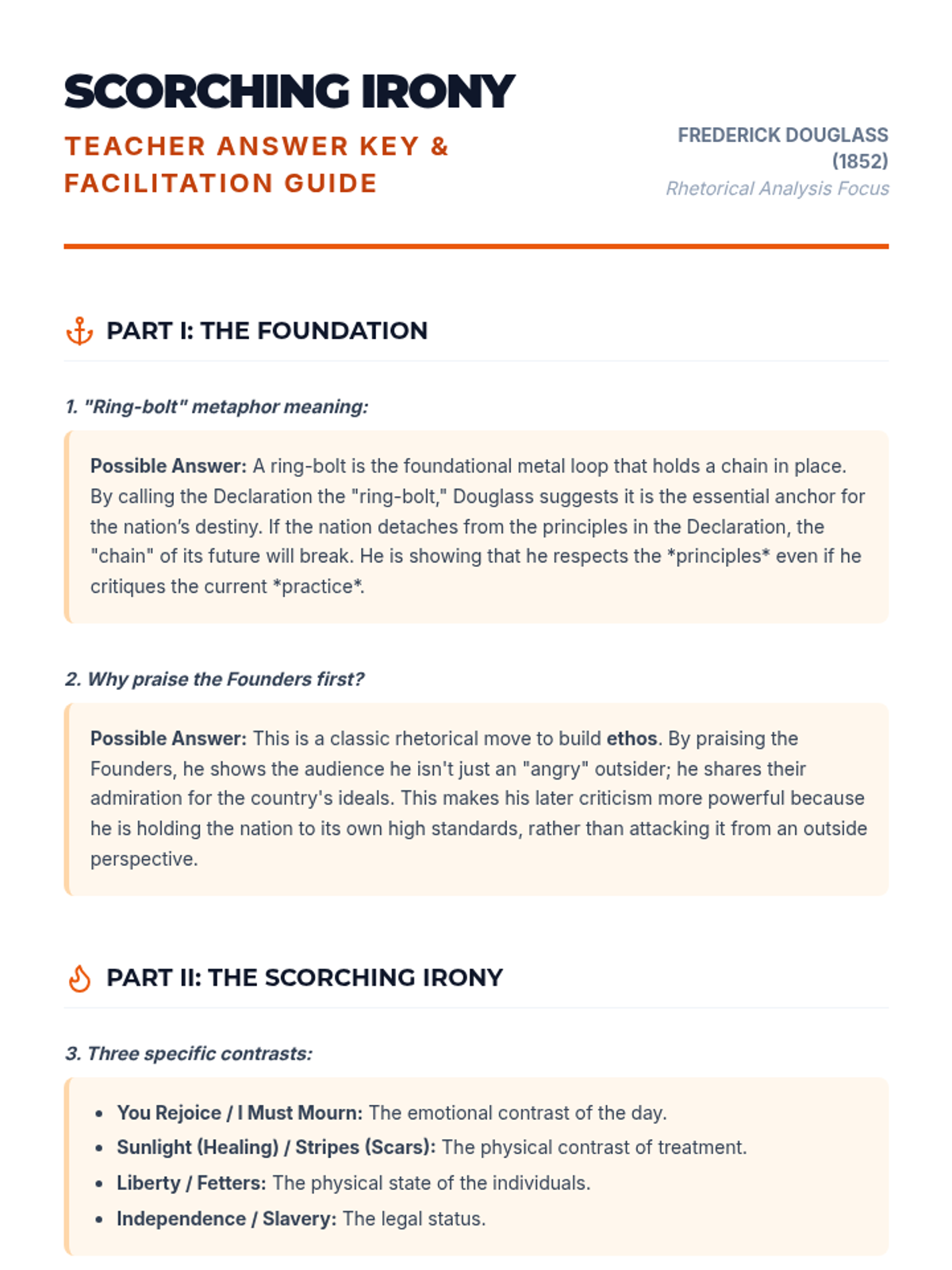
A rhetorical analysis of Frederick Douglass's 1852 speech, focusing on the use of irony and the contrast between the American promise of liberty and the reality of slavery.
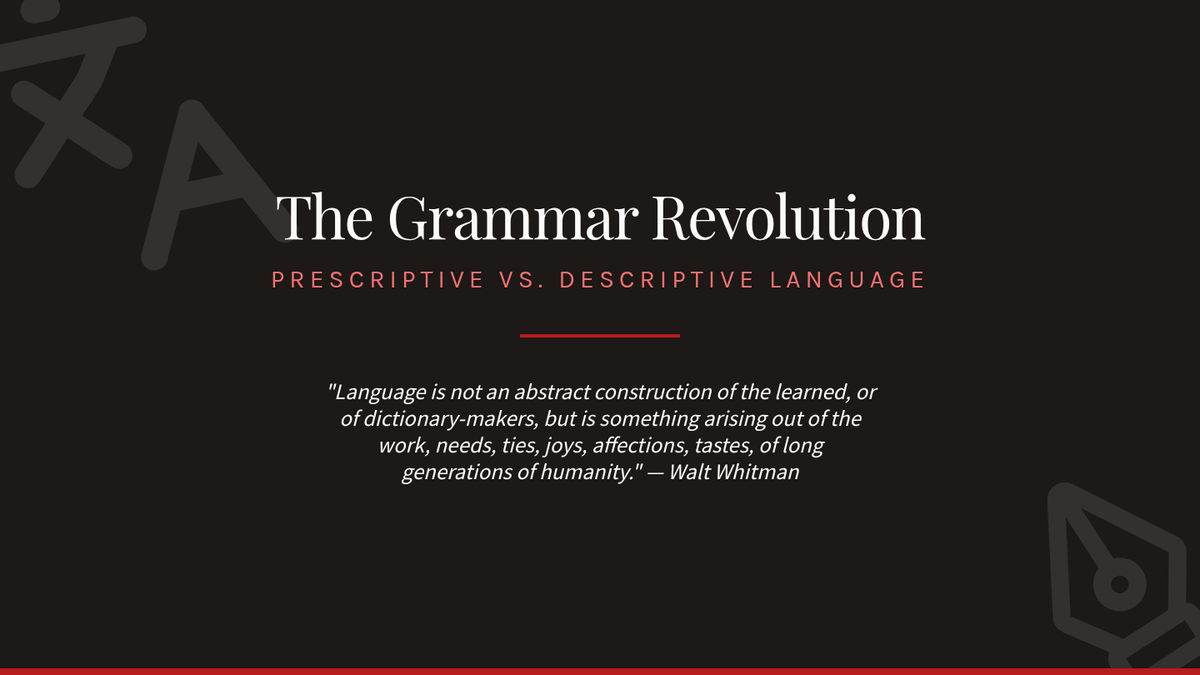
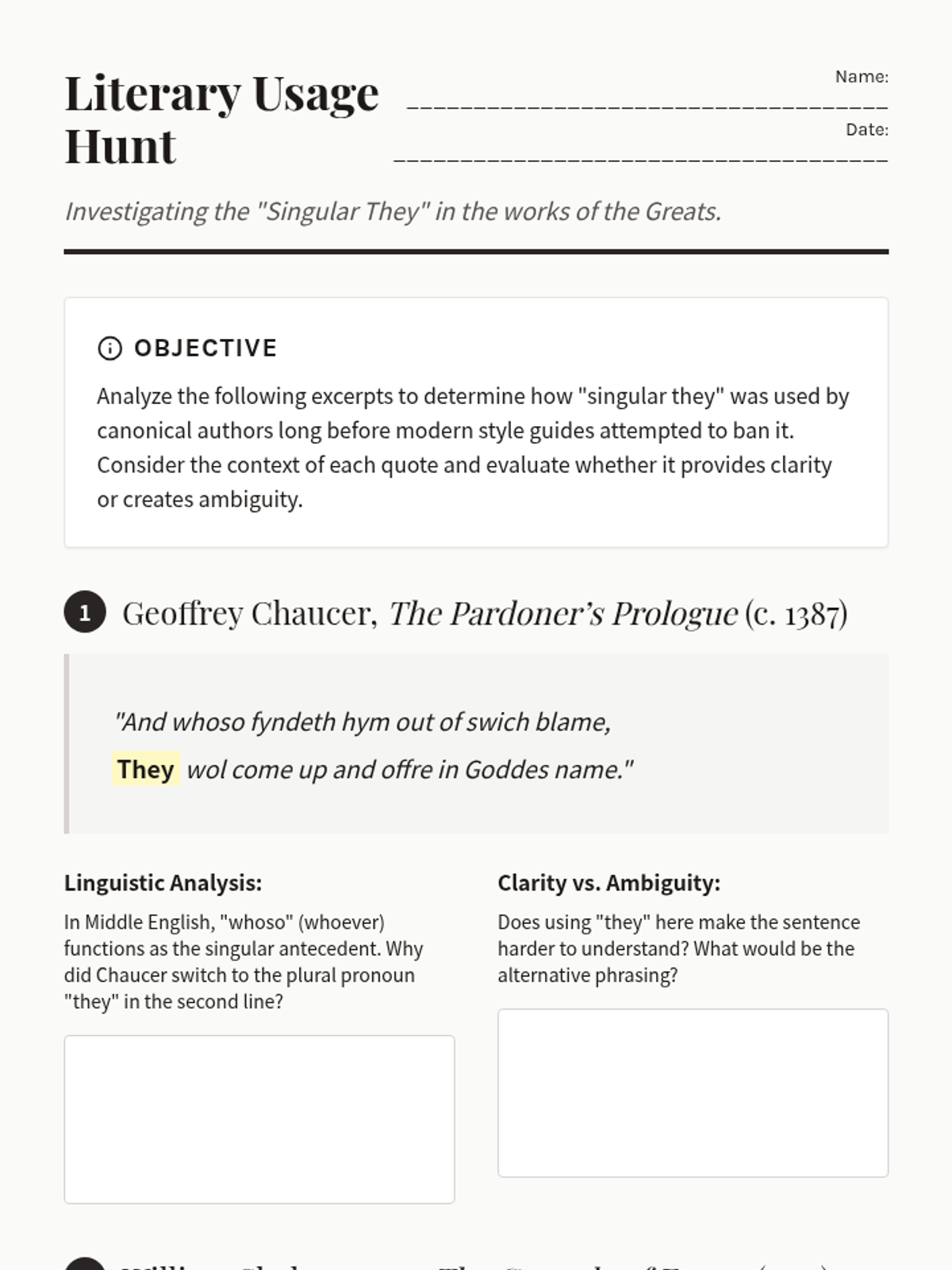
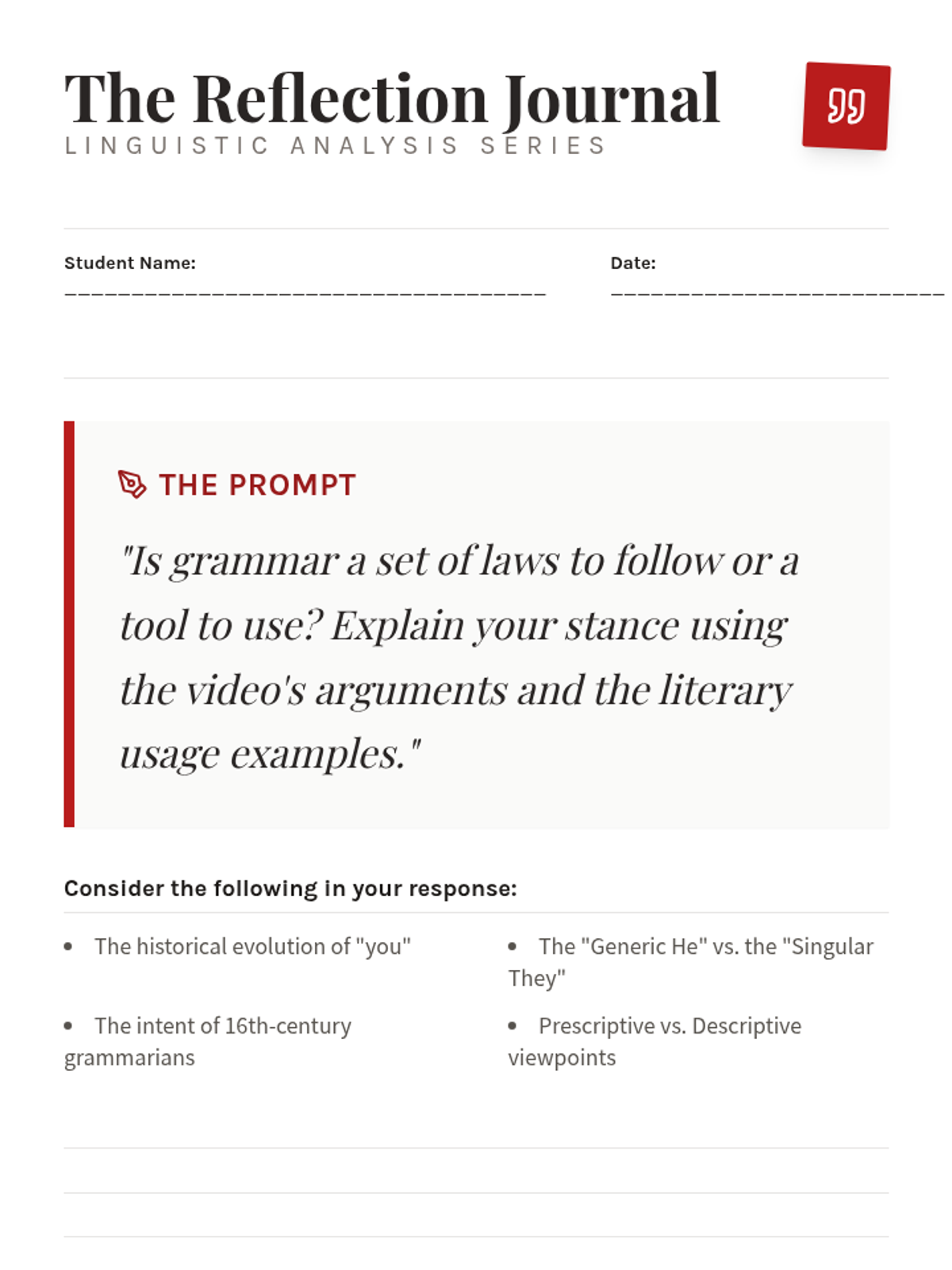
A High School Literature/AP English lesson exploring the conflict between prescriptive and descriptive grammar through the history of 'singular they' and the 'generic he'. Students analyze literary excerpts from Chaucer, Shakespeare, and Austen to evaluate how language evolves despite artificial rules.
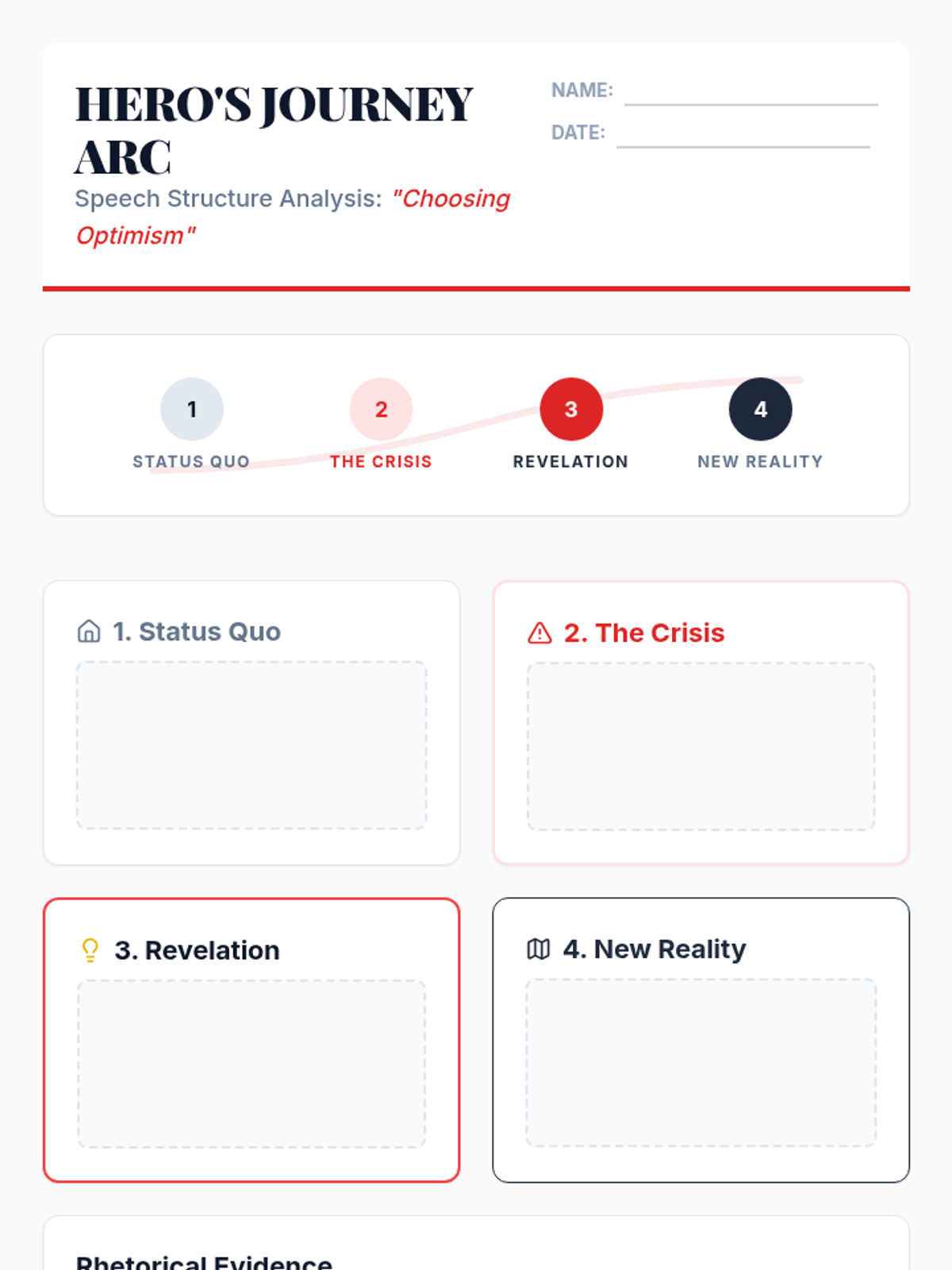
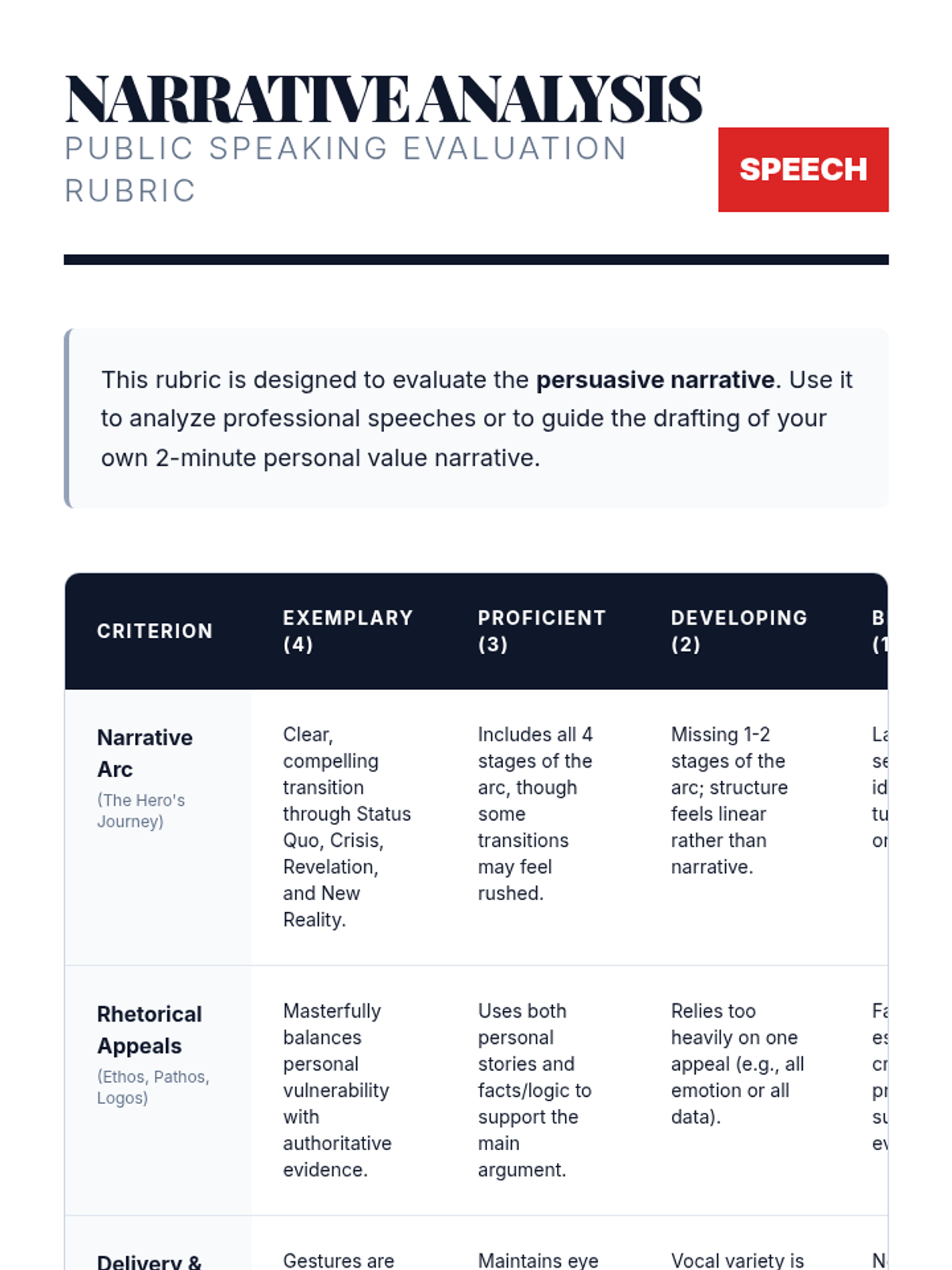
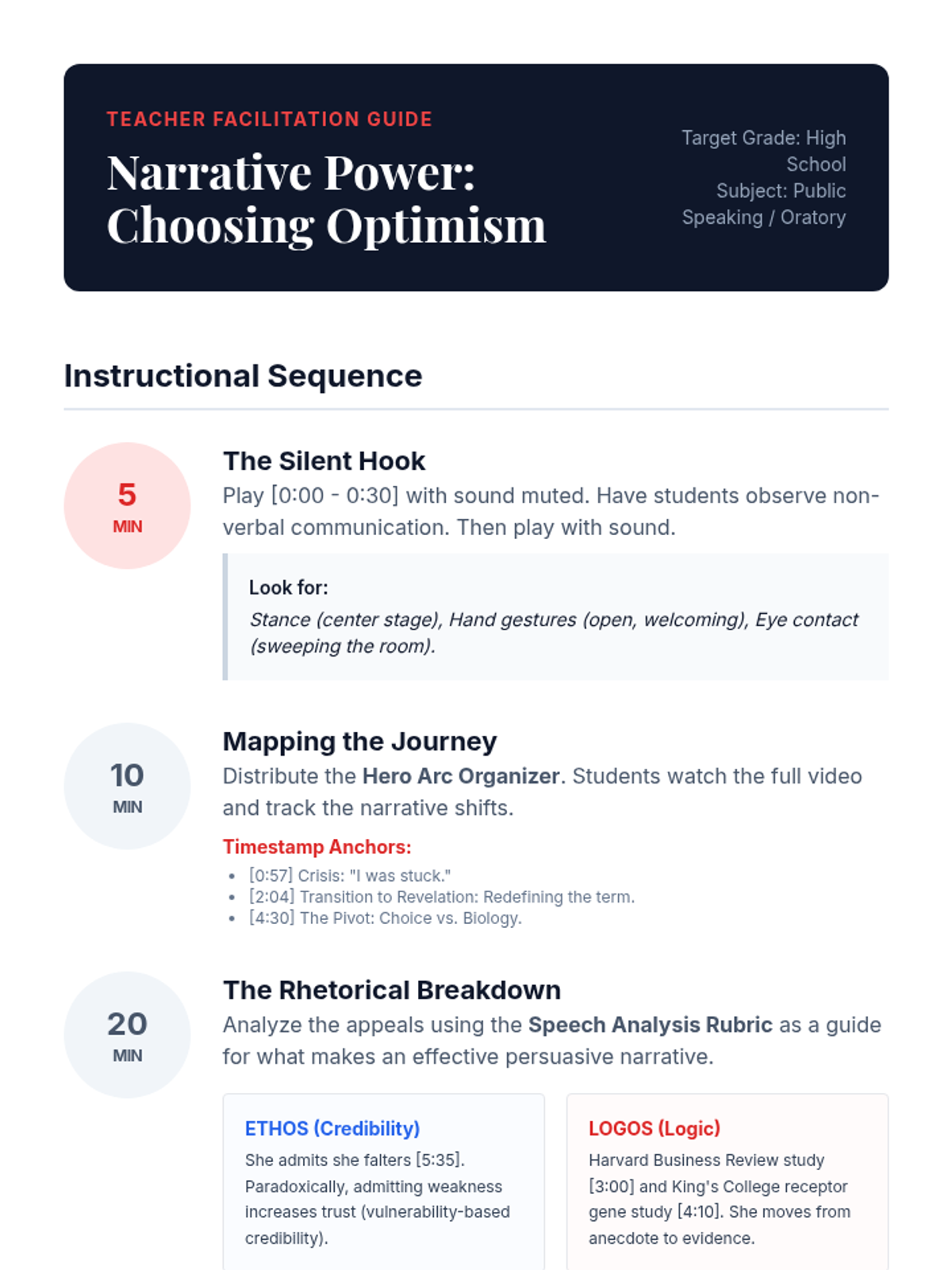
A high school public speaking lesson focused on analyzing the narrative structure and persuasive techniques of Caroline Allen's TEDx talk, 'Choosing Optimism.' Students explore the Hero's Journey arc and the intersection of personal vulnerability and authoritative evidence.
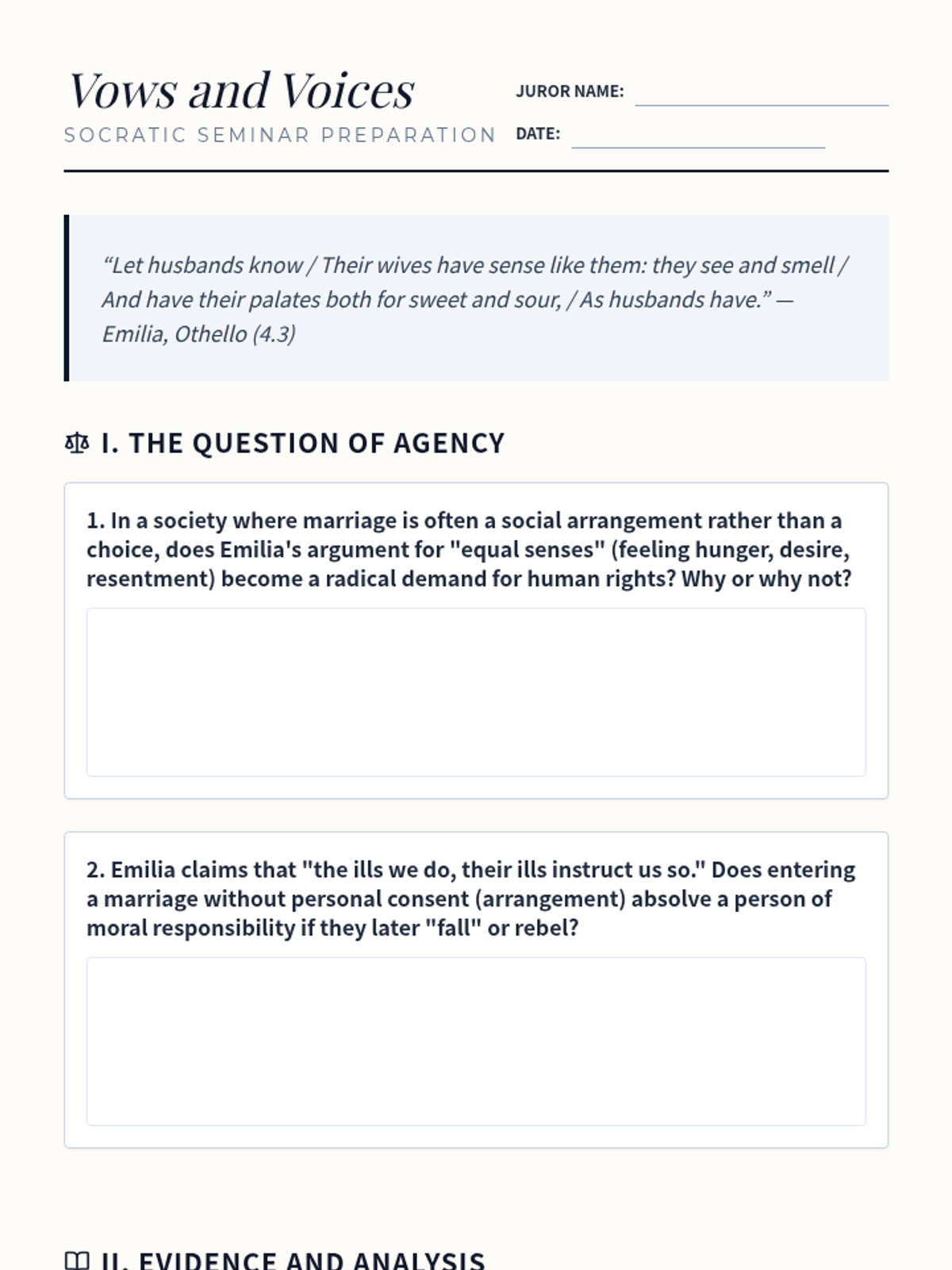
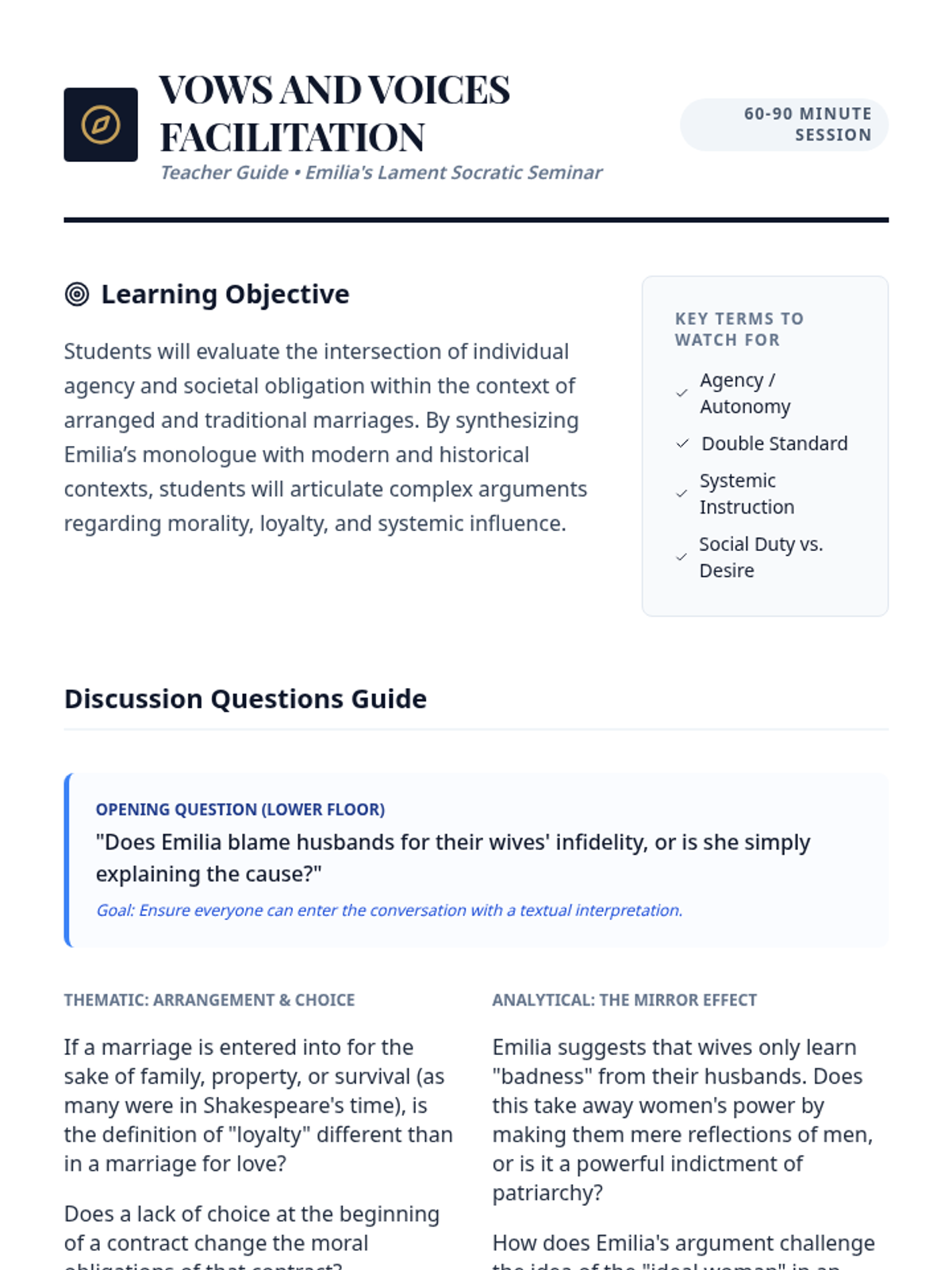
A Socratic seminar lesson exploring the themes of Emilia's Lament from Shakespeare's Othello in the context of arranged marriage, agency, and societal expectations. Students will analyze the text to prepare for a deep, student-led discussion.
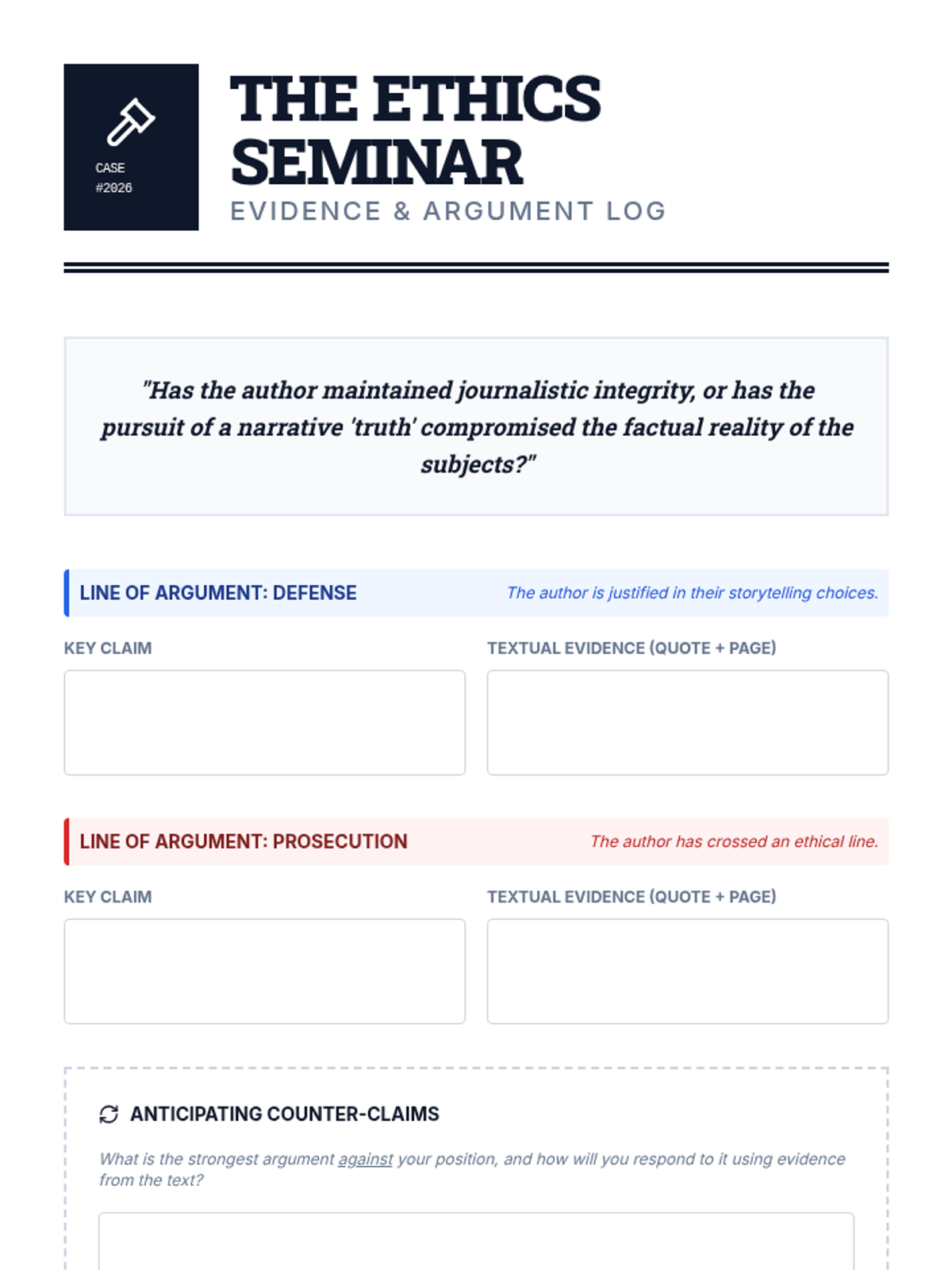
A summative Socratic seminar where students debate the journalistic integrity of the chosen text using text-based evidence.
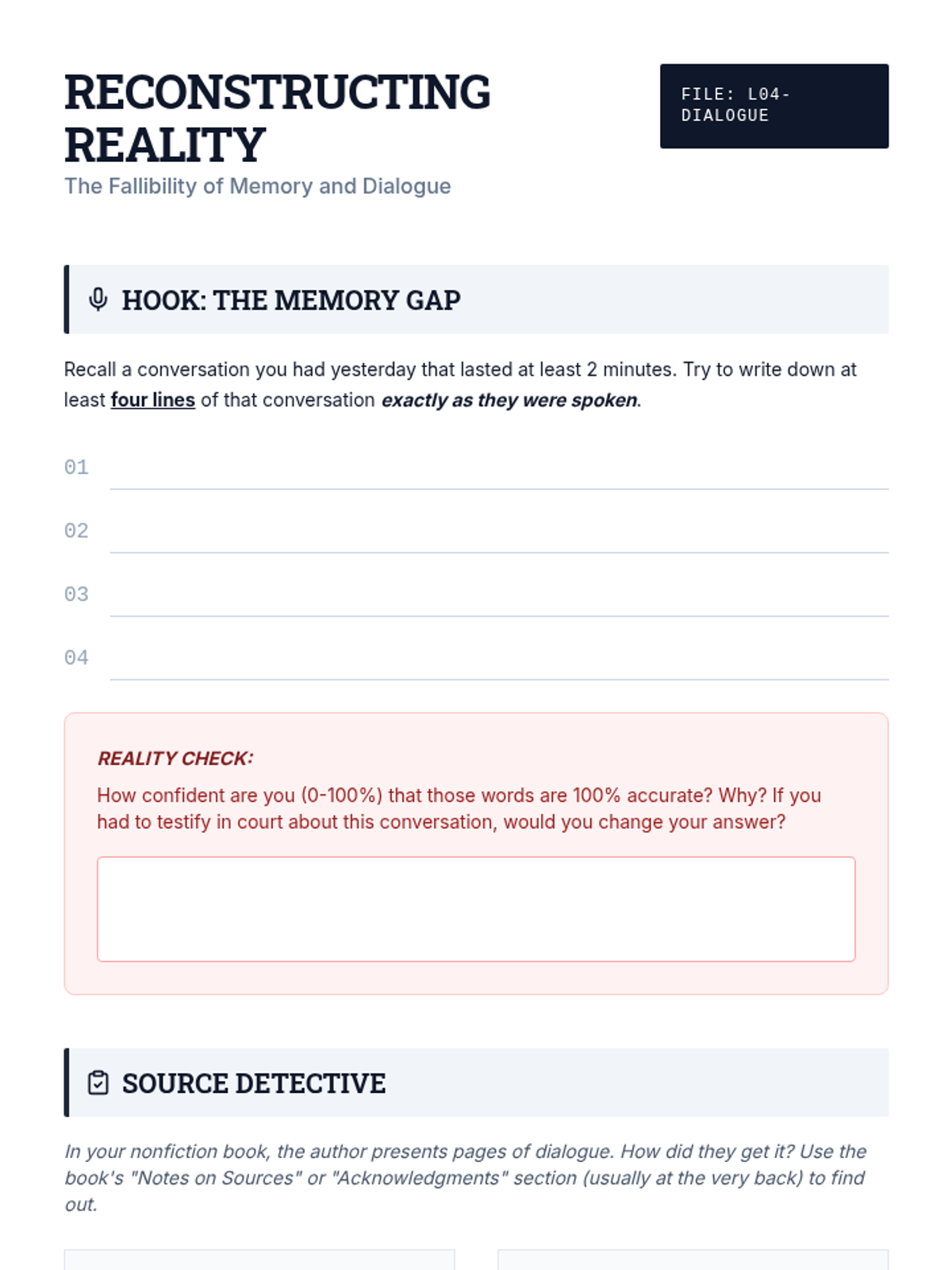
Students investigate the methods authors use to reconstruct dialogue and the reliability of those methods in nonfiction.
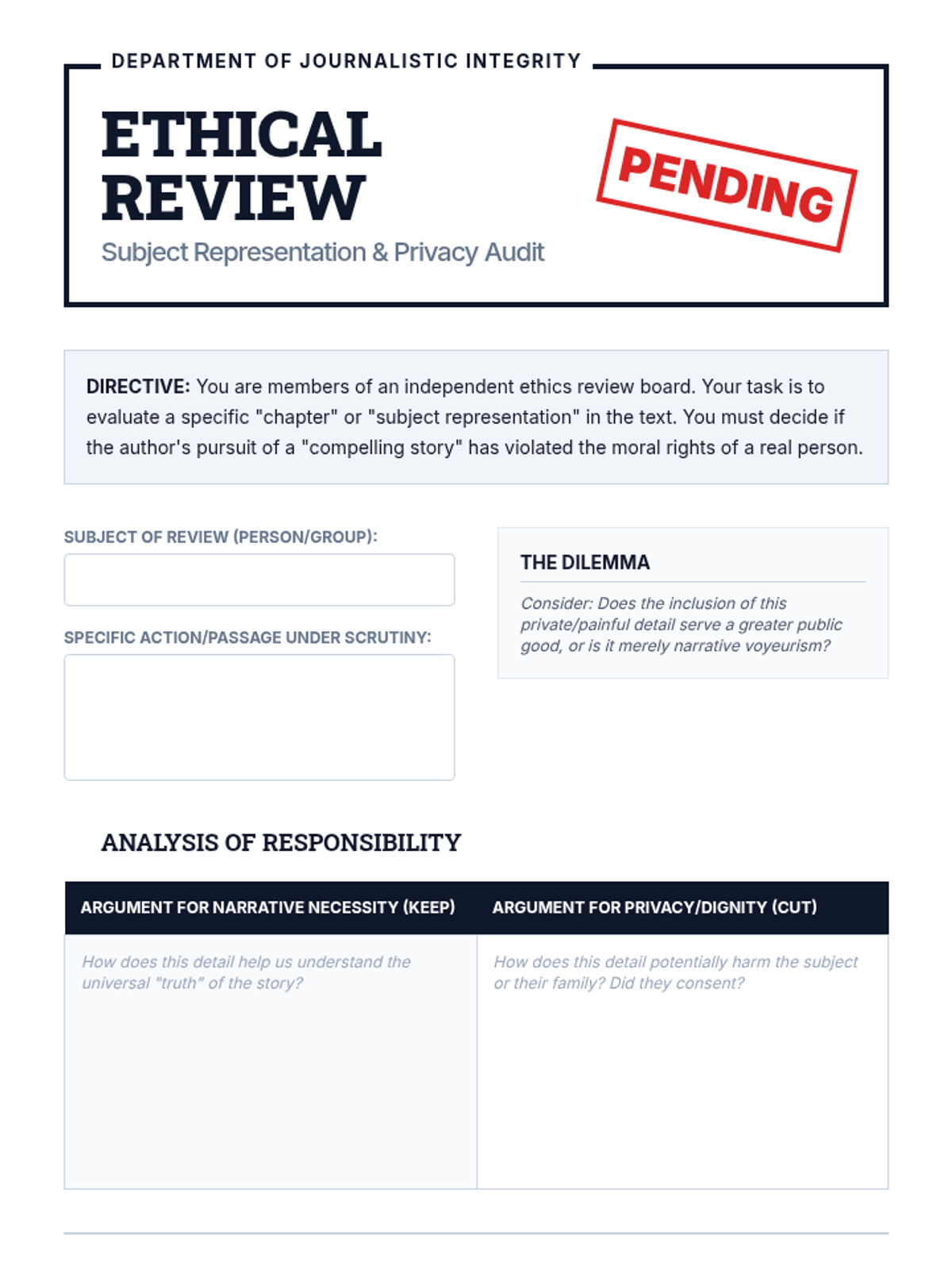
A simulation-based lesson where students evaluate the moral responsibility of authors when depicting real people and their private lives.
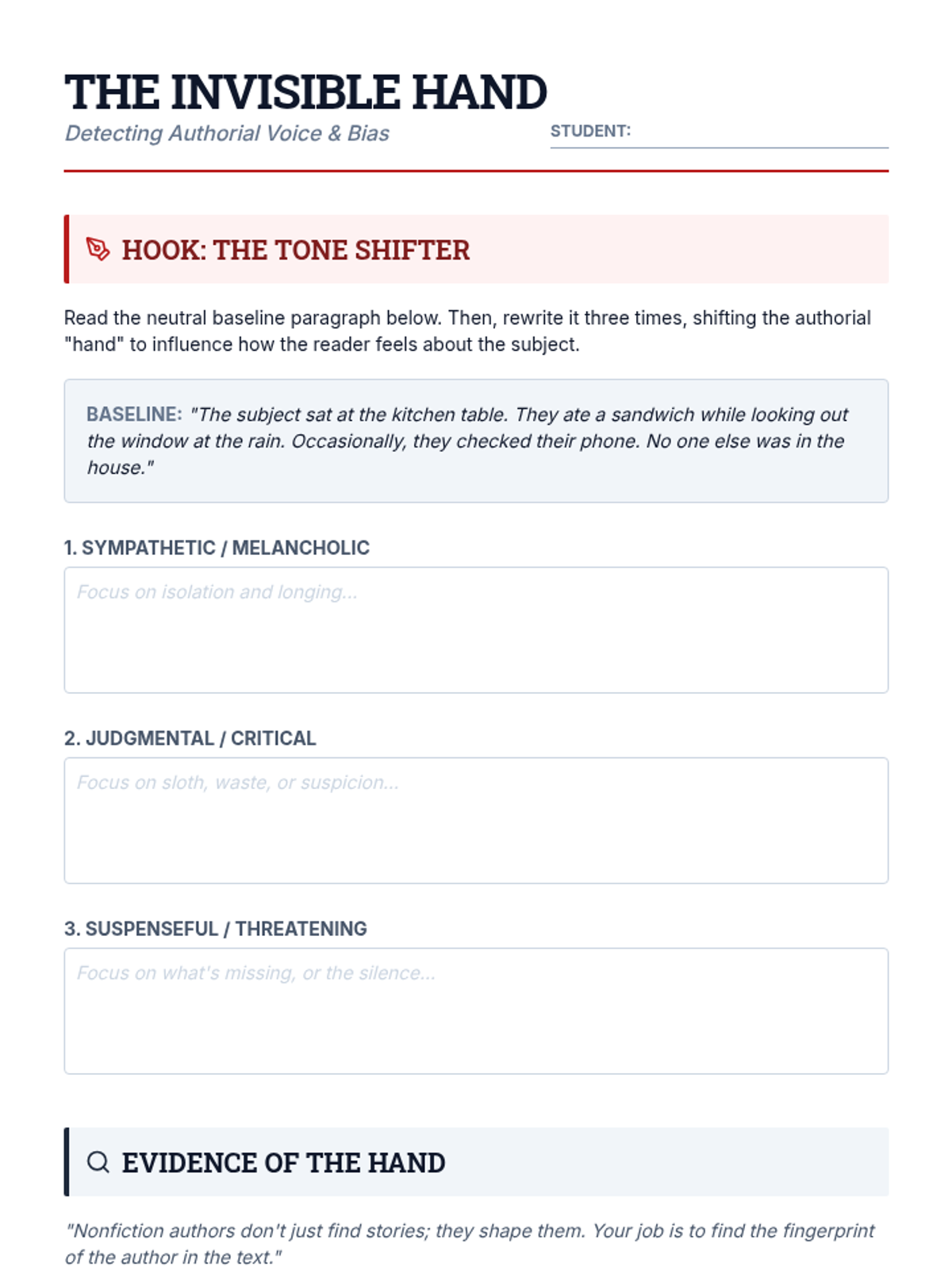
An exploration of authorial presence and bias, analyzing how an author's voice and perspective influence the reader's view of the subject.
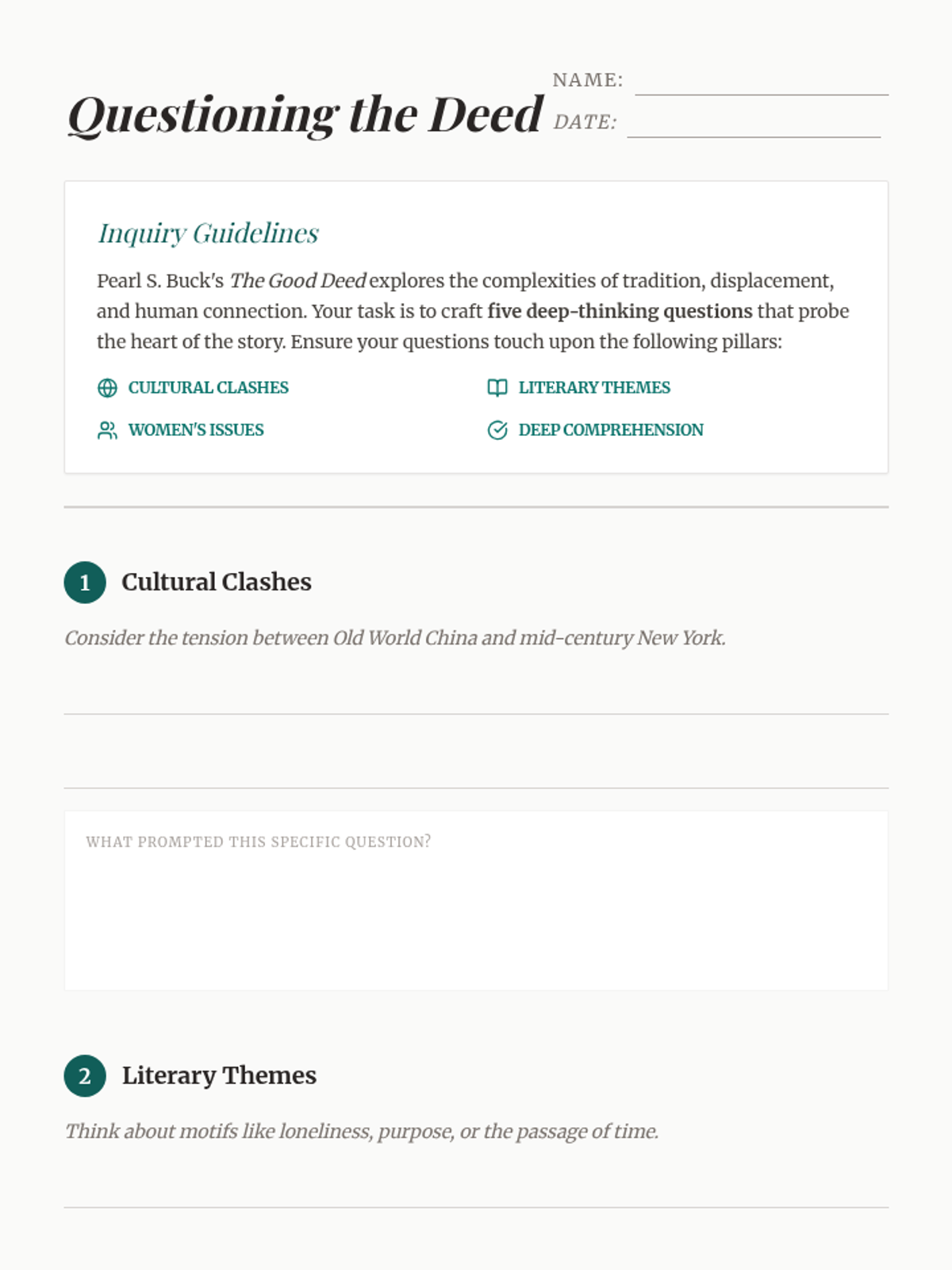
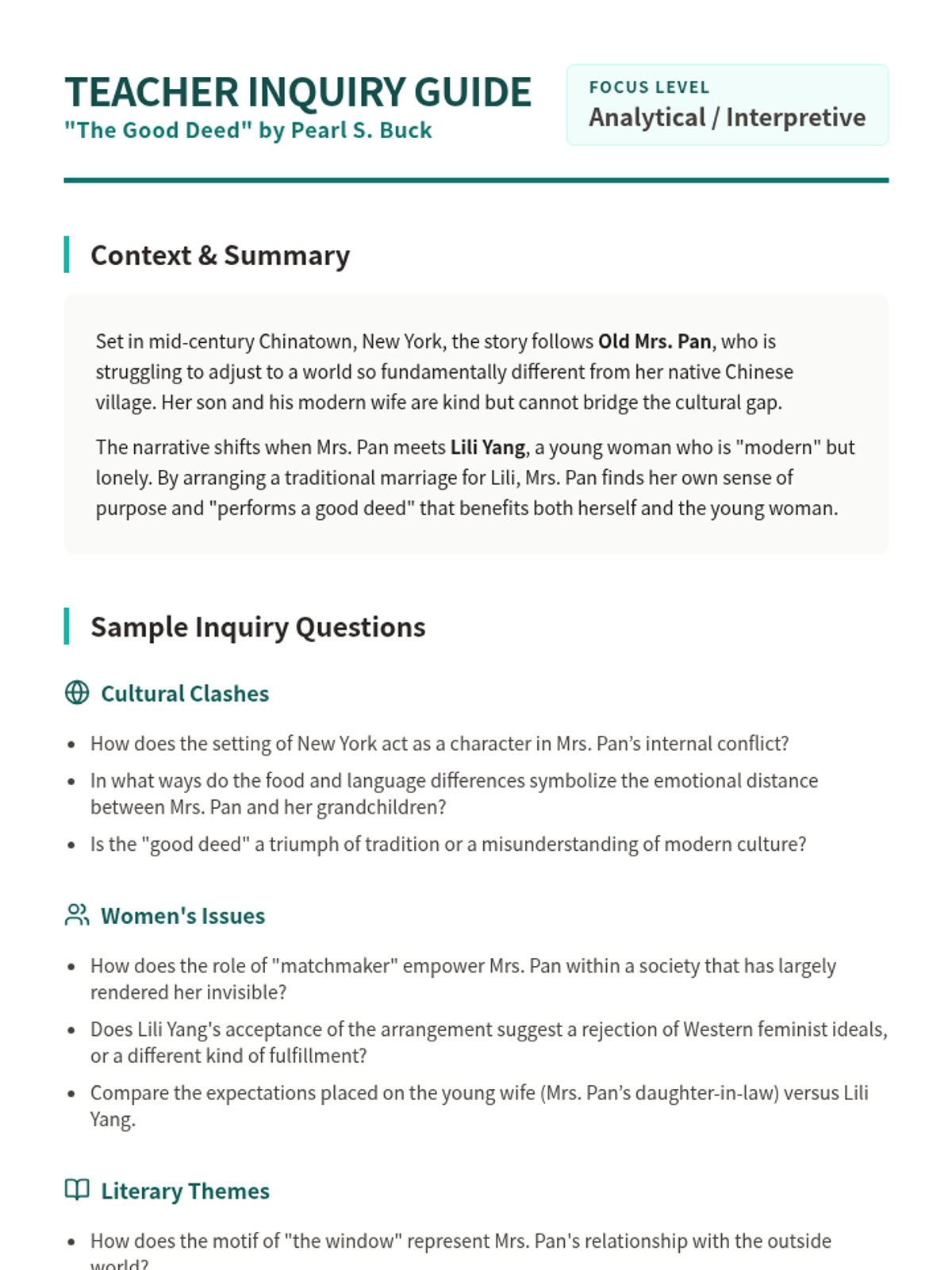
A lesson focused on analyzing Pearl S. Buck's short story 'The Good Deed' through student-led inquiry into culture, gender, and theme.
This lesson explores the sociological and literary concept of 'The White Gaze' through Toni Morrison's debut novel, 'The Bluest Eye'. Students will analyze the impact of internalized beauty standards on marginalized communities and discuss how Morrison's career challenged traditional literary canons.
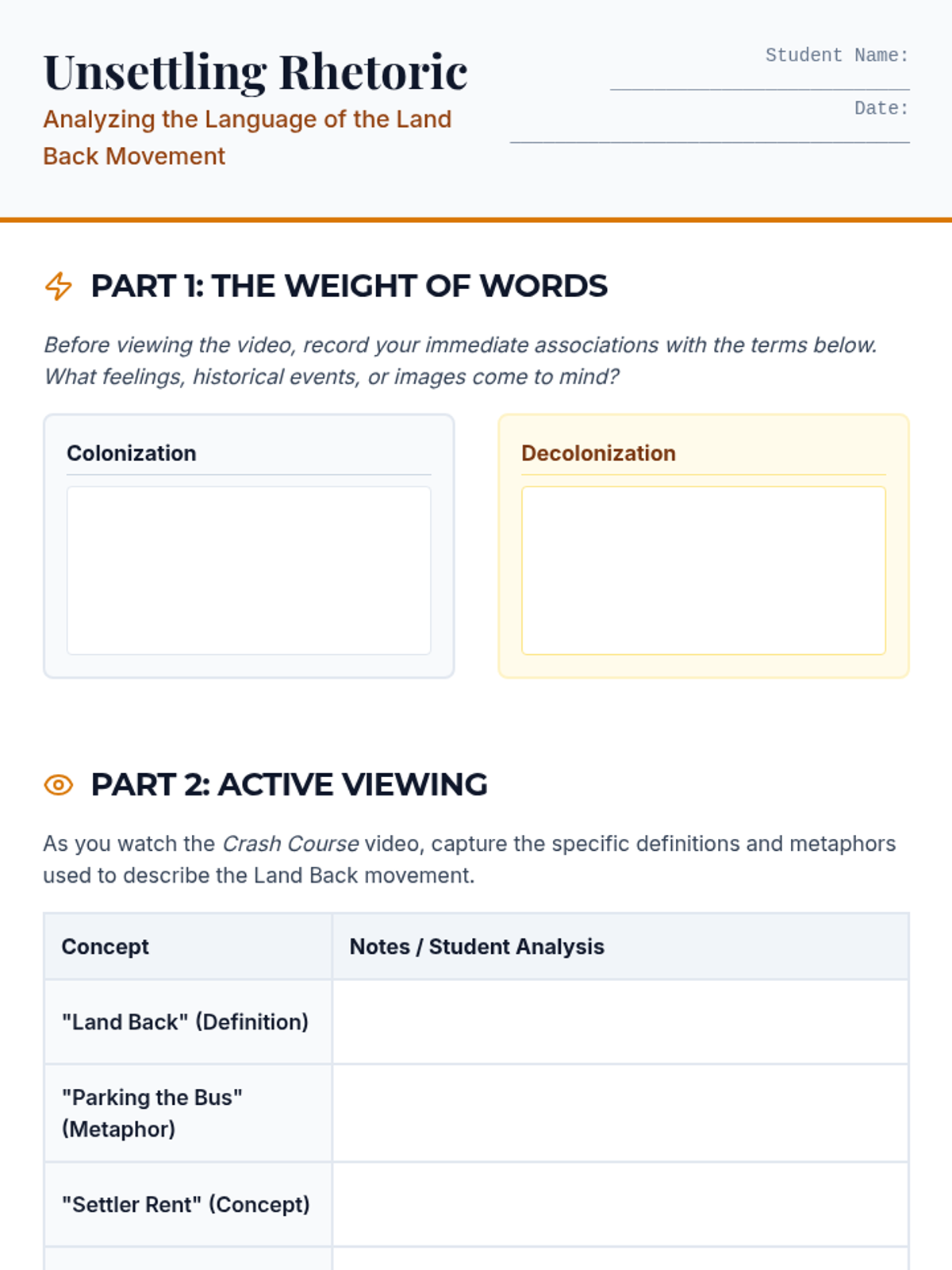
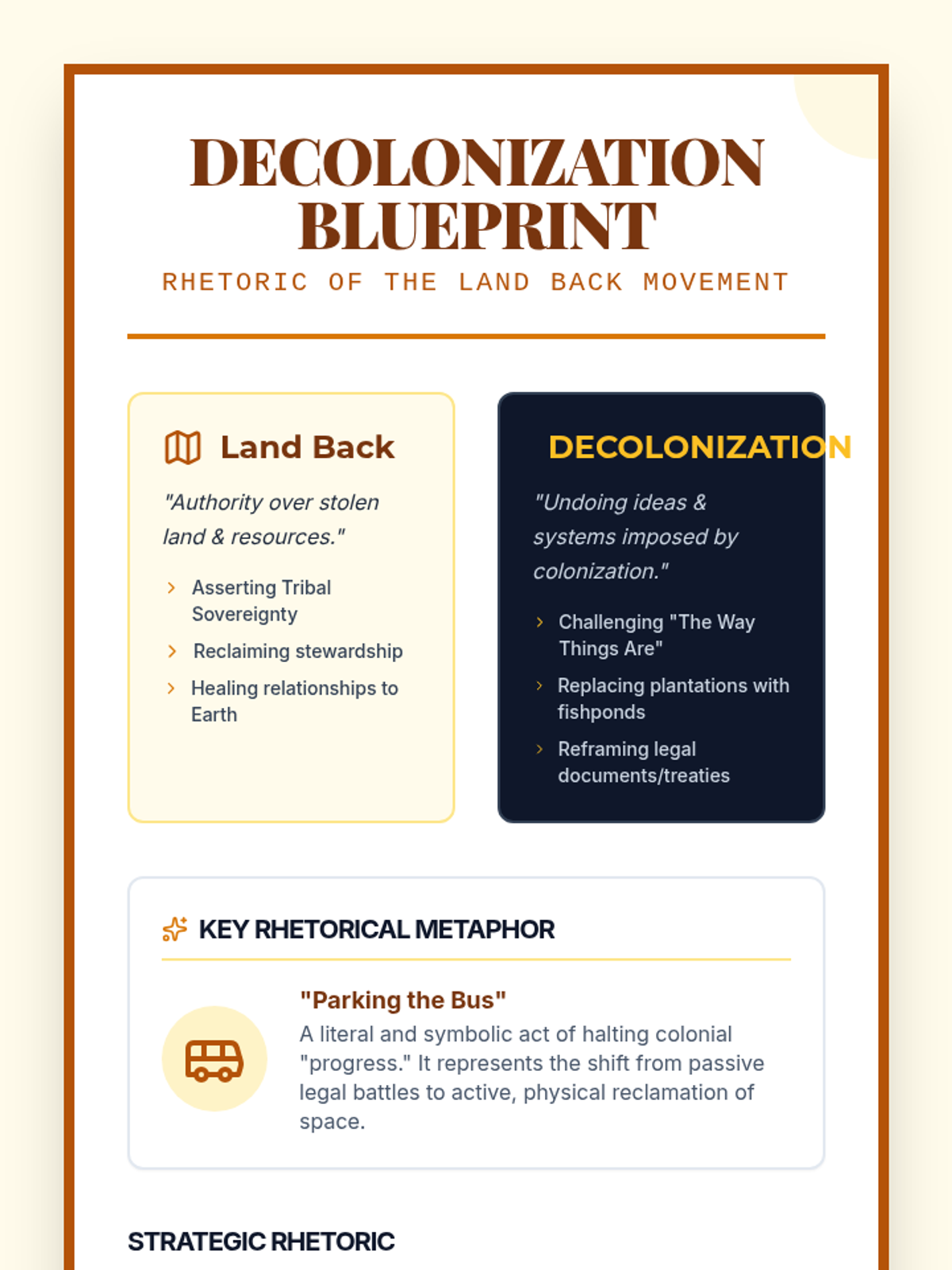
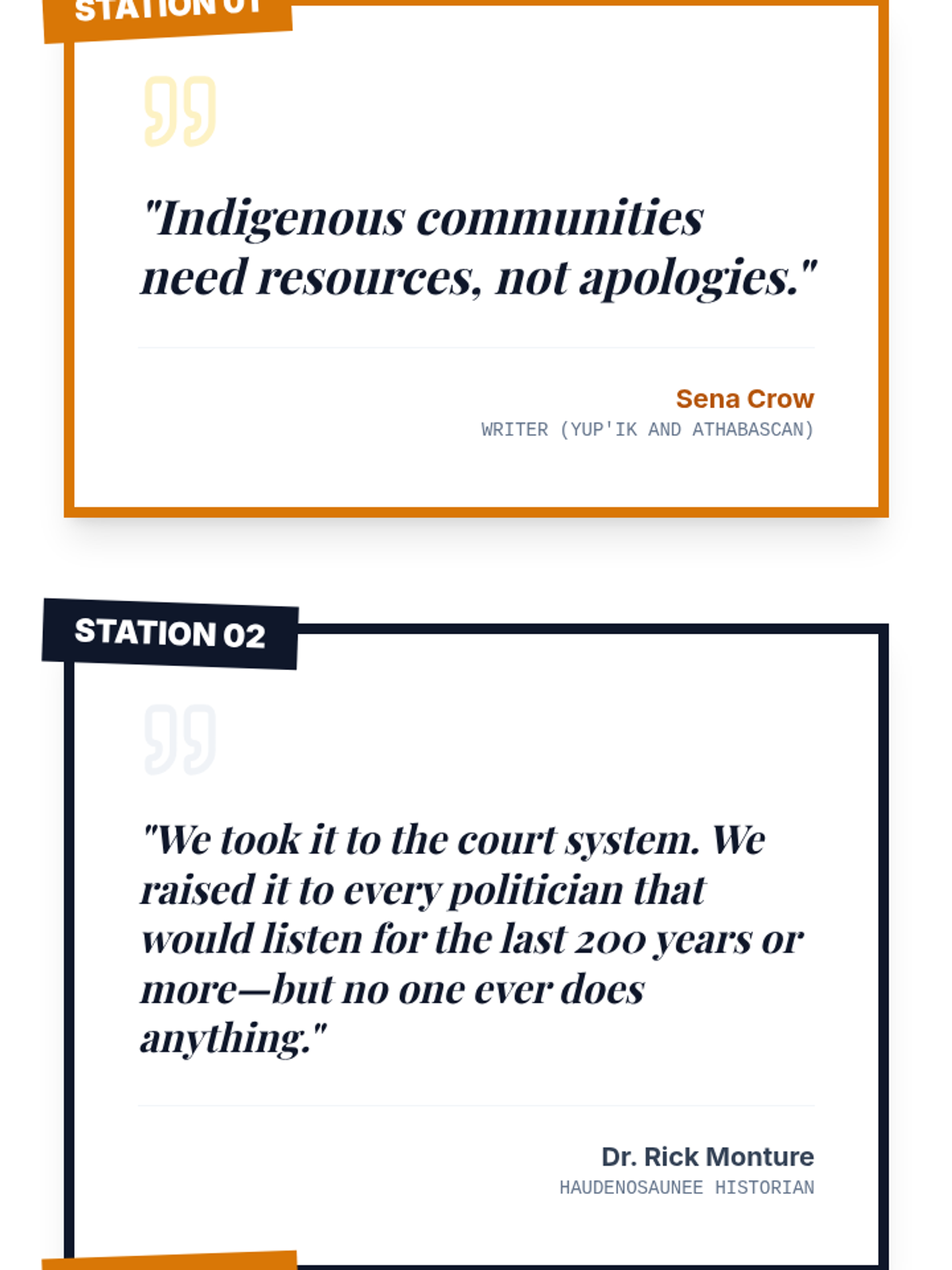
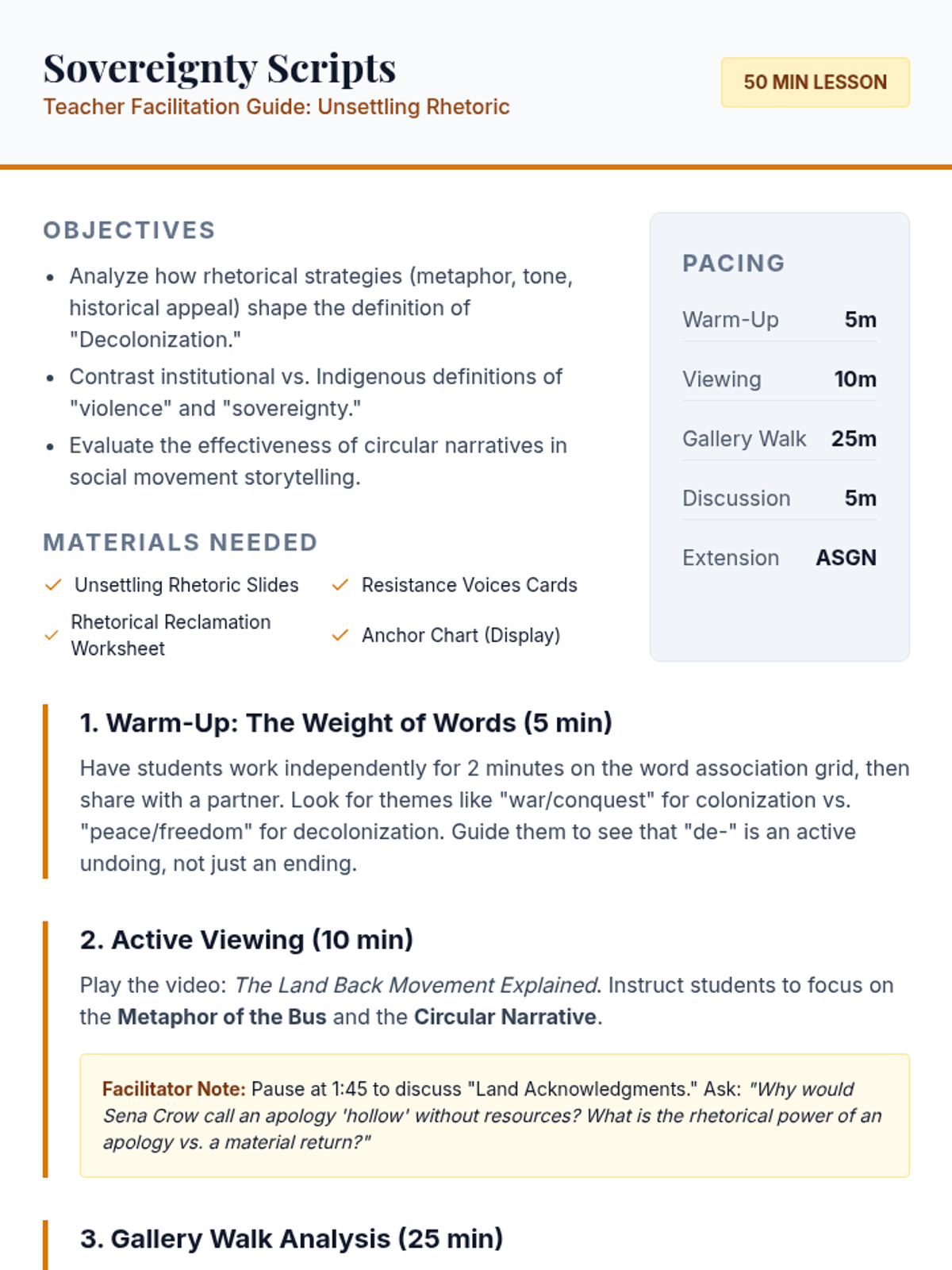
Students analyze the rhetorical strategies and definitions of decolonization within the Land Back movement, focusing on a Crash Course Native American History video. The lesson explores how different stakeholders (activists, historians, and the state) use language to define sovereignty, violence, and restorative justice.
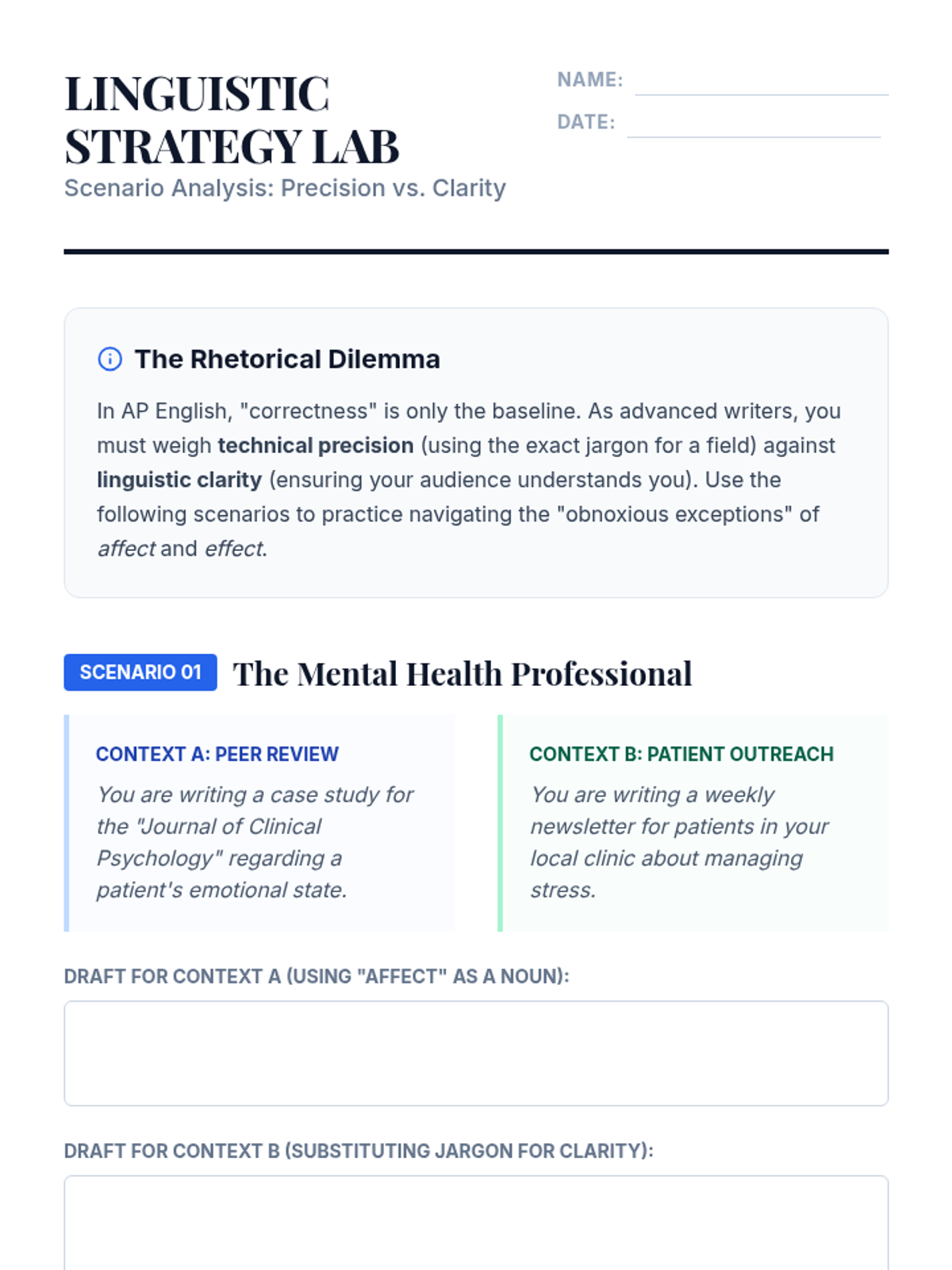
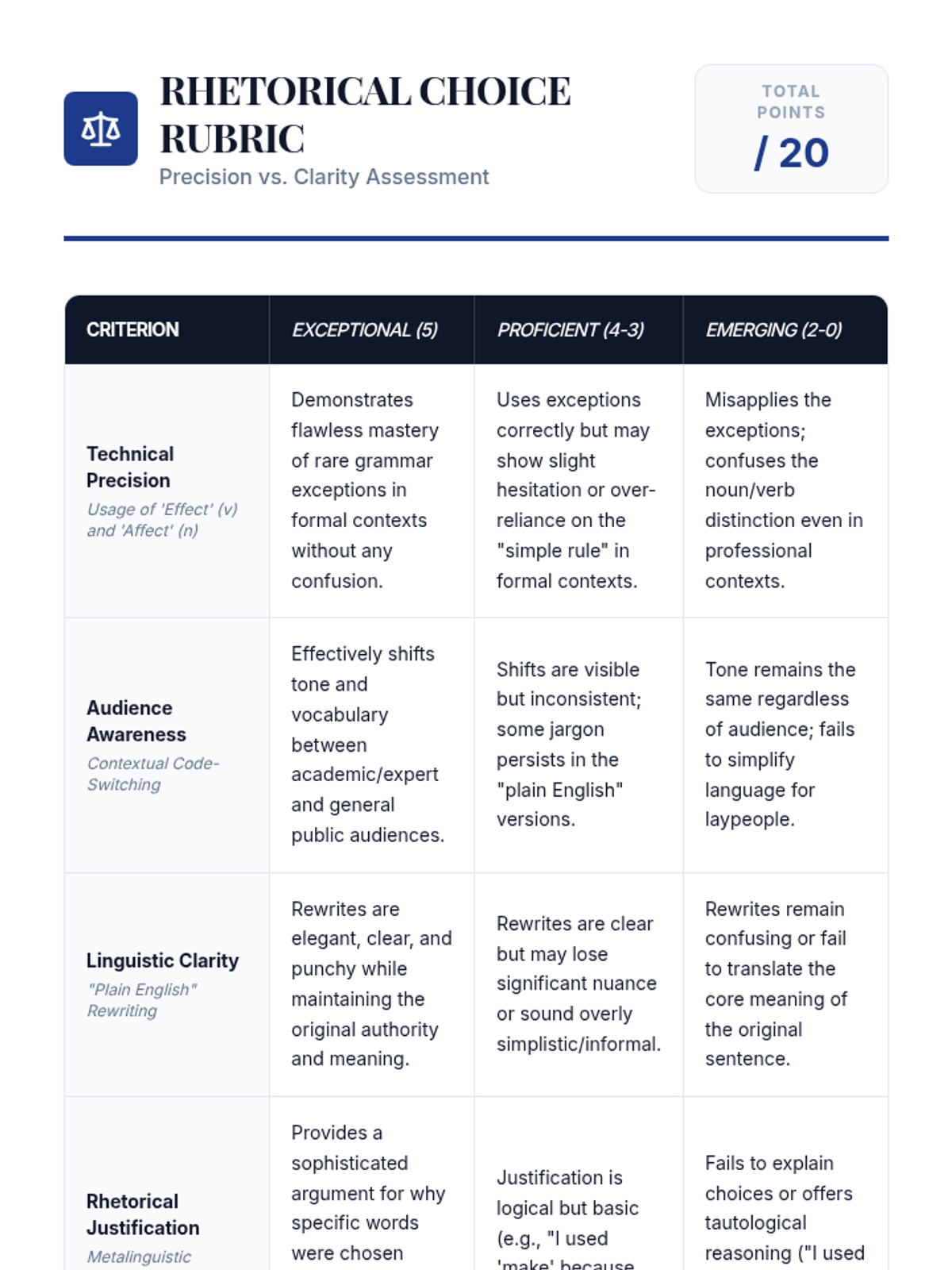
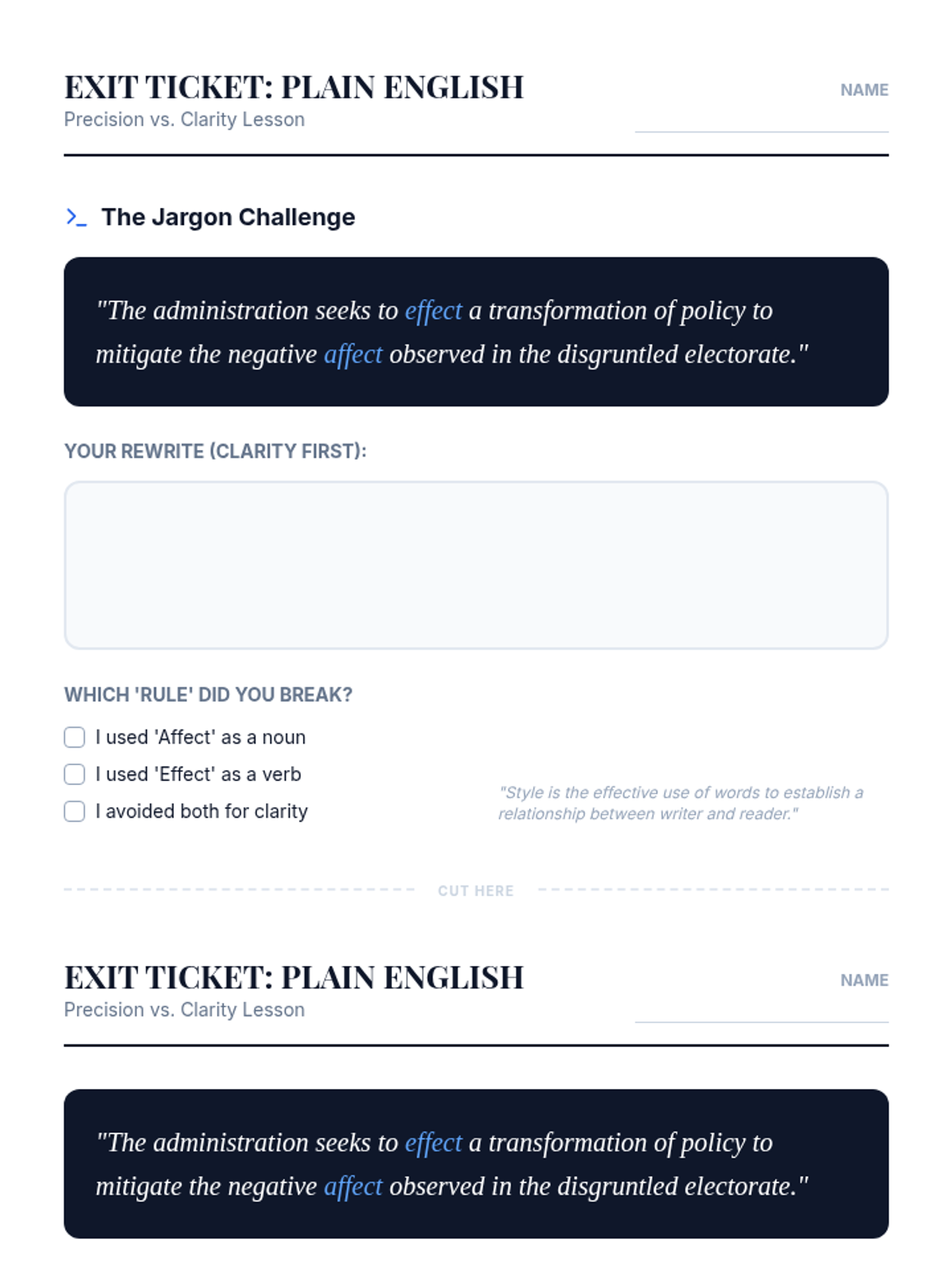
A high-level AP English lesson exploring the rhetorical implications of jargon and rare grammar exceptions, specifically focusing on the nuanced uses of 'affect' and 'effect'. Students debate the tension between technical precision and linguistic clarity.