Systematic research, evidence evaluation, and logical reasoning skills for formal discourse. Equips speakers to organize persuasive arguments, identify fallacies, and execute strategic impact calculus during competitive engagement.
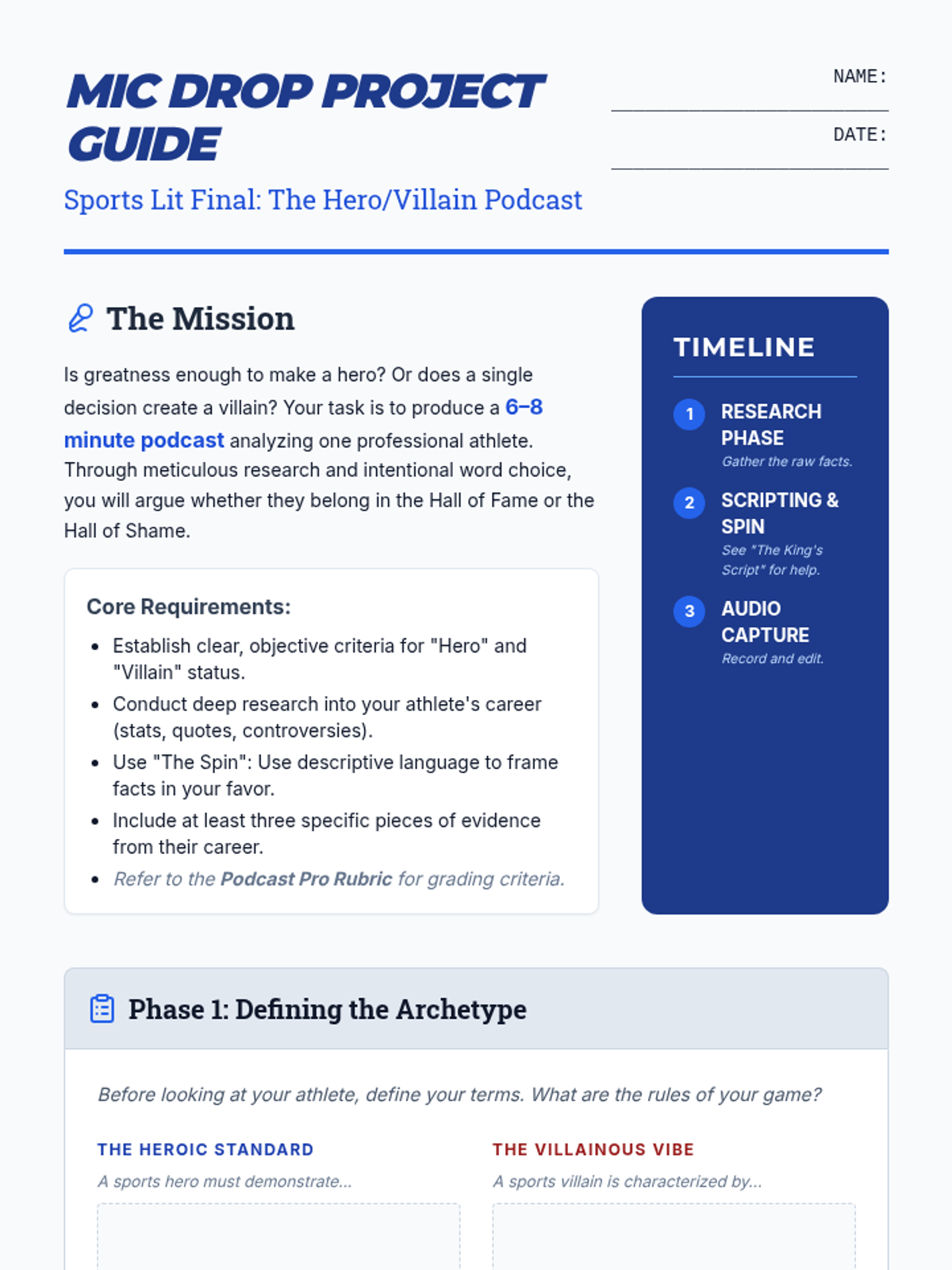
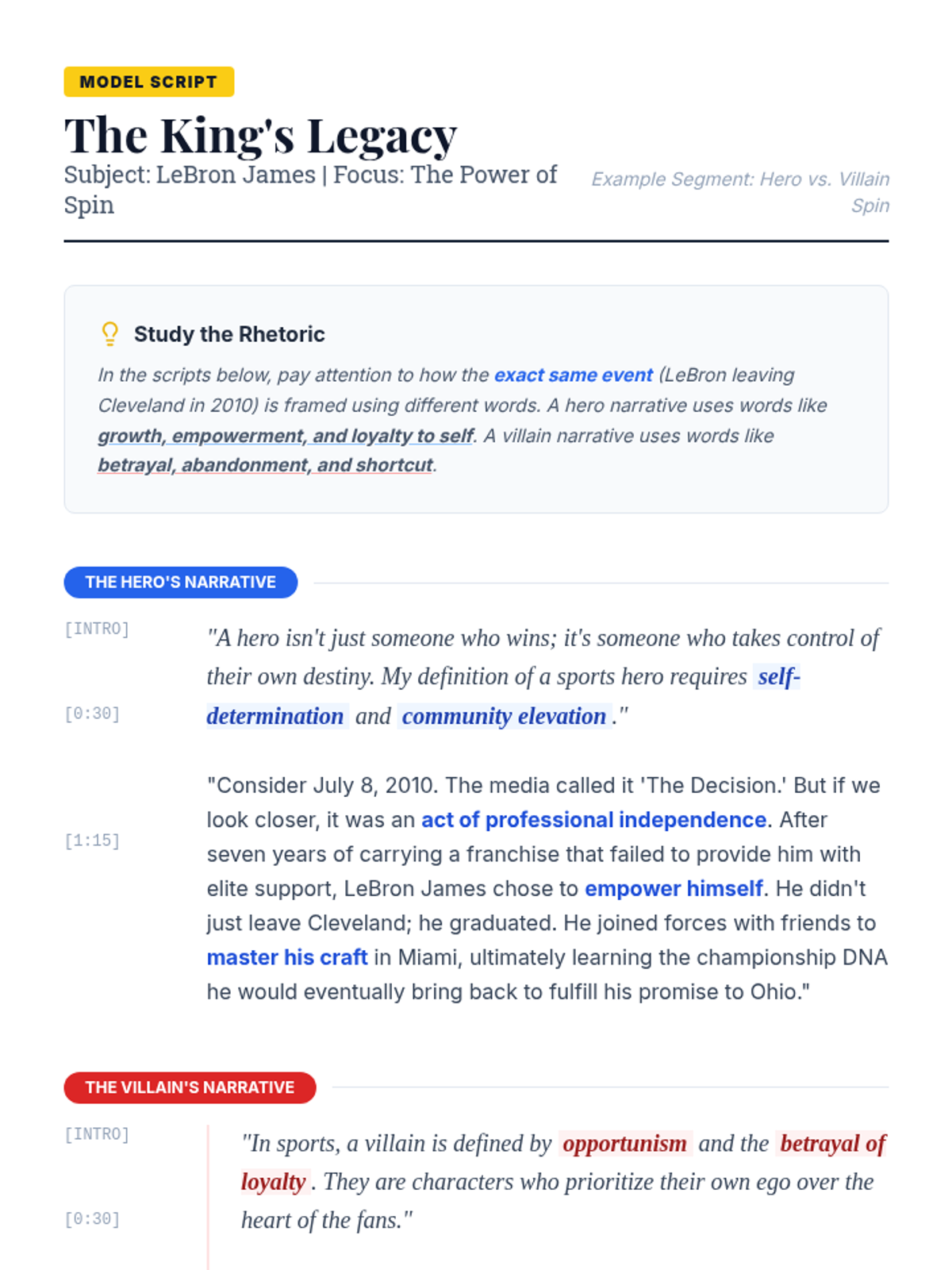
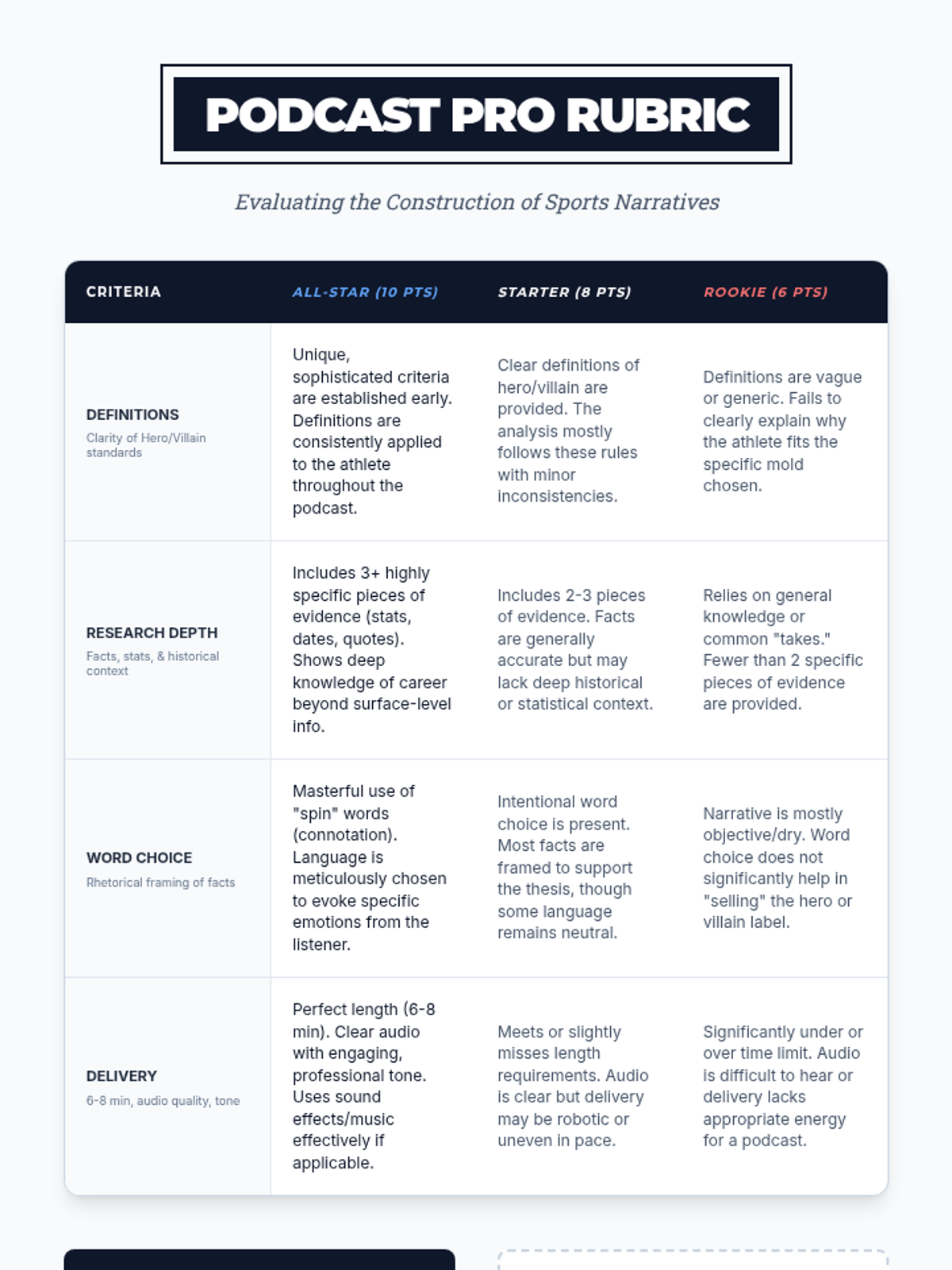
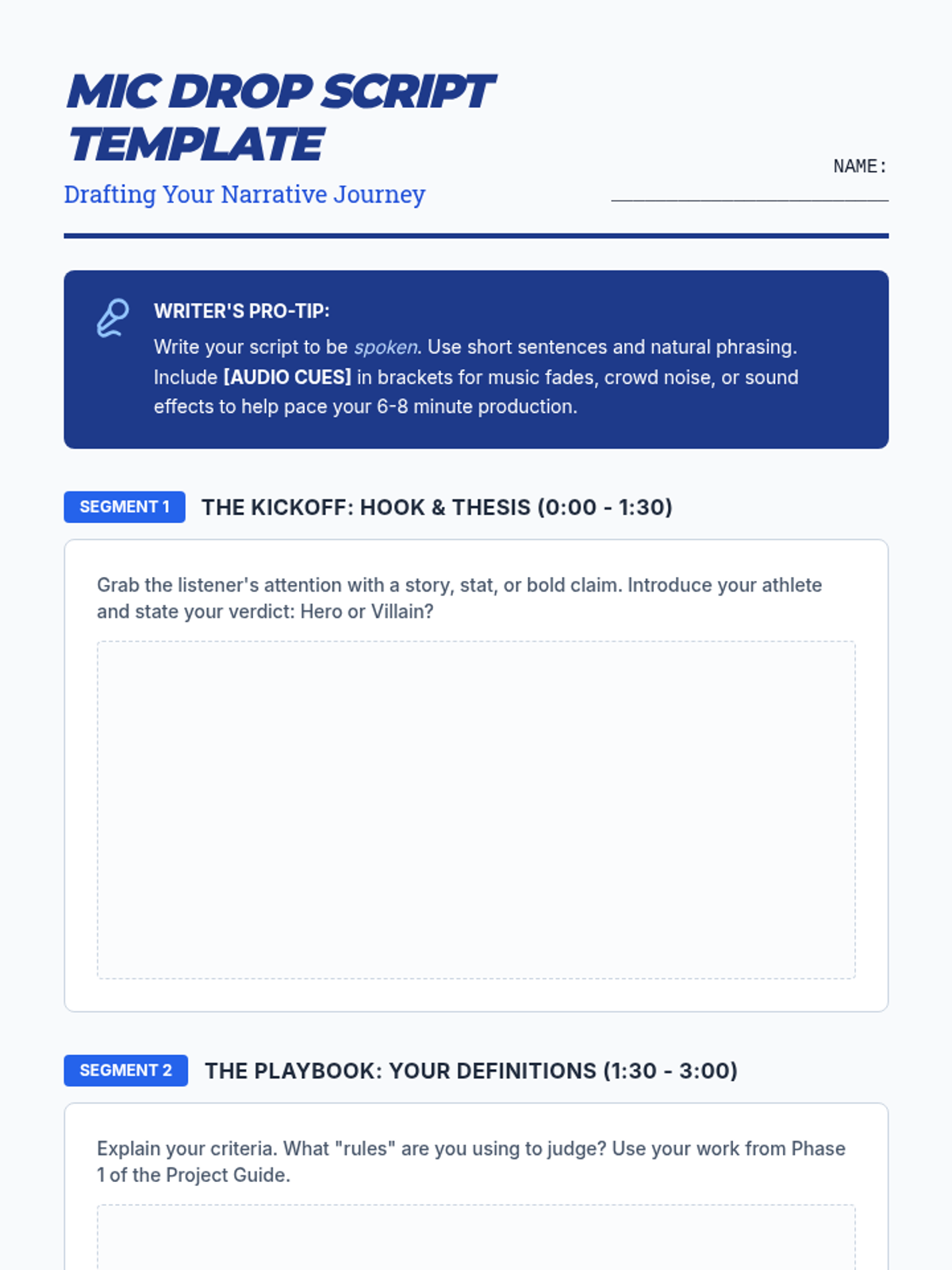
A project-based unit exploring the narrative construction of heroes and villains in sports media through podcasting.
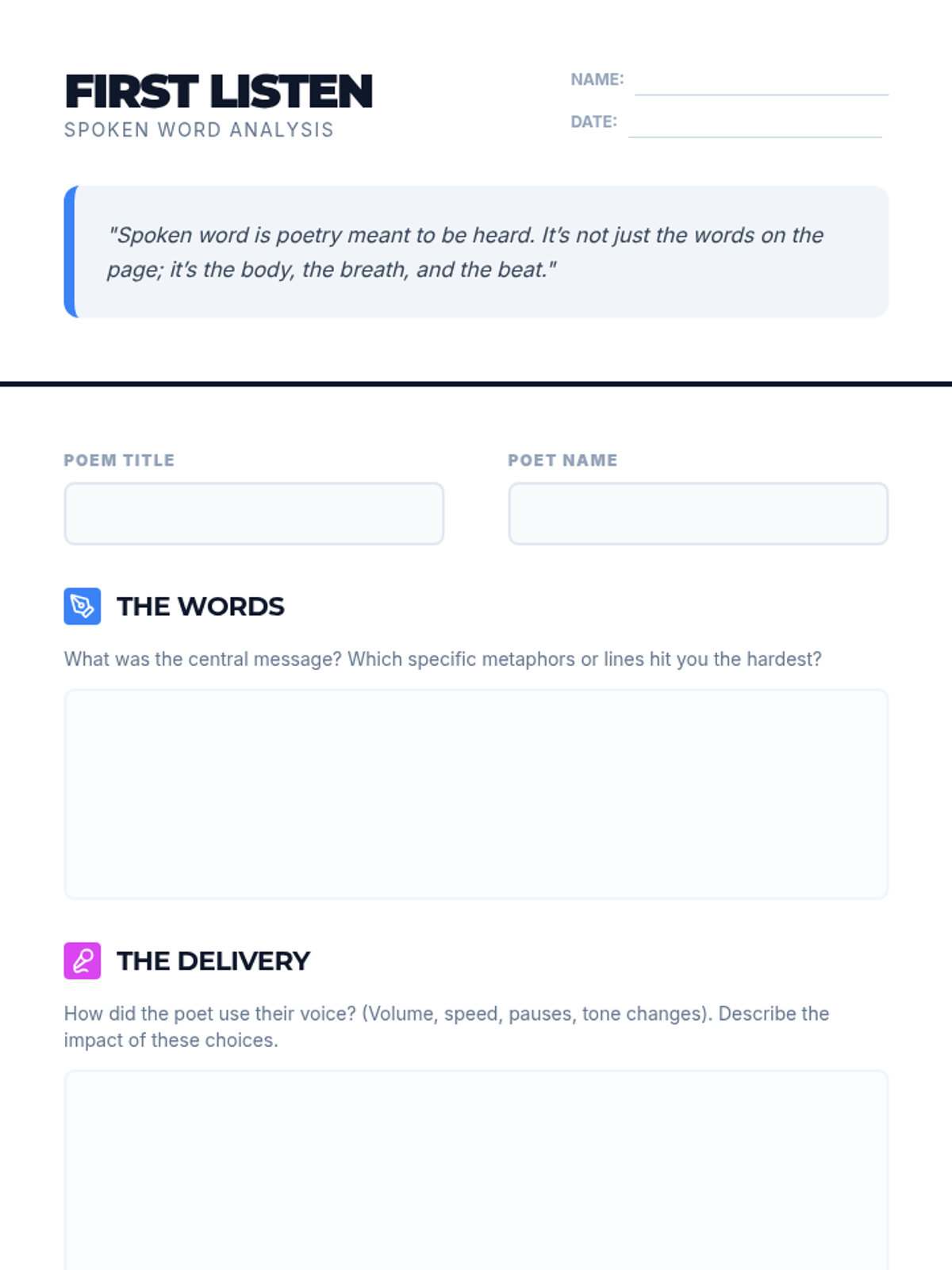
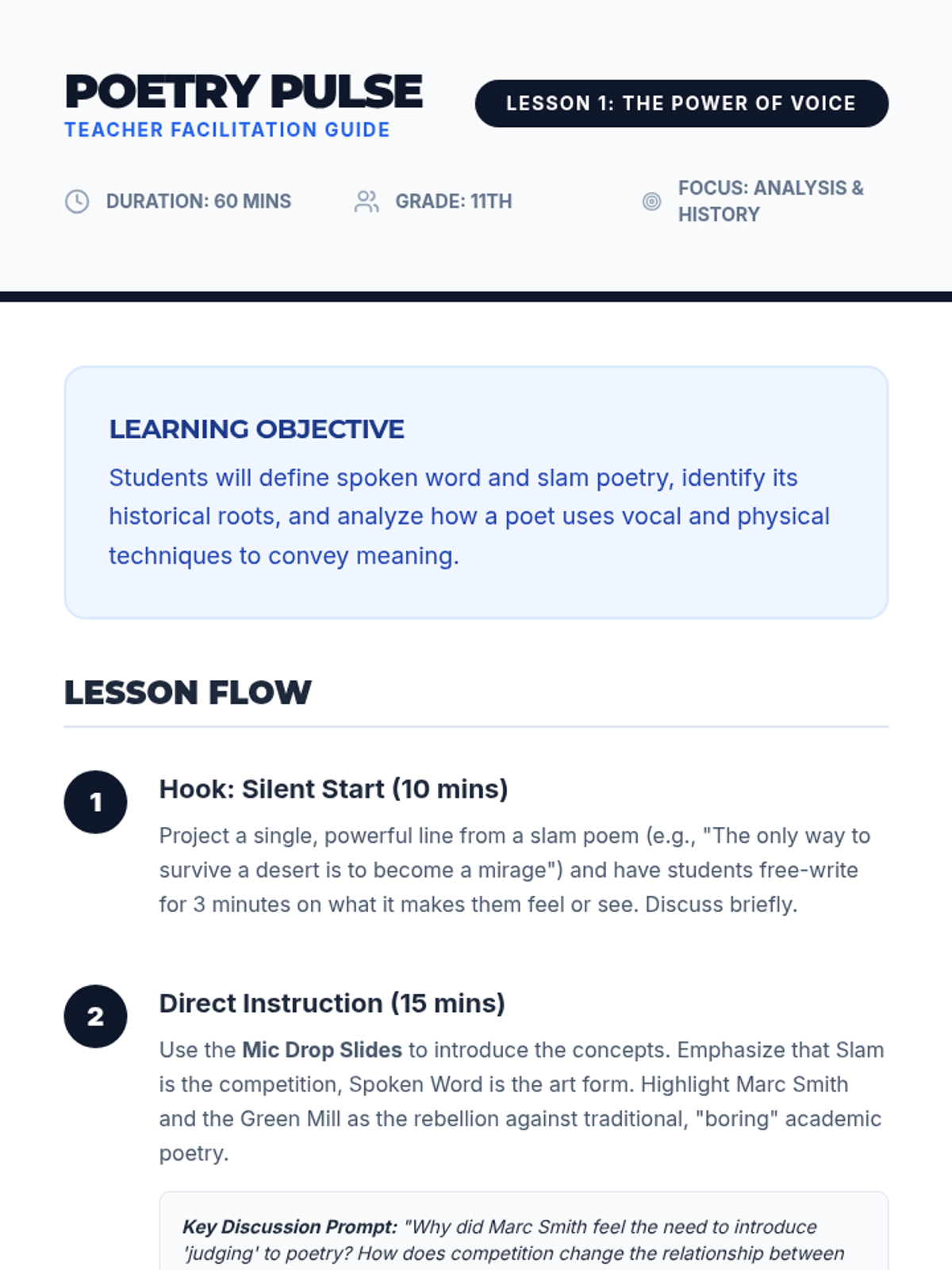
A dynamic high school unit exploring the roots, techniques, and performance of slam and spoken word poetry, culminating in a school-wide poetry slam.
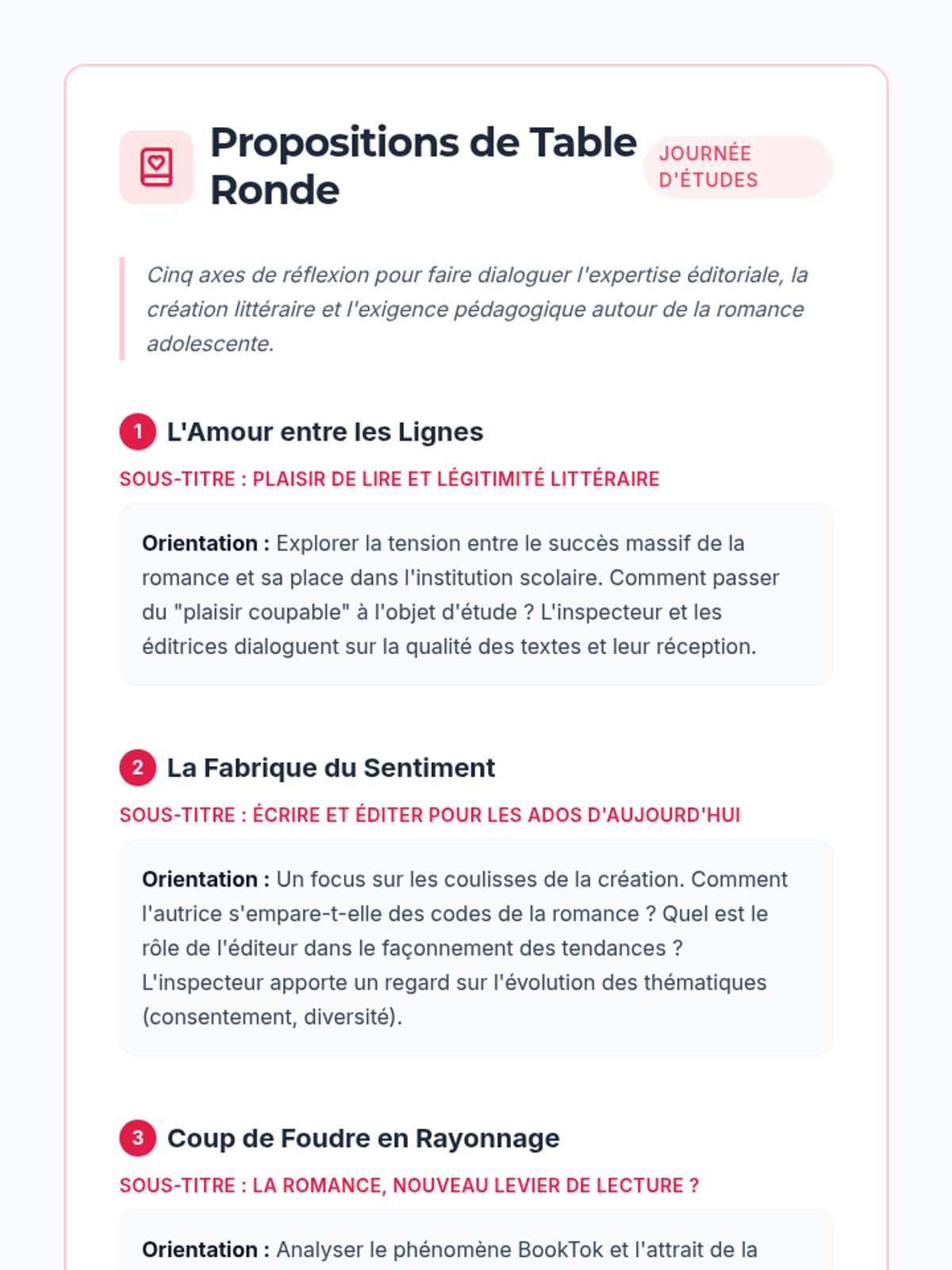
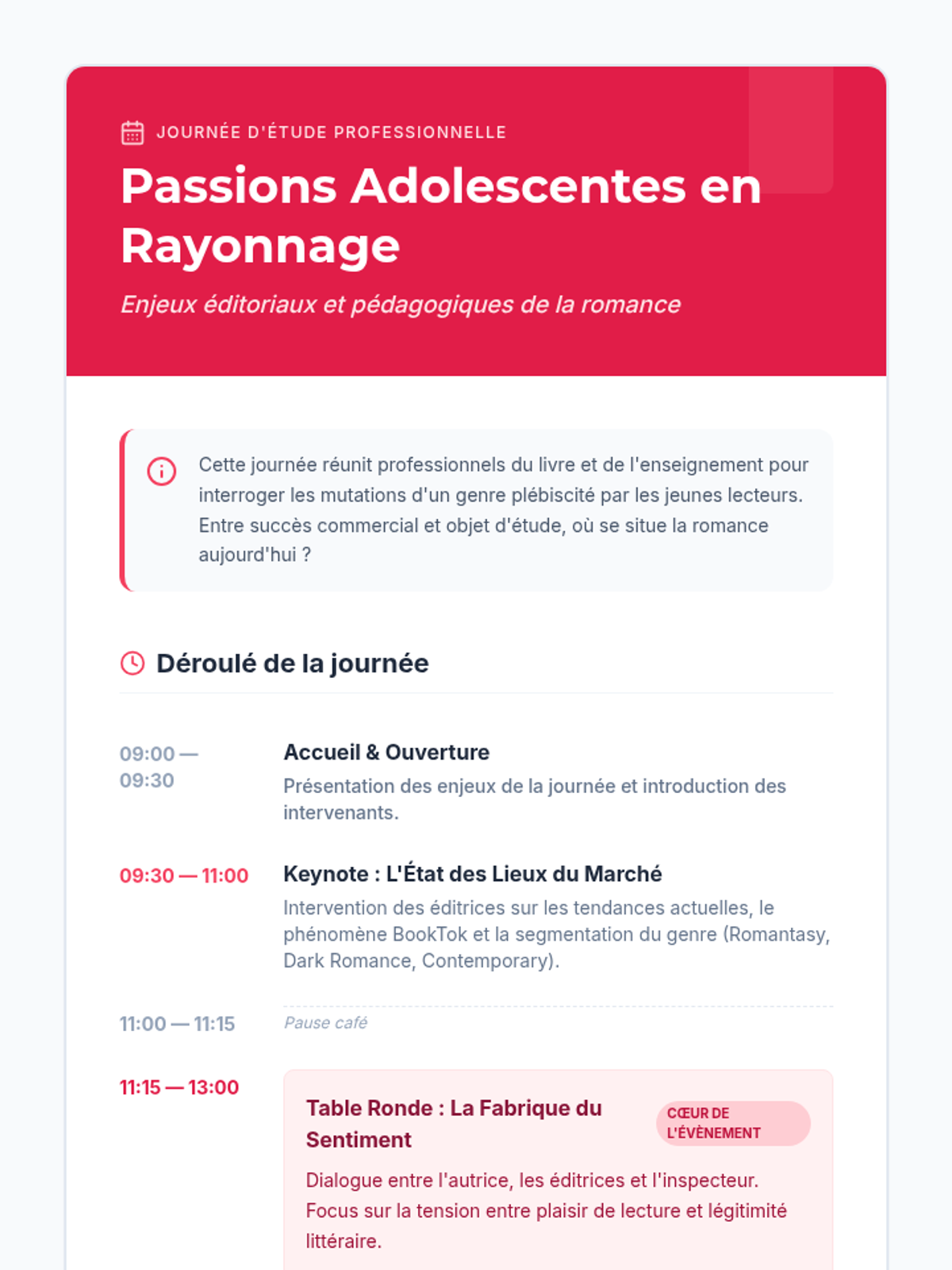
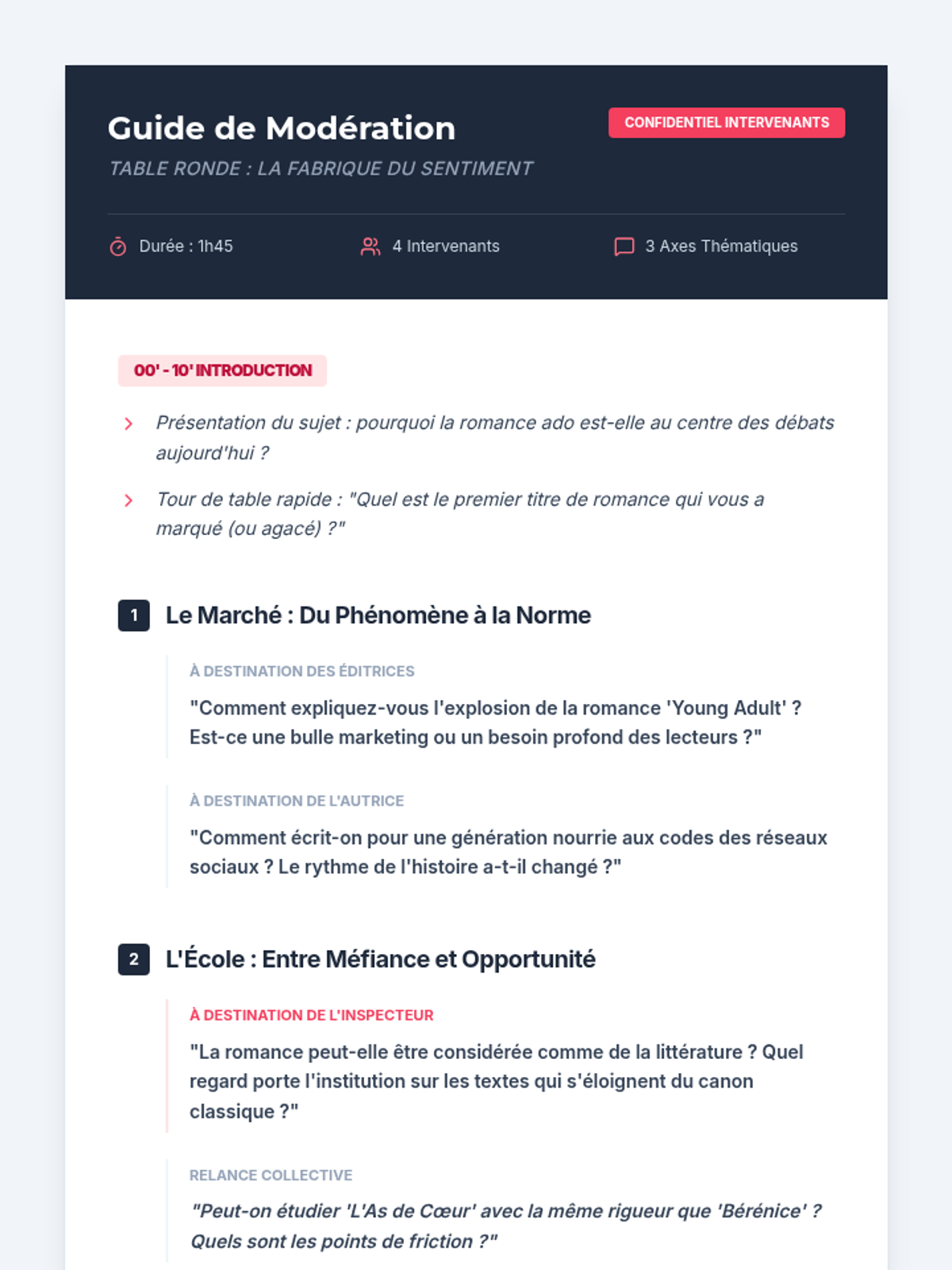
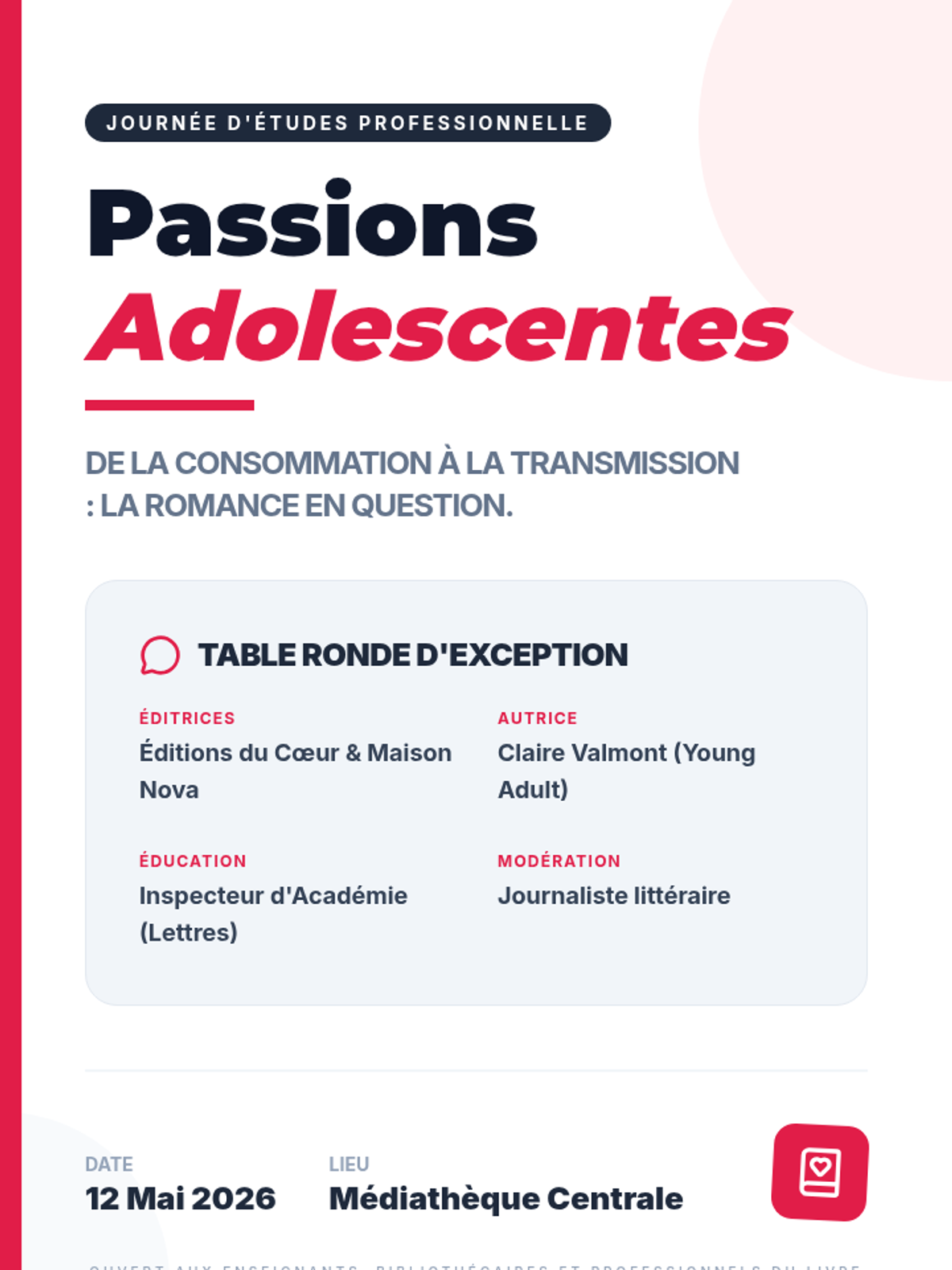
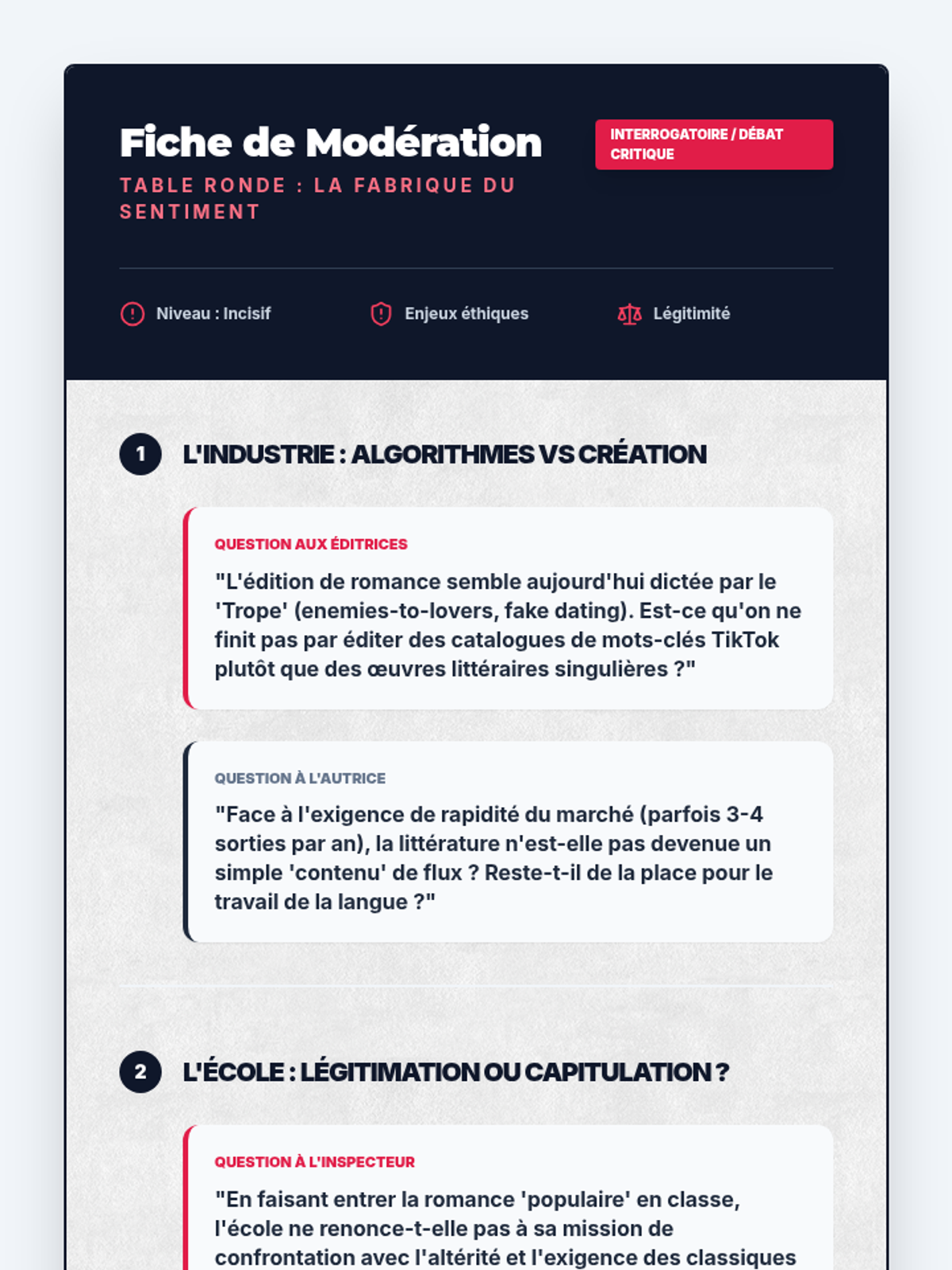
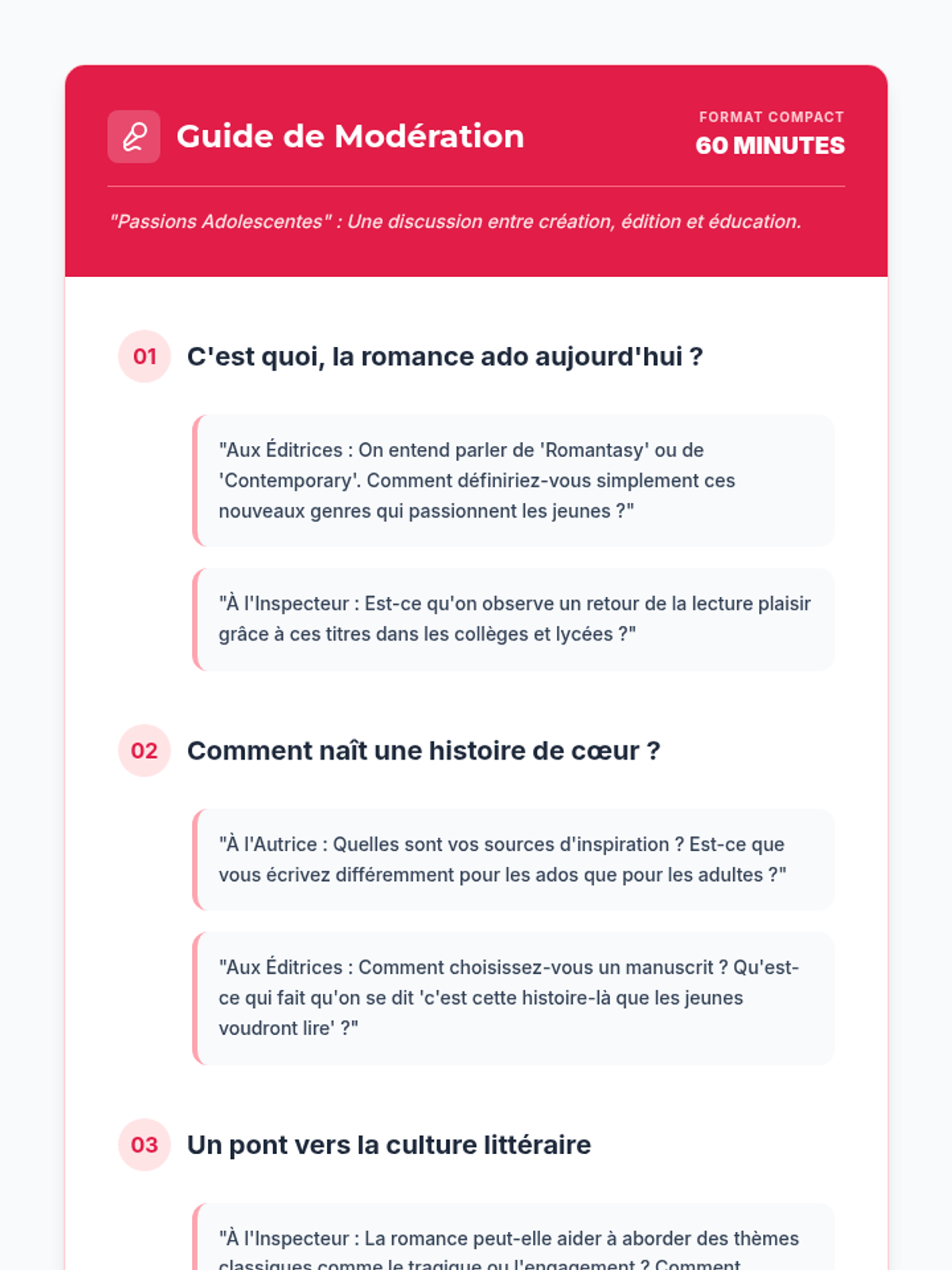
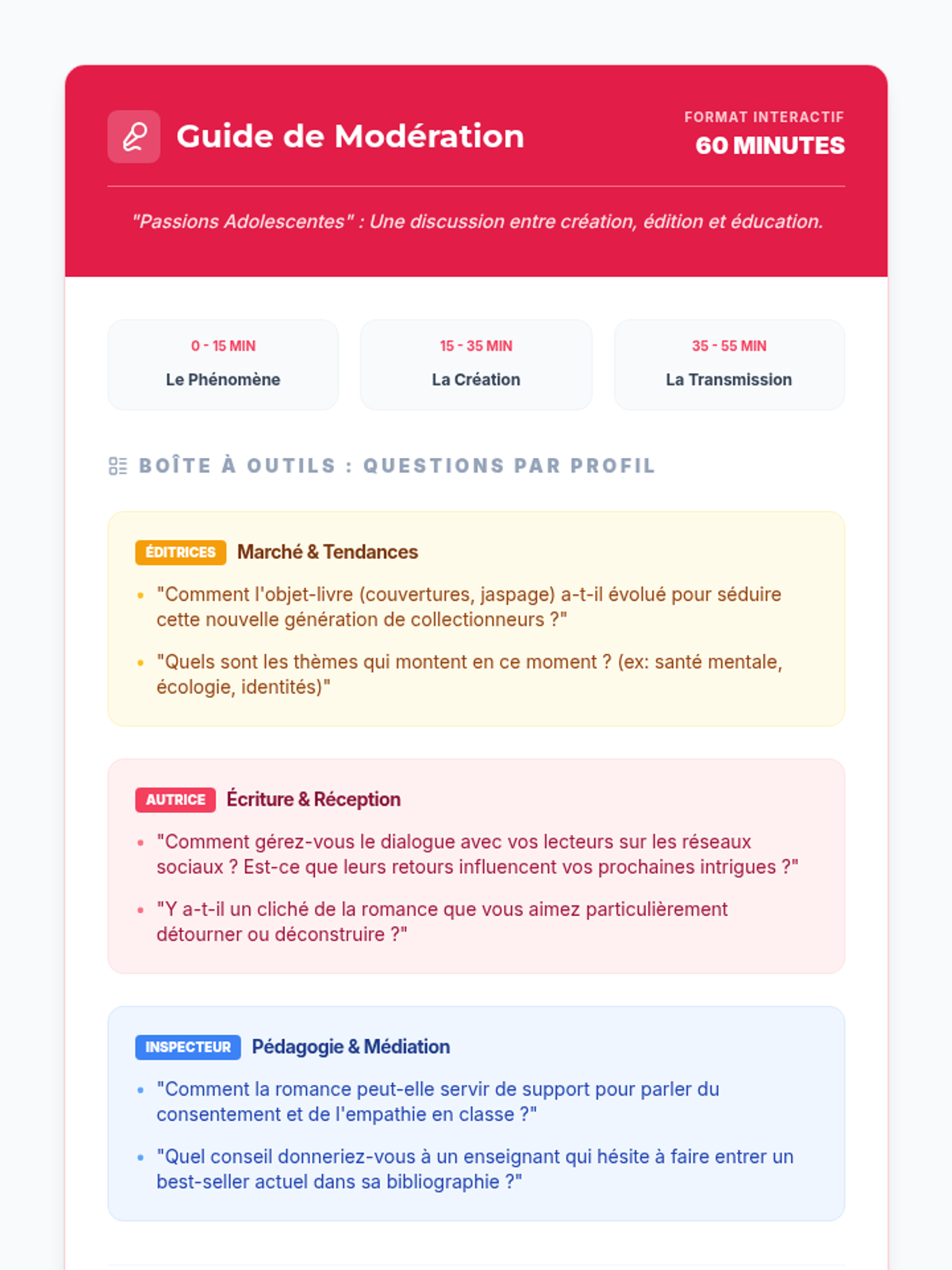
Une série de ressources pour organiser et promouvoir une table ronde sur la littérature romance pour adolescents, incluant programme, guide de discussion et supports de communication.
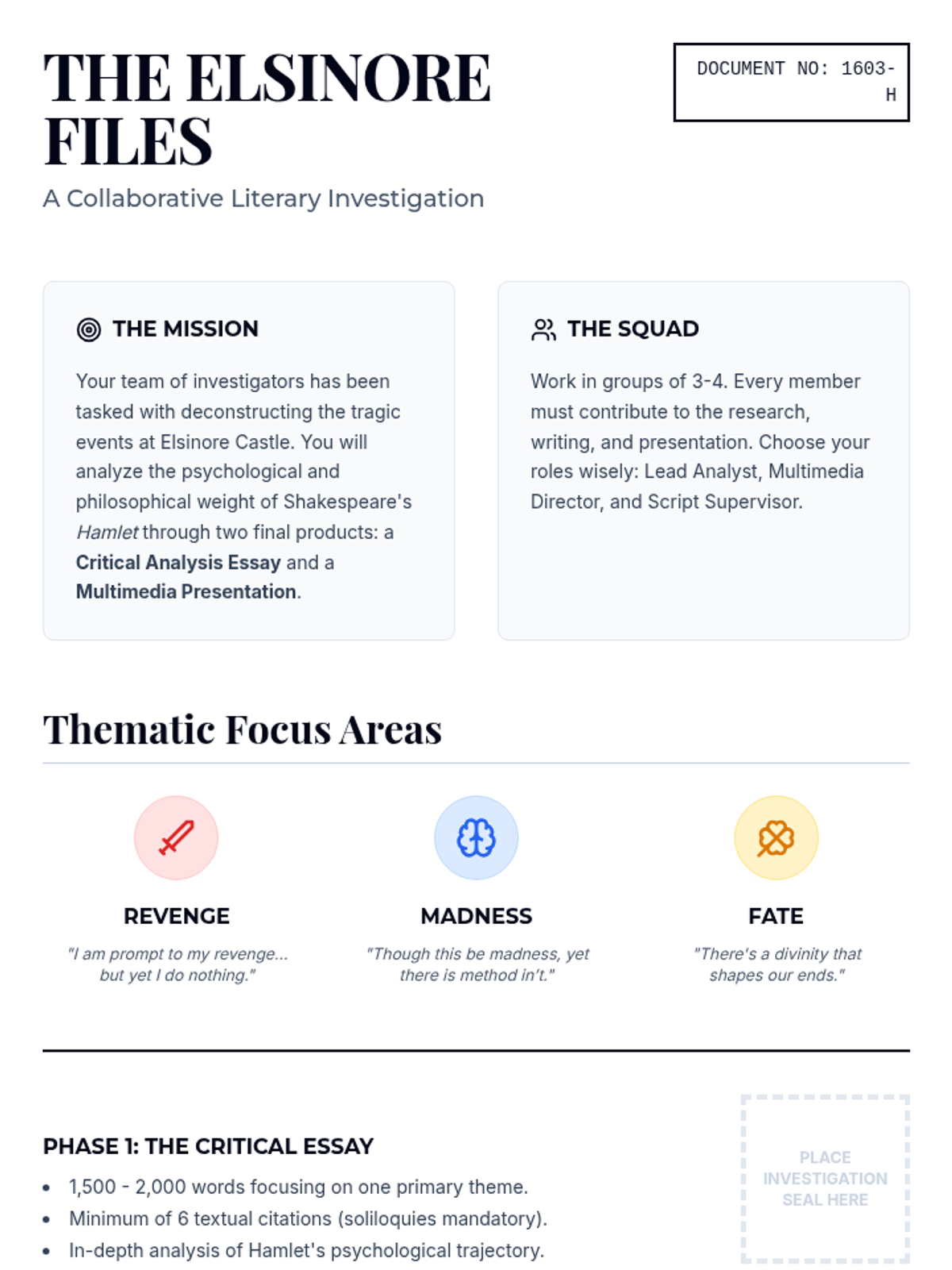
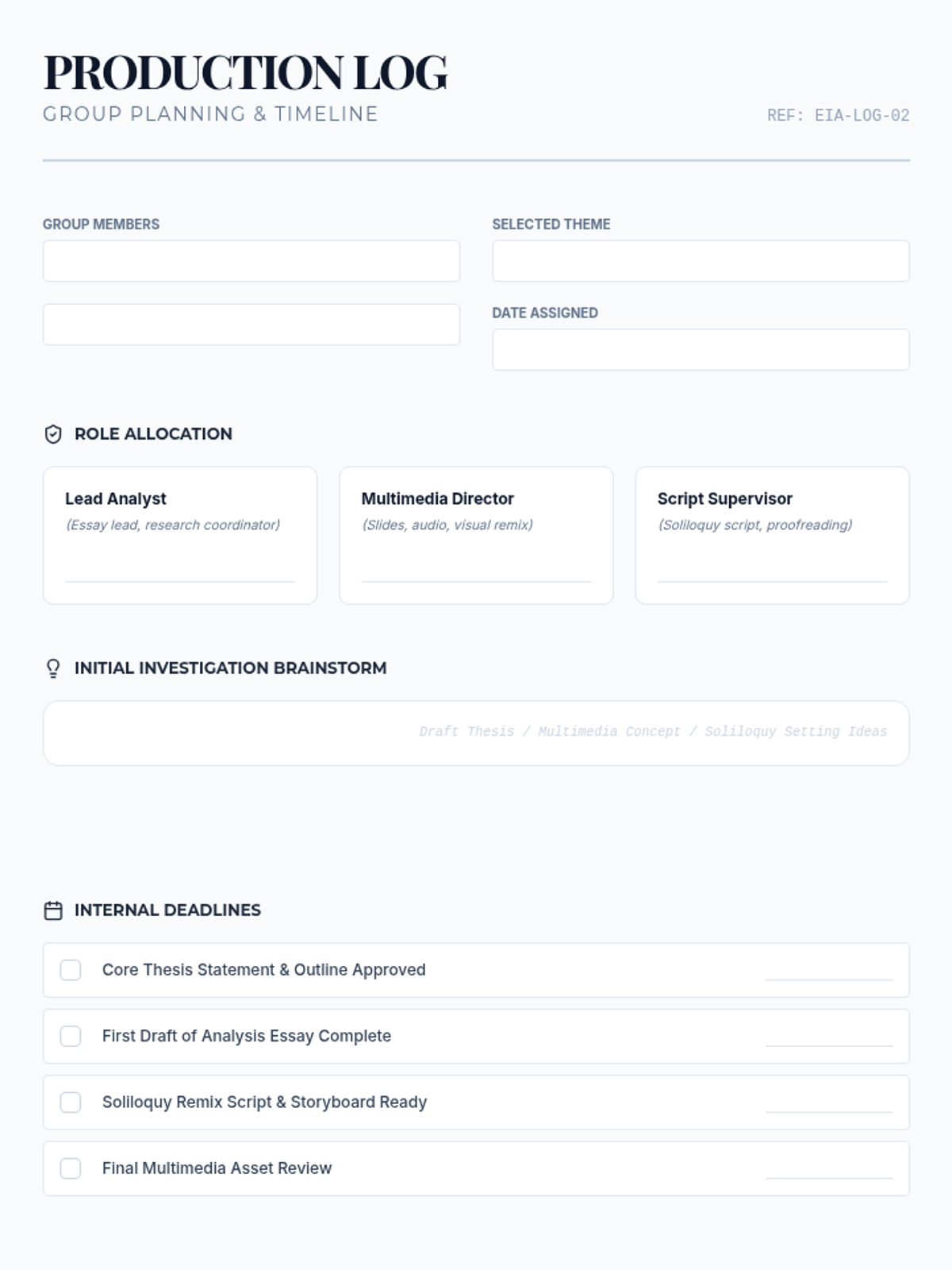
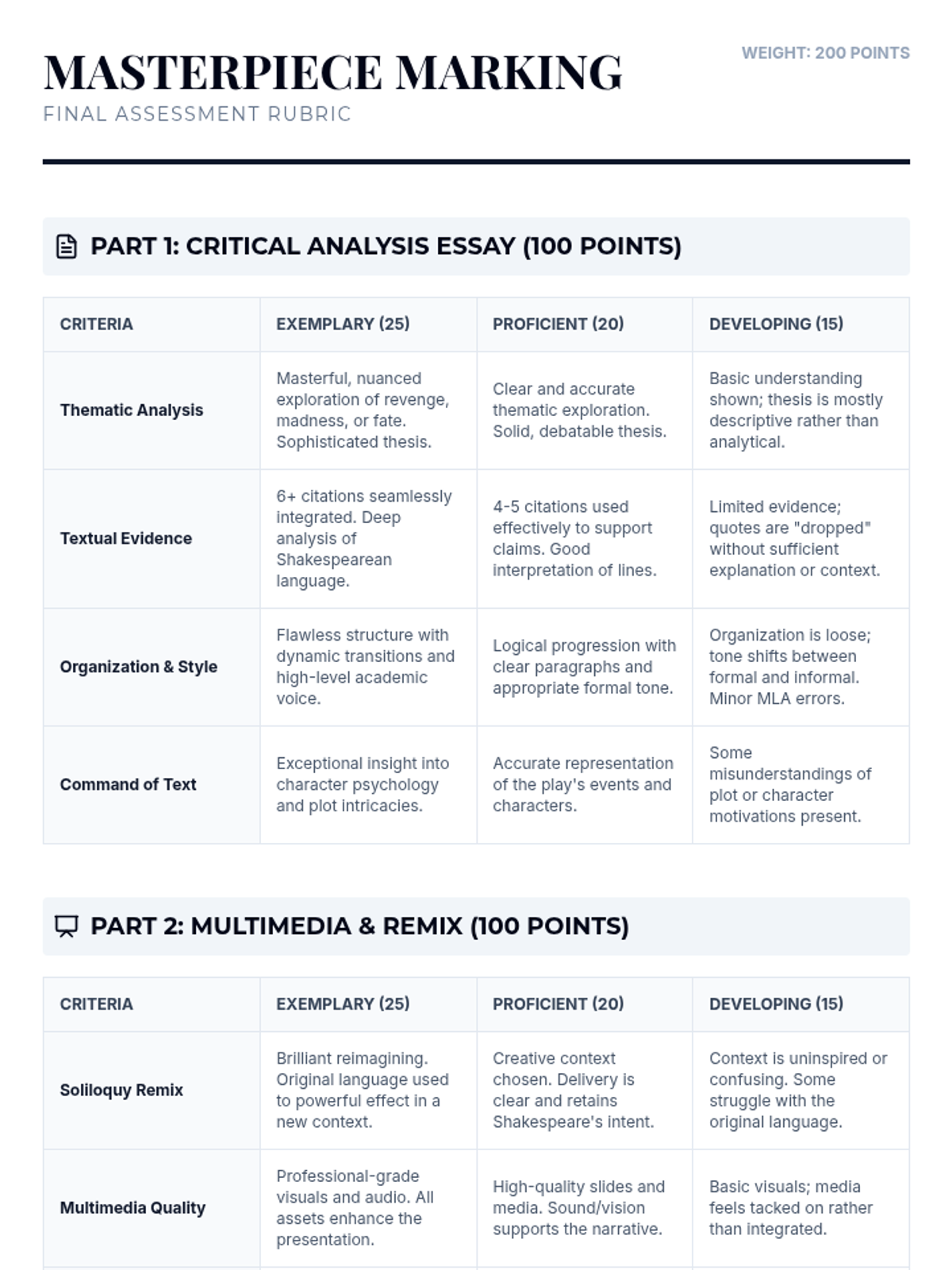
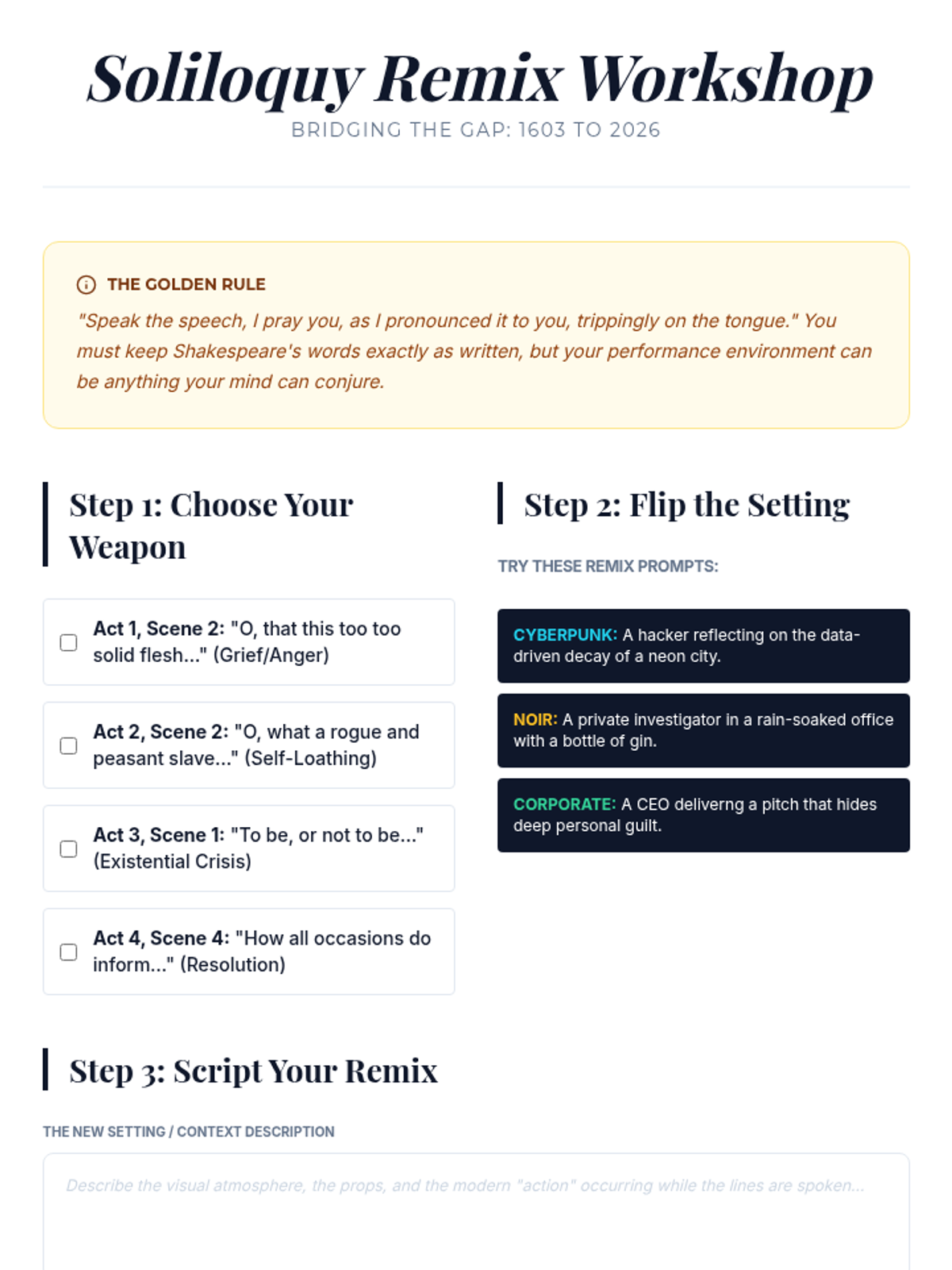
A collaborative project sequence focusing on the themes of revenge, madness, and fate in Shakespeare's Hamlet, culminating in a critical essay and multimedia presentation.
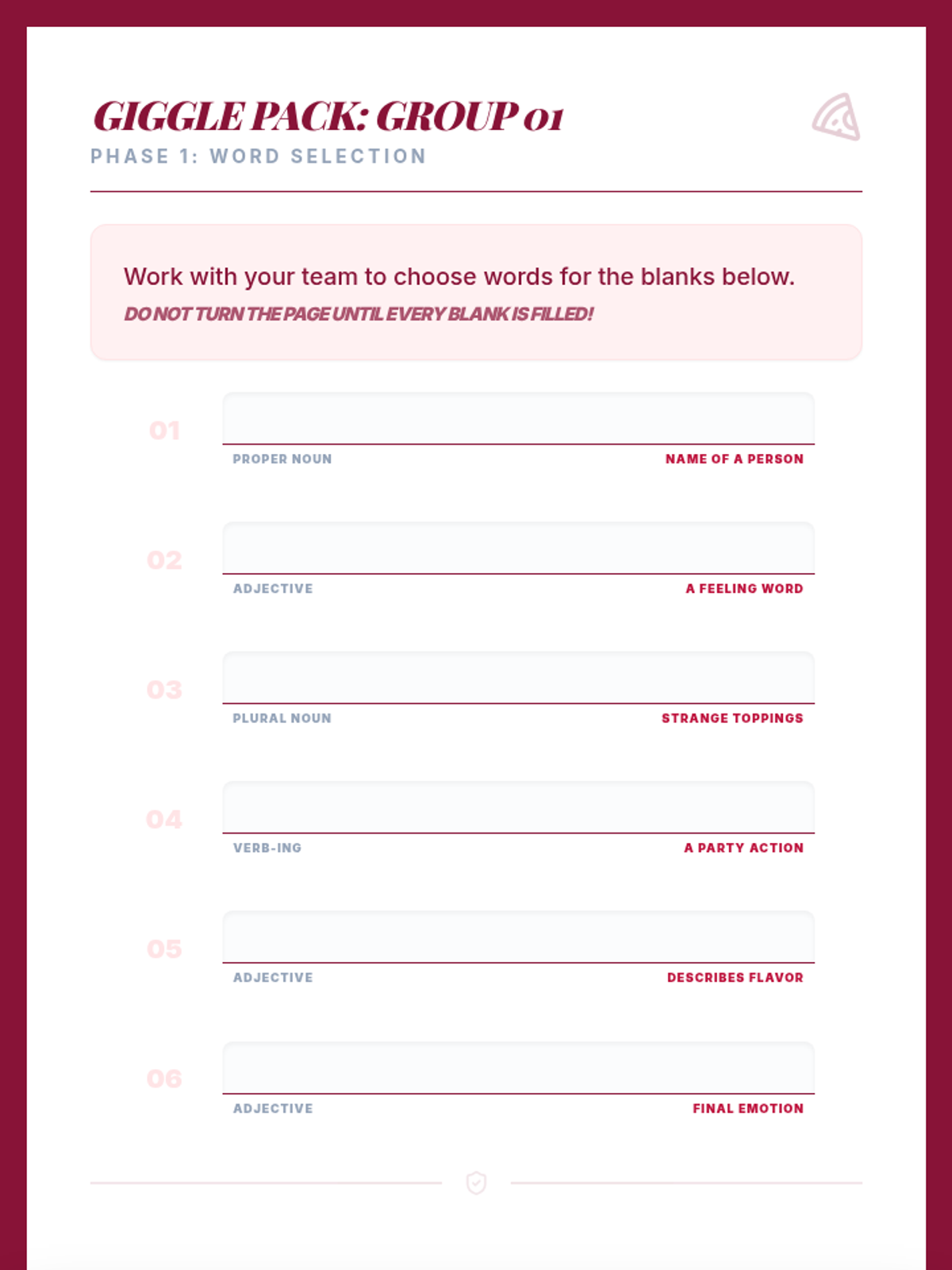
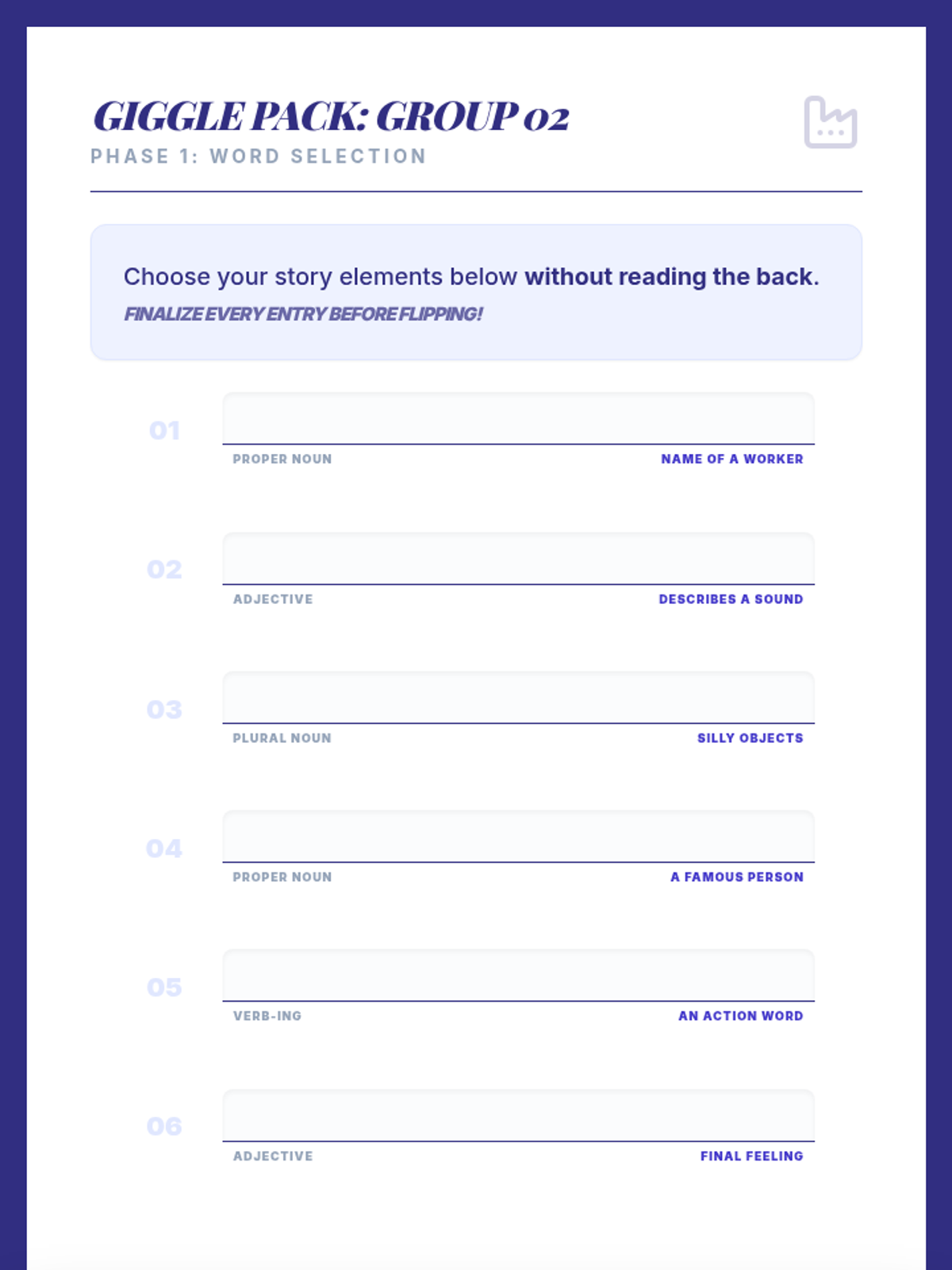
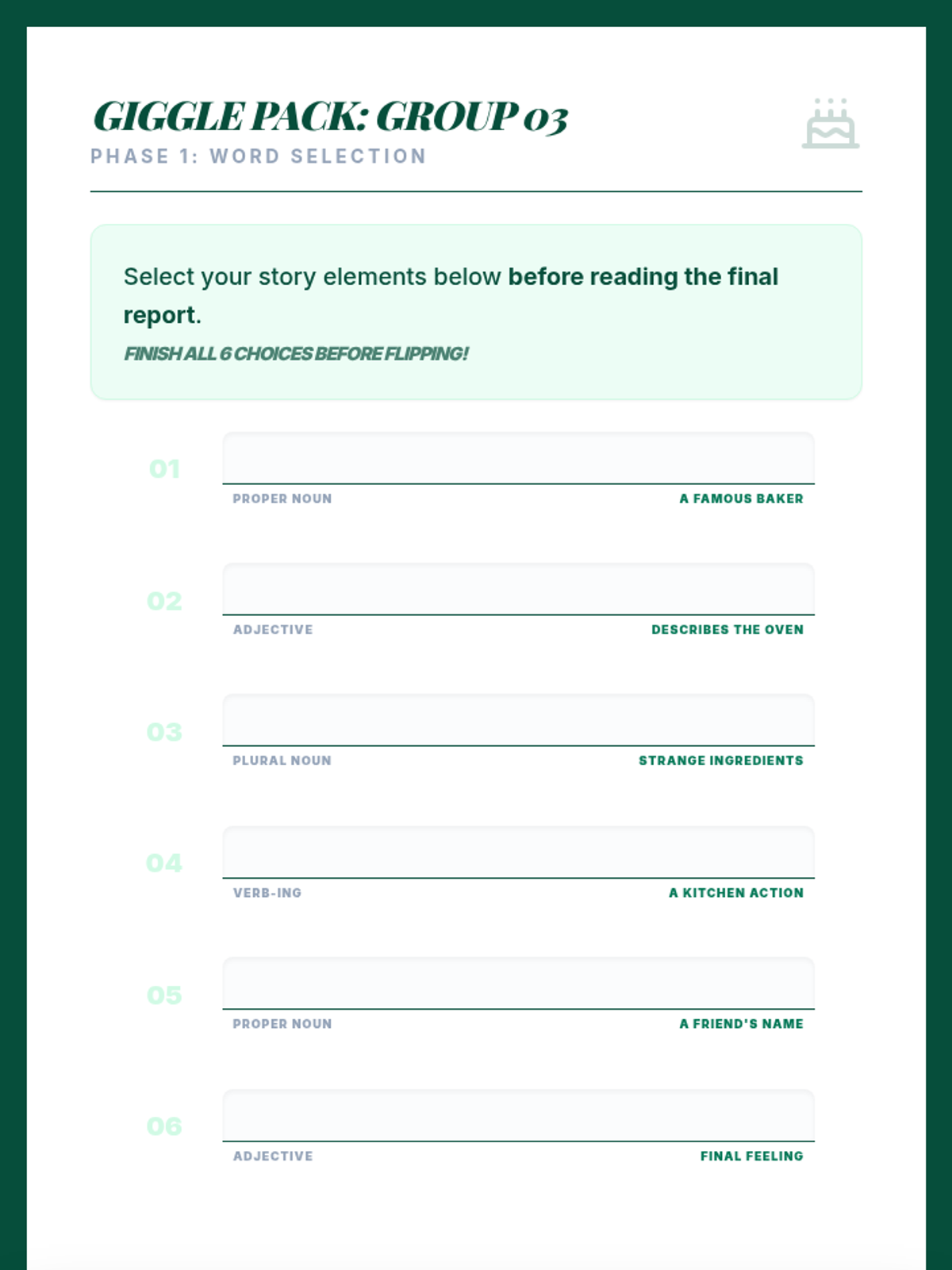
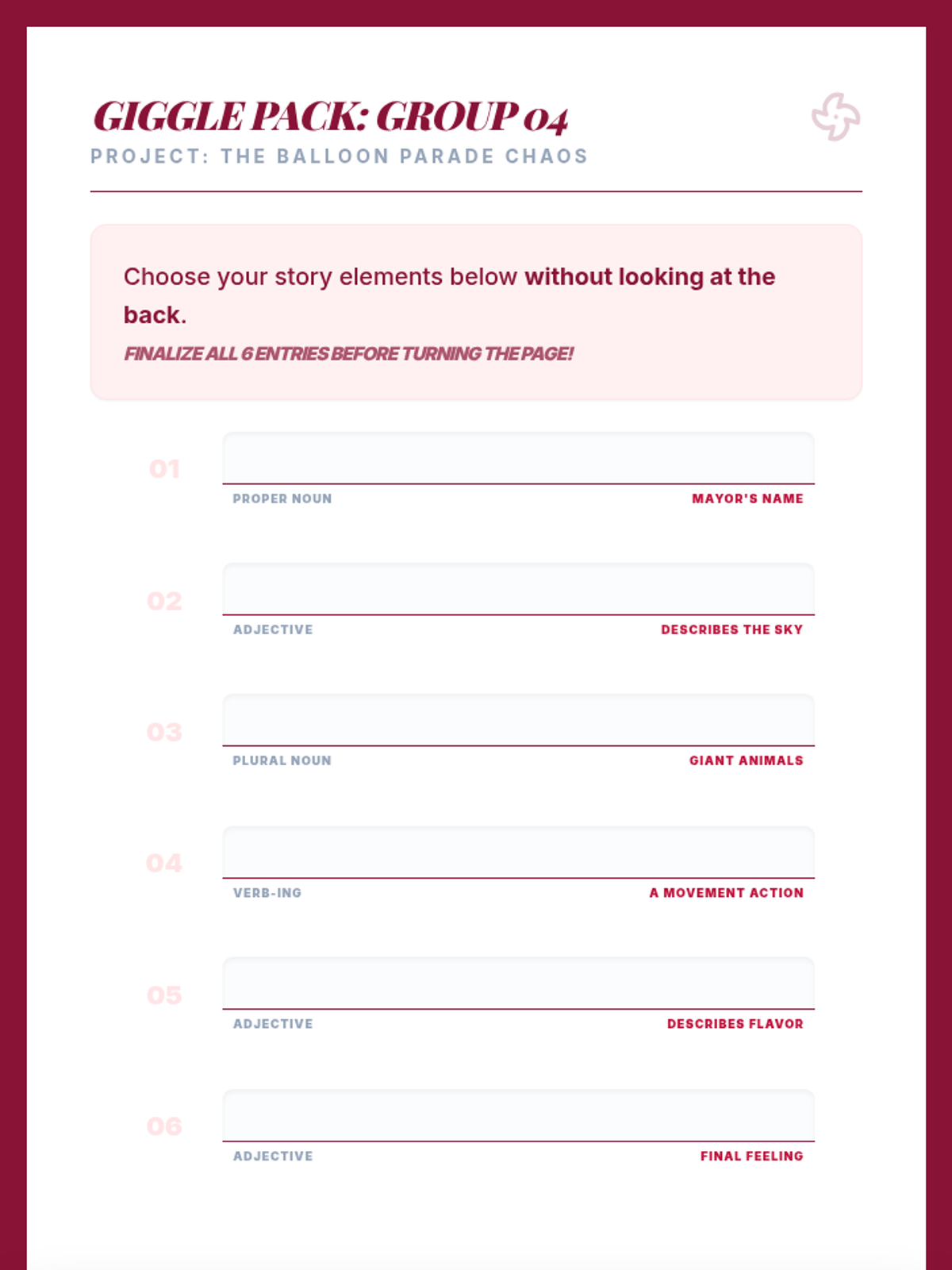
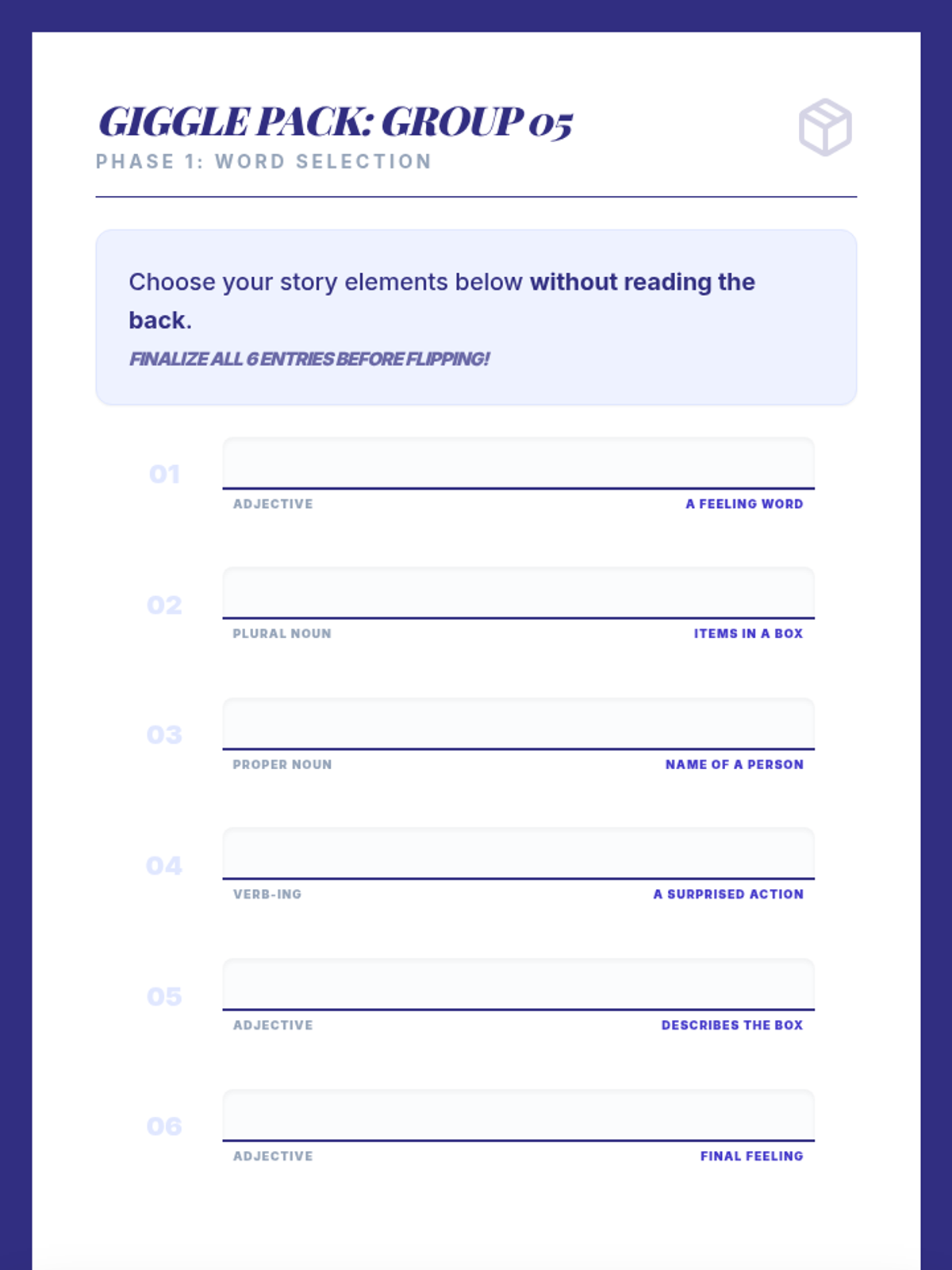
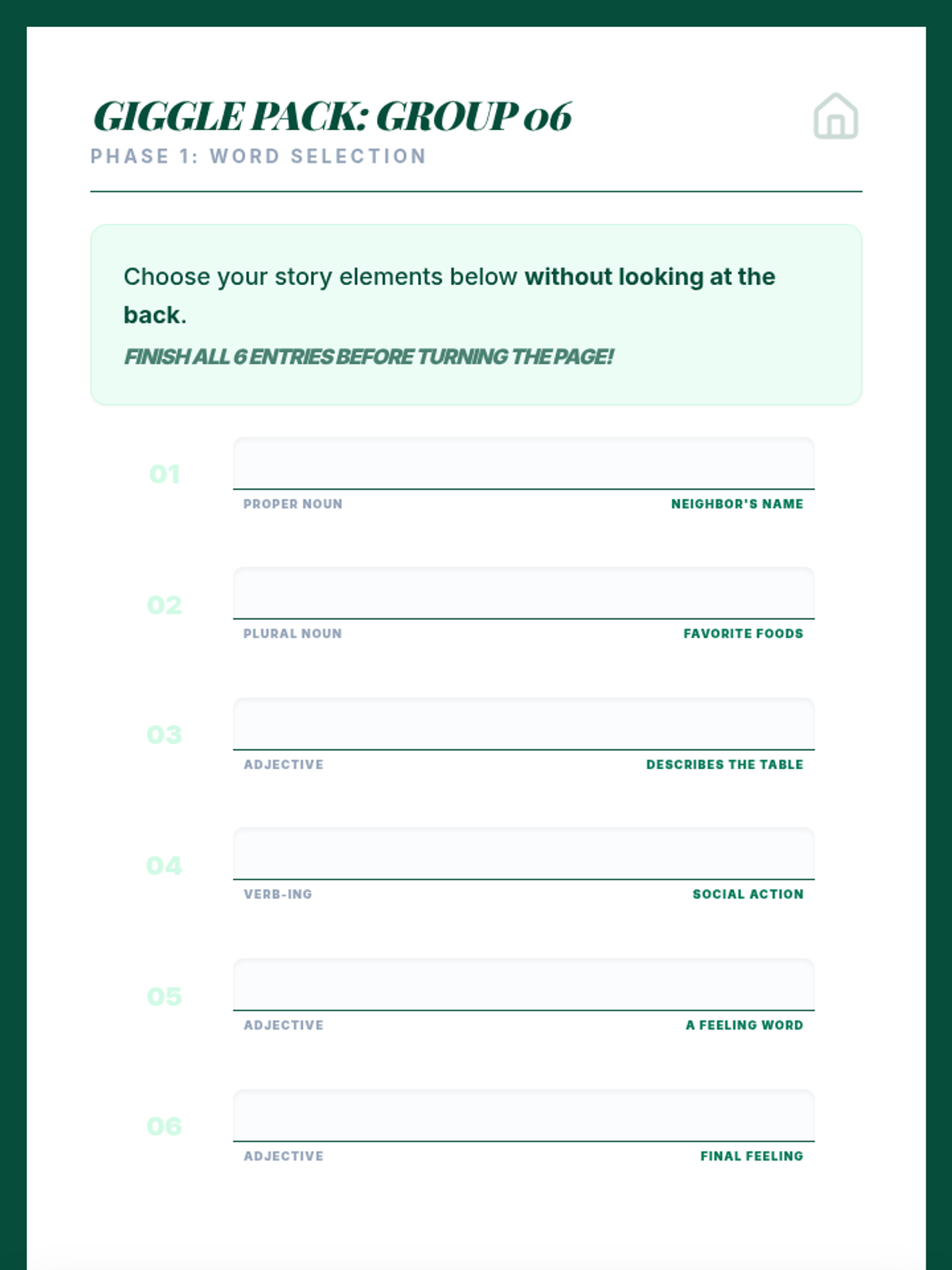
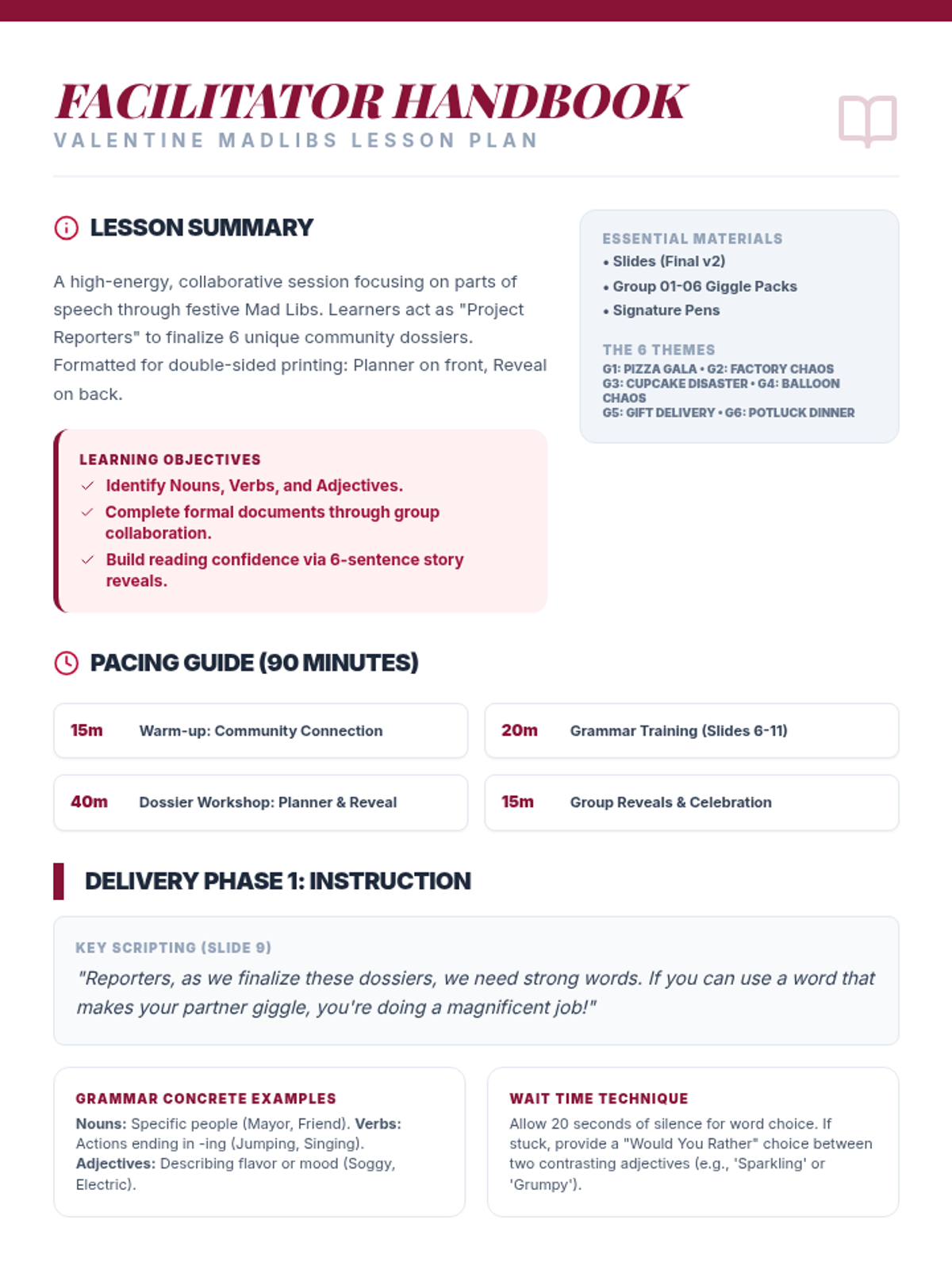
A festive instructional sequence focusing on grammar and collaborative storytelling through adult-appropriate Valentine's Day Madlibs. Includes 6 unique group dossiers, high-legibility slides, and a facilitator guide.
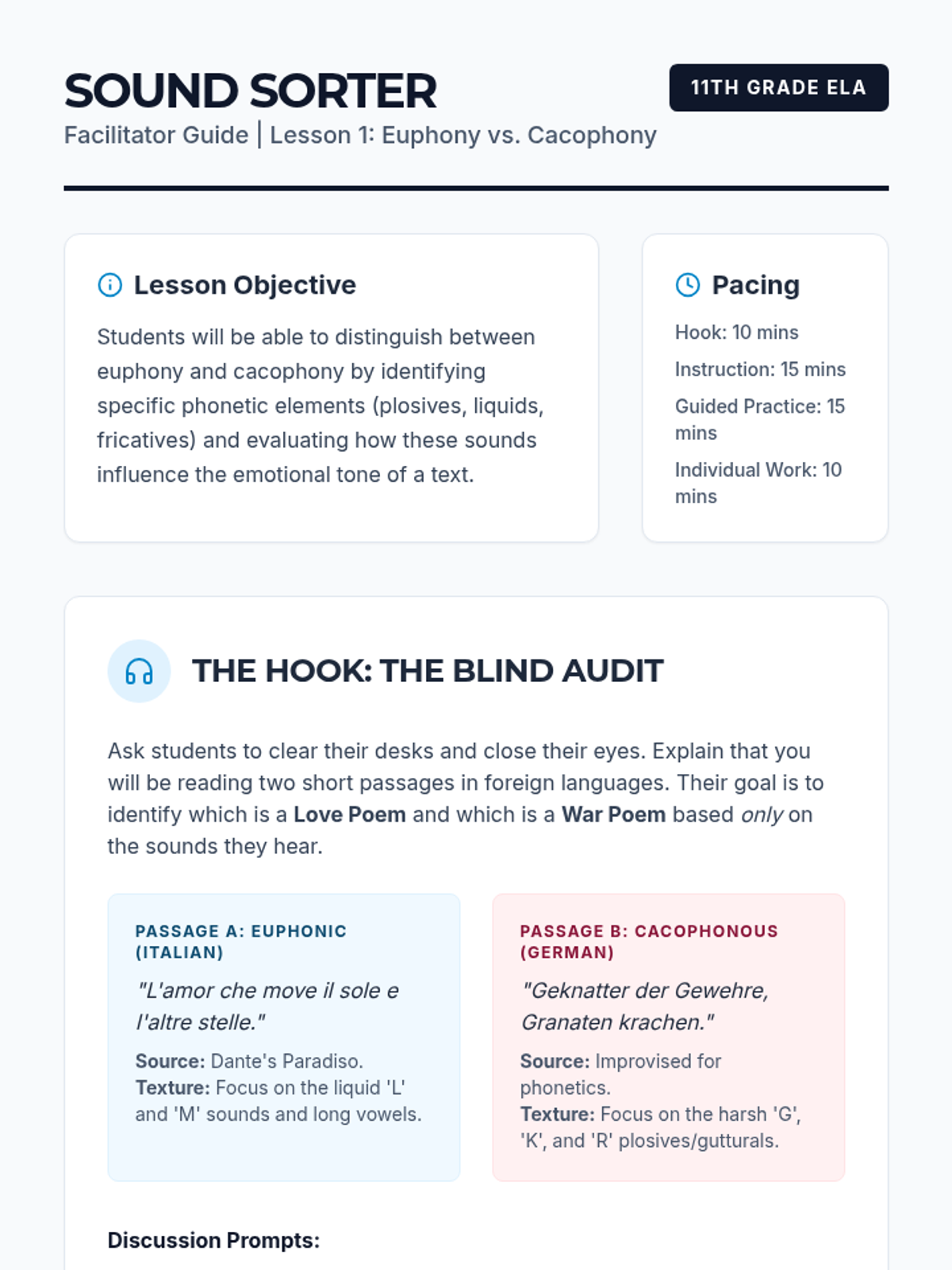
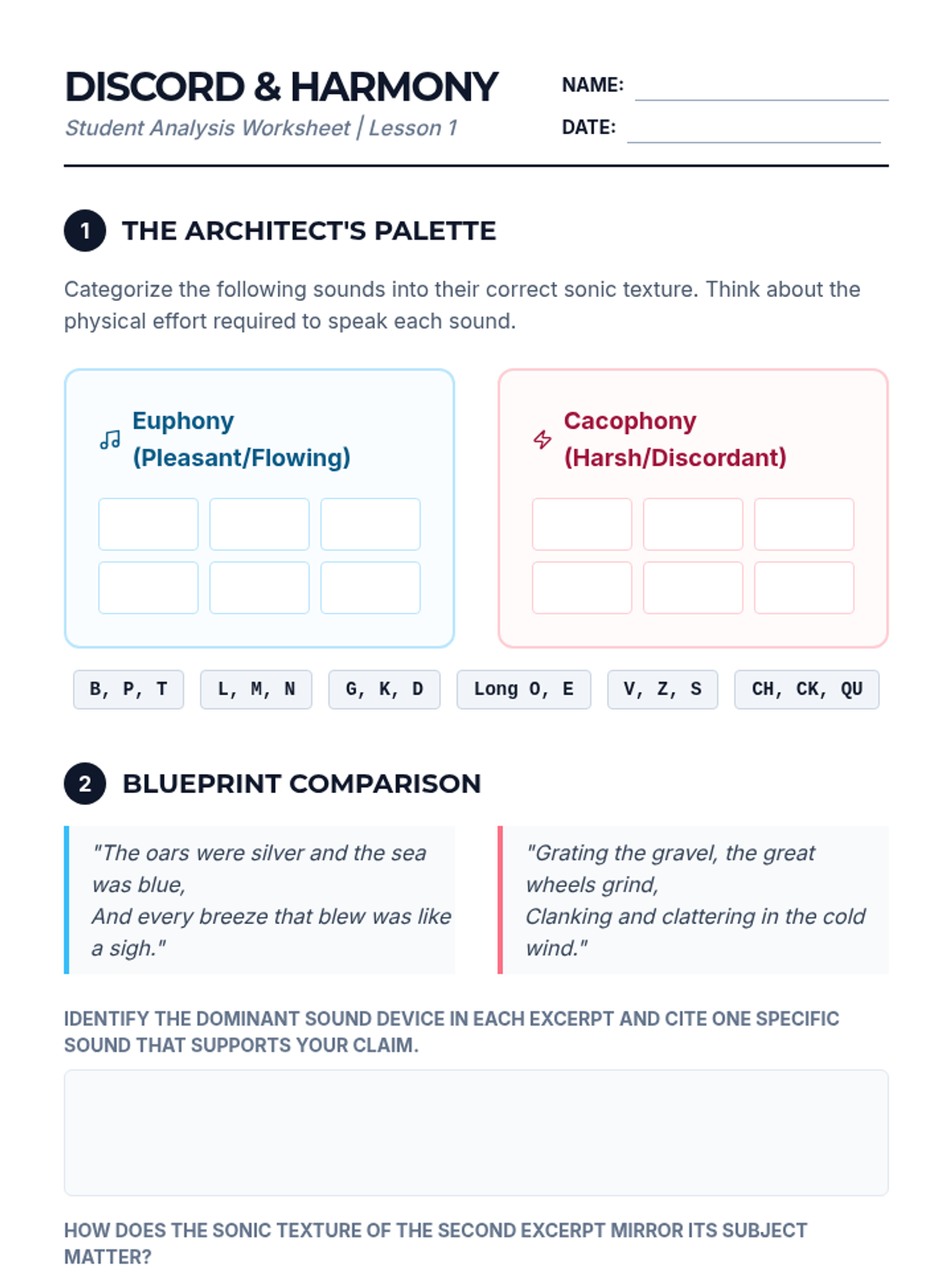
This sequence explores the auditory experience of poetry, focusing on how sound devices like euphony, cacophony, and internal rhyme manipulate emotional responses. Students move from basic identification to complex evaluation of poems as oral traditions designed for the ear.
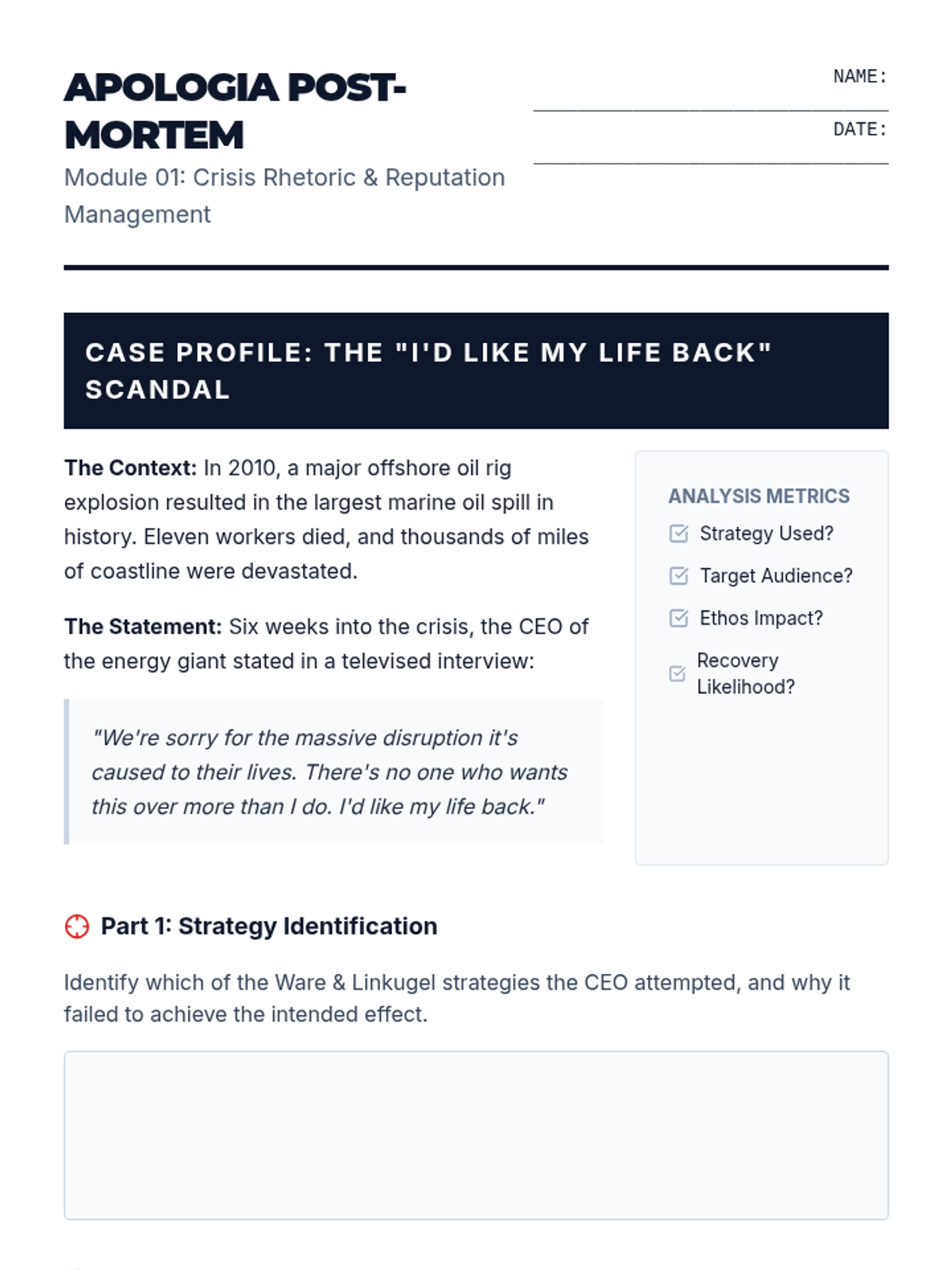
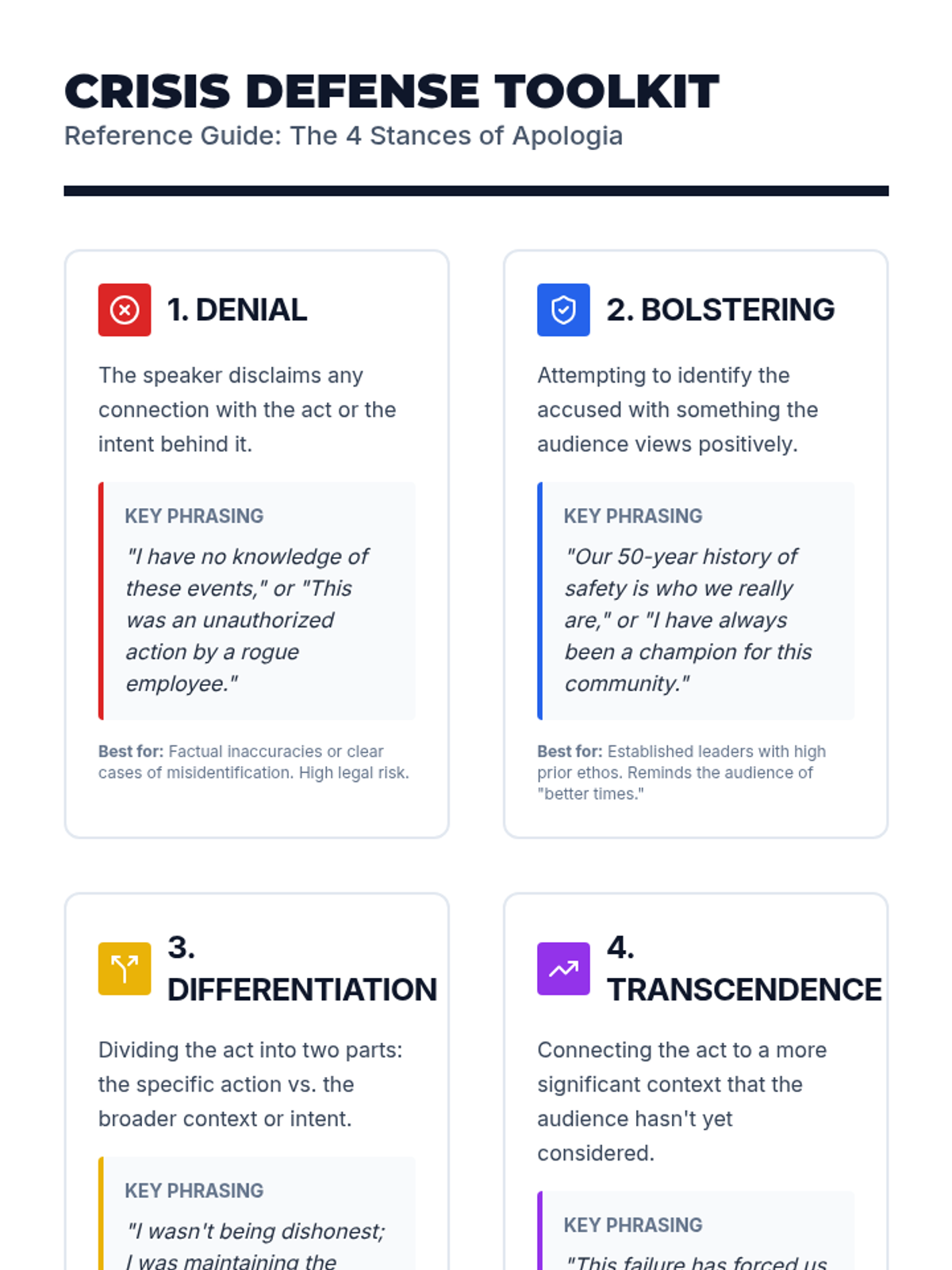
This graduate-level sequence explores the rhetorical strategies of crisis leadership, focusing on the concepts of Ethos, Pathos, and the four stances of Apologia. Students analyze historical crises and engage in simulations to master the art of reputation management under pressure.
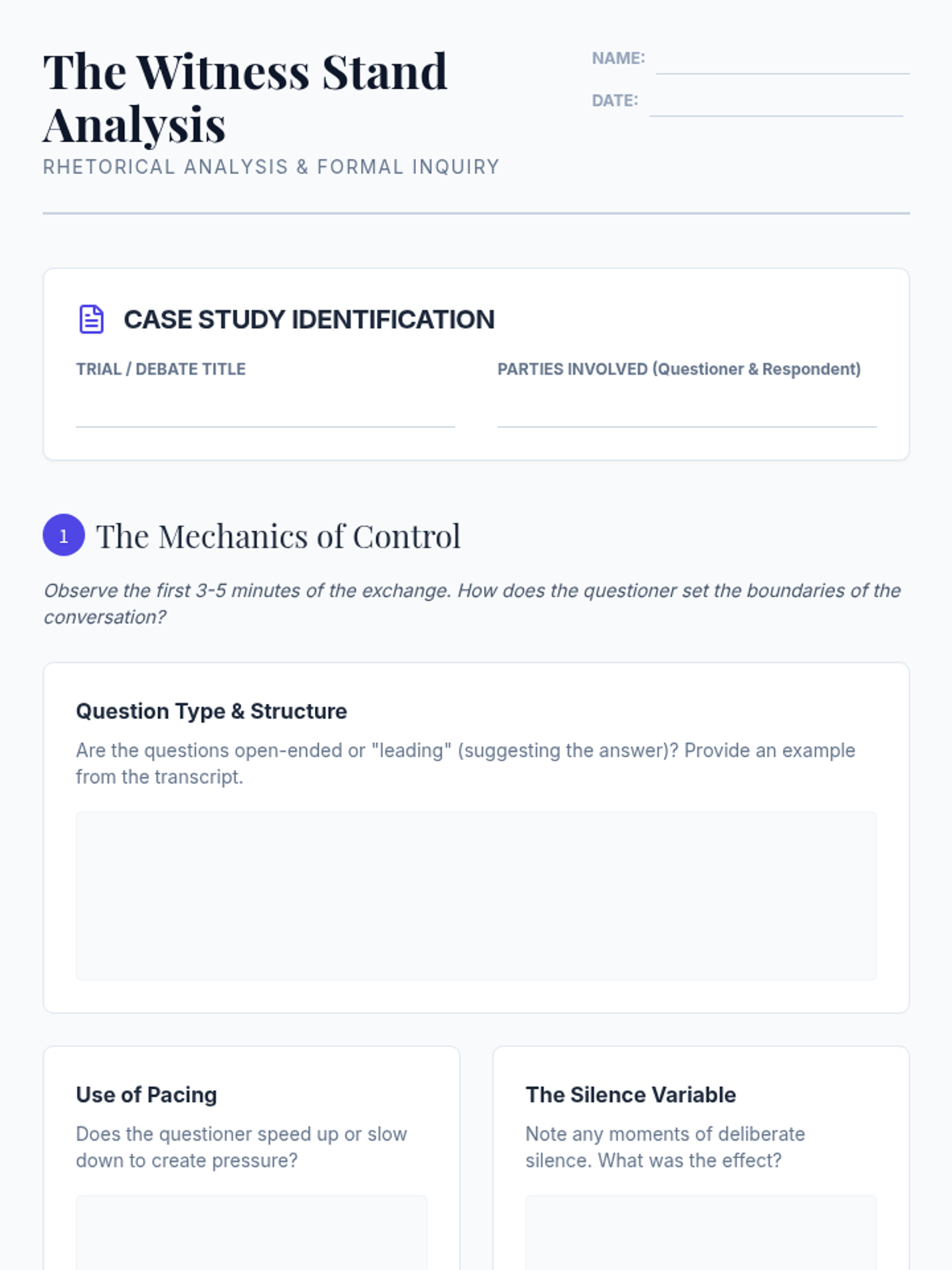
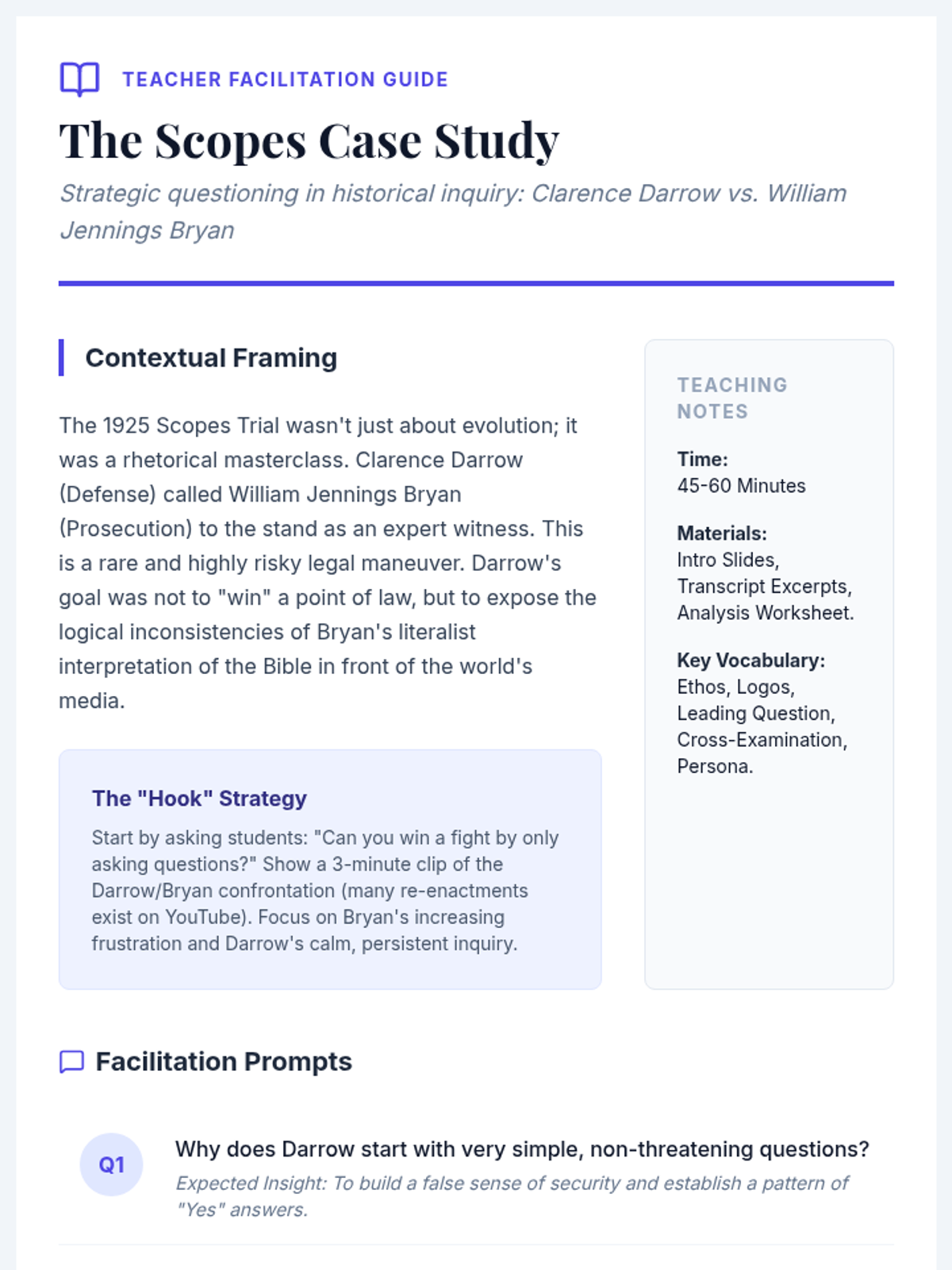
An inquiry-based exploration of rhetorical strategies in questioning. Students analyze historical models, experiment with vocal personas, and master techniques for handling hostile witnesses to prepare for a formal cross-examination showcase.
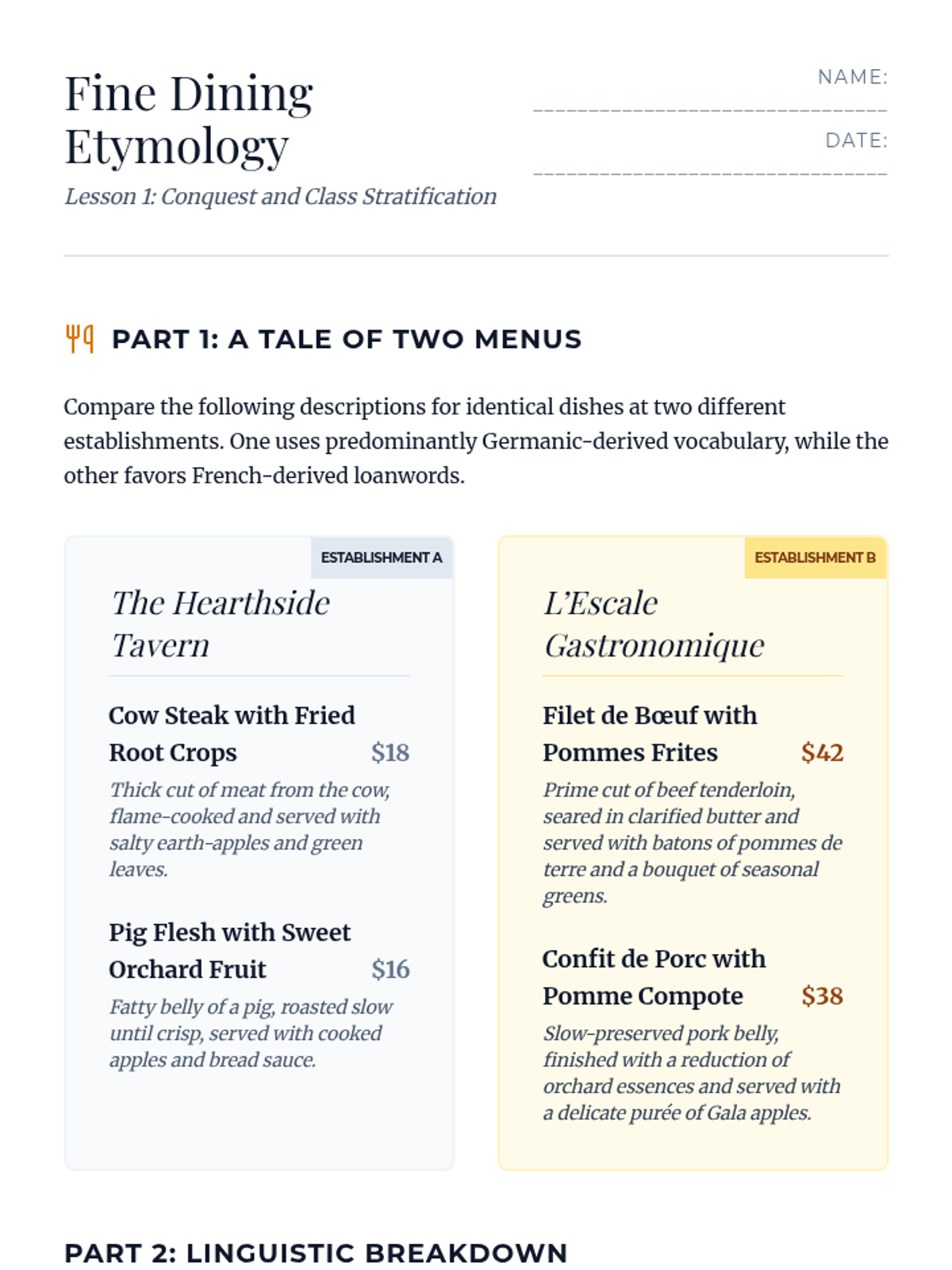
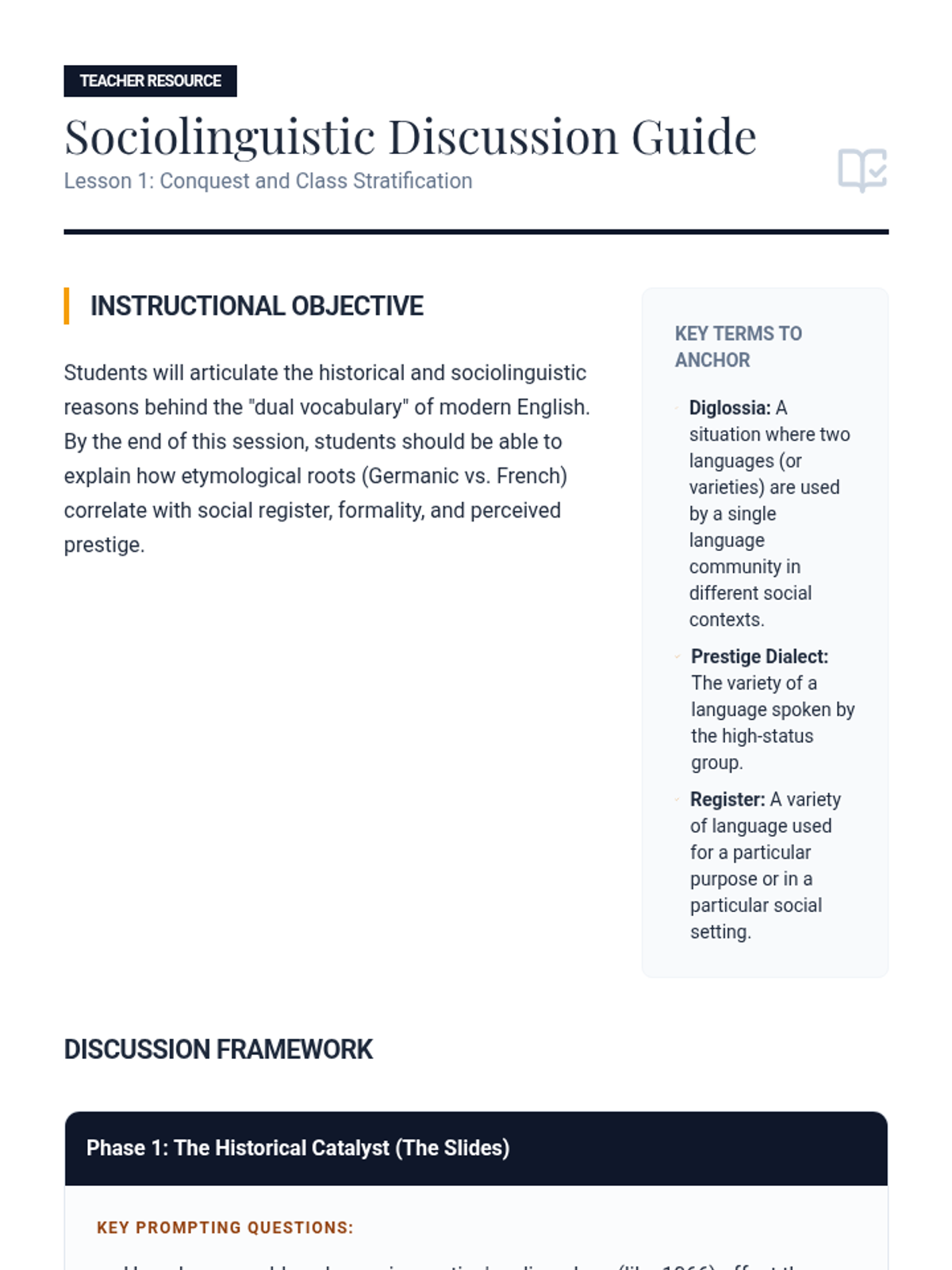
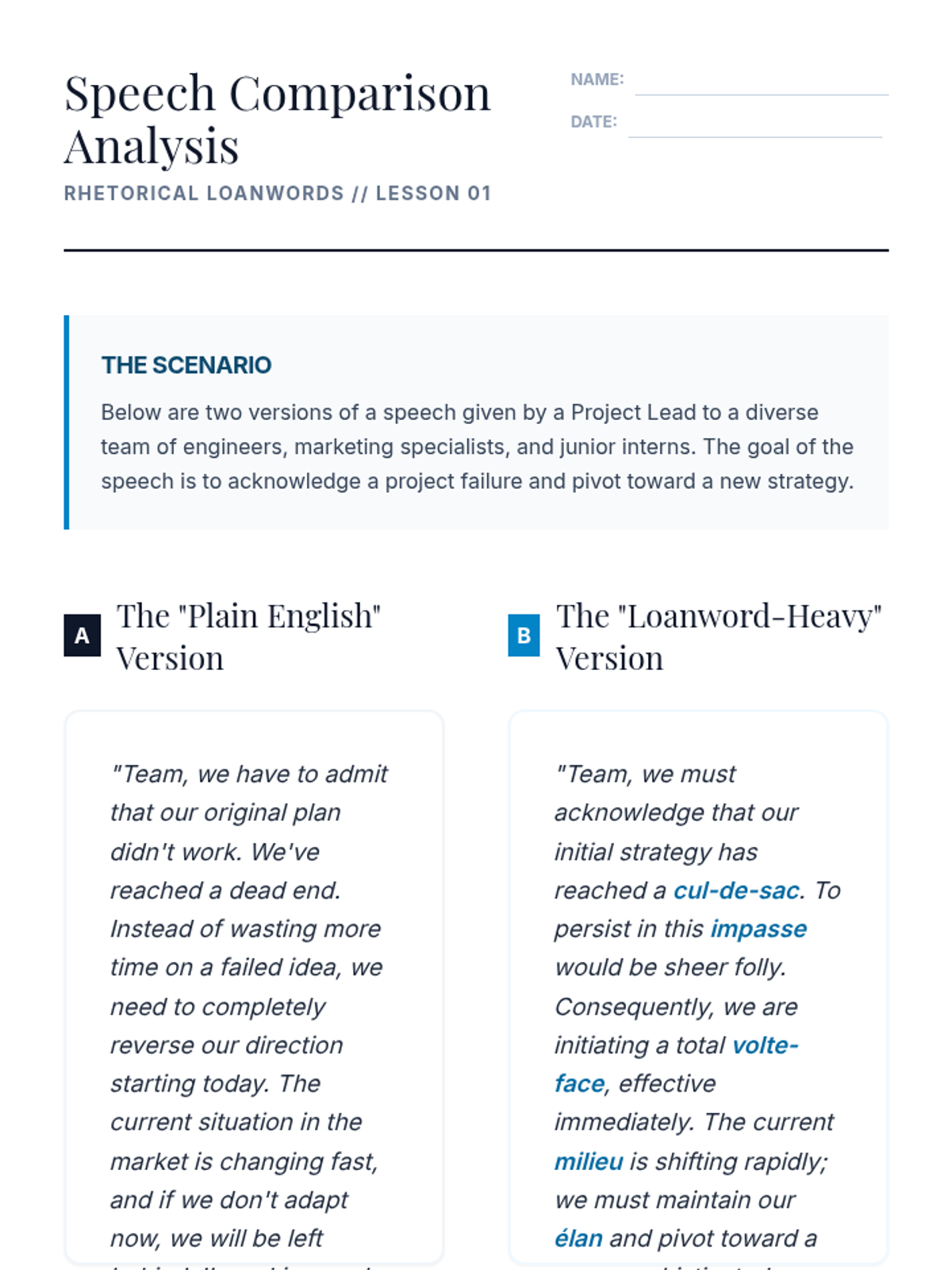
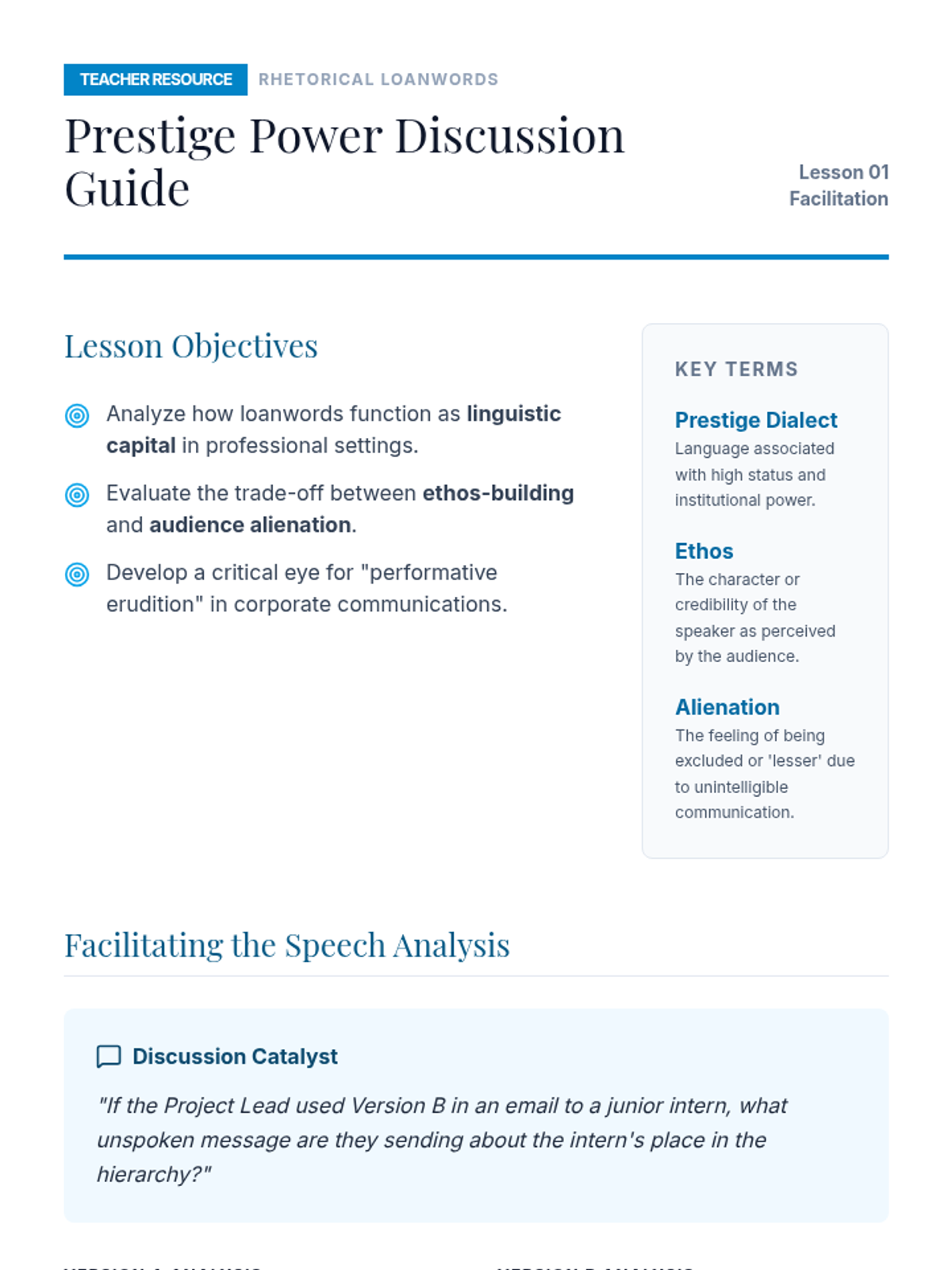
A comprehensive sequence for undergraduate students exploring the sociolinguistic, political, and artistic influence of French loanwords in English, focusing on rhetoric, prestige, and stylistic precision.
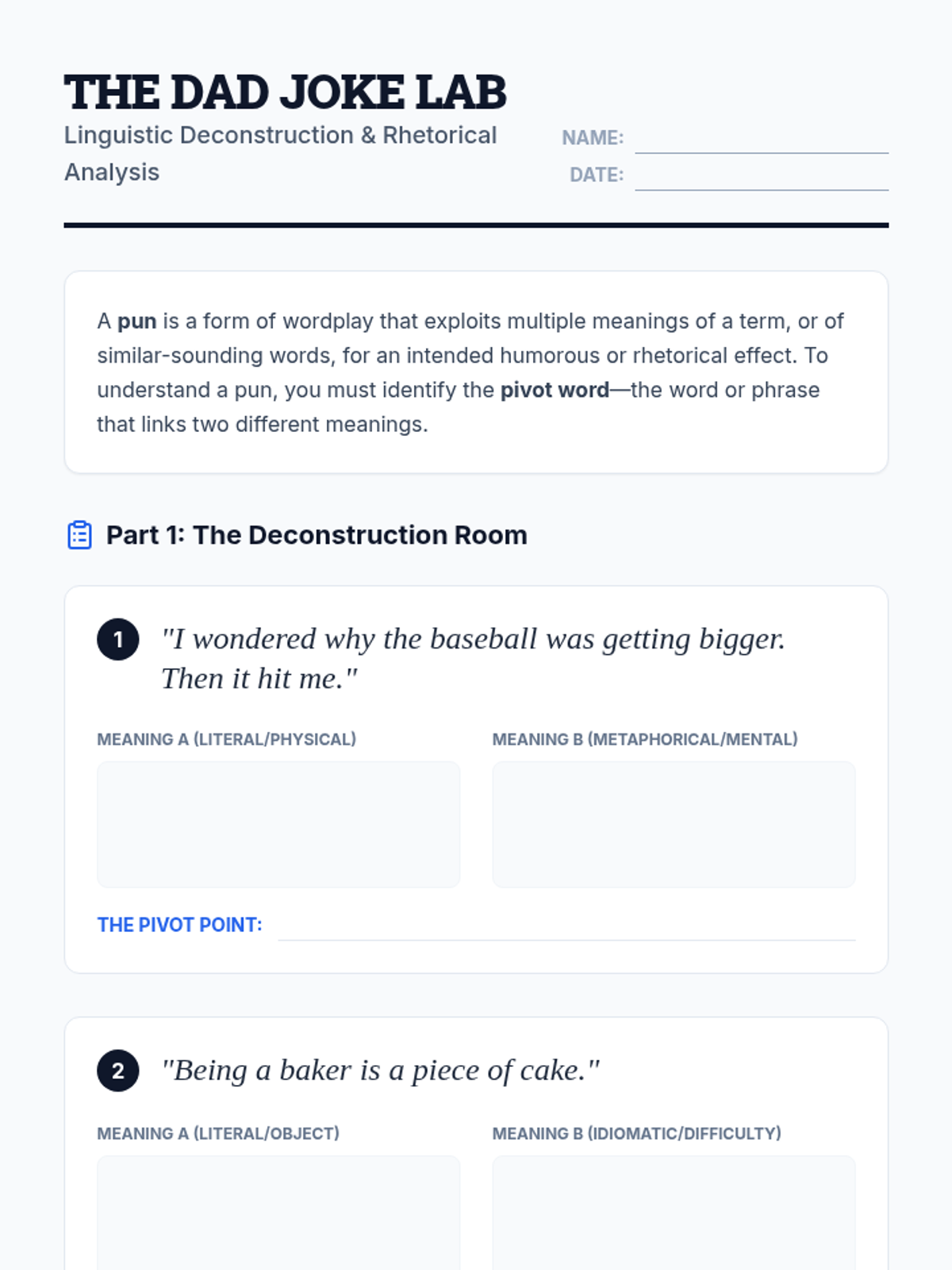
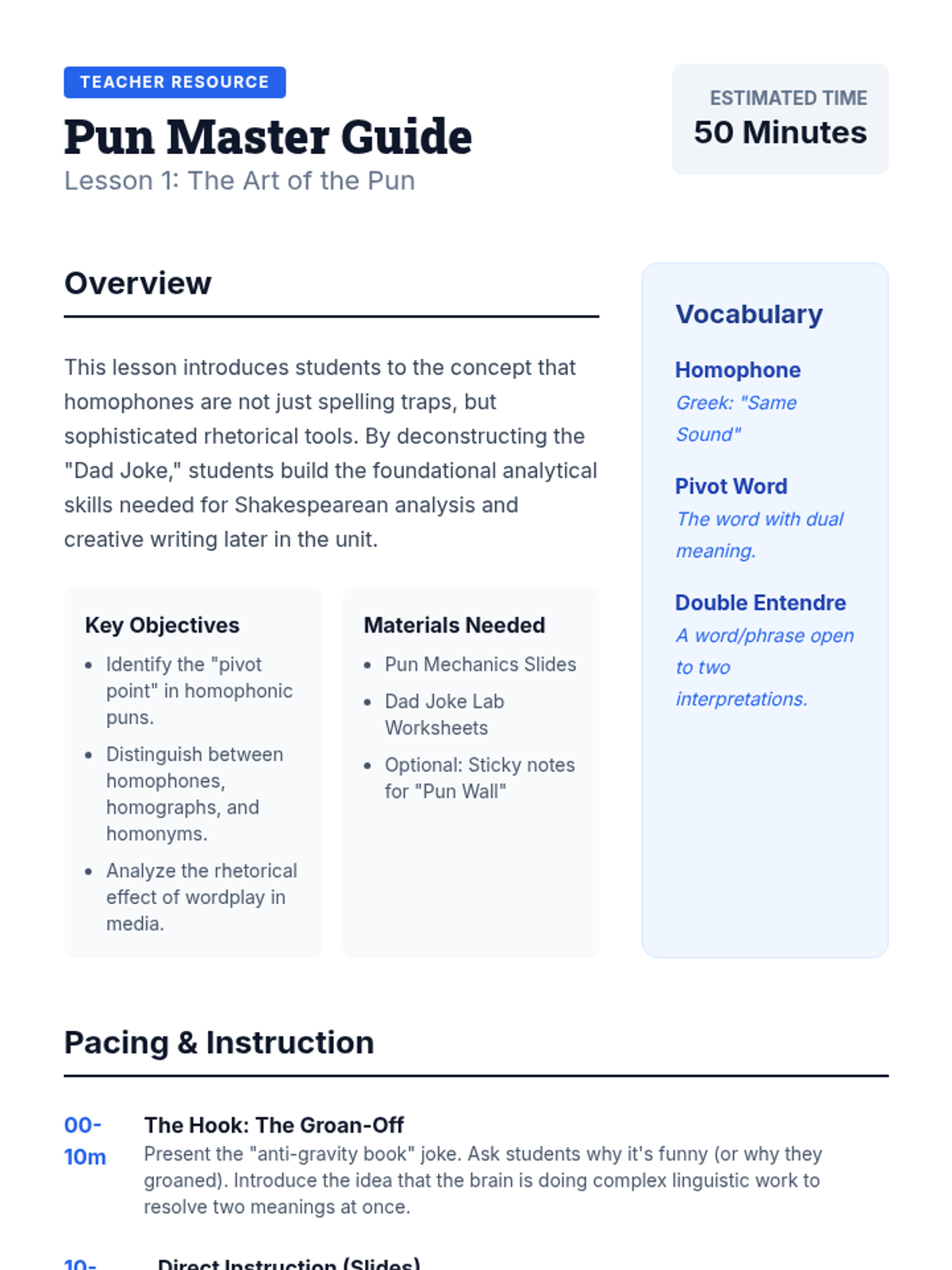
A project-based unit exploring the rhetorical and creative power of homophones. Students analyze puns, Shakespearean wit, and media headlines before crafting their own homophone-centric creative writing.
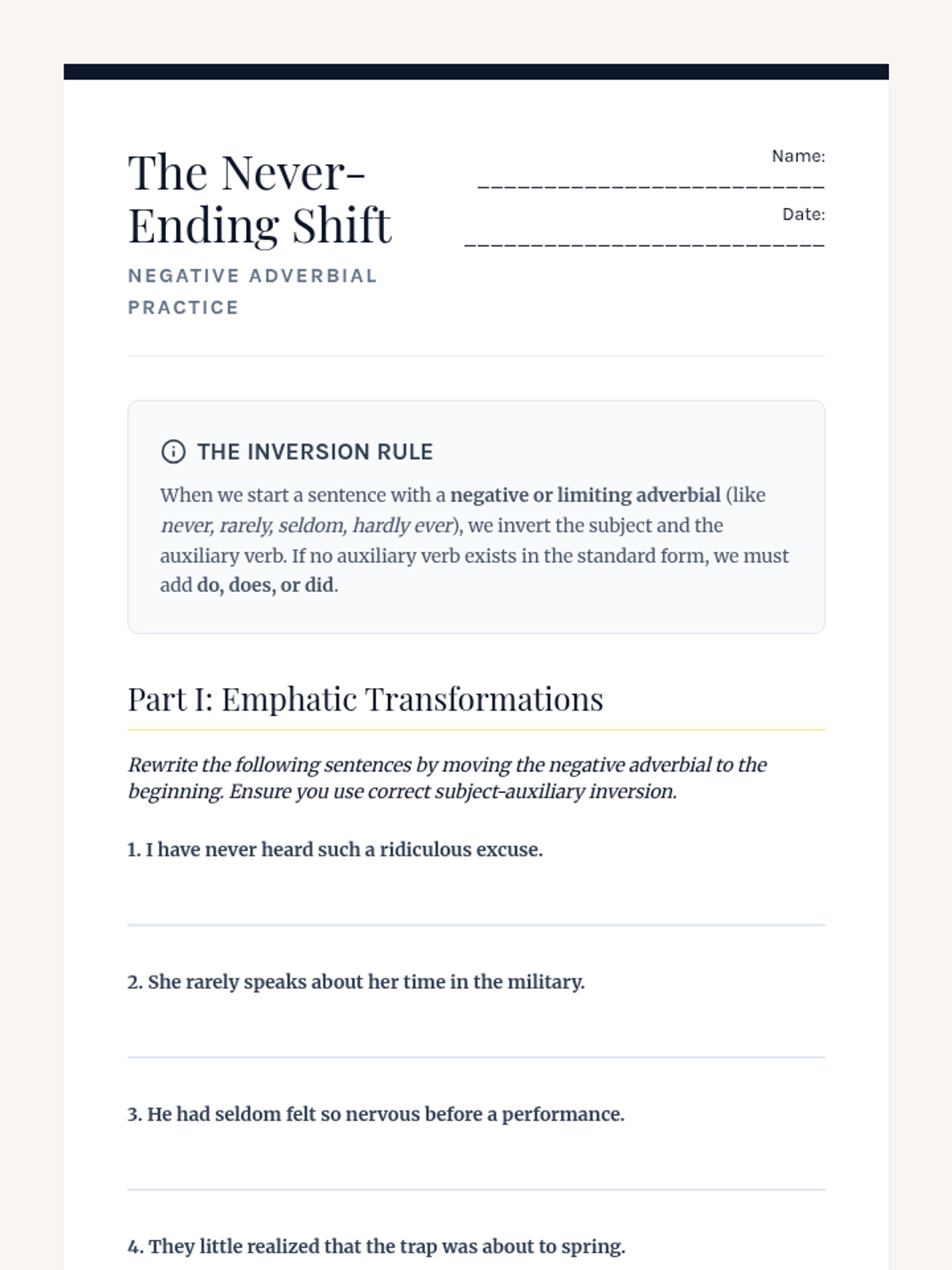
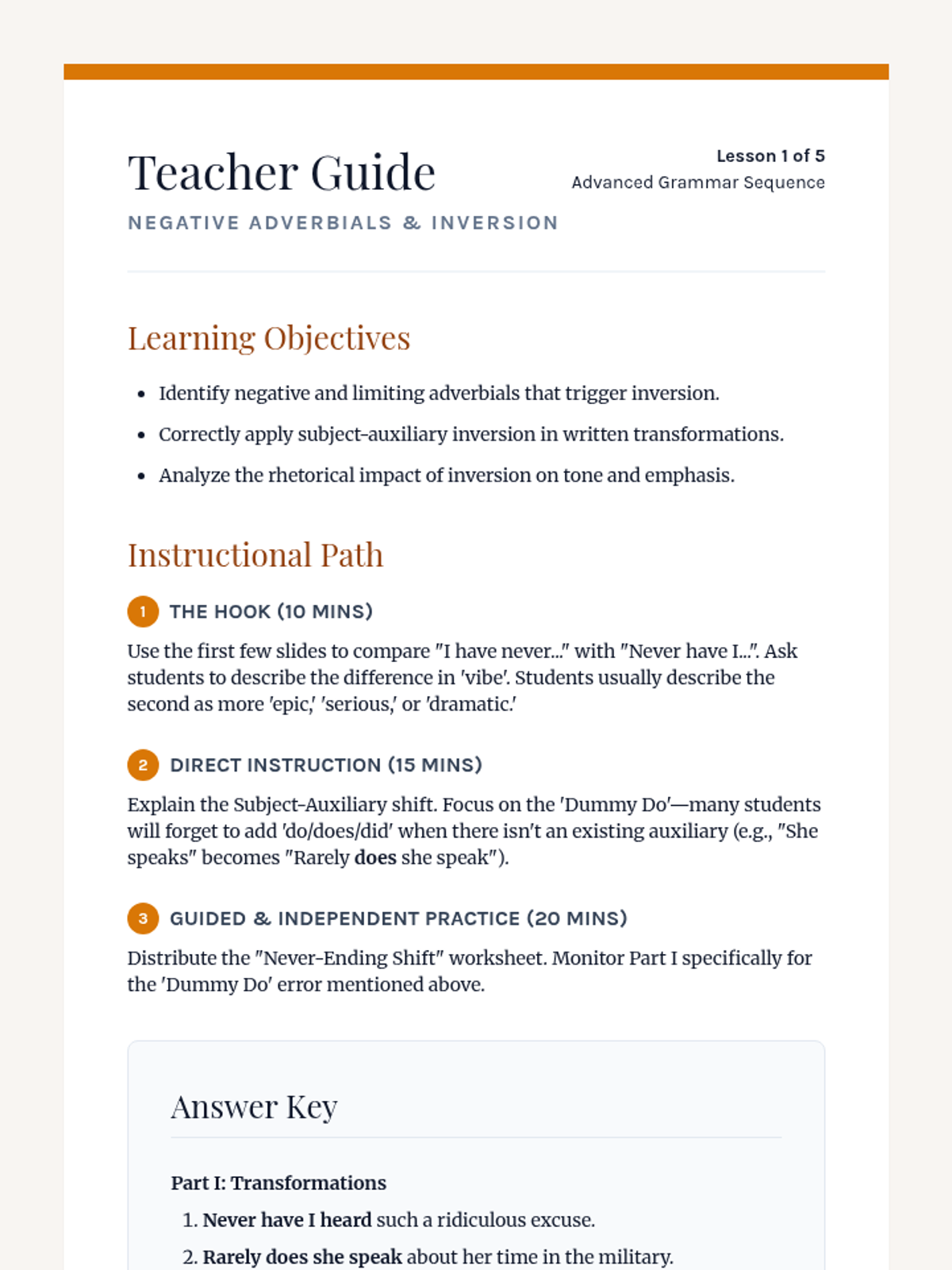
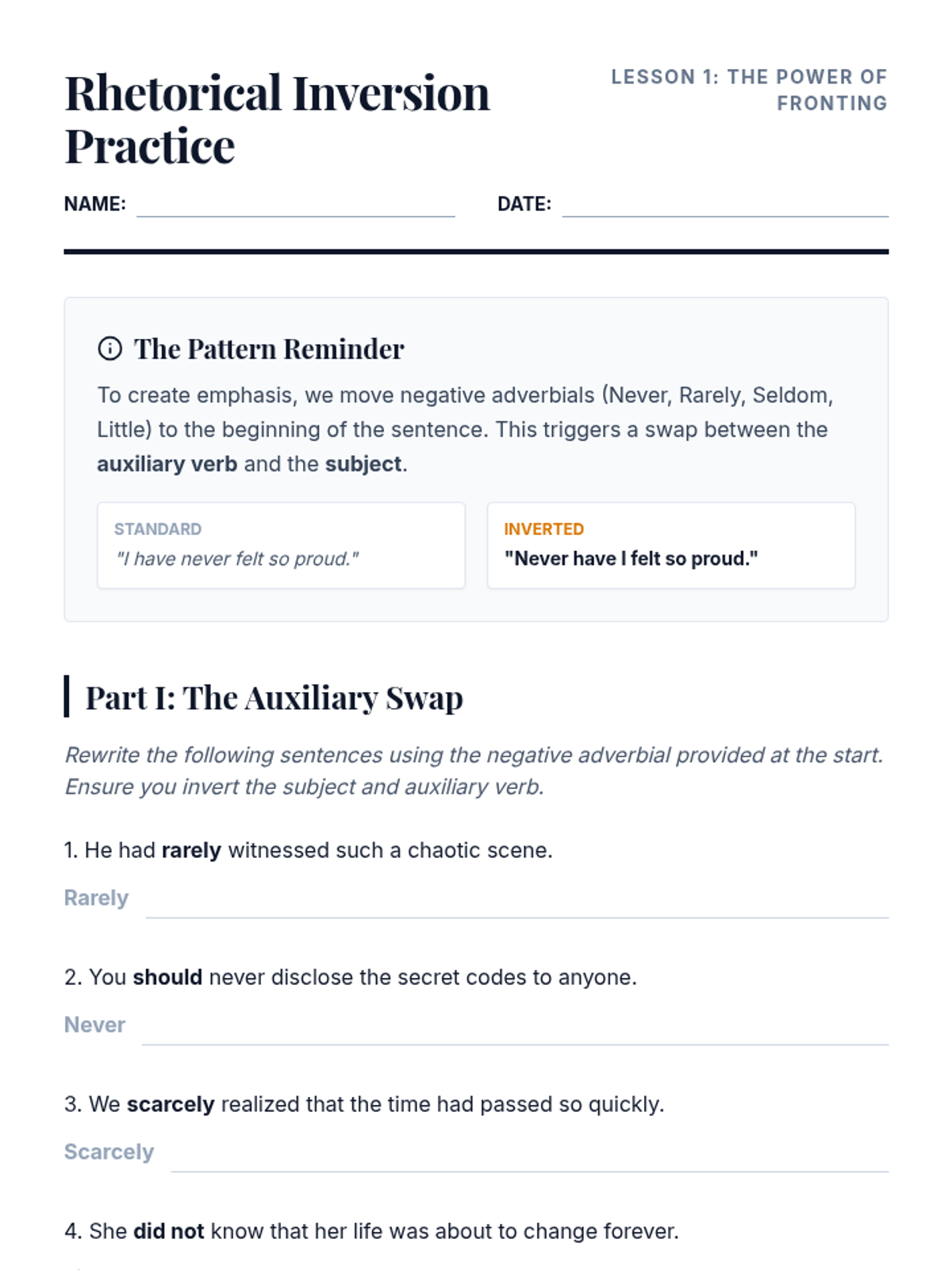
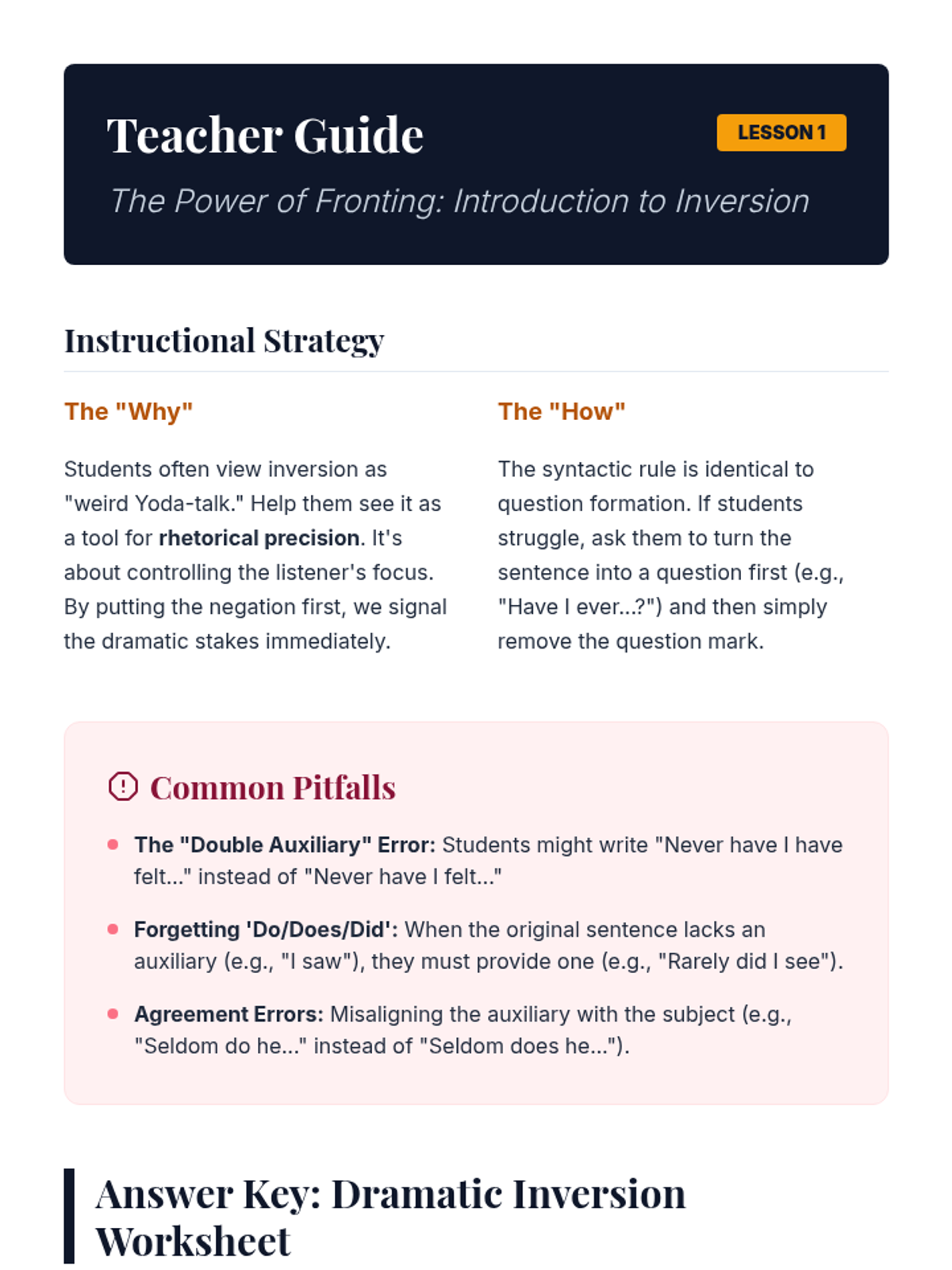
This workshop-style sequence focuses on the power of syntax manipulation, specifically inversion, to add emphasis and dramatic flair to writing. Students move from standard sentence structures to sophisticated inverted forms using negative adverbials, limiting phrases, and cleft sentences.
A high-level grammar and rhetoric sequence for 9th-grade advanced students, focusing on negative inversion, cleft sentences, and emphatic structures to enhance persuasive writing and speaking.
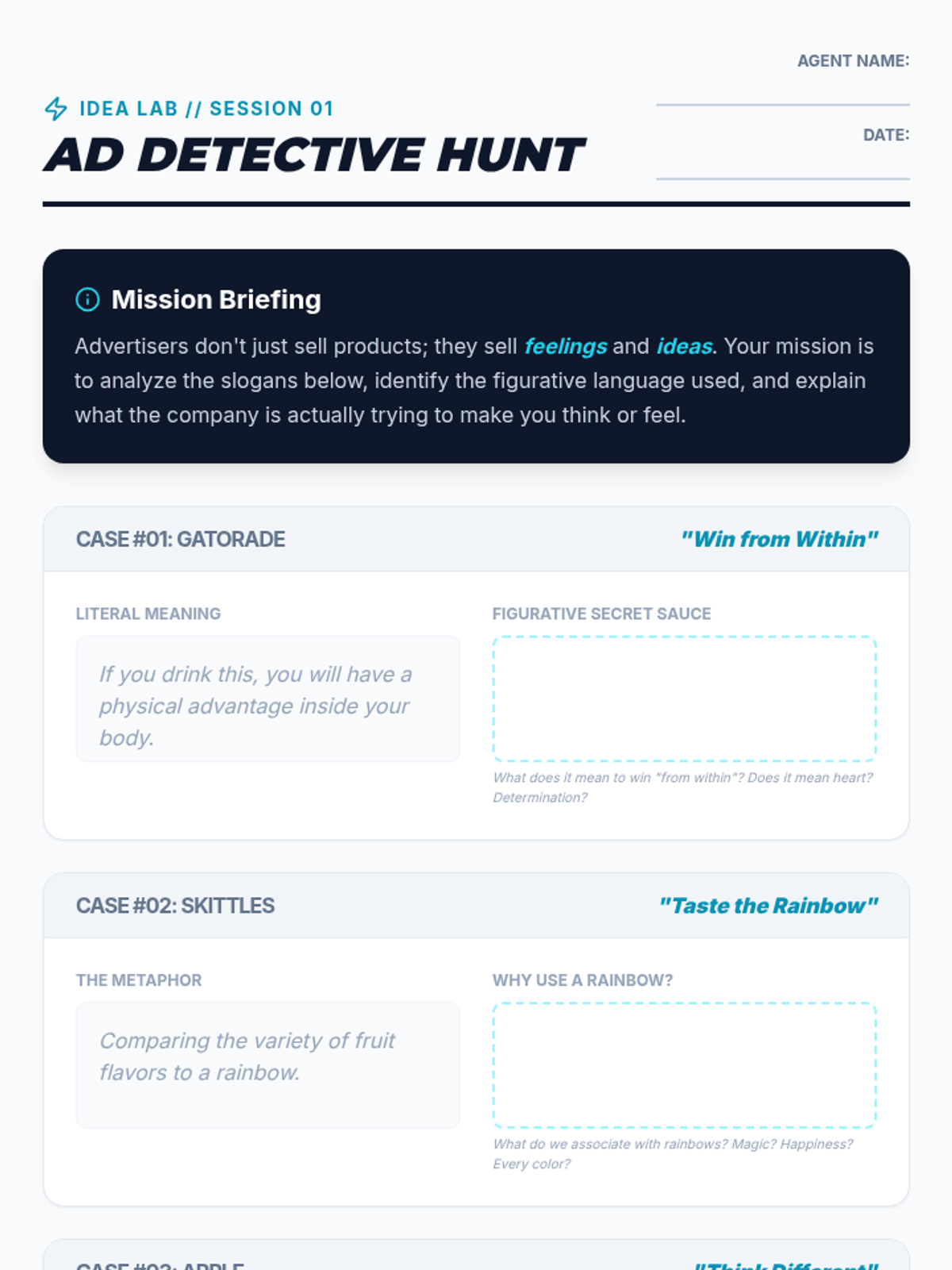
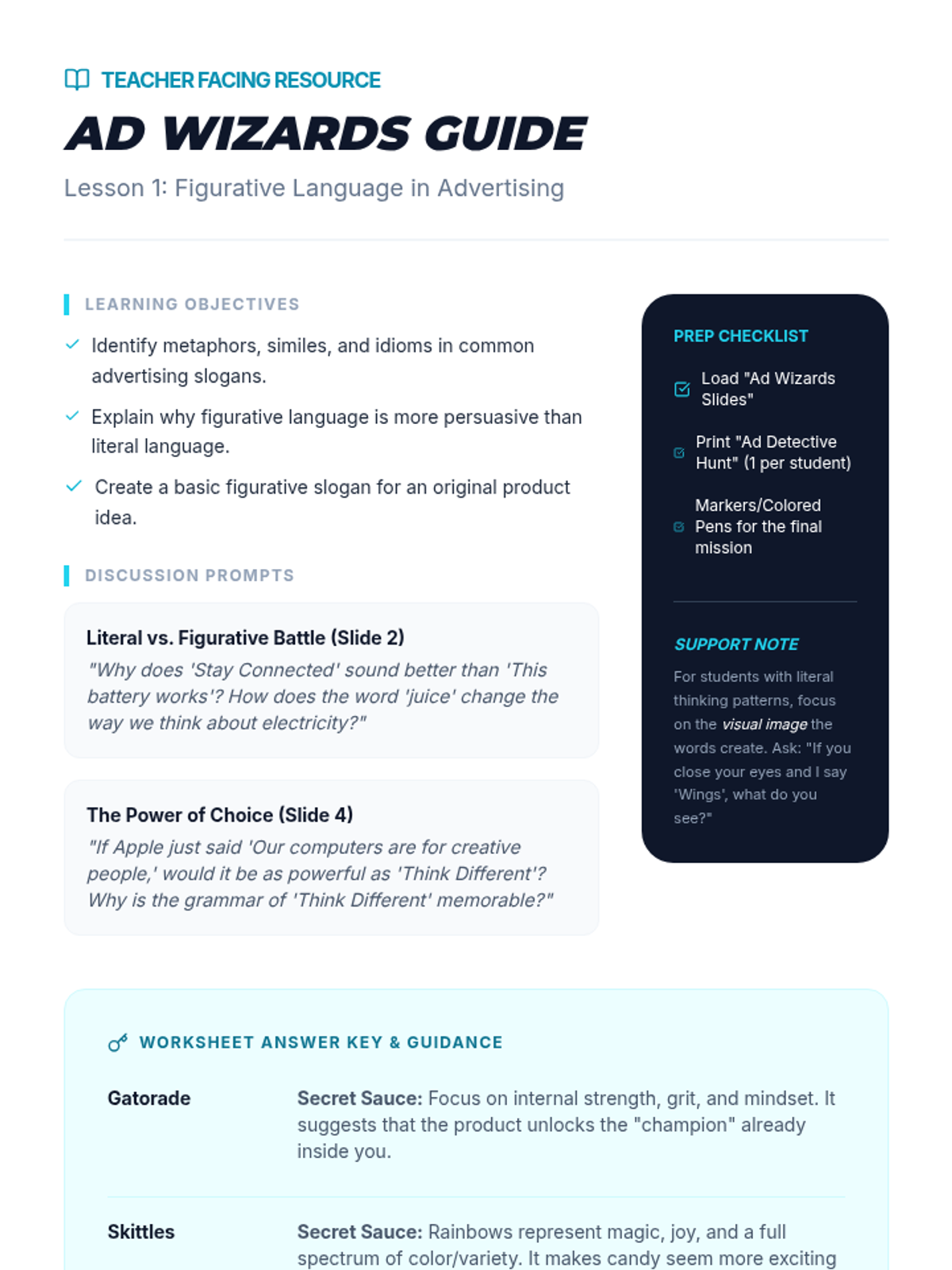
A high-school level sequence focused on social communication through the lens of figurative language. Students explore how idioms, metaphors, and similes are used in advertising, creative writing, and emotional expression, culminating in a persuasive pitch project.
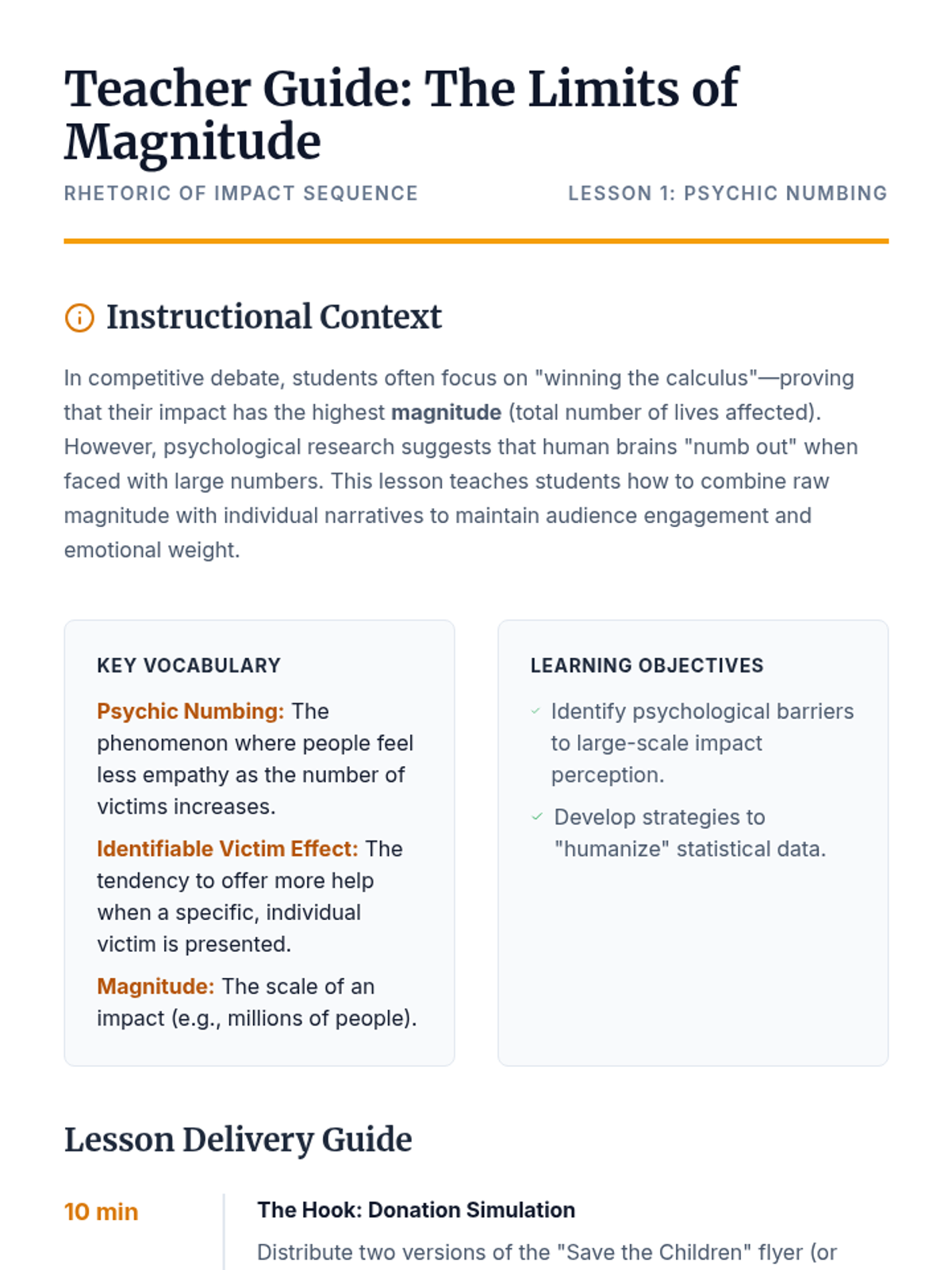
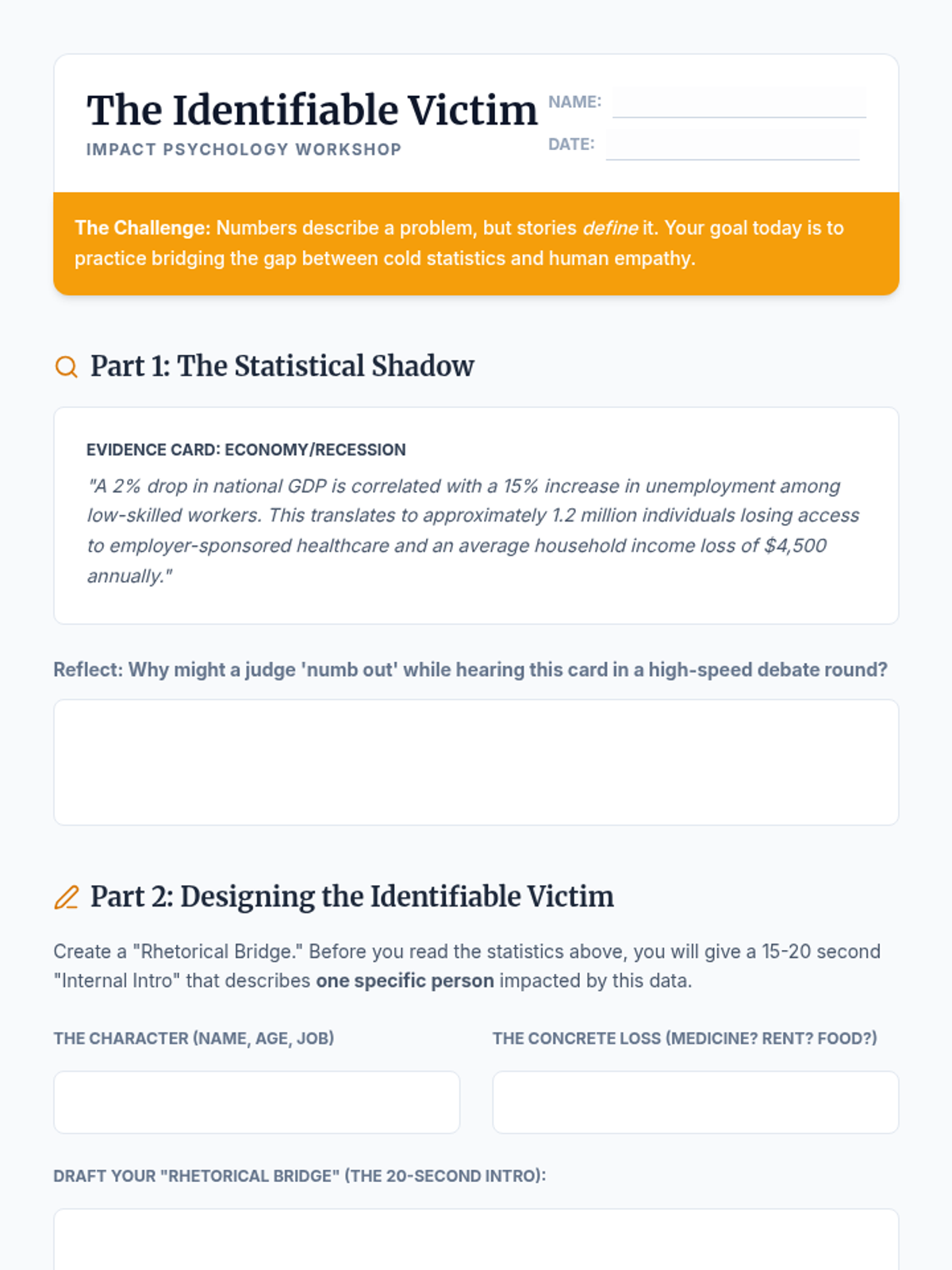
A deep dive into the psychological and rhetorical strategies used to make debate impacts feel 'real' to audiences. This sequence moves beyond mathematical calculus to explore psychic numbing, narrative persuasion, and the availability heuristic.
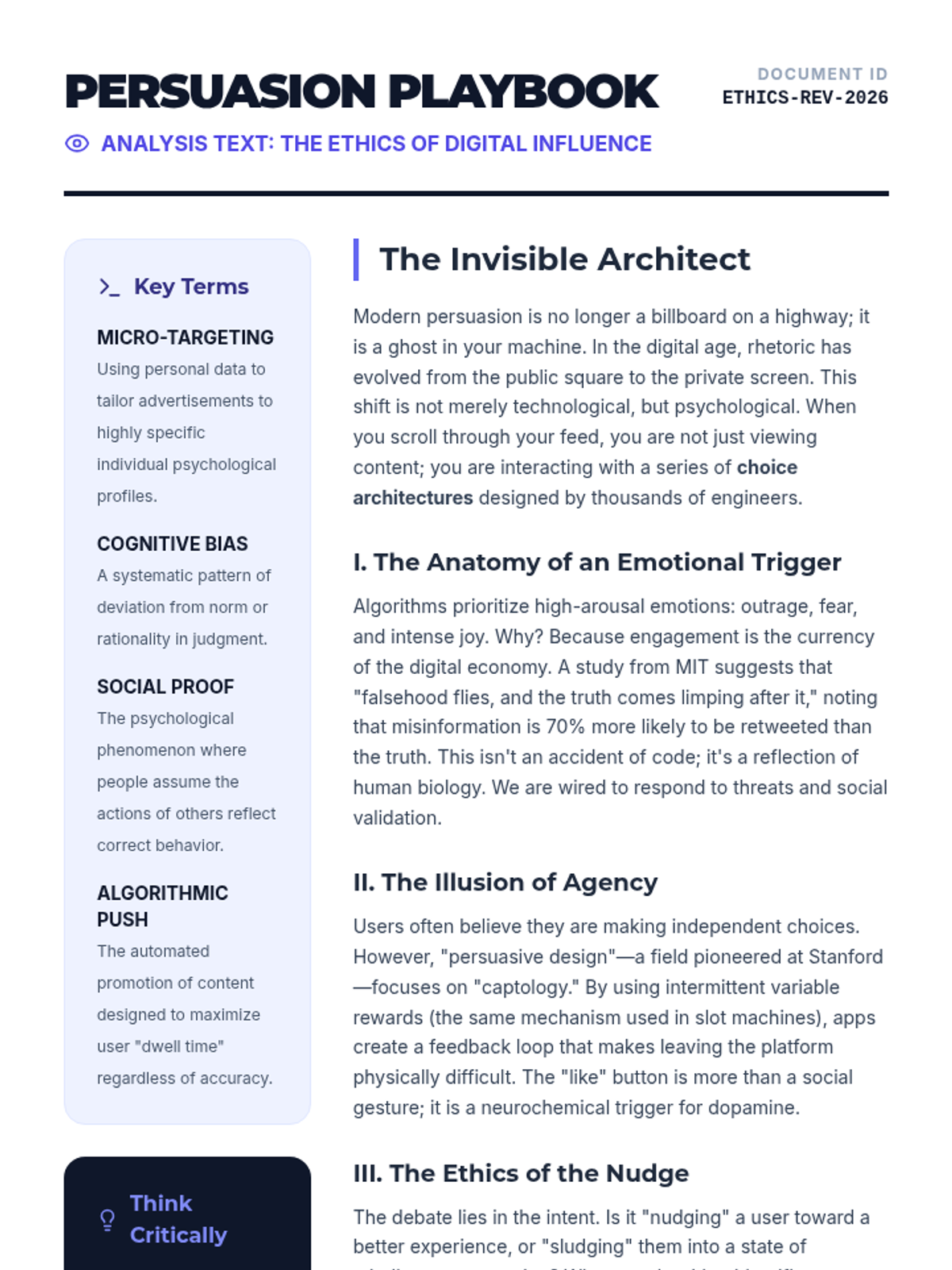
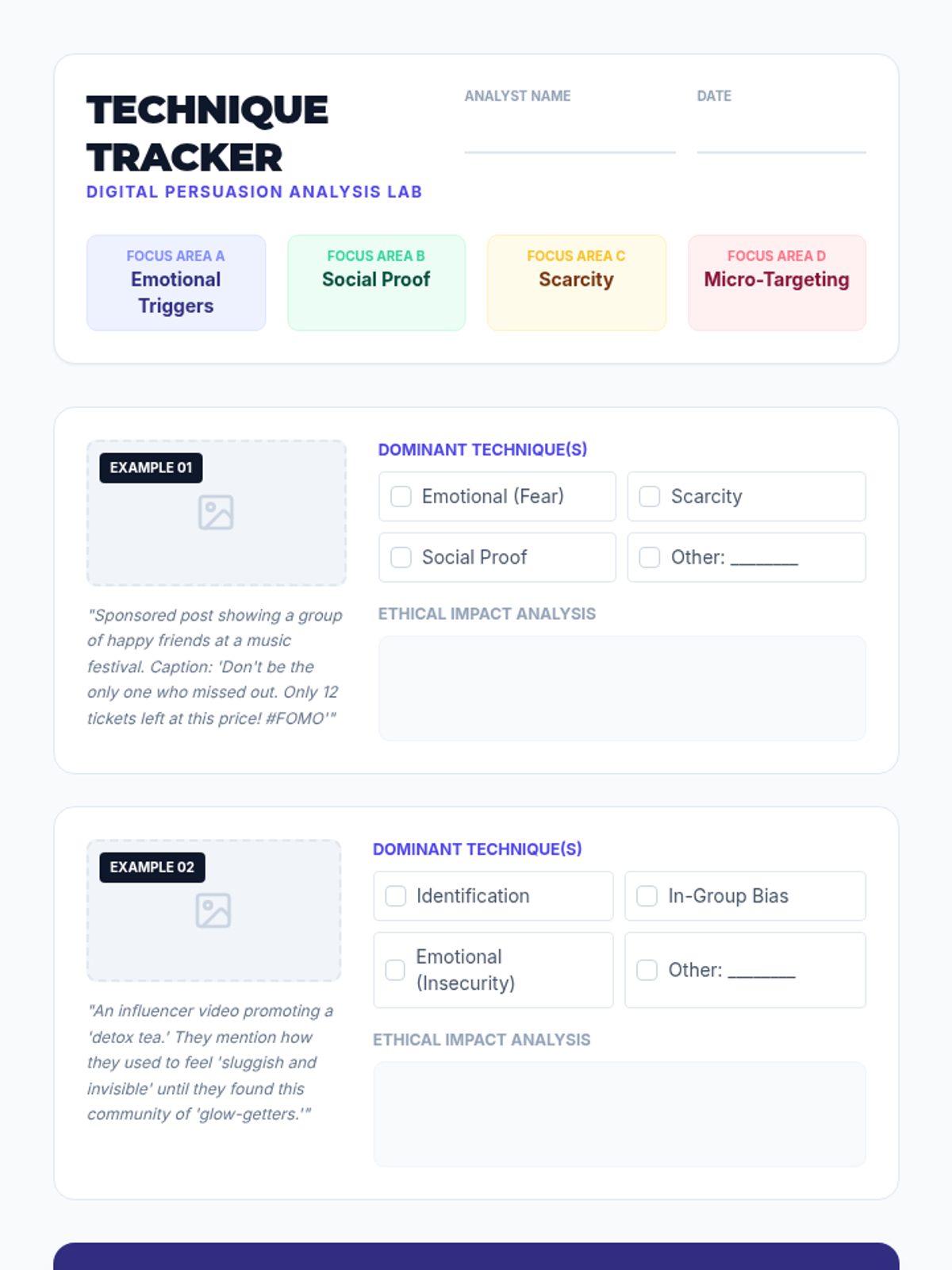
A high-engagement sequence where students evaluate persuasive techniques in modern digital media, practicing active listening and evidence-based argumentation through a Socratic Seminar format. Students analyze the ethics of micro-targeting, influencer marketing, and algorithmic persuasion.
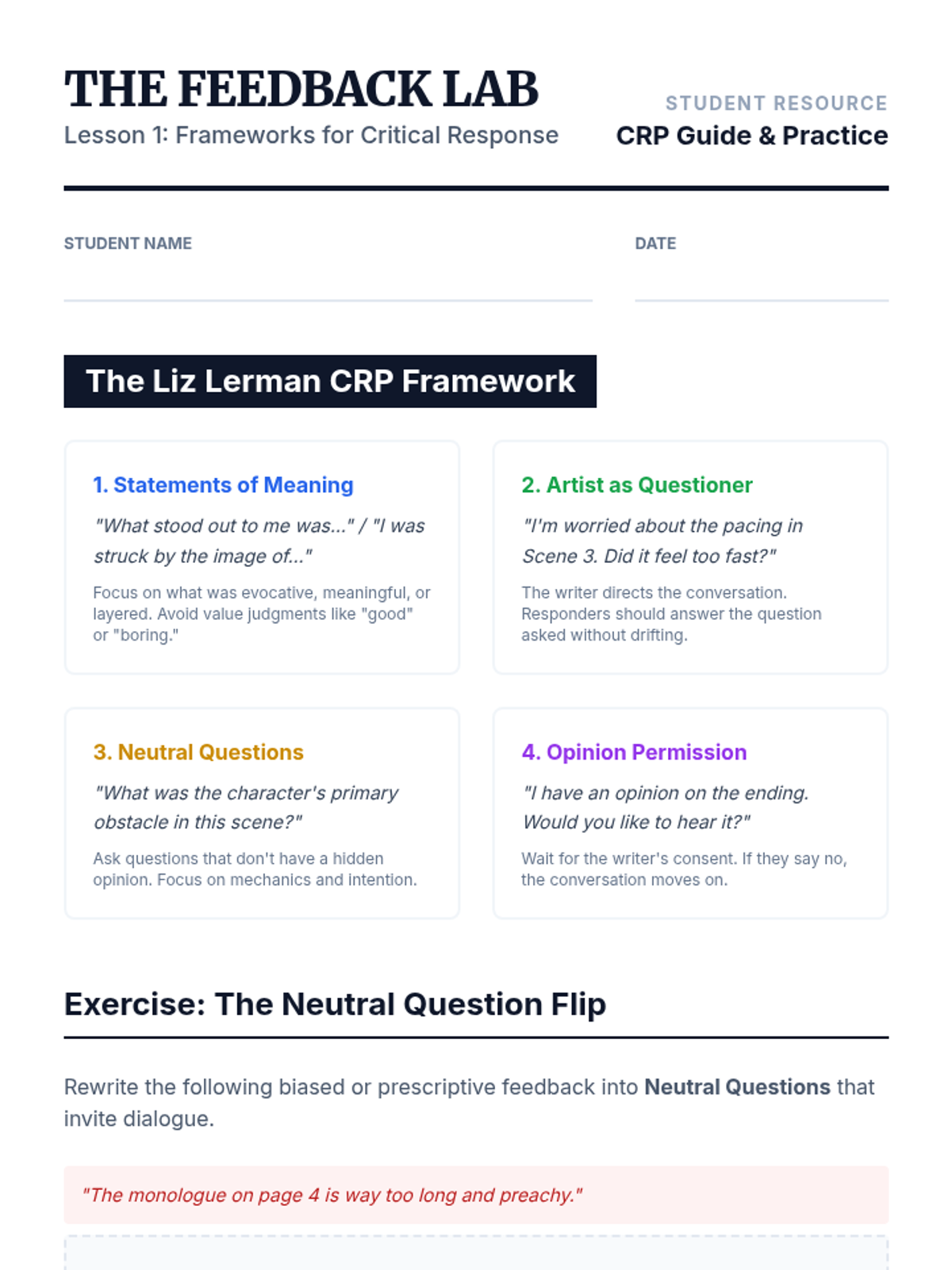
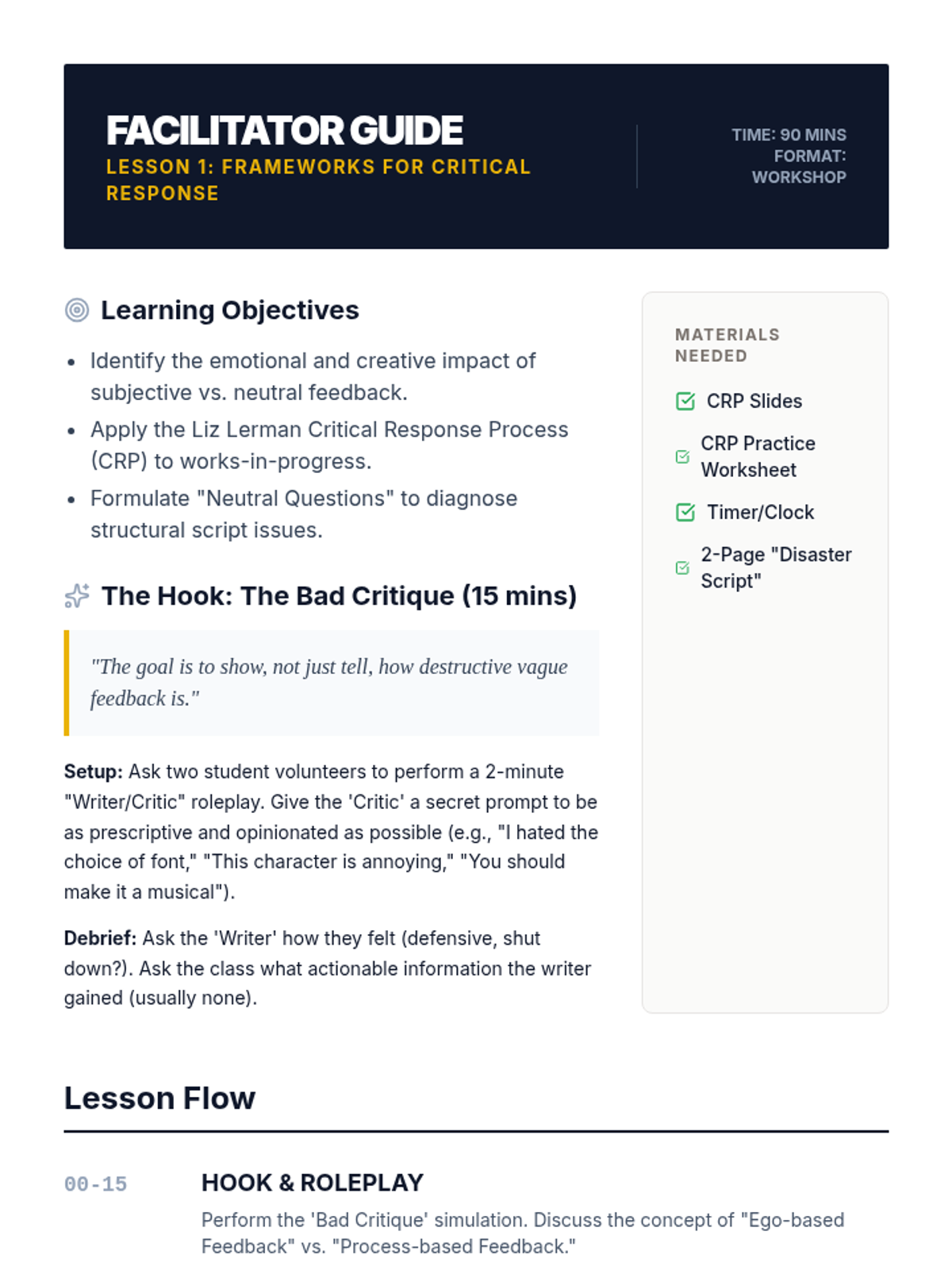
An immersive sequence for undergraduate playwriting students focusing on the professional iterative process of drafting, hearing work aloud, and executing rigorous rewrites using structured feedback frameworks.
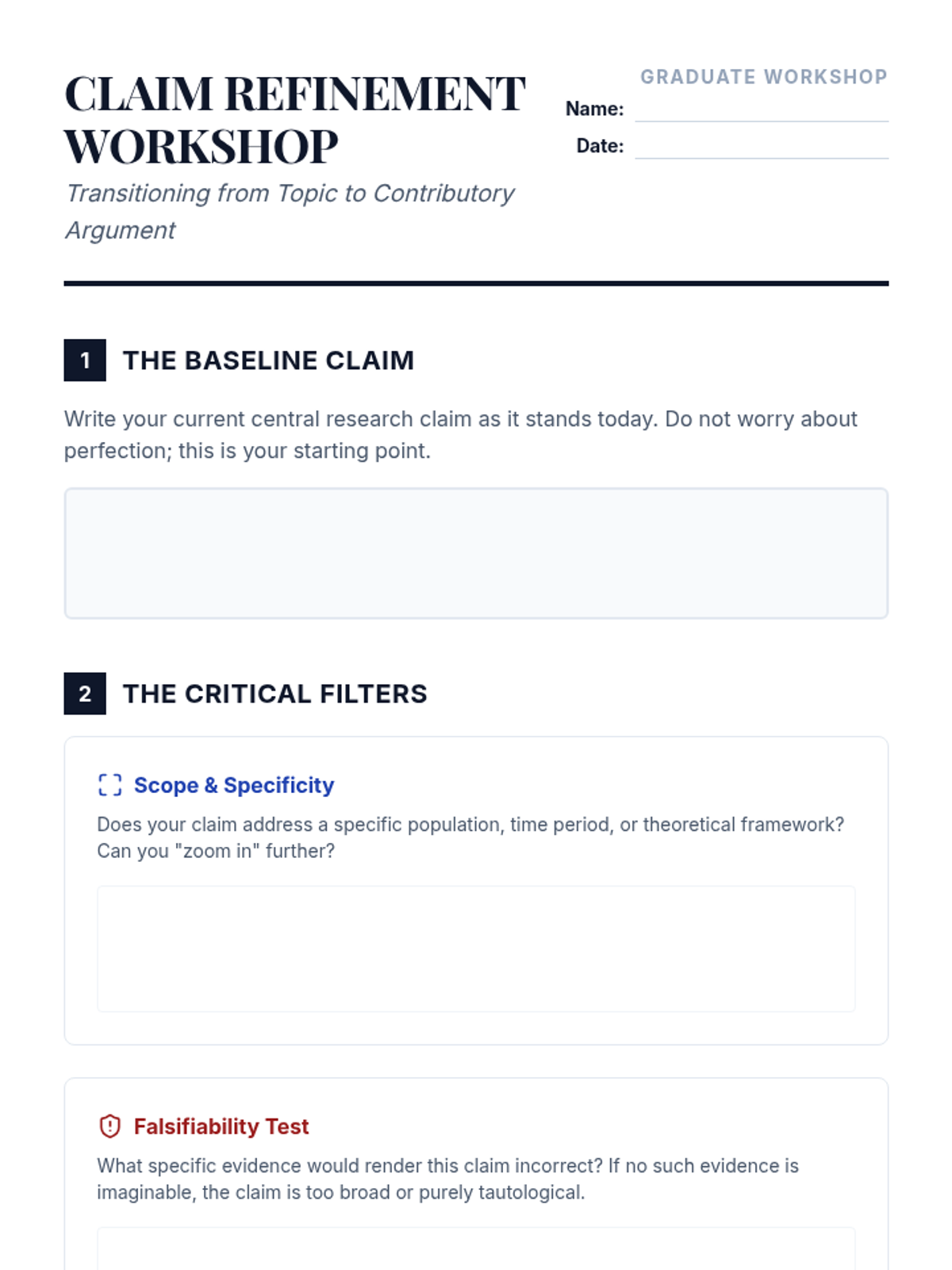
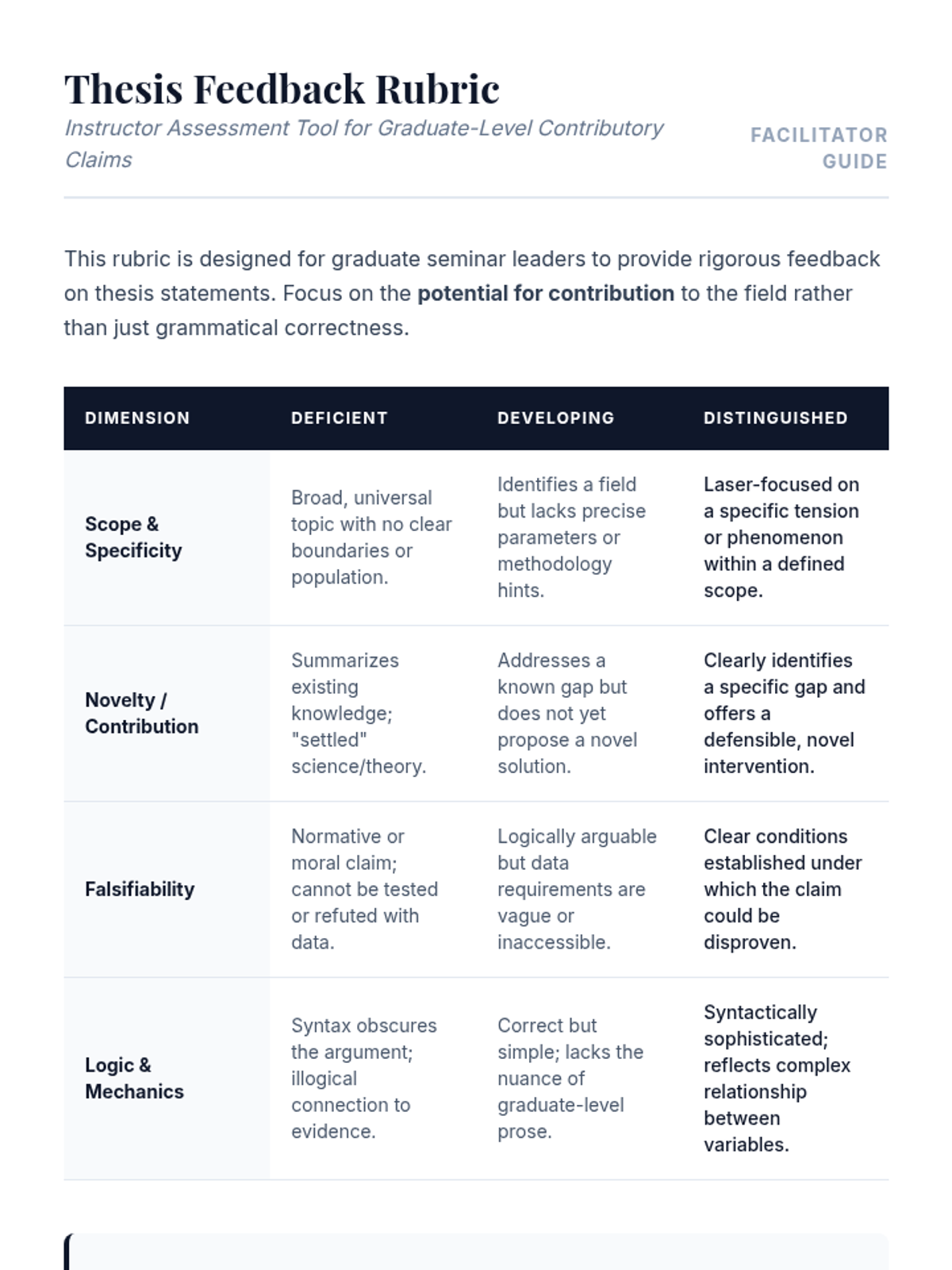
A comprehensive graduate-level workshop series focused on transitioning from research topics to defensible academic contributions. Students will master thesis refinement, literature synthesis, counter-argument strengthening (steelmanning), and the oral defense of evidentiary choices.
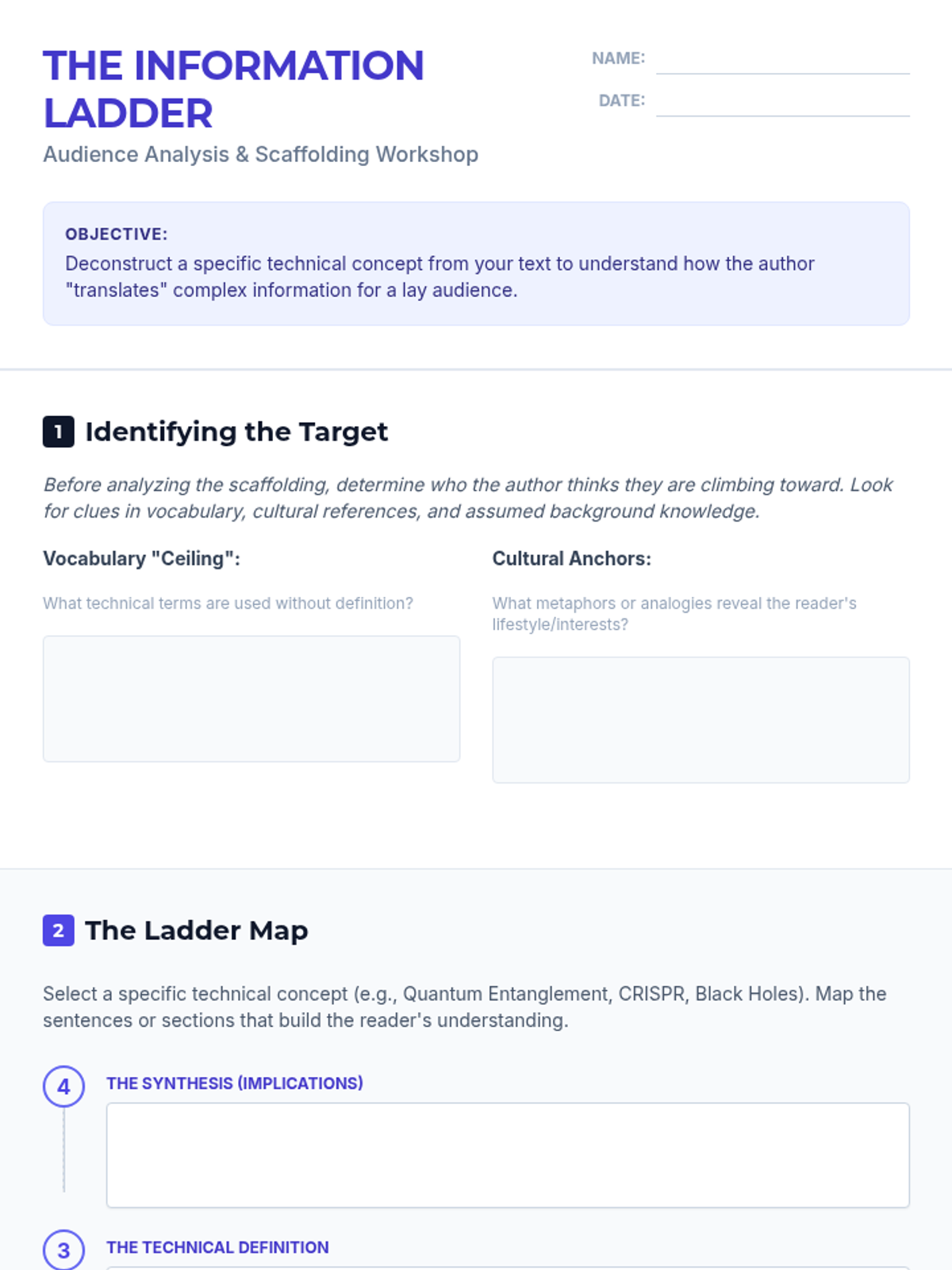
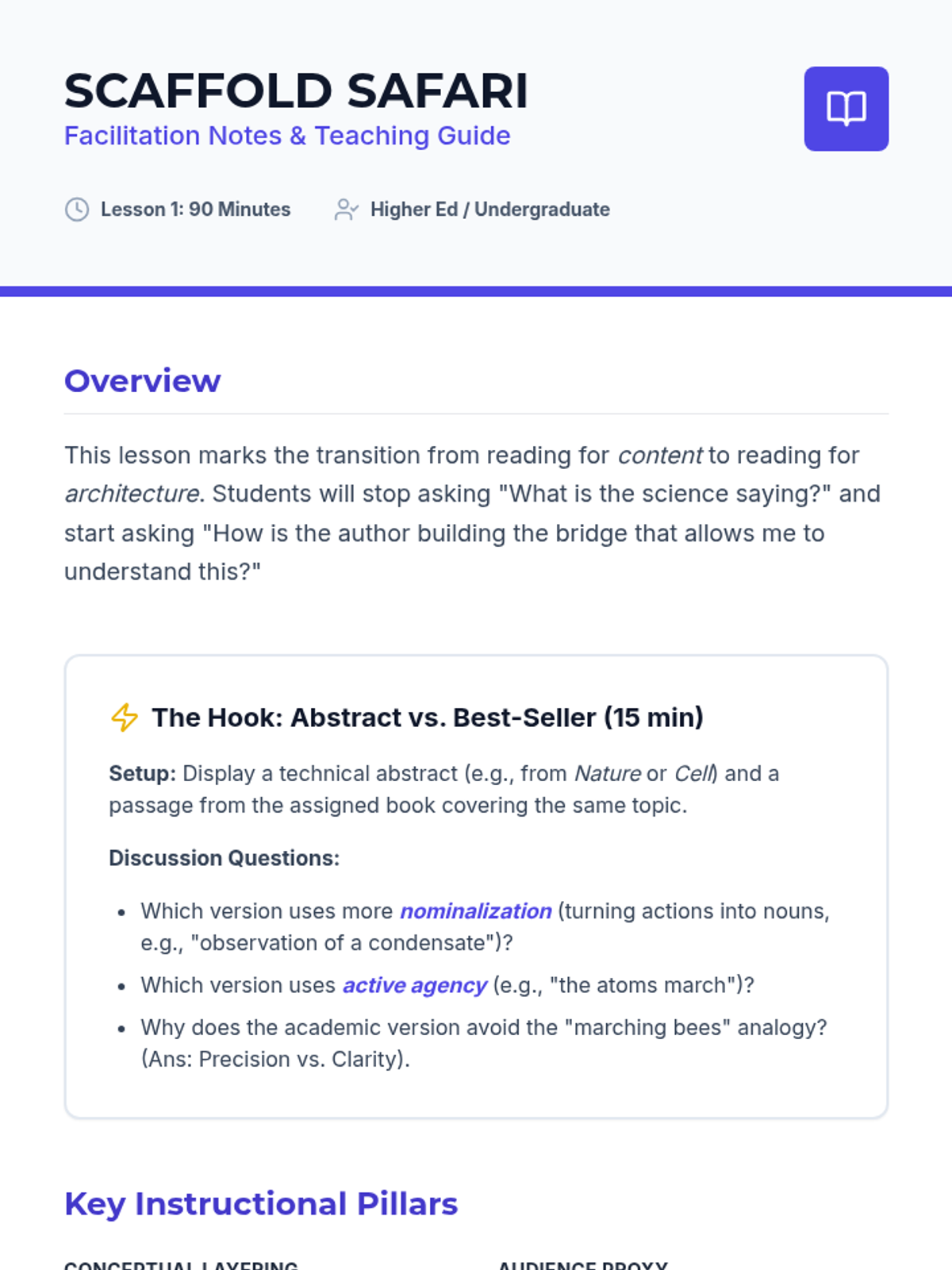
This sequence guides undergraduate students through the critical analysis of popular science nonfiction. It focuses on the translation of technical knowledge for public consumption, exploring audience scaffolding, metaphor usage, visual rhetoric, and the ethics of narrative in science writing.
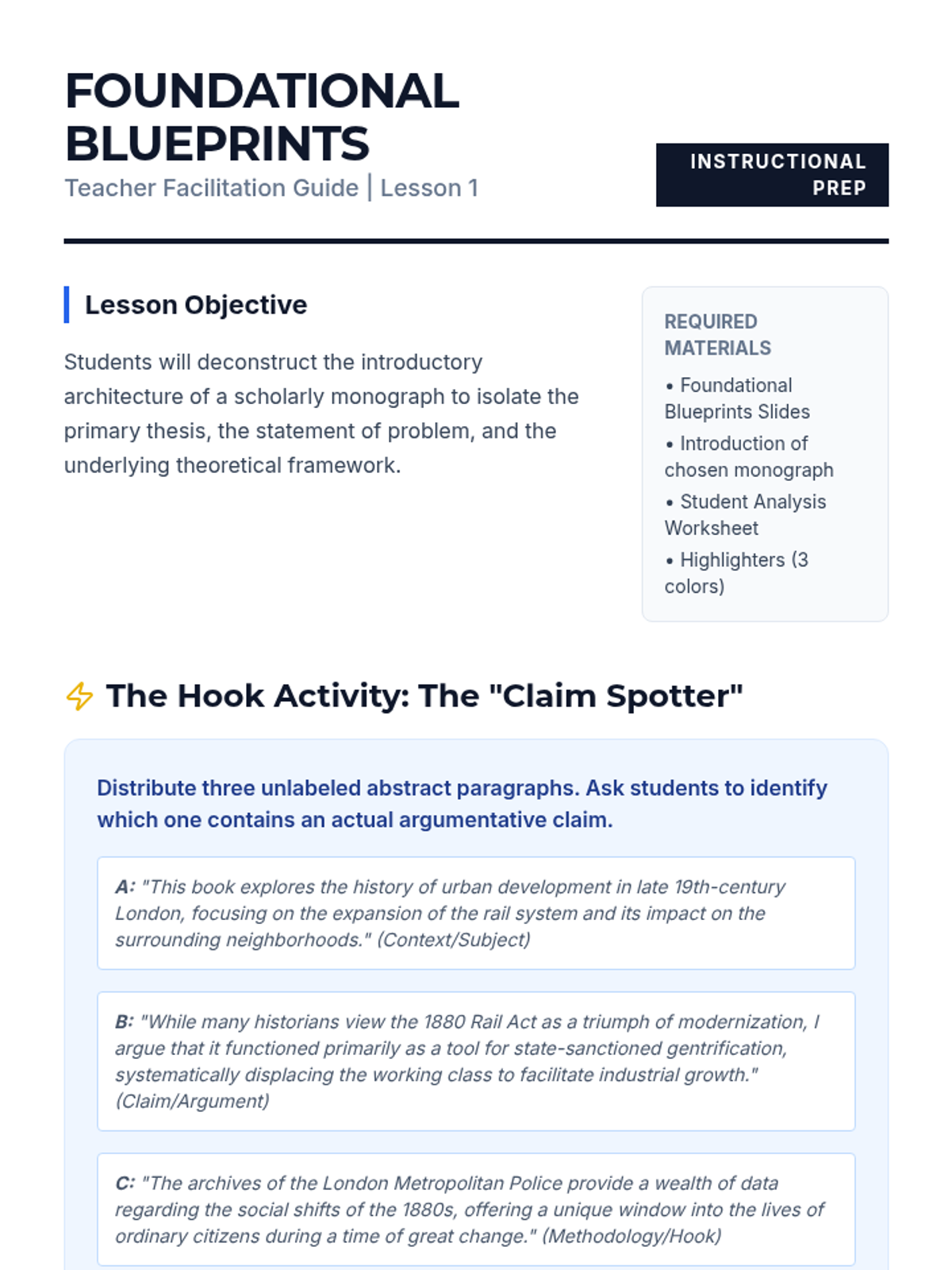
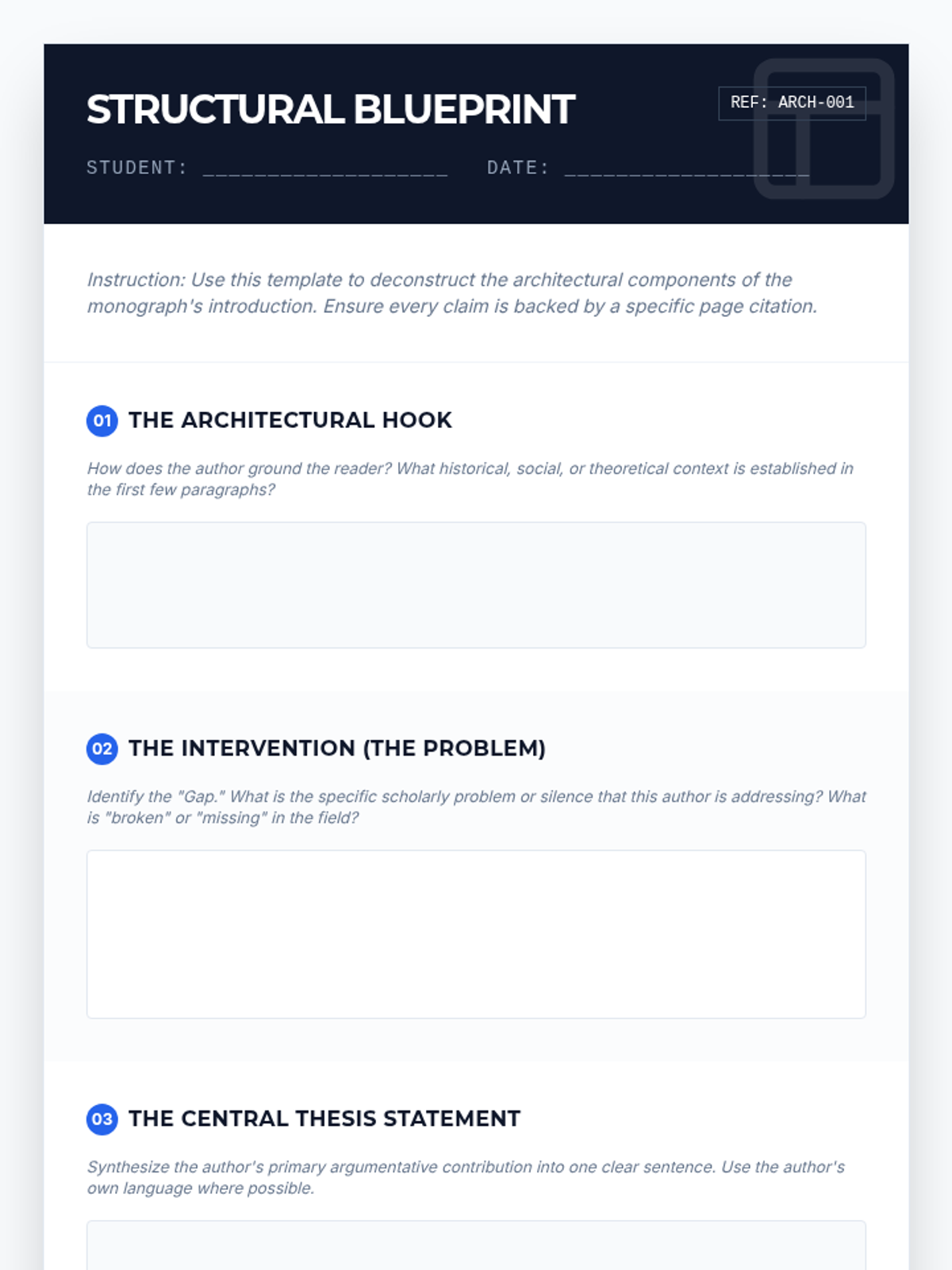
An intensive sequence for undergraduate students focused on the structural and rhetorical deconstruction of academic monographs. Students will master the Toulmin model, evaluate evidence types, and analyze how scholarly authority is constructed through language and methodology.
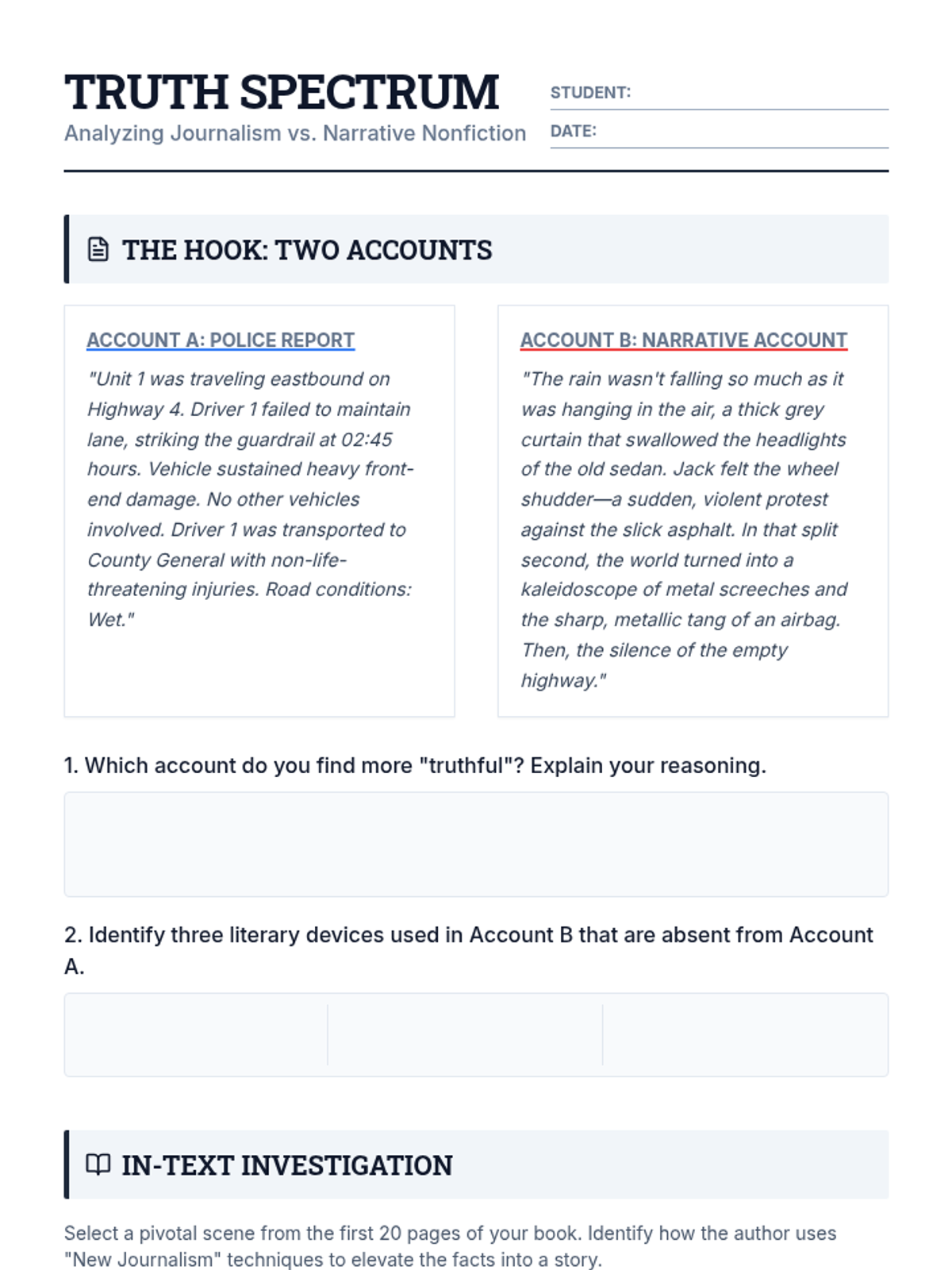
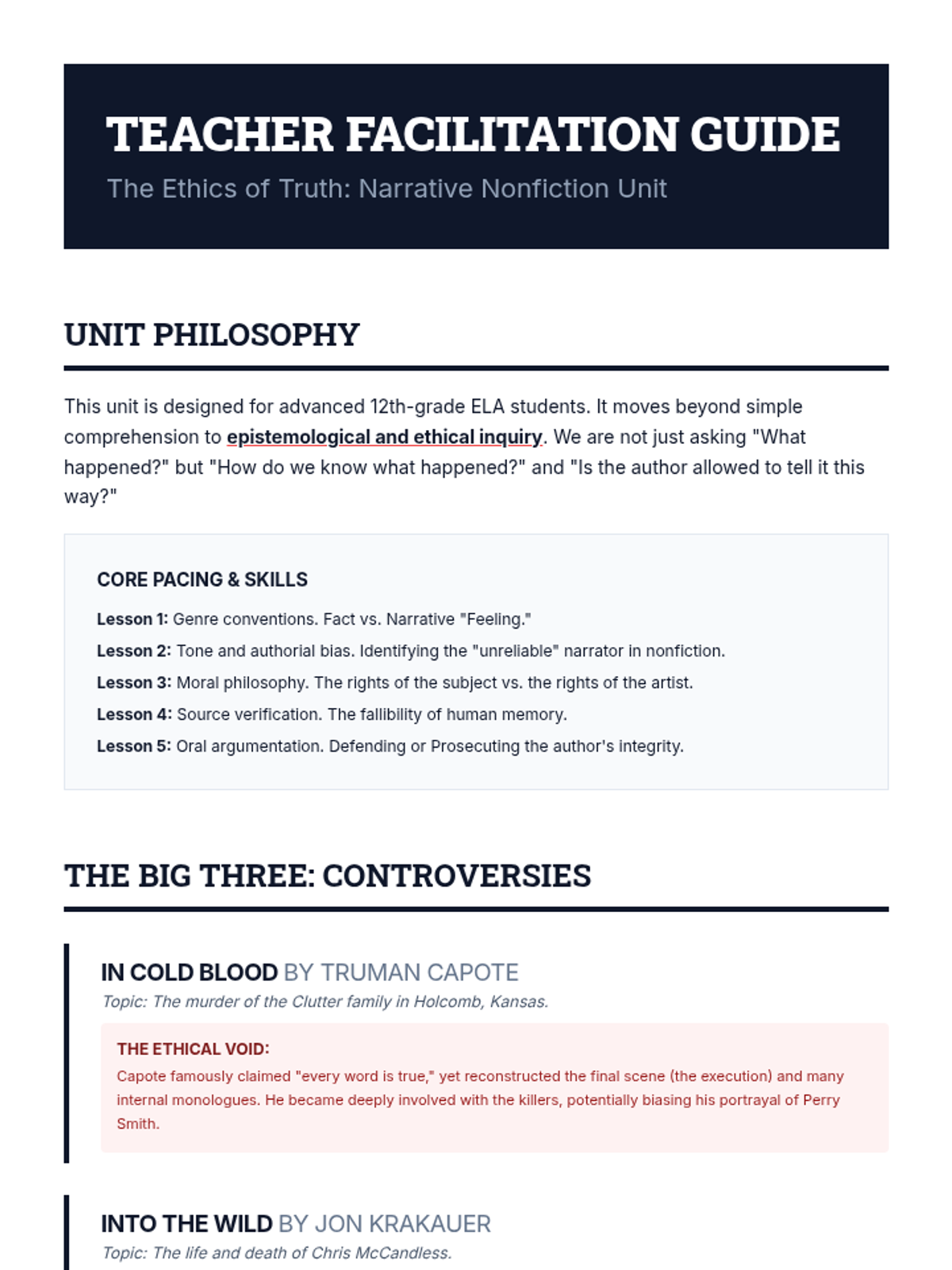
A high-level ELA sequence for 12th graders exploring the boundary between factual reporting and literary storytelling in narrative nonfiction. Students analyze the ethics of representation, the fallibility of memory in dialogue reconstruction, and the author's role in shaping 'truth'.
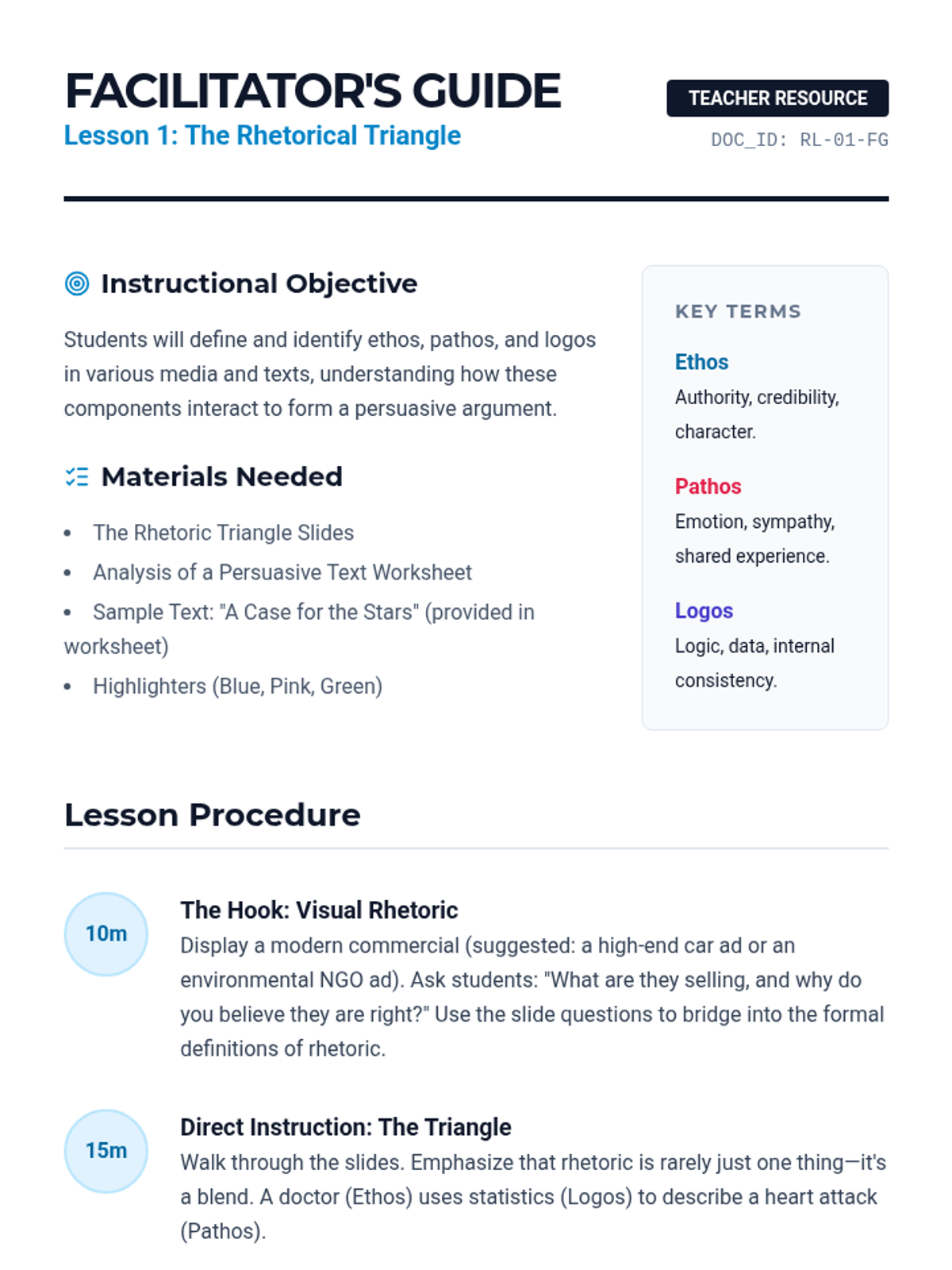
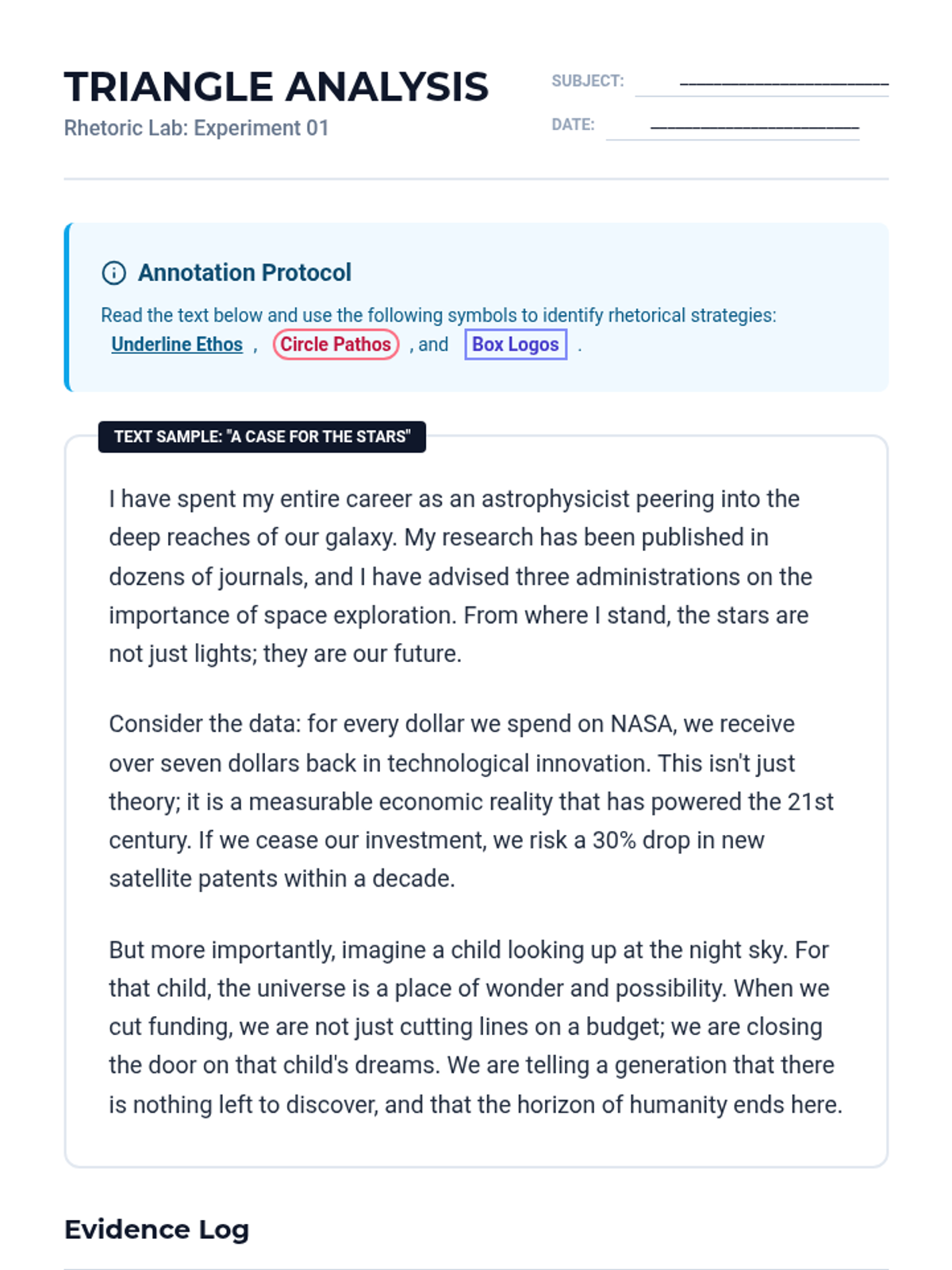
This 10th Grade ELA sequence guides students through the deconstruction of argumentative nonfiction. Students will move from identifying the core components of the rhetorical triangle to analyzing structural choices, tone, and logical integrity, culminating in a formal rhetorical analysis essay.
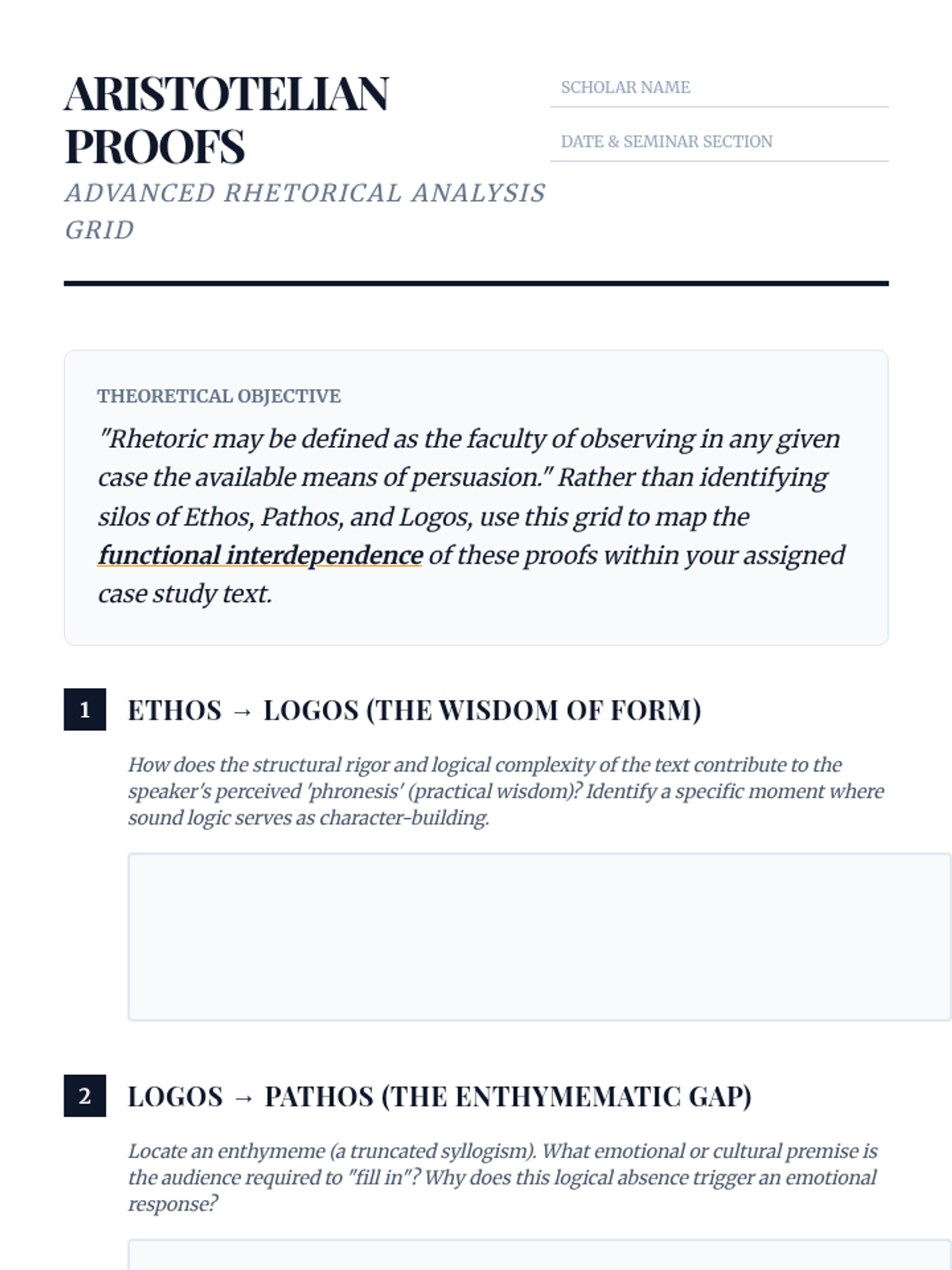
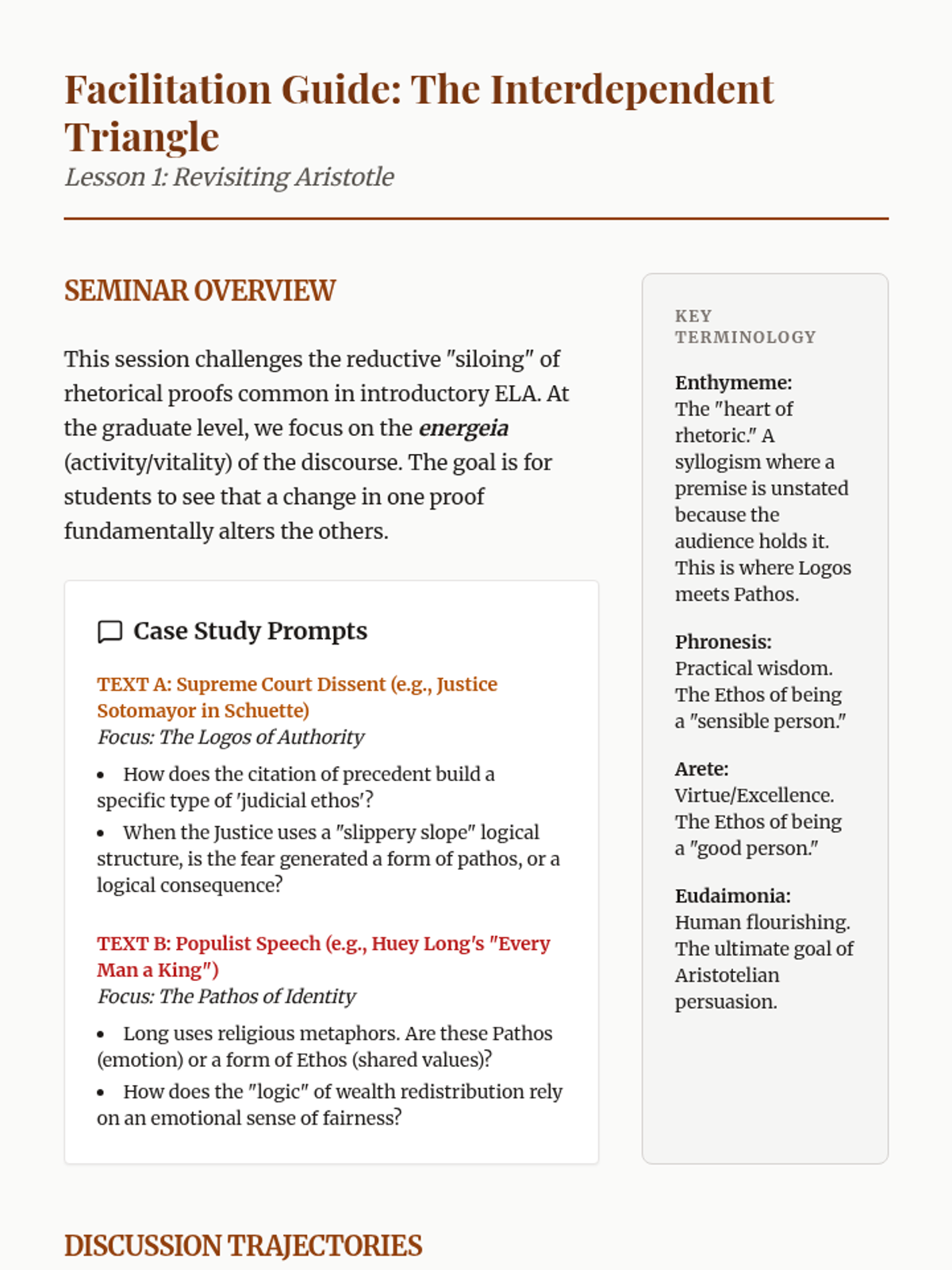
This advanced seminar explores the foundational and contemporary theories of rhetoric, moving beyond basic definitions of ethos, pathos, and logos to analyze their complex interplay in public discourse. Students will critique seminal texts using the Toulmin Model and Aristotelian frameworks to deconstruct high-level arguments found in legal, political, and academic spheres.
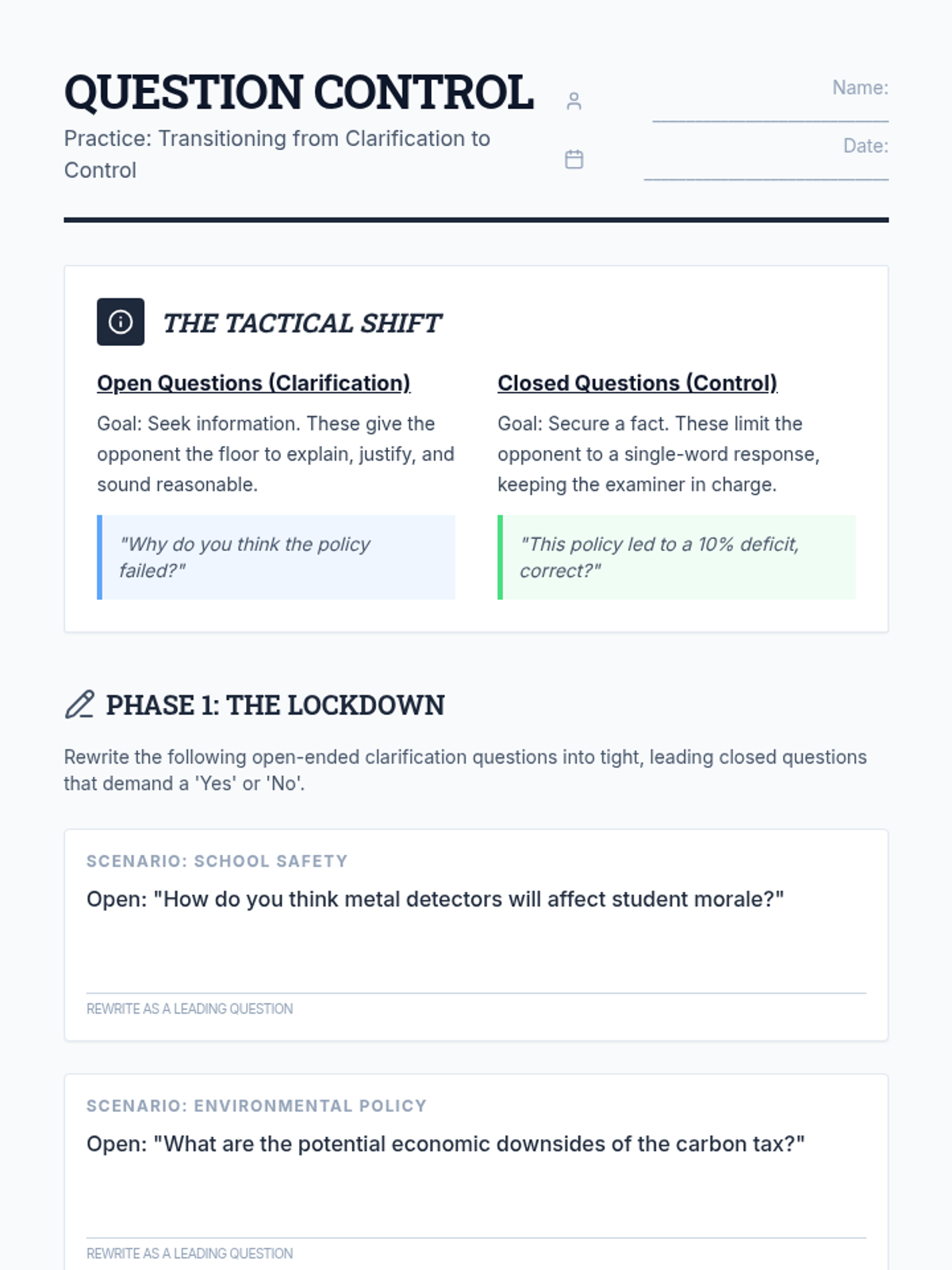
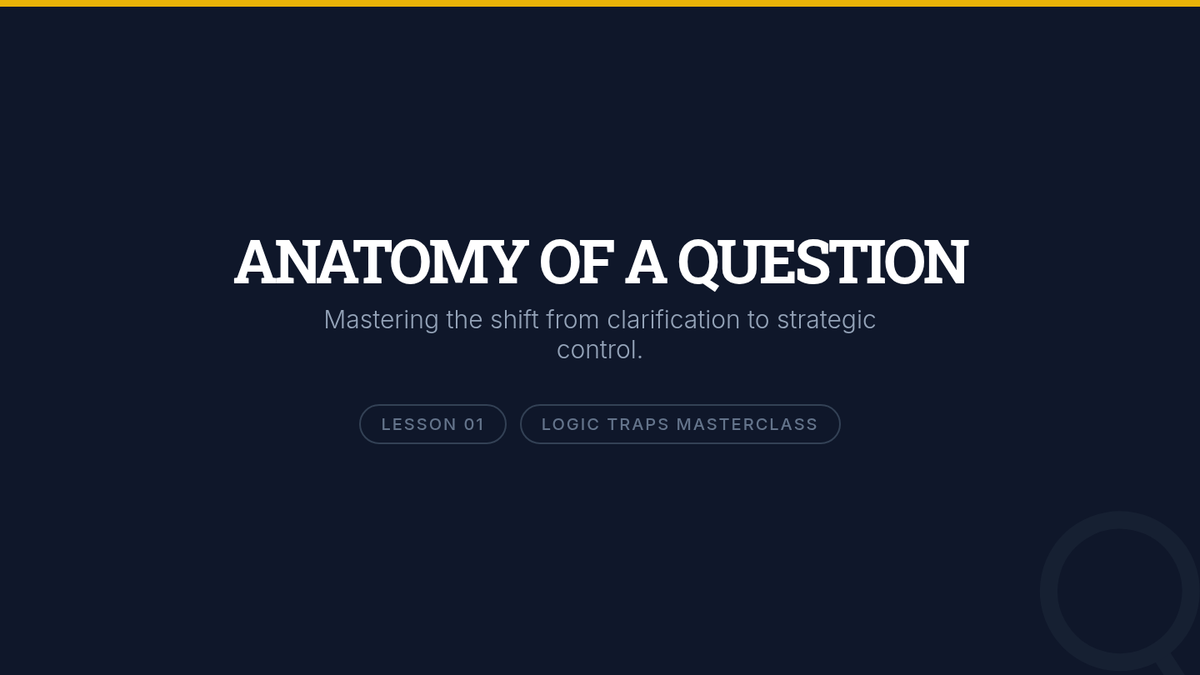
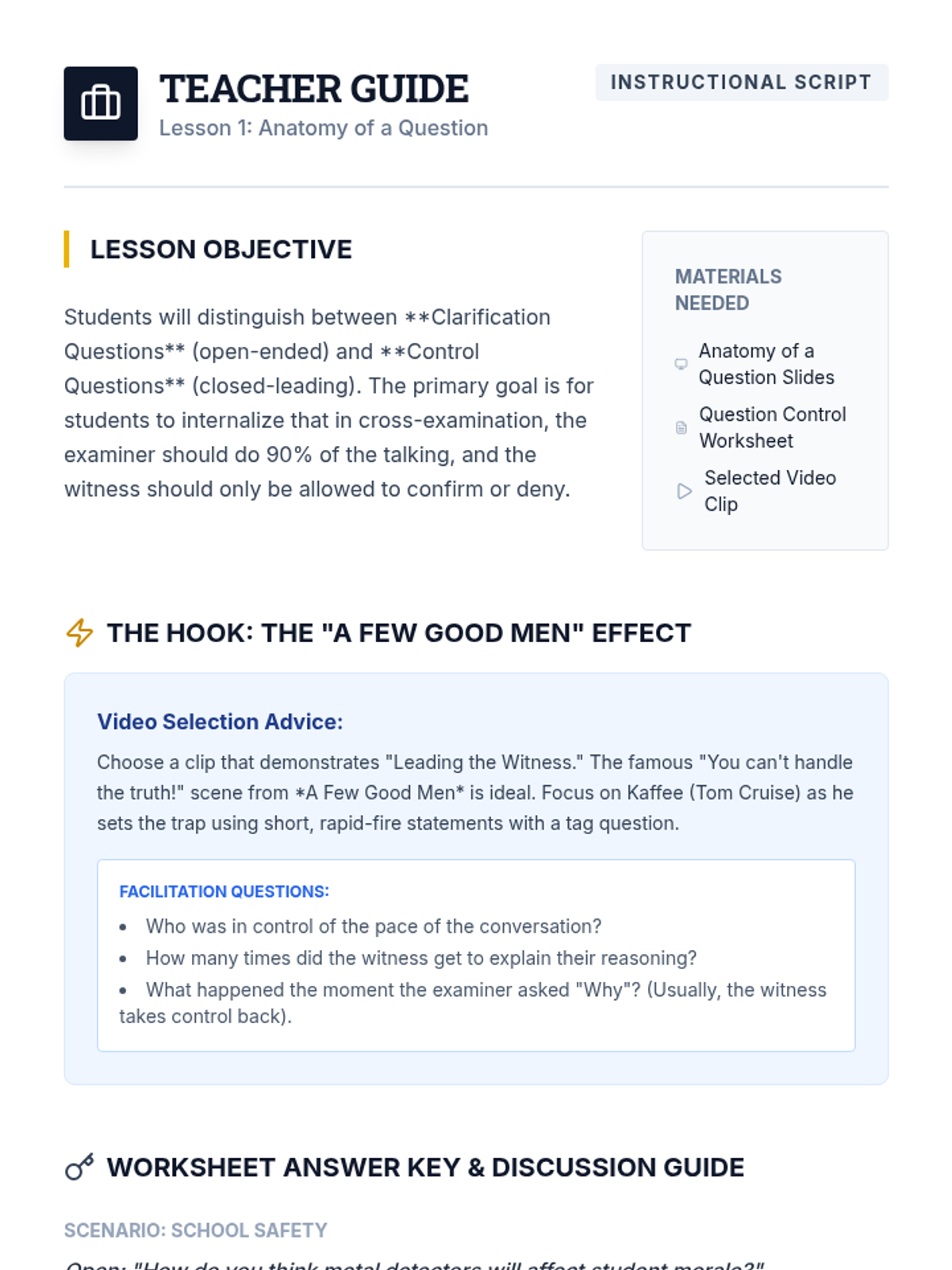
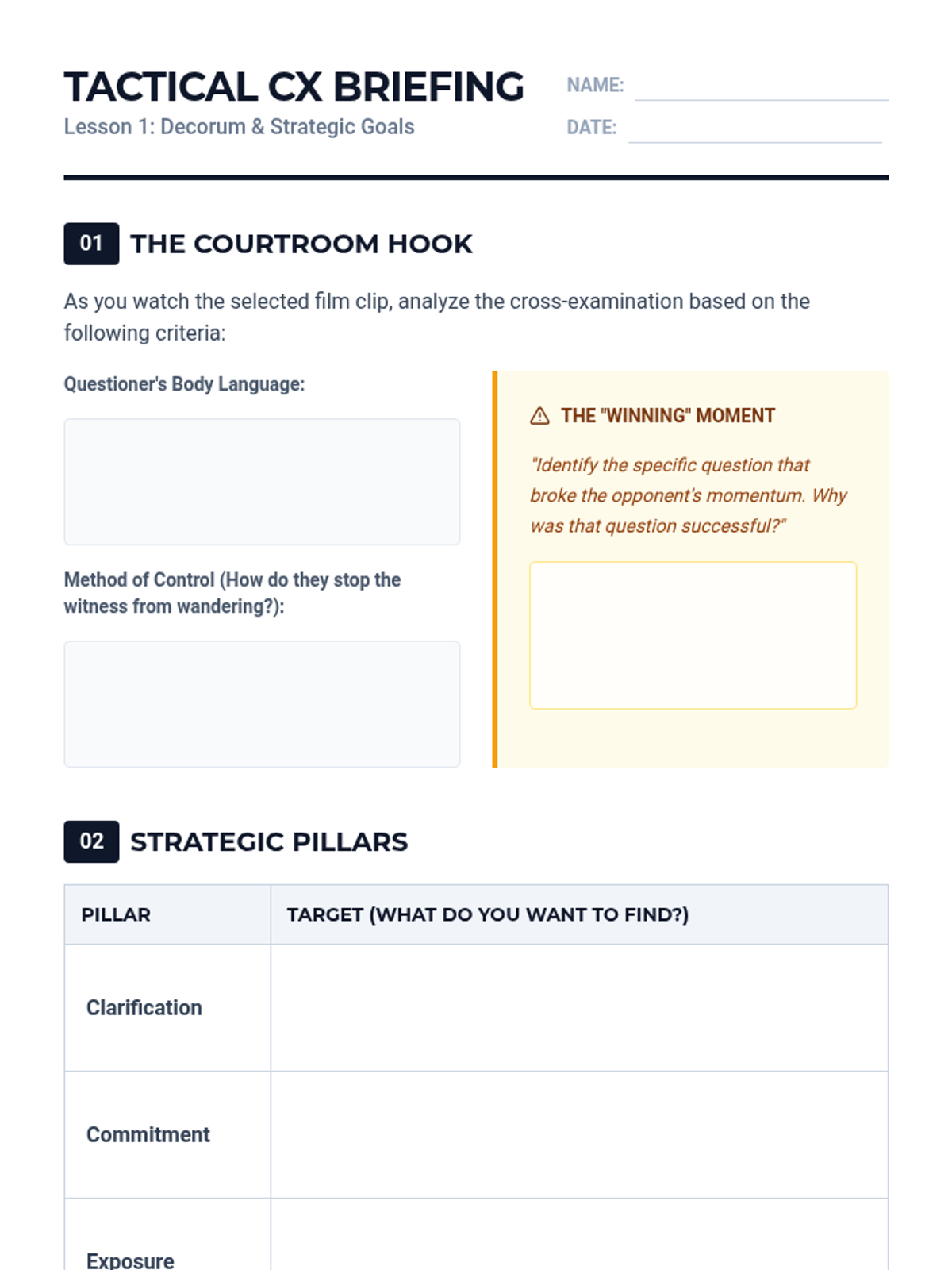
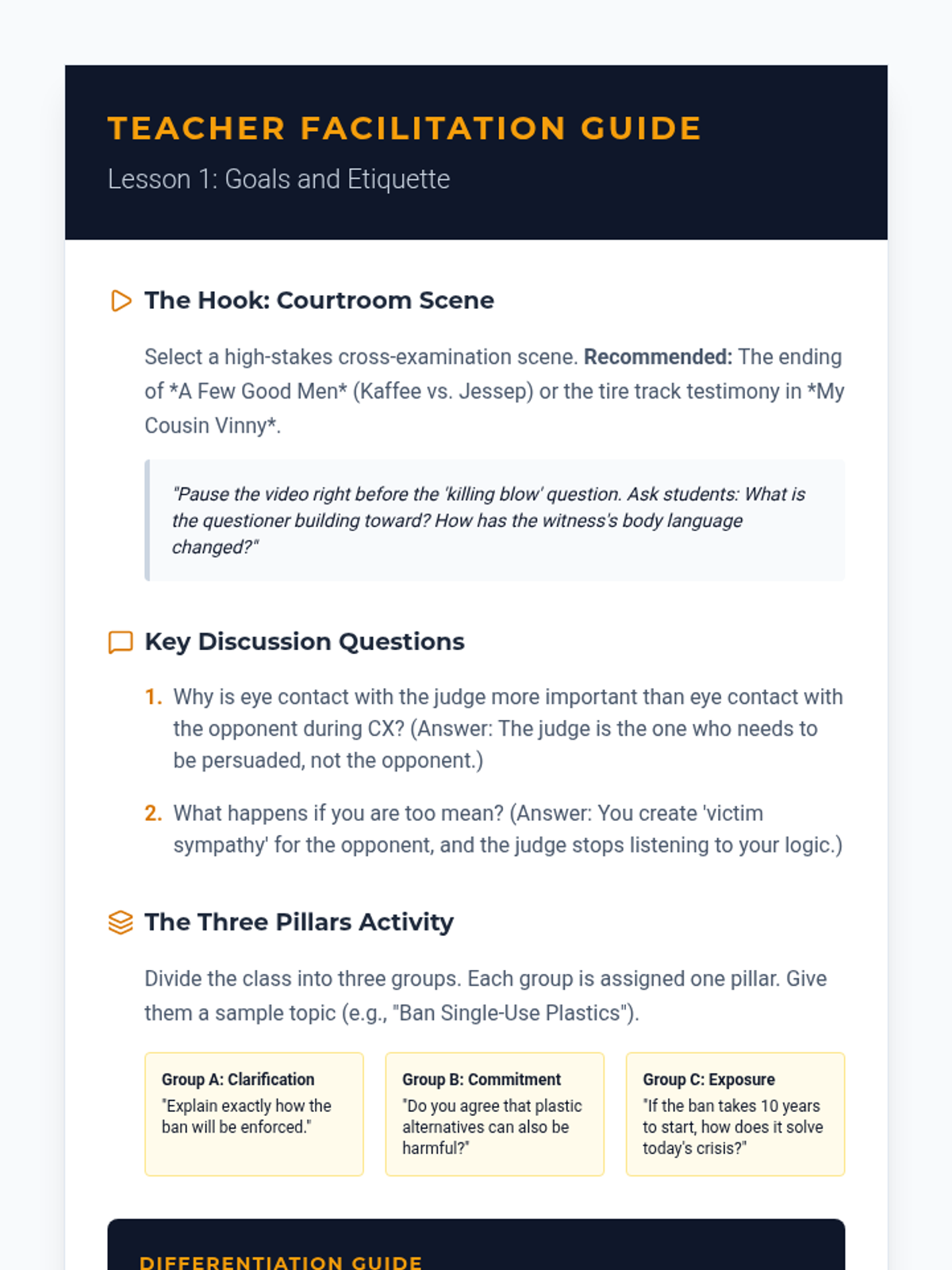
This sequence immerses students in the technical mechanics of cross-examination, moving from the fundamentals of question construction to advanced logical dismantling. Students learn to formulate tight, leading questions, identify logical fallacies, and maintain poise under pressure.
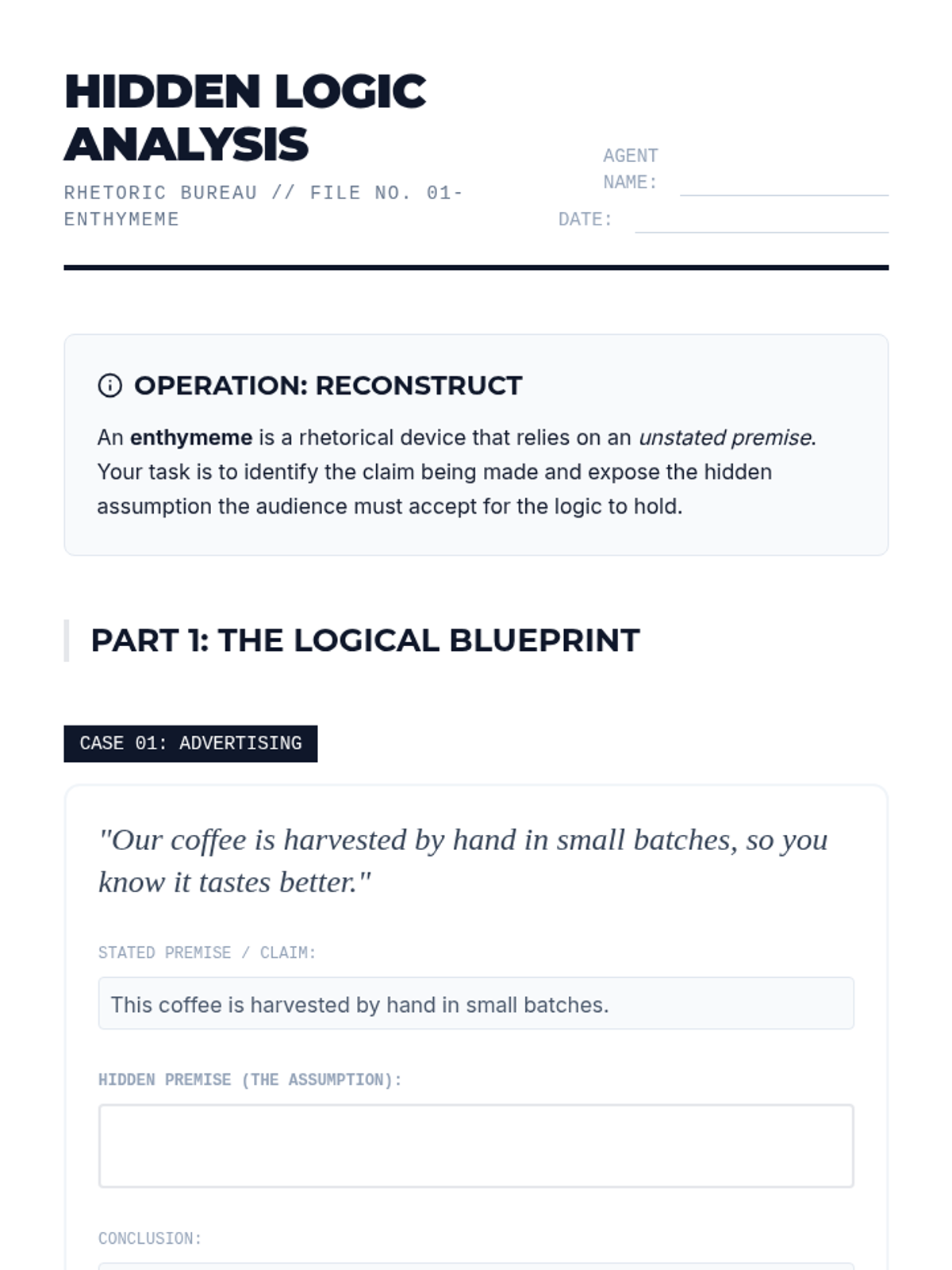
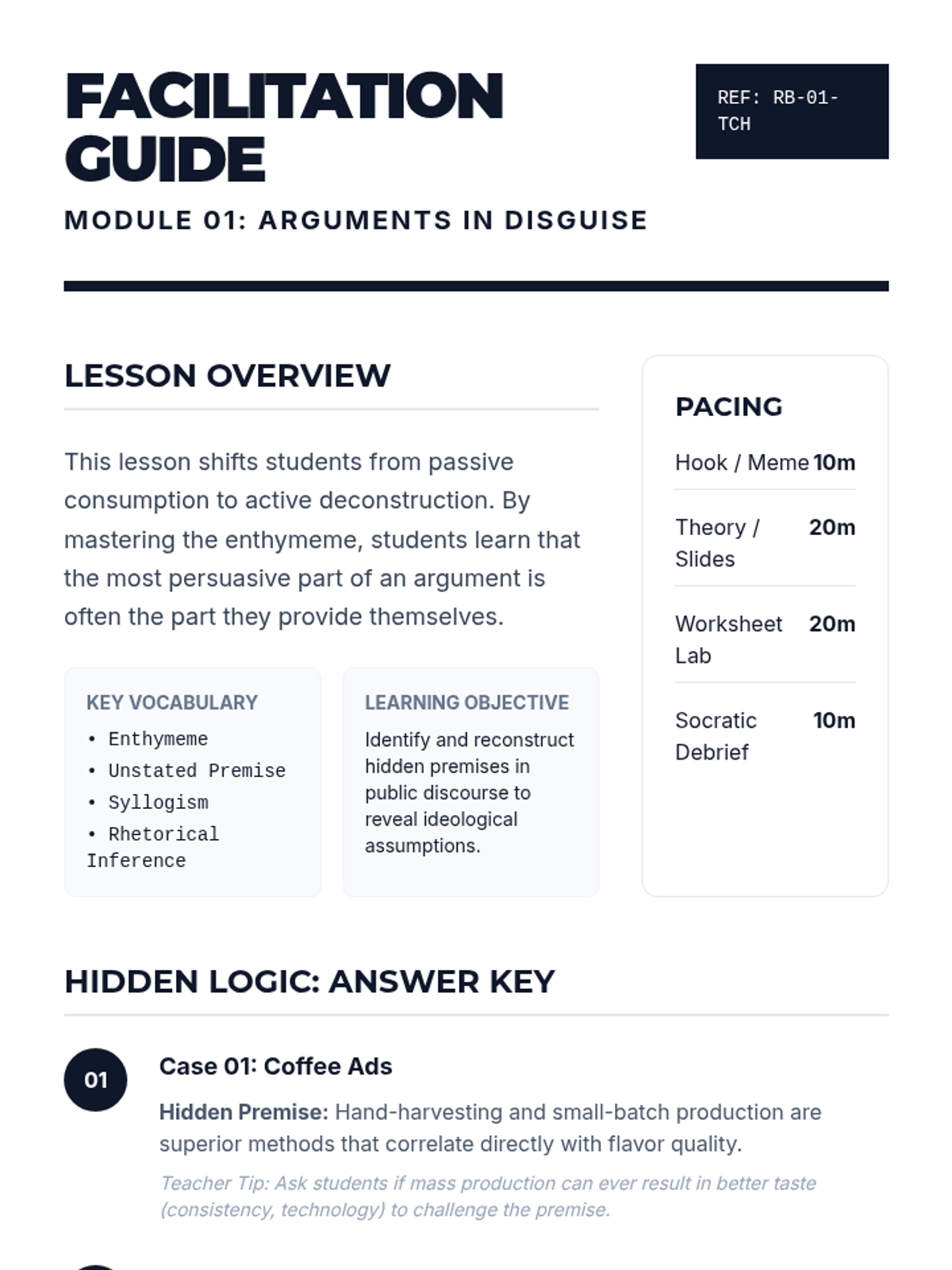
A high-level rhetoric sequence for undergraduate students focusing on the mechanics of inference in public discourse. Students explore enthymemes, coded language, satire, and media bias to understand how persuasion operates through what remains unsaid.
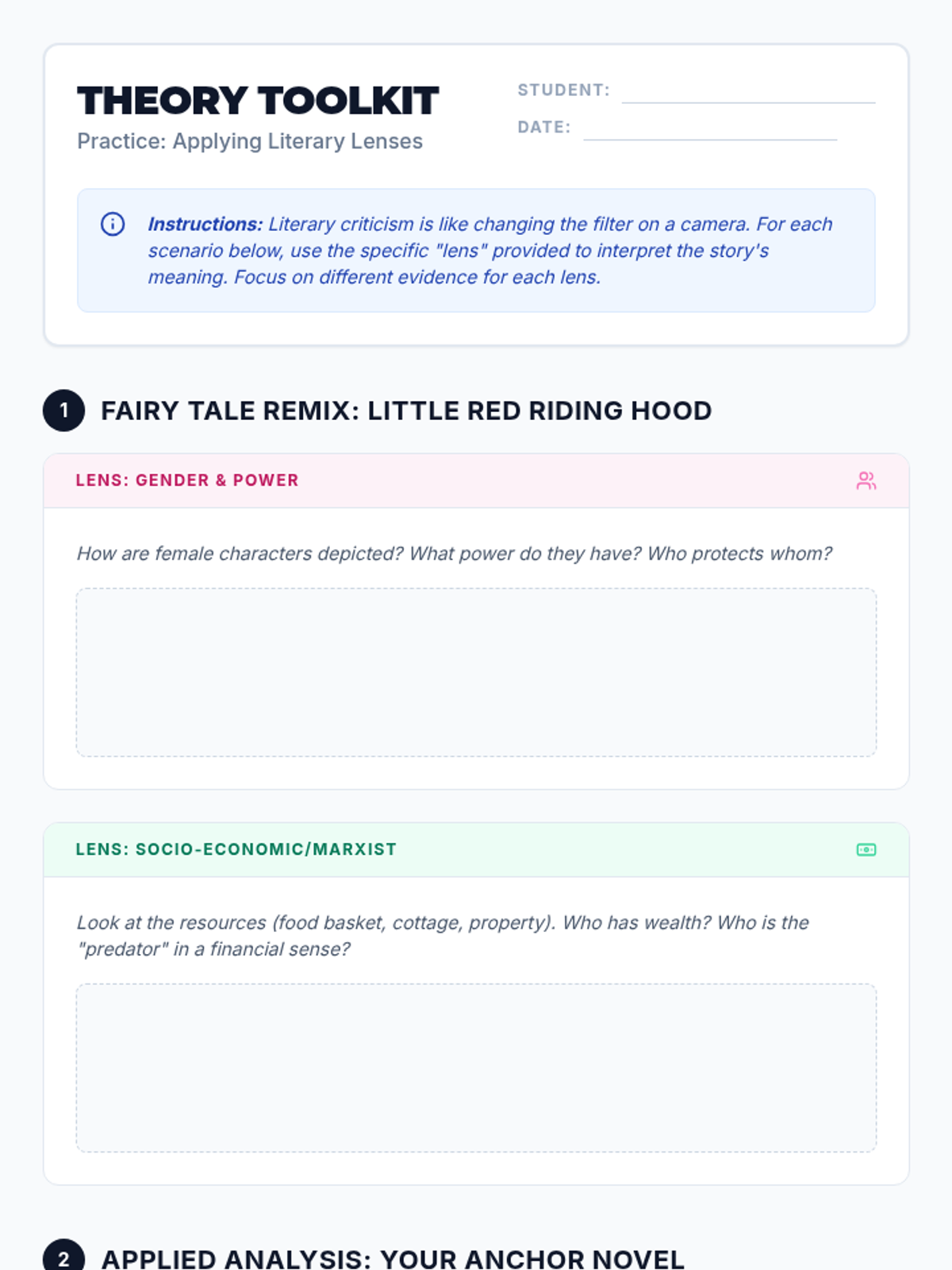
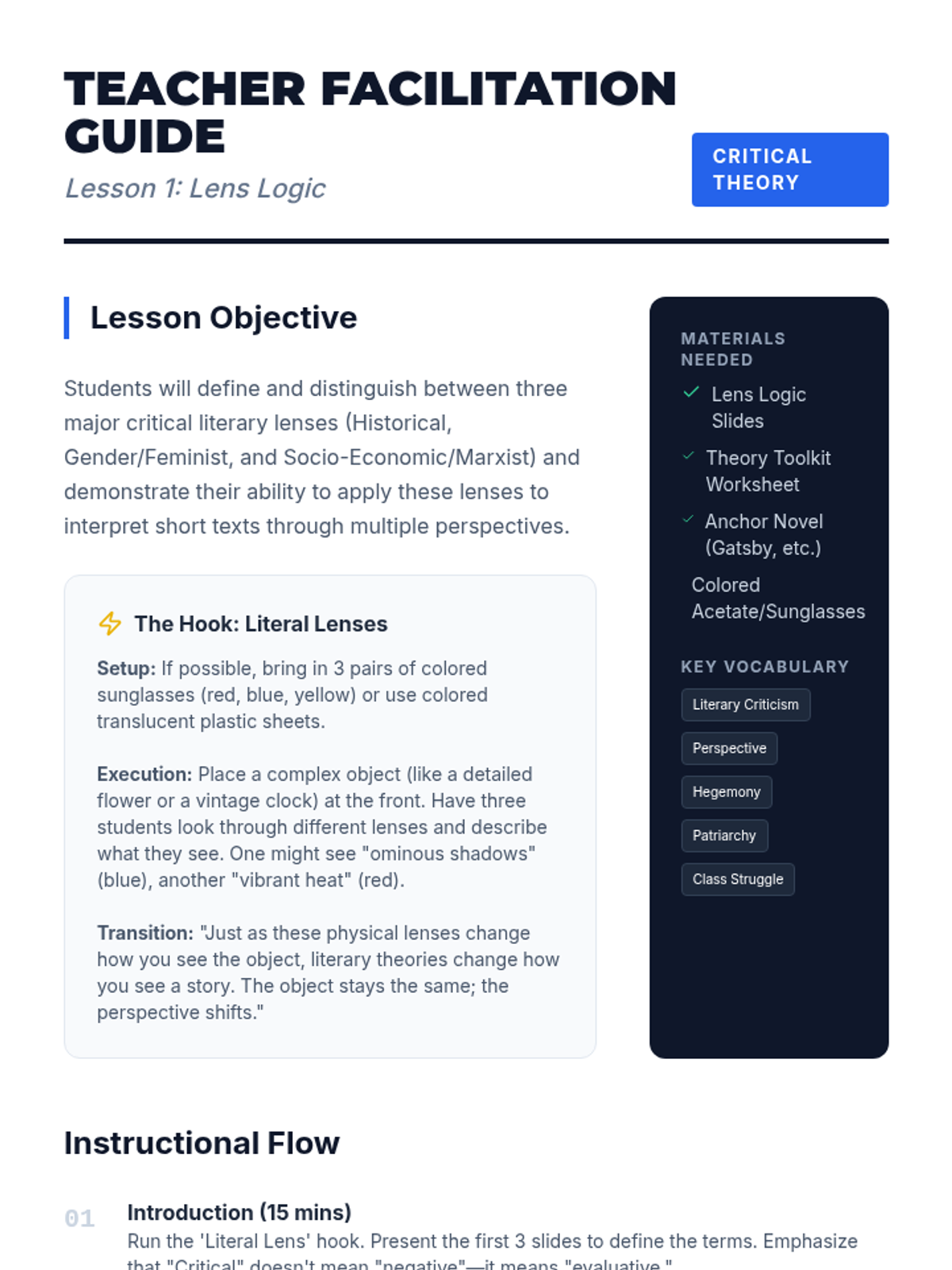
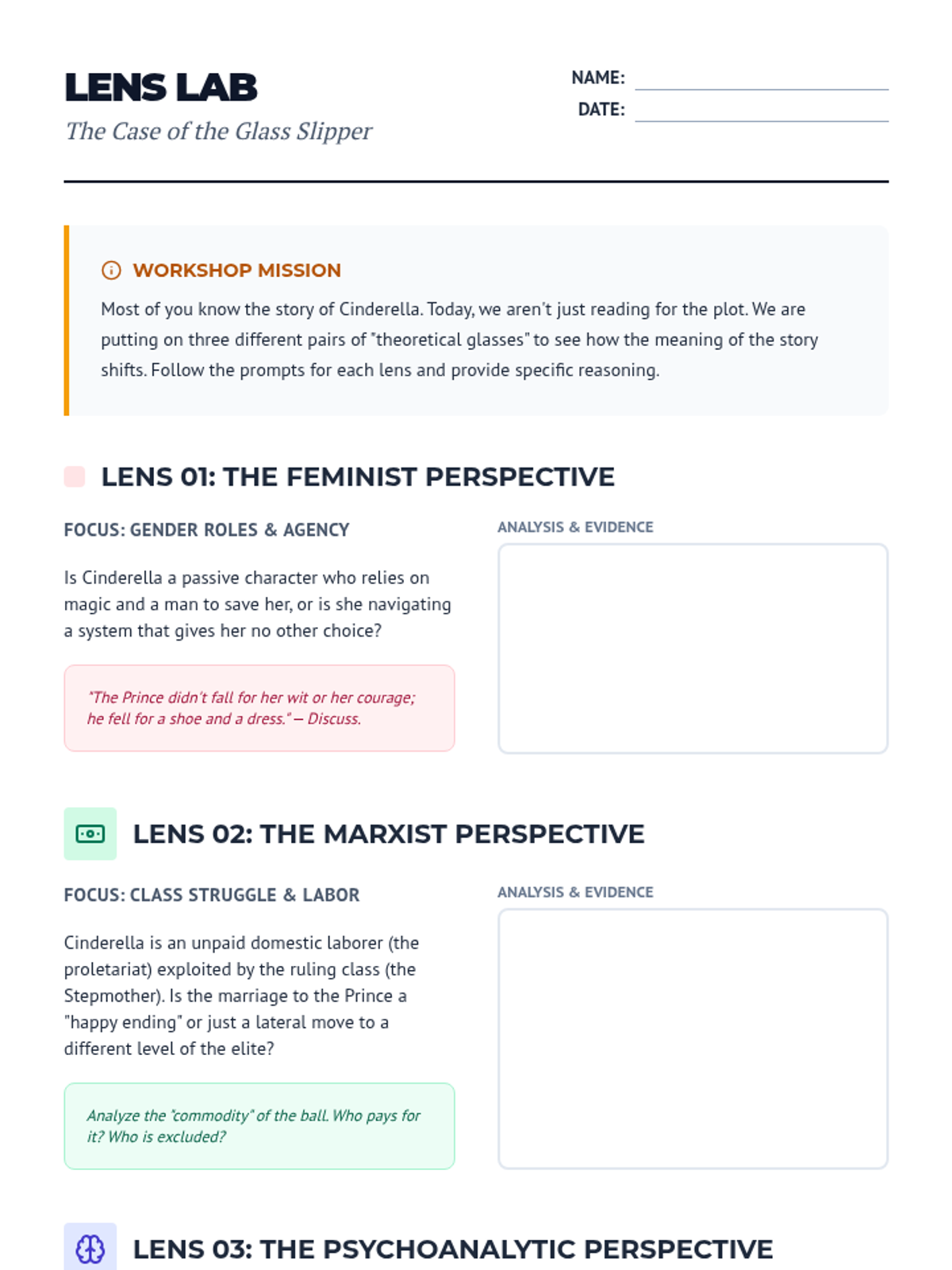
This sequence elevates novel study to a macro-level, requiring students to interpret text through various critical lenses (historical, feminist, Marxist, etc.). Students connect literature to broader societal issues and historical contexts, culminating in a critical analysis that situates the novel within a specific intellectual framework.
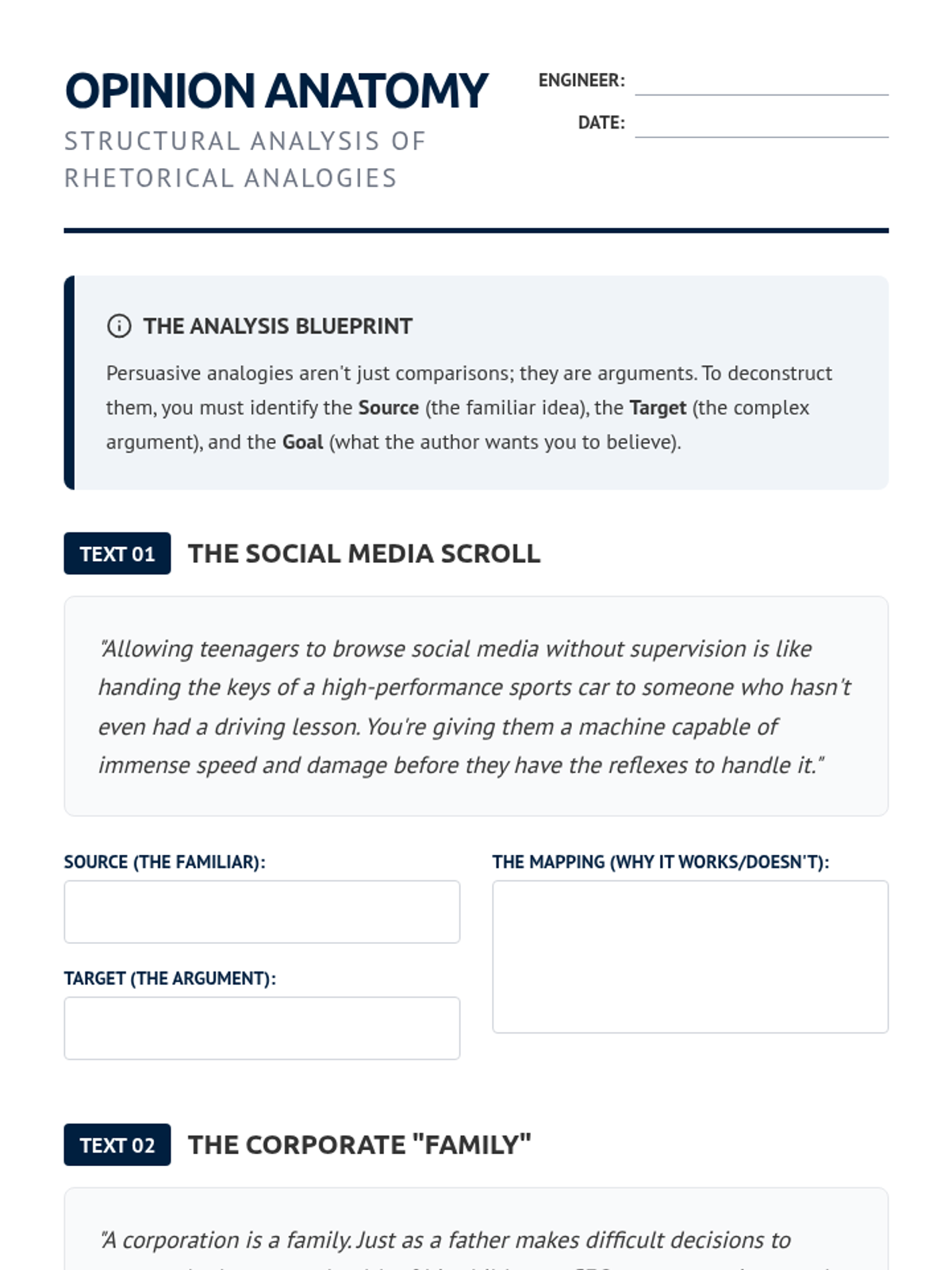
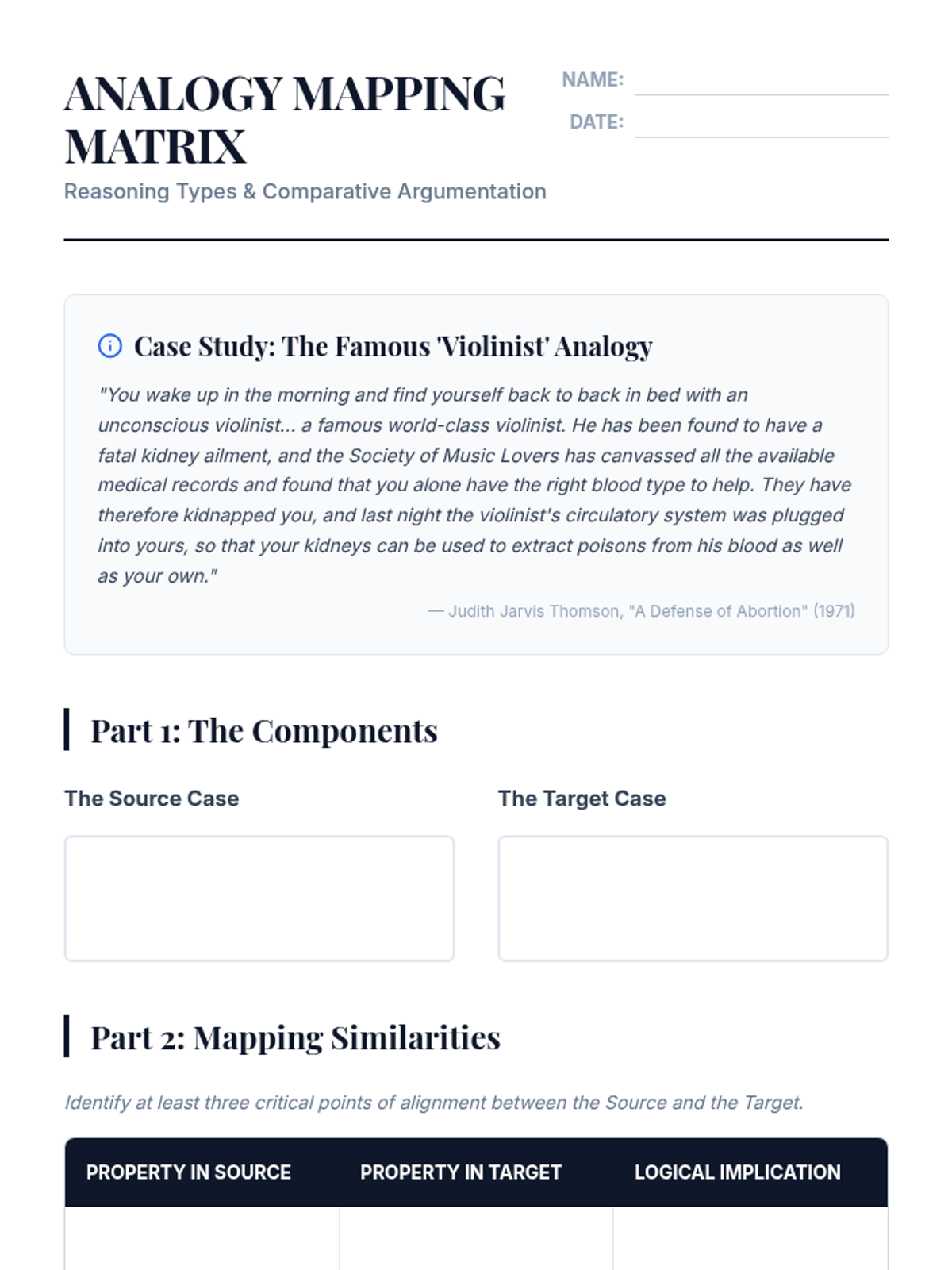
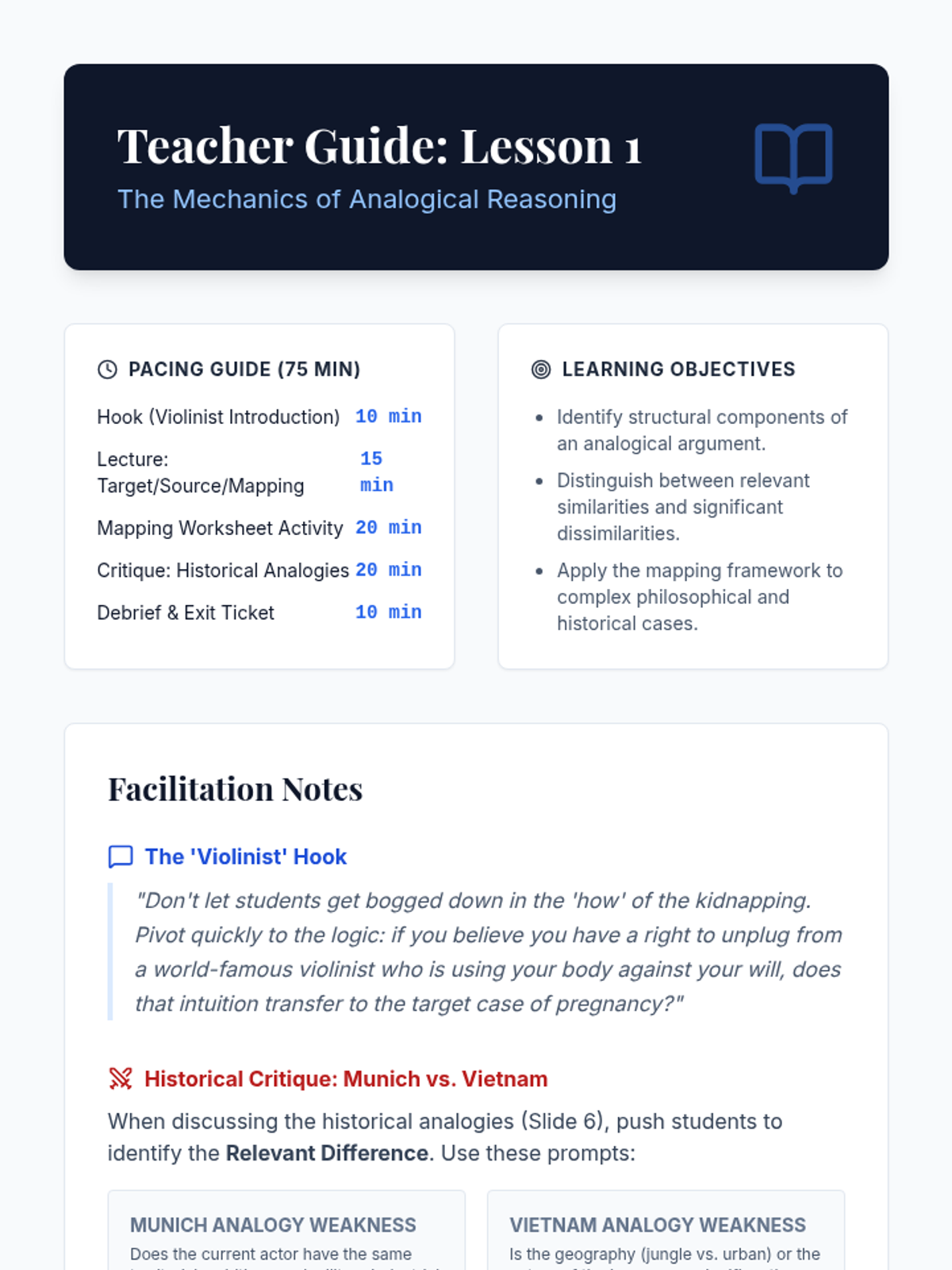
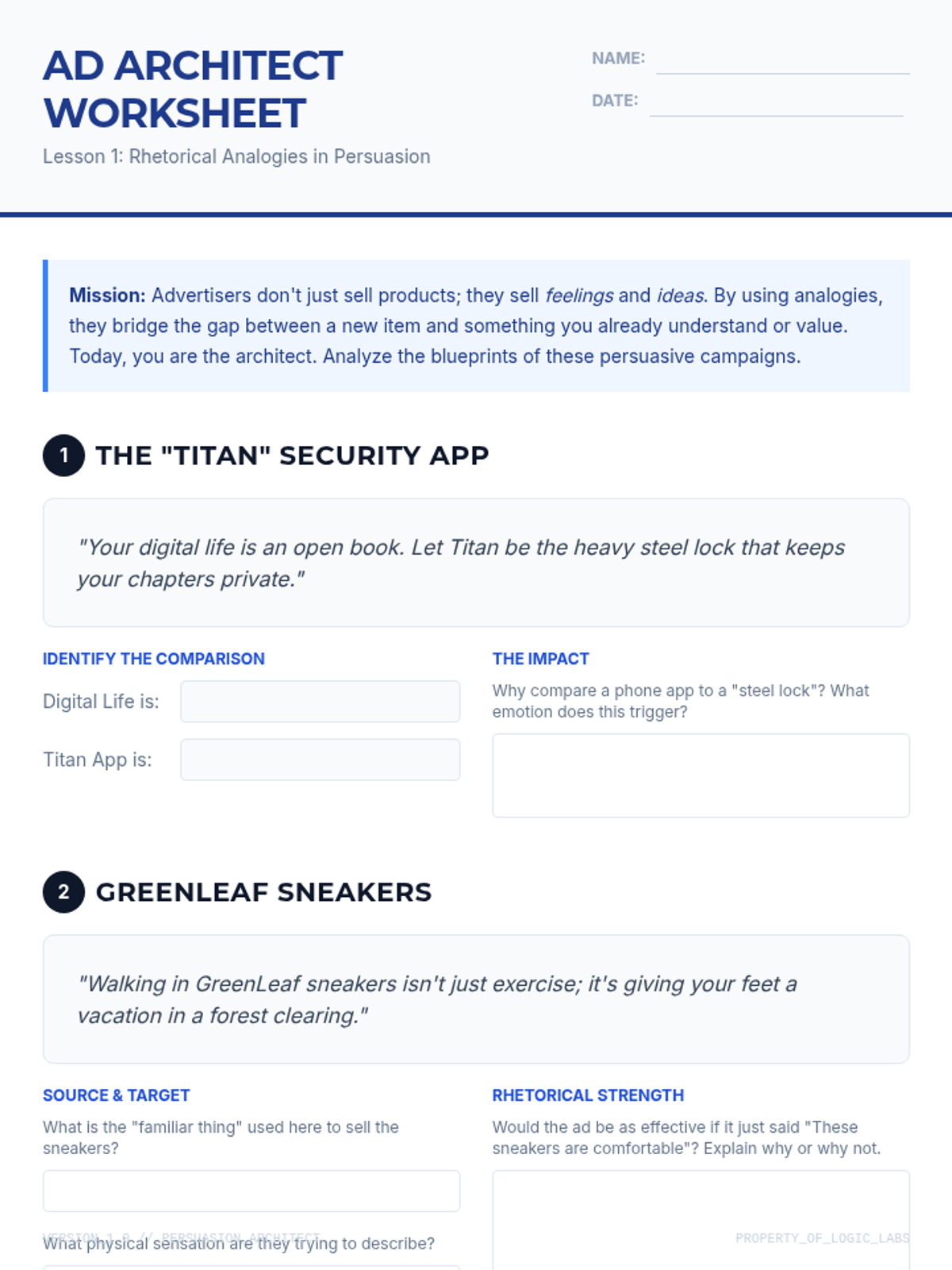
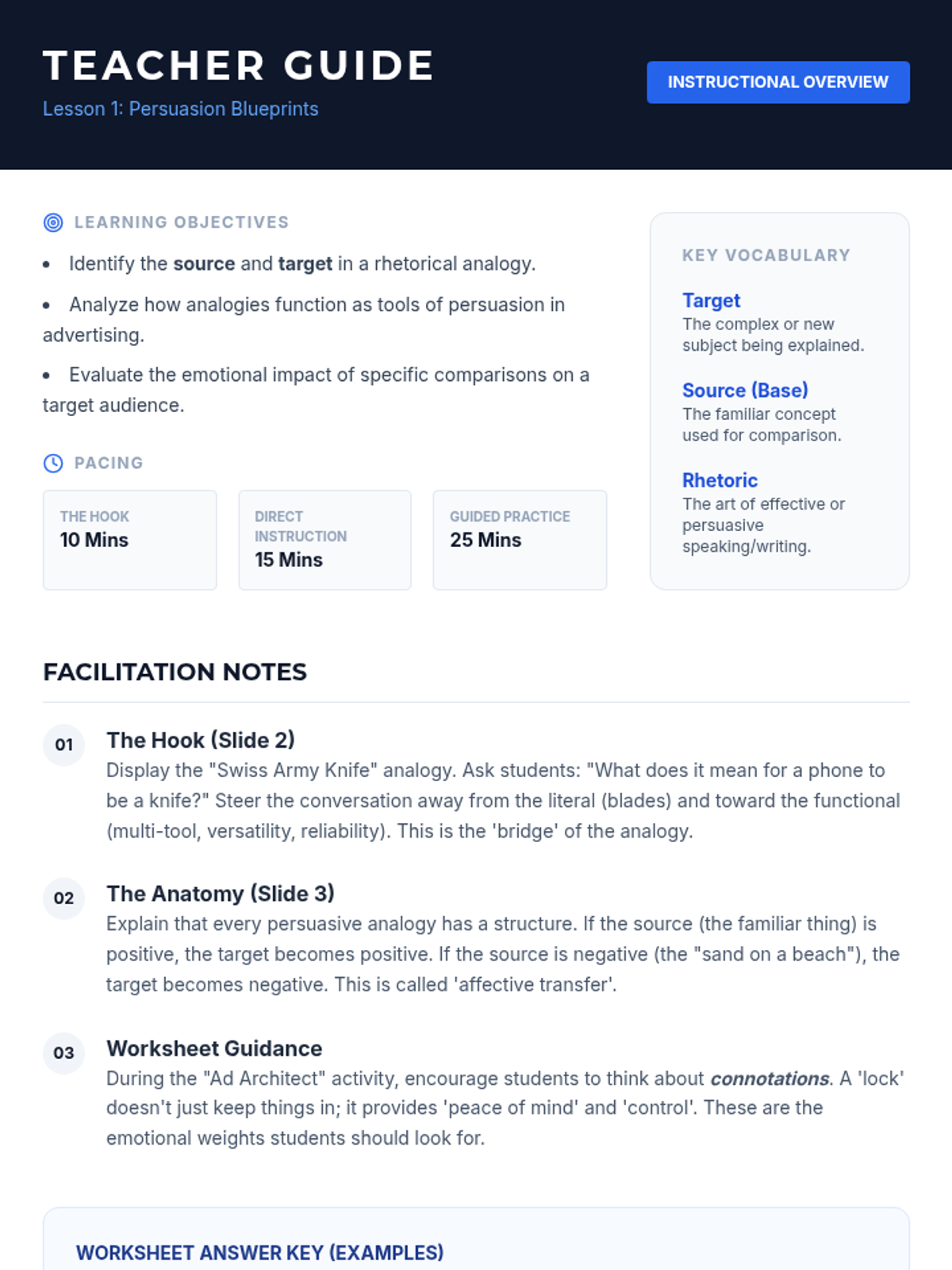
This sequence explores analogies as rhetorical devices in persuasive writing and speech, teaching students to analyze, evaluate, and craft powerful comparisons for argumentation.
A high-level literary analysis sequence for 12th-grade students focused on moving from basic thematic identification to constructing complex, evidence-based arguments using subtext, motif, and narrator reliability.
An advanced rhetorical study of foreign words and expressions in professional and literary contexts, focusing on the tension between prestige and alienation. Students move from technical mechanics and common misuses to analyzing code-switching in literature and designing corporate style policies.
A comprehensive unit for undergraduate students on analogical reasoning and comparative argumentation. The sequence moves from the structural mechanics of analogies to their critical application in law, policy, and ethics, culminating in a moot court simulation focused on case precedent.
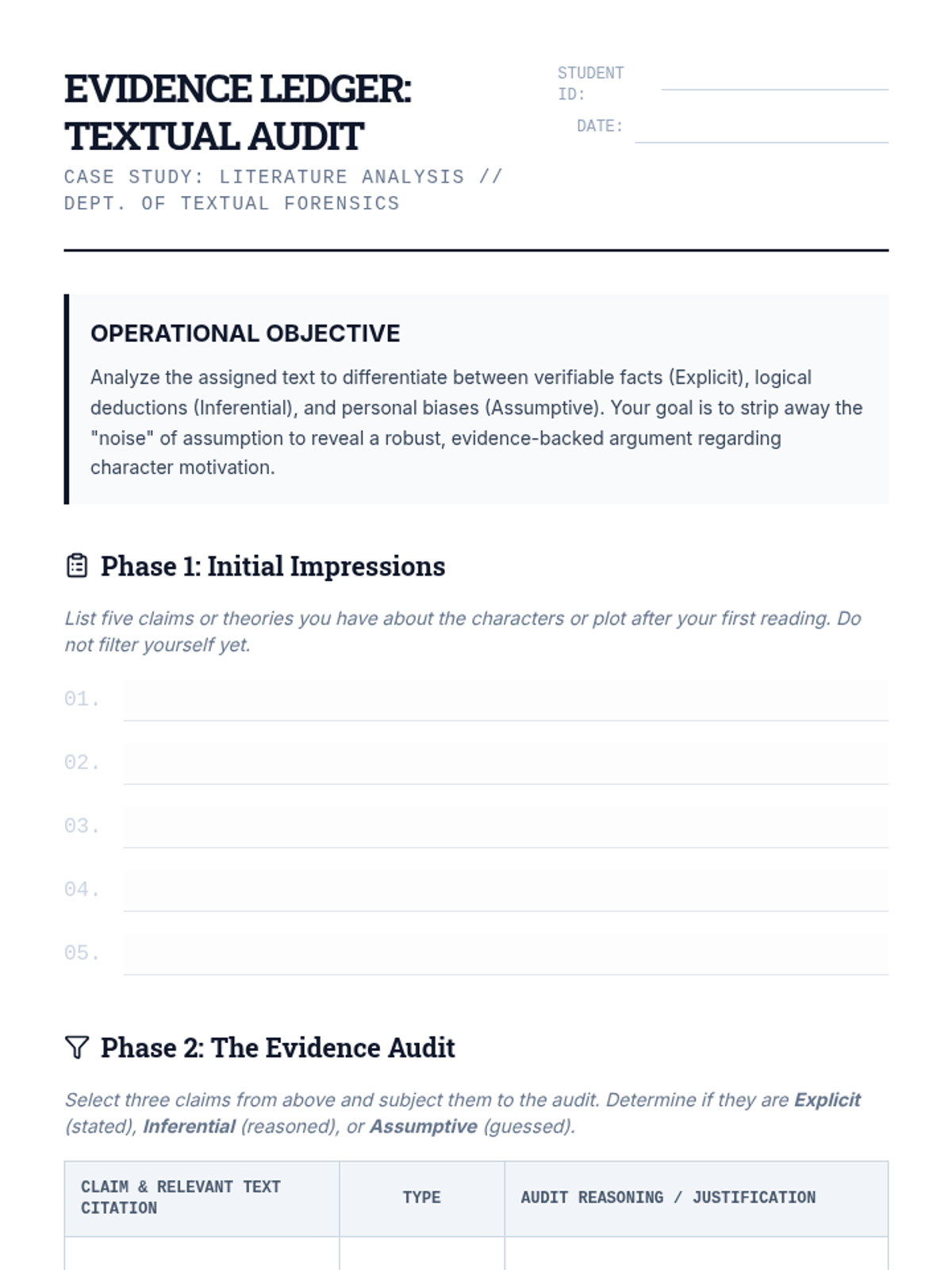
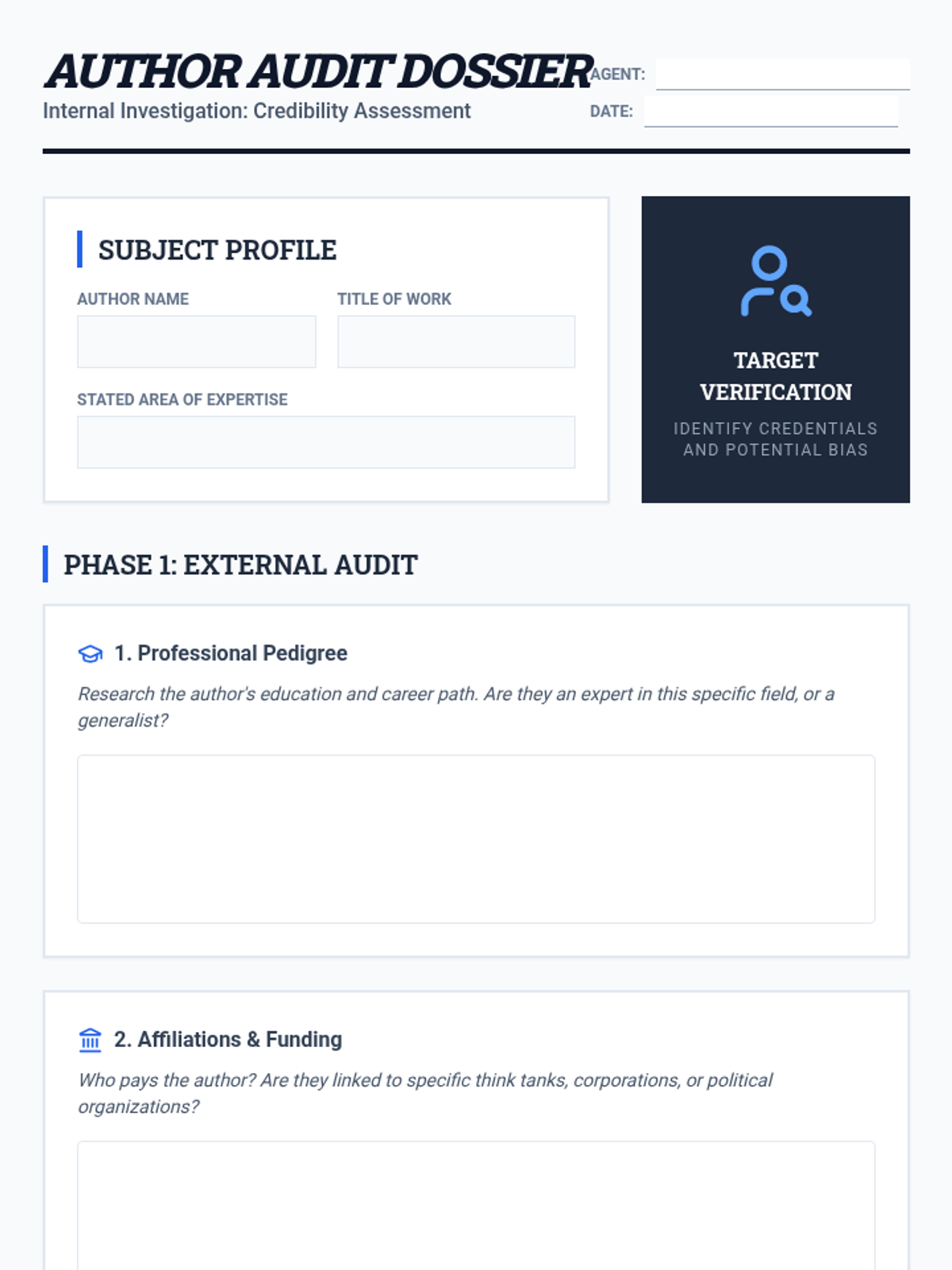
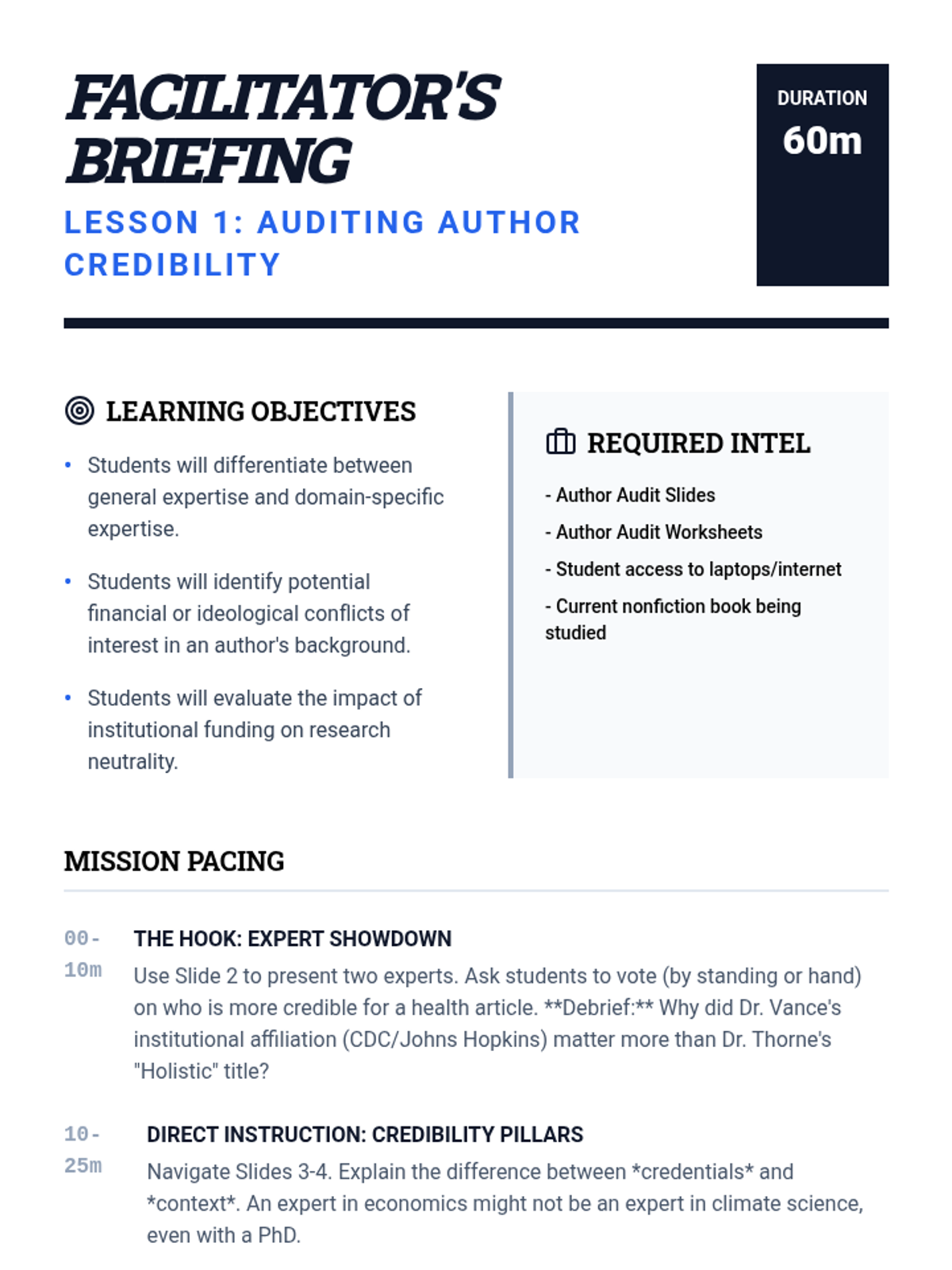
This sequence focuses on information literacy and the evaluation of source validity within the context of a nonfiction book study. Students act as investigative journalists, scrutinizing author credibility, source integration, fact-checking claims, and identifying logical fallacies, culminating in an editorial board simulation.
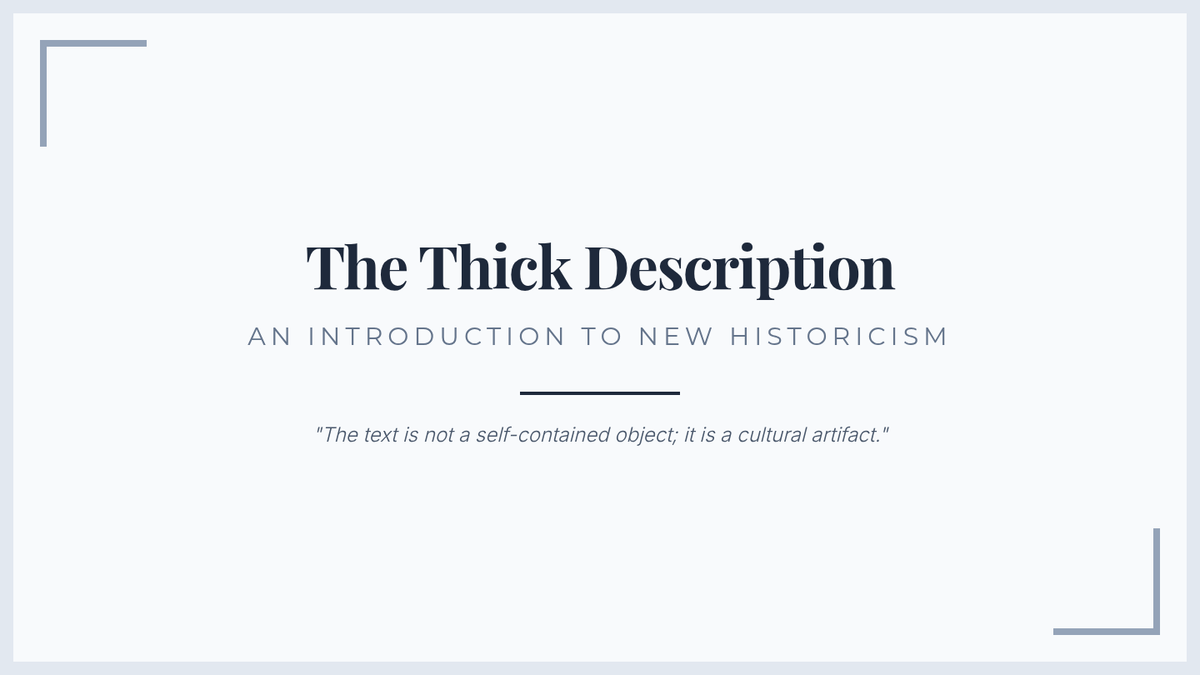
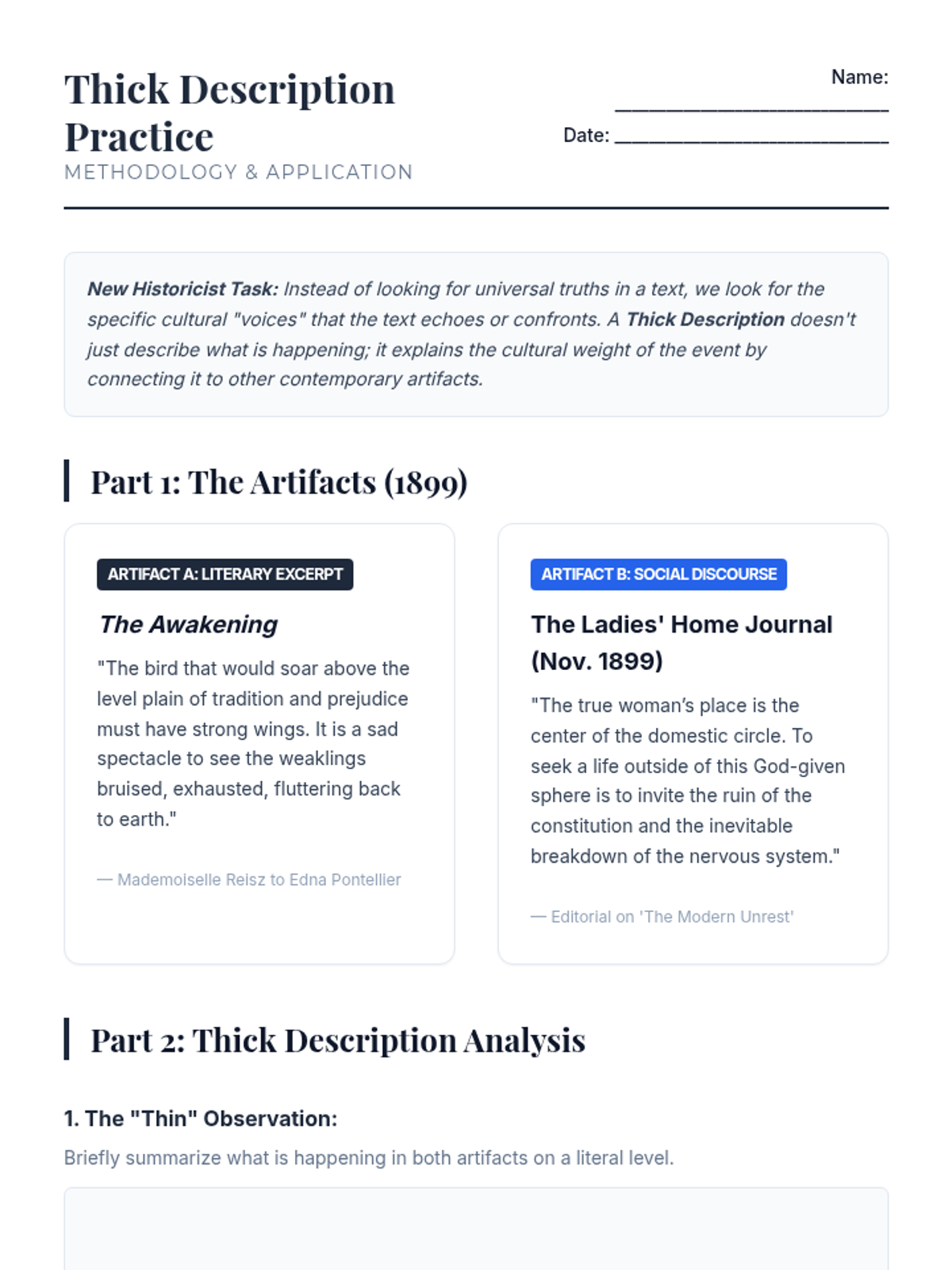
This sequence guides undergraduate students through the methodology of New Historicism, teaching them to analyze literature as a cultural artifact shaped by and shaping its historical moment. Students move from theoretical understanding to archival research, culminating in a multimedia reconstruction of the socio-political world of a specific novel.
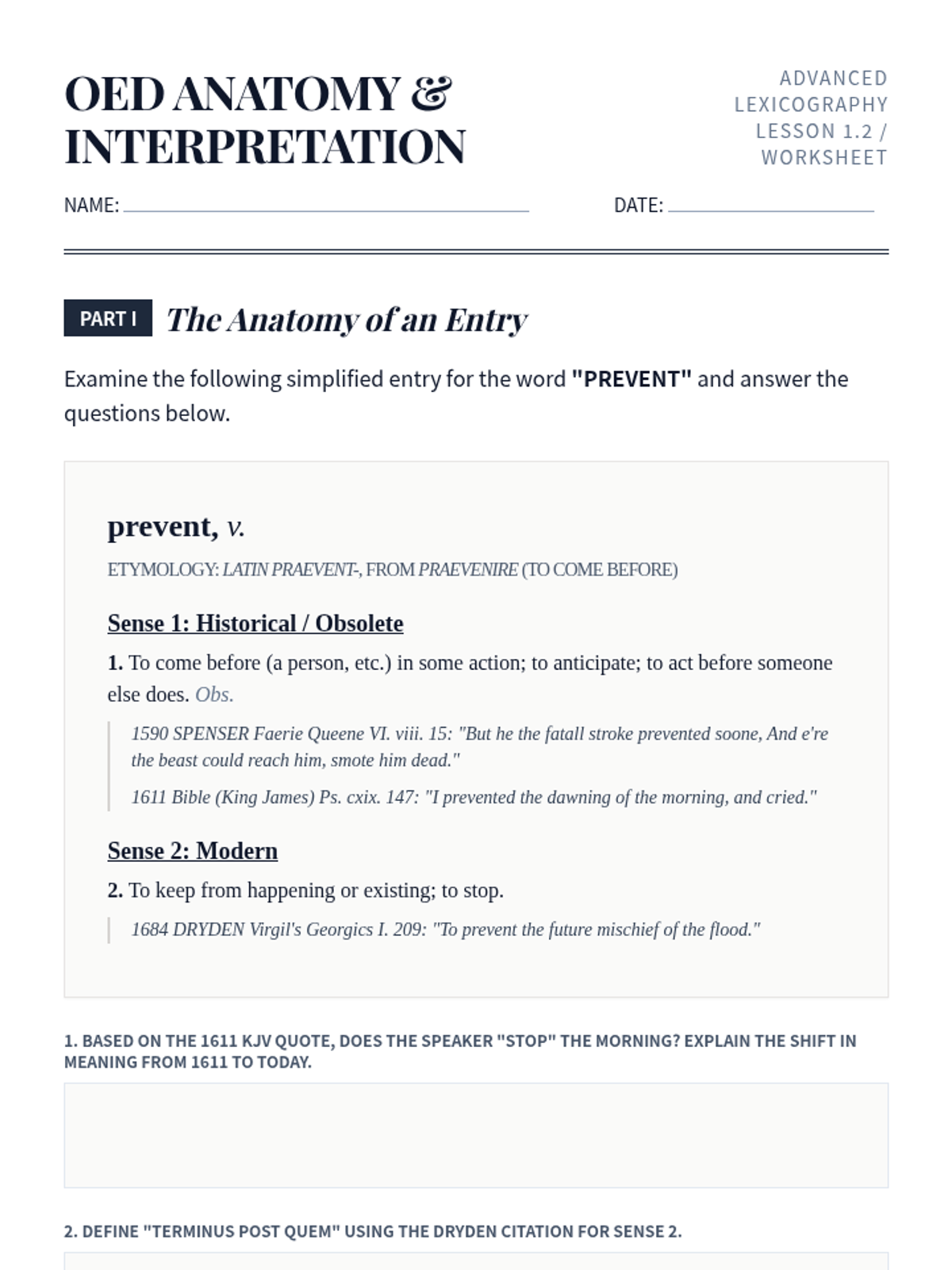
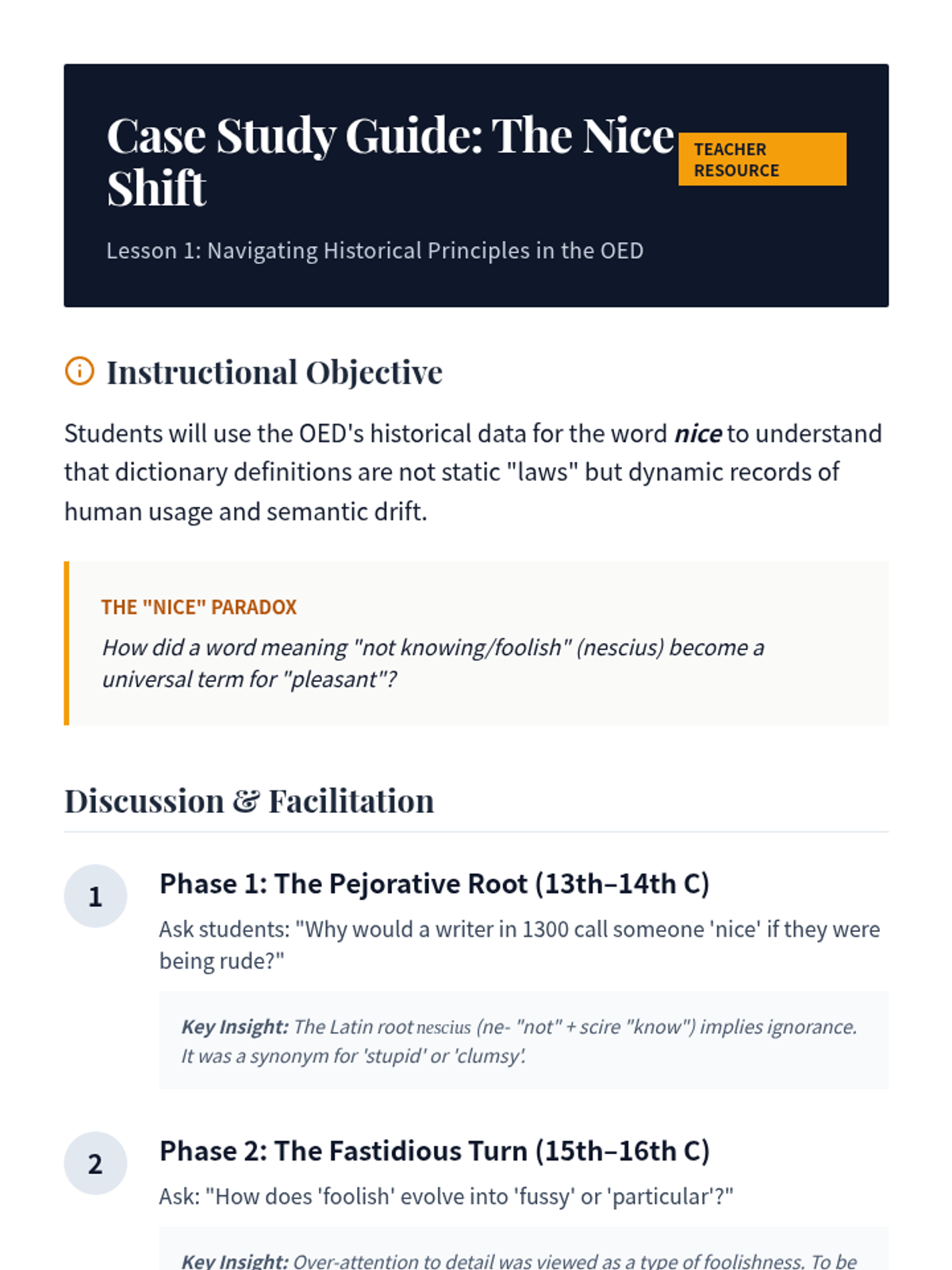
This undergraduate-level sequence explores the academic field of lexicography, focusing on historical dictionary principles, etymological tracing of Indo-European roots, and the tension between descriptive and prescriptive linguistics. Students develop proficiency in using the OED and specialized disciplinary glossaries to produce a comprehensive 'word biography' as a final project.
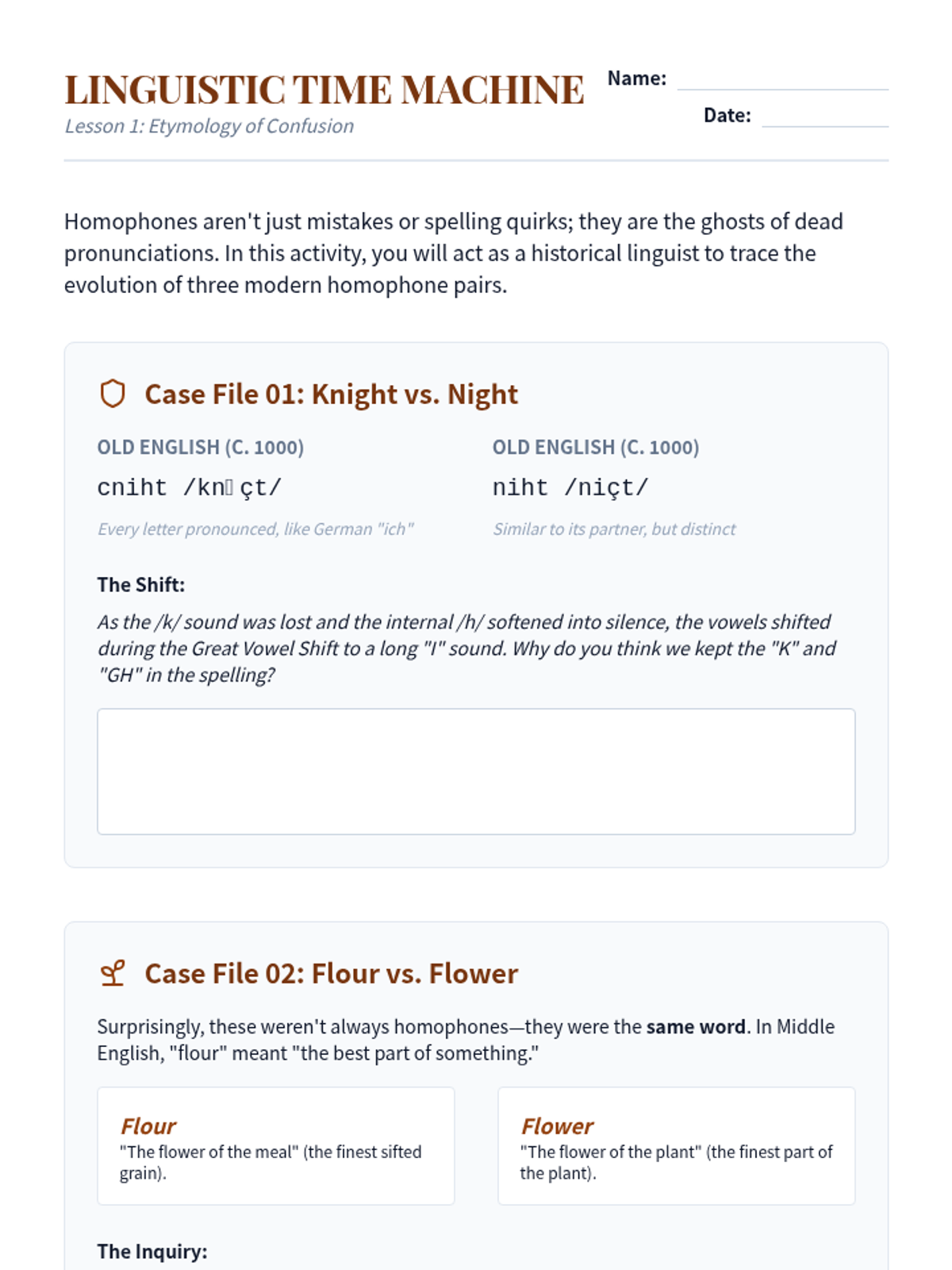
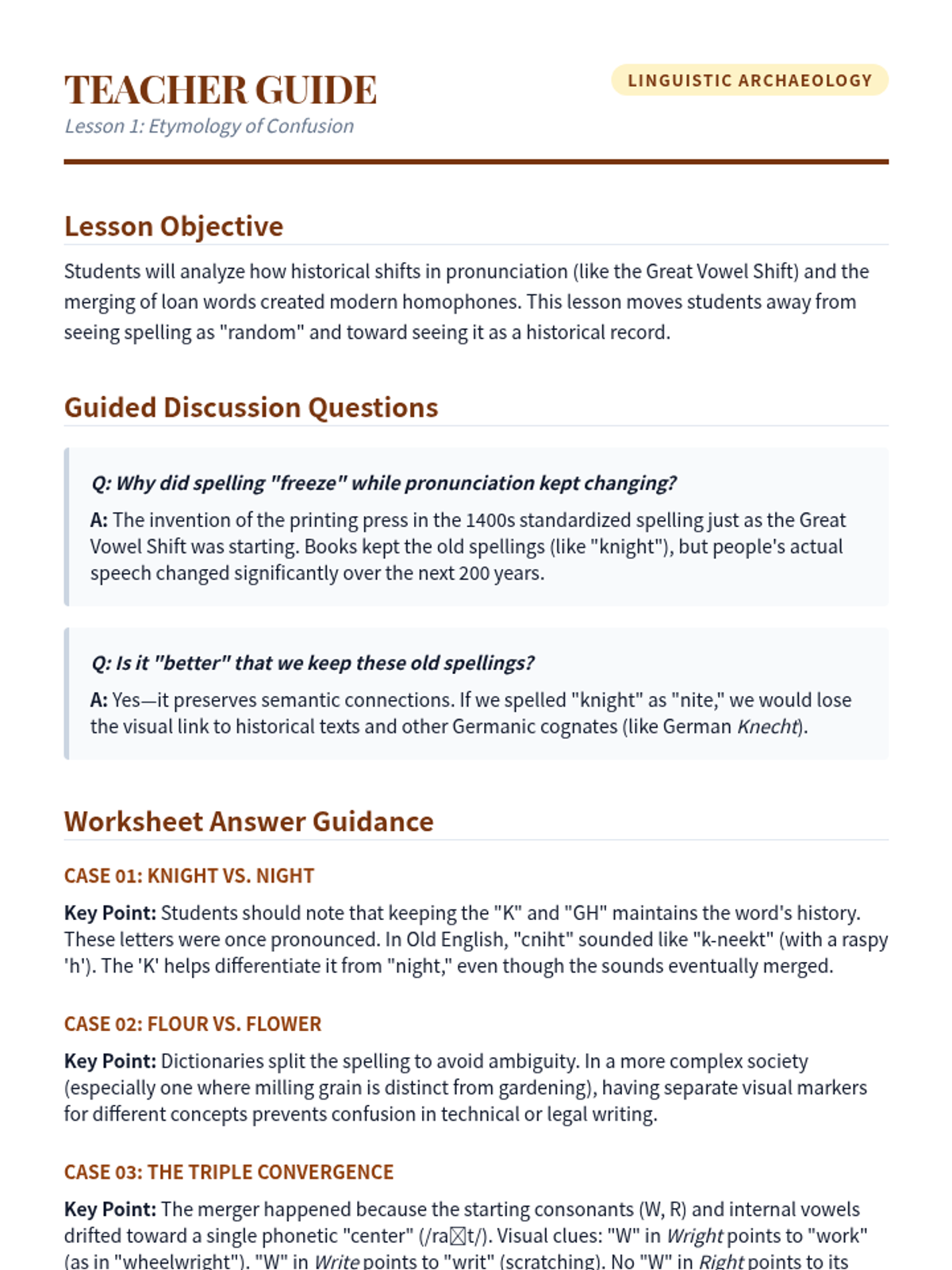
A high-level linguistics course for 12th-grade students focusing on the etymology and morphological structure of homophones to improve spelling and vocabulary acquisition. Students move from understanding historical sound shifts to using Latin and Greek roots to logically differentiate between words that sound identical.
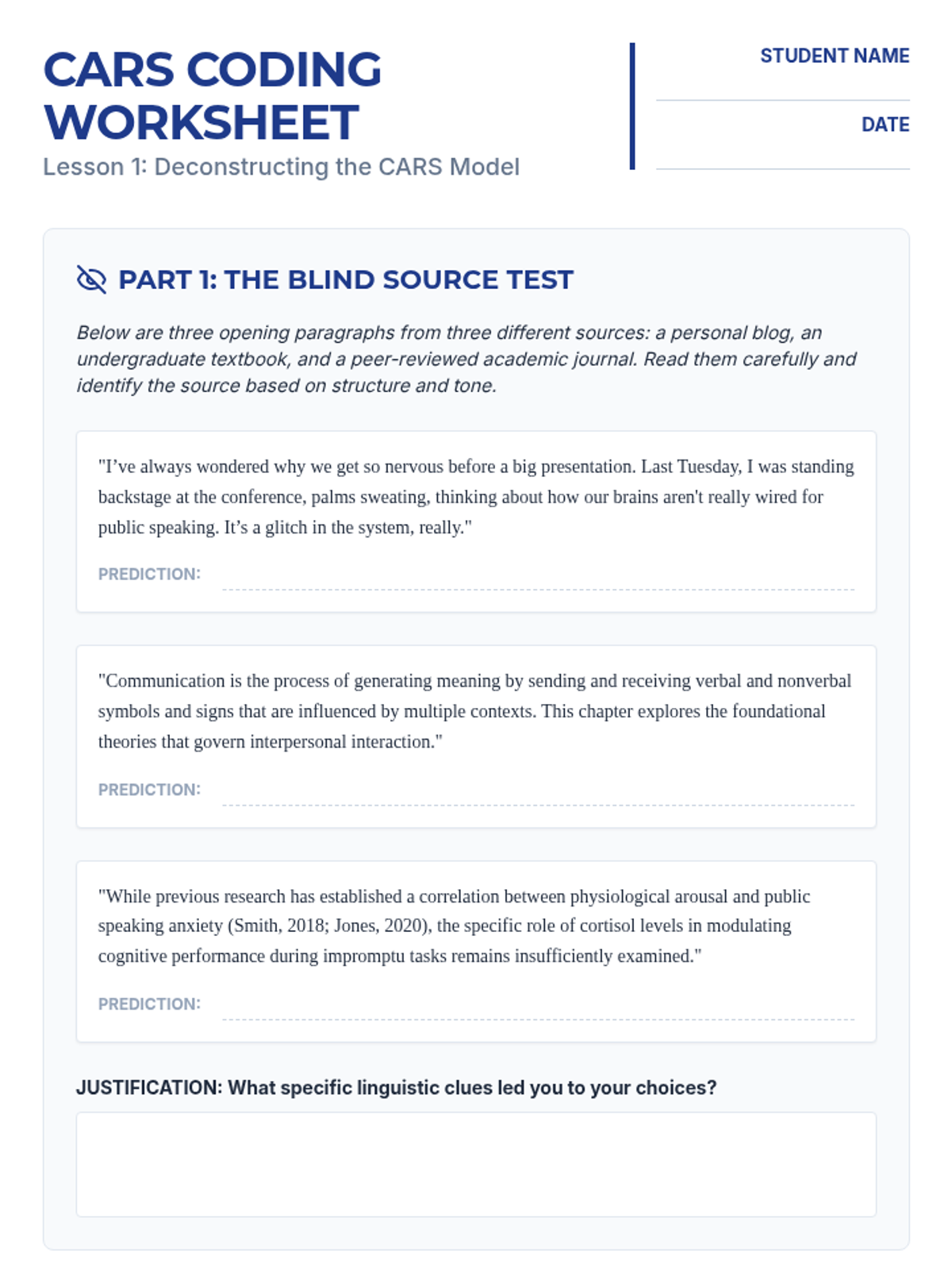
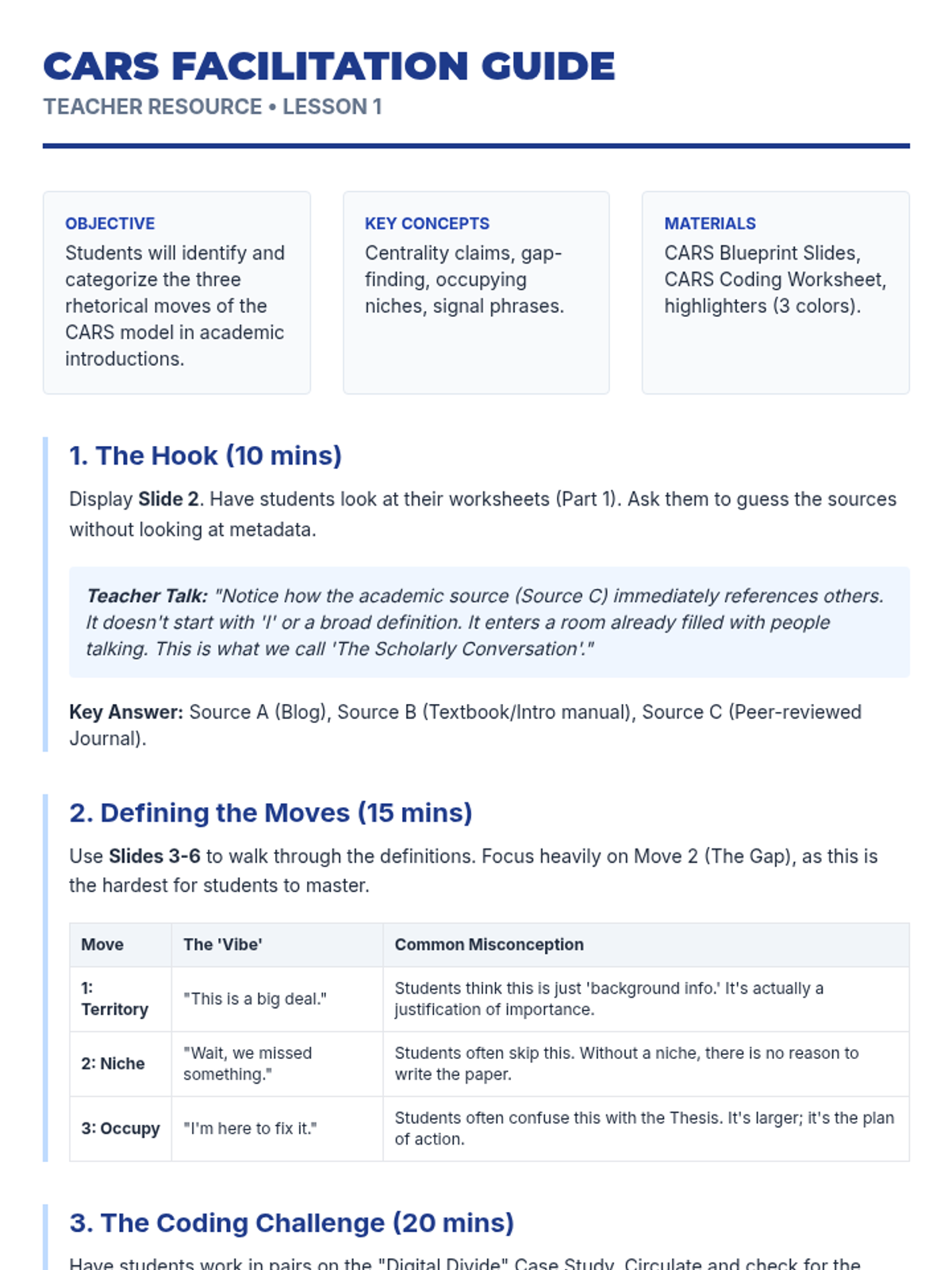
This sequence guides undergraduate students through a rhetorical deconstruction of academic writing, focusing on the specific 'moves' used in introductions and conclusions to establish research significance and contribute to scholarly conversations.
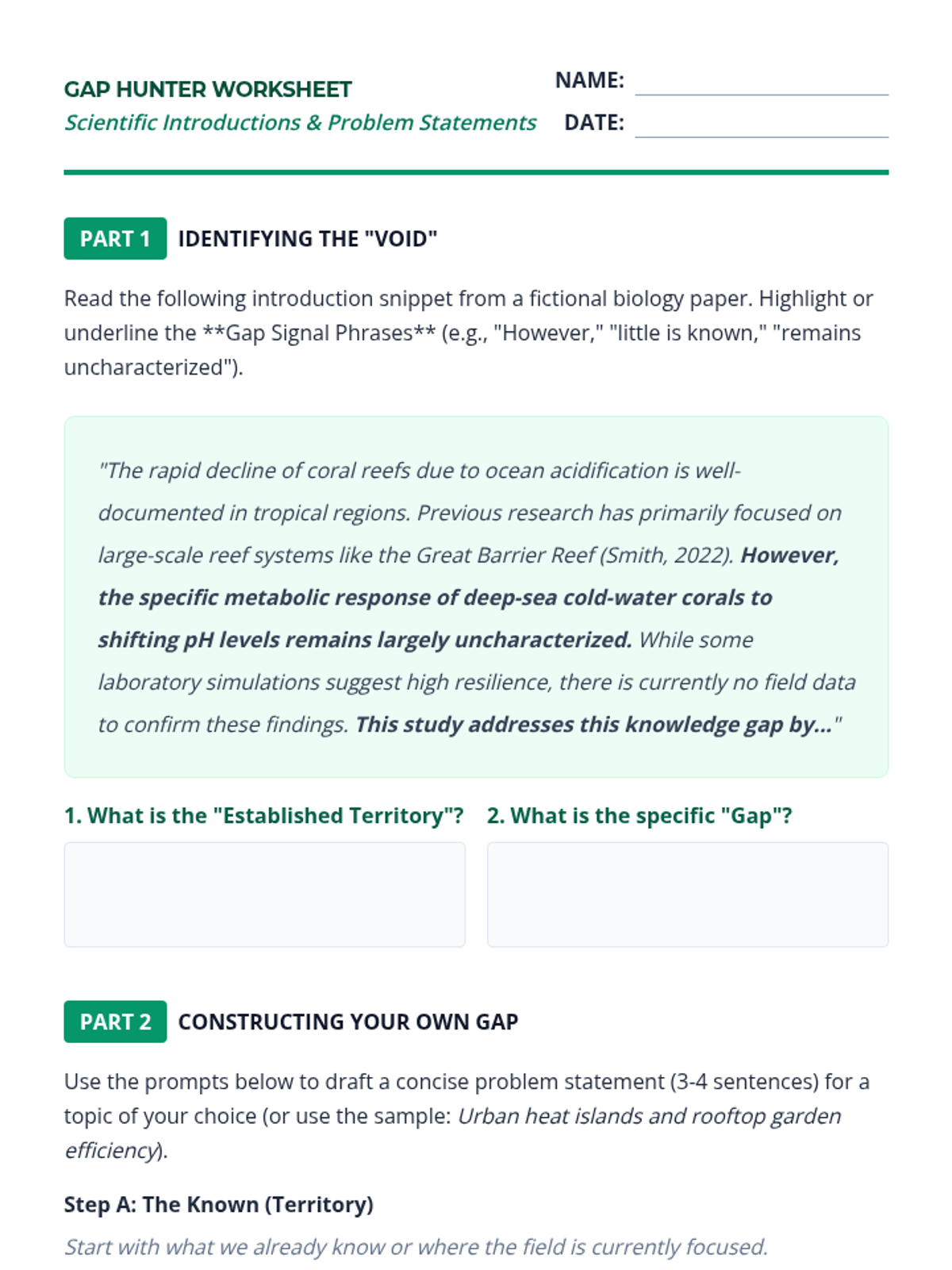
A comprehensive writing unit for undergraduates focused on adapting introductions and conclusions across scientific, humanities, business, and public contexts. Students analyze disciplinary conventions and practice rhetorical flexibility through simulations and workshops.
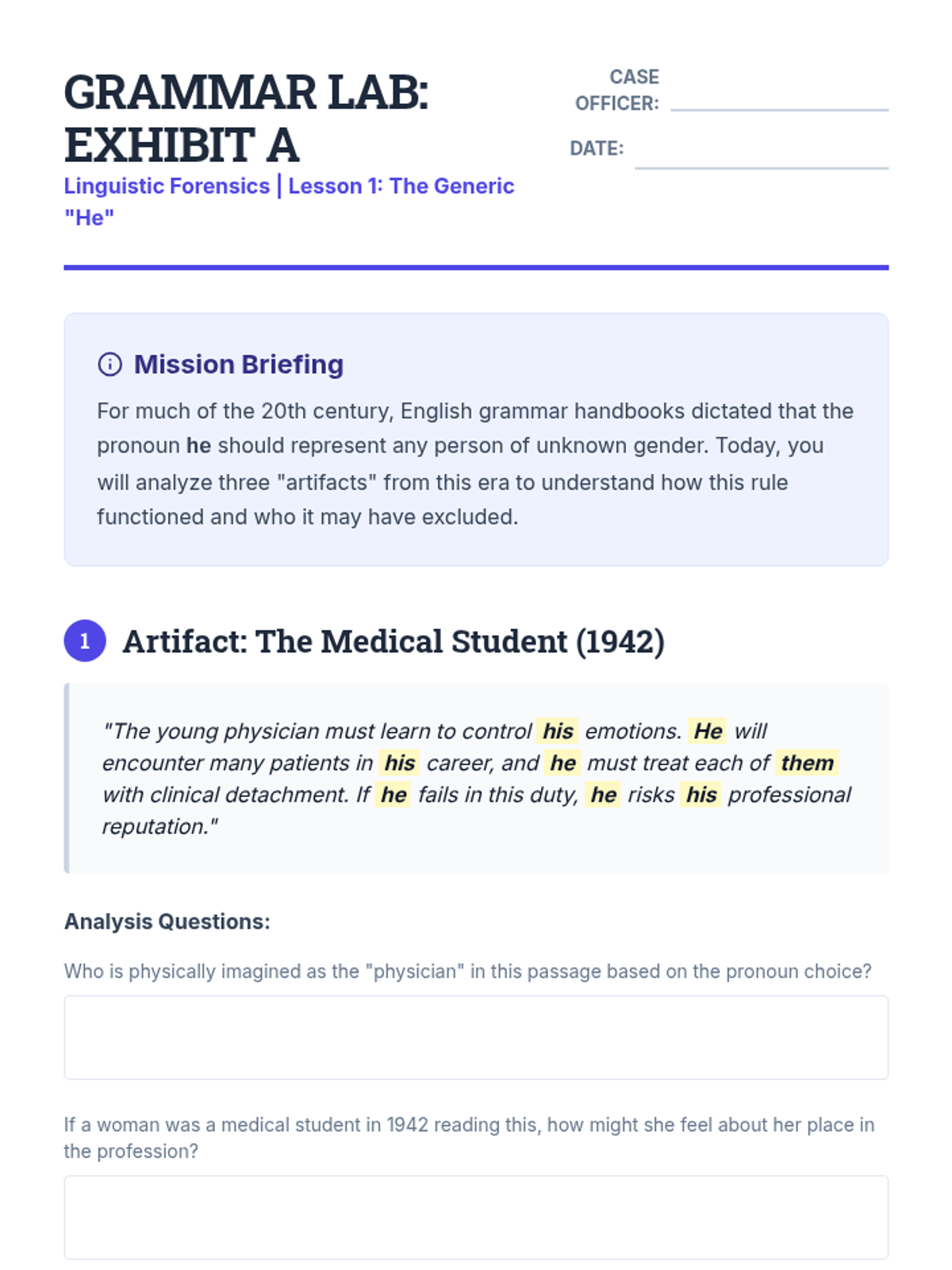
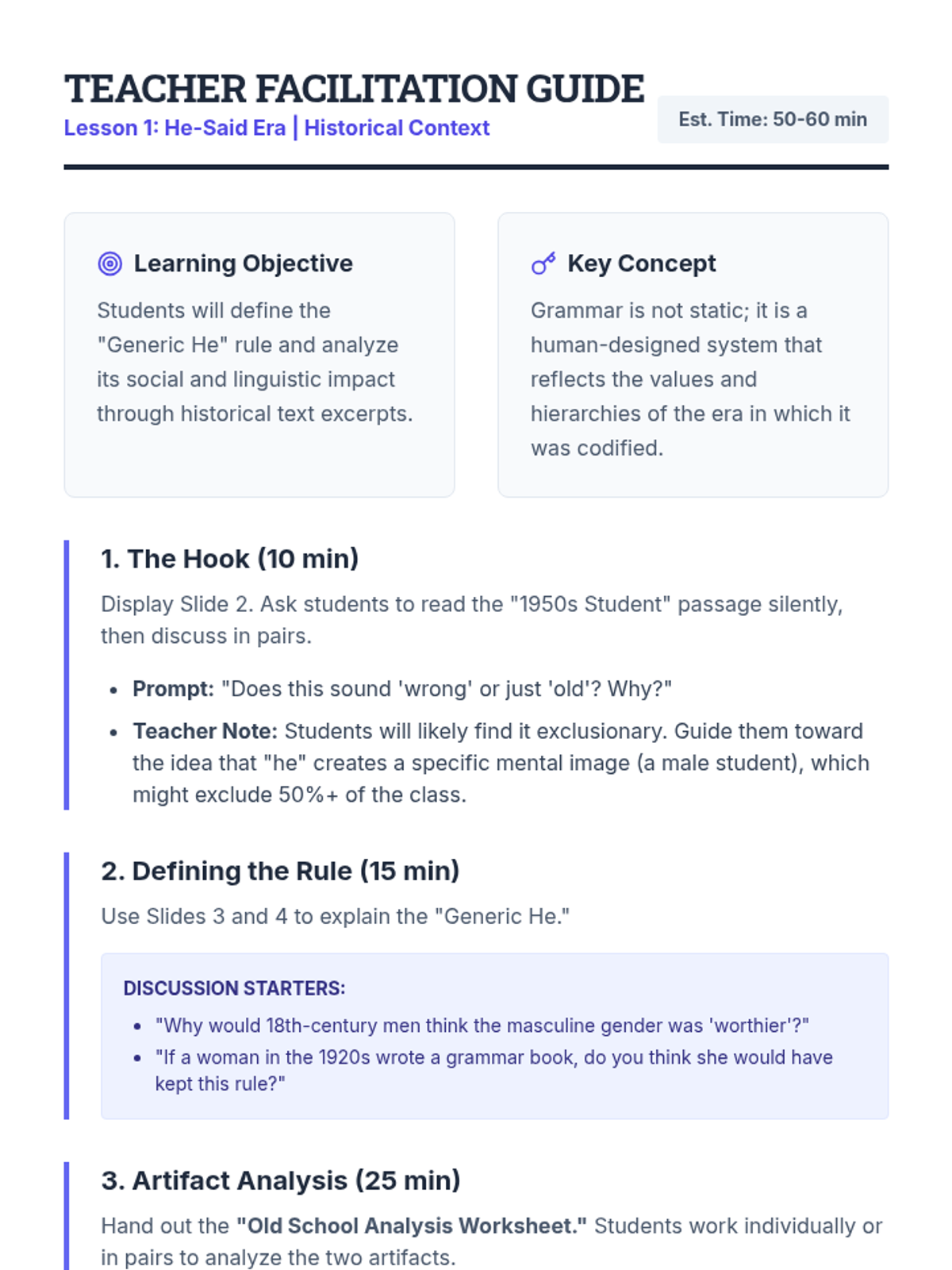
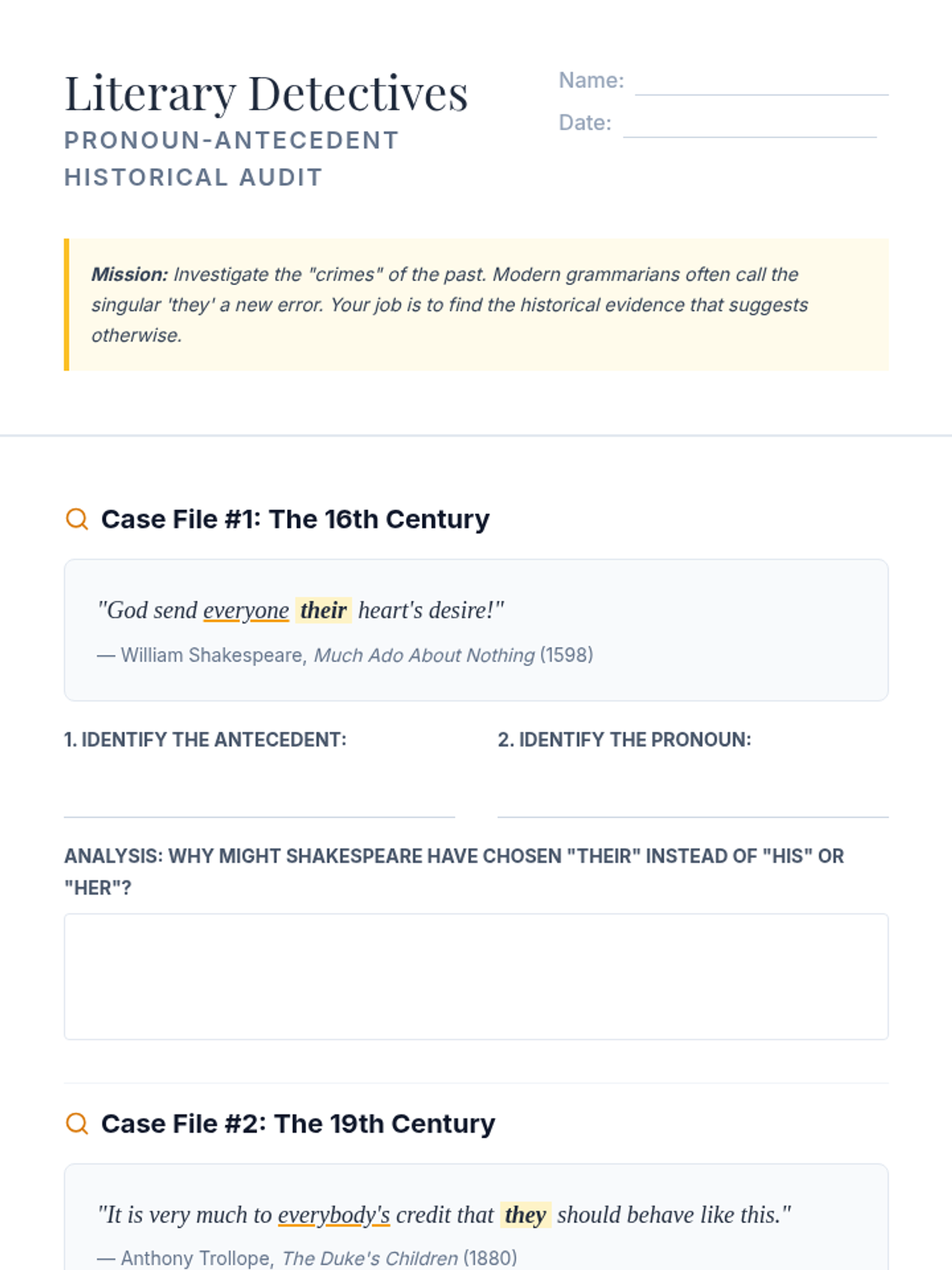
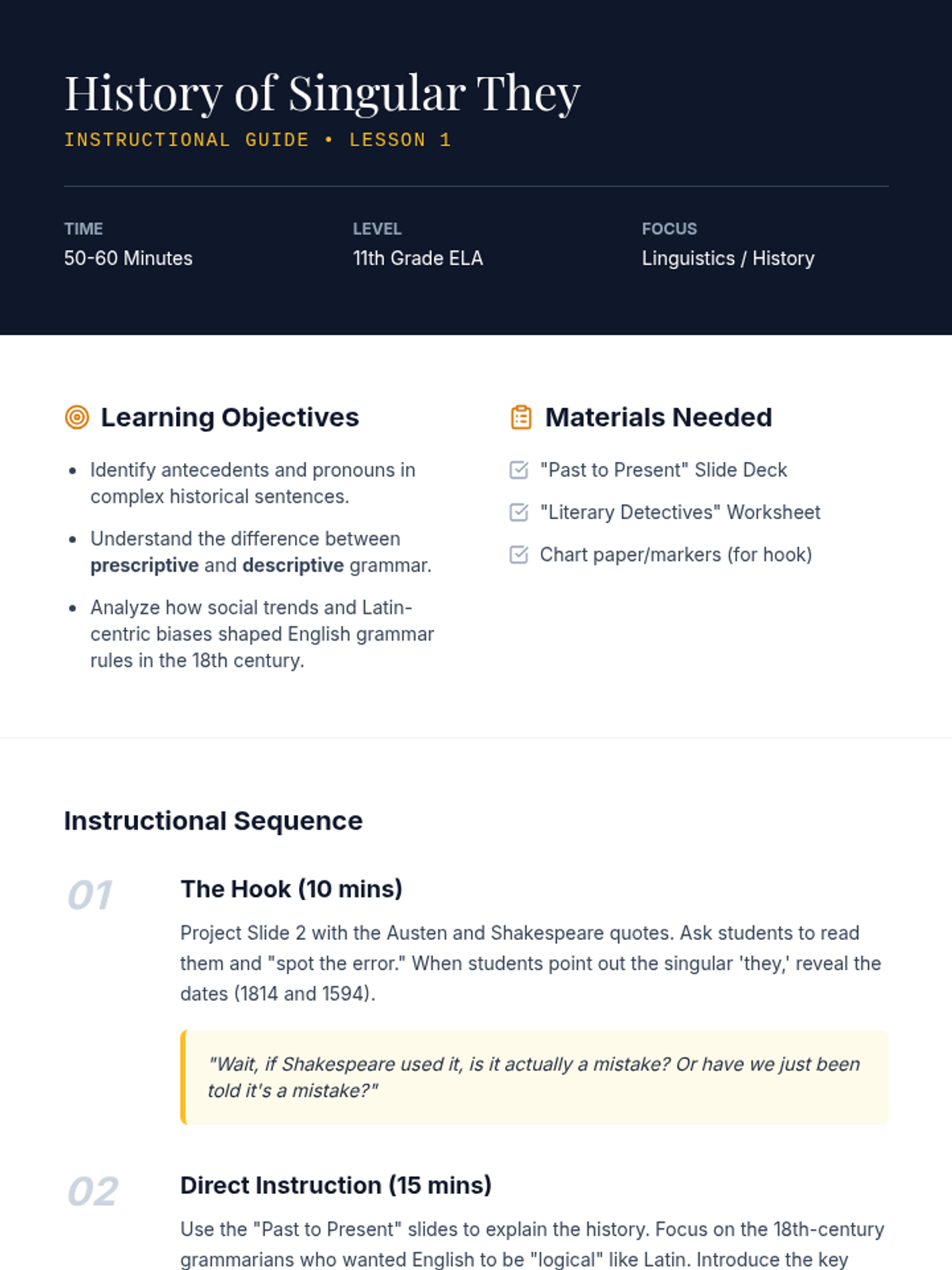
This inquiry-based sequence explores the evolving nature of grammar, specifically addressing the debate around the singular 'they' and gender-neutral language. Students move from analyzing historical style guides to evaluating modern usage in journalism and academia.
This sequence explores the evolution of pronouns and antecedents, specifically focusing on the singular 'they' and gender-neutral language. Students analyze historical usage, compare modern style guides, and debate the tension between prescriptive and descriptive grammar.
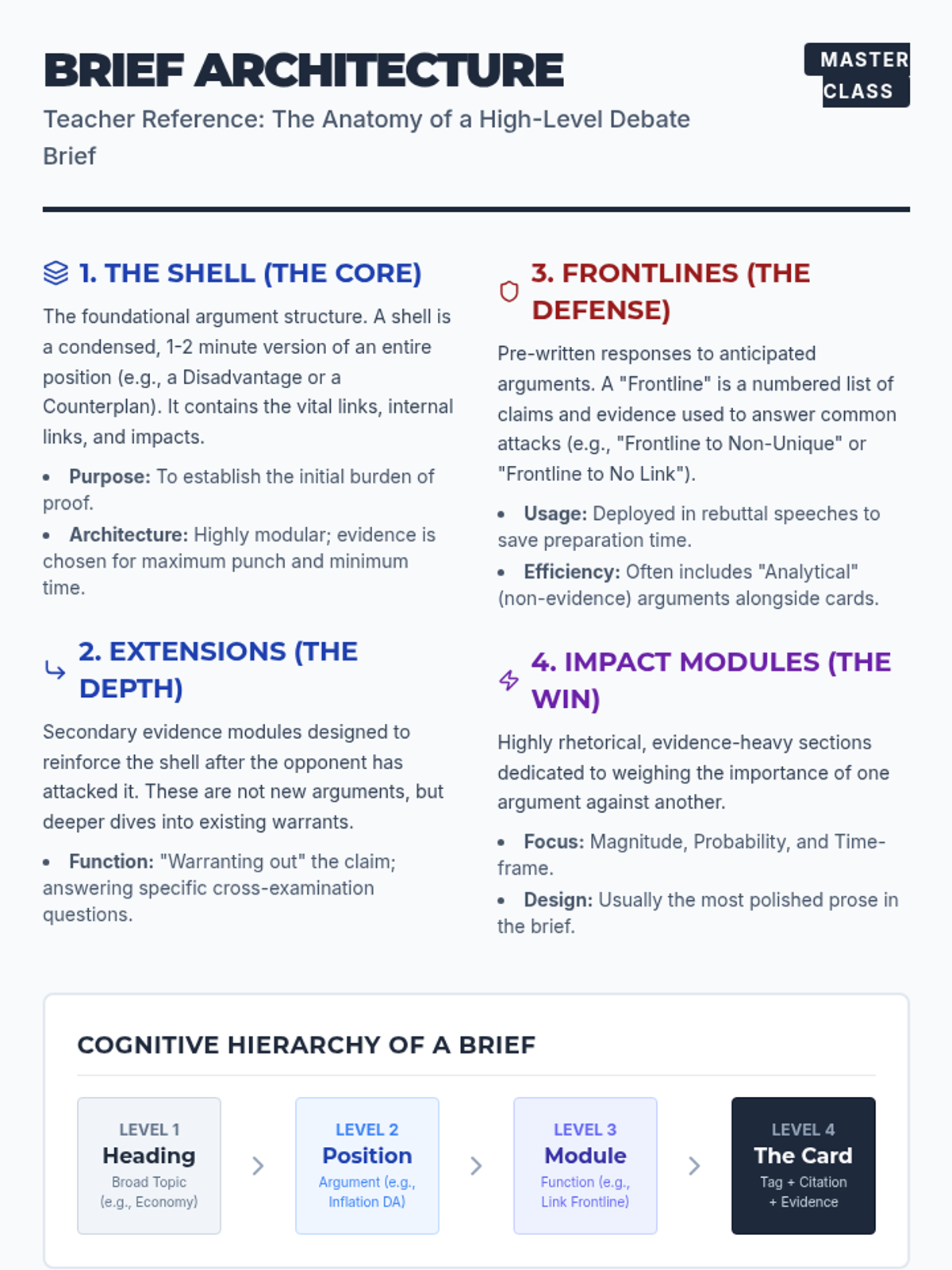
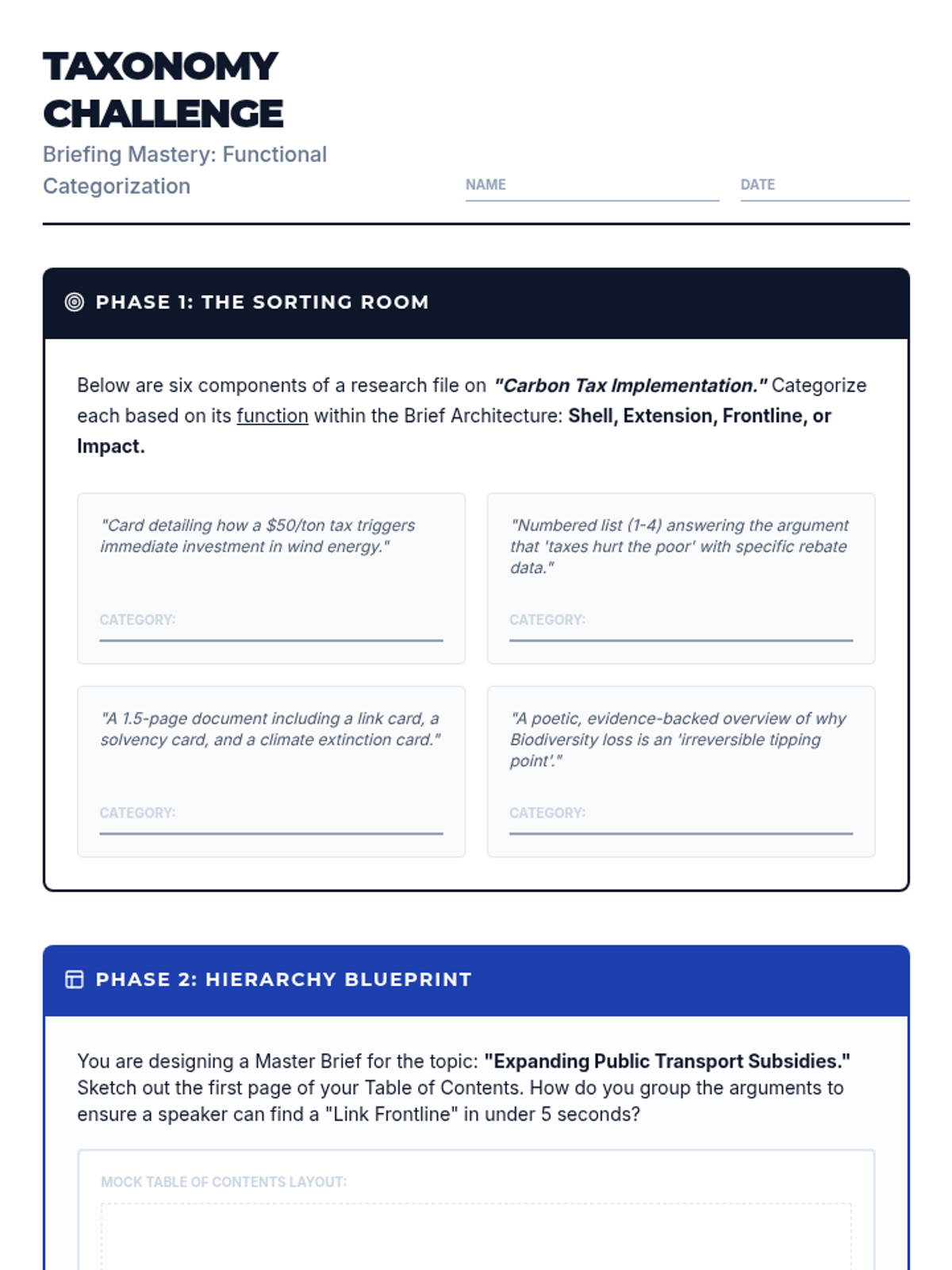
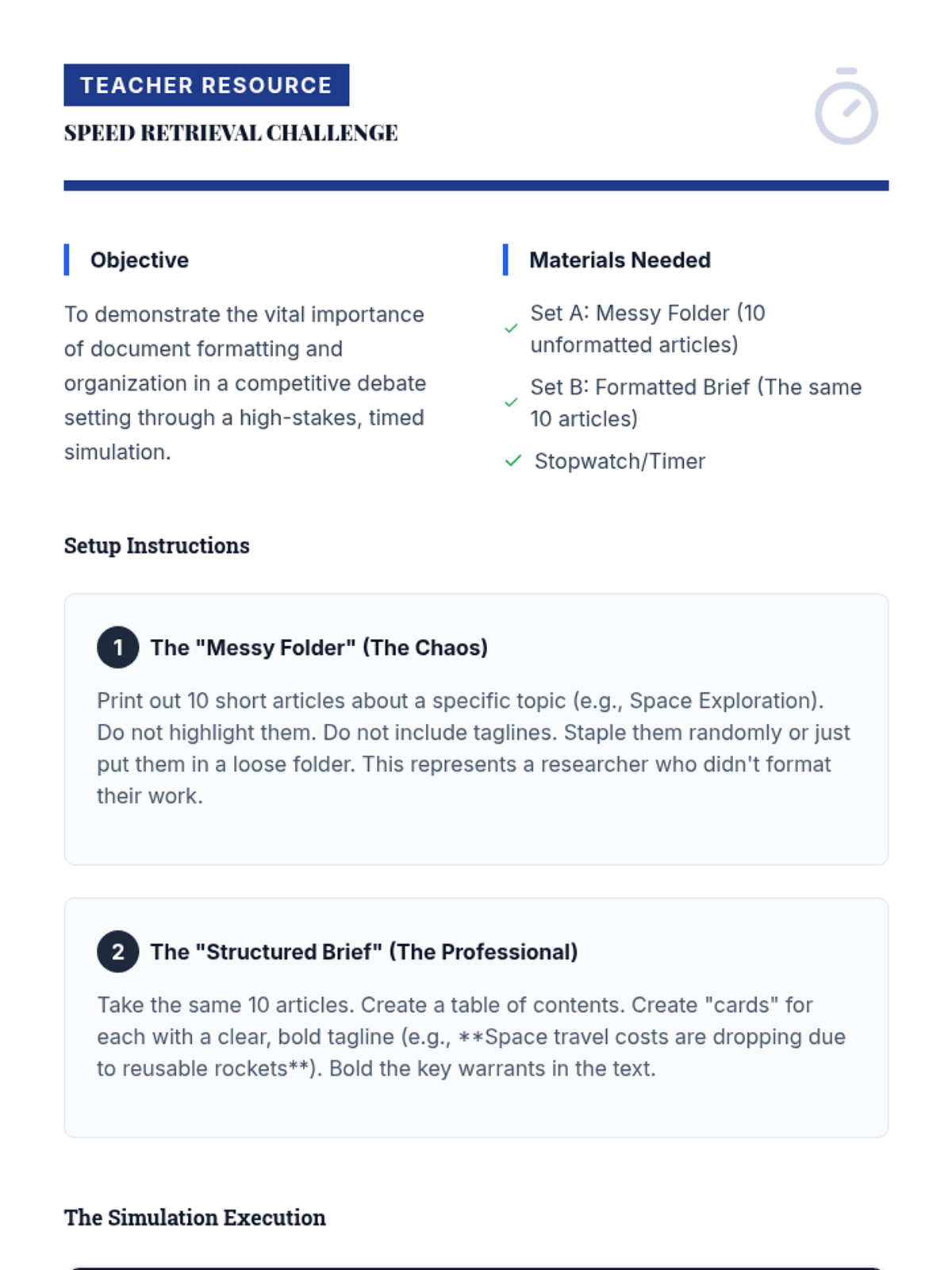
A comprehensive workshop-based sequence for graduate students focusing on the architecture, ethics, and strategic organization of debate briefs. Students progress from structural theory to the construction of a usable, high-level Master Brief.
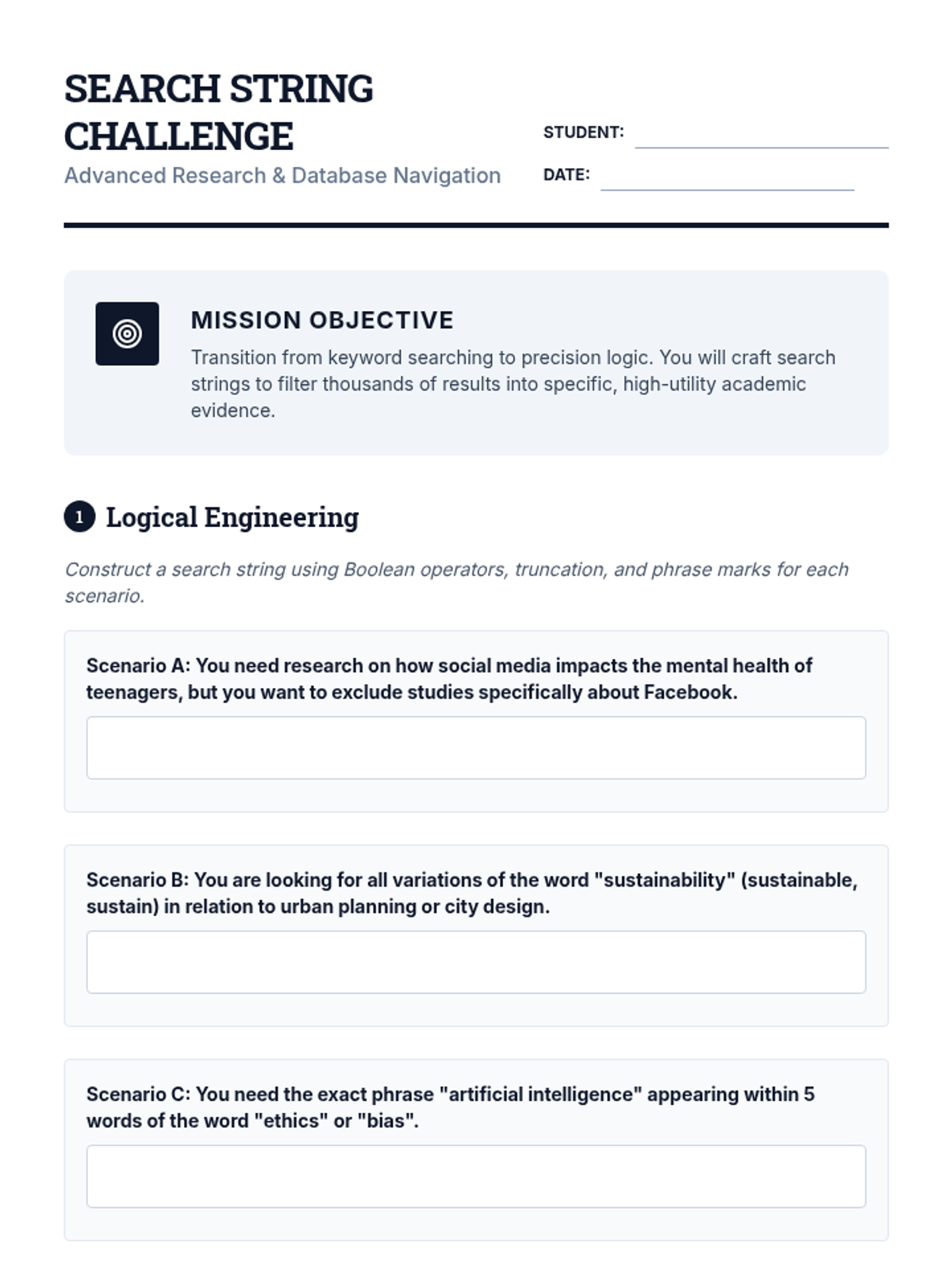
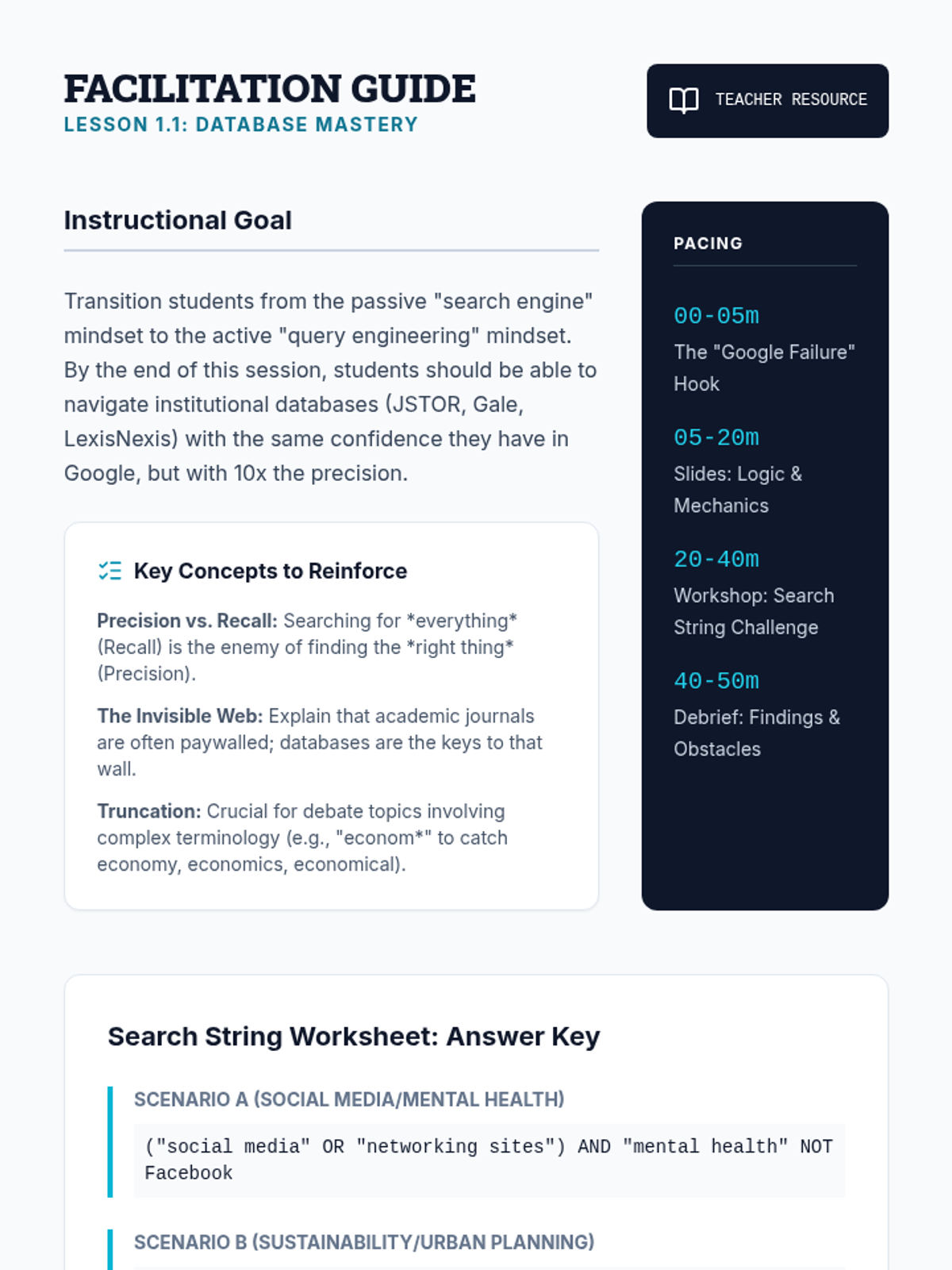
This sequence equips 12th-grade students with collegiate-level research skills, focusing on advanced database navigation, methodology evaluation, lateral reading, and research ethics. Students transition from basic searching to critical source synthesis, preparing them for high-level academic debate and university-level writing.
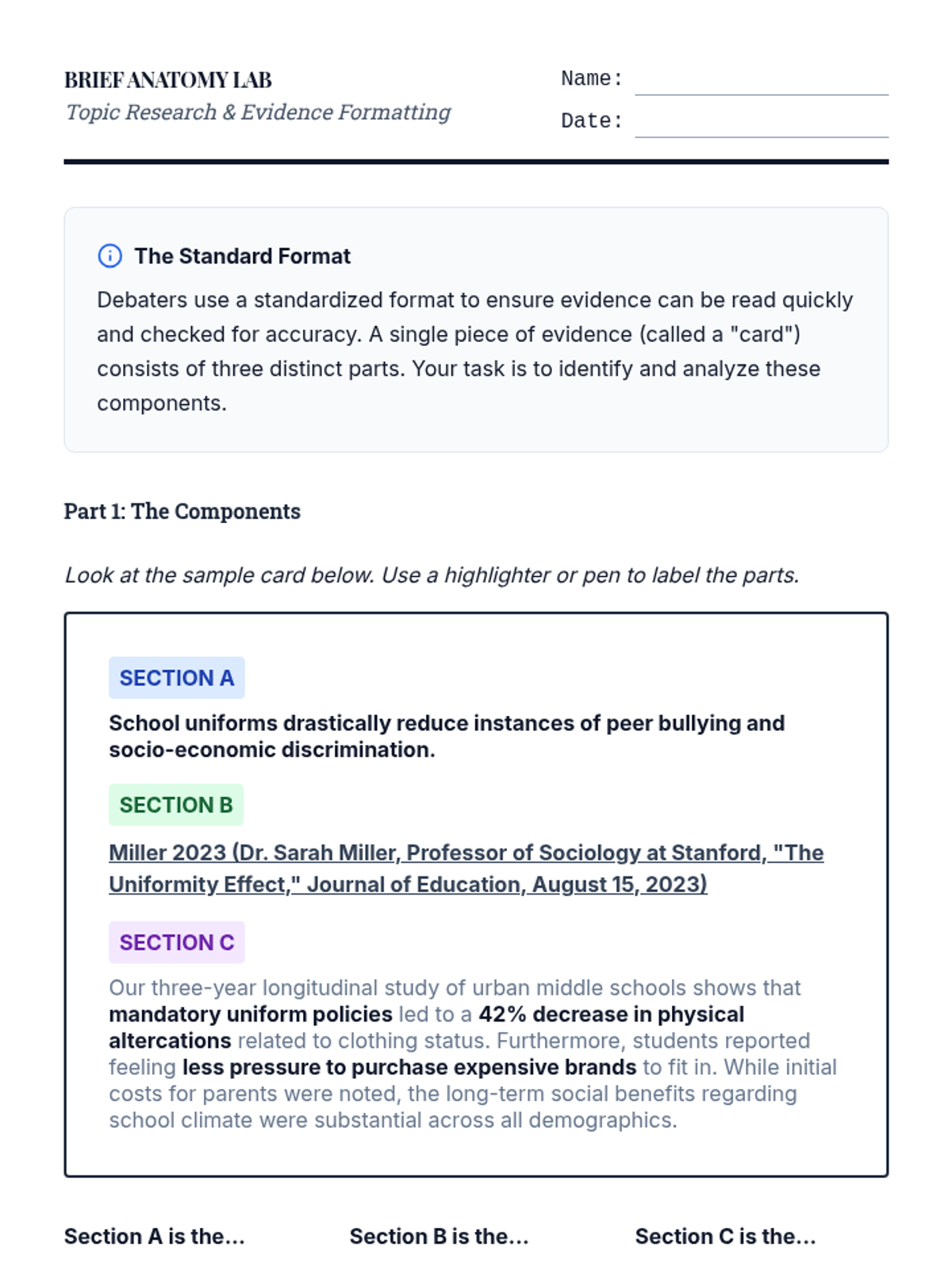
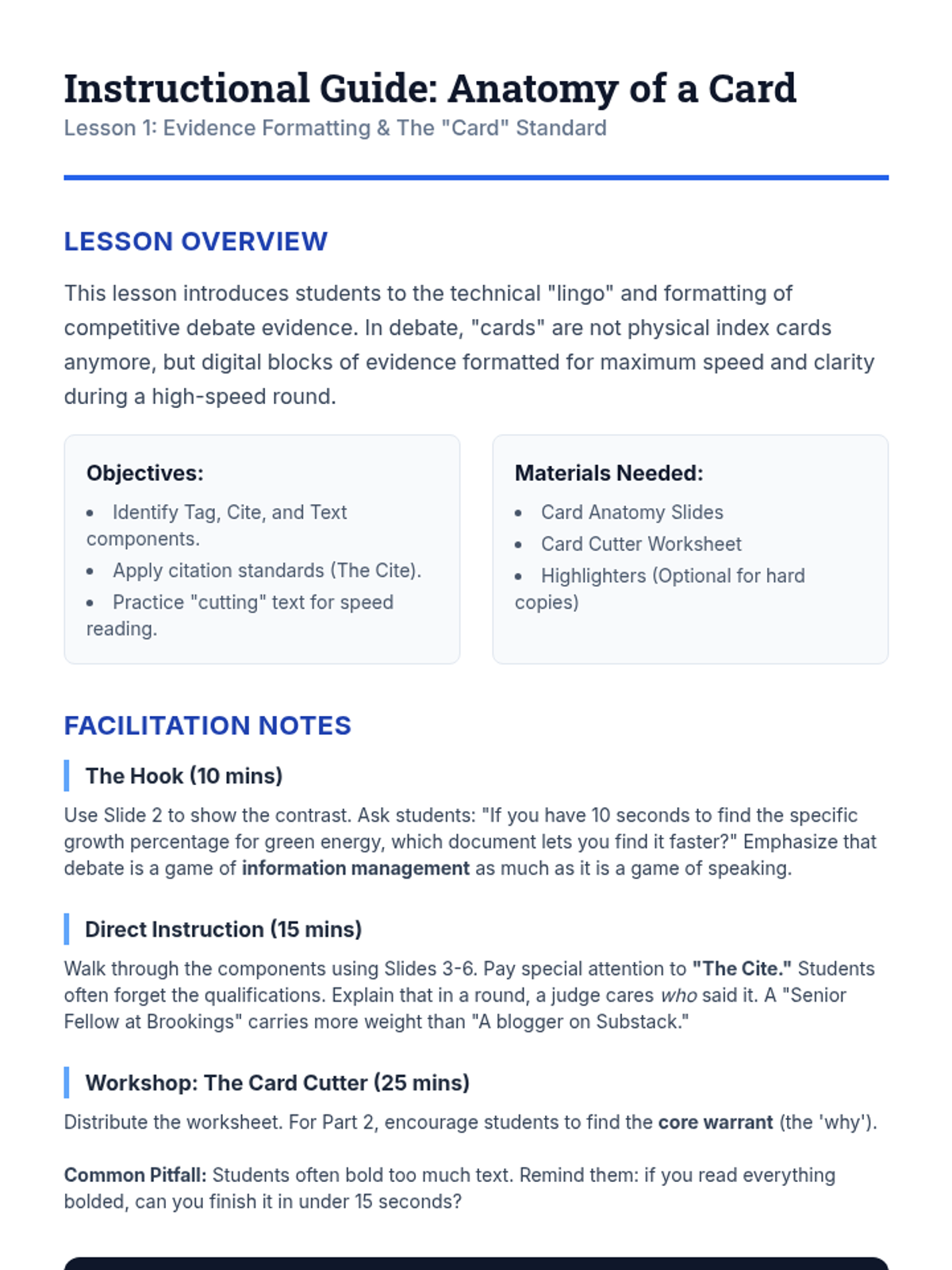
A comprehensive sequence teaching 8th-grade students the technical and ethical skills required to construct professional debate briefs, from card cutting to logical categorization.
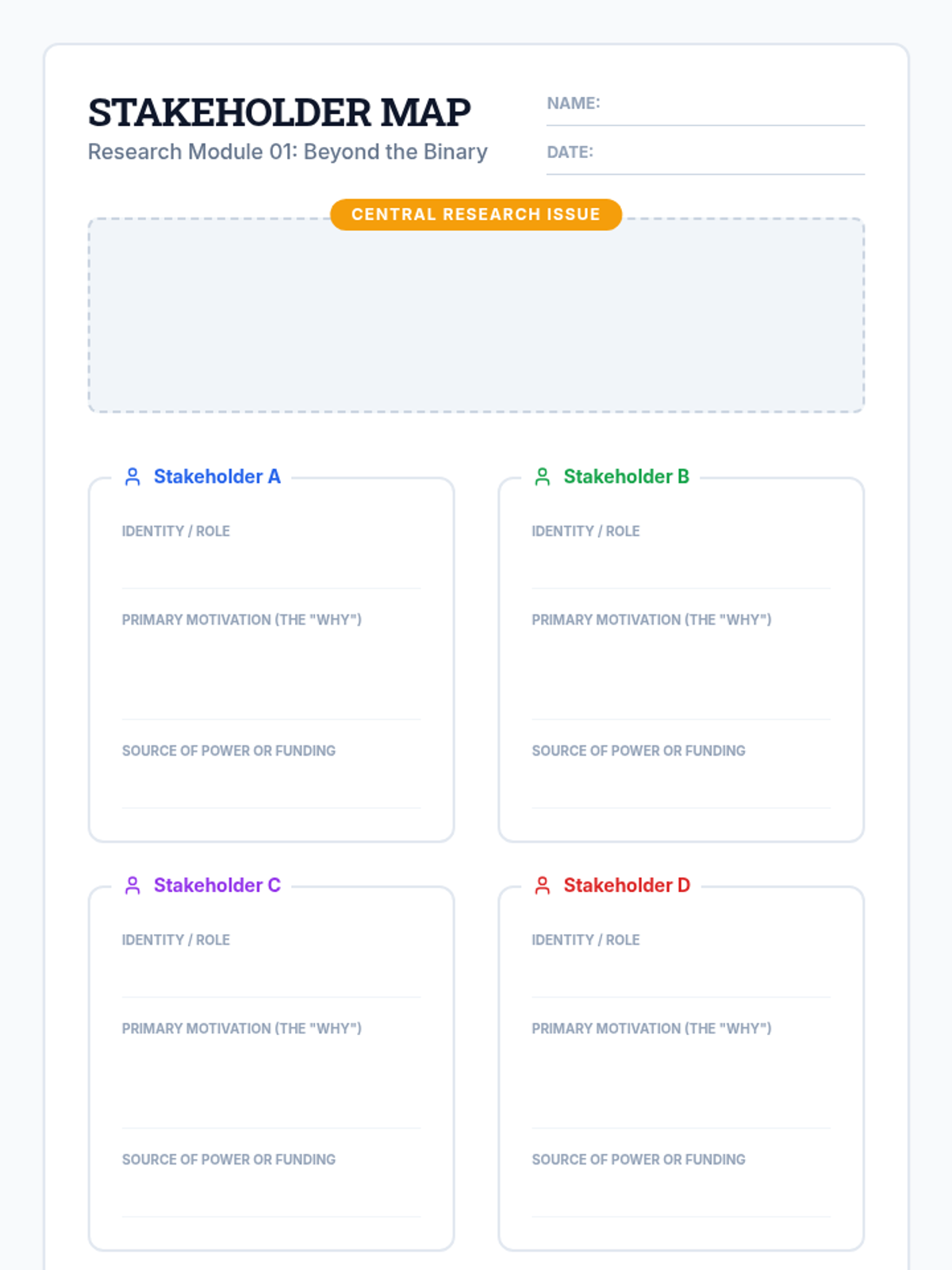
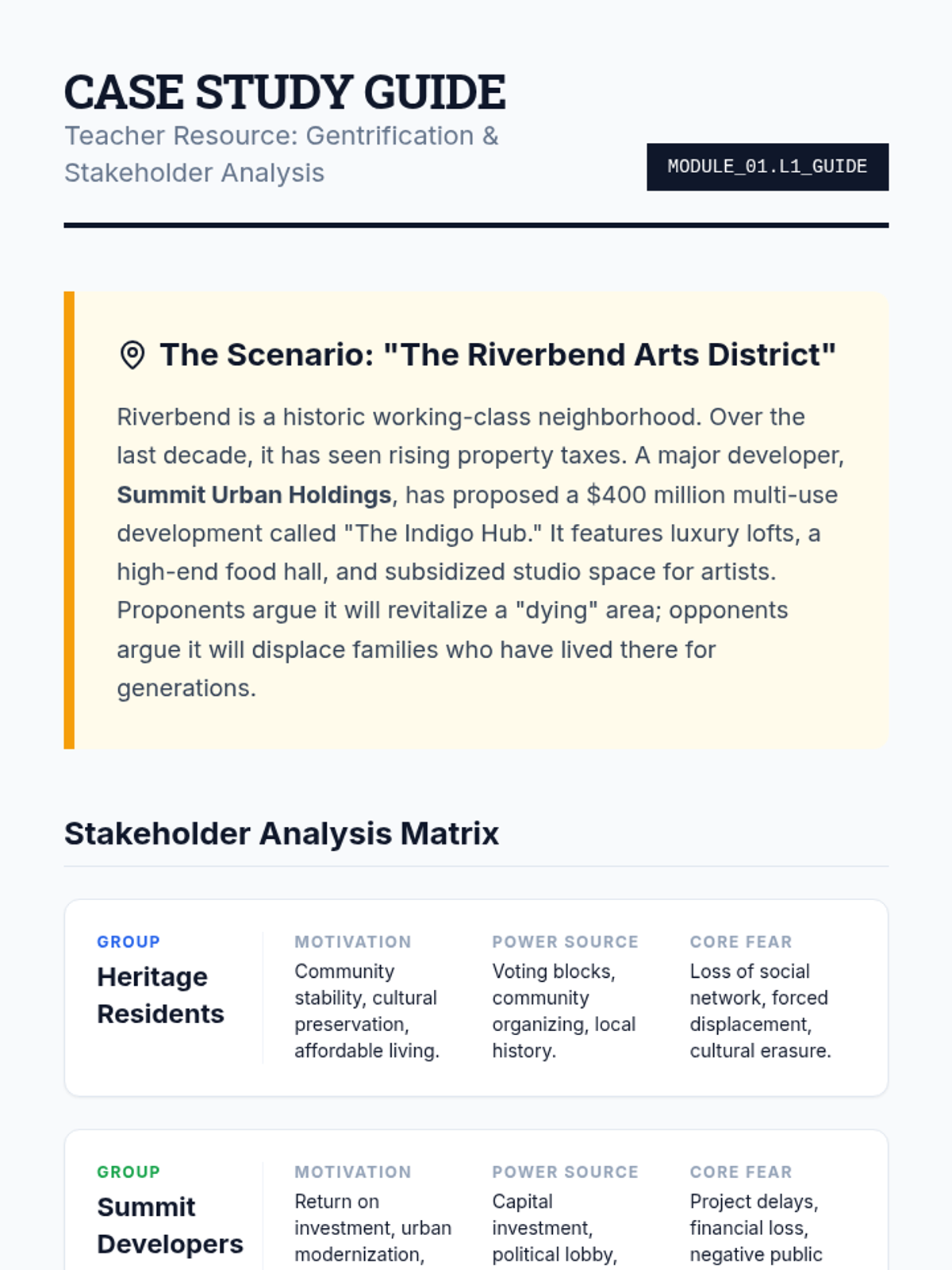
An 11th-grade ELA sequence focused on ethical research, stakeholder analysis, and 'Steel-Manning' in debate. Students move from data gathering to deep synthesis of conflicting perspectives.
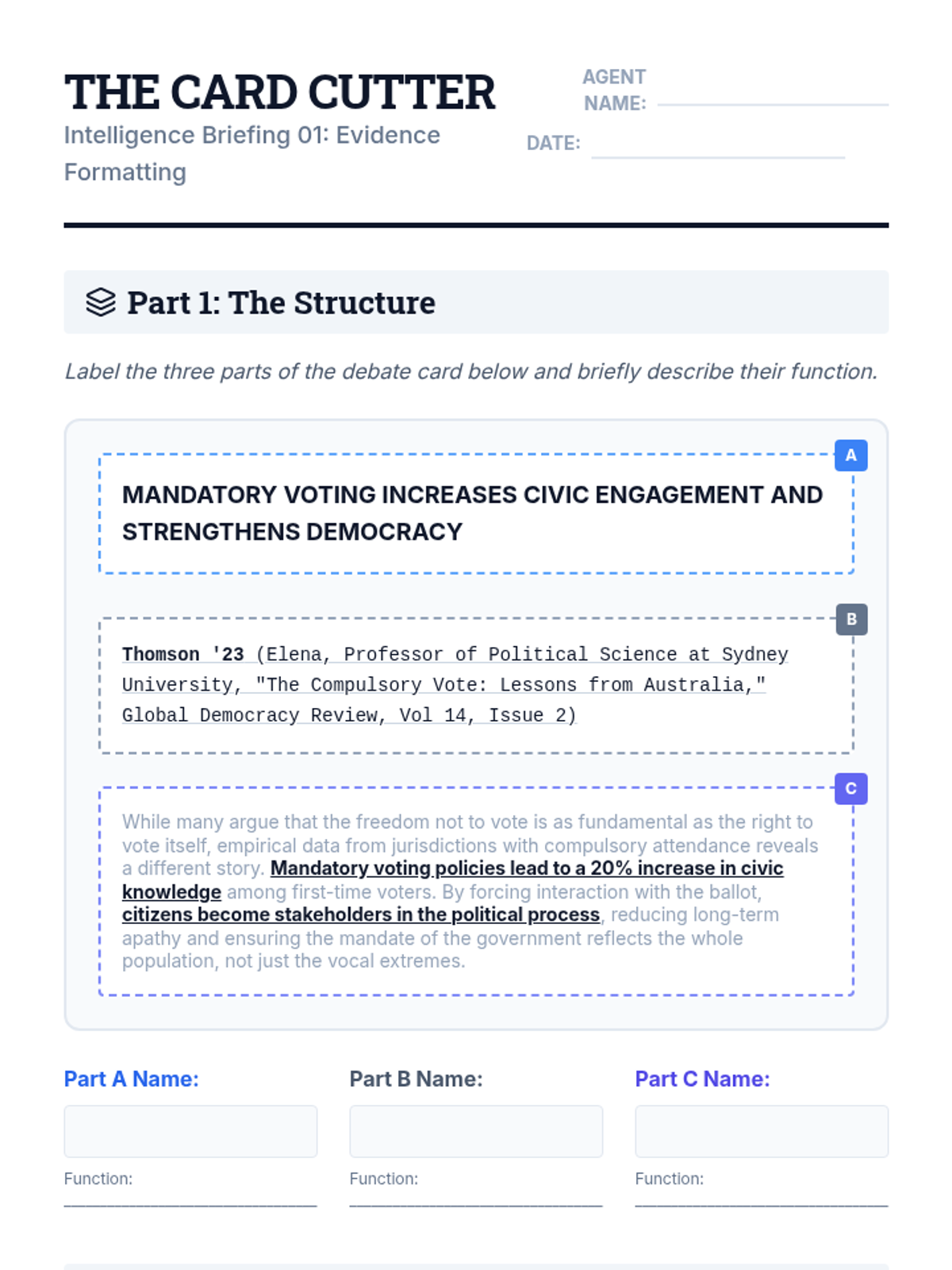
This sequence teaches 11th-grade students the technical art of 'cutting cards' and organizing debate briefs. Students progress from formatting individual pieces of evidence to constructing comprehensive affirmative and negative positions using the Toulmin model.
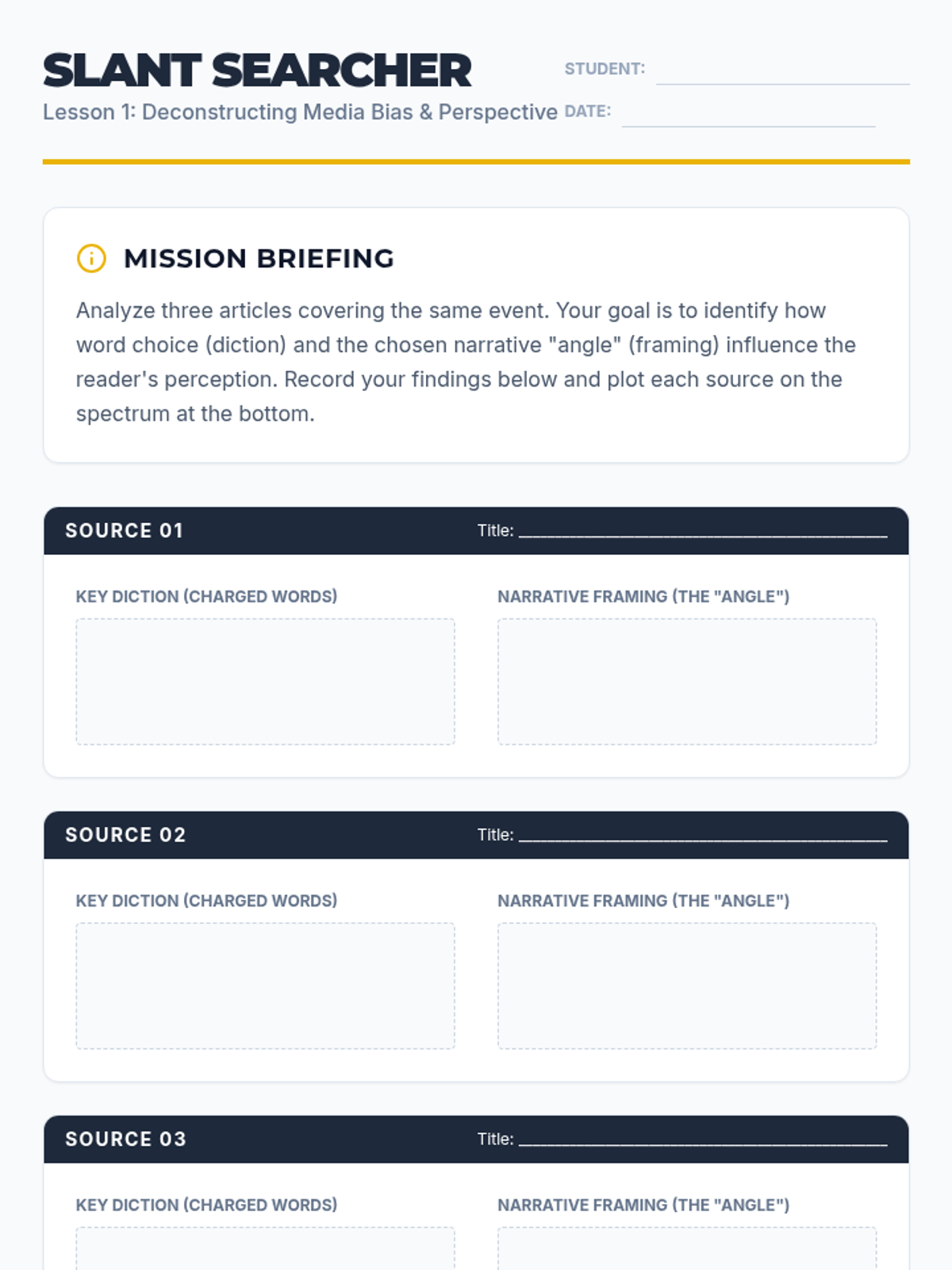
A comprehensive 11th-grade unit on critical research skills, focusing on media bias, lateral reading, authority evaluation, and logical fallacies to help students navigate information saturation in debate and public speaking.
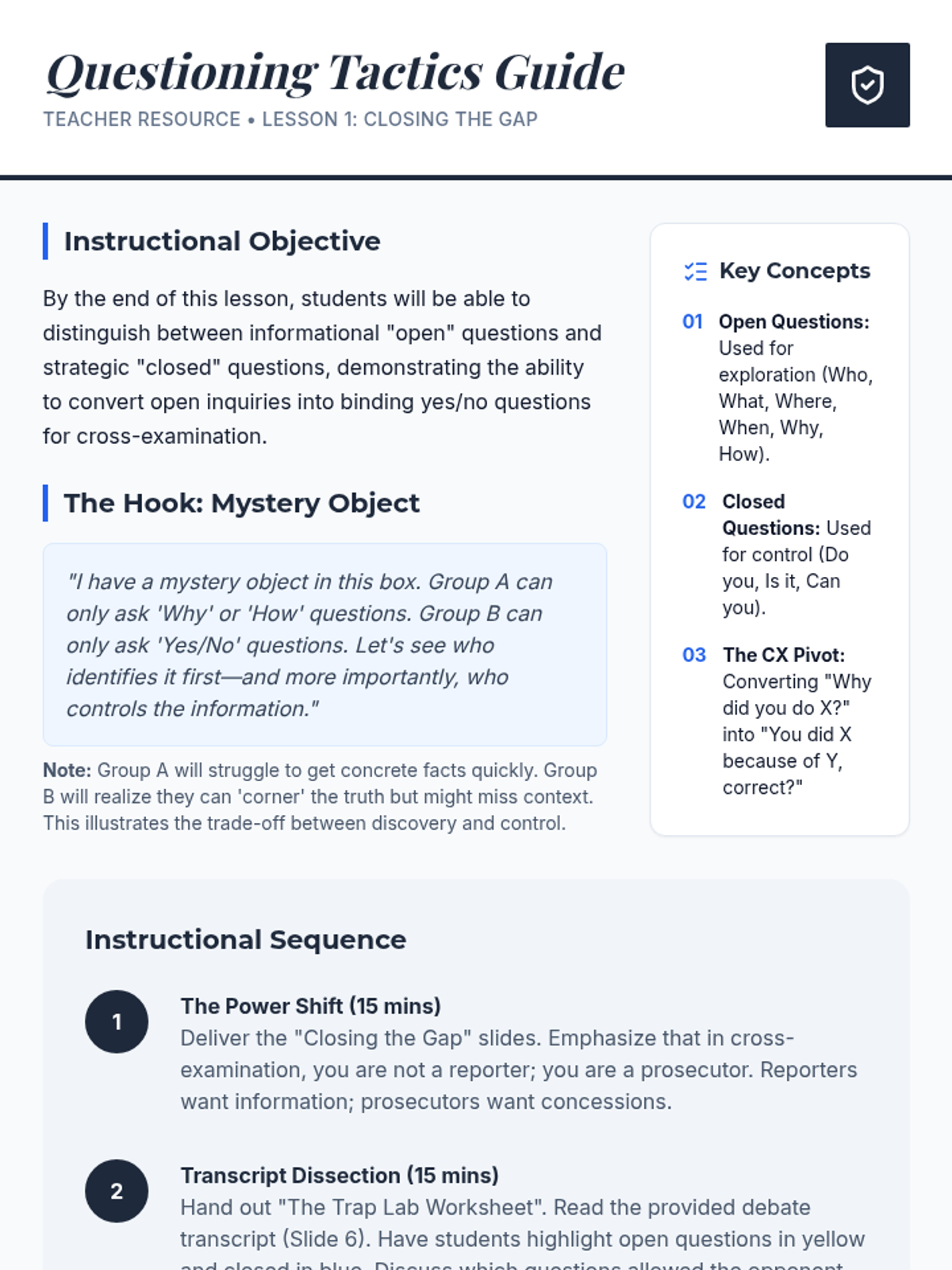
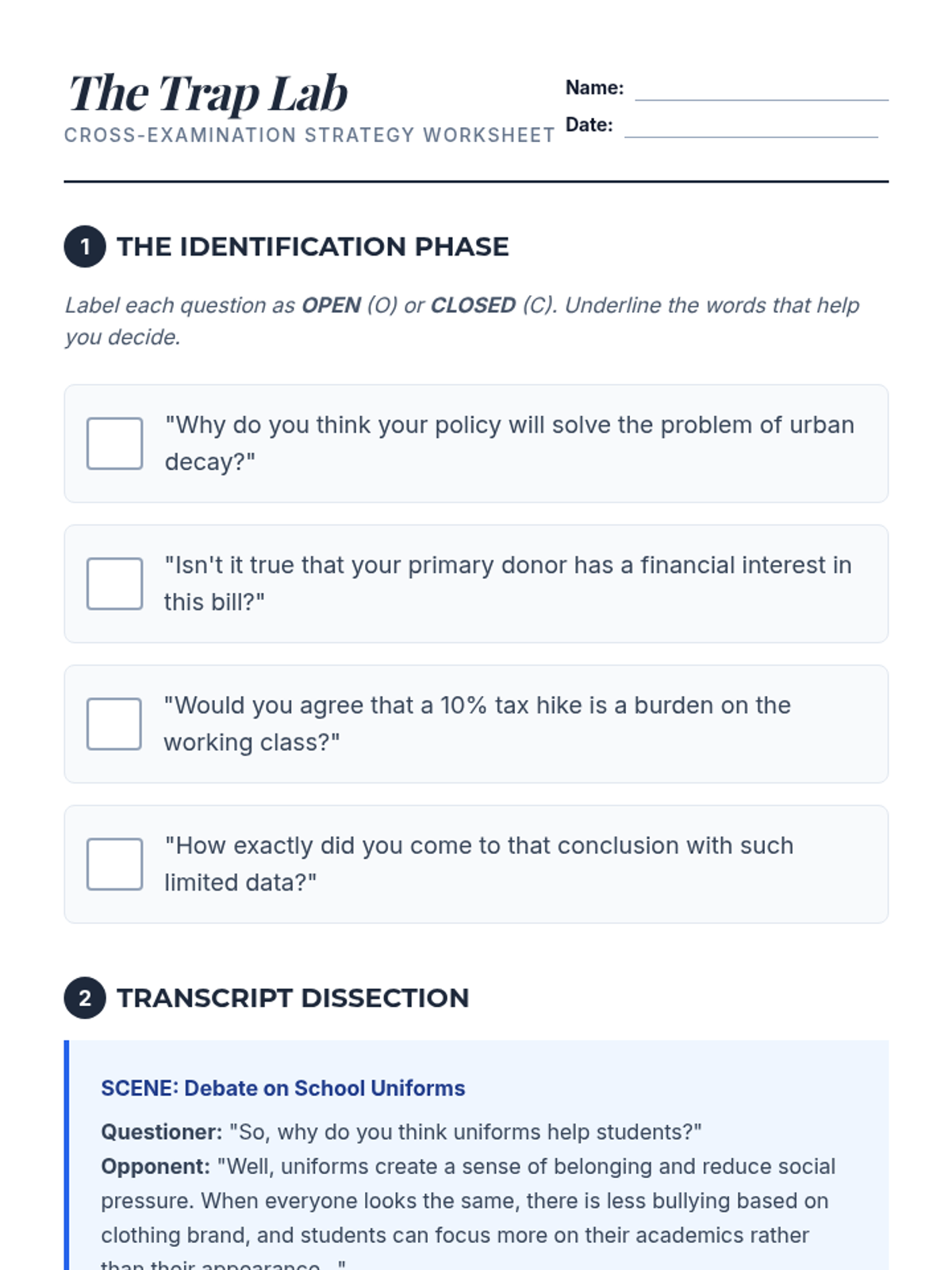
This 9th-grade ELA sequence focuses on the mechanics of strategic questioning in debate. Students progress from basic question types to complex 'lines of questioning' designed to deconstruct arguments and expose evidentiary weaknesses through active listening and logical traps.
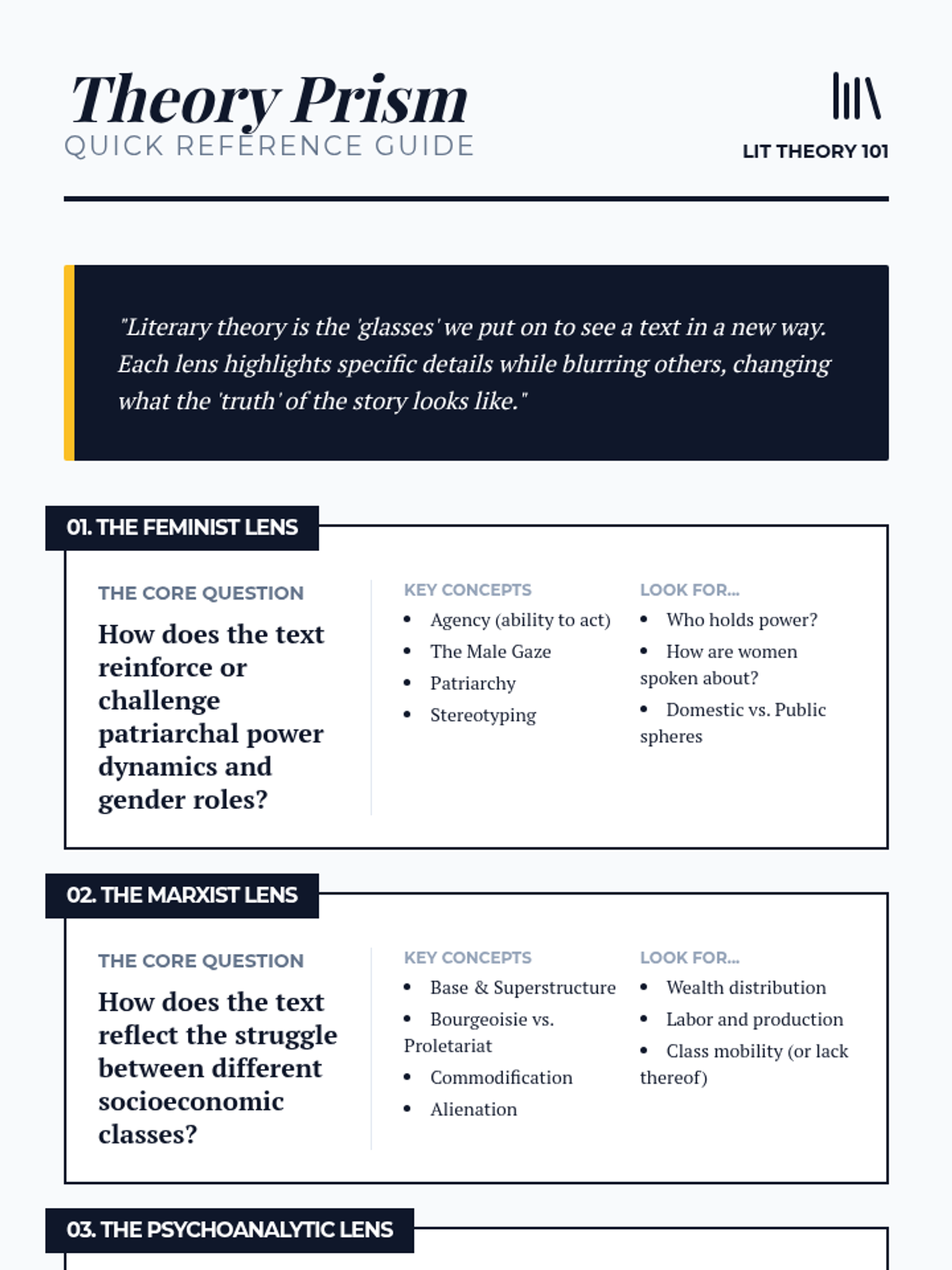
This sequence moves students beyond surface-level plot comprehension to rigorous literary analysis using critical theory frameworks. Students explore Feminist, Marxist, and Psychoanalytic lenses, applying them to 'The Great Gatsby' to uncover deeper layers of meaning and social commentary.
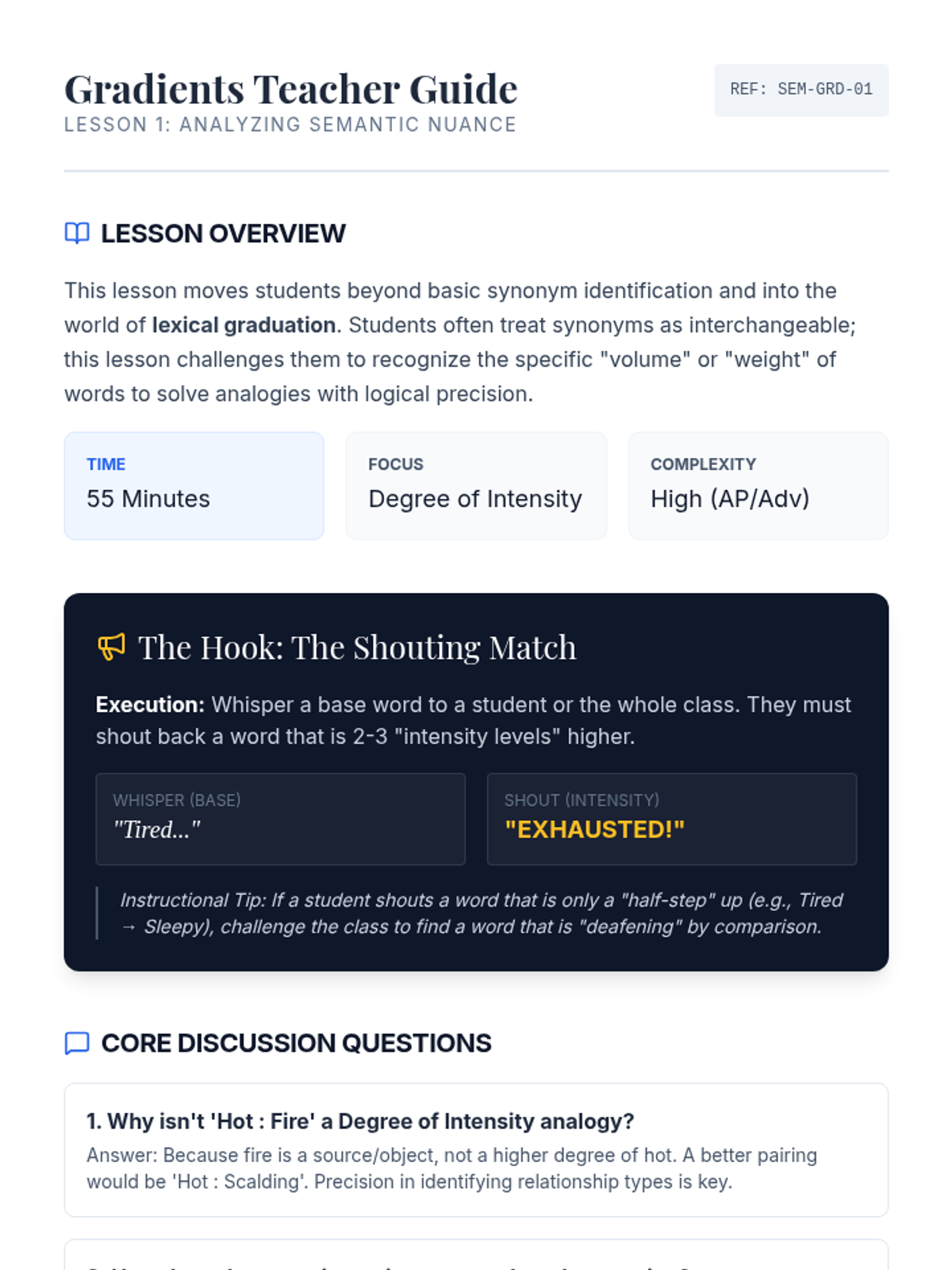
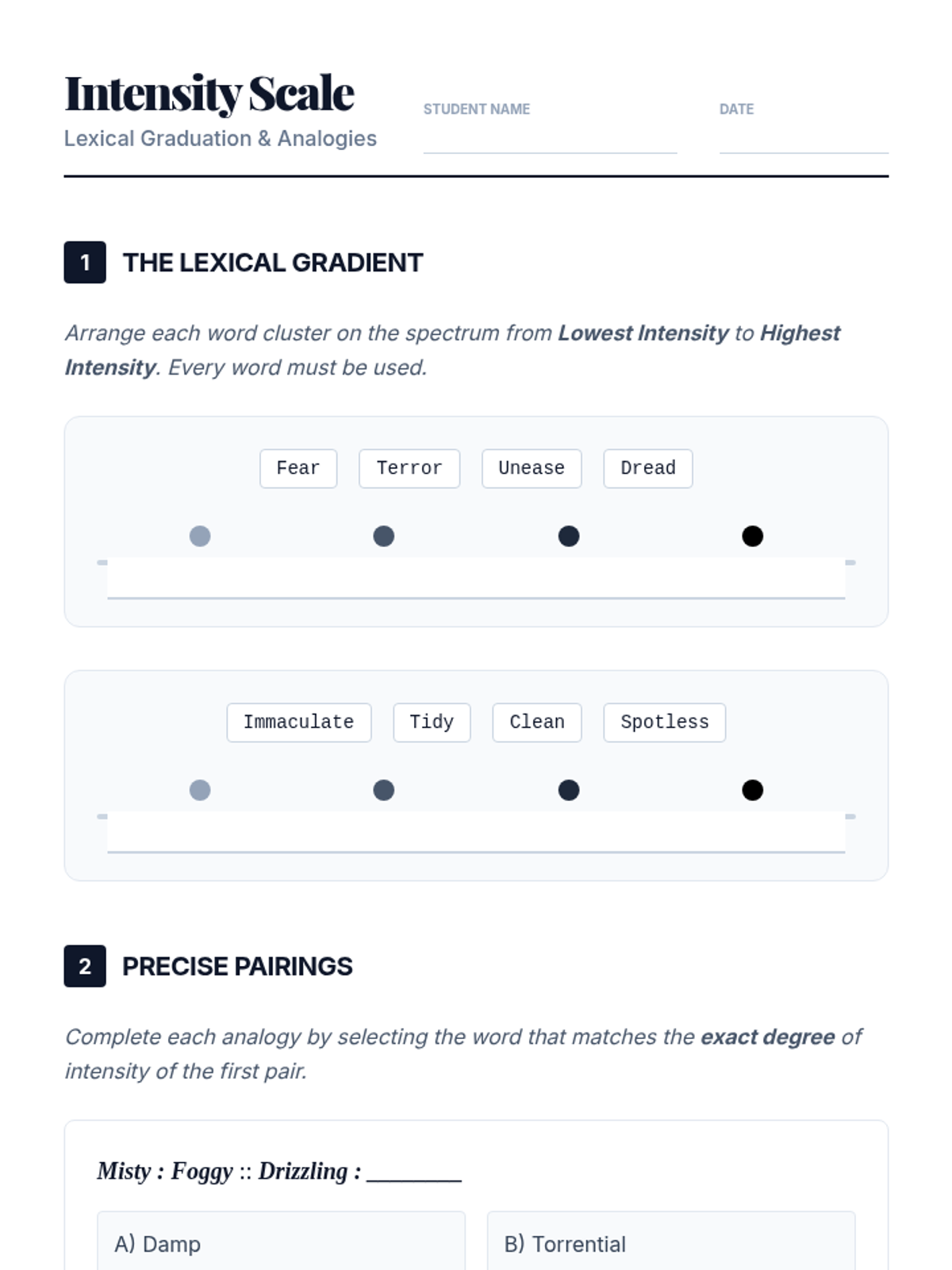
An advanced 11th-grade ELA sequence exploring semantic nuance through analogies. Students analyze word intensity, connotation, taxonomy, and paradoxical relationships to master verbal precision and logical reasoning.
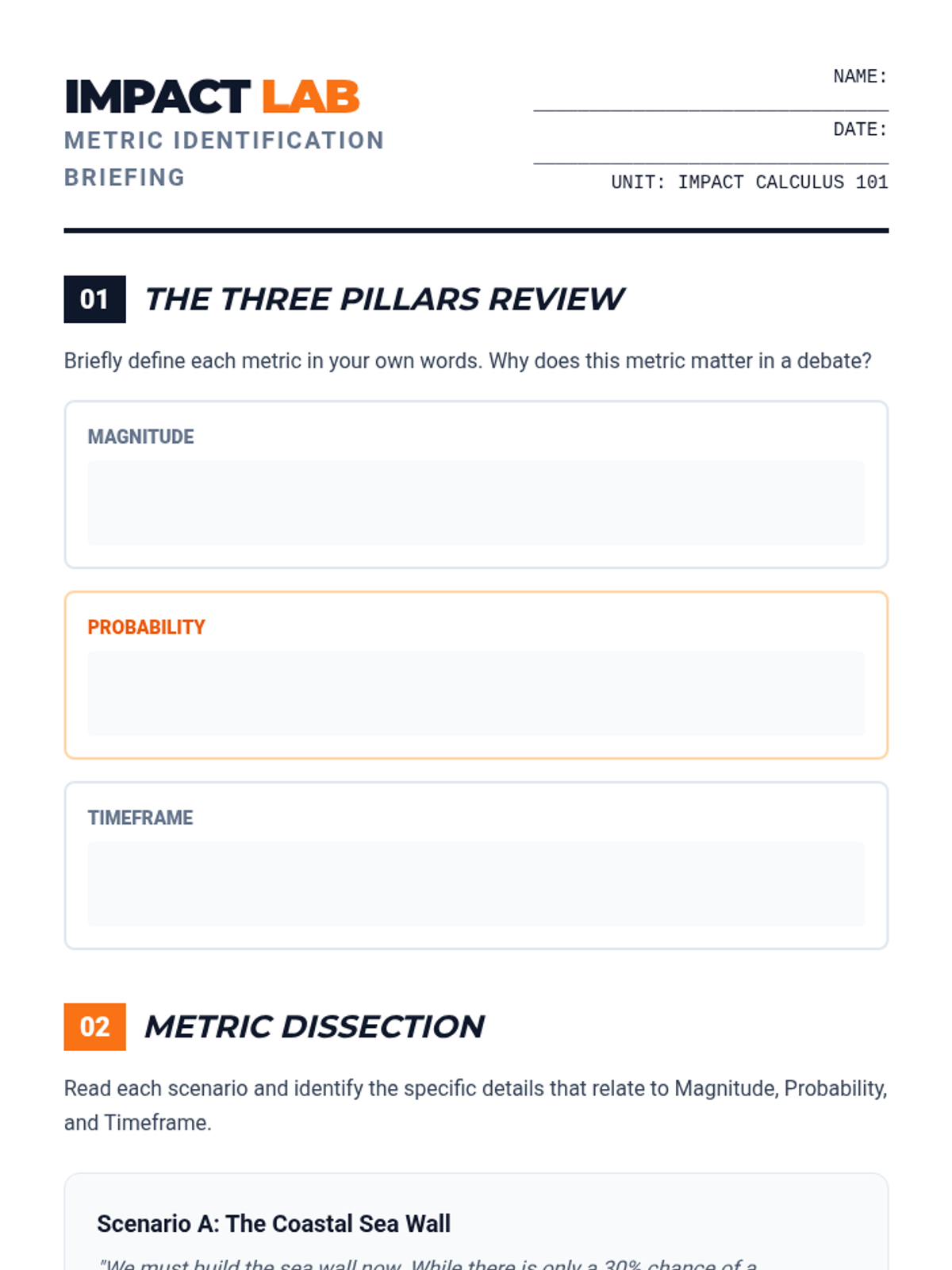
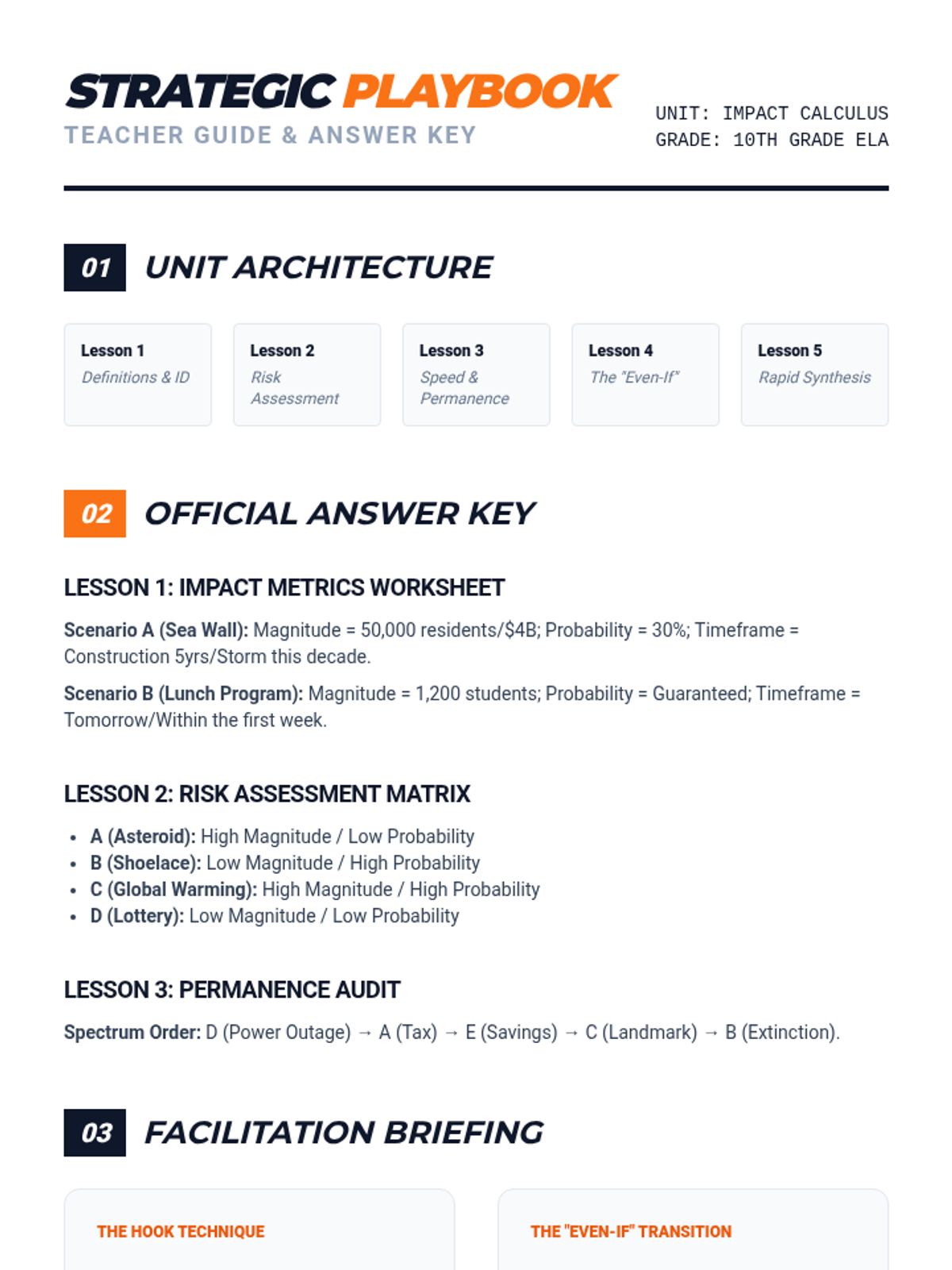
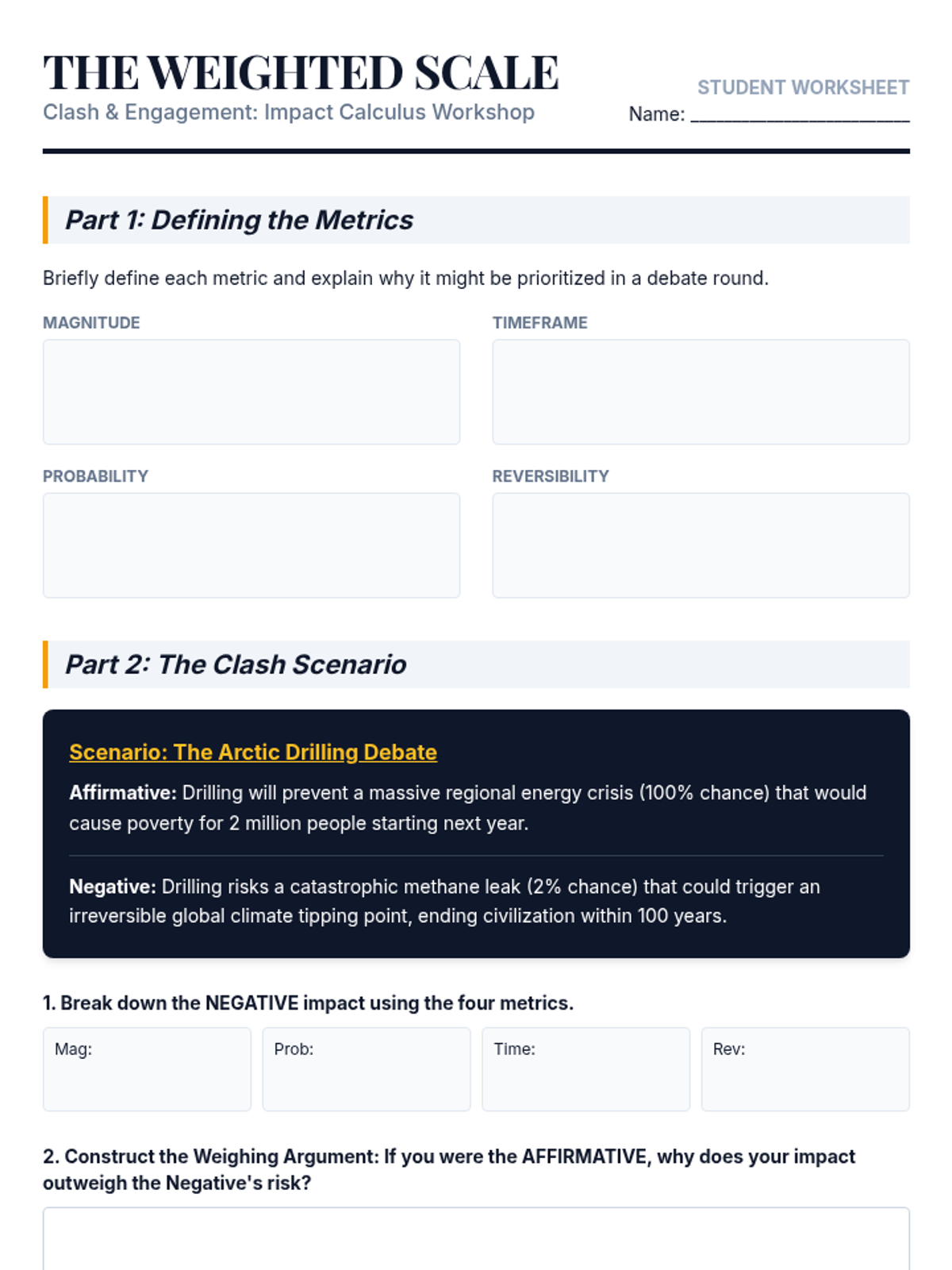
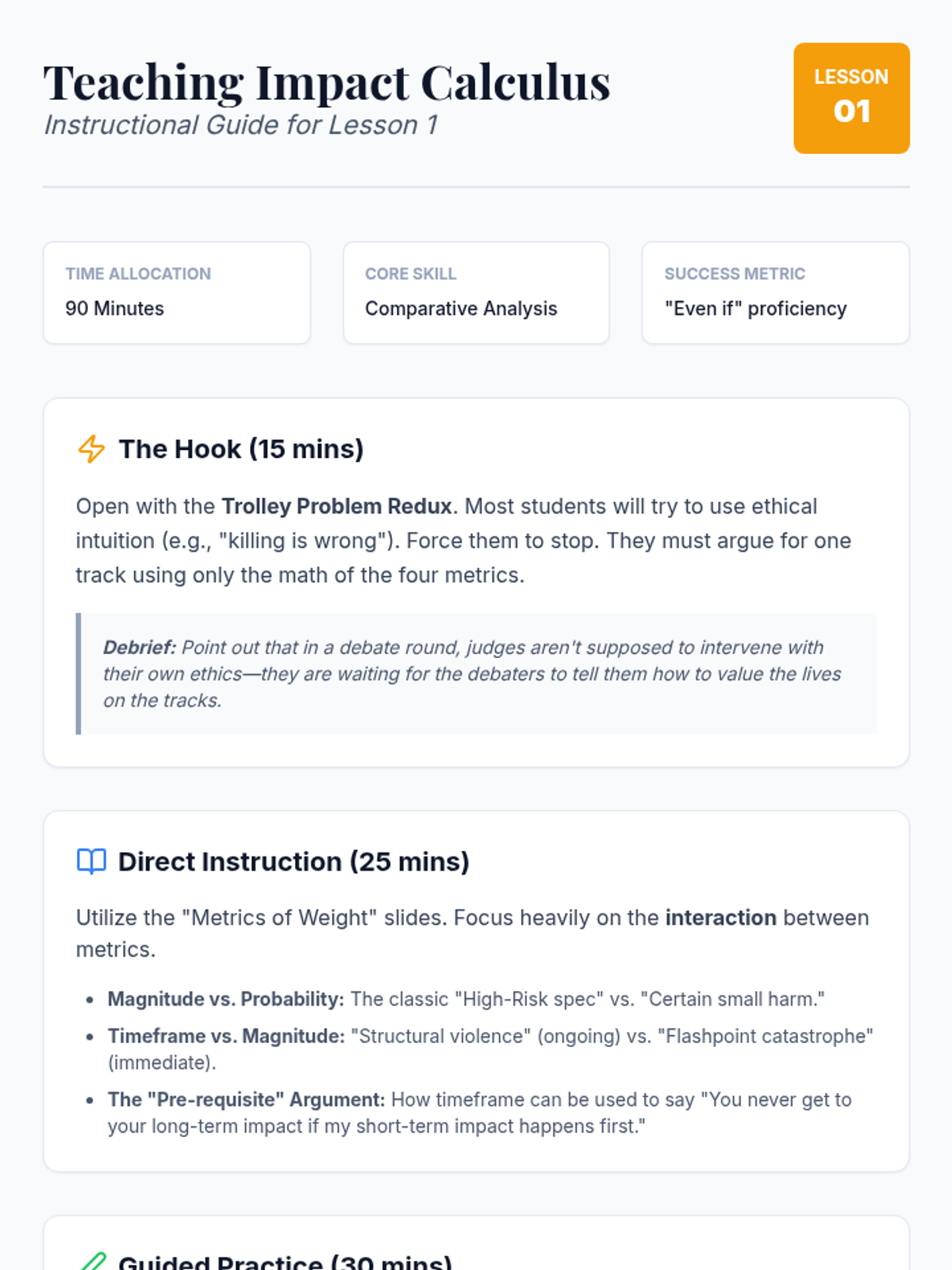
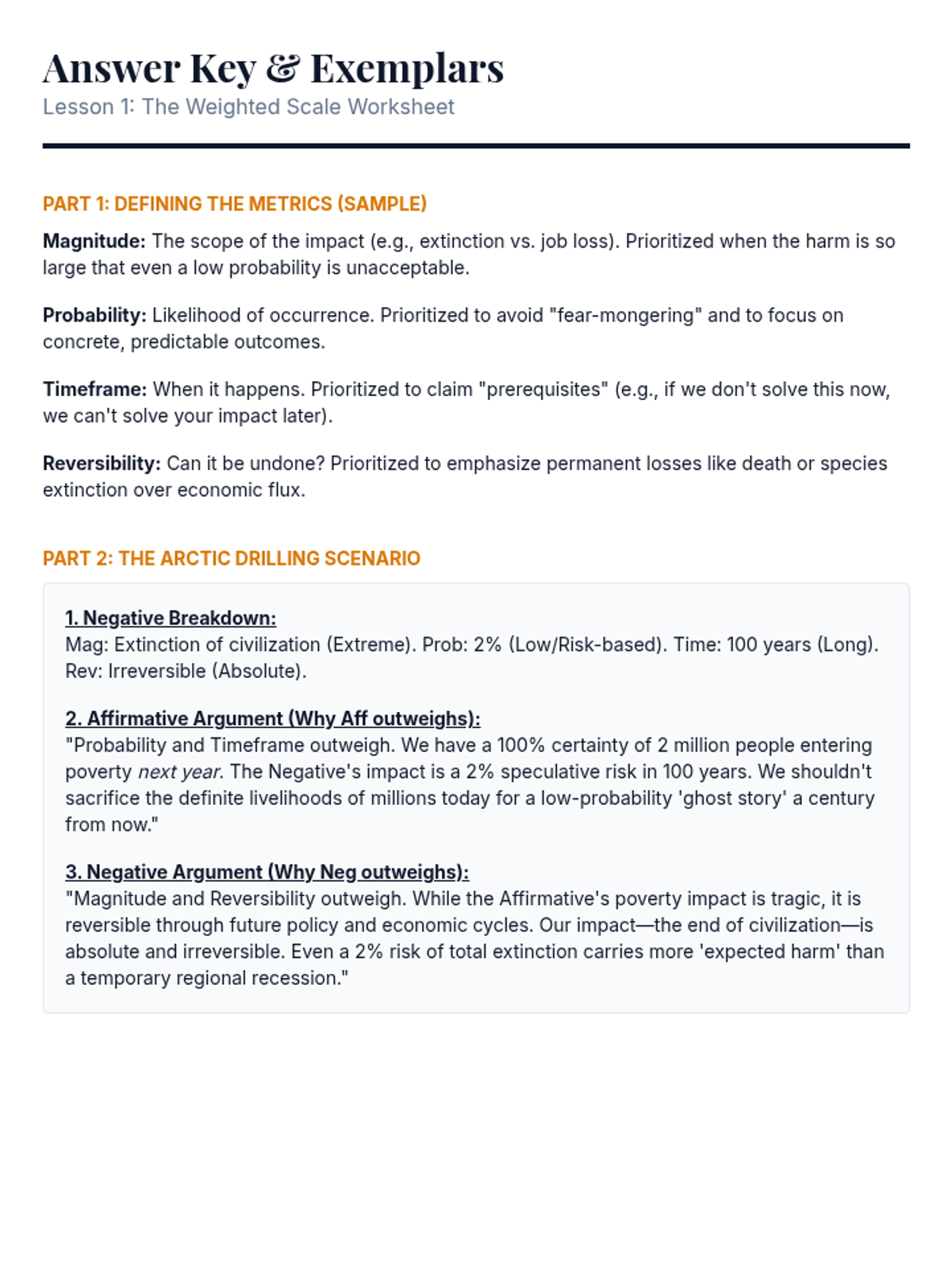
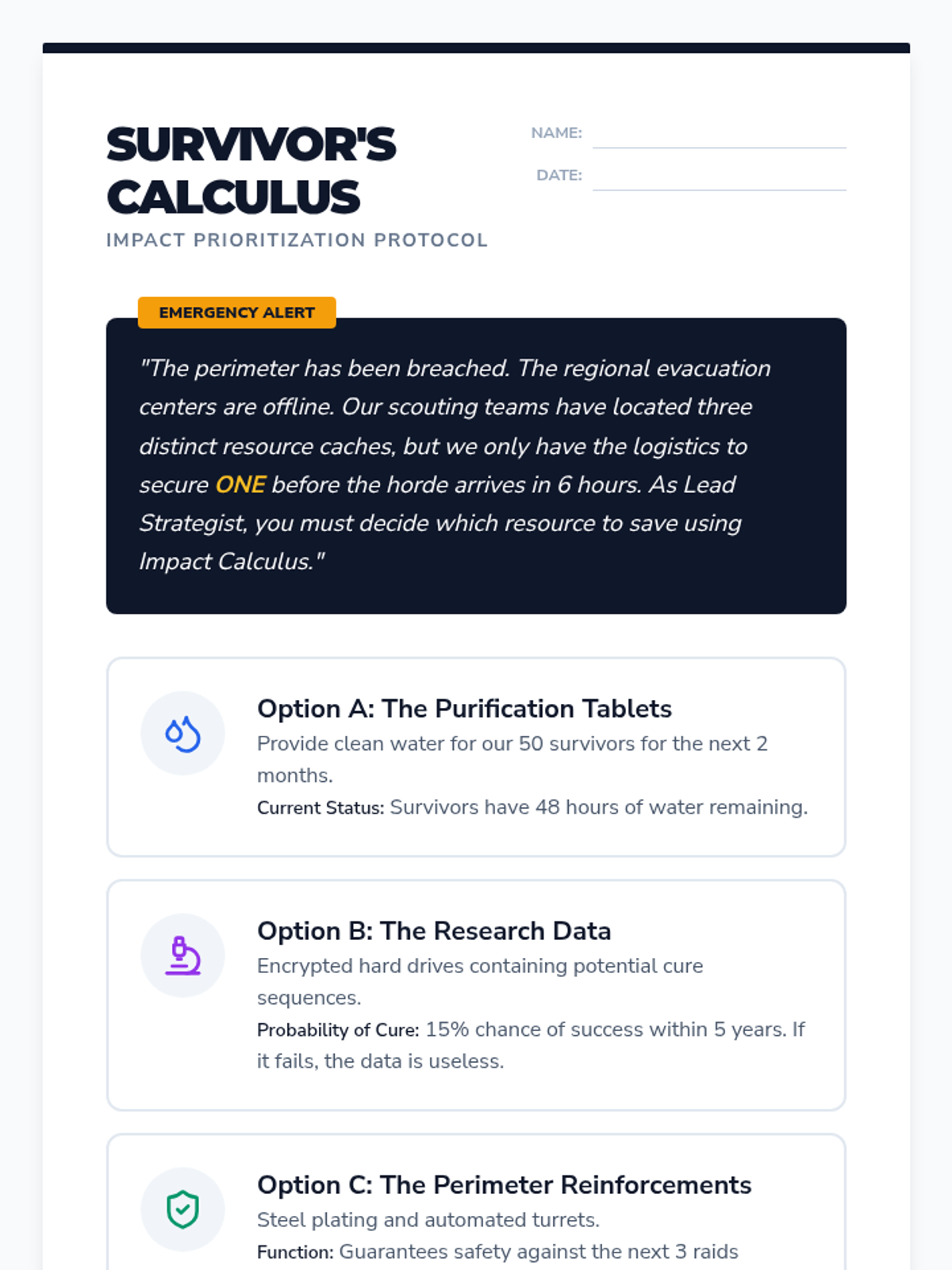
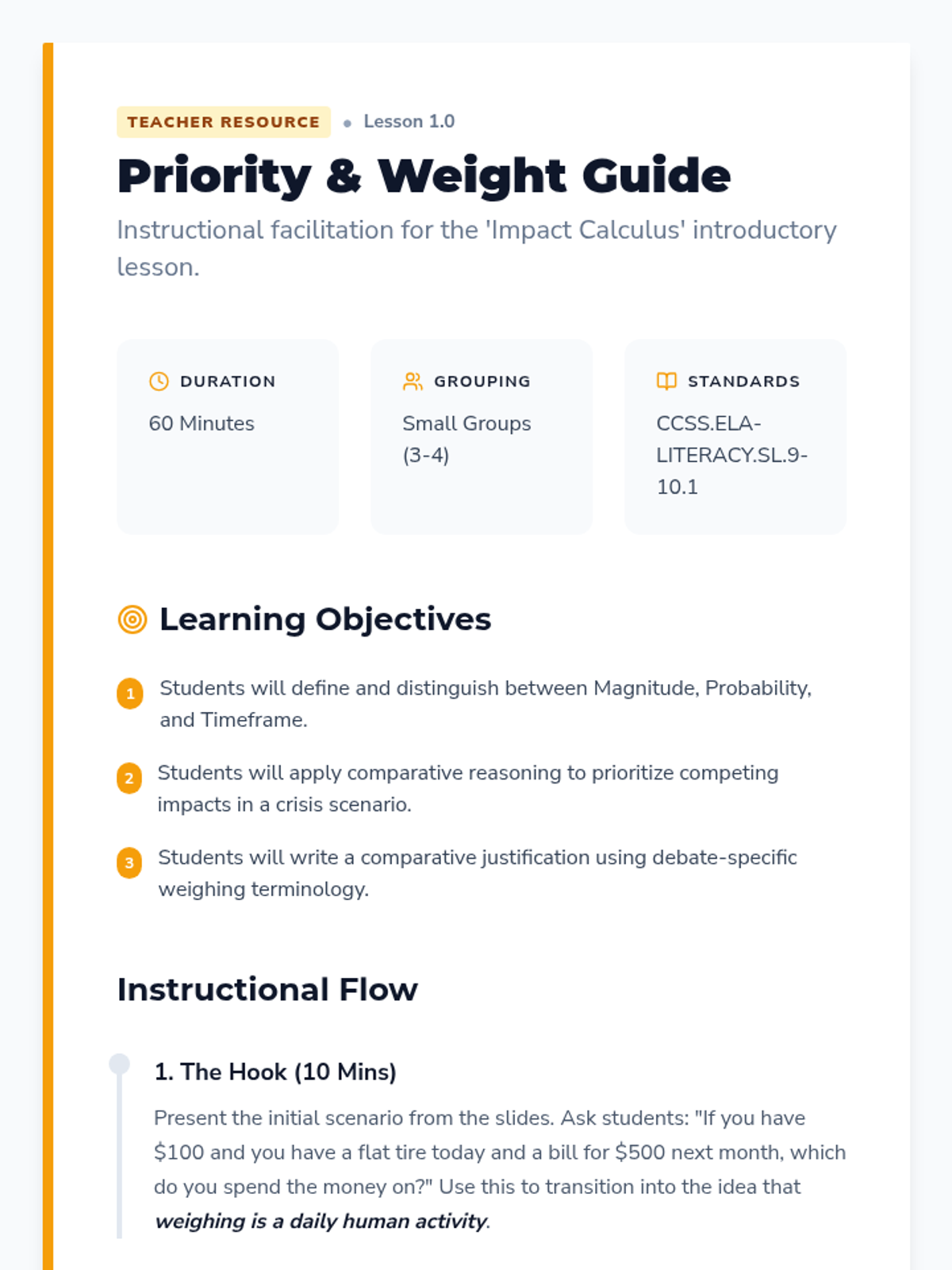
A comprehensive unit on the three pillars of impact calculus (Magnitude, Probability, and Timeframe), teaching students how to prioritize competing consequences in competitive debate and public speaking.
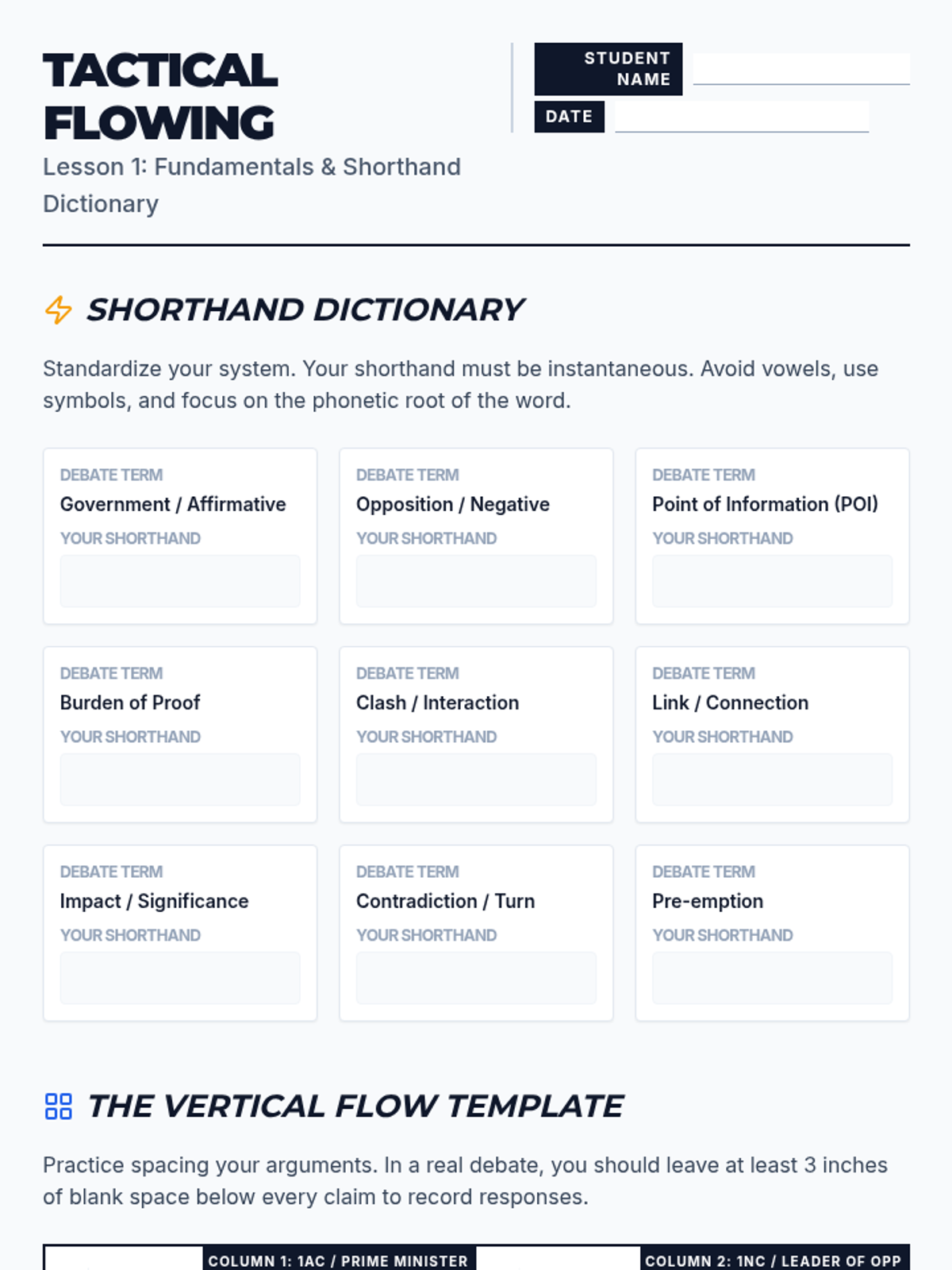
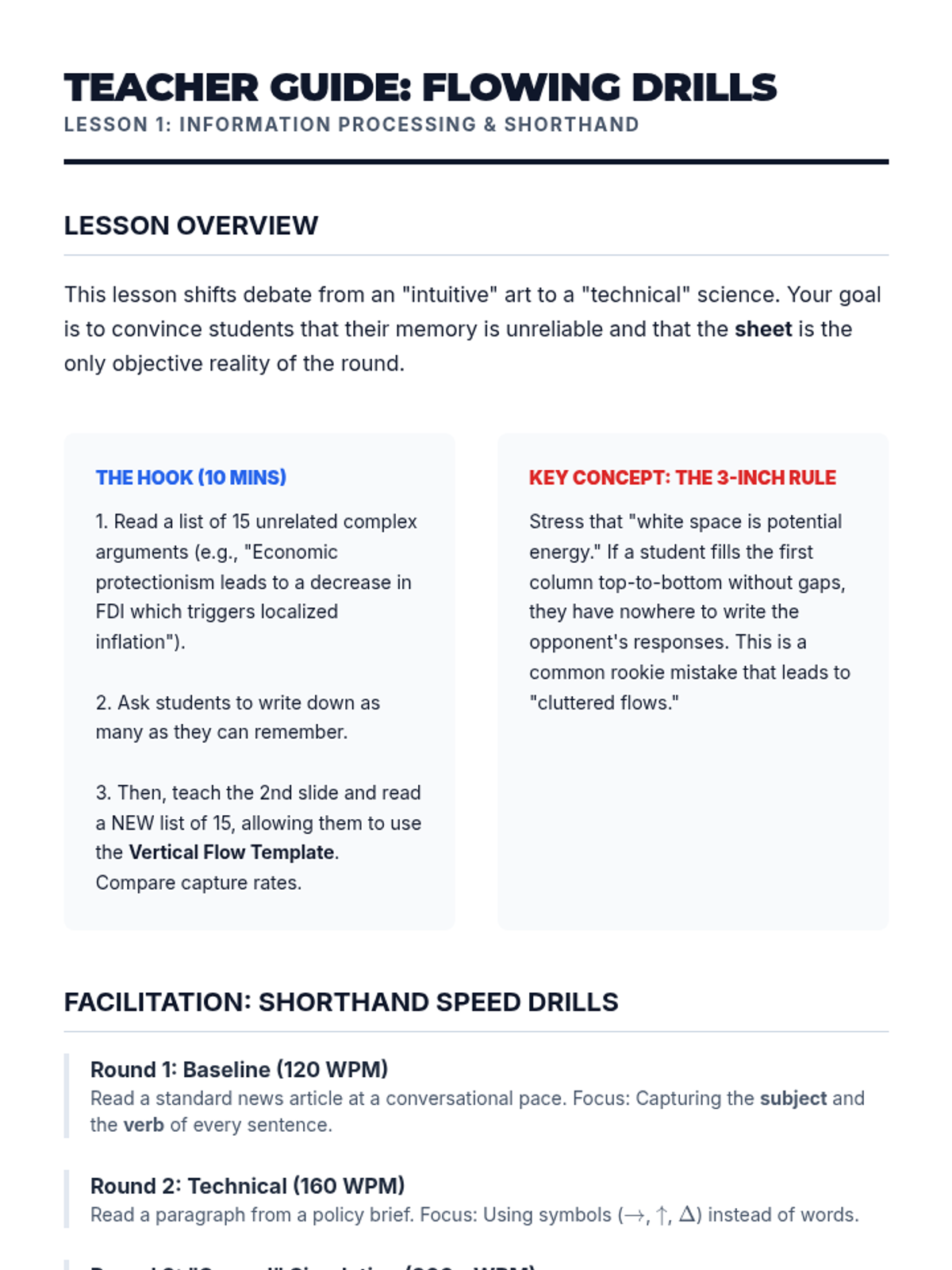
A technical mastery sequence for undergraduate debaters focused on 'flowing'—the specialized note-taking method used to track arguments. Students progress from basic shorthand to advanced predictive flowing, learning how to use visual organization to exploit 'dropped' arguments and win debates on technical grounds.
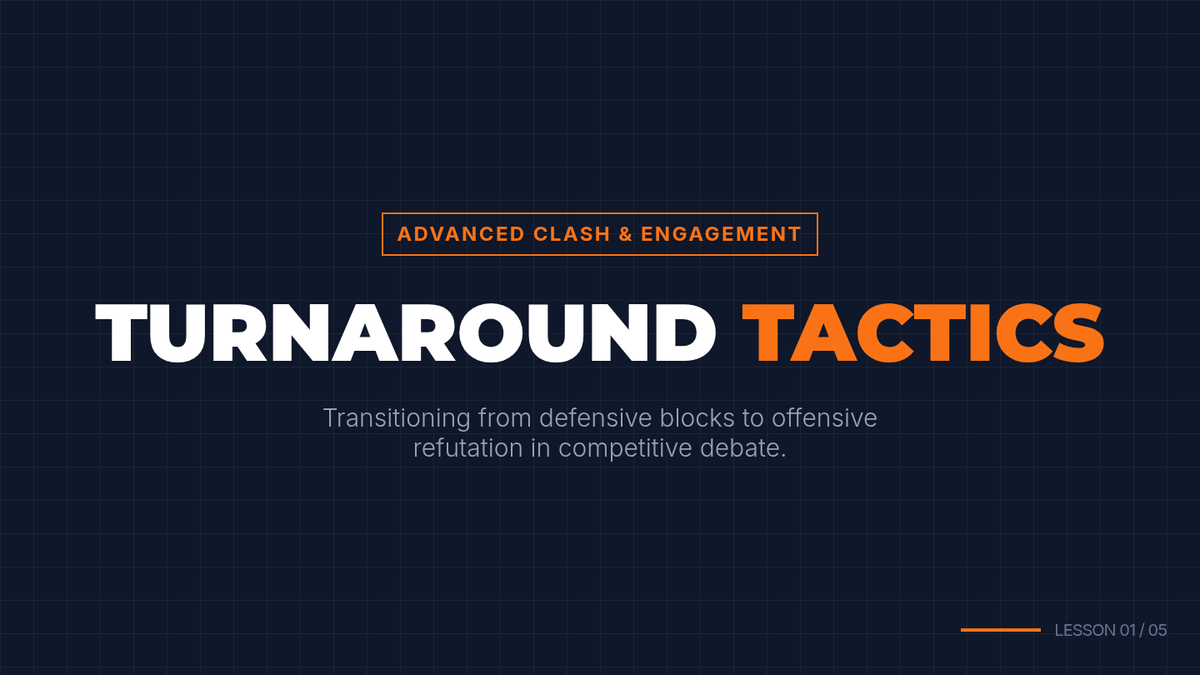
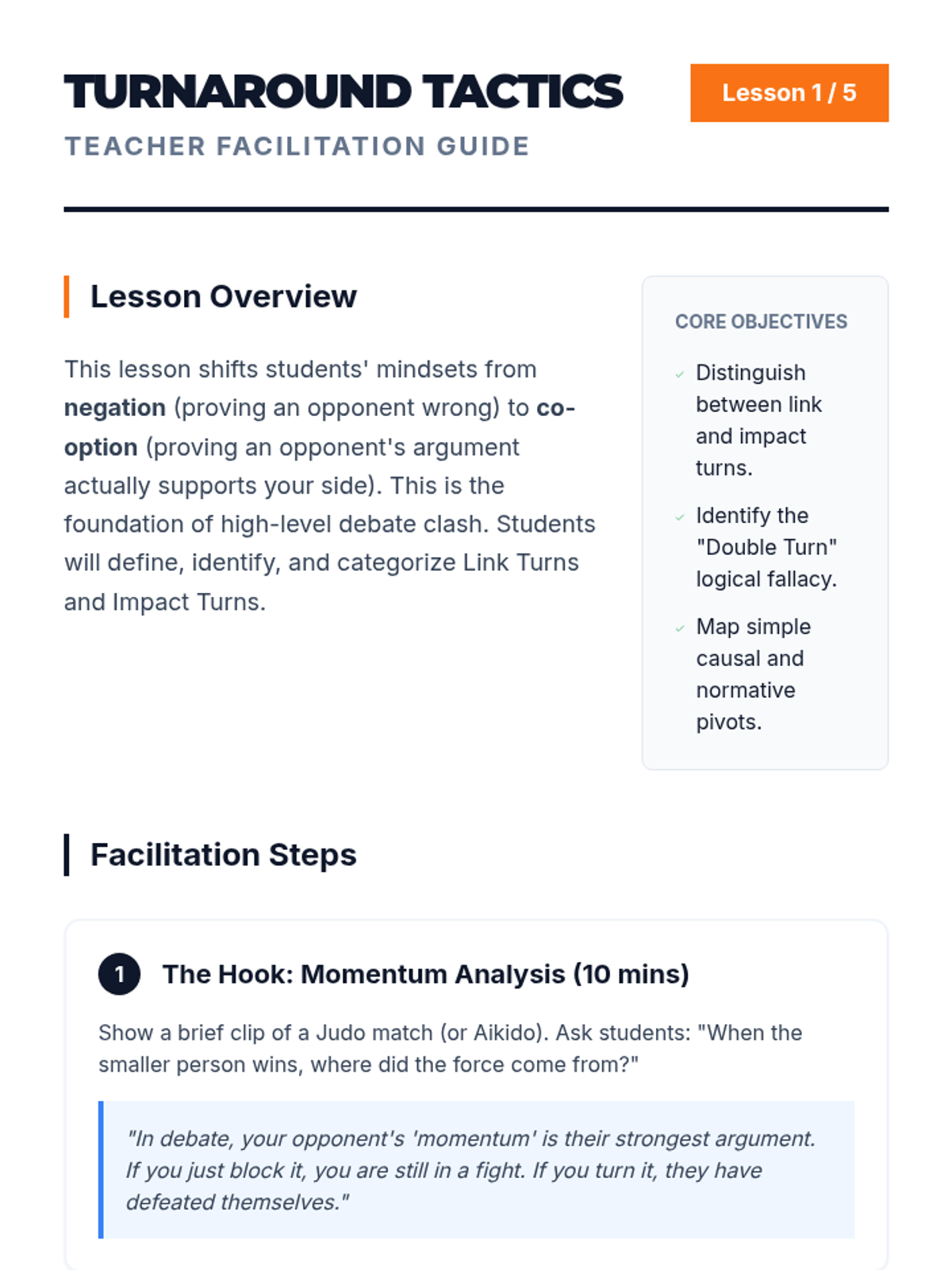
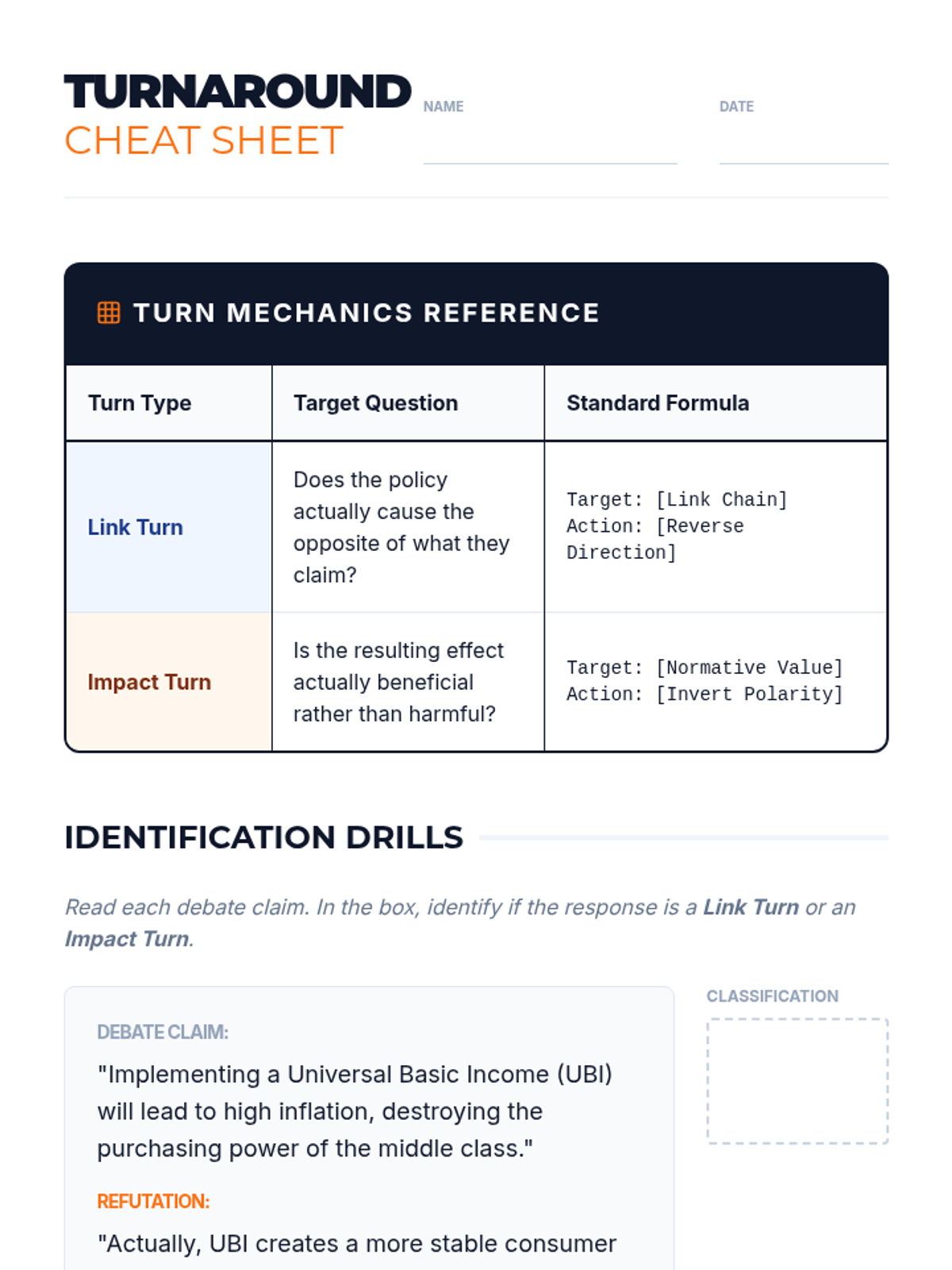
An advanced debate sequence for undergraduate students focused on offensive refutation strategies. Students learn to master link turns, impact turns, and double binds to repurpose opponent logic into their own offensive gains.
This sequence explores advanced debate techniques for comparative impact analysis, teaching students how to weigh conflicting arguments and construct persuasive decision frameworks for adjudicators.
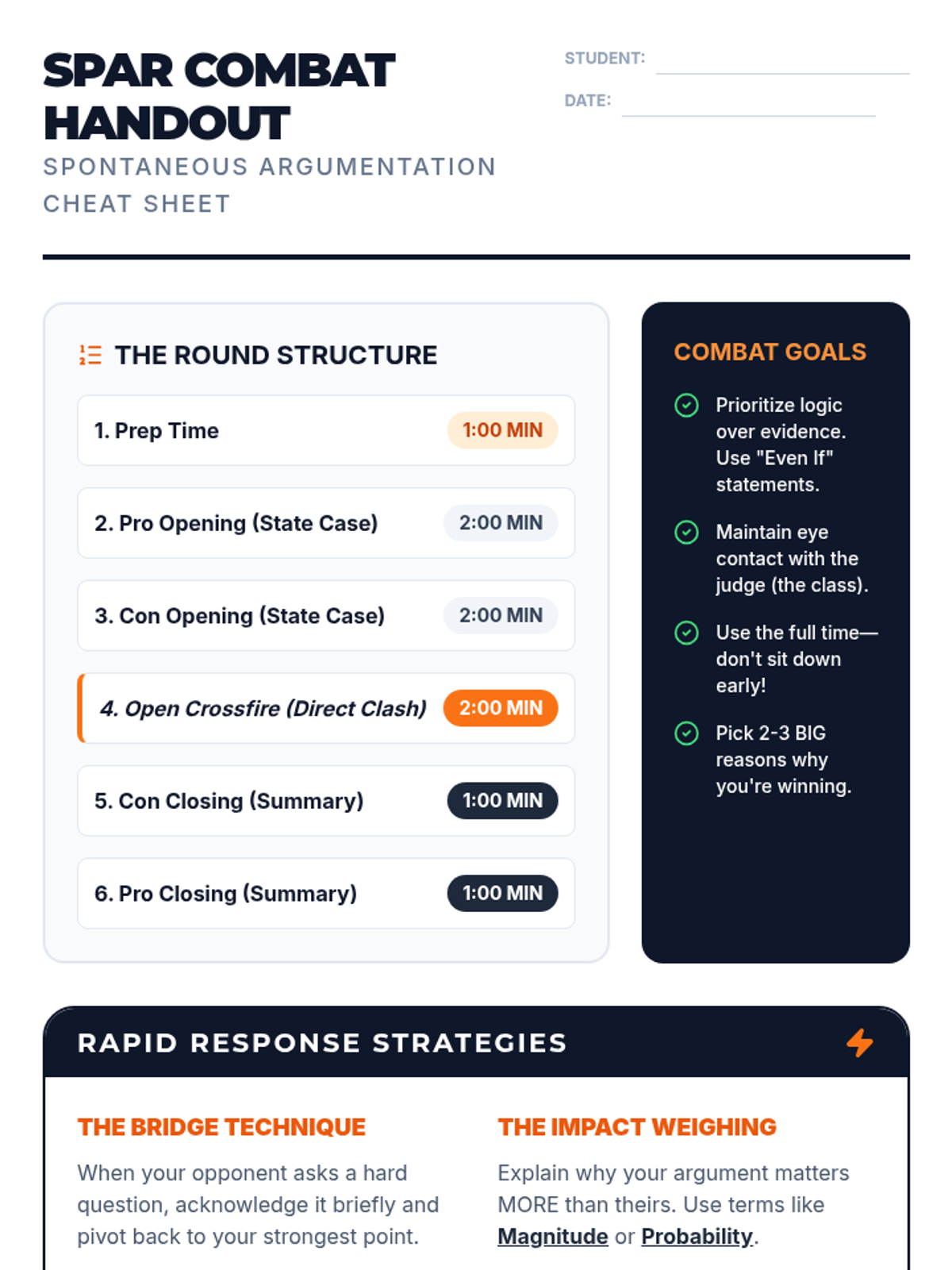
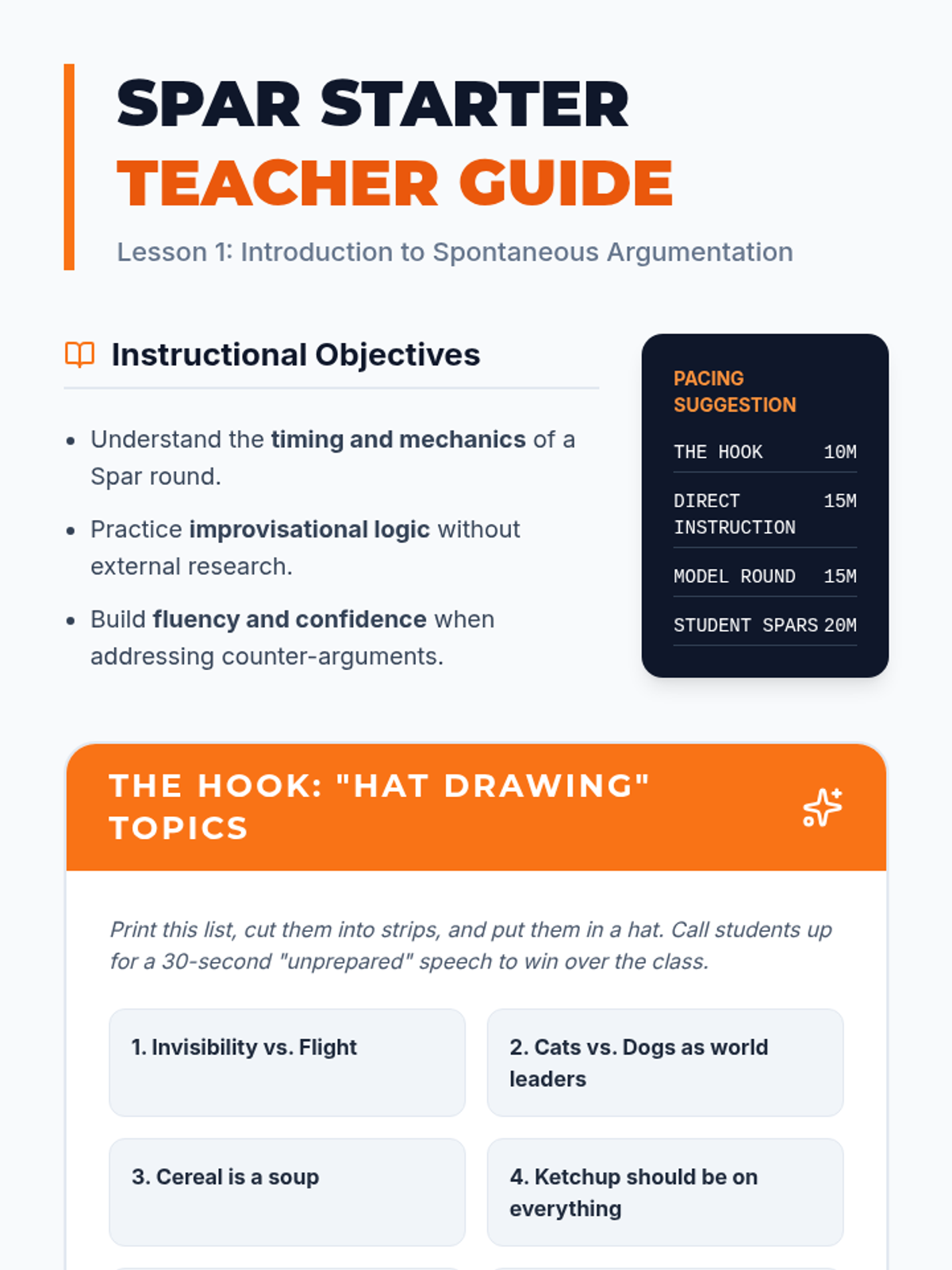
This sequence synthesizes refutation, weighing, and listening into short-form 'Spar' debates. Students learn to prioritize arguments, extend logic, and judge peer performances to build adaptability and engagement skills under strict time constraints.
A comprehensive unit on the evaluative phase of debate, focusing on impact calculus, strategic concessions, and the synthesis of voting issues. Students learn to weigh competing arguments using magnitude, probability, and timeframe.
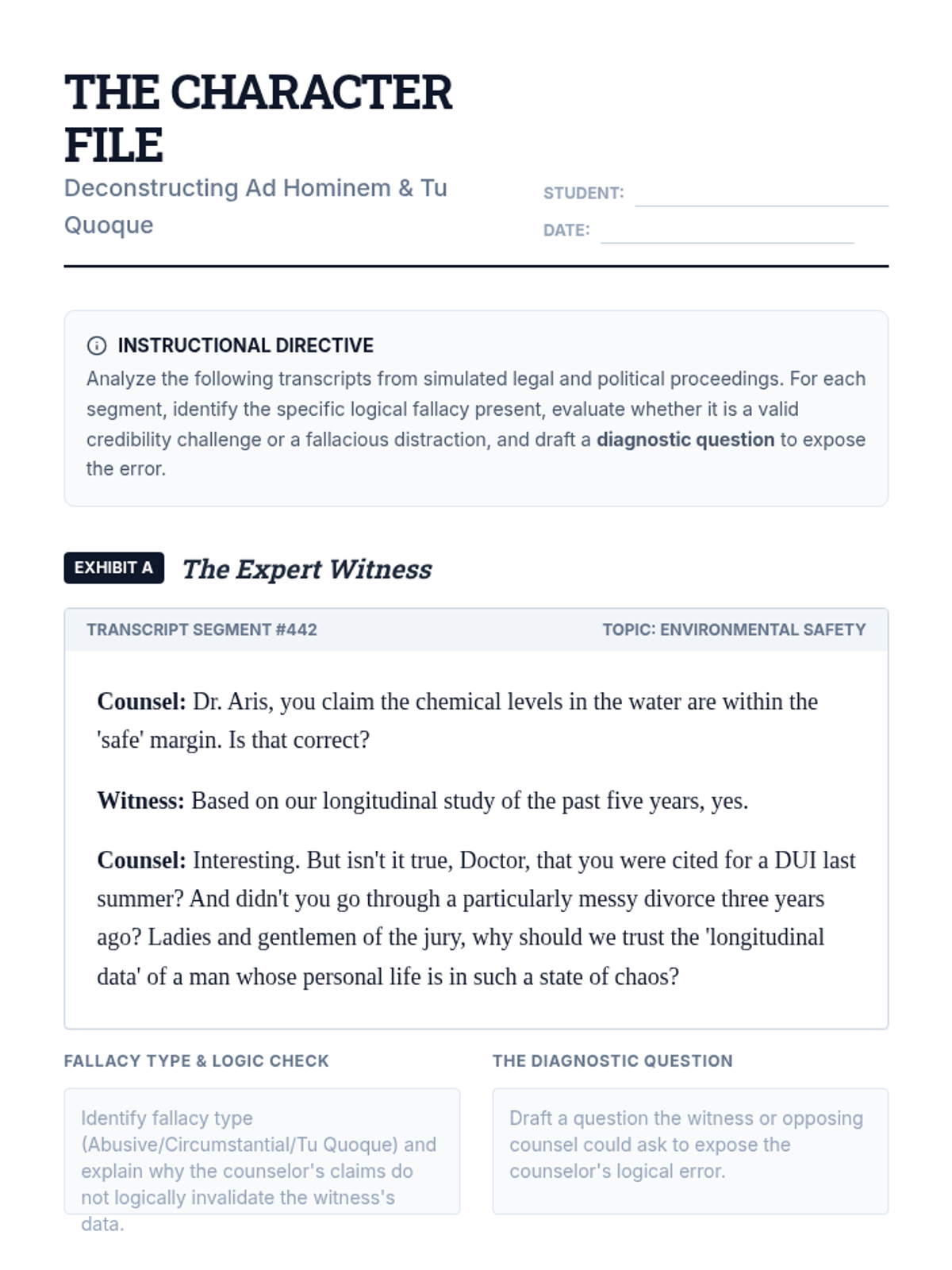
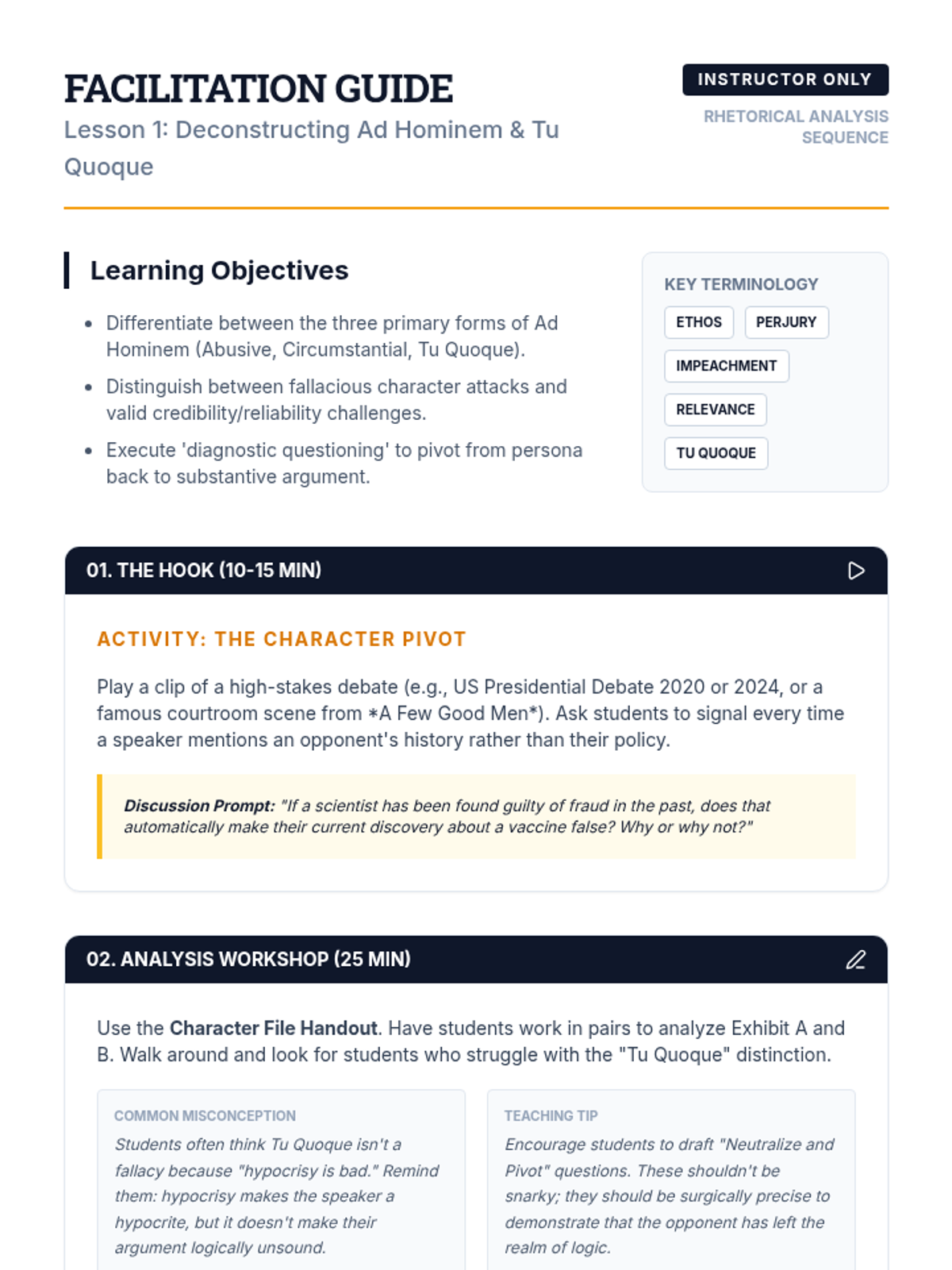
A high-level rhetoric and logic course for undergraduate students, focusing on the identification and dismantling of logical fallacies during cross-examination. Students move from theoretical understanding to real-time application in legal and political contexts.
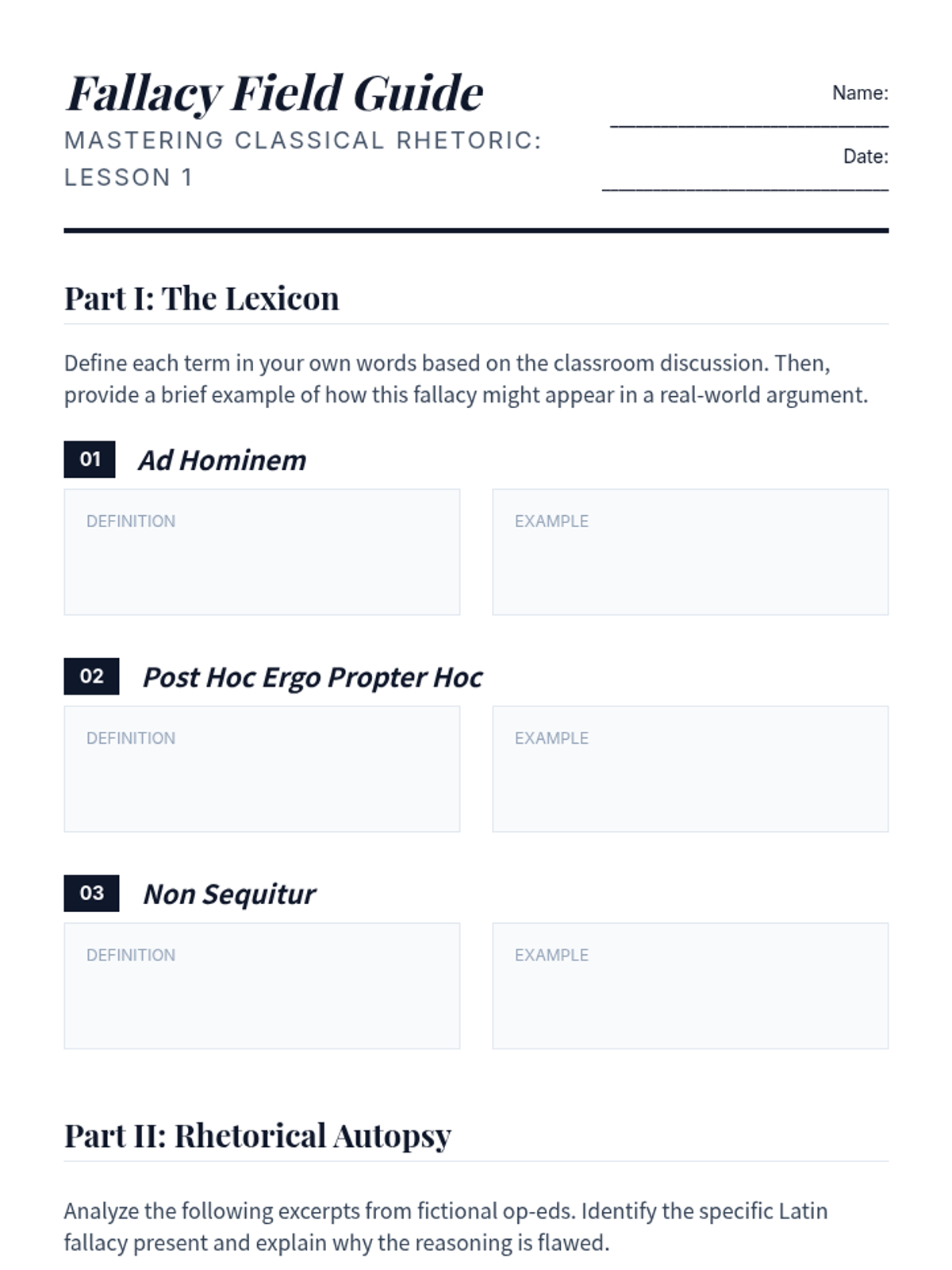
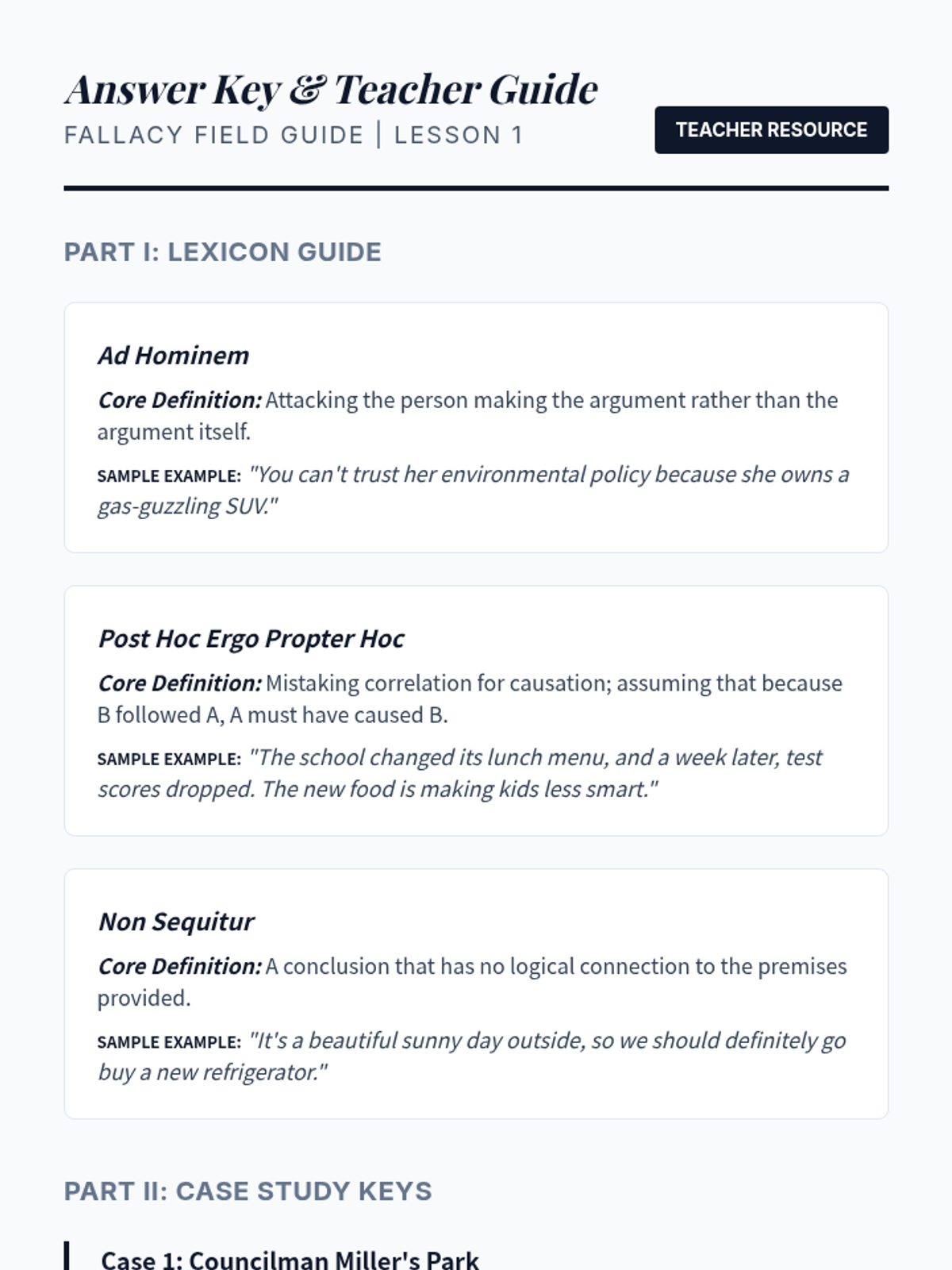
This sequence immerses students in the scholarly and rhetorical traditions that shape formal academic discourse, focusing on Latin and Greek expressions prevalent in university-level writing and debate. Students will analyze how terms like 'ad hominem,' 'non sequitur,' and 'status quo' function as shorthand for complex logical concepts, culminating in a Socratic seminar.
This sequence explores the rhetorical power of analogies in persuasion, speeches, and debate. Students analyze historical and modern examples to understand how comparisons sway opinions and learn to identify logical fallacies like the False Analogy.
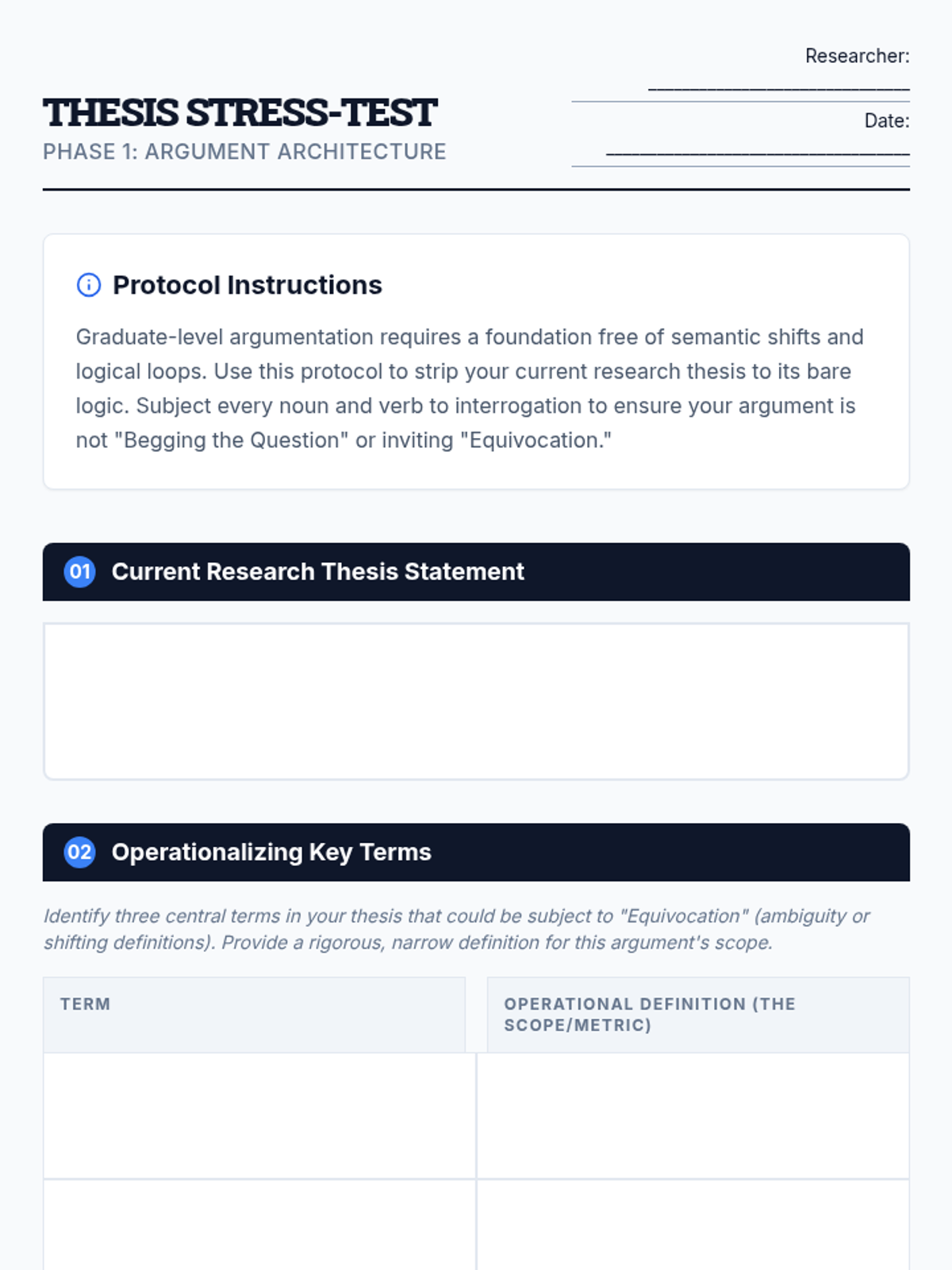
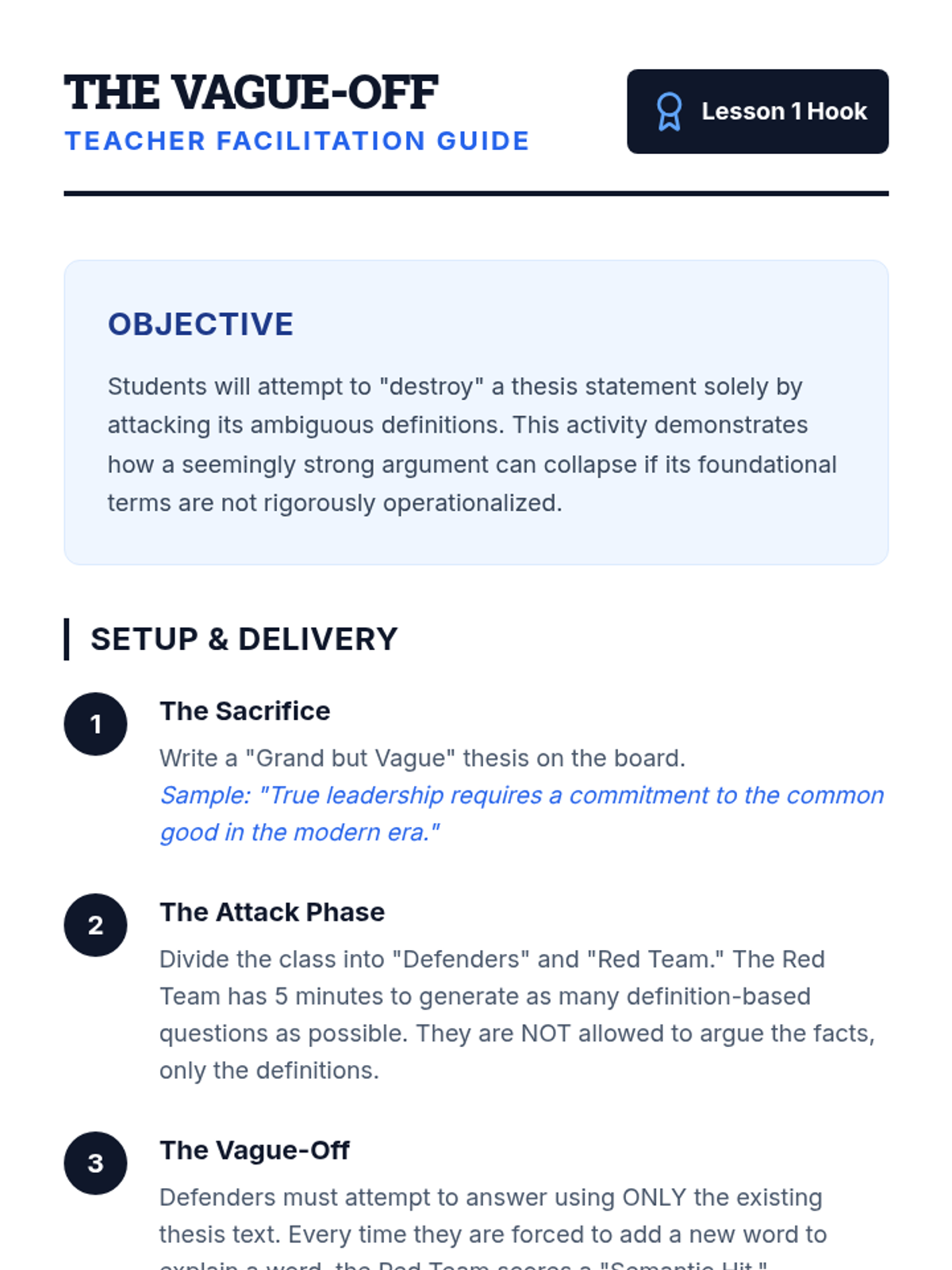
A graduate-level sequence focused on the construction of rigorous, fallacy-free arguments. Students move from thesis stress-testing to oral defense, learning to anticipate counter-attacks and use strategic concession to build unassailable academic positions.
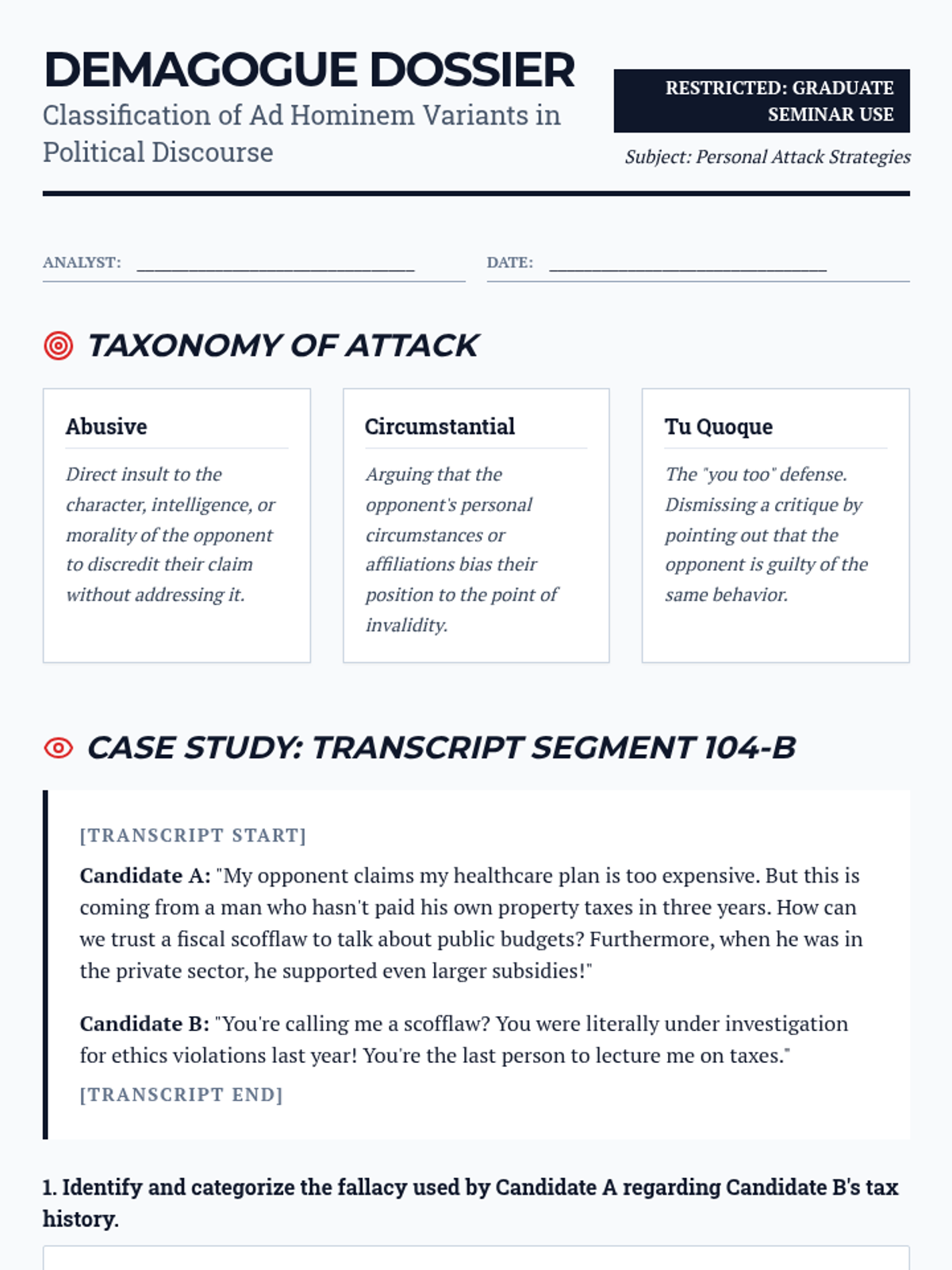
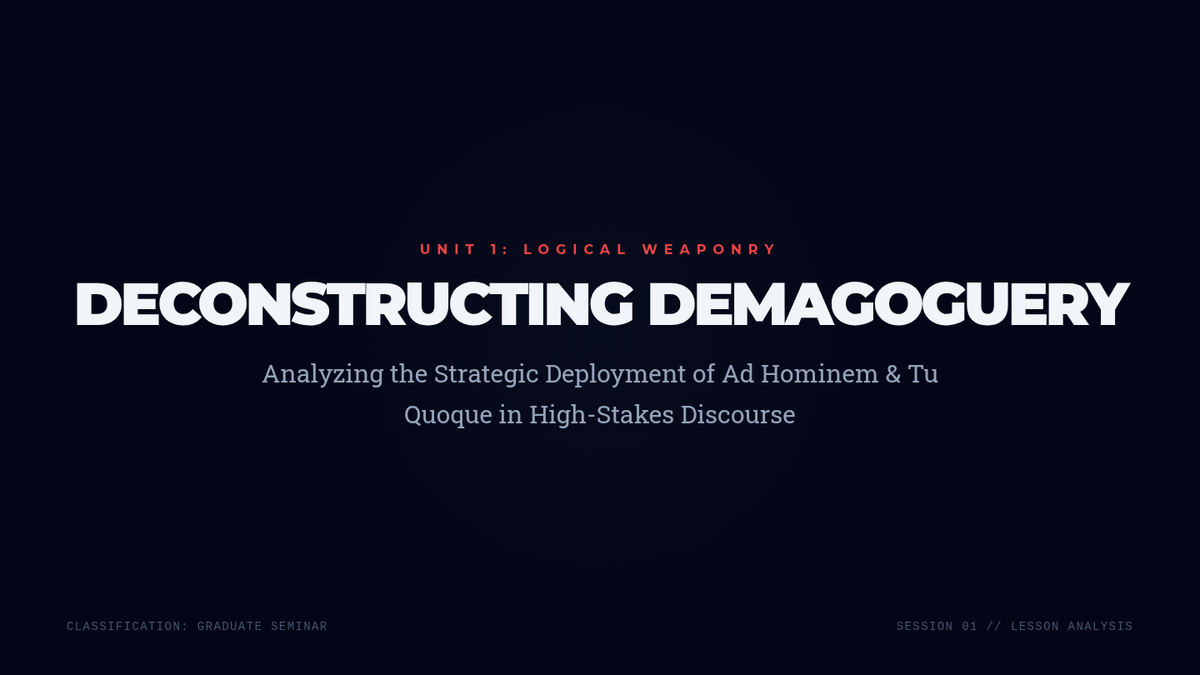
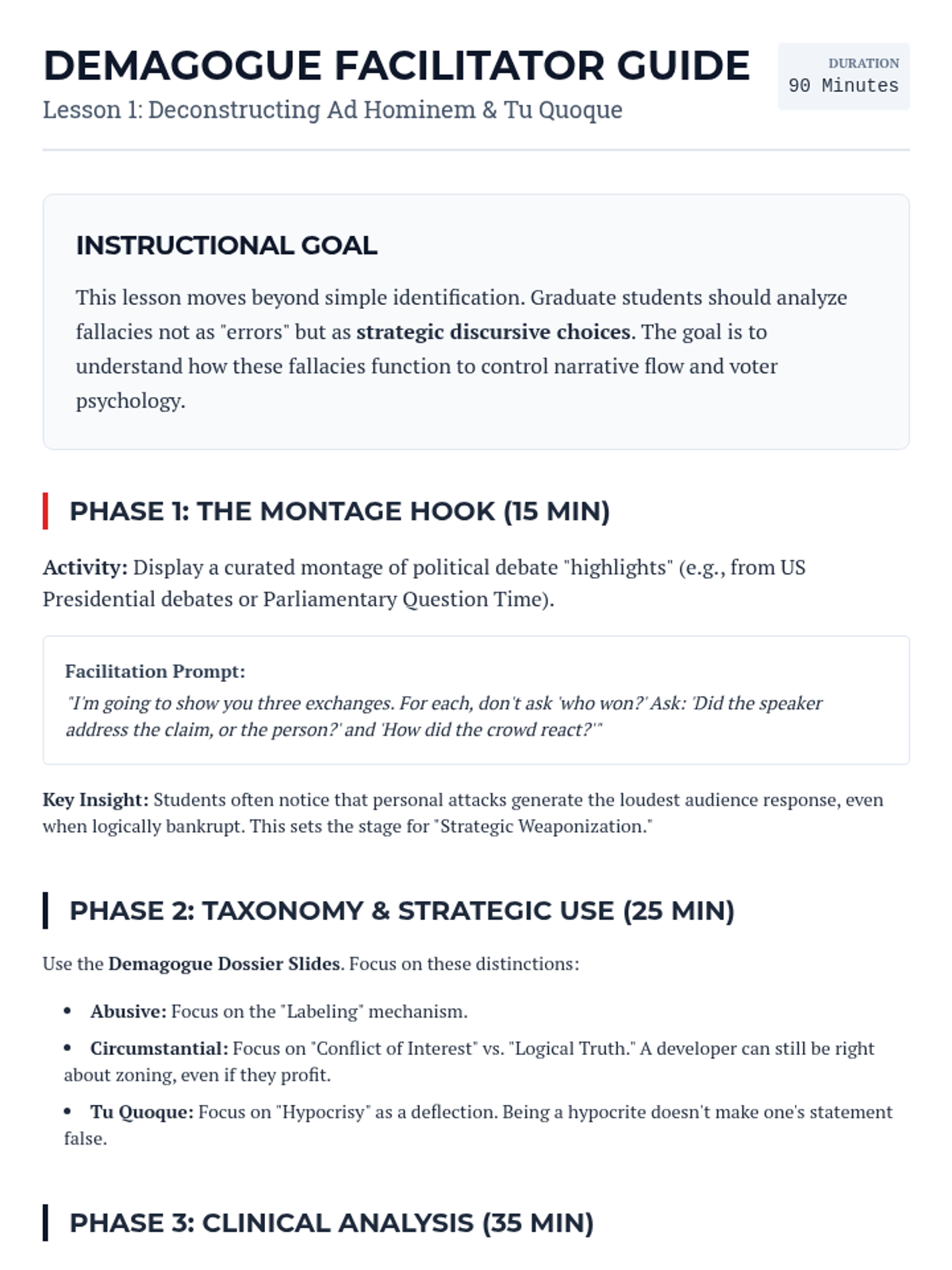
An advanced rhetorical analysis sequence for graduate students, focusing on the strategic deployment of logical fallacies in political, legal, and media discourse. Students deconstruct high-stakes communication to develop sophisticated media literacy and defensive argumentation skills.
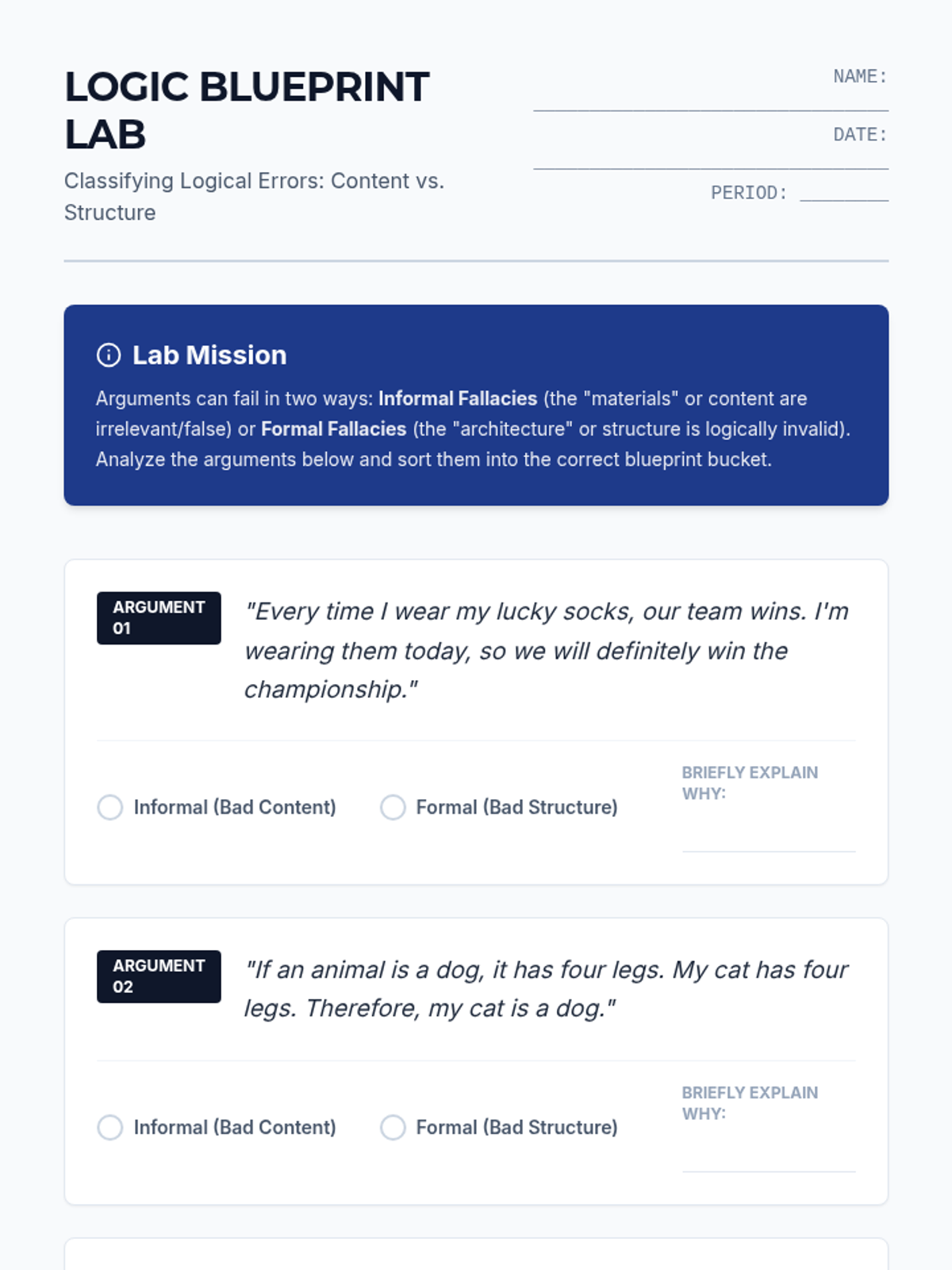
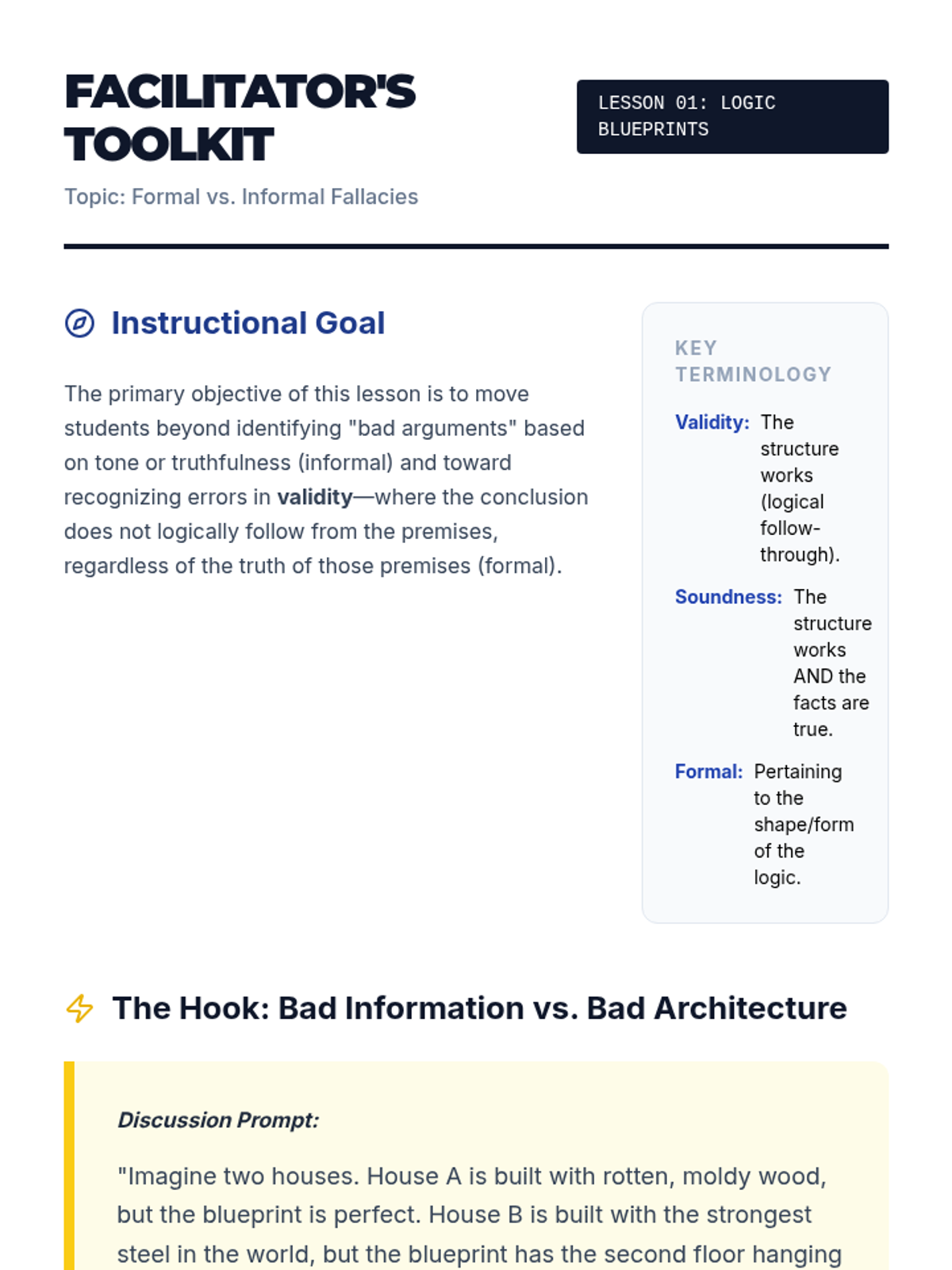
A high school ELA sequence focused on identifying structural errors in reasoning. Students learn to distinguish between informal fallacies (content-based) and formal fallacies (structure-based), specifically mastering affirming the consequent, denying the antecedent, and the undistributed middle.
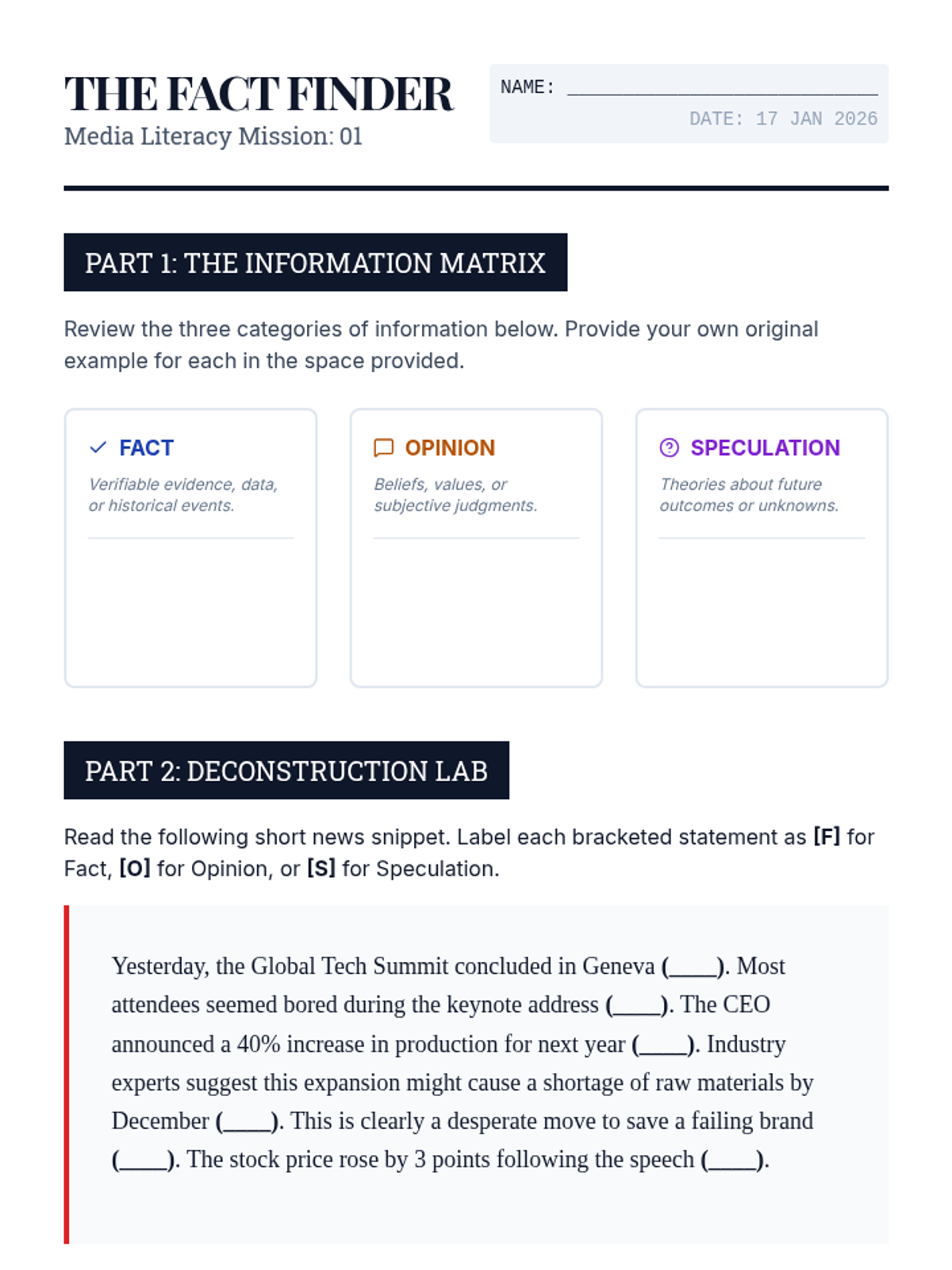
A high-level media literacy unit where students deconstruct news media through the lens of rhetoric, bias, and logical fallacies, culminating in an editorial simulation.
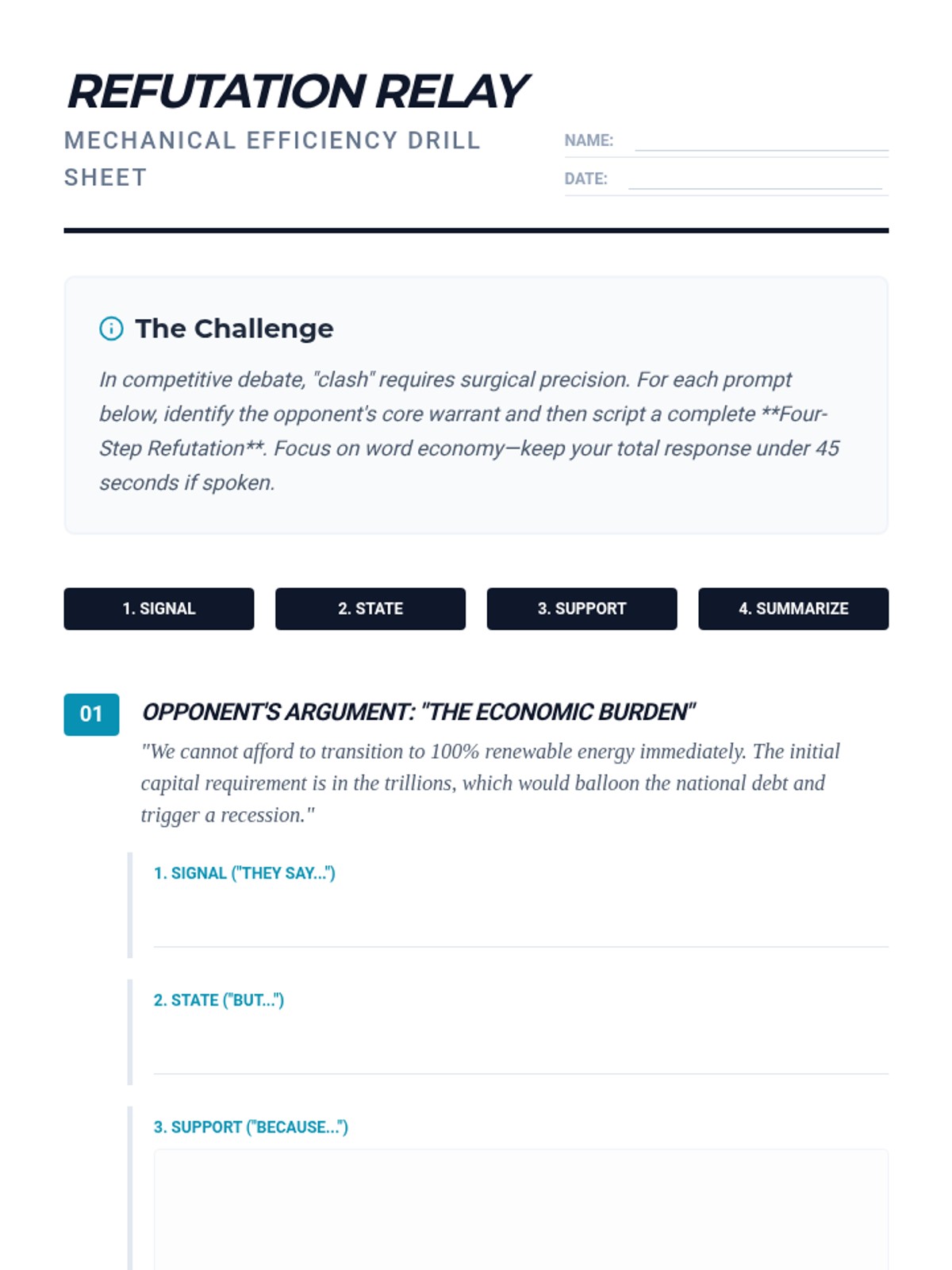
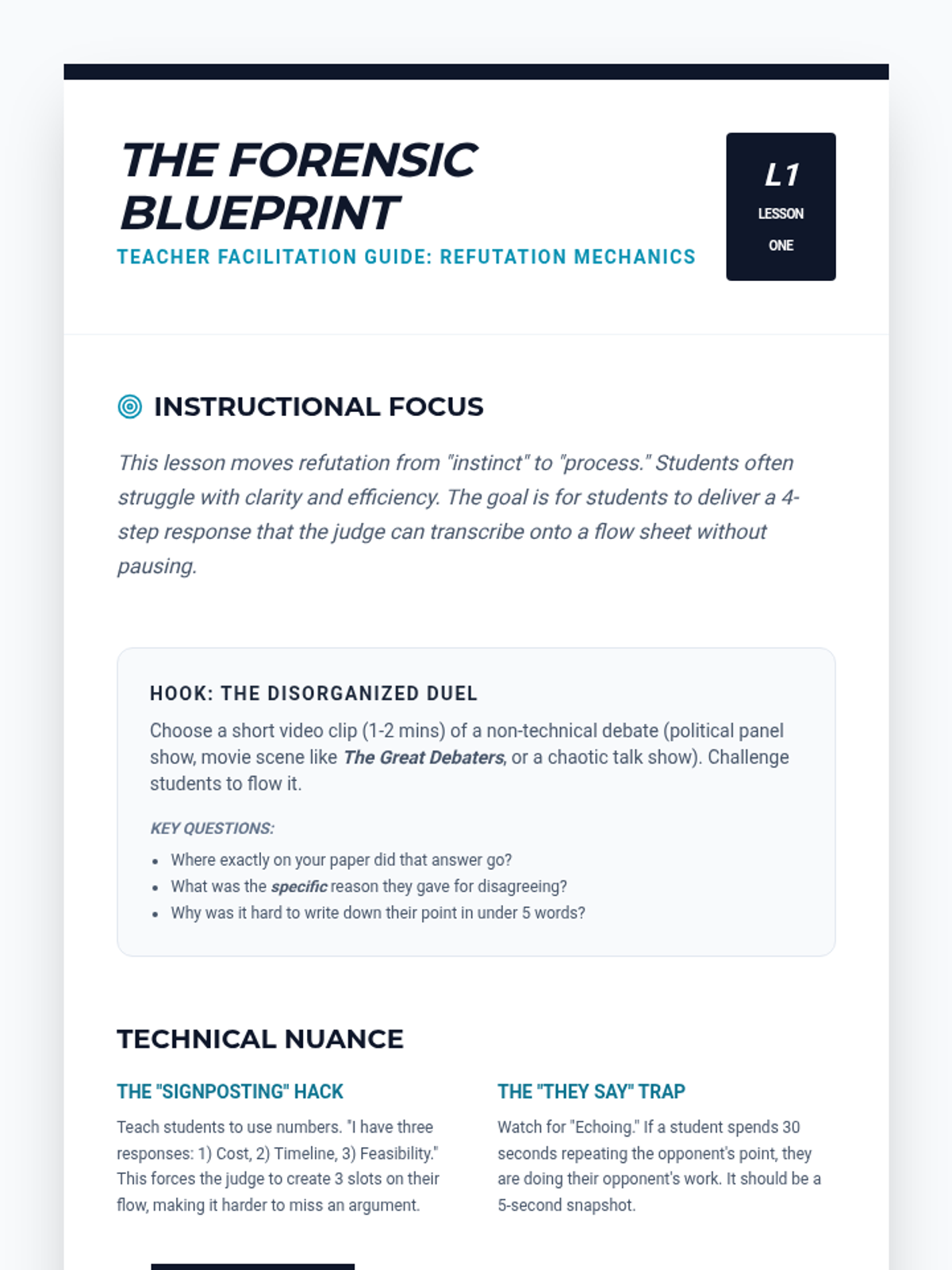
A collegiate-level sequence focused on the technical mechanics of refutation, transitioning from basic four-step structures to advanced line-by-line analysis and strategic grouping. Students master defensive and offensive positioning while developing the efficiency needed for competitive debate.
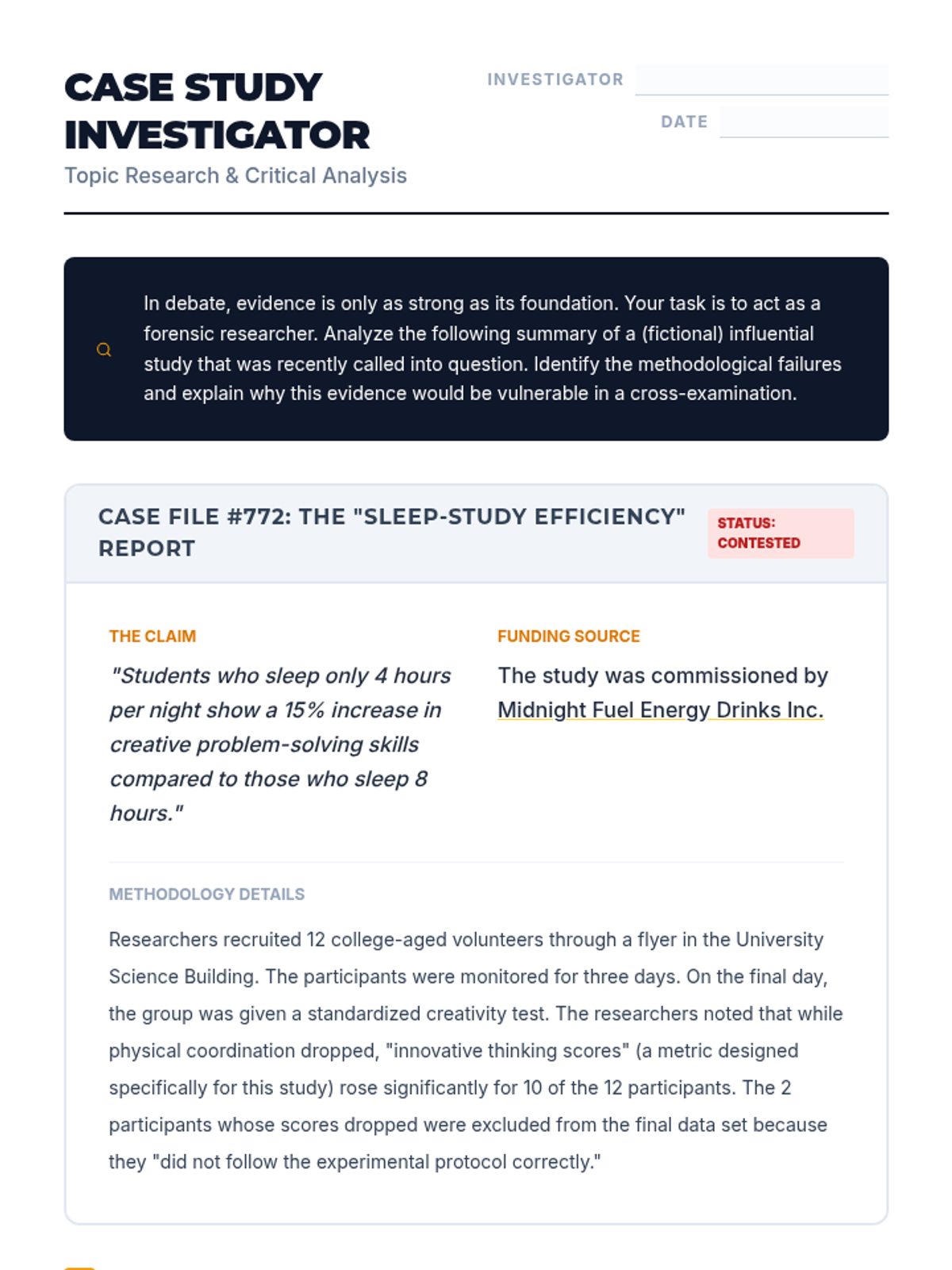
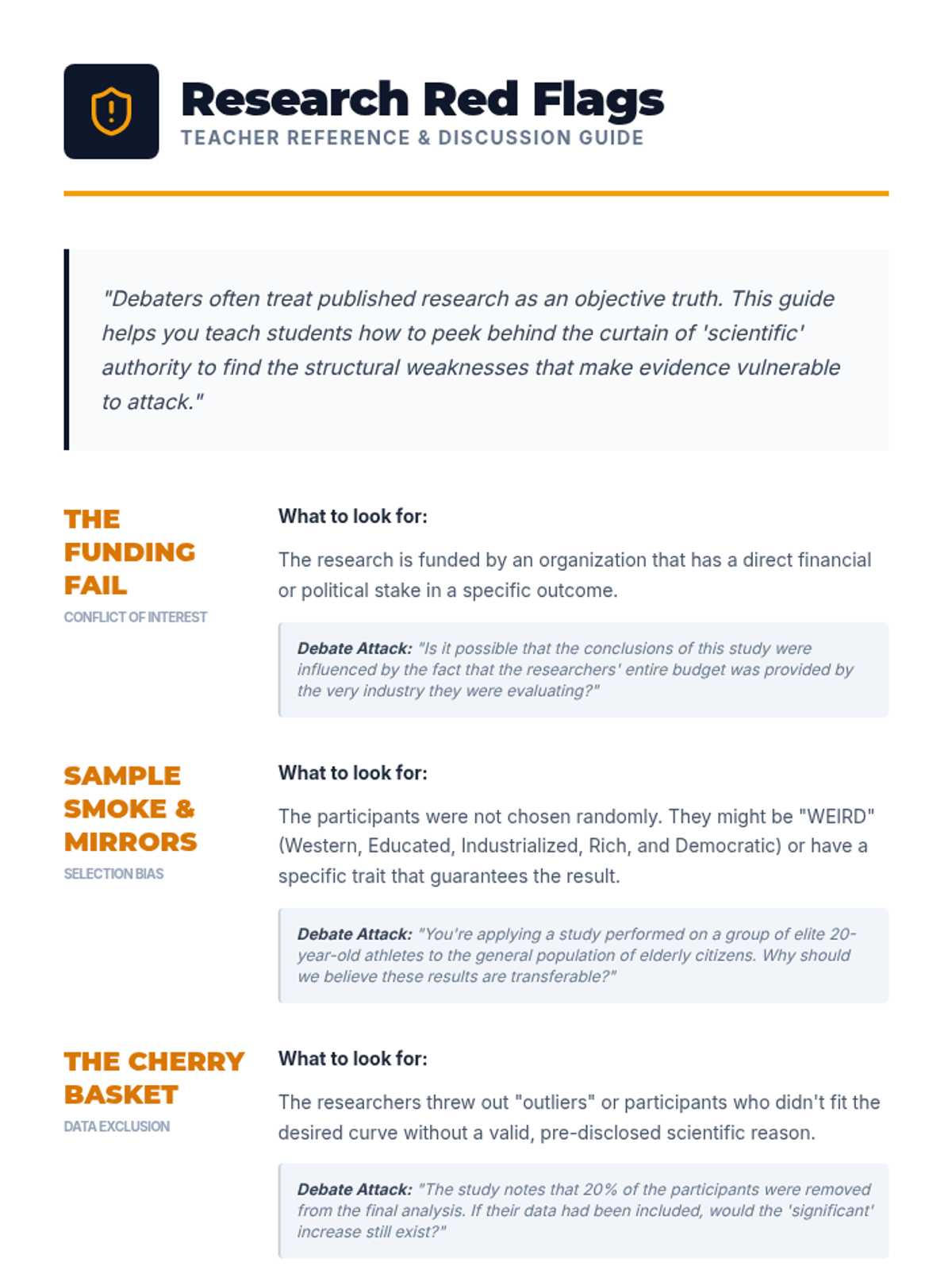
A 10th-grade ELA sequence focused on the critical analysis and deconstruction of opposing evidence in debate. Students learn to scrutinize research methodologies, identify logical fallacies like cherry-picking and contextomy, and develop sharp cross-examination skills to expose weaknesses in arguments.
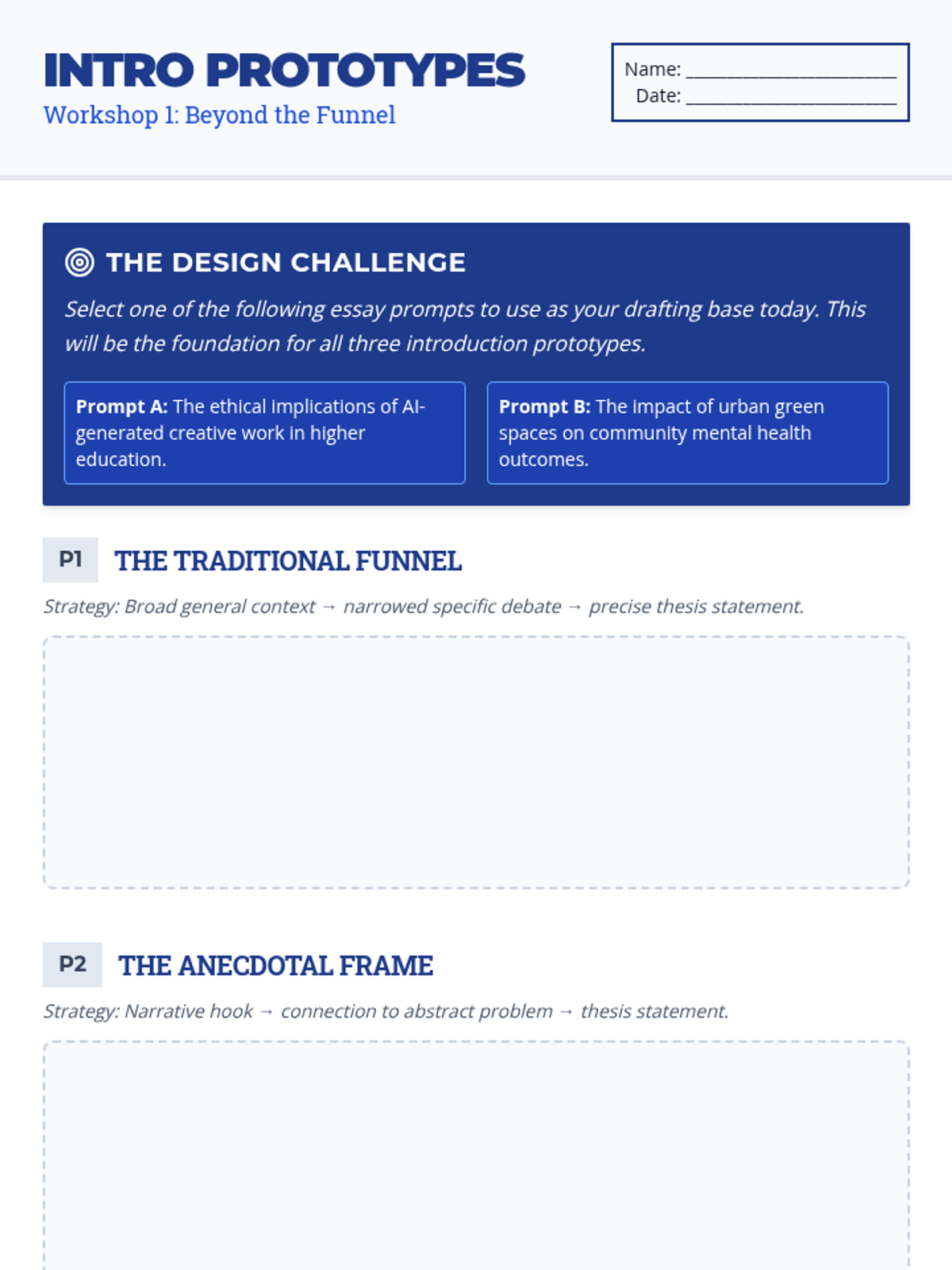
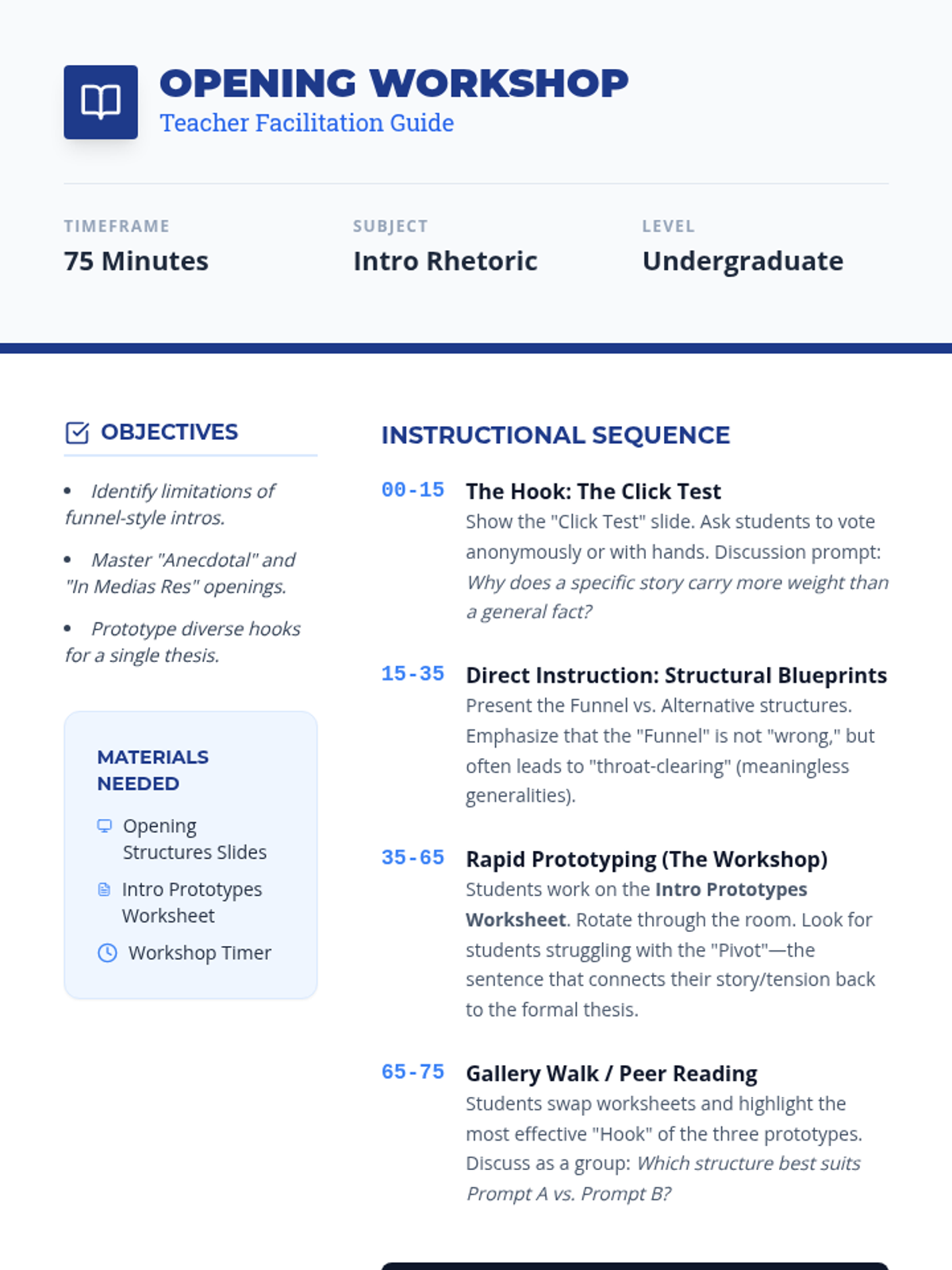
An intensive writing workshop sequence for undergraduate students focused on the structural 'bookends' of academic essays. Students move beyond formulaic templates to master sophisticated, rhetorical framing techniques for introductions and conclusions through rapid prototyping and peer critique.
A comprehensive sequence for undergraduate students on the strategic use of cross-examination in competitive debate. This unit moves from foundational etiquette and question syntax to complex logical traps and the integration of concessions into rebuttals.
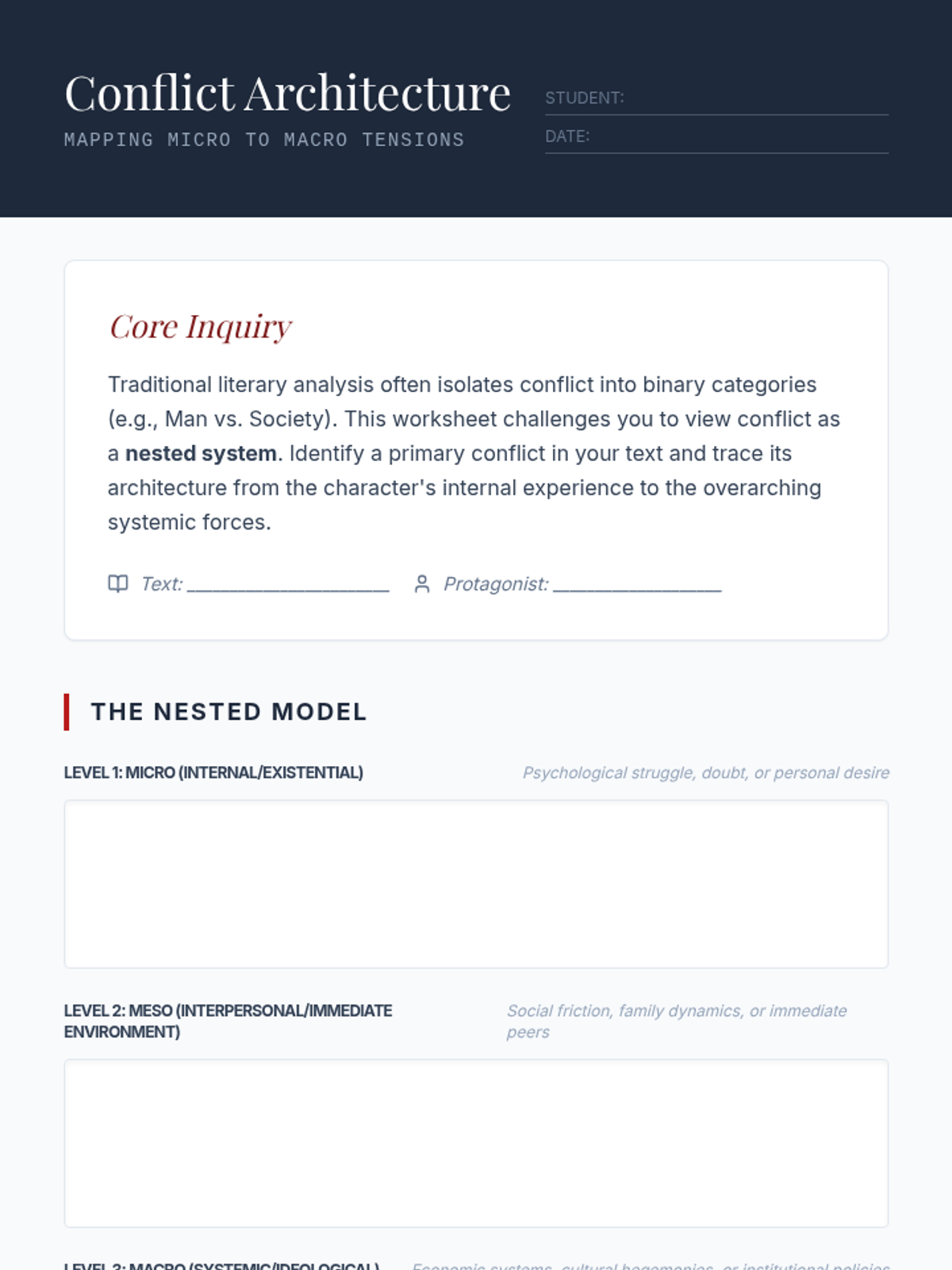
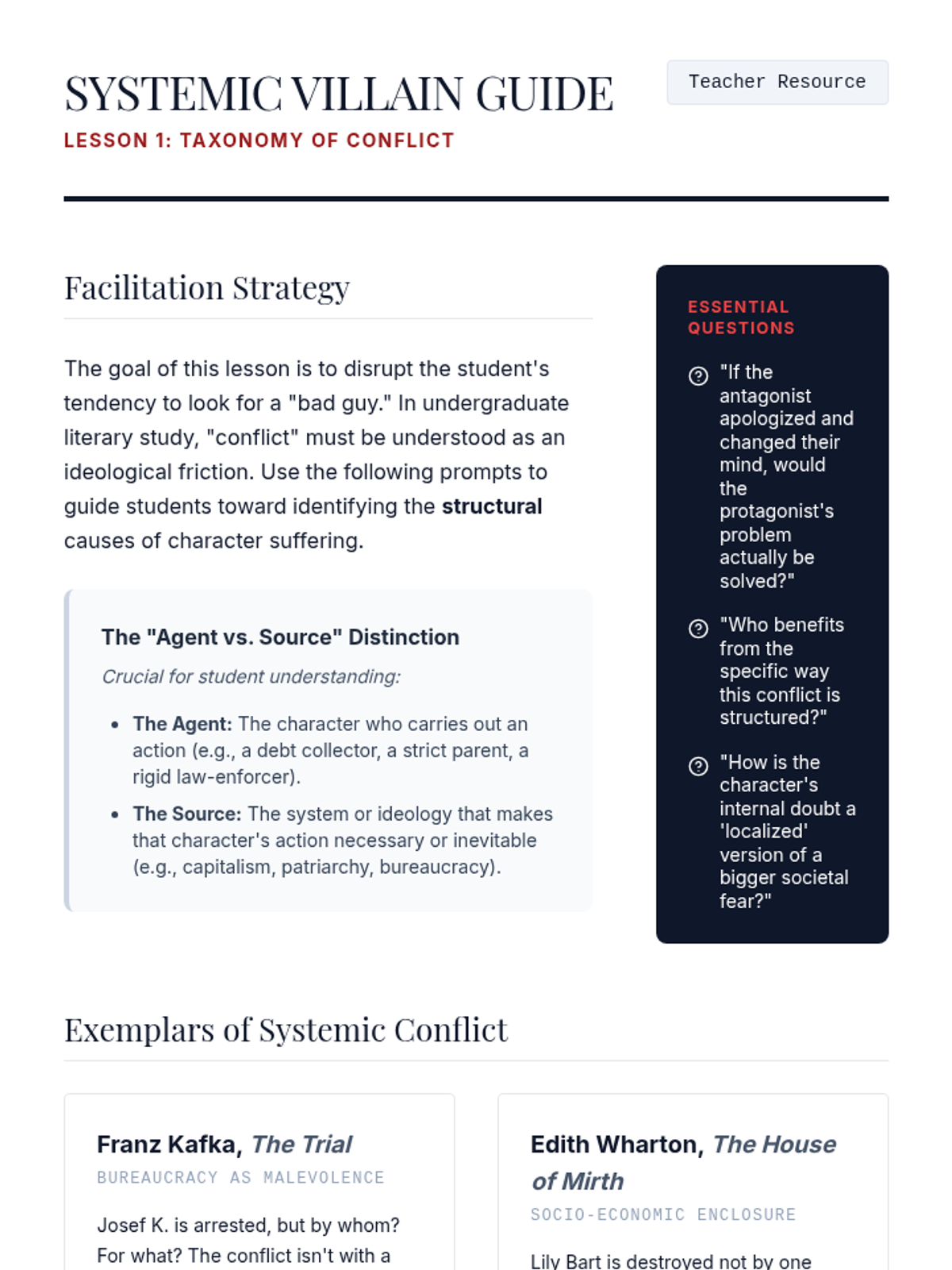
This sequence interrogates the ideological implications of conflict resolution and narrative closure in literature. Undergraduate students will move beyond basic story elements to analyze how endings enforce or challenge cultural ideologies through internal, systemic, and contrived resolutions.
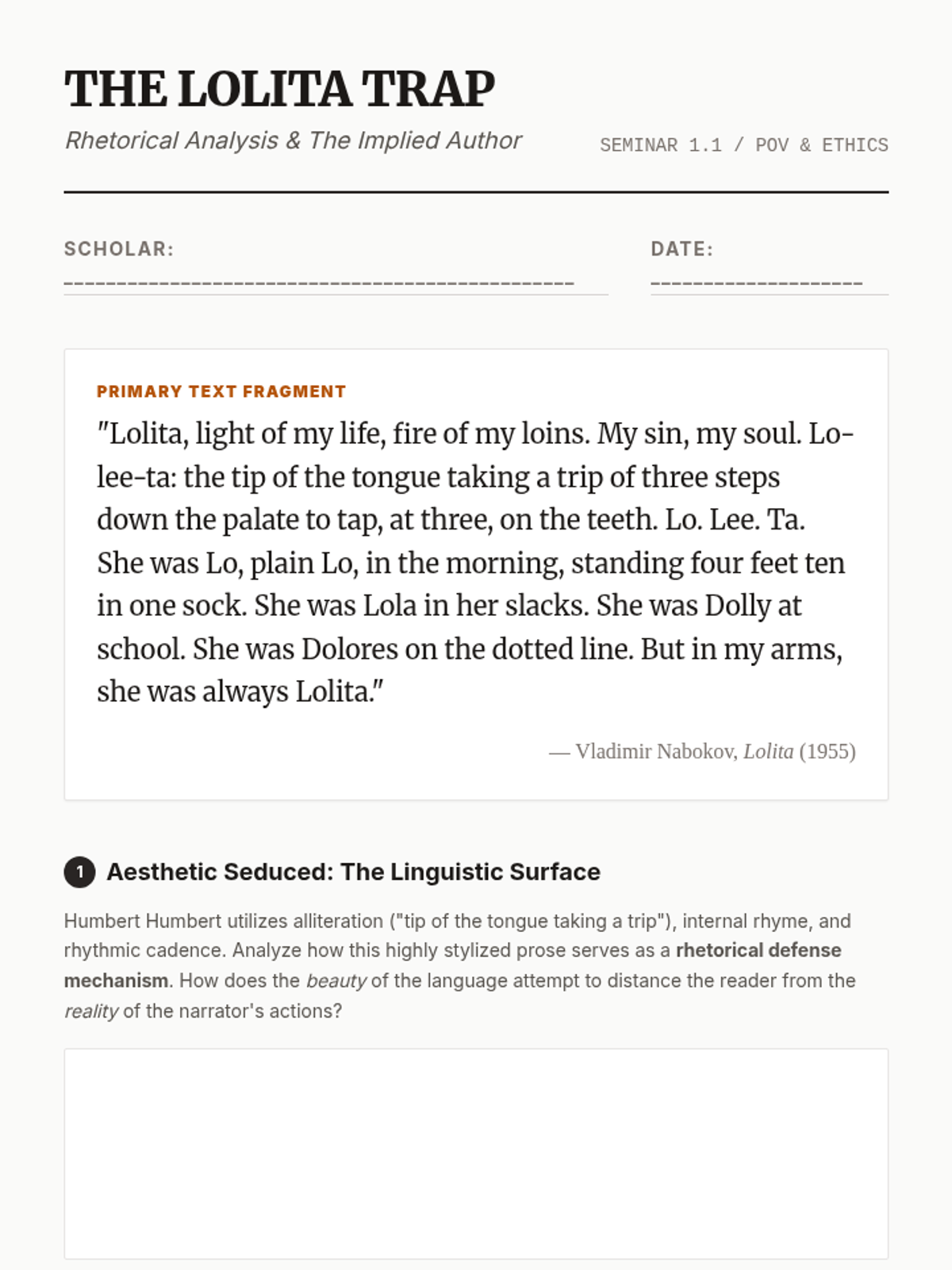
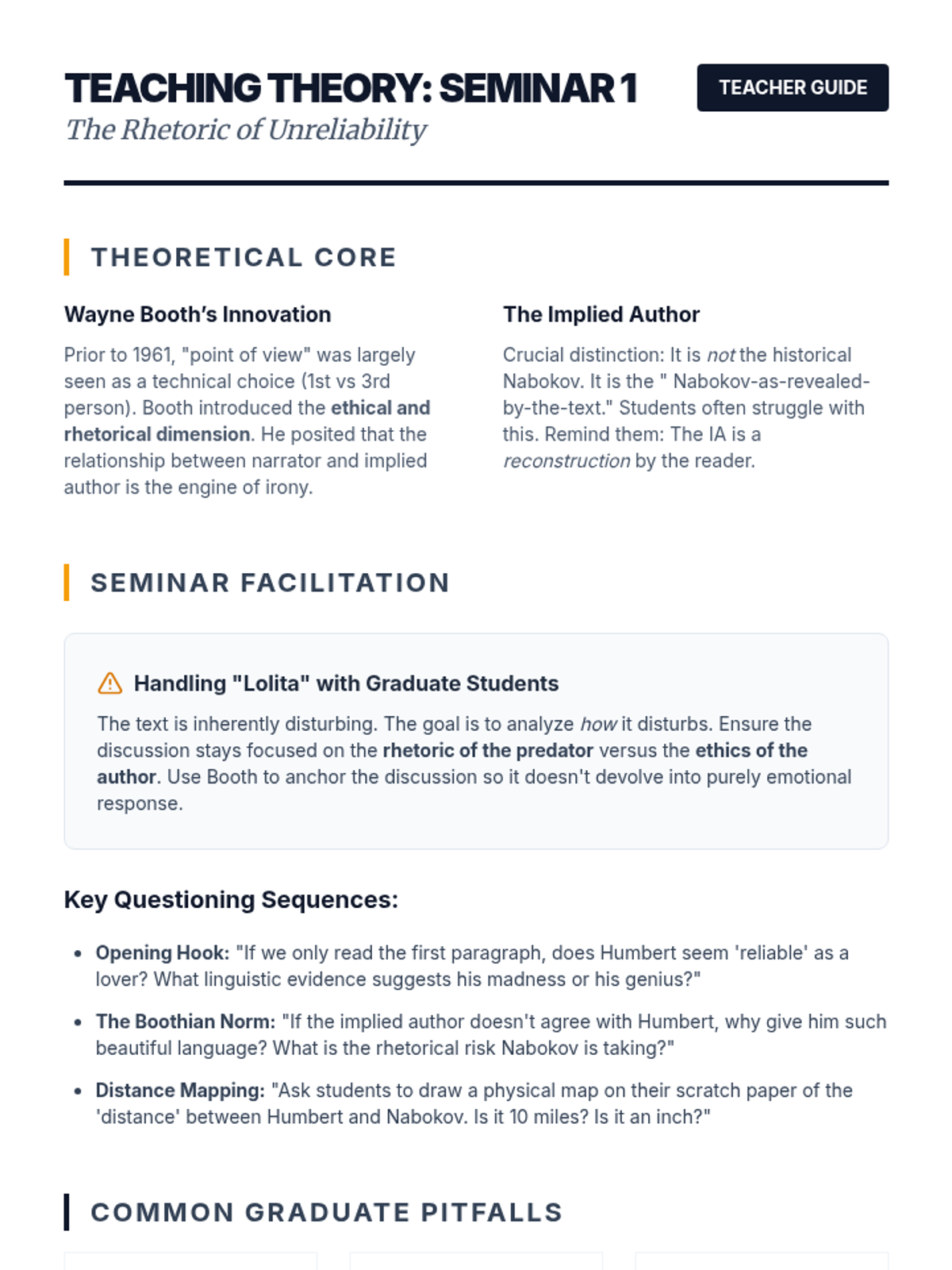
A graduate-level exploration of narrative theory, focusing on the mechanisms of unreliable narration through the lenses of Wayne Booth and James Phelan. Students examine the rhetorical, psychological, and ethical dimensions of stories where the teller cannot be trusted.
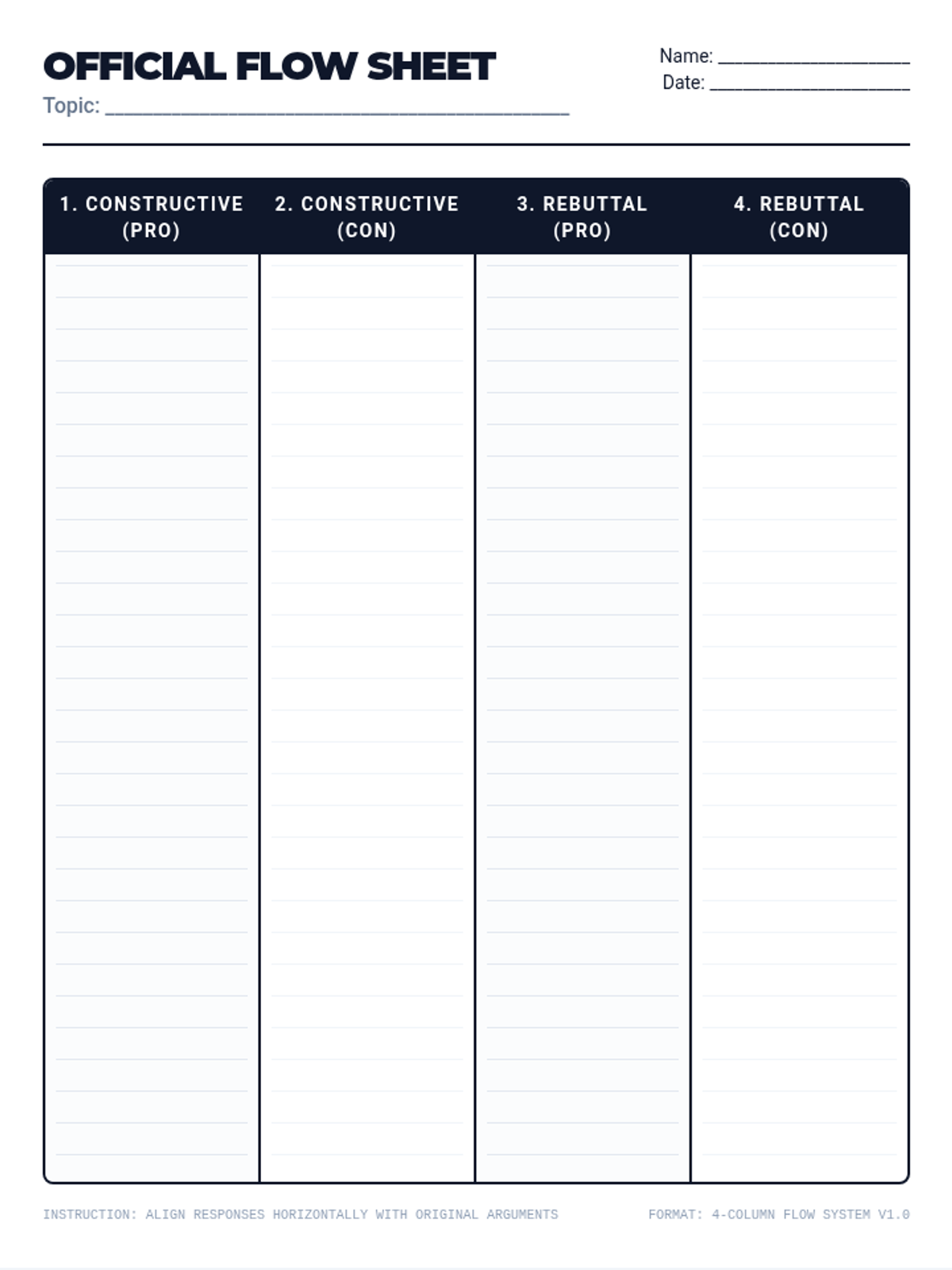
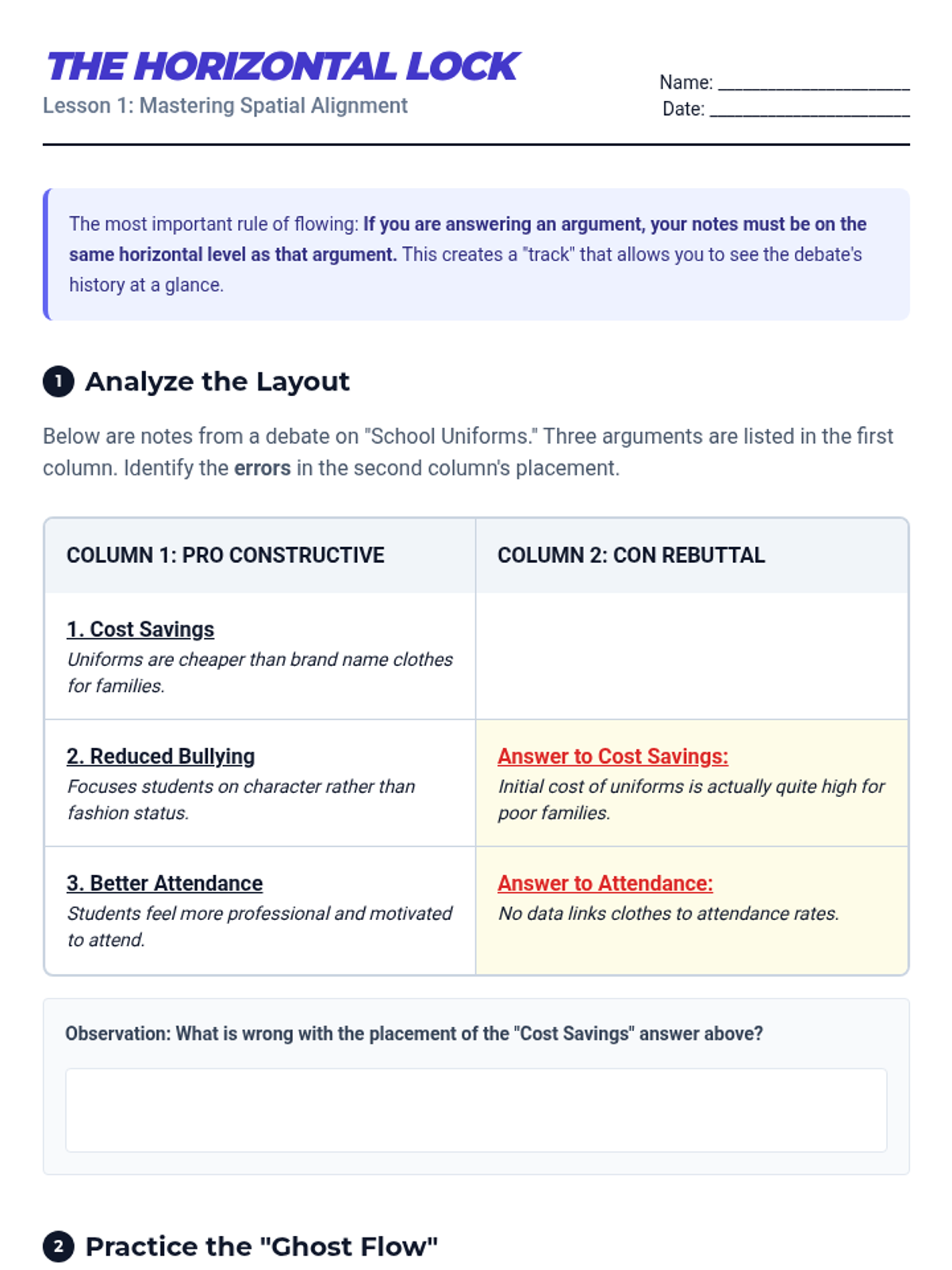
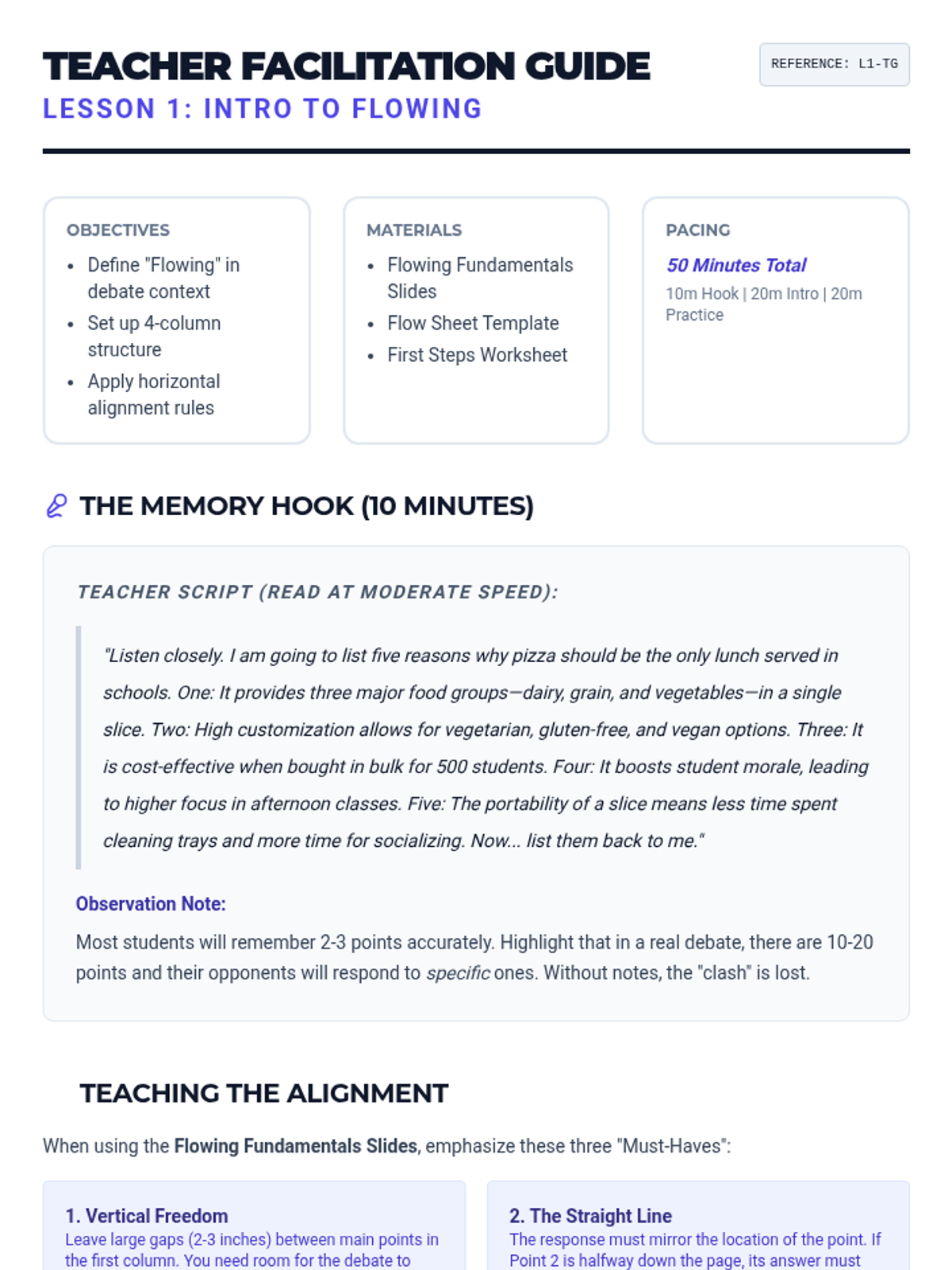
A comprehensive sequence for 8th-grade debaters focusing on 'flowing'—the specialized note-taking method used to track arguments. Students learn to organize information spatially, use shorthand symbols, track clashes with arrows, and execute systematic line-by-line refutations.
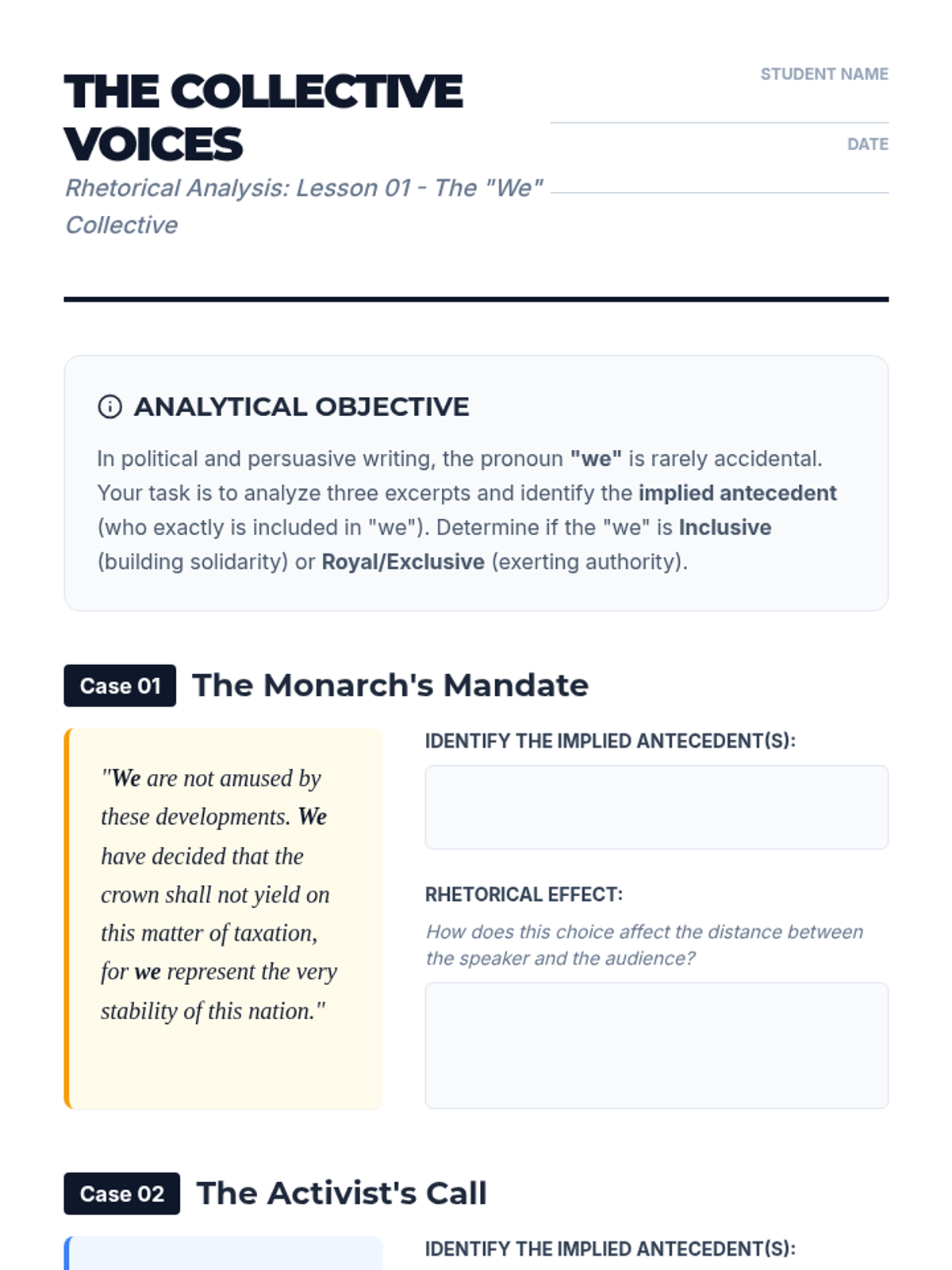
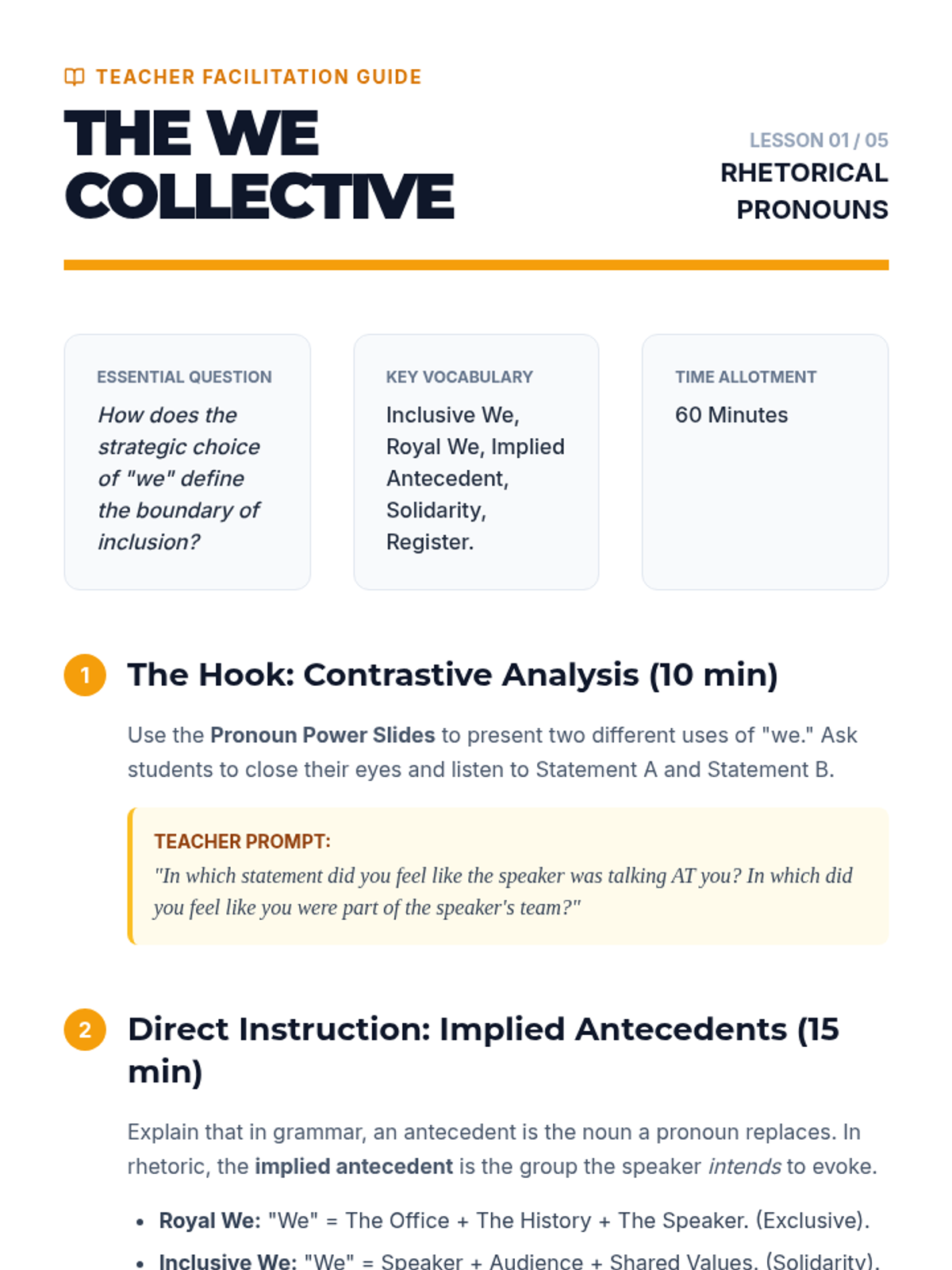
An advanced 12th-grade sequence exploring the rhetorical impact of pronoun choice and antecedent manipulation in political discourse, literature, and persuasion. Students move beyond basic grammar to analyze how "we," "you," and "they" shape identity, power, and perspective.