Builds word mastery through parts of speech, Greek and Latin roots, and morphological analysis of prefixes and suffixes. Develops nuanced comprehension using context clues, shades of meaning, and idiomatic expressions.
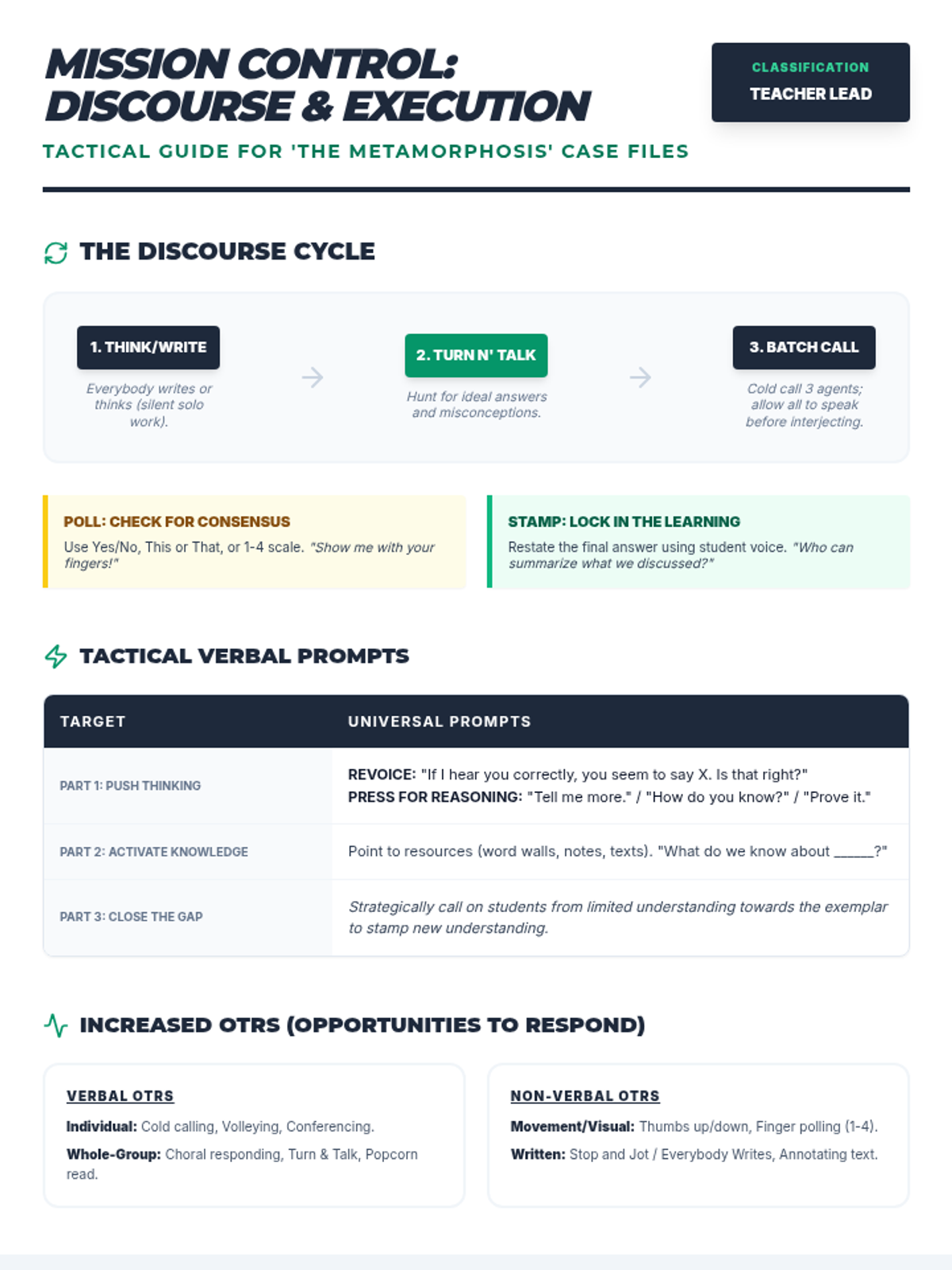
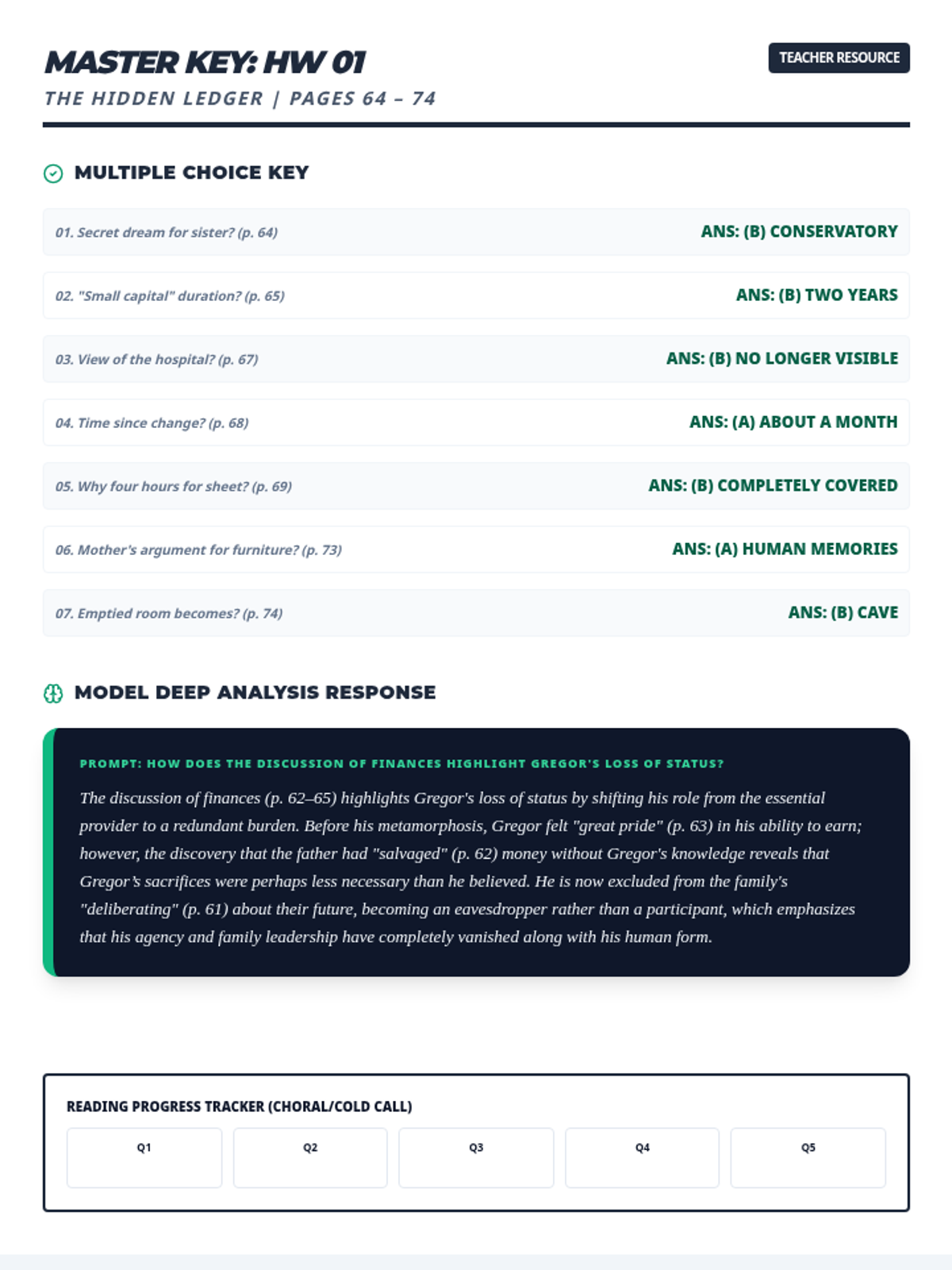
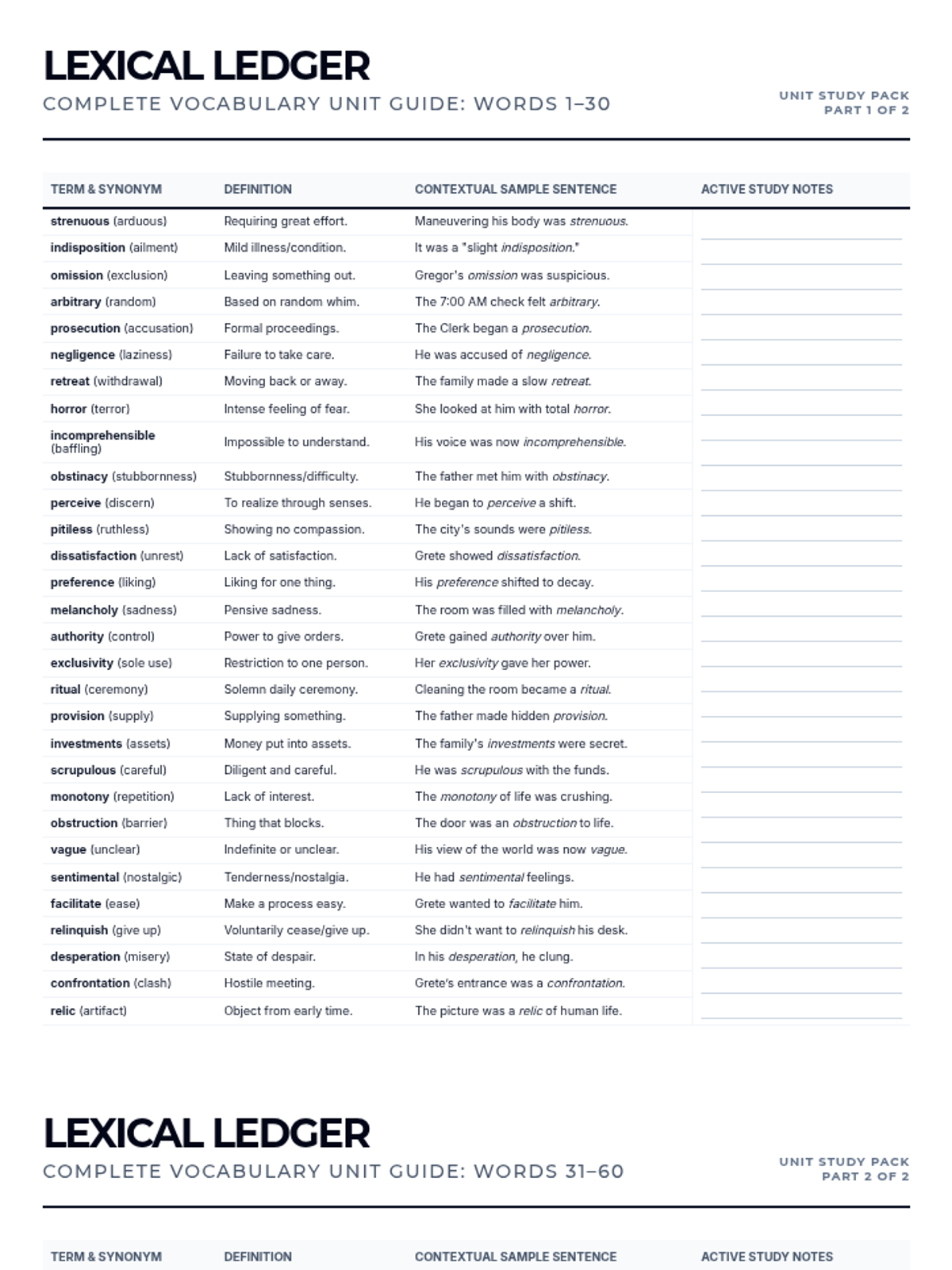
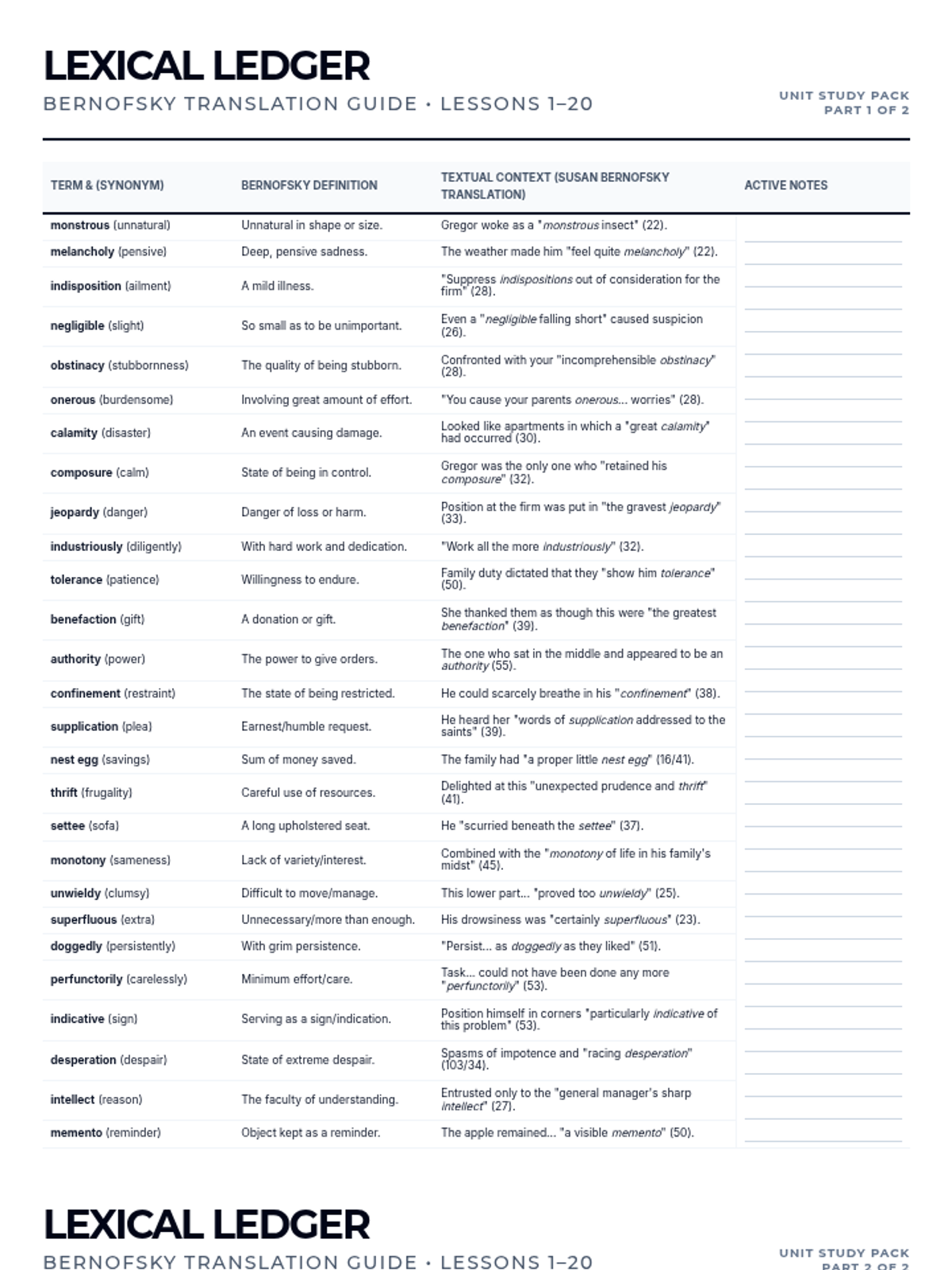
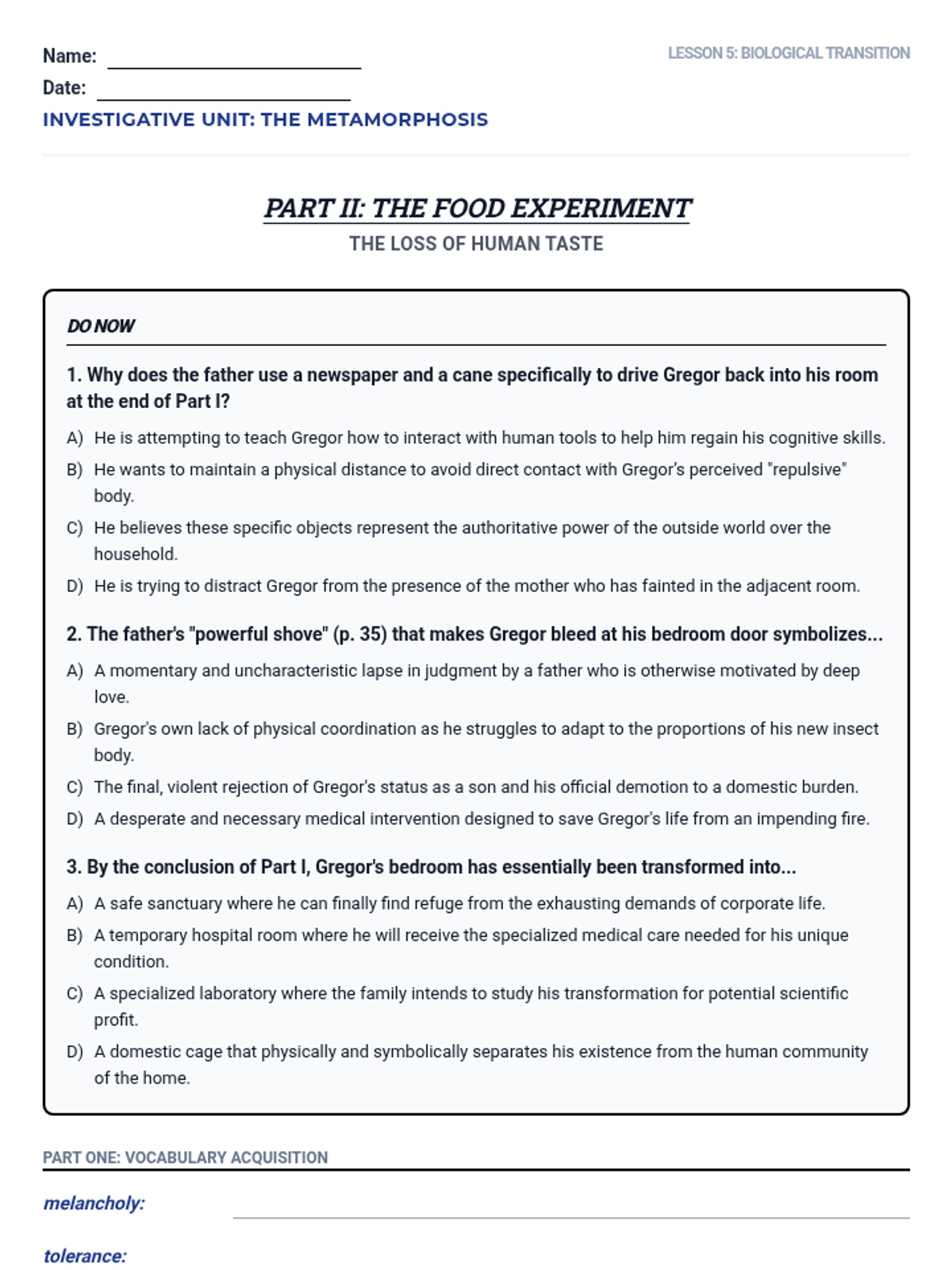
A comprehensive unit covering Gregor Samsa's physical and emotional decay through five sequential 'Case Files'. Students analyze symbols, characterization, theme, and conflict as Gregor's humanity is further eroded and the family hierarchy shifts.
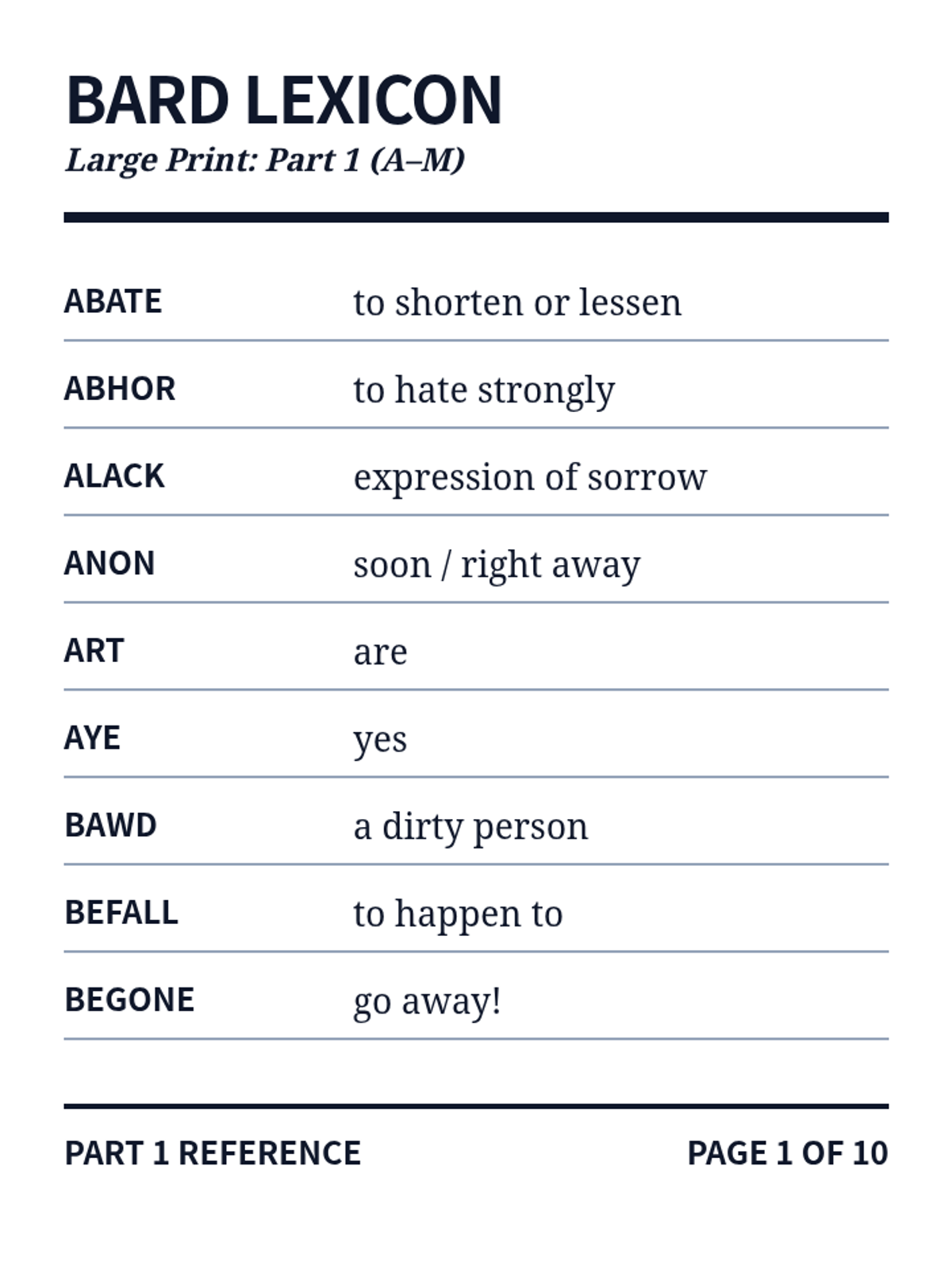
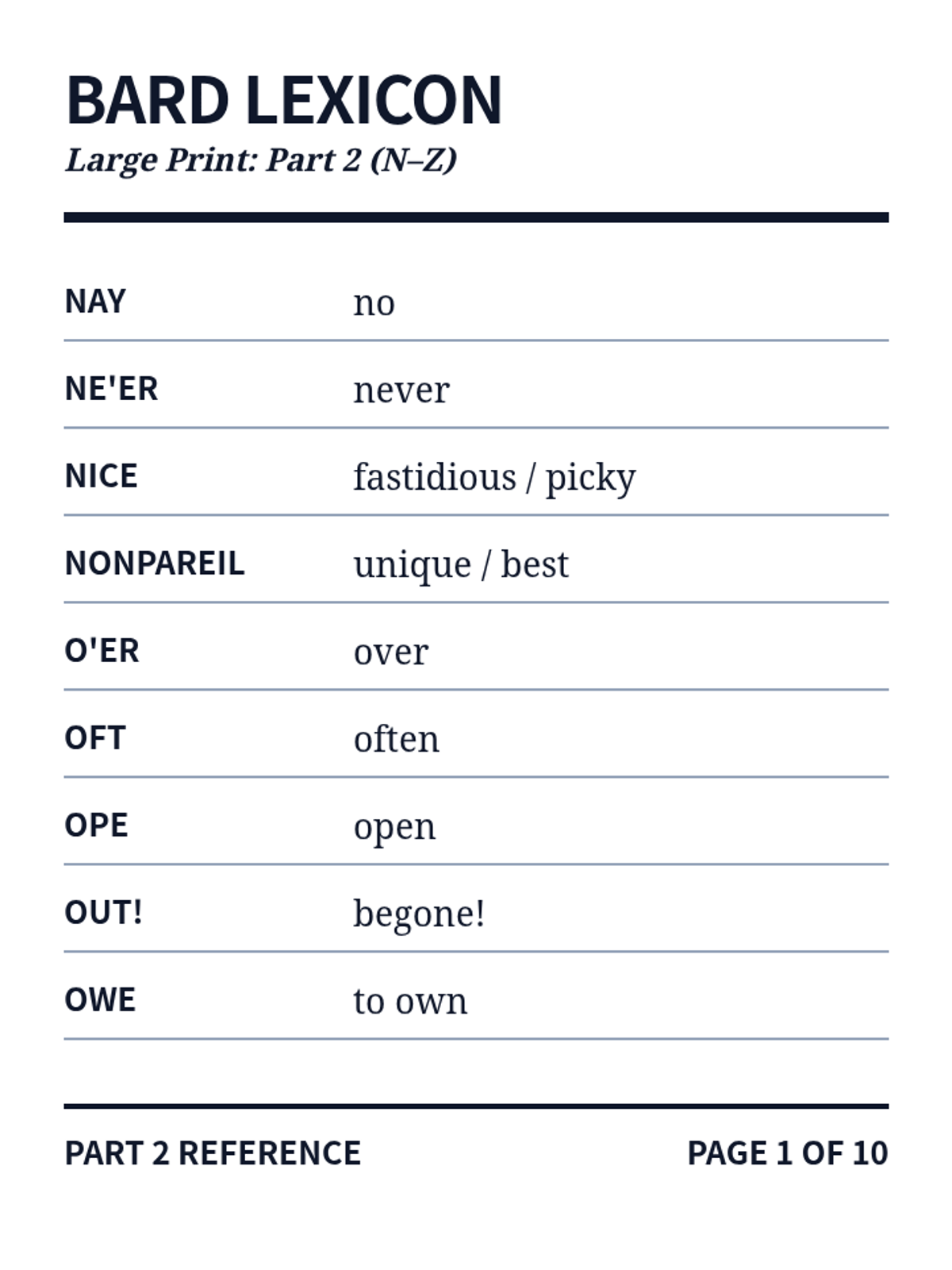
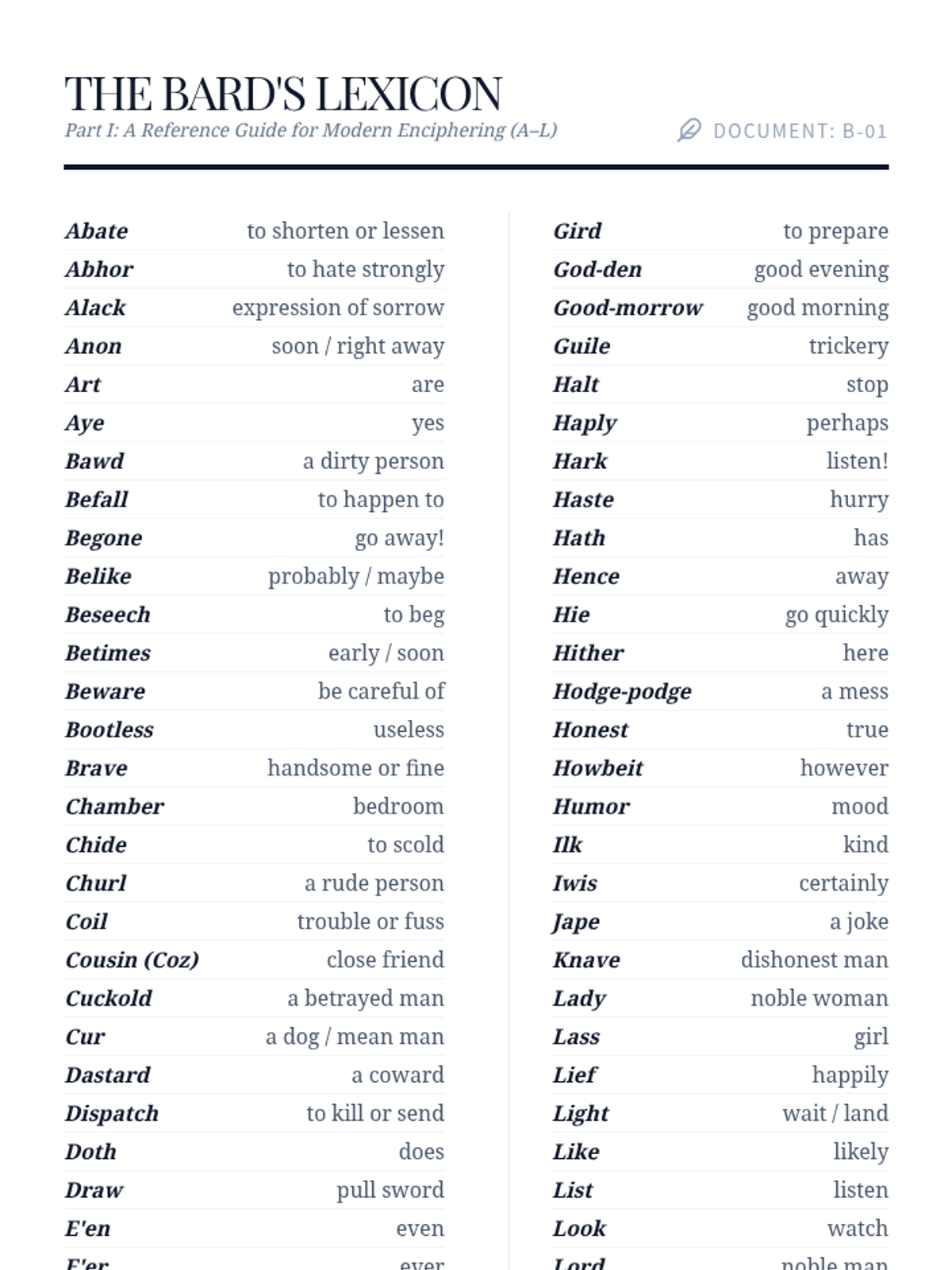
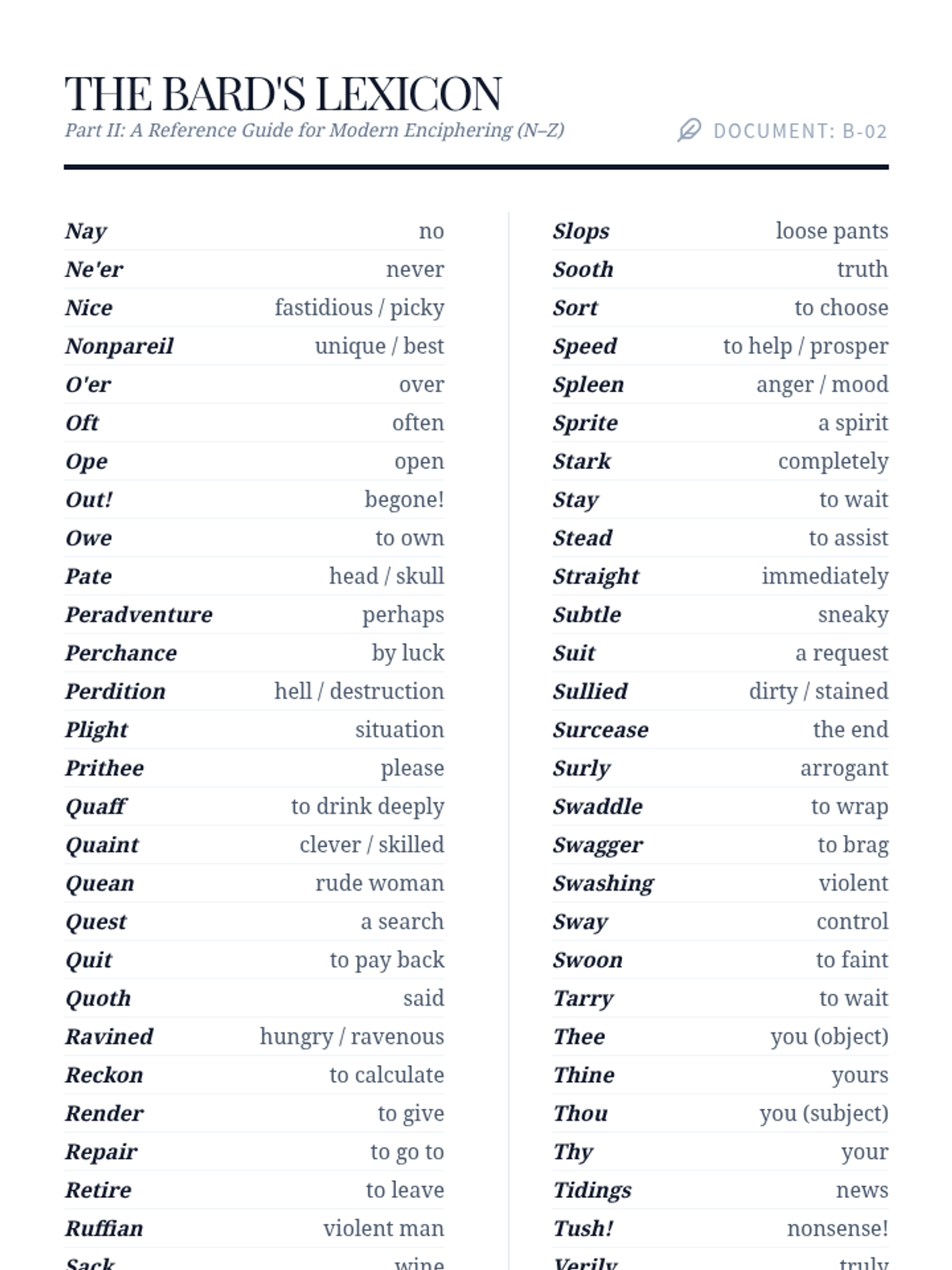
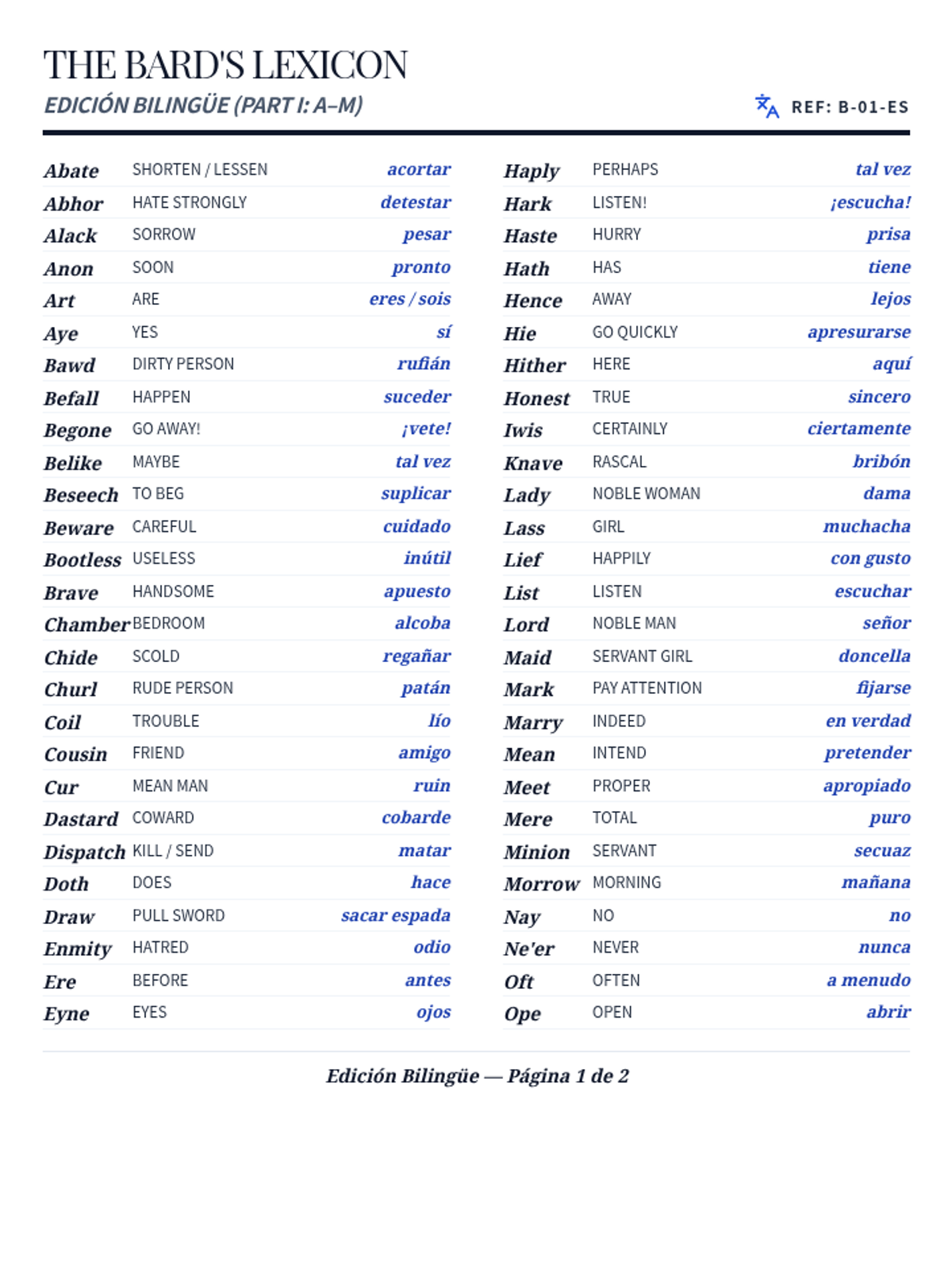
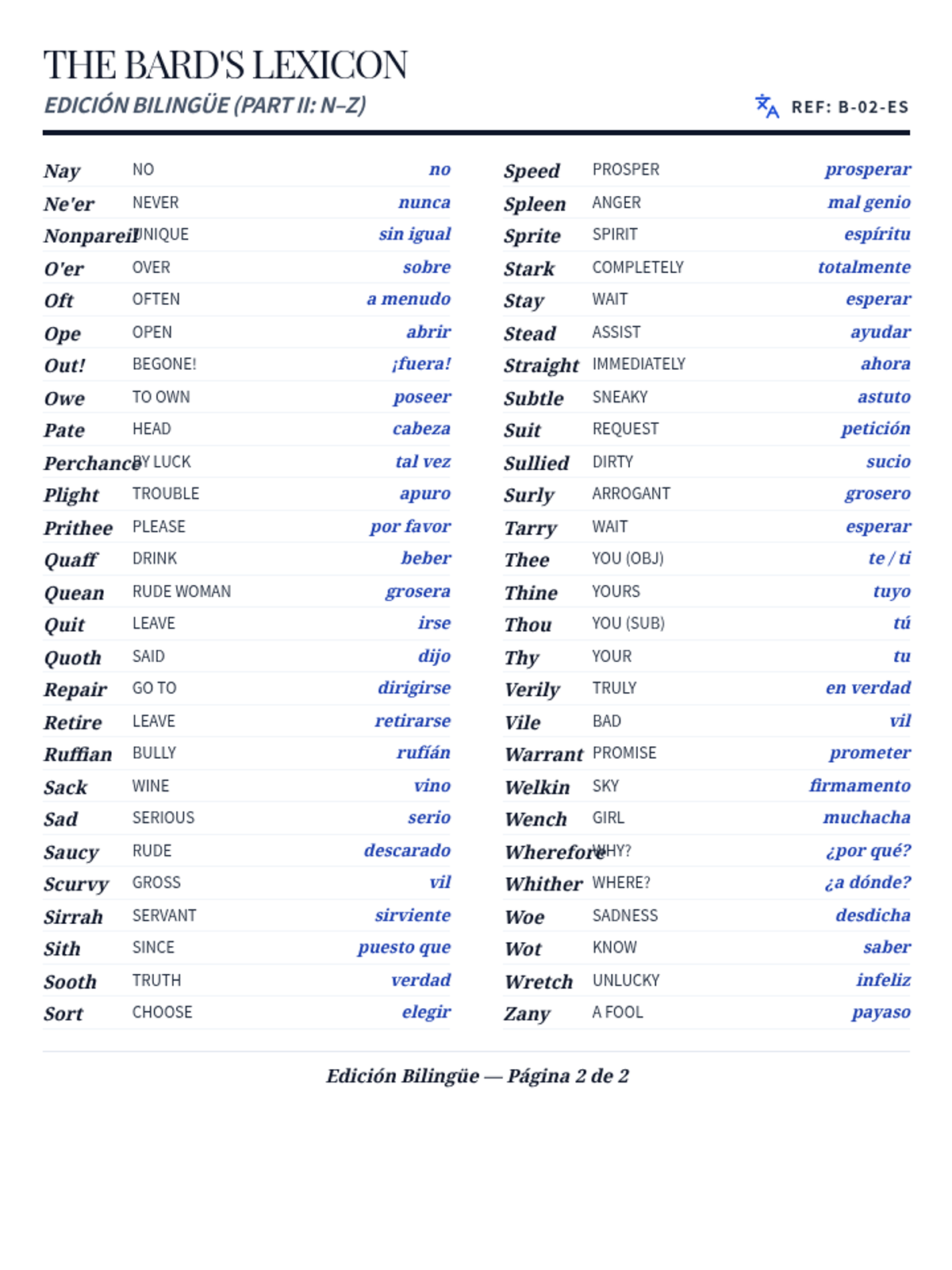
A comprehensive vocabulary resource and introductory lesson to help Spanish-speaking students decode the archaic language of Shakespeare's Macbeth.
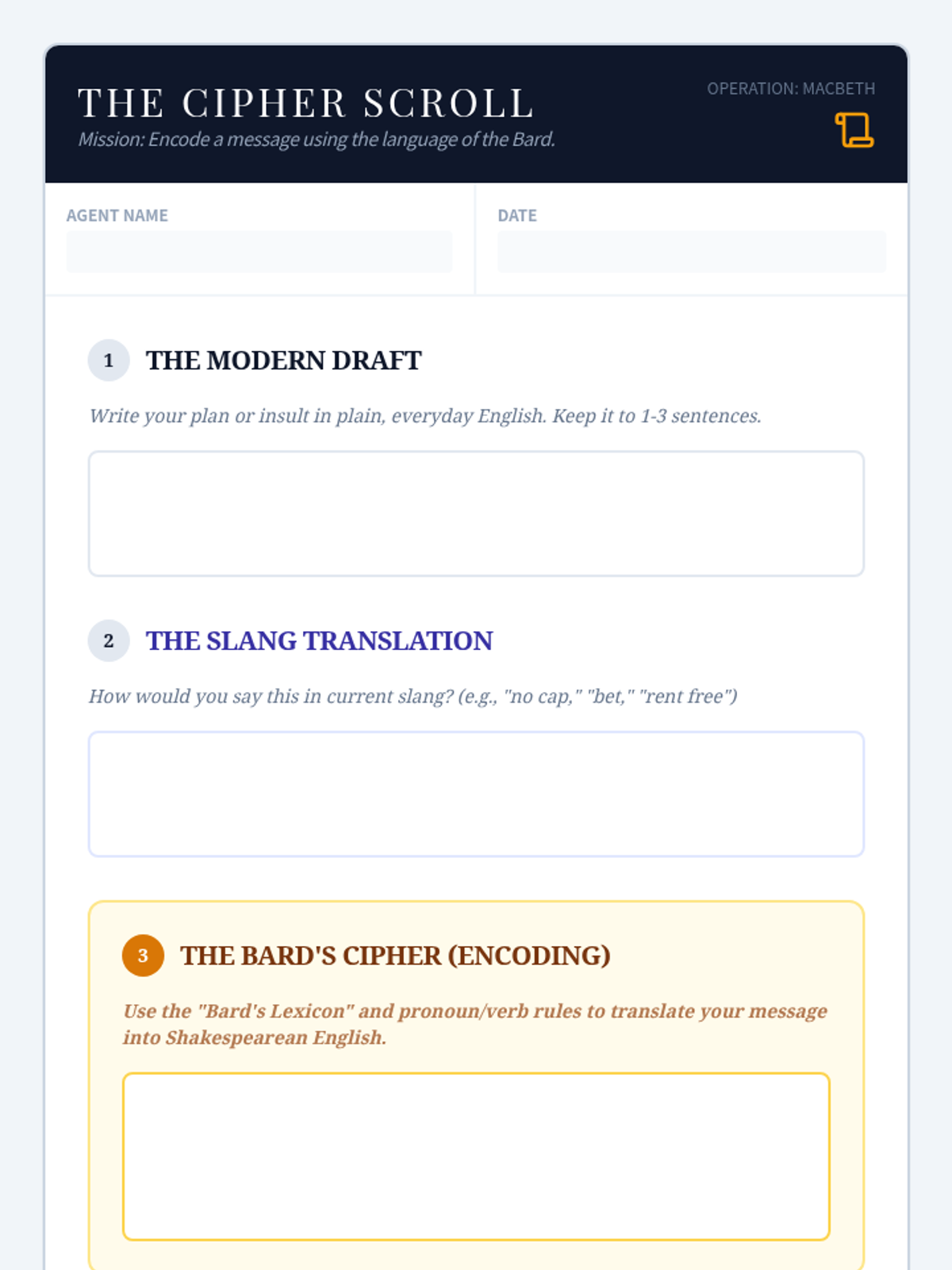
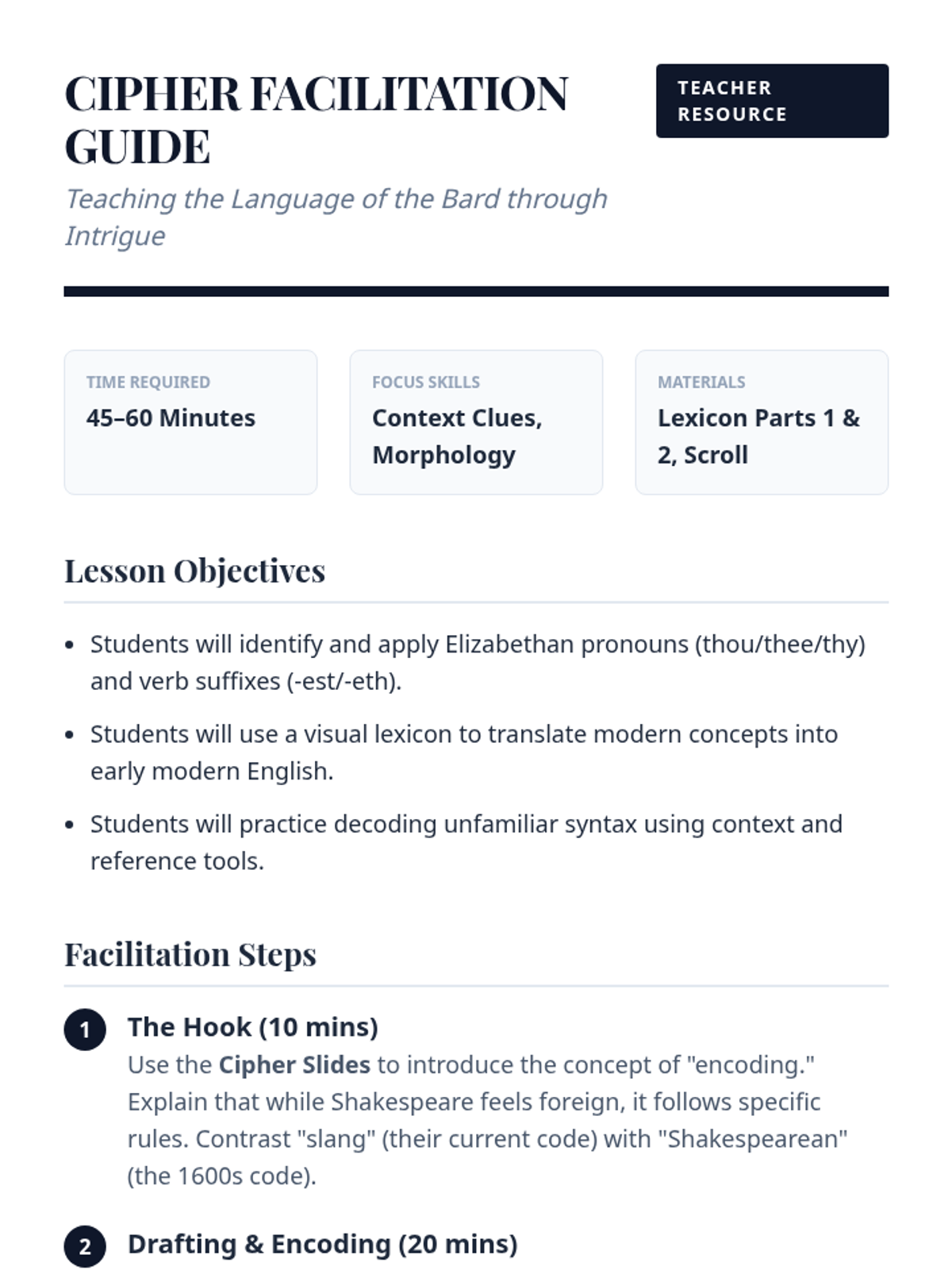
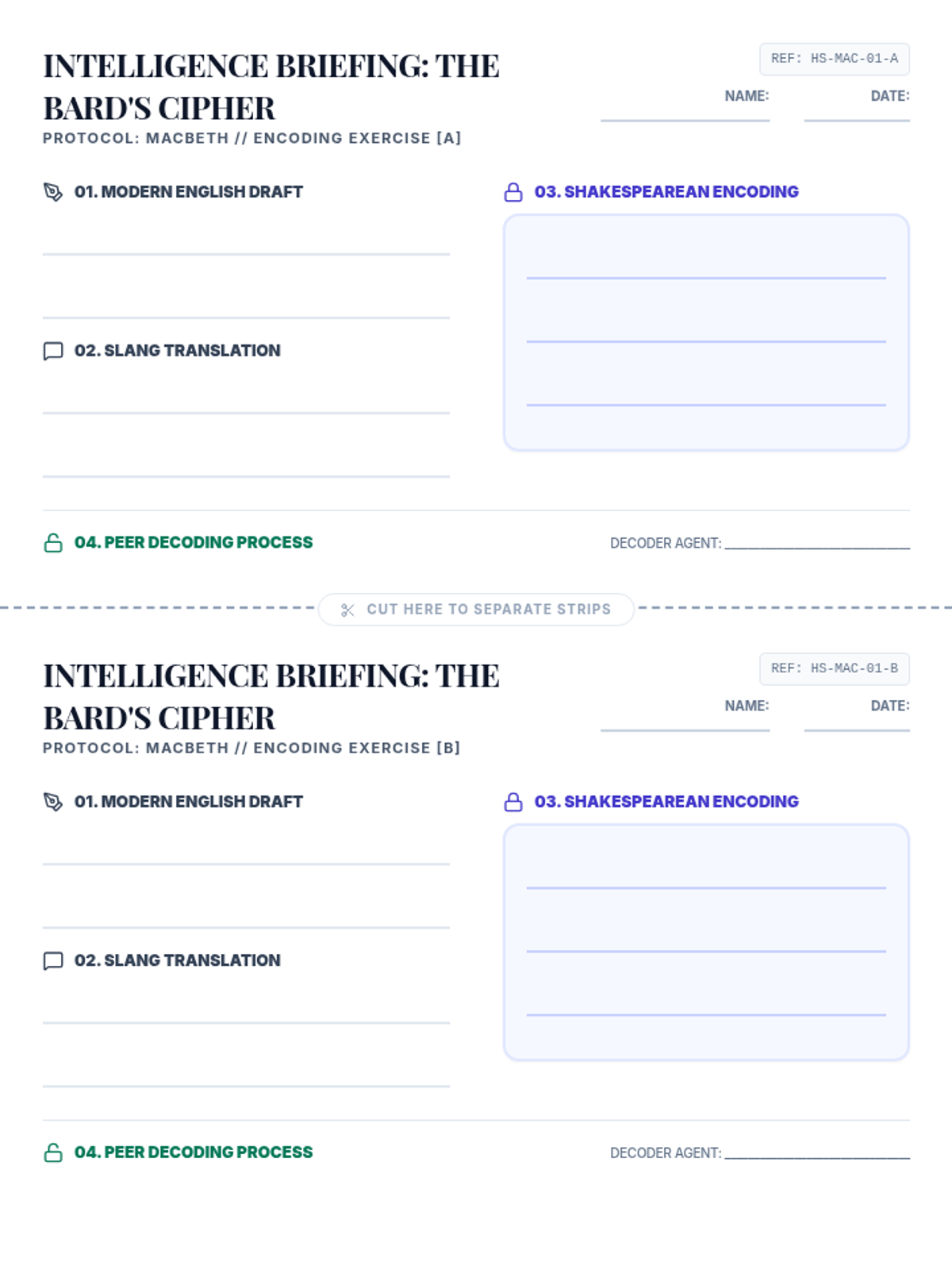
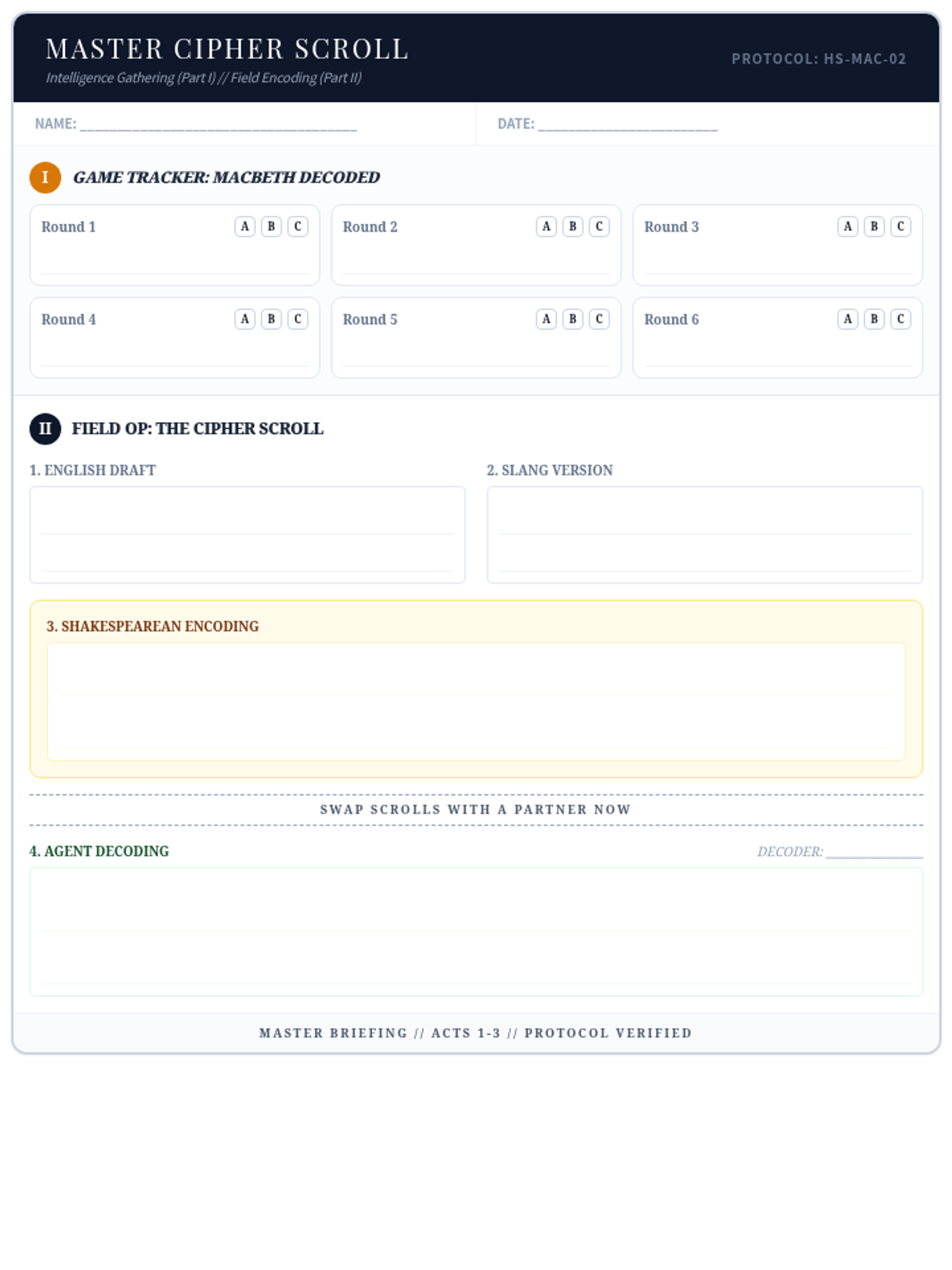
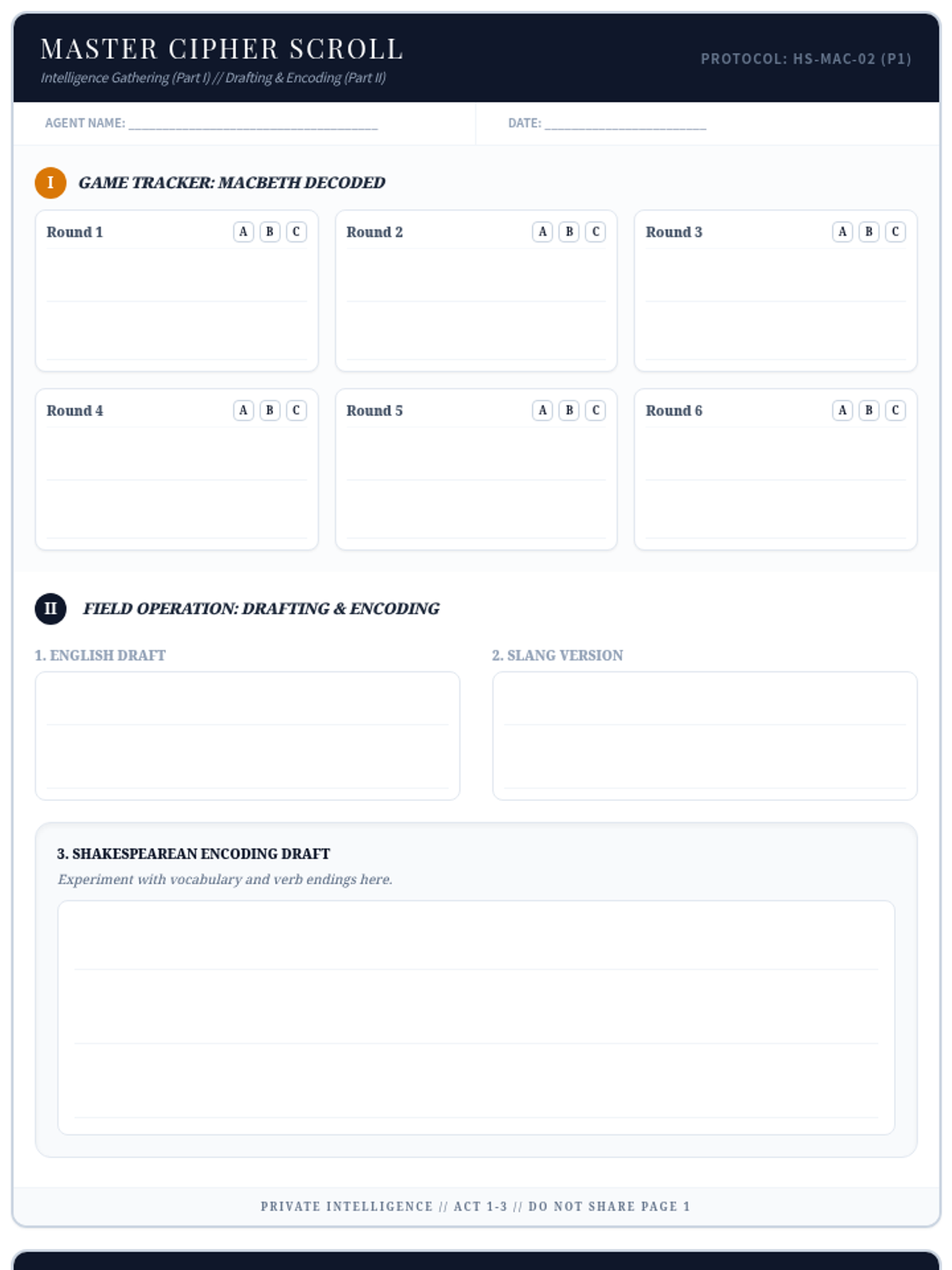
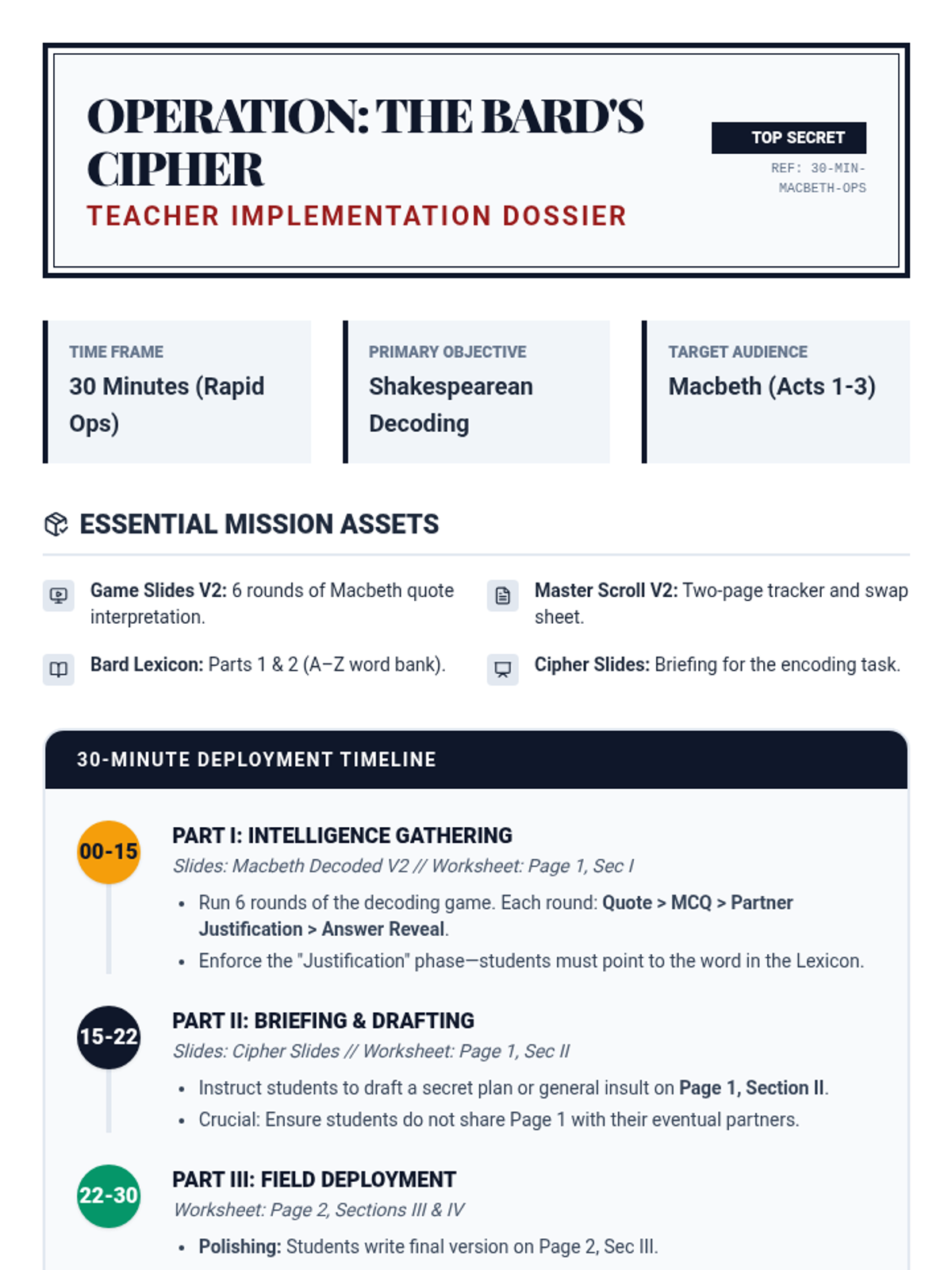
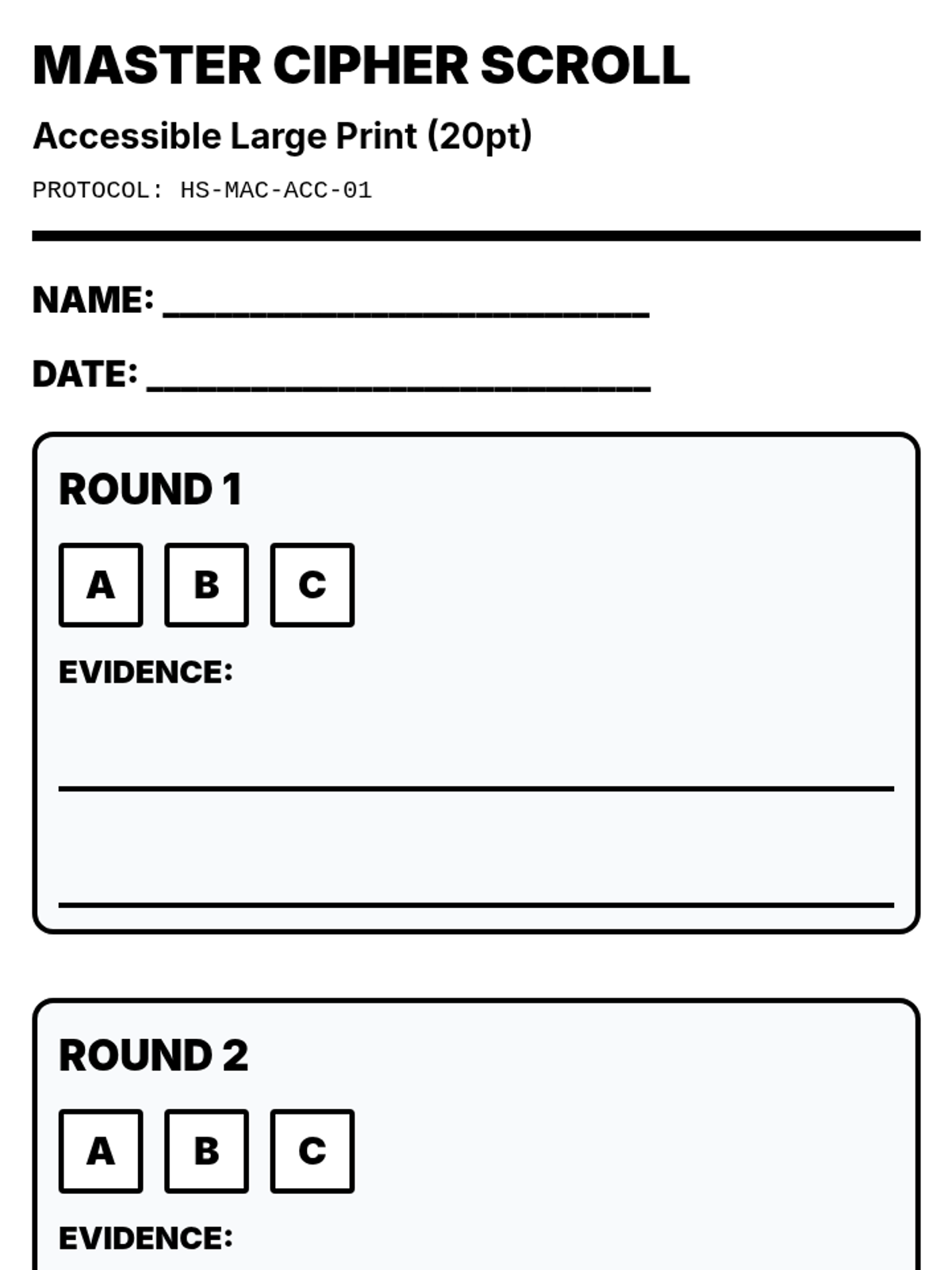
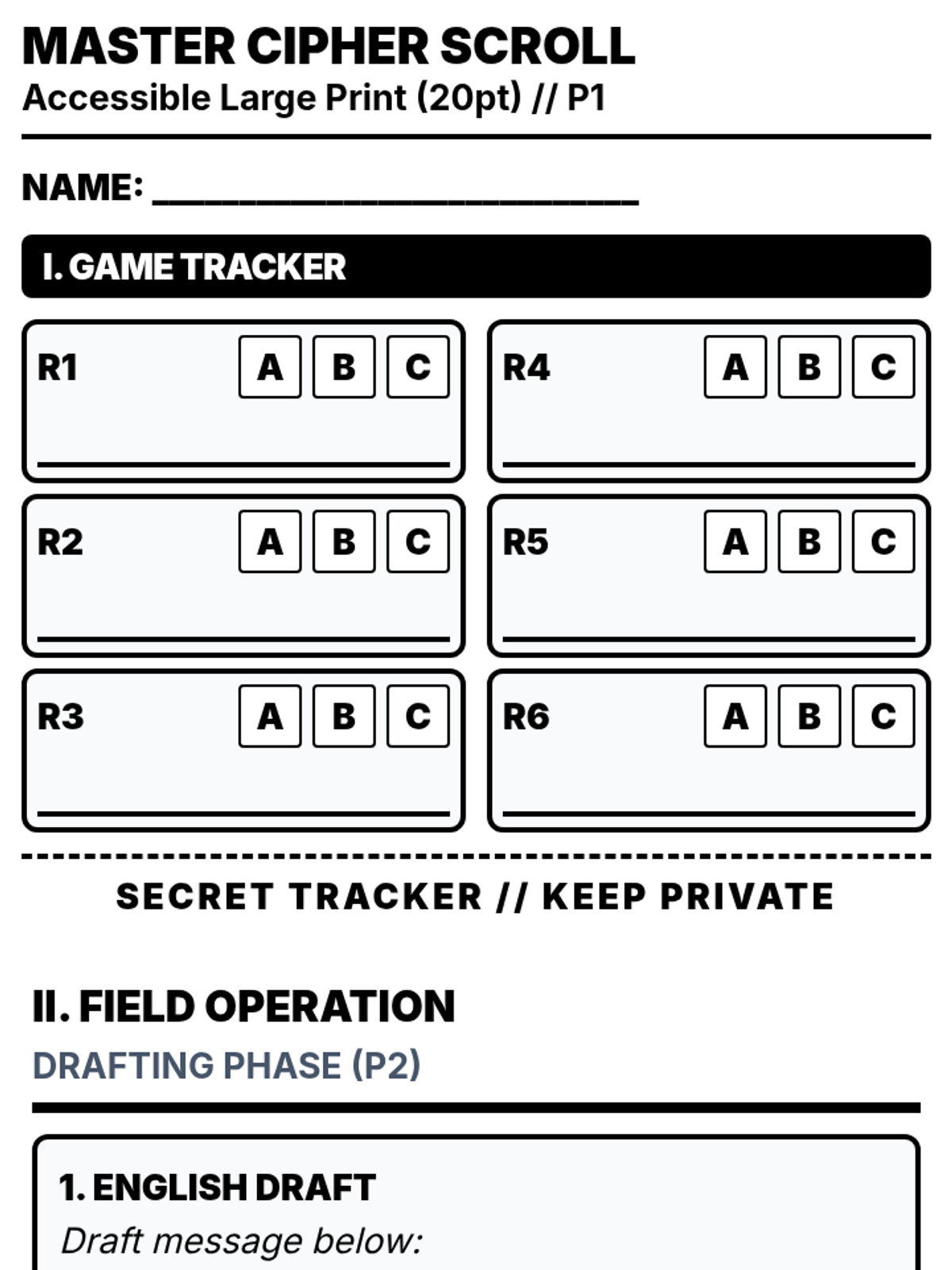
A hands-on activity where students learn to decode and encode Shakespearean language by writing secret messages or insults, then swapping them with peers to translate.
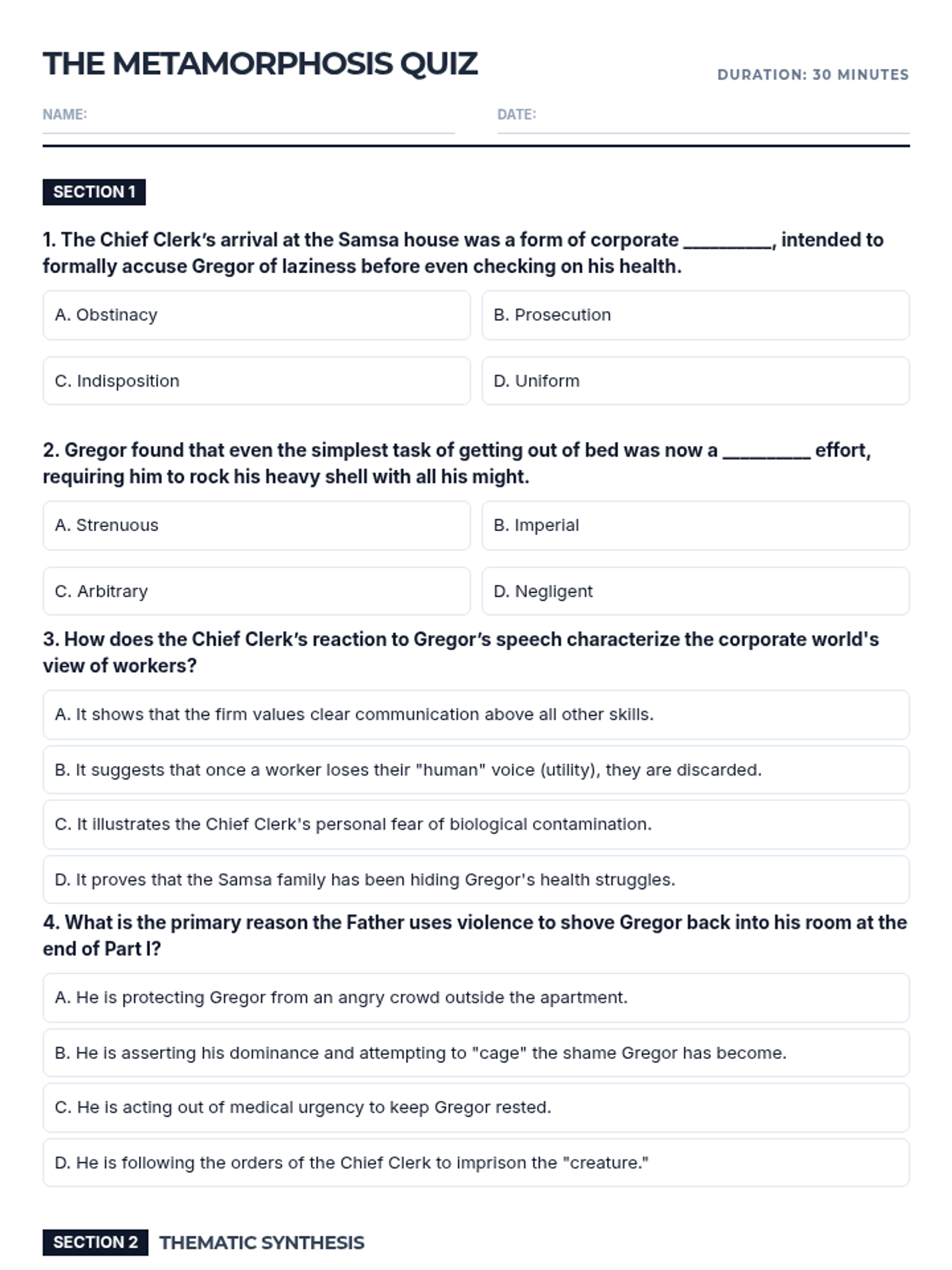
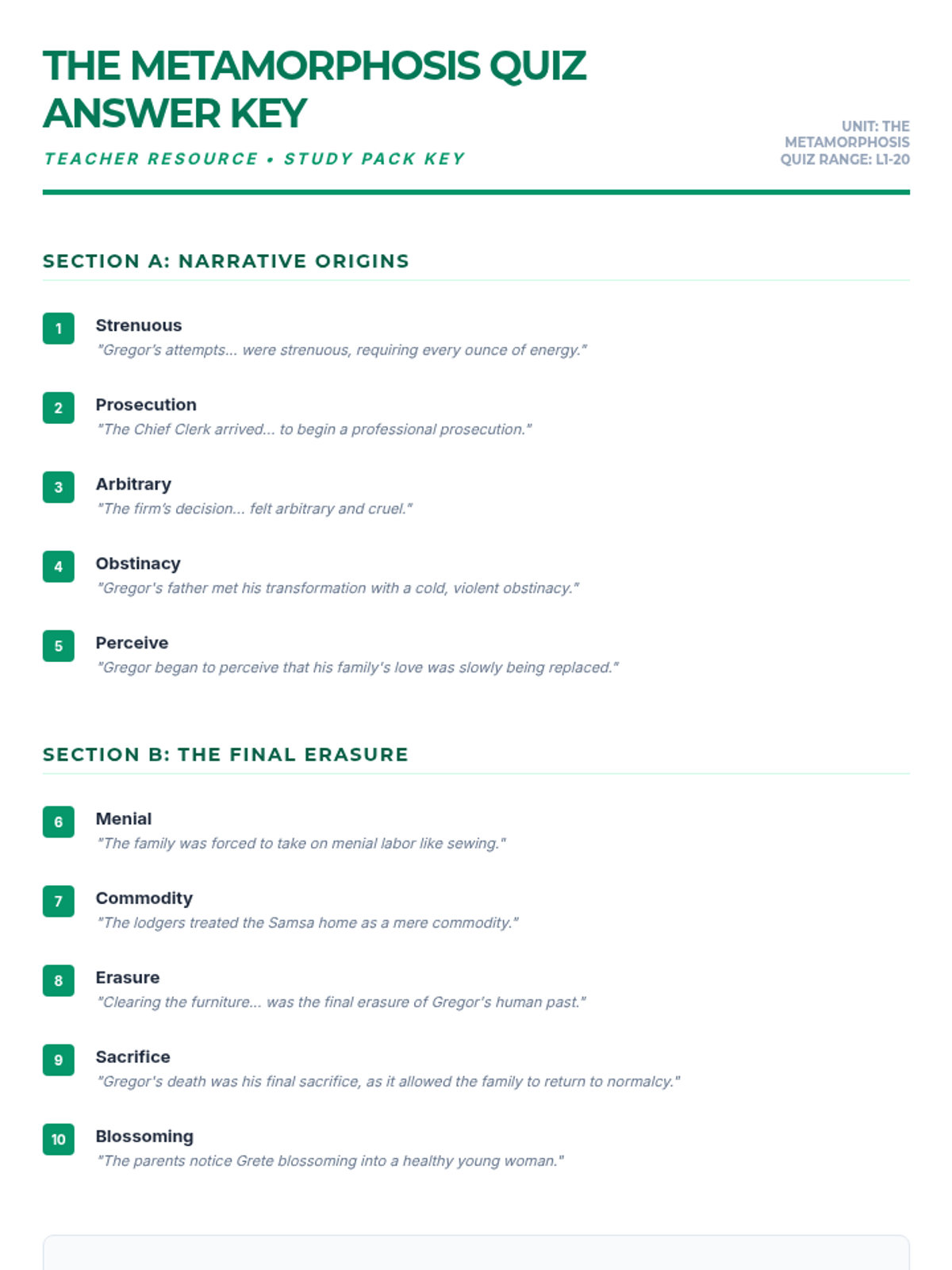
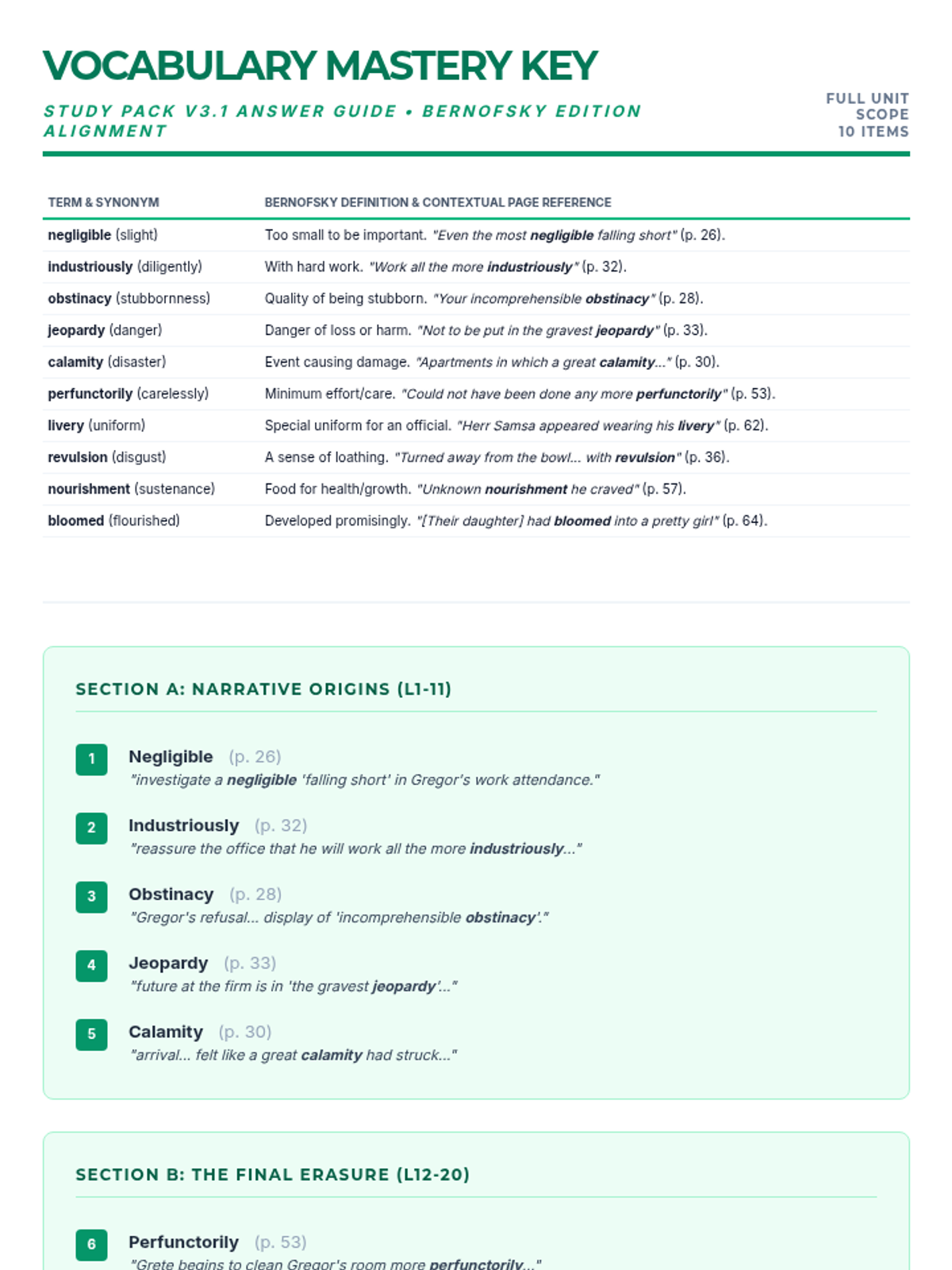
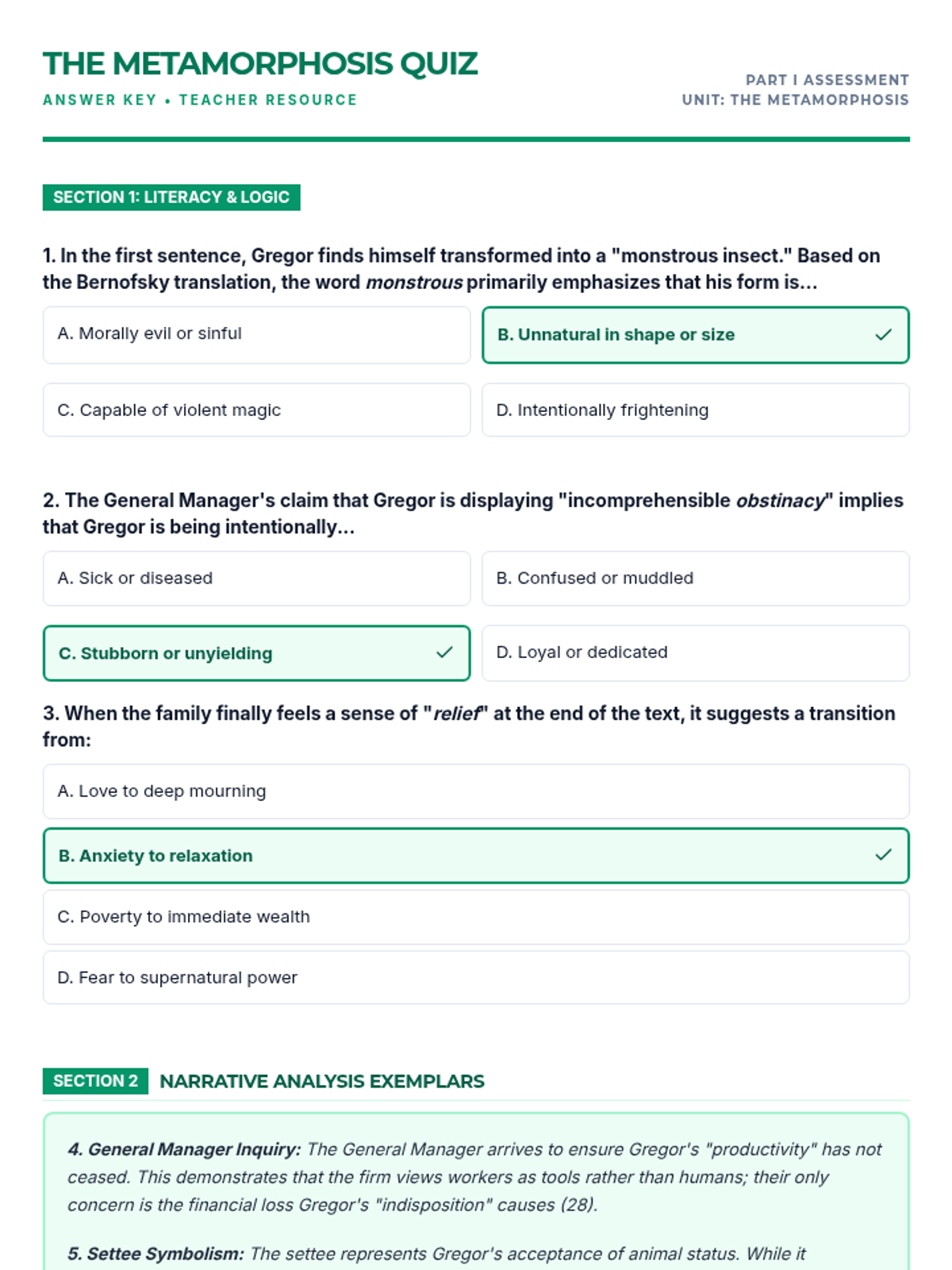
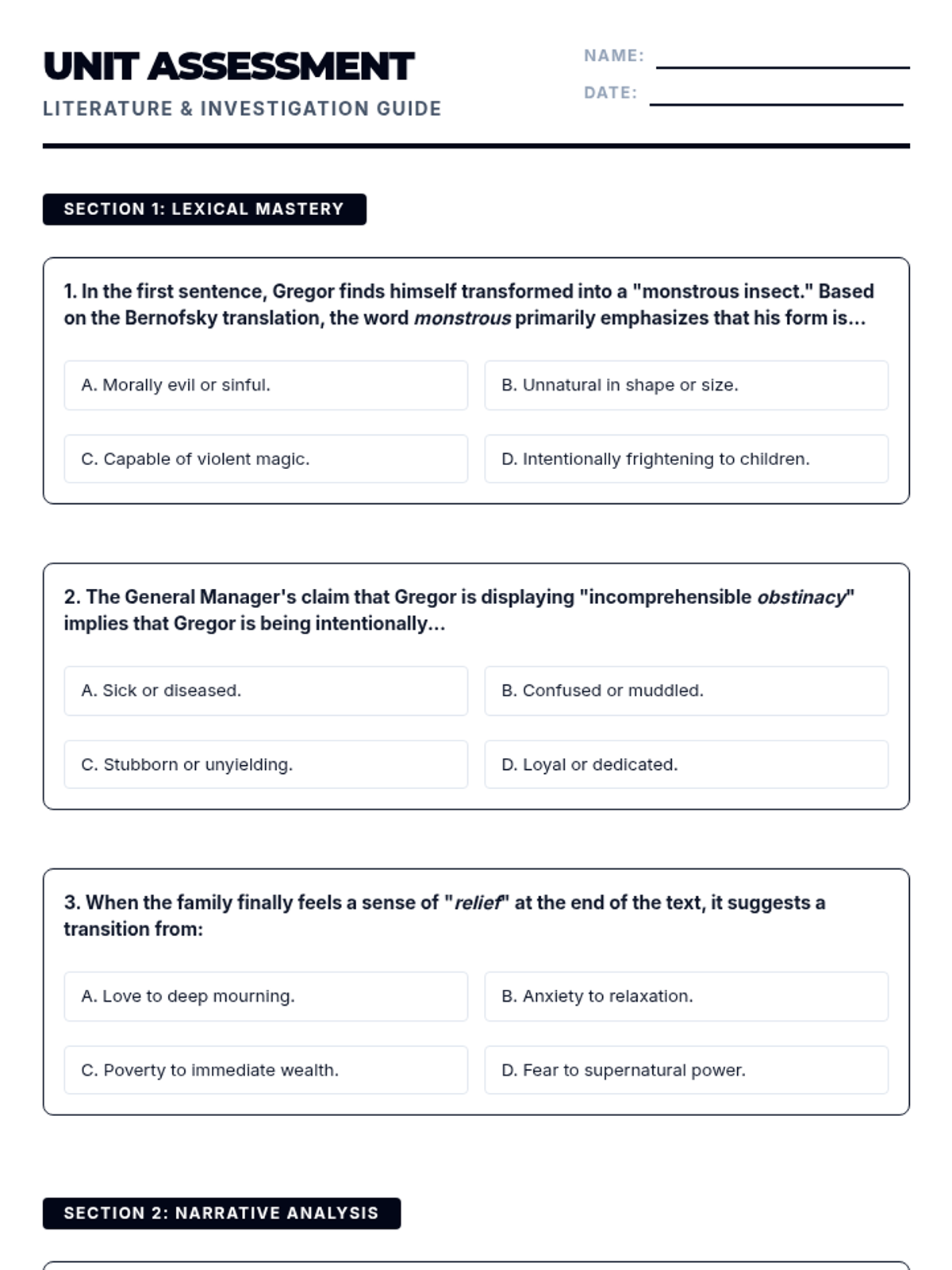
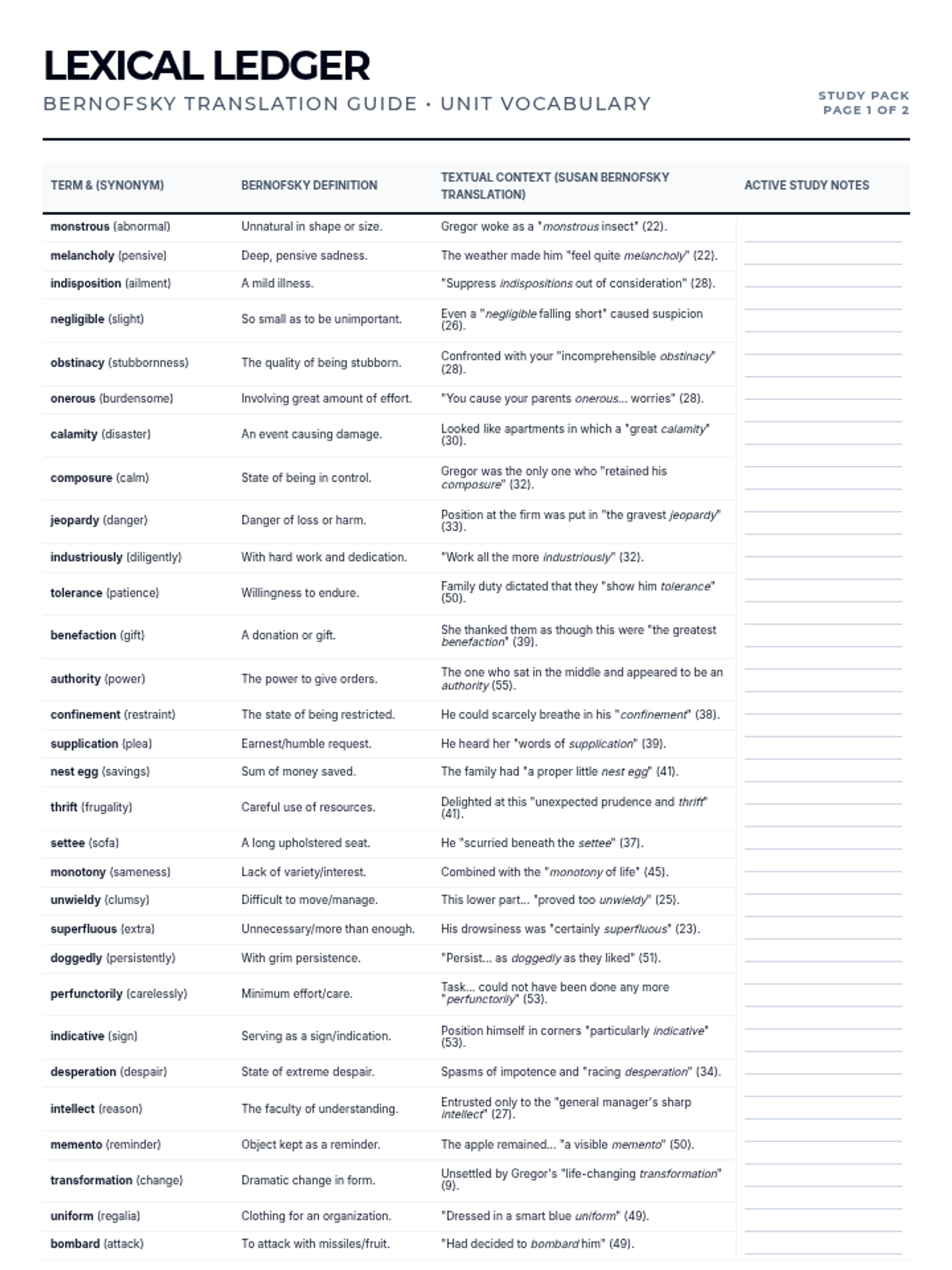
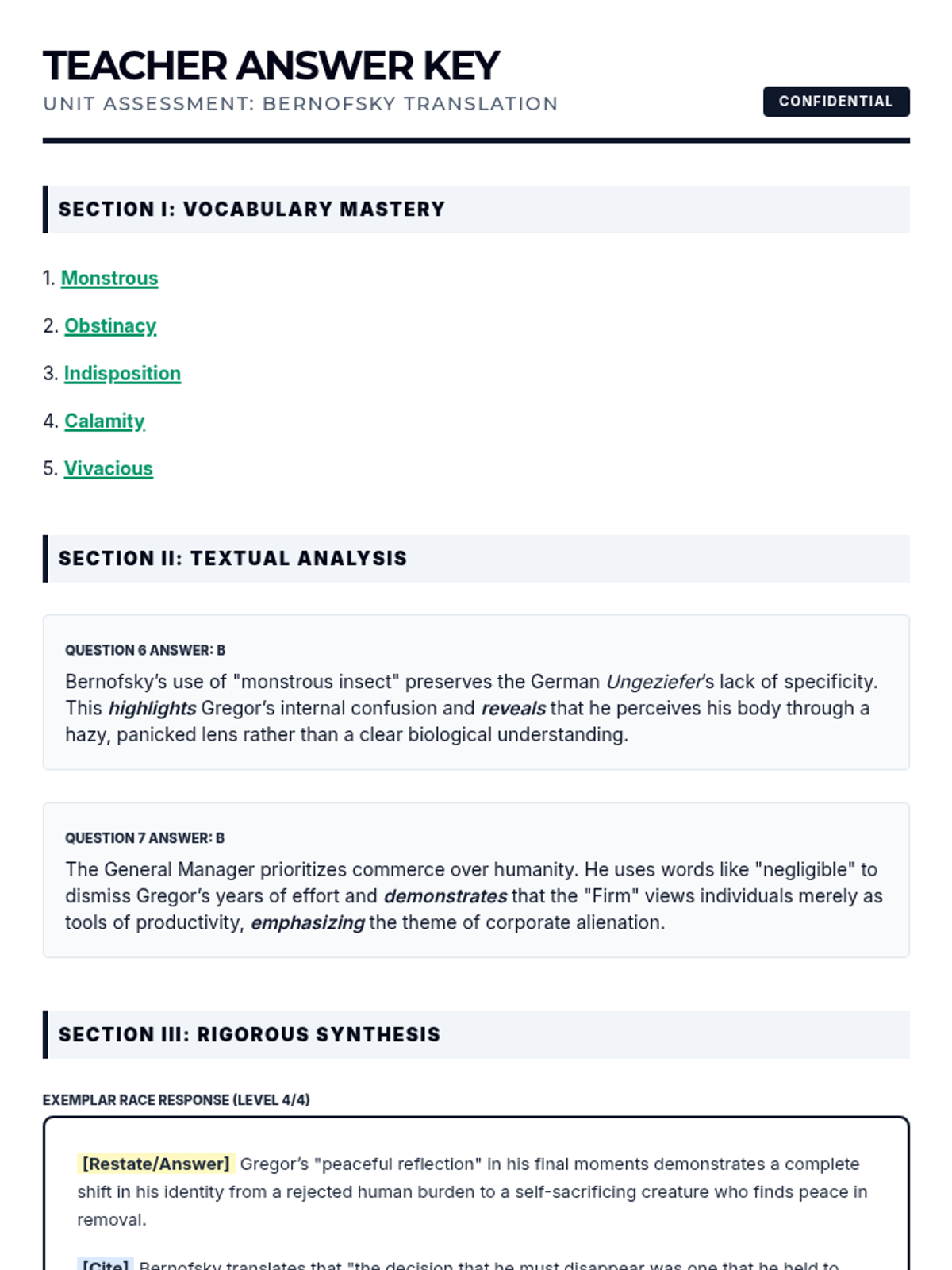
A summative assessment for the first third of the novel. Evaluates student mastery of vocabulary from Lessons 1-11, character motivation, and the central theme of corporate alienation through a mix of multiple choice, short answer, and a rigorous RACE response.
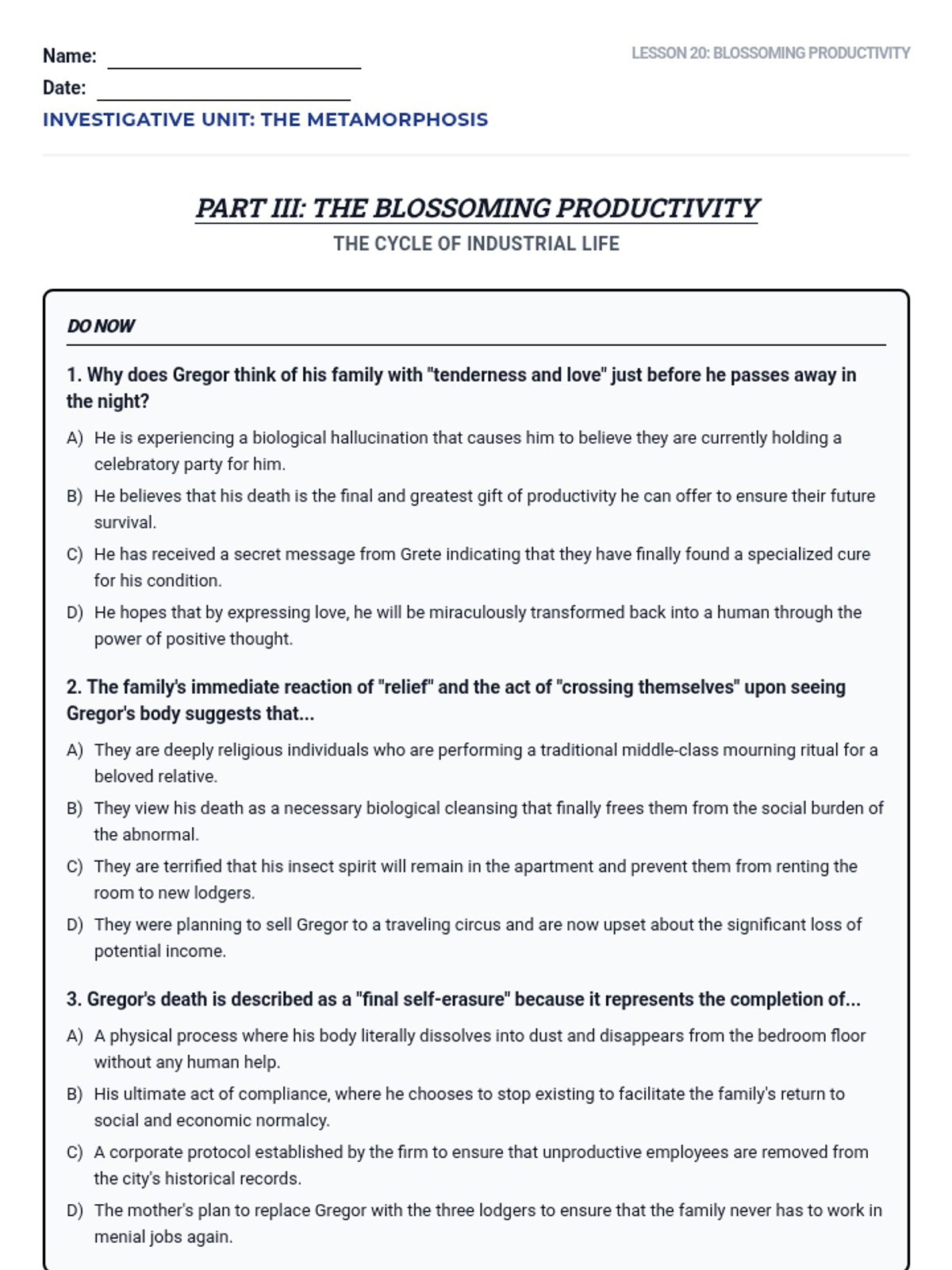
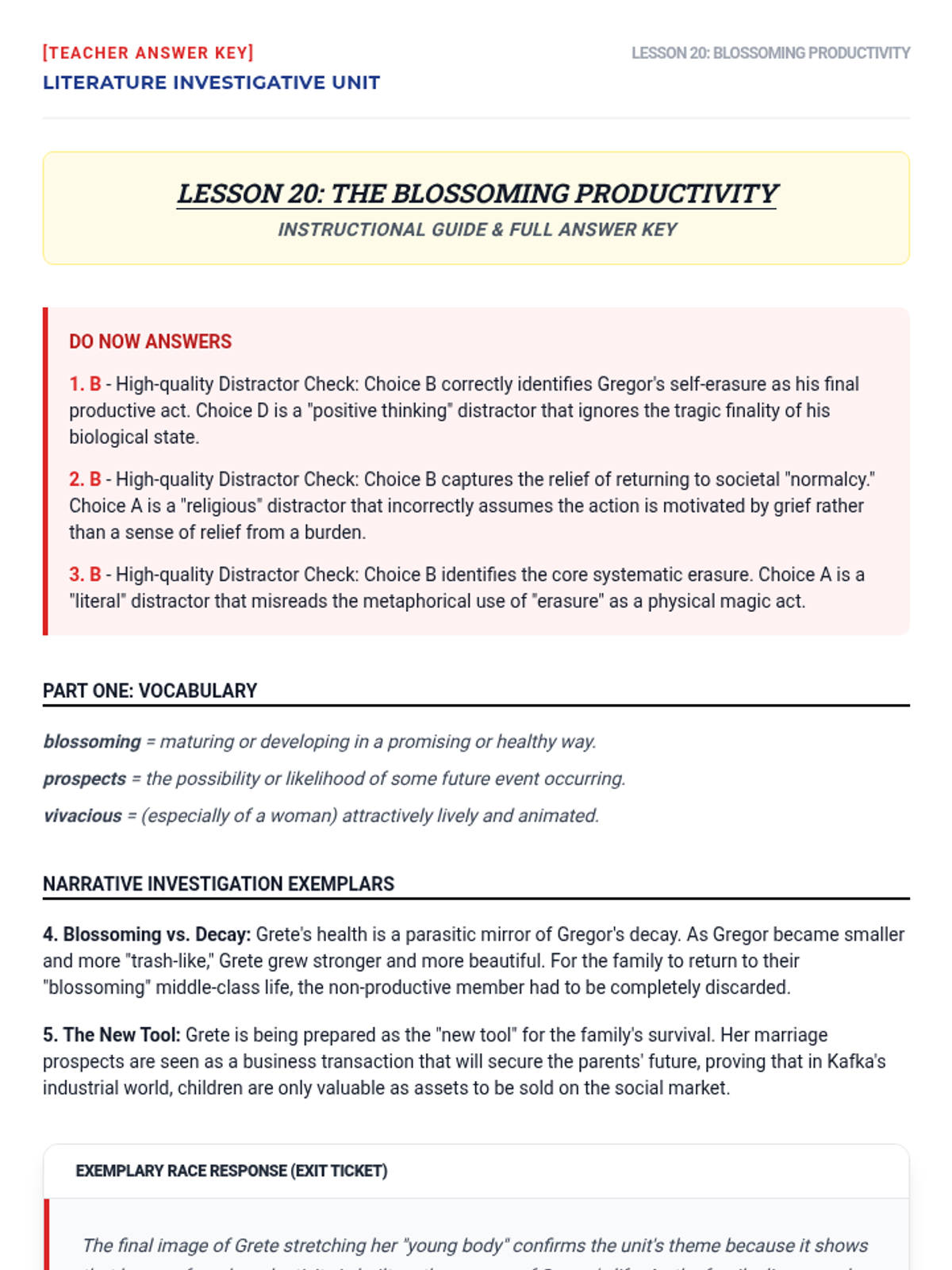
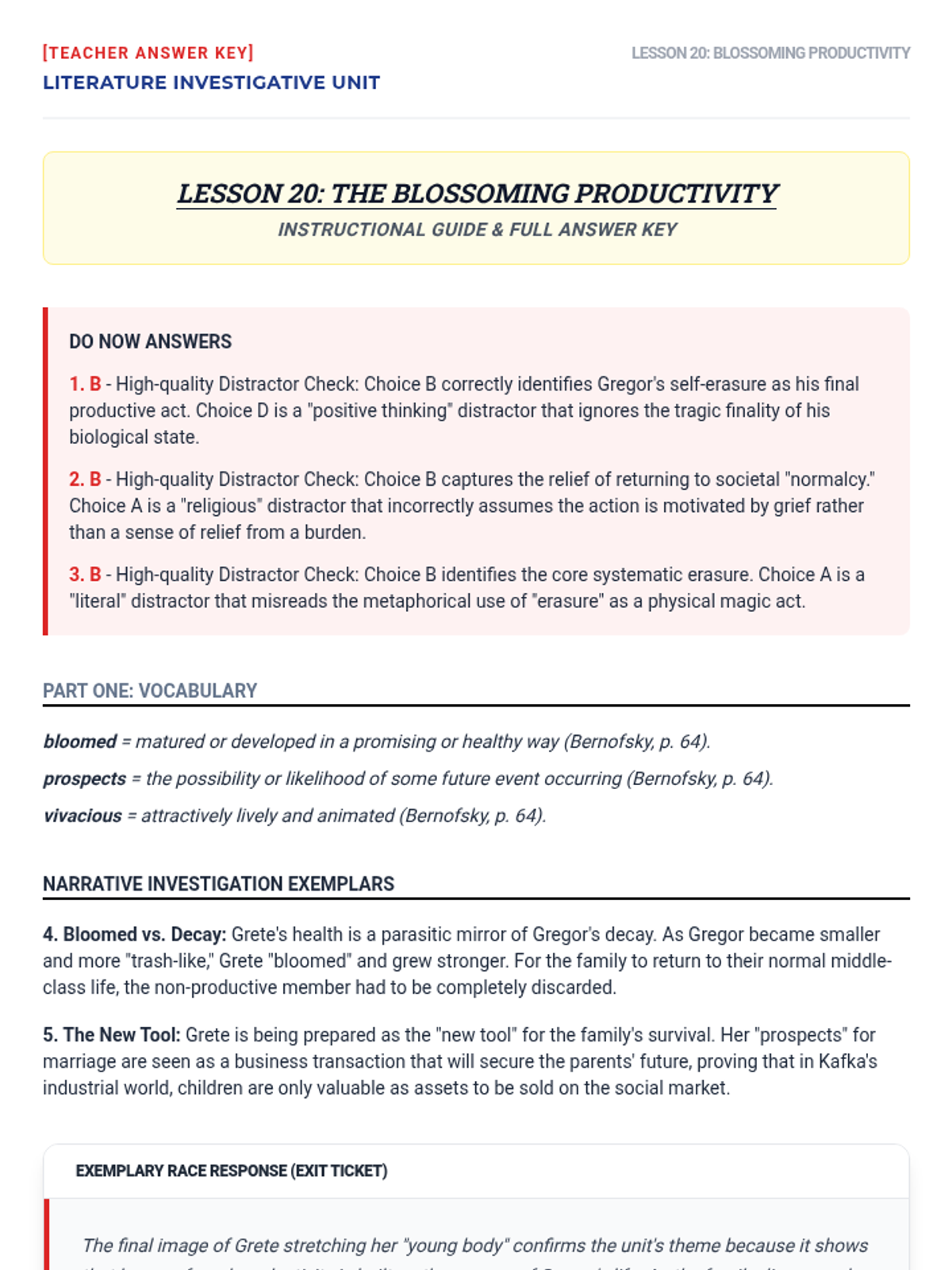
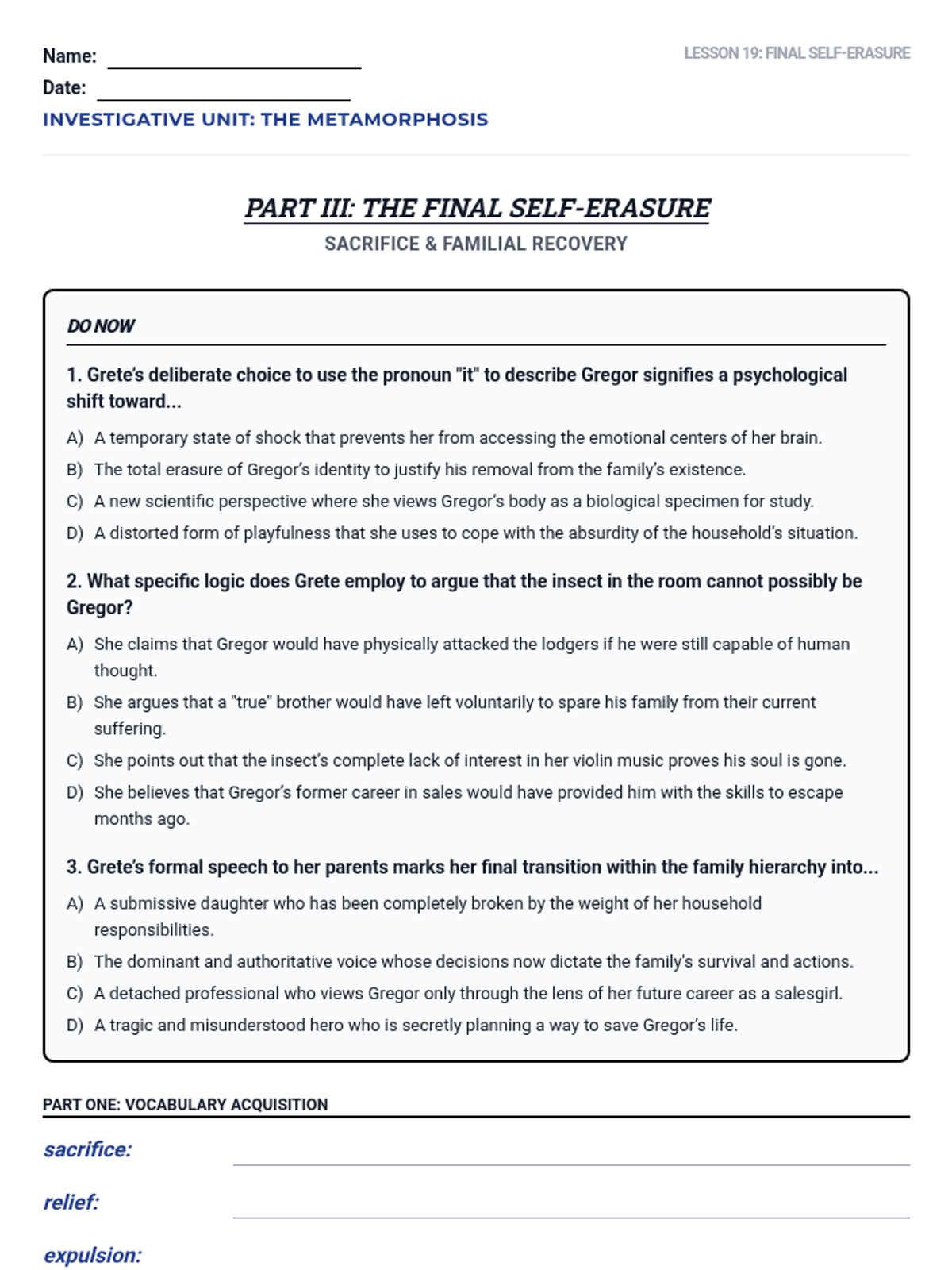
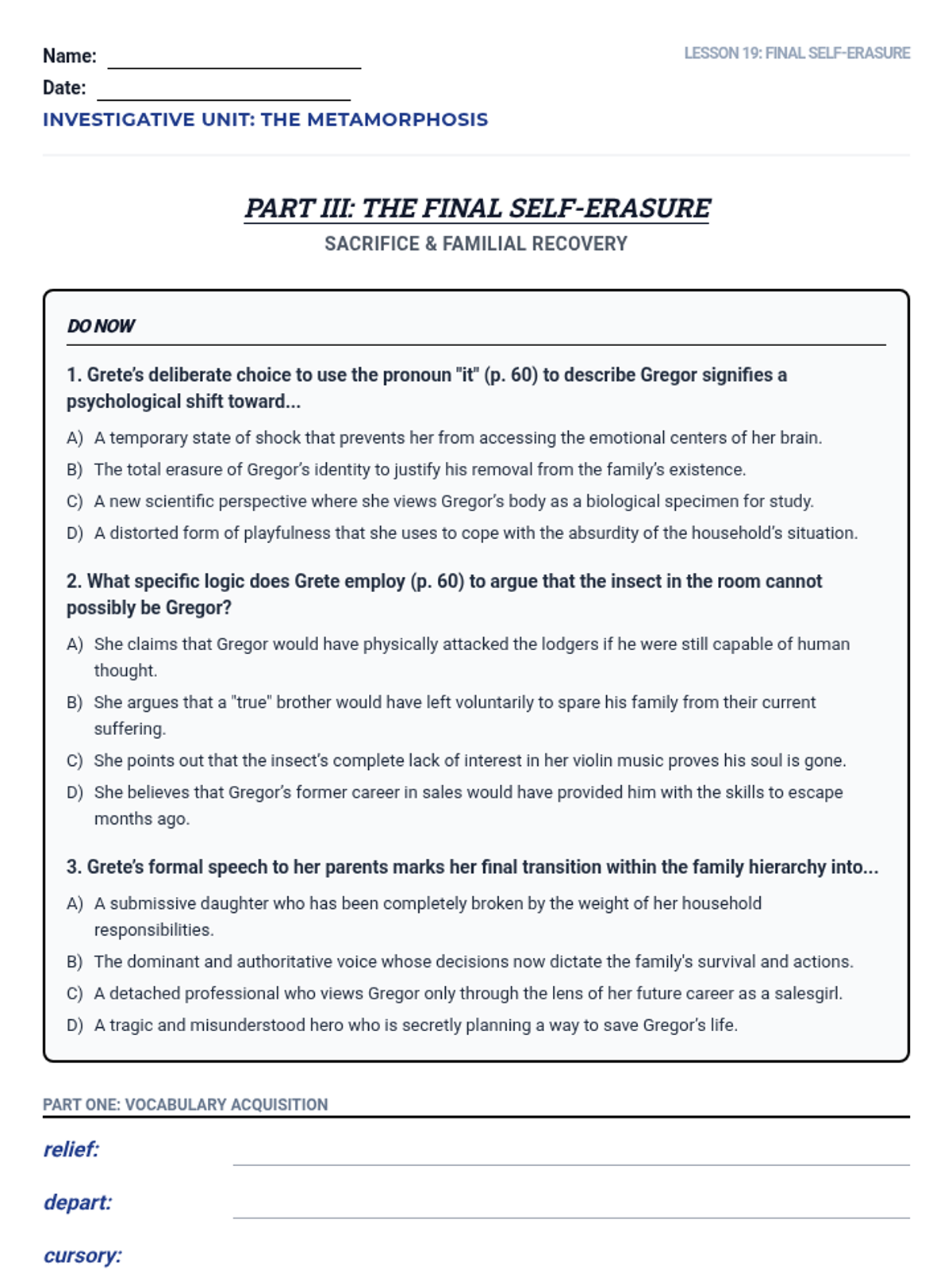
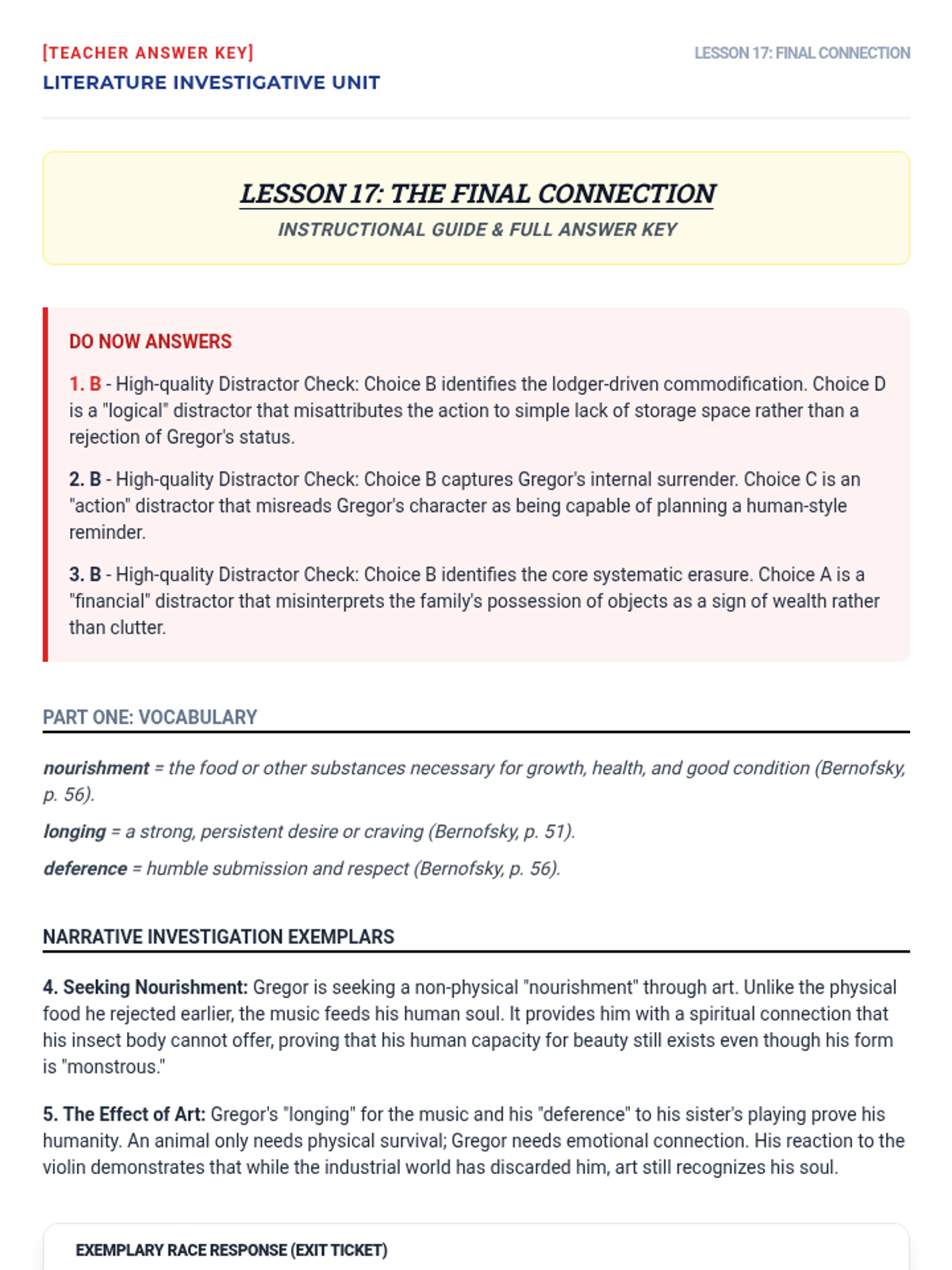
The family's recovery and the transition to a new source of productivity (Grete). Synthesis of the unit's themes.
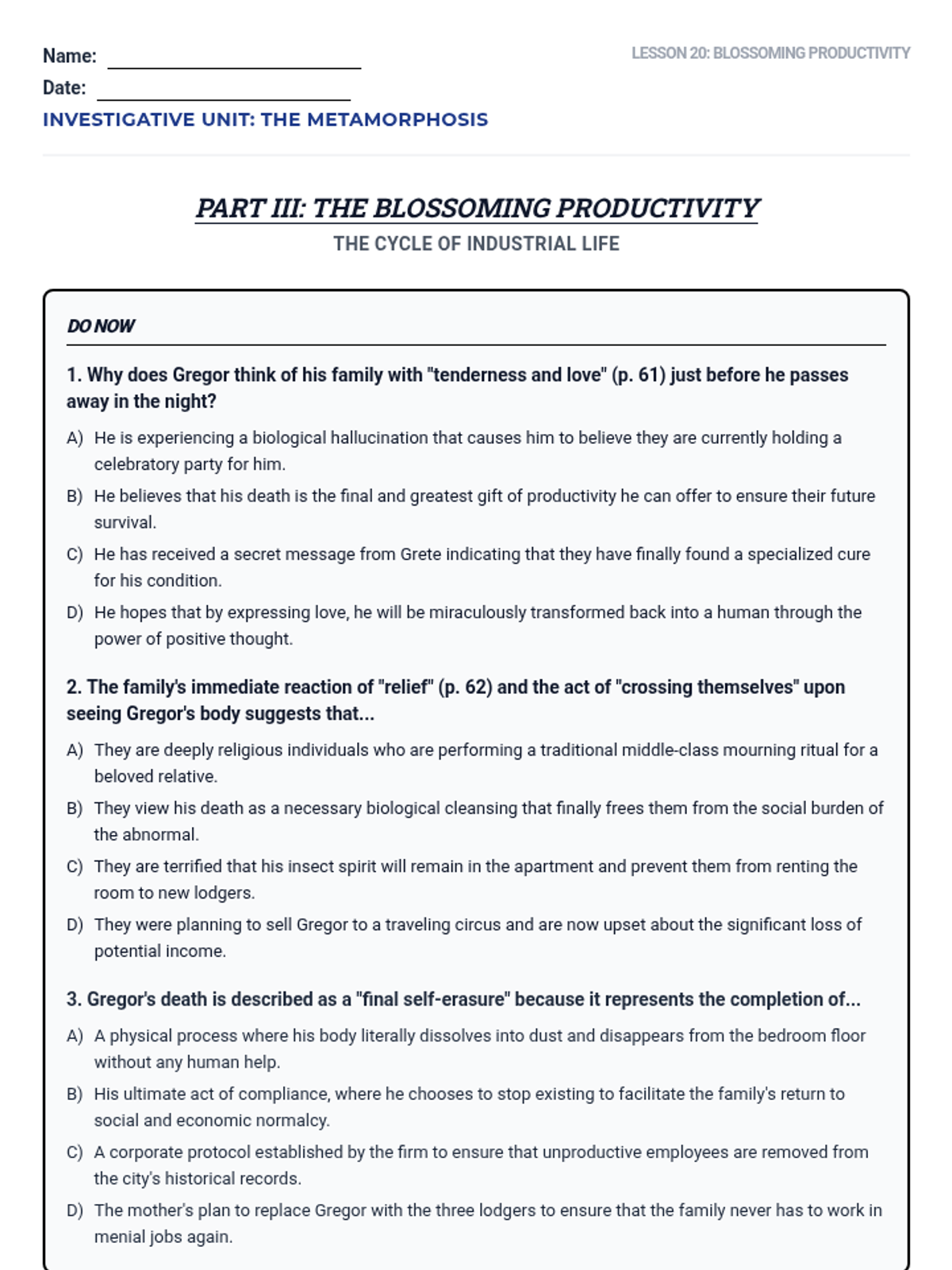
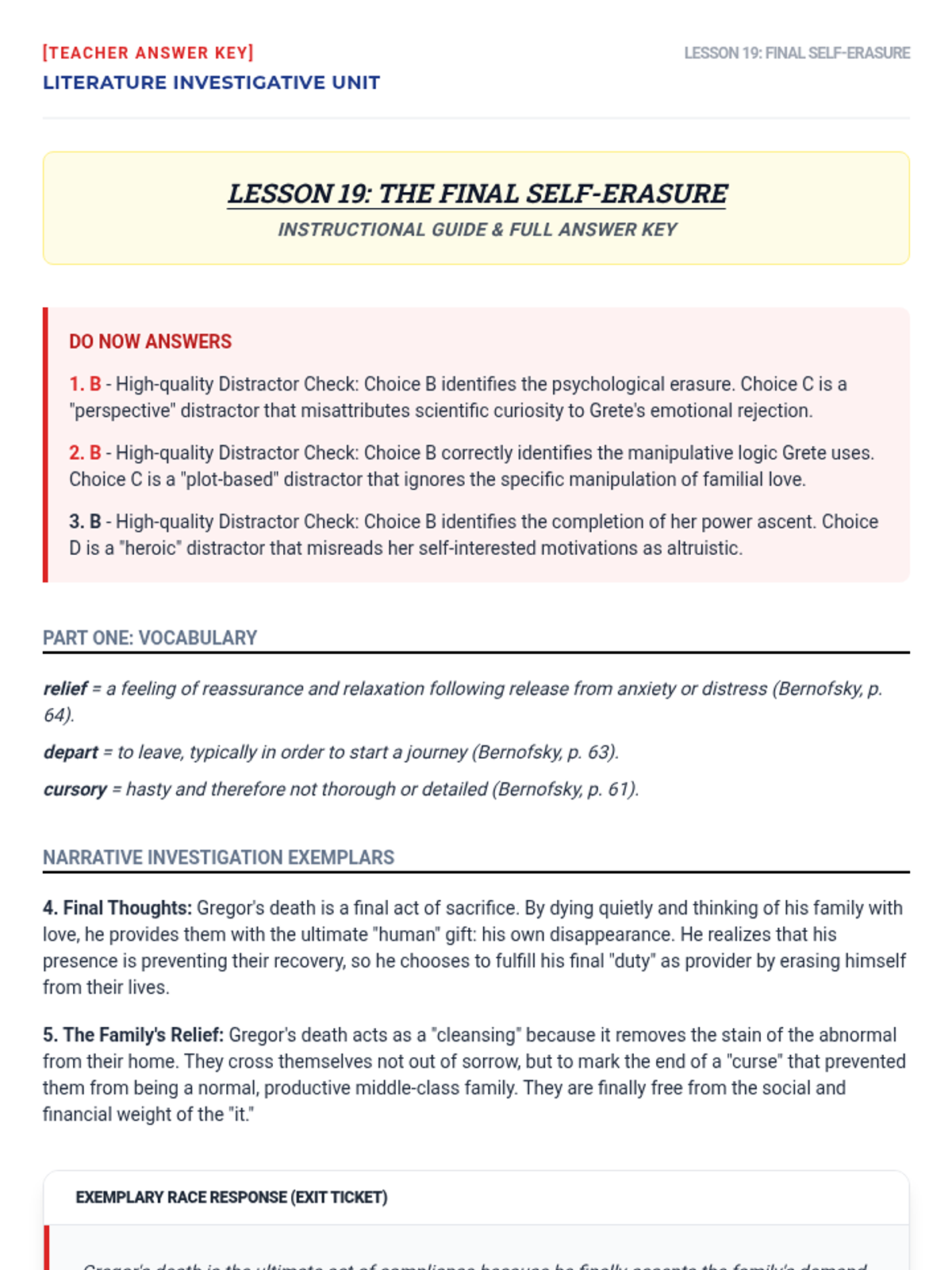
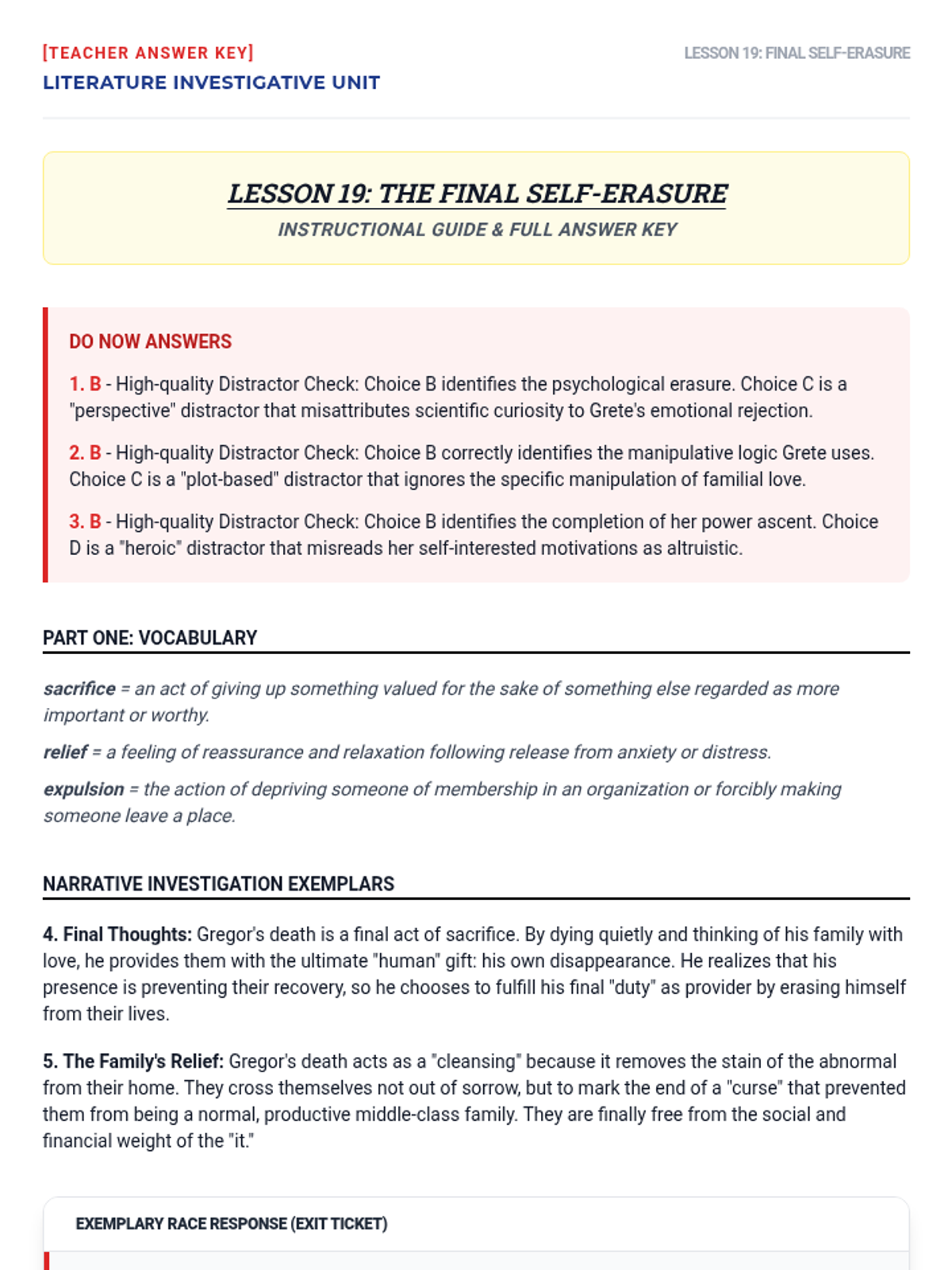
Gregor's death and self-sacrifice. Analysis of the relief of the family and the 'cleansing' of the home.
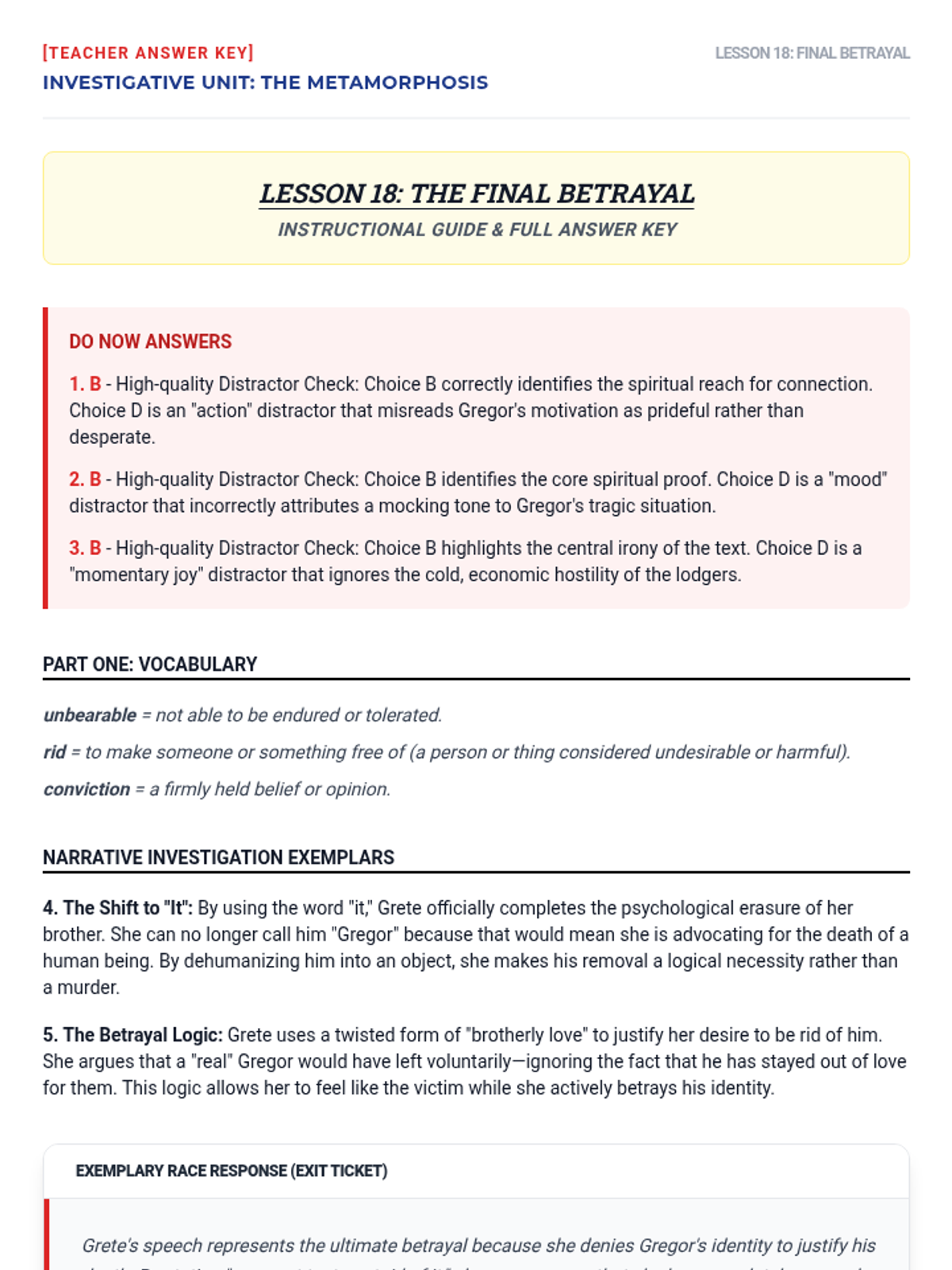
Grete's formal rejection of Gregor's identity. Analysis of the shift from sibling love to the necessity of his removal.
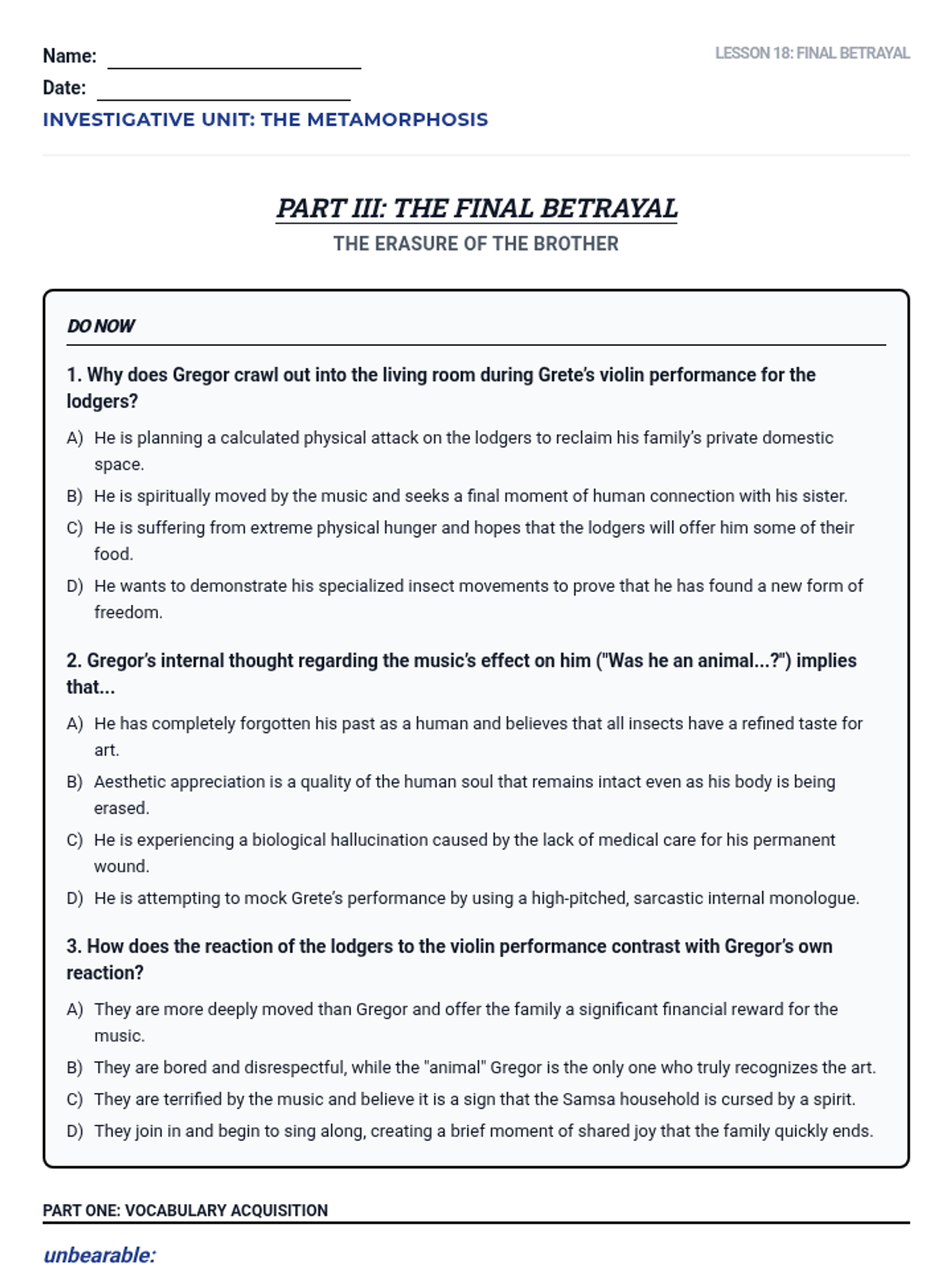
Gregor's reaction to Grete's violin performance. Themes of art, human connection, and the final reach for his human spirit.
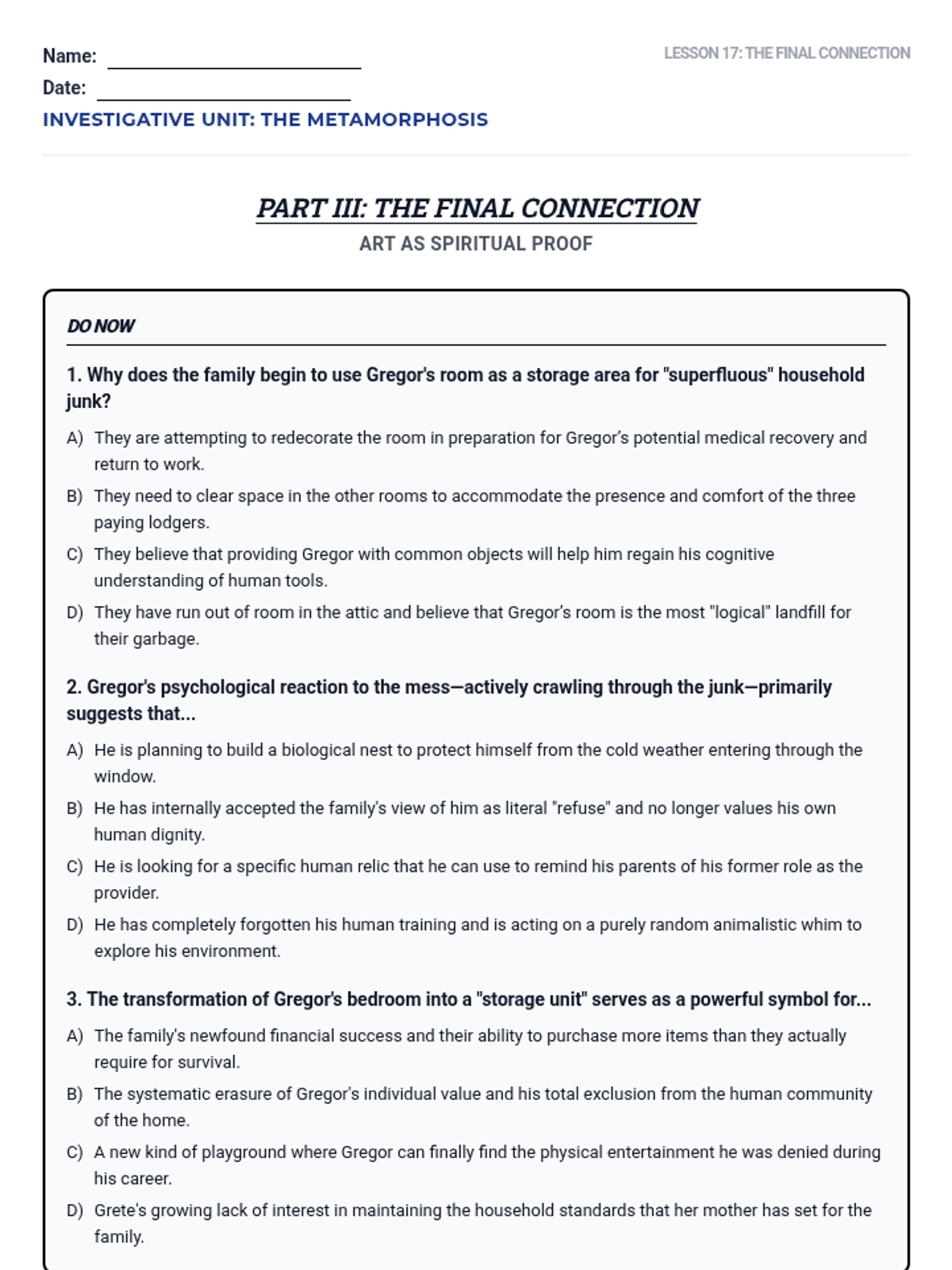
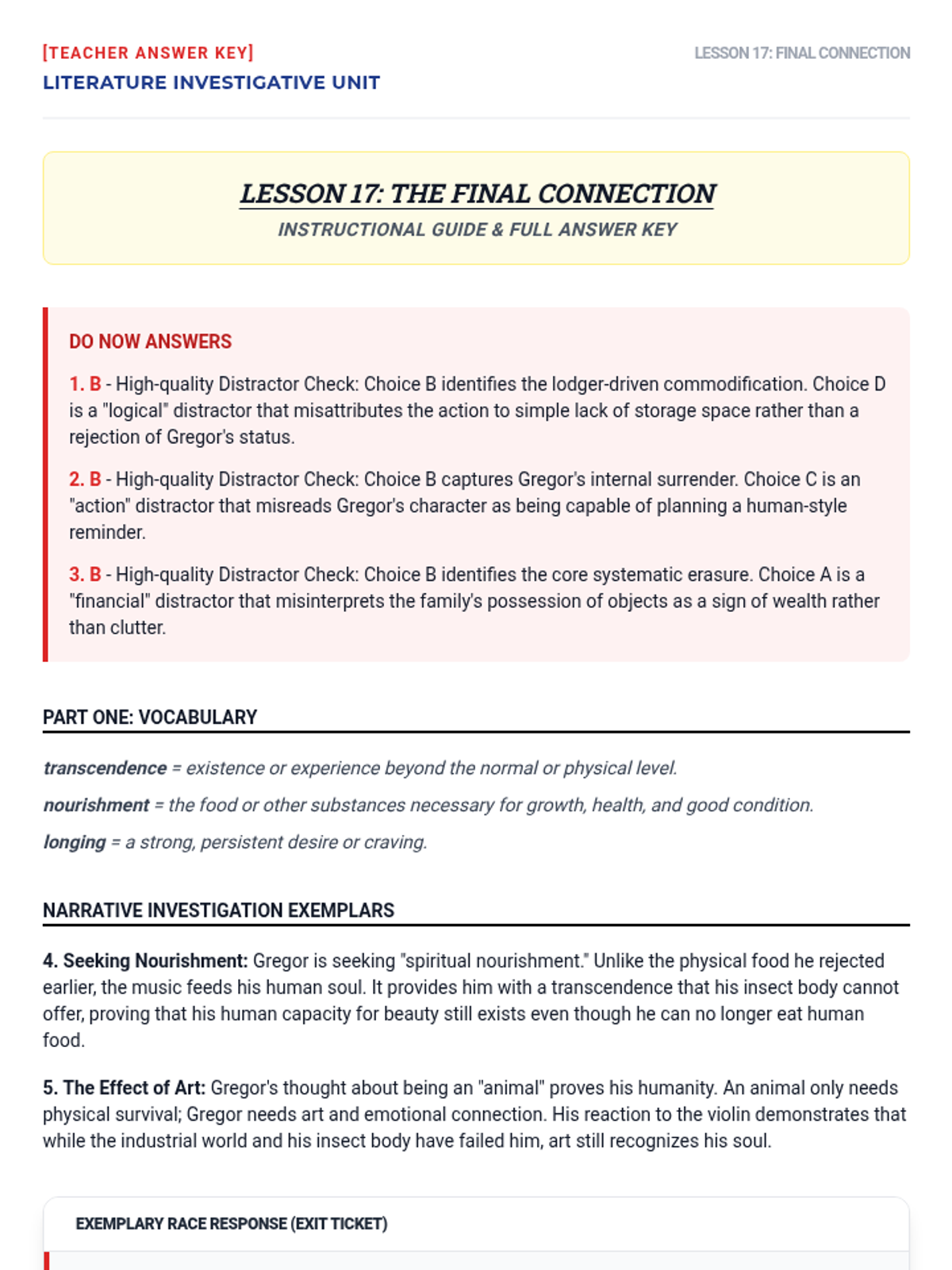
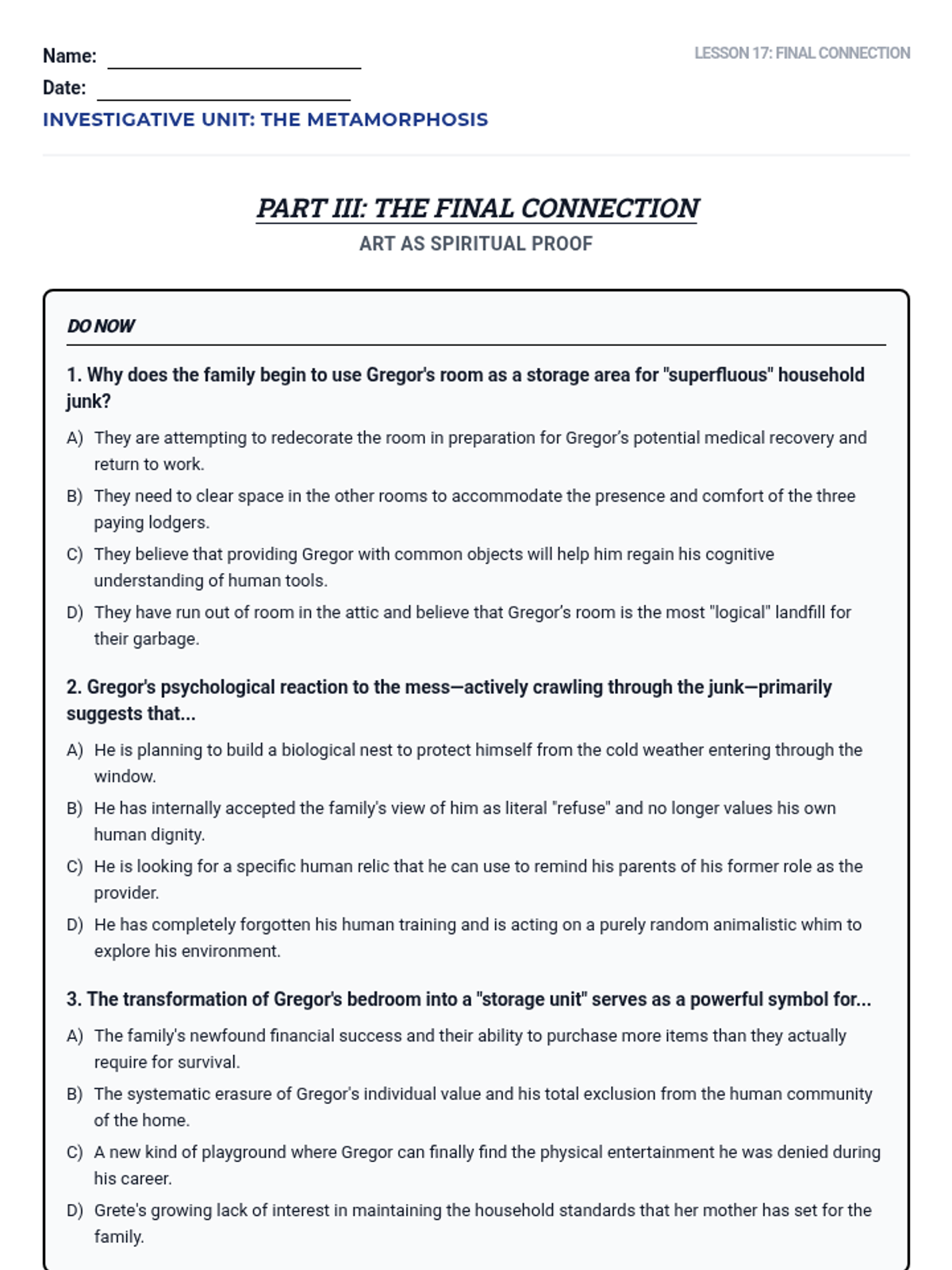
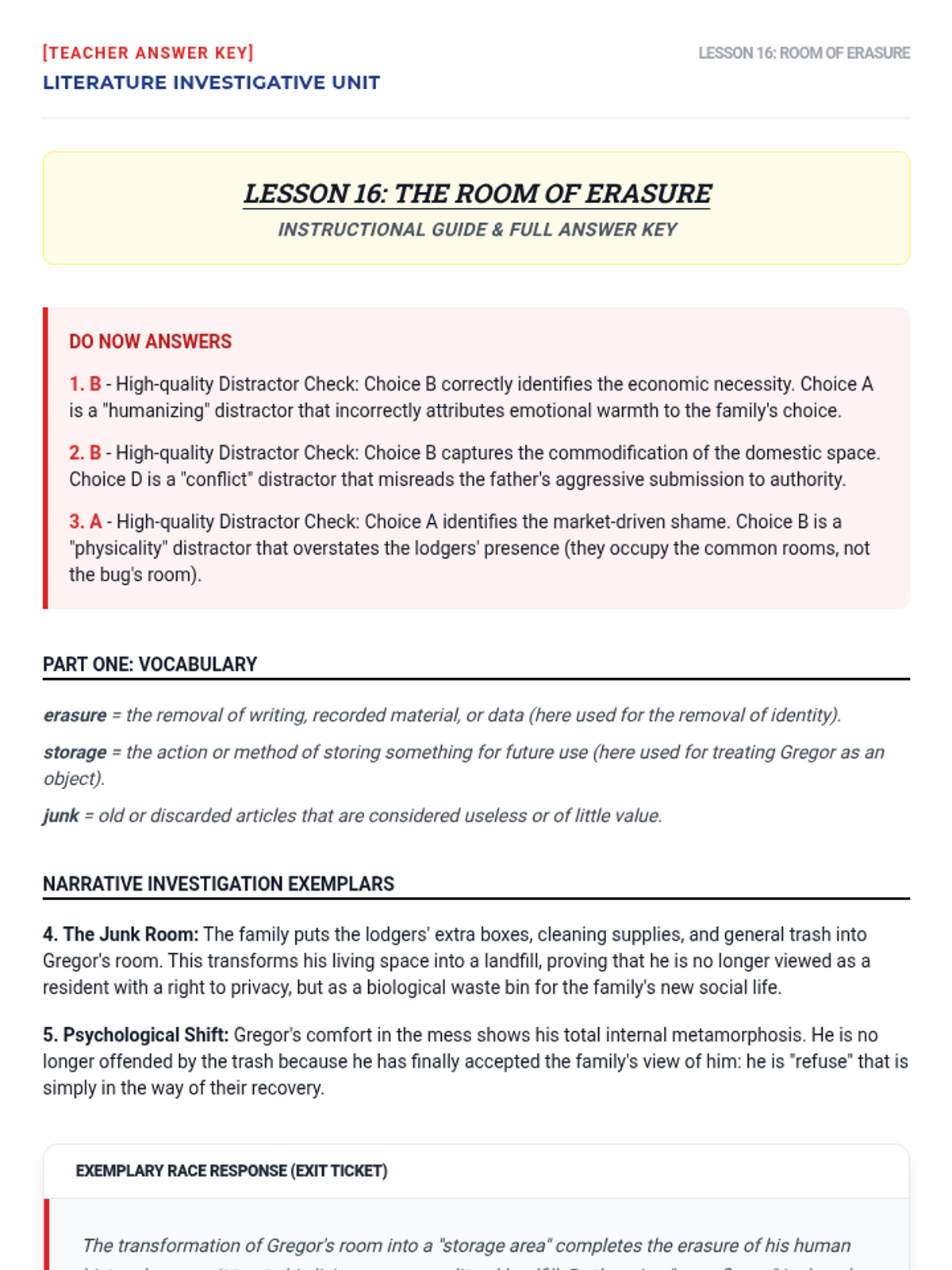
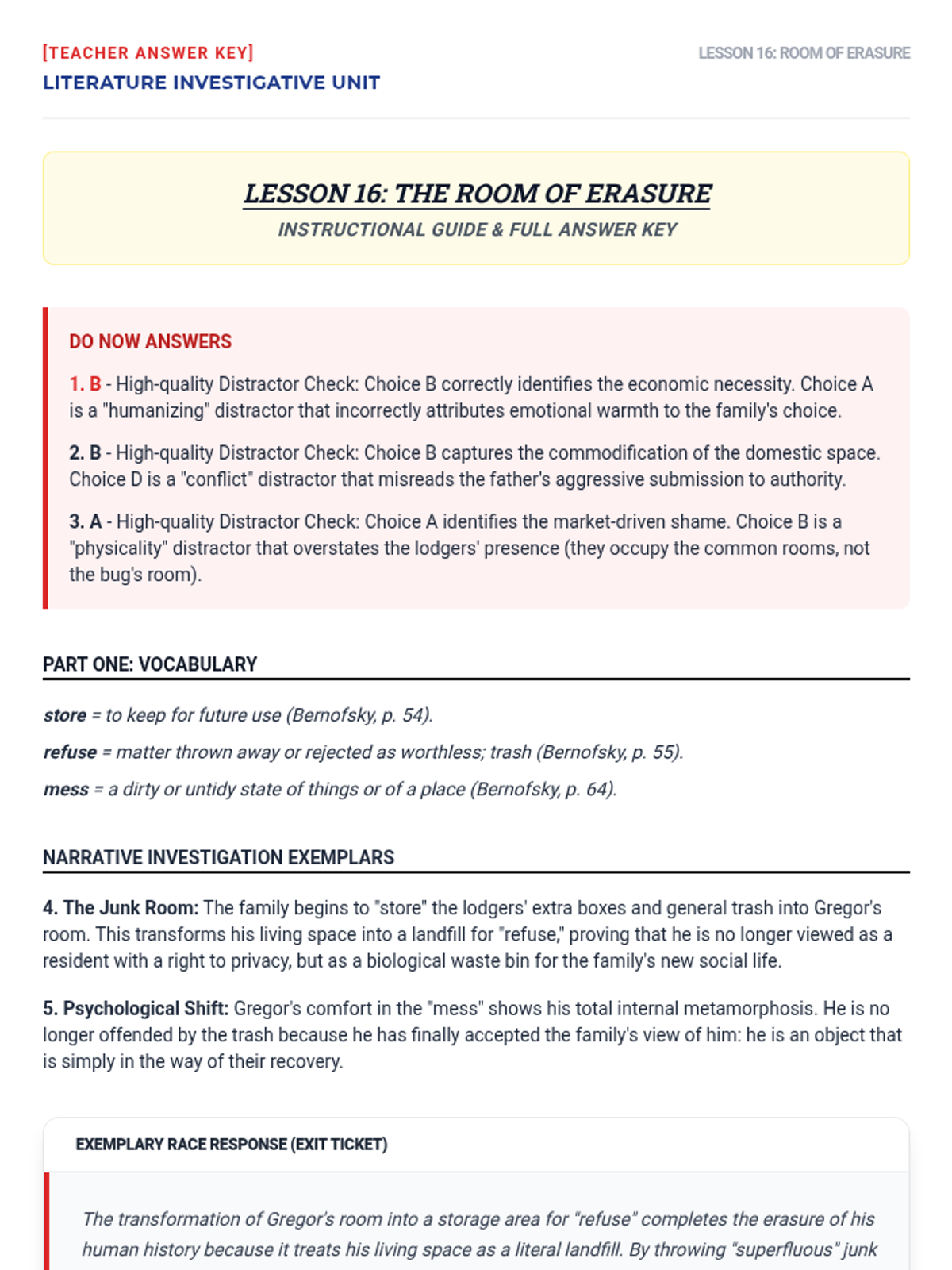
Gregor's room becomes a storage area for trash. Analysis of the complete erasure of his human space and history.
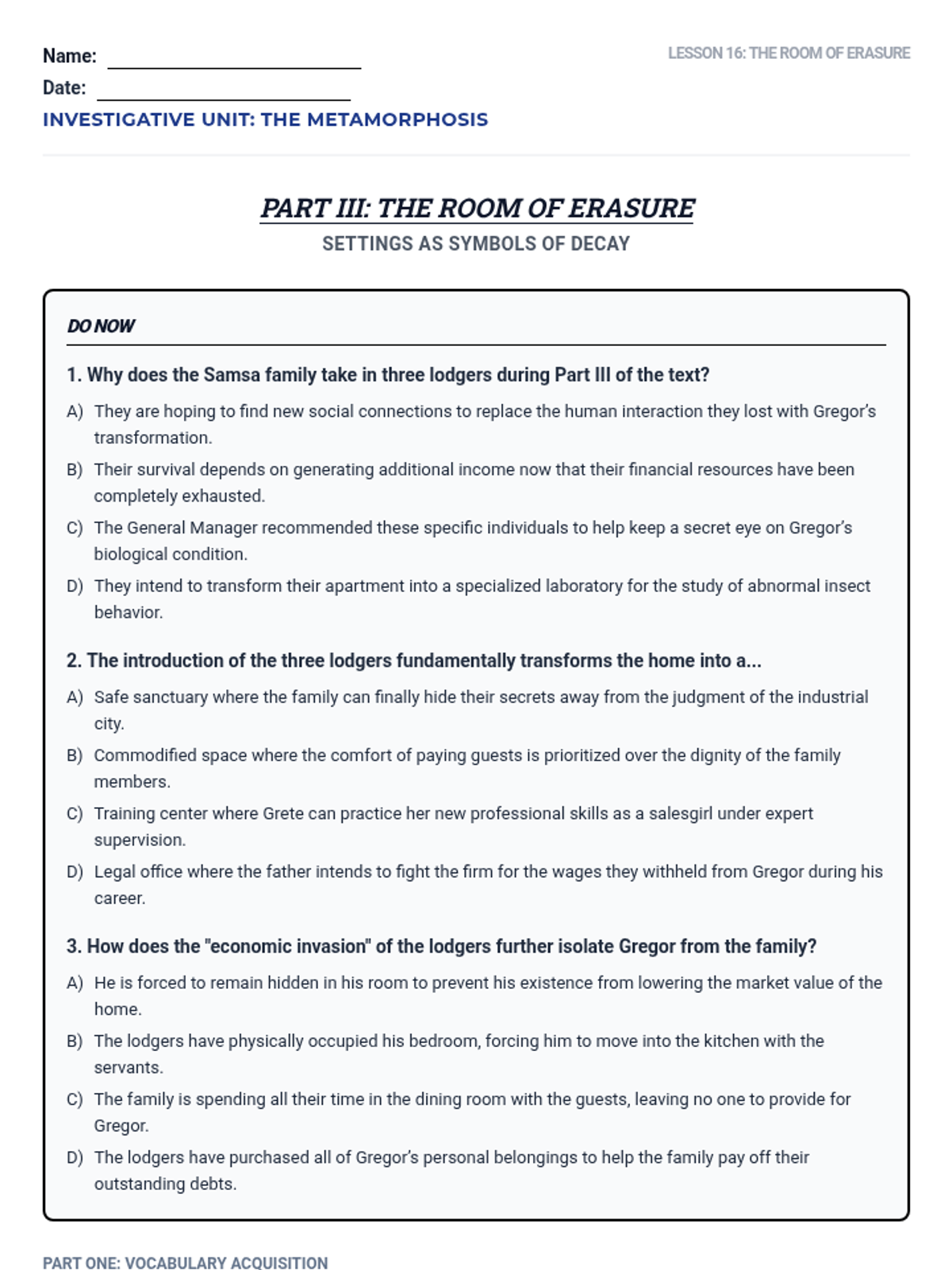
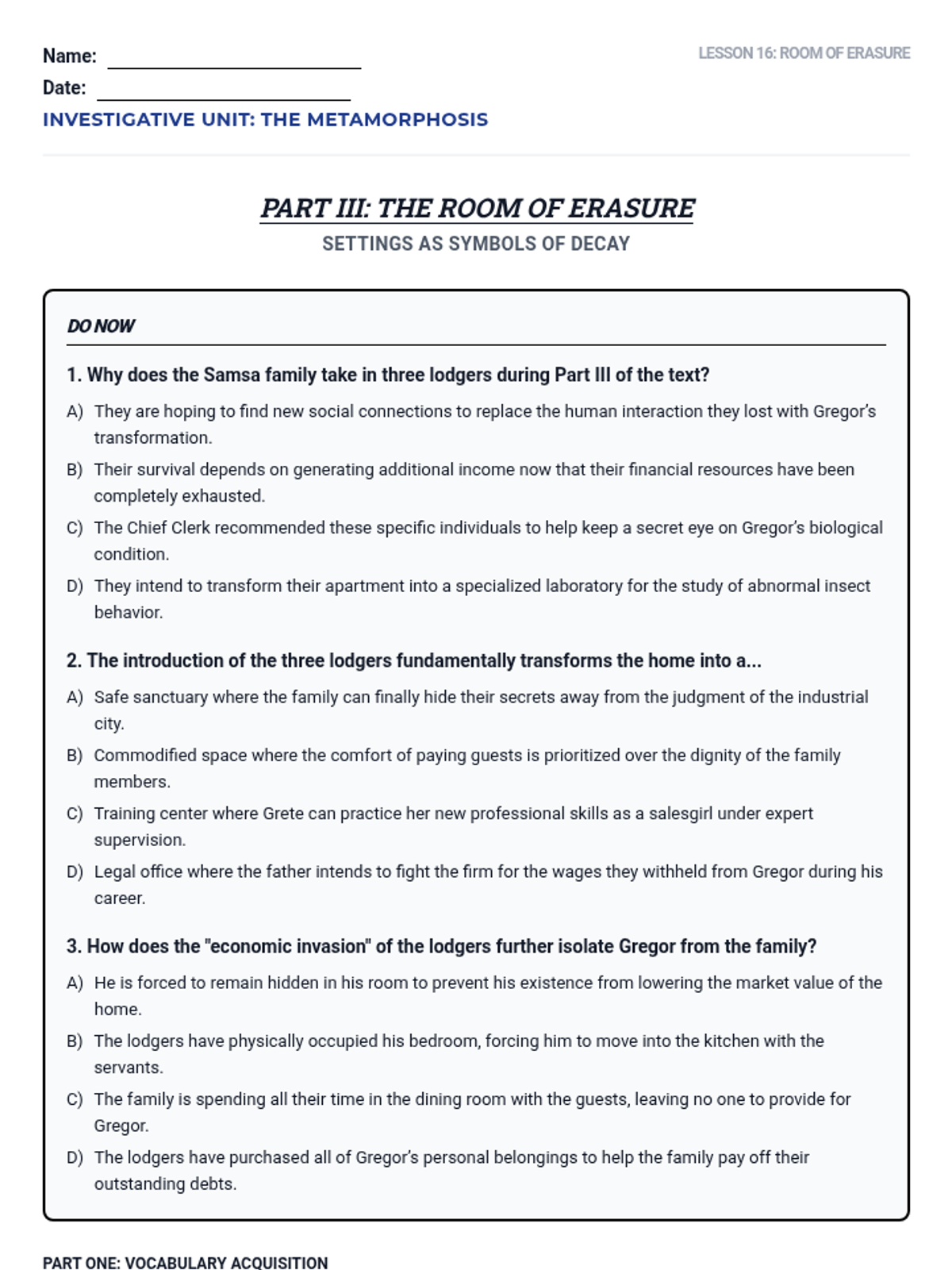
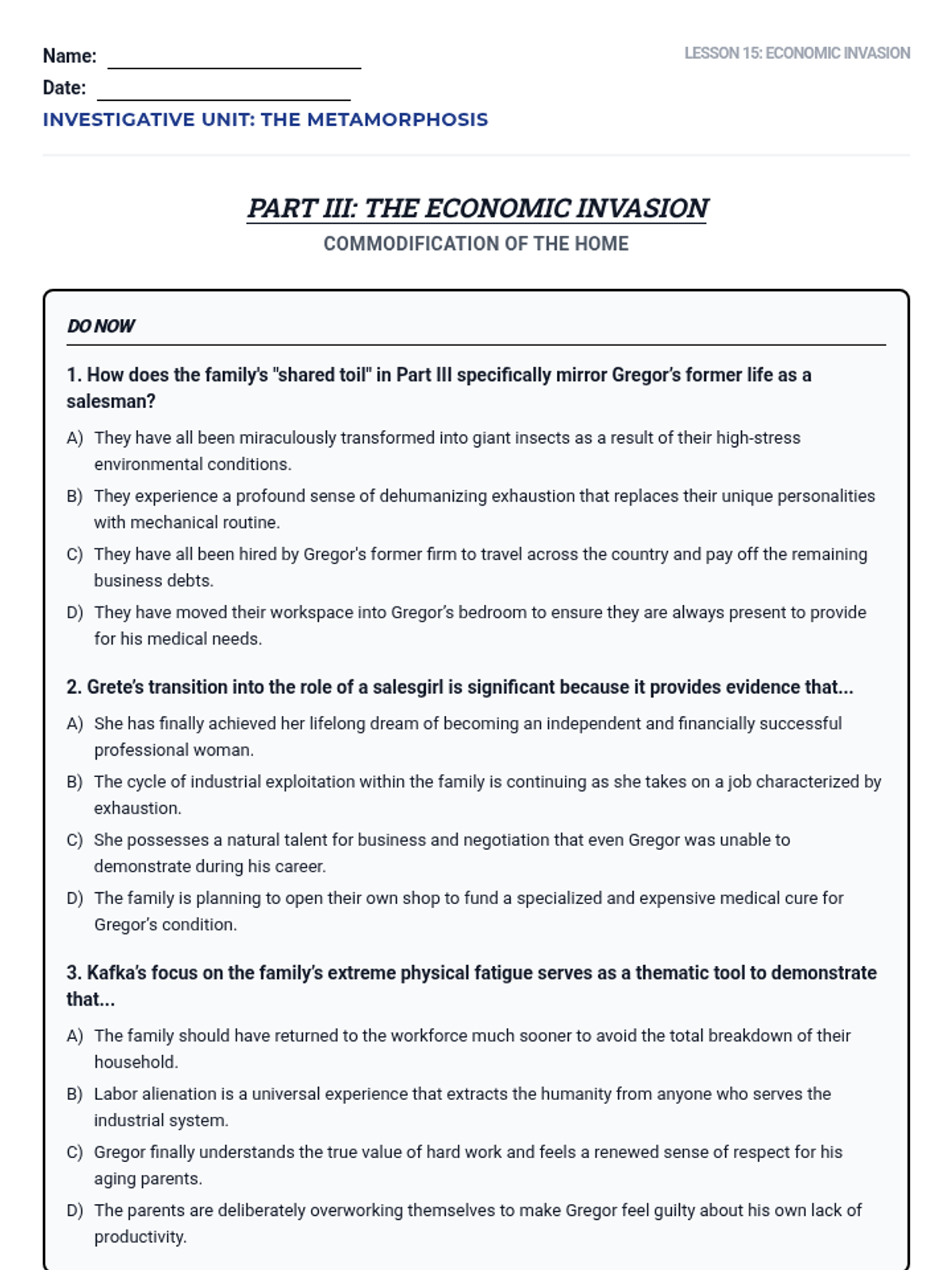
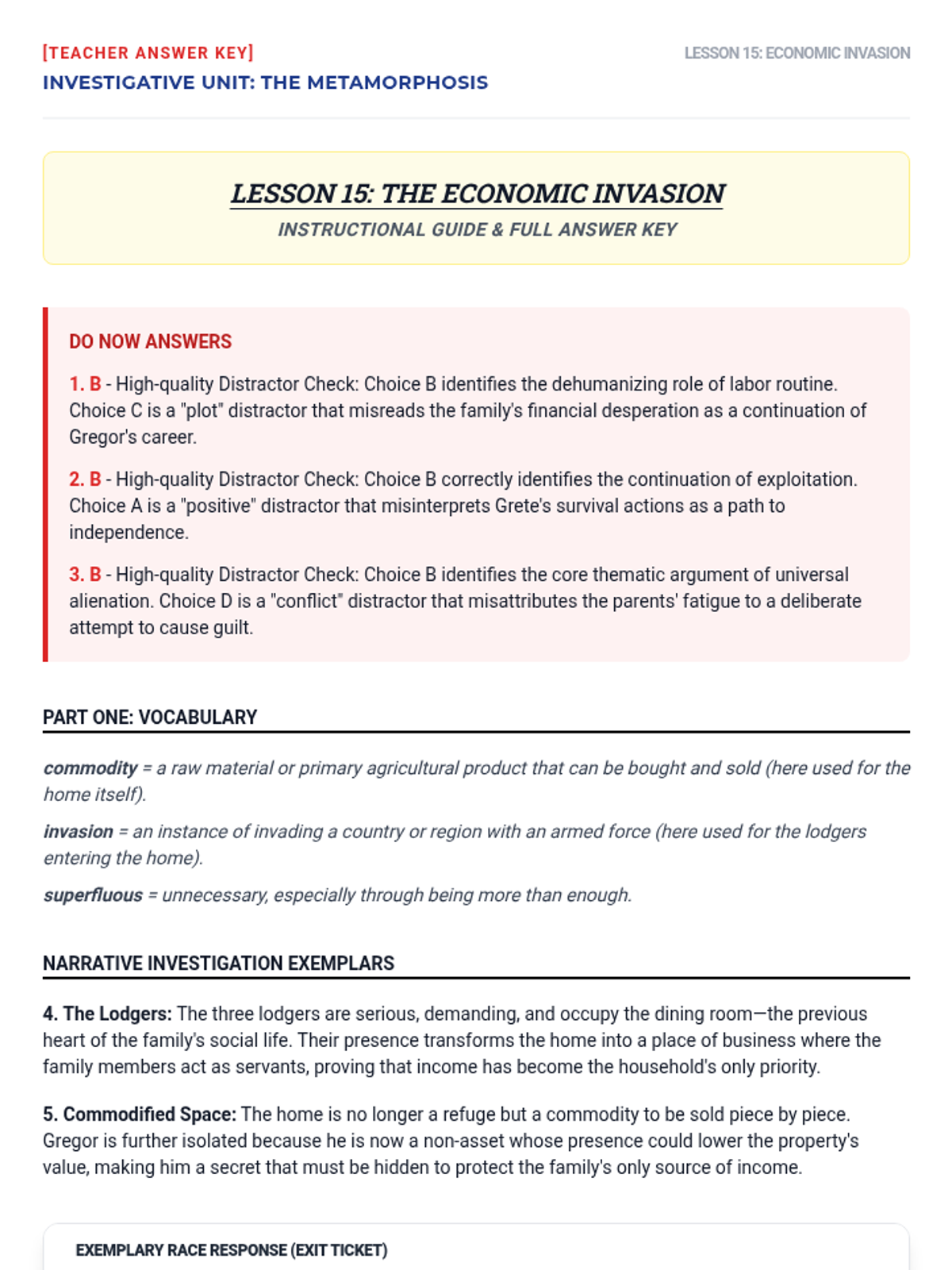
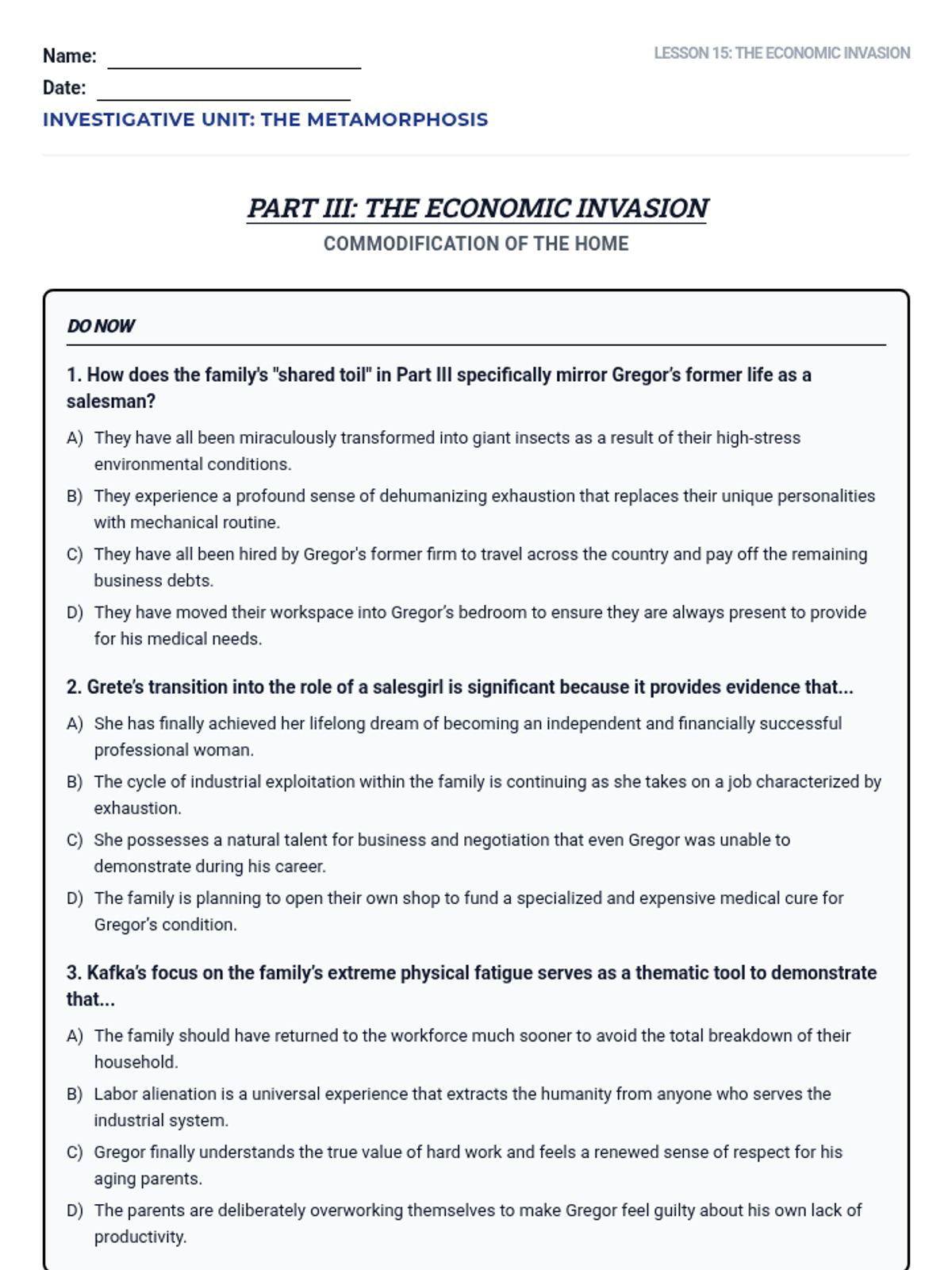
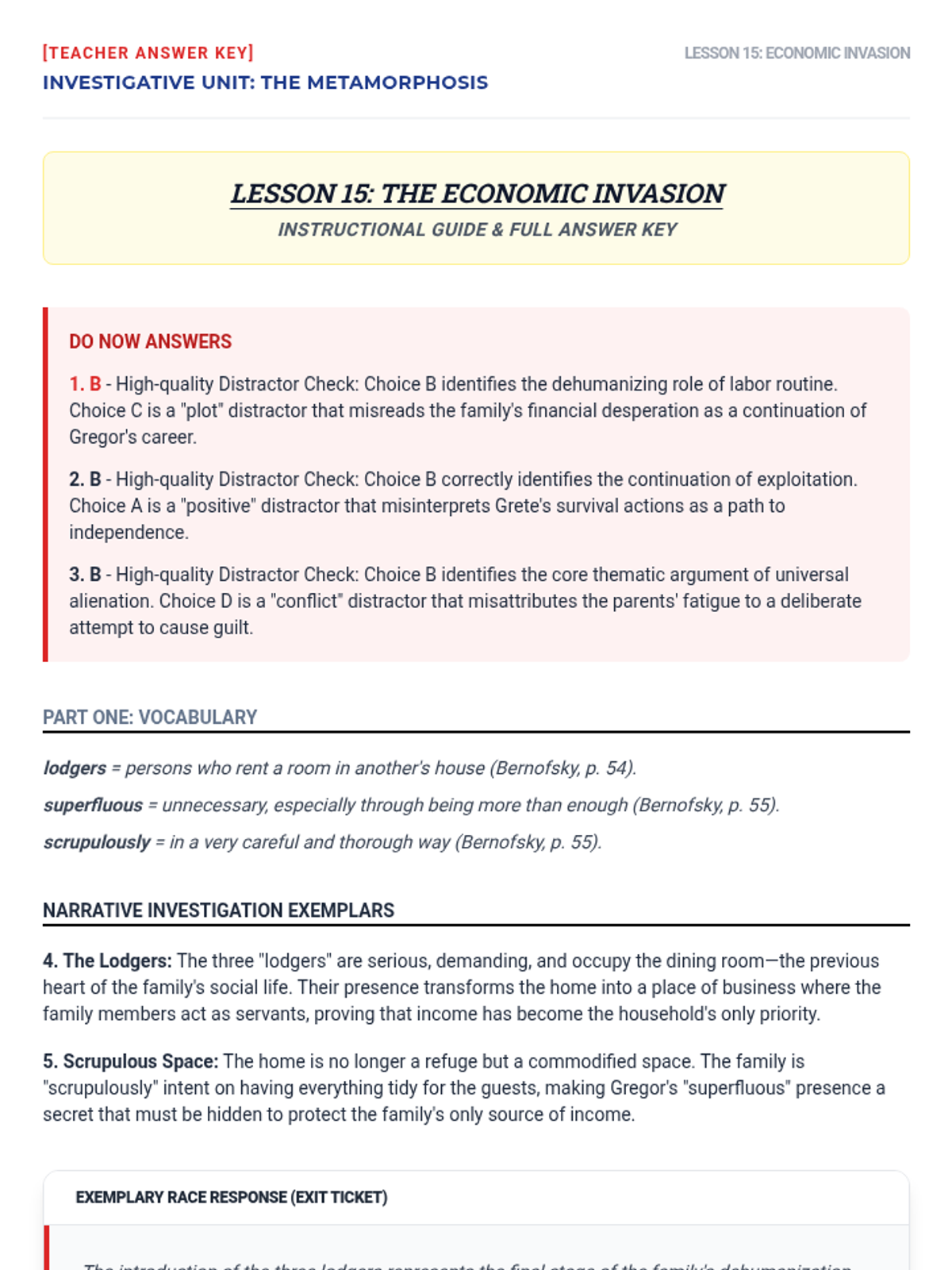
The introduction of the three lodgers. Analysis of the home as a commodified space and Gregor's further displacement.
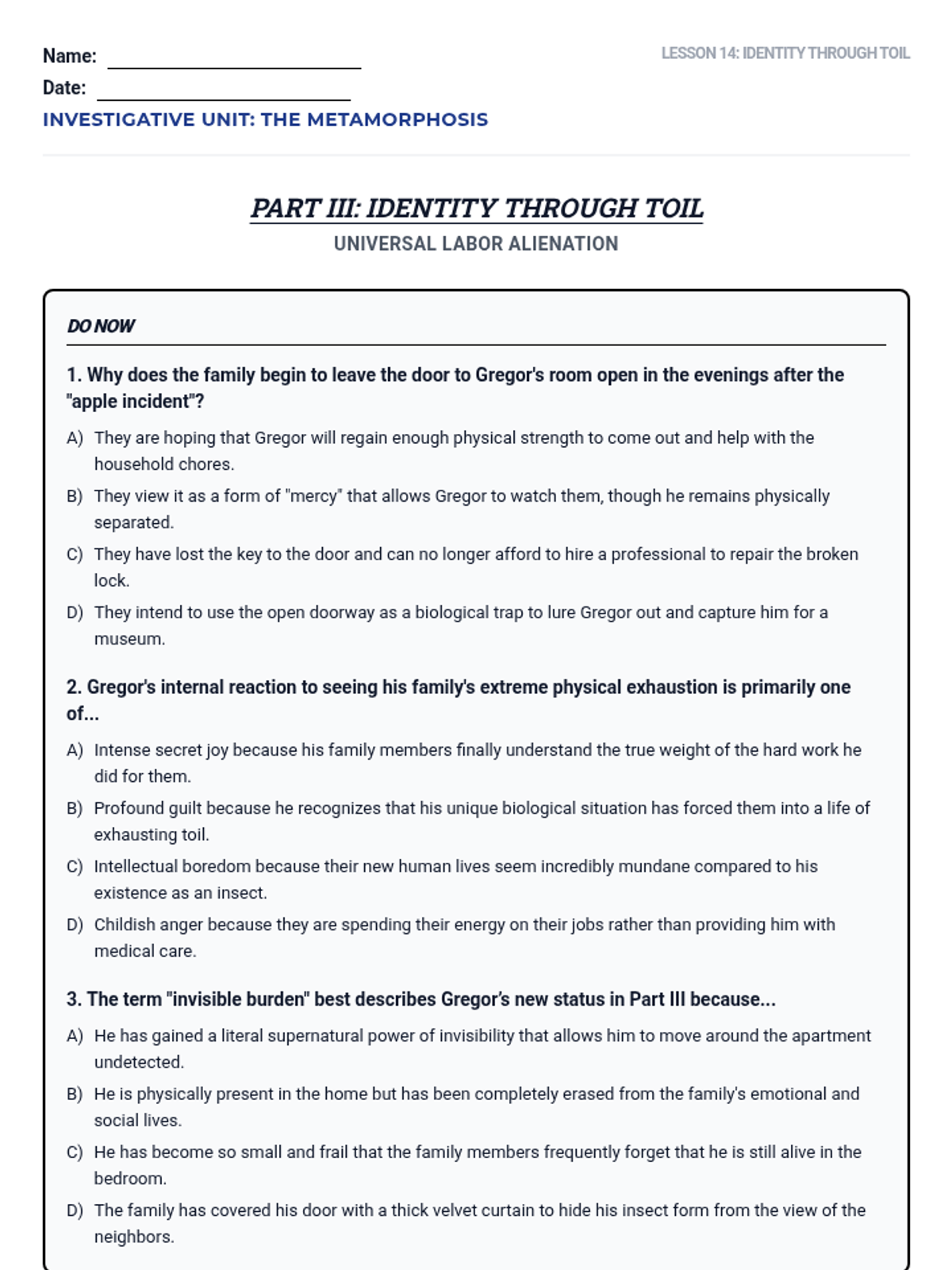
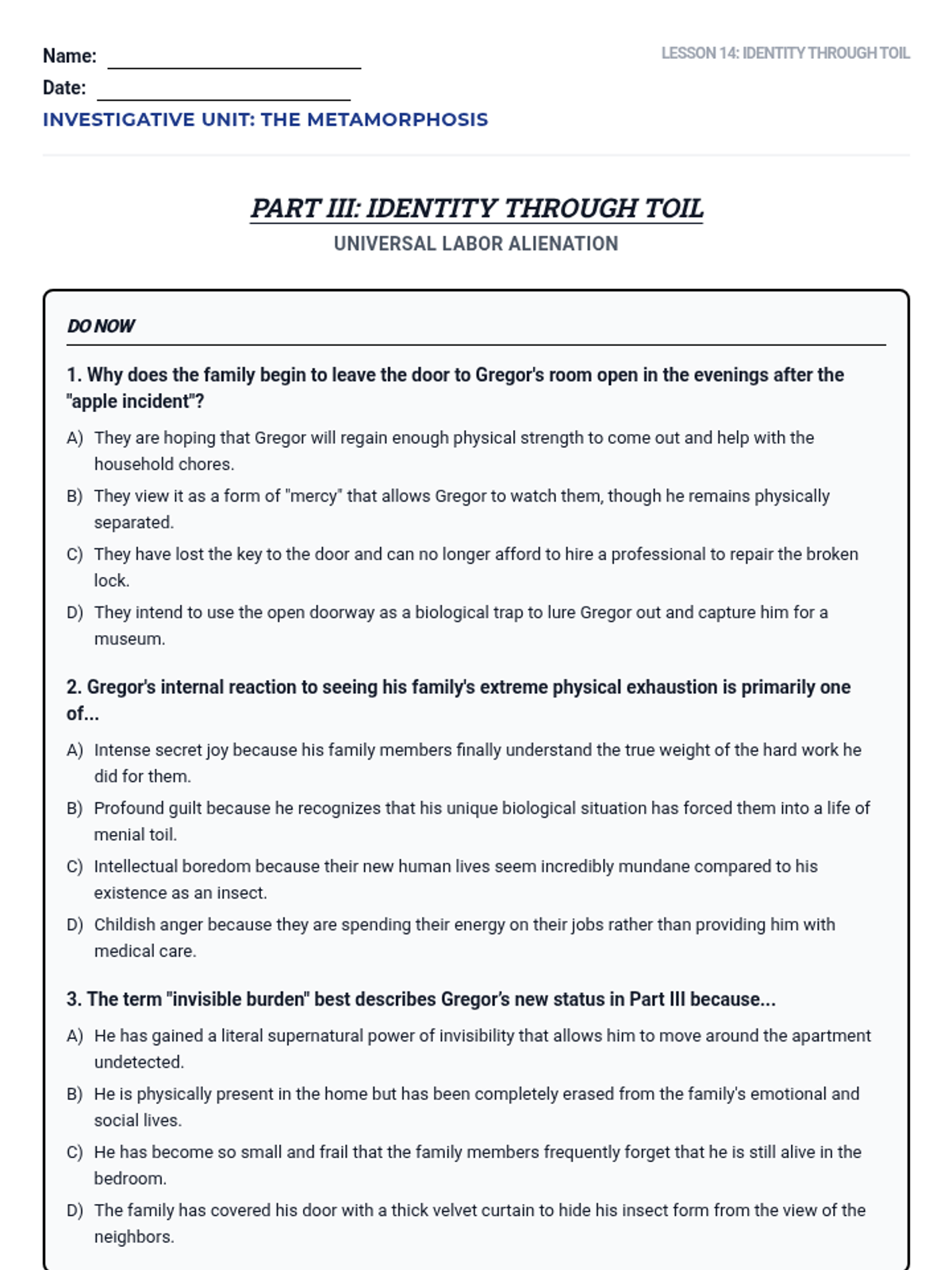
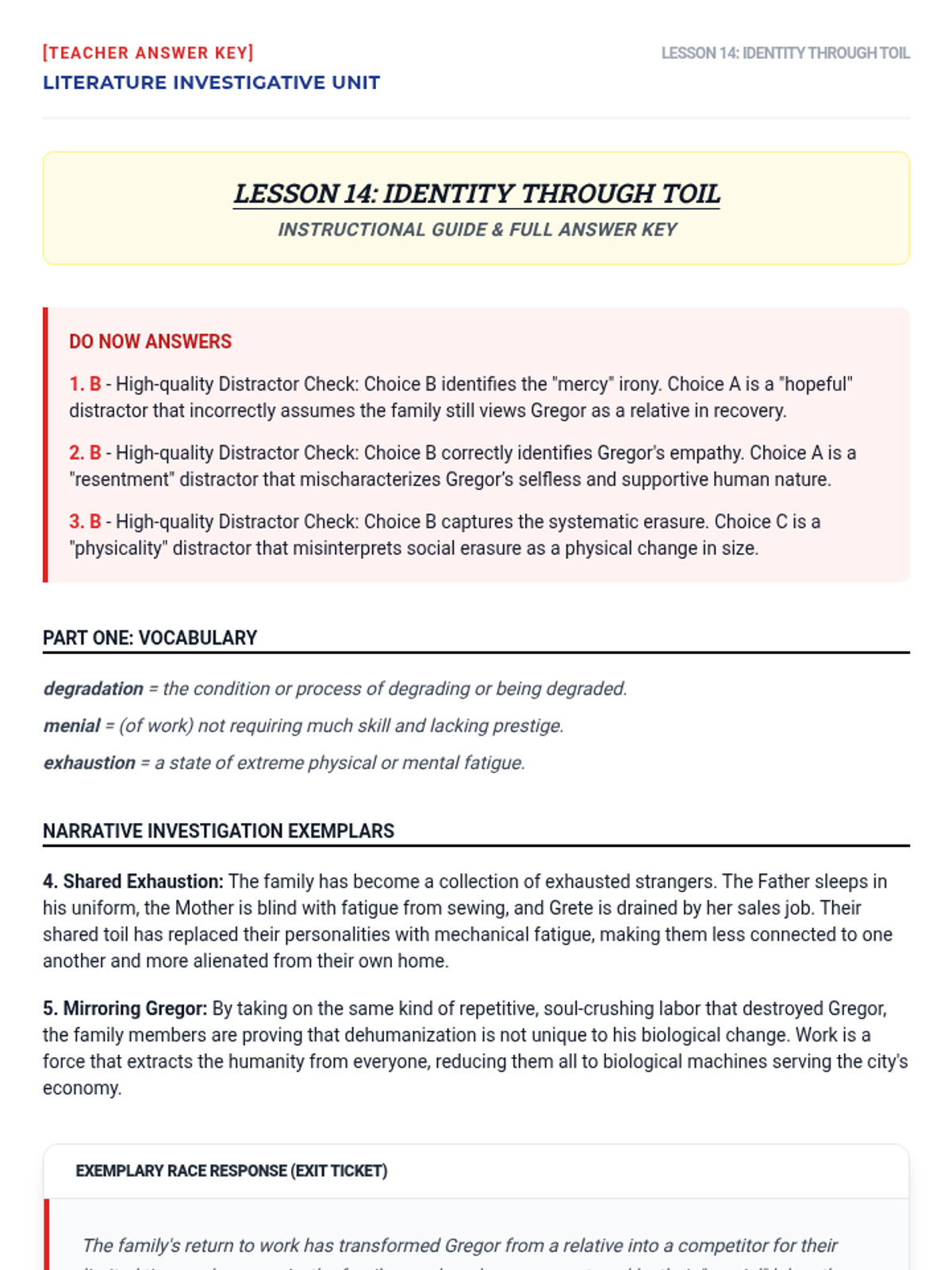
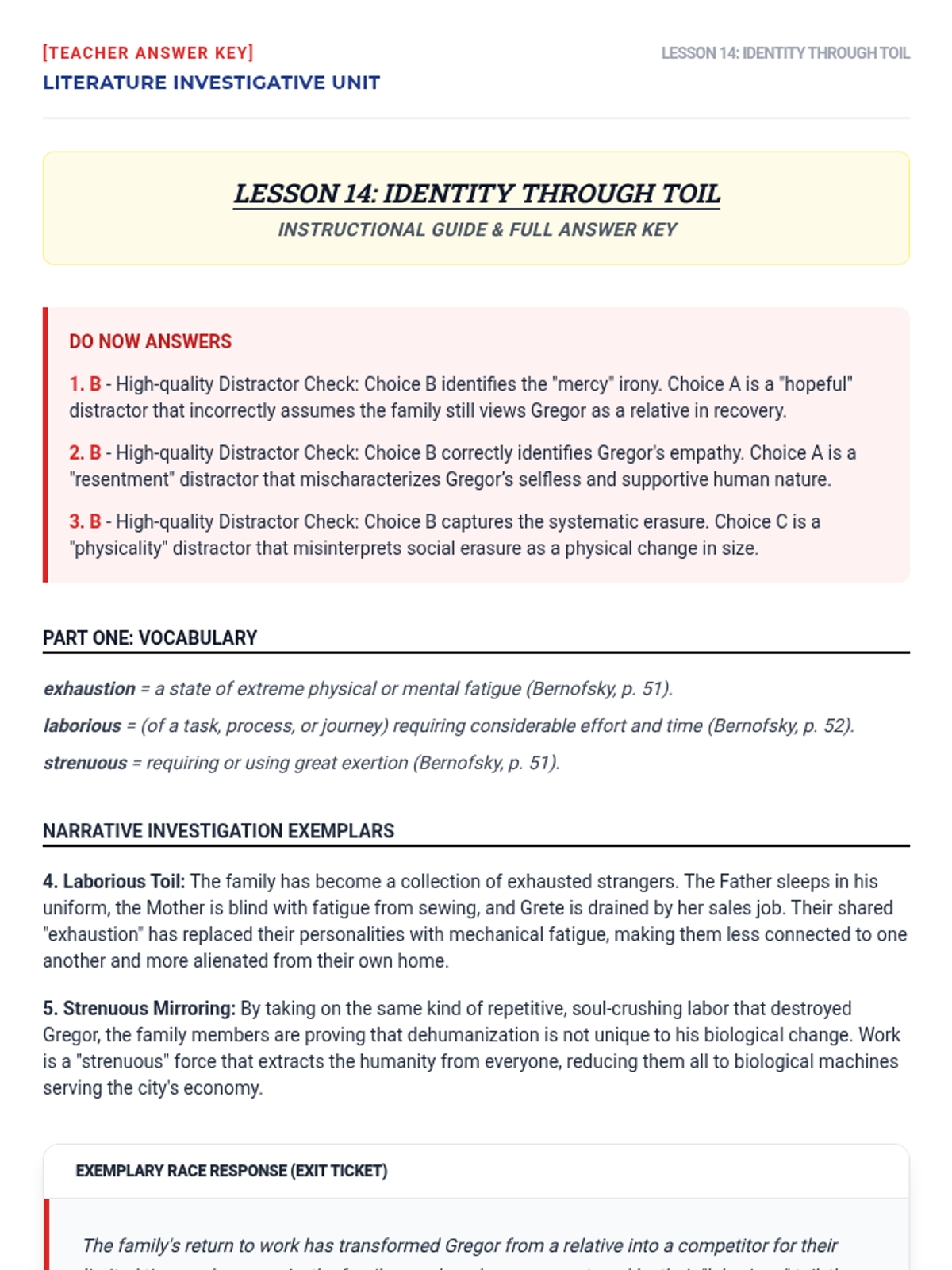
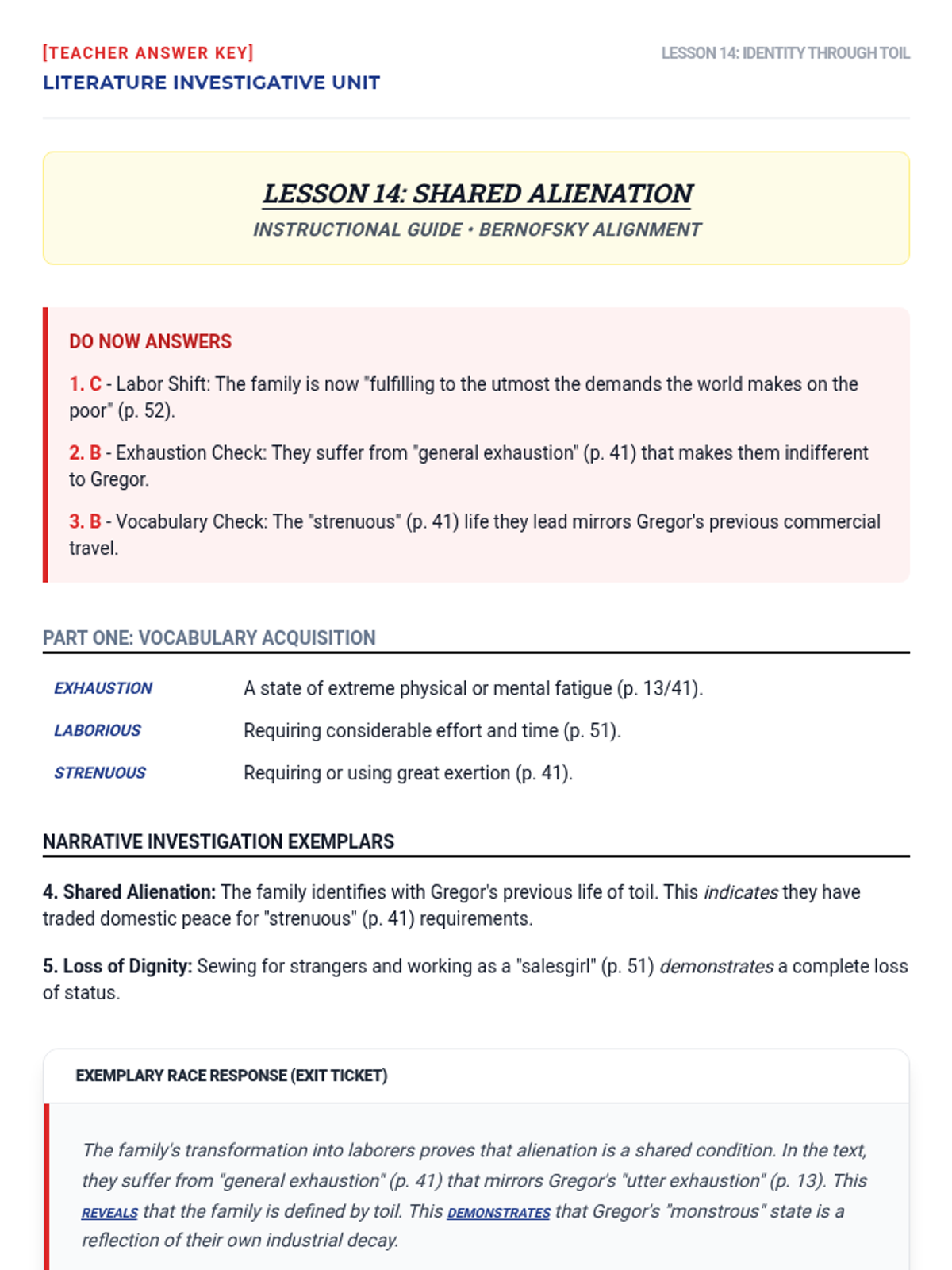
Analysis of the family taking on menial labor. Themes of exhaustion, loss of dignity, and the shared alienation of the working class.
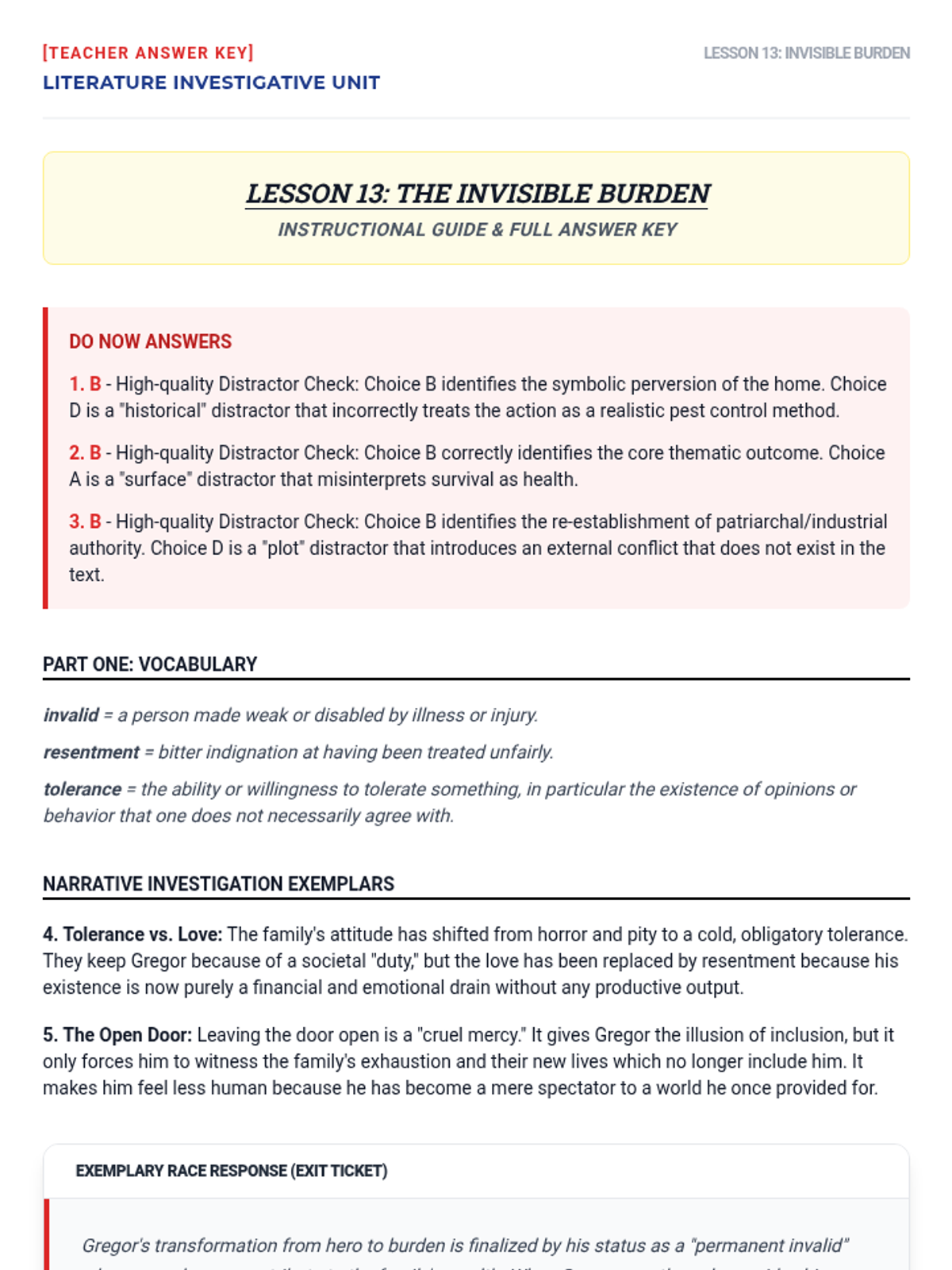
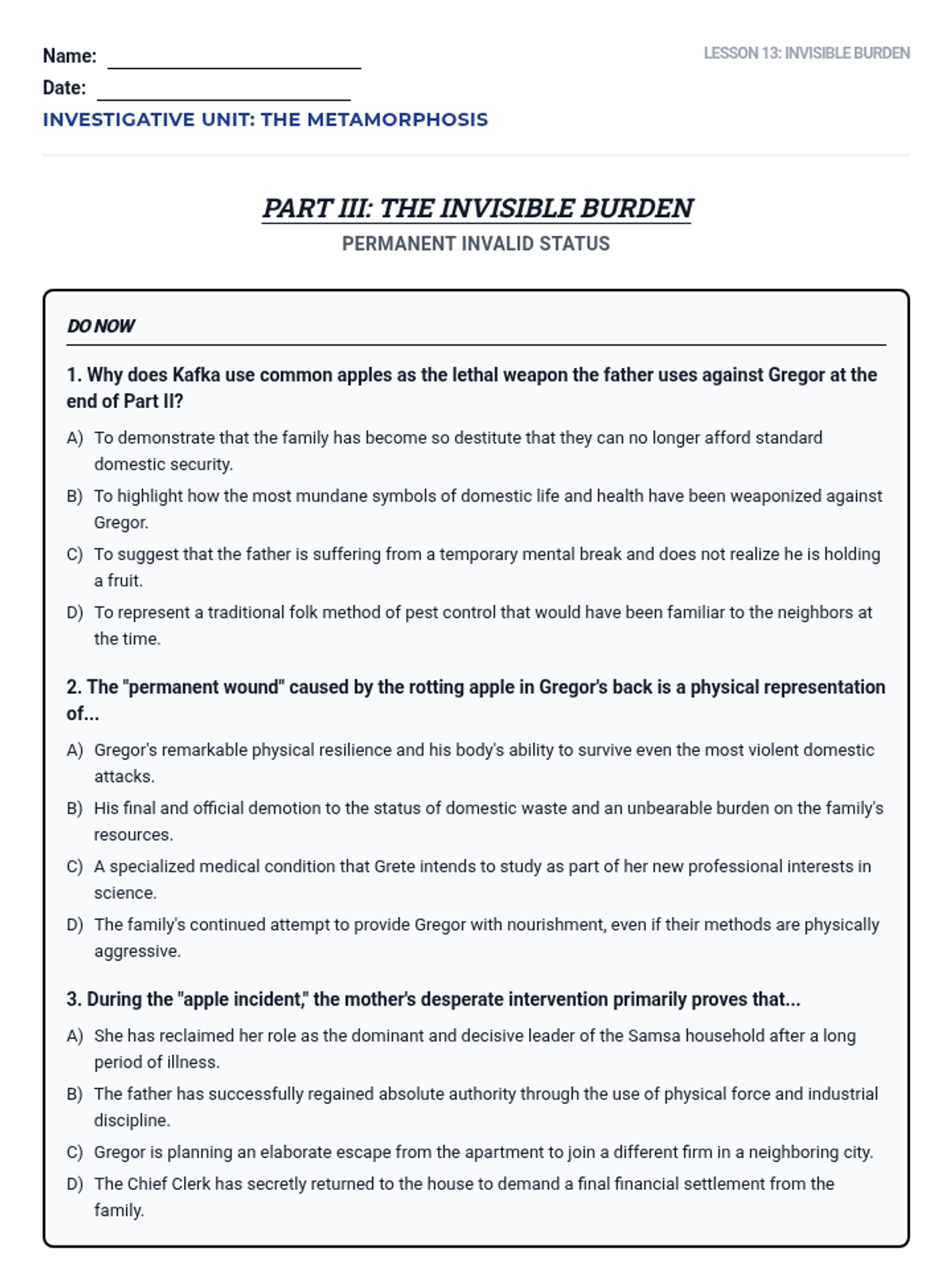
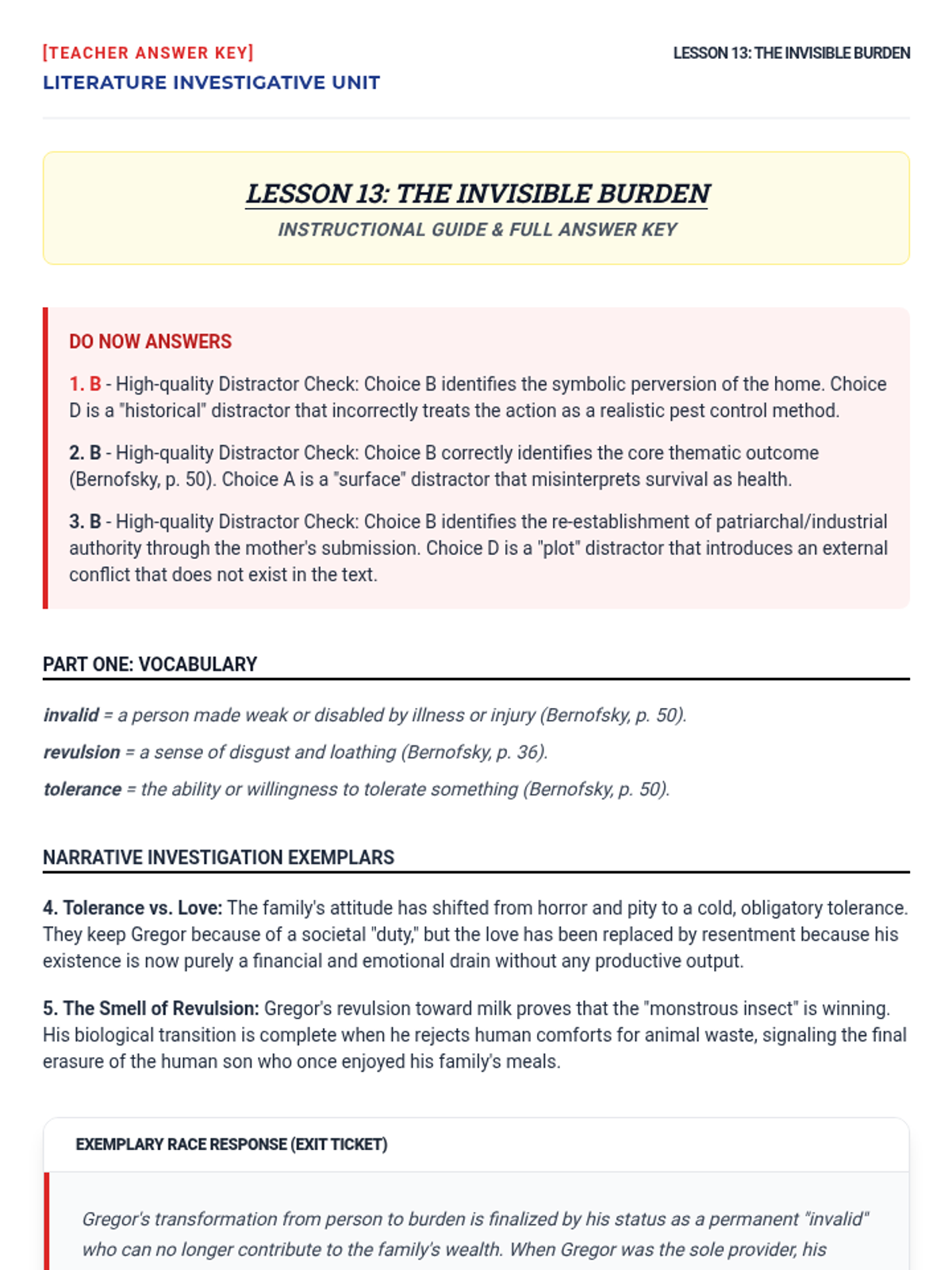
Gregor as a permanent invalid. Analysis of the family's growing resentment and the physical reminder of his non-productive status.
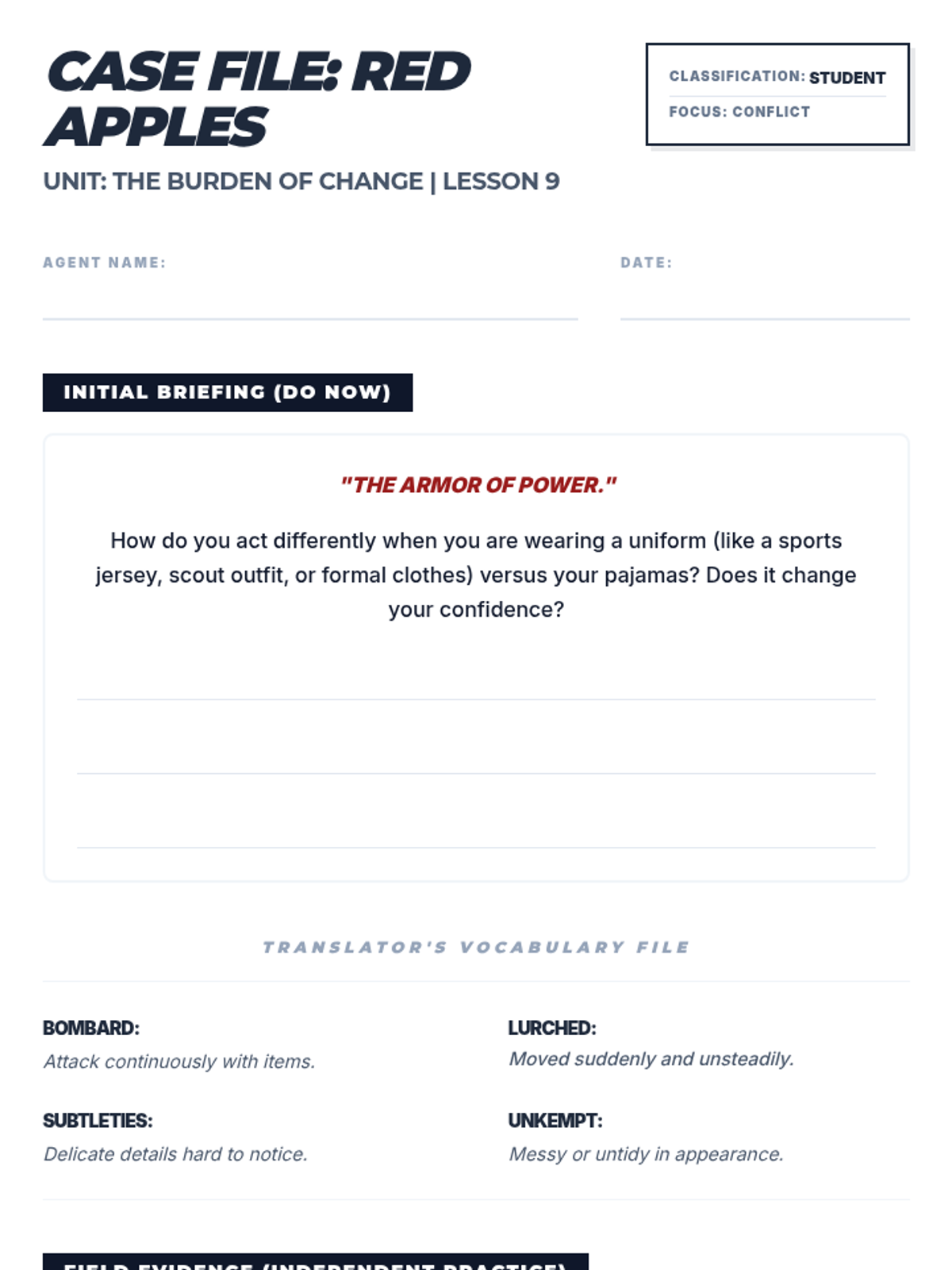
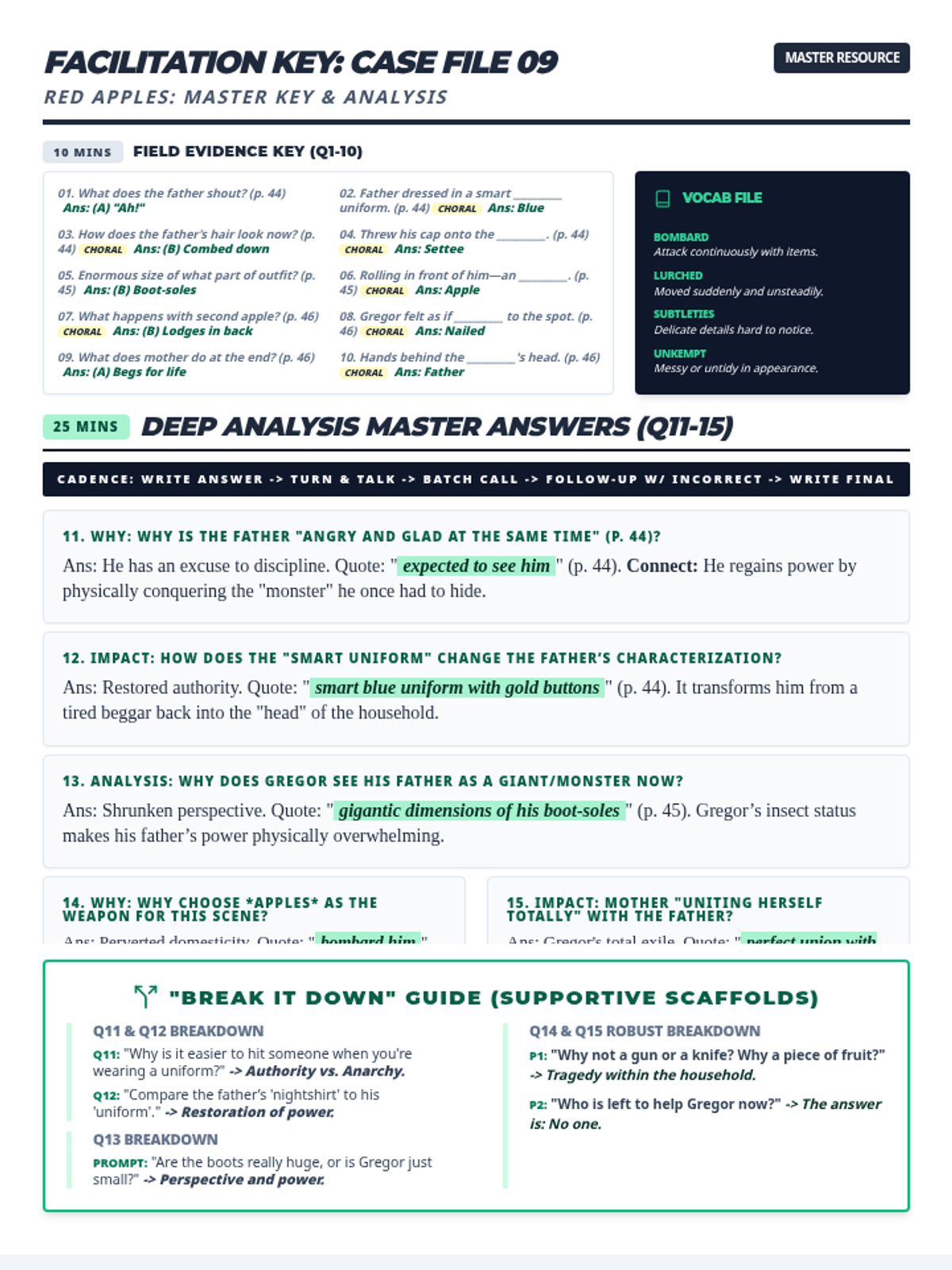
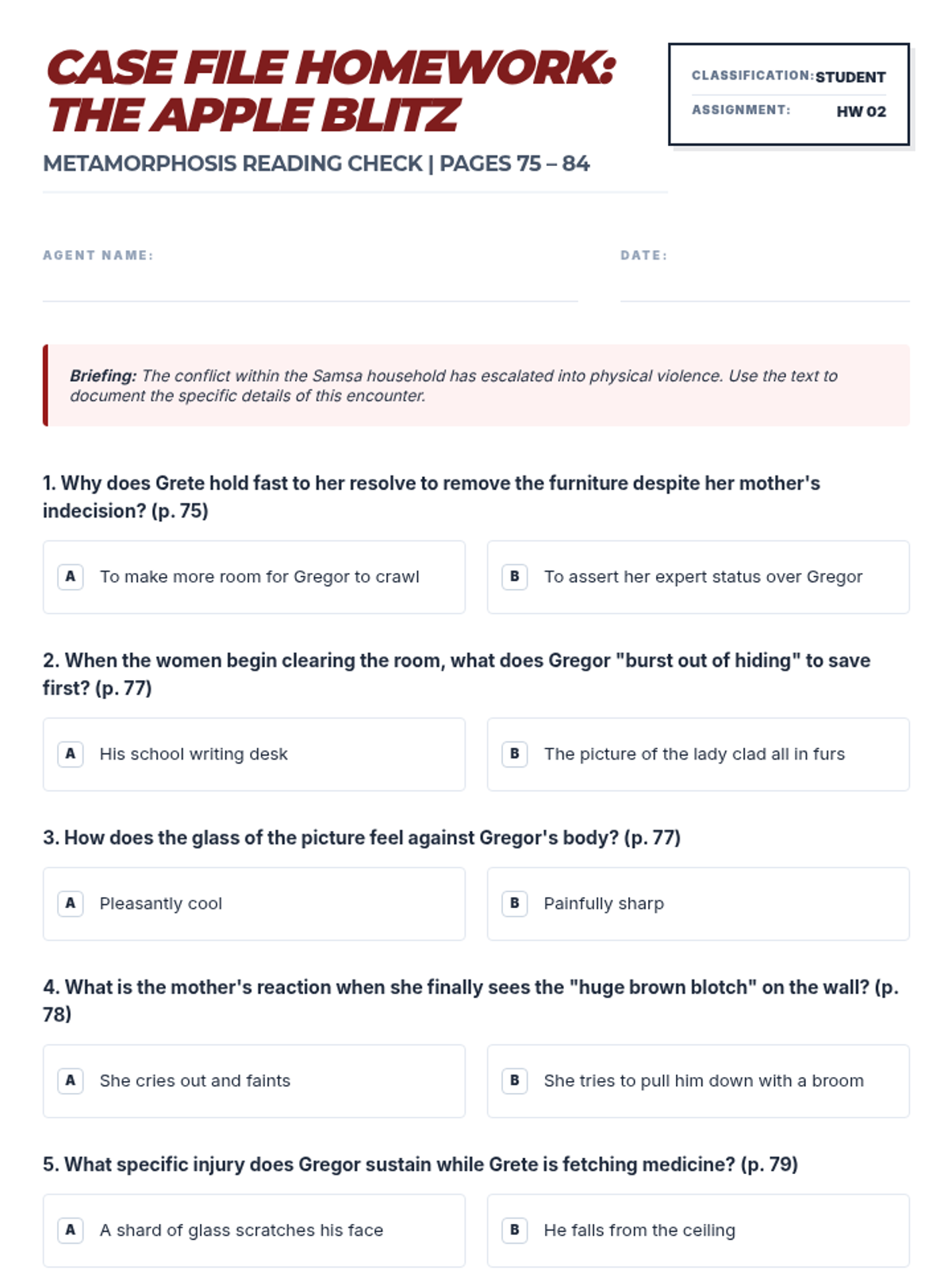
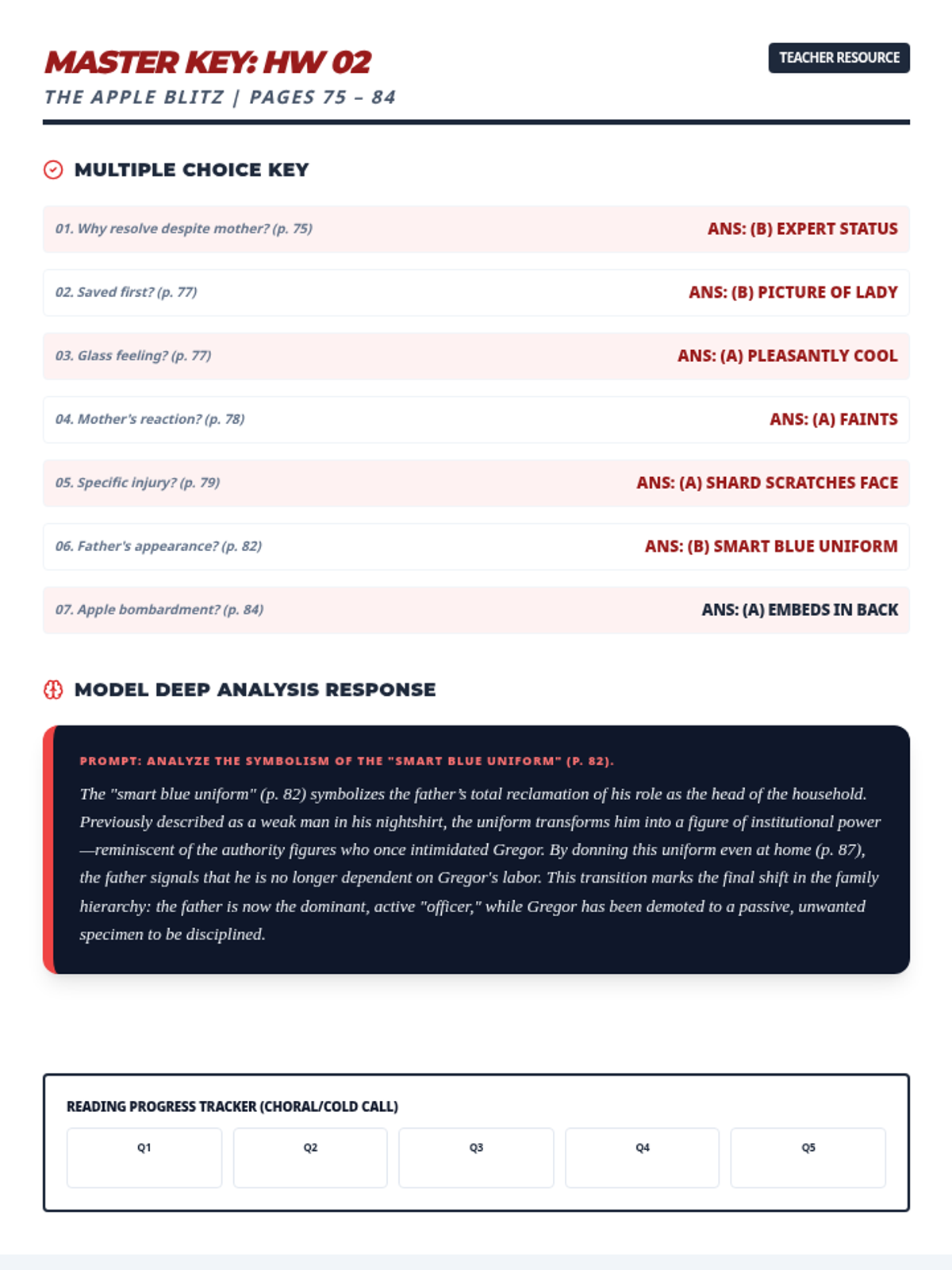
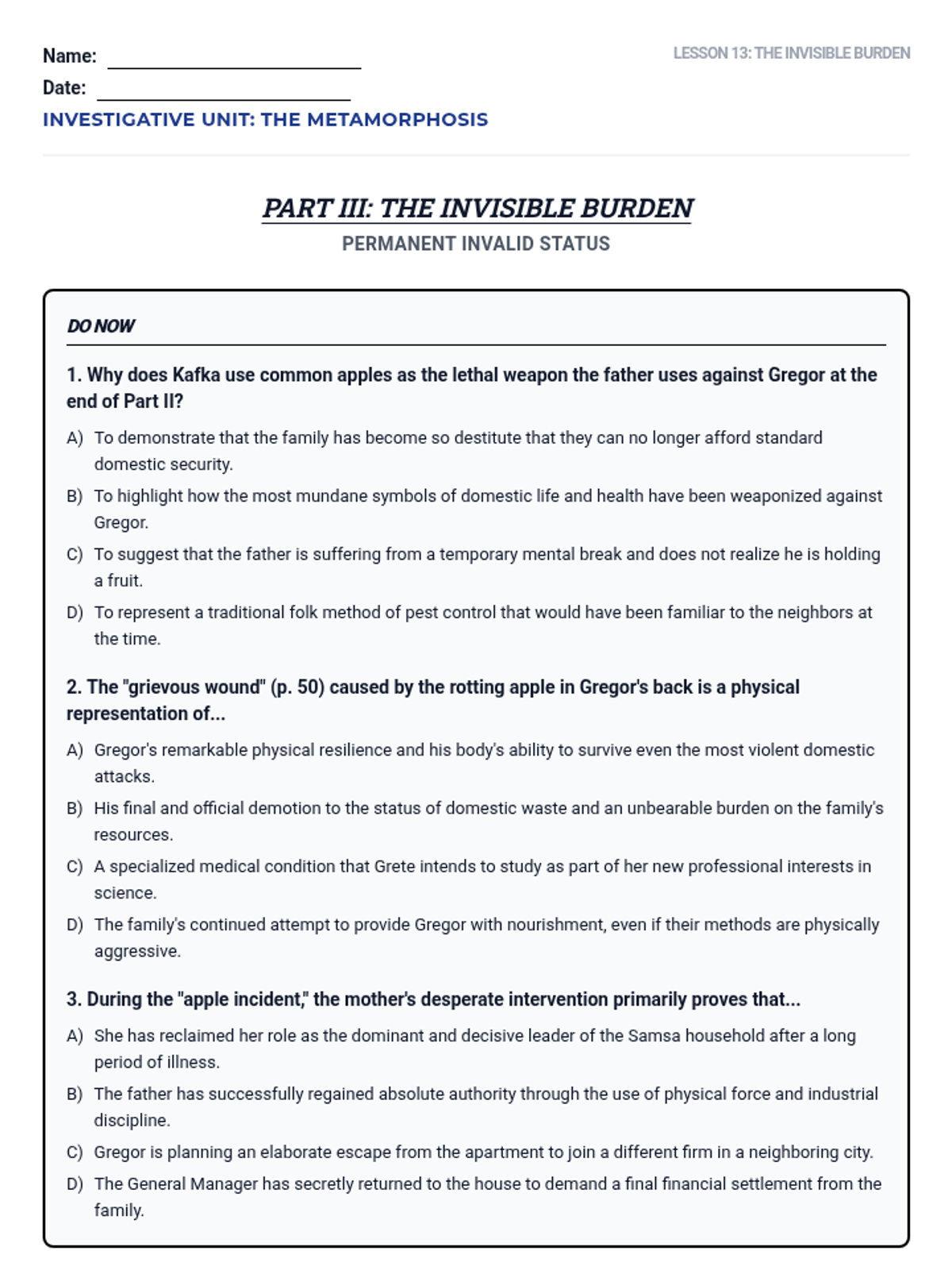
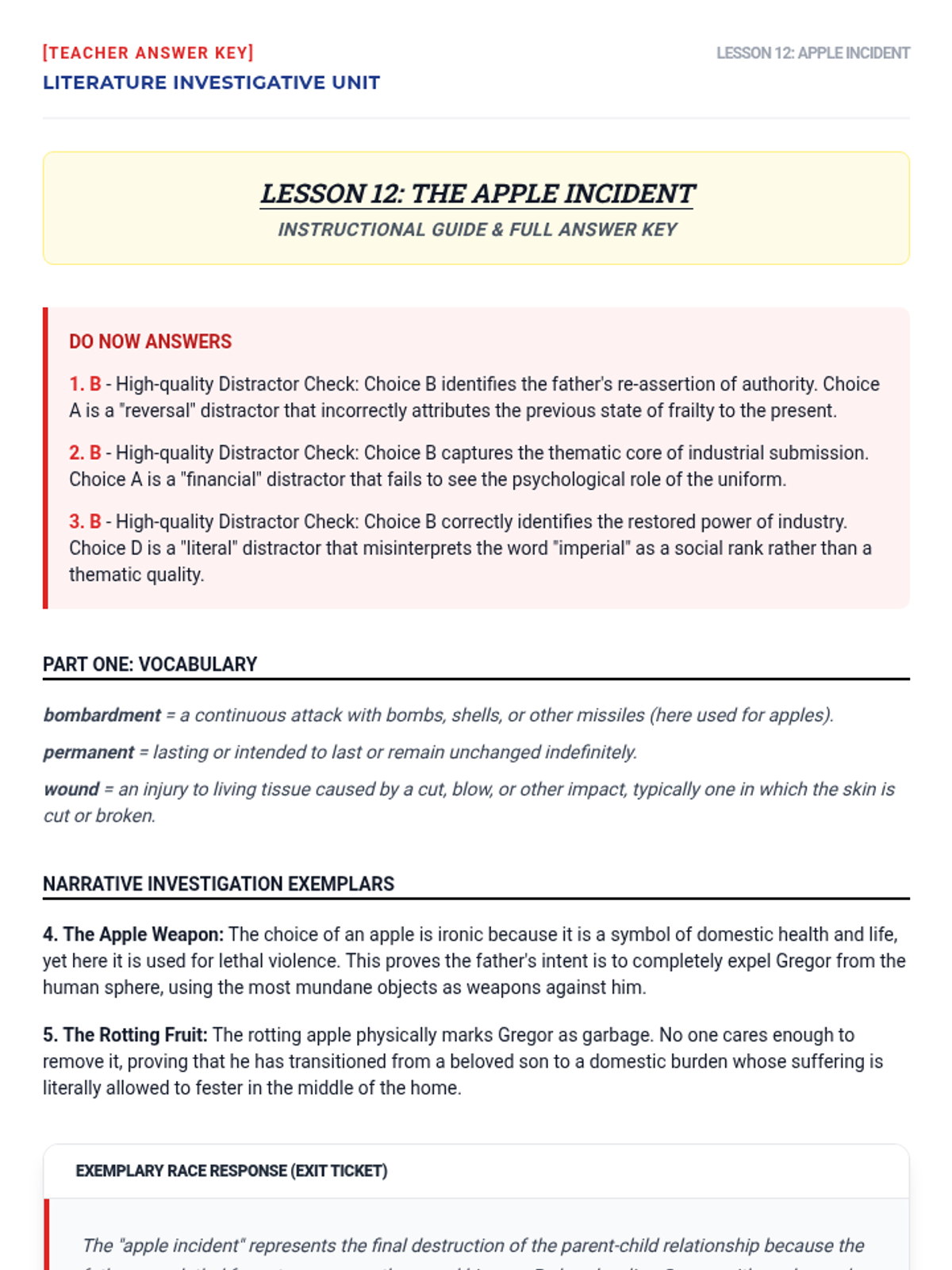
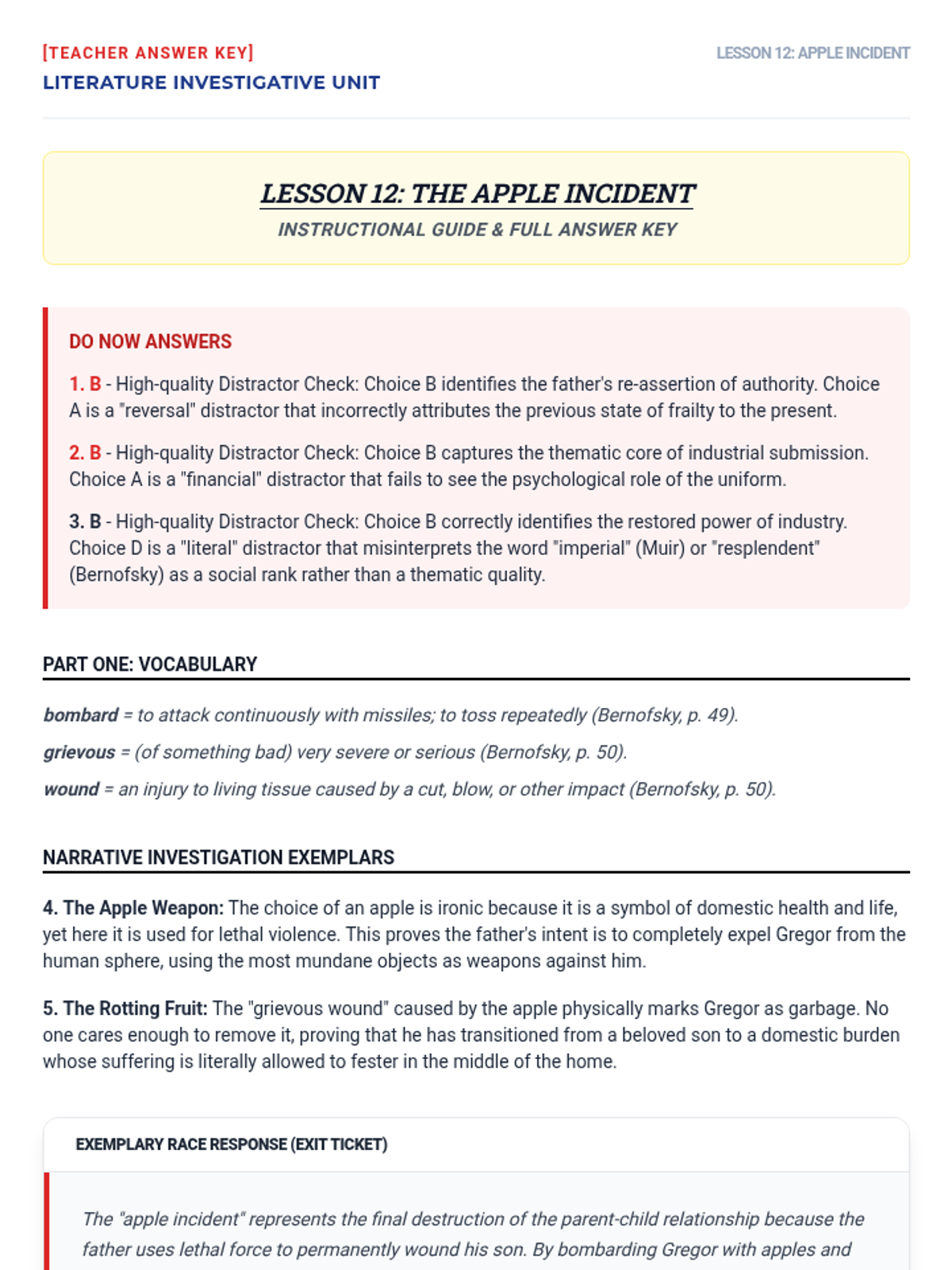
The father's violent attack with apples. Analysis of the apple as a symbol of permanent wounding and the transition from son to 'burden'.
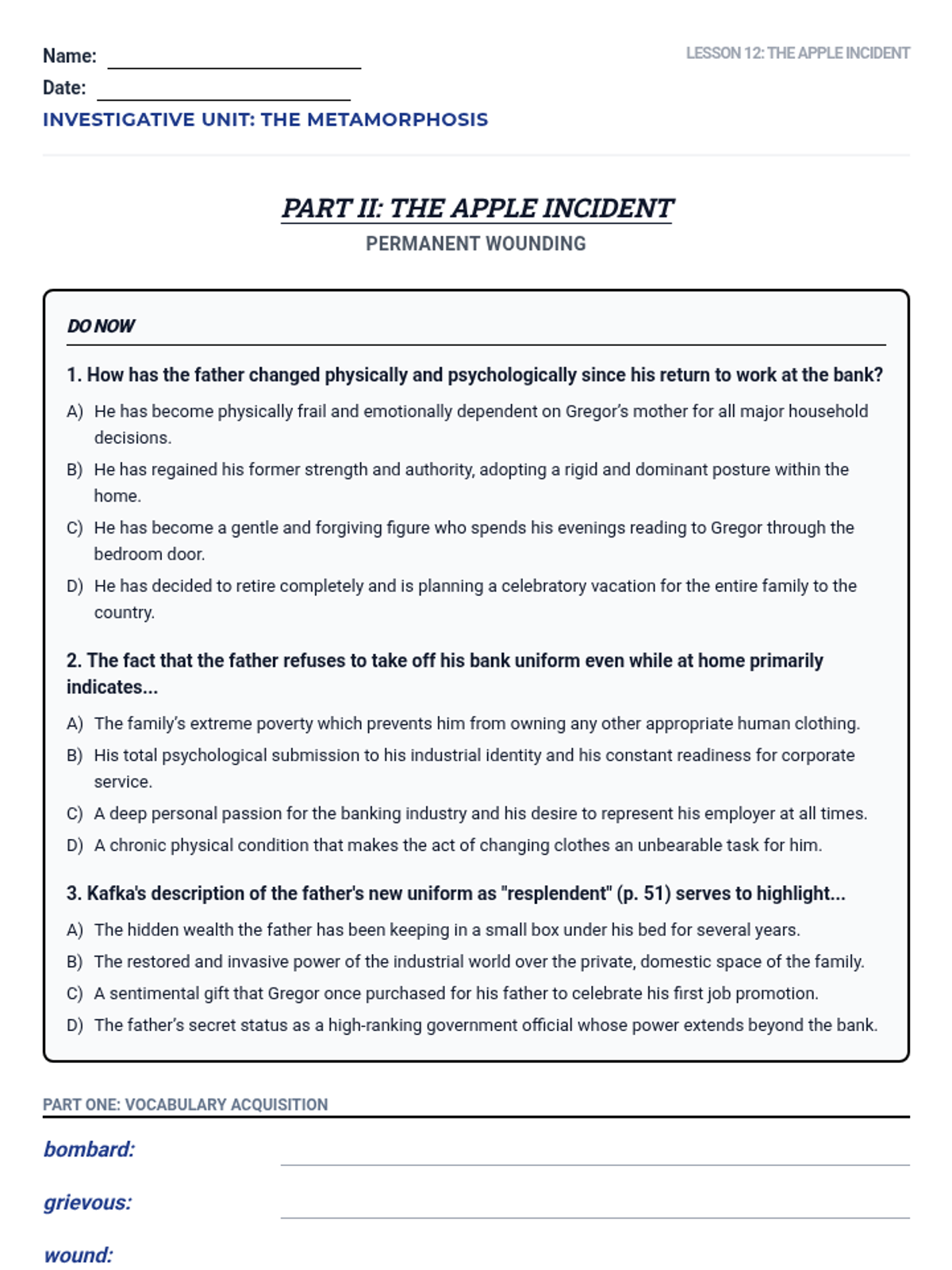
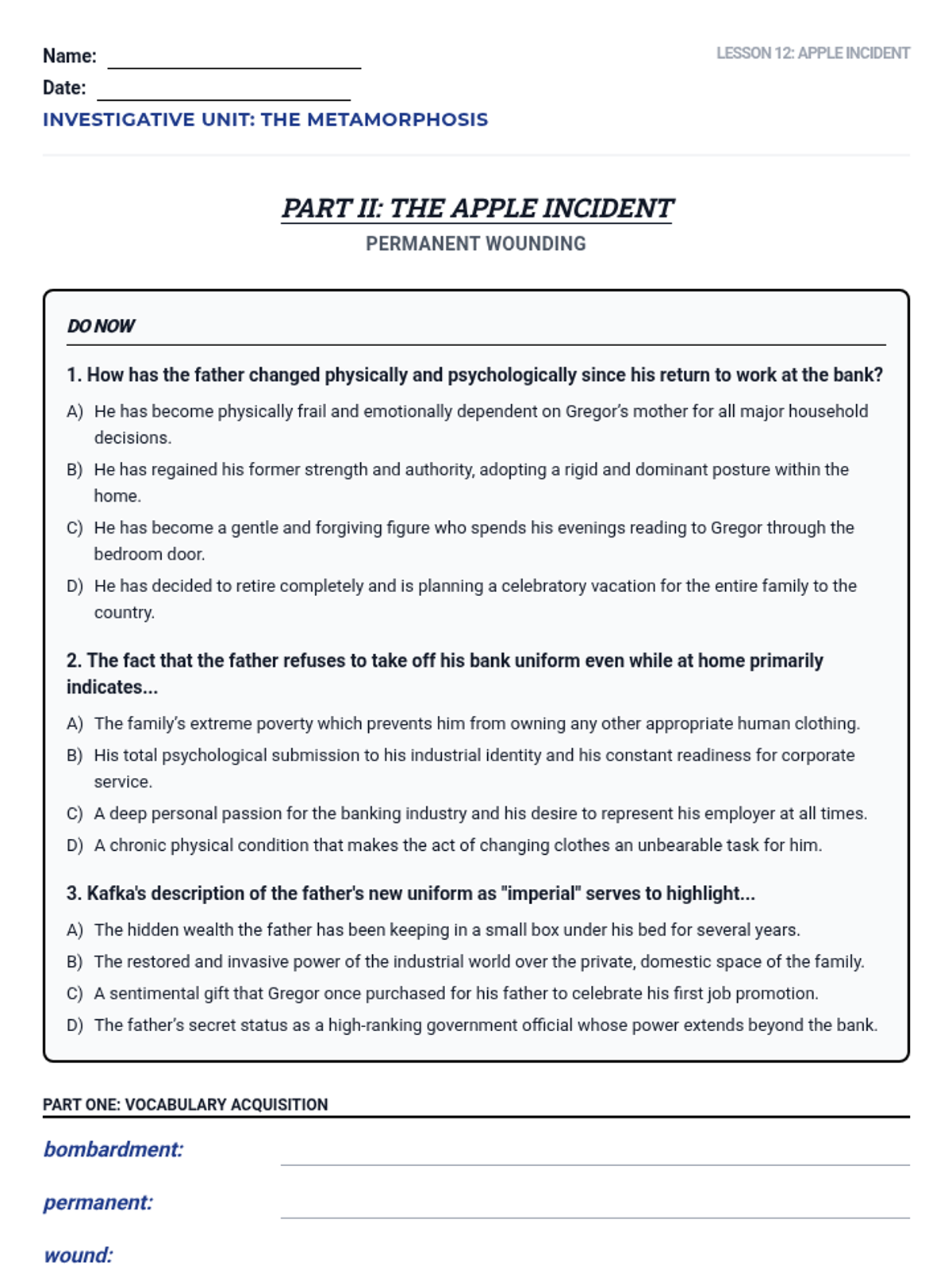
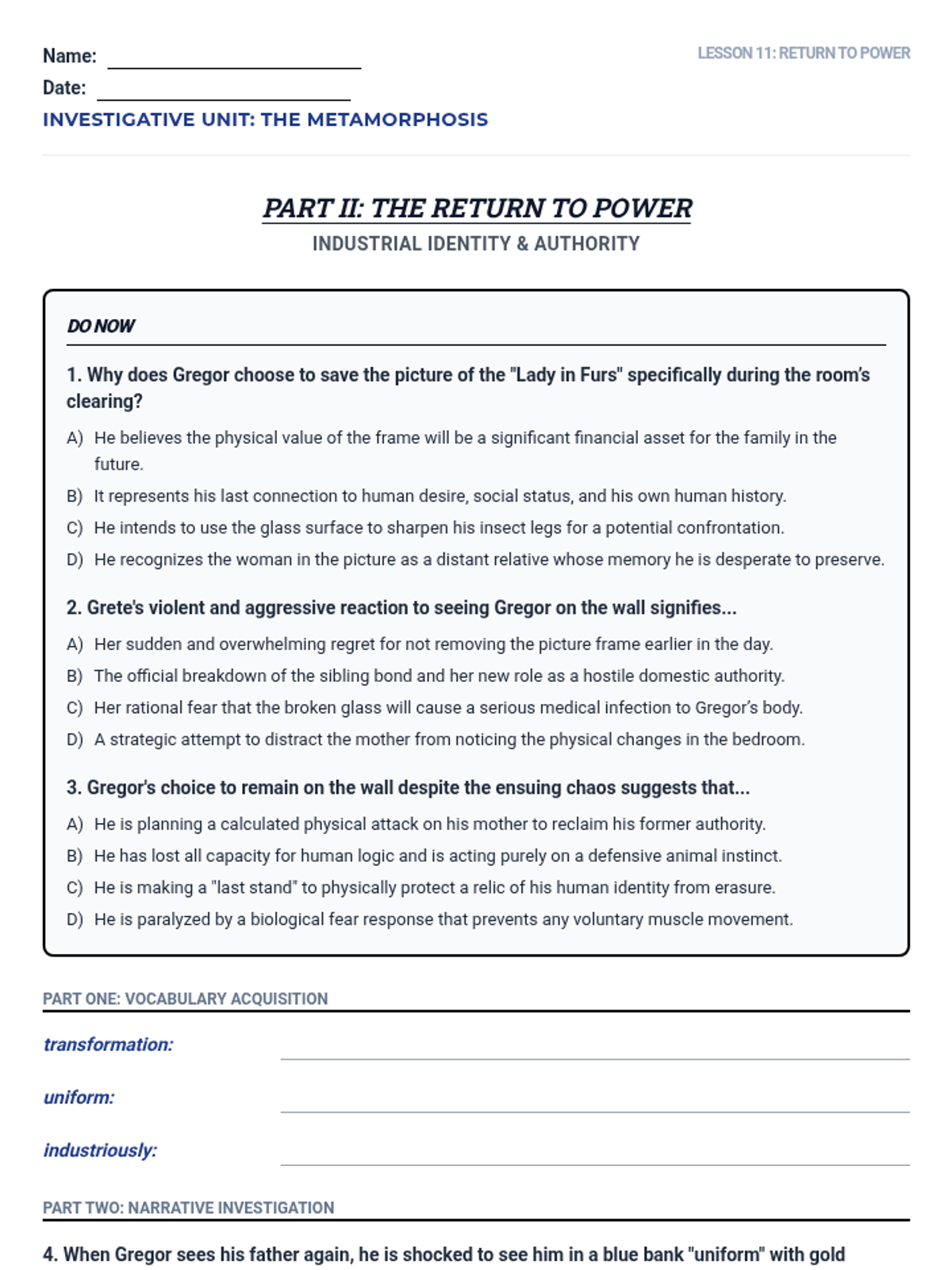
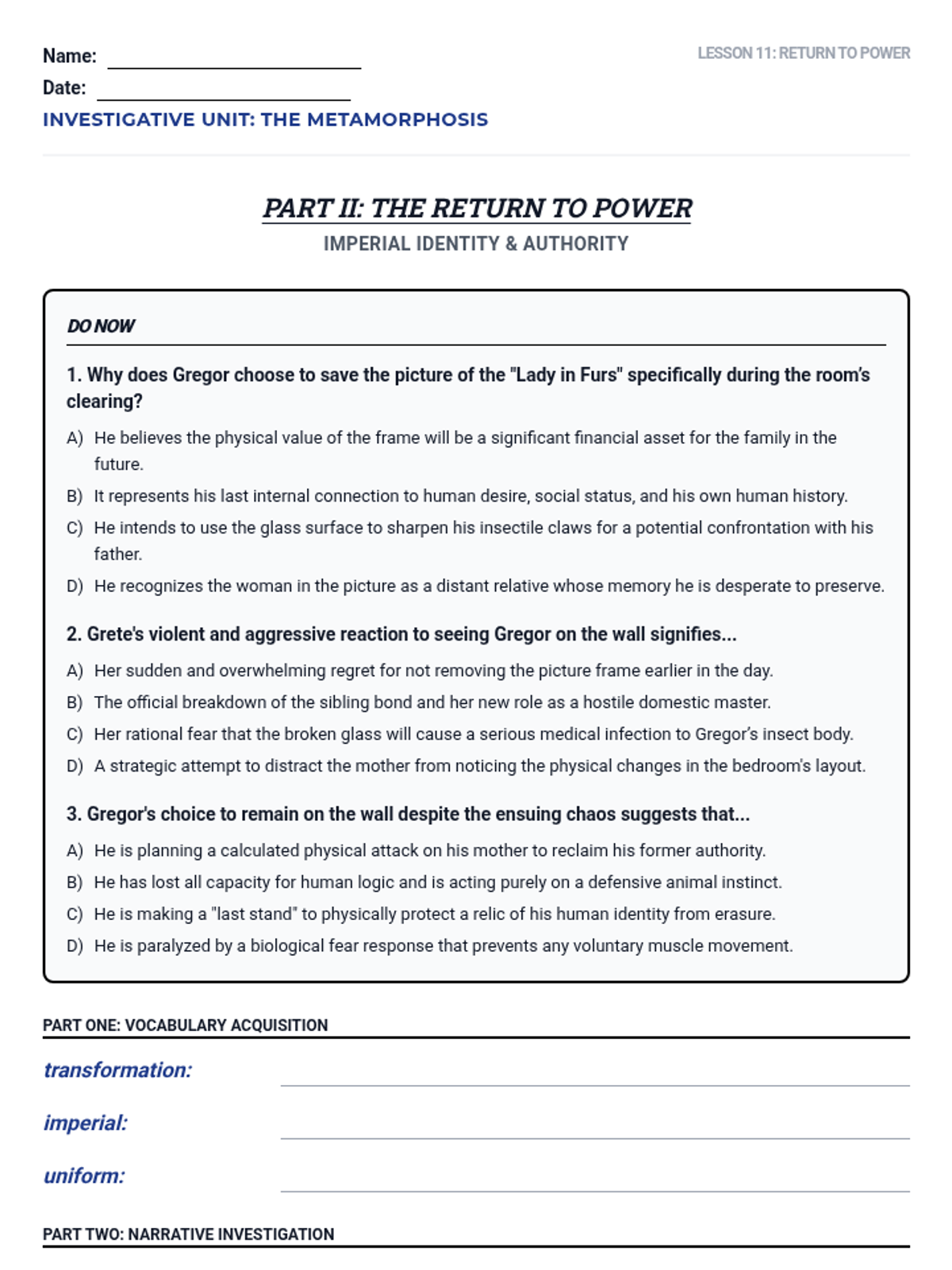
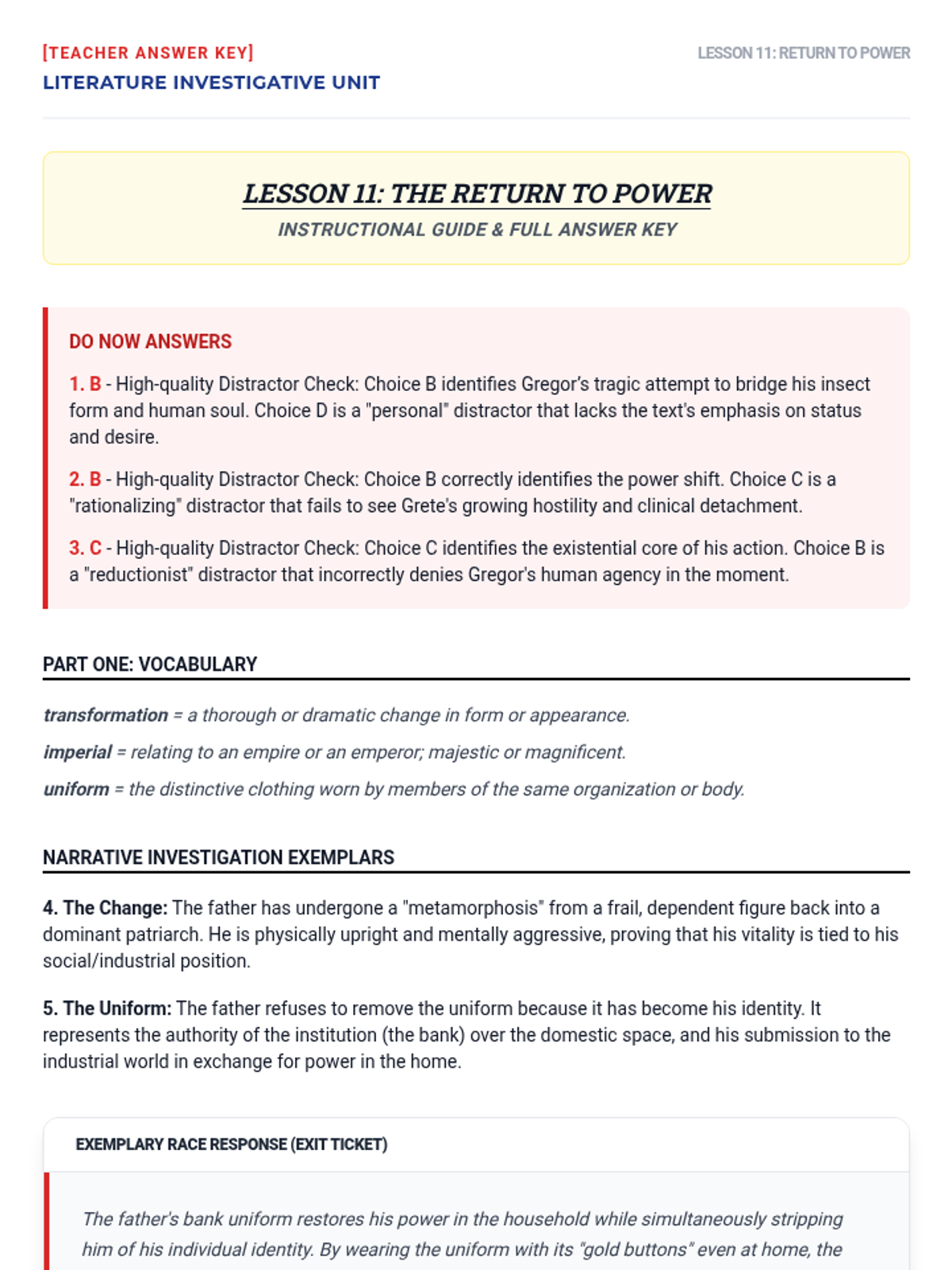
Analysis of the father's return to work and his transformation through the bank uniform. Themes of restored authority and industrial identity.
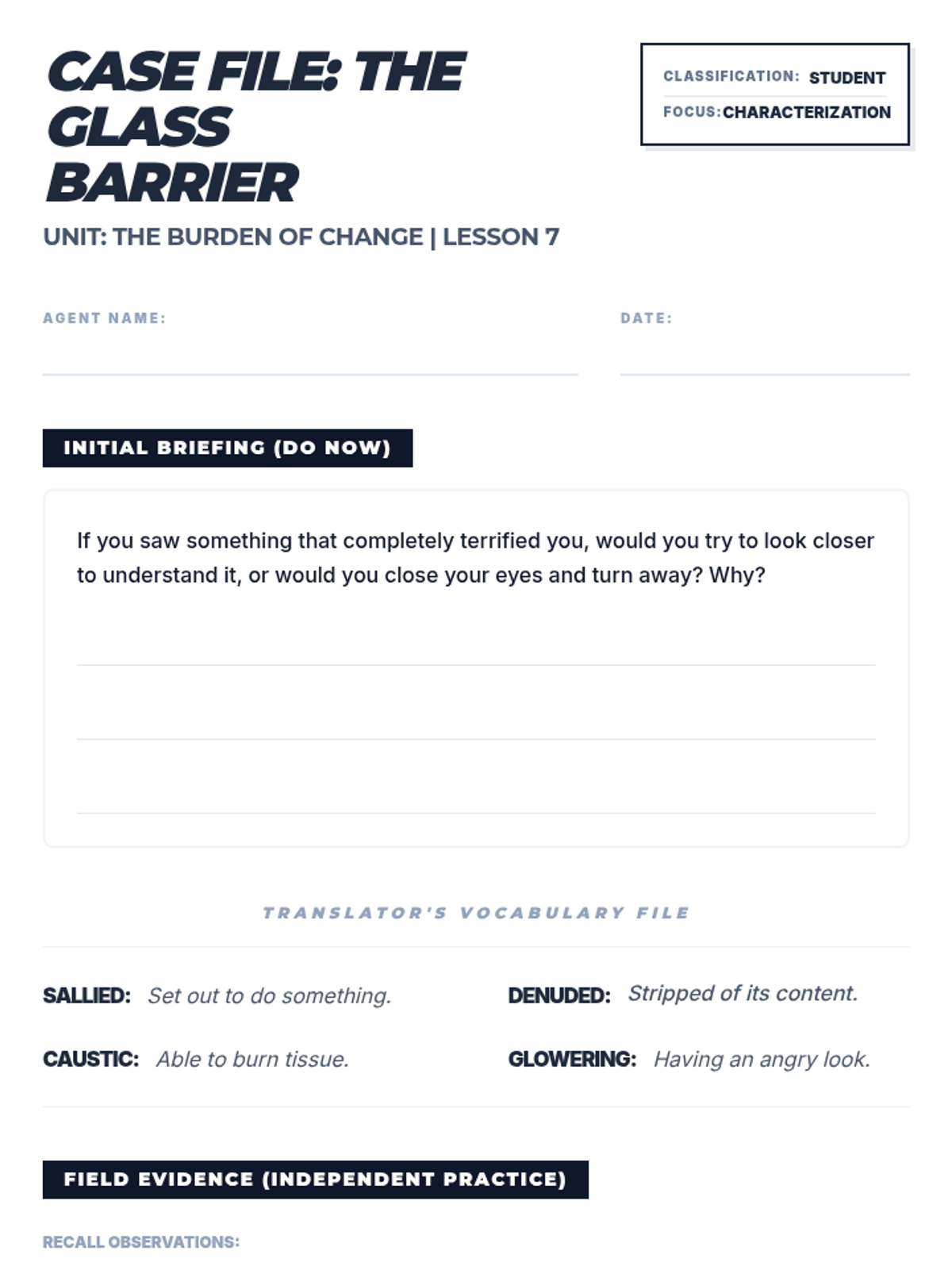
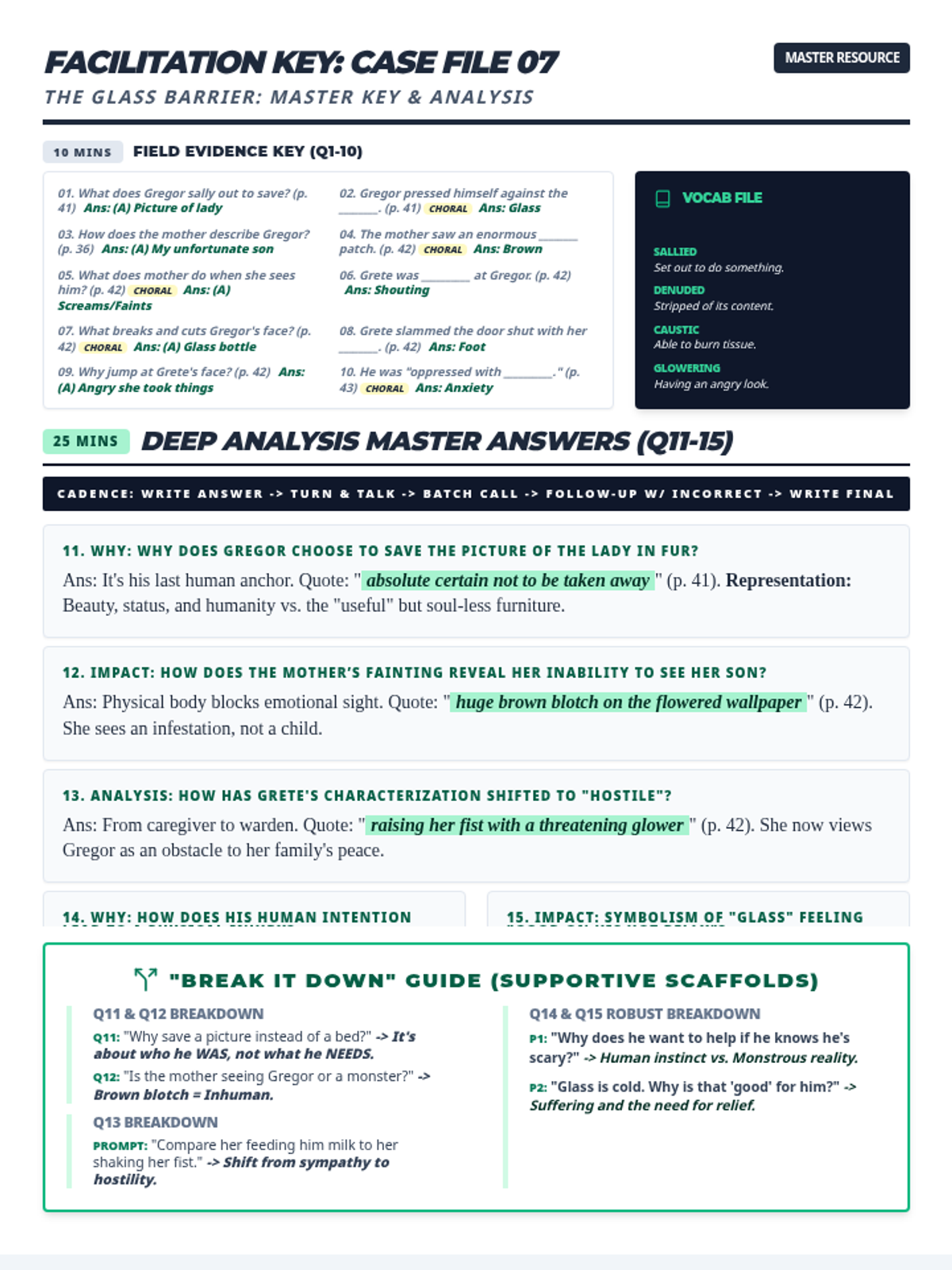
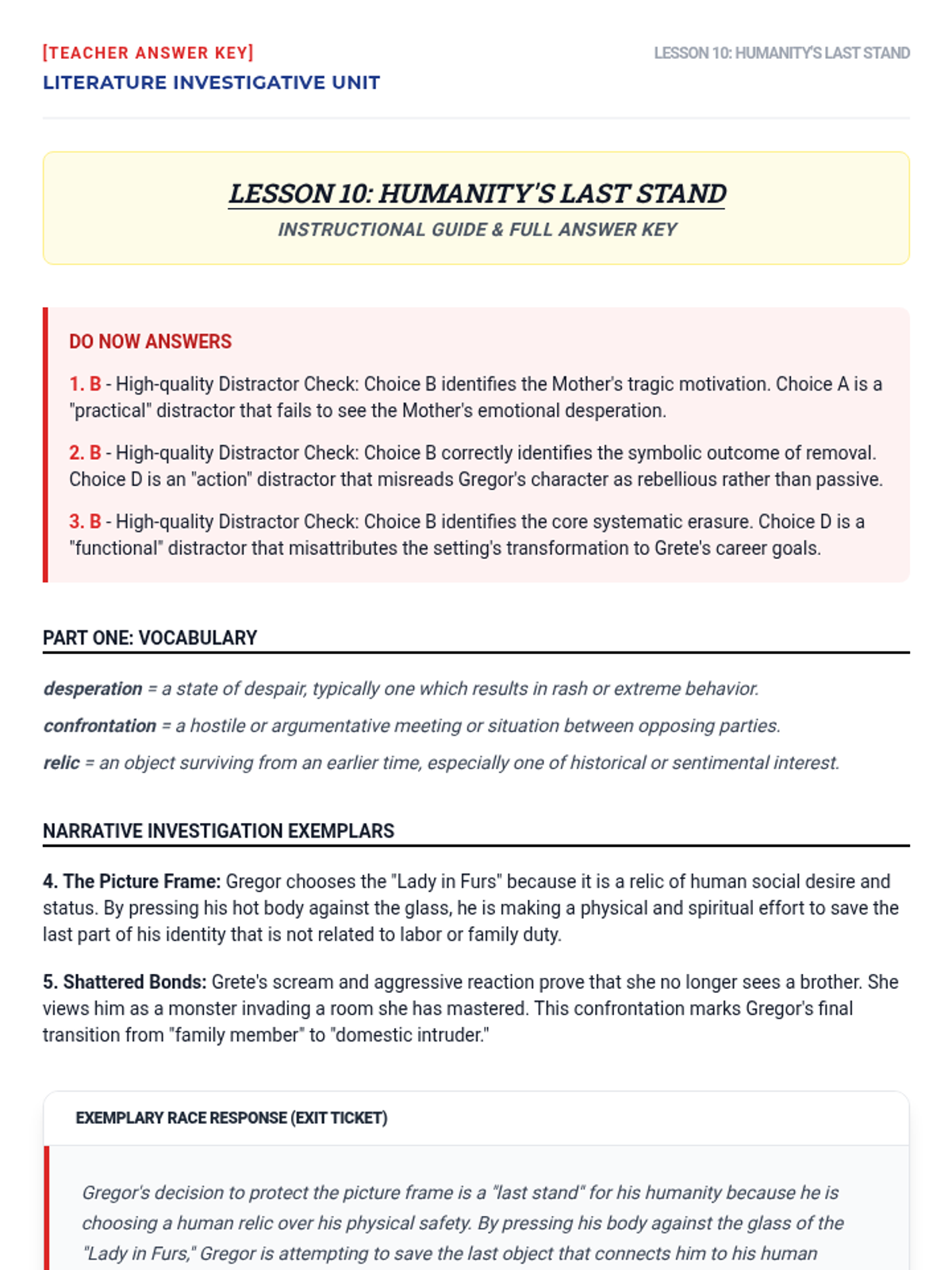
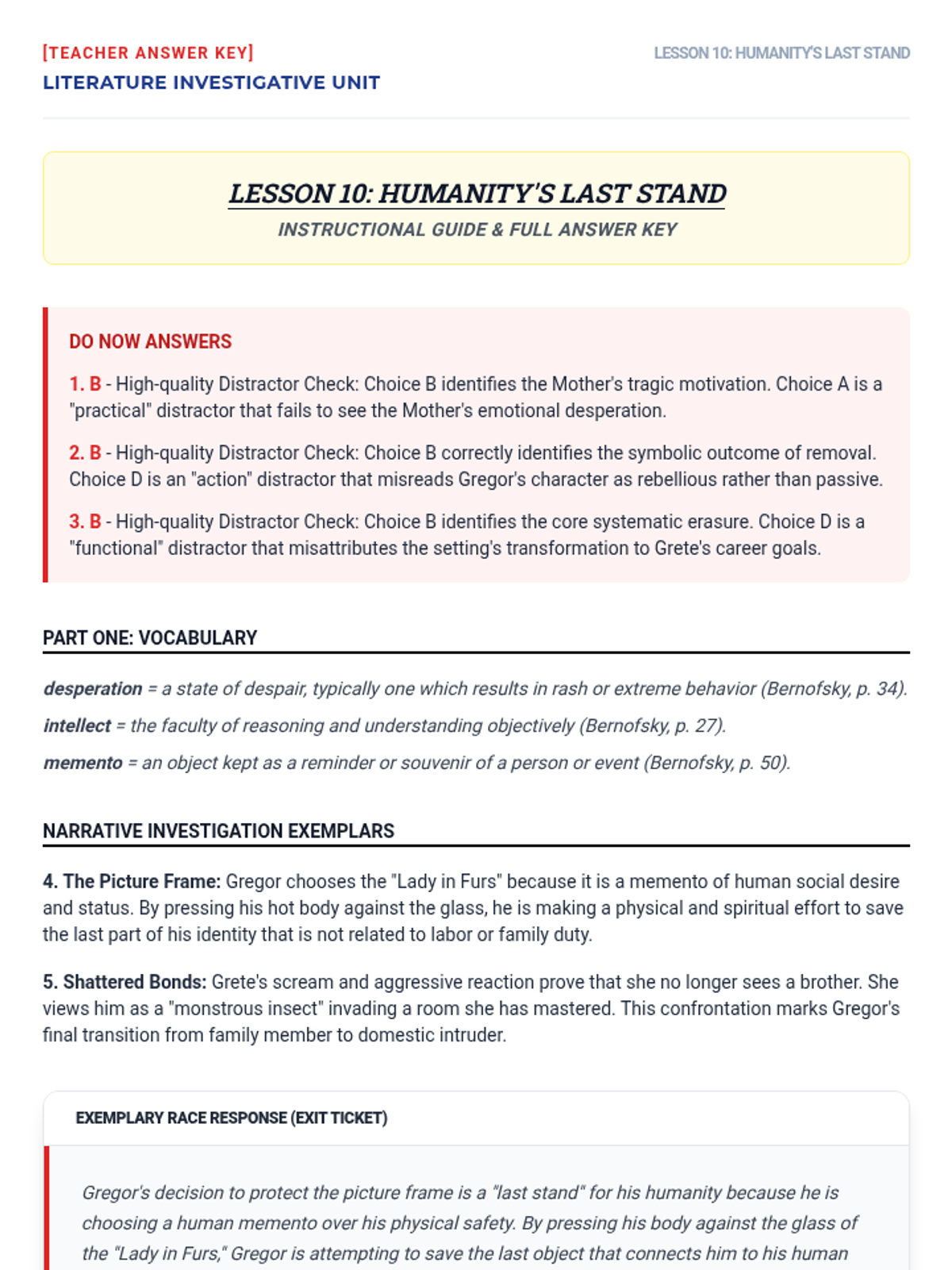
Gregor's desperate attempt to save his human identity by protecting the picture frame. Focus on the direct confrontation with Grete.
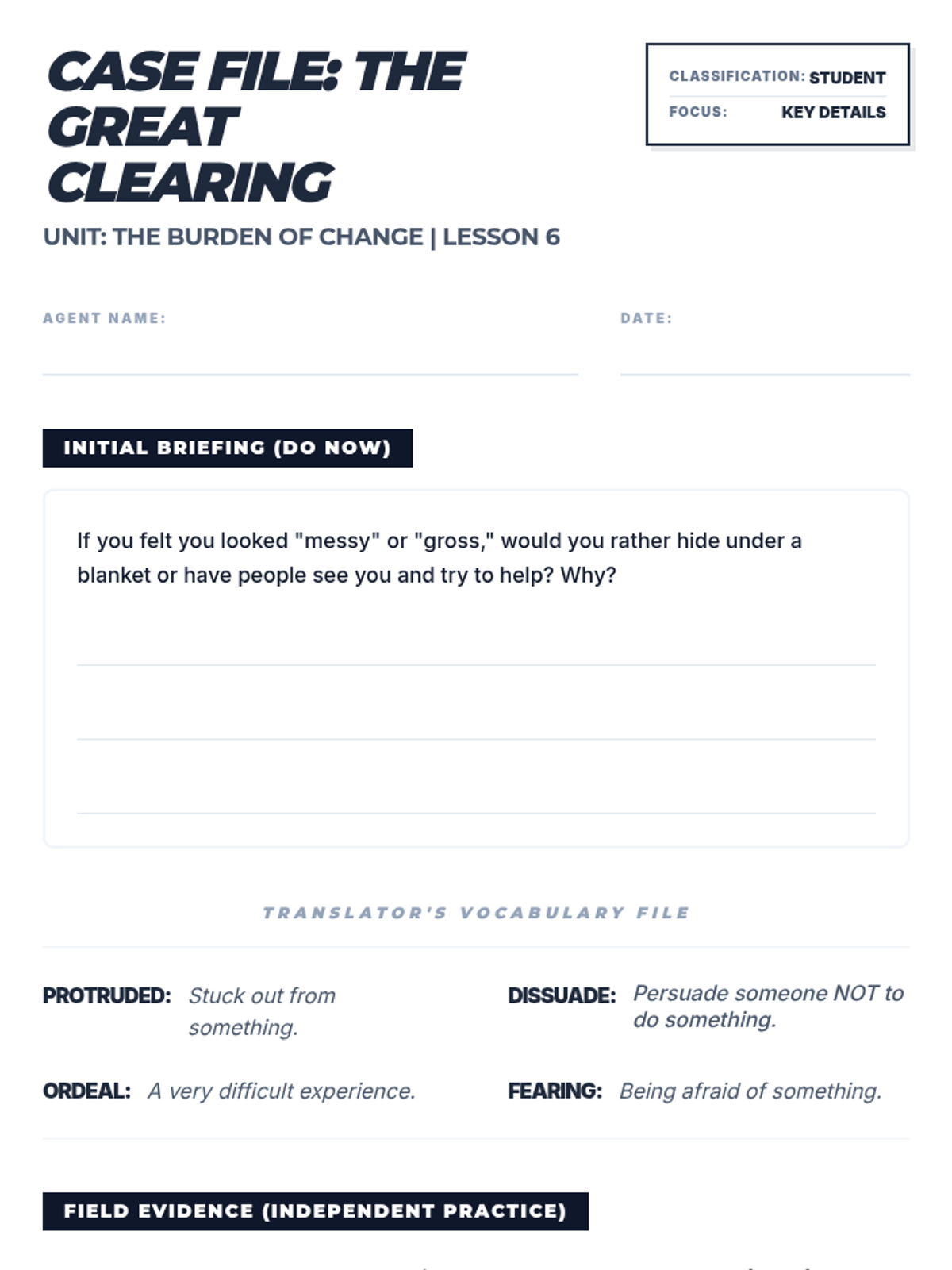
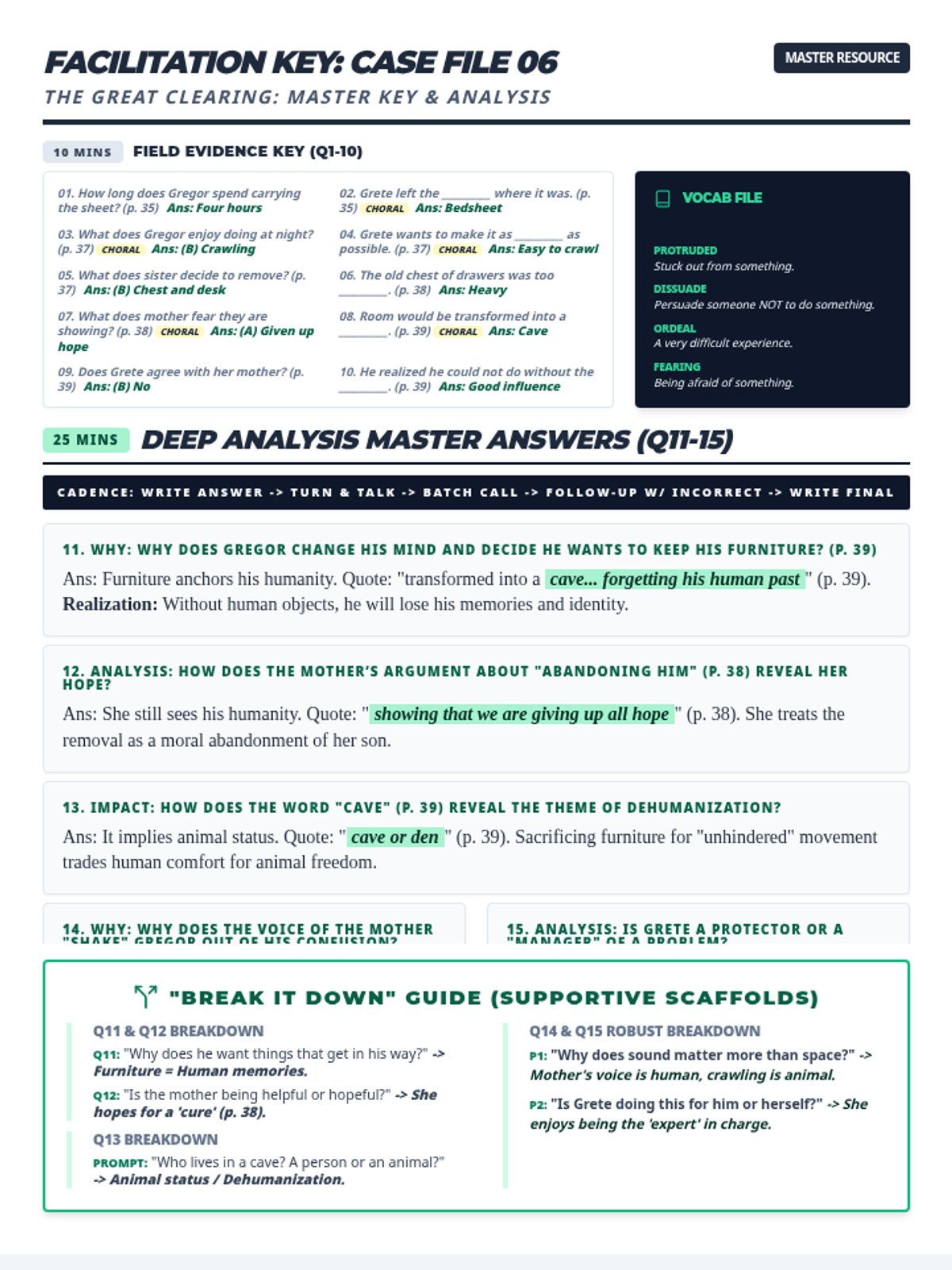
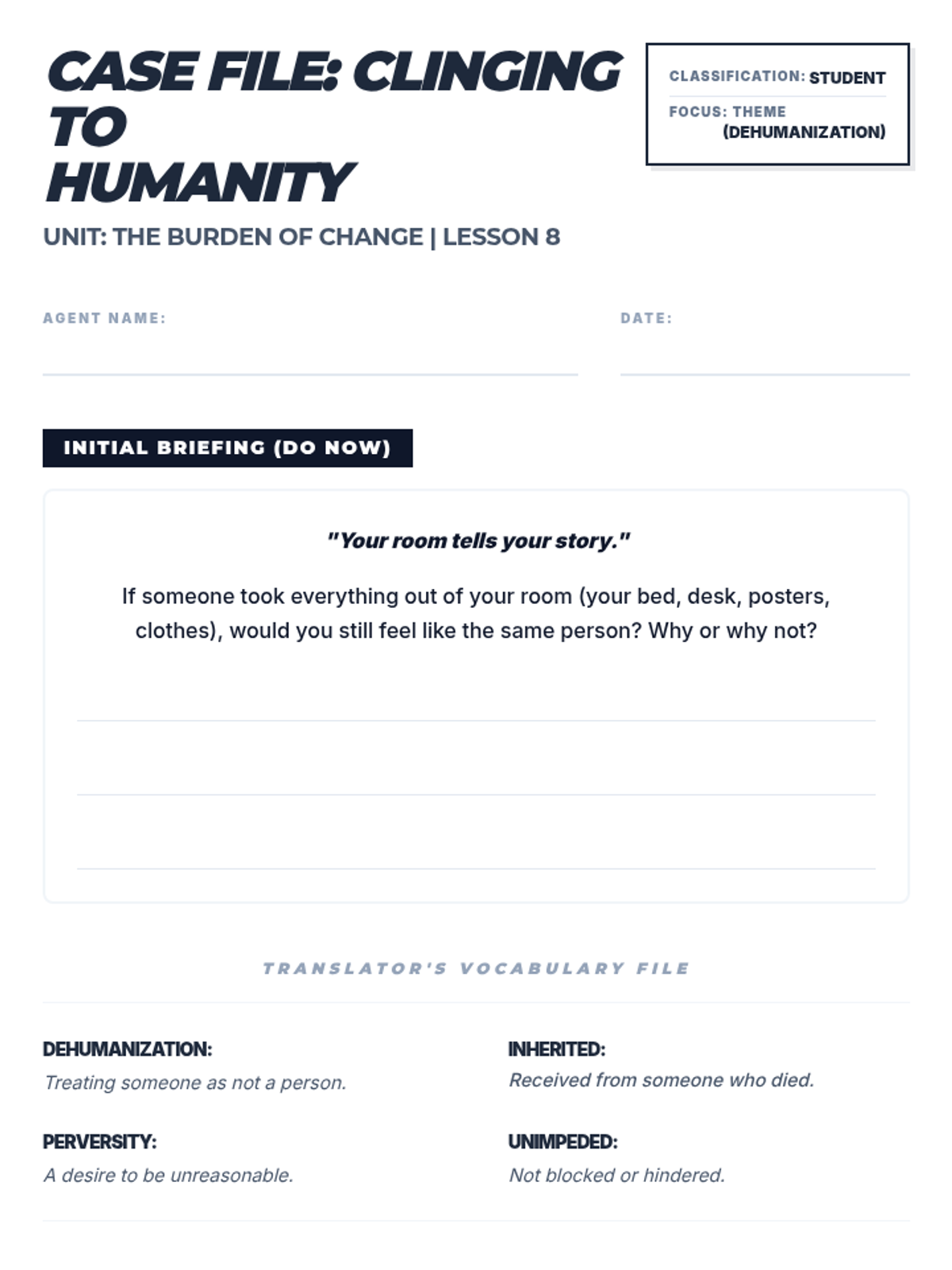
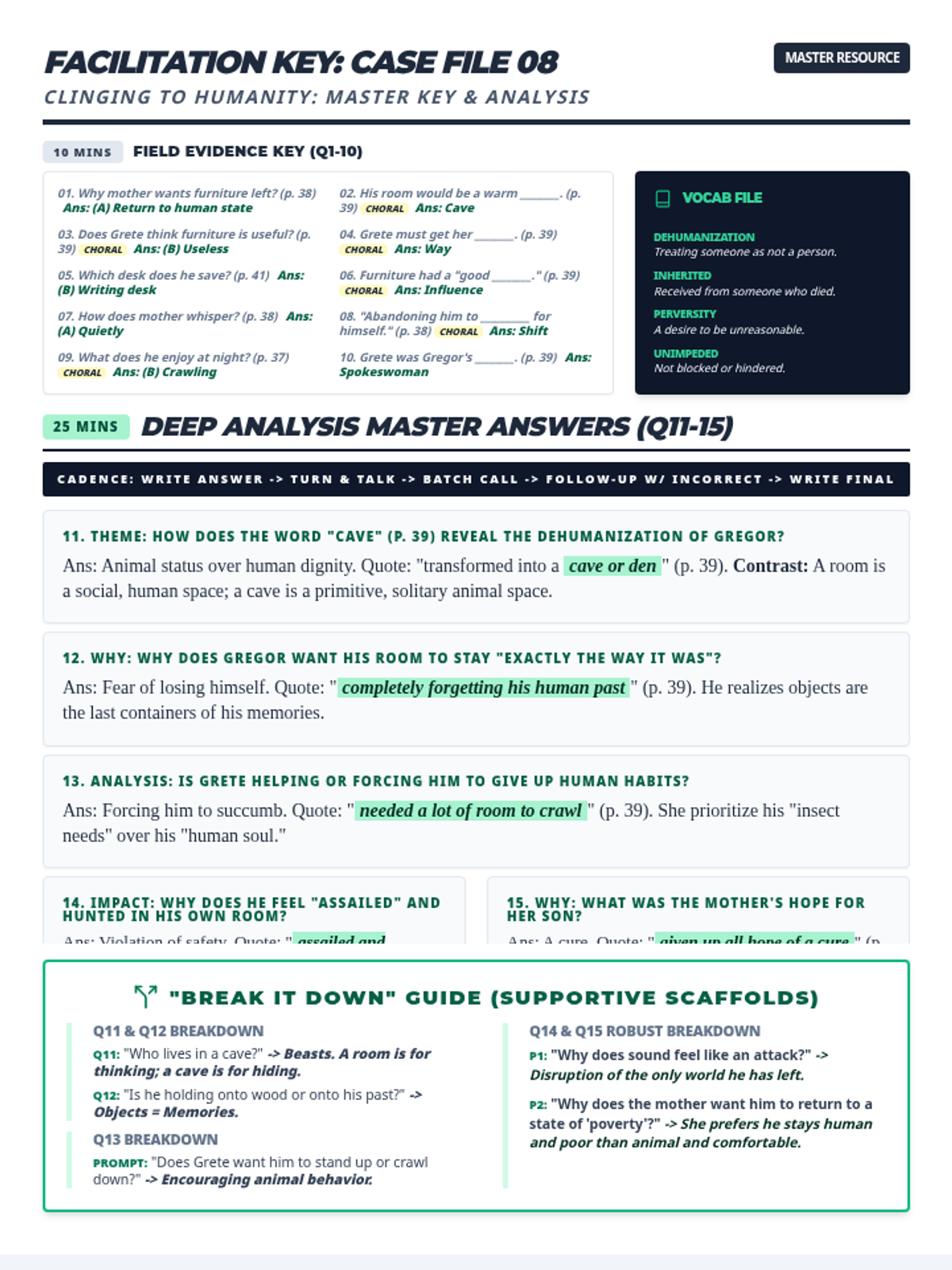
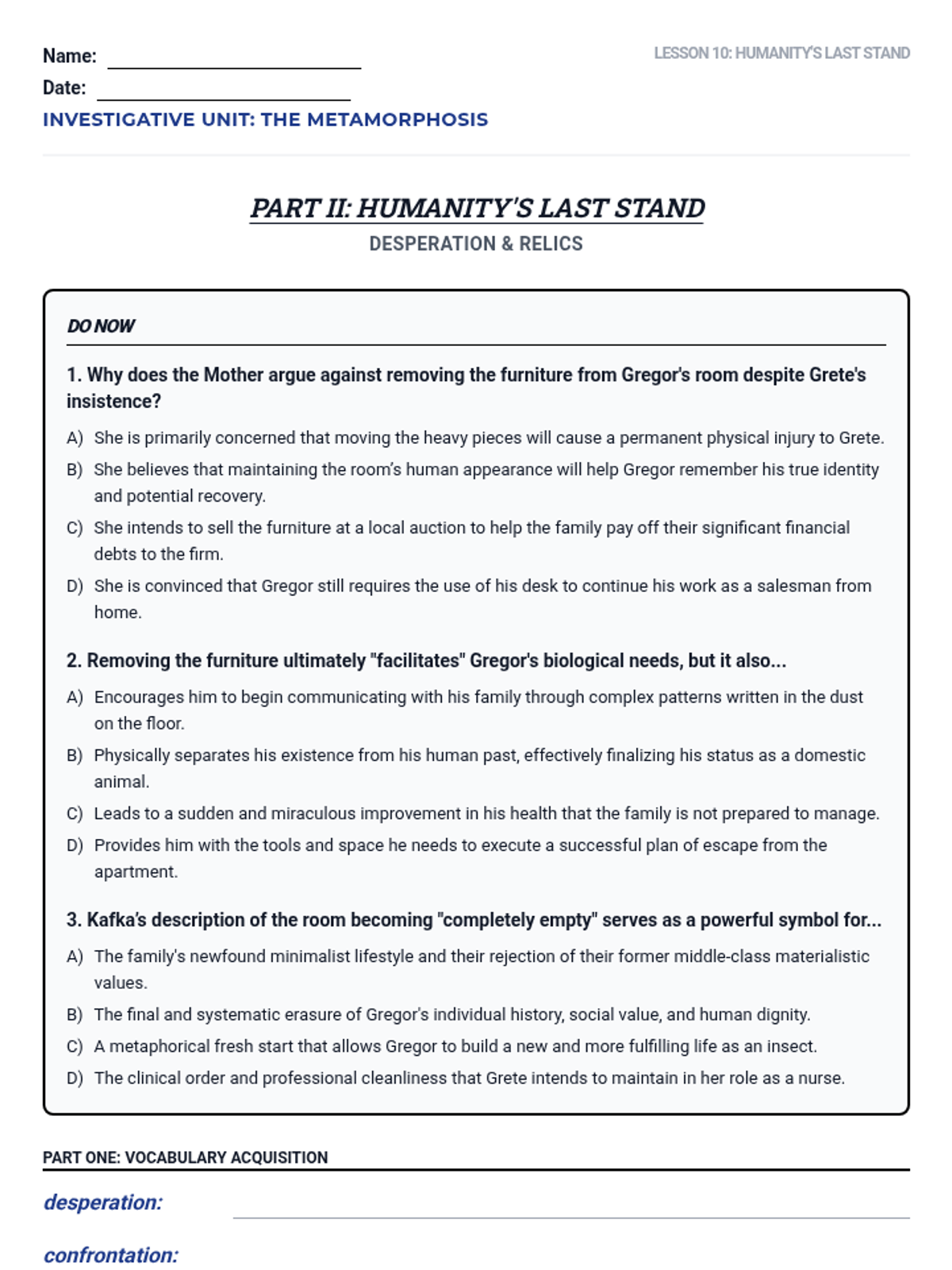
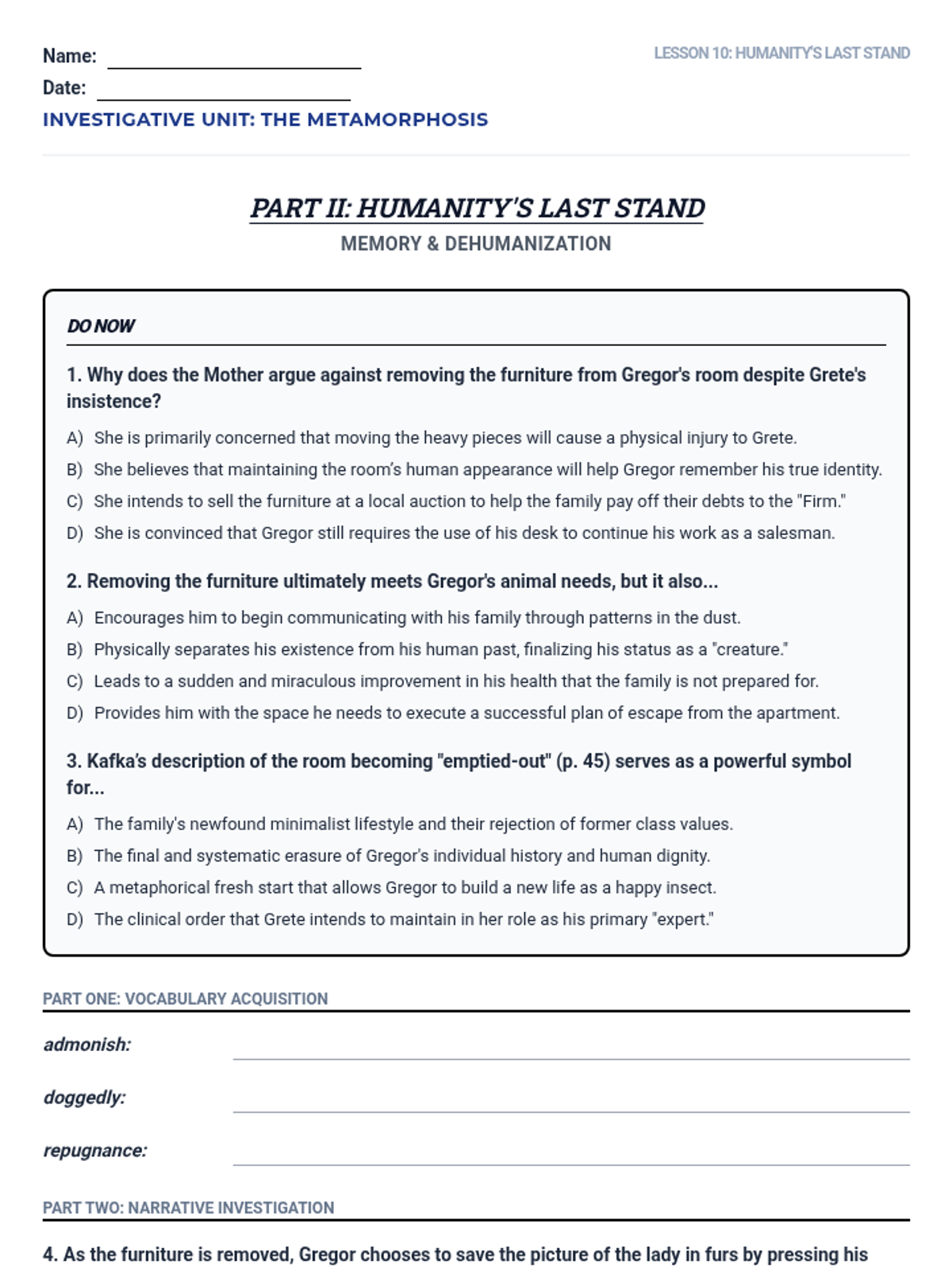
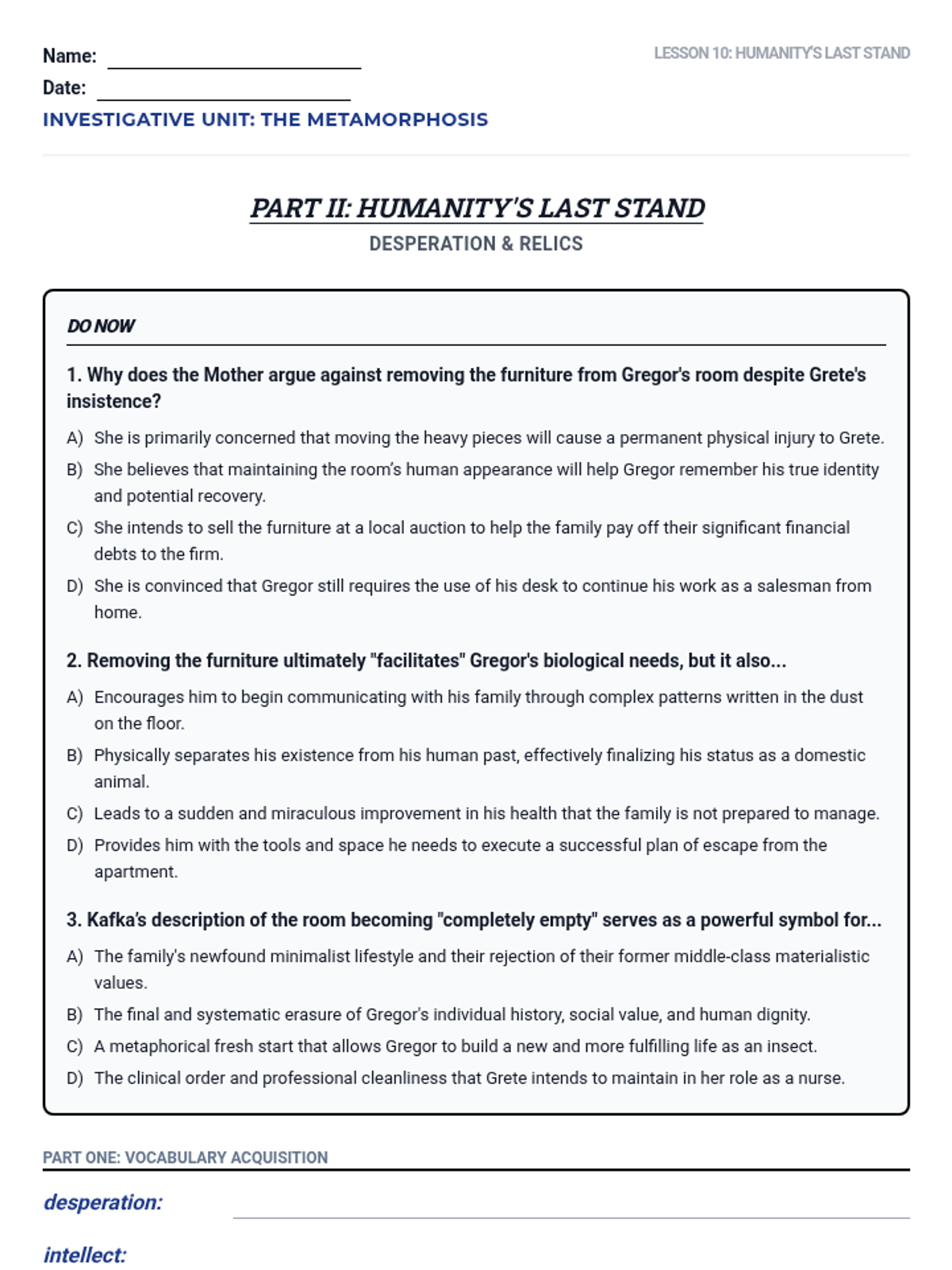
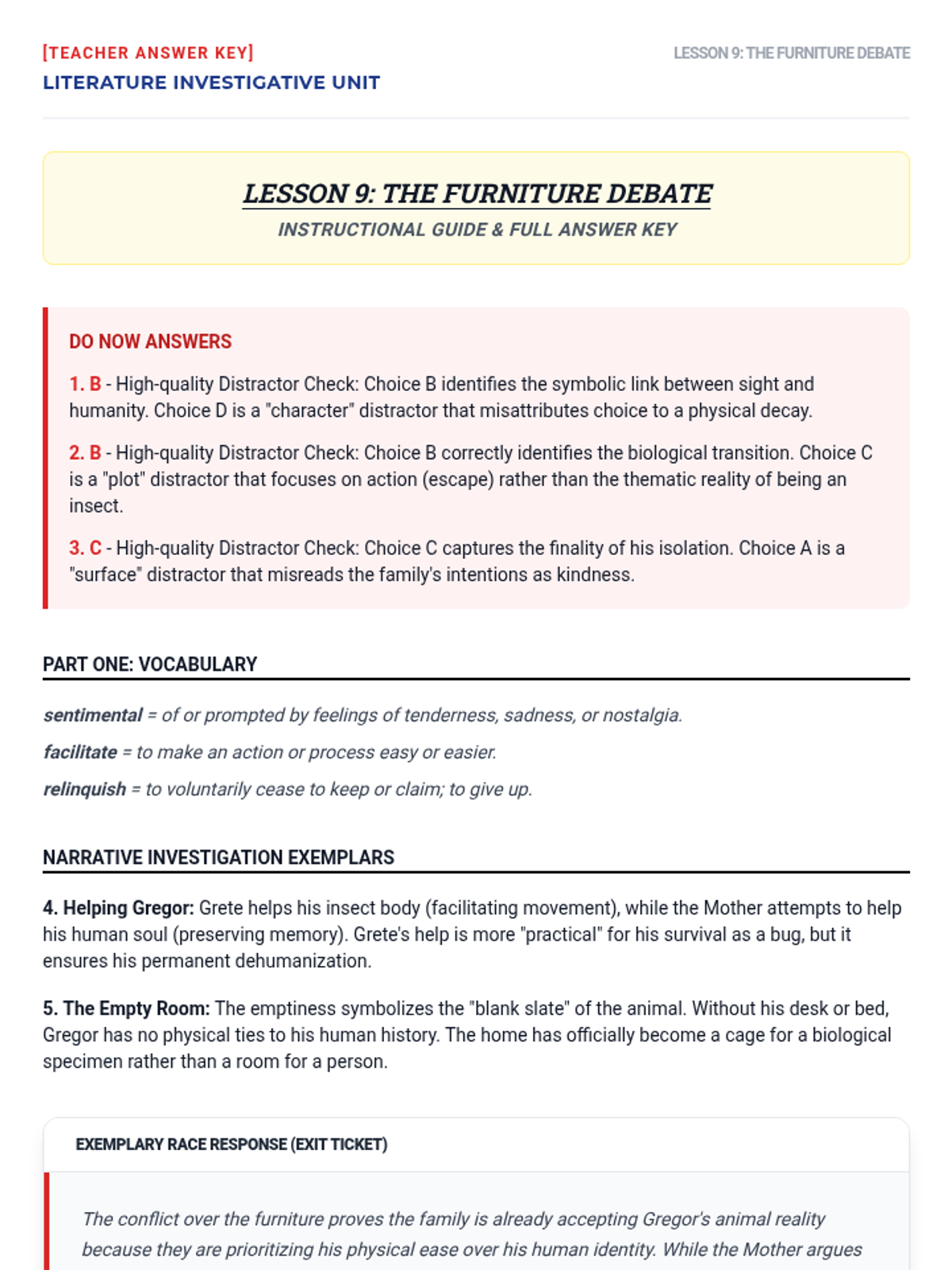
The conflict between Grete and the Mother over removing Gregor's furniture. Themes of preserving human memory vs. accepting animal reality.
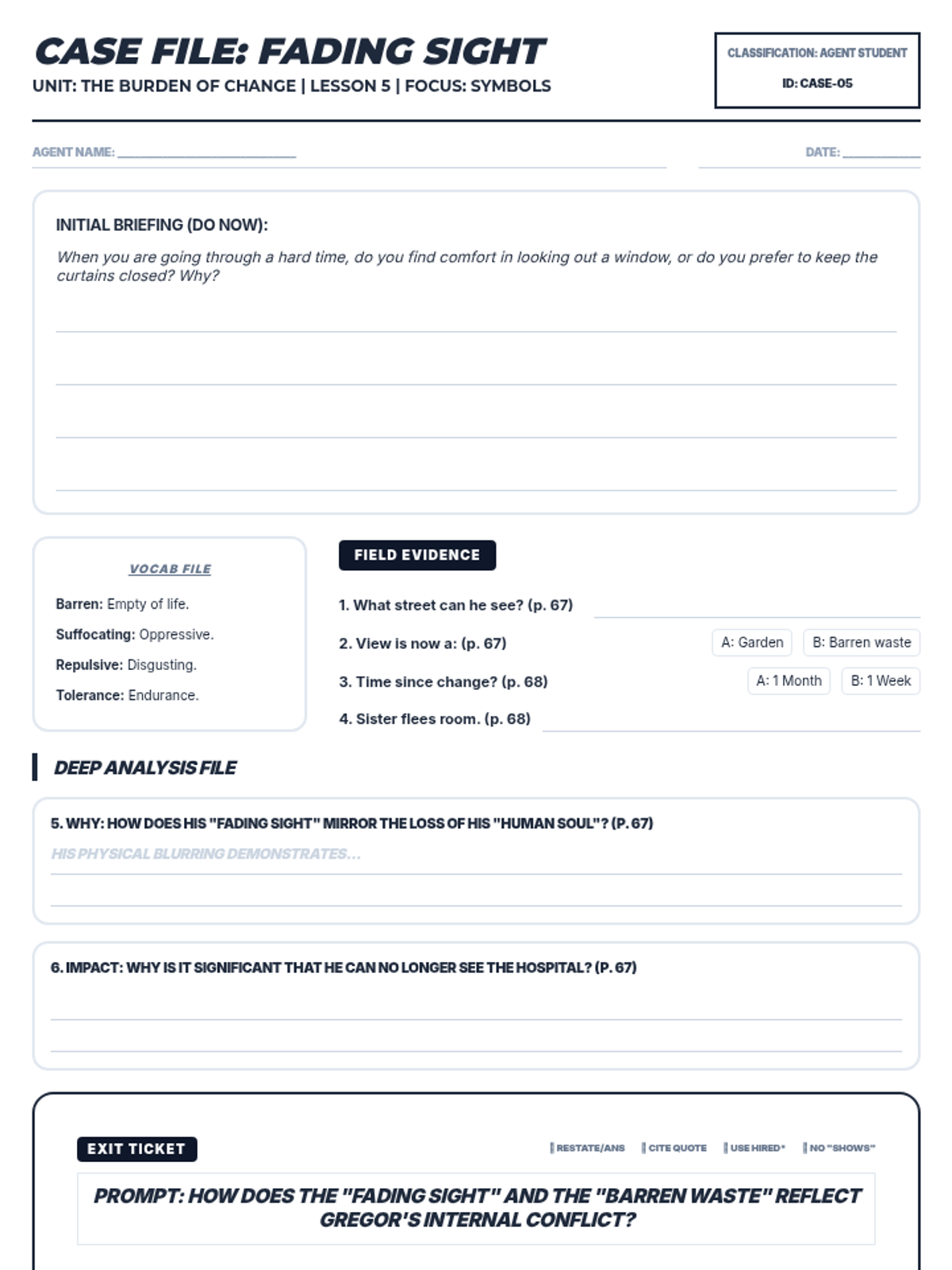
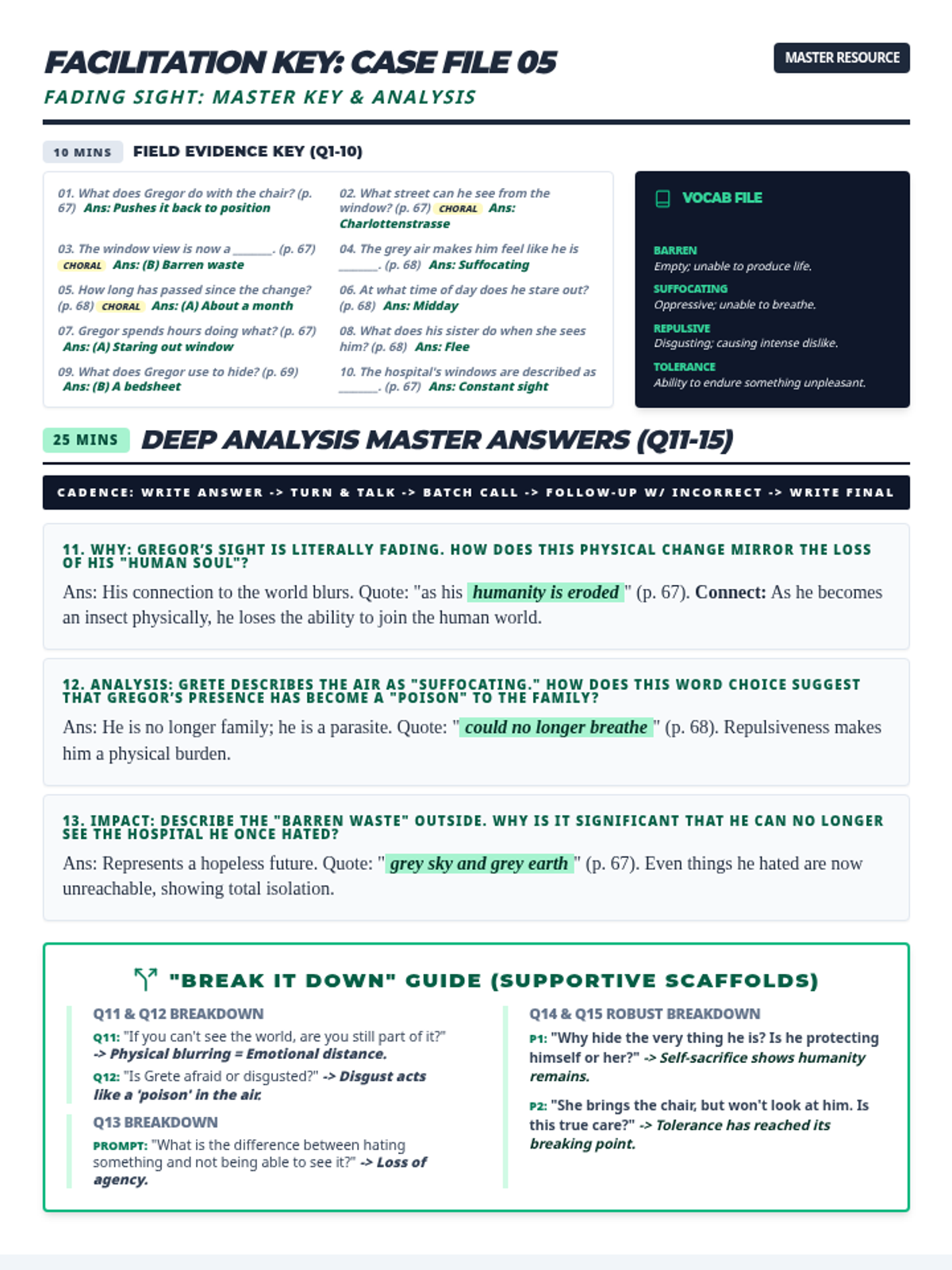
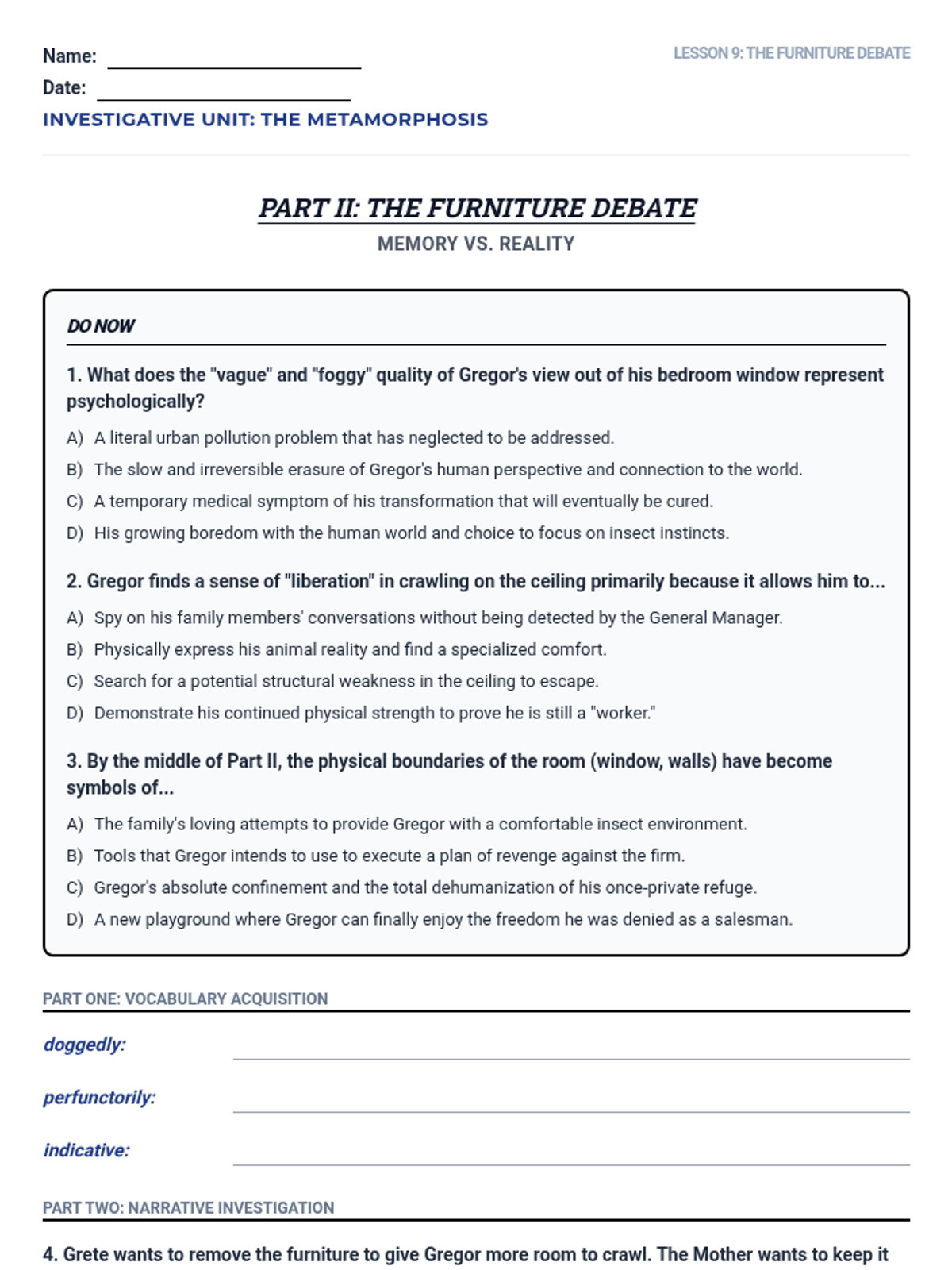
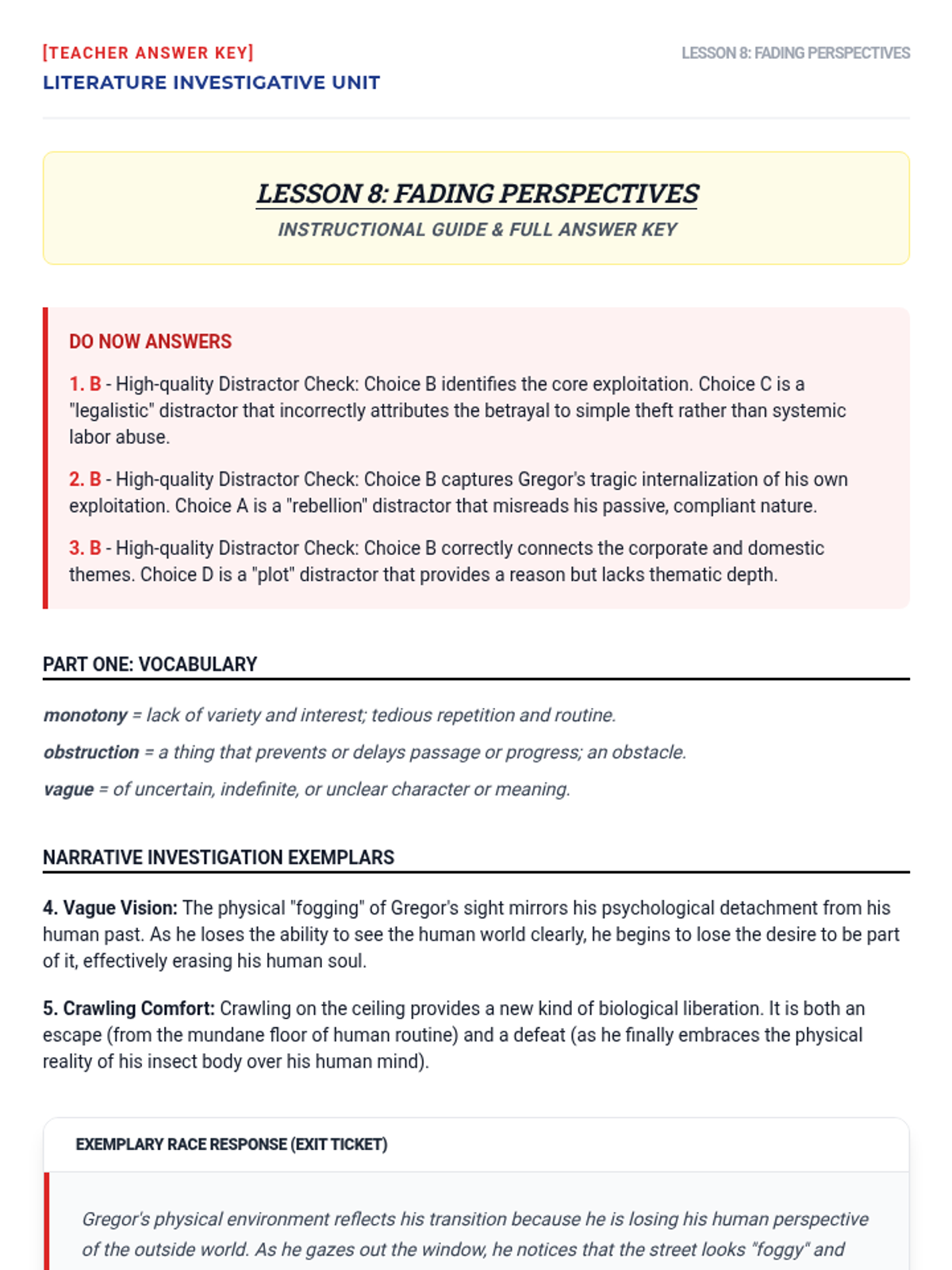
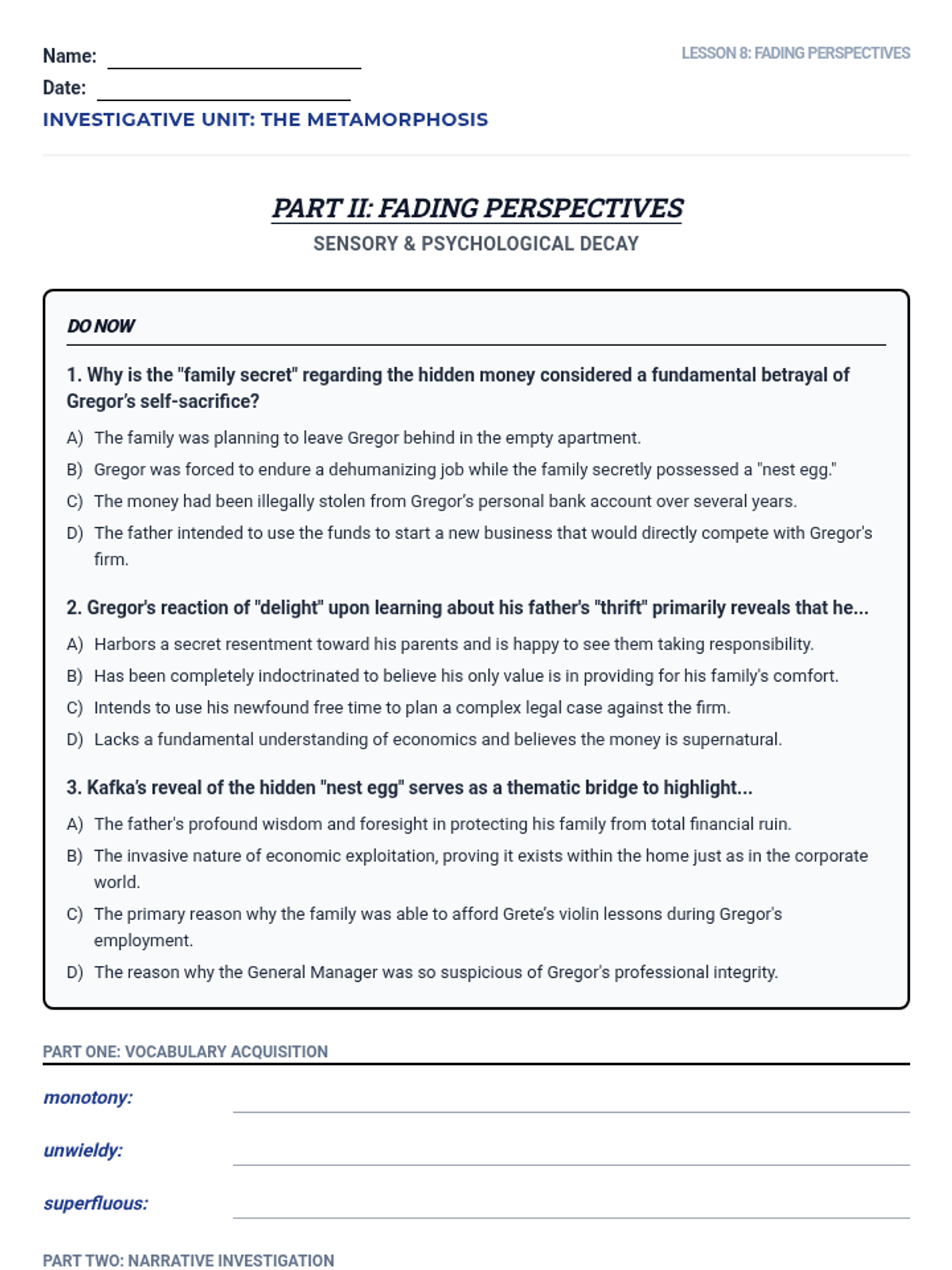
Students analyze Gregor's fading perception of the human world through his window view and his growing physical comfort in animalistic behaviors.
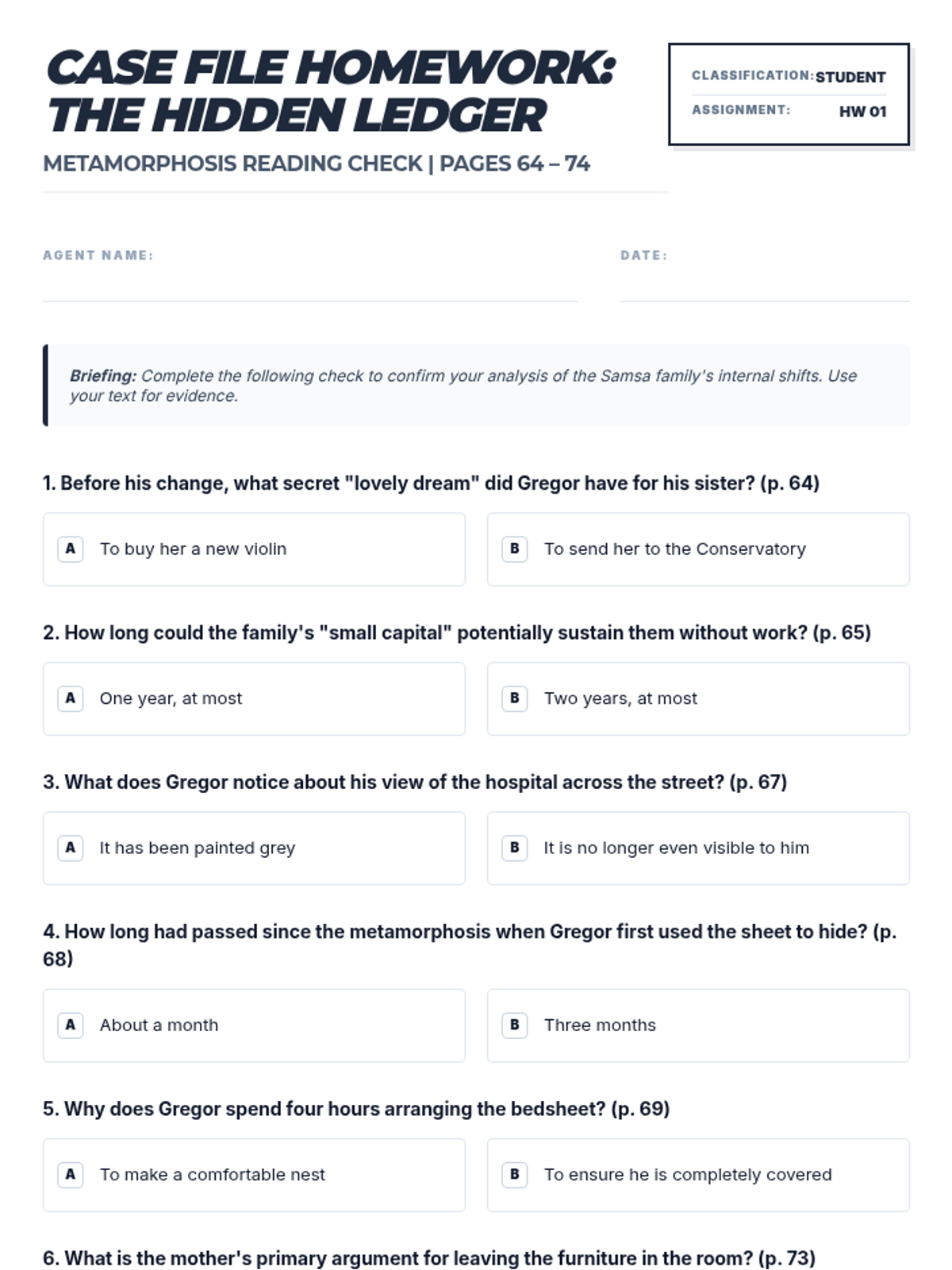
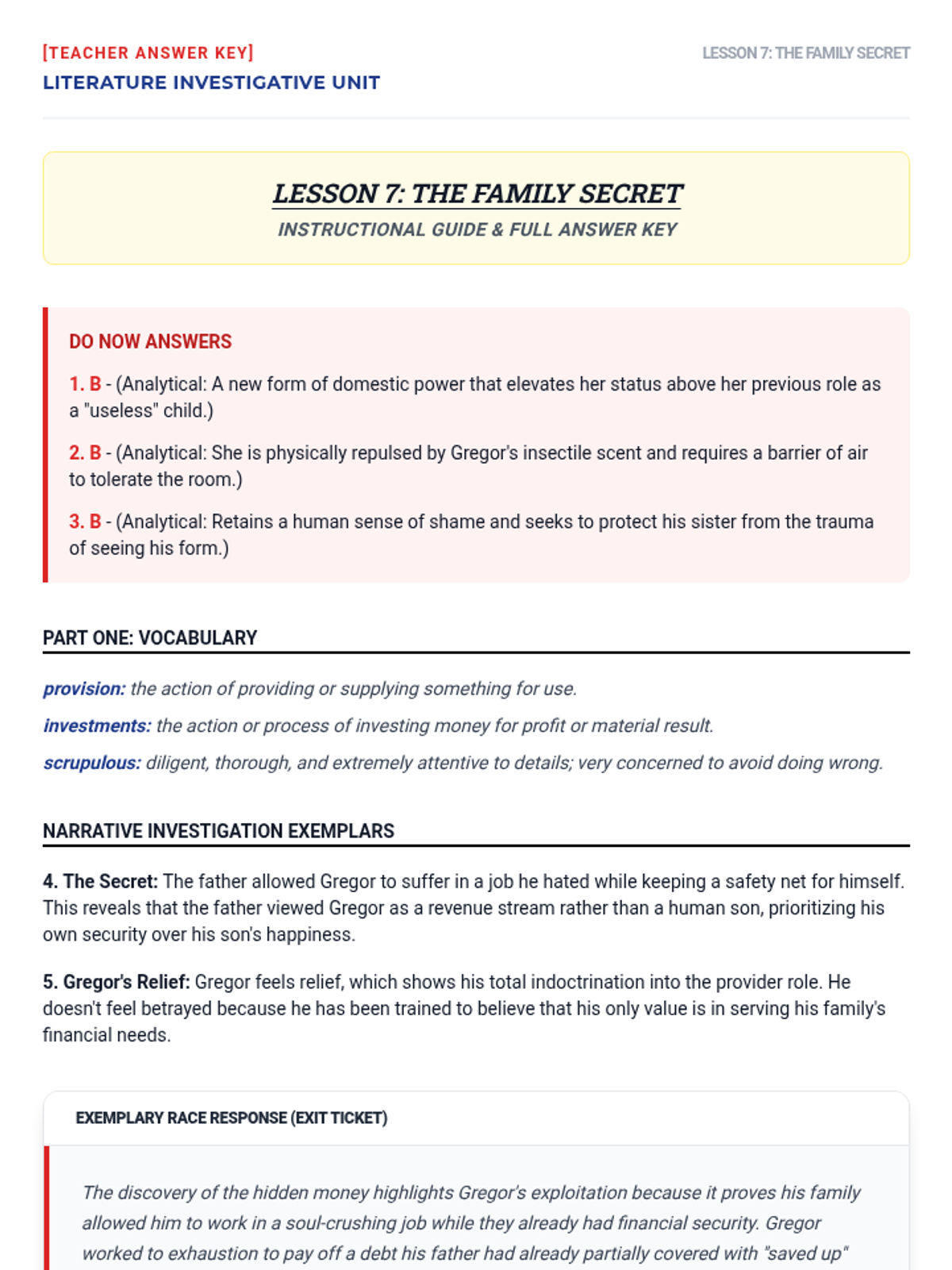
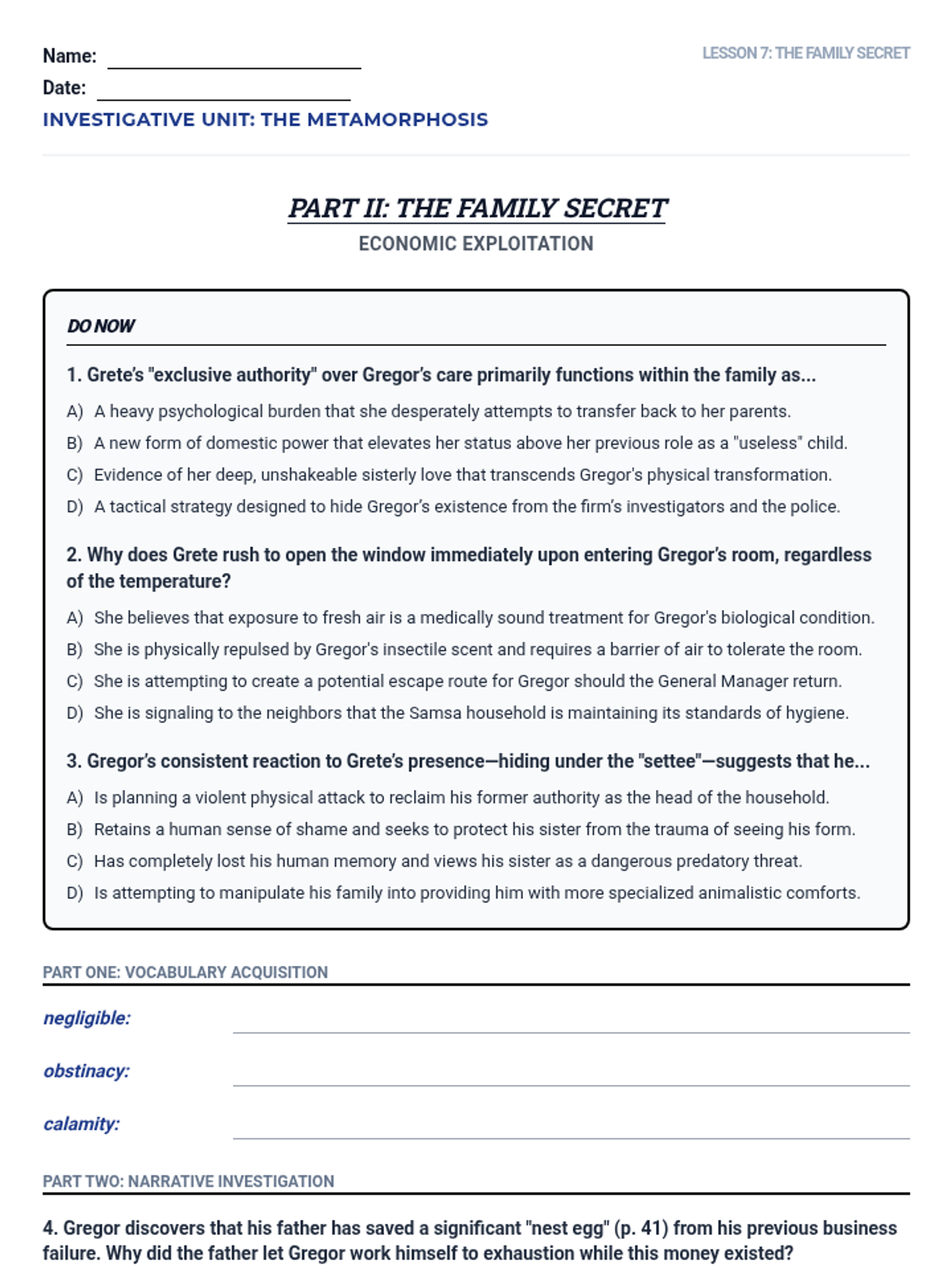
Analysis of the father's hidden financial assets and the betrayal of Gregor's role as the sole provider. Themes of economic exploitation.
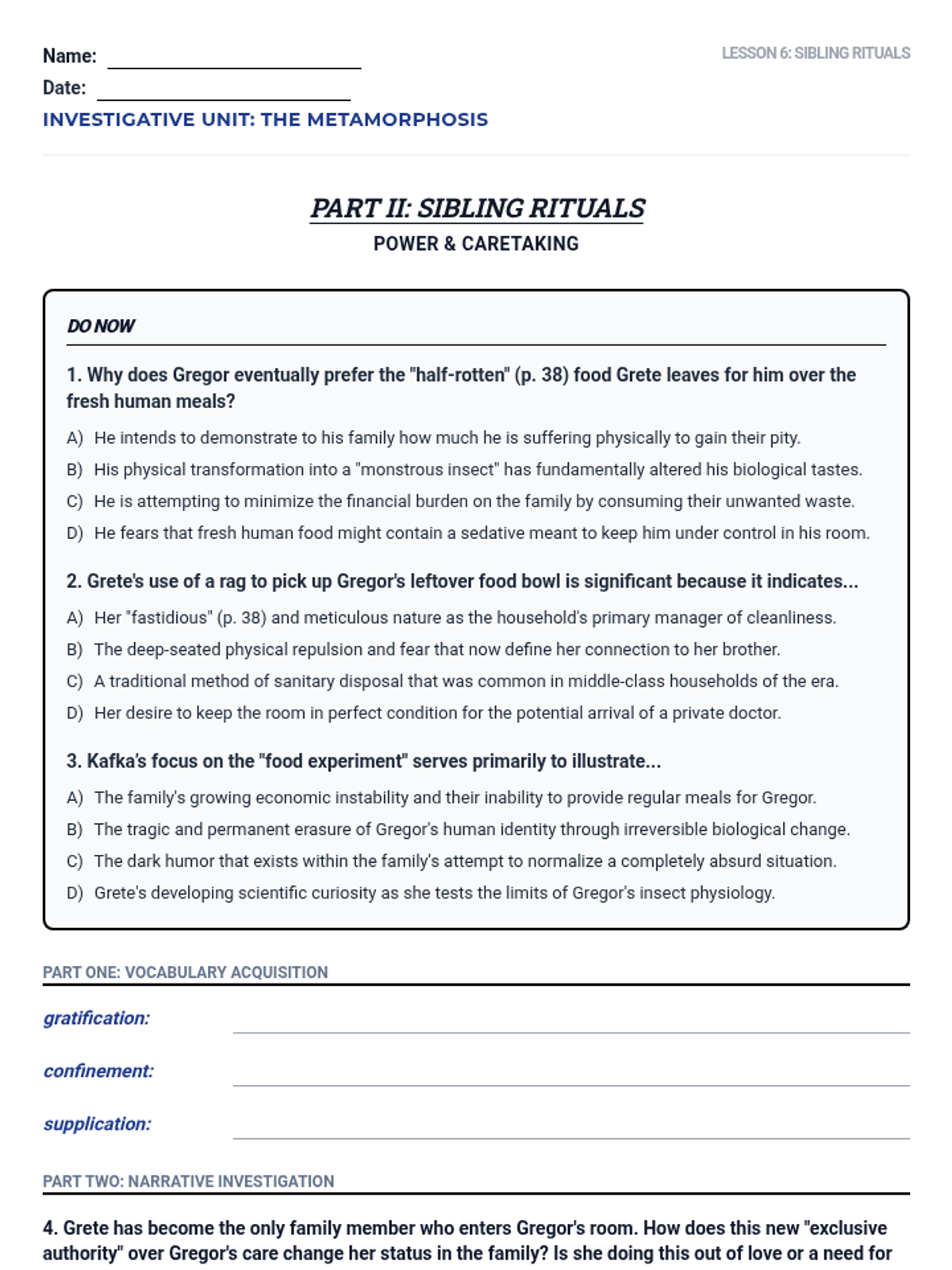
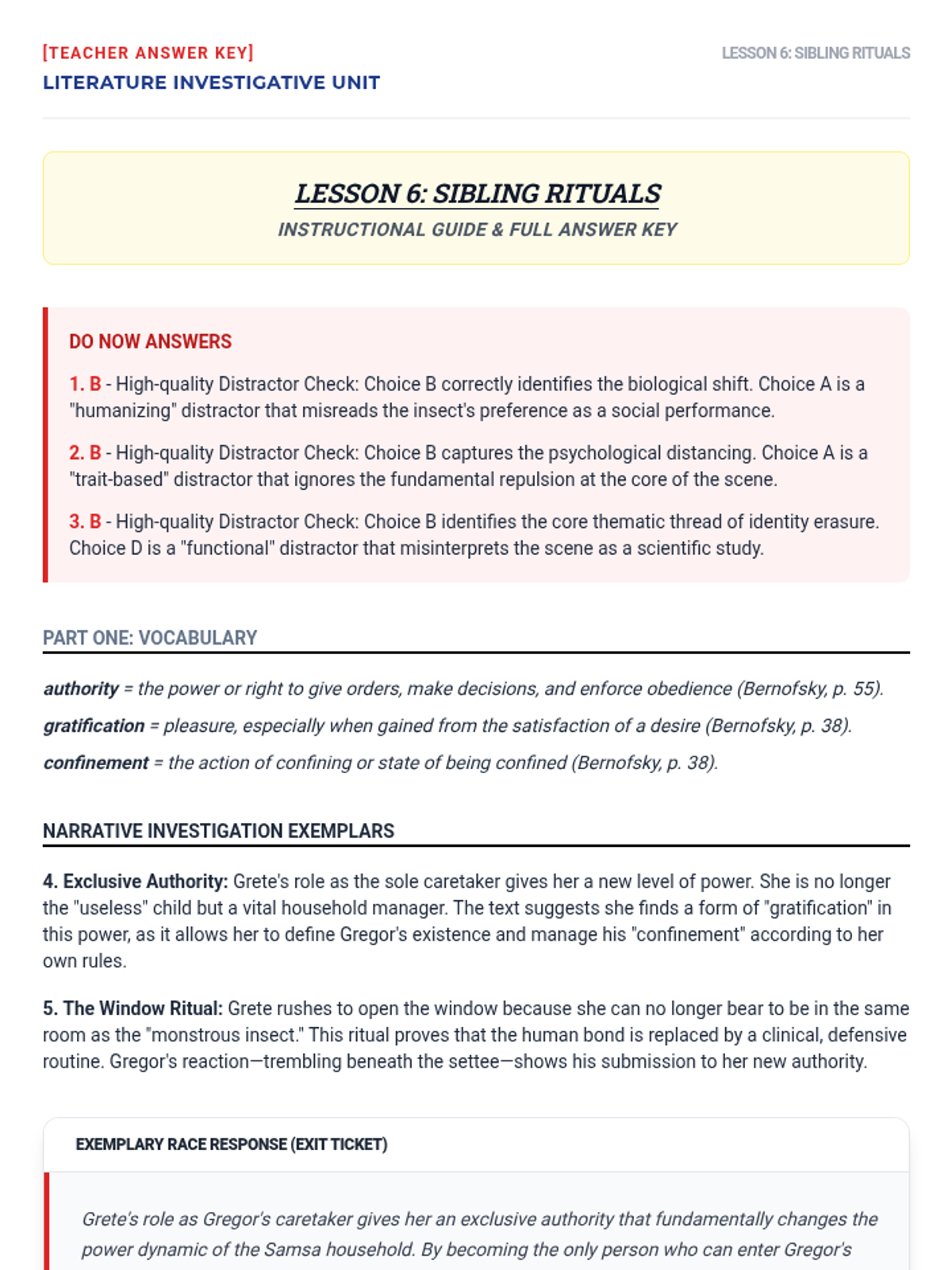
Students examine the changing power dynamic between Gregor and Grete, focusing on her new ritualistic authority as his sole caretaker.
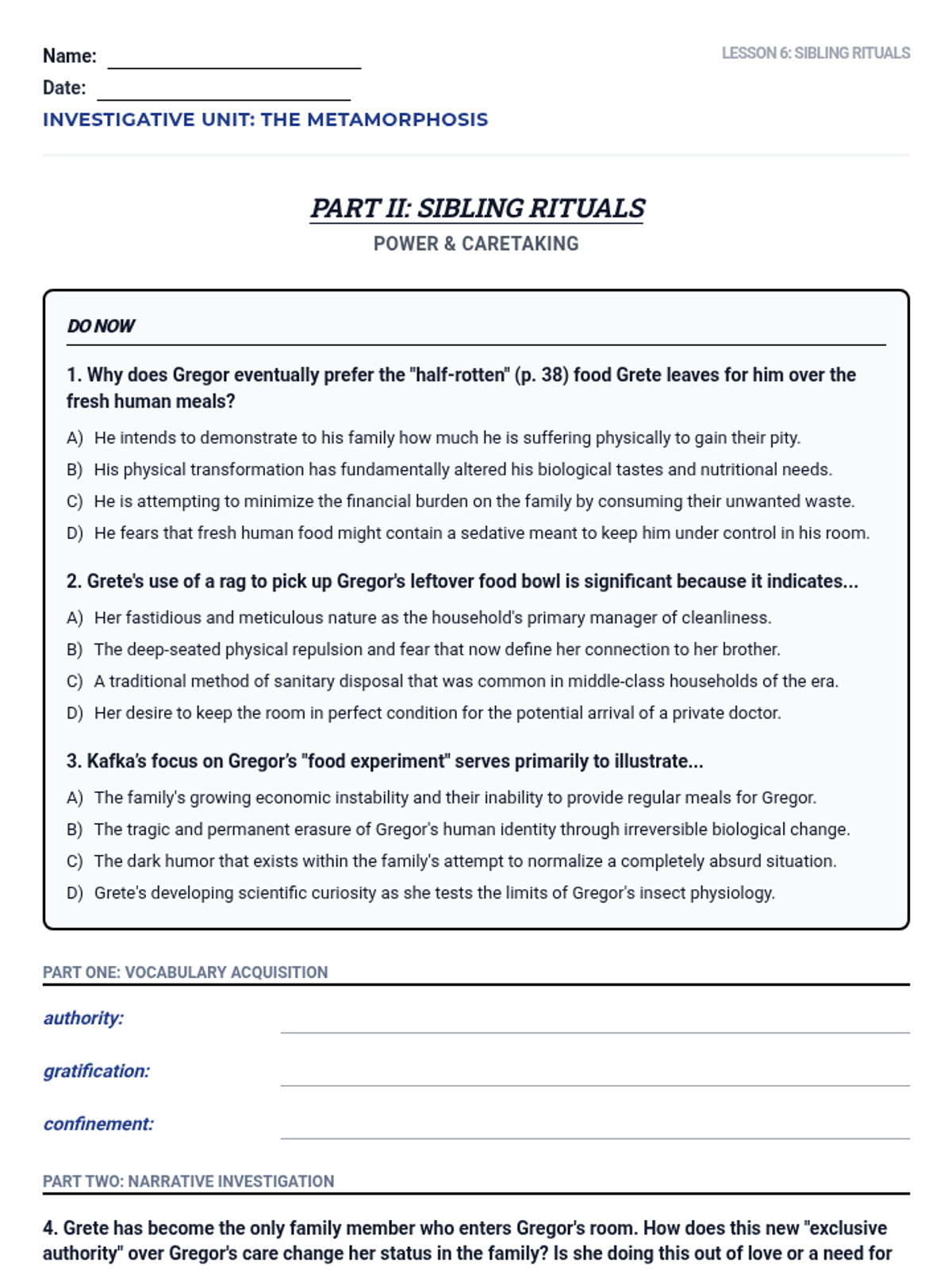
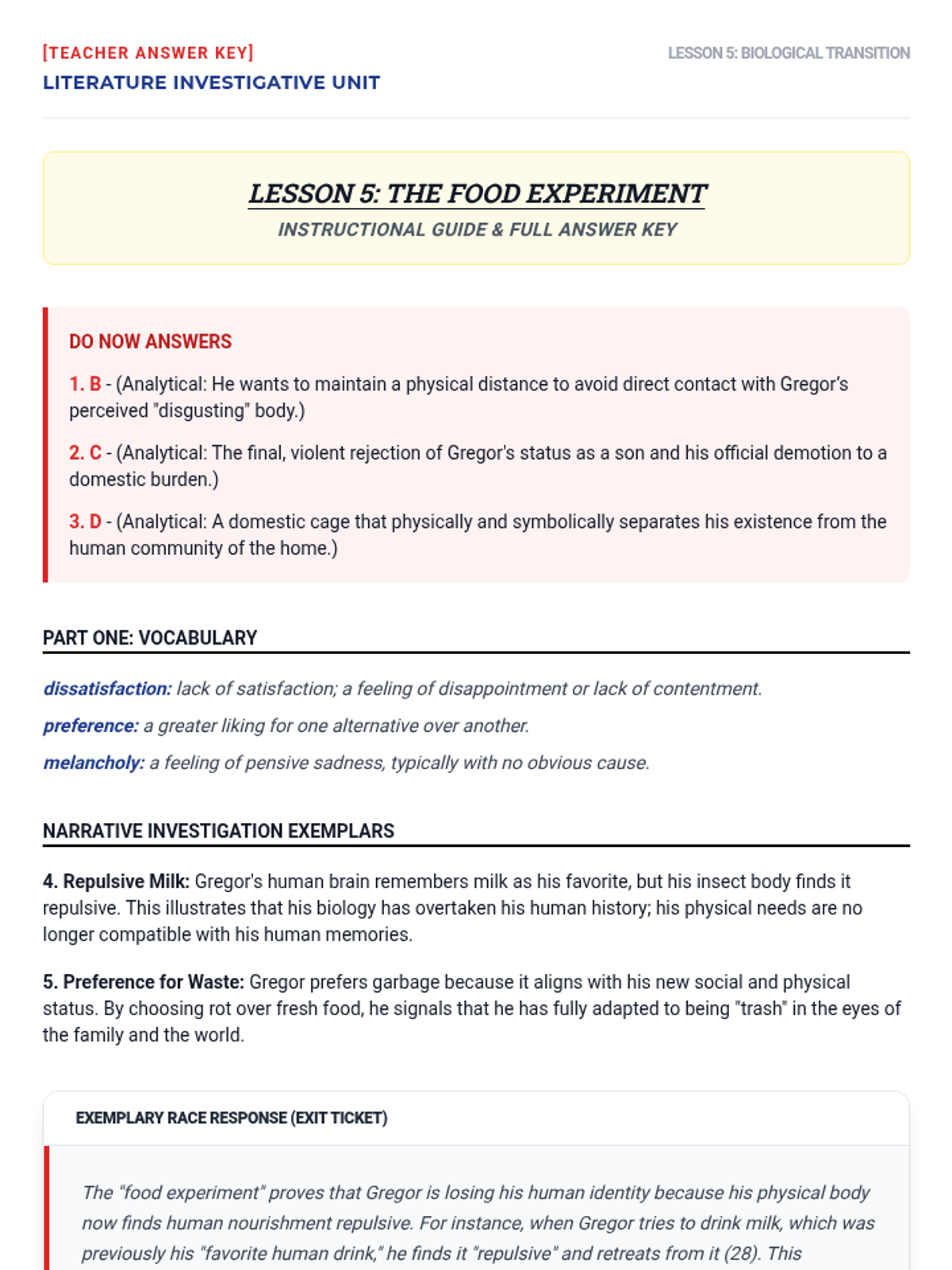
Part II begins with Gregor's physical transition, focusing on his change in taste and the shift from human food to animal waste as a symbol of dehumanization.
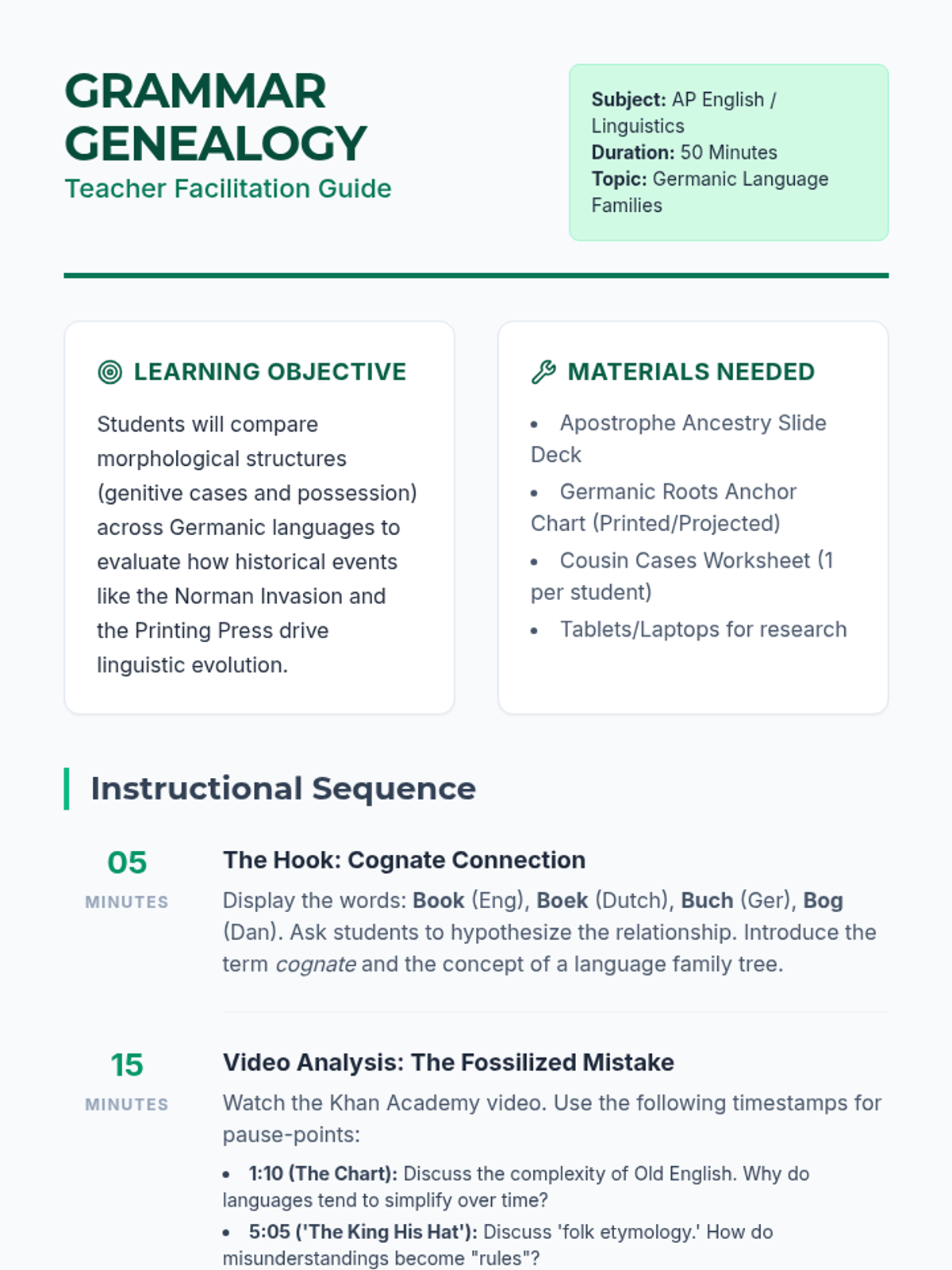
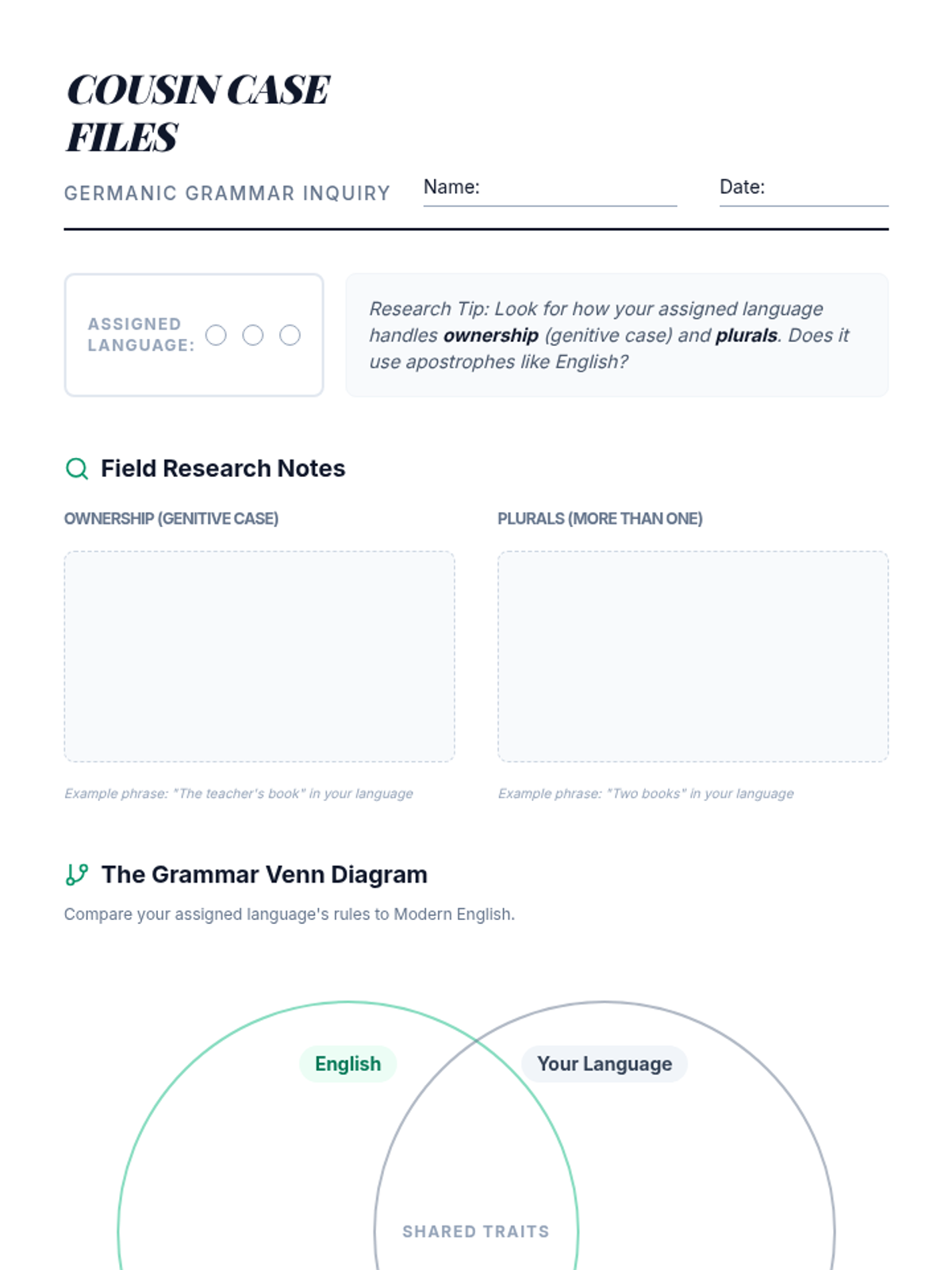
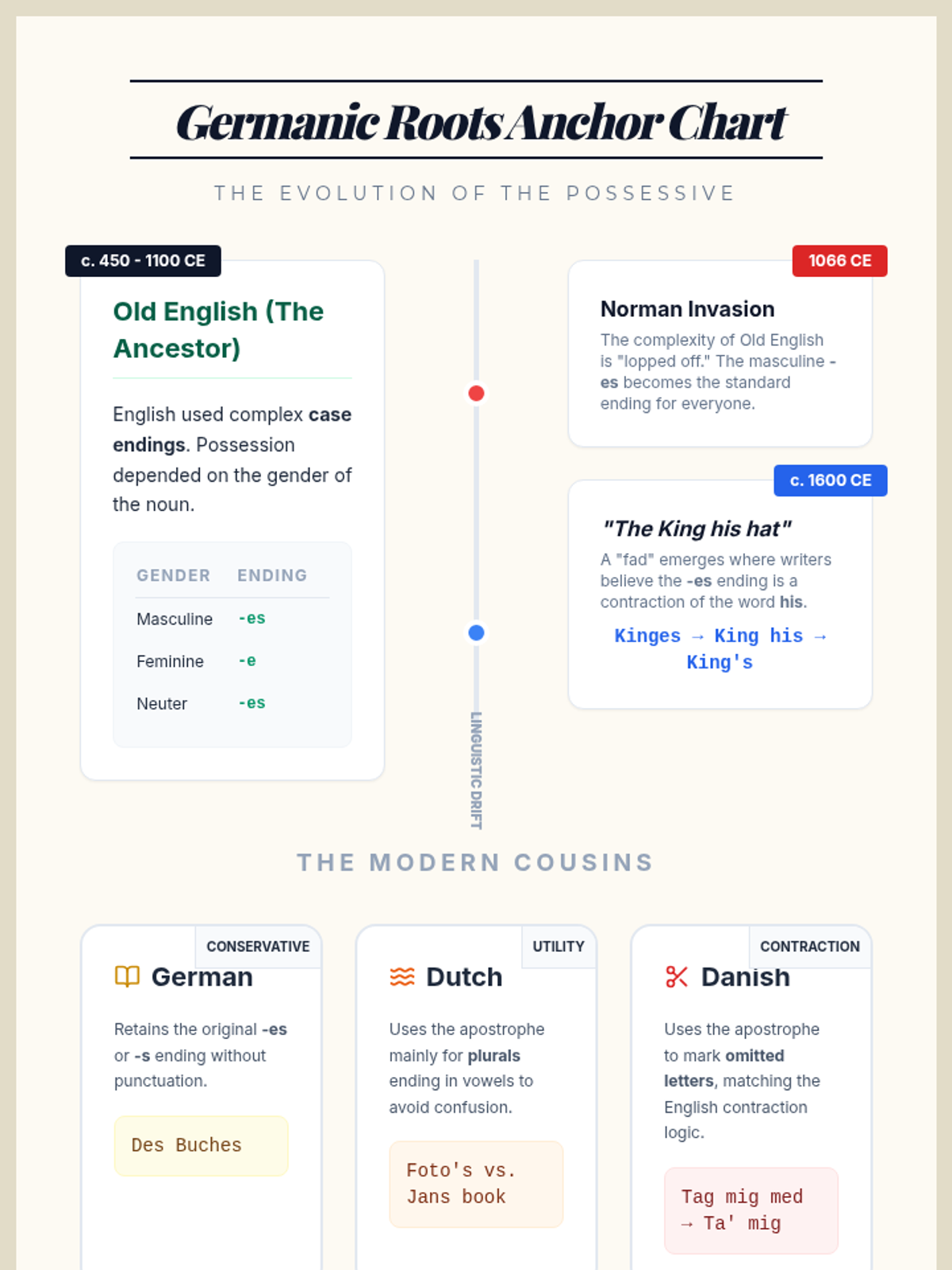
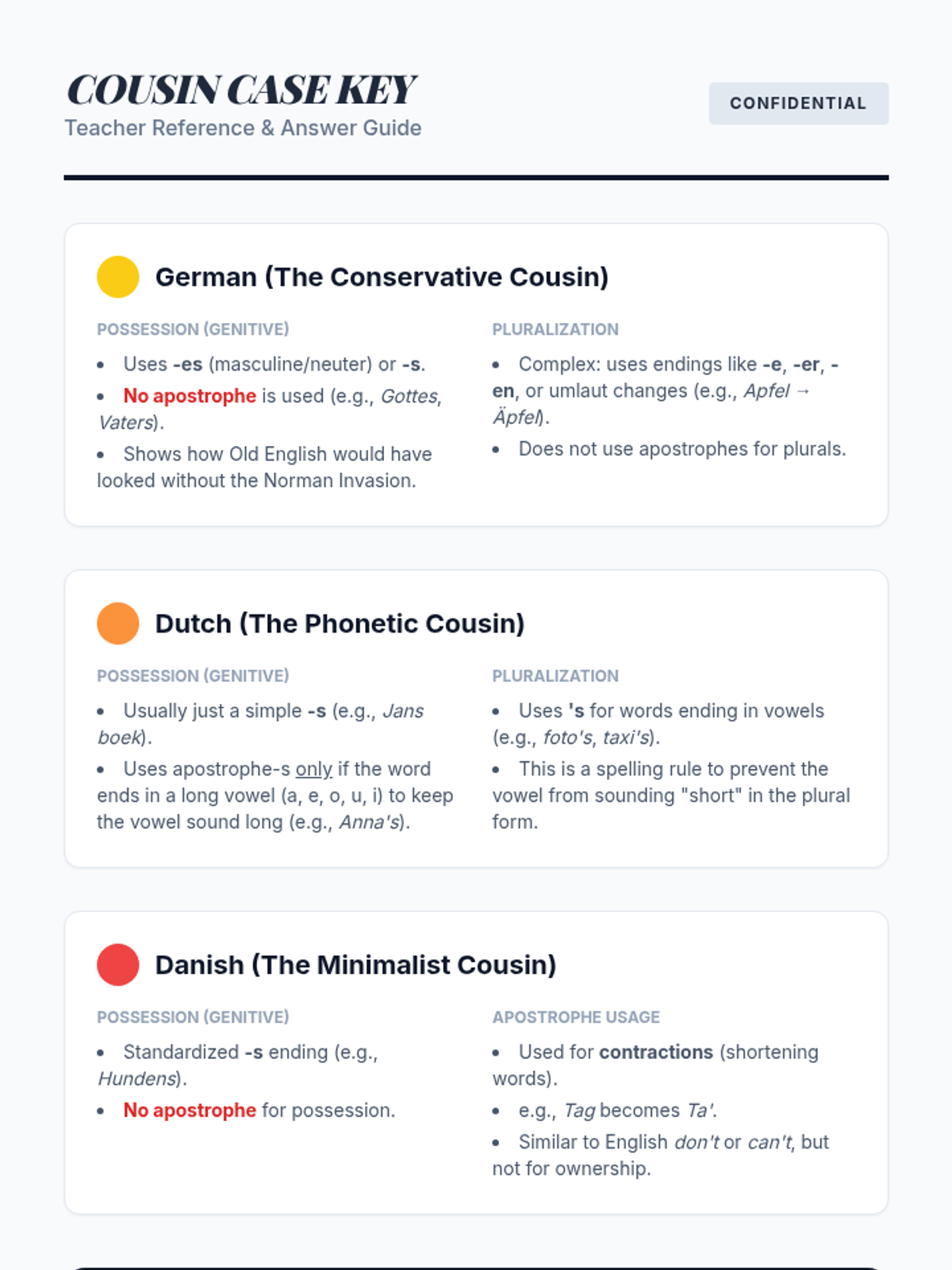
Students analyze the evolution of the possessive apostrophe in English and compare it to its Germanic 'cousins' (German, Dutch, and Danish) to understand how history and linguistic drift shape grammar.
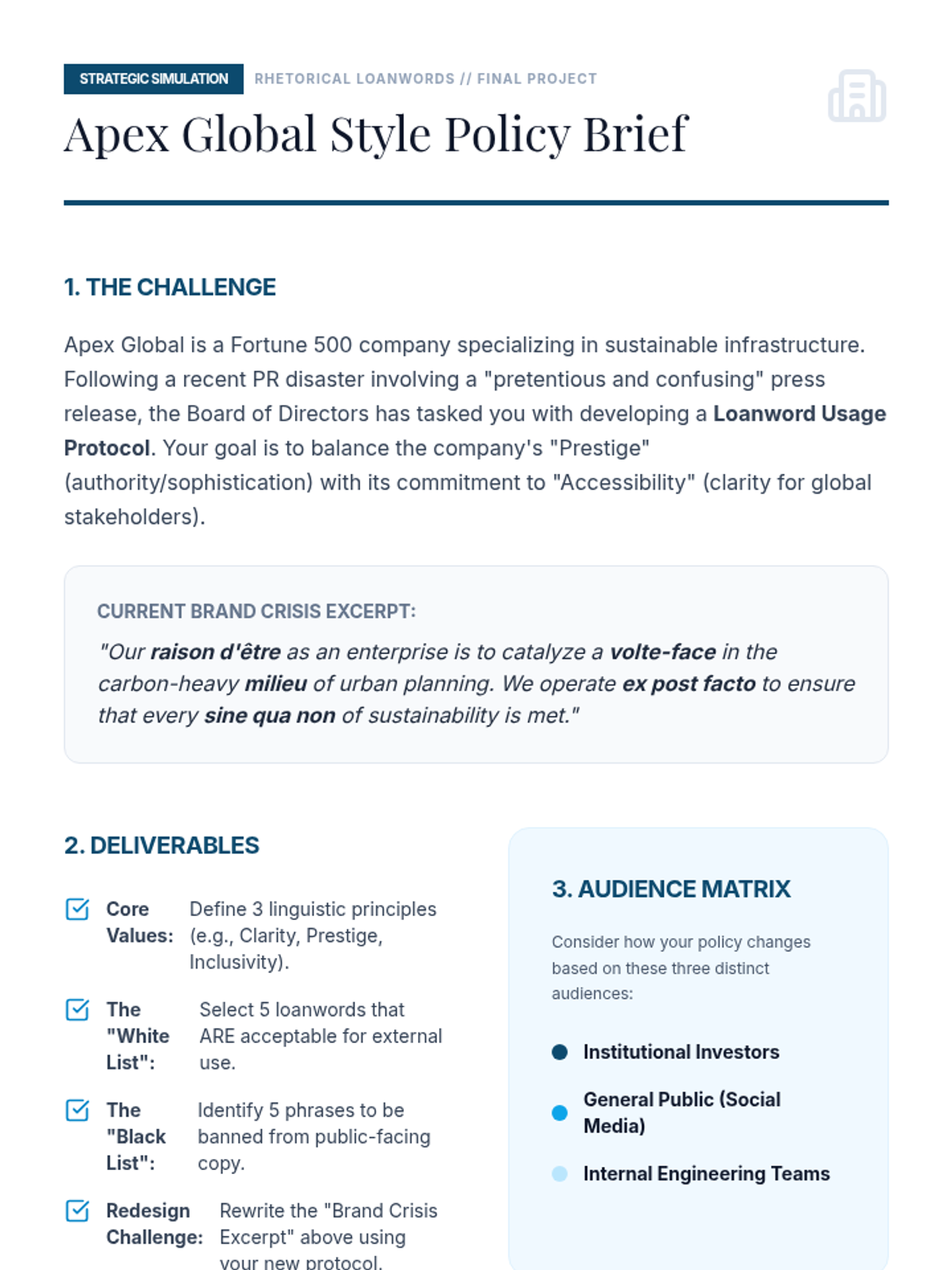
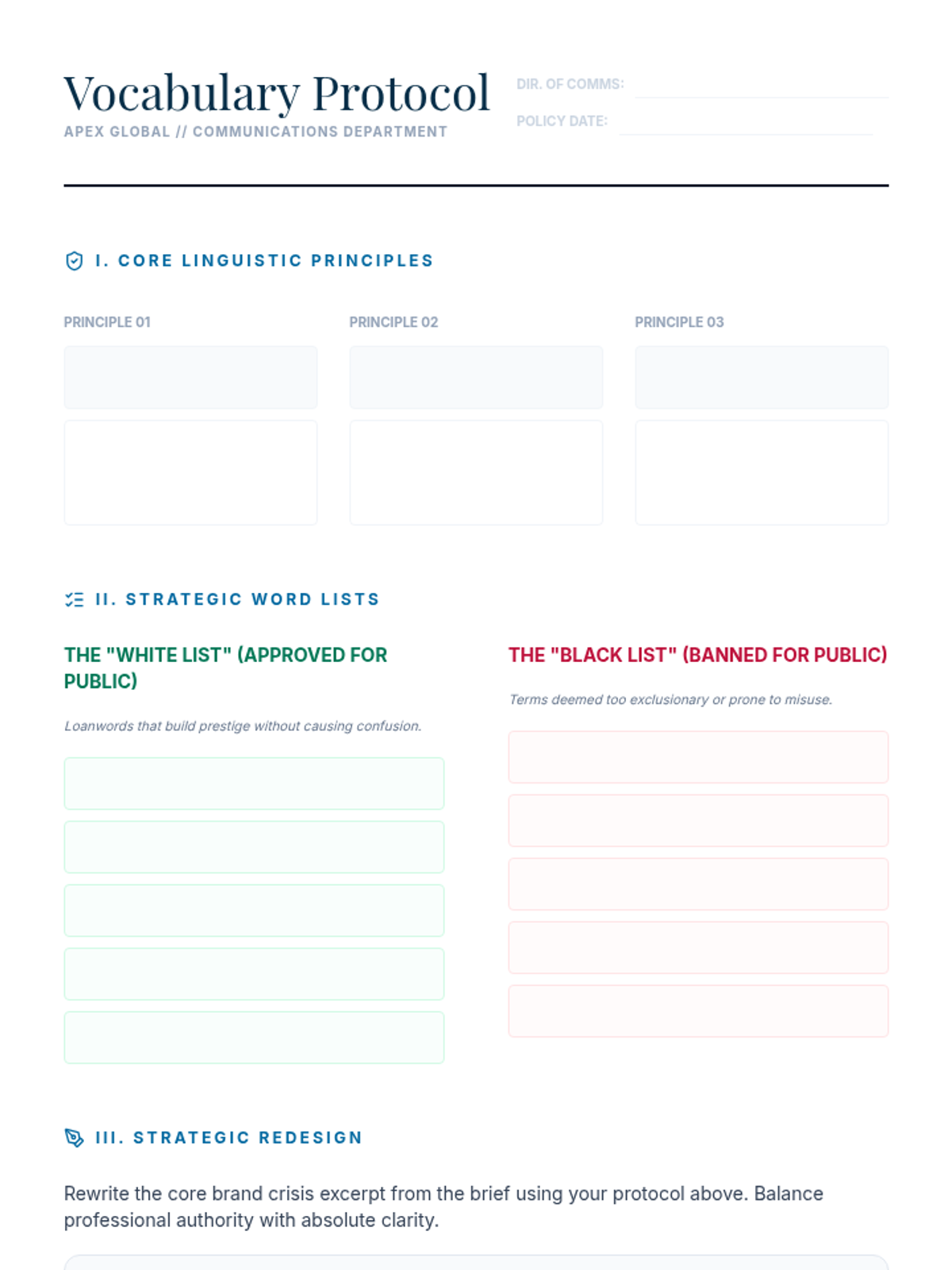
A simulation where students develop a strategic style guide for a global corporation, defining when and how to use loanwords for internal and external stakeholders.
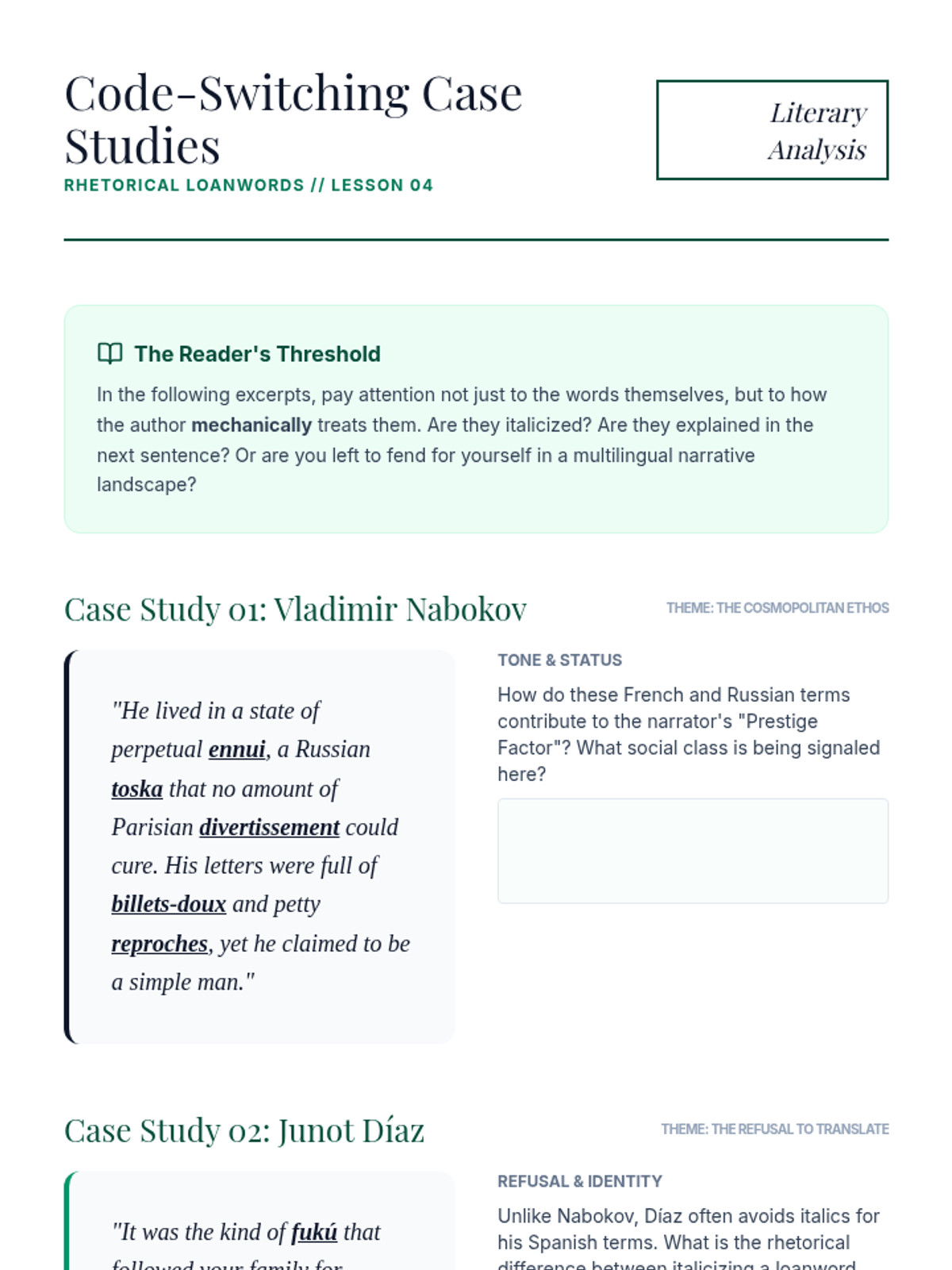
Analysis of code-switching in modern literature, examining how authors use non-translated foreign phrases to create narrative texture and challenge linguistic hegemony.
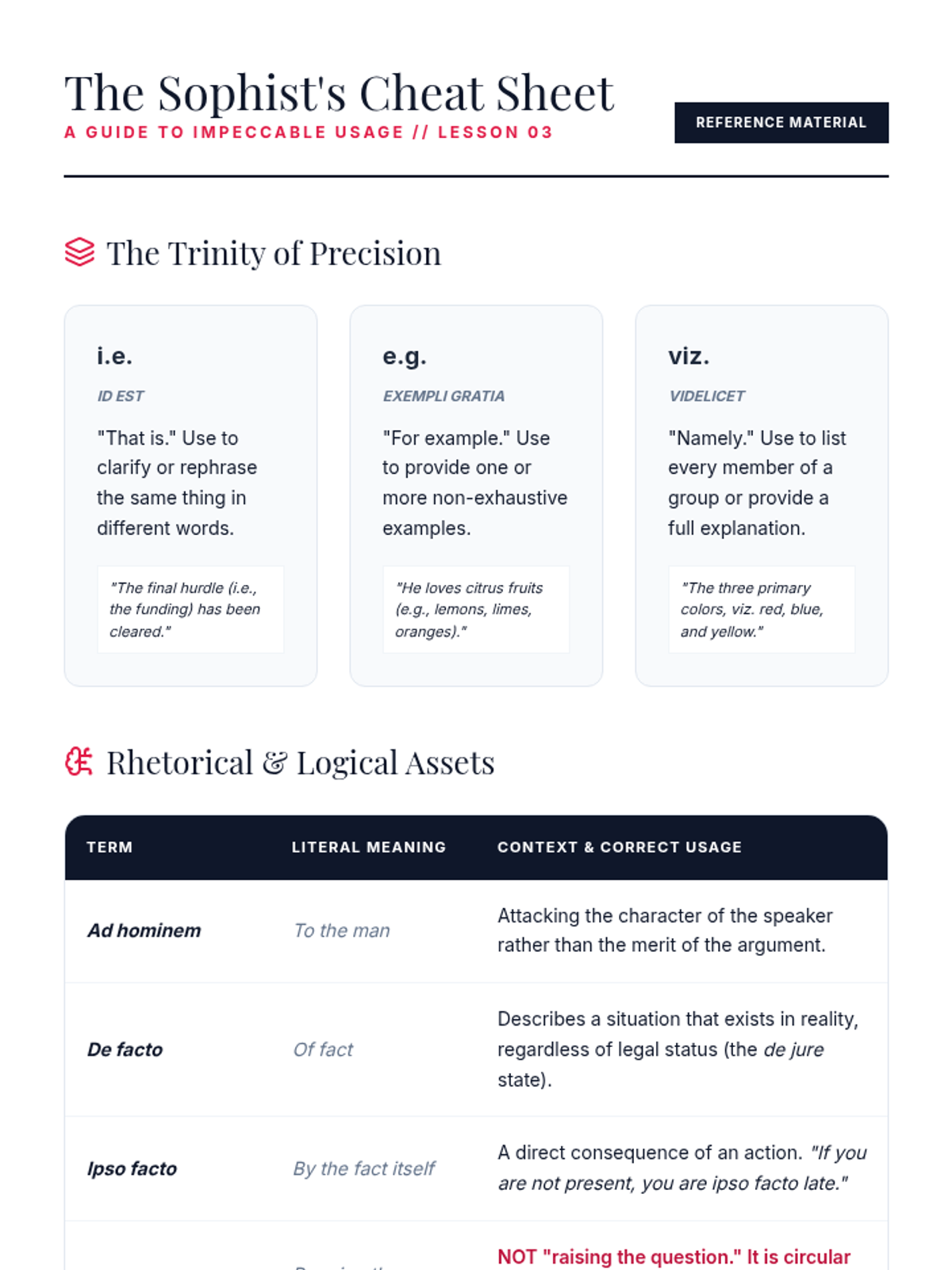
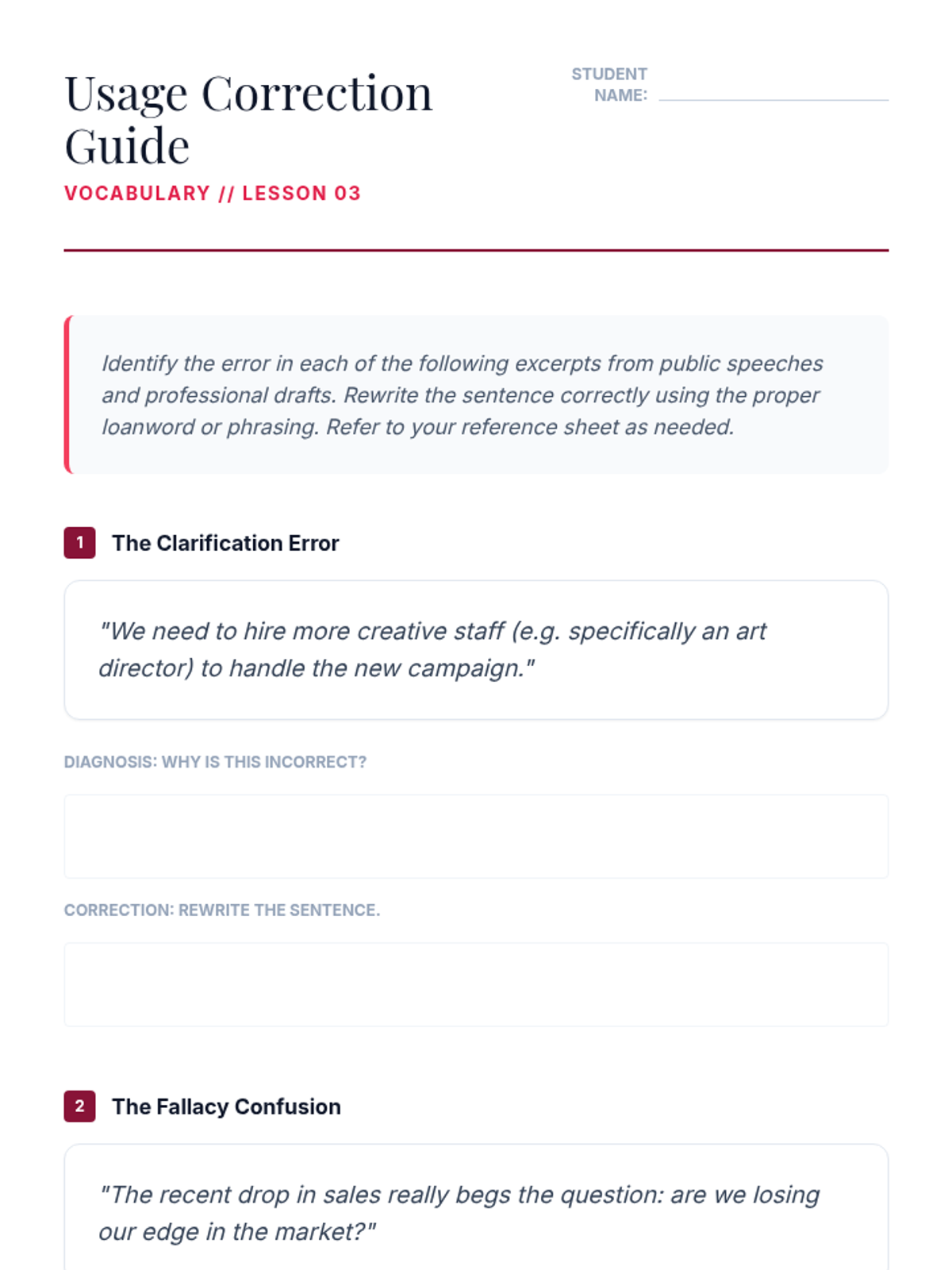
Identification and correction of common malapropisms and logical fallacies derived from foreign terms, such as i.e. vs. e.g. and petitio principii.
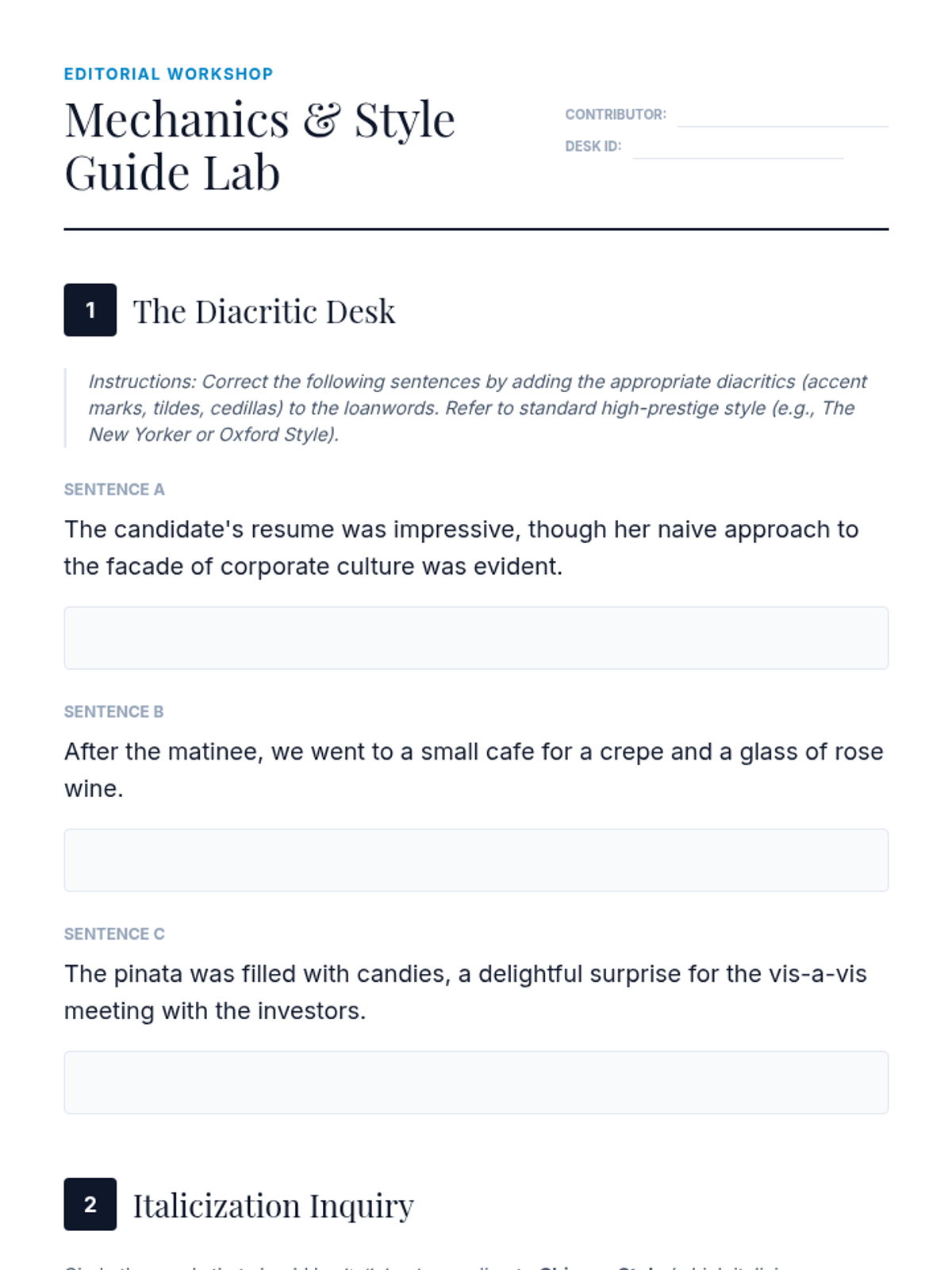
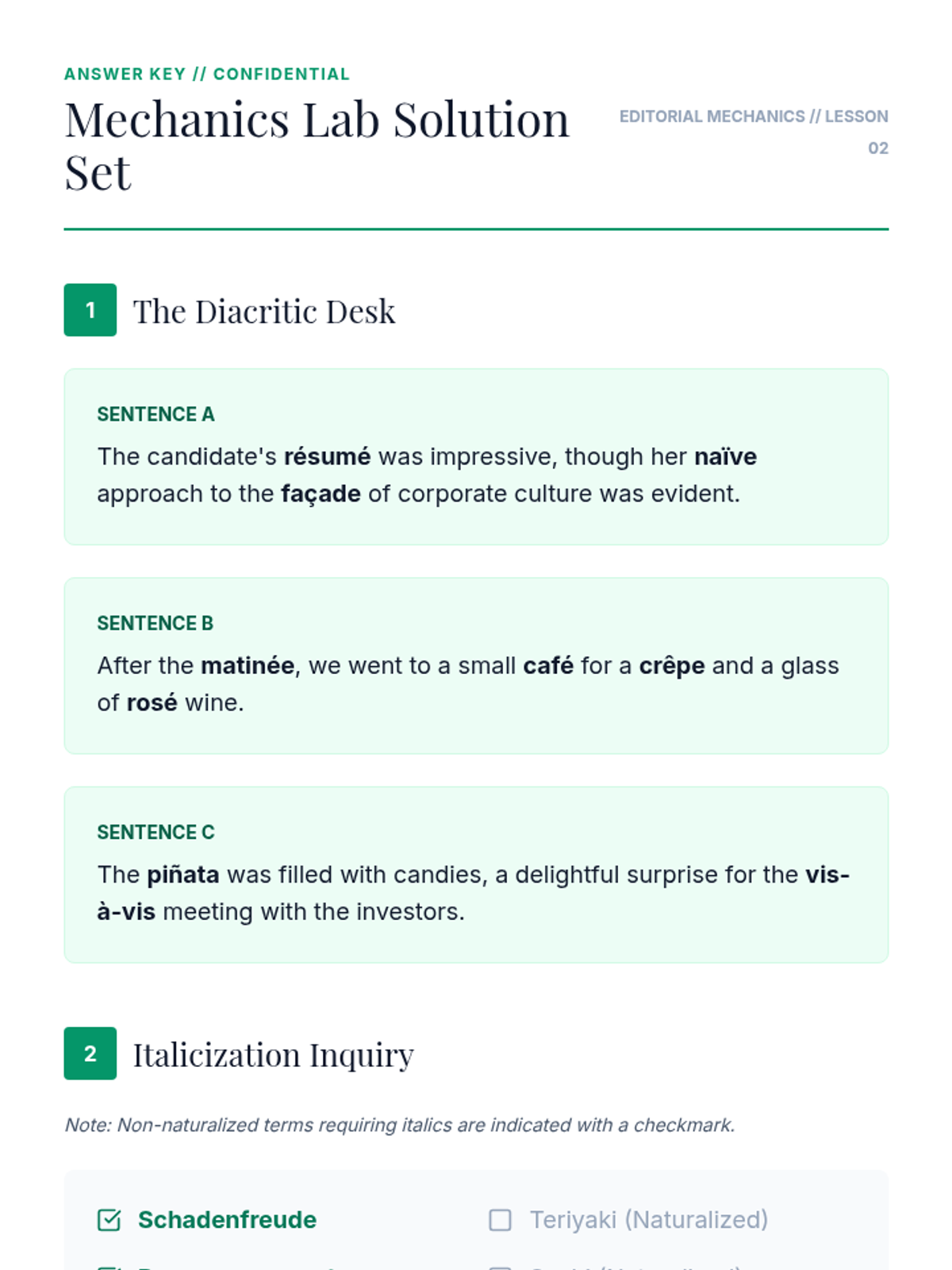
A technical workshop on the formal mechanics of loanwords, covering diacritics, italics, and the pluralization of anglicized terms according to major style guides.
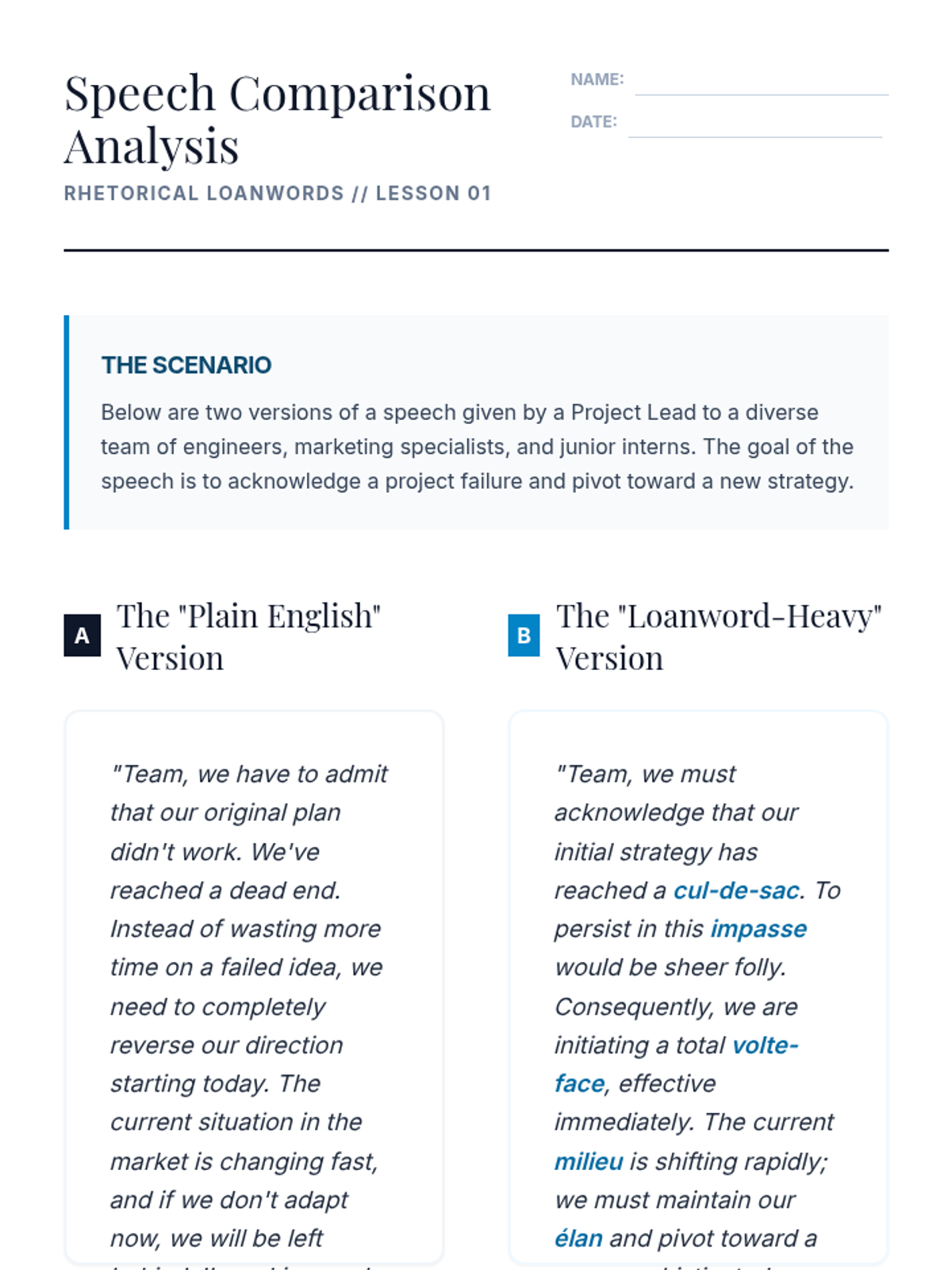
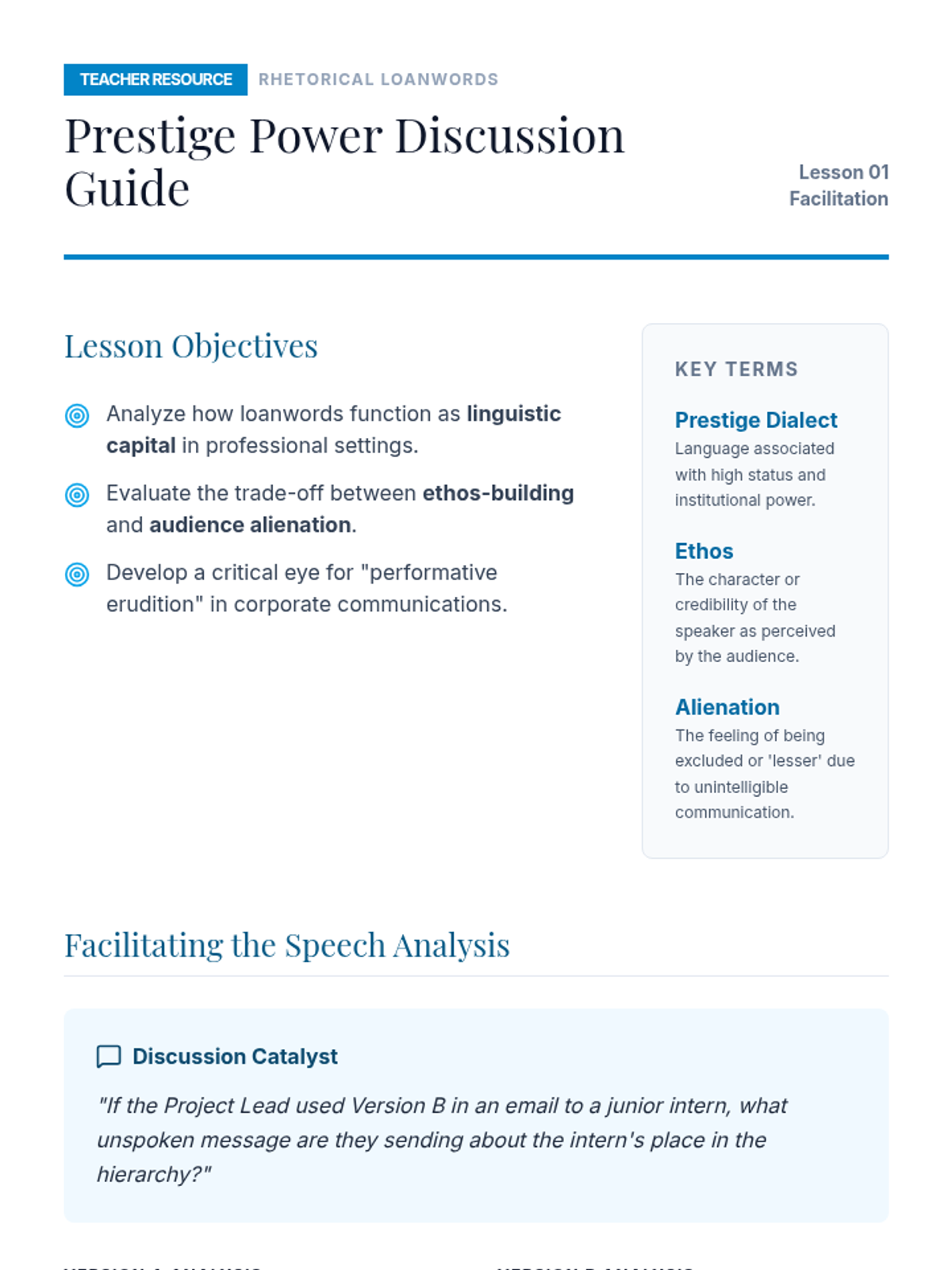
Students analyze the rhetorical impact of loanwords on a speaker's ethos, debating the balance between establishing authority (prestige) and excluding the audience (alienation).
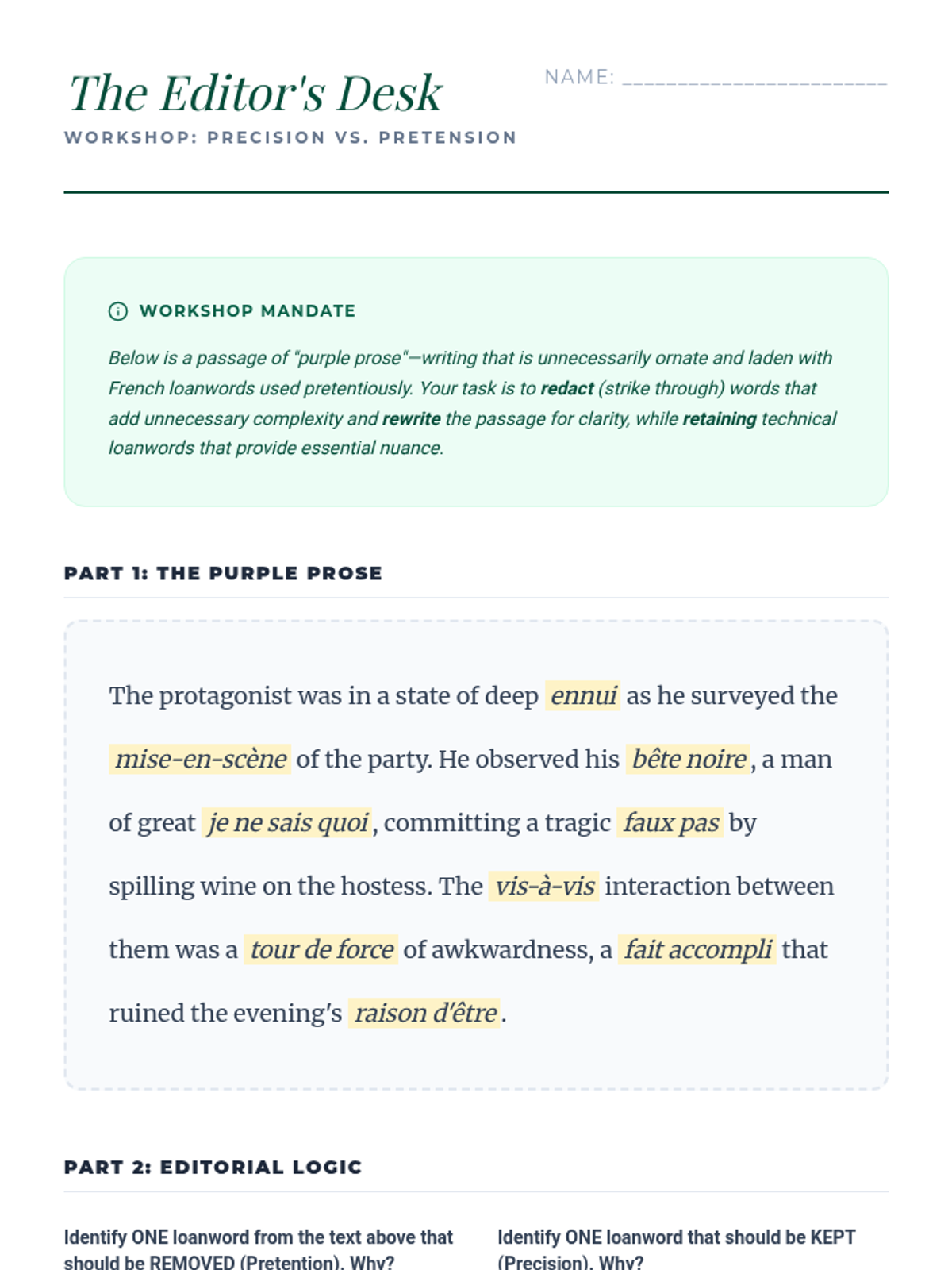
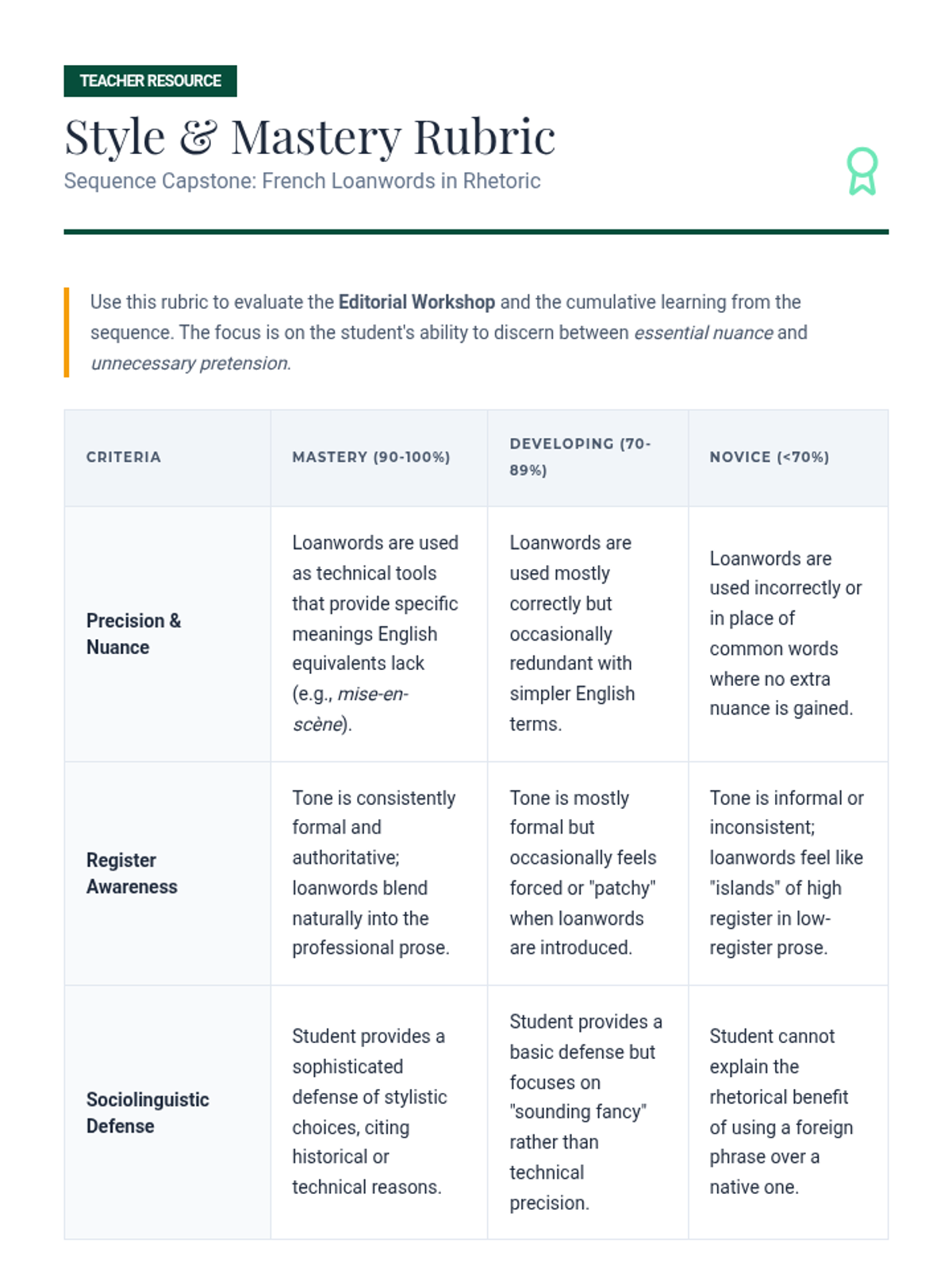
A practical workshop focusing on the stylistic choice between foreign loanwords and native English equivalents, emphasizing precision over pretension.
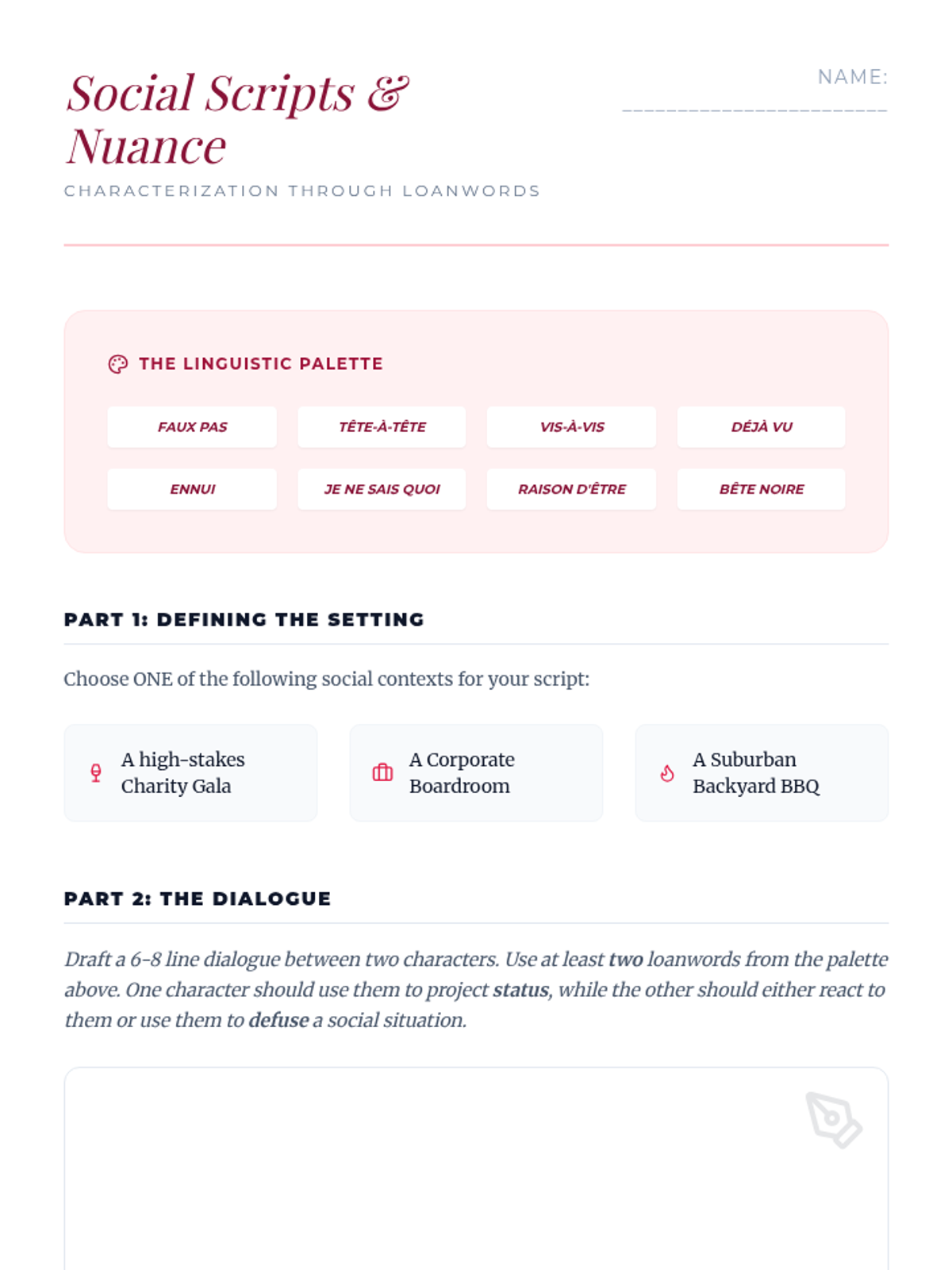
An analysis of social expressions used to characterize speakers, establish setting, and navigate social pragmatics.
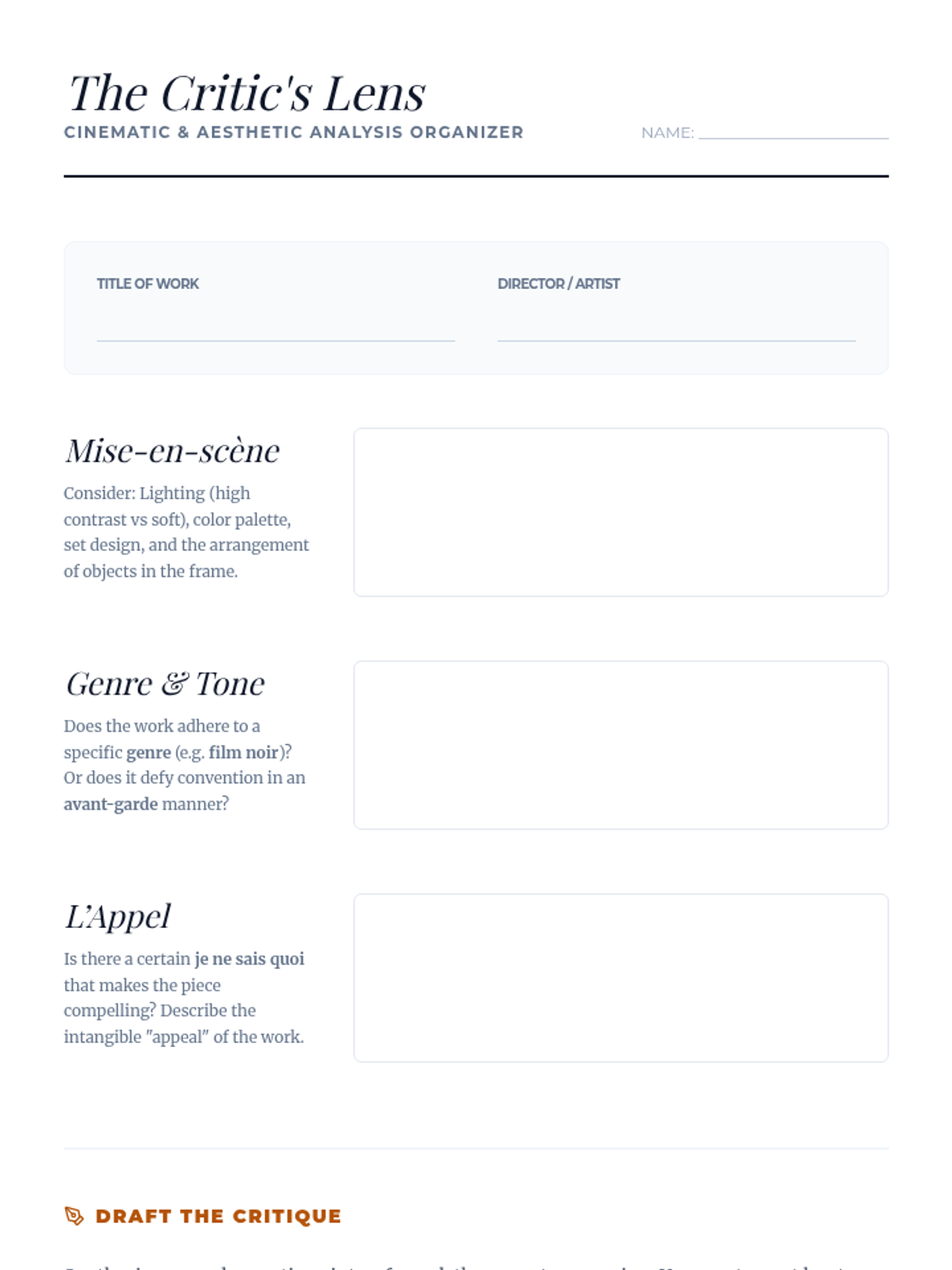
A technical look at French loanwords used in artistic and cinematic critique to describe abstract aesthetic qualities.
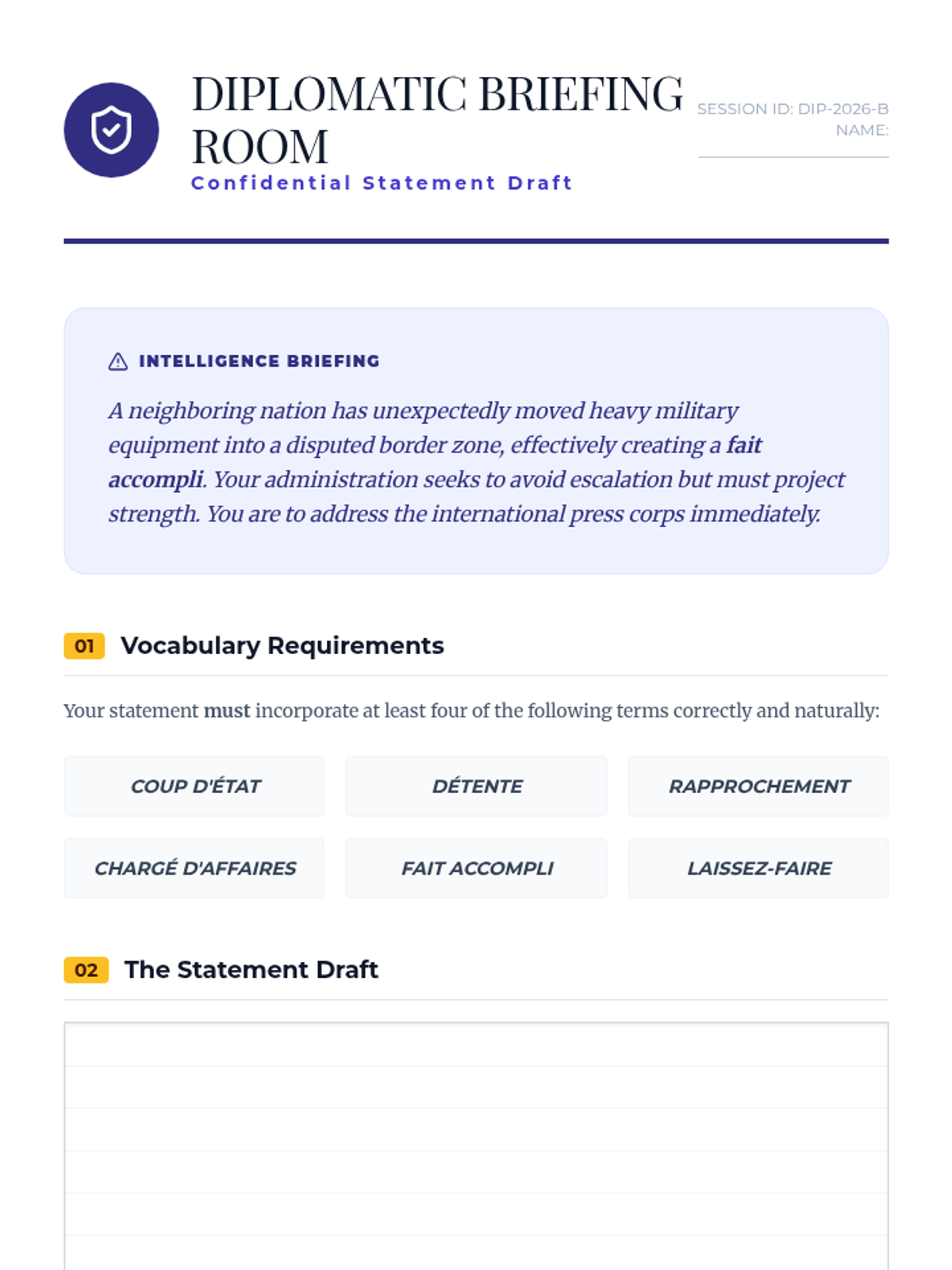
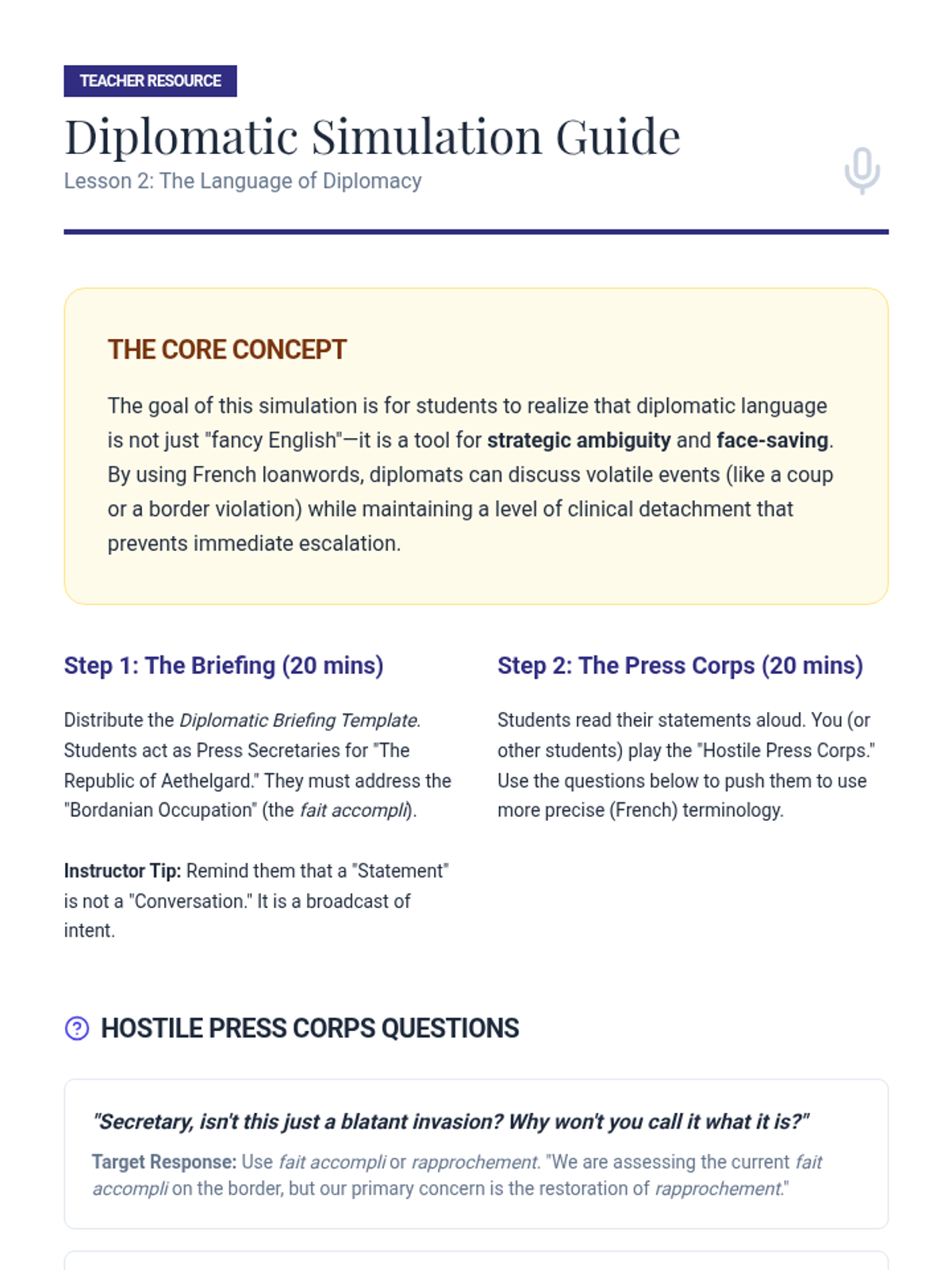
An exploration of French as the historical lingua franca of diplomacy, focusing on political terminology and its use in international relations.
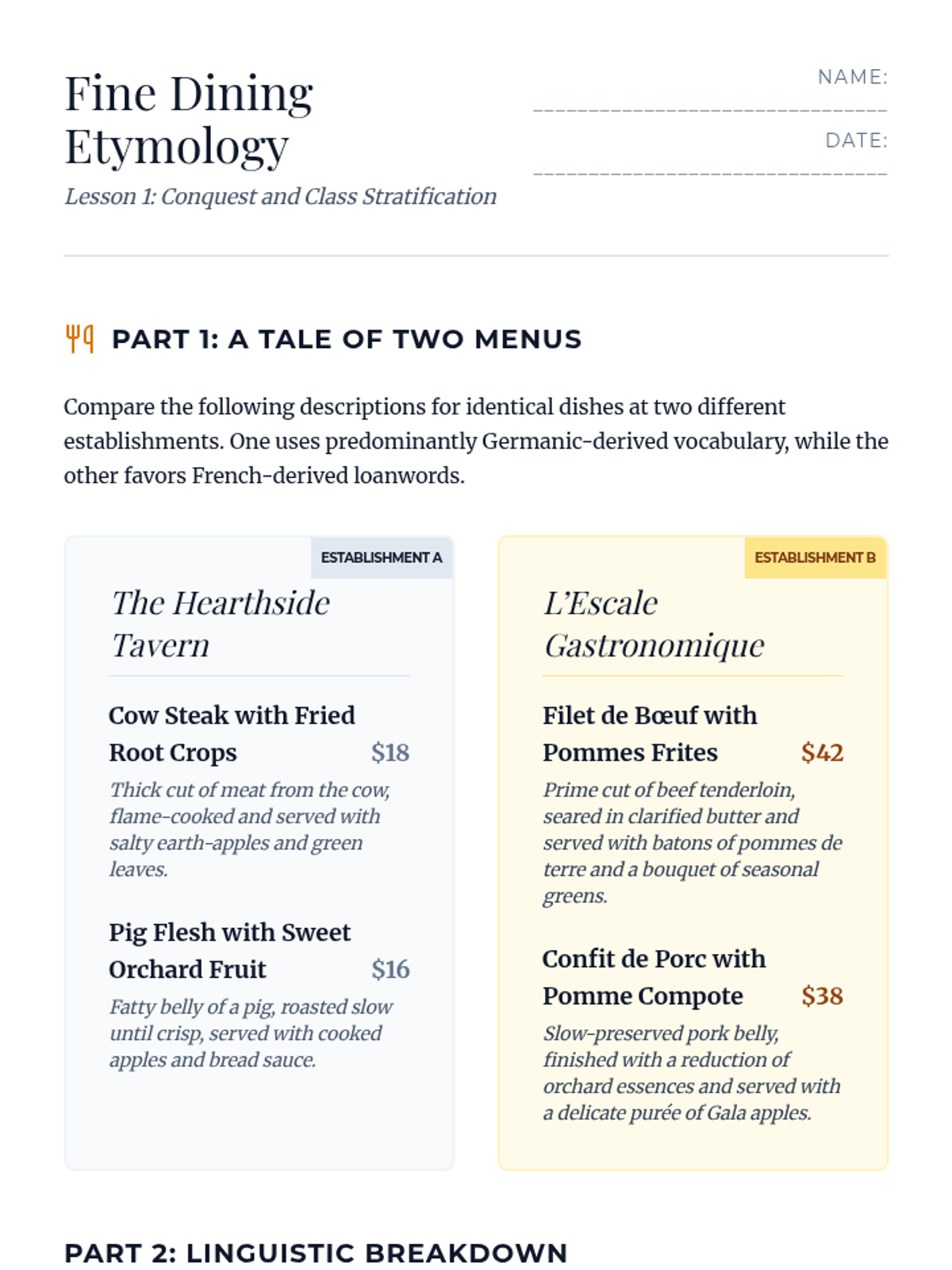
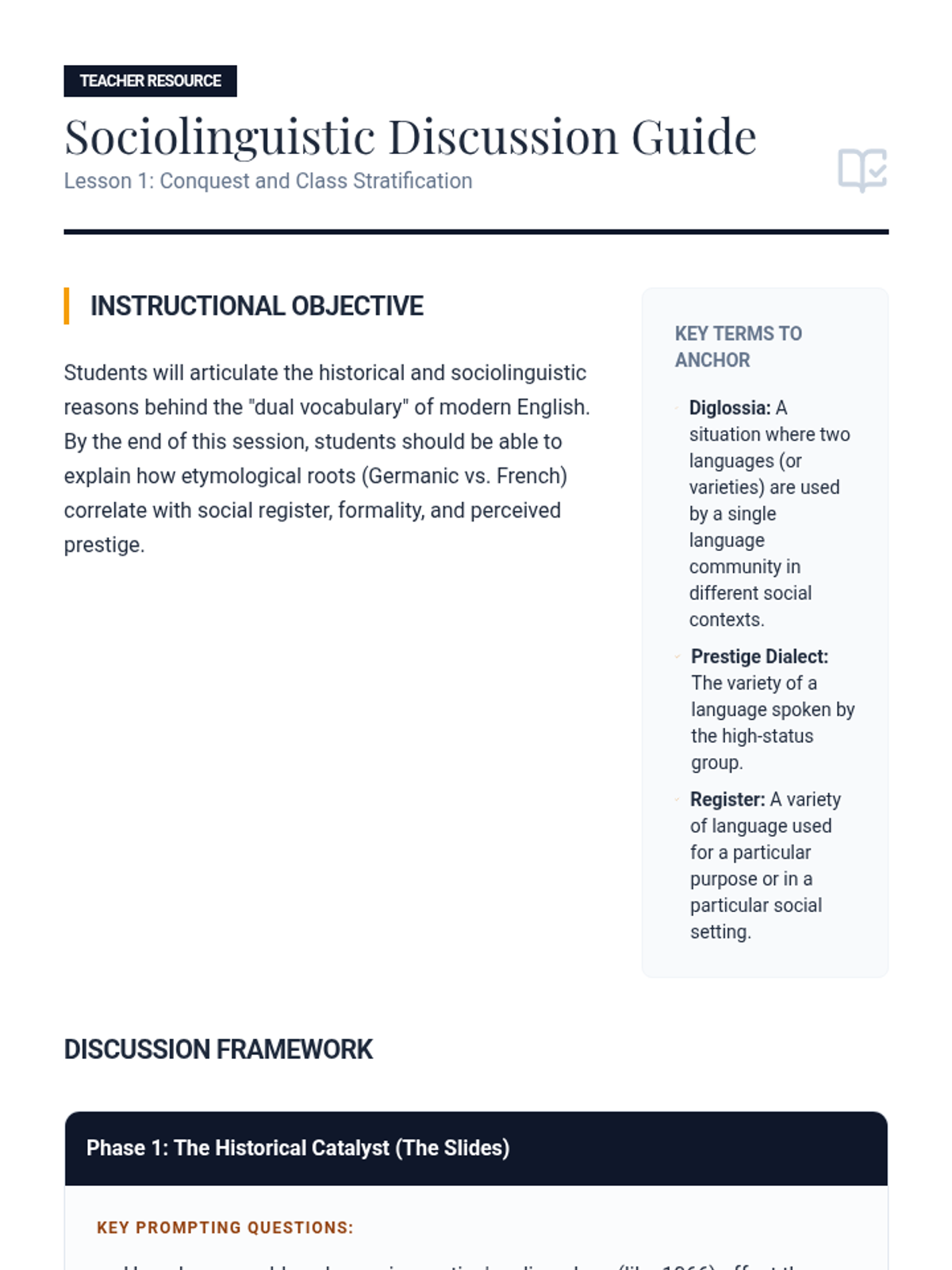
An investigation into the etymological split following the Norman Conquest, exploring how Germanic and French roots reflect class stratification in modern English.
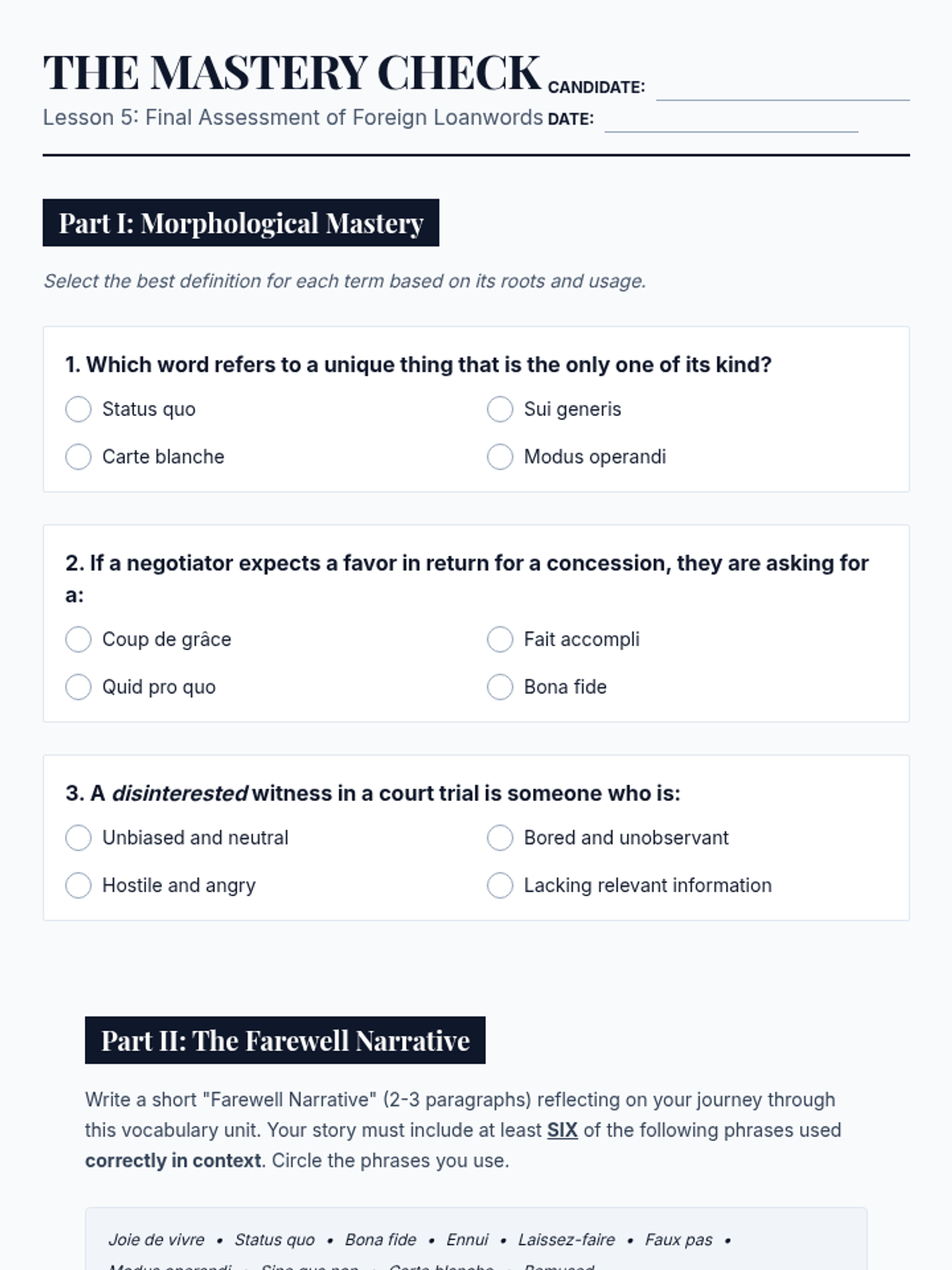
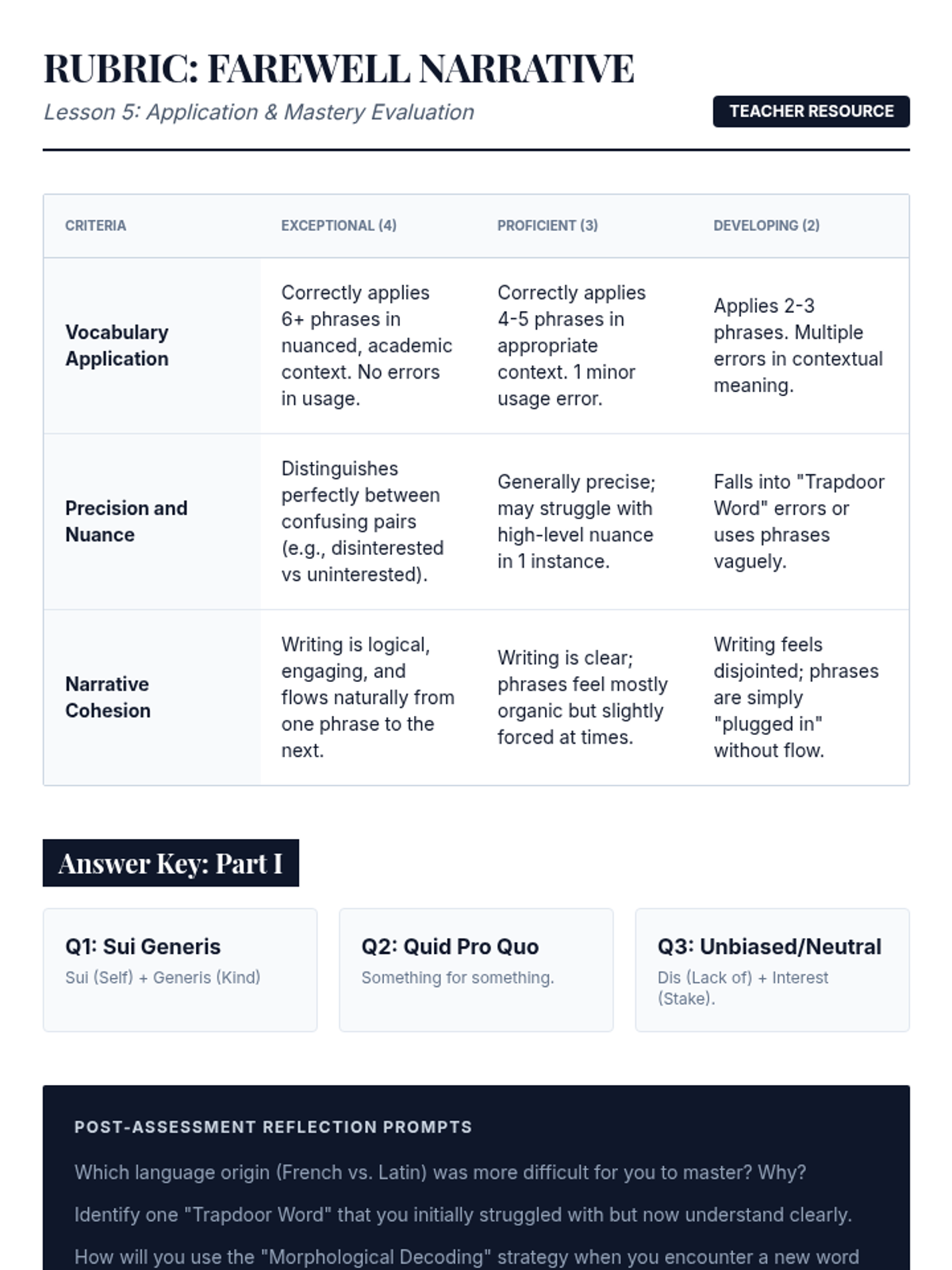
A final mastery check and creative composition task where students demonstrate their ability to correctly identify and apply foreign loanwords in context.
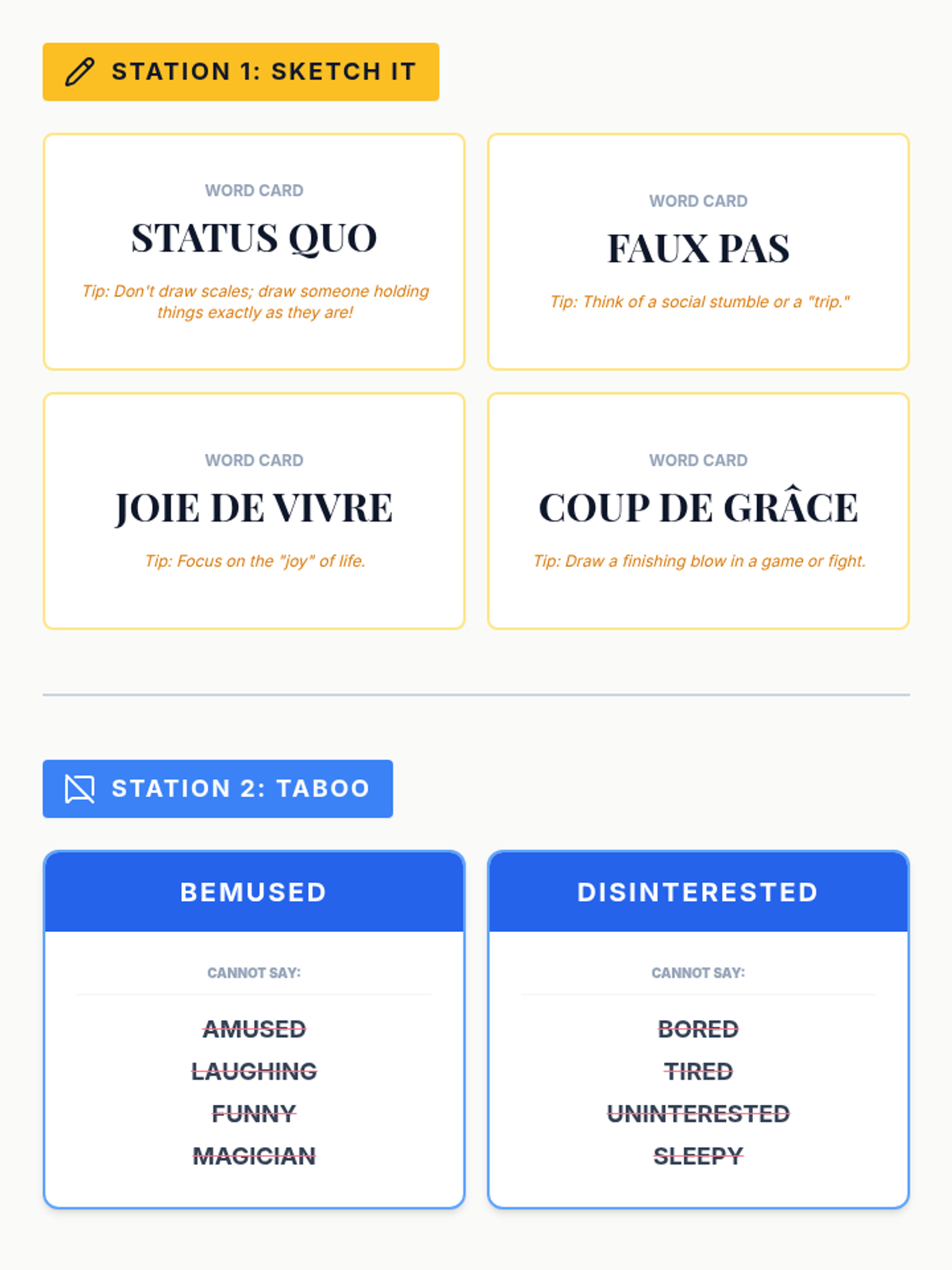
A gamified review session featuring multiple stations (Pictionary, Taboo, Spelling) to reinforce retention and collaborative learning of foreign expressions.
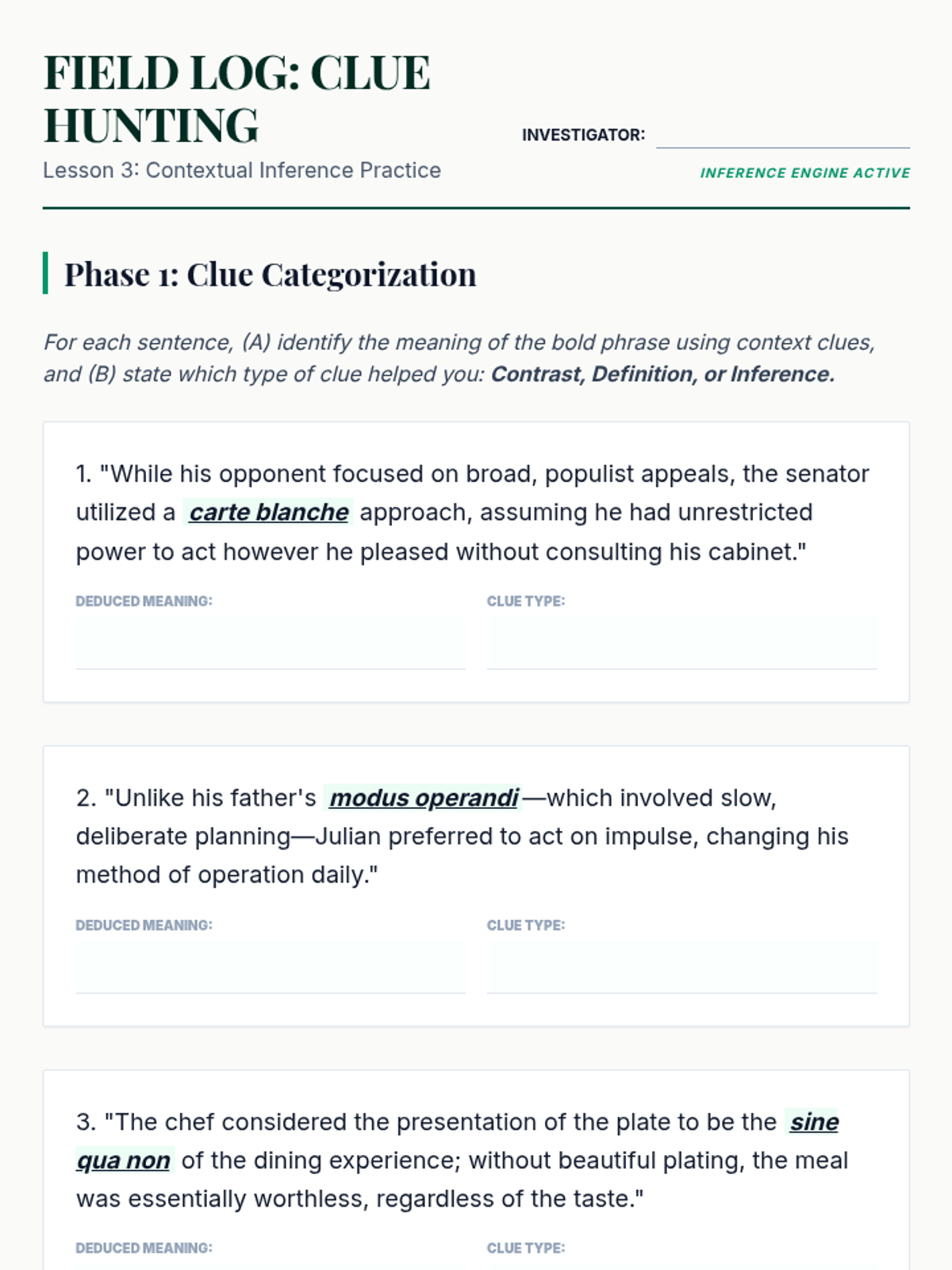
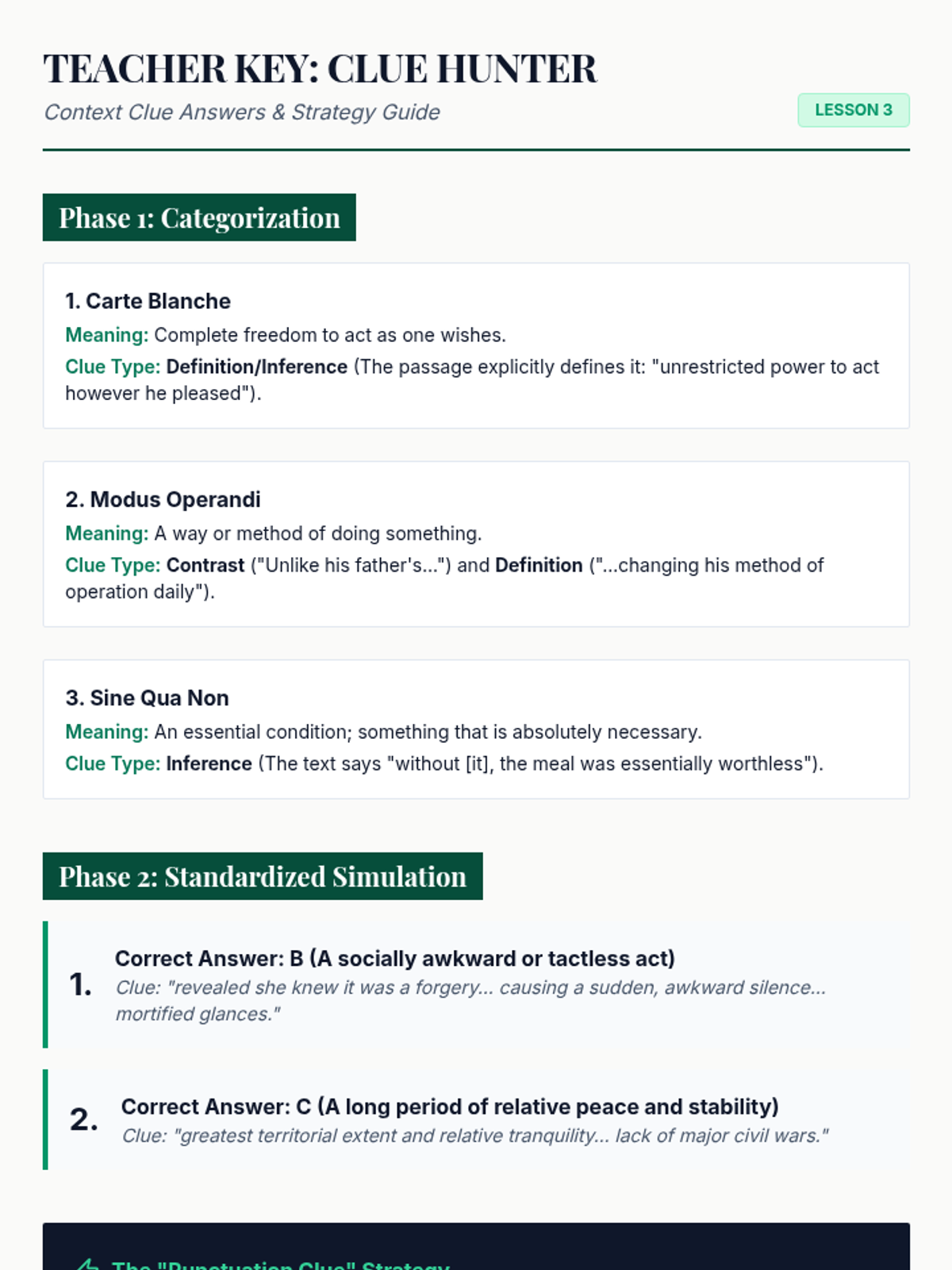
Students apply context clue strategies to deduce the meaning of foreign phrases in complex texts, mirroring SAT and ACT reading comprehension formats.
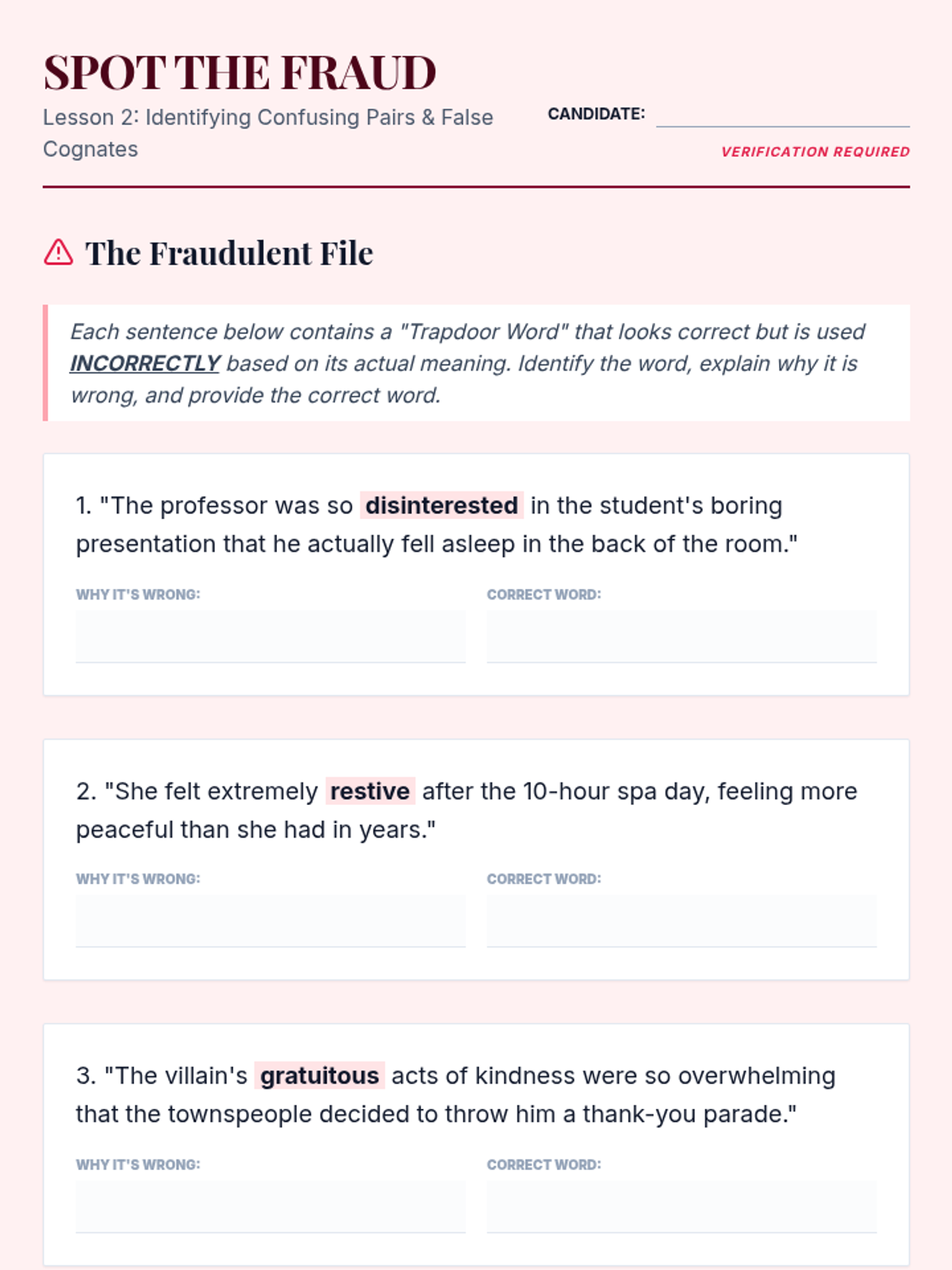
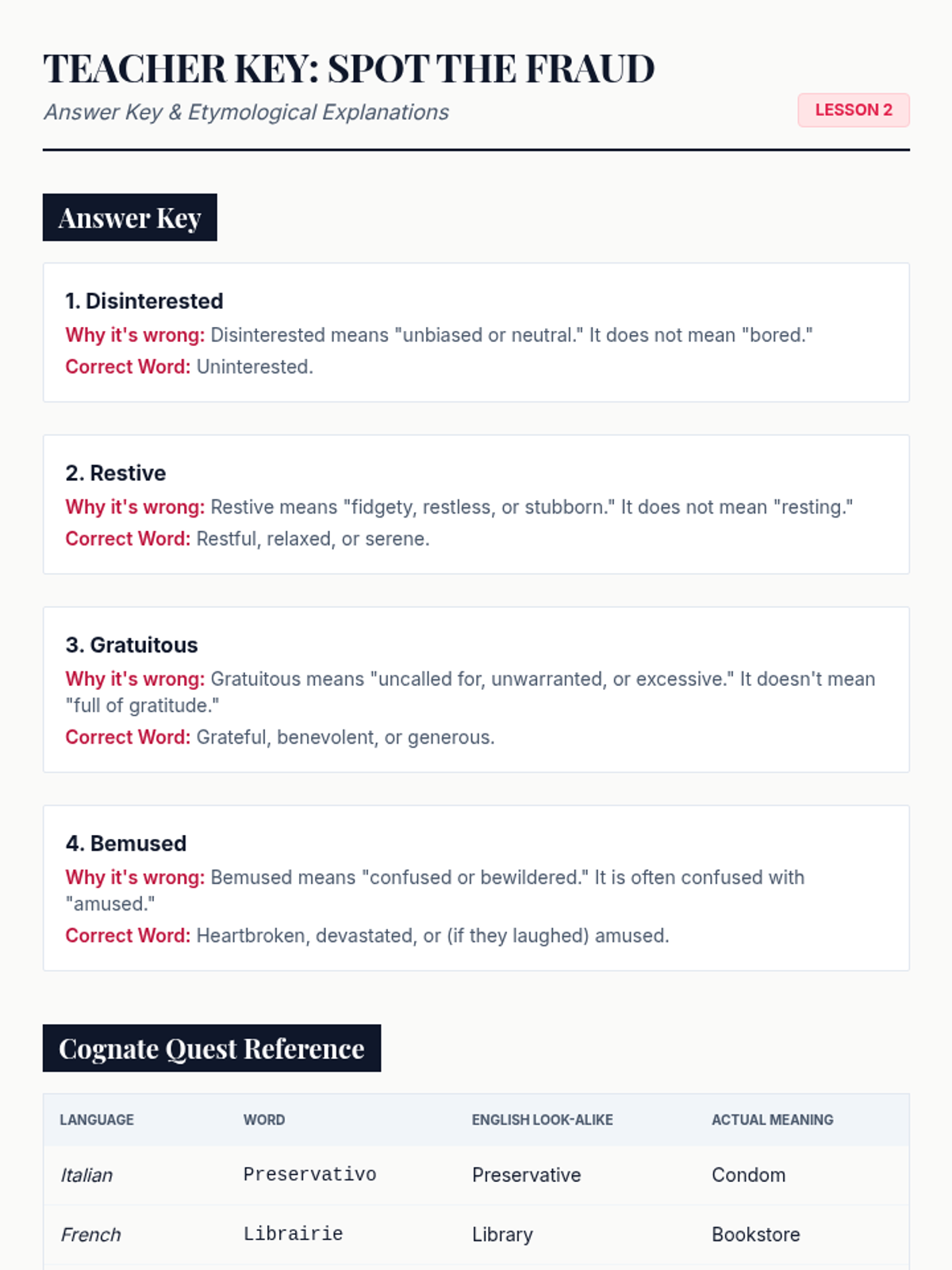
Focuses on common errors and false cognates, teaching students to distinguish between tricky pairs that are often confused in academic writing and standardized tests.
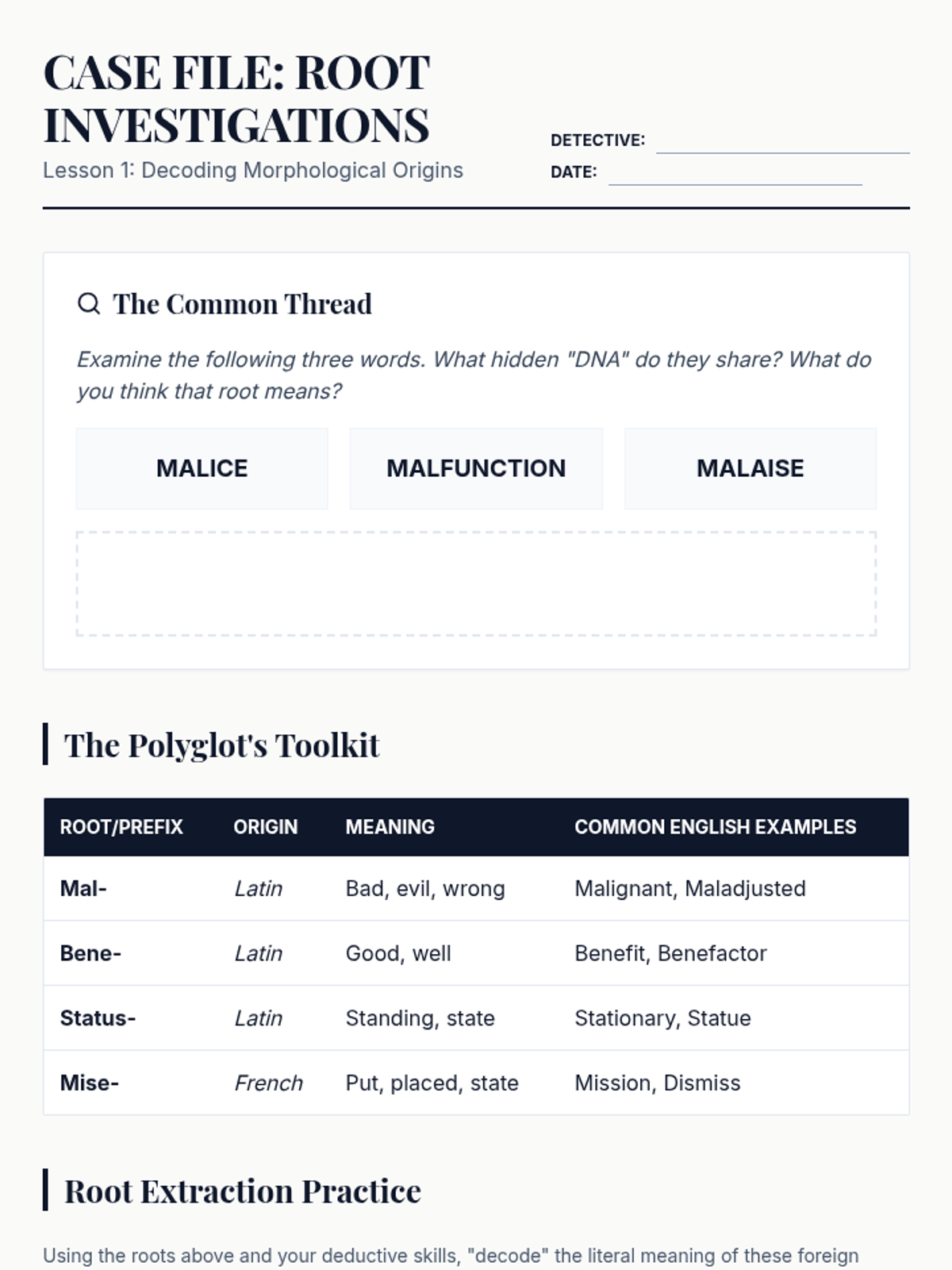
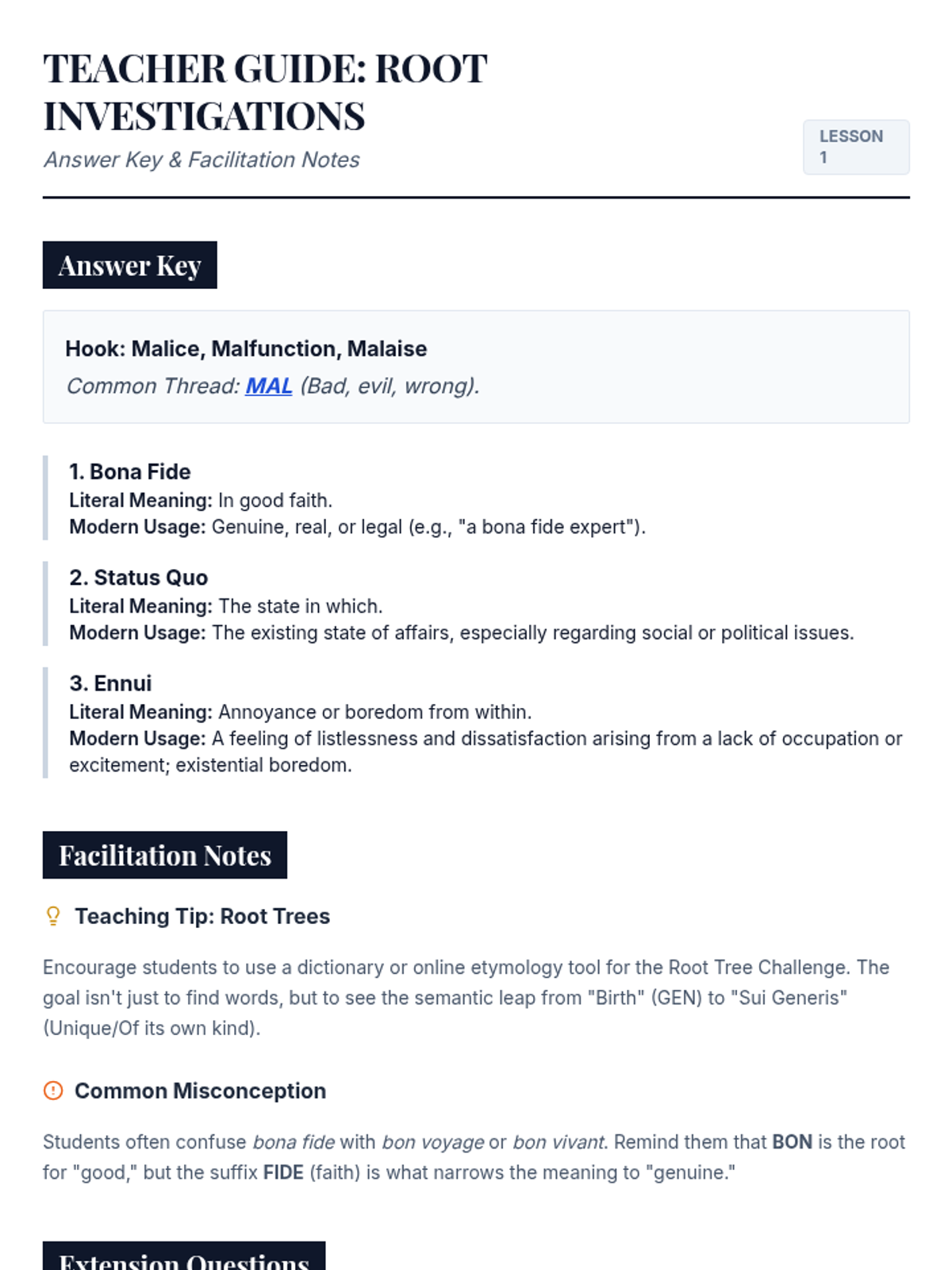
Students investigate the morphological roots of common loanwords, using prefixes and suffixes to decode meaning and build a strategy for unfamiliar academic vocabulary.
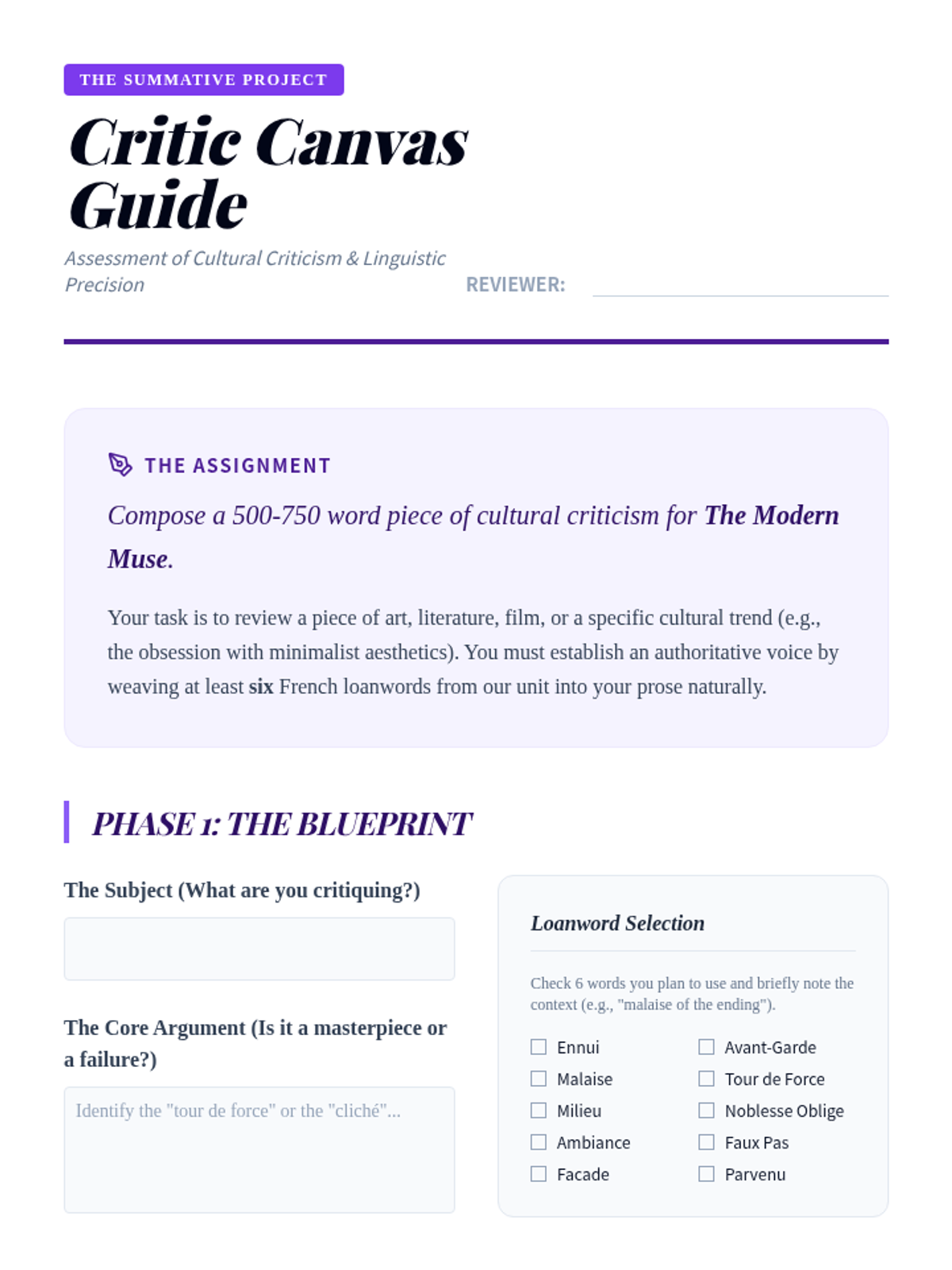
A summative project where students write a piece of cultural criticism, weaving French loanwords into a professional, authoritative review.
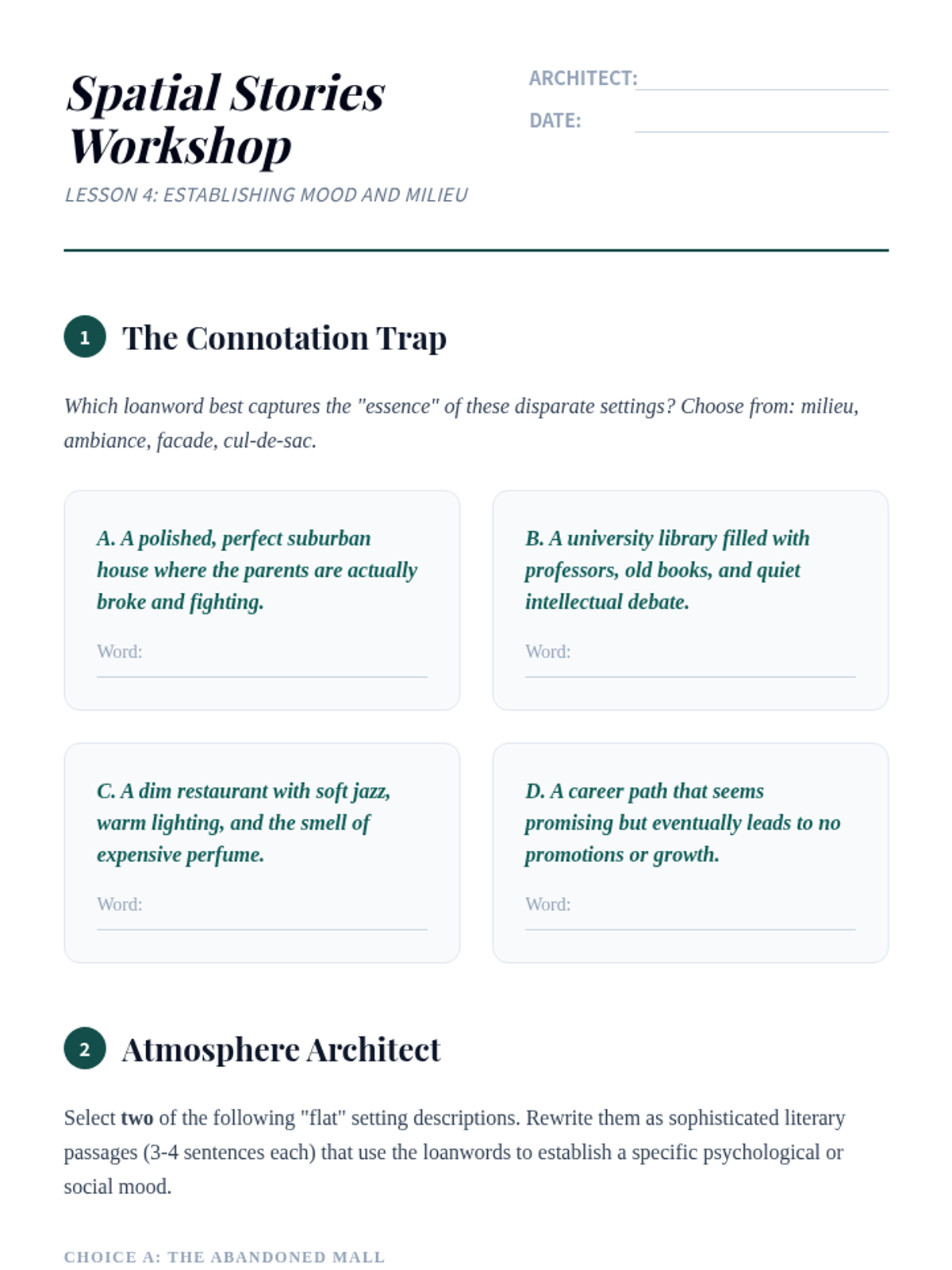
Focusing on environment and setting, students use loanwords like milieu and ambiance to establish sophisticated narrative moods.
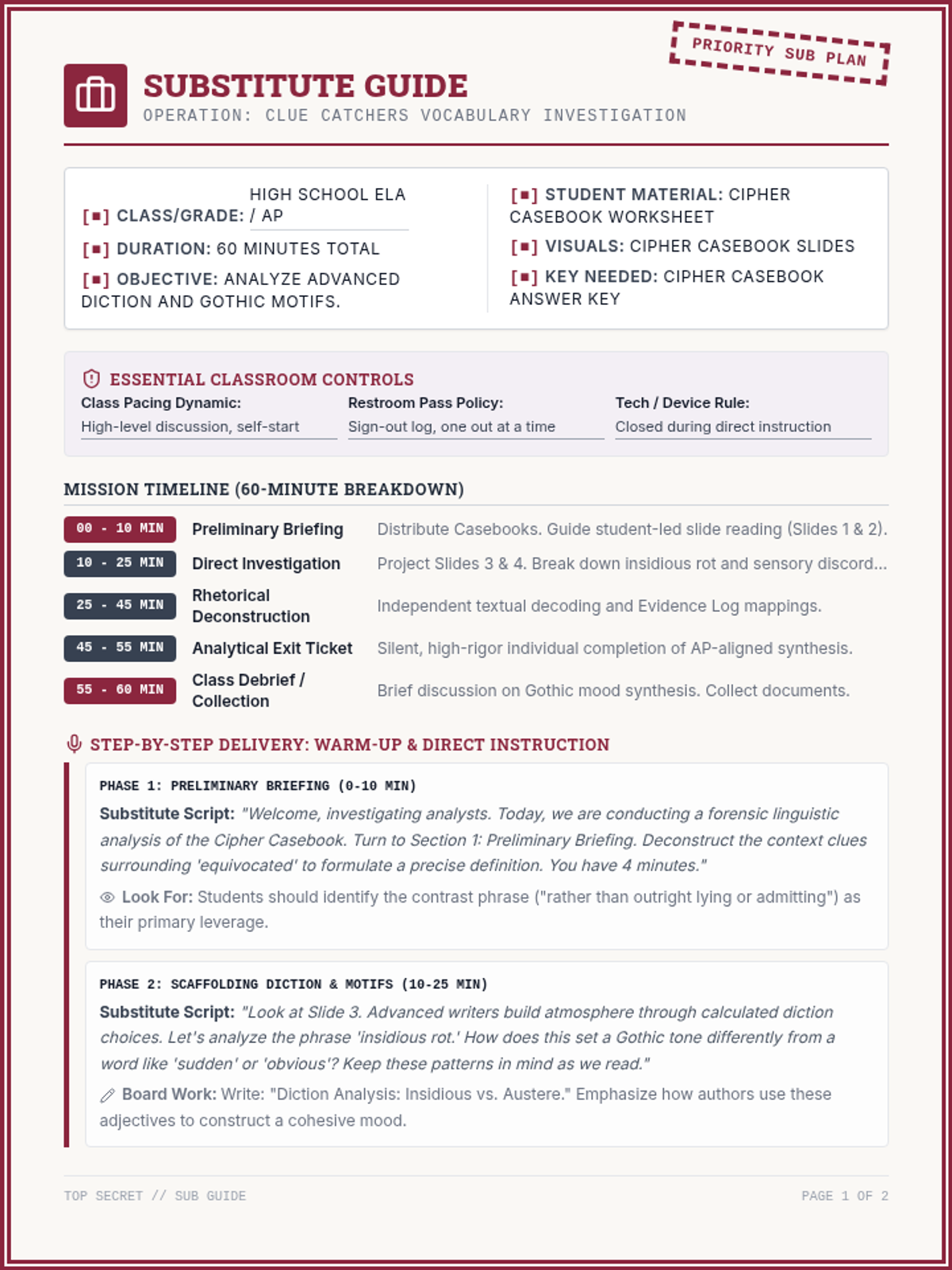
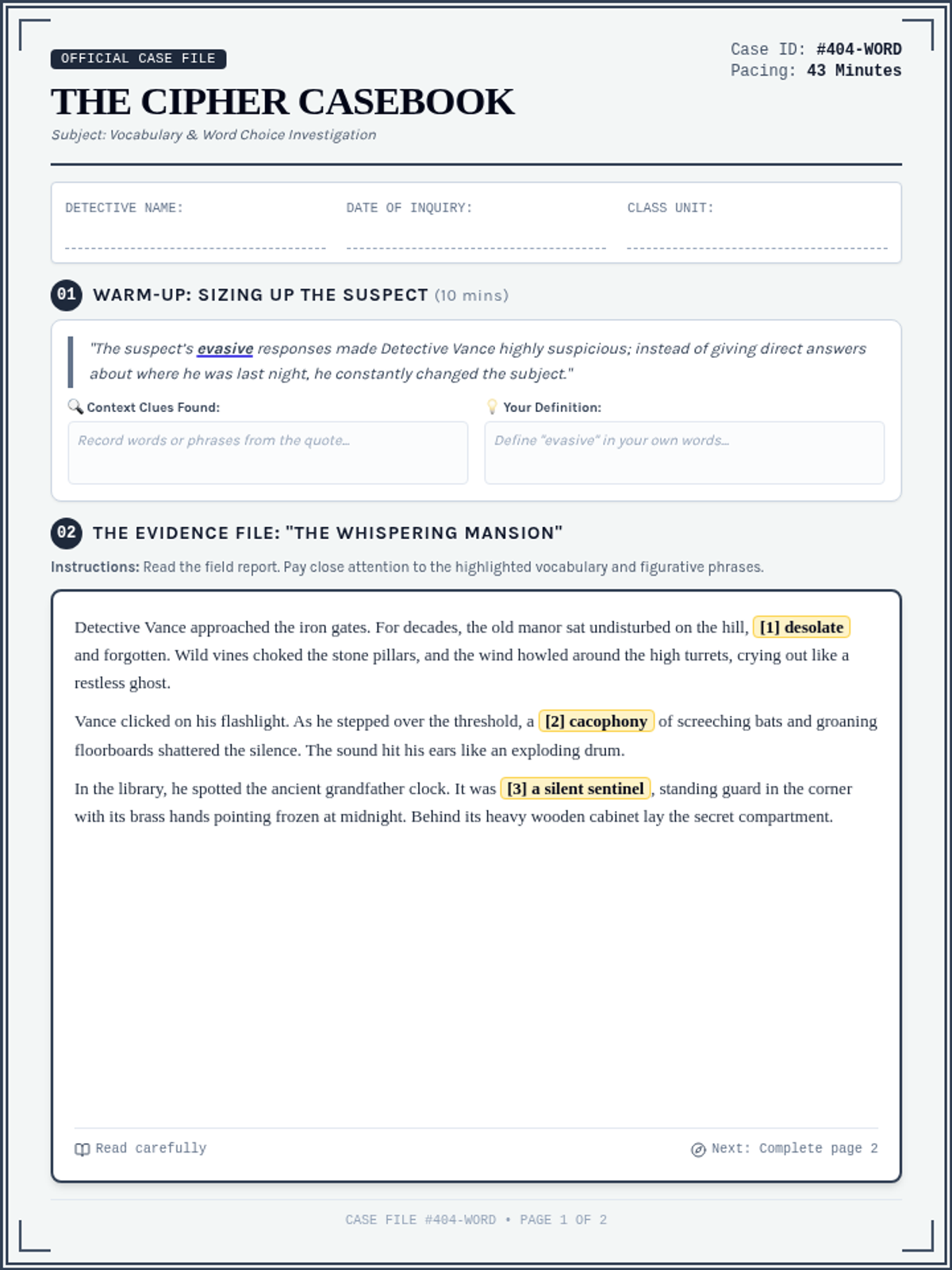
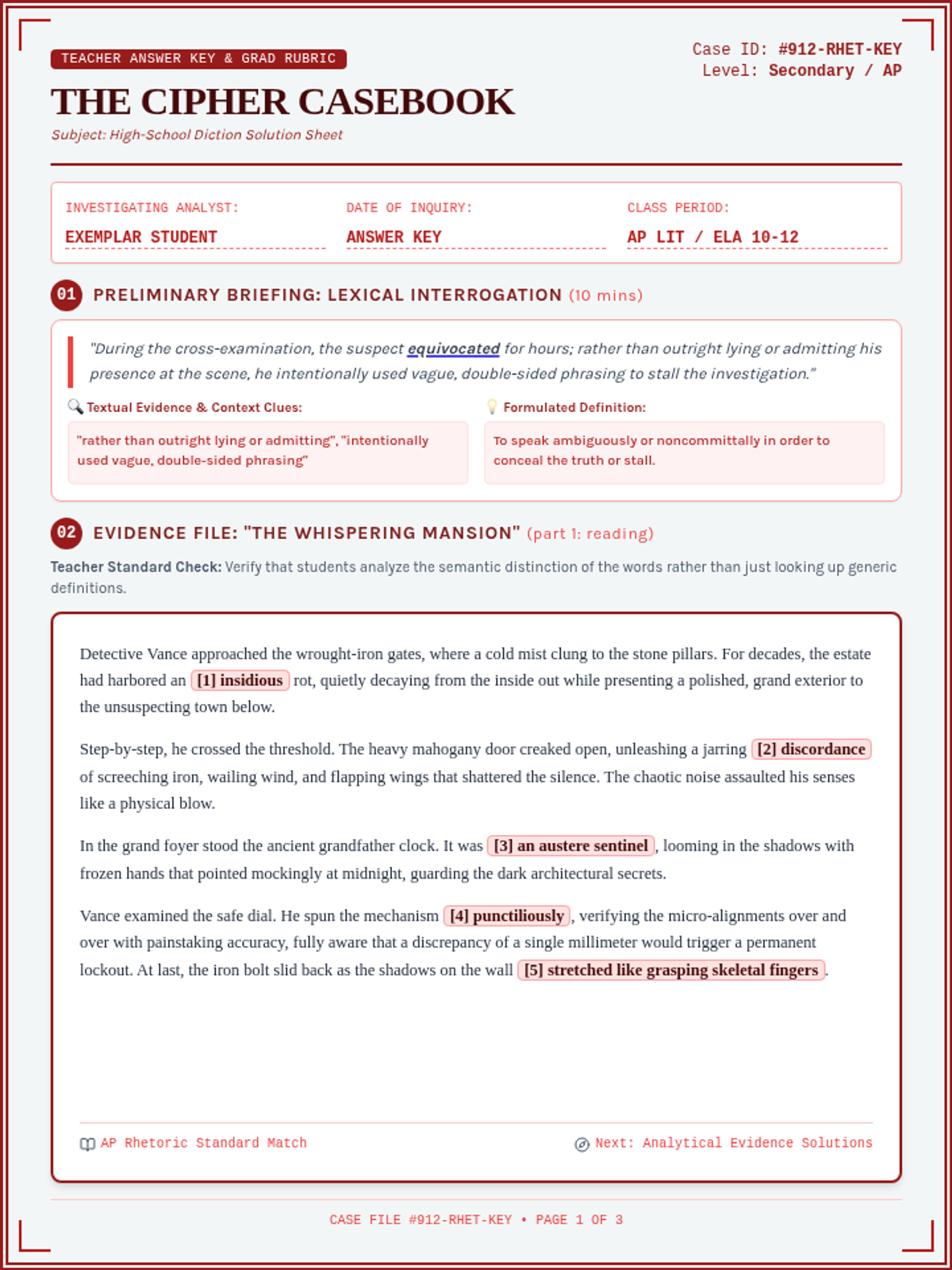
A 60-minute ELA lesson focused on decoding rich vocabulary and figurative language using context clues in a detective-themed investigation.
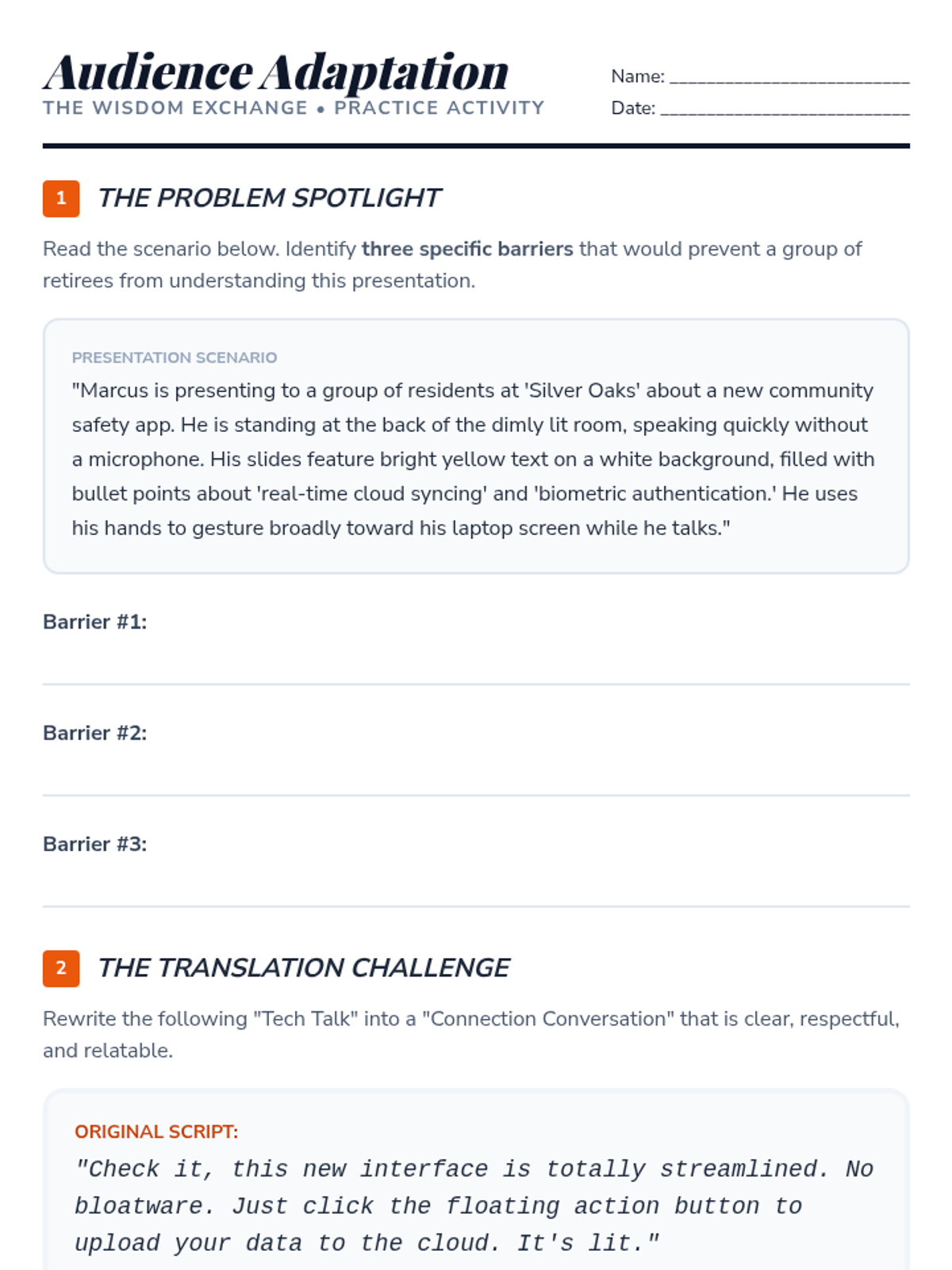
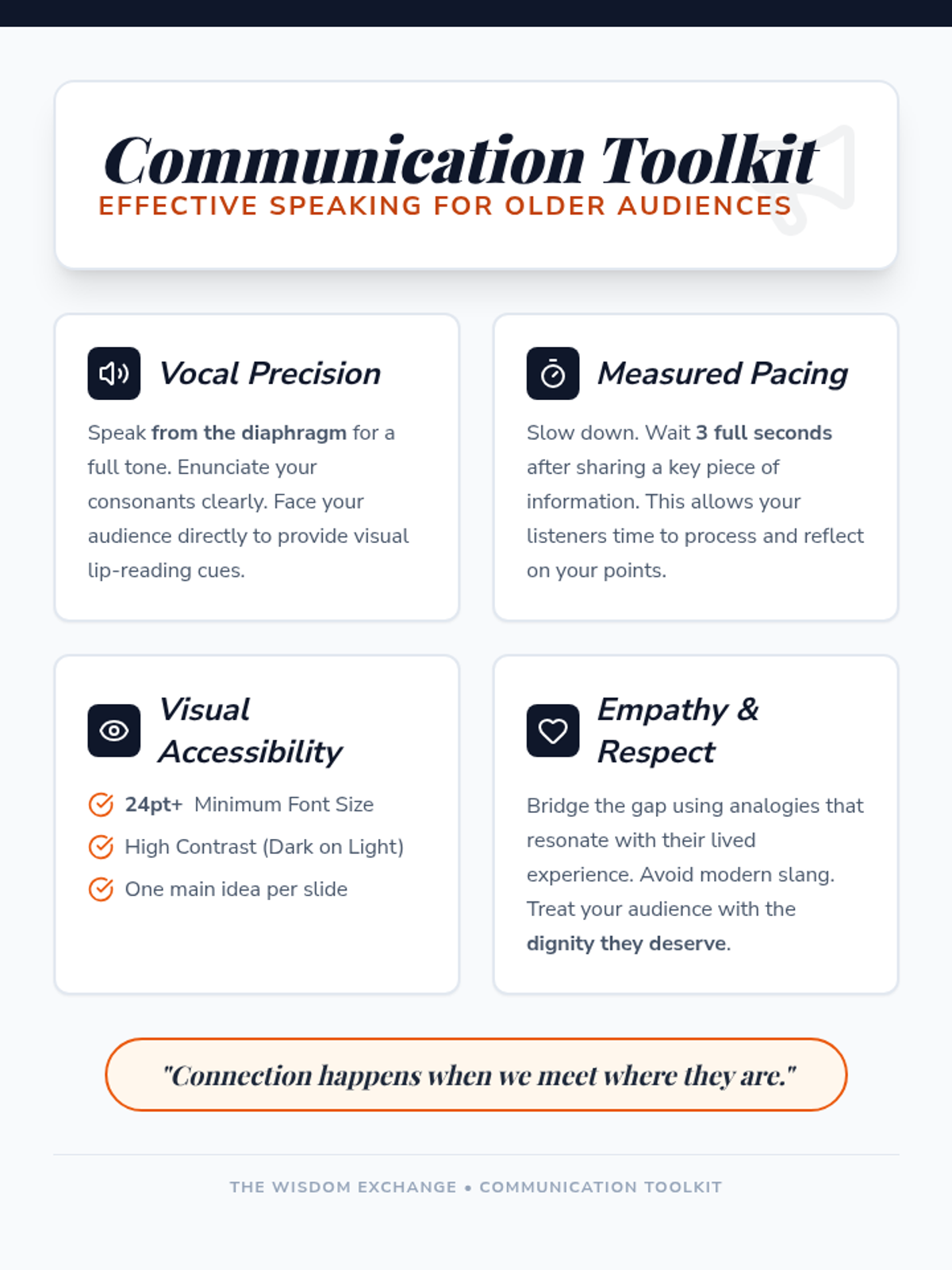
A comprehensive lesson on adapting communication styles for older audiences, focusing on clarity, pacing, and respectful engagement. Students will learn practical strategies to bridge the generational gap in public speaking and presentations.
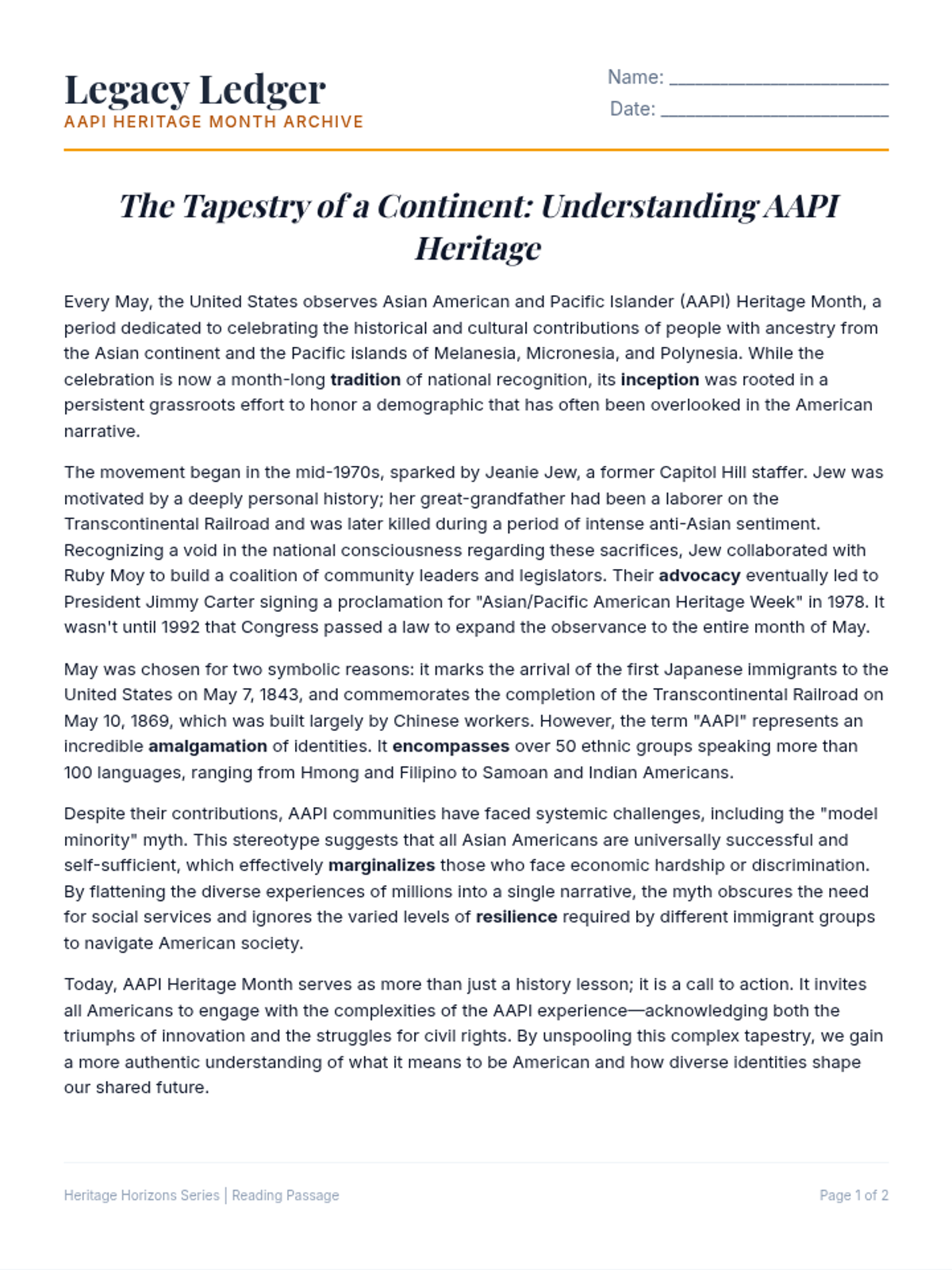
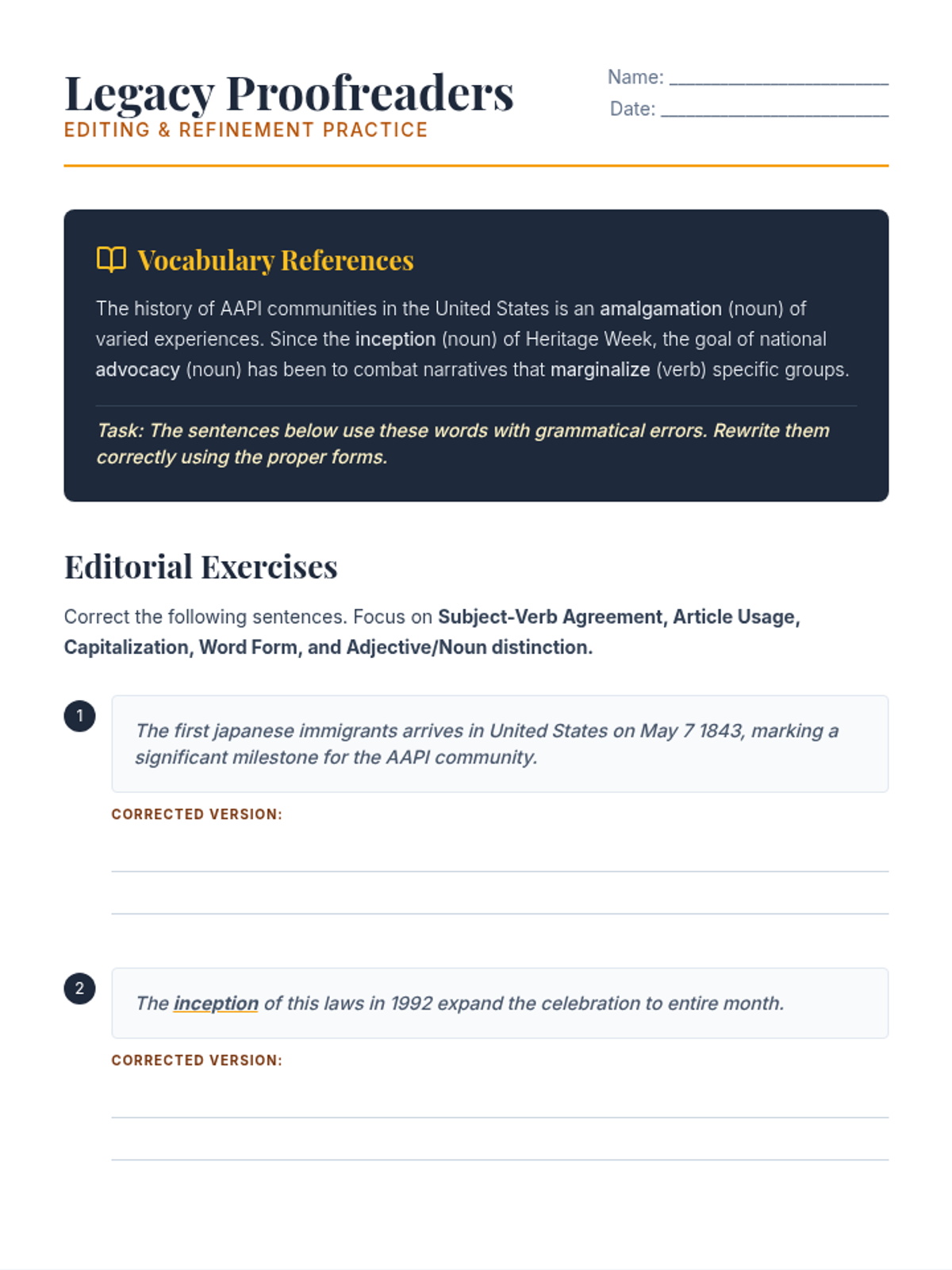
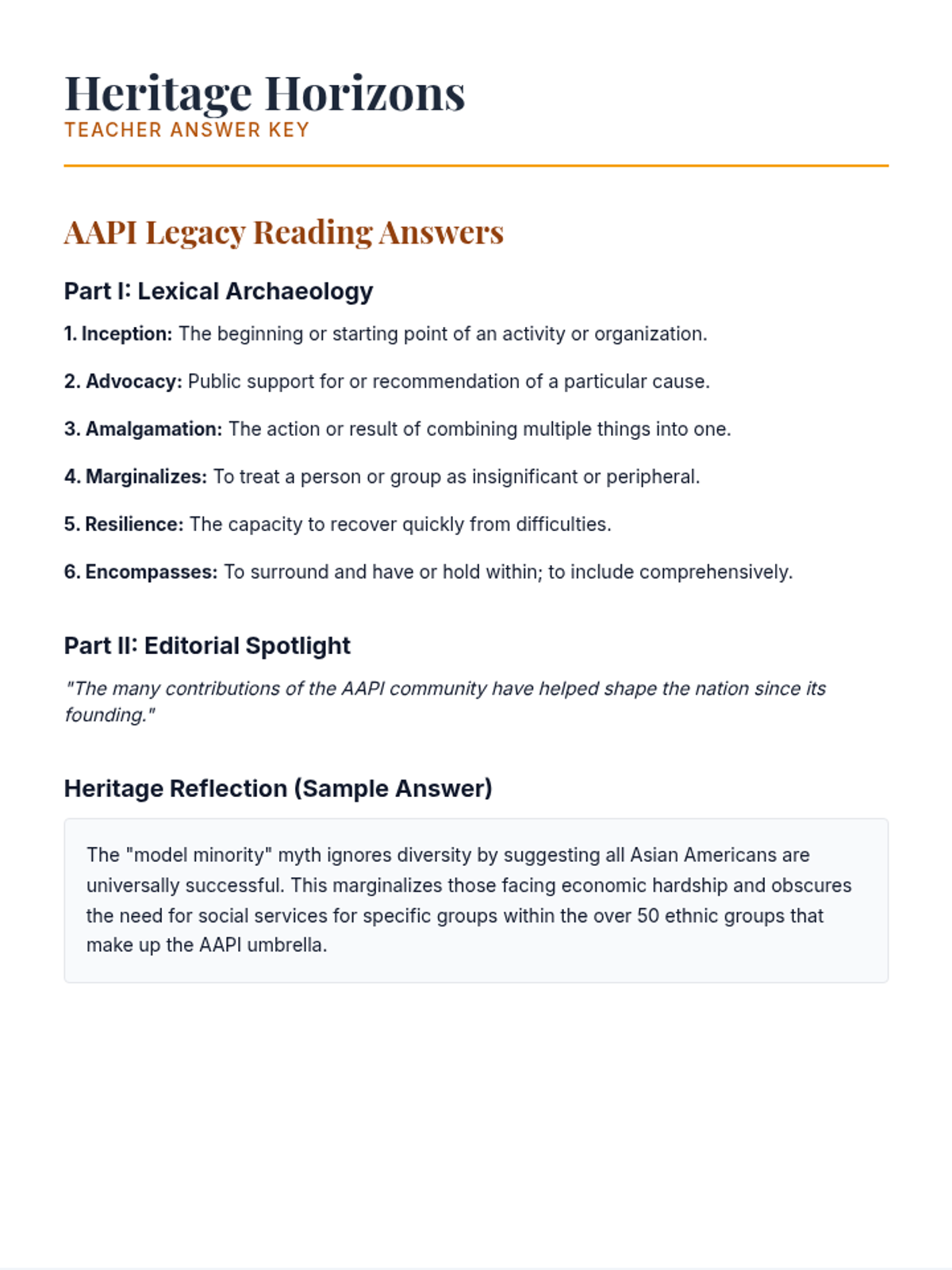
A comprehensive lesson for advanced ESL students exploring the history, significance, and diverse narratives of Asian American and Pacific Islander Heritage Month.
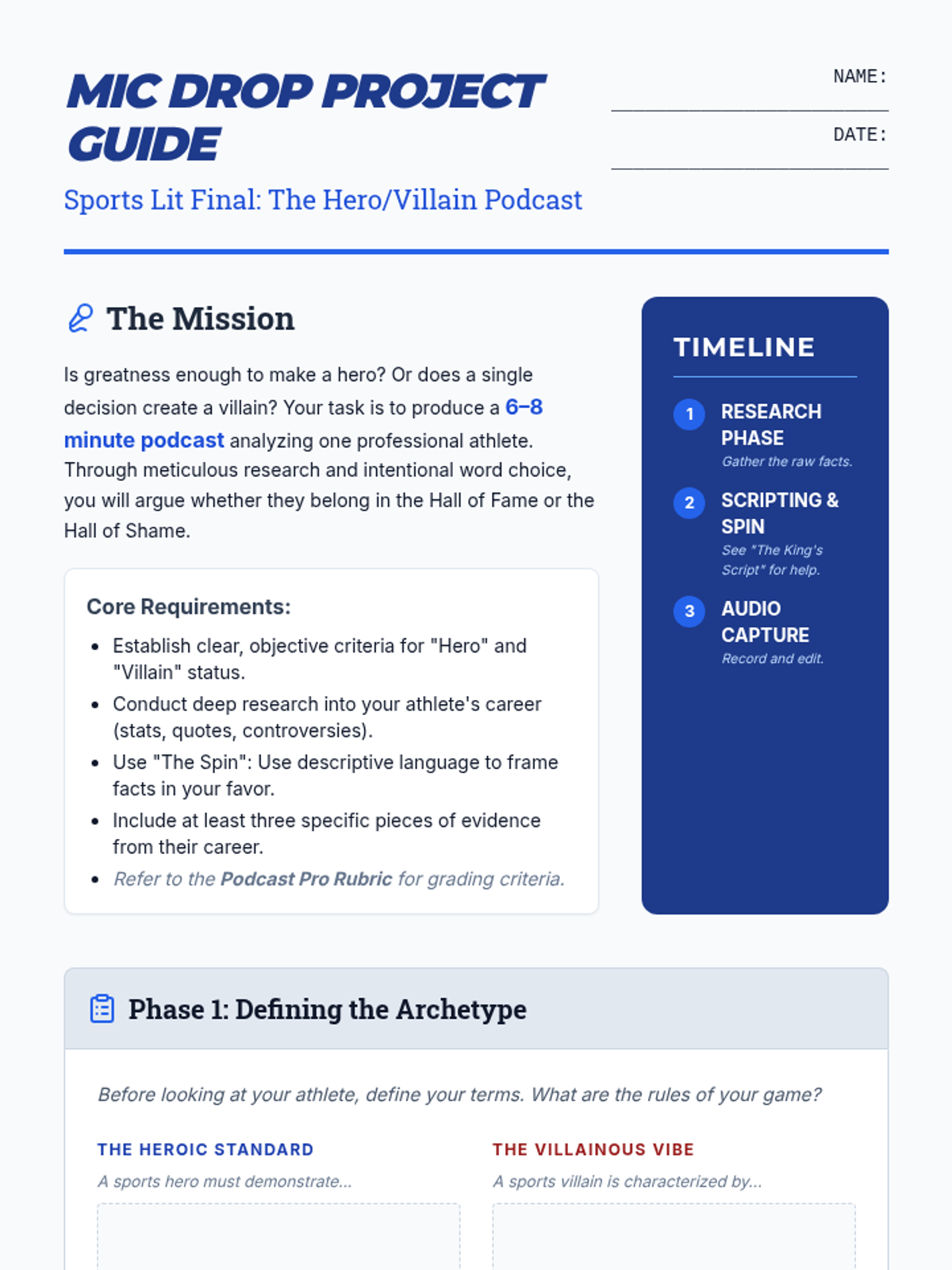
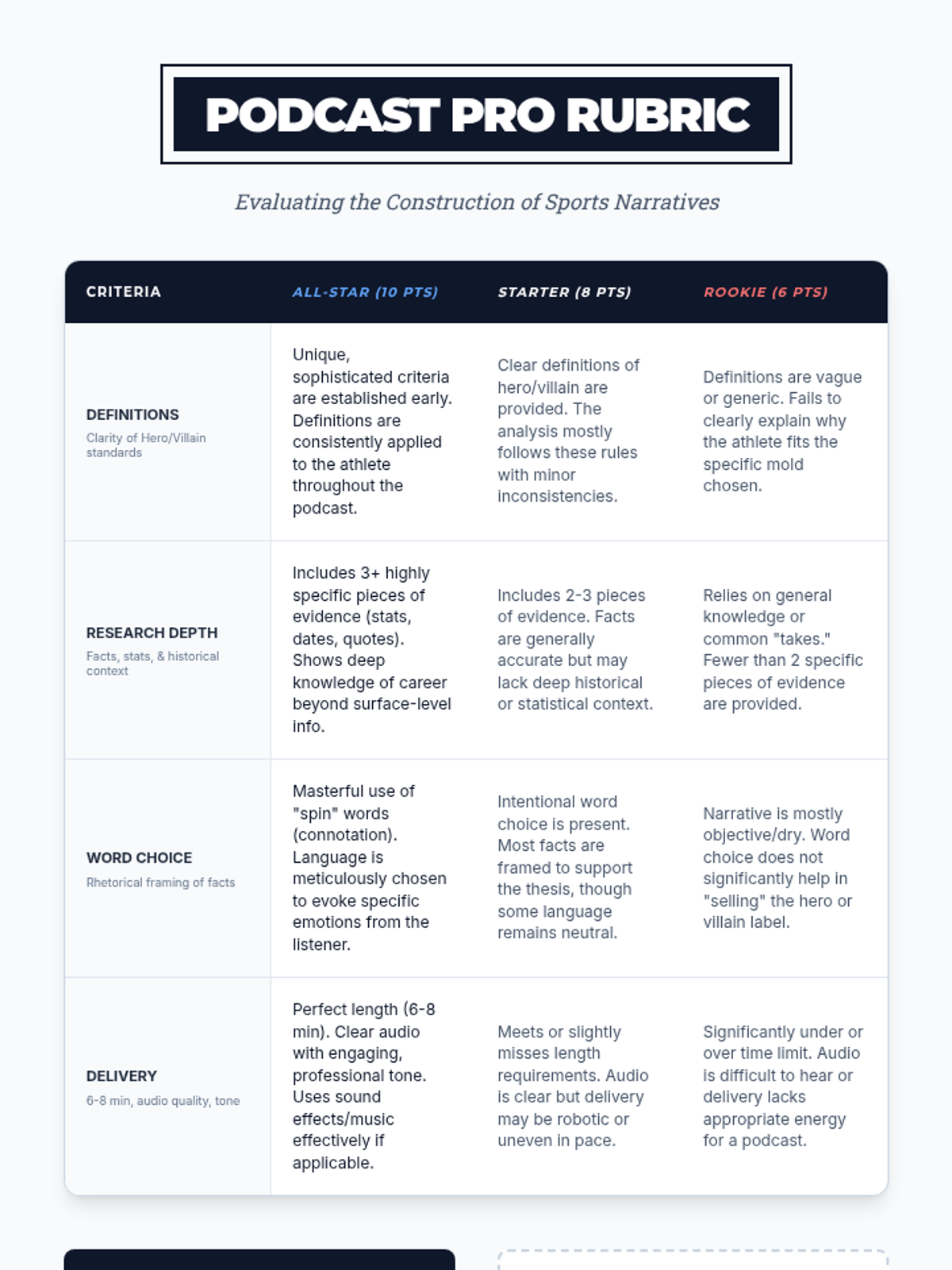
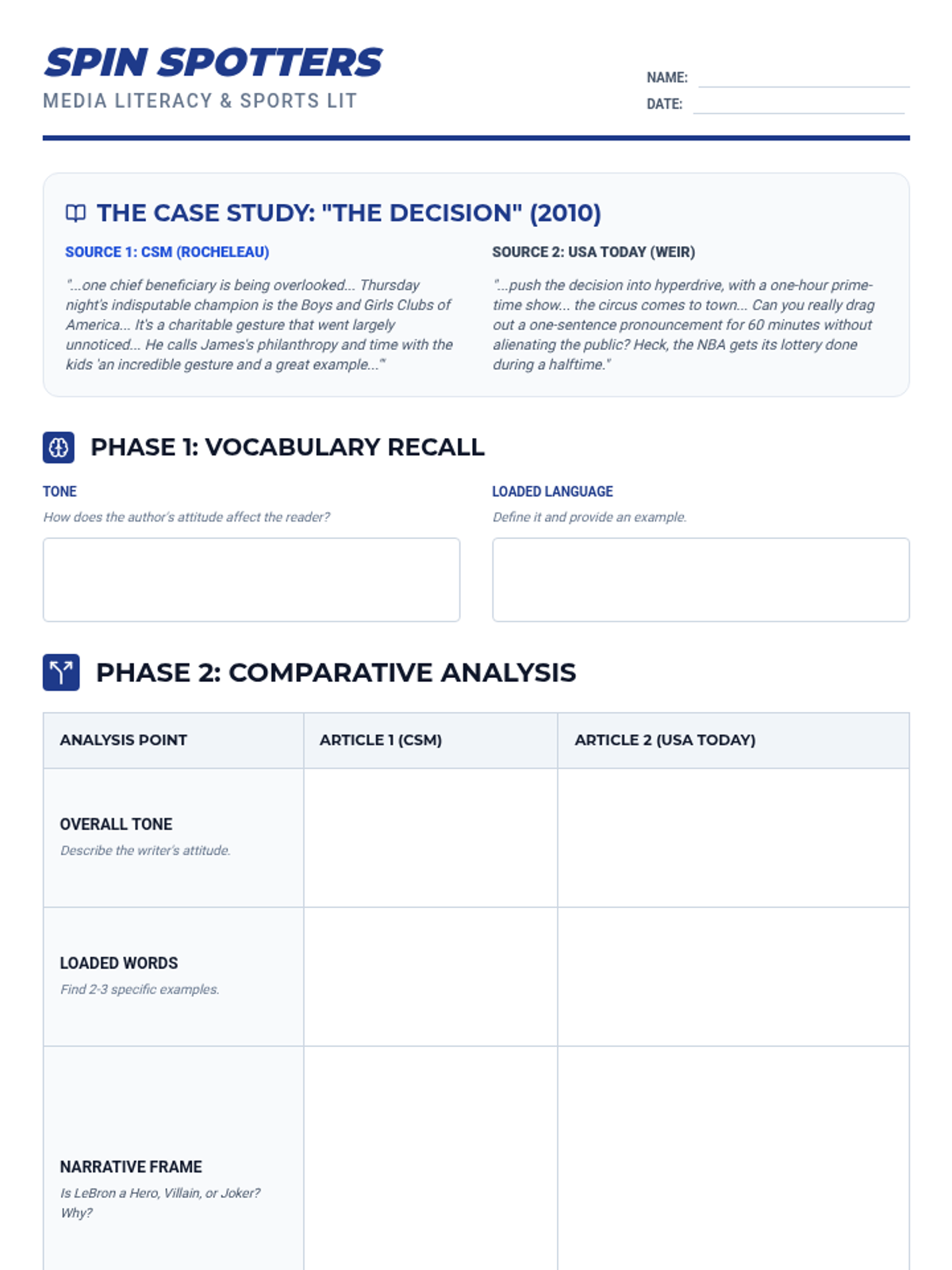
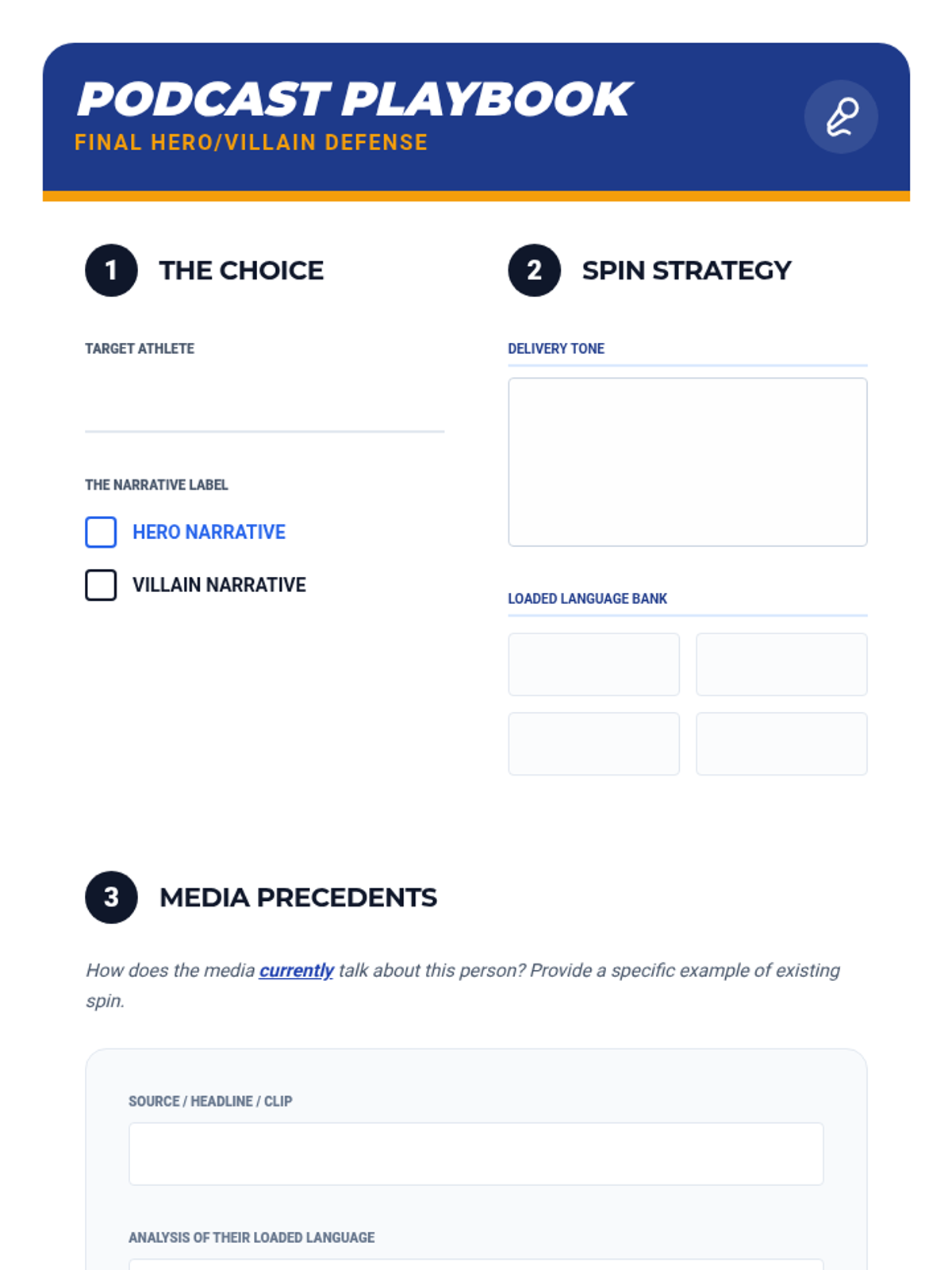
Students design and record a podcast that analyzes a chosen athlete through the lens of hero or villain narratives, utilizing specific criteria and rhetorical spin.
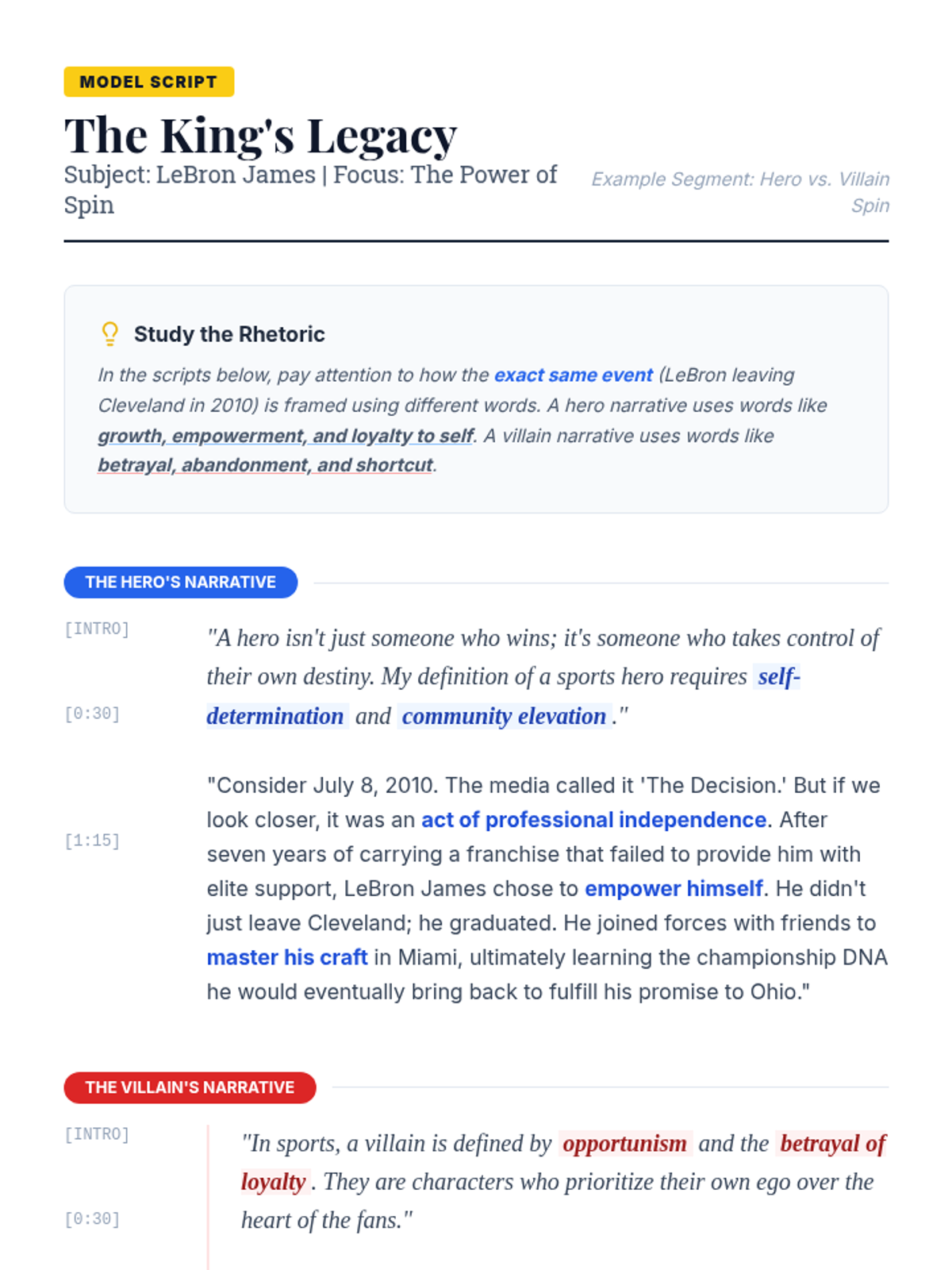
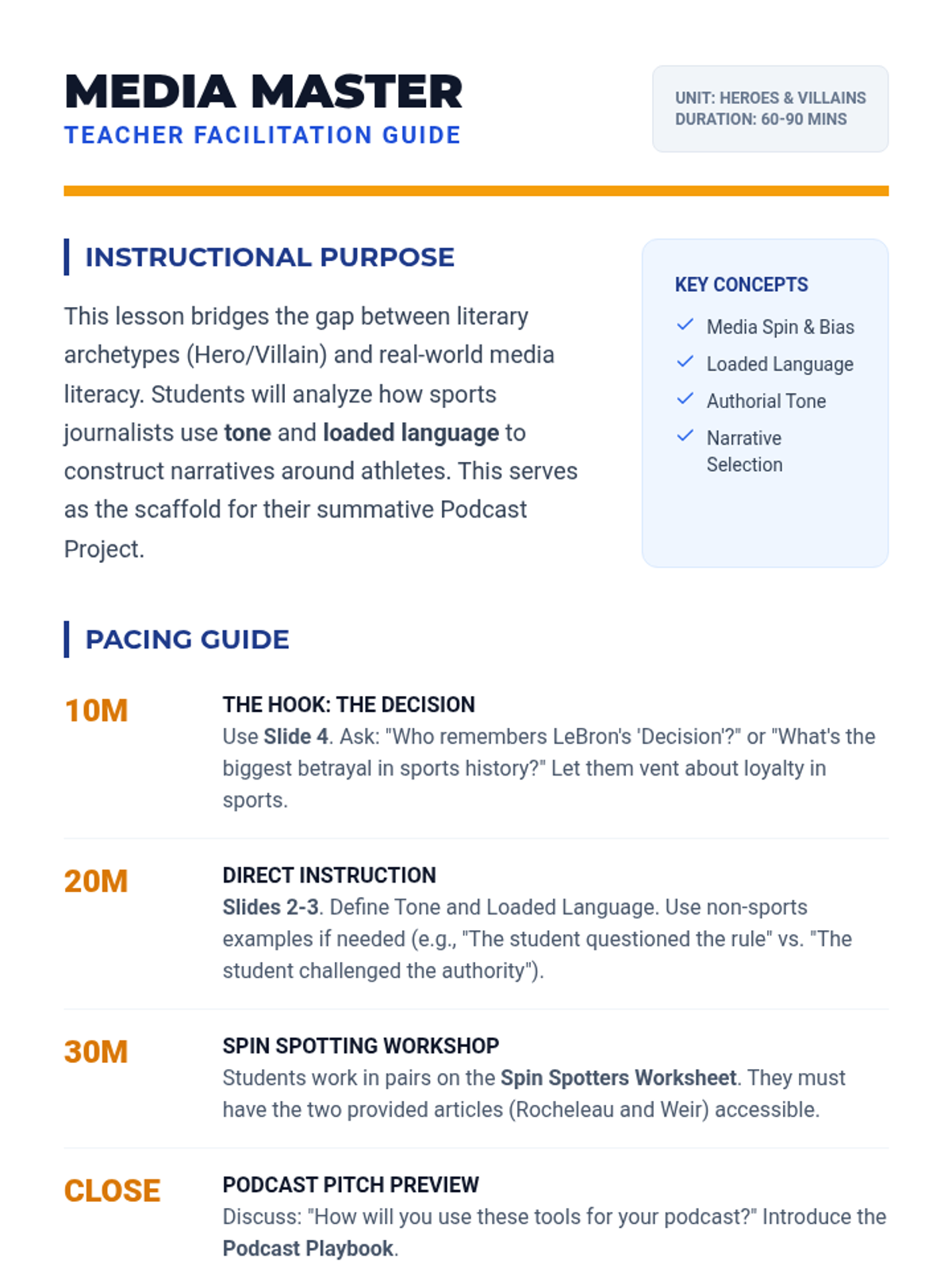
A lesson exploring media spin, tone, and loaded language in sports journalism, using LeBron James's 'The Decision' as a case study to help students prepare for their hero/villain podcast project.
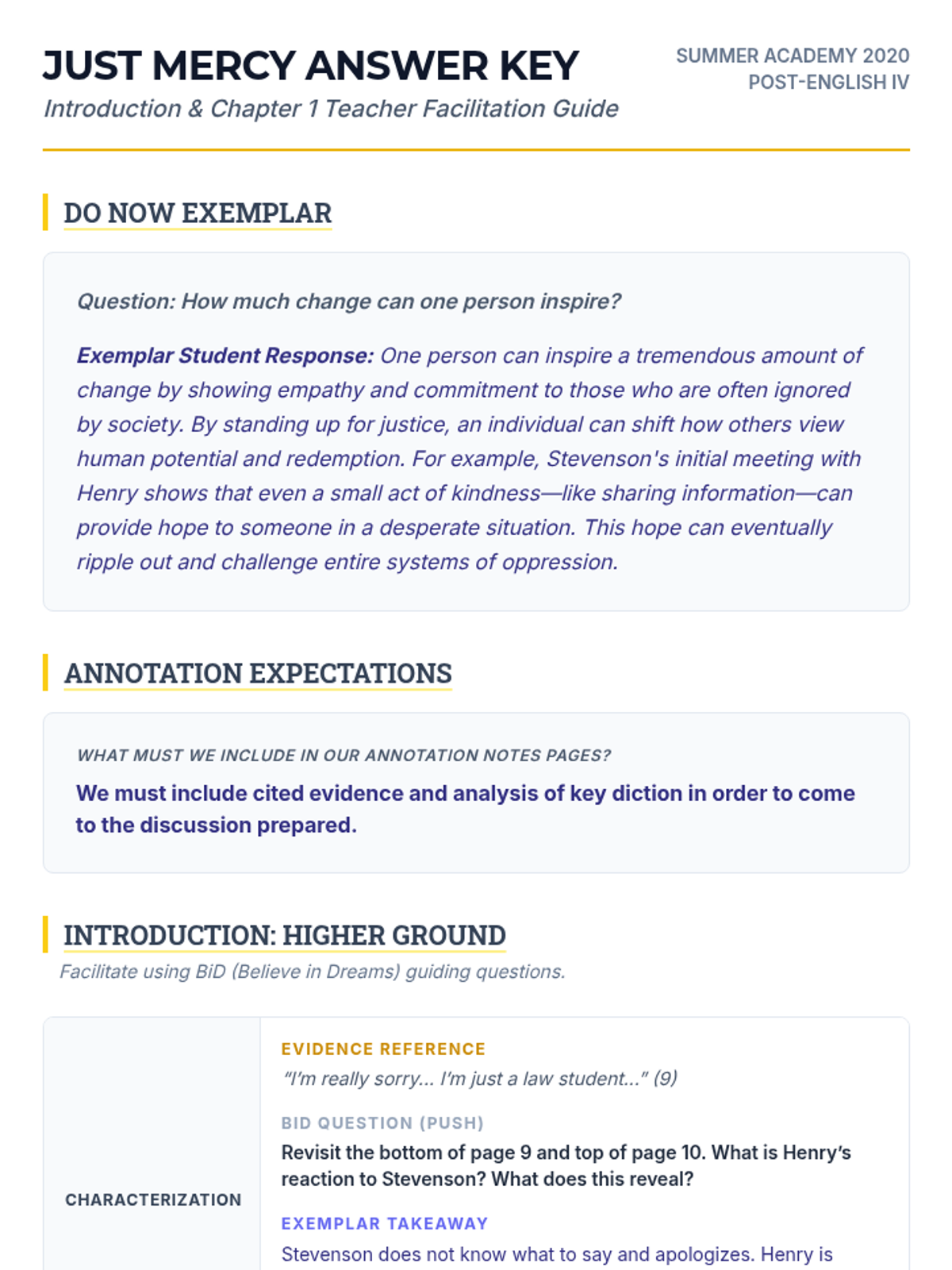
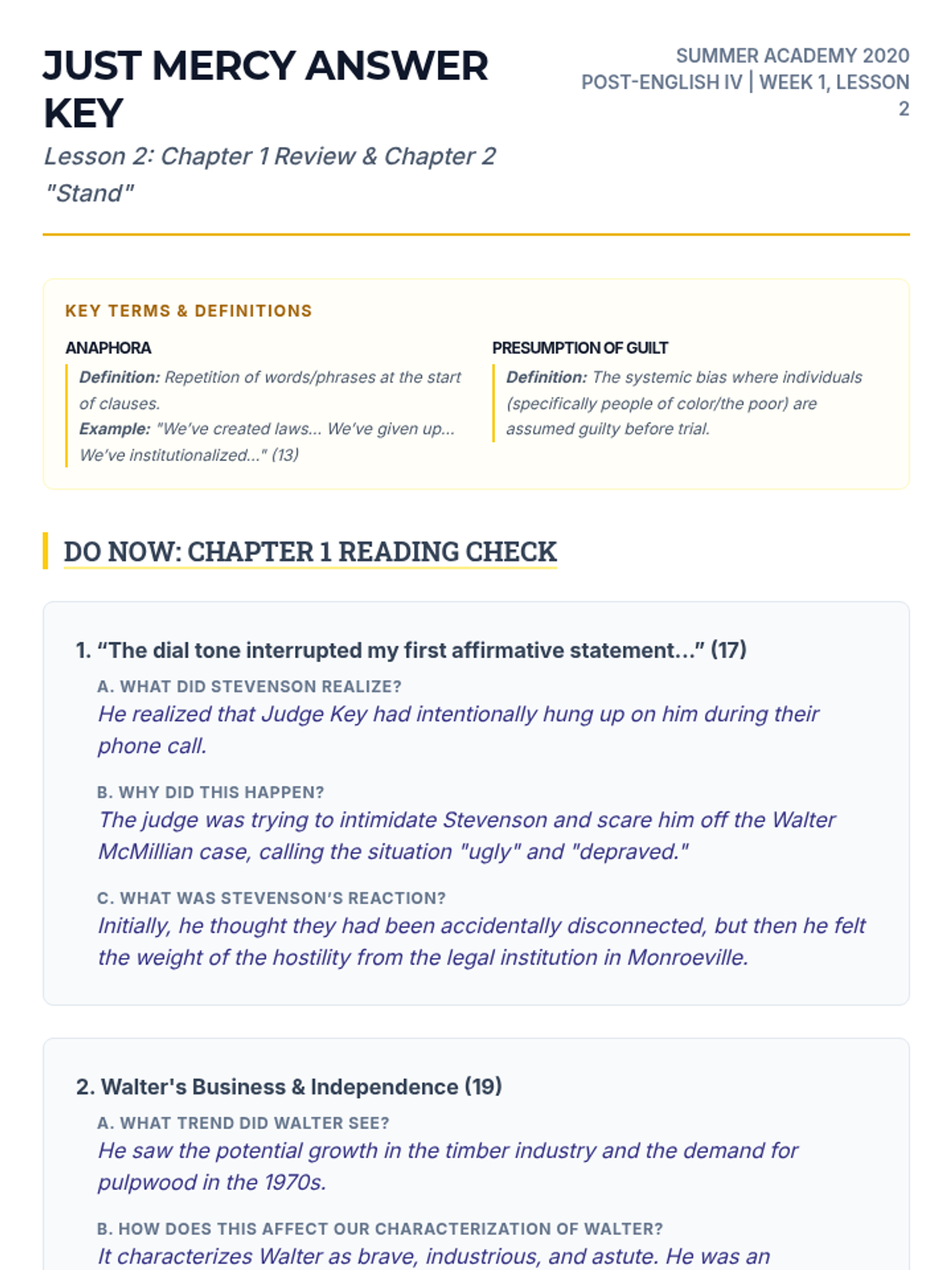
This lesson introduces students to Bryan Stevenson's Just Mercy, focusing on the characterization of Stevenson and the themes of justice and poverty introduced in the introduction and first chapter.
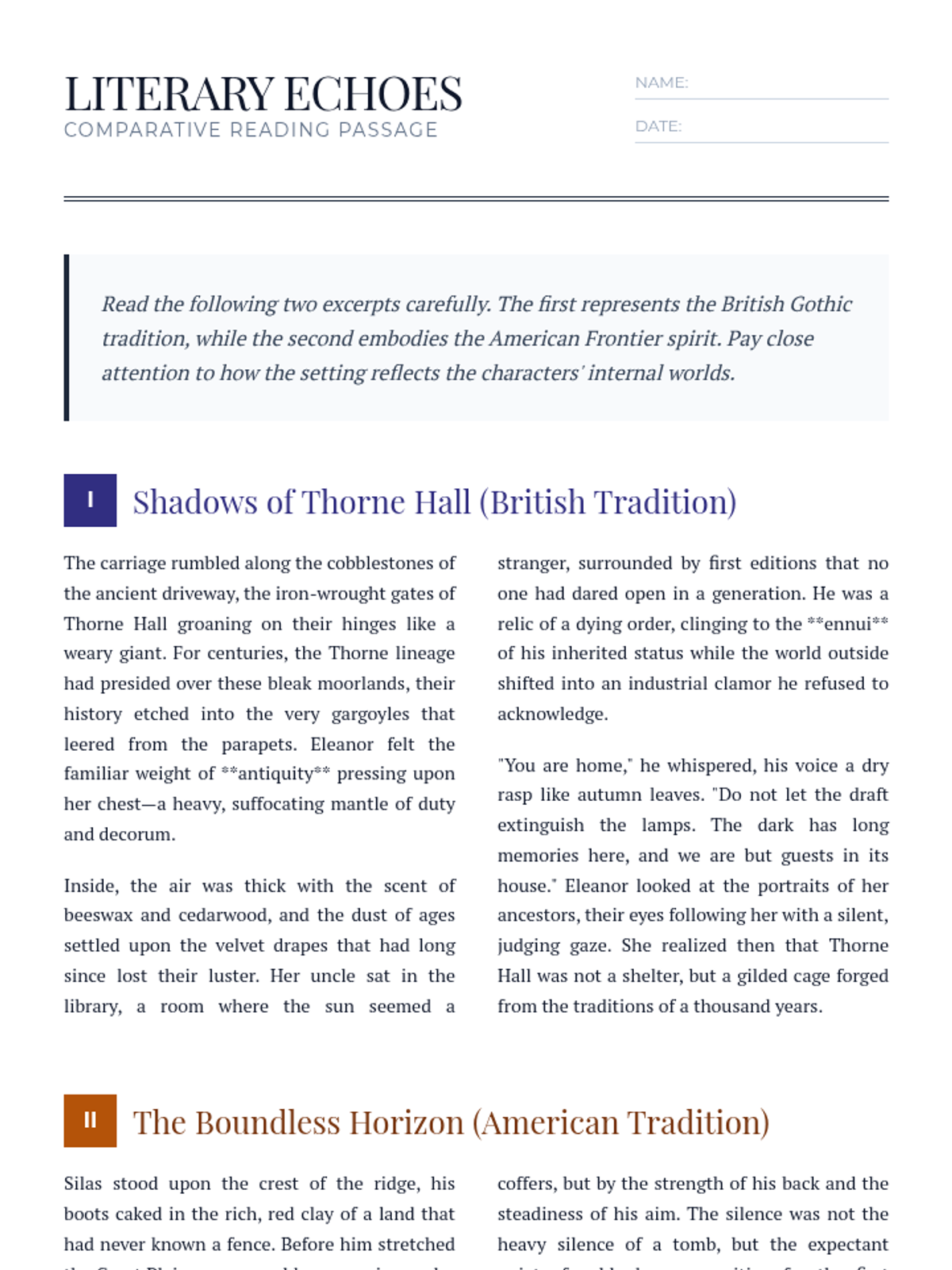
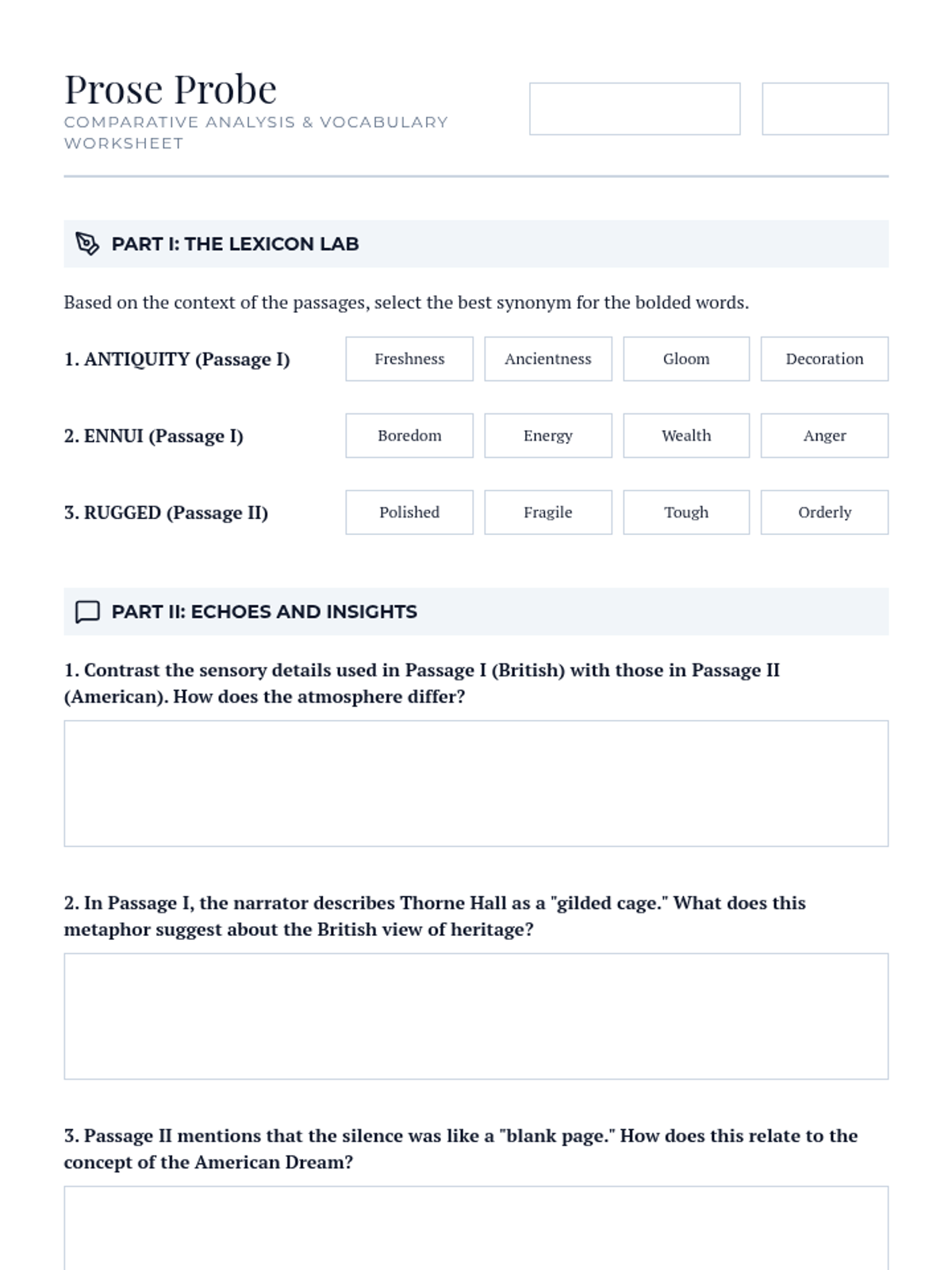
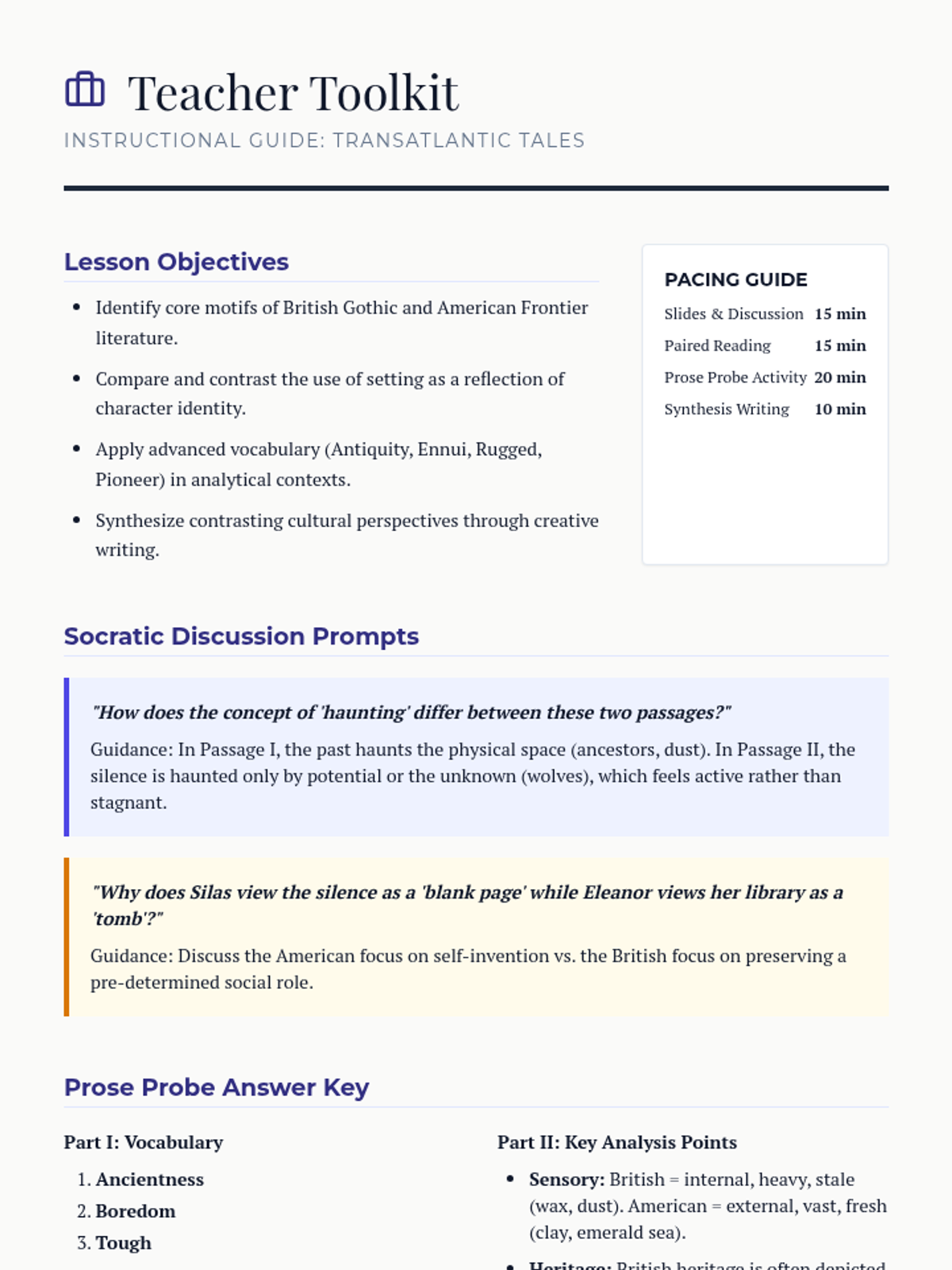
An introductory exploration of the distinct voices in British and American literature through comparative readings, vocabulary development, and analytical writing.
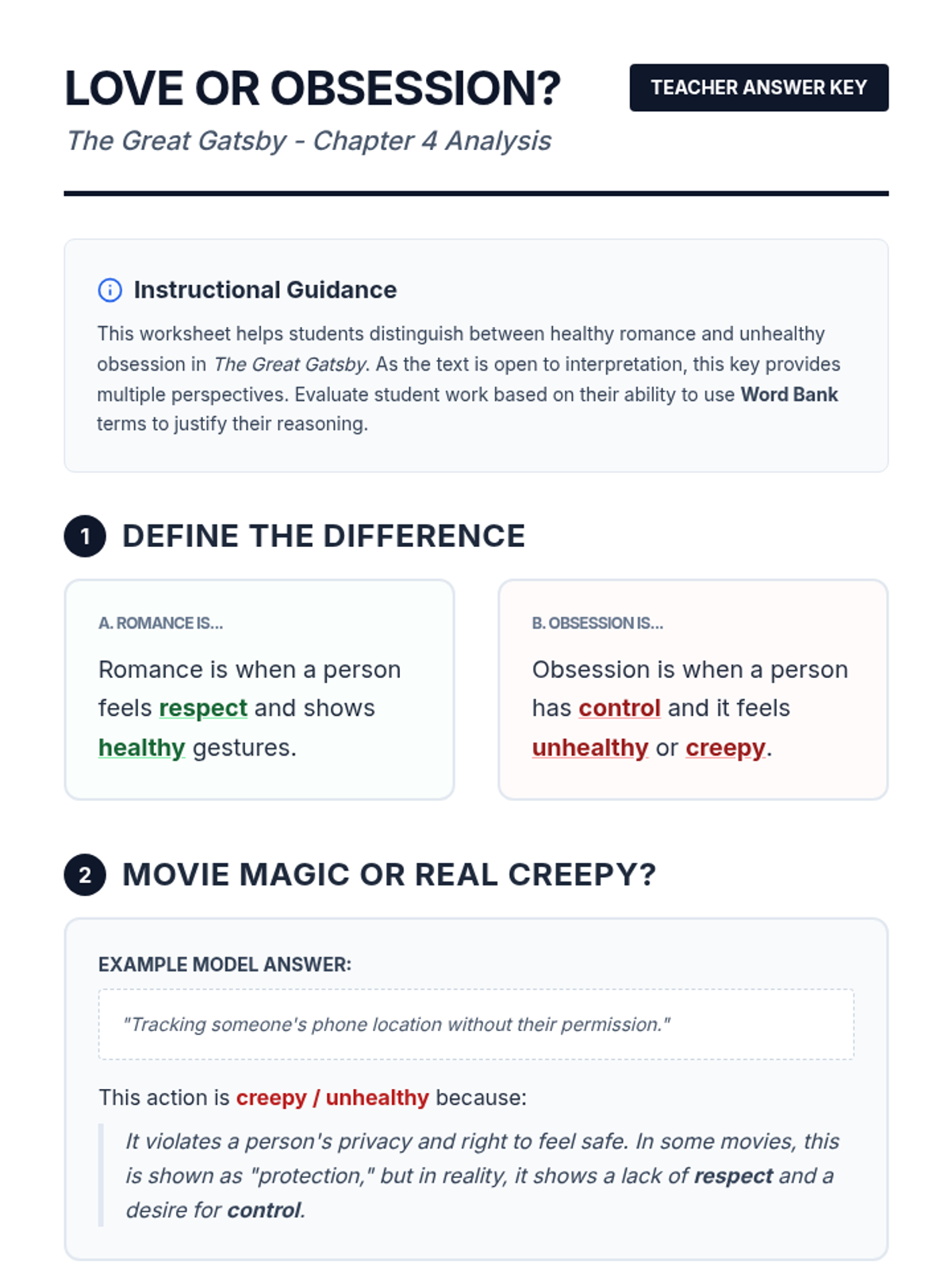
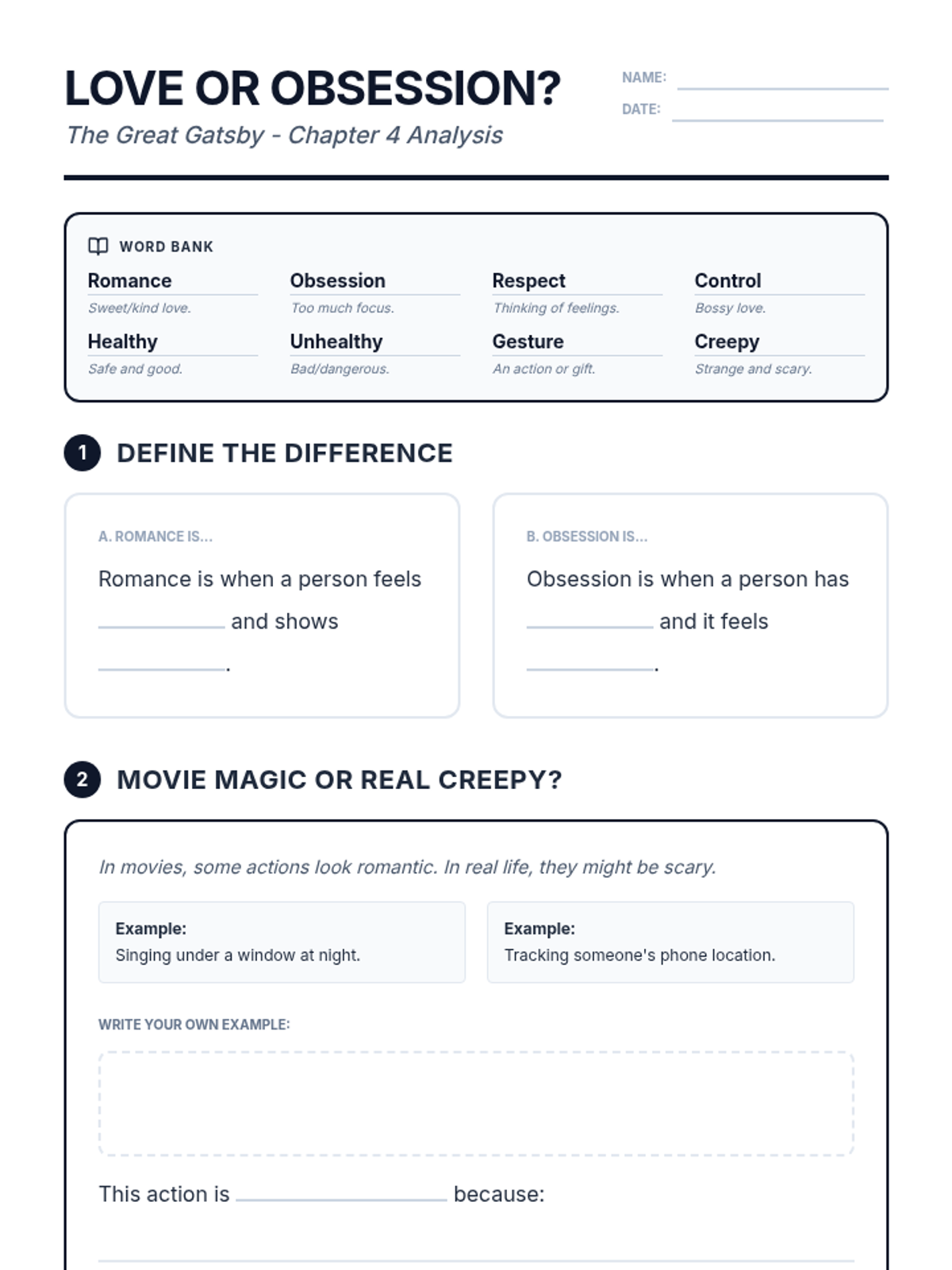
A deep dive into Gatsby's motivations in Chapter 4, challenging students to evaluate whether his grand gestures for Daisy are romantic or represent an unhealthy obsession.
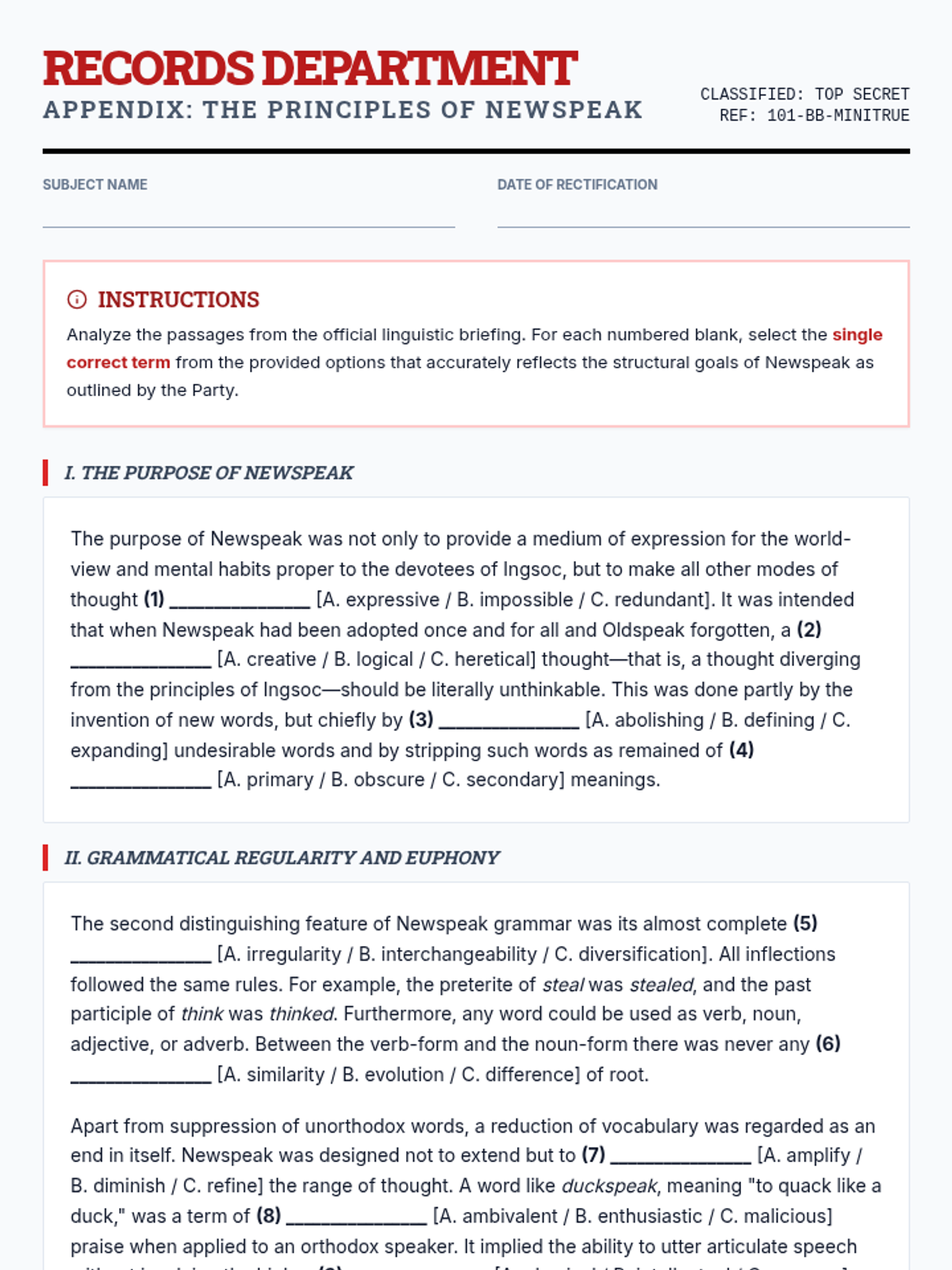
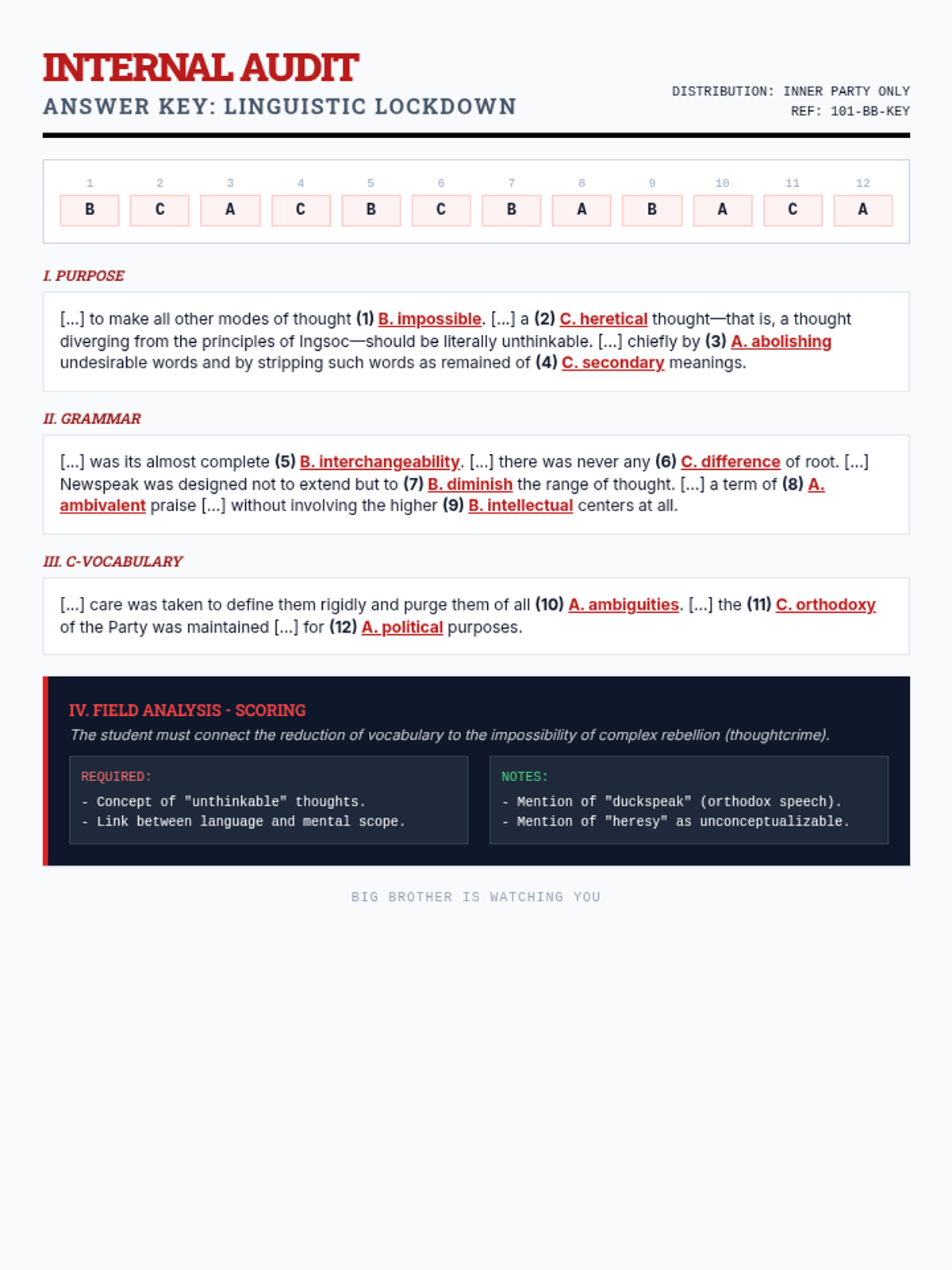
A deep dive into the linguistic control mechanisms of Oceania, focusing on the vocabulary and structural goals of Newspeak as described in George Orwell's 1984.
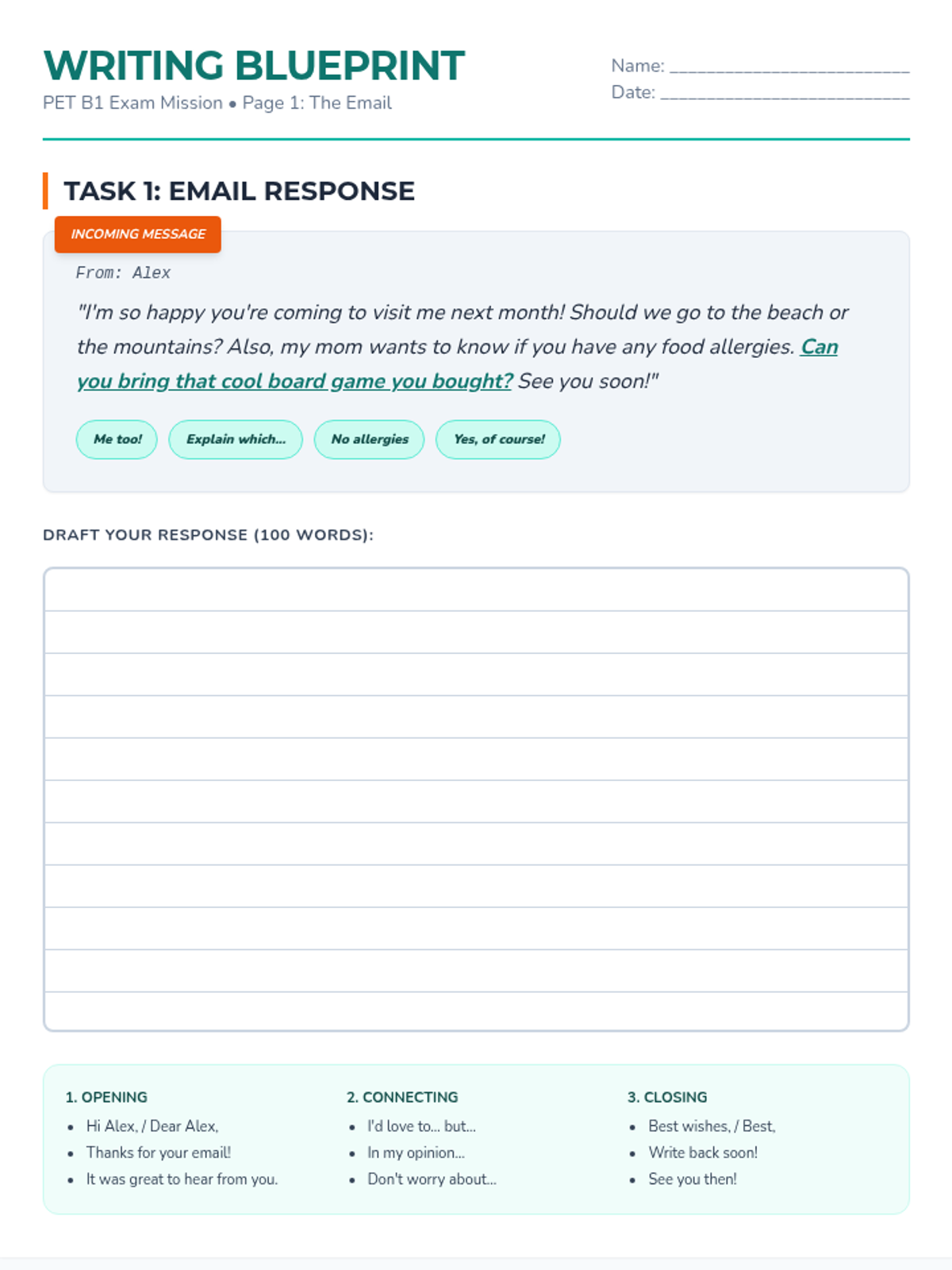
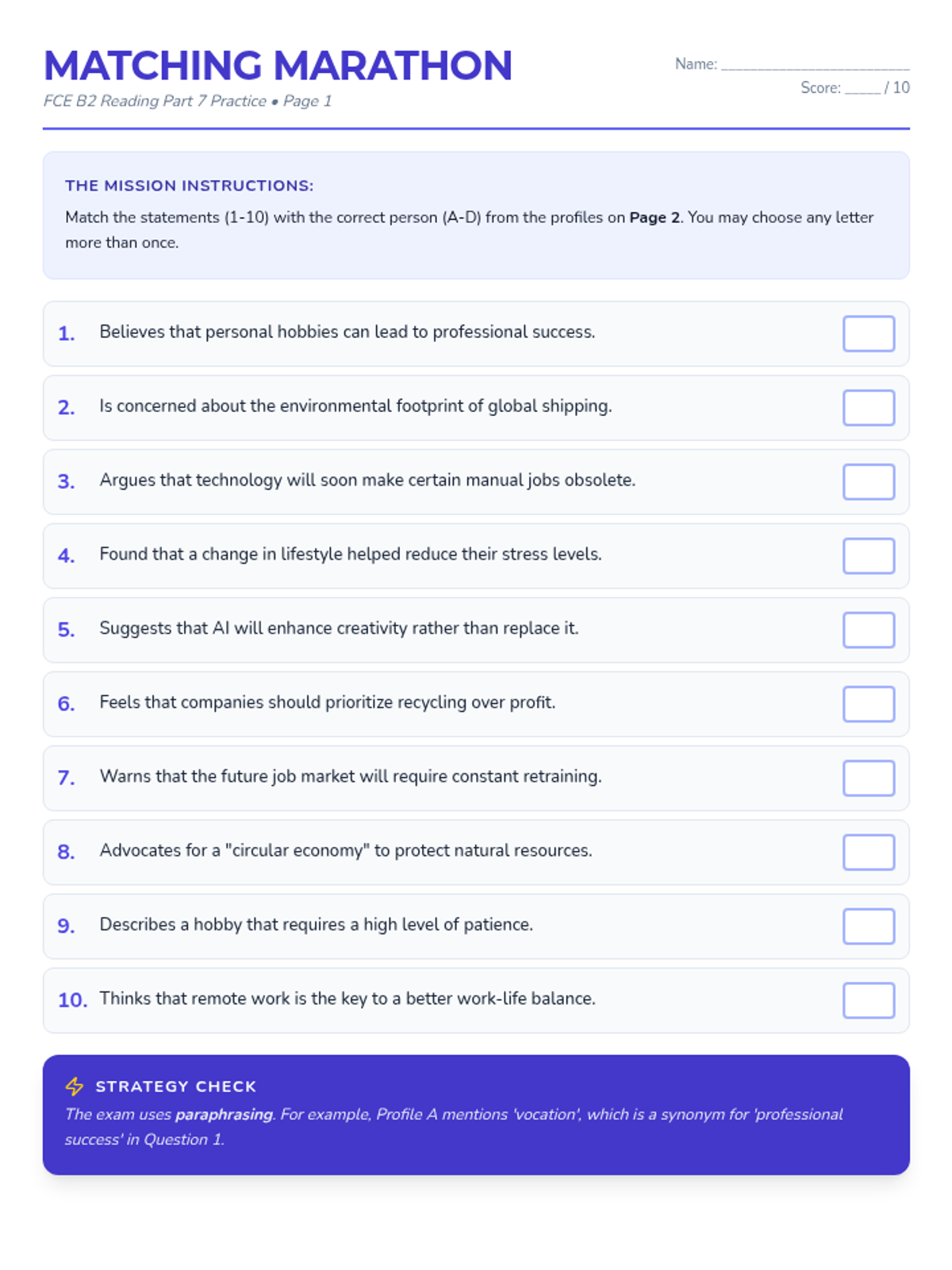
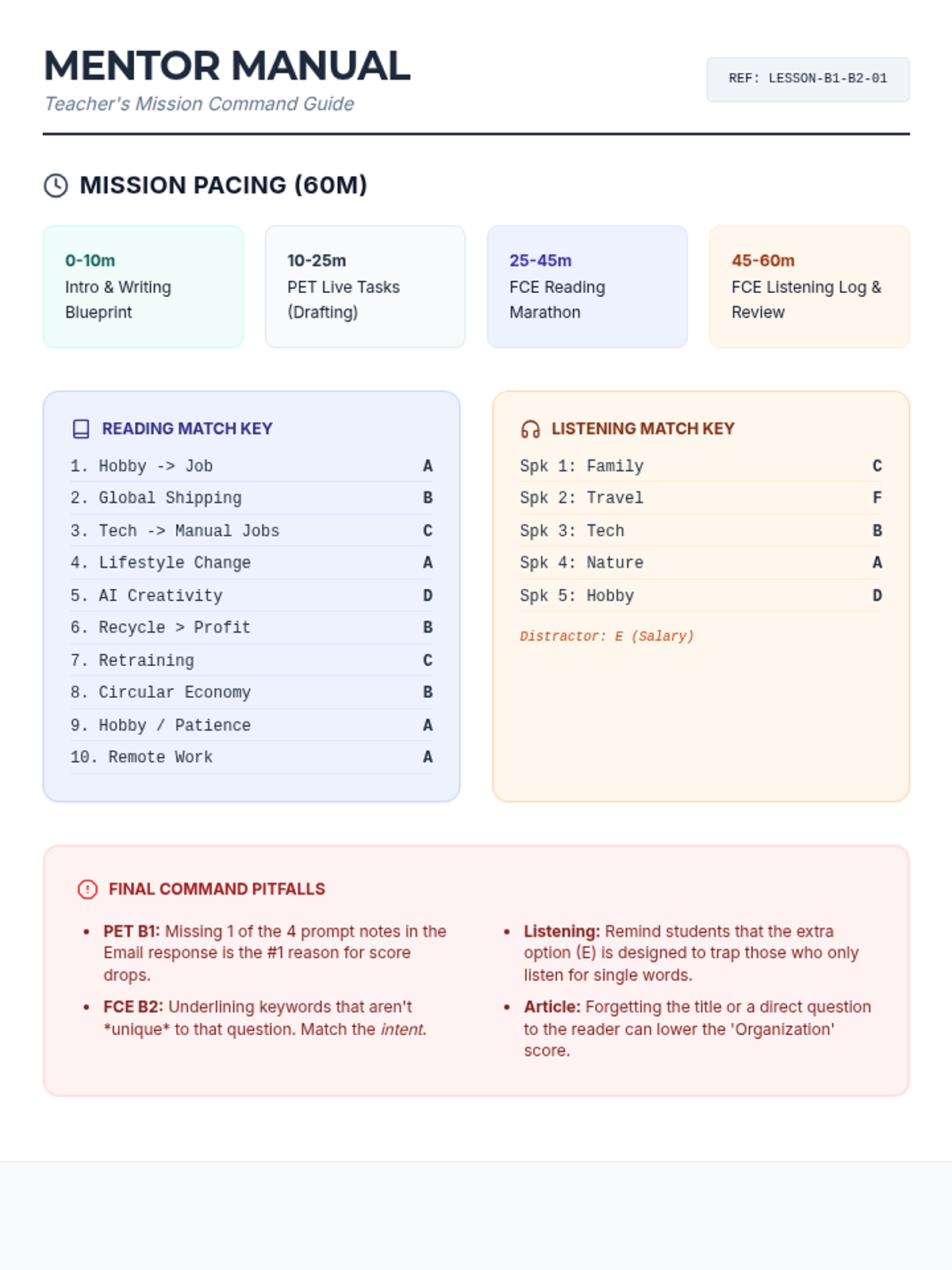
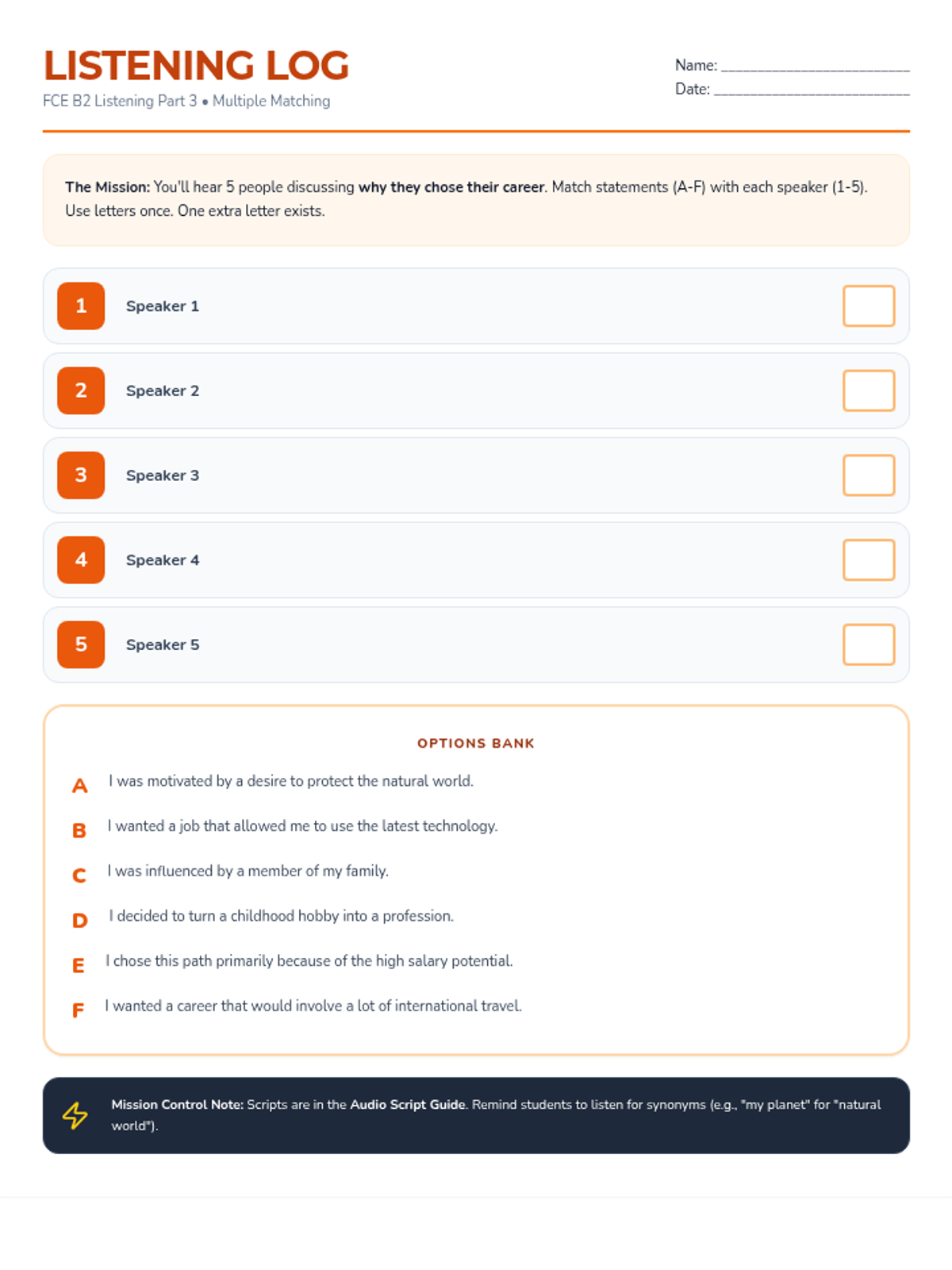
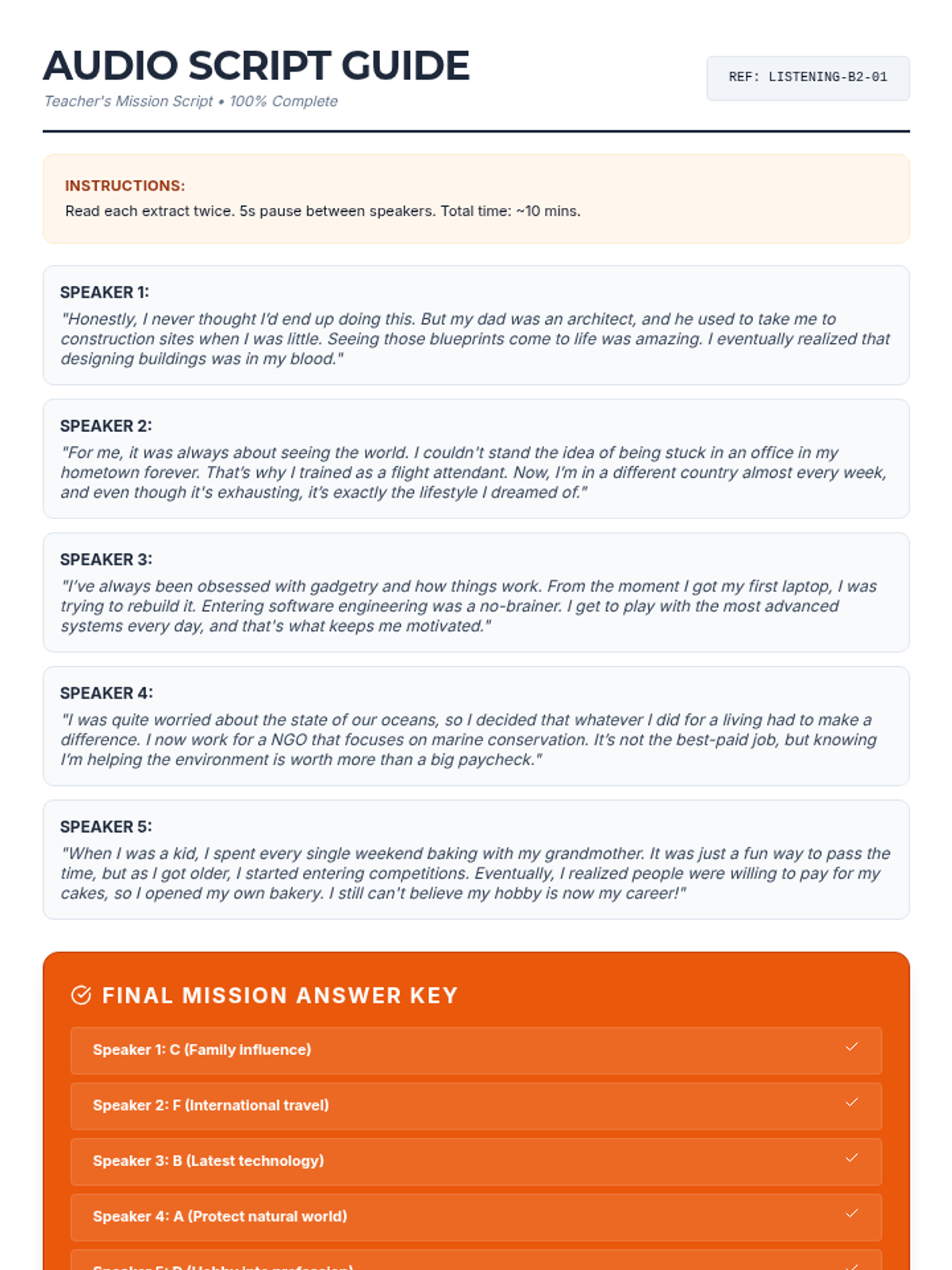
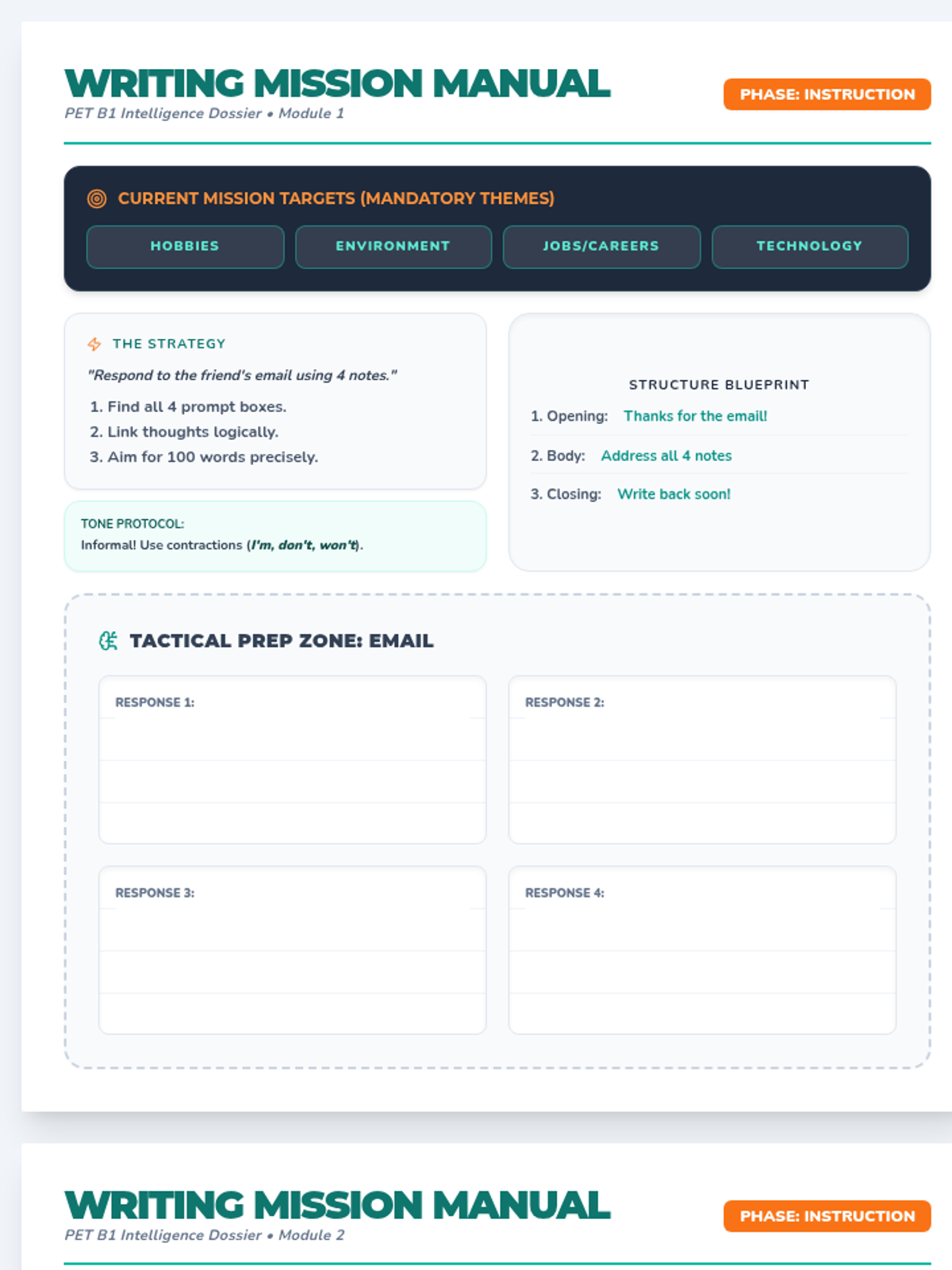
A comprehensive B1/B2 prep lesson focusing on PET Writing (Email, Article, Story) and FCE Multiple Matching strategies across diverse themes.
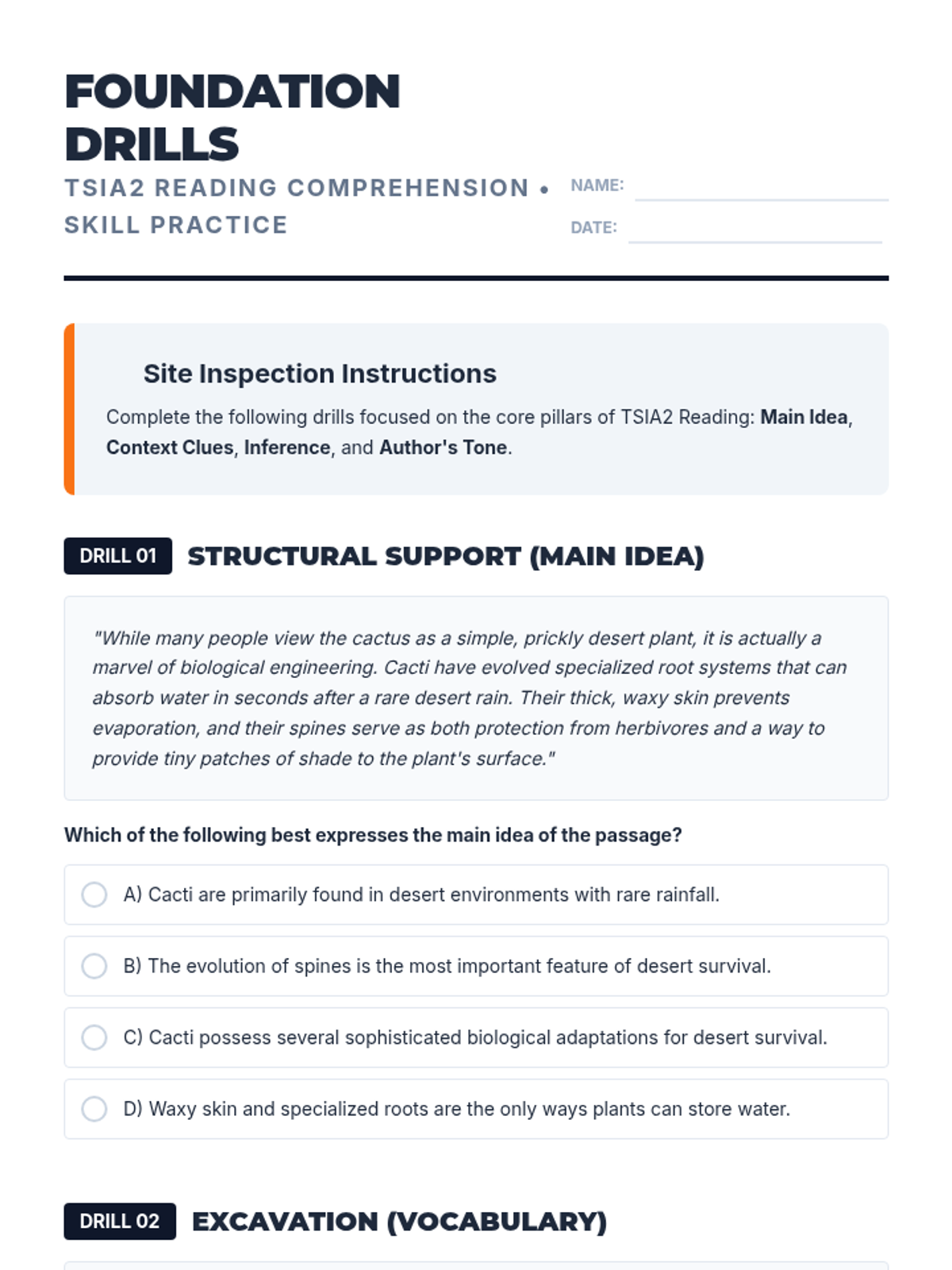
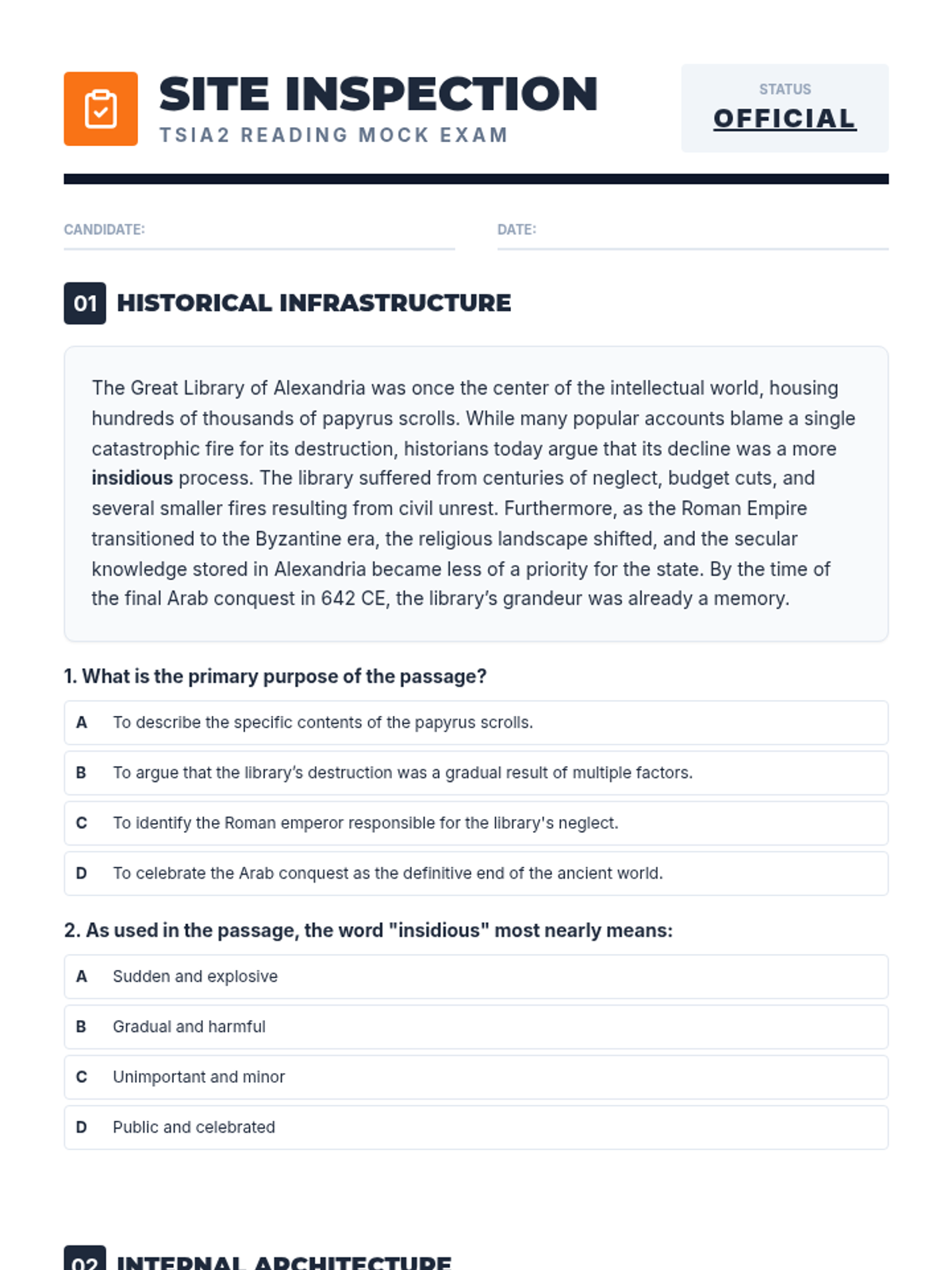
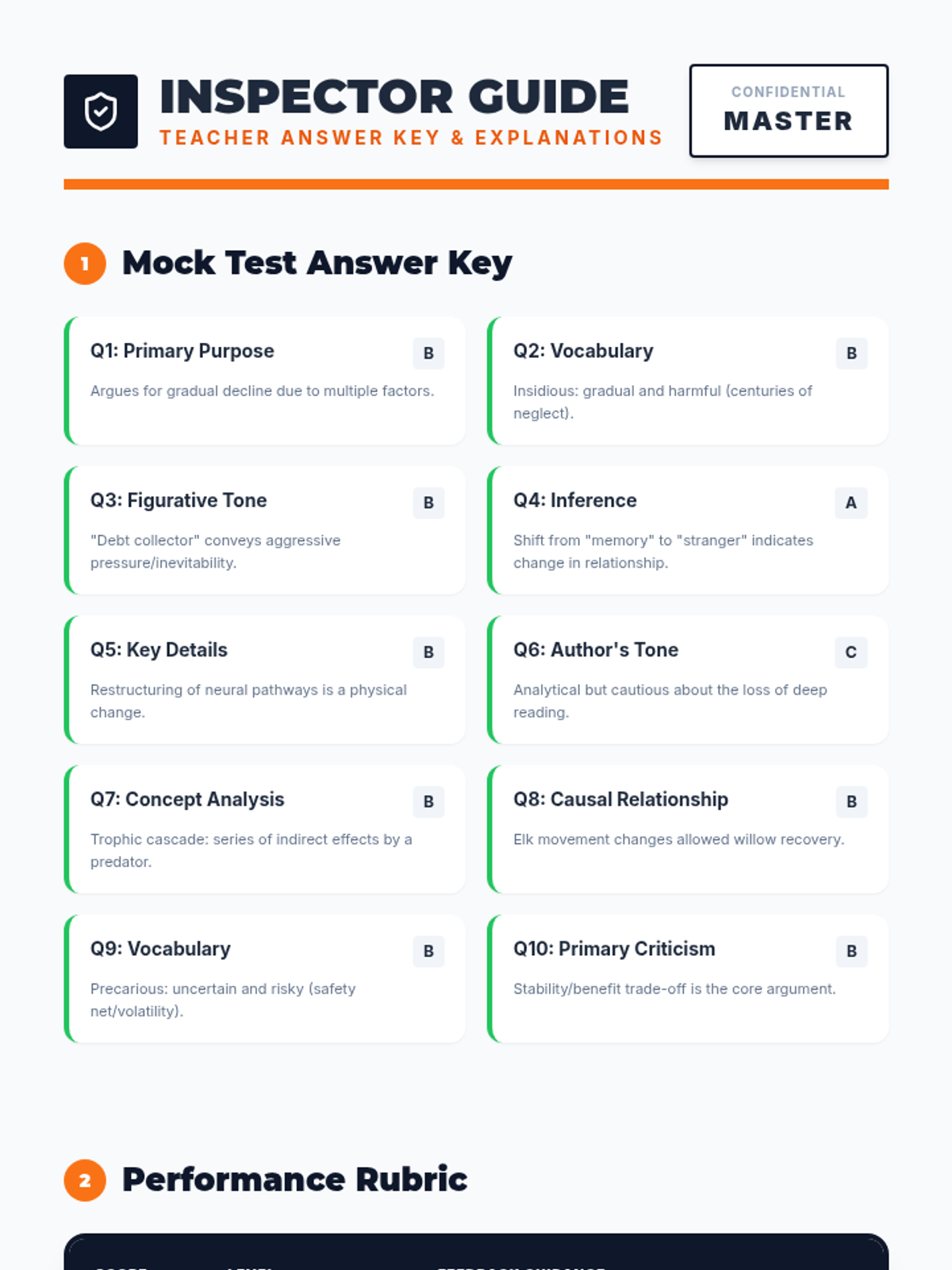
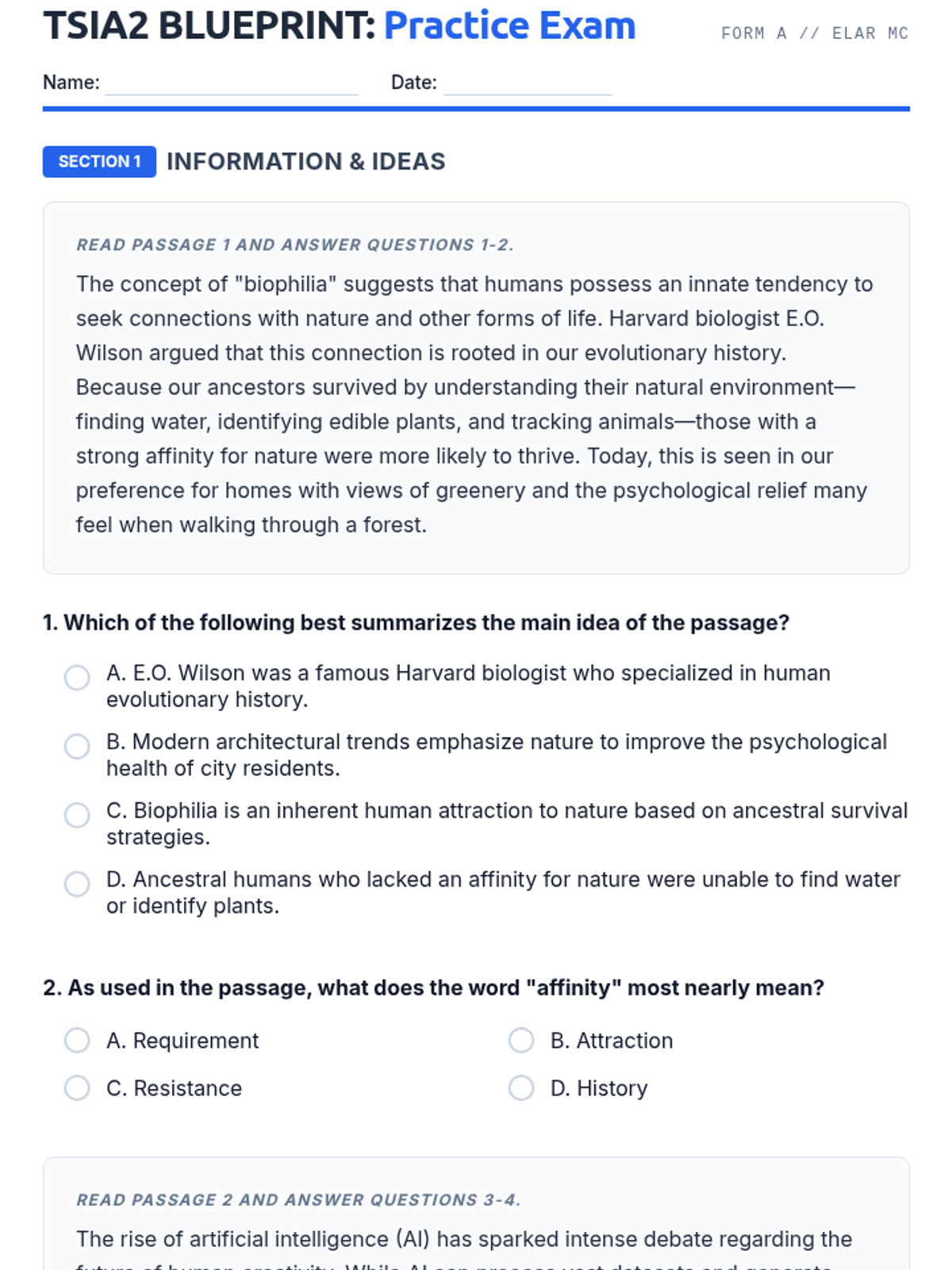
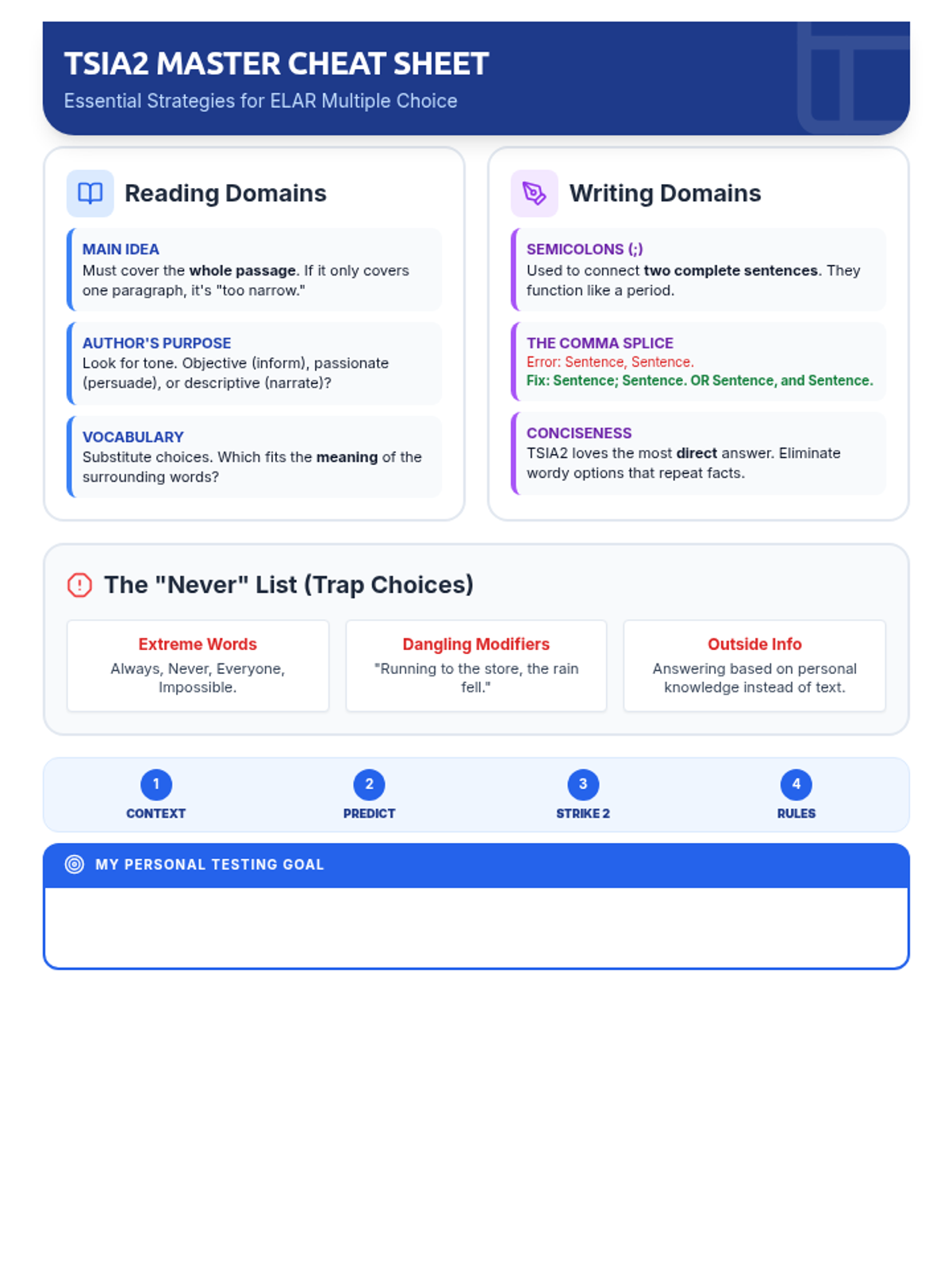
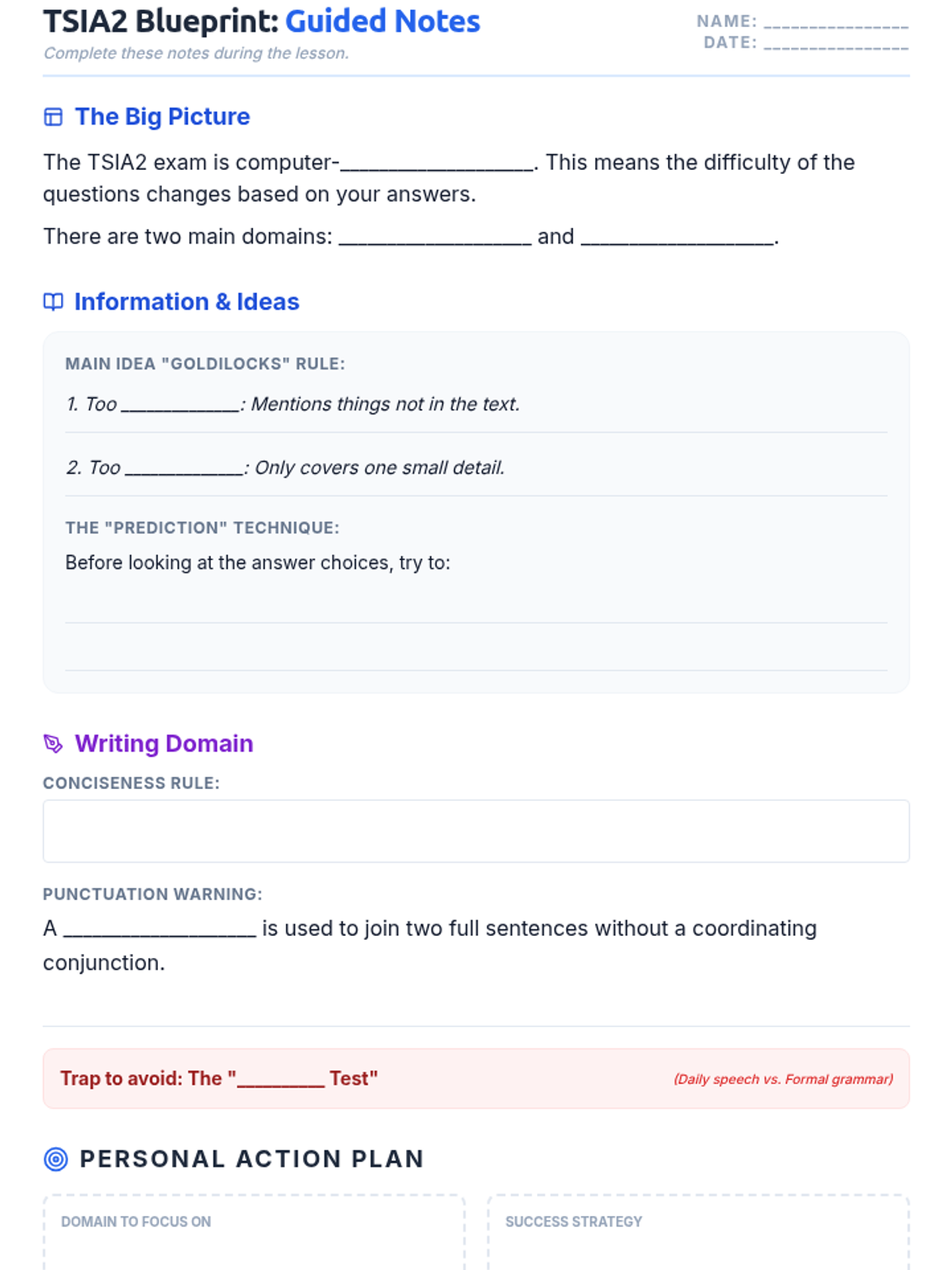
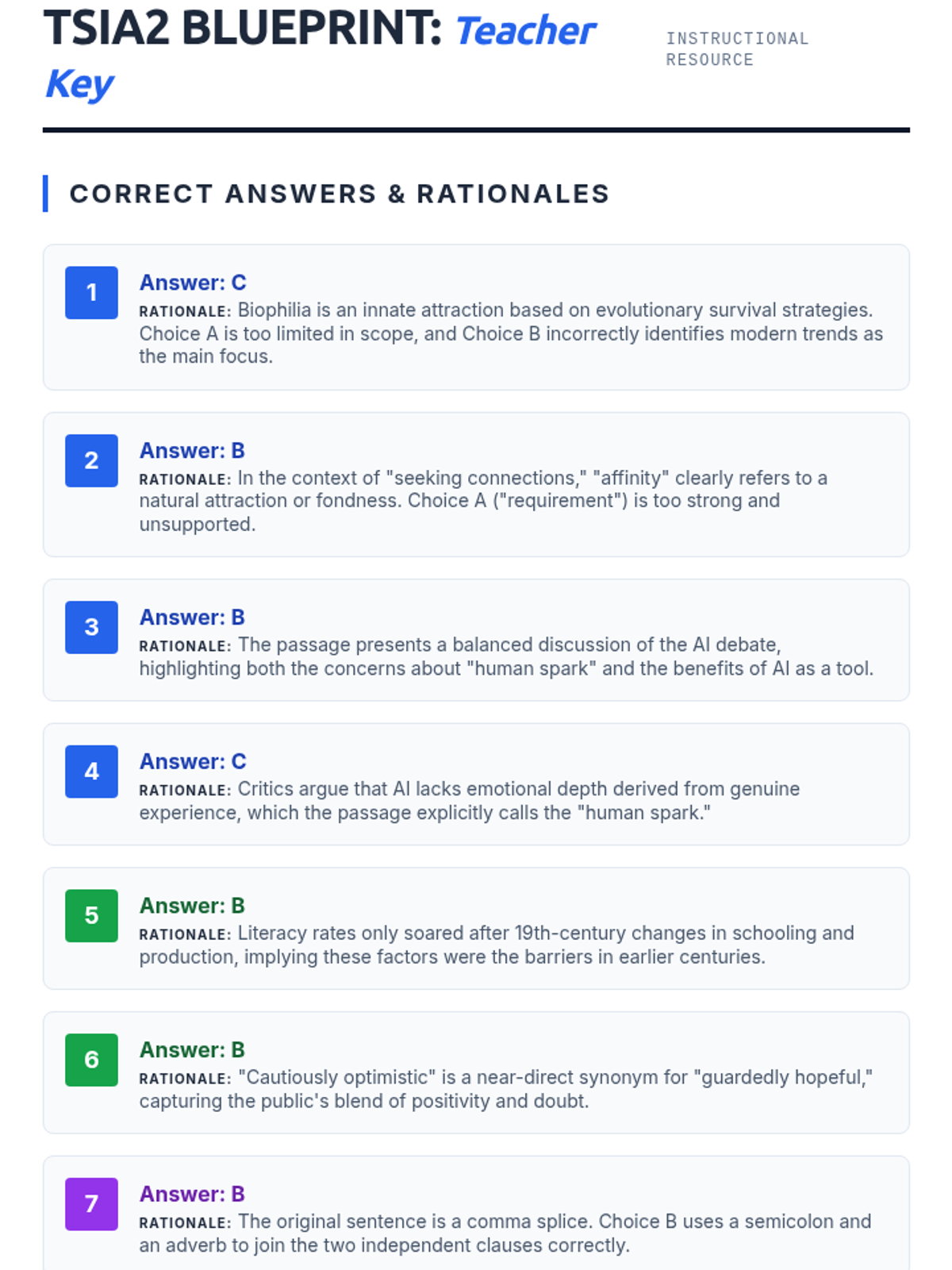
This lesson covers the core competencies of the TSIA2 Reading exam, including informational and literary text analysis.
A comprehensive prep lesson for the TSIA2 ELAR exam, focusing on reading comprehension, sentence revision, and information/ideas strategies.
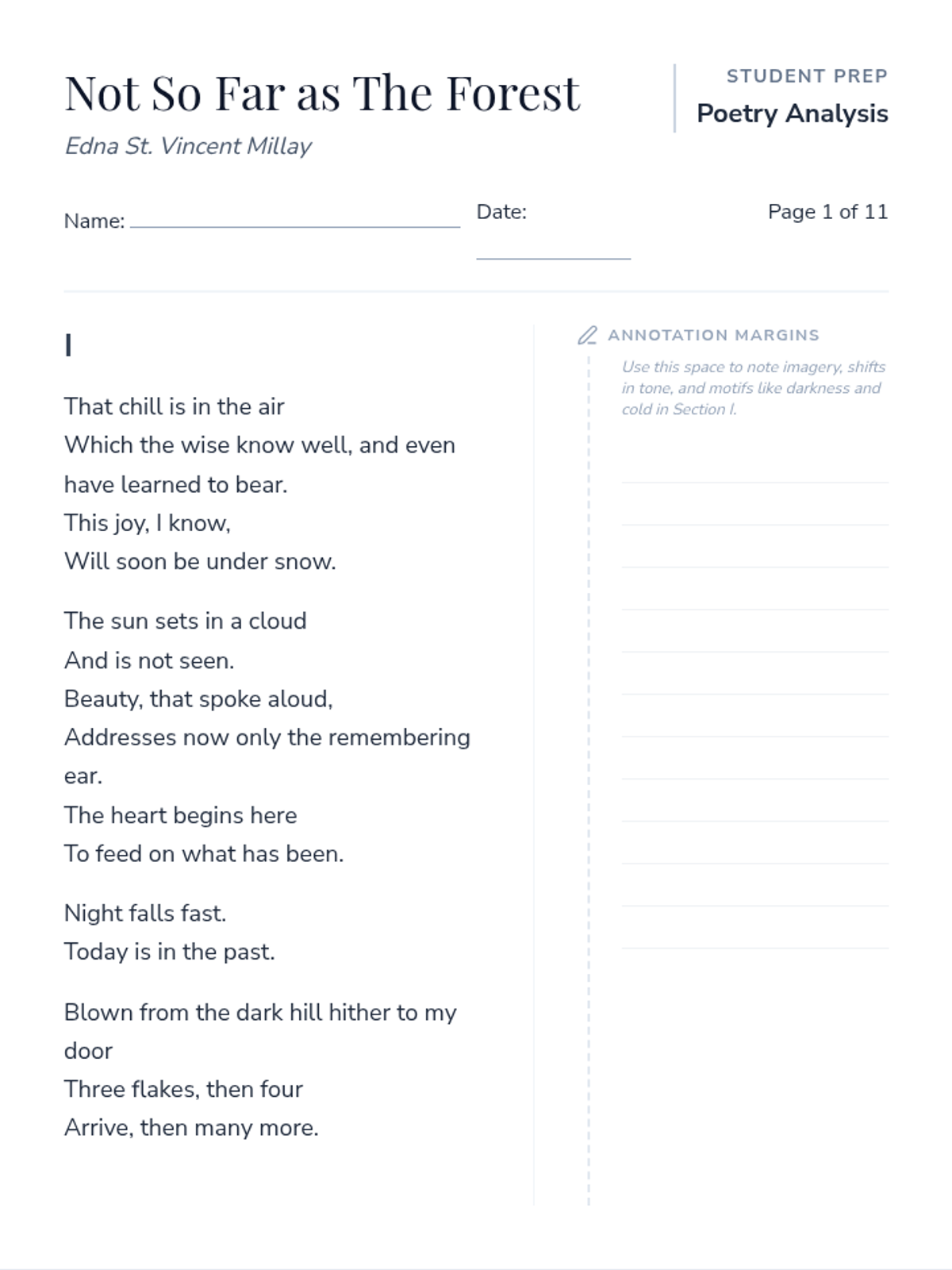
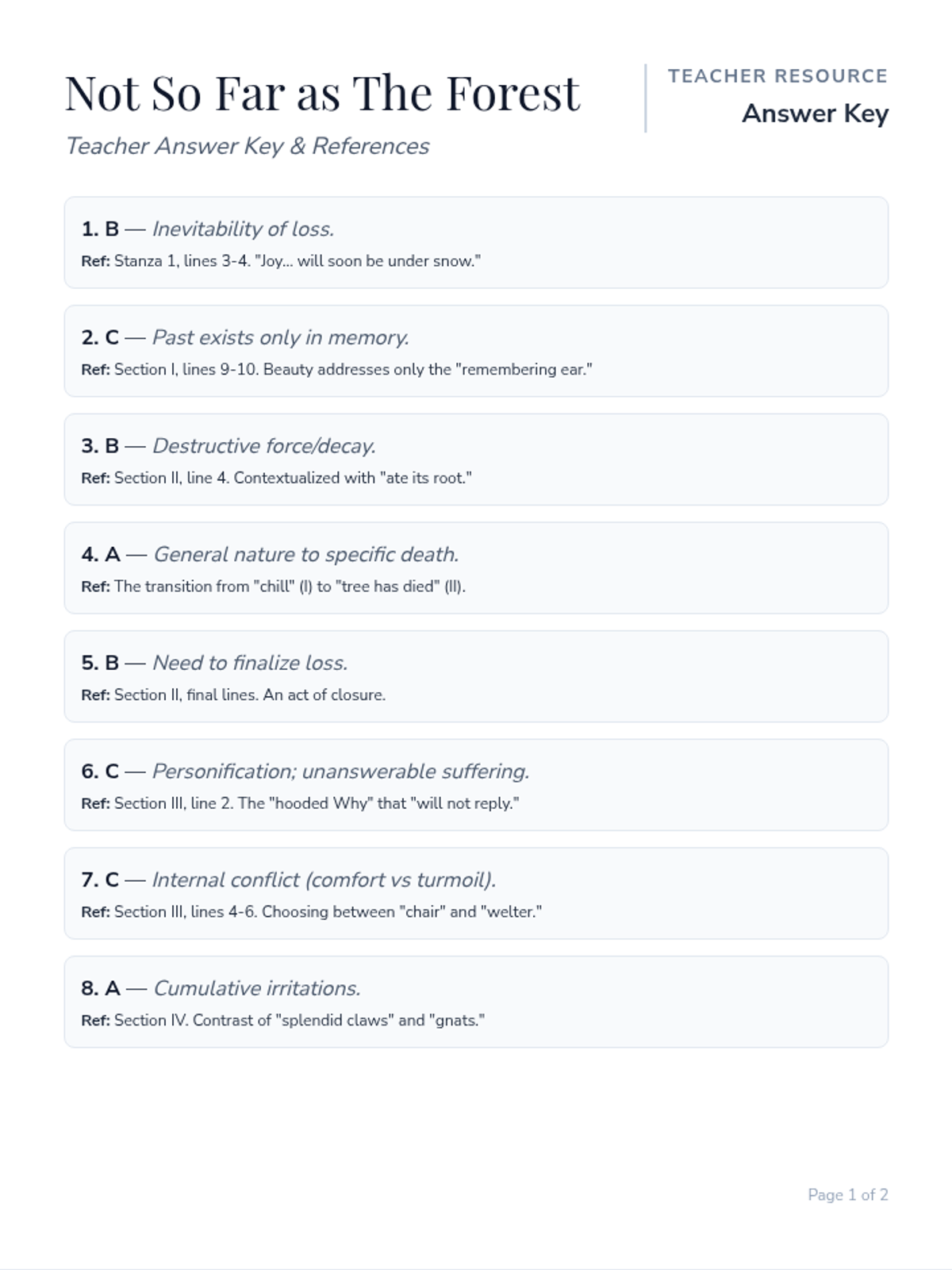
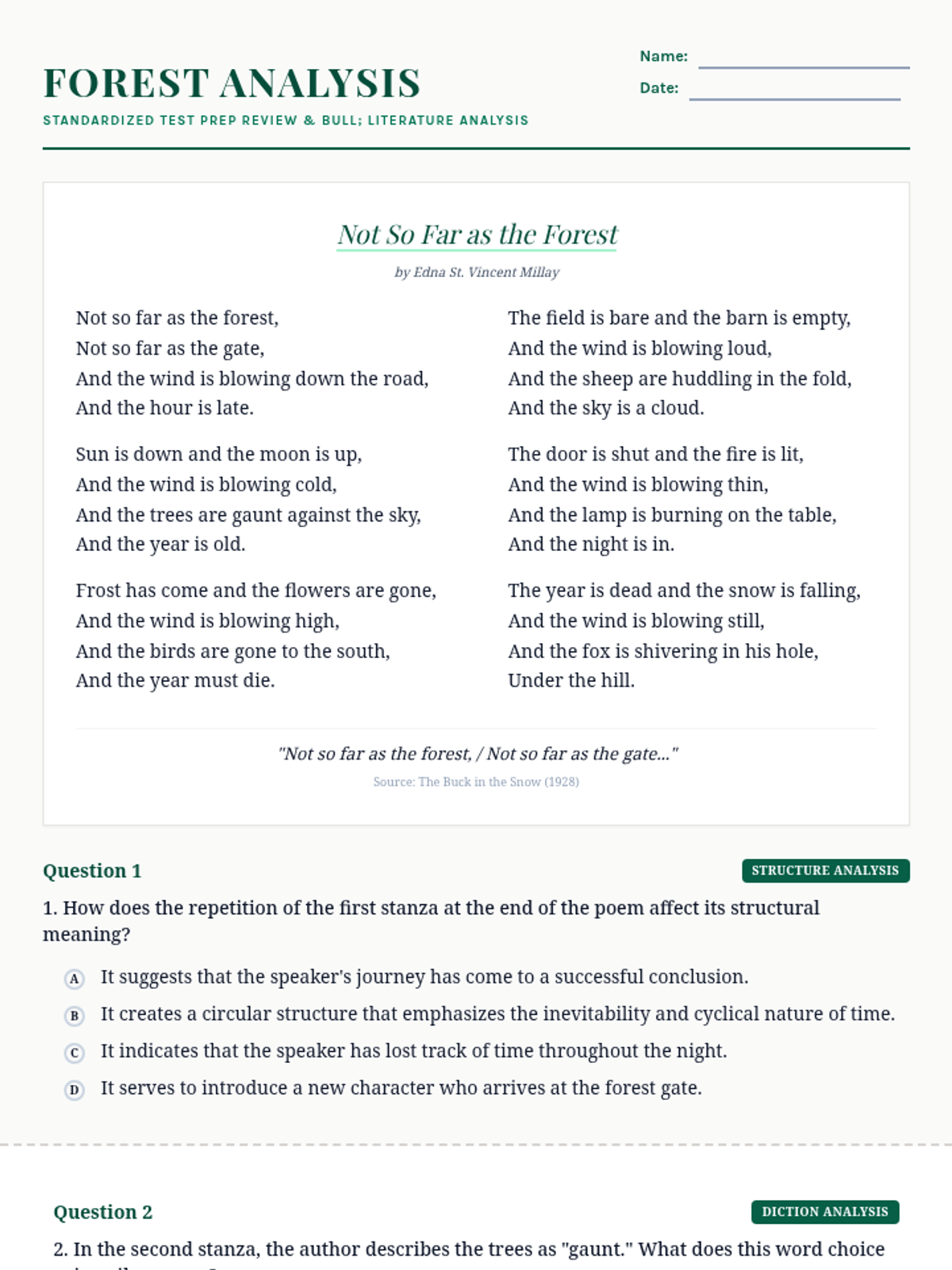
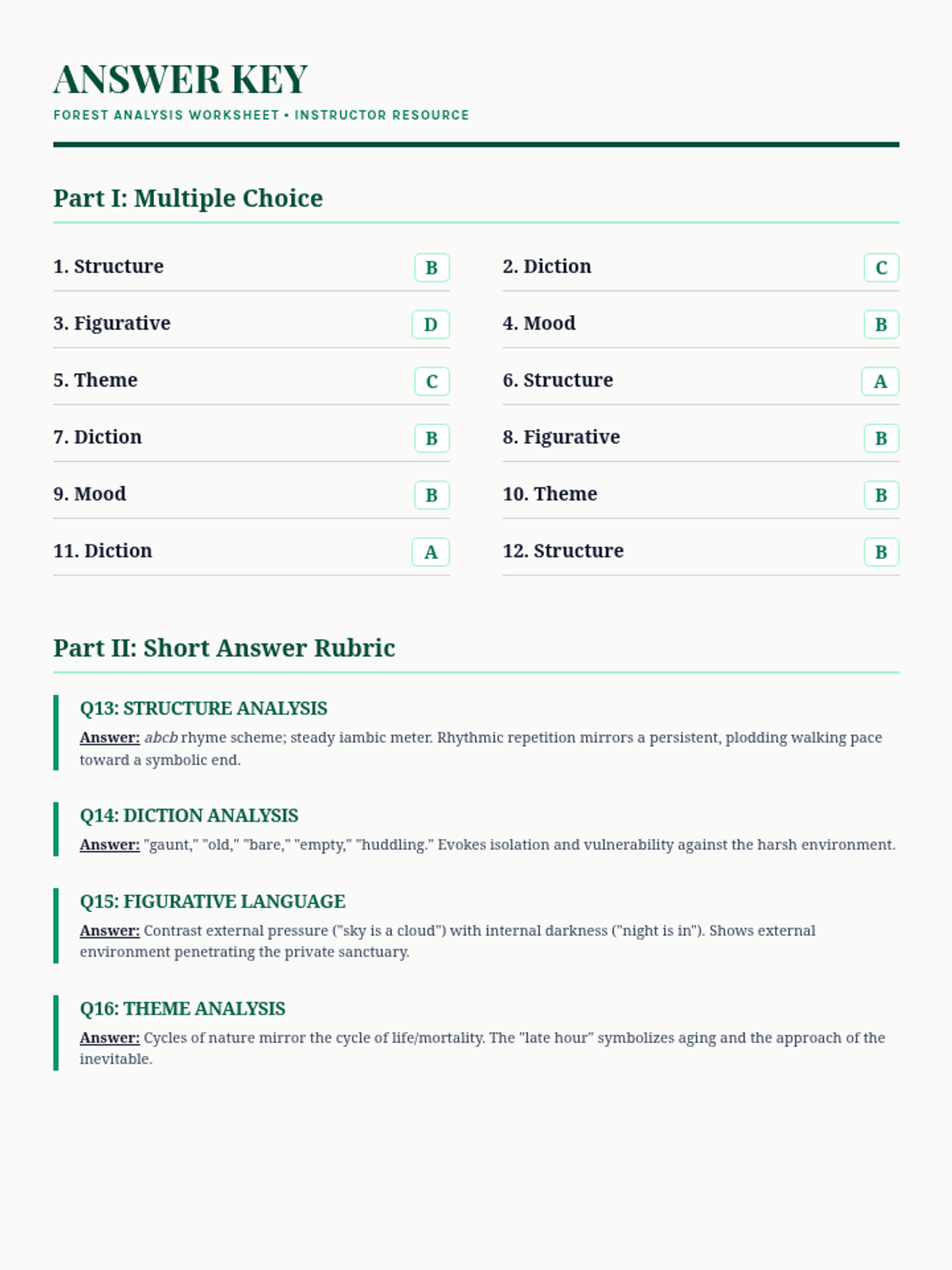
A comprehensive state-testing prep lesson centered on Edna St. Vincent Millay's "Not So Far as The Forest," focusing on close reading, annotation, and structural analysis.
A comprehensive review lesson focused on analyzing Edna St. Vincent Millay's poetry, specifically focusing on structural elements, diction, figurative language, and thematic depth to prepare students for state-level standardized testing.
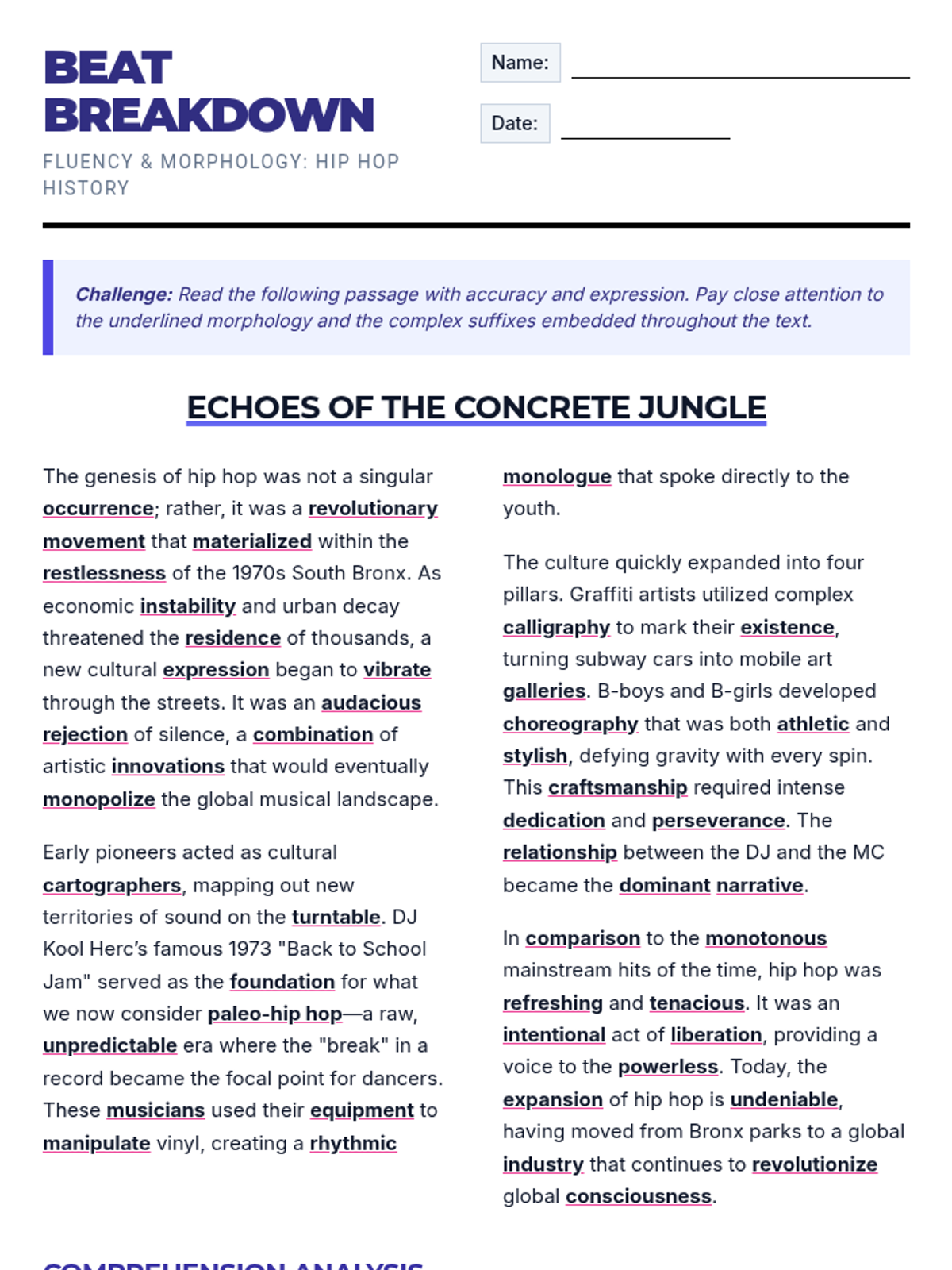
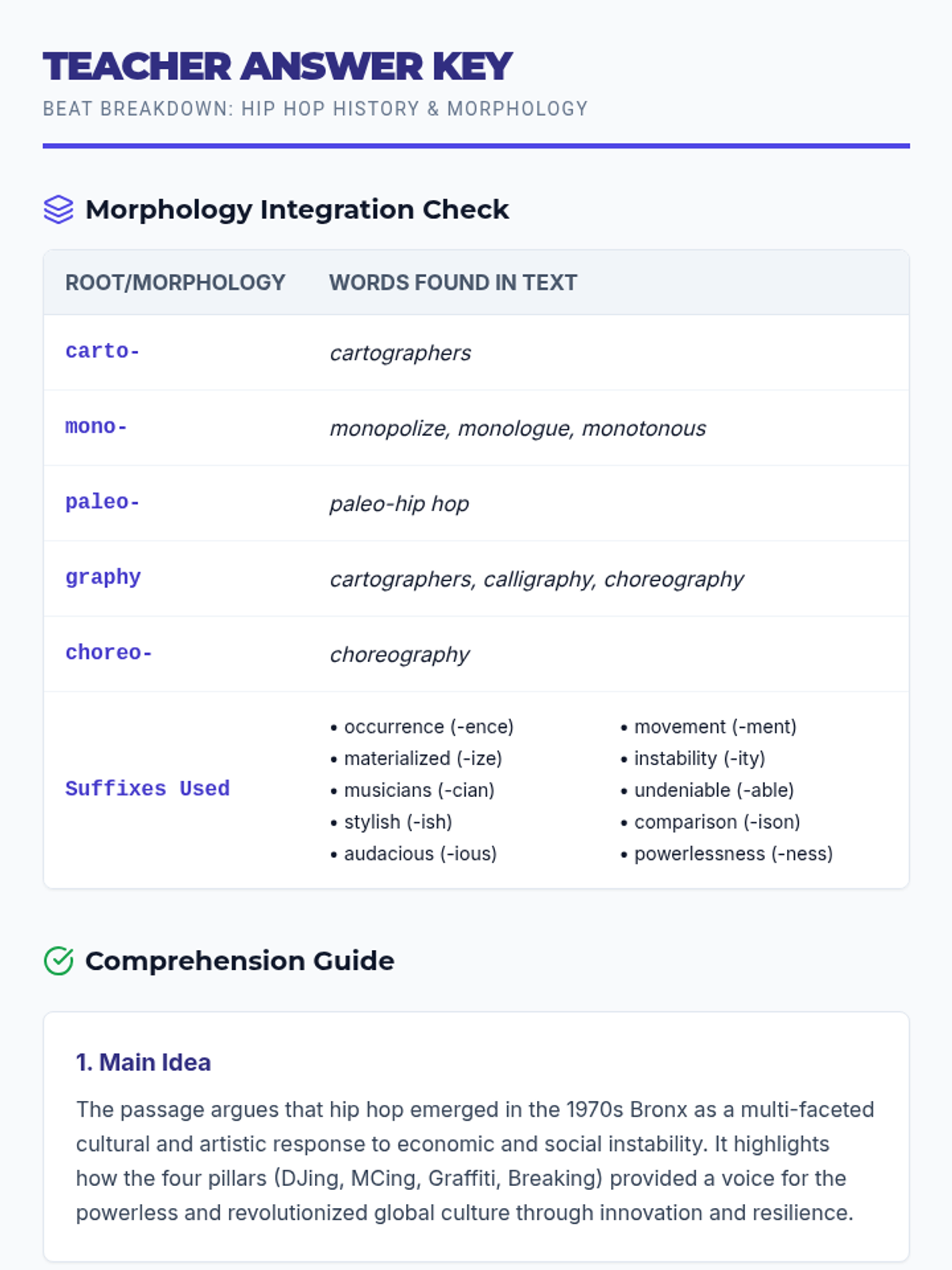
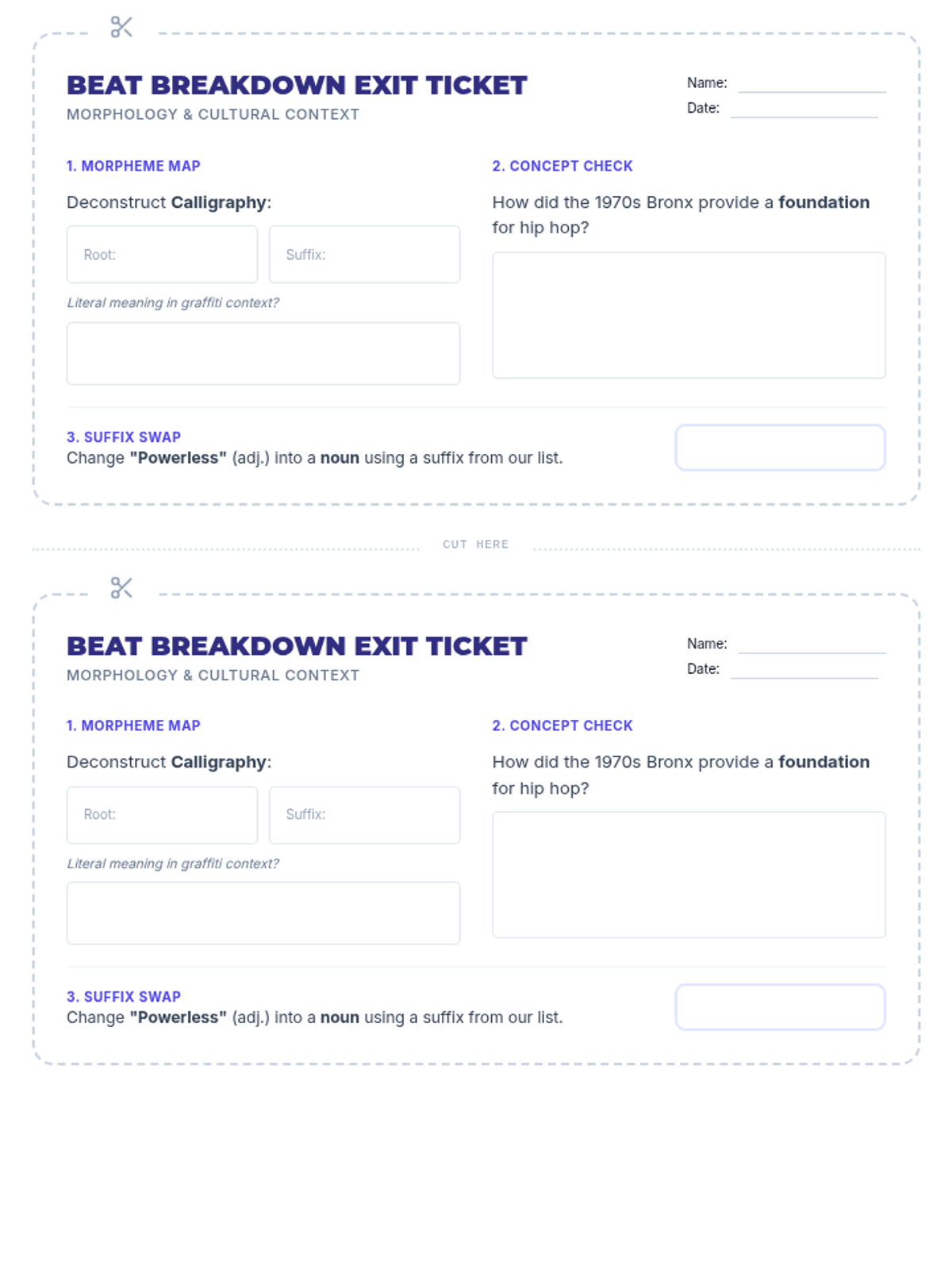
A morphology-focused lesson exploring the history and cultural impact of Hip Hop through a challenging fluency passage and vocabulary analysis. Students will identify and analyze complex suffixes and Greek/Latin roots within the context of urban culture.