Lenny LearningLenny
Create
Explore
Workspace
LoginSign up
MathEnglish Language ArtsScience & EngineeringSocial StudiesGlobal LanguagesHealth & Physical EducationSpecial EducationCounseling & Life SkillsArts & CreativityESL
Lenny LearningLenny
Lenny Learning
About
Training
Pricing
Support
Contact
© 2026 Lenny Learning Inc.

Computer Science

SequencesLessonsMaterialsVideos
  1. Science & Engineering

Computer Science

SequencesLessonsMaterialsVideos

Fundamental principles of hardware architecture, network protocols, and cybersecurity measures alongside algorithmic logic and data analysis. Advanced concepts include blockchain integration, machine learning models, and the optimization of computing systems.
Algorithms and Computational ThinkingProblem decomposition, pattern recognition, and abstraction techniques for logical problem-solving. Addresses sorting algorithms, Big O notation, and the development of efficient step-by-step procedures.
Programming LanguagesSyntax, semantics, and execution models across imperative, functional, and object-oriented paradigms. Strengthens logic and problem-solving through code implementation, debugging, and software design.
Computing SystemsHardware architecture, peripheral devices, and the functional relationship between operating systems and physical components. Examines data processing, system maintenance, and resource management within digital environments.
Networks and InternetData transmission protocols, network topologies, and the architectural components of the global internet. Examines routing, security layers, and the client-server model to explain how information moves across distributed systems.
Data AnalysisStatistical methods, data cleaning, and visualization techniques using Python or R. Equips students with tools for interpreting complex datasets and modeling trends to derive actionable insights.
CybersecurityEncryption algorithms, network security protocols, and threat detection strategies. Develops skills in identifying system vulnerabilities and implementing defensive measures against malware and digital attacks.
AI and Machine LearningFundamental concepts of supervised, unsupervised, and reinforcement learning. Equips learners with tools for data preprocessing, feature engineering, and evaluating model performance through neural networks and predictive algorithms.
Science & EngineeringLife ScienceLiving ThingsAnimalsPlantsBody SystemsTraitsAdaptationsCellsEcosystemsHeredityGenes to TraitsCell DivisionPhysicsComparing MaterialsShapes and PropertiesMagnetsMagnetismLightSoundLight and SoundMatterStates of MatterChanges of StateMixturesPhysical and Chemical ChangeHeating and CoolingHeat and Thermal EnergyEnergyForce and MotionElectrical CircuitsAtoms and MoleculesPeriodic TableMotion in One DimensionMotion in Two DimensionsScalars and VectorsForces and Laws of MotionCircular Motion and GravityMomentum and ImpulseWork, Energy, and PowerWavesElectromagnetic WavesGeometric OpticsElectricity and MagnetismSimple Harmonic MotionThermodynamicsNuclear PhysicsEarth Science & AstronomyWeatherWater CycleRocks and MineralsFossilsEarth's FeaturesEarth's ResourcesEarth's StructureWeather and ClimateEarth EventsFossils and Geologic TimePlate TectonicsHuman ImpactsAstronomyChemistryUnits and MeasurementAtomic StructurePeriodic TrendsChemical BondingNomenclatureMolecular StructureIntermolecular ForcesThe MoleStoichiometryProperties of GasesSolutionsChemical ReactionsBalancing EquationsEnergy ChangesRates of ReactionsEquilibriumAcids and BasesQuantum ModelBiologyClassificationCell StructureThe Chemistry of LifeBiomoleculesCellular TransportCell EnergyCell Growth and DivisionDNAProtein SynthesisMeiosis and Sexual ReproductionPatterns of InheritanceMulticellular OrganismsEvolutionEcologyBiodiversityComputer ScienceAlgorithms and Computational ThinkingProgramming LanguagesComputing SystemsNetworks and InternetData AnalysisCybersecurityAI and Machine LearningSoftware Design and DevelopmentBlockchainEngineering & AIDesigning ExperimentsEngineering PracticesDesign ThinkingEngineering Design ProcessMechanical EngineeringElectrical EngineeringMaterials and StructuresCAD and 3D DesignRoboticsArtificial Intelligence BasicsVibe CodingMachine LearningAI Ethics and SocietySystems ThinkingEntrepreneurship & InnovationEntrepreneurial MindsetBusiness Idea DevelopmentBusiness Plan BasicsMarketing & Customer DiscoveryFinancial Management for Startups
Sequence
Domestic Tech Plan Guide
Defining Tech Slides
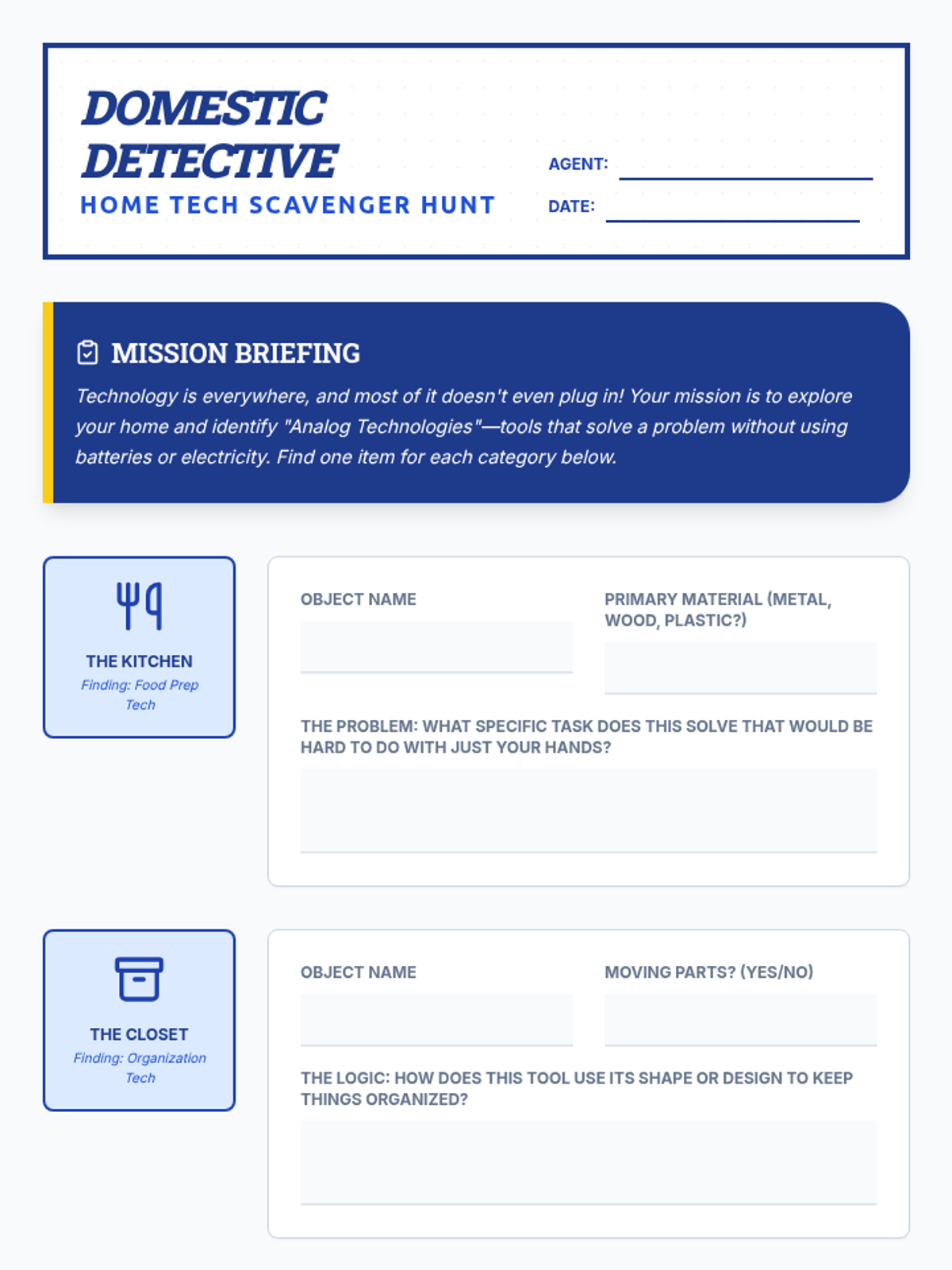
Domestic Detective Scavenger Hunt
Domestic Tech Plan Guide Updated

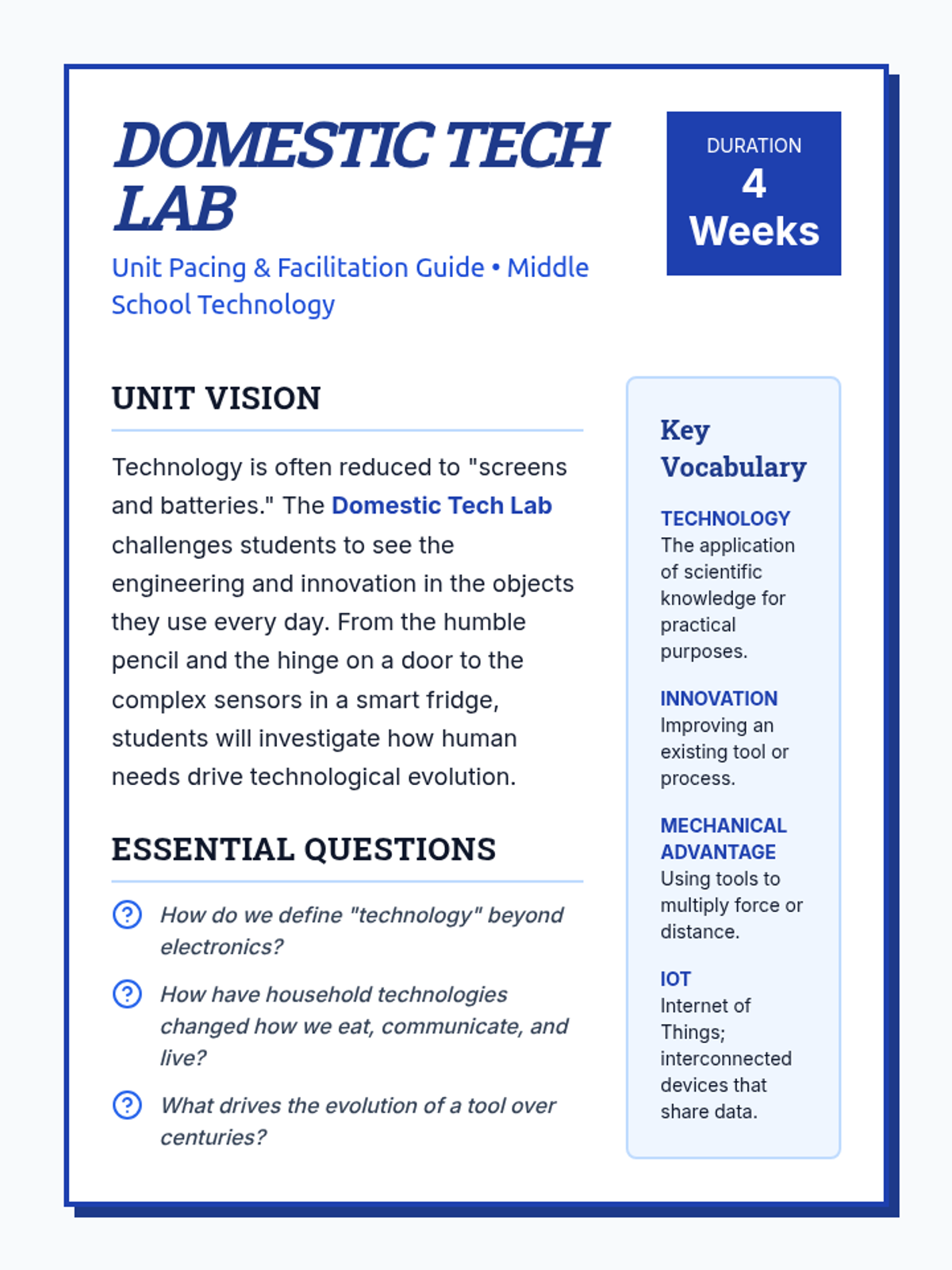
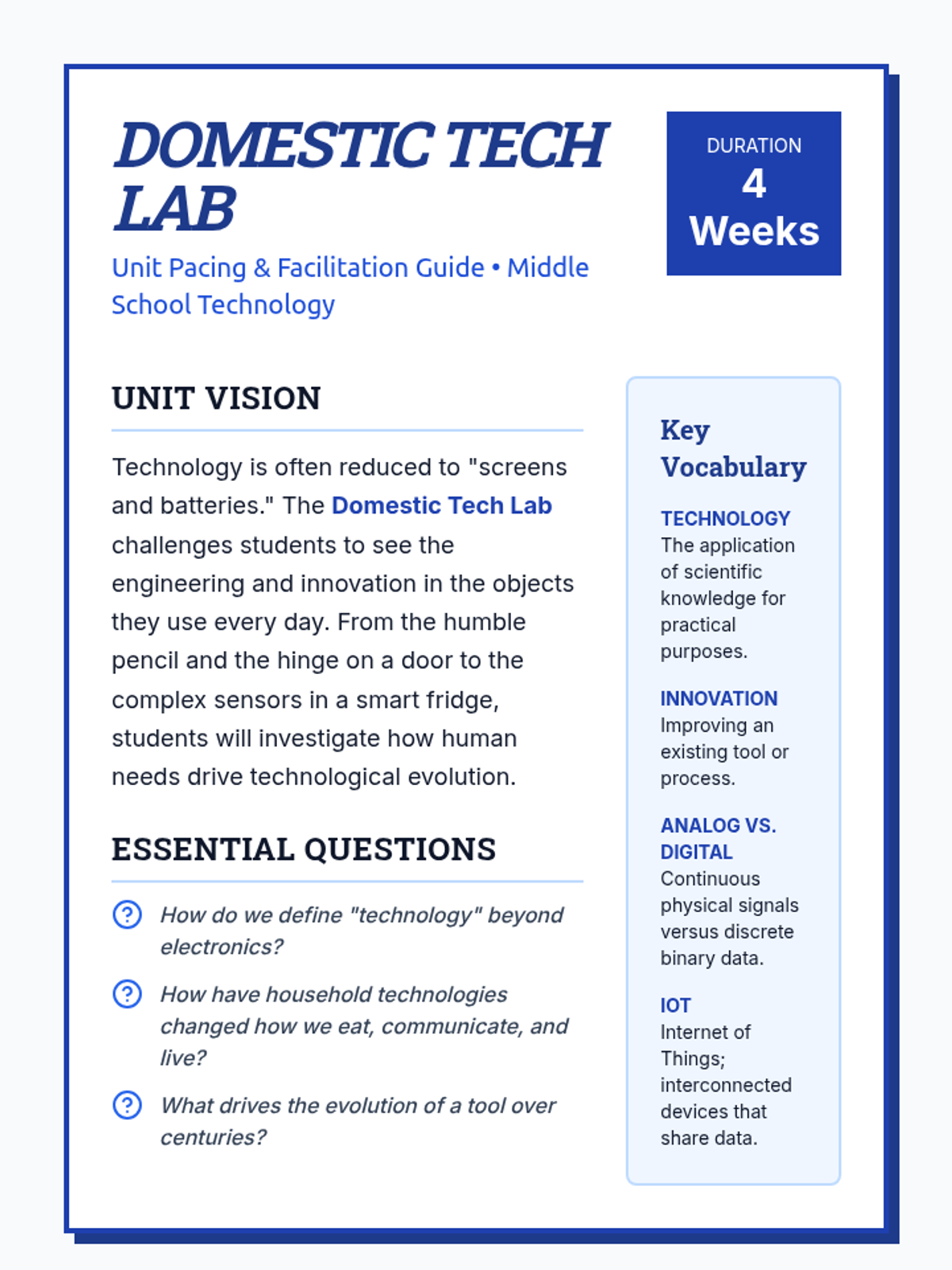
Domestic Tech Lab

A 4-week exploration of technology through the lens of everyday household items, tracing their evolution from simple tools to complex smart systems. Students investigate what technology truly is beyond just electronics and how domestic innovations have changed human life.
LS

Linda Still

General Education Teacher
3/2
Sequence
Blueprint to Build Slides
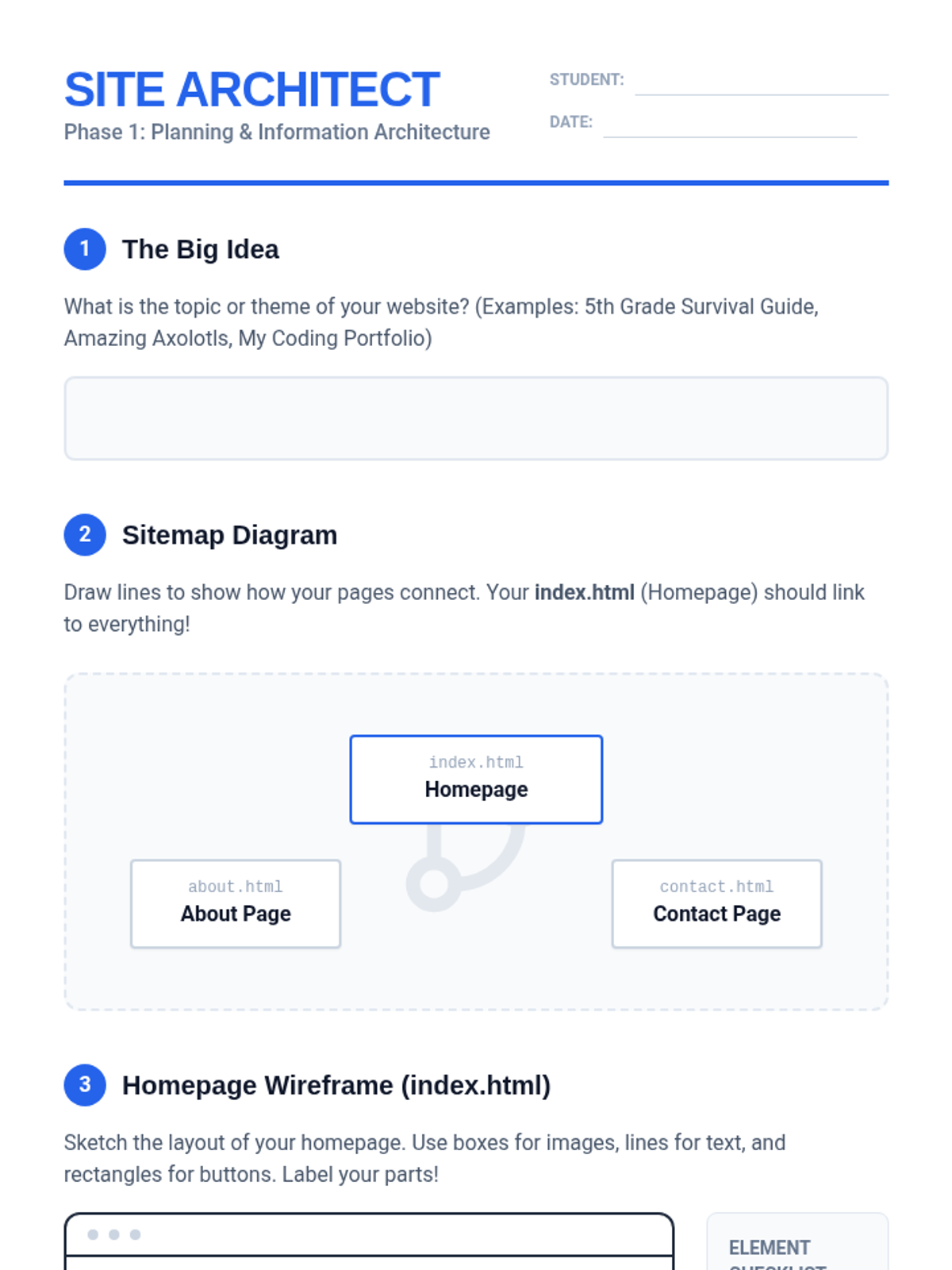
Site Architect Worksheet
Web Builders Facilitation Guide

Web Builders Academy

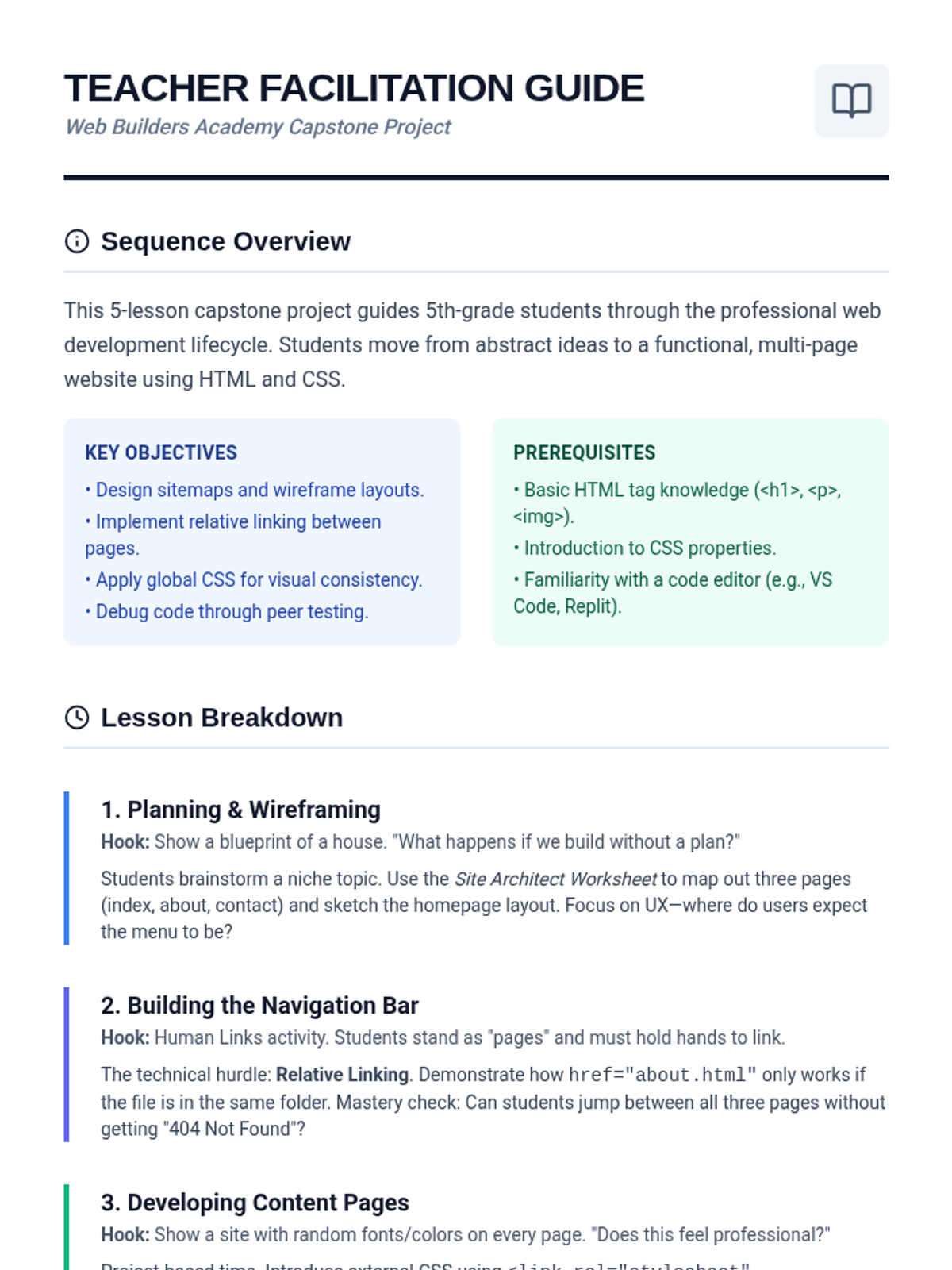
A capstone project where students build a multi-page website from scratch. They move through planning, coding navigation, developing content, debugging, and finally publishing their work, emphasizing the technical and organizational skills needed for web publishing.

Lenny Avatar
Lenny
1/18
Sequence
Portfolio Blueprint Slides
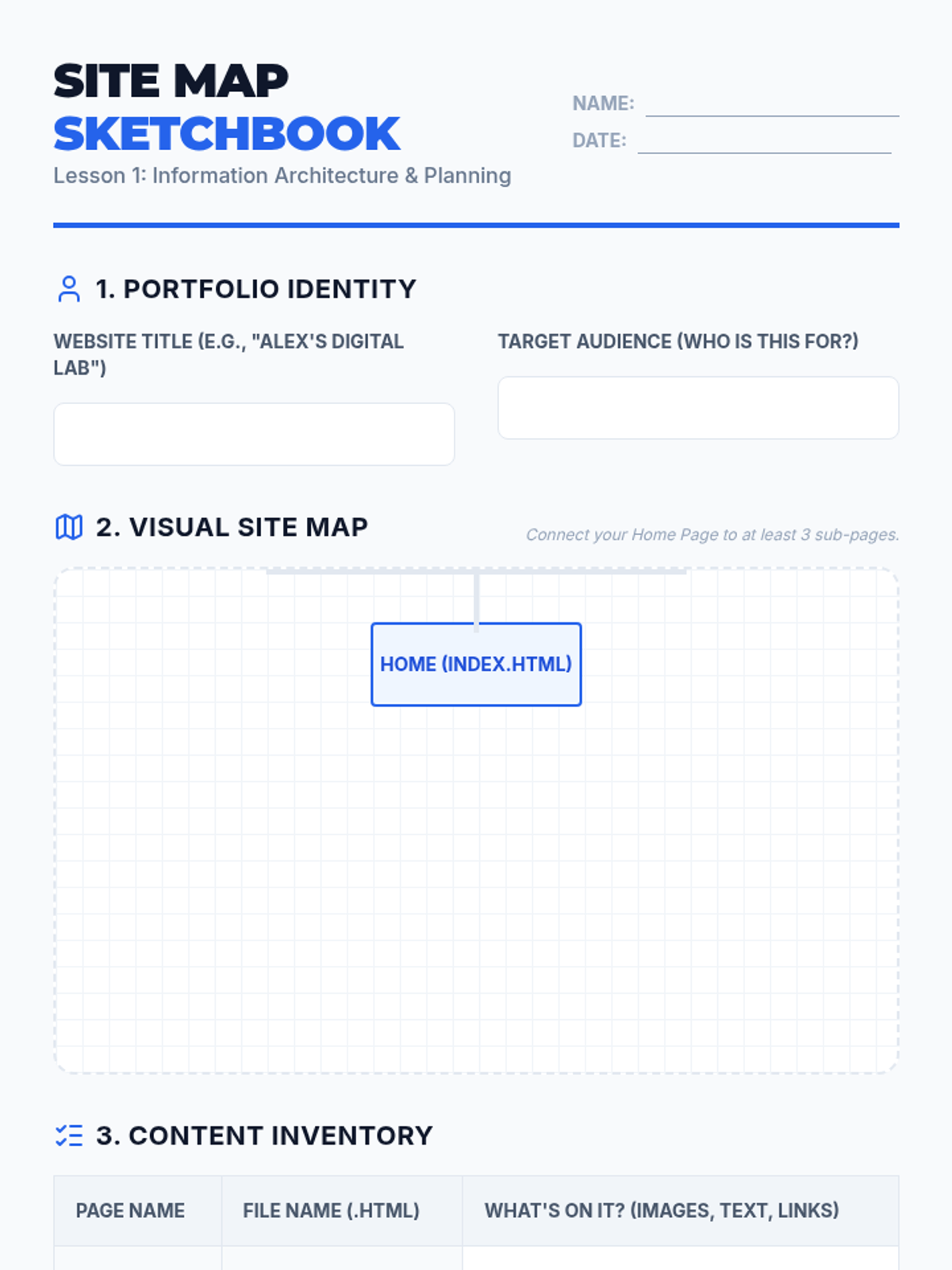
Site Map Sketchbook
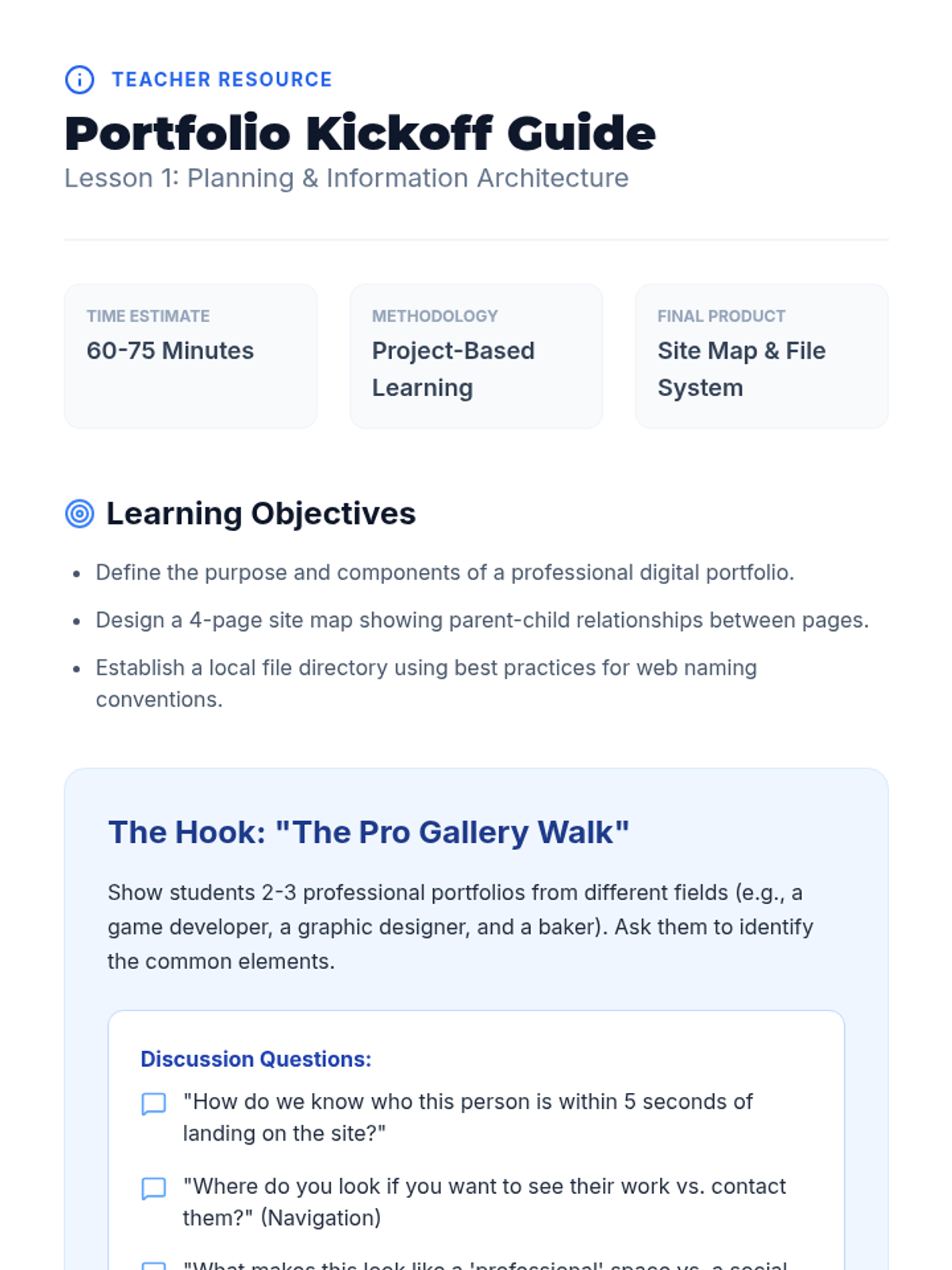
Portfolio Kickoff Guide

Digital Portfolio Studio

A comprehensive sequence where 6th-grade students plan, design, code, and learn to safely publish their own multi-page digital portfolio. Students master technical HTML/CSS skills alongside essential digital citizenship and information architecture concepts.

Lenny Avatar
Lenny
1/18
Sequence
Packet Power Slides
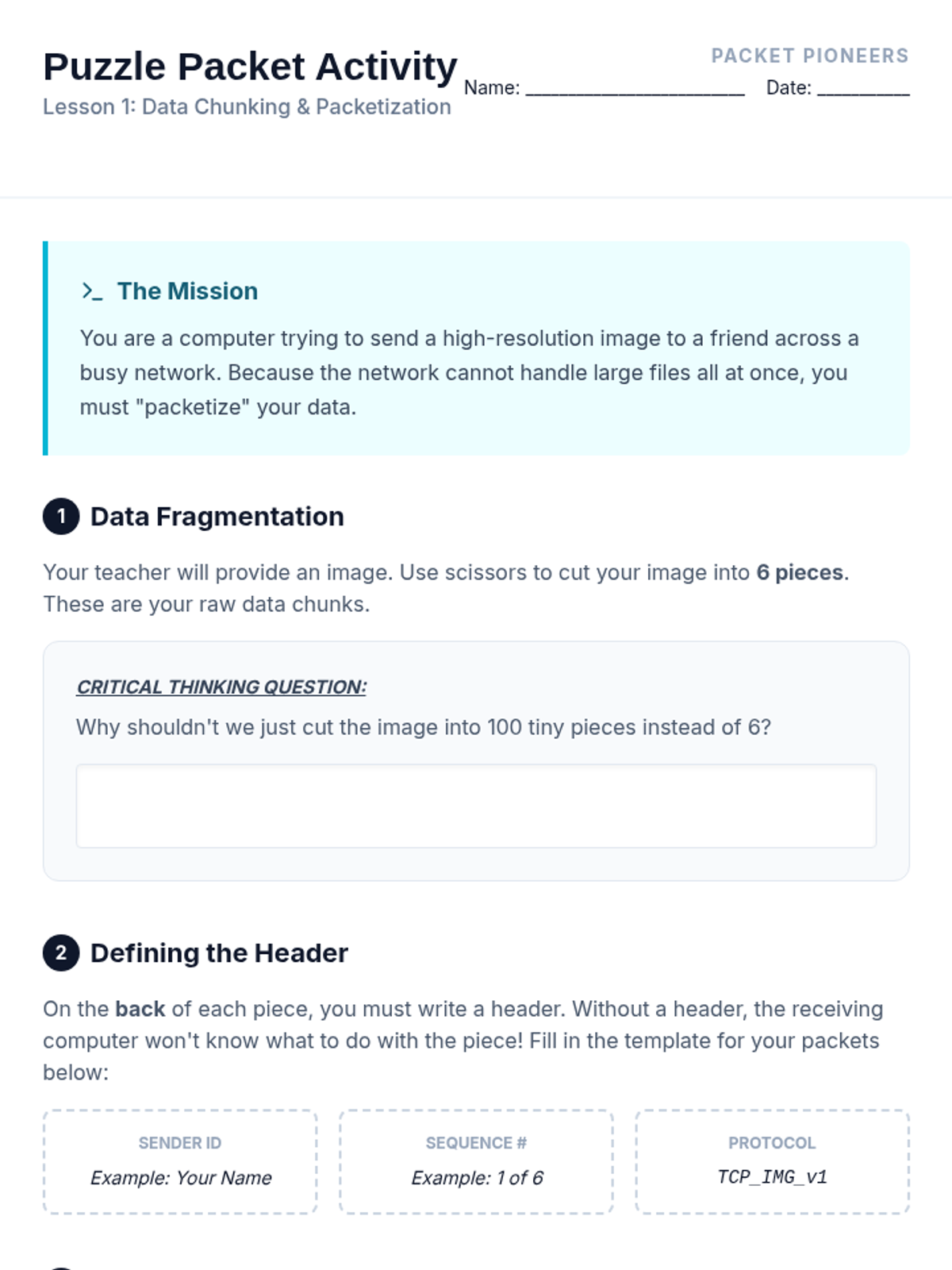
Puzzle Packet Activity
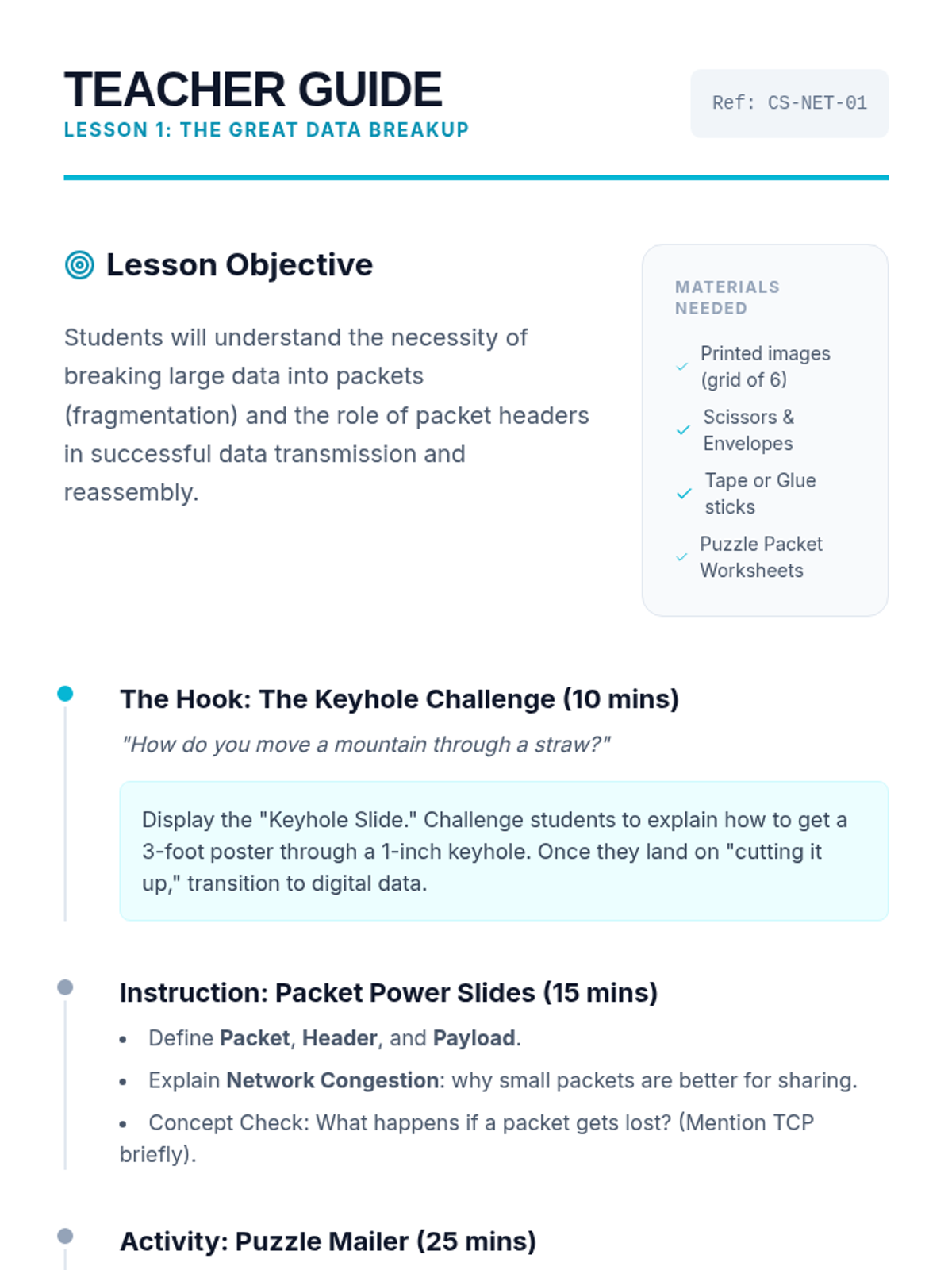
Data Chunking Teacher Guide

Packet Pioneers

Students explore the invisible rules of the internet, focusing on how data is broken down into packets, routed through redundant networks, and reliably reassembled using TCP/IP protocols. Through analog games and simulations, they demystify the journey of information from sender to receiver.

Lenny Avatar
Lenny
1/17
Sequence
Digital Diner Slides
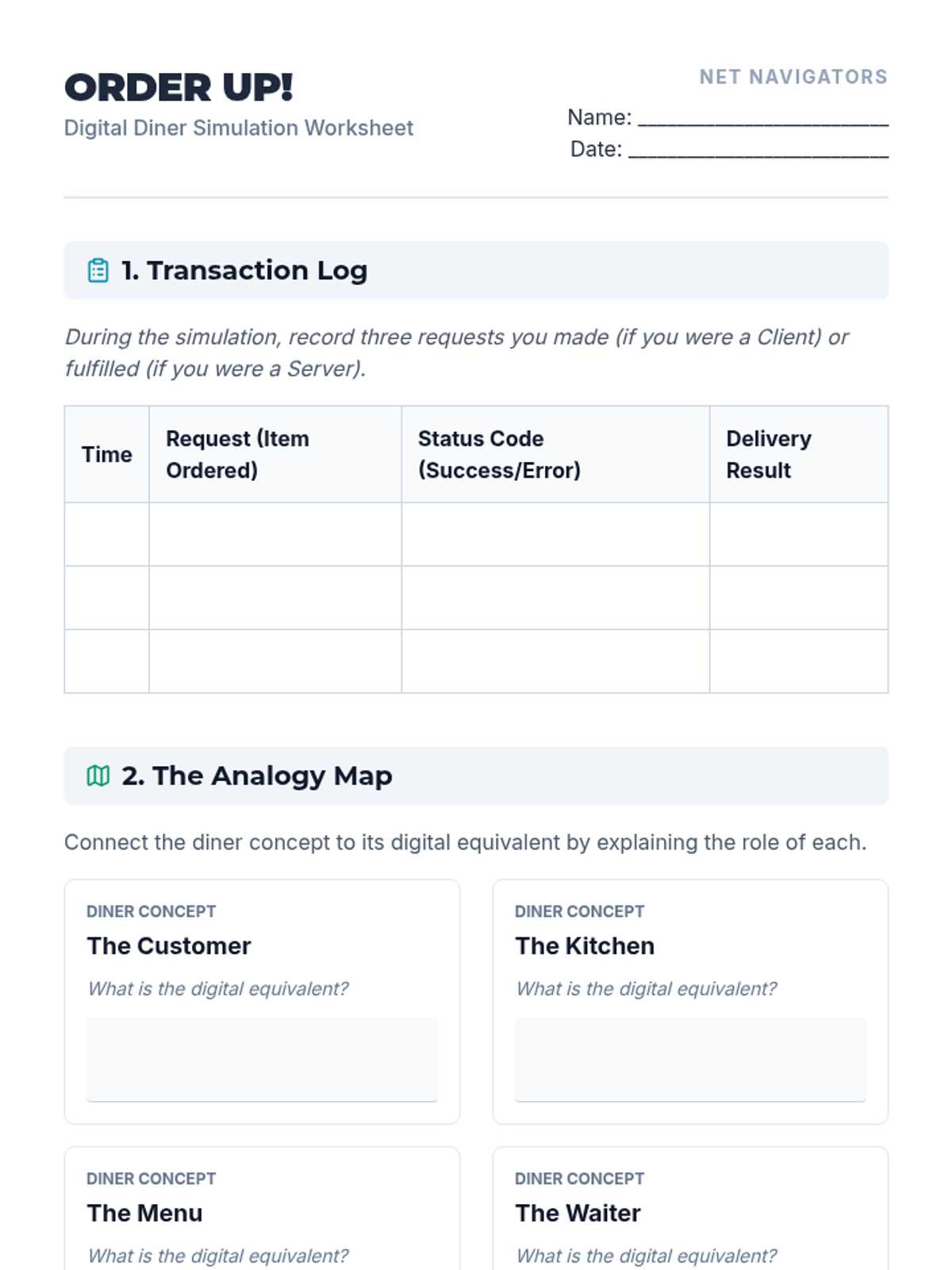
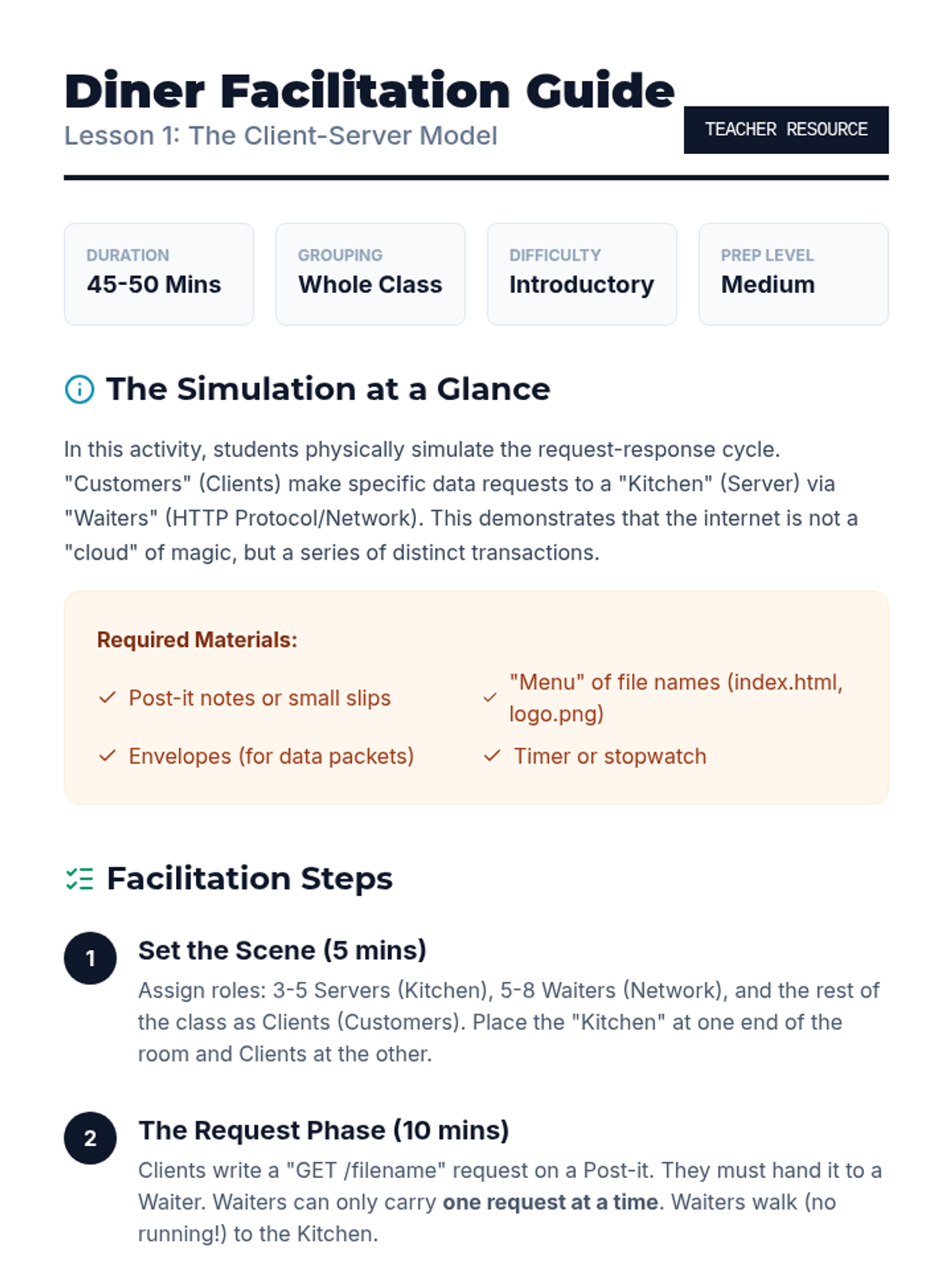
Digital Diner Worksheet
Digital Diner Teacher Guide

Net Navigators

Students explore the global architecture of the internet, focusing on the client-server model, DNS, routing, and physical infrastructure. This sequence demystifies how data travels across the globe, emphasizing the engineering principles of redundancy and fault tolerance.

Lenny Avatar
Lenny
1/17
Sequence
Protocol Pioneers Slides
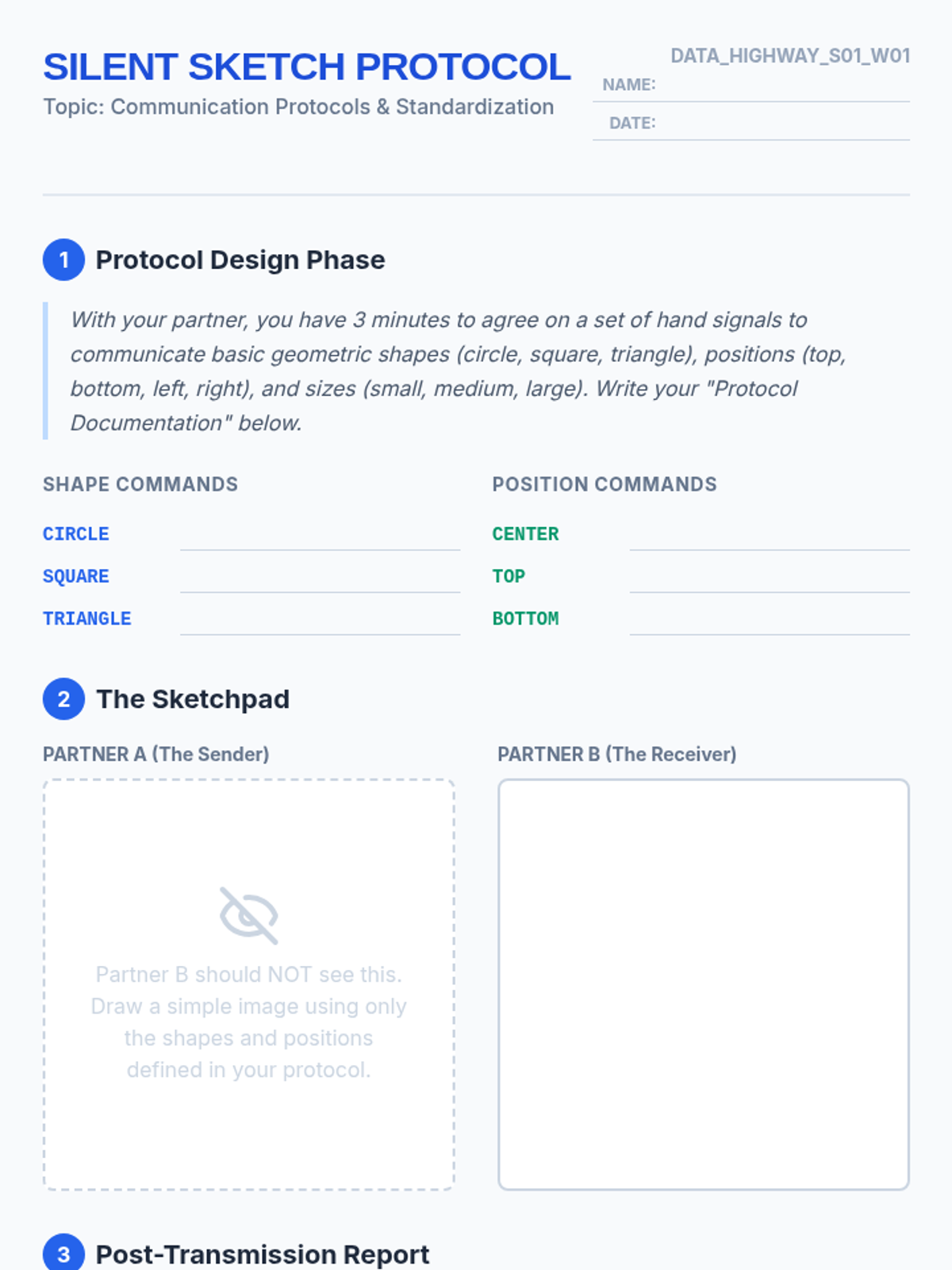
Protocol Design Worksheet

Data Highway

A 5-lesson sequence exploring the TCP/IP model, packet switching, and IP addressing through hands-on simulations and packet analysis. Students learn how standardized rules ensure reliable and fast data transmission across the global internet.

Lenny Avatar
Lenny
1/17
Sequence
Network Secrets Slides
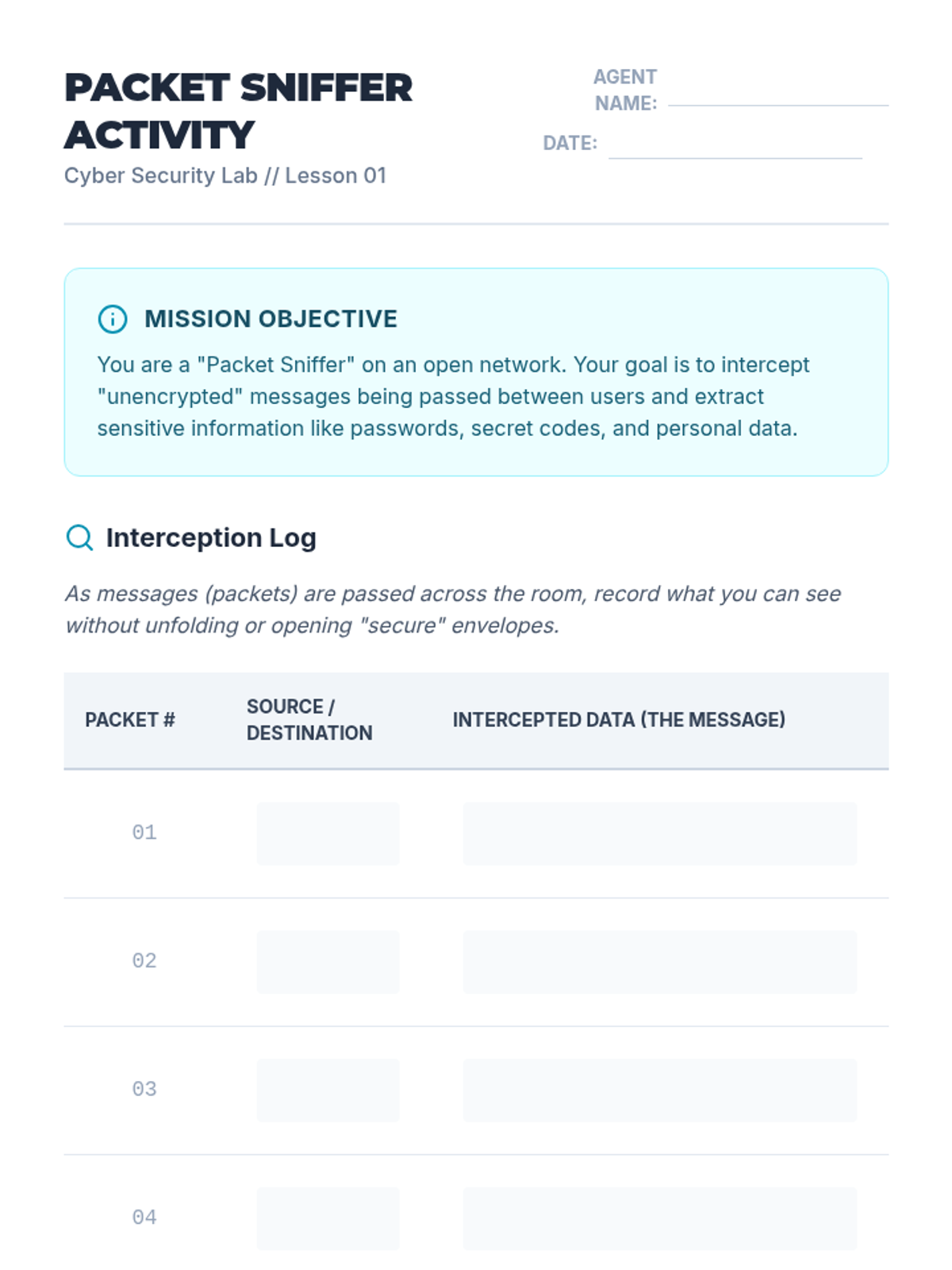
Packet Sniffer Activity
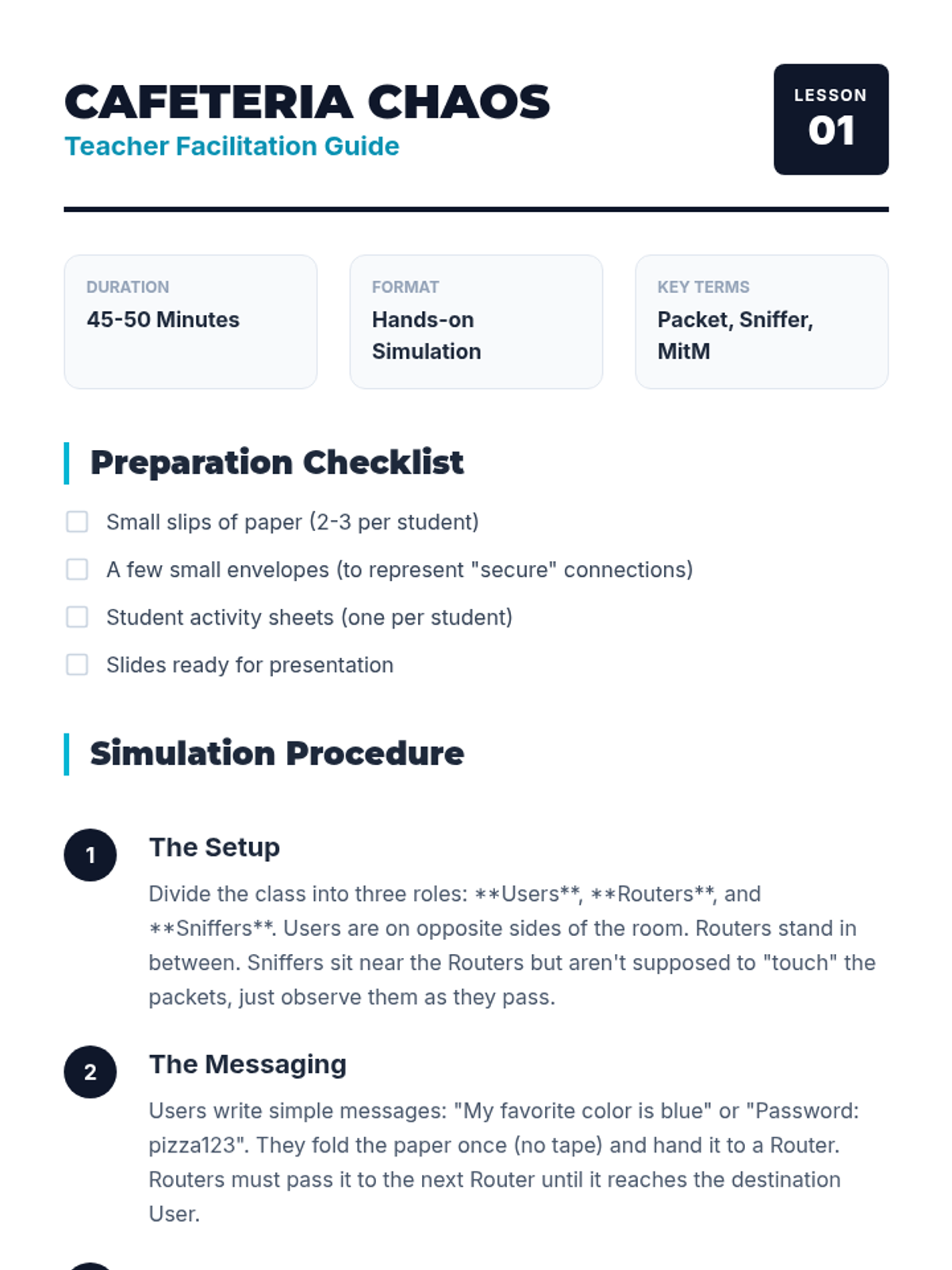
Cafeteria Chaos Teacher Guide

Cyber Security Lab

This sequence explores how data is protected as it travels through networks. Students will learn about network vulnerabilities, the history and application of cryptography, the logic of public key encryption, the role of HTTPS in web security, and how firewalls protect network boundaries.

Lenny Avatar
Lenny
1/17
Sequence
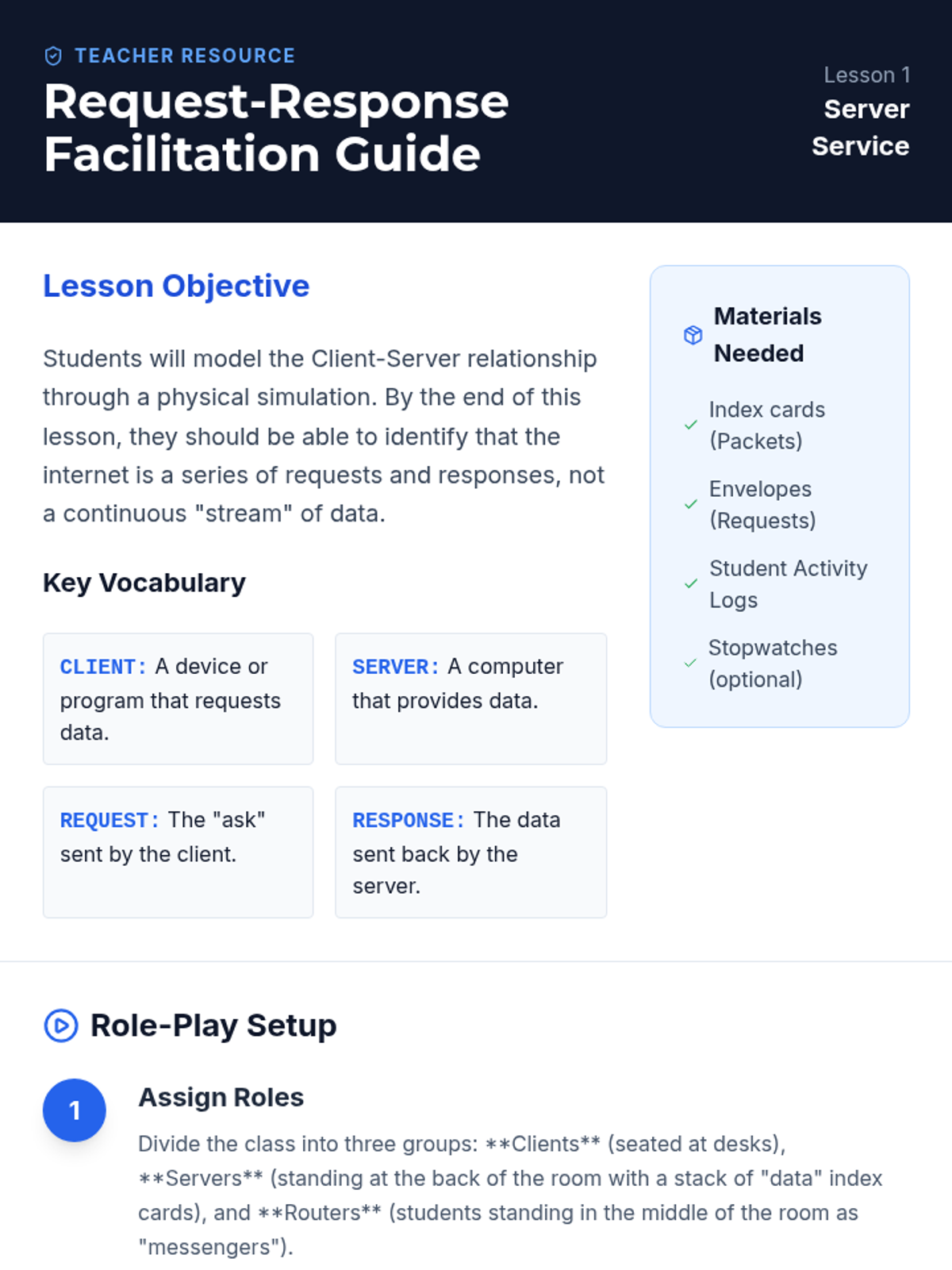
Server Service Slides
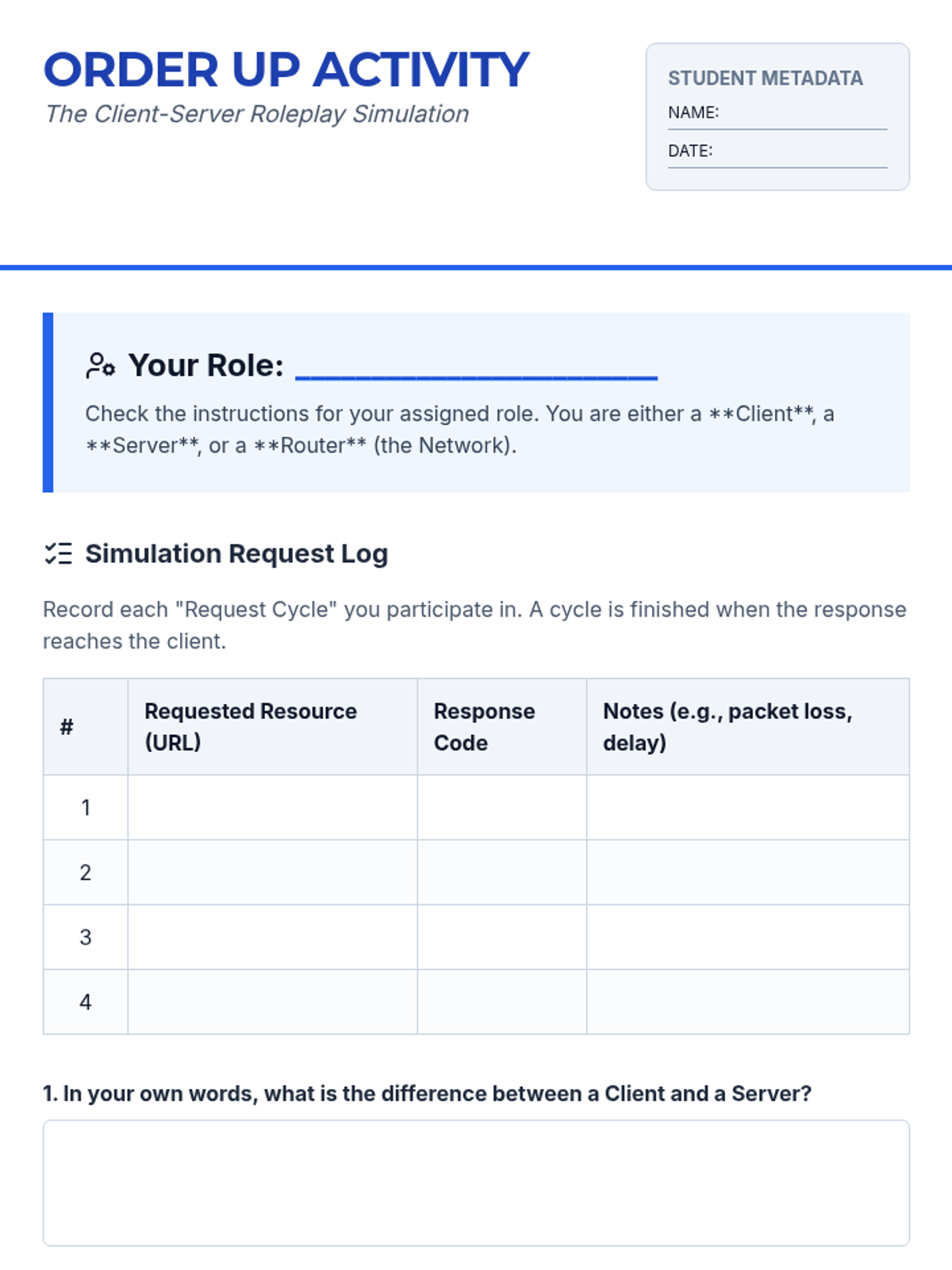
Order Up Activity
Request Response Teacher Guide

The Webs Secret Life

This sequence explores the technical relationship between users and the web through the Client-Server model, HTTP protocols, physical infrastructure, and the journey of a web request.

Lenny Avatar
Lenny
1/17
Sequence
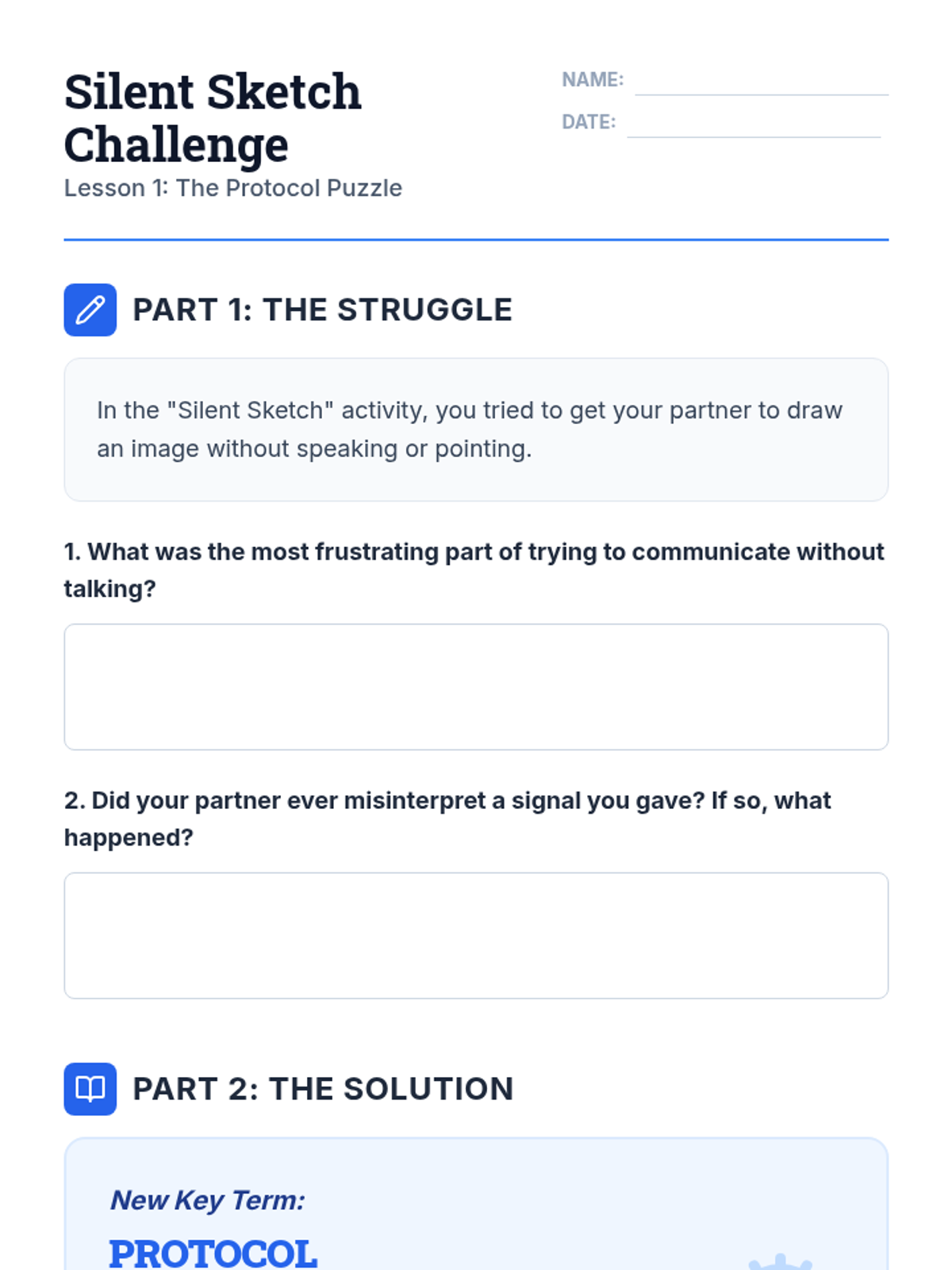
Protocol Puzzle Slides
Protocol Puzzle Worksheet

Rules of the Digital Road

This sequence explores the necessity of protocols, IP addressing, and the Domain Name System (DNS) through hands-on simulations. Students will understand how computers use standardized rules to communicate effectively across networks.

Lenny Avatar
Lenny
1/17
Sequence
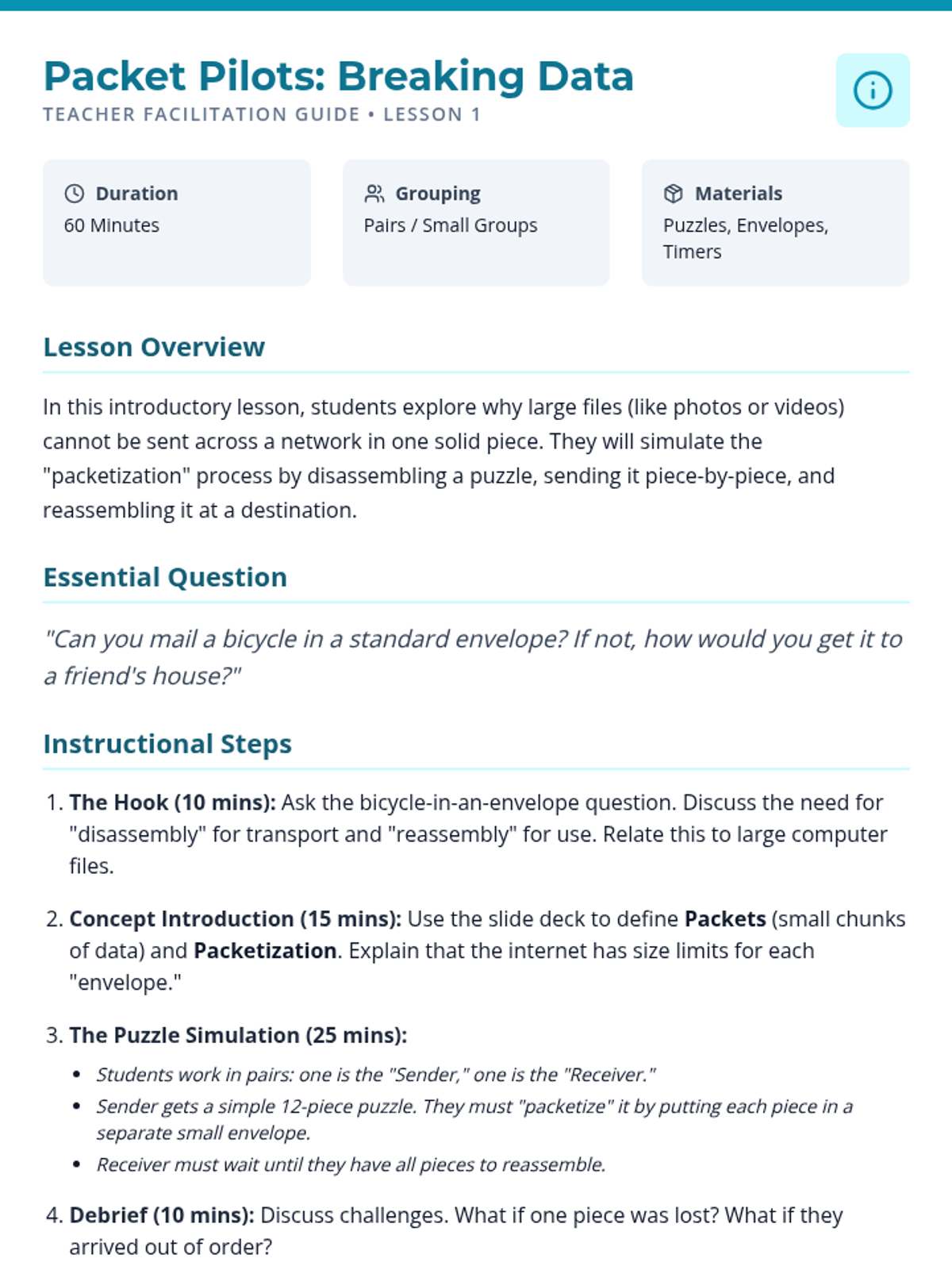
Packet Intro Teacher Guide and Activity
Packet Breakdown Slides

Packet Pilots Transmission

Students demystify how information travels across the internet by breaking it down into small chunks called packets. Through physical simulations and role-playing, they experience routing, congestion, and packet loss firsthand.

Lenny Avatar
Lenny
1/17
Sequence
Rule of Rules Slides
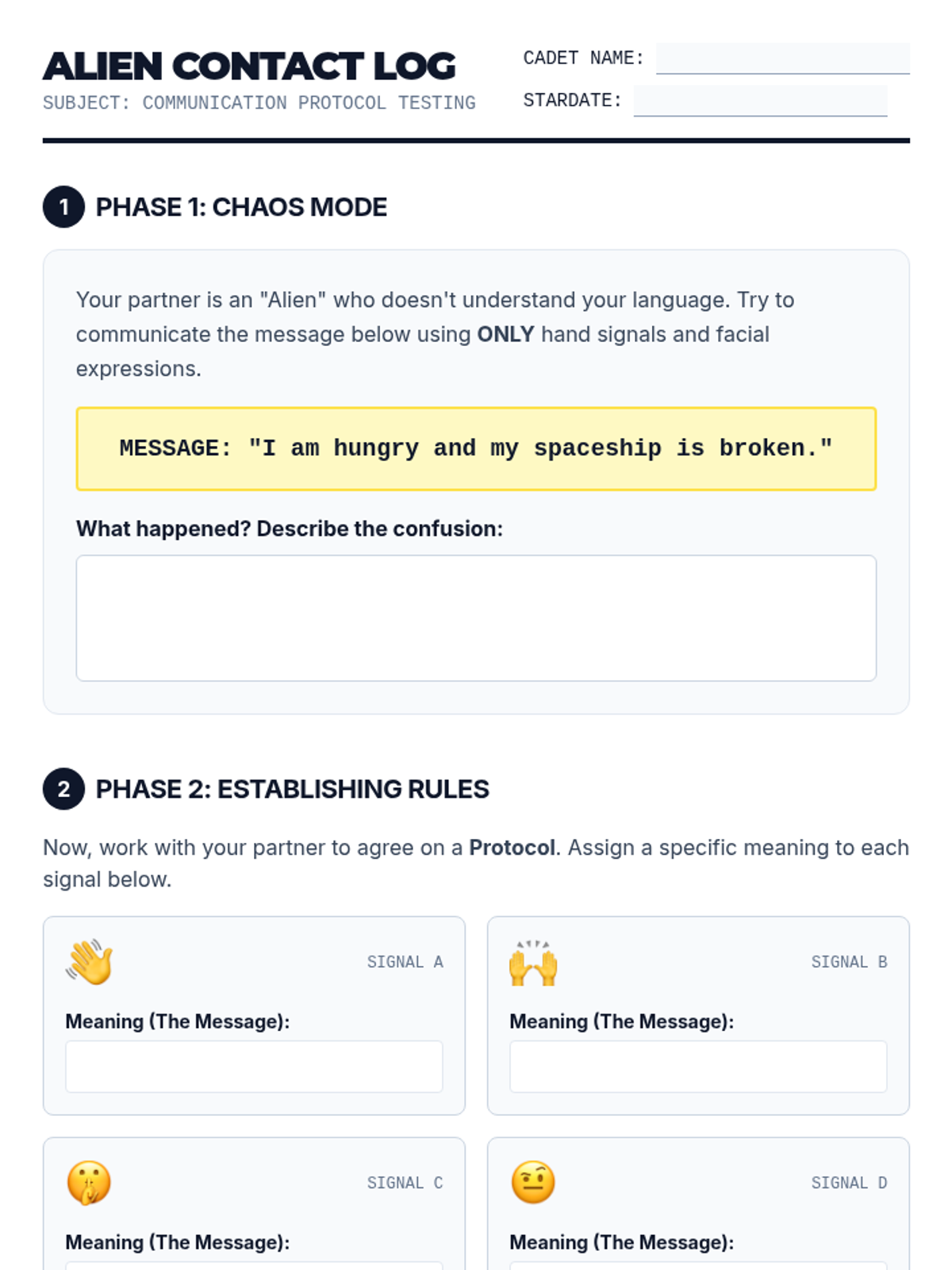
Alien Contact Worksheet
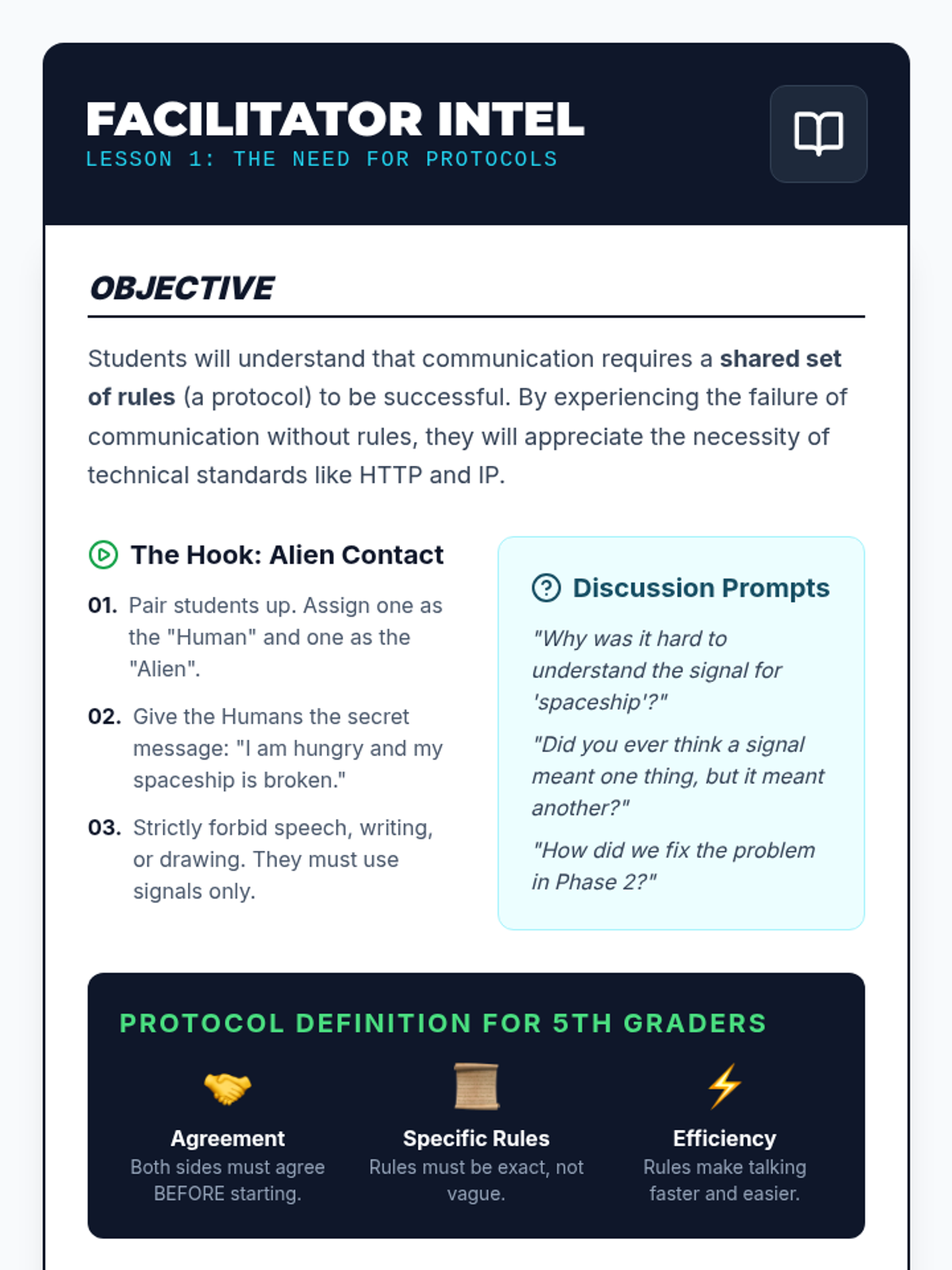
Alien Contact Teacher Guide

Protocol Pilots

A 5-lesson sequence exploring how computers use shared rules (protocols) to communicate. Students engage in simulations, role-playing, and hands-on design to understand IP addresses, DNS, TCP handshakes, and data standardization.

Lenny Avatar
Lenny
1/17
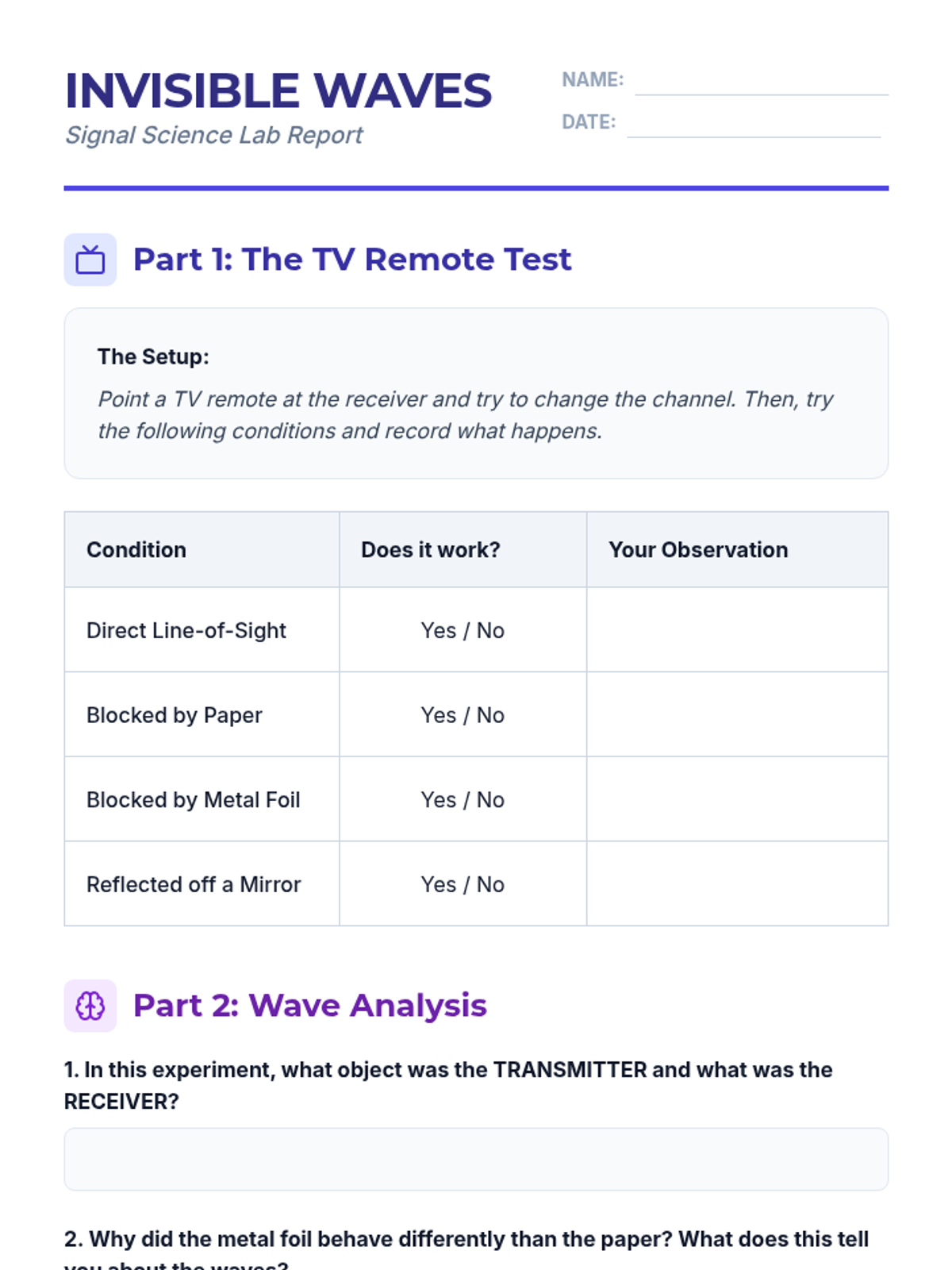
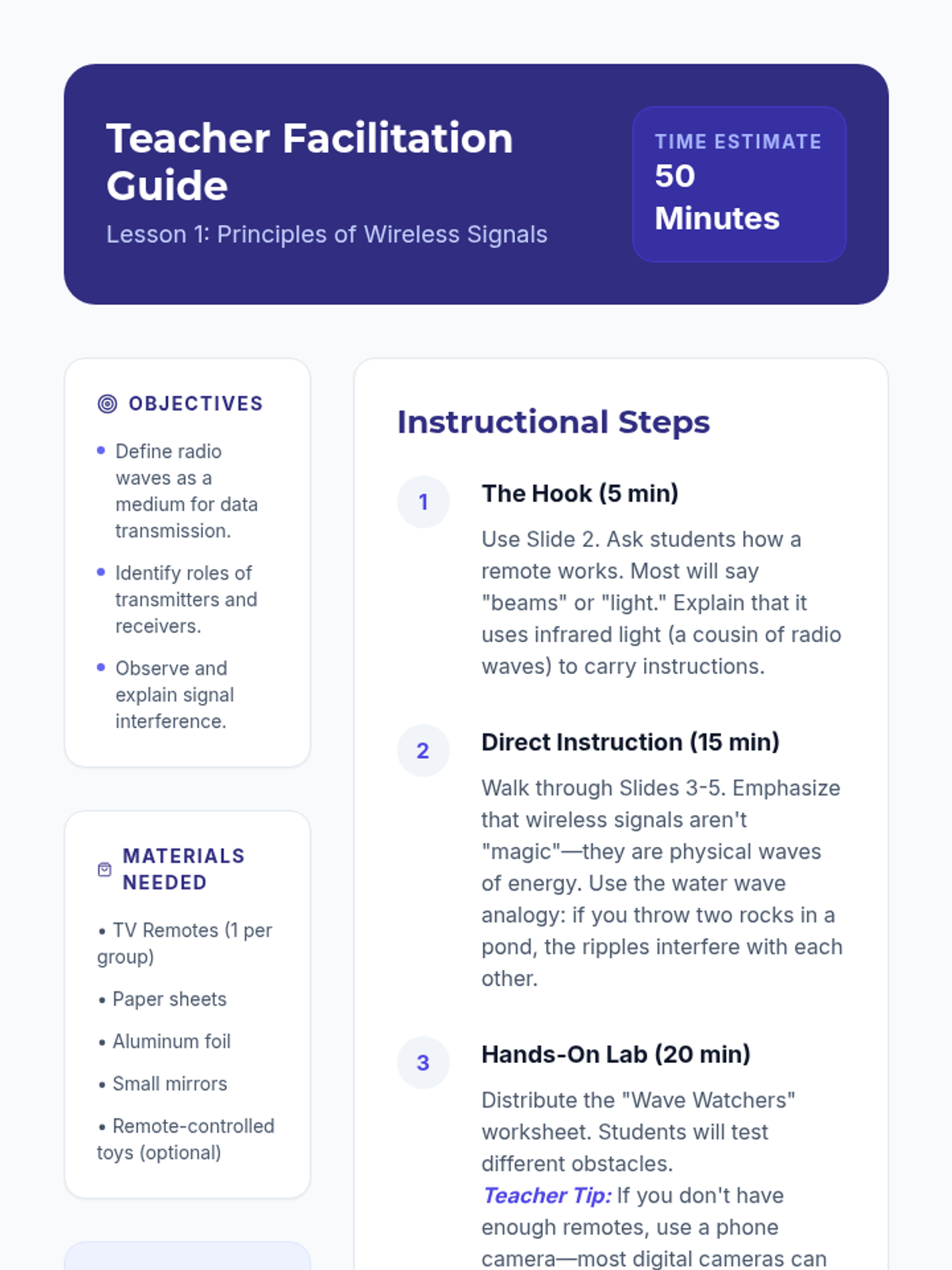
Sequence
Signal Science Slides
Wave Watchers Worksheet
Signal Science Teacher Guide

Wireless World and IoT

Students explore the invisible world of wireless communication, examining how data travels without physical cables. The sequence covers the electromagnetic spectrum basics, compares wireless standards, investigates IoT, and concludes with a future-focused design project.

Lenny Avatar
Lenny
1/17
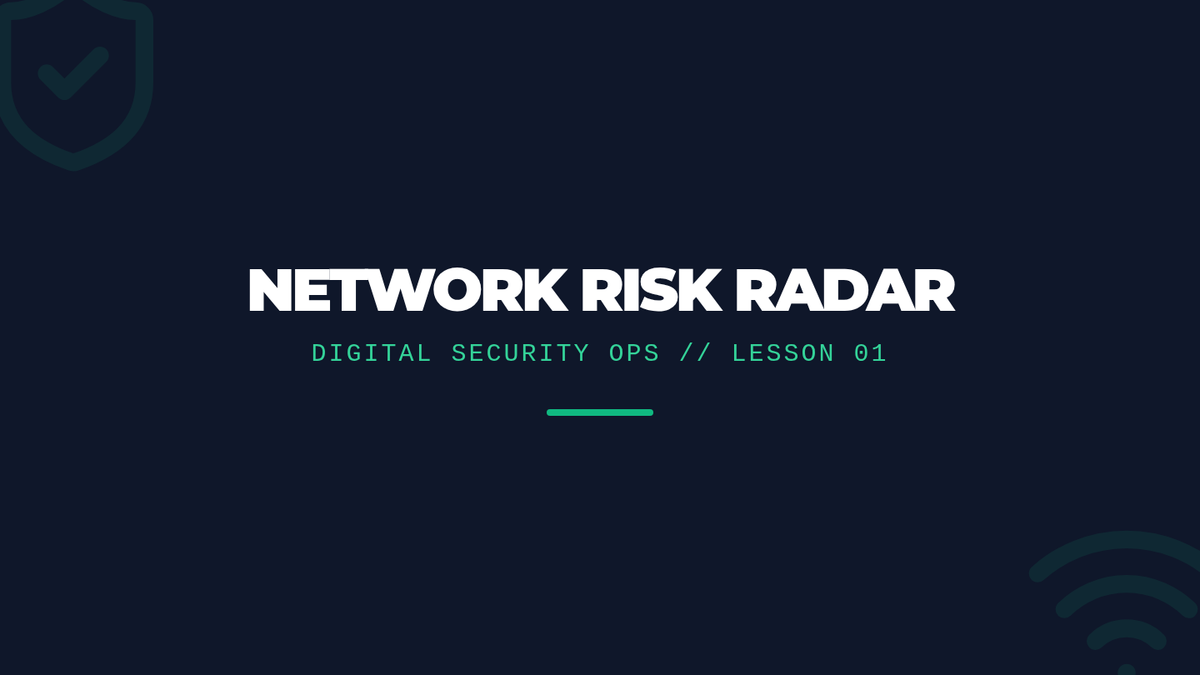
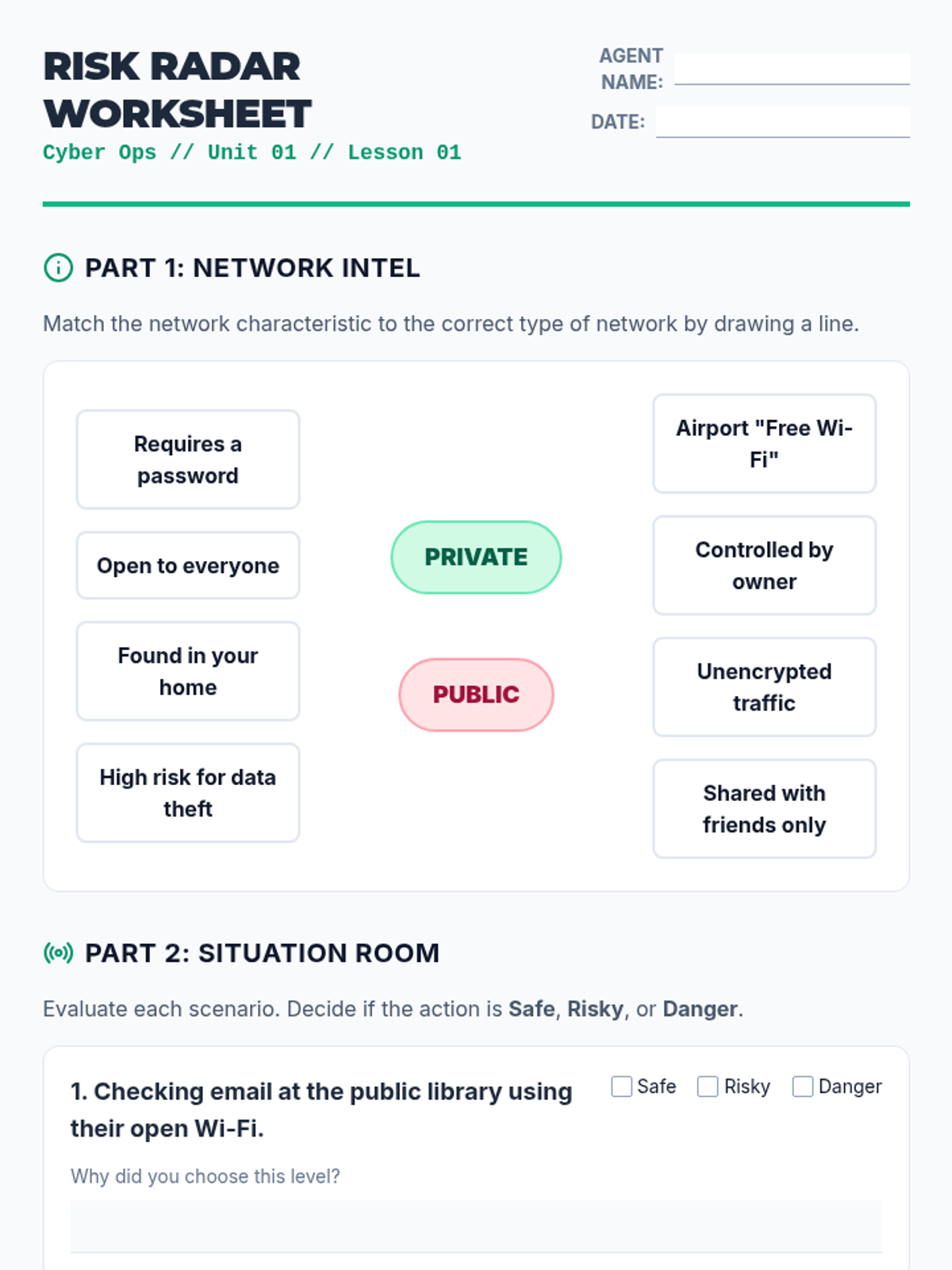
Sequence
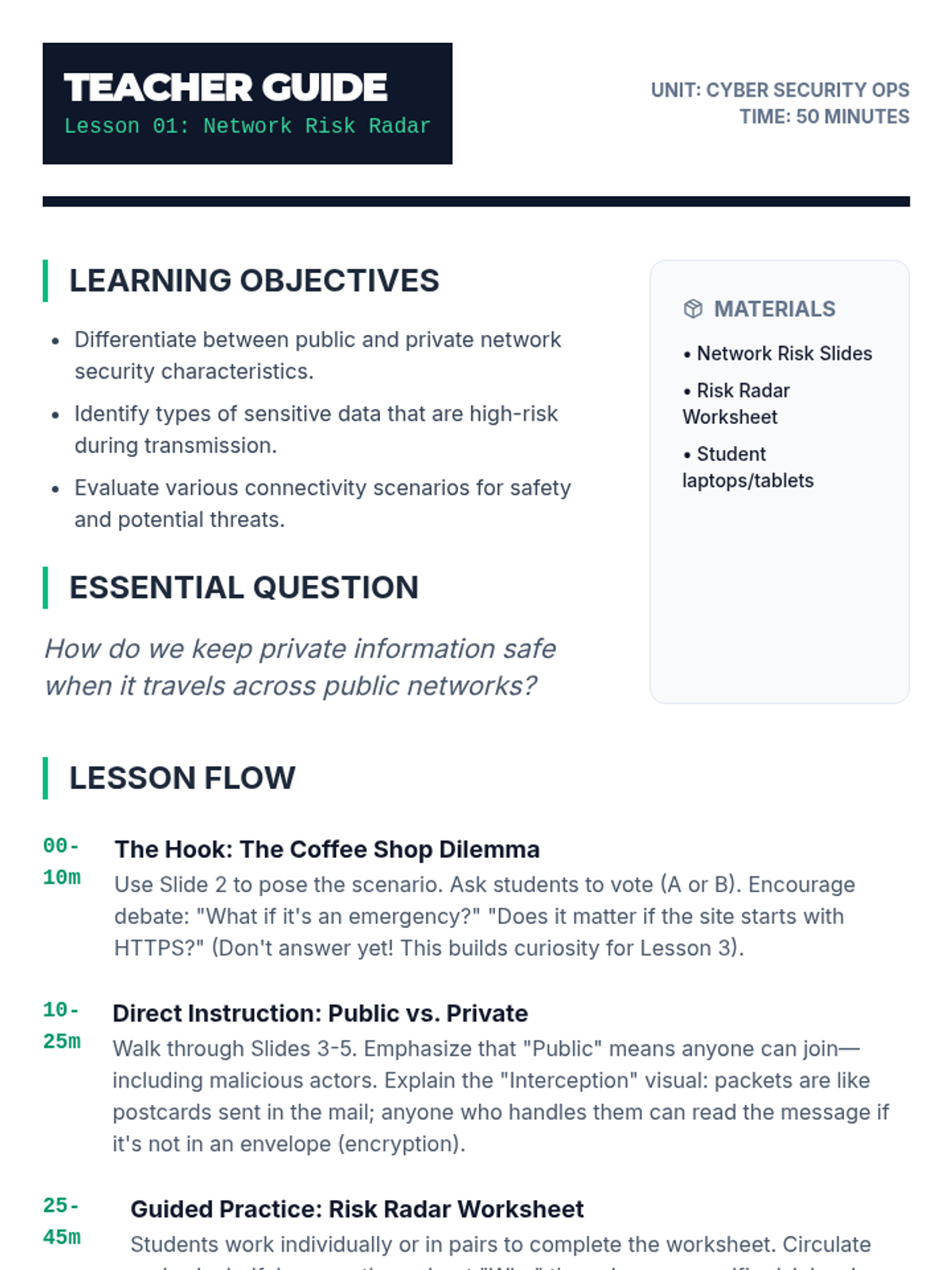
Network Risk Radar Slides
Network Risk Radar Worksheet
Network Risk Teacher Guide

Cyber Security Ops

A comprehensive unit for 6th-grade students on network security, covering public vs. private networks, encryption basics, HTTPS, firewalls, and multi-factor authentication. Students transition from 'Digital Detectives' to 'Cyber Security Ops' as they learn to protect data in a connected world.

Lenny Avatar
Lenny
1/17
Sequence
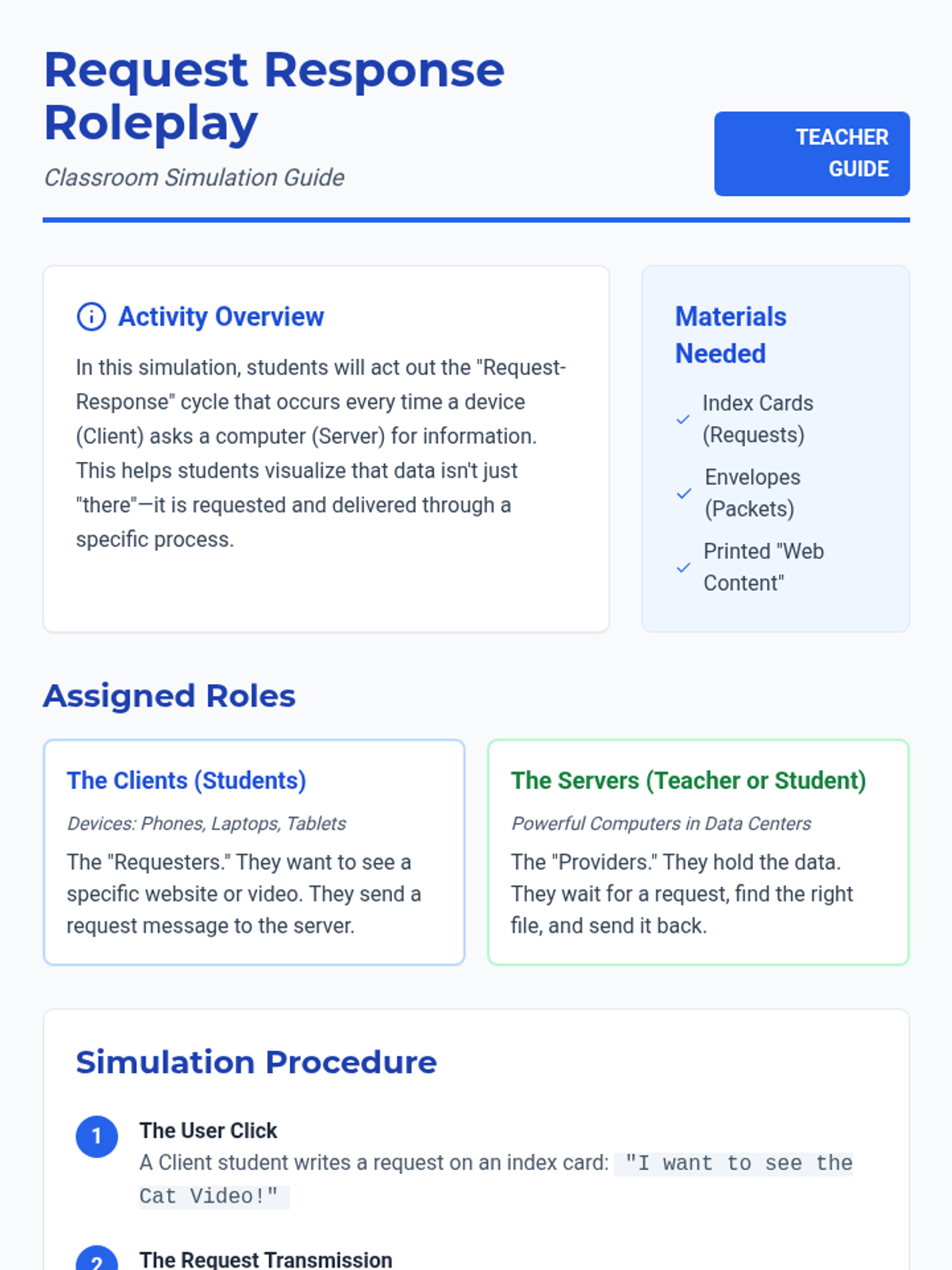
Request Response Roleplay Teacher Guide
Client Server Foundations Slides
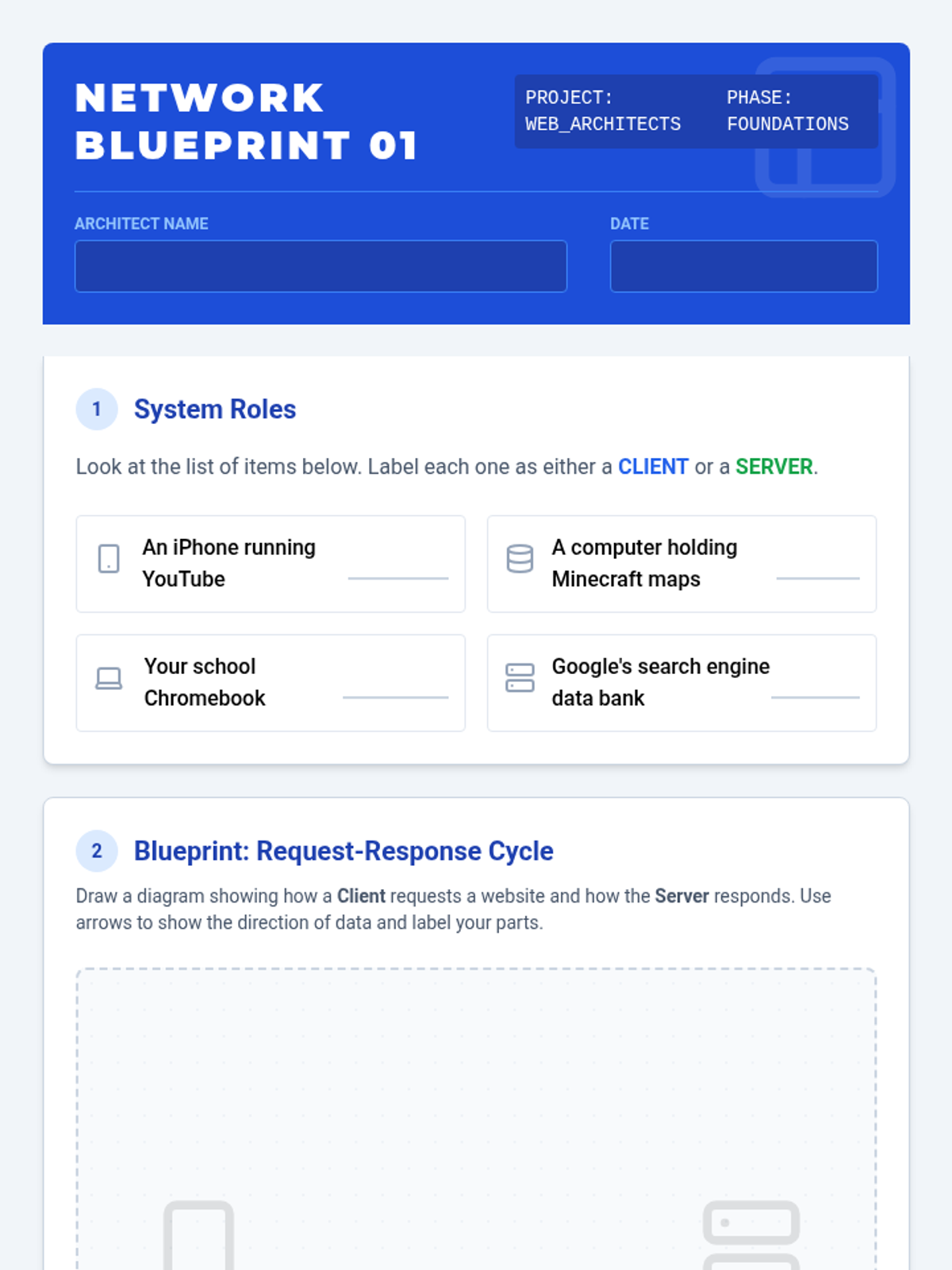
Client Server Foundations Worksheet

Web Architects DNS and Servers

A comprehensive unit on how the internet functions, covering the client-server model, DNS, HTTP, and physical infrastructure. Students transition from users to 'Web Architects' by understanding the request-response cycle and the systems that power the World Wide Web.

Lenny Avatar
Lenny
1/17
Sequence
Network Basics Slides
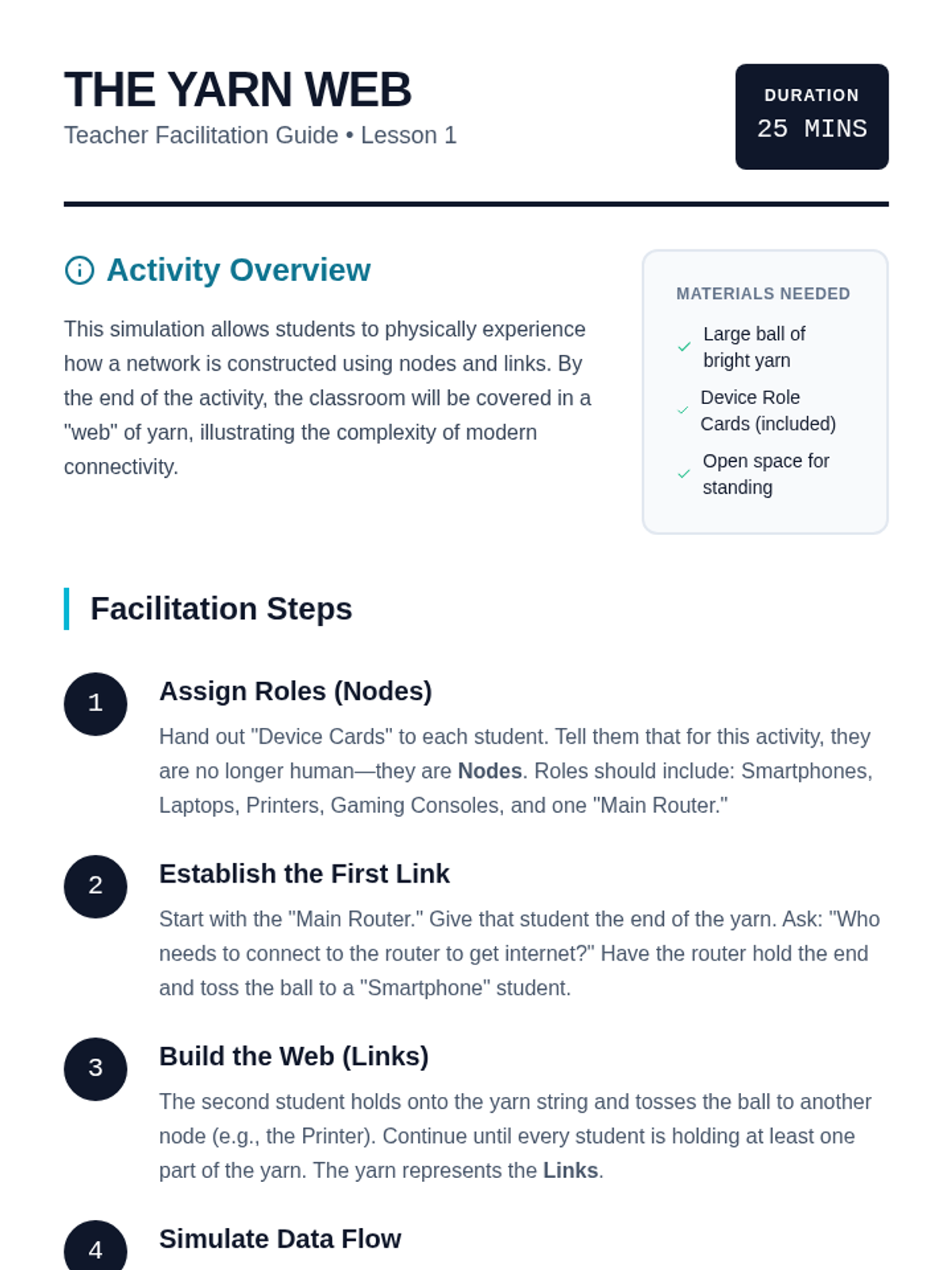
Yarn Network Teacher Guide
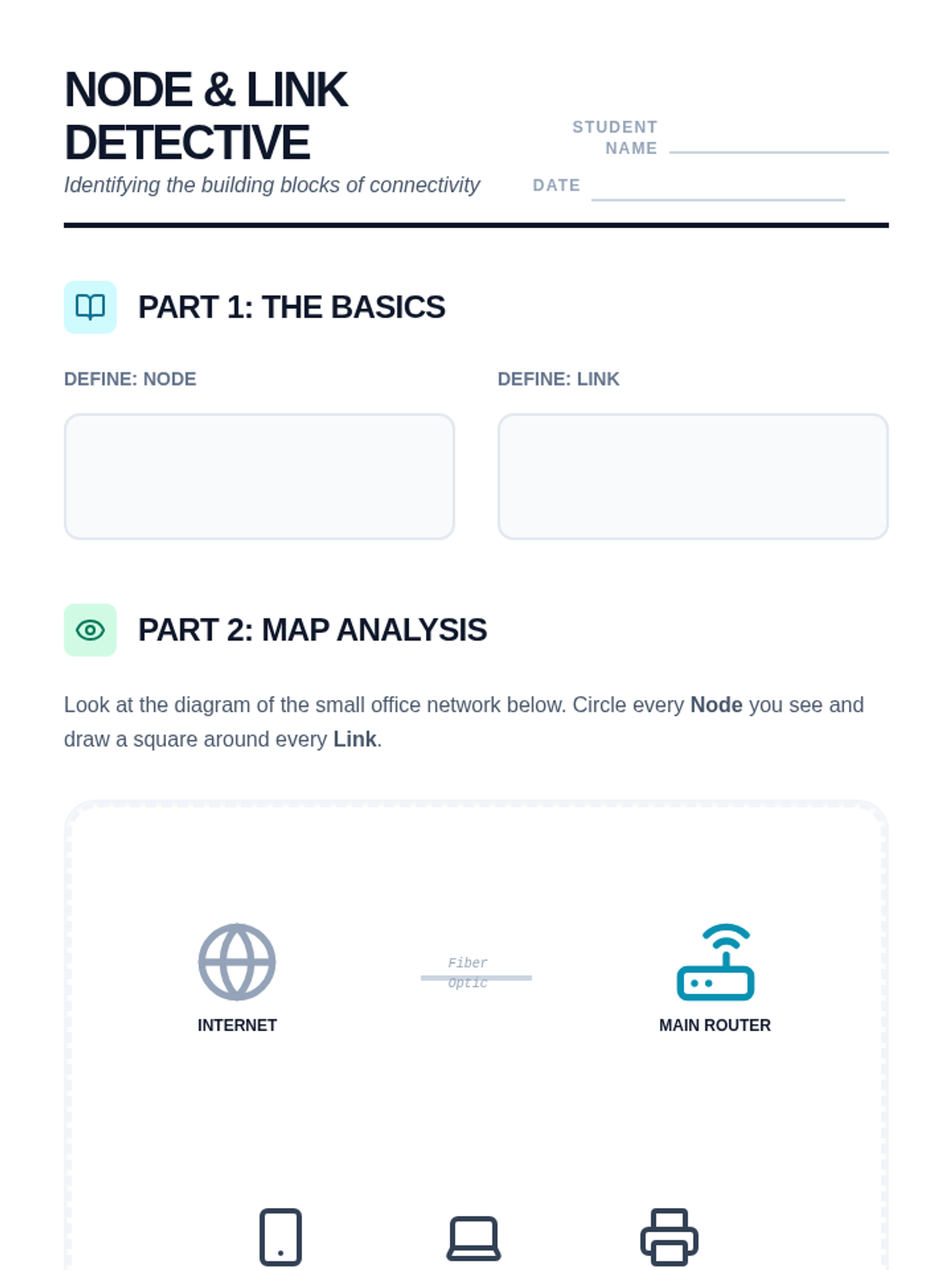
Node Link Detective Worksheet

Designing Network Topologies

A comprehensive 6th-grade unit on computer network structures, covering nodes, links, LAN/WAN differences, topologies, and hardware components, concluding with a real-world design challenge.

Lenny Avatar
Lenny
1/17
Sequence
Binary Beams Slides
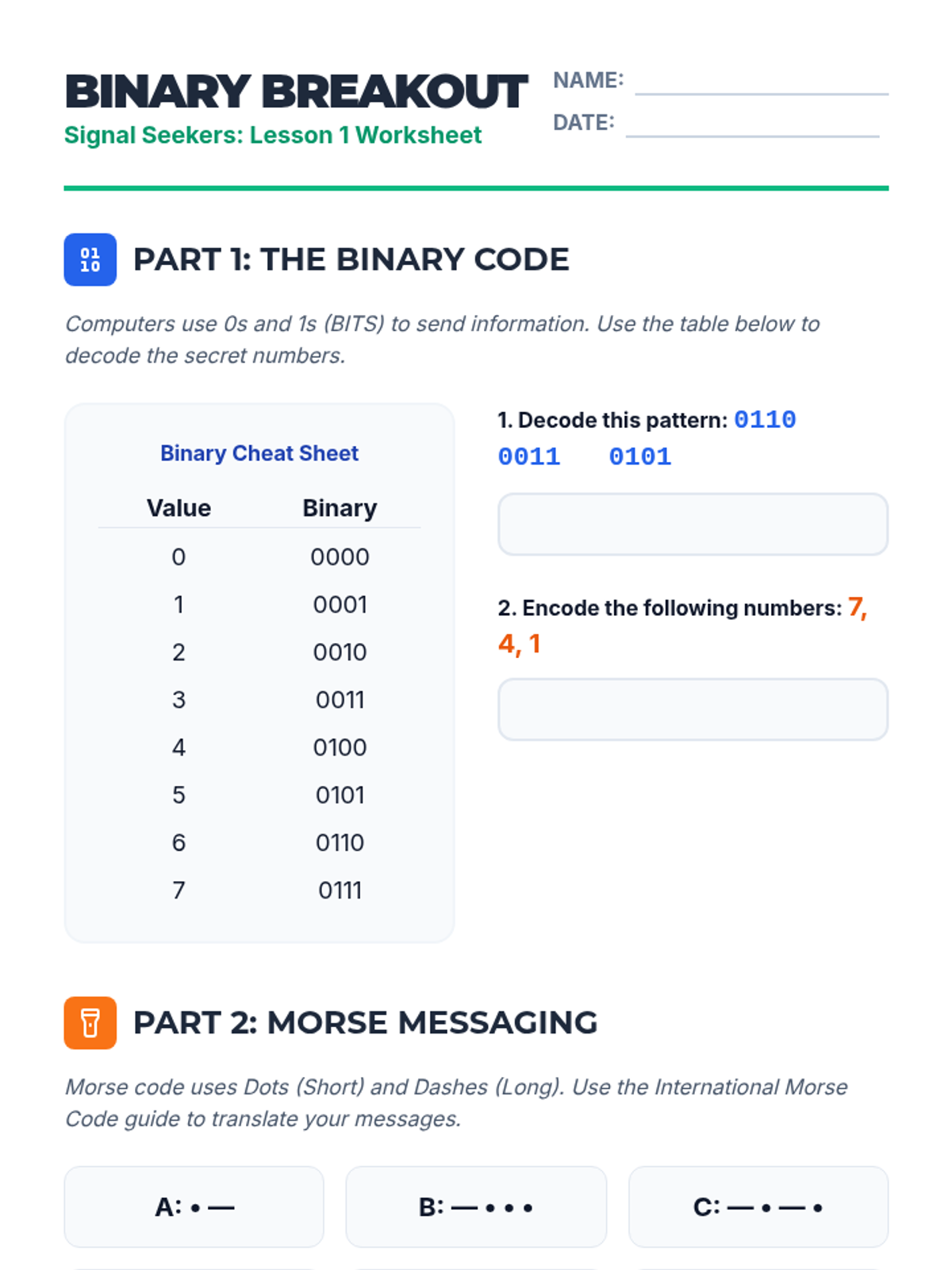
Binary Breakout Worksheet
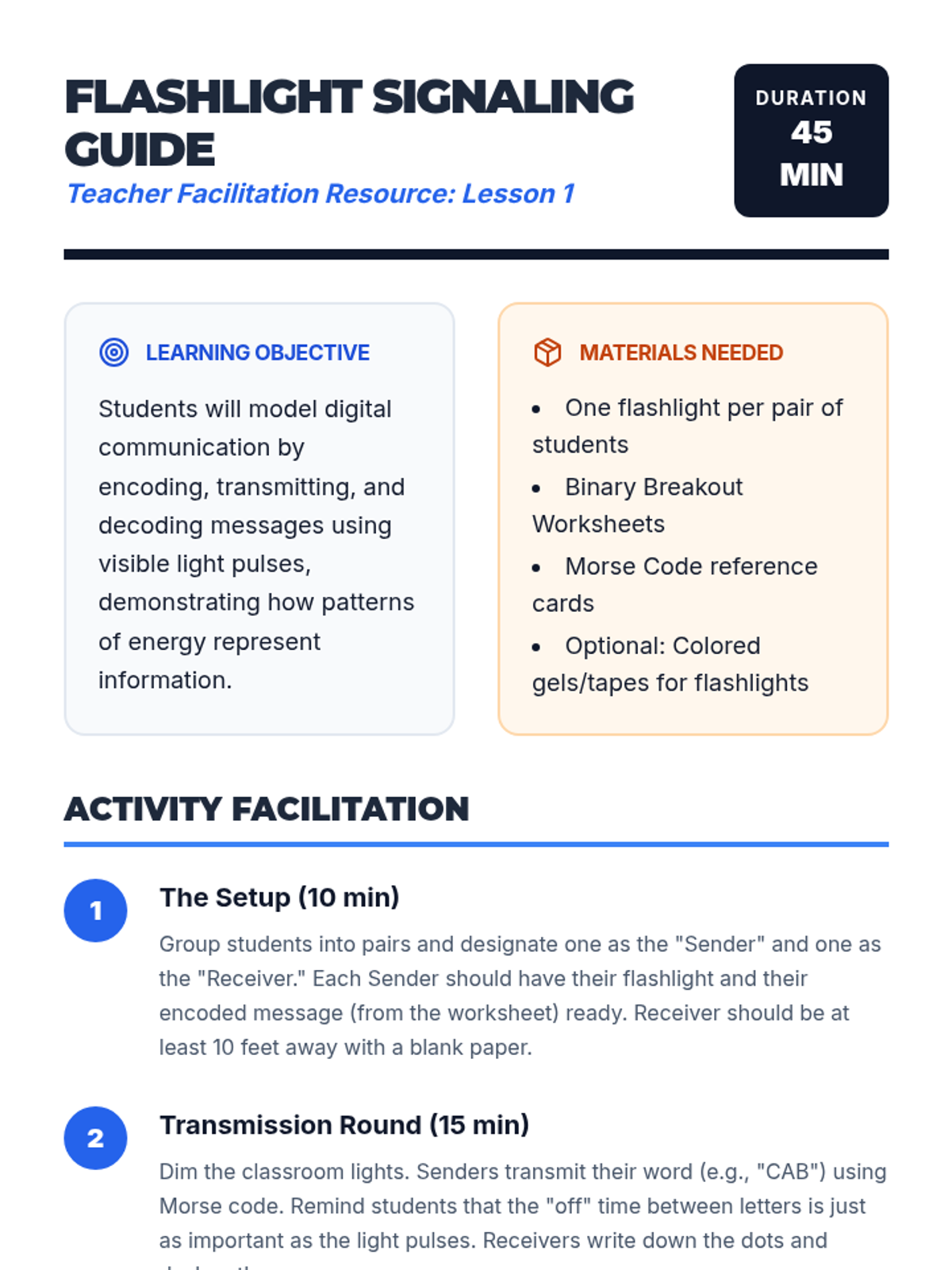
Flashlight Signaling Teacher Guide

Signal Seekers

Focused on the engineering application of physics, this sequence explores how electromagnetic waves are used to transmit information. Students progress from simple binary encoding to understanding complex systems like modulation, Wi-Fi, and GPS triangulation.

Lenny Avatar
Lenny
1/17
Sequence
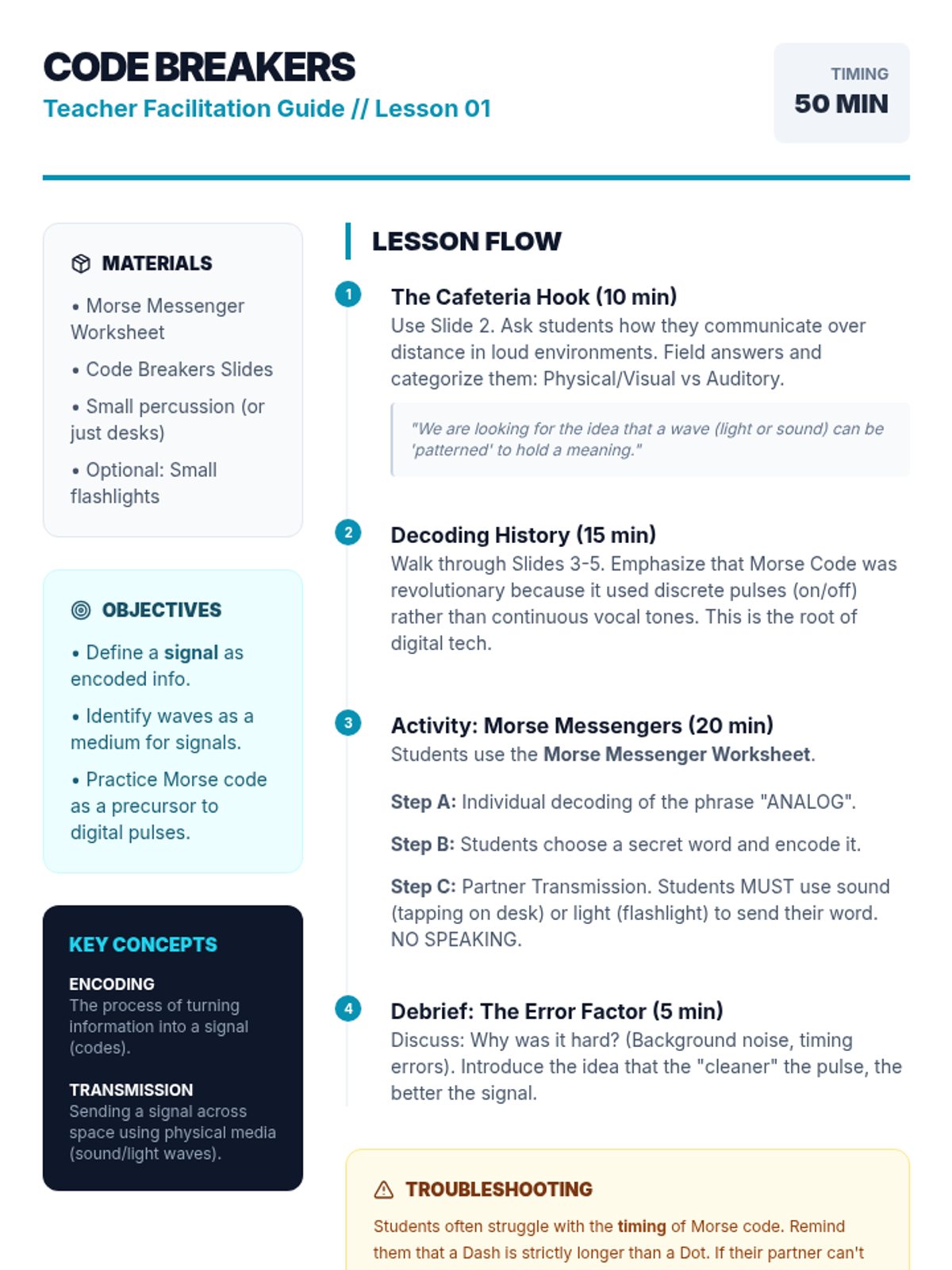
Code Breakers Slides
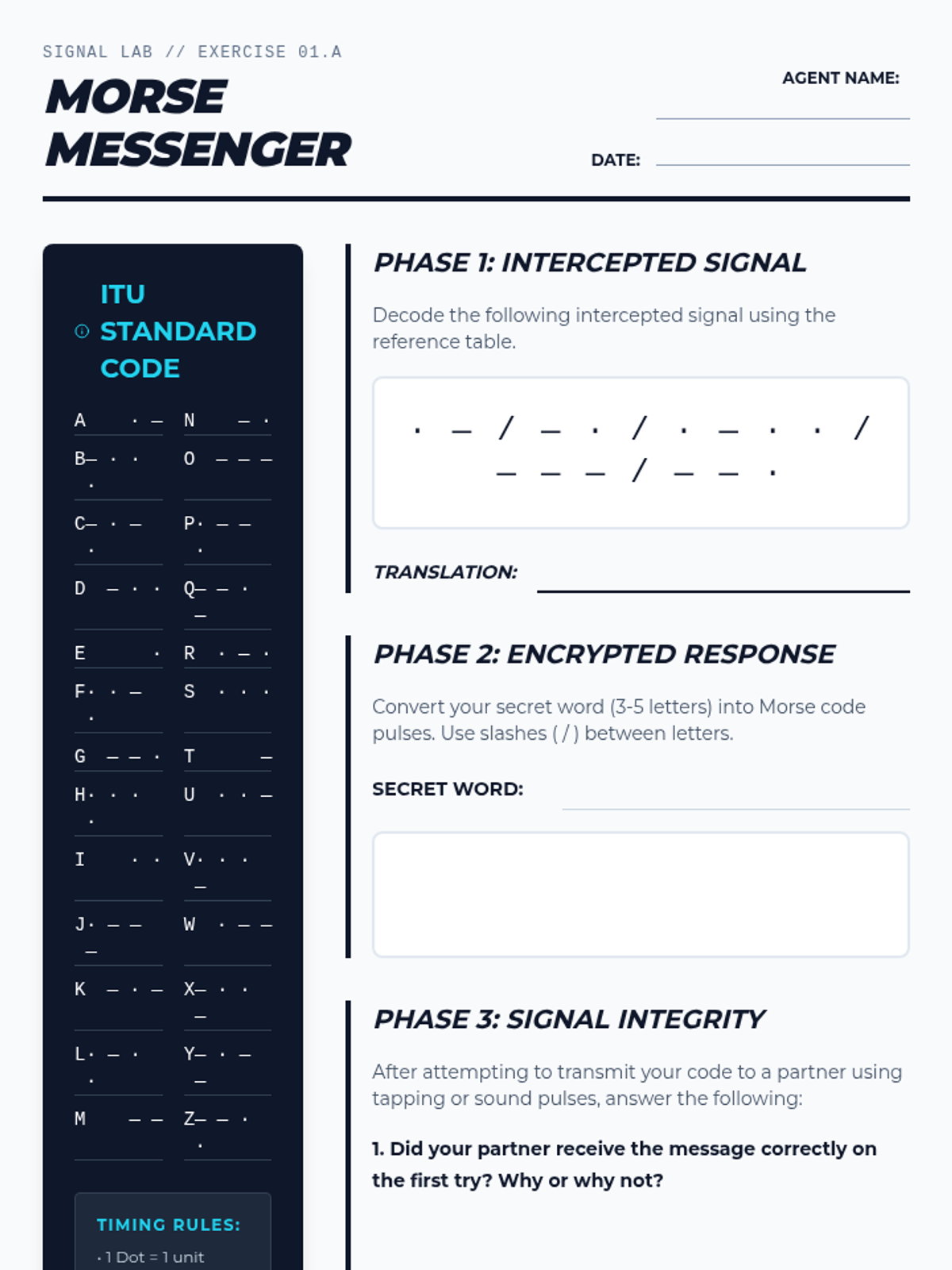
Morse Messenger Worksheet
Code Breakers Teacher Guide

Signal Seekers

This sequence explores how waves encode and transmit information by comparing analog and digital signals. Students engage in hands-on challenges, from Morse code to binary flashlight pulses, to understand why digital communication has become the global standard for reliability and speed.

Lenny Avatar
Lenny
1/17
Sequence
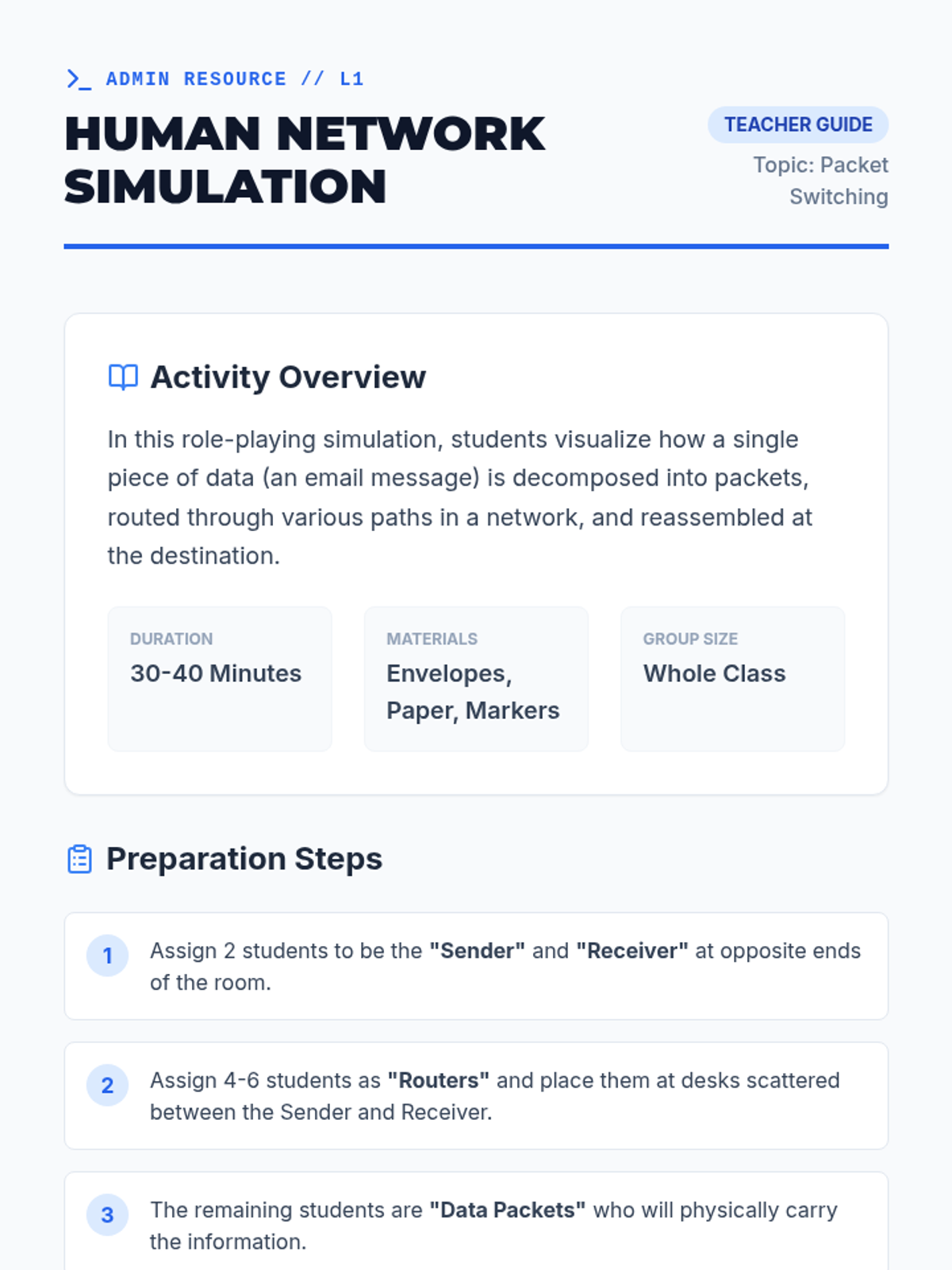
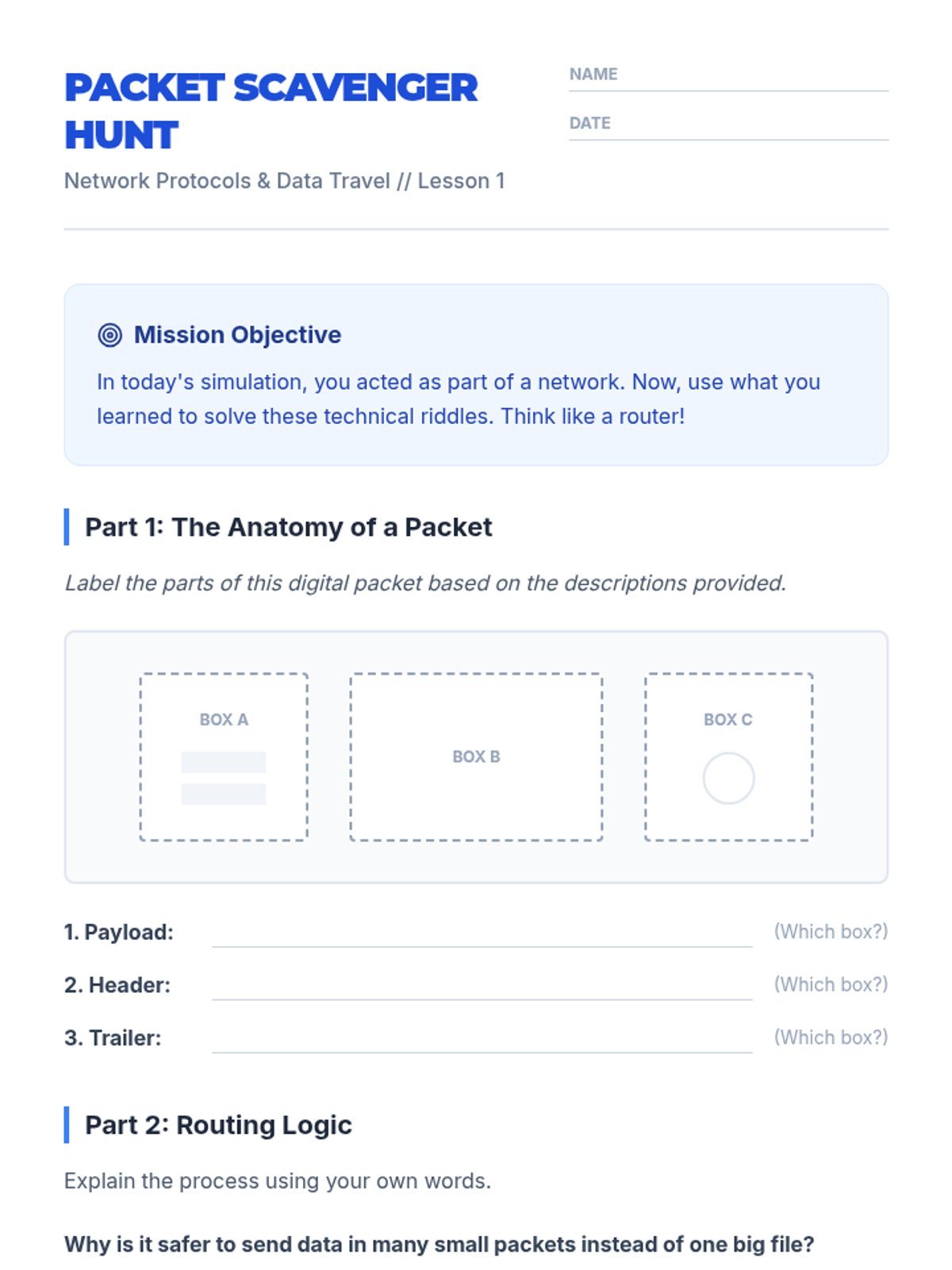
Packet Power Slides
Human Network Teacher Guide
Packet Scavenger Worksheet

Network Guard Sequence

A 5-lesson sequence on network protocols and cybersecurity, covering packet switching, man-in-the-middle attacks, HTTPS, firewalls, and secure network design. Students use simulations and design projects to understand how data travels securely across the internet.

Lenny Avatar
Lenny
1/17
Sequence
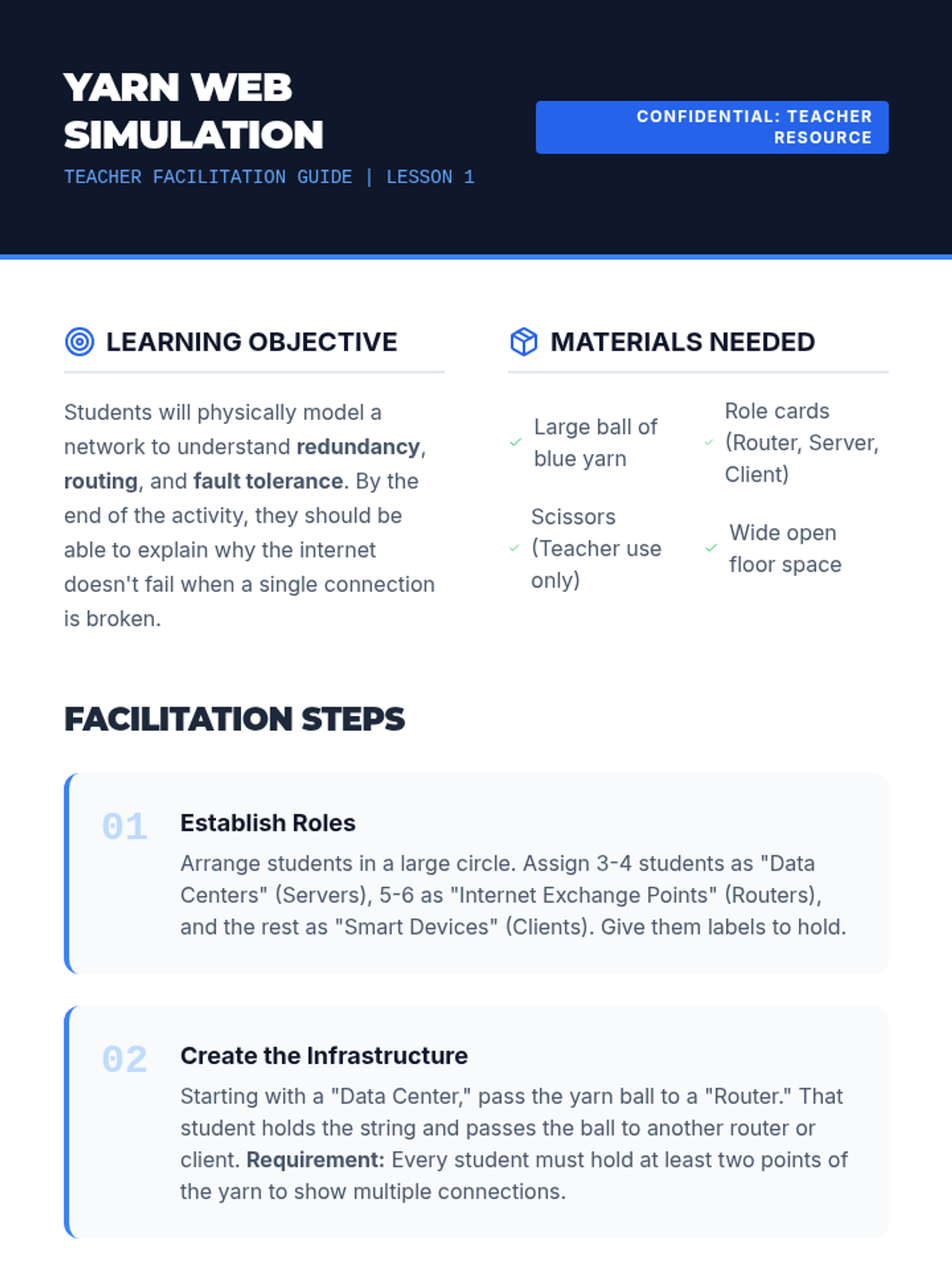
Global Web Slides
Yarn Web Guide

Cyber Guard Network Security

A 5-lesson sequence for 6th graders exploring how data travels securely across the internet through packets, protocols, and firewalls. Students engage in simulations and design projects to understand the invisible infrastructure of our digital world.

Lenny Avatar
Lenny
1/17
Sequence
Hidden Connections Slides
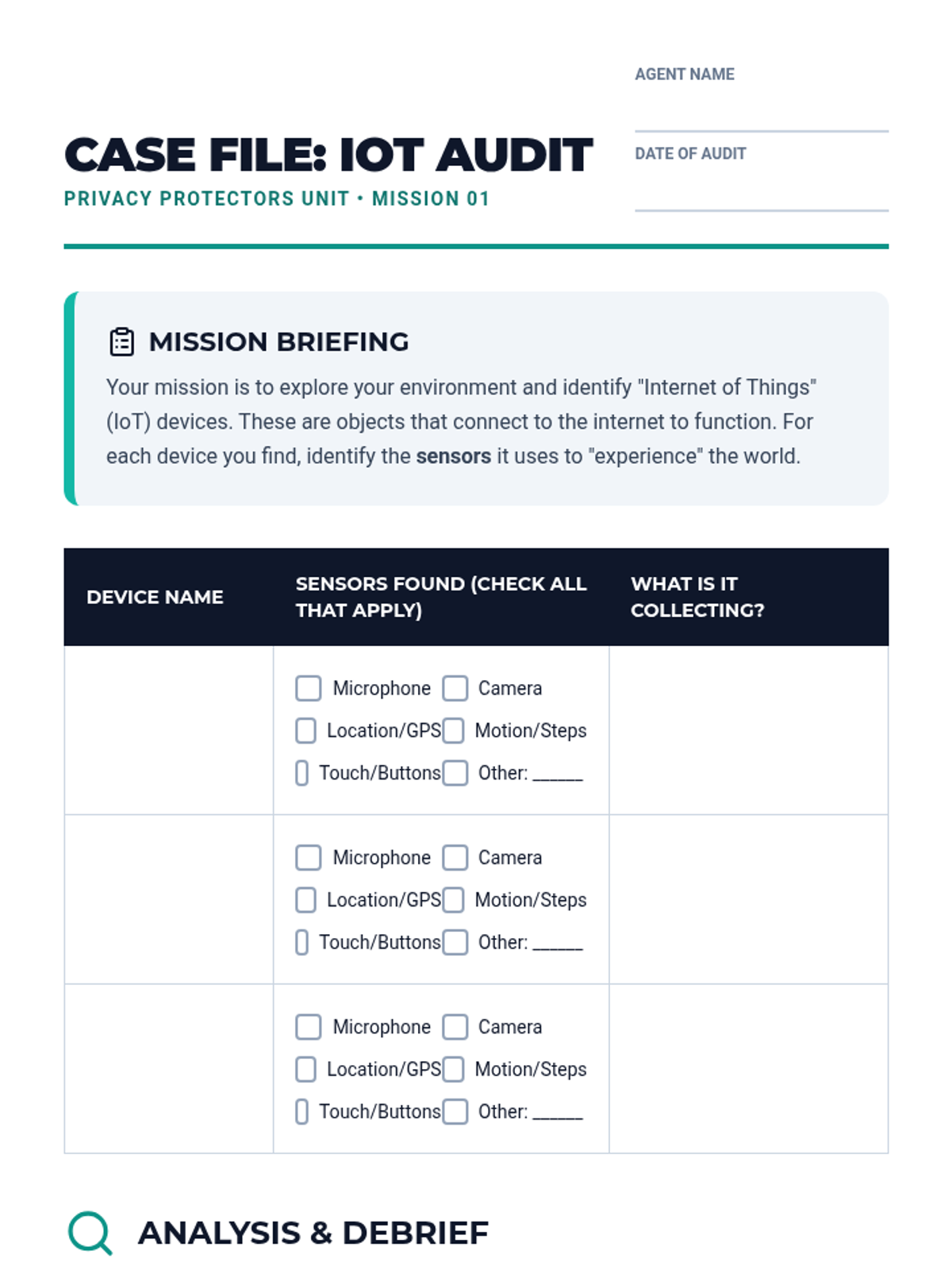
Device Audit Worksheet
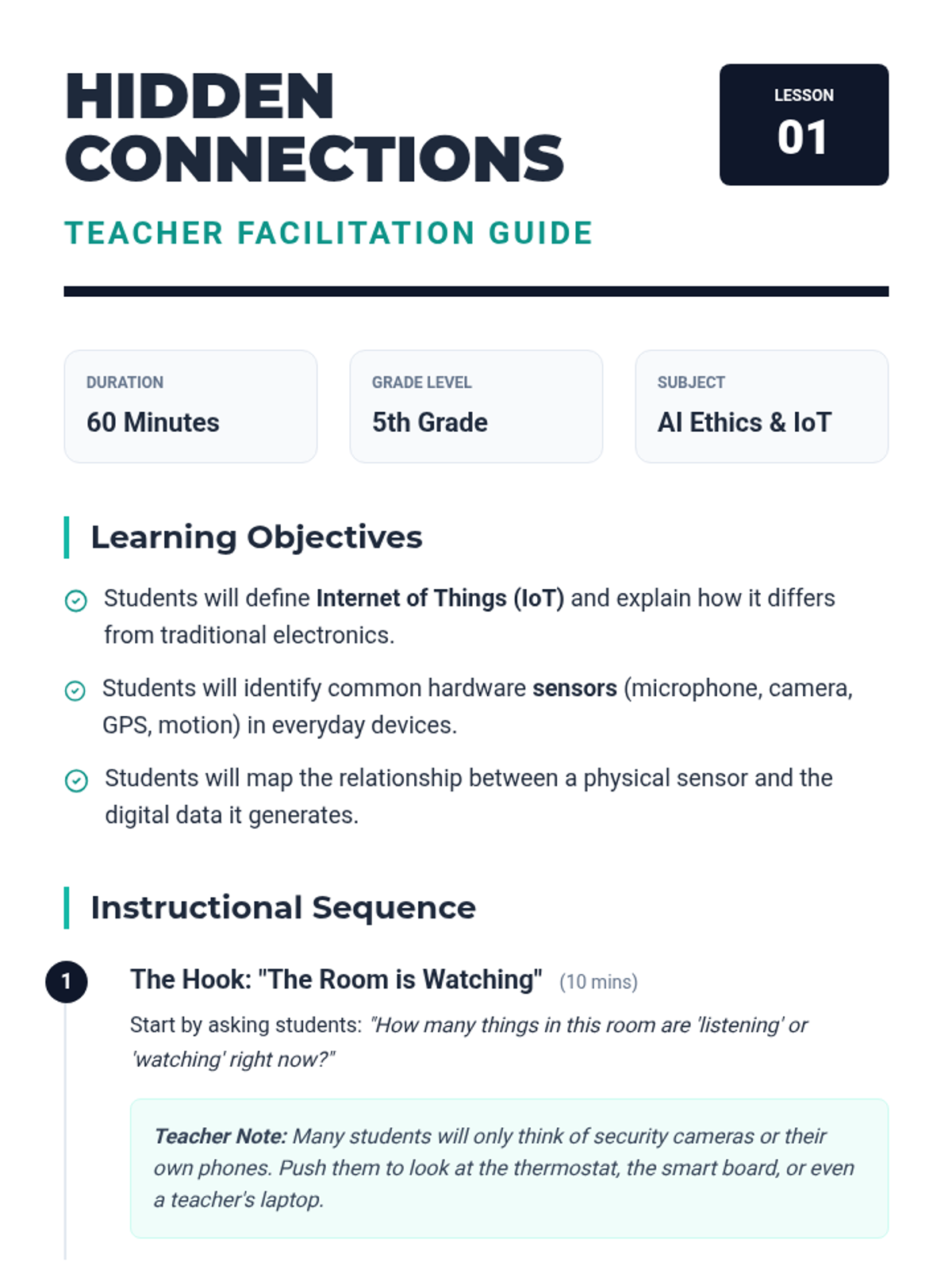
Hidden Connections Teacher Guide

Privacy Protectors

Students explore the intersection of technology and personal privacy by investigating the Internet of Things (IoT). They learn to identify sensors, analyze data collection practices, decode simplified privacy policies, and culminate in a design project to create privacy-centric smart devices.

Lenny Avatar
Lenny
1/17
Sequence
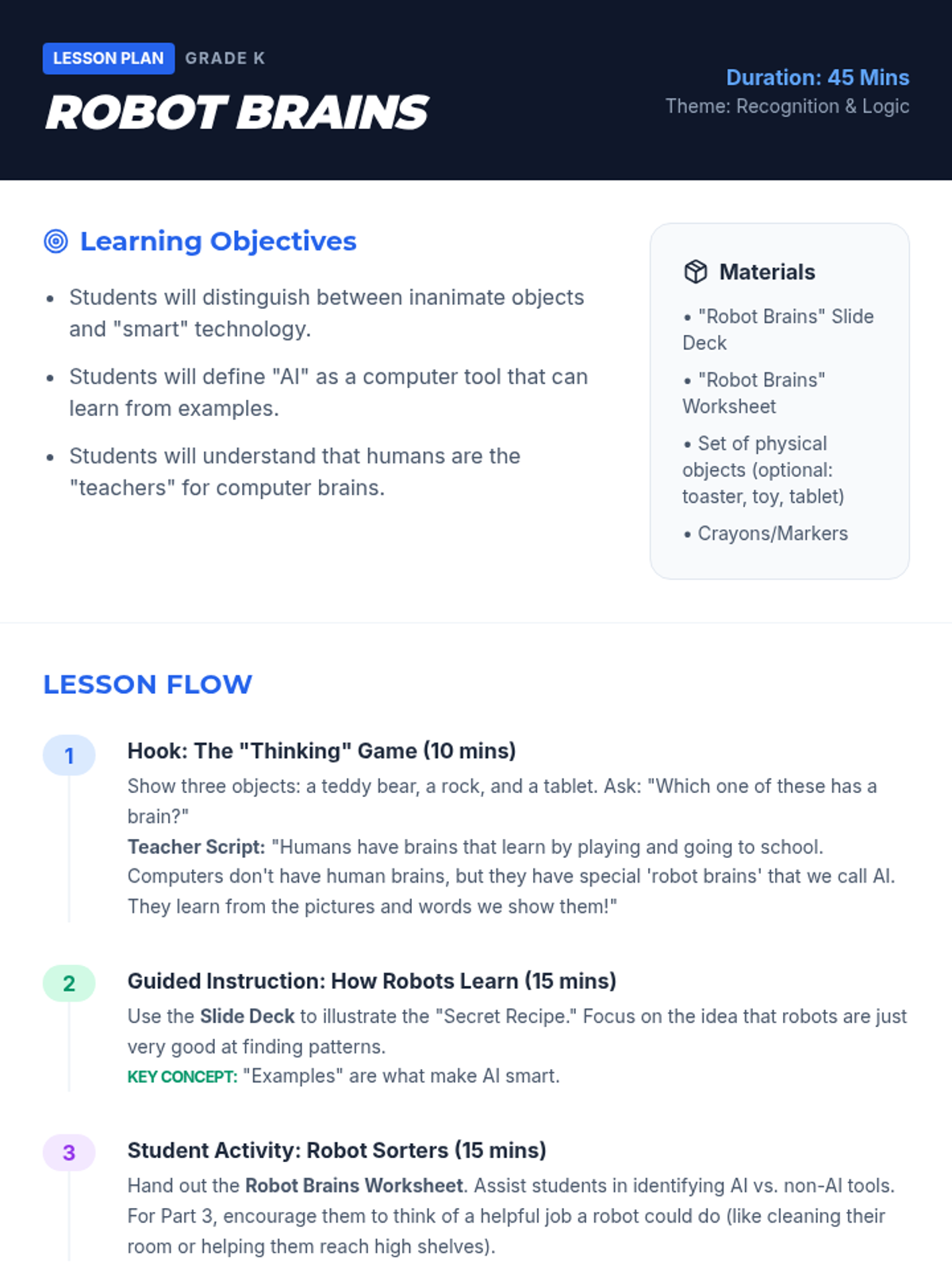
Robot Brains Slides
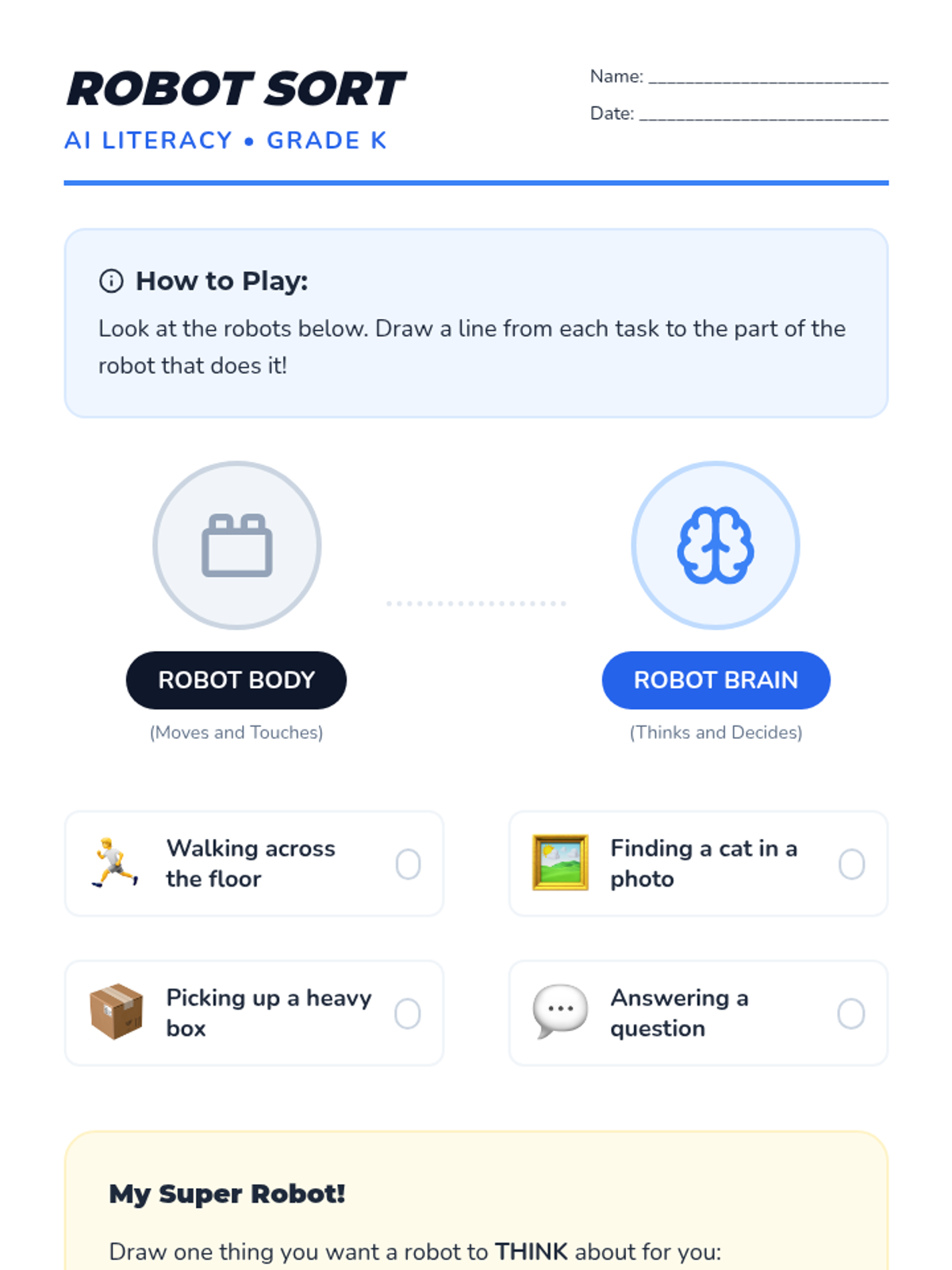
Robot Sort Activity
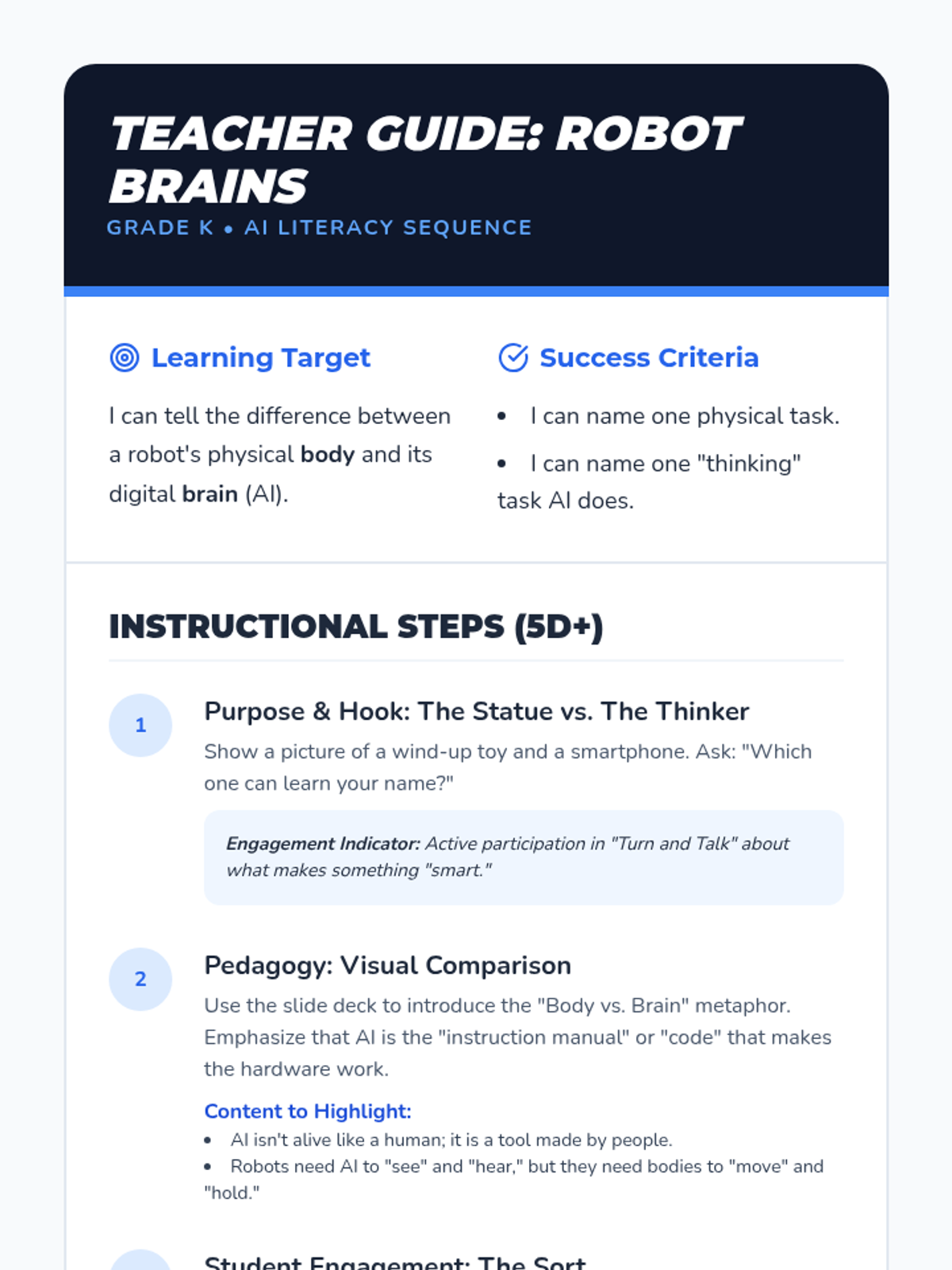
Robot Brains Teacher Guide

AI Explorer Path

A comprehensive K-8 curriculum designed to build foundational AI literacy through understanding, evaluation, application, and ethics. Each grade level tackles a specific theme, progressing from basic robot concepts to complex algorithmic bias and societal impact.

EW

Elizabeth Whitver

Other
4/4
Sequence
Robot Brains Presentation Slides
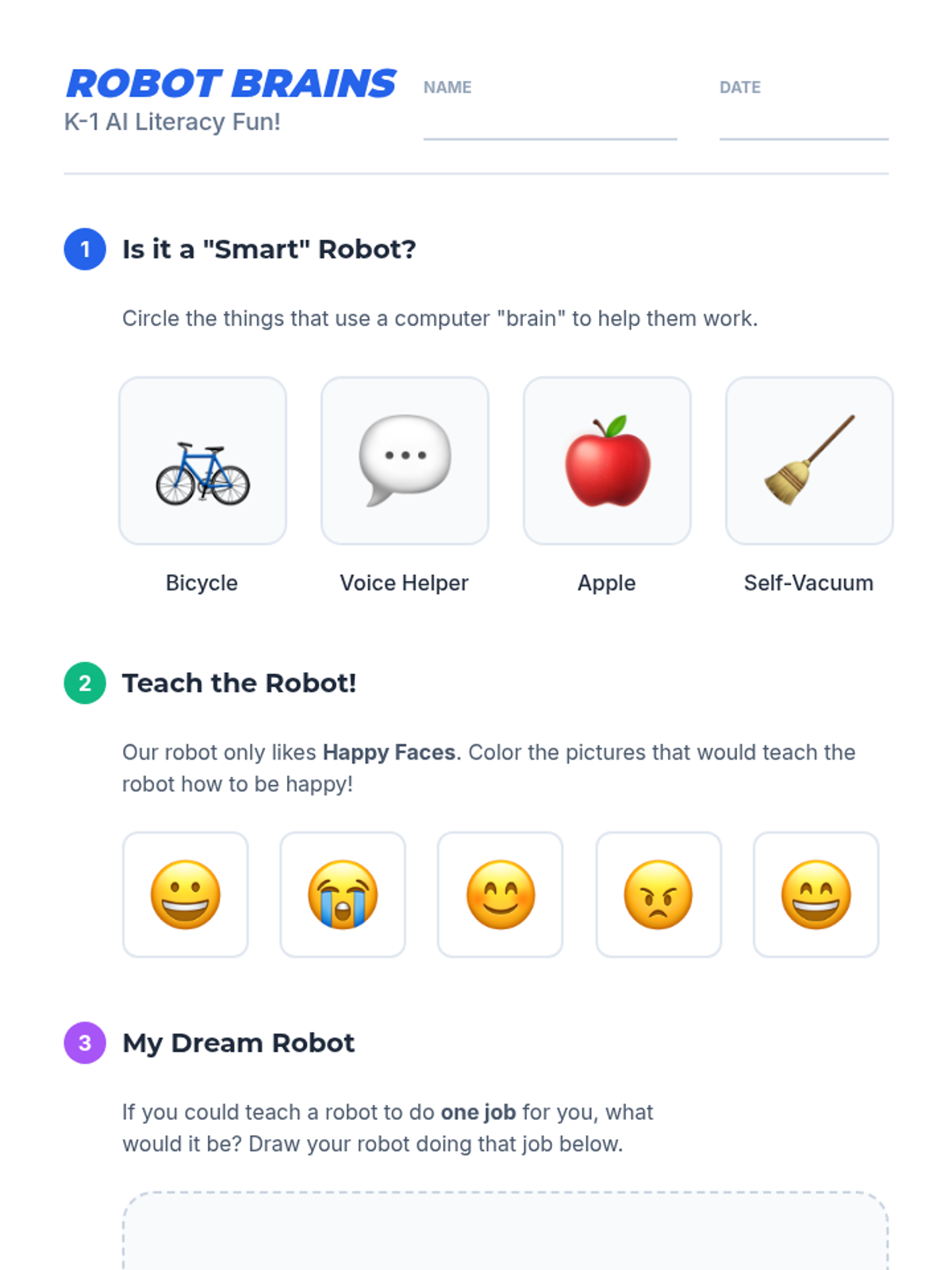
Robot Brains Activity Worksheet
Robot Brains Teacher Guide

AI Literacy Blueprint

A comprehensive K-12 AI literacy sequence covering the fundamentals of how AI works, machine learning, ethics, social impact, and creative application through age-appropriate lessons.

VC

Vic Chamness

District Administrator
3/24
Sequence
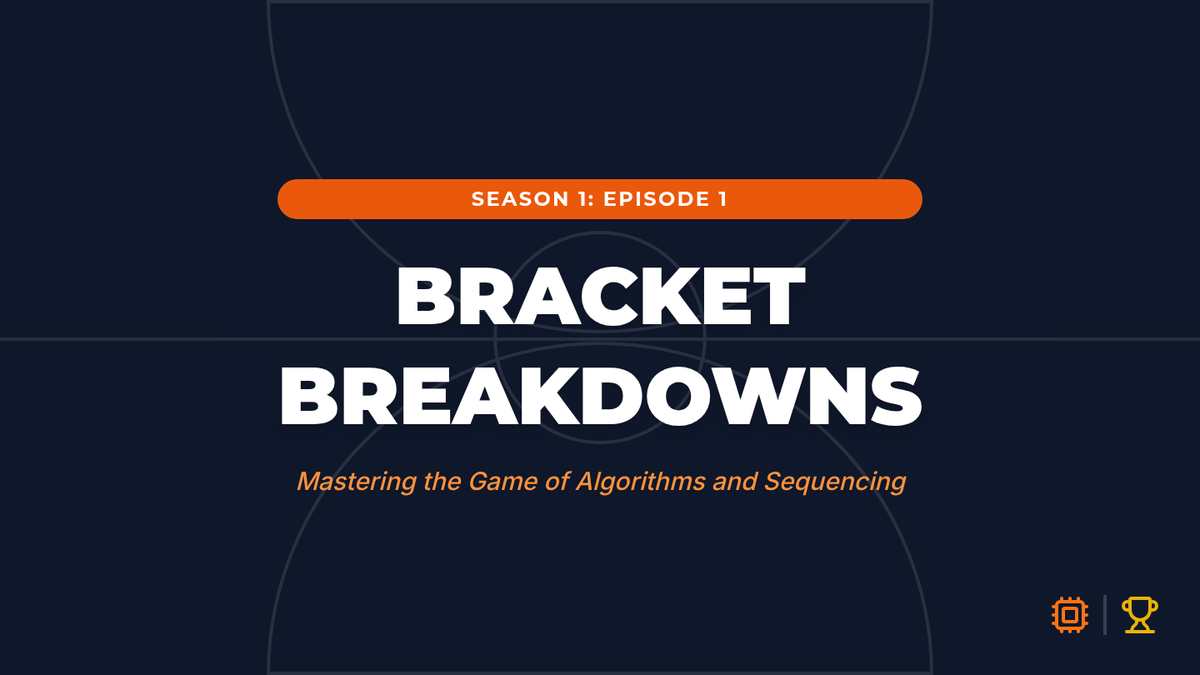
Bracket Logic Slides
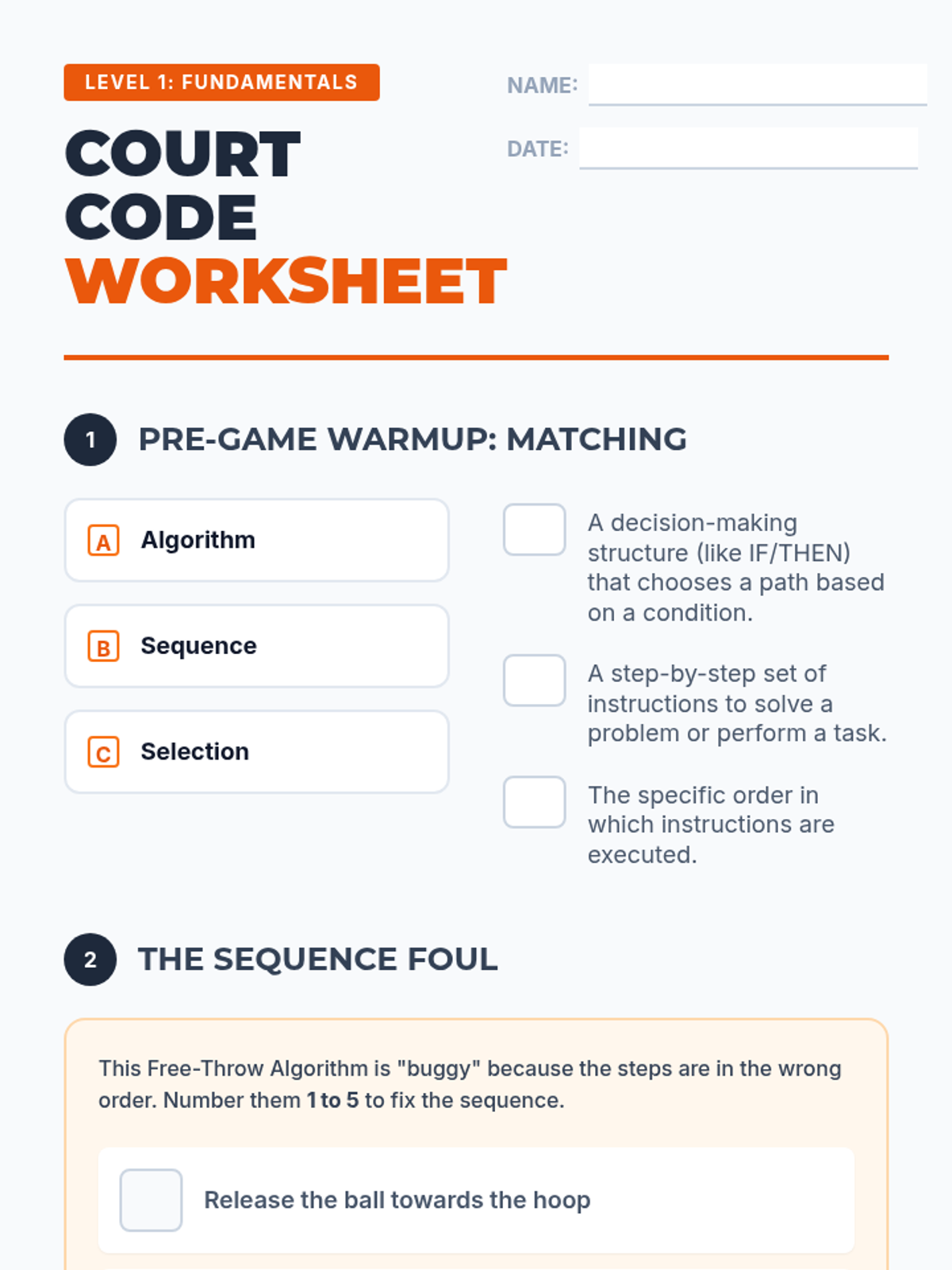
Court Code Worksheet
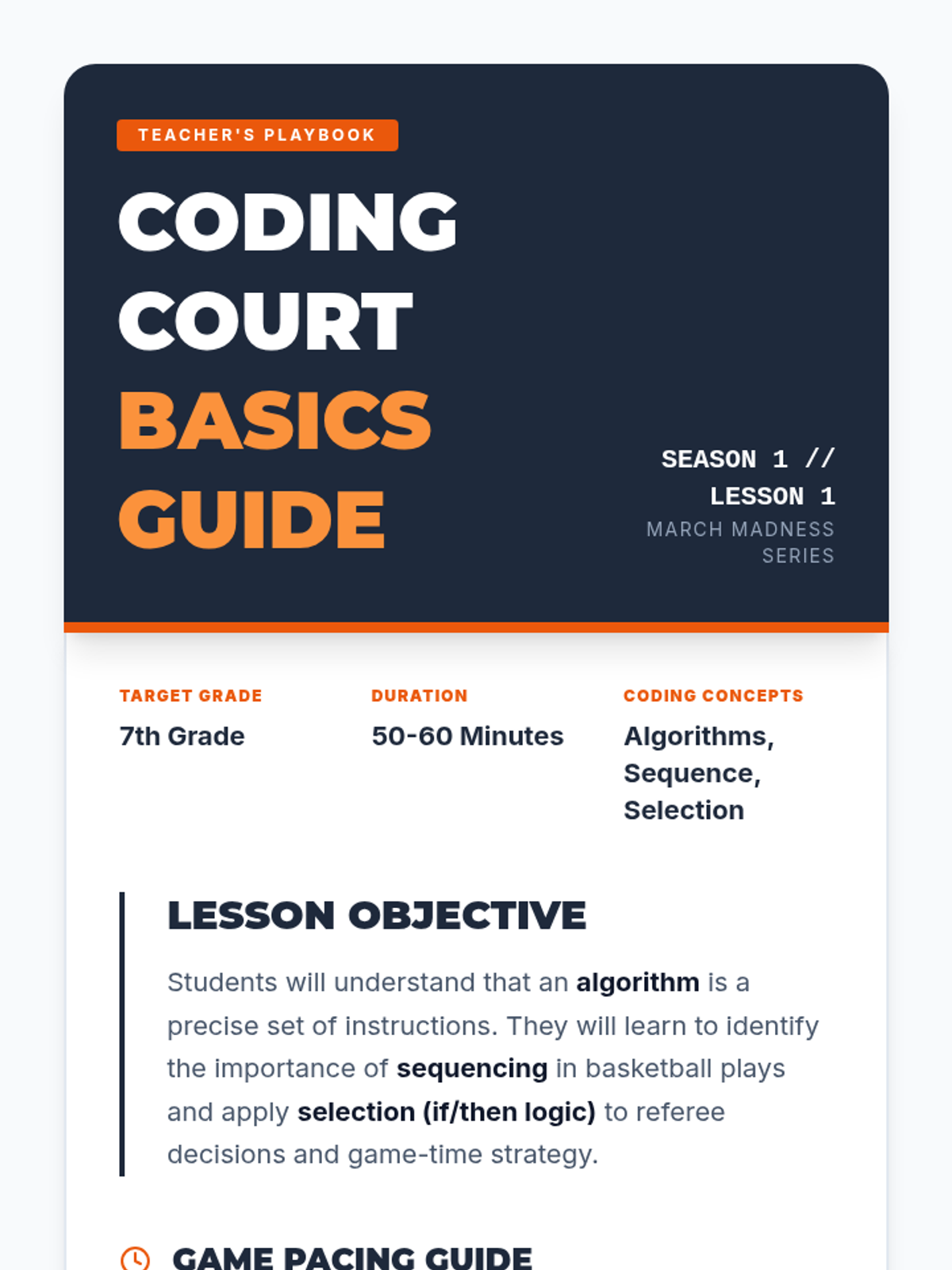
Coach's Playbook Teacher Guide

Bracket Breakdowns

A beginner-friendly introduction to coding concepts using the excitement of basketball tournaments to teach algorithms, sequencing, and selection.

MG

Mo Godin

Special Education Teacher
3/18
Sequence
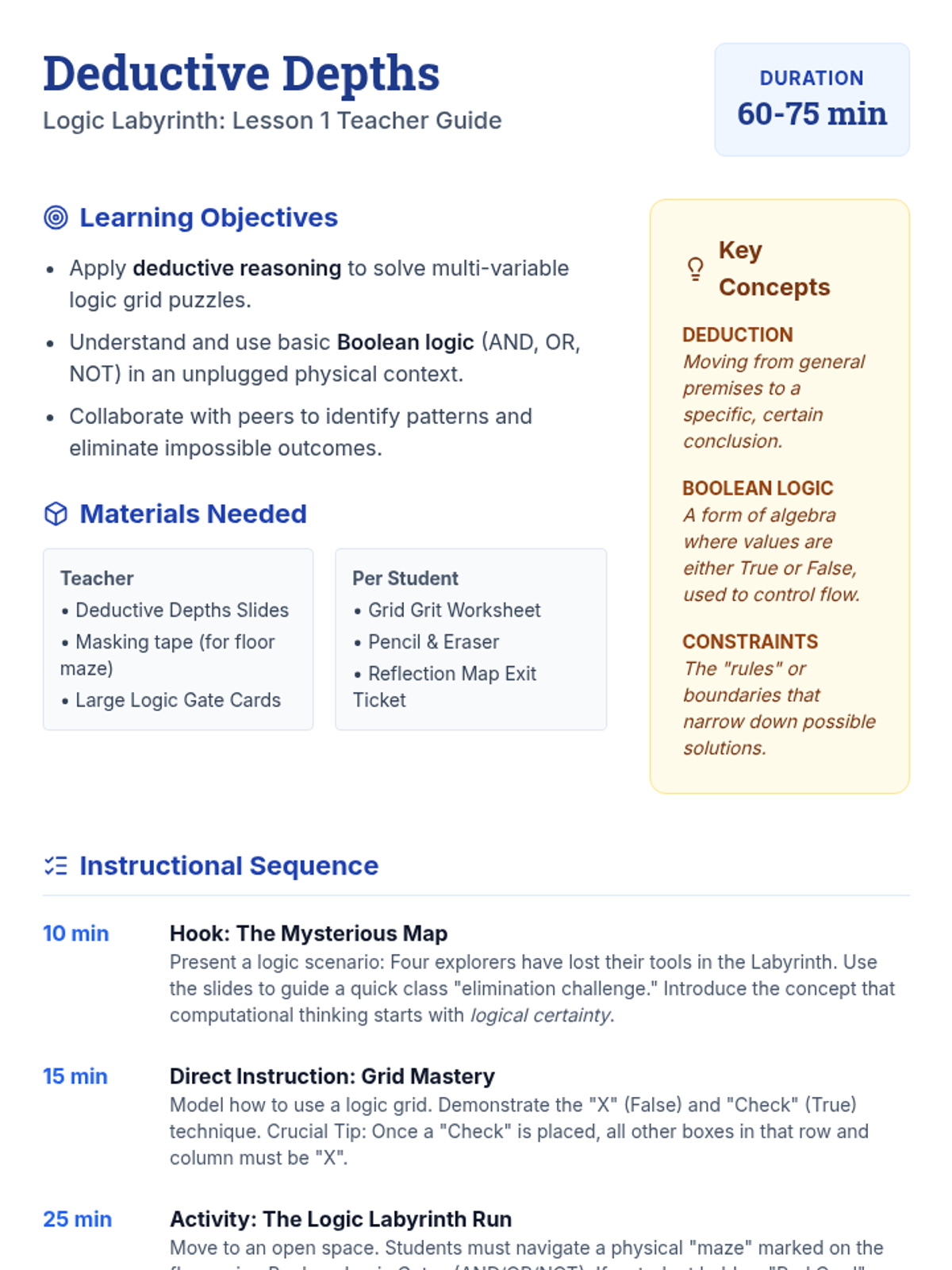
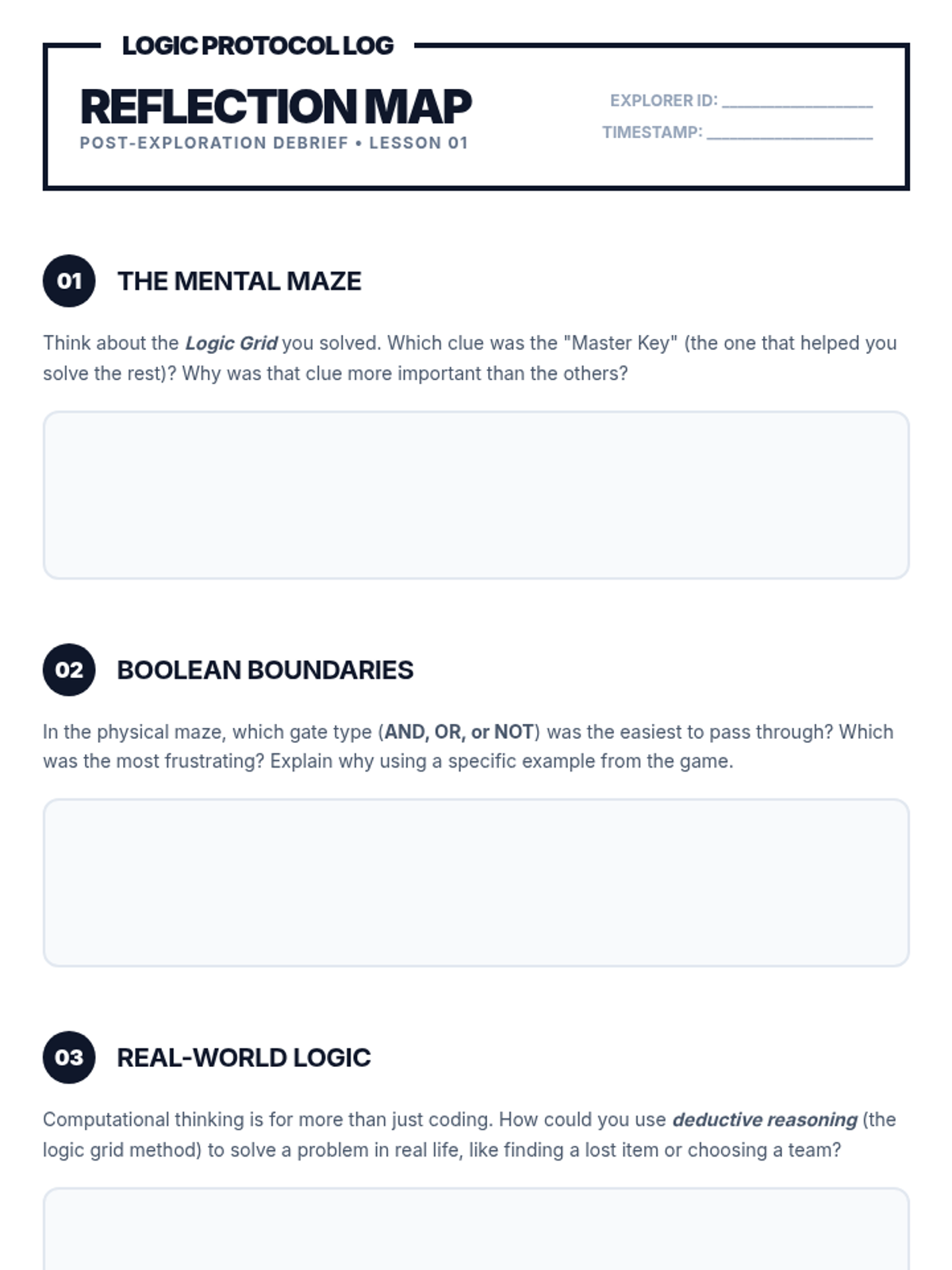
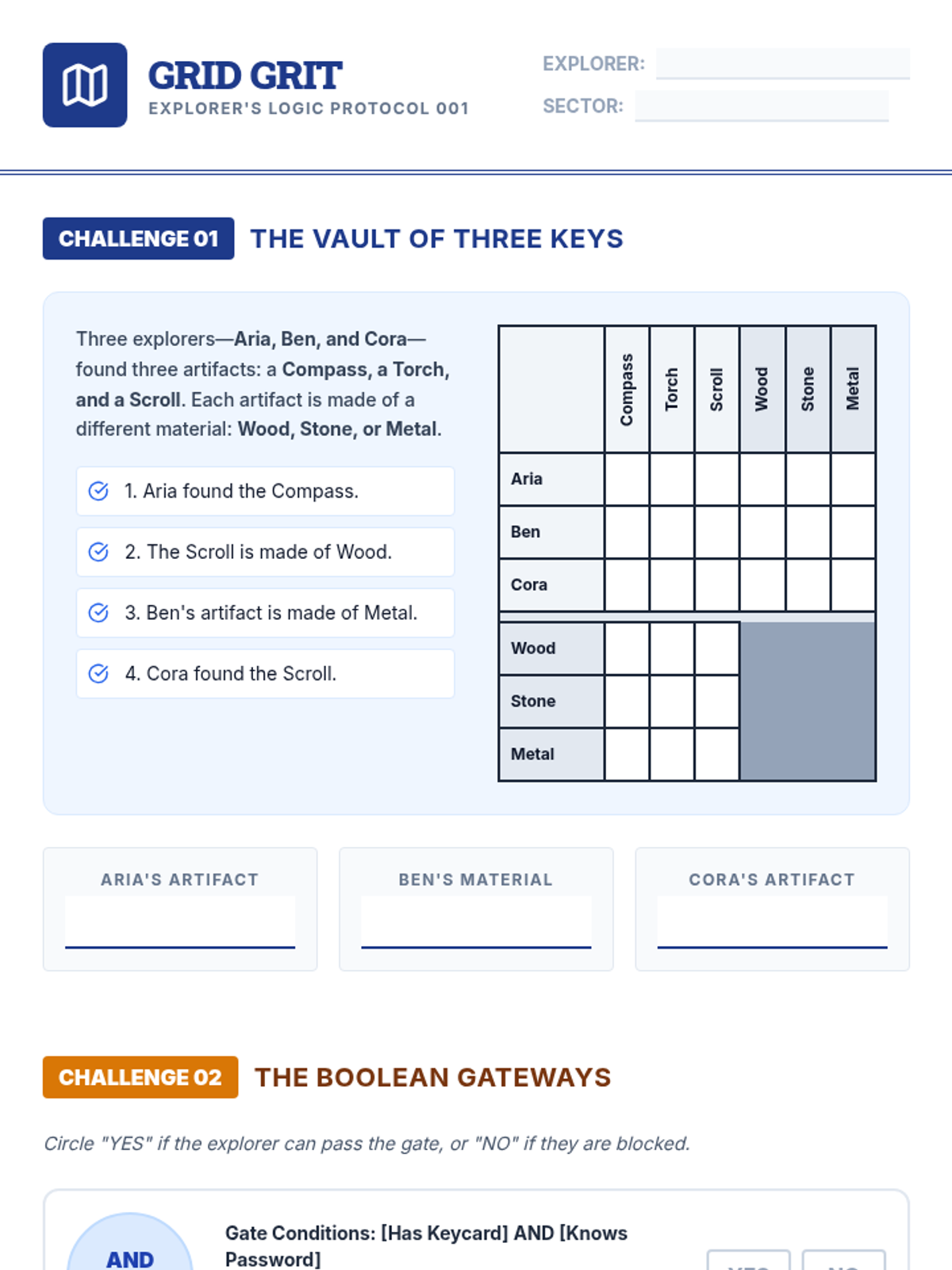
Deductive Depths Teacher Guide
Deductive Depths Slides
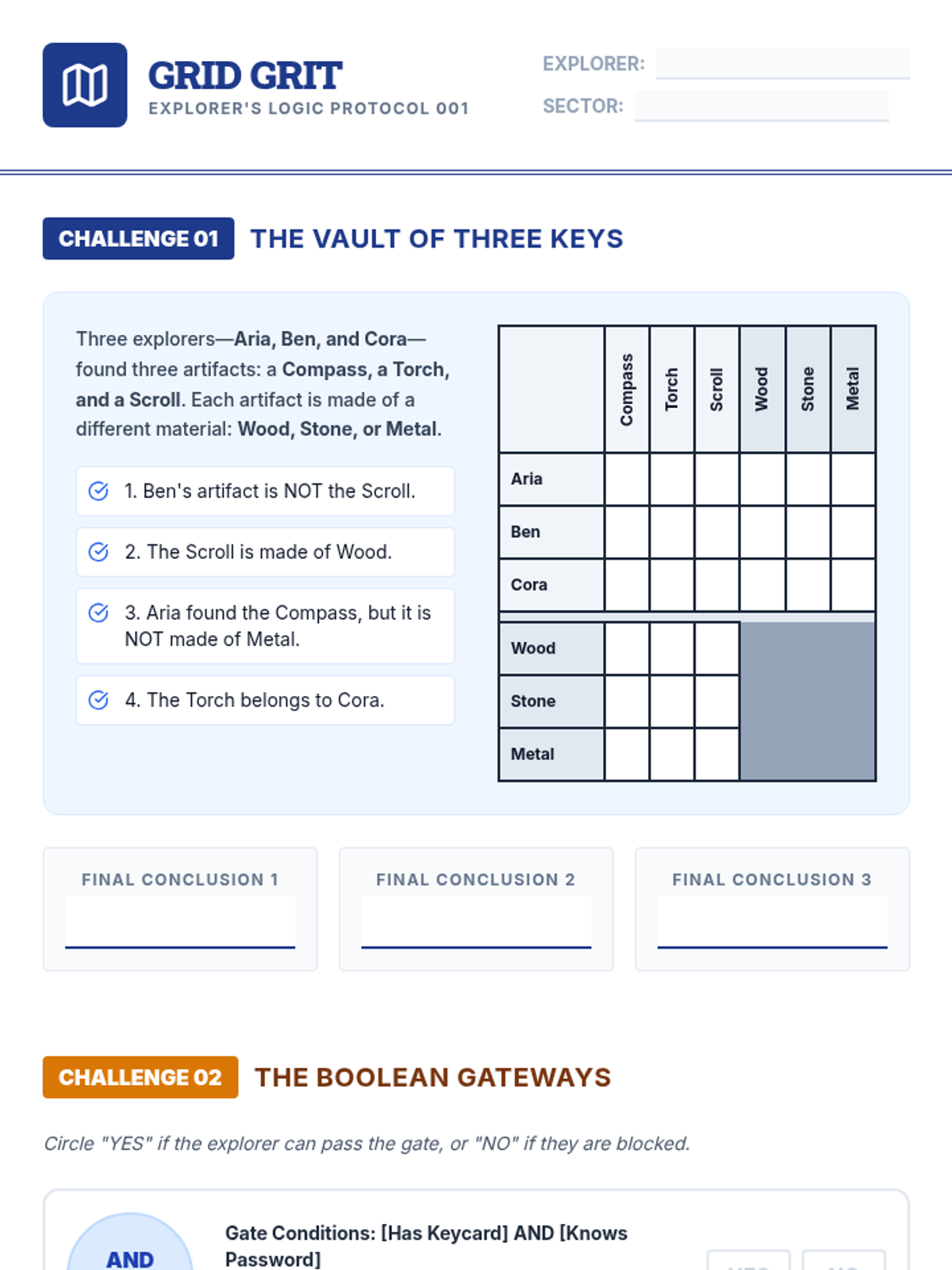
Grid Grit Worksheet
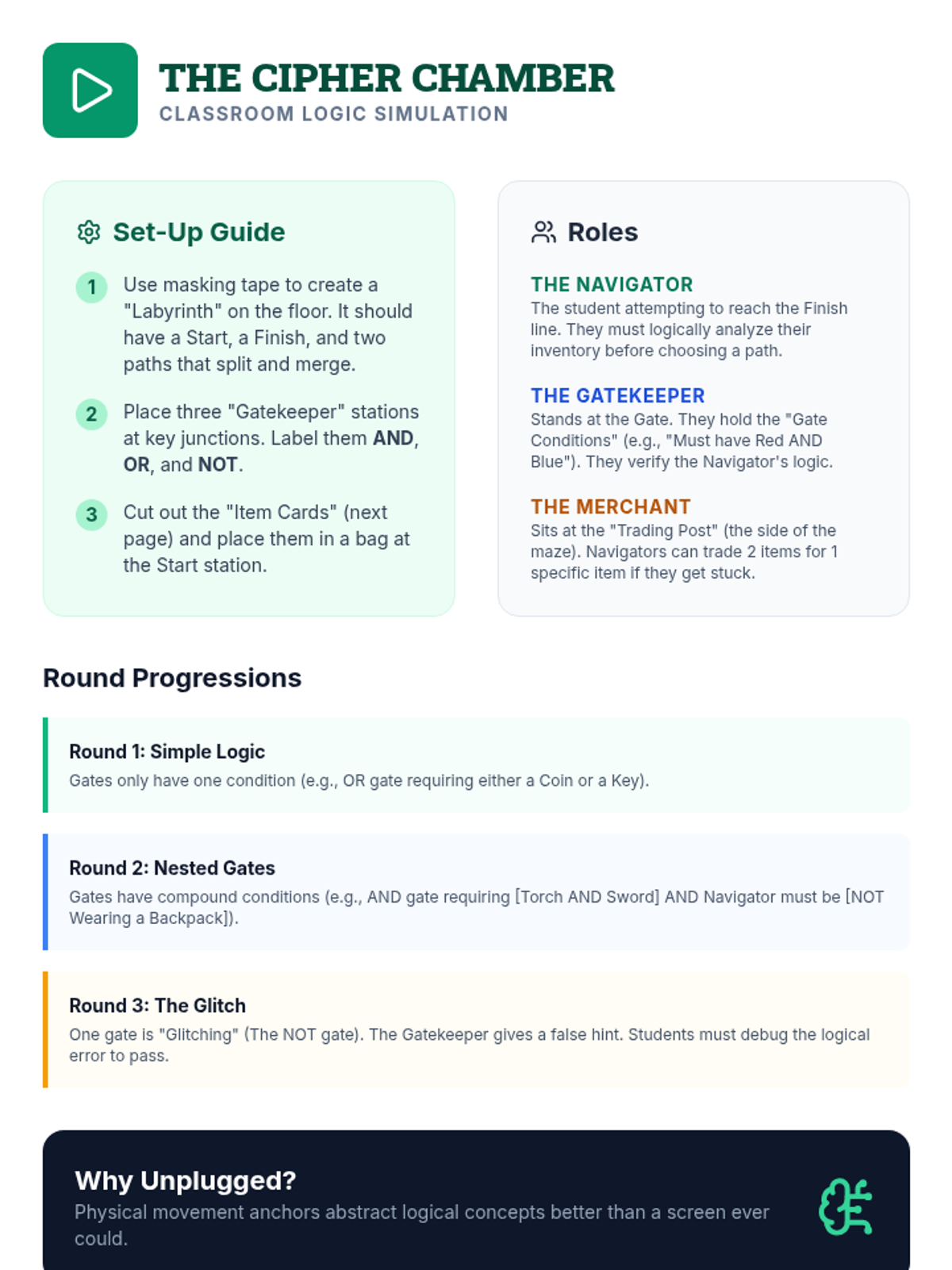
Cipher Chamber Game
Reflection Map Exit Ticket
Grid Grit Worksheet
Deductive Depths Slides

Logic Labyrinth

A high-energy unplugged series for middle schoolers to master computational thinking through logic puzzles, algorithmic sequencing, and hands-on debugging challenges. Students explore these concepts through the lens of ancient labyrinth exploration, using critical thinking to navigate complex problem-solving terrains.

MO

Michele Orr

Computer Science Teacher
3/2
Sequence
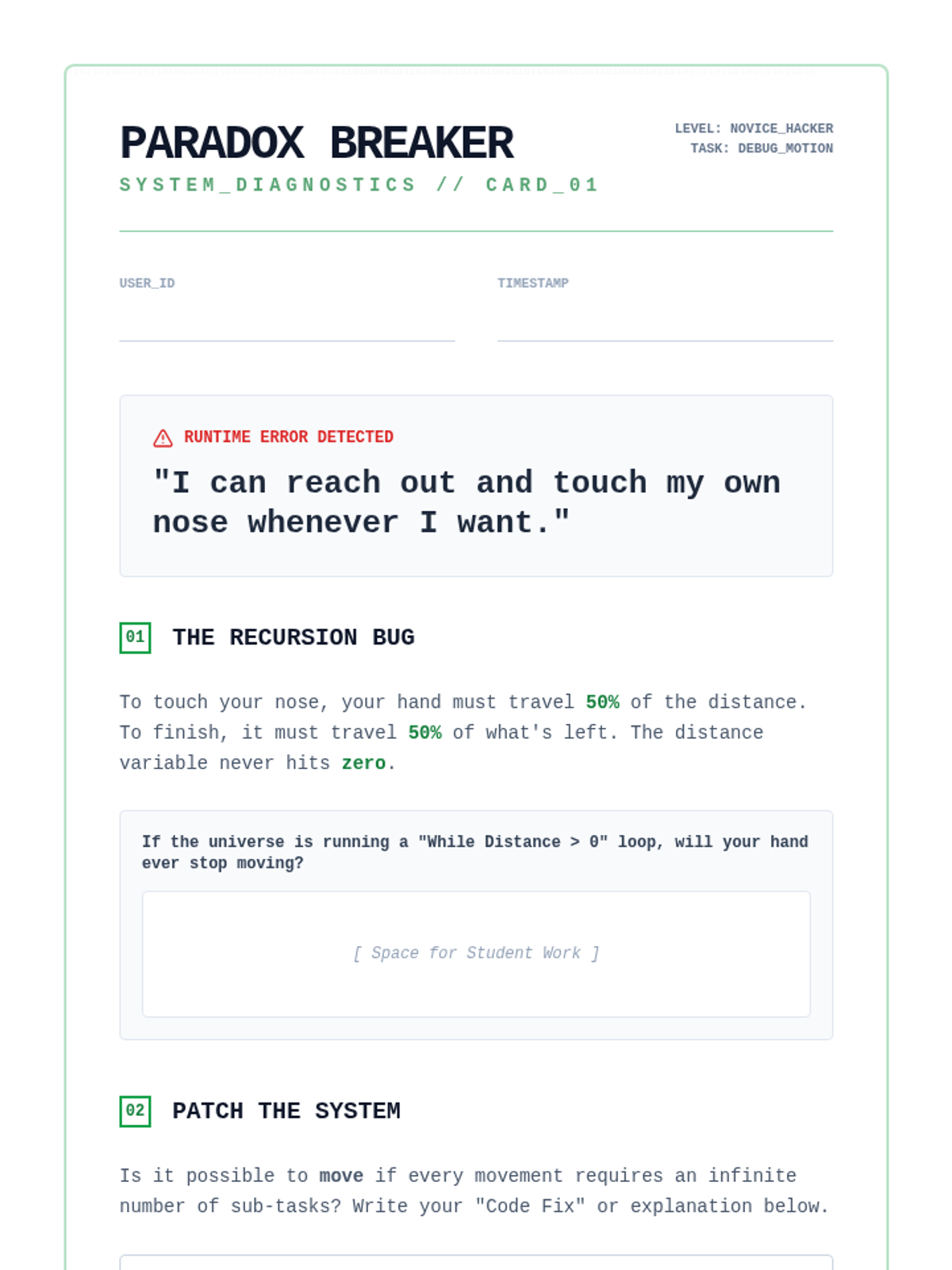
Paradox Breaker 01 Handout
Ancient OS Teacher Guide
Achilles Teacher Guide
Achilles Slides

Zeno Paradox Lab

A series of four 10-15 minute logic lessons for middle school students, focusing on Zeno's paradoxes and the 'Paradox Player' thinking style. Students will learn to break ideas into tiny steps, push logic to extremes, and identify contradictions through 'Paradox Breaker' activities.

DB

Danielle Burham

English Language Arts Teacher
2/22
Sequence
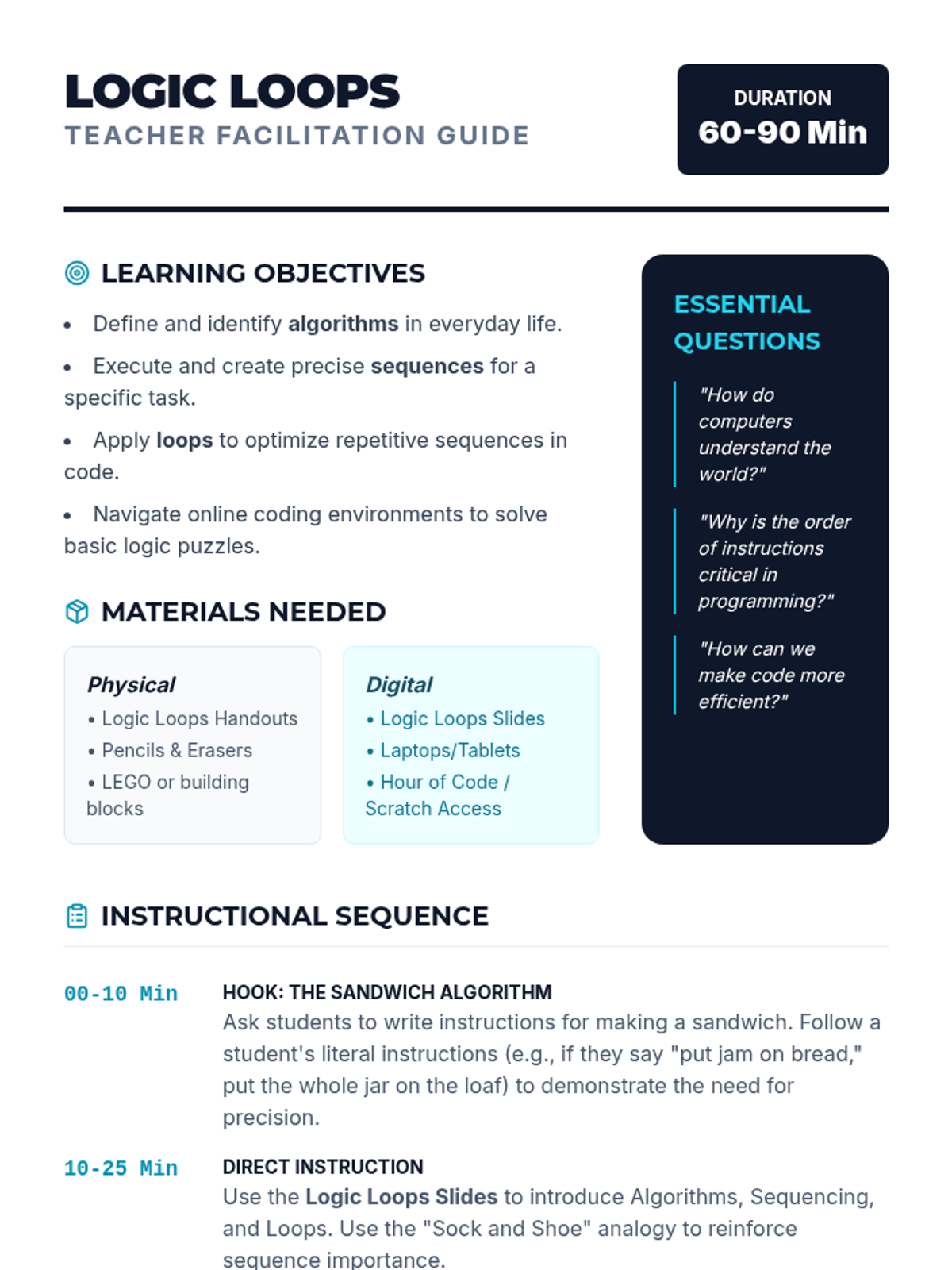
Logic Loops Slides
Logic Loops Teacher Guide
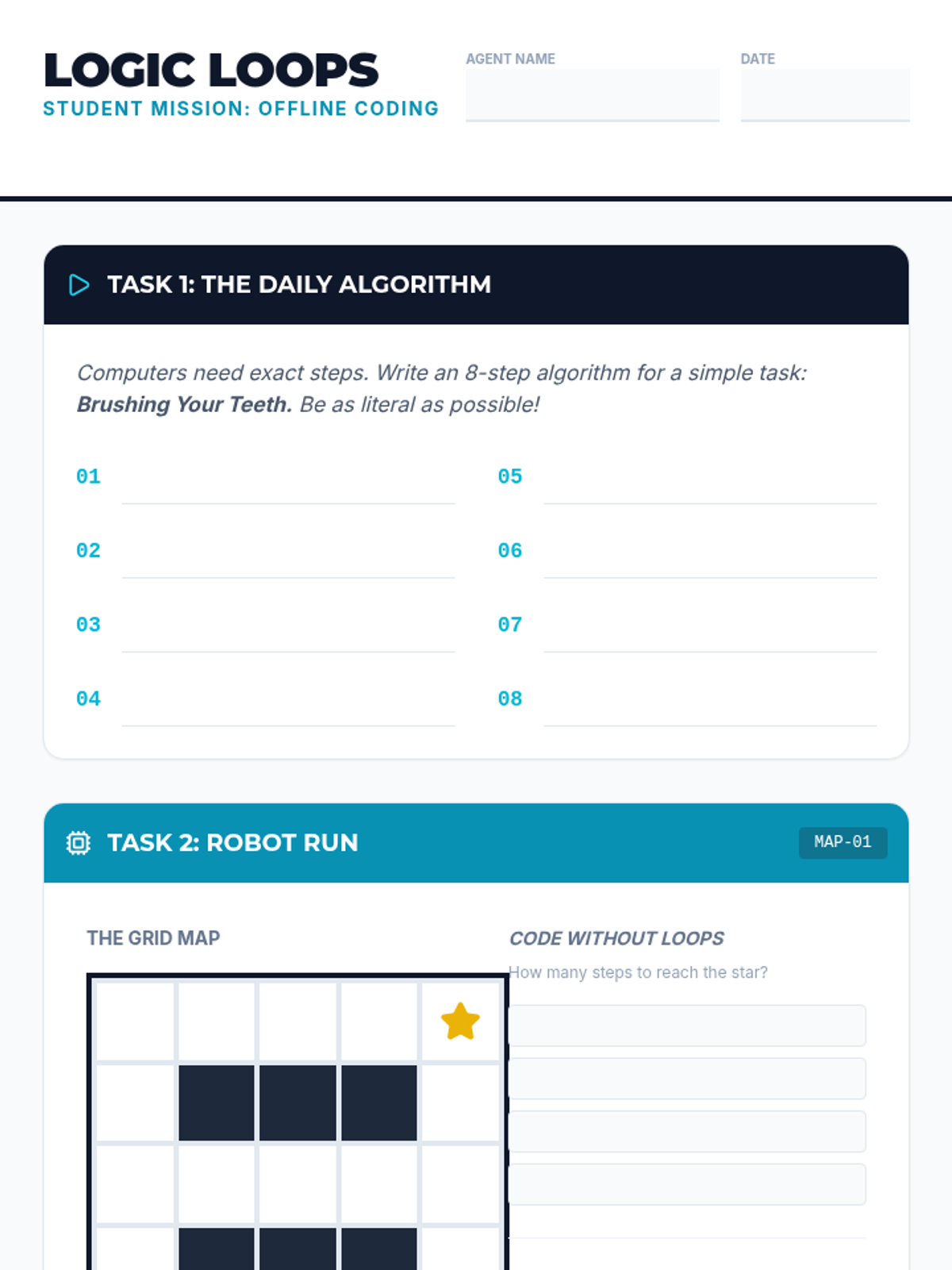
Logic Loops Handout

Digital Architects

A comprehensive STEM sequence focusing on the intersection of coding logic and physical engineering. Students explore algorithmic thinking, structural design, and the integration of software and hardware through hands-on build challenges and online activities.

L

lreinert

Computer Science Teacher
2/15
Sequence
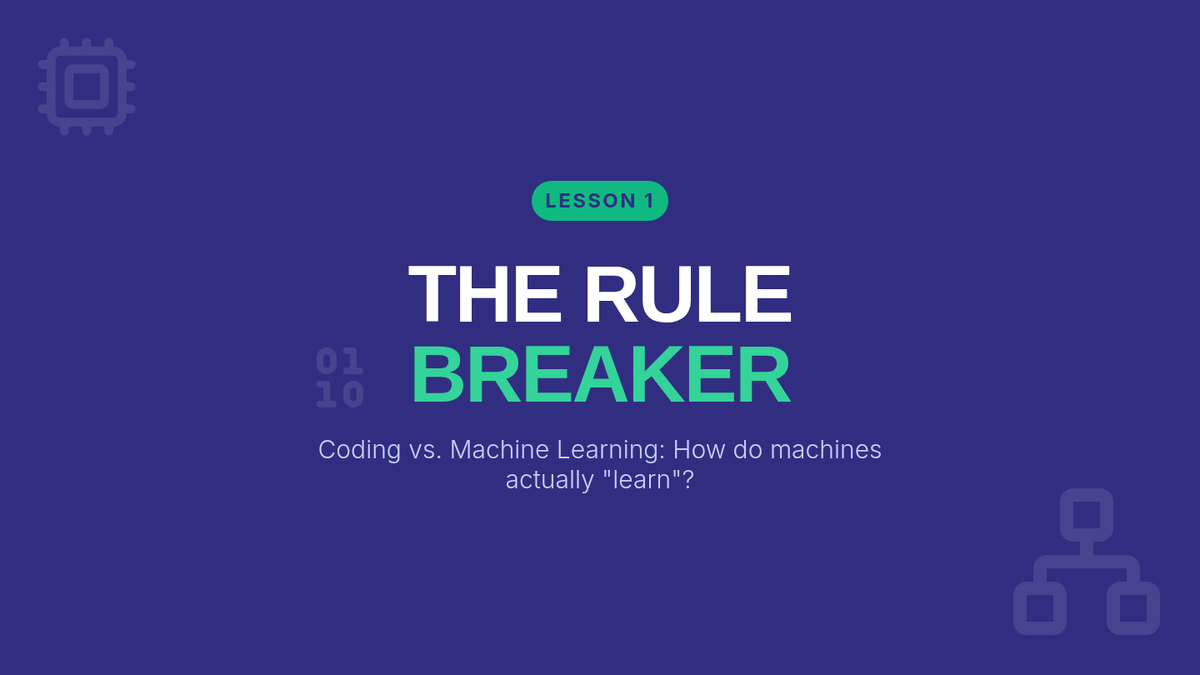
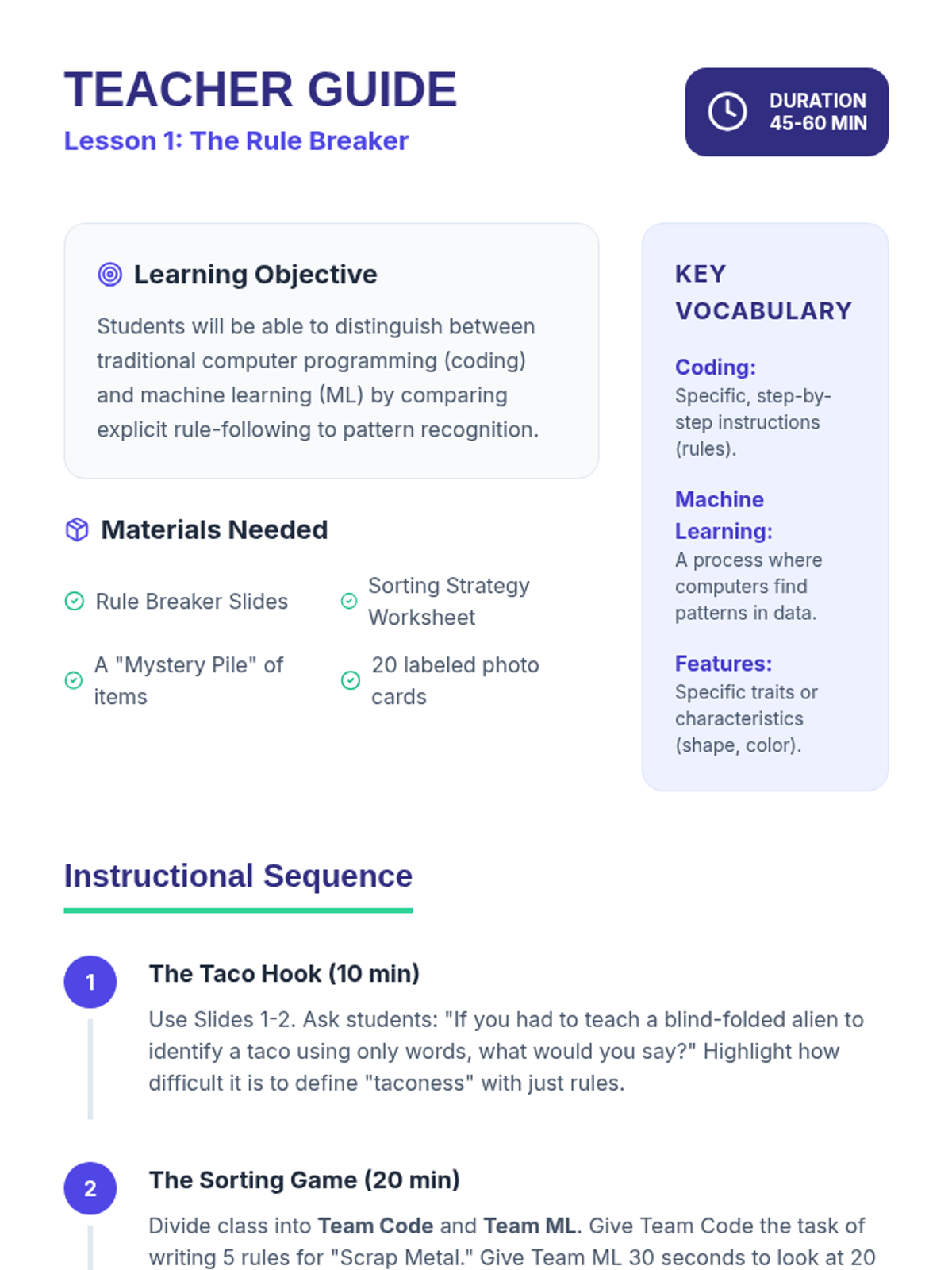
Rule Breaker Slides
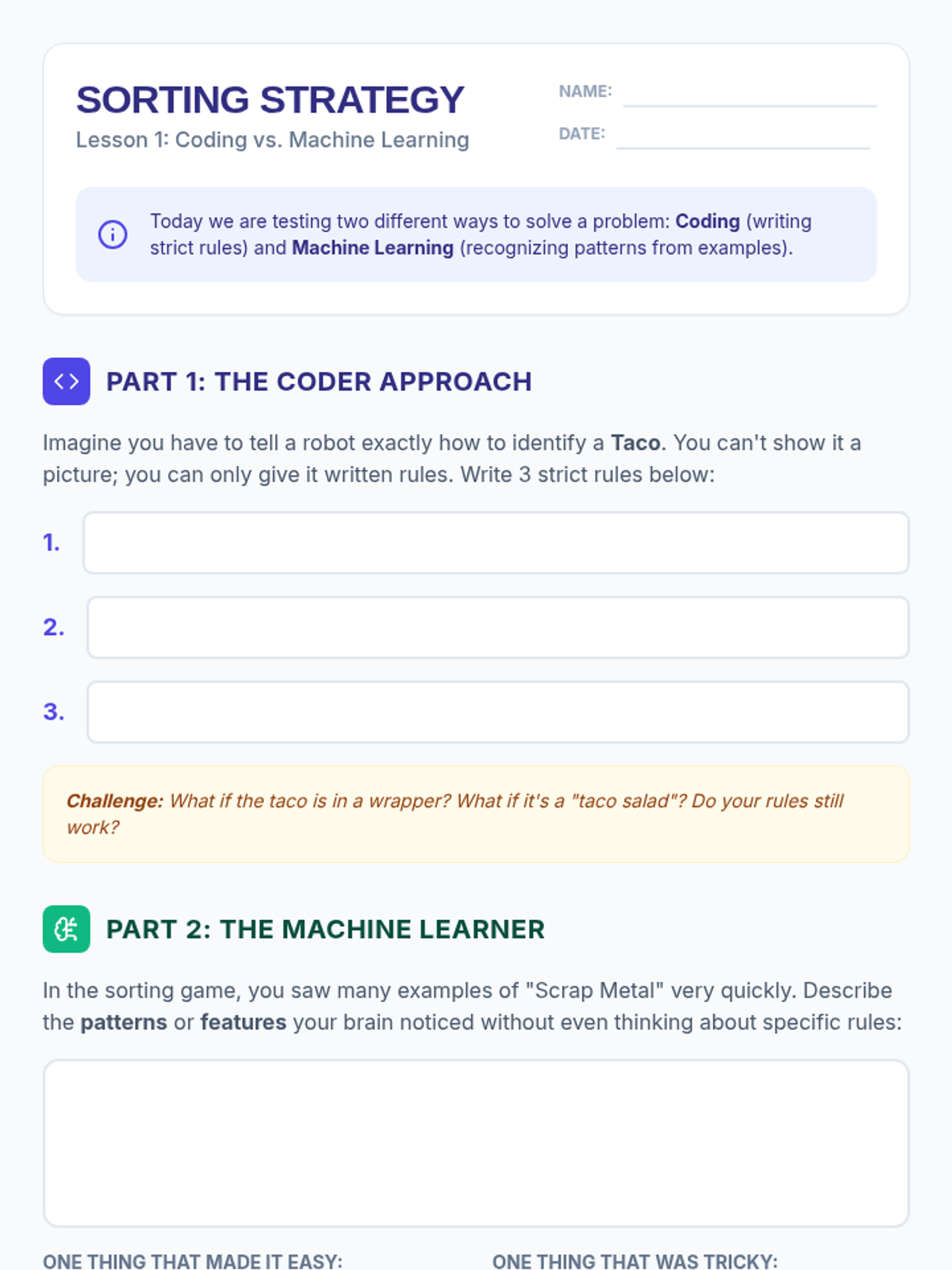
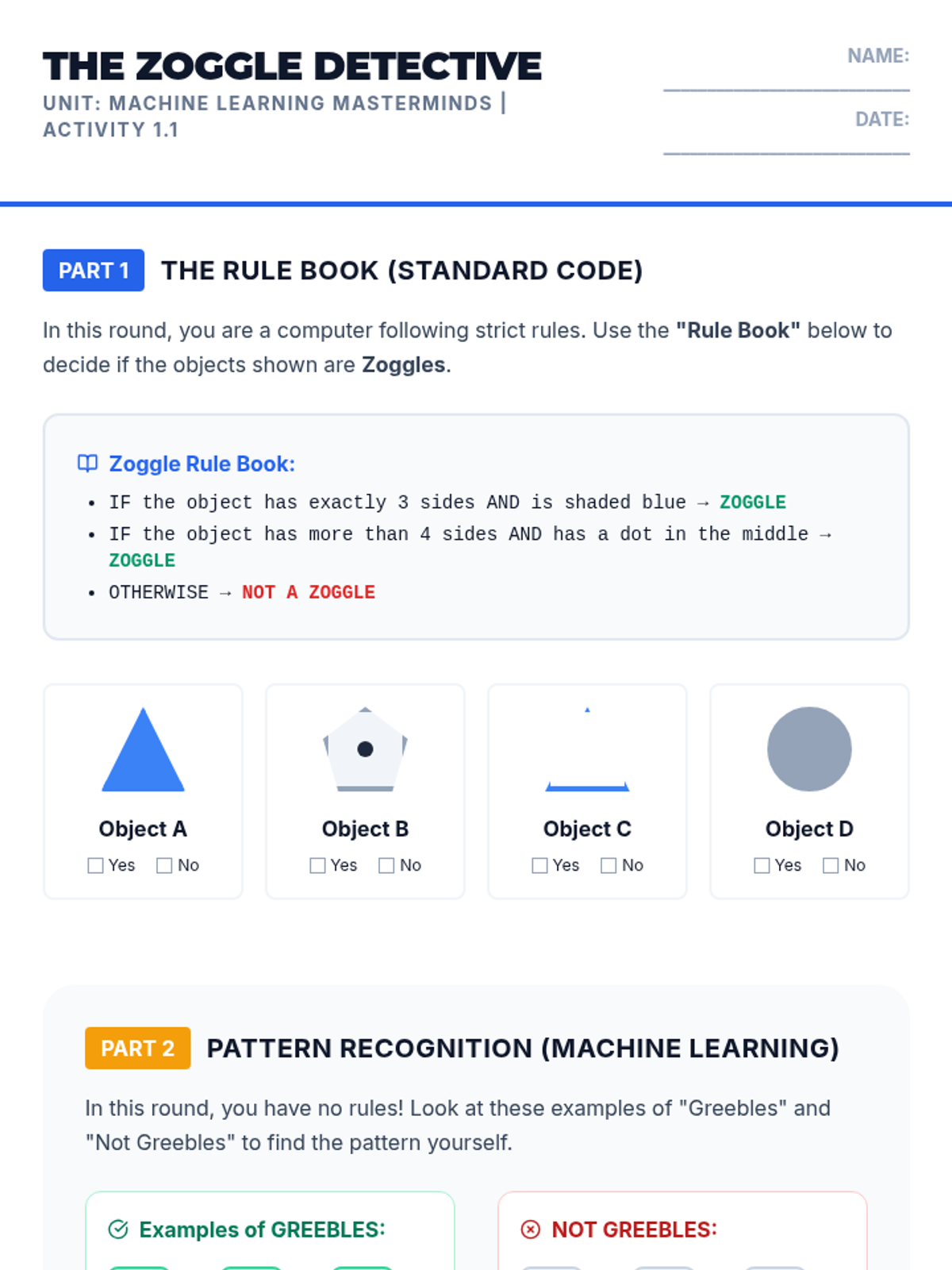
Sorting Strategy Worksheet
Rule Breaker Teacher Guide

Brainy Bot Lab AI Fundamentals

Students demystify Artificial Intelligence and Machine Learning through hands-on training, pattern recognition, and ethical analysis. They move from understanding basic coding differences to identifying real-world AI applications and recognizing the importance of unbiased data.

Lenny Avatar
Lenny
1/18
Sequence
Logic vs Learning Slides
Human Algorithm Worksheet

Machine Learning Masterminds

A comprehensive introduction to machine learning and algorithmic logic for 6th grade students, covering the difference between traditional coding and AI, the importance of training data, how recommendation systems work, generative AI tools, and the ethics of algorithmic bias.

Lenny Avatar
Lenny
1/18
Sequence
Packet Power Slides
Puzzle Packet Activity
Data Chunking Teacher Guide

Packet Pioneers

Students explore the invisible rules of the internet, focusing on how data is broken down into packets, routed through redundant networks, and reliably reassembled using TCP/IP protocols. Through analog games and simulations, they demystify the journey of information from sender to receiver.

Lenny Avatar
Lenny
1/17
Sequence
Network Secrets Slides
Packet Sniffer Activity
Cafeteria Chaos Teacher Guide

Cyber Security Lab

This sequence explores how data is protected as it travels through networks. Students will learn about network vulnerabilities, the history and application of cryptography, the logic of public key encryption, the role of HTTPS in web security, and how firewalls protect network boundaries.

Lenny Avatar
Lenny
1/17
Sequence
Rule of Rules Slides
Alien Contact Worksheet
Alien Contact Teacher Guide

Protocol Pilots

A 5-lesson sequence exploring how computers use shared rules (protocols) to communicate. Students engage in simulations, role-playing, and hands-on design to understand IP addresses, DNS, TCP handshakes, and data standardization.

Lenny Avatar
Lenny
1/17
Sequence
Emergence Intro Slides
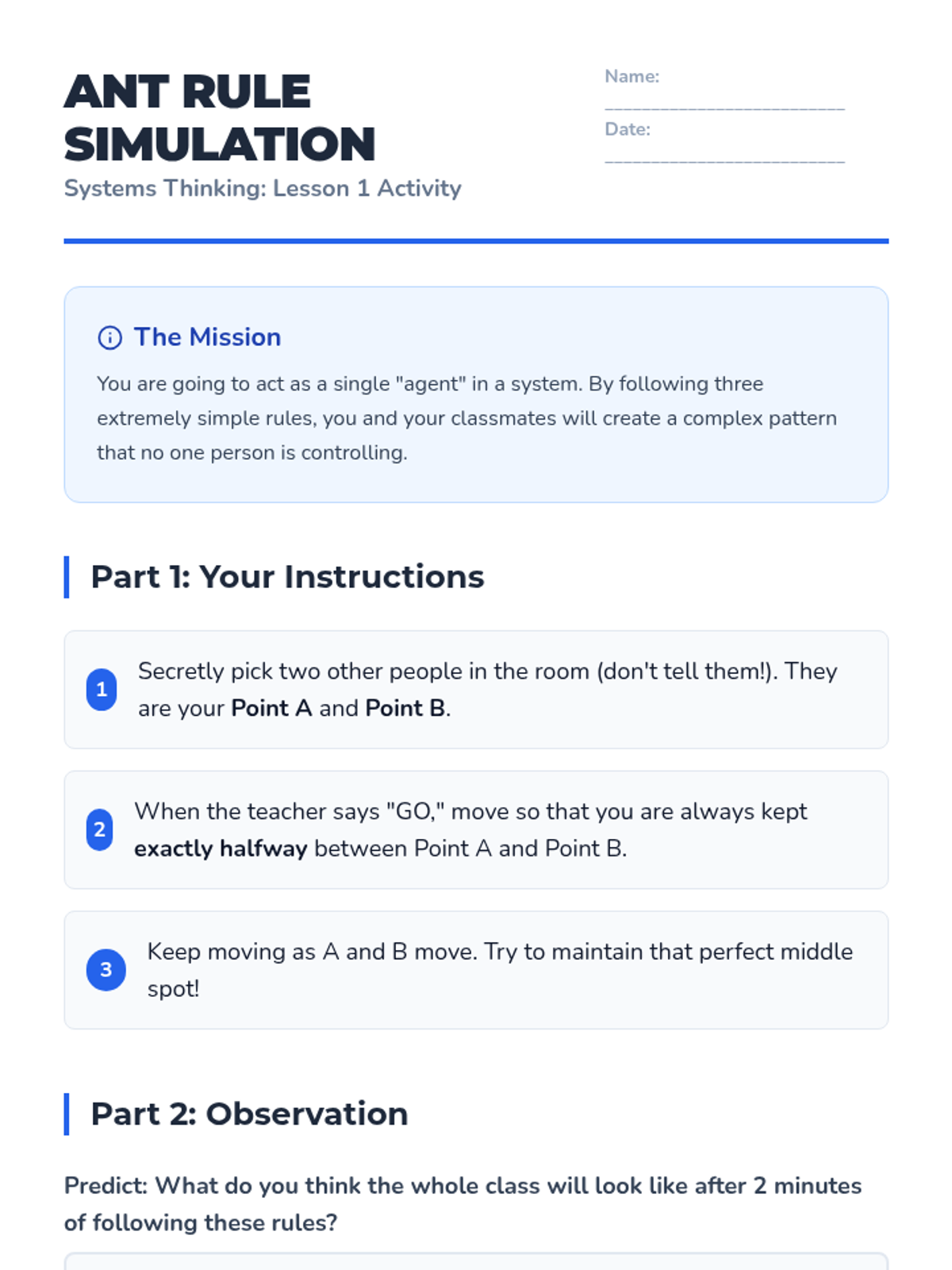
Ant Rule Simulation
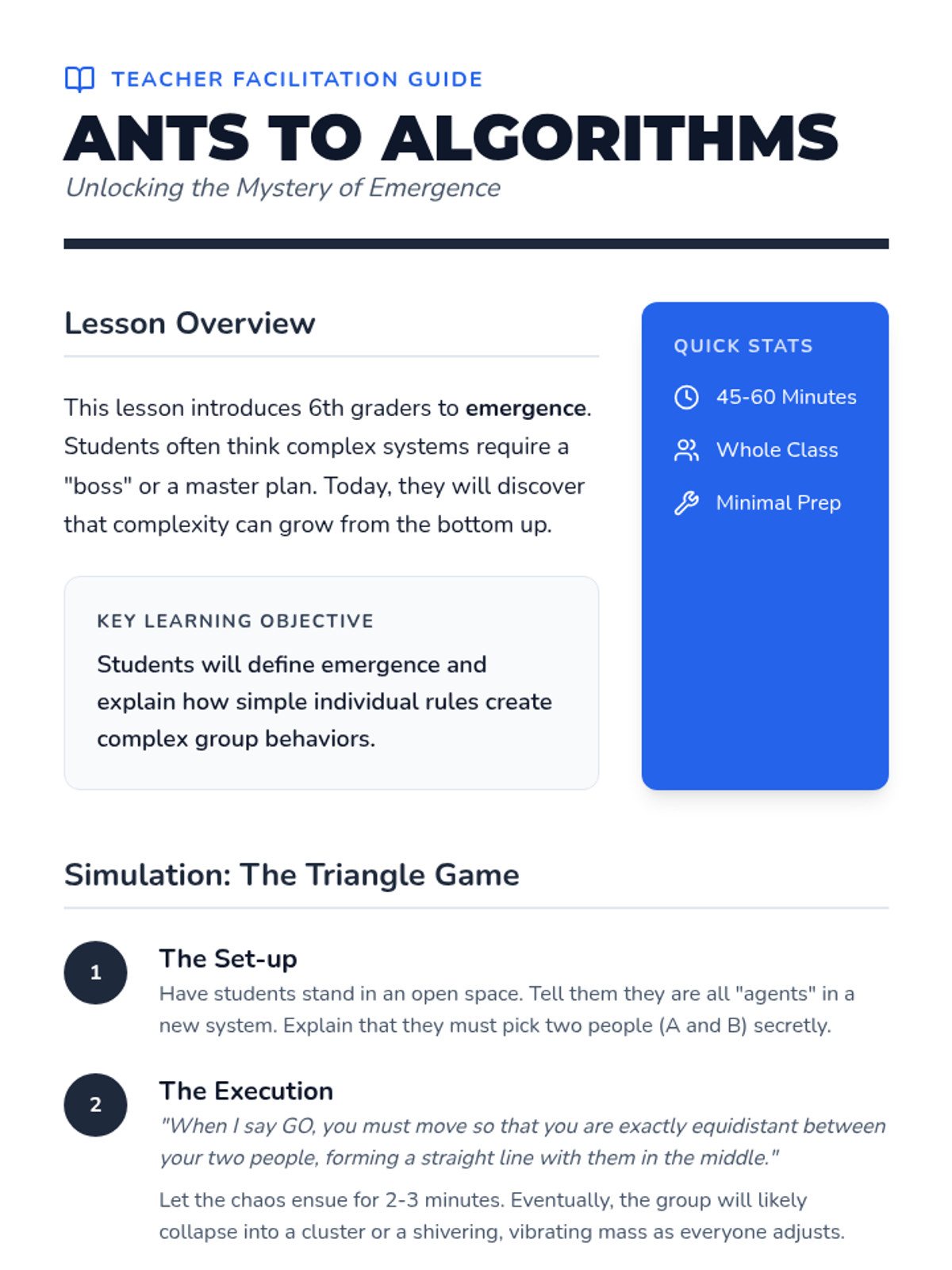
Emergence Teacher Guide

System Secrets and Ripples

This sequence explores the fascinating concept of emergence—where complex patterns arise from simple rules—and the critical engineering challenge of unintended consequences. Students move from observing natural systems like ant colonies to analyzing digital networks and AI, learning to map out and predict the ripple effects of design choices.

Lenny Avatar
Lenny
1/17
Sequence
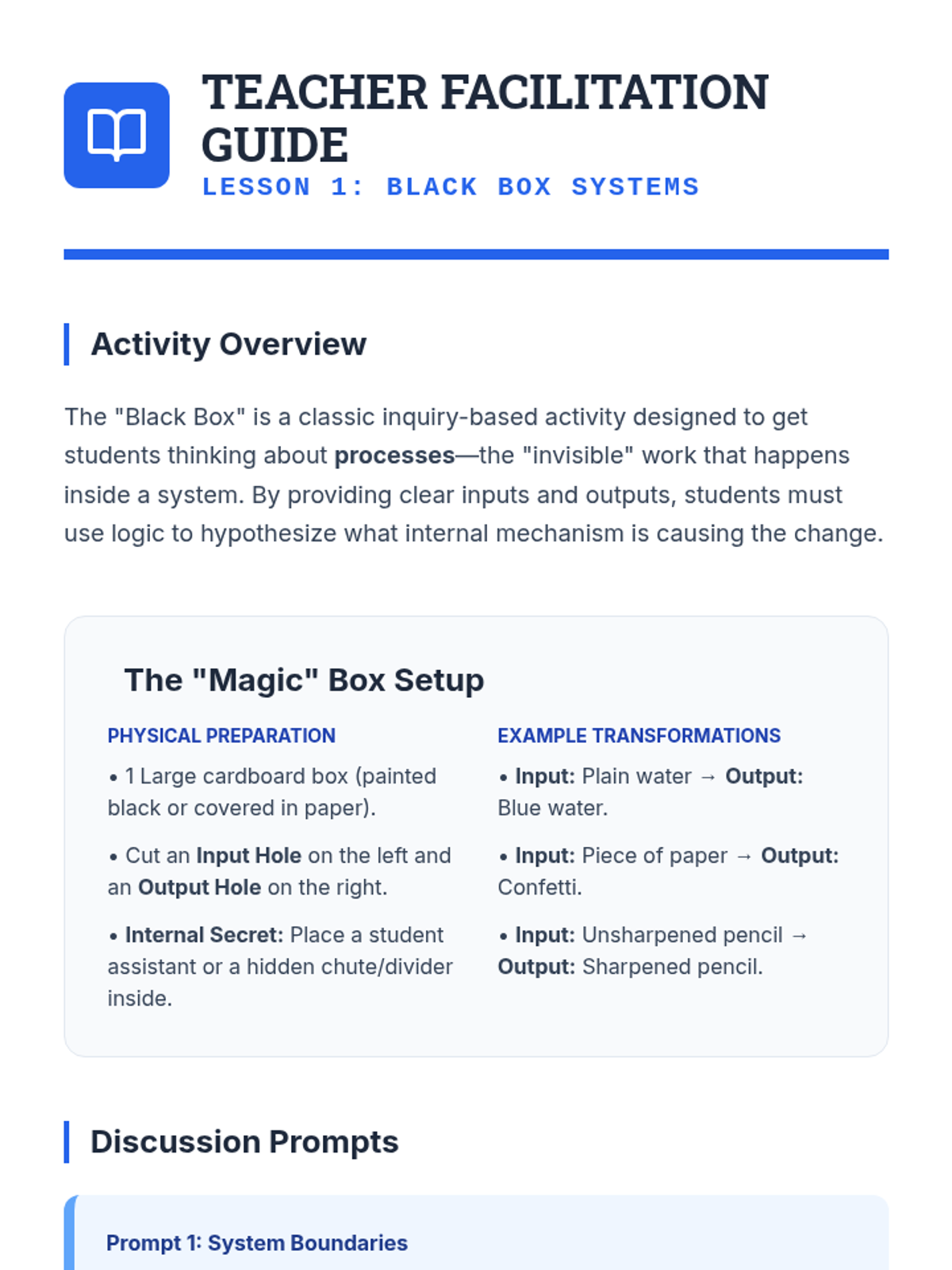
System IPO Slides
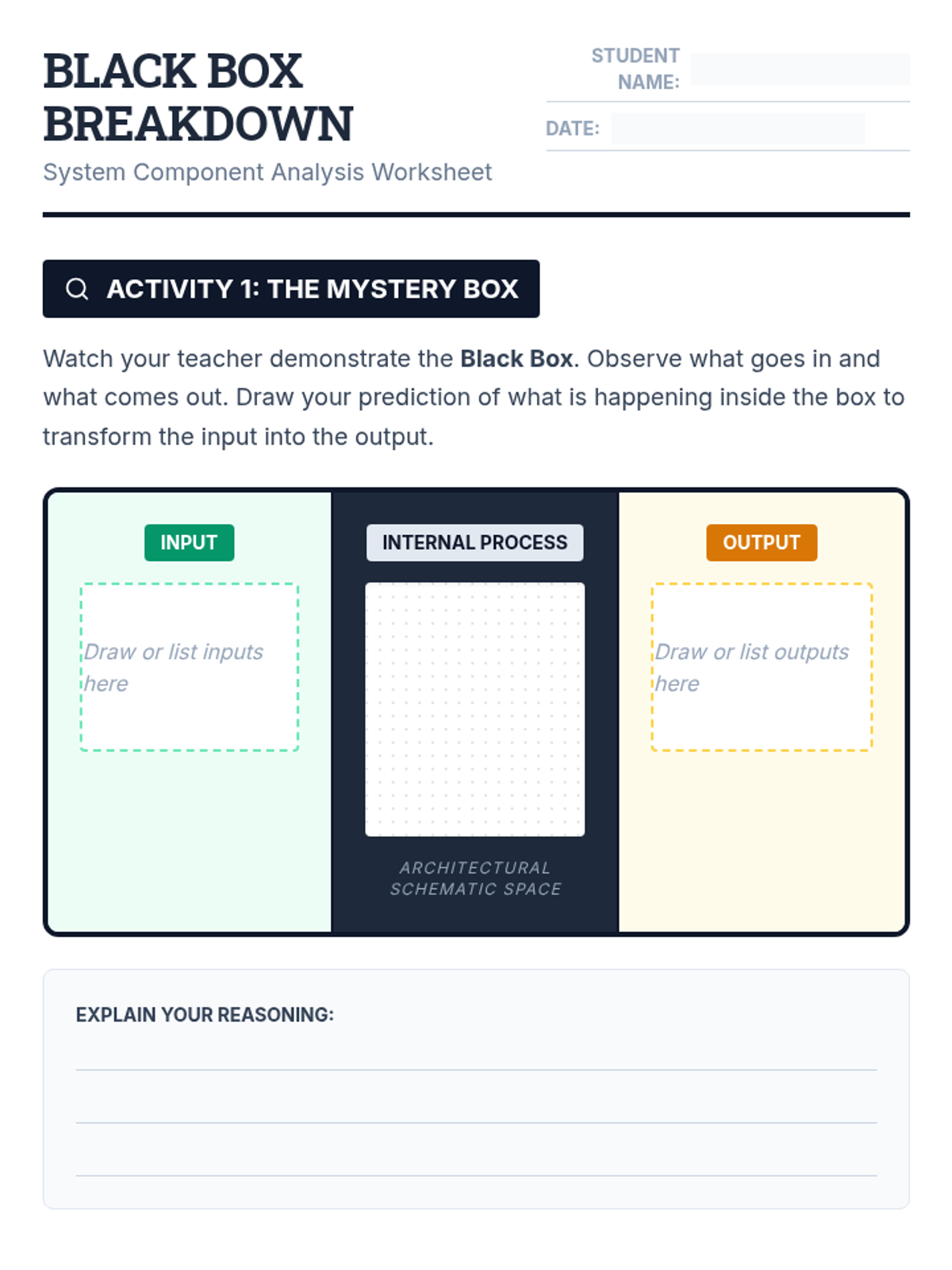
Black Box Breakdown Worksheet
Black Box Teacher Guide

System Blueprint Sequence

A 5-lesson unit for 6th graders exploring systems thinking through mechanical devices, digital programs, and AI models. Students learn to deconstruct systems into inputs, processes, and outputs while mapping complex interconnections.

Lenny Avatar
Lenny
1/17
Sequence
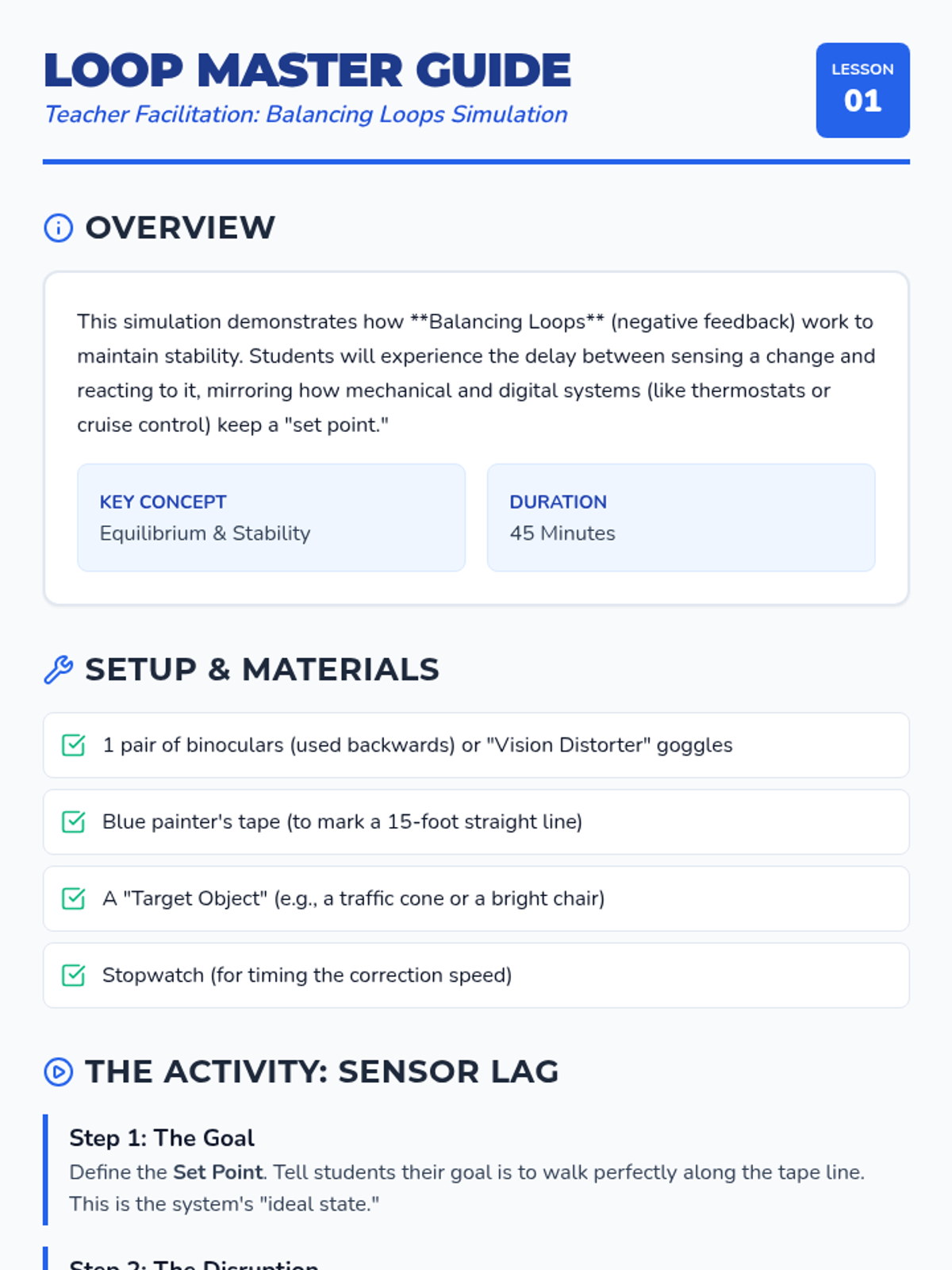
Loop Master Guide
The Great Balance Slides
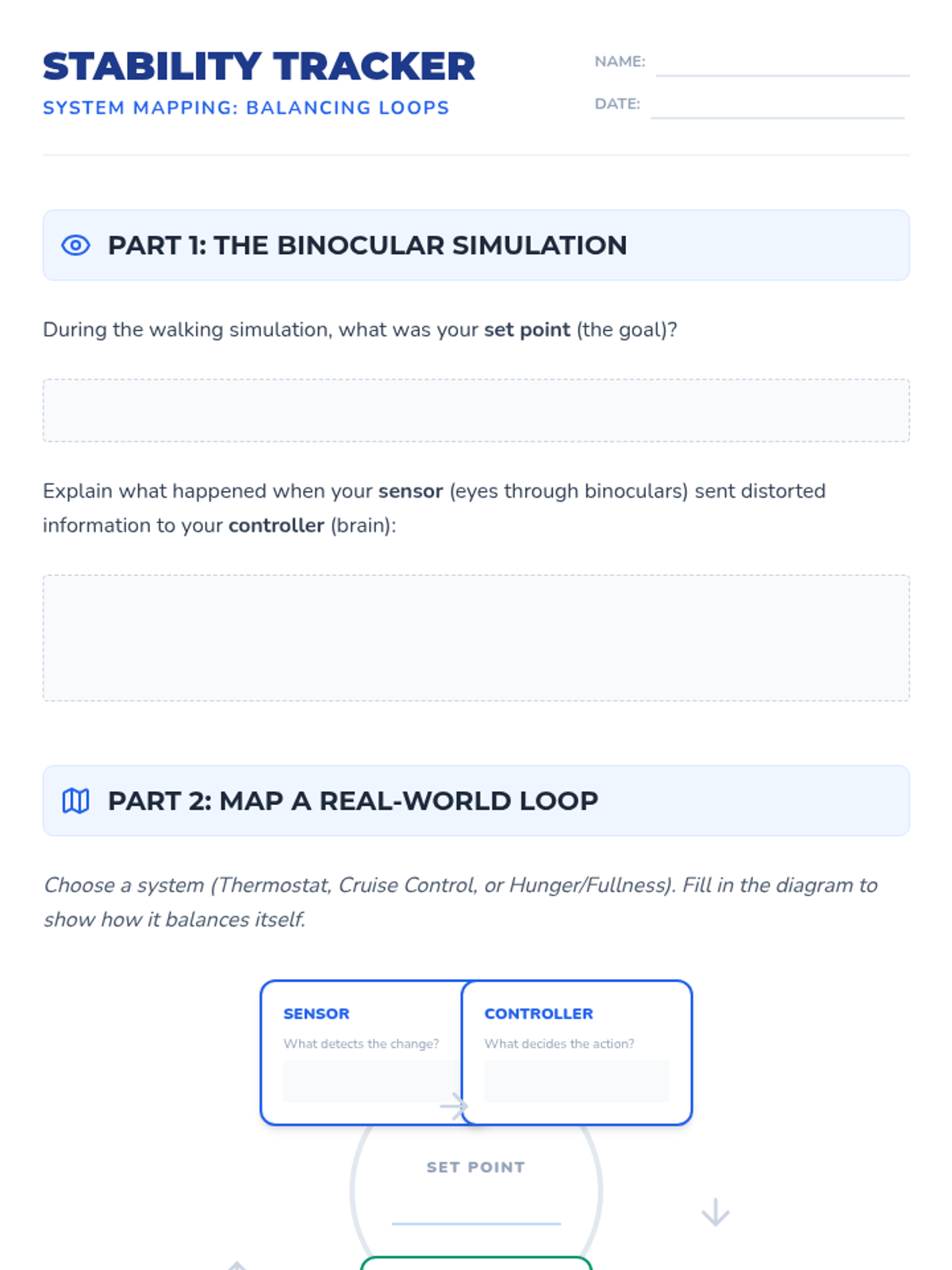
Stability Tracker Worksheet

System Cycles and AI Minds

This sequence introduces 6th-grade students to systems thinking through the lens of feedback loops in engineering and AI. Students will explore how balancing and reinforcing loops govern stability and growth, simulate machine learning processes, analyze the ethics of AI bias, and design their own smart feedback systems.
Lenny Avatar
Lenny
1/17
Sequence
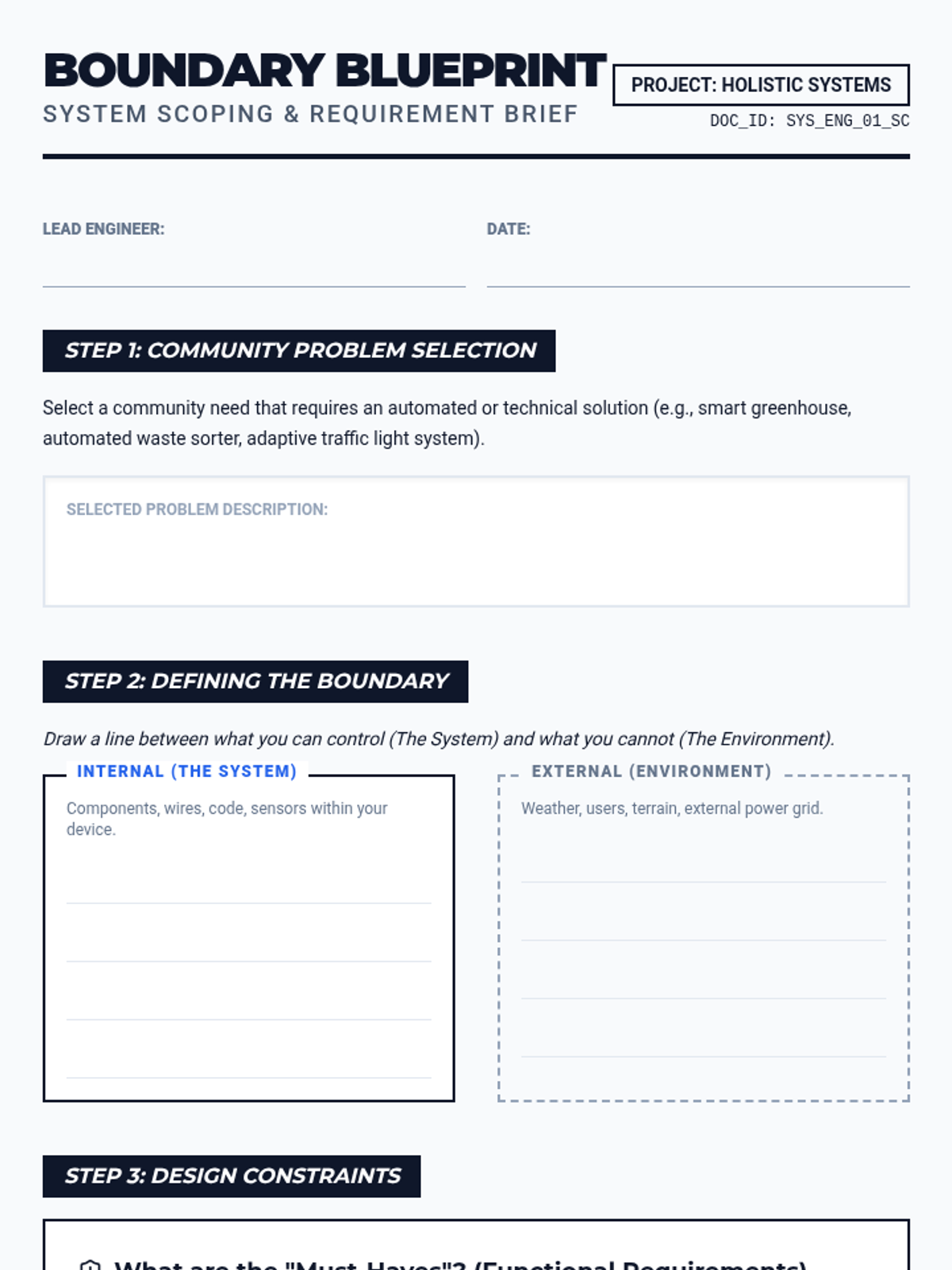
Boundary Blueprint Worksheet
Boundary Blueprint Slides
Engineer Briefcase Teacher Guide

Holistic Engineering and System Design

Students adopt the role of systems engineers to design sustainable solutions for community needs. They learn to define boundaries, map component interactions, and develop control logic, culminating in a resilient design review.

Lenny Avatar
Lenny
1/17
Sequence
App Blueprint Slides
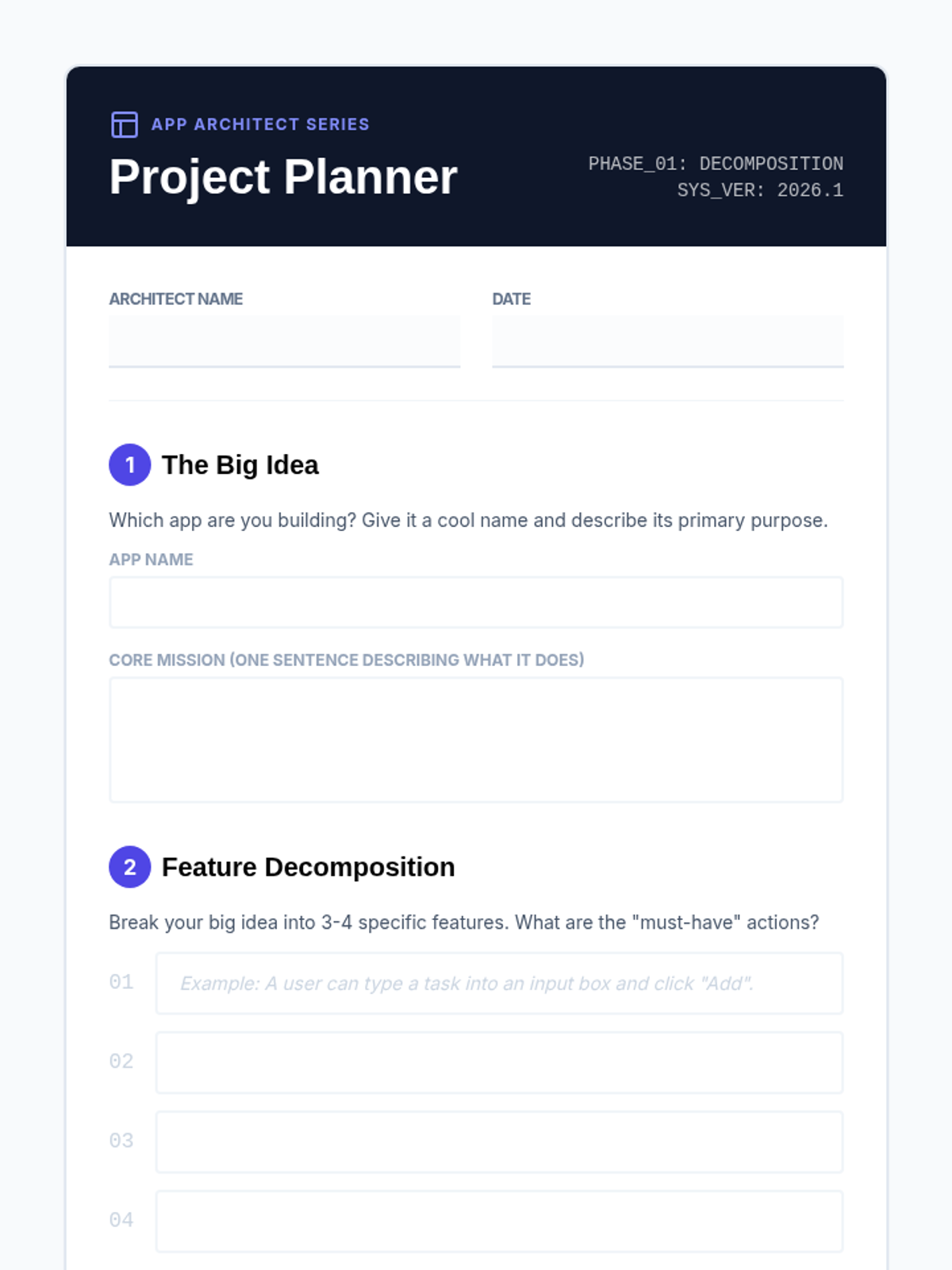
Project Planner Worksheet
Decomposition Teacher Guide

App Architects

A project-based journey where students learn to build functional web applications using AI. They master decomposition, structural planning, logical implementation, and aesthetic styling to turn ideas into working digital products.

Lenny Avatar
Lenny
1/17
Sequence
Logic Lab Slides
Vibe Riddle Worksheet
Logic Lab Teacher Guide

Vibe Logic and Data Magic

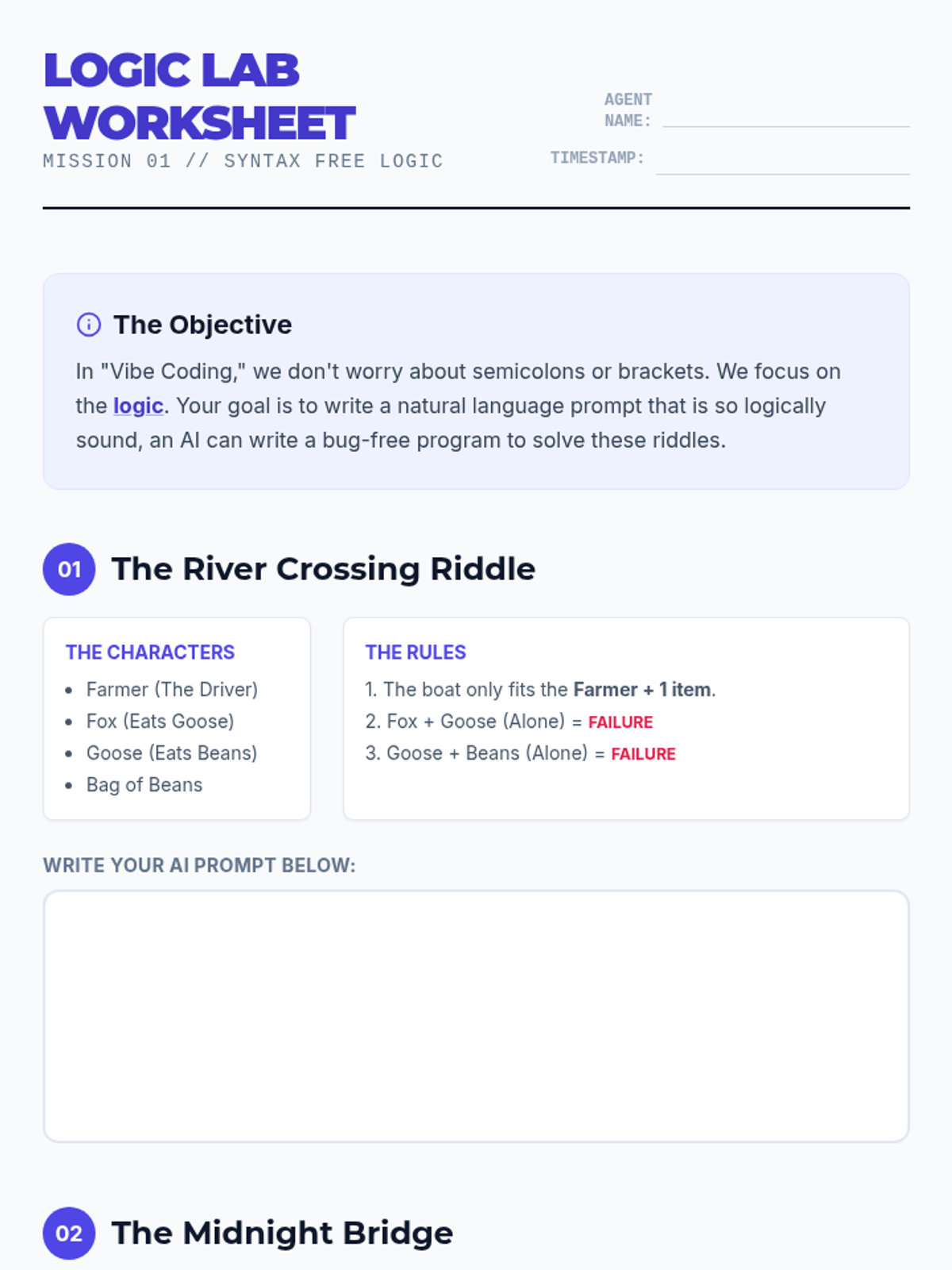
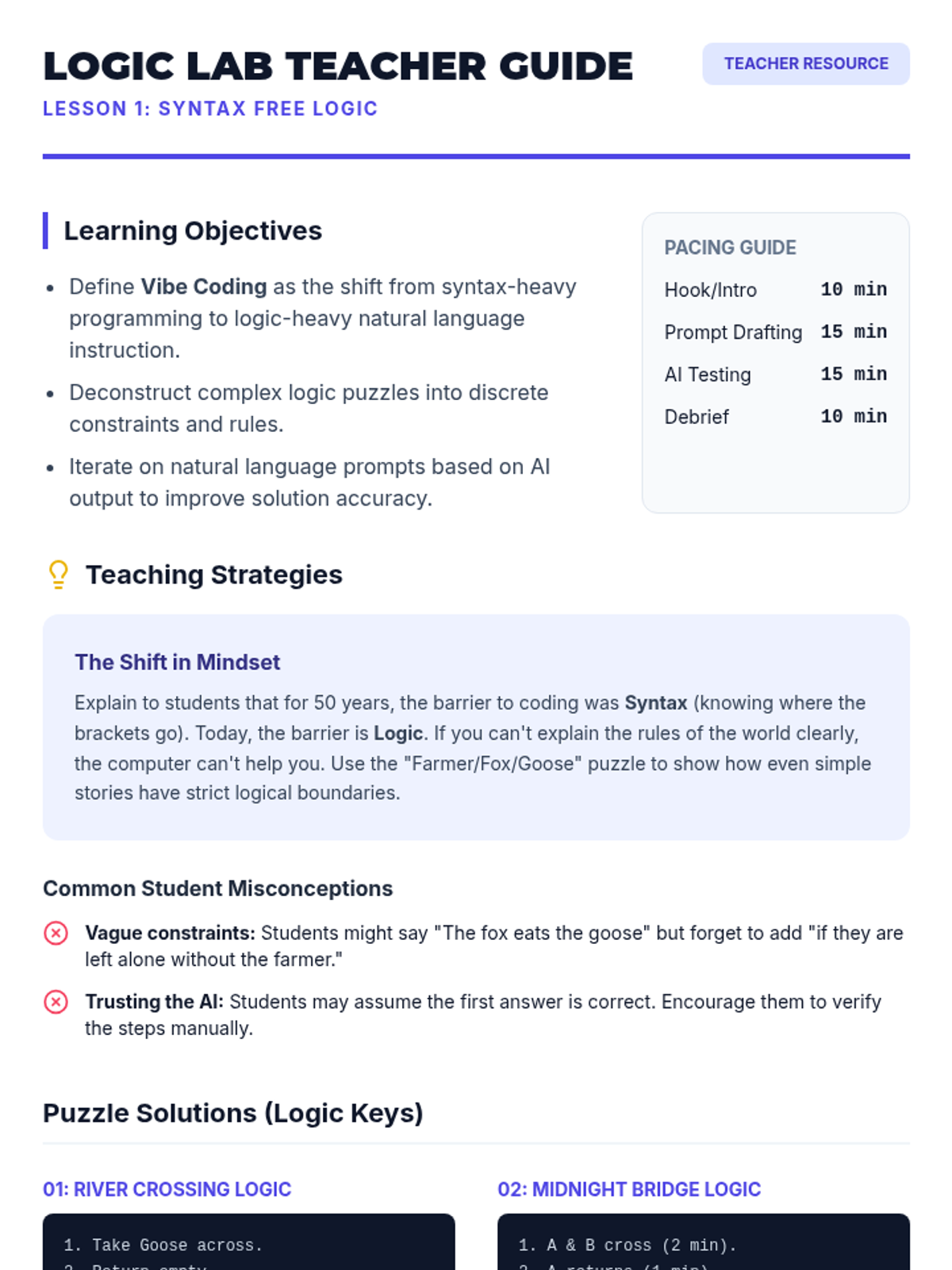
This sequence explores the intersection of AI and computational thinking, teaching students to use natural language to solve complex logic puzzles, structure data, and automate tasks. Students move beyond syntax to focus on the 'vibe' of programming—the logic and architecture of solutions.

Lenny Avatar
Lenny
1/17
Sequence
Bug Hunters Slides
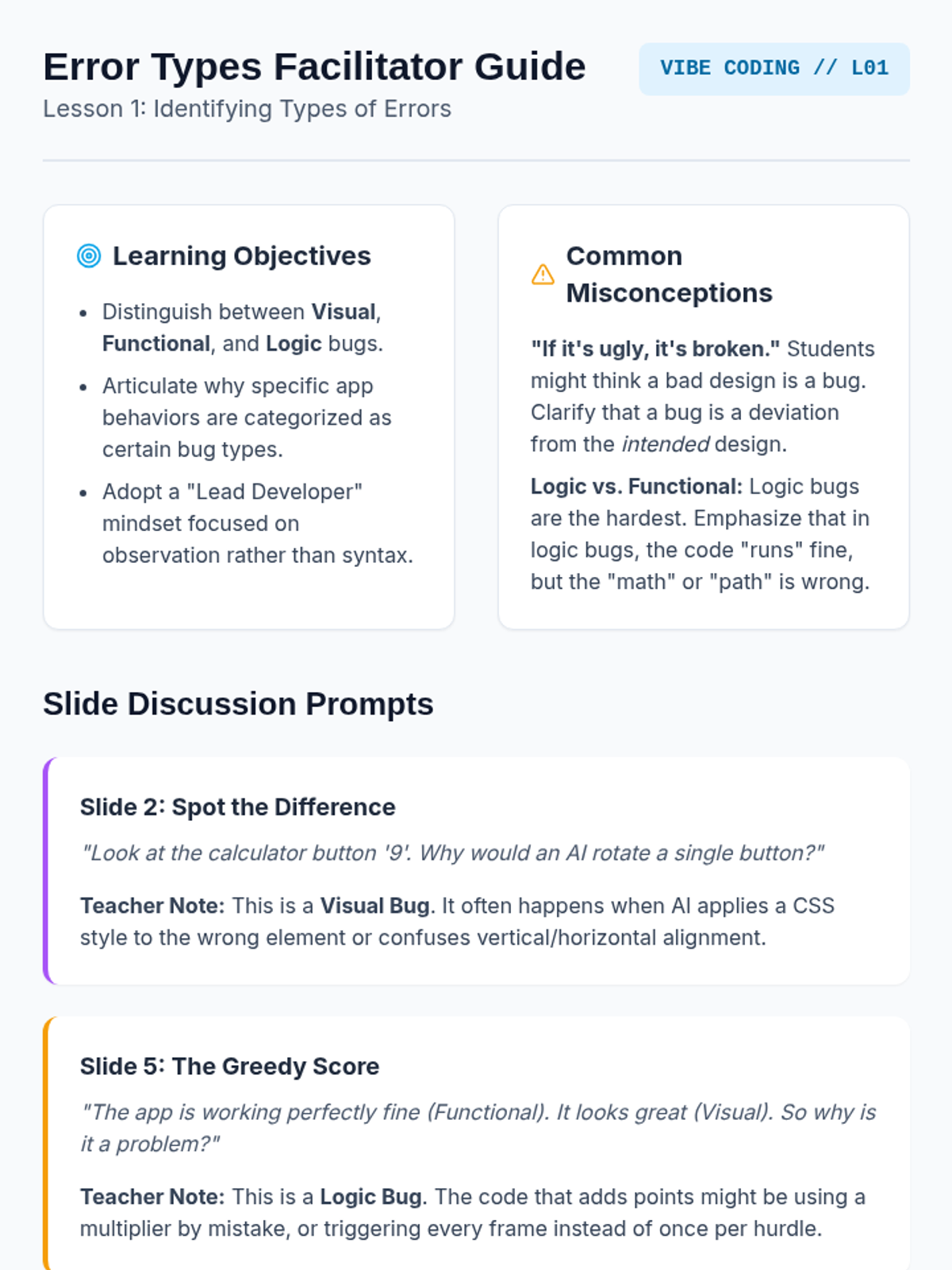
Error Types Facilitator Guide
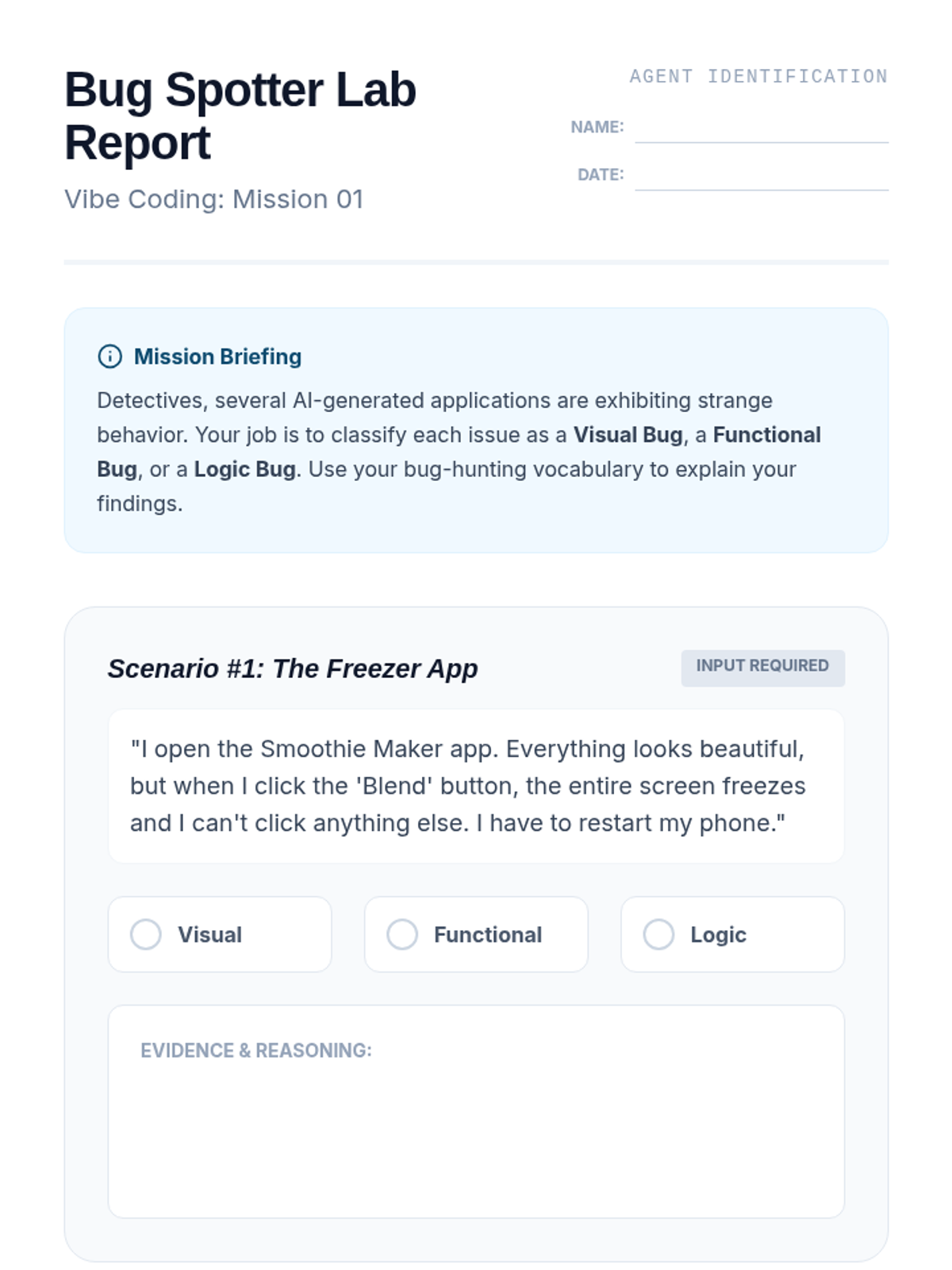
Bug Spotter Lab Report

Collaborative Debugging and Evaluation

Students learn to collaborate with AI by identifying errors, writing natural language bug reports, and verifying fixes. This sequence shifts the focus from code syntax to logic and behavior troubleshooting through conversation.

Lenny Avatar
Lenny
1/17
Sequence
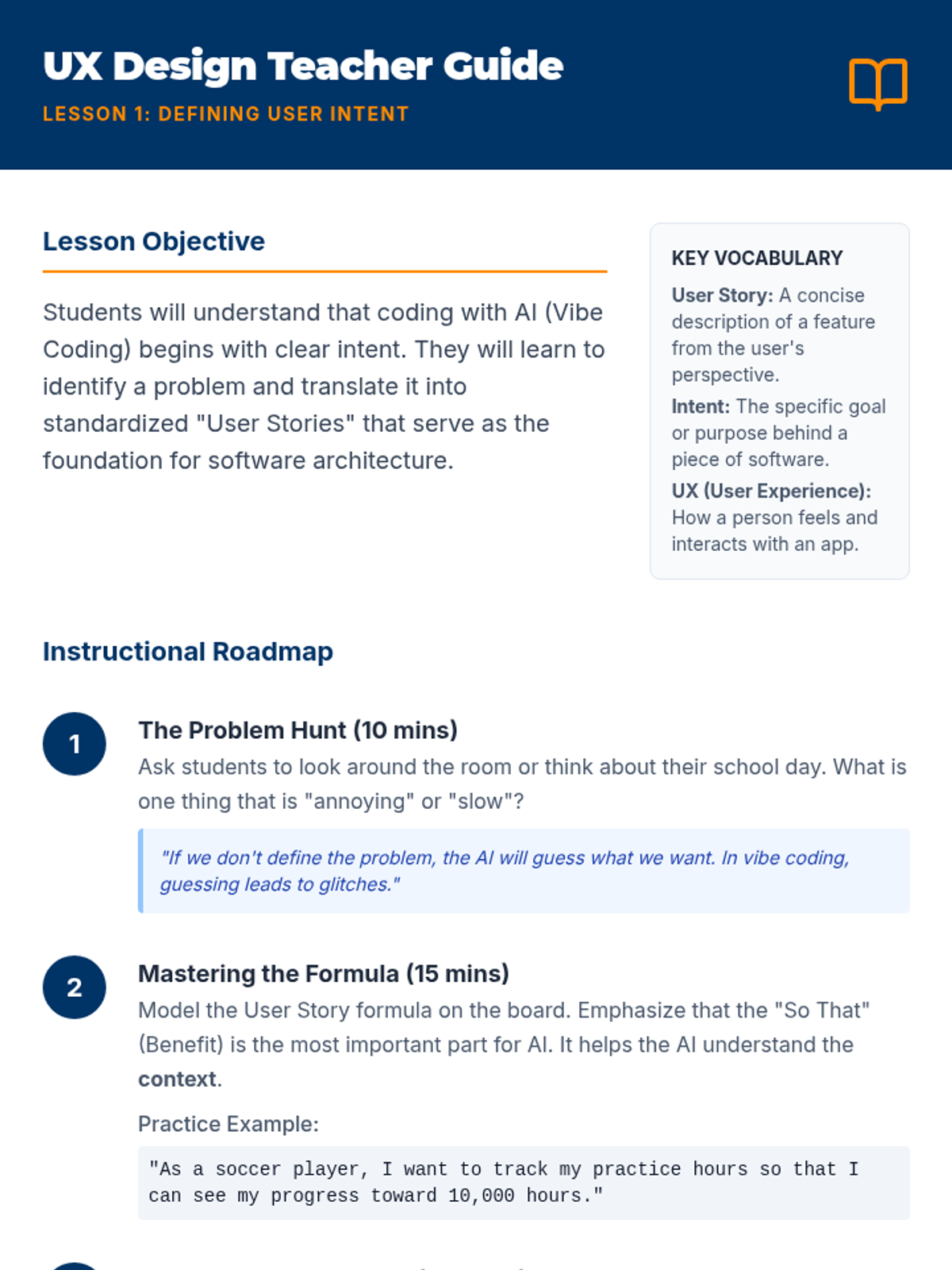
Intent Experience Slides
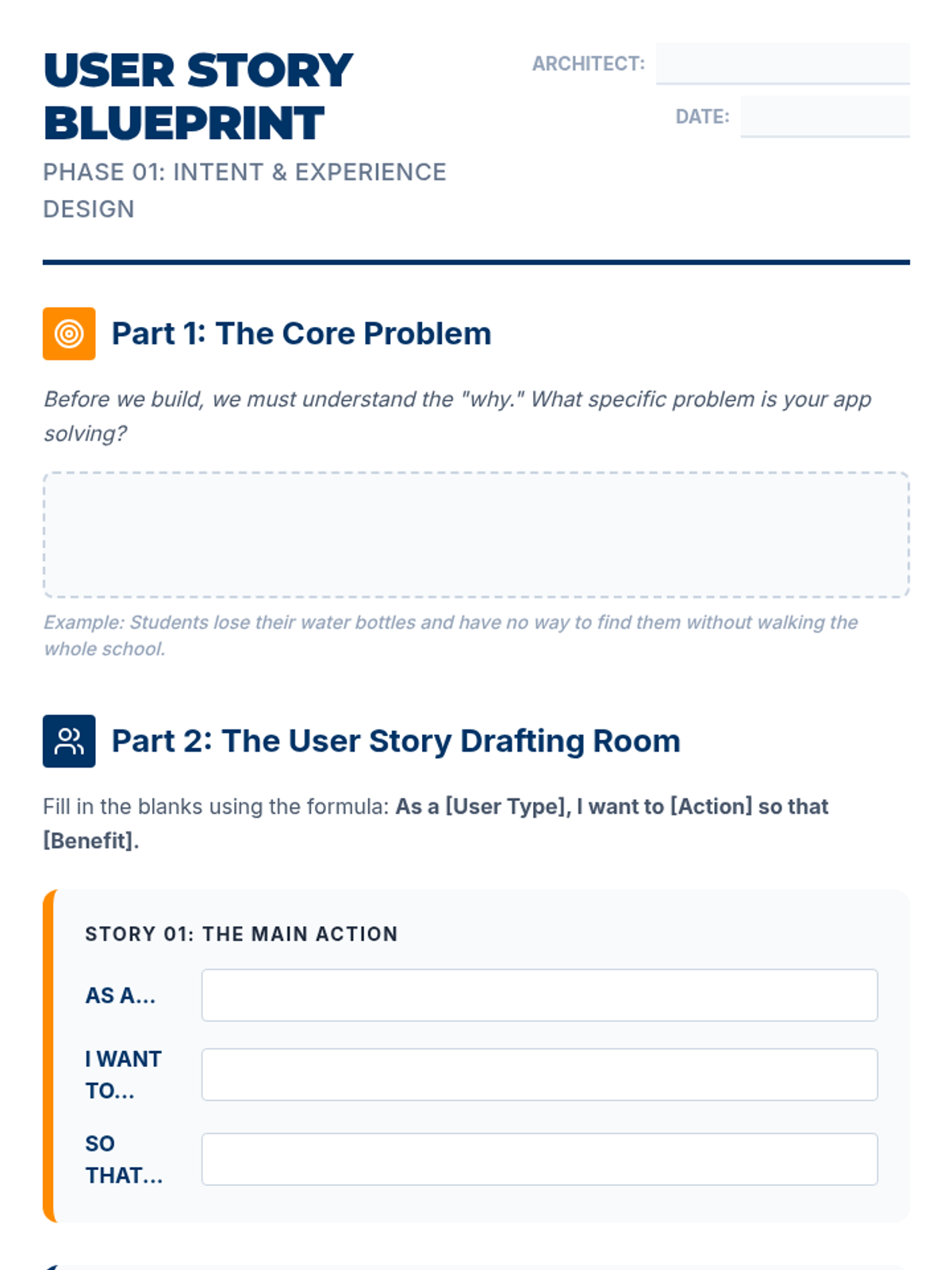
User Story Blueprint Worksheet
UX Design Teacher Guide

Logic Design and Systems Thinking

This sequence introduces 6th-grade students to the logic of app development through 'vibe coding'—using natural language to instruct AI. Instead of focusing on syntax, students master the architecture of logic, including user stories, flowcharts, decomposition, and prompt engineering, bridging the gap between an idea and a functional product.

Lenny Avatar
Lenny
1/17
Sequence
Robot Brains Slides
Robot Sort Activity
Robot Brains Teacher Guide

AI Explorer Path

A comprehensive K-8 curriculum designed to build foundational AI literacy through understanding, evaluation, application, and ethics. Each grade level tackles a specific theme, progressing from basic robot concepts to complex algorithmic bias and societal impact.

EW

Elizabeth Whitver

Other
4/4
Sequence
Digital Defense Slides
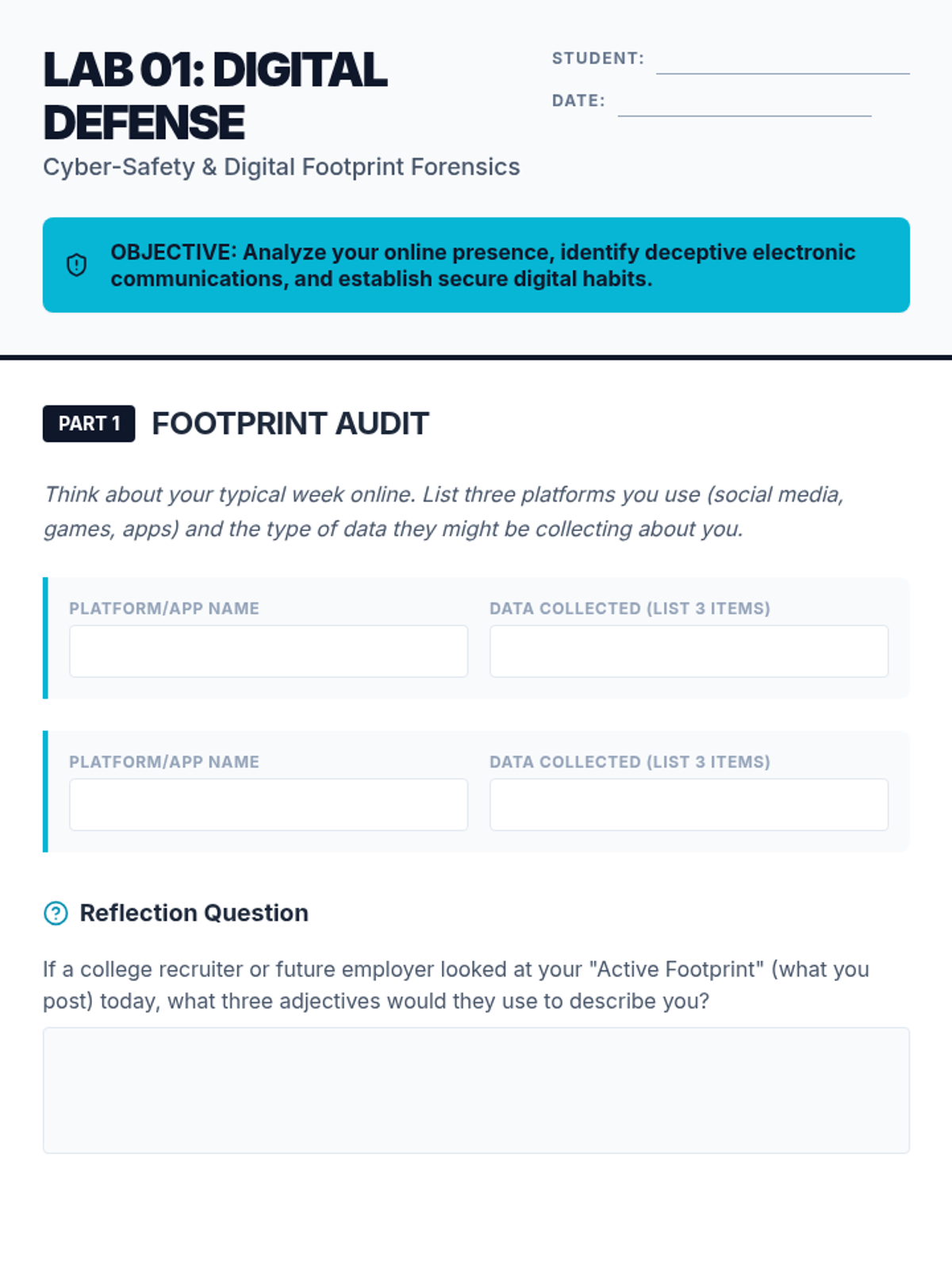
Digital Defense Lab Activity
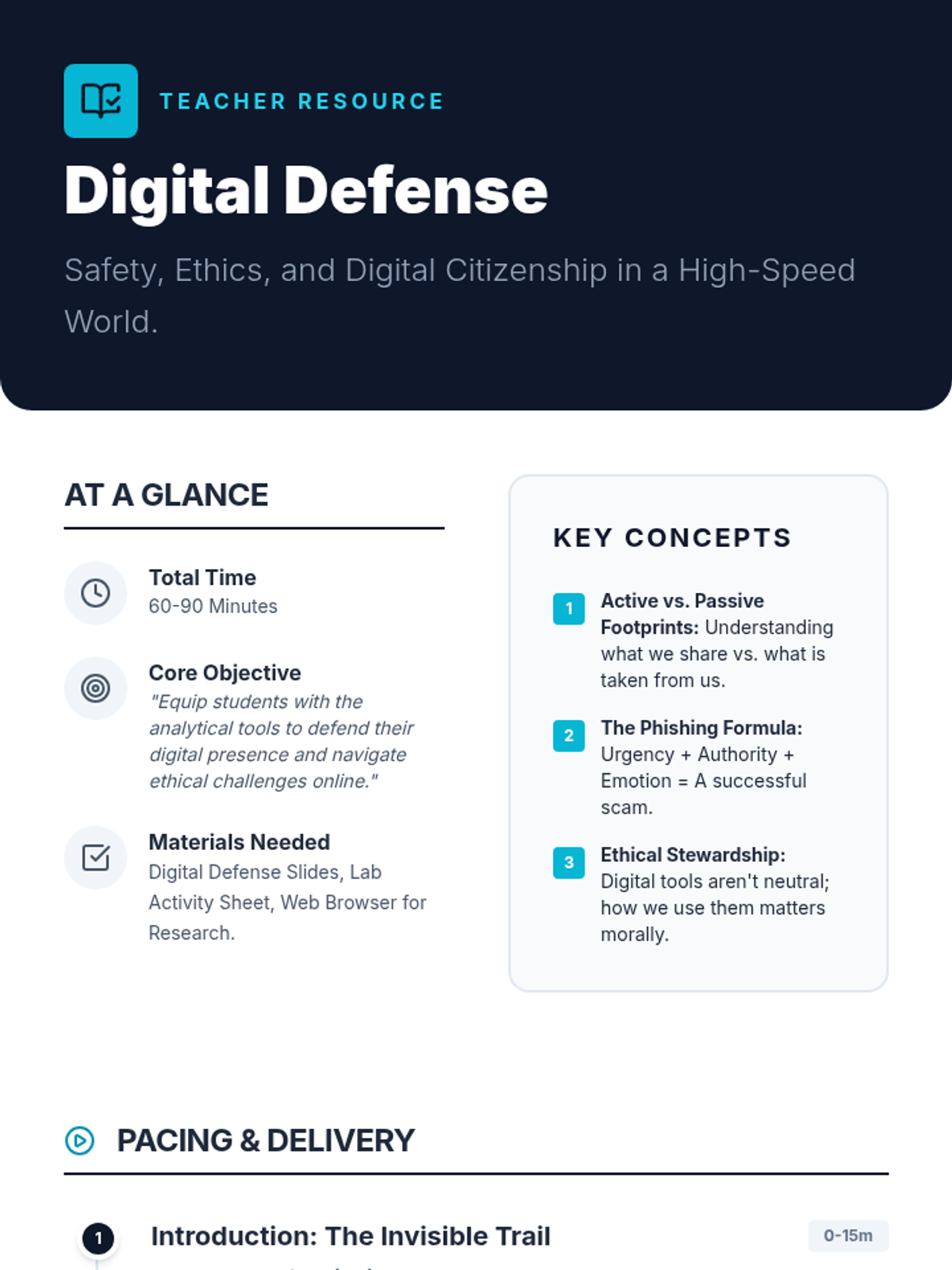
Digital Defense Teacher Guide

Tech Titan Academy

A comprehensive technology applications sequence covering Internet Safety & Ethics, Computer Hardware, and Spreadsheet Data Management. Designed for middle or high school students to build foundational digital literacy and technical skills.

R

rthrogmorton

Other
3/30
Sequence
Domestic Tech Plan Guide
Defining Tech Slides
Domestic Detective Scavenger Hunt
Domestic Tech Plan Guide Updated

Domestic Tech Lab

A 4-week exploration of technology through the lens of everyday household items, tracing their evolution from simple tools to complex smart systems. Students investigate what technology truly is beyond just electronics and how domestic innovations have changed human life.
LS

Linda Still

General Education Teacher
3/2
Sequence
Logic Loops Slides
Logic Loops Teacher Guide
Logic Loops Handout

Digital Architects

A comprehensive STEM sequence focusing on the intersection of coding logic and physical engineering. Students explore algorithmic thinking, structural design, and the integration of software and hardware through hands-on build challenges and online activities.

L

lreinert

Computer Science Teacher
2/15
Sequence
Signal Zero Intro Slides
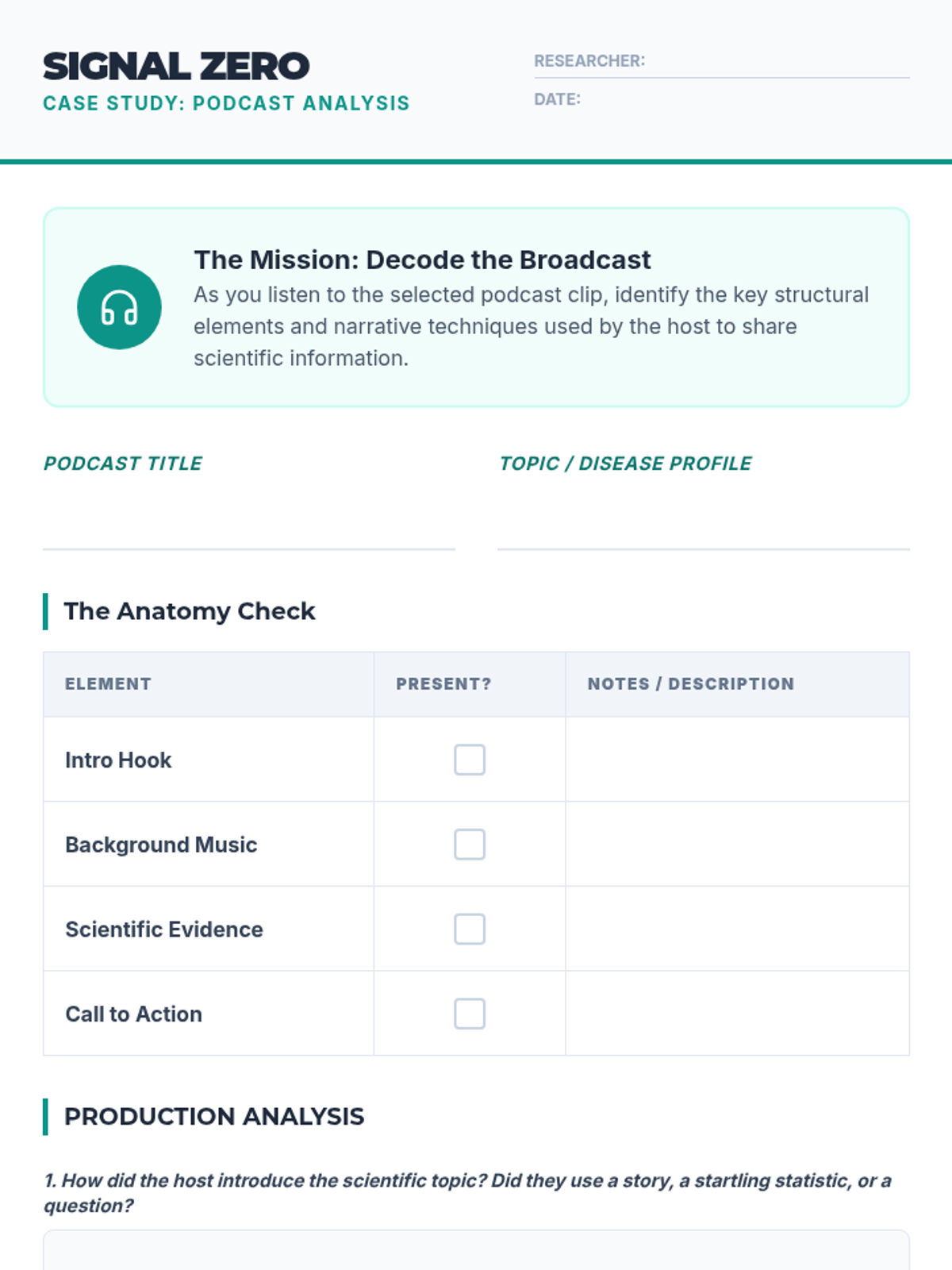
Podcast Analysis Guide

Signal Zero

A comprehensive project-based sequence where students transform their medical research into professional-grade podcasts using BandLab. This unit covers the anatomy of audio storytelling, conversational scripting, and digital audio production.

AT

Andrew Tarara

English Language Arts Teacher
2/12
Sequence
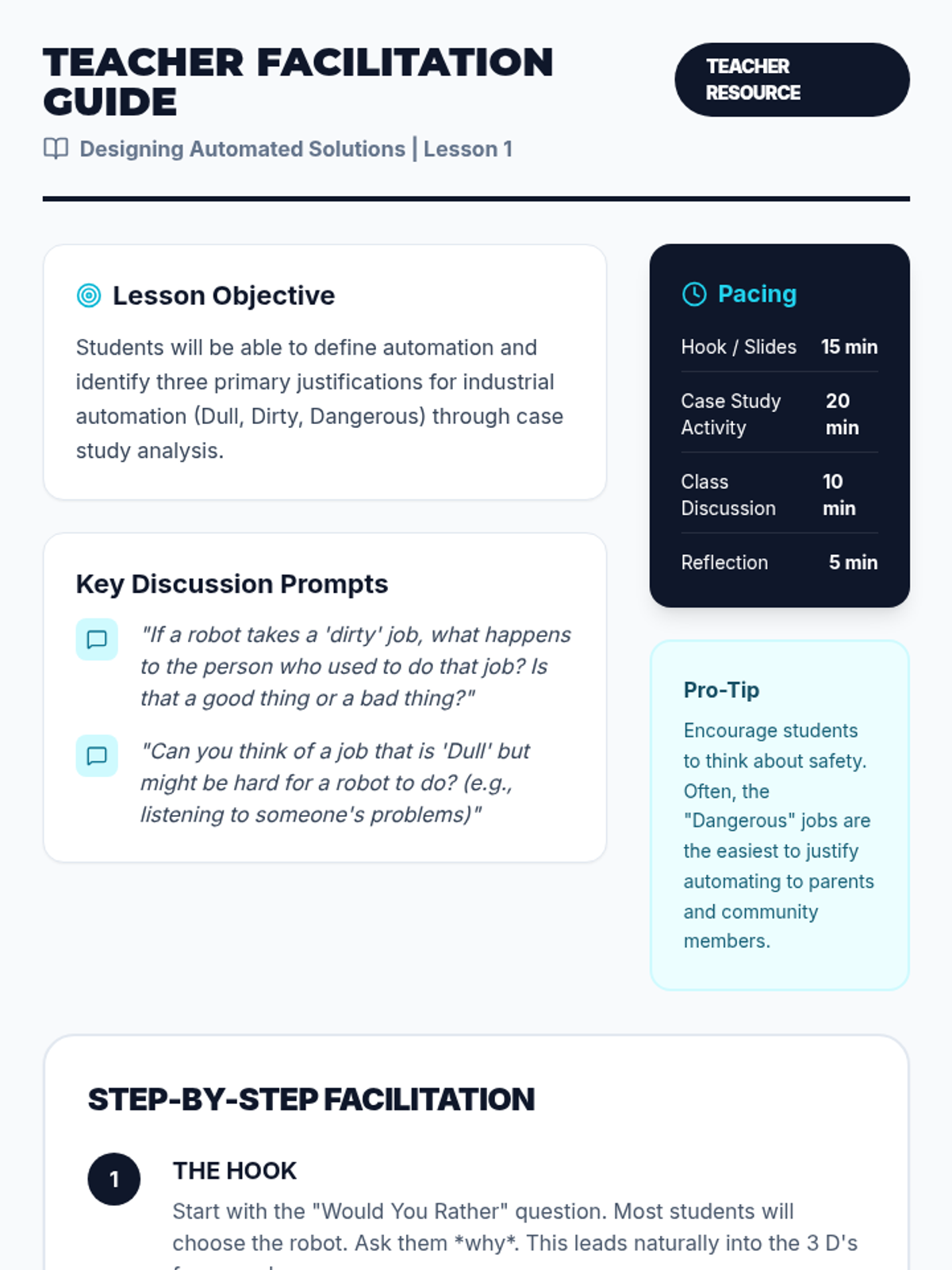
Automation Industry Slides
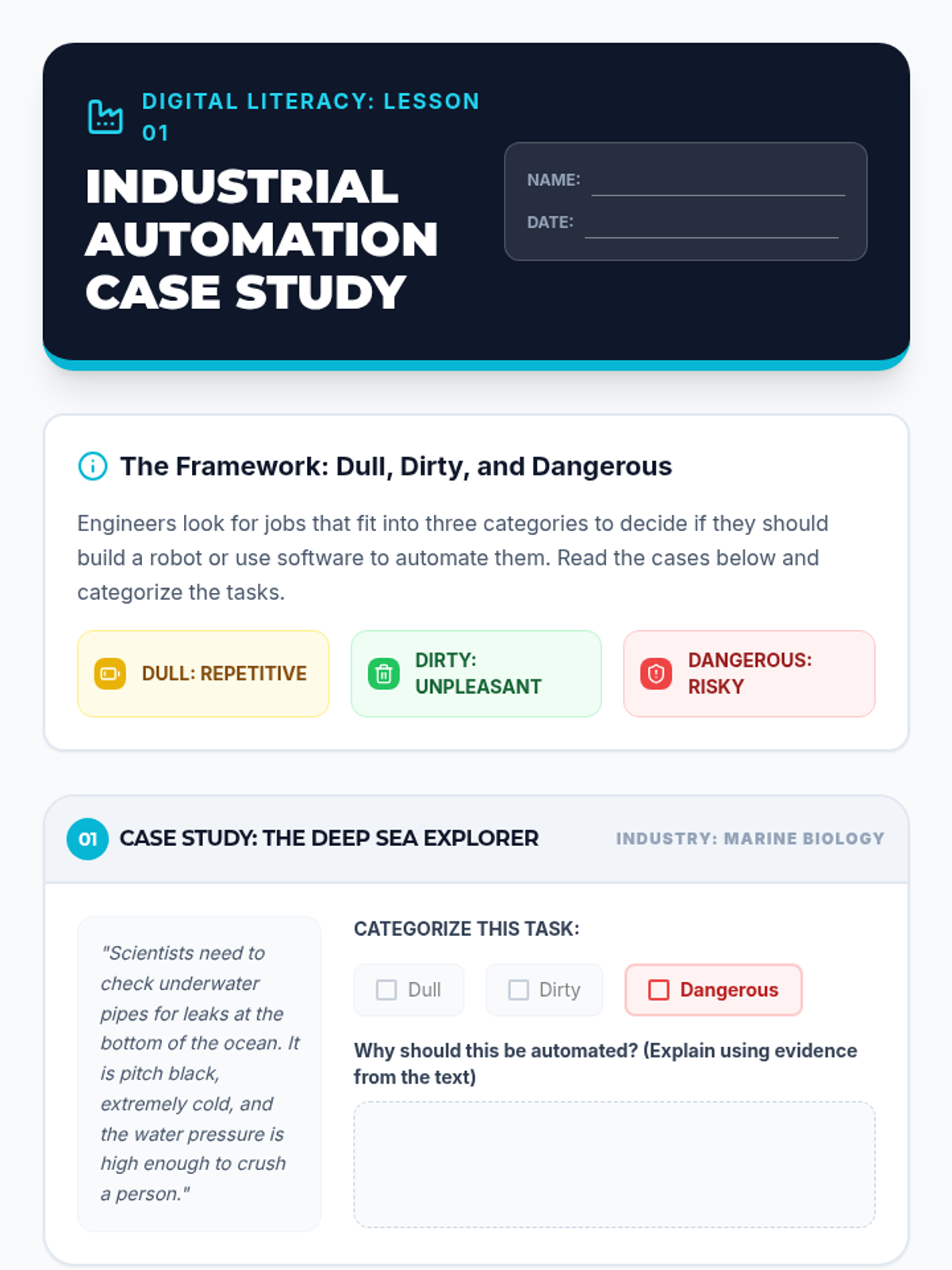
Automation Case Study Worksheet
Automation Facilitation Guide

Designing Automated Solutions and Future Pathways

Students explore automation and the future of work by adopting the role of inventors and designers. They investigate how robots and software automate tasks, analyze shifting job markets, and apply design thinking to create beneficial future technology concepts.

Lenny Avatar
Lenny
1/18
Sequence
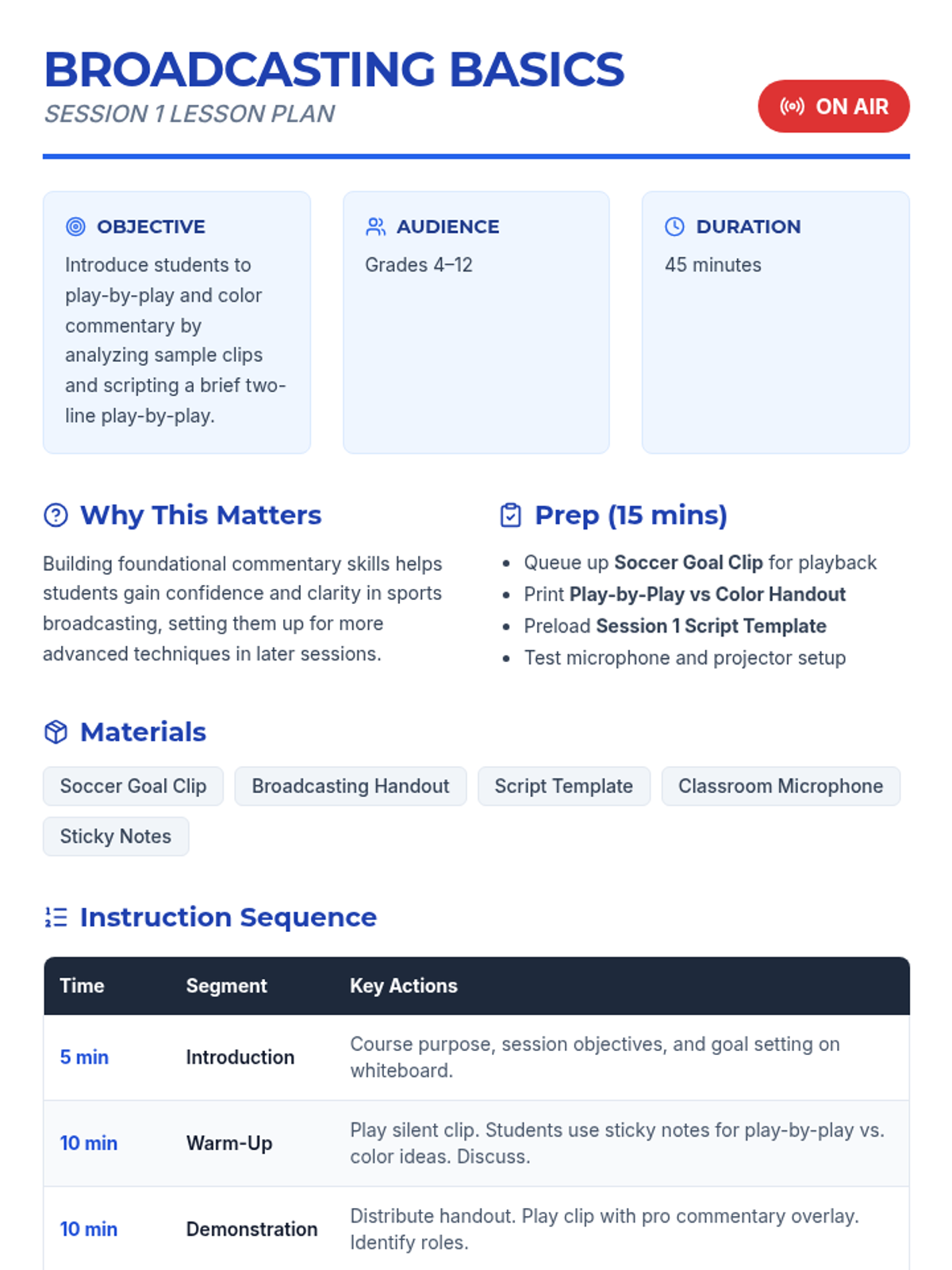
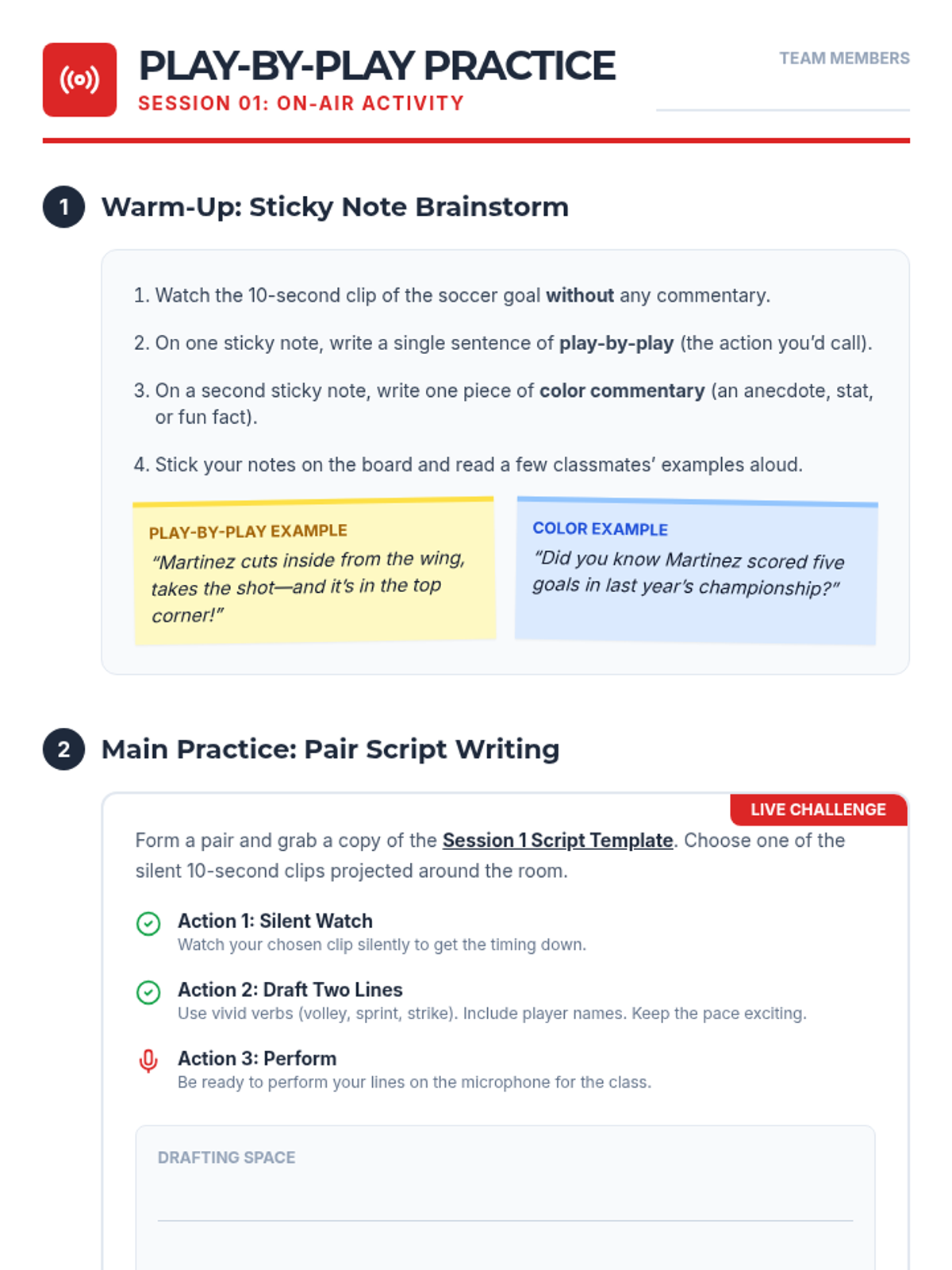
Broadcasting Basics Lesson Plan
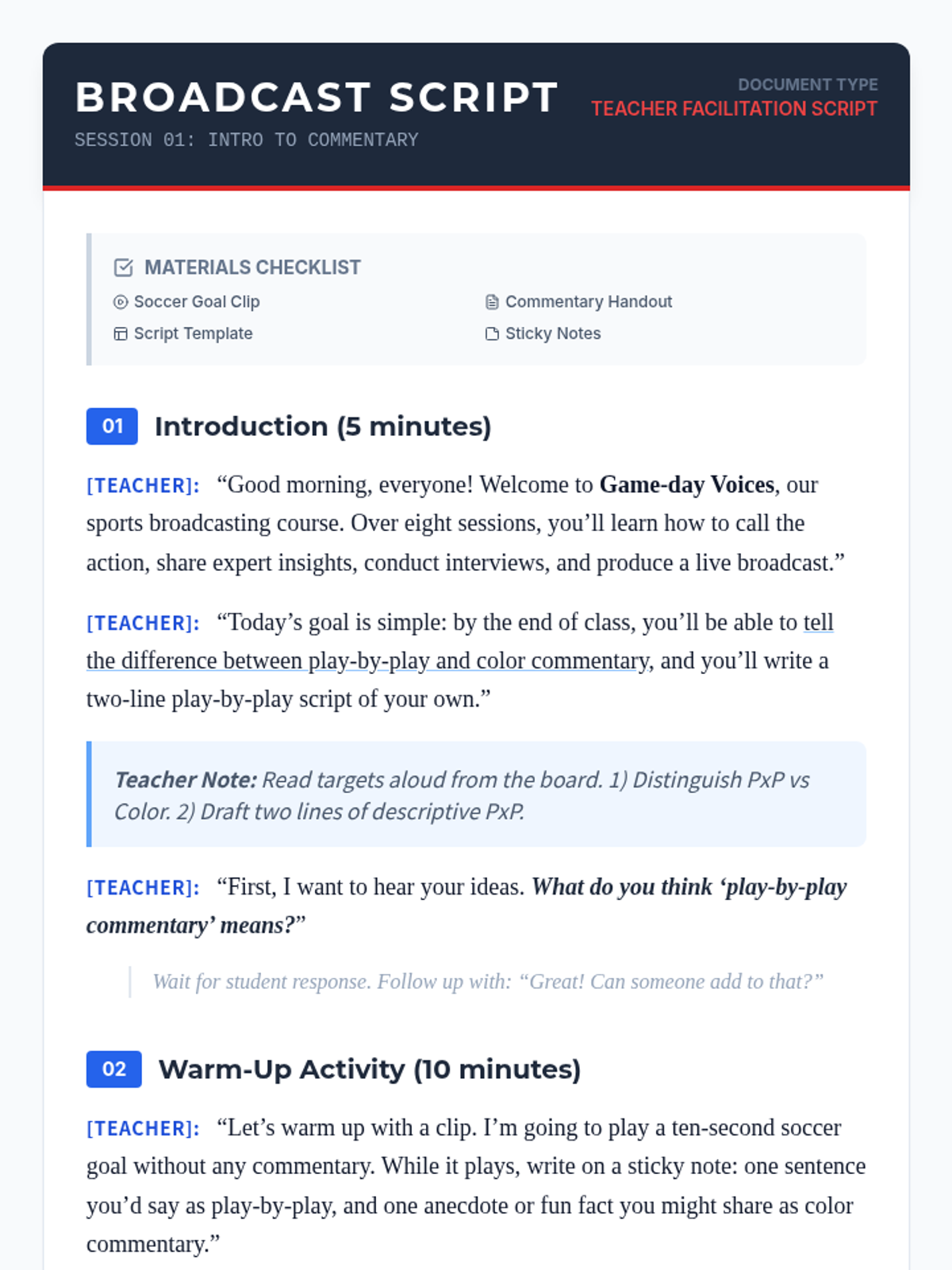
Broadcasting Basics Teacher Script
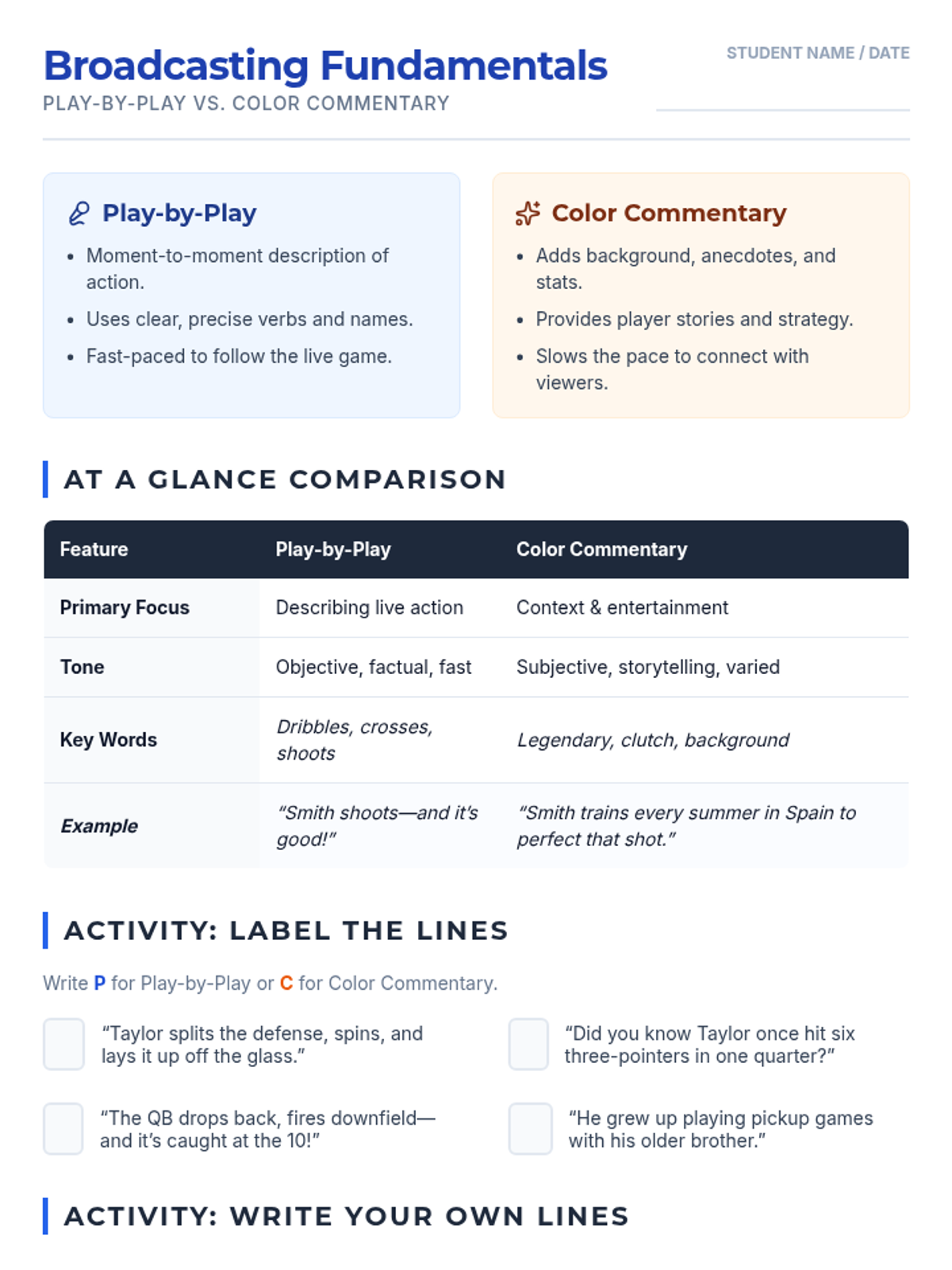
Commentary Styles Handout
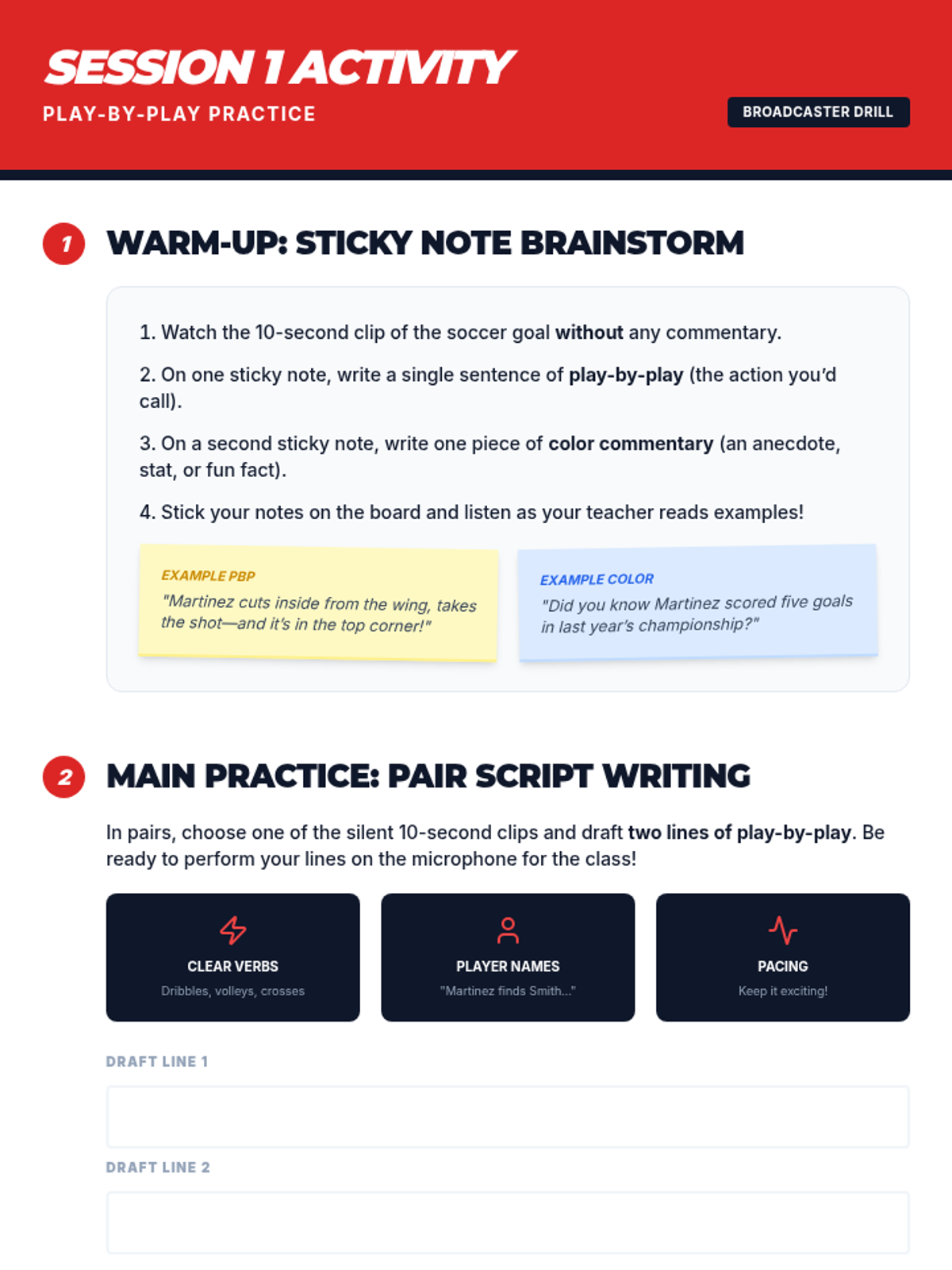
Play-by-Play Practice Sheet

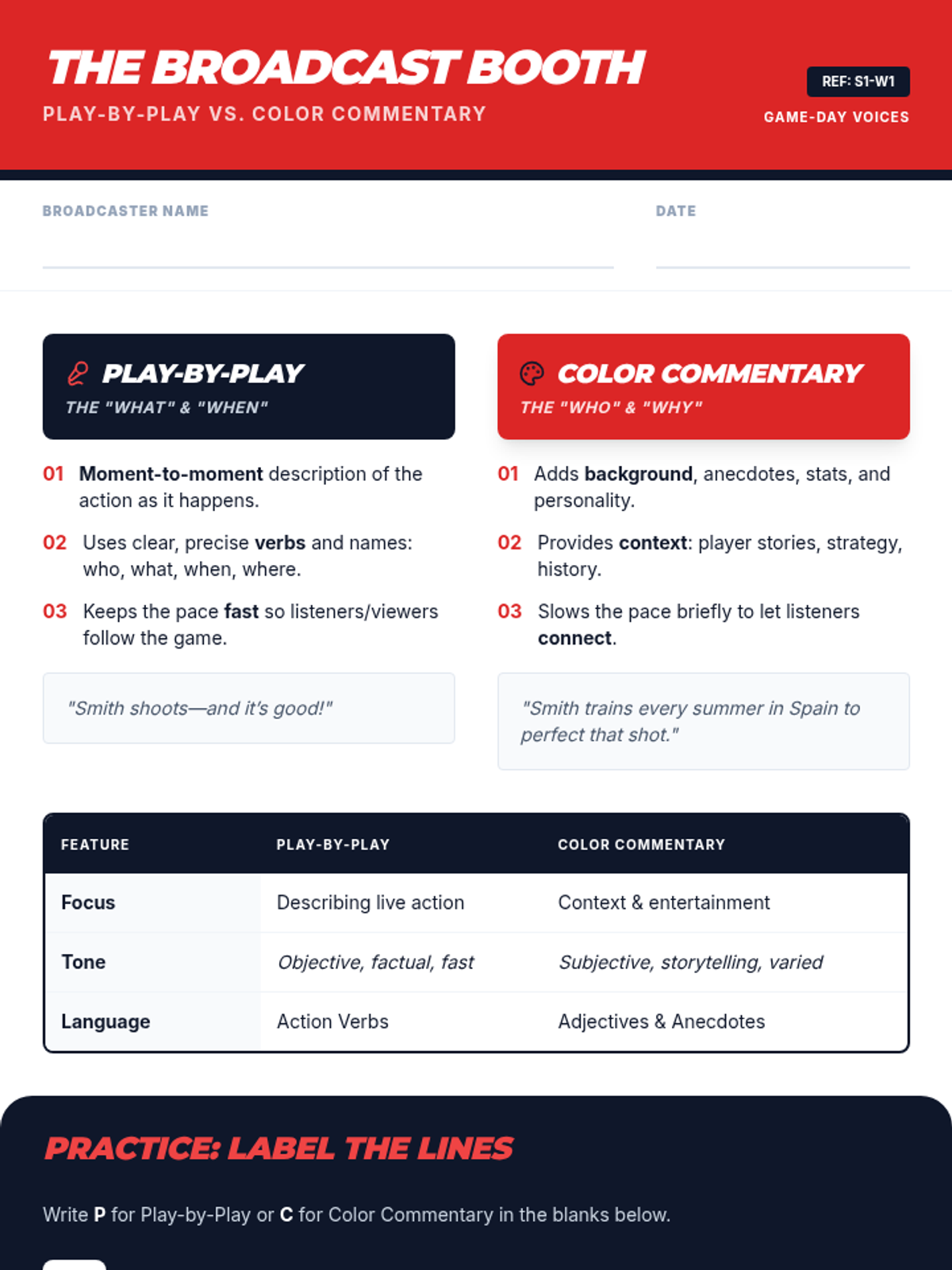
Game-day Voices

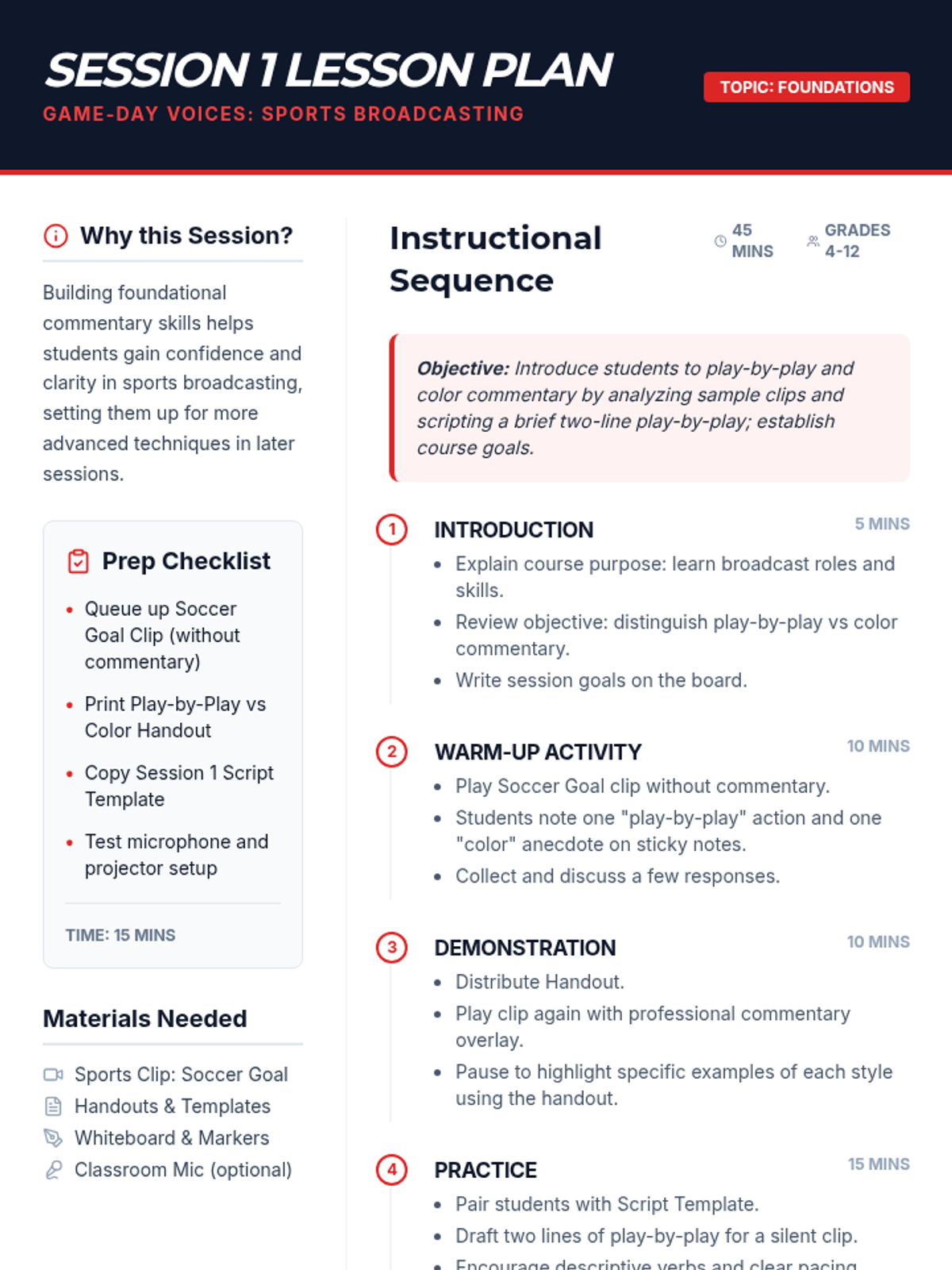
An 8-session course for grades 4-12 exploring the technical and creative facets of sports broadcasting, from play-by-play commentary to live production and graphics.

Lenny Avatar
Lenny
1/17
Sequence
Packet Power Slides
Puzzle Packet Activity
Data Chunking Teacher Guide

Packet Pioneers

Students explore the invisible rules of the internet, focusing on how data is broken down into packets, routed through redundant networks, and reliably reassembled using TCP/IP protocols. Through analog games and simulations, they demystify the journey of information from sender to receiver.

Lenny Avatar
Lenny
1/17
Sequence
Digital Diner Slides
Digital Diner Worksheet
Digital Diner Teacher Guide

Net Navigators

Students explore the global architecture of the internet, focusing on the client-server model, DNS, routing, and physical infrastructure. This sequence demystifies how data travels across the globe, emphasizing the engineering principles of redundancy and fault tolerance.

Lenny Avatar
Lenny
1/17
Sequence
Protocol Pioneers Slides
Protocol Design Worksheet

Data Highway

A 5-lesson sequence exploring the TCP/IP model, packet switching, and IP addressing through hands-on simulations and packet analysis. Students learn how standardized rules ensure reliable and fast data transmission across the global internet.

Lenny Avatar
Lenny
1/17
Sequence
Server Service Slides
Order Up Activity
Request Response Teacher Guide

The Webs Secret Life

This sequence explores the technical relationship between users and the web through the Client-Server model, HTTP protocols, physical infrastructure, and the journey of a web request.

Lenny Avatar
Lenny
1/17
Sequence
Signal Science Slides
Wave Watchers Worksheet
Signal Science Teacher Guide

Wireless World and IoT

Students explore the invisible world of wireless communication, examining how data travels without physical cables. The sequence covers the electromagnetic spectrum basics, compares wireless standards, investigates IoT, and concludes with a future-focused design project.

Lenny Avatar
Lenny
1/17
Sequence
Request Response Roleplay Teacher Guide
Client Server Foundations Slides
Client Server Foundations Worksheet

Web Architects DNS and Servers

A comprehensive unit on how the internet functions, covering the client-server model, DNS, HTTP, and physical infrastructure. Students transition from users to 'Web Architects' by understanding the request-response cycle and the systems that power the World Wide Web.

Lenny Avatar
Lenny
1/17
Sequence
Network Basics Slides
Yarn Network Teacher Guide
Node Link Detective Worksheet

Designing Network Topologies

A comprehensive 6th-grade unit on computer network structures, covering nodes, links, LAN/WAN differences, topologies, and hardware components, concluding with a real-world design challenge.

Lenny Avatar
Lenny
1/17
Sequence
System IPO Slides
Black Box Breakdown Worksheet
Black Box Teacher Guide

System Blueprint Sequence

A 5-lesson unit for 6th graders exploring systems thinking through mechanical devices, digital programs, and AI models. Students learn to deconstruct systems into inputs, processes, and outputs while mapping complex interconnections.

Lenny Avatar
Lenny
1/17
Sequence
Loop Master Guide
The Great Balance Slides
Stability Tracker Worksheet

System Cycles and AI Minds

This sequence introduces 6th-grade students to systems thinking through the lens of feedback loops in engineering and AI. Students will explore how balancing and reinforcing loops govern stability and growth, simulate machine learning processes, analyze the ethics of AI bias, and design their own smart feedback systems.
Lenny Avatar
Lenny
1/17
Sequence
Boundary Blueprint Worksheet
Boundary Blueprint Slides
Engineer Briefcase Teacher Guide

Holistic Engineering and System Design

Students adopt the role of systems engineers to design sustainable solutions for community needs. They learn to define boundaries, map component interactions, and develop control logic, culminating in a resilient design review.

Lenny Avatar
Lenny
1/17
Sequence
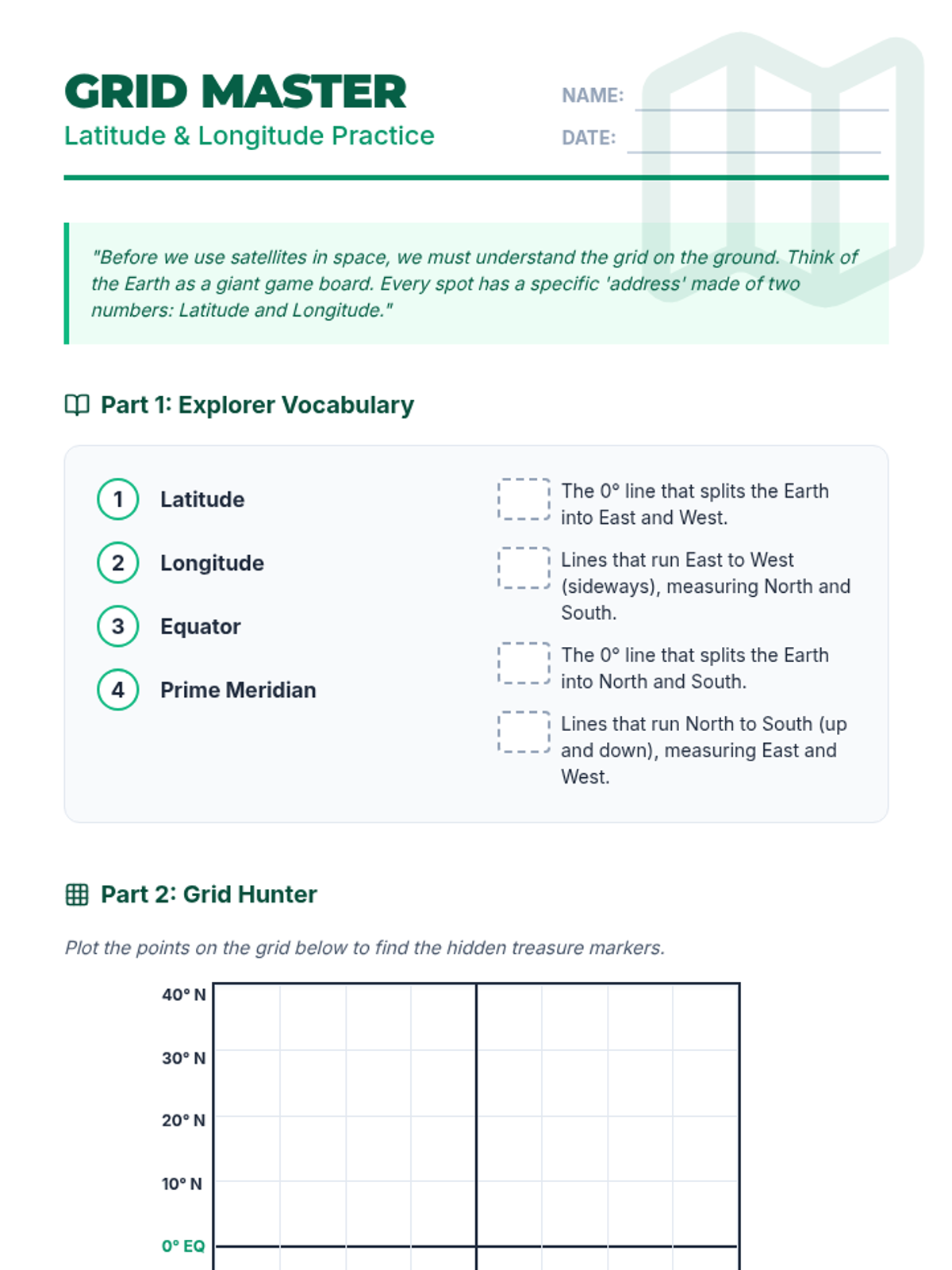
Grid Master Worksheet
Latitude Longitude Slides
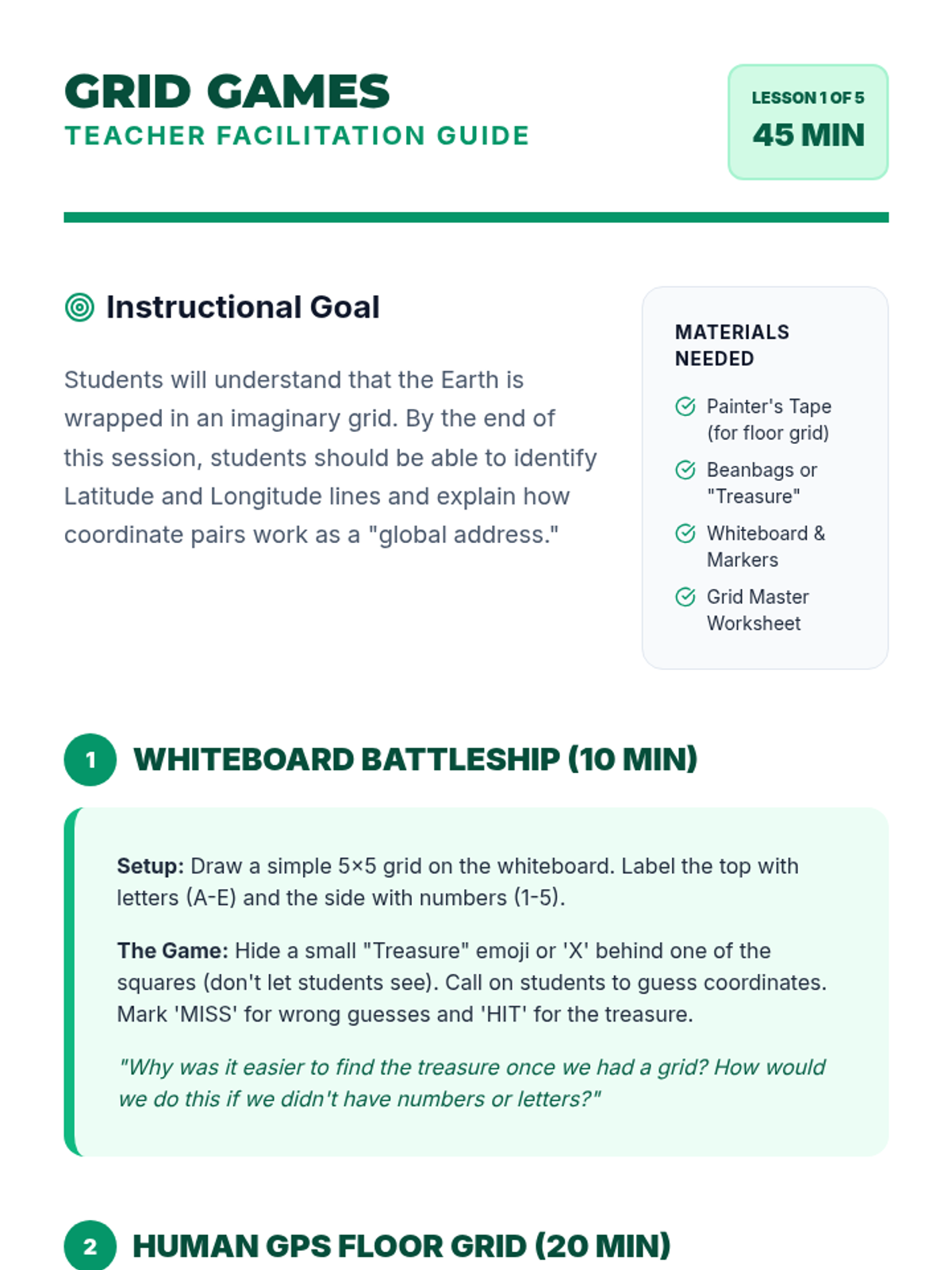
Grid Games Teacher Guide

Applied Navigation Geocaching

This sequence bridges traditional outdoor skills with modern technology by introducing Global Positioning Systems (GPS) and Geocaching. Students transition from analog maps to digital wayfinding, learning how coordinates work and how to use handheld devices or apps to locate hidden physical caches.

Lenny Avatar
Lenny
1/17
Sequence
App Blueprint Slides
Project Planner Worksheet
Decomposition Teacher Guide

App Architects

A project-based journey where students learn to build functional web applications using AI. They master decomposition, structural planning, logical implementation, and aesthetic styling to turn ideas into working digital products.

Lenny Avatar
Lenny
1/17
Sequence
Bracket Logic Slides
Court Code Worksheet
Coach's Playbook Teacher Guide

Bracket Breakdowns

A beginner-friendly introduction to coding concepts using the excitement of basketball tournaments to teach algorithms, sequencing, and selection.

MG

Mo Godin

Special Education Teacher
3/18
Sequence
Deductive Depths Teacher Guide
Deductive Depths Slides
Grid Grit Worksheet
Cipher Chamber Game
Reflection Map Exit Ticket
Grid Grit Worksheet
Deductive Depths Slides

Logic Labyrinth

A high-energy unplugged series for middle schoolers to master computational thinking through logic puzzles, algorithmic sequencing, and hands-on debugging challenges. Students explore these concepts through the lens of ancient labyrinth exploration, using critical thinking to navigate complex problem-solving terrains.

MO

Michele Orr

Computer Science Teacher
3/2
Sequence
Paradox Breaker 01 Handout
Ancient OS Teacher Guide
Achilles Teacher Guide
Achilles Slides

Zeno Paradox Lab

A series of four 10-15 minute logic lessons for middle school students, focusing on Zeno's paradoxes and the 'Paradox Player' thinking style. Students will learn to break ideas into tiny steps, push logic to extremes, and identify contradictions through 'Paradox Breaker' activities.

DB

Danielle Burham

English Language Arts Teacher
2/22
Sequence
Logic Loops Slides
Logic Loops Teacher Guide
Logic Loops Handout

Digital Architects

A comprehensive STEM sequence focusing on the intersection of coding logic and physical engineering. Students explore algorithmic thinking, structural design, and the integration of software and hardware through hands-on build challenges and online activities.

L

lreinert

Computer Science Teacher
2/15
Sequence
Guía Maestra DOM JavaScript Plan Lección v2 Final
Efectos en Tiempo Real Presentación
Manipulación Dinámica Guía Estudiante
Guía Maestra DOM JavaScript Plan Lección v2 Final Clean Links
Guía Maestra DOM JavaScript Plan Lección Final v3
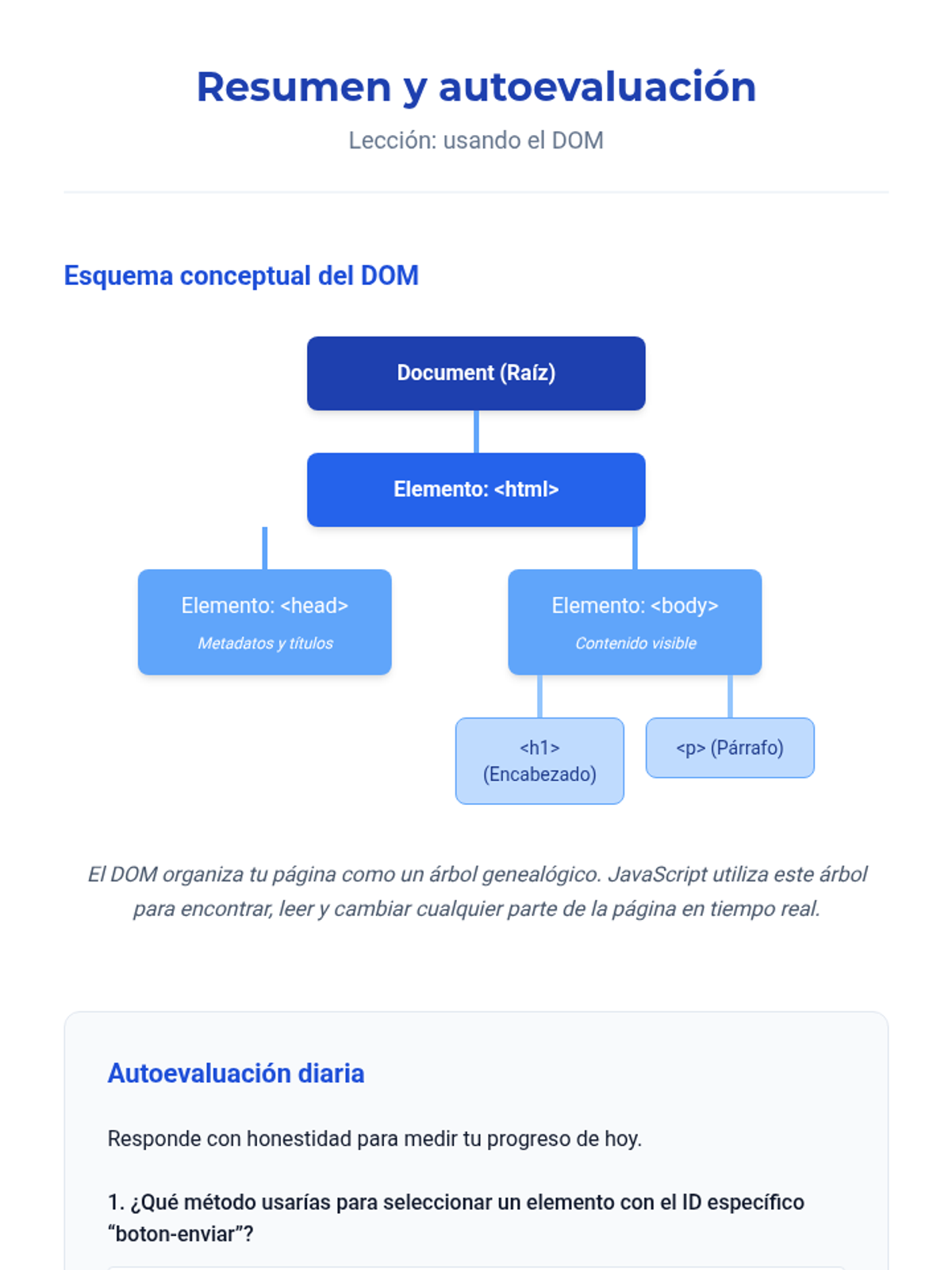
Resumen y Autoevaluación DOM
Guía Maestra DOM JavaScript Plan Lección v4 Final
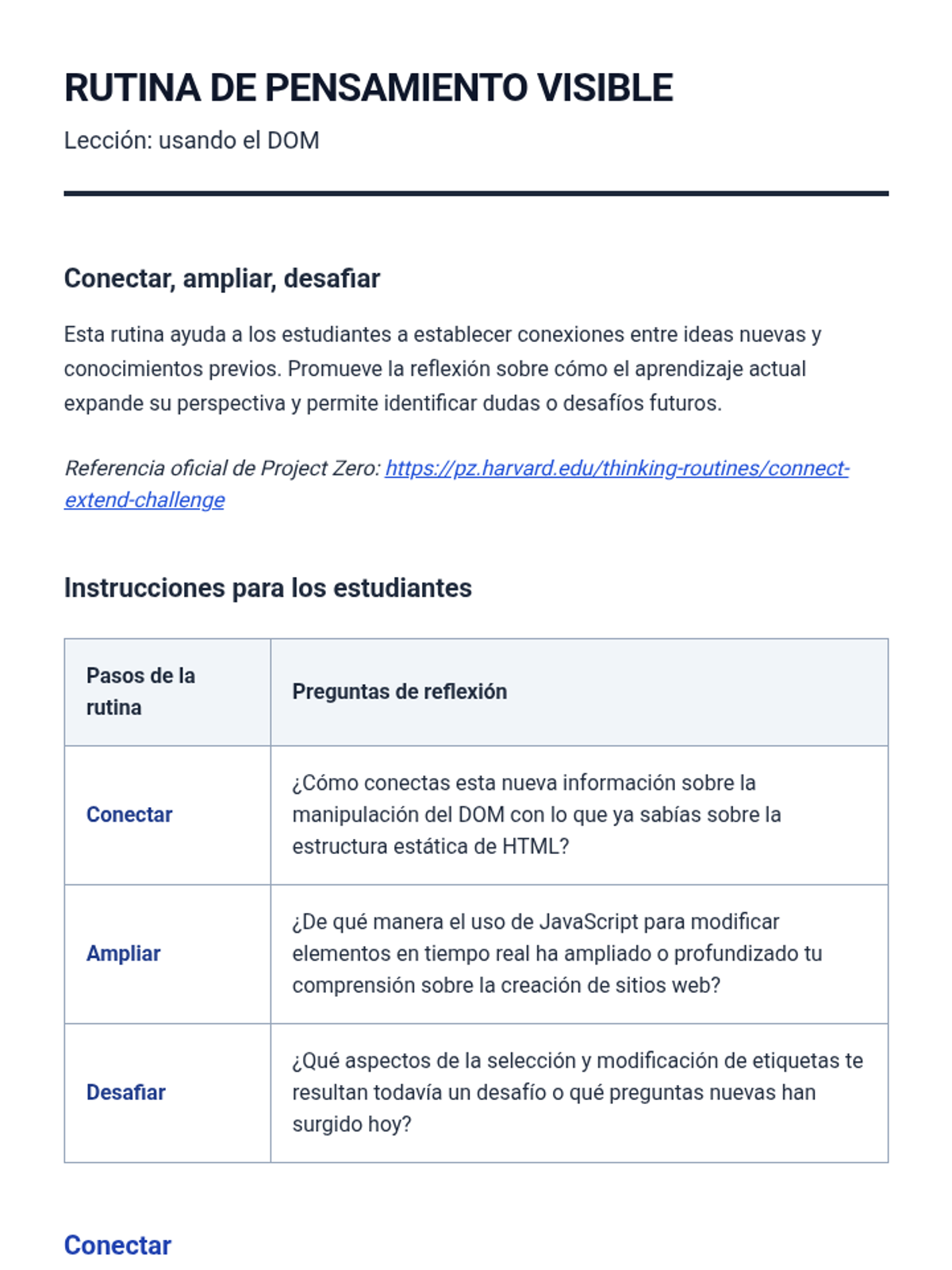
Conexiones y Desafíos Rutina MTV
Guía Maestra DOM JavaScript Final Perfecta
Guía Maestra DOM JavaScript Corregida Final
Guía Maestra DOM JavaScript Corregida Final v2
Guía Maestra DOM JavaScript Final Perfecta v2
Guía Maestra DOM JavaScript Final Perfecta v2 Revisada
Guía Maestra DOM JavaScript Final Revisada v3 Final
Guía Maestra DOM JavaScript Final Revisada v3 Final Perfecta

Dominando el DOM

Una secuencia educativa sobre la manipulación del Document Object Model (DOM) mediante JavaScript para estudiantes de secundaria, enfocada en la selección y modificación dinámica de elementos HTML.

NR

Norman René Trujillo Zapata

Computer Science Teacher
2/11
Sequence
Blueprint to Build Slides
Site Architect Worksheet
Web Builders Facilitation Guide

Web Builders Academy

A capstone project where students build a multi-page website from scratch. They move through planning, coding navigation, developing content, debugging, and finally publishing their work, emphasizing the technical and organizational skills needed for web publishing.

Lenny Avatar
Lenny
1/18
Sequence
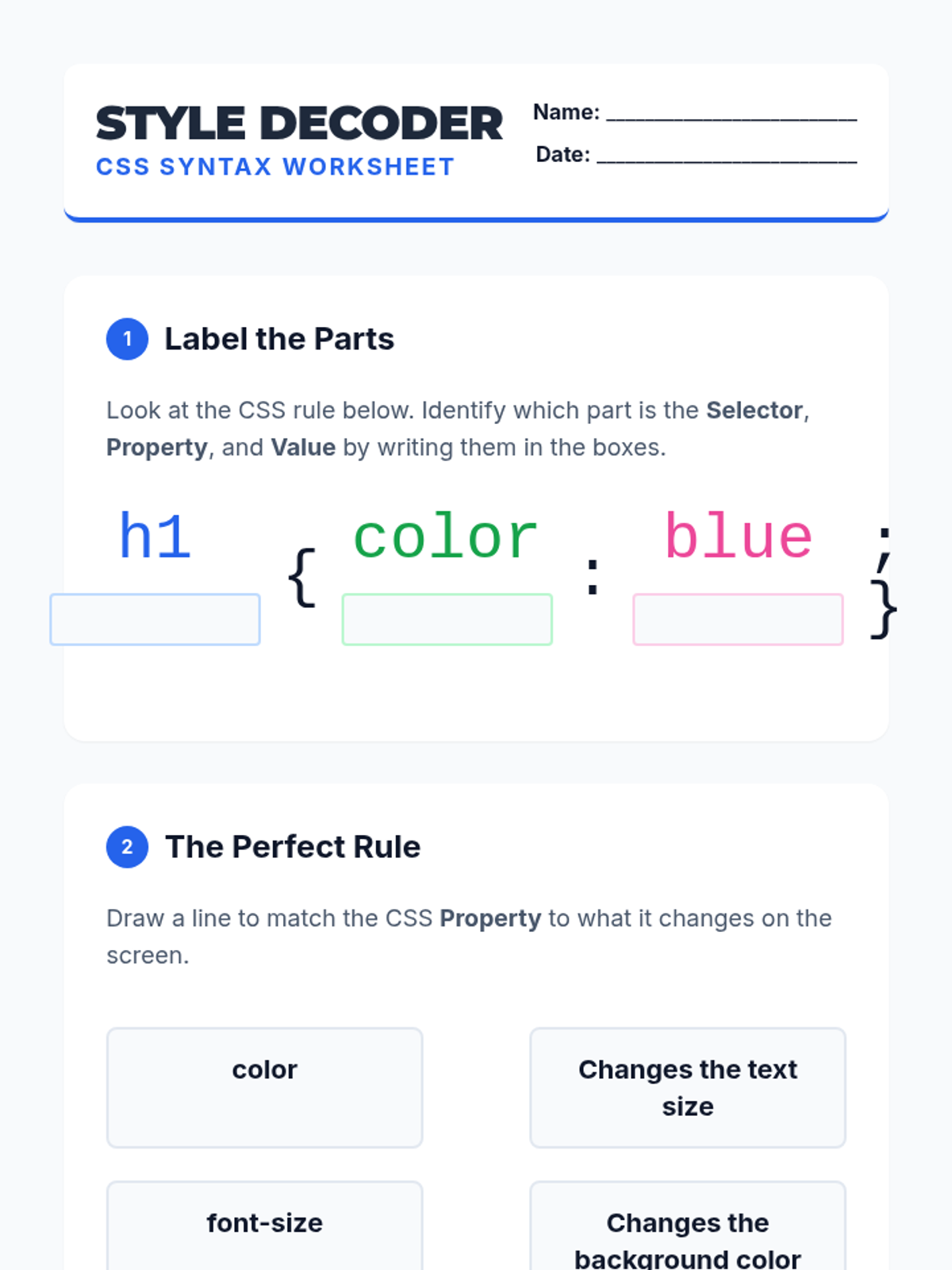
The Power of Style Slides
Style Decoder Worksheet
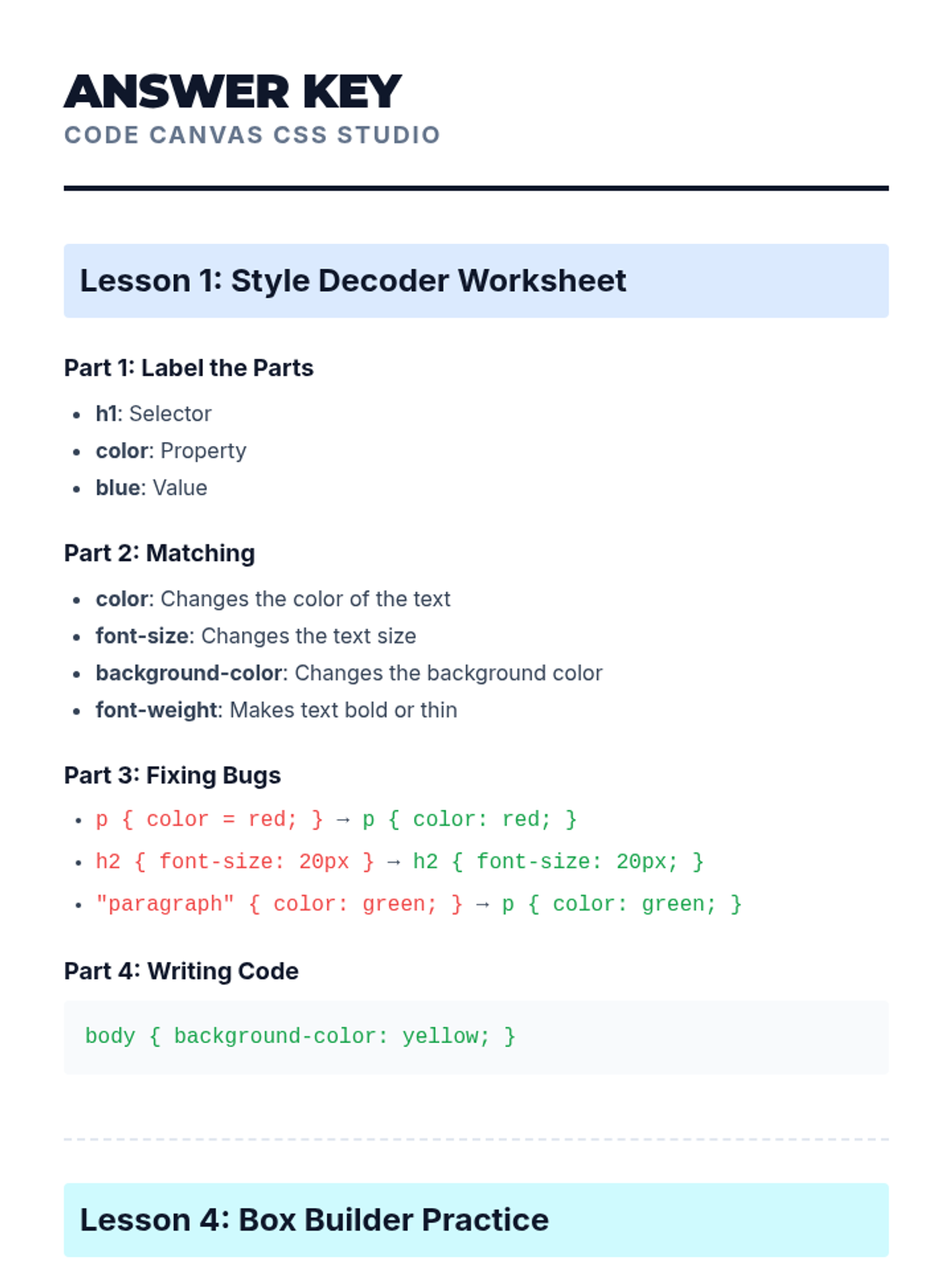
Code Canvas Answer Key

Code Canvas CSS Studio

Students transition from basic HTML to CSS, learning how to style web pages with colors, fonts, and layouts. The sequence covers CSS syntax, color theory, typography, and the box model, culminating in a personal profile design project.

Lenny Avatar
Lenny
1/18
Sequence
Portfolio Blueprint Slides
Site Map Sketchbook
Portfolio Kickoff Guide

Digital Portfolio Studio

A comprehensive sequence where 6th-grade students plan, design, code, and learn to safely publish their own multi-page digital portfolio. Students master technical HTML/CSS skills alongside essential digital citizenship and information architecture concepts.

Lenny Avatar
Lenny
1/18
Sequence
Code Style Secrets Slides
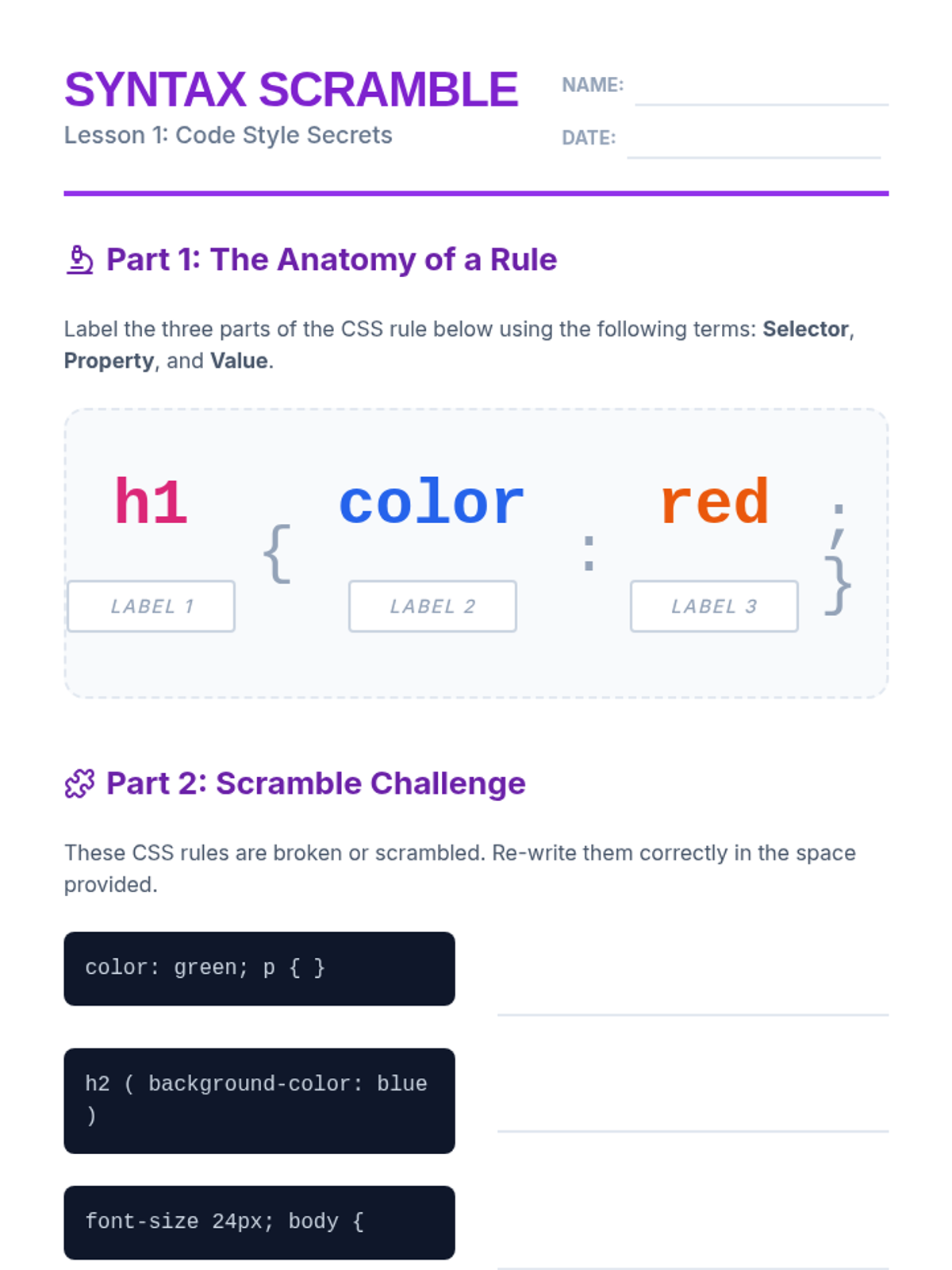
Syntax Scramble Worksheet
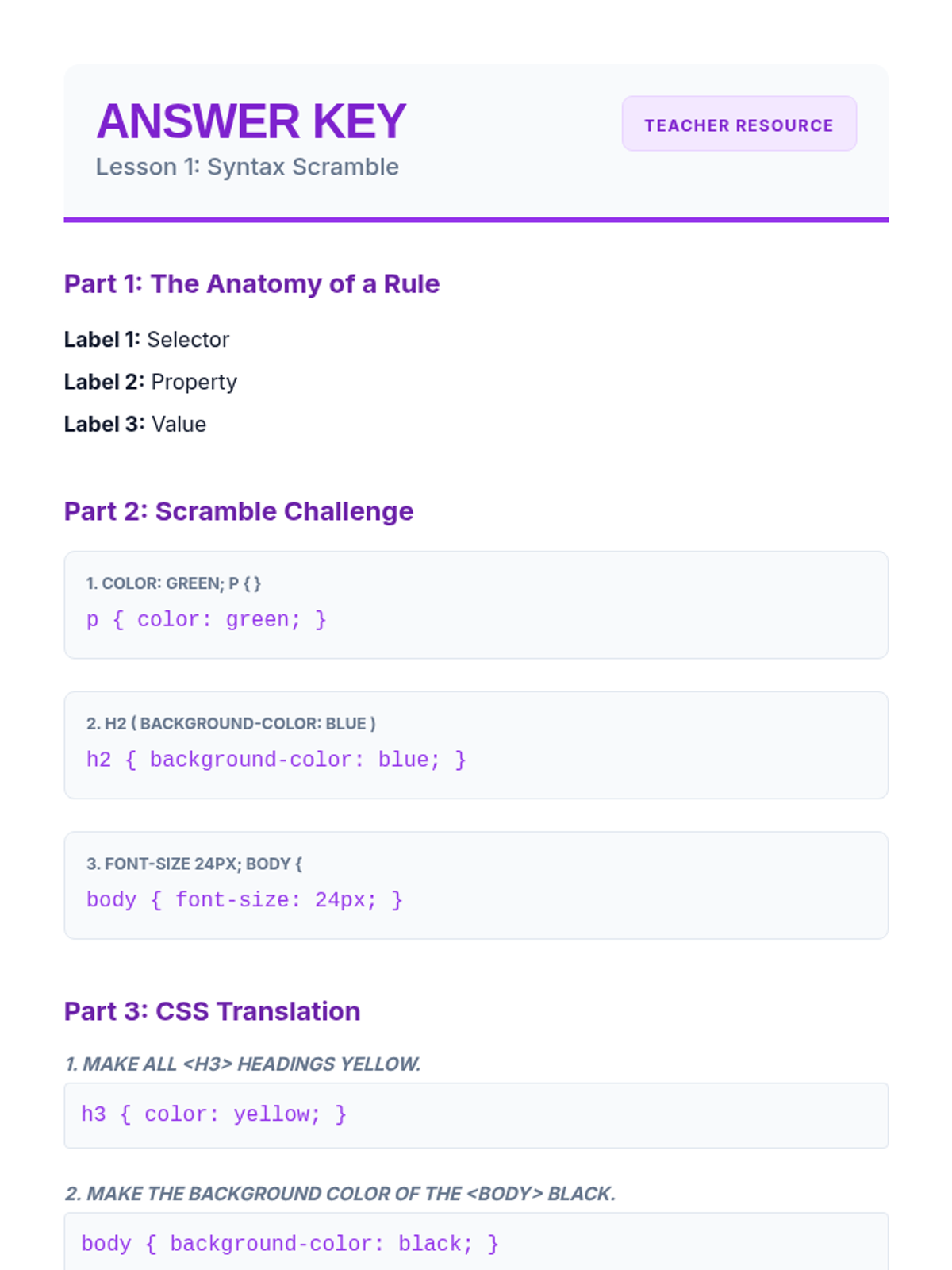
Syntax Scramble Answer Key

Pixel Perfect Design Studio

A comprehensive sequence for 6th graders to master CSS fundamentals, visual design principles, and the separation of content from style in web development.

Lenny Avatar
Lenny
1/18
Sequence
Web Detective Slides
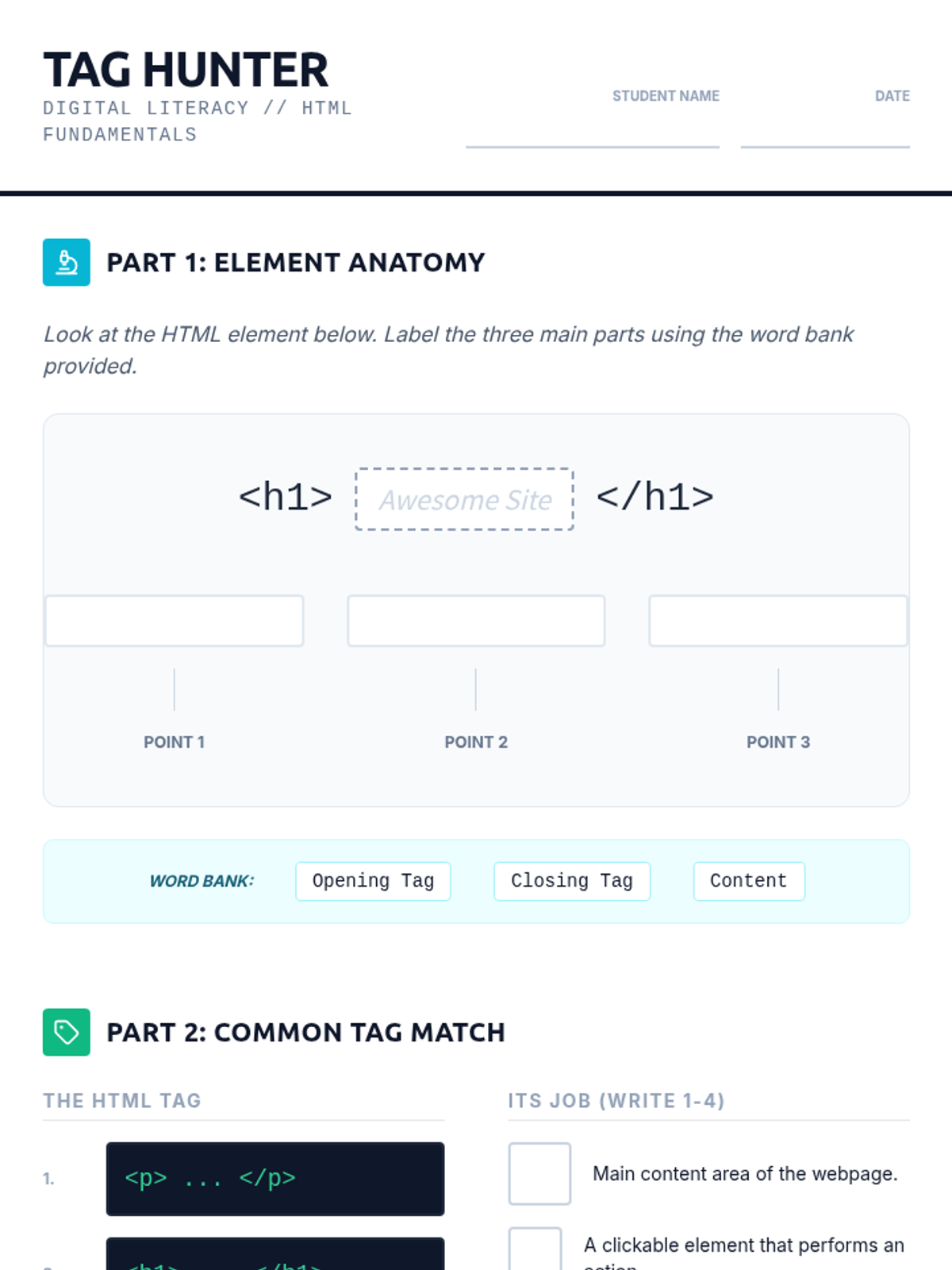
Tag Hunter Worksheet
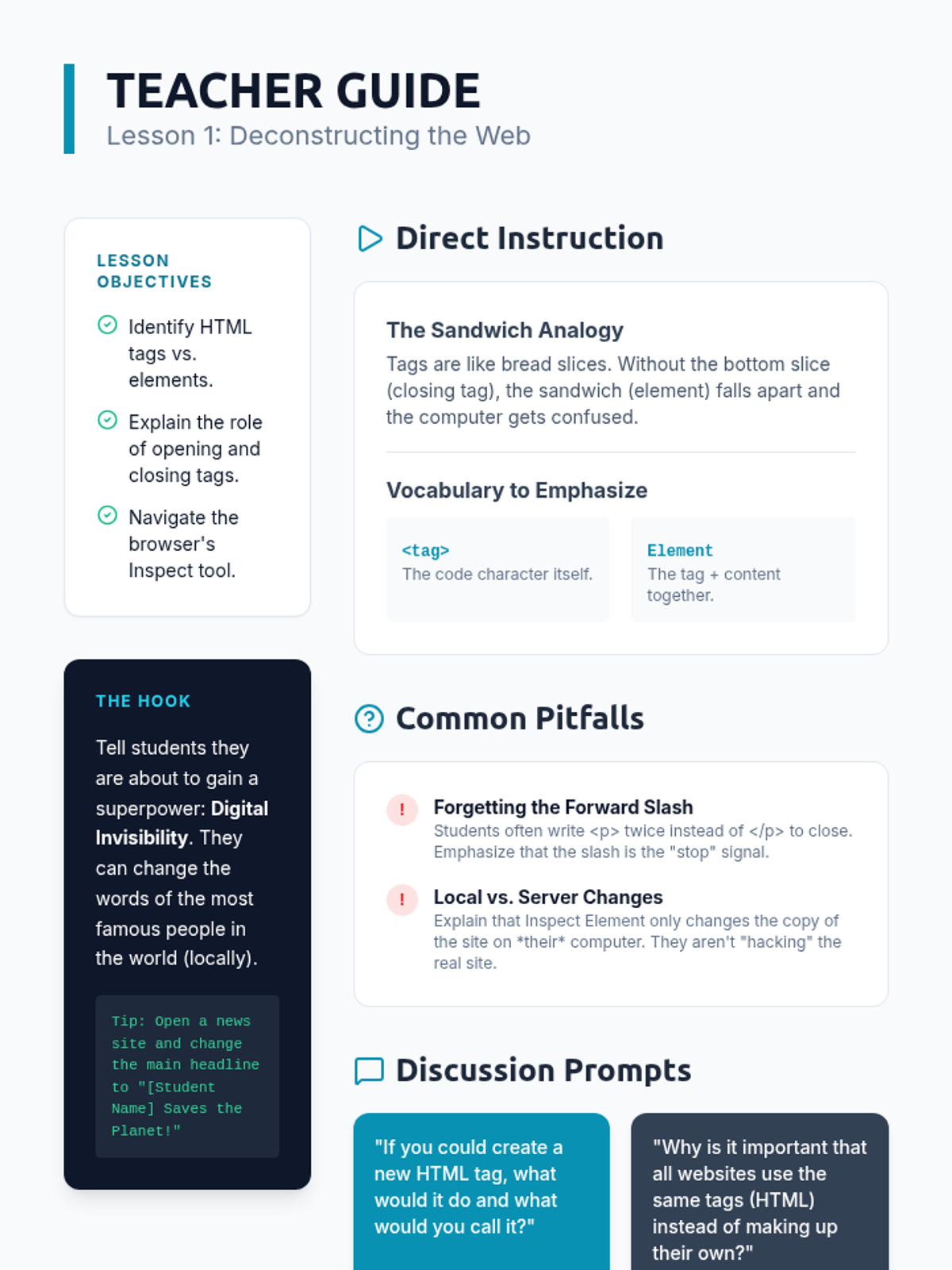
Code Anatomy Teacher Guide

HTML Fundamentals Sequence

This foundational sequence introduces 6th-grade students to HTML, the language of the web. Students move from deconstructing existing sites using developer tools to building their own structurally sound, semantic web pages with headings, lists, images, and hyperlinks.

Lenny Avatar
Lenny
1/18
Sequence
UX Mystery Slides
Design Detective Worksheet
Design for Everyone Teacher Guide

Design for Everyone

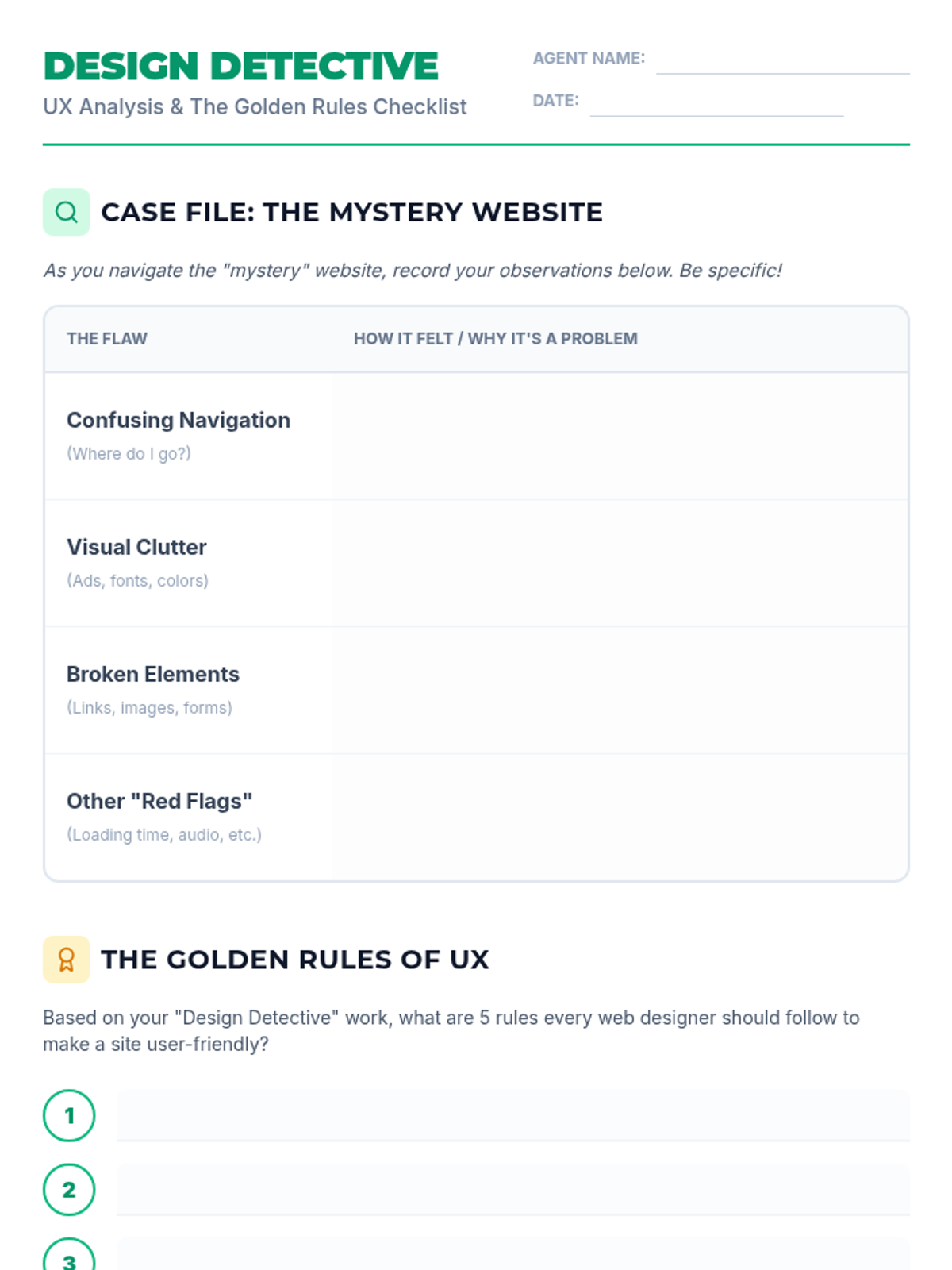
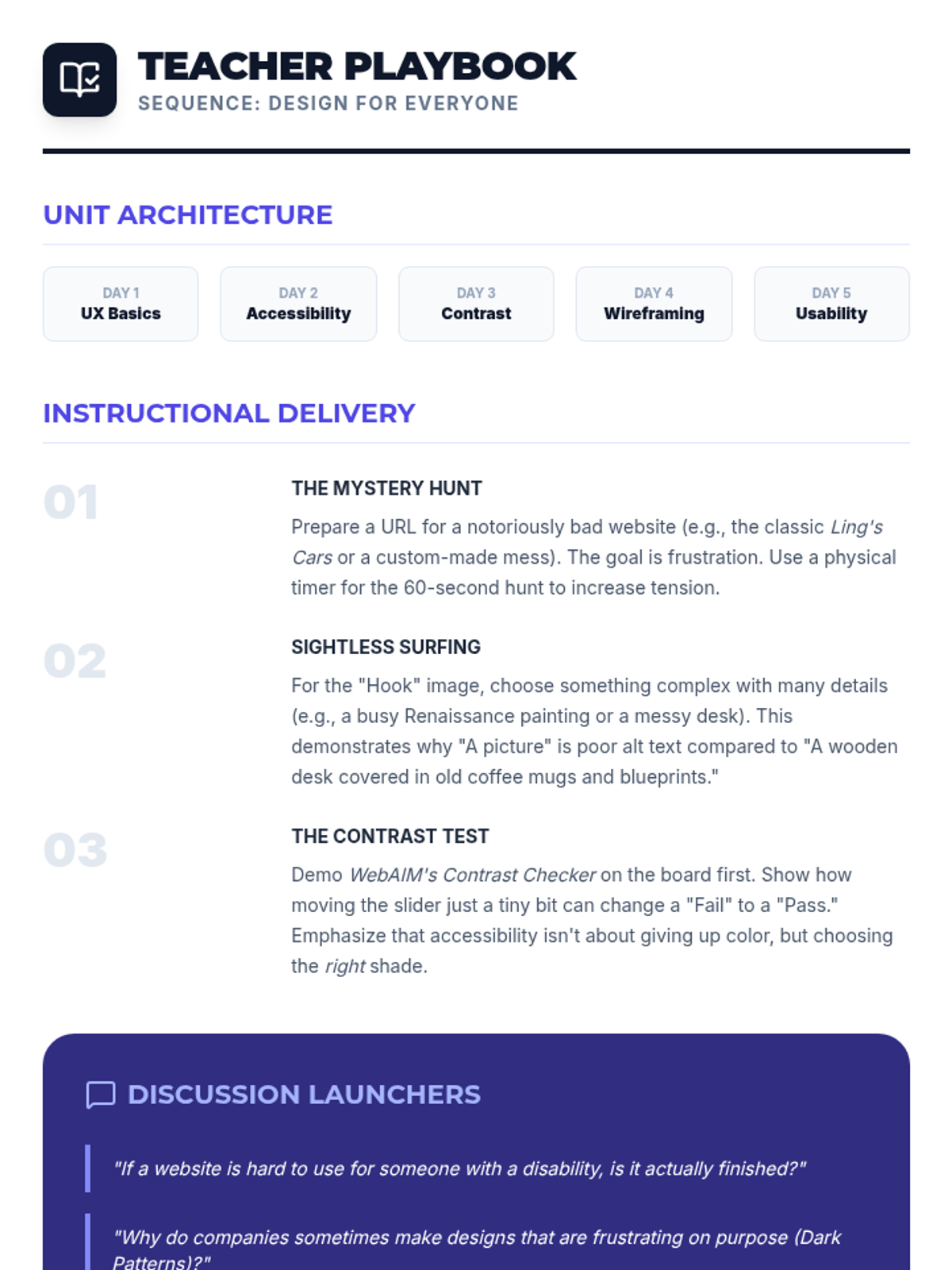
This sequence introduces 6th-grade students to human-centered design, focusing on User Experience (UX) and web accessibility. Students learn to design websites that are intuitive, navigable, and inclusive by analyzing design flaws, simulating screen reader experiences, and testing color contrast.

Lenny Avatar
Lenny
1/18
Sequence
Commentary Intro Lesson Plan
Broadcasting Intro Script
Commentary Basics Handout
Commentary Basics Activity

Game-day Voices

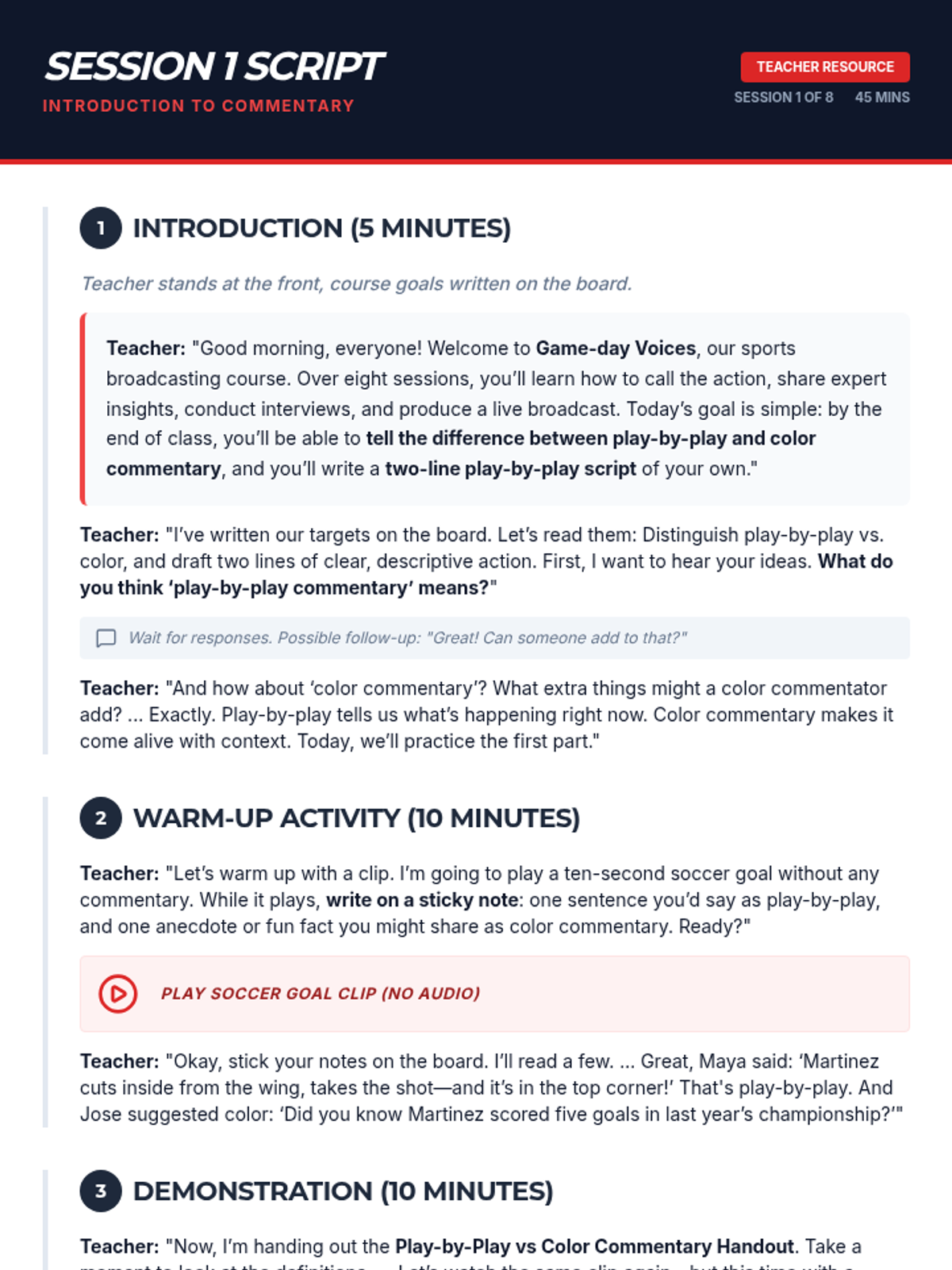
An 8-session sports broadcasting course for grades 4–12, students will learn the fundamentals of play-by-play commentary, color analysis, interviewing, and production skills. Each 45-minute session builds real-world broadcasting abilities, teamwork, and confidence both in the studio and at live events.

Lenny Avatar
Lenny
1/17
Sequence
Boundary Blueprint Worksheet
Boundary Blueprint Slides
Engineer Briefcase Teacher Guide

Holistic Engineering and System Design

Students adopt the role of systems engineers to design sustainable solutions for community needs. They learn to define boundaries, map component interactions, and develop control logic, culminating in a resilient design review.

Lenny Avatar
Lenny
1/17
Sequence
App Blueprint Slides
Project Planner Worksheet
Decomposition Teacher Guide

App Architects

A project-based journey where students learn to build functional web applications using AI. They master decomposition, structural planning, logical implementation, and aesthetic styling to turn ideas into working digital products.

Lenny Avatar
Lenny
1/17
Sequence
Logic Lab Slides
Vibe Riddle Worksheet
Logic Lab Teacher Guide

Vibe Logic and Data Magic

This sequence explores the intersection of AI and computational thinking, teaching students to use natural language to solve complex logic puzzles, structure data, and automate tasks. Students move beyond syntax to focus on the 'vibe' of programming—the logic and architecture of solutions.

Lenny Avatar
Lenny
1/17
Sequence
Idea Blueprint Slides
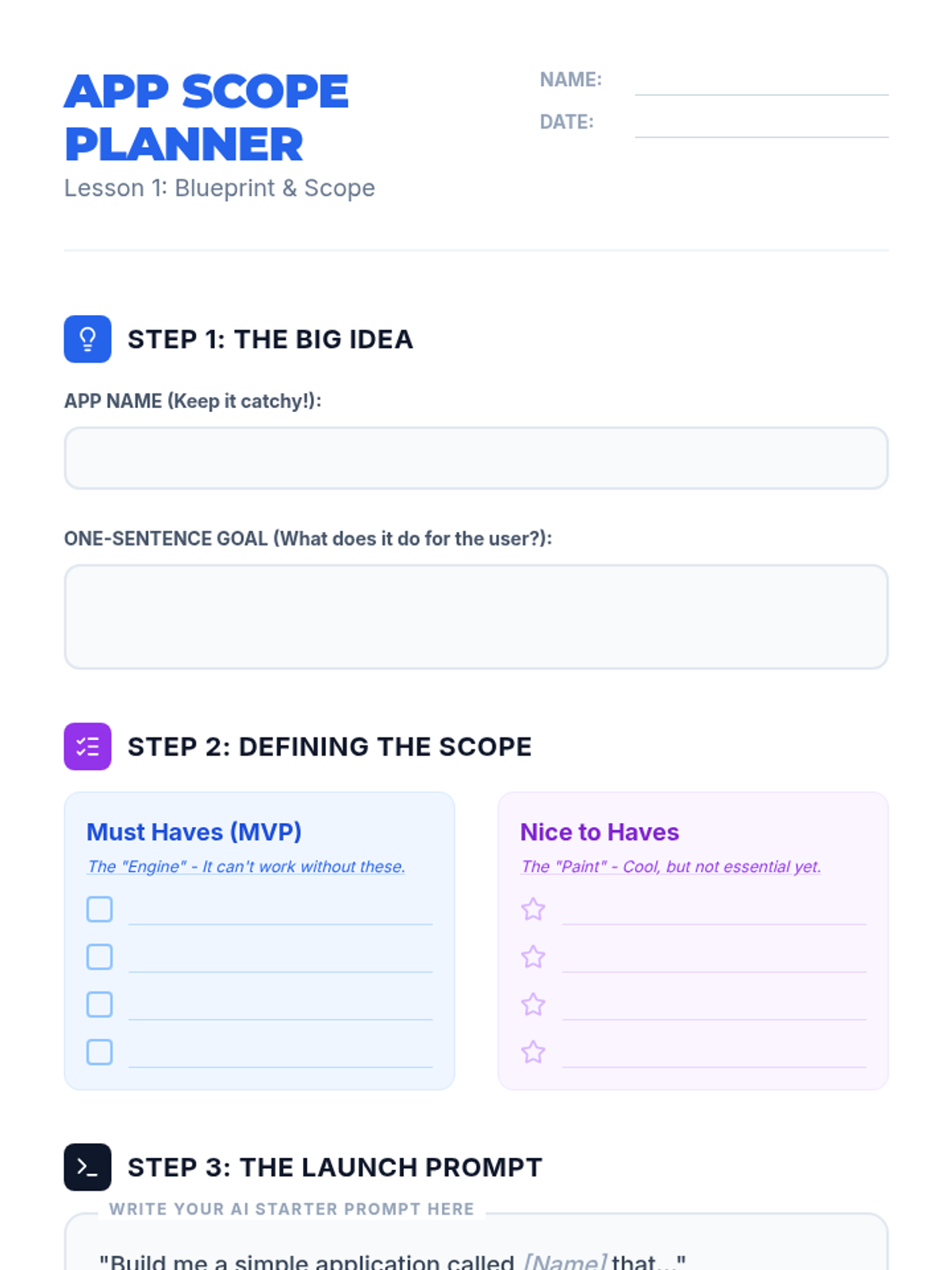
App Scope Planner Worksheet
Project Pilot Teacher Guide

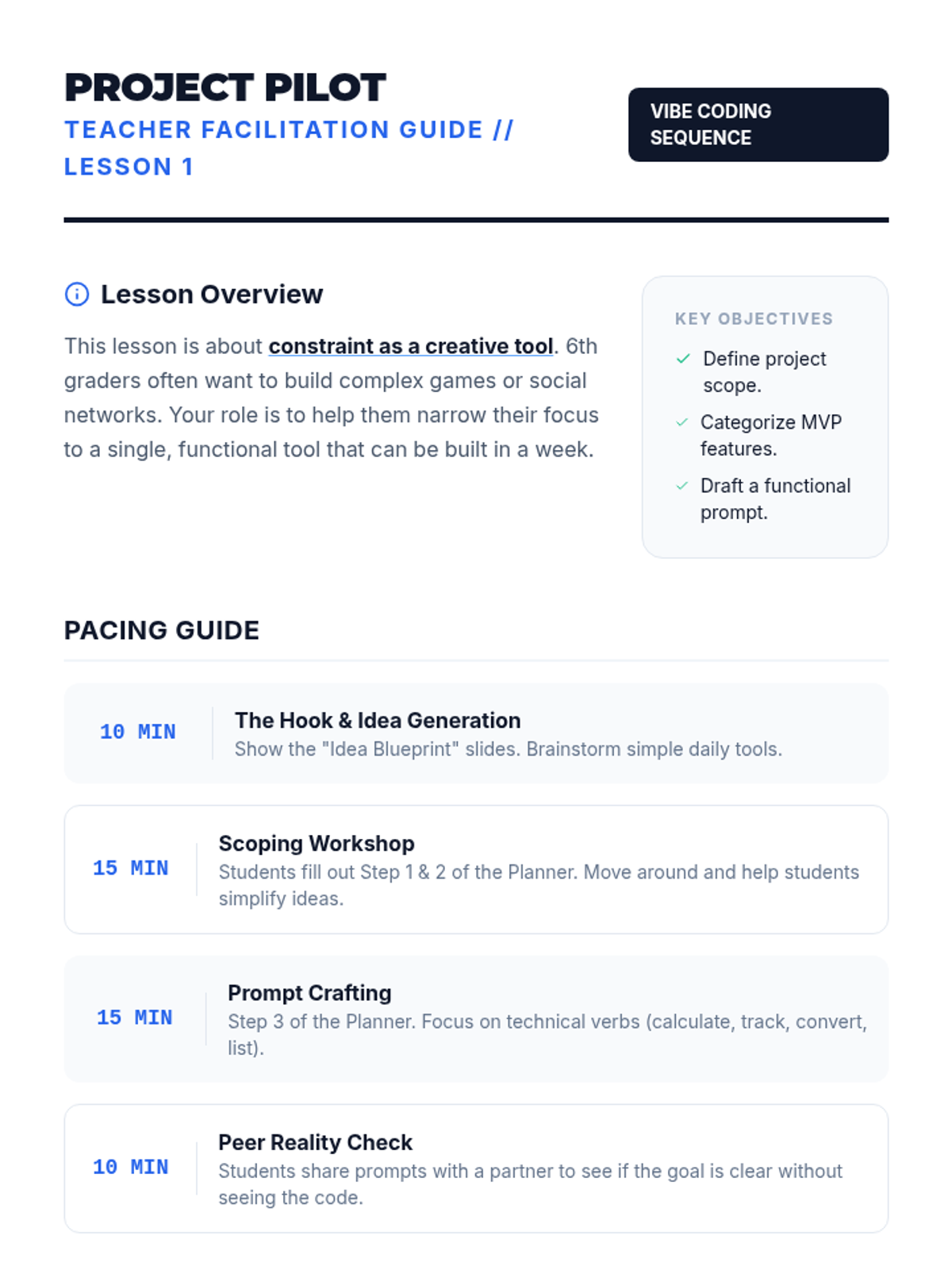
Vibe Coding Sprint

A comprehensive 6th-grade sequence on 'Vibe Coding'—using AI to rapidly prototype and build functional applications. Students move from initial scoping to functional MVP, UI styling, peer testing, and final reflection, emphasizing the partnership between human creativity and AI execution.

Lenny Avatar
Lenny
1/17
Sequence
Intent Experience Slides
User Story Blueprint Worksheet
UX Design Teacher Guide

Logic Design and Systems Thinking

This sequence introduces 6th-grade students to the logic of app development through 'vibe coding'—using natural language to instruct AI. Instead of focusing on syntax, students master the architecture of logic, including user stories, flowcharts, decomposition, and prompt engineering, bridging the gap between an idea and a functional product.

Lenny Avatar
Lenny
1/17
Sequence
Loop Masters Teacher Guide
Loop Masters Slides
Refinement Log Worksheet

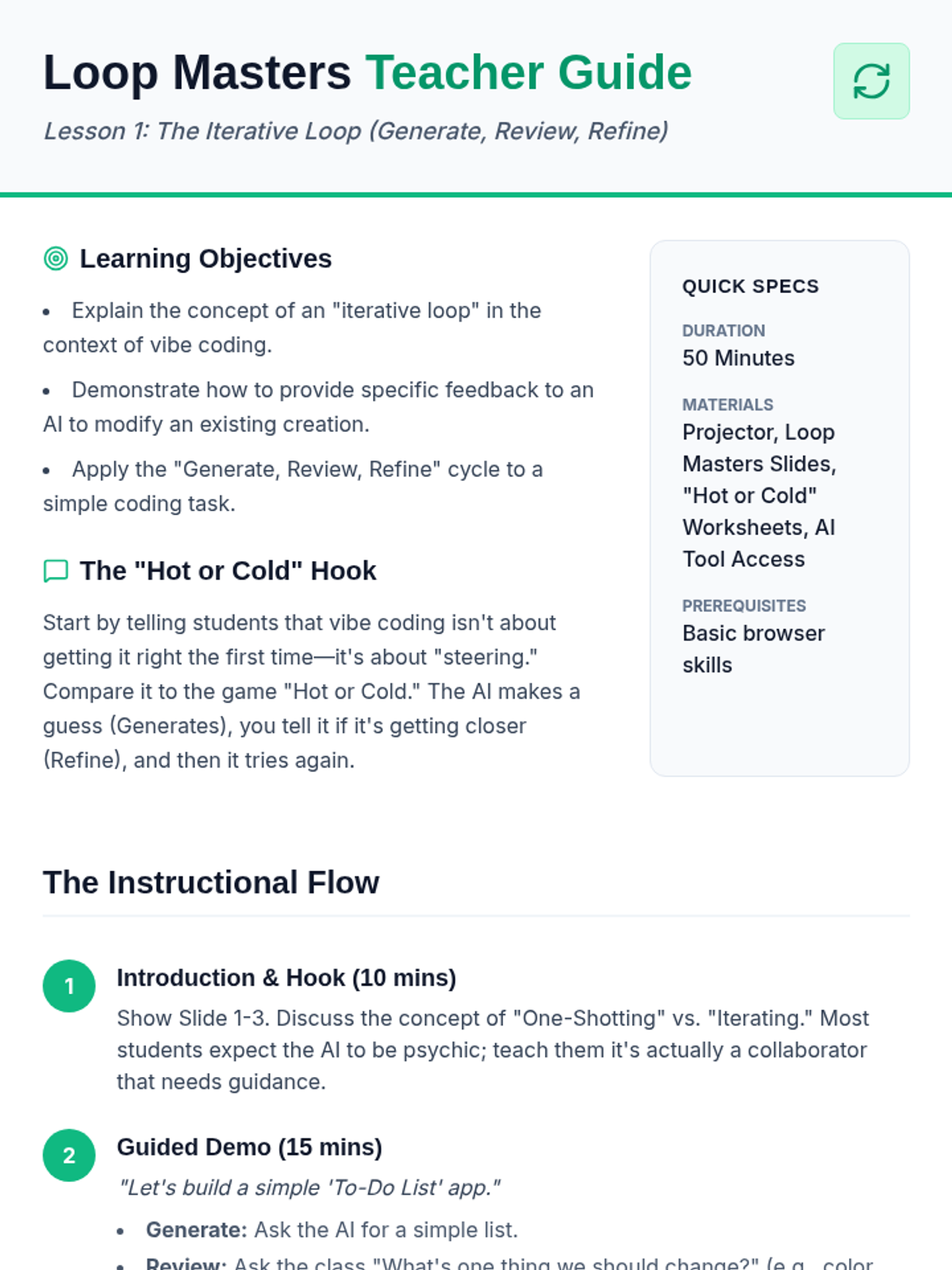
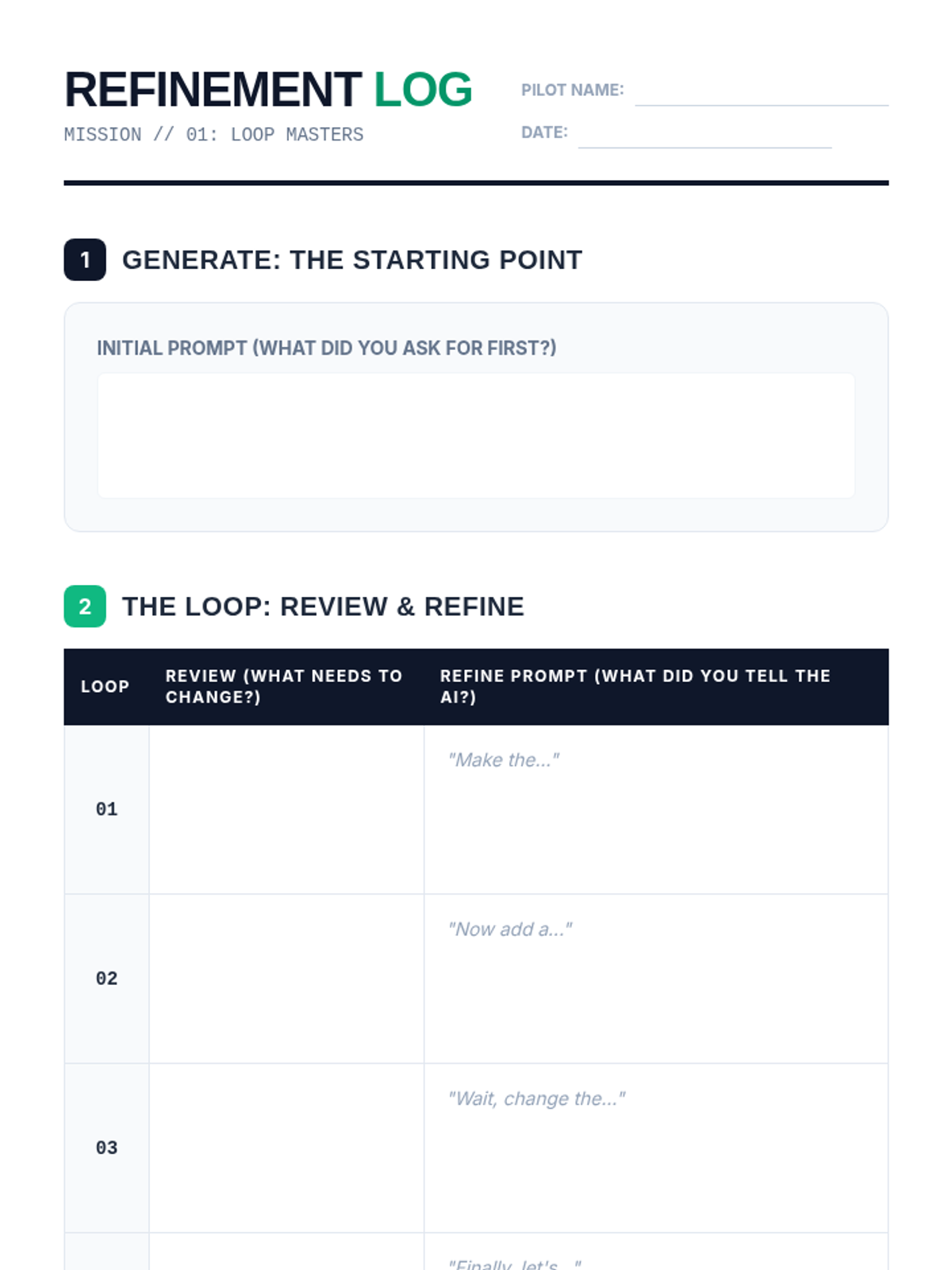
Vibe Pilots

A sequence focused on the iterative nature of vibe coding, teaching students how to refine AI-generated software through dialogue and layered instructions rather than manual code editing.

Lenny Avatar
Lenny
1/17
Sequence
Digital Defense Slides
Digital Defense Lab Activity
Digital Defense Teacher Guide

Tech Titan Academy

A comprehensive technology applications sequence covering Internet Safety & Ethics, Computer Hardware, and Spreadsheet Data Management. Designed for middle or high school students to build foundational digital literacy and technical skills.

R

rthrogmorton

Other
3/30
Sequence
Network Secrets Slides
Packet Sniffer Activity
Cafeteria Chaos Teacher Guide

Cyber Security Lab

This sequence explores how data is protected as it travels through networks. Students will learn about network vulnerabilities, the history and application of cryptography, the logic of public key encryption, the role of HTTPS in web security, and how firewalls protect network boundaries.

Lenny Avatar
Lenny
1/17
Sequence
Signal Science Slides
Wave Watchers Worksheet
Signal Science Teacher Guide

Wireless World and IoT

Students explore the invisible world of wireless communication, examining how data travels without physical cables. The sequence covers the electromagnetic spectrum basics, compares wireless standards, investigates IoT, and concludes with a future-focused design project.

Lenny Avatar
Lenny
1/17
Sequence
Network Risk Radar Slides
Network Risk Radar Worksheet
Network Risk Teacher Guide

Cyber Security Ops

A comprehensive unit for 6th-grade students on network security, covering public vs. private networks, encryption basics, HTTPS, firewalls, and multi-factor authentication. Students transition from 'Digital Detectives' to 'Cyber Security Ops' as they learn to protect data in a connected world.

Lenny Avatar
Lenny
1/17
Sequence
Loop Master Guide
The Great Balance Slides
Stability Tracker Worksheet

System Cycles and AI Minds

This sequence introduces 6th-grade students to systems thinking through the lens of feedback loops in engineering and AI. Students will explore how balancing and reinforcing loops govern stability and growth, simulate machine learning processes, analyze the ethics of AI bias, and design their own smart feedback systems.
Lenny Avatar
Lenny
1/17
Sequence
Triage Center Slides
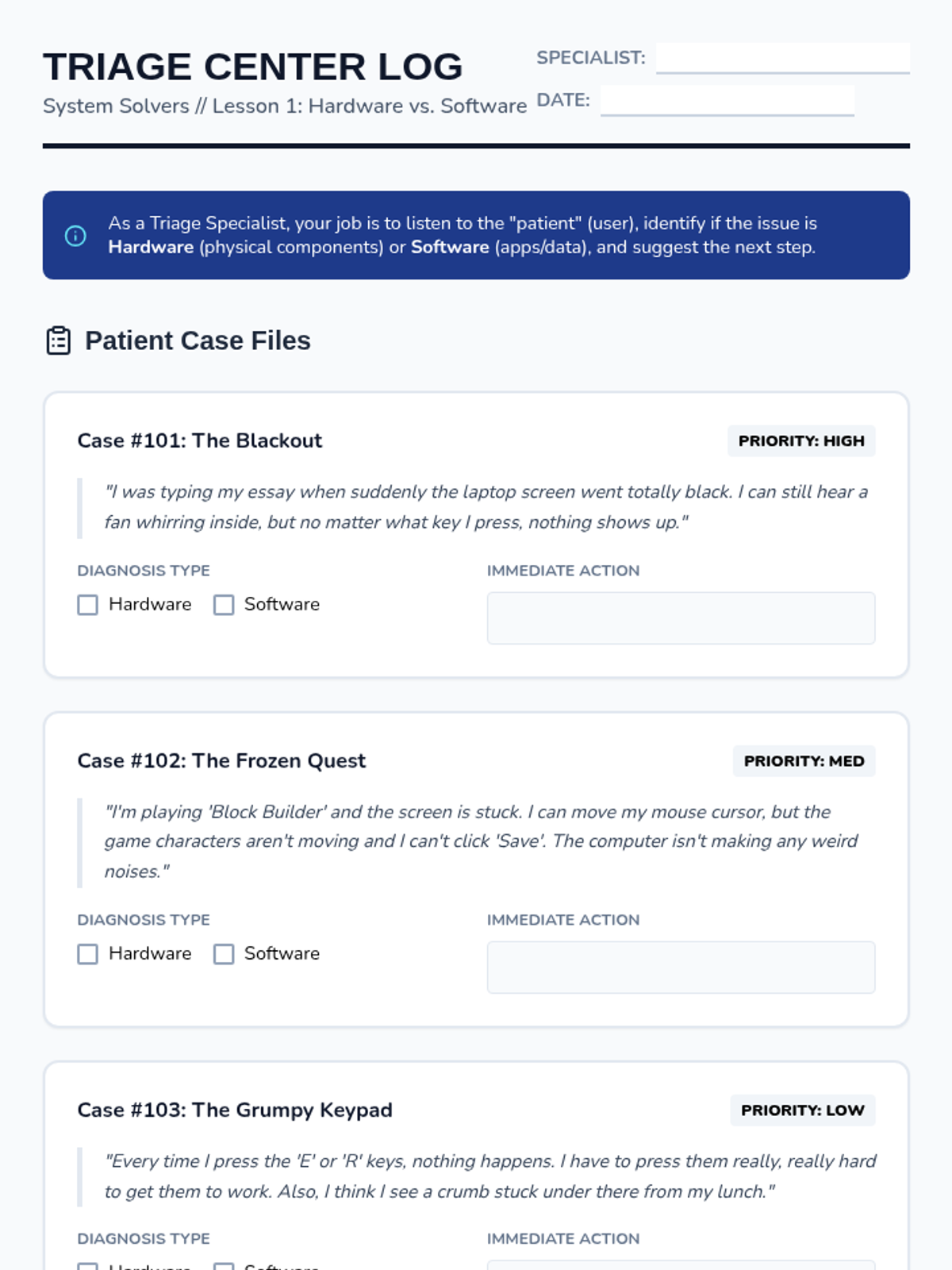
Triage Center Log Worksheet
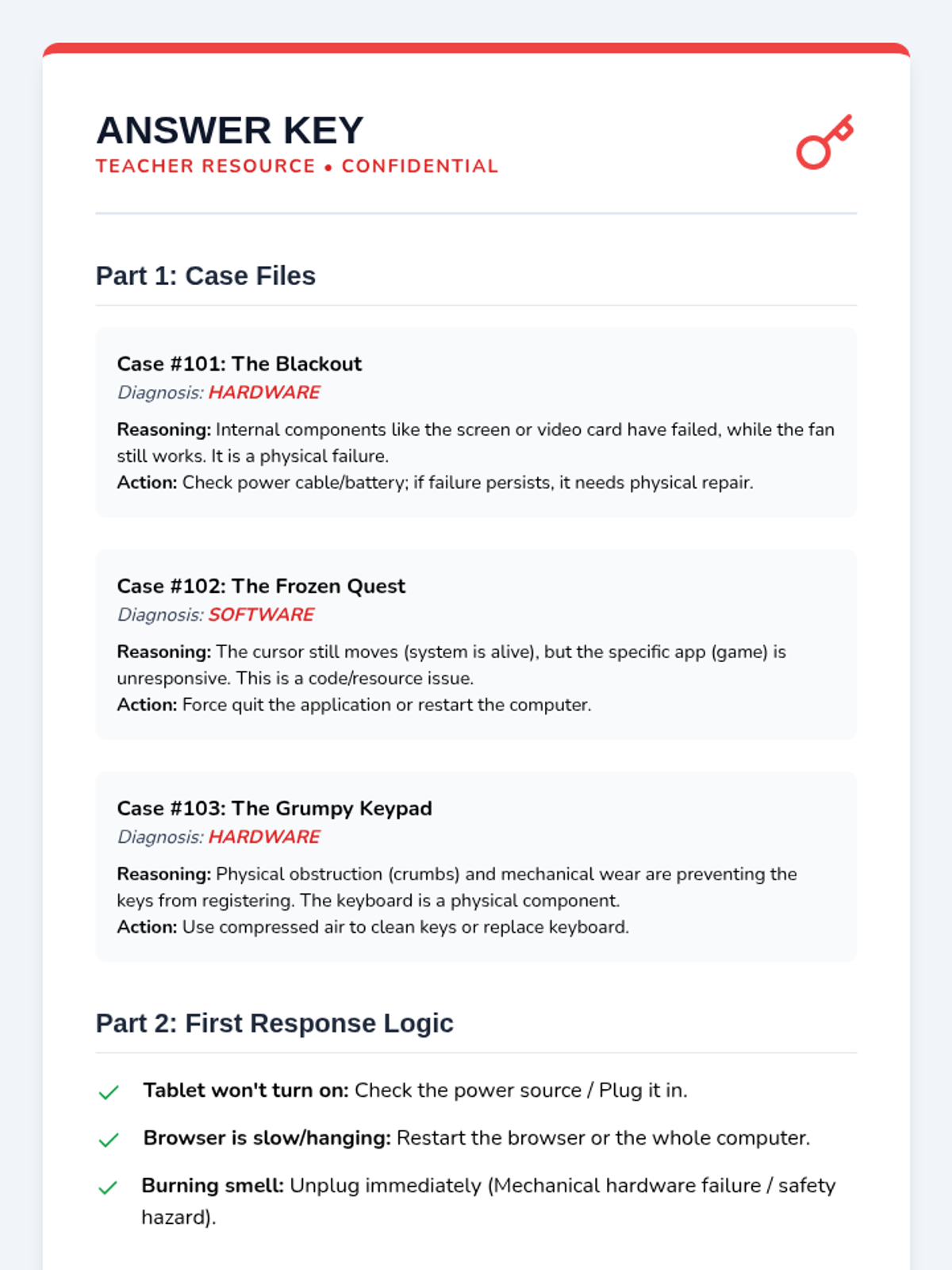
Triage Center Answer Key

System Solvers

A comprehensive 5-lesson unit for 6th graders on diagnosing computer problems, applying logical troubleshooting steps, and performing preventive maintenance to keep systems running smoothly.

Lenny Avatar
Lenny
1/17
Sequence
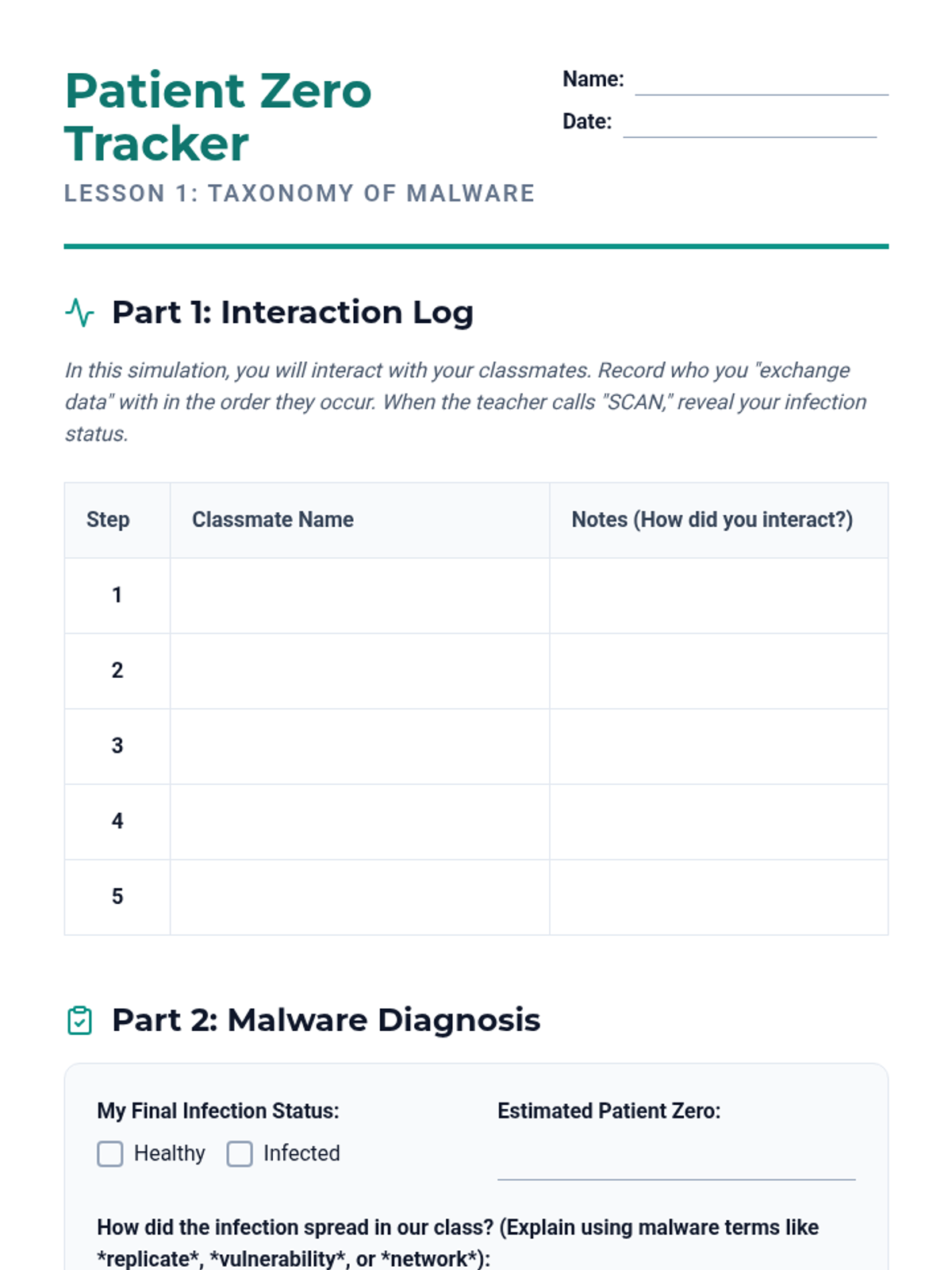
Infection Files Slides
Patient Zero Activity Sheet
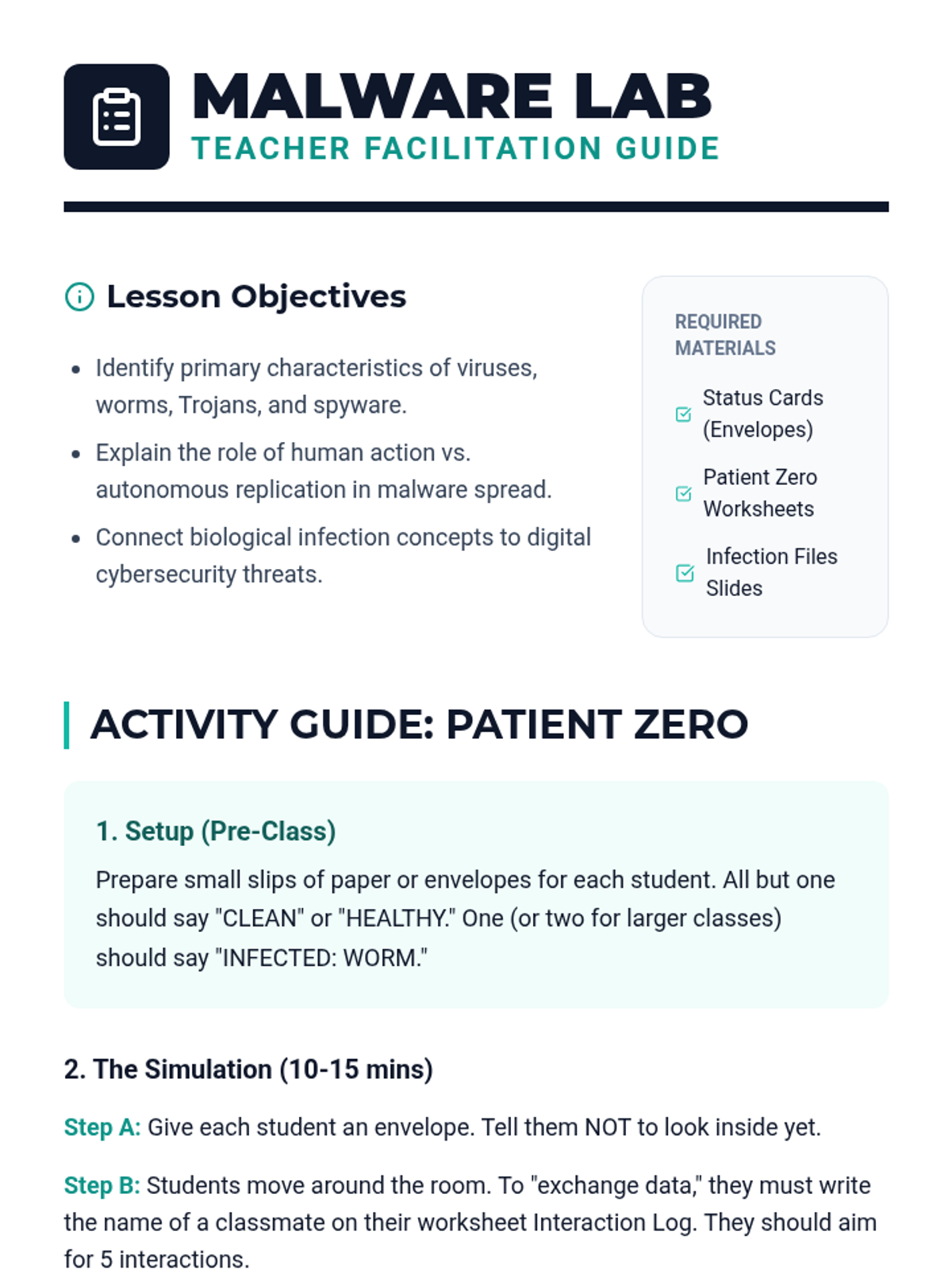
Malware Lab Teacher Guide

Digital Pathologists Malware Defense

This sequence explores the biological parallels between organic viruses and computer malware to help students understand system defense. Students classify different types of malware, investigate ransomware case studies, understand the logic behind antivirus engines, and develop practical digital hygiene habits.

Lenny Avatar
Lenny
1/17
Sequence
Packet Power Slides
Human Network Teacher Guide
Packet Scavenger Worksheet

Network Guard Sequence

A 5-lesson sequence on network protocols and cybersecurity, covering packet switching, man-in-the-middle attacks, HTTPS, firewalls, and secure network design. Students use simulations and design projects to understand how data travels securely across the internet.

Lenny Avatar
Lenny
1/17
Sequence
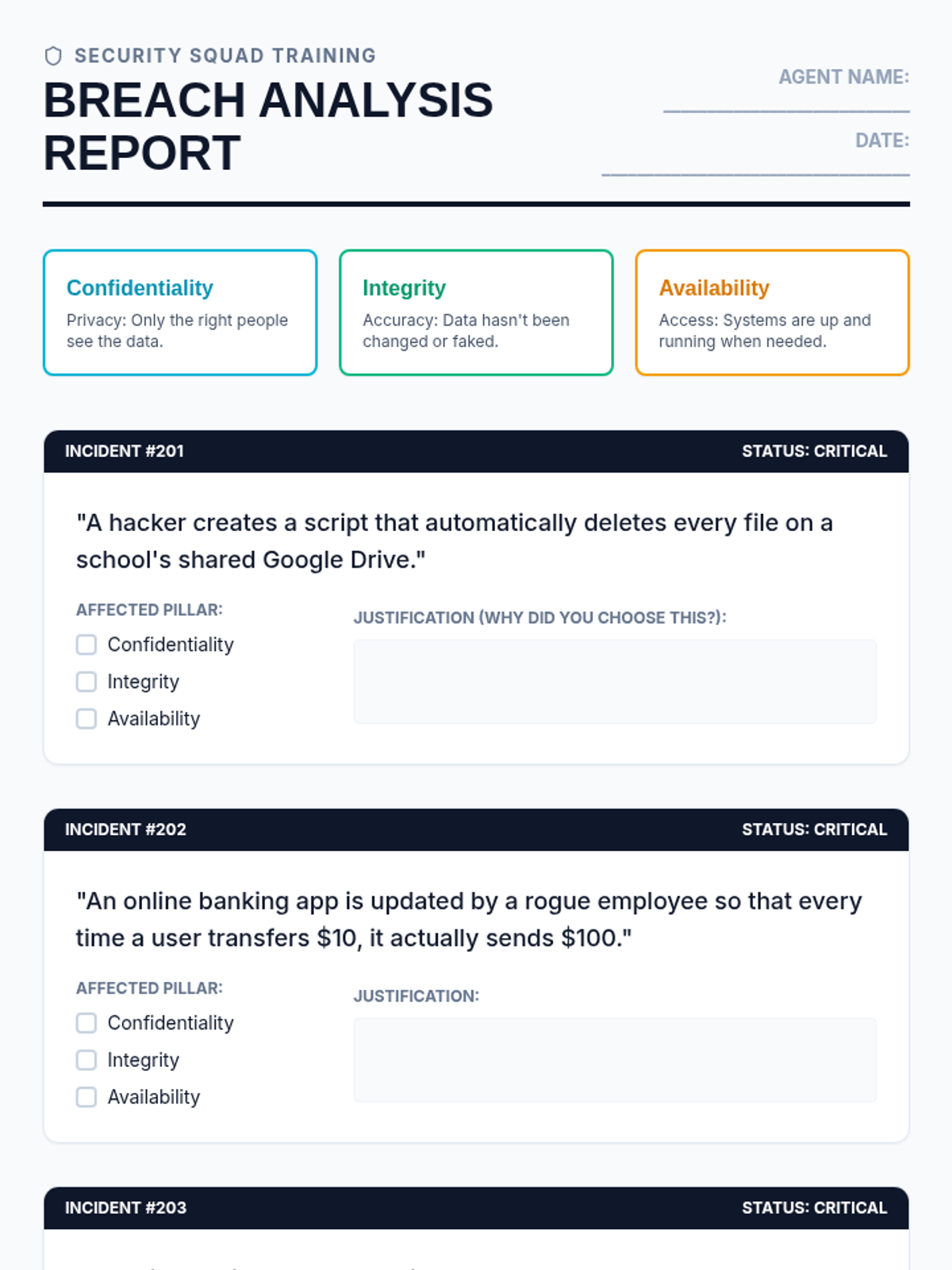
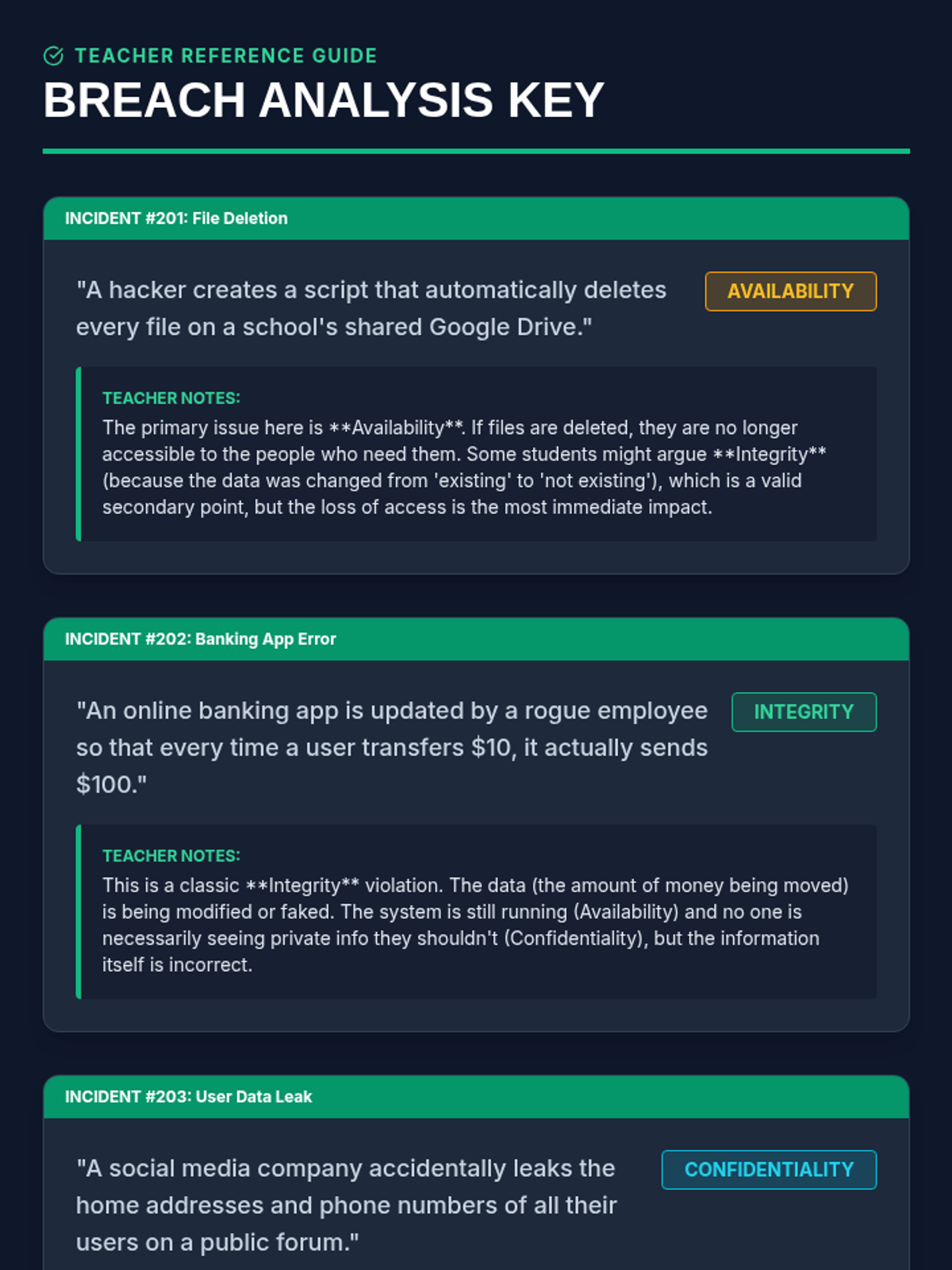
CIA Triad Slides Presentation
Security Breach Analysis Worksheet
Breach Analysis Answer Key

Security Squad Cyber Experts

This mastery-based sequence introduces 6th-grade students to cybersecurity through the CIA Triad (Confidentiality, Integrity, Availability). Students adopt the 'White Hat' hacker mindset to identify vulnerabilities and propose ethical solutions in a simulated security audit.

Lenny Avatar
Lenny
1/17
Sequence
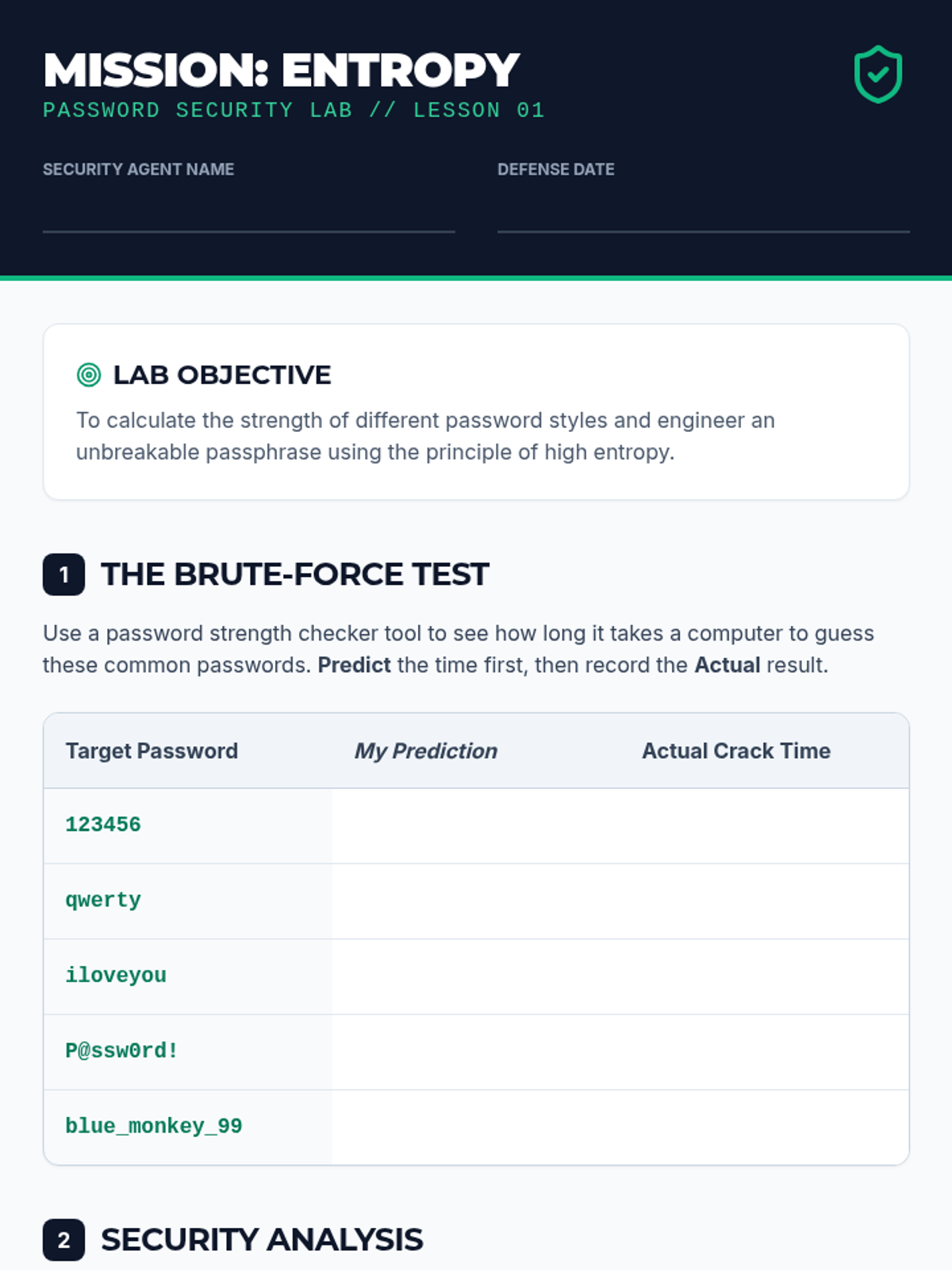
Password Power Slides
Password Strength Lab Worksheet

Digital Defense Lab

A hands-on workshop sequence where 6th-grade students learn to harden their personal digital security. This unit transforms students from passive users into active defenders by teaching them the mechanics of passwords, multi-factor authentication, software updates, and privacy settings.

Lenny Avatar
Lenny
1/17
Sequence
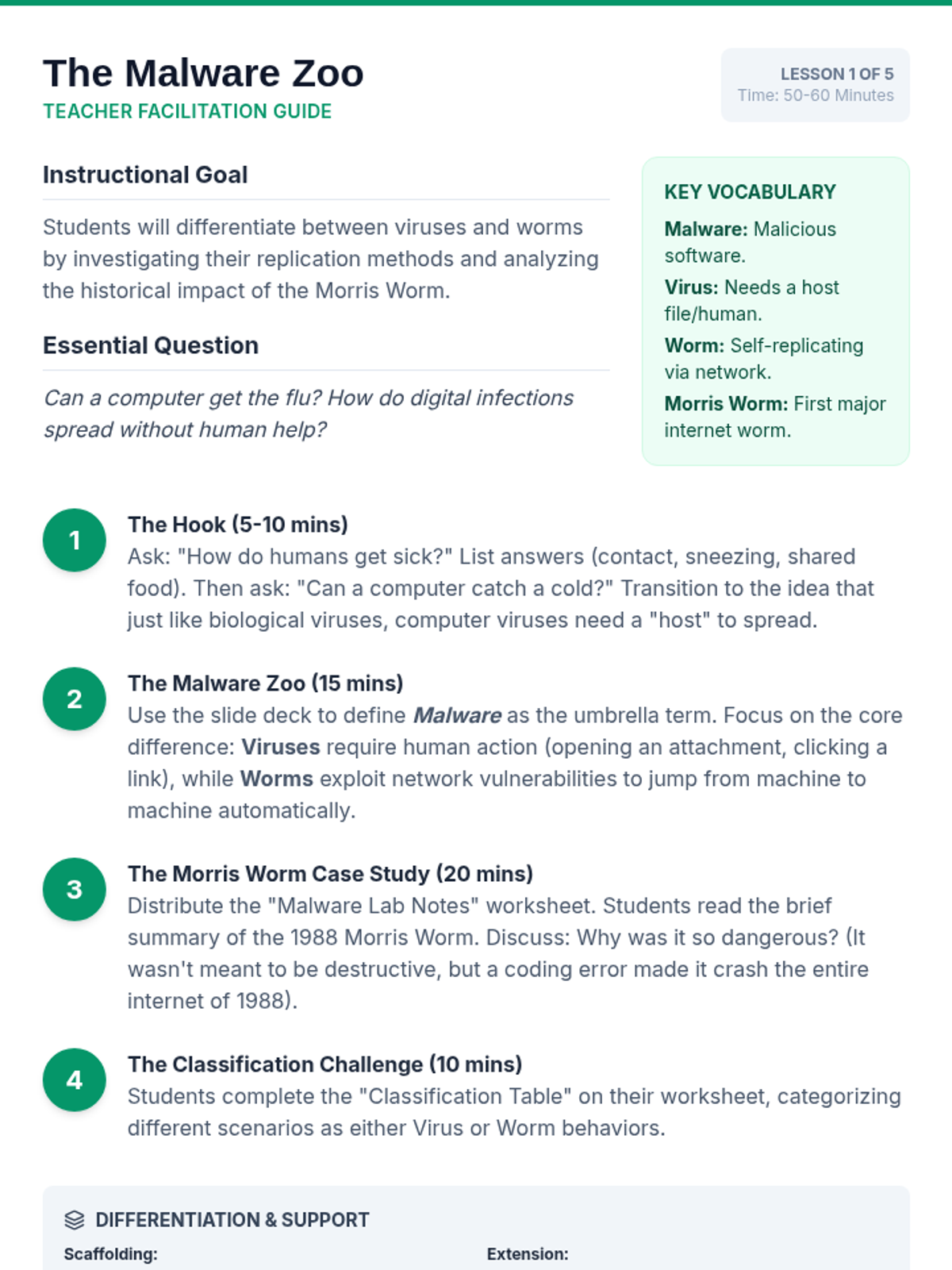
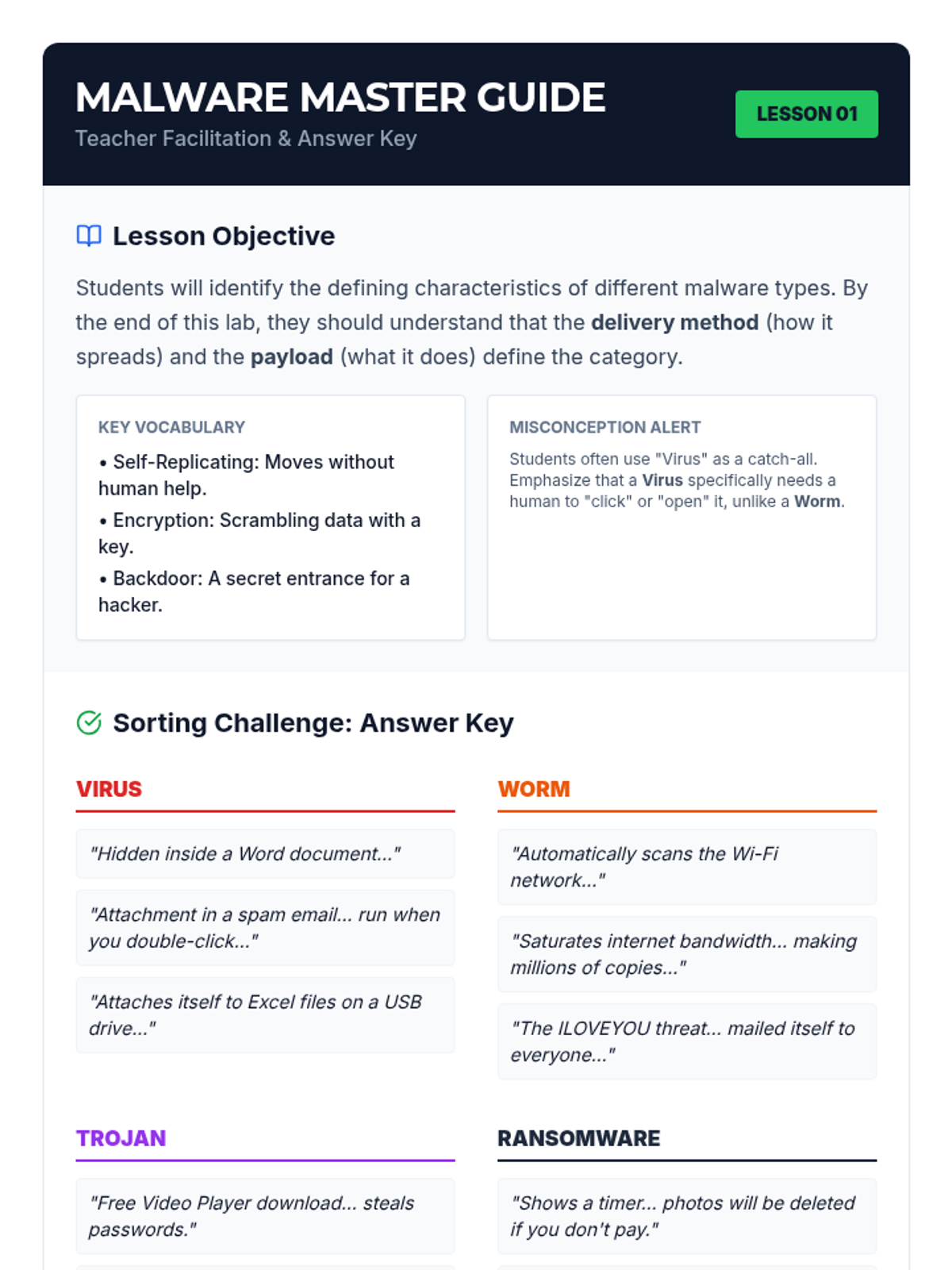
Malware Zoo Teacher Guide
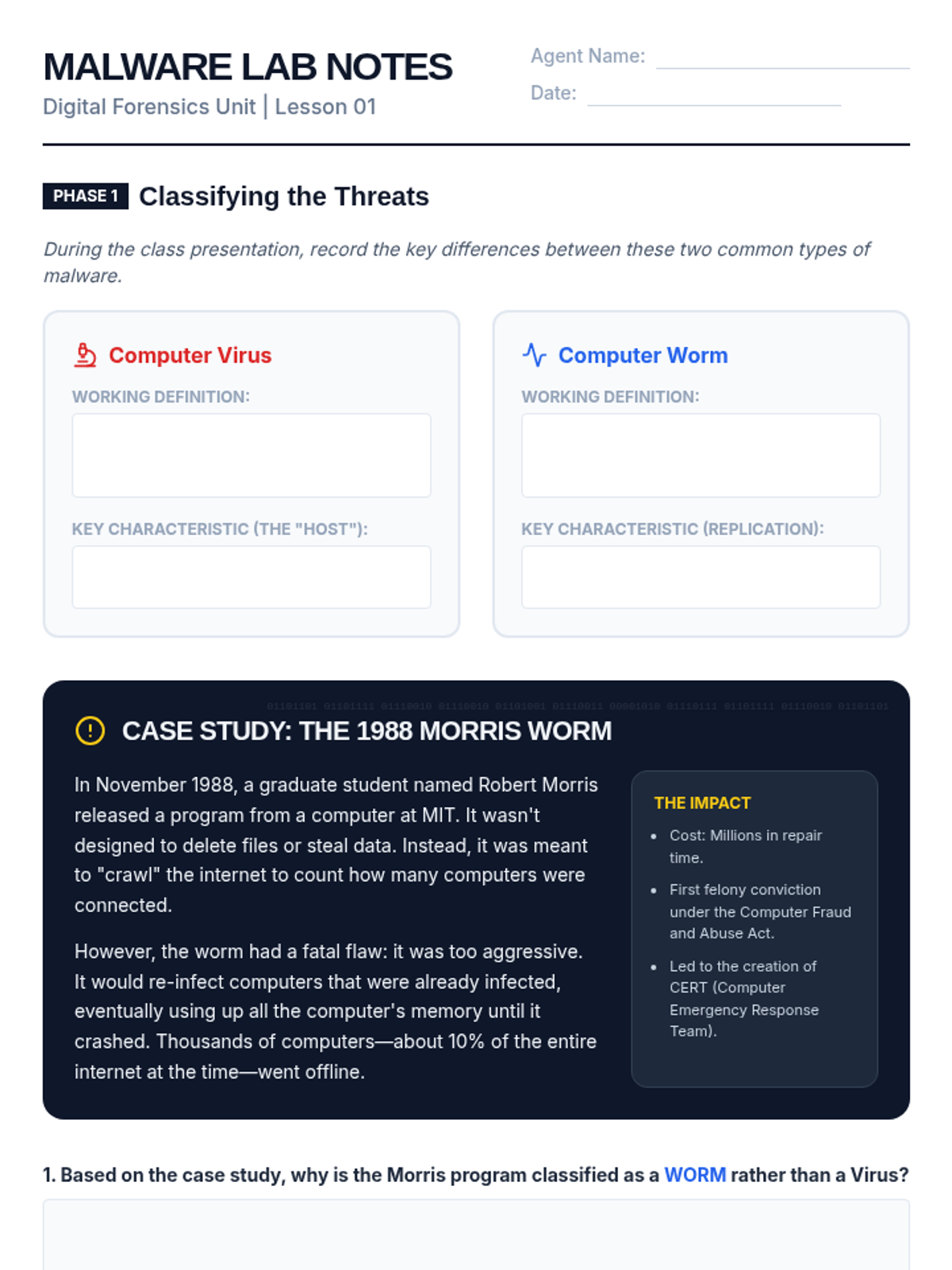
Malware Lab Notes Worksheet
Malware Zoo Slides

Cyber Detectives Sequence

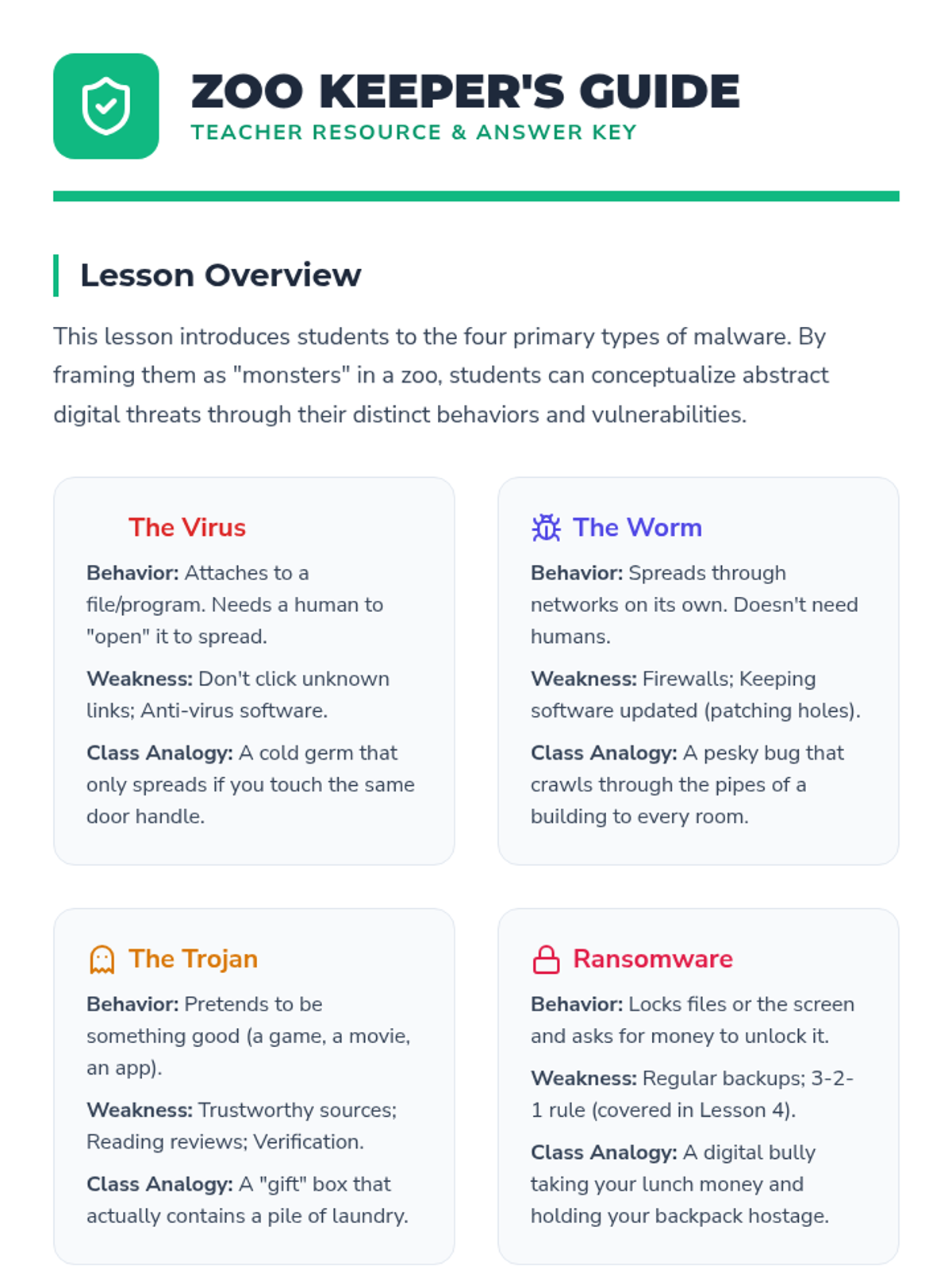
An inquiry-driven exploration of malware and social engineering, focusing on how attackers exploit software and human psychology. Students learn to identify threats and advocate for digital safety.

Lenny Avatar
Lenny
1/17
Sequence
Global Web Slides
Yarn Web Guide

Cyber Guard Network Security

A 5-lesson sequence for 6th graders exploring how data travels securely across the internet through packets, protocols, and firewalls. Students engage in simulations and design projects to understand the invisible infrastructure of our digital world.

Lenny Avatar
Lenny
1/17
Sequence
Caesar Shift Slides
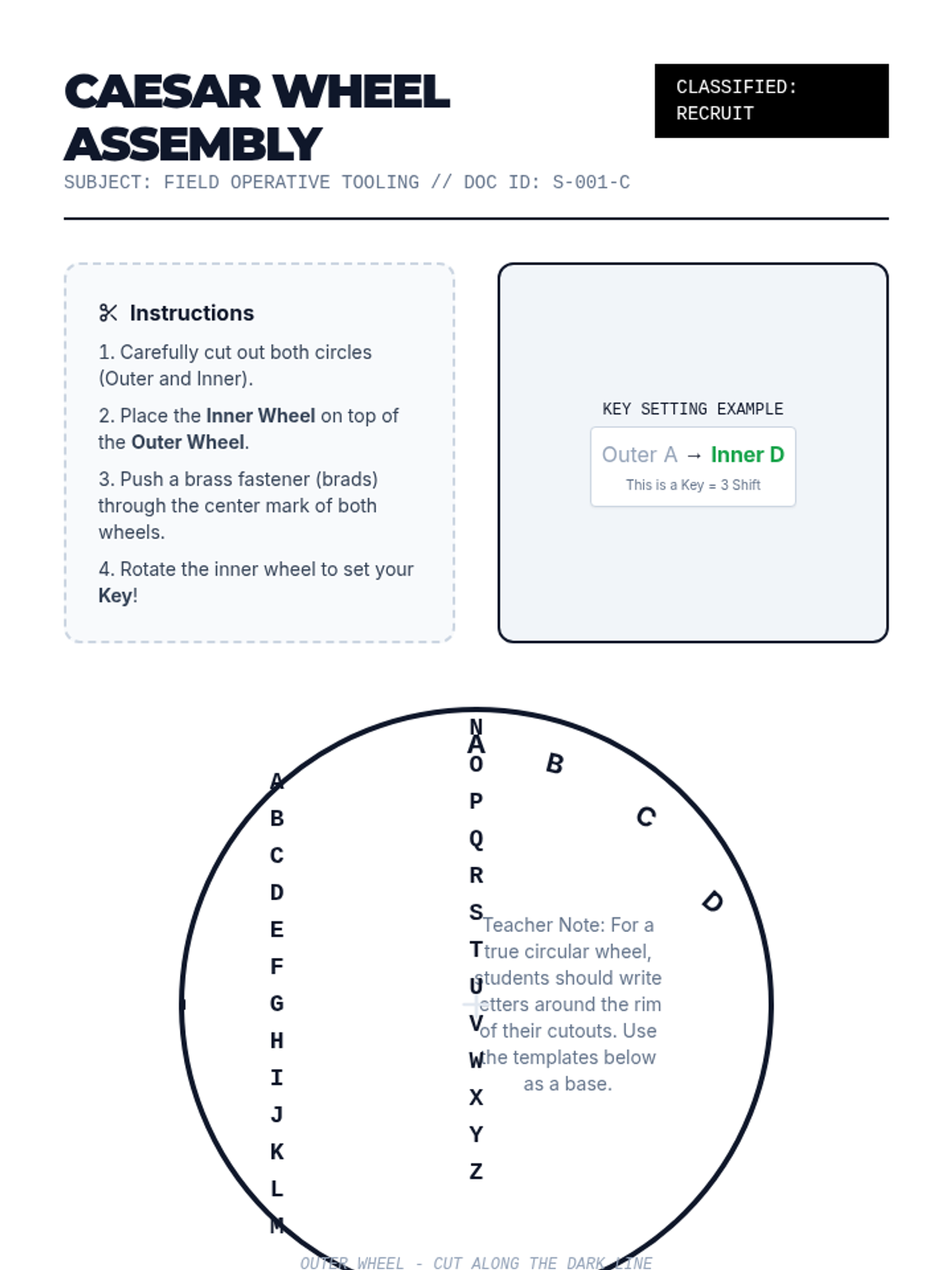
Caesar Wheel Worksheet
Caesar Teacher Guide

Secret Code Academy

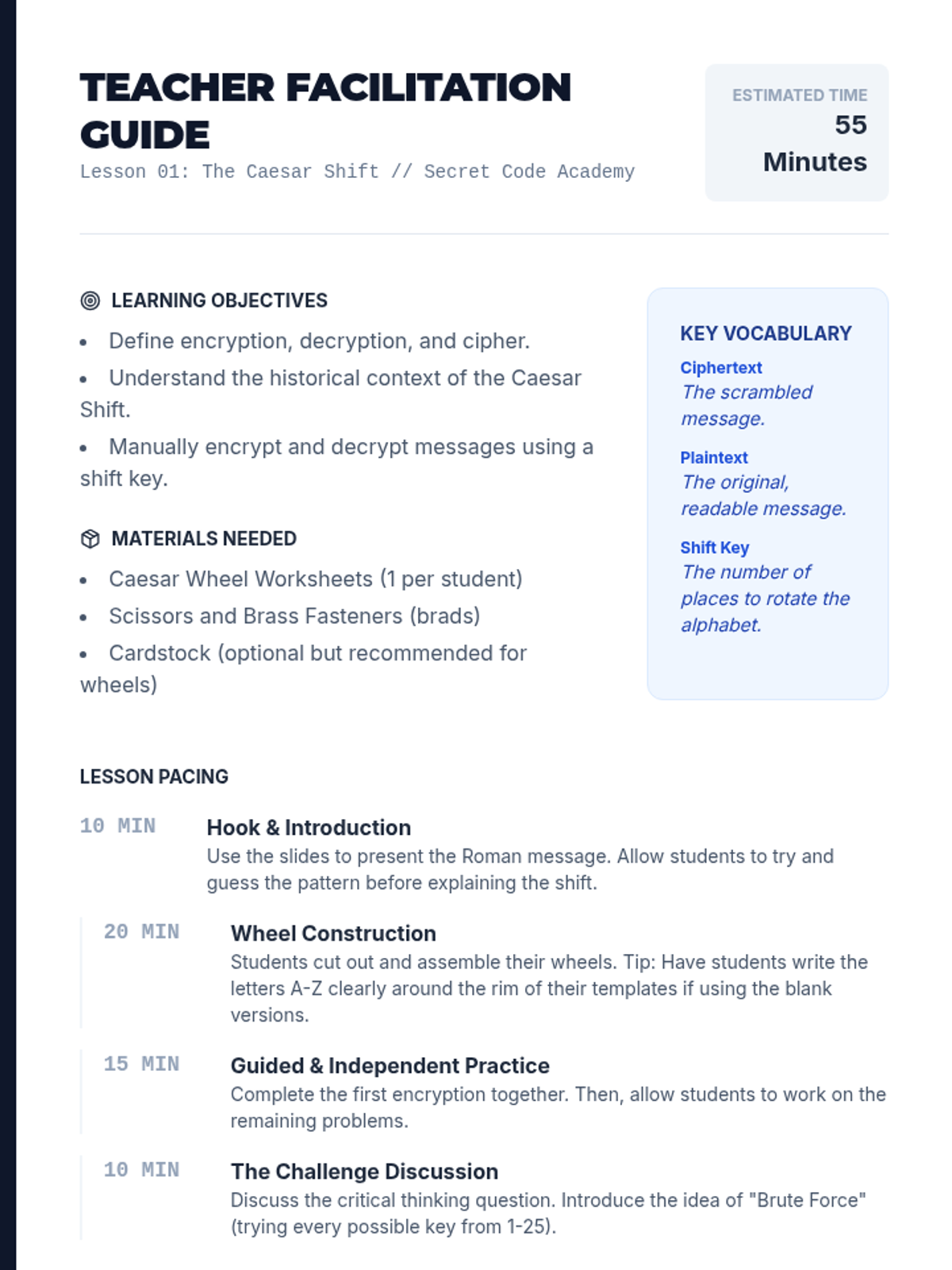
A comprehensive introduction to cryptography for 6th-grade students, covering historical methods like Caesar and Vigenère ciphers, frequency analysis, and conceptual modern encryption like public-key systems. Students will engage in hands-on code-breaking and simulations to understand data privacy.
Lenny Avatar
Lenny
1/17
Sequence
Malware Zoo Slides
Malware Trading Cards Worksheet
Malware Zoo Teacher Guide

System Vulnerabilities and Defensive Strategy

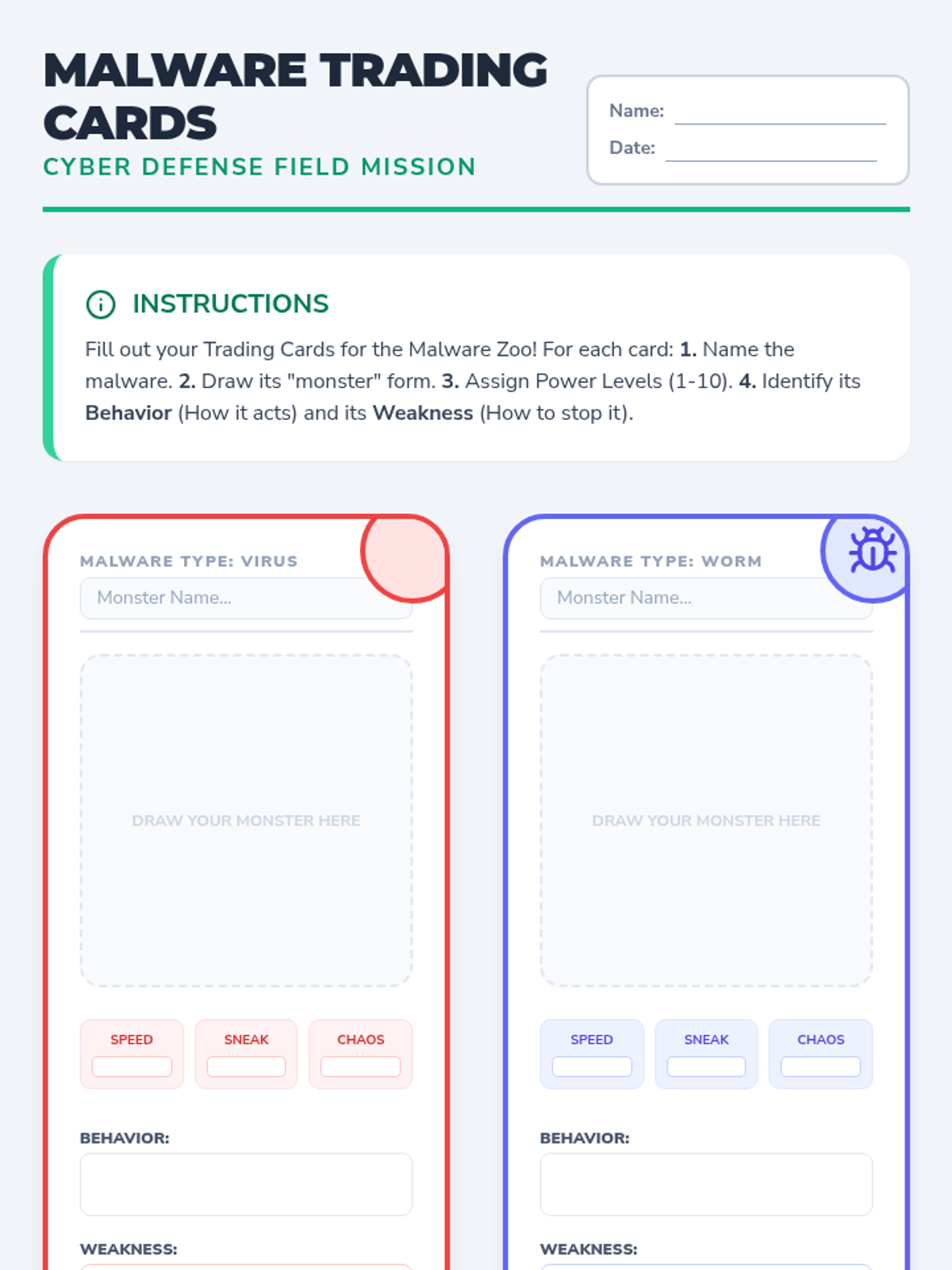
Students explore software threats and defensive strategies, culminating in the creation of a comprehensive 'Cyber Defense Plan'. Through hands-on activities like malware trading cards and backup simulations, they learn to keep digital devices healthy.

Lenny Avatar
Lenny
1/17
Sequence
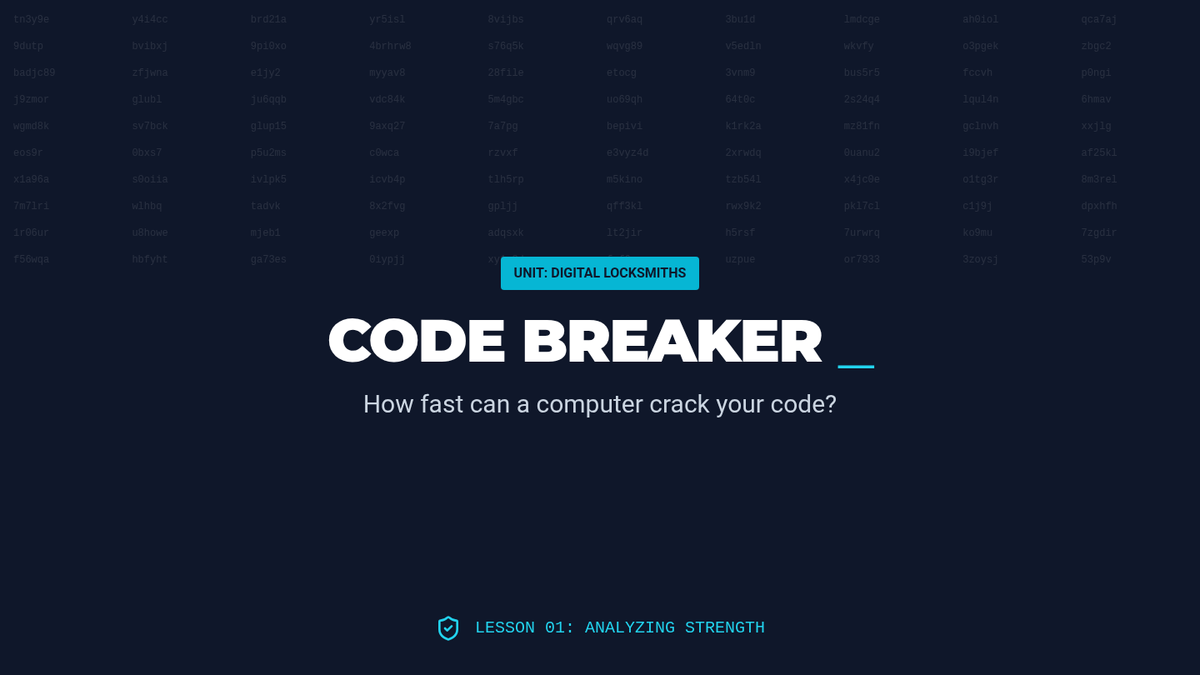
Code Breaker Slides
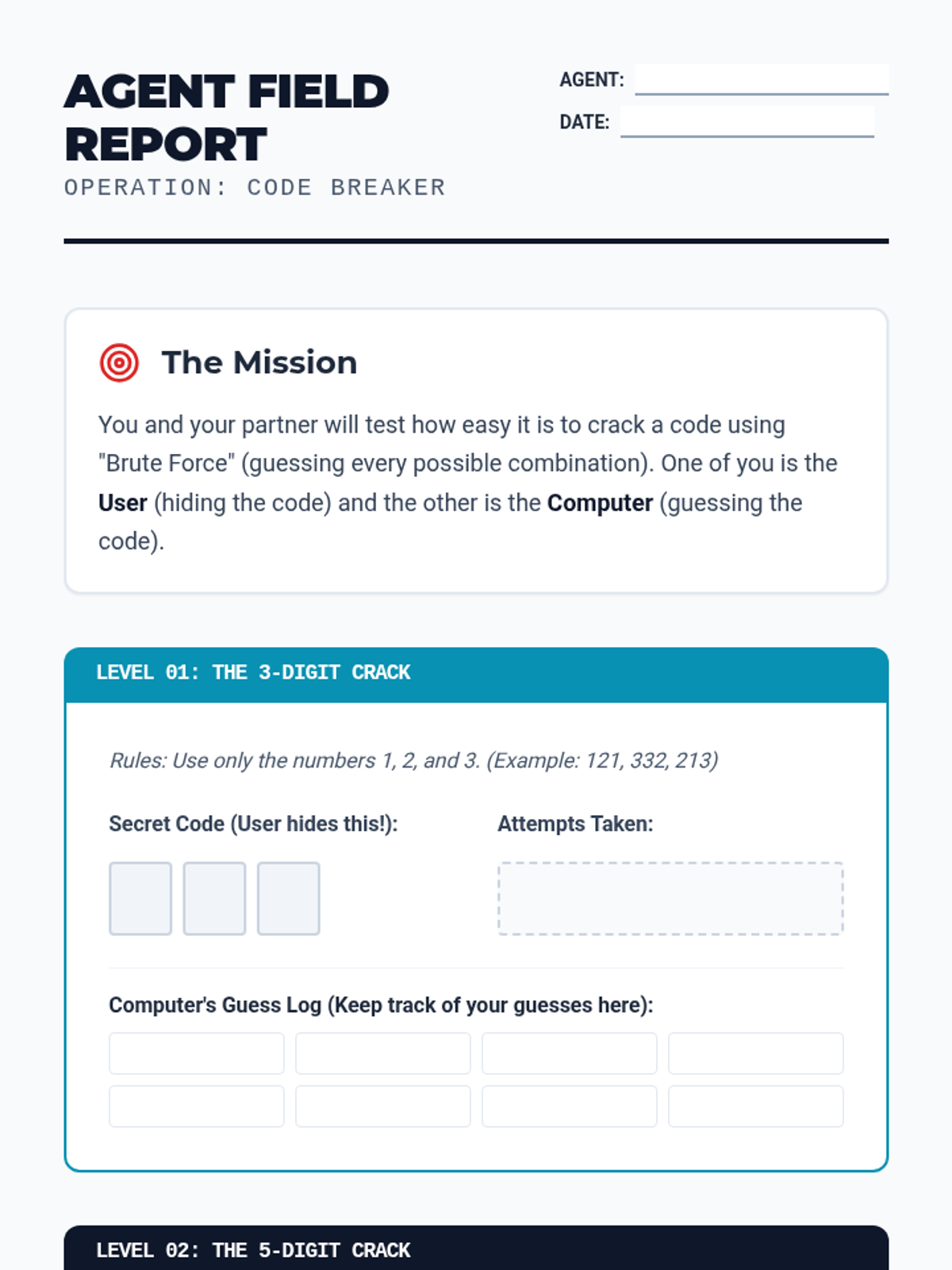
Code Breaker Worksheet
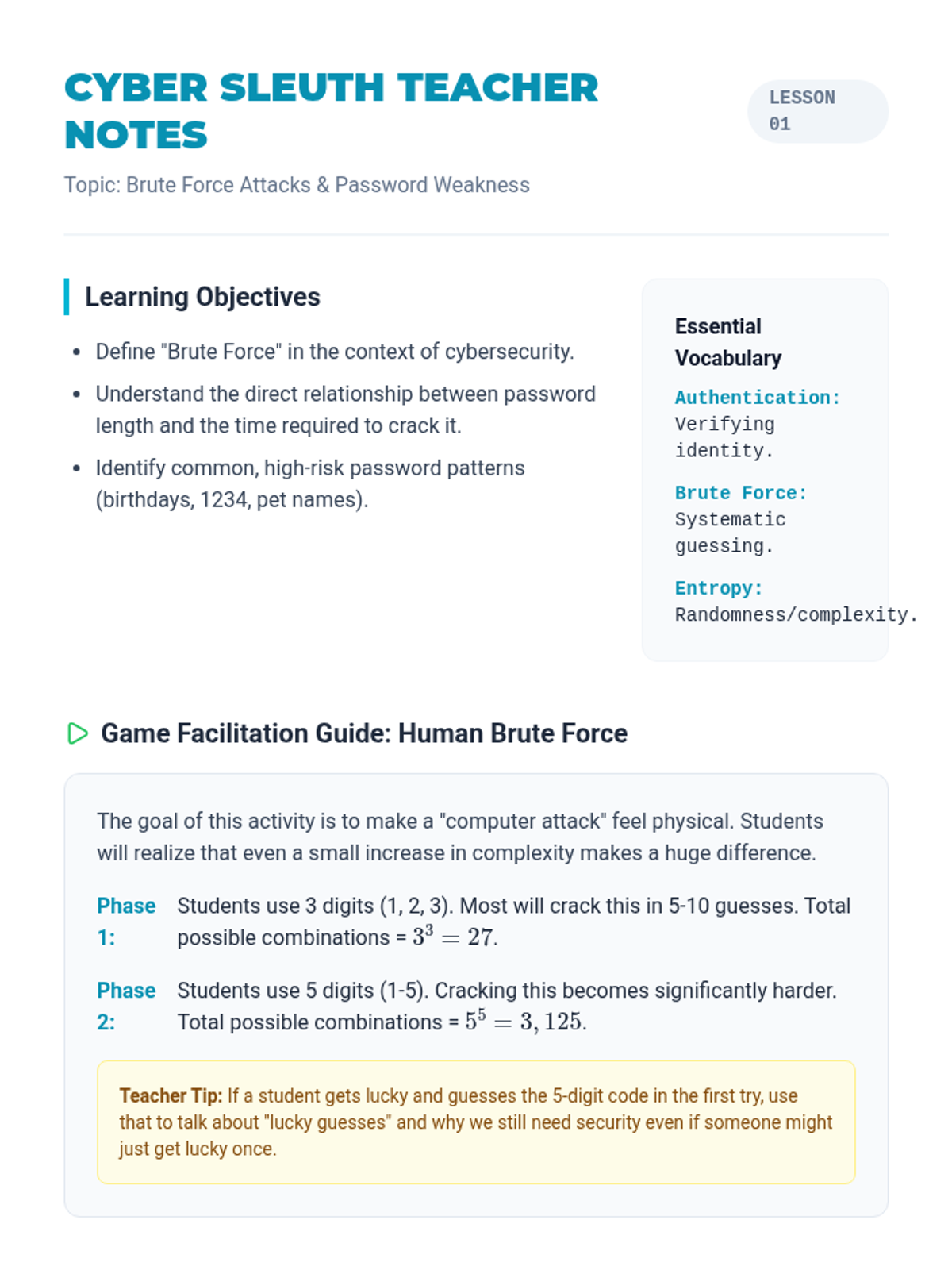
Cyber Sleuth Teacher Notes

Digital Locksmiths

Students engage in a game-based exploration of authentication to understand how systems verify identity. The sequence covers the mechanics of passwords, the vulnerability of simple patterns, and the concept of multi-factor authentication. Through guessing games and logic puzzles, students learn to construct strong passphrases and understand why digital locks need multiple keys.
Lenny Avatar
Lenny
1/17
Sequence
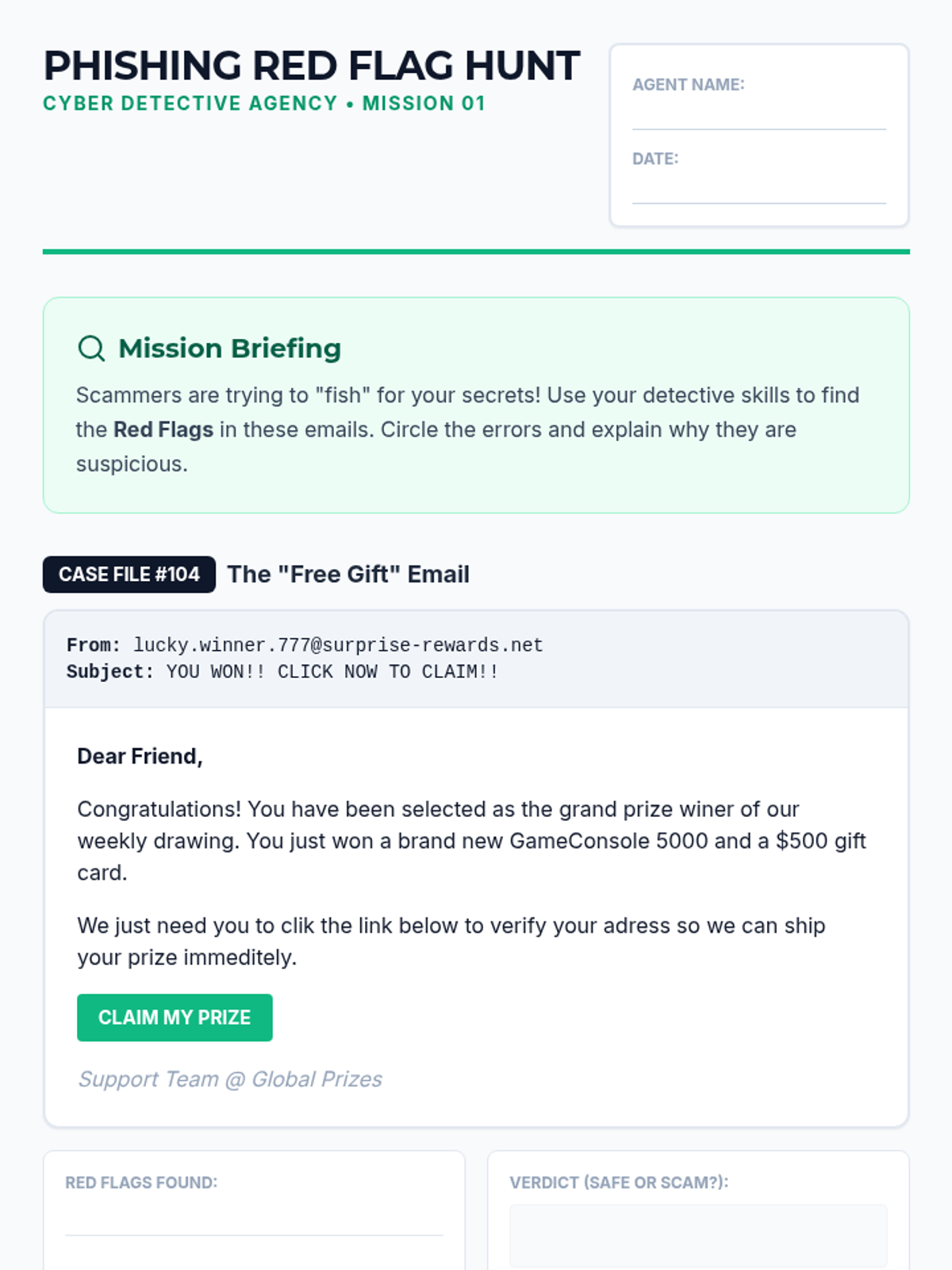
Phishing Red Flag Slides
Phishing Red Flag Worksheet
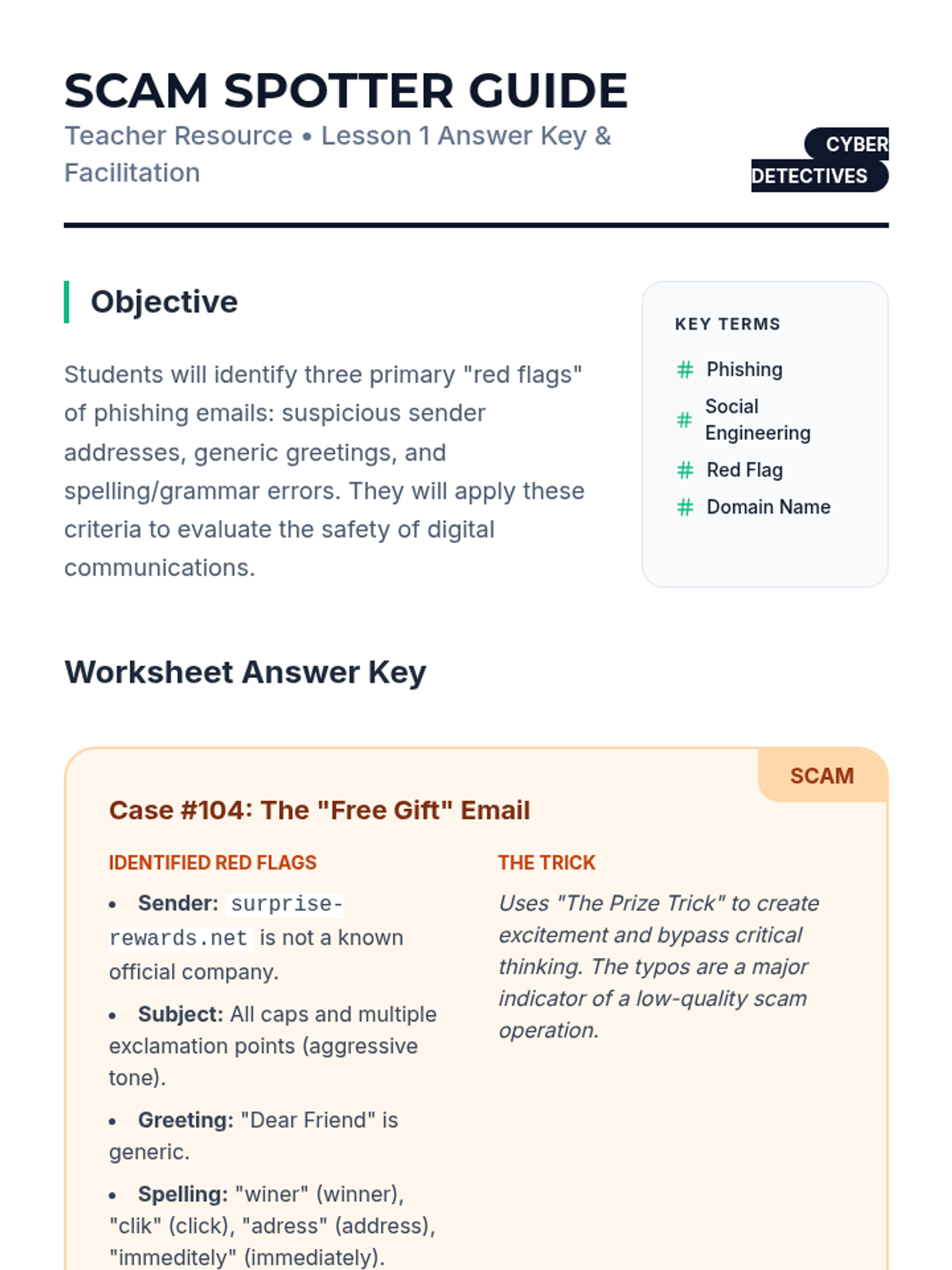
Scam Spotter Teacher Guide

Cyber Detectives Scam Squad

Students become 'Cyber Detectives' to uncover the tricks of social engineering. They learn to identify phishing emails, analyze suspicious links, recognize emotional manipulation, and develop clear response plans for digital threats.
Lenny Avatar
Lenny
1/17
Sequence
Malware Menace Slides
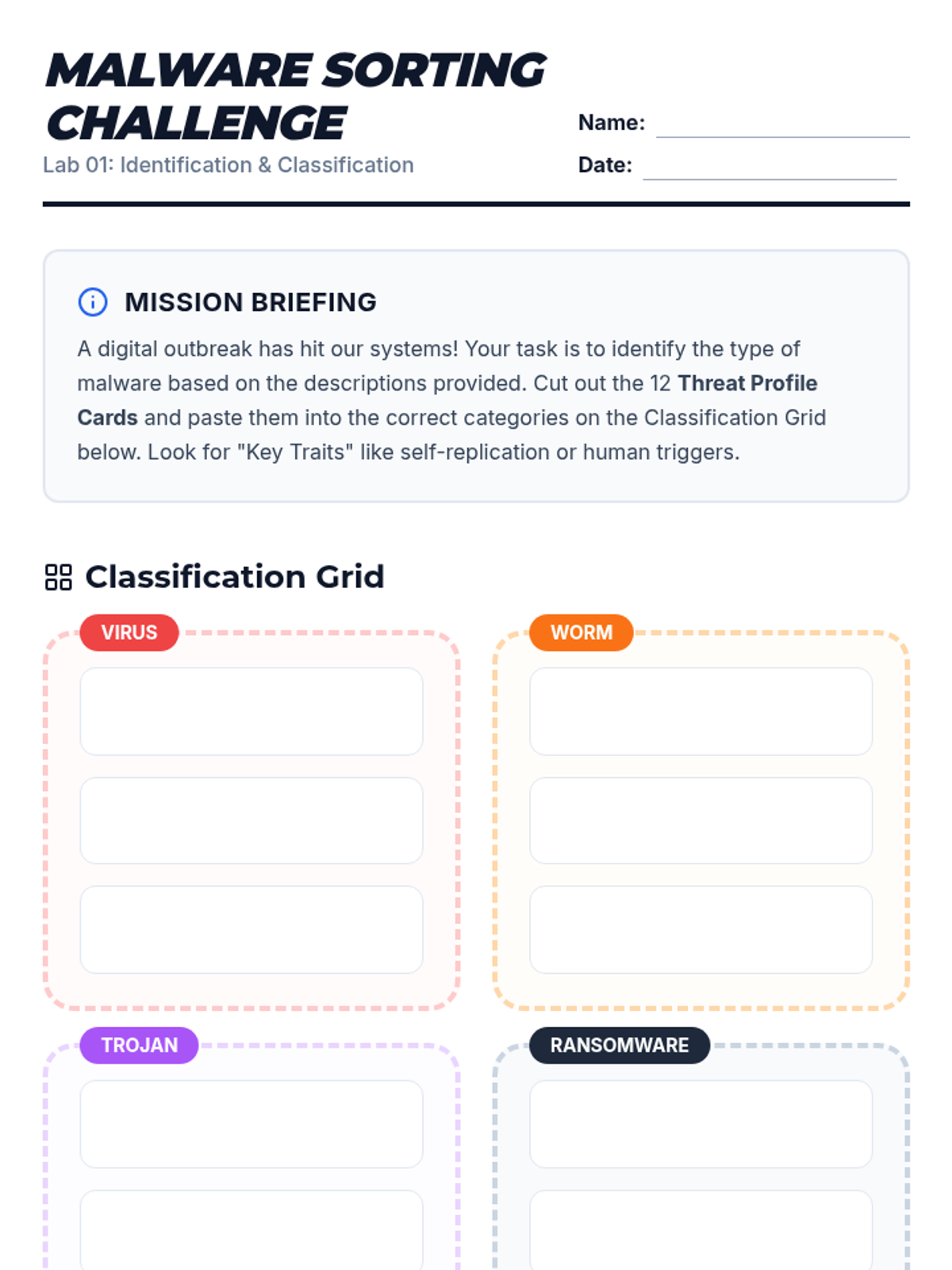
Malware Sorting Challenge
Malware Master Guide

System Defense

A technical exploration of malware types, historical cyber incidents, and defensive mechanisms like antivirus software and software patching, culminating in an incident response guide.

Lenny Avatar
Lenny
1/17
Sequence
Hidden Connections Slides
Device Audit Worksheet
Hidden Connections Teacher Guide

Privacy Protectors

Students explore the intersection of technology and personal privacy by investigating the Internet of Things (IoT). They learn to identify sensors, analyze data collection practices, decode simplified privacy policies, and culminate in a design project to create privacy-centric smart devices.

Lenny Avatar
Lenny
1/17
Sequence
Robot Brains Slides
Robot Sort Activity
Robot Brains Teacher Guide

AI Explorer Path

A comprehensive K-8 curriculum designed to build foundational AI literacy through understanding, evaluation, application, and ethics. Each grade level tackles a specific theme, progressing from basic robot concepts to complex algorithmic bias and societal impact.

EW

Elizabeth Whitver

Other
4/4
Sequence
Digital Defense Slides
Digital Defense Lab Activity
Digital Defense Teacher Guide

Tech Titan Academy

A comprehensive technology applications sequence covering Internet Safety & Ethics, Computer Hardware, and Spreadsheet Data Management. Designed for middle or high school students to build foundational digital literacy and technical skills.

R

rthrogmorton

Other
3/30
Sequence
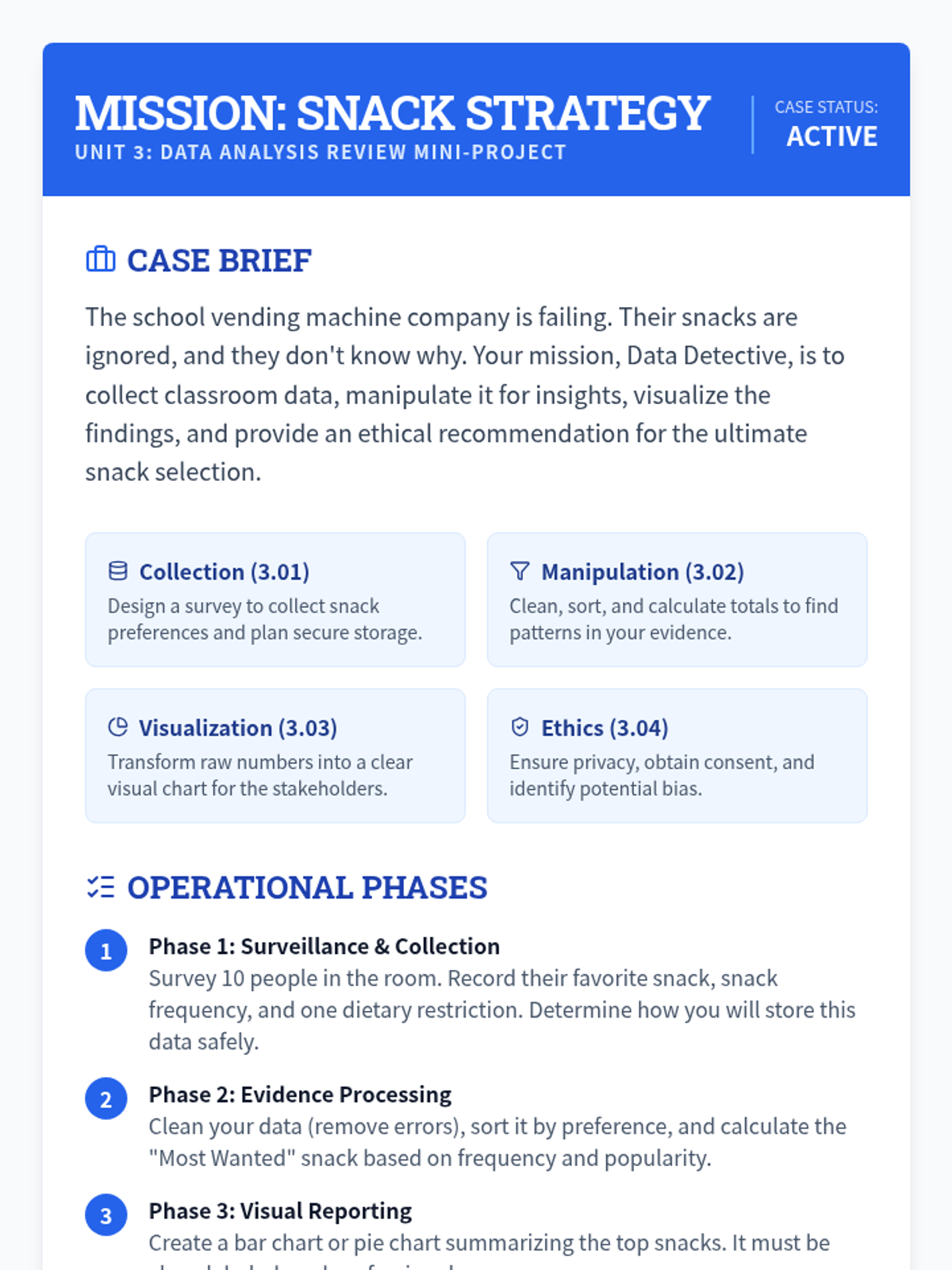
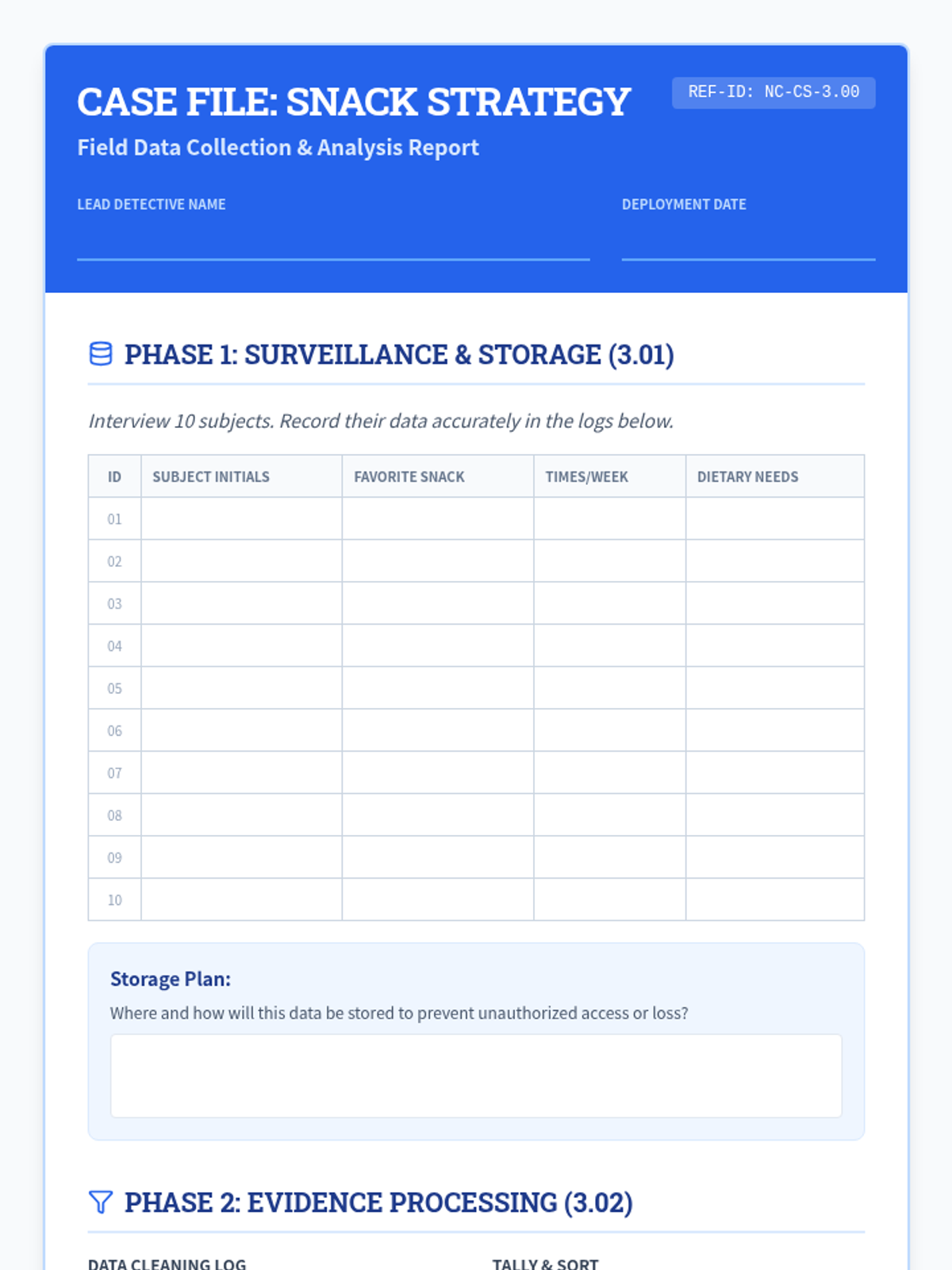
Snack Strategy Project Guide
Snack Strategy Worksheet
Snack Strategy Slides

Data Analysis Review

A review sequence for Unit 3 data analysis standards, focusing on collection, manipulation, visualization, and ethics through a hands-on mini-project.

SM

Sonya Miller

Computer Science Teacher
2/20
Sequence
Rule Breaker Slides
Sorting Strategy Worksheet
Rule Breaker Teacher Guide

Brainy Bot Lab AI Fundamentals

Students demystify Artificial Intelligence and Machine Learning through hands-on training, pattern recognition, and ethical analysis. They move from understanding basic coding differences to identifying real-world AI applications and recognizing the importance of unbiased data.

Lenny Avatar
Lenny
1/18
Sequence
Logic Lab Slides
Vibe Riddle Worksheet
Logic Lab Teacher Guide

Vibe Logic and Data Magic

This sequence explores the intersection of AI and computational thinking, teaching students to use natural language to solve complex logic puzzles, structure data, and automate tasks. Students move beyond syntax to focus on the 'vibe' of programming—the logic and architecture of solutions.

Lenny Avatar
Lenny
1/17
Sequence
Virtual Stress Test Slides
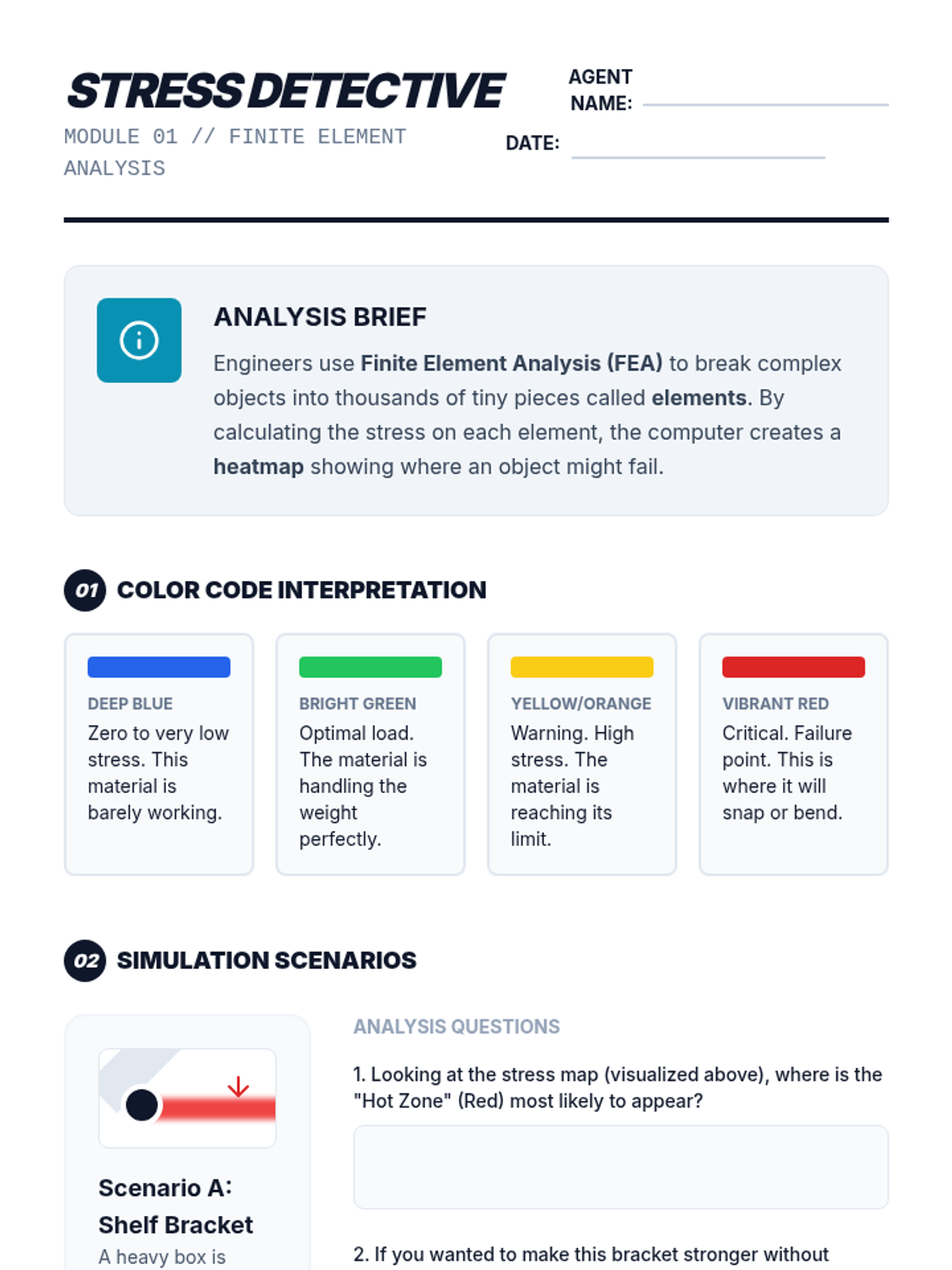
Stress Detective Worksheet

Design Alchemists

A 5-lesson sequence exploring how AI and simulation are revolutionizing engineering through generative design, topology optimization, and biomimicry. Students learn to use computers as co-designers to create lighter, stronger structures.

Lenny Avatar
Lenny
1/17
Sequence
Smart Brains Slides
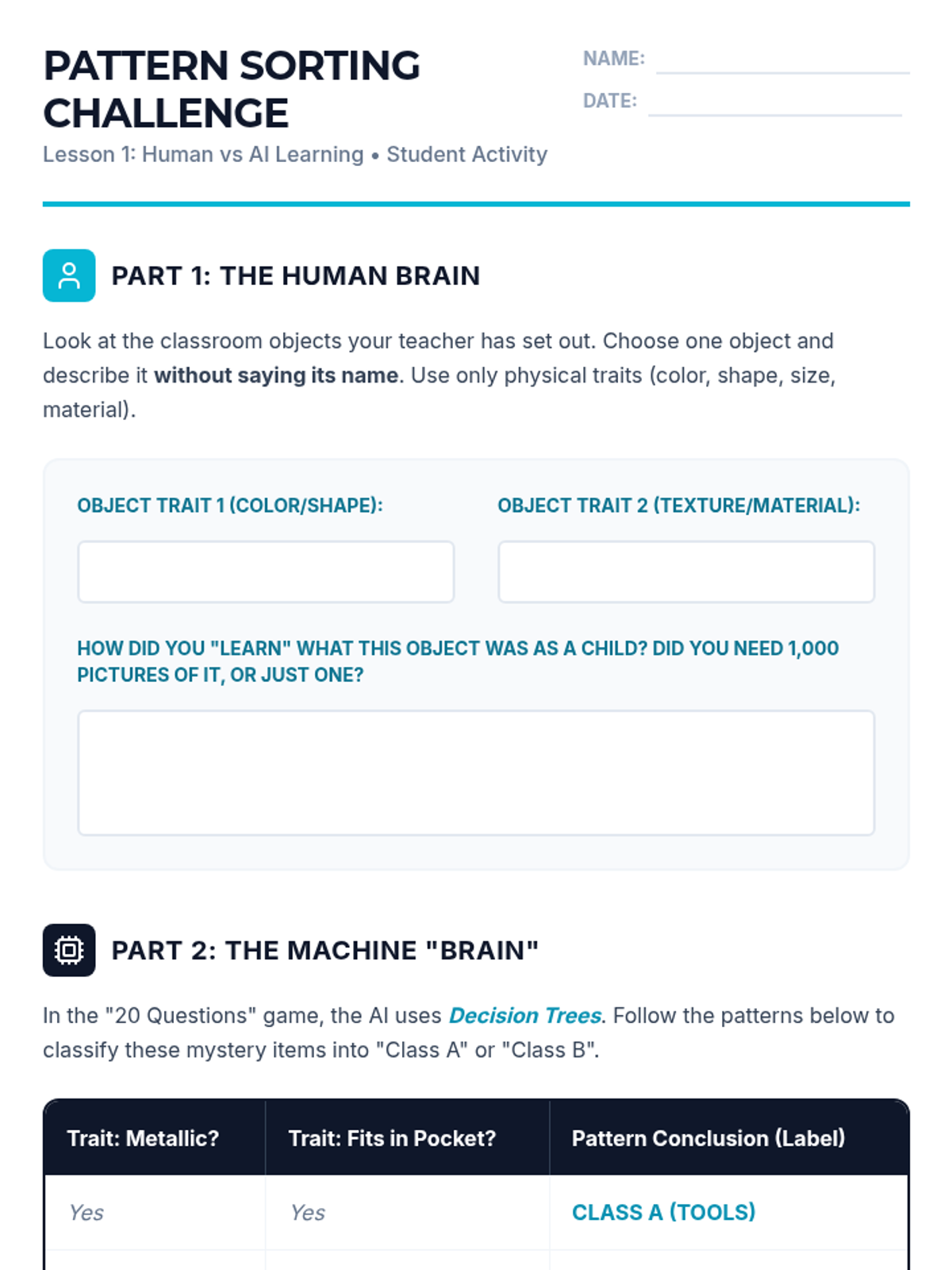
Pattern Sorting Worksheet
AI Logic Teacher Guide

Developing Reliable AI Models

A comprehensive sequence for 6th-grade students exploring the engineering practices behind AI. Students learn how data quality, variety, and testing determine the reliability and fairness of artificial intelligence systems.
Lenny Avatar
Lenny
1/17
Sequence
Sim Start Slides
Sim Launch Worksheet
Sim Launch Teacher Guide

Robo Sim Systems

This sequence explores robotic systems engineering through the lens of virtual simulation. Students learn to navigate simulators, analyze high-fidelity sensor data, and understand the critical 'Sim-to-Real' gap in engineering design.

Lenny Avatar
Lenny
1/17
Sequence
Search Race Slides
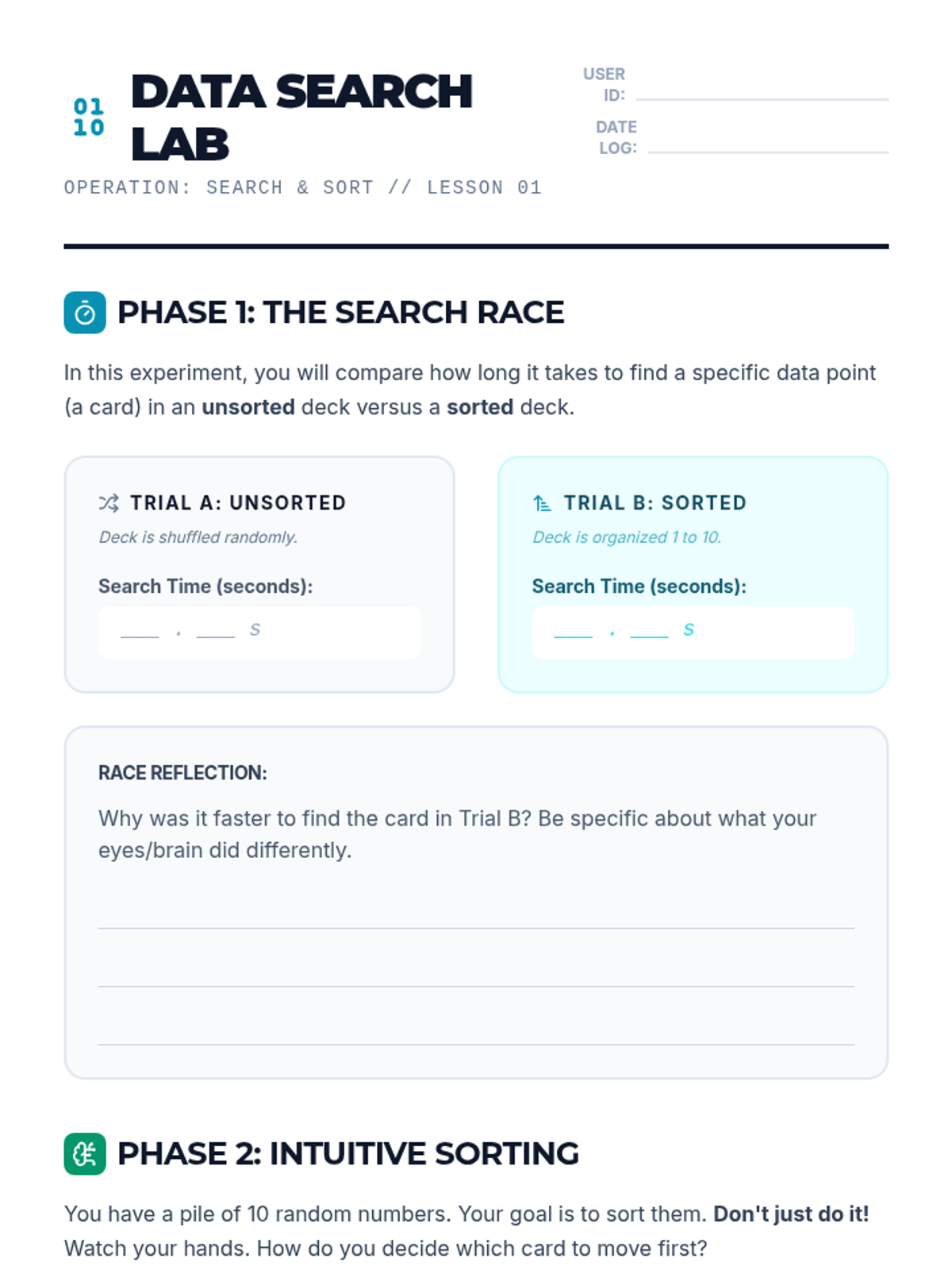
Data Search Lab
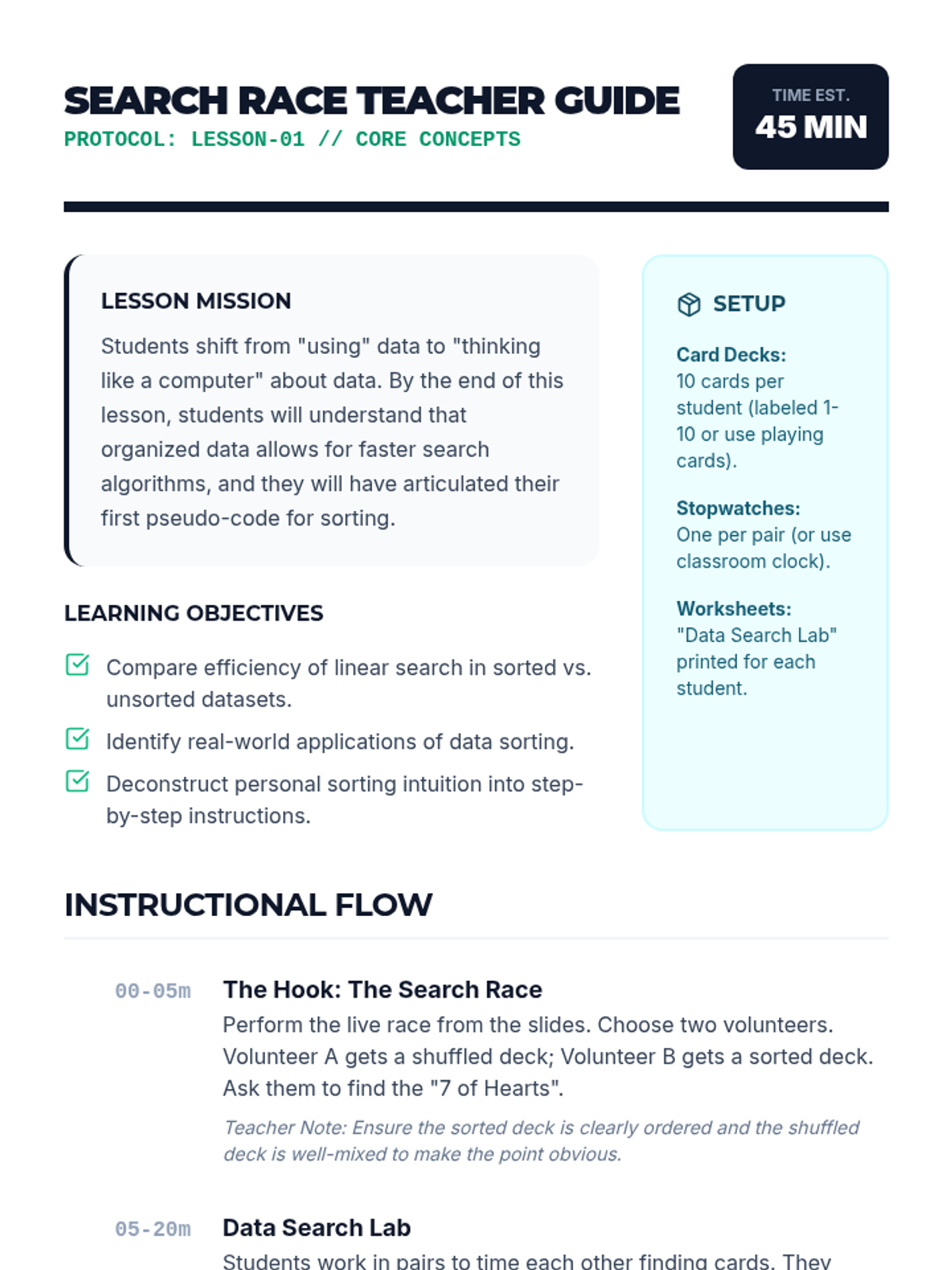
Sorting Intro Guide

Sorting Showdown

A 5-lesson unit where students physically simulate and compare fundamental sorting algorithms (Bubble, Selection, and Insertion Sort) to understand computational efficiency and data organization.

Lenny Avatar
Lenny
1/17
Sequence
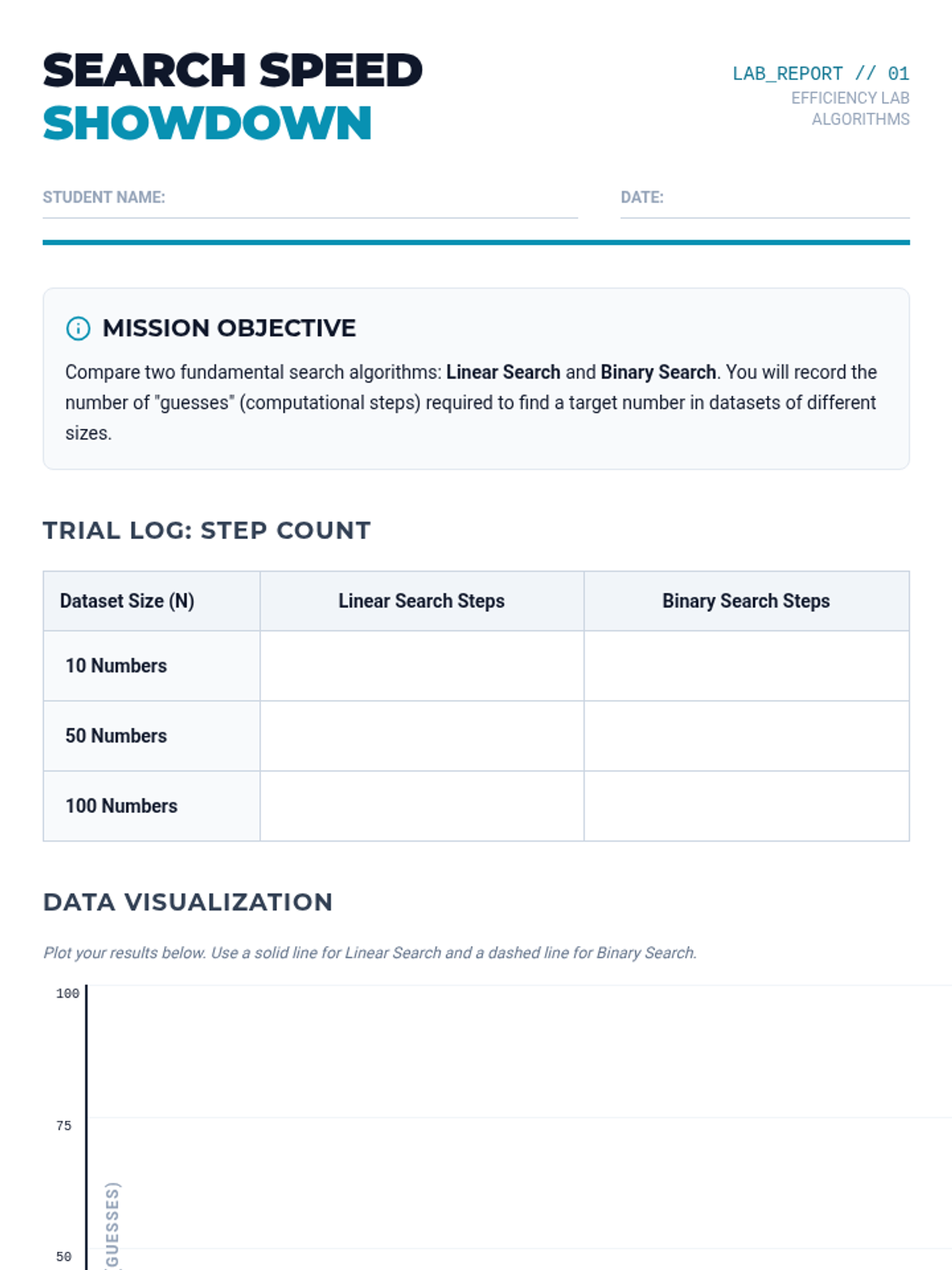
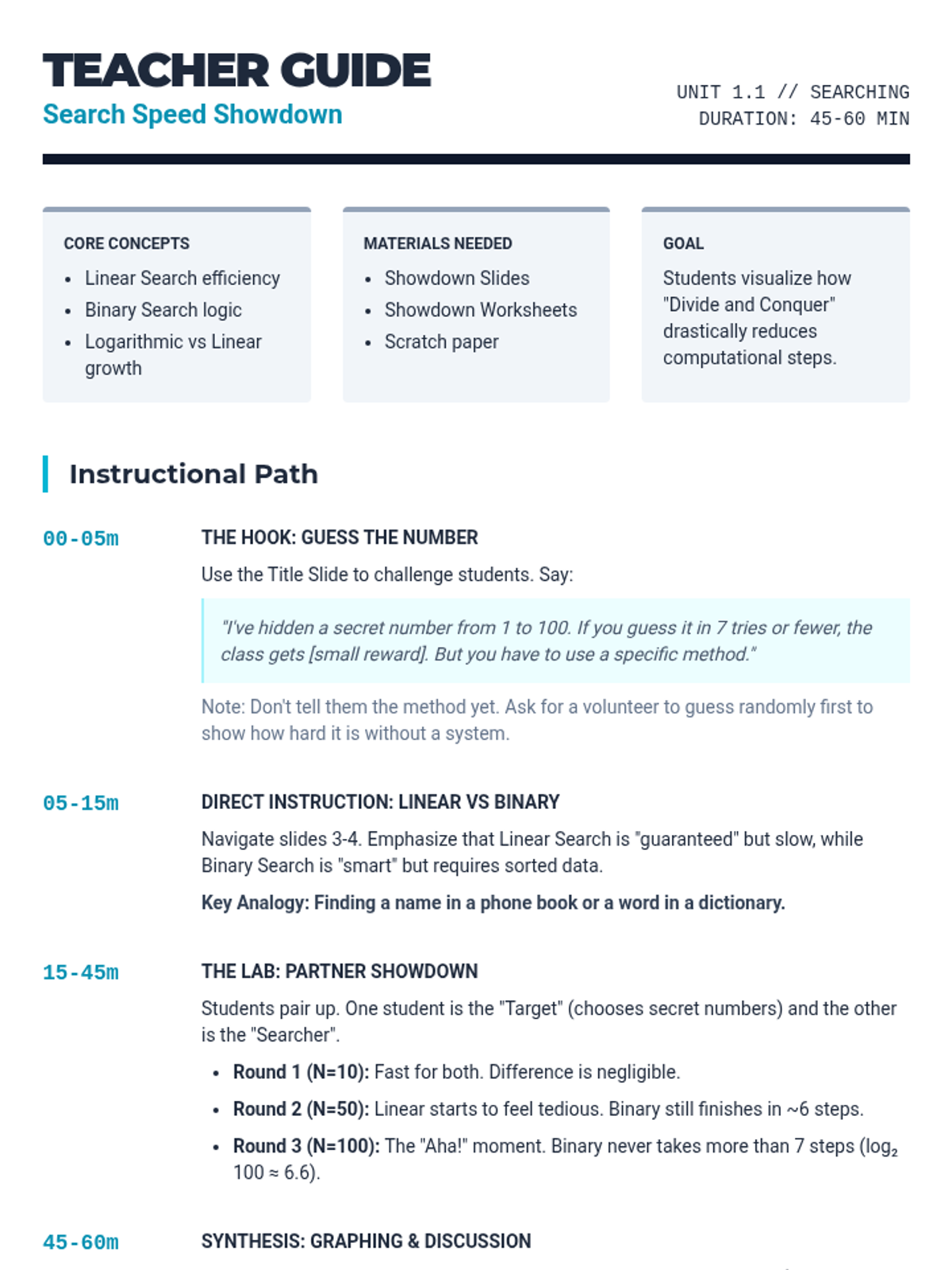
Search Speed Showdown Slides
Search Speed Showdown Worksheet
Search Speed Showdown Teacher Guide

Efficiency Lab Algorithms

A comprehensive unit on algorithmic efficiency where students use physical simulations and comparative analysis to explore how computer scientists measure the 'cost' of solving problems. Students move from simple search methods to complex sorting algorithms, culminating in an introduction to computational complexity.

Lenny Avatar
Lenny
1/17
Sequence
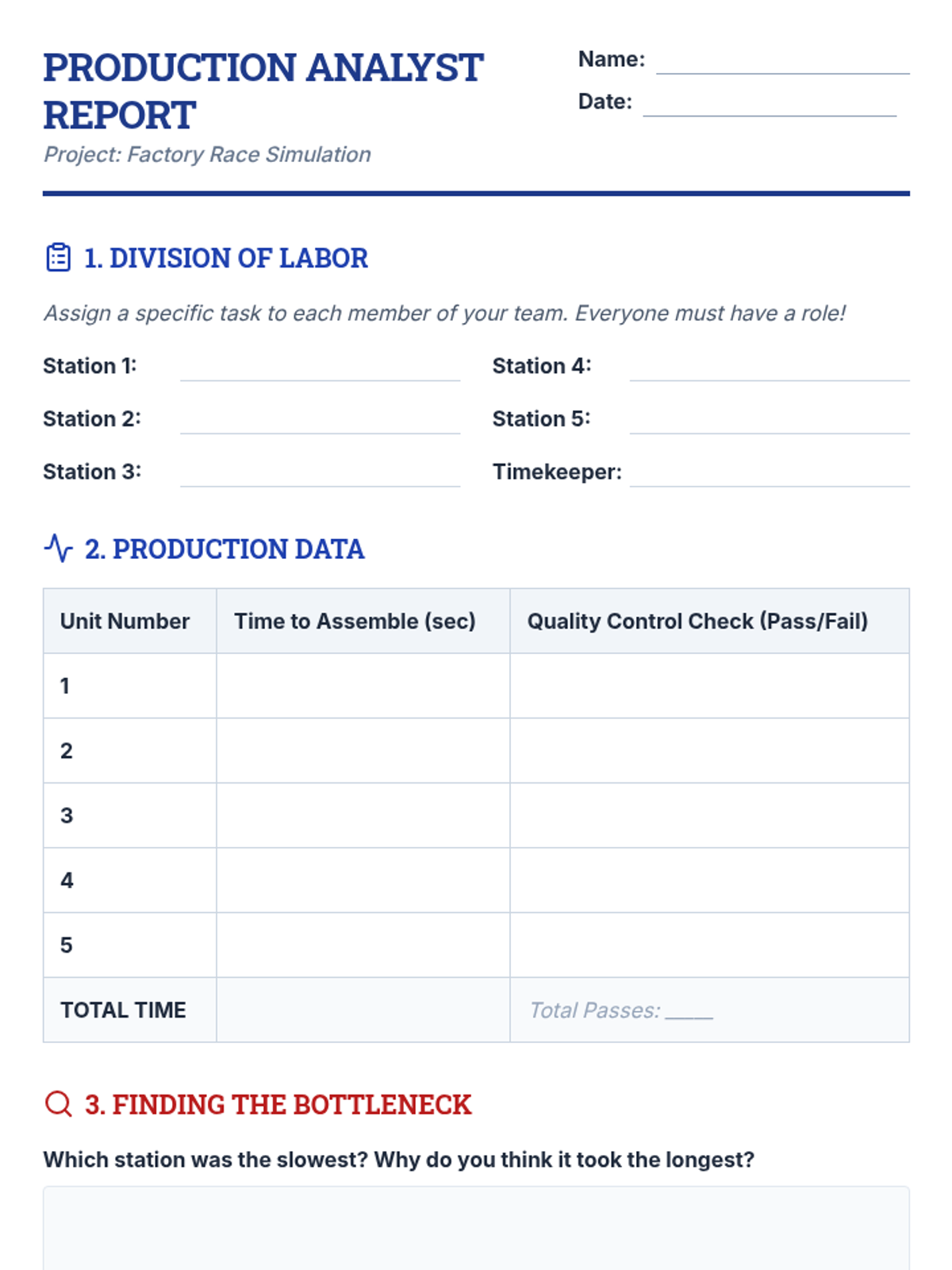
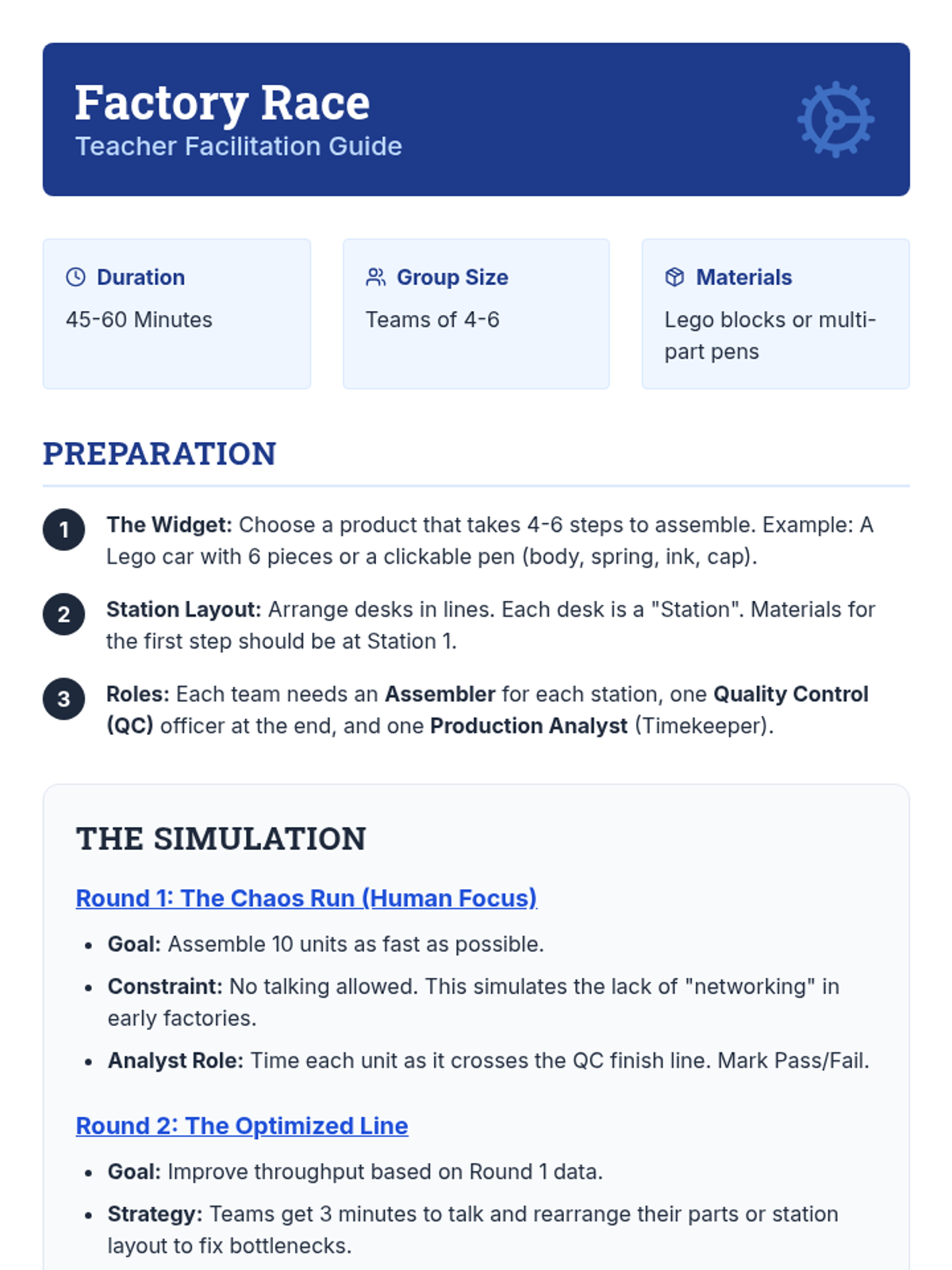
Factory Race Slides
Production Analyst Worksheet
Assembly Line Teacher Guide

Automated Manufacturing Systems

A game-based engineering sequence where students explore mechanical engineering and automated manufacturing. They transition from manual assembly to designing robotic logic and optimized factory layouts.

Lenny Avatar
Lenny
1/17
Sequence
Failure Modes Slides
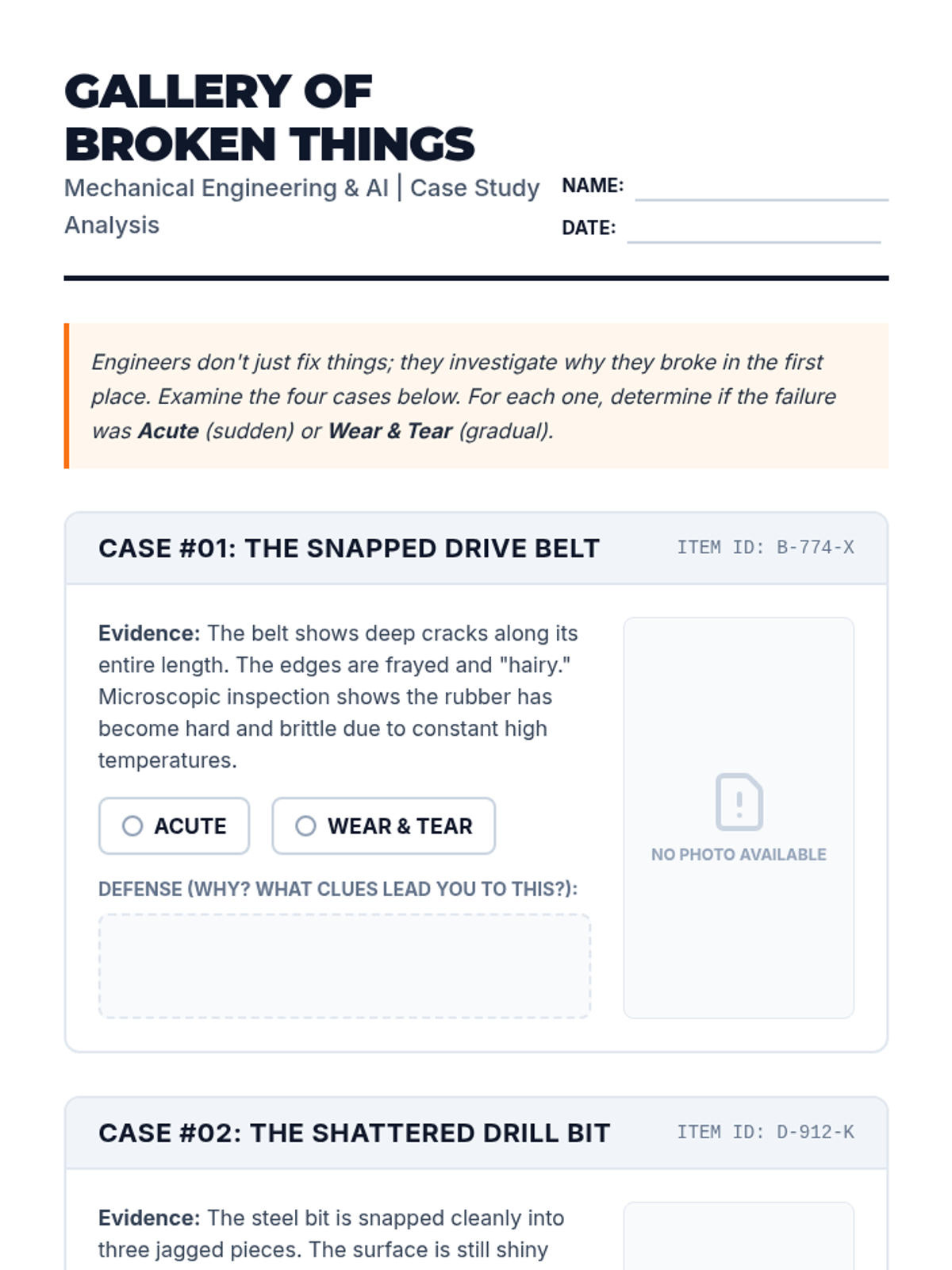
Broken Things Worksheet
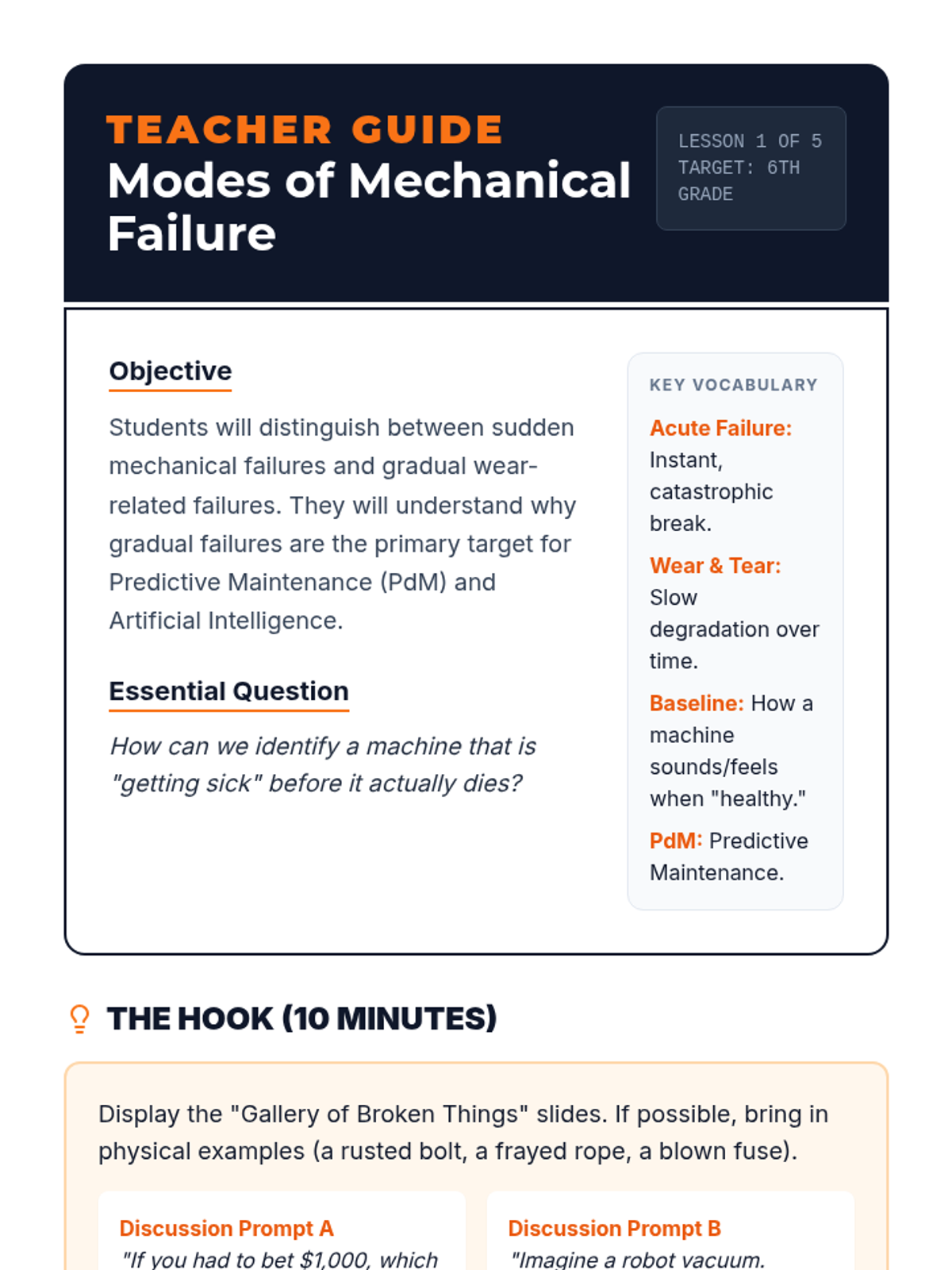
Mechanical Failure Teacher Guide

Predictive Maintenance AI

A case-study focused unit introducing 6th graders to mechanical engineering and AI. Students explore how sensors and data patterns allow AI to predict and prevent machine failure in industrial settings.

Lenny Avatar
Lenny
1/17
Sequence
Force Physics Slides
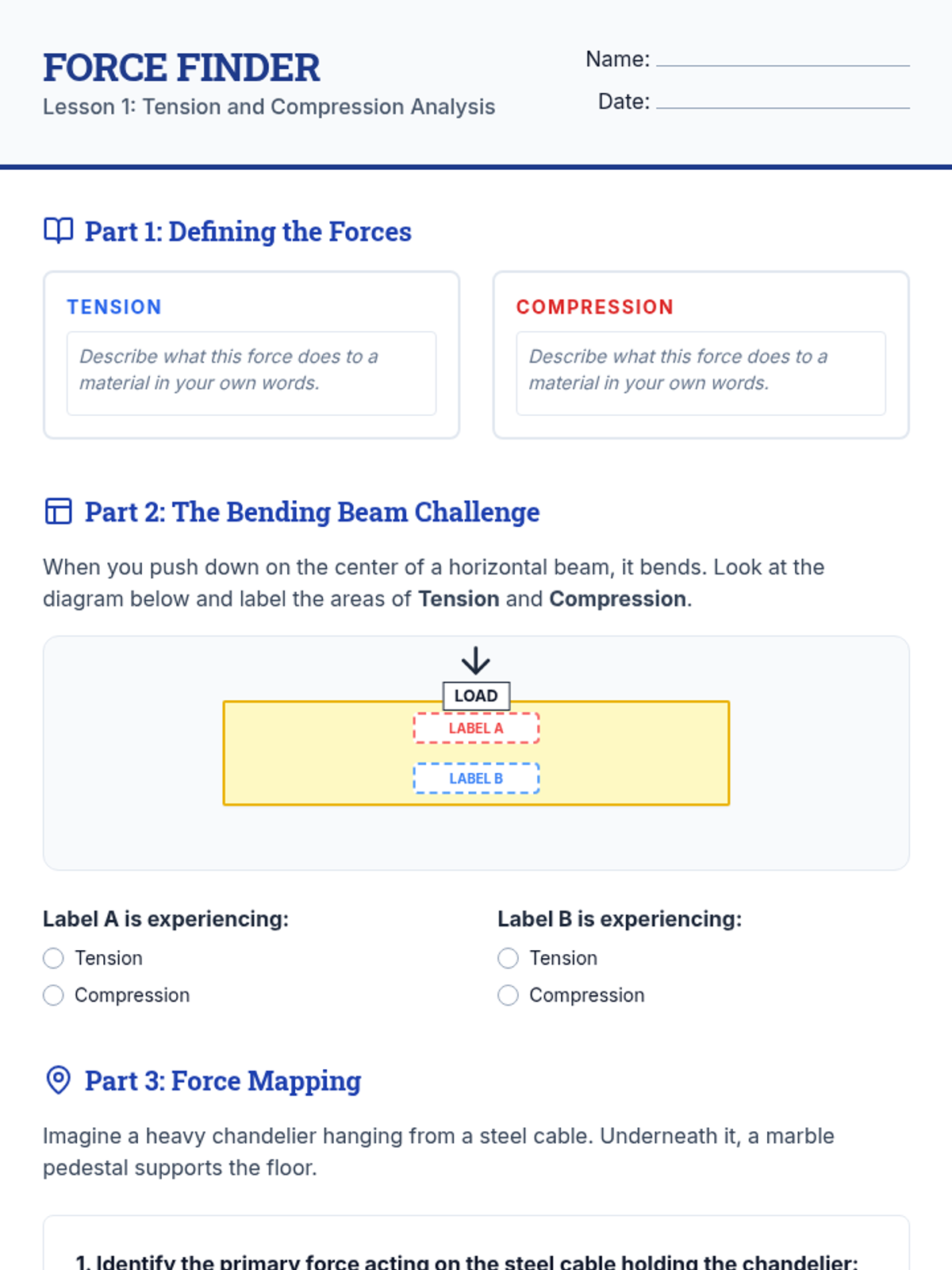
Force Finder Worksheet
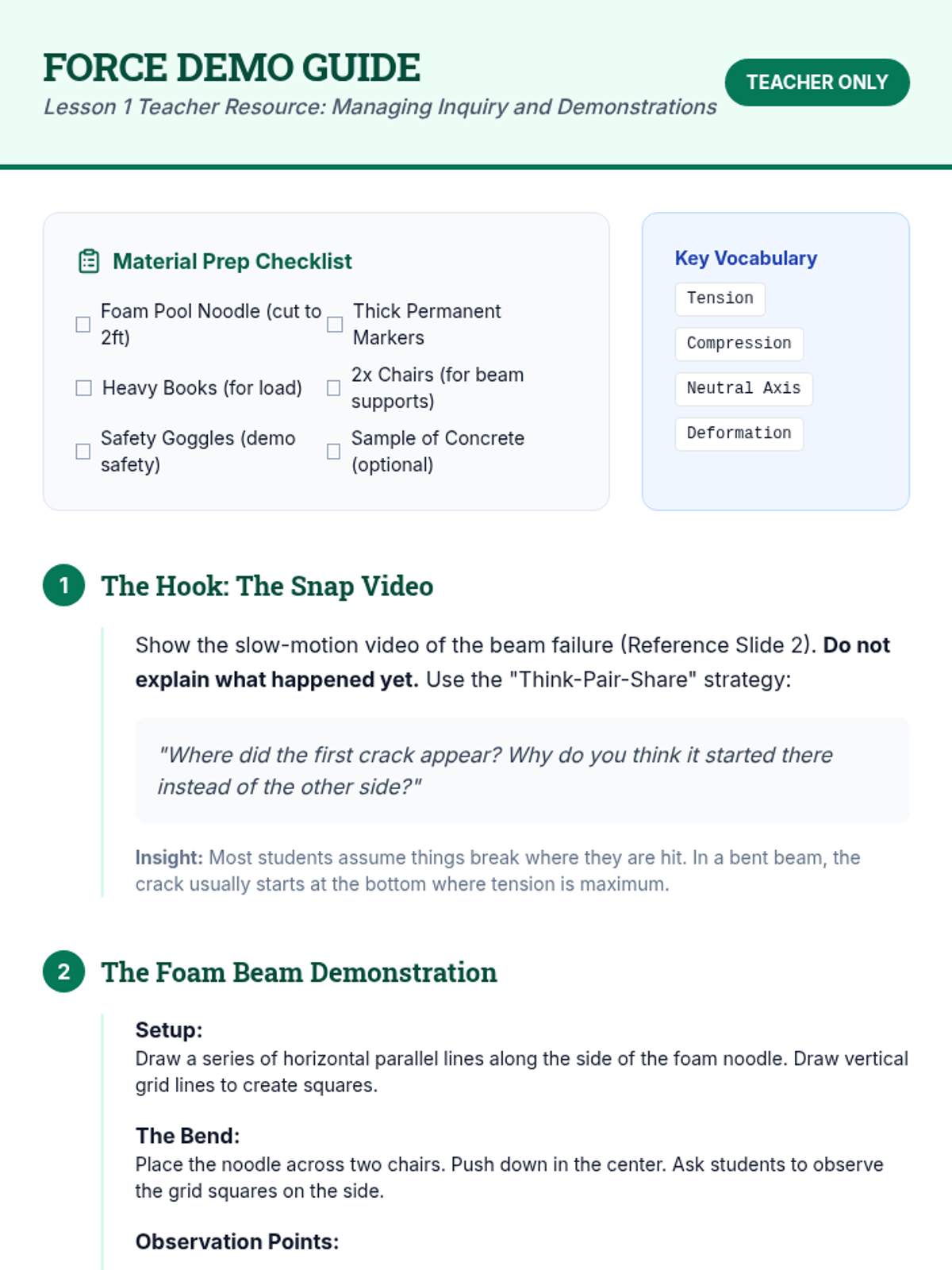
Force Demo Teacher Guide

Structural Analysis and Design Optimization

A project-based sequence exploring structural engineering, force analysis, and AI-integrated health monitoring for modern infrastructure. Students progress from basic physics to designing 'smart' bridge prototypes.

Lenny Avatar
Lenny
1/17
Sequence
Data Detective Training Slides
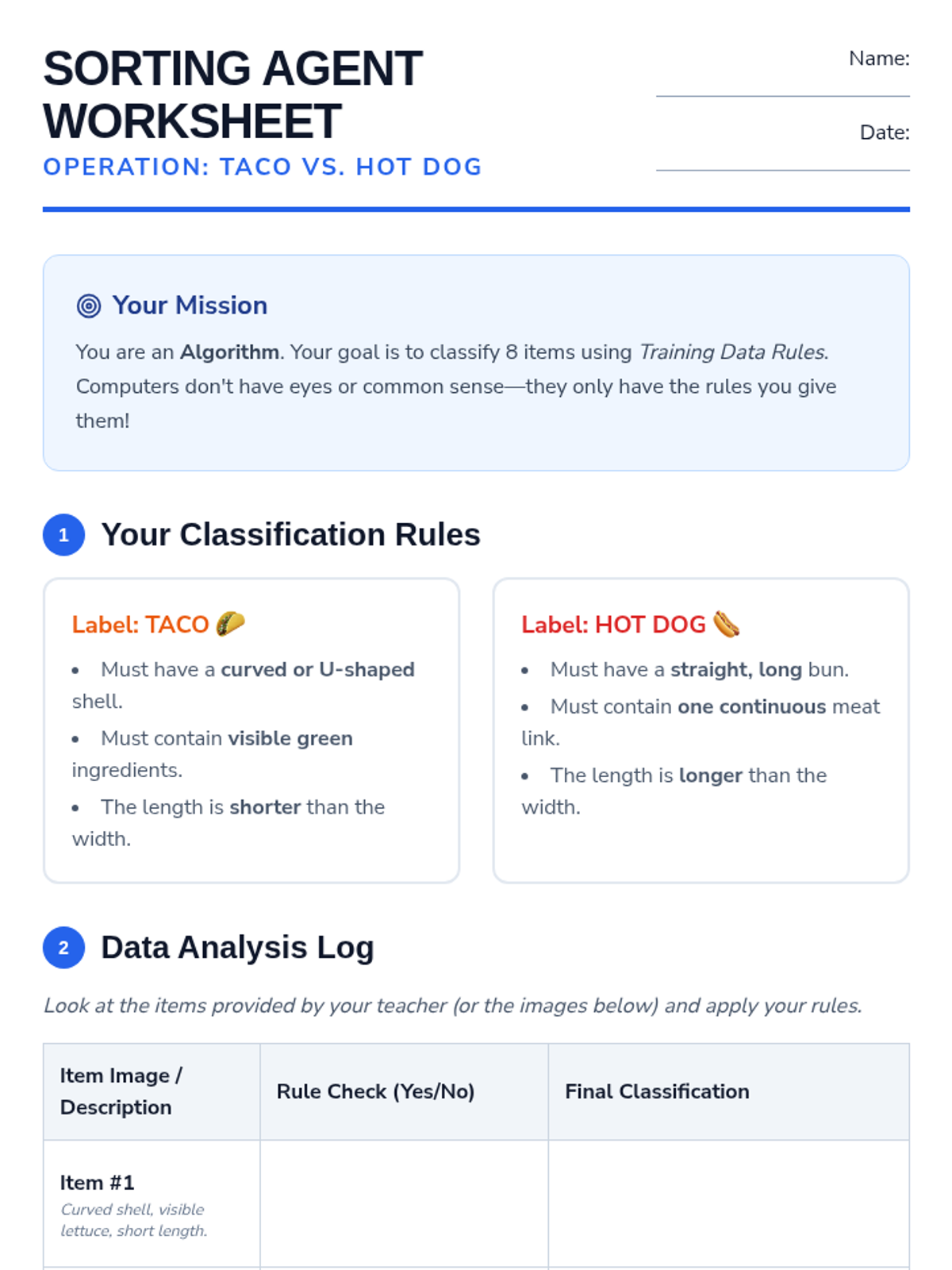
Taco vs Hot Dog Worksheet
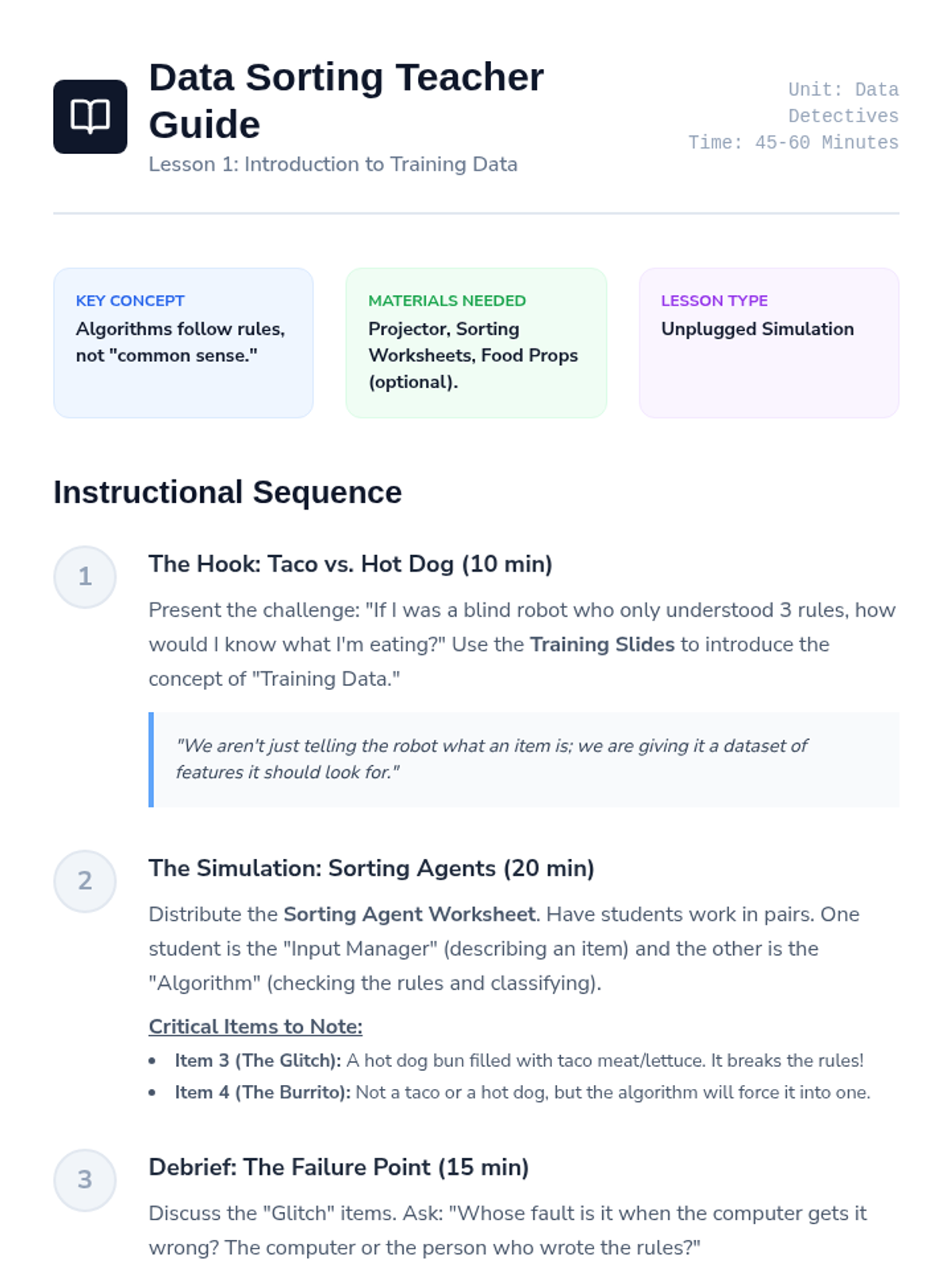
Data Sorting Teacher Guide

Data Detectives AI Bias

An inquiry-based exploration of machine learning for 6th graders, focusing on how training data influences algorithmic outcomes and how to identify and mitigate bias in AI systems.
Lenny Avatar
Lenny
1/17
Sequence
Teaching Machines Resources
Teaching Machines Slides

Bias Detectives AI Ethics

Students investigate how AI learns from data and the consequences of biased training sets. Through hands-on simulations and case studies, they learn to identify, analyze, and mitigate algorithmic bias to create fairer technology.

Lenny Avatar
Lenny
1/17
Sequence
Mapping the Grid Slides
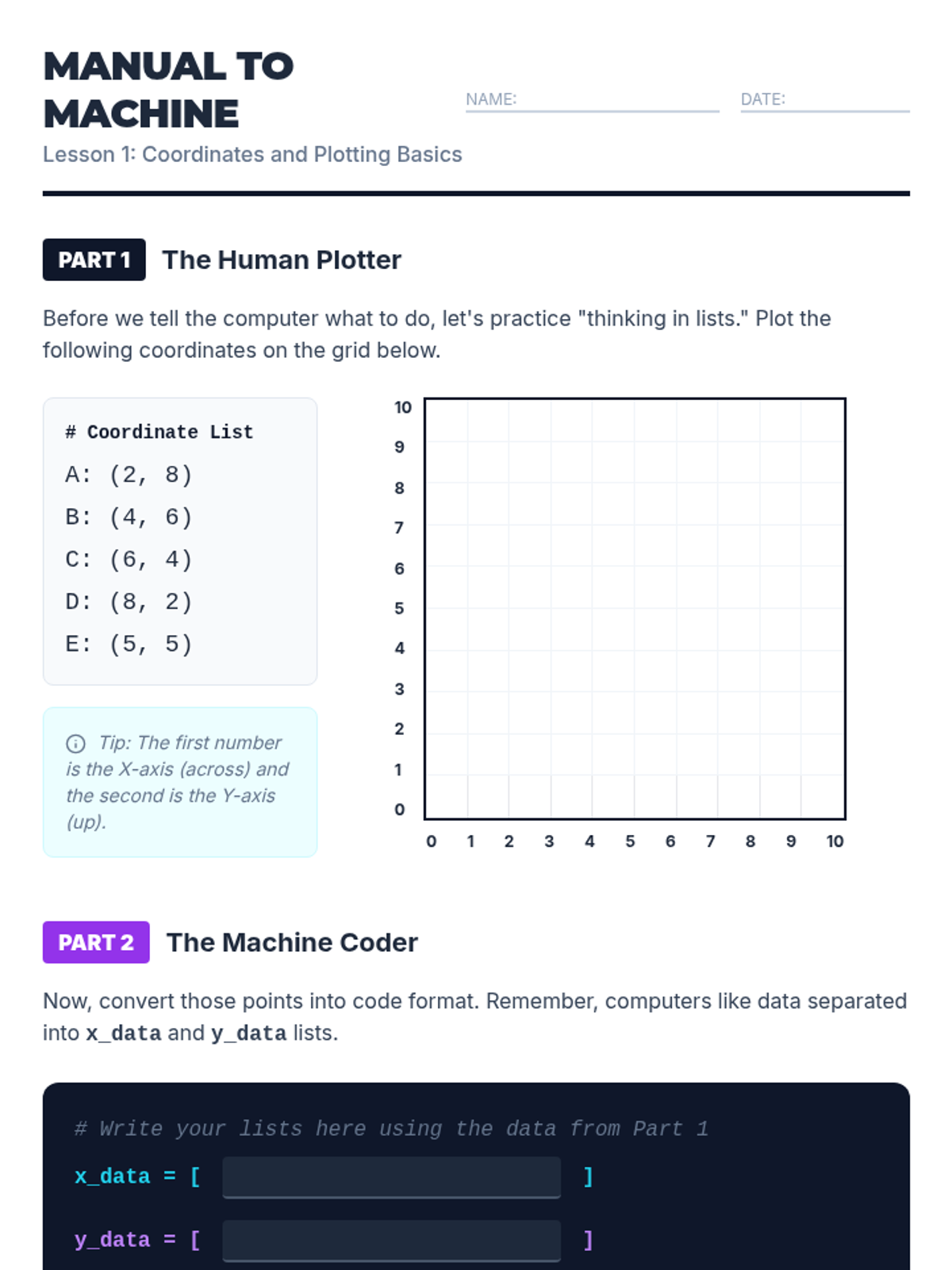
Manual to Machine Worksheet
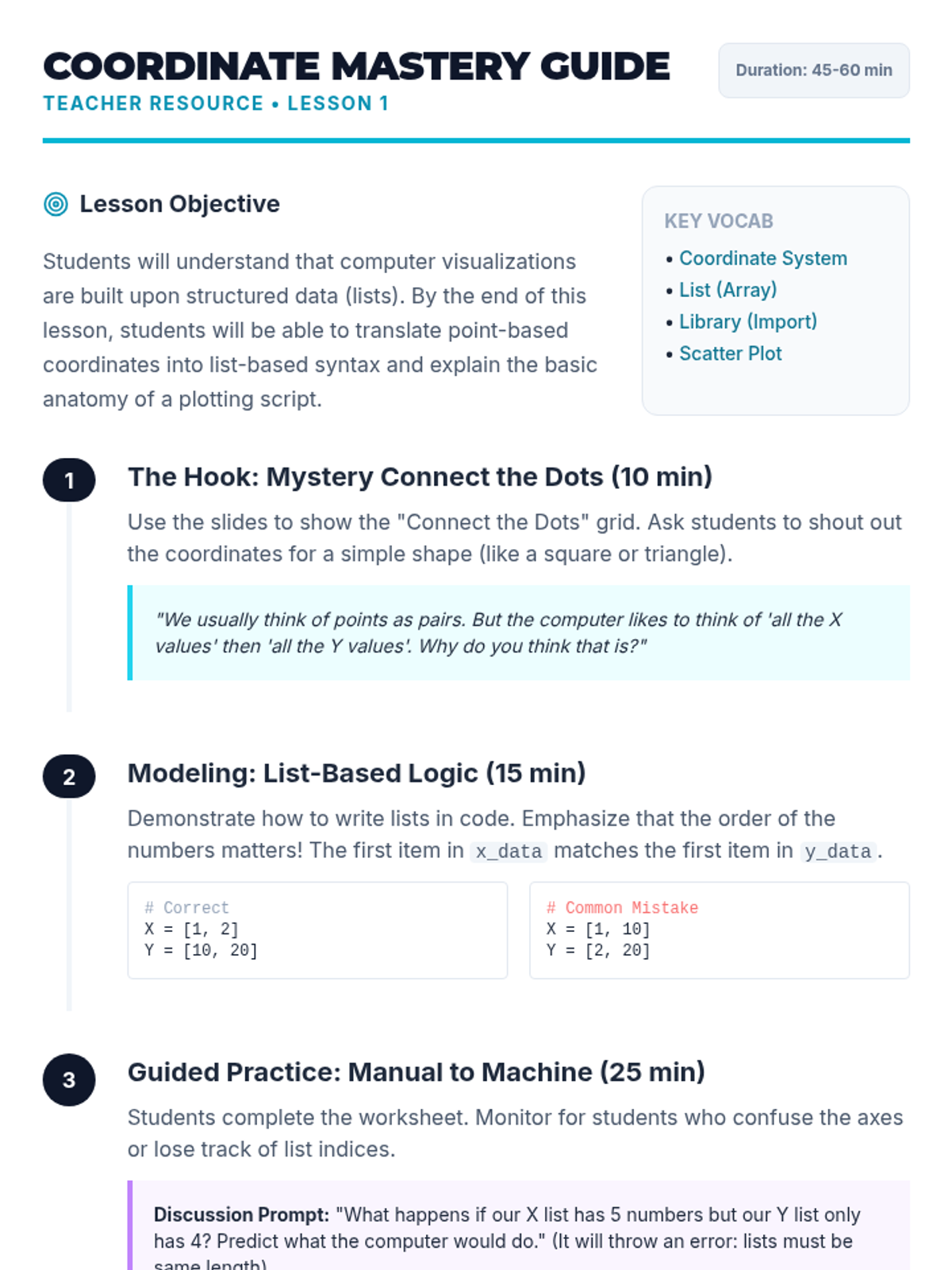
Coordinate Mastery Teacher Guide

Code and Canvas Data Viz

A comprehensive 6th-grade Computer Science sequence that teaches students how to use code to transform raw data into meaningful visual stories. Students learn about coordinate systems, bar charts, line graphs, and scatter plots, concluding with a project on ethical data storytelling.

Lenny Avatar
Lenny
1/17
Sequence
Code Cruncher Slides
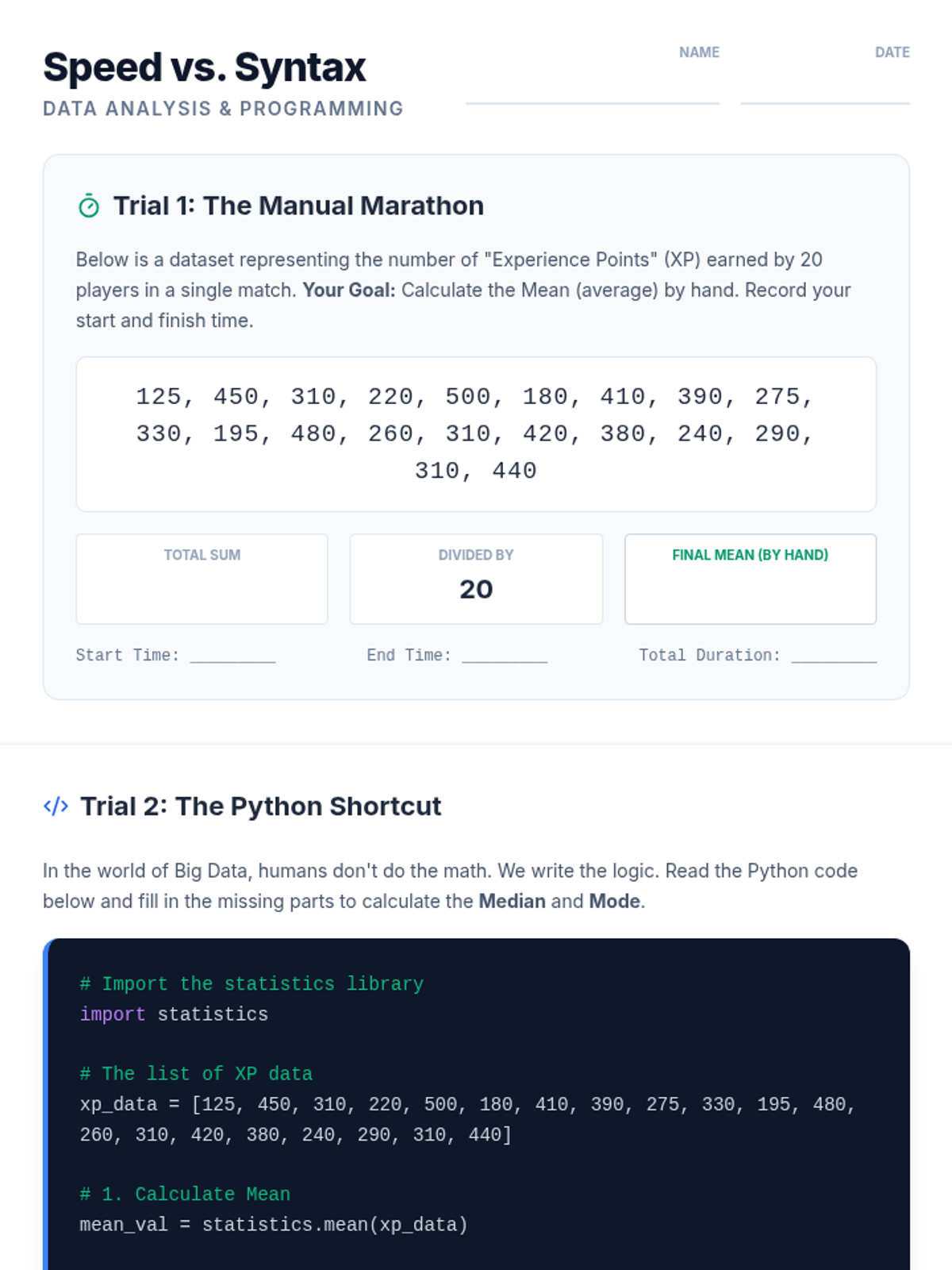
Speed vs Syntax Worksheet
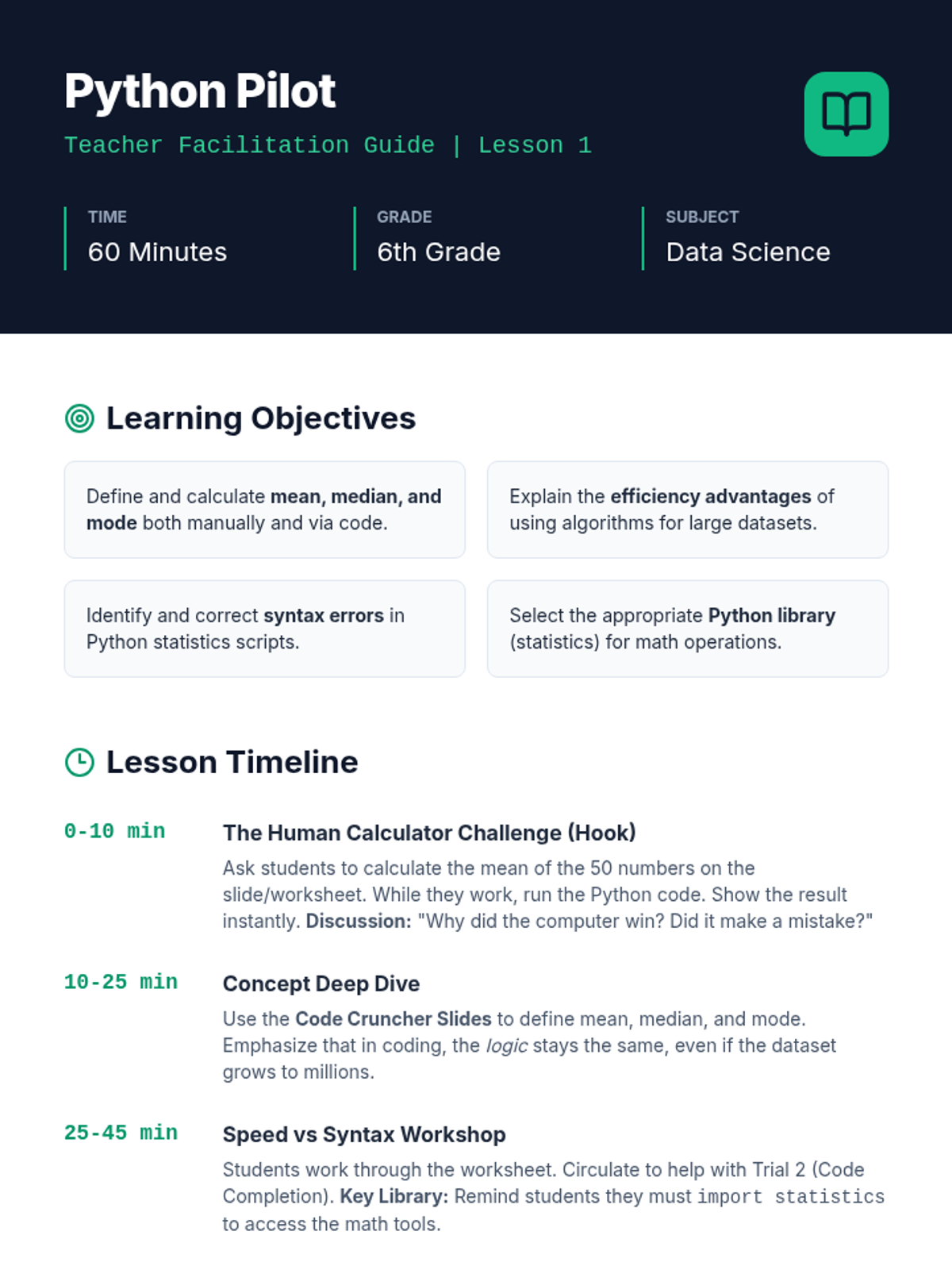
Python Pilot Teacher Guide

Data Crunchers

A 6th-grade Computer Science sequence that bridges mathematics and programming. Students learn to apply statistical methods (mean, median, mode, range, and aggregation) using Python, moving from manual calculation to efficient algorithmic analysis of large datasets.

Lenny Avatar
Lenny
1/17
Sequence
Dirty Data Slides
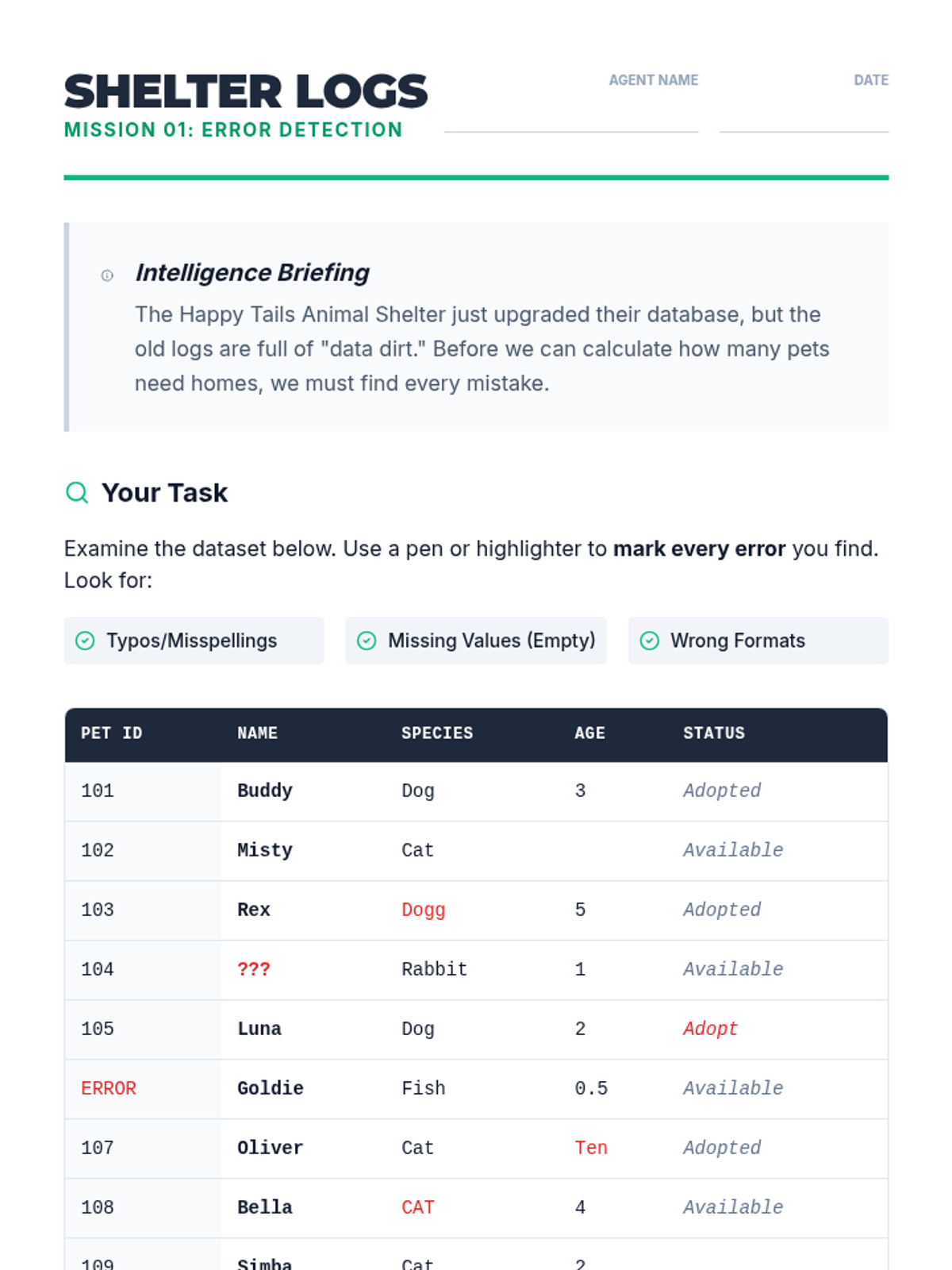
Shelter Logs Worksheet

Data Detectives

A comprehensive workshop-style sequence where 6th-grade students master the art of data cleaning. Students progress from manual error detection to automating cleaning pipelines using Python-inspired logic, emphasizing the principle of 'Garbage In, Garbage Out.'

Lenny Avatar
Lenny
1/17
Sequence
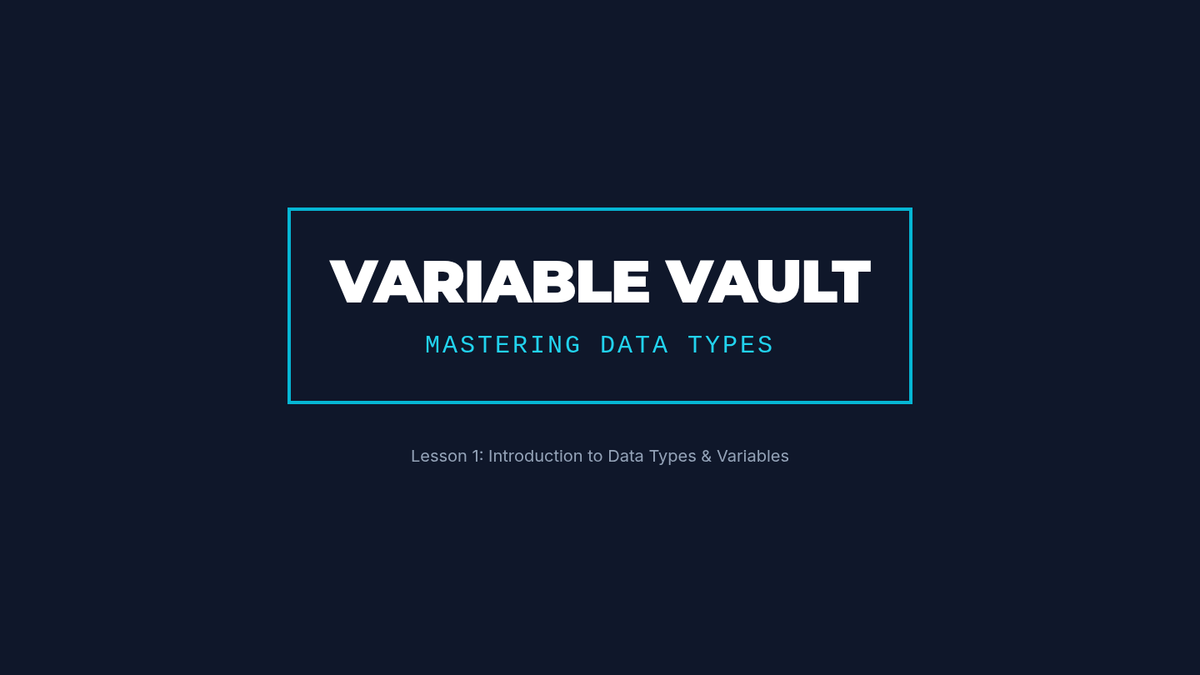
Variable Vault Slides
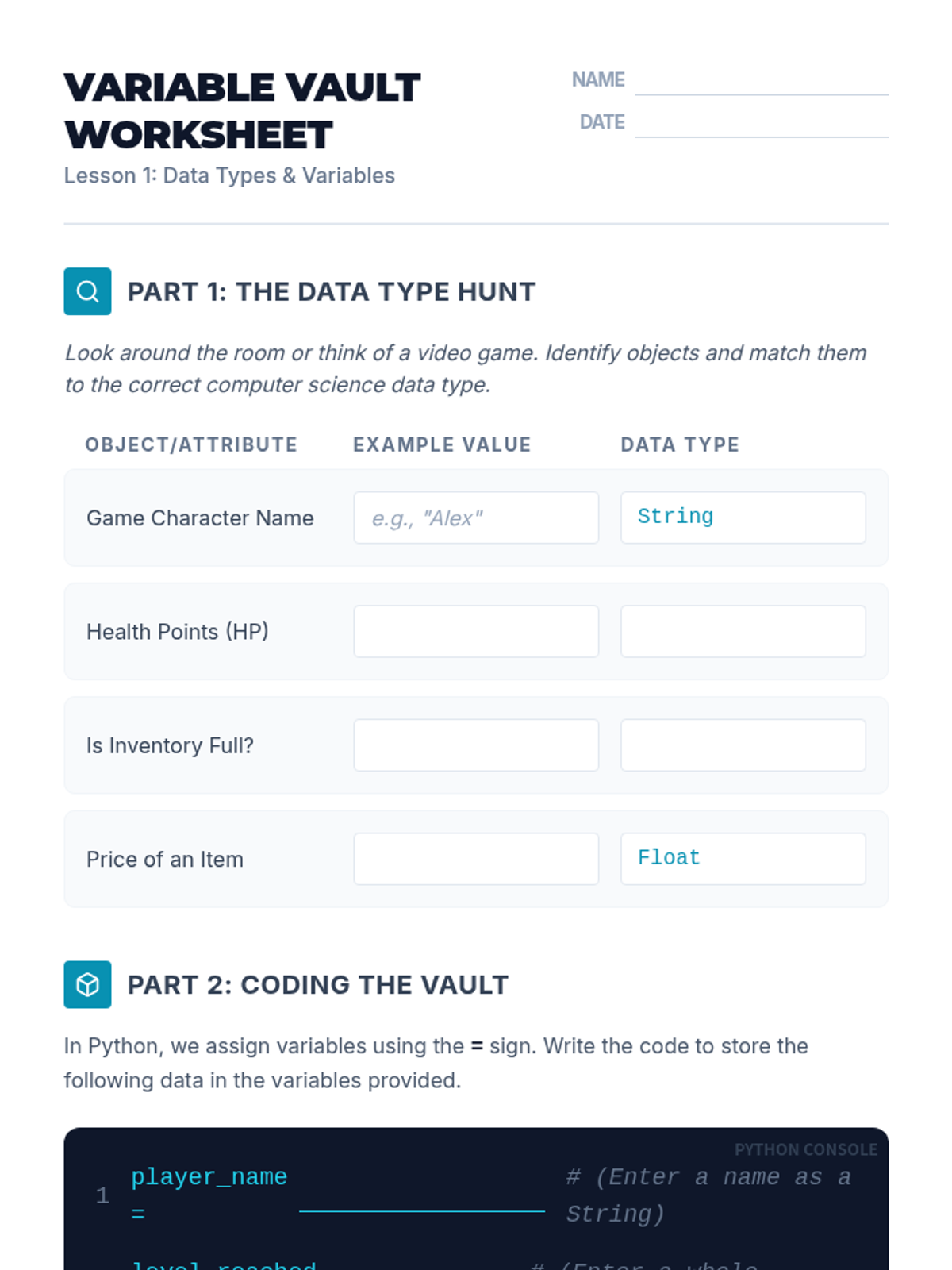
Variable Vault Worksheet
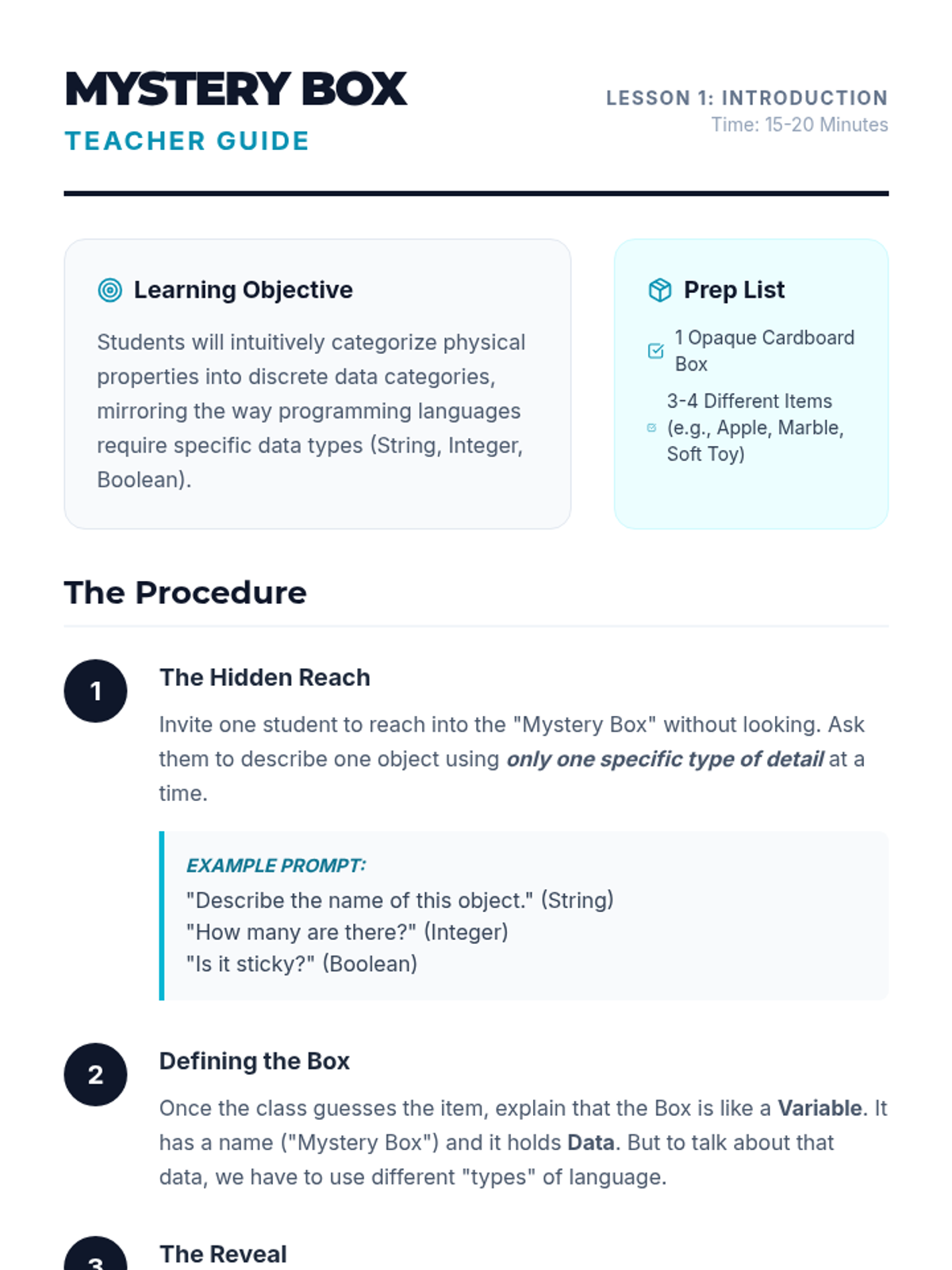
Mystery Box Teacher Guide

Data Architect Sequence

An introductory sequence for 6th-grade students on computer science data structures. Students explore data types, lists, dictionaries, user input, and data validation through inquiry-based activities and skill-building exercises.

Lenny Avatar
Lenny
1/17
Sequence
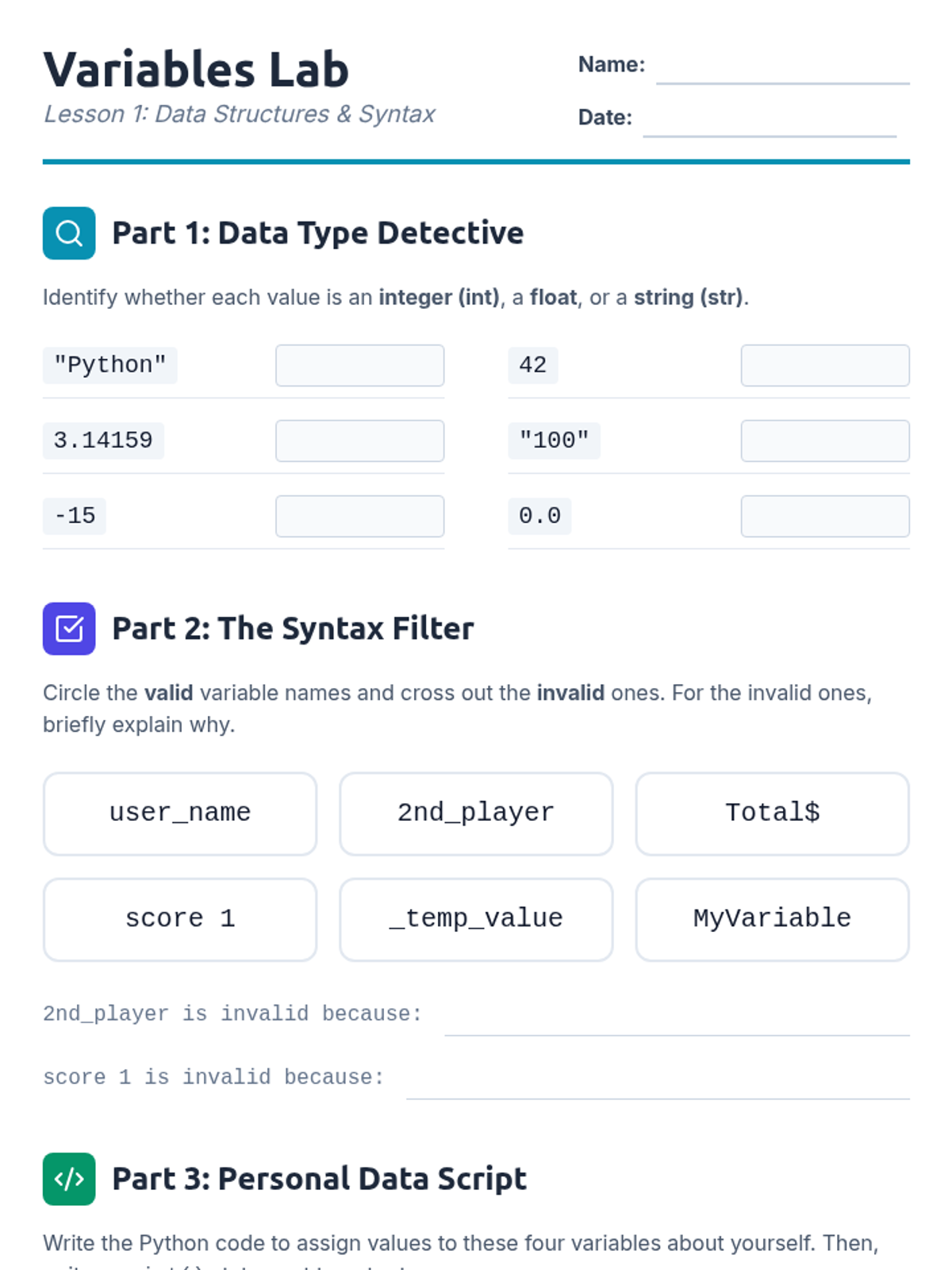
Python Variables Slides
Variables Lab Worksheet

Python Data Lab

A comprehensive introduction to text-based data analysis using Python. Students progress from basic variables to using statistical libraries to analyze real-world datasets, bridging the gap between mathematics and computer science.

Lenny Avatar
Lenny
1/17
Sequence
Robot Brains Slides
Robot Sort Activity
Robot Brains Teacher Guide

AI Explorer Path

A comprehensive K-8 curriculum designed to build foundational AI literacy through understanding, evaluation, application, and ethics. Each grade level tackles a specific theme, progressing from basic robot concepts to complex algorithmic bias and societal impact.

EW

Elizabeth Whitver

Other
4/4
Sequence
Robot Brains Presentation Slides
Robot Brains Activity Worksheet
Robot Brains Teacher Guide

AI Literacy Blueprint

A comprehensive K-12 AI literacy sequence covering the fundamentals of how AI works, machine learning, ethics, social impact, and creative application through age-appropriate lessons.

VC

Vic Chamness

District Administrator
3/24
Sequence
Domestic Tech Plan Guide
Defining Tech Slides
Domestic Detective Scavenger Hunt
Domestic Tech Plan Guide Updated

Domestic Tech Lab

A 4-week exploration of technology through the lens of everyday household items, tracing their evolution from simple tools to complex smart systems. Students investigate what technology truly is beyond just electronics and how domestic innovations have changed human life.
LS

Linda Still

General Education Teacher
3/2
Sequence
Automation Industry Slides
Automation Case Study Worksheet
Automation Facilitation Guide

Designing Automated Solutions and Future Pathways

Students explore automation and the future of work by adopting the role of inventors and designers. They investigate how robots and software automate tasks, analyze shifting job markets, and apply design thinking to create beneficial future technology concepts.

Lenny Avatar
Lenny
1/18
Sequence
Rule Breaker Slides
Sorting Strategy Worksheet
Rule Breaker Teacher Guide

Brainy Bot Lab AI Fundamentals

Students demystify Artificial Intelligence and Machine Learning through hands-on training, pattern recognition, and ethical analysis. They move from understanding basic coding differences to identifying real-world AI applications and recognizing the importance of unbiased data.

Lenny Avatar
Lenny
1/18
Sequence
Logic vs Learning Slides
Human Algorithm Worksheet

Machine Learning Masterminds

A comprehensive introduction to machine learning and algorithmic logic for 6th grade students, covering the difference between traditional coding and AI, the importance of training data, how recommendation systems work, generative AI tools, and the ethics of algorithmic bias.

Lenny Avatar
Lenny
1/18
Sequence
Emergence Intro Slides
Ant Rule Simulation
Emergence Teacher Guide

System Secrets and Ripples

This sequence explores the fascinating concept of emergence—where complex patterns arise from simple rules—and the critical engineering challenge of unintended consequences. Students move from observing natural systems like ant colonies to analyzing digital networks and AI, learning to map out and predict the ripple effects of design choices.

Lenny Avatar
Lenny
1/17
Sequence
System IPO Slides
Black Box Breakdown Worksheet
Black Box Teacher Guide

System Blueprint Sequence

A 5-lesson unit for 6th graders exploring systems thinking through mechanical devices, digital programs, and AI models. Students learn to deconstruct systems into inputs, processes, and outputs while mapping complex interconnections.

Lenny Avatar
Lenny
1/17
Sequence
Loop Master Guide
The Great Balance Slides
Stability Tracker Worksheet

System Cycles and AI Minds

This sequence introduces 6th-grade students to systems thinking through the lens of feedback loops in engineering and AI. Students will explore how balancing and reinforcing loops govern stability and growth, simulate machine learning processes, analyze the ethics of AI bias, and design their own smart feedback systems.
Lenny Avatar
Lenny
1/17
Sequence
Logic Lab Slides
Vibe Riddle Worksheet
Logic Lab Teacher Guide

Vibe Logic and Data Magic

This sequence explores the intersection of AI and computational thinking, teaching students to use natural language to solve complex logic puzzles, structure data, and automate tasks. Students move beyond syntax to focus on the 'vibe' of programming—the logic and architecture of solutions.

Lenny Avatar
Lenny
1/17
Sequence
Idea Blueprint Slides
App Scope Planner Worksheet
Project Pilot Teacher Guide

Vibe Coding Sprint

A comprehensive 6th-grade sequence on 'Vibe Coding'—using AI to rapidly prototype and build functional applications. Students move from initial scoping to functional MVP, UI styling, peer testing, and final reflection, emphasizing the partnership between human creativity and AI execution.

Lenny Avatar
Lenny
1/17
Sequence
Intent Experience Slides
User Story Blueprint Worksheet
UX Design Teacher Guide

Logic Design and Systems Thinking

This sequence introduces 6th-grade students to the logic of app development through 'vibe coding'—using natural language to instruct AI. Instead of focusing on syntax, students master the architecture of logic, including user stories, flowcharts, decomposition, and prompt engineering, bridging the gap between an idea and a functional product.

Lenny Avatar
Lenny
1/17
Sequence
Loop Masters Teacher Guide
Loop Masters Slides
Refinement Log Worksheet

Vibe Pilots

A sequence focused on the iterative nature of vibe coding, teaching students how to refine AI-generated software through dialogue and layered instructions rather than manual code editing.

Lenny Avatar
Lenny
1/17
Sequence
Vibe Coding Intro Slides
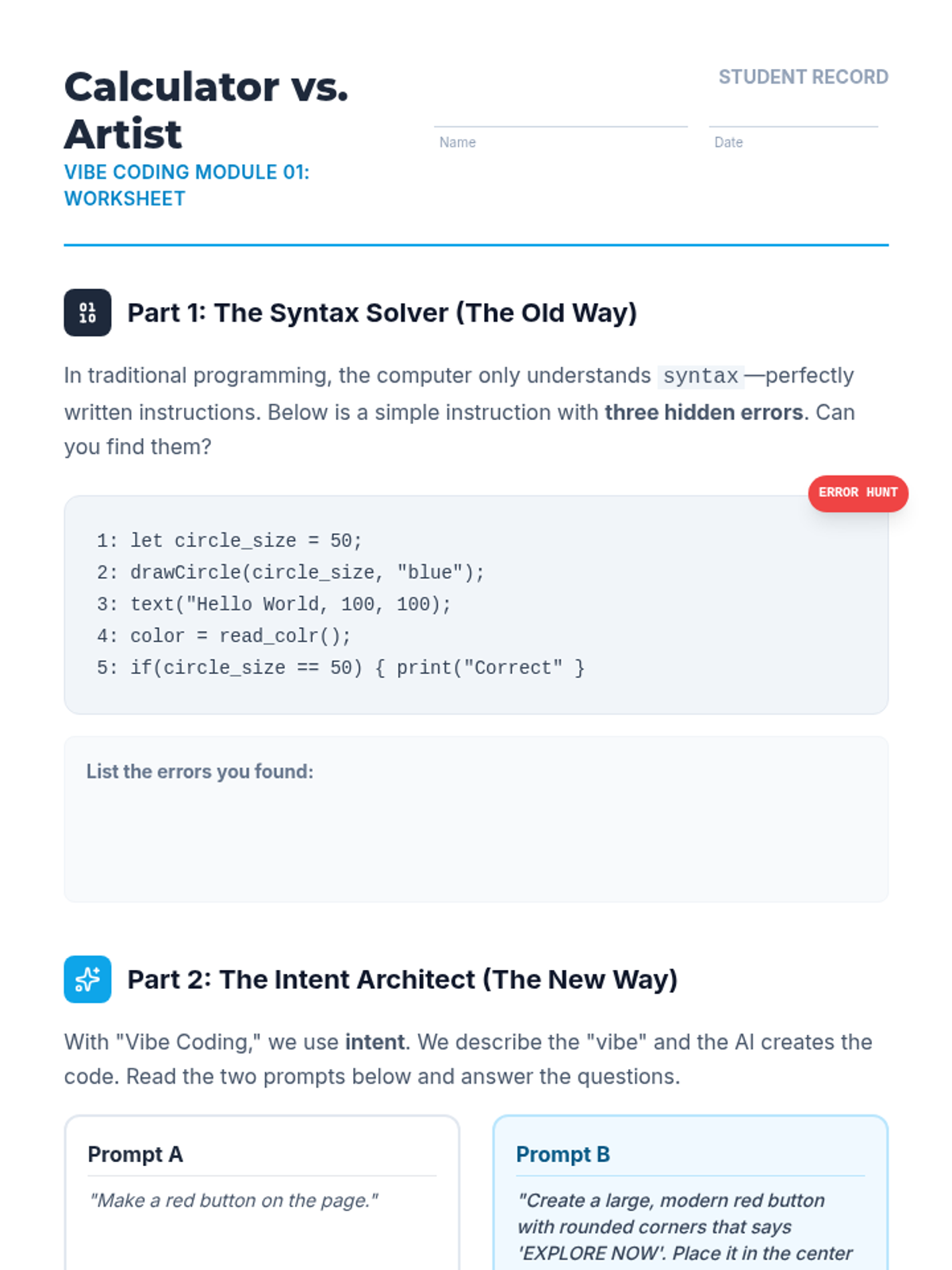
Syntax vs Intent Worksheet
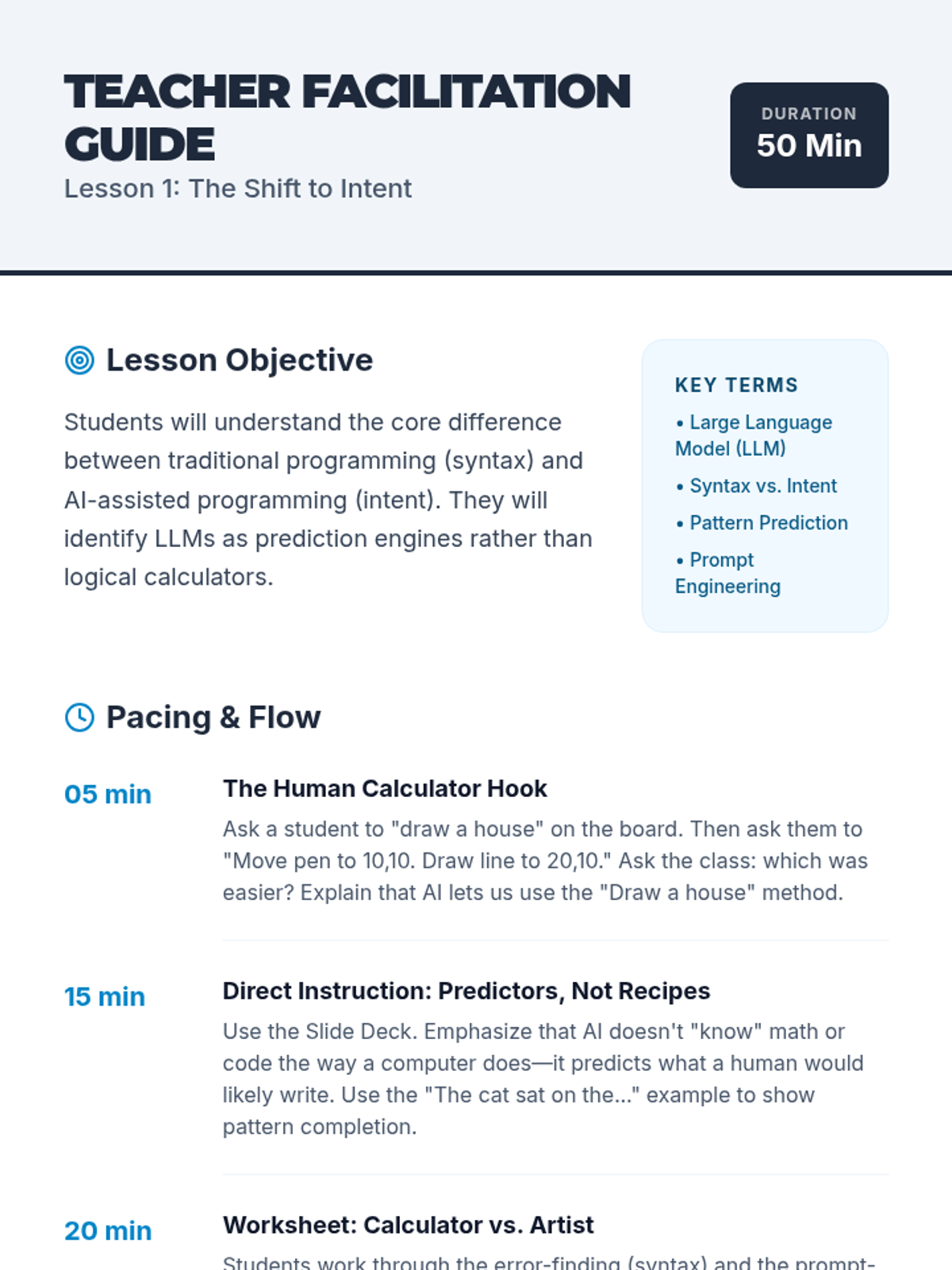
Vibe Coding Kickoff Guide

Vibe Coding Foundations

This sequence introduces 6th-grade students to the fundamental concepts of Large Language Models (LLMs) and how they interpret natural language to generate code. Students transition from rigid syntax programming to intent-based instructions, learning that clarity, context, and specificity are the new 'syntax' of the AI era.

Lenny Avatar
Lenny
1/17
Sequence
App Blueprint Slides
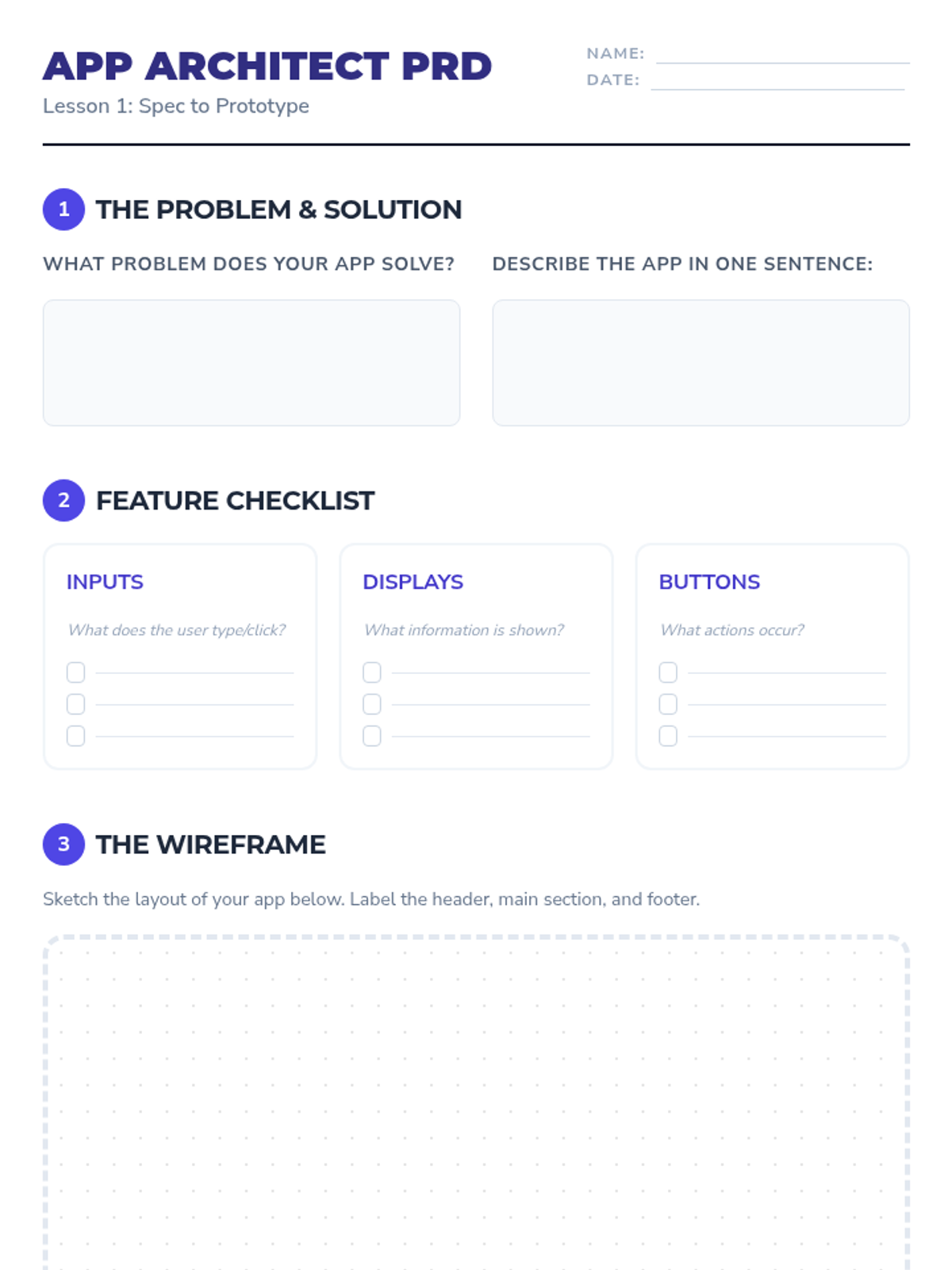
Product Spec Worksheet
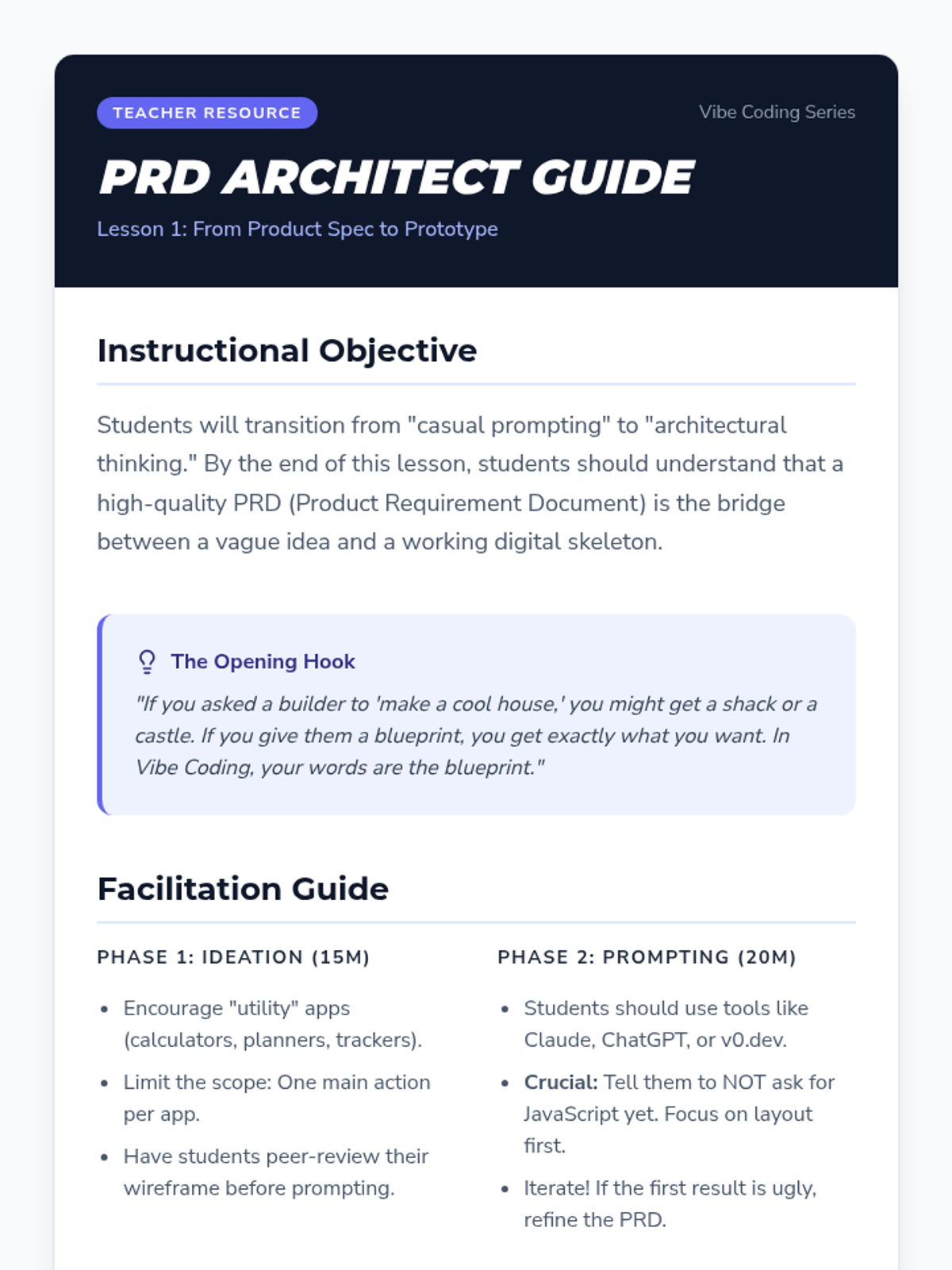
PRD Teacher Guide

Vibe Coding Mastery

This project-based sequence empowers students to build fully functional web applications by describing the interface and functionality to an AI. Students act as product managers and architects, using modular prompting to generate HTML, CSS, and JavaScript.

Lenny Avatar
Lenny
1/17
Sequence
Nature of the Machine Slides
Nature of the Machine Worksheet
Nature of the Machine Teacher Guide

Design Dimensions

A 5-lesson unit for 6th-grade students exploring the intersection of AI, CAD, and engineering. Students learn about generative design, constraints, structural simulation, and topology optimization to understand how humans and AI collaborate to build efficient structures.

Lenny Avatar
Lenny
1/17
Sequence
Virtual Stress Test Slides
Stress Detective Worksheet

Design Alchemists

A 5-lesson sequence exploring how AI and simulation are revolutionizing engineering through generative design, topology optimization, and biomimicry. Students learn to use computers as co-designers to create lighter, stronger structures.

Lenny Avatar
Lenny
1/17
Sequence
Smart Brains Slides
Pattern Sorting Worksheet
AI Logic Teacher Guide

Developing Reliable AI Models

A comprehensive sequence for 6th-grade students exploring the engineering practices behind AI. Students learn how data quality, variety, and testing determine the reliability and fairness of artificial intelligence systems.
Lenny Avatar
Lenny
1/17
Sequence
Mission Briefing Slides
System Requirements Blueprint
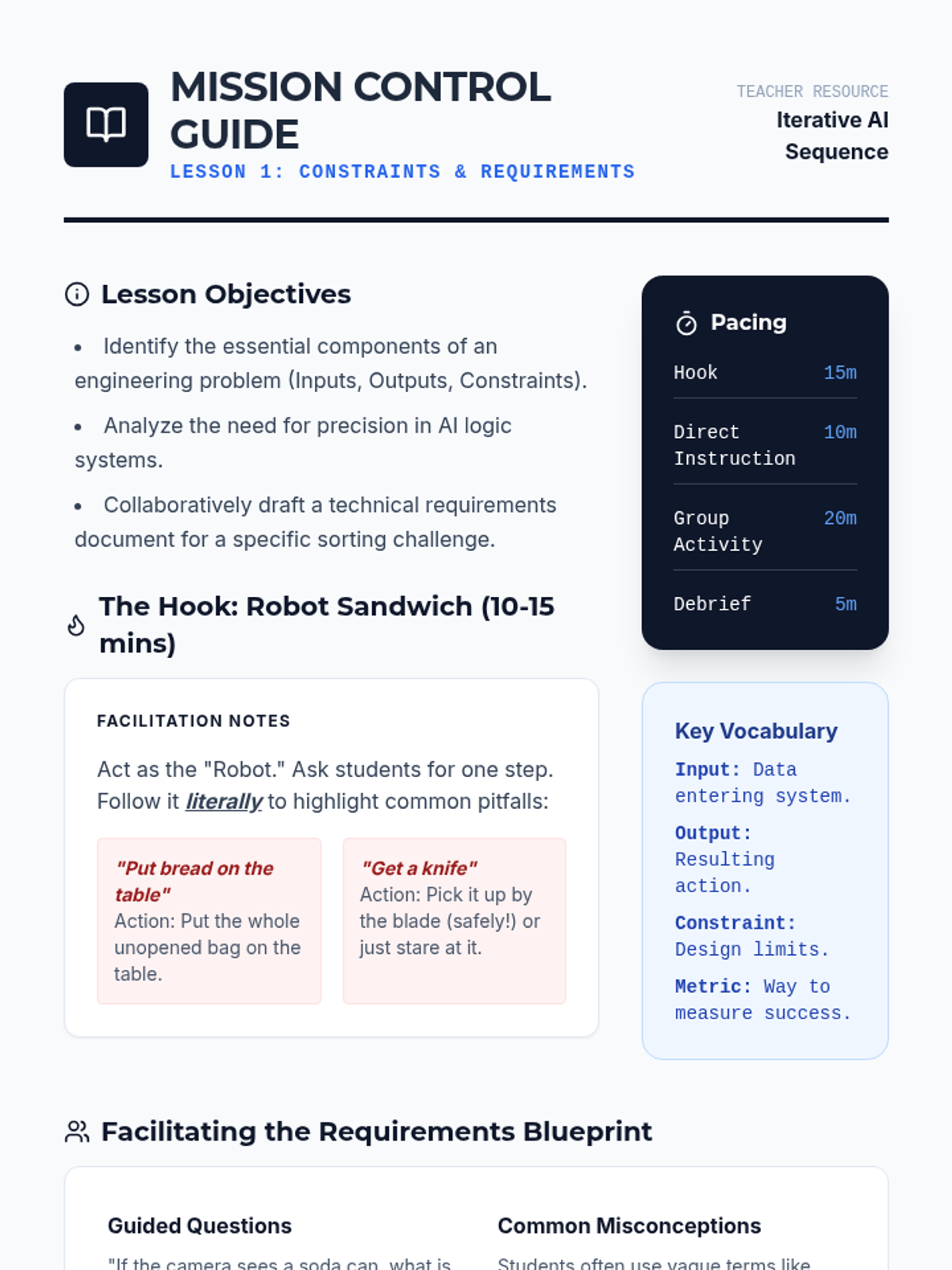
Mission Control Guide

Prototype Lab AI Engineering

A project-based engineering sequence where students design, test, and iterate on logic-based AI models, focusing on precise instructions, data-driven debugging, and technical documentation.
Lenny Avatar
Lenny
1/17
Sequence
Blueprint Basics Slides
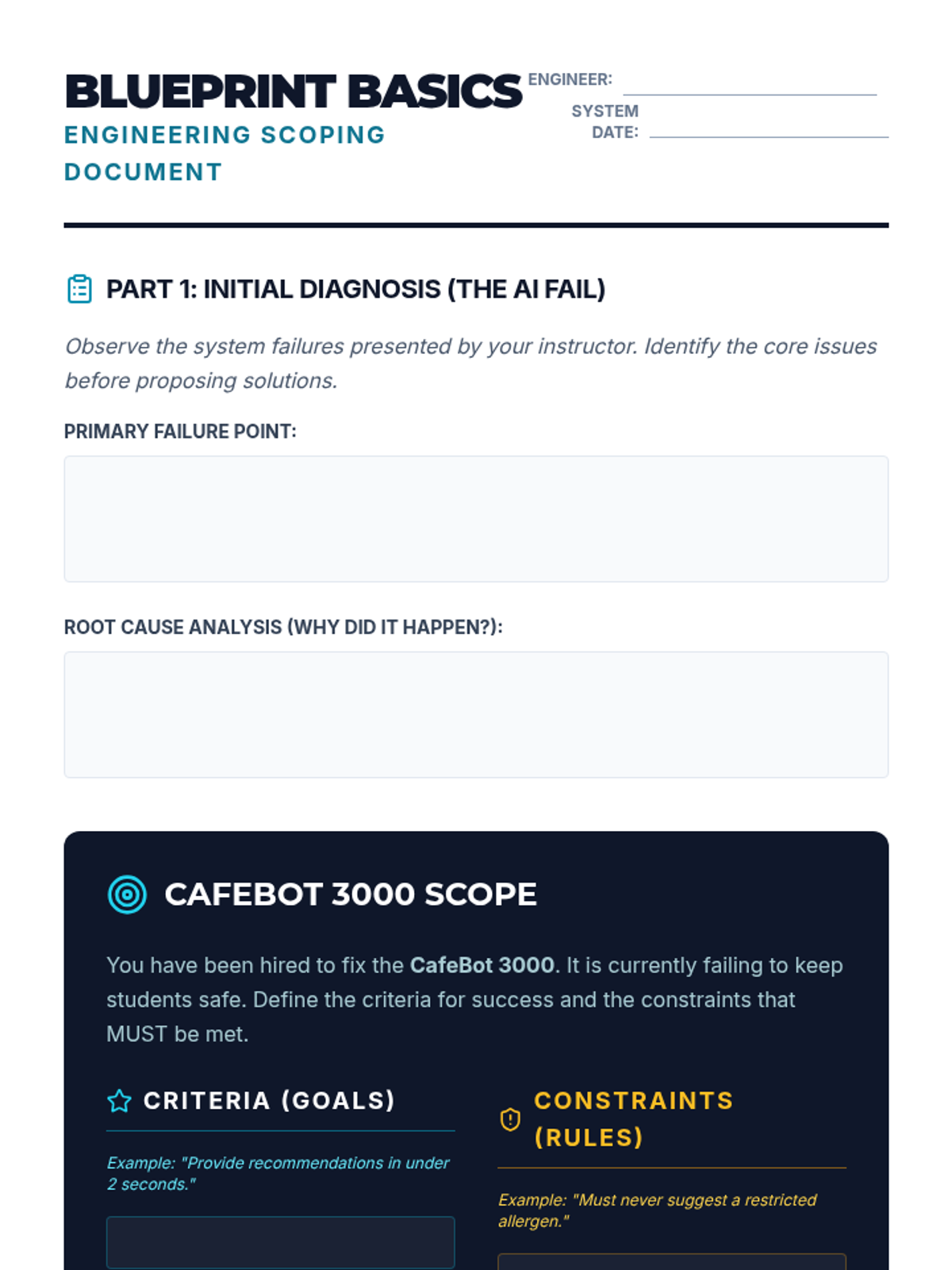
Constraint Checklist Worksheet
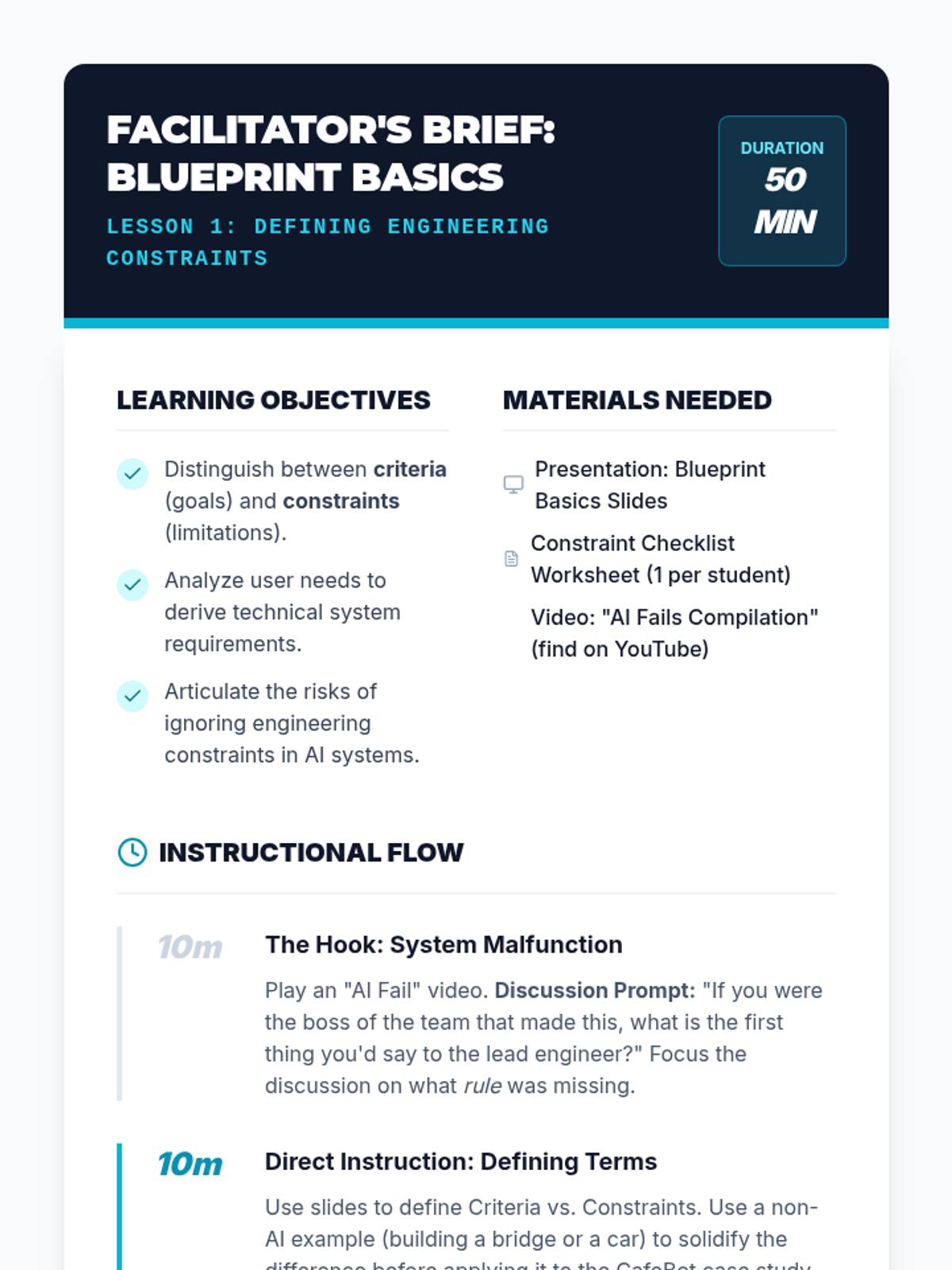
Problem Scoping Guide Teacher Resource

Engineering AI Systems

Students assume the role of Quality Assurance Engineers to audit and improve a flawed AI prototype through an iterative engineering lifecycle of testing, documentation, and refinement.

Lenny Avatar
Lenny
1/17