Ideation frameworks, business planning structures, and startup financial modeling. Strengthens skills in concept validation, market strategy, and capital management.
A unit exploring the fundamental concepts of business, economics, and entrepreneurship for middle school students.
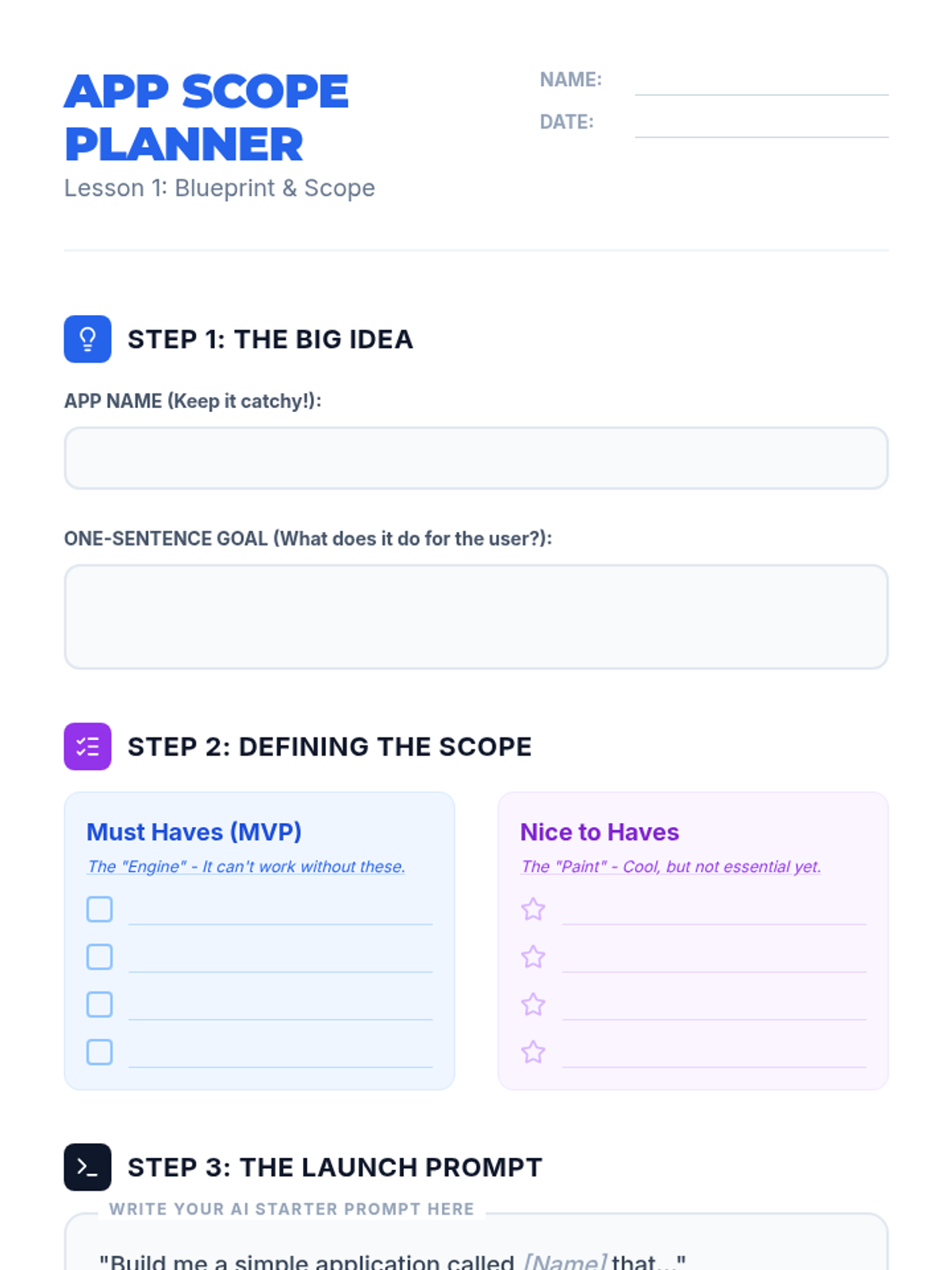
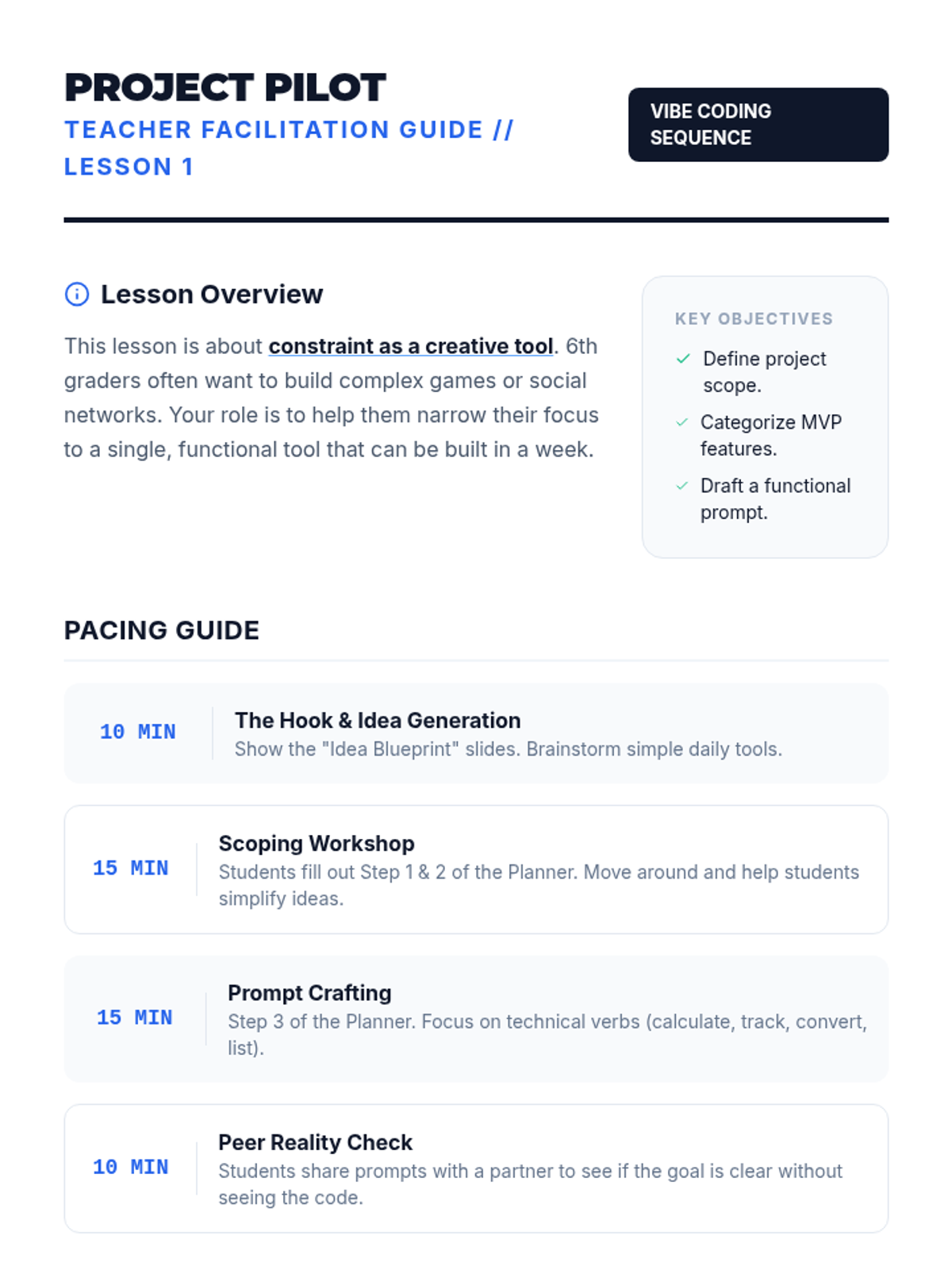
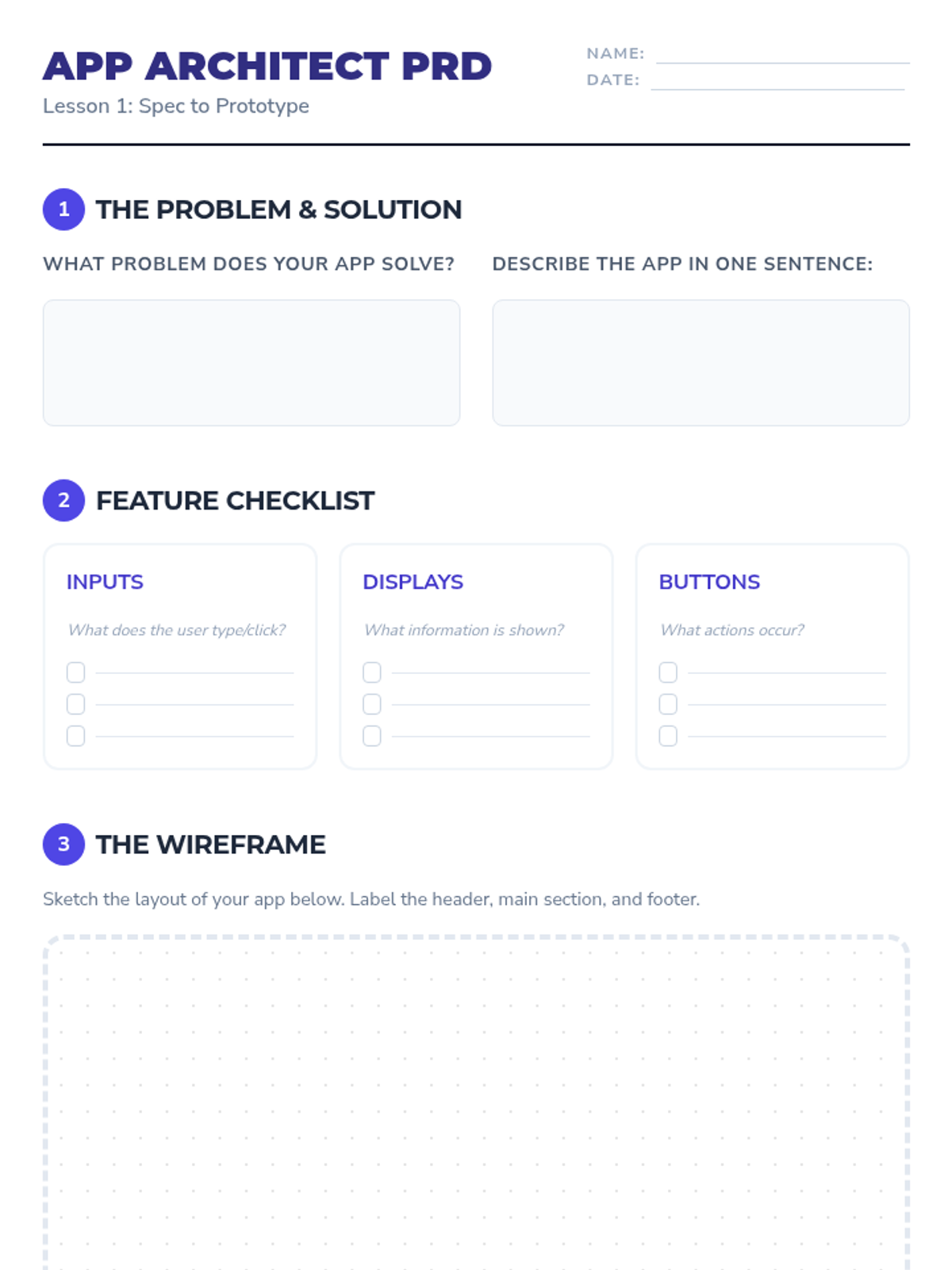
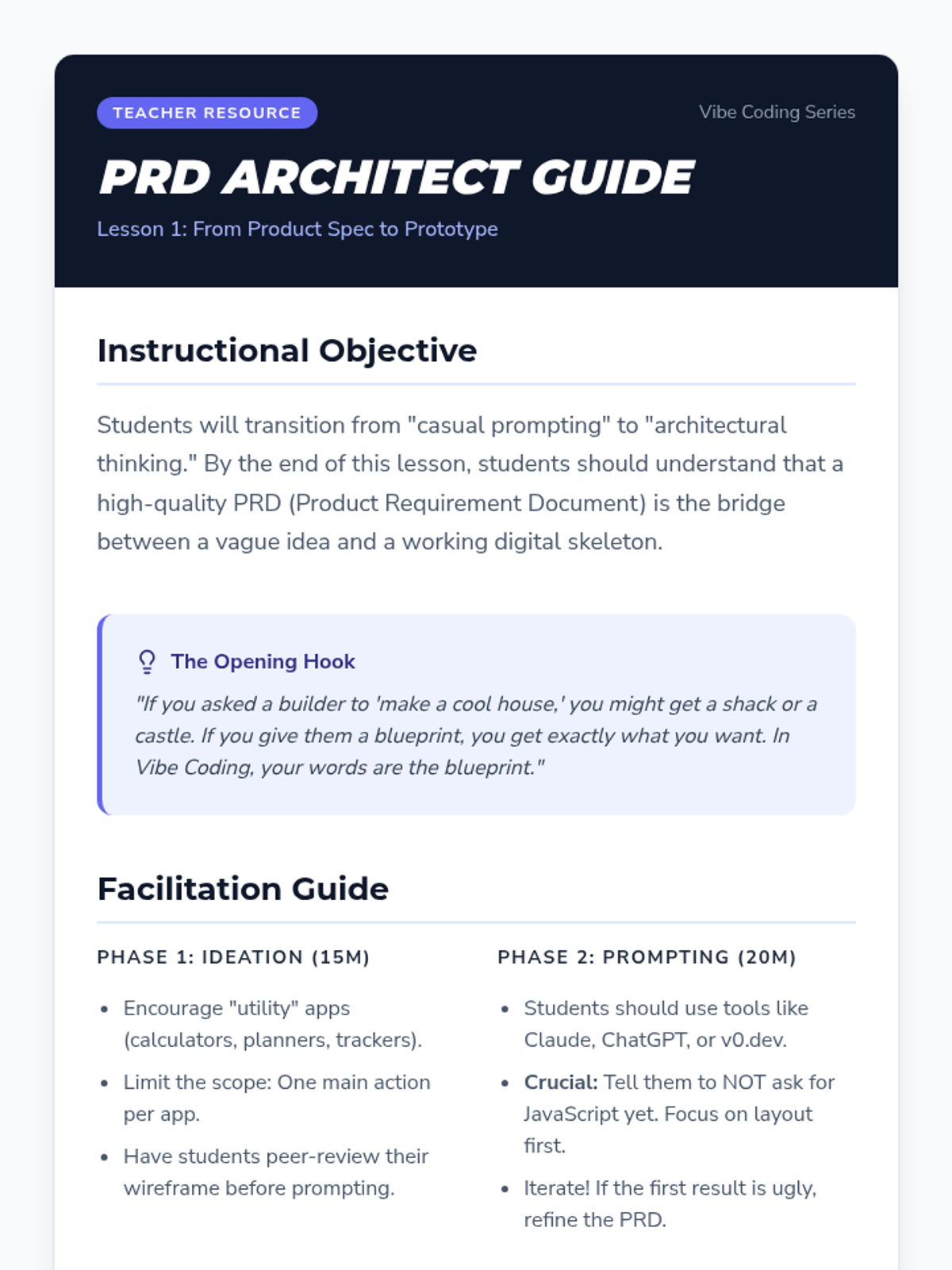
A comprehensive 6th-grade sequence on 'Vibe Coding'—using AI to rapidly prototype and build functional applications. Students move from initial scoping to functional MVP, UI styling, peer testing, and final reflection, emphasizing the partnership between human creativity and AI execution.
This project-based sequence empowers students to build fully functional web applications by describing the interface and functionality to an AI. Students act as product managers and architects, using modular prompting to generate HTML, CSS, and JavaScript.
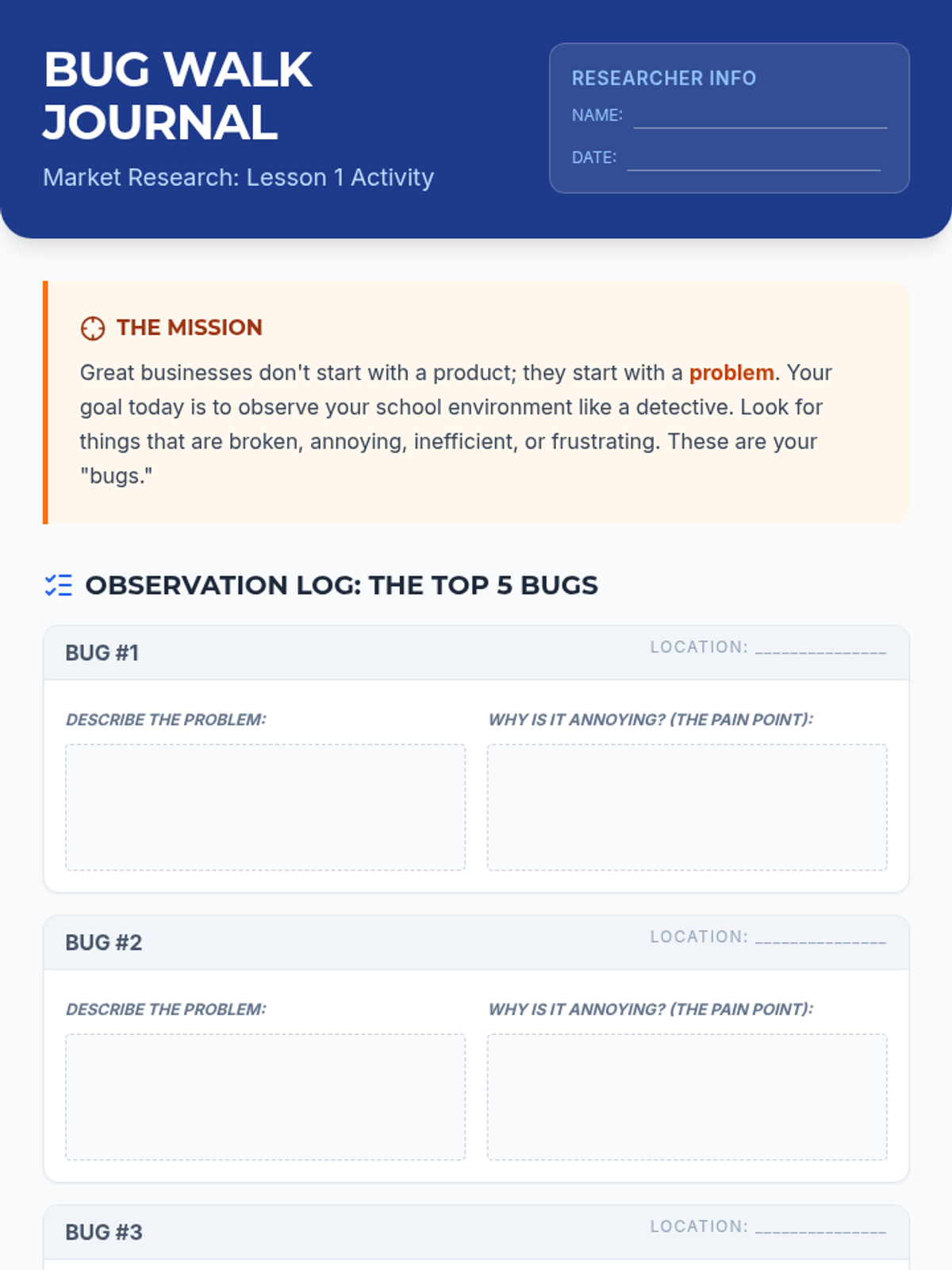
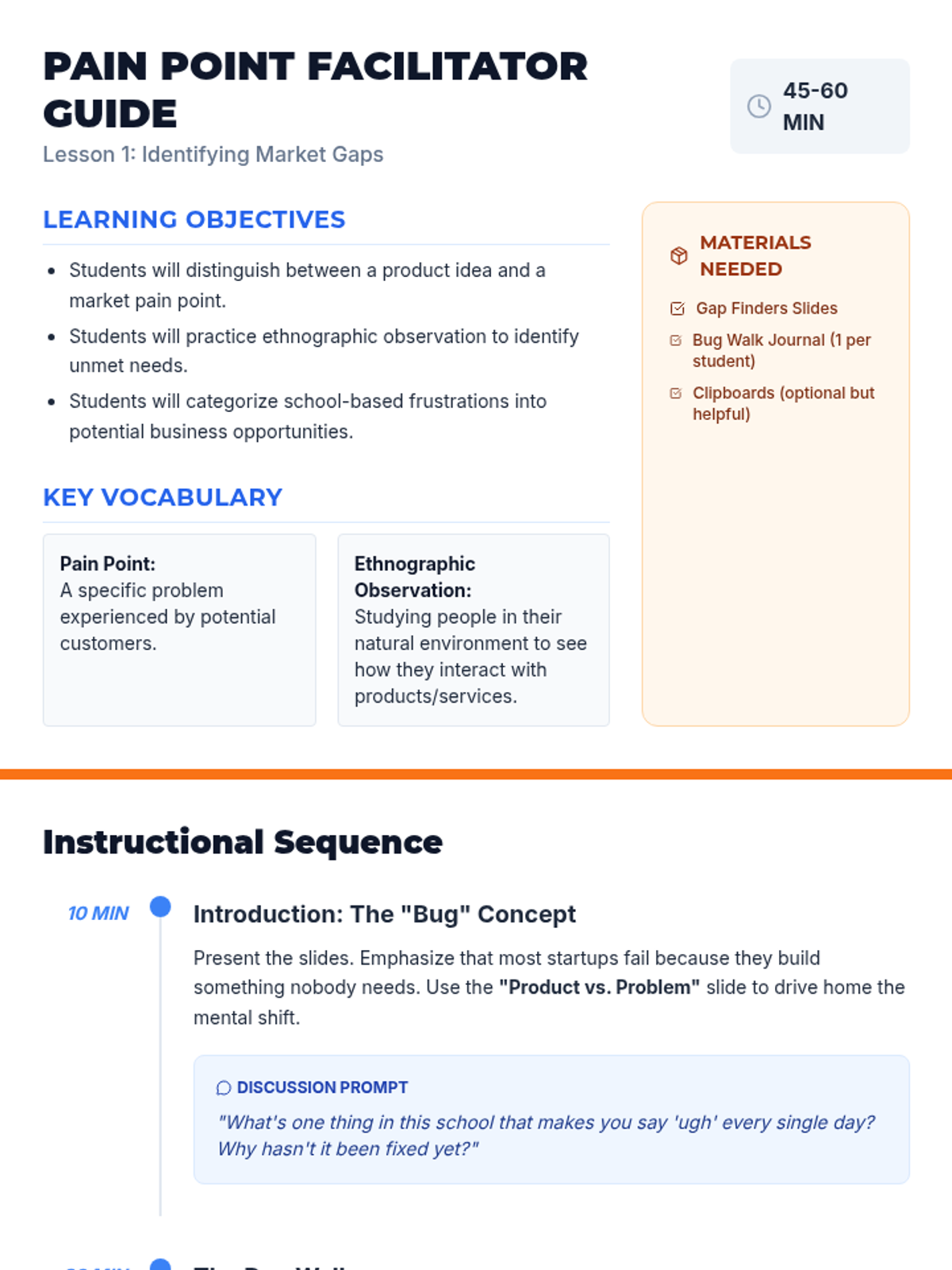
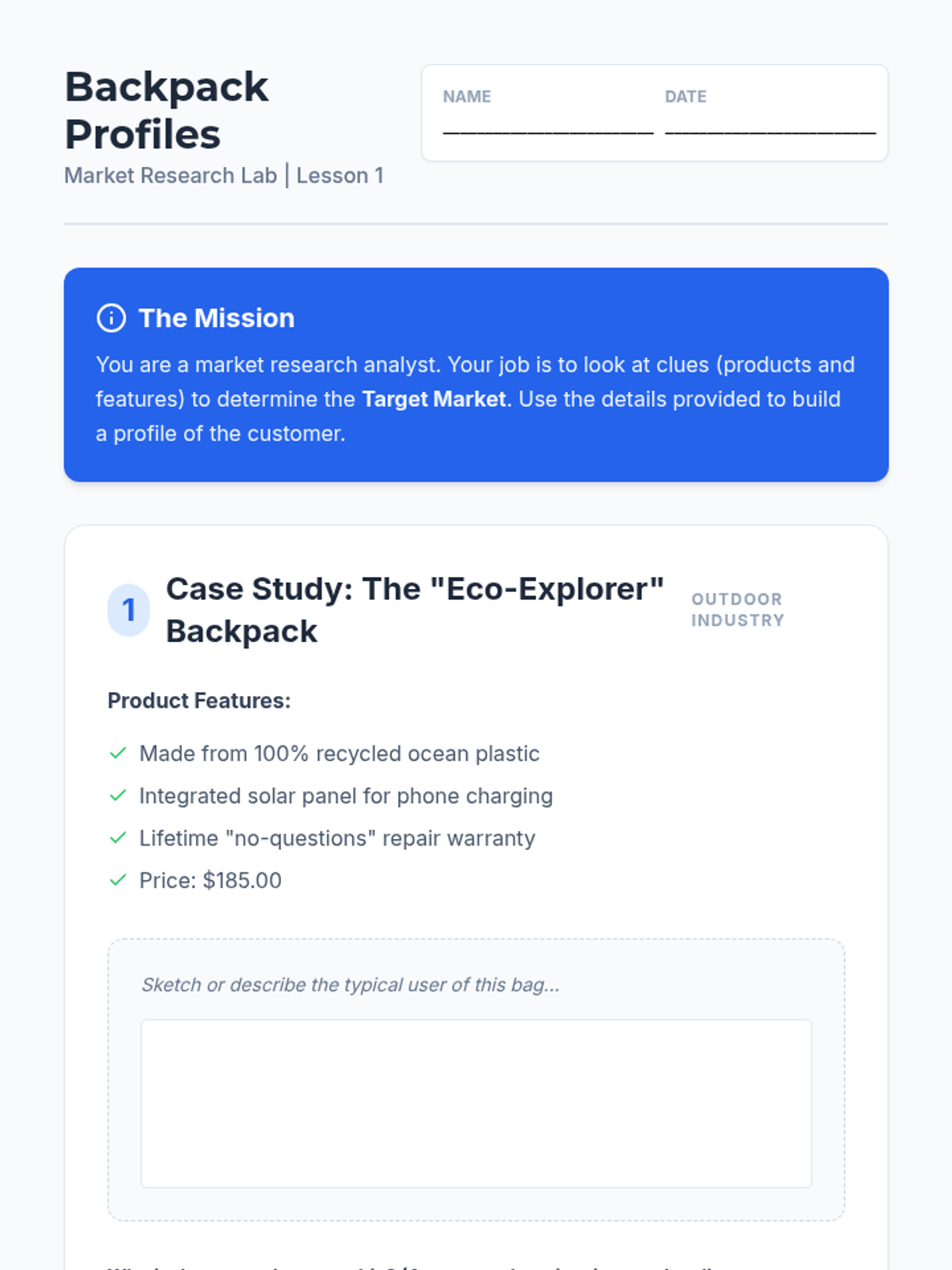
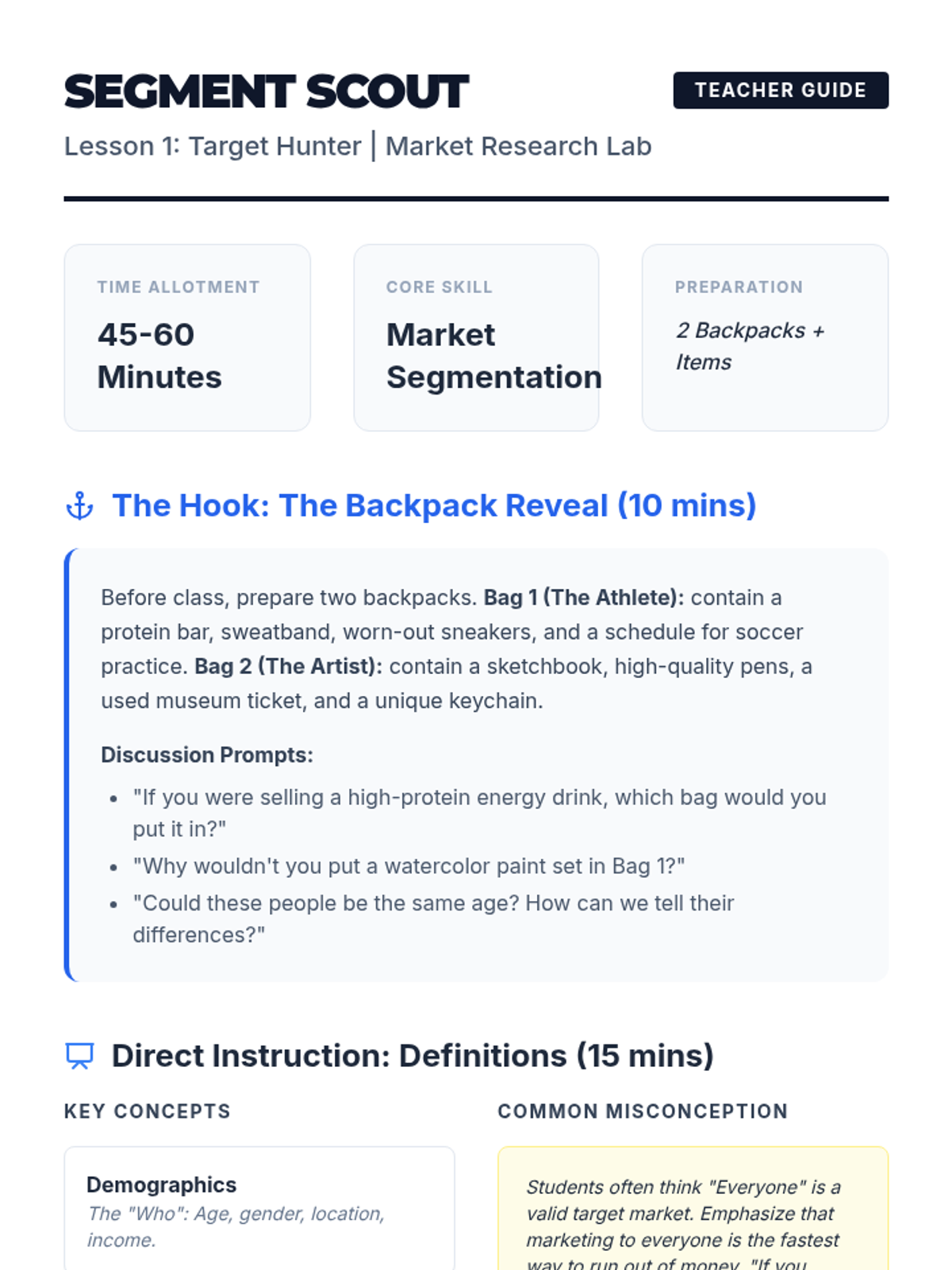
Students step into the role of market researchers to validate business ideas using inquiry-driven methods. They progress from identifying community pain points and creating customer personas to designing unbiased surveys and conducting competitive analysis. The sequence culminates in a Market Viability Report where students use data to determine if a business idea is worth pursuing.
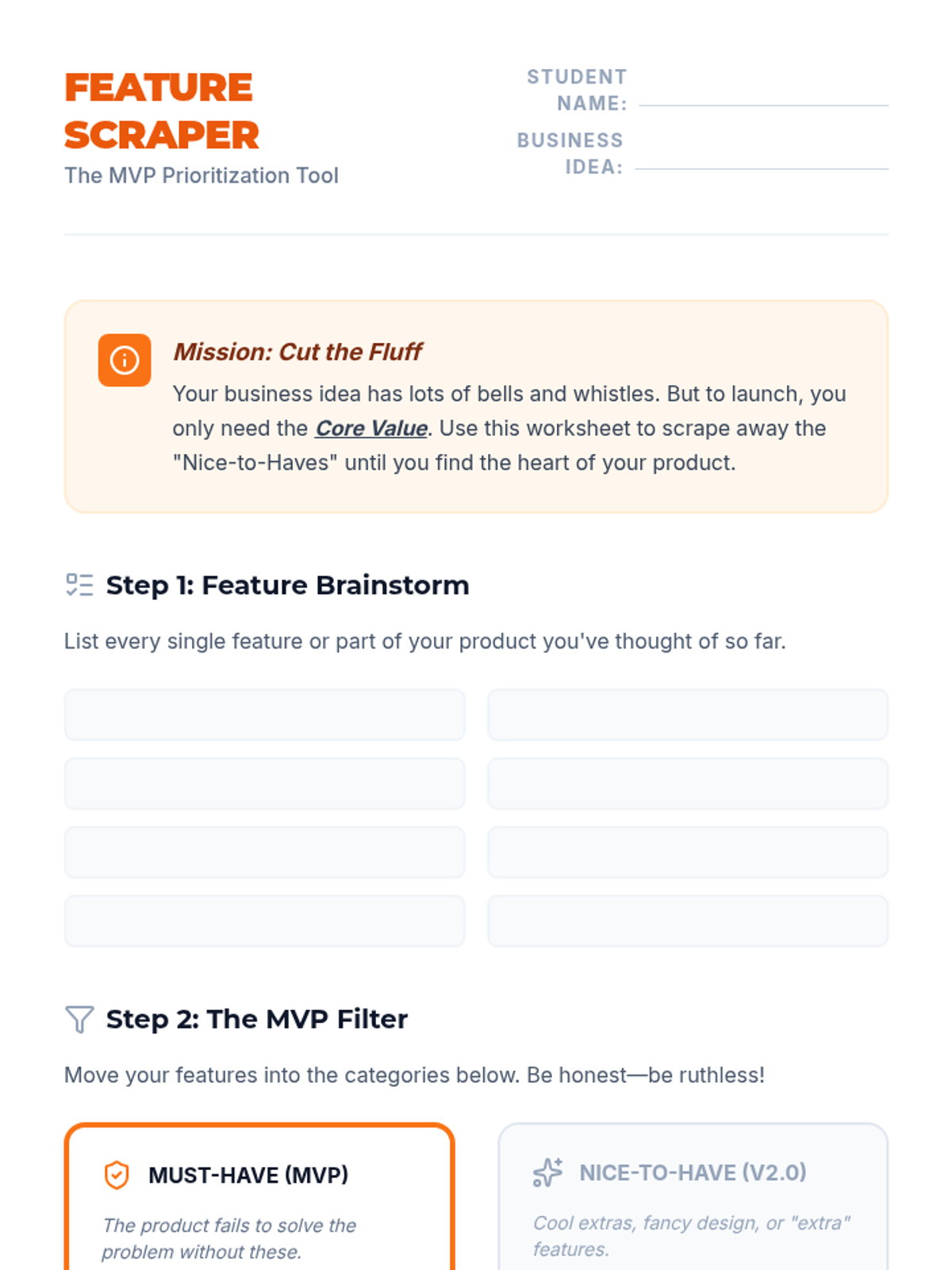
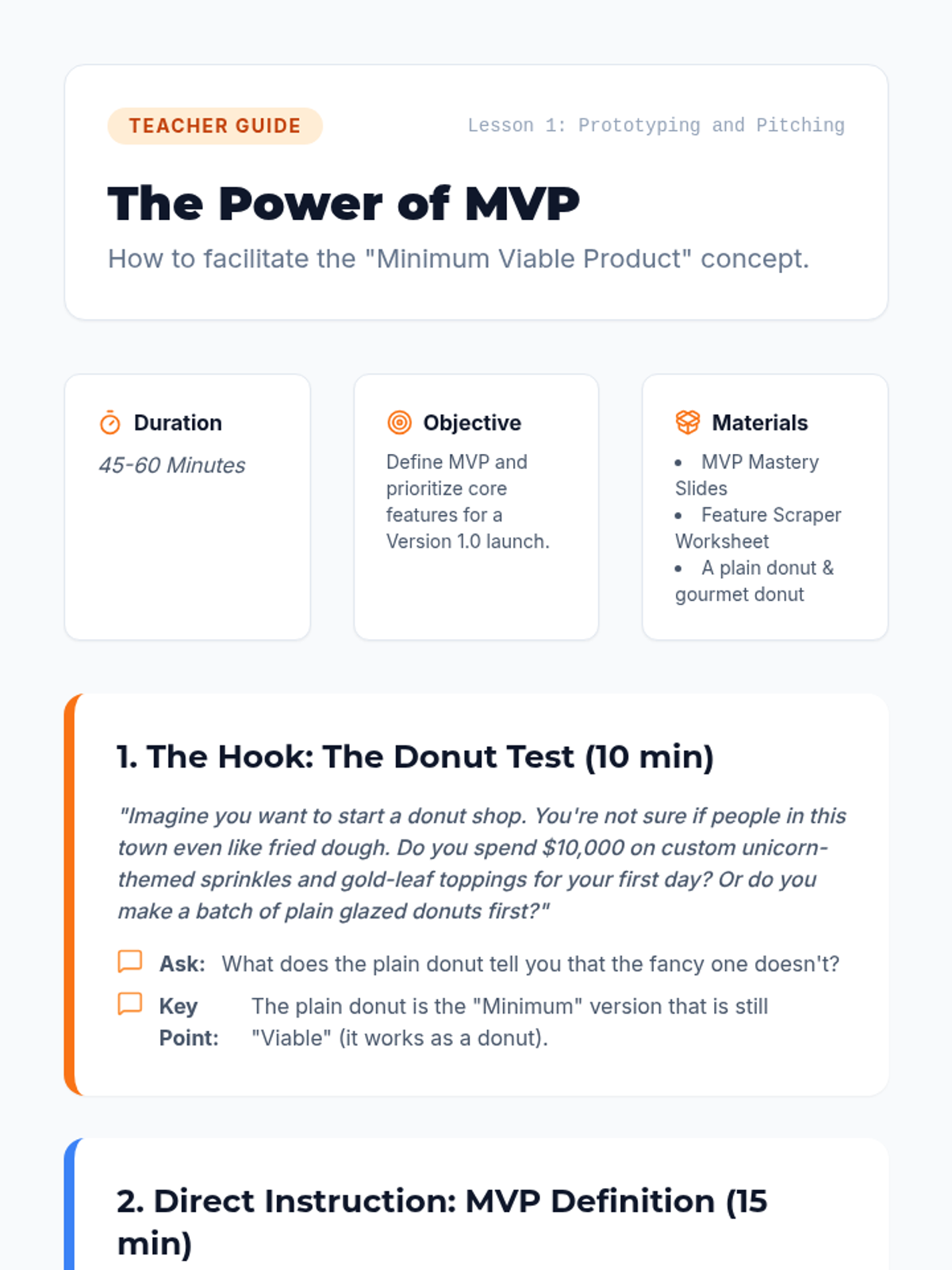
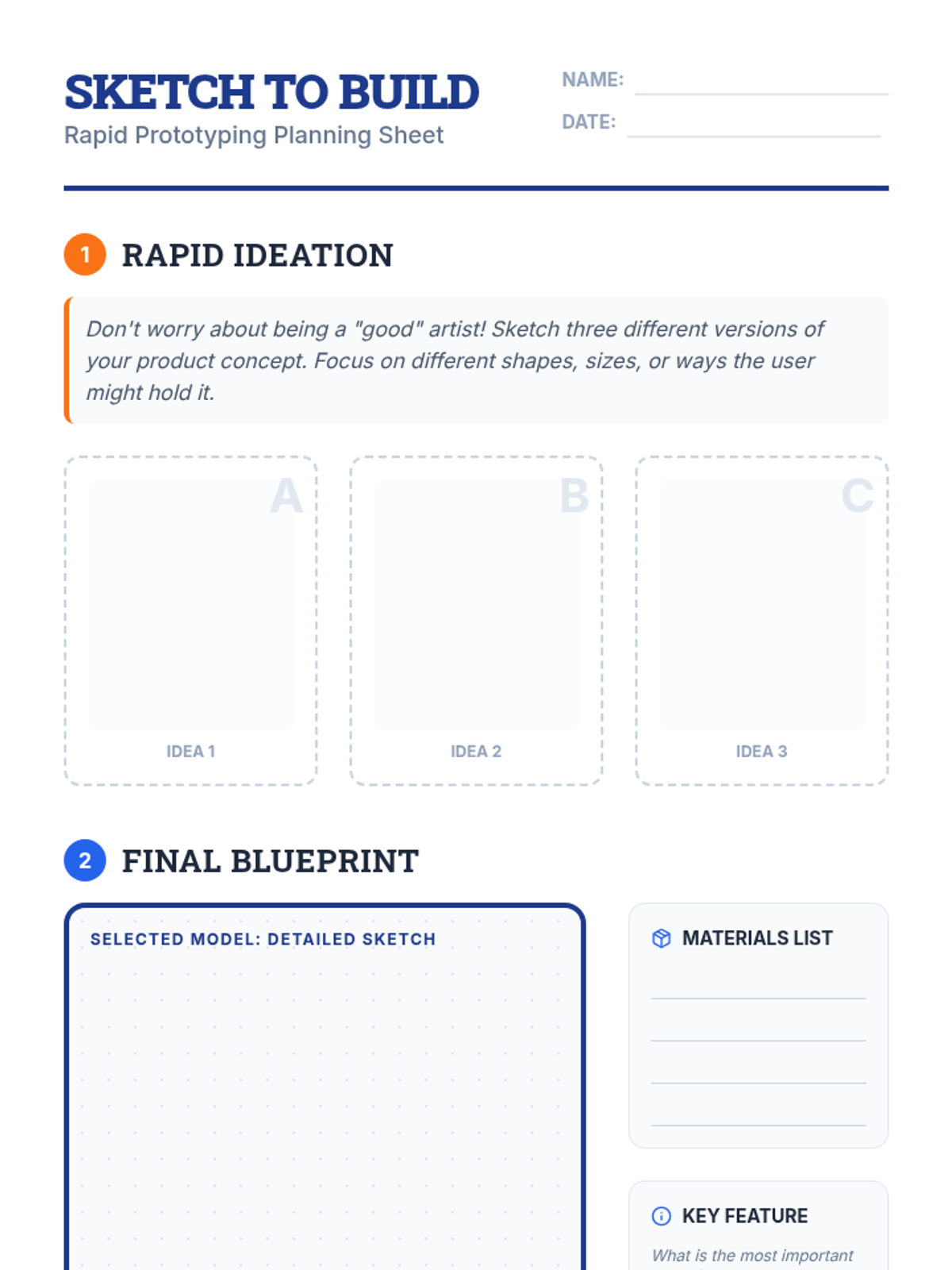
Students transition from business planning to execution by building Minimum Viable Products (MVPs) and crafting persuasive pitches. The sequence emphasizes rapid prototyping, iterative user testing, and the art of entrepreneurial storytelling.
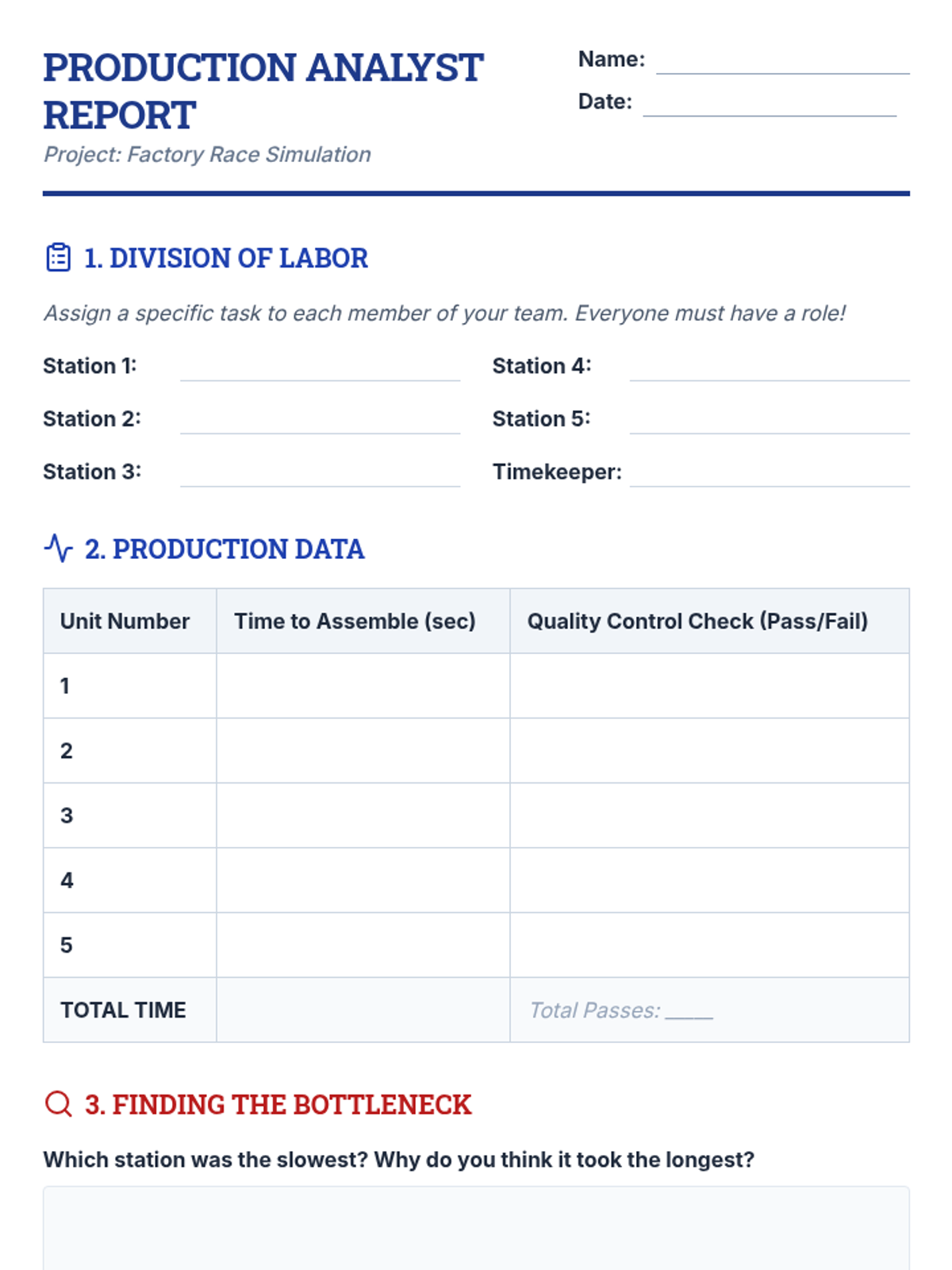
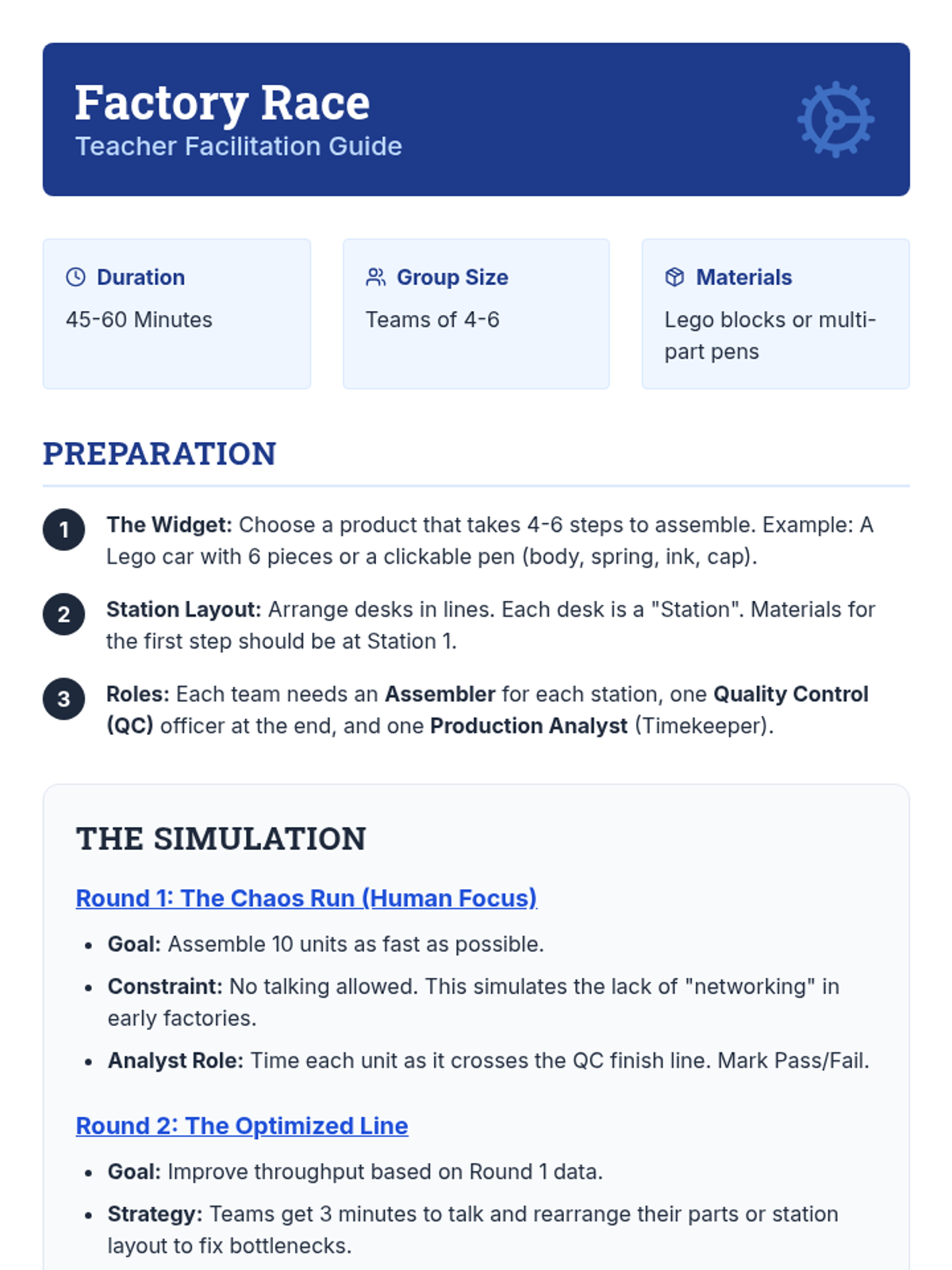
A game-based engineering sequence where students explore mechanical engineering and automated manufacturing. They transition from manual assembly to designing robotic logic and optimized factory layouts.
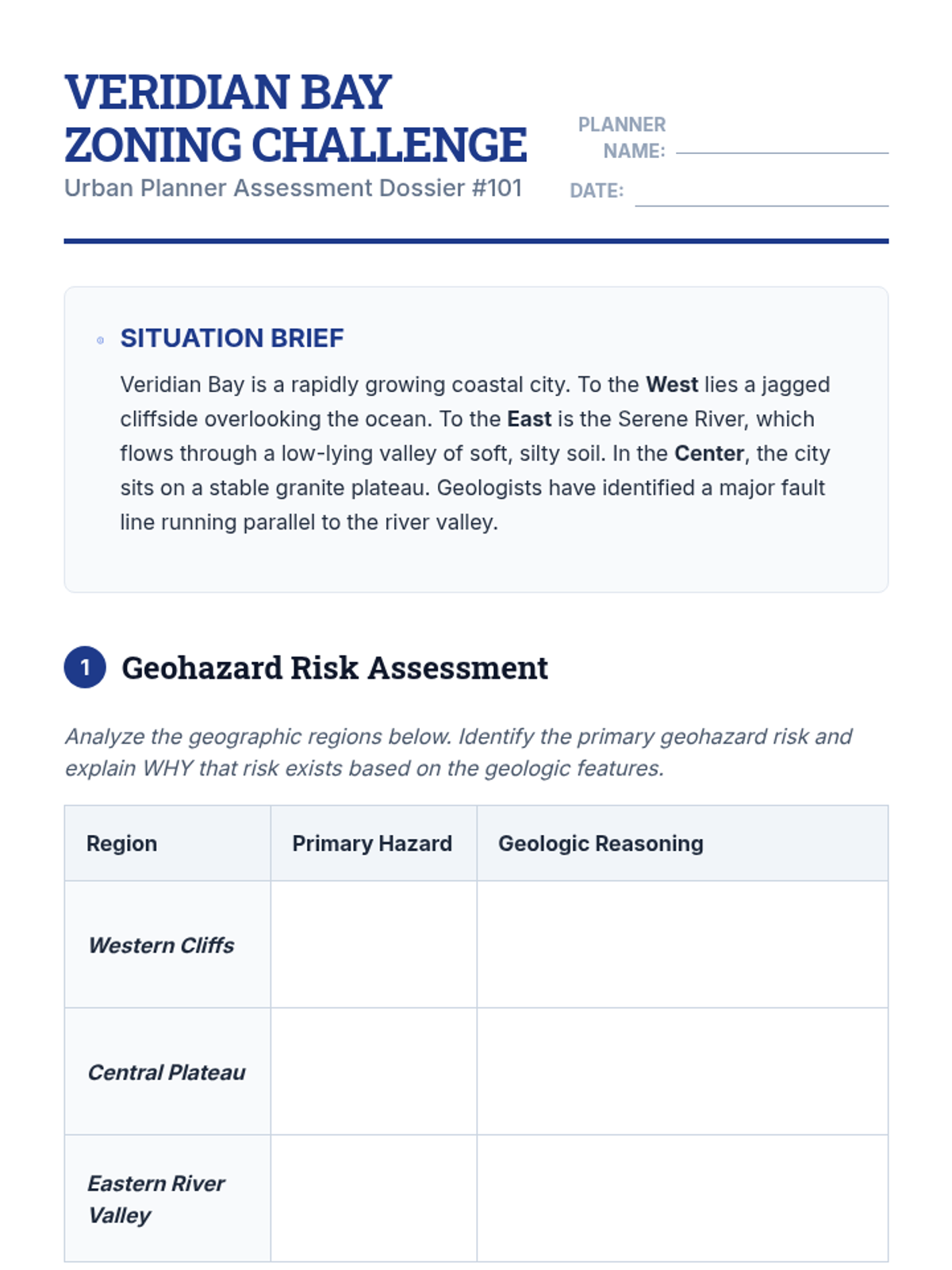
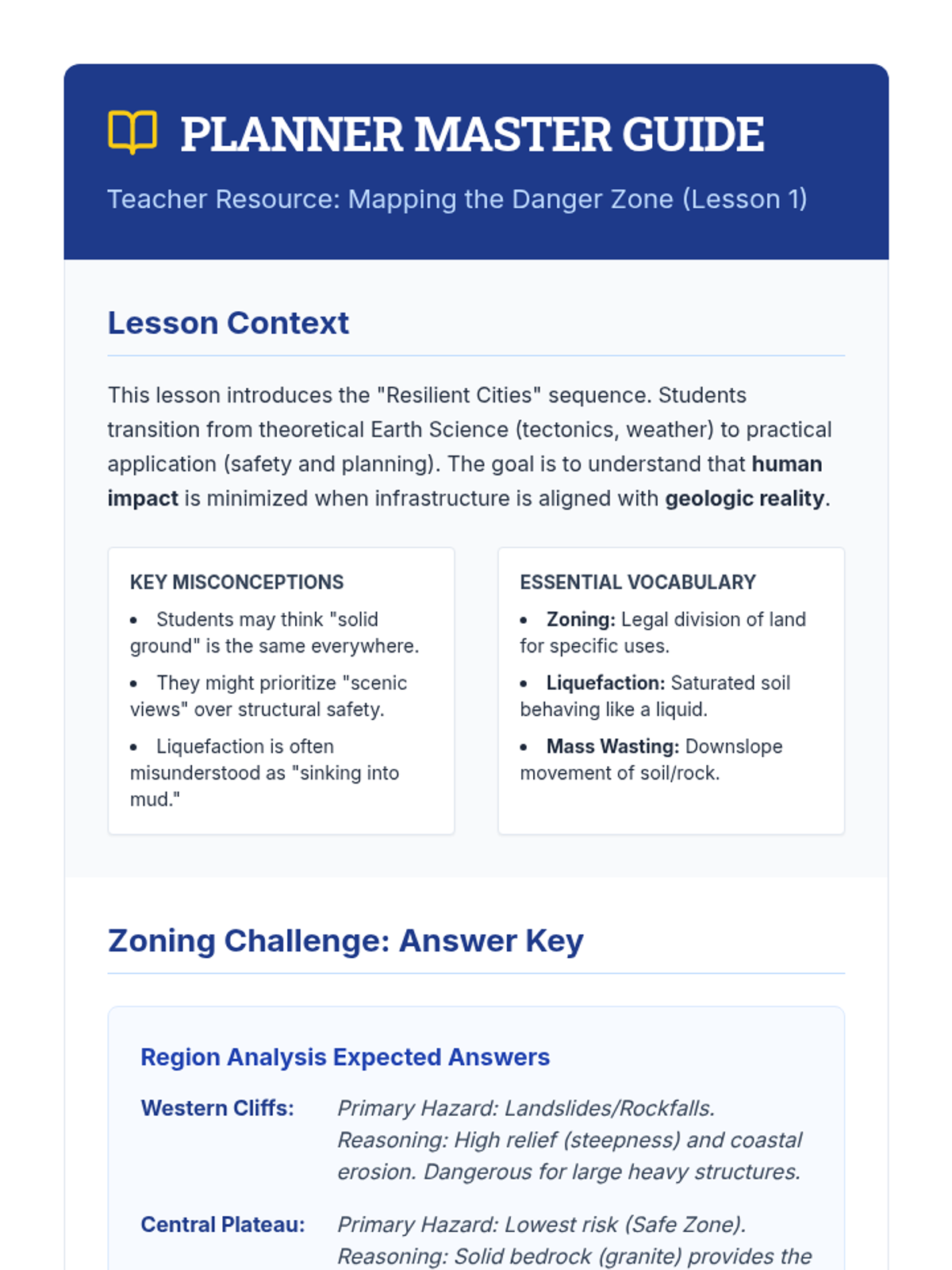
Students act as city planners, using geologic data to assess risks and design mitigation strategies for a fictional region. The unit covers zoning, building codes, and emergency response, culminating in a town hall simulation where students defend their resilience plans.
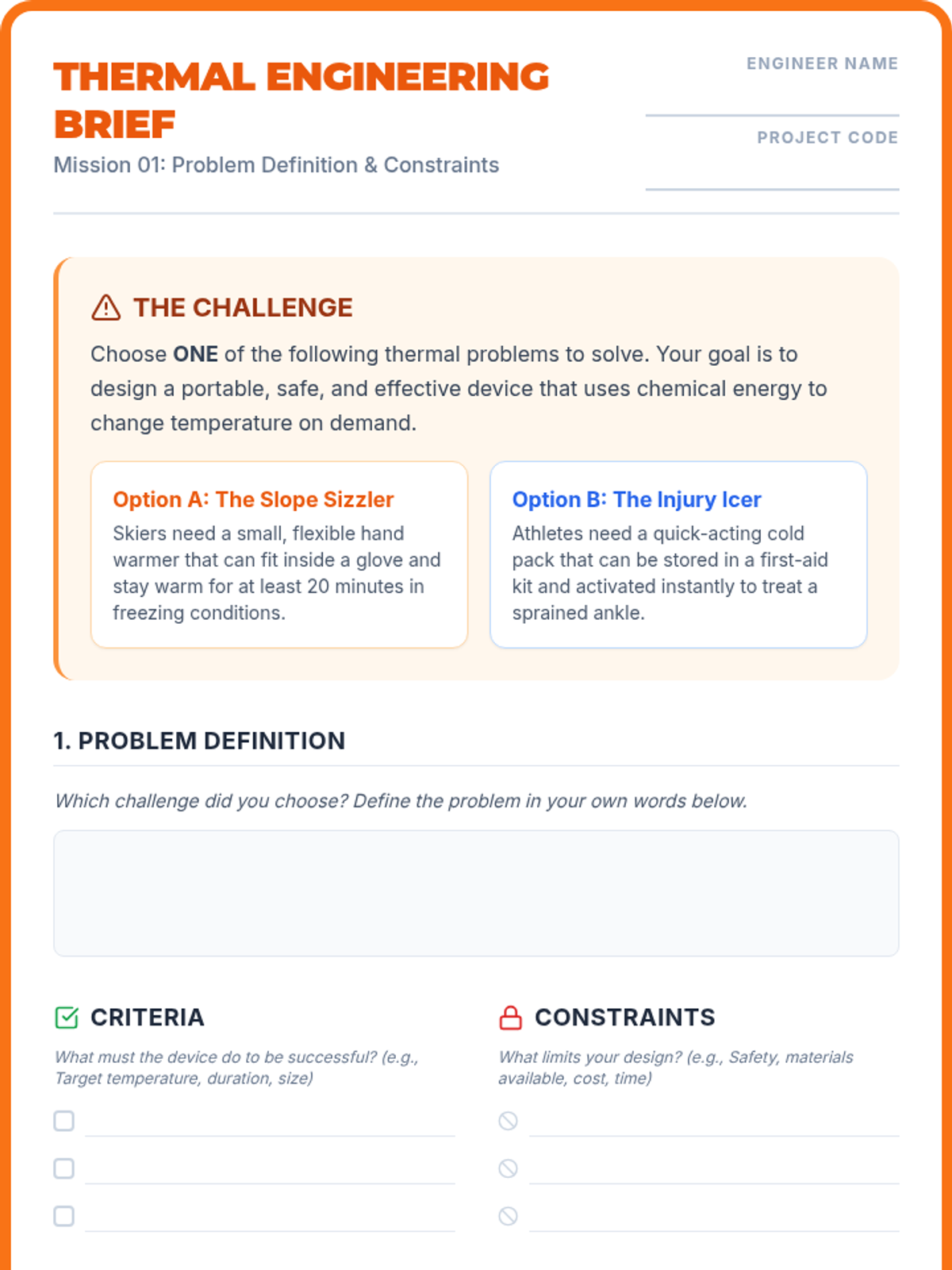
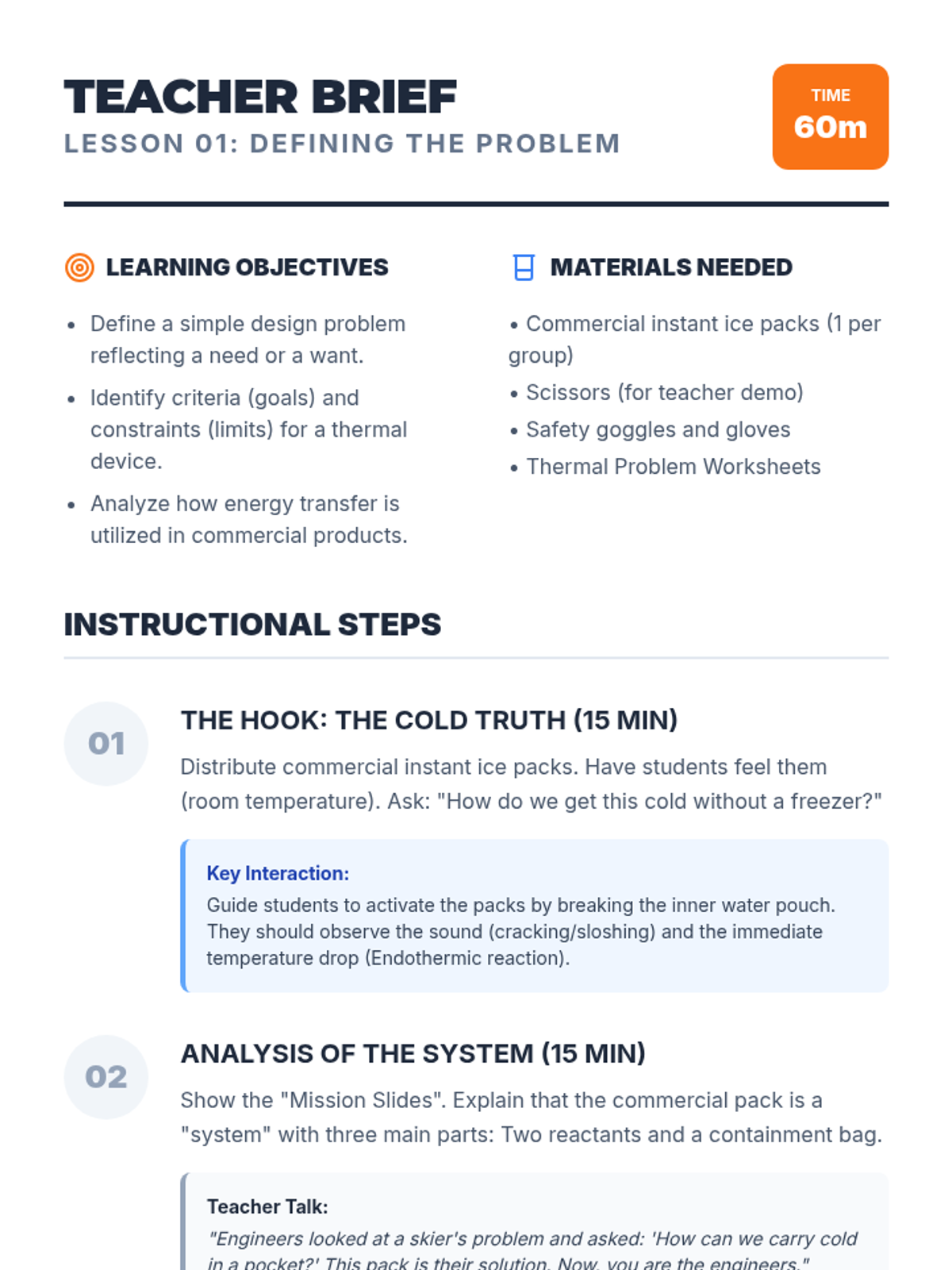
Students take on the role of chemical engineers to design, test, and refine a thermal device (hand warmer or cold pack) using exothermic and endothermic reactions. They navigate the engineering design process from problem definition to final presentation, applying scientific concepts of energy transfer to solve real-world temperature regulation challenges.
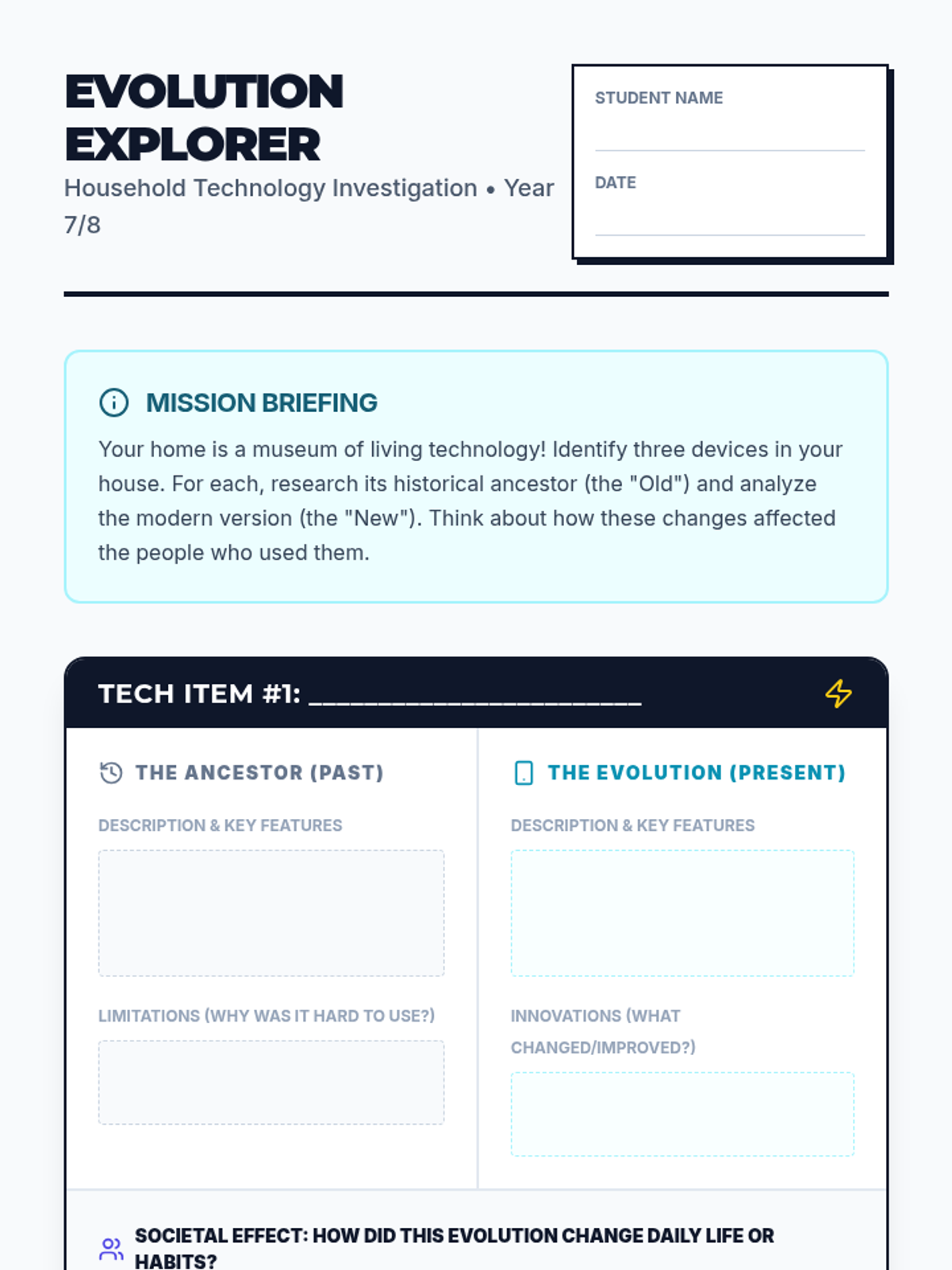
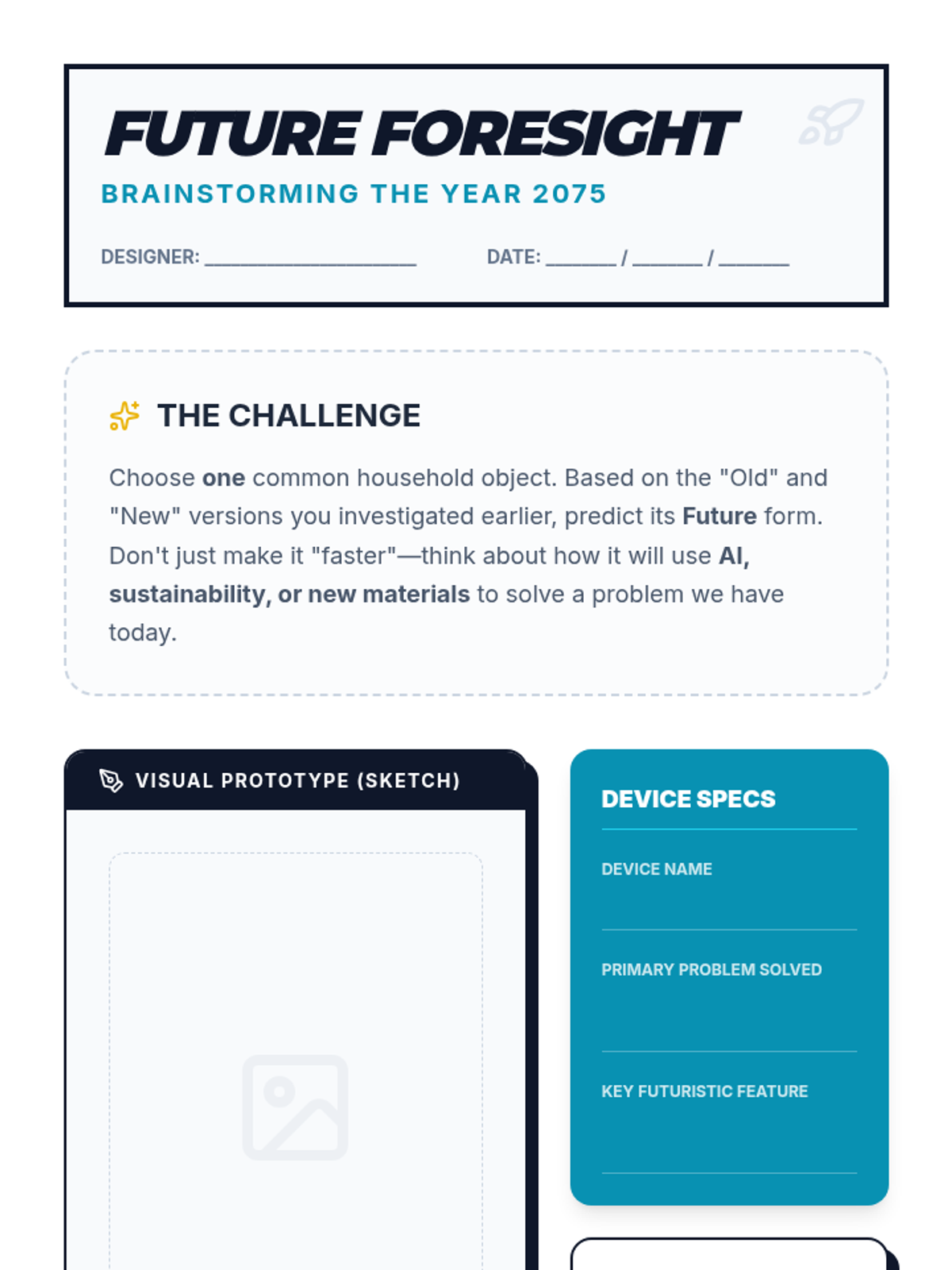
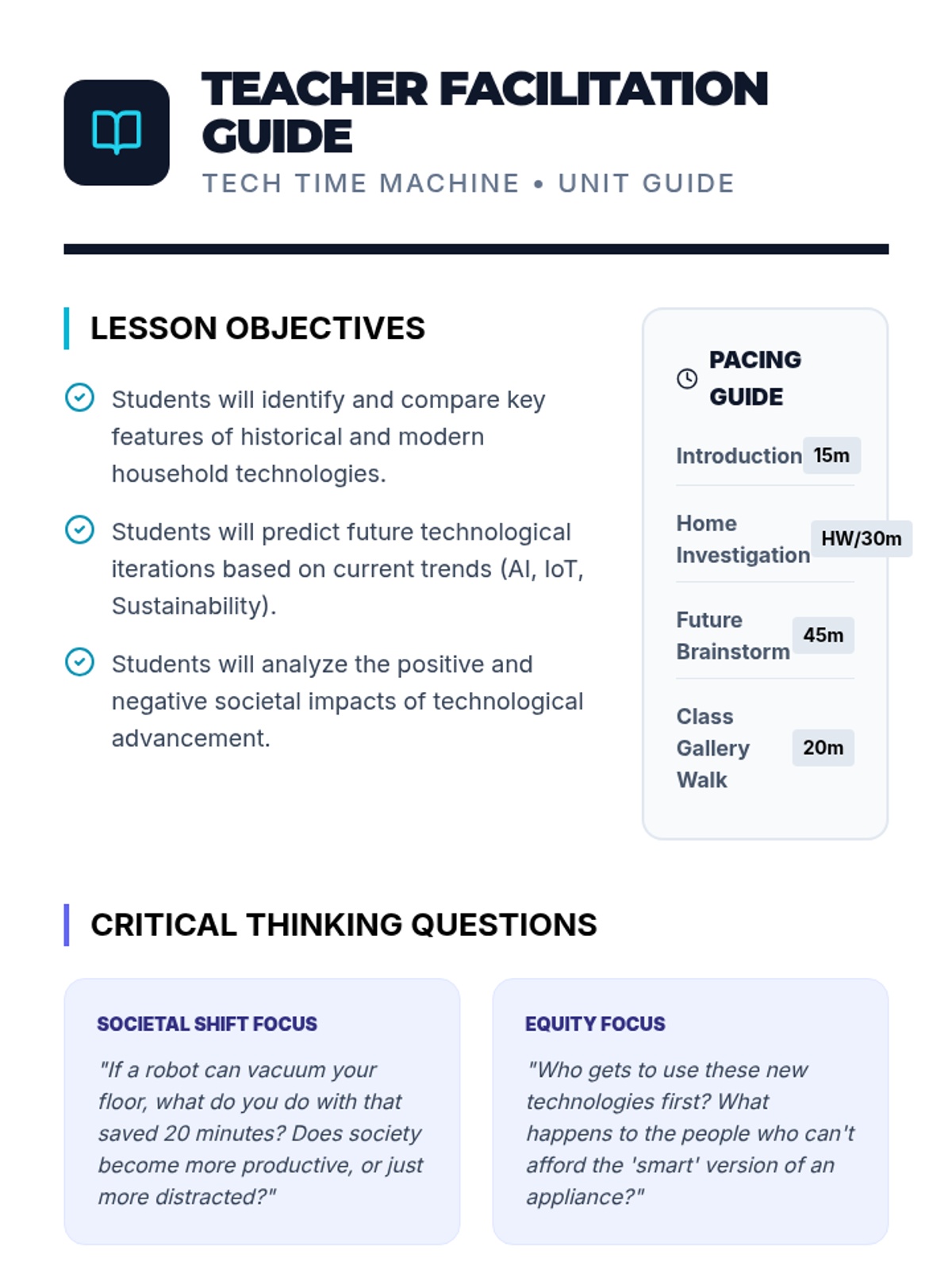
A multi-day project where students trace the lineage of household technology, culminating in a prototype design and a presentation on societal impact.
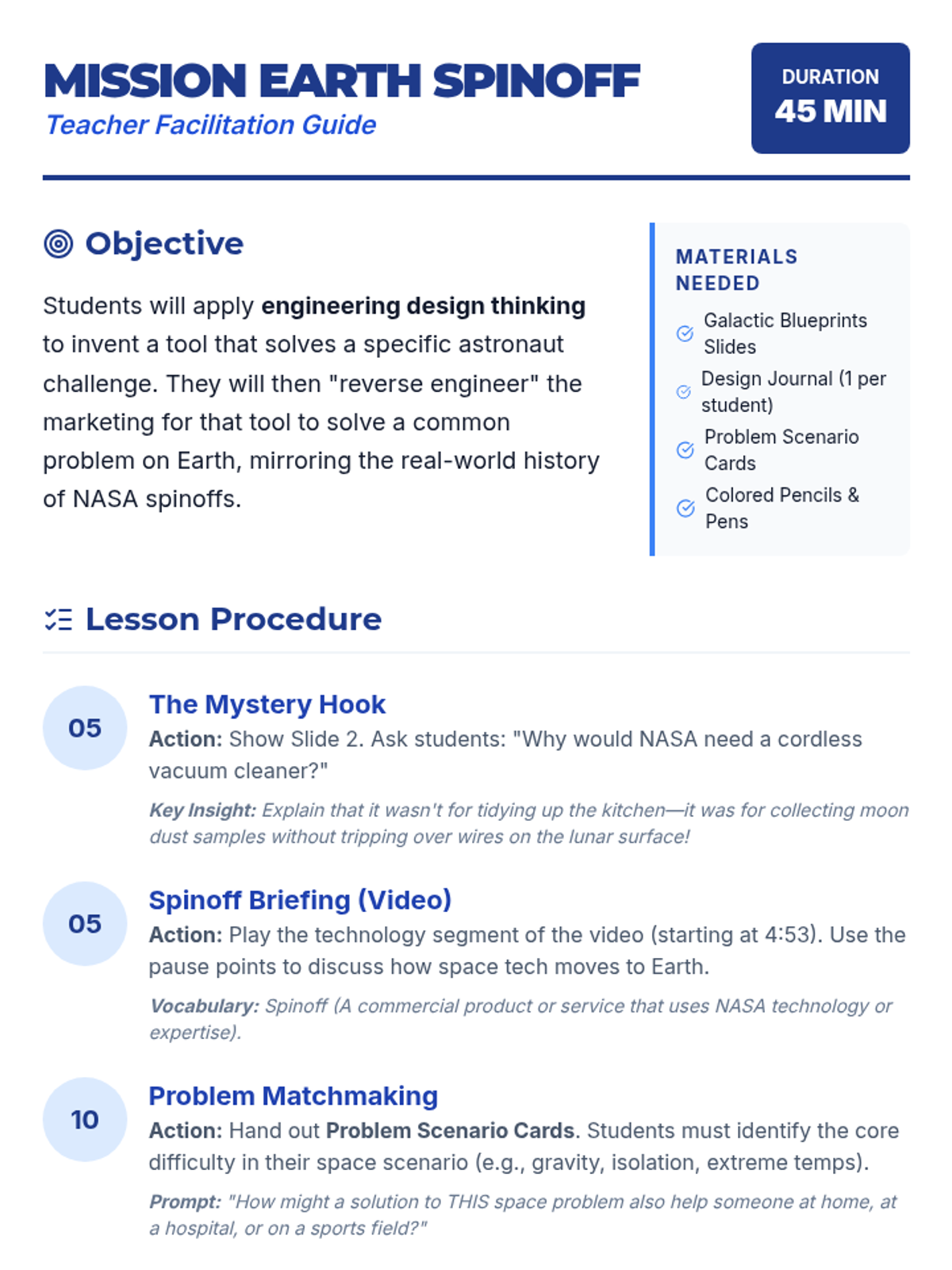
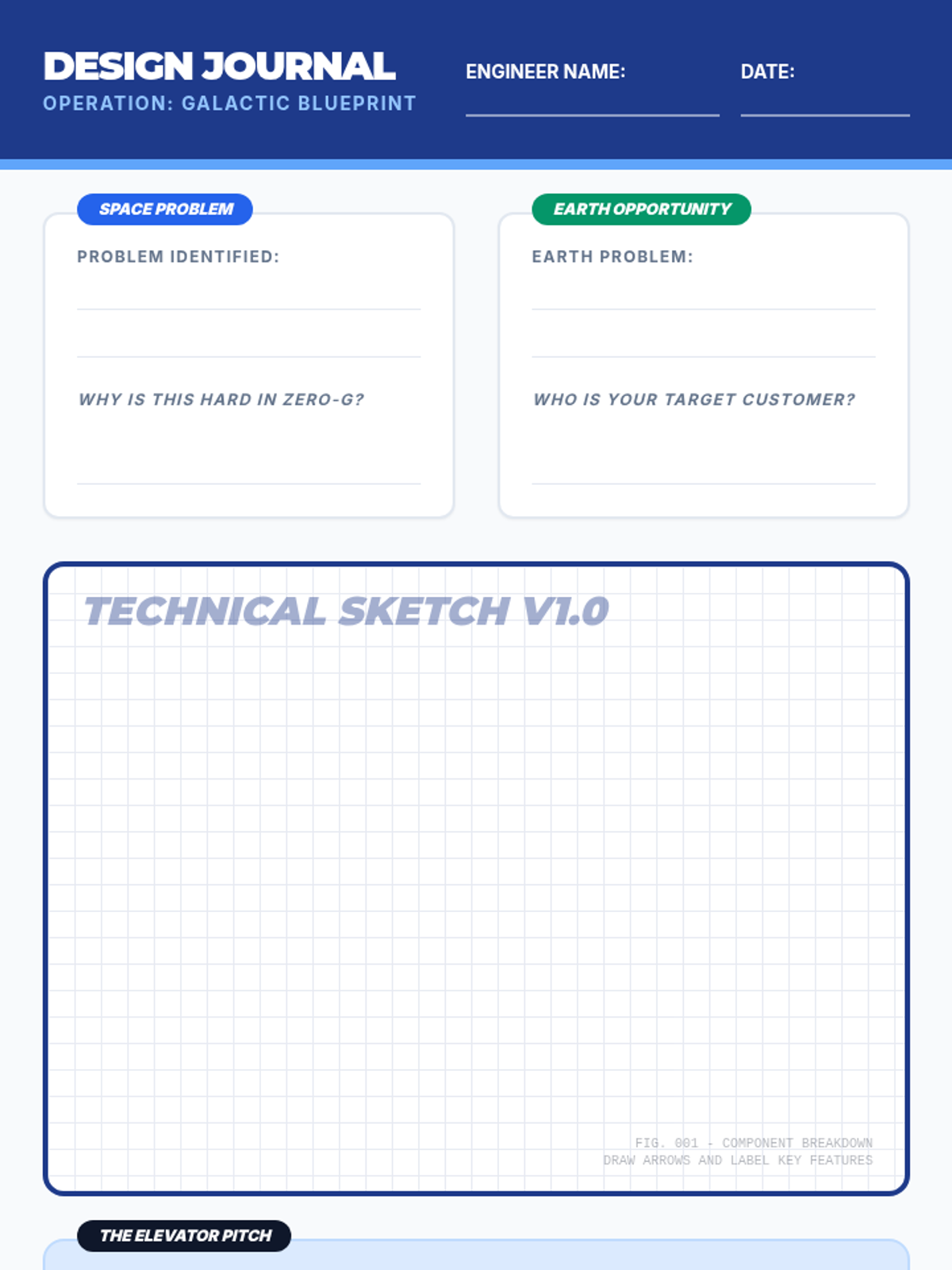
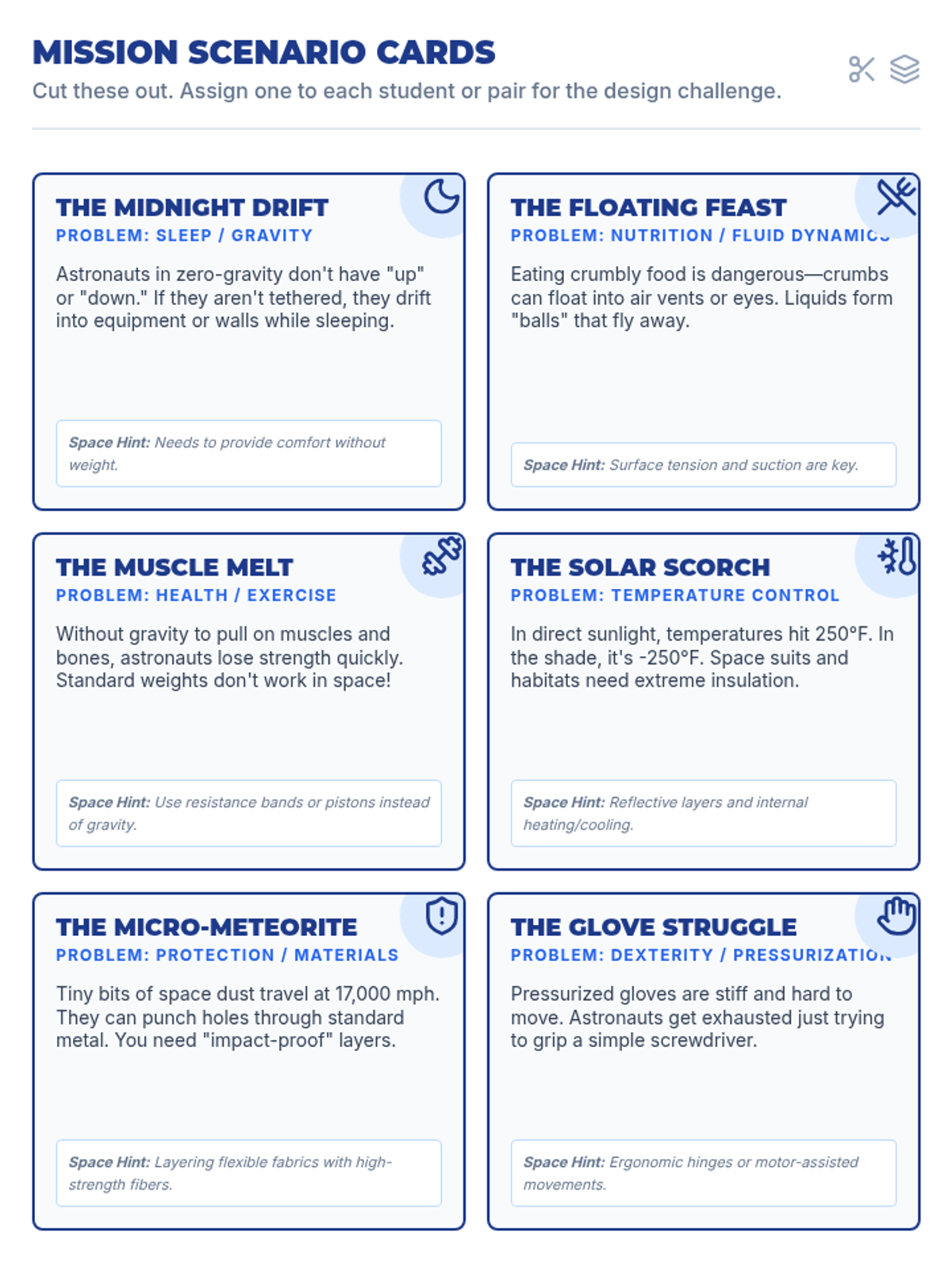
A creative engineering lesson where students explore NASA spinoffs and design their own inventions that solve problems in space and on Earth. Students practice design thinking and marketing by 'reverse engineering' space technology for commercial use.
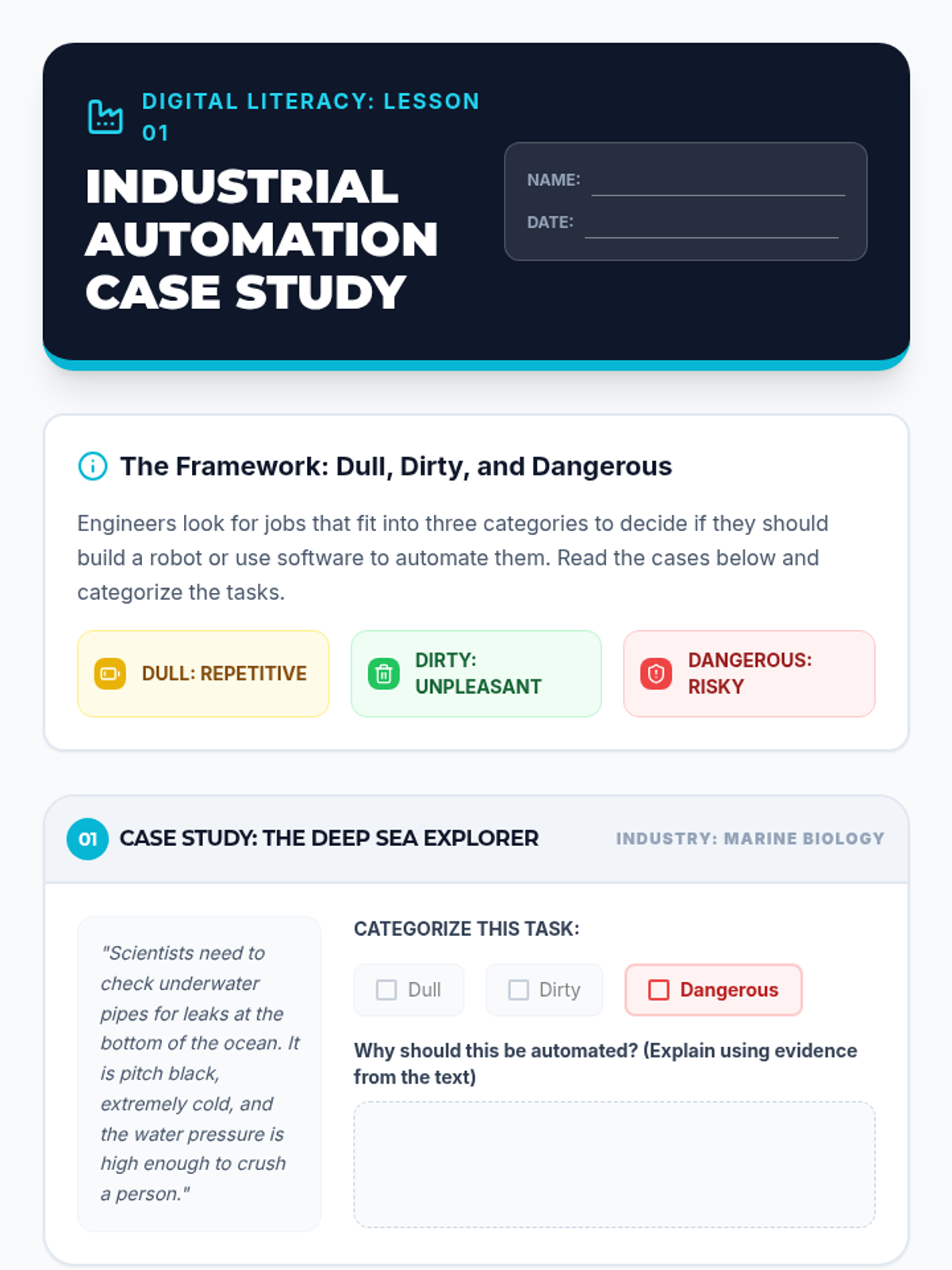
Students explore automation and the future of work by adopting the role of inventors and designers. They investigate how robots and software automate tasks, analyze shifting job markets, and apply design thinking to create beneficial future technology concepts.
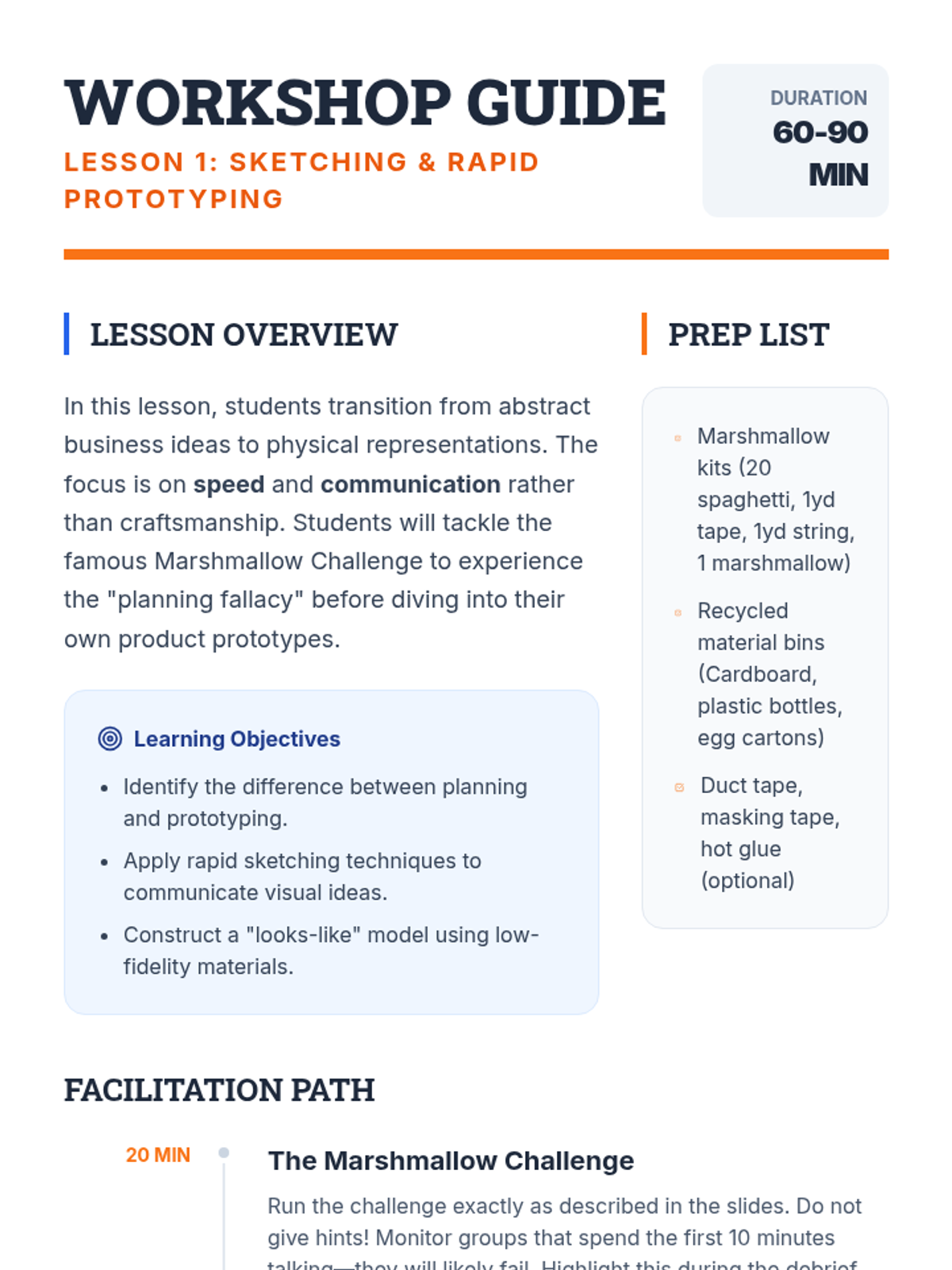
A project-based sequence for 6th graders focusing on the Build-Measure-Learn loop. Students transition from theoretical ideas to hands-on prototyping, user testing, and iterative design using the Lean Startup methodology.
A comprehensive sequence for 6th-grade students focusing on market research and customer analysis to validate business ideas. Students transition from understanding broad markets to creating specific user personas based on data gathered through surveys and interviews.
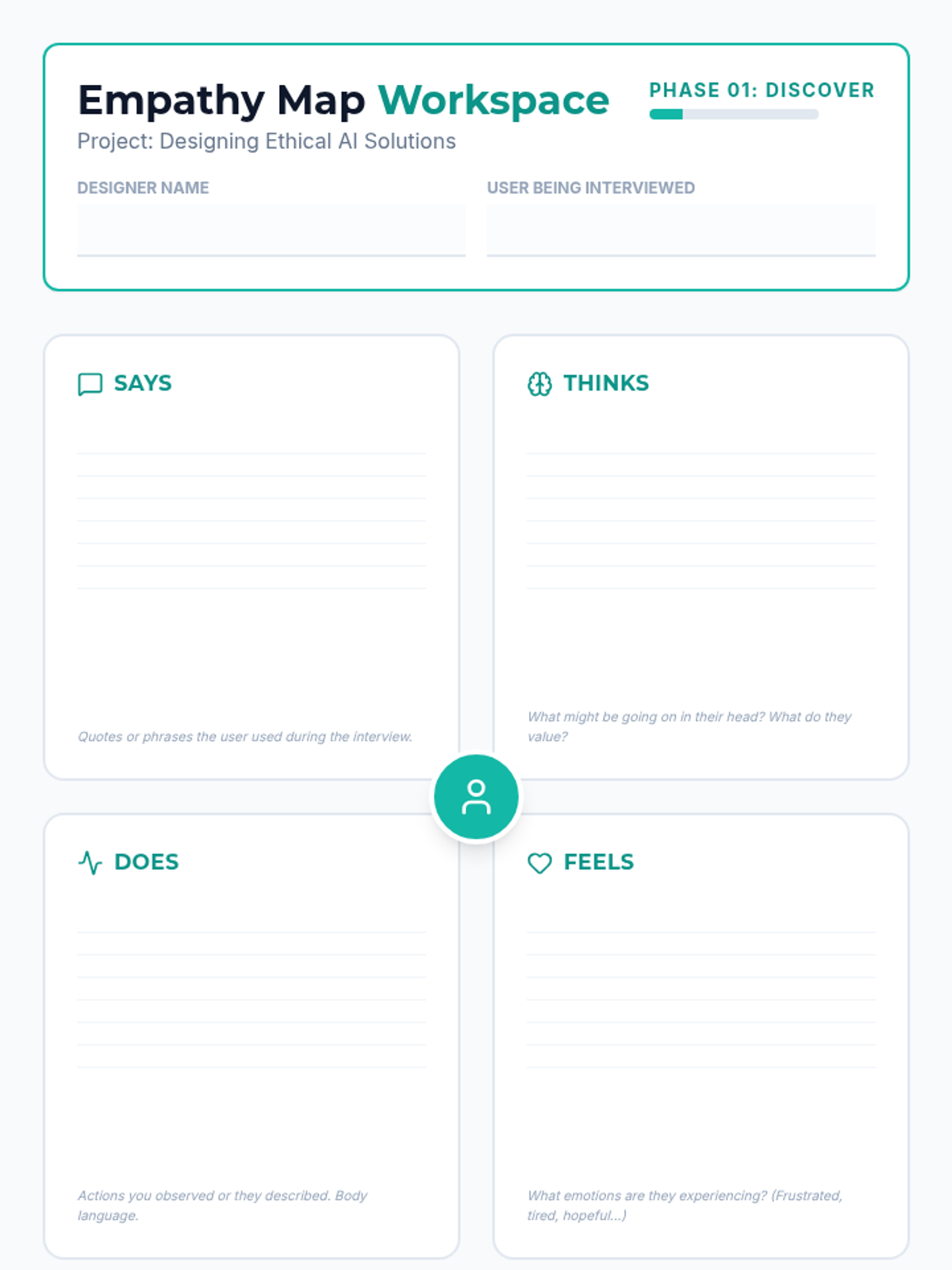
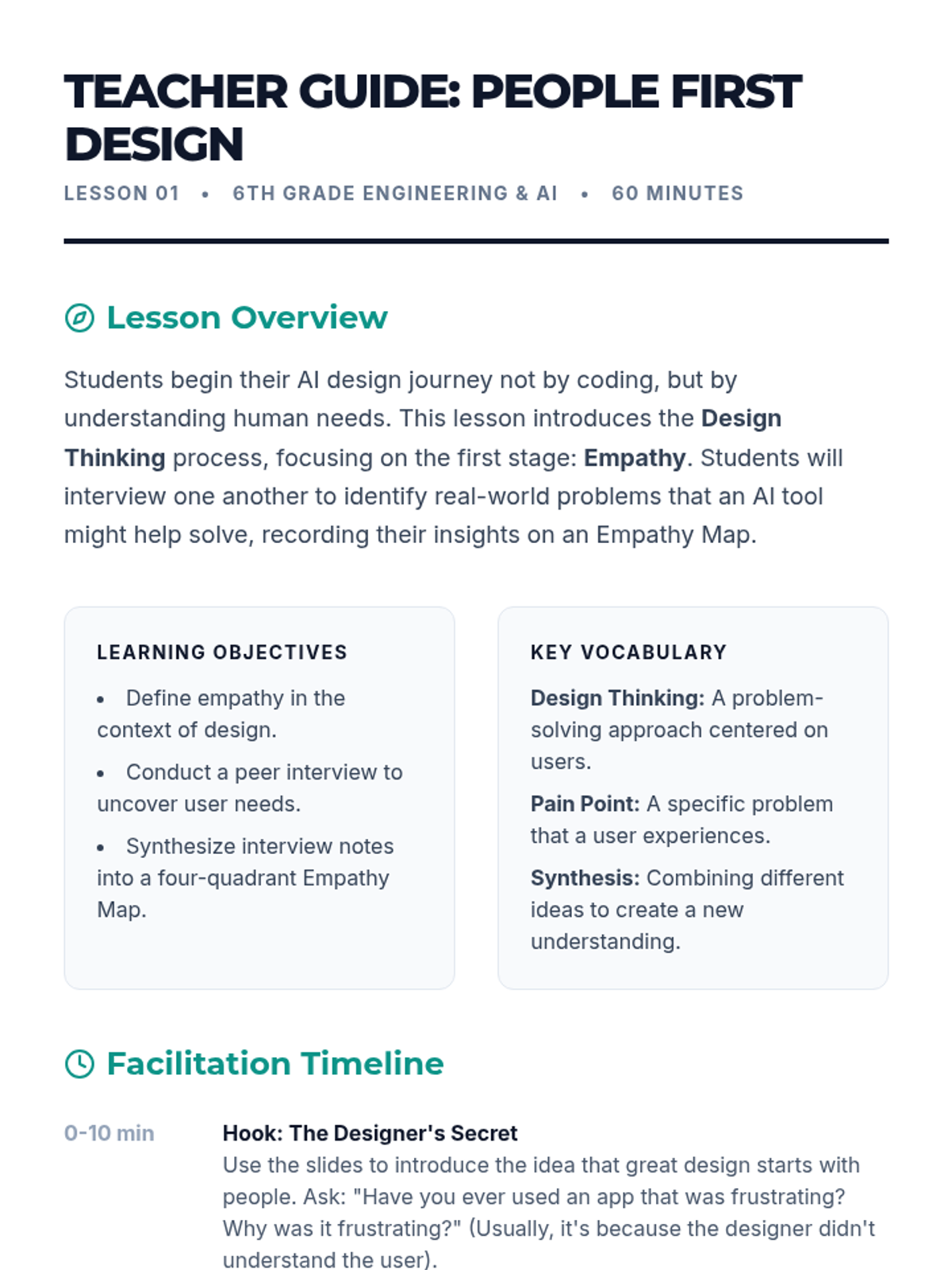
A project-based unit where 6th-grade students use Design Thinking to create ethical AI concept prototypes that solve community problems while prioritizing privacy, fairness, and safety.
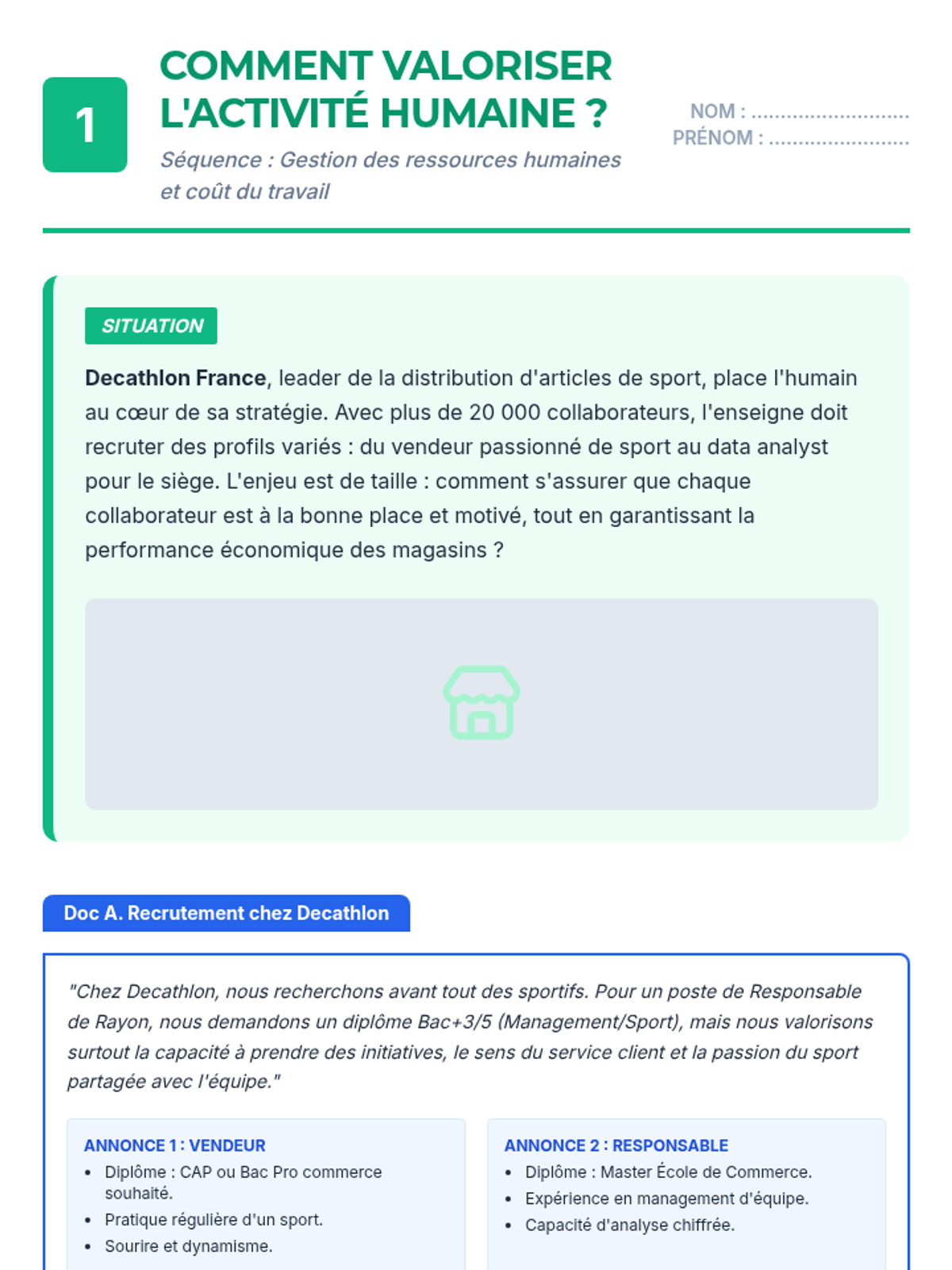
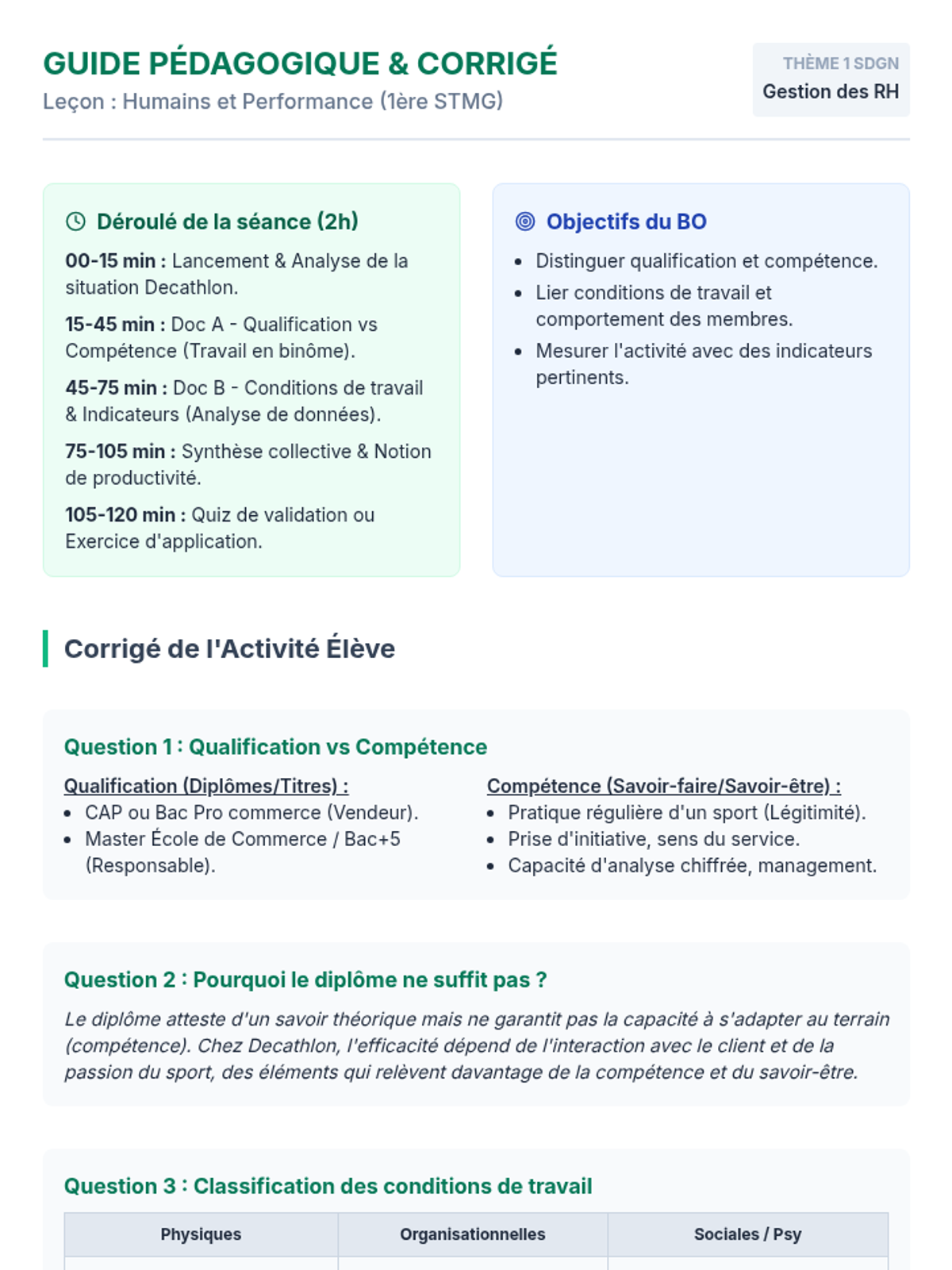
Cette séquence explore les enjeux de la gestion des ressources humaines en 1ère STMG, en articulant la valorisation de l'activité humaine avec les contraintes de performance et de coût du travail. Elle s'appuie sur des cas d'entreprises réelles pour illustrer les notions de qualification, de compétence, de conditions de travail et d'arbitrage financier.