Phonetic foundations through Pinyin and tones, character recognition, and essential grammar for all proficiency levels. Integrates cultural context with advanced reading, writing, and communicative strategies.
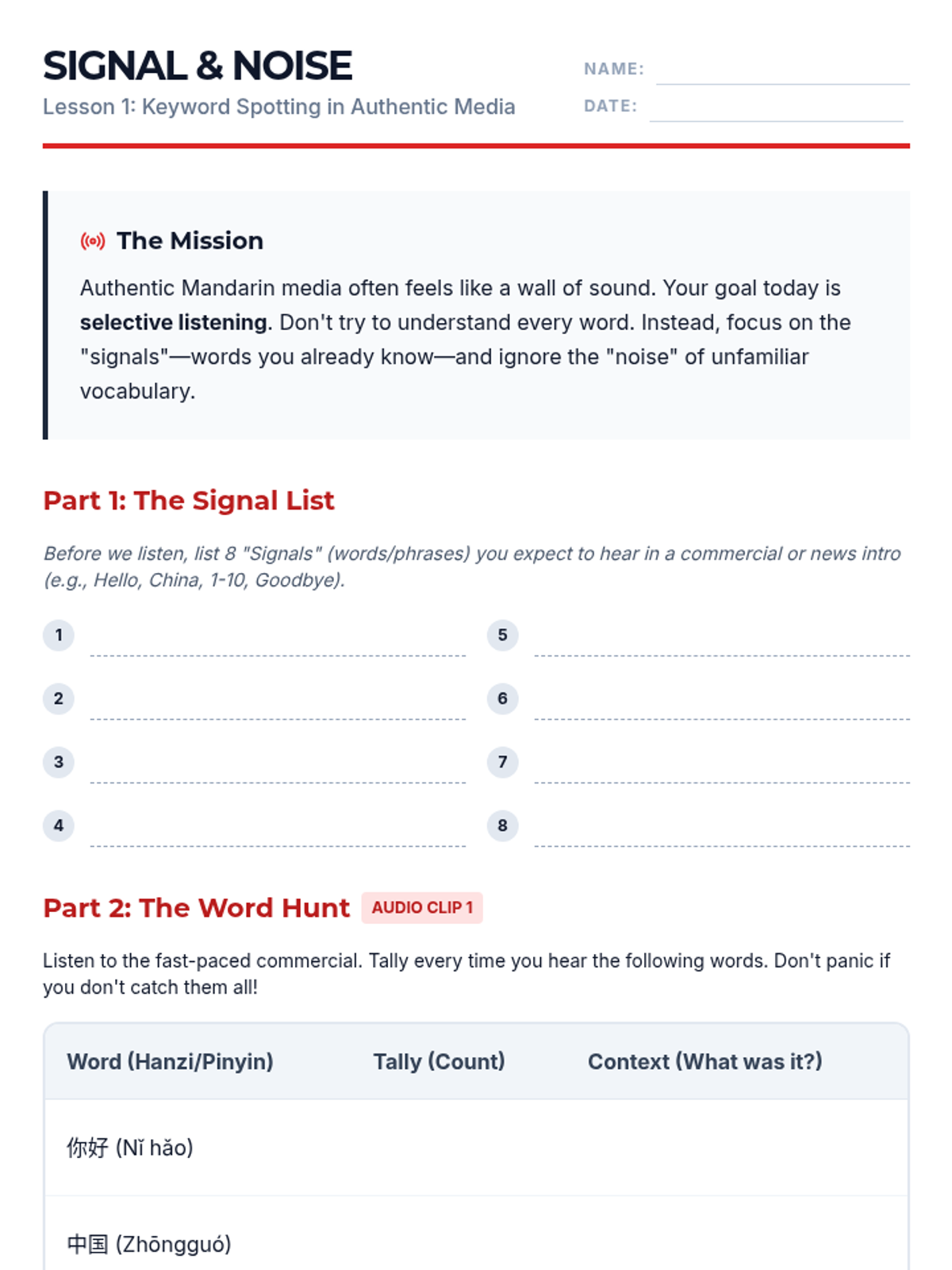
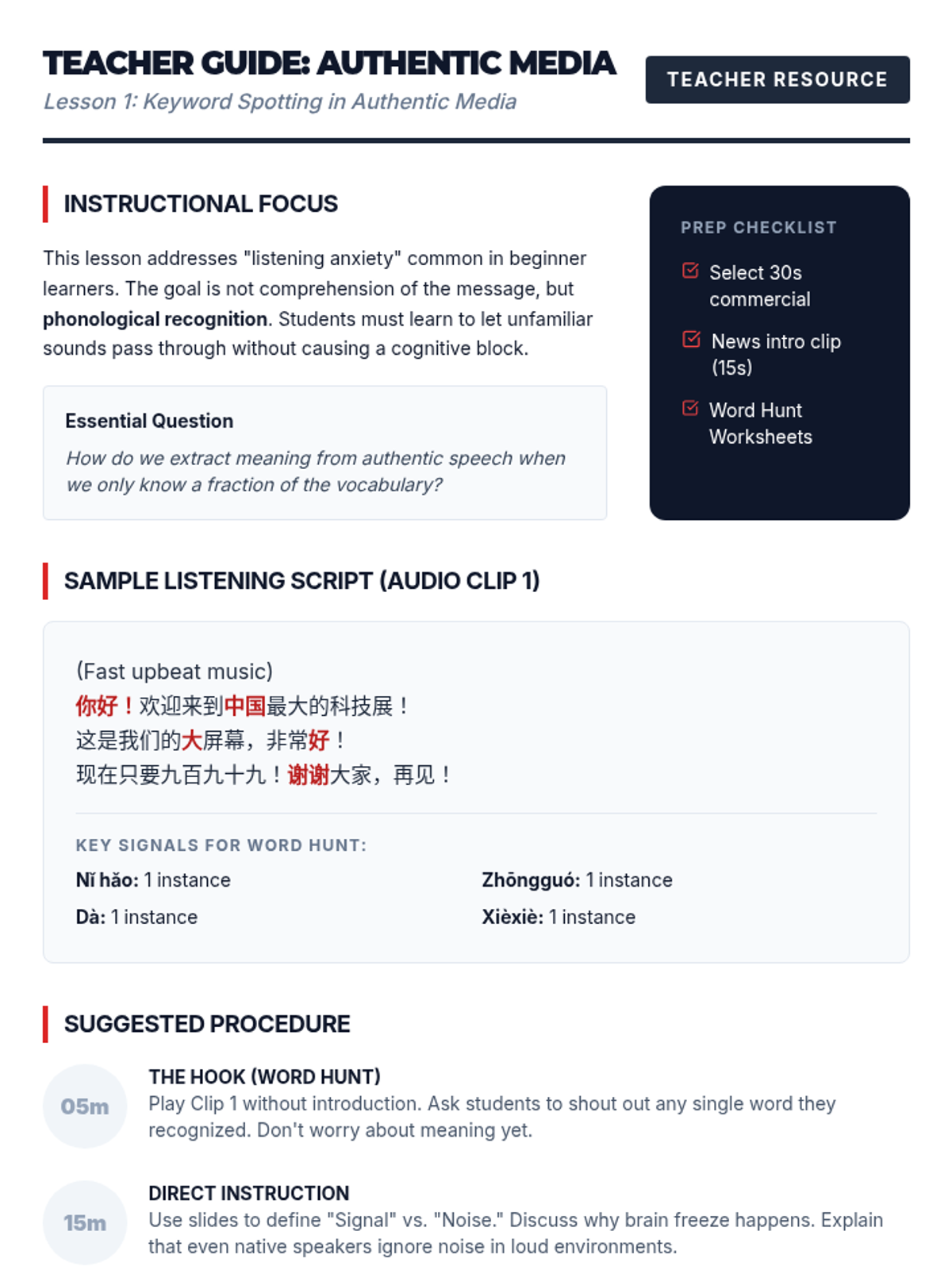
This sequence guides beginner Mandarin learners through 'bottom-up' listening strategies using authentic media. Students will learn to filter out 'noise' to identify keywords in weather reports, pop songs, and food vlogs, building their tolerance for ambiguity and real-world comprehension skills.
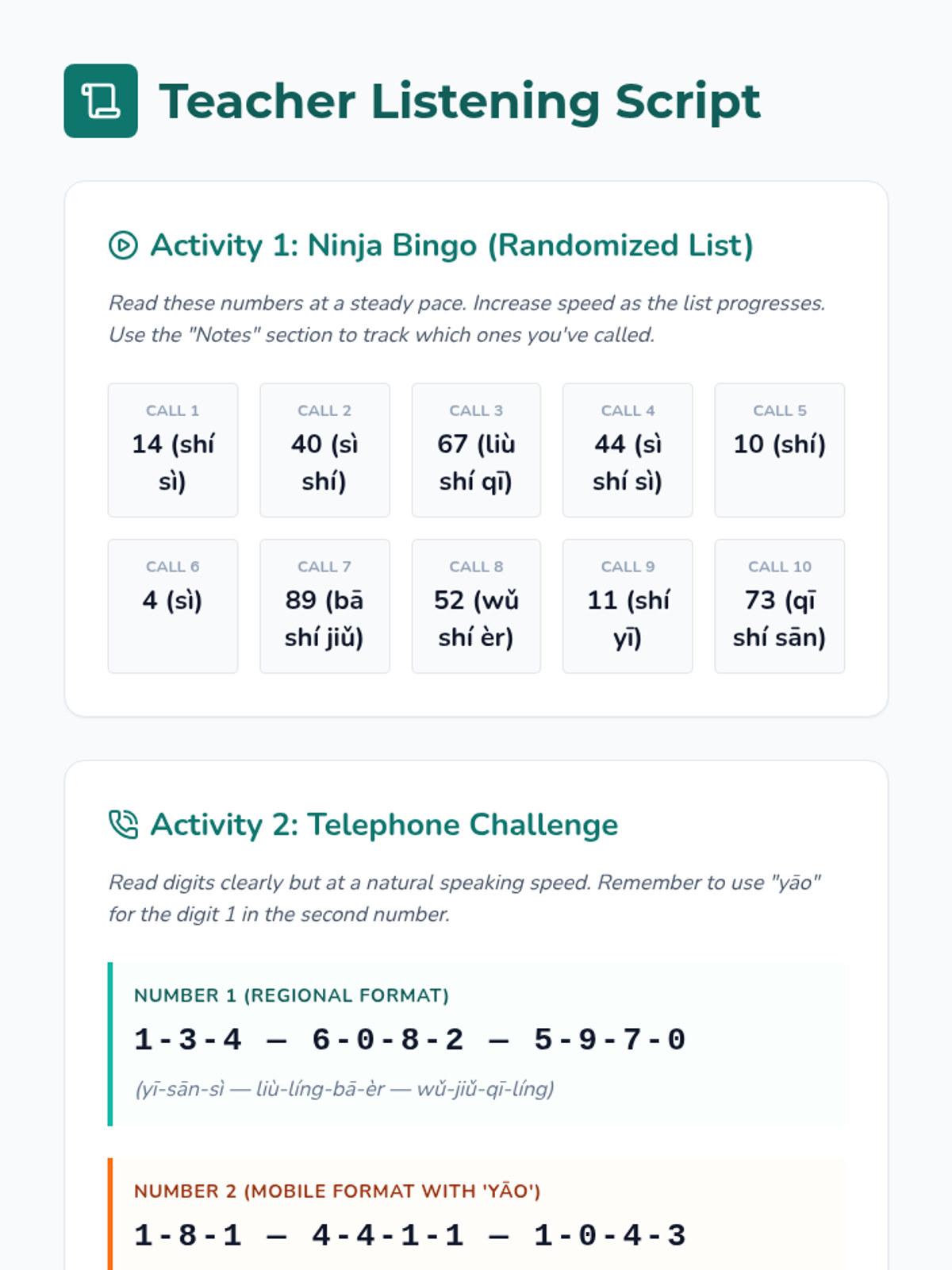
A comprehensive sequence for beginner Mandarin learners focusing on processing numerical data, dates, time, and currency through rapid-response listening activities and gamified simulations.
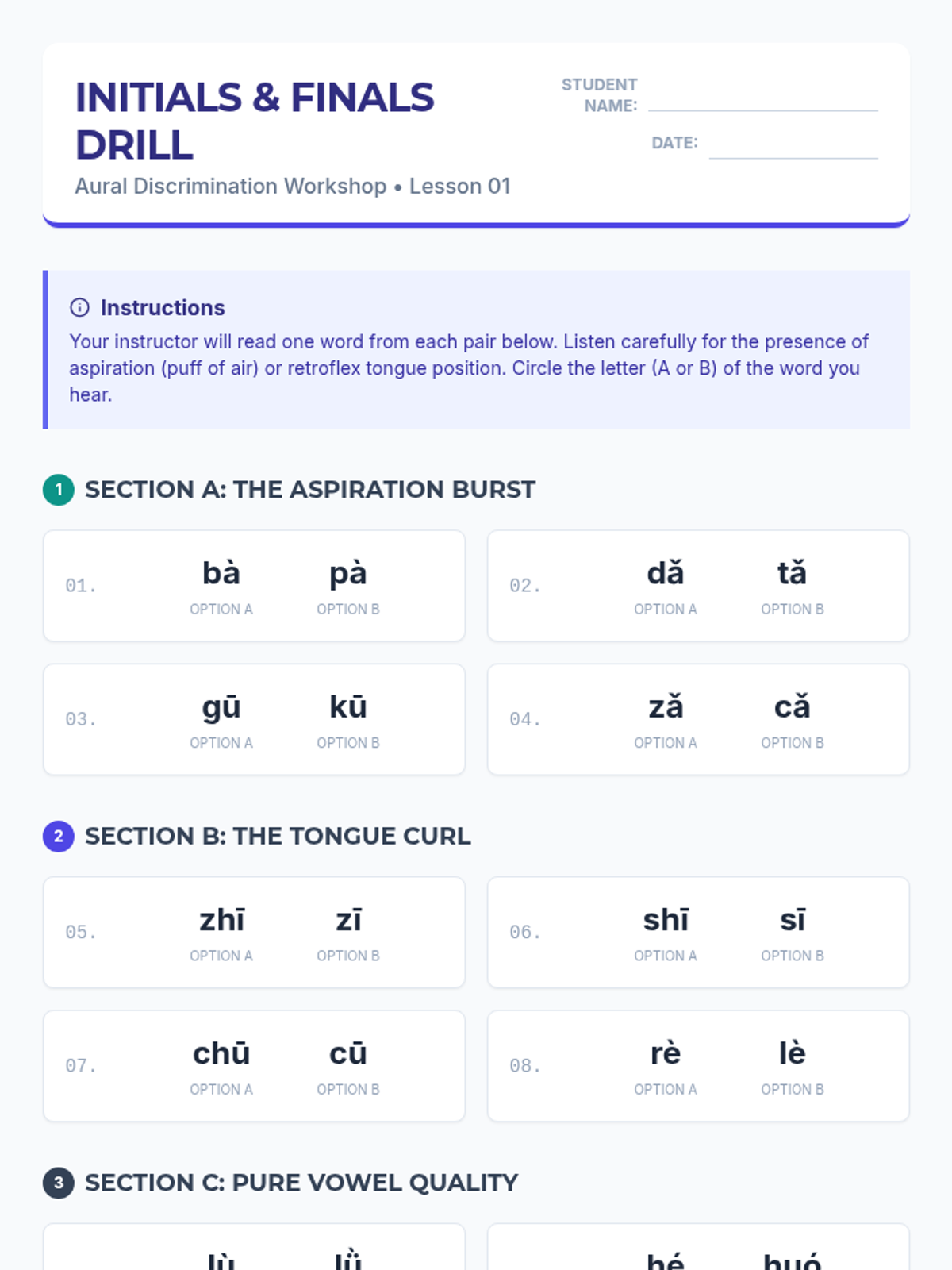
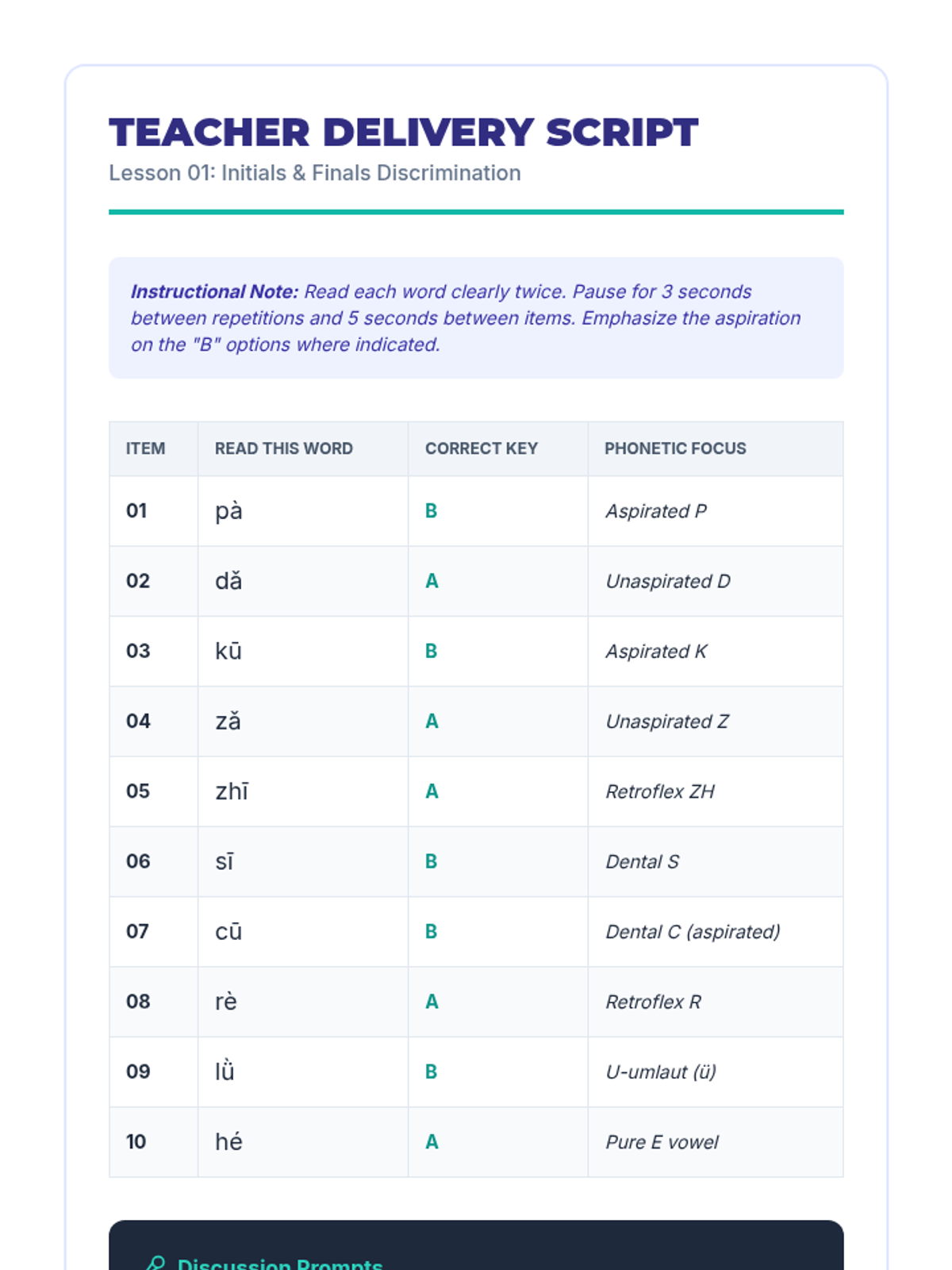
A foundational listening sequence for beginner Mandarin students, focusing on phonemic awareness, tone discrimination, and Pinyin transcription. Students progress from basic initials and finals to complex tone sandhi rules and full-word dictation.
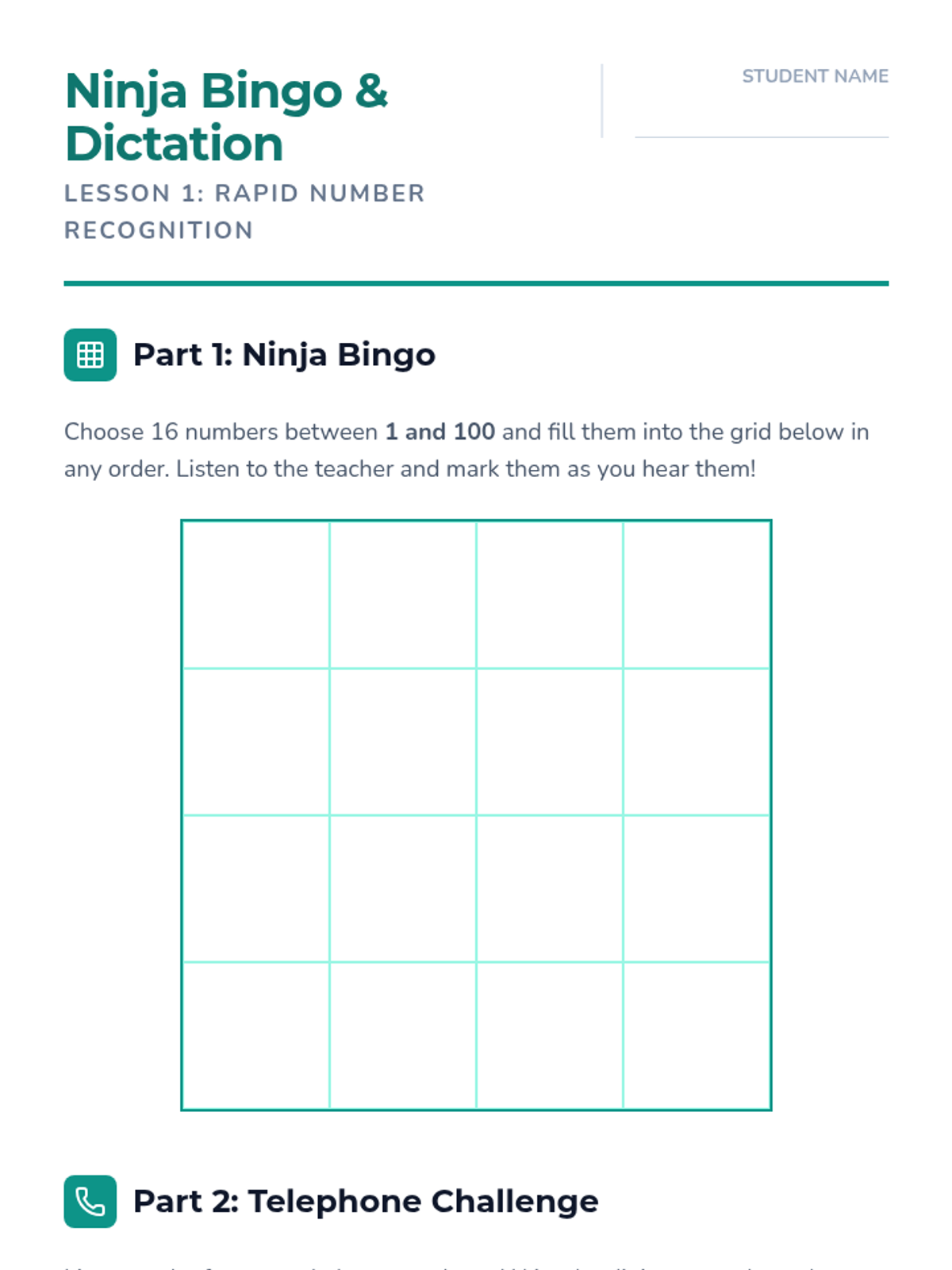
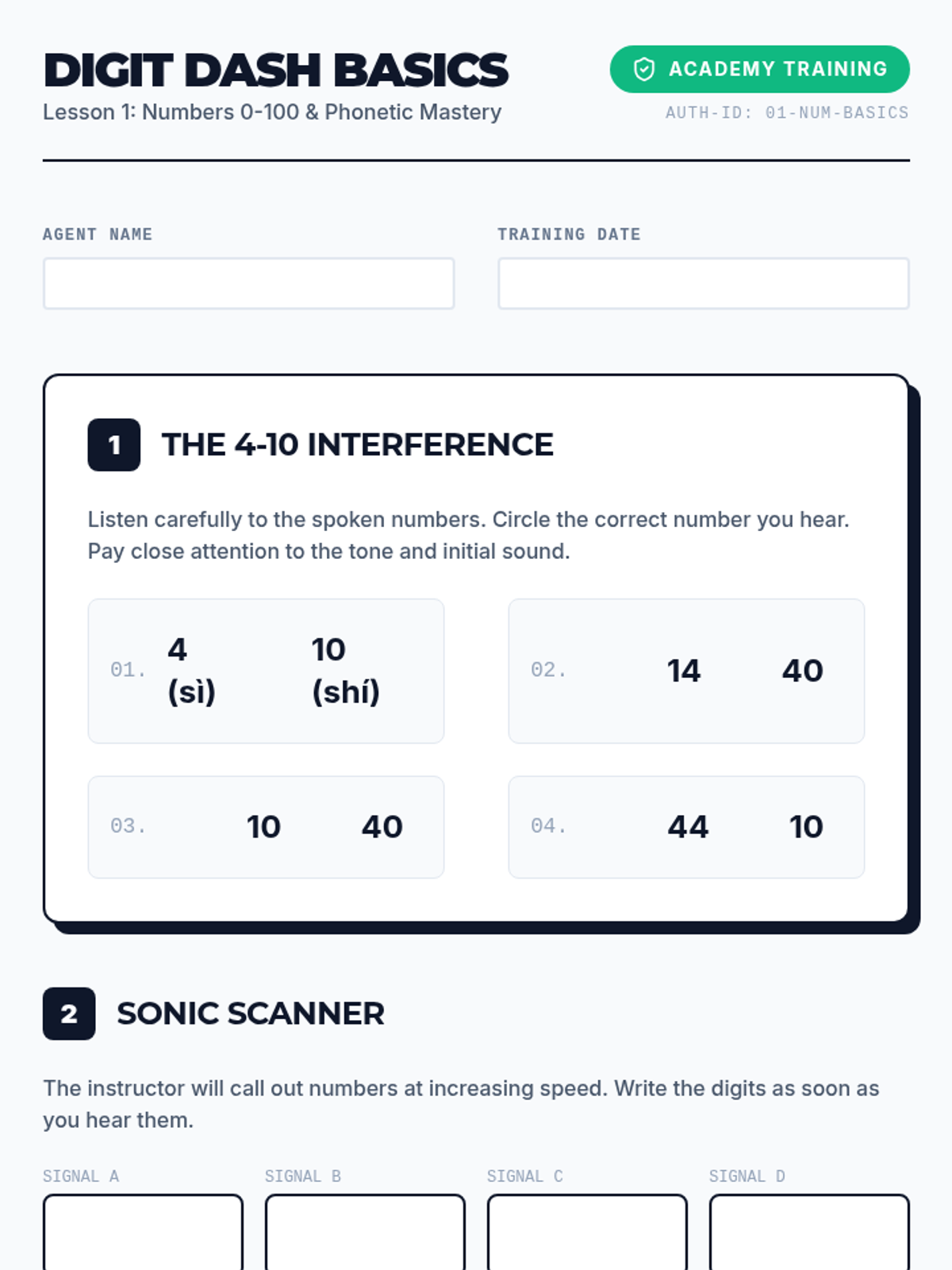
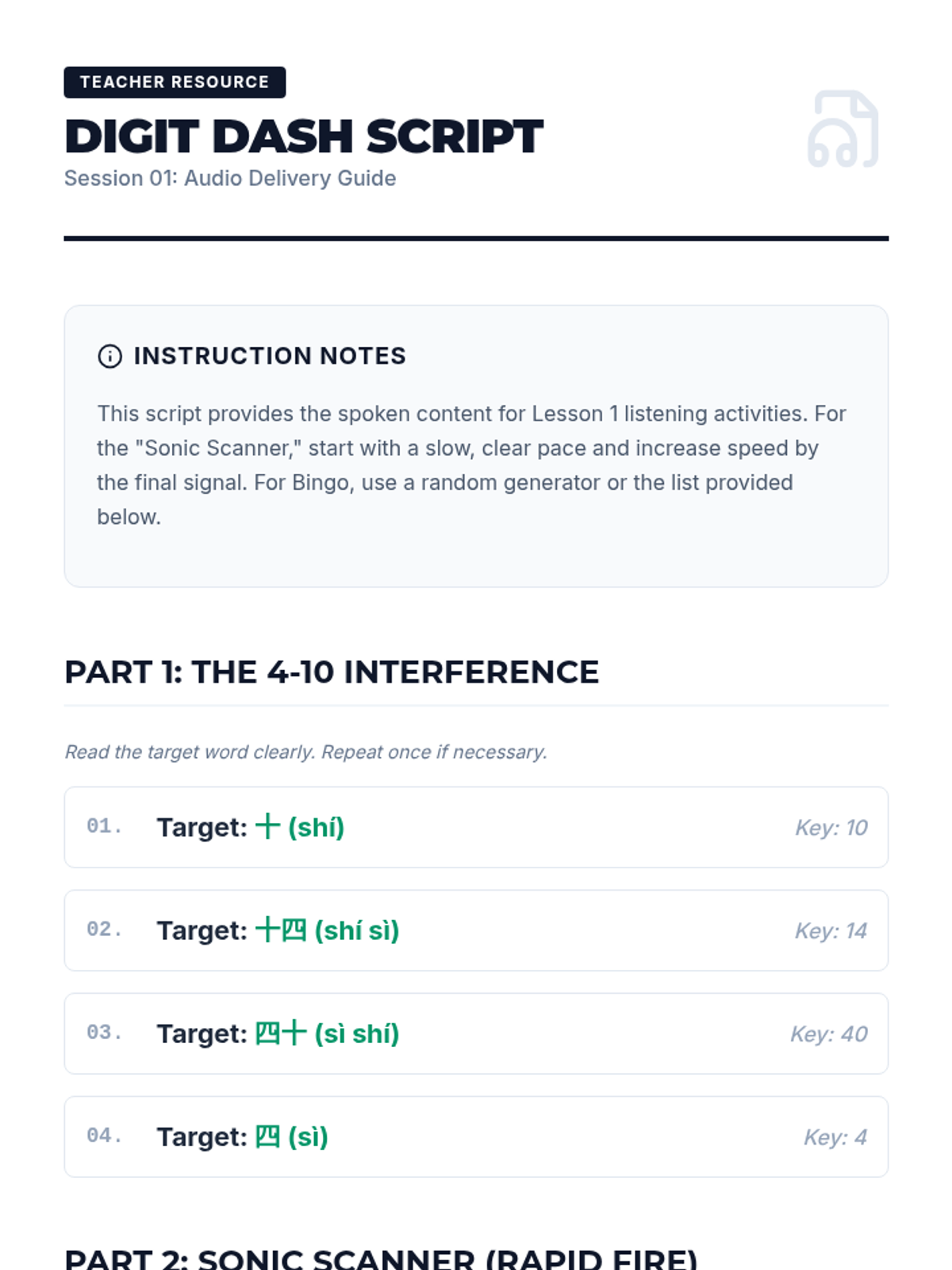
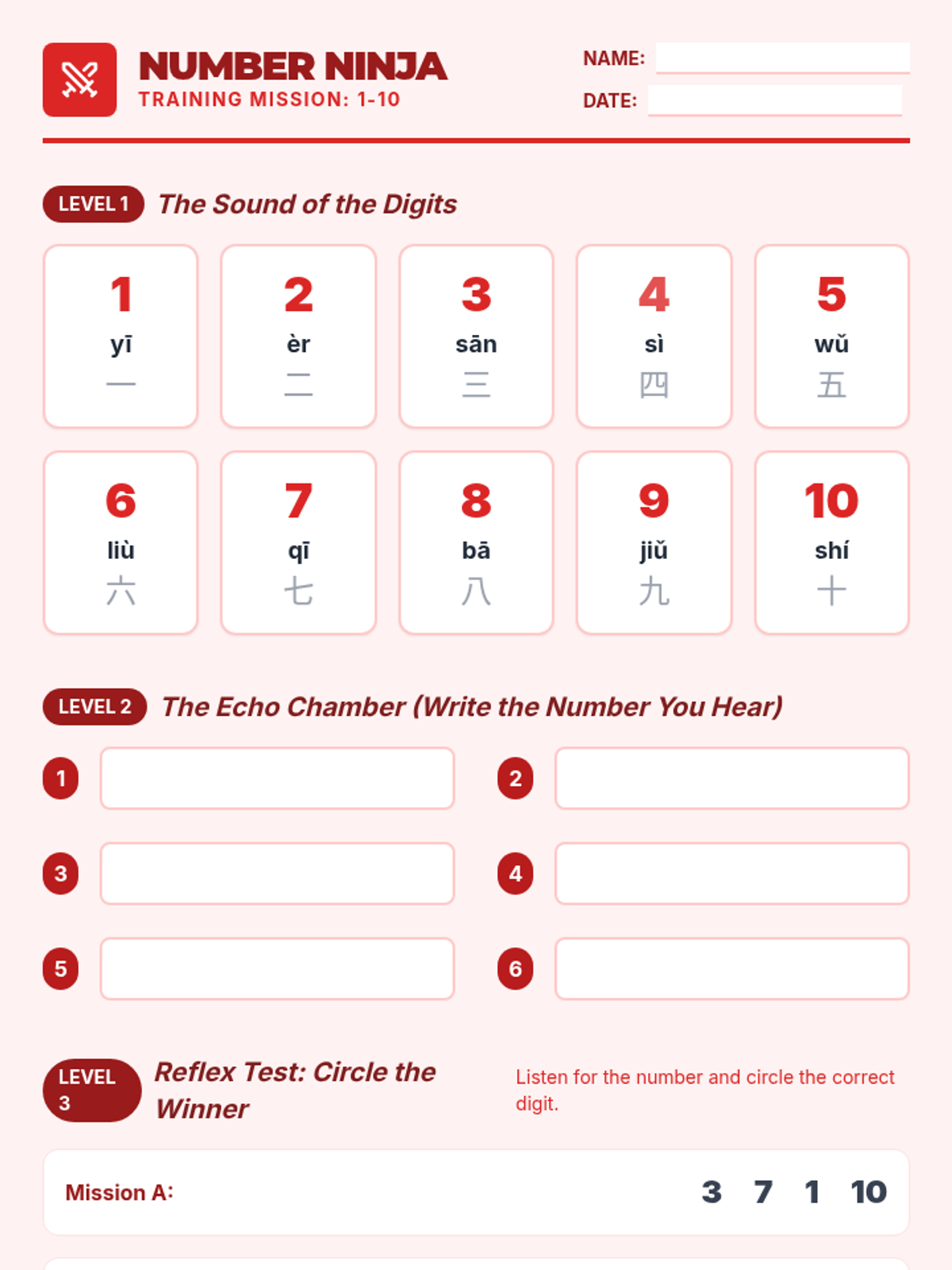
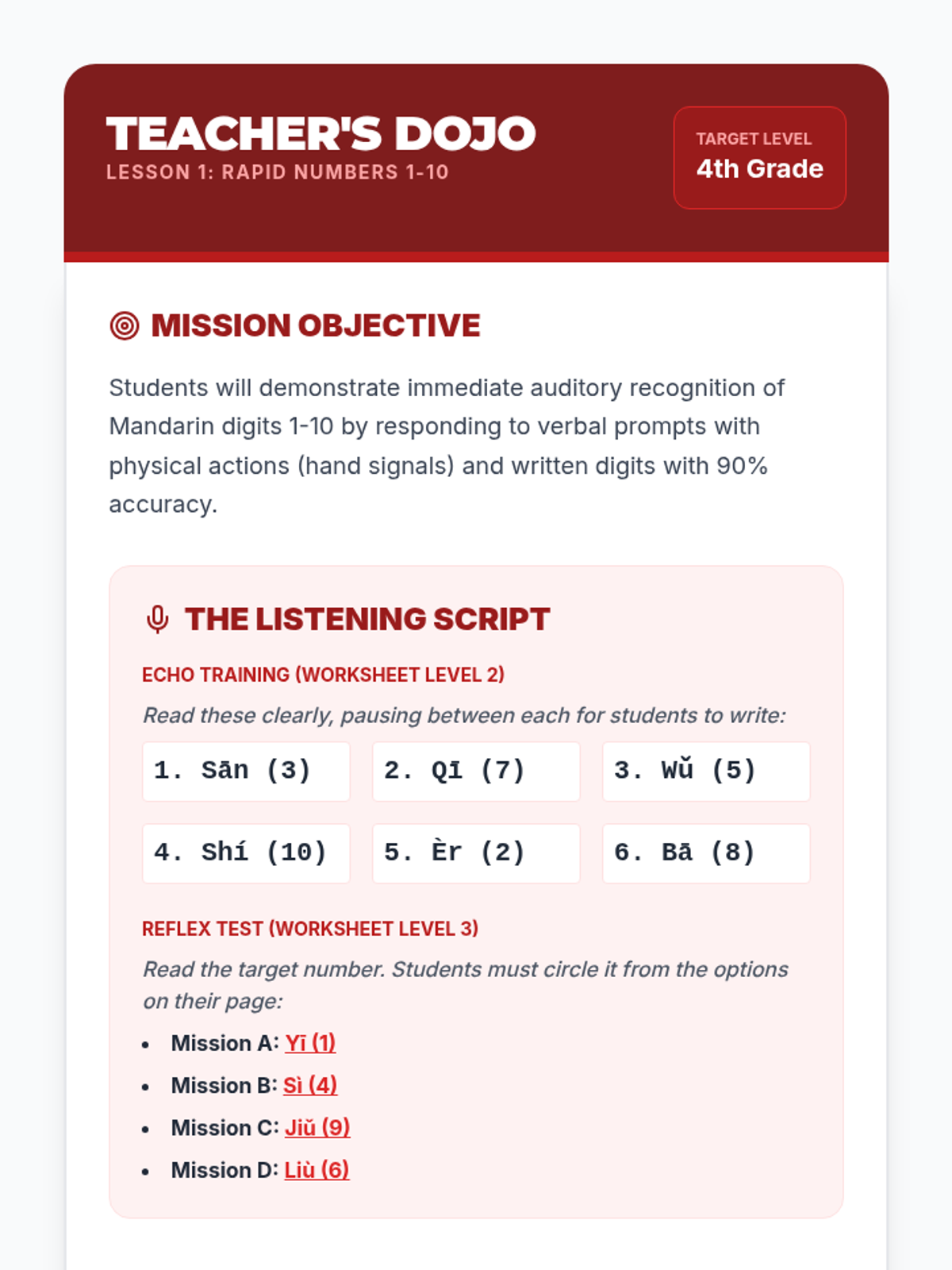
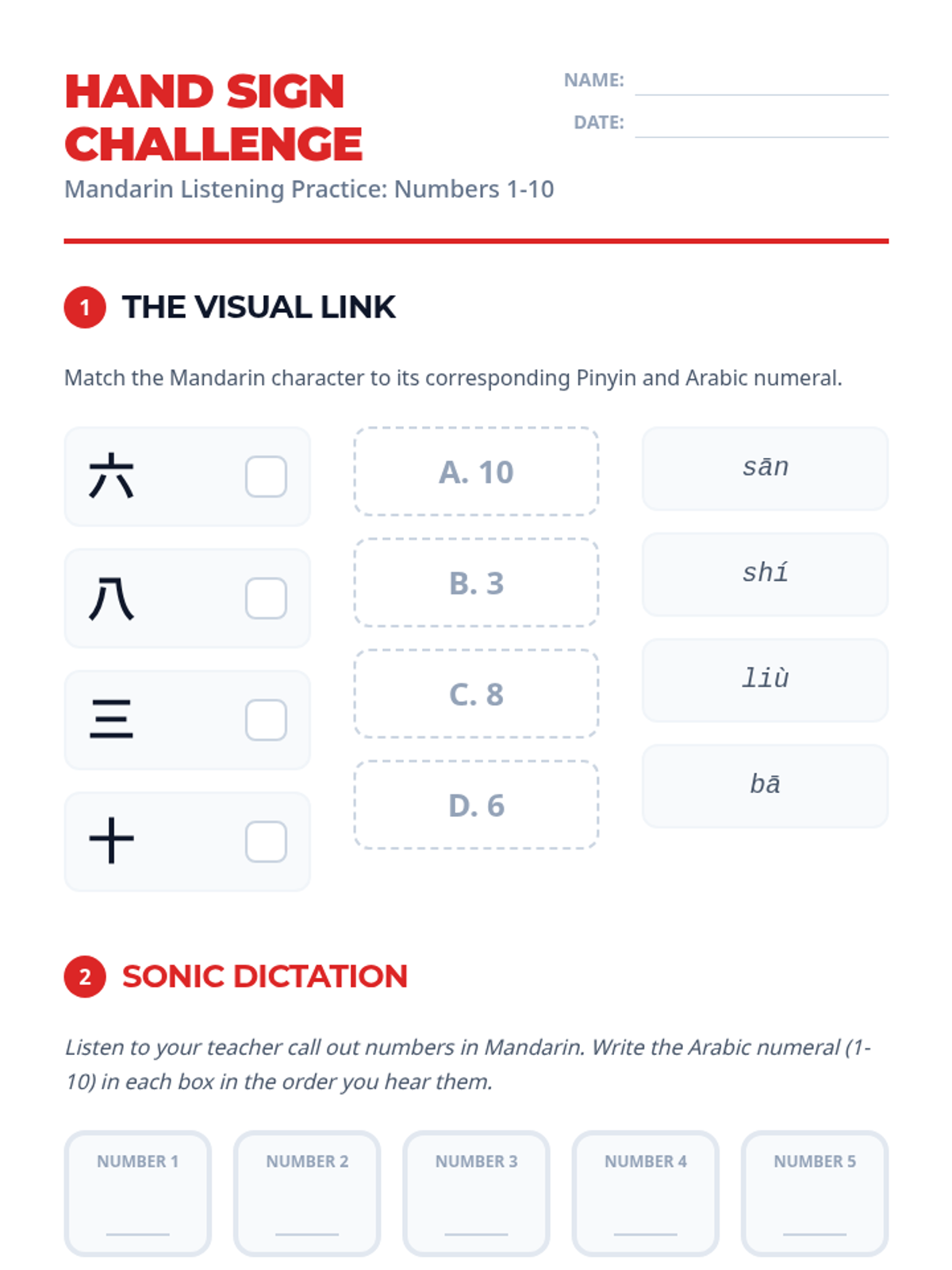
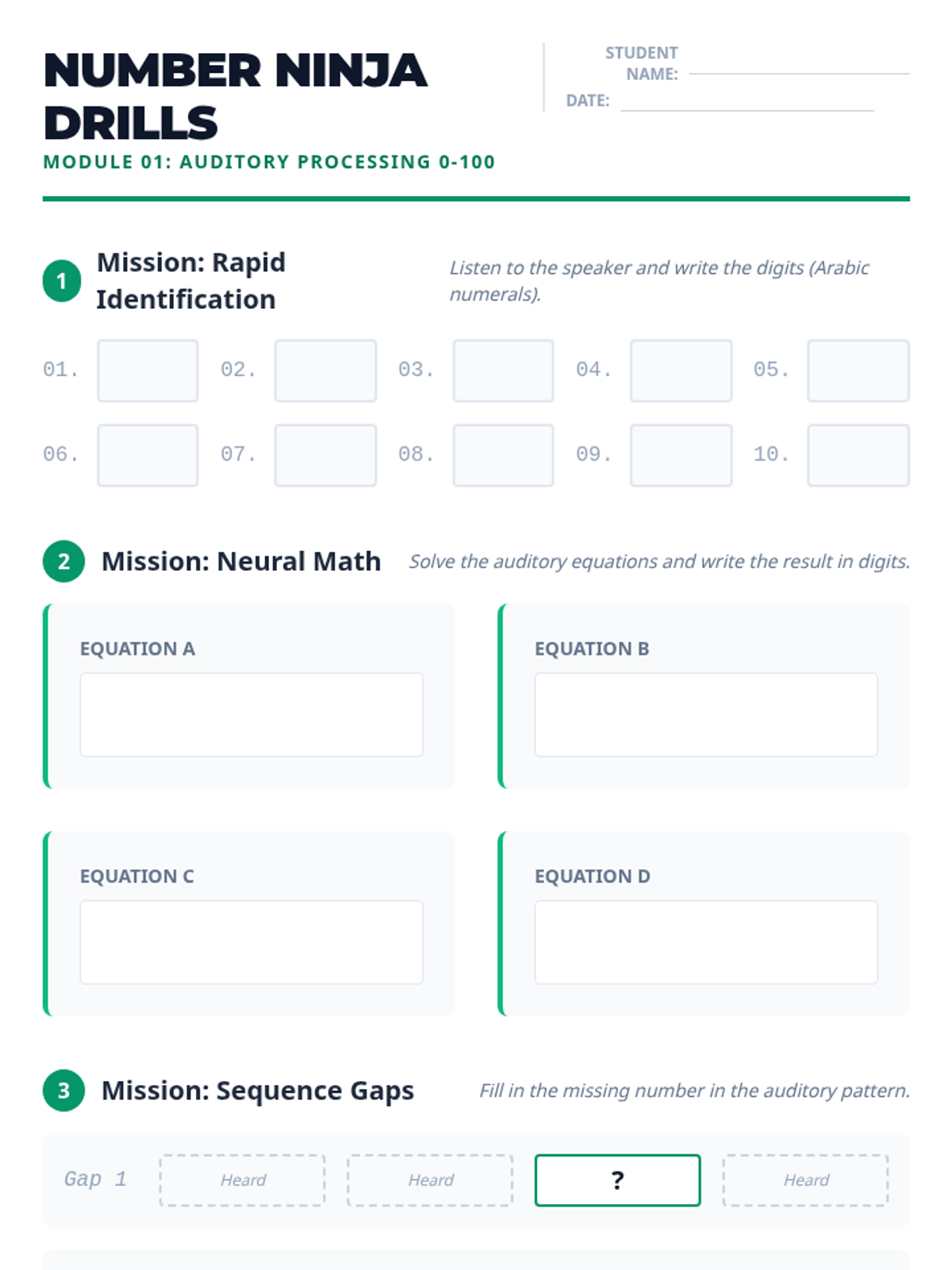
A high-energy Mandarin listening sequence focused on rapid numerical processing, from basic digits to complex schedules and prices. Students take on the role of trainees at Signal Cipher Academy, mastering the 'codes' of daily life.
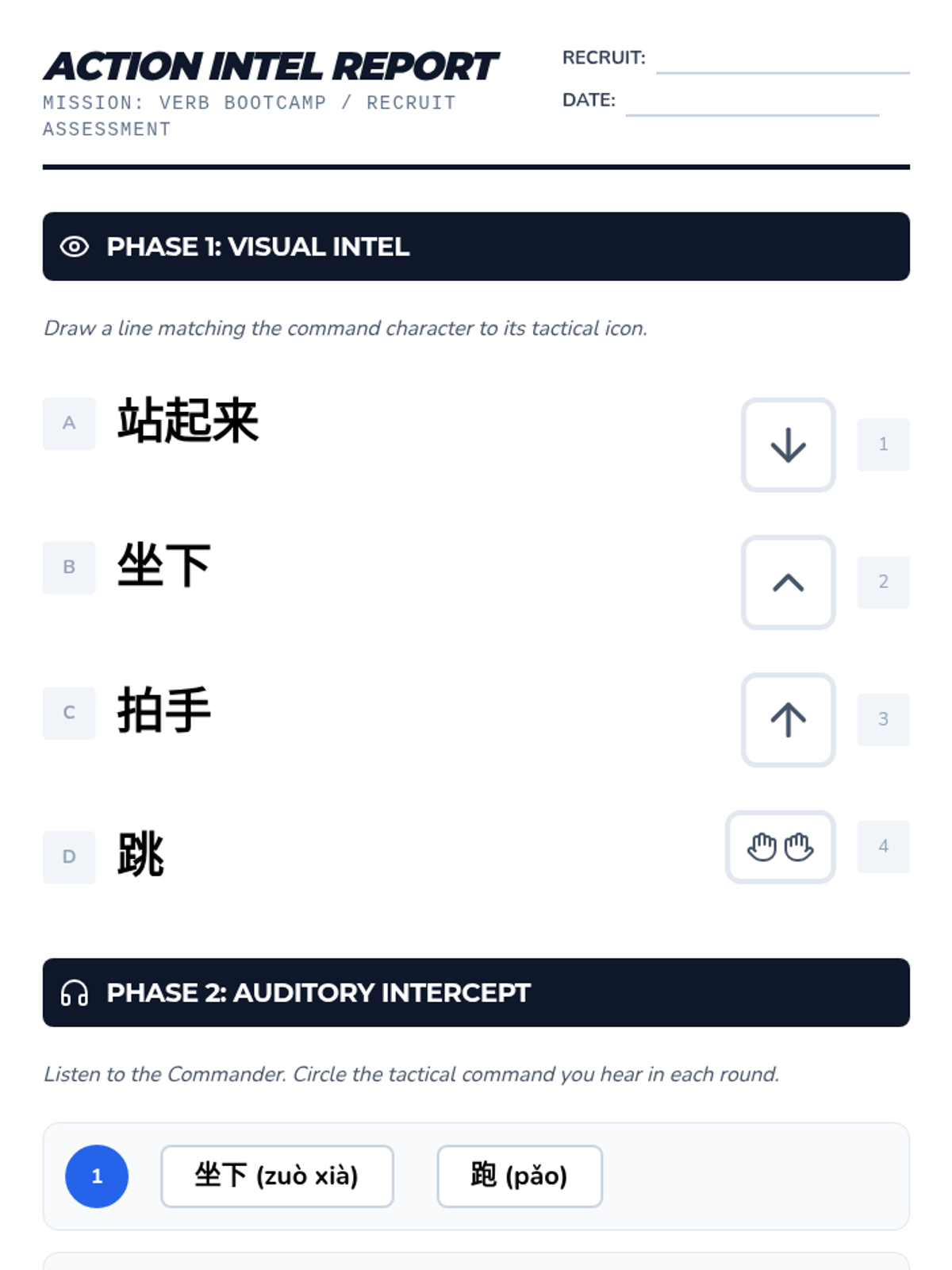
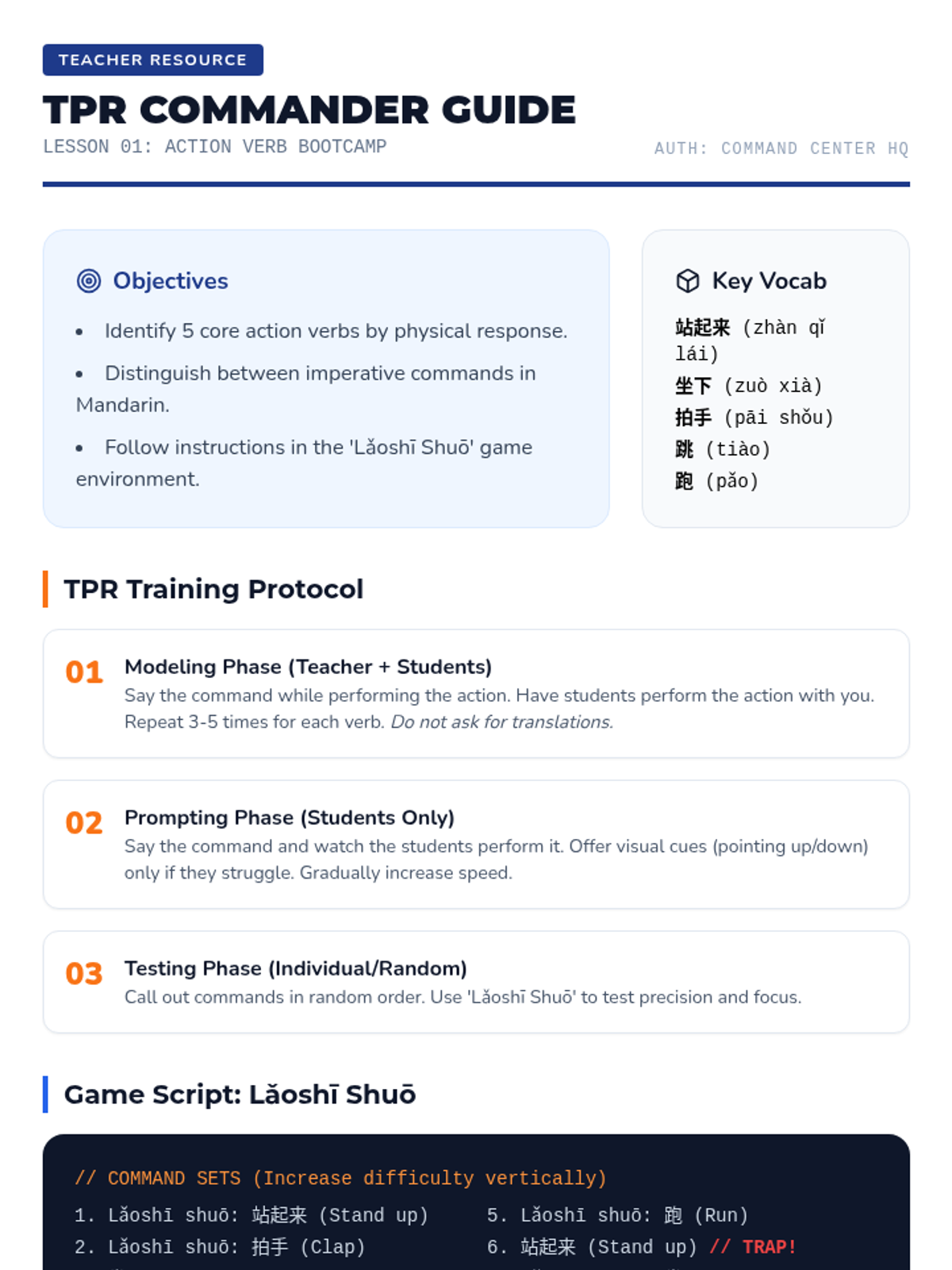
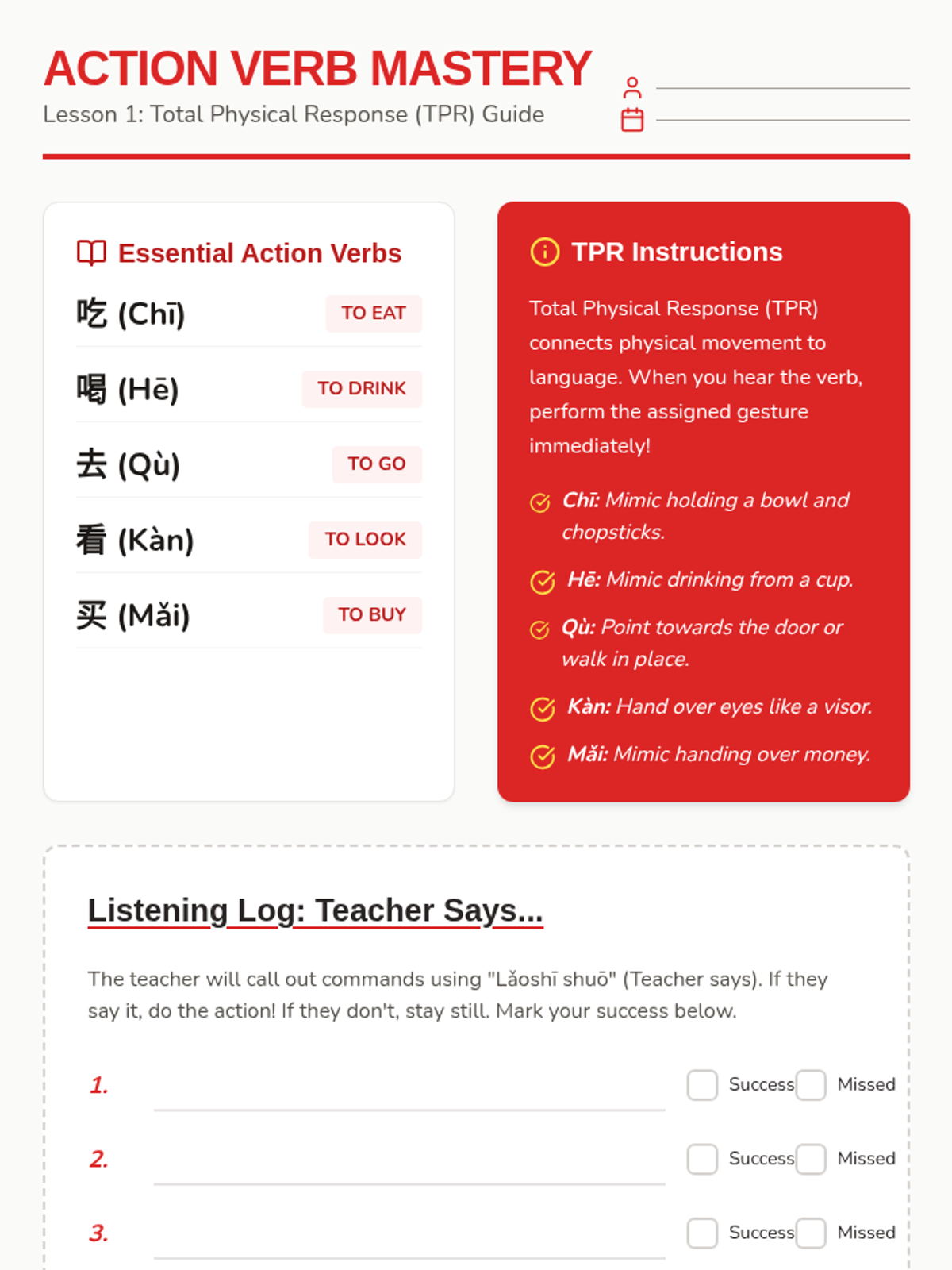
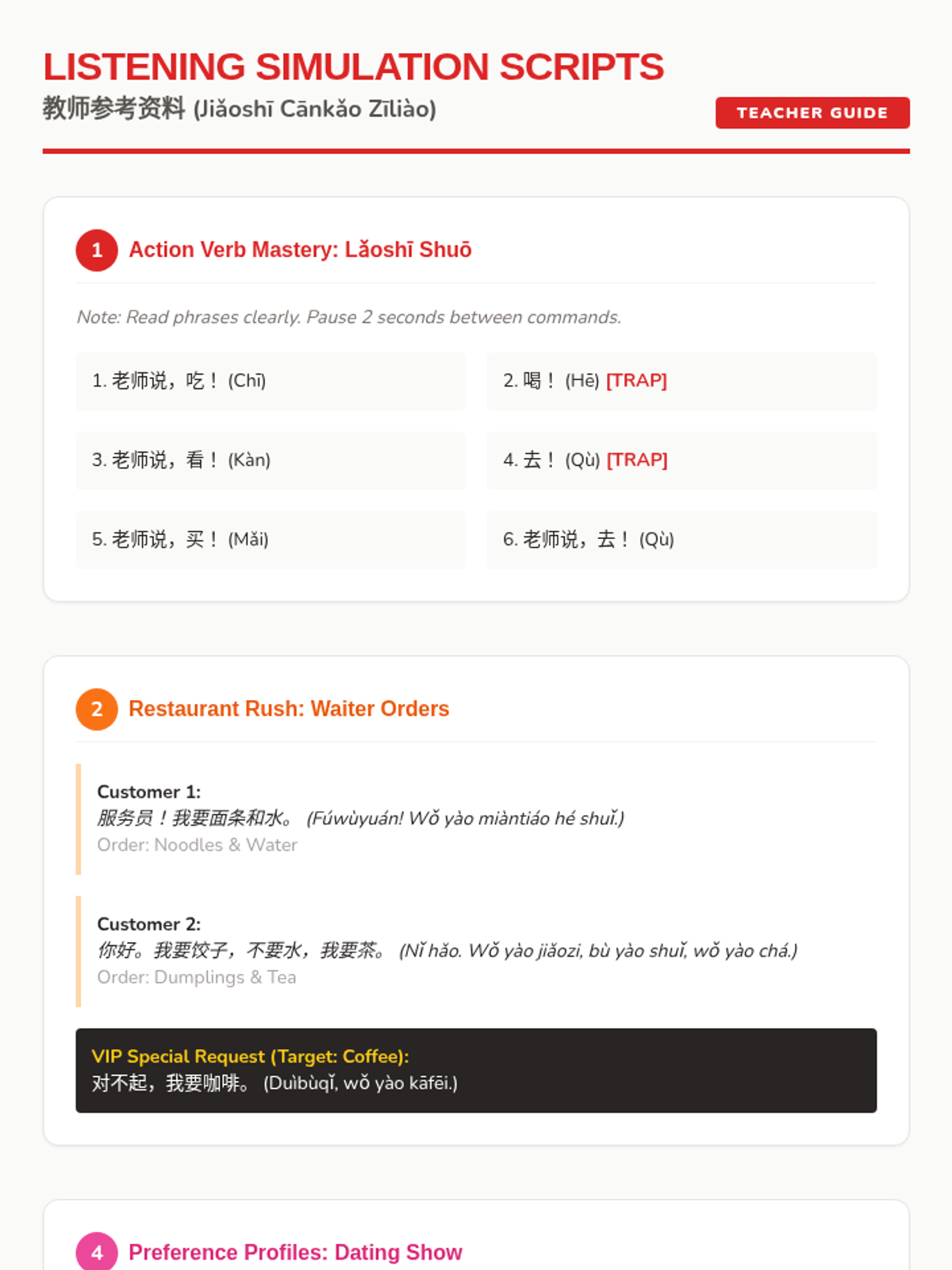
A TPR-based Mandarin Chinese sequence for 6th graders focusing on listening comprehension of classroom commands and actions. Students progress from basic verbs to complex, multi-step instructions through a 'Command Center' training theme.
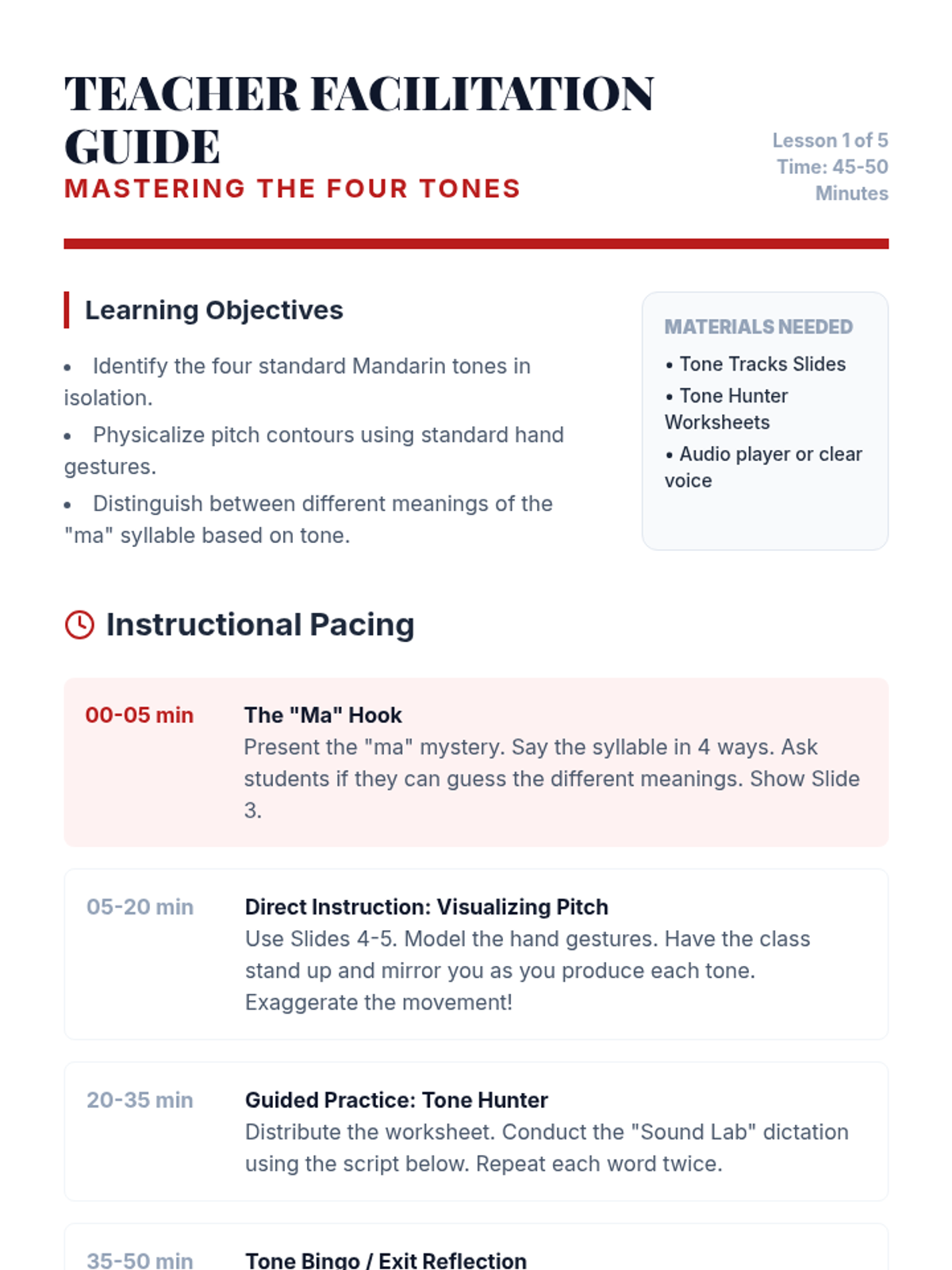
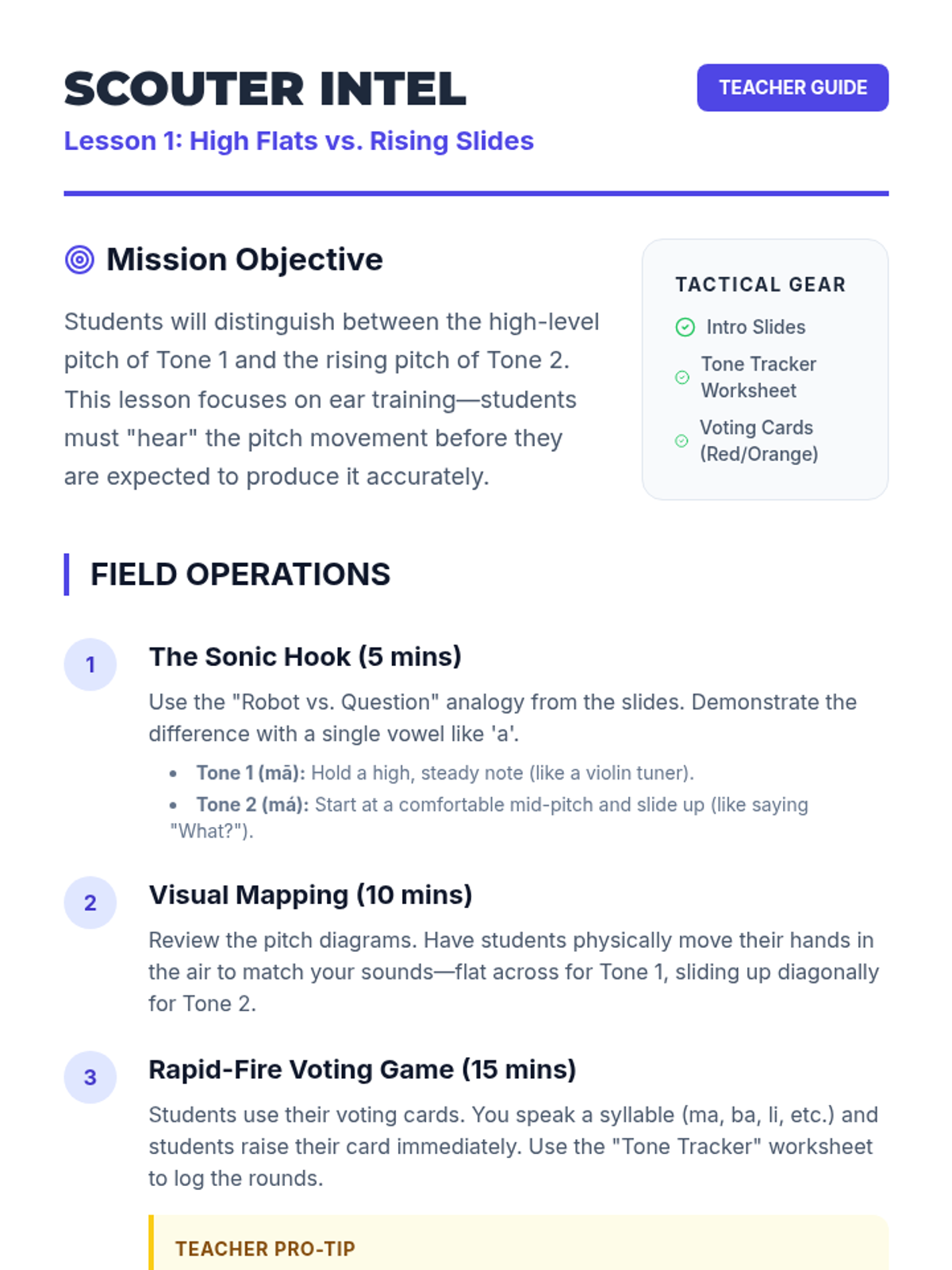
A foundational unit for 6th-grade students to master the auditory discrimination of Mandarin Chinese tones and basic Pinyin initials. Students progress from single tone recognition to complex tone pairs and dictation, using musical analogies and physical gestures.
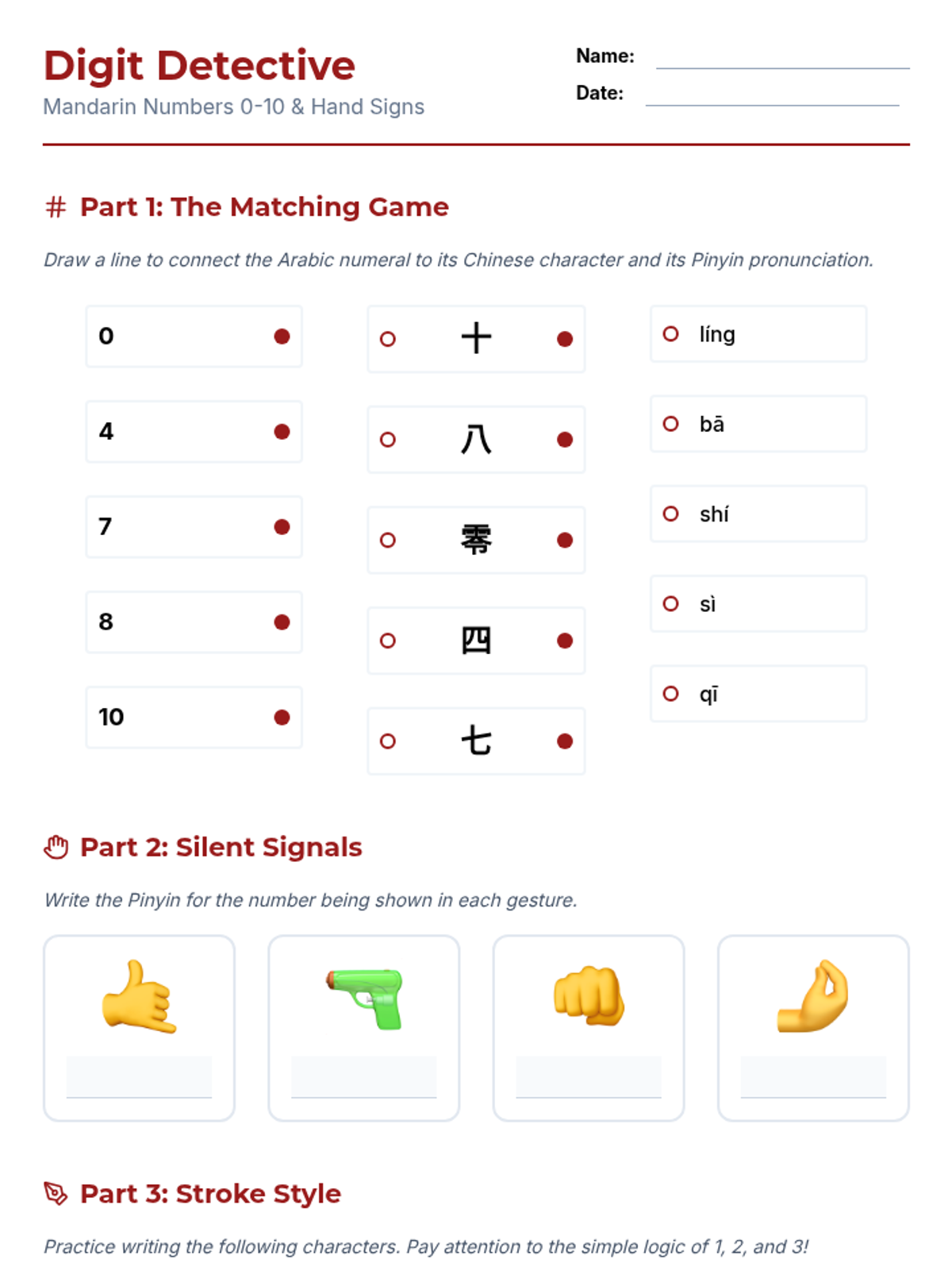
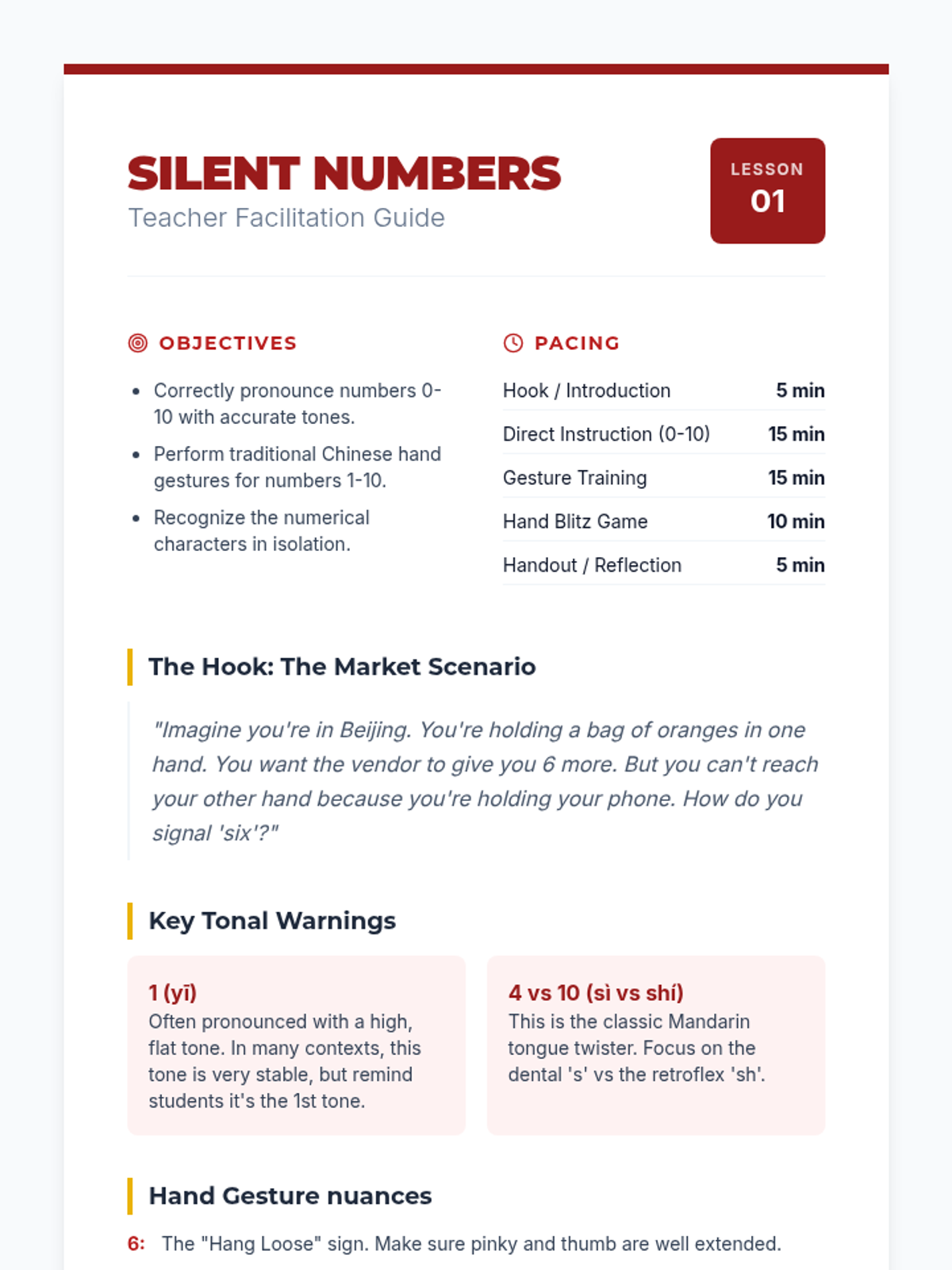
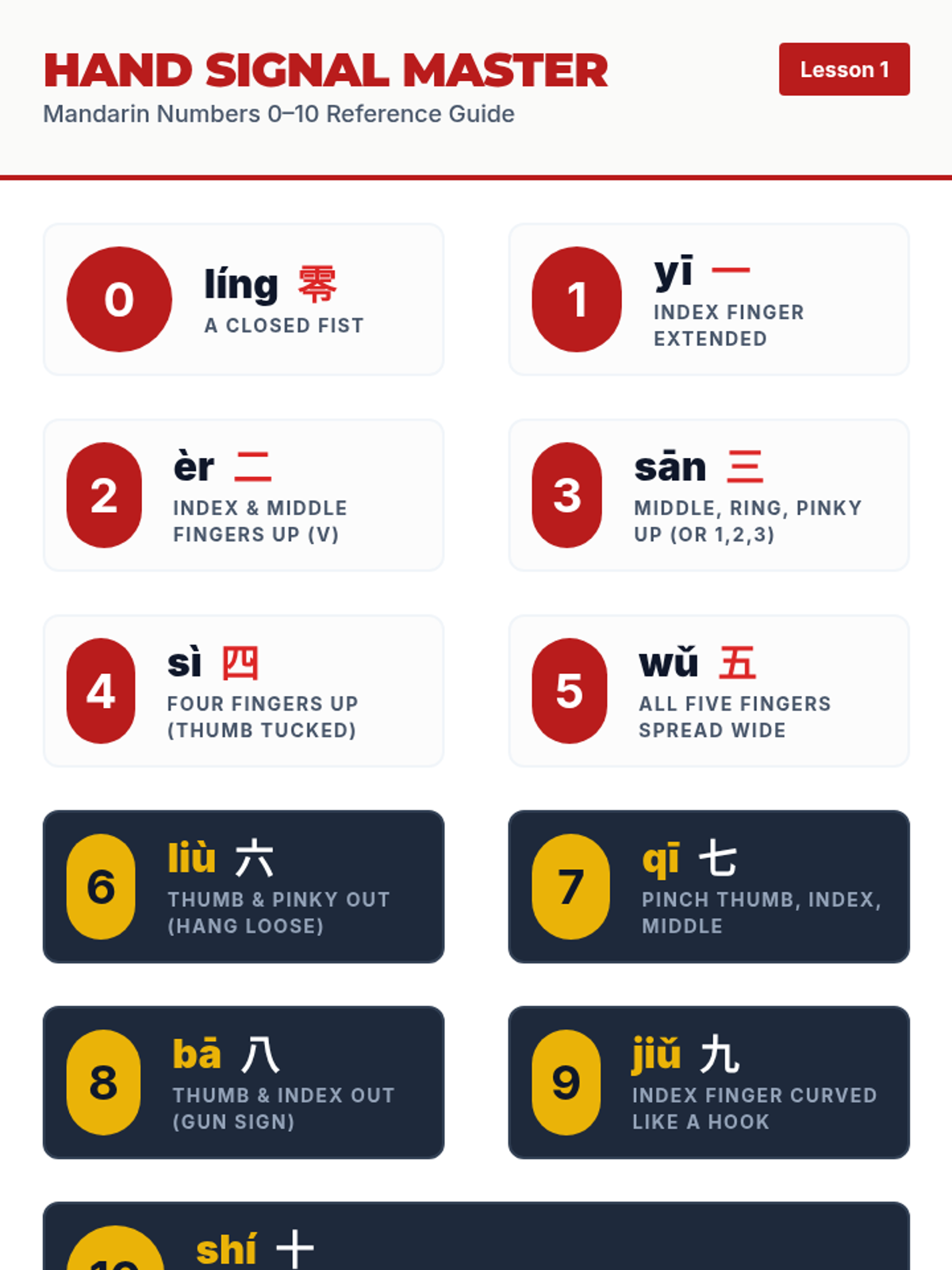
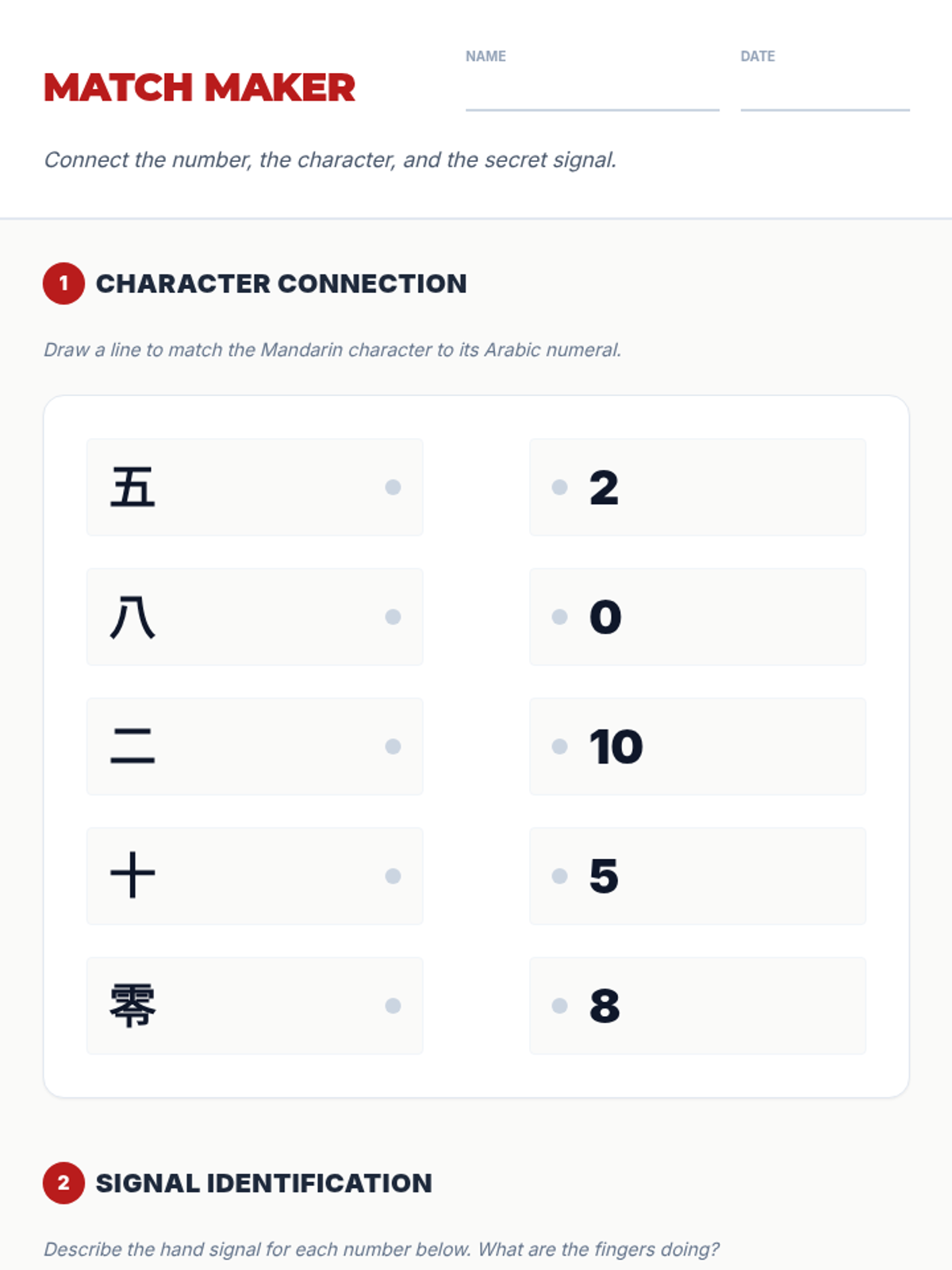
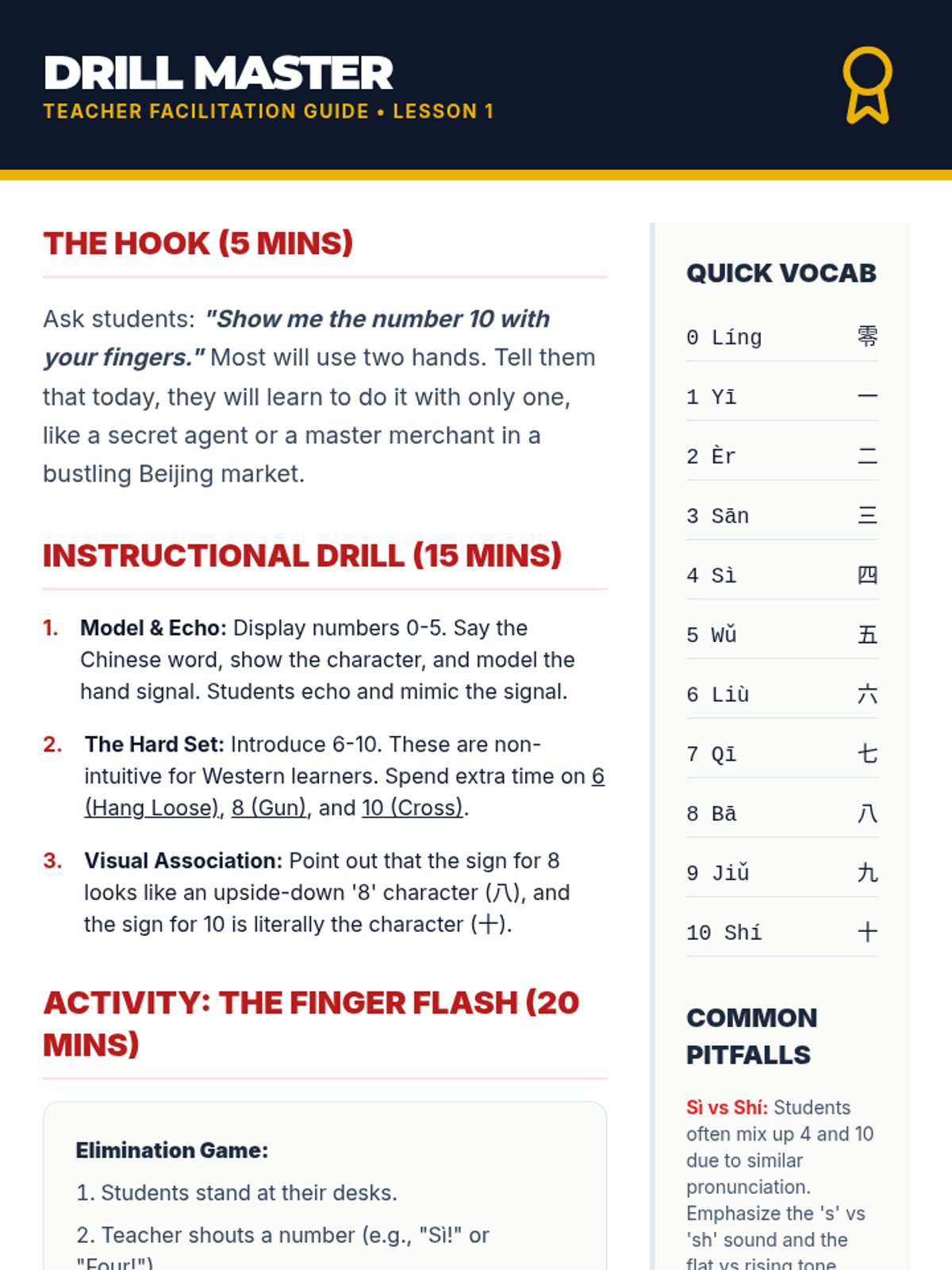
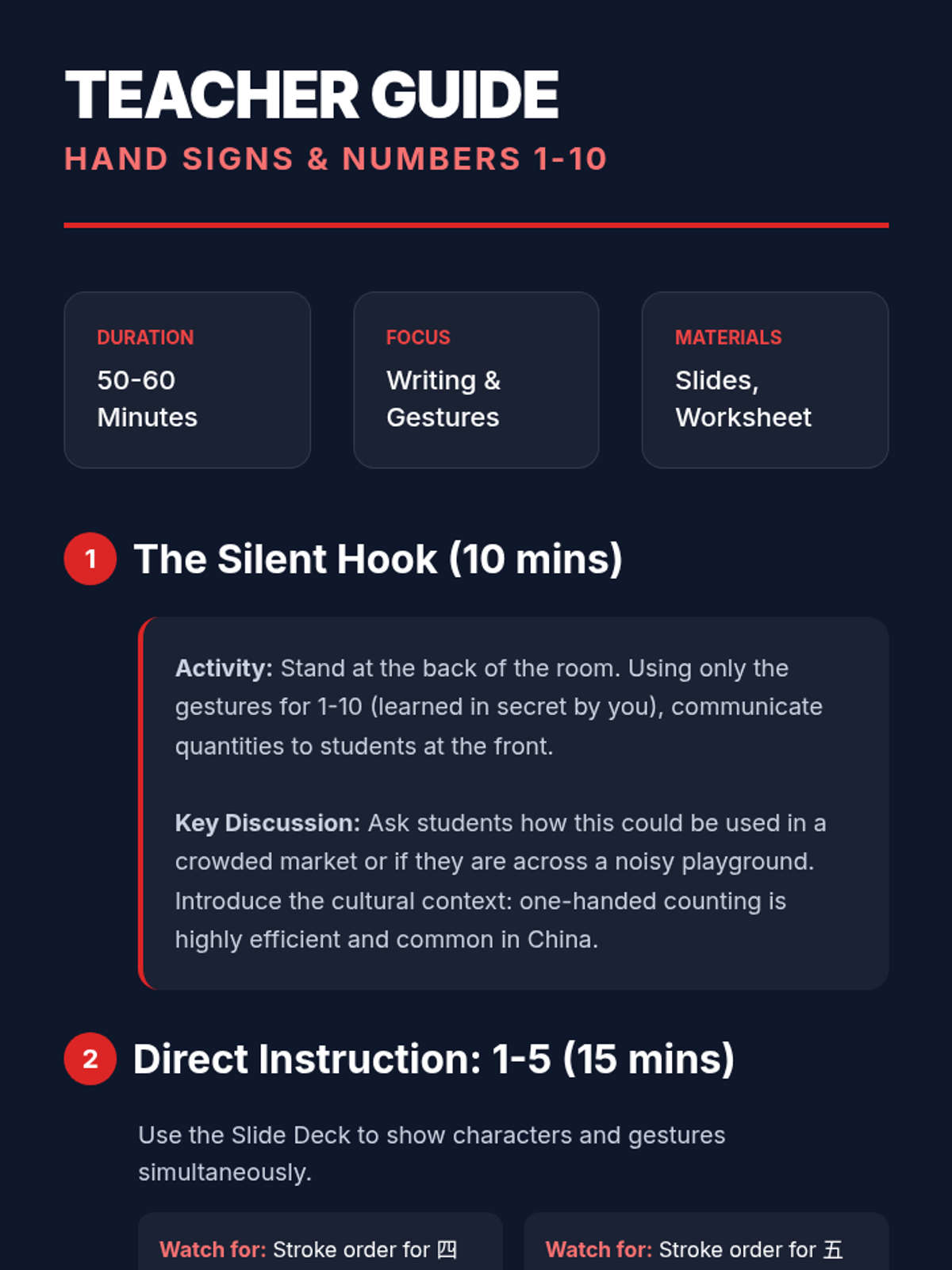
This sequence explores the logical structure of Mandarin Chinese numbers 0-99 and their practical applications in daily life, including dates, age, and telephone numbers. Students move from basic counting and hand gestures to managing complex logistical data.
A 6th-grade Mandarin Chinese unit focused on numbers, dates, and currency through kinetic learning, logical patterns, and real-world simulation.
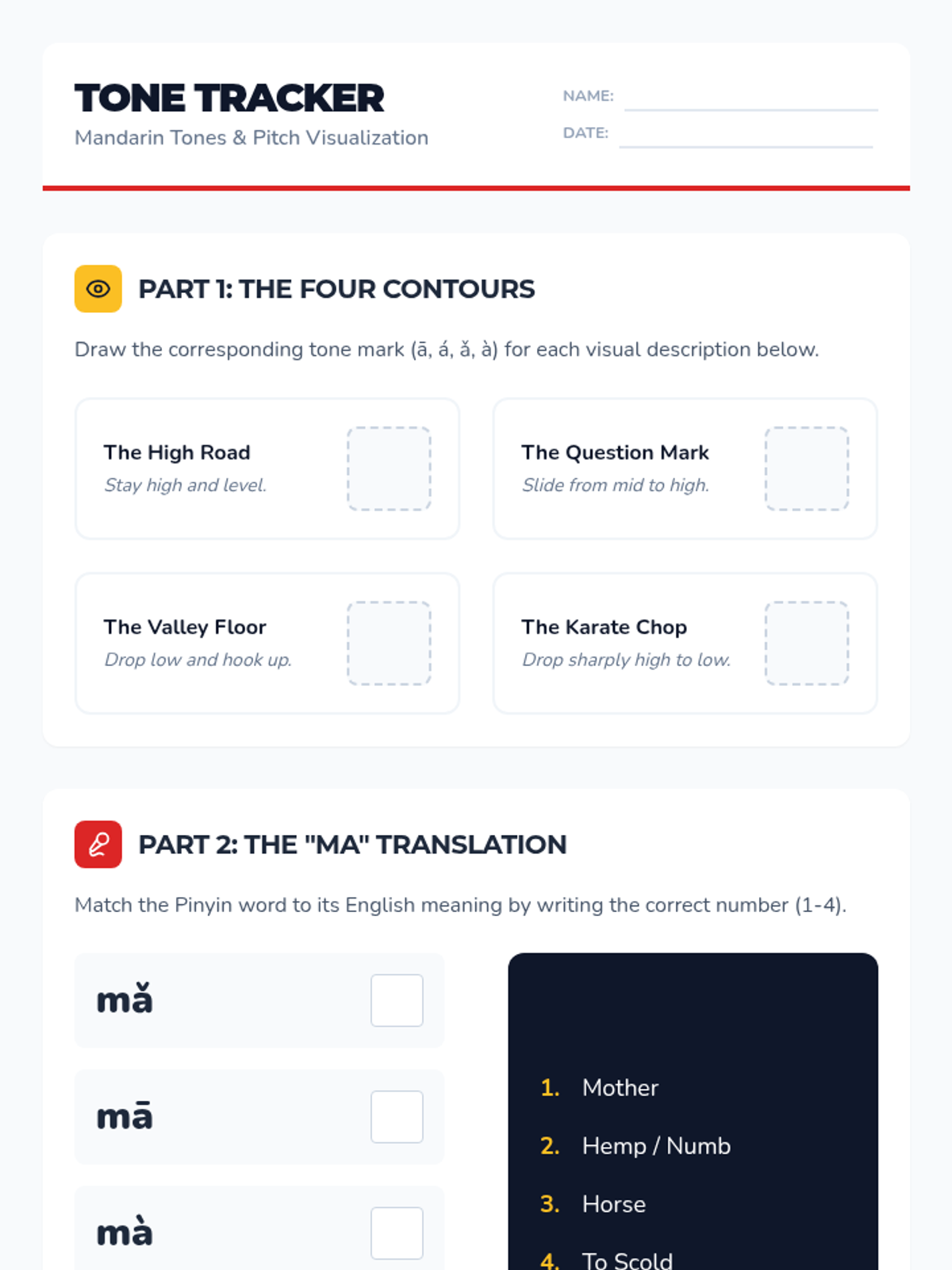
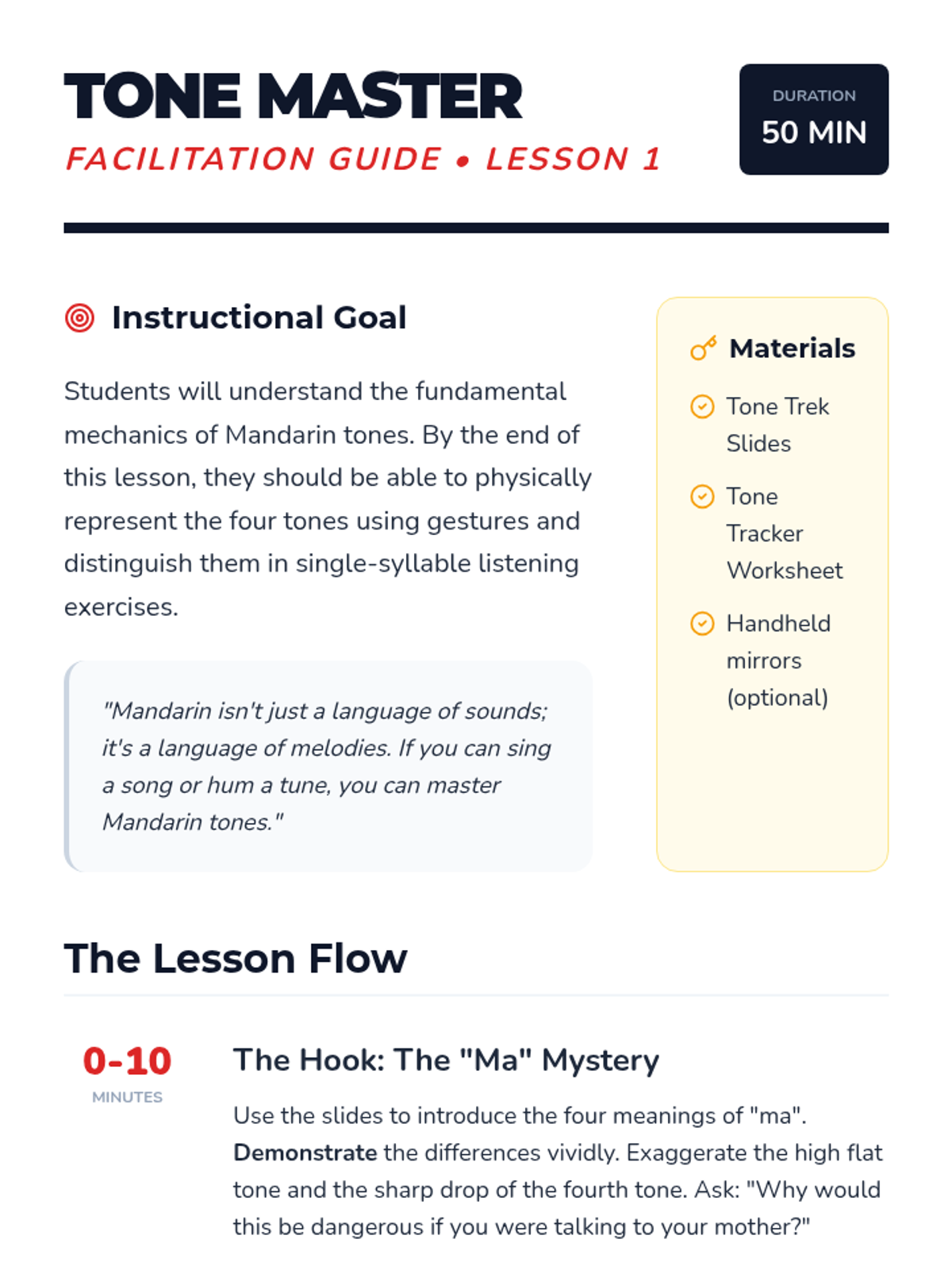
A comprehensive introduction to Mandarin Chinese phonetics for 6th-grade students, focusing on the four tones, the Pinyin romanization system, and the rhythmic rules of spoken Mandarin. Students progress from basic pitch awareness to complex phonetic combinations and listening transcription.
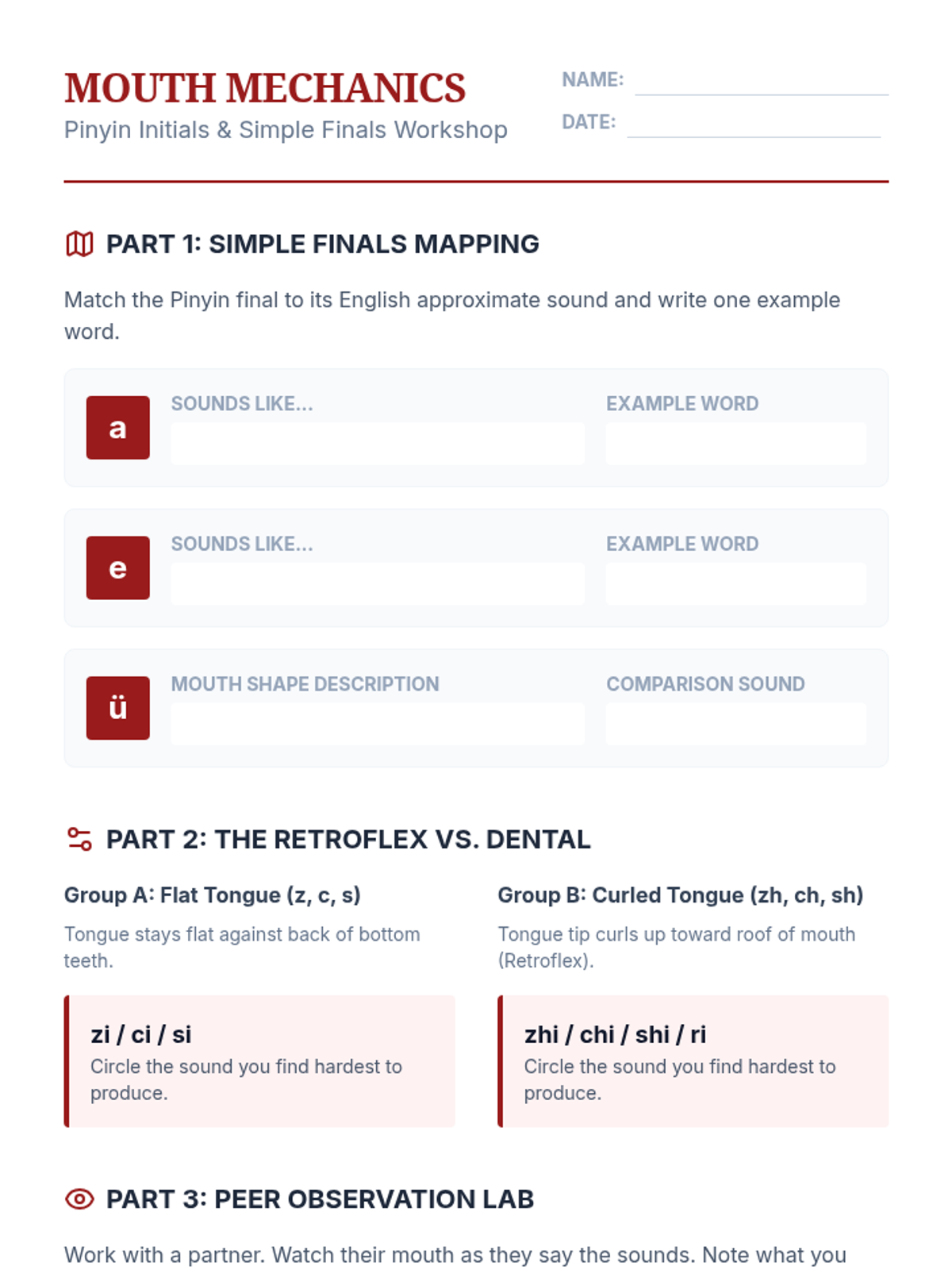
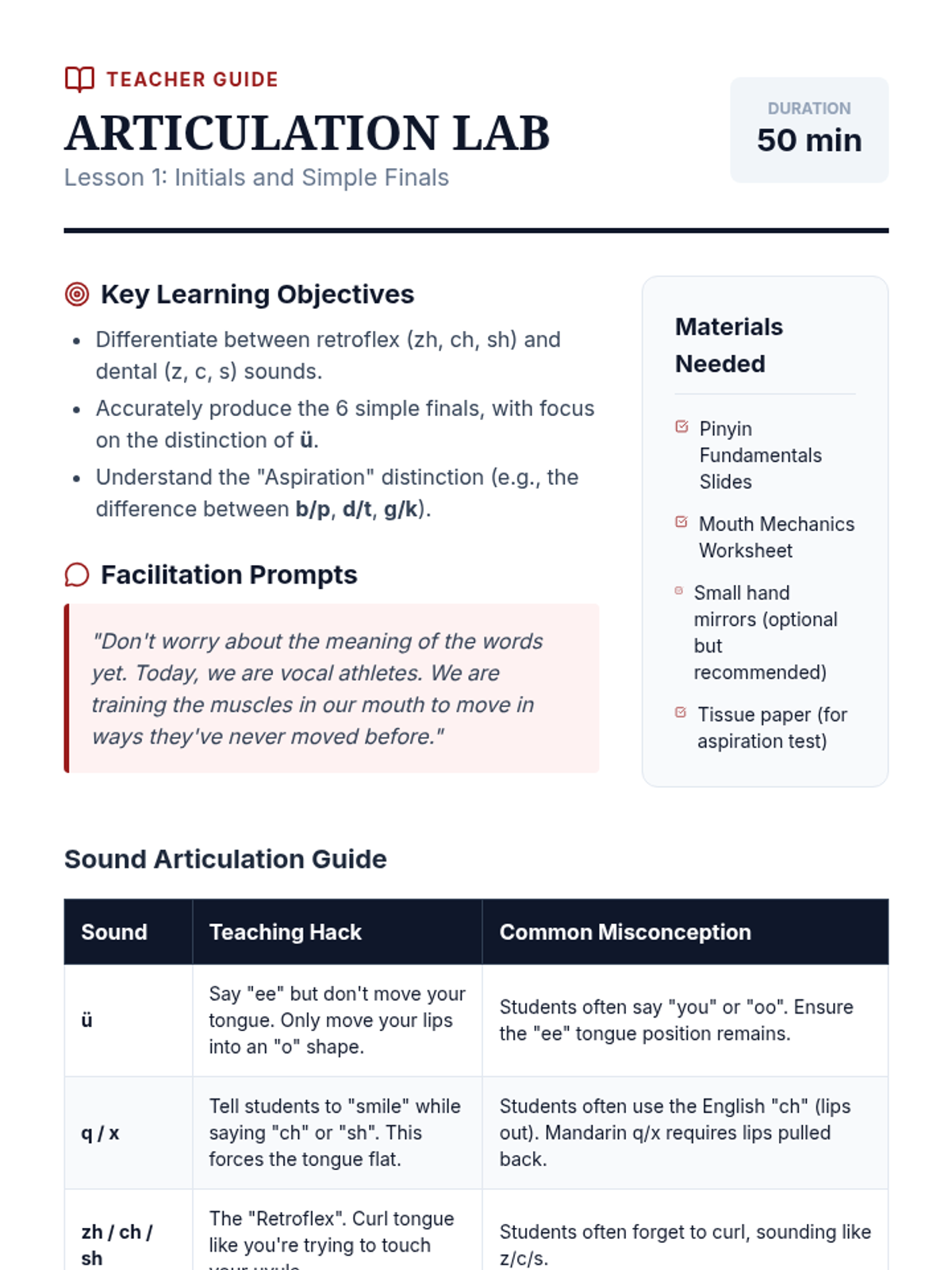
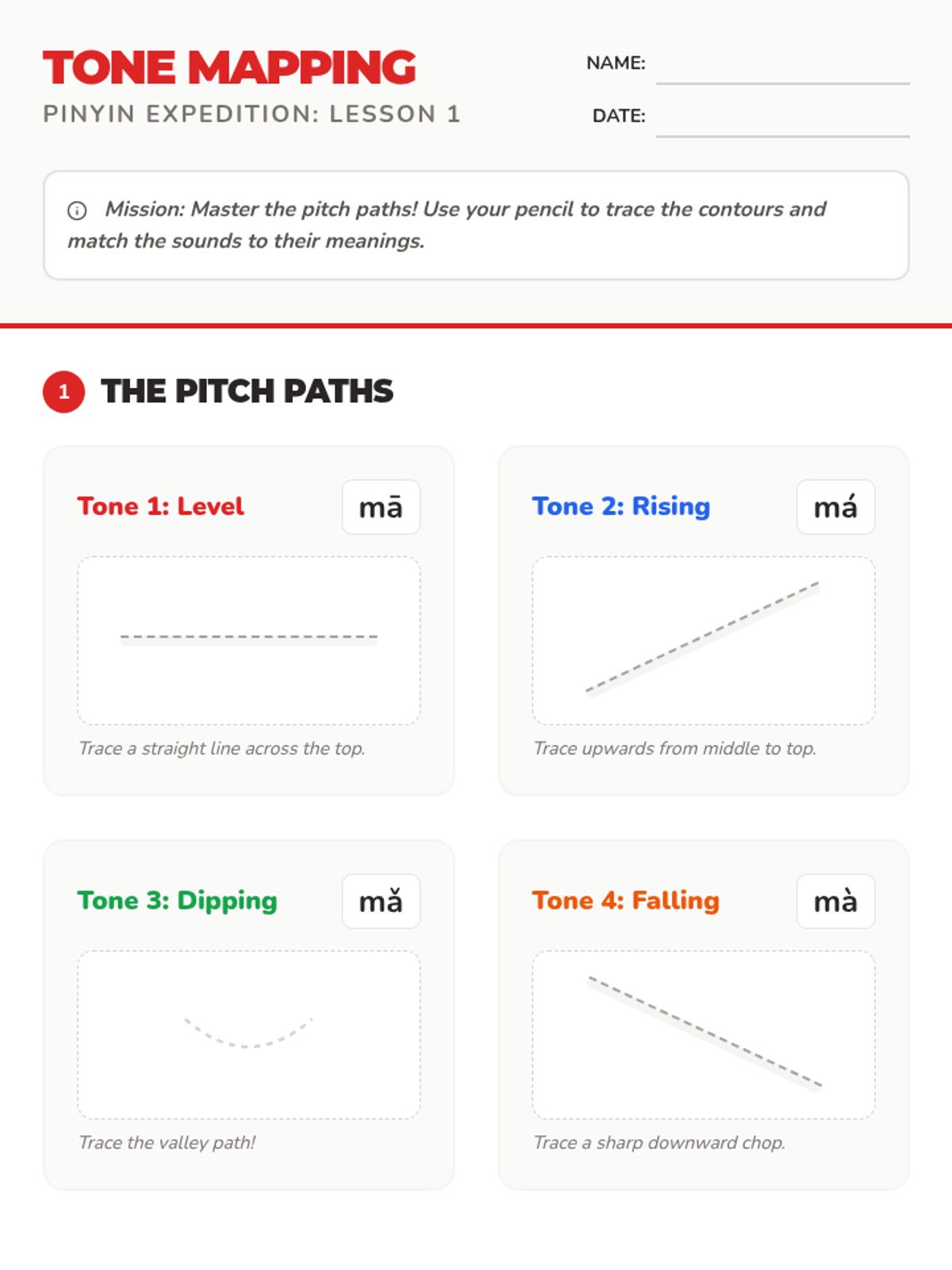
This sequence establishes the foundational mechanics of Mandarin Chinese pronunciation through intensive workshop-style practice, focusing on the Pinyin system, tones, and articulation rules.
A comprehensive introduction to Mandarin Chinese phonetics, focusing on the mastery of the four tones, initials, finals, and reading fluency using the Pinyin system. Students use physical gestures, listening drills, and interactive games to decode and pronounce Mandarin accurately.
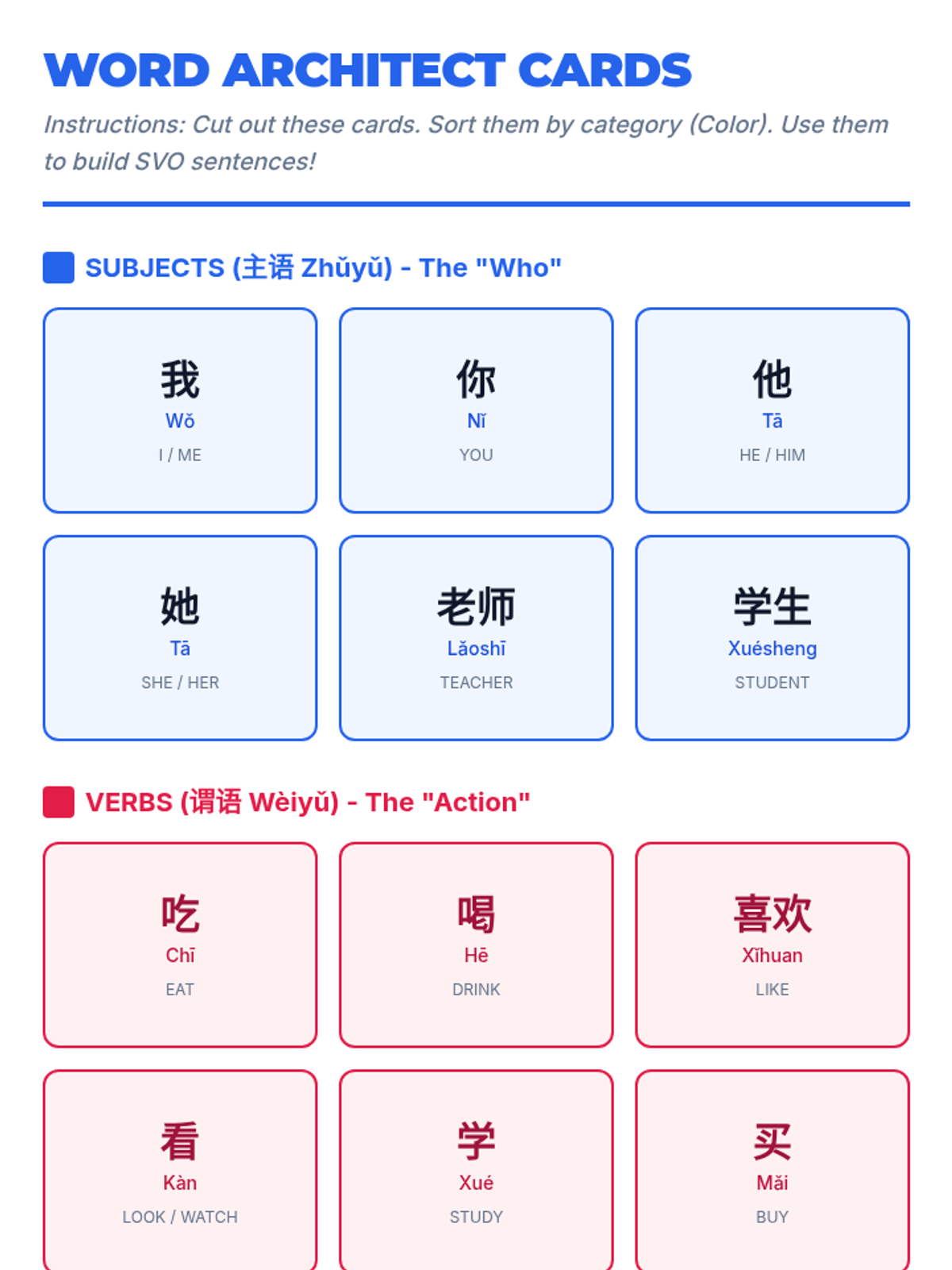
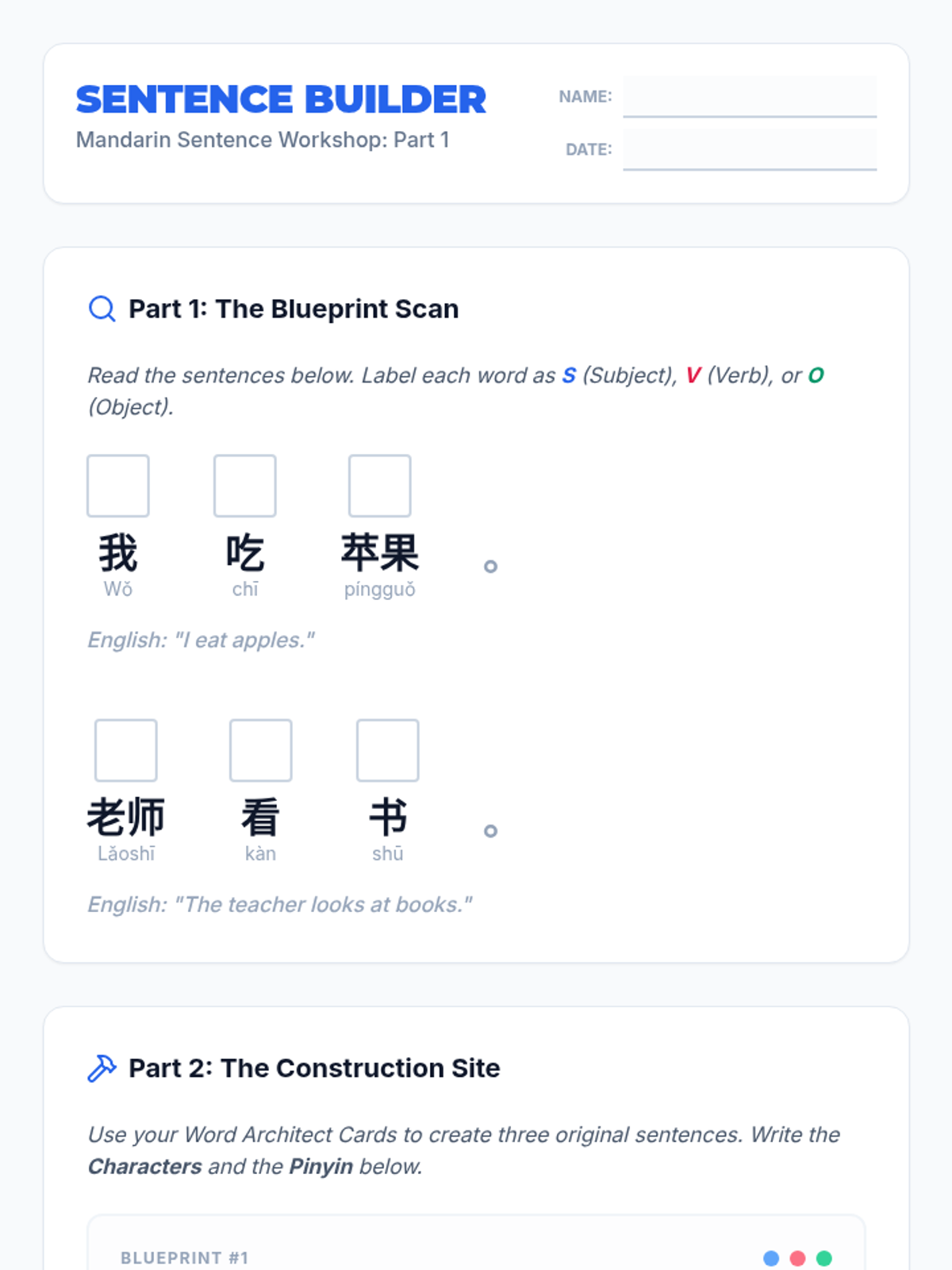
A 5-lesson unit for 6th graders focused on Mandarin Chinese sentence structure, covering SVO order, negation with 'bù', and contextual tone changes. Students use a 'Sentence Workshop' approach to build, deconstruct, and synthesize Mandarin grammar through hands-on activities and creative projects.
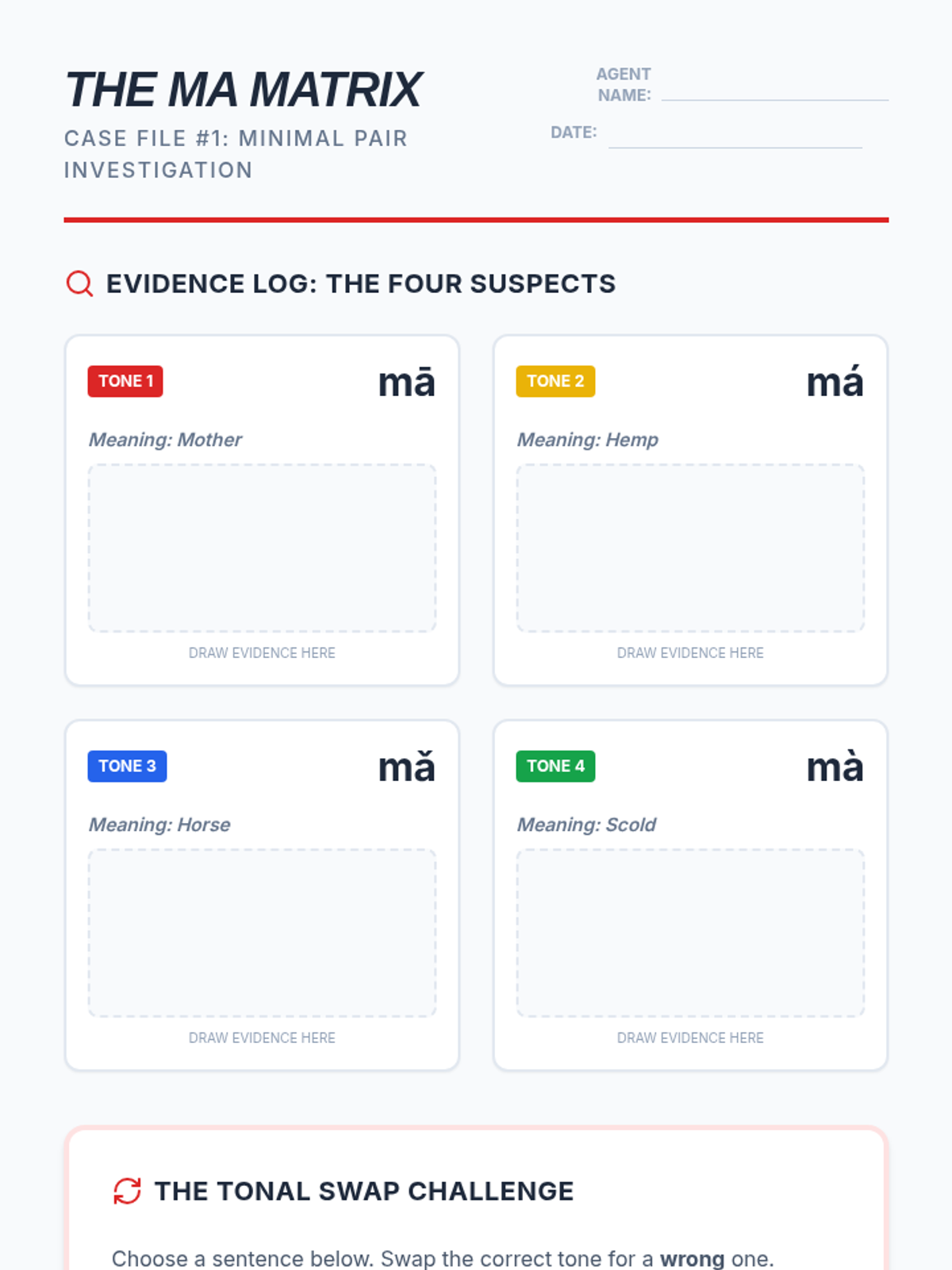
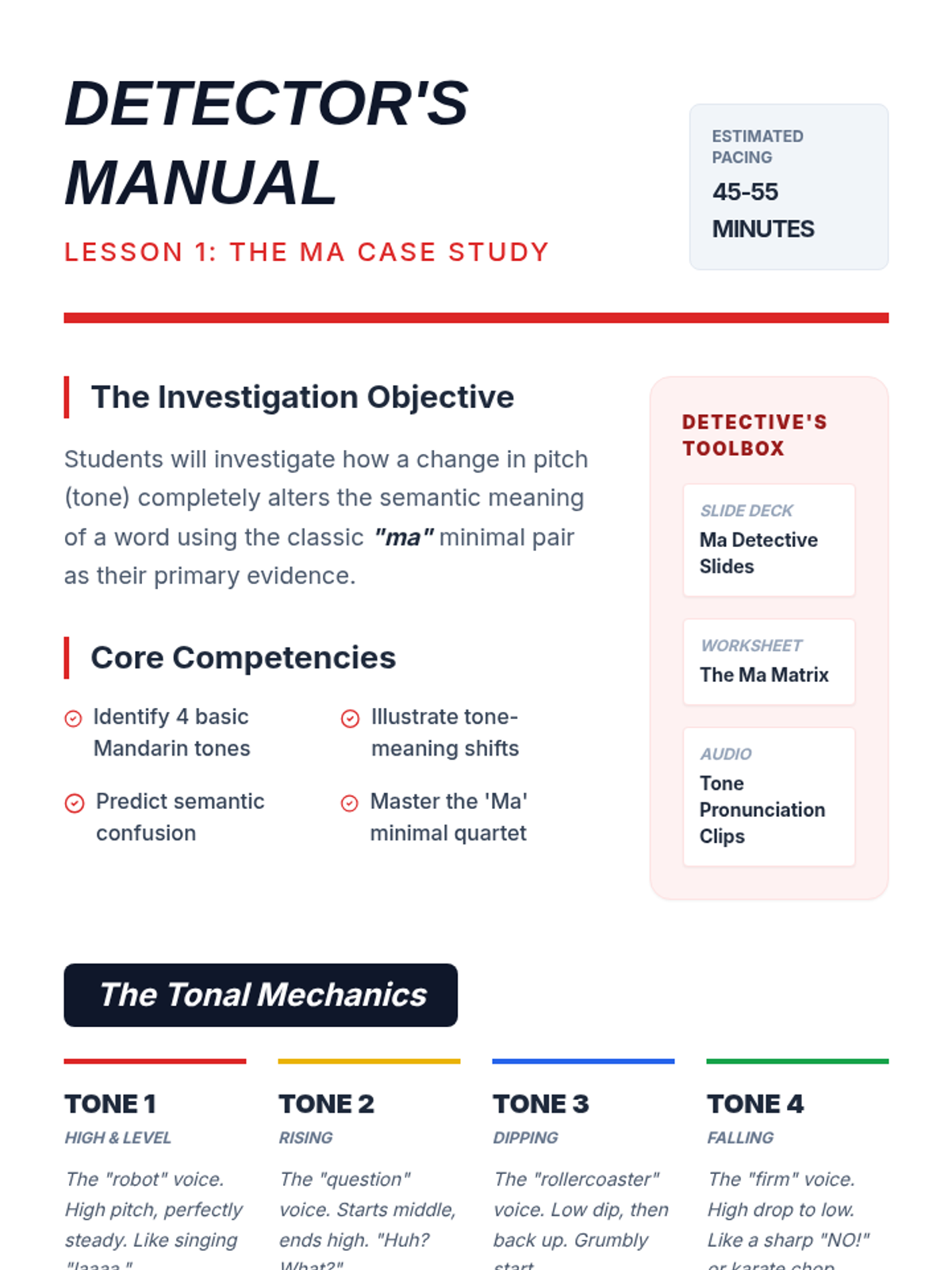
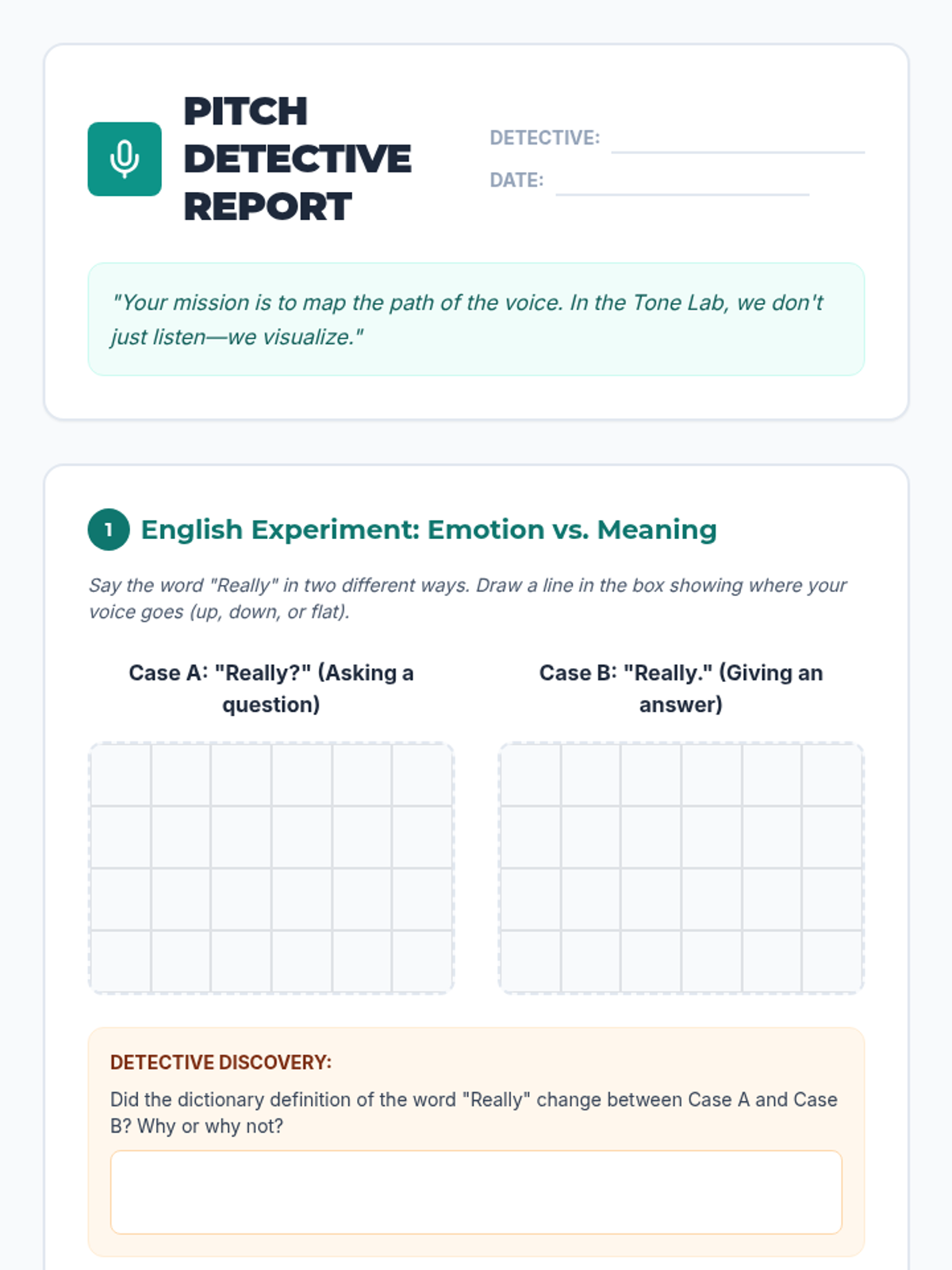
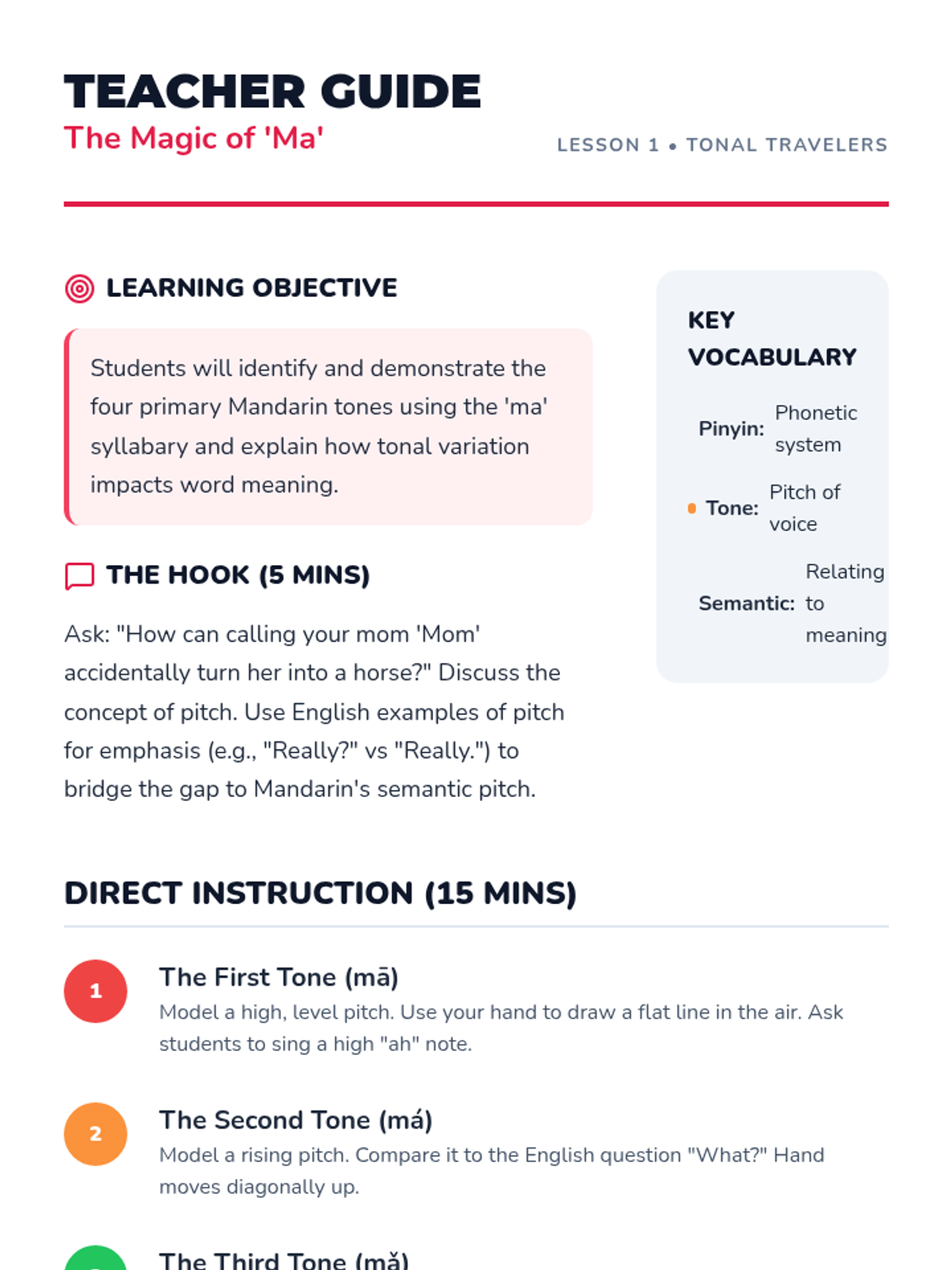
A linguistic investigation into how Mandarin tones change meaning. Students act as detectives to solve minimal pair mysteries and master the four basic tones through case studies, simulations, and performance.
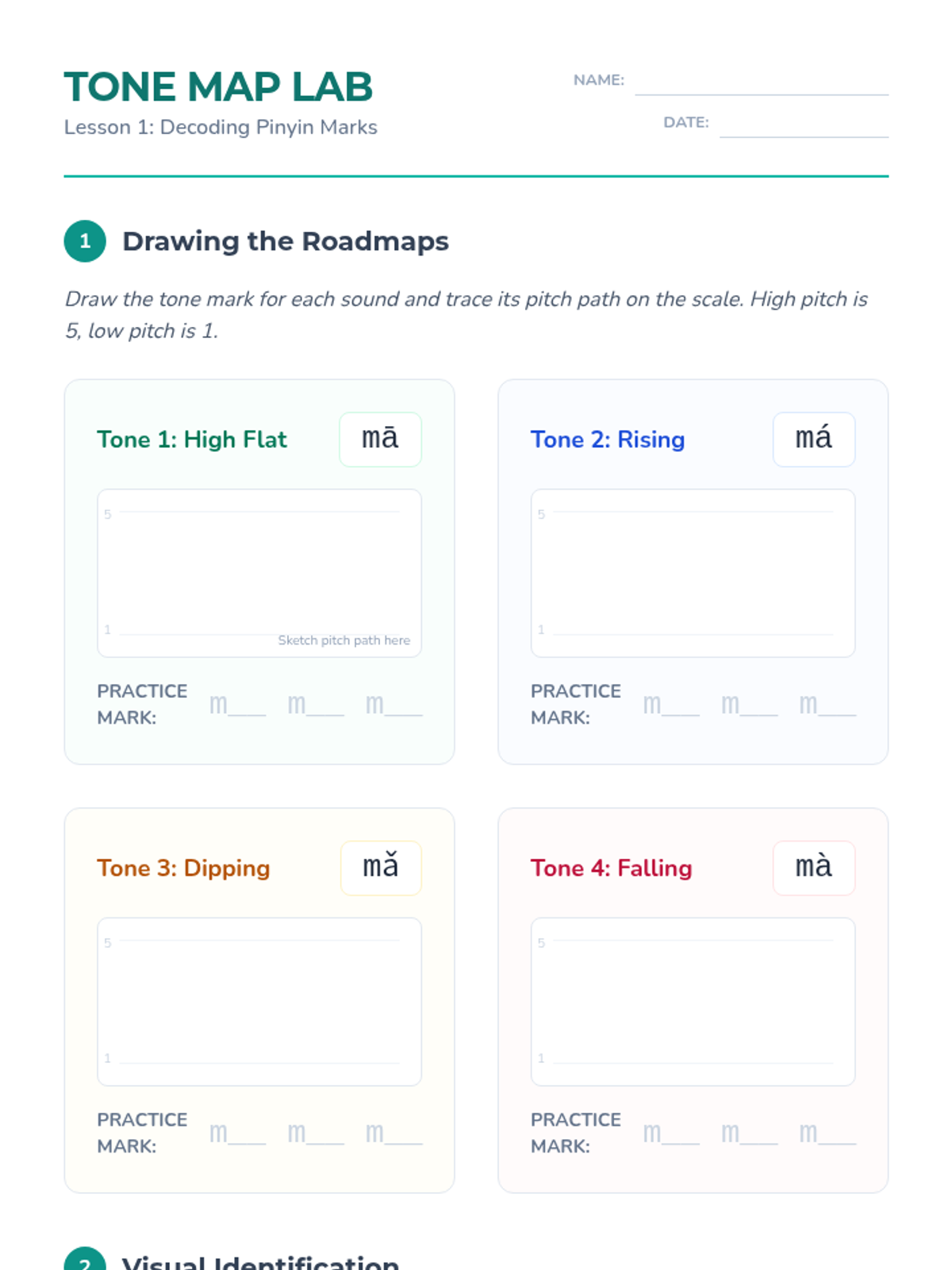
A 5-lesson sequence for 6th-grade students exploring the visual and orthographic rules of Mandarin Chinese tones. Students connect diacritical marks to pitch scales, master placement rules, analyze their own pitch curves, and create a comprehensive visual guide to Mandarin sounds.
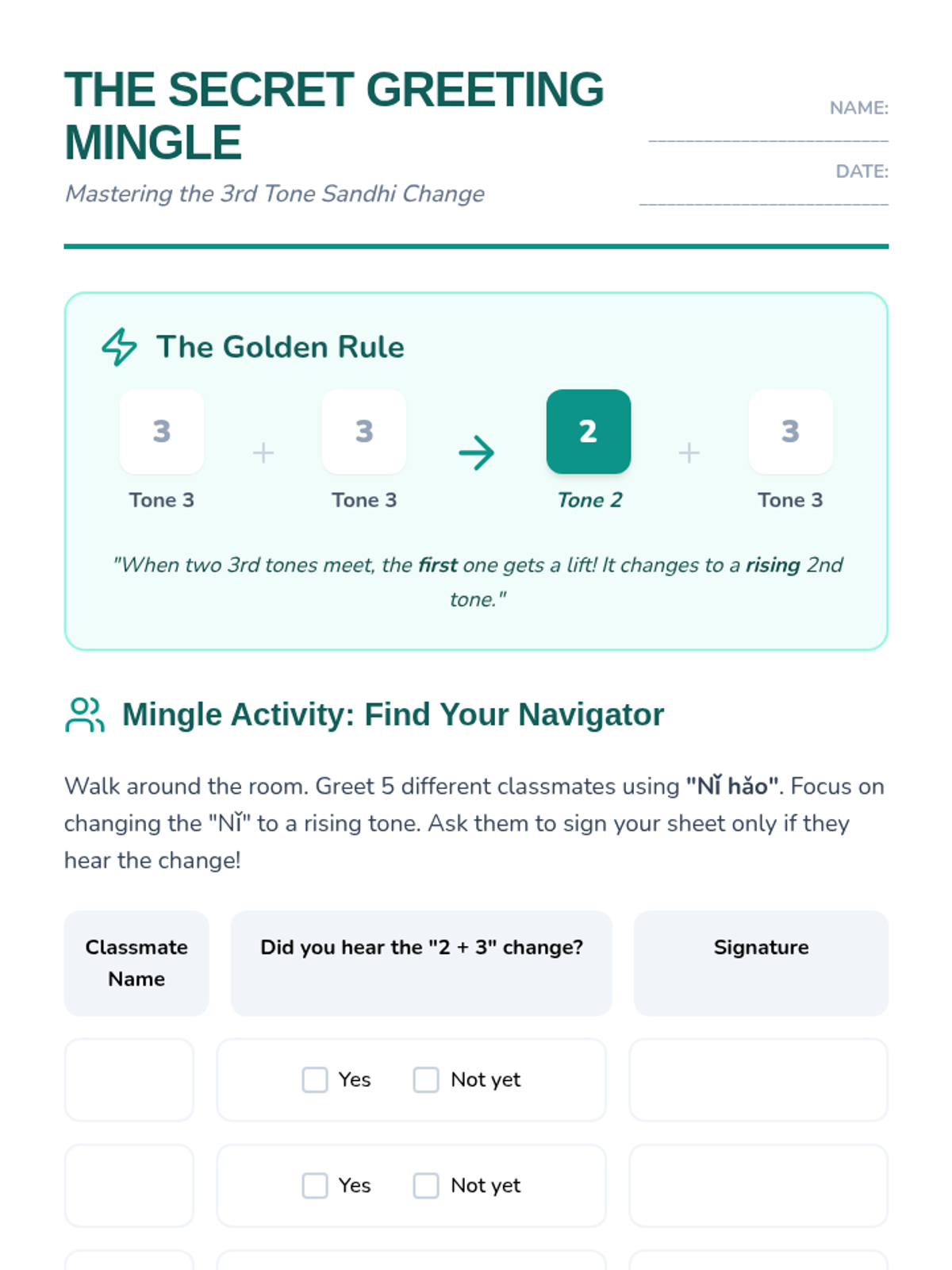
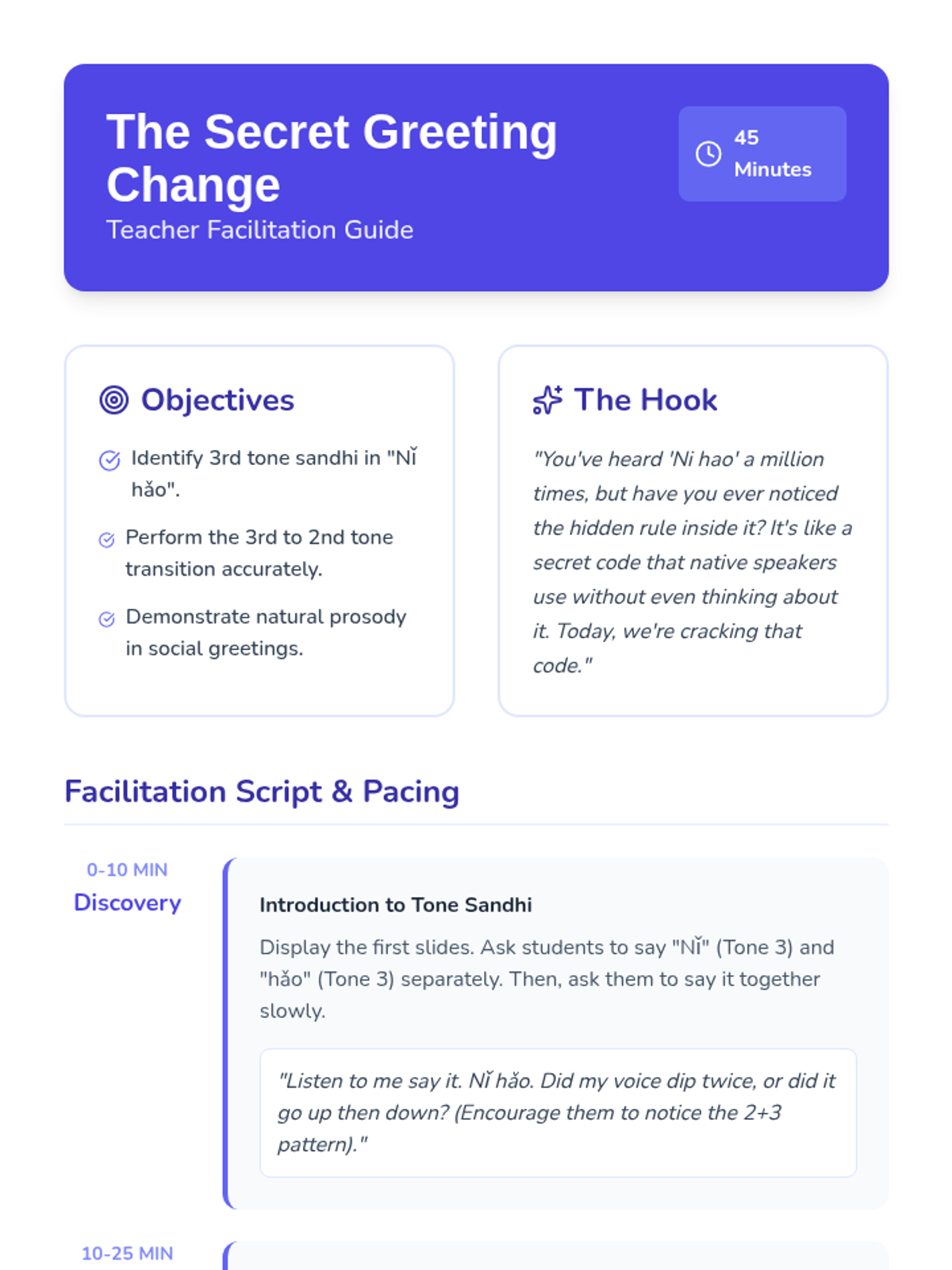
This sequence introduces 6th-grade students to the application of Mandarin Chinese tones in conversational contexts. It focuses on Tone Sandhi (specifically the 3rd tone change), the neutral tone in family vocabulary, rhythmic number patterns, and basic SVO sentence structures to build natural fluency and pitch accuracy.
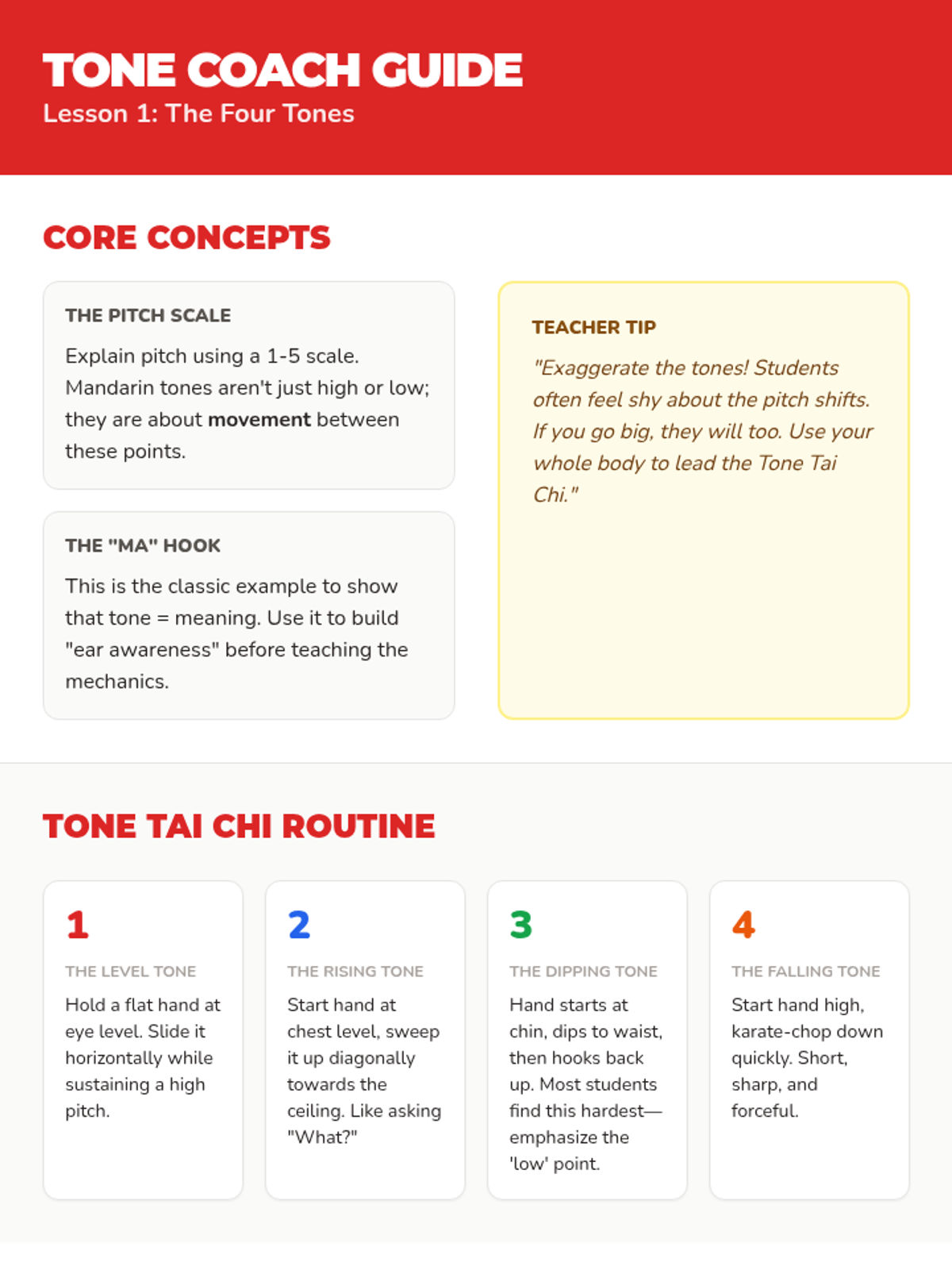
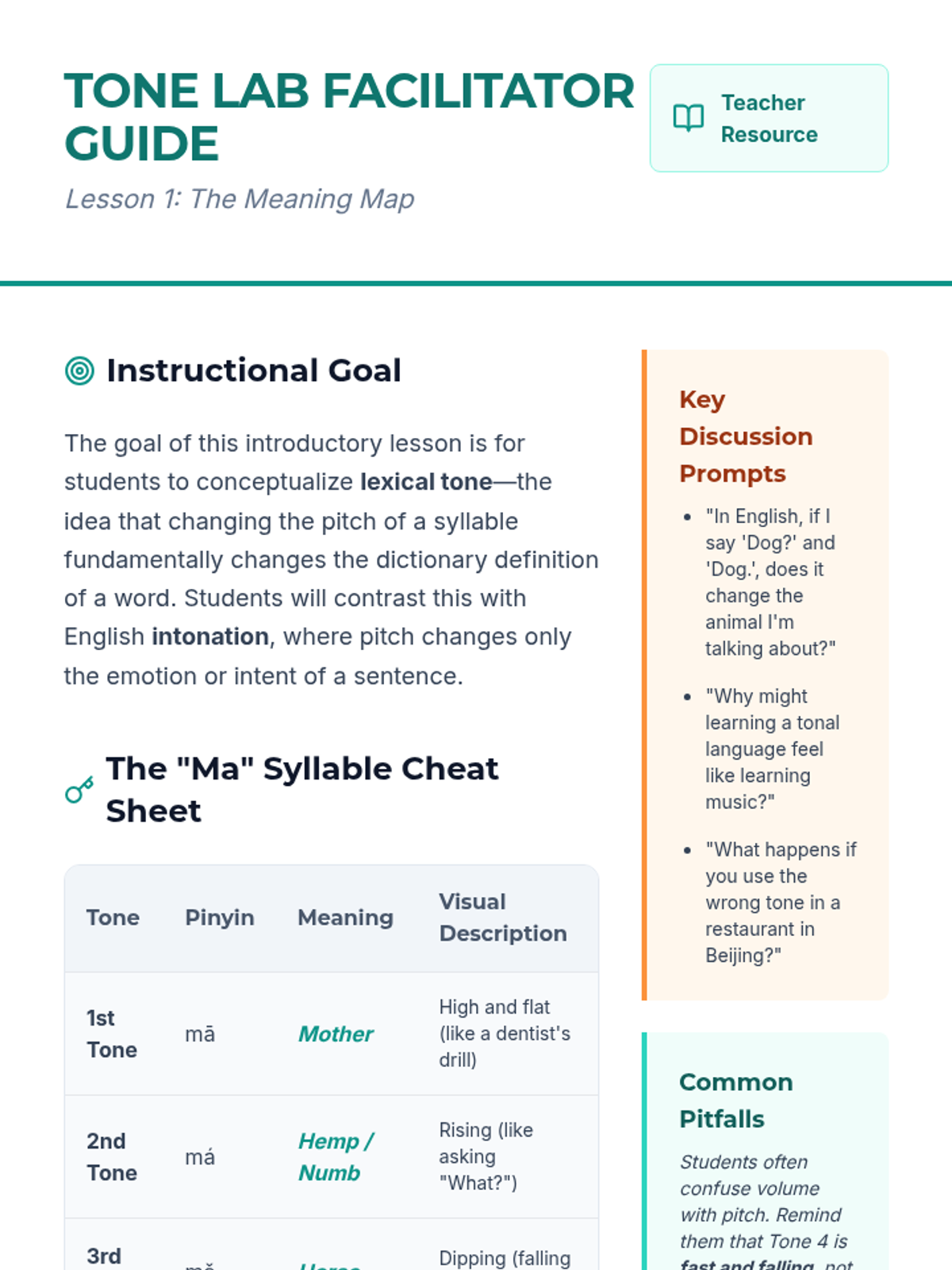
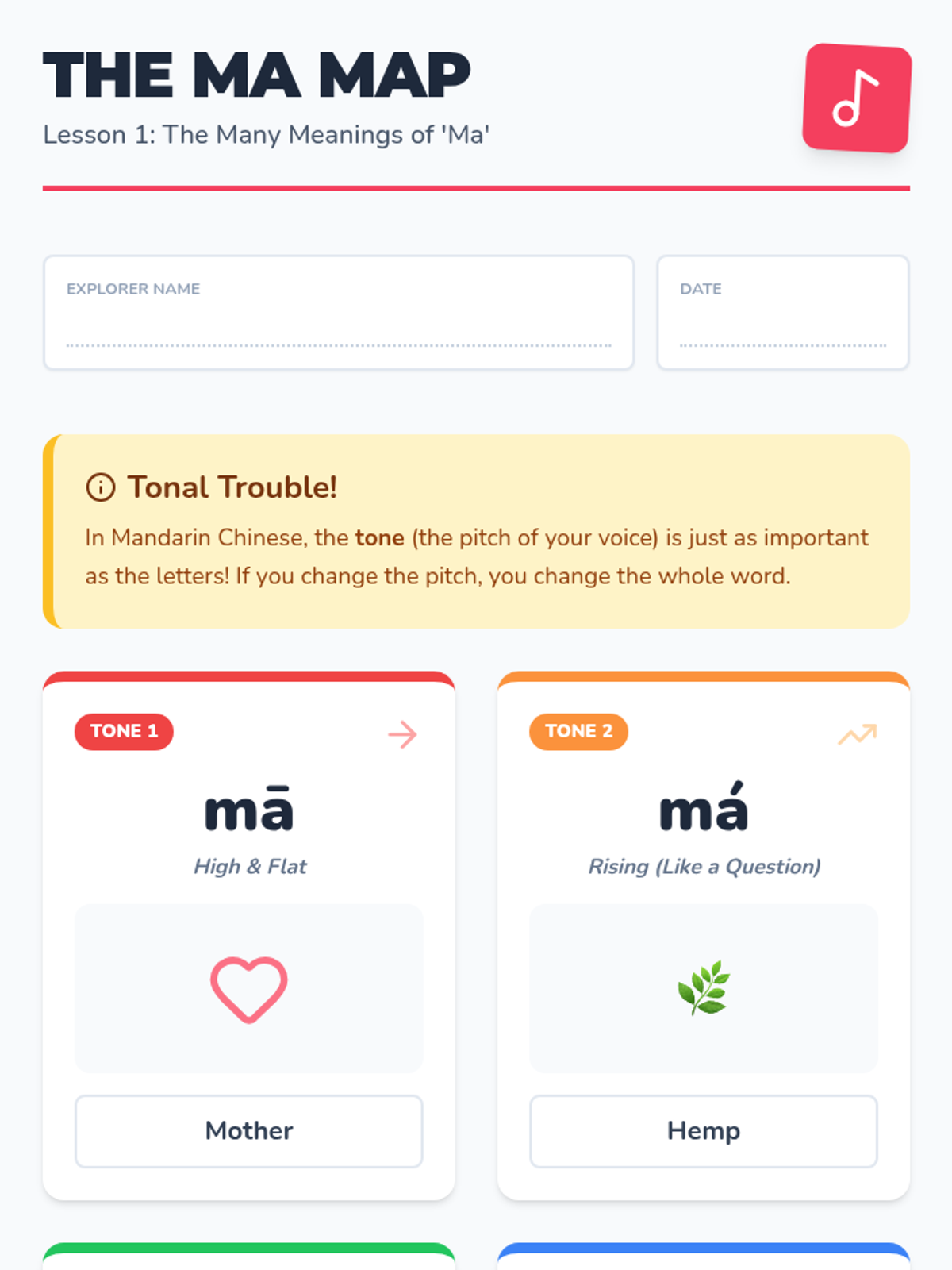
A 5-lesson sequence for 5th-grade students to explore the concept of tonal languages, specifically Mandarin Chinese. Students learn to distinguish the four main tones and the neutral tone through comparative analysis, vocal graphing, and kinesthetic activities.
Students explore how Mandarin tones change word meanings through case studies, role-plays, and games, focusing on precision in communication.
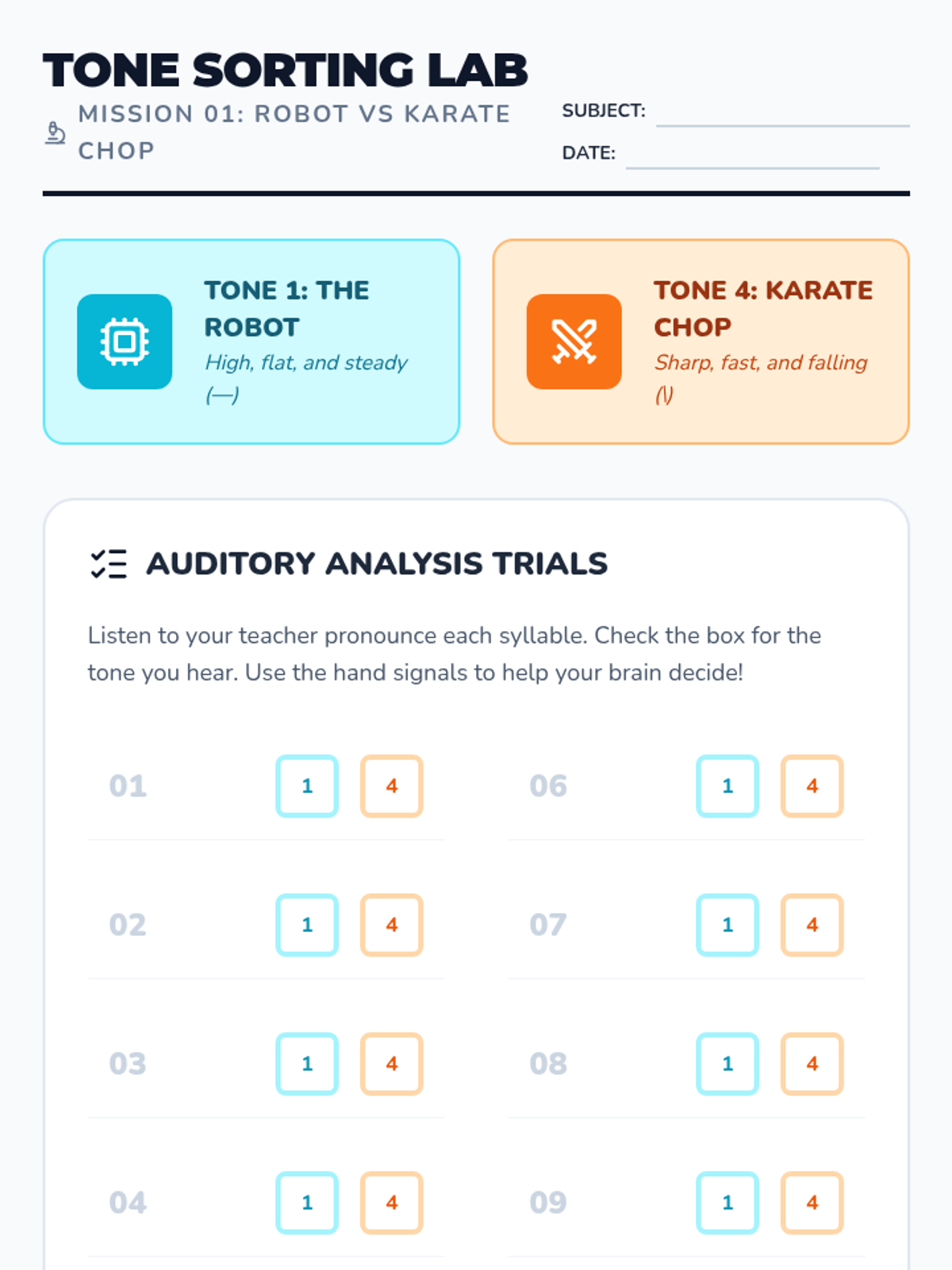
A 5th-grade Mandarin Chinese unit focused on developing auditory discrimination skills for the four main tones. Students progress from isolating distinct tones to navigating the subtle differences in minimal pairs through a 'Tone Lab' thematic approach.
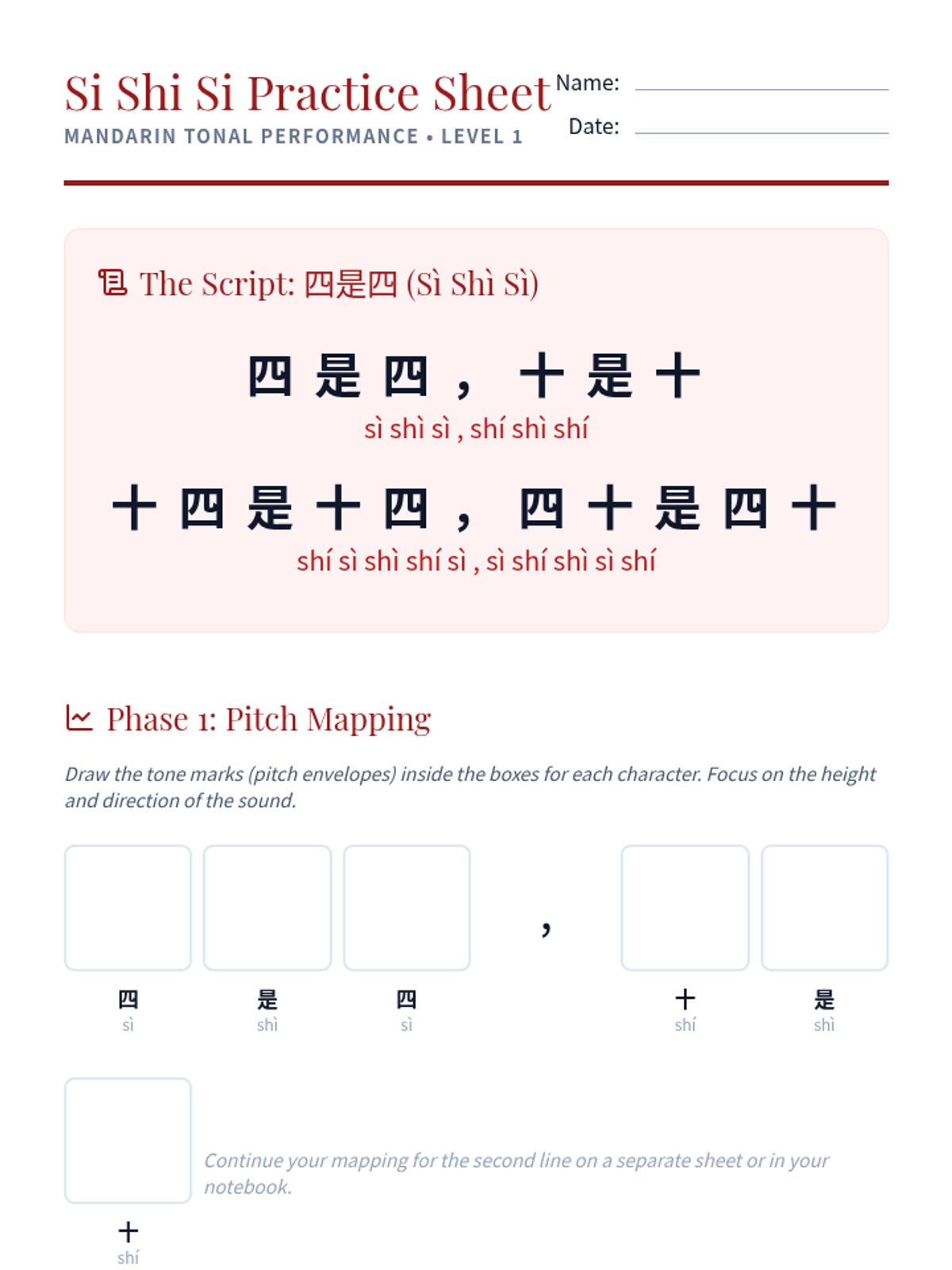
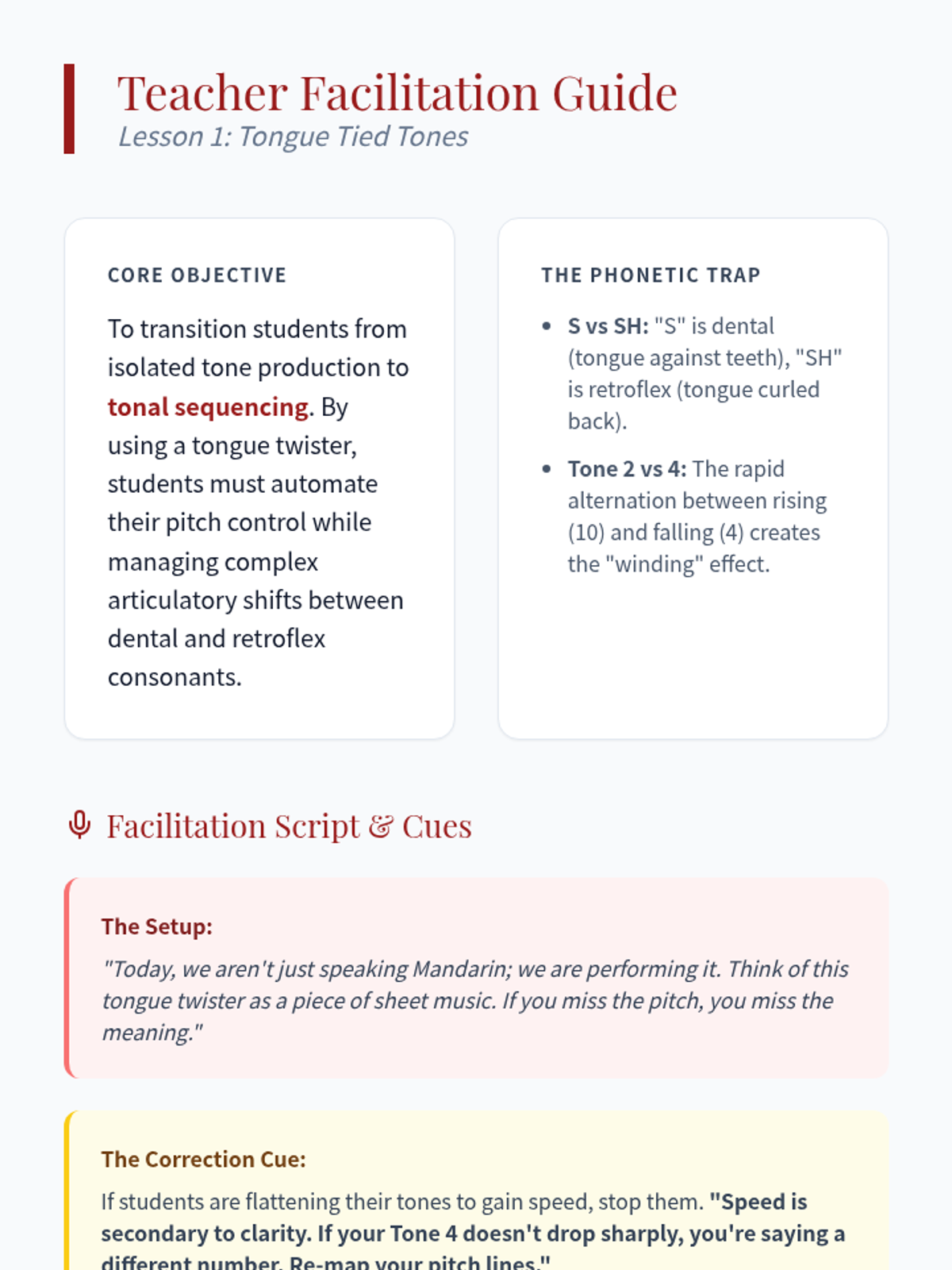
A high-stakes, performance-based exploration of Mandarin tones through the lens of tongue twisters, classical poetry, and native speaker mimicry. Students transform from passive learners to active performers, mastering pitch envelopes and rhythmic precision.
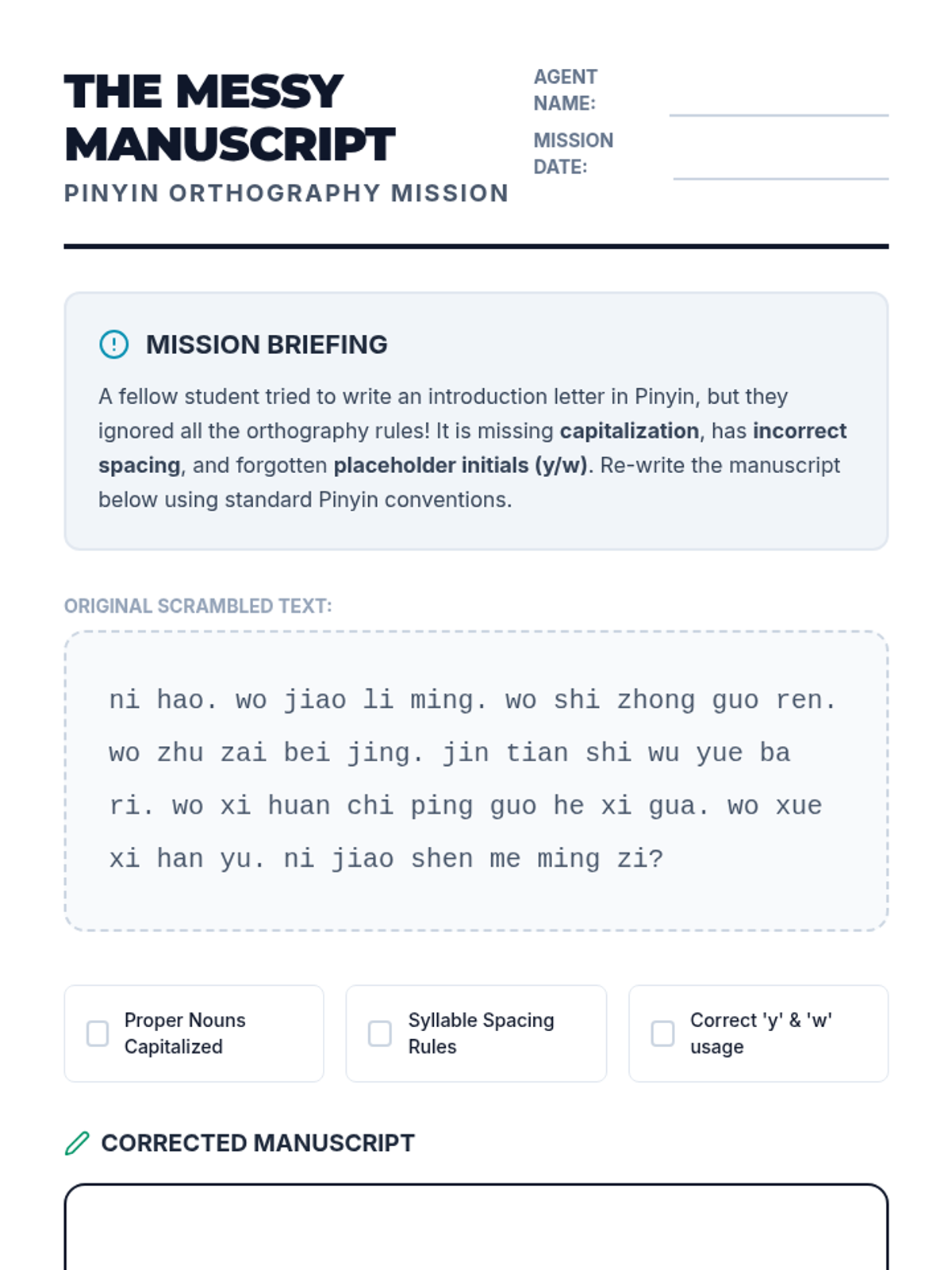
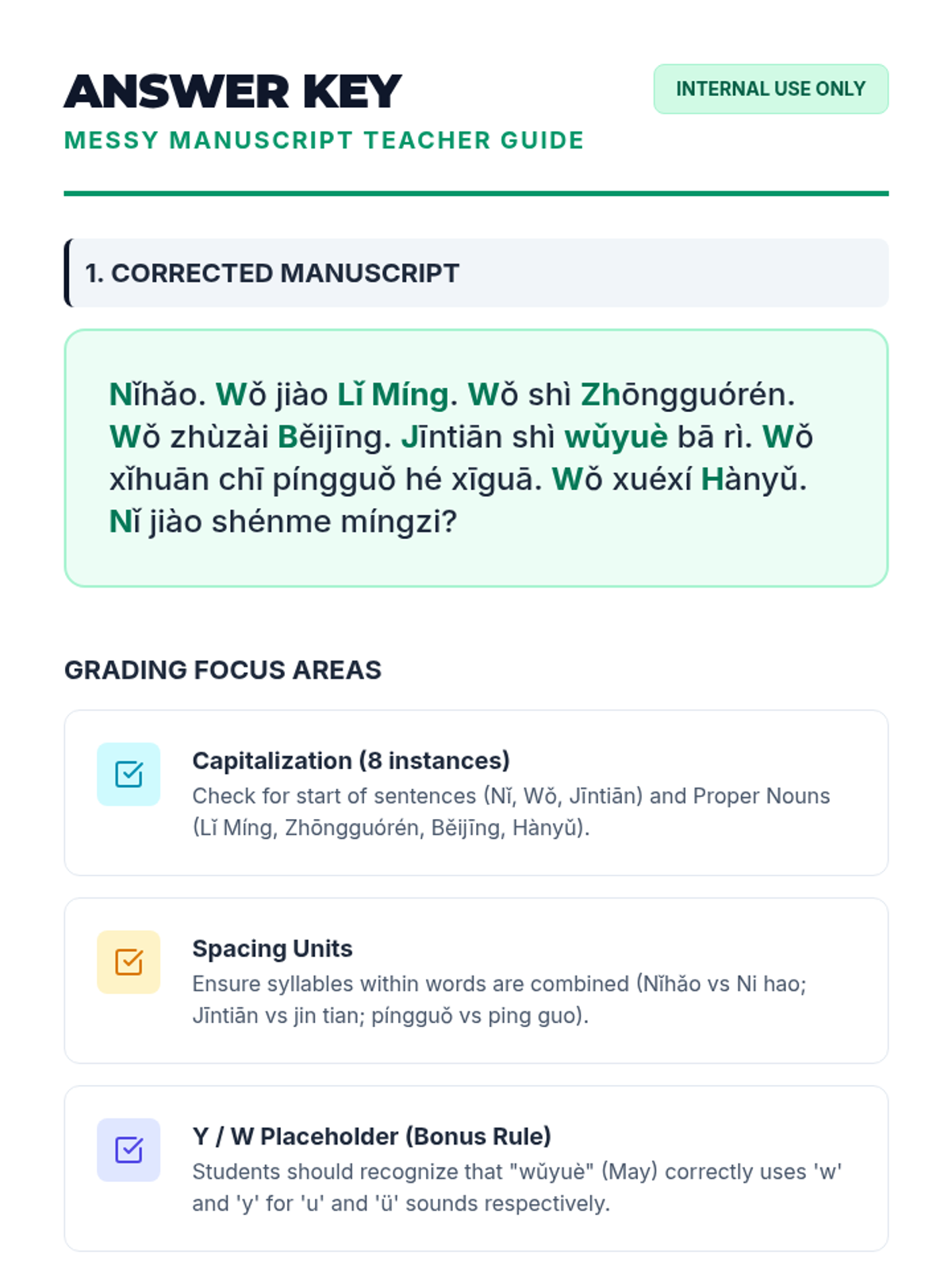
A comprehensive sequence for 6th-grade students to master Pinyin orthography, digital typing input methods, and real-world transcription. Students progress from learning spelling rules to creating a digital identity using Mandarin input tools.
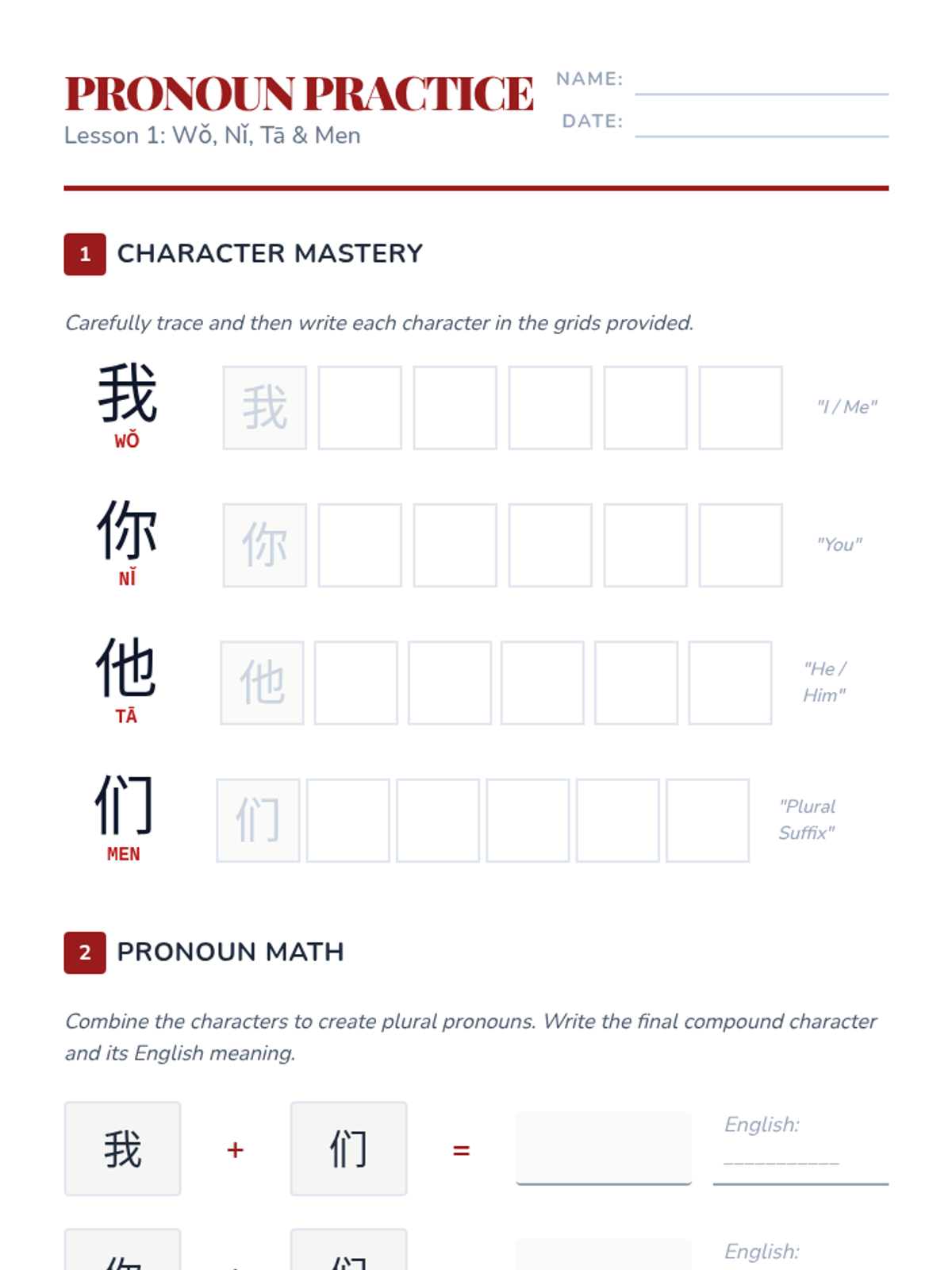
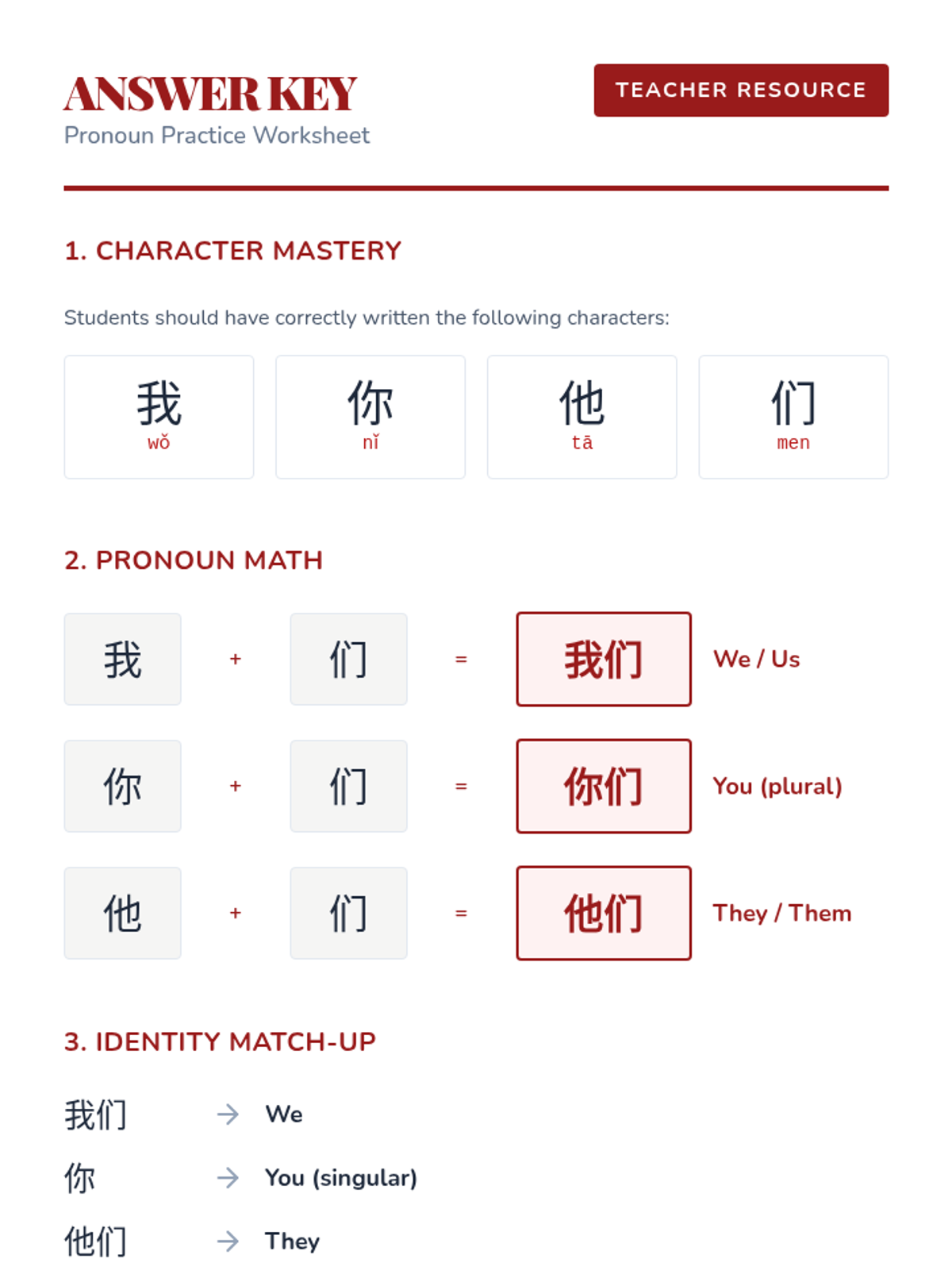
A 5-lesson sequence for 6th Grade Mandarin Chinese focusing on pronouns, basic sentence structures (SVO), and personal introductions using high-frequency characters. Students progress from individual characters to full sentence construction and identity expression.
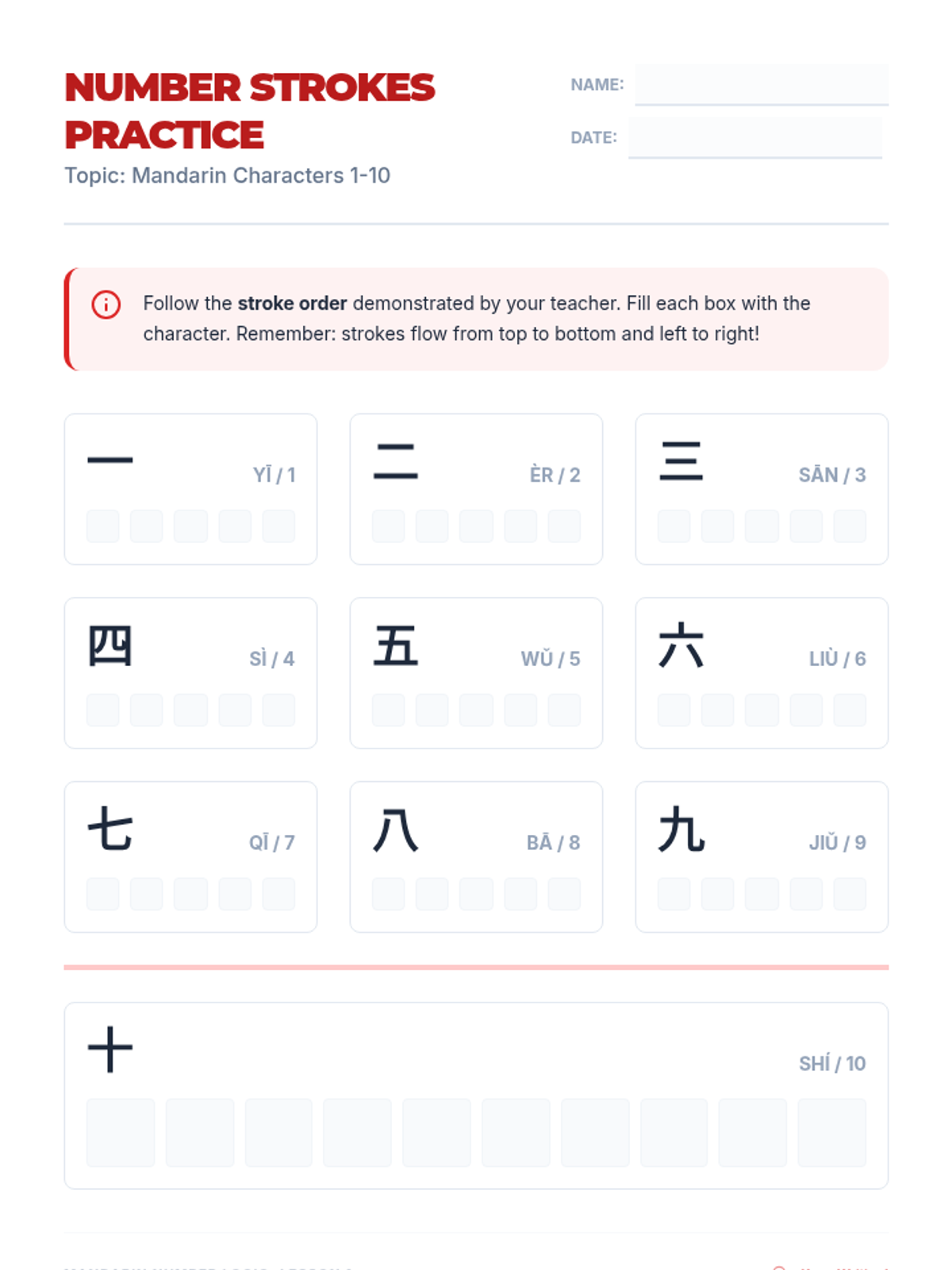
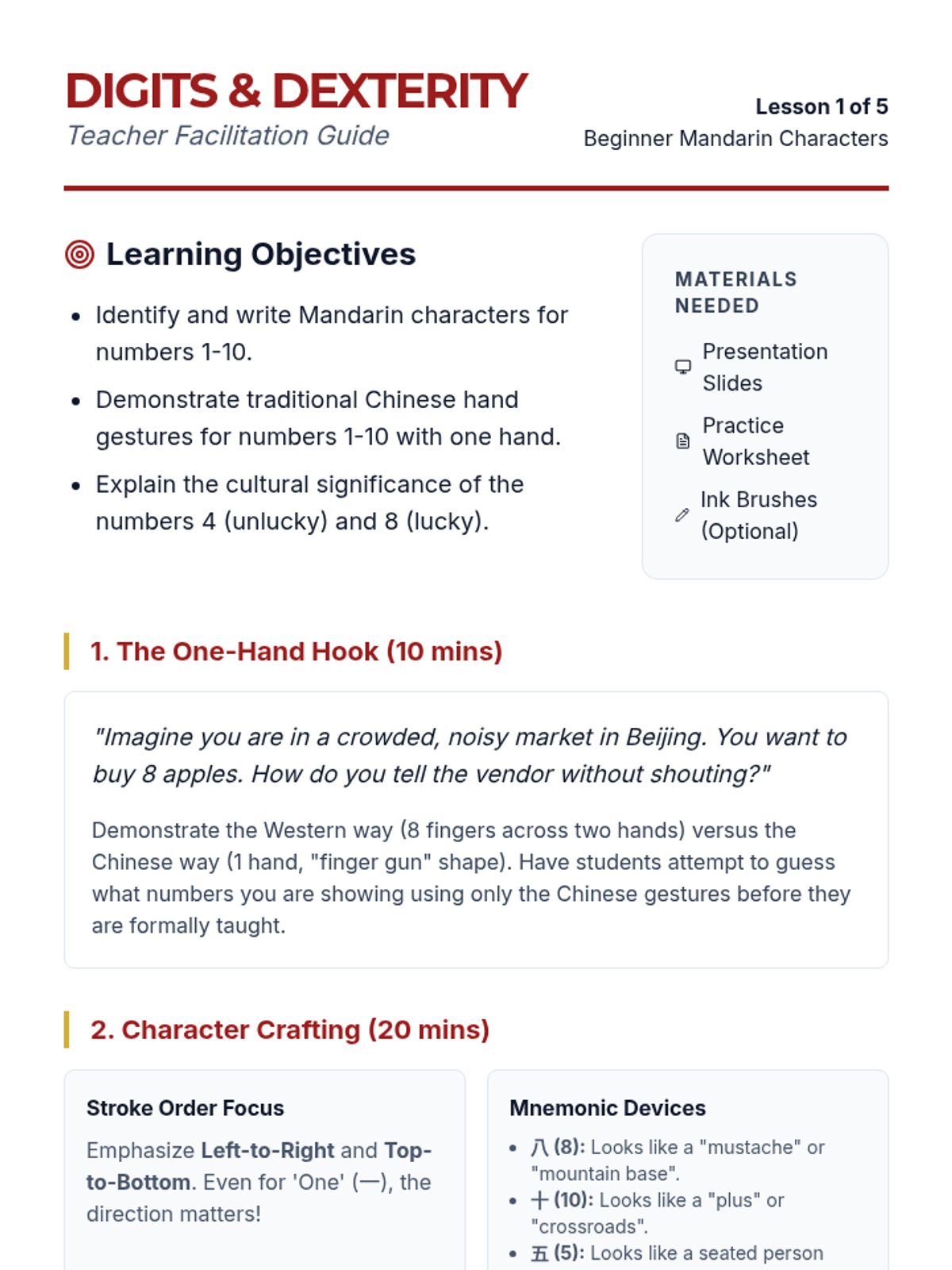
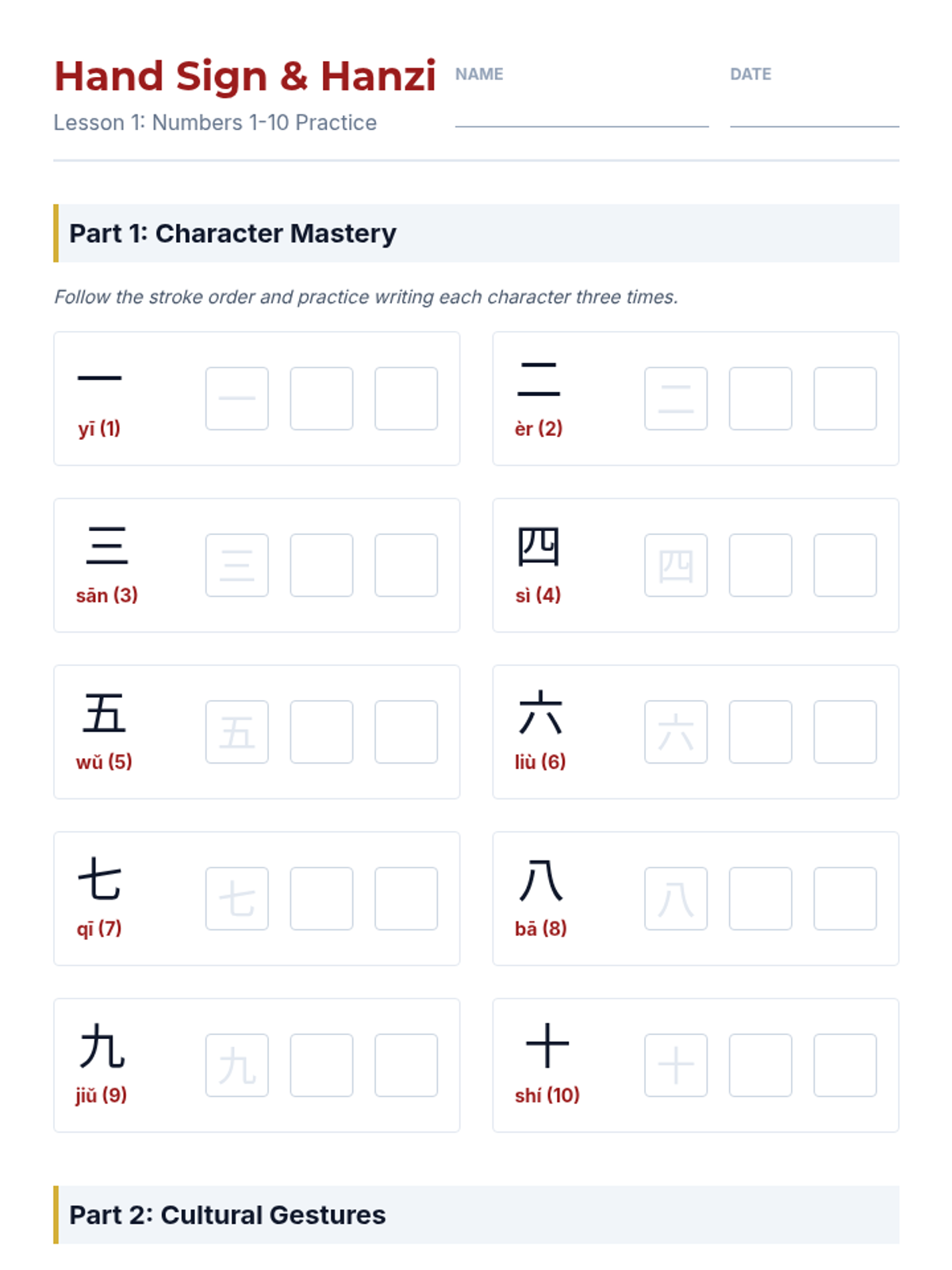
A 6th-grade Mandarin Chinese unit exploring the logical, mathematical structure of Chinese numbers, days of the week, and calendar dates. Students progress from writing basic characters and learning hand gestures to building complex numbers and creating functional calendars.
A comprehensive sequence for 8th-grade beginners to master Mandarin Chinese numbers, dates, and time through logical character construction and cultural hand signs.
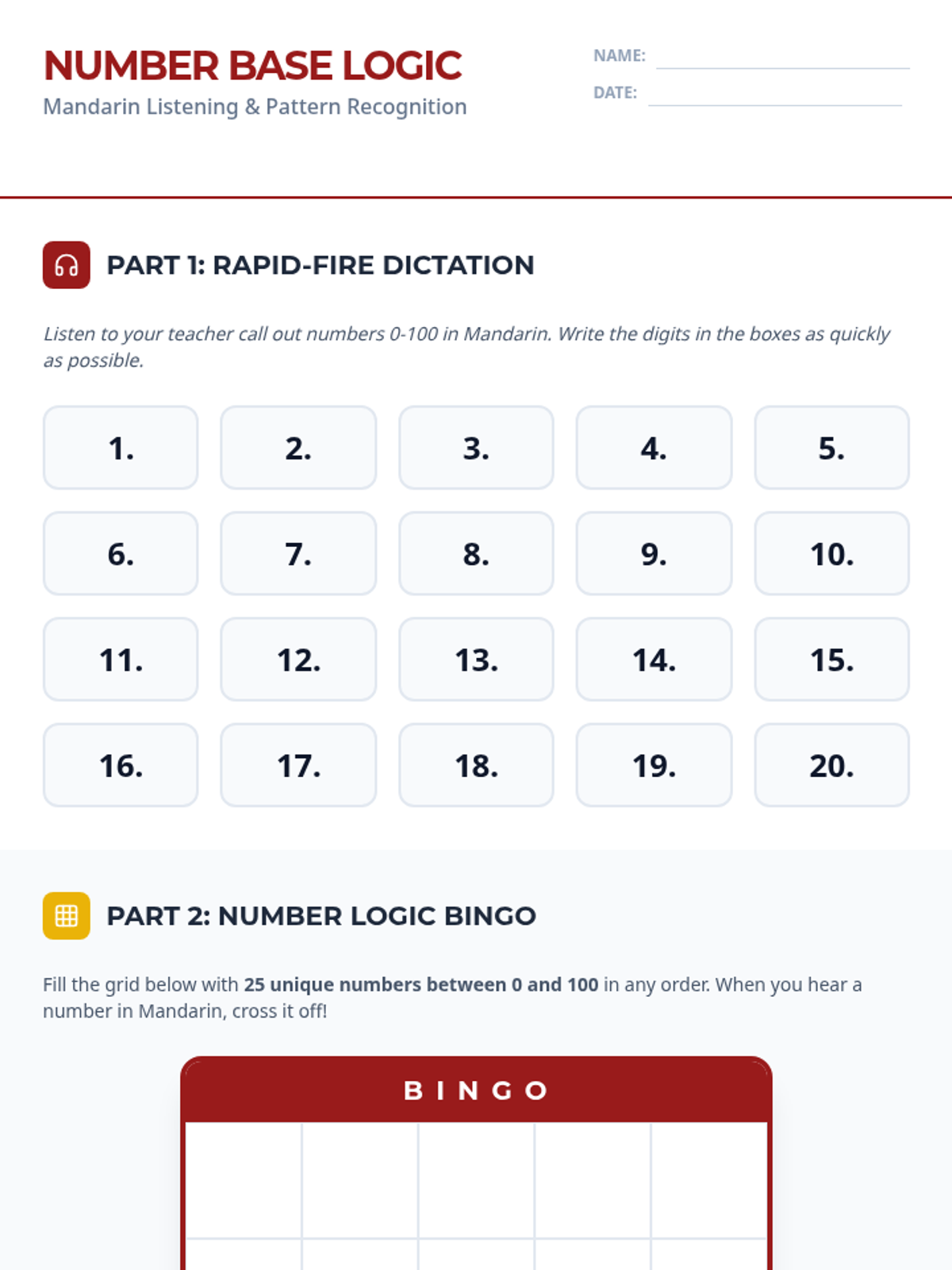
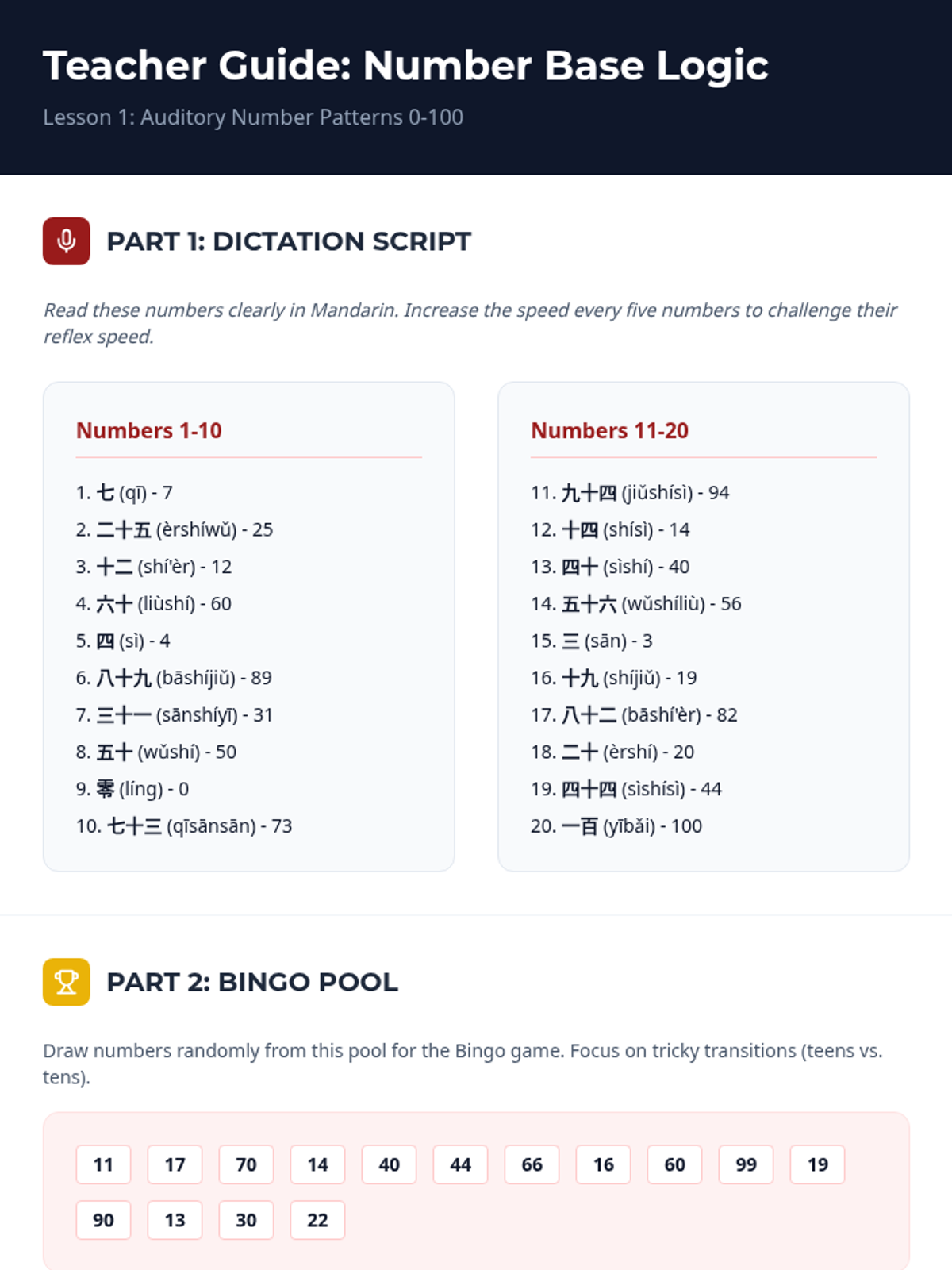
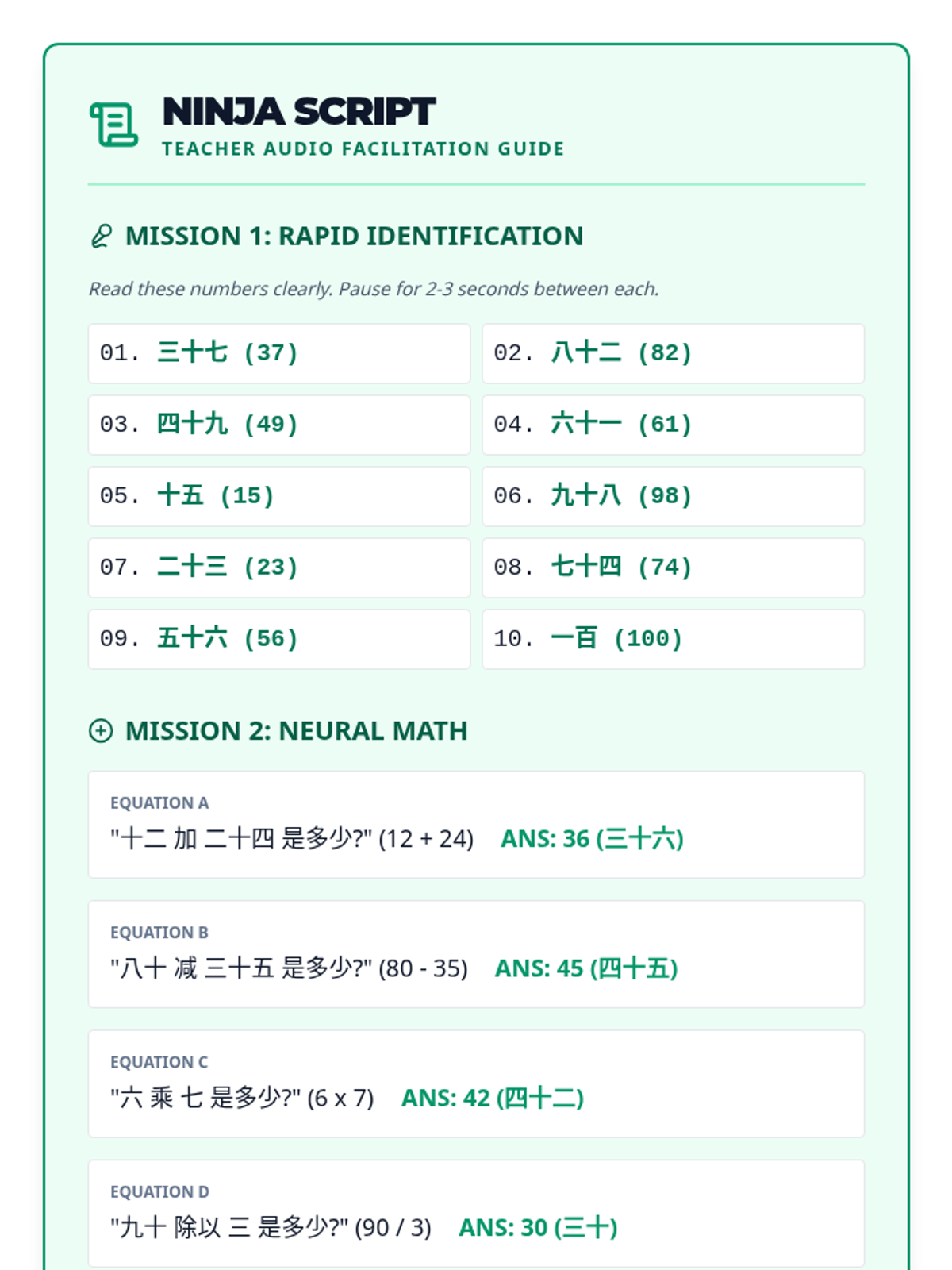
This sequence focuses on the auditory recognition of numerical patterns in Mandarin Chinese, essential for understanding prices, phone numbers, dates, and time. Students leverage the logical structure of Mandarin counting to progress from basic digits to complex date and time formatting.
A beginner-level Mandarin sequence focused on functional listening skills for real-world scenarios. Students move from basic action verbs to navigating restaurants, directions, and markets through immersive simulations.
A game-based series where students master Mandarin numbers from 0-100 through auditory recognition, progressing from single digits to complex dates, phone numbers, and prices.
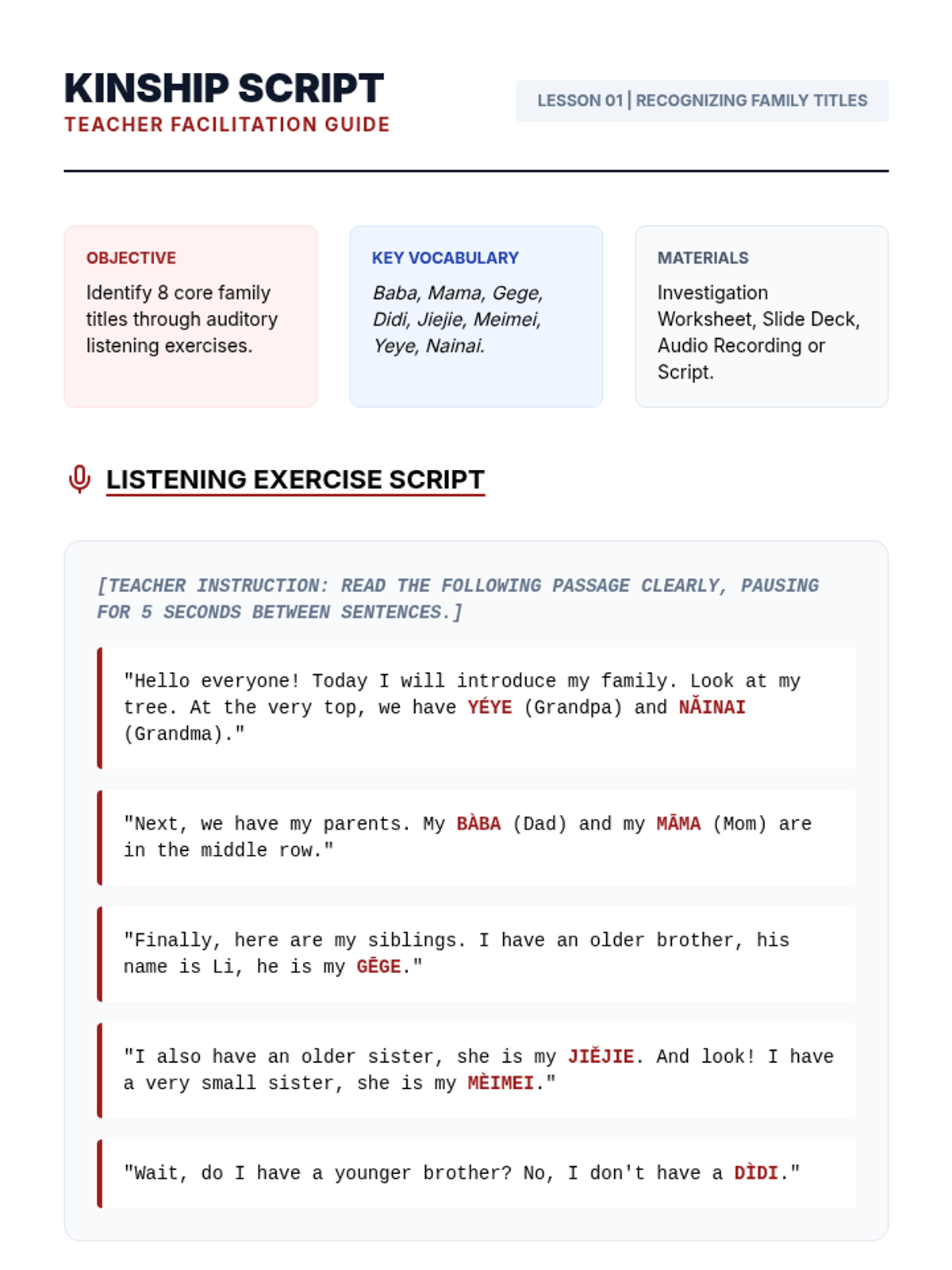
A 6th-grade Mandarin Chinese sequence focusing on listening comprehension for family members and physical descriptions. Students progress from basic kinship titles to complex comparative structures and narrative synthesis.
This sequence guides 6th-grade students through the auditory recognition of numbers and dates in Mandarin Chinese, progressing from single digits to complex price bargaining. Students develop active listening skills through game-based simulations and real-world scenarios.
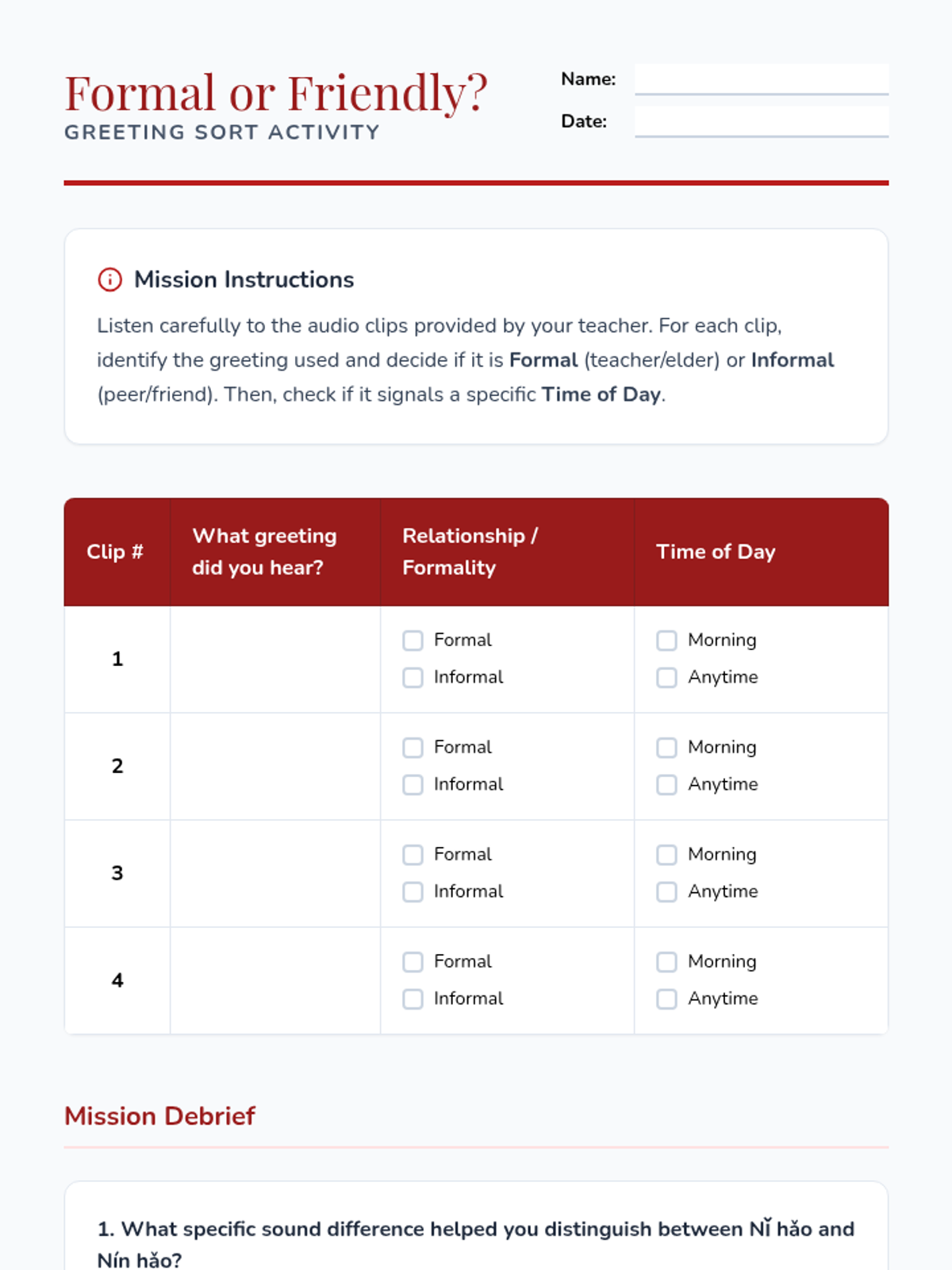
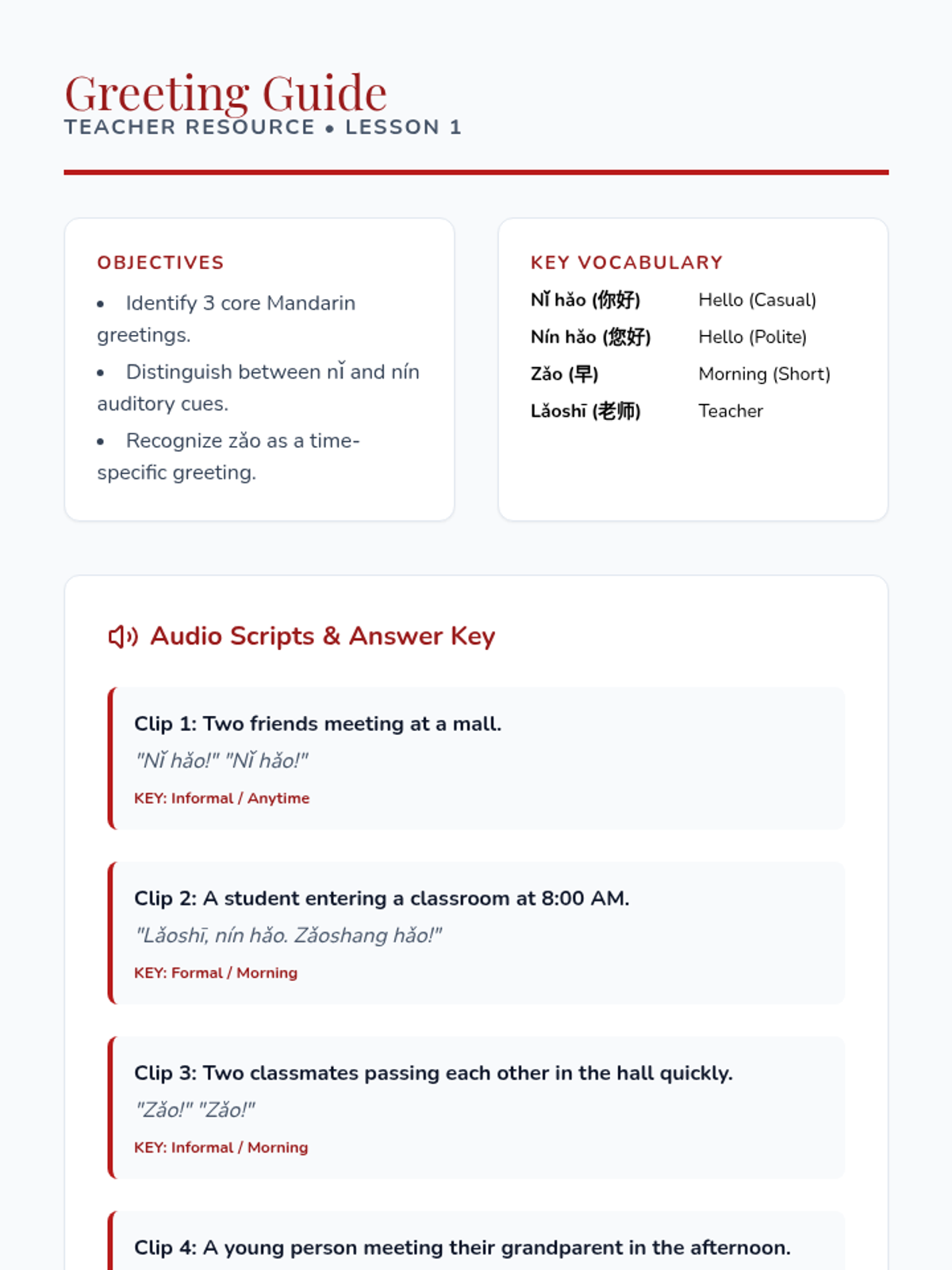
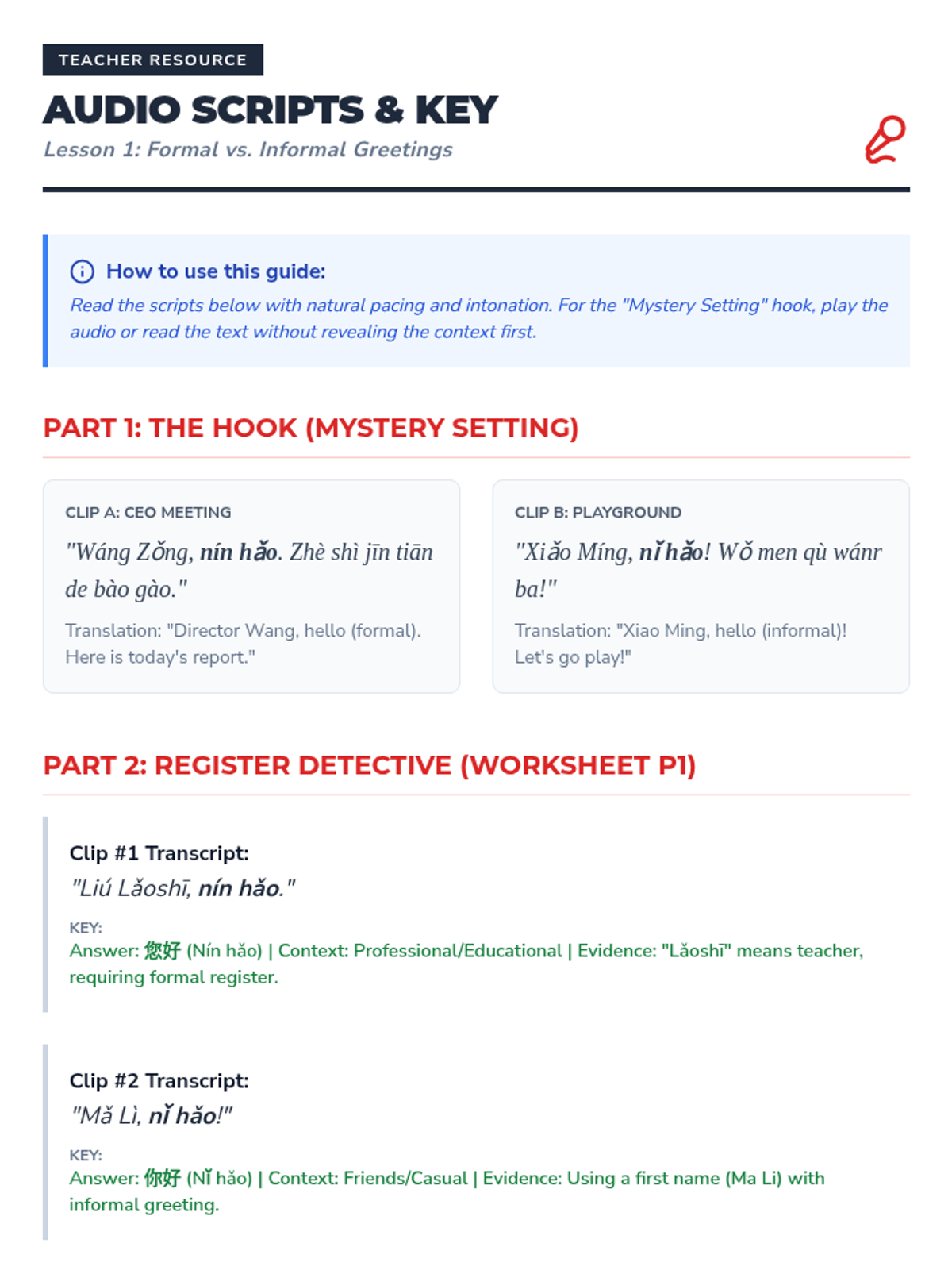
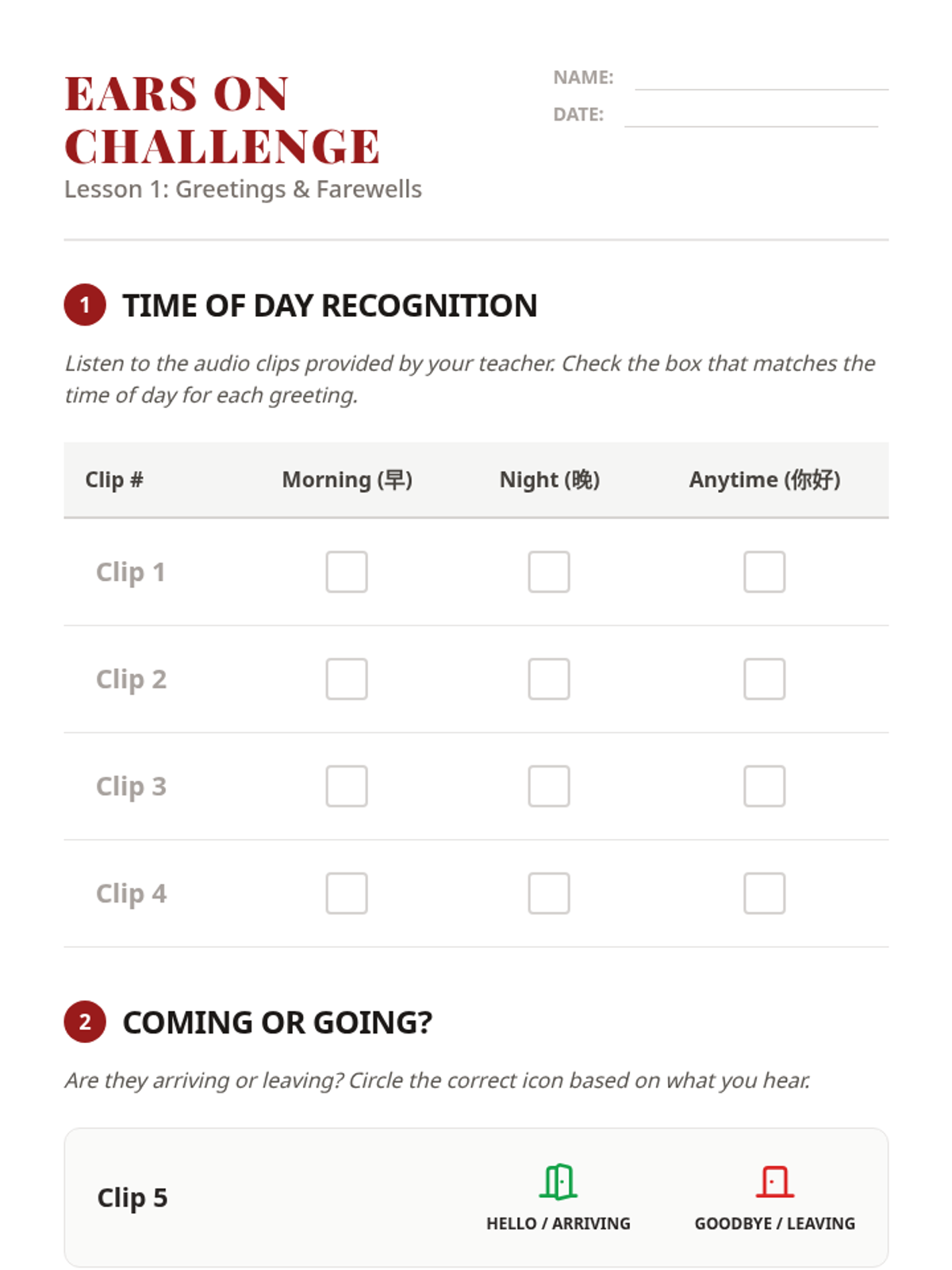
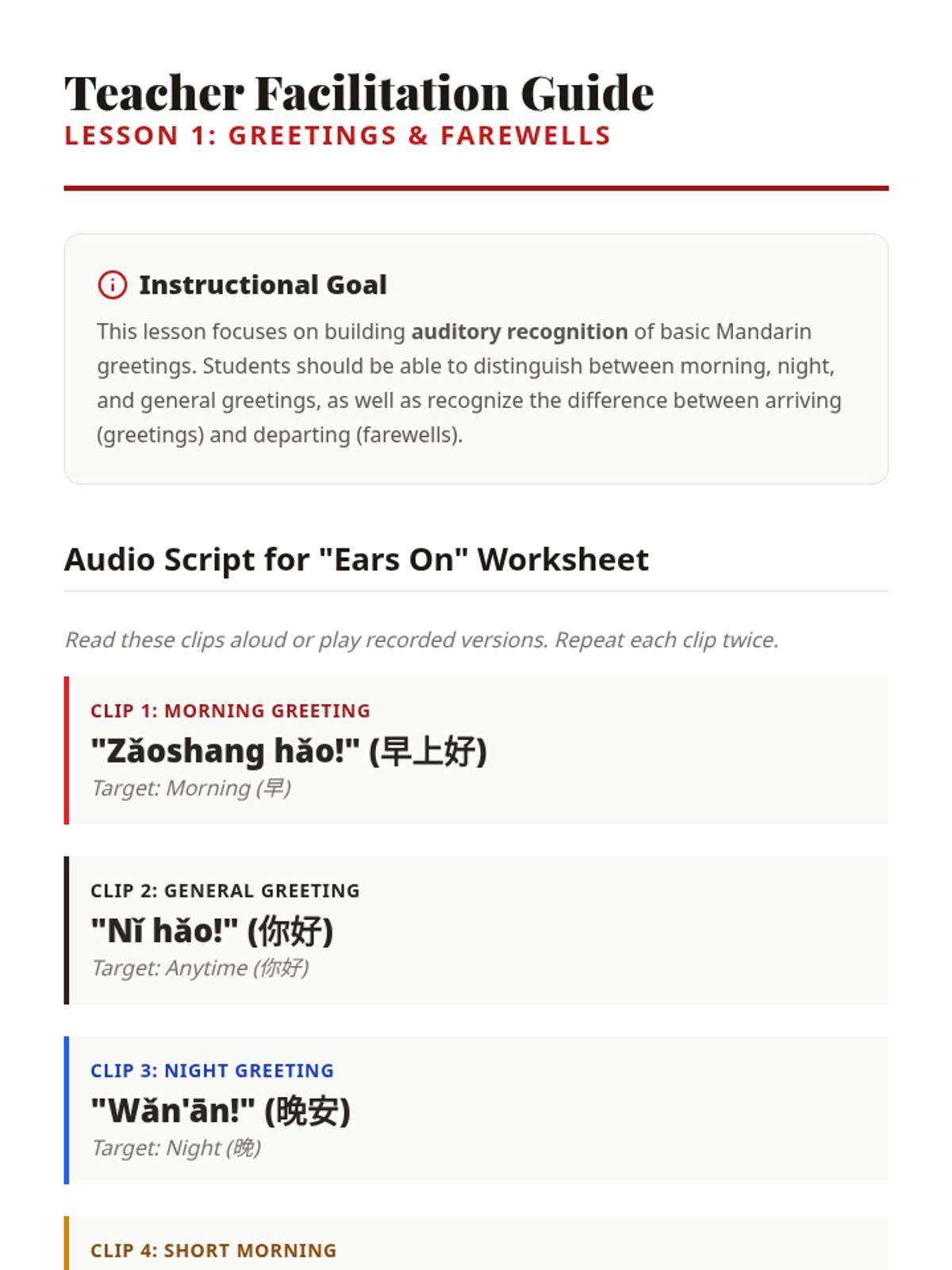
A 5-lesson sequence for 6th-grade students focusing on beginner Mandarin listening skills for greetings and introductions. Students progress from basic hellos to complex introduction dialogues, emphasizing formality, tone, and information extraction.
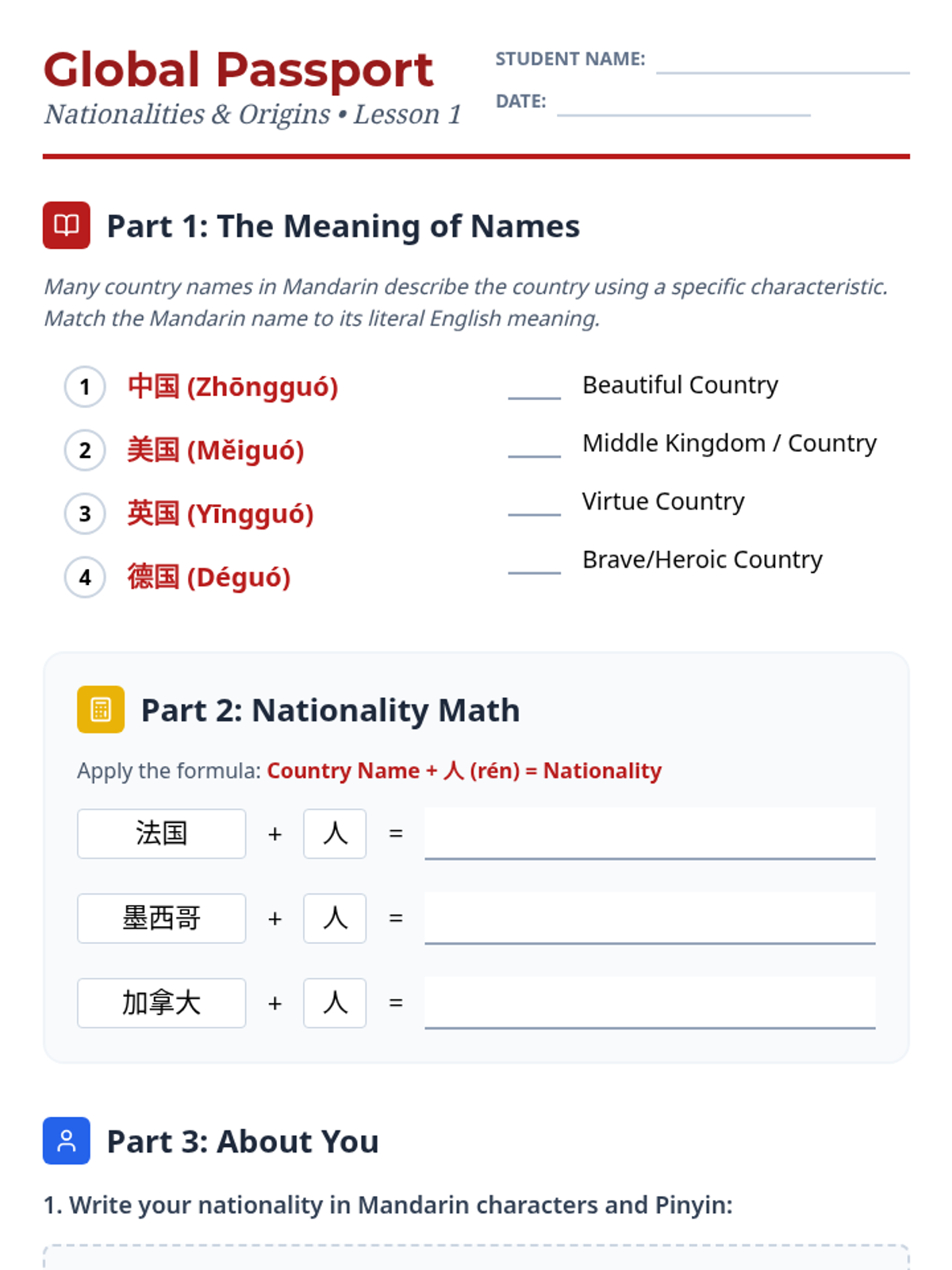
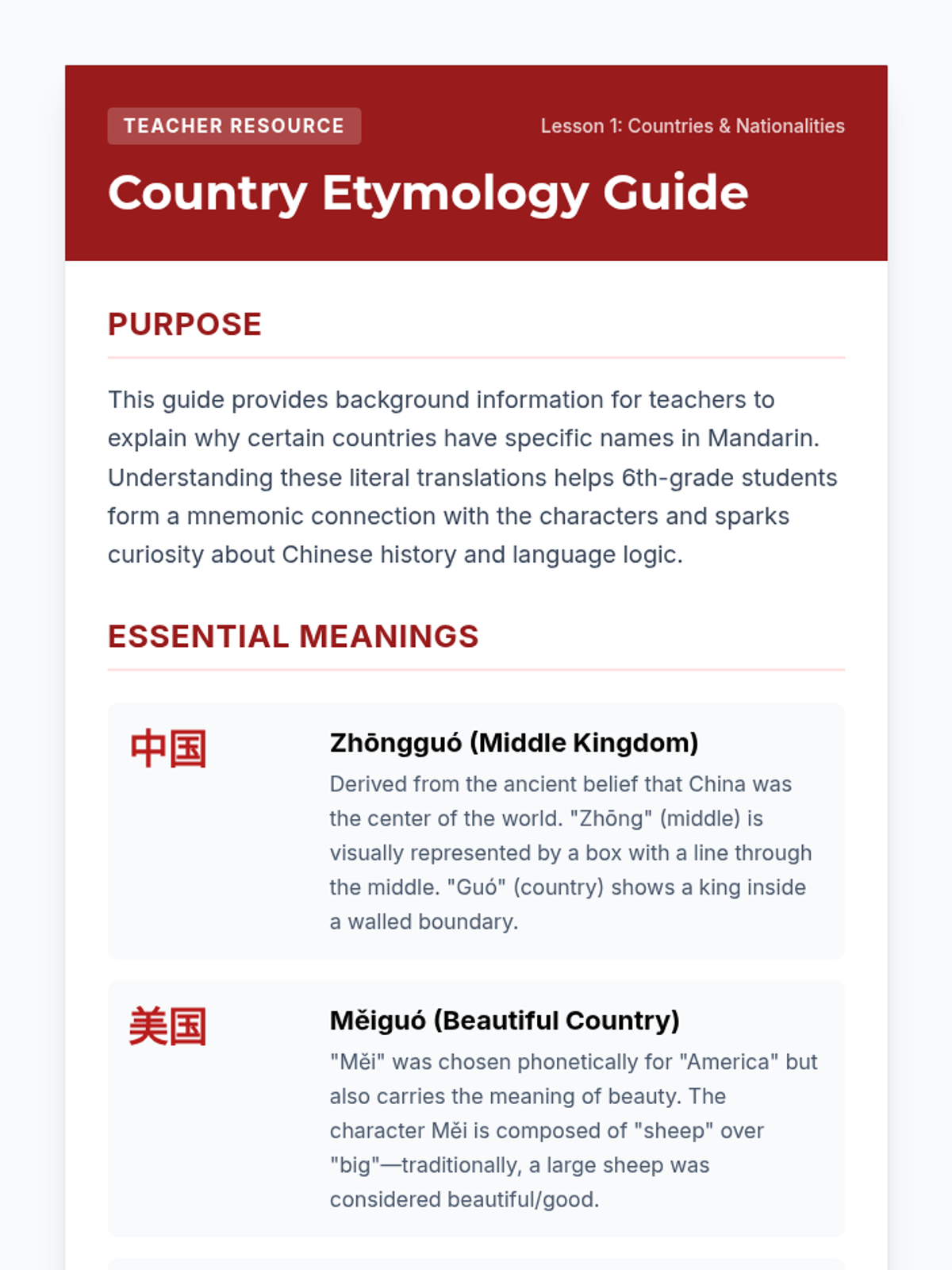
This beginner Mandarin Chinese sequence focuses on auditory comprehension of social greetings, names, nationalities, and emotions. Through role-play simulations and interactive listening tasks, students learn to interpret social context and extract key information from spoken introductions.
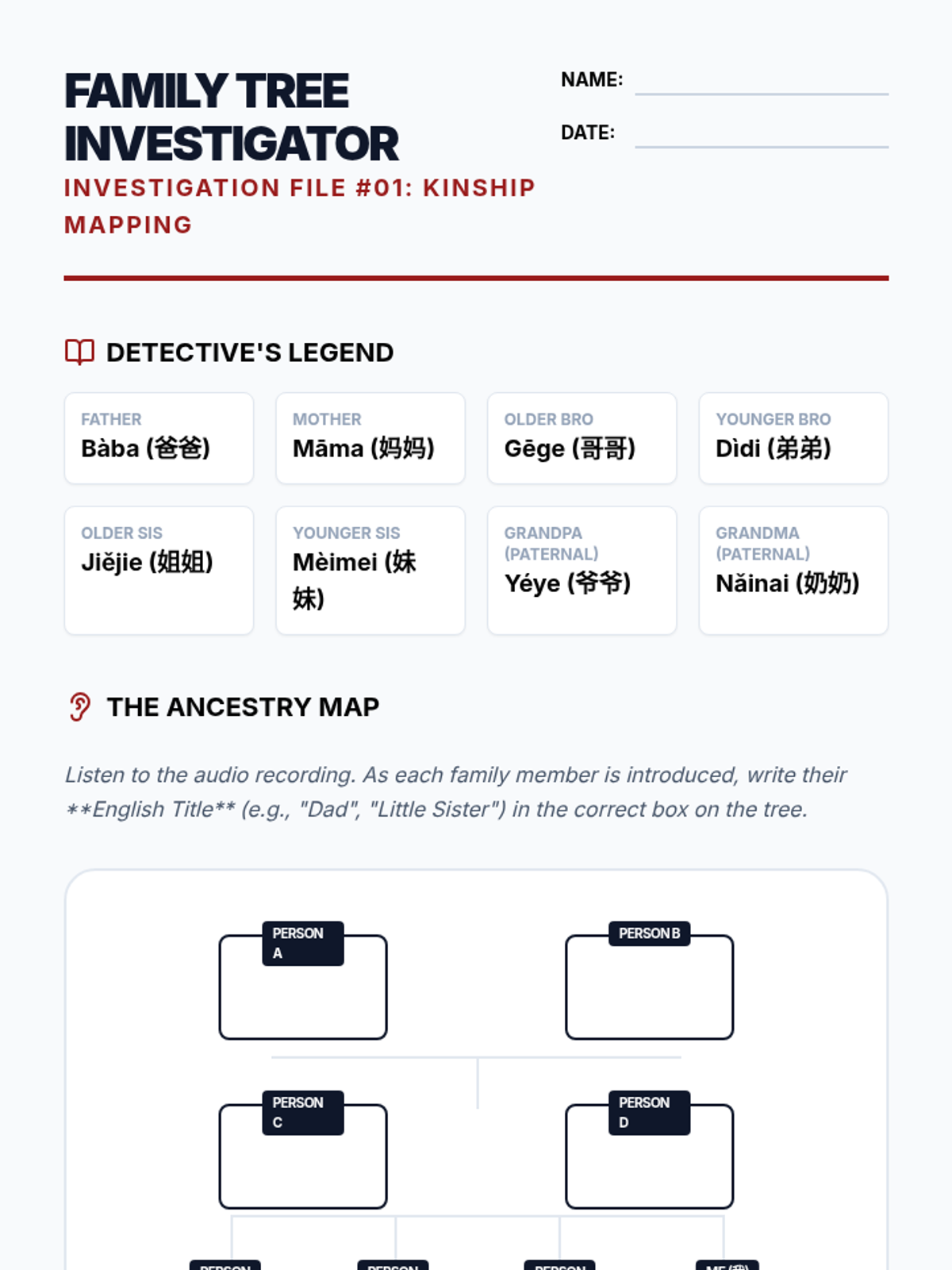
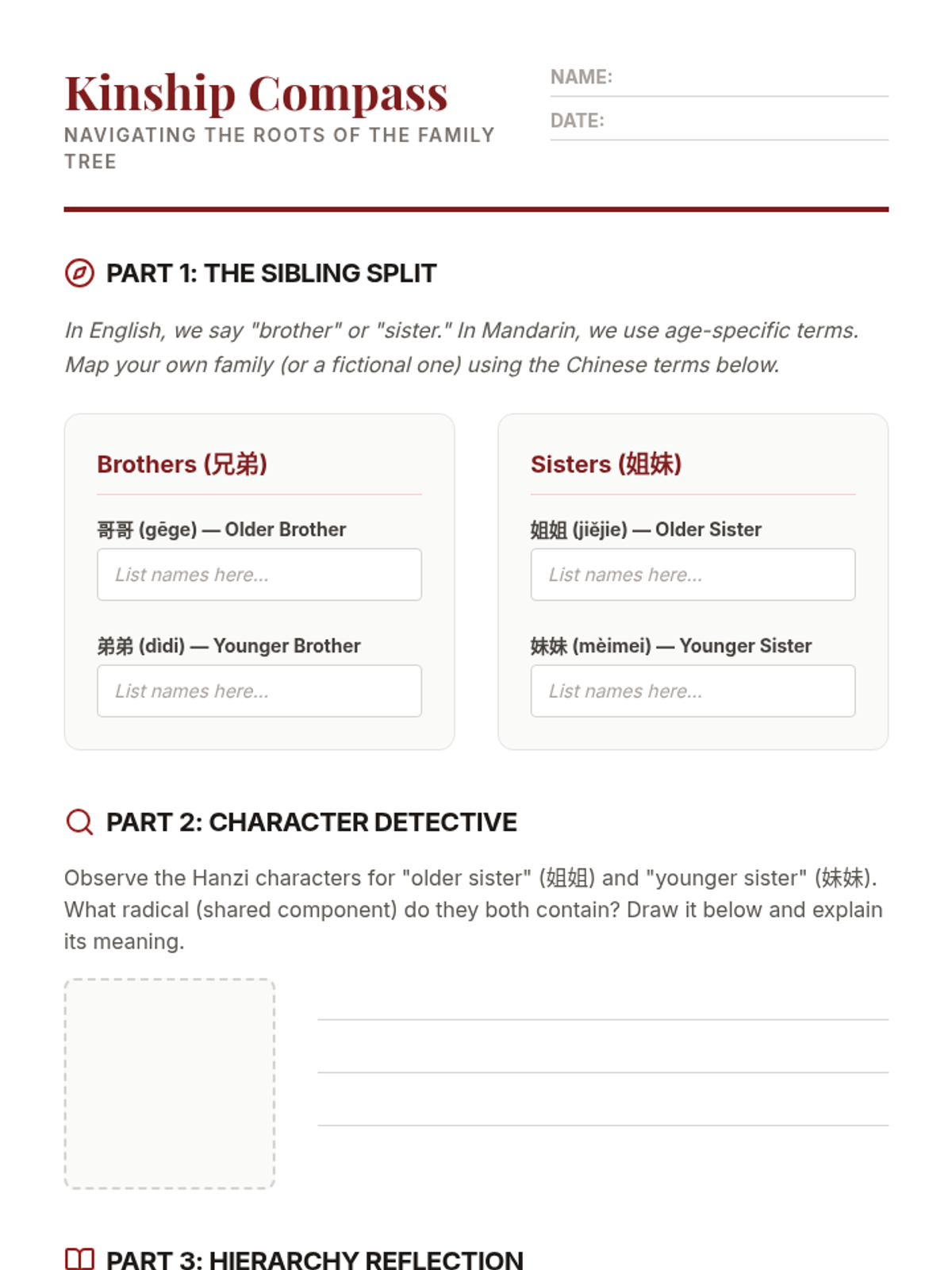
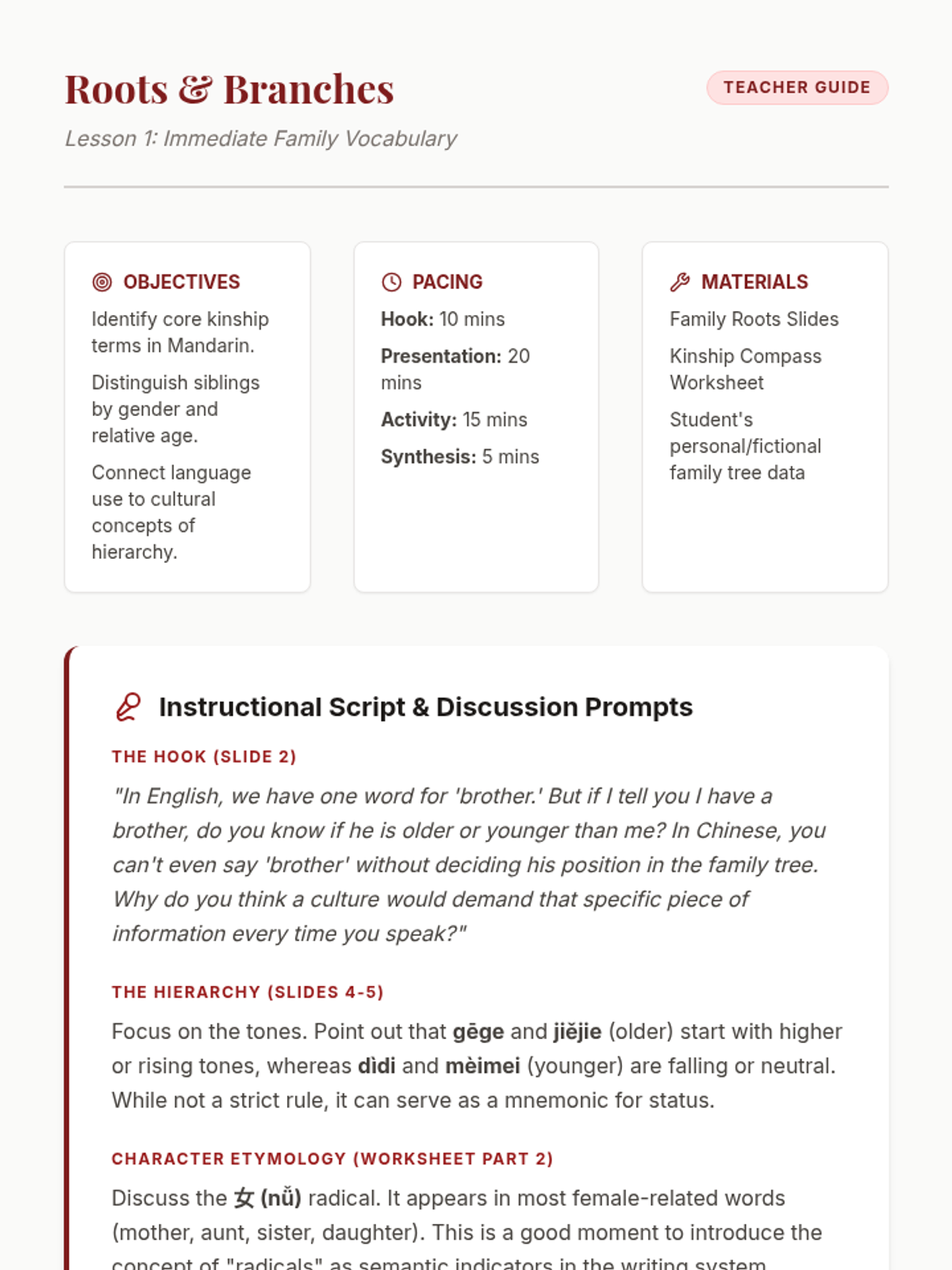
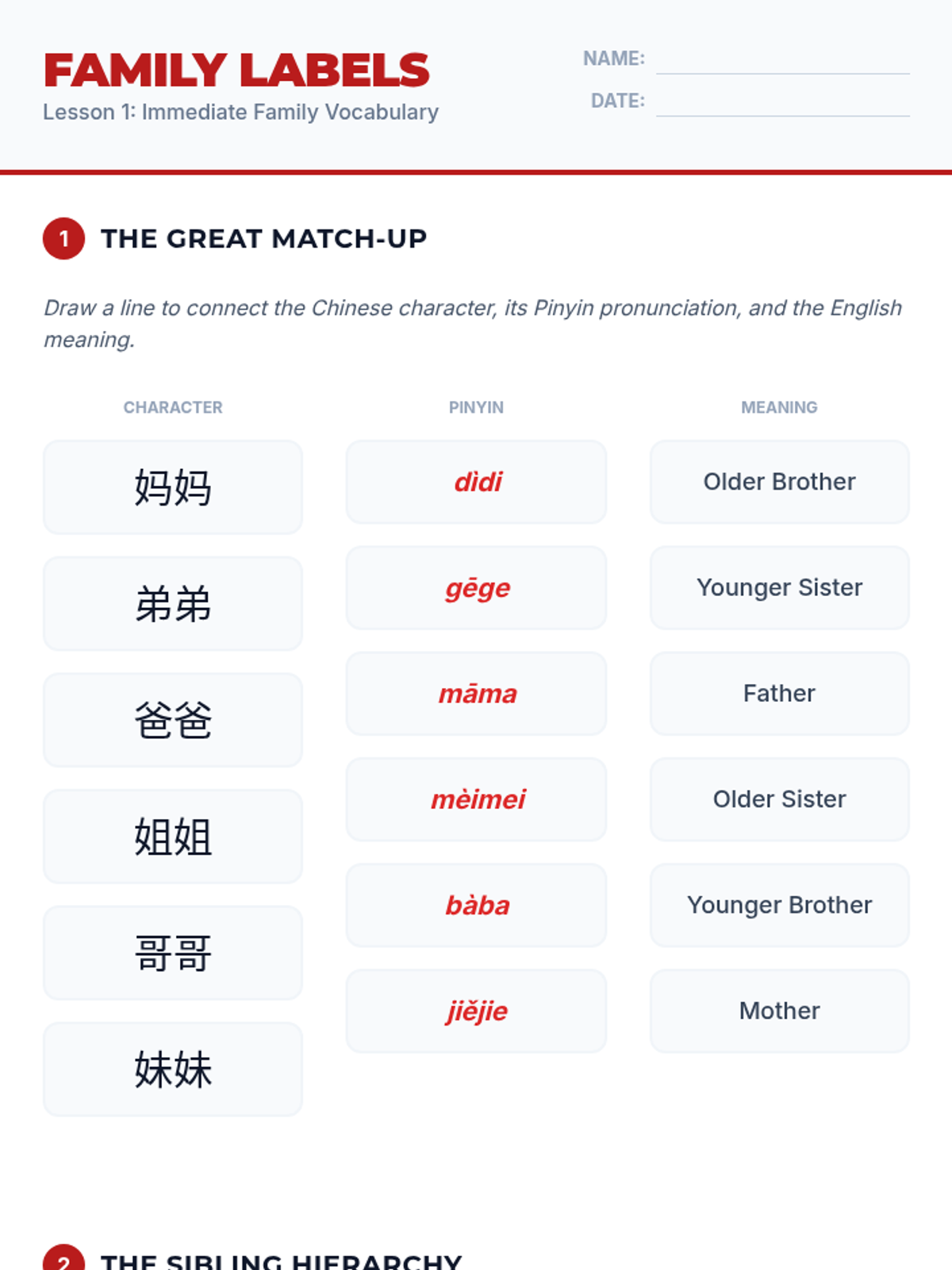
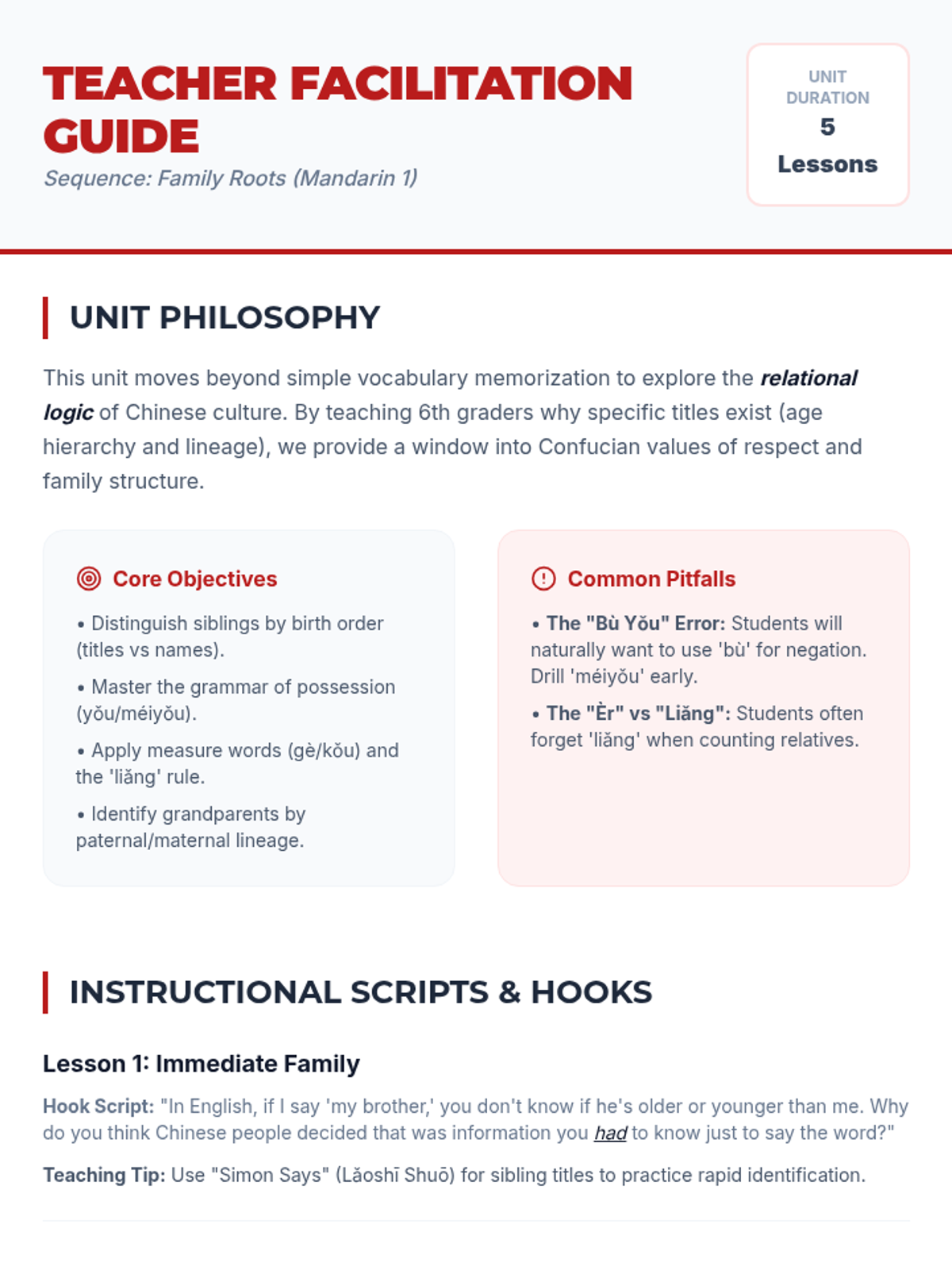
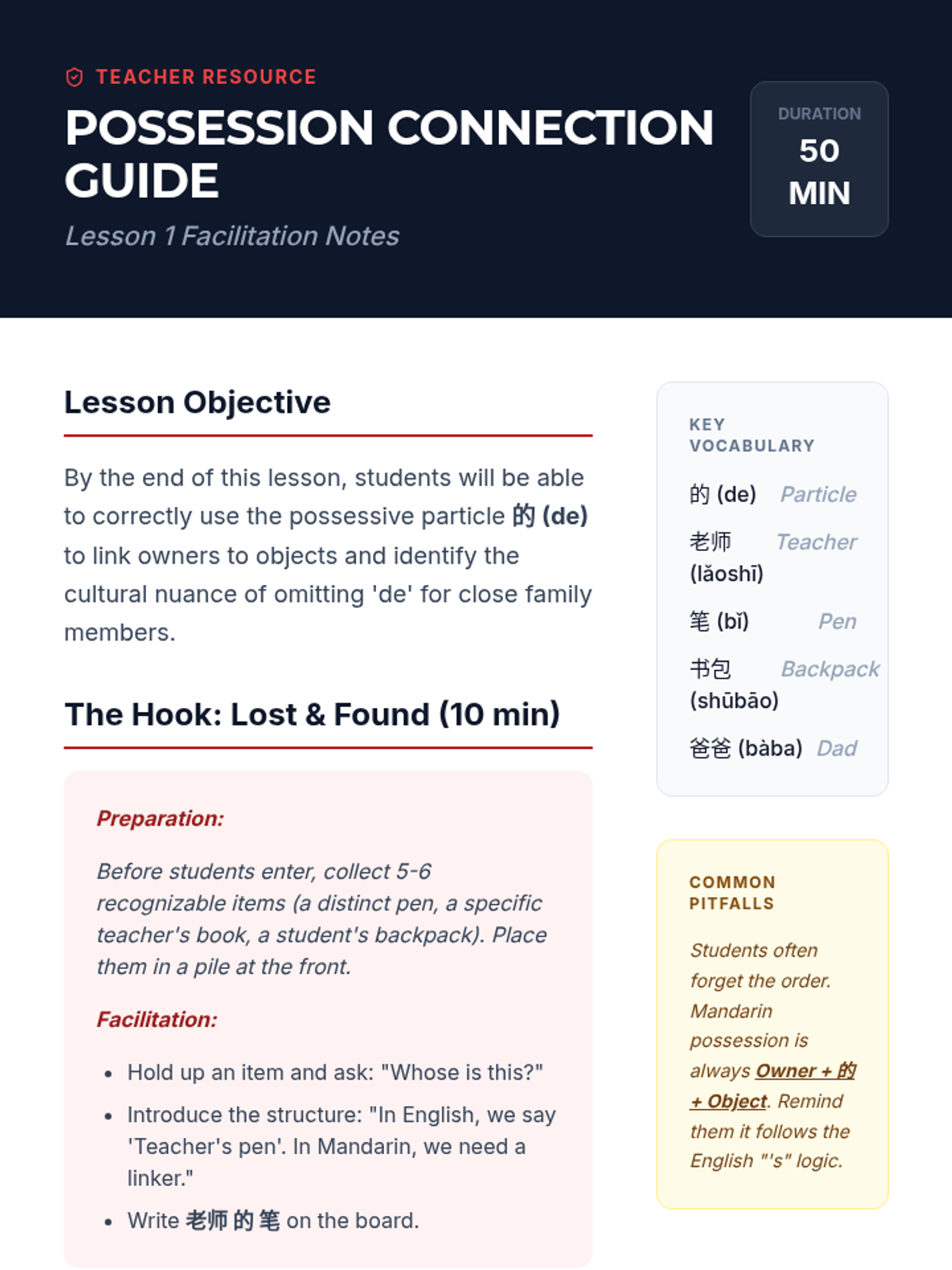
This sequence introduces Mandarin Chinese kinship terms and the grammar of possession ('de') and existence ('yǒu'). Students will explore how language reflects cultural values of hierarchy and family structure, culminating in a presentation of their own family tree.
A 5-lesson unit for 6th-grade Mandarin learners focusing on building a comprehensive self-introduction. Students progress from stating their nationality and languages to expressing personal likes and dislikes, culminating in a fluent oral presentation of their identity.
This beginner-level Mandarin Chinese sequence introduces 6th Grade students to family vocabulary, relational hierarchies, and essential grammar structures like measure words and possession. Students will move from identifying immediate family members to presenting their own complex family trees using culturally specific titles.
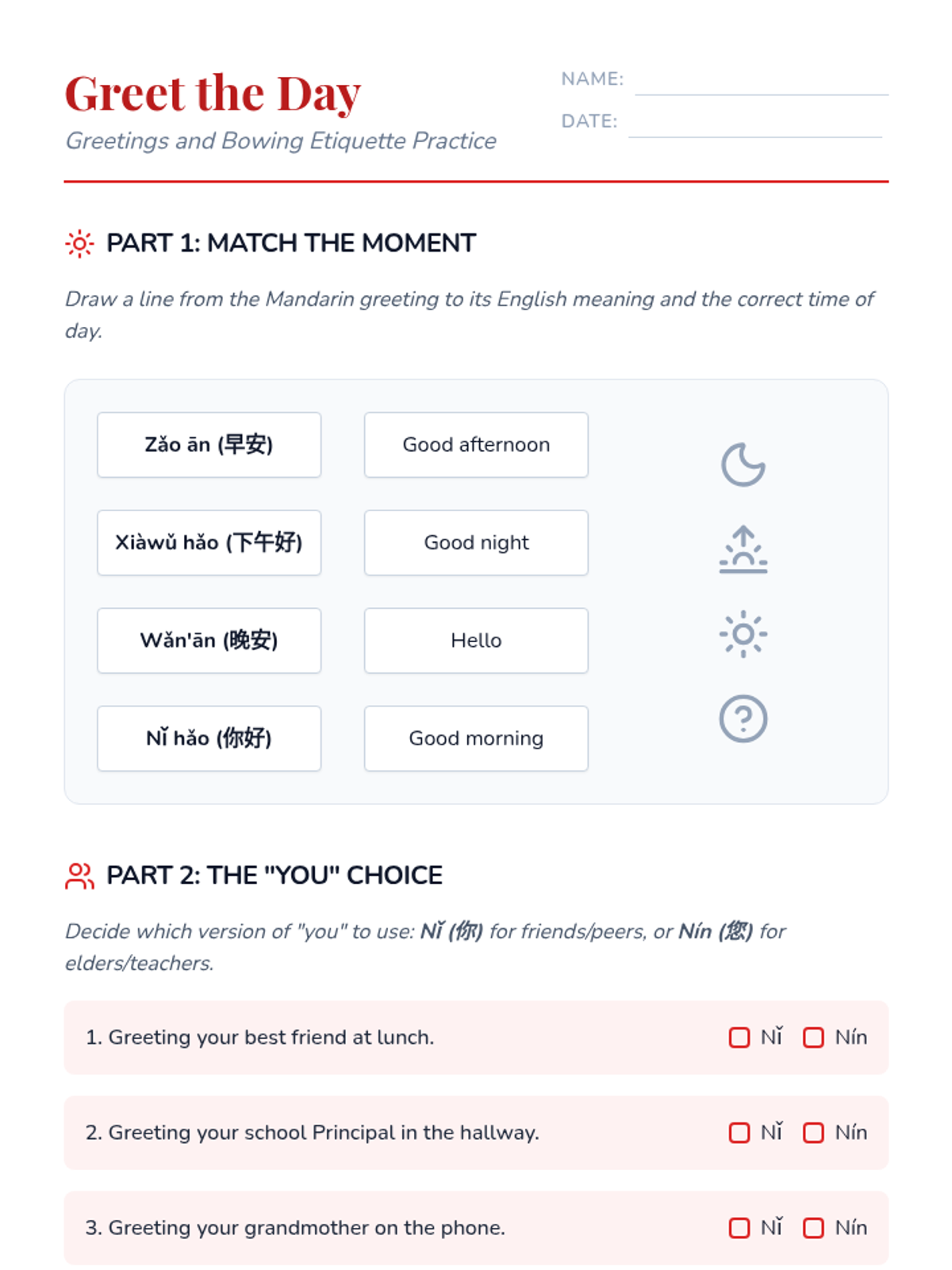
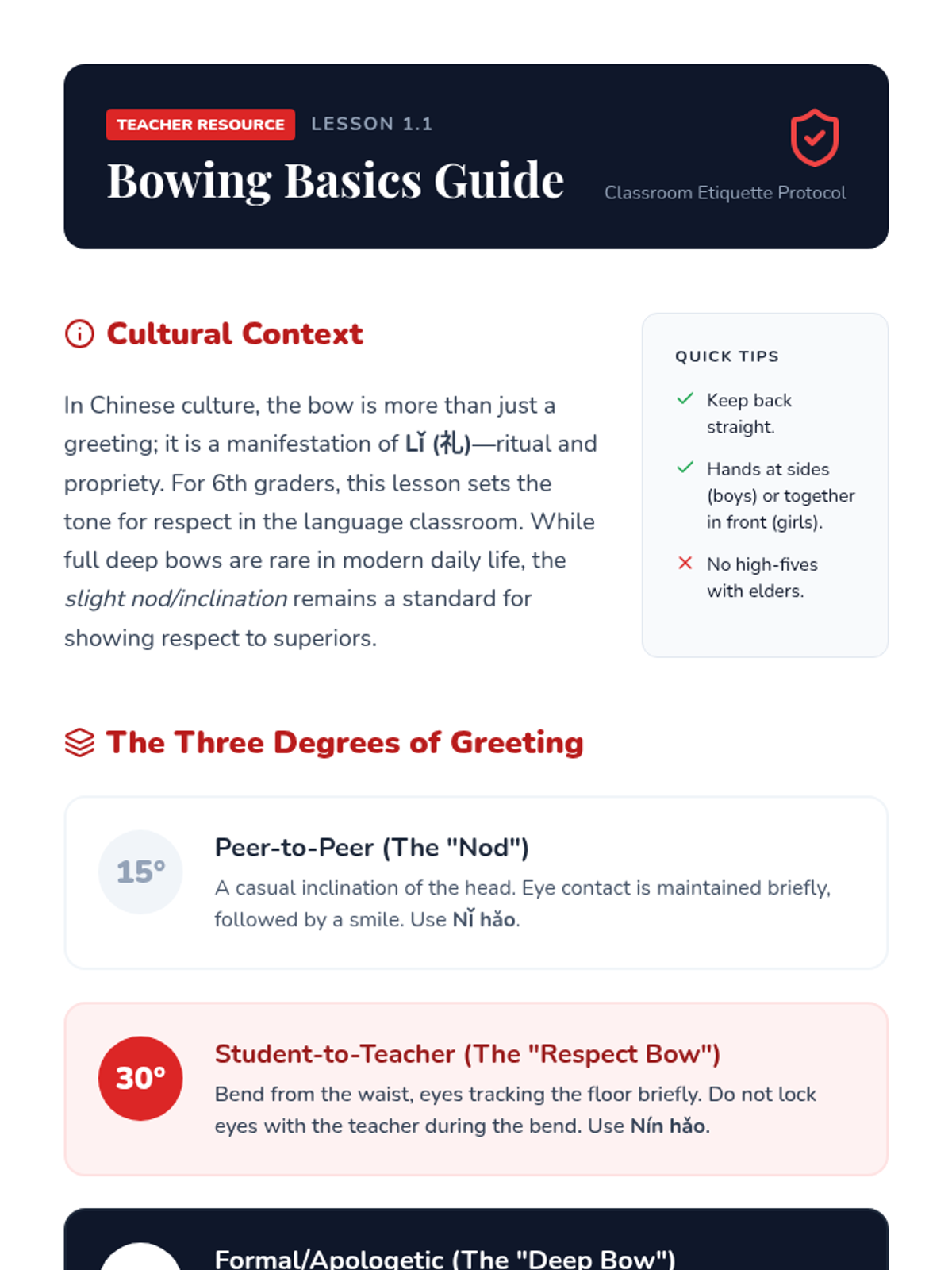
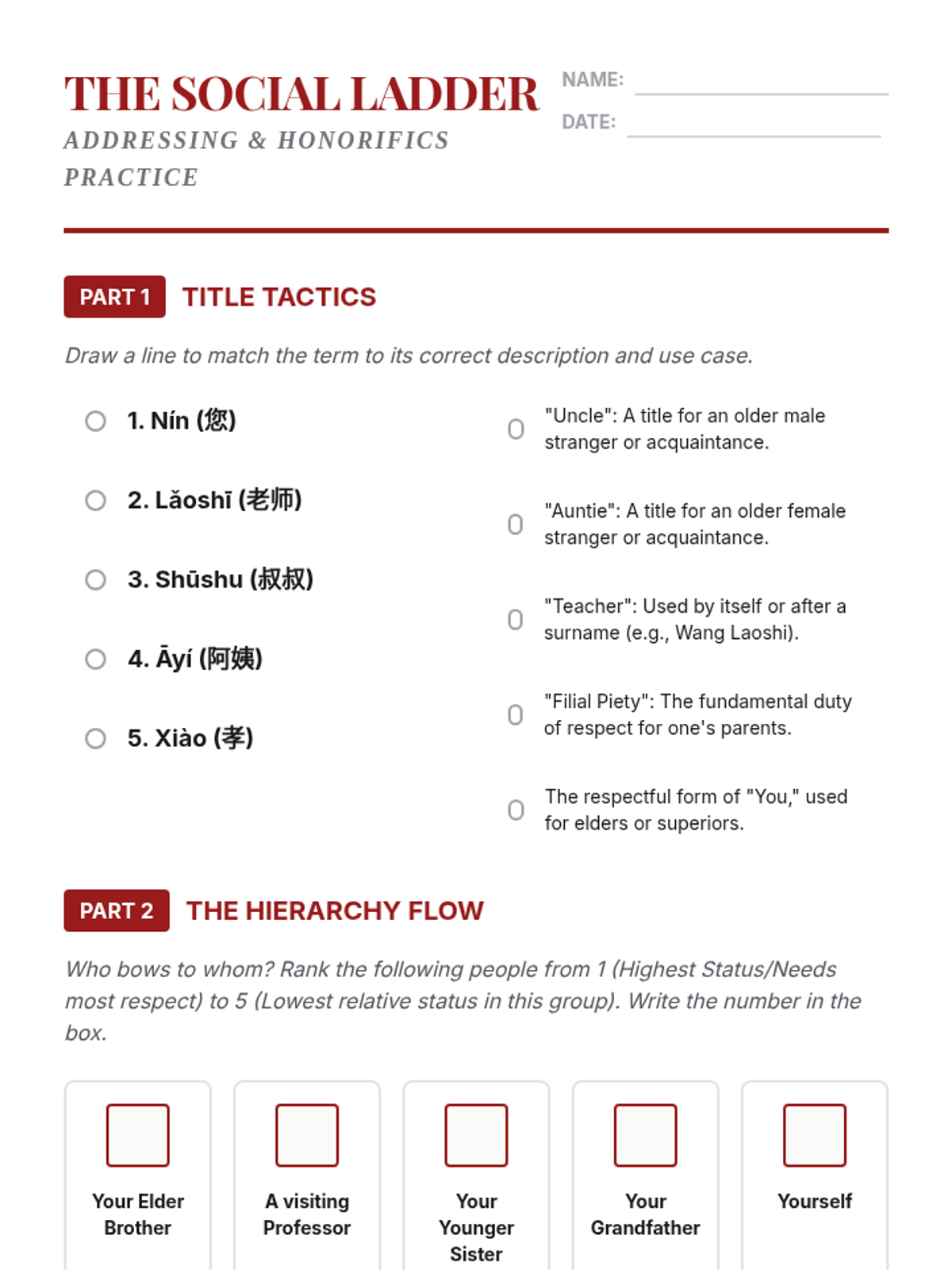
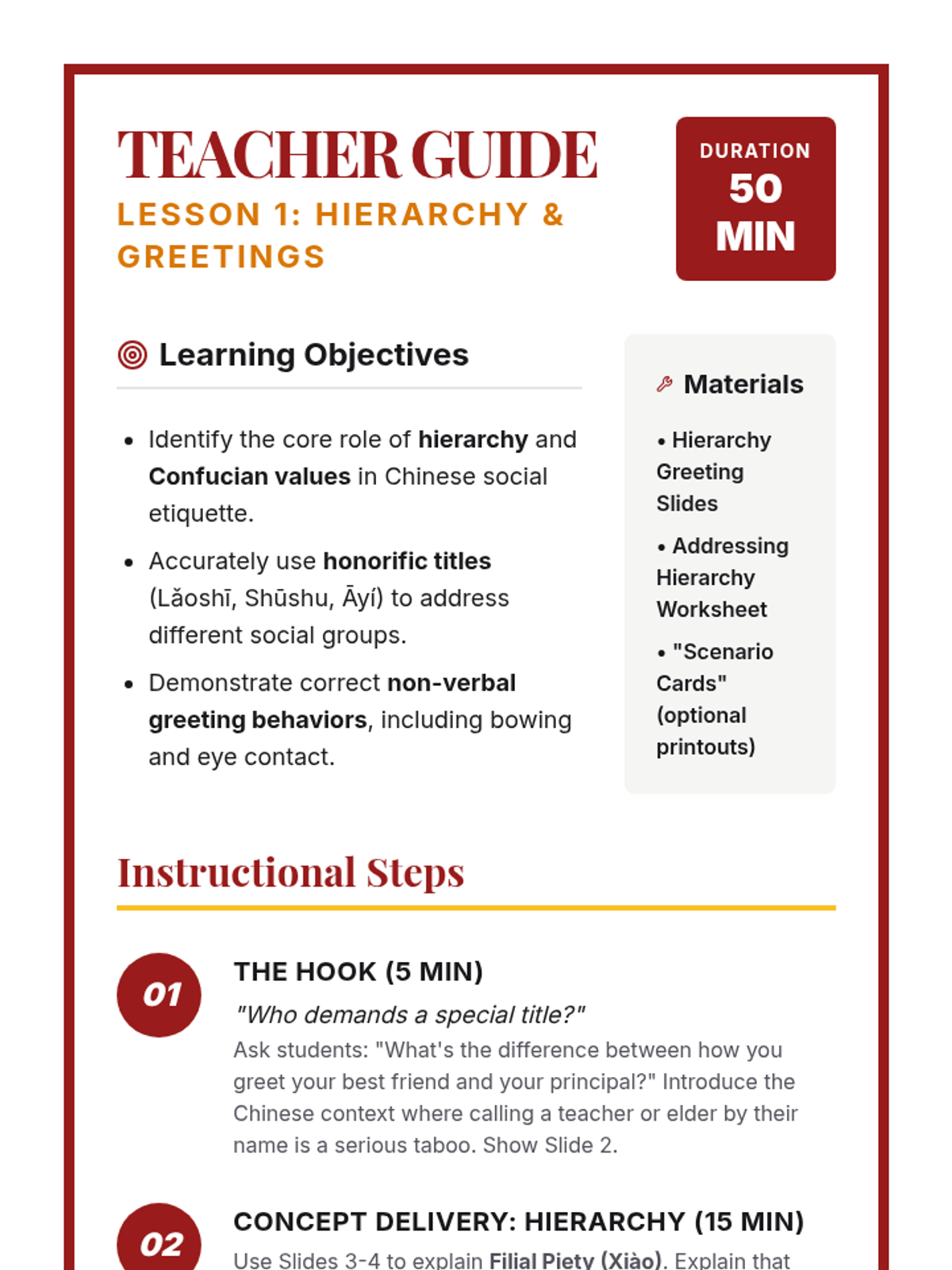
Students engage in simulations to master social etiquette, greetings, and basic conversational exchanges in Mandarin Chinese. The sequence moves from simple 'Hello' and 'Goodbye' to managing social hierarchy through formal and informal address, exploring cultural concepts of respect and face while building a functional vocabulary.
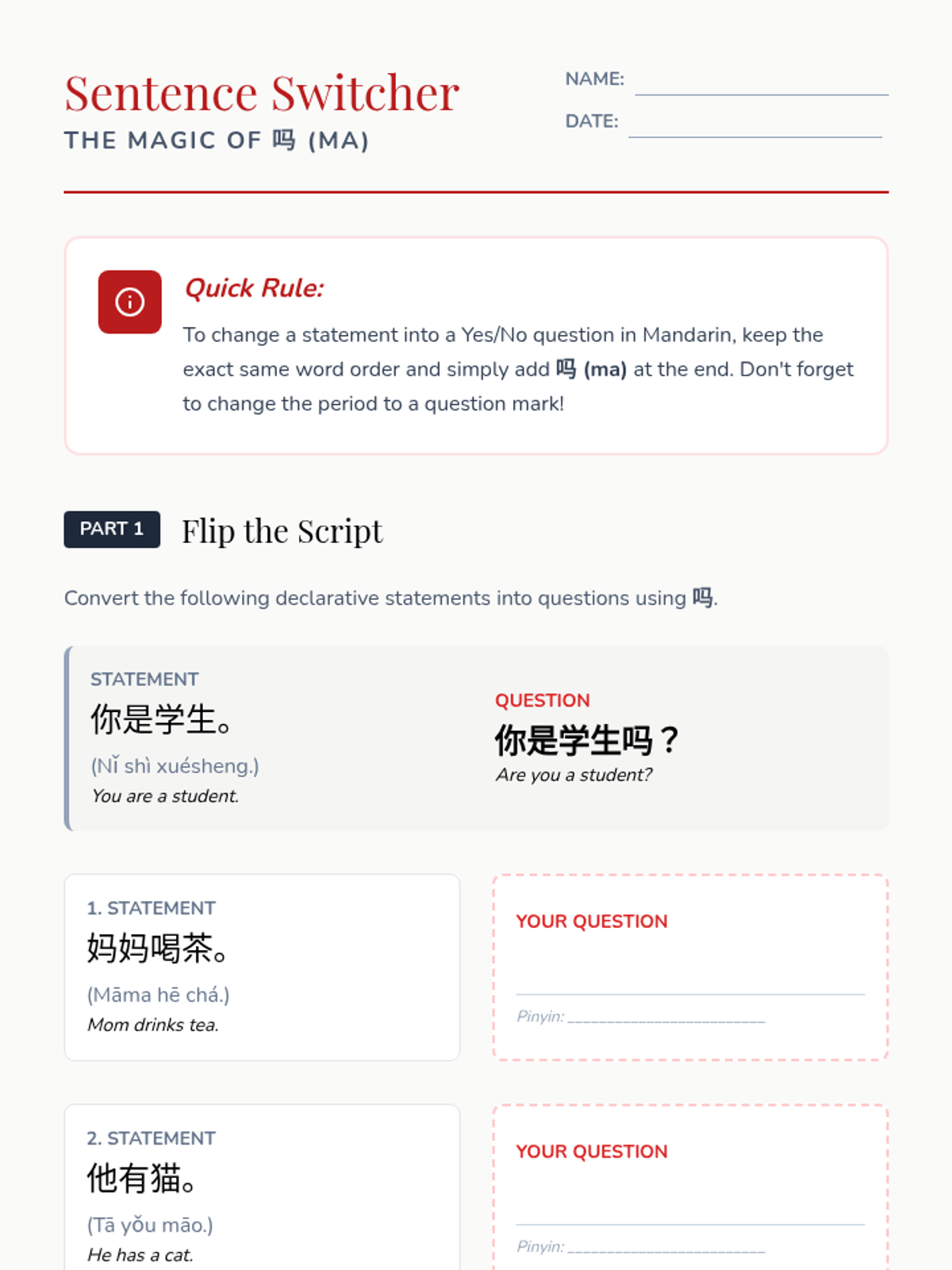
This sequence explores the mechanics of interrogation in Mandarin Chinese, focusing on how questions are formed without changing word order. Students move from simple 'ma' questions to complex V-not-V structures and wh-word substitution, culminating in a professional interview simulation.
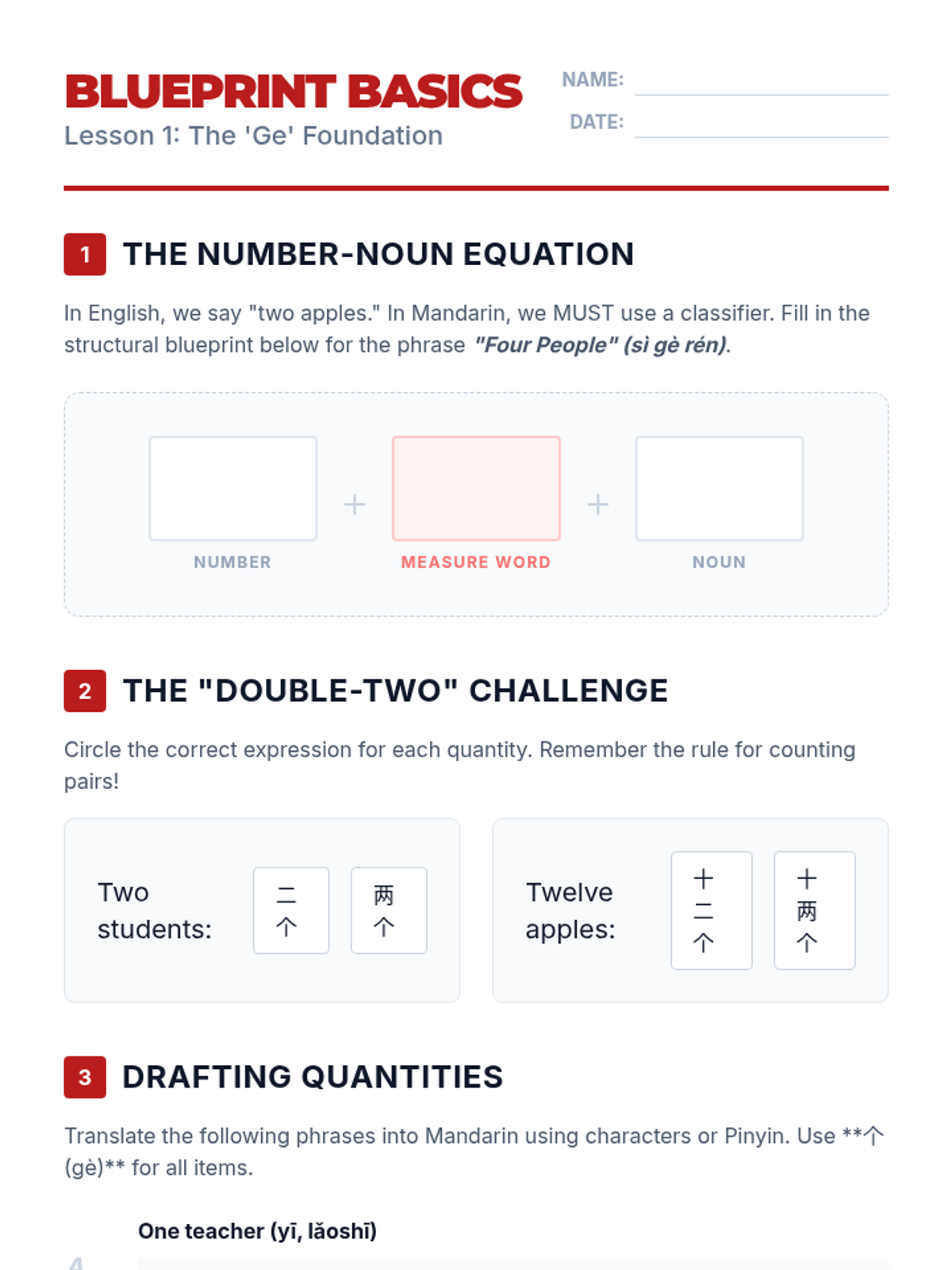
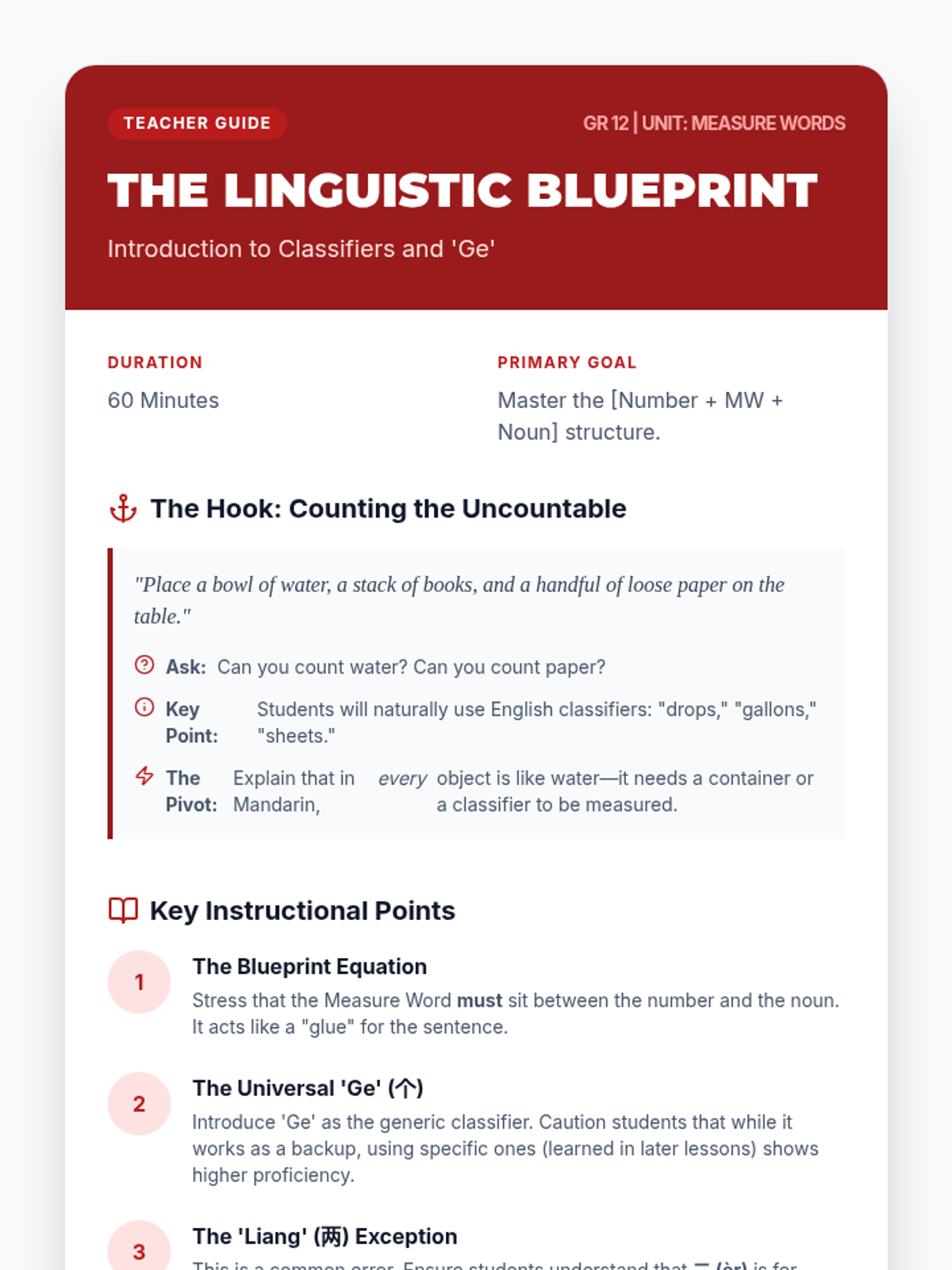
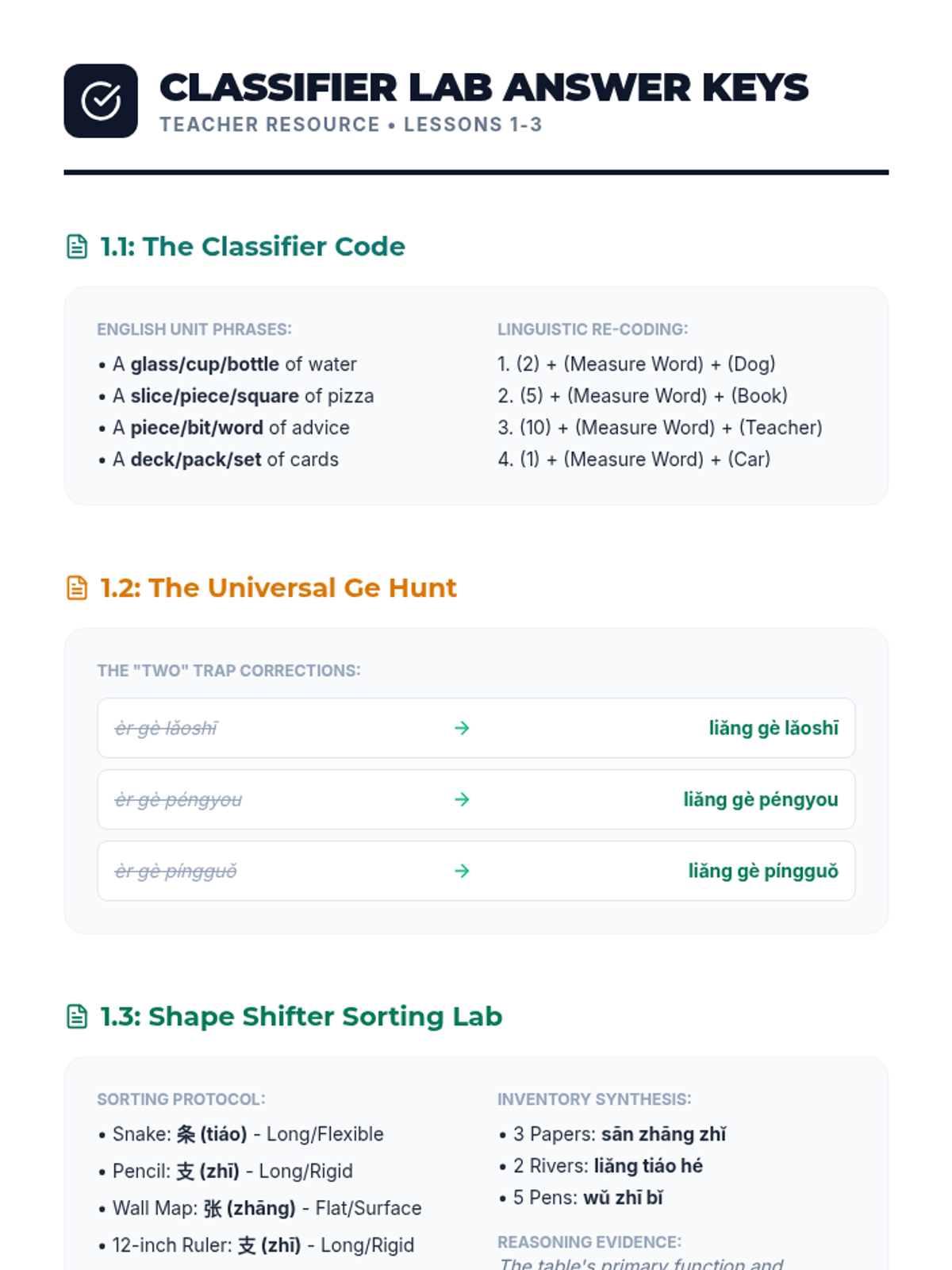
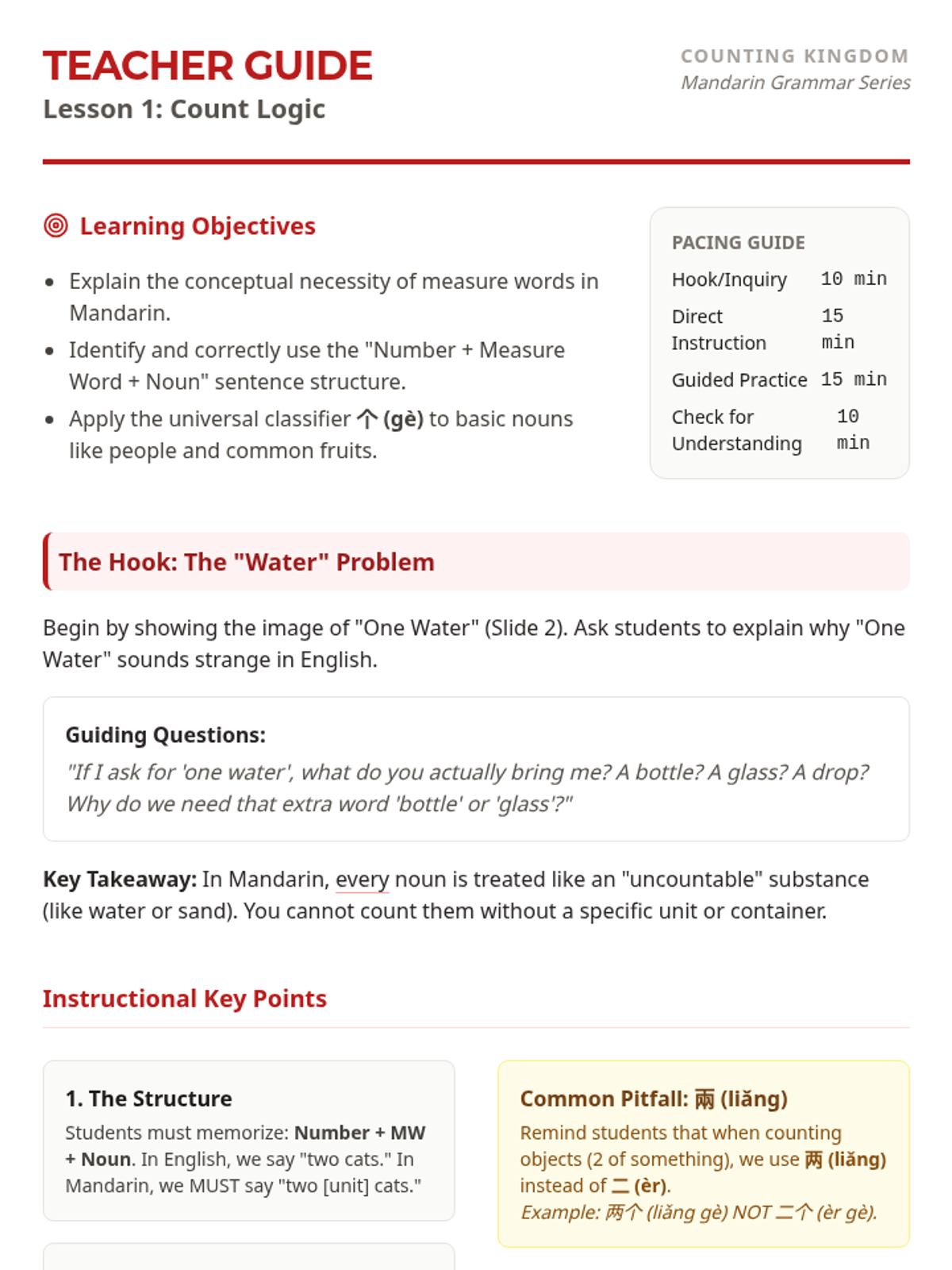
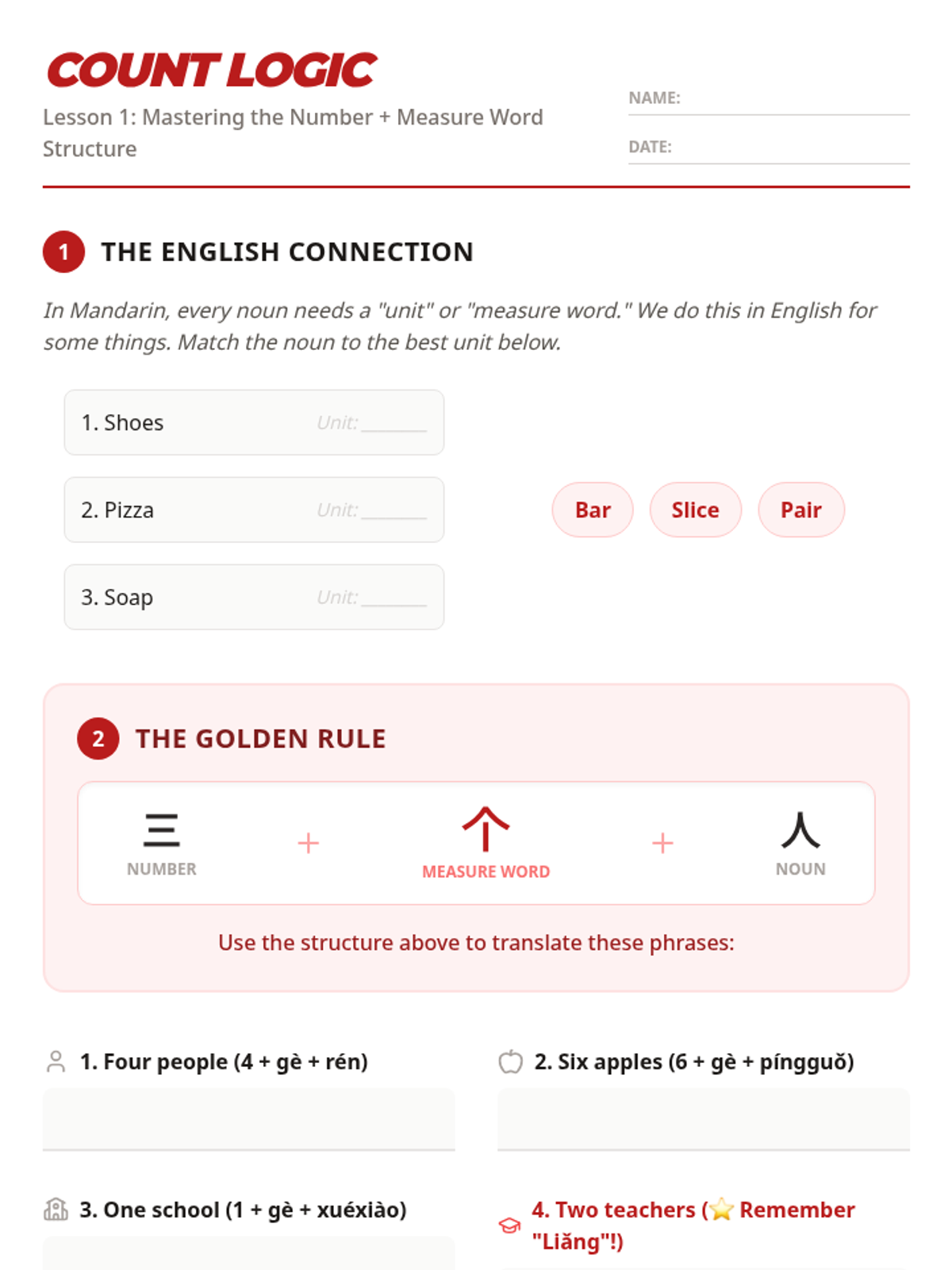
A comprehensive dive into Mandarin Chinese measure words, exploring how the language categorizes the physical world through shape, function, and respect. Students progress from basic structure to complex situational usage in a marketplace environment.
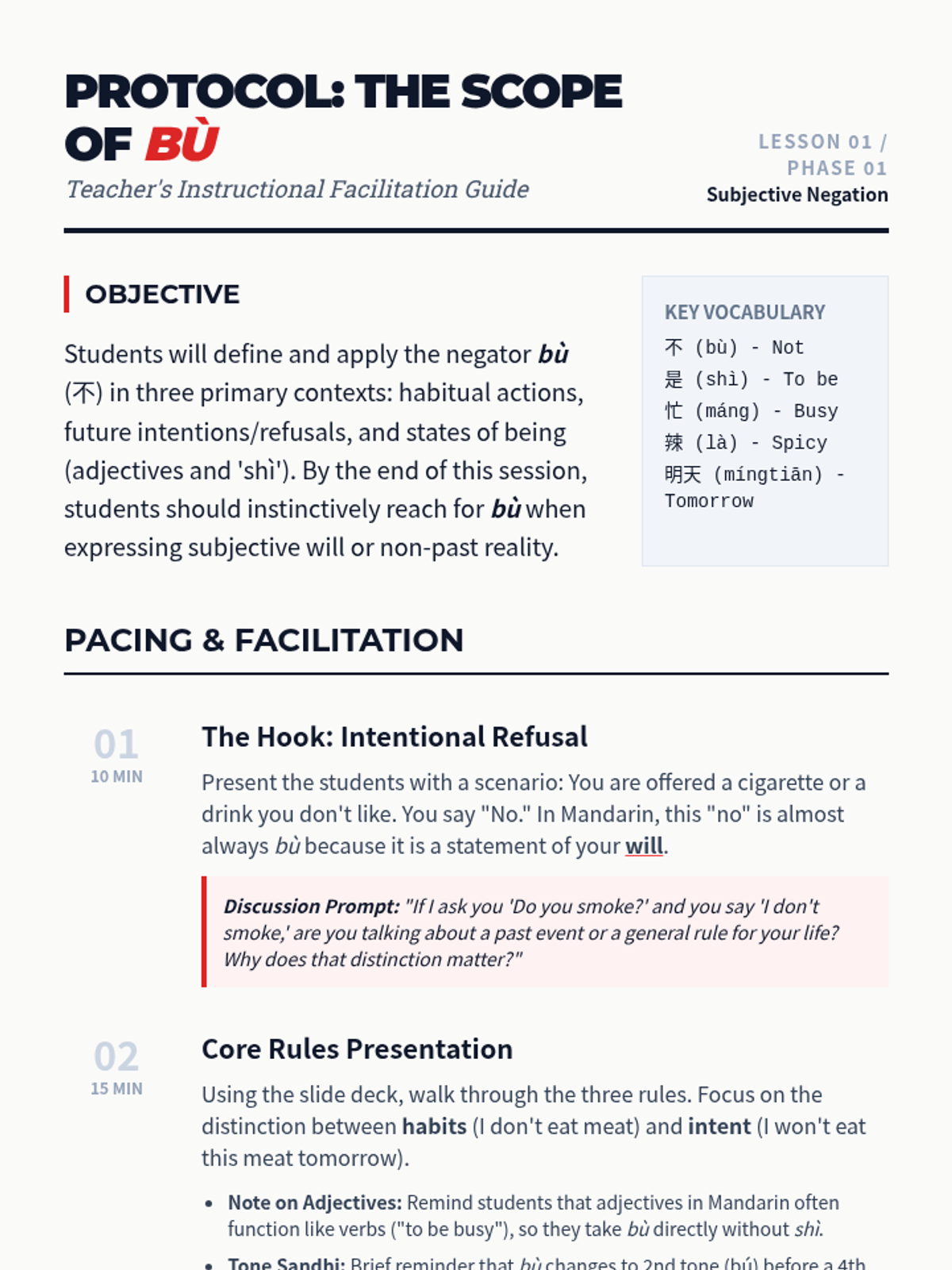
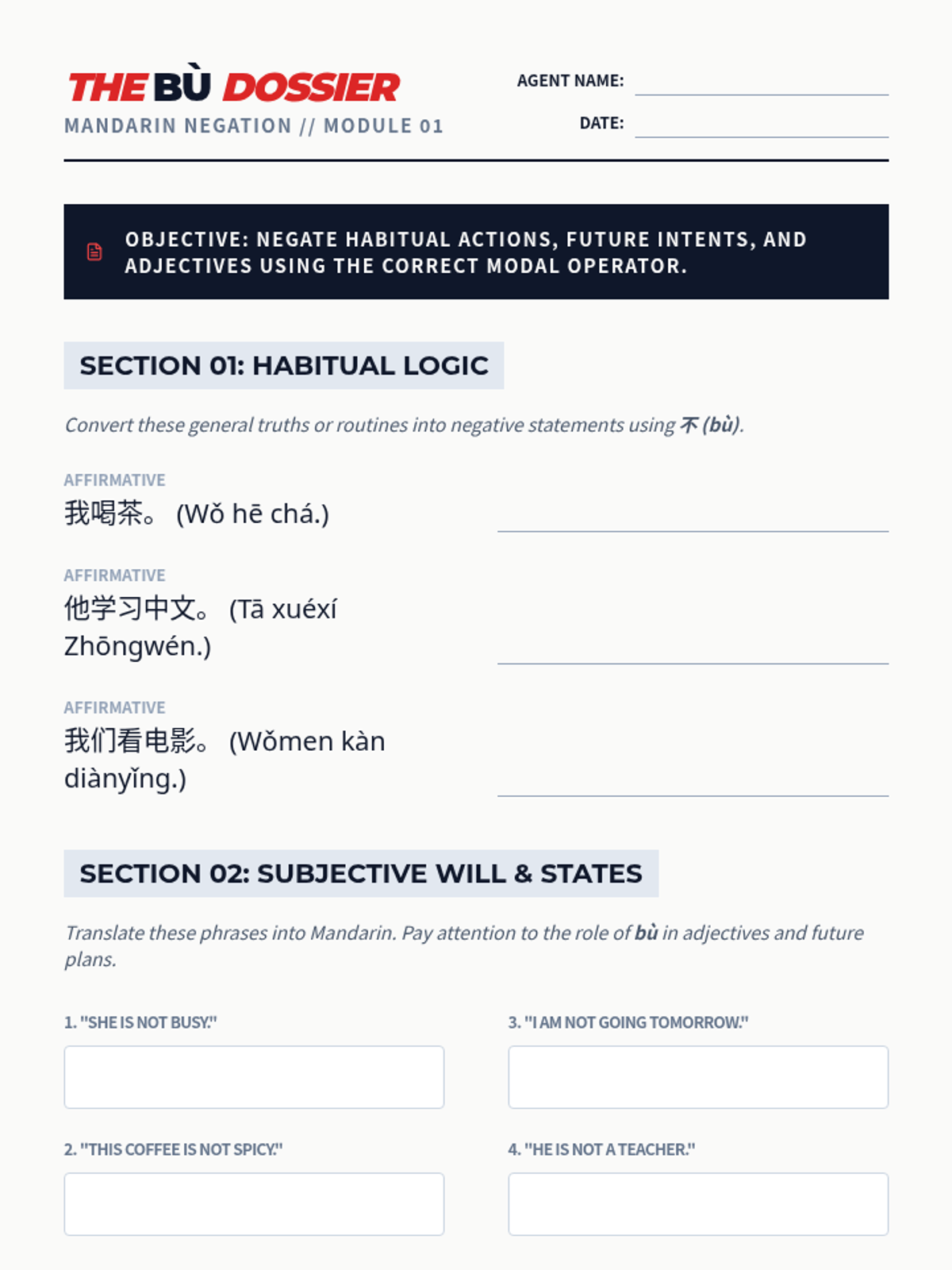
A comprehensive series exploring the rules of negation in Mandarin Chinese, focusing on the distinction between 'bù' (subjective/habitual/future) and 'méi' (objective/past/possession). Students learn to navigate temporal and modal contexts to select the correct negator.
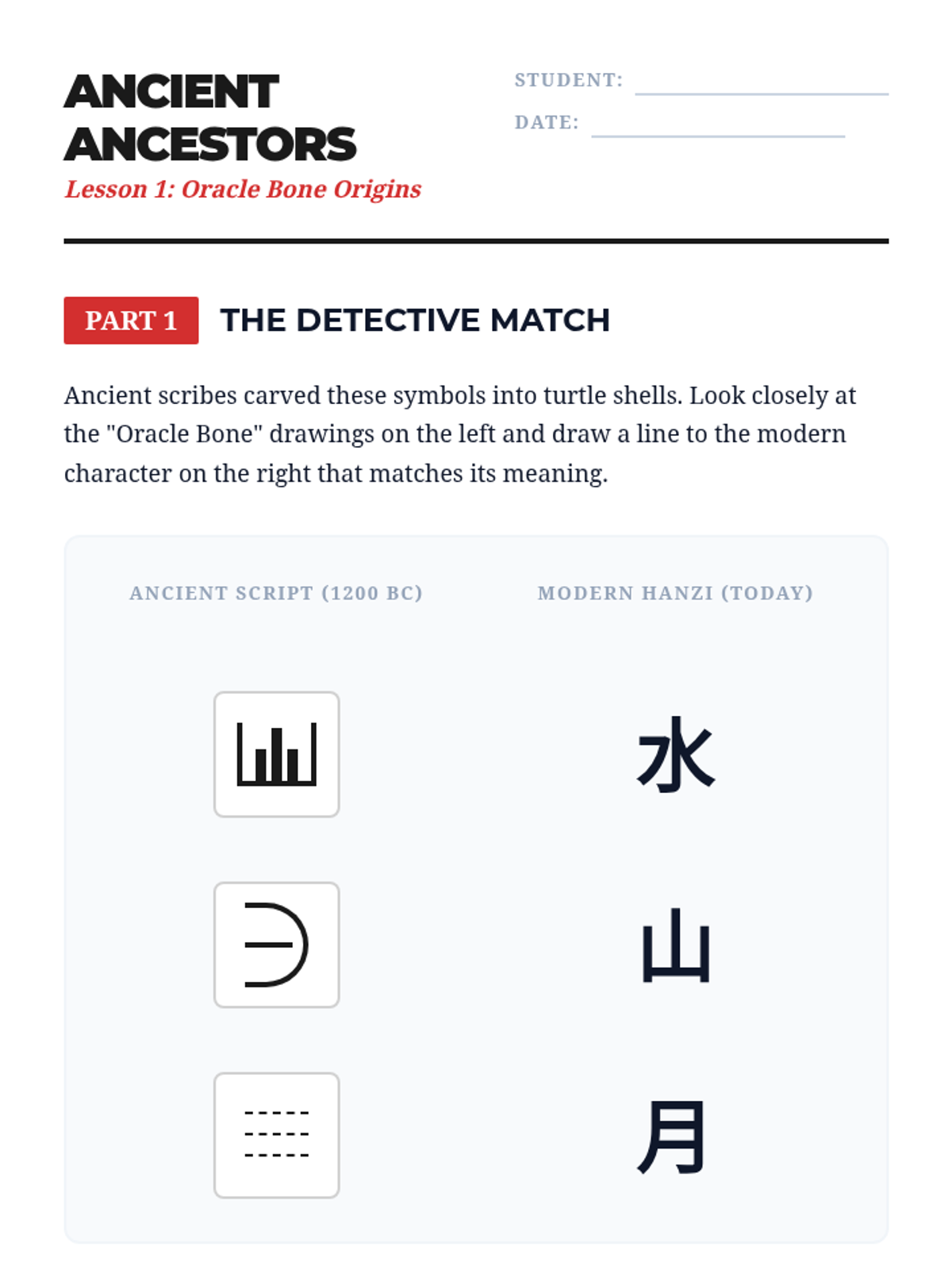
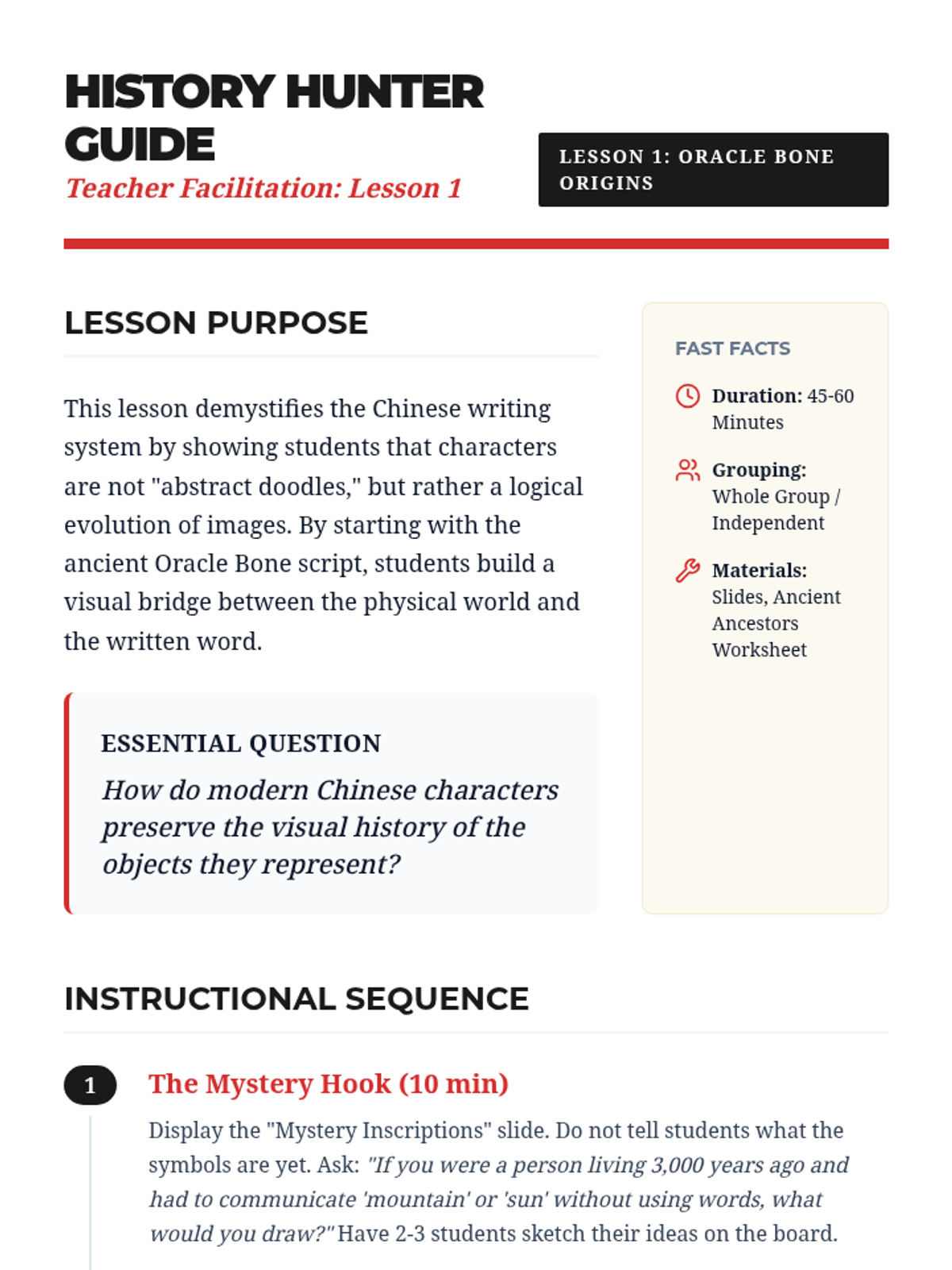
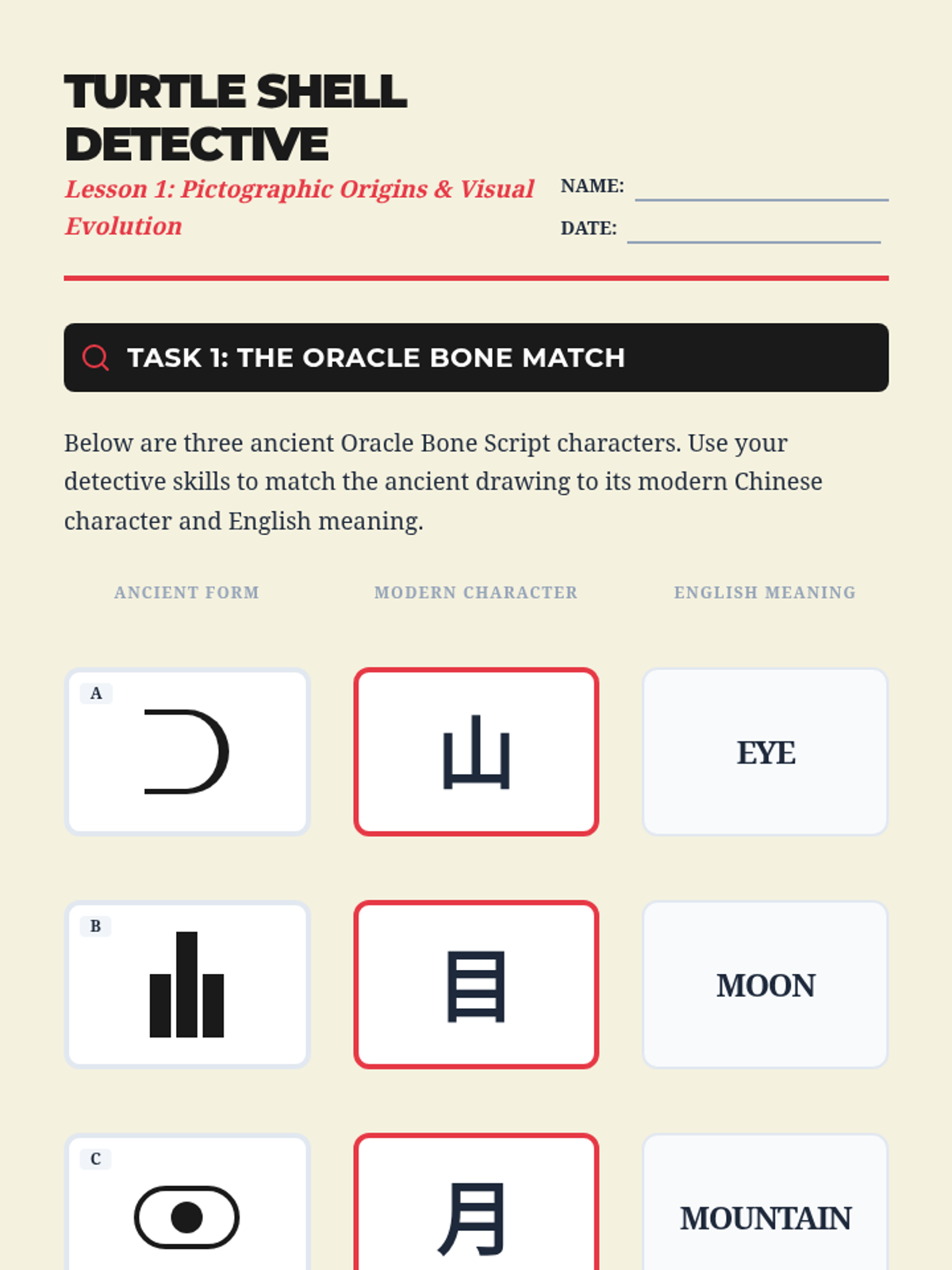
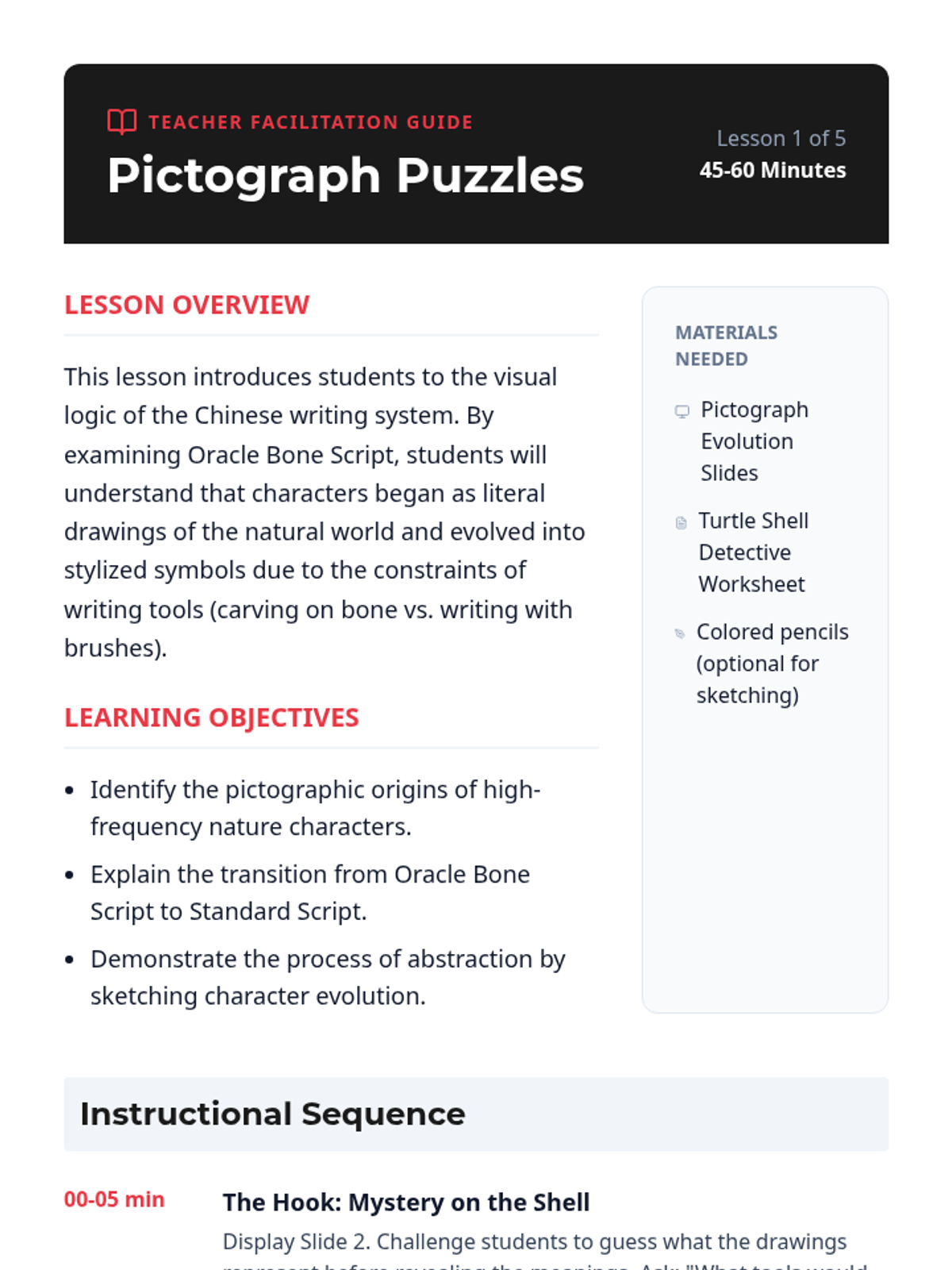
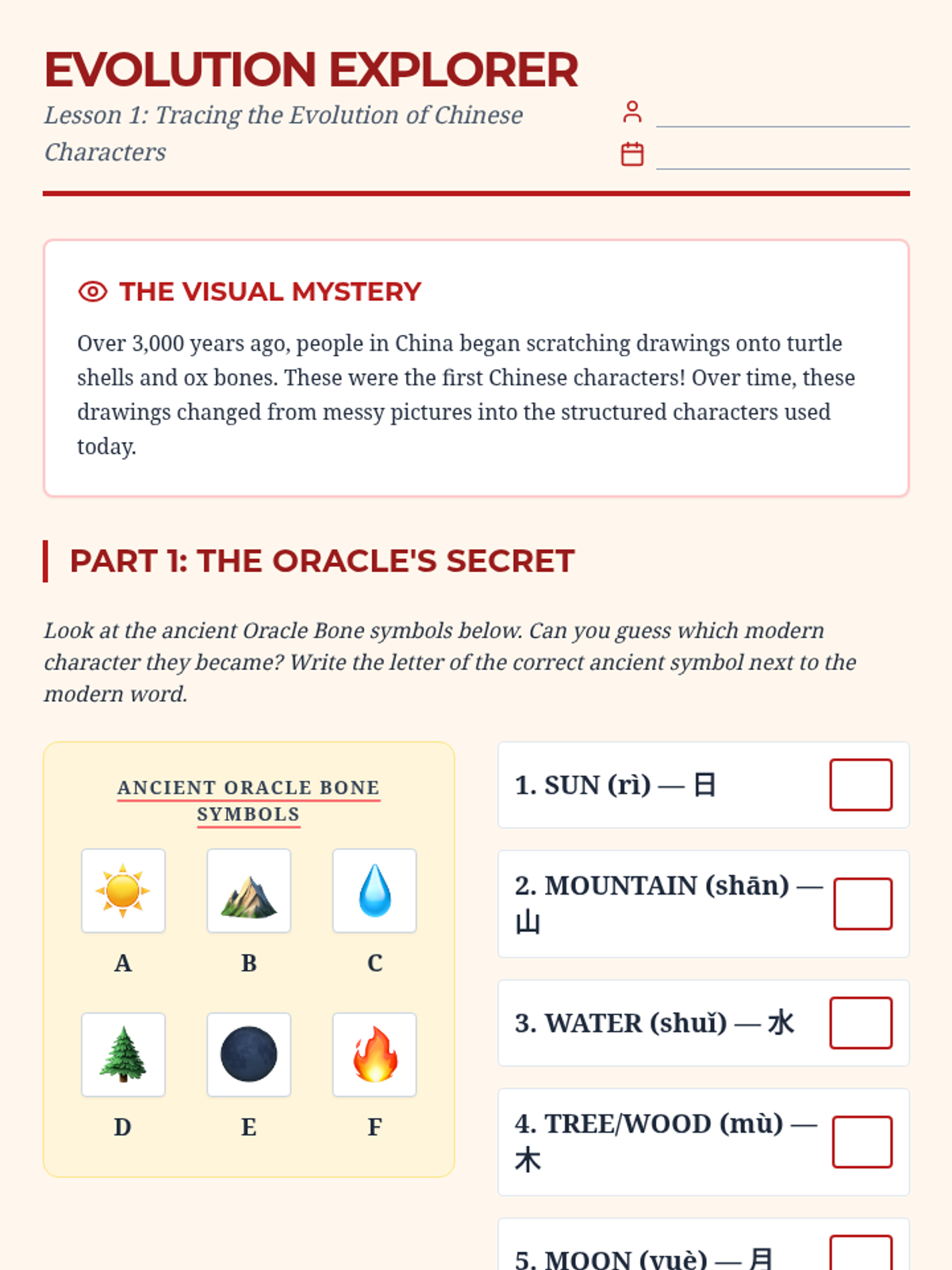
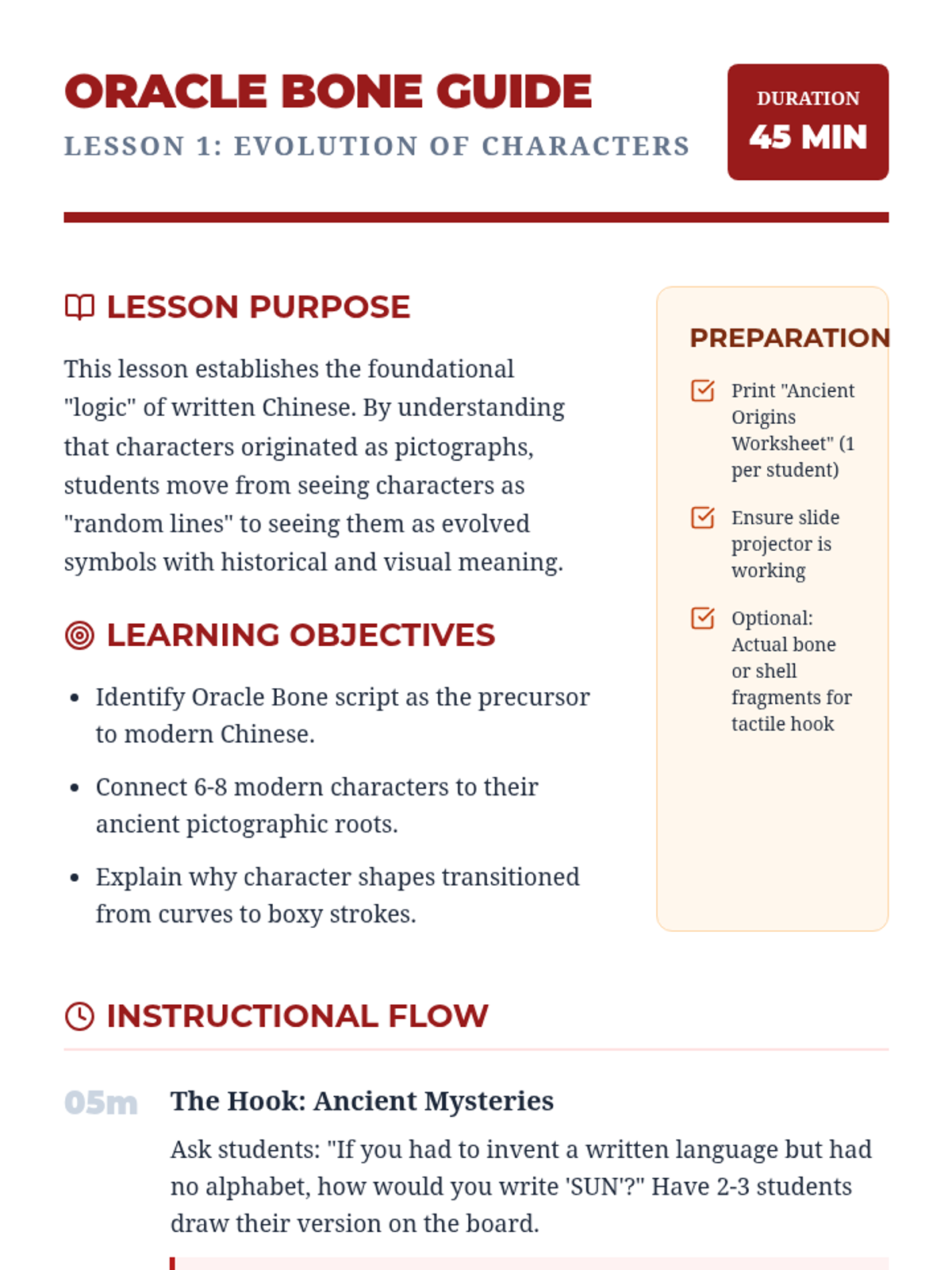
Students explore the pictographic evolution of Mandarin Chinese characters, tracing modern symbols back to ancient Oracle Bone script. The sequence focuses on nature and animal characters, helping students build visual associations and mnemonics to master basic Hanzi.
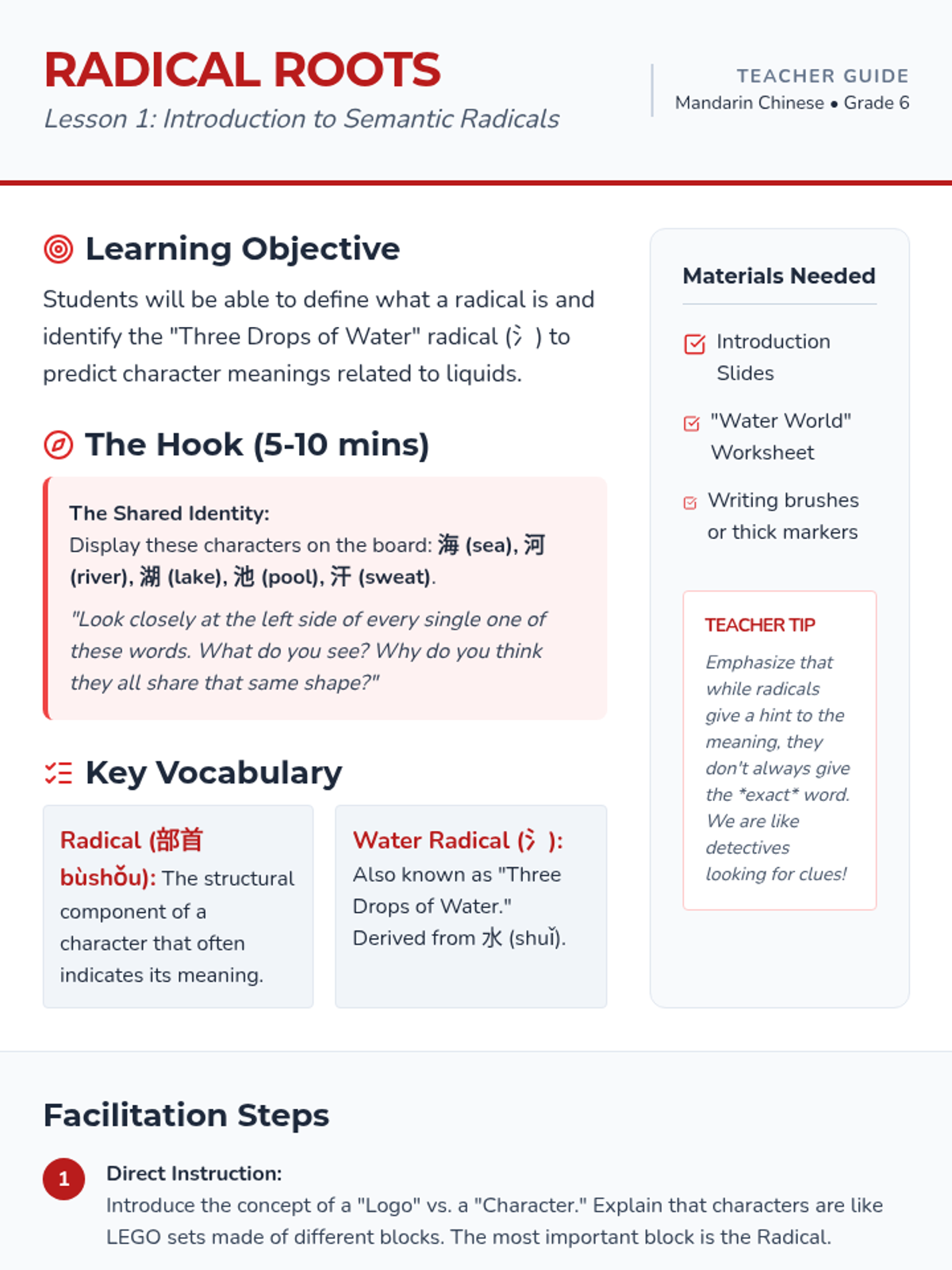
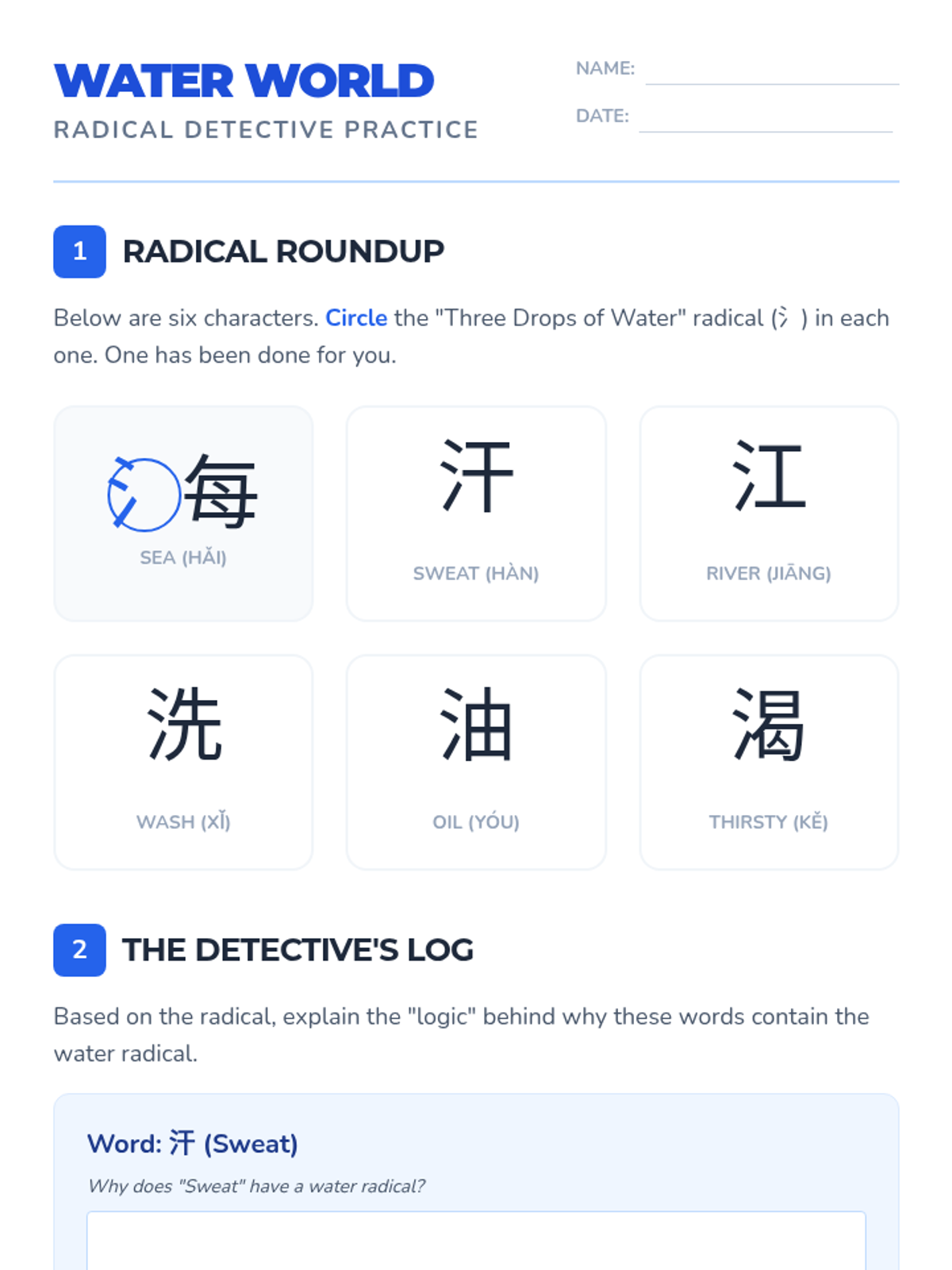
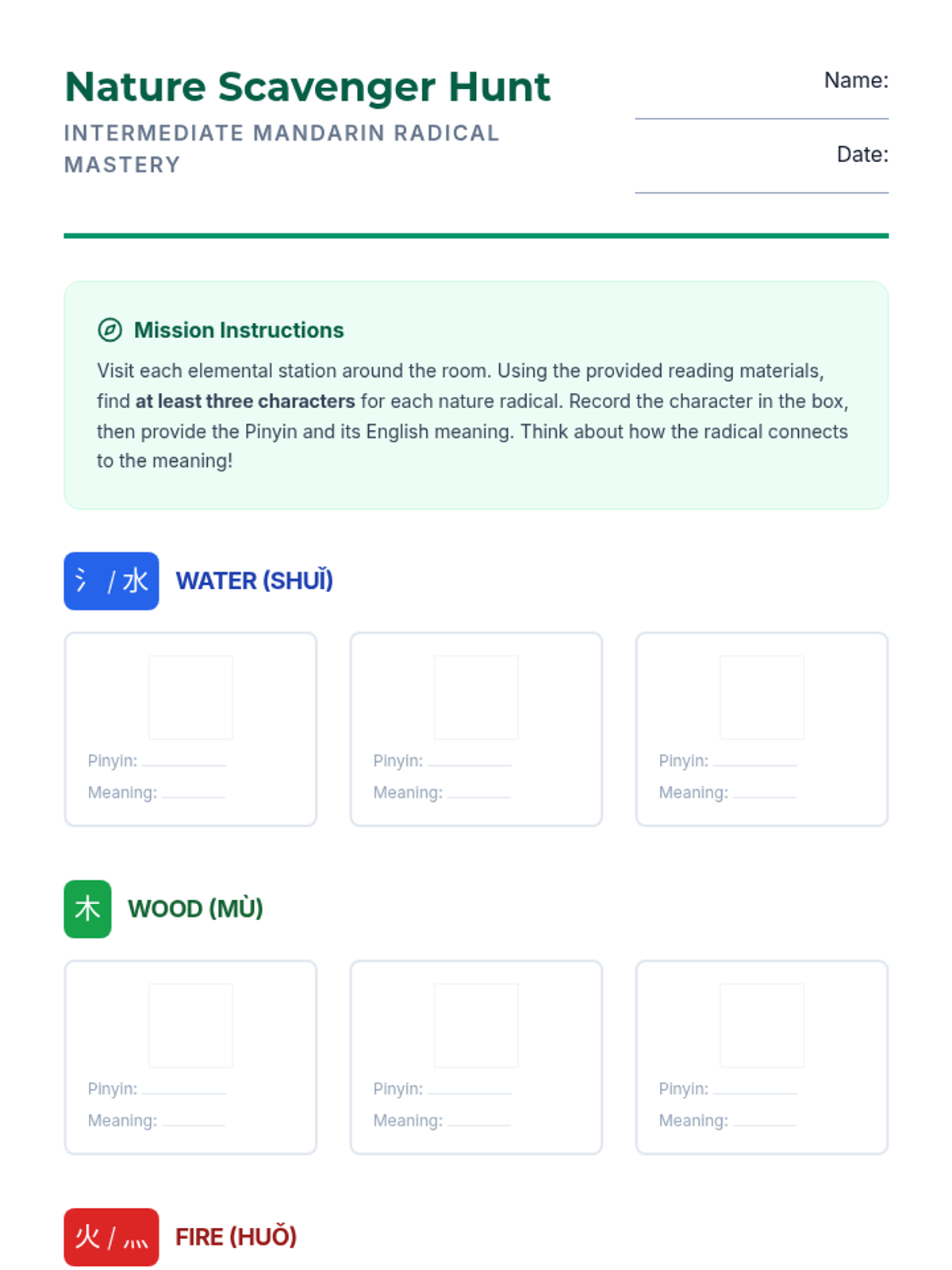
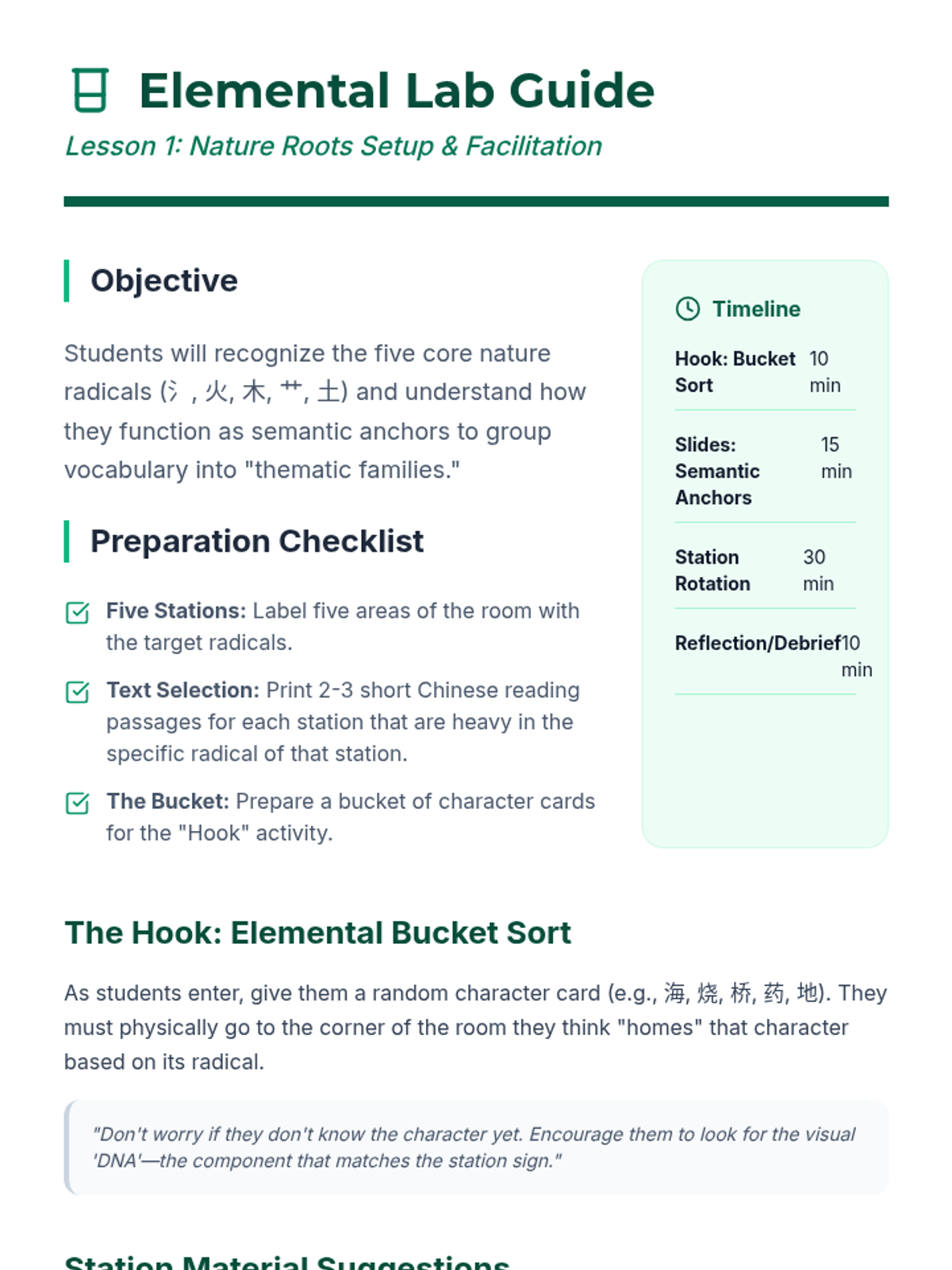
This sequence introduces 6th-grade students to Chinese radicals—the semantic building blocks of characters. By learning to identify common radicals like water, wood, and hand, students develop 'language detective' skills to decode the meanings of unfamiliar words systematically.
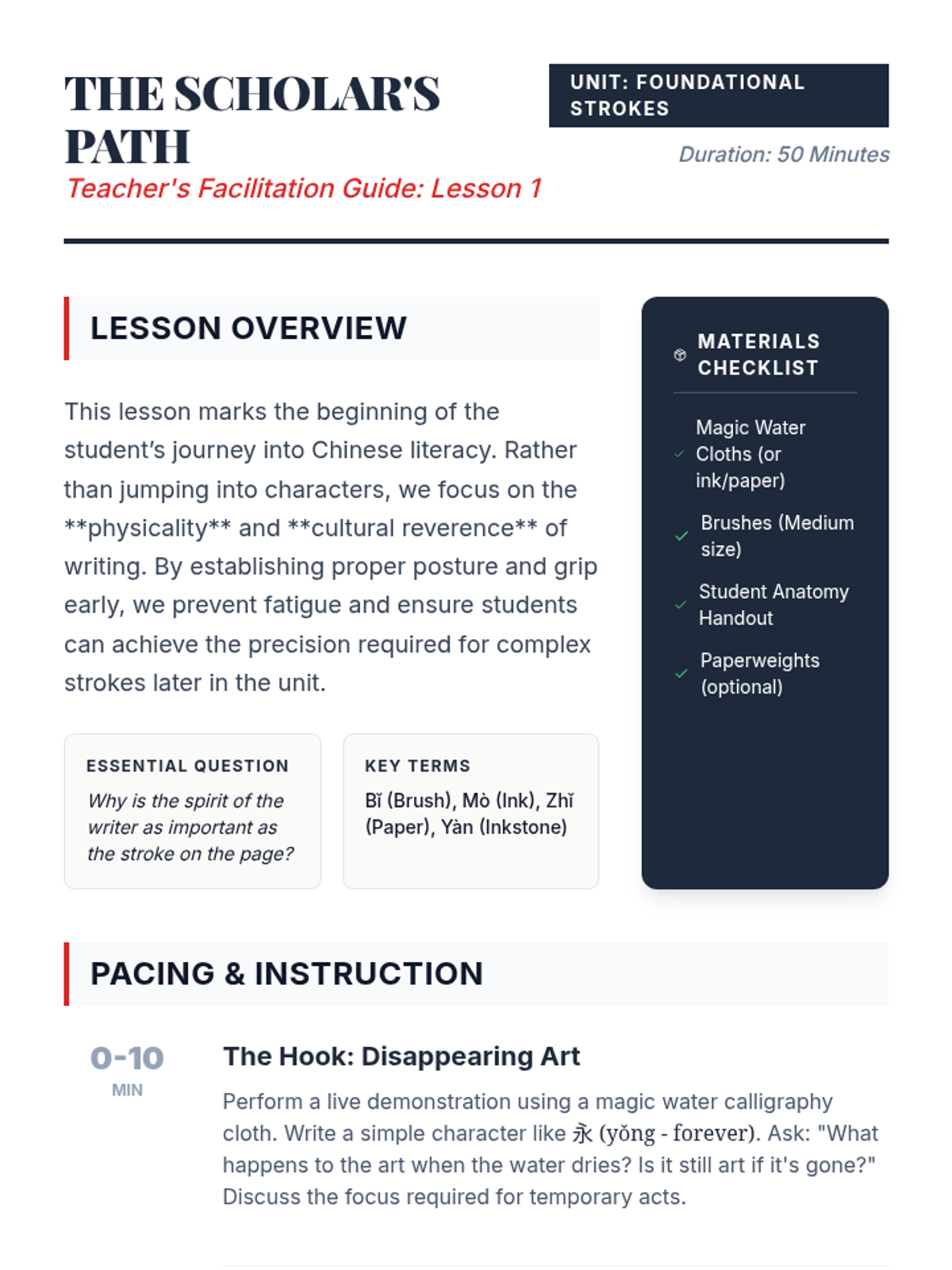
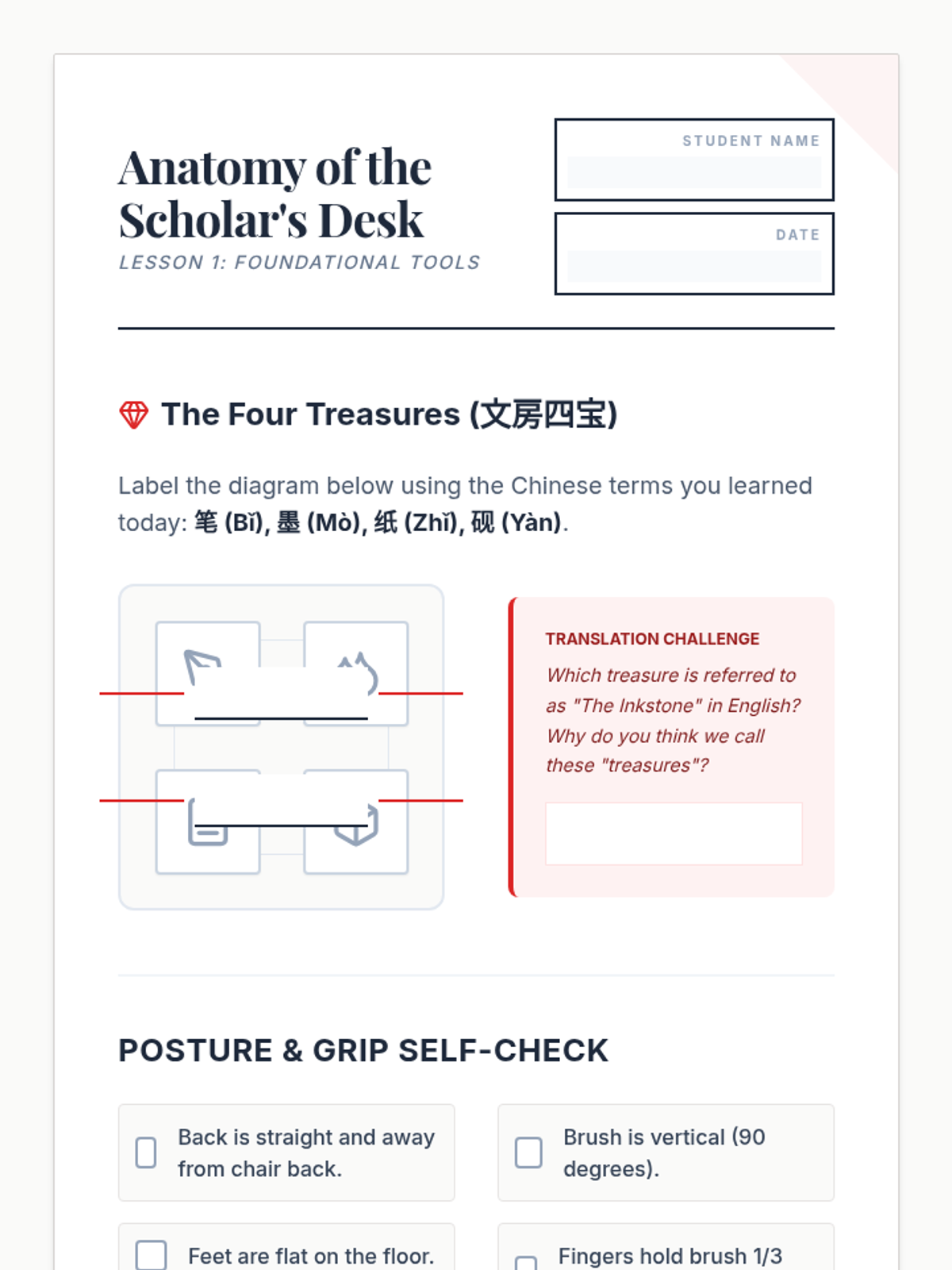
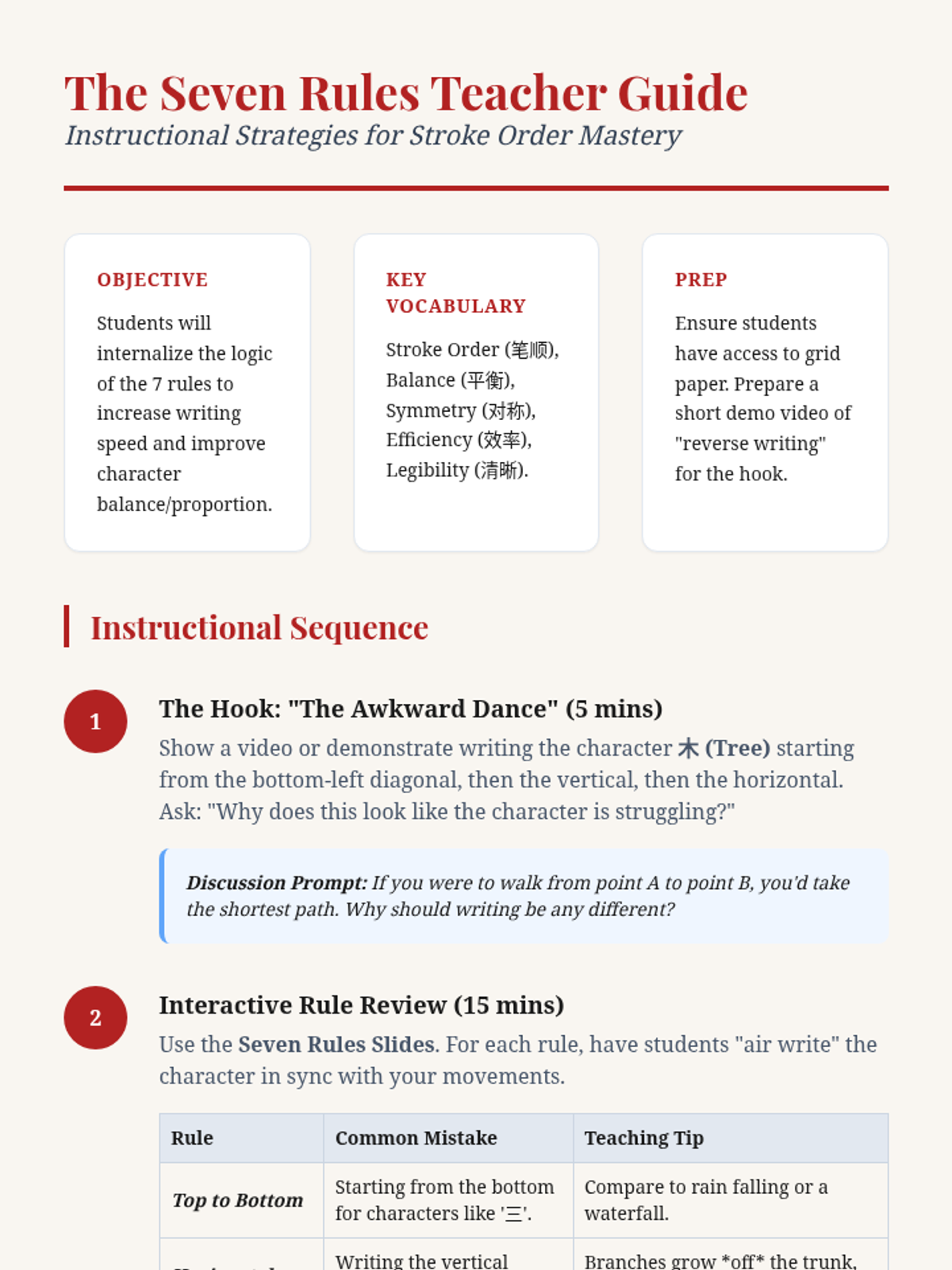
This sequence introduces 6th-grade students to the foundational strokes and rules of Mandarin Chinese character writing. Through a blend of cultural exploration and rigorous skill-building, students learn the 'Four Treasures of the Study,' master the eight basic strokes, and internalize the seven governing rules of stroke order to produce legible and balanced characters.
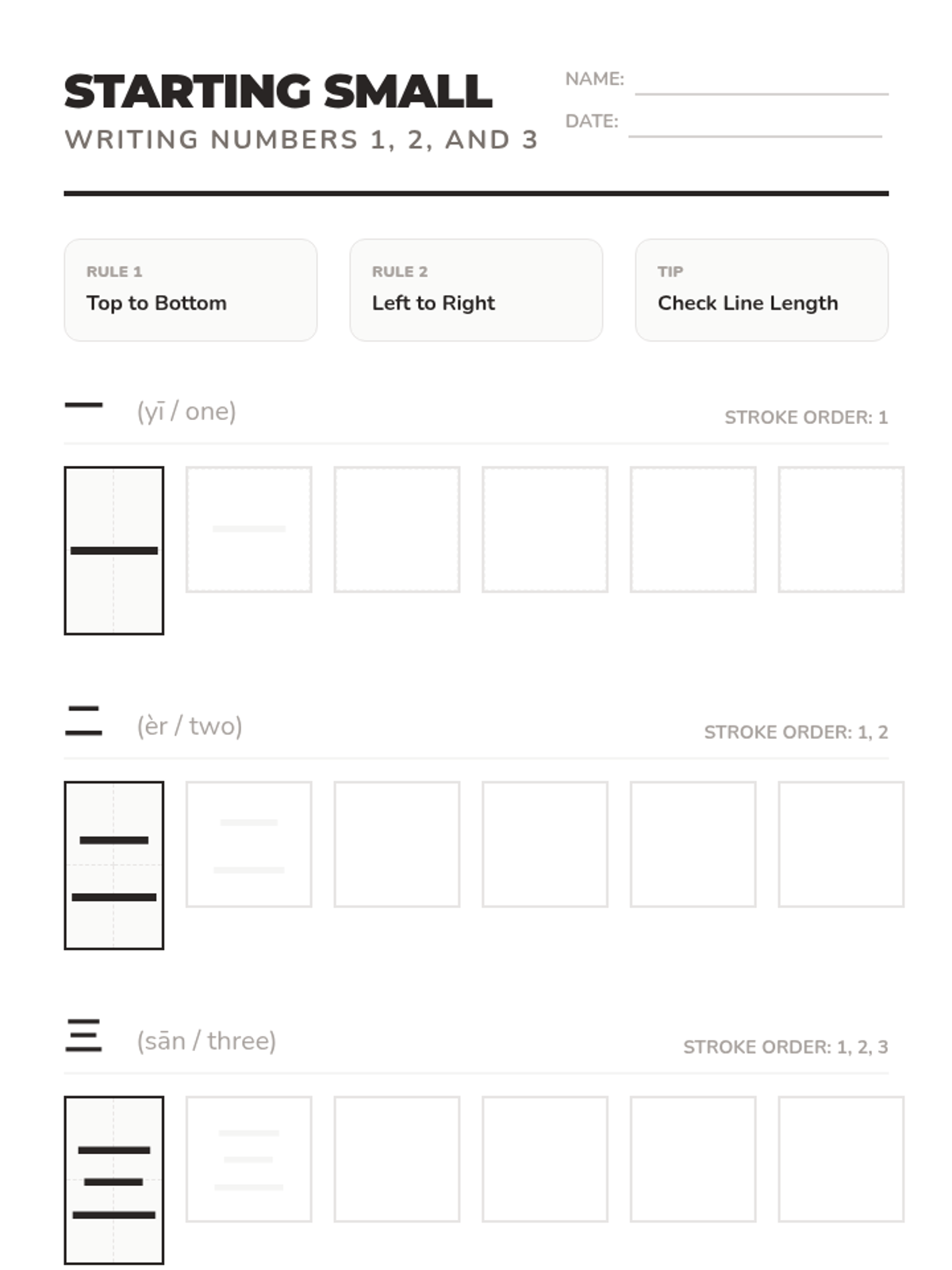
A comprehensive introduction to the foundational mechanics of Chinese calligraphy, focusing on the six basic strokes, the seven rules of stroke order, and numerical characters 1-10. Students develop fine motor skills and cultural appreciation through grid-based practice and traditional calligraphy techniques.
This sequence explores the etymological evolution of Mandarin Chinese characters from ancient Oracle Bone Script to modern digital input. Students analyze pictographs, ideographs, and phono-semantic compounds to understand the logic of the written language and apply this knowledge to real-world environmental print.
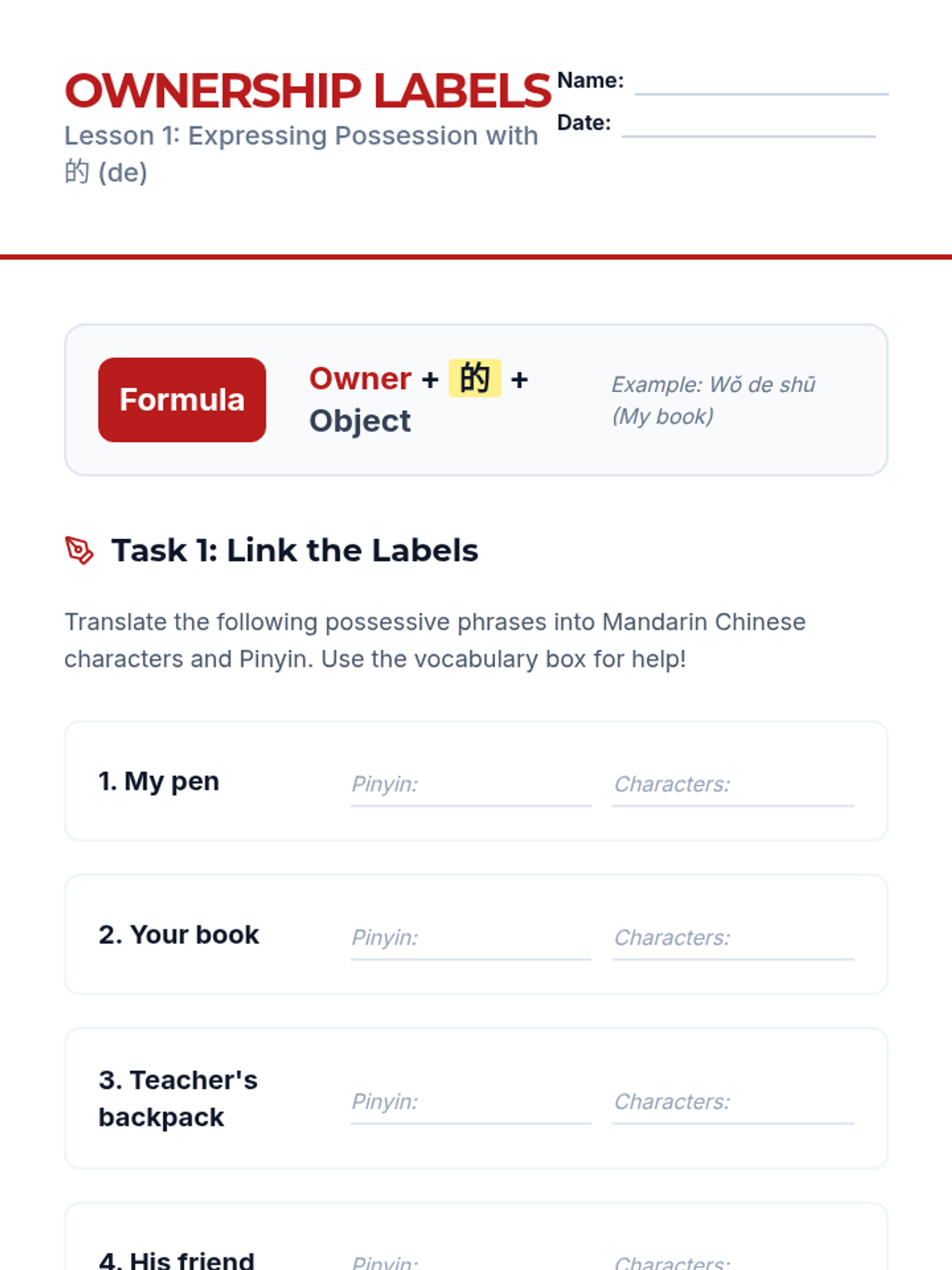
A comprehensive introduction to the Mandarin Chinese particle 'de' (的) for 6th-grade beginners. Students explore its use in expressing possession, describing family relationships, and linking adjectives to nouns through interactive games, creative projects, and character building.
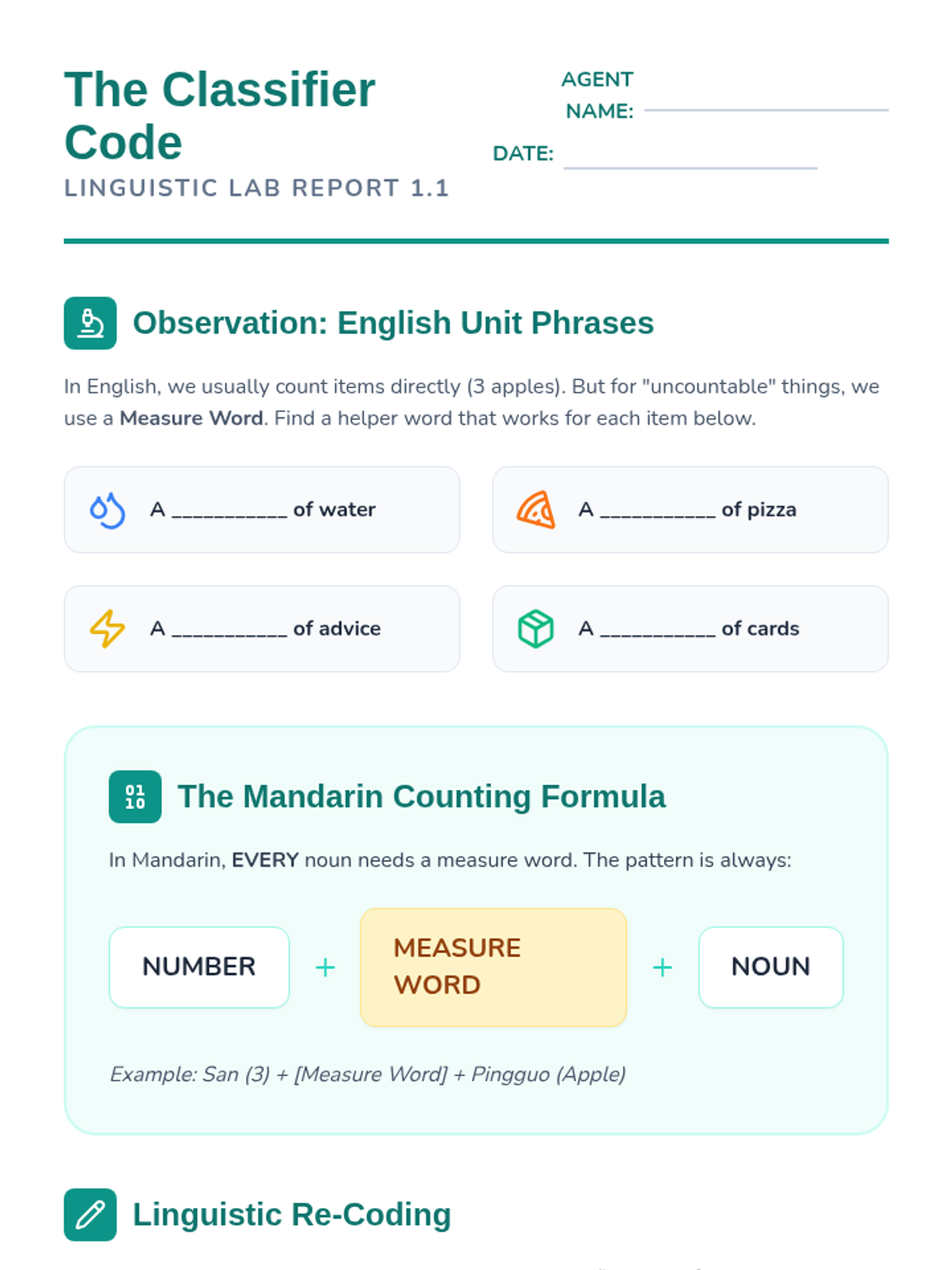
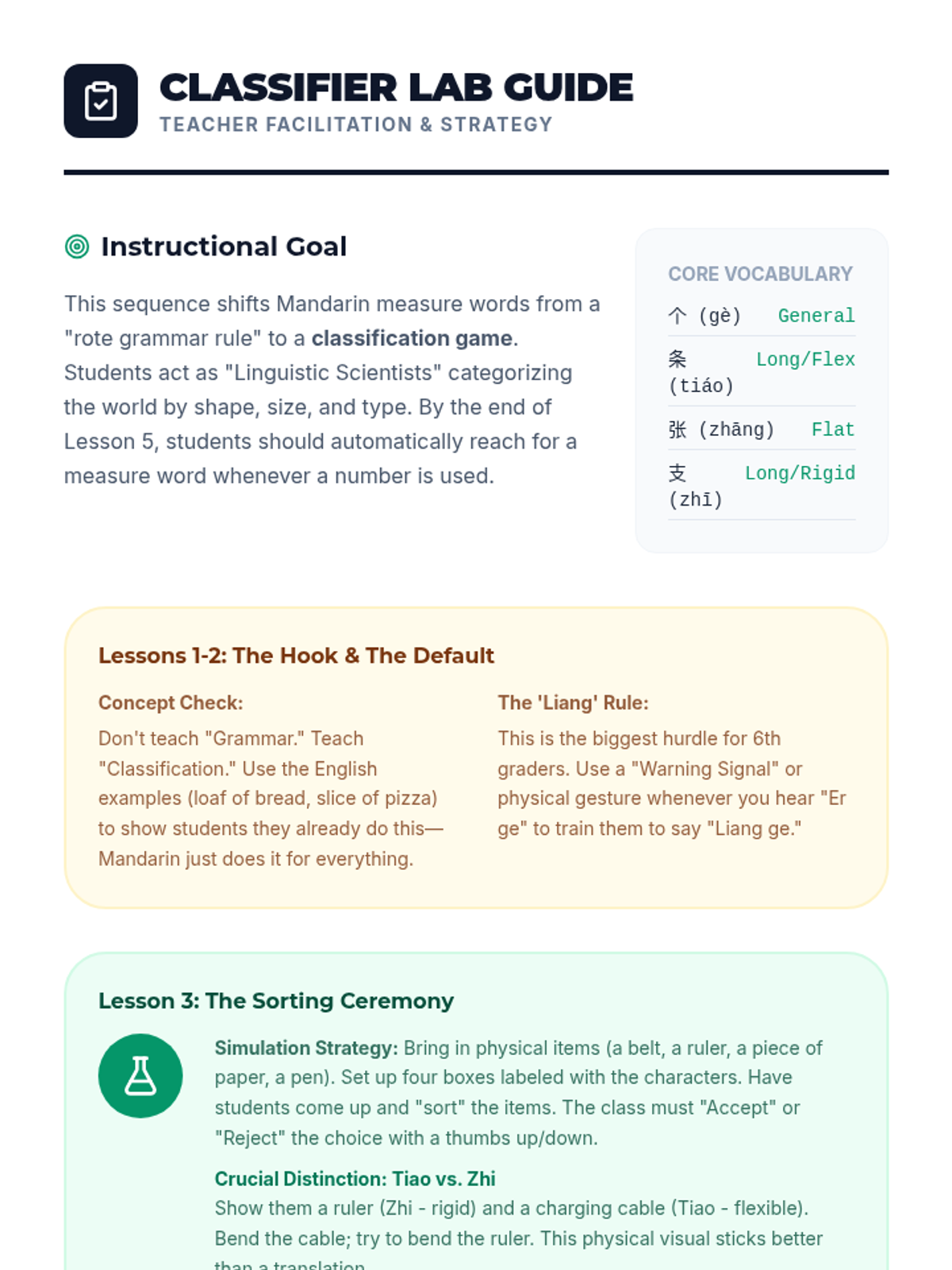
A comprehensive introduction to Mandarin Chinese measure words for 6th graders, using a 'scientific classification' theme to help students categorize nouns by shape and type.
This sequence explores the essential role of measure words in Mandarin Chinese, progressing from basic conceptual understanding to shape-based categorization and finally to real-world application in a market simulation. Students move beyond the generic 'gè' to master specific classifiers for various object types.
A hands-on exploration of Chinese calligraphy, tracing the history of characters from ancient Oracle Bone script to modern brush arts. Students learn the tools, techniques, and philosophy of traditional writing while creating their own calligraphic masterpieces.
This sequence focuses on the cognitive processing of numerical data in Mandarin Chinese, moving from basic digits to complex phone numbers, calendar dates, clock times, and marketplace currency. Students will develop rapid auditory recognition through gamified scenarios like emergency dispatch, time travel, and transit scheduling.
This 5-lesson sequence focuses on beginner Mandarin Chinese listening skills, specifically identifying greetings, names, nationalities, and family relationships. Students progress from distinguishing social registers to synthesizing complex personal introductions.
This sequence immerses students in common social scenarios to build comprehension of greetings, introductions, and basic etiquette in Mandarin Chinese. Through listening tasks and simulations, students learn to distinguish between formal and informal registers, identify names and titles, and recognize nationalities.
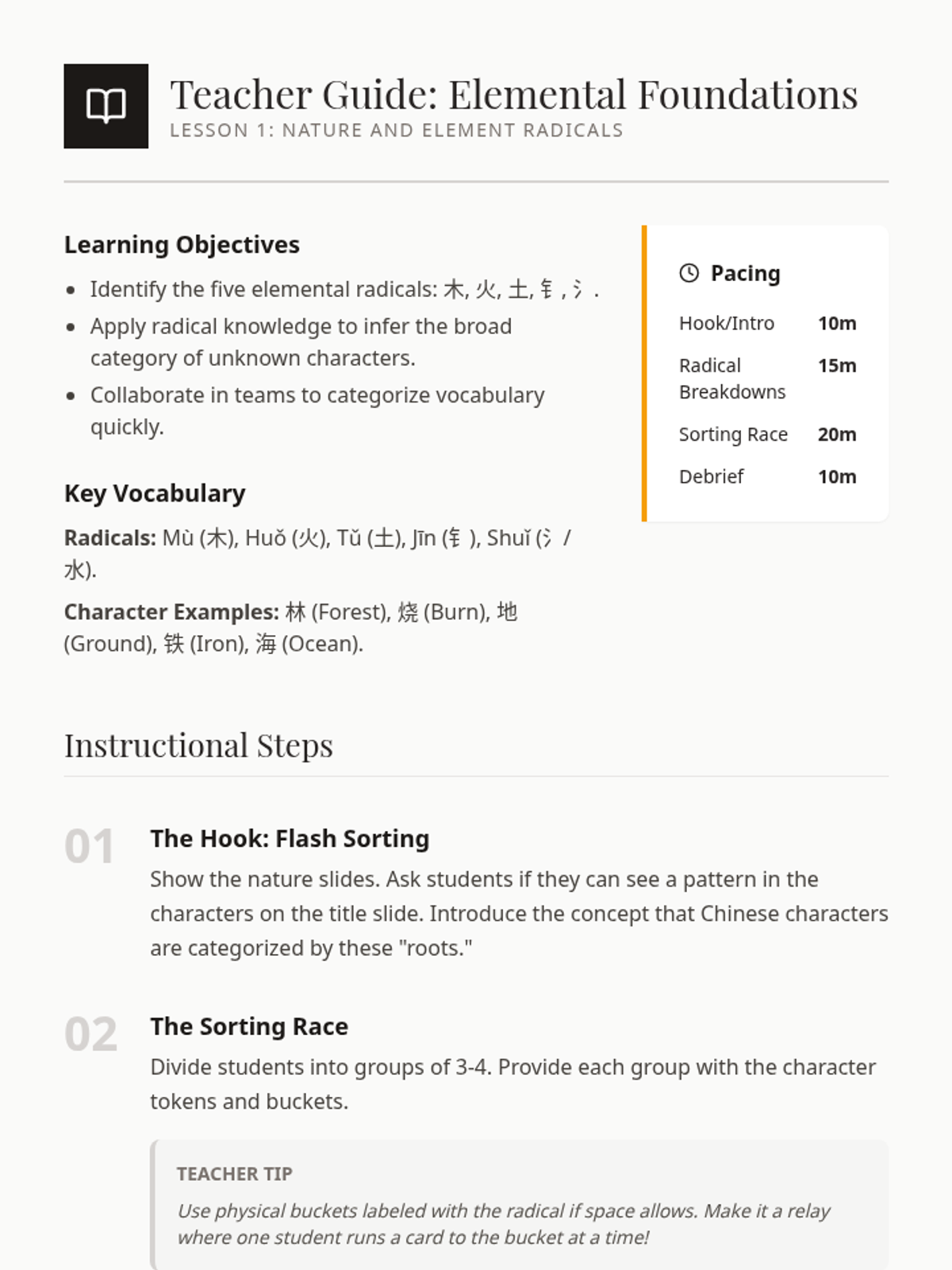
This intermediate Mandarin Chinese sequence focuses on the 214 Kangxi radicals, specifically the 50 most common ones. Using a flipped classroom model, students learn to categorize vocabulary by their semantic 'roots,' building mental frameworks for better character retention and structural analysis.
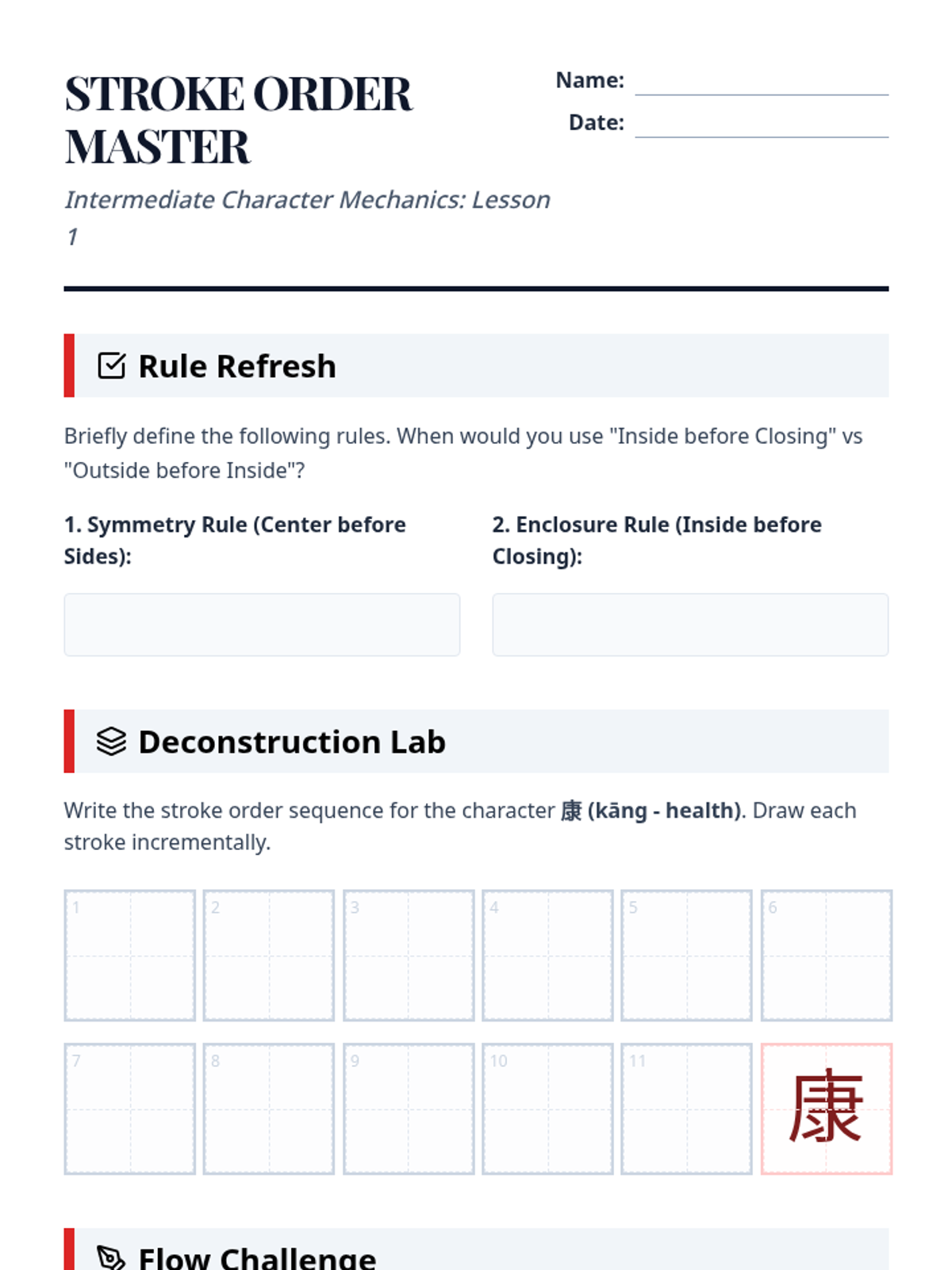
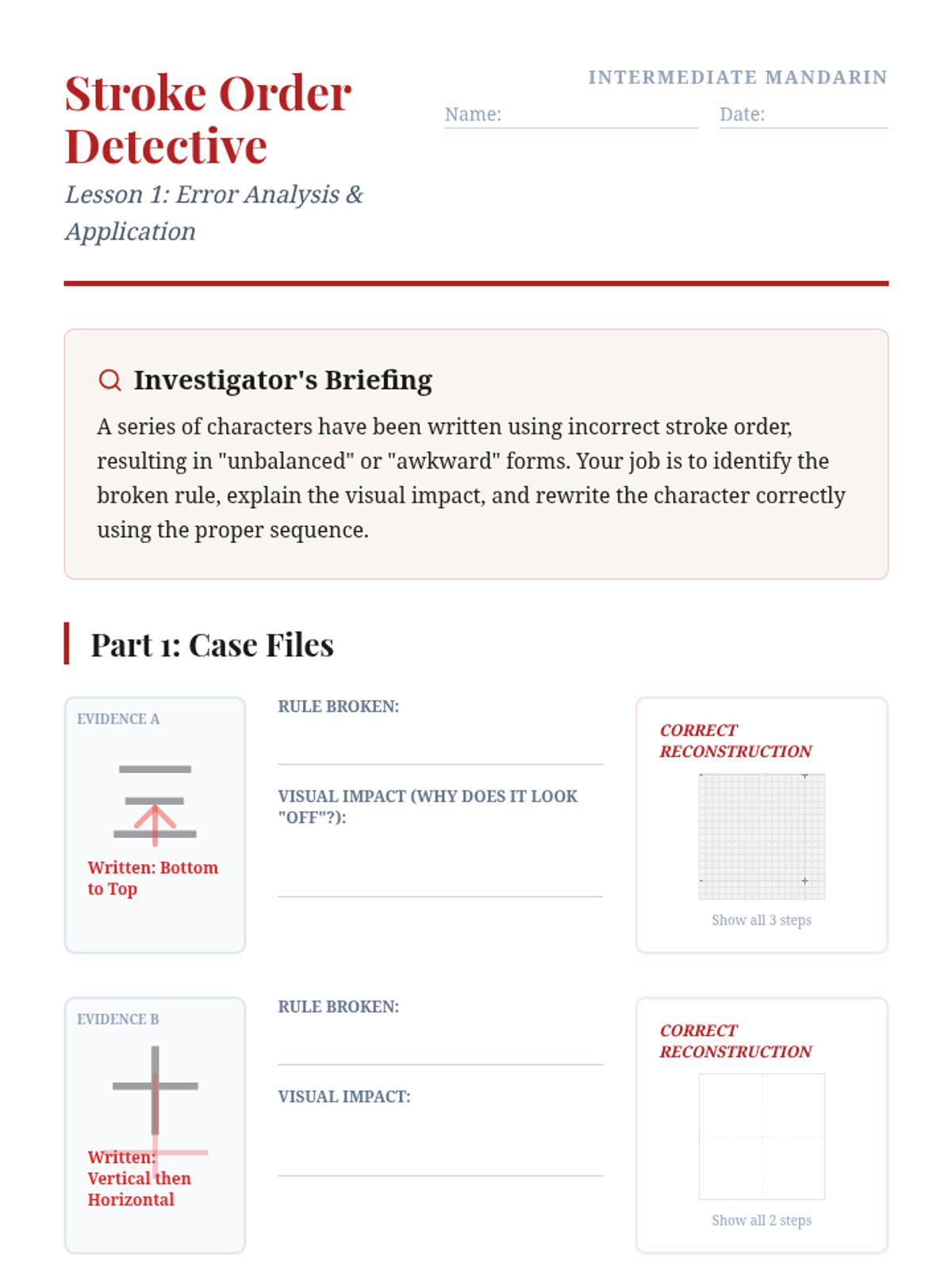
This workshop-style sequence focuses on the mechanics and aesthetics of writing intermediate Mandarin characters. Students refine their handwriting by mastering stroke order for complex characters and exploring structural balance using Tian Zi Ge grids, ultimately creating a calligraphic portfolio.
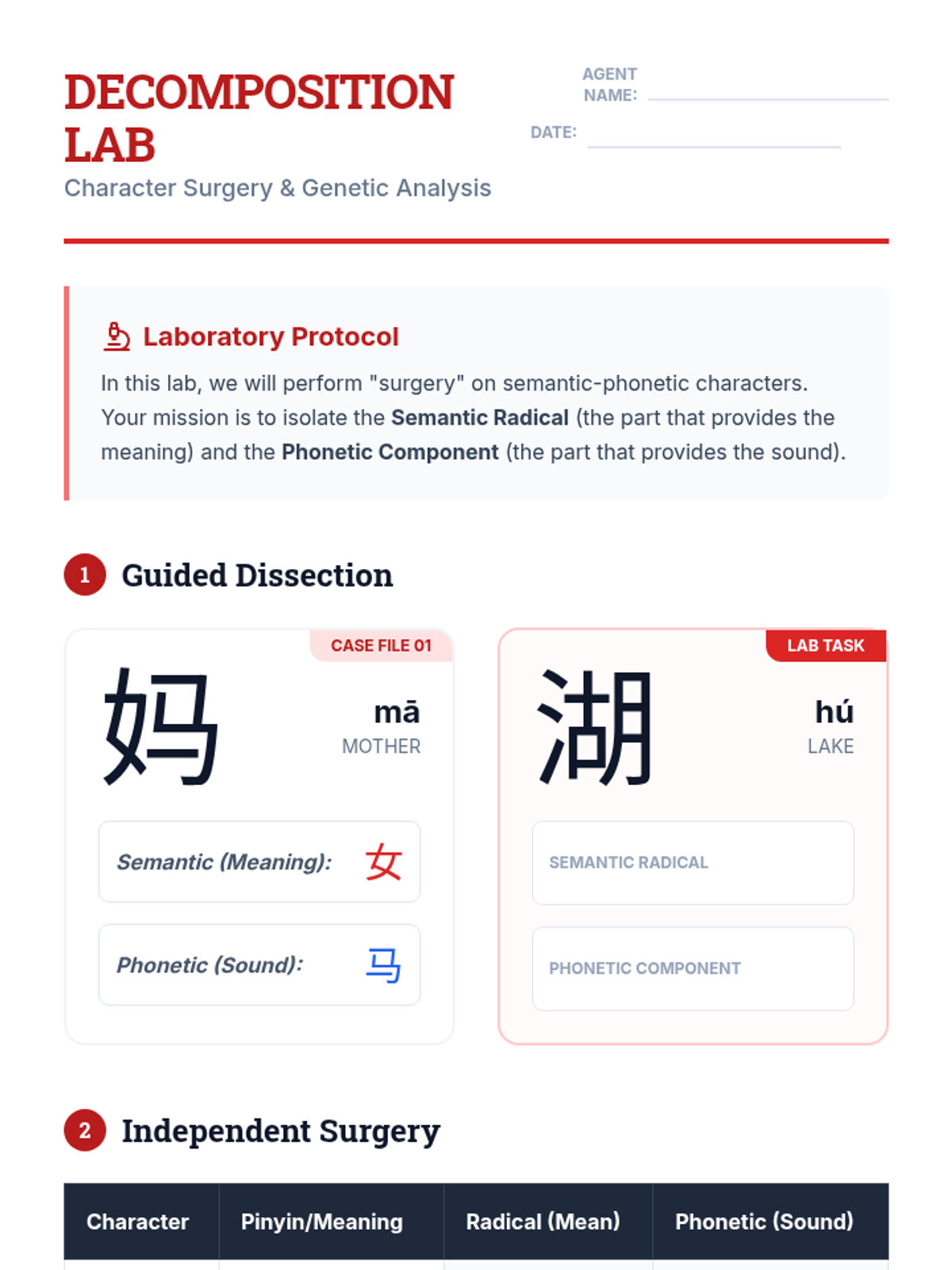
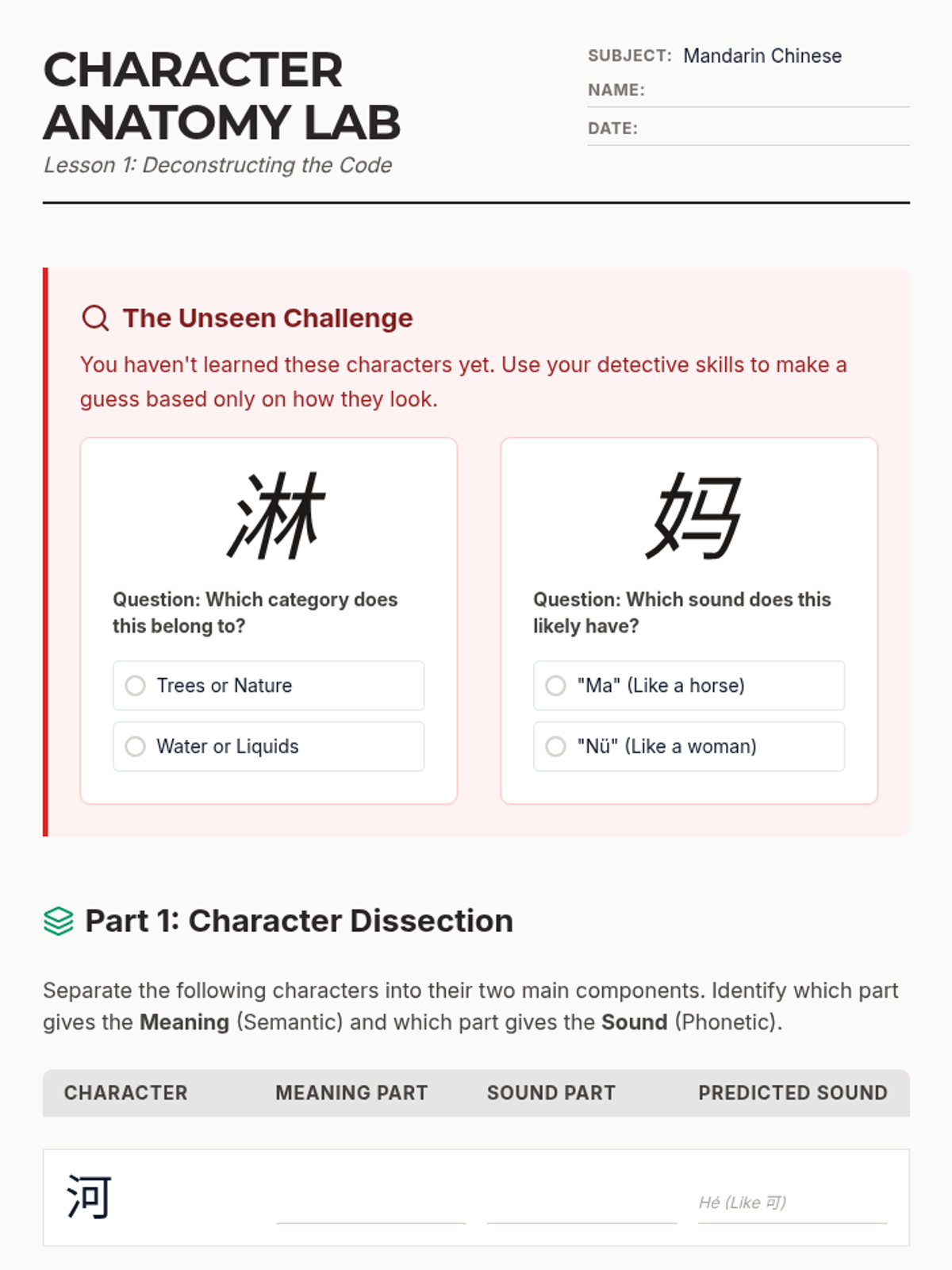
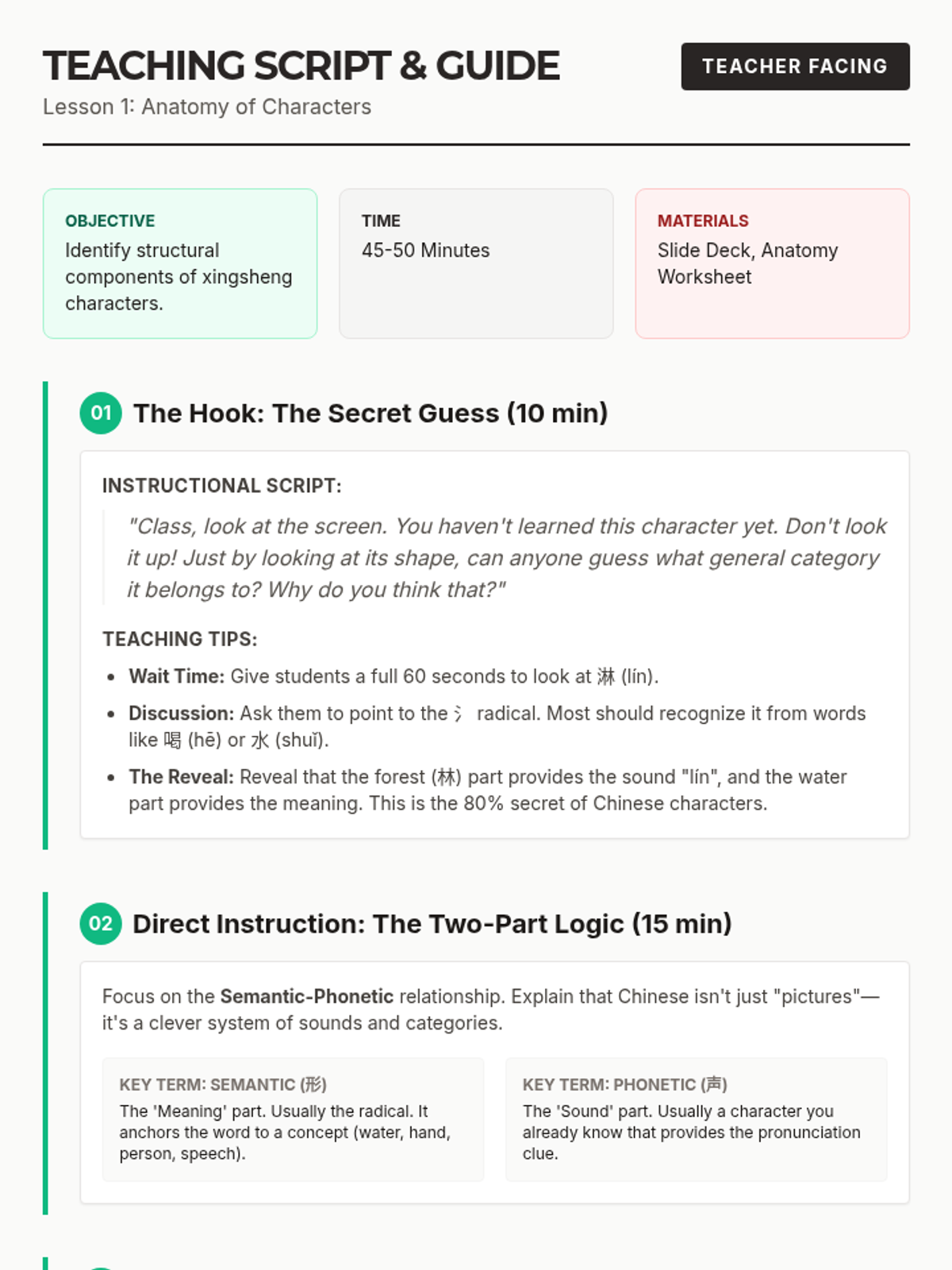
This inquiry-based sequence demystifies the structure of semantic-phonetic characters, which make up the vast majority of the Chinese writing system. Students move from rote memorization to analytical decoding by identifying the 'meaning' component (radical) and the 'sound' component (phonetic) within intermediate-level characters.
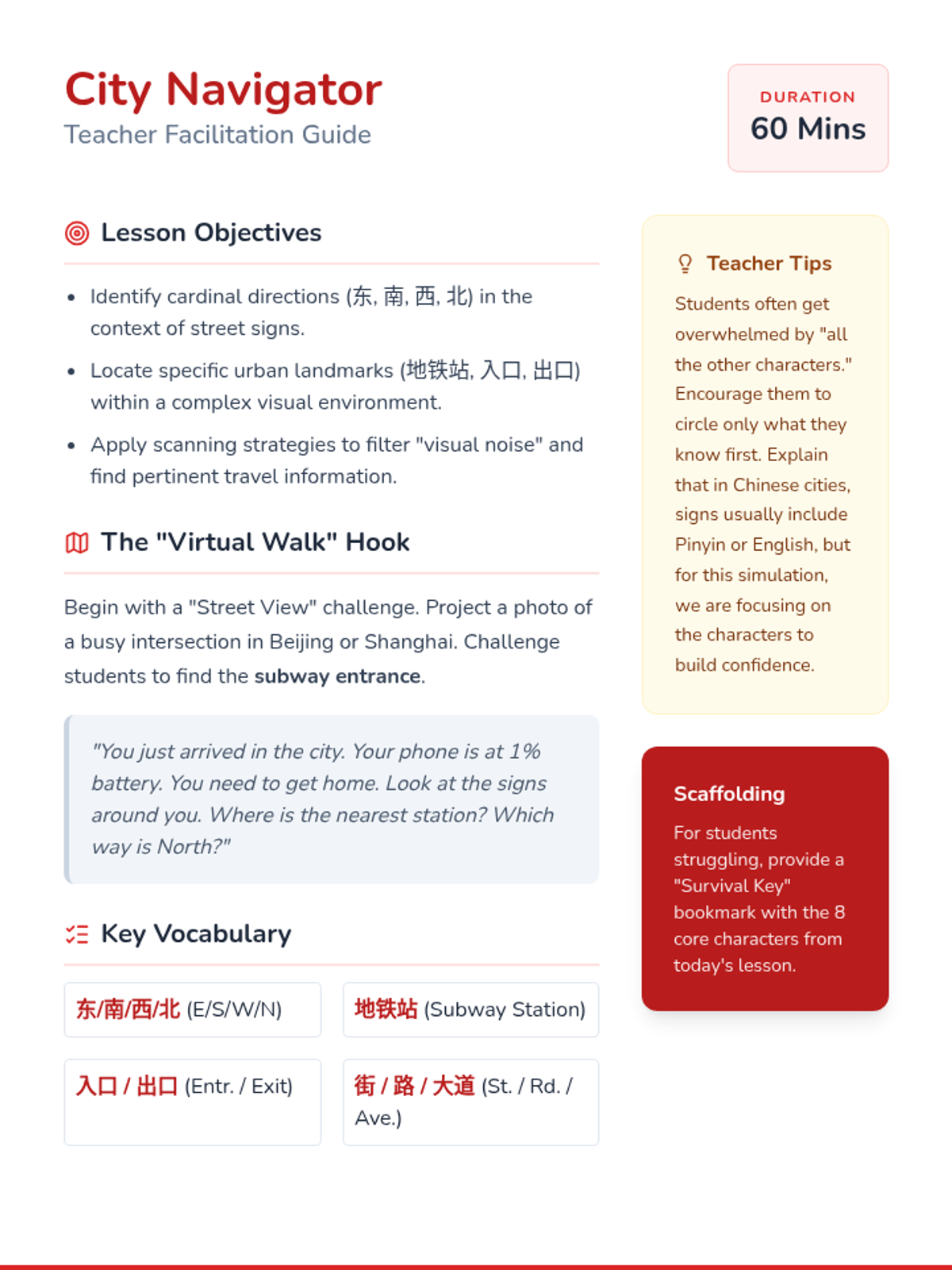
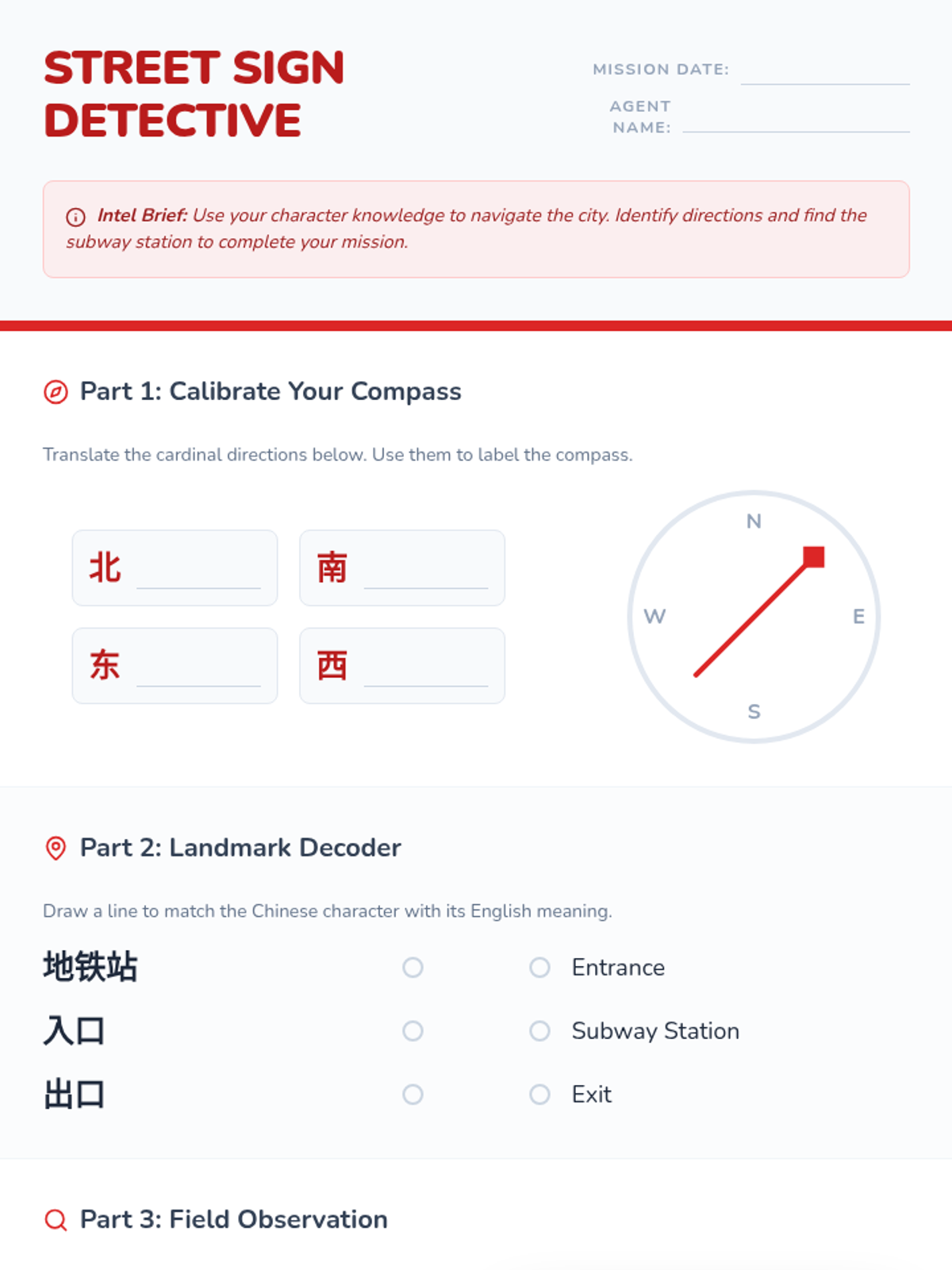
This simulation-heavy sequence applies intermediate Mandarin character knowledge to real-world survival scenarios like menus, street signs, and digital messages. Students focus on scanning for keywords and using context clues to navigate a Chinese-speaking environment.
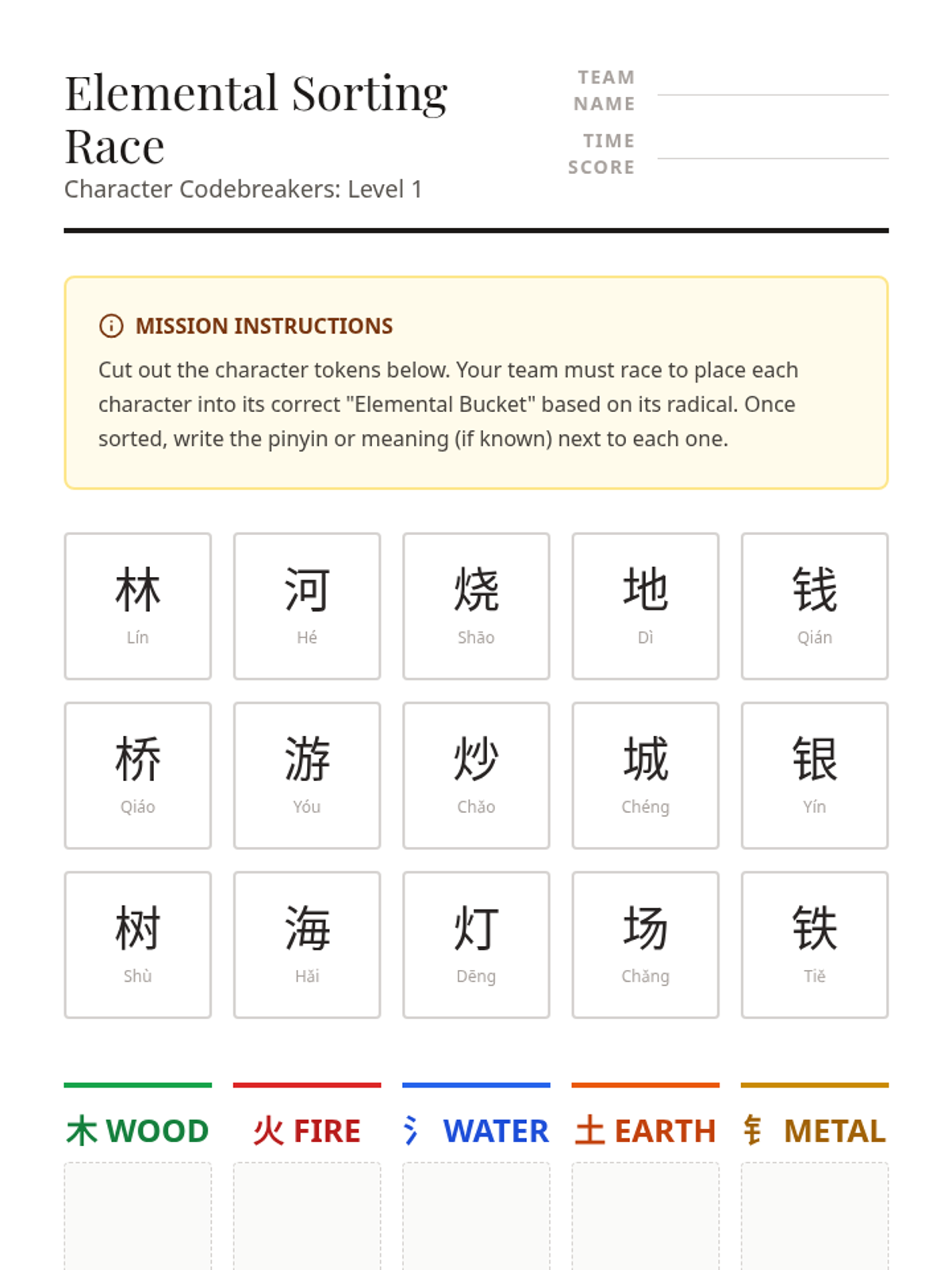
This intermediate Mandarin sequence transforms students into 'Character Codebreakers.' By analyzing the high-frequency radicals that form the building blocks of Chinese characters, students learn to infer meaning in new vocabulary related to nature, emotion, action, and abstract concepts, culminating in a dictionary scavenger hunt.
A workshop-style sequence for 6th-grade students focusing on the mechanics, aesthetics, and efficiency of writing intermediate Mandarin characters. Students move from basic stroke memorization to mastering complex stroke order rules, character balance (rang), and fluid writing speed.
An inquiry-based exploration of Mandarin Chinese semantic-phonetic character structure, empowering 6th-grade students to decode unfamiliar characters using structural logic.
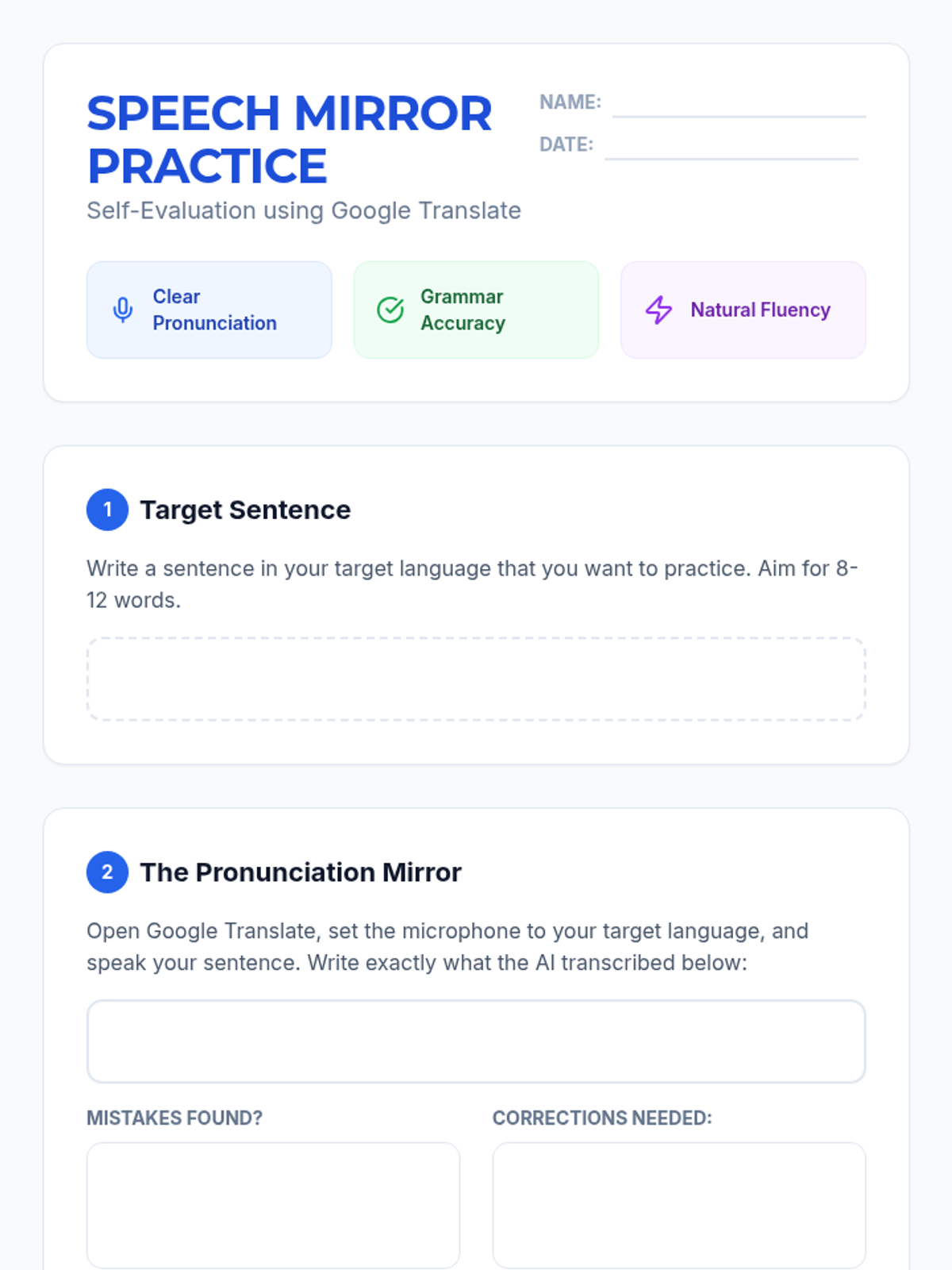
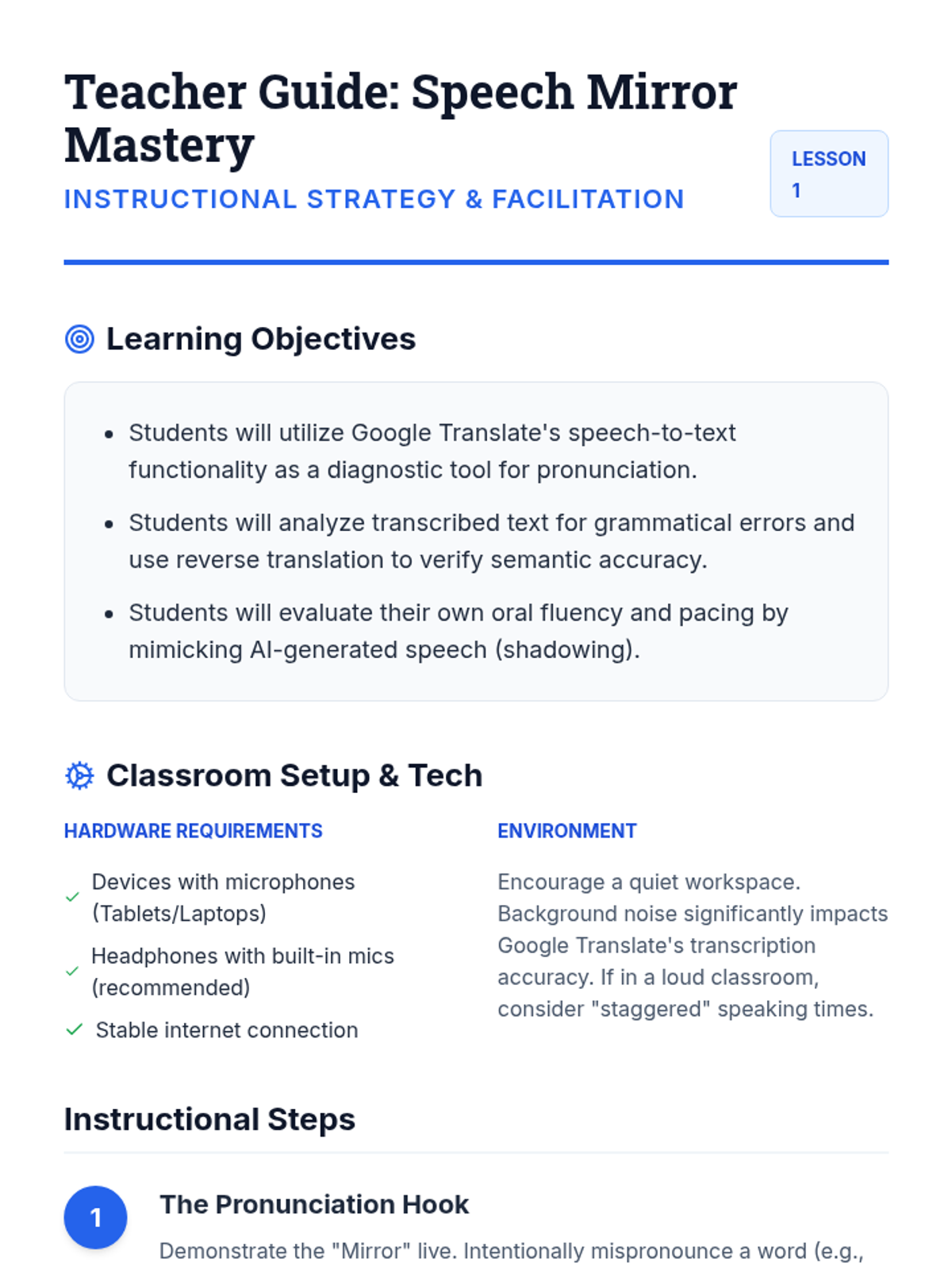
A sequence focused on leveraging digital translation tools for language self-assessment and speech improvement. Students learn to use Google Translate not just for translation, but as a 'mirror' for their own pronunciation, grammar, and fluency.
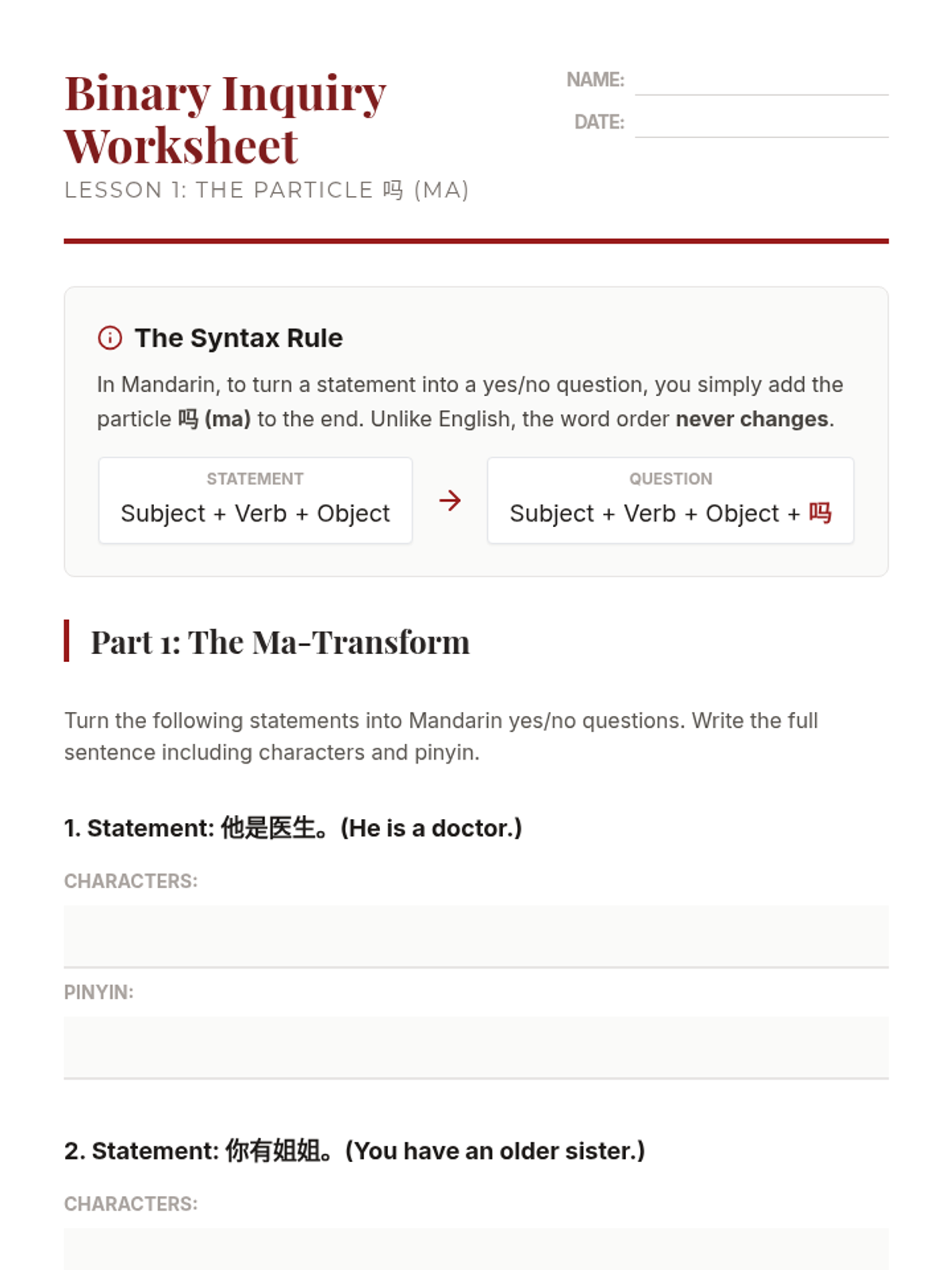
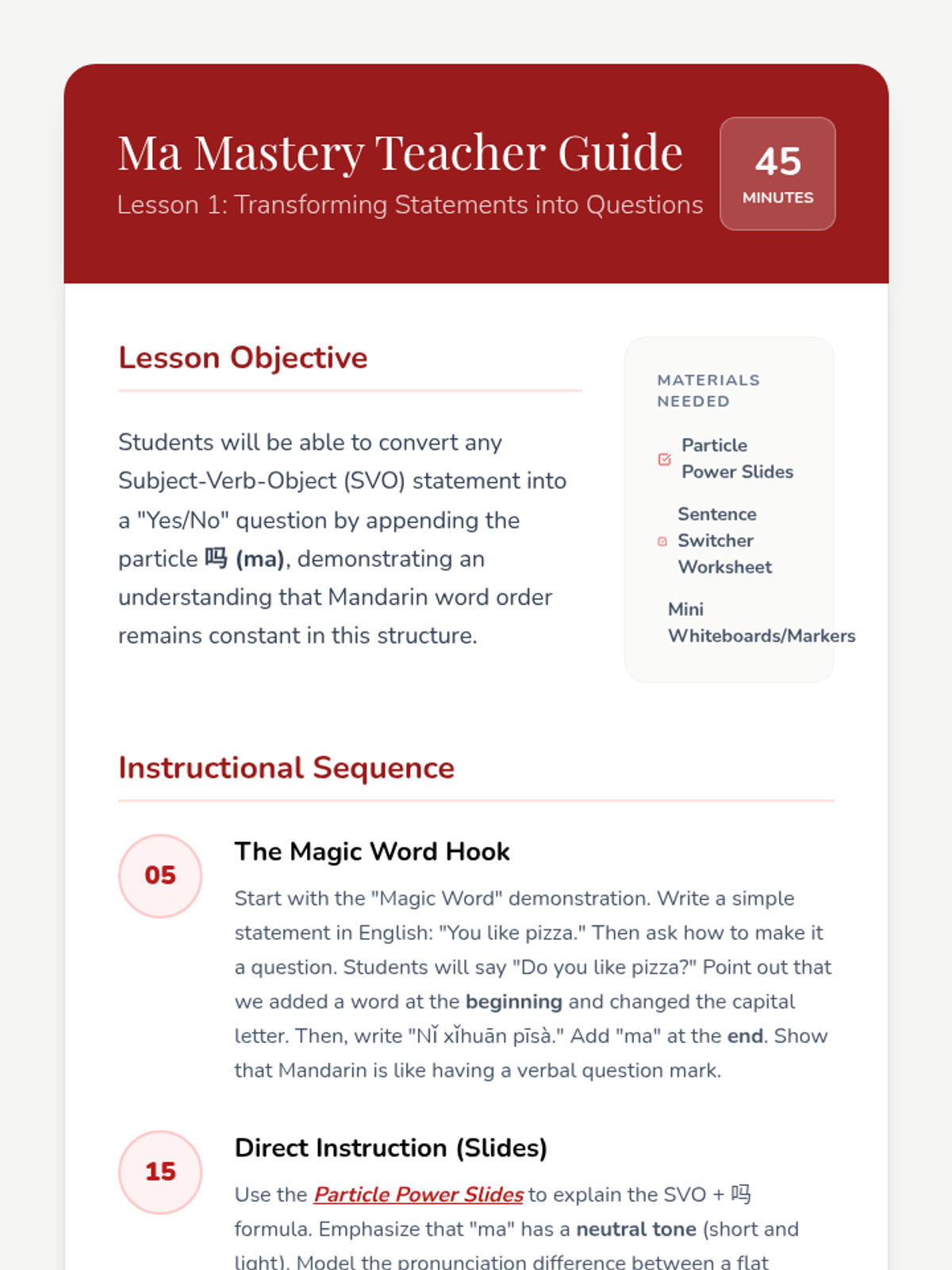
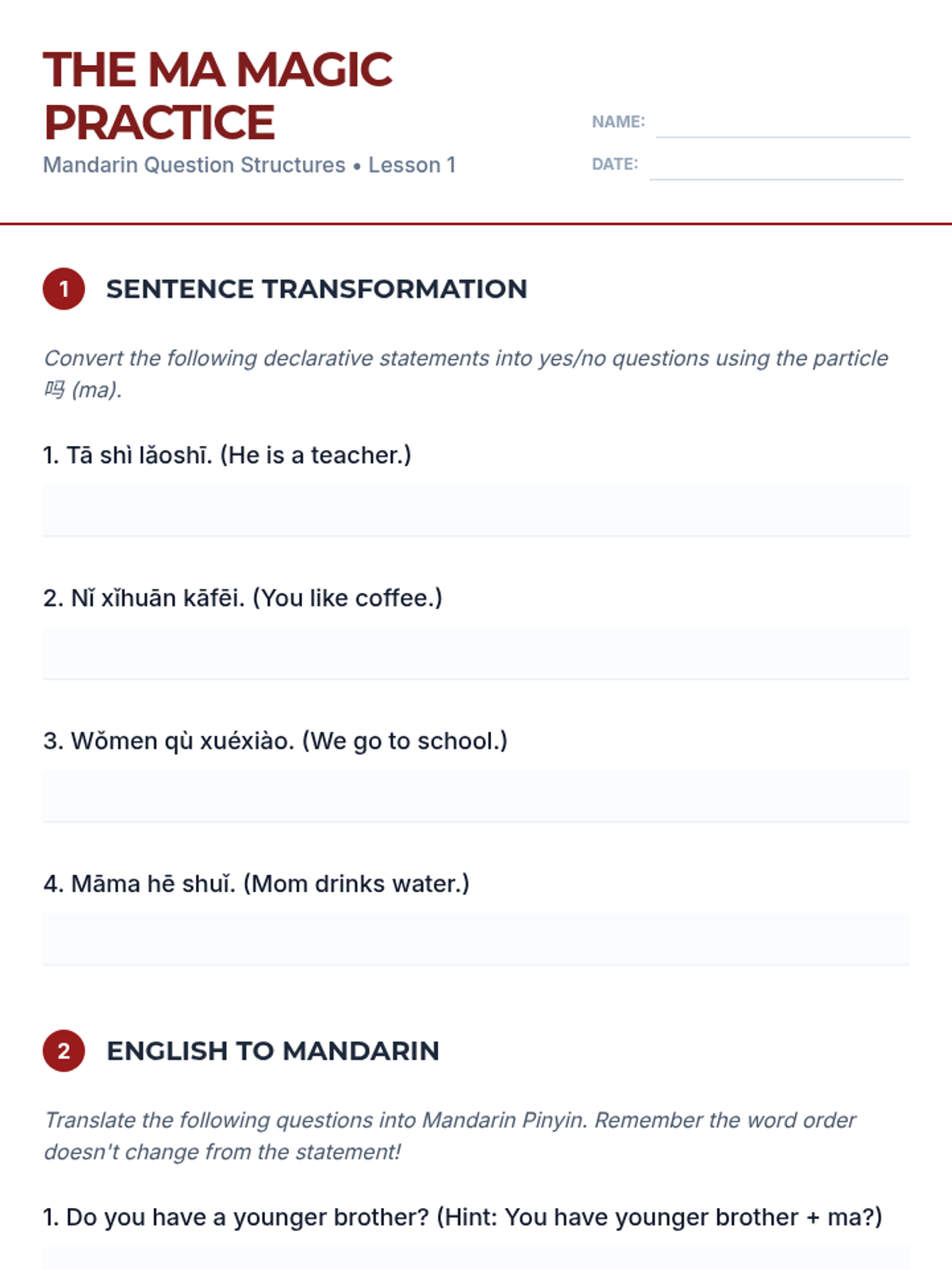
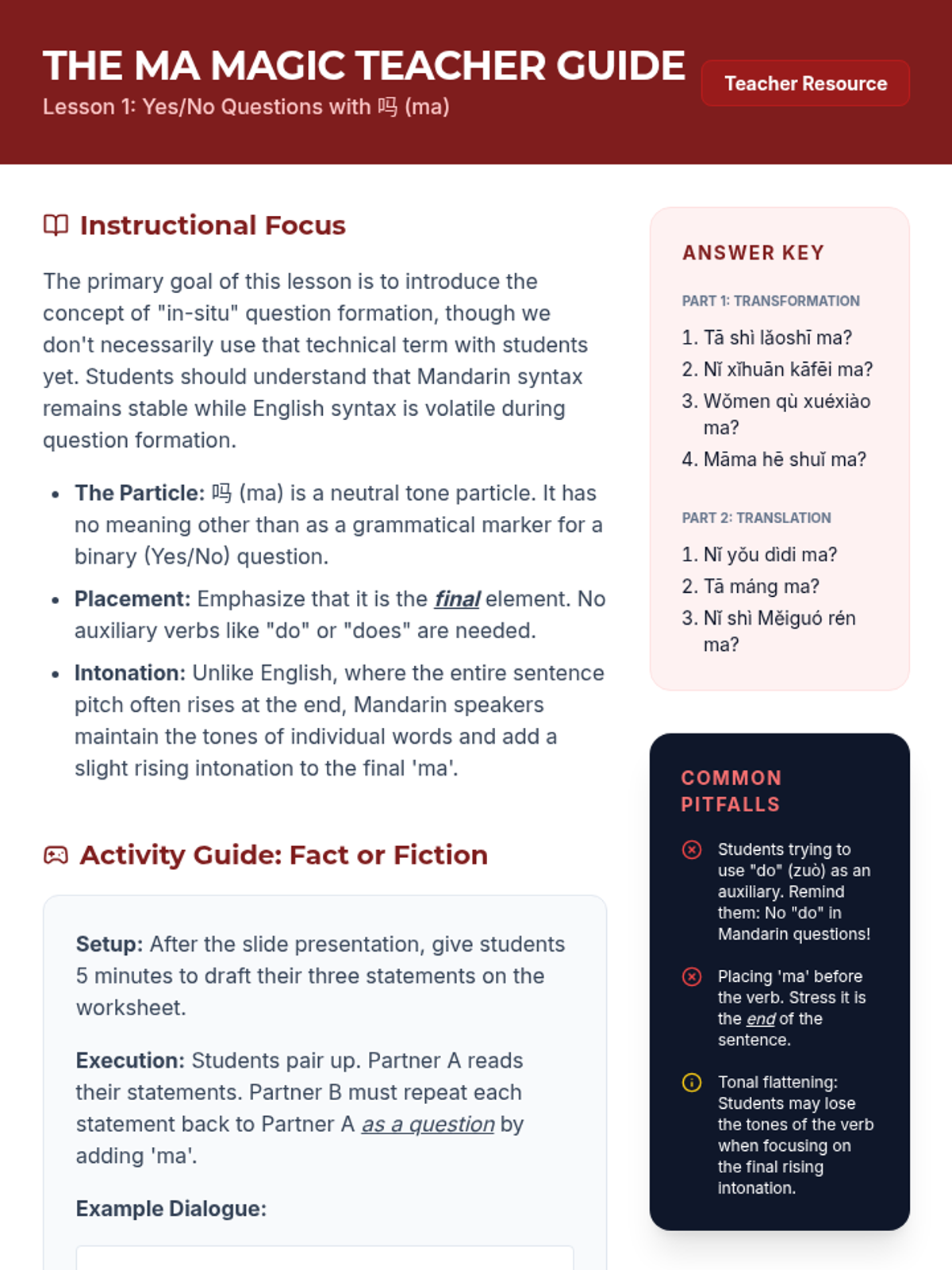
Students move from making statements to asking for information using the particle 'ma' and interrogative pronouns. The sequence emphasizes the simplicity of turning statements into questions in Mandarin compared to English auxiliary verbs. Learners engage in interview simulations and 'guess who' style games to practice inquiry strategies. By the end, students will confidently formulate yes/no questions and respond appropriately.
A comprehensive unit on Mandarin question formation, covering 'ma' particles, 'wh-' words in-situ, A-not-A structures, and the reciprocal 'ne' particle, culminating in a biographical interview project.
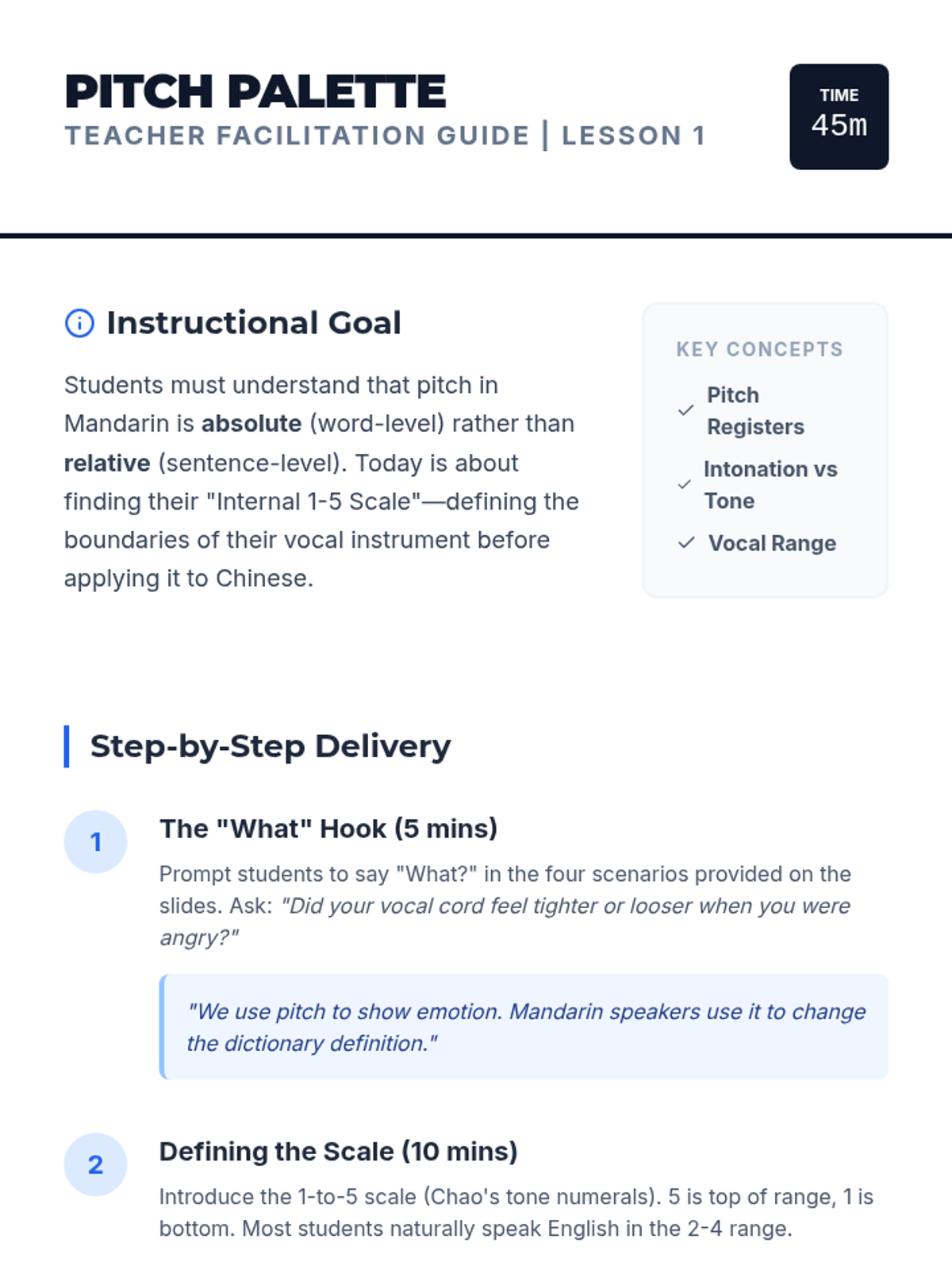
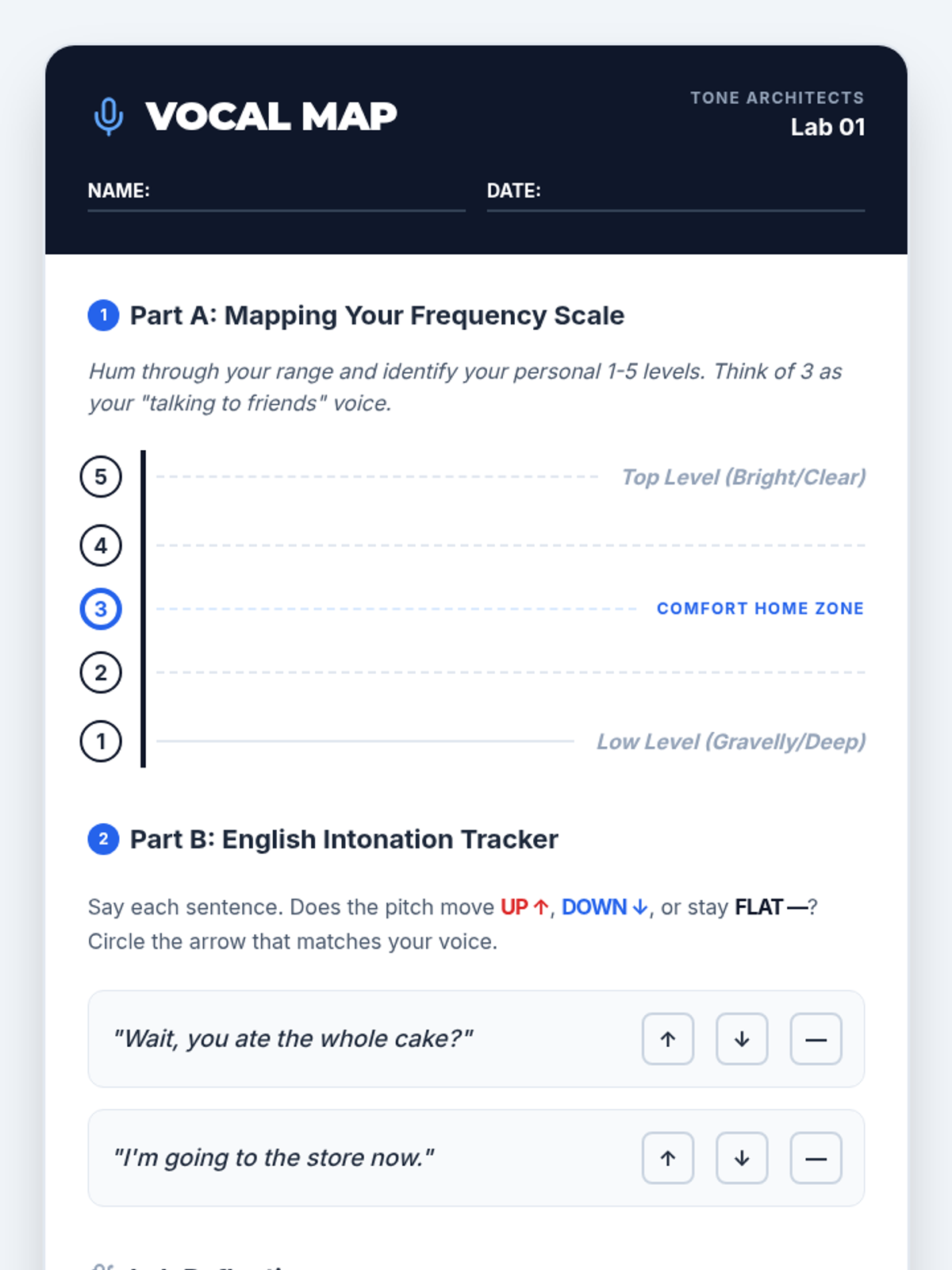
A somatic approach to Mandarin tones for 6th graders, connecting physical movement and body awareness to vocal pitch control. Students transition from recognizing pitch in English to 'conducting' their own Mandarin tone production.
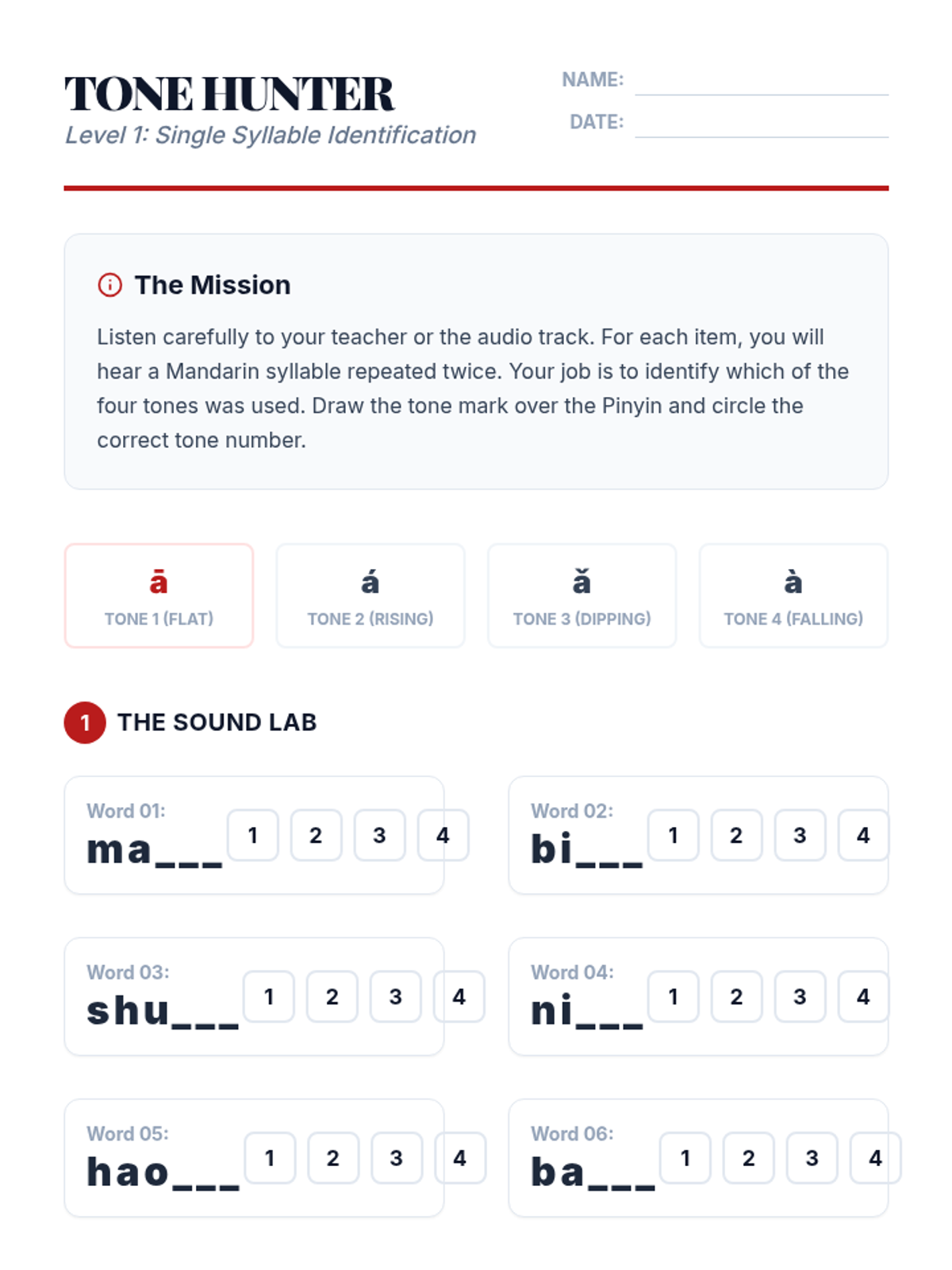
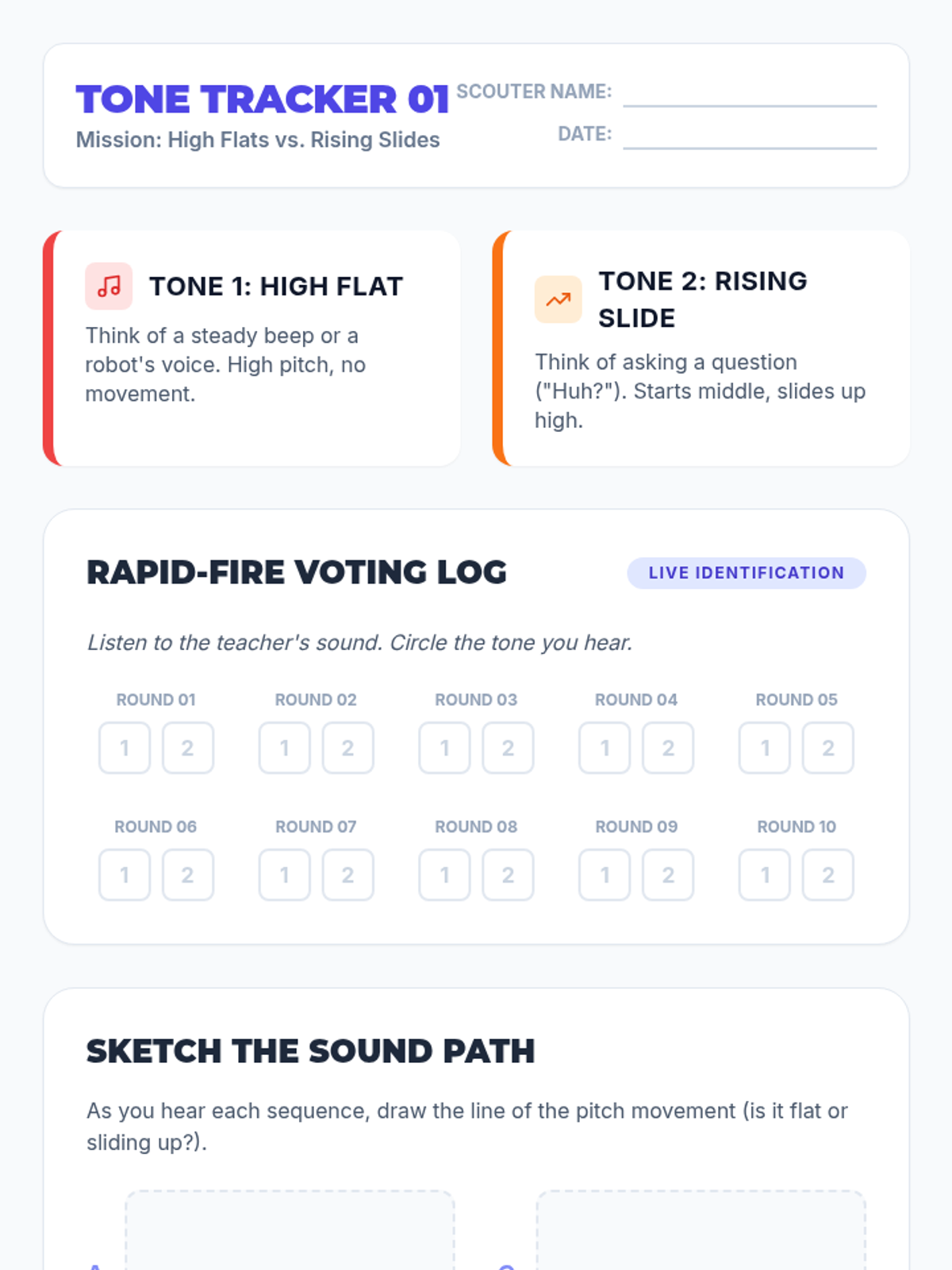
A comprehensive ear-training sequence for 6th-grade Mandarin beginners, focusing on auditory discrimination of the four Mandarin tones through games, simulations, and rapid-fire identification tasks.
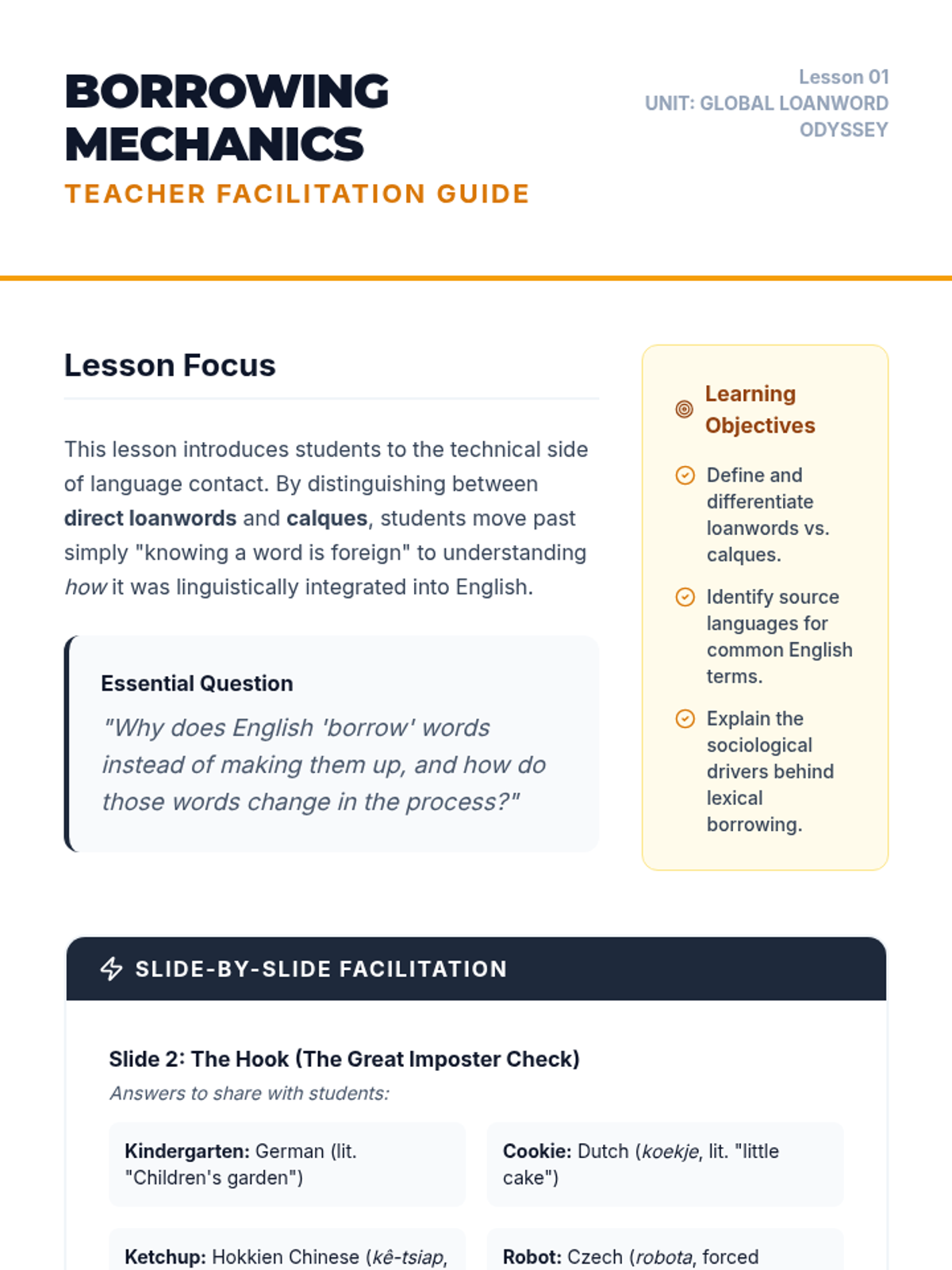
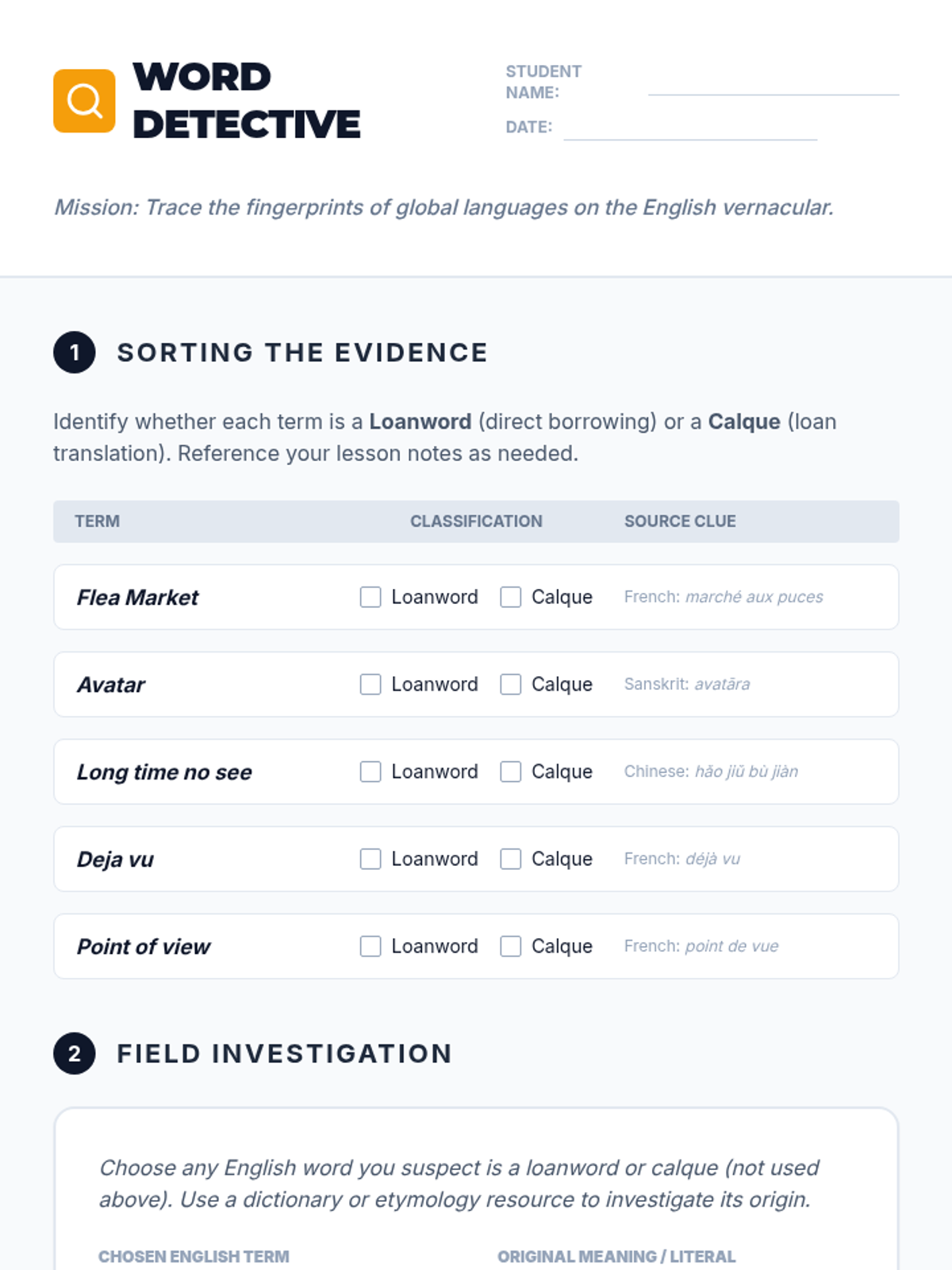
A linguistic and sociological exploration of how English absorbs and adapts words from diverse global sources, focusing on etymology, cultural exchange, and the evolution of language.
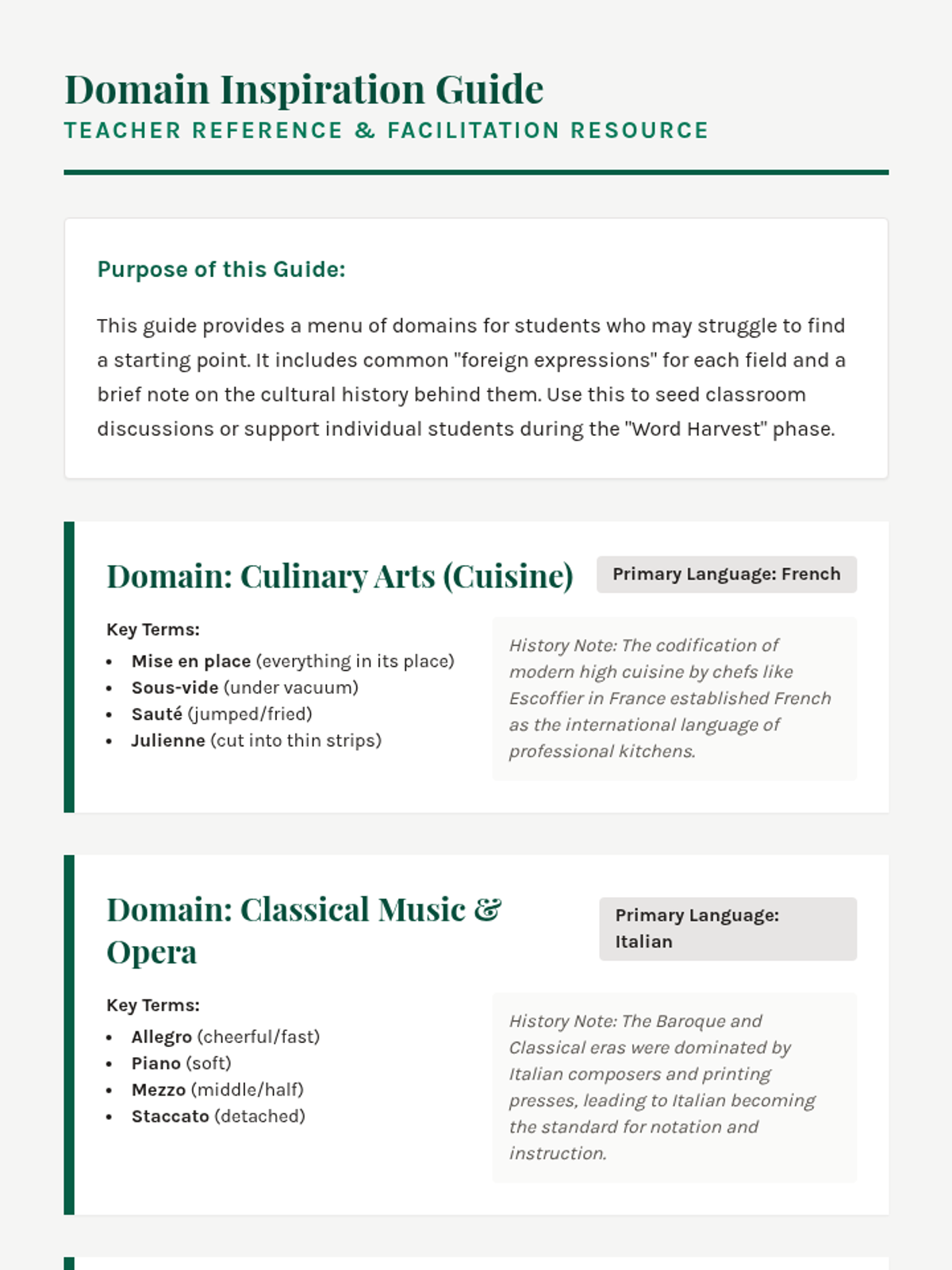
Students act as linguistic anthropologists creating a specialized 'Field Guide to Foreign Expressions' for a chosen professional or cultural domain. They investigate the etymology, usage, and visual representation of foreign terminology to explain their chosen field's linguistic history to a lay audience.
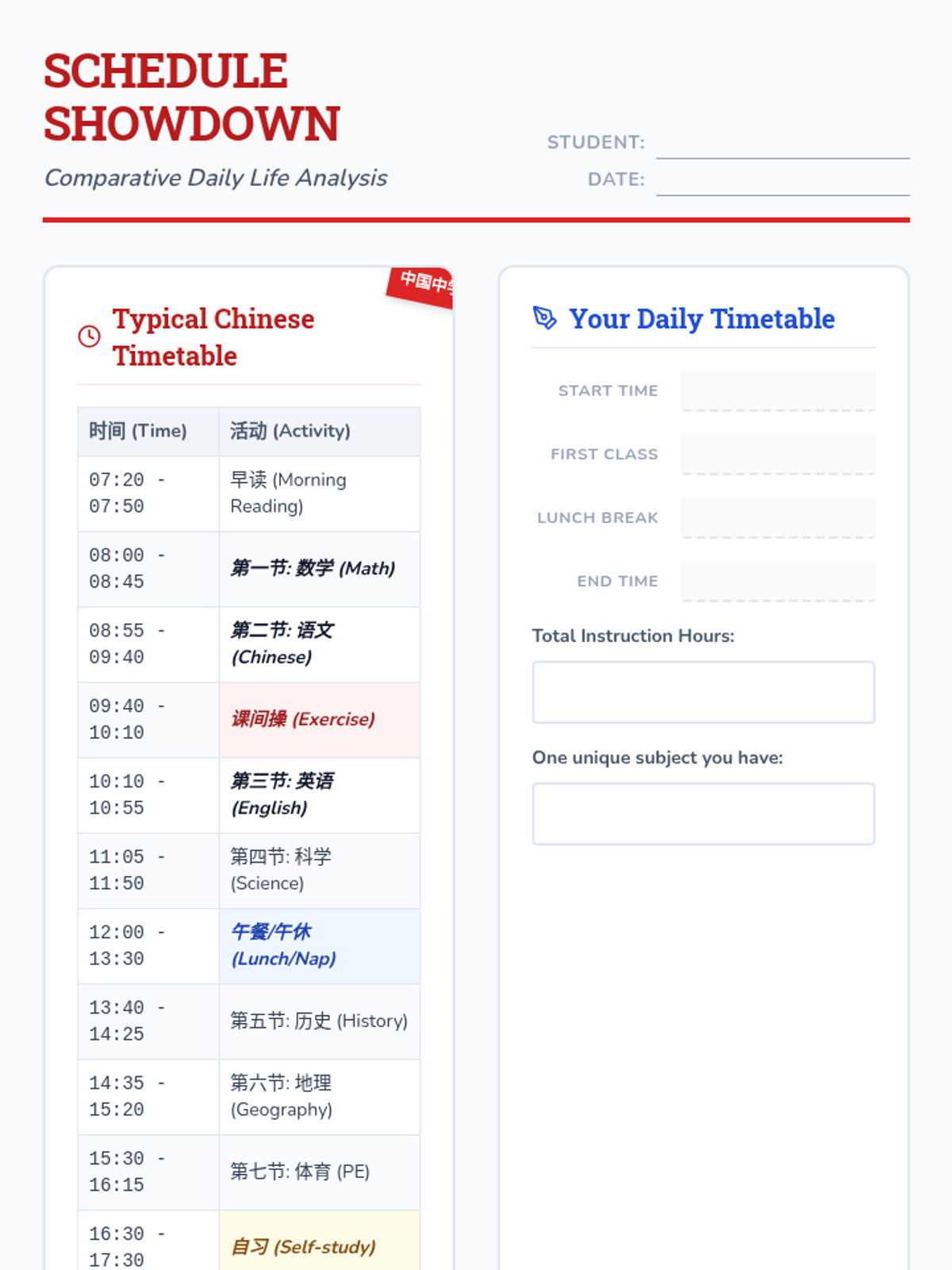
A comprehensive 5-lesson sequence for intermediate Mandarin students to compare the daily lives and educational systems of Chinese and American middle schoolers through authentic-style reading materials.
Students explore Chinese social interaction, focusing on 'face', hierarchy, and politeness strategies. Through simulations, they practice greetings, gift-giving, dining, and hospitality, connecting modern behaviors to Confucian ideals.