Phonetic foundations through Pinyin and tones, character recognition, and essential grammar for all proficiency levels. Integrates cultural context with advanced reading, writing, and communicative strategies.
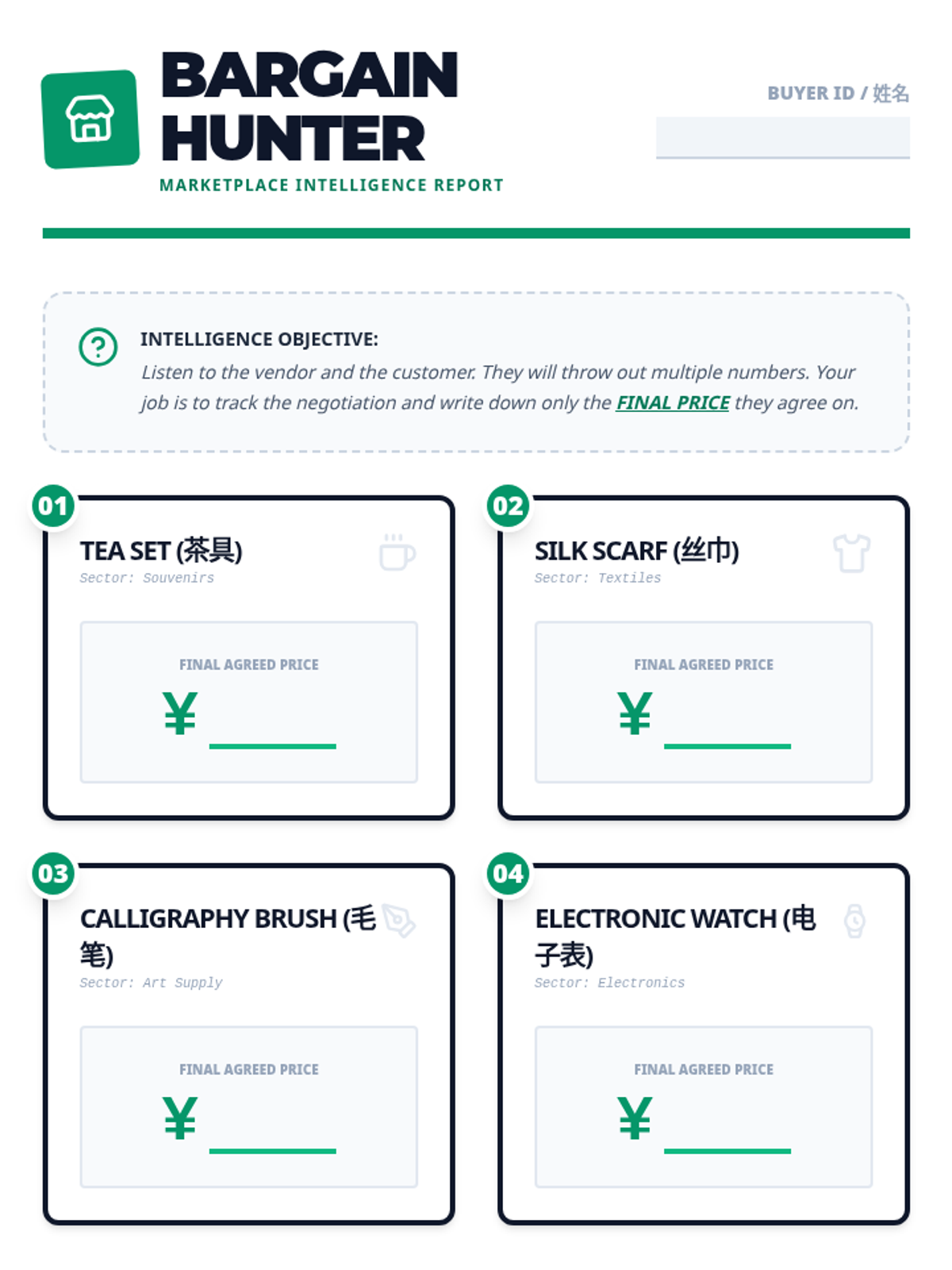
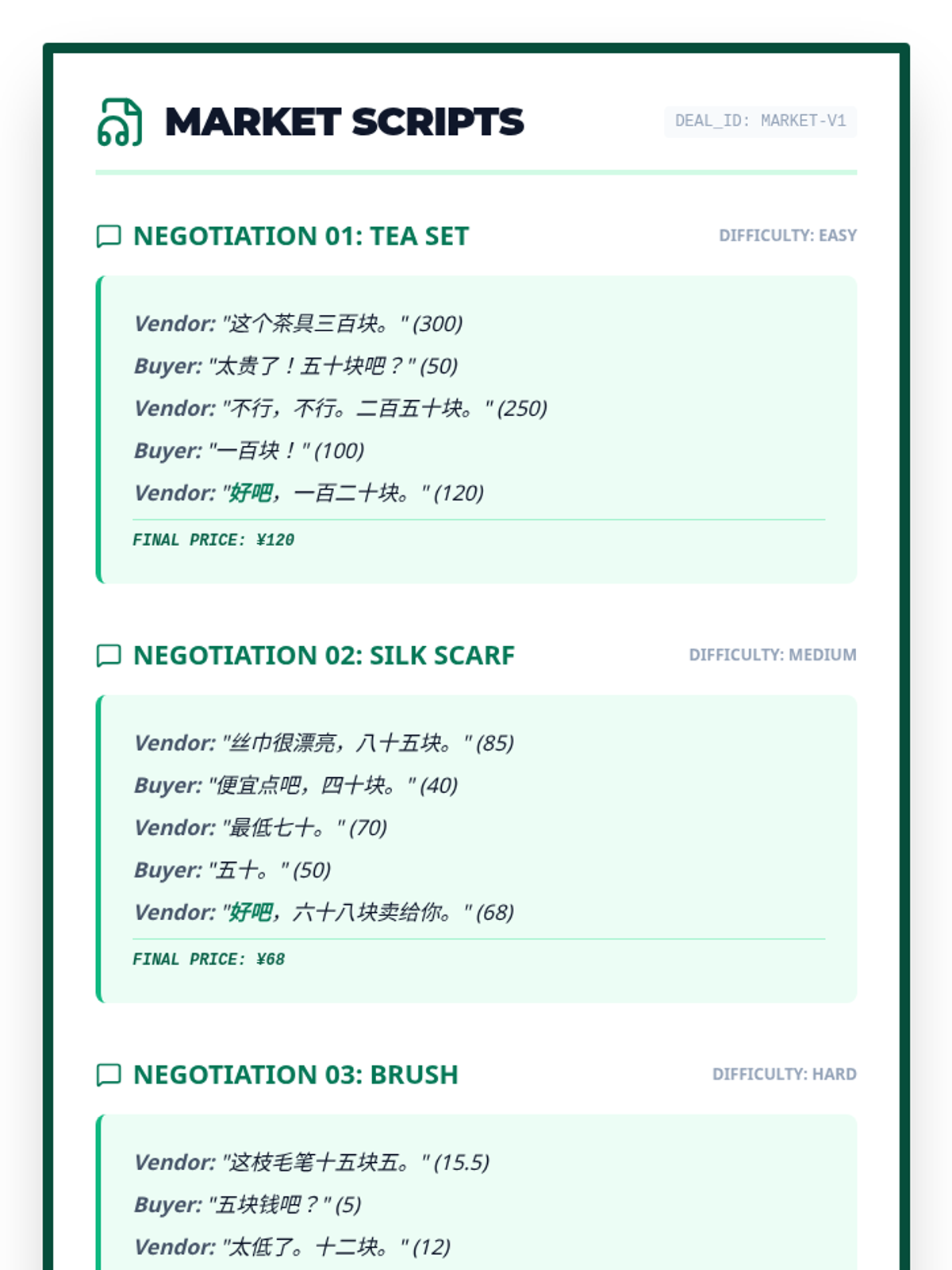
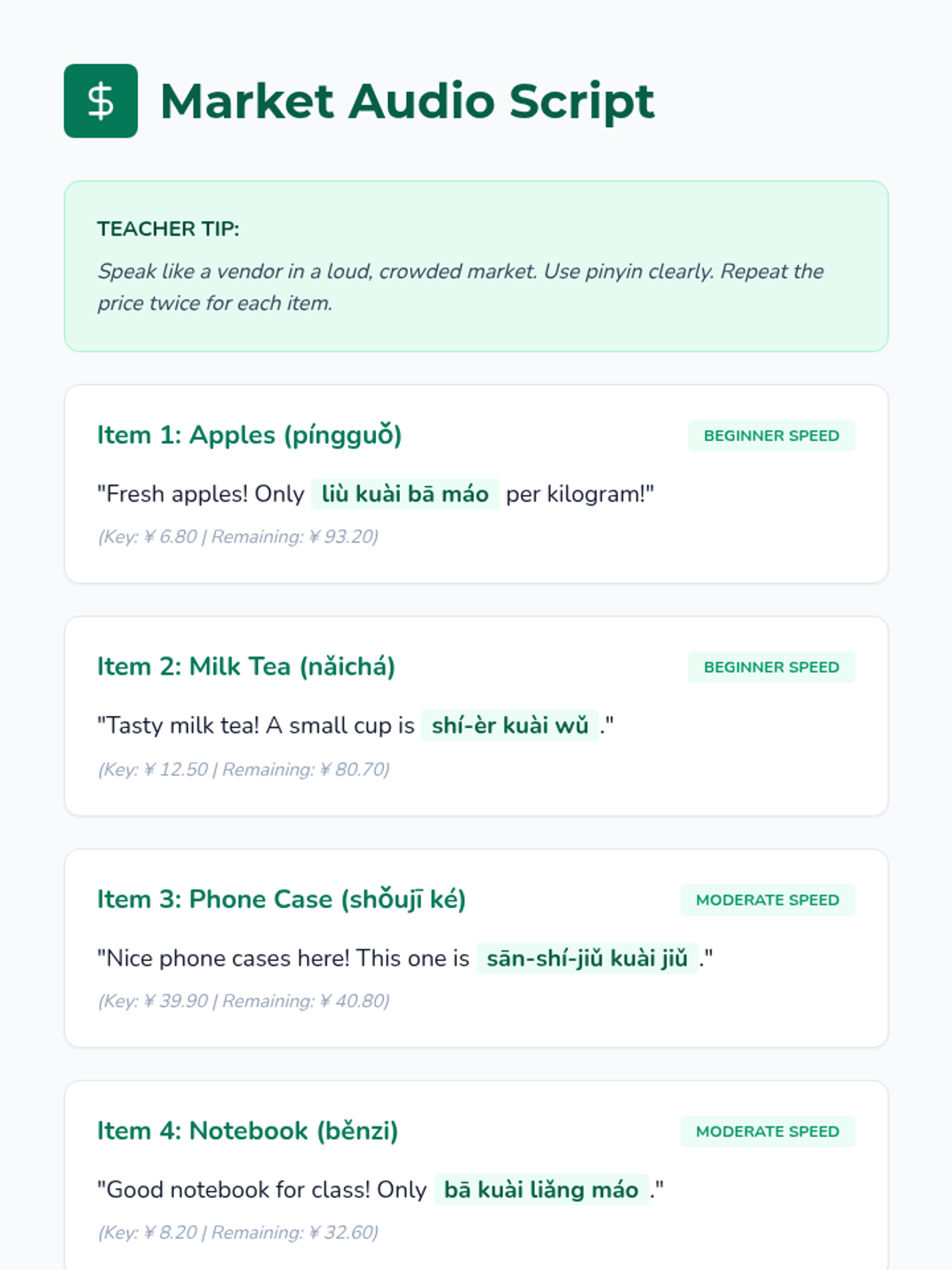
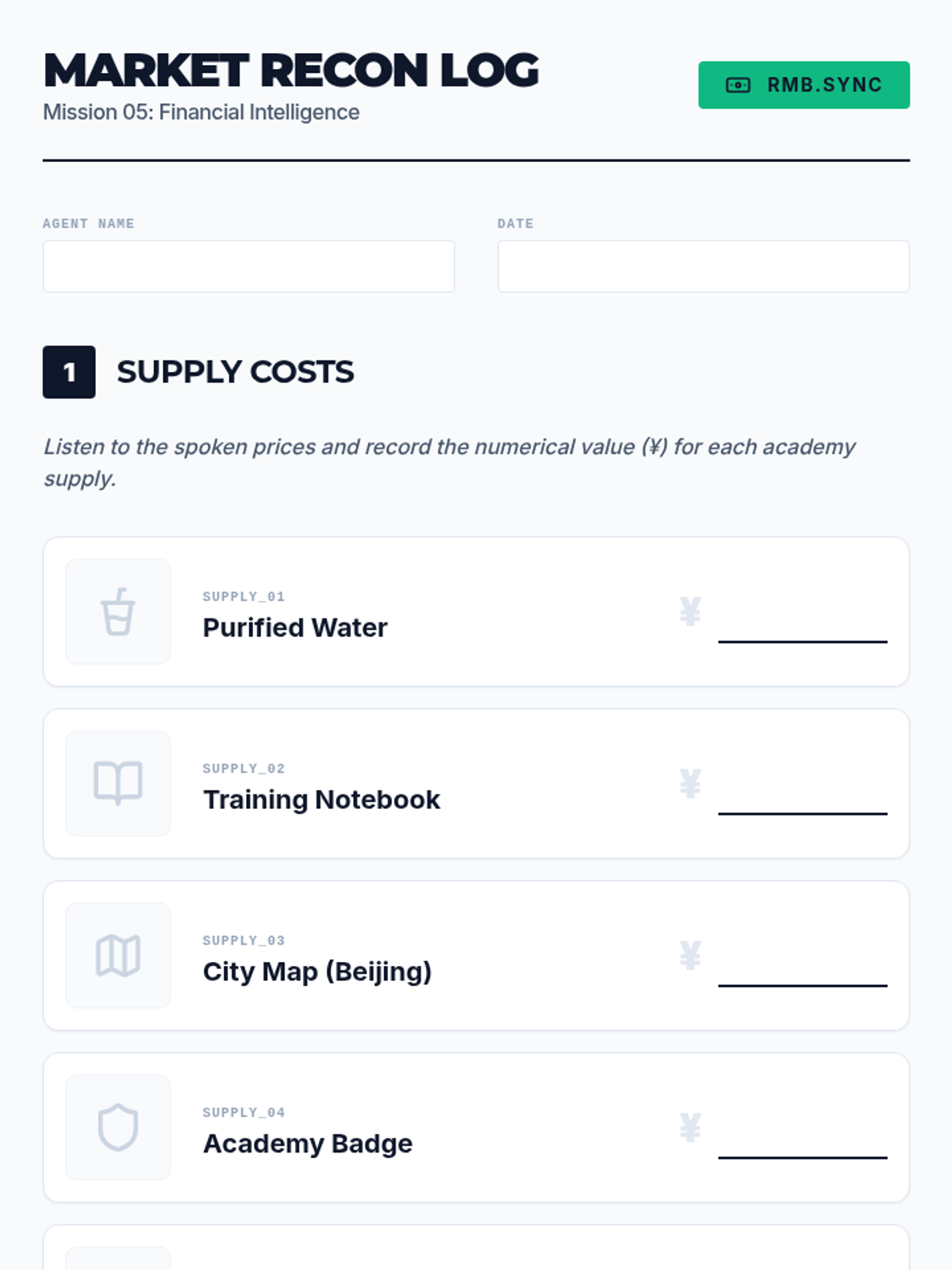
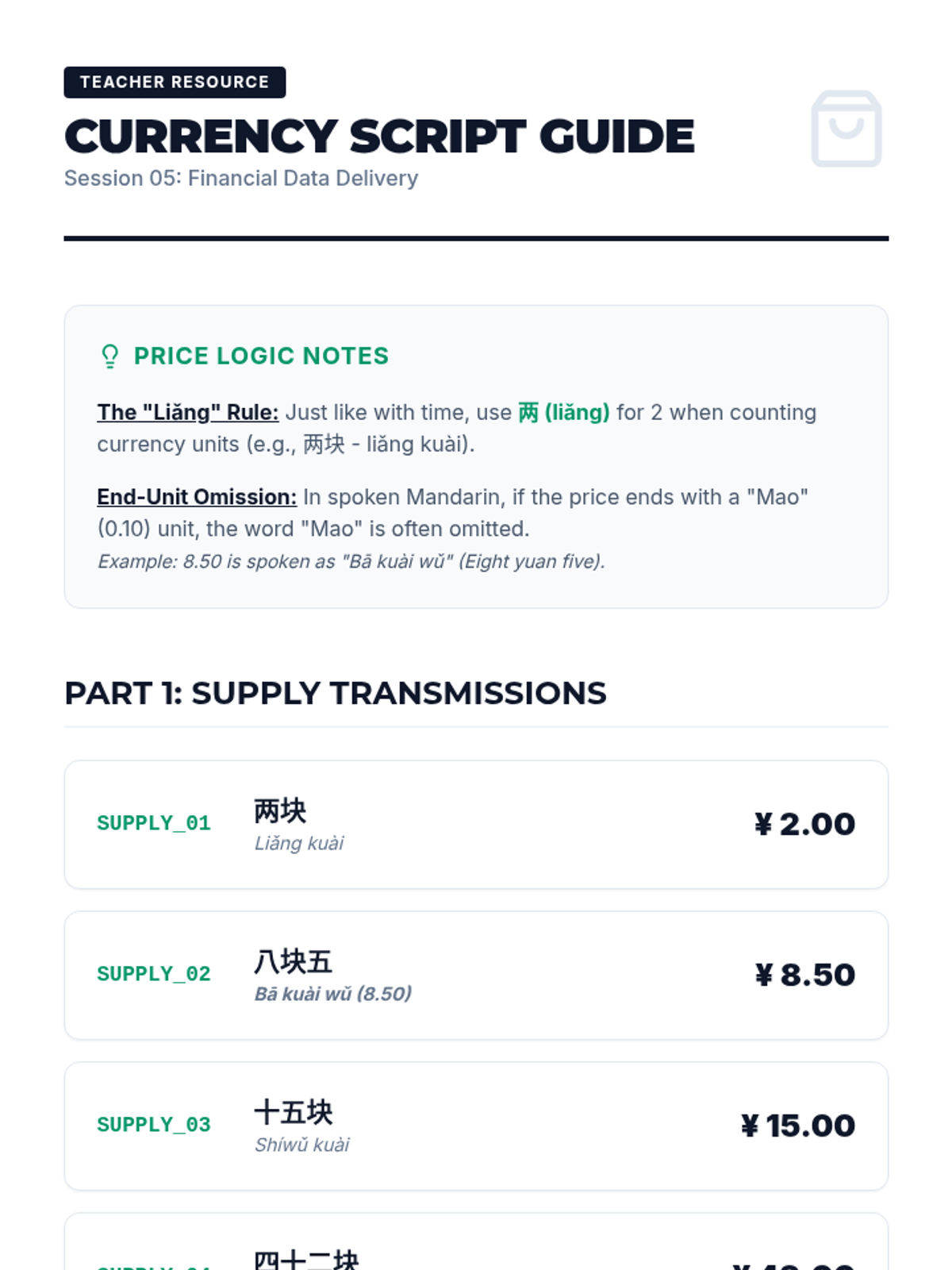
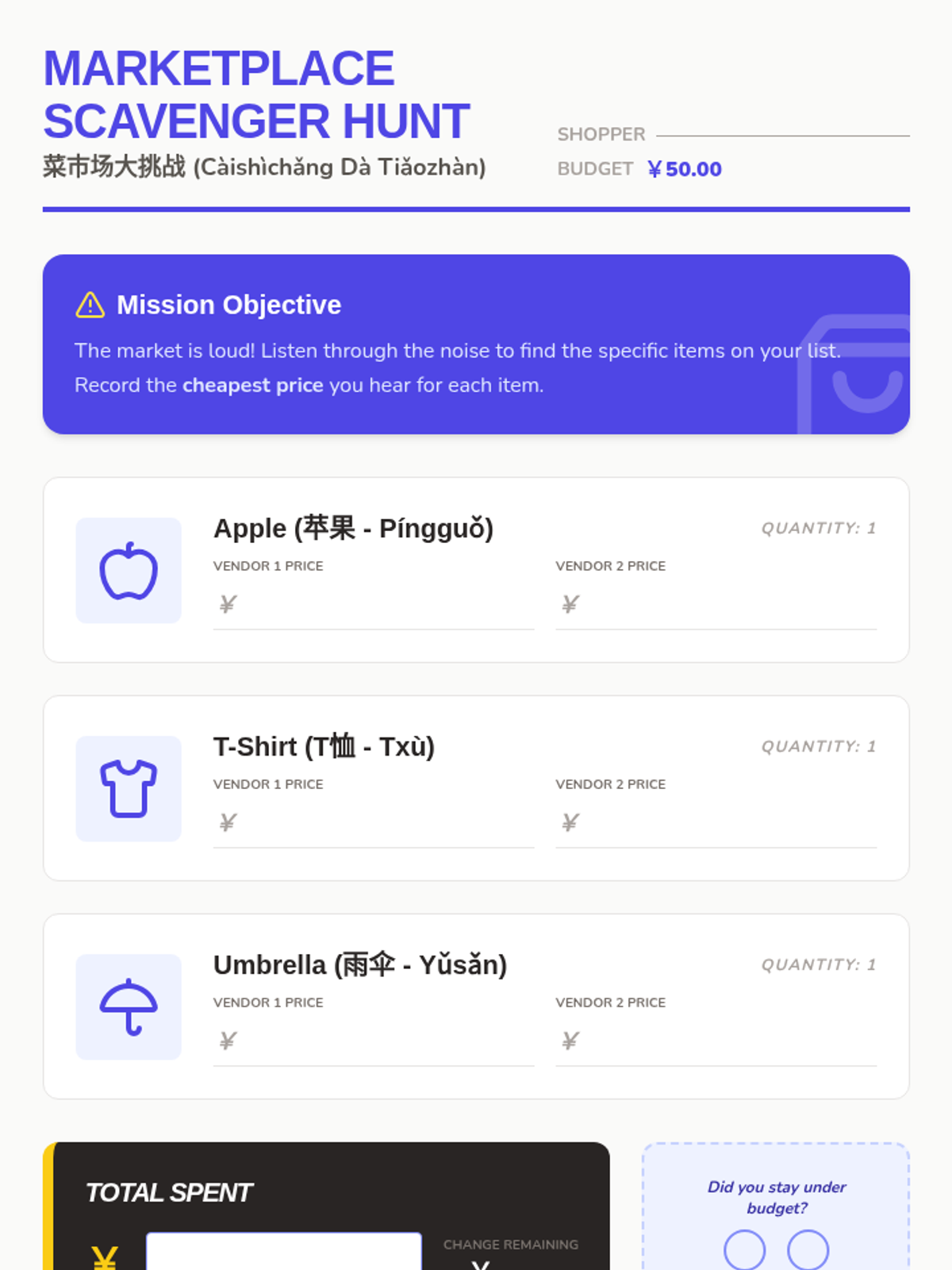
Focuses on currency (yuan, kuai, mao) and the linguistic nuances of haggling. Students track price negotiations in a marketplace setting to identify final agreed costs.
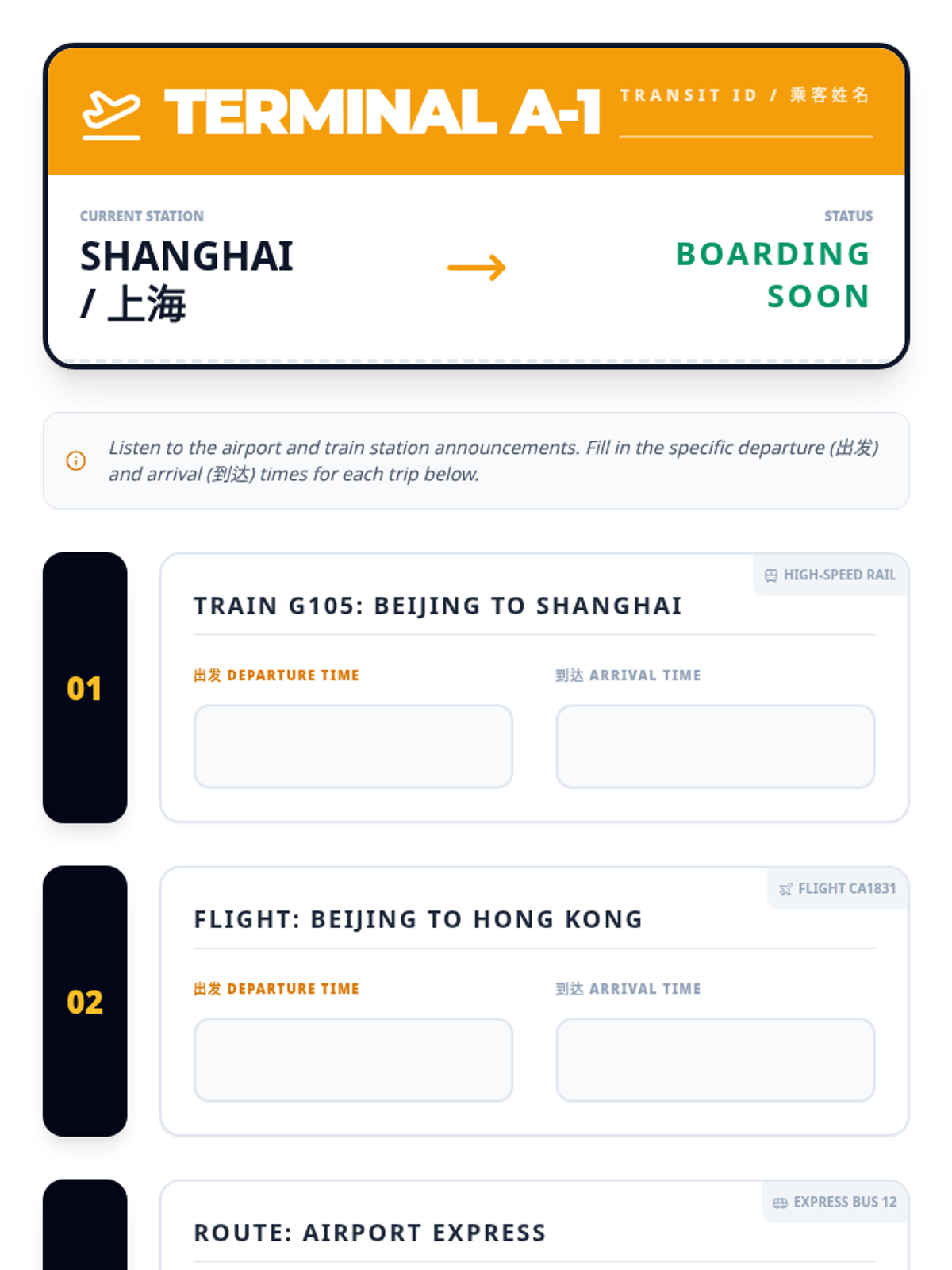
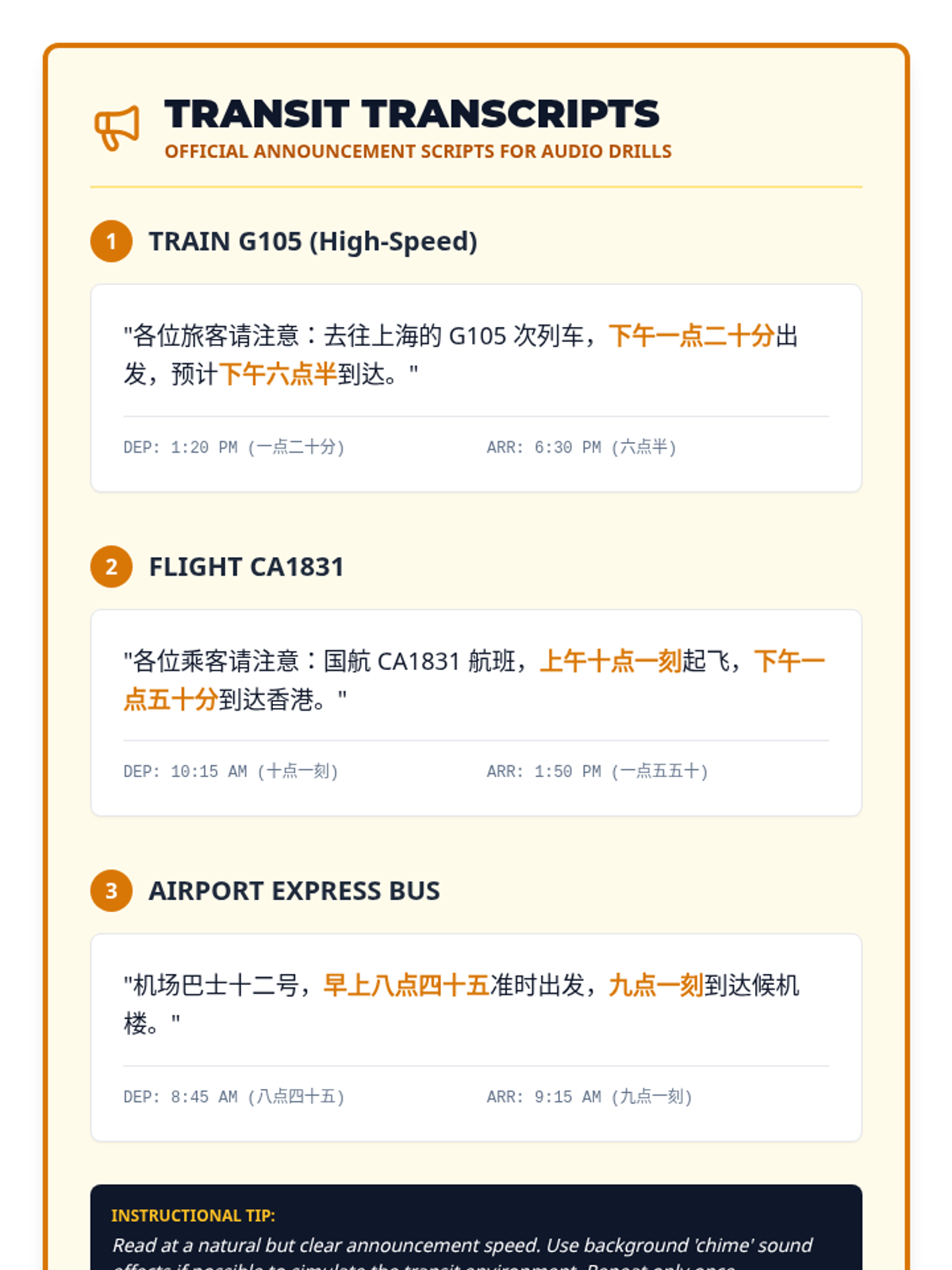
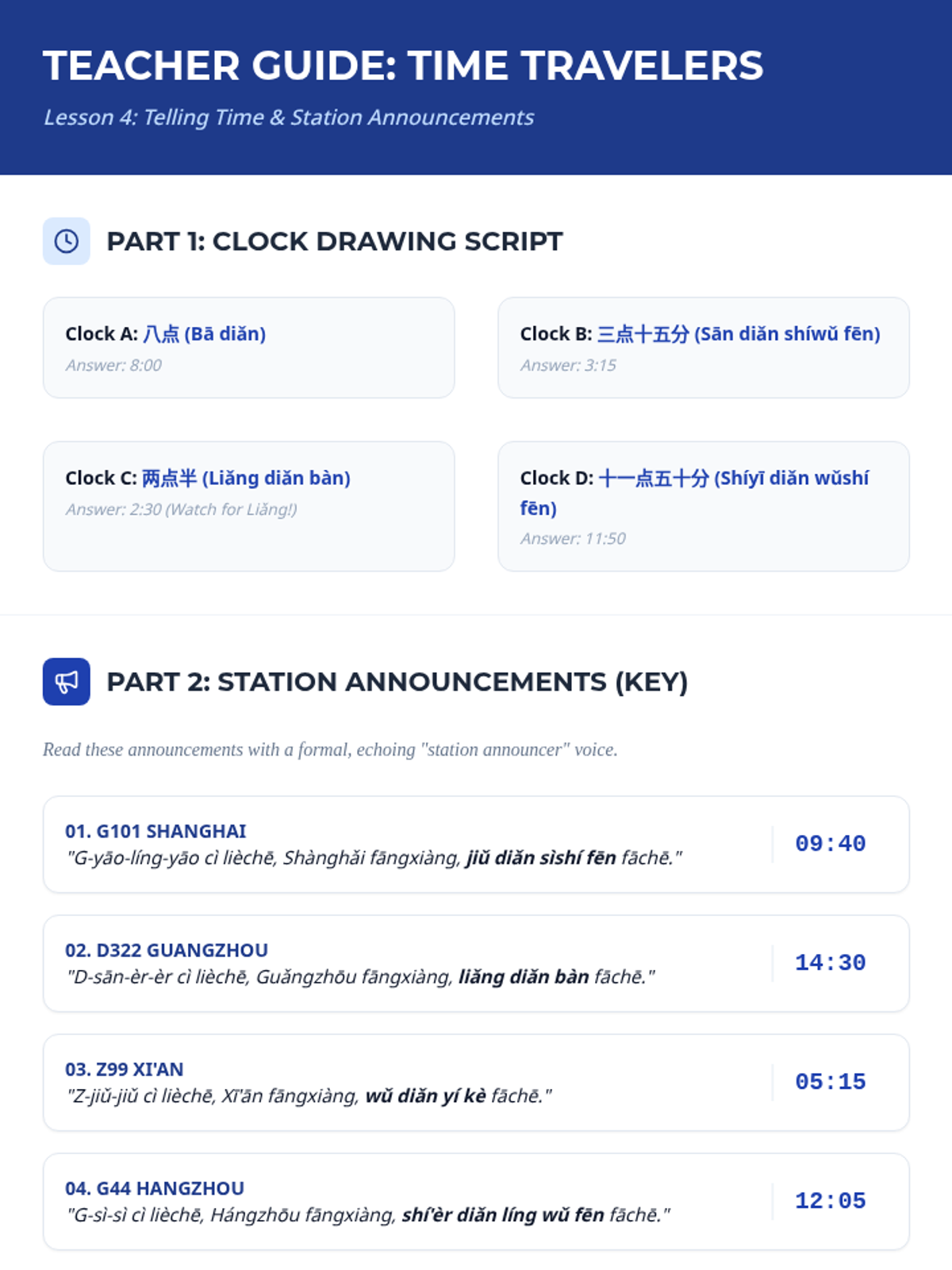
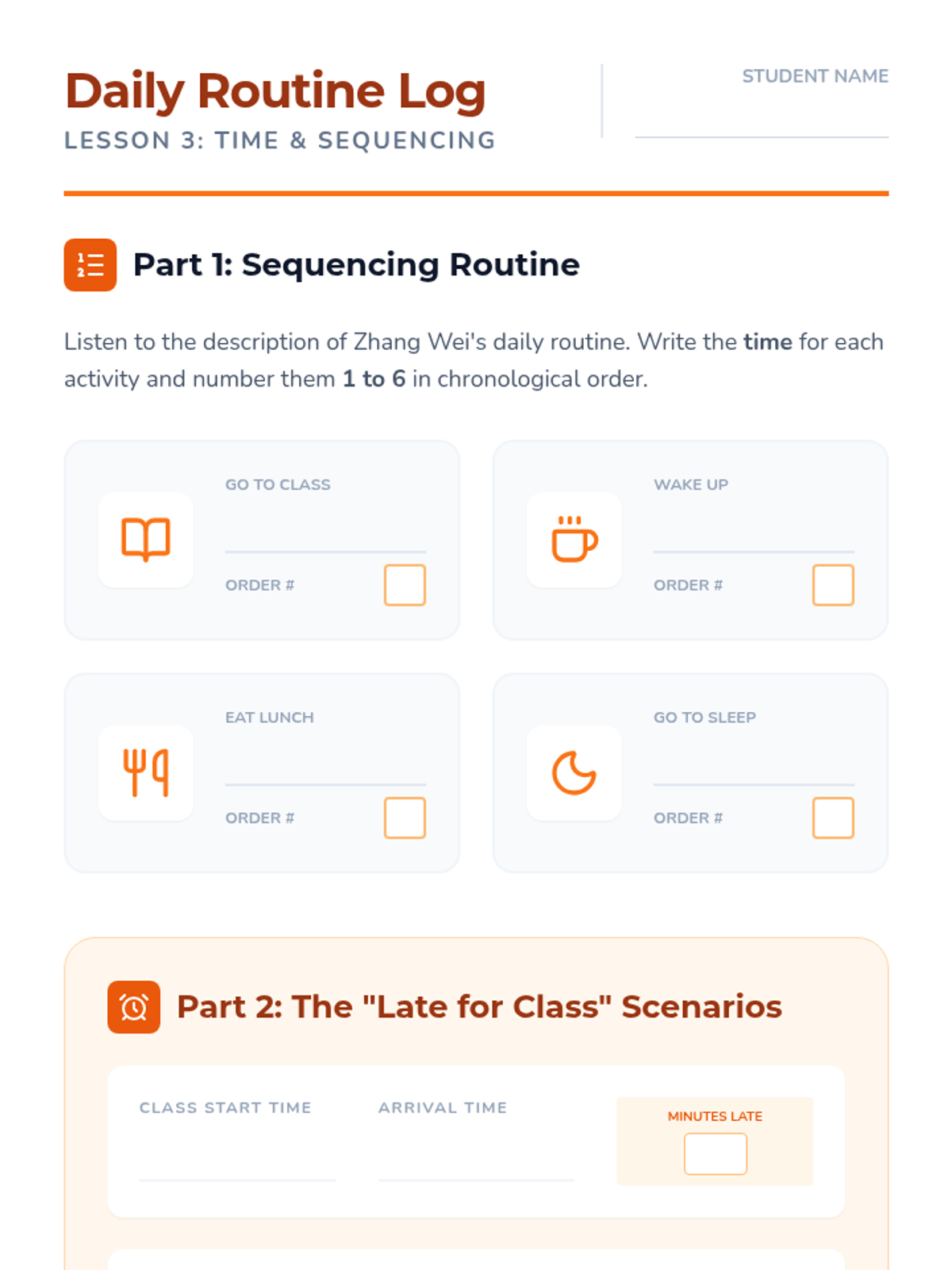
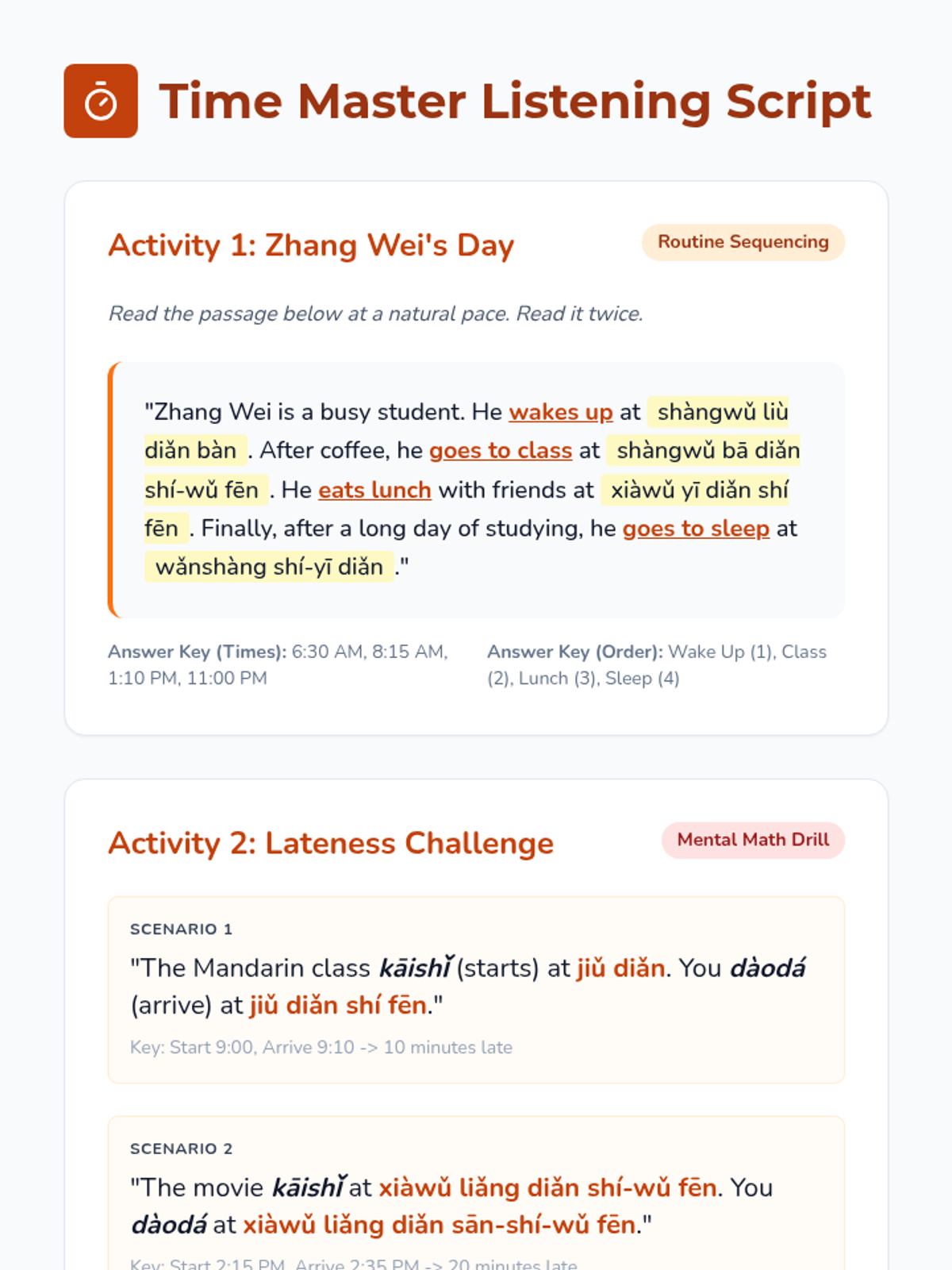
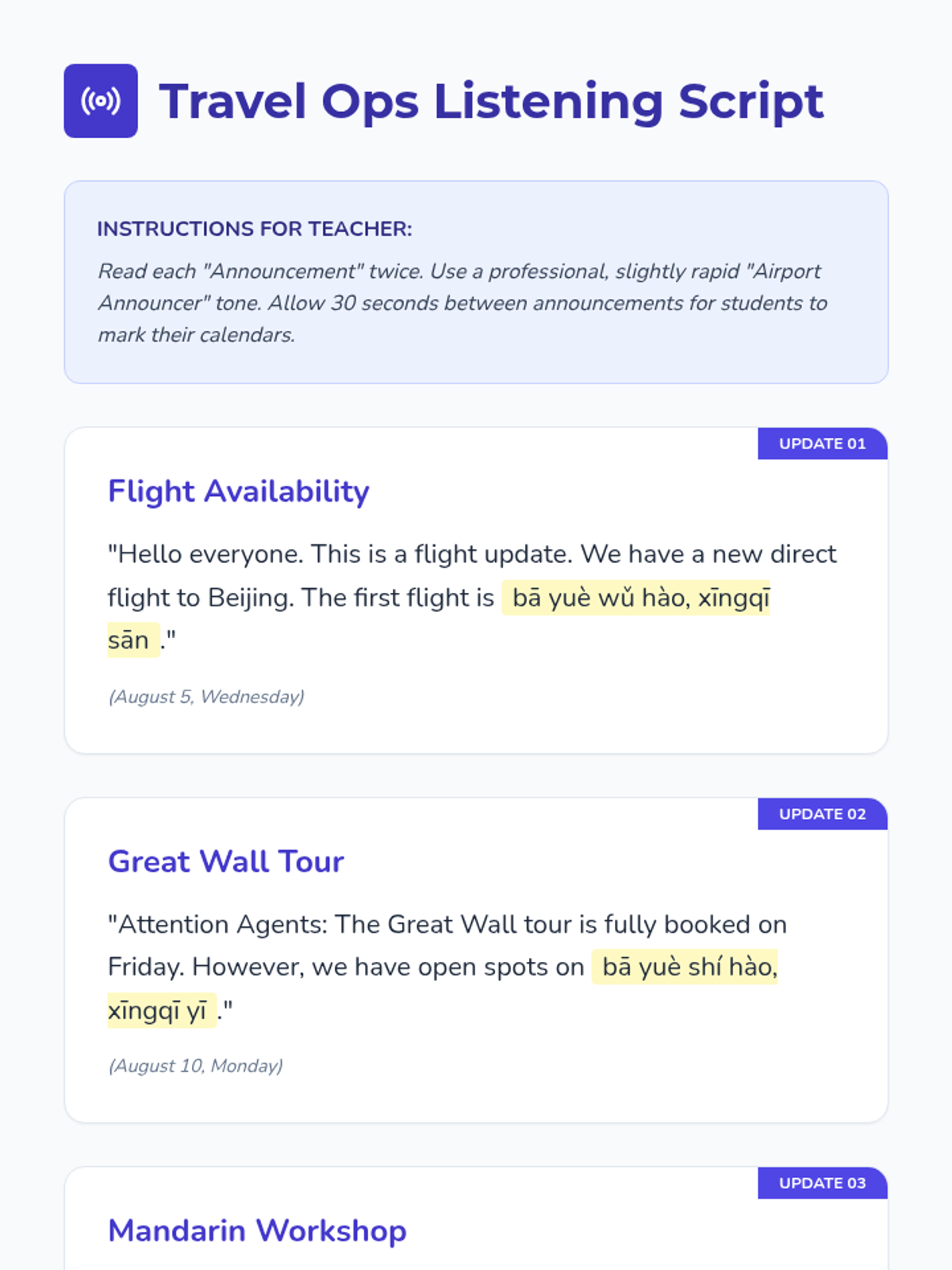
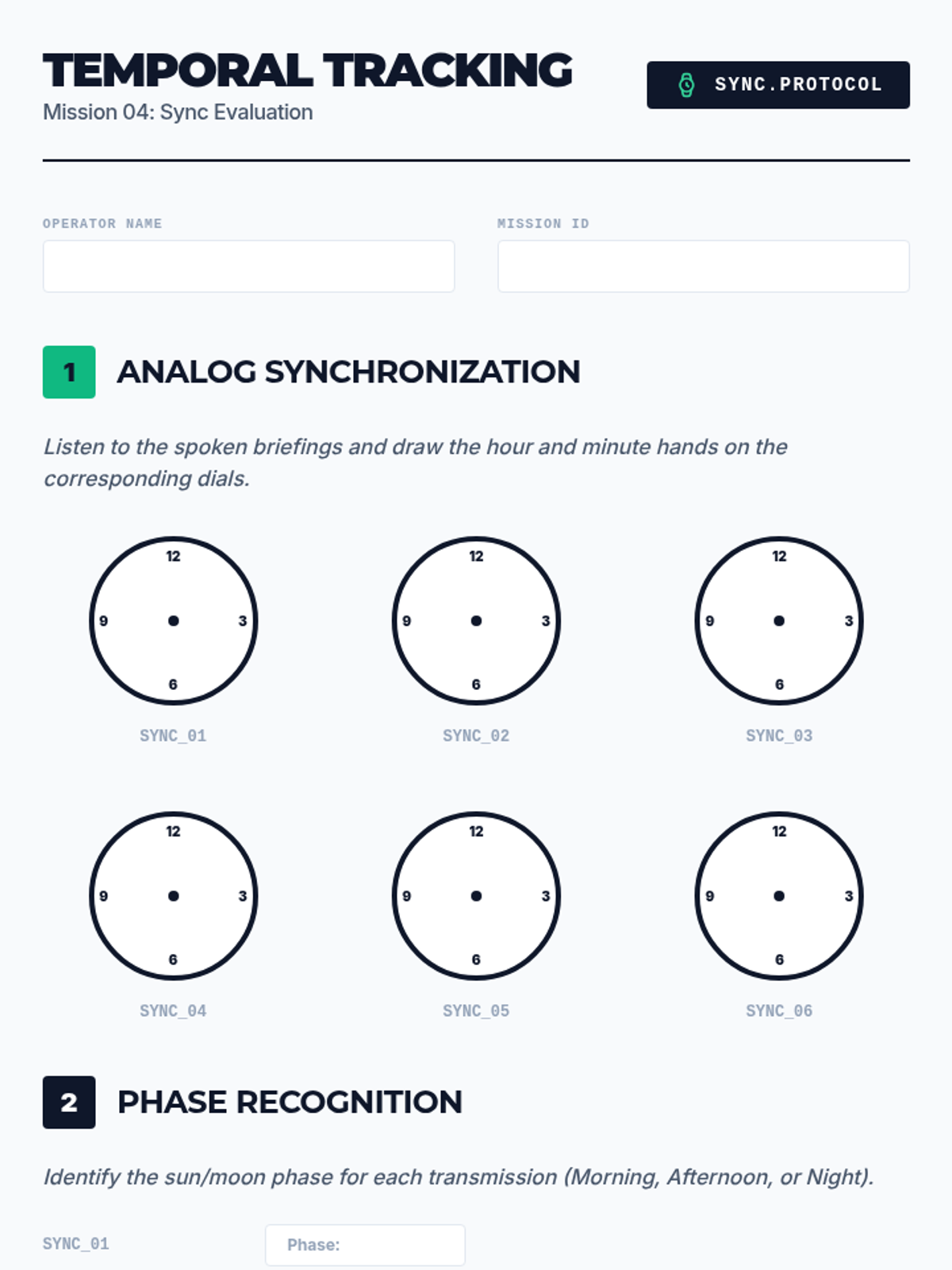
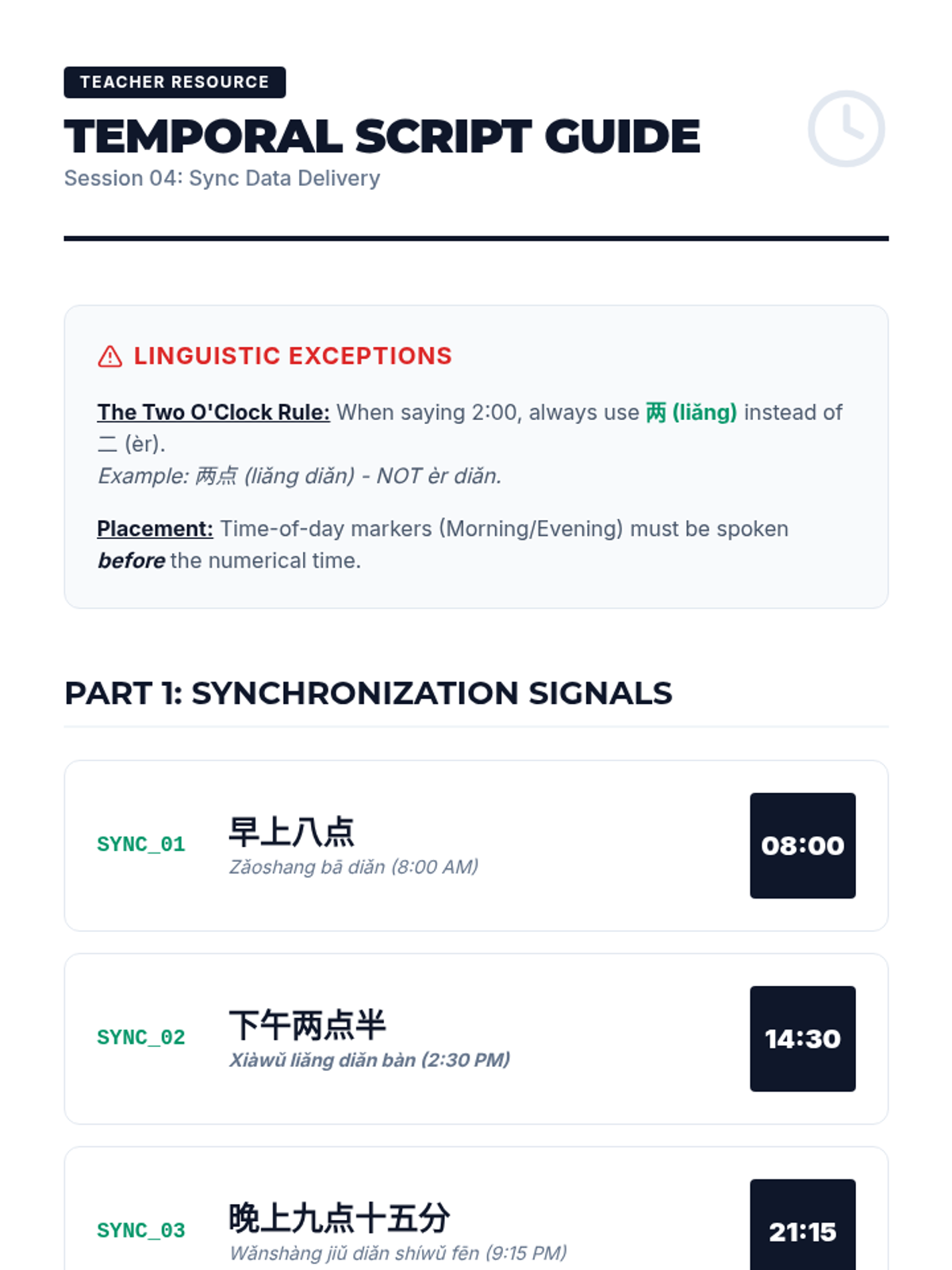
Covers clock times including 'half past' and 'quarter to'. Students audit transit announcements to extract specific departure and arrival data under time pressure.
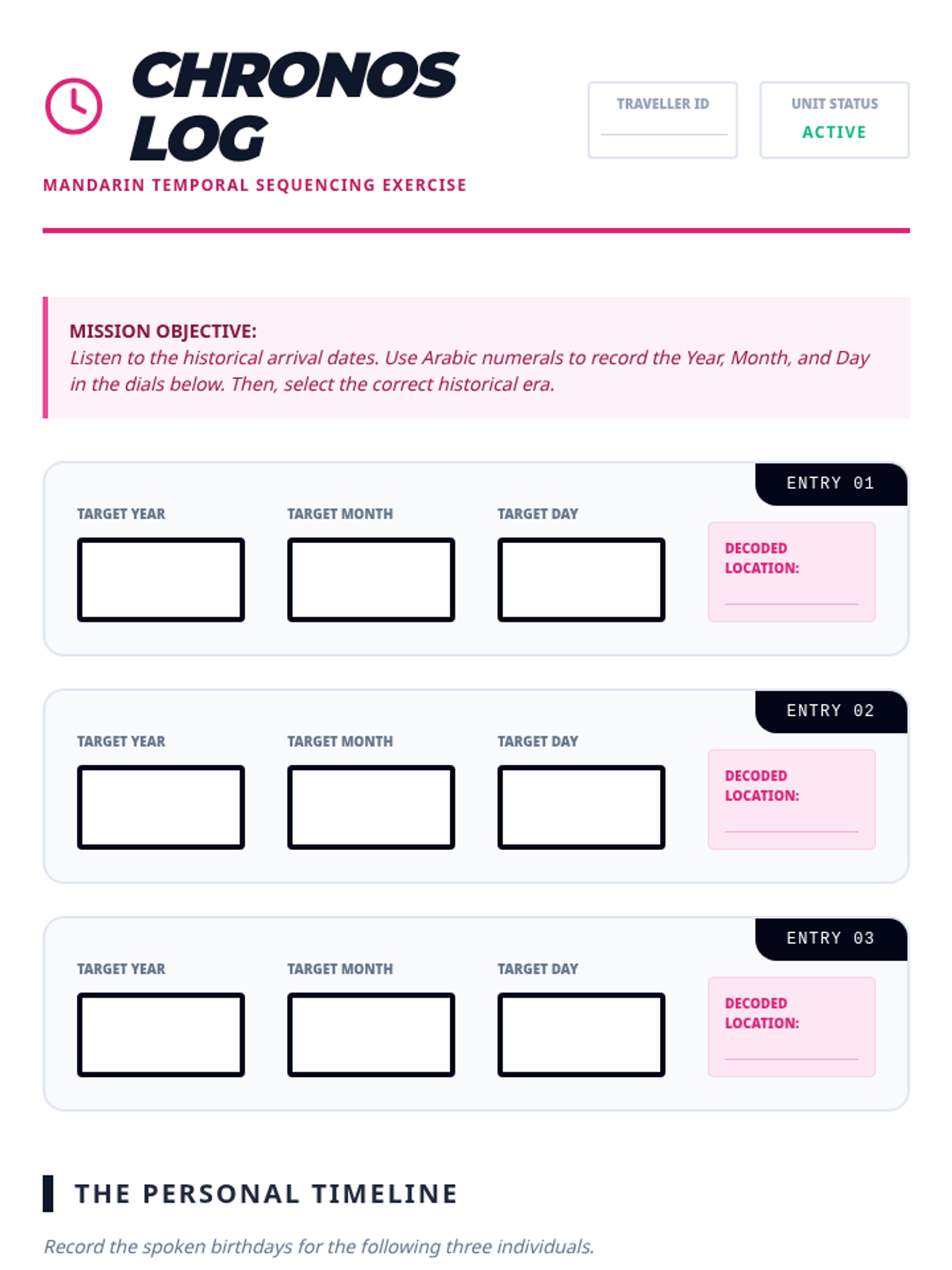
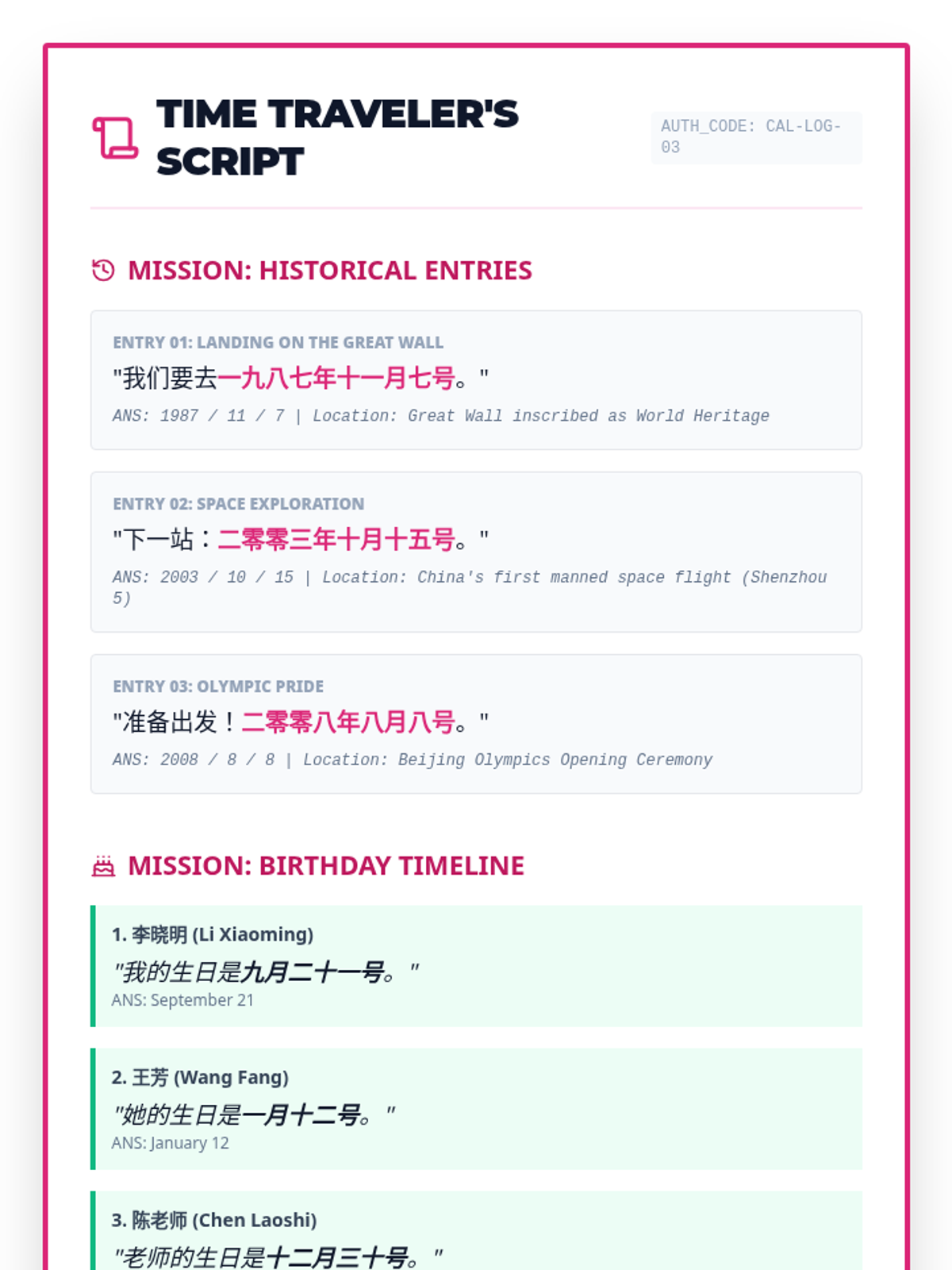
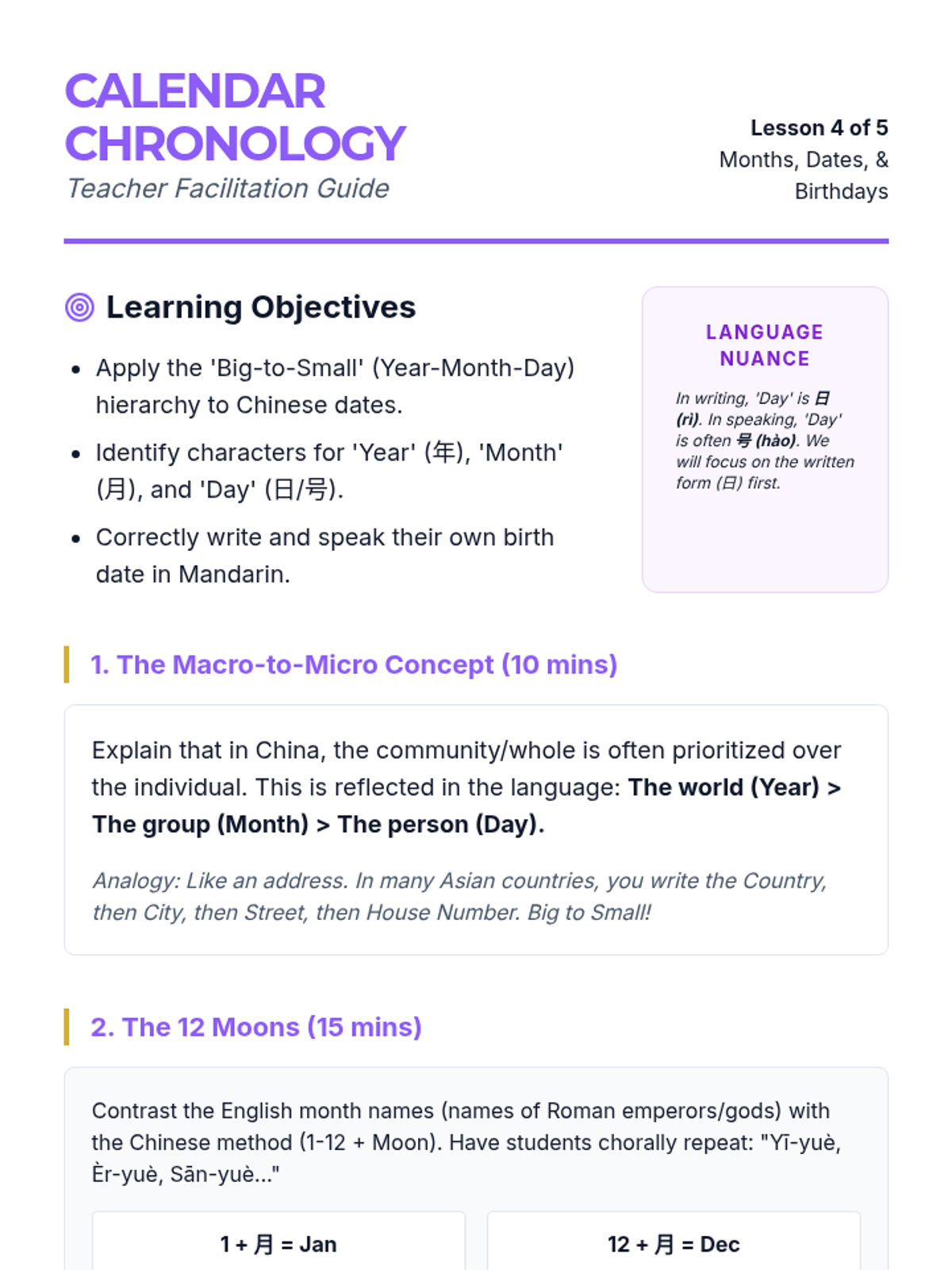
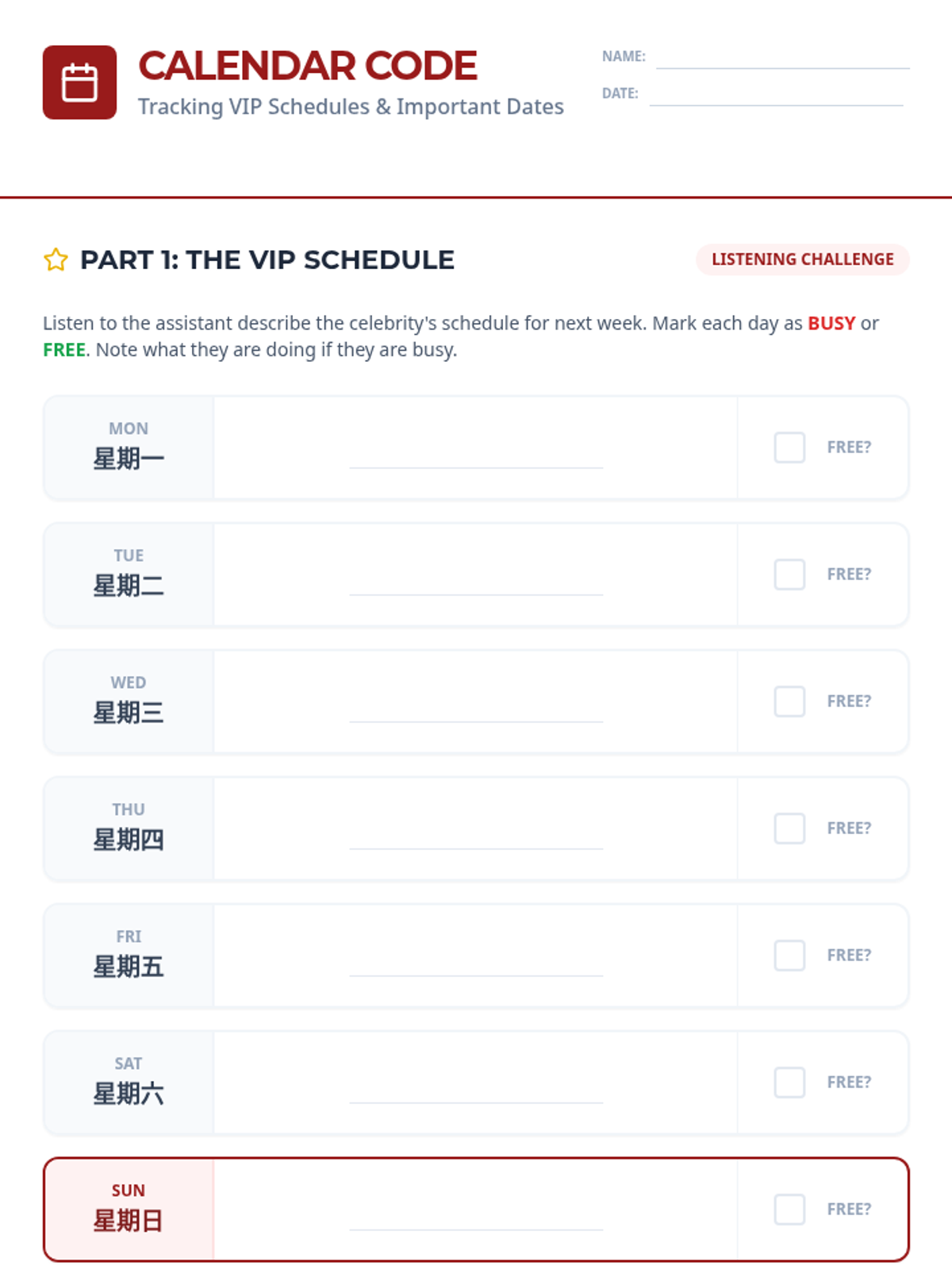
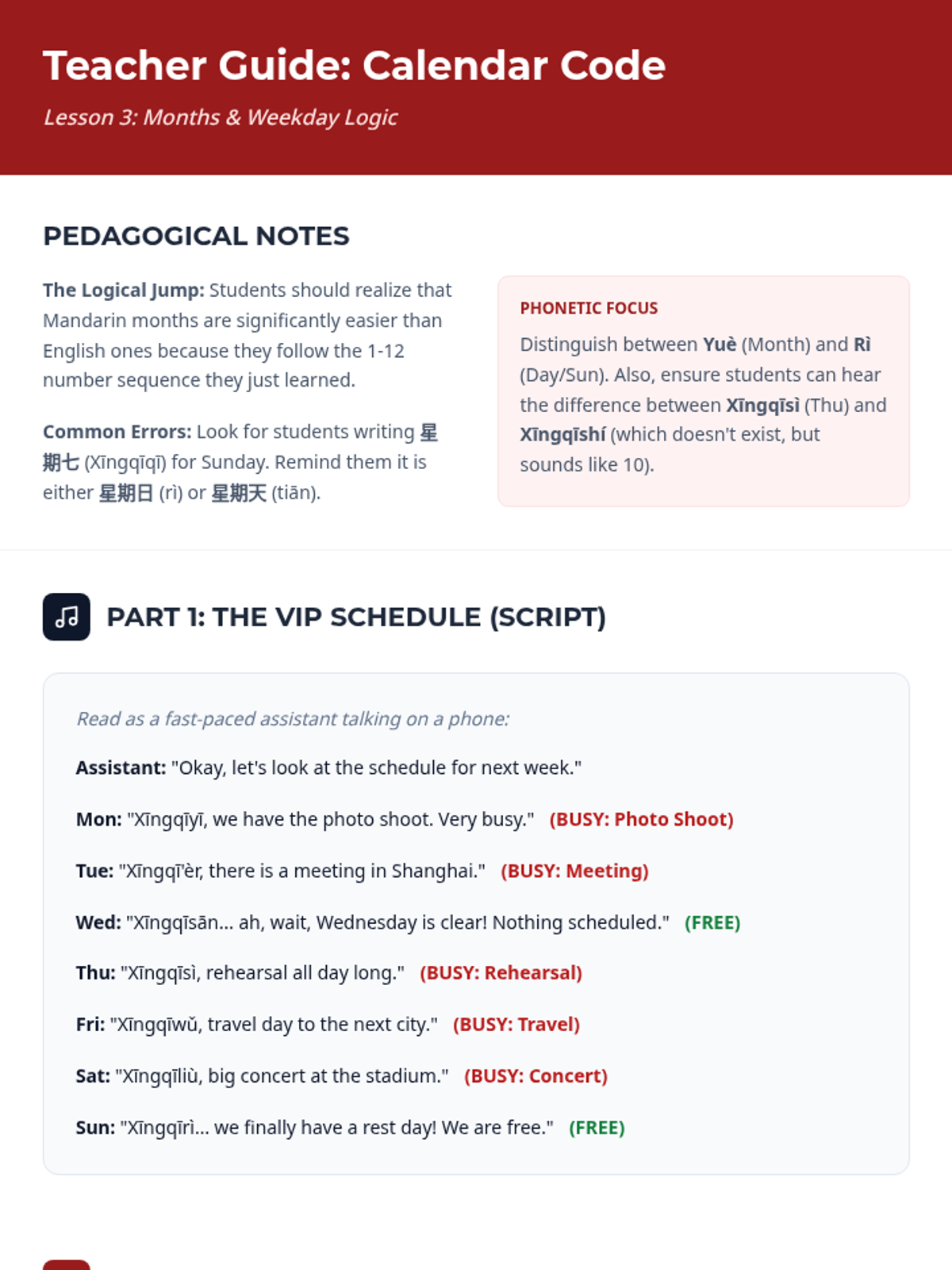
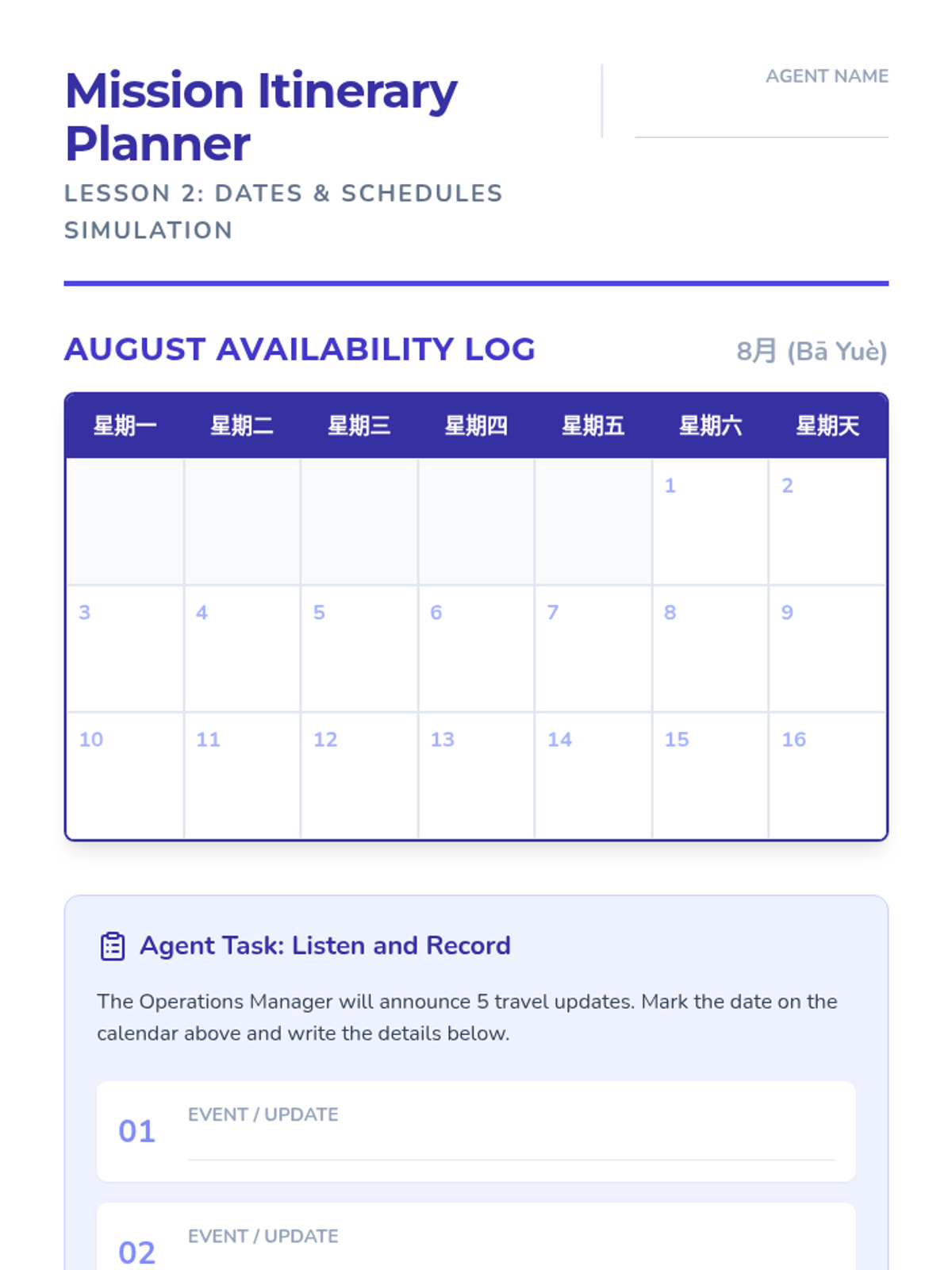
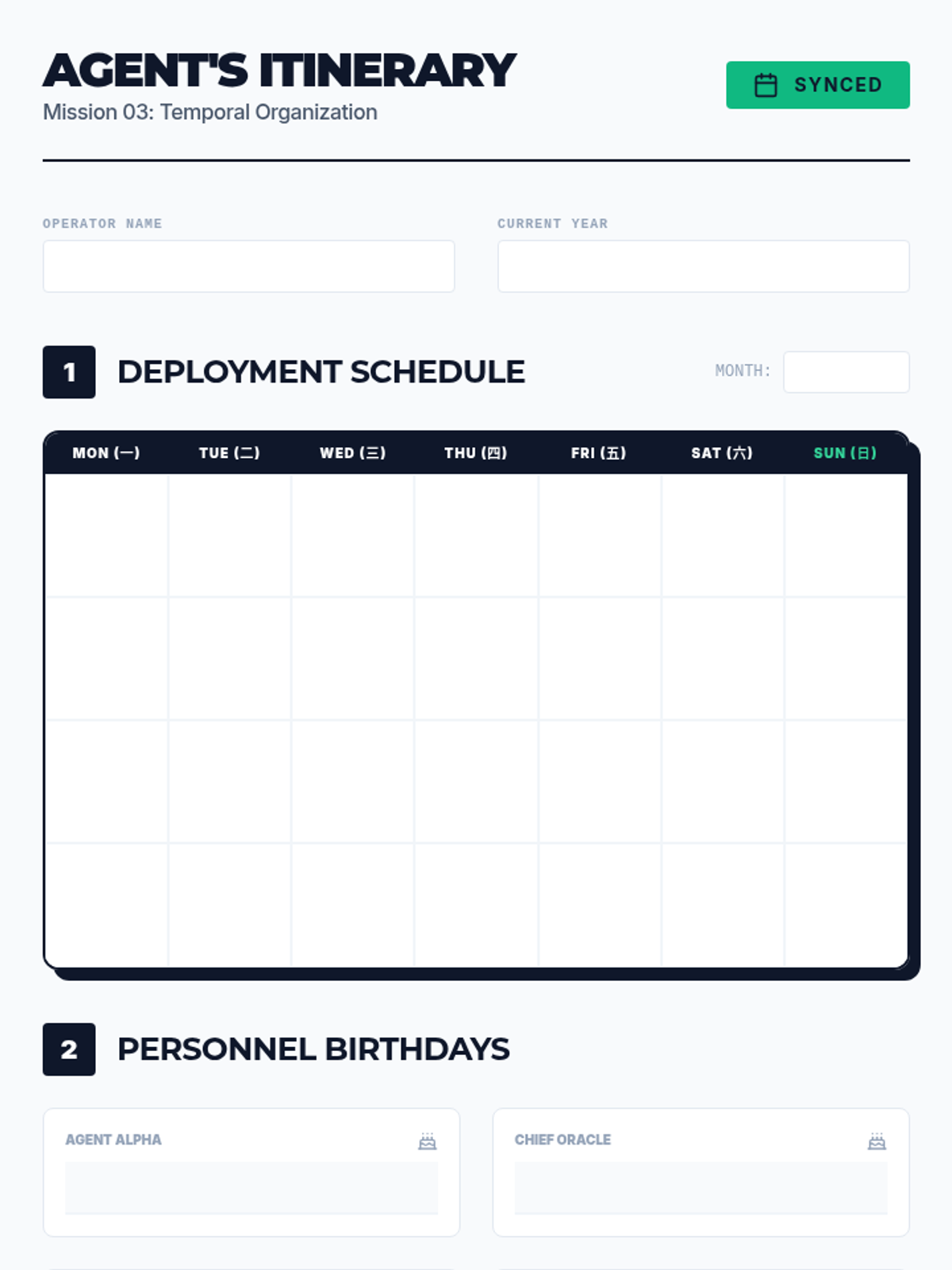
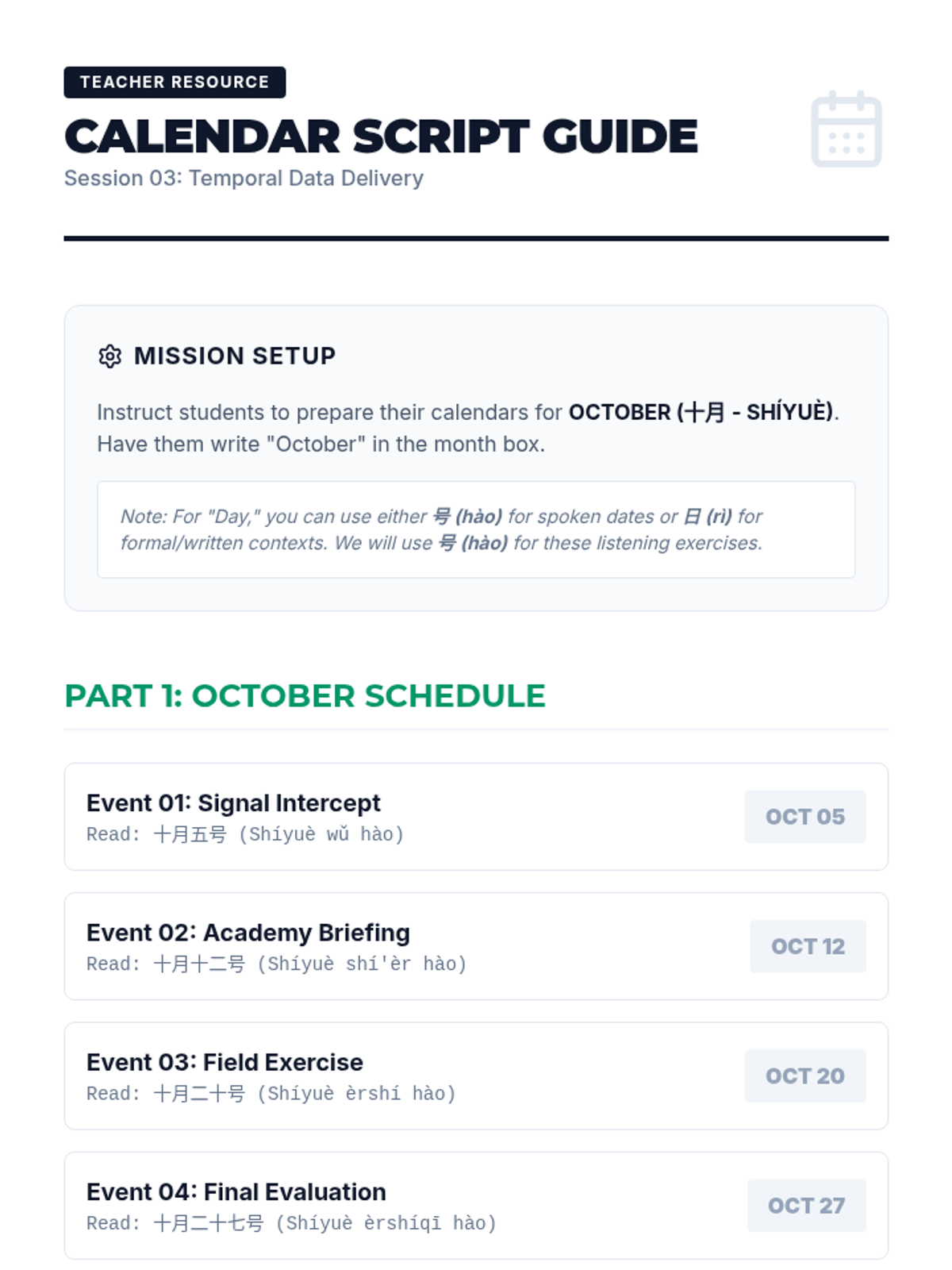
Teaches the Year-Month-Day structure of Mandarin dates. Students listen to historical and personal dates, organizing information chronologically in a 'Time Traveler' simulation.
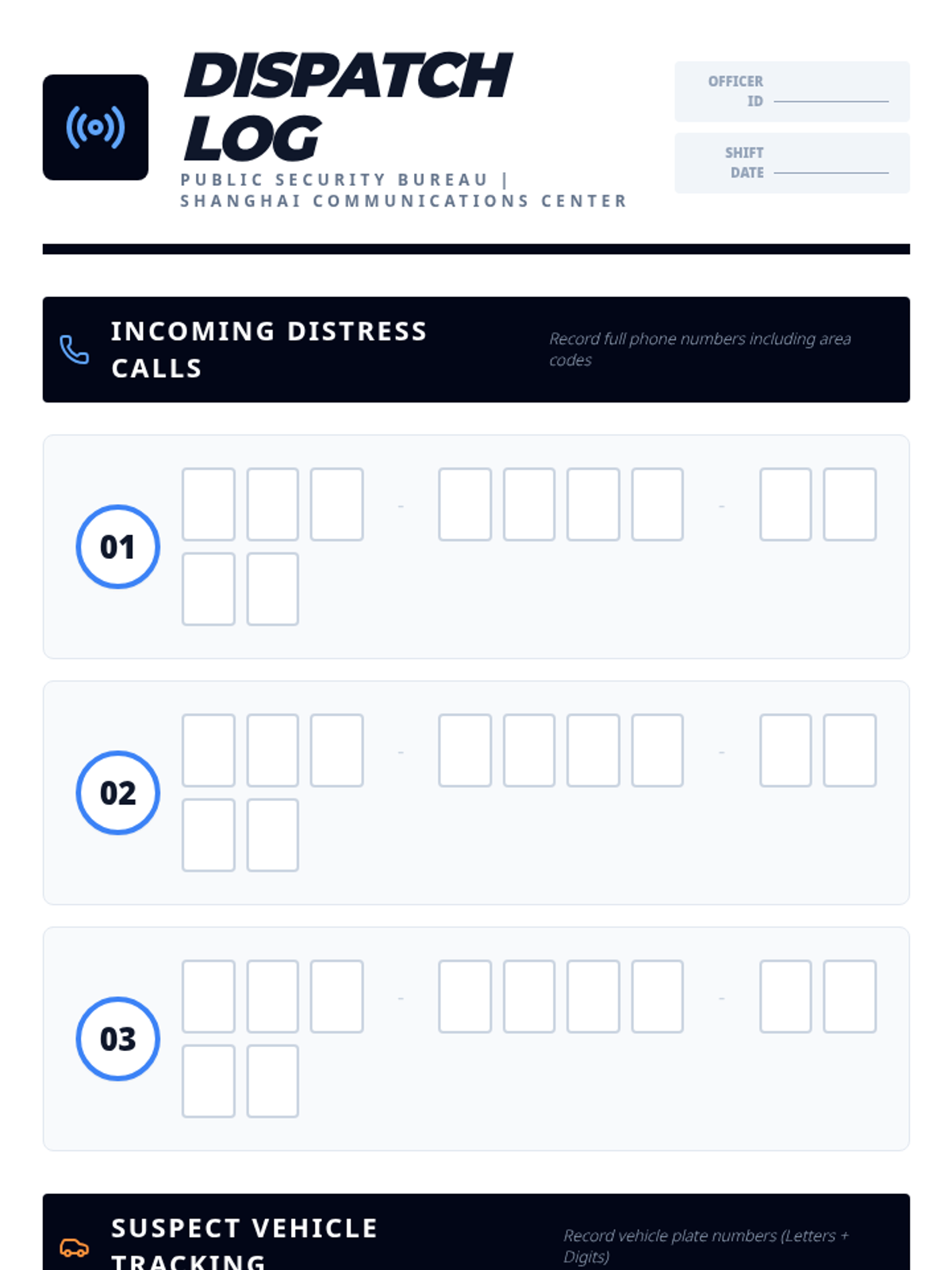
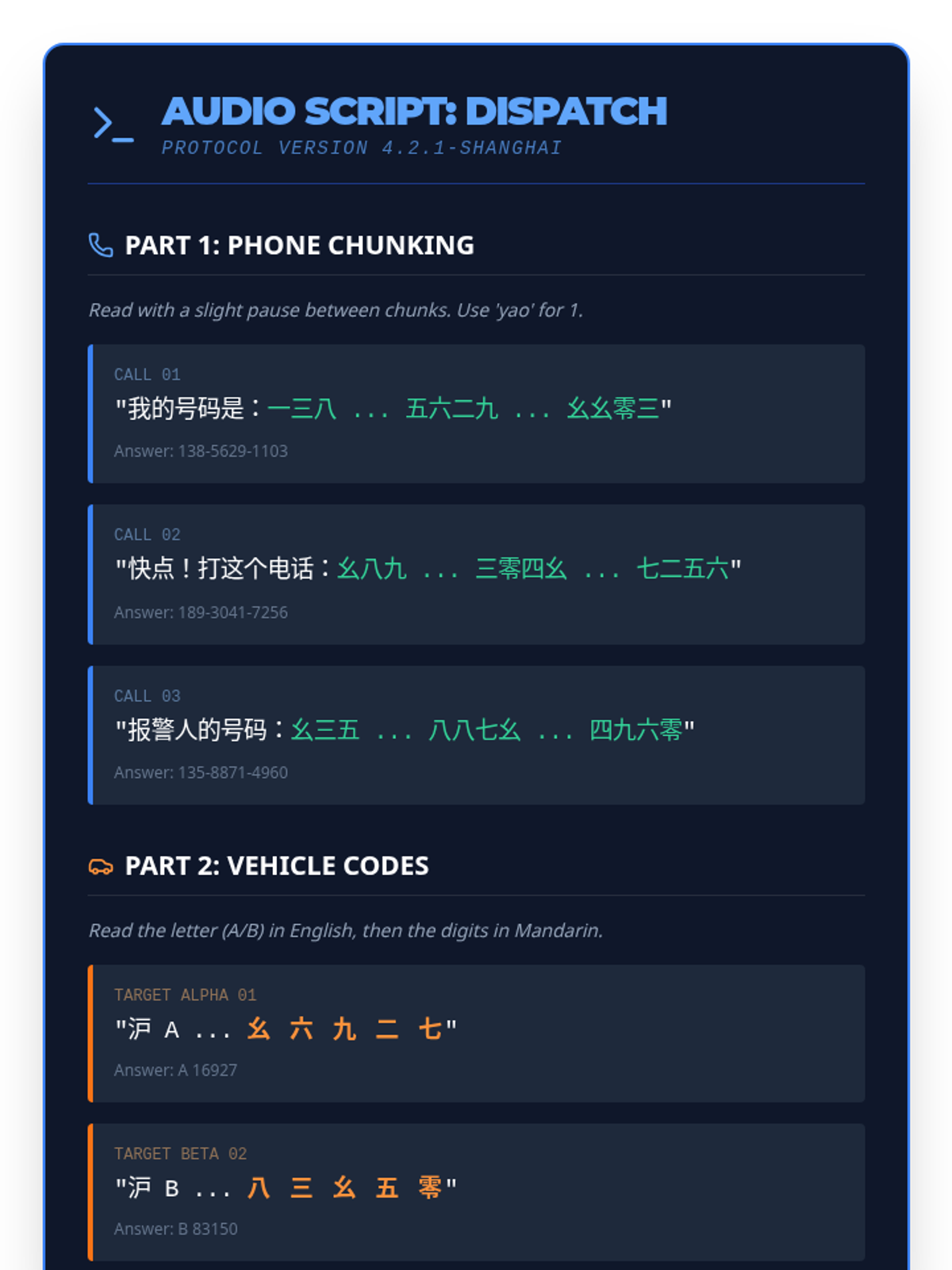
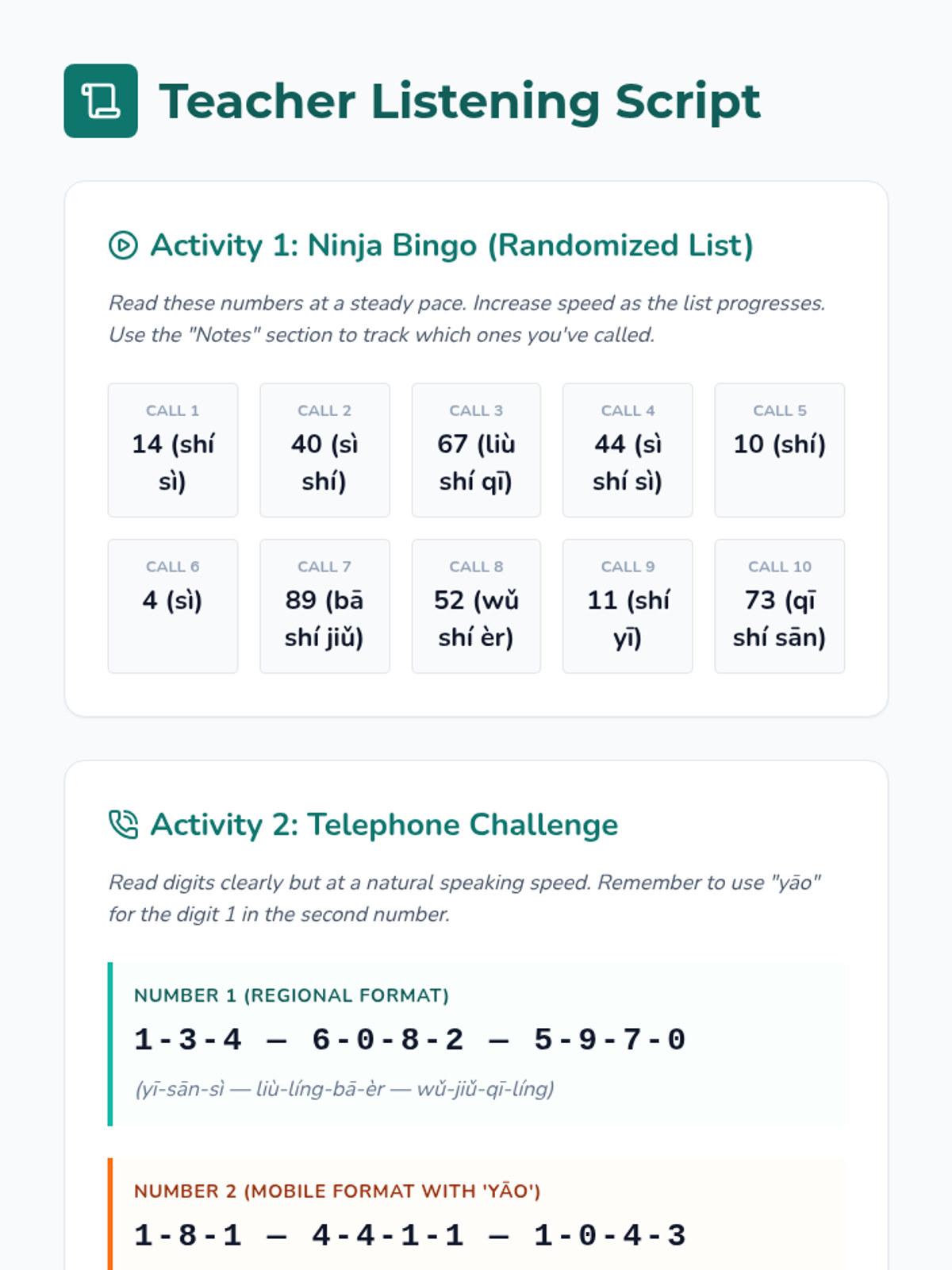
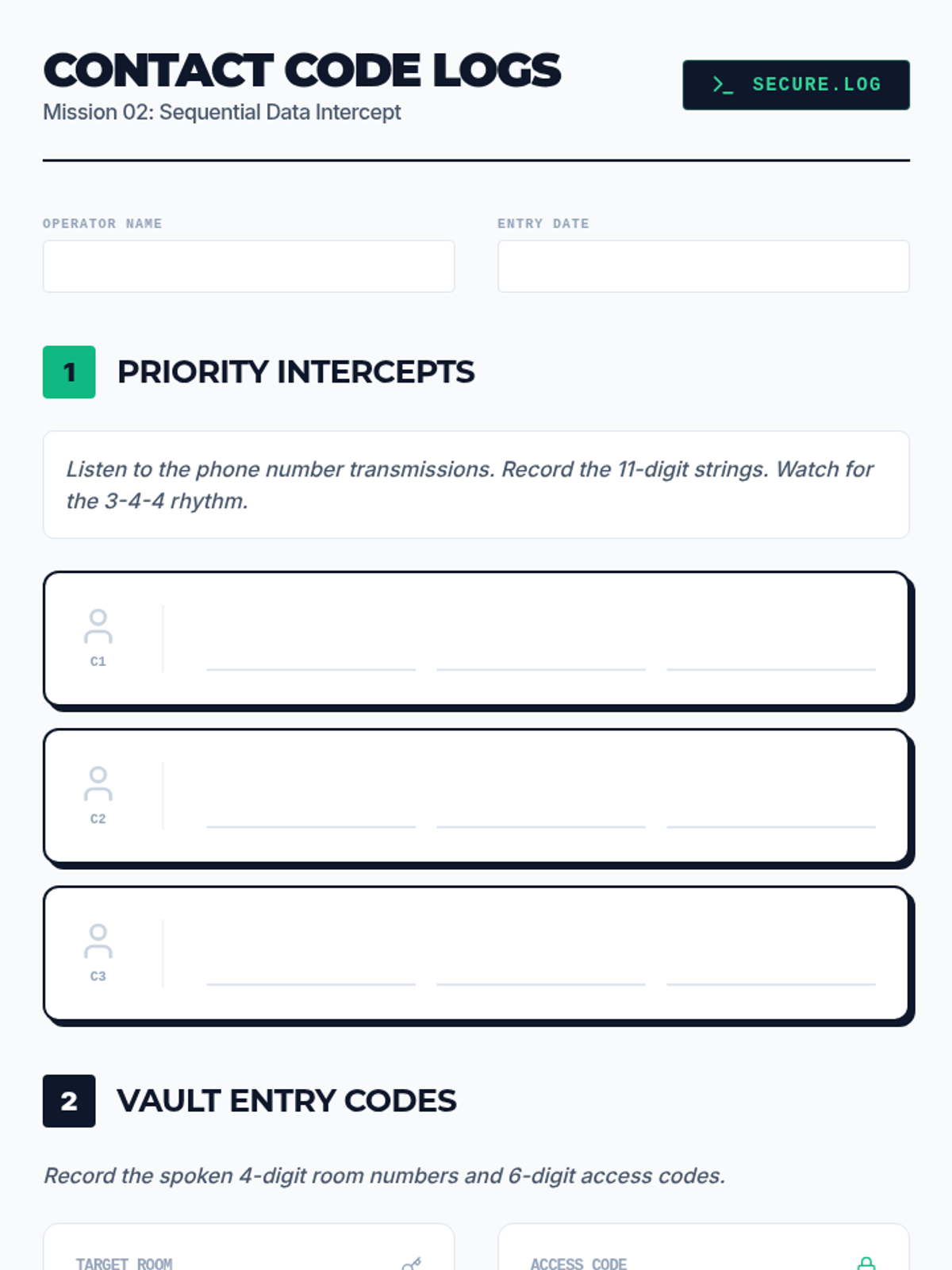
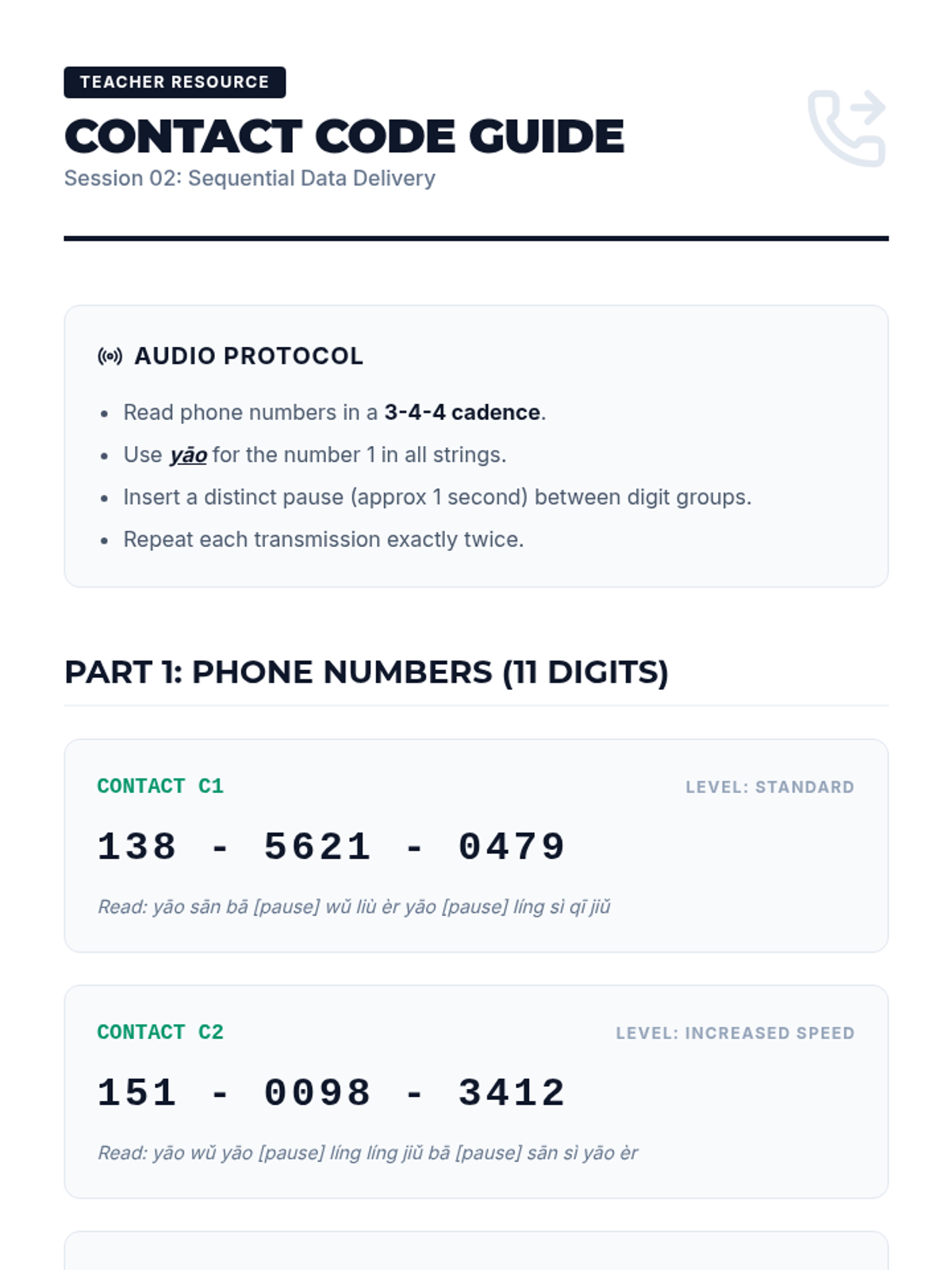
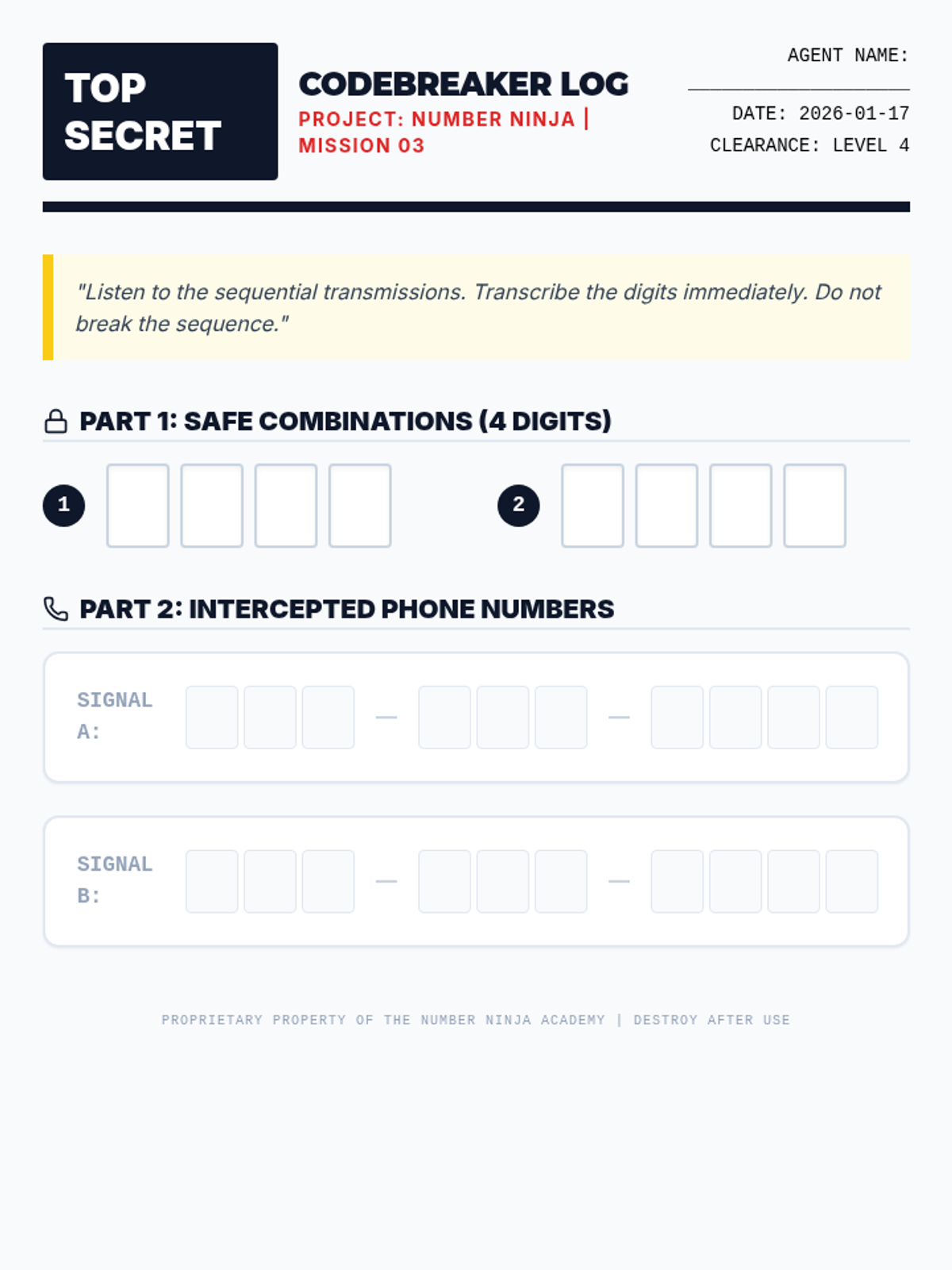
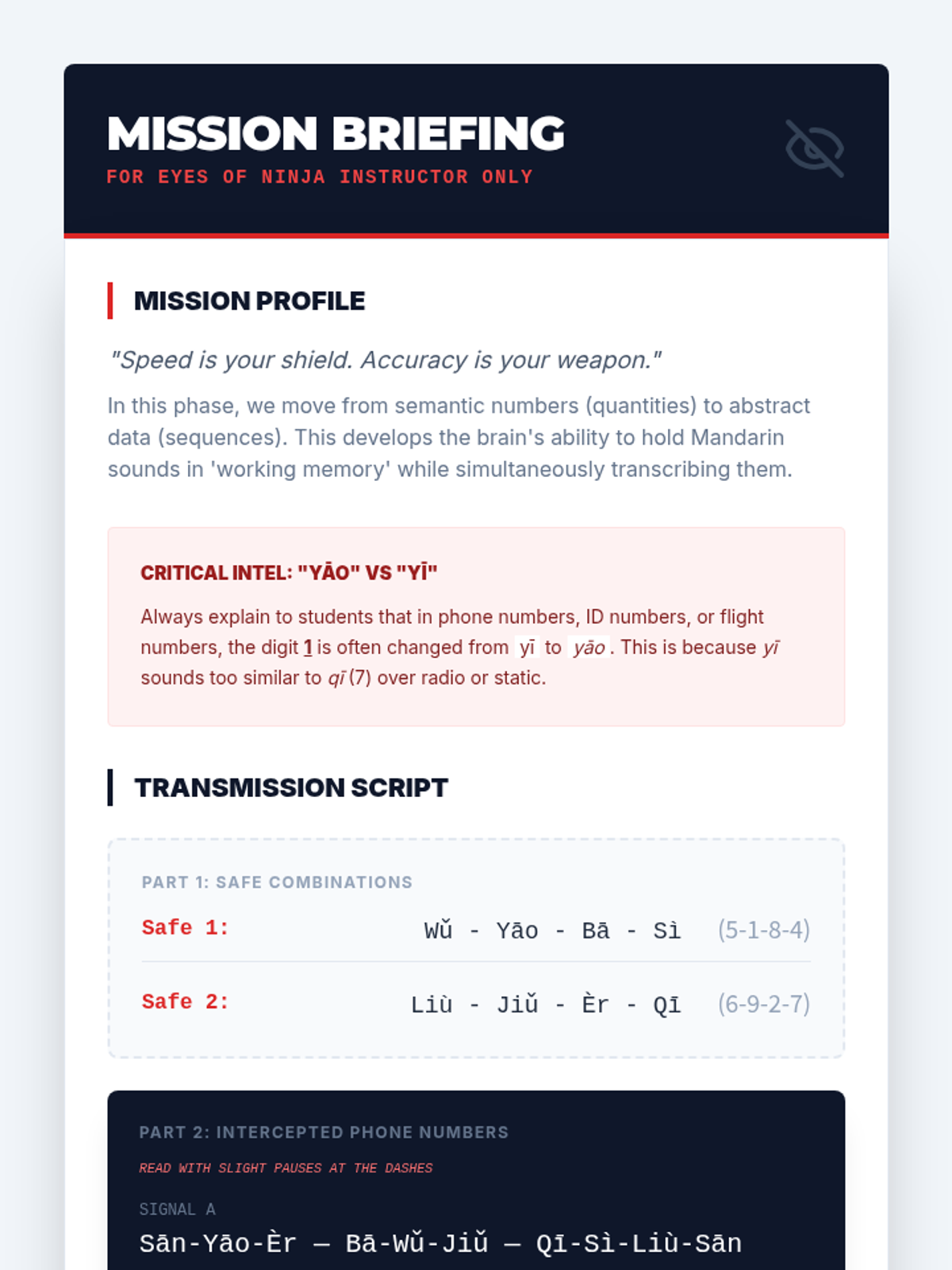
Practices the 'digit span' required for phone numbers and codes, introducing the specialized 'yao' pronunciation for the number one. Students role-play as emergency dispatchers to record numerical sequences accurately.
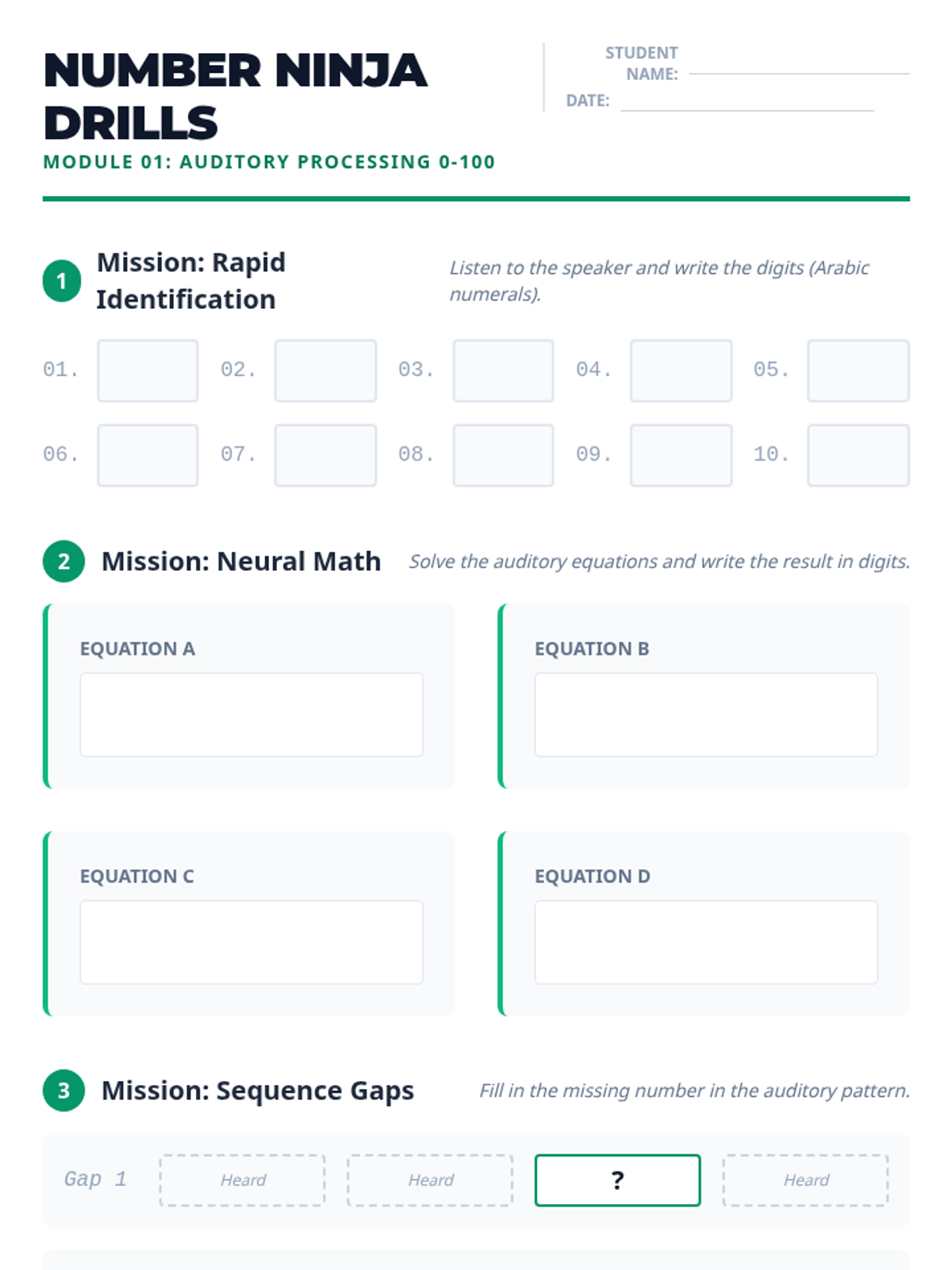
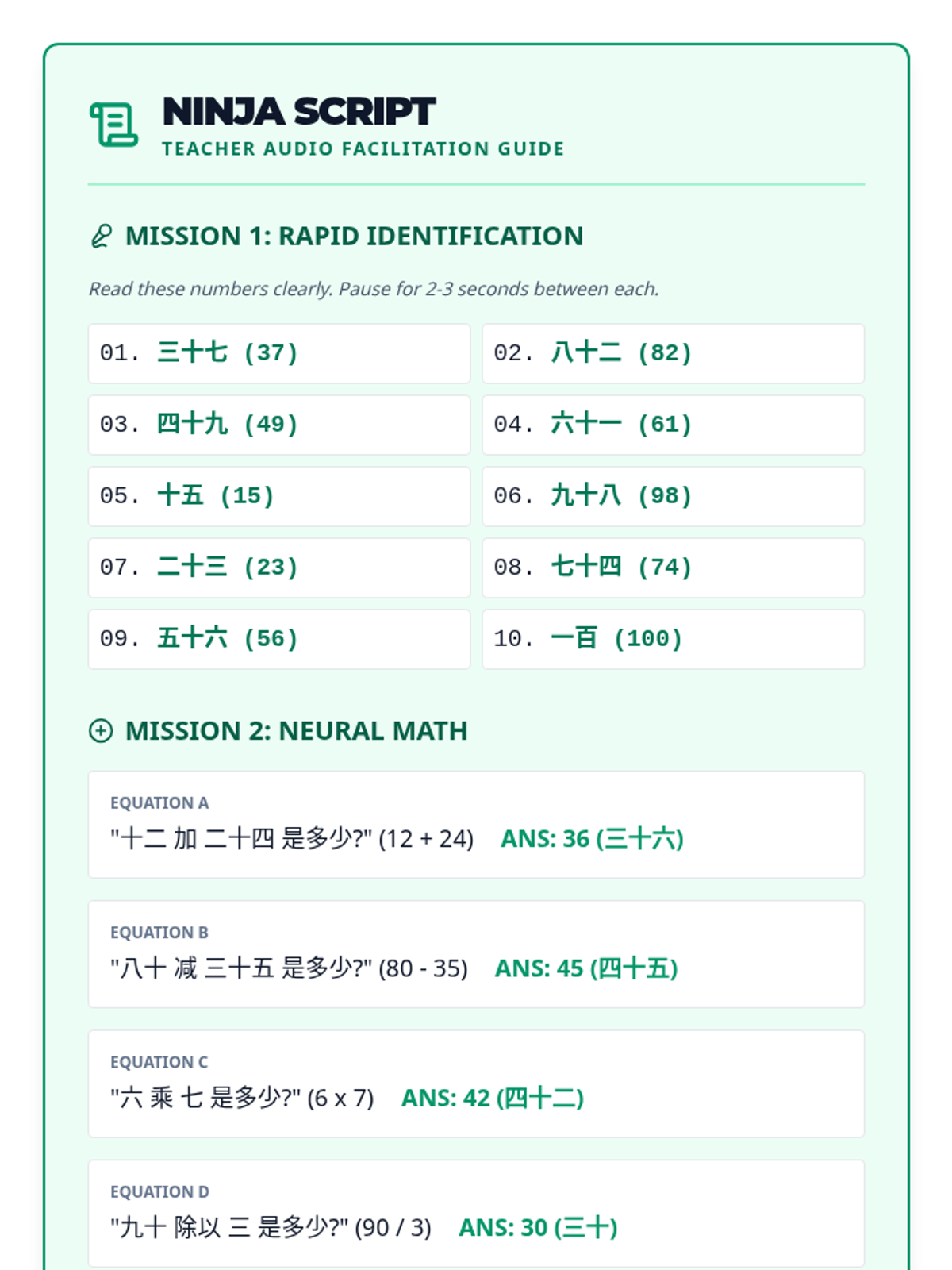
Focuses on the rapid recognition of numbers 0-100, highlighting the logical base-10 structure of Mandarin. Students engage in mental math drills and reflex-based games to build auditory fluency.
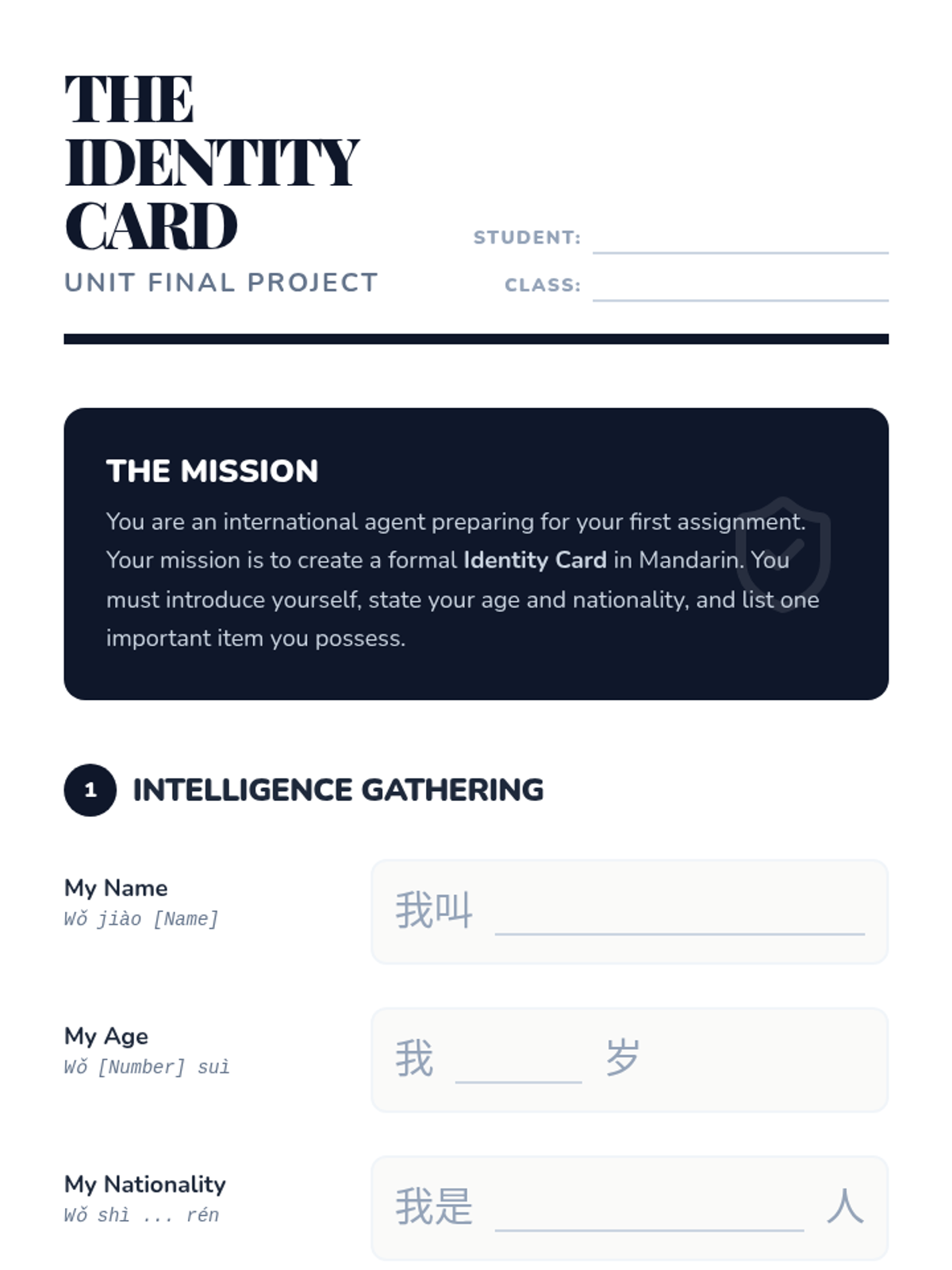
Students create a 'me' card that includes their name, age, nationality, and one thing they have, synthesizing all unit skills.
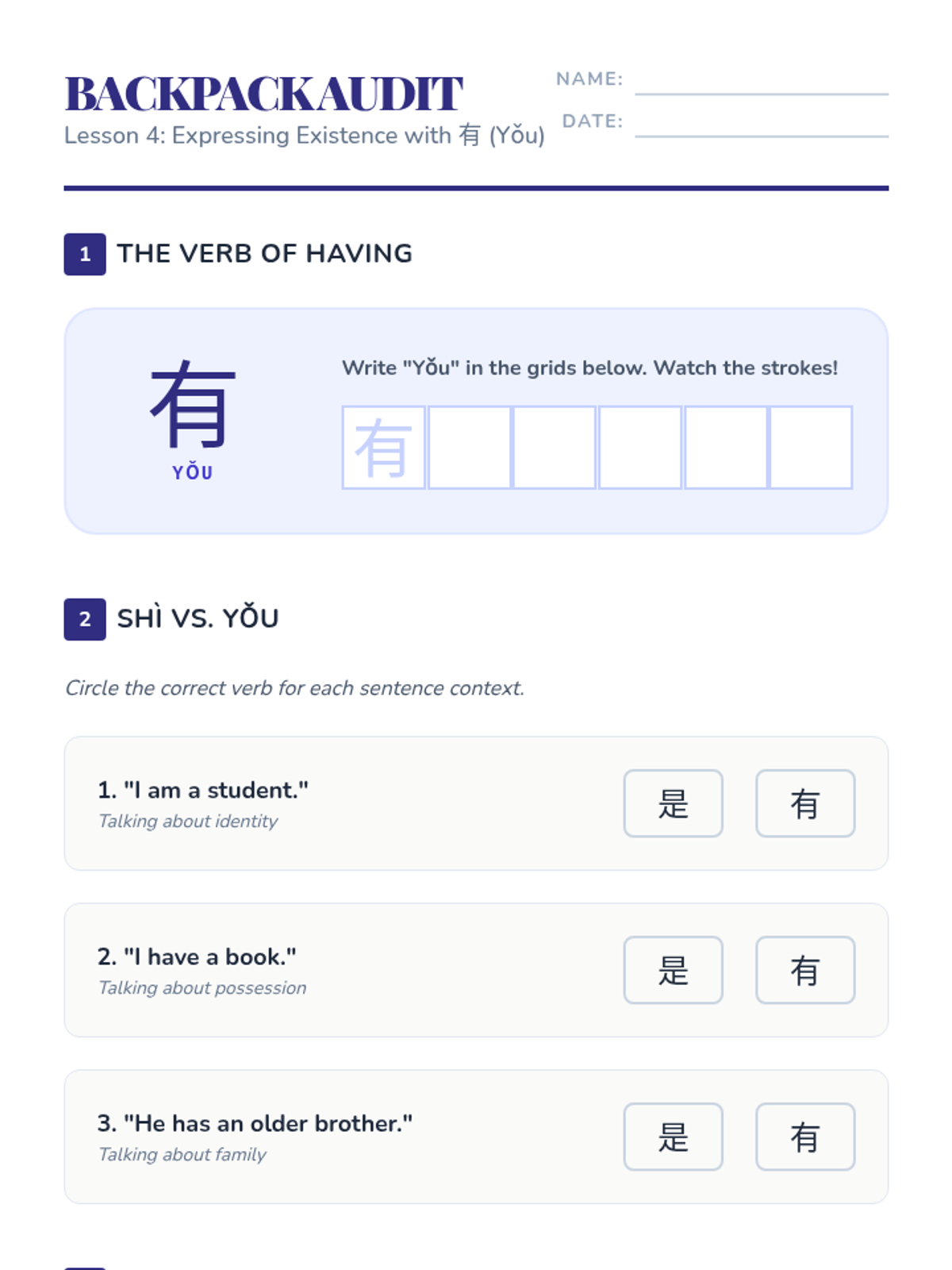
Students distinguish between 'to be' and 'to have' (Yǒu) and practice writing sentences about what they possess.
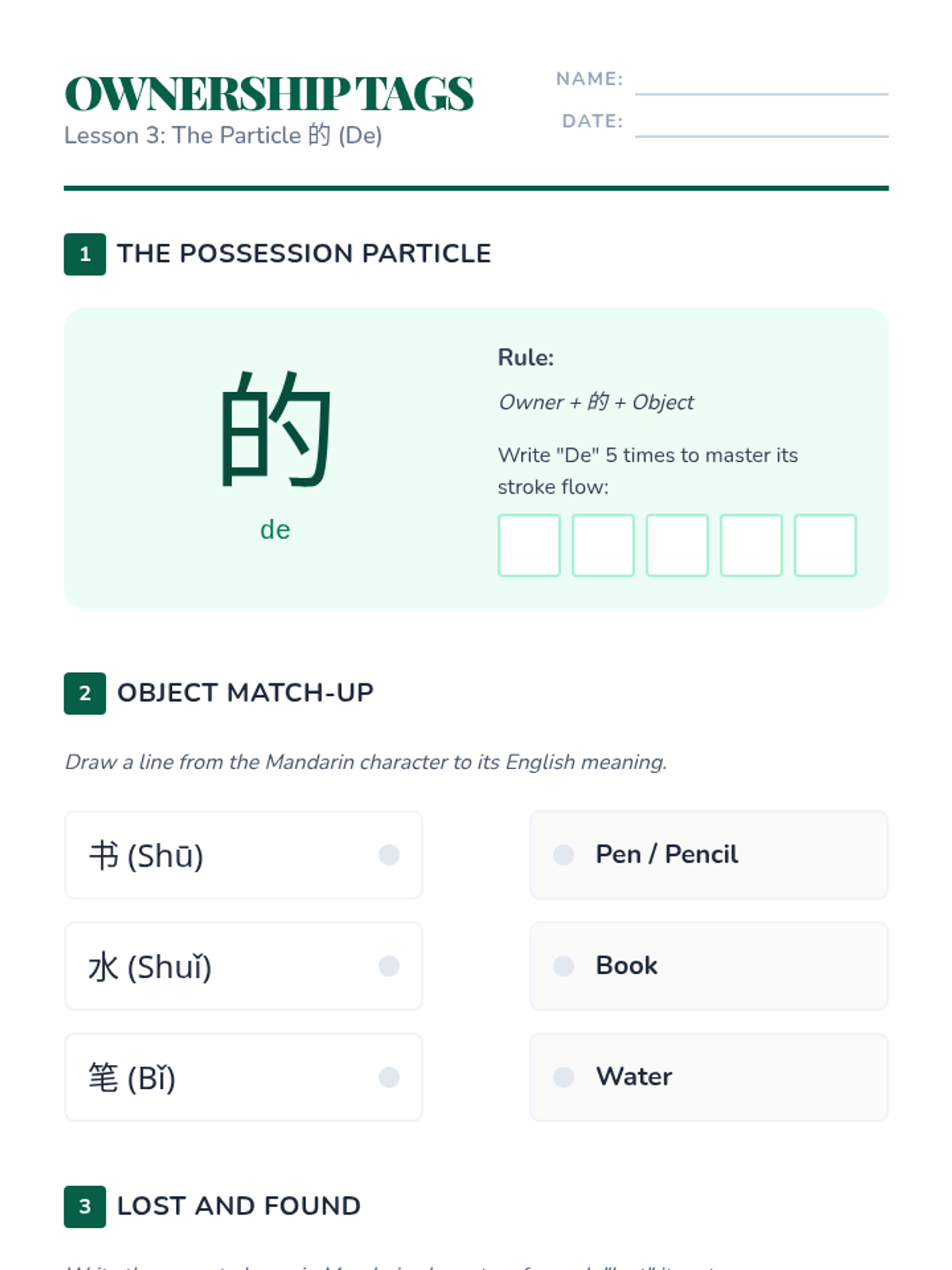
Students learn the grammatical particle 'De' to express ownership and build possessive phrases.
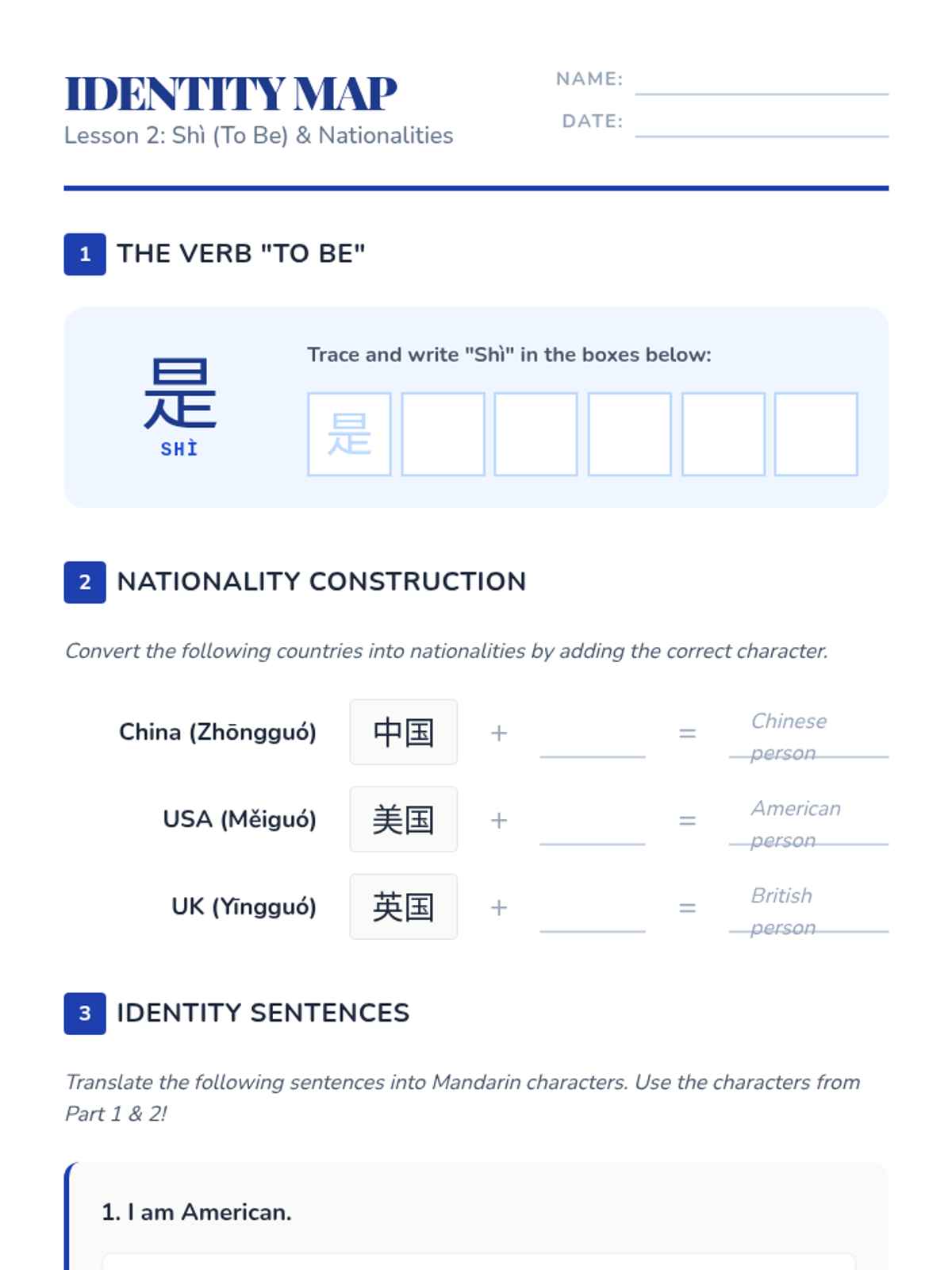
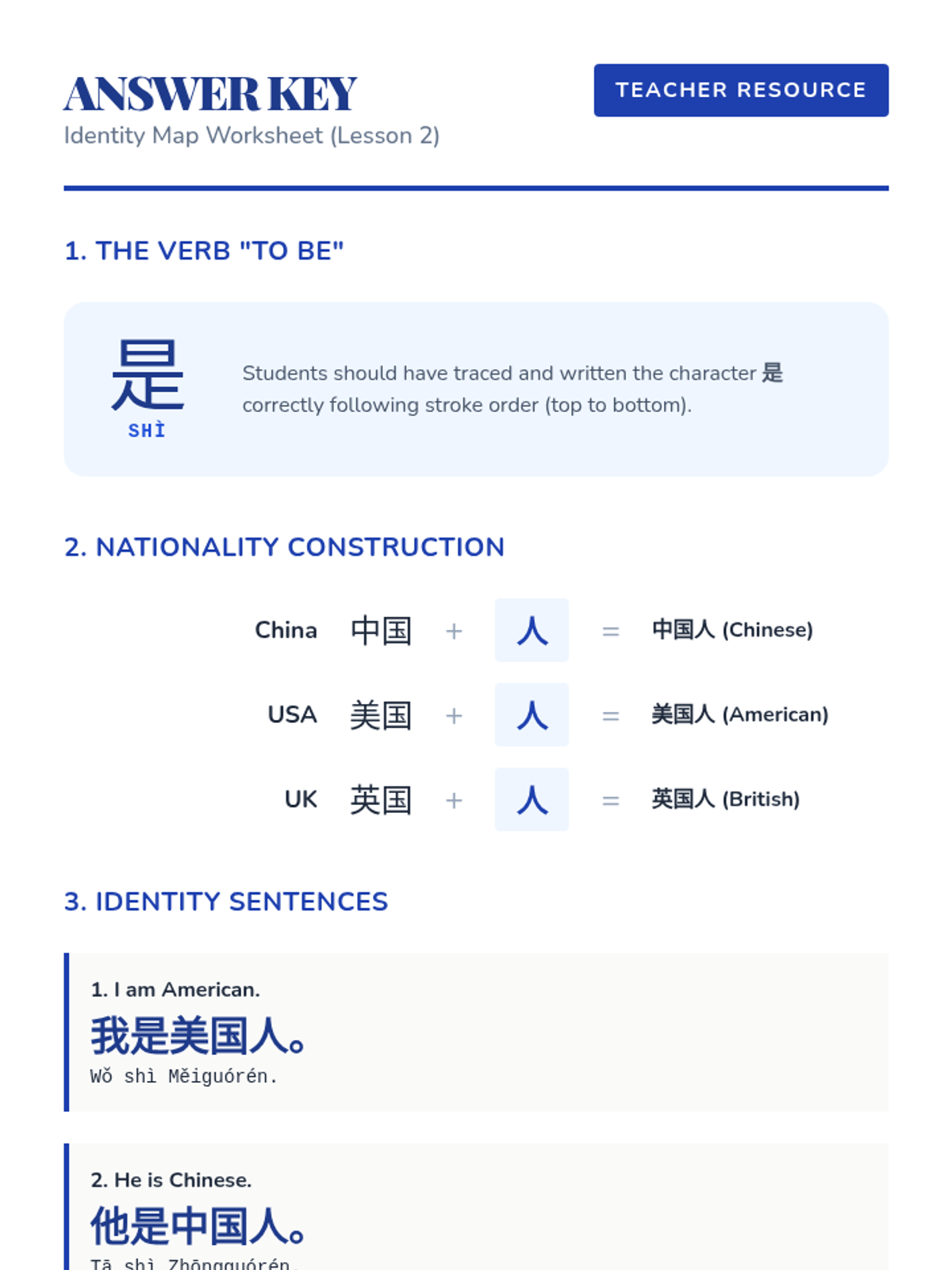
Students master the character 'Shì' (is/am/are) and combine it with pronouns and country names to express nationality.
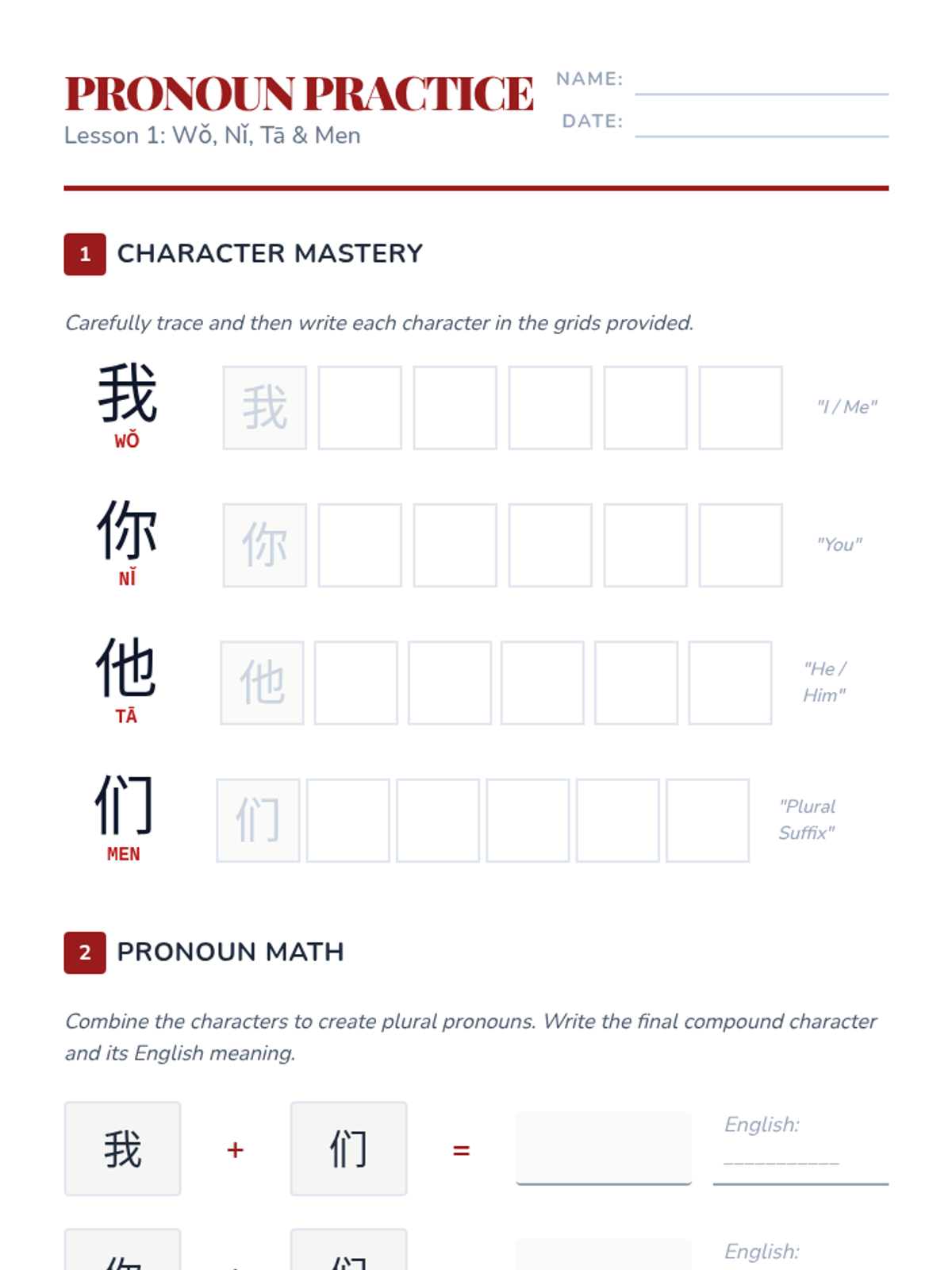
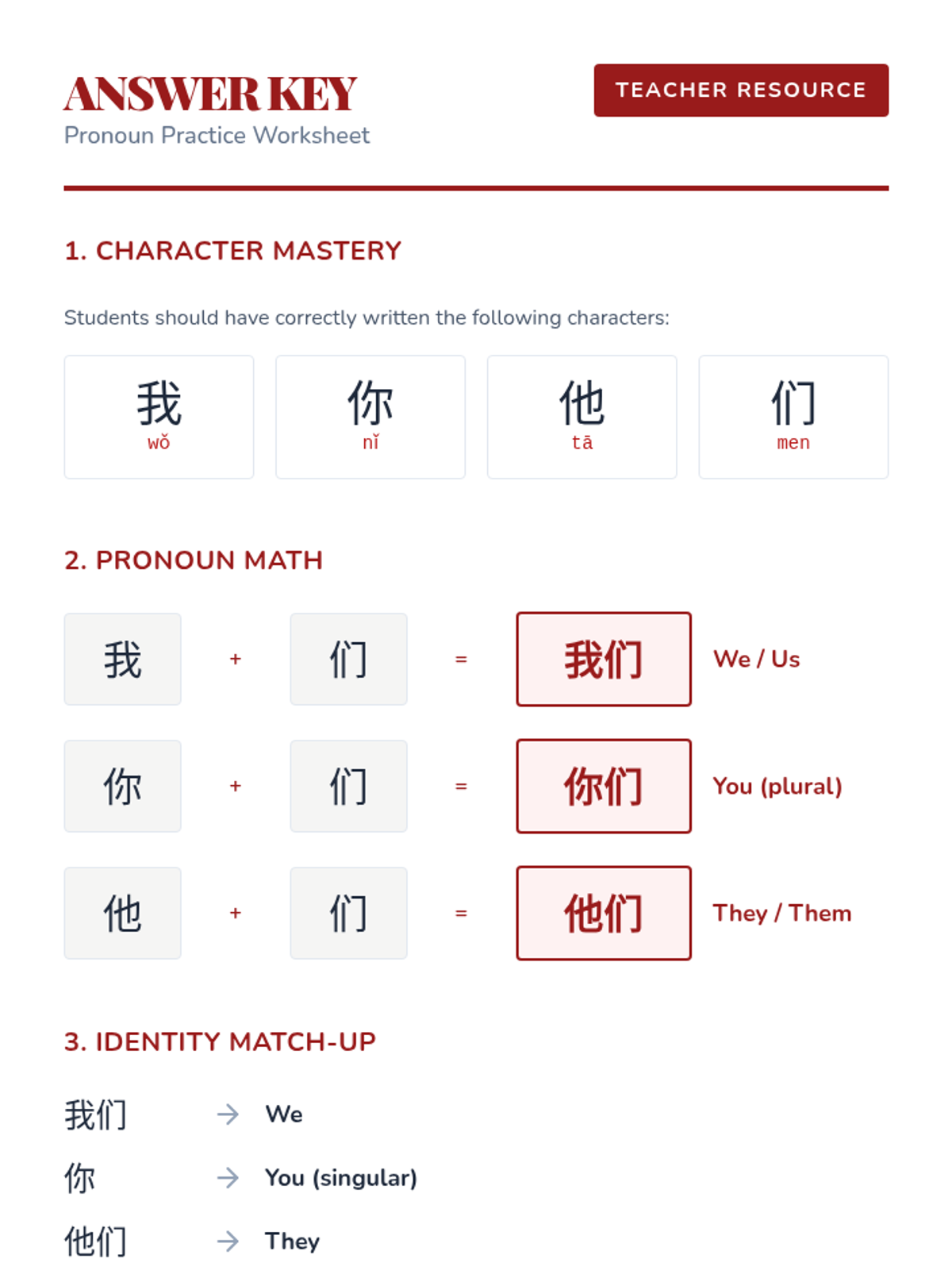
Students learn the characters for I, You, and He/She (Wǒ, Nǐ, Tā) and explore the concept of the plural suffix 'men' to create plural pronouns.
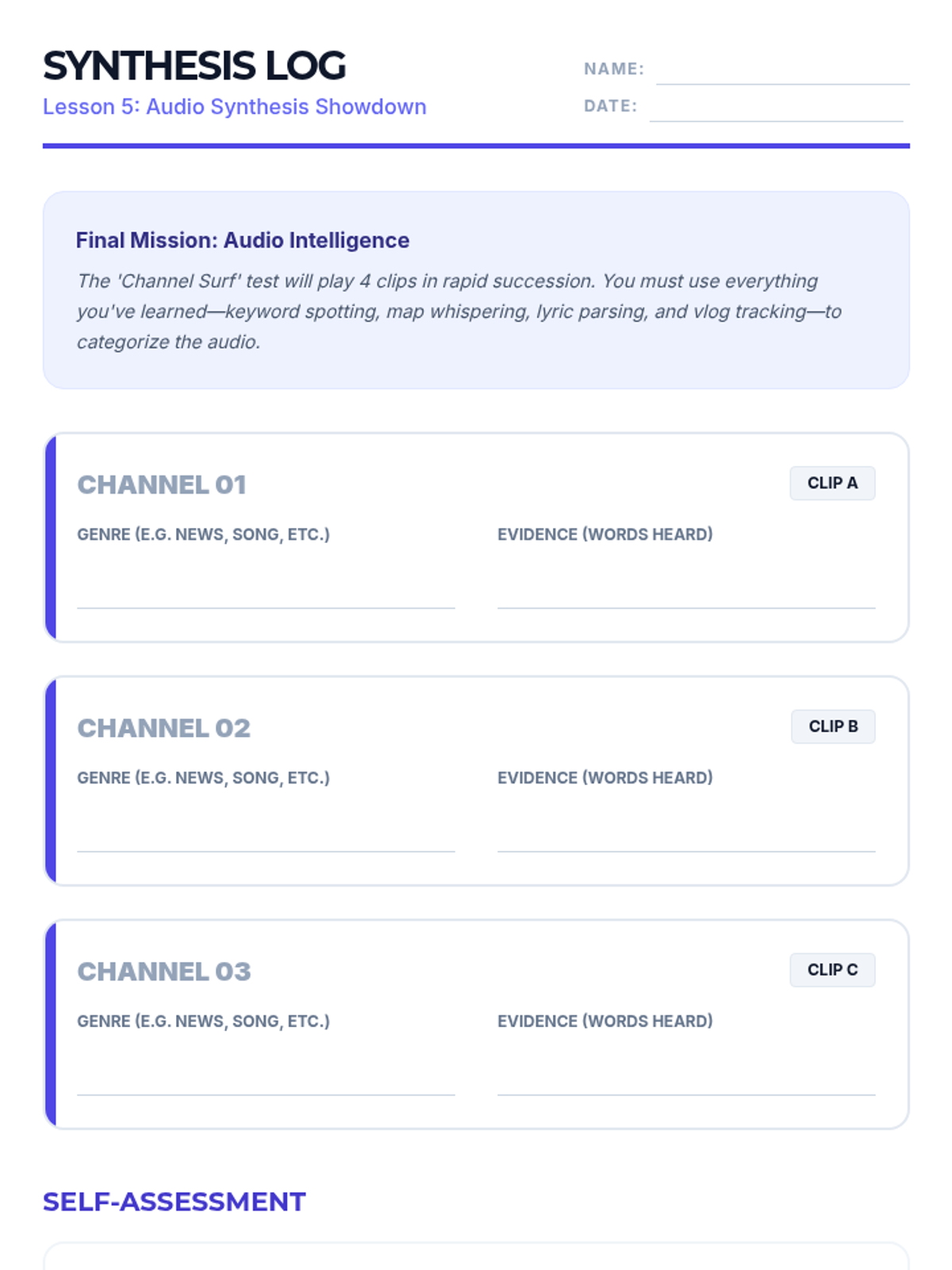
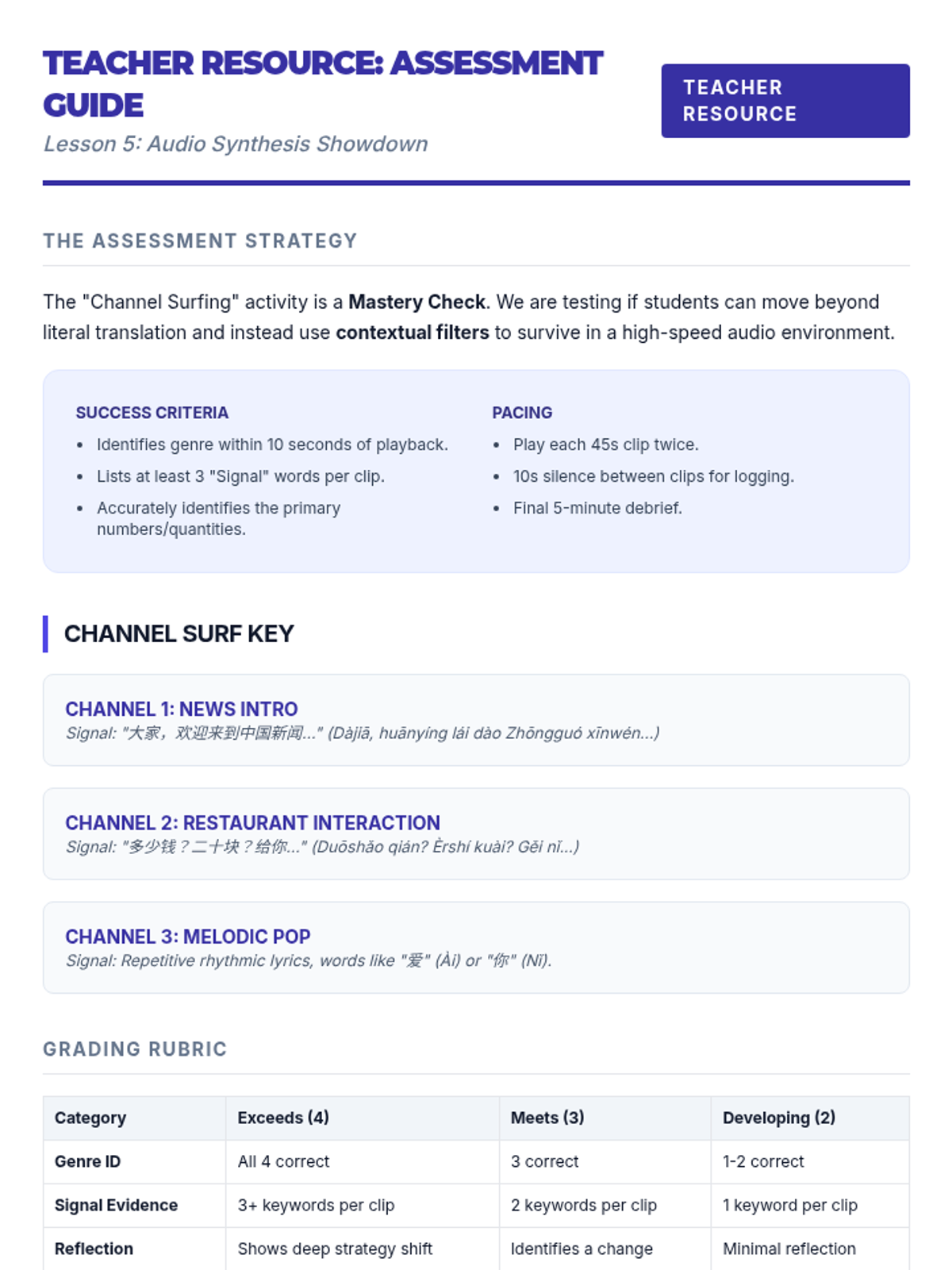
A culminating lesson where students synthesize their skills by identifying genres and main ideas across a variety of rapid-fire audio sources.
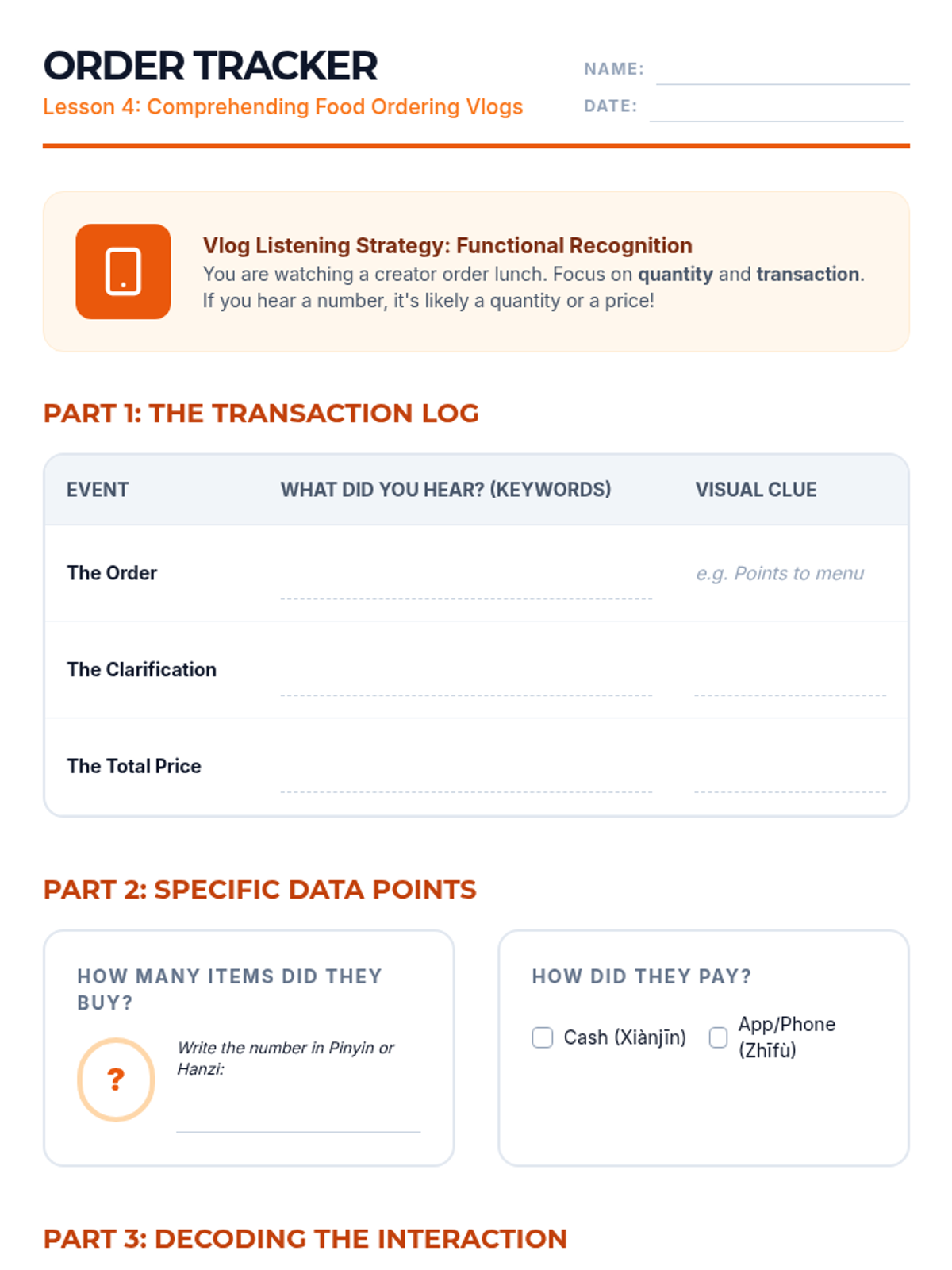
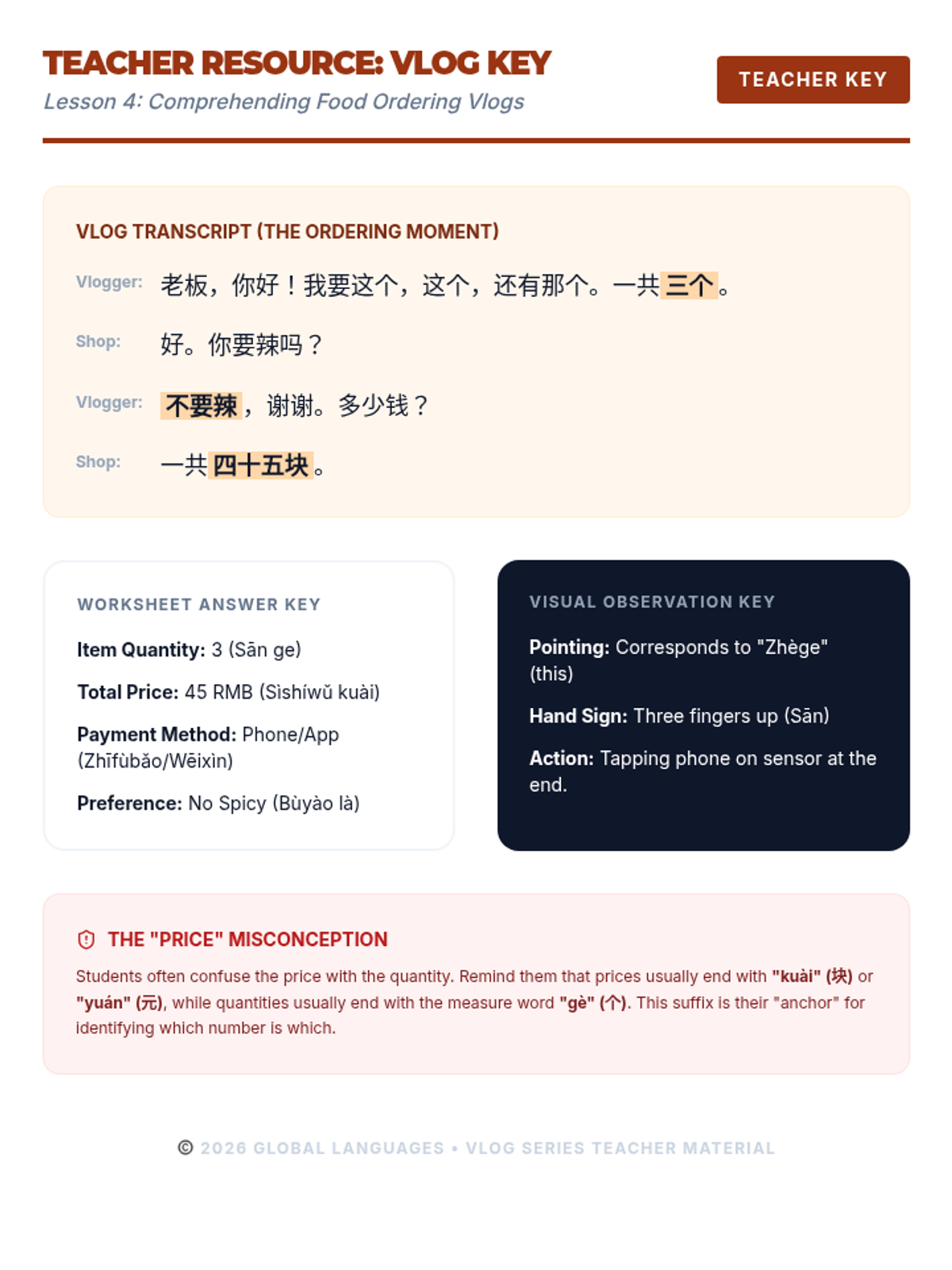
Students analyze food vlogs to understand the structure of restaurant interactions, focusing on ordering vocabulary and cultural transaction cues.
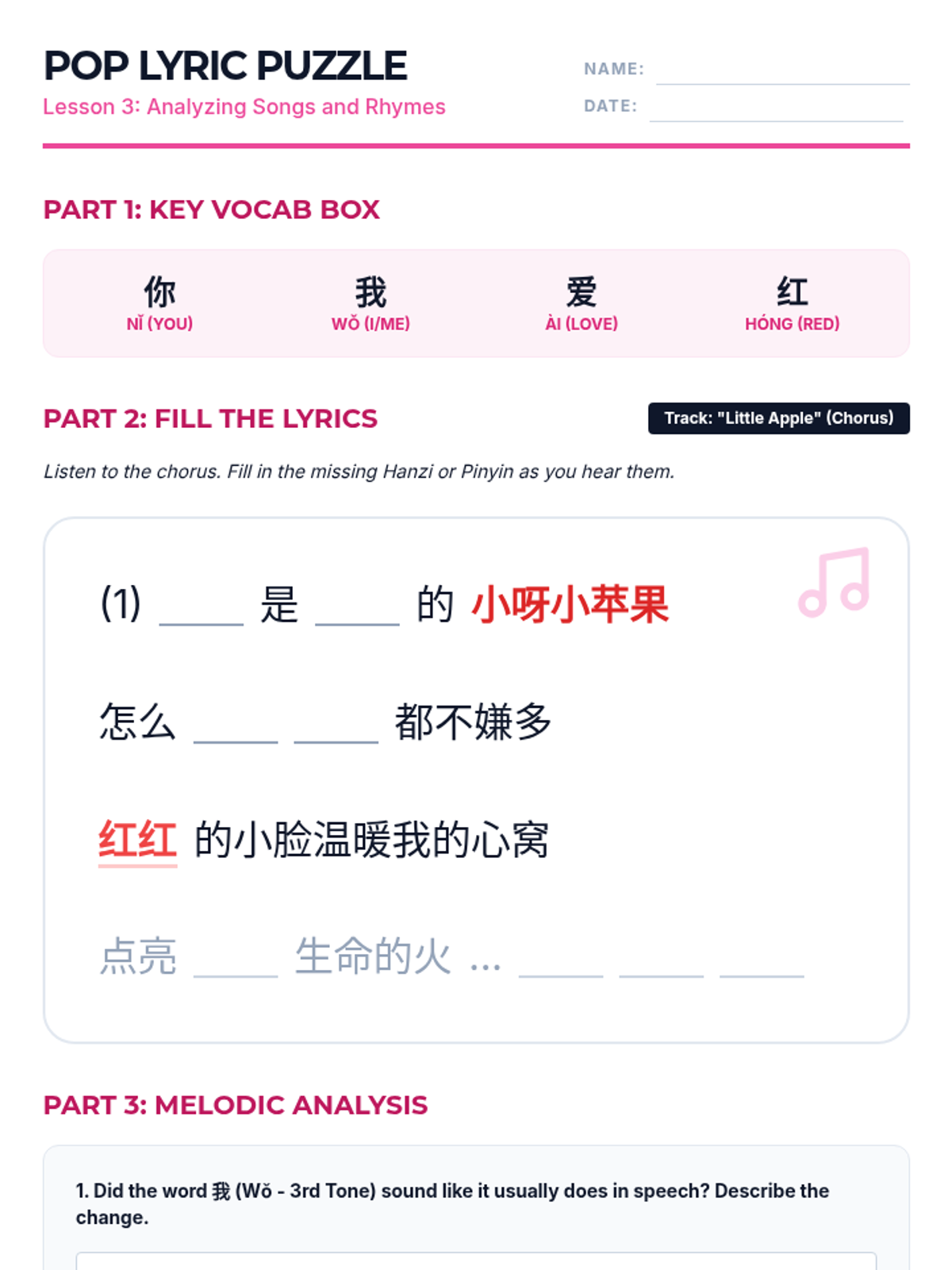
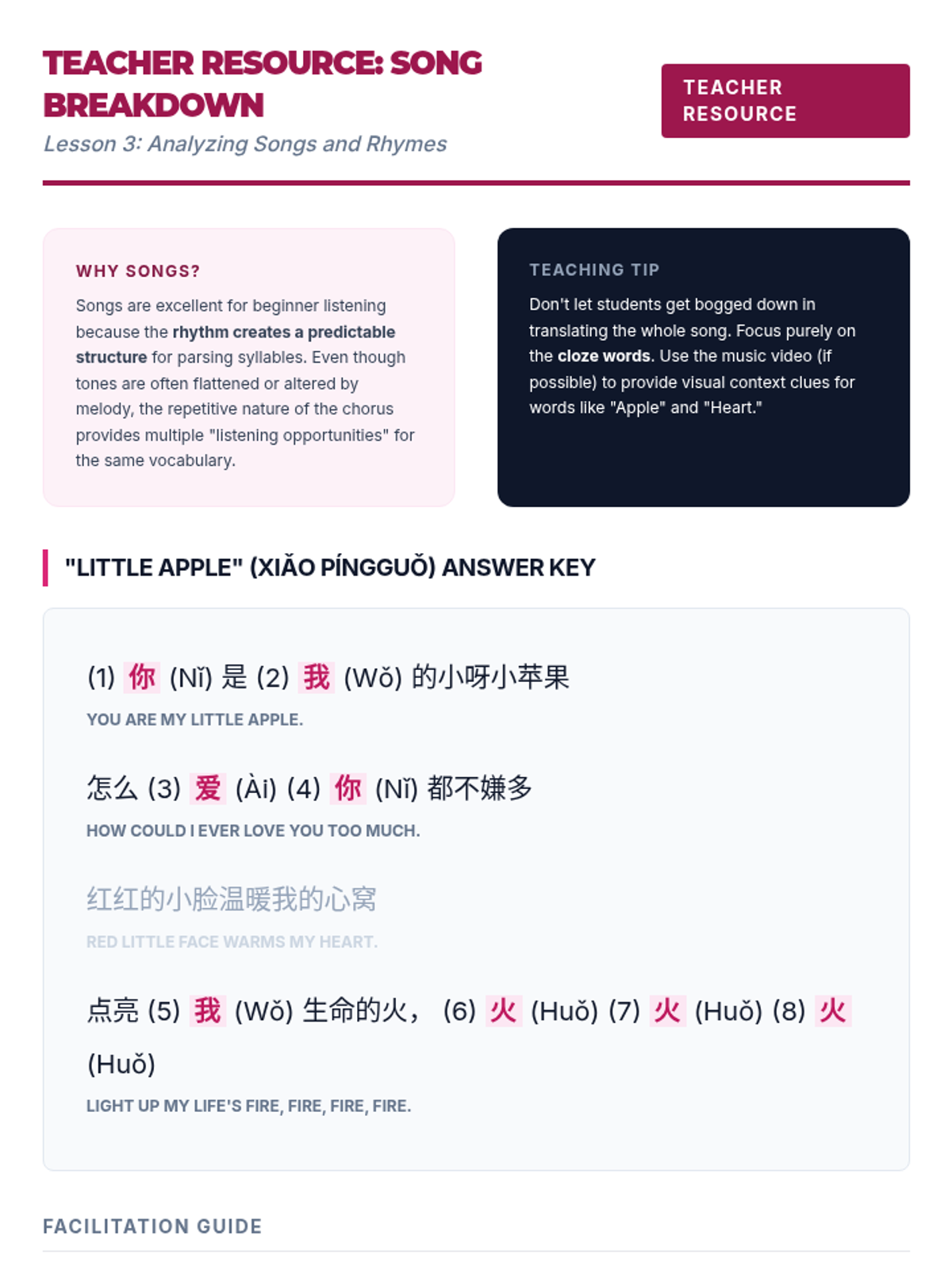
Using simple C-Pop and rhymes to practice tone flow and sentence parsing, students will analyze how melody interacts with Mandarin's tonal nature.
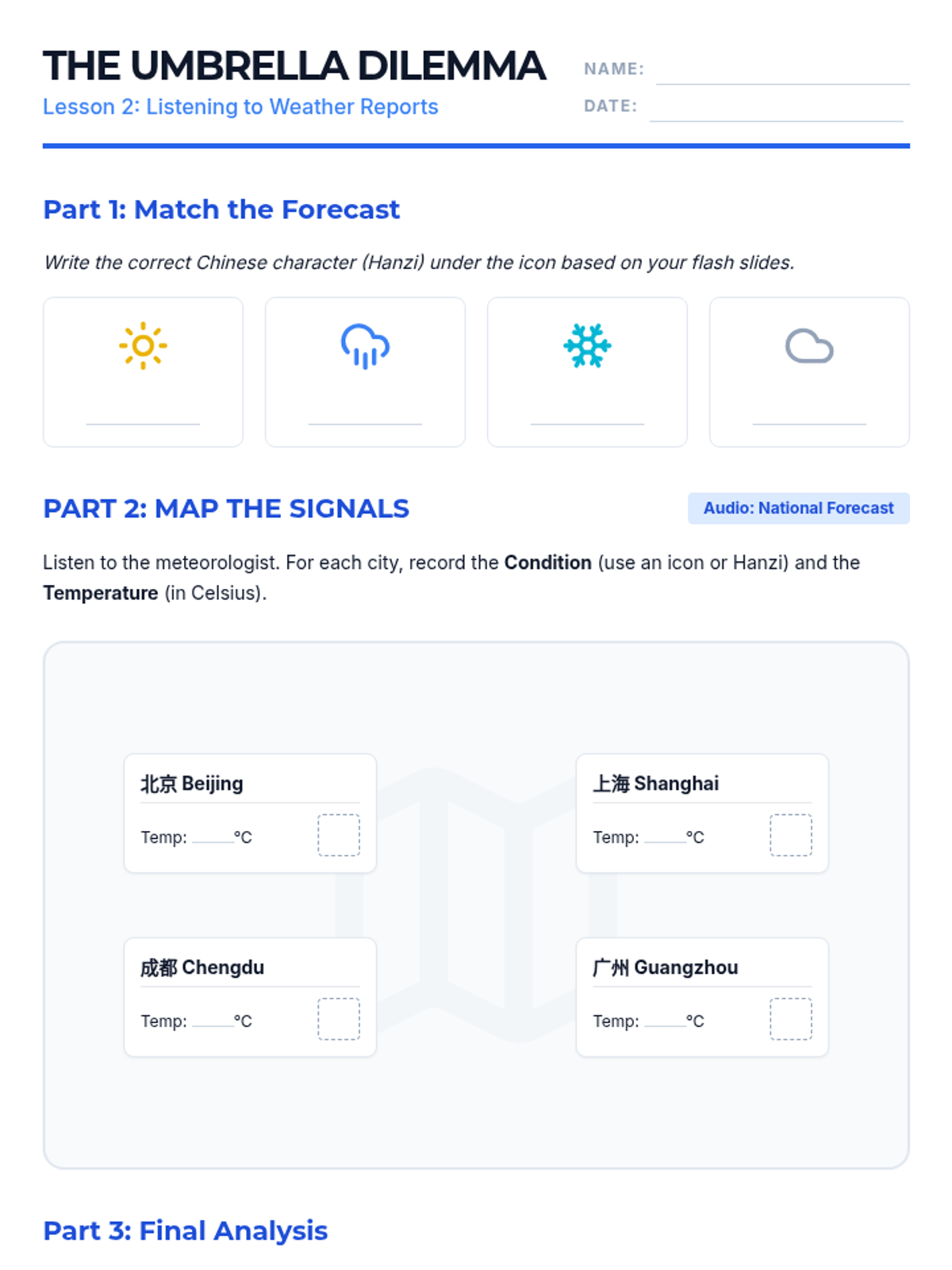
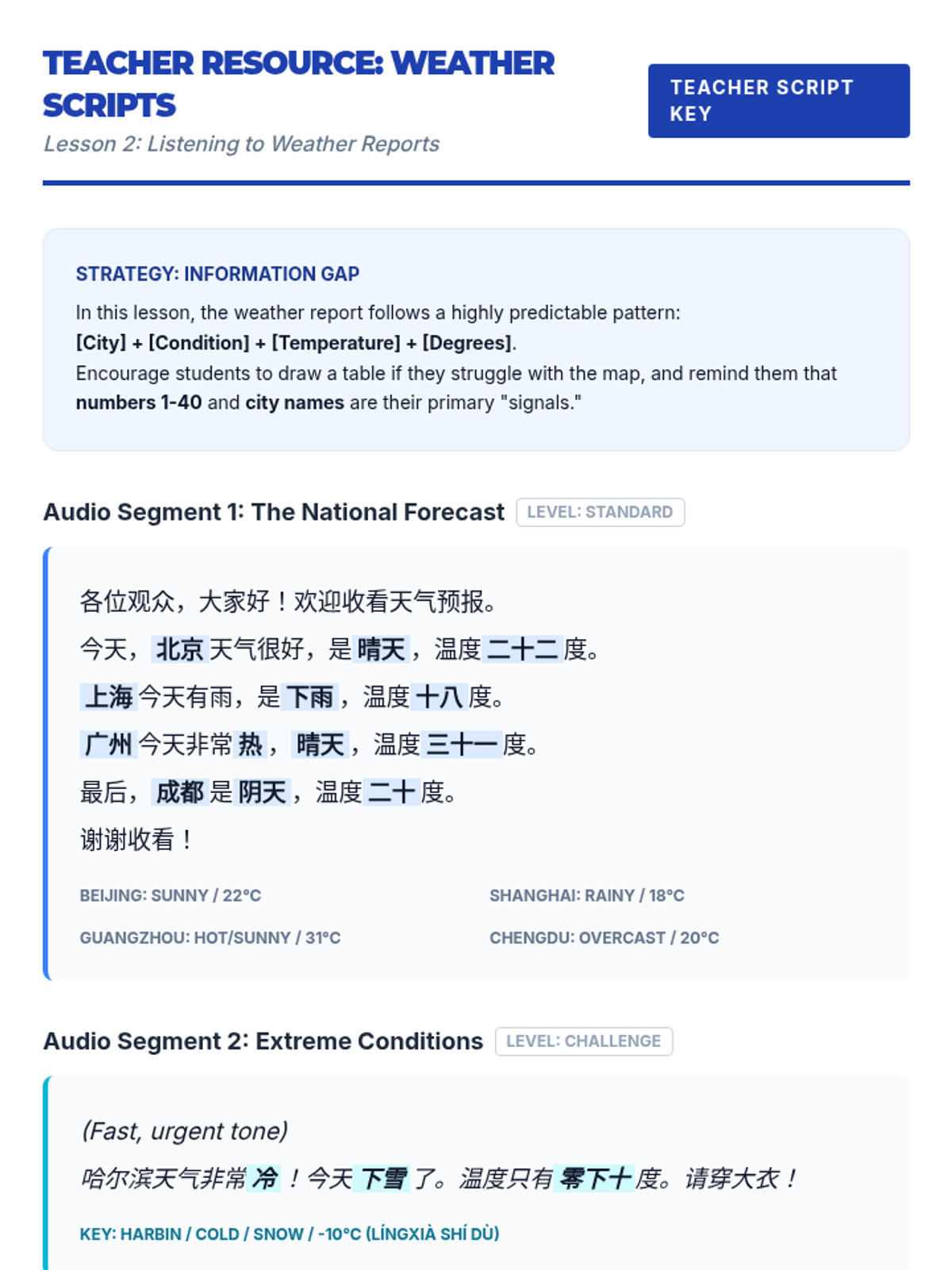
An exploration of Chinese weather reports where students extract specific data like temperatures and city names to populate a visual map.
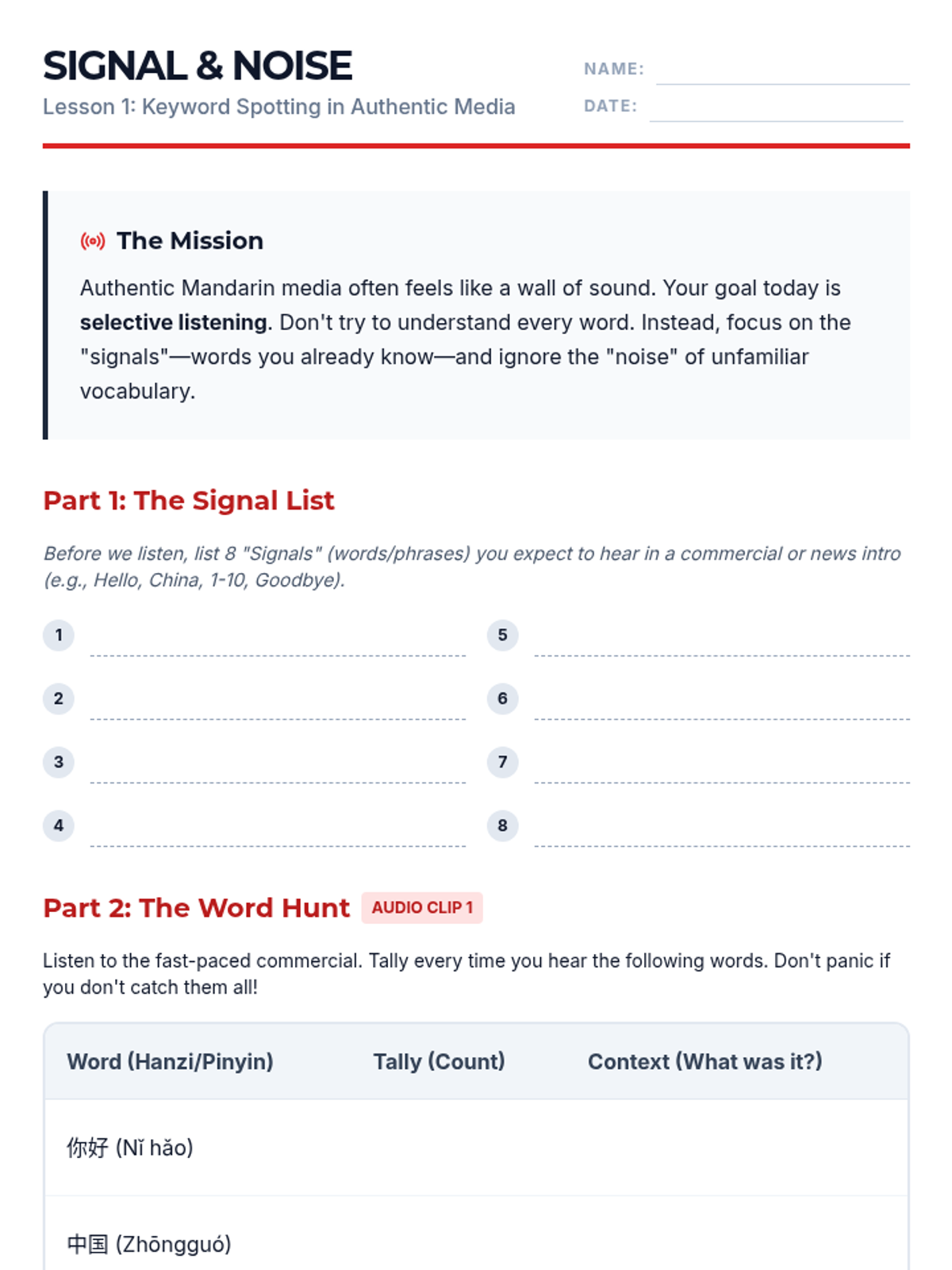
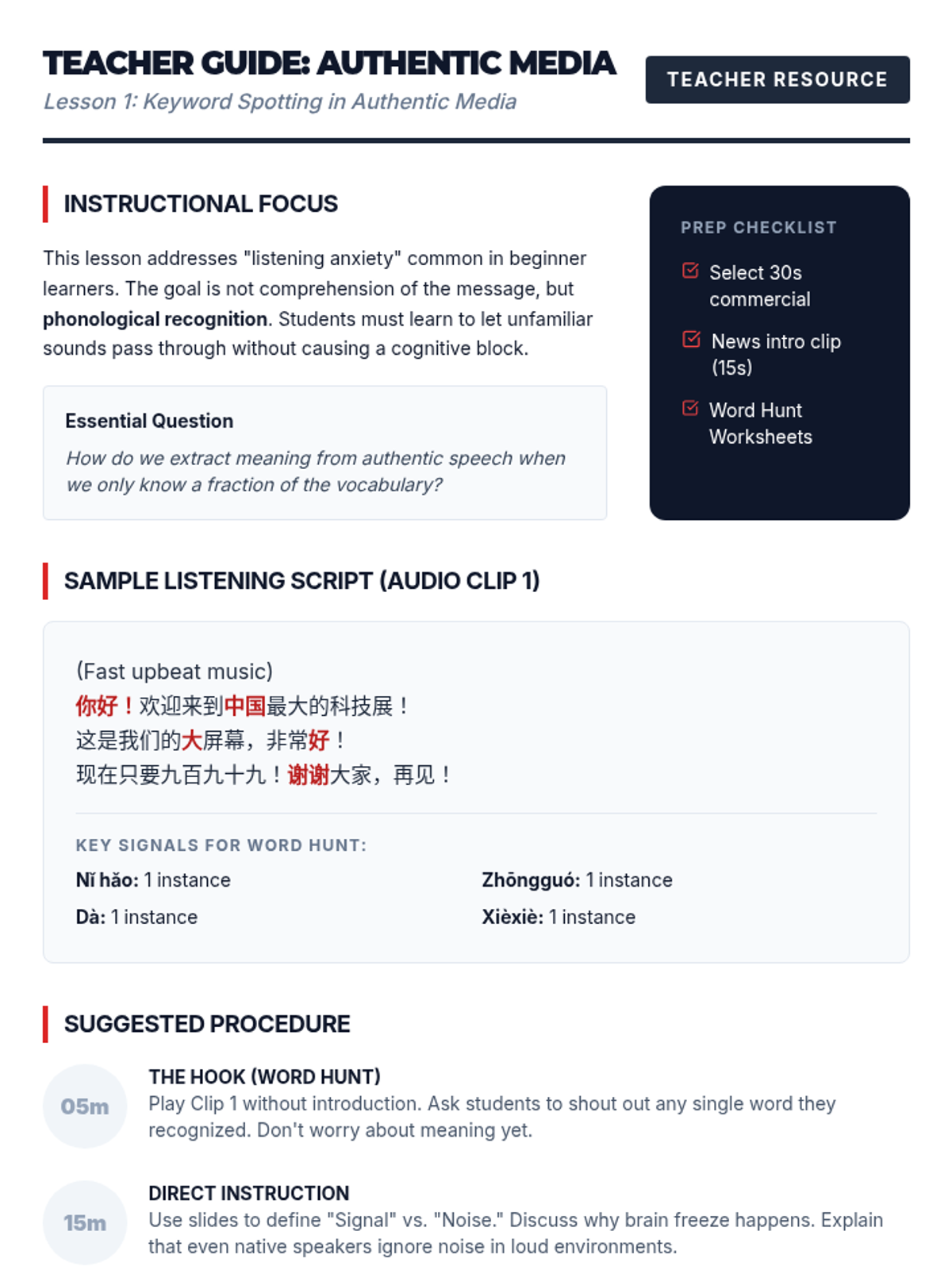
Students learn to identify high-frequency keywords and greetings within fast-paced native media clips, focusing on selective listening and ignoring unknown vocabulary.
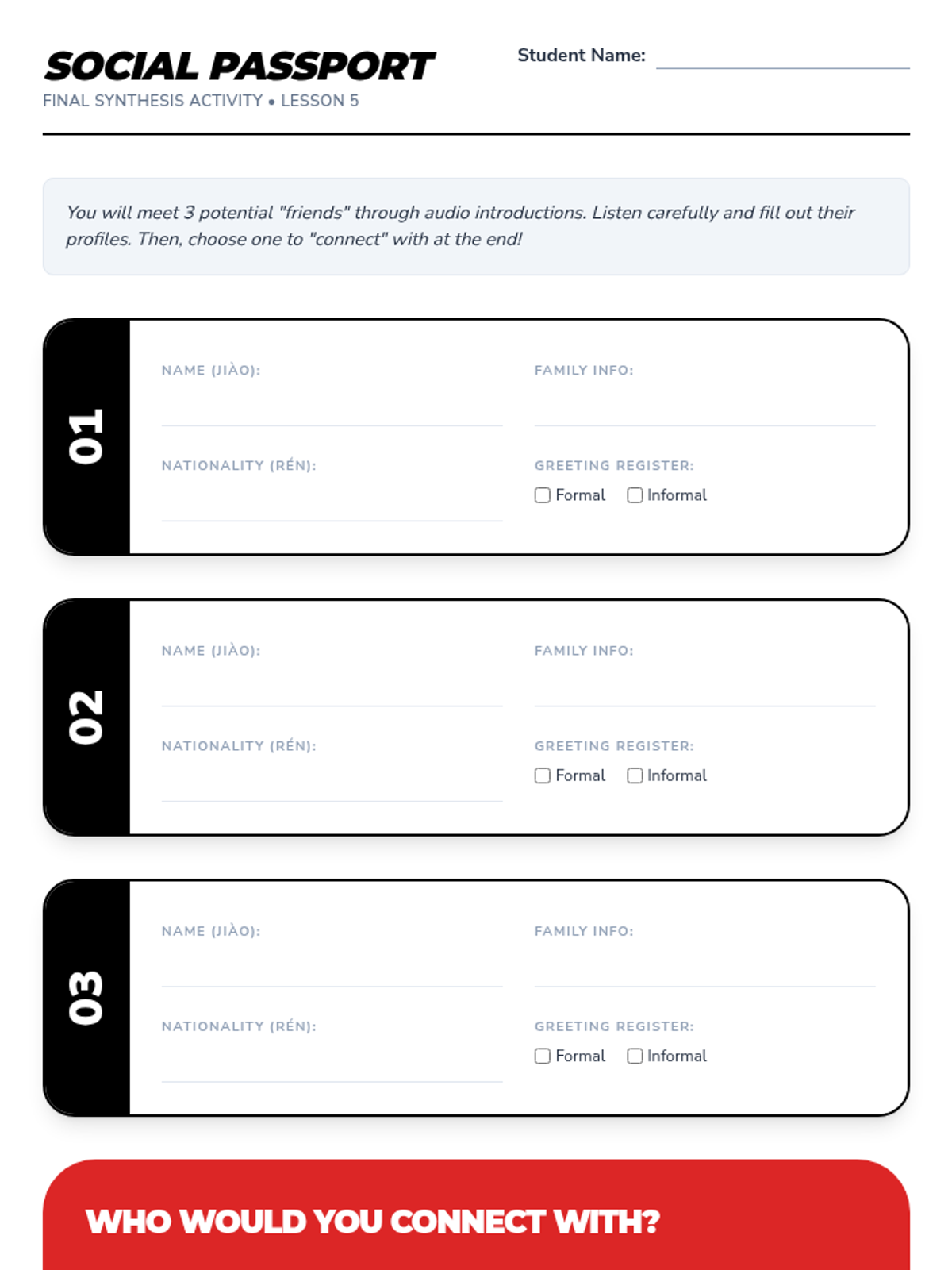
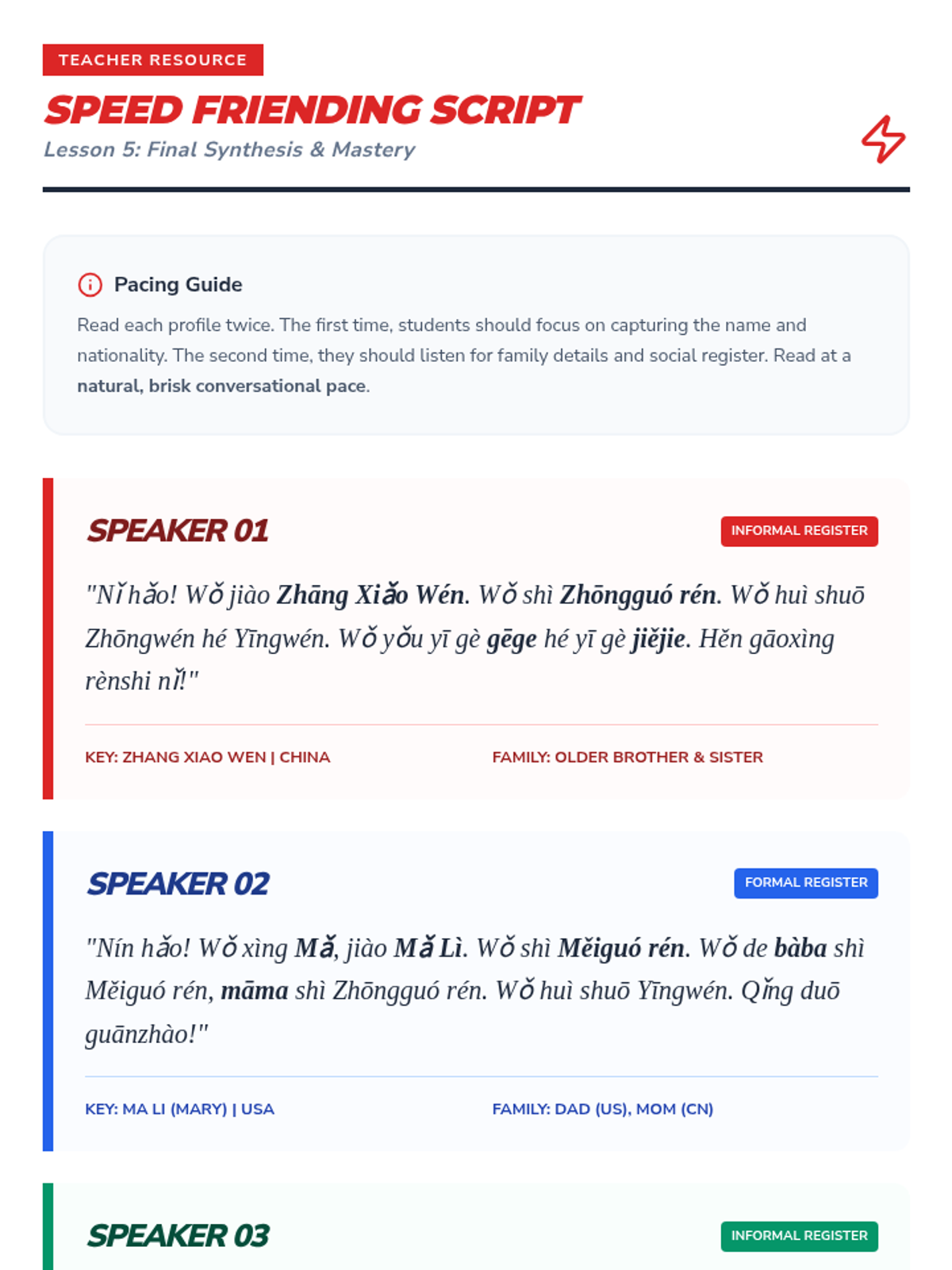
This culminating lesson requires students to synthesize greetings, names, nationalities, and family info. They listen to full self-introductions and fill out 'ID cards' for the speakers.
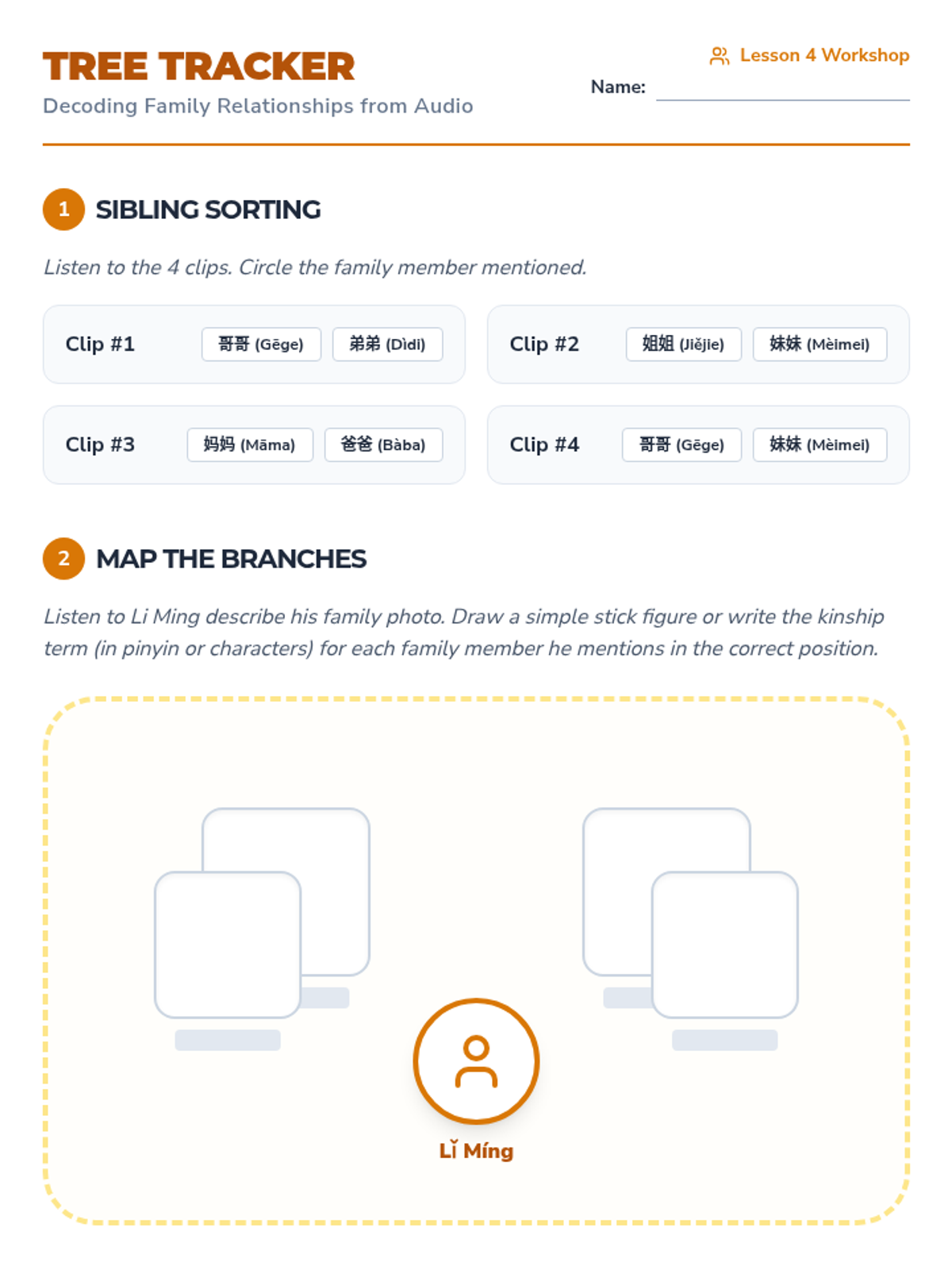
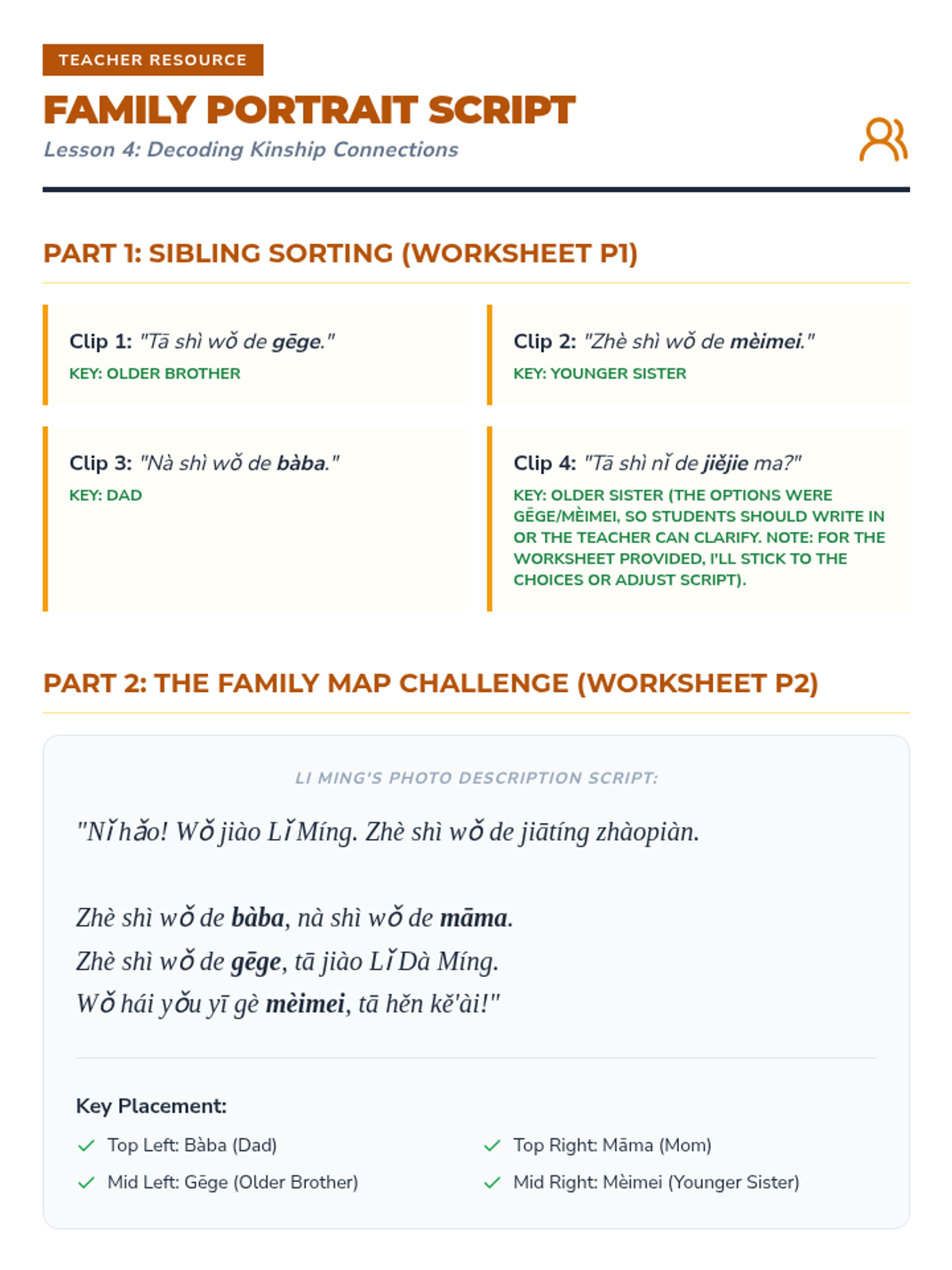
Students explore the vocabulary for immediate family members. Listening exercises involve interpreting descriptions of family photos to identify who is the 'baba' (dad), 'mama' (mom), or sibling.
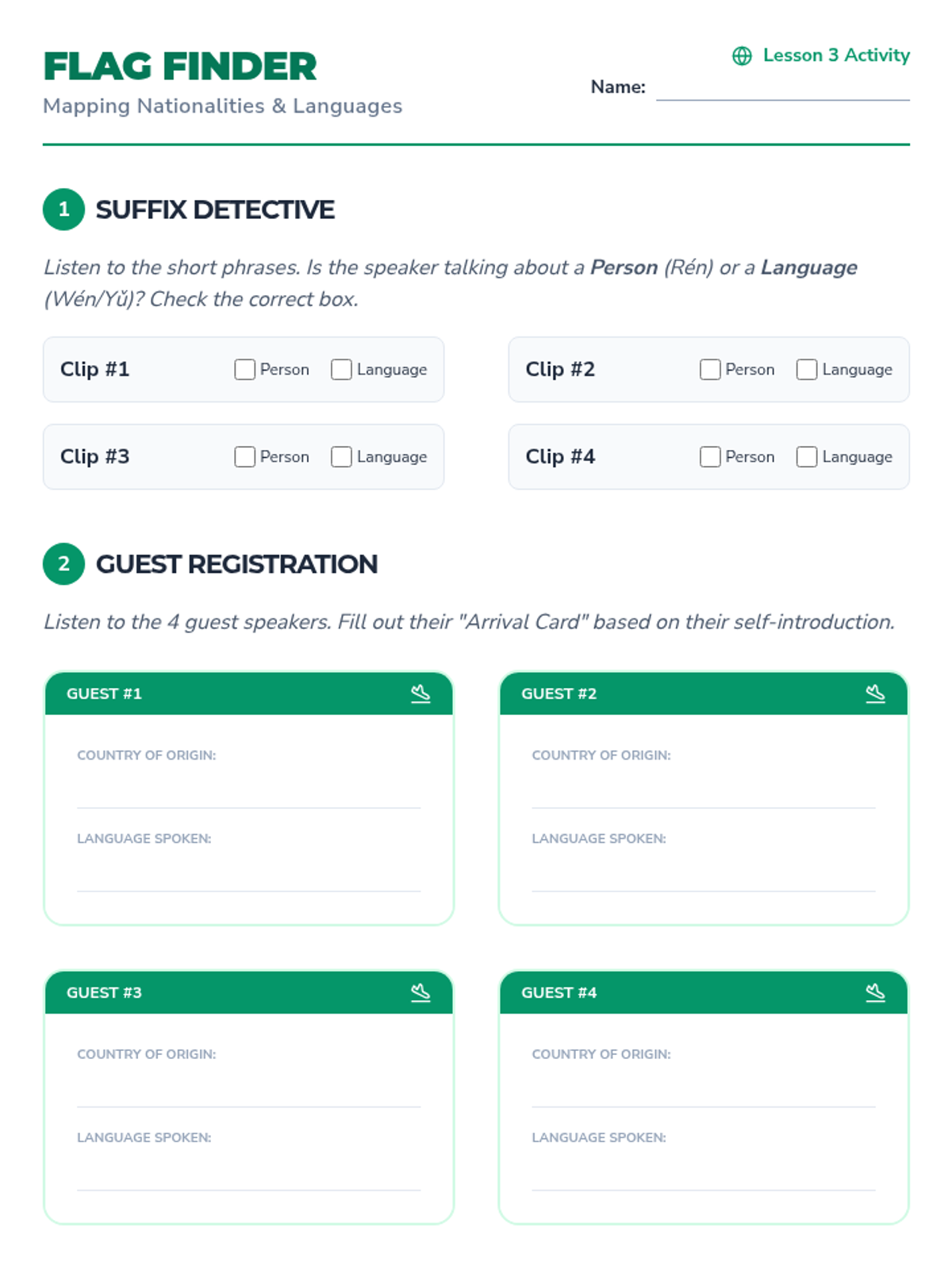
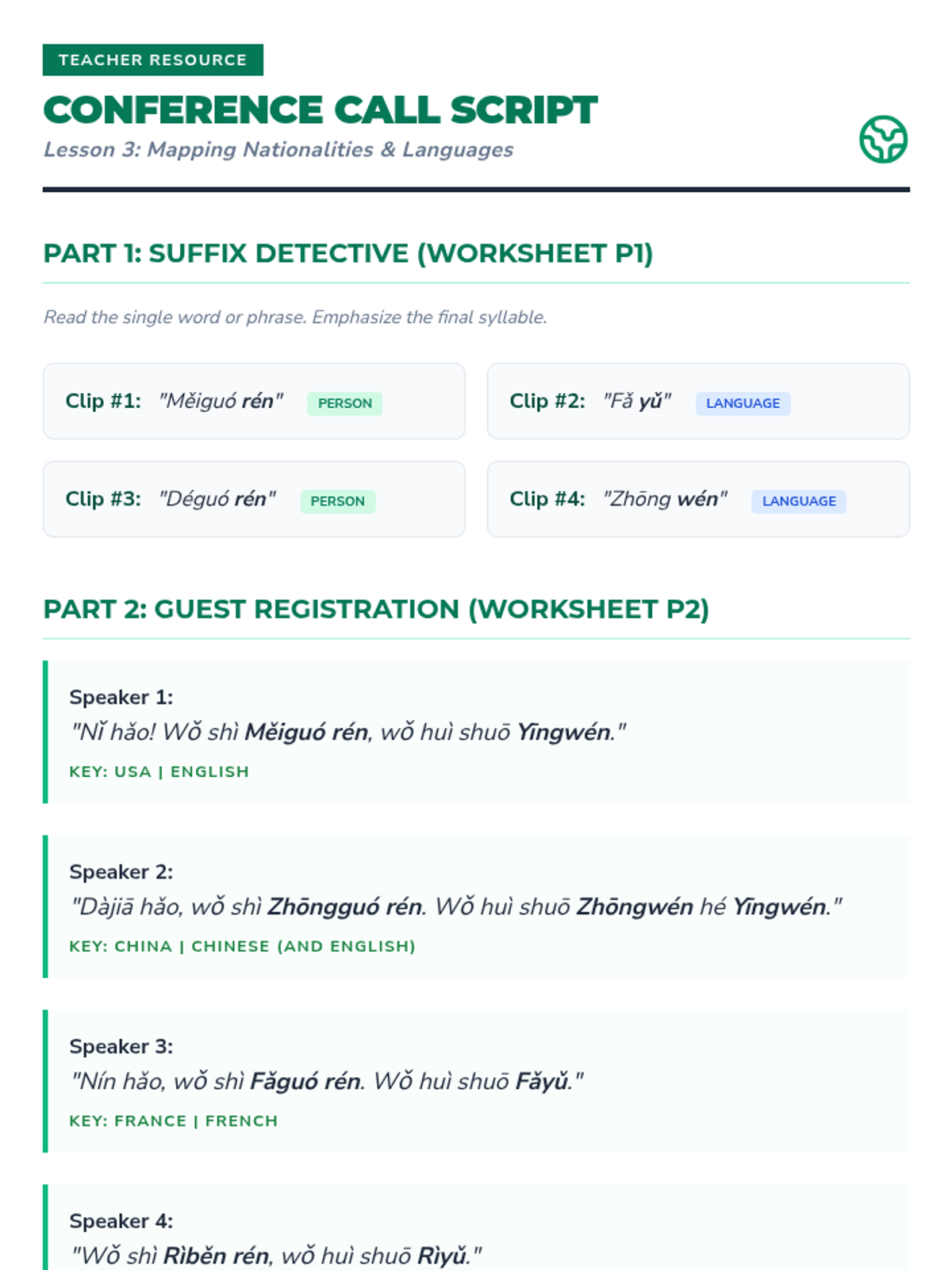
Students learn to listen for countries combined with 'ren' (person) and 'yu' (language). The lesson involves mapping speakers to their countries of origin based on short spoken biographies.
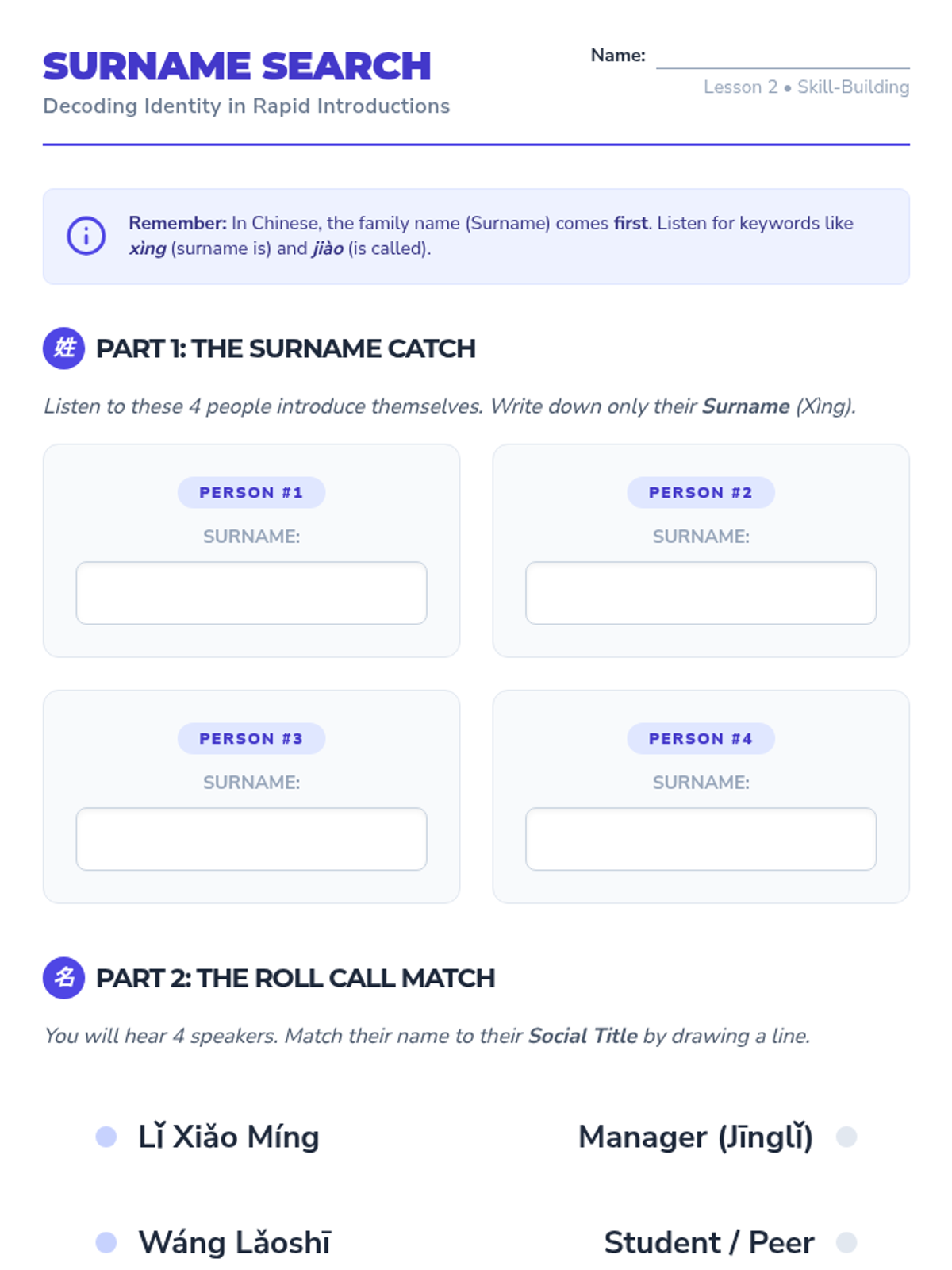
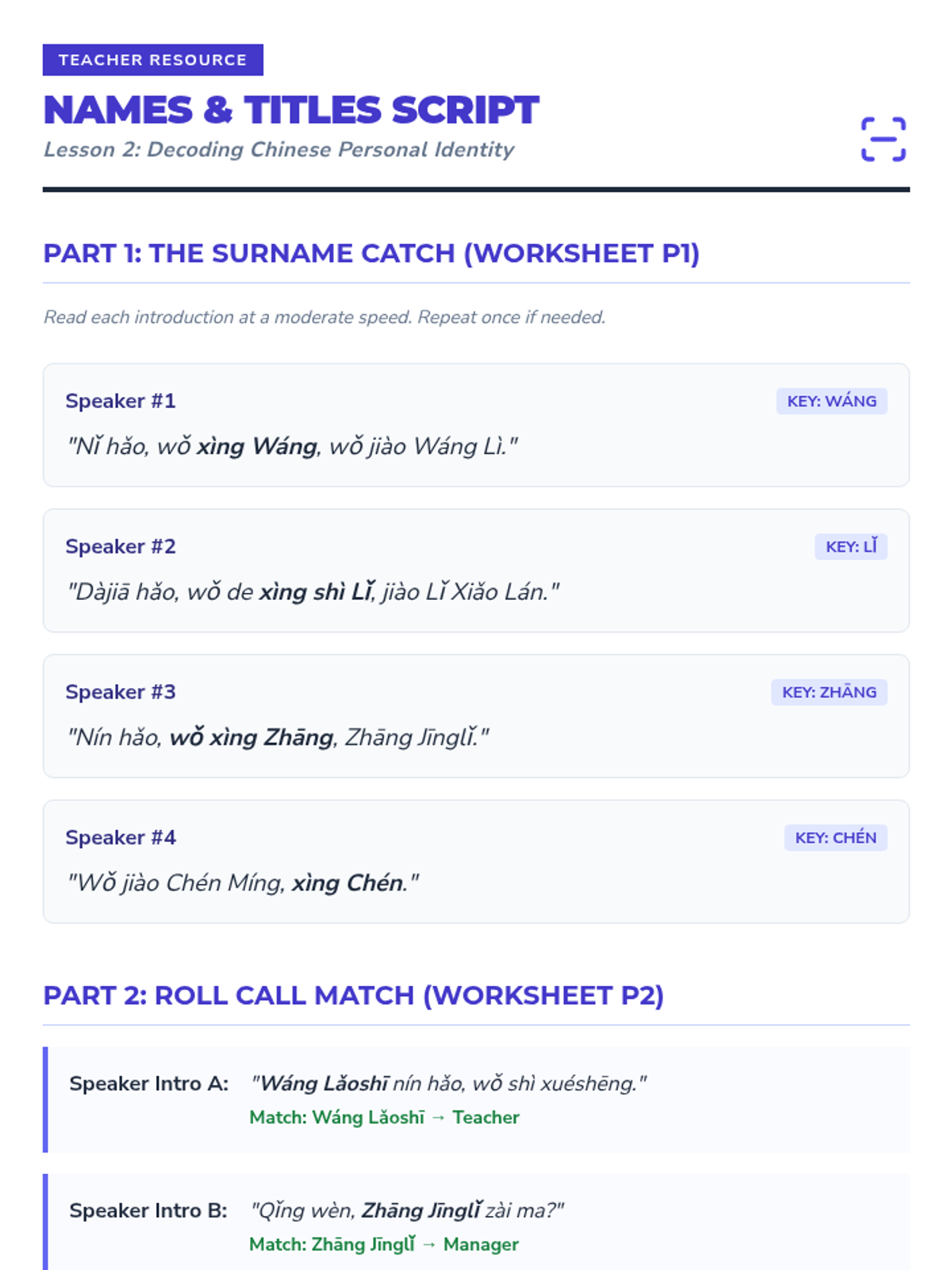
This lesson focuses on the structure of Chinese names (Family Name + Given Name) and common titles. Students practice picking out the surname (Xing) and full name (Ming zi) from rapid introductions.
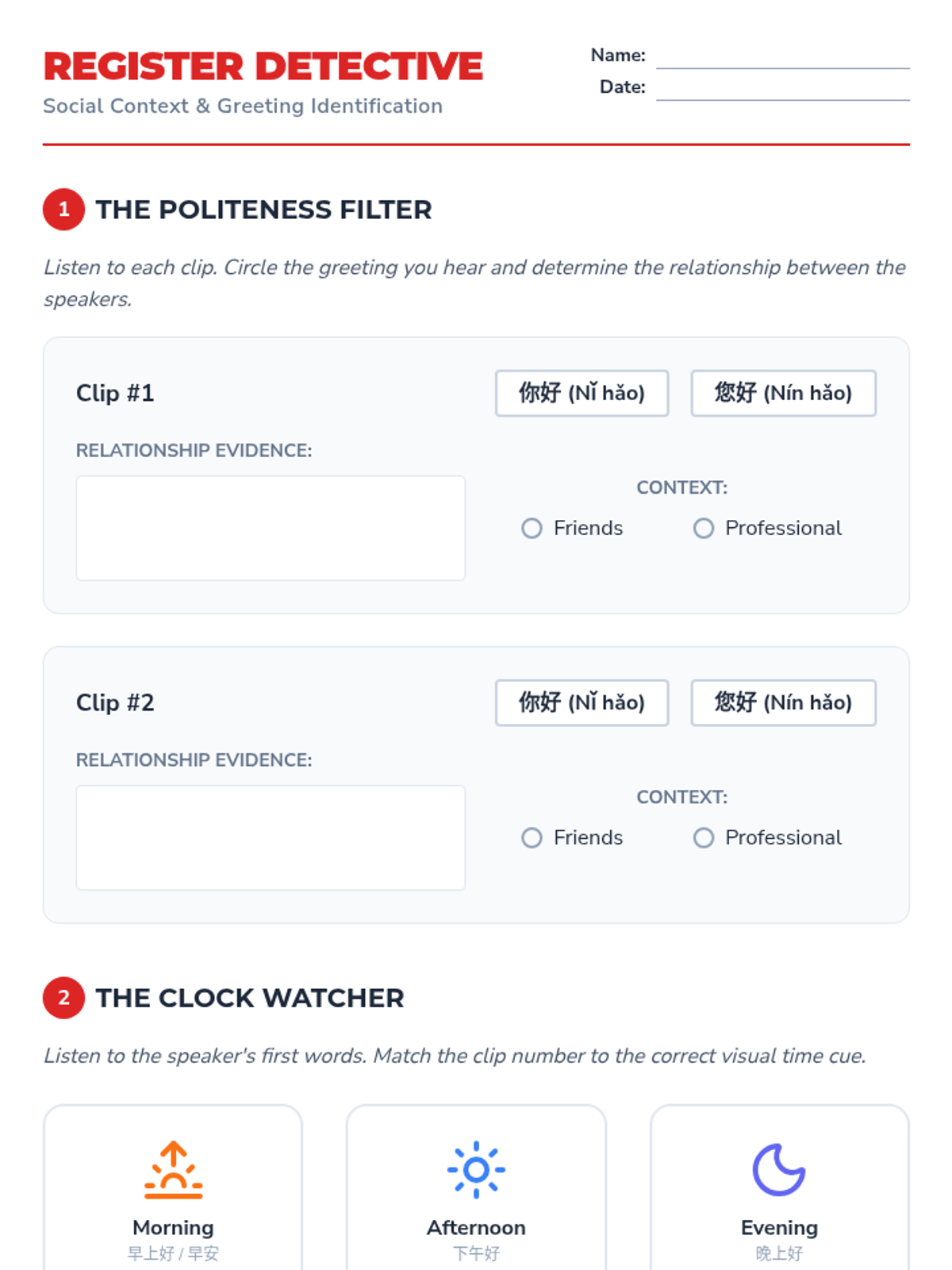
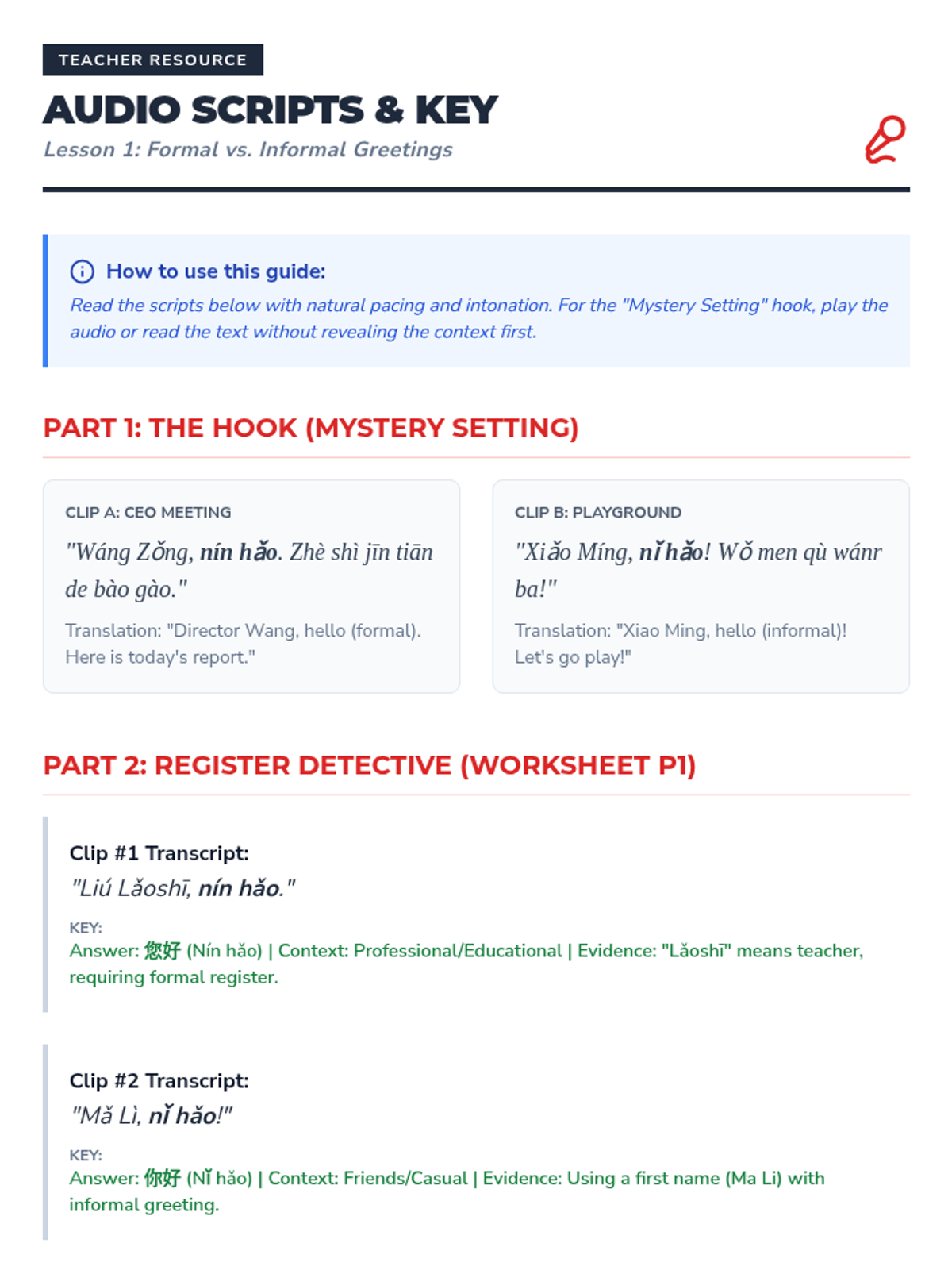
Students listen to various greeting scenarios to distinguish between 'Ni hao' (informal) and 'Nin hao' (formal), as well as time-specific greetings. They analyze the context of the audio to determine the relationship between the speakers.
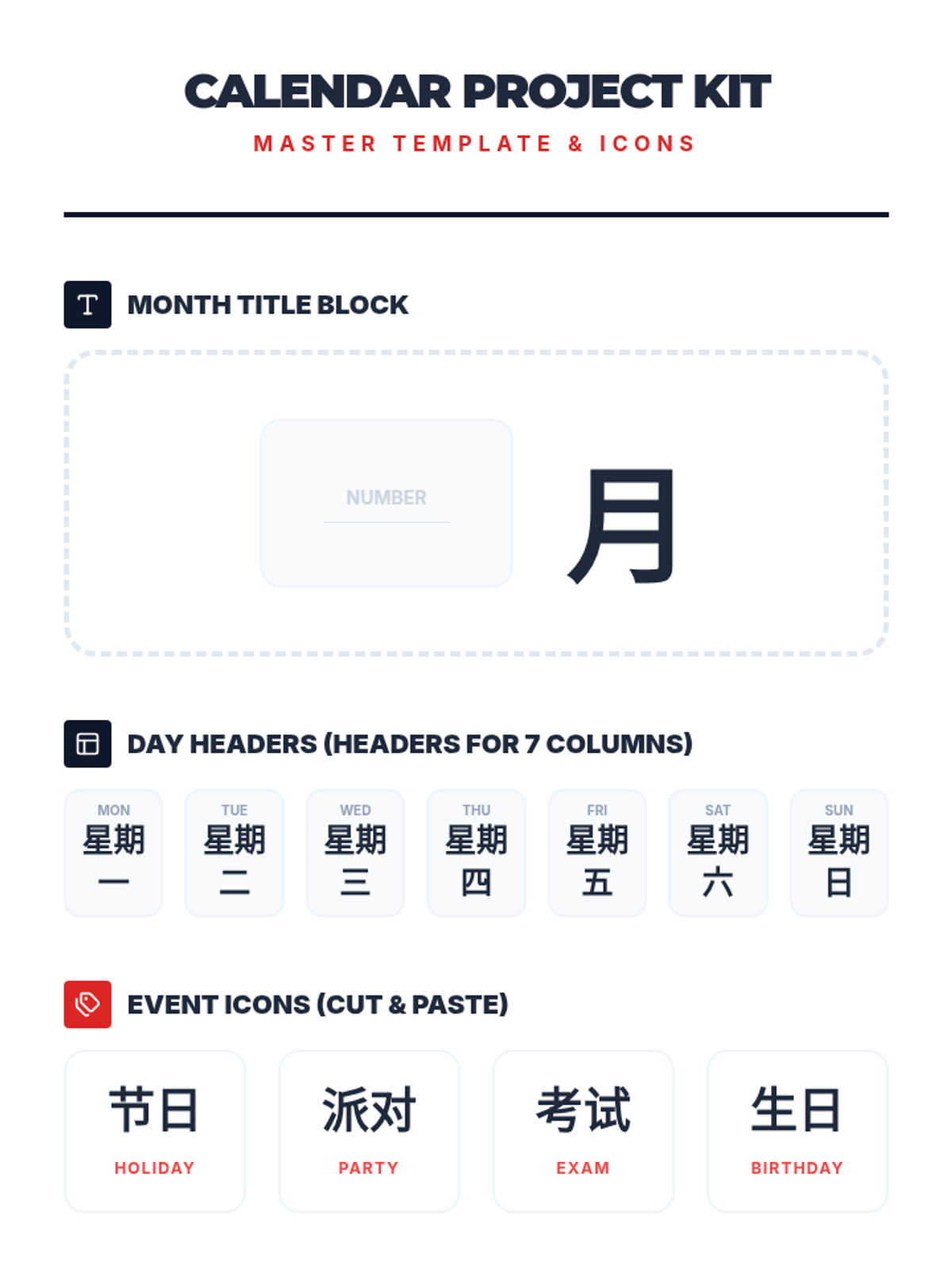
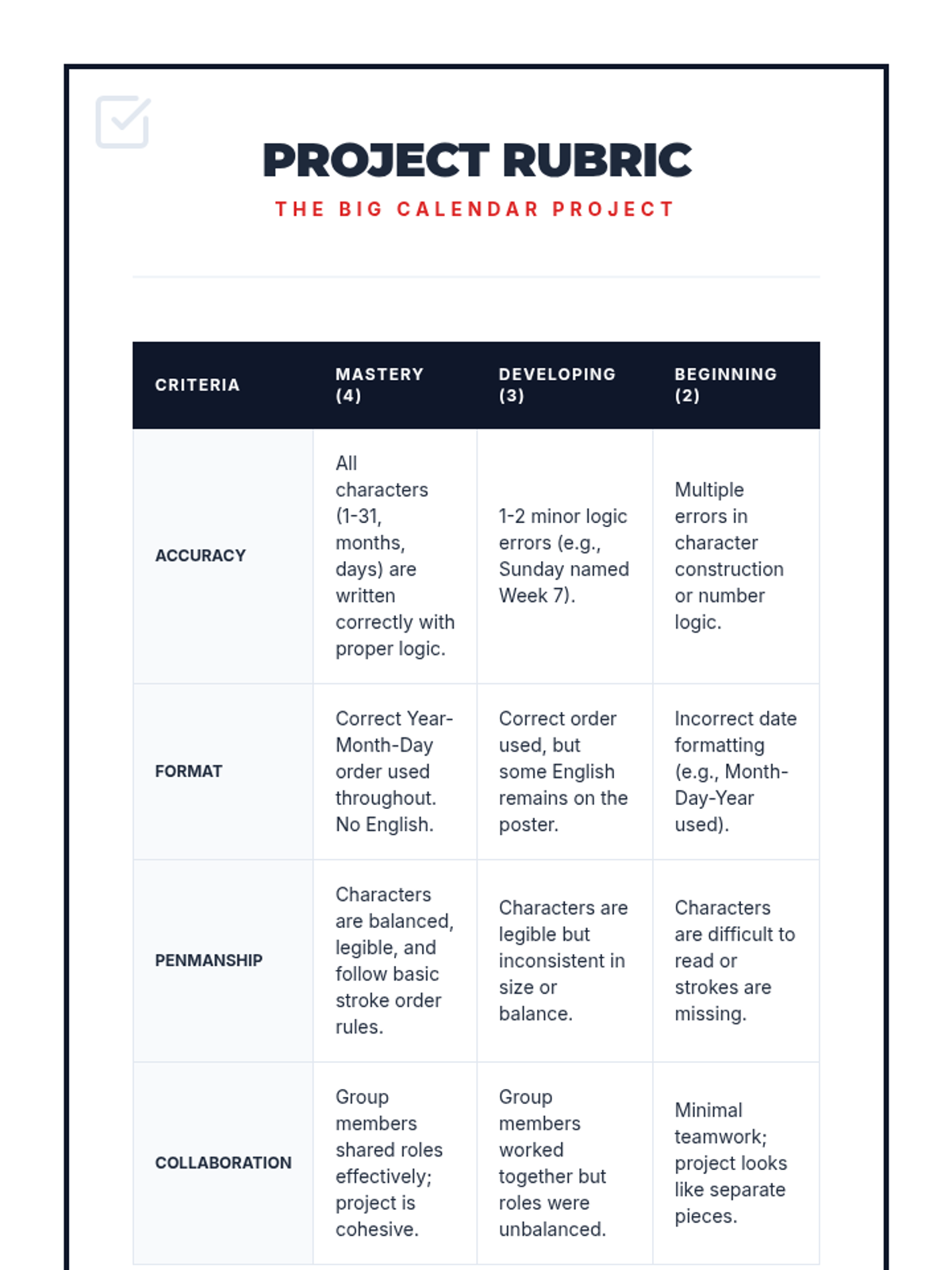
A collaborative project where students apply their knowledge to build a full classroom calendar and plan a class event in Mandarin.
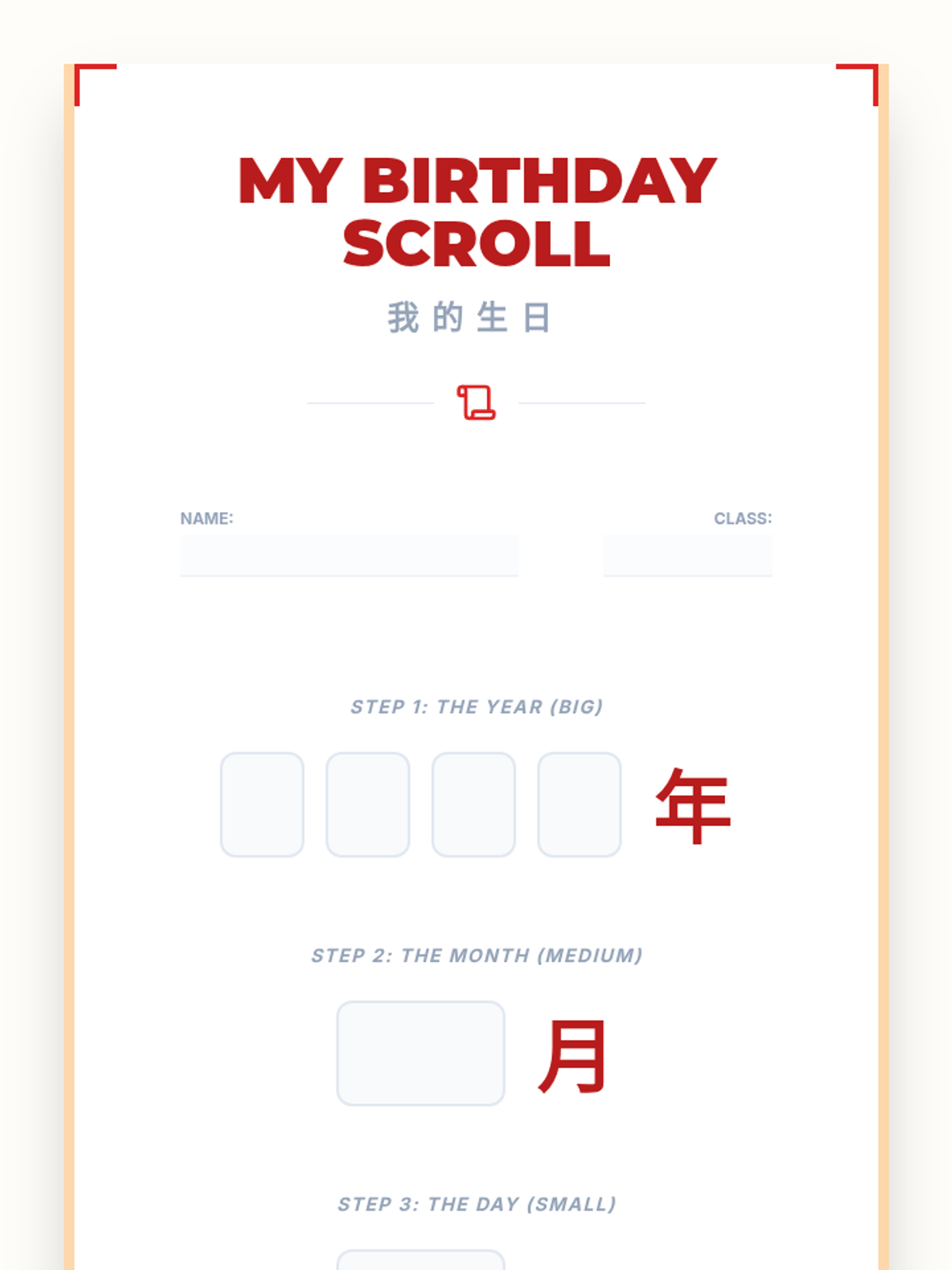
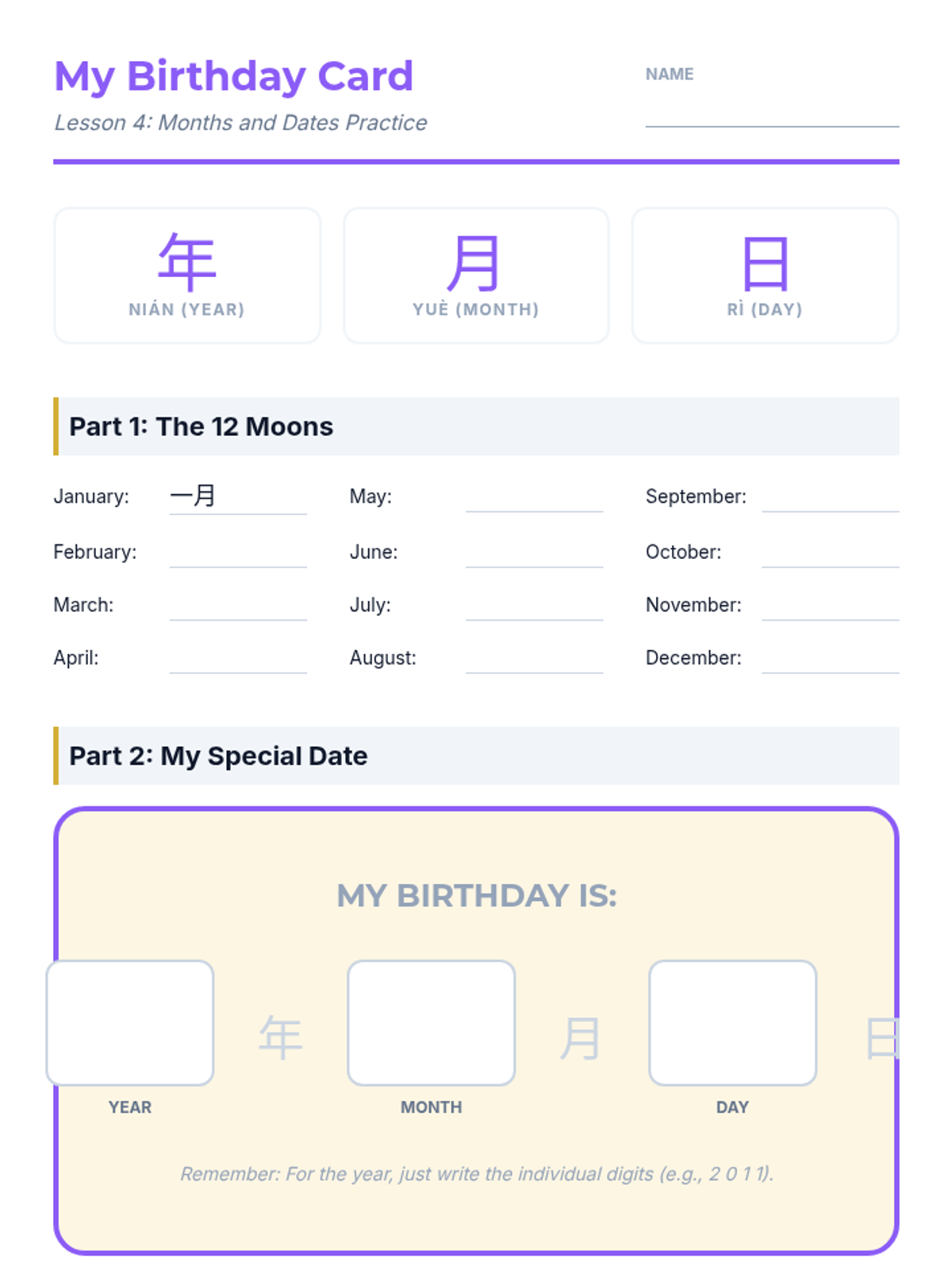
Students learn the 'Number + Moon' logic for months and the Year-Month-Day formatting used in Chinese culture.
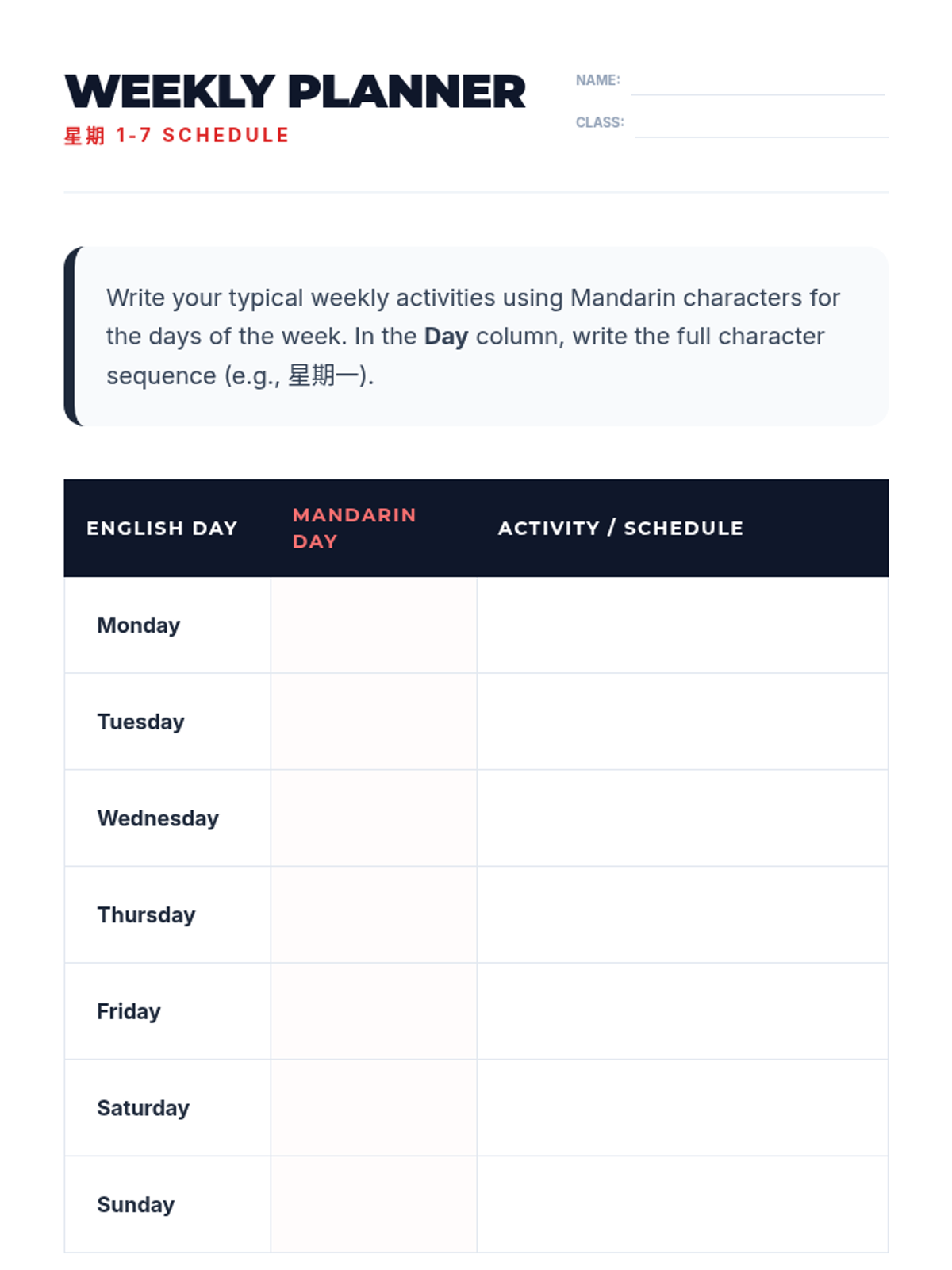
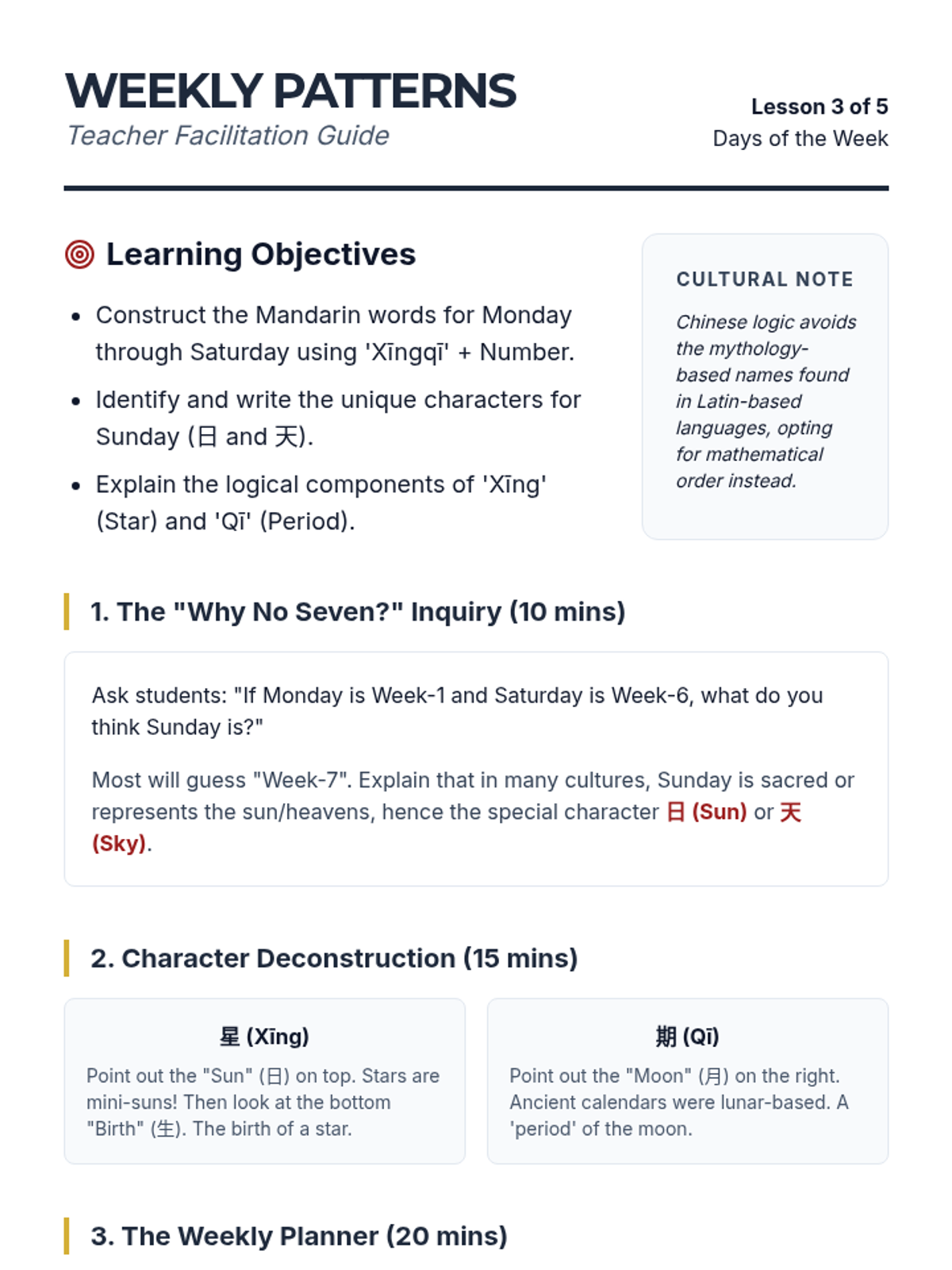
An exploration of the numerical naming system for days of the week in Mandarin, comparing it to the mythological origins of English day names.
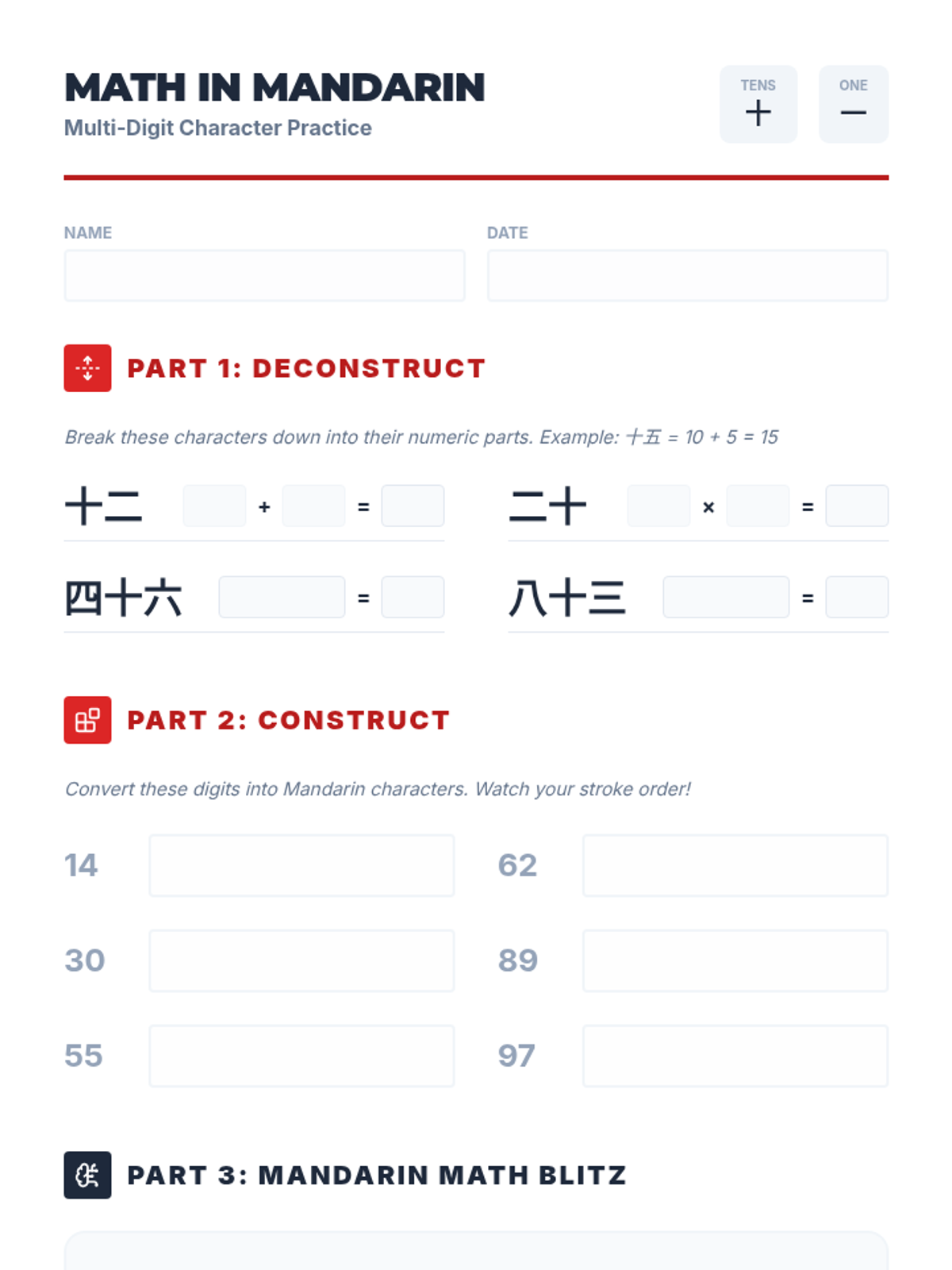
Students discover the additive and multiplicative logic behind Chinese numbers up to 99, practicing the construction of double-digit numerals.
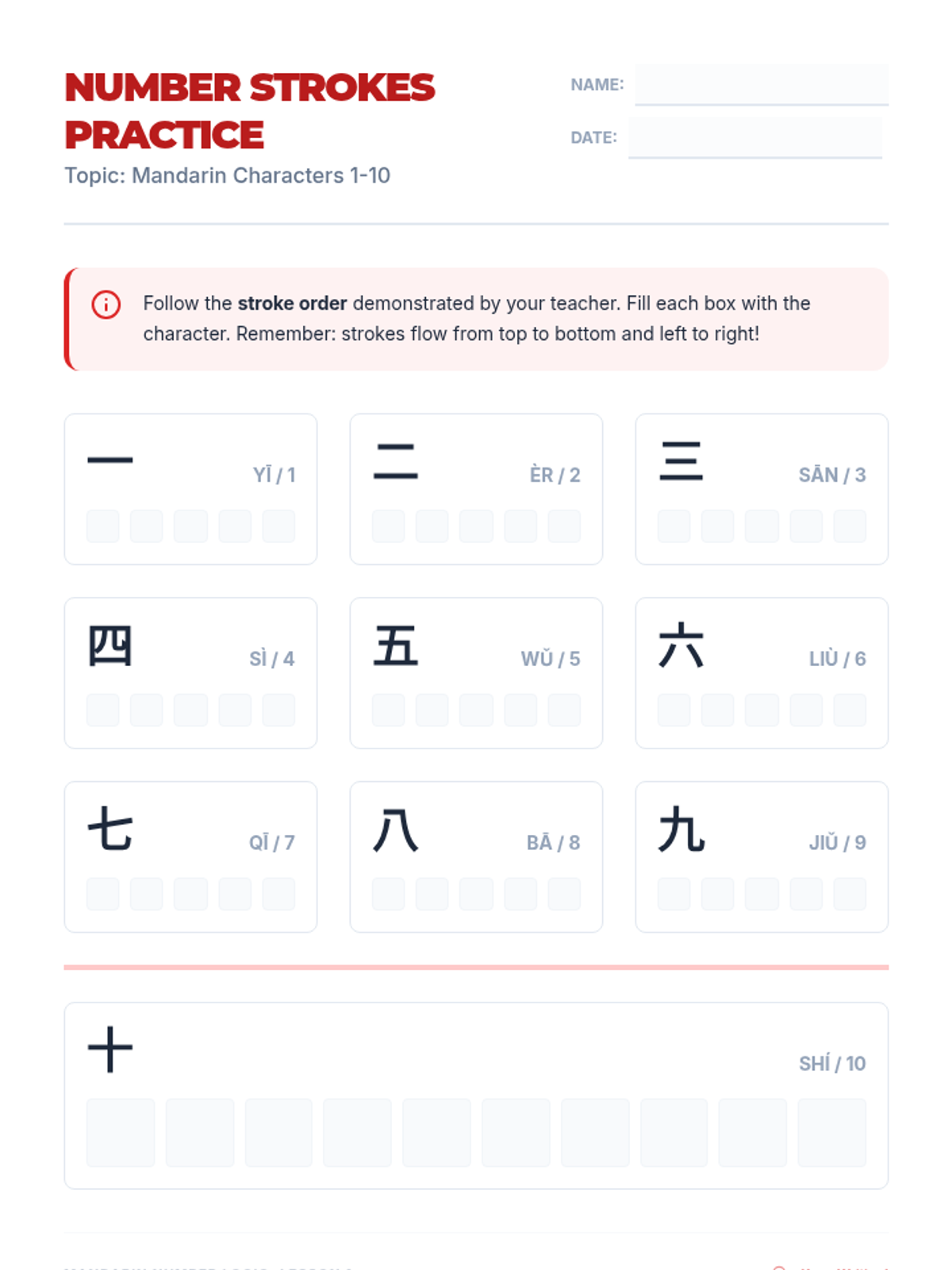
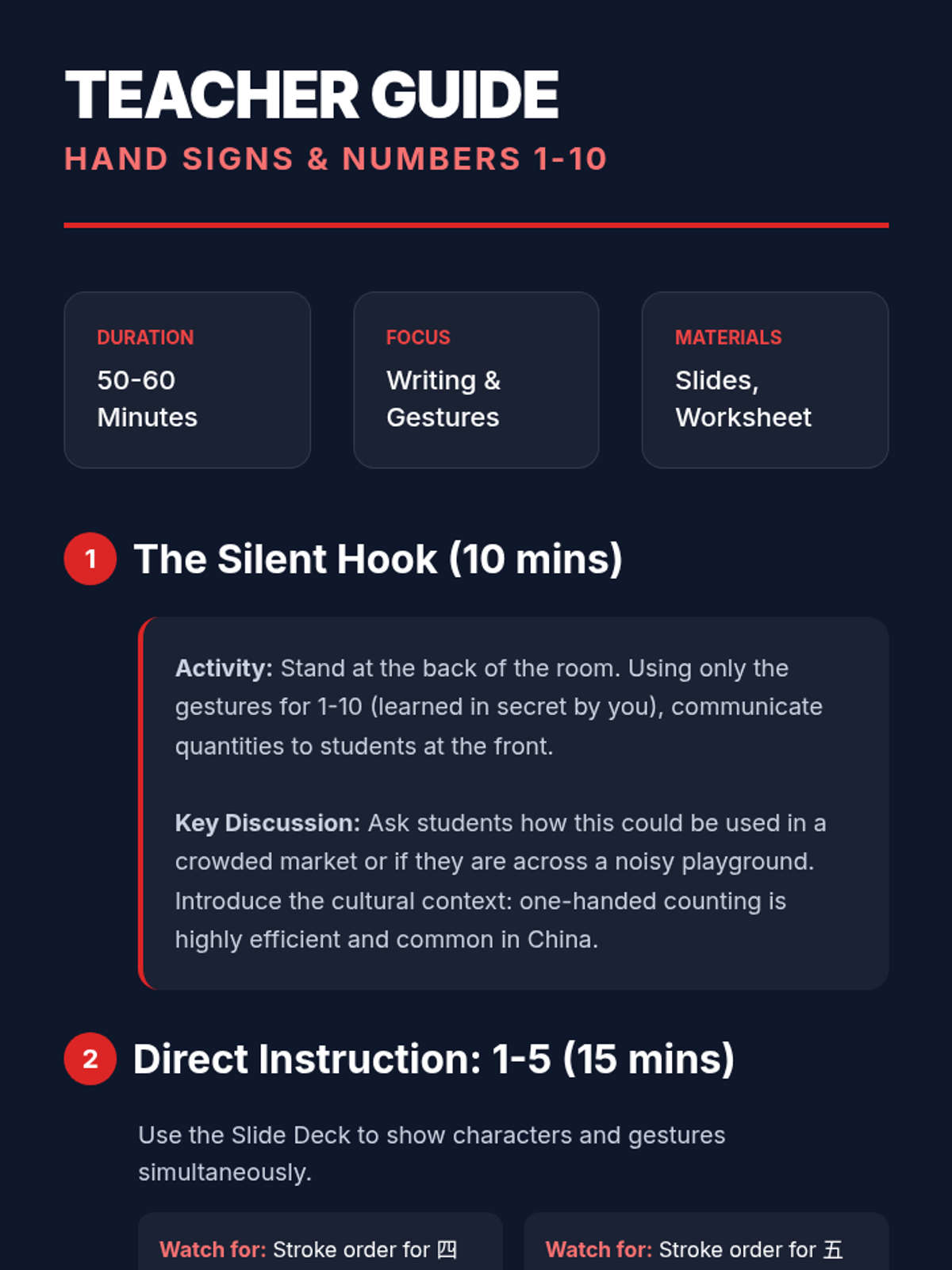
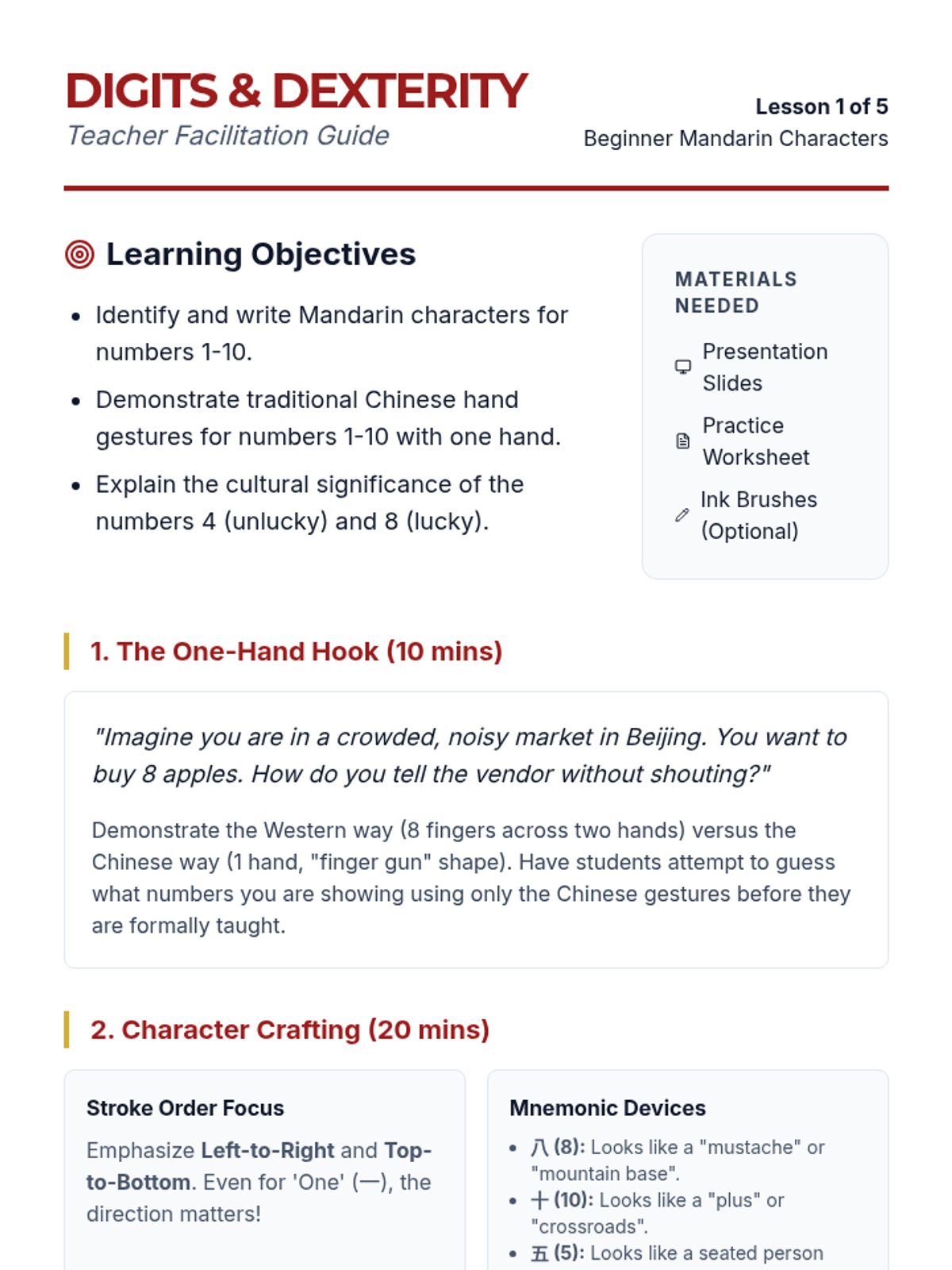
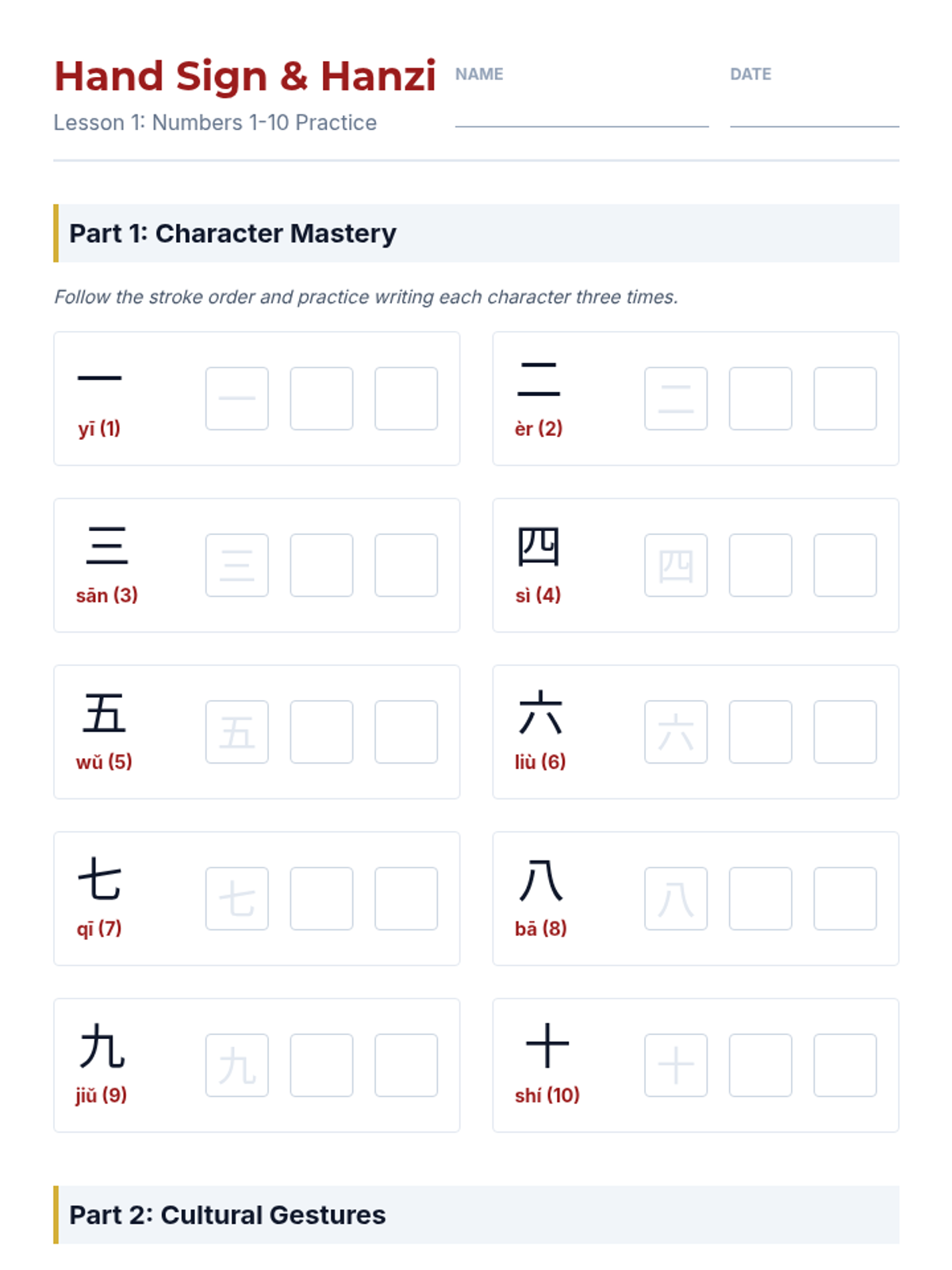
Students learn to write characters for 1-10 and master the traditional Chinese one-handed counting gestures. Focus is on stroke order and cultural communication.
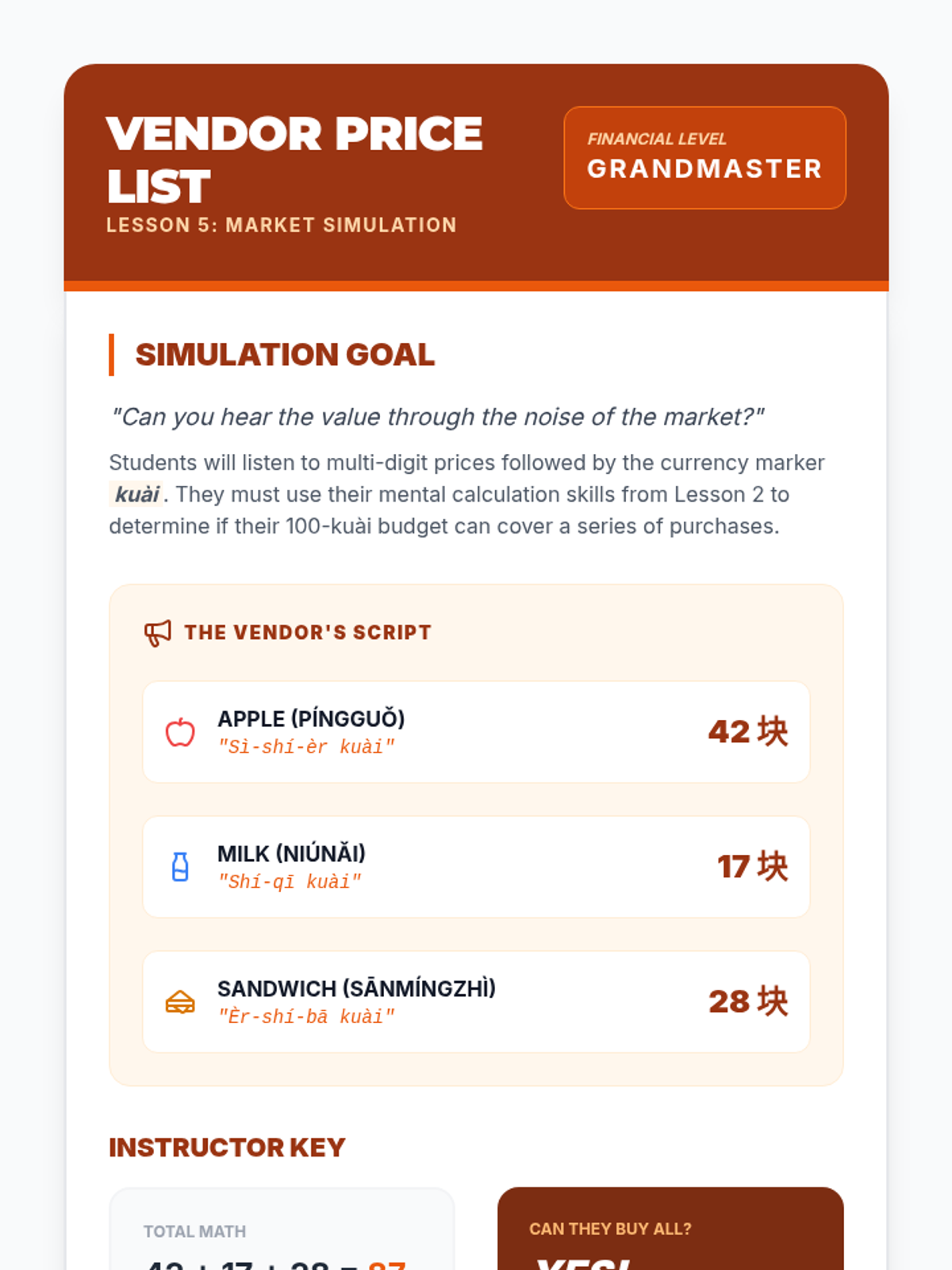
In a simulated market setting, students listen to vendors stating prices for various items. They must determine if they have enough 'money' (tokens) to purchase the items based on the spoken cost.
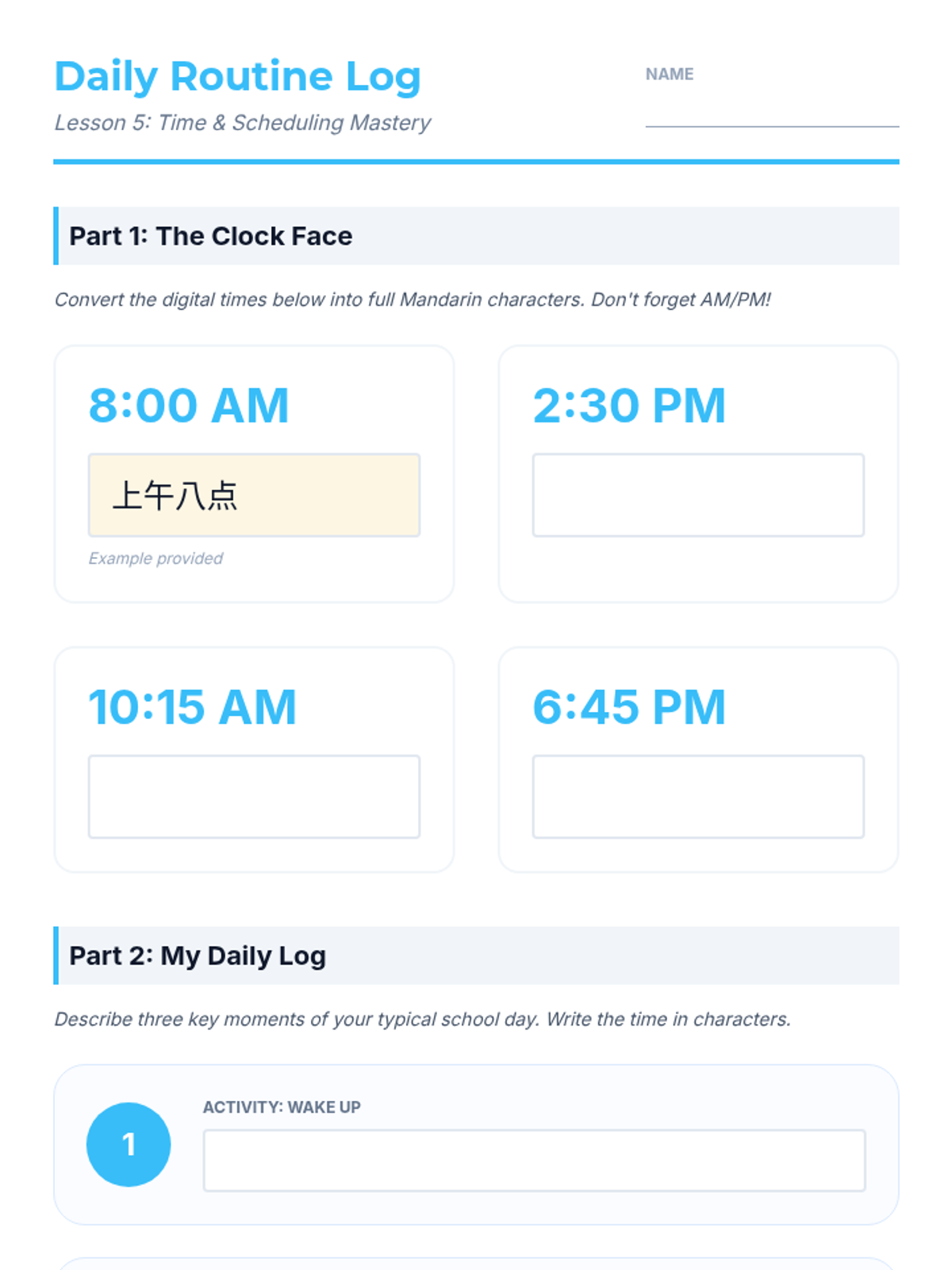
Combining numbers with time-specific characters to read schedules and describe daily routines.
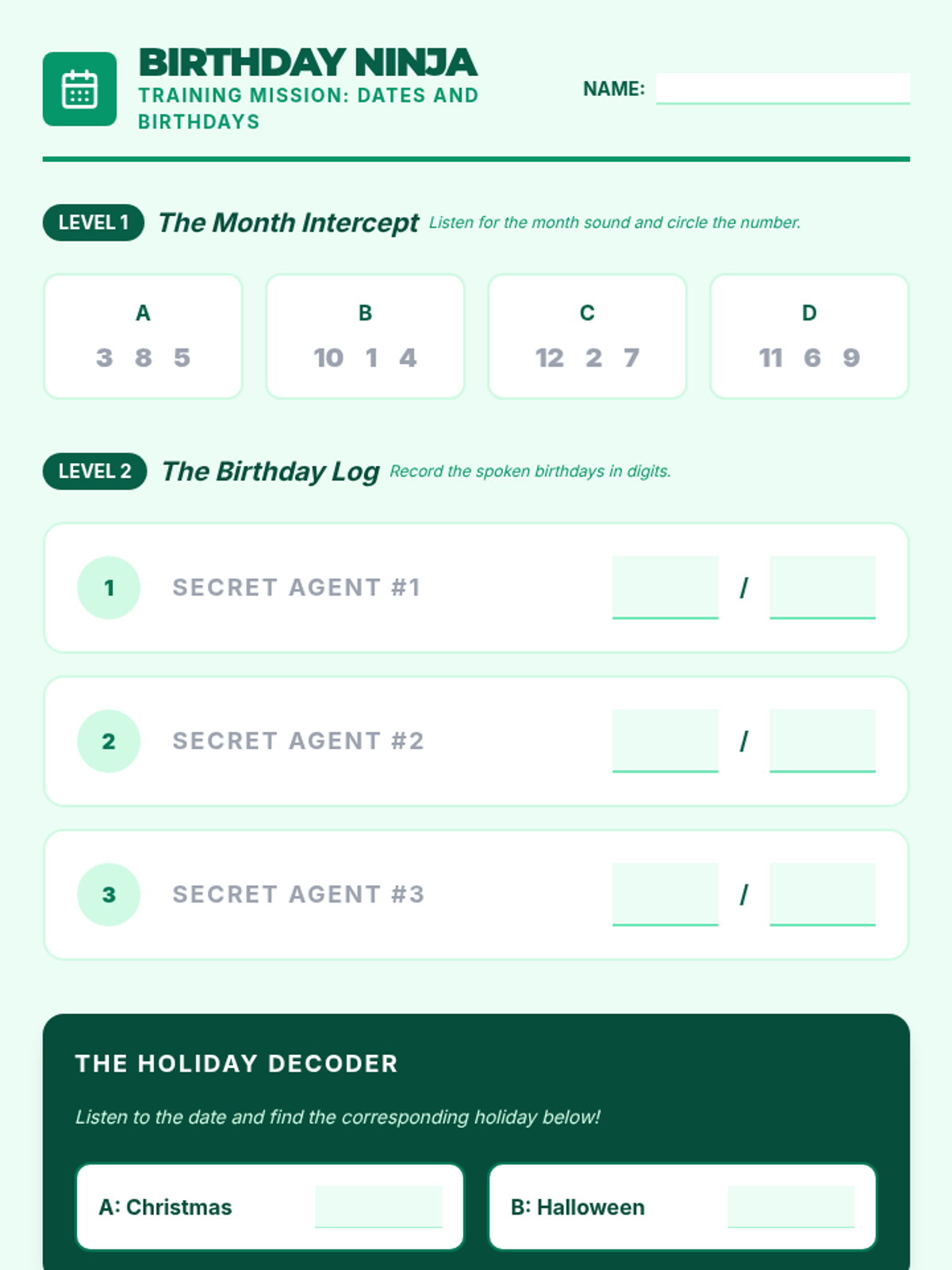
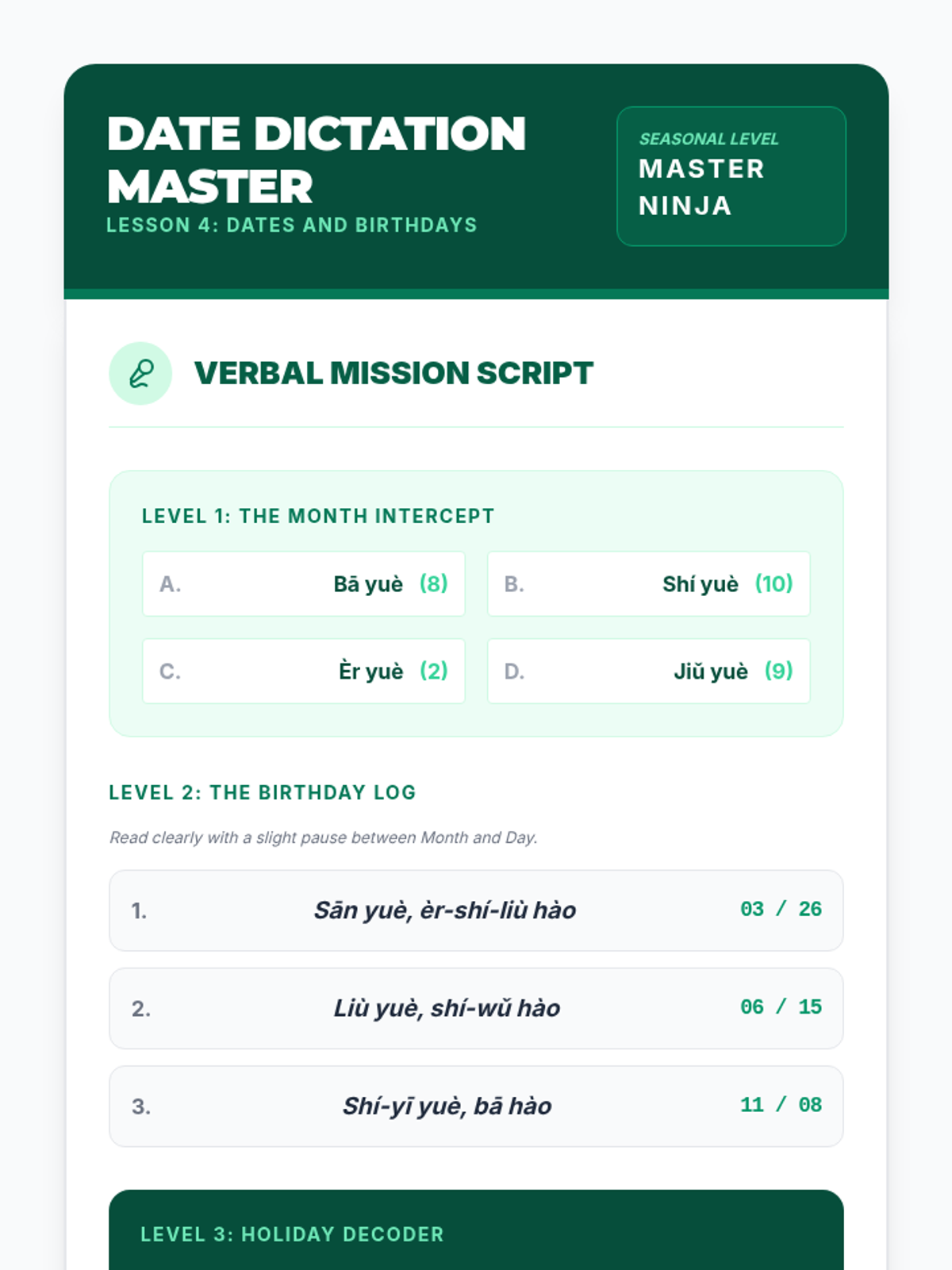
Applying the 'Big to Small' logic to write months and specific dates, culminating in sharing birthdays.
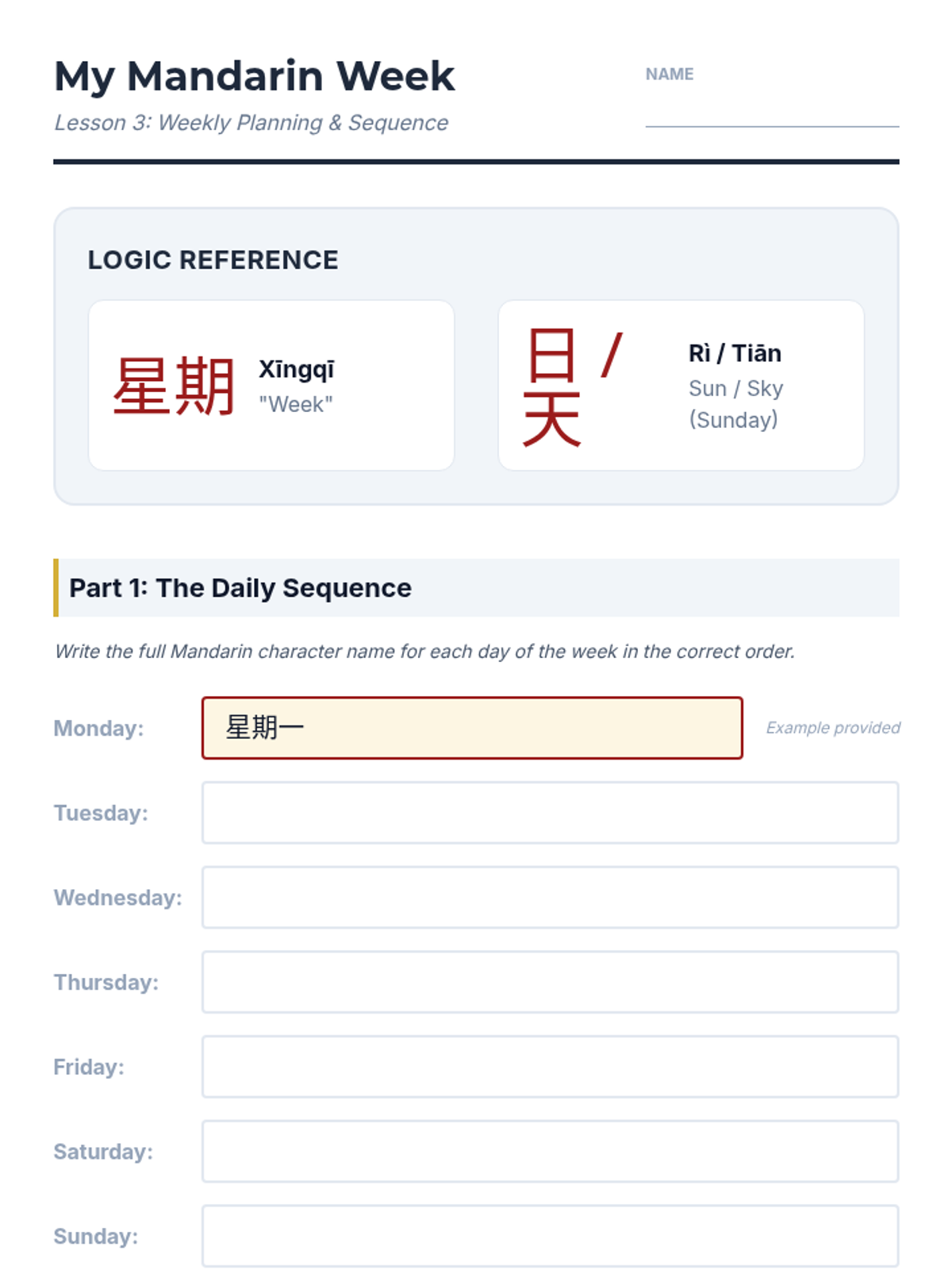
Focusing on the structure of weeks and the pattern-based naming convention for days in Mandarin.
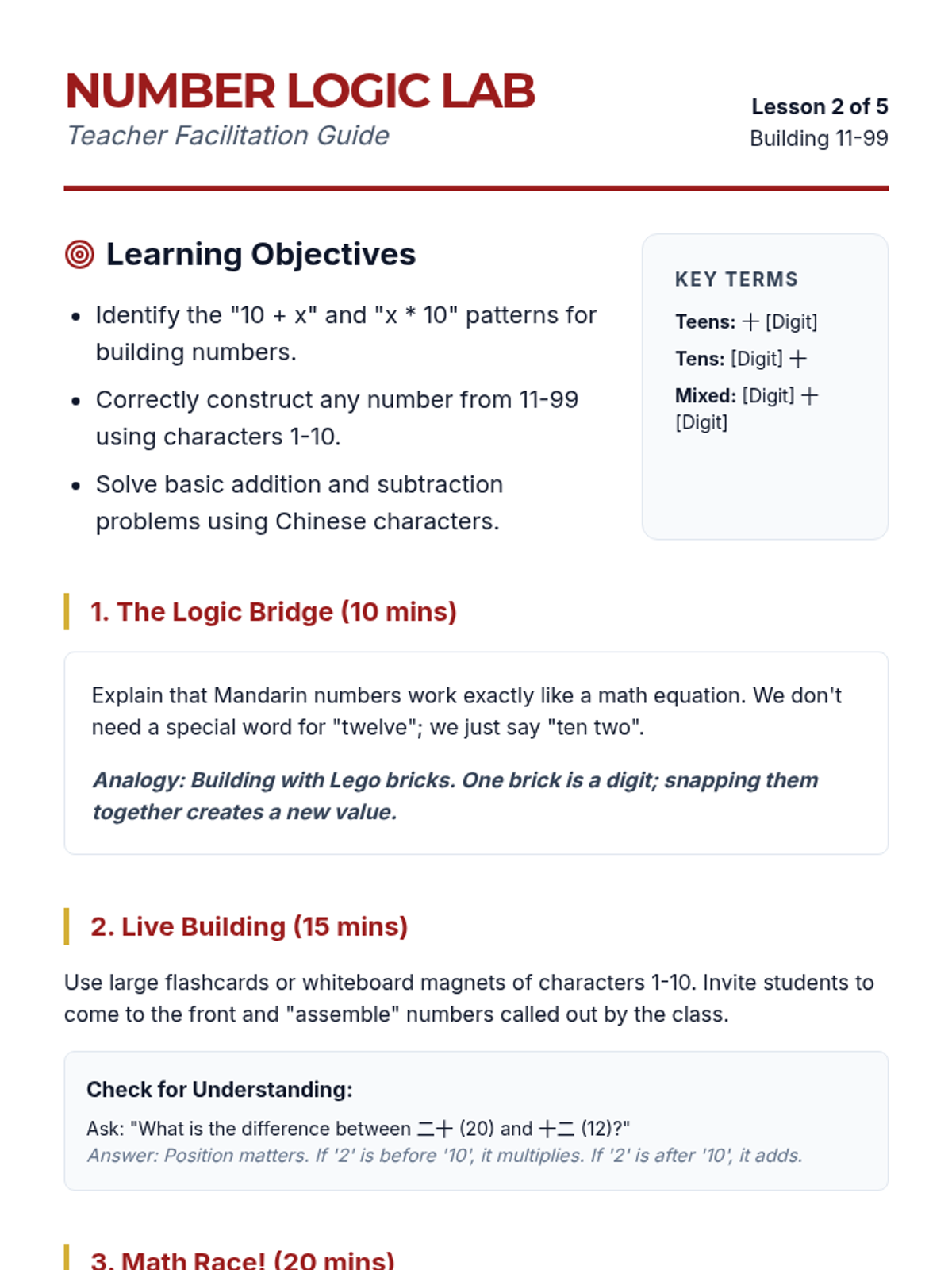
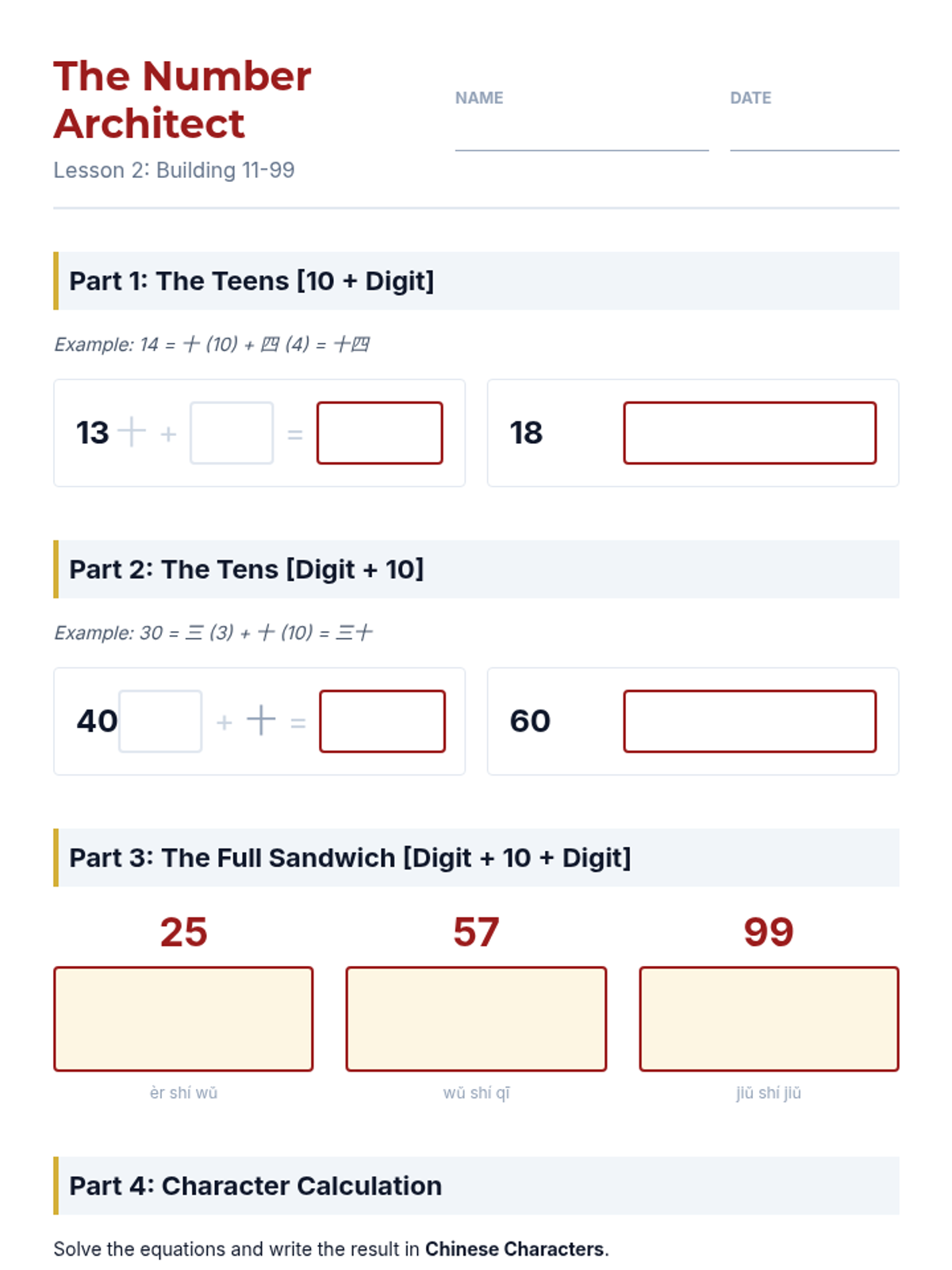
Students apply the logic of the Chinese numbering system to build values from 11 to 99 using basic characters.
Students learn to write characters for 1-10 and master the unique Chinese hand gestures for these numbers.
Students apply number recognition to months and days (e.g., 'Five month, ten day' for May 10th). The activity involves listening to classmates' birthdays or historical dates and marking them on a calendar.
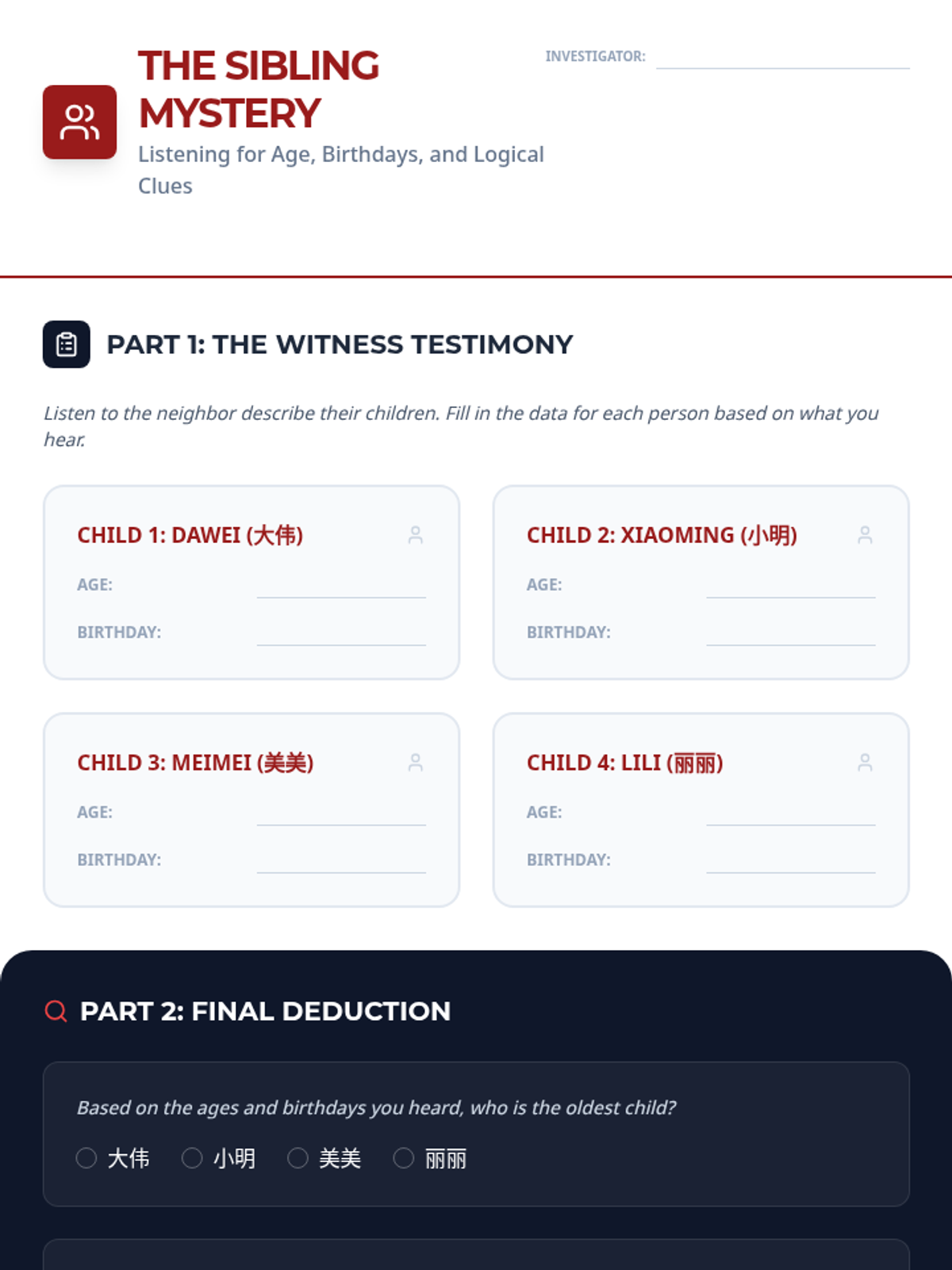
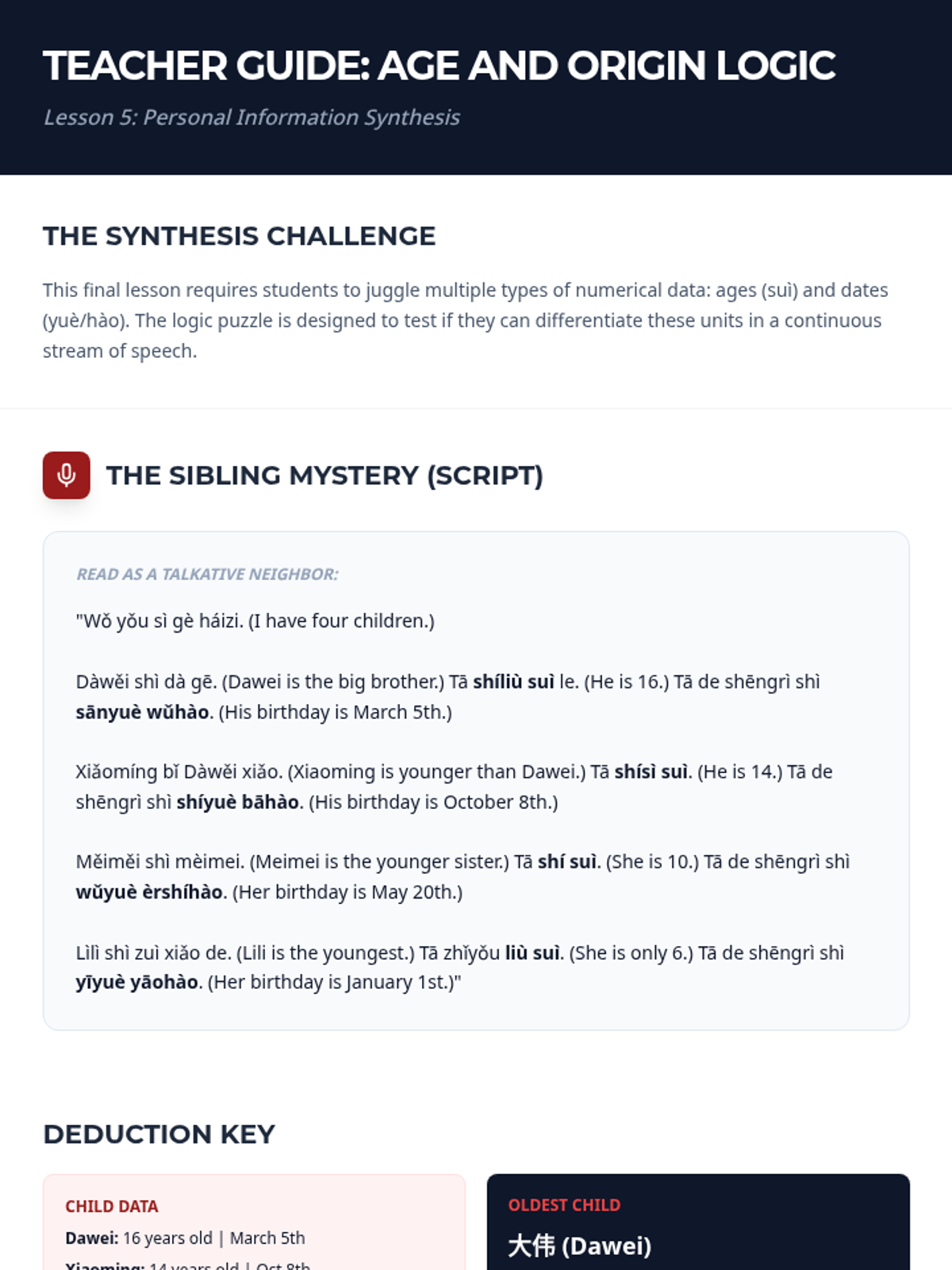
Synthesizing dates and numbers to understand personal information. Students parse numerical data in social contexts through logic puzzles.
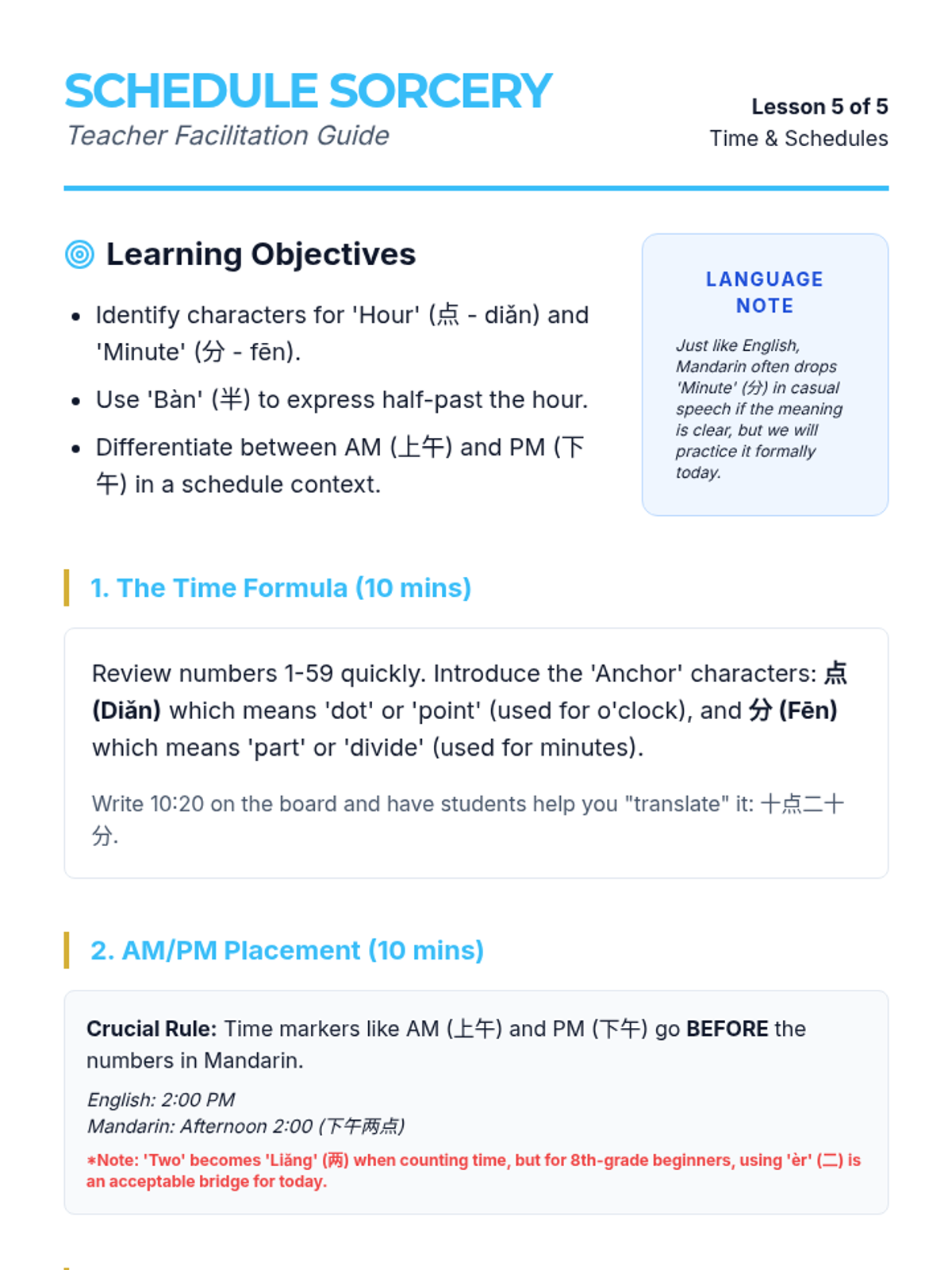
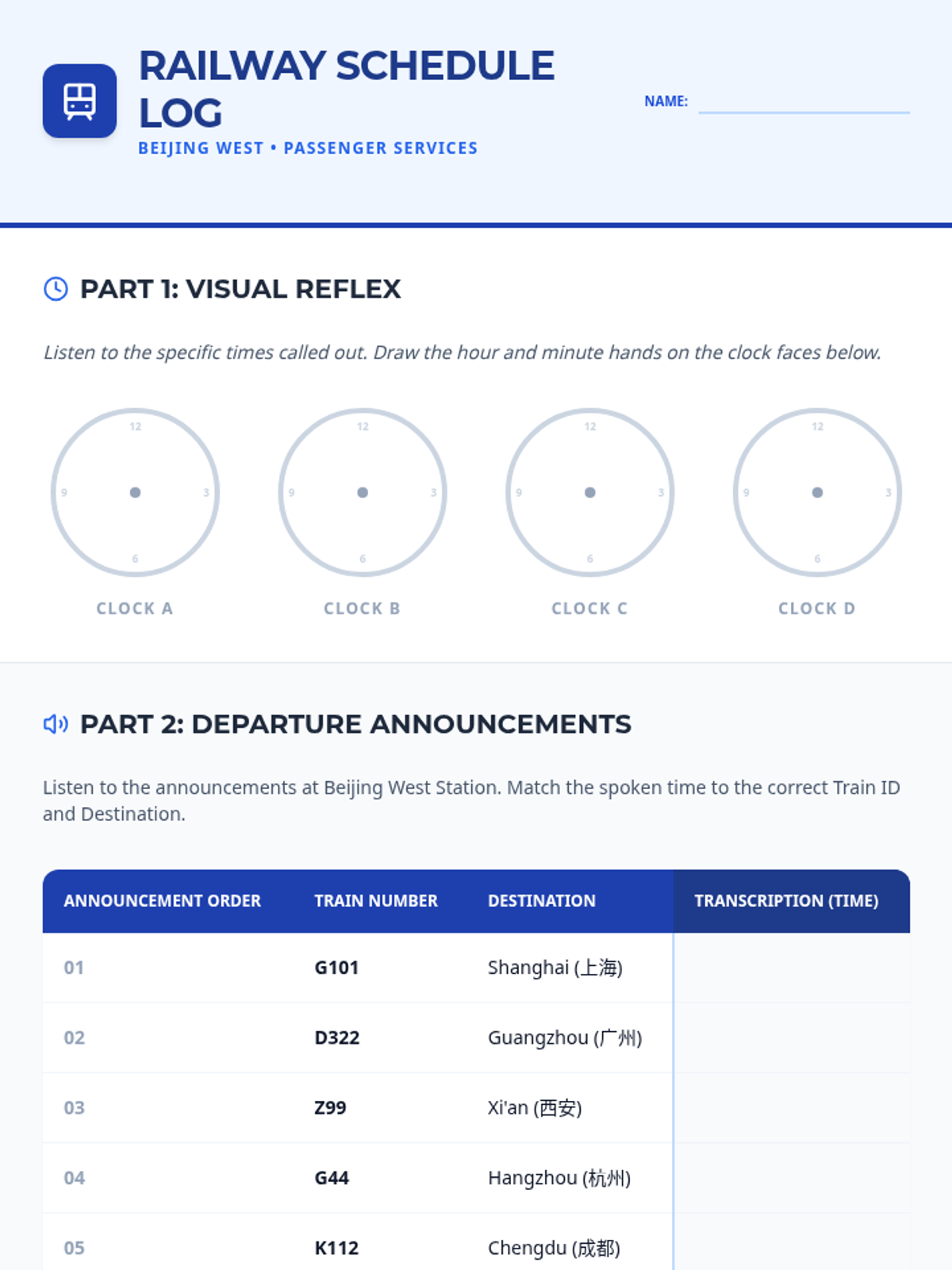
Students learn to listen for specific times using hours and minutes, applying this to school schedules and transportation announcements.
Introduction to the 'Number + Unit' structure for months and weekdays. Students listen to schedule dialogues to identify specific dates.
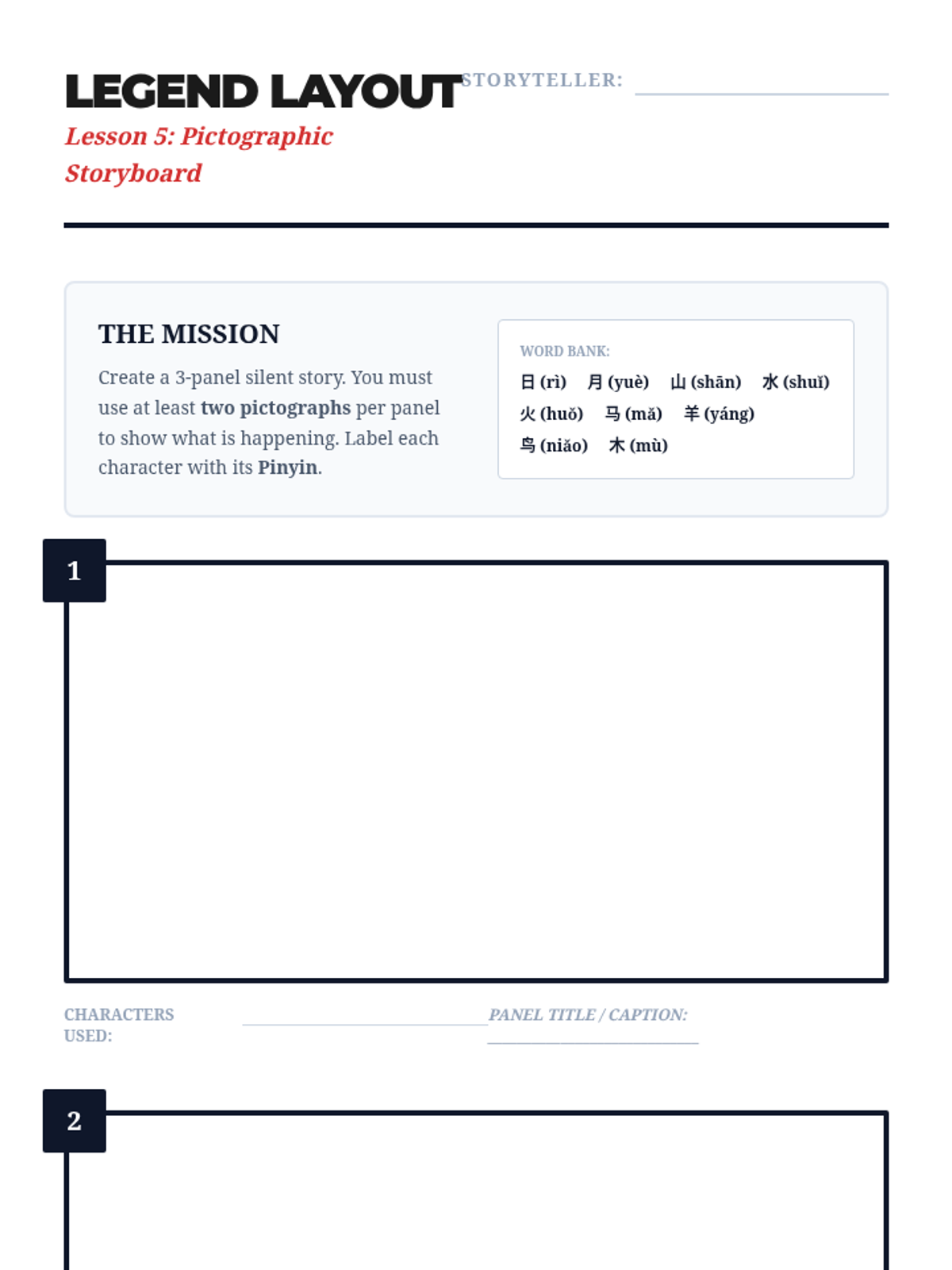
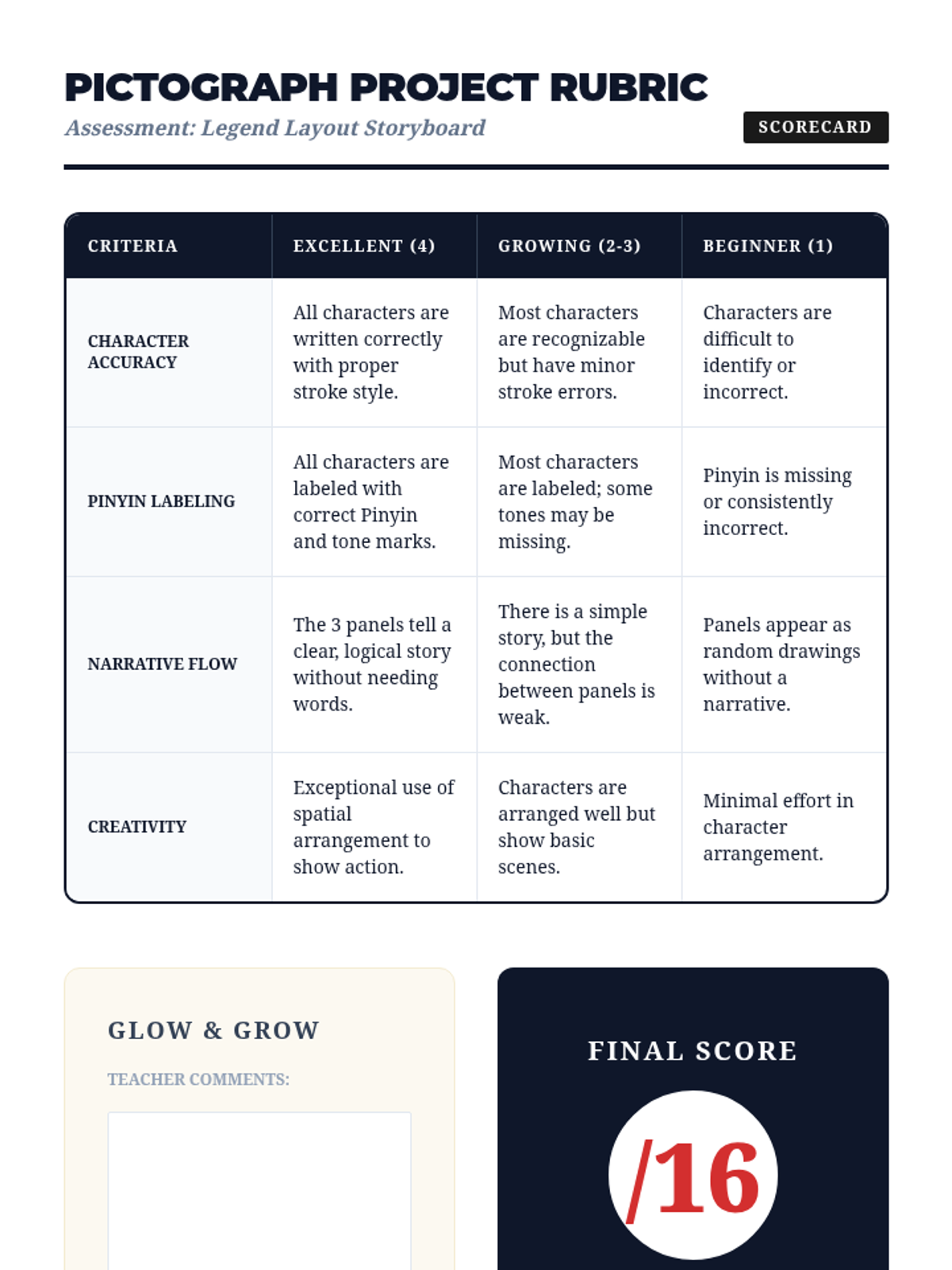
Students synthesize their learning by composing a visual storyboard using the characters they've mastered. They arrange pictographs to create narrative scenes, demonstrating their understanding of both character meaning and spatial composition.
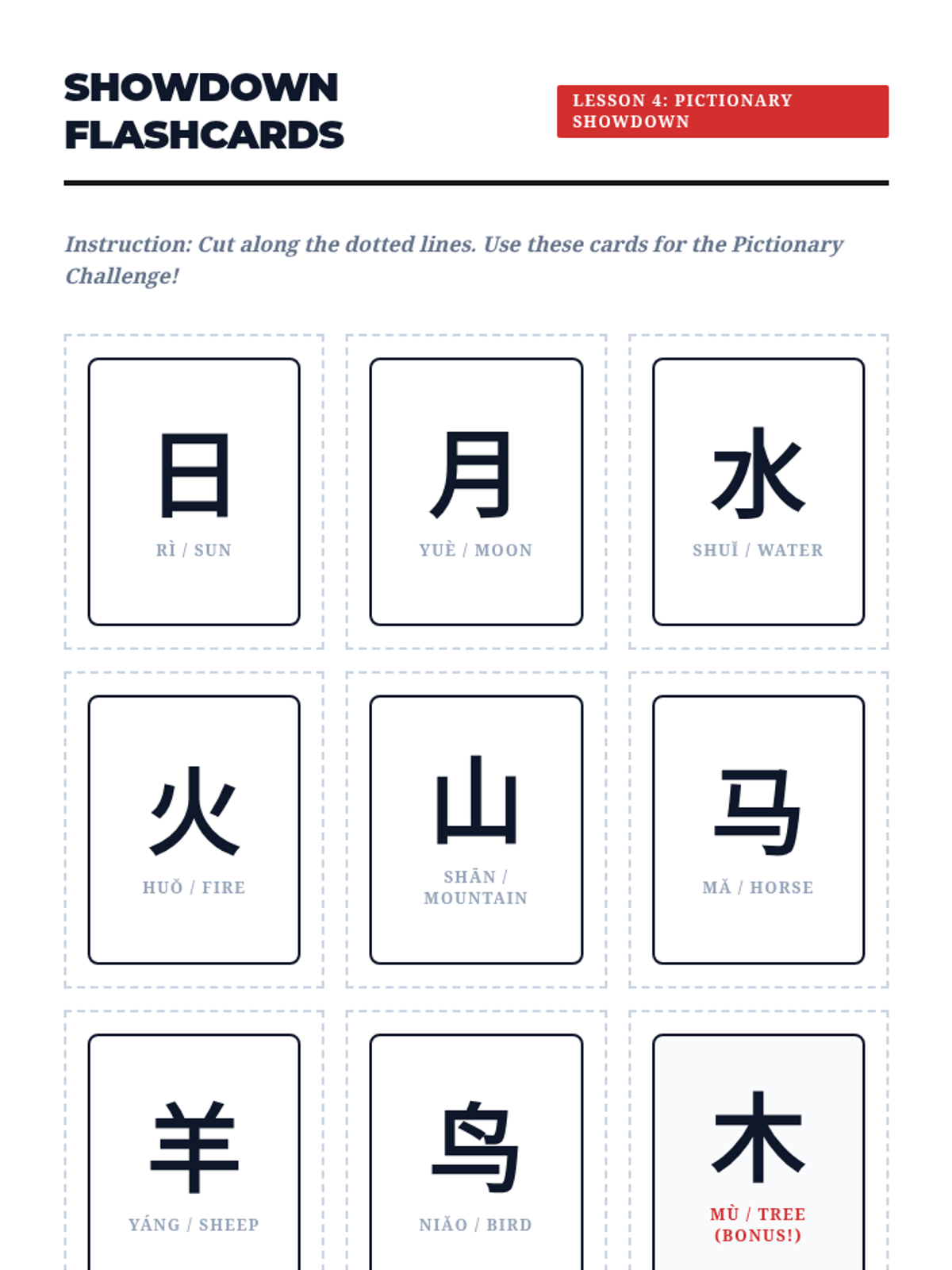
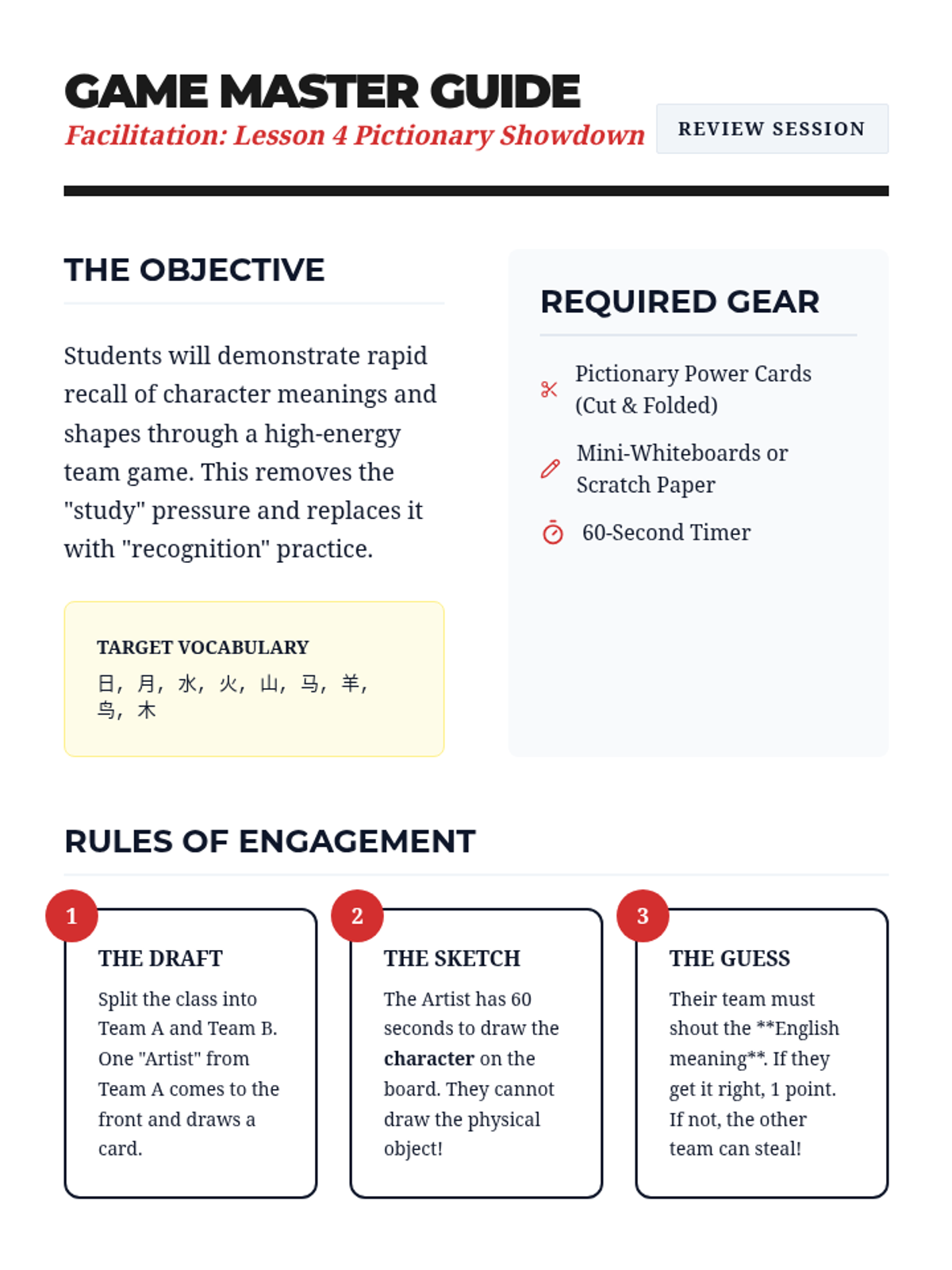
A high-energy, game-based review session where students test their rapid recognition of pictographs through a Pictionary-style challenge. Focuses on switching between visual symbols and English meanings.
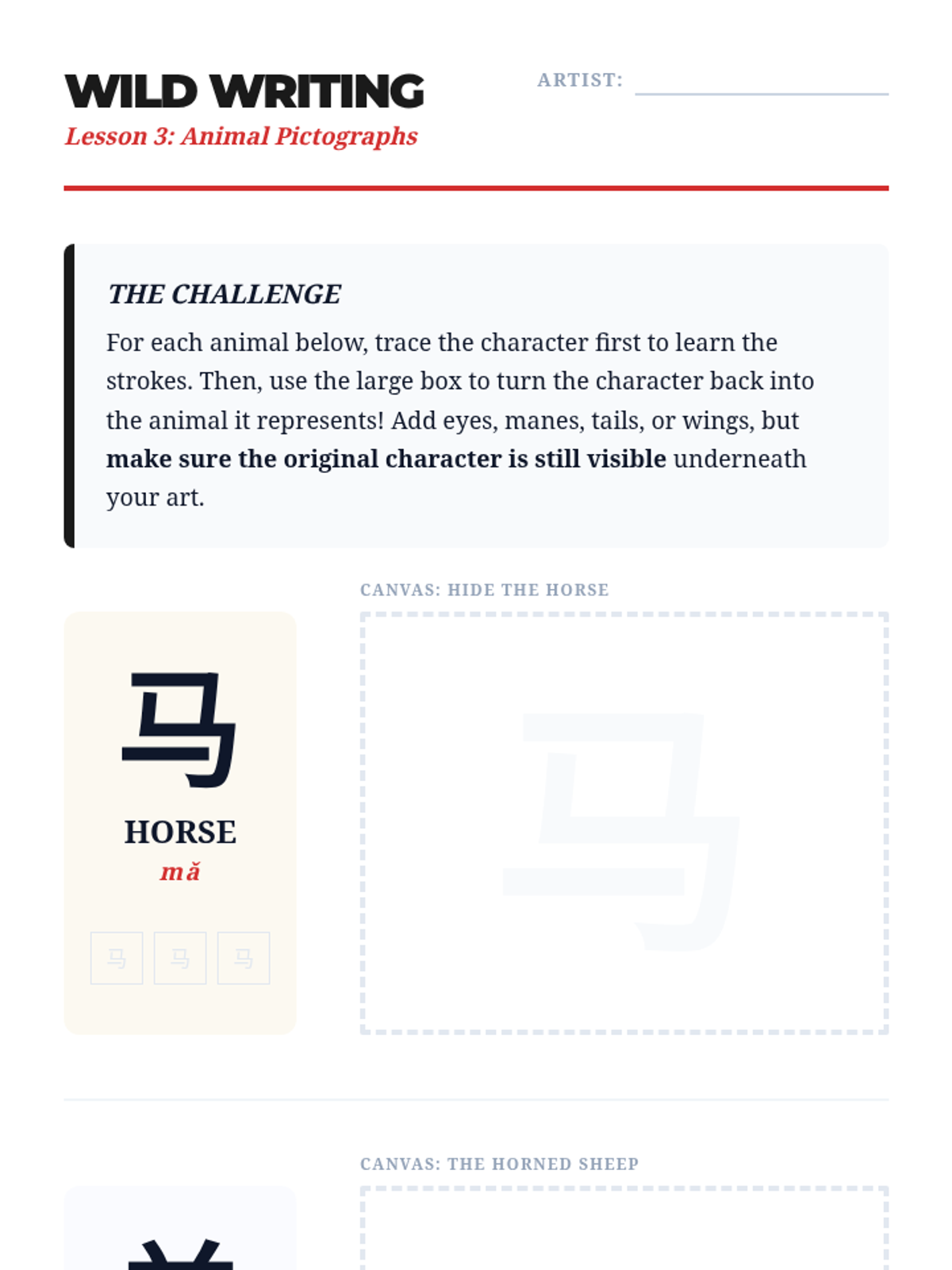
Students explore more complex animal characters like Horse, Sheep, and Bird. Through creative visualization, they draw animals over characters to cement the link between the creature and its written symbol.
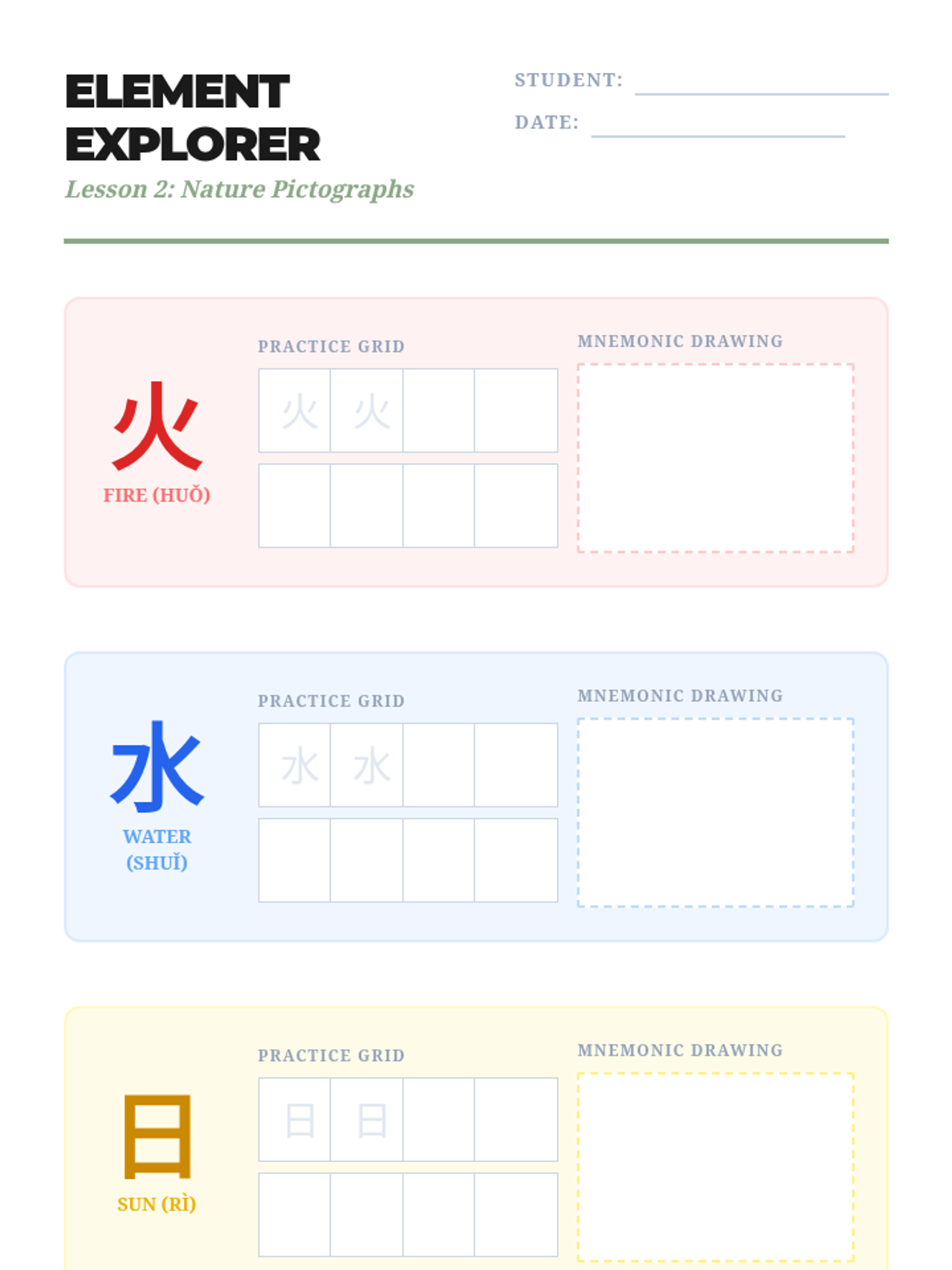
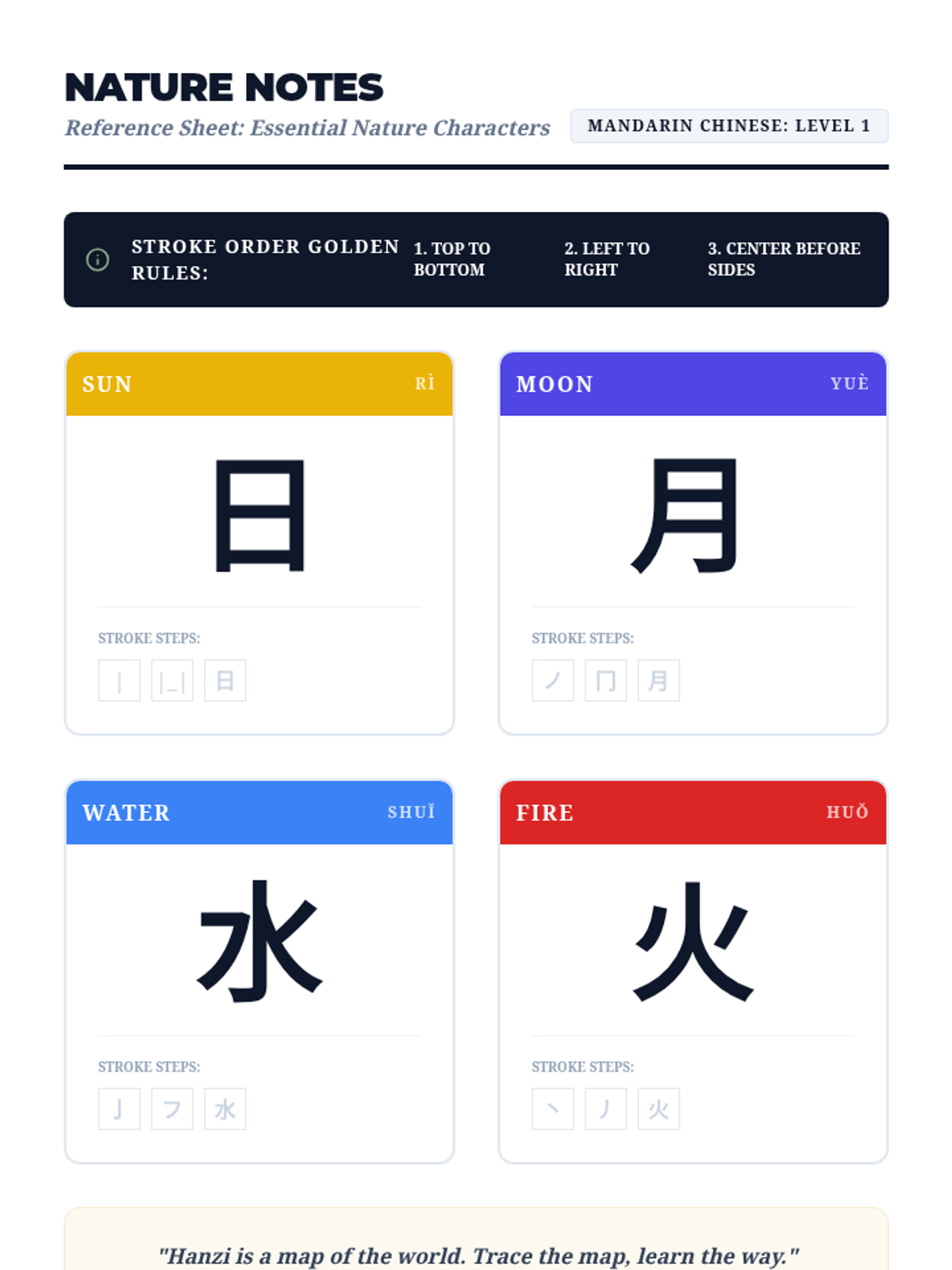
Focusing on the fundamental elements of nature—Sun, Moon, Water, and Fire—students learn stroke order and create visual mnemonics. The lesson emphasizes the transition from physical object to stylized character.
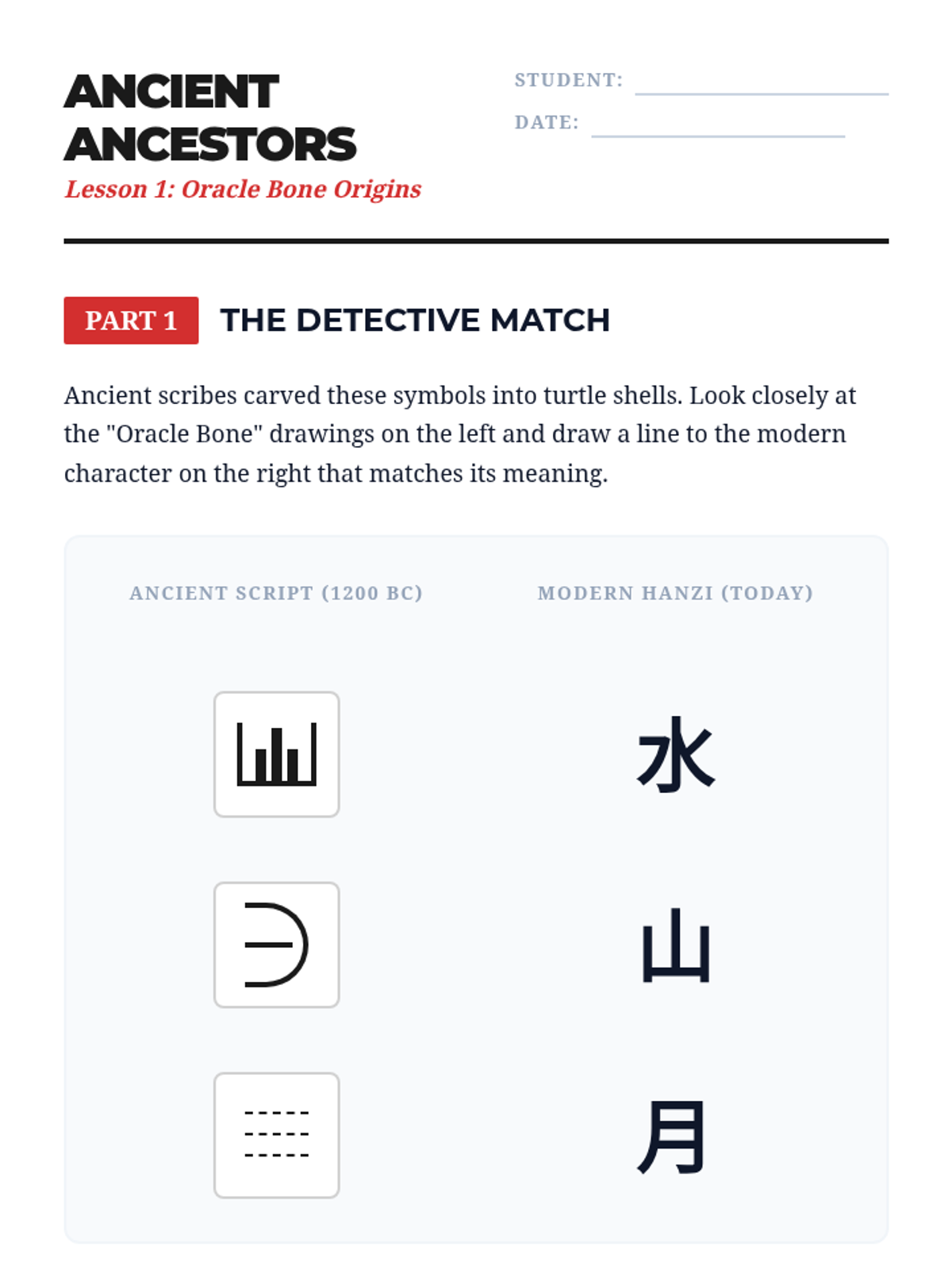
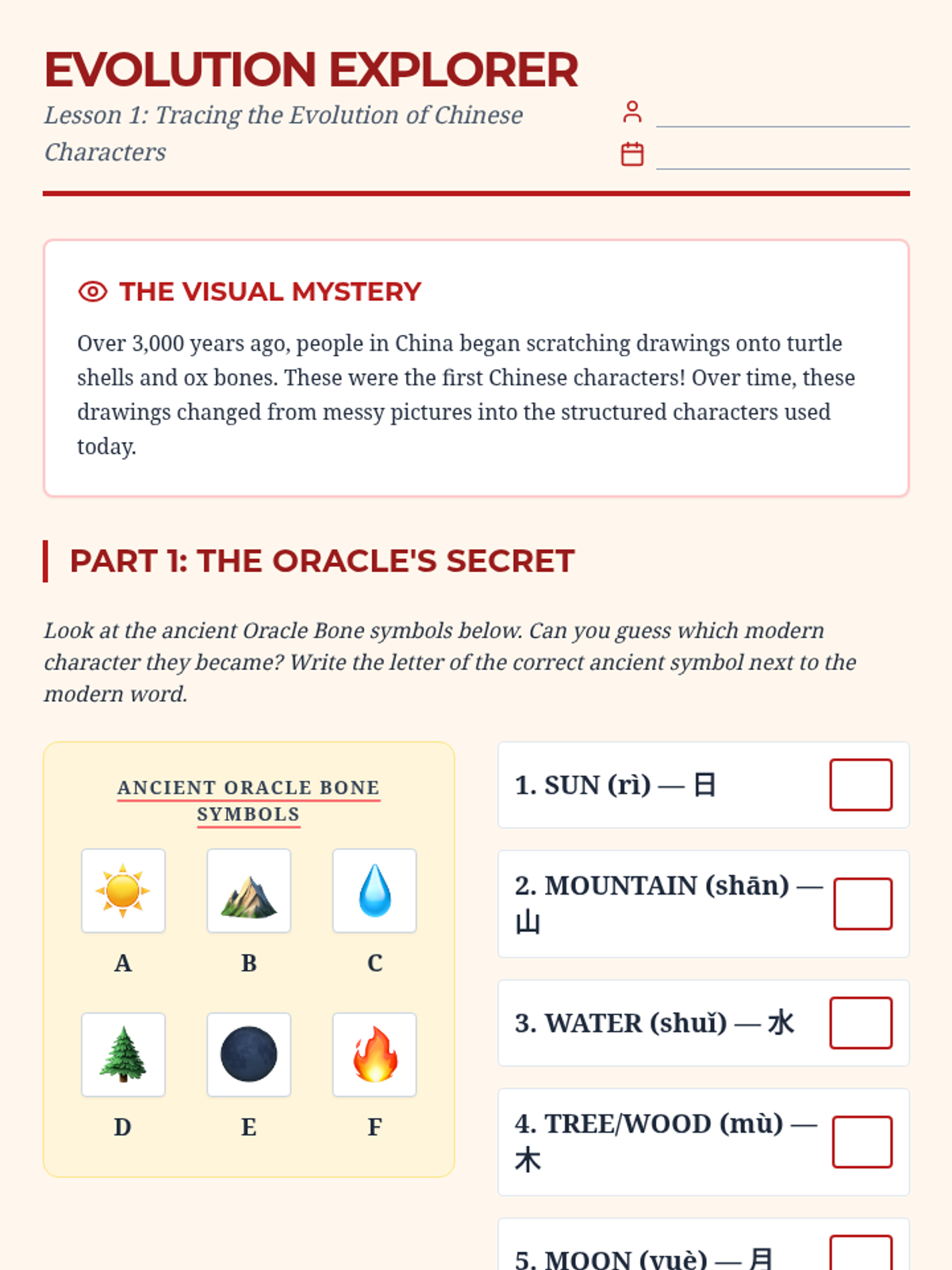
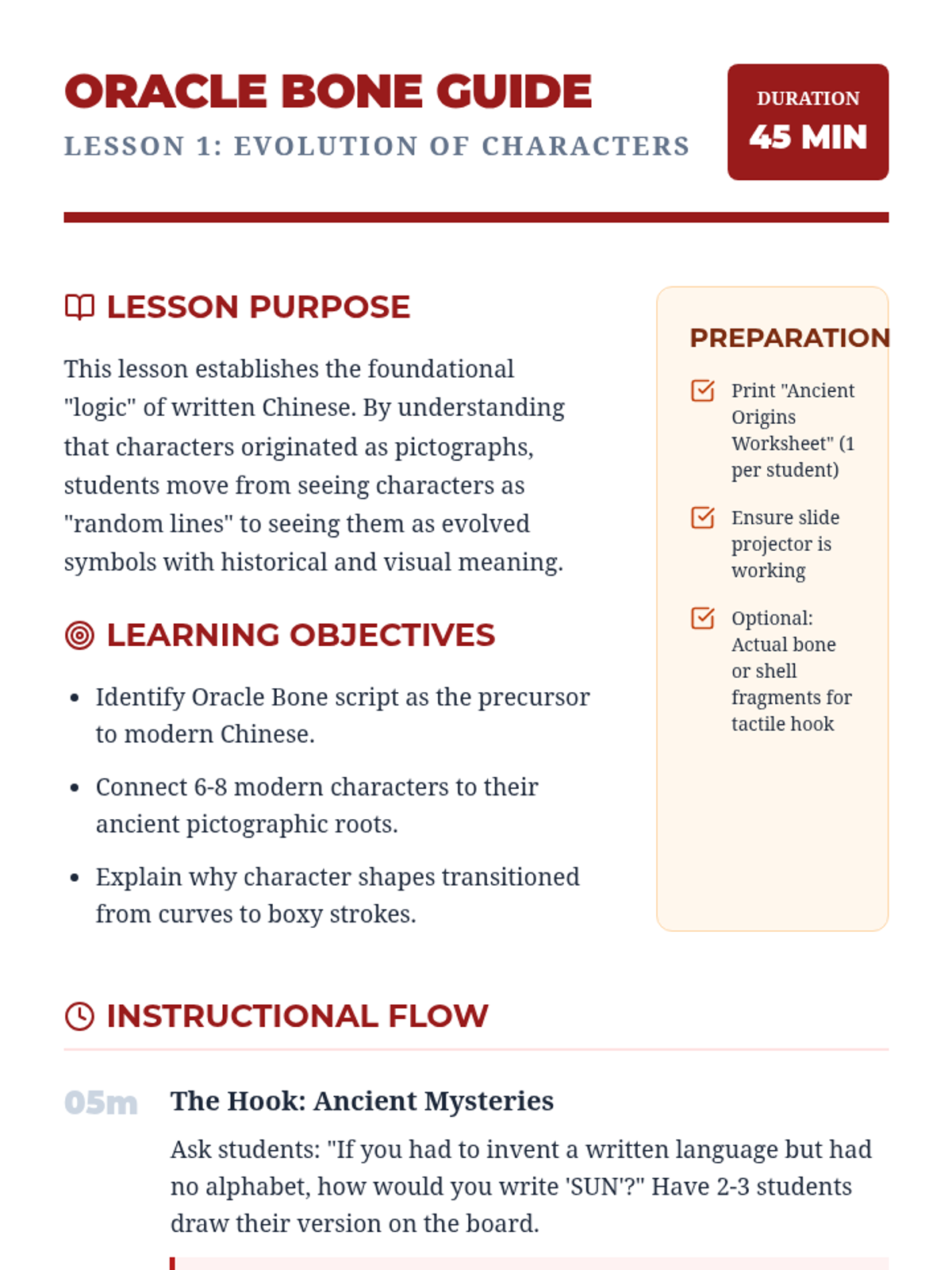
Students investigate ancient Oracle Bone script to understand how modern characters evolved from visual drawings. They will match ancient symbols to their modern counterparts and create a transformation timeline for specific characters.
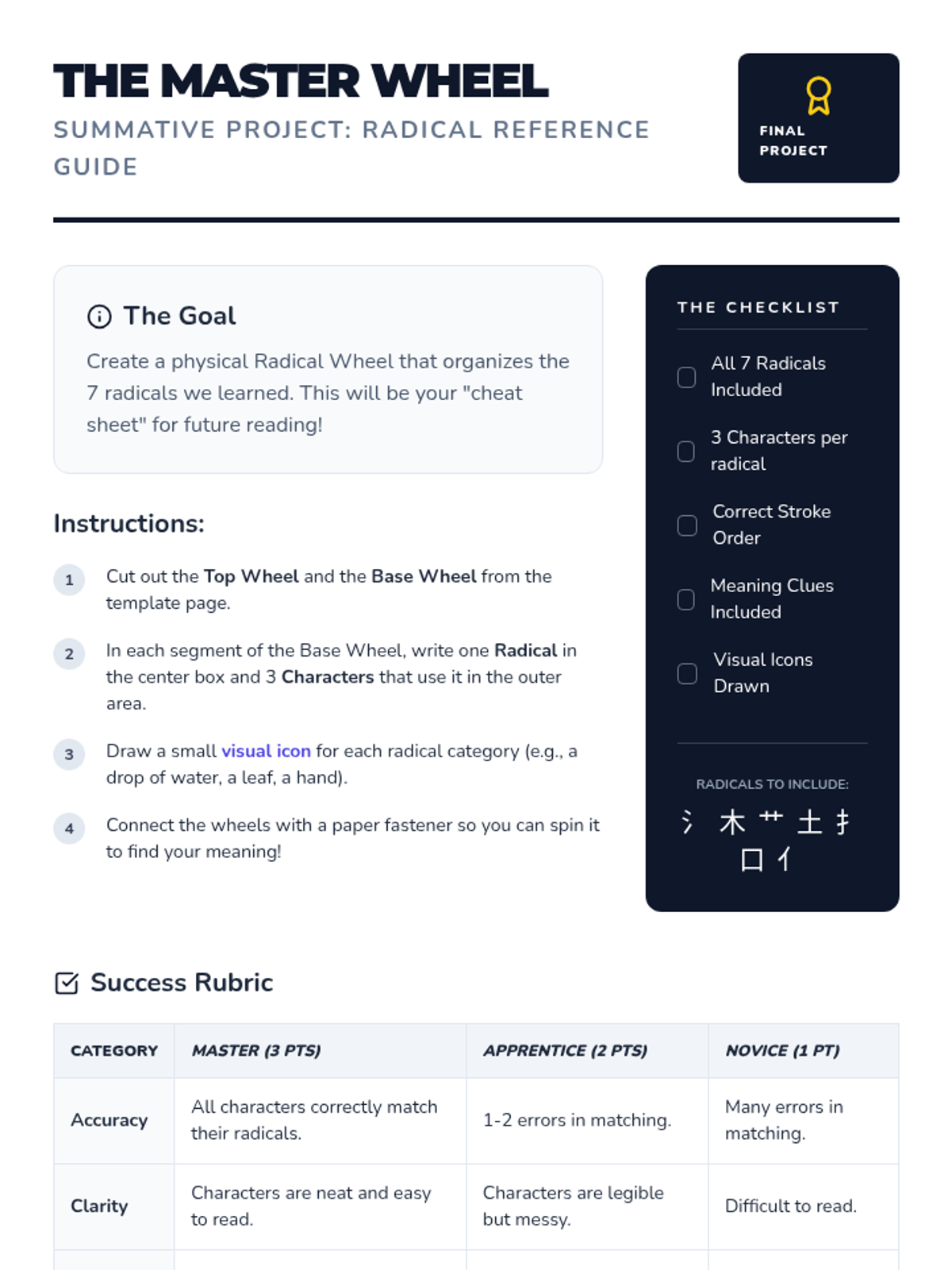
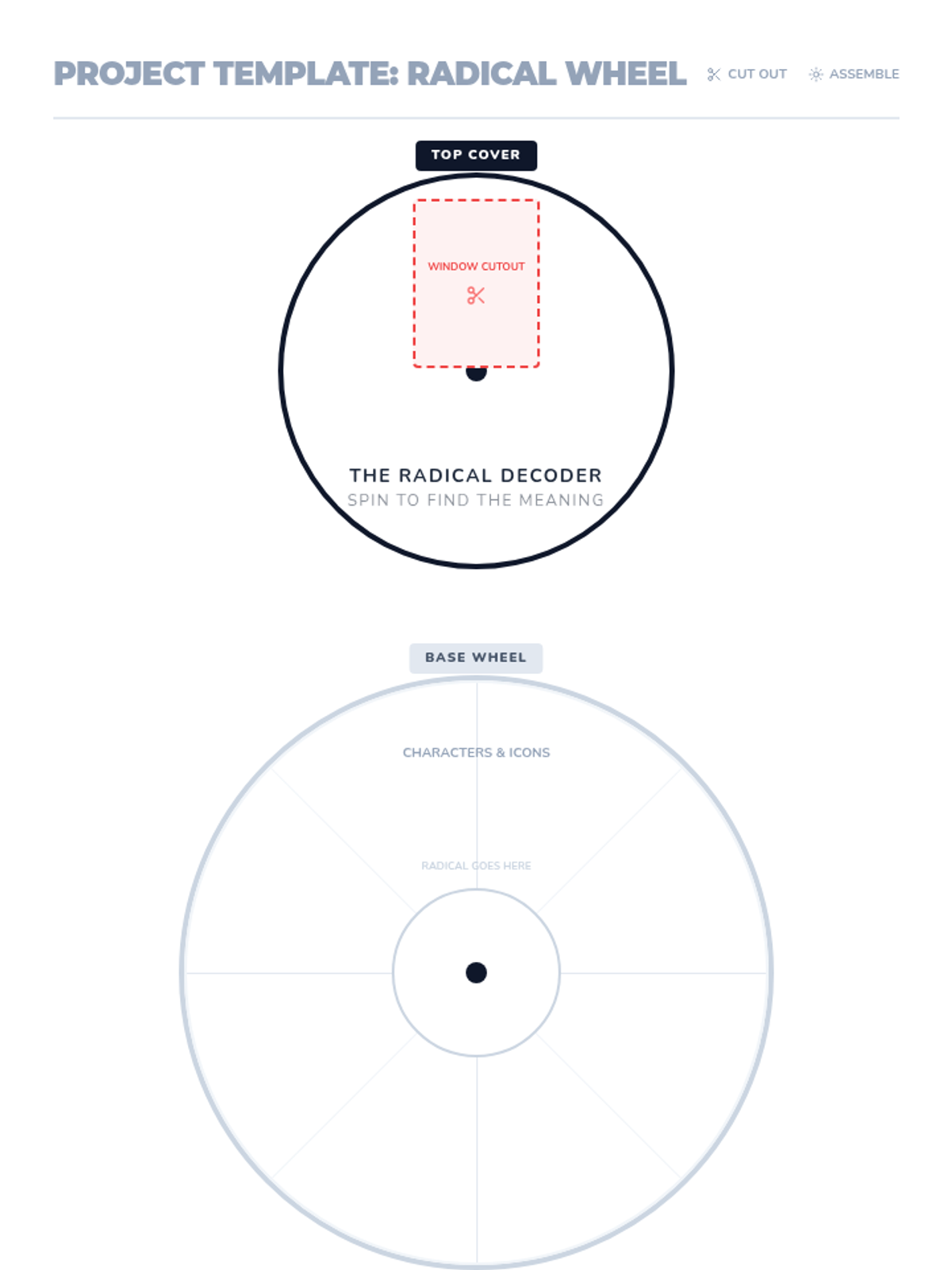
A summative project where students synthesize their learning by creating a Radical Wheel reference tool for their future Mandarin studies.
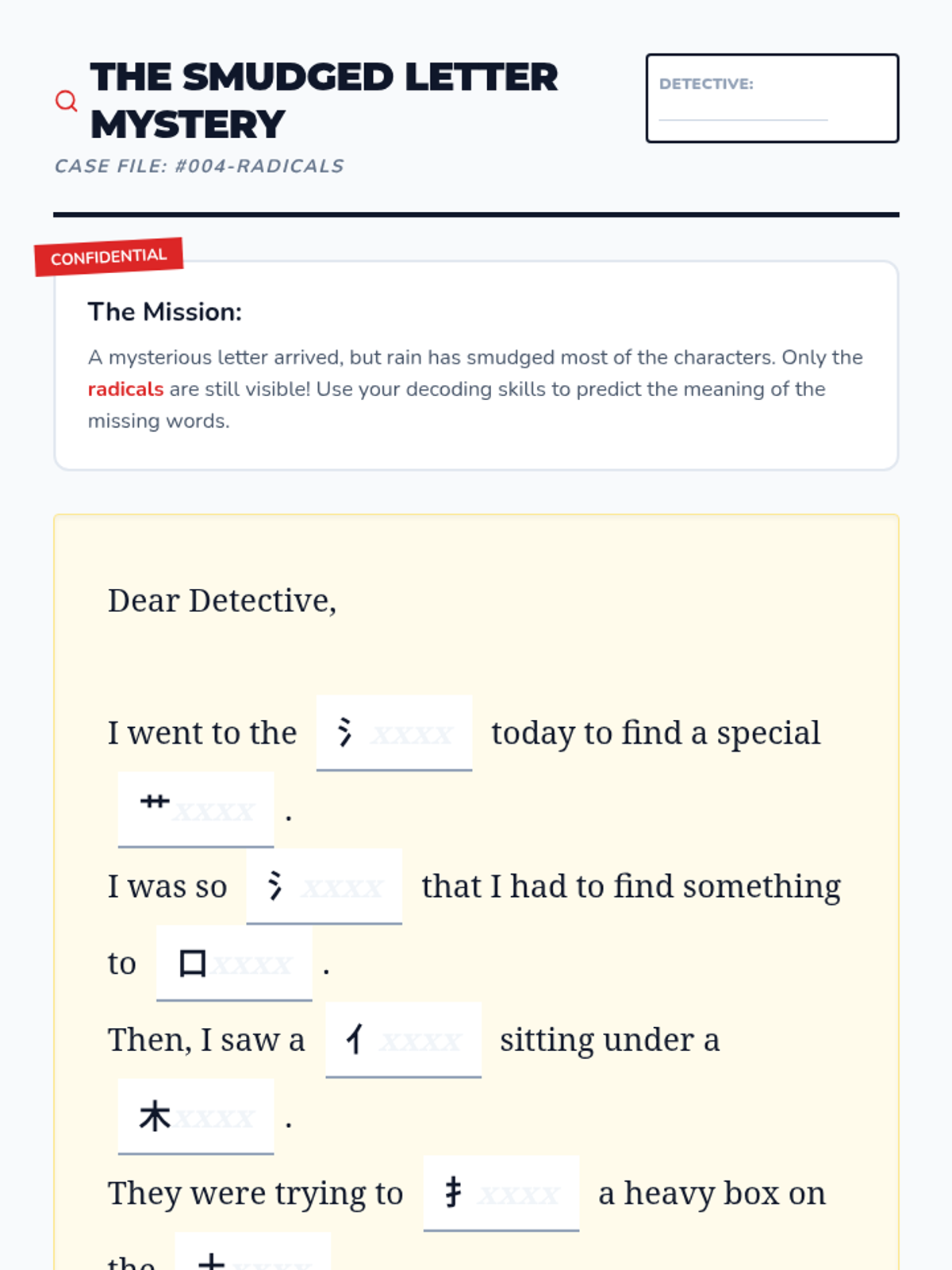
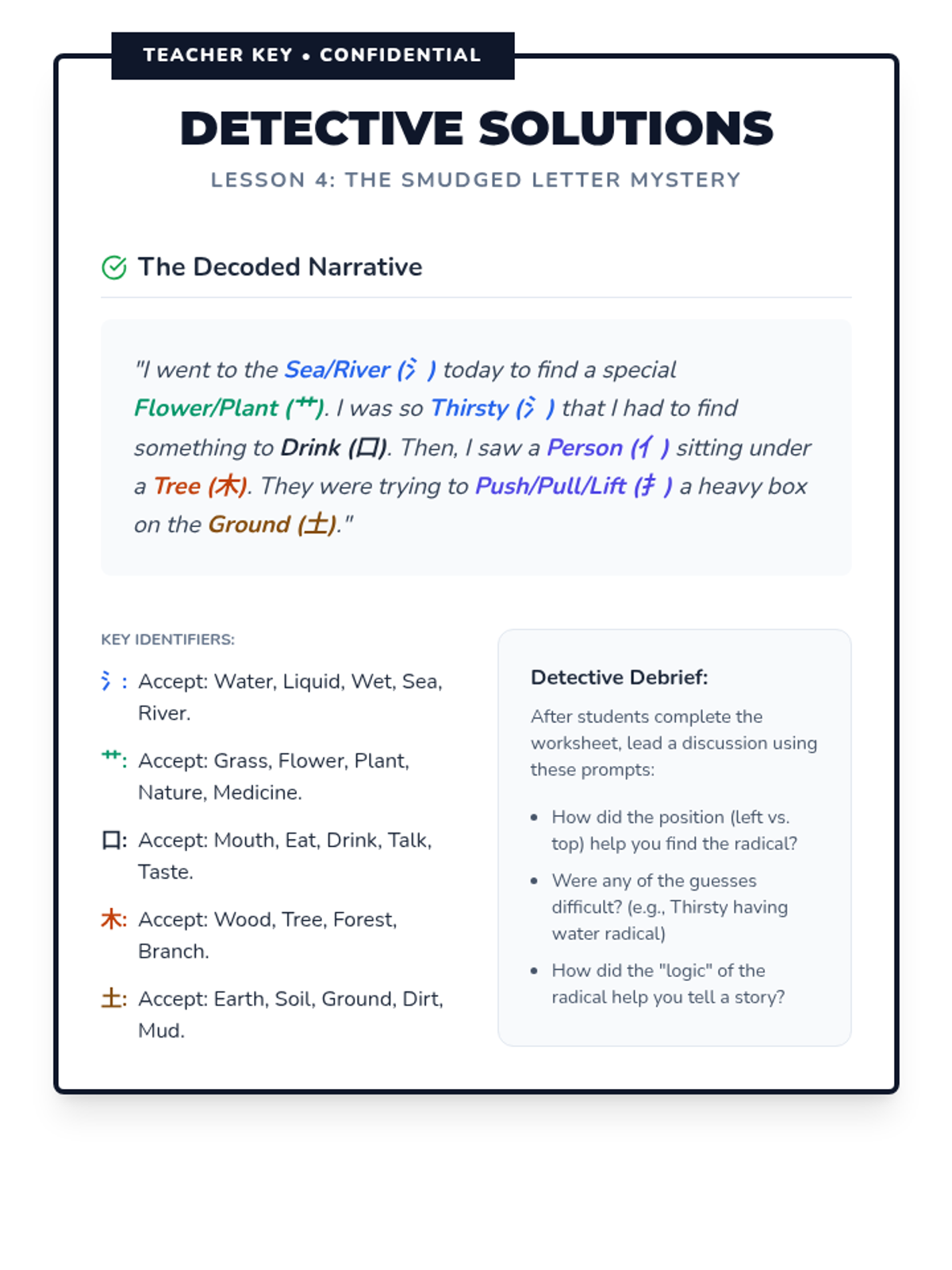
Students apply their knowledge to solve a 'mystery letter' by identifying radicals in unknown characters to predict their general meanings.
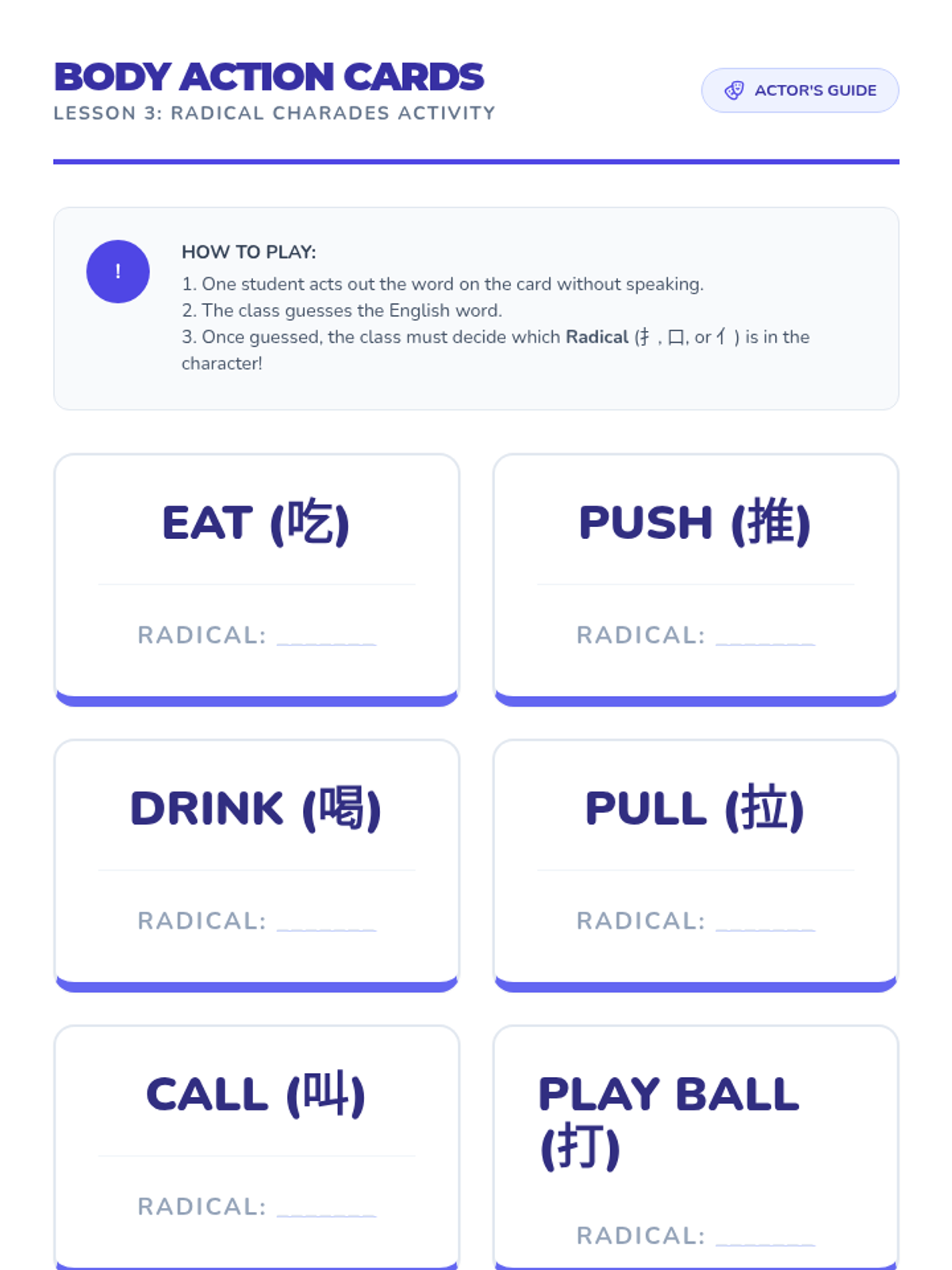
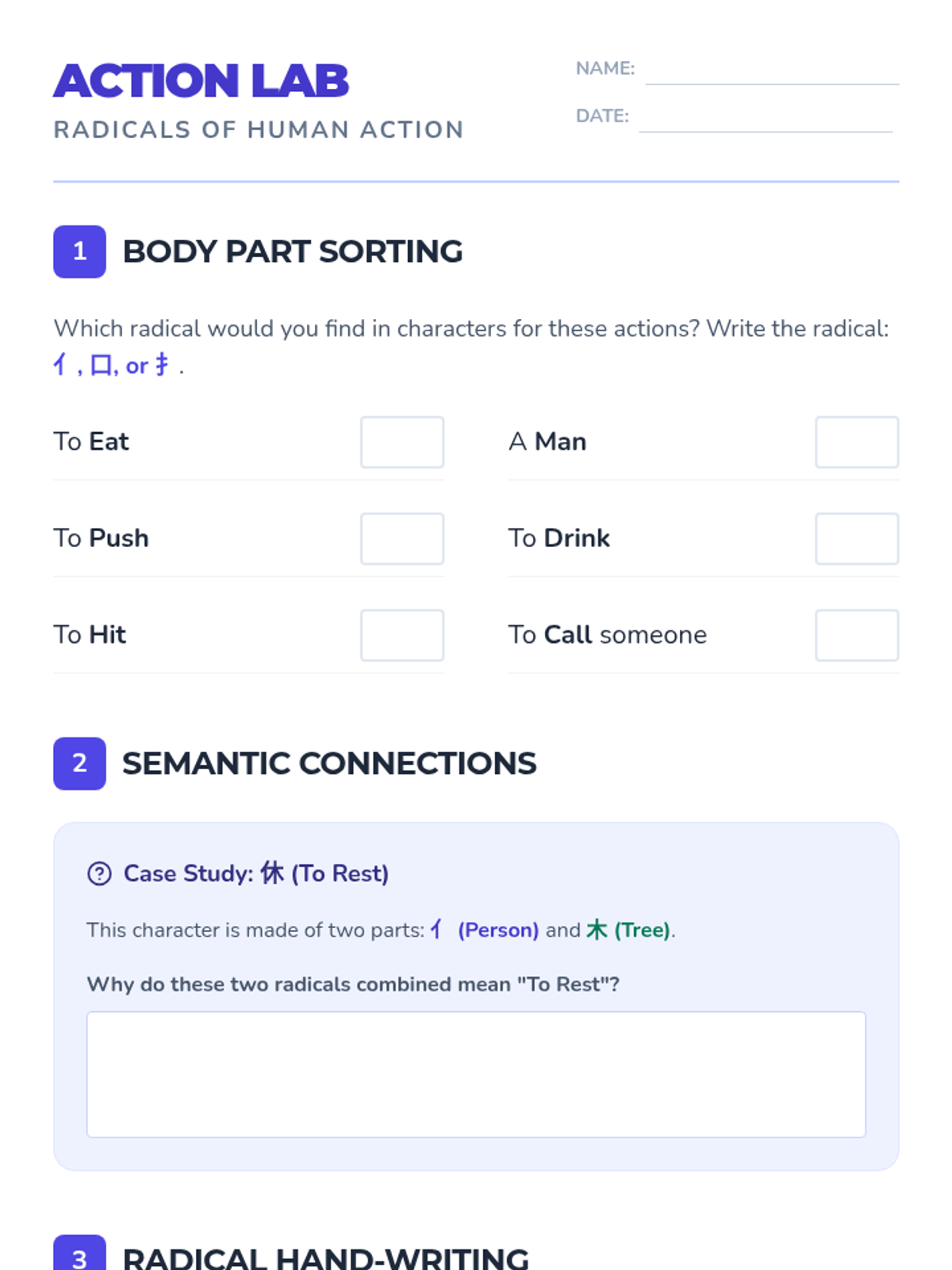
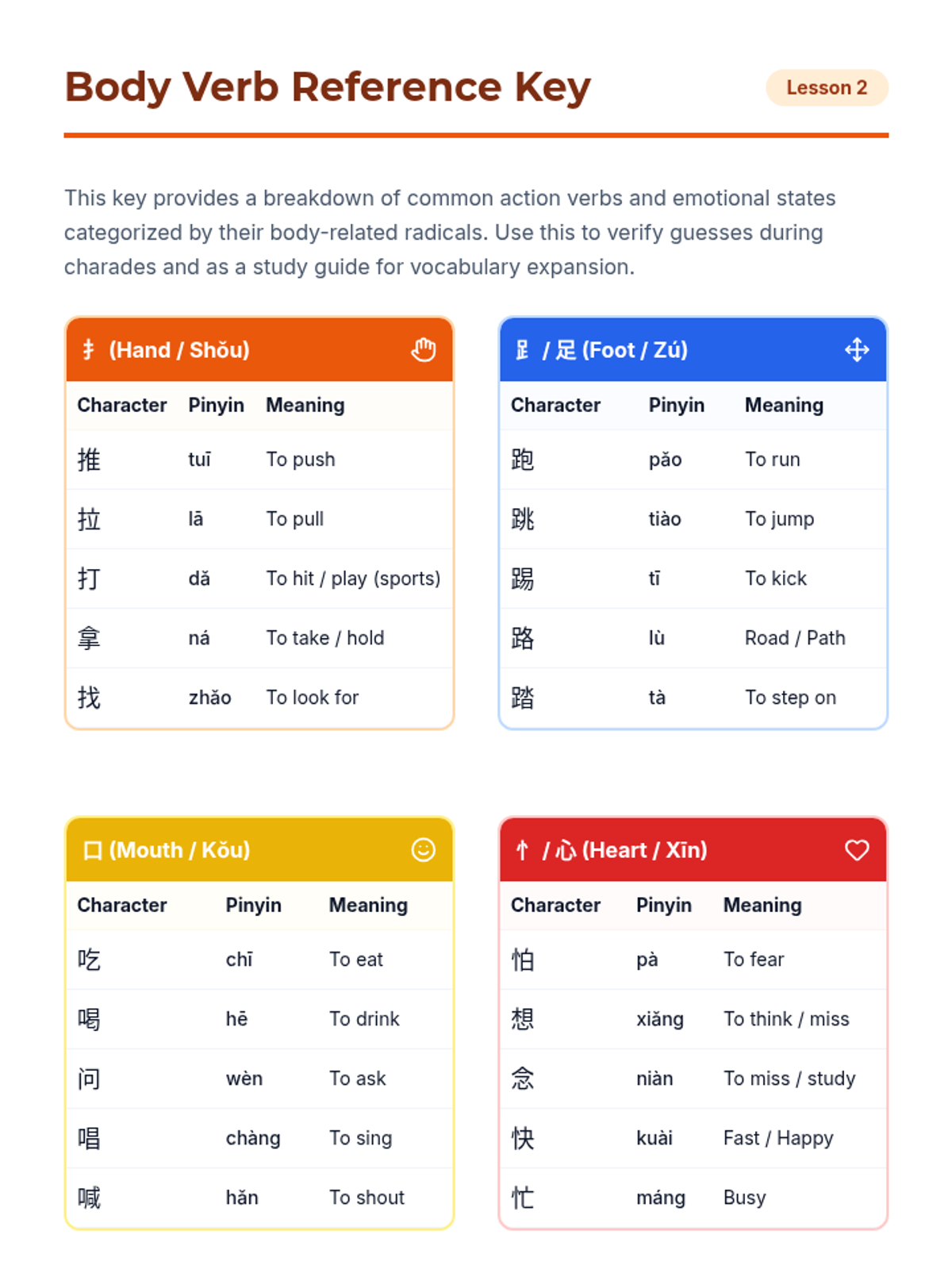
Focusing on verbs and human actions, students learn the radicals for Hand (扌), Mouth (口), and Person (亻).
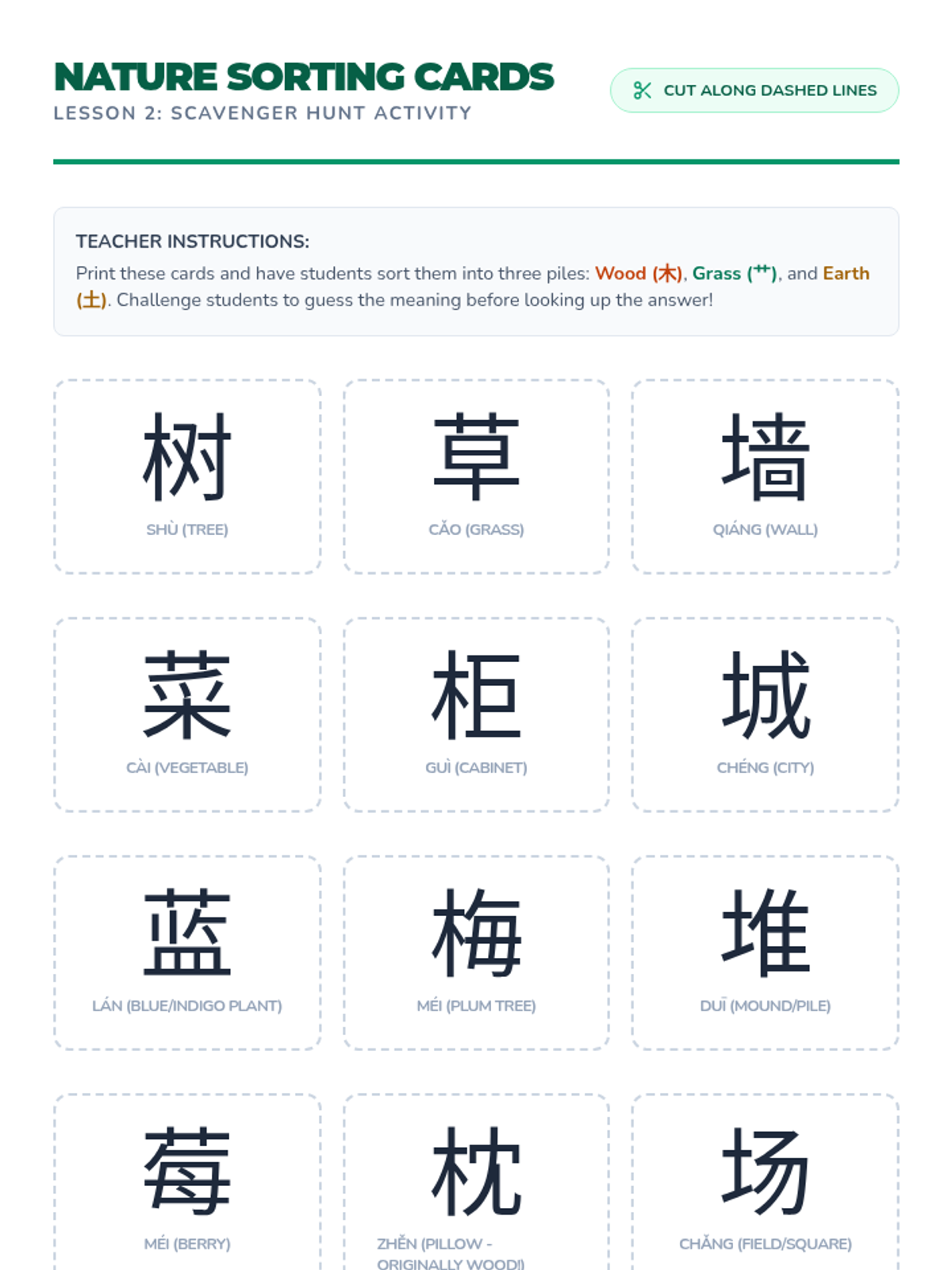
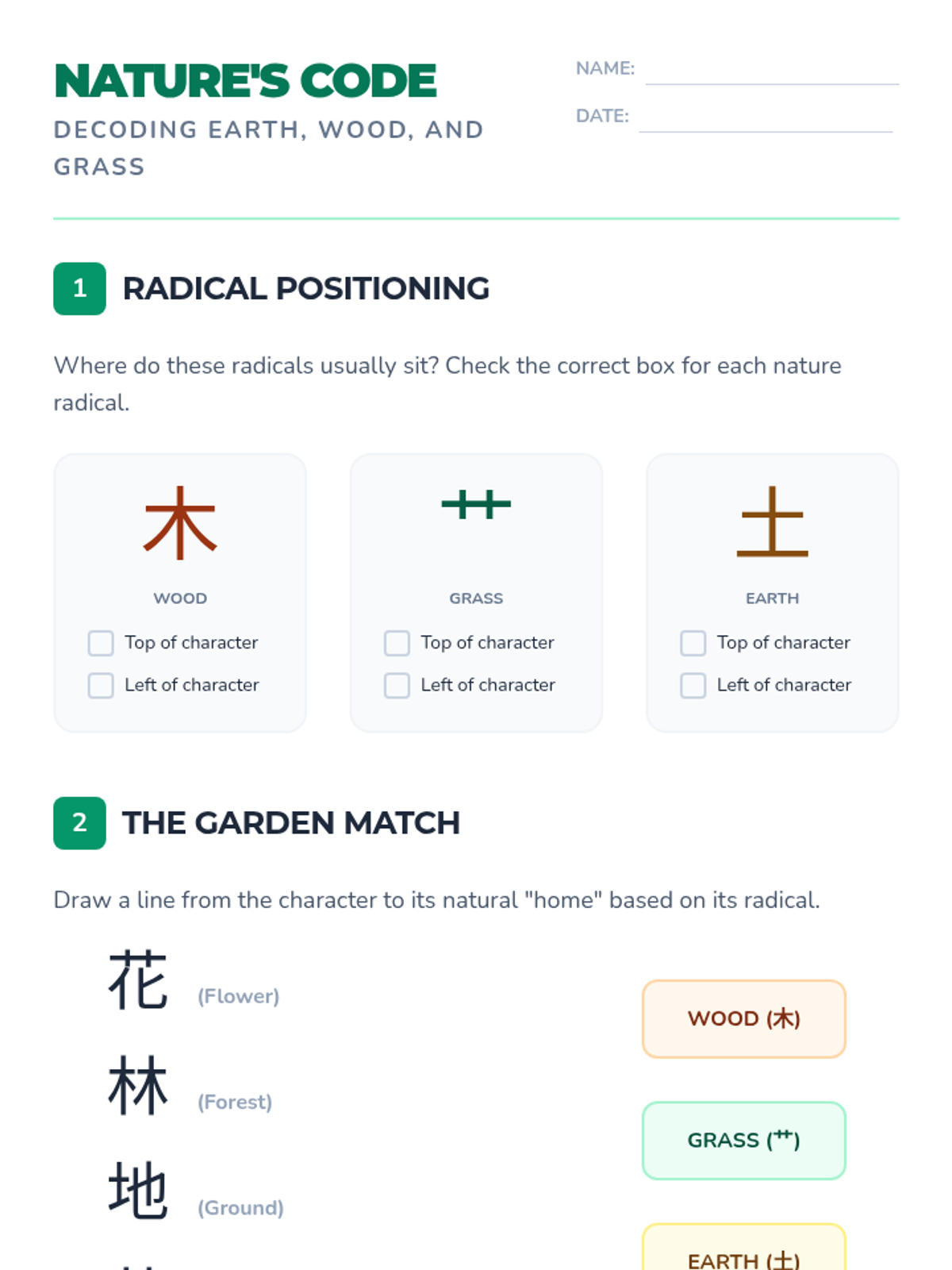
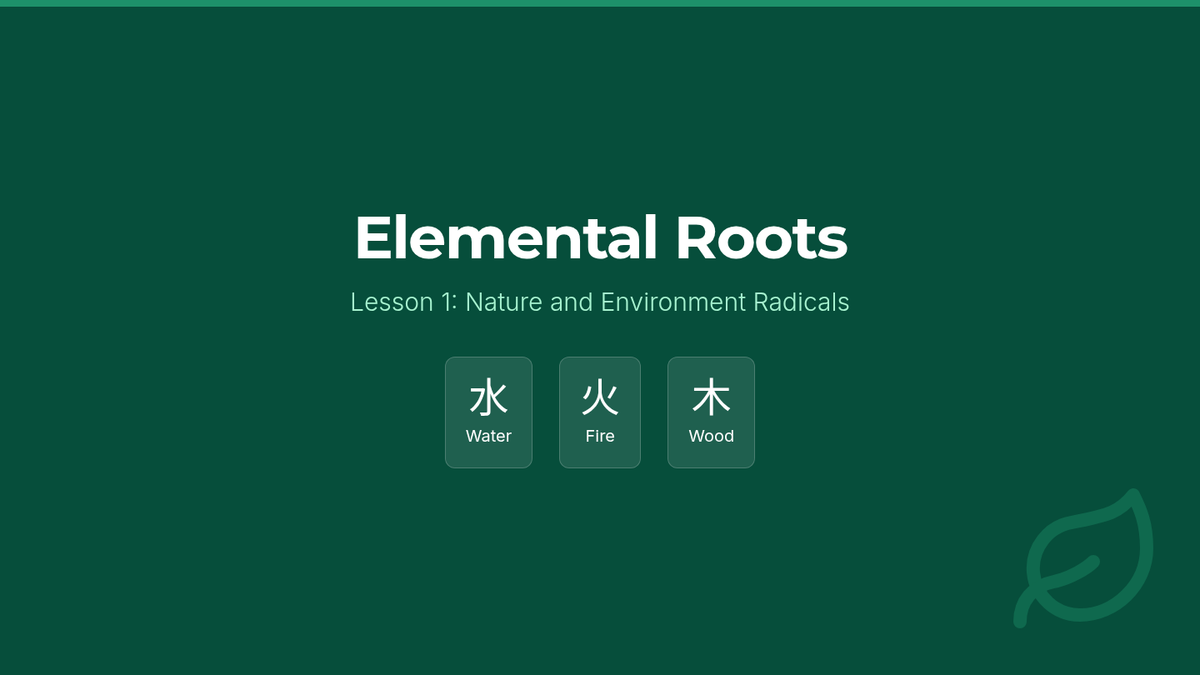
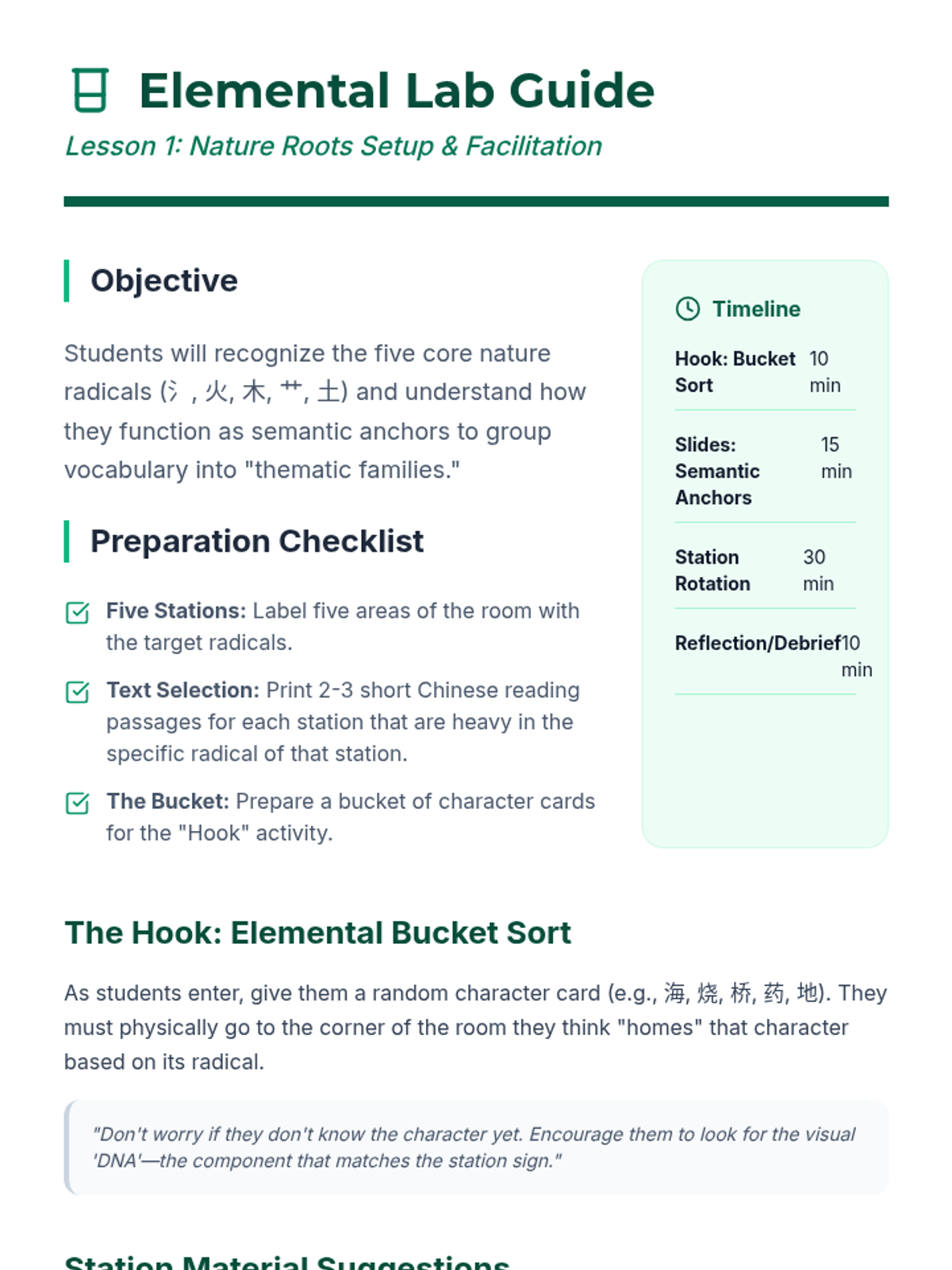
Students explore nature-themed radicals including Wood (木), Grass (艹), and Earth (土), learning how character forms are modified when used as radicals.
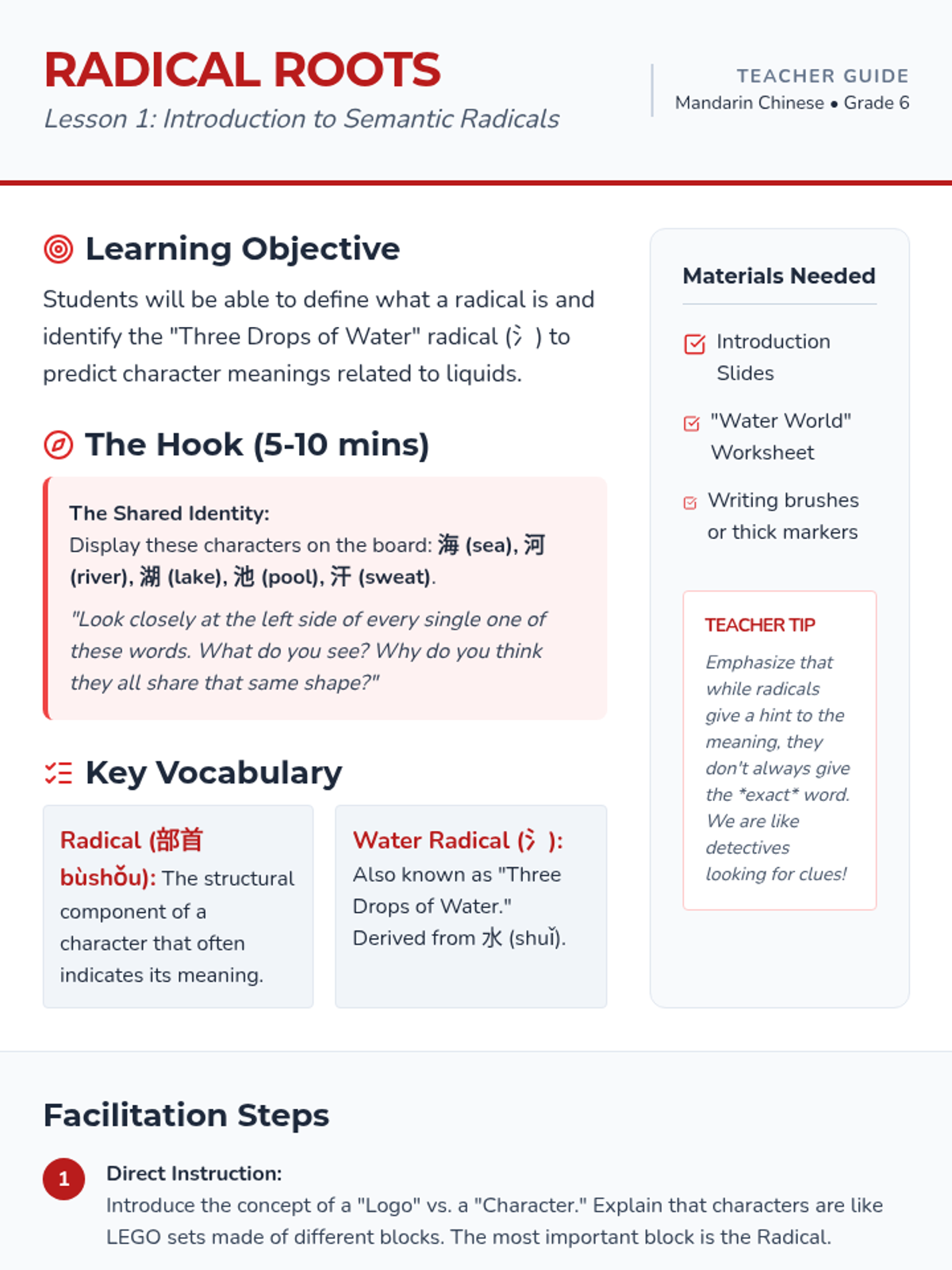
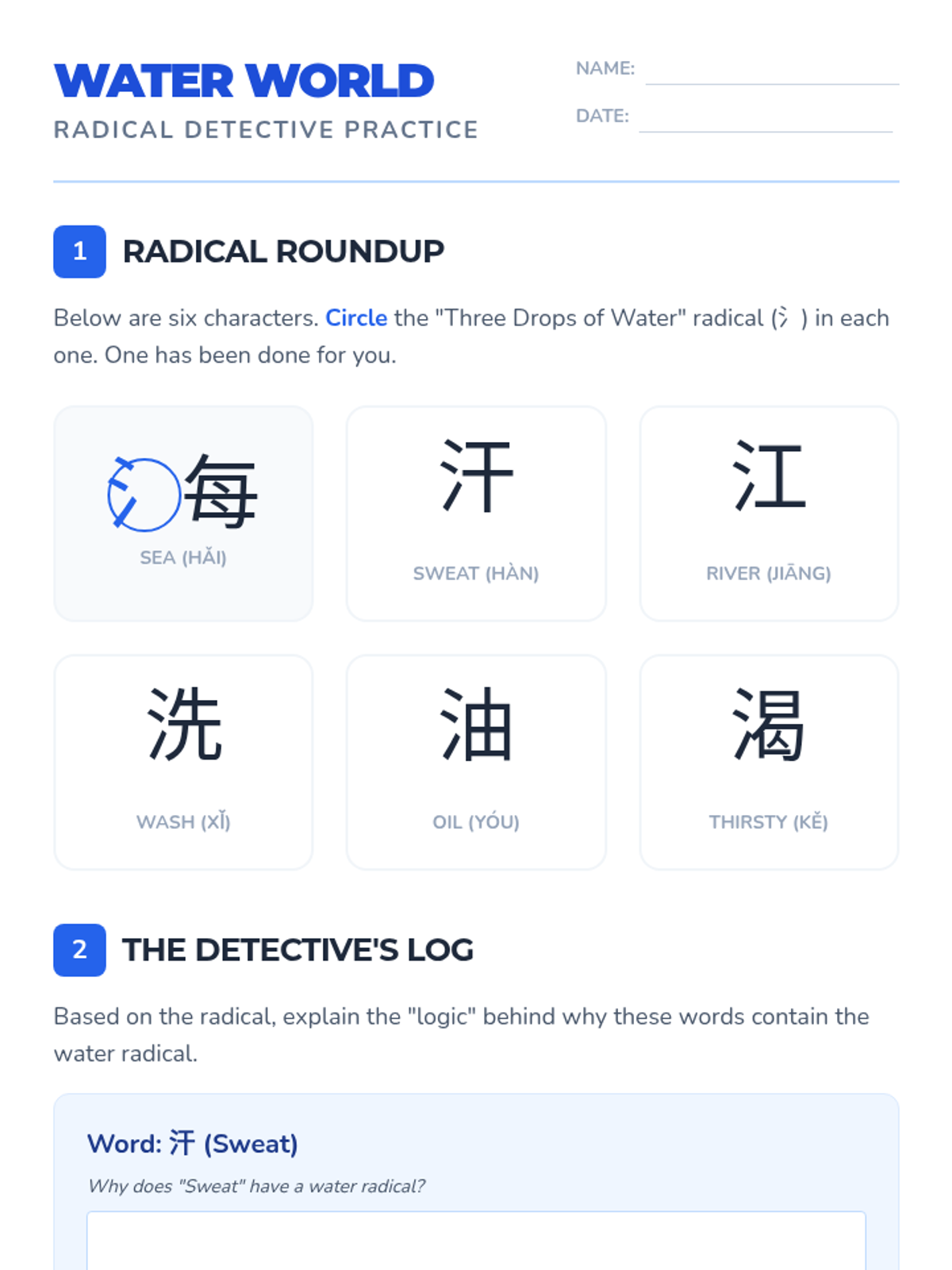
Students are introduced to the concept of semantic radicals using the 'Three Drops of Water' (氵) as a case study in pattern recognition.
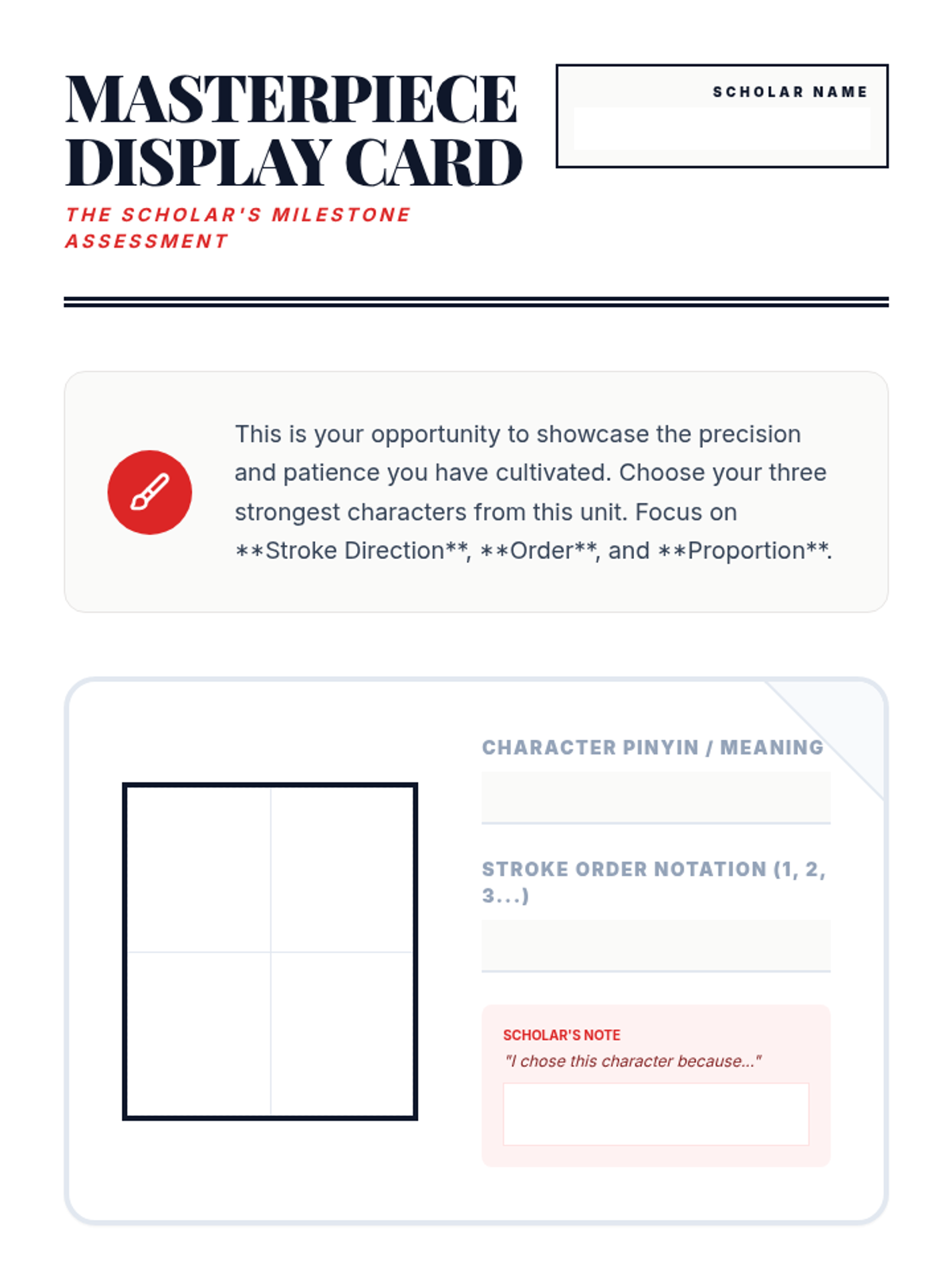
A culminating assessment and gallery walk where students demonstrate their mastery of stroke order and character proportion through precise calligraphy.
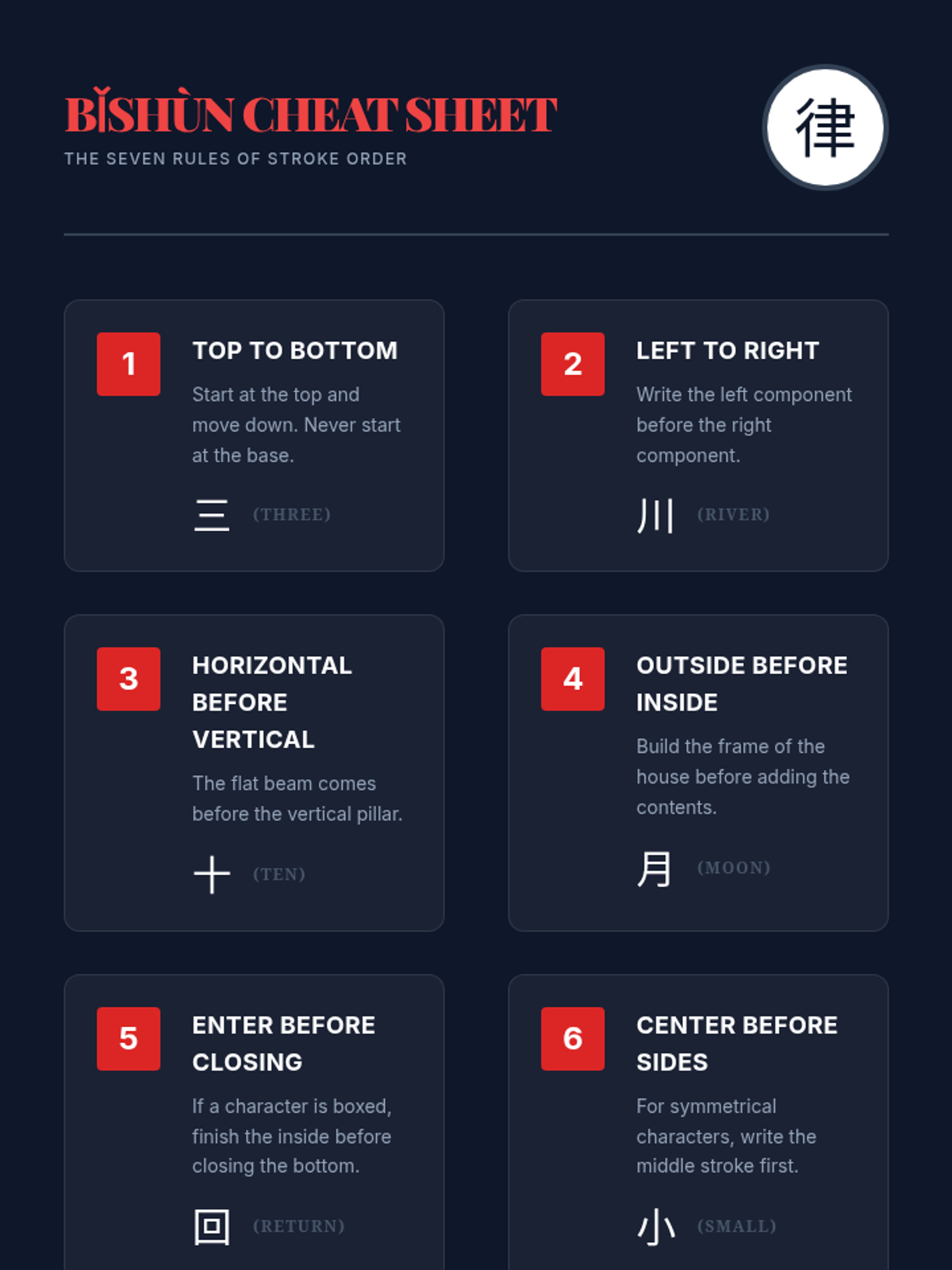
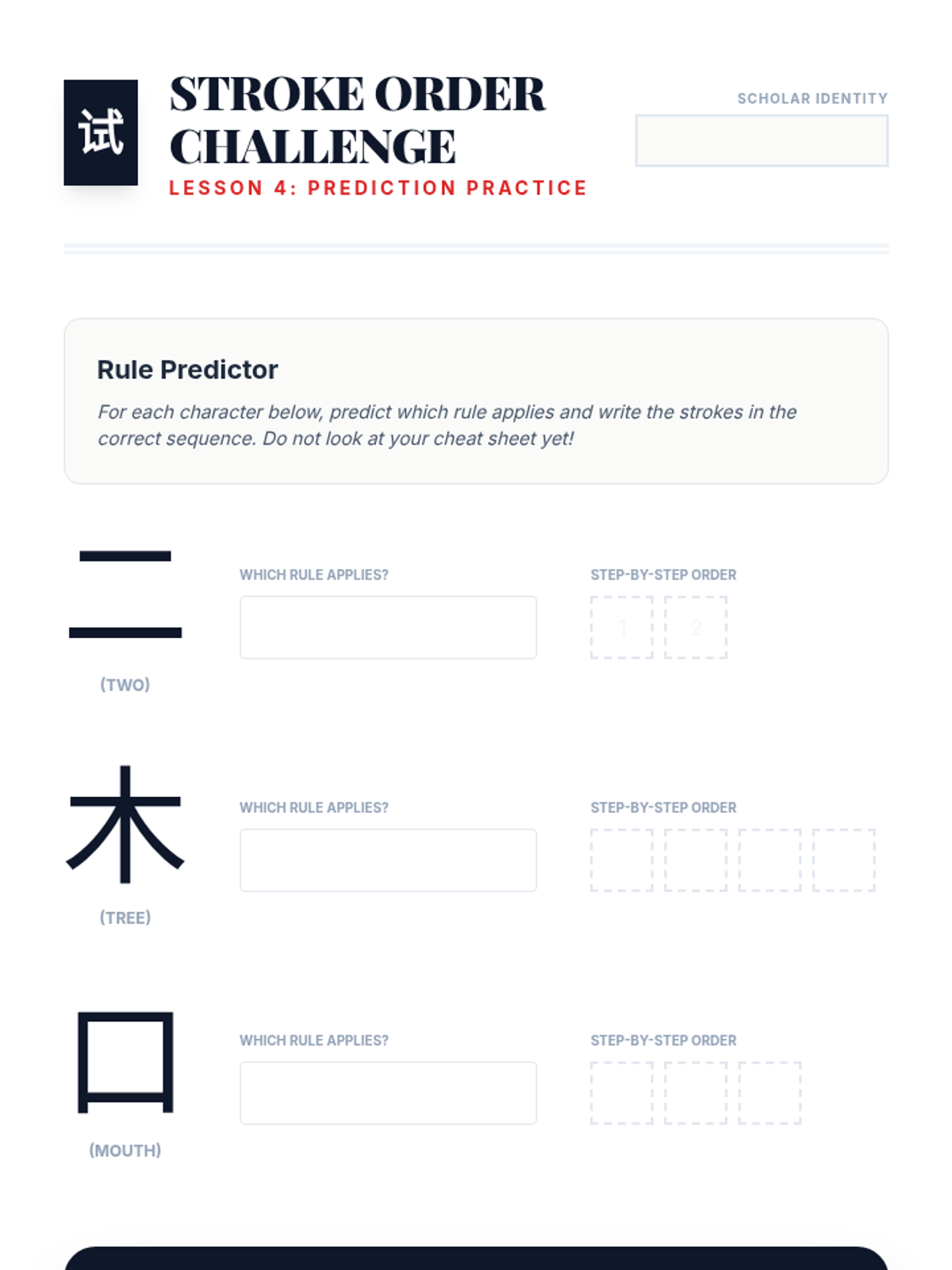
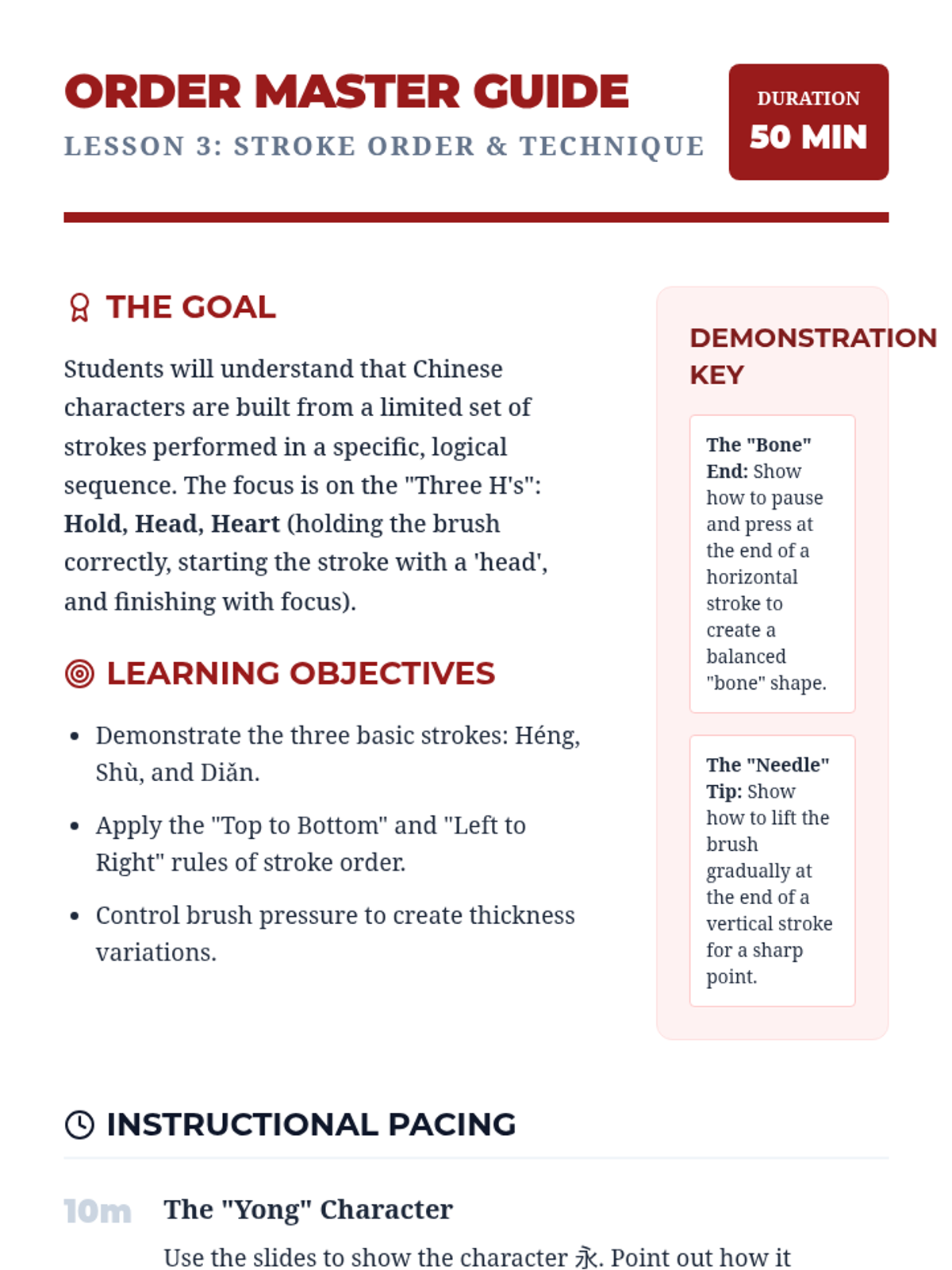
Students learn and apply the seven governing rules of stroke order, predicting and verifying sequences for various characters to ensure logical construction.
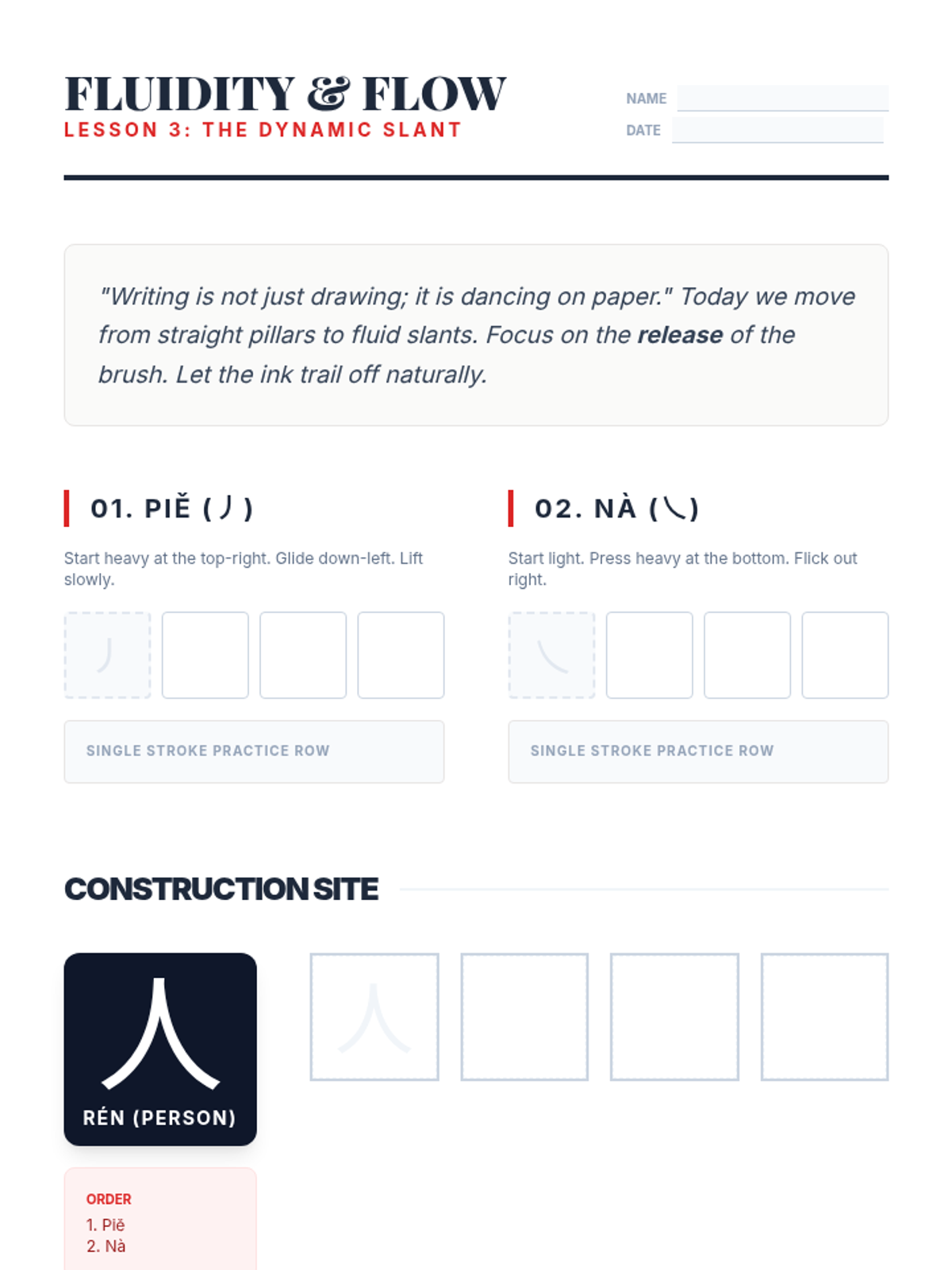
Introduction to 'Piě' (left slant), 'Nà' (right slant), and hooks, focusing on fluid motion and visual balance in characters like 'person' and 'big'.
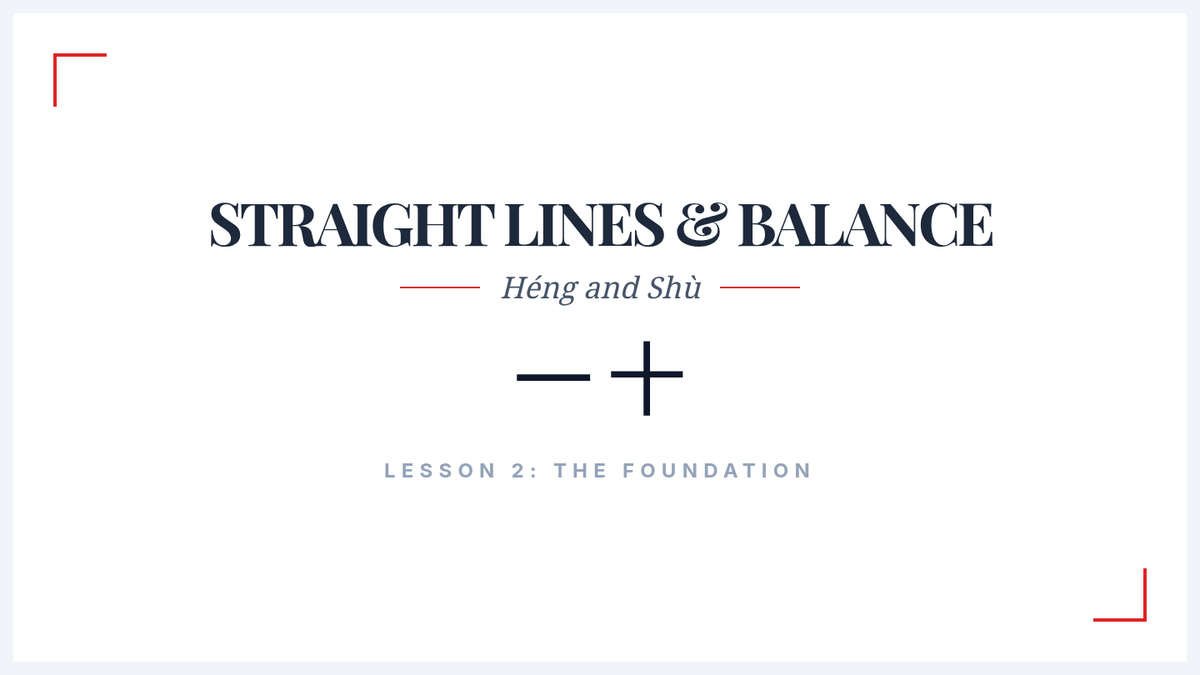
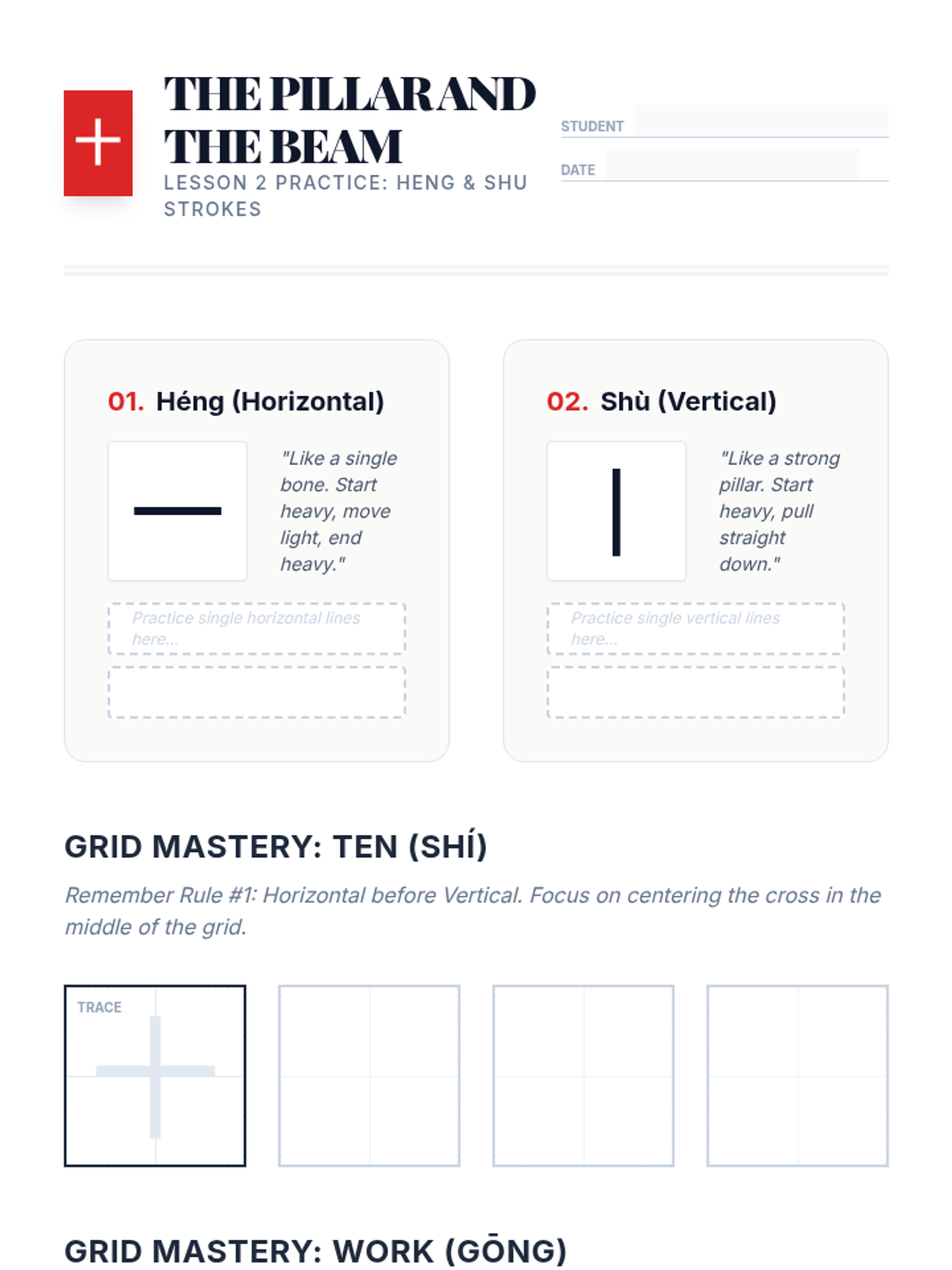
Focusing on 'Héng' (horizontal) and 'Shù' (vertical) strokes, students learn start and release pressure while practicing the characters for 'ten' and 'work'.
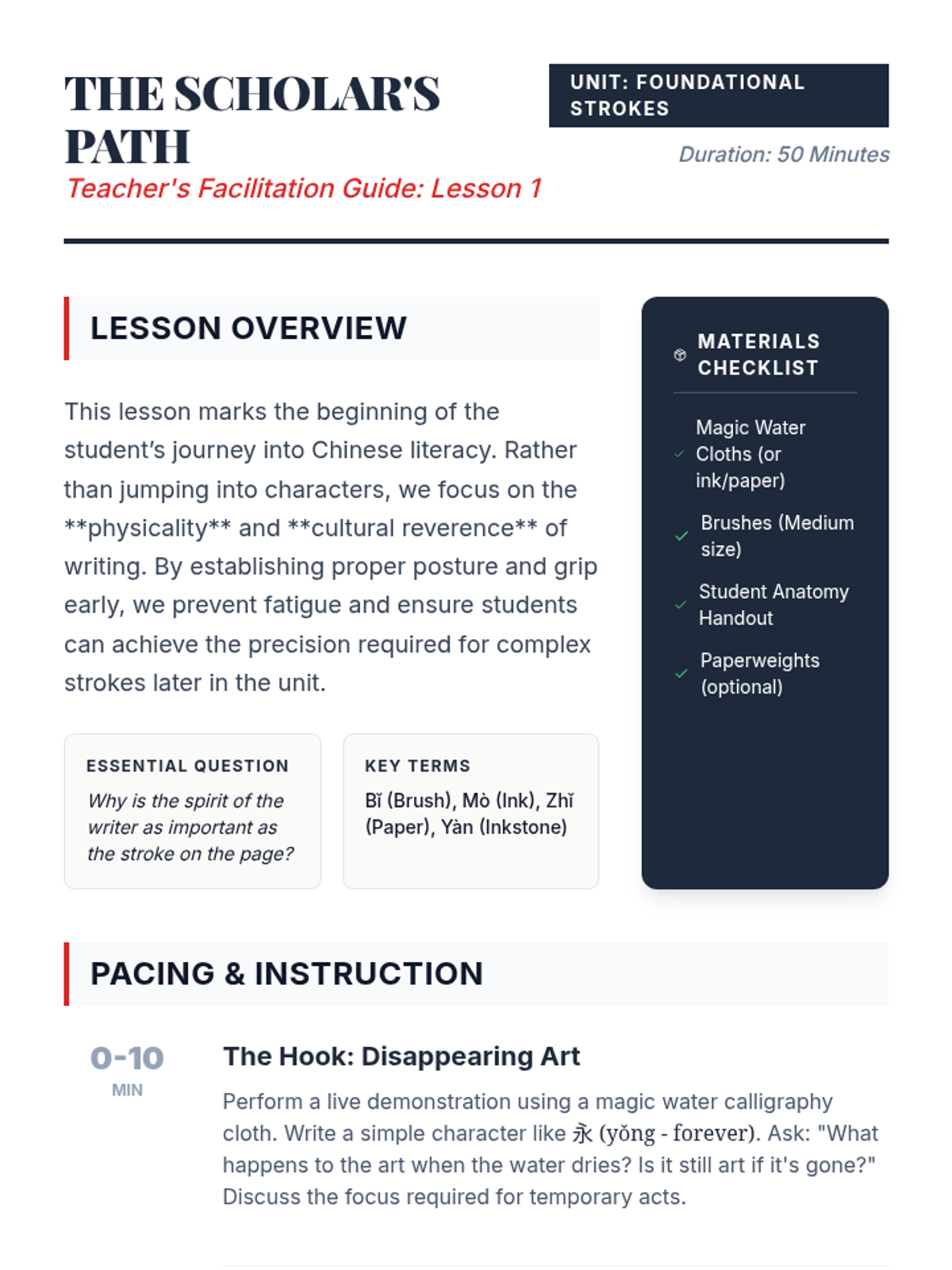
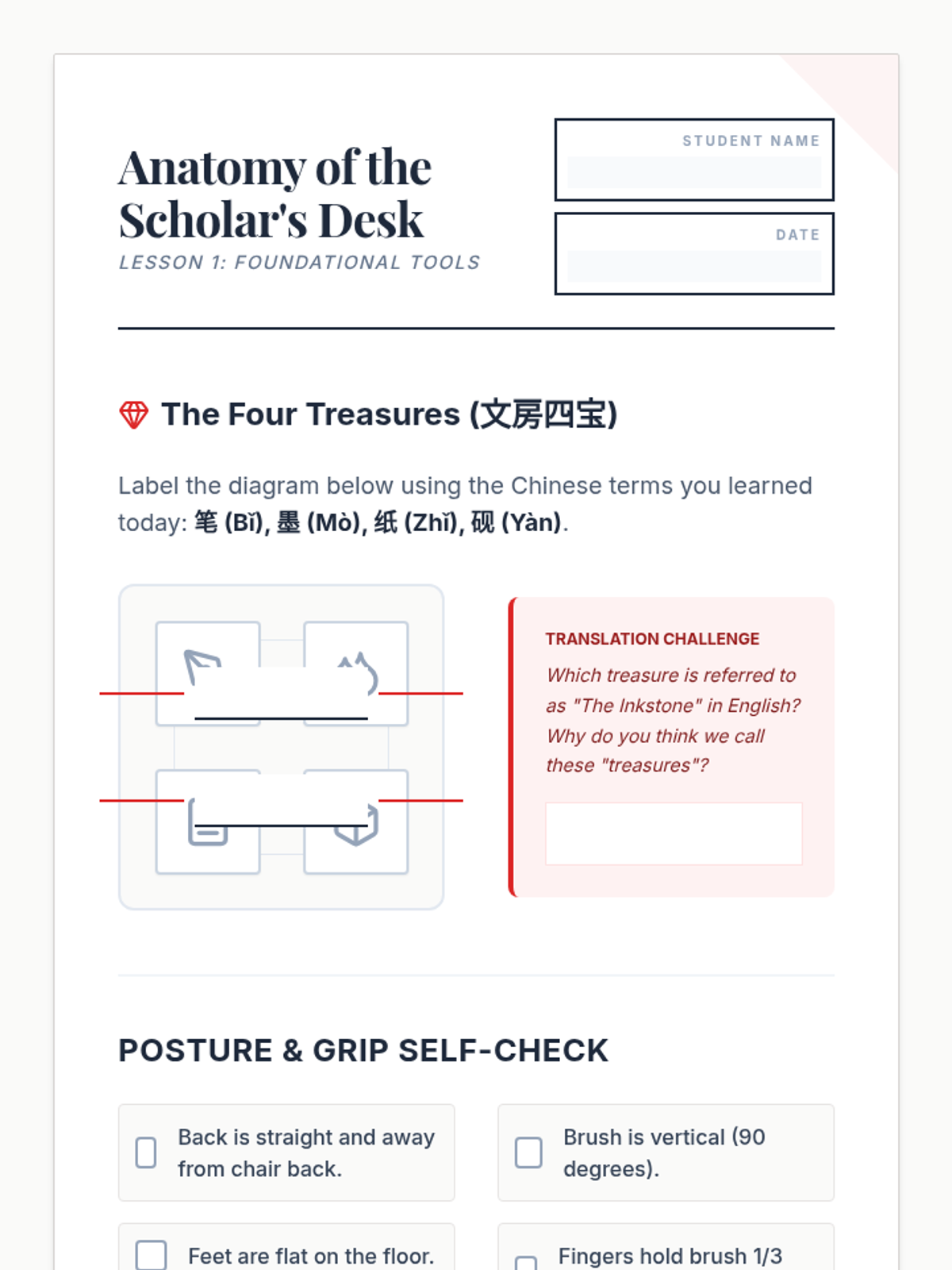
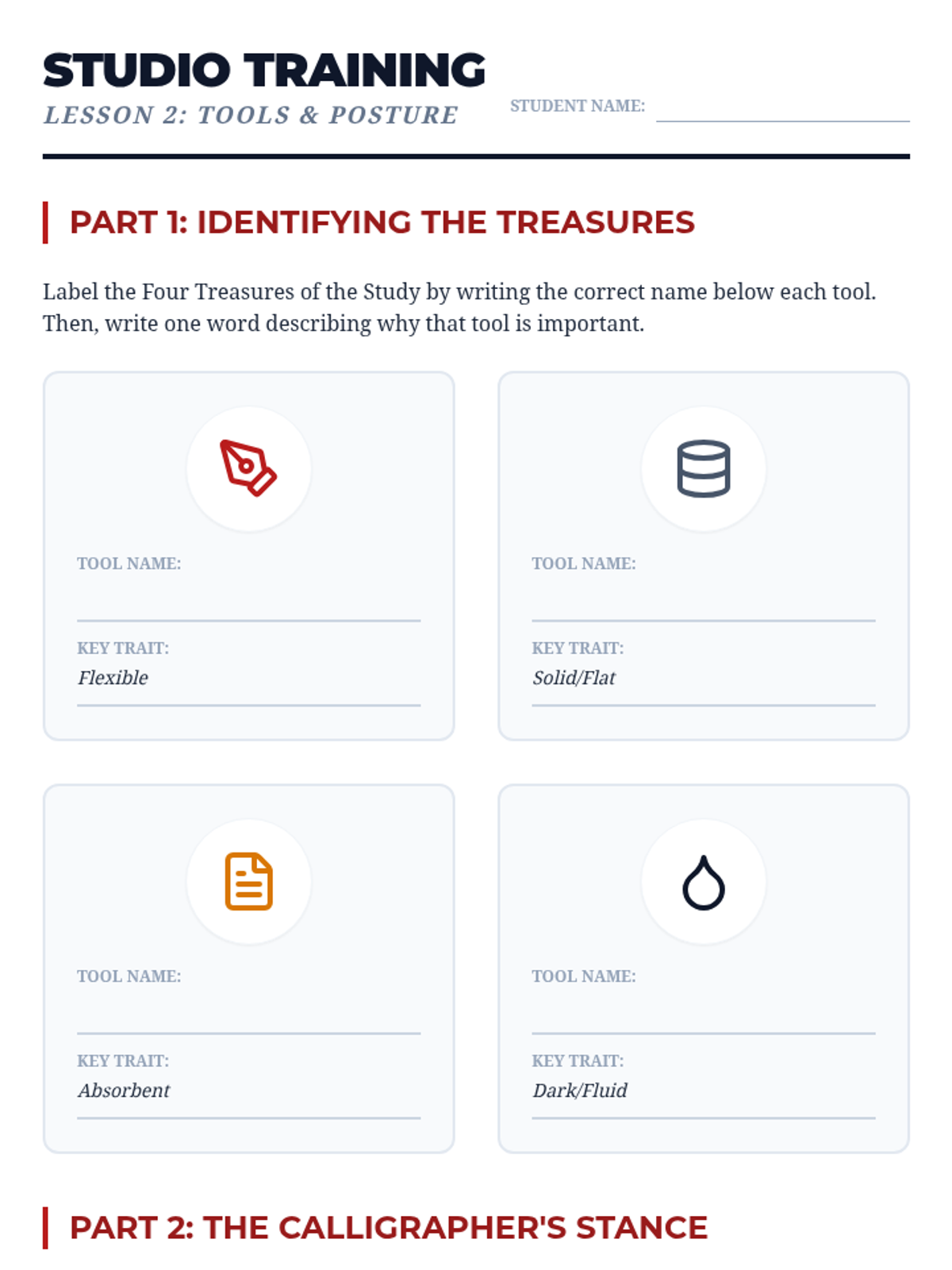
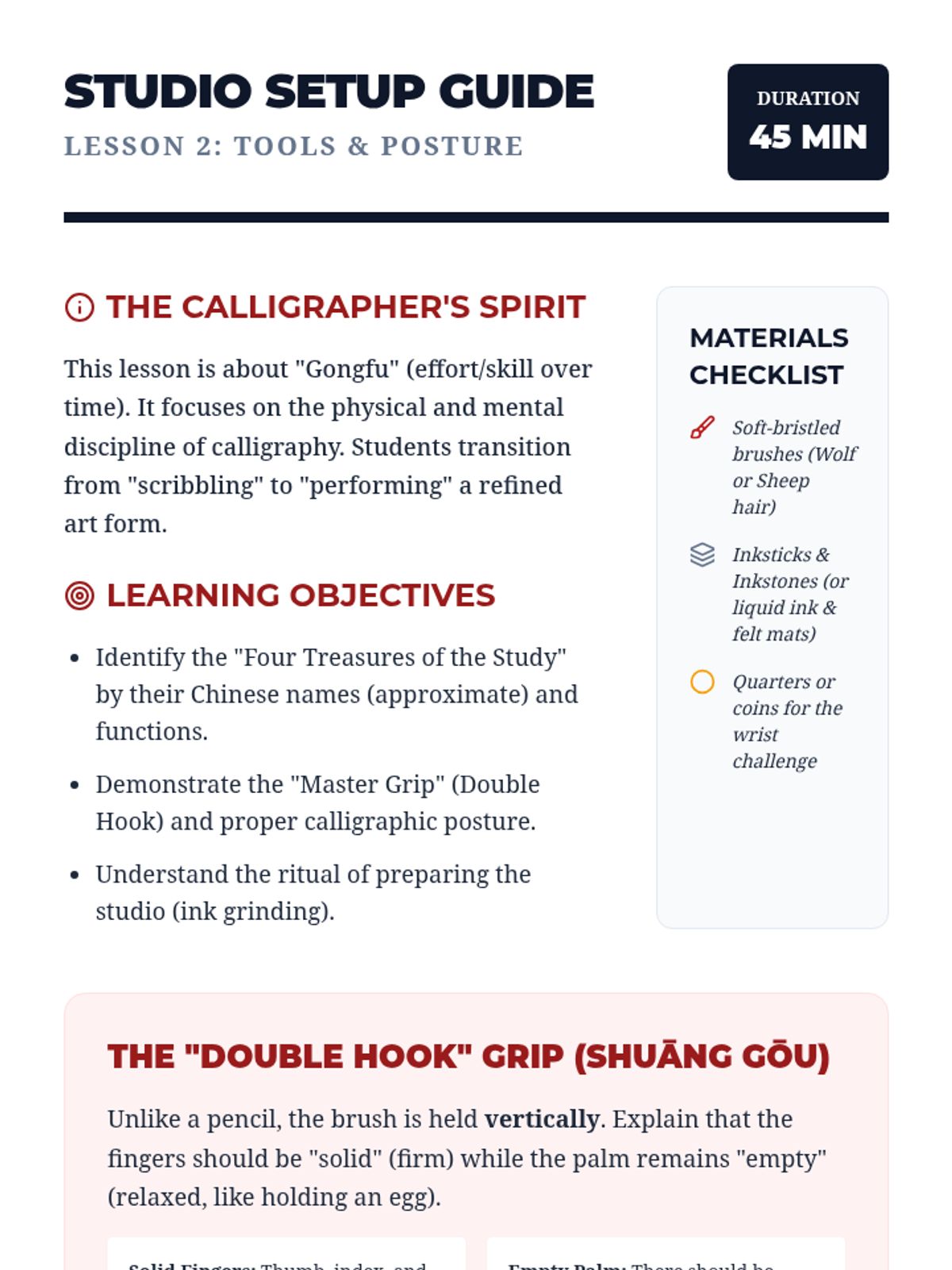
Students explore the traditional 'Four Treasures of the Study' and practice proper posture and pen grip, establishing the physical and cultural foundation for Mandarin calligraphy.
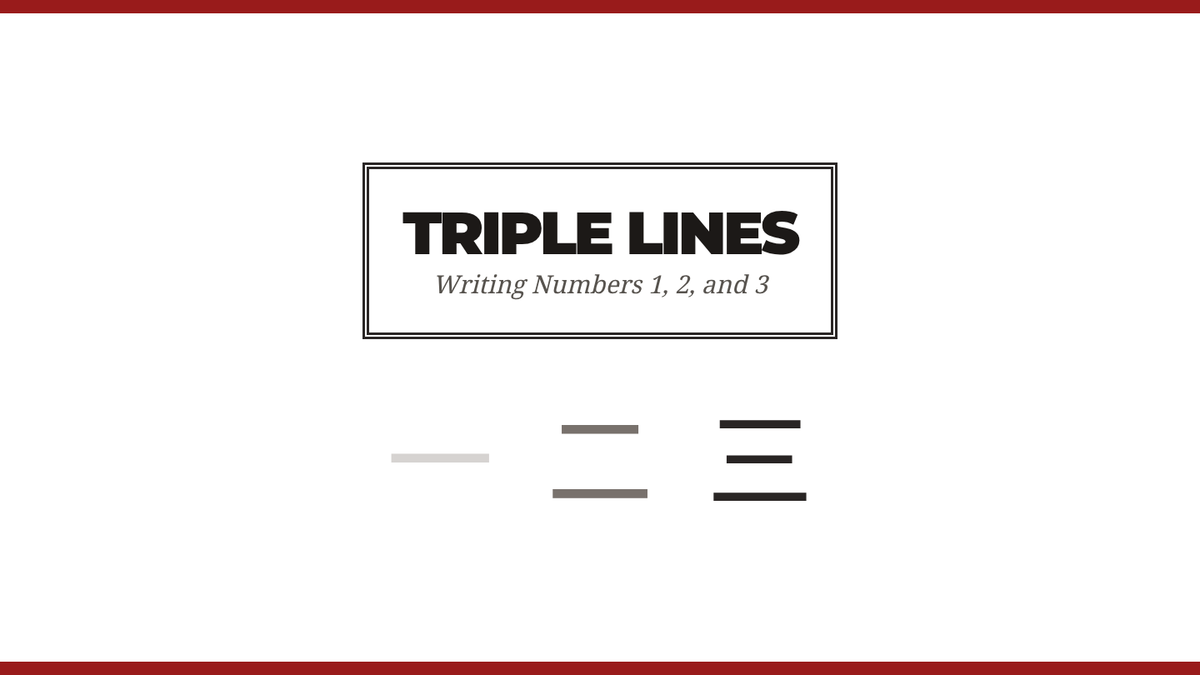
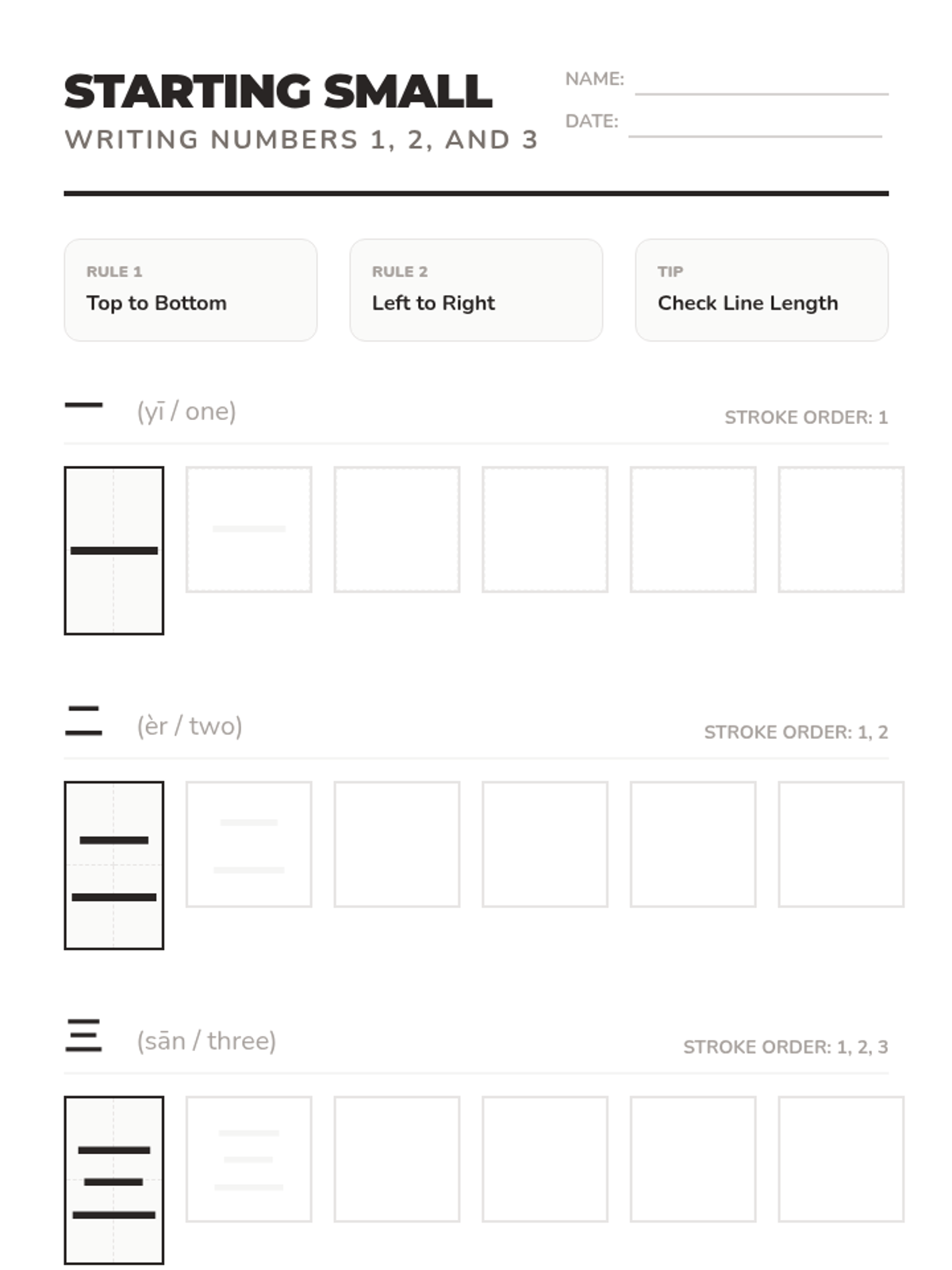
Learners apply their stroke knowledge to write the simplest characters: one, two, and three, focusing on top-to-bottom rules and parallel line spacing.
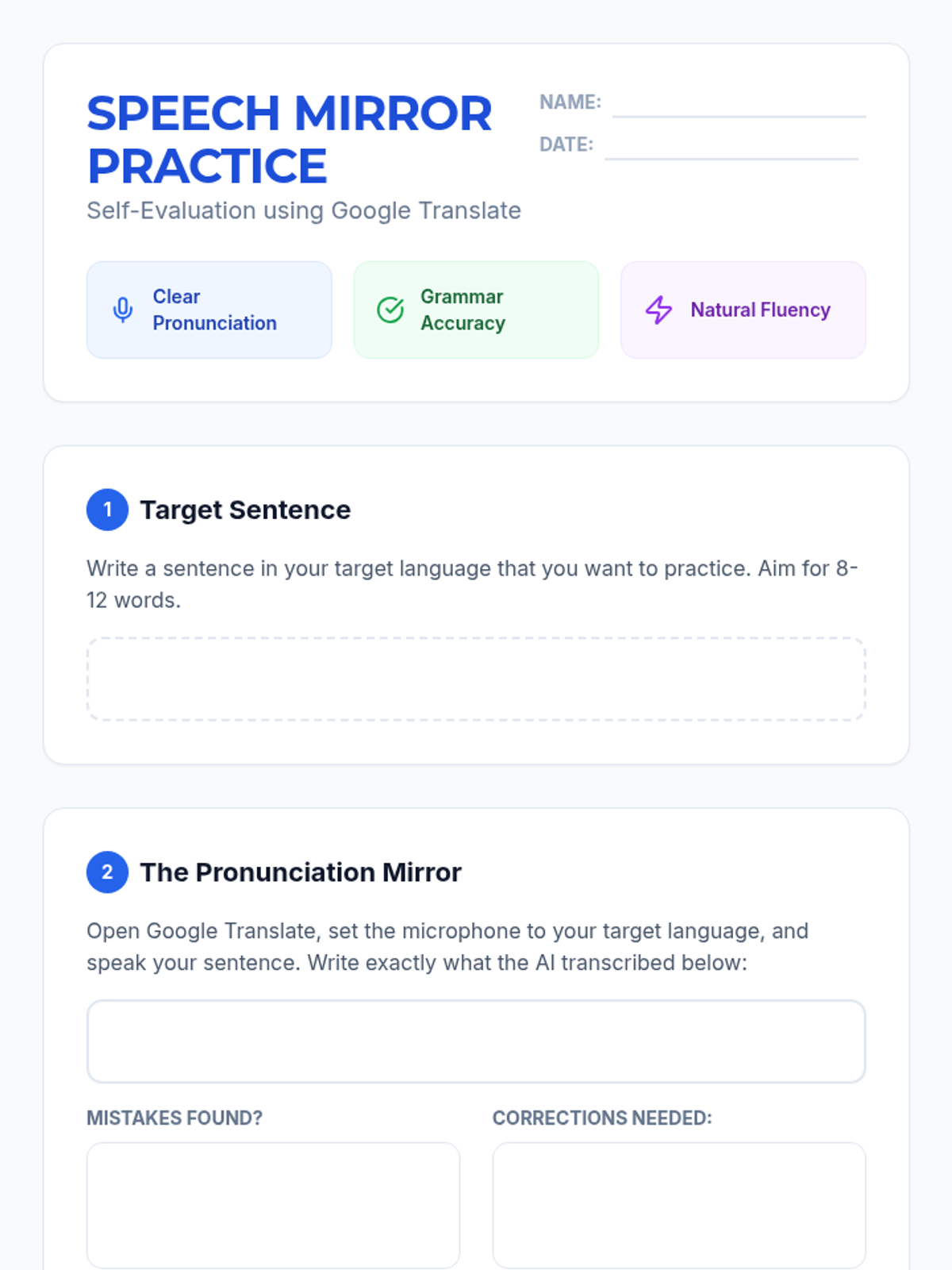
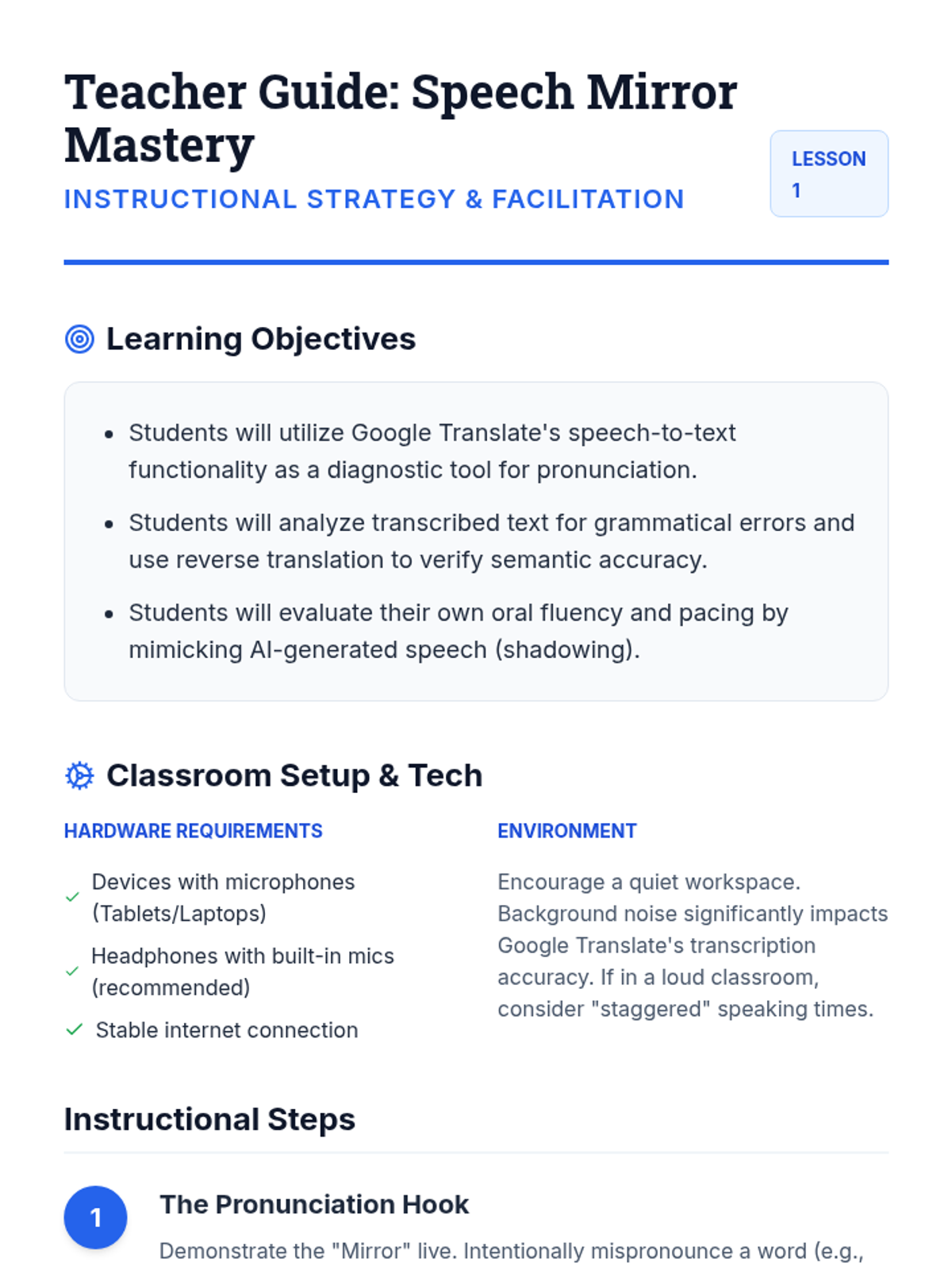
This lesson teaches students how to use Google Translate's speech-to-text and text-to-speech features to self-evaluate their spoken language. Focus areas include pronunciation clarity, grammatical accuracy of transcribed text, and oral fluency.
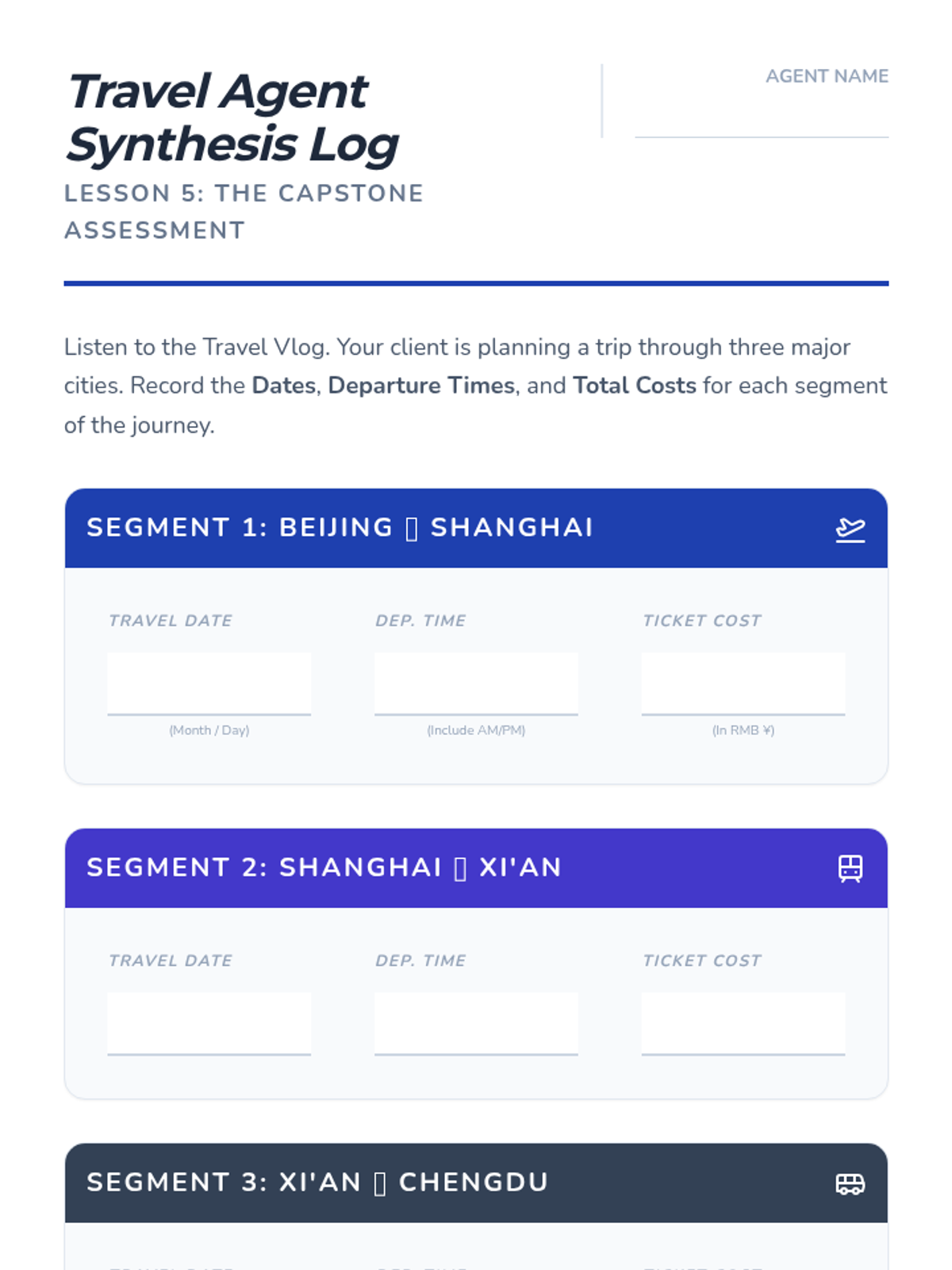
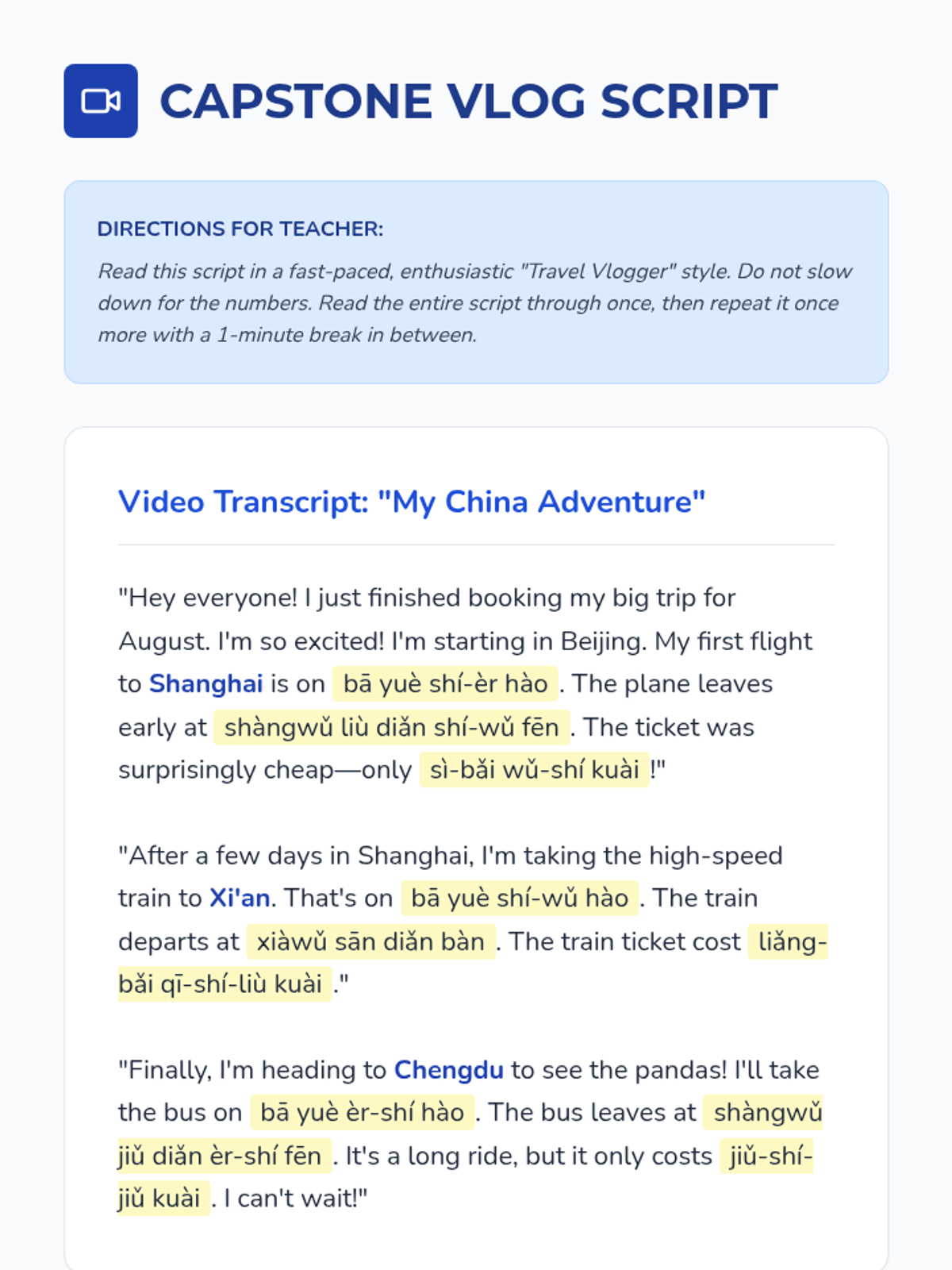
The capstone lesson where students synthesize dates, times, and prices from a complex travel-themed audio source.
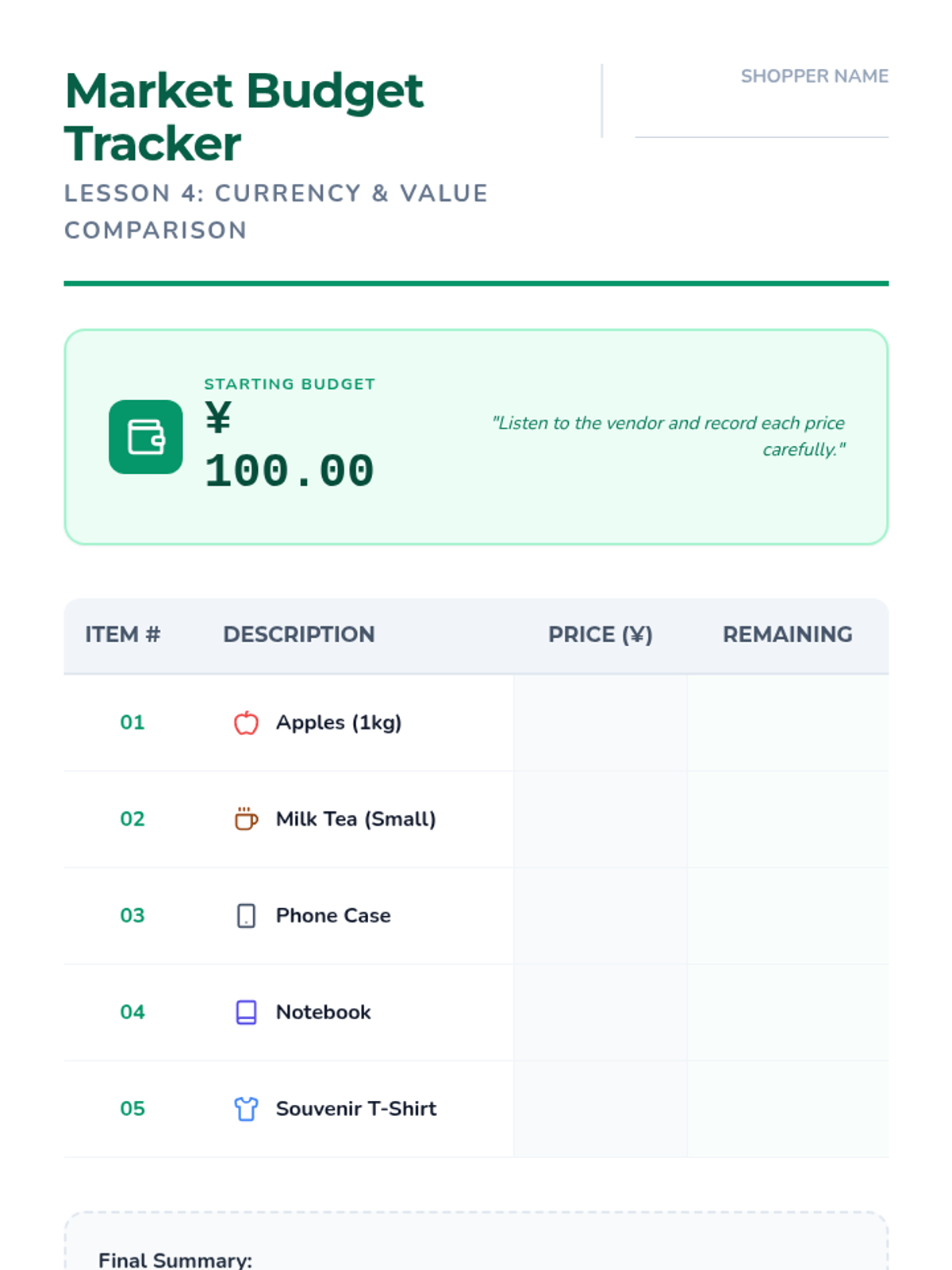
Simulates a market environment where students listen for prices in 'kuài' and 'máo' and manage a virtual budget.
Teaches students to identify specific times using 'diǎn' and 'fēn' and sequence daily routines based on auditory cues.
Covers the Mandarin date format (Year-Month-Day) and days of the week through schedule-based listening tasks.
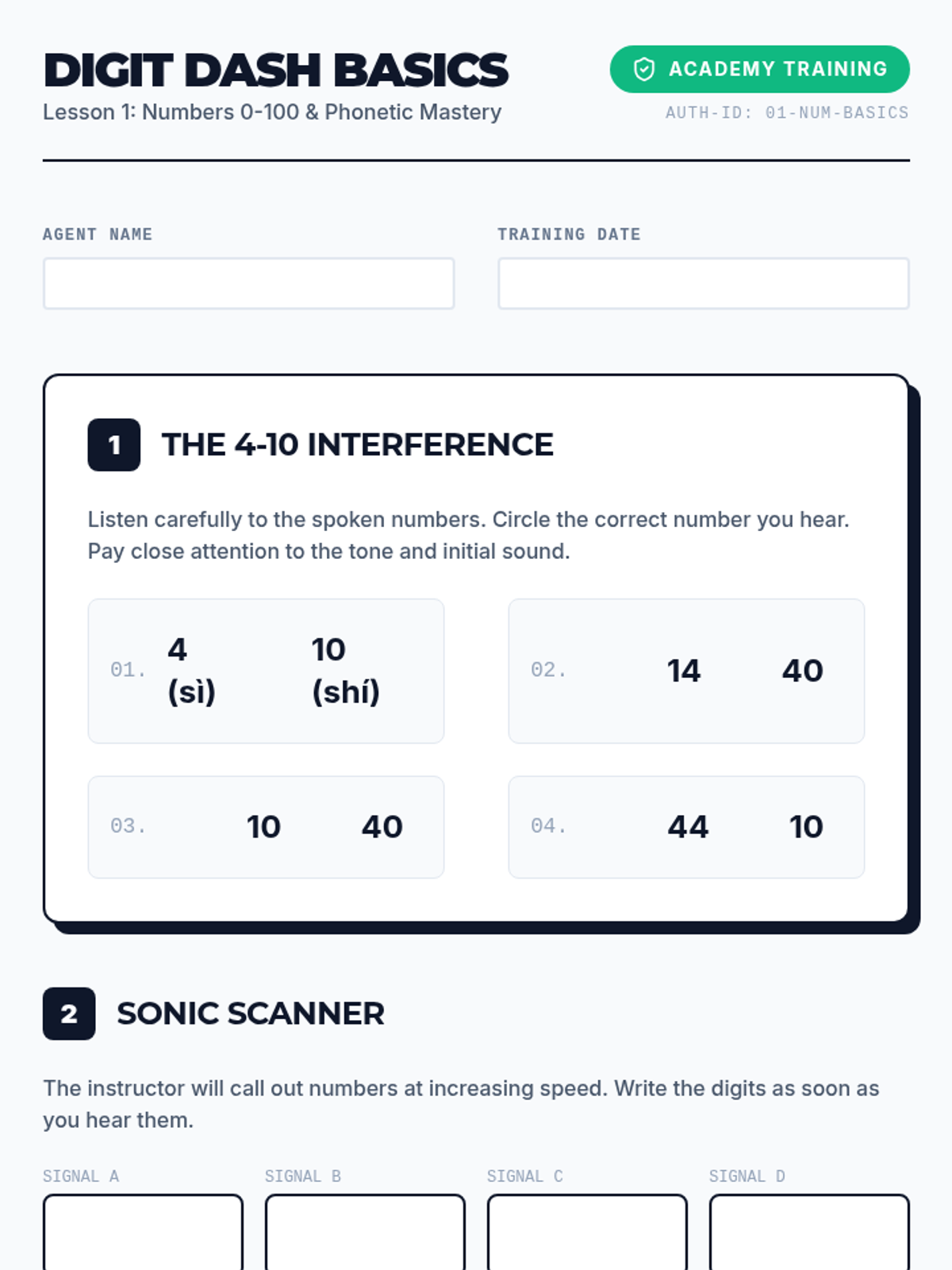
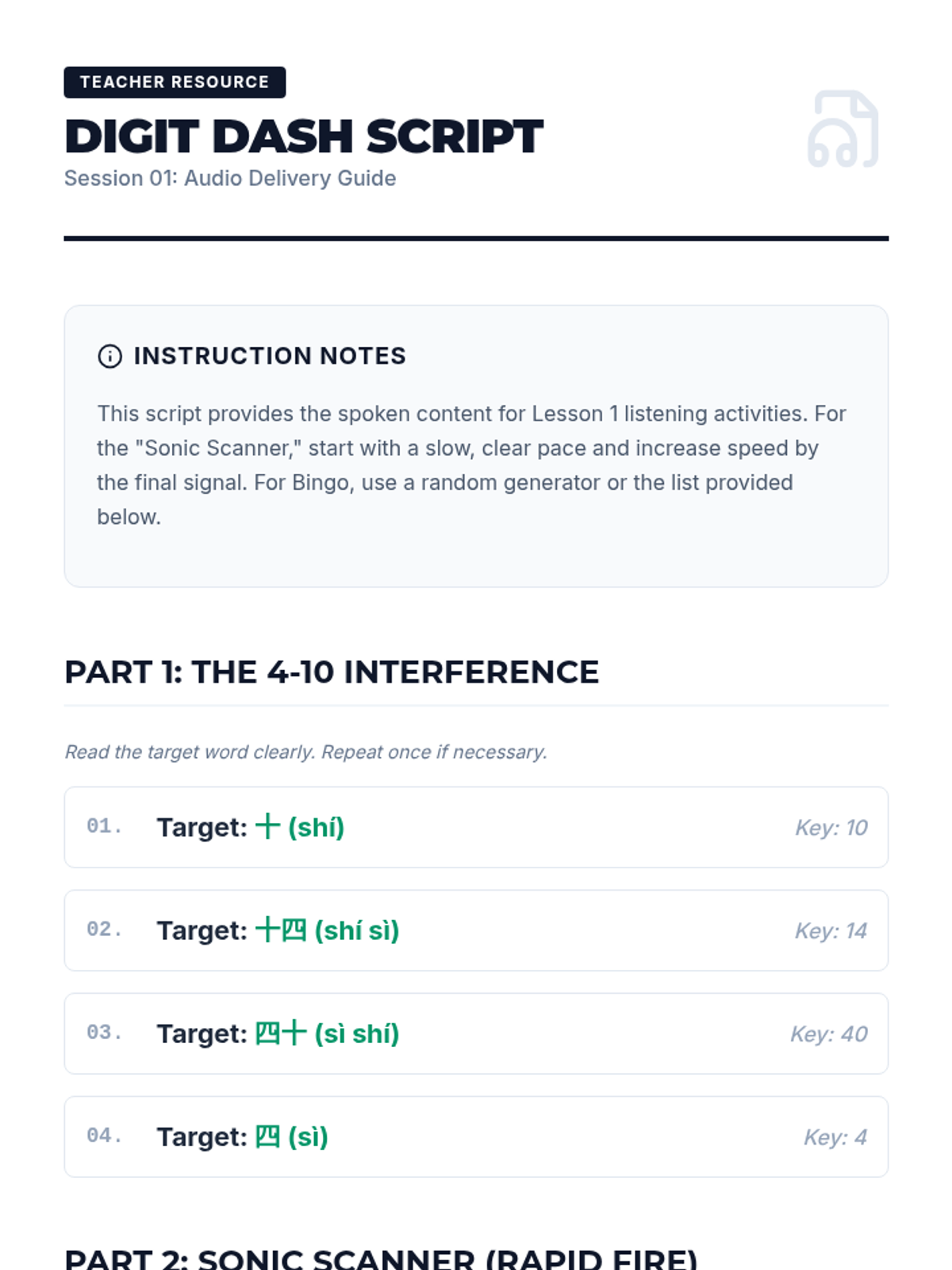
Focuses on rapid recognition of Mandarin digits 0-100, with specific drills for auditory discrimination between 'shí' (10) and 'sì' (4).
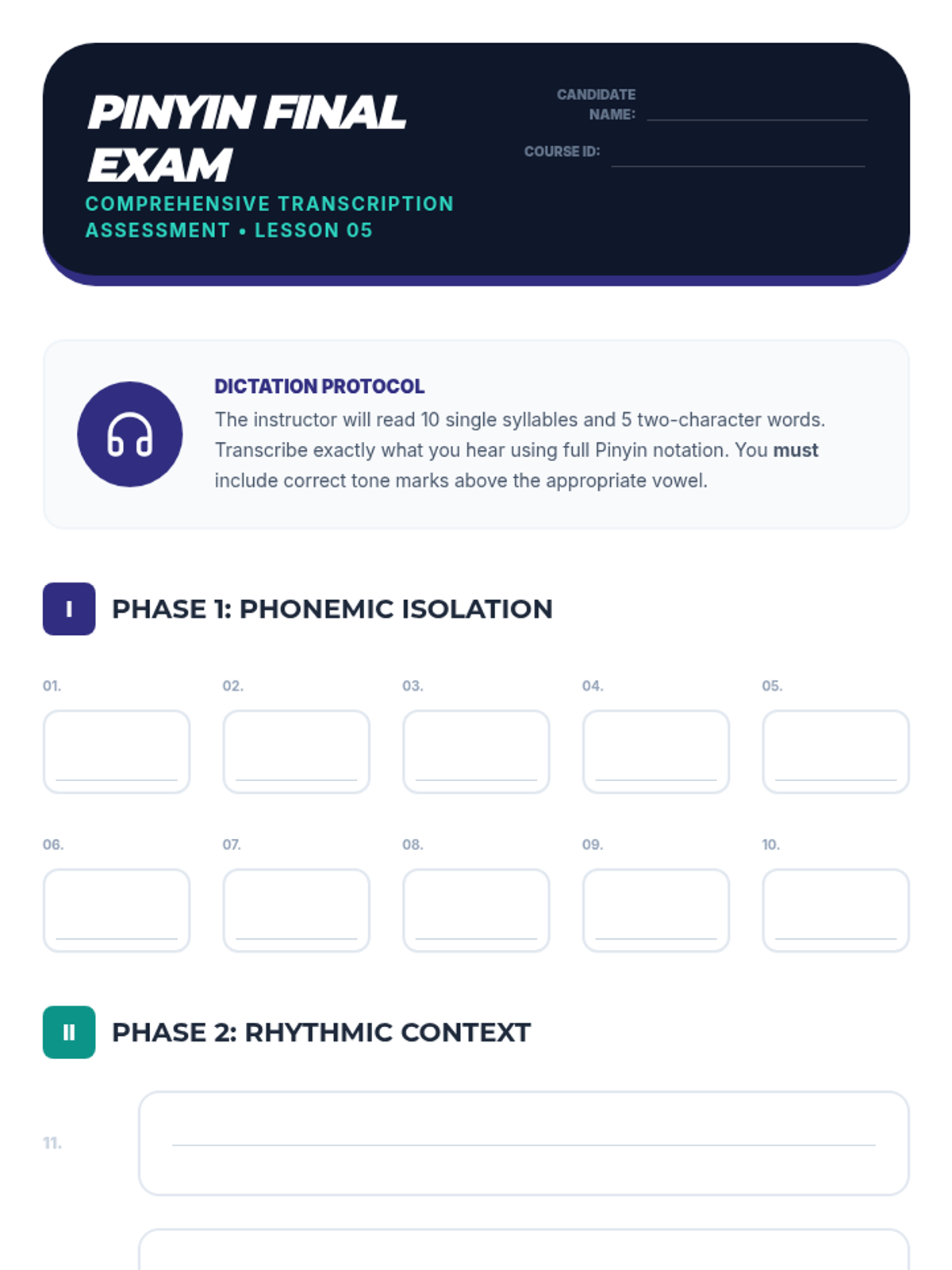
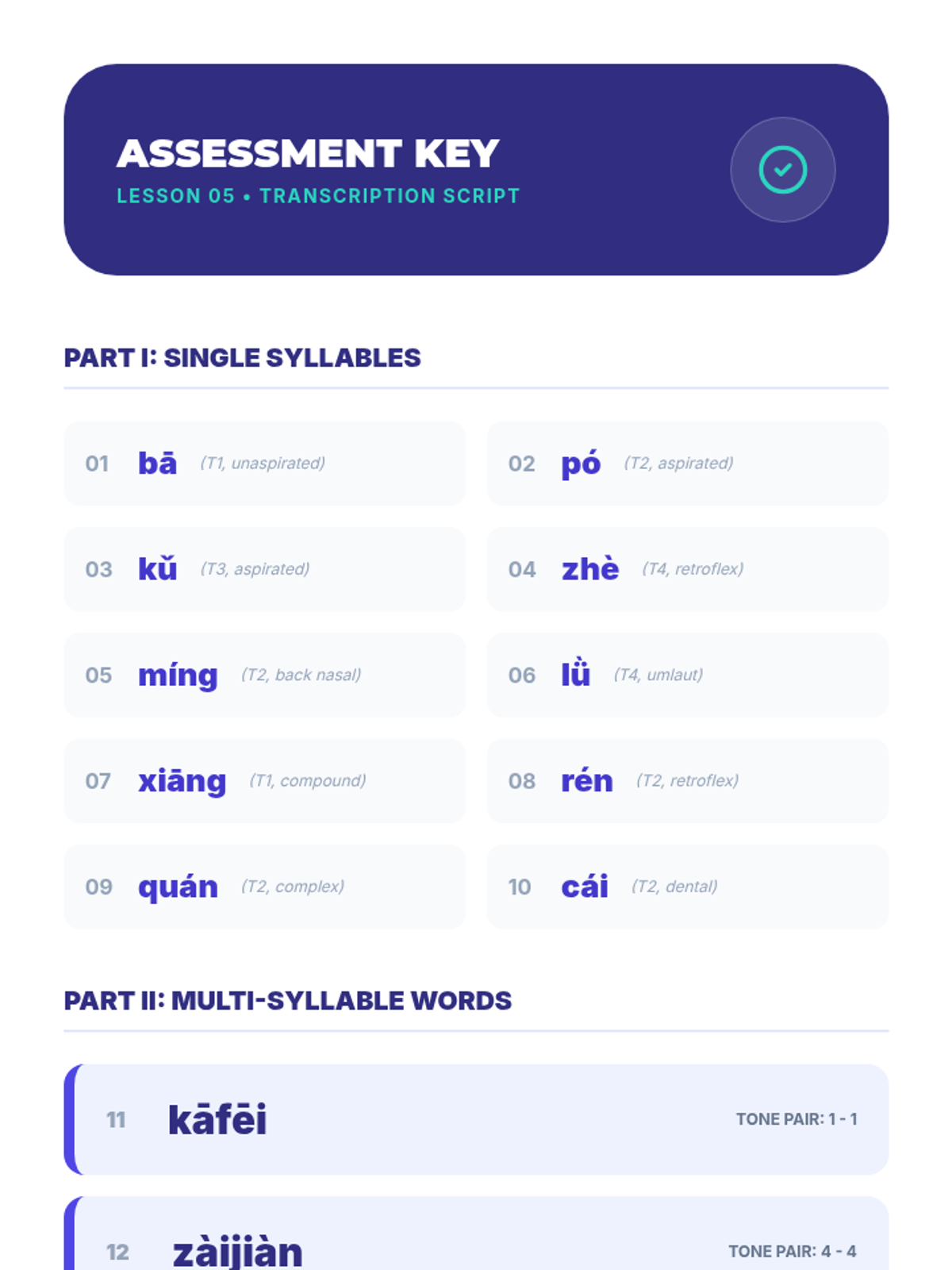
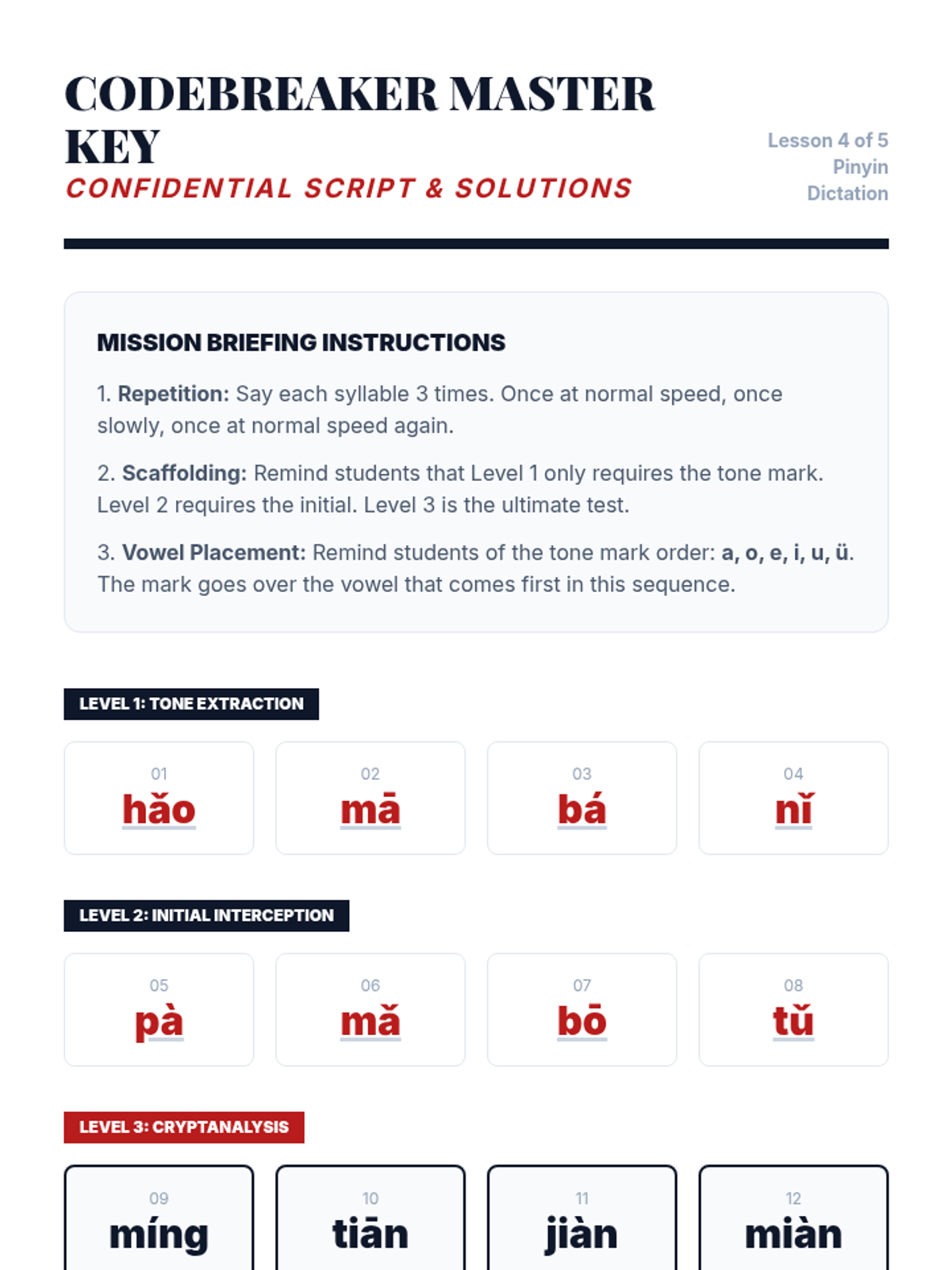
A comprehensive dictation assessment where students transcribe nonsense and real words into full Pinyin with tone marks.
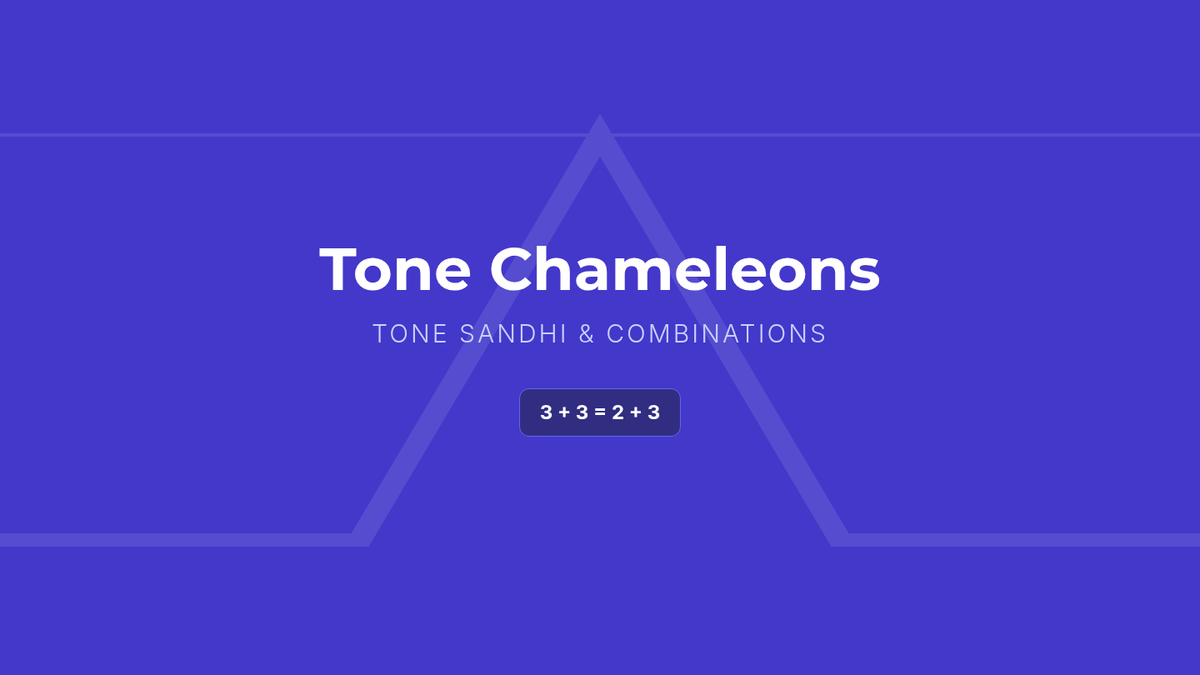
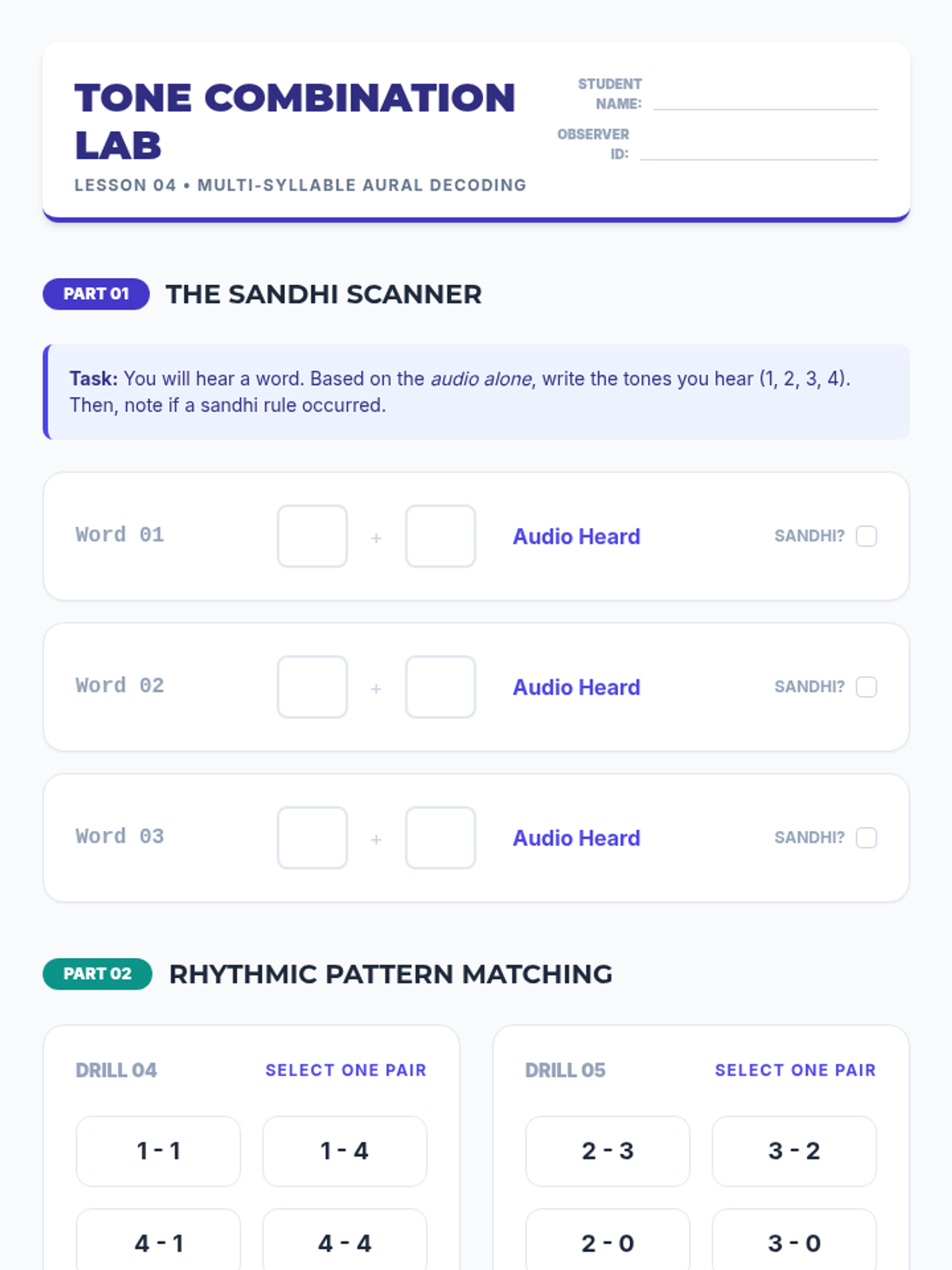
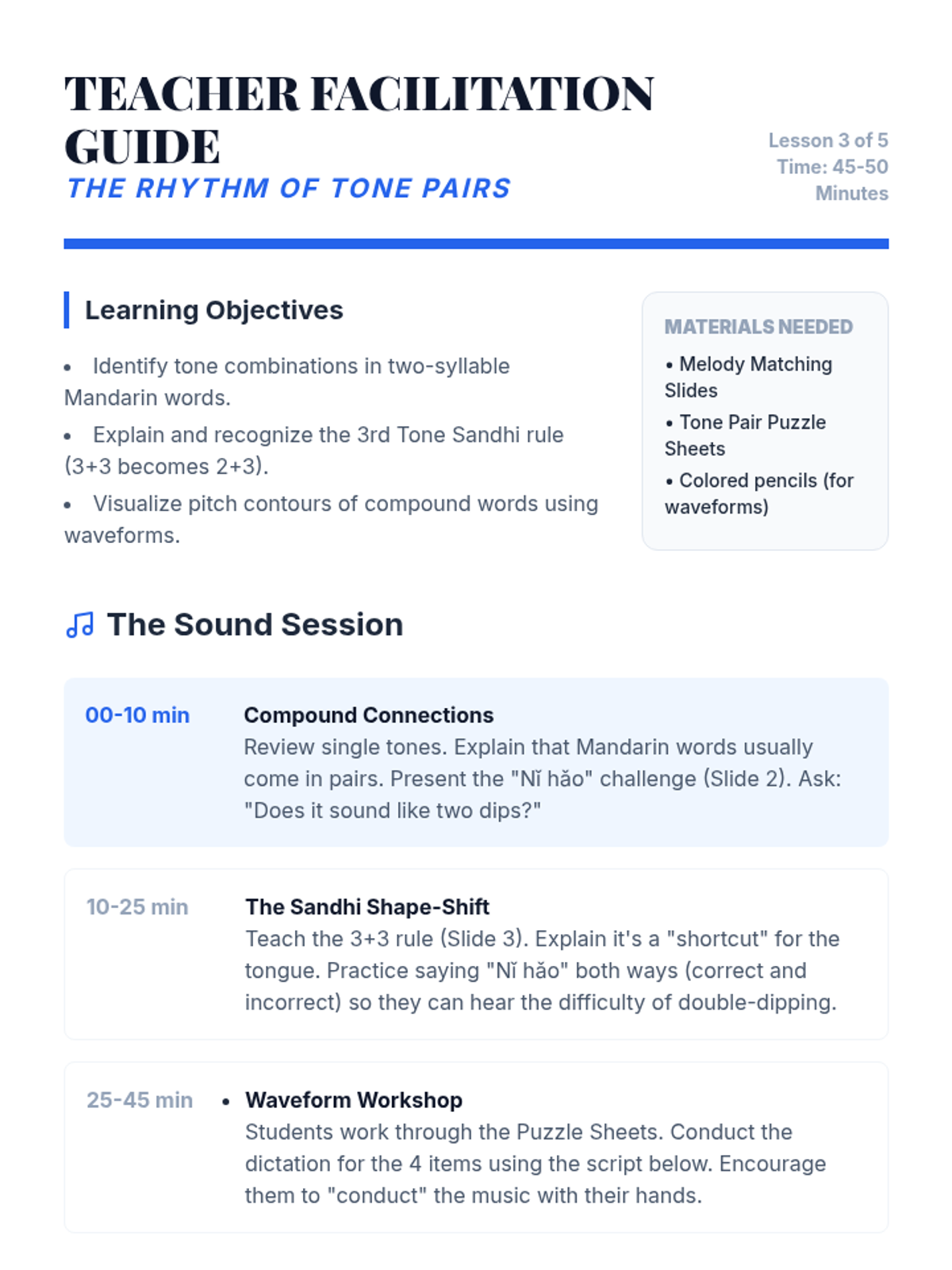
Teaches tone identification in multi-syllable contexts, specifically focusing on the Third Tone Sandhi rule.
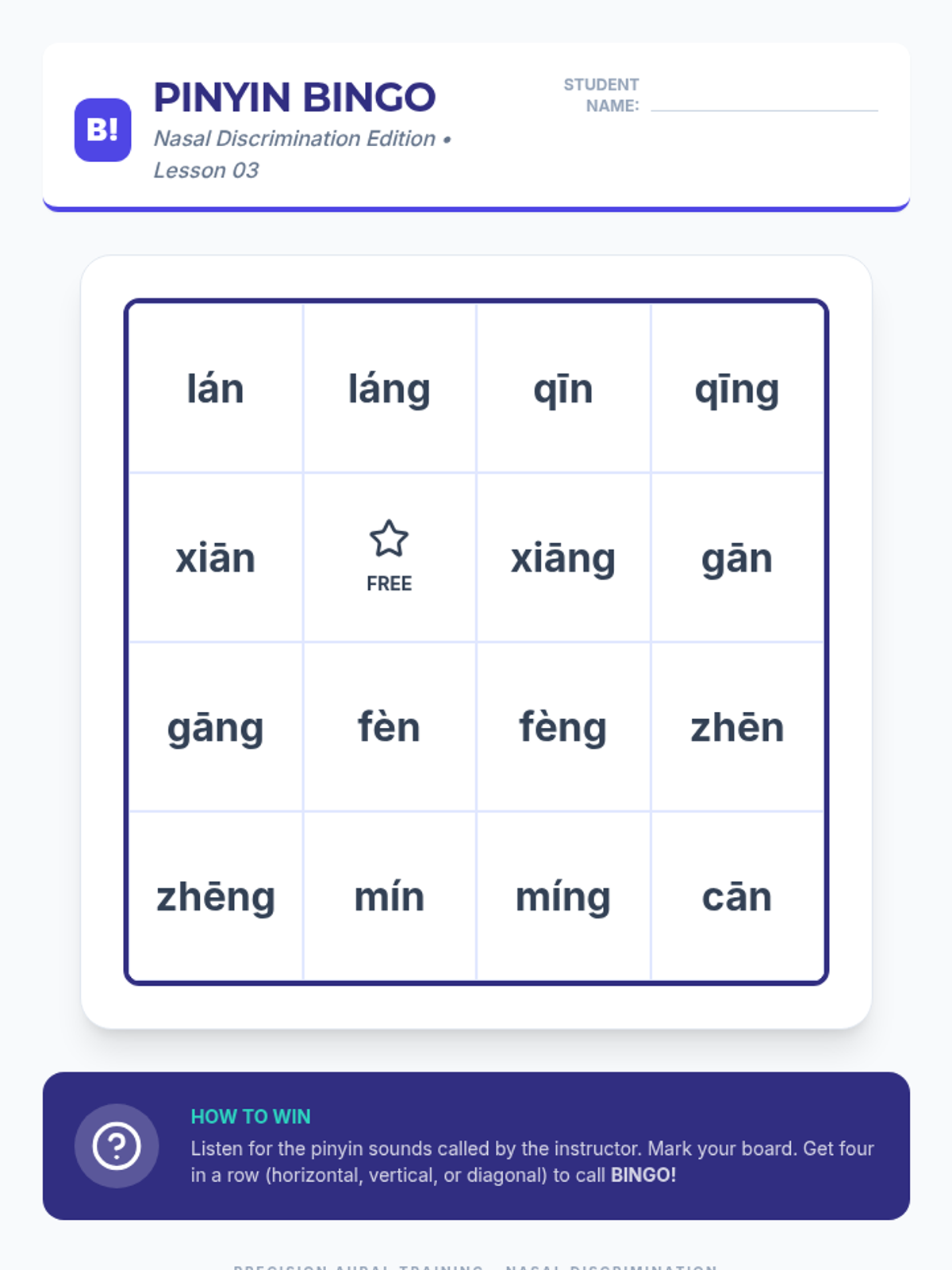
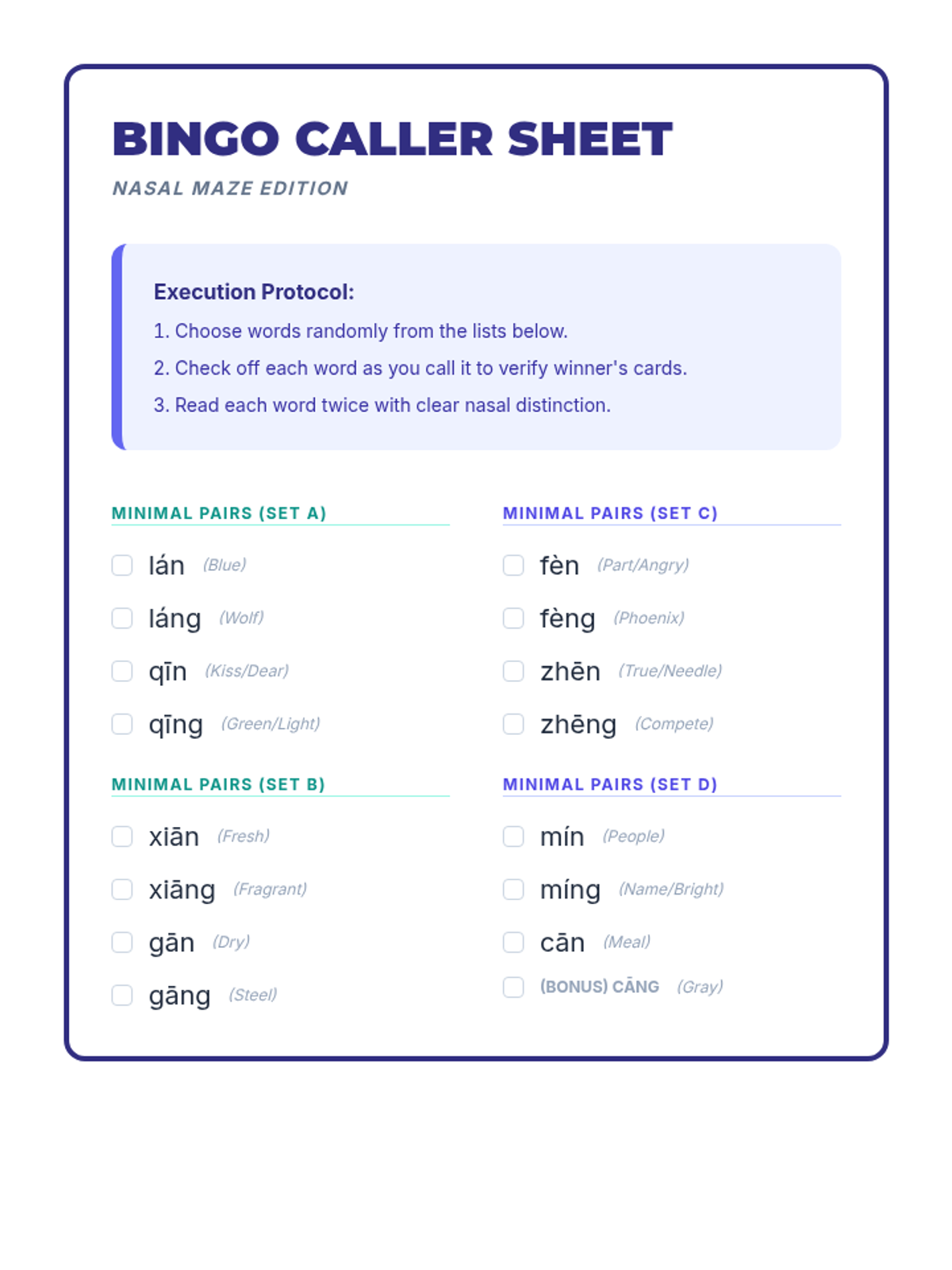
Addresses the distinctions between front and back nasal endings and complex vowel combinations using minimal pair activities.
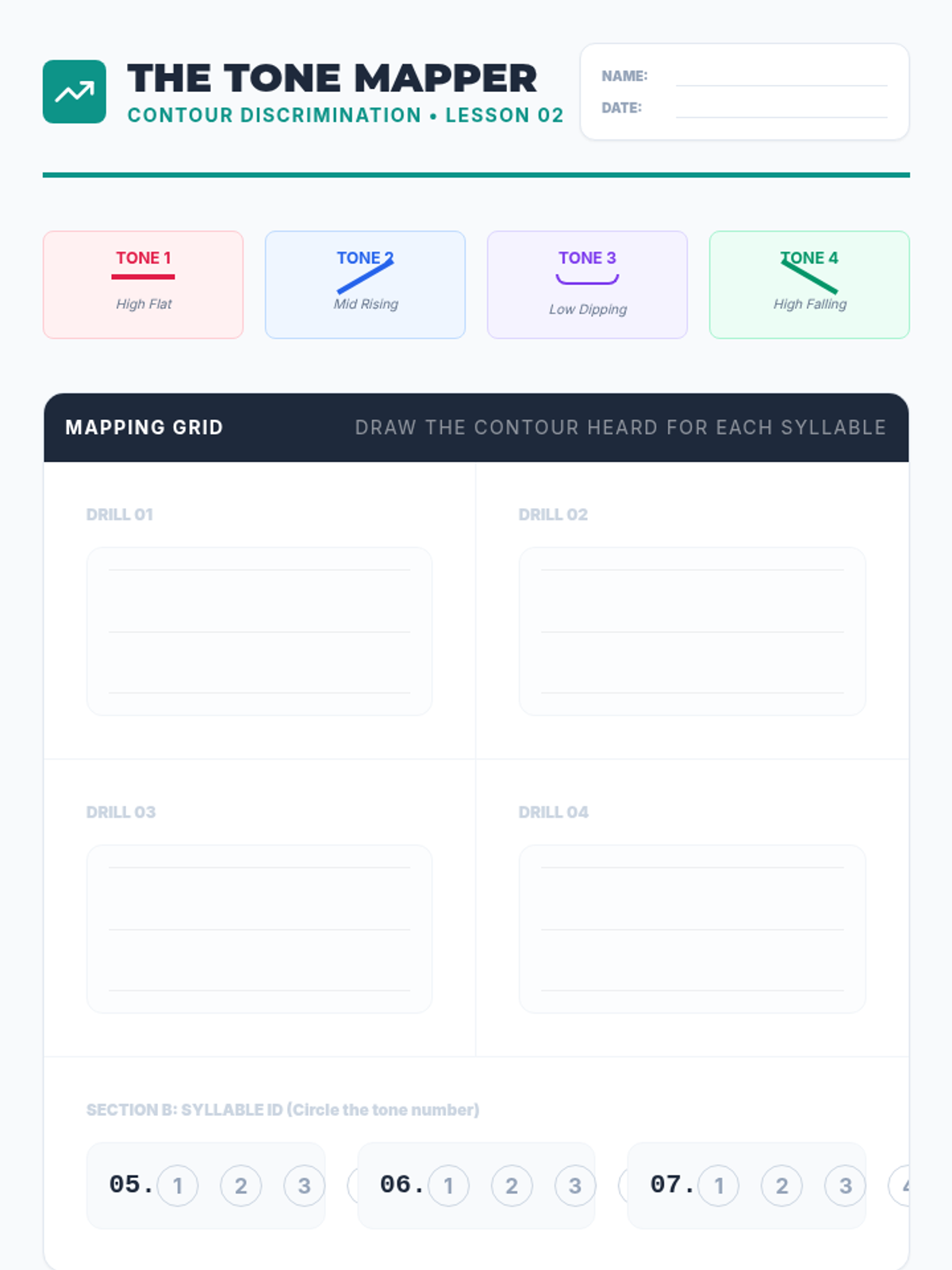
Introduces the four tones and neutral tone, mapping pitch contours to visual representations and identifying tones of single syllables.
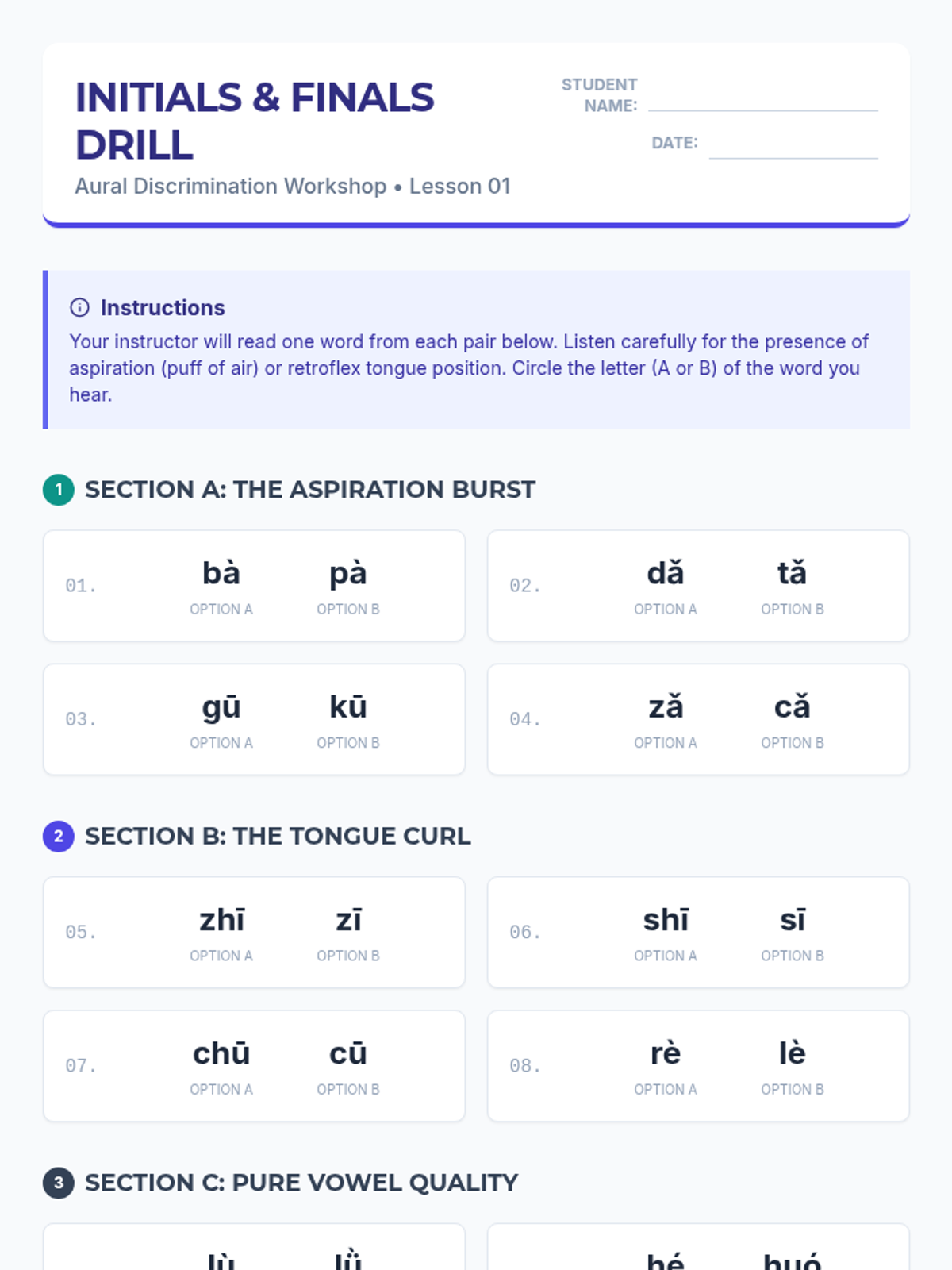
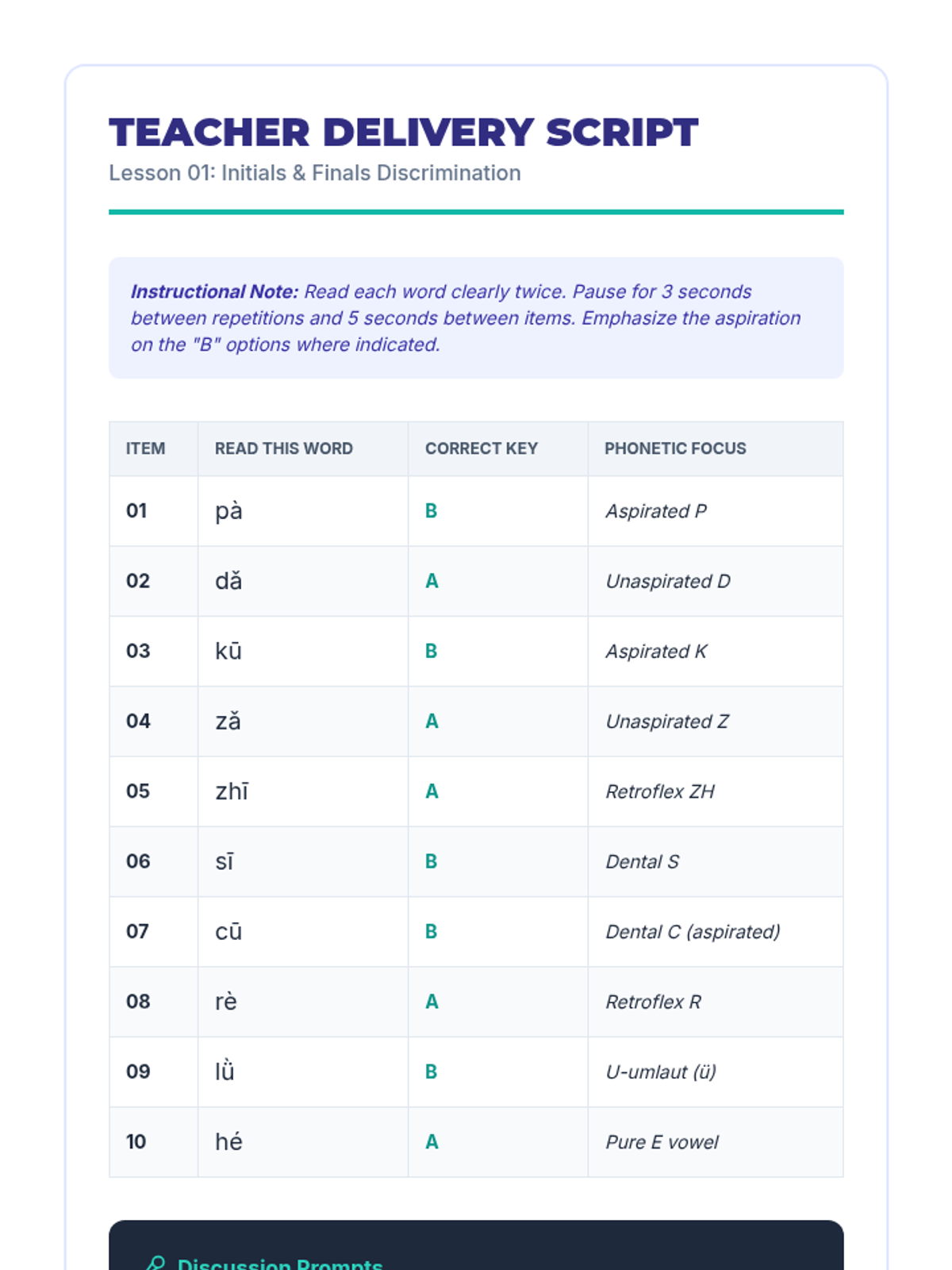
Focuses on distinguishing aspirated and unaspirated initials and retroflex sounds through discriminatory listening drills.
Introduces currency vocabulary and price identification. Students simulate a marketplace scenario to calculate totals and verify spoken receipts.
Focuses on telling time and identifying time-of-day markers. Students must synchronize clocks based on spoken mission briefings.
Covers the numerical logic of the Chinese calendar system. Students decode spoken appointments and birthdays to organize a complex schedule.
Students practice recording strings of numbers, such as phone numbers, while learning the specific rhythm and character variations used in Chinese telecommunications.
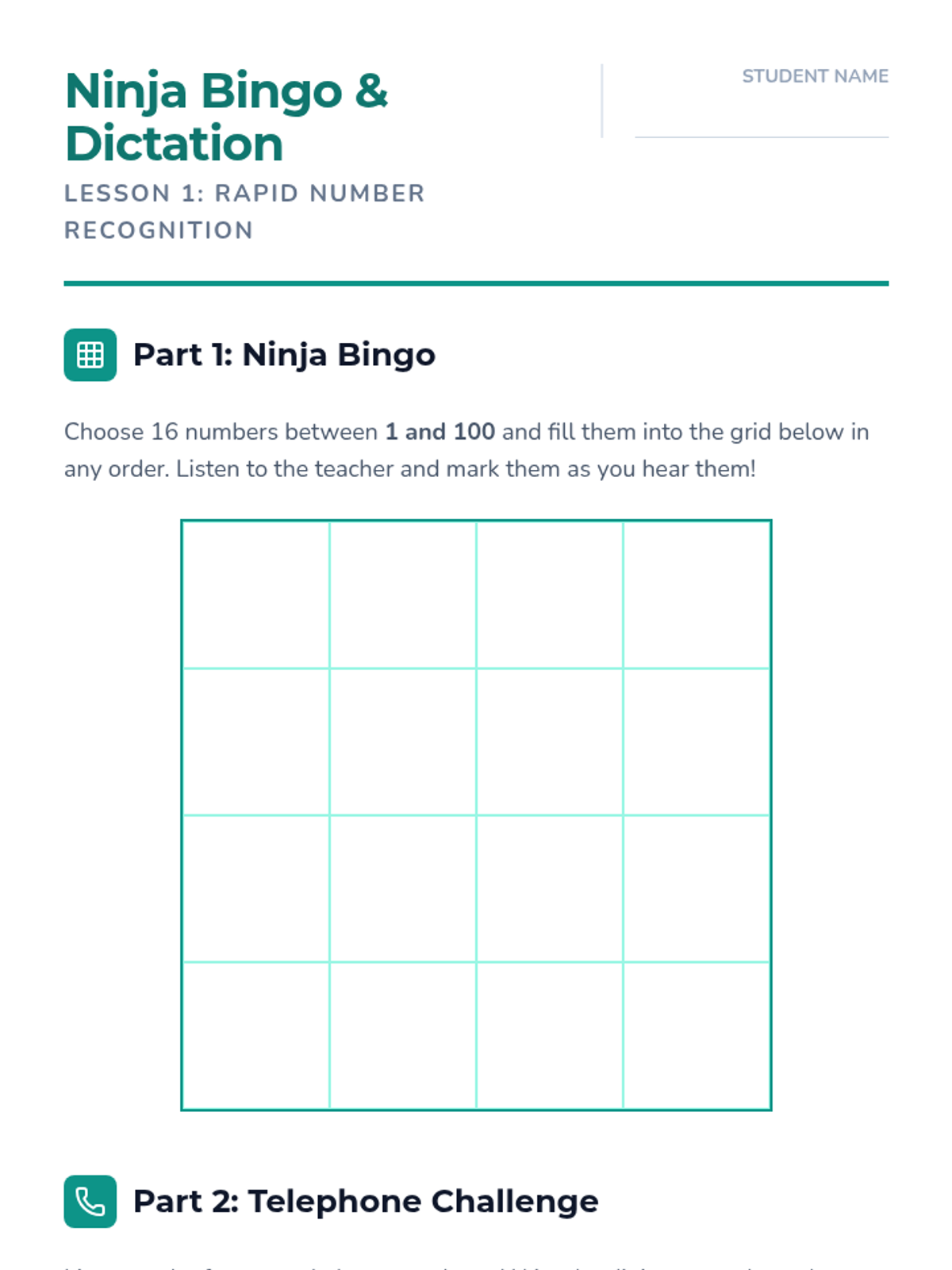
Focuses on the rapid identification of numbers 0-100, specifically targeting the phonetic distinction between 'si' (4) and 'shi' (10). Includes competitive bingo and identification drills.
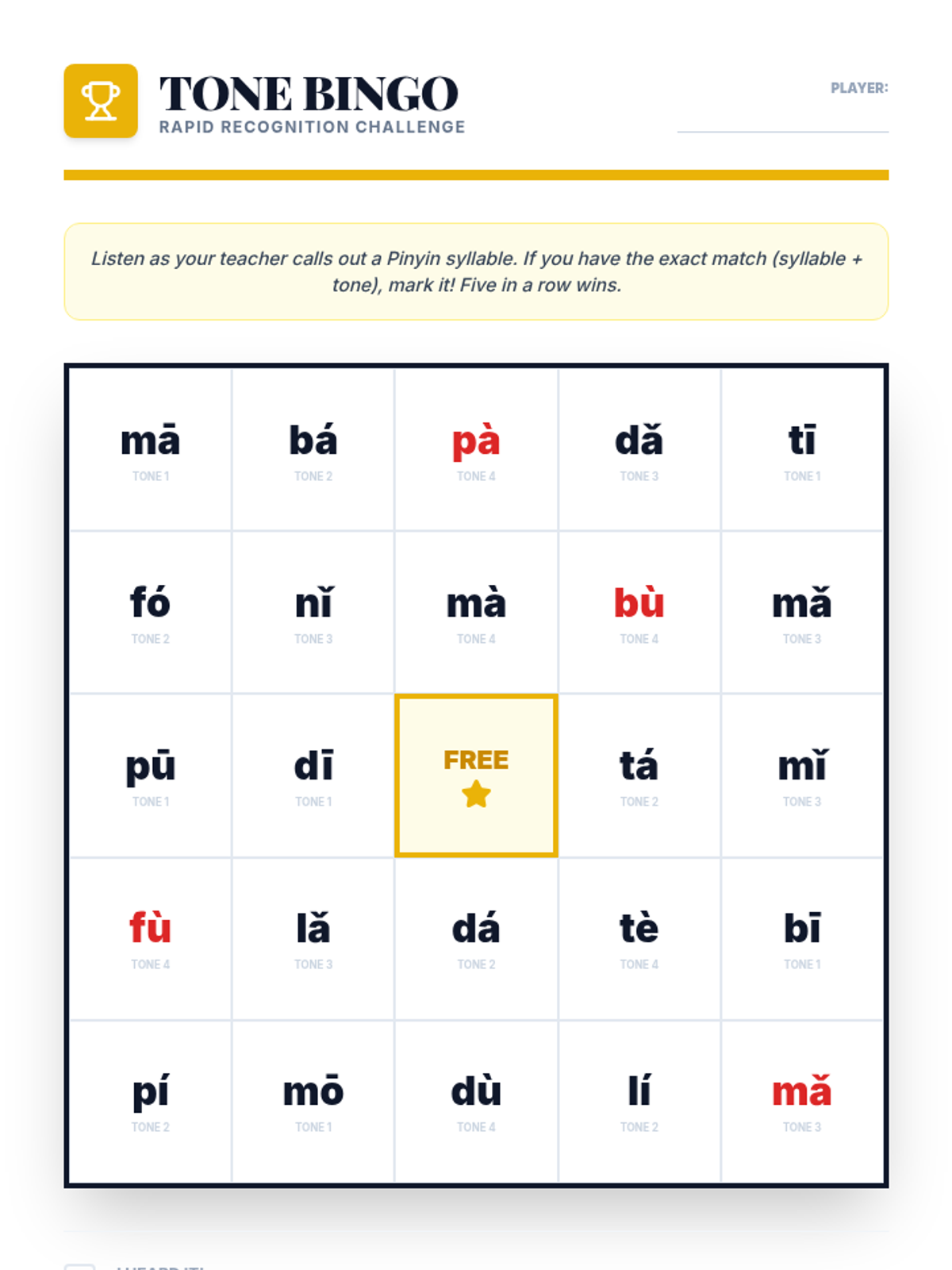
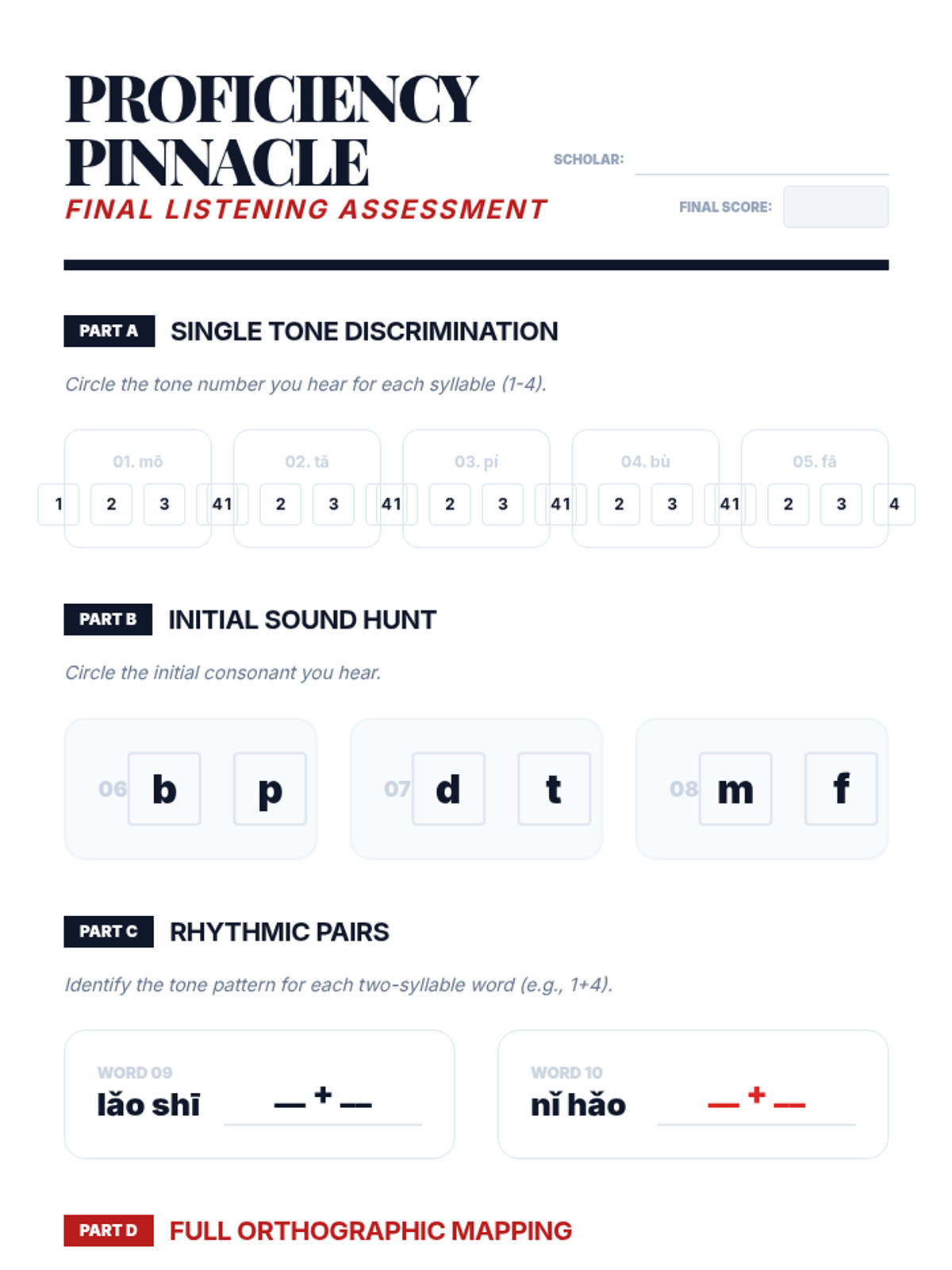
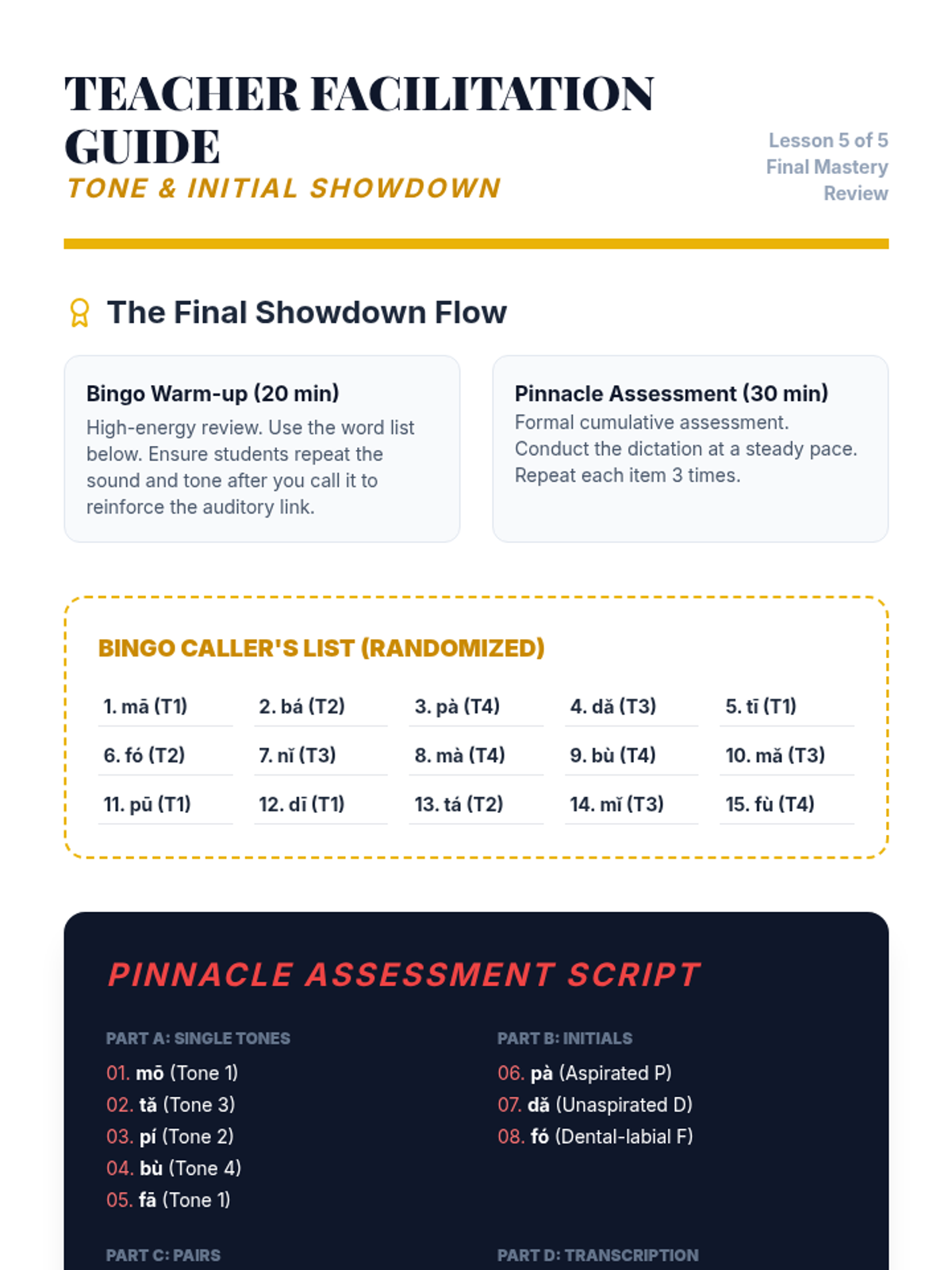
A cumulative assessment and review lesson using games and stations. Students demonstrate their ability to rapidly identify tones and initials in various contexts.
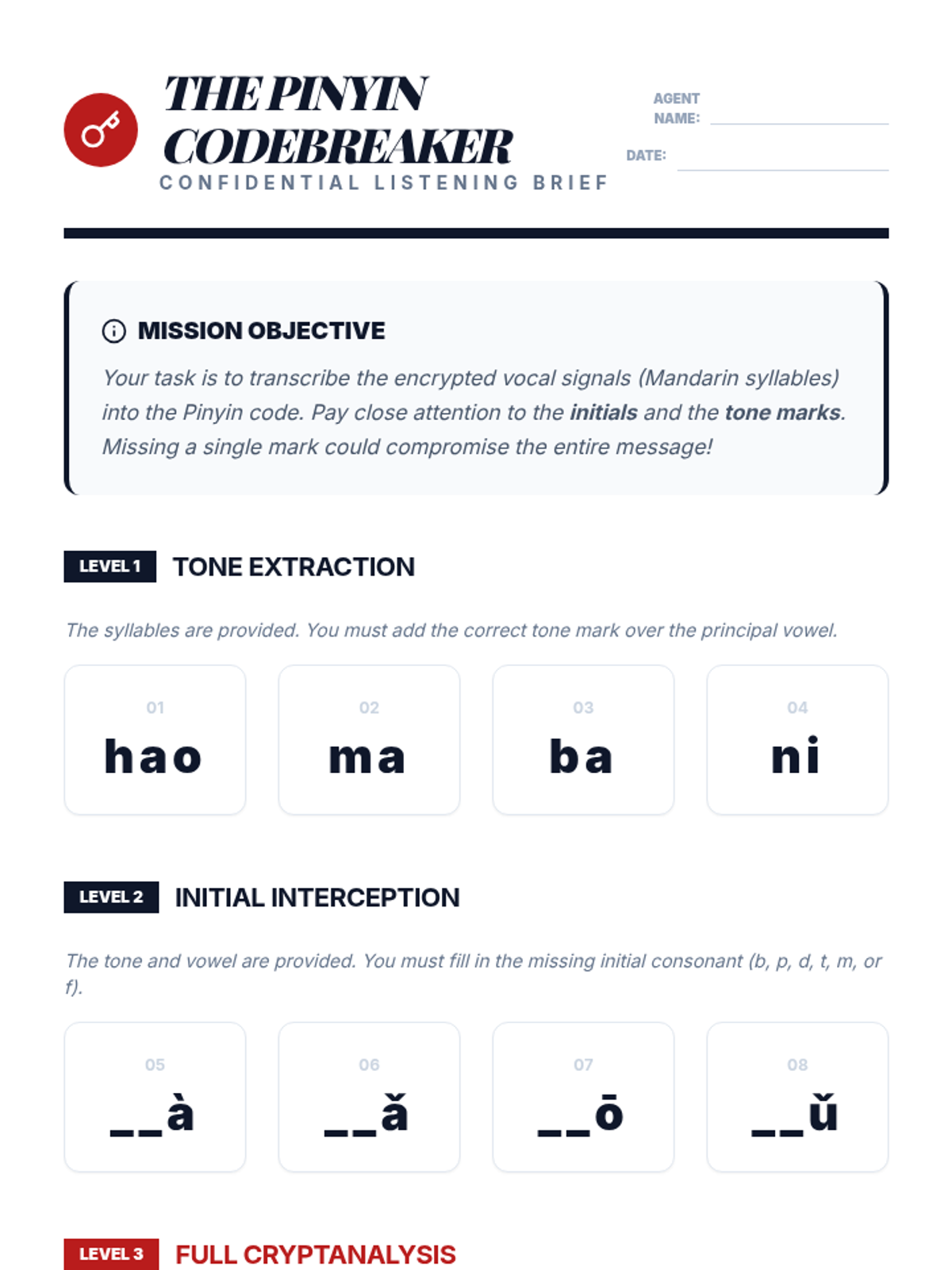
A mastery-based workshop where students transcribe heard sounds into Pinyin. This lesson bridges the gap between auditory recognition and written orthographic mapping.
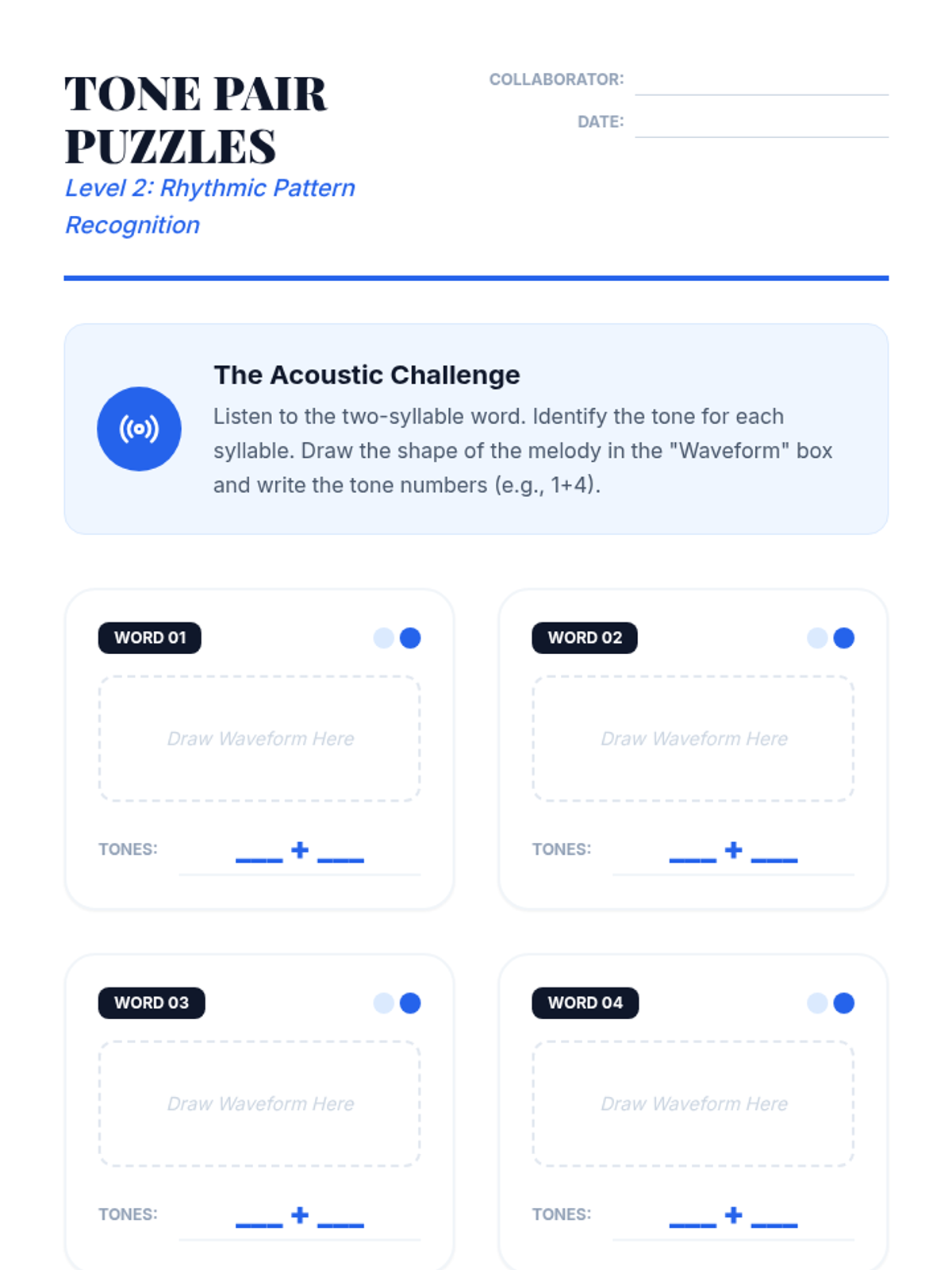
Introduces the rhythmic flow of two-syllable words and the concept of tone sandhi. Students practice identifying how tones interact and change in common combinations.
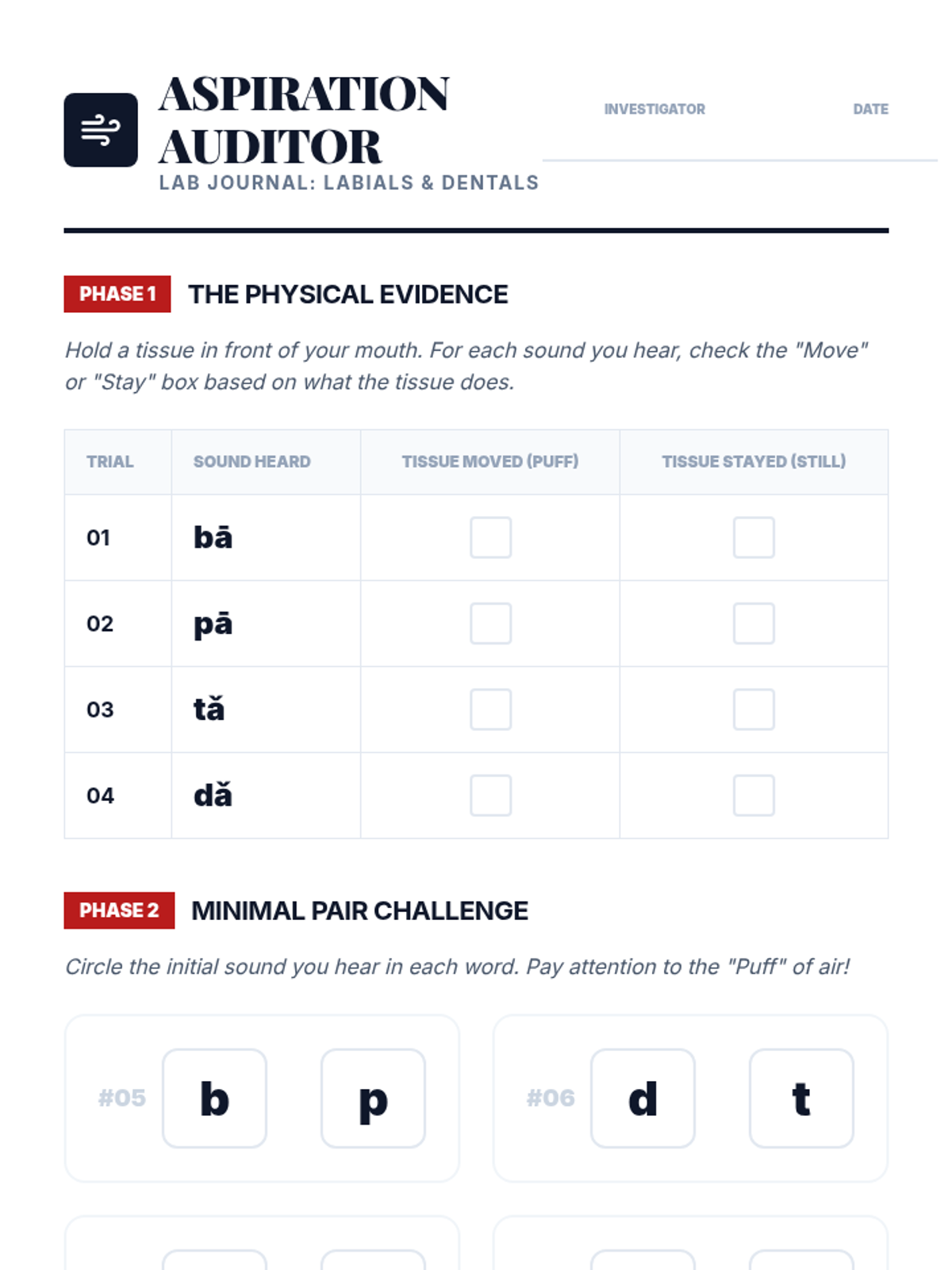
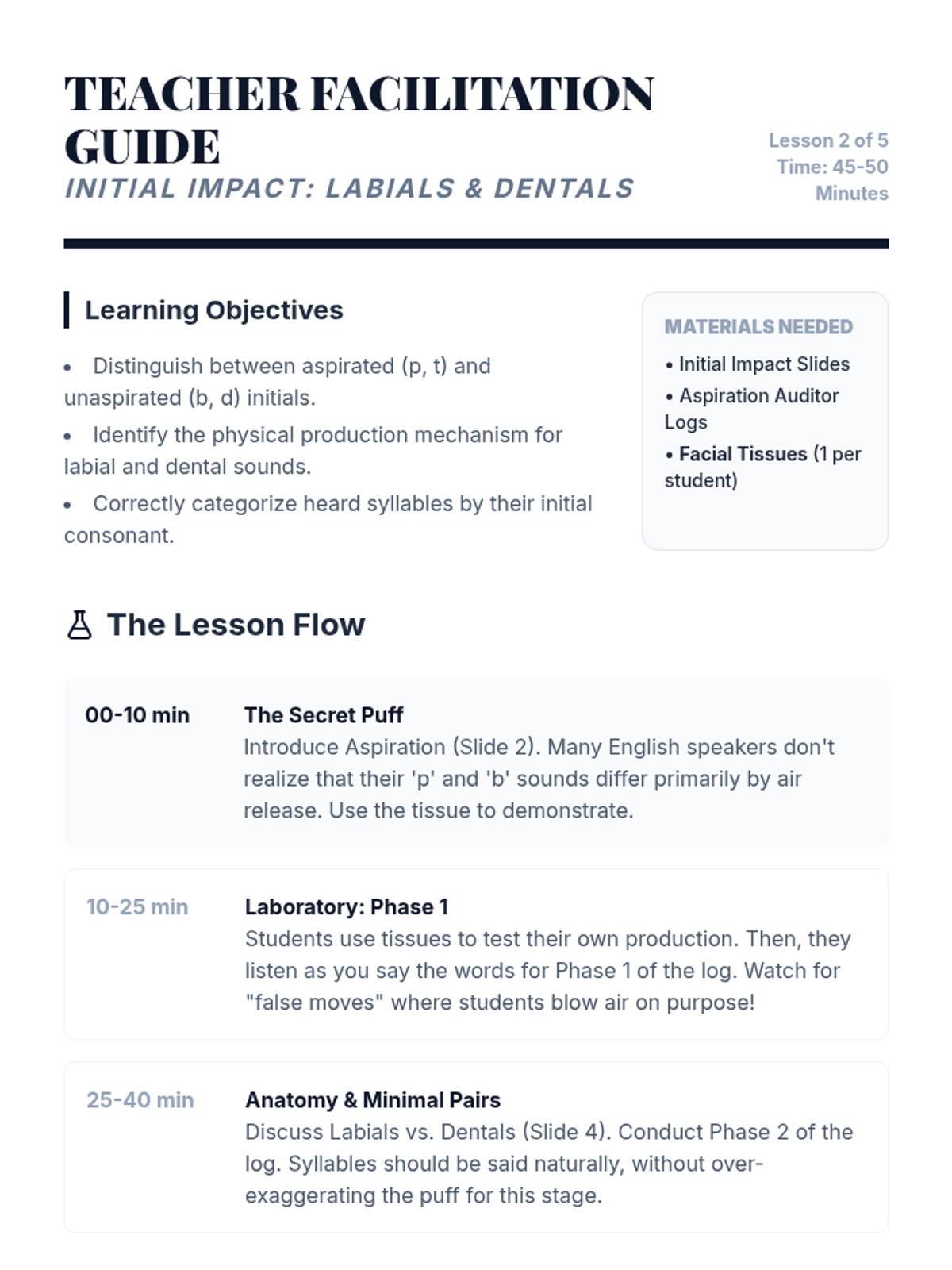
Focuses on the auditory distinction between aspirated and non-aspirated initials (b/p, d/t) and labial/dental sounds (m/f). Includes the 'Paper Test' for physical verification of aspiration.
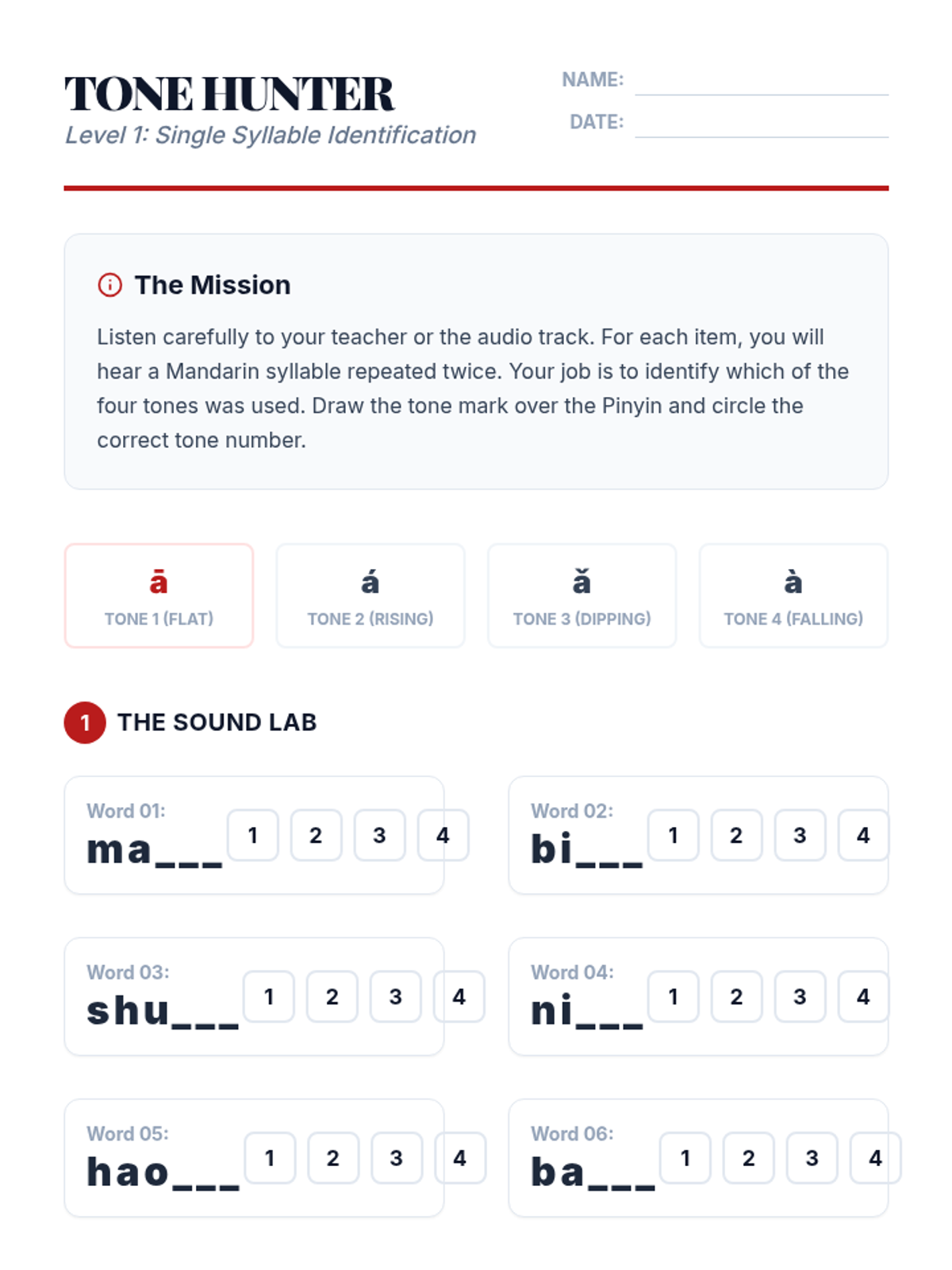
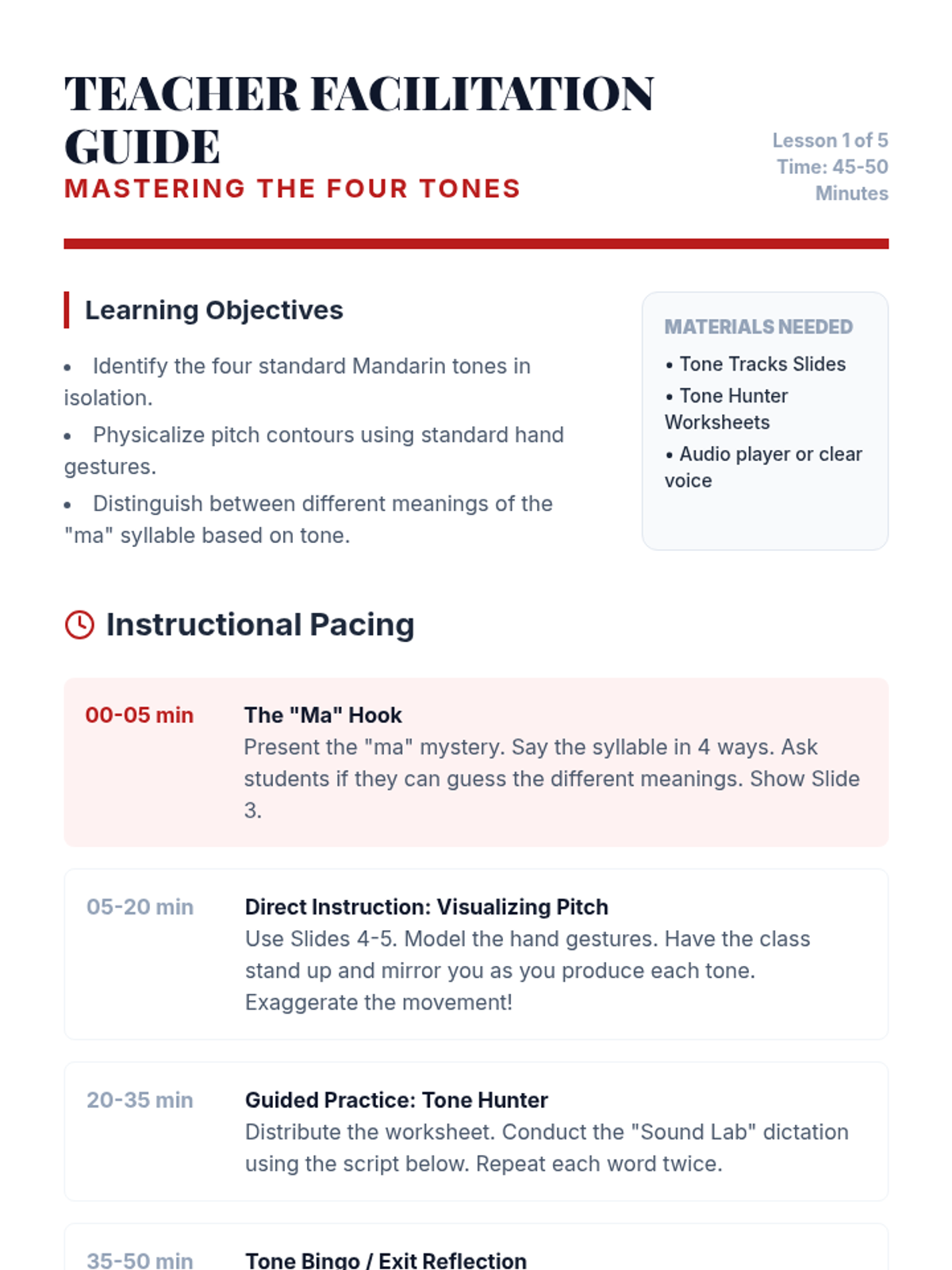
Students learn to identify and physically mirror the four Mandarin tones using auditory samples and hand gestures. The lesson focuses on the 'ma' syllable to demonstrate how pitch changes meaning.
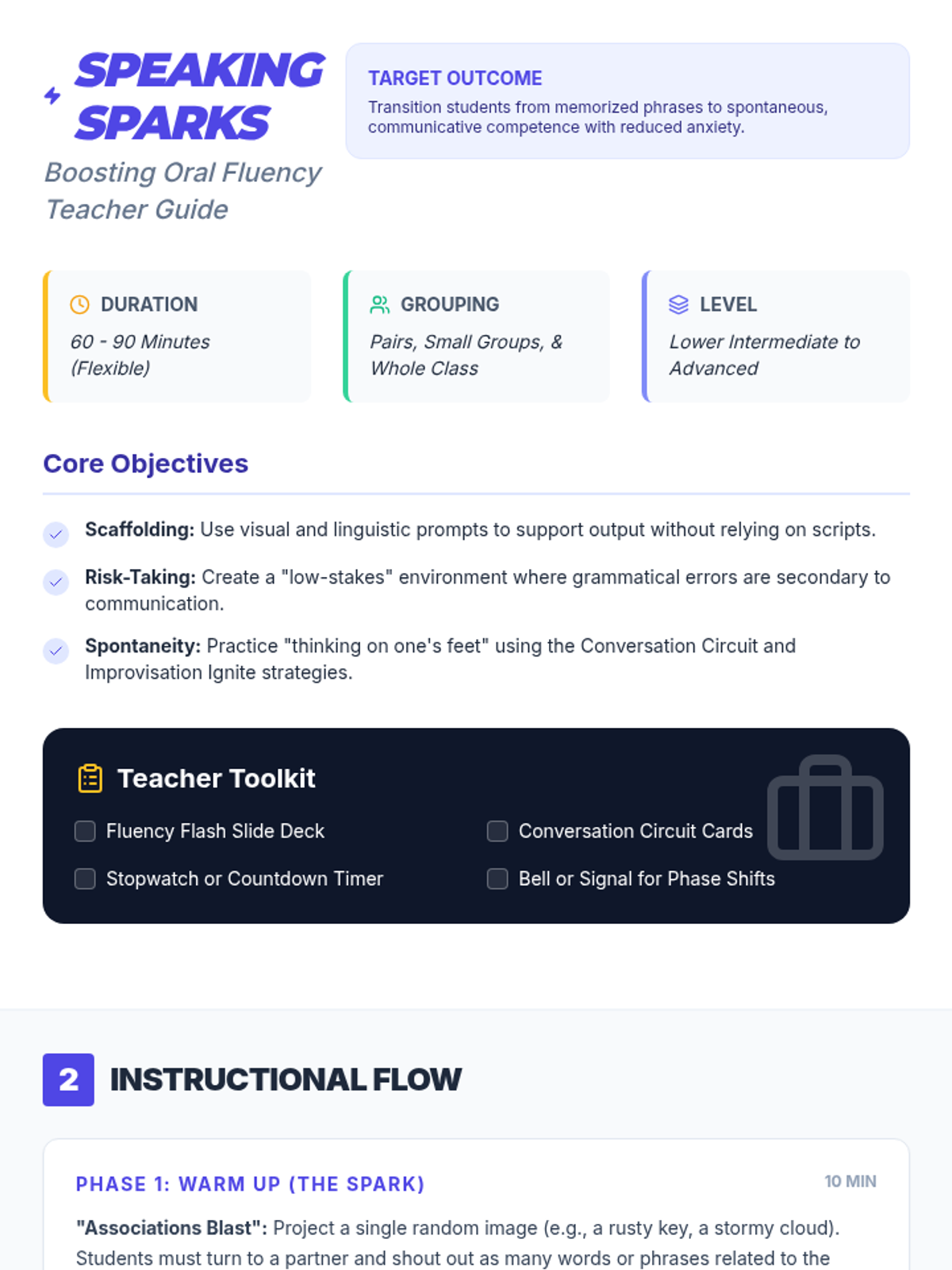
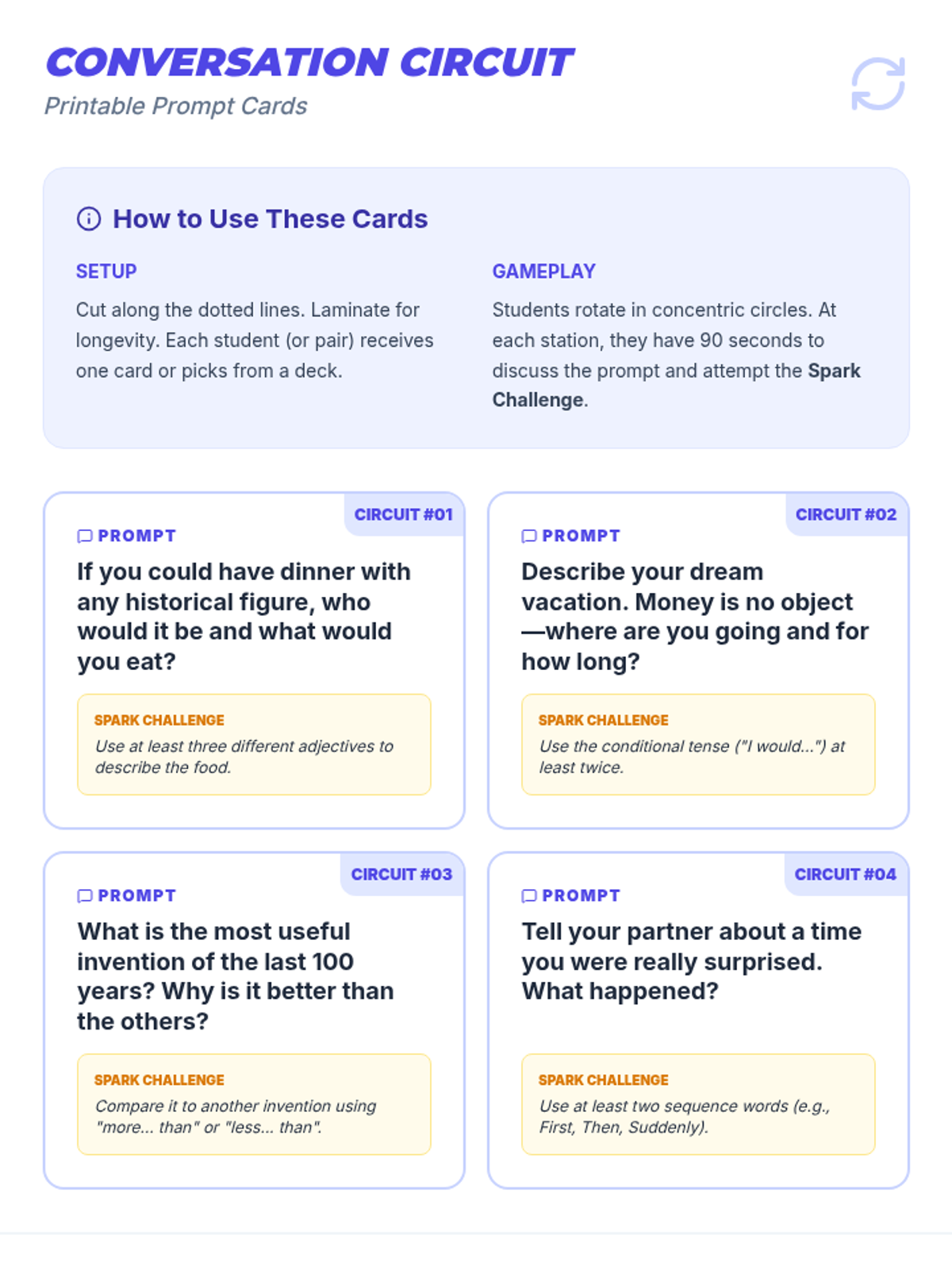
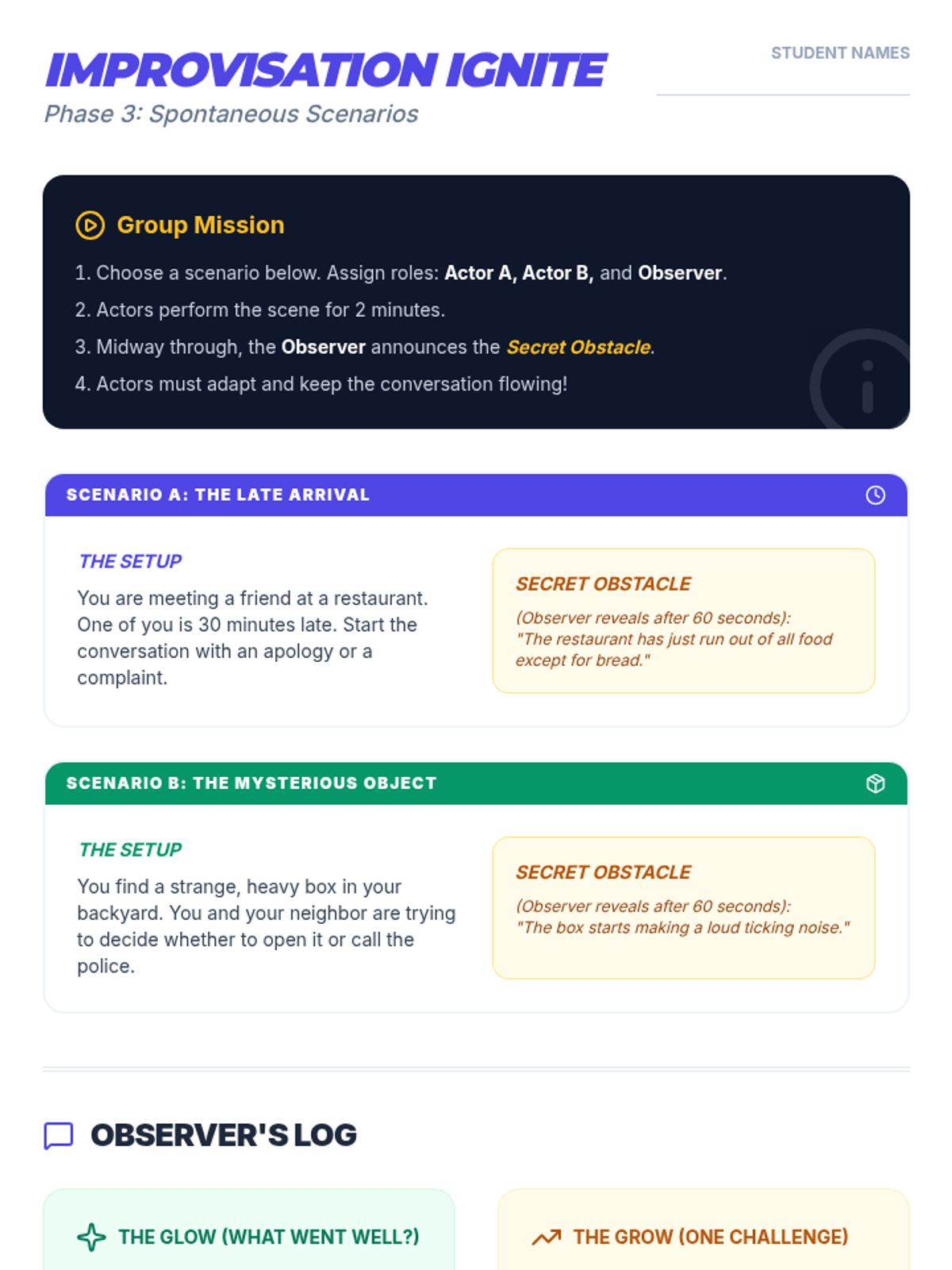
A comprehensive toolkit for foreign language teachers to bridge the gap between rote memorization and spontaneous oral communication through interactive activities and low-stakes scaffolding.
This lesson challenges students to listen to strings of individual digits, mimicking phone numbers. This builds concentration and the ability to process sequential auditory information without pausing.
A culminating marketplace simulation where students filter information from a chaotic audio environment to identify items, prices, and vendor requests.
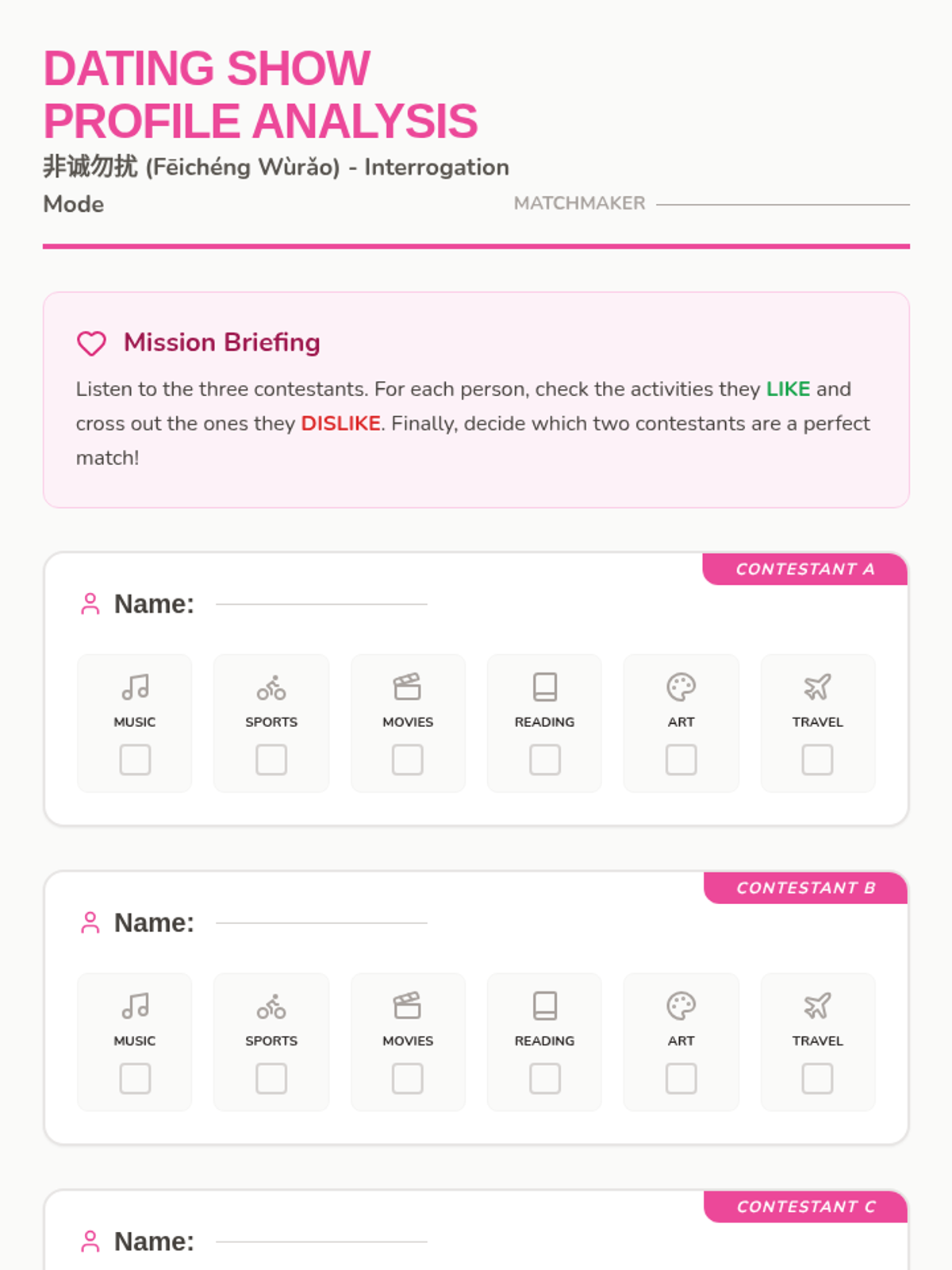
Students identify opinions and preferences using 'xihuan', analyzing interviews and character profiles to categorize likes and dislikes.
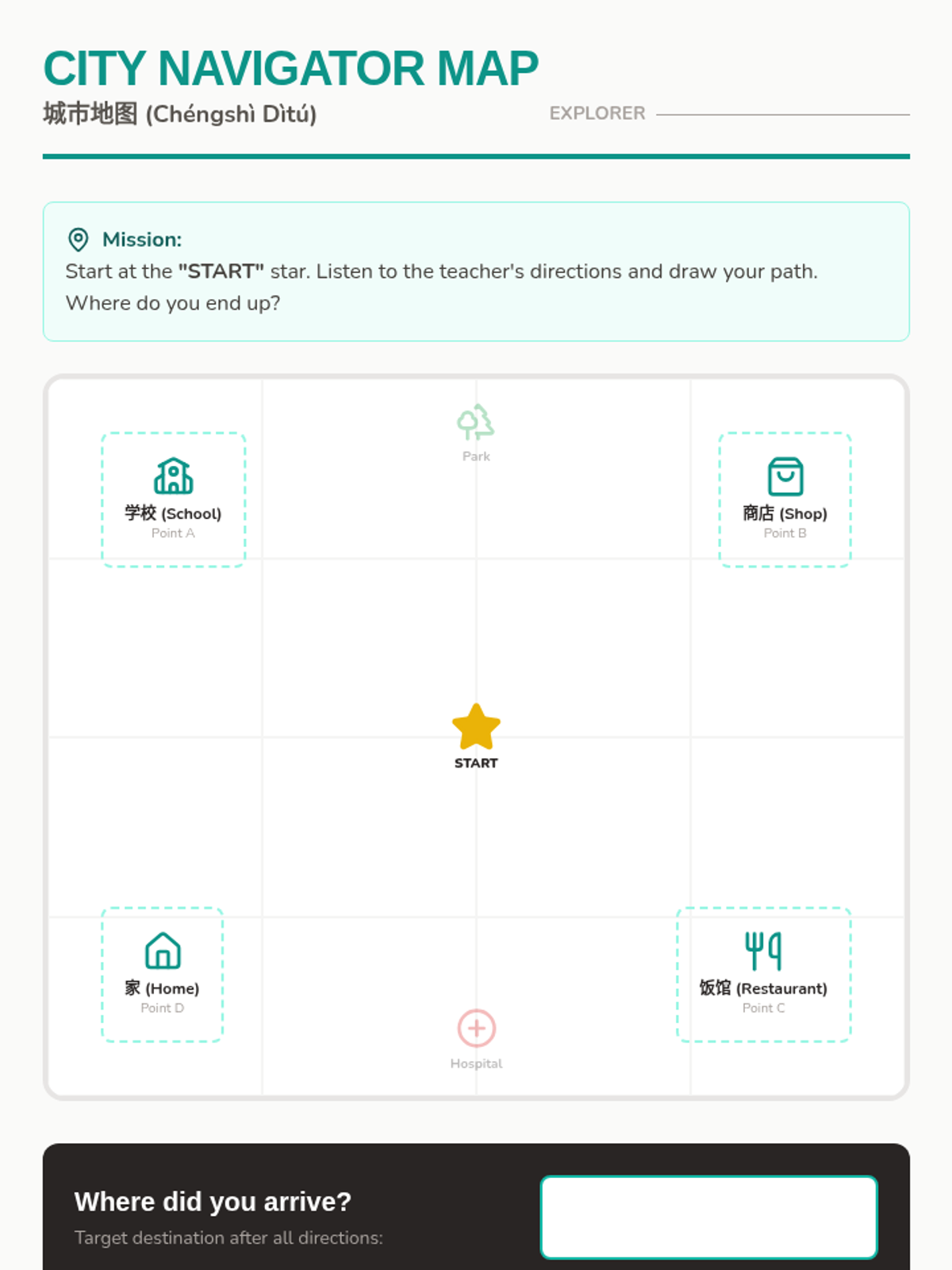
Focusing on spatial words and navigation, students listen to directions to trace routes on maps and find specific destinations.
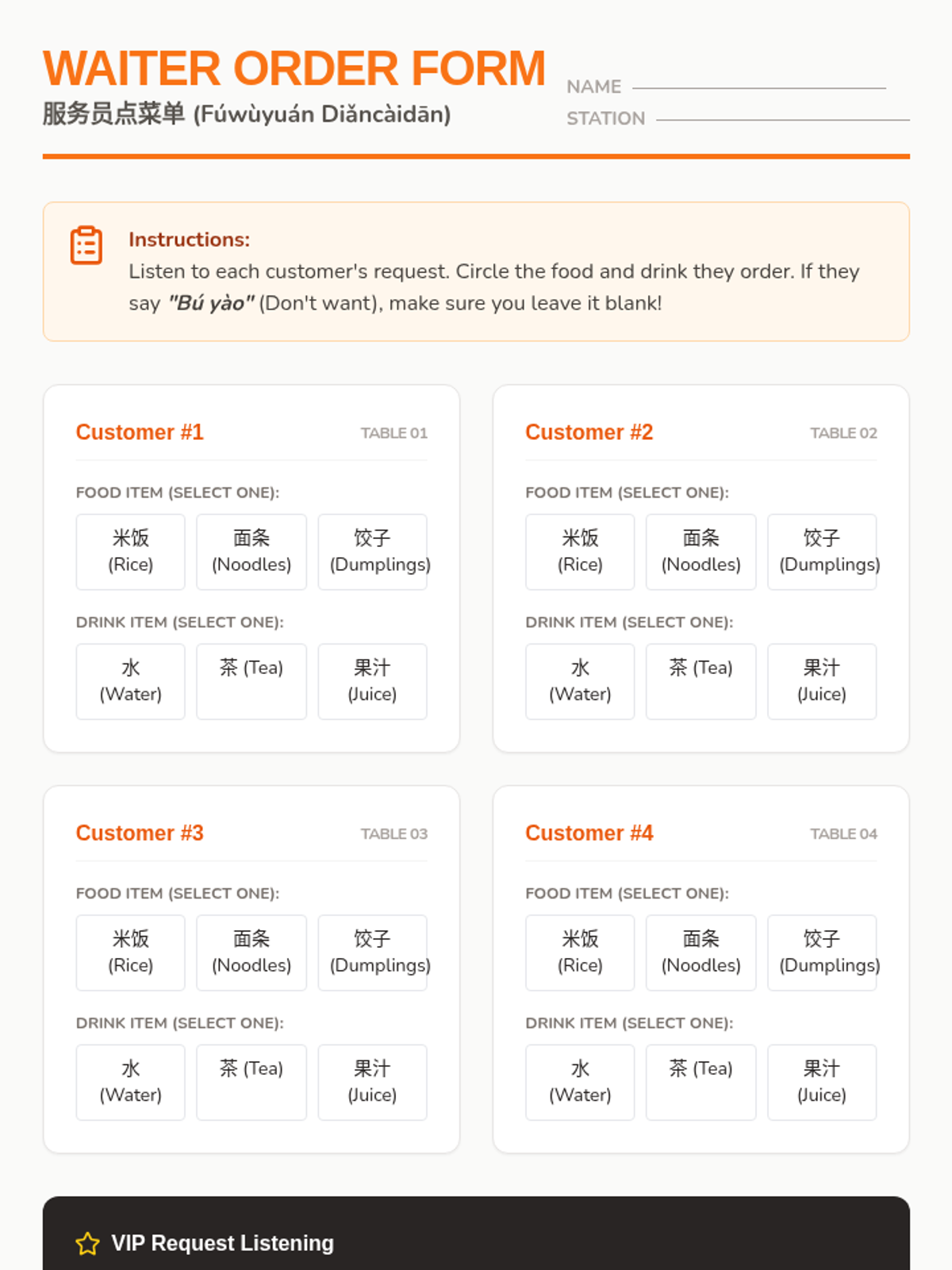
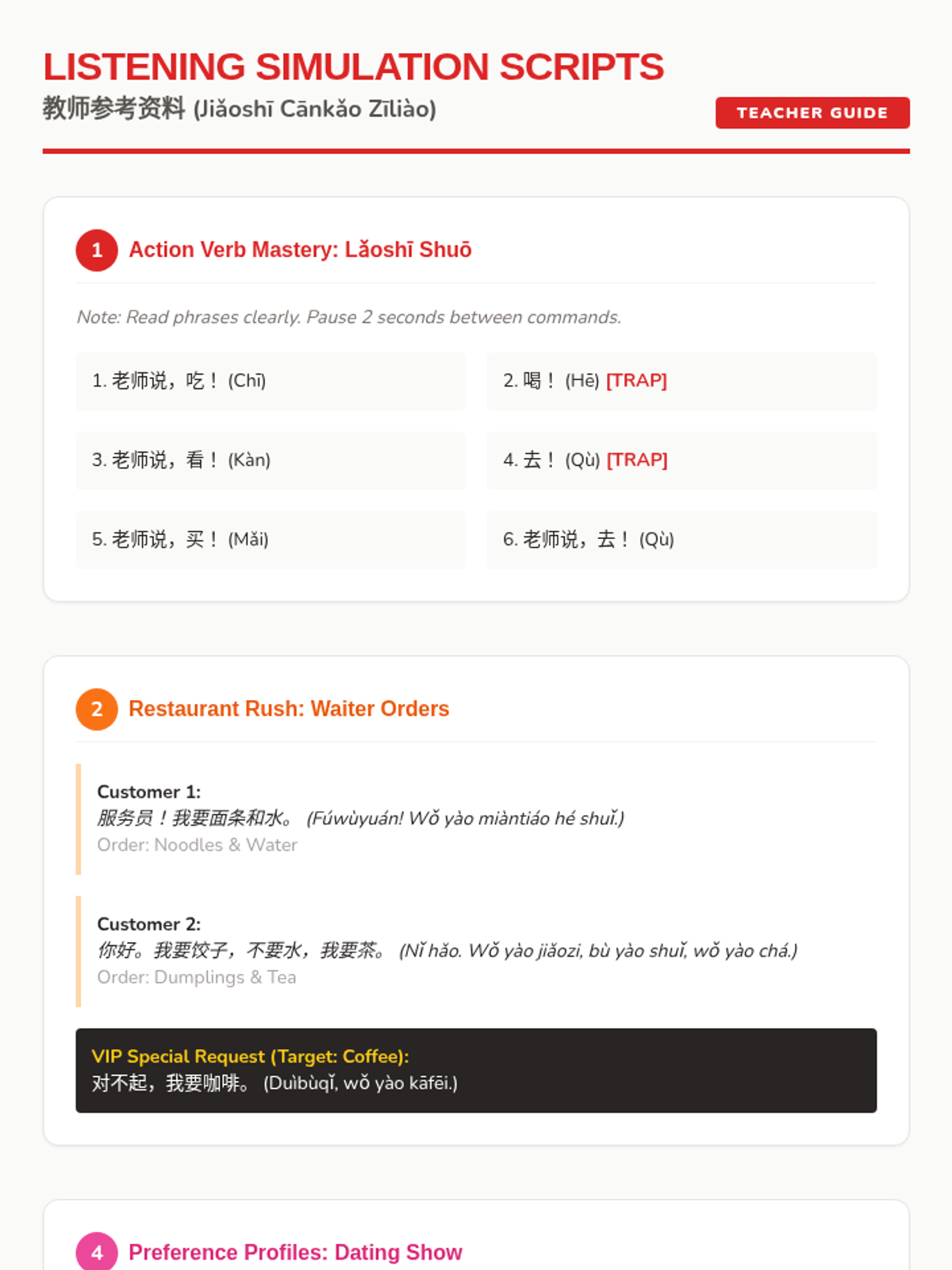
Students listen to restaurant dialogues and 'I want' statements to accurately capture customer requests in a simulated dining environment.
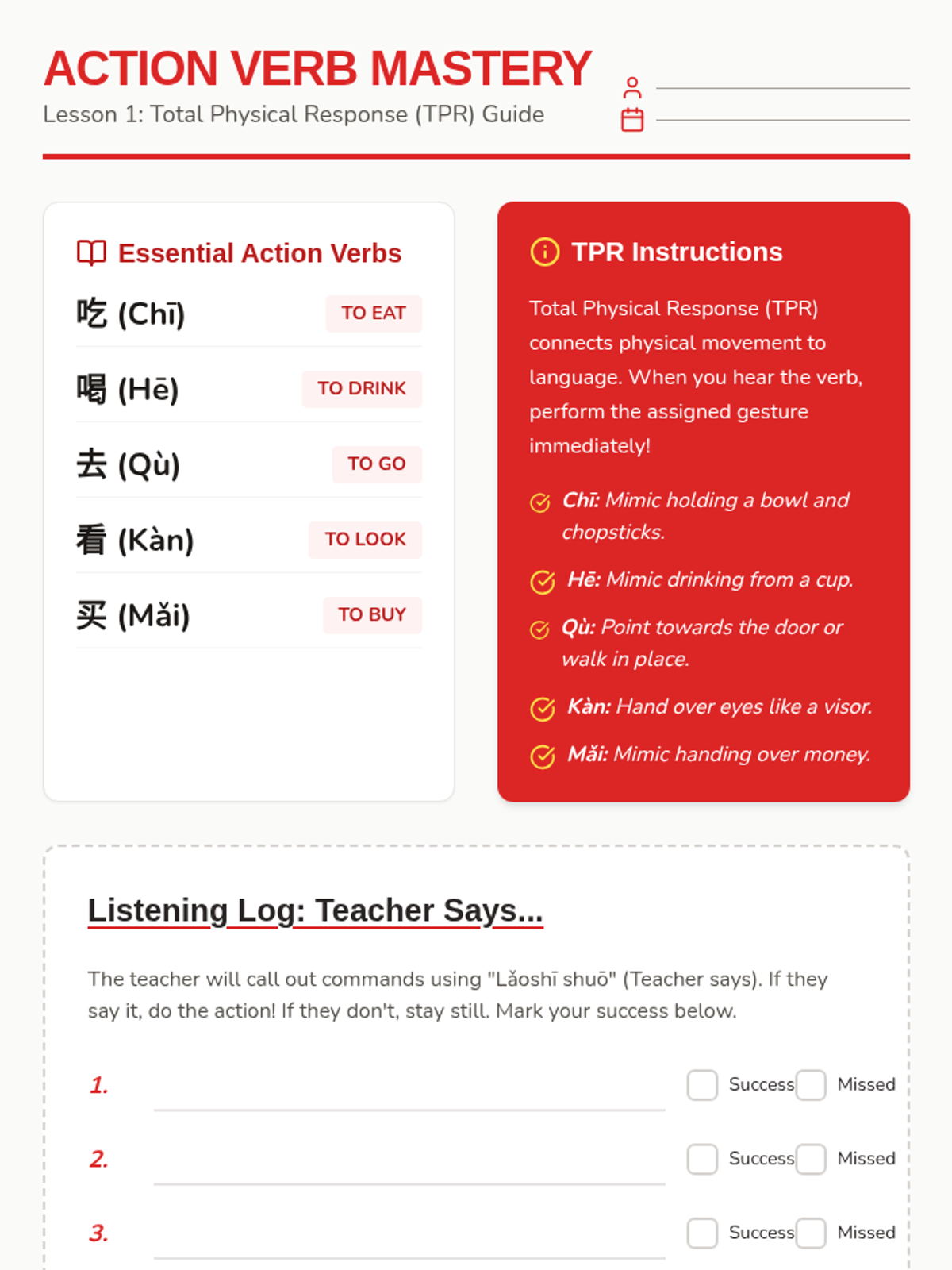
Students focus on high-frequency verbs (eat, drink, go, look, buy) using Total Physical Response (TPR) to cement meaning through kinesthetic response.
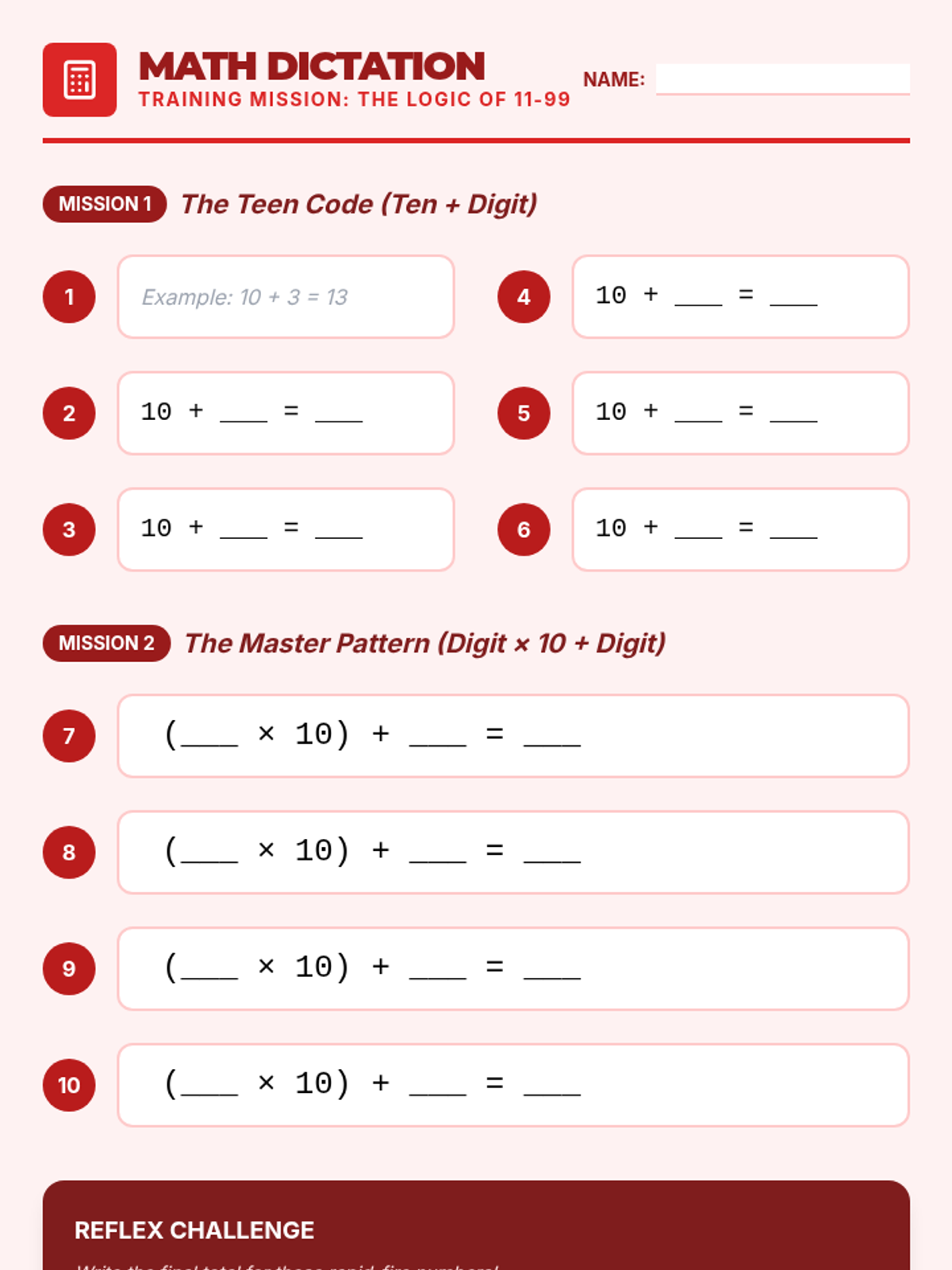
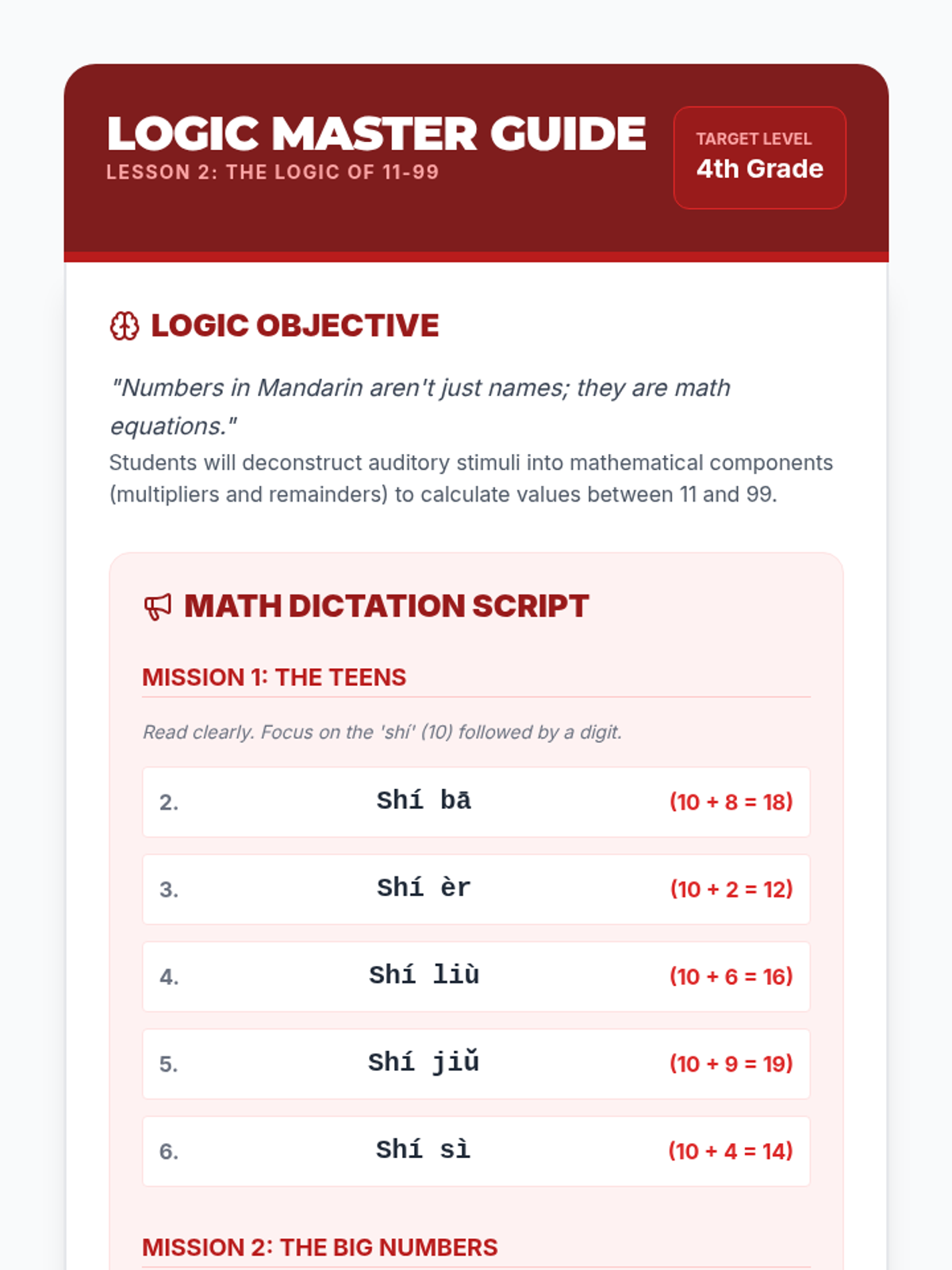
Students learn the 'math' of Chinese numbering (ten-one for 11, two-ten for 20). They listen to double-digit numbers and break them down into their component parts to identify the total value.
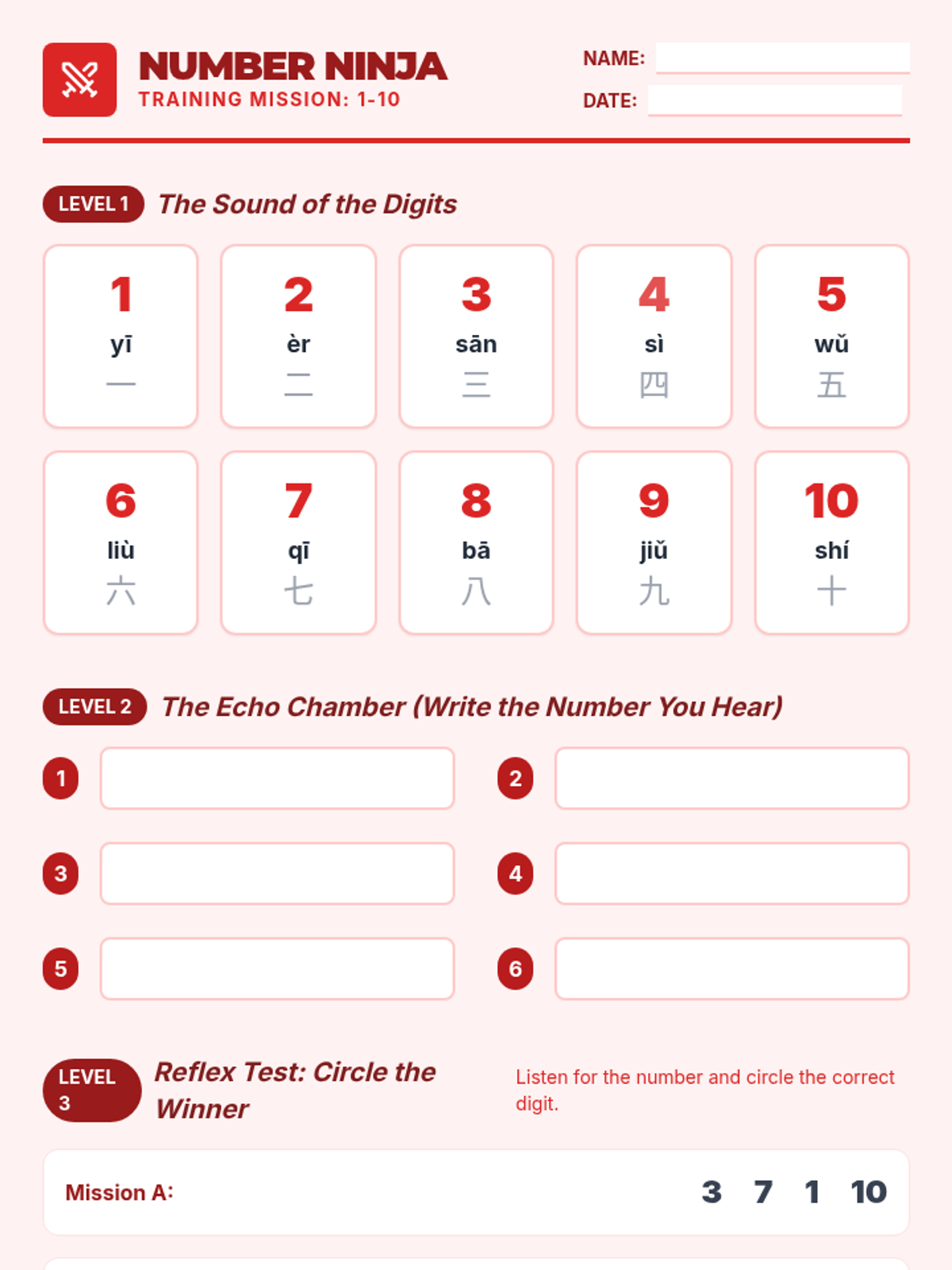
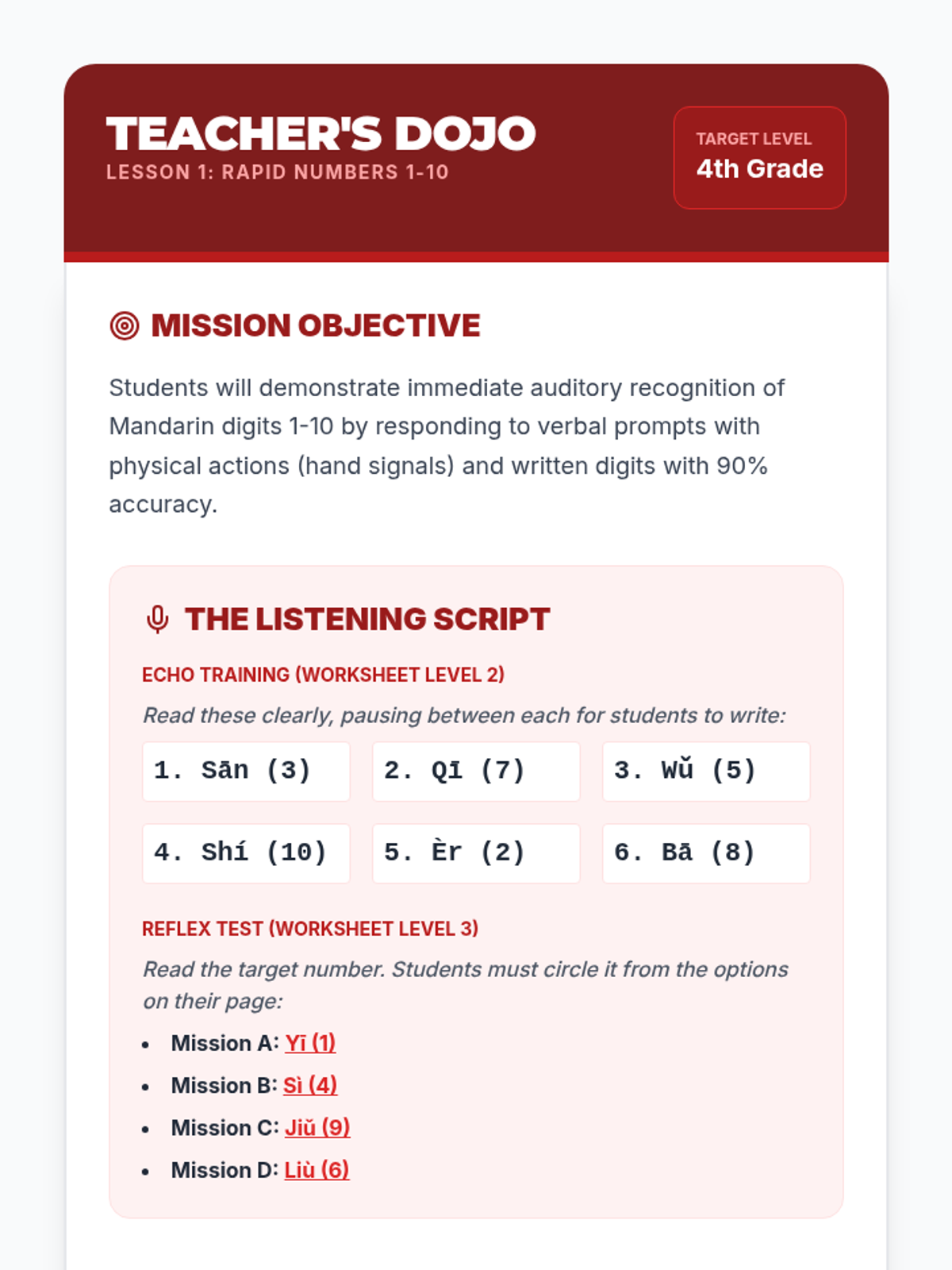
Students build reflexive listening skills for Mandarin digits 1-10 through rhythmic chanting and competitive games.
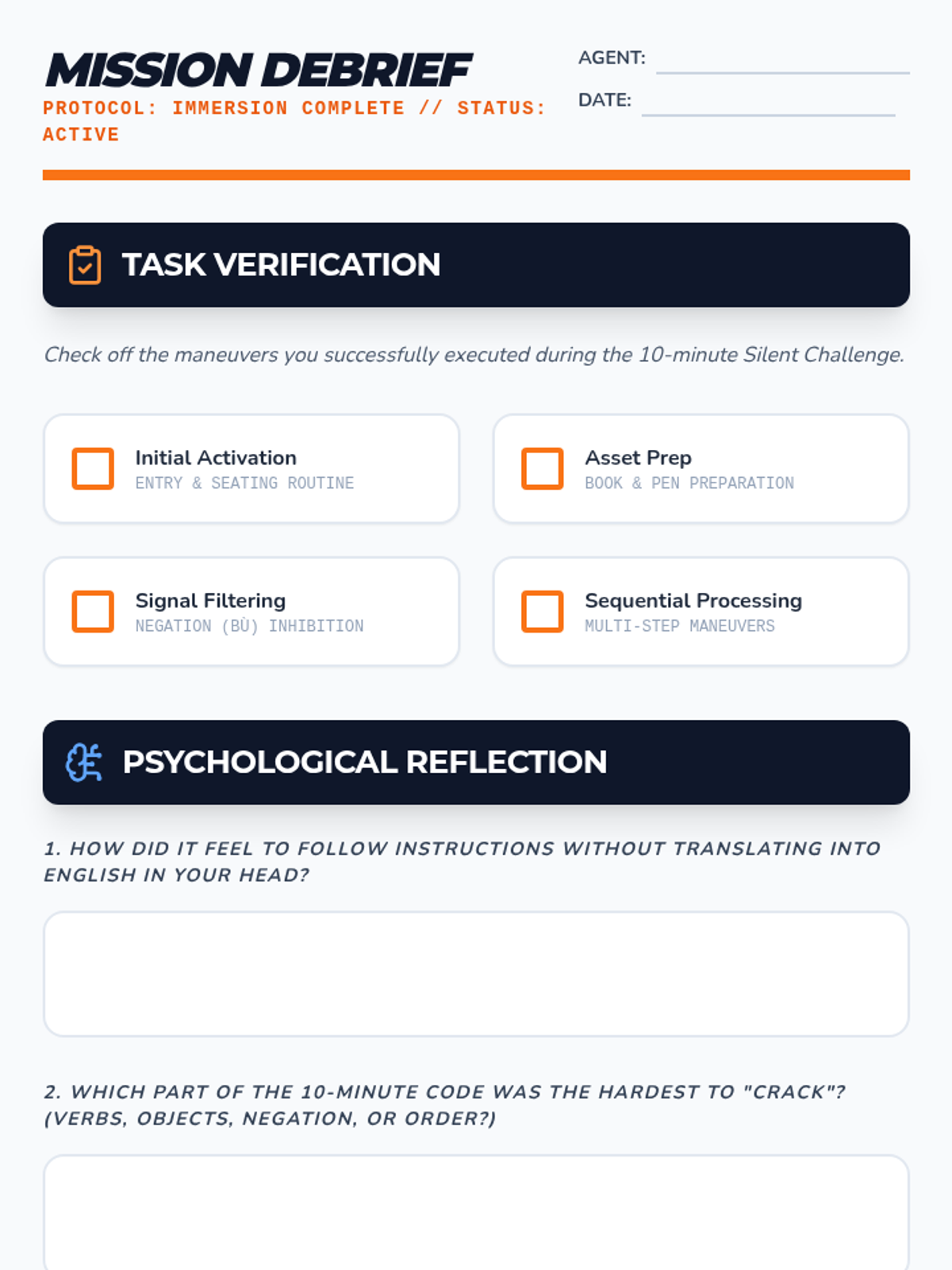
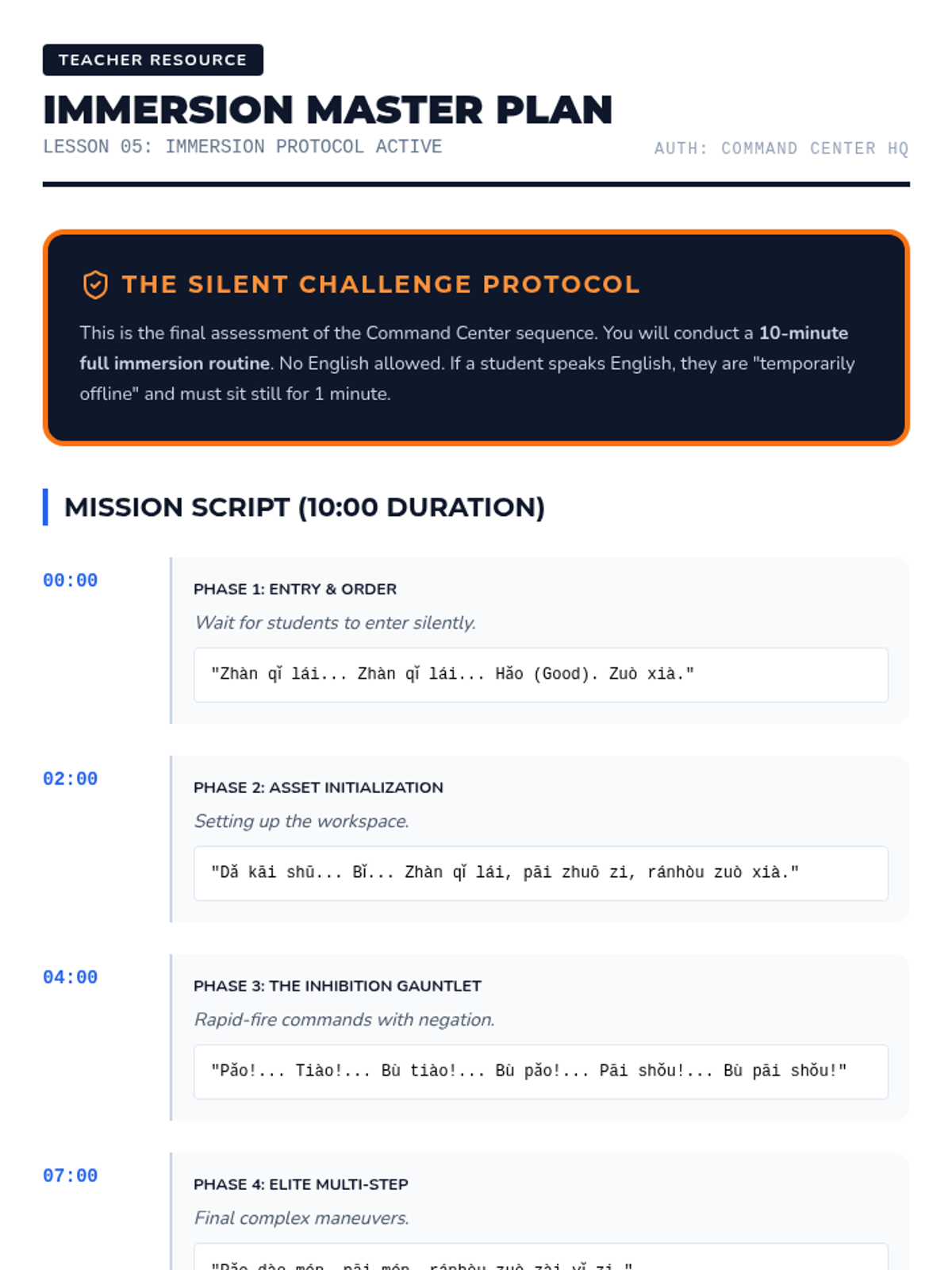
A full immersion simulation where students follow a continuous routine in Mandarin to demonstrate functional comprehension.
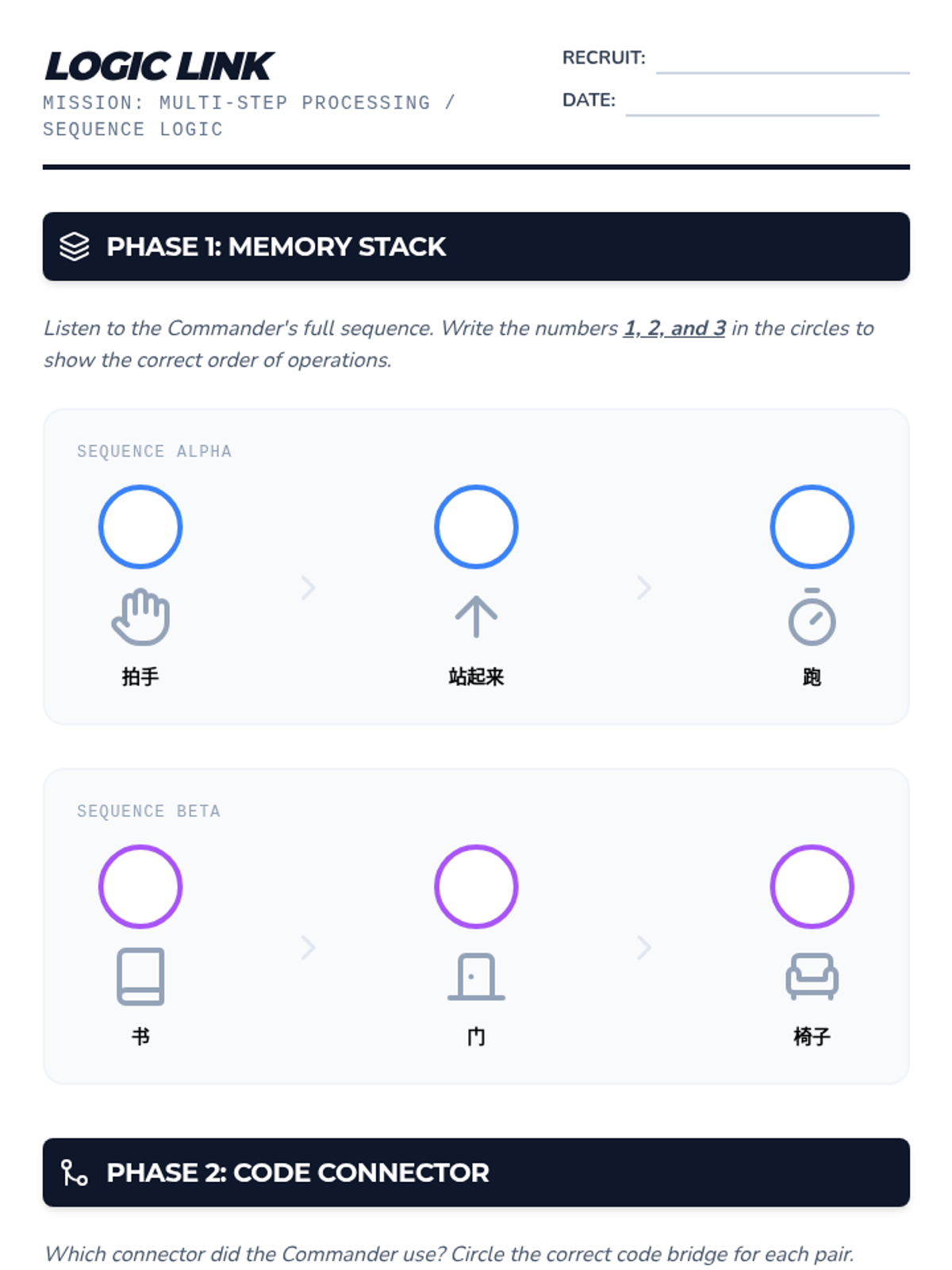
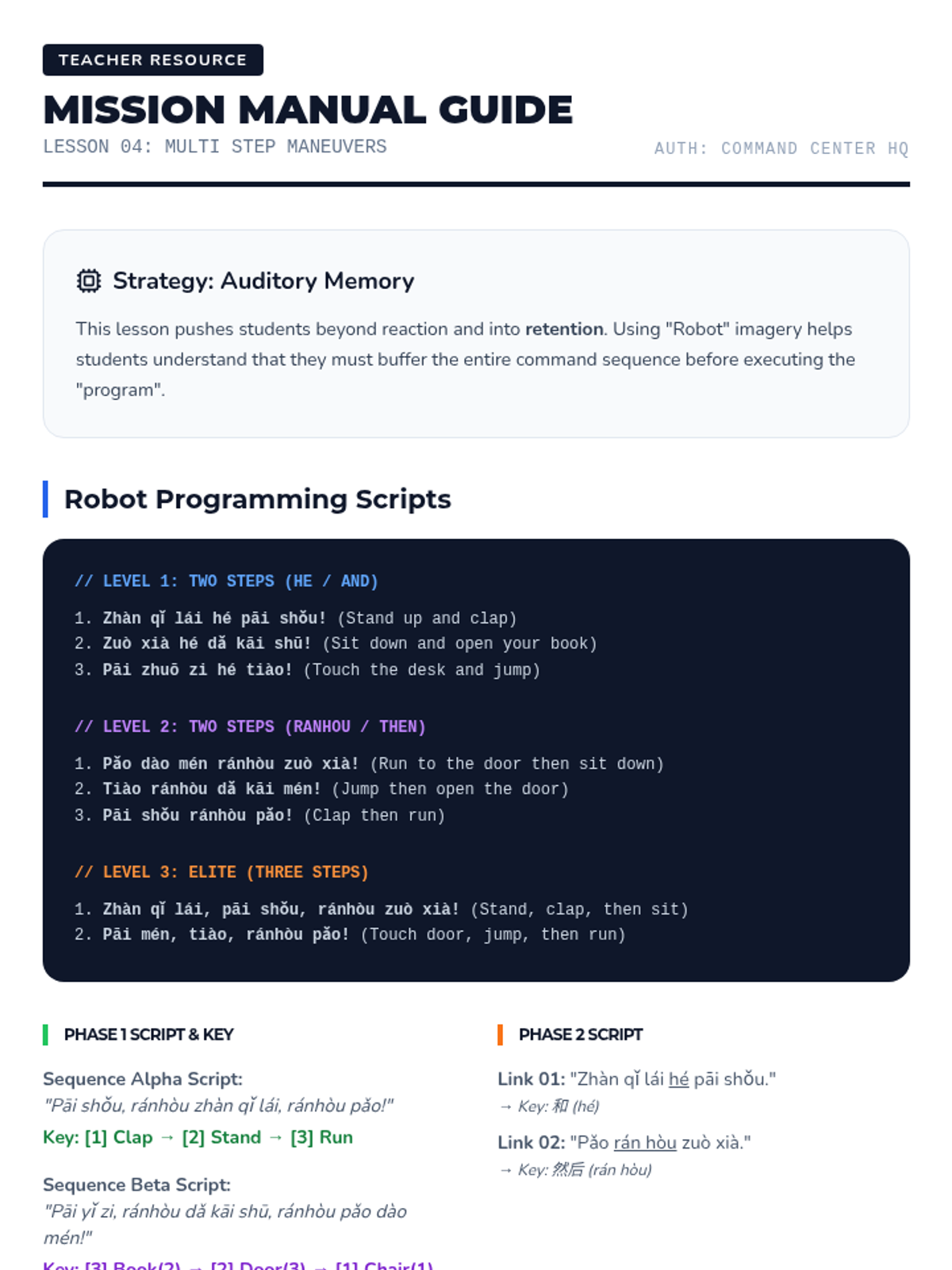
Challanges student memory and processing by introducing multi-step commands using sequence markers.
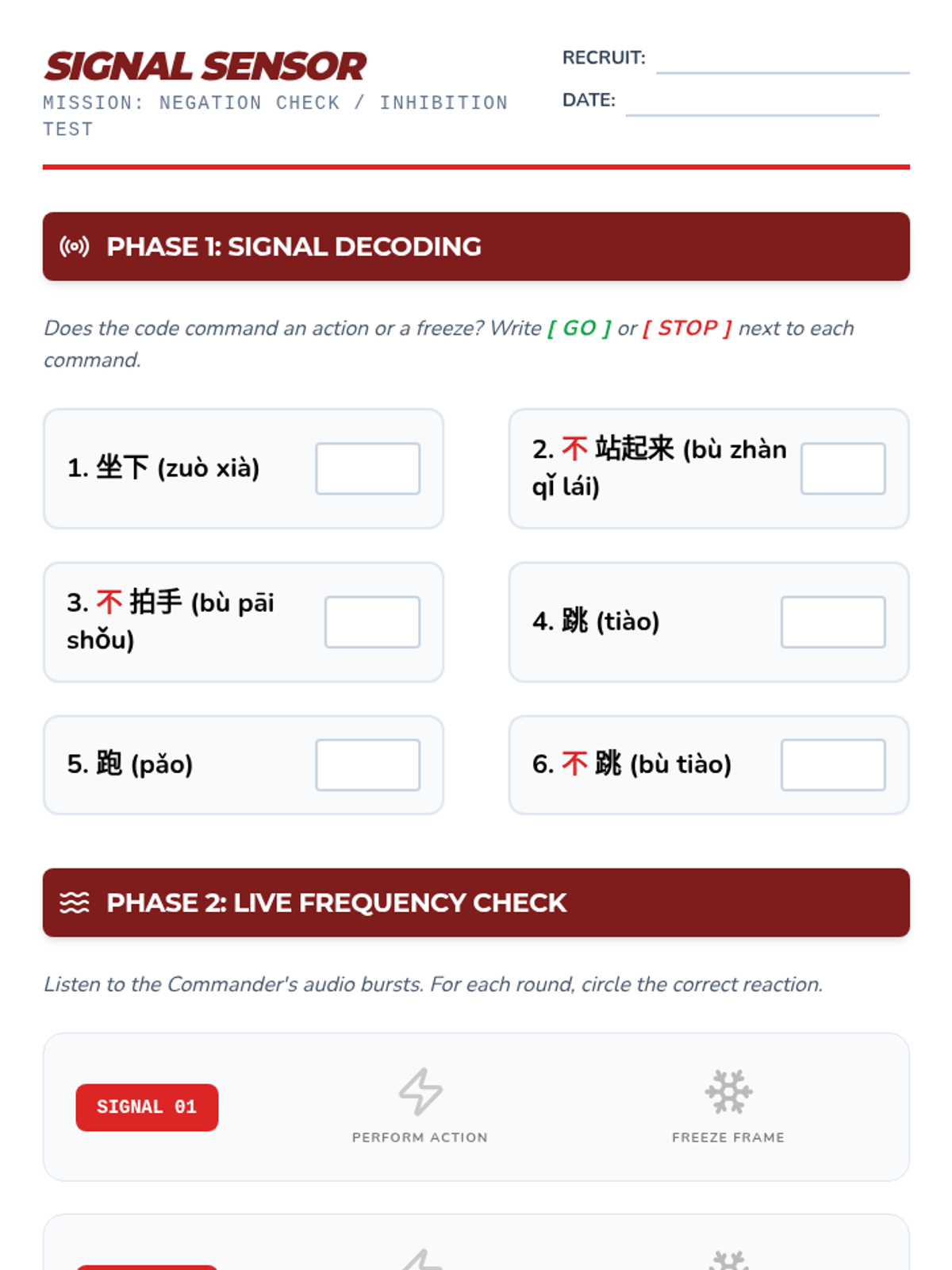
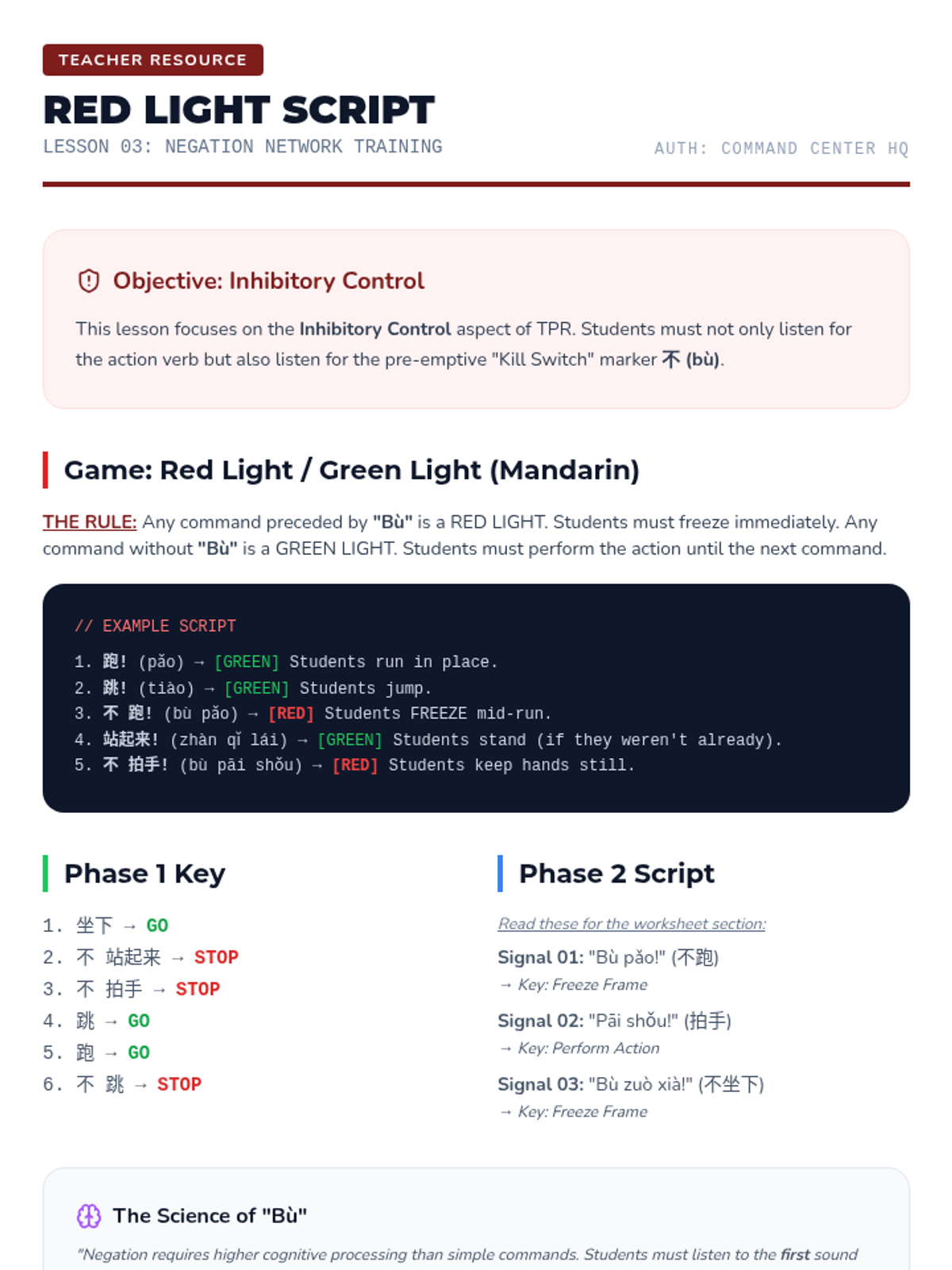
Introduces the concept of negation ('bu') in commands, requiring students to inhibit actions based on Mandarin auditory cues.
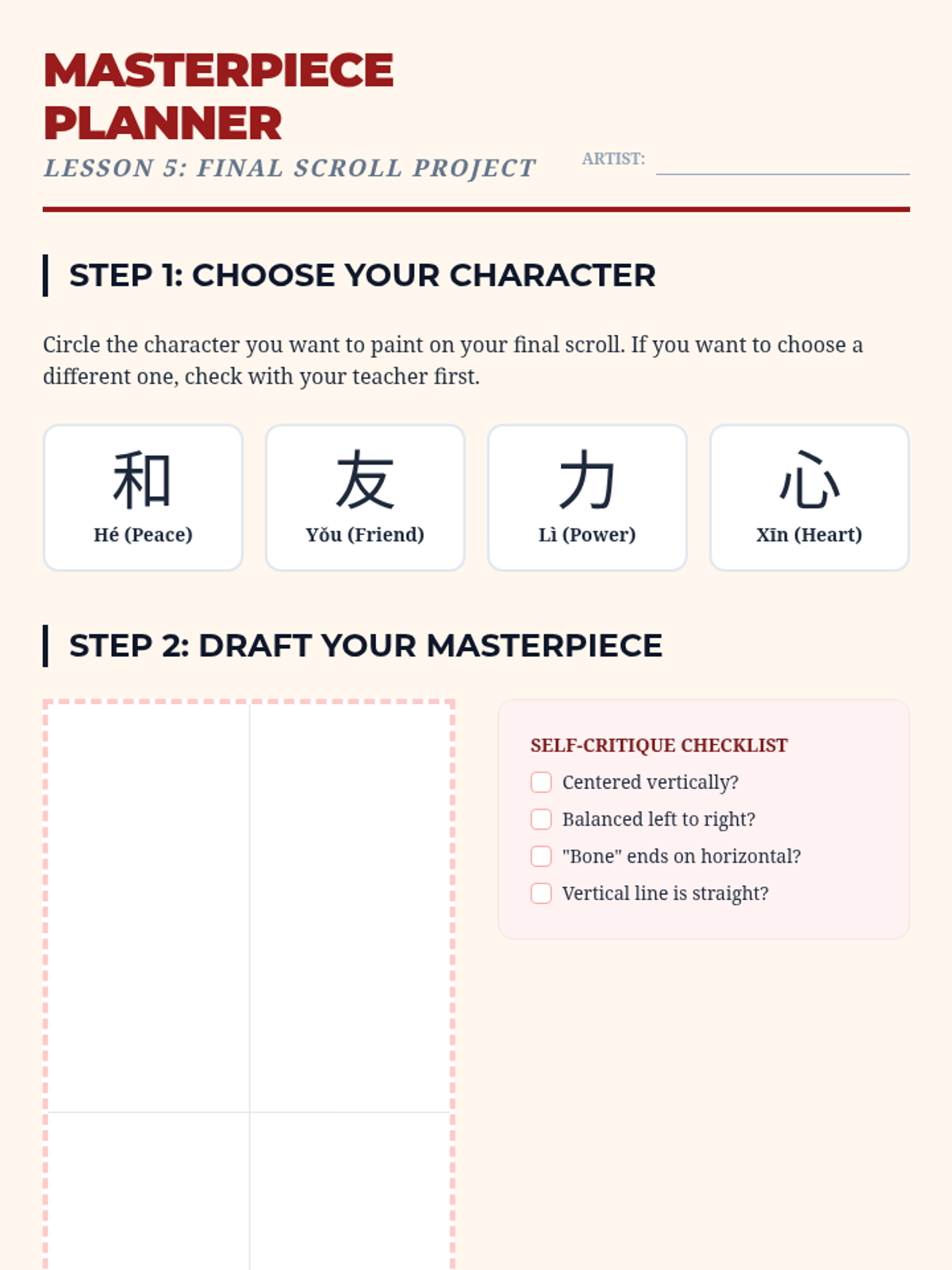
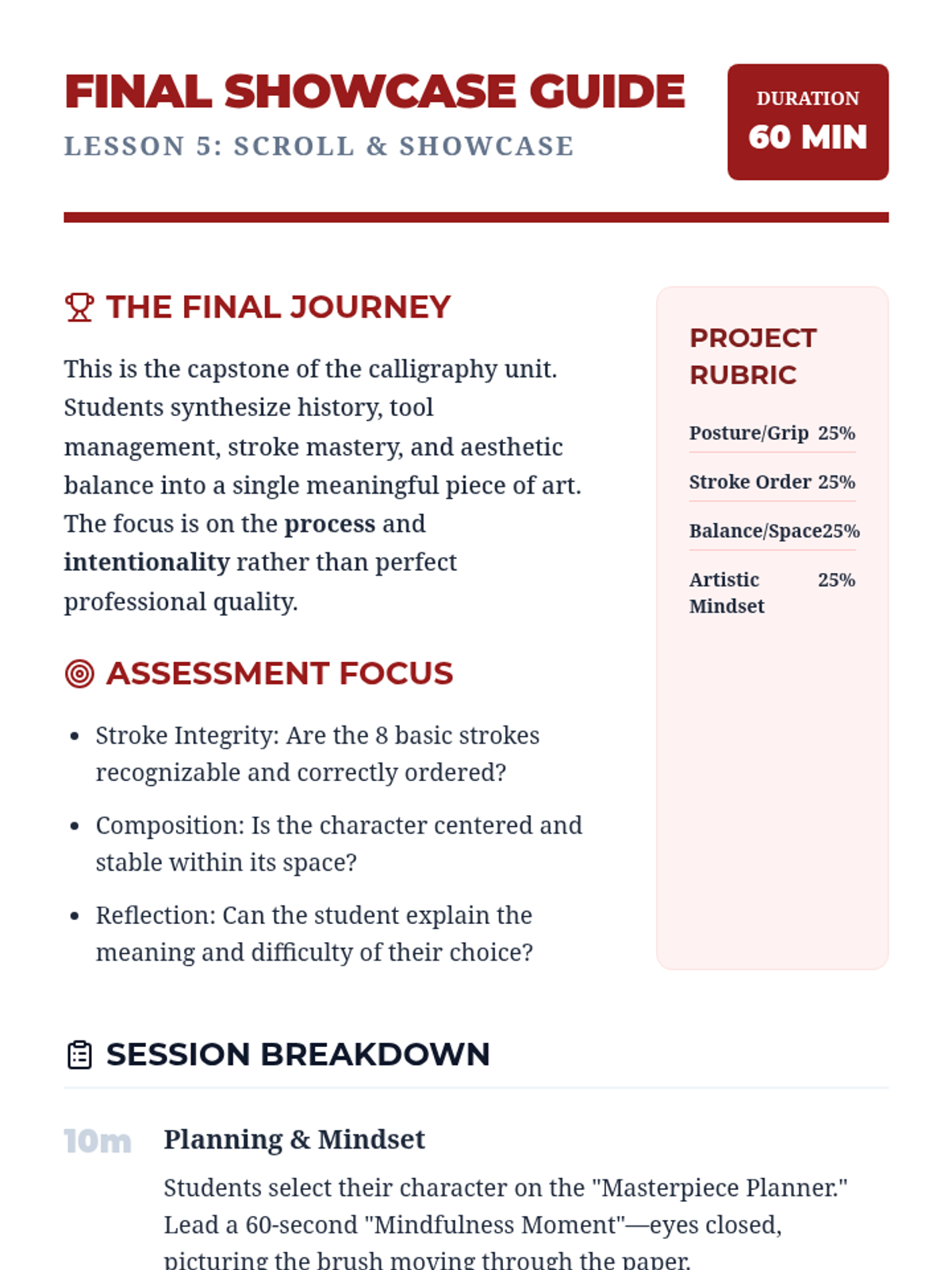
Apply all learned skills to create a final calligraphic scroll of a meaningful character, followed by a classroom gallery showcase.
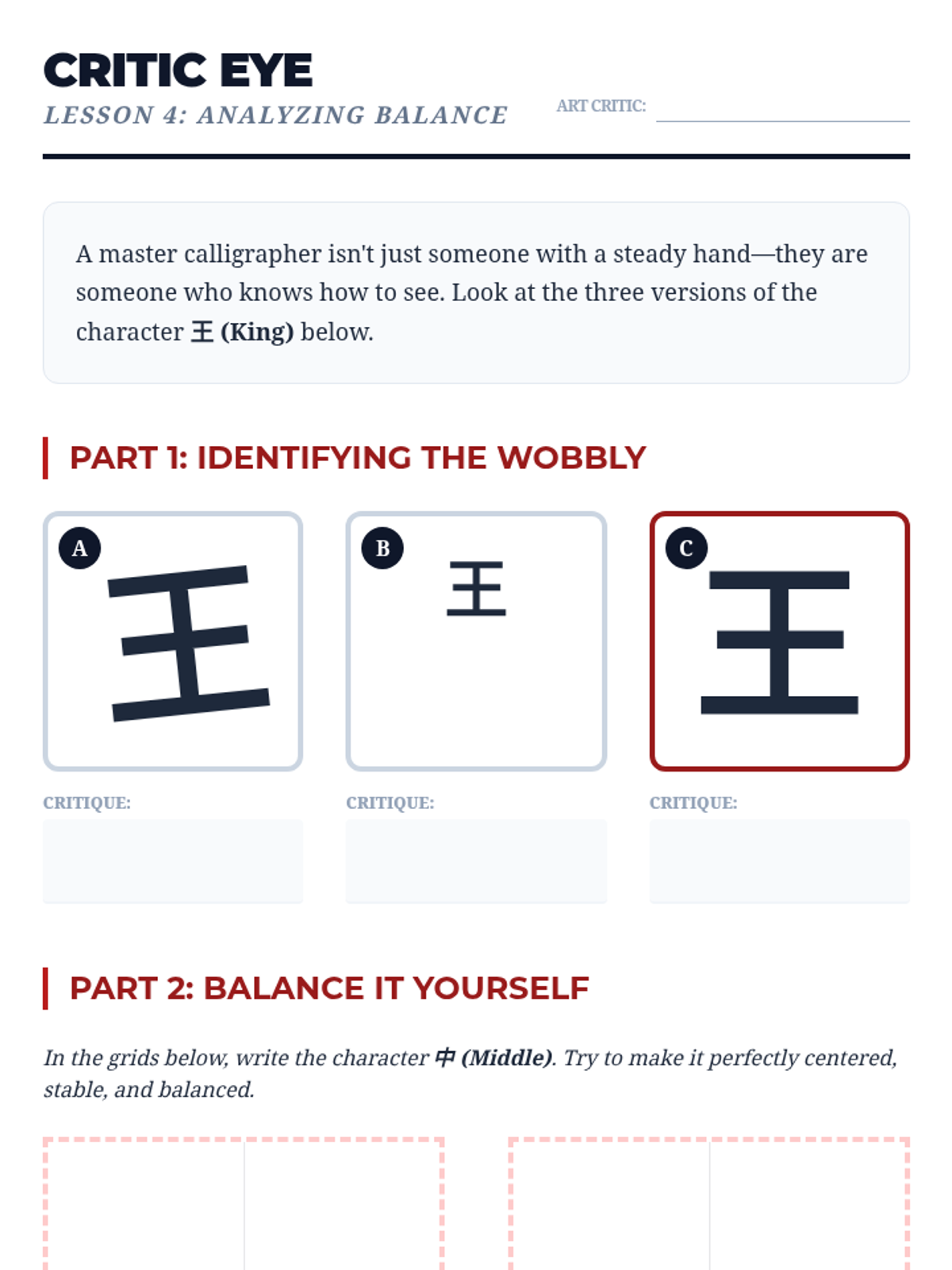
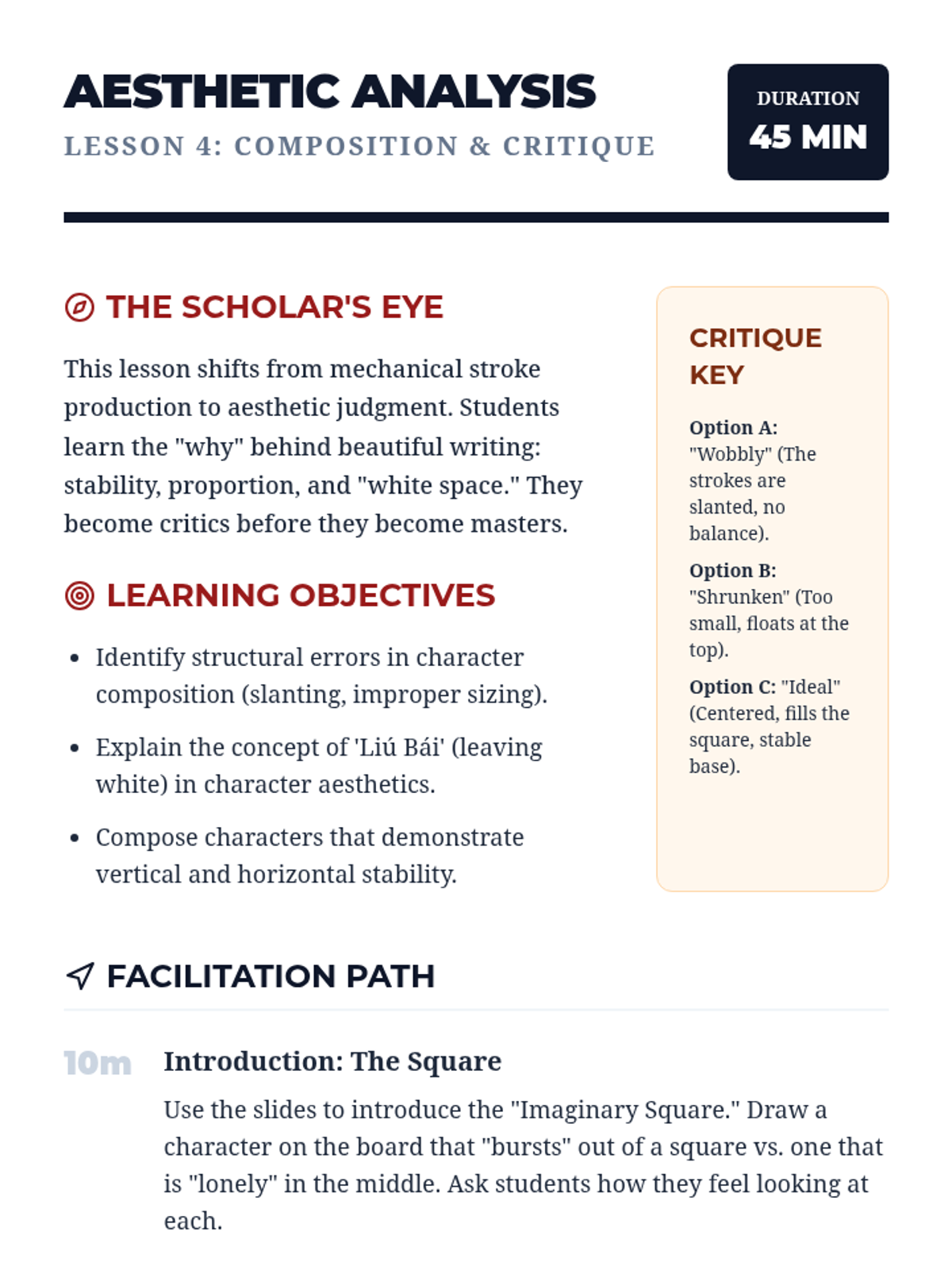
Analyze character structure, balance, and spacing within the imaginary square, moving from individual strokes to cohesive, aesthetic character composition.
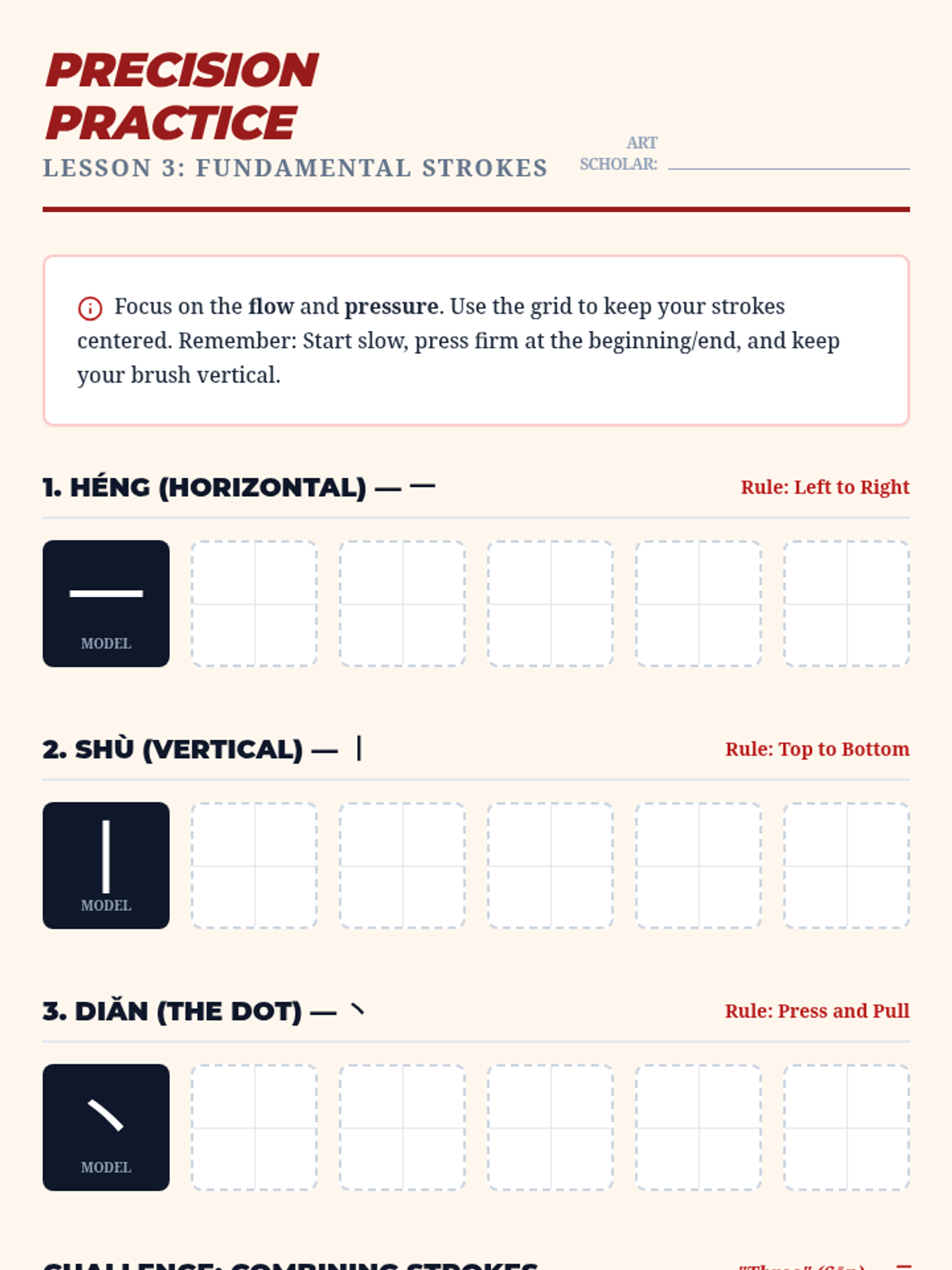
Learn the eight fundamental strokes of Chinese calligraphy and the essential rules of stroke order to build a foundation for character construction.
Introduction to the 'Four Treasures of the Study'—brush, ink, paper, and inkstone—focusing on material respect, proper grip, and calligraphic posture.
Explore the ancient roots of Chinese writing by investigating Oracle Bone script and how pictographs evolved into modern characters through visual logic and history.
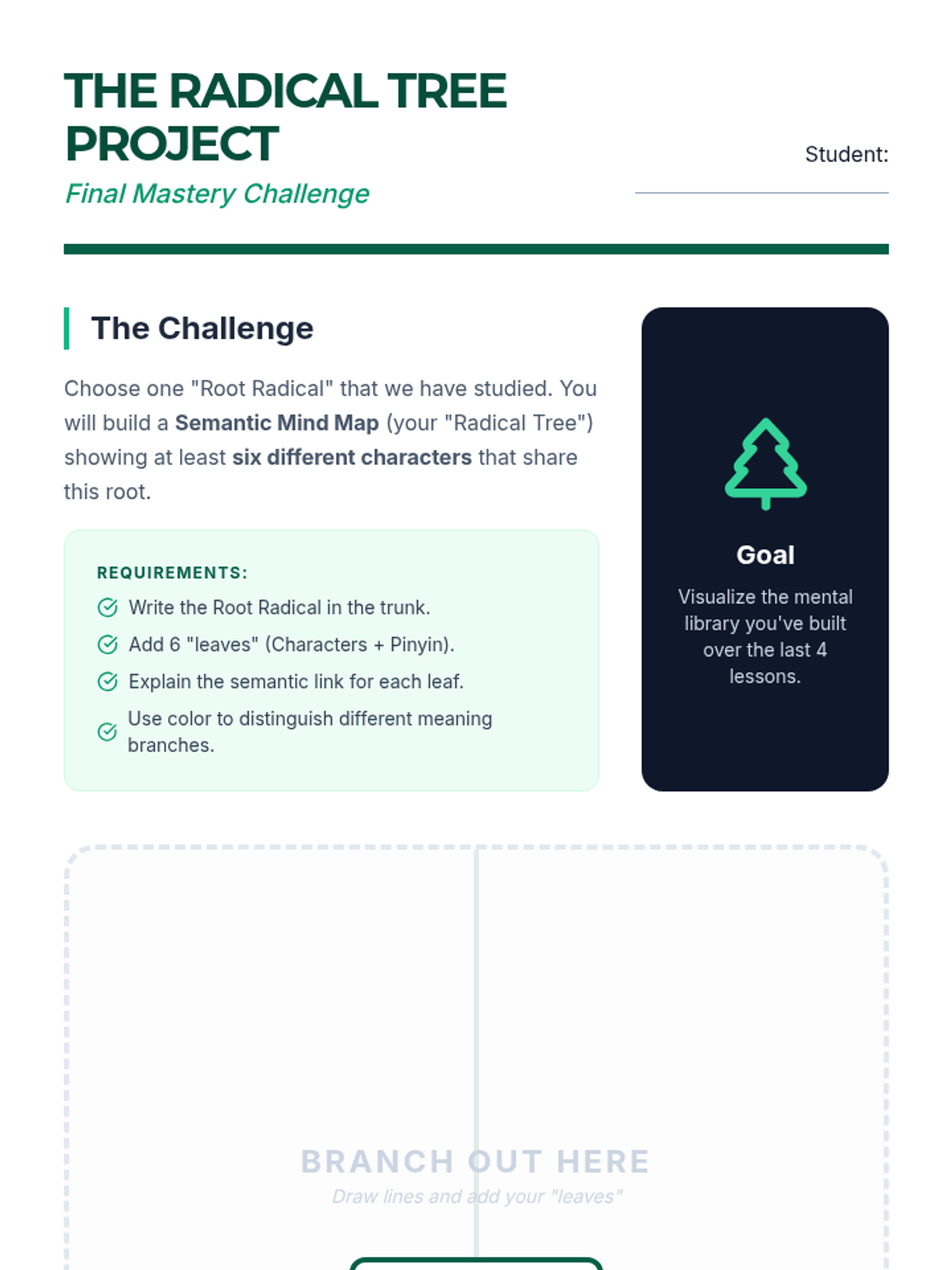
The capstone lesson where students synthesize their knowledge by creating semantic mind maps (Radical Trees) and explaining the logic behind character construction.
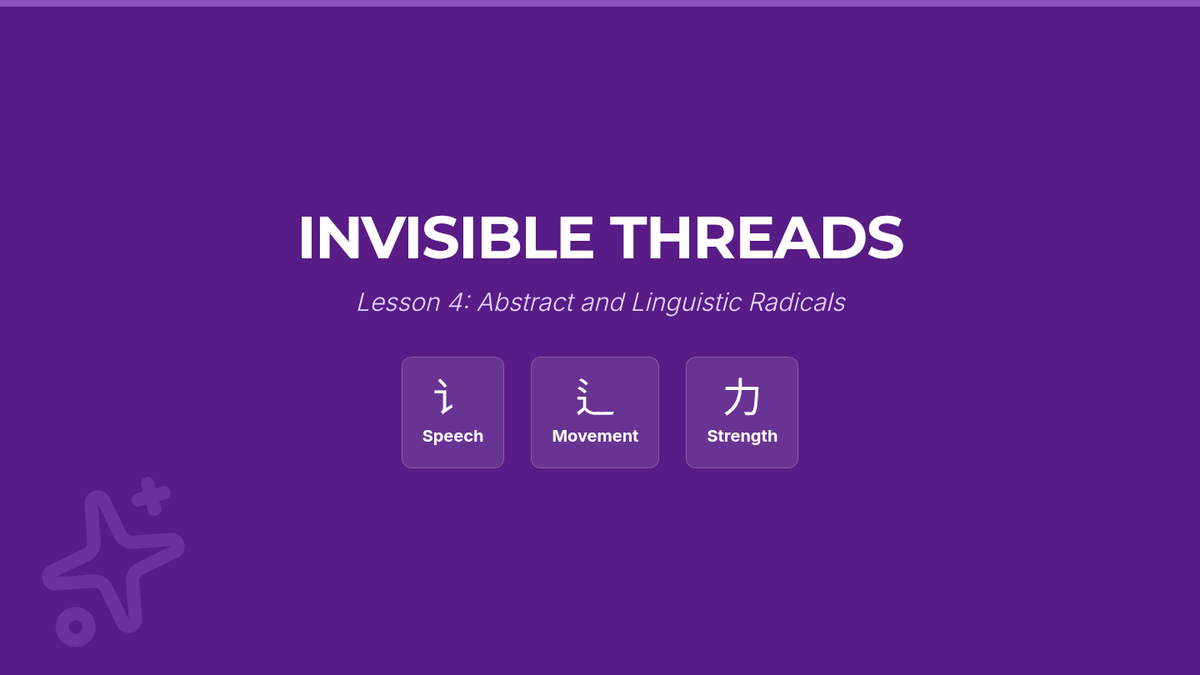
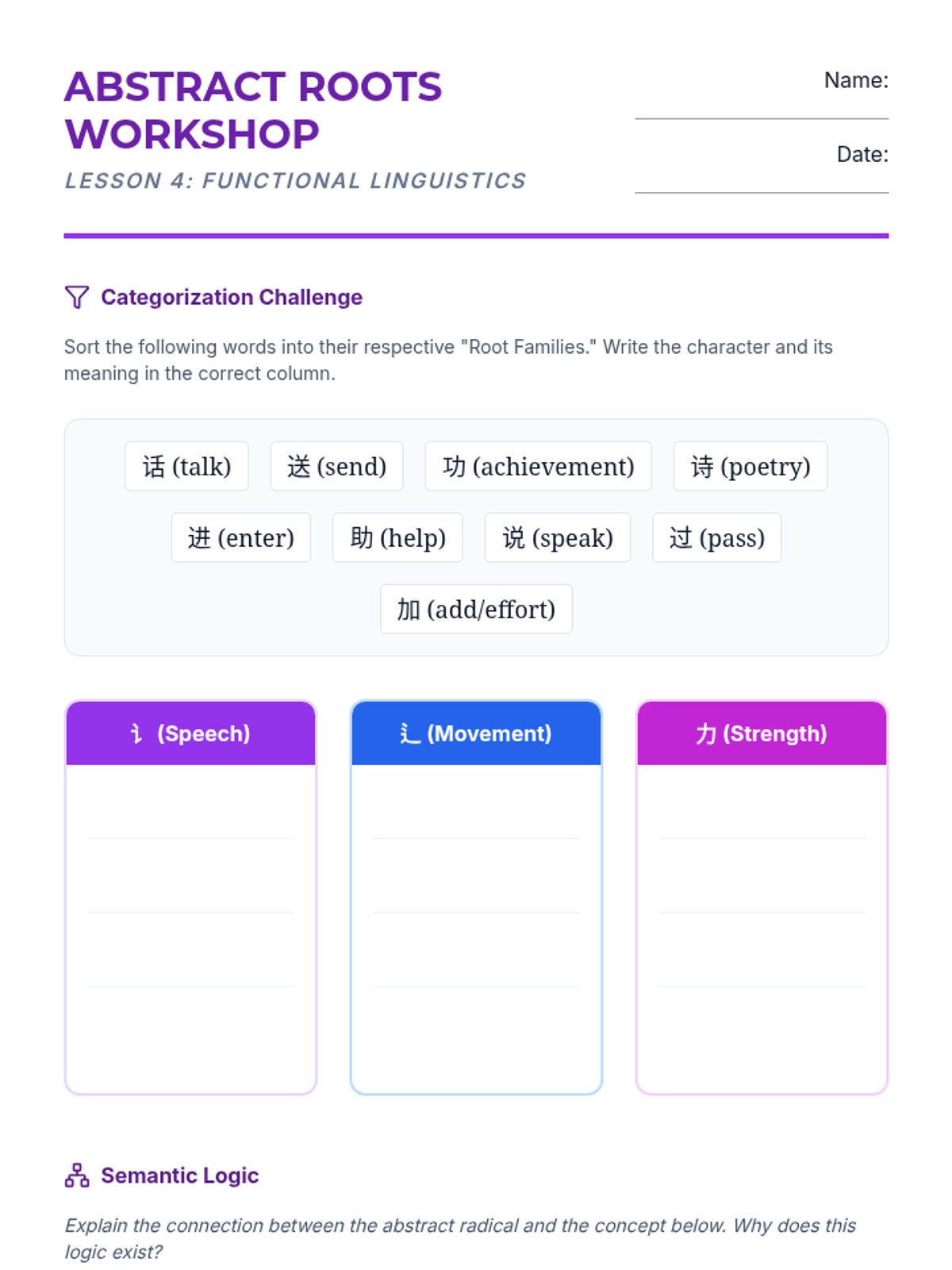
A shift to abstract concepts like speech, movement, and strength, where students investigate how these radicals underpin linguistic and conceptual vocabulary.
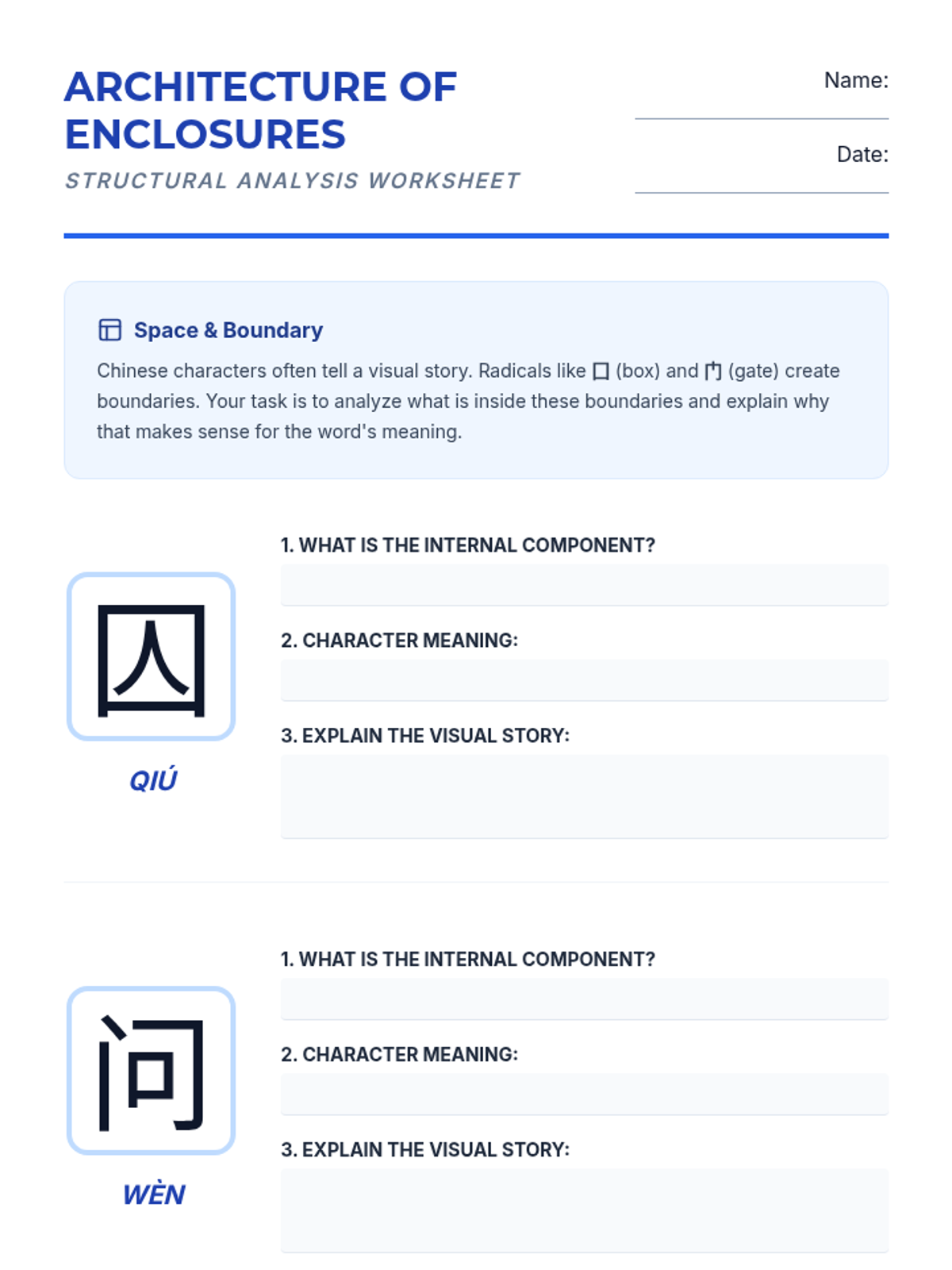
Students analyze structural radicals that enclose or border other components, exploring the spatial relationship between visual boundaries and meanings like 'prisoner' or 'park'.
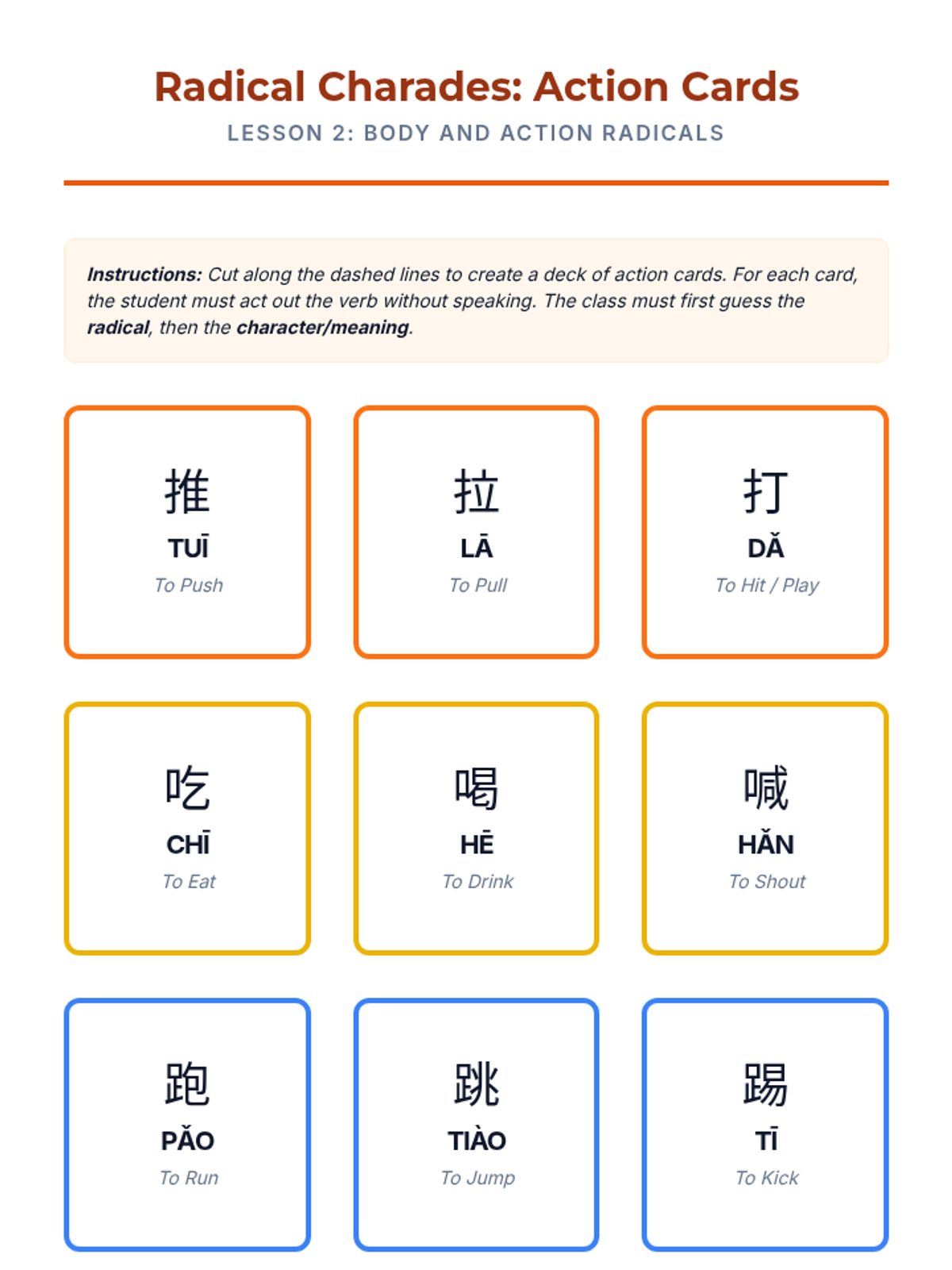
This lesson focuses on body-related radicals like hand, foot, mouth, and heart, using kinesthetic activities to link physical actions with their corresponding character components.
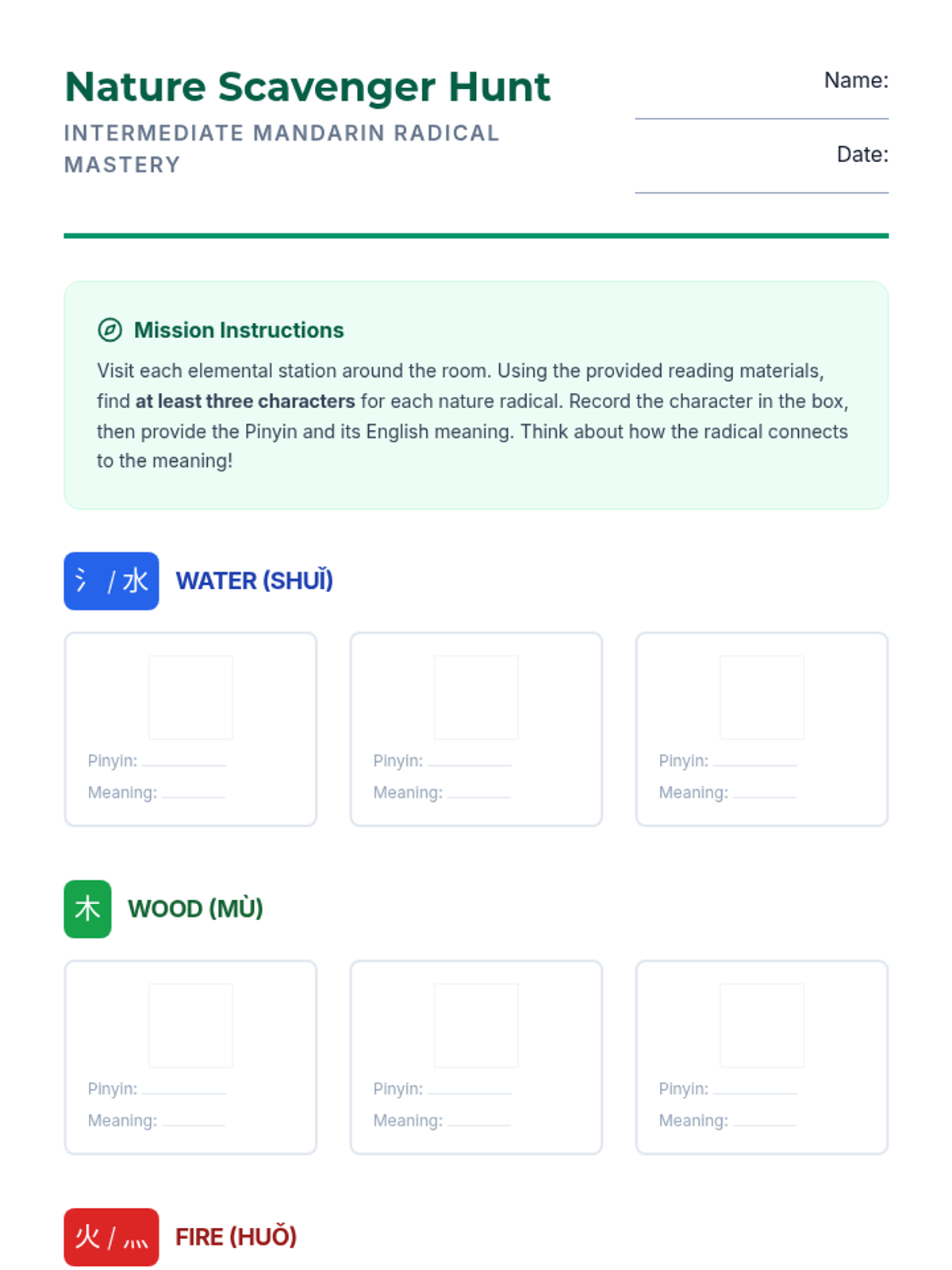
Students explore the semantic connection between nature-related radicals (water, fire, wood, grass, earth) and the characters they form through a hands-on scavenger hunt and sorting activity.
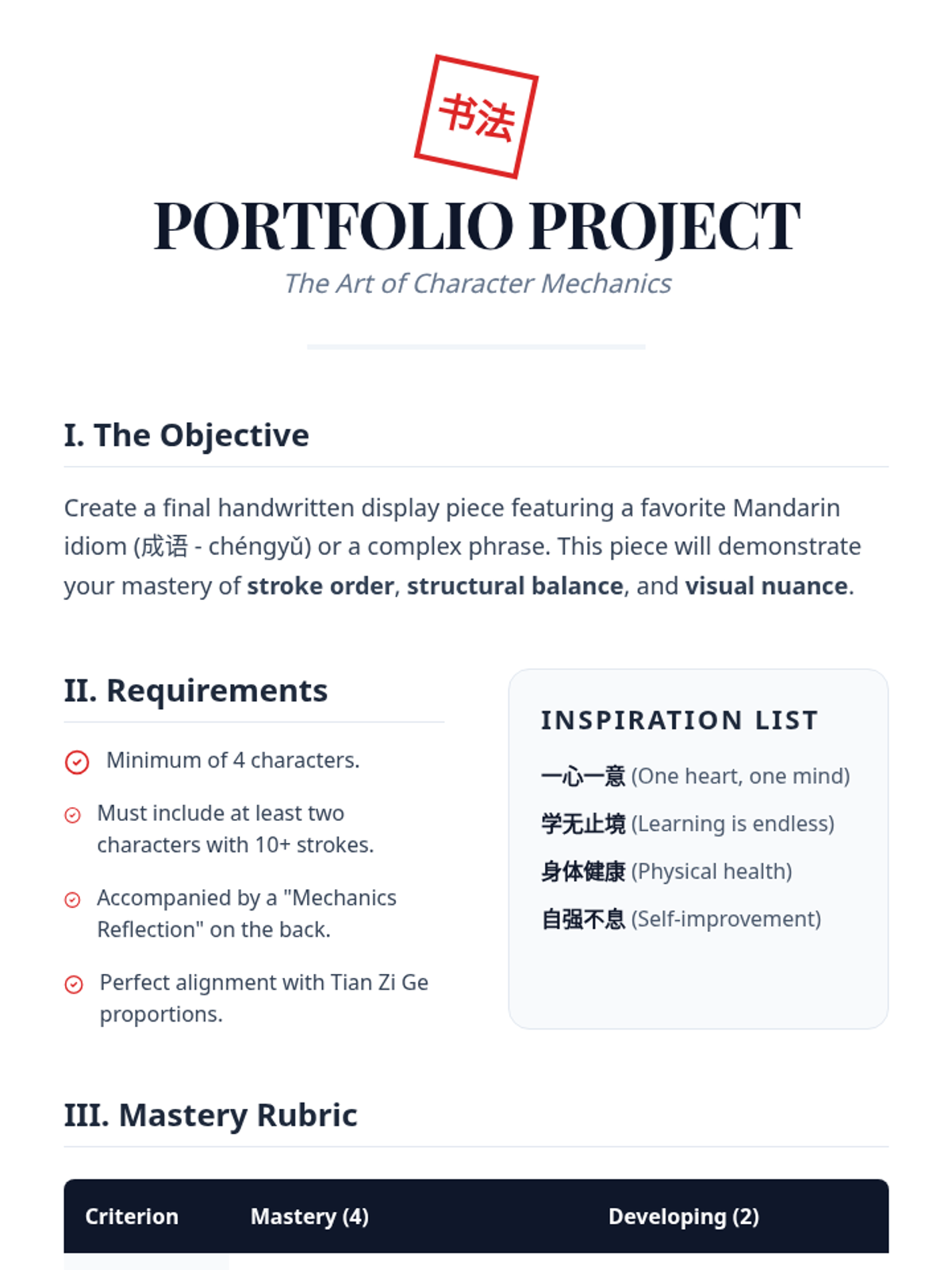
Students create a final handwritten piece featuring a favorite idiom, applying all learned rules to reflect on the meditative and aesthetic aspects of writing.
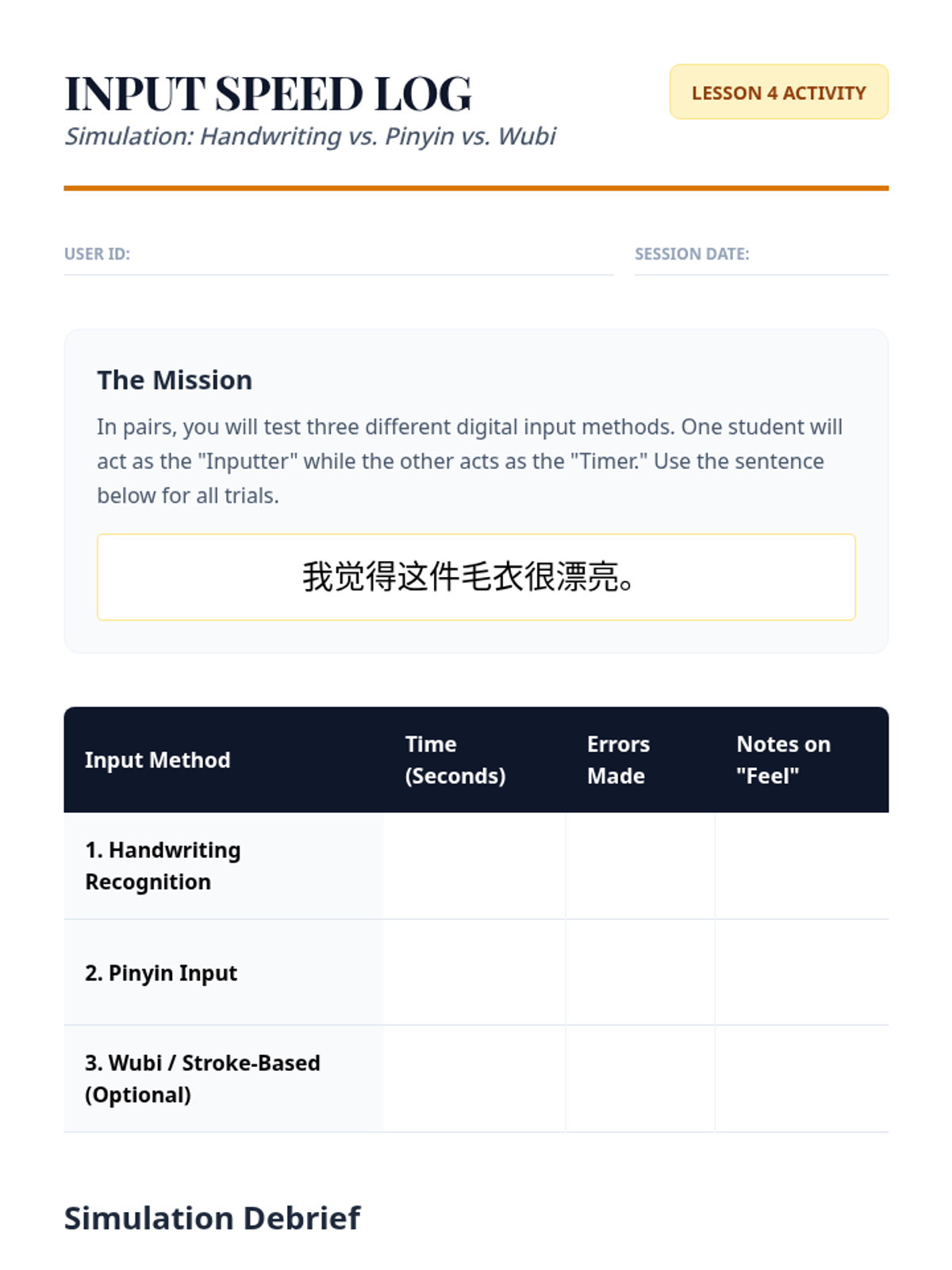
Students bridge the gap between paper and screen by learning how correct stroke order assists digital recognition and input methods.
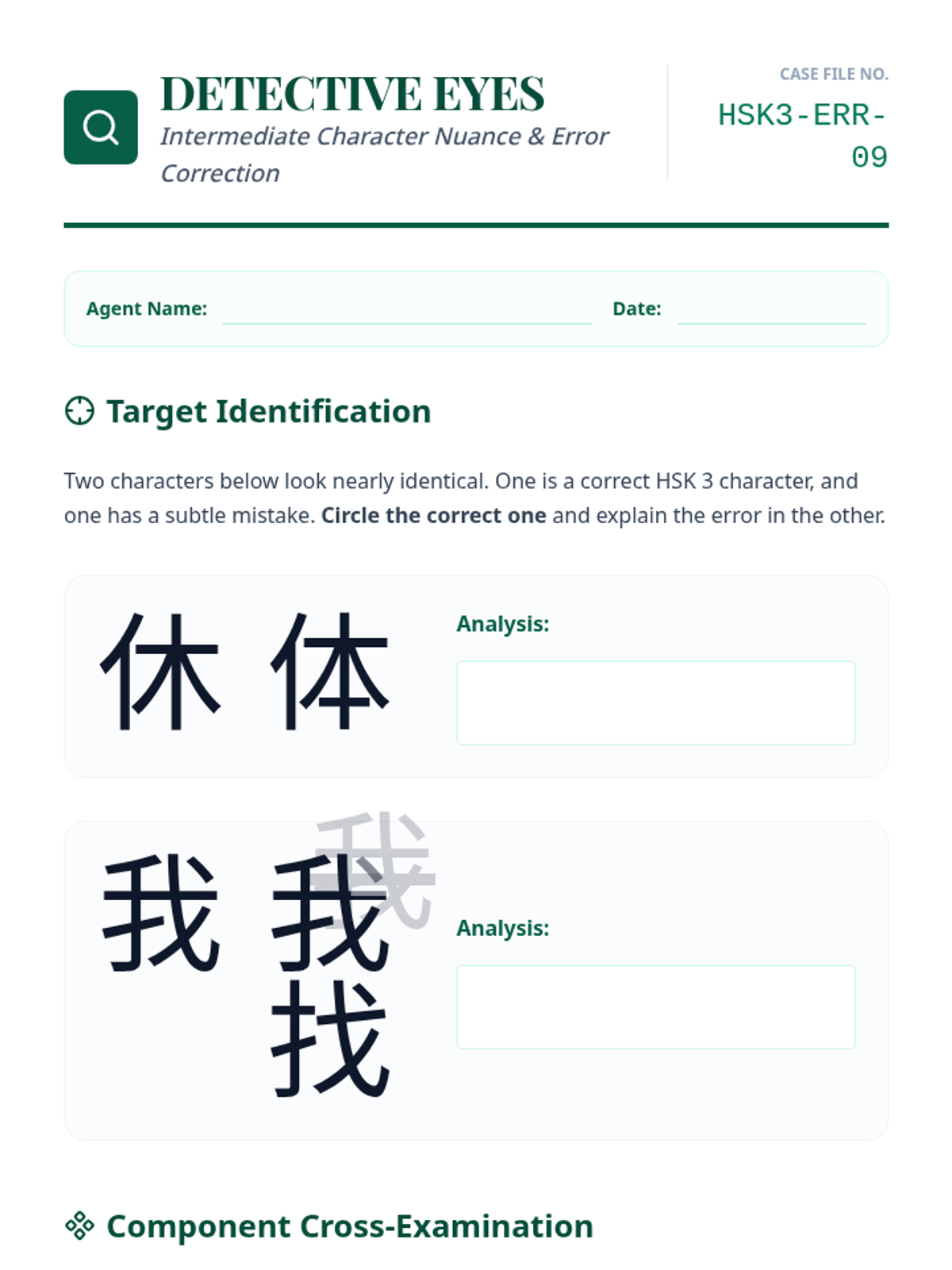
Students identify and correct common writing errors and subtle stroke nuances, utilizing peer review to spot differences in intermediate vocabulary.
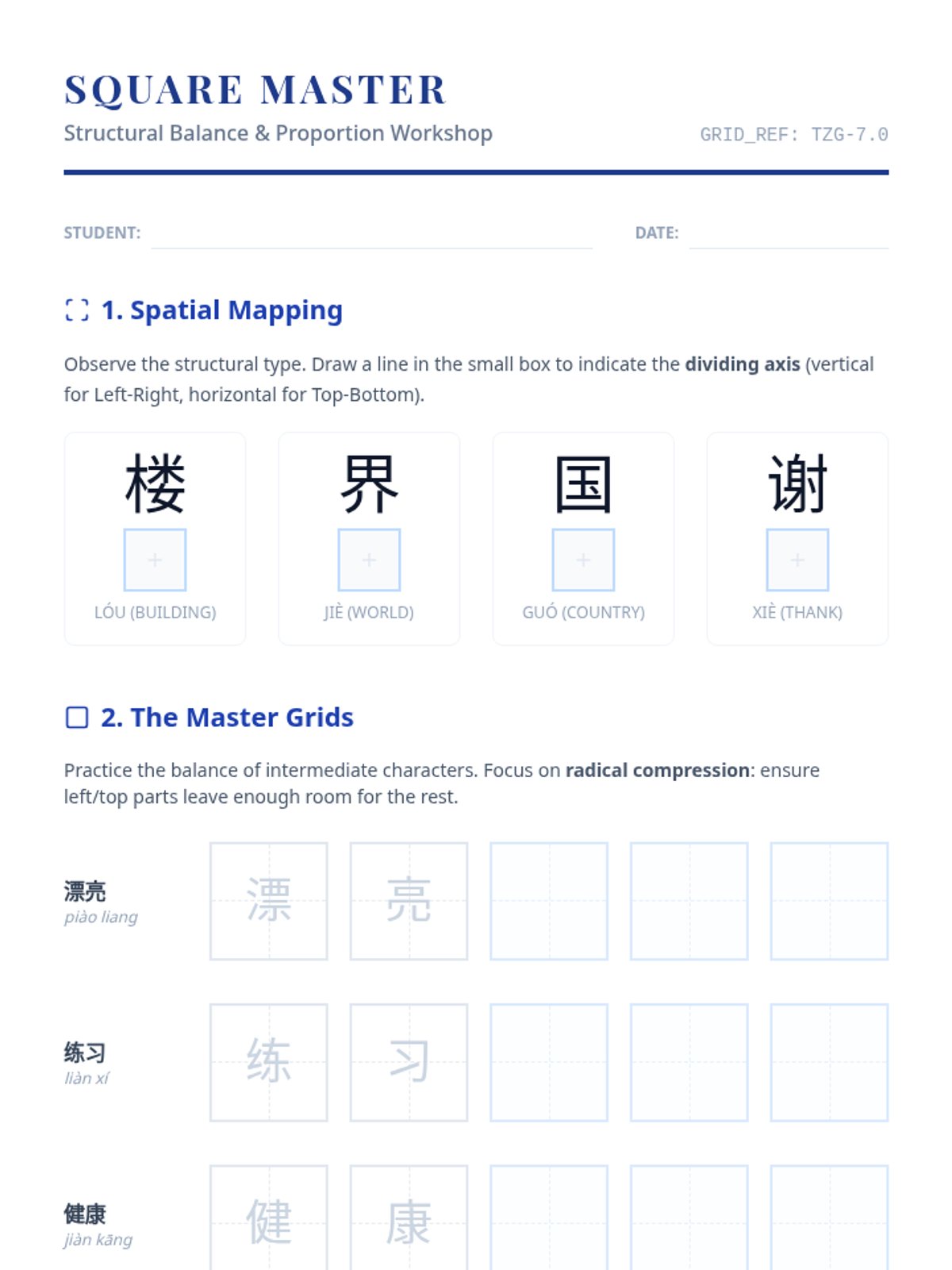
Using grid paper, students analyze the spatial arrangement of characters with various structures, practicing how to balance radicals within the square.
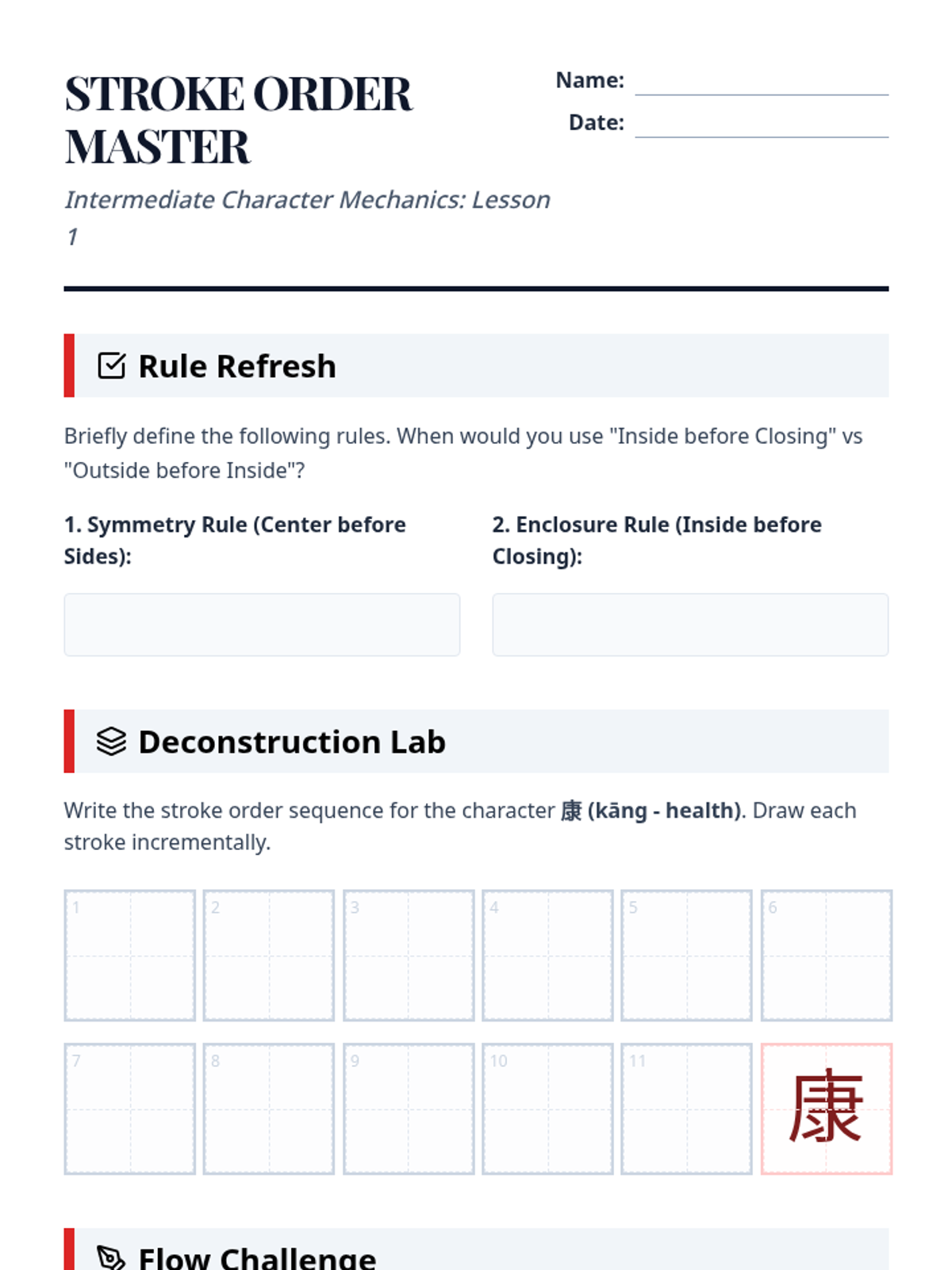
Students review basic stroke order rules and apply them to denser, intermediate-level characters (10+ strokes), focusing on the 'inside-outside' and 'symmetry' rules.
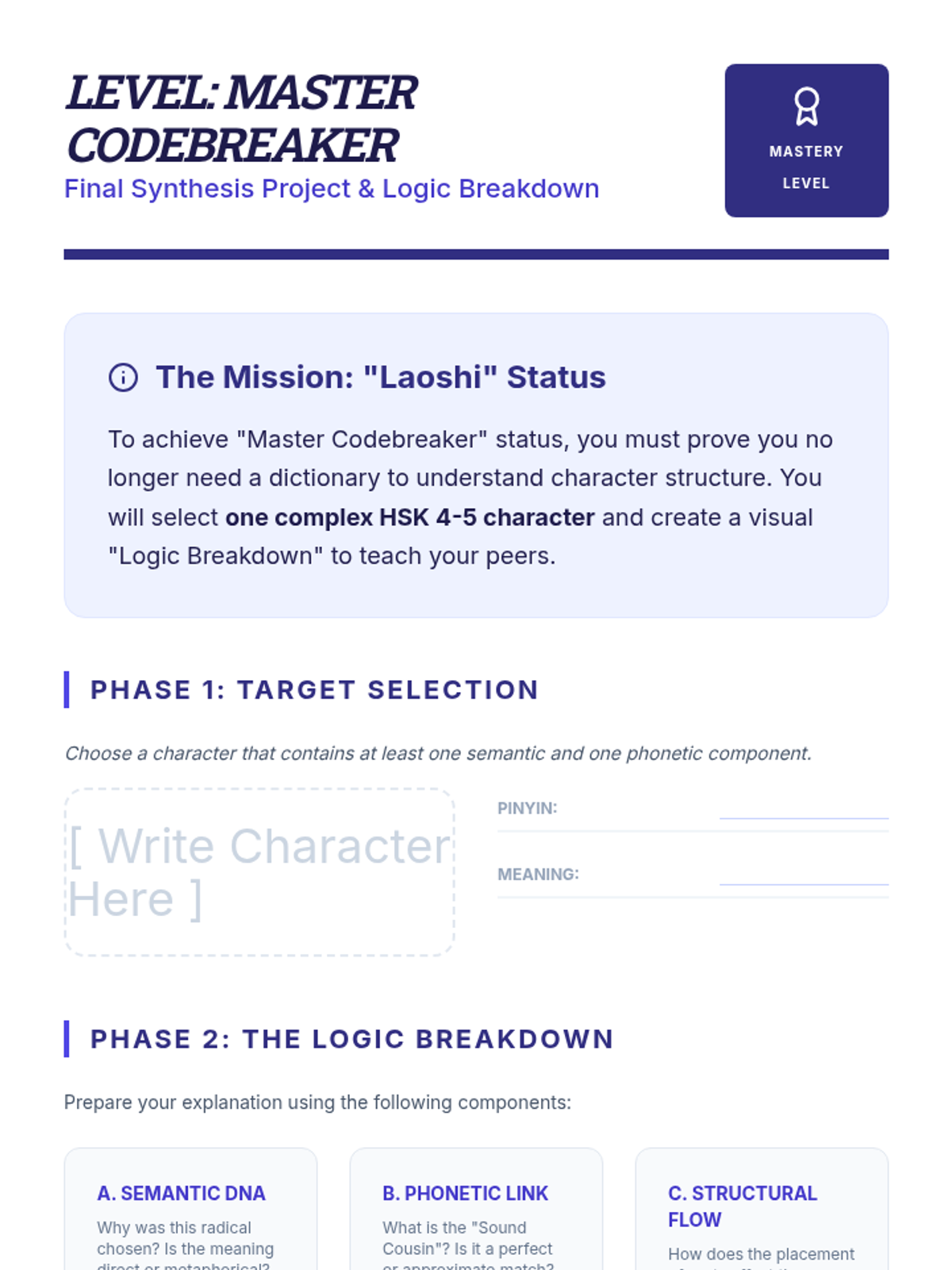
In this culminating lesson, students select a set of complex characters and present a 'logic breakdown' to the class, explaining the role of every stroke and component. They reflect on the reliability of the semantic-phonetic system and its exceptions.
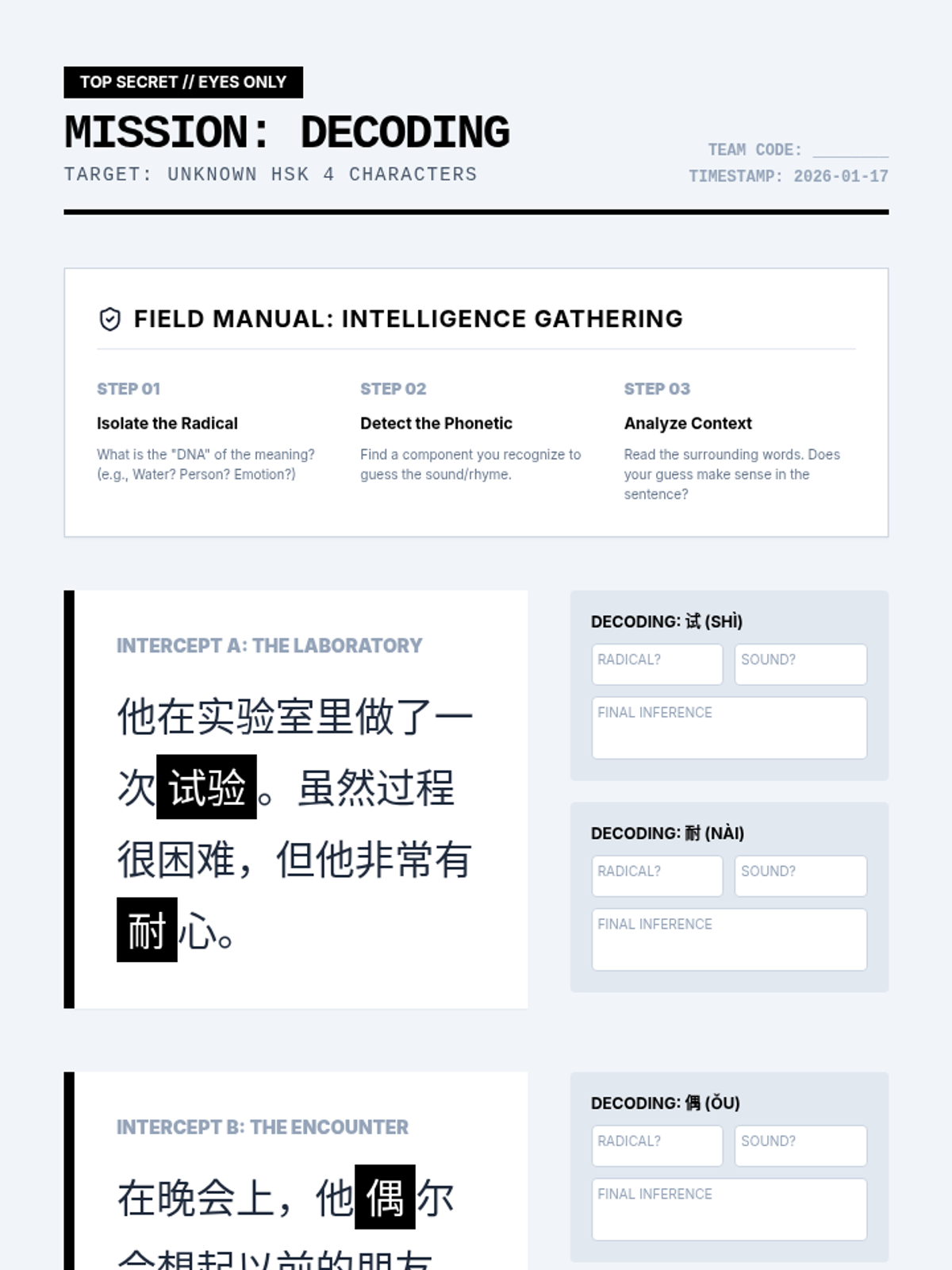
Students apply their decoding strategies to short reading passages containing undefined HSK 4 characters. Working in teams, they use context clues and character composition to infer meanings before verifying with a dictionary.
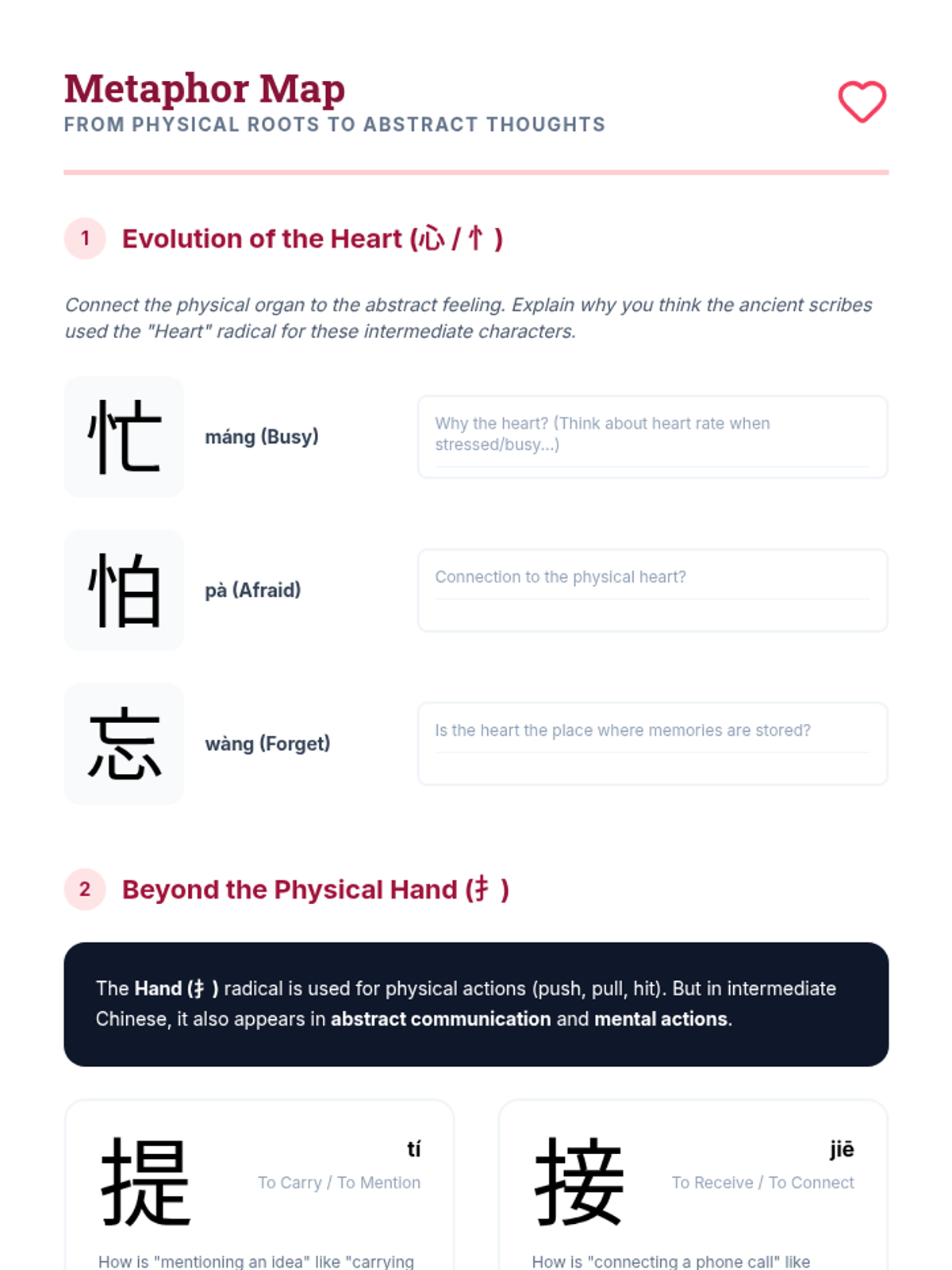
Students explore how physical radicals (like 'heart' or 'hand') are used metaphorically in abstract intermediate vocabulary (e.g., emotions, actions). They analyze how ancient meanings evolved into modern abstract definitions within the semantic-phonetic framework.
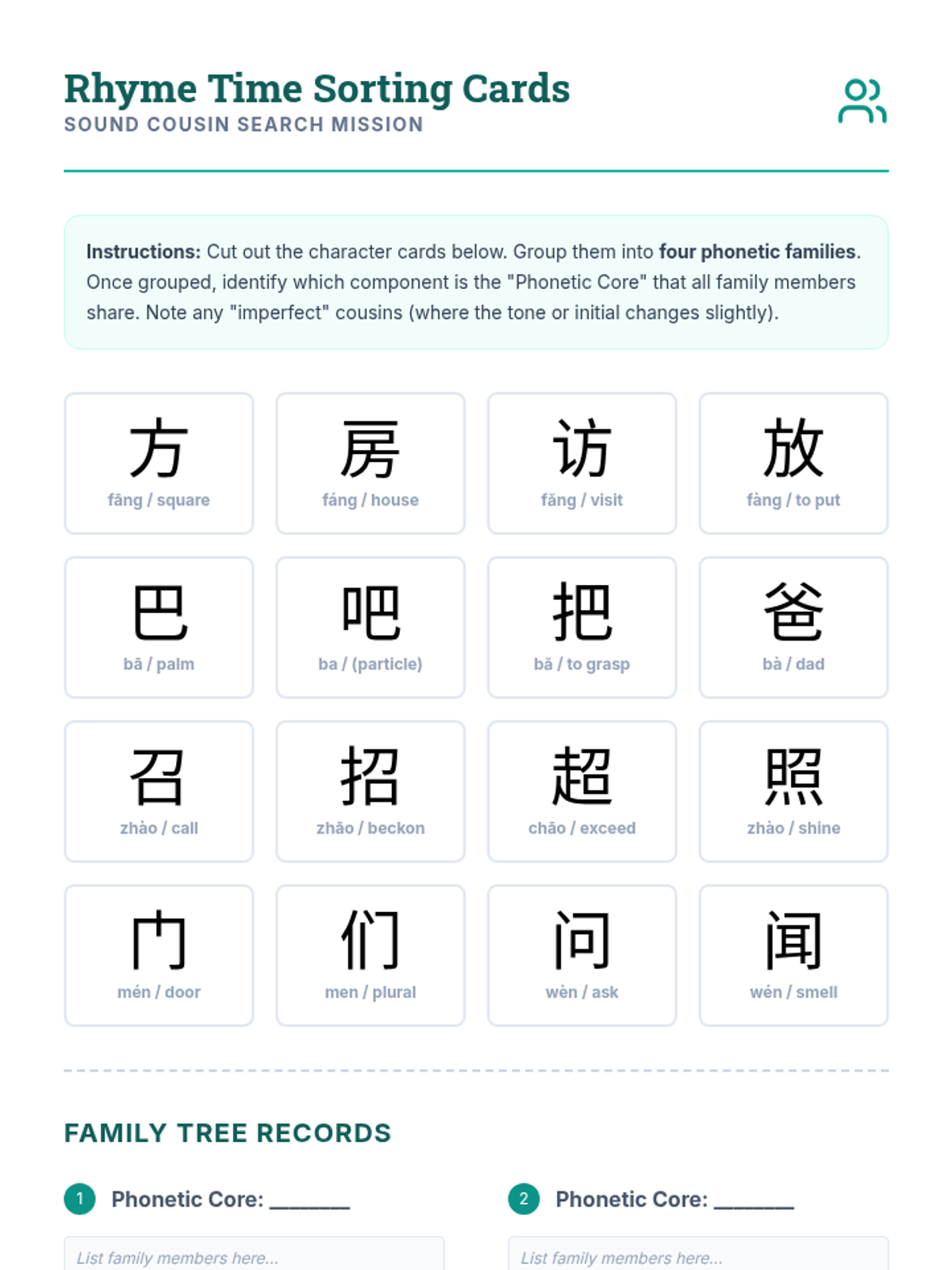
Focusing on common phonetic components found in HSK 3 vocabulary, students group characters that share the same sound element but have different radicals. They practice distinguishing tones and verifying if the phonetic component provides an exact or approximate sound match.
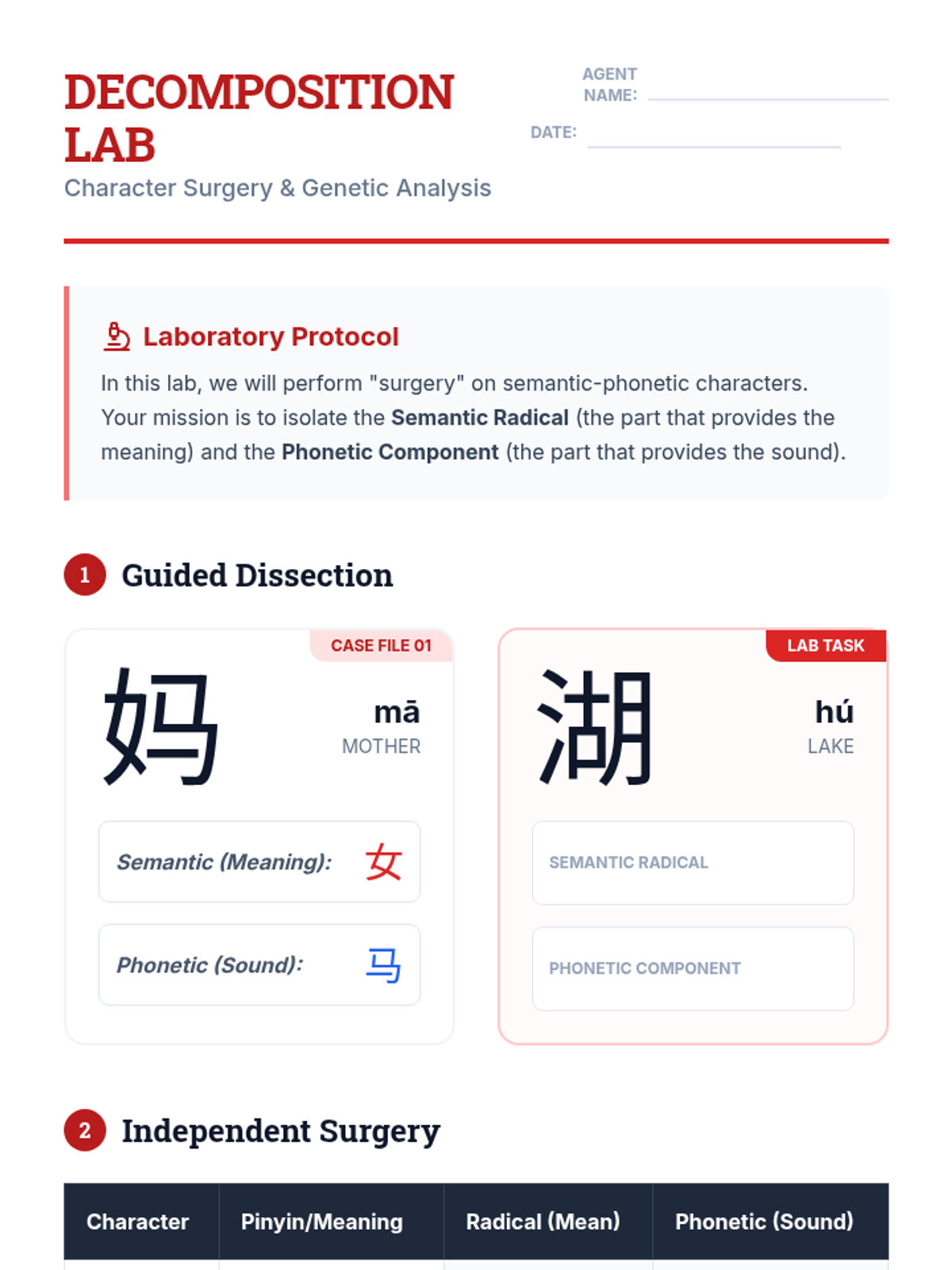
Students are introduced to the concept of separating characters into two functional parts: the semantic radical and the phonetic component. They analyze simple examples to see how one side hints at meaning while the other hints at sound, establishing the foundation for decoding intermediate vocabulary.
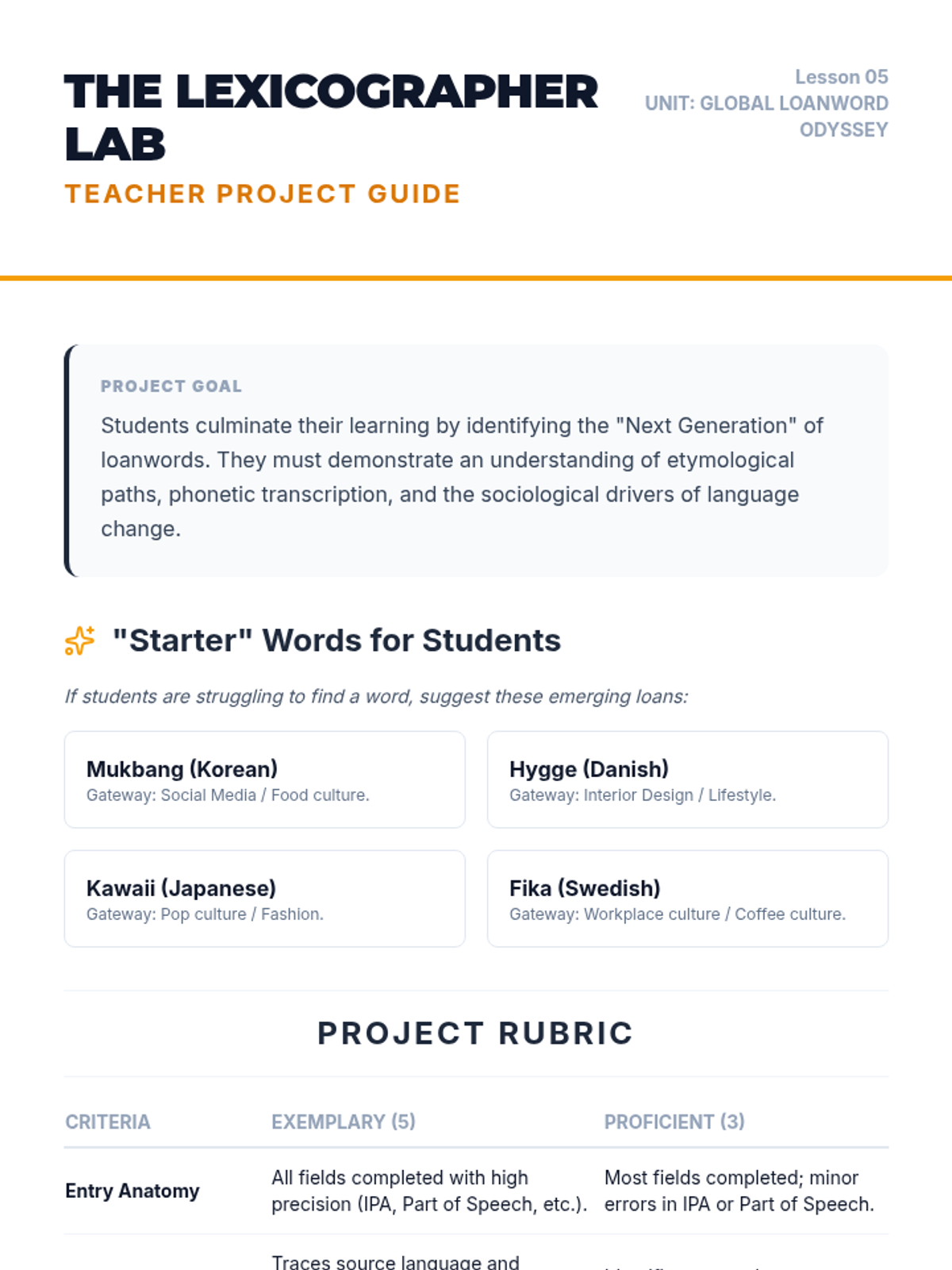
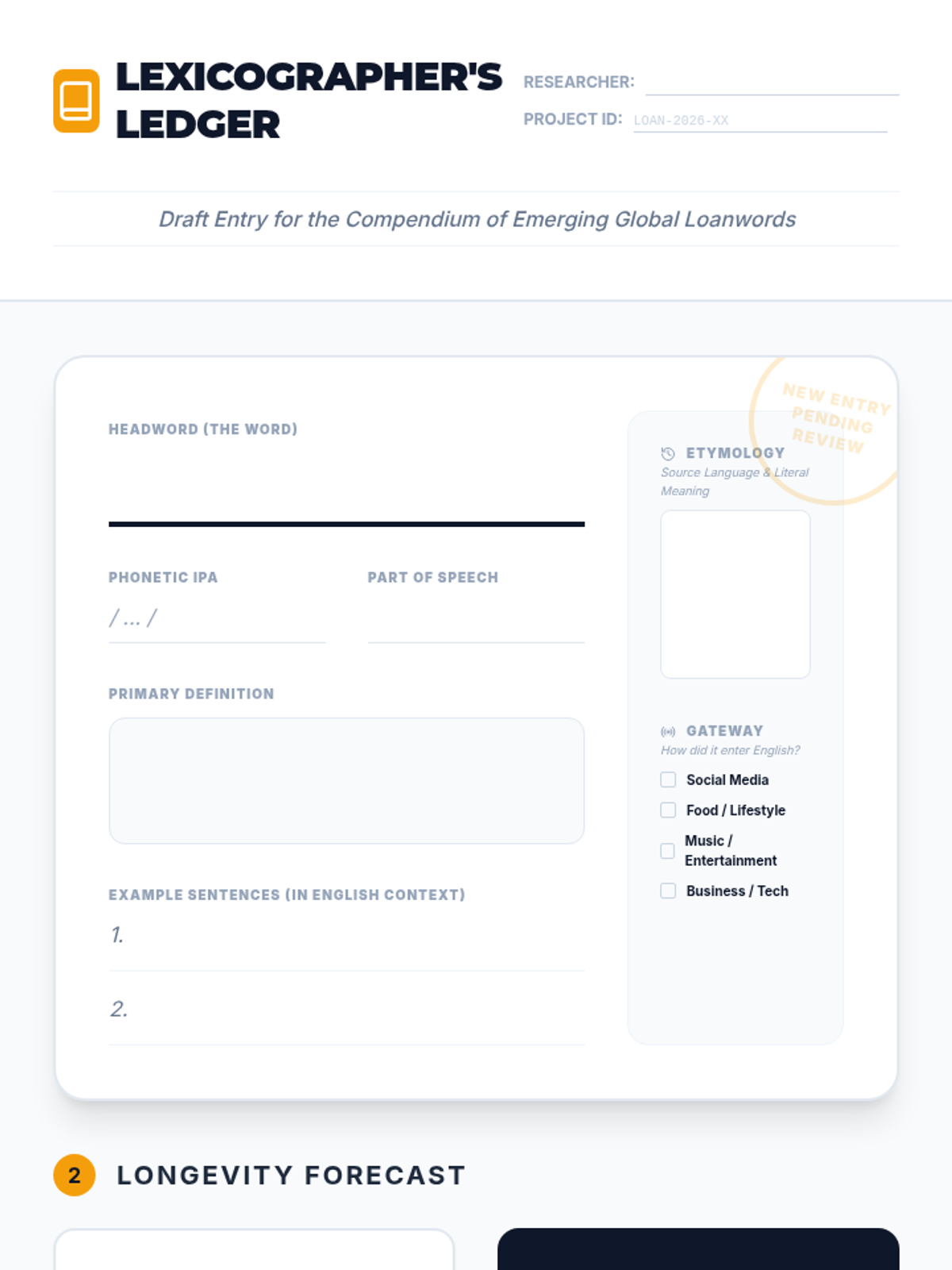
Students act as amateur lexicographers, identifying a foreign word or phrase currently entering English usage through social media, food culture, or music (e.g., 'mukbang,' 'hygge'). They create a dictionary entry including pronunciation, etymology, current usage examples, and a prediction of its longevity.
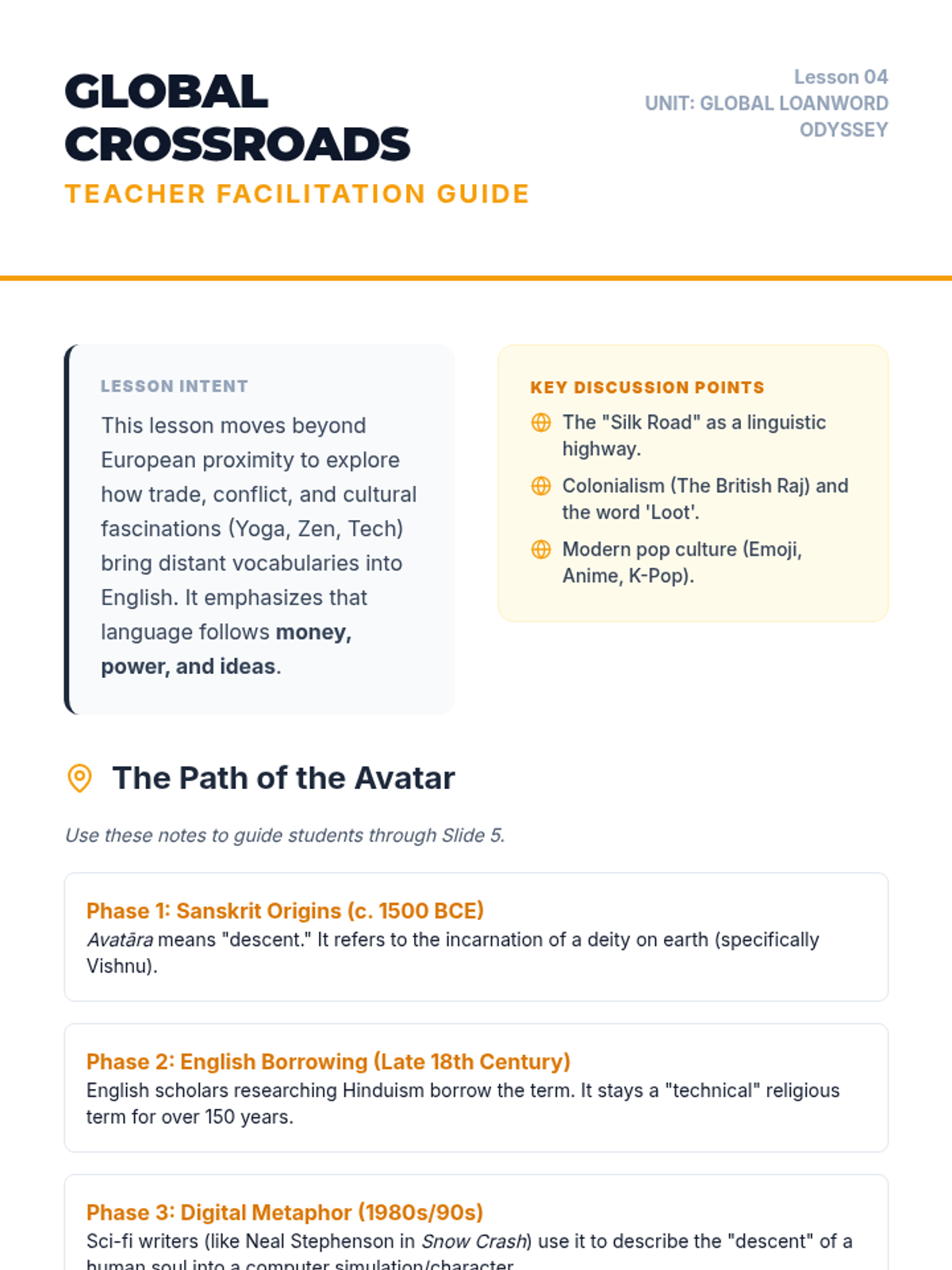
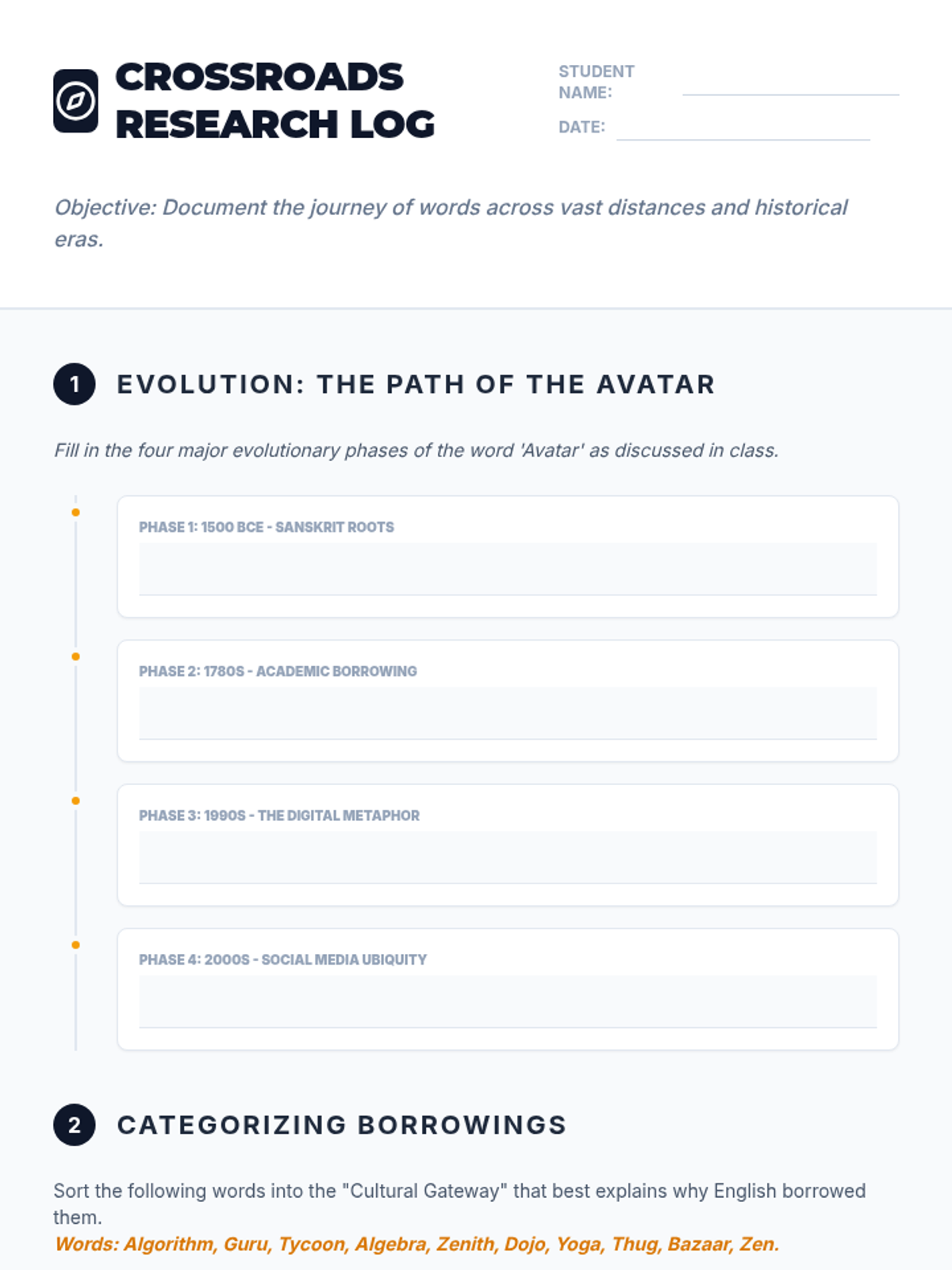
This lesson broadens the scope to words from Arabic ('algorithm,' 'nadir'), Japanese ('tycoon,' 'zen,' 'emoji'), and Hindi ('pundit,' 'guru'). Students research the historical trade routes or cultural exchanges (like the tech boom or yoga craze) that facilitated these specific borrowings.
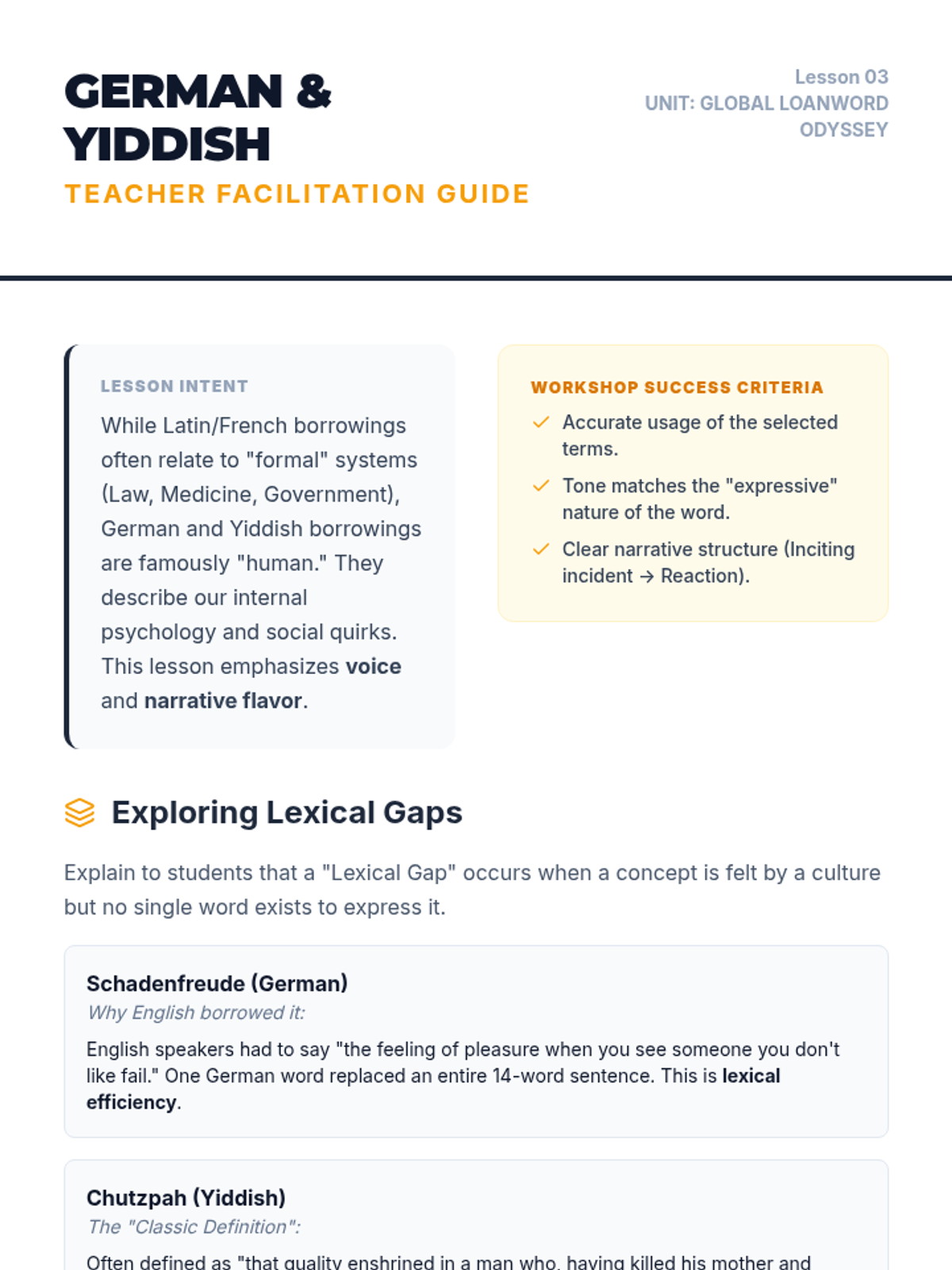
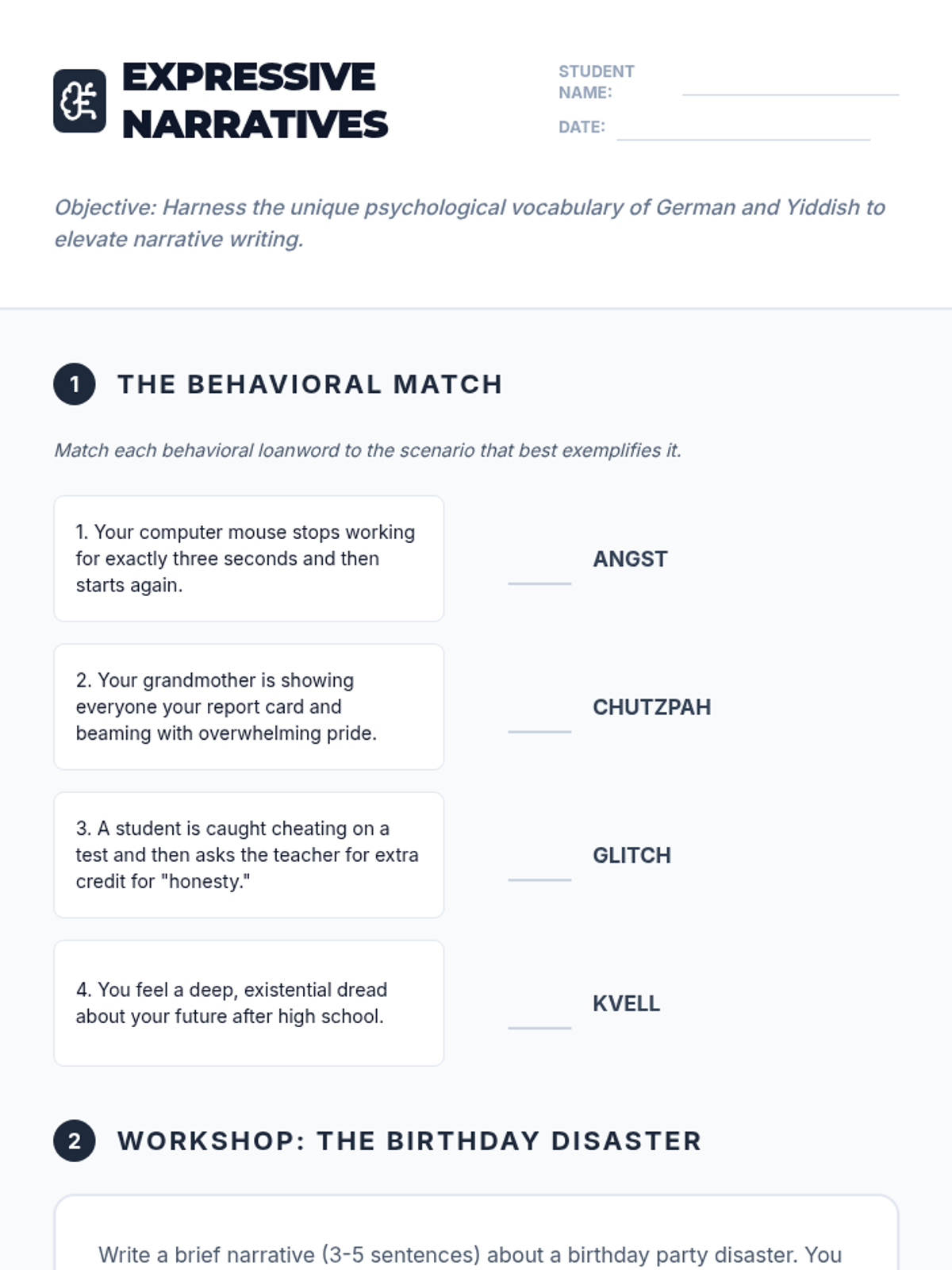
Students explore the unique contribution of German and Yiddish to English expressiveness, covering terms like 'schadenfreude,' 'zeitgeist,' 'spiel,' and 'chutzpah.' They analyze how these words often fill specific gaps in English regarding psychology and human behavior.
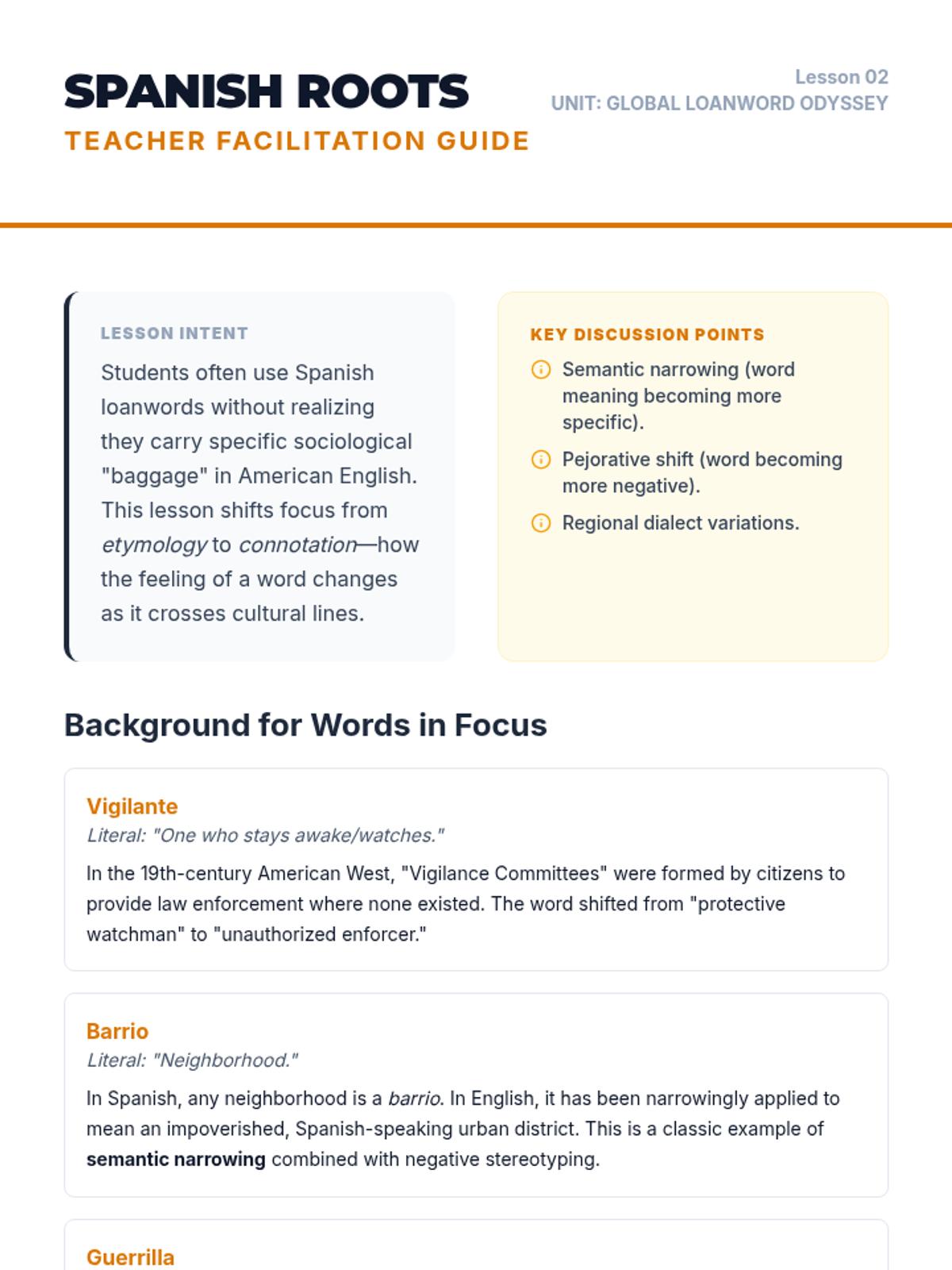
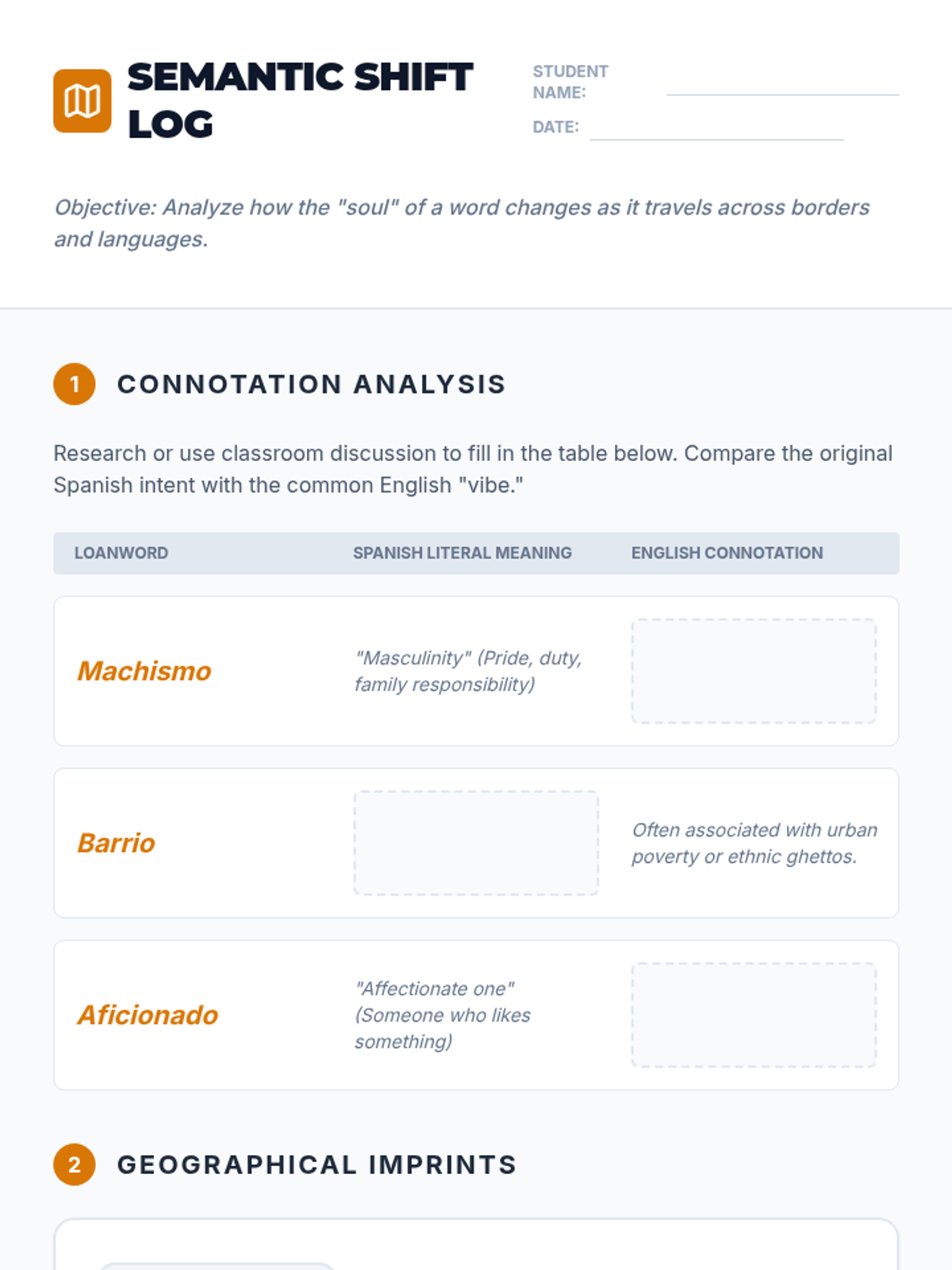
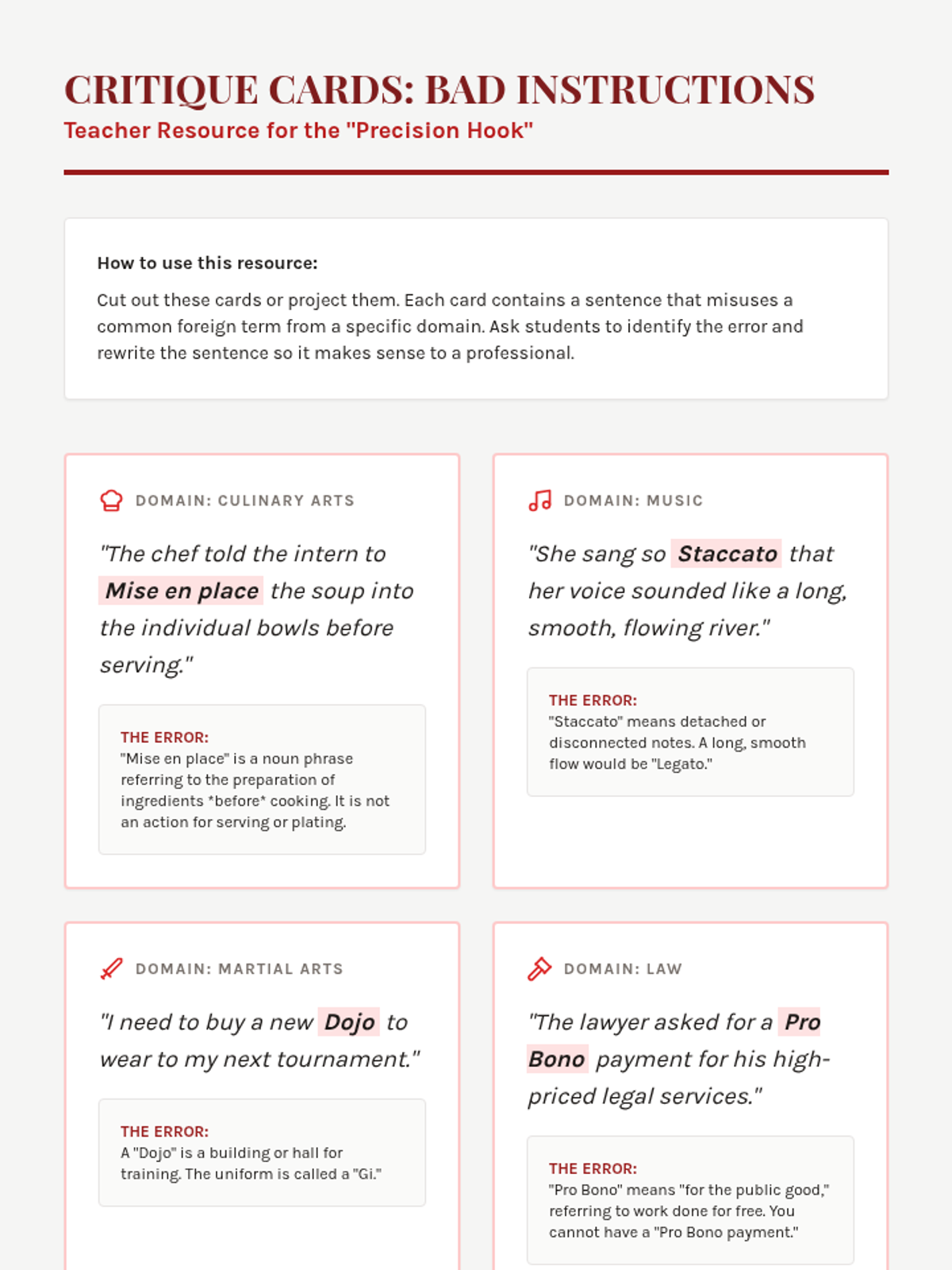
Focusing on the deep integration of Spanish, students examine words like 'aficionado,' 'barrio,' 'guerrilla,' and 'vigilante,' exploring how these words have shifted in meaning or connotation when entering English usage.
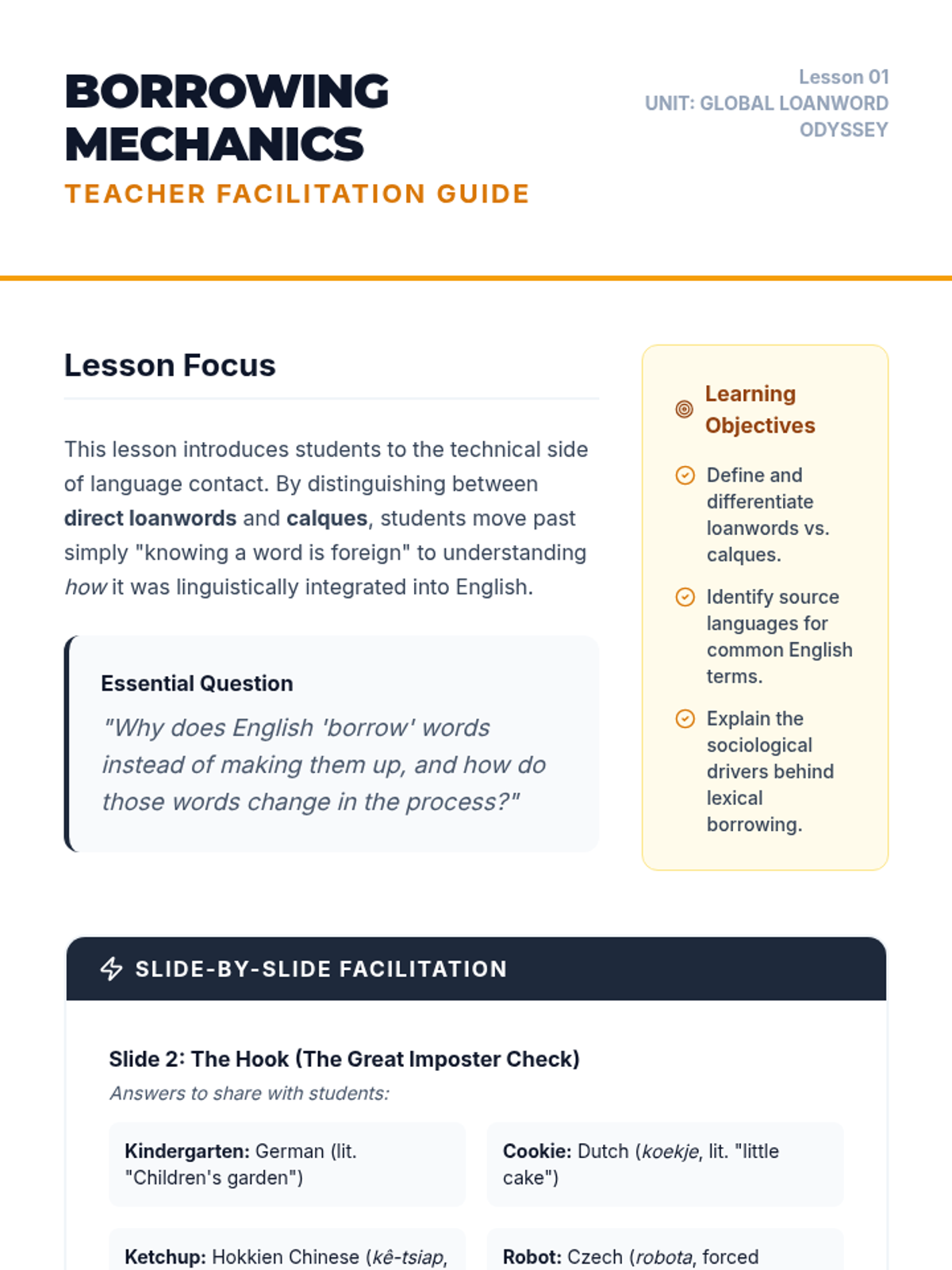
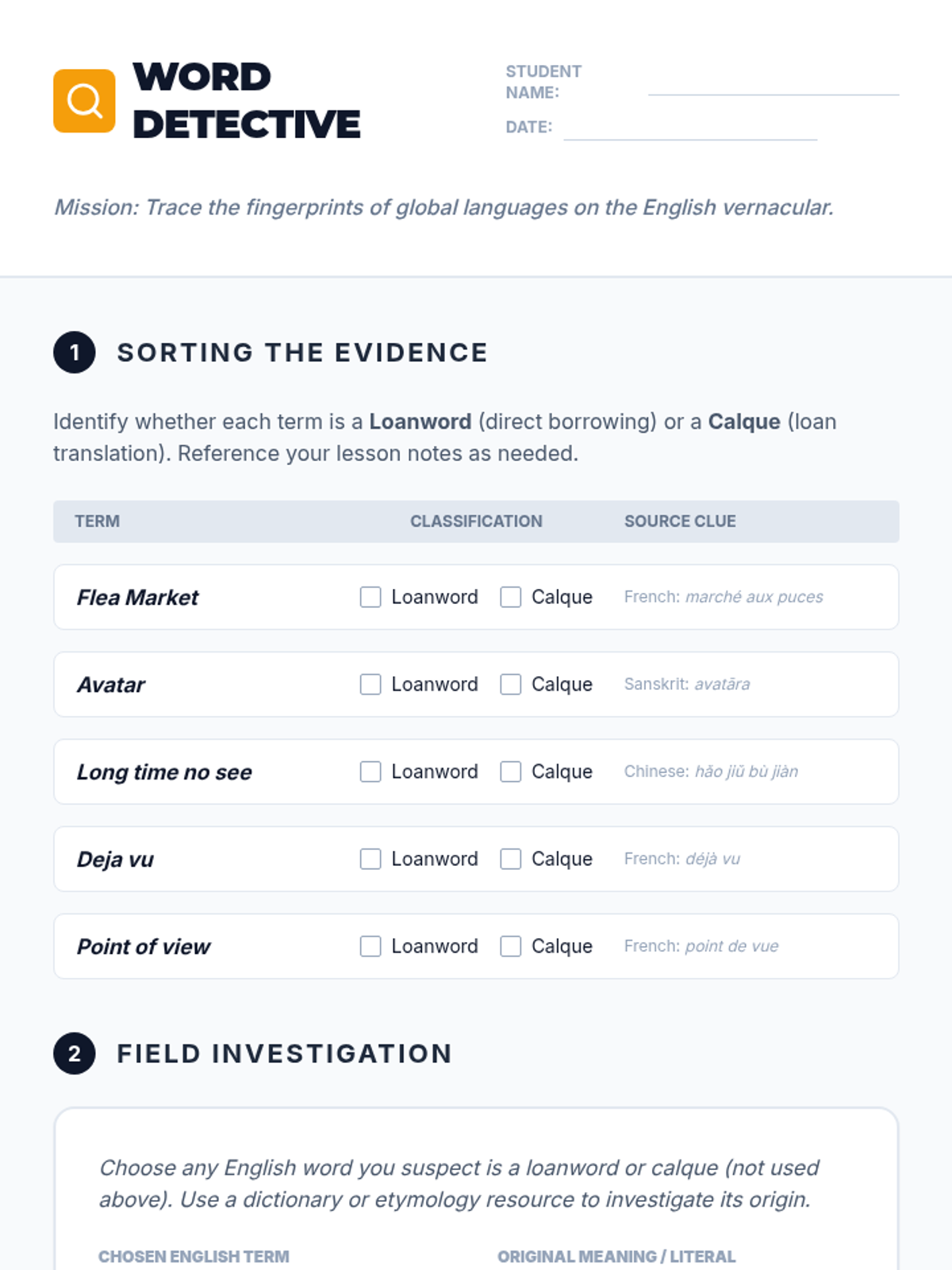
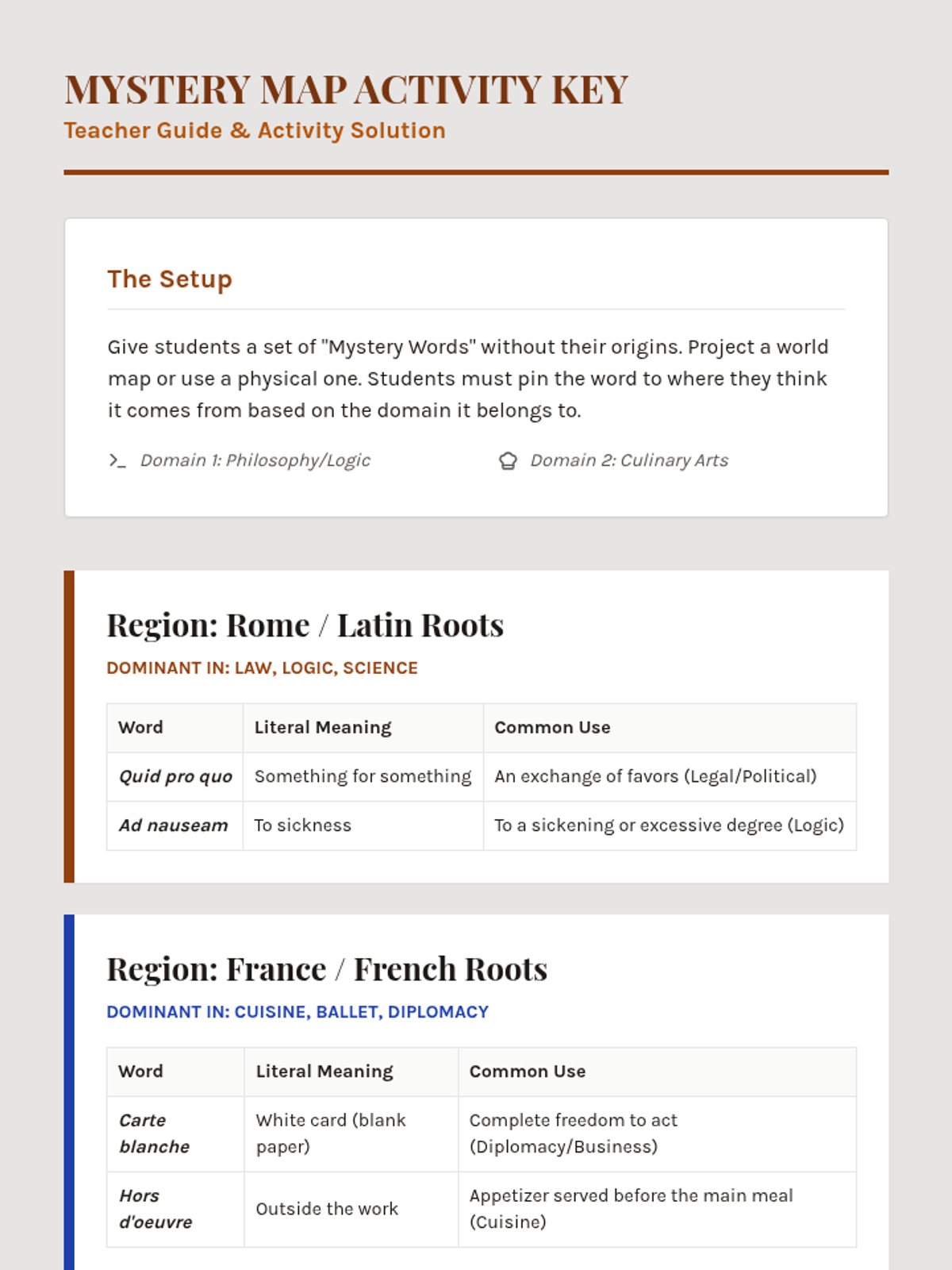
Students explore the linguistic mechanisms of lexical borrowing, distinguishing between direct loanwords and calques (loan translations) while tracing the origins of everyday English words.
Students present their final field guides in a gallery walk format, teaching peers about the linguistic influences in their chosen domains.
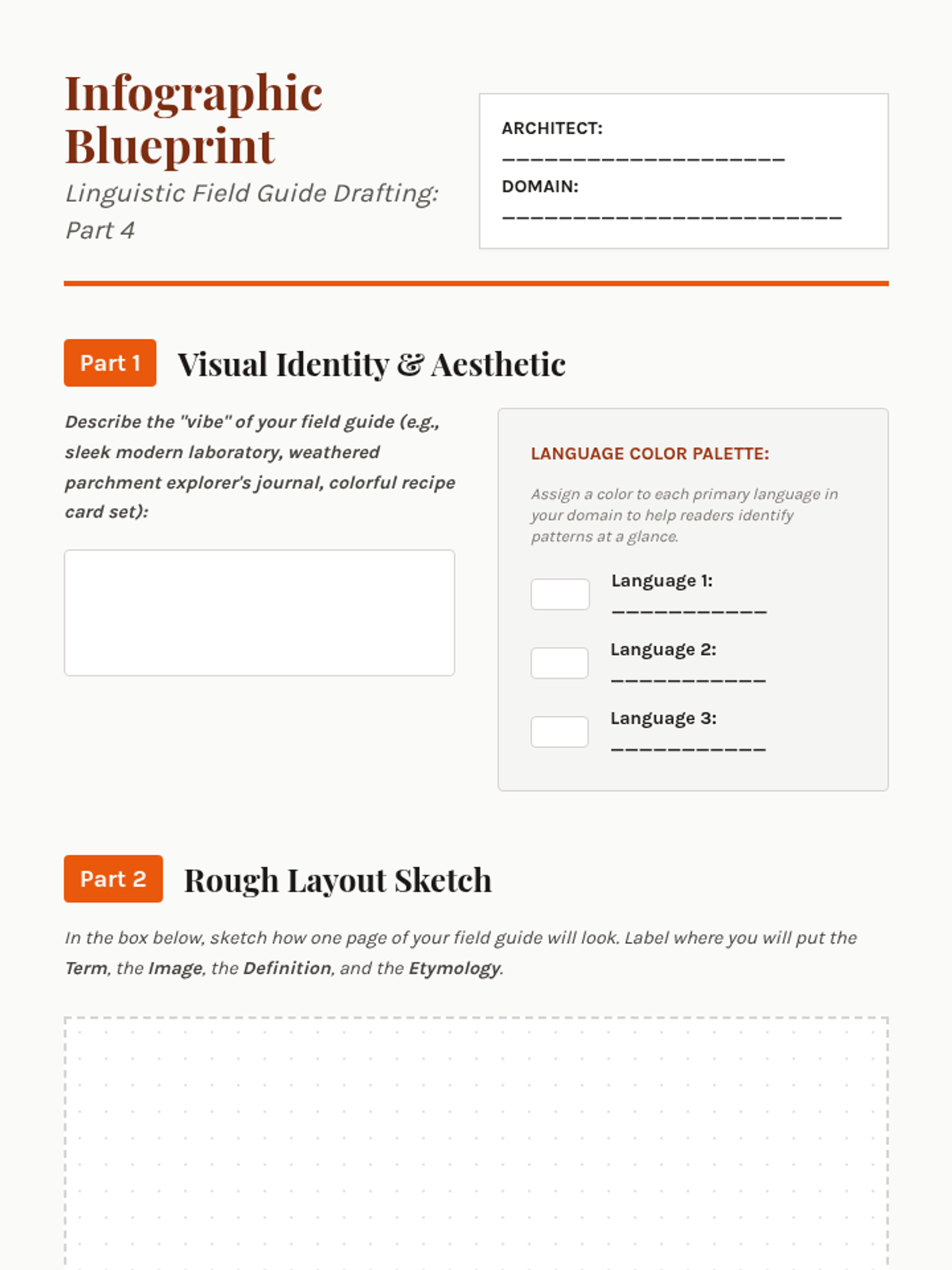
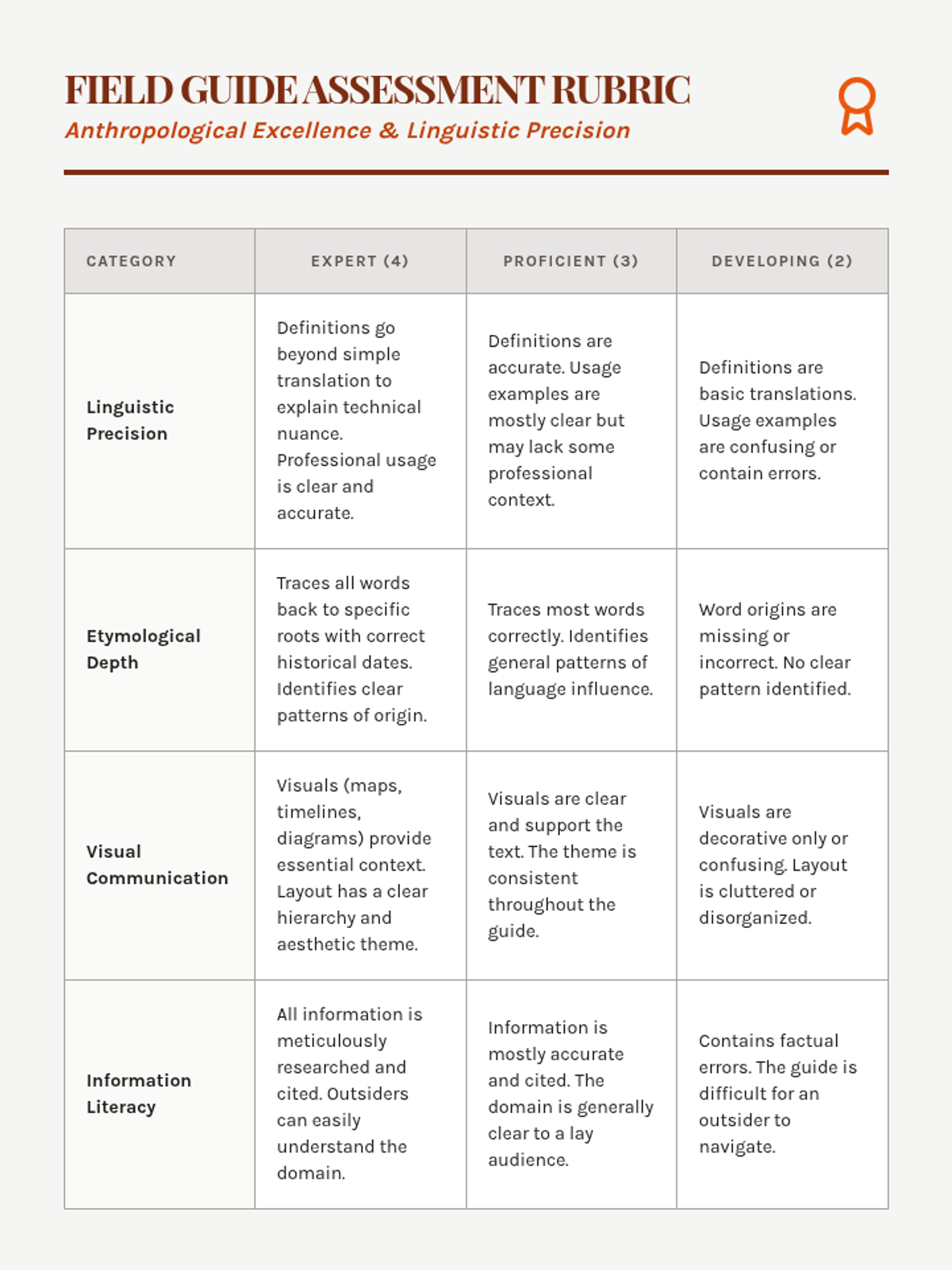
Students design visual aids and infographics to make complex foreign terminology accessible and memorable for a general audience.
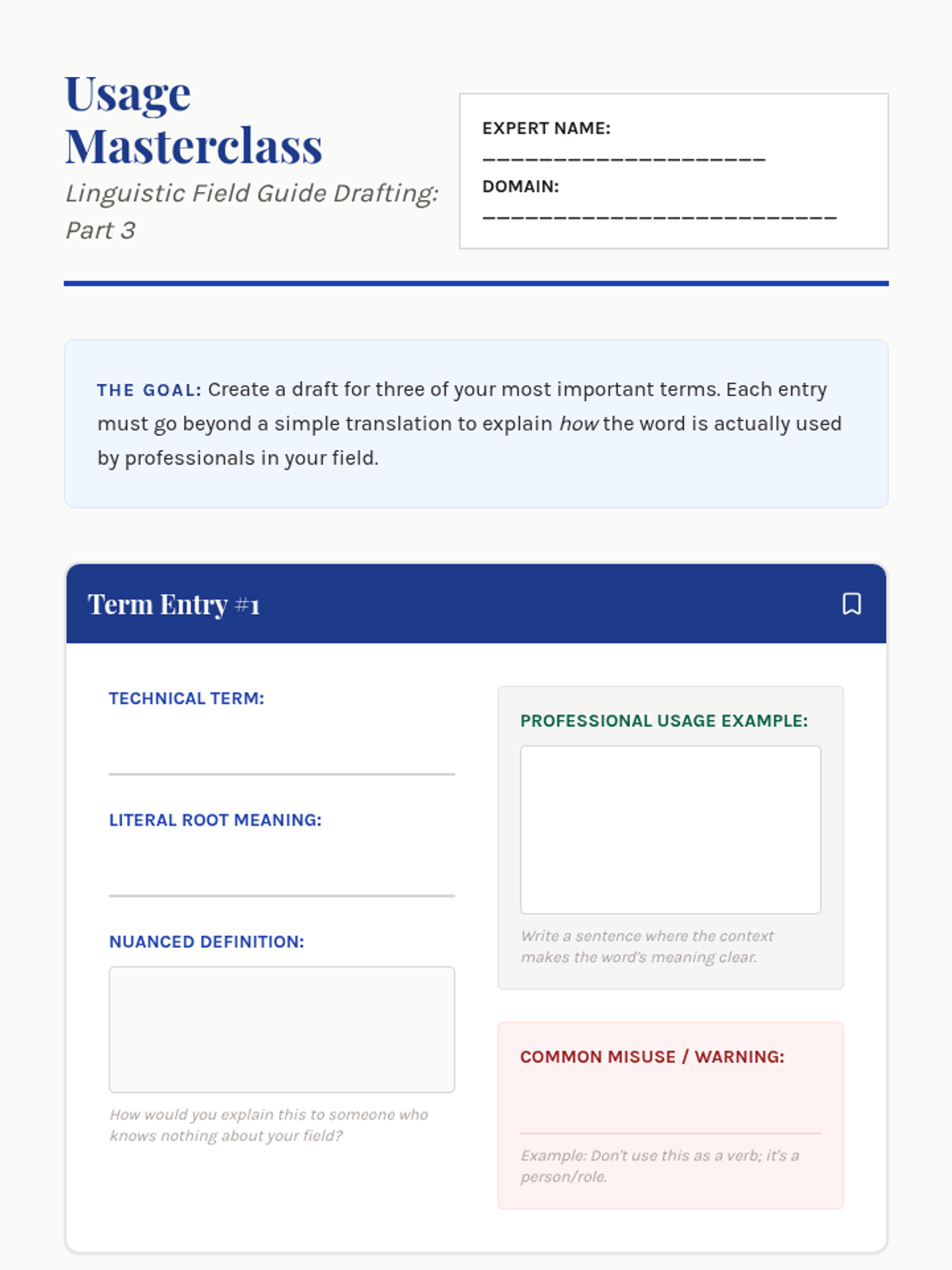
Students draft technical definitions and usage guides that explain the nuances of their chosen terms within their professional context.
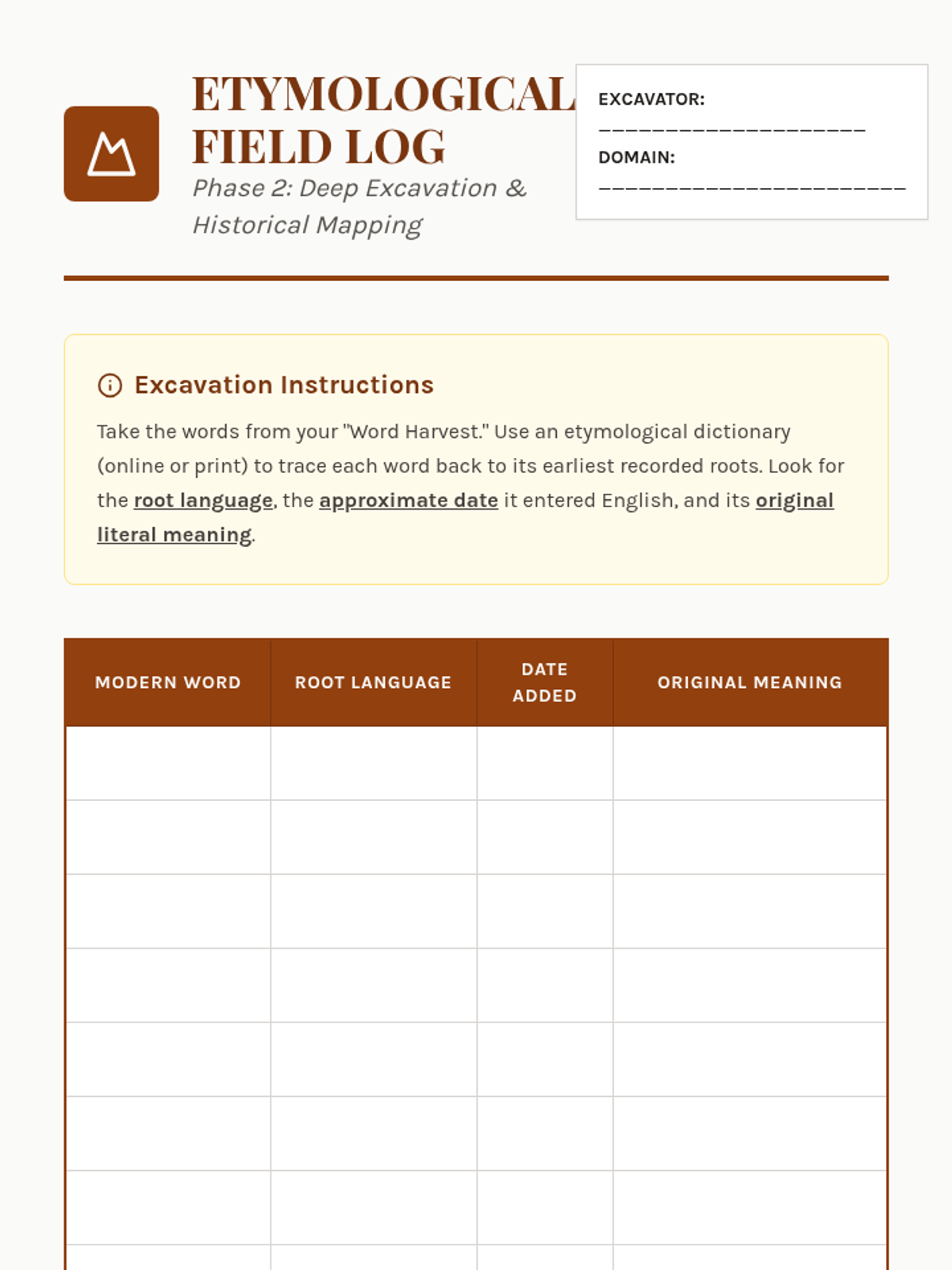
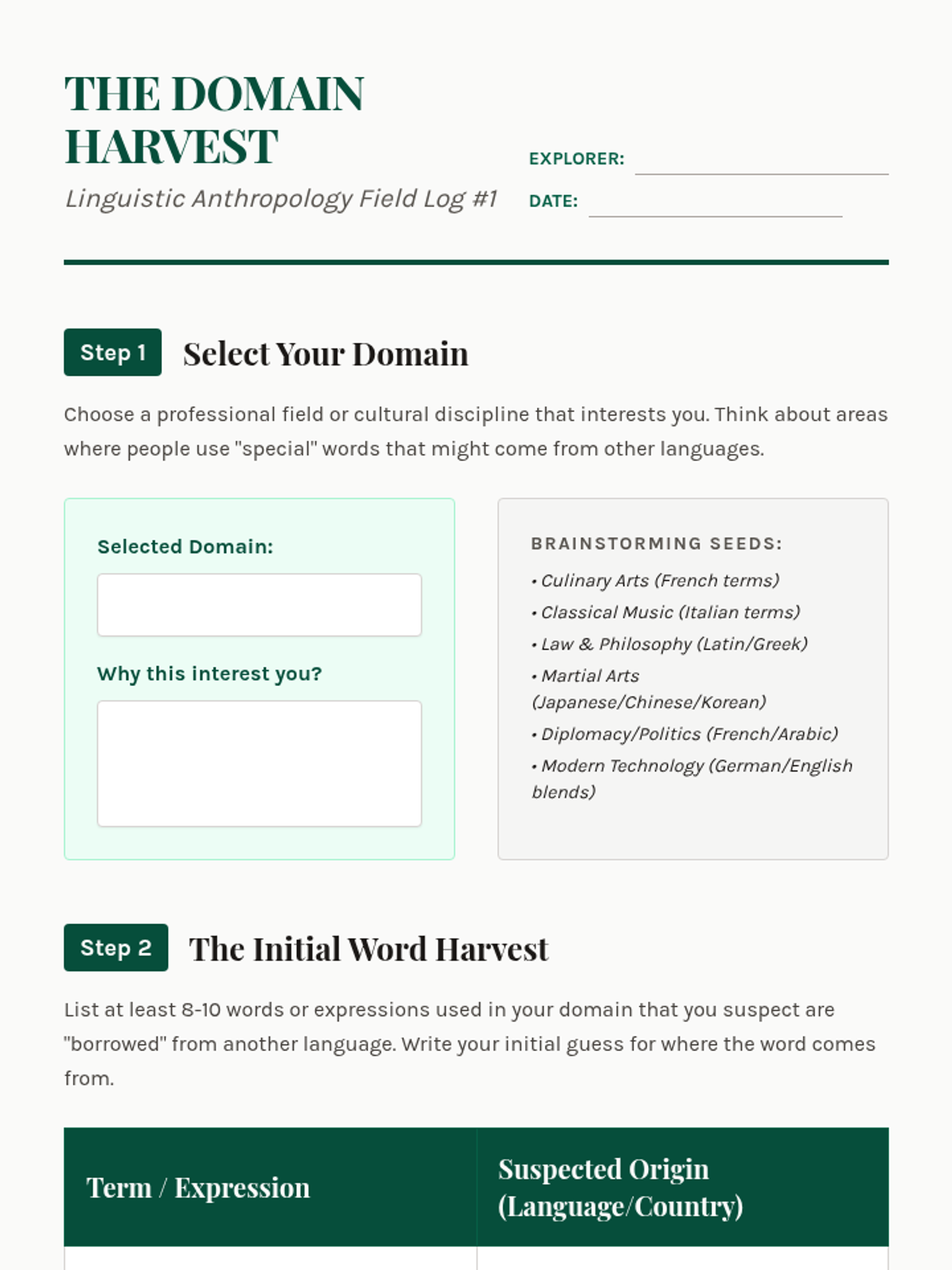
Students use etymological resources to trace the historical origins of their harvested words and identify cultural patterns in language usage.
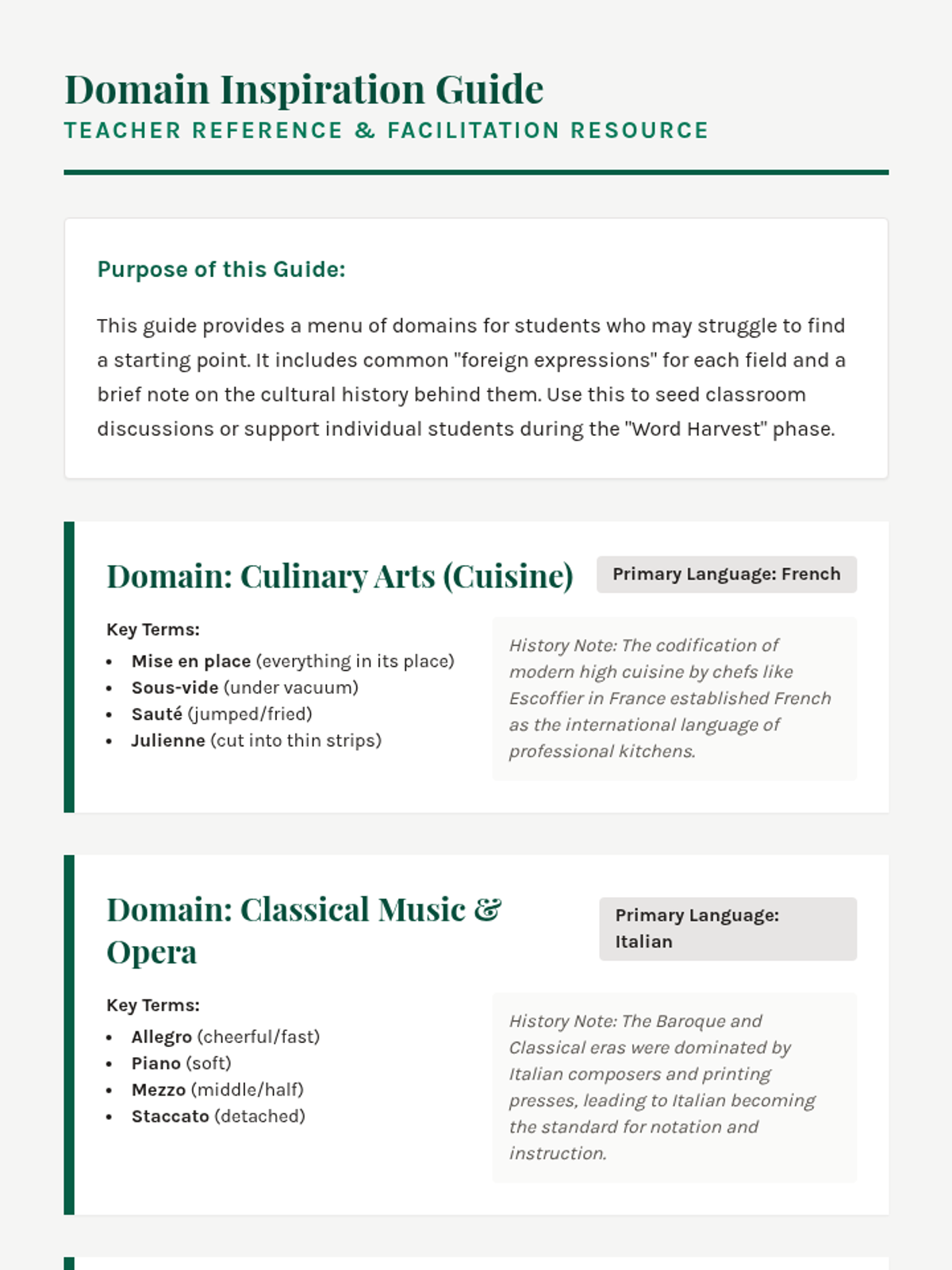
Students explore specialized vocabulary in various fields and select a domain of interest to begin their initial research into foreign terms.
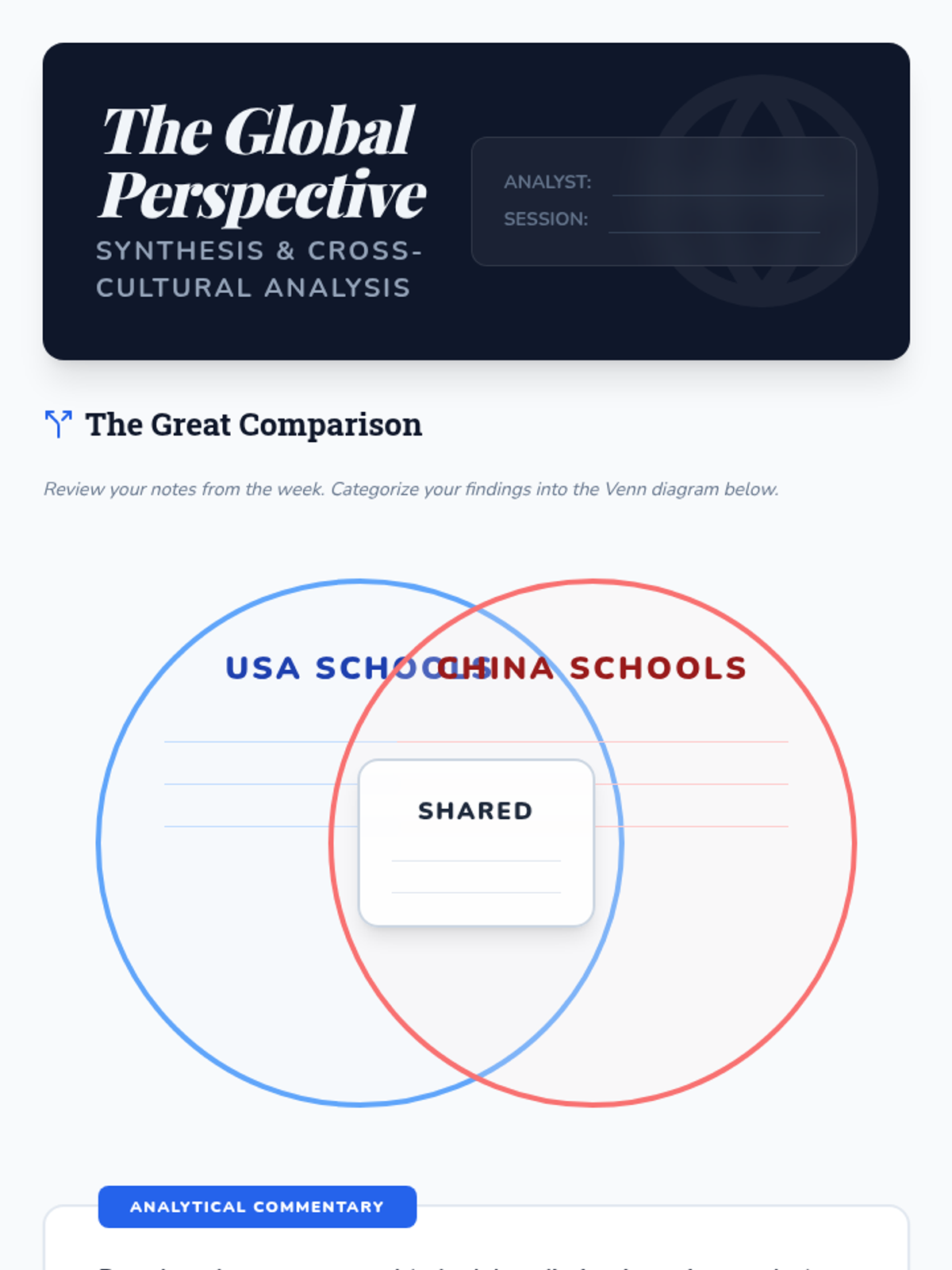
Synthesizing evidence from the week, students compare education styles and articulate their own perspectives using Venn diagrams and short written responses.
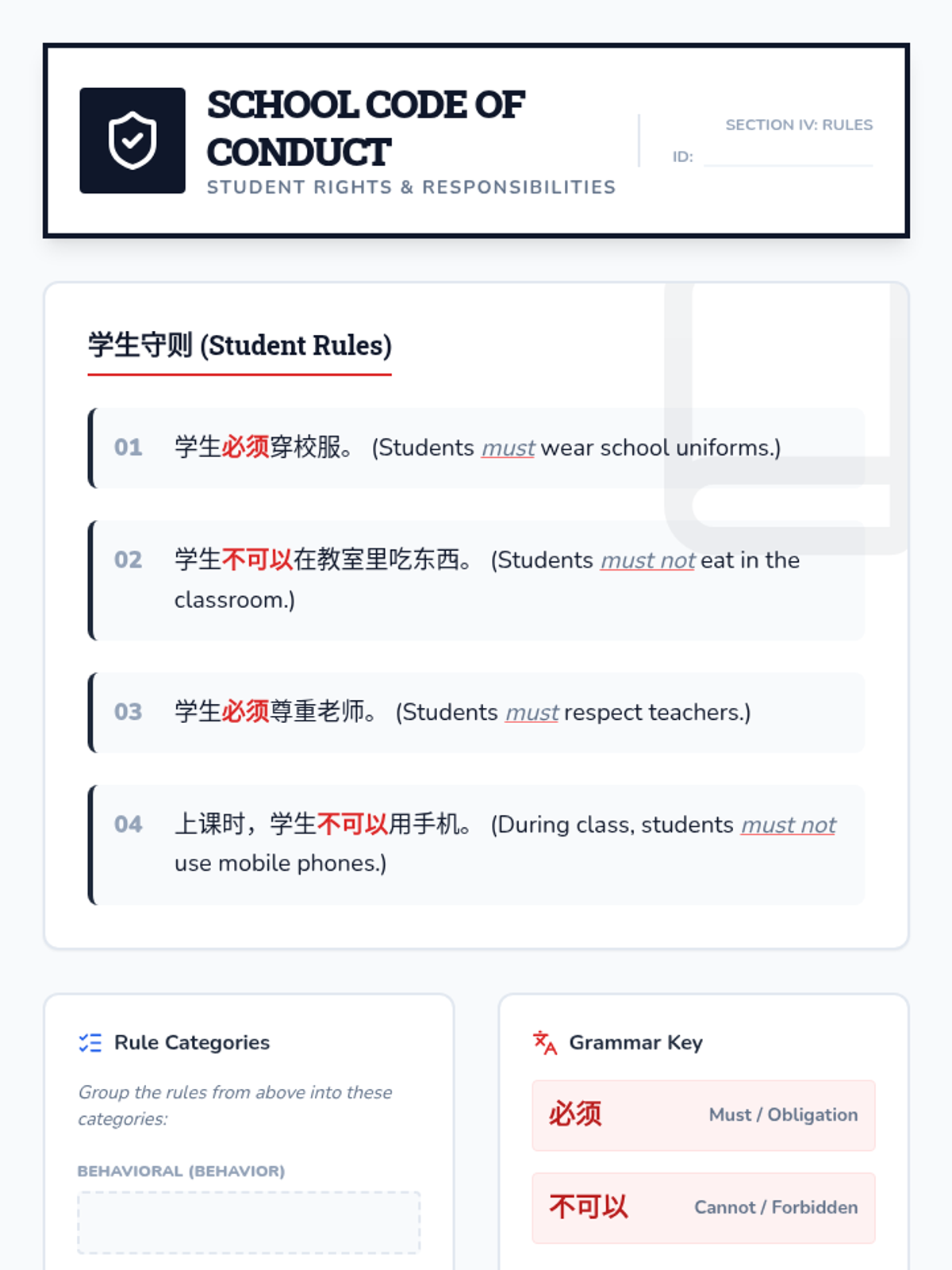
Students analyze school rules and codes of conduct using imperative and modal verbs to understand behavioral and academic expectations.
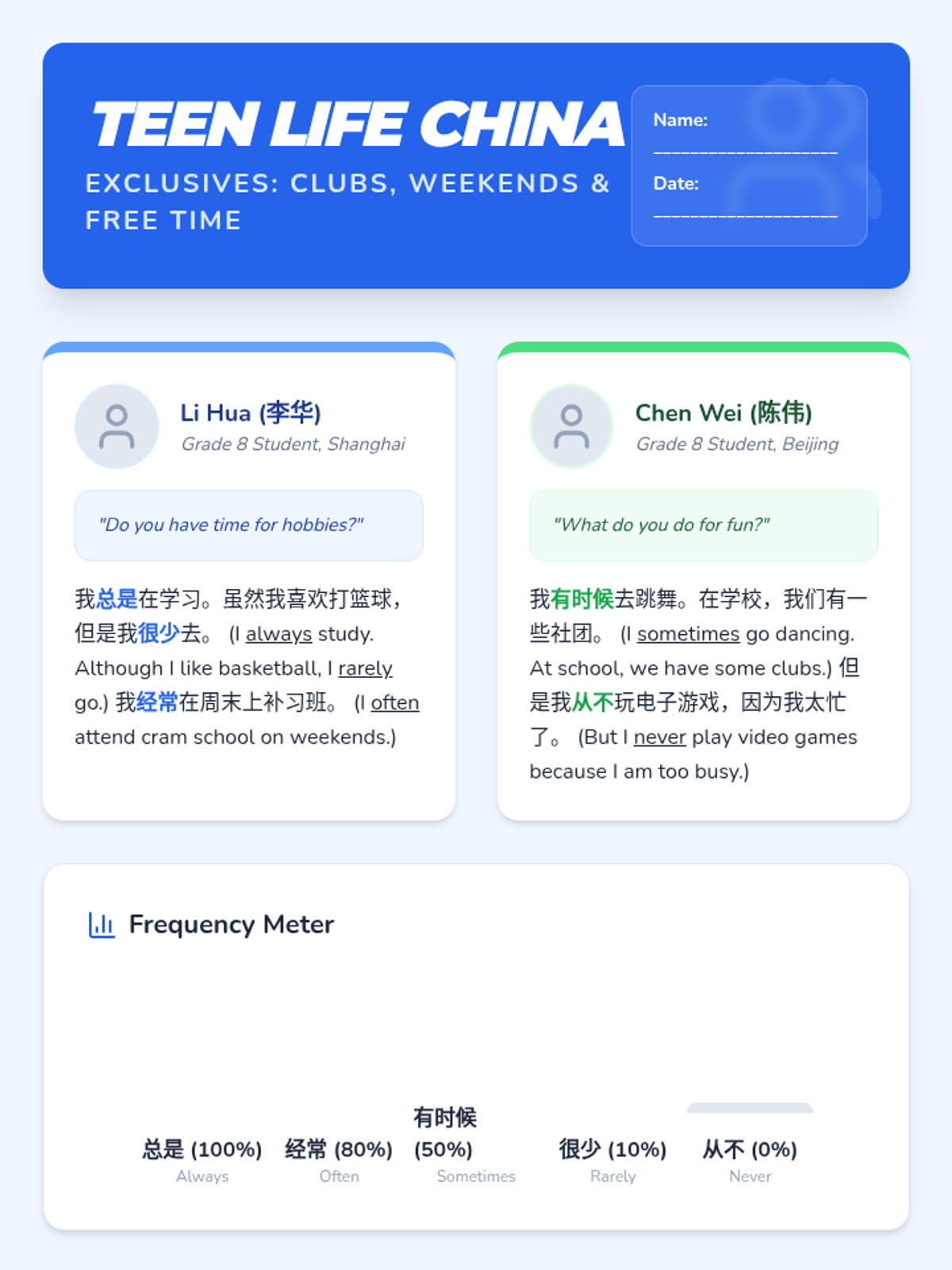
Students explore texts about extracurricular activities and social life, focusing on frequency adverbs and the balance between study and play.
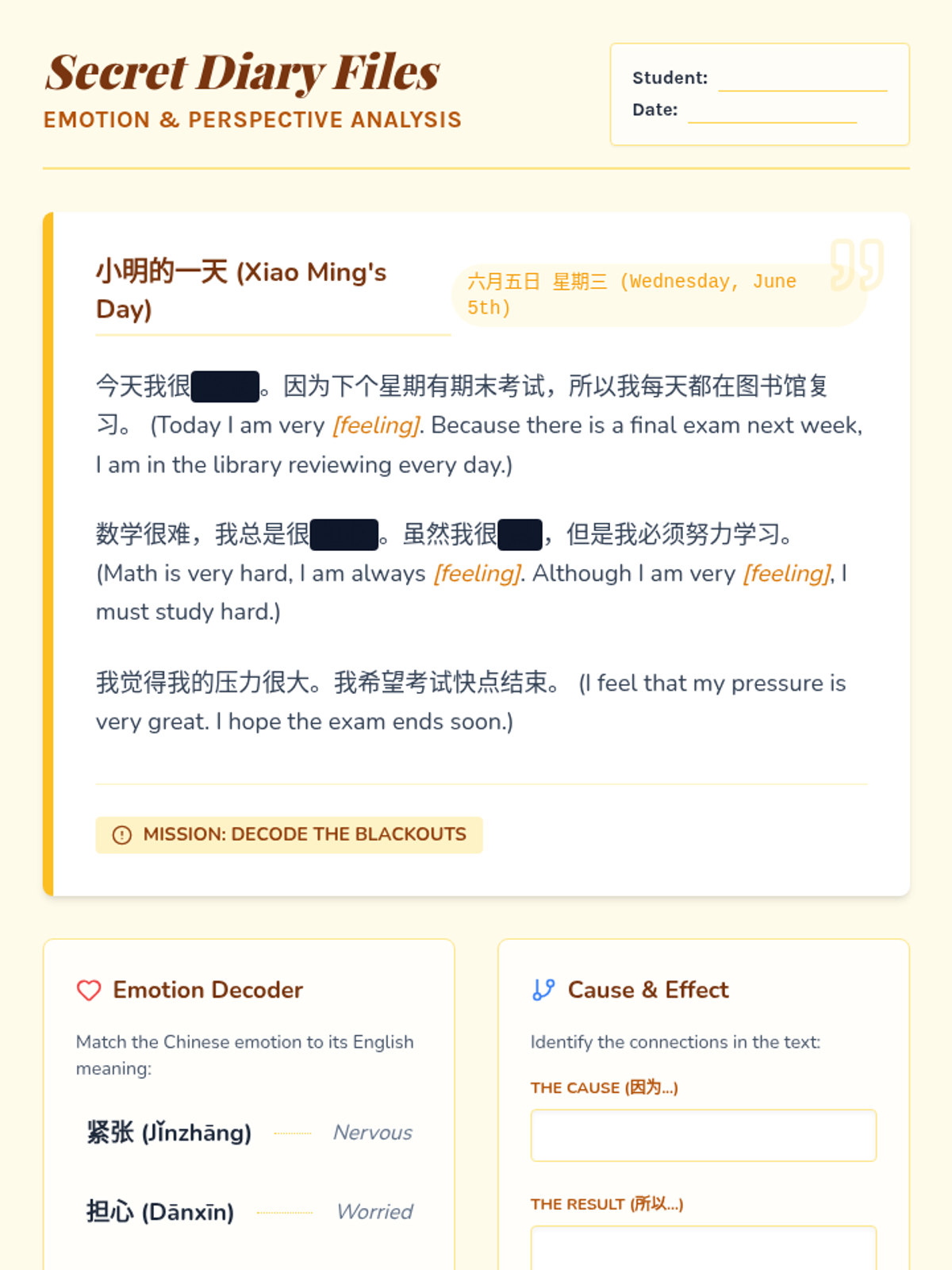
Focusing on emotional tone and cause-effect structures, students read personal diary entries to understand the feelings and pressures of Chinese peers.
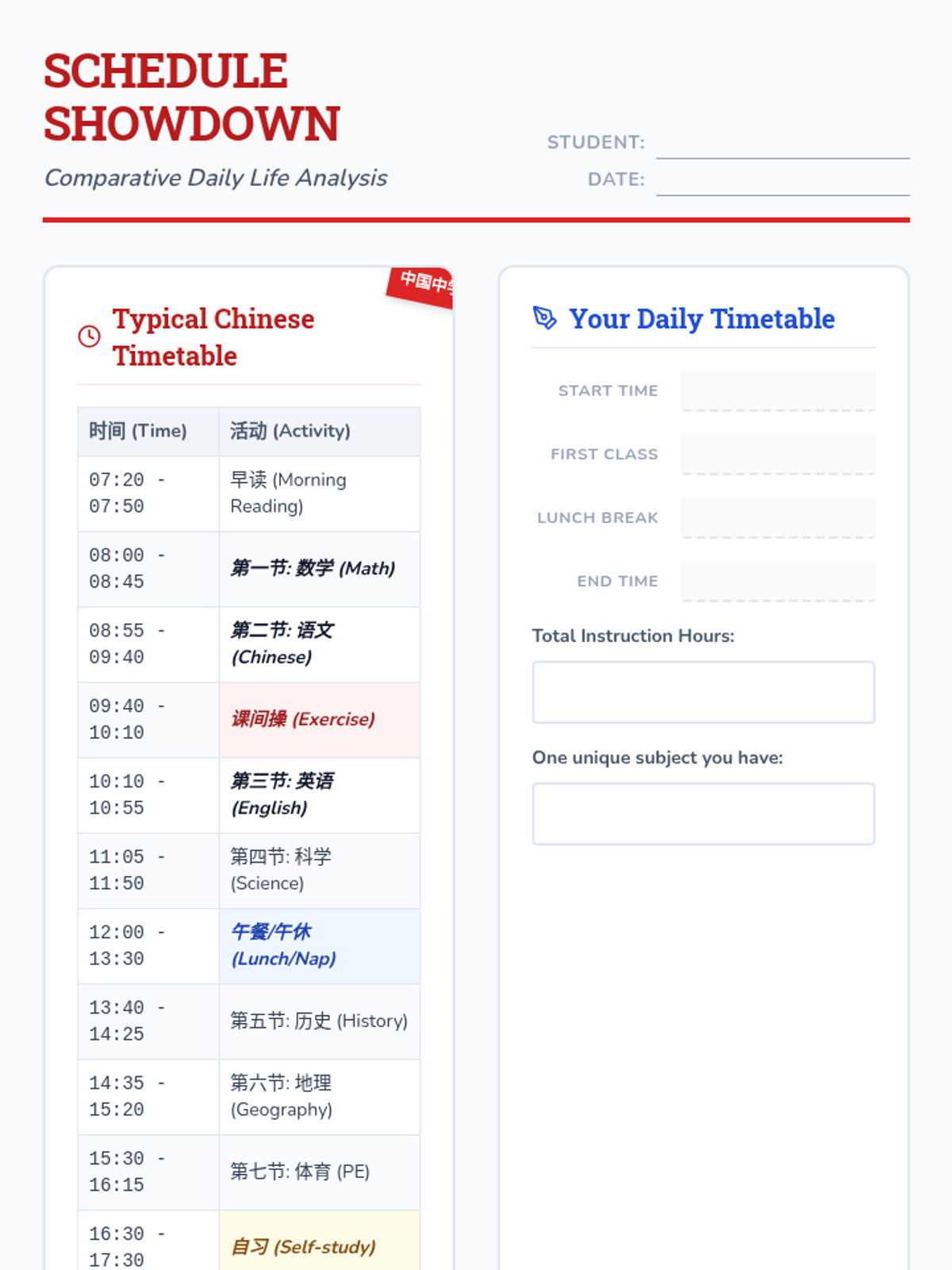
Students read and analyze a typical Chinese middle school timetable, comparing it to their own to understand the structure of the school day and academic subjects.