Comprehensive French language instruction spanning basic literacy to advanced oral and written communication. Strengthens grammar, vocabulary, and cultural understanding through targeted exercises in listening, reading, and composition.
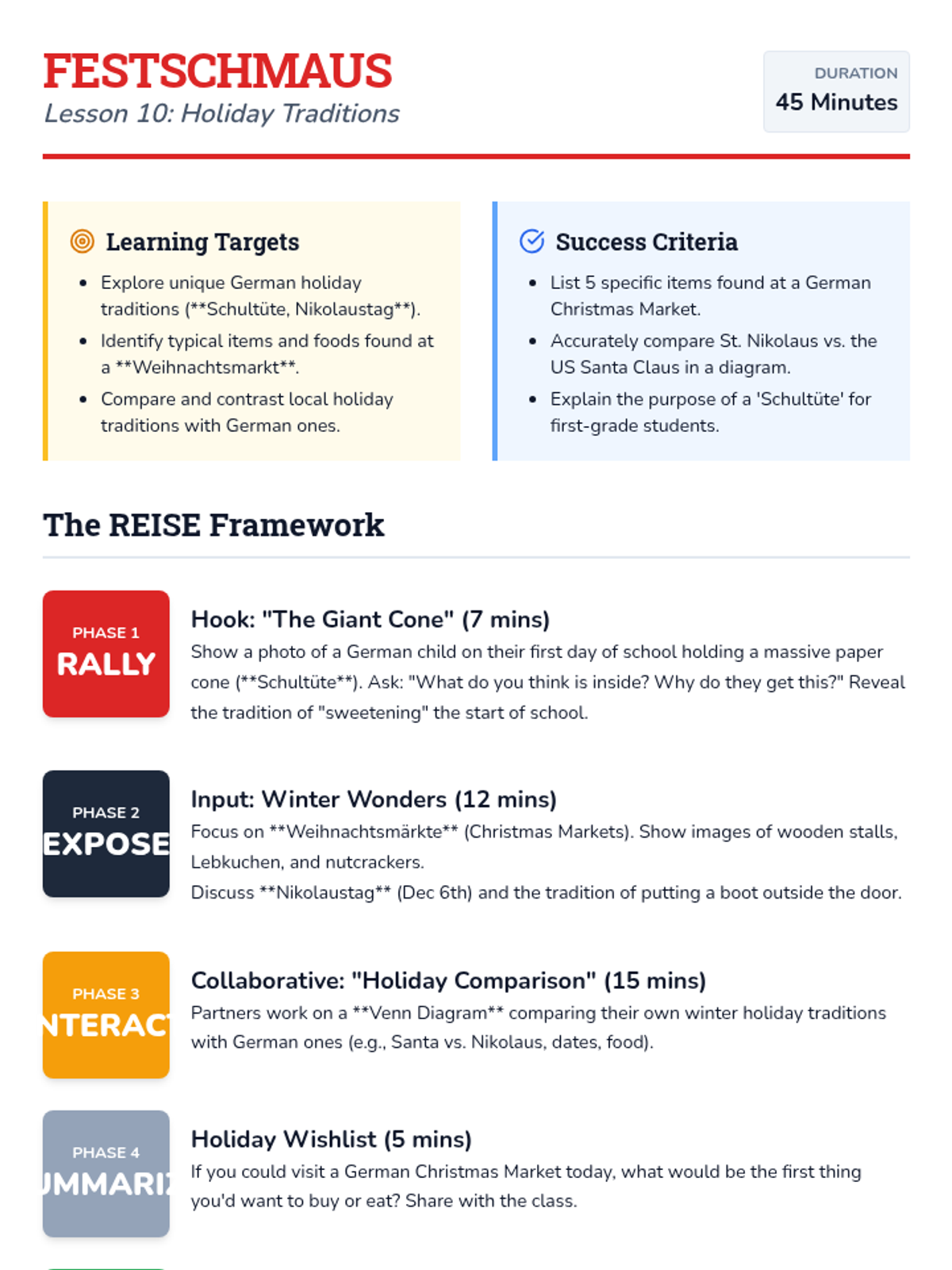
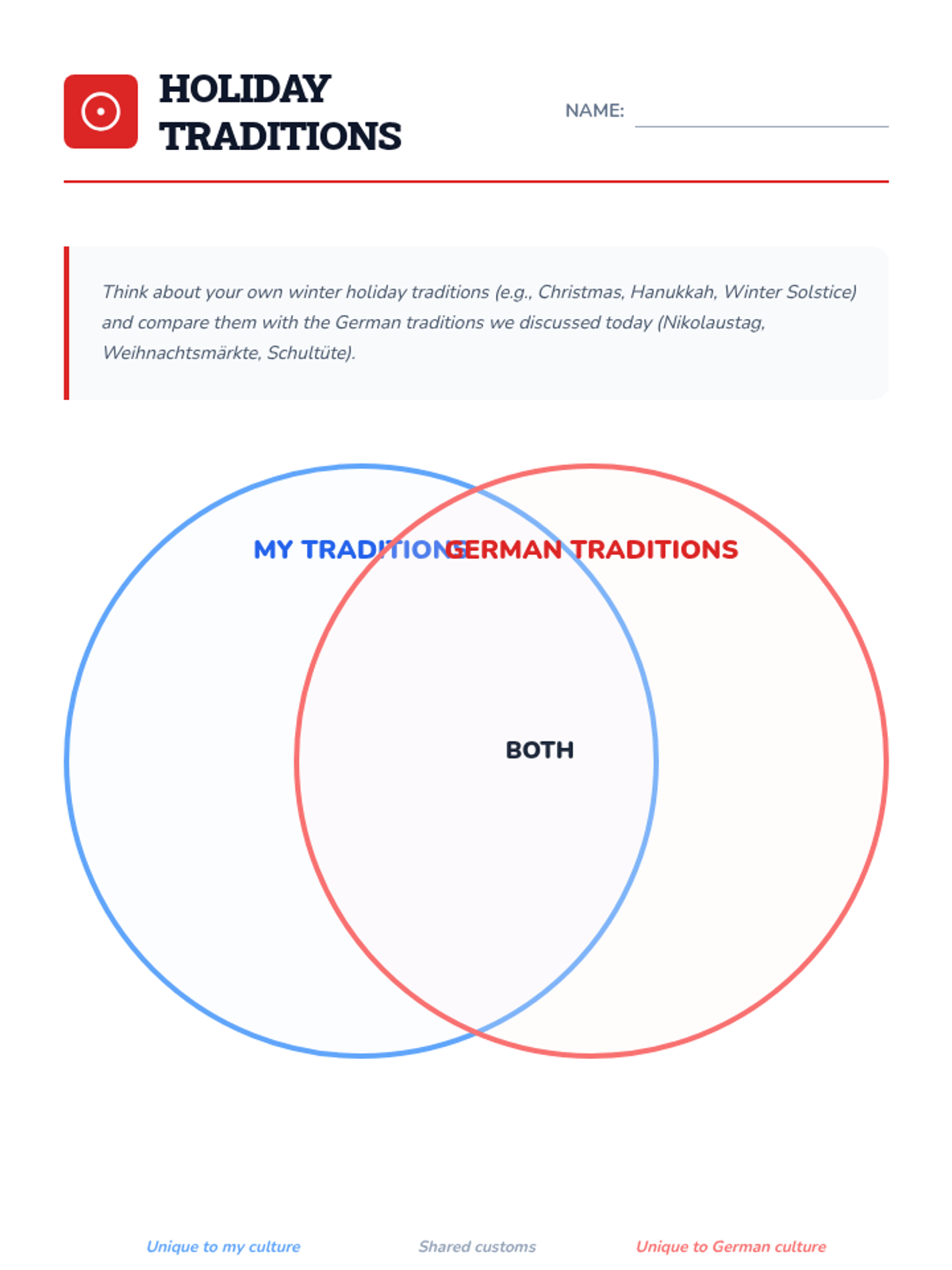
A festive conclusion focusing on German holiday traditions, including 'Schultüte' and 'Weihnachtsmärkte'. Students compare local and German celebrations using Venn diagrams.
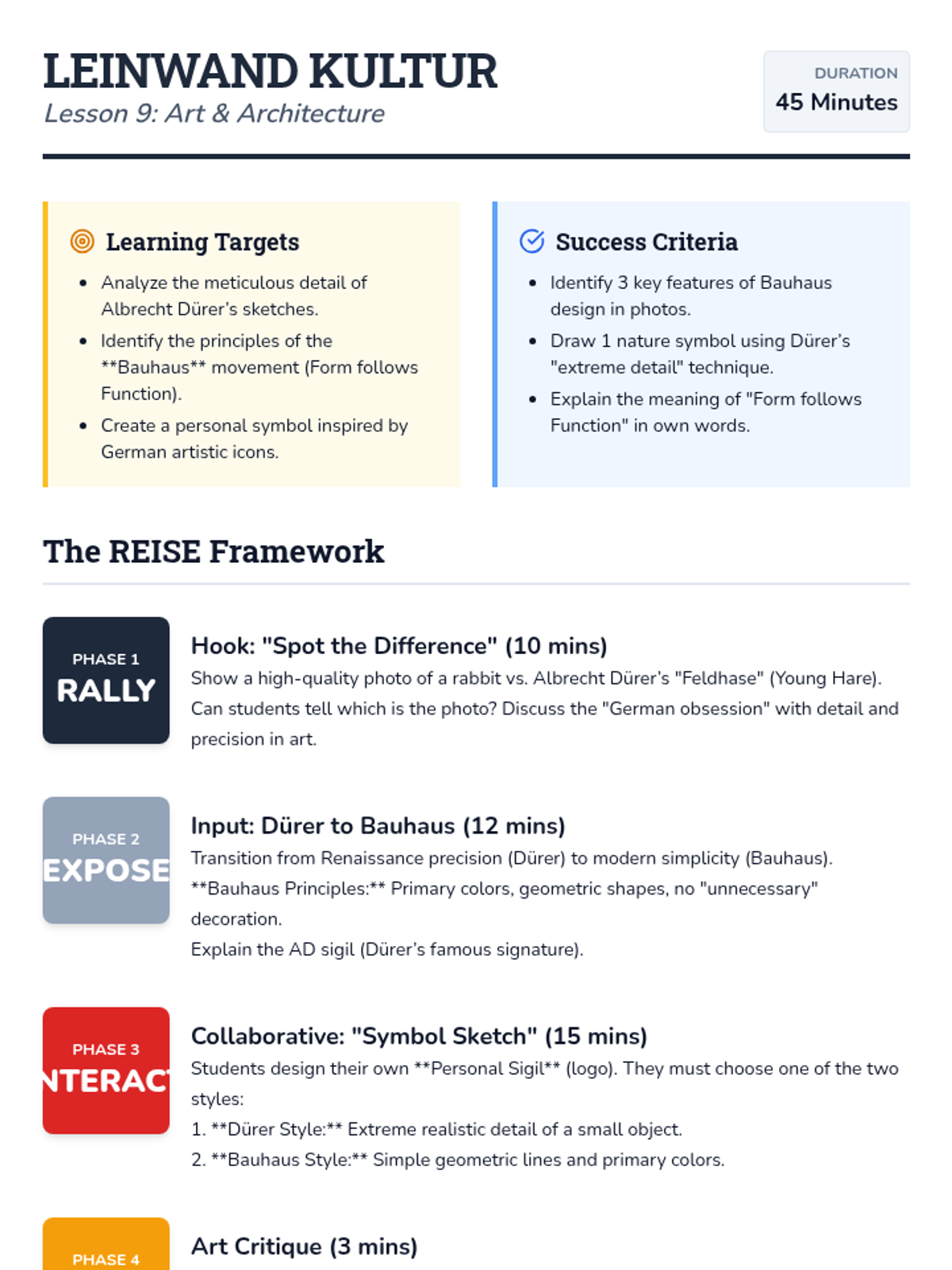
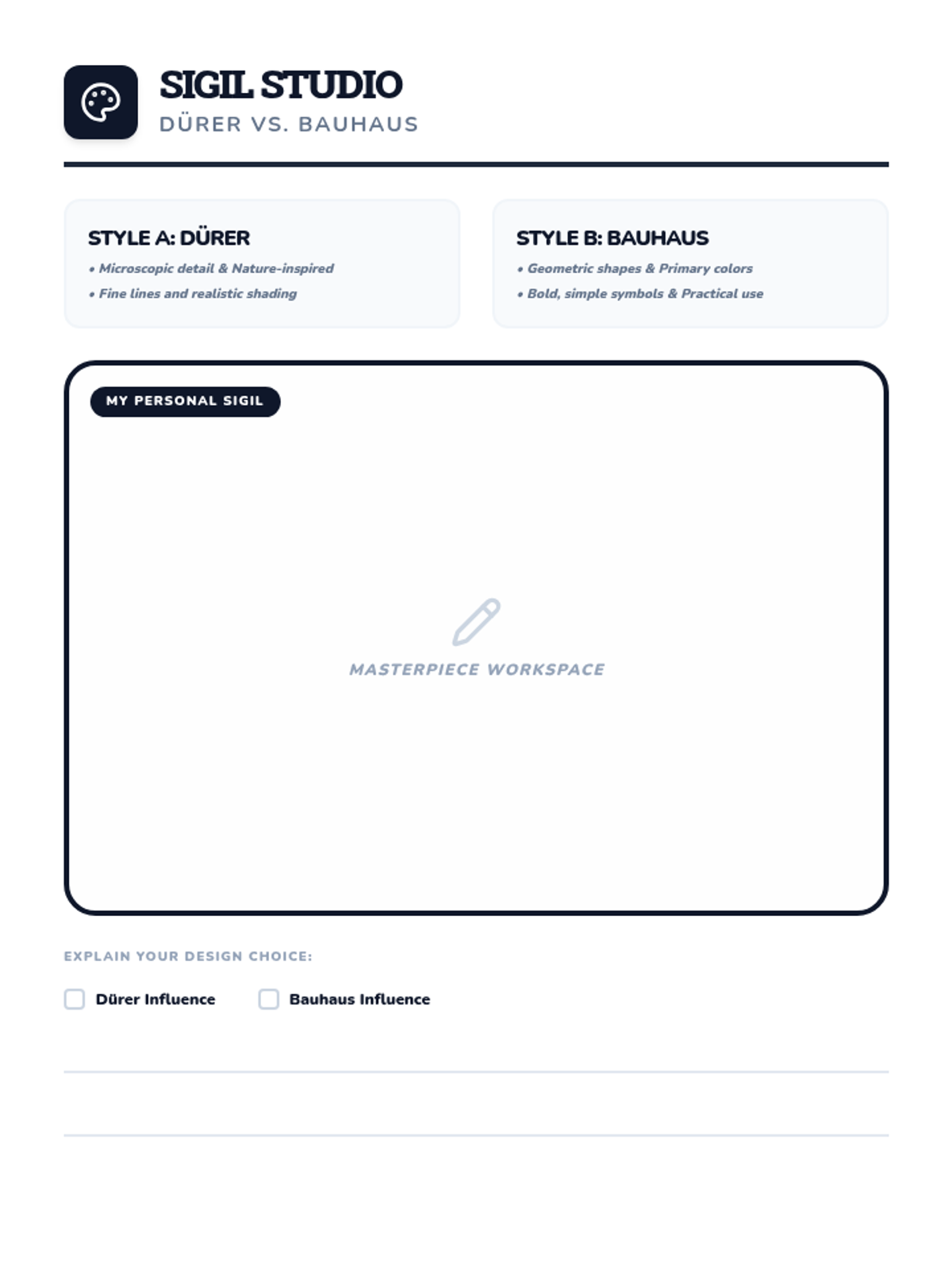
Analyzing the meticulous detail of Albrecht Dürer and the modernism of the Bauhaus movement. Students create their own symbols inspired by these German artistic icons.
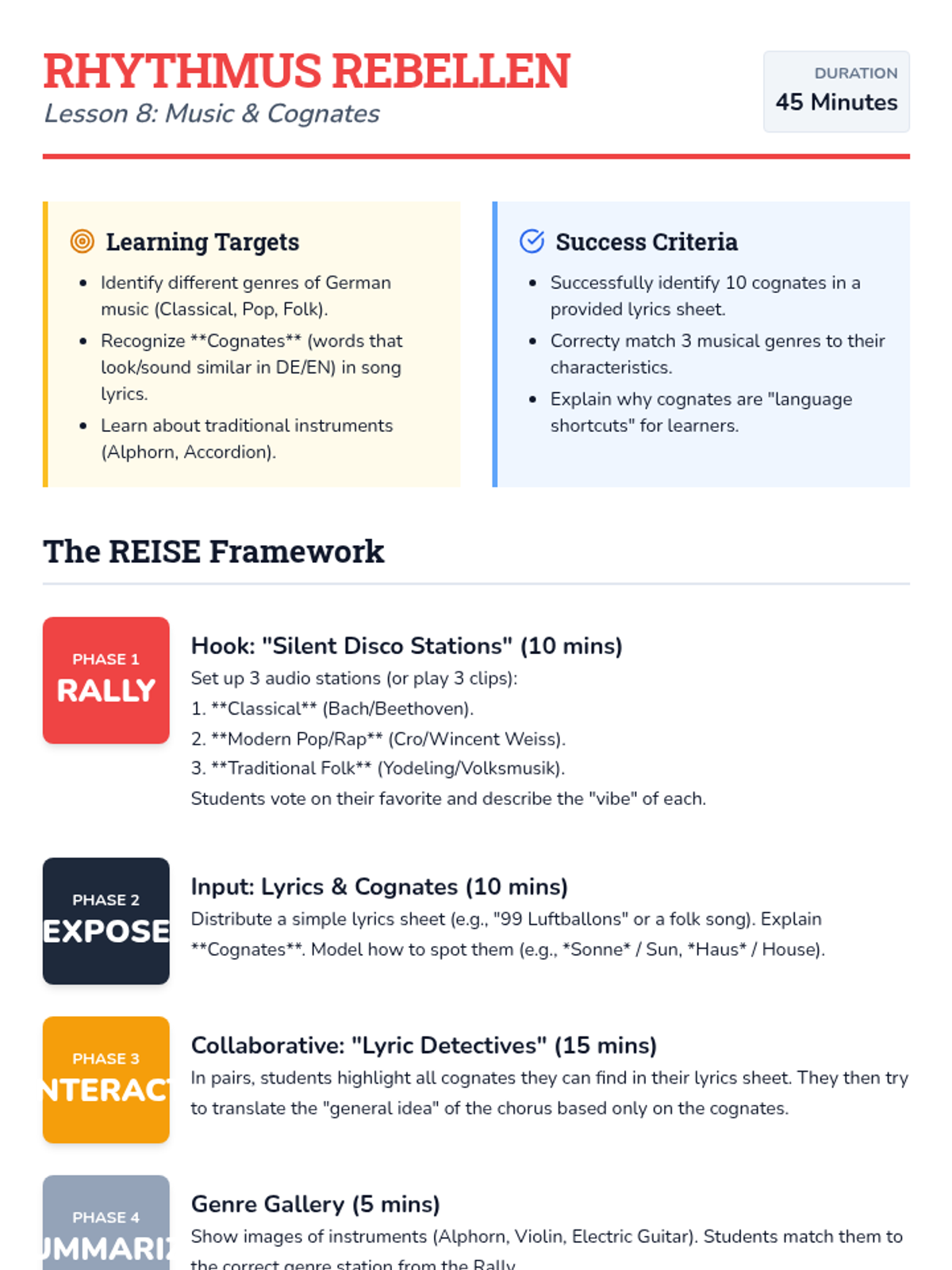
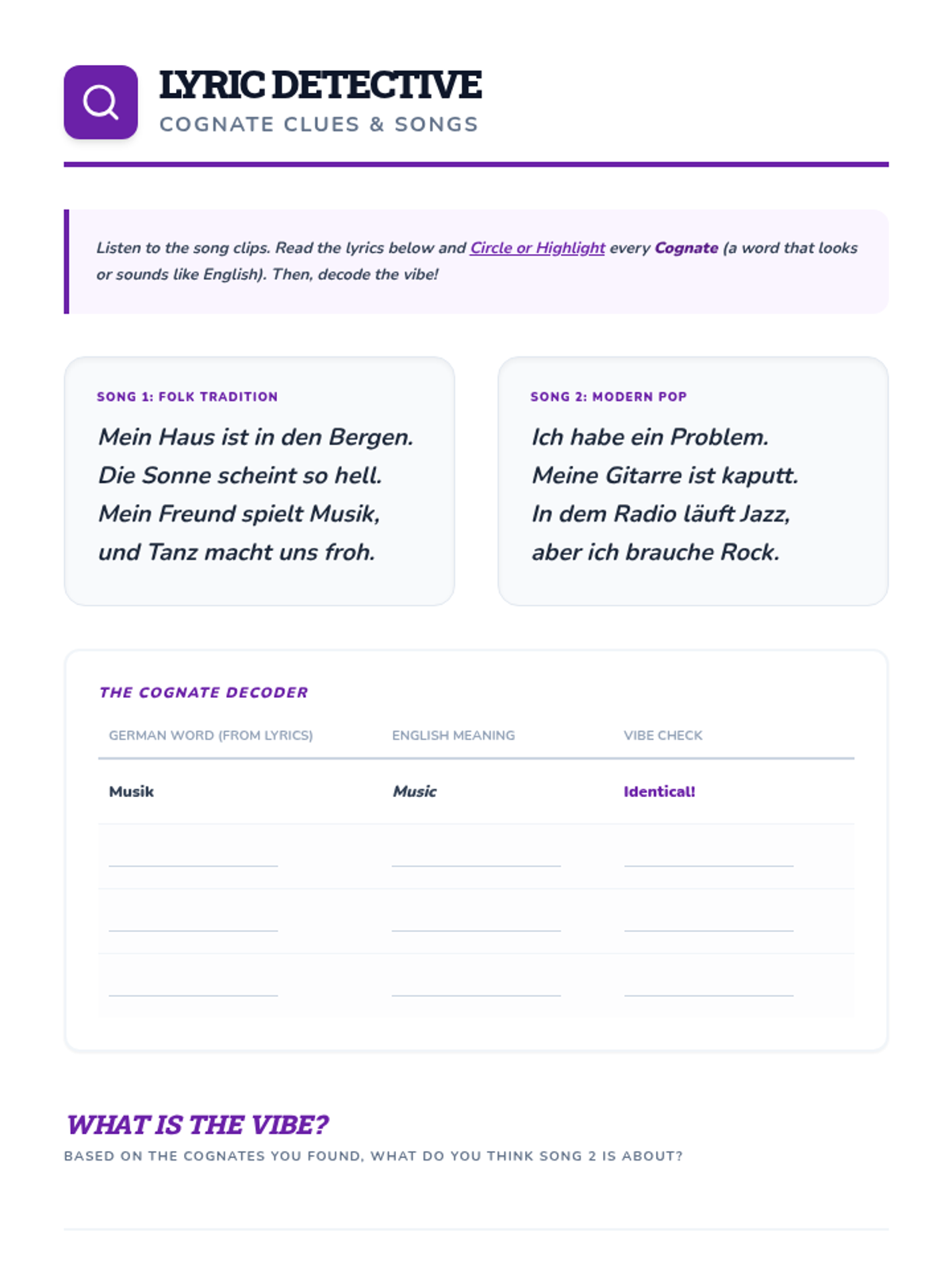
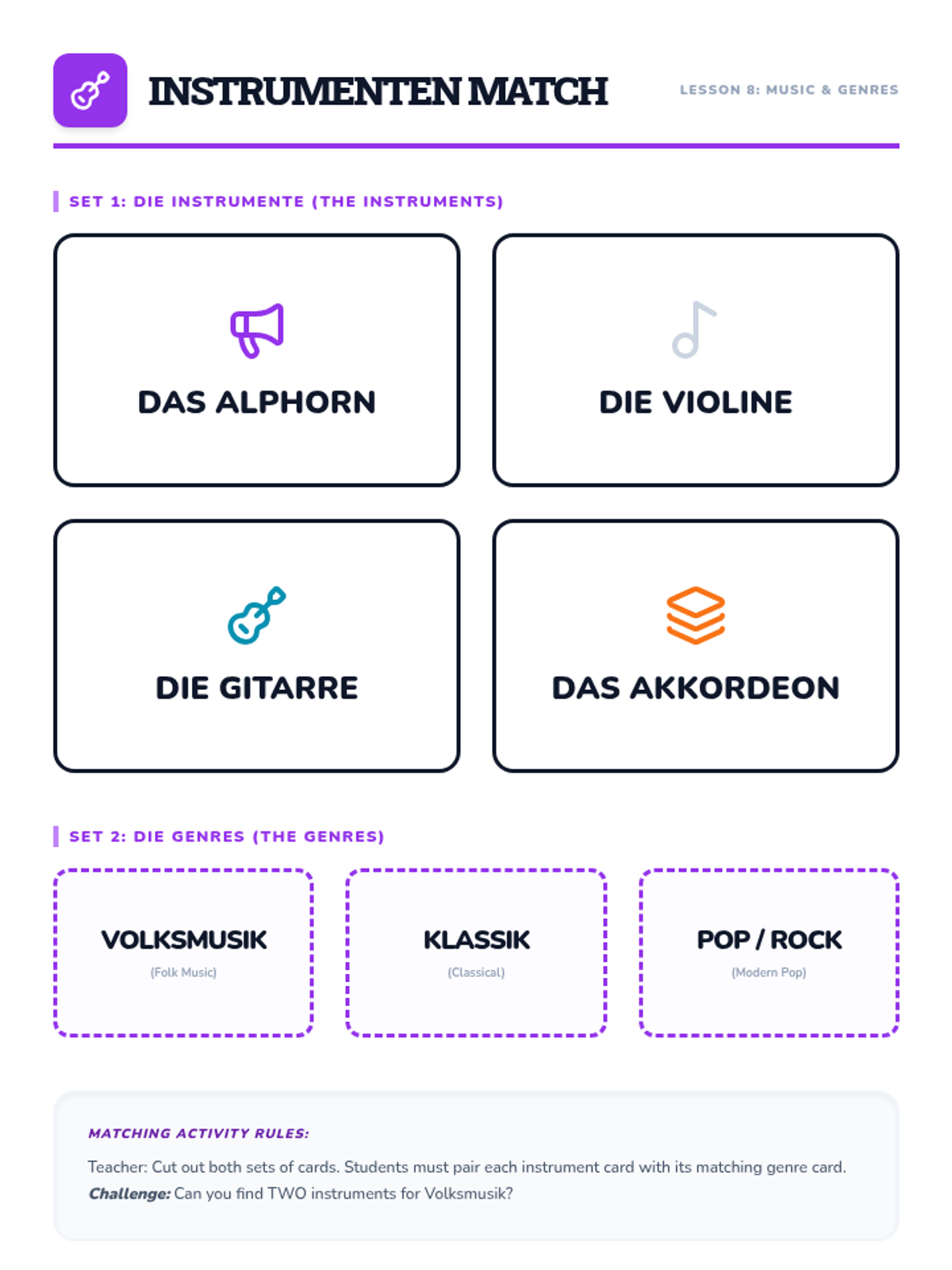
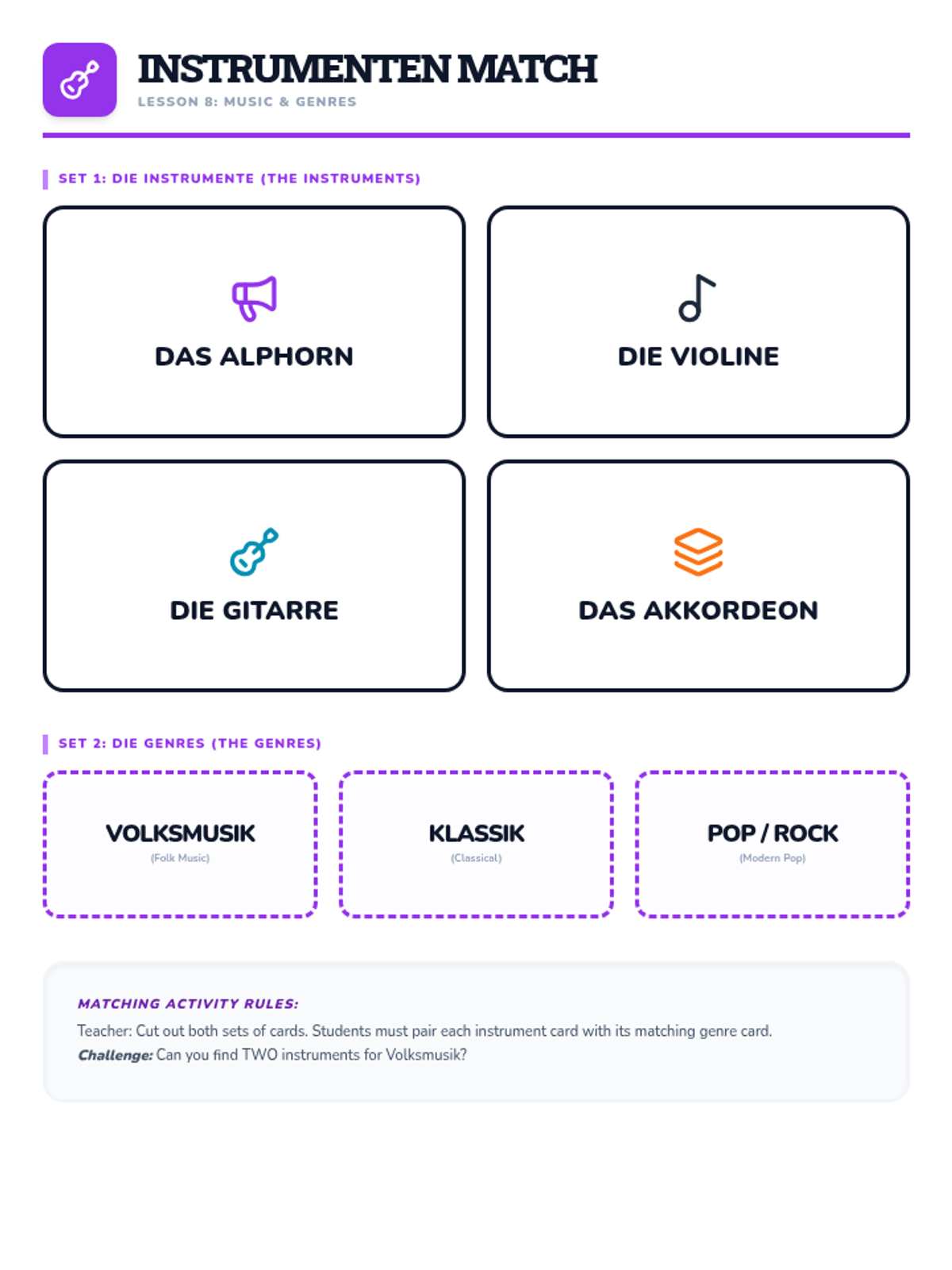
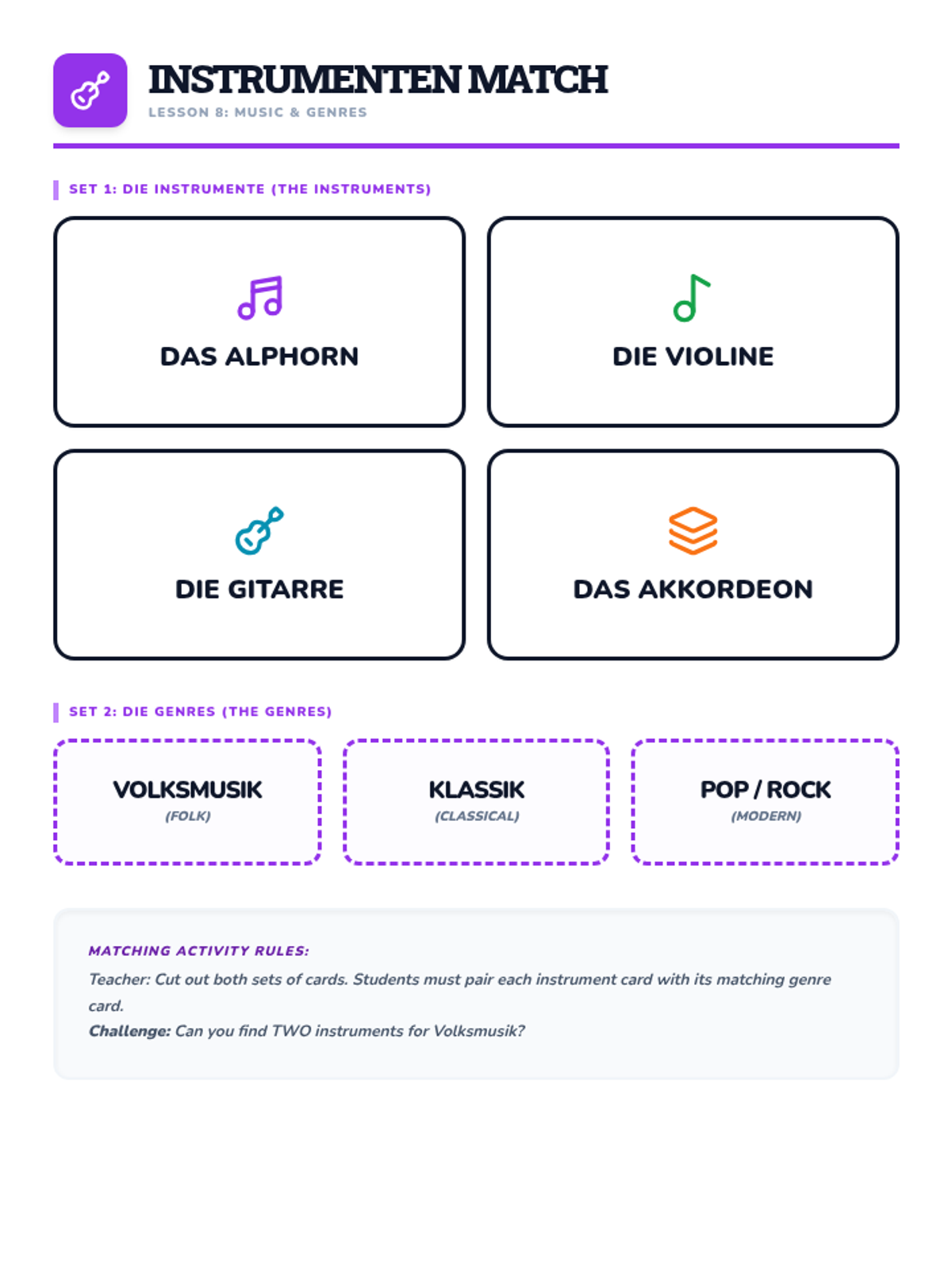
An exploration of German music from classical roots to modern pop and folk. Students analyze lyrics for cognates and identify traditional instruments.
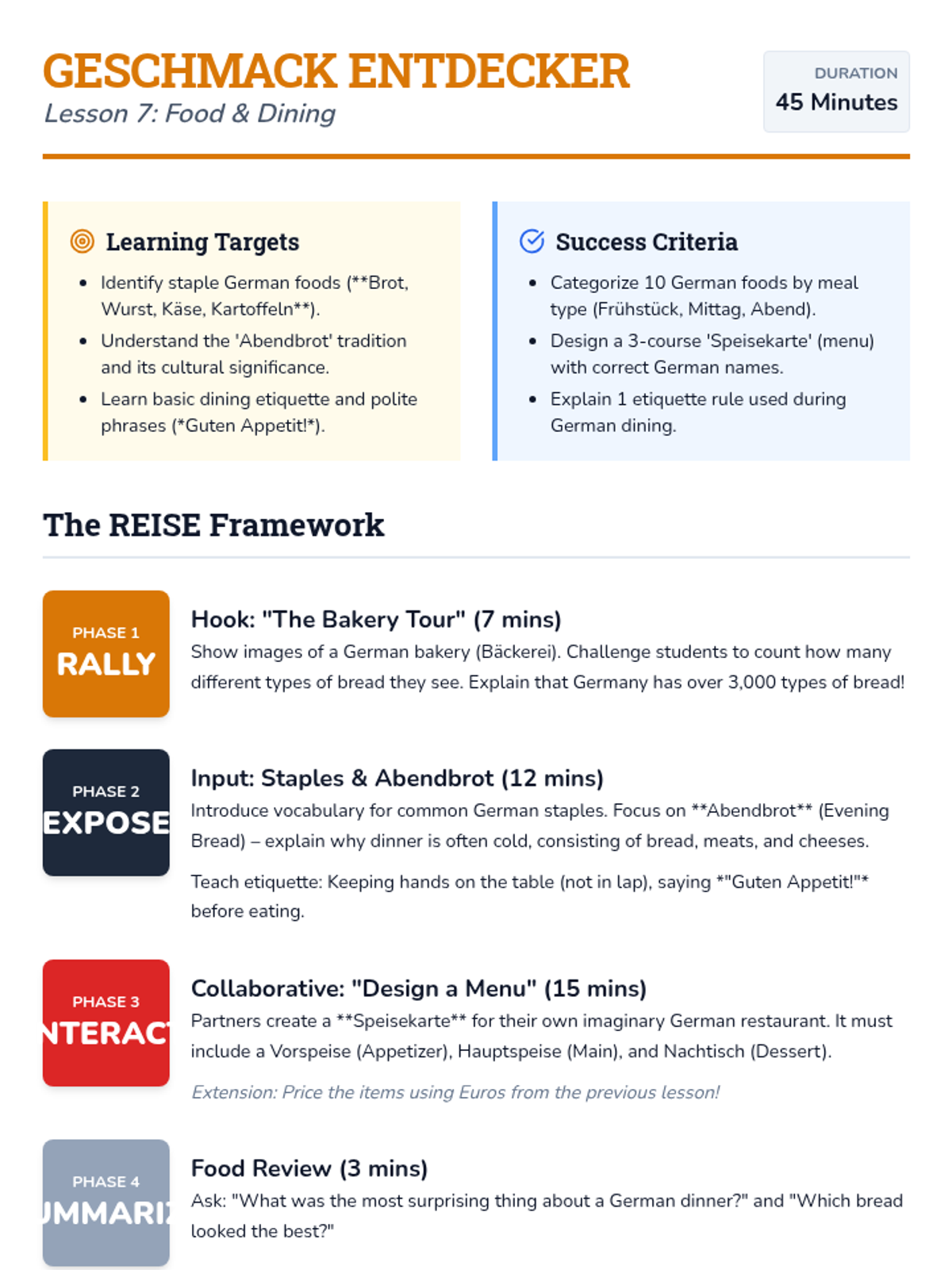
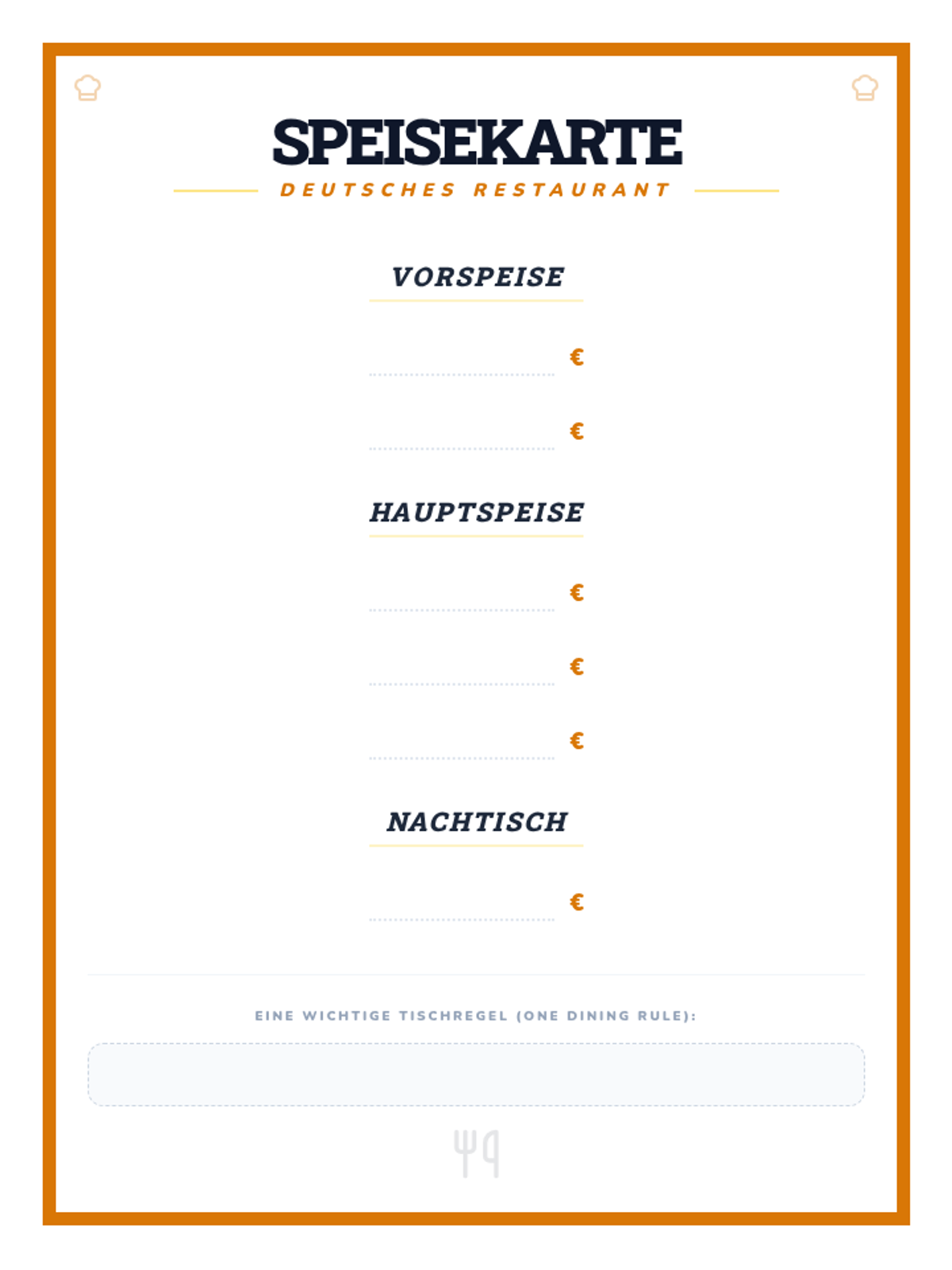
A culinary tour of German staples like bread and sausage. Students explore the 'Abendbrot' tradition and design their own German menu (Speisekarte).
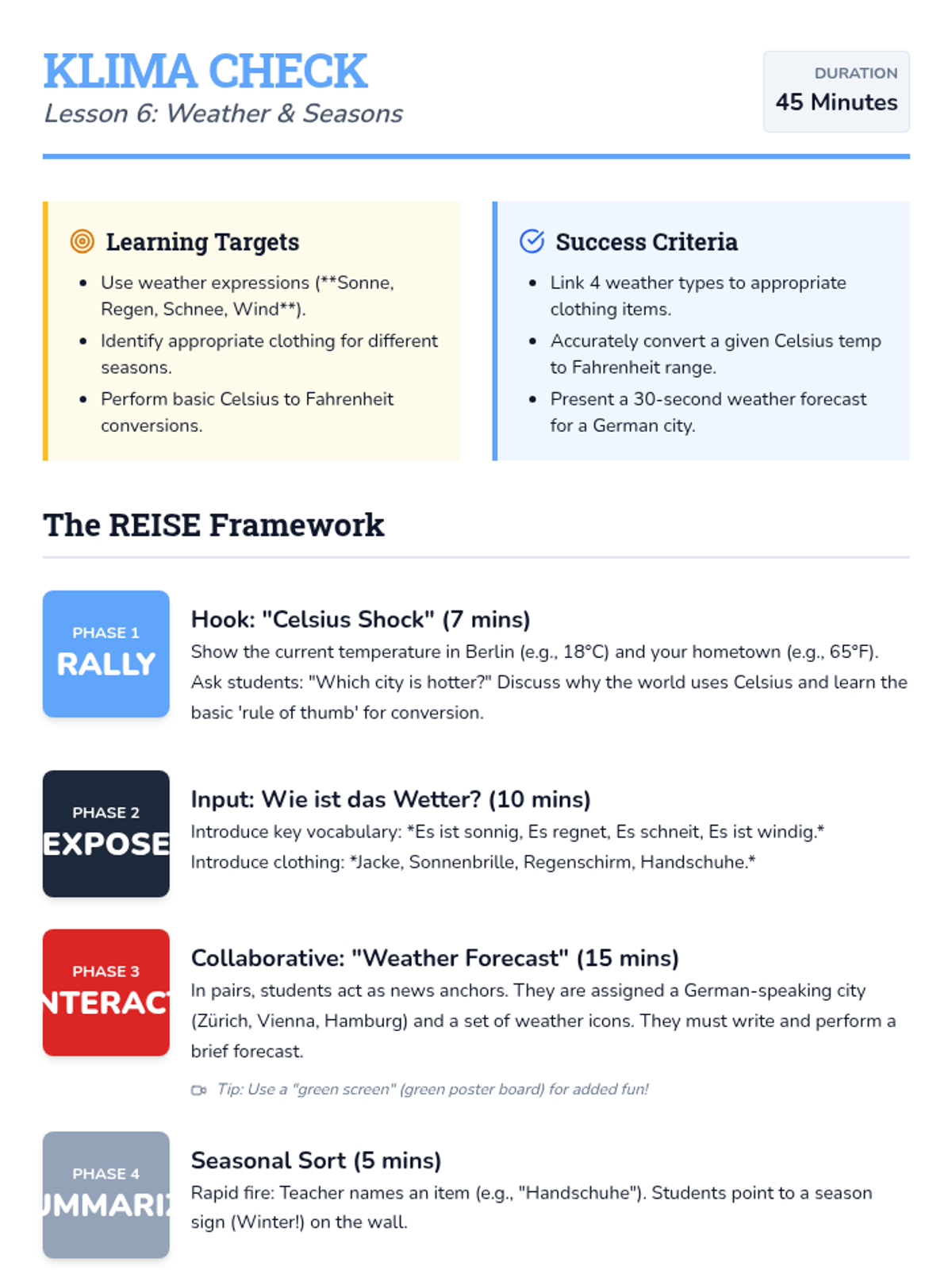
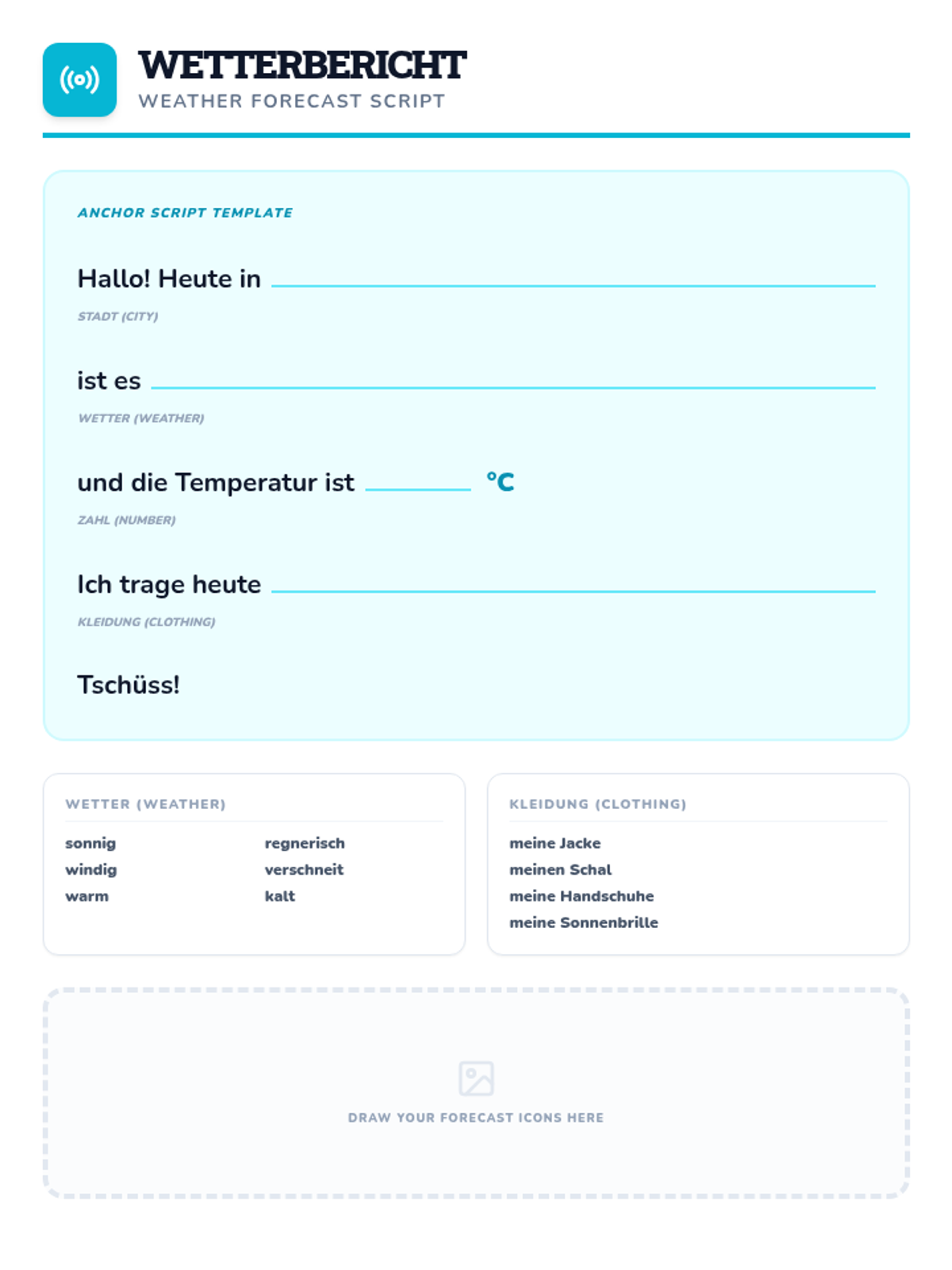
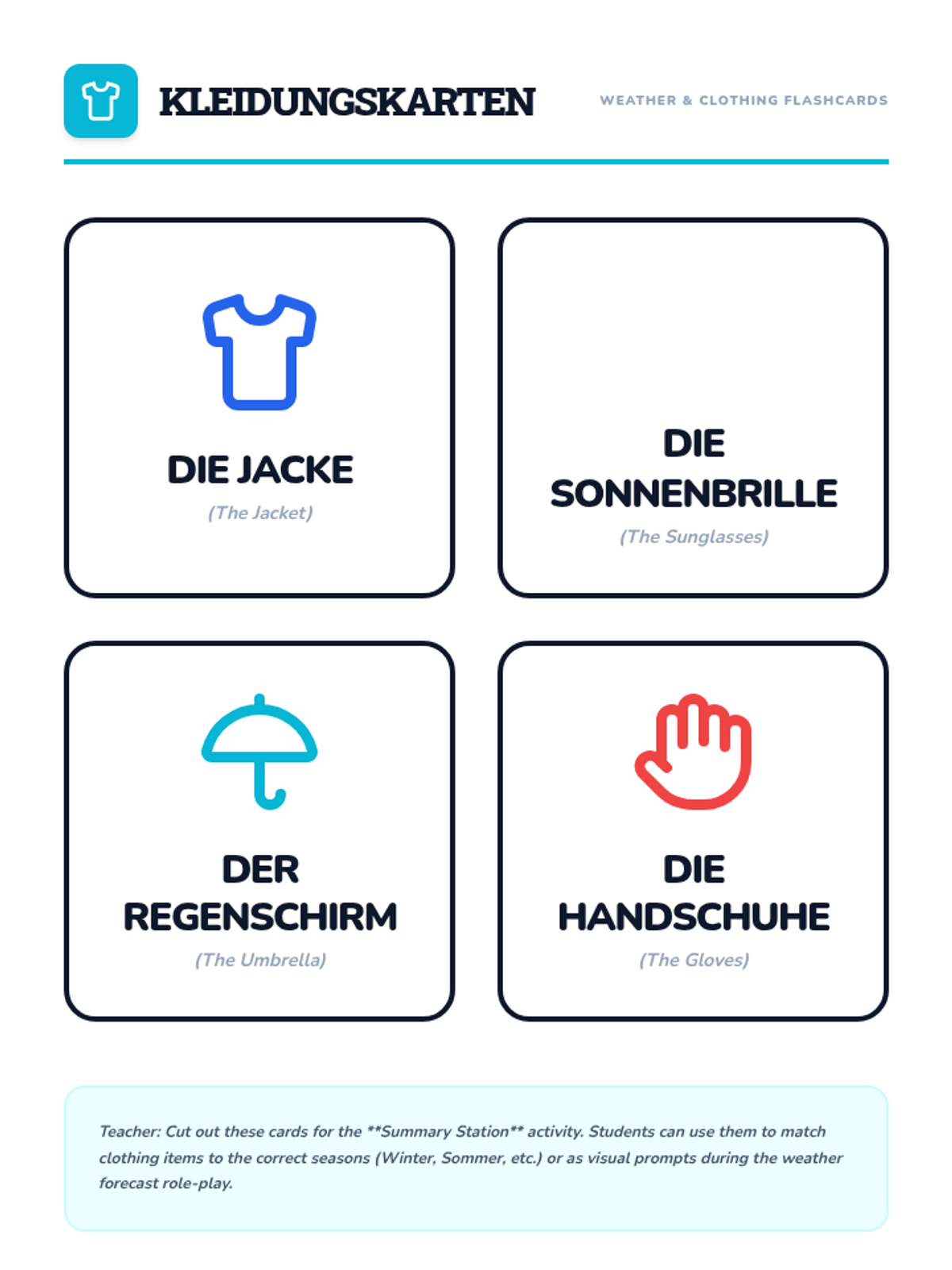
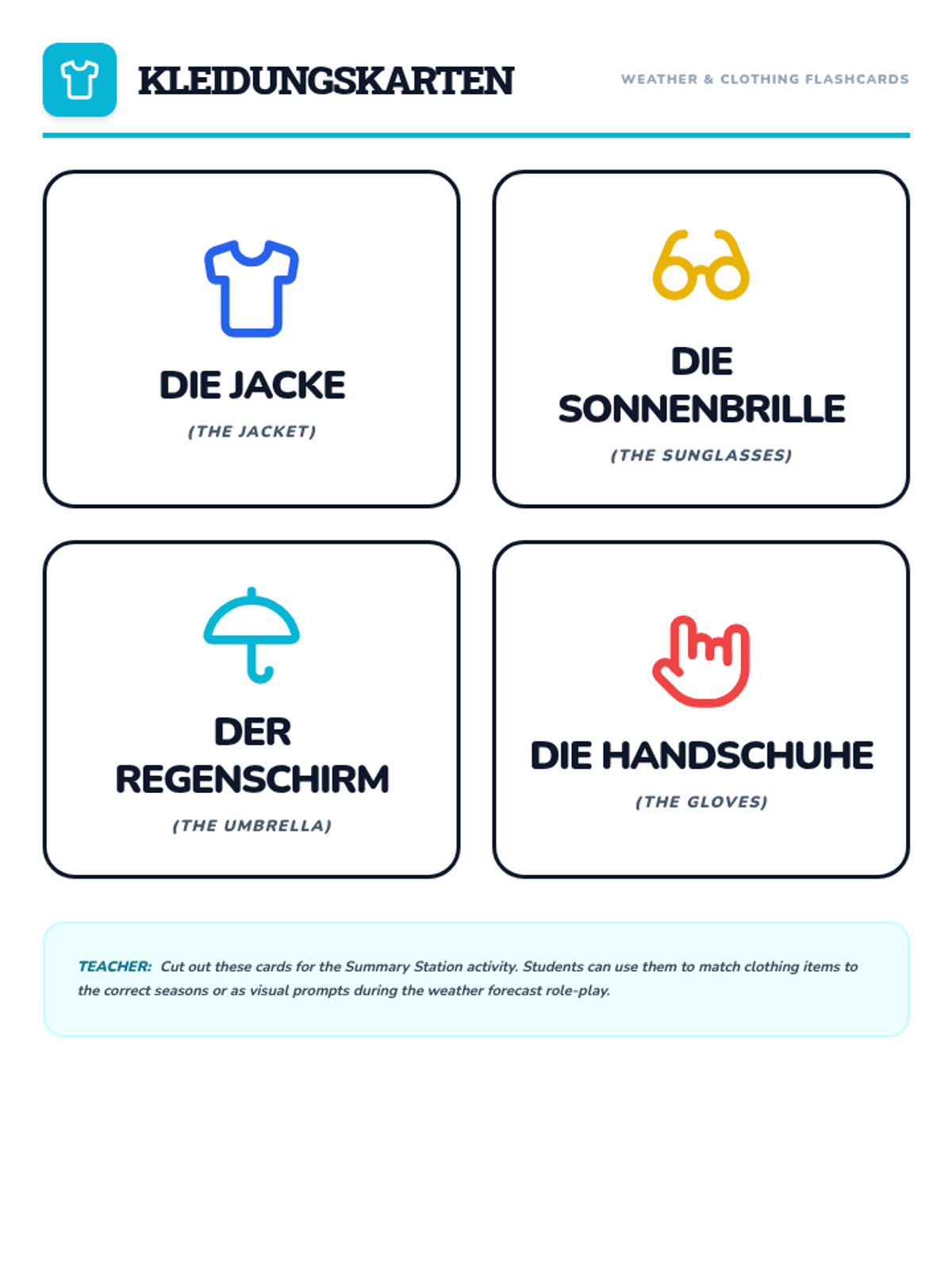
Weather expressions and seasonal clothing. Students convert Celsius to Fahrenheit and present a weather forecast for various German-speaking cities.
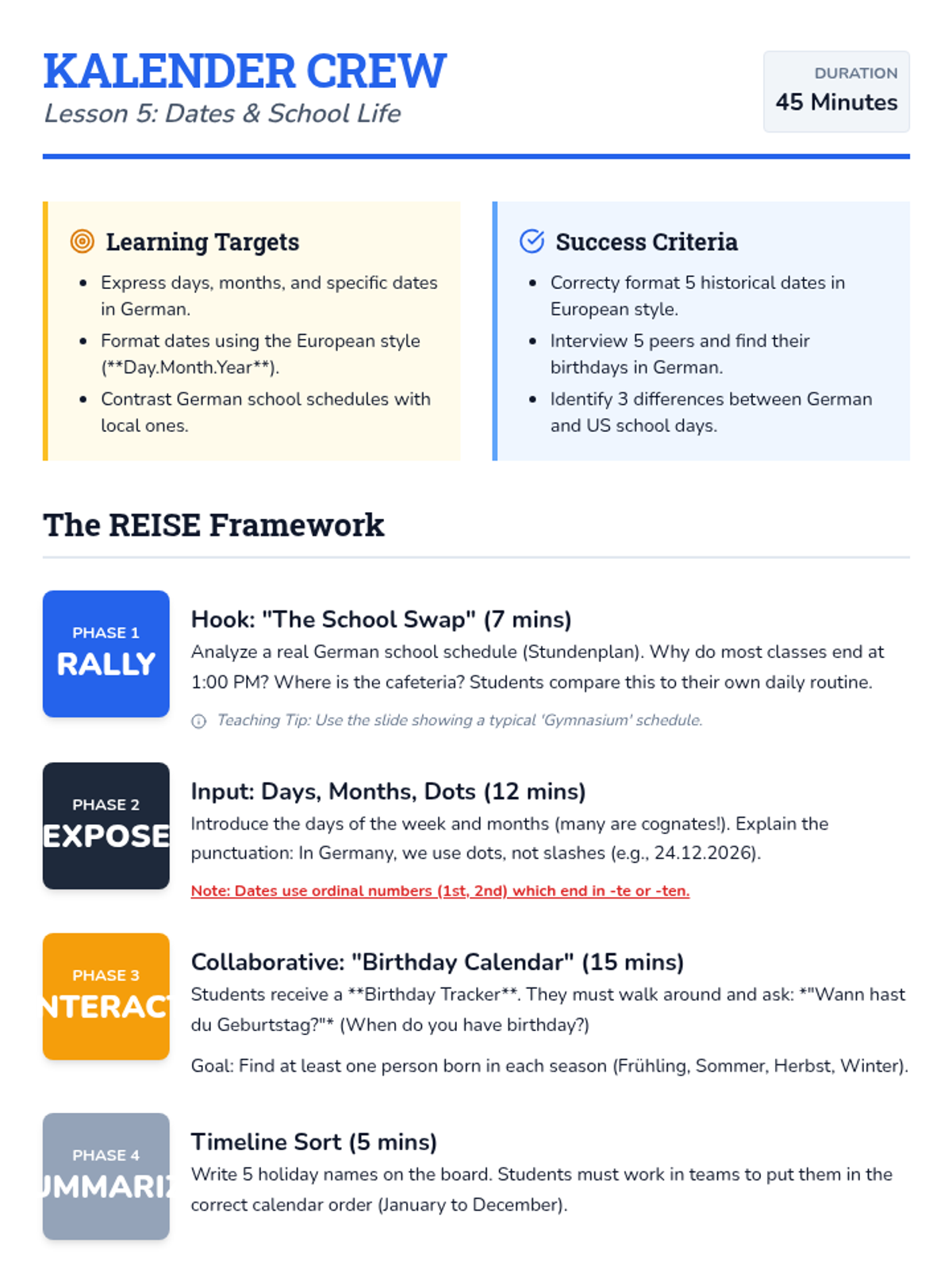
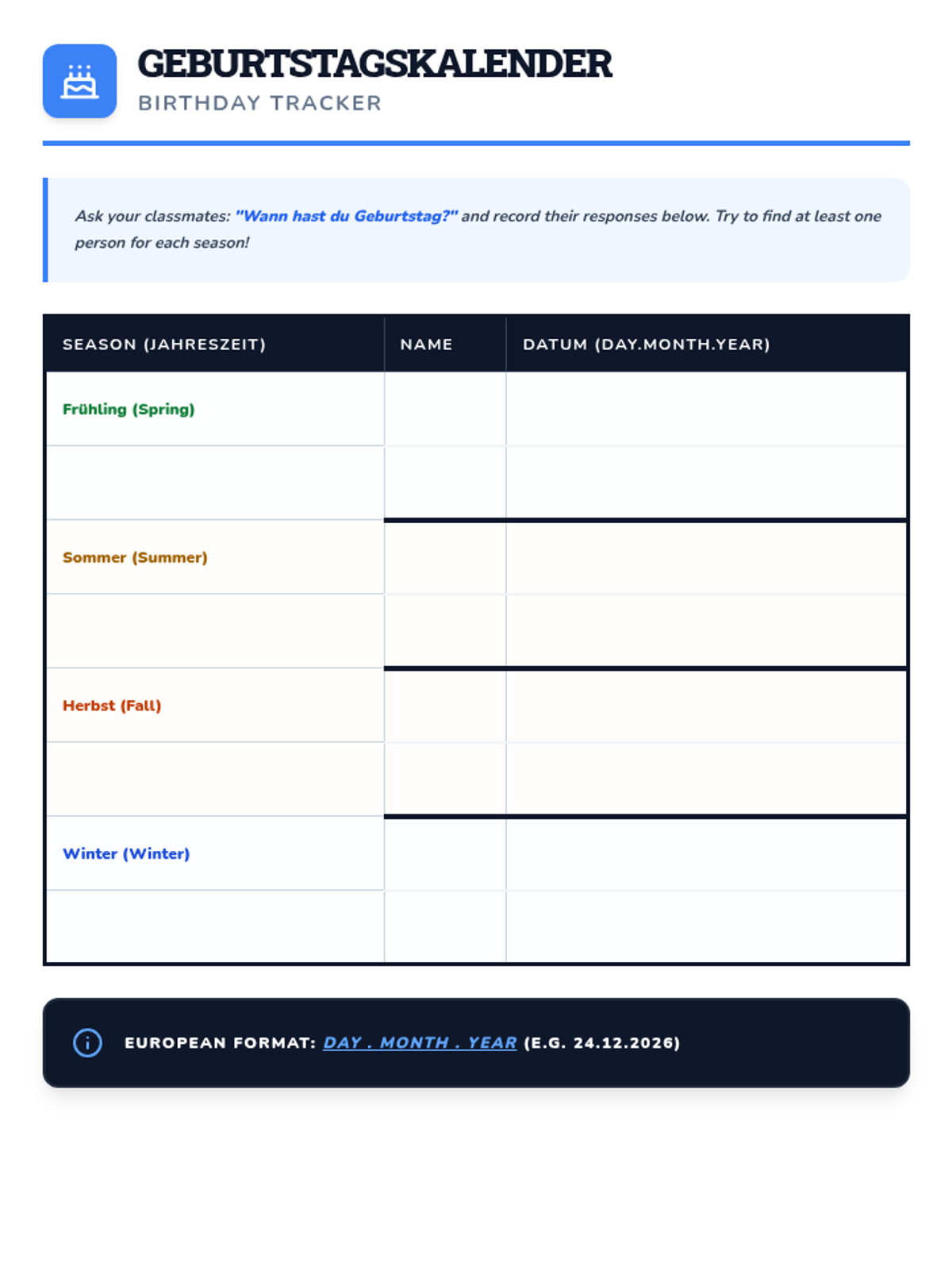
Exploring the German calendar and school system. Students learn date formatting (Day.Month.Year) and compare their school schedules with a typical German 'Halbtagsschule'.
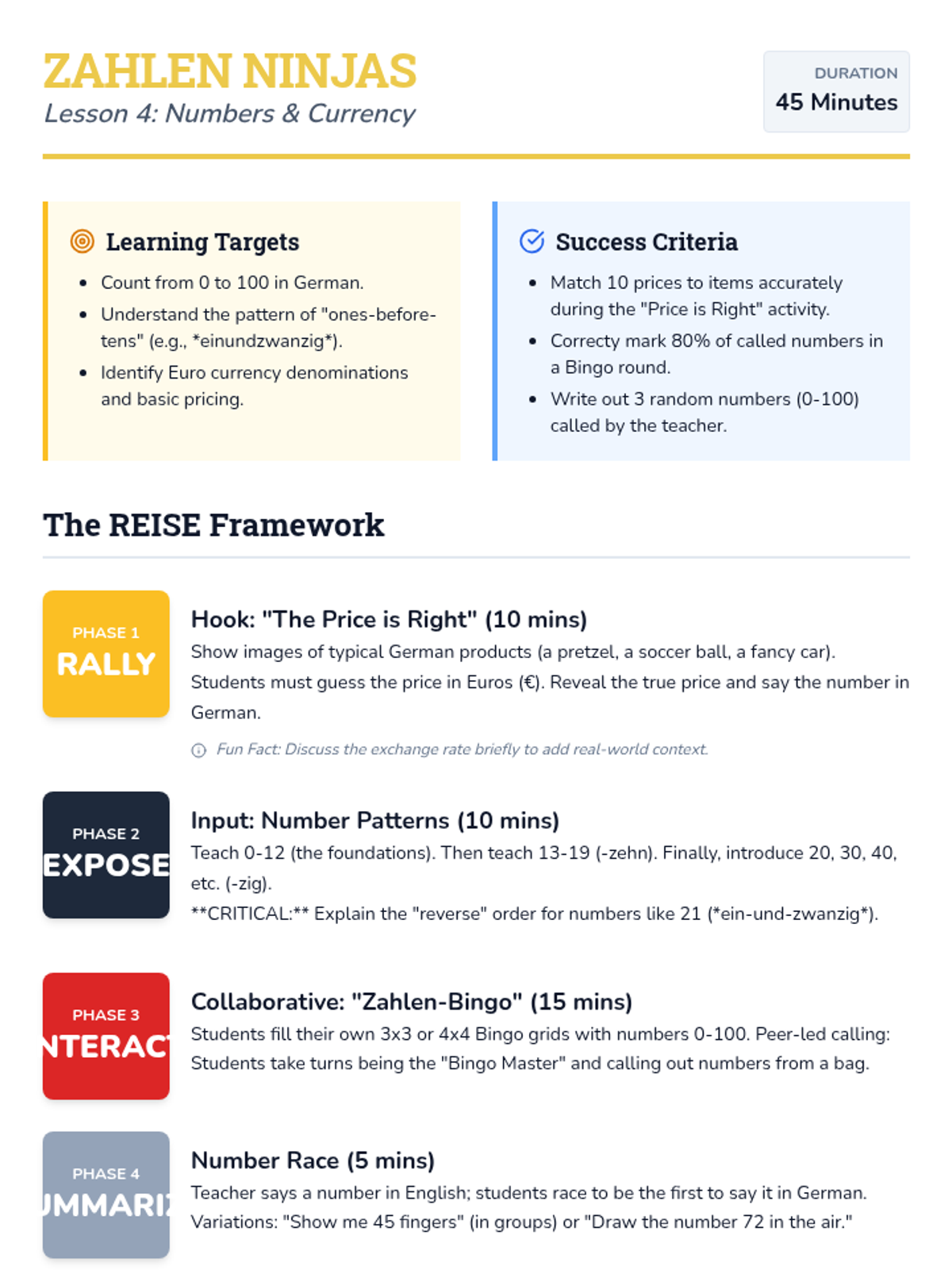
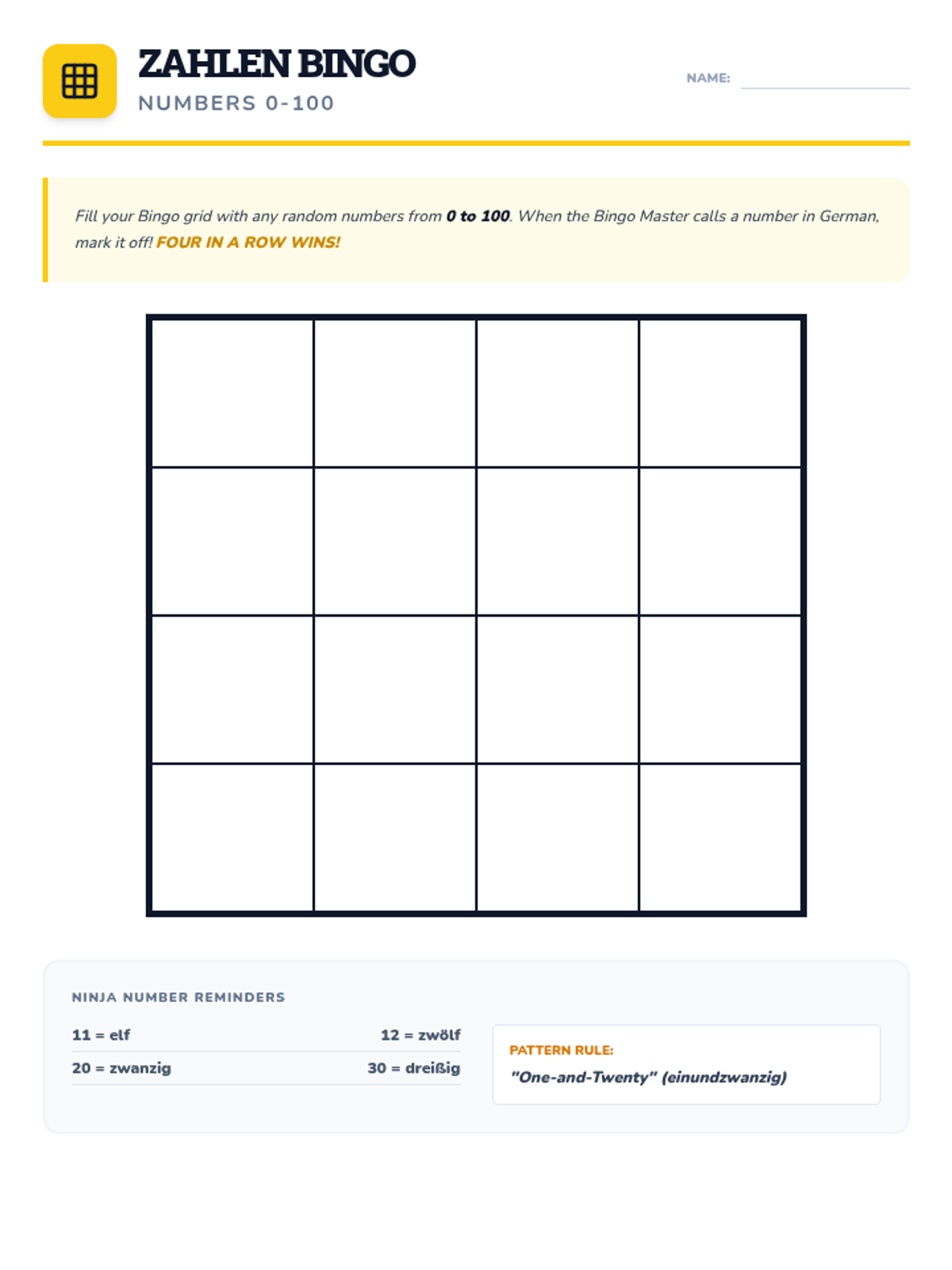
Students master counting up to 100 and explore the Euro currency. They participate in a German-themed 'Price is Right' and peer-led Bingo rounds.
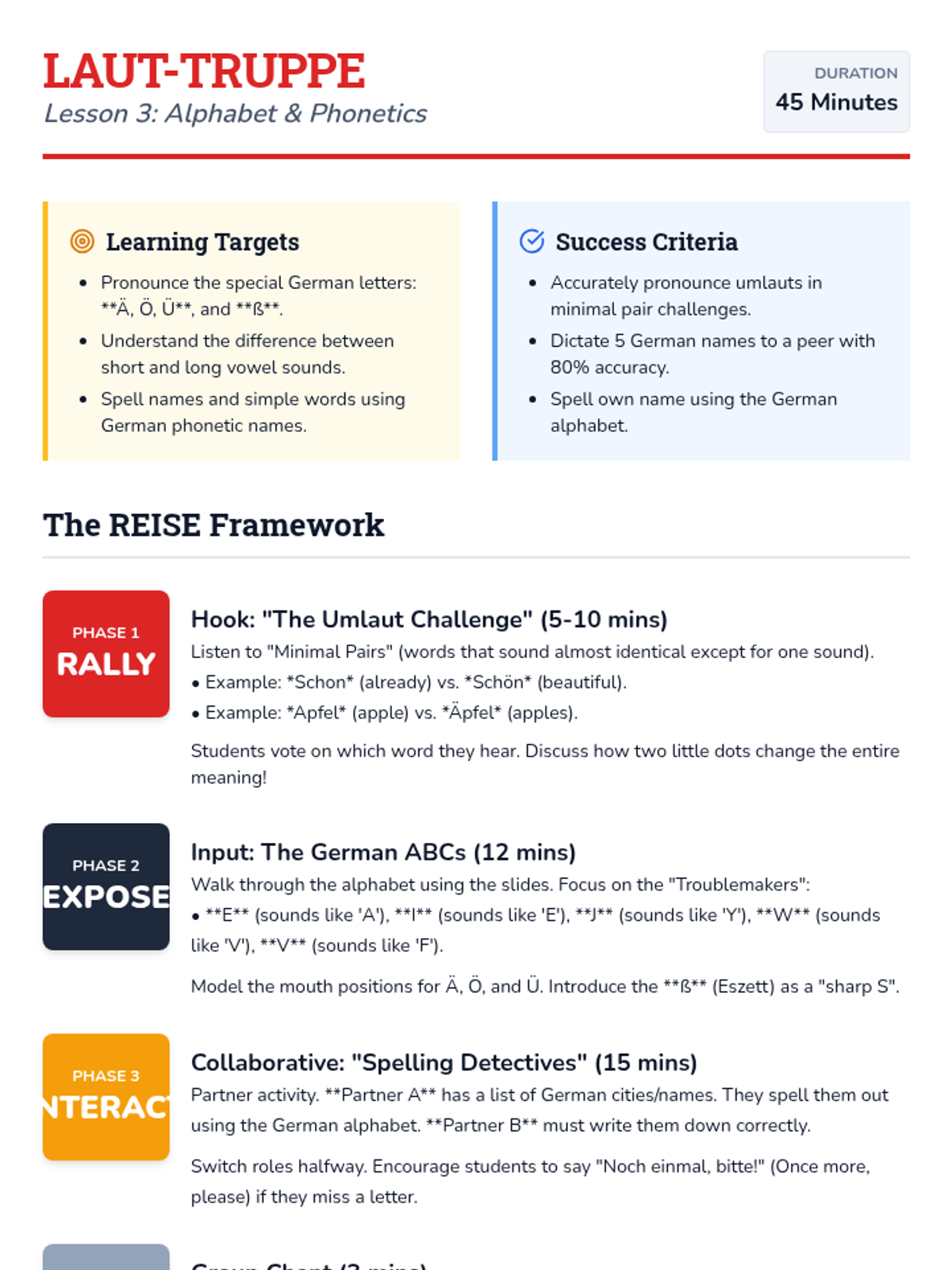
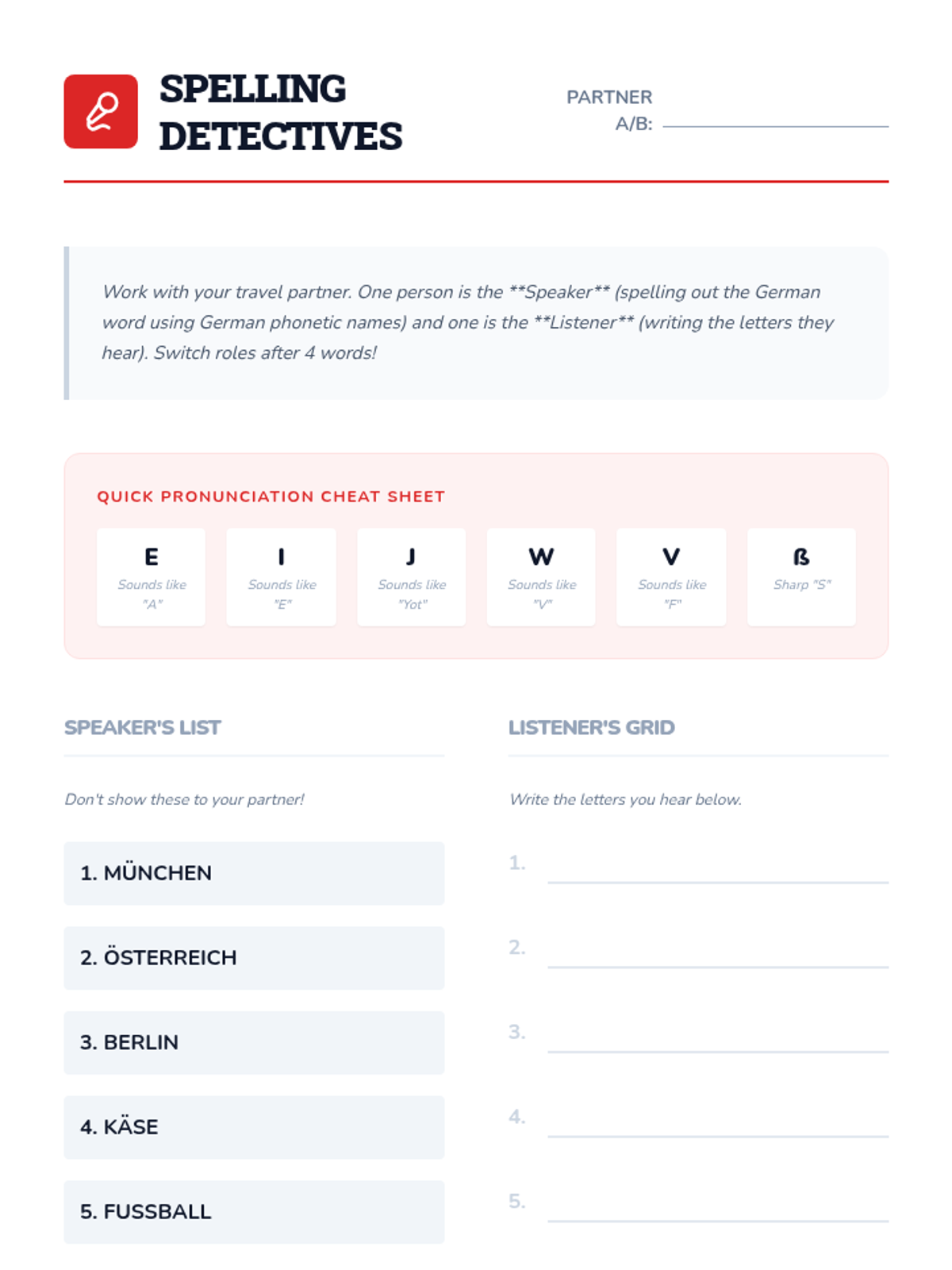
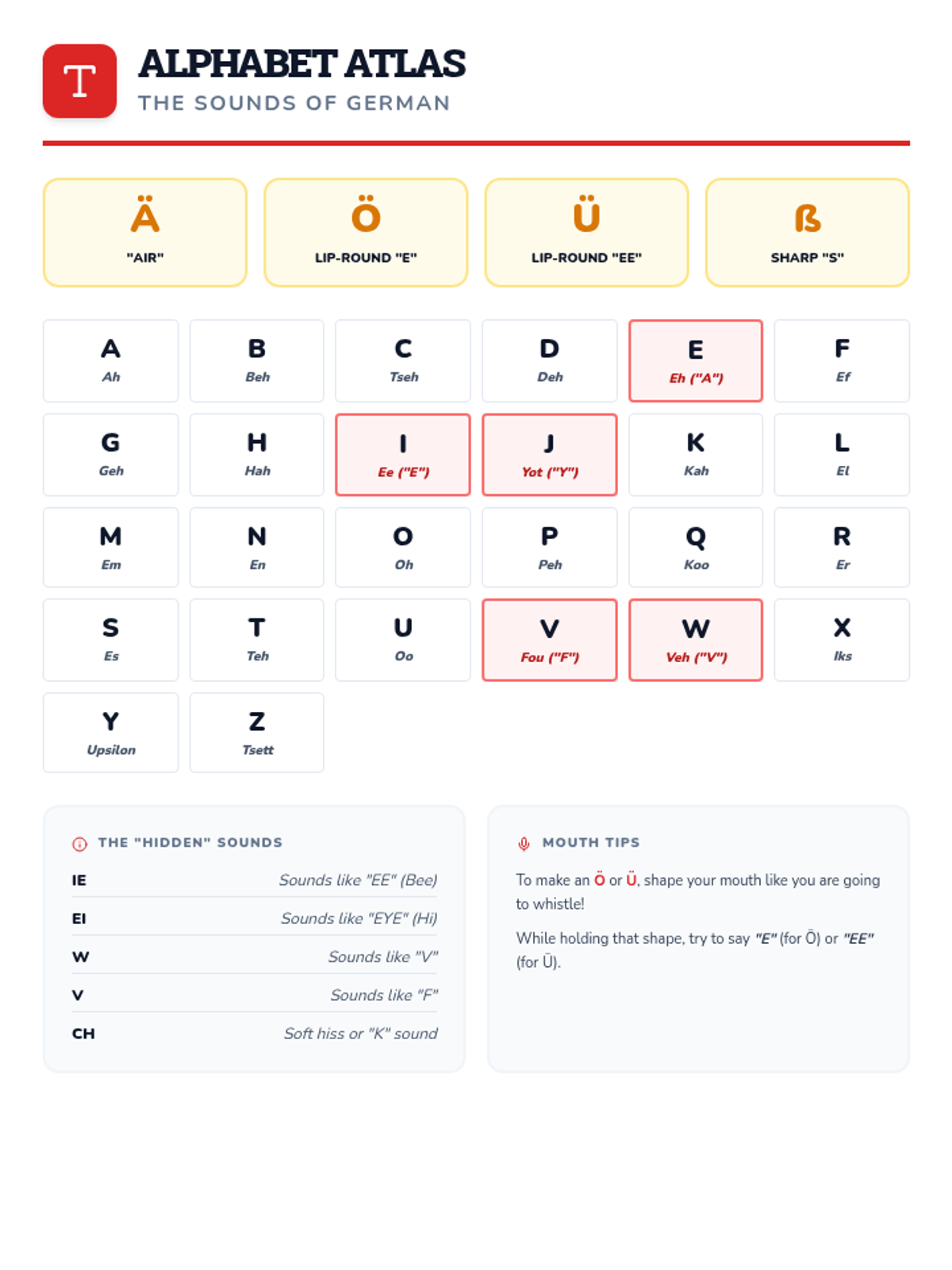
A phonetics-focused lesson covering the German alphabet, with special attention to the unique letters Ä, Ö, Ü, and ß. Students practice spelling names and identifying phonetic sounds.
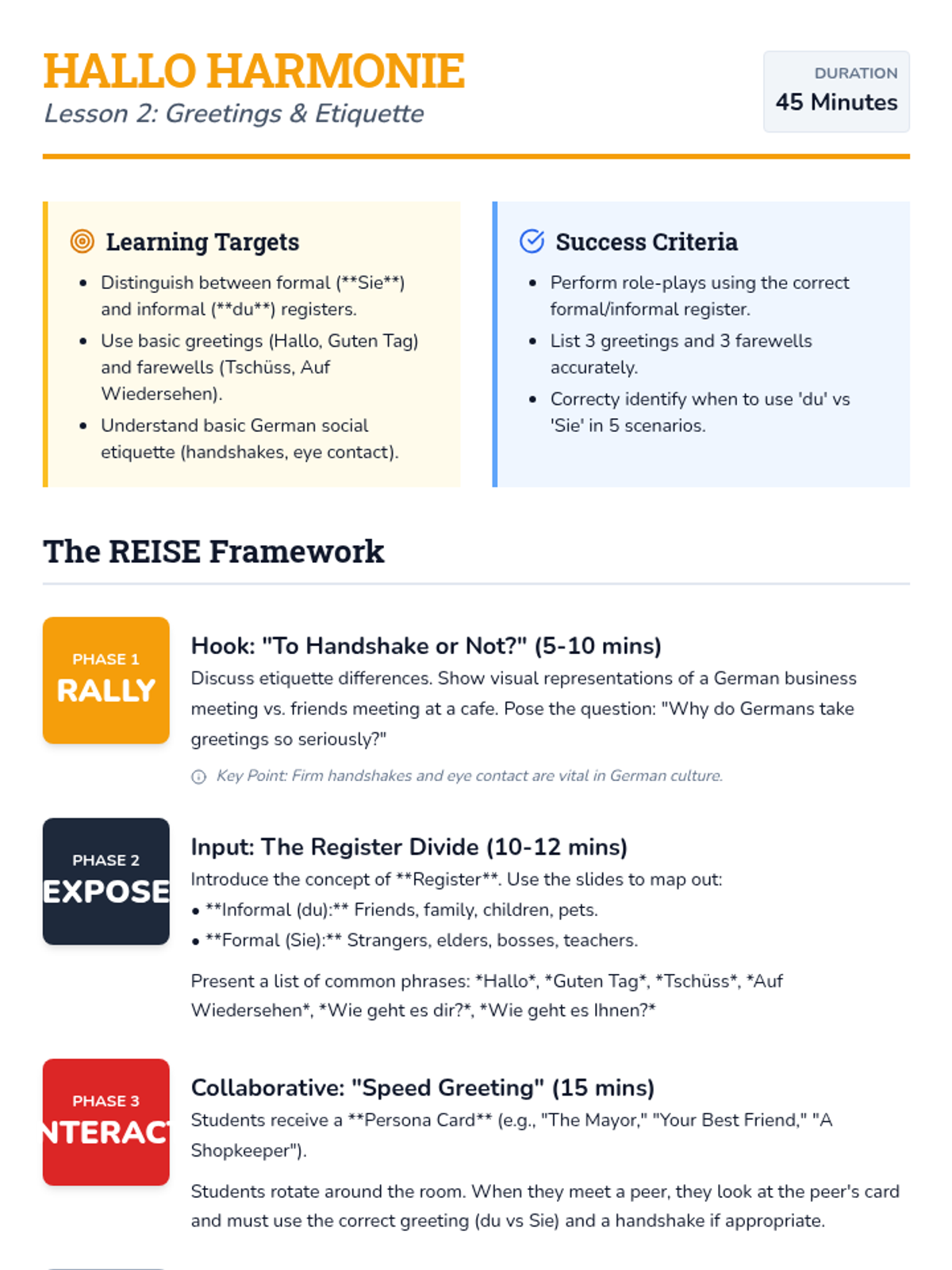
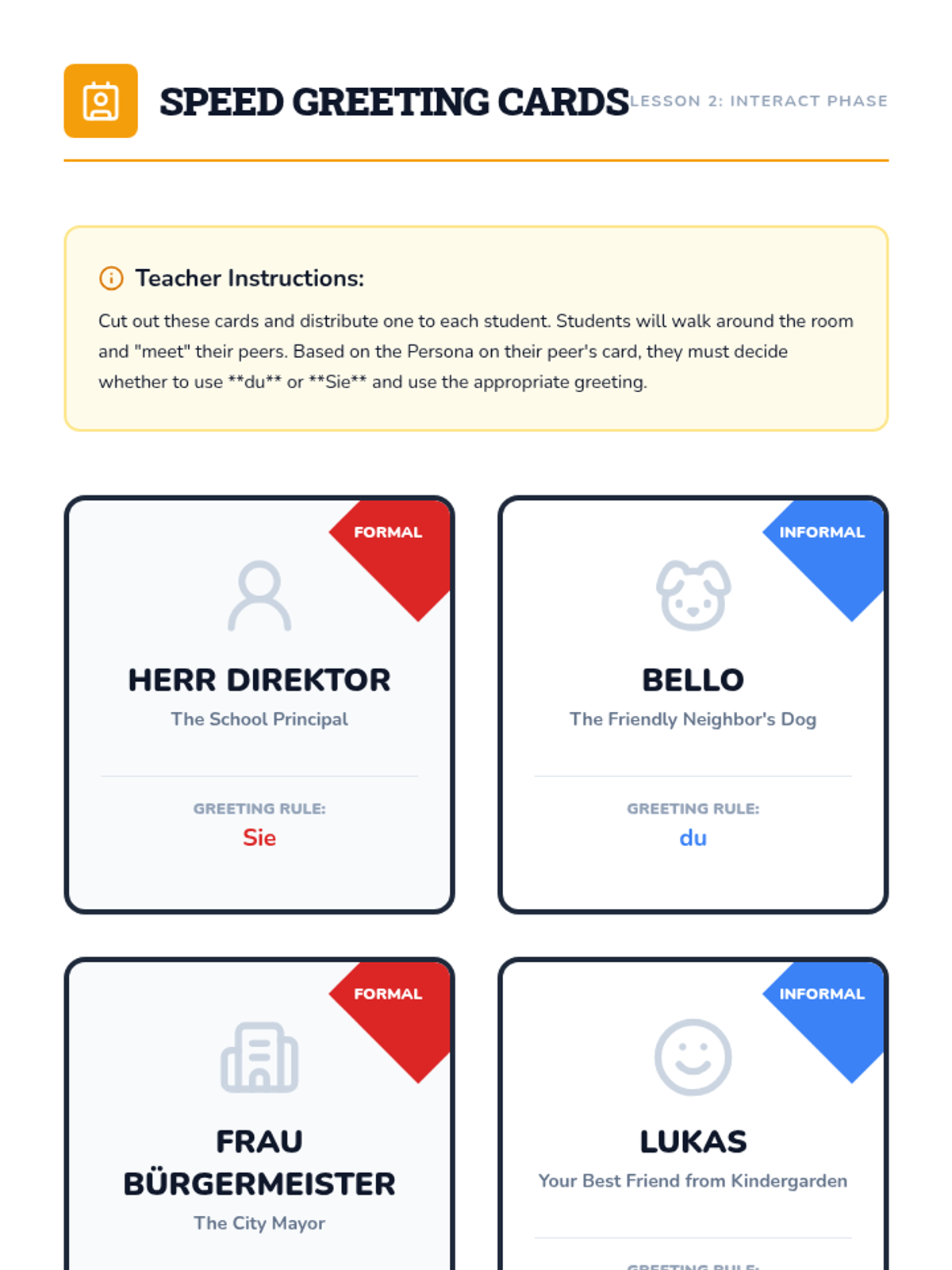
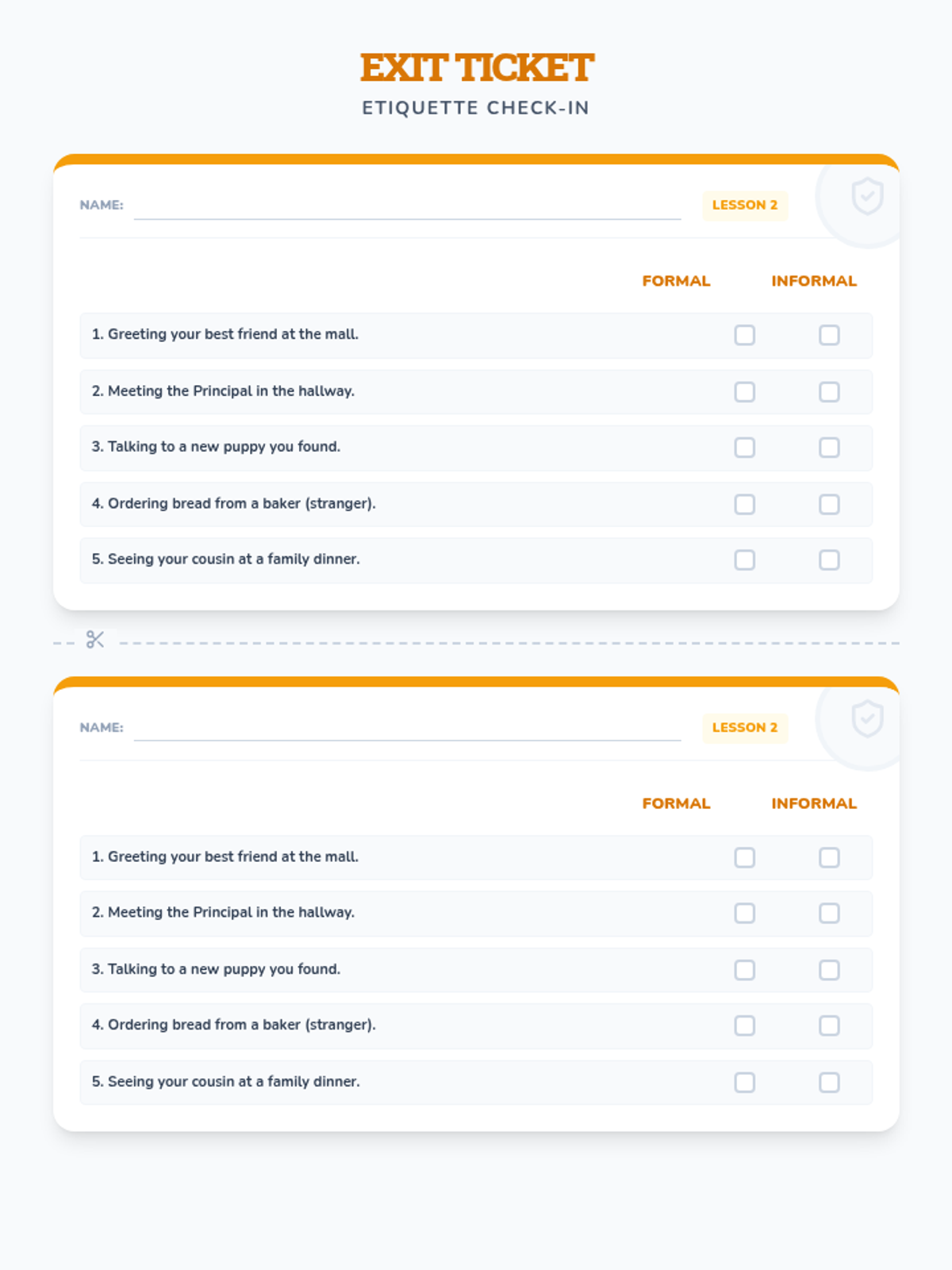
Students learn the nuances of German social interaction, specifically the distinction between the formal 'Sie' and informal 'du'. Activities include role-playing greetings with different personae.
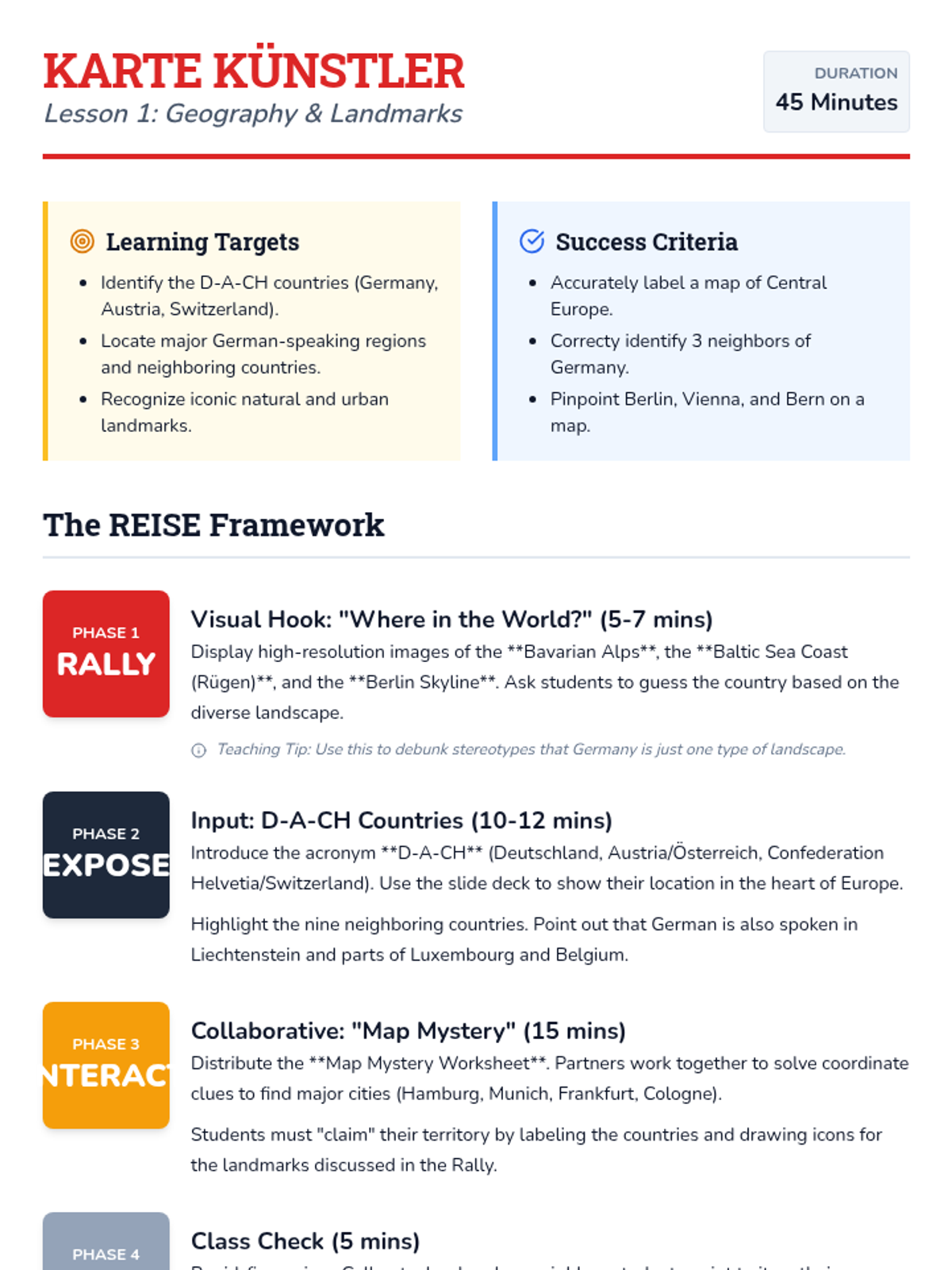
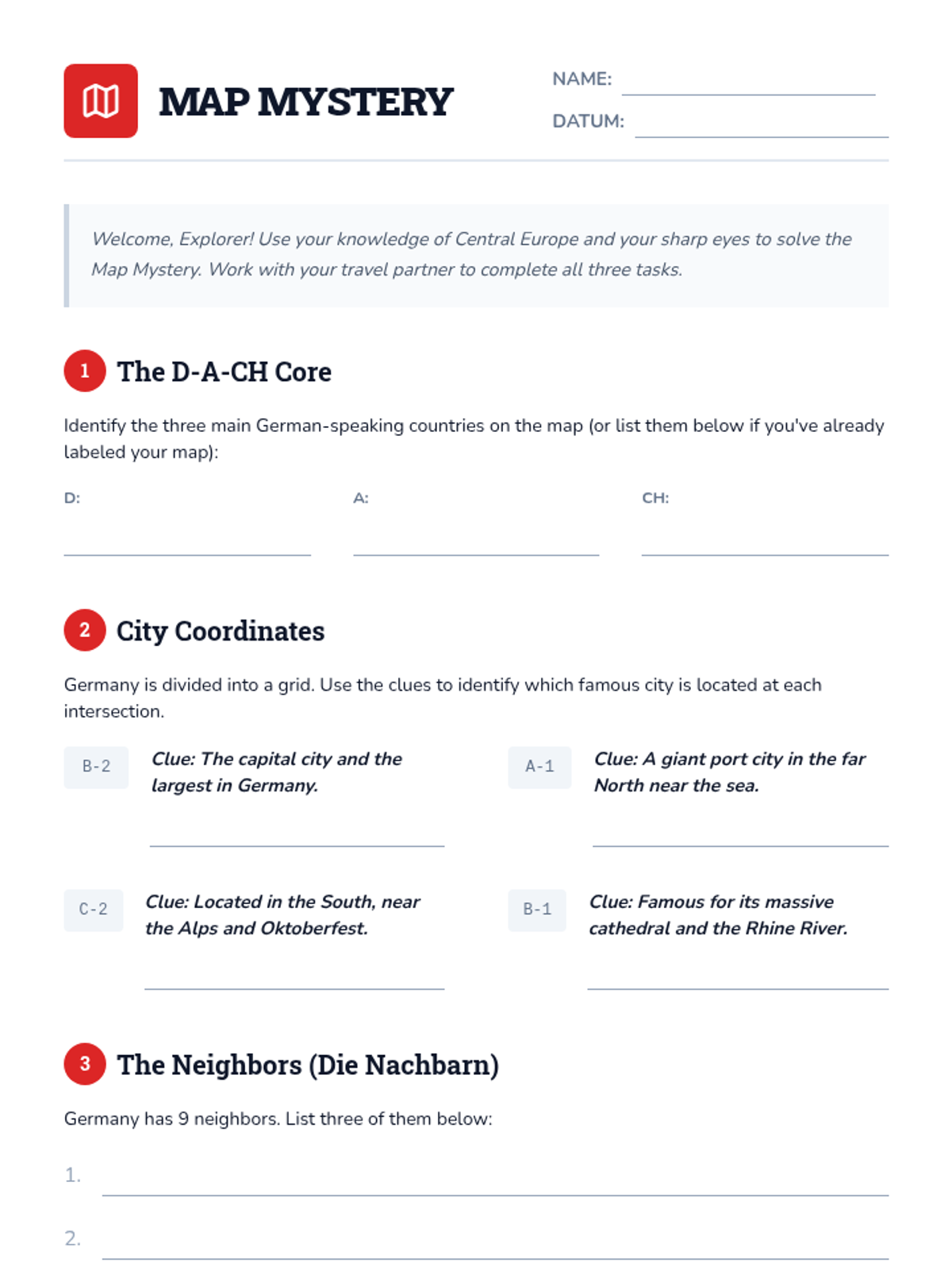
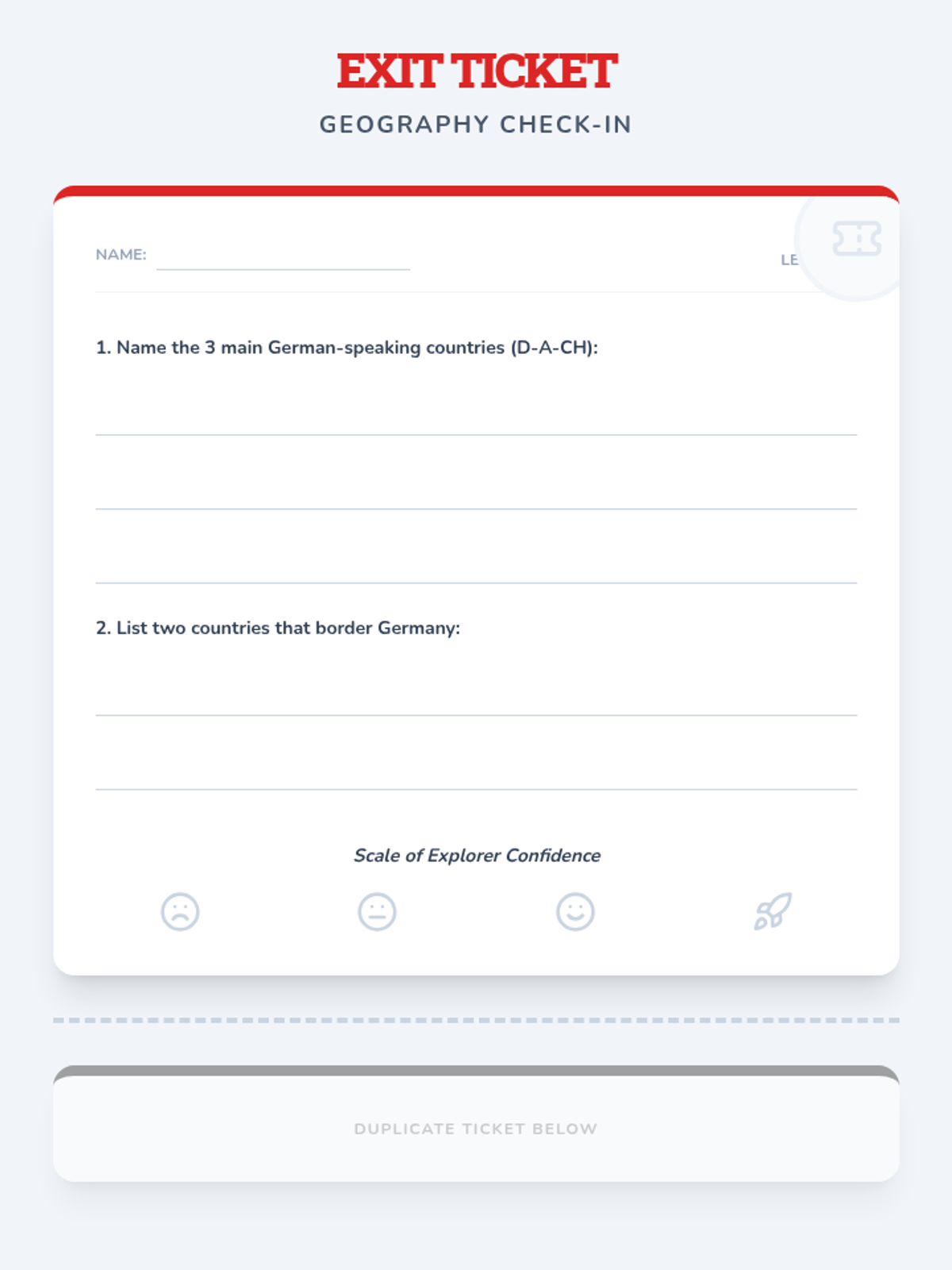
Students explore the geography of Central Europe, focusing on the D-A-CH countries (Germany, Austria, Switzerland) and major landmarks. Activities include a visual hook of the Alps and Baltic coast and a coordinate-based map mystery.
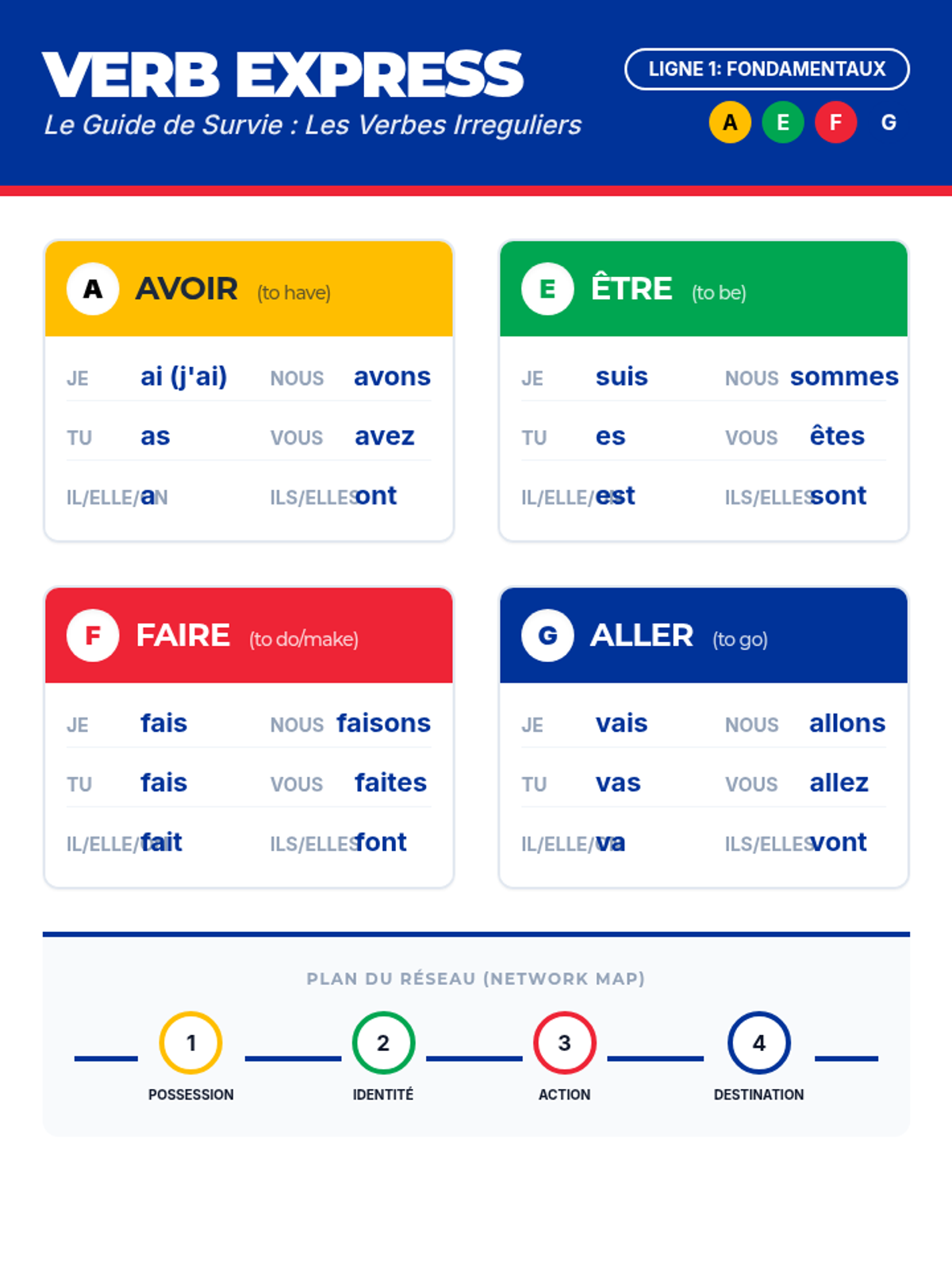
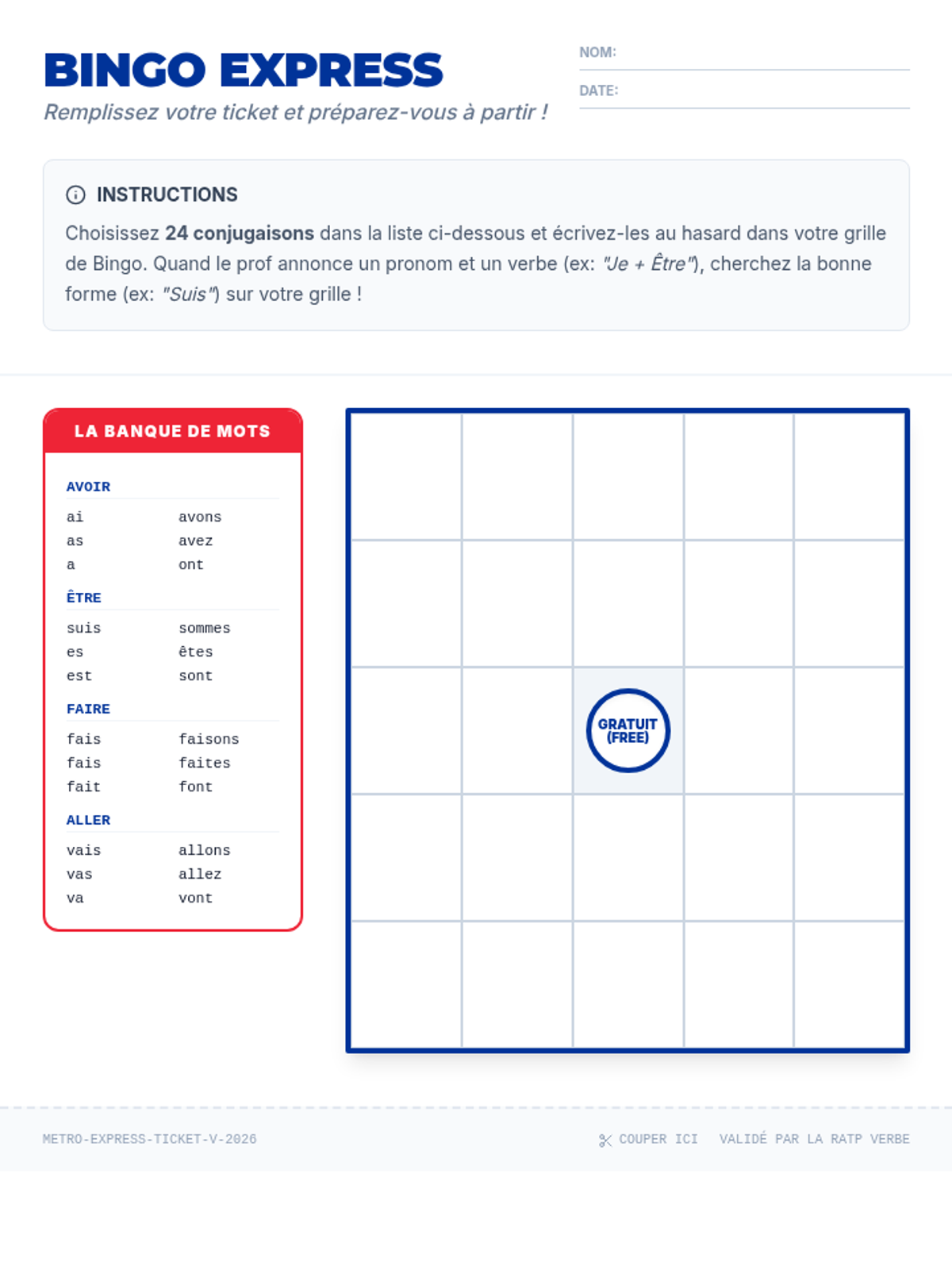
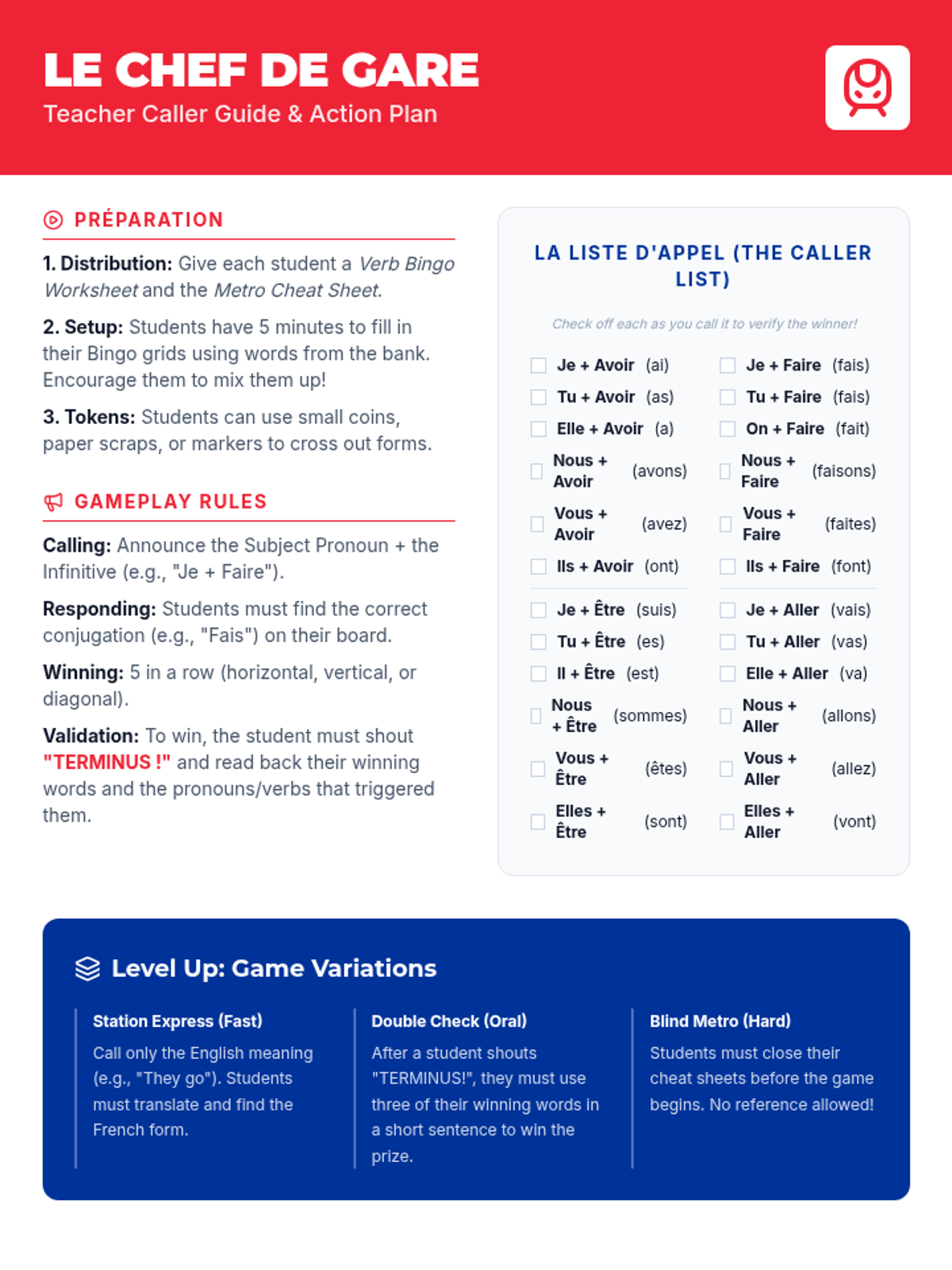
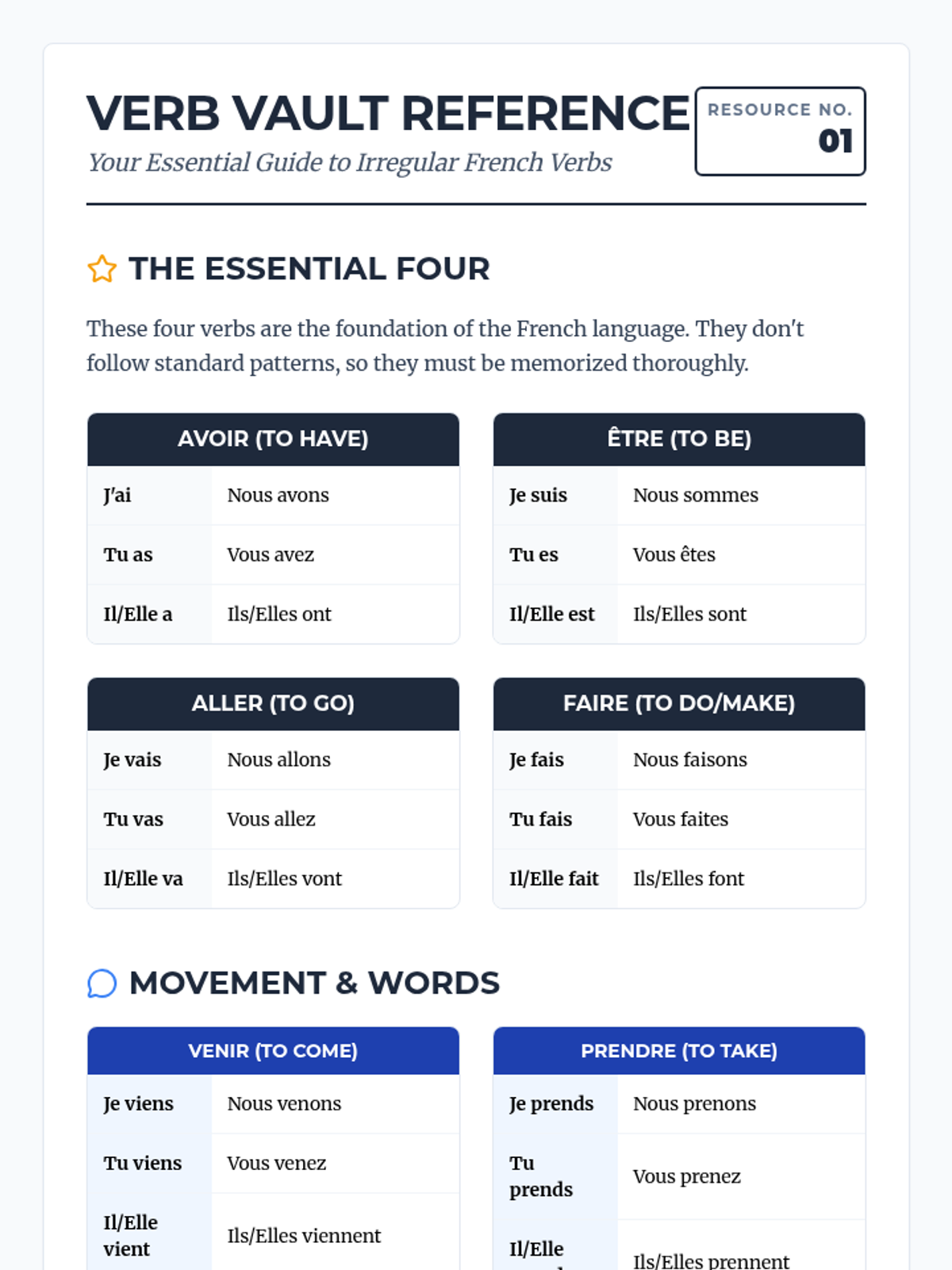
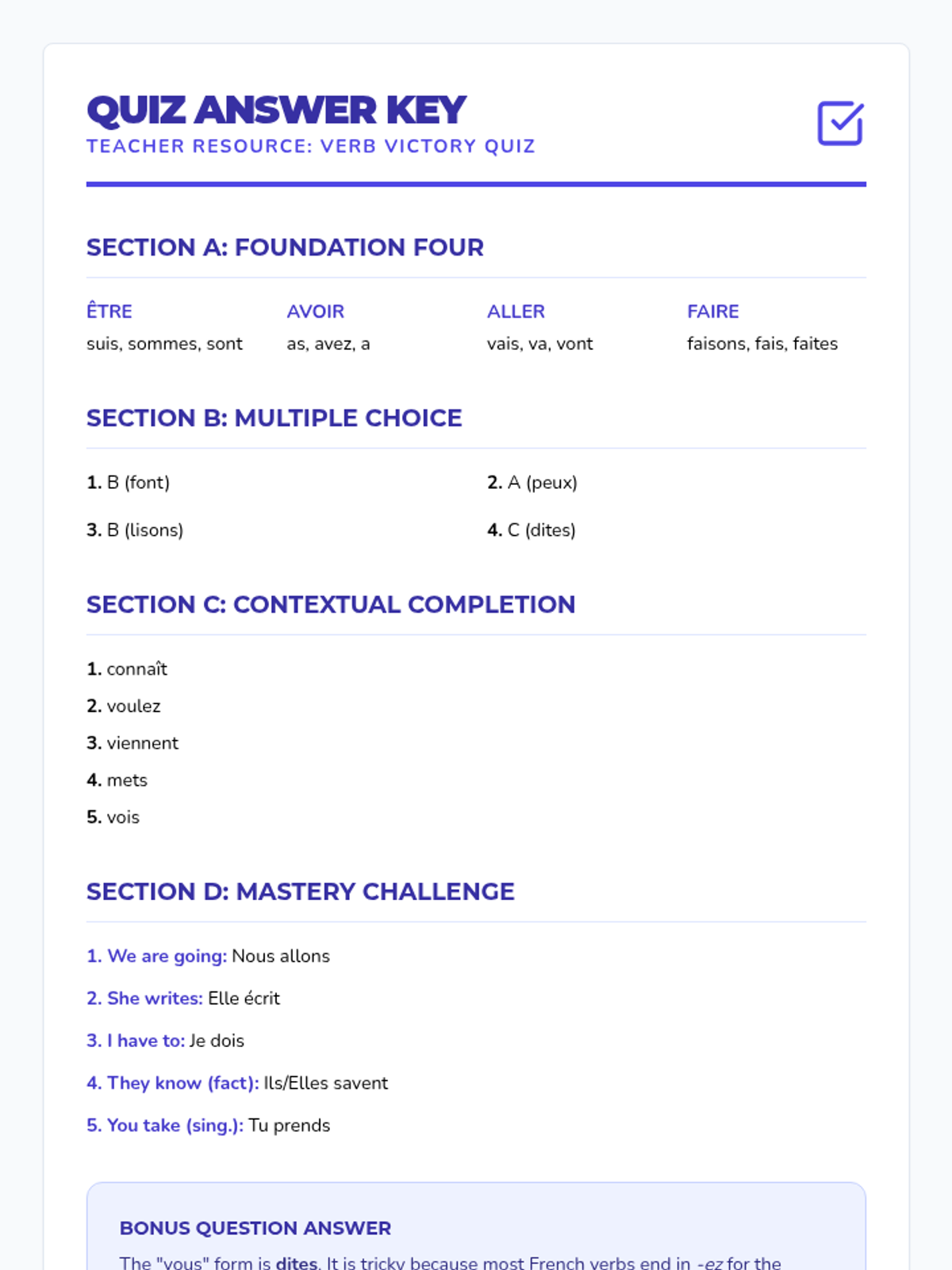
A high-energy lesson focused on mastering the four most important irregular French verbs (avoir, être, faire, aller) through a competitive Metro-themed Bingo game. Students review conjugations and apply them in a fast-paced listening activity.
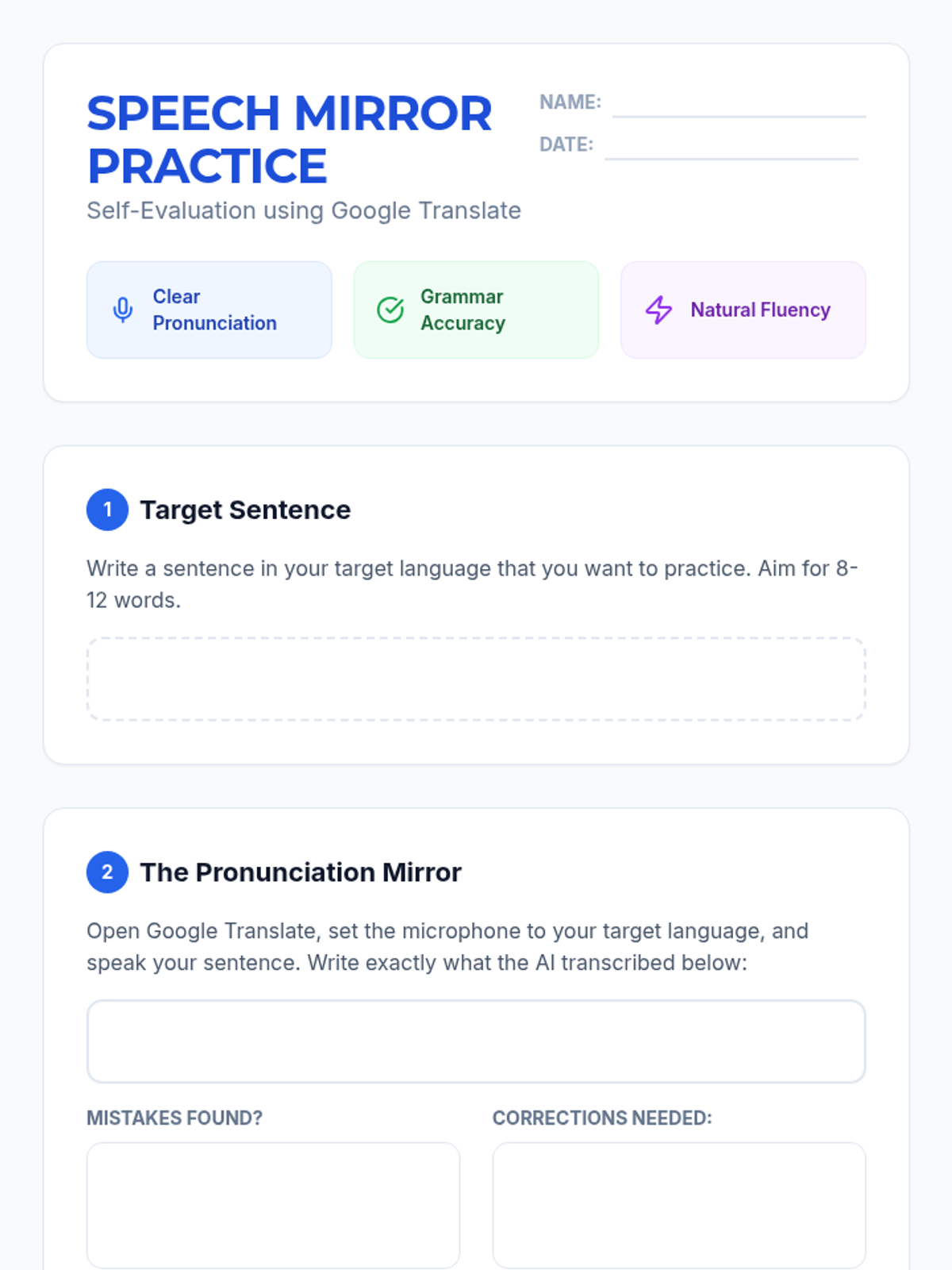
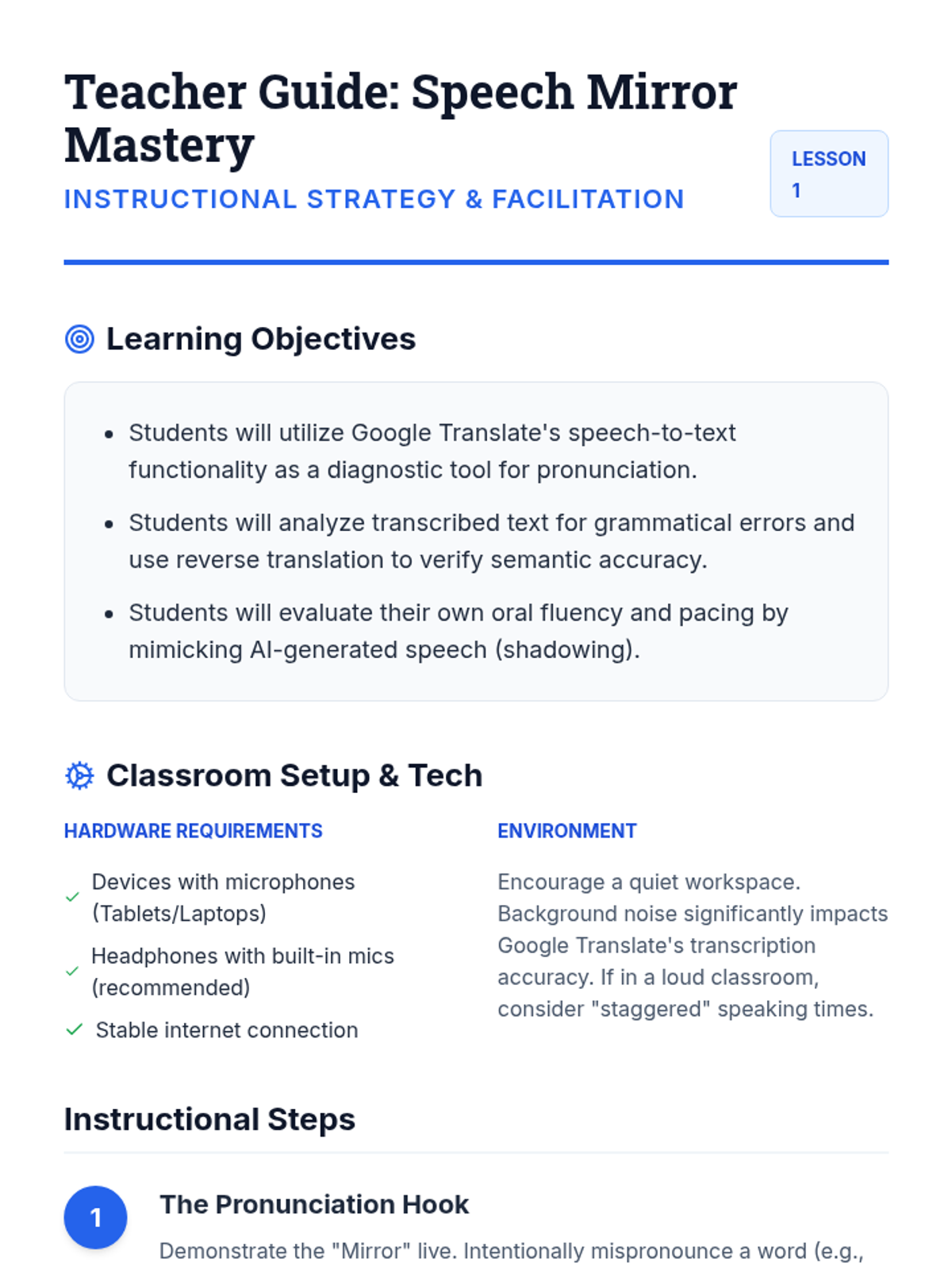
This lesson teaches students how to use Google Translate's speech-to-text and text-to-speech features to self-evaluate their spoken language. Focus areas include pronunciation clarity, grammatical accuracy of transcribed text, and oral fluency.
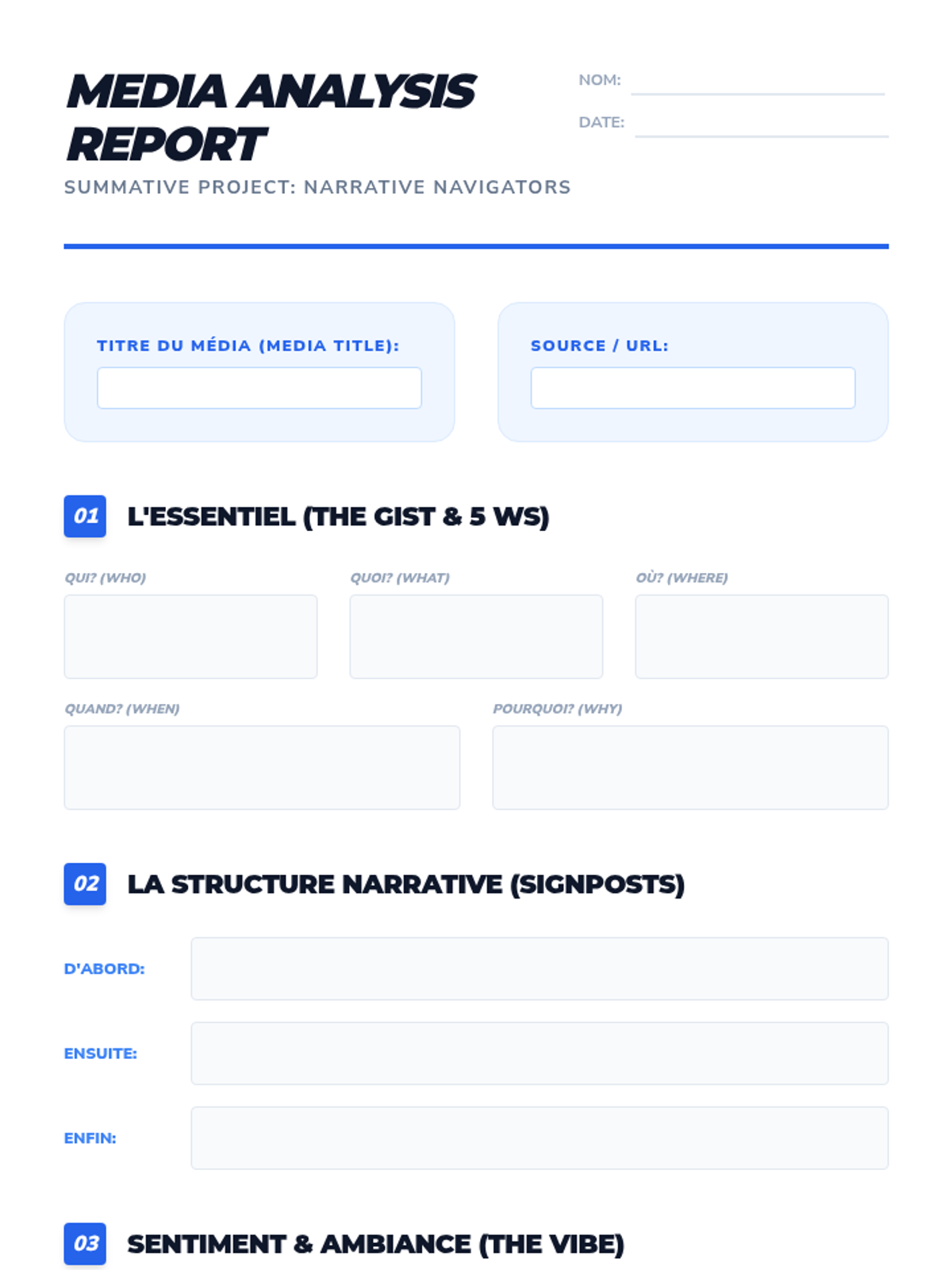
As a final workshop, students select a short audio clip of their choice (podcast intro, video blog, etc.) and apply all strategies to create a 'Listening Report.' They present a summary, key vocabulary, and the structural outline of the clip to peers. This encourages autonomous listening habits.
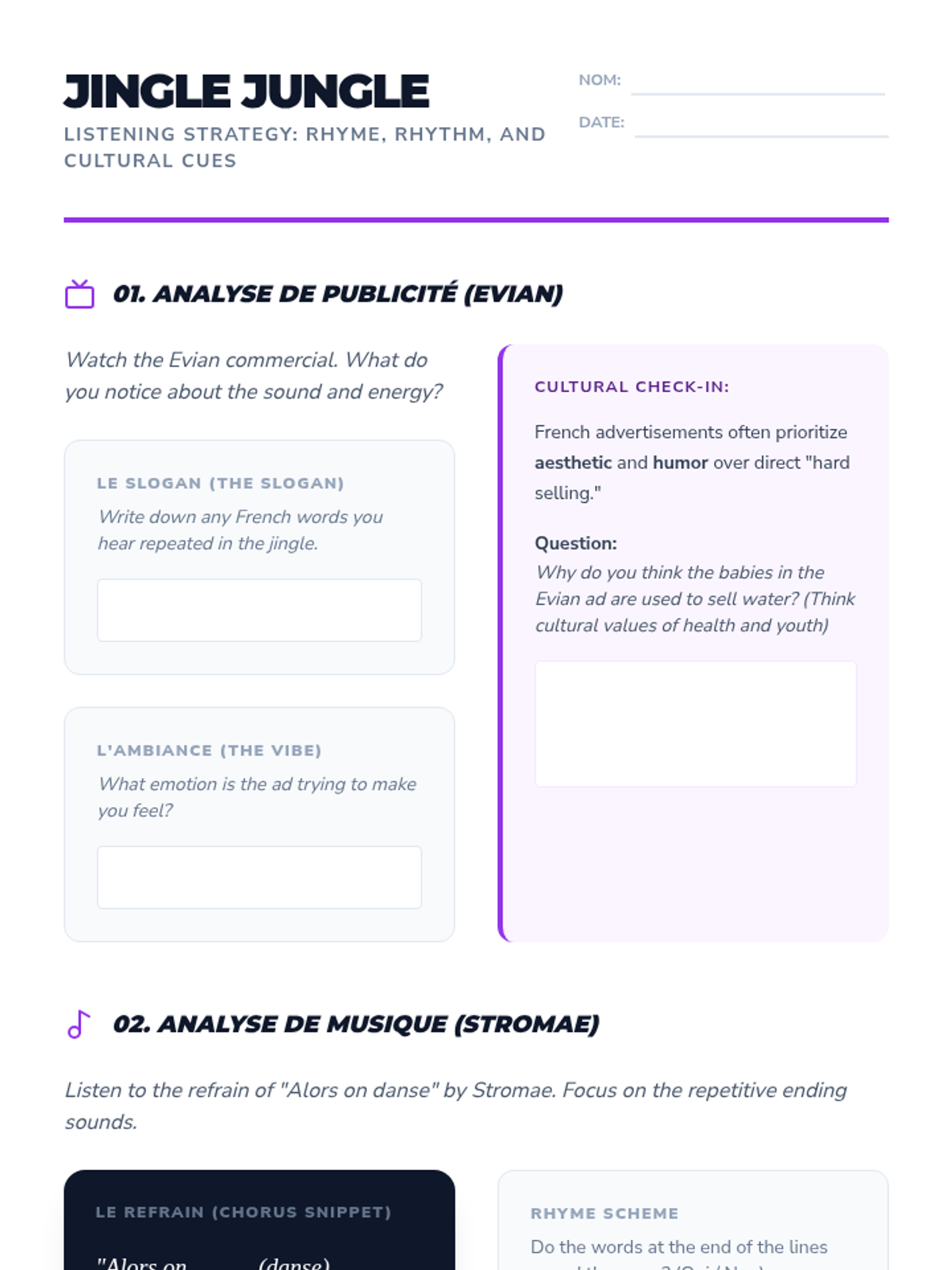
This lesson uses catchy commercials and simple pop songs to explore cultural references and wordplay. Students identify slogans, rhymes, and cultural values embedded in the media. This adds a layer of cultural literacy to auditory skills.
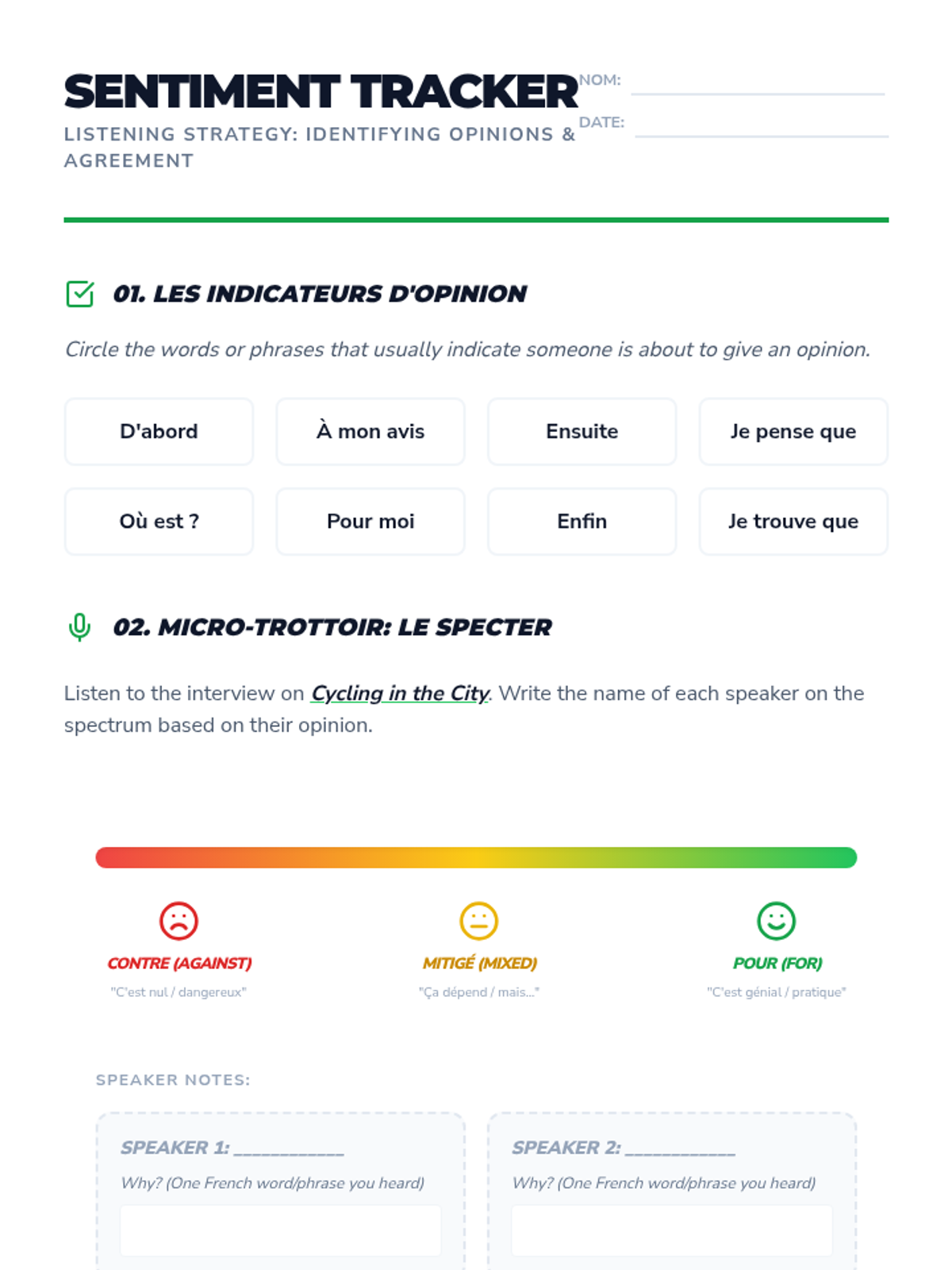
Students listen to street interviews (micro-trottoir) where people express likes, dislikes, and opinions. The lesson focuses on identifying agreement/disagreement phrases and emotive adjectives. Students chart the general sentiment of the speakers toward a specific topic.
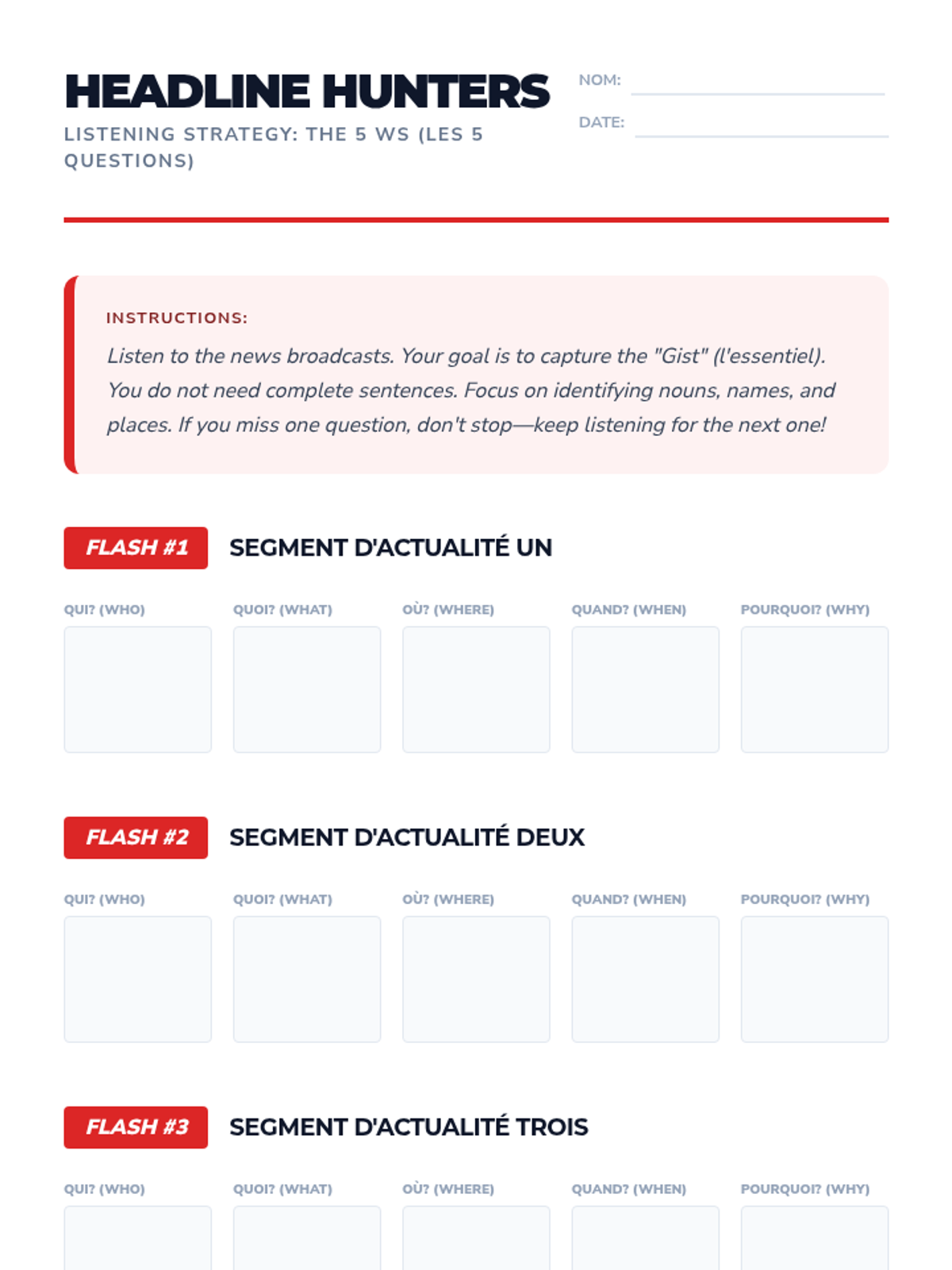
Using simplified news broadcasts (like 'News in Slow French'), students practice answering the '5 Ws' (Who, What, Where, When, Why). The focus is on extracting the main idea or 'gist' without getting stuck on unknown vocabulary. Discussion focuses on how the lead sentence frames the listening.
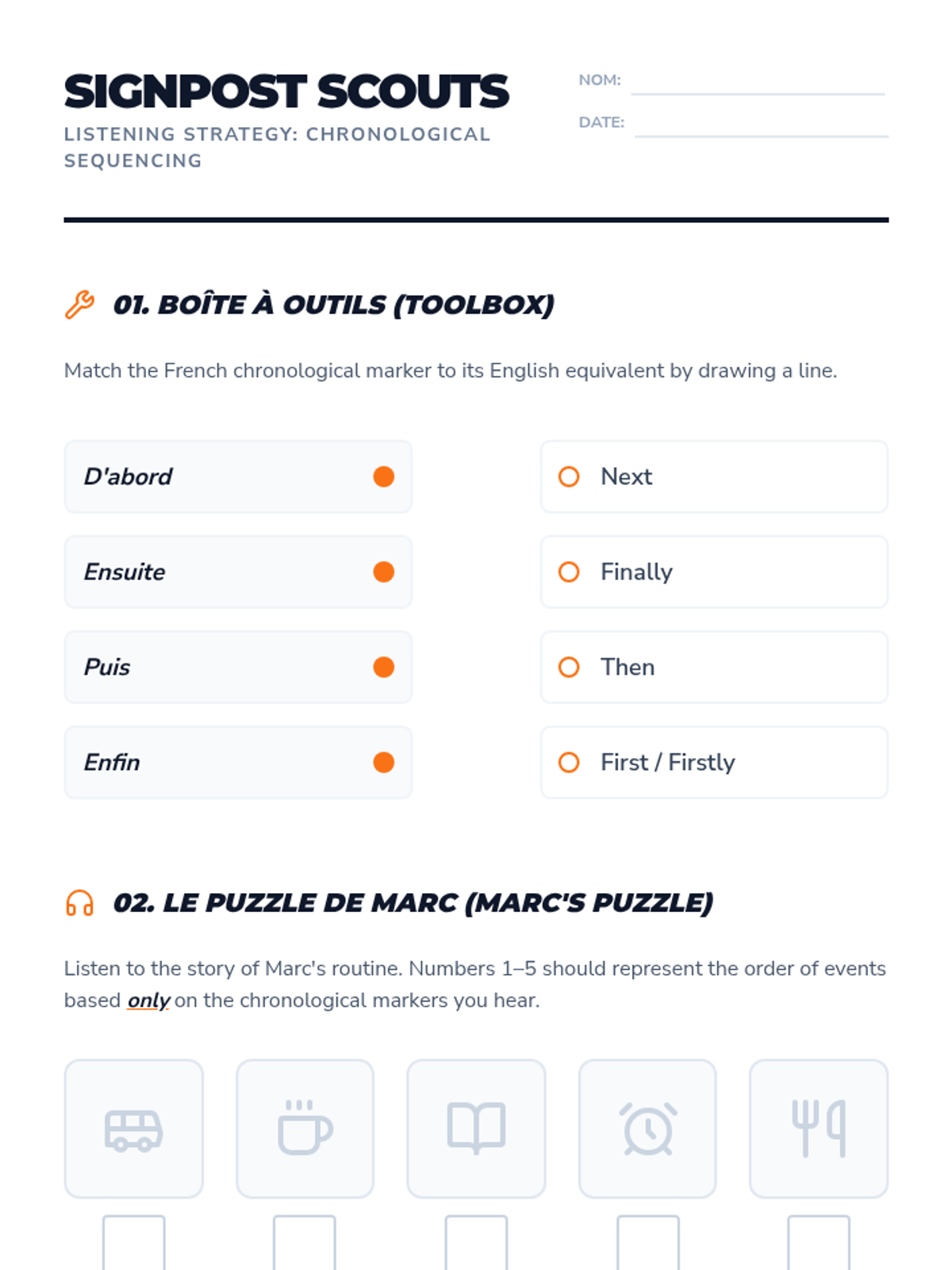
Students learn to identify chronological markers and logical connectors in simple French narratives to organize events mentally without needing word-for-word translation.
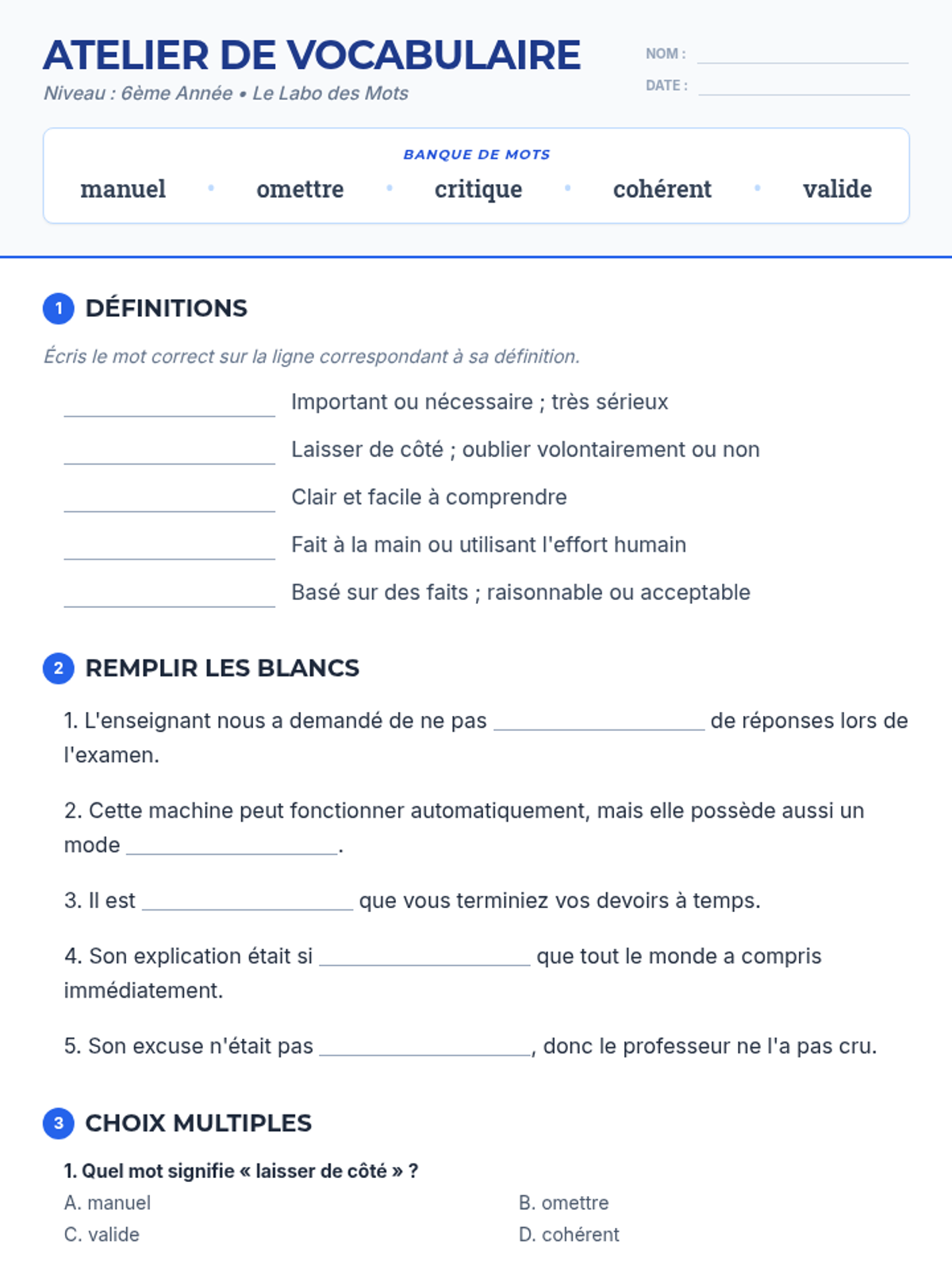
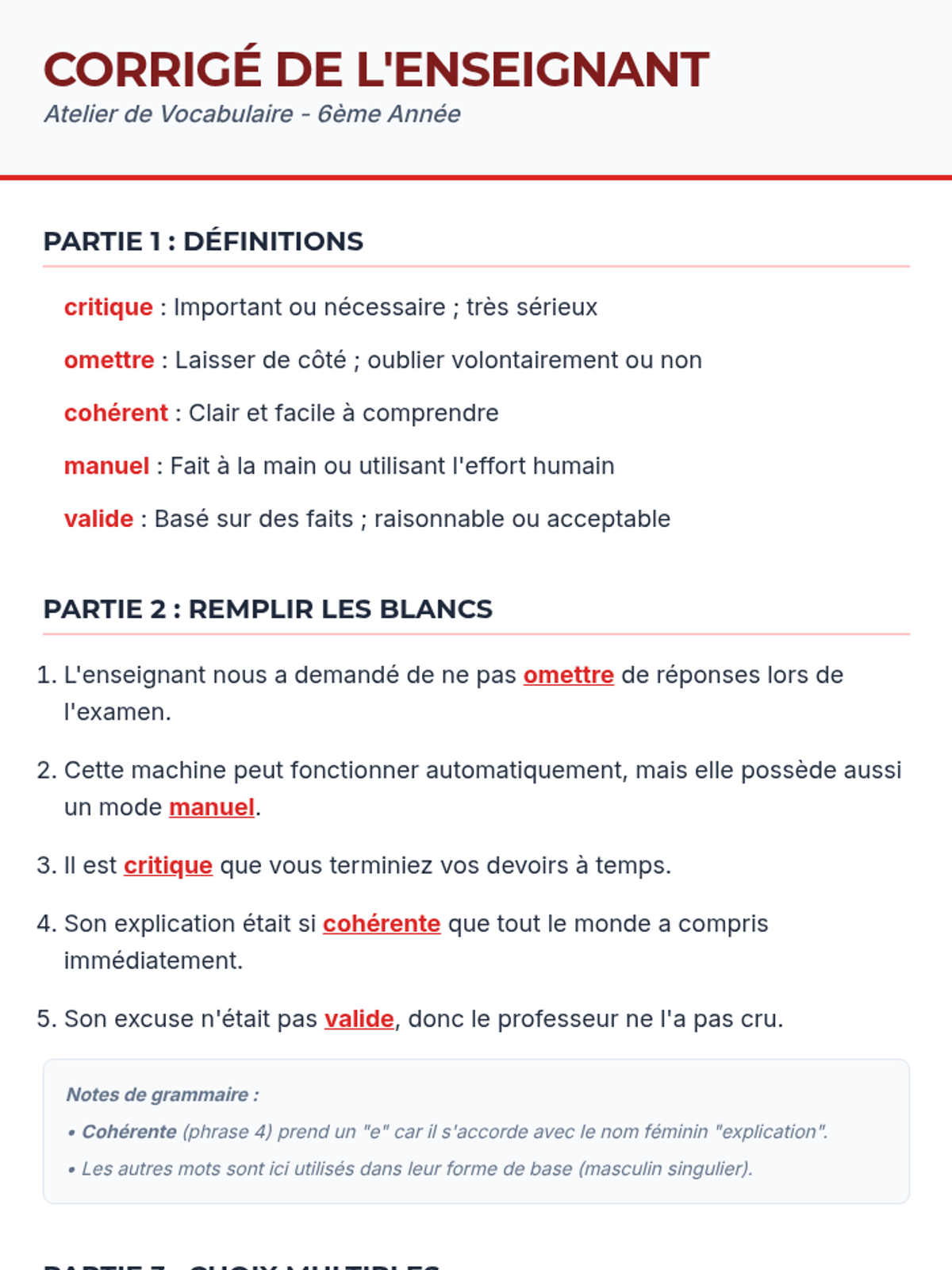
Une leçon de vocabulaire pour les élèves de 6ème année, axée sur cinq mots académiques essentiels. La leçon comprend une présentation pour l'enseignement direct, une fiche d'exercices pour la pratique et un corrigé pour l'enseignant.
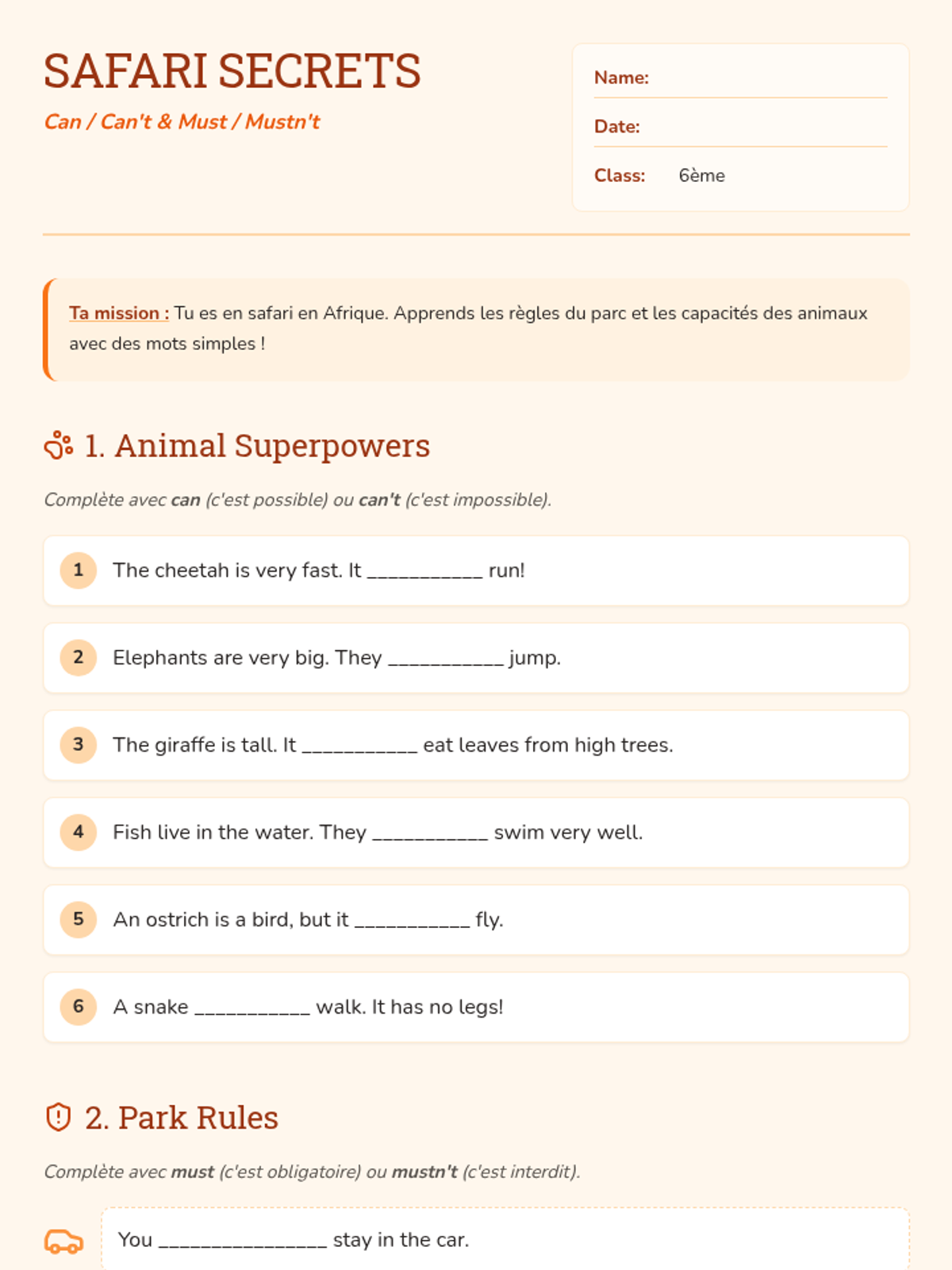
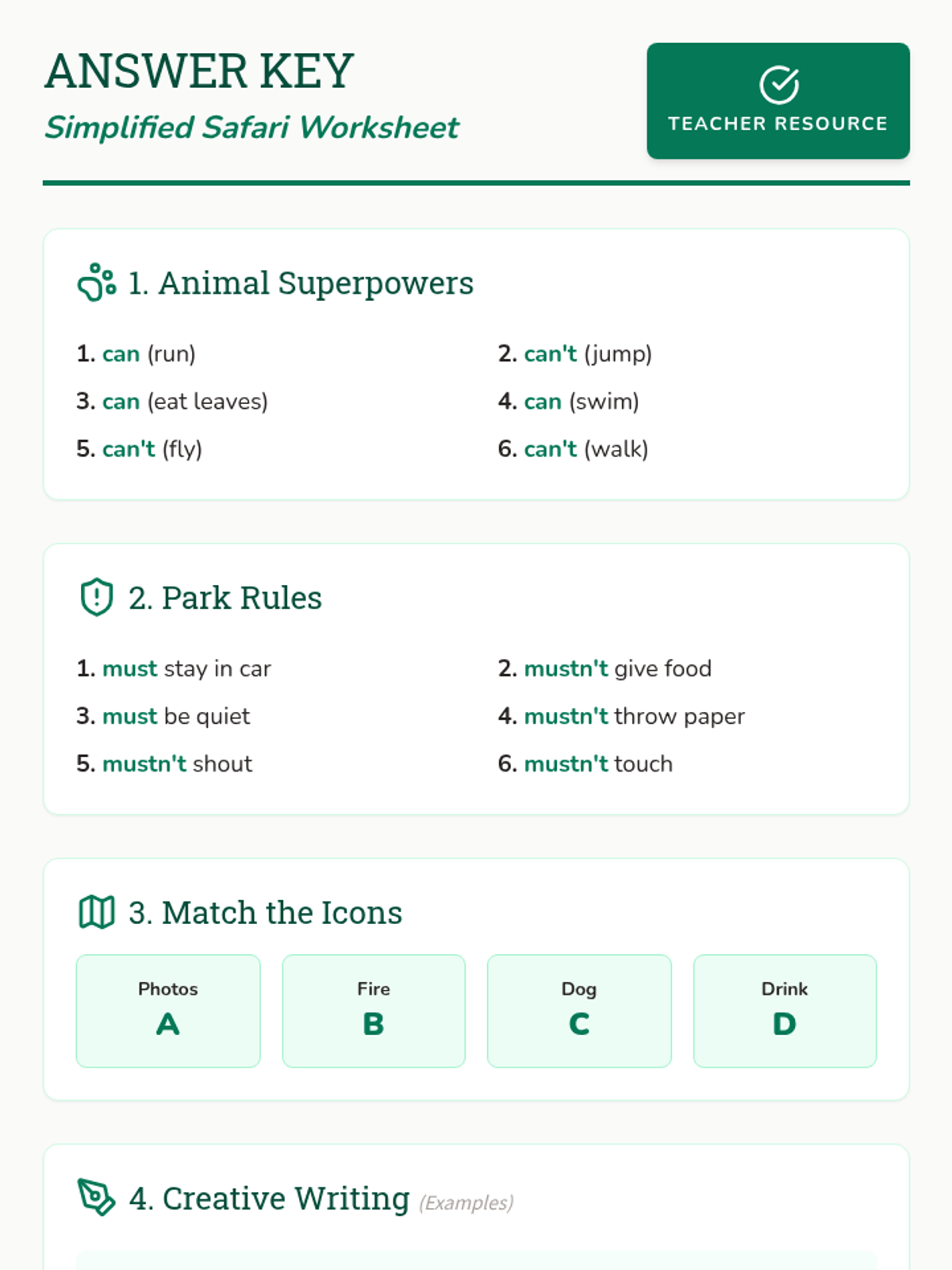
A lesson for 6ème students to master 'must/mustn't' and 'can/can't' through the exciting lens of an African safari adventure. Students will learn about animal abilities and national park regulations while building thematic vocabulary.
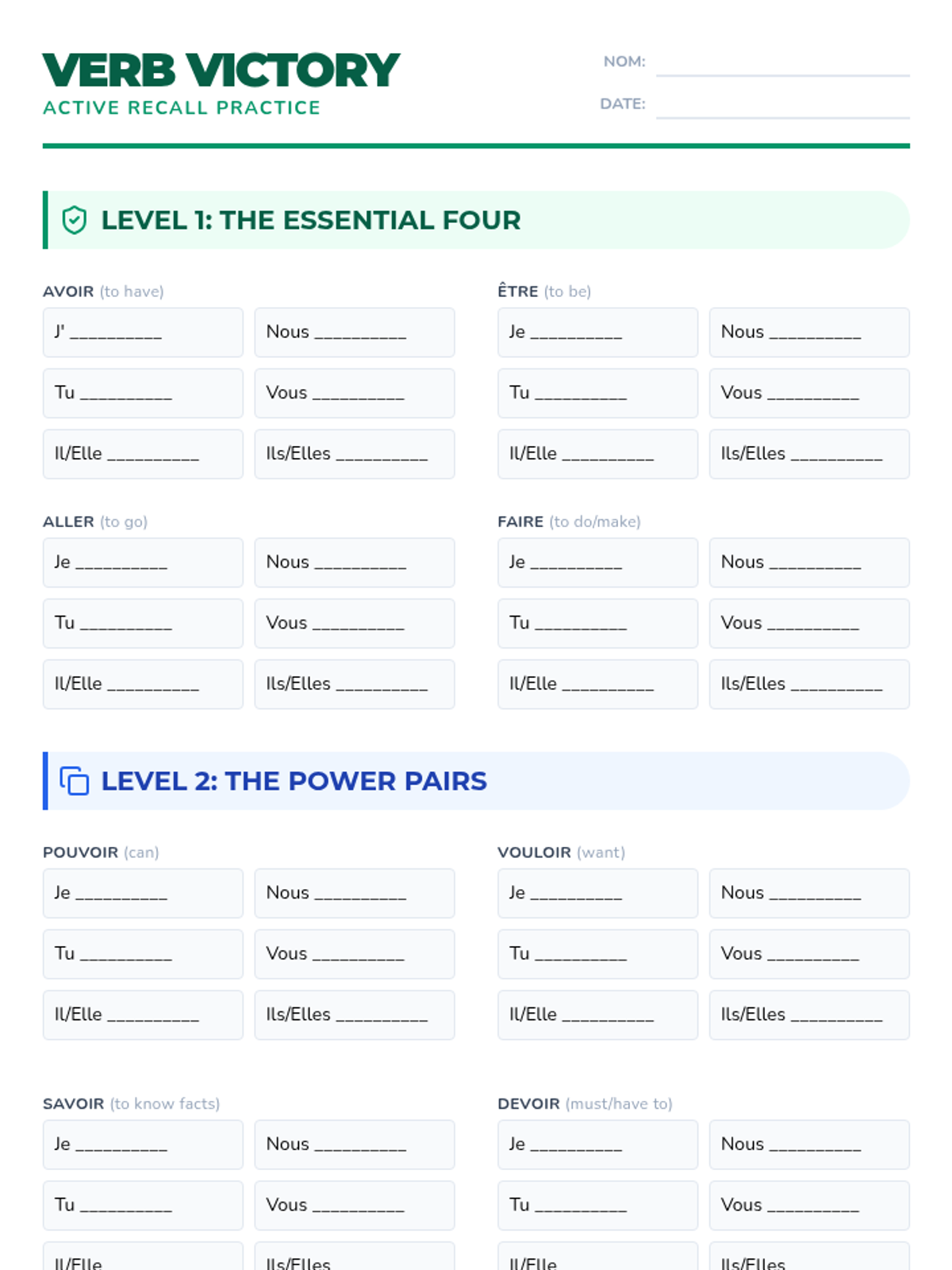
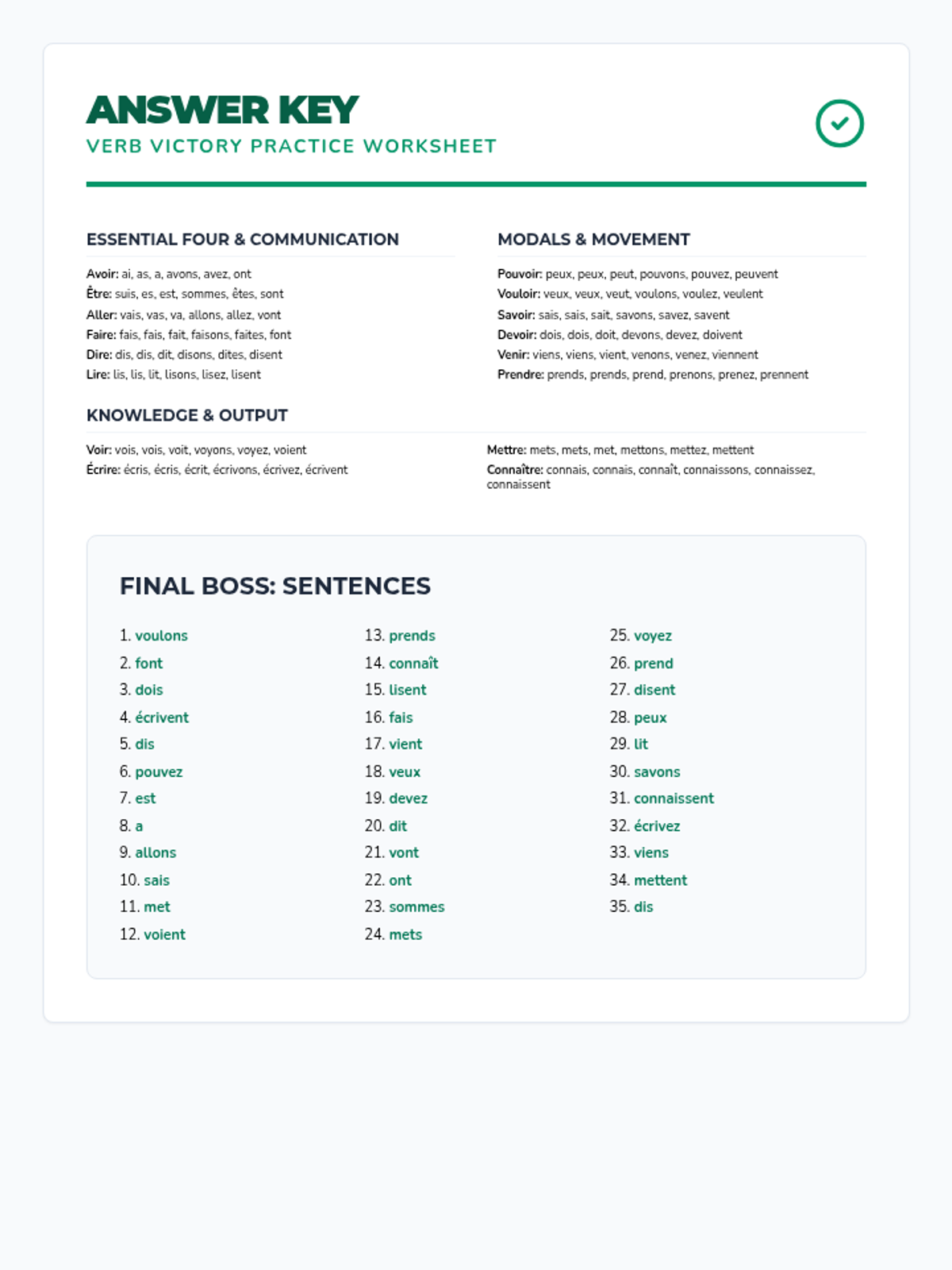
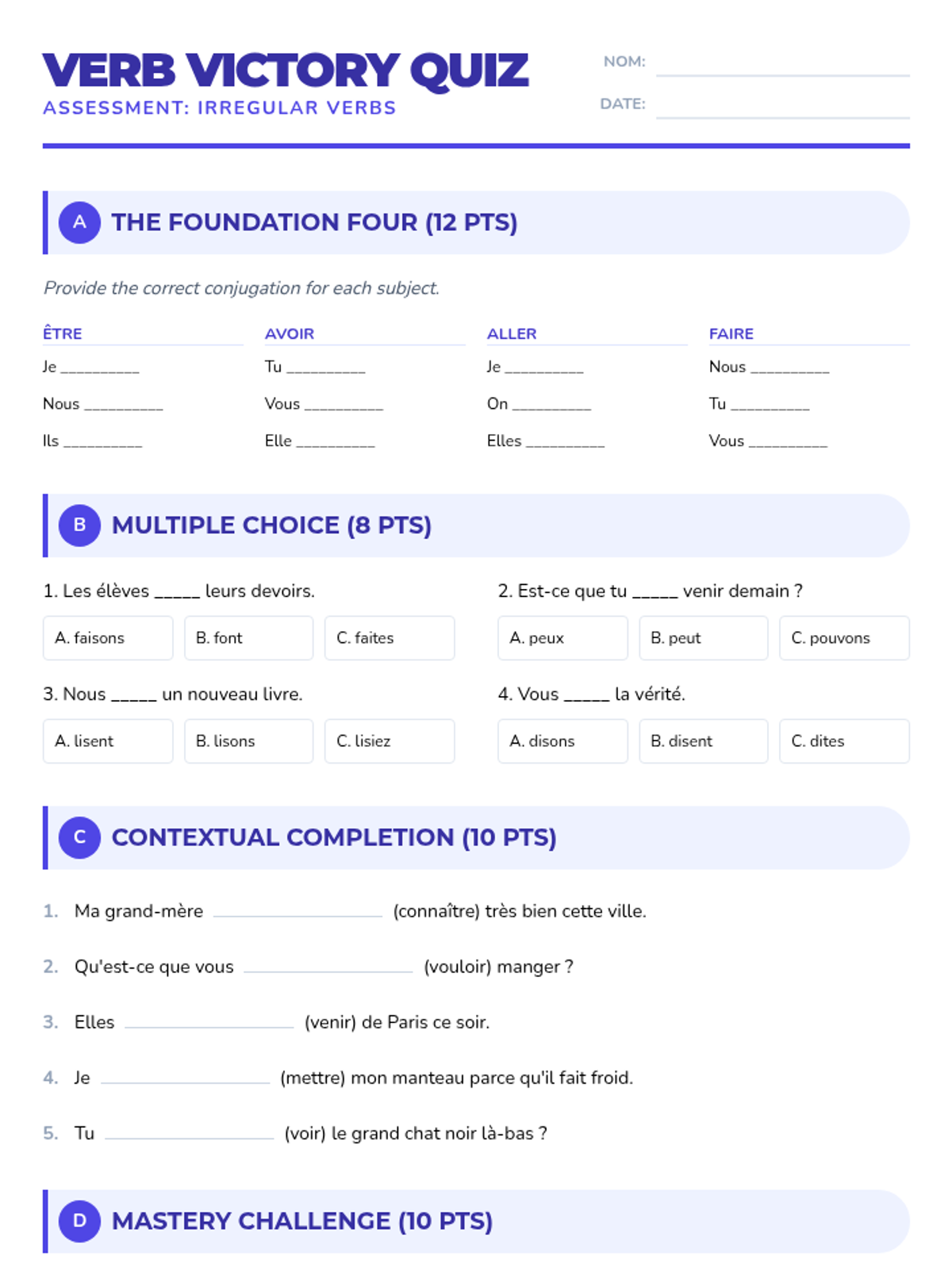
A comprehensive guide and practice set for mastering the most common irregular French verbs, focusing on patterns, comparisons, and active recall.
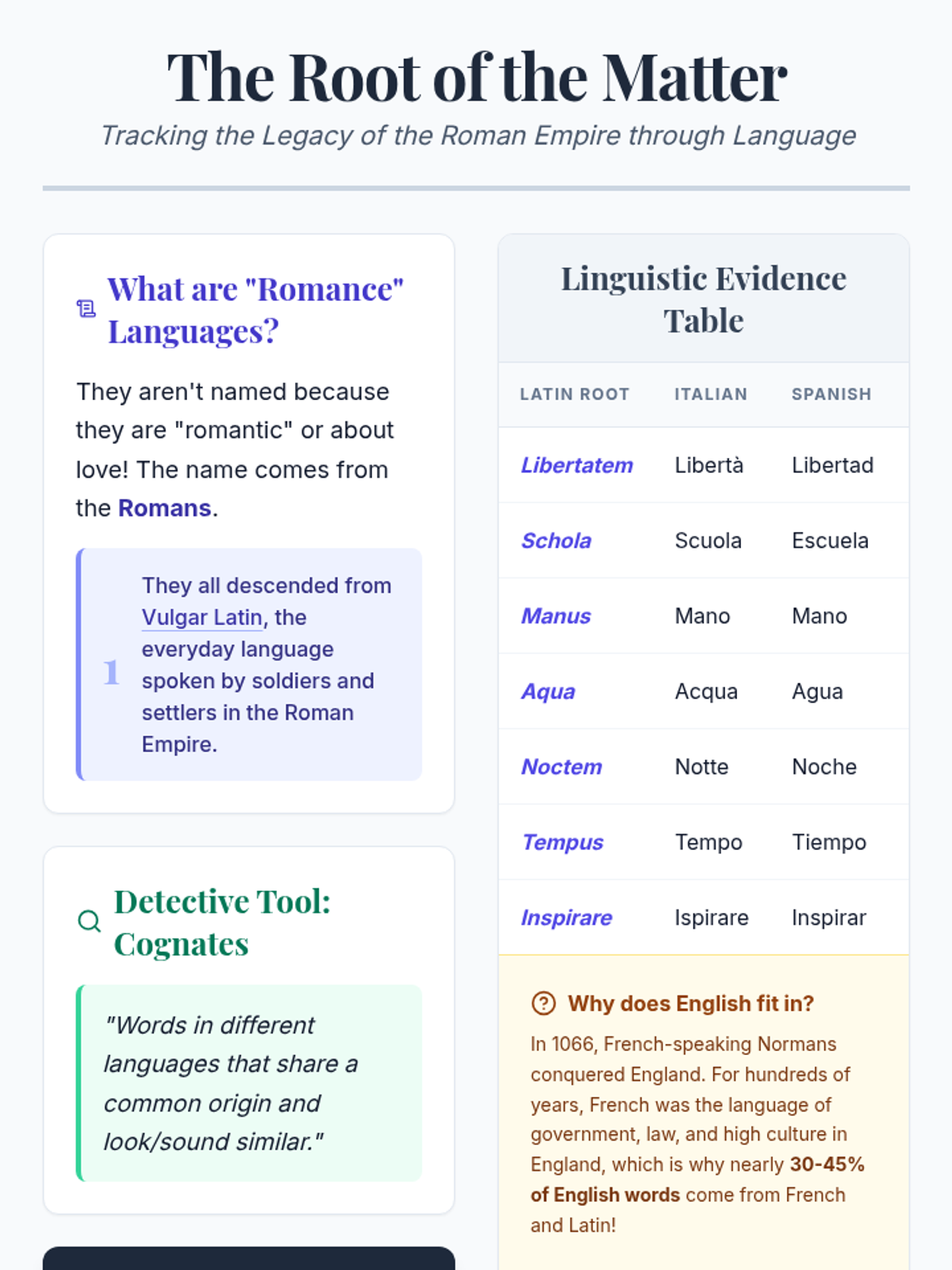
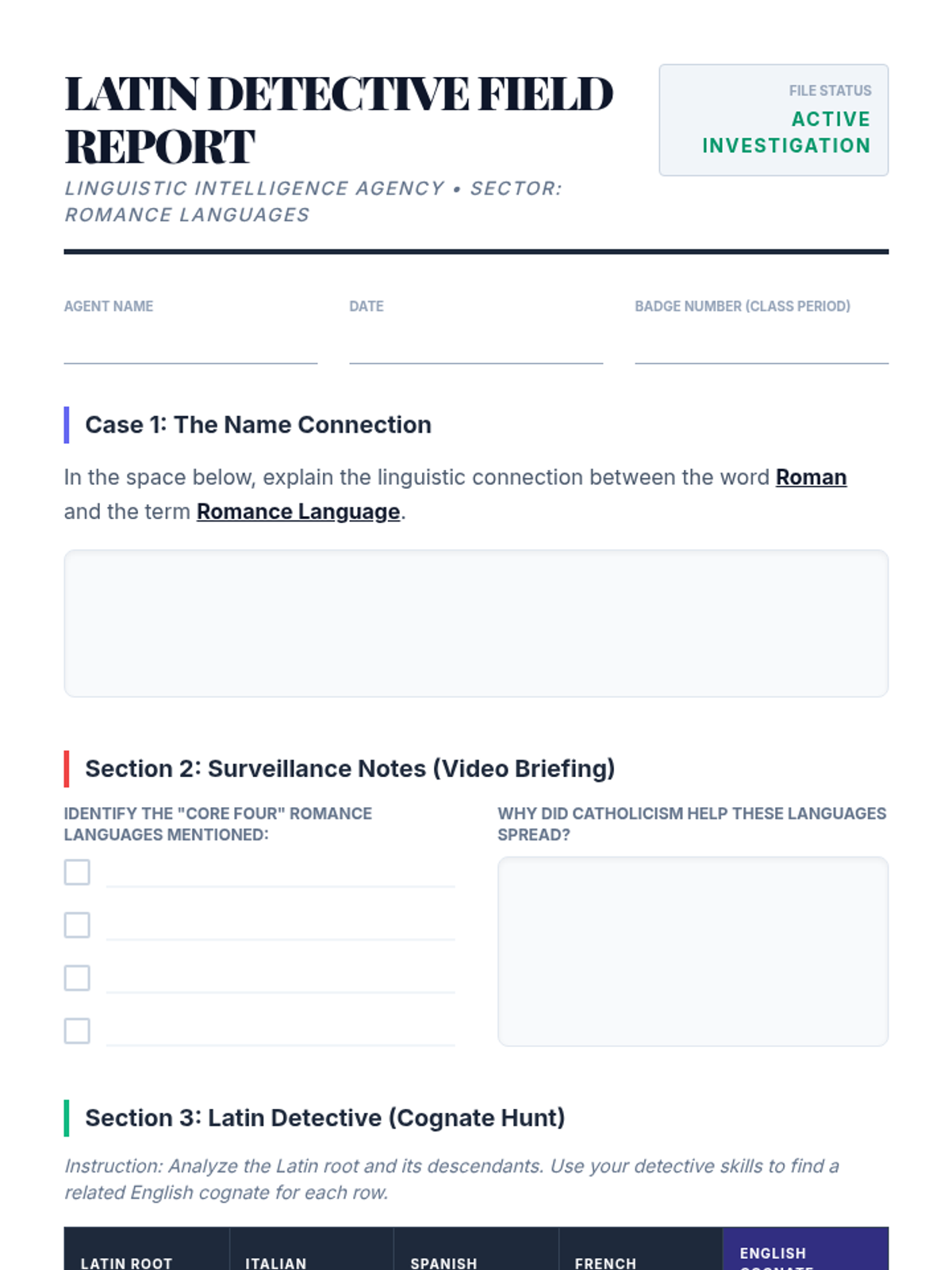
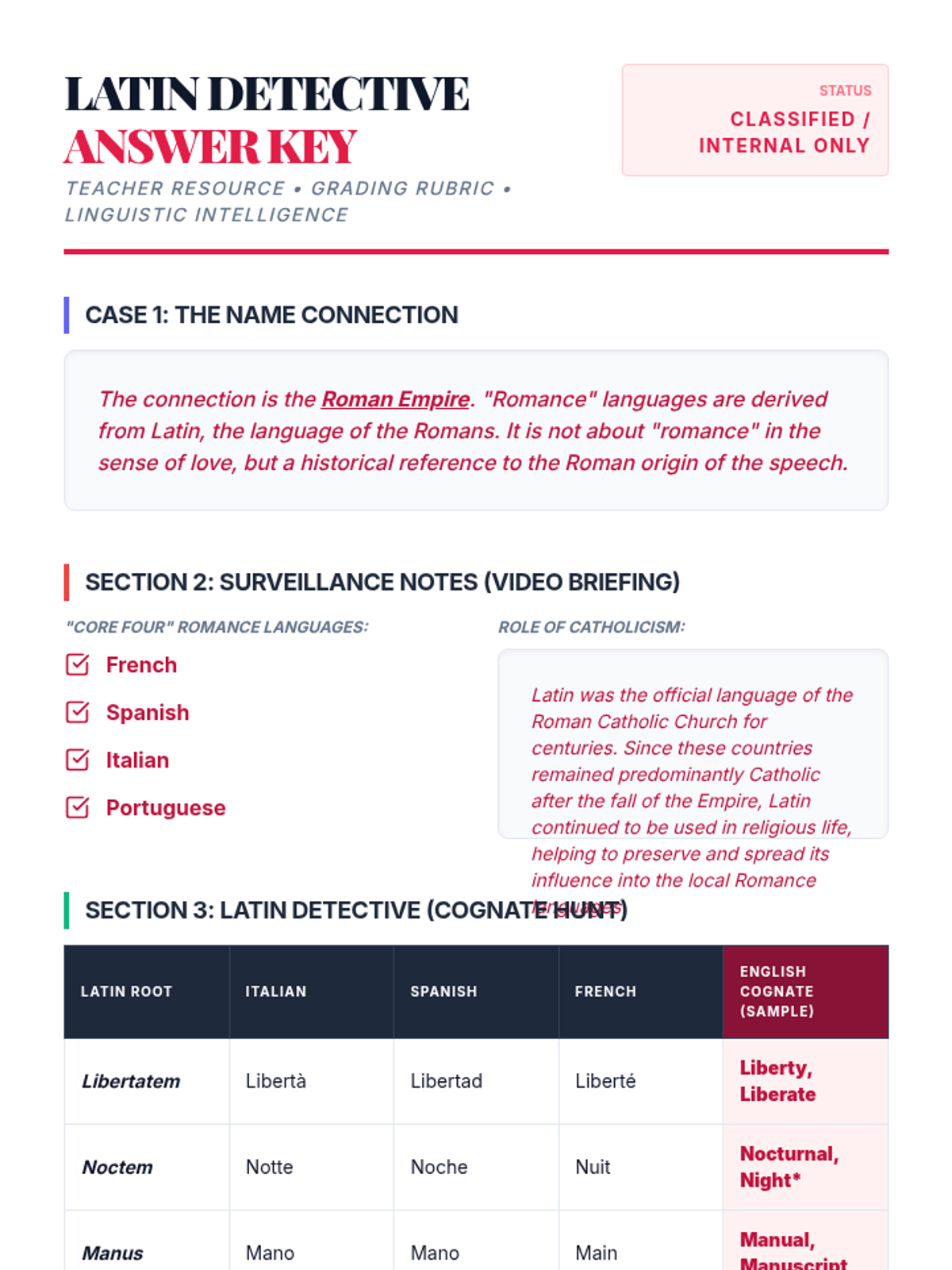
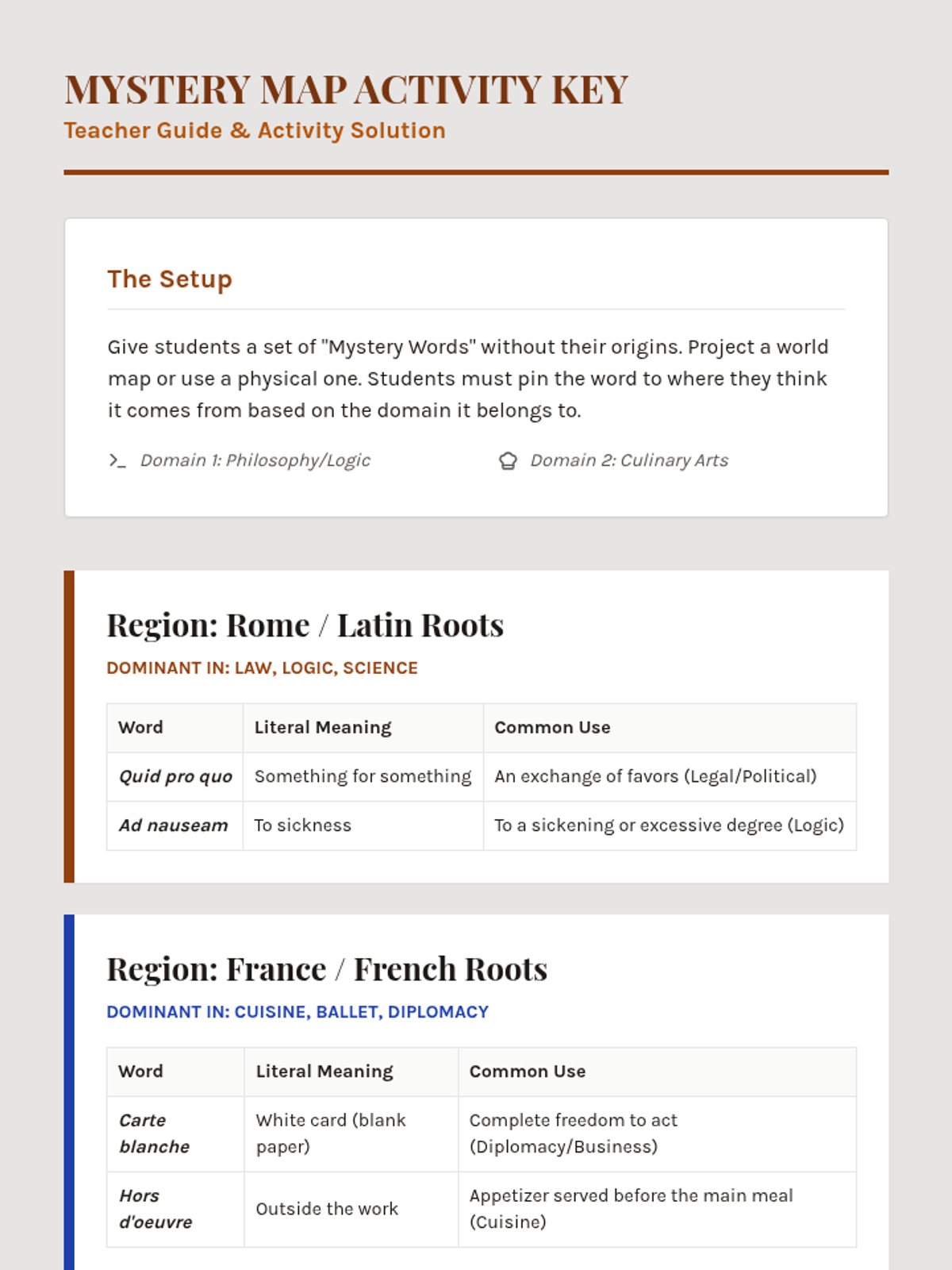
A lesson exploring the linguistic connections between Latin, Romance languages, and English through the lens of 'linguistic detective work.' Students identify cognates and understand the historical influence of the Roman Empire on modern speech.
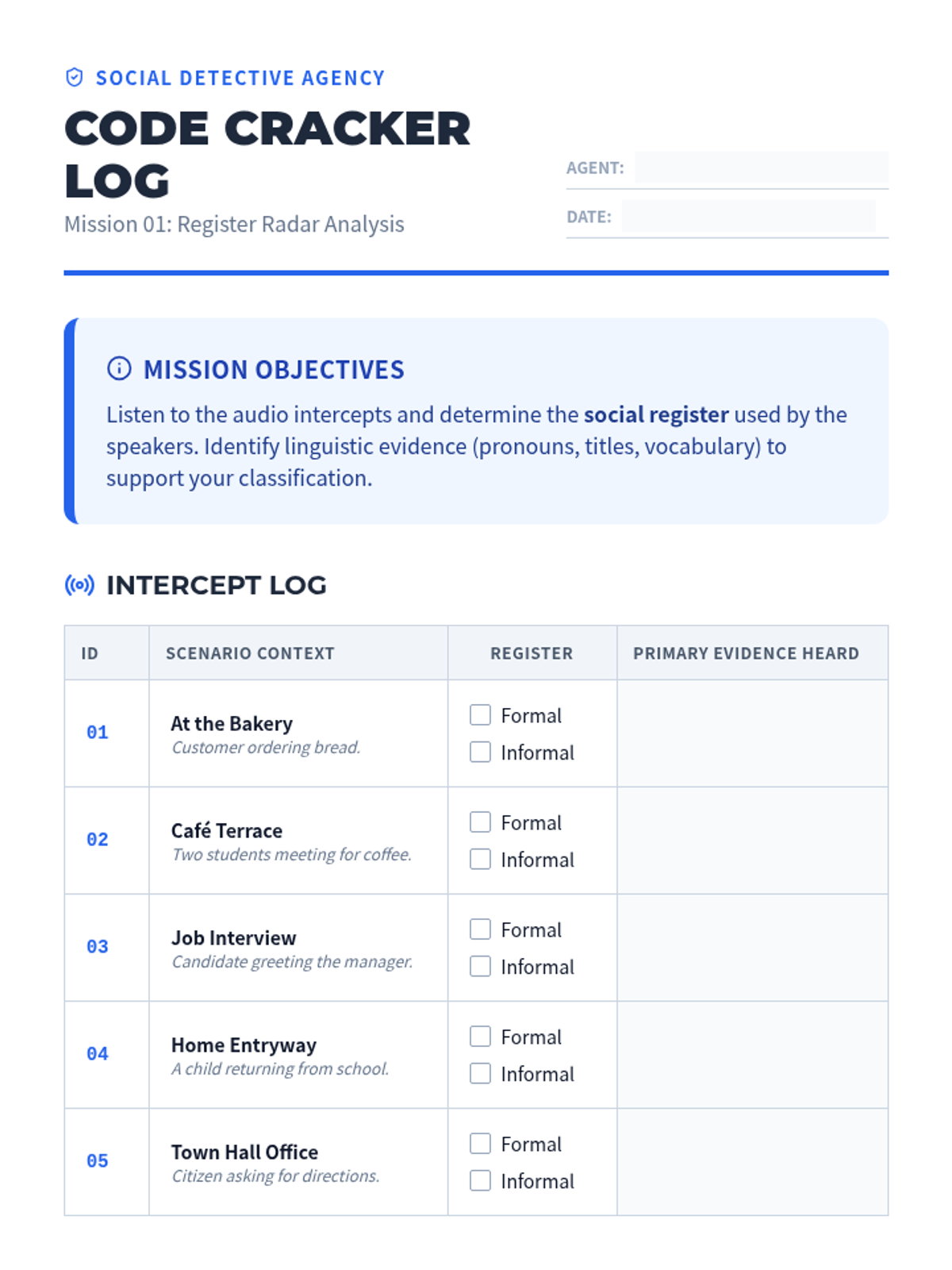
Students analyze formal and informal registers in French greetings to determine social relationships.
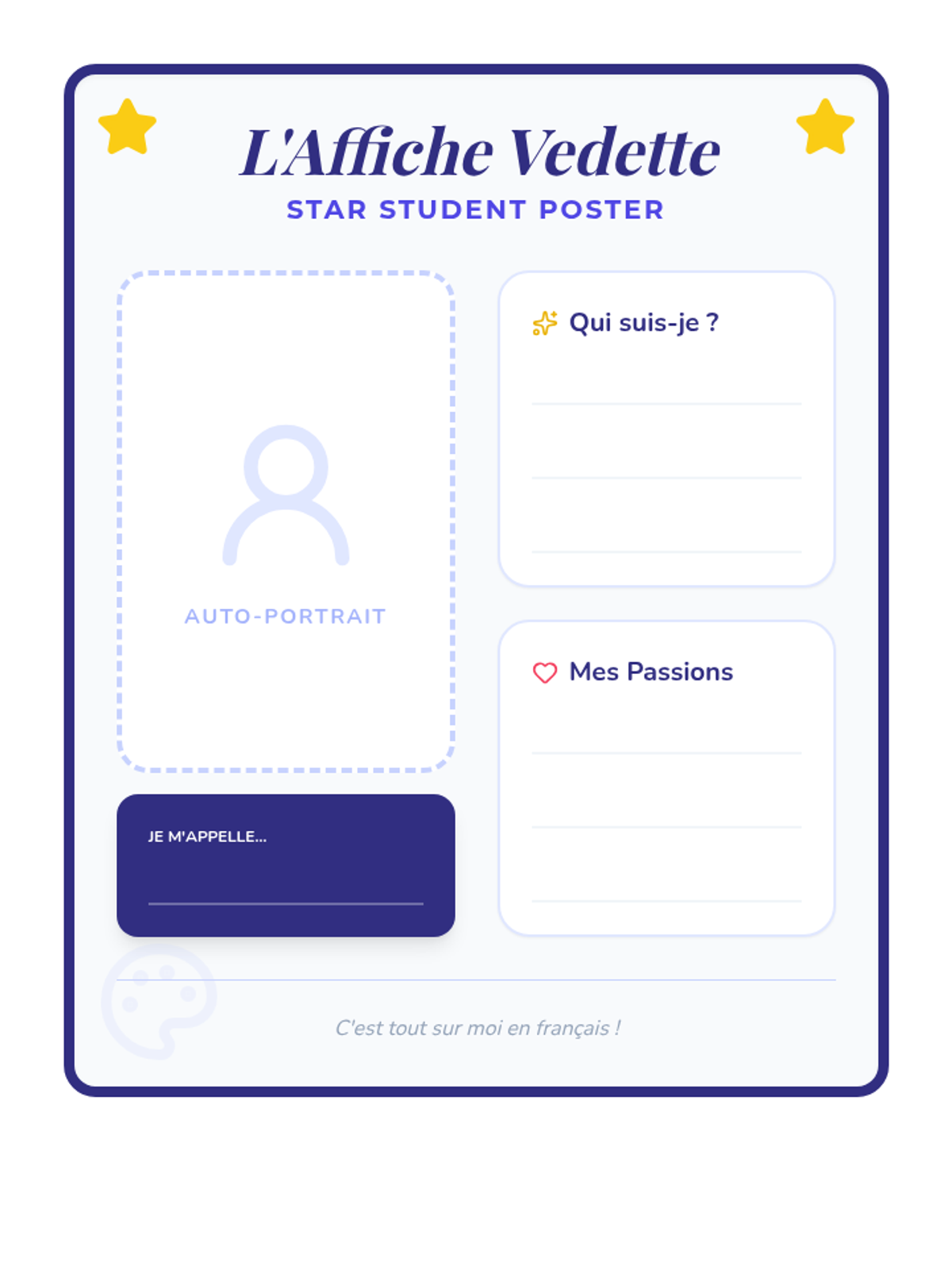
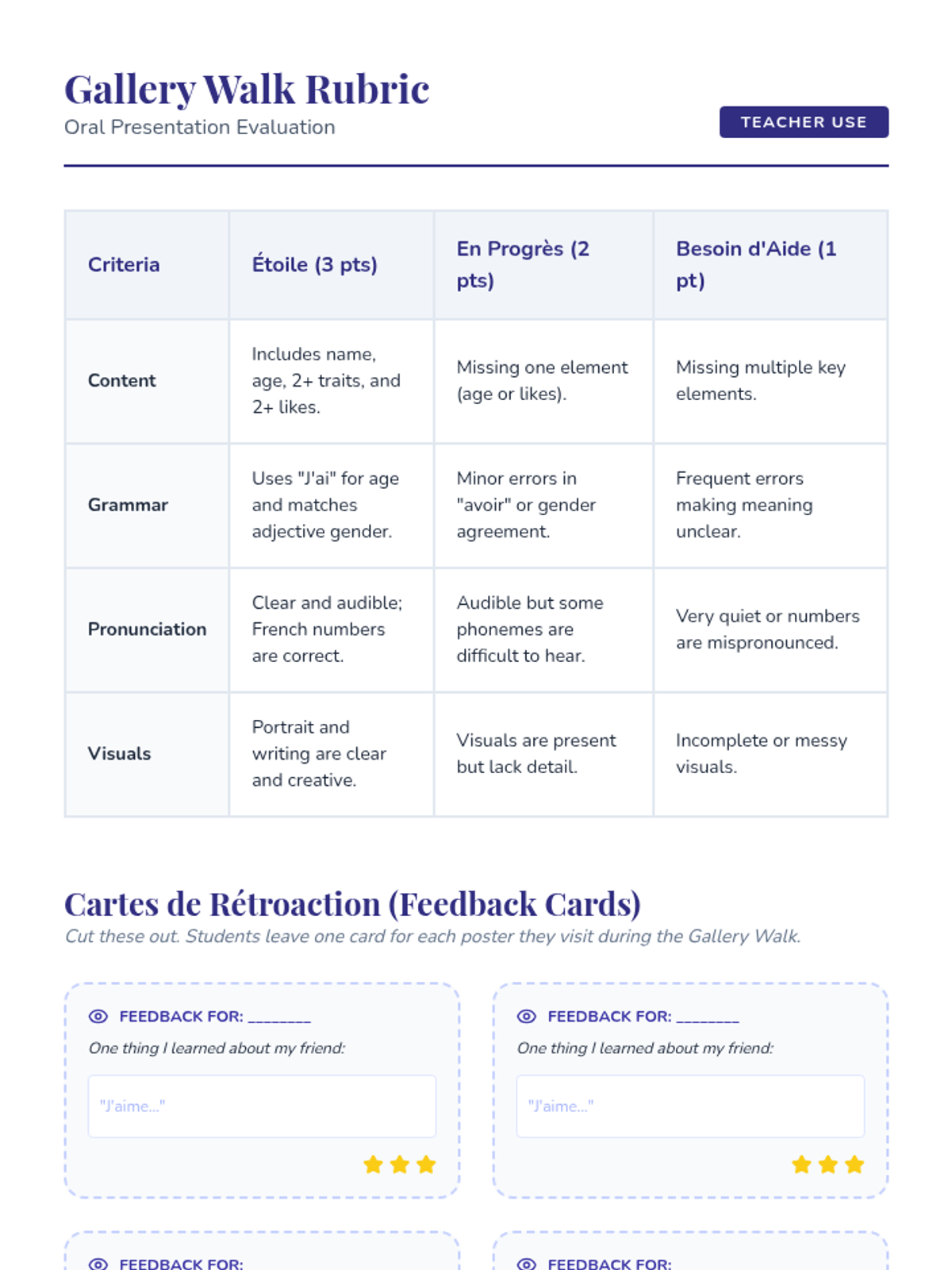
Students present their final 'Star Student' posters in a classroom gallery walk, practicing oral production and listening.
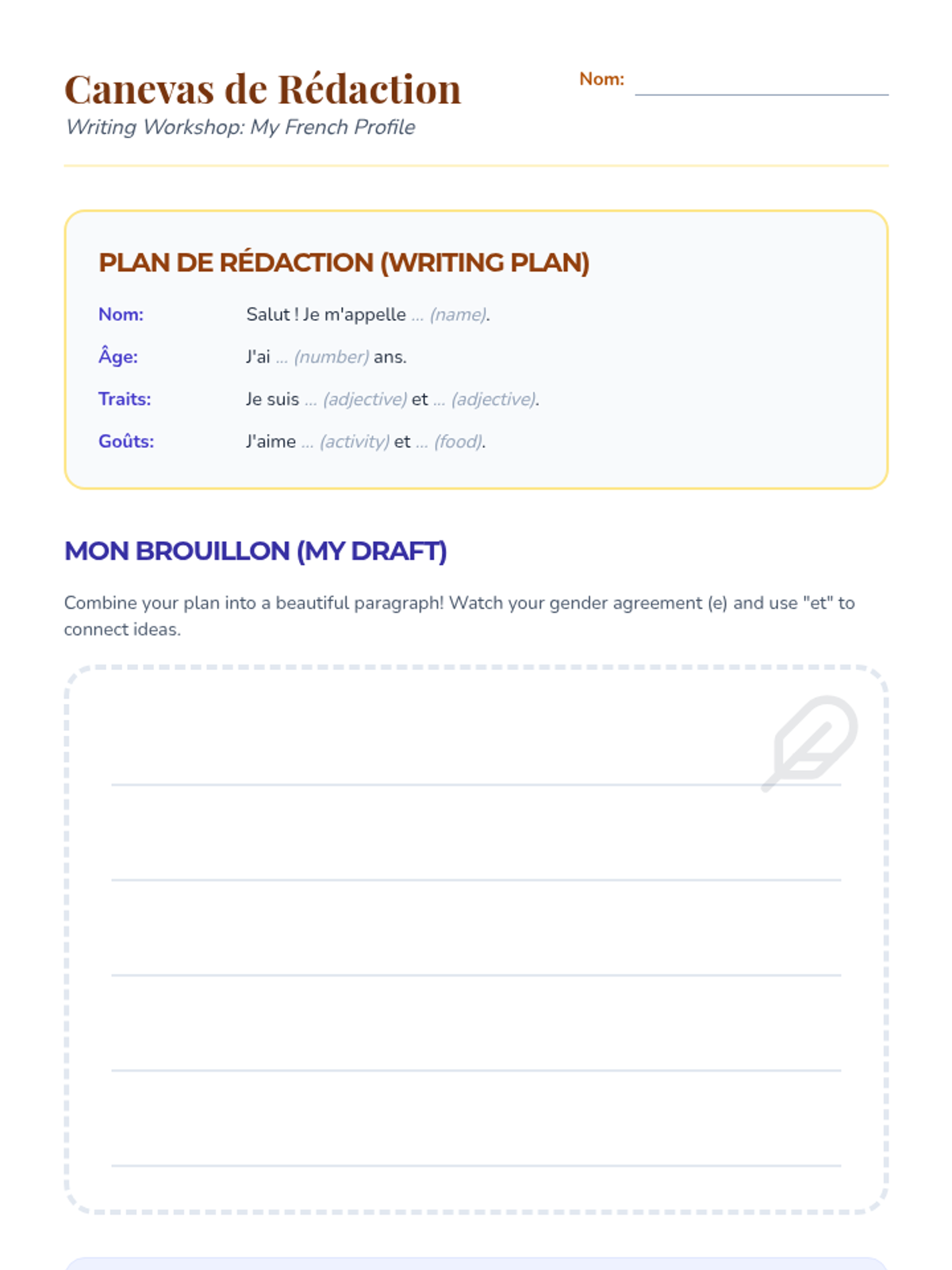
Students synthesize their age, traits, and preferences into a coherent written paragraph in a writer's workshop format.
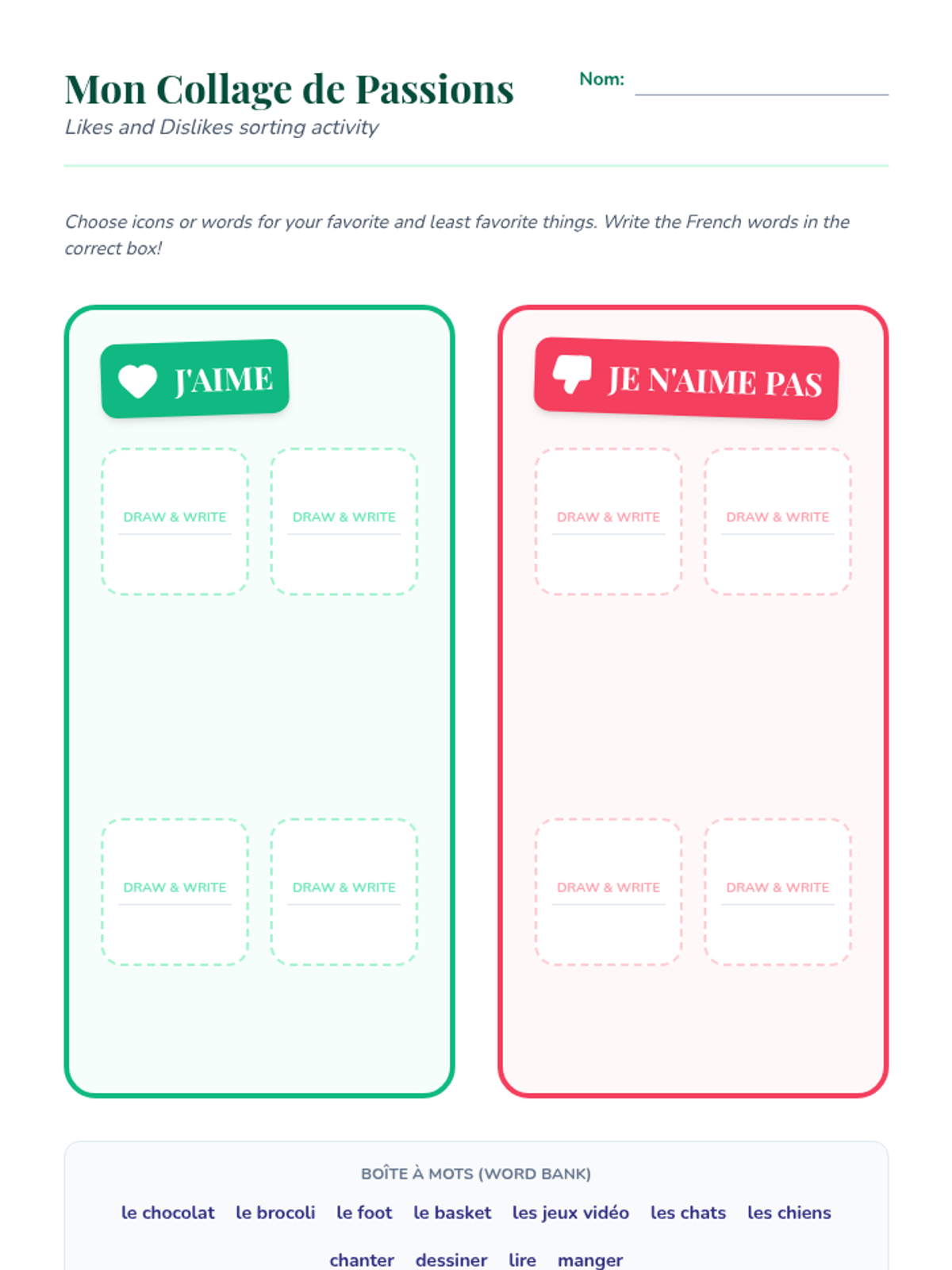
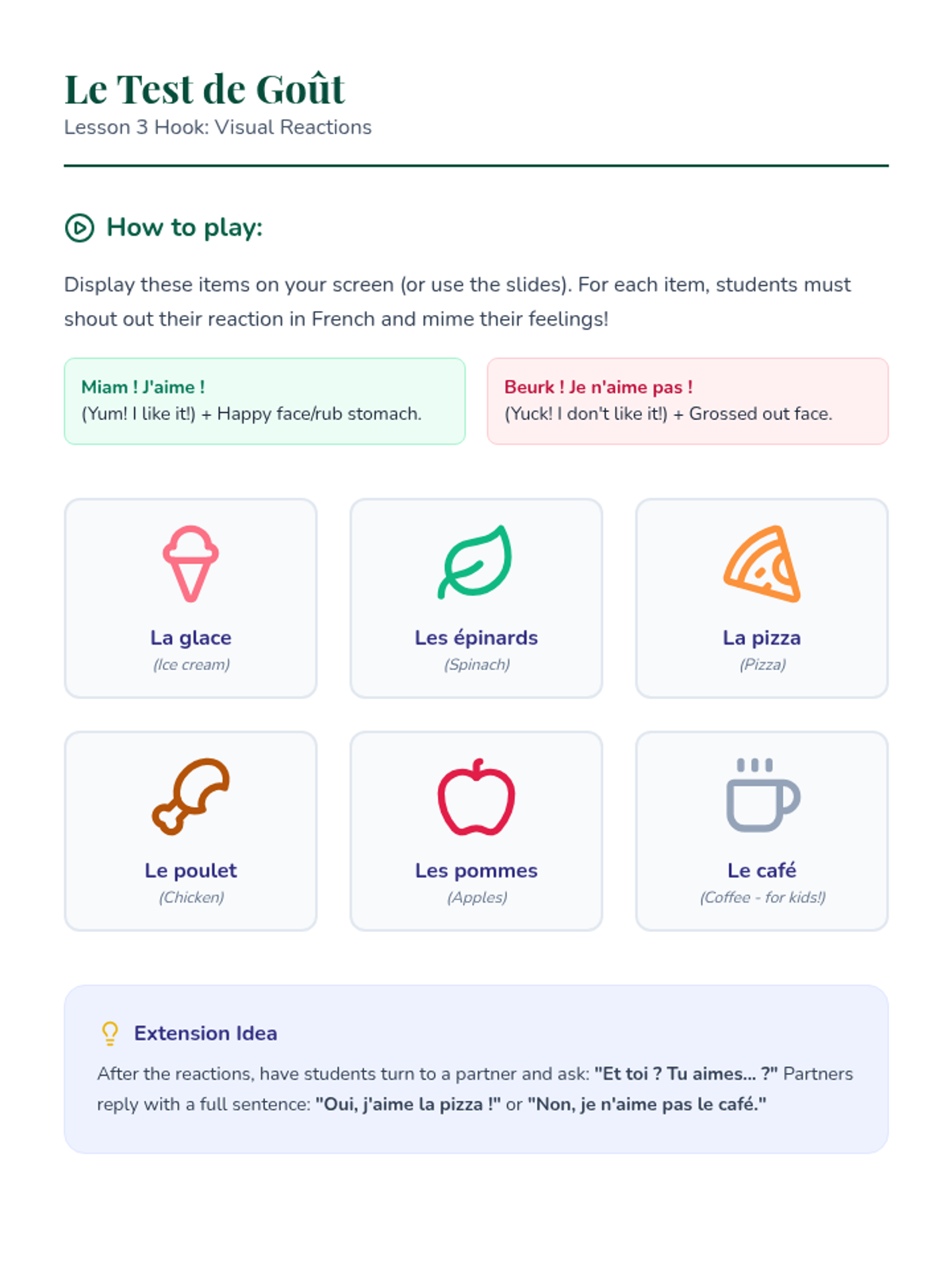
Focusing on the verb 'aimer', students express their likes and dislikes for various foods and activities.
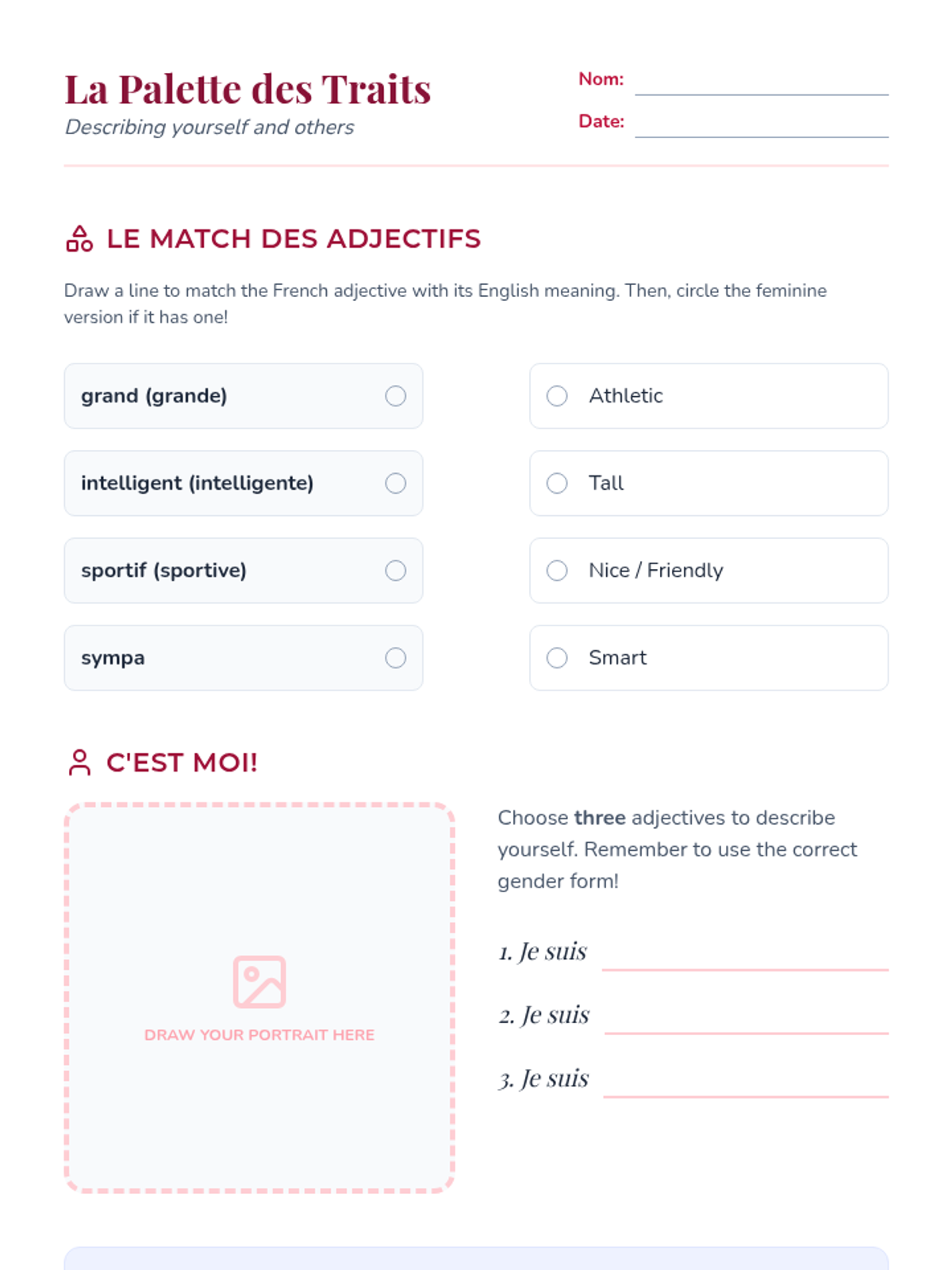
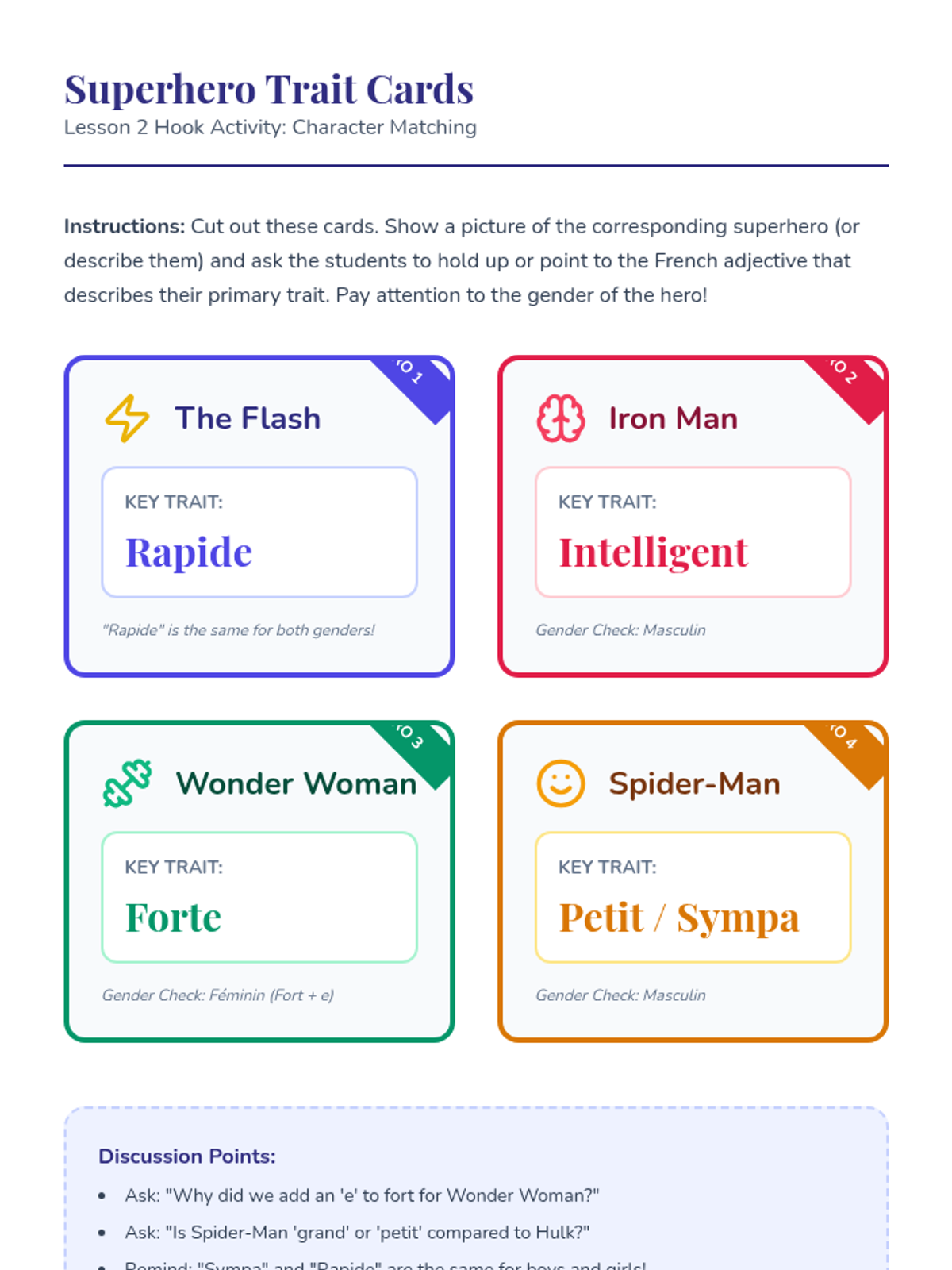
Learners acquire descriptive adjectives and basic gender agreement by matching traits to diverse characters and superheroes.
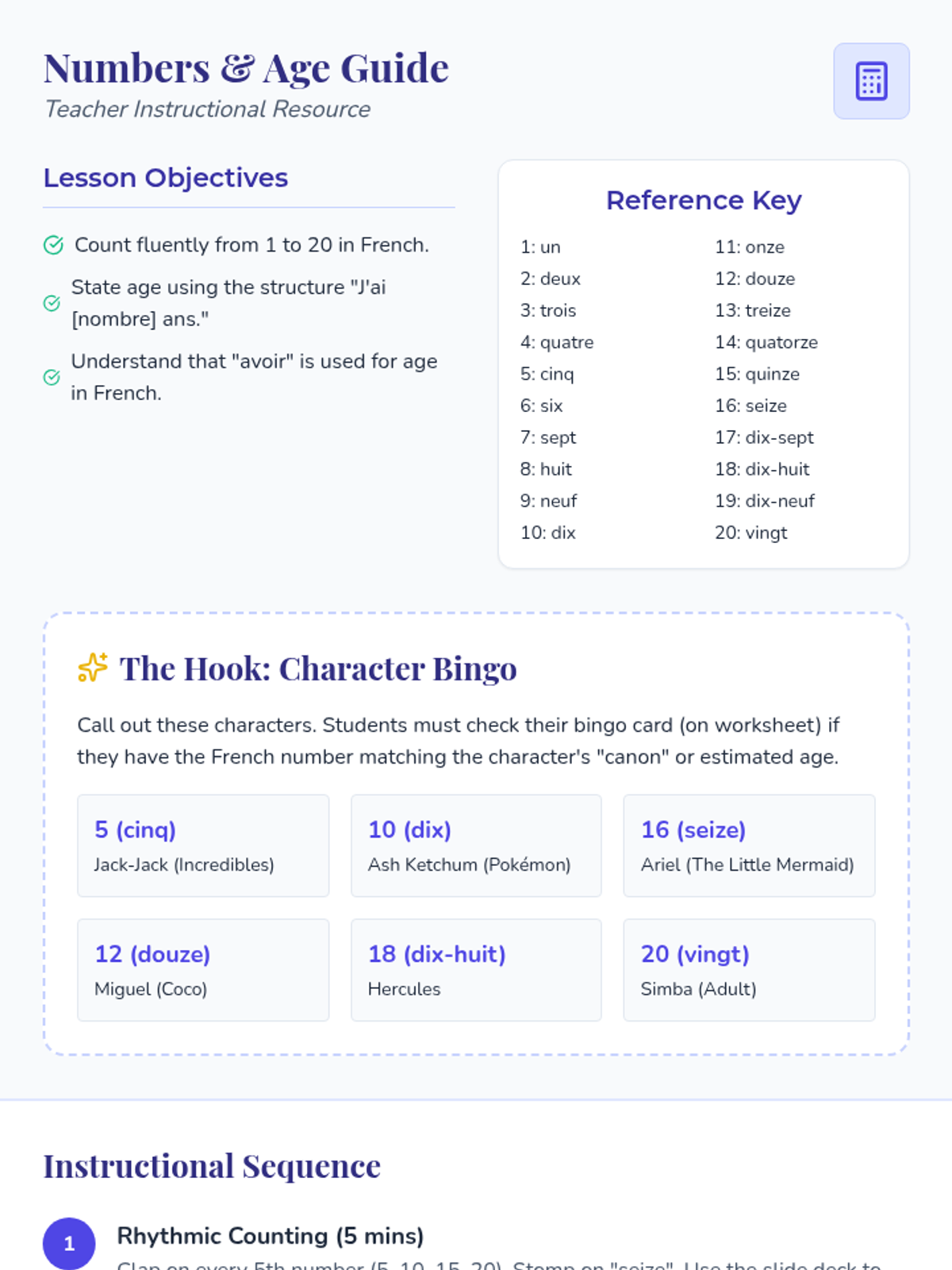
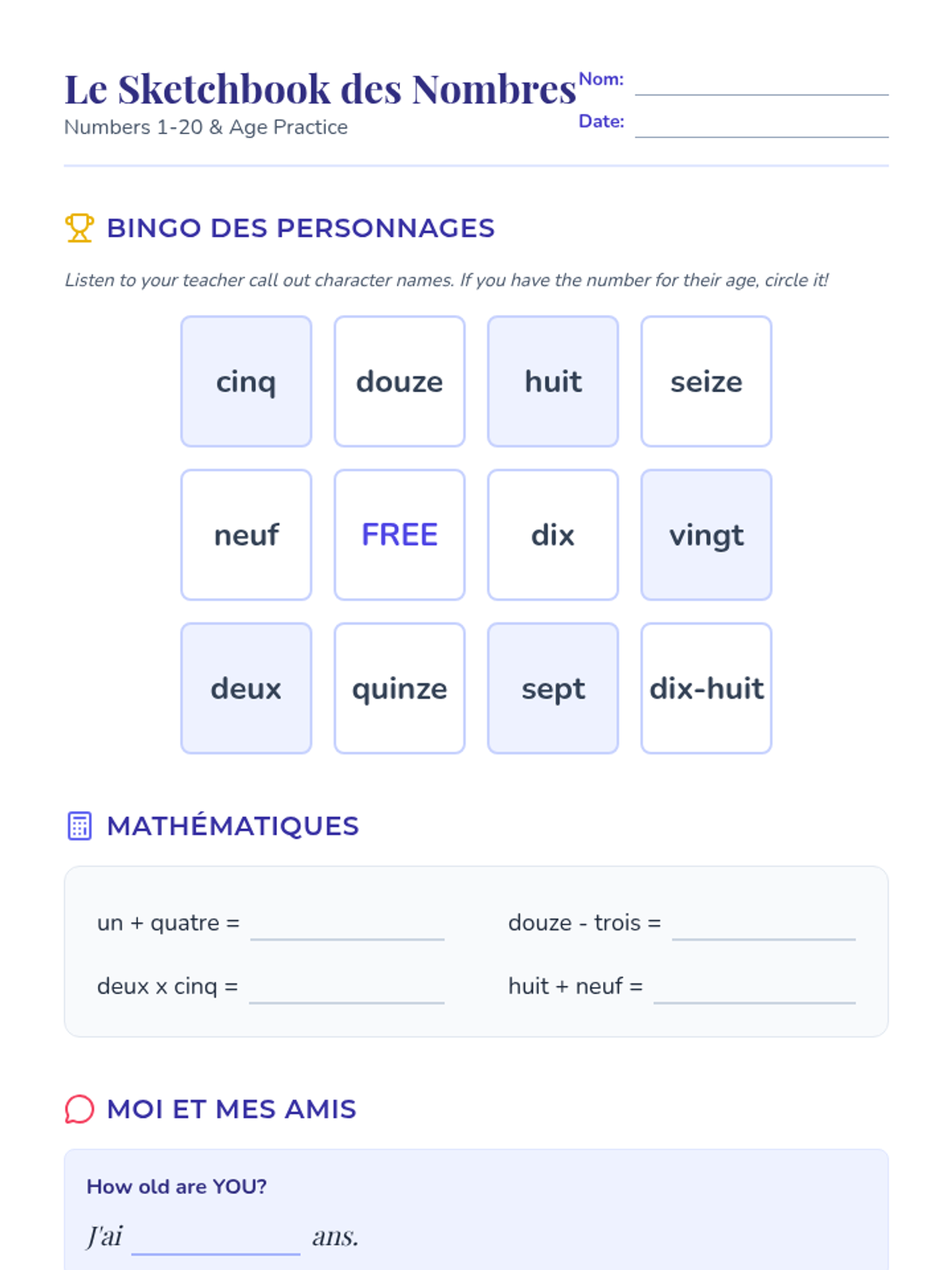
Students master numbers 1-20 and the phrase 'J'ai... ans' through rhythmic games and math problems.
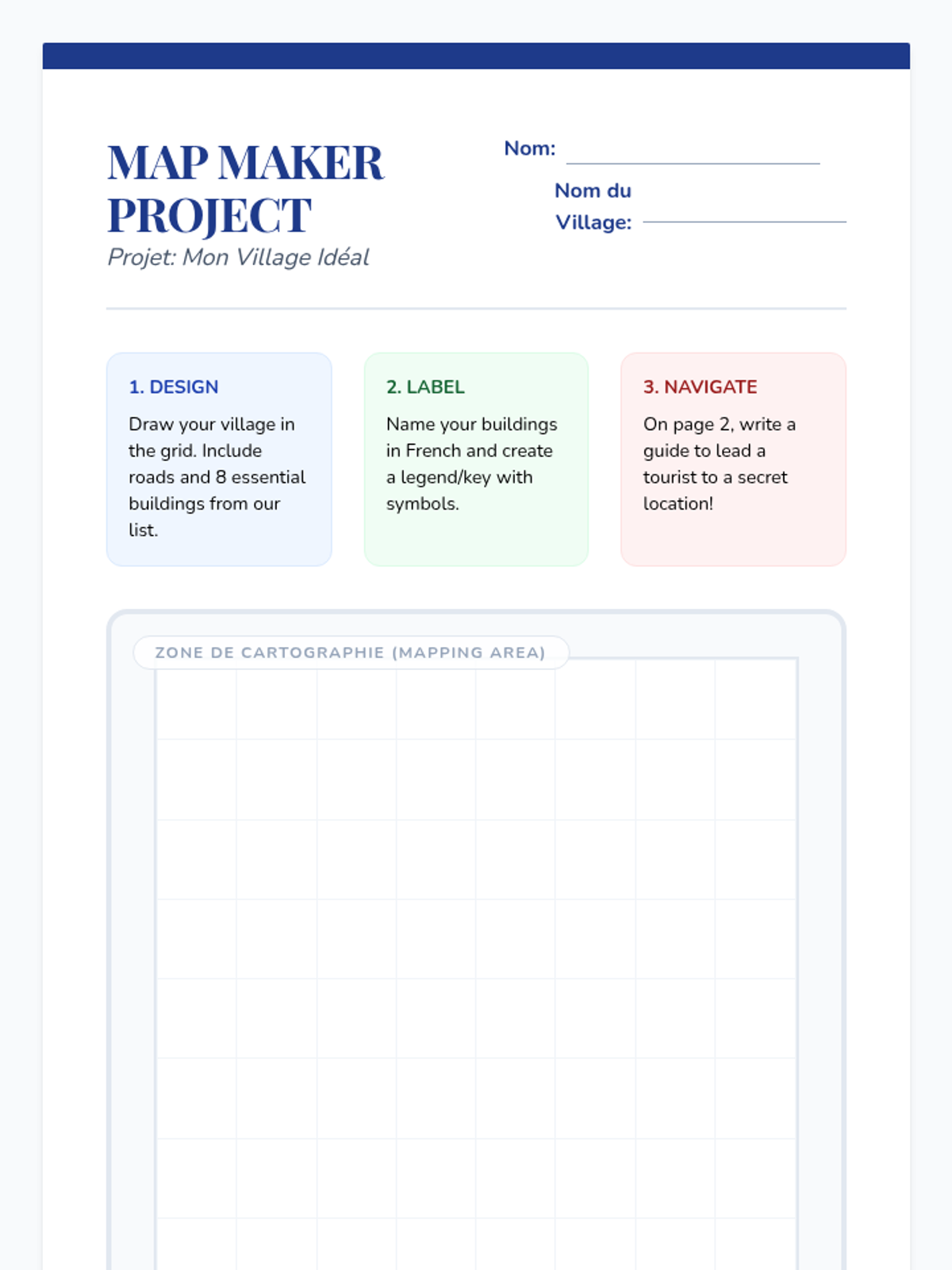
Students design their own town maps and write navigation guides, applying all previously learned vocabulary and grammar.
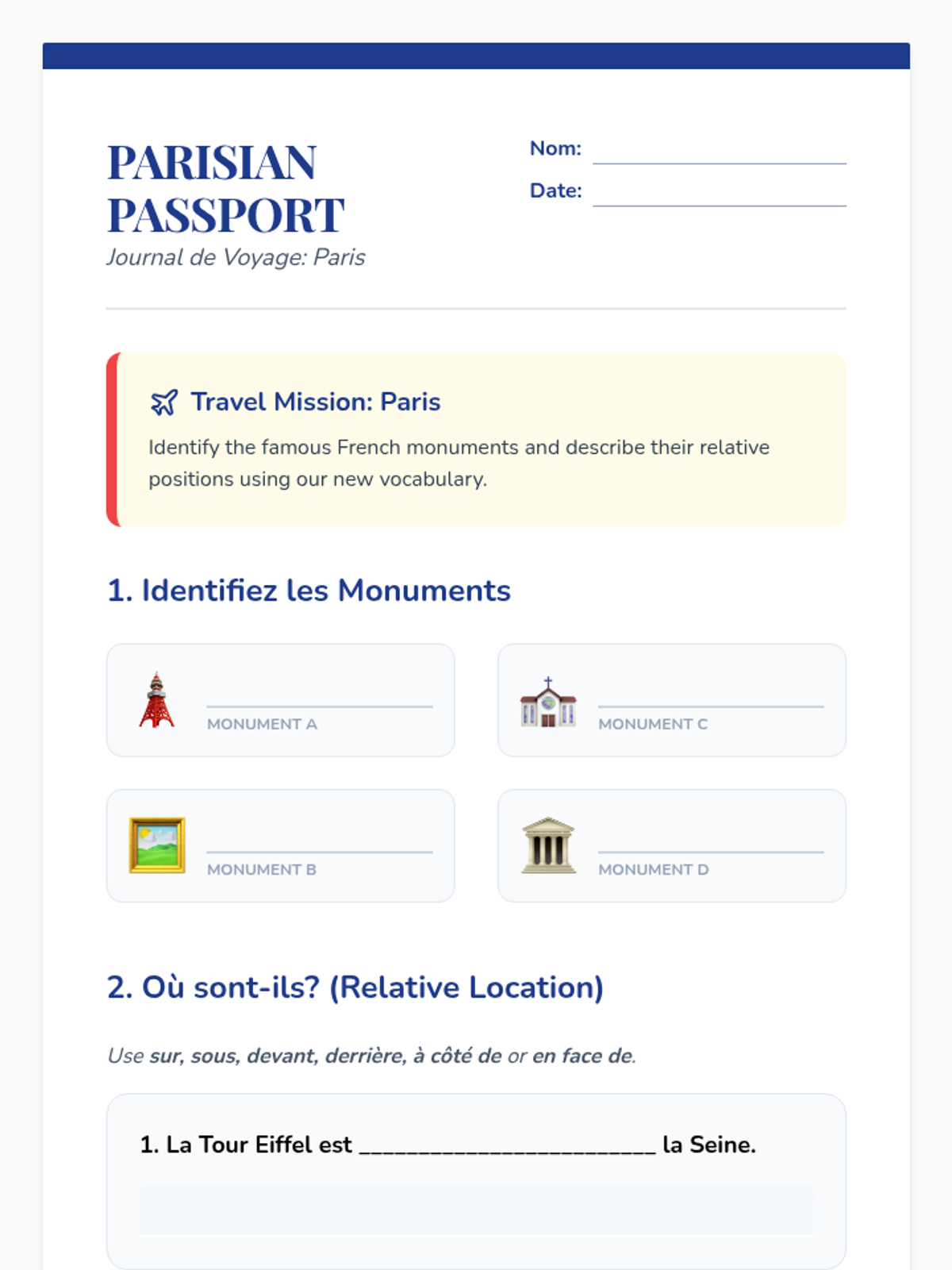
Students explore iconic Francophone landmarks and practice describing their positions in a real-world cultural context.
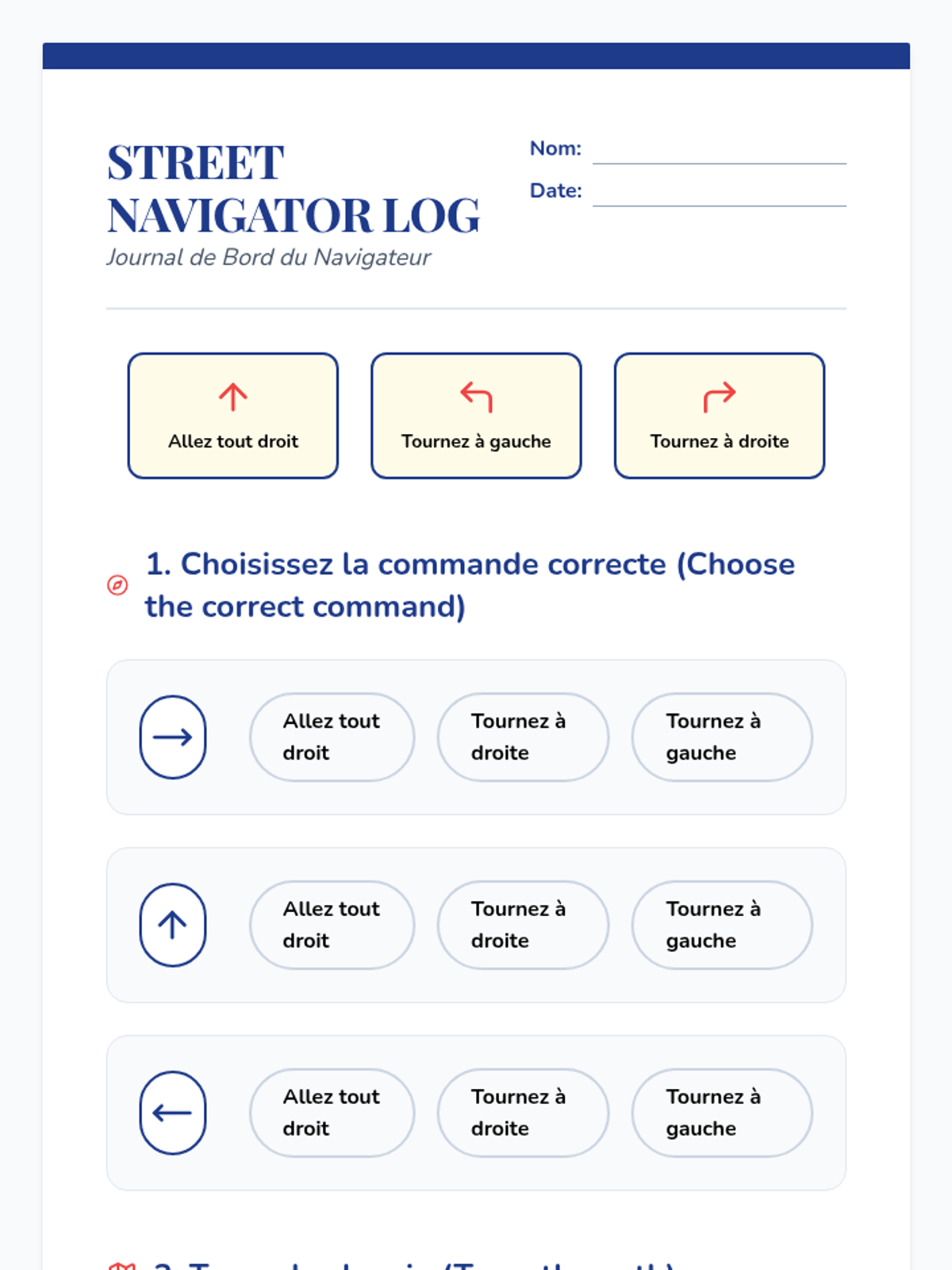
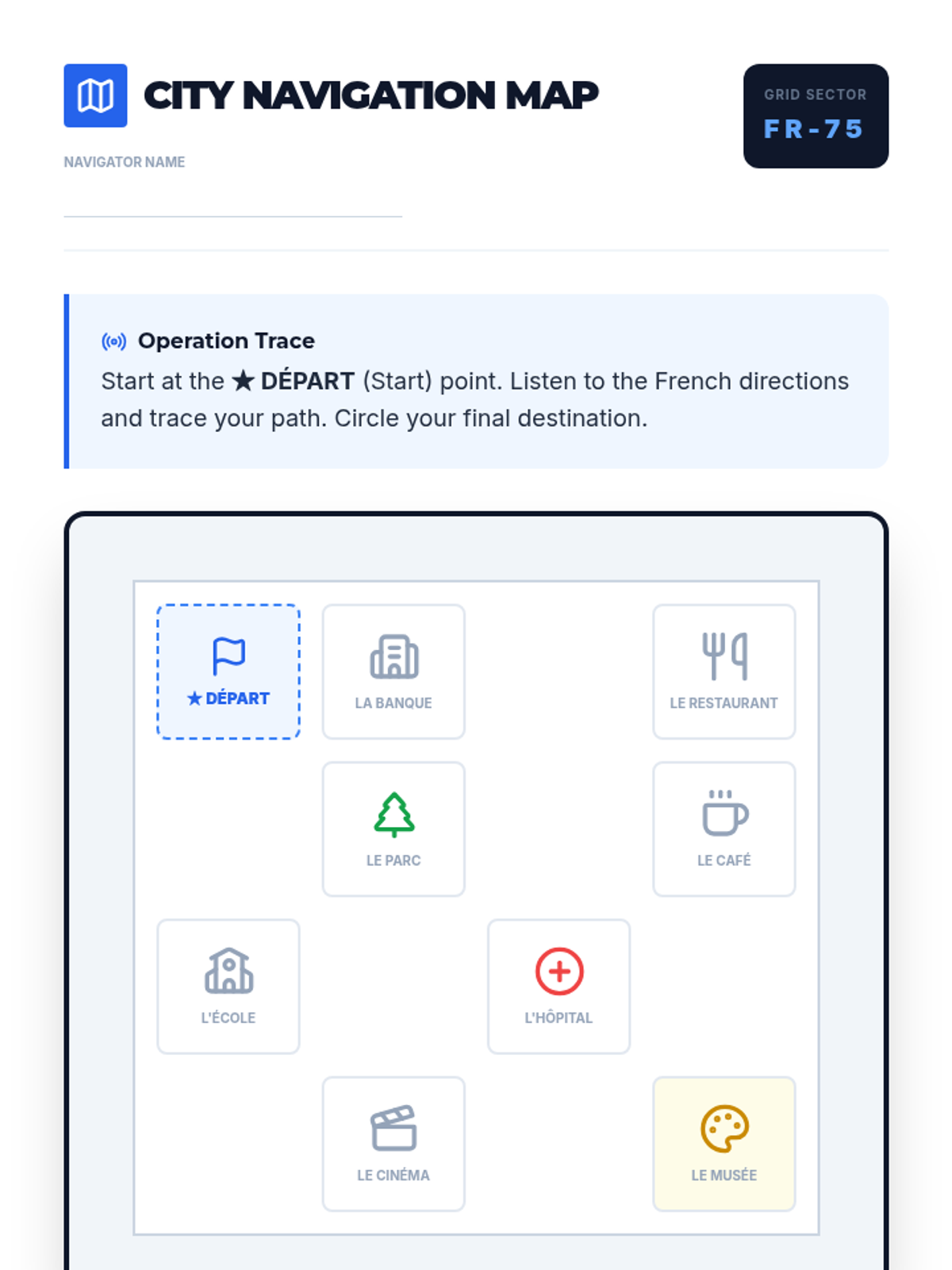
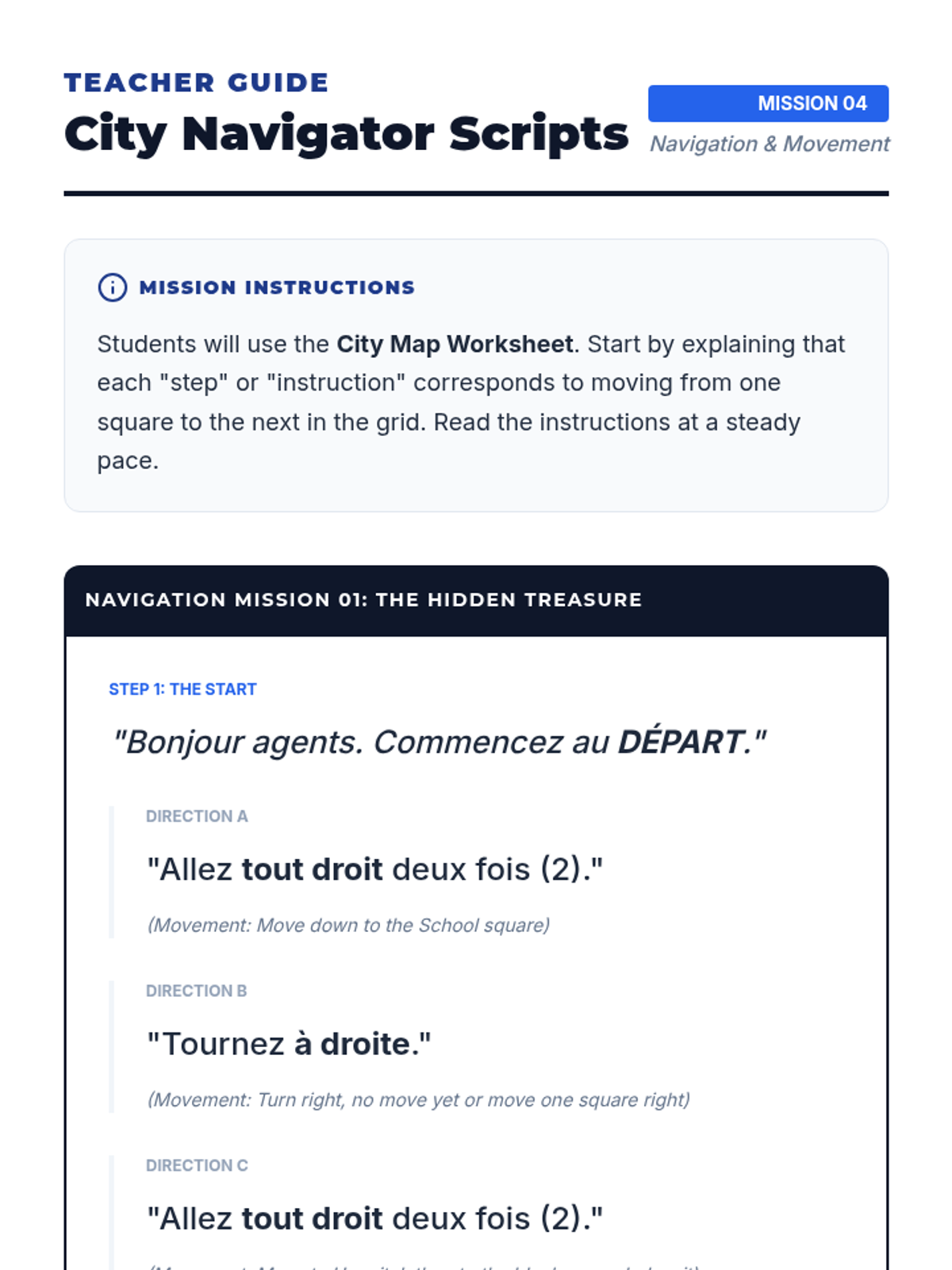
Students master directional commands and the imperative mood to navigate and guide others through a city.
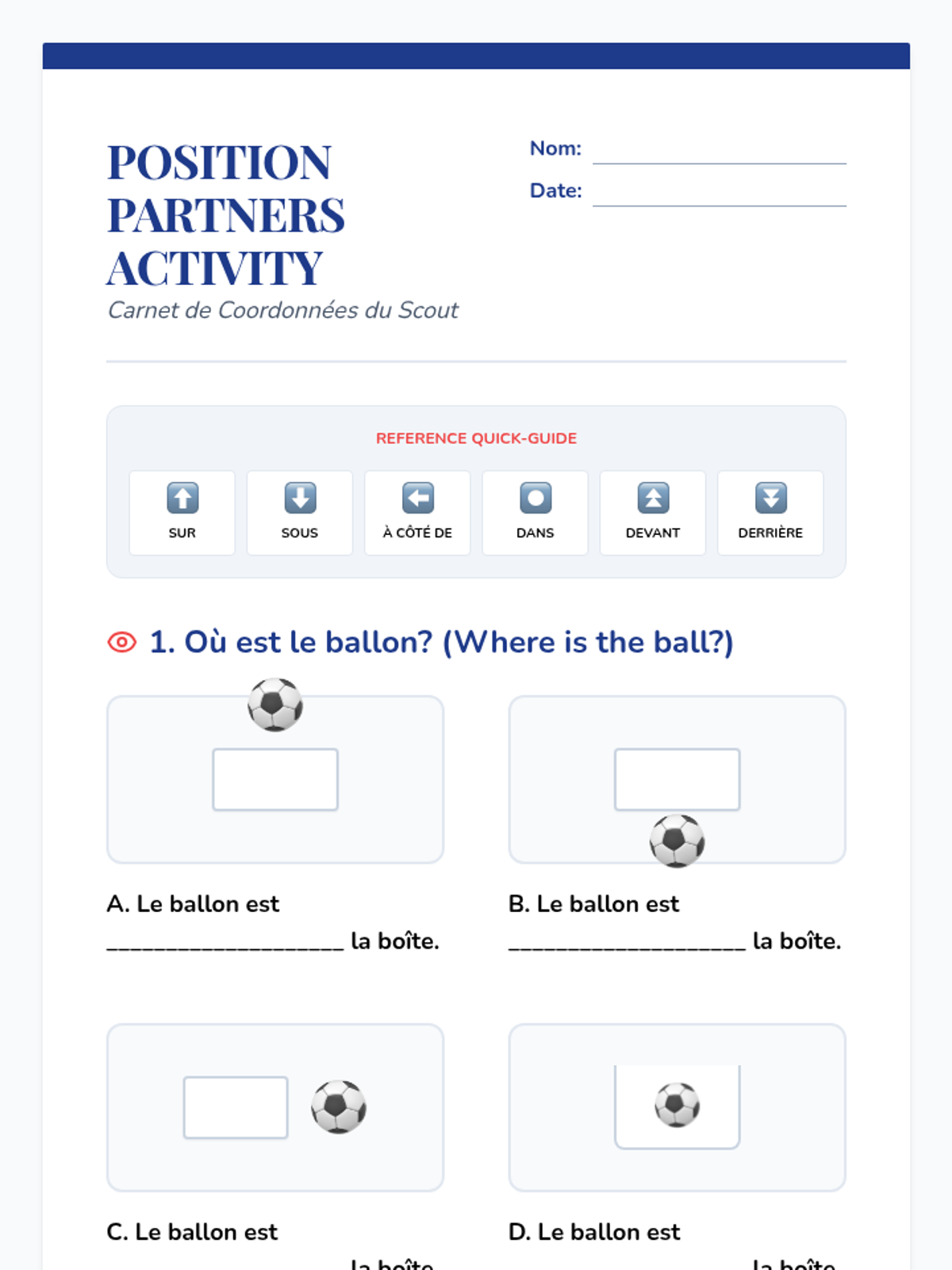
Students learn spatial prepositions to describe the relative locations of buildings and objects in a French setting.
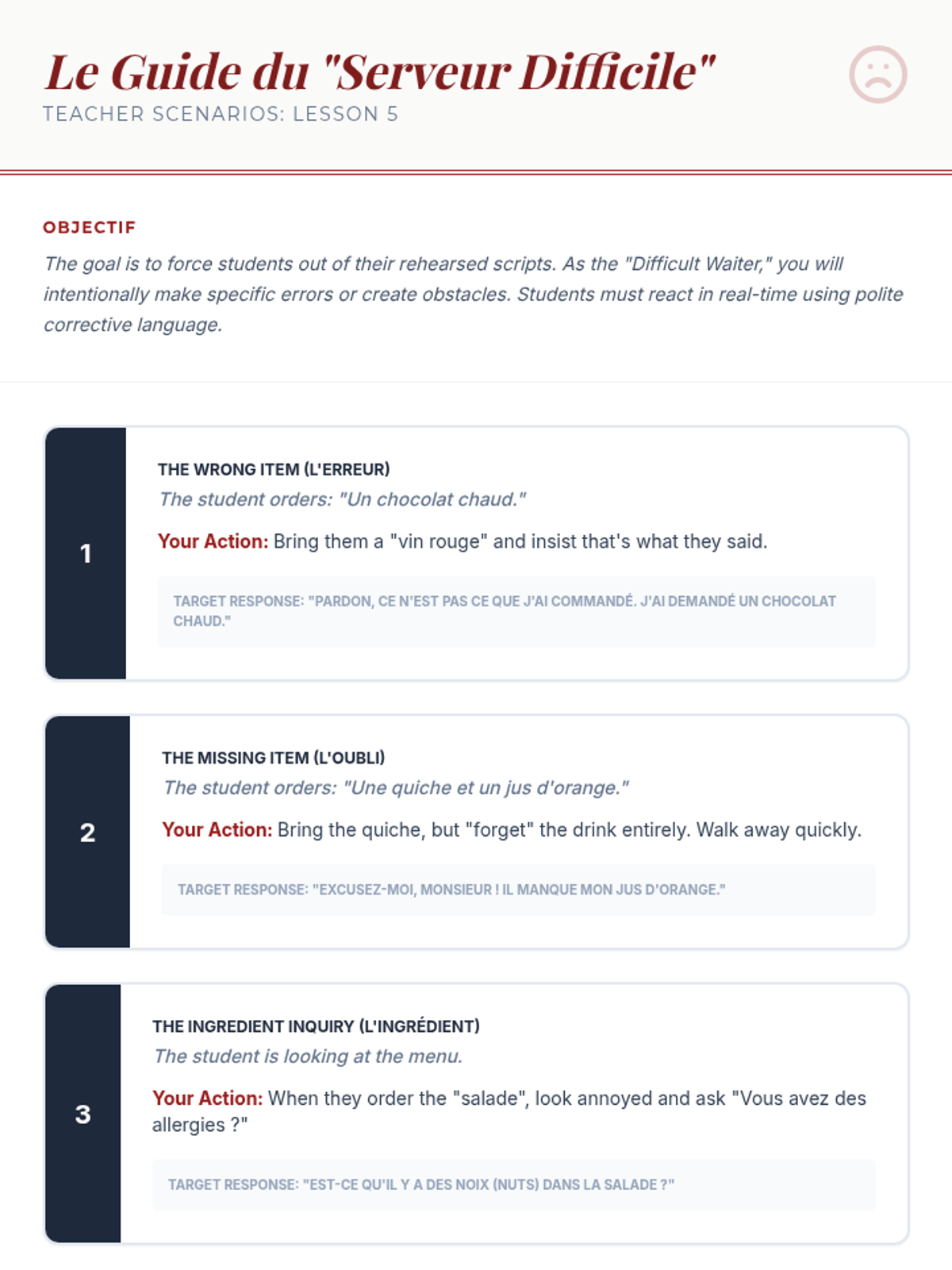
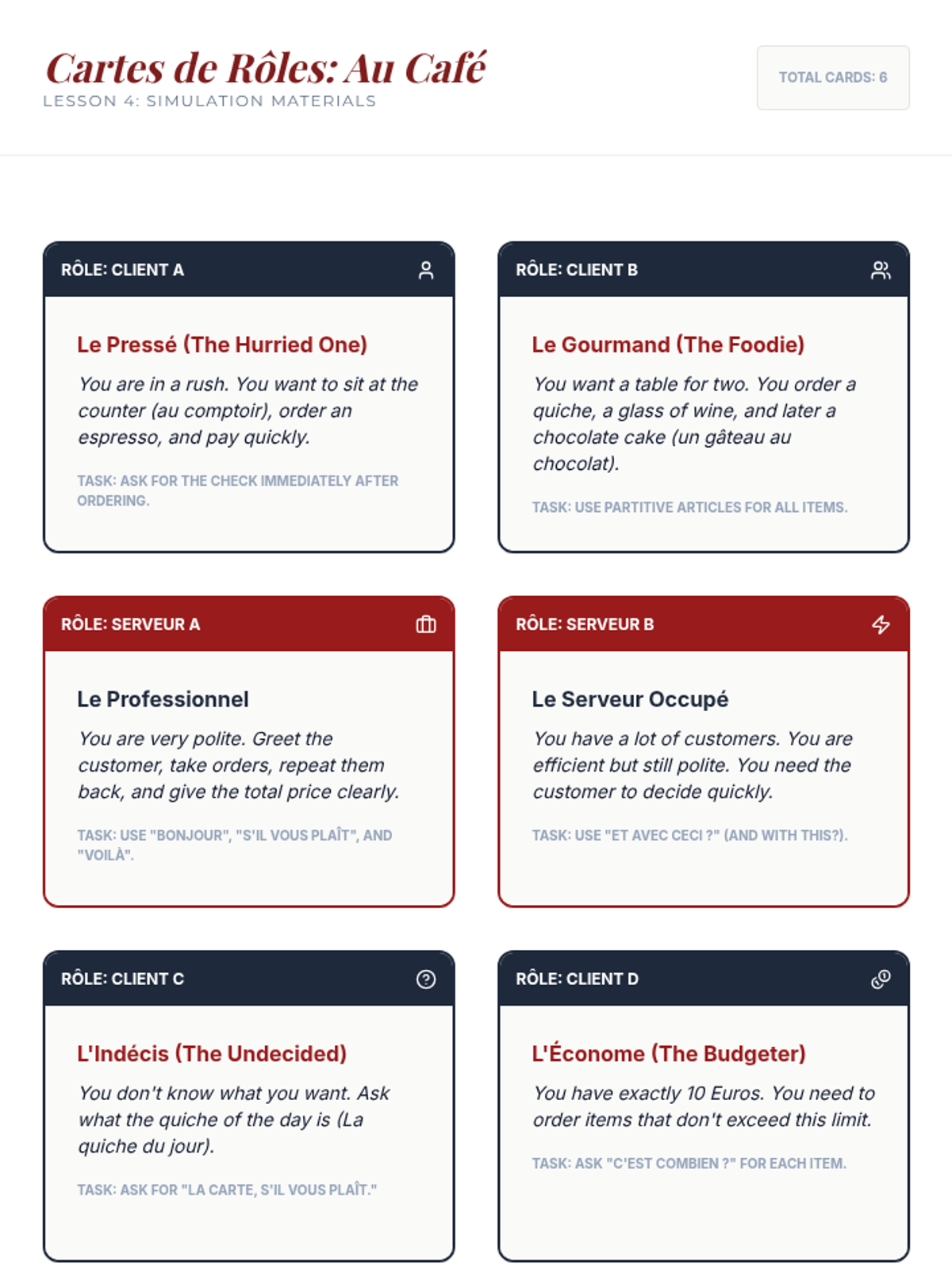
Students practice resolving order errors and inquiring about ingredients, pushing their language use into adaptive and spontaneous territory.
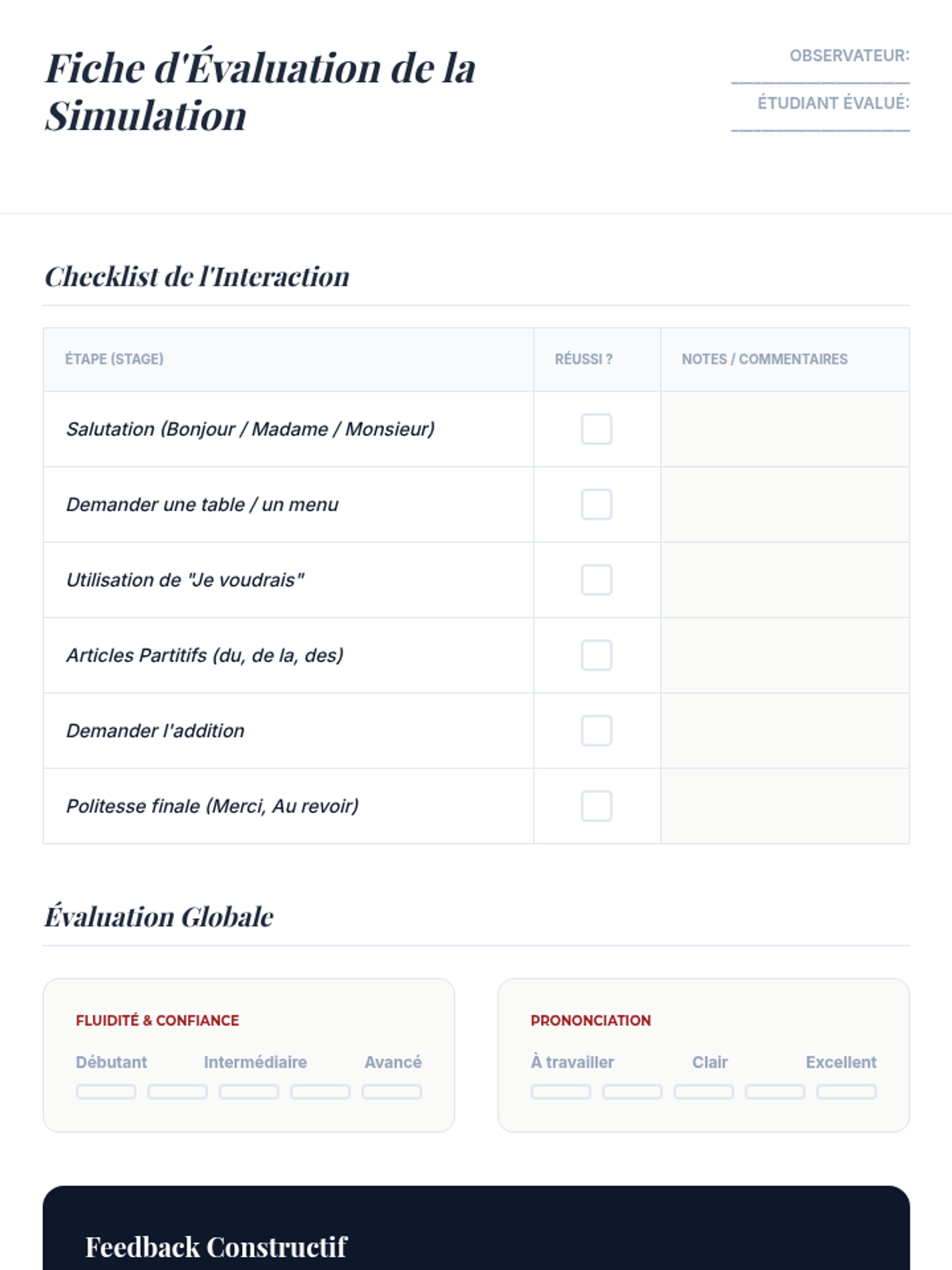
A full-scale simulation of a café visit, covering everything from being seated to asking for the check using authentic cultural scripts.
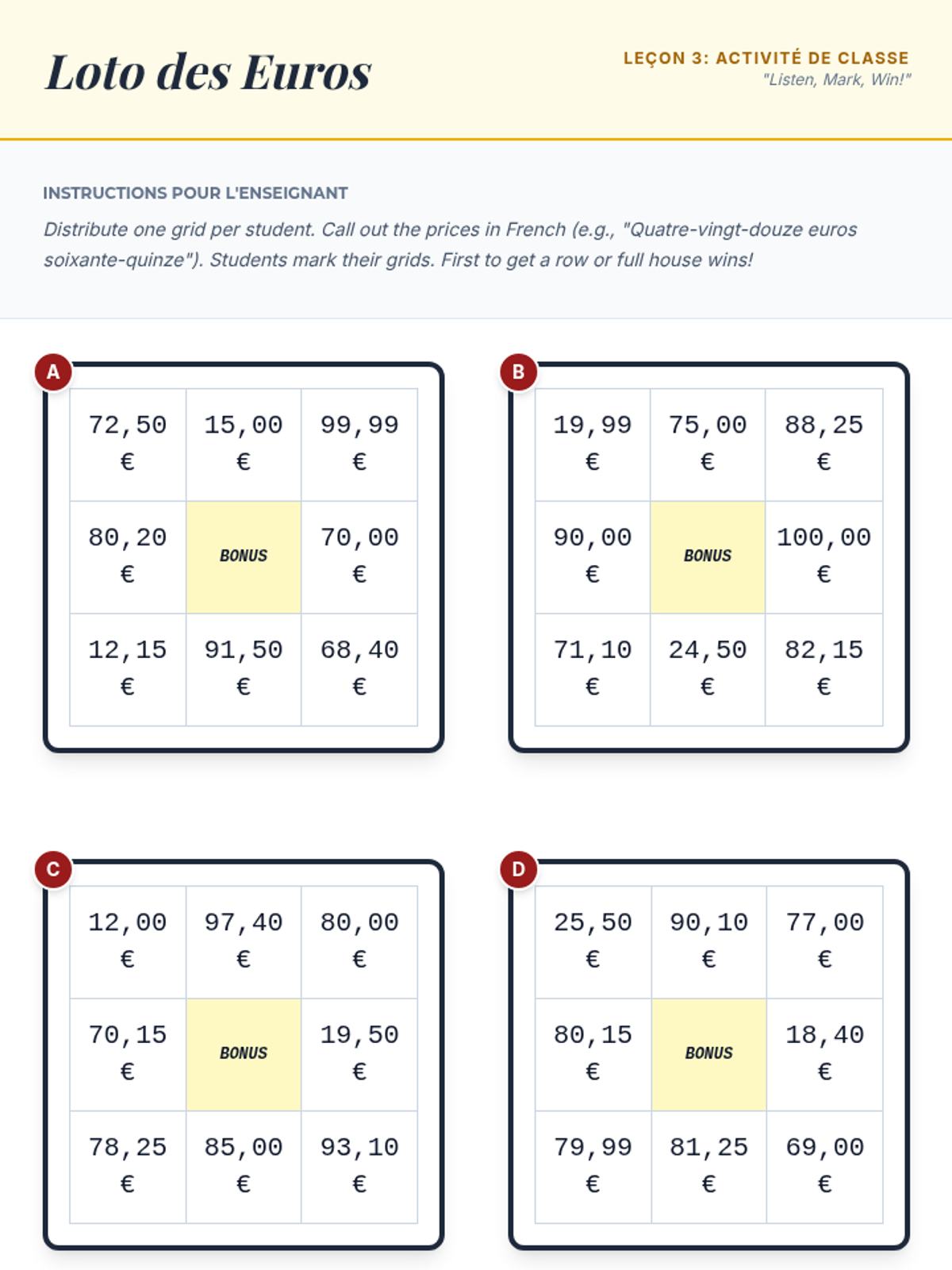
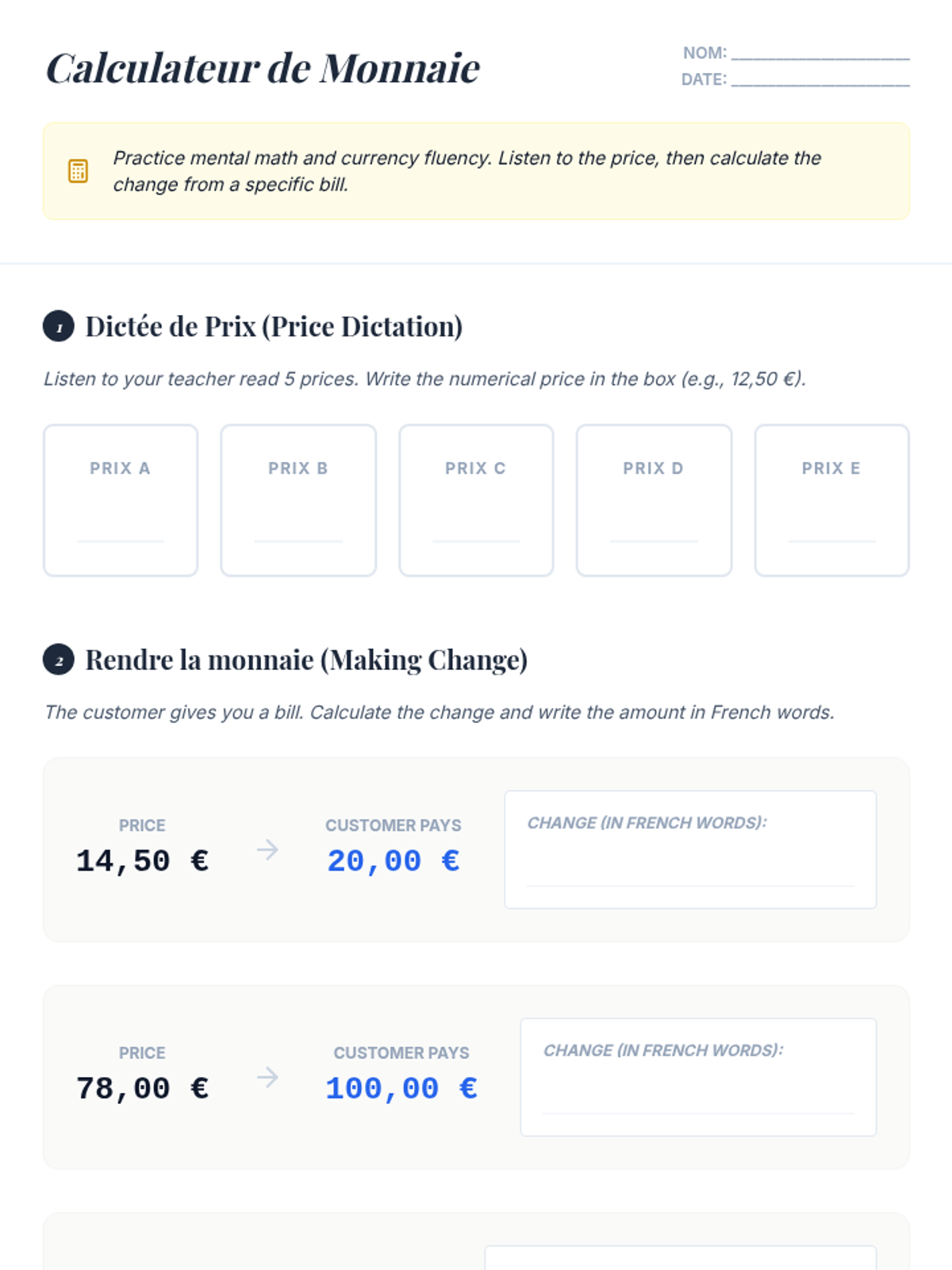
Focused on numerical fluency from 1-100 and Euro currency, students practice the complex French numbering system and mental math for transactions.
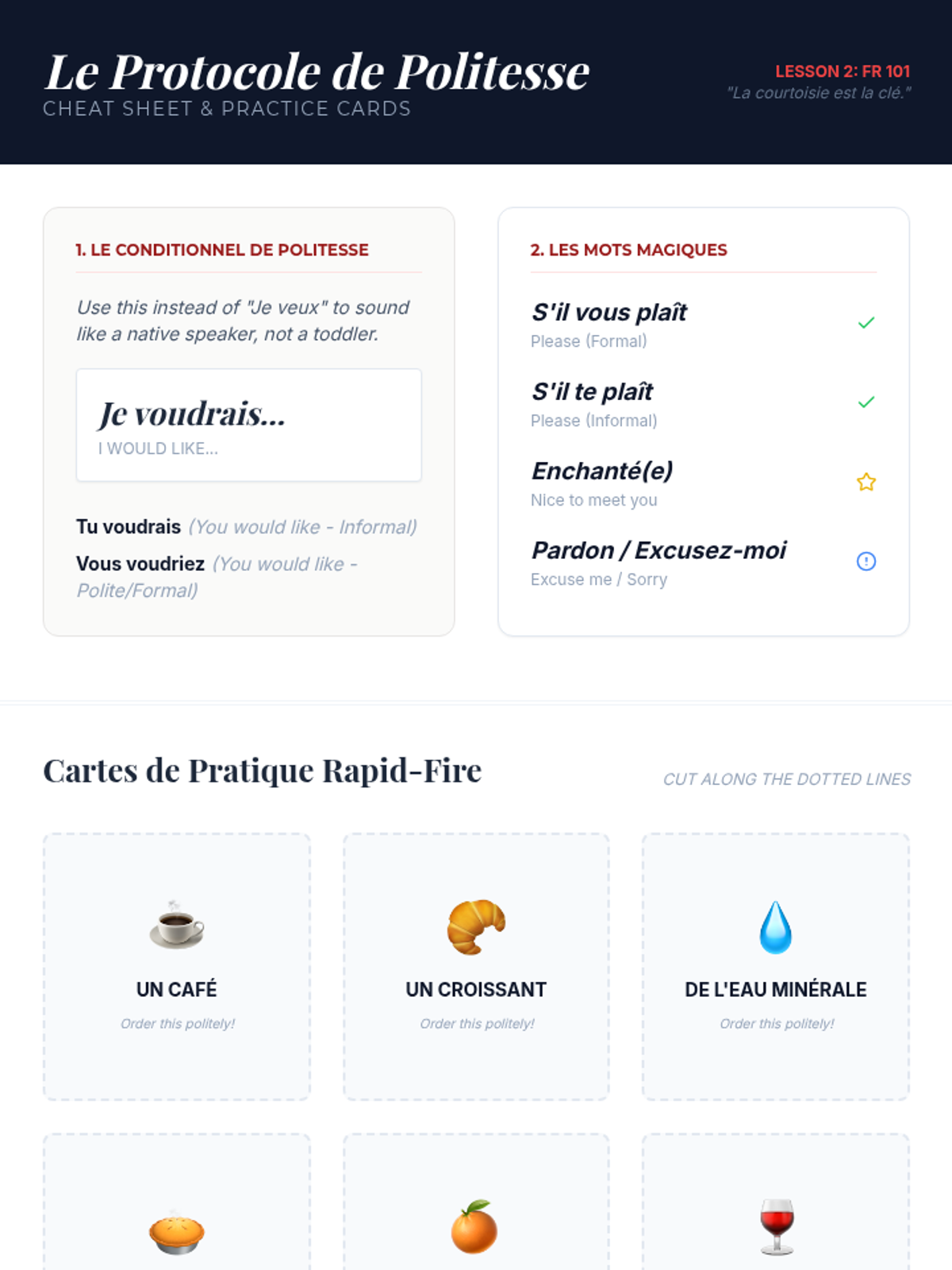
Students transition from demanding 'Je veux' to requesting 'Je voudrais', exploring the cultural importance of the conditional tense in French service interactions.
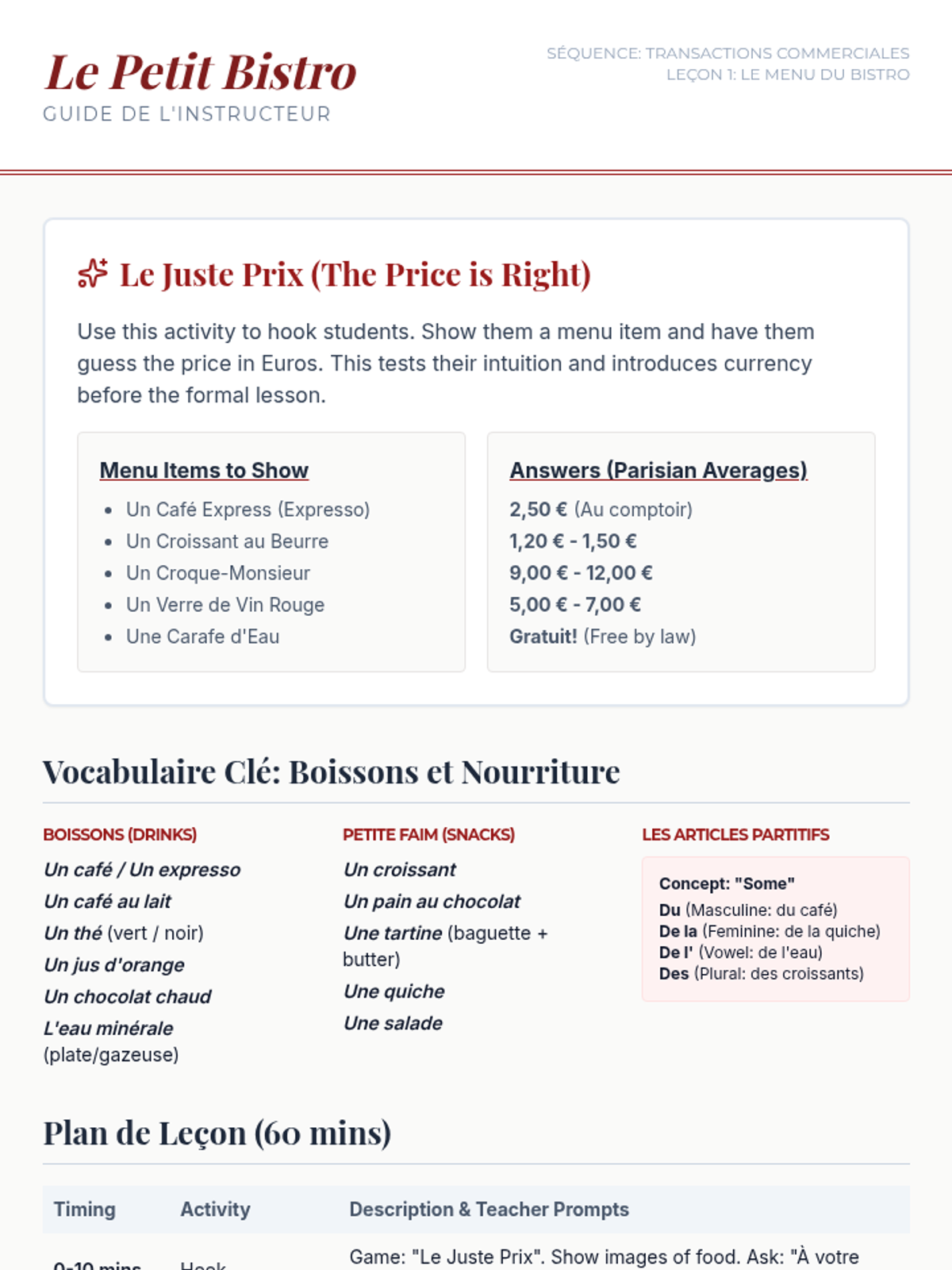
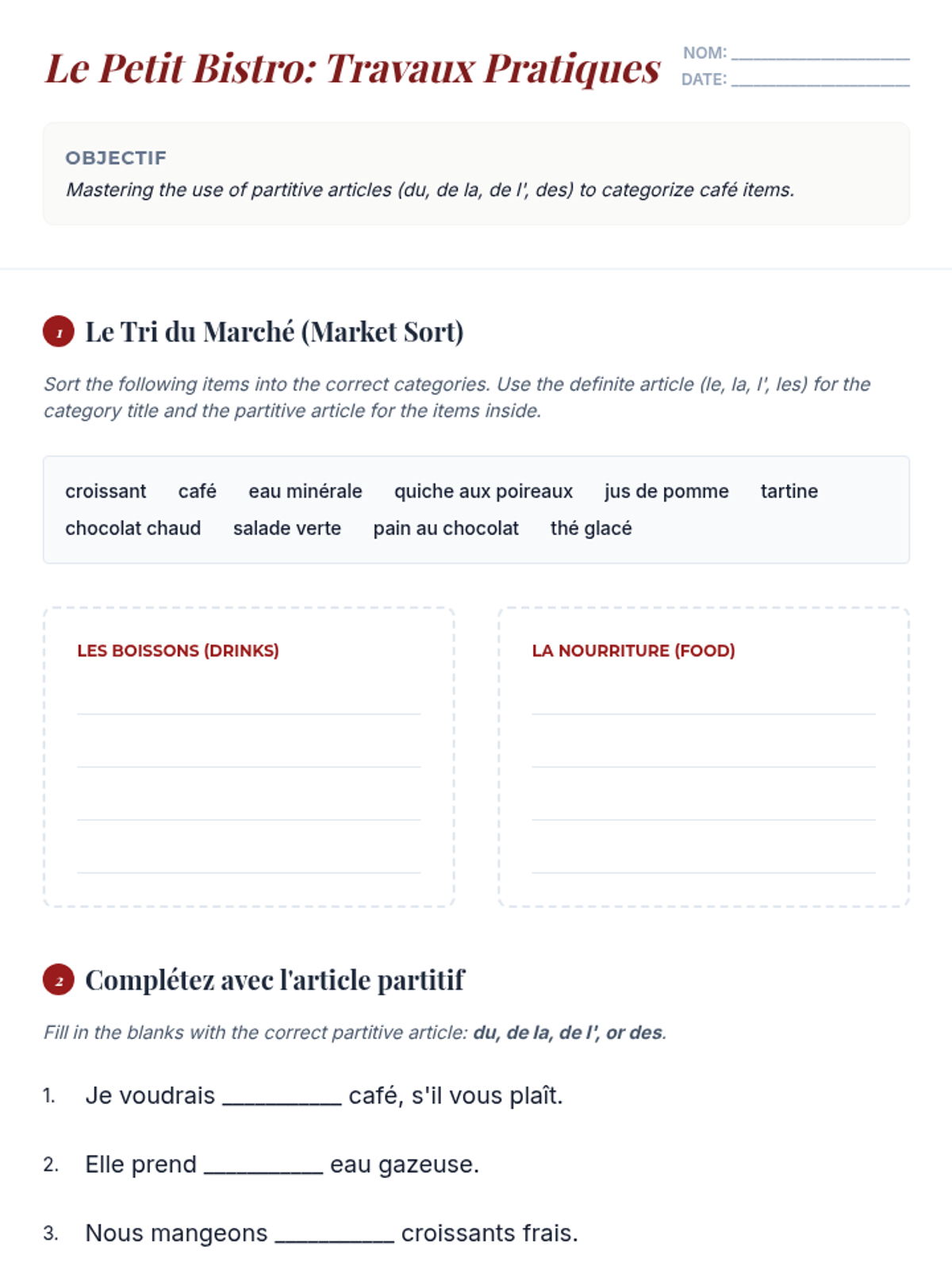
Students learn common food and drink items and master the use of partitive articles (du, de la, des) to express 'some'.
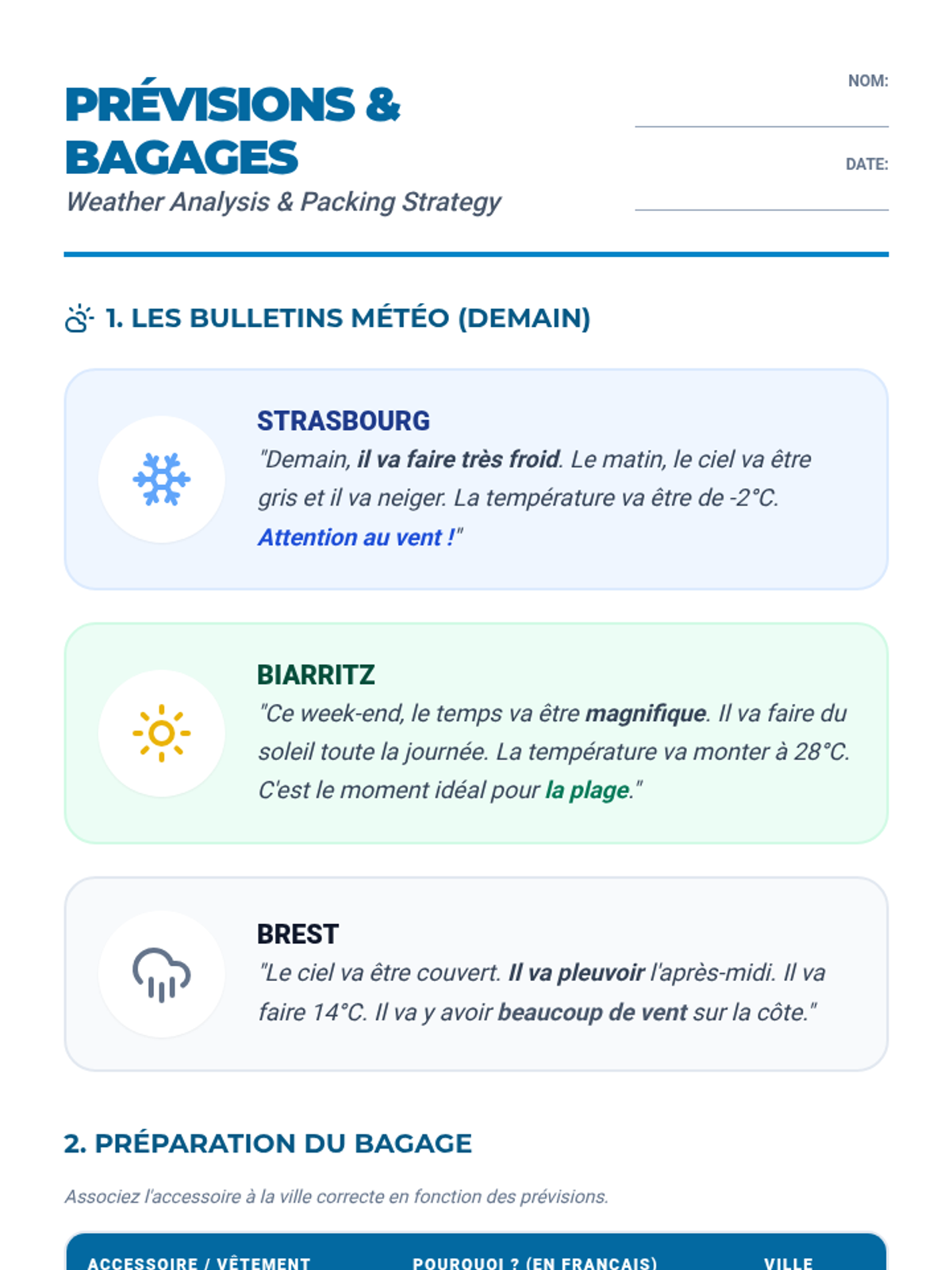
Students read weather forecasts and maps to prepare for travel and make wardrobe decisions using future context.
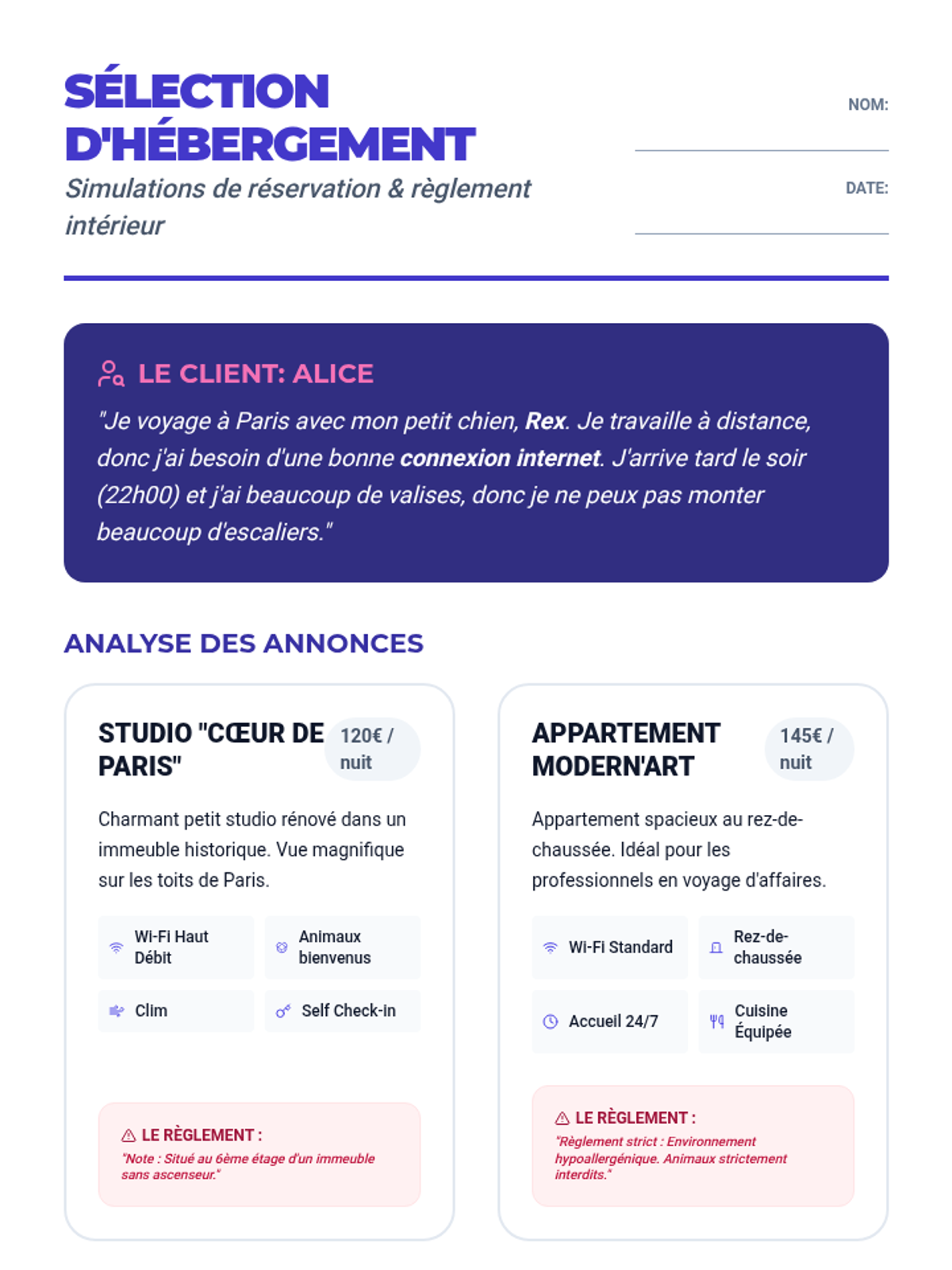
A simulation of booking accommodations by reading property descriptions and identifying specific amenities and rules.
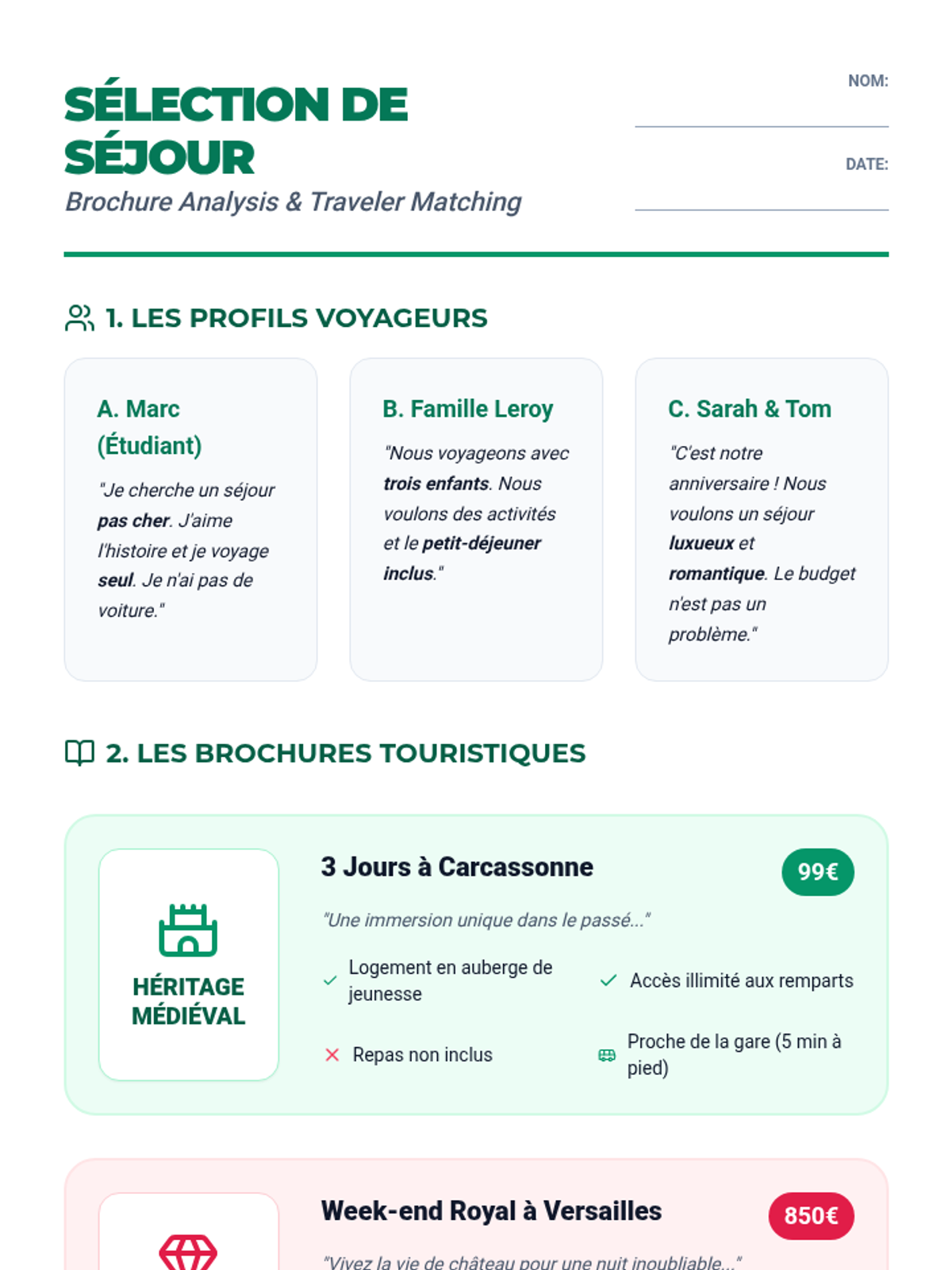
Students interpret promotional travel brochures to extract factual information about attractions and itineraries.
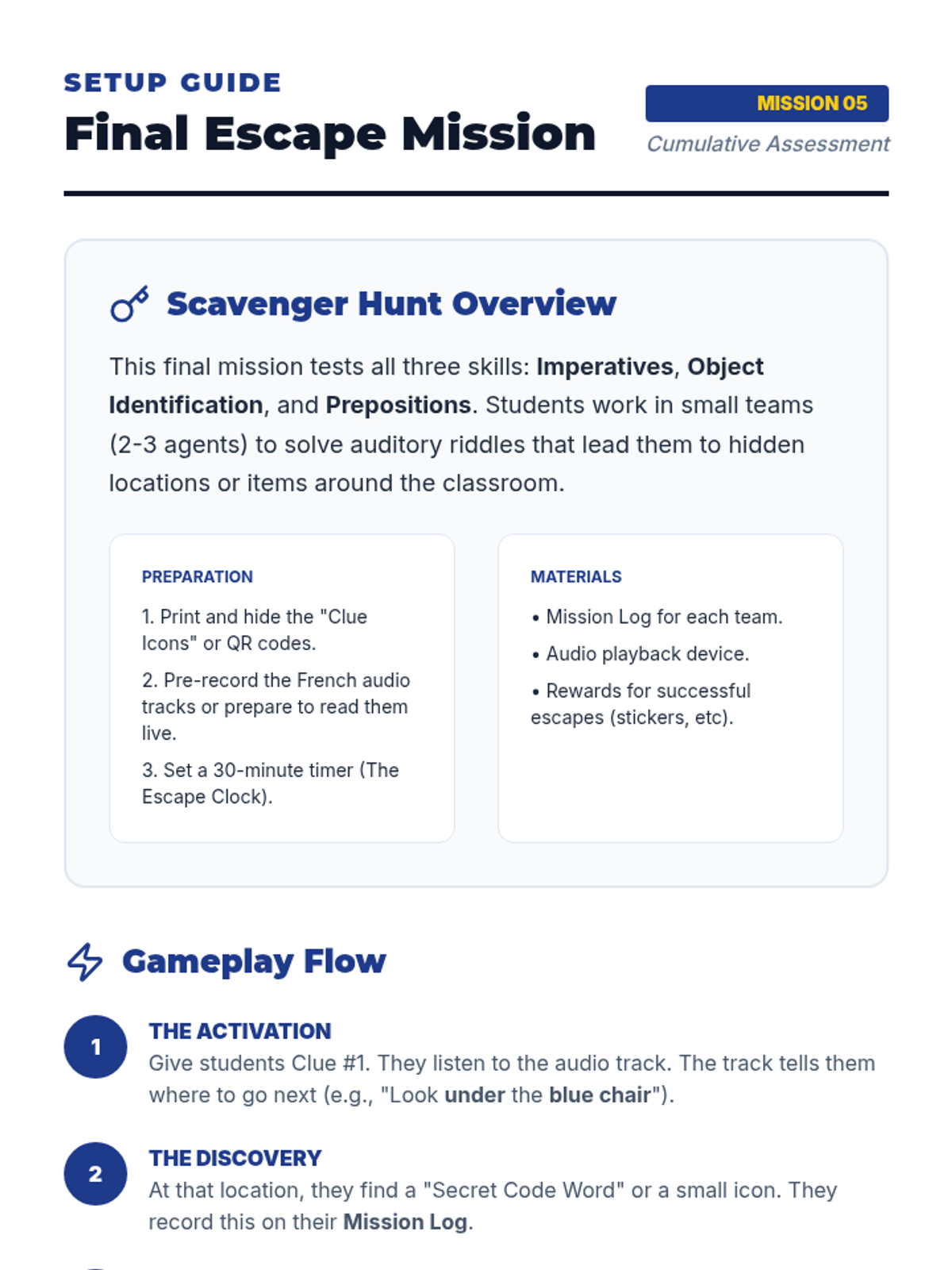
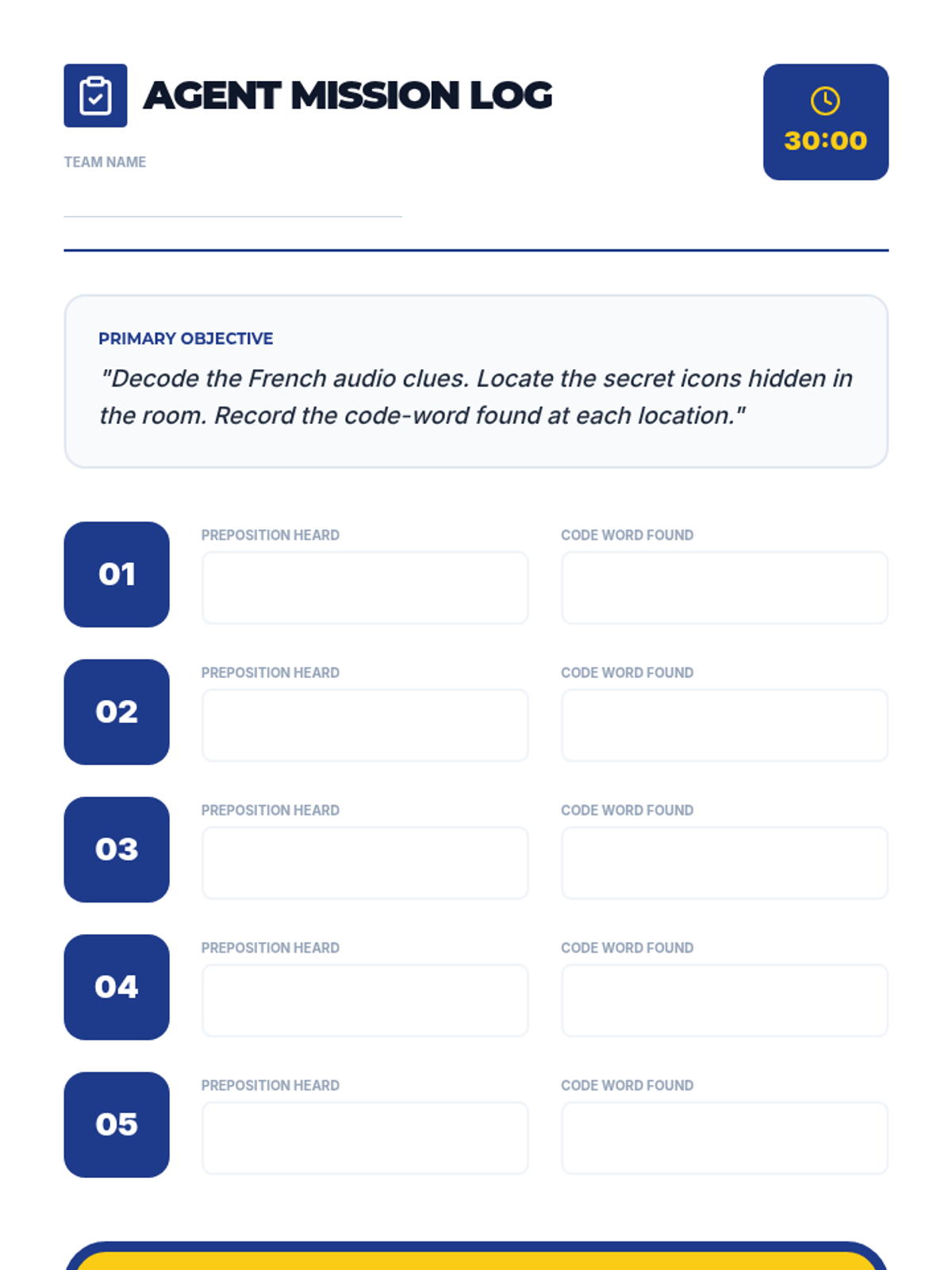
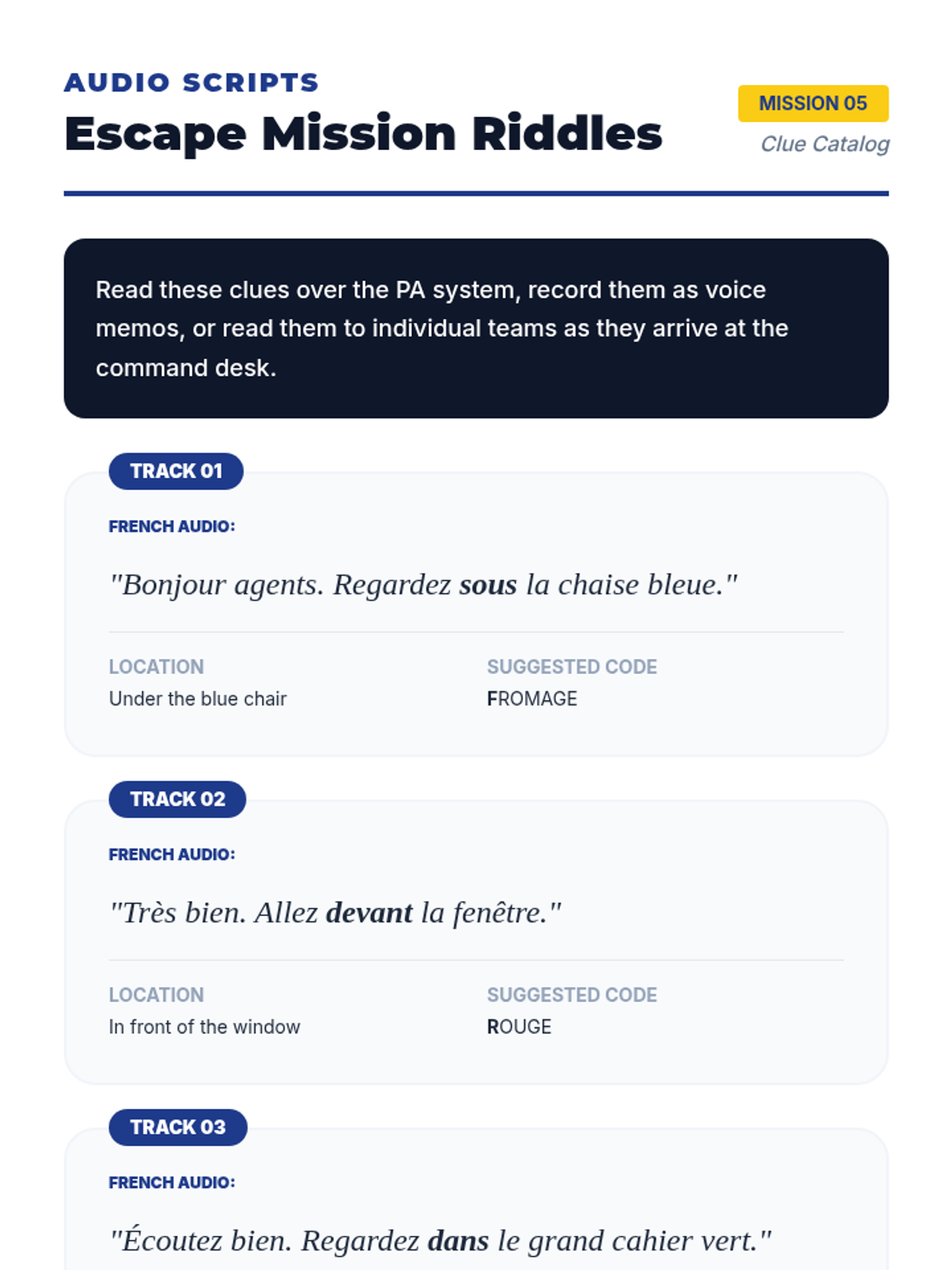
A cumulative scavenger hunt where students solve audio riddles to find hidden items or 'escape' the classroom.
Students navigate a map of a French town by following auditory directional instructions (left, right, straight).
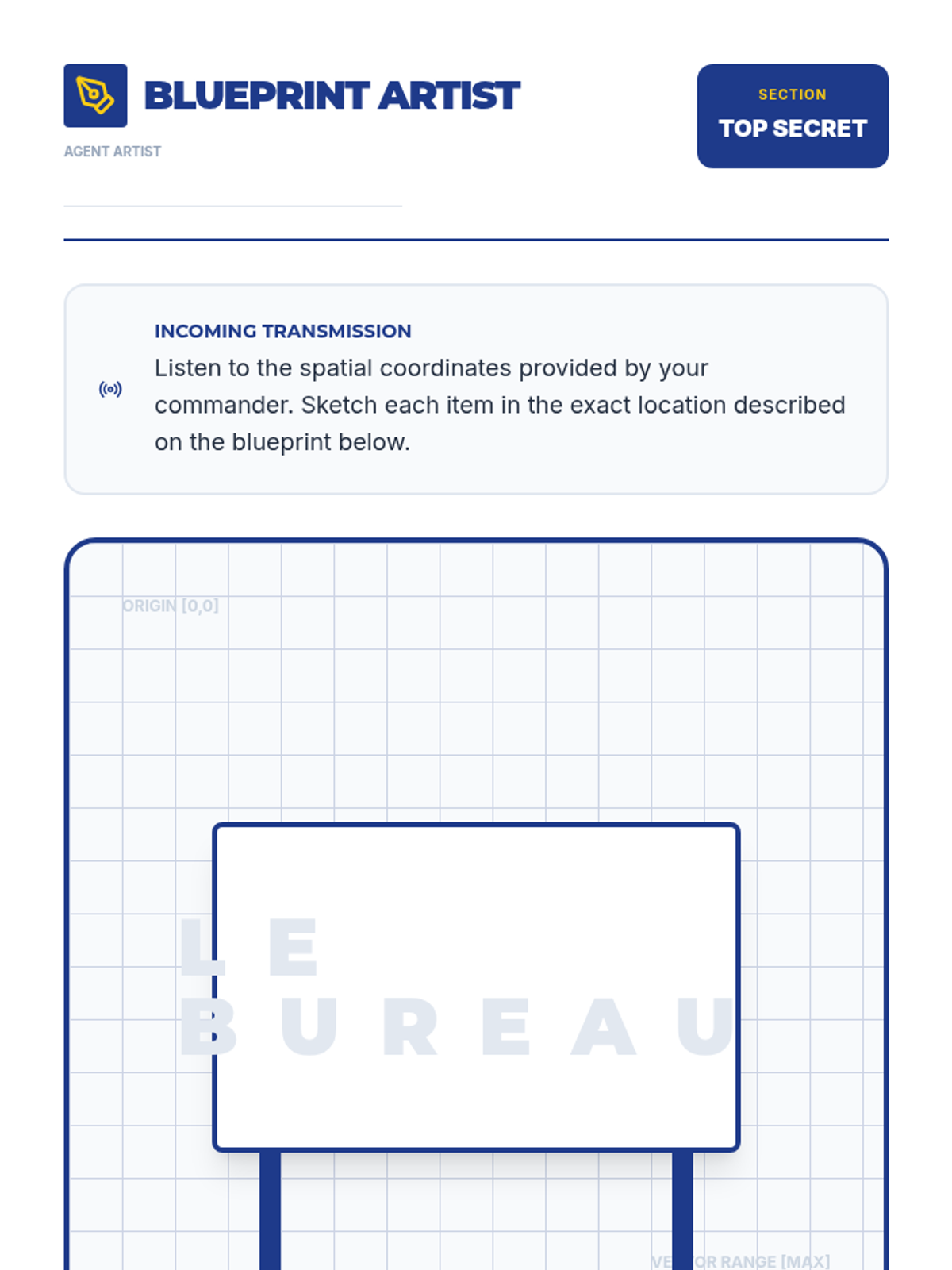
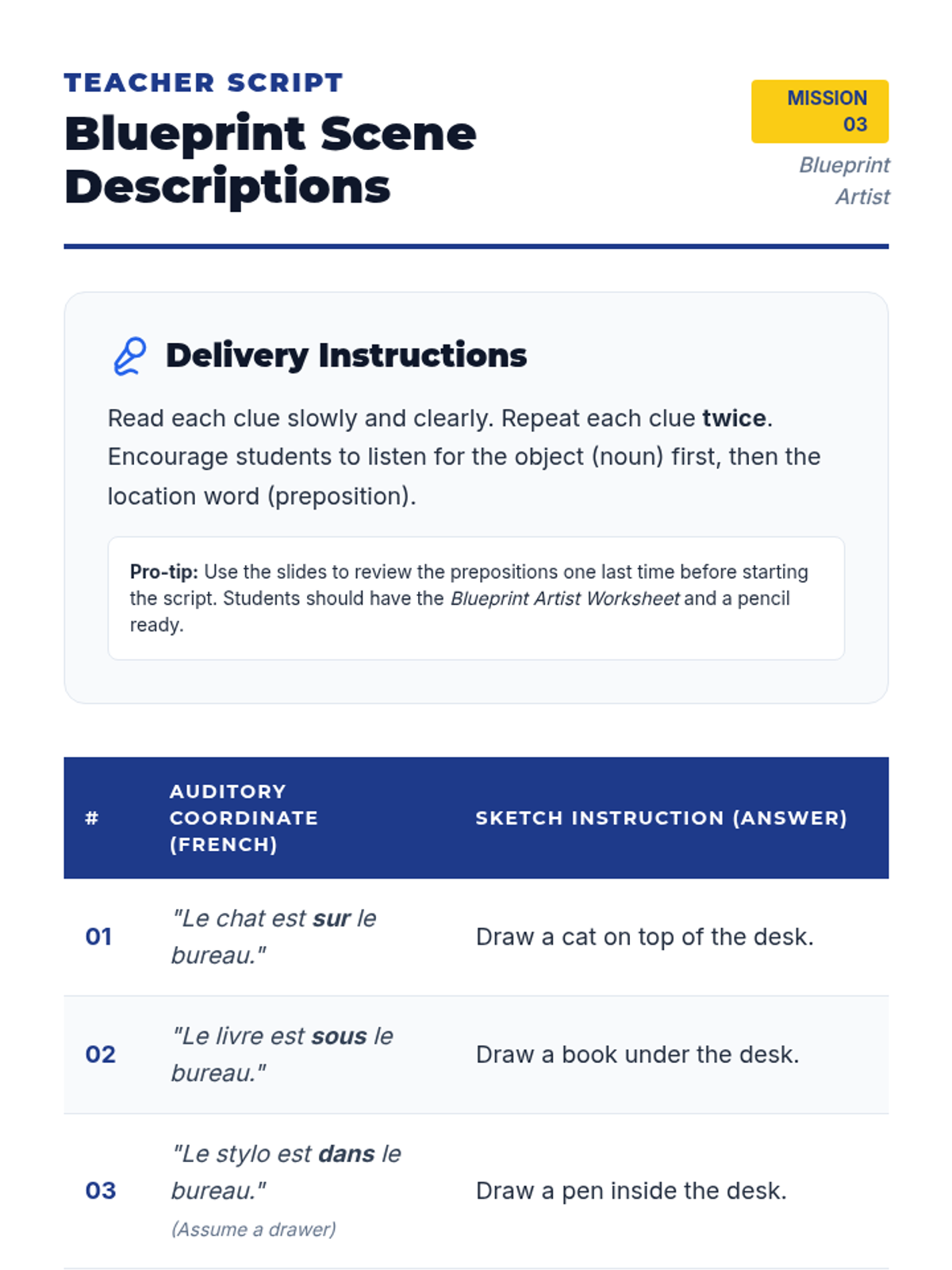
Students learn spatial prepositions (sur, sous, dans, devant) and demonstrate understanding by sketching scenes based on auditory descriptions.
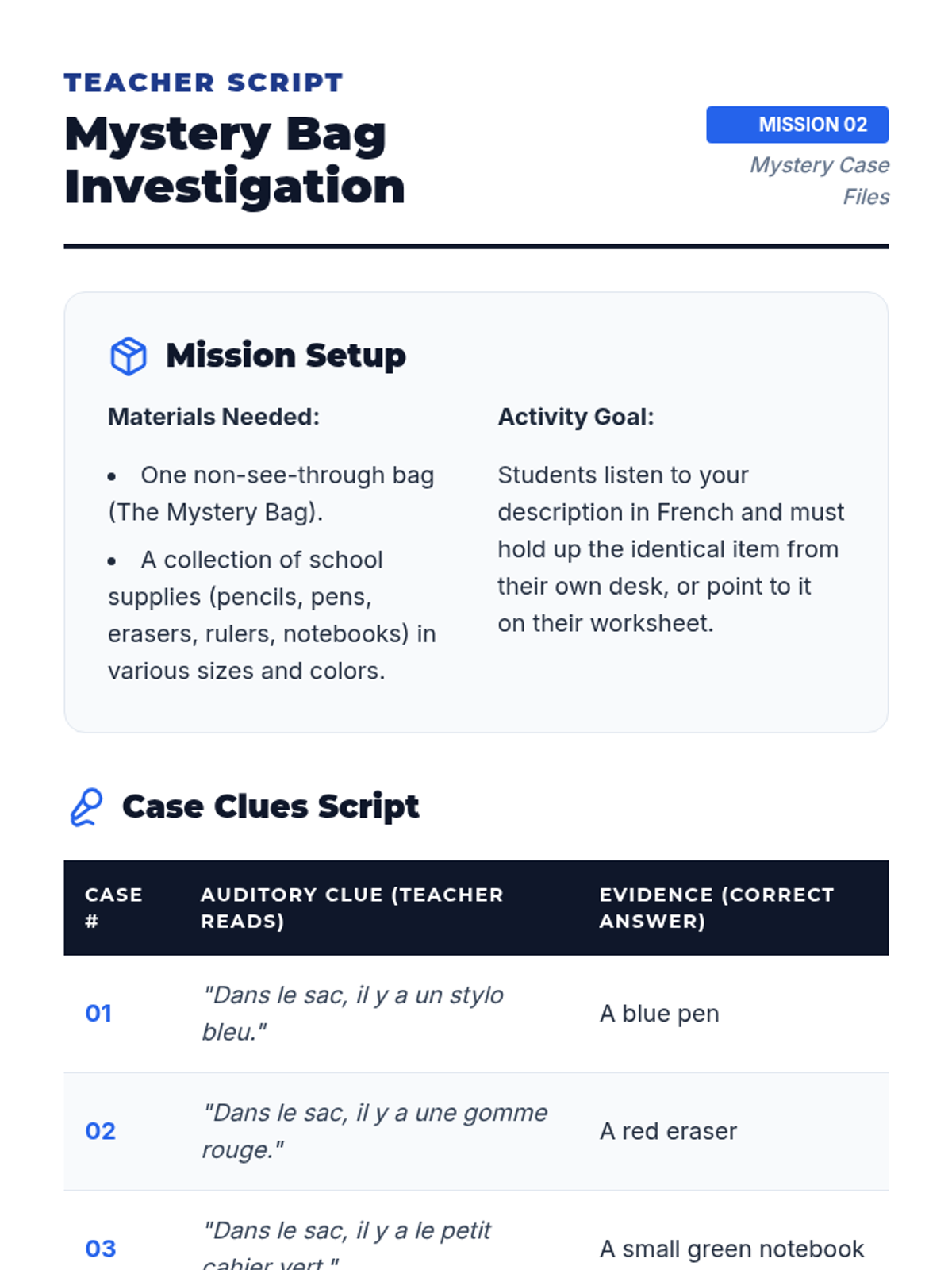
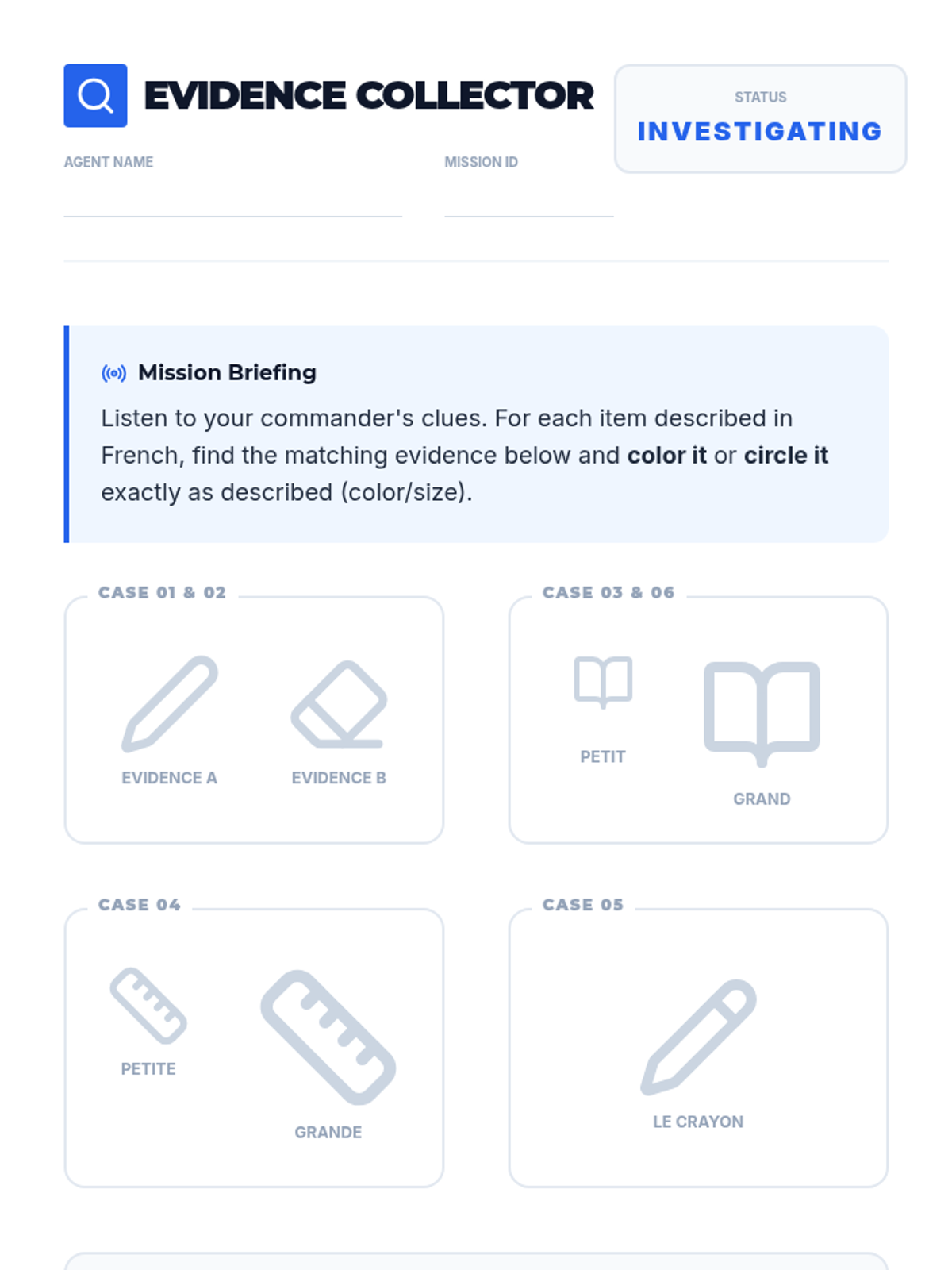
Students identify school supplies by listening to descriptions involving color, size, and gendered articles.
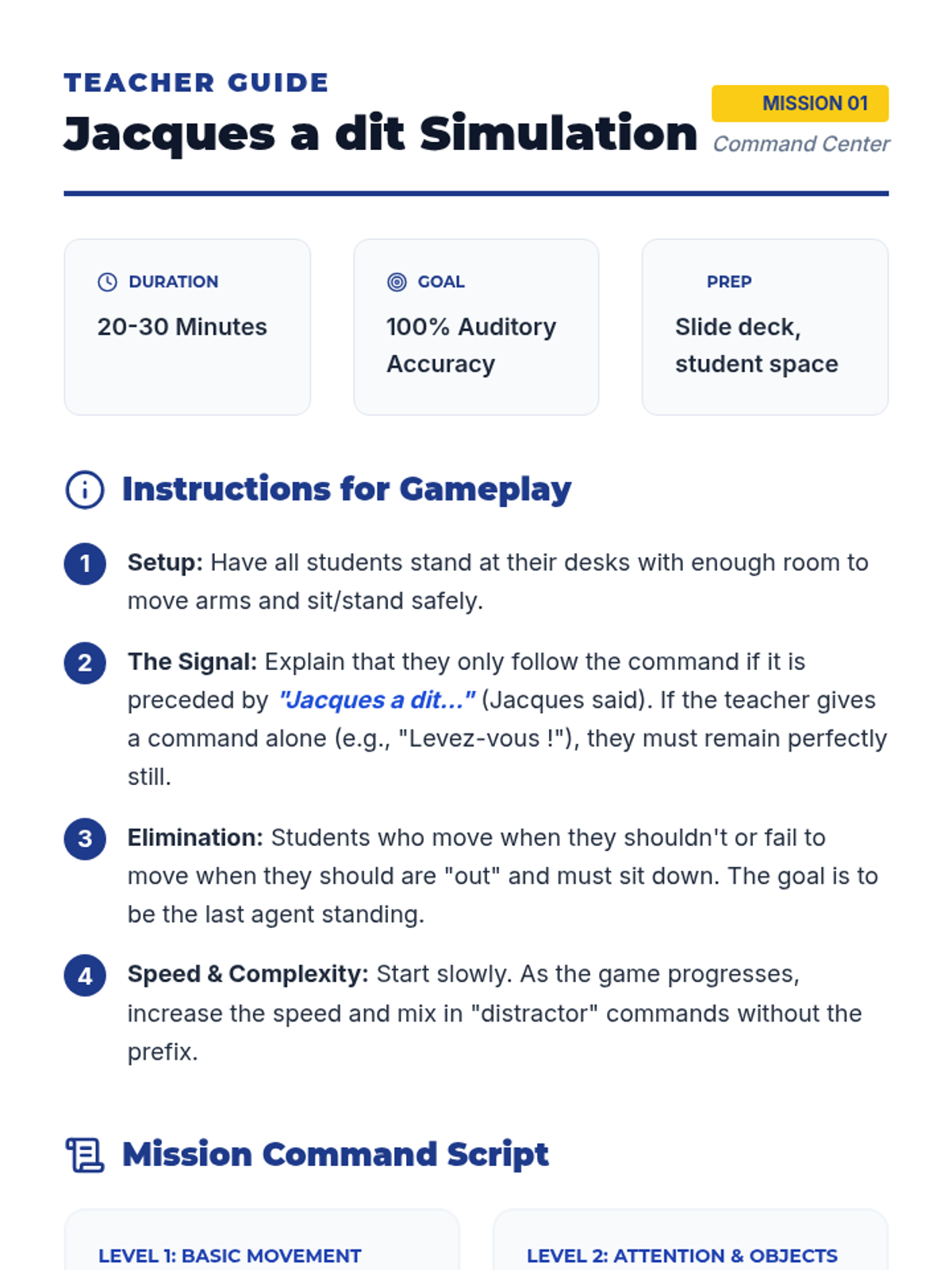
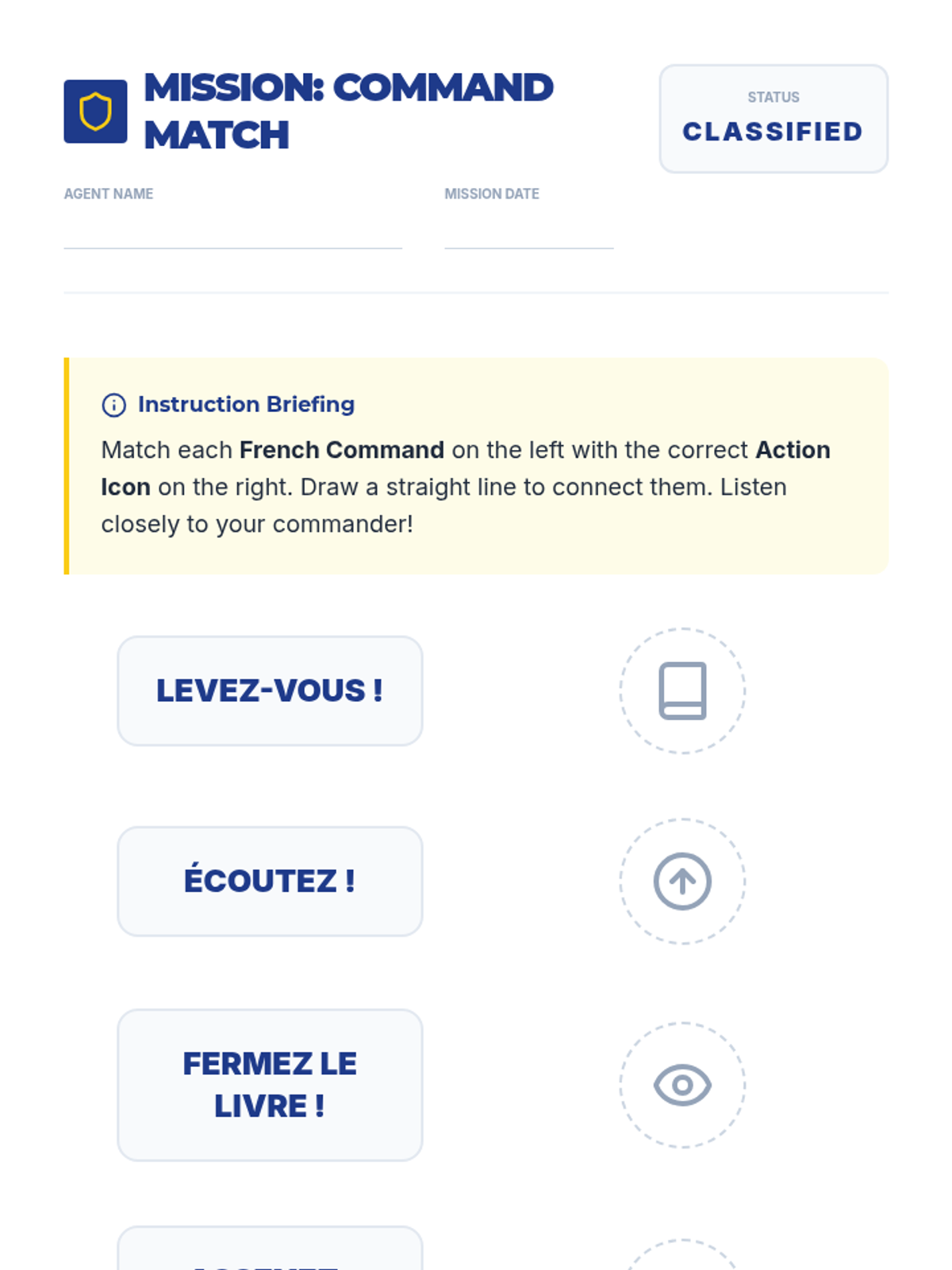
Students learn and respond to basic classroom imperatives (commands) through a high-energy TPR simulation called 'Jacques a dit' (Simon Says).
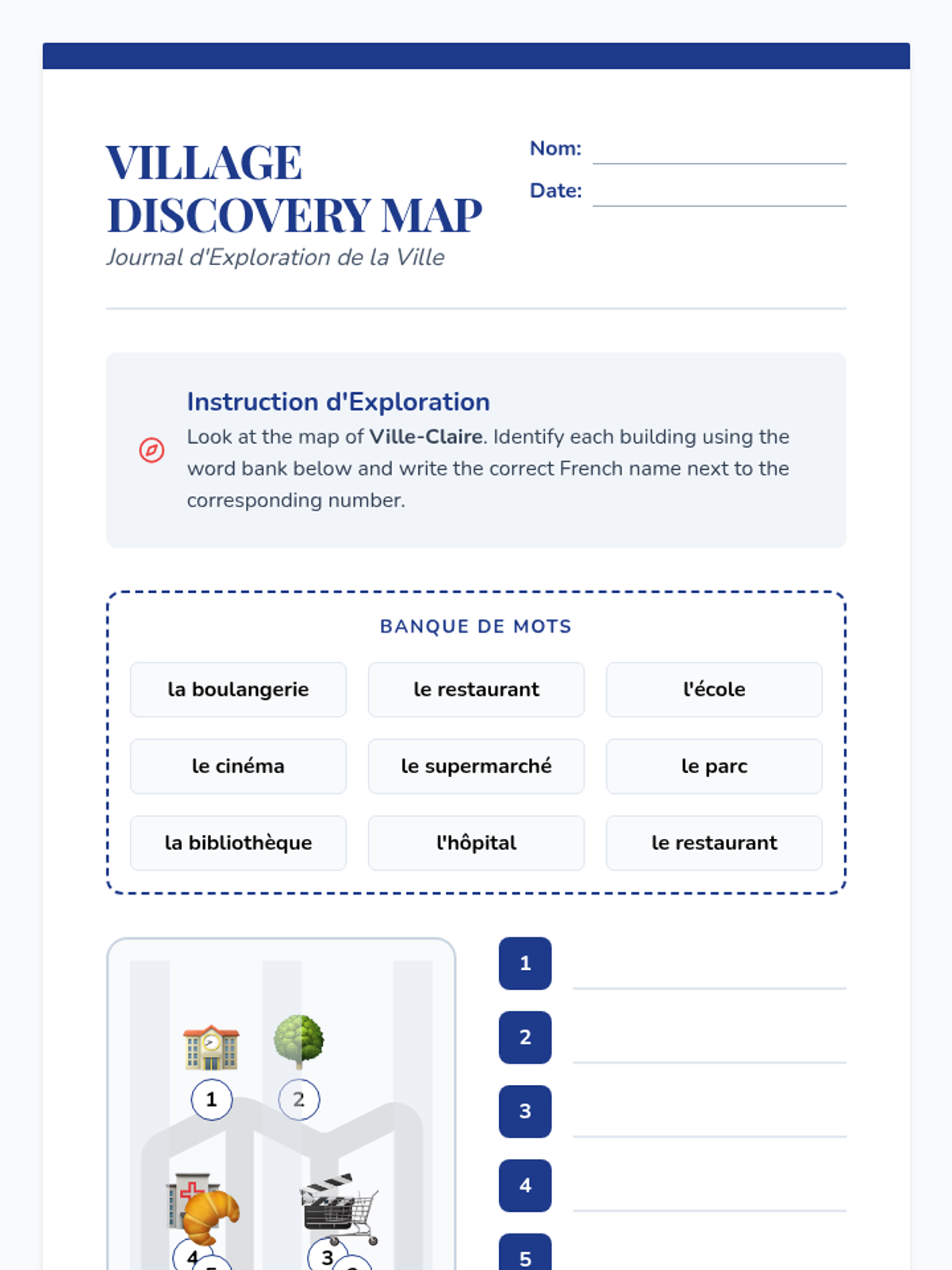
Students identify common city locations in French through visual clues and categorize them by service.
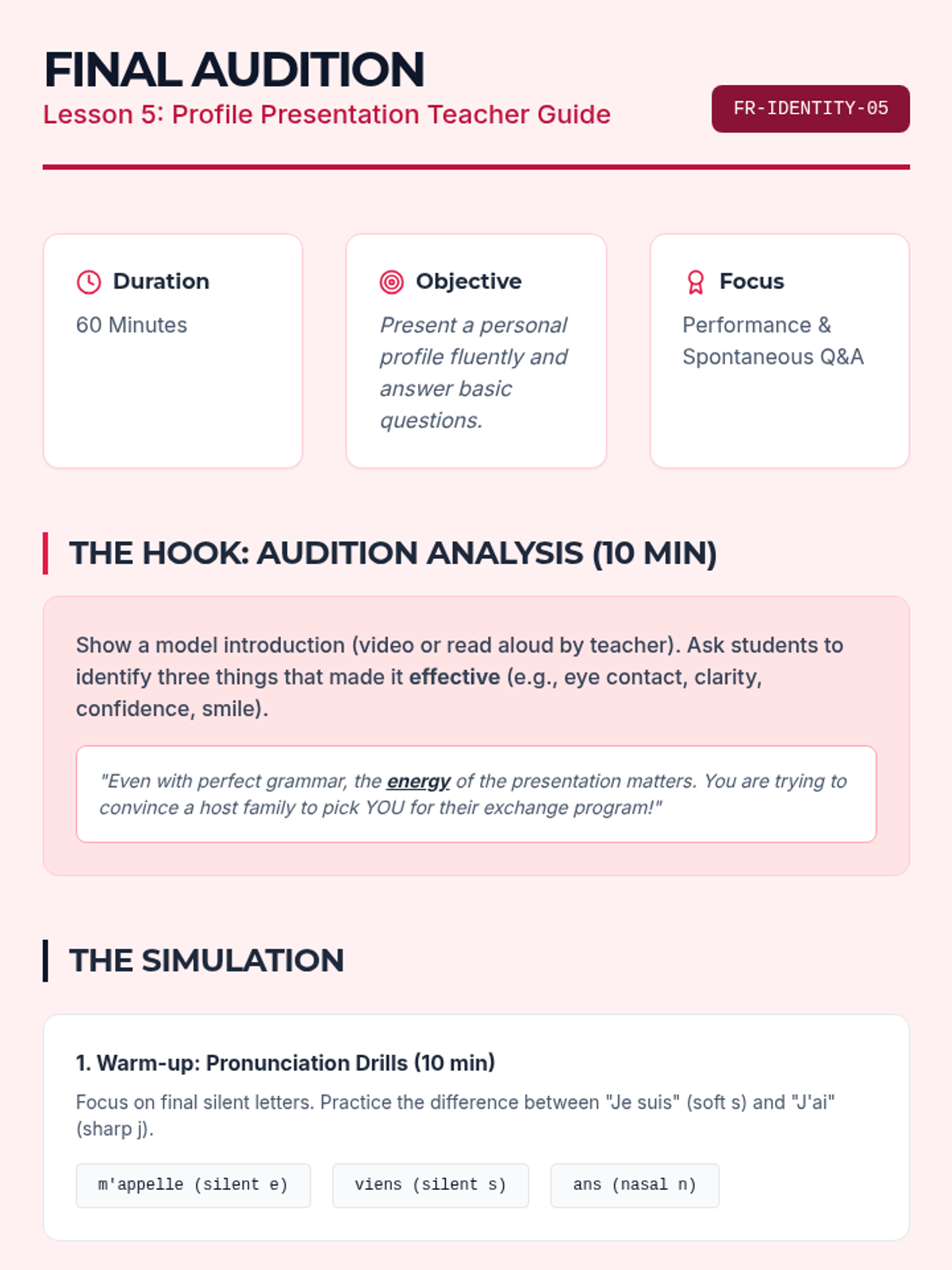
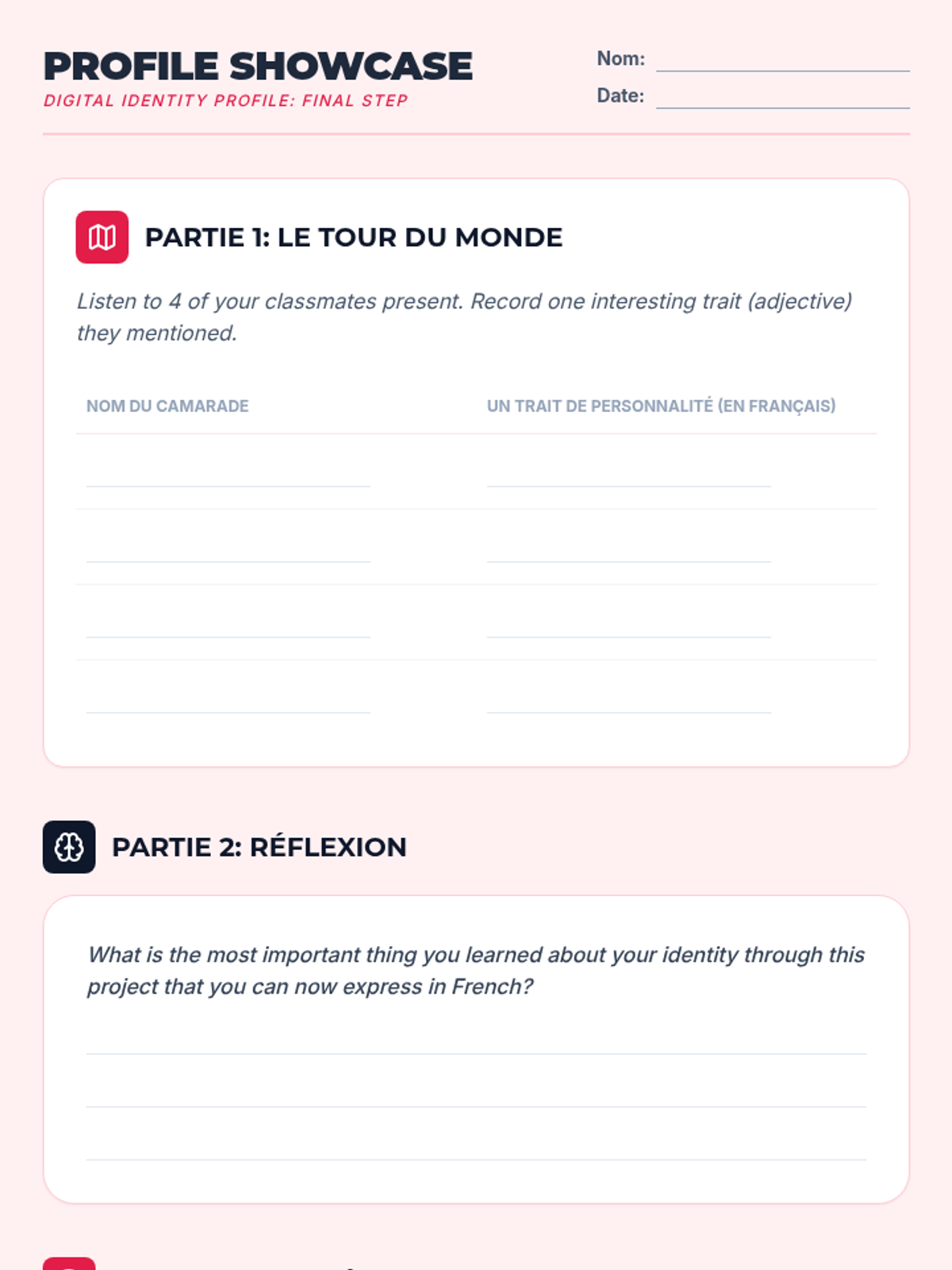
Students record or present their digital identity profiles in a simulated study abroad application. The lesson includes spontaneous Q&A and a gallery walk of student work.
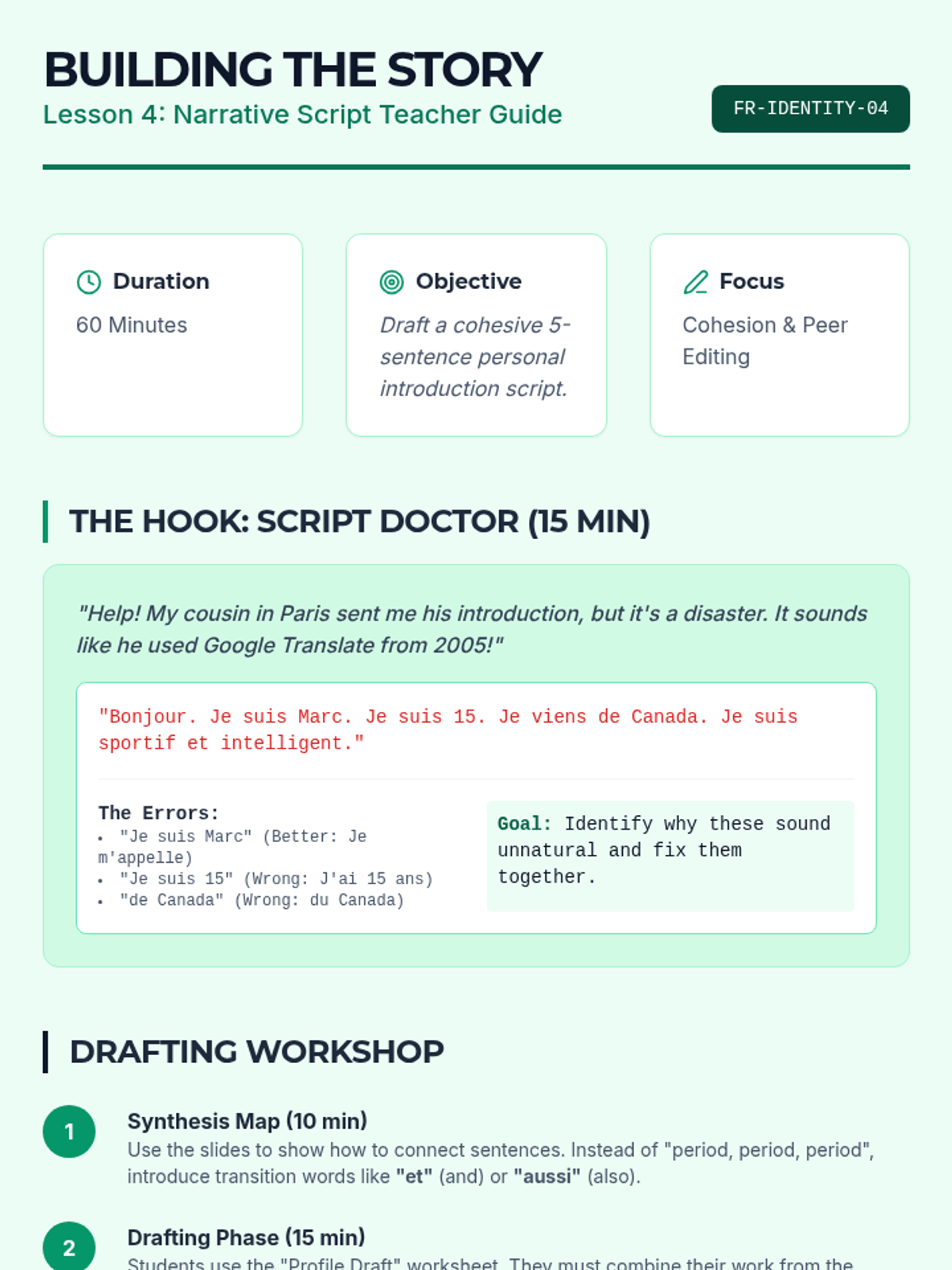
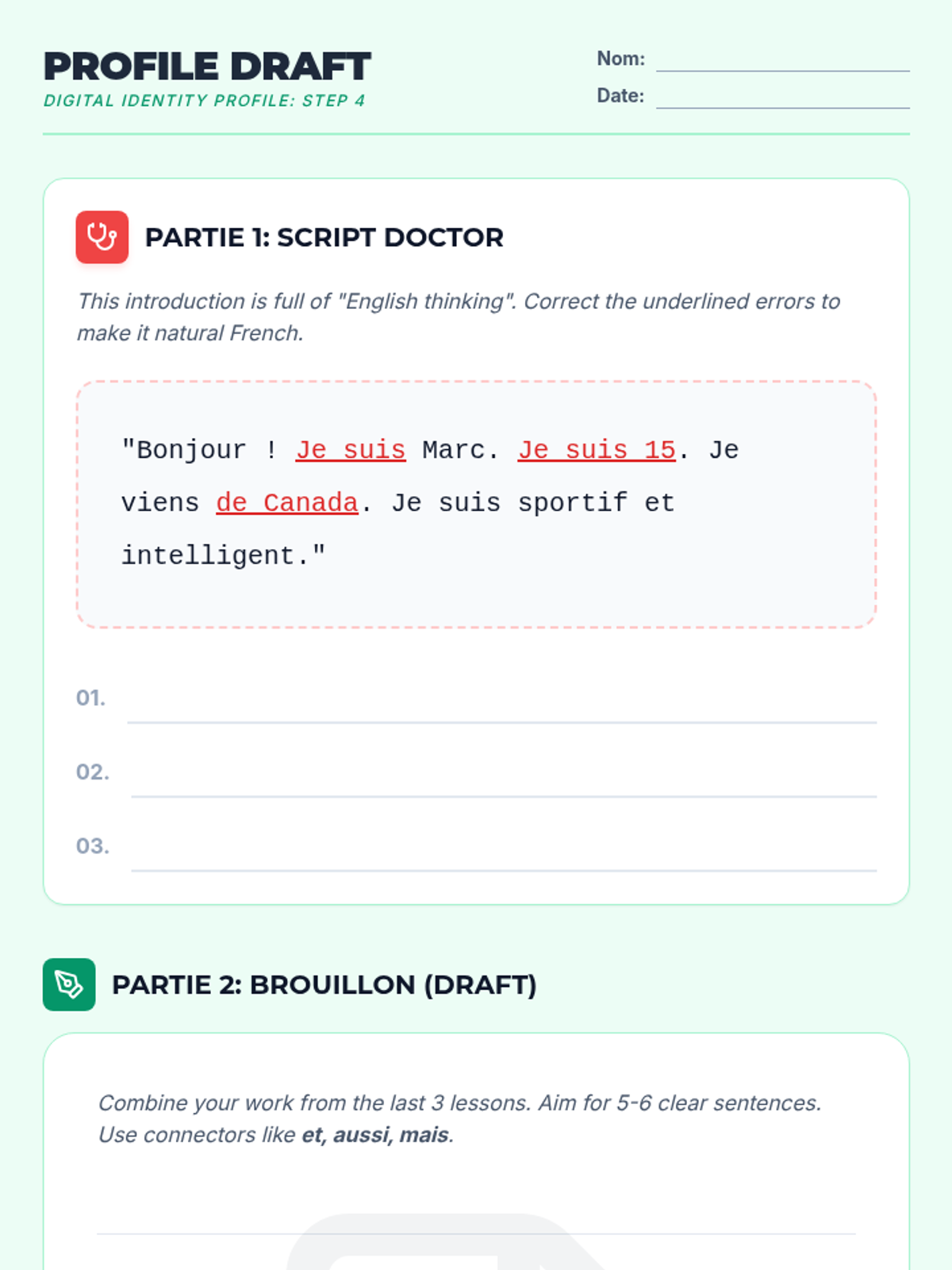
Students synthesize their learning into a coherent script. They participate in a peer-editing workshop to fix syntax errors and improve the flow of their self-introduction.
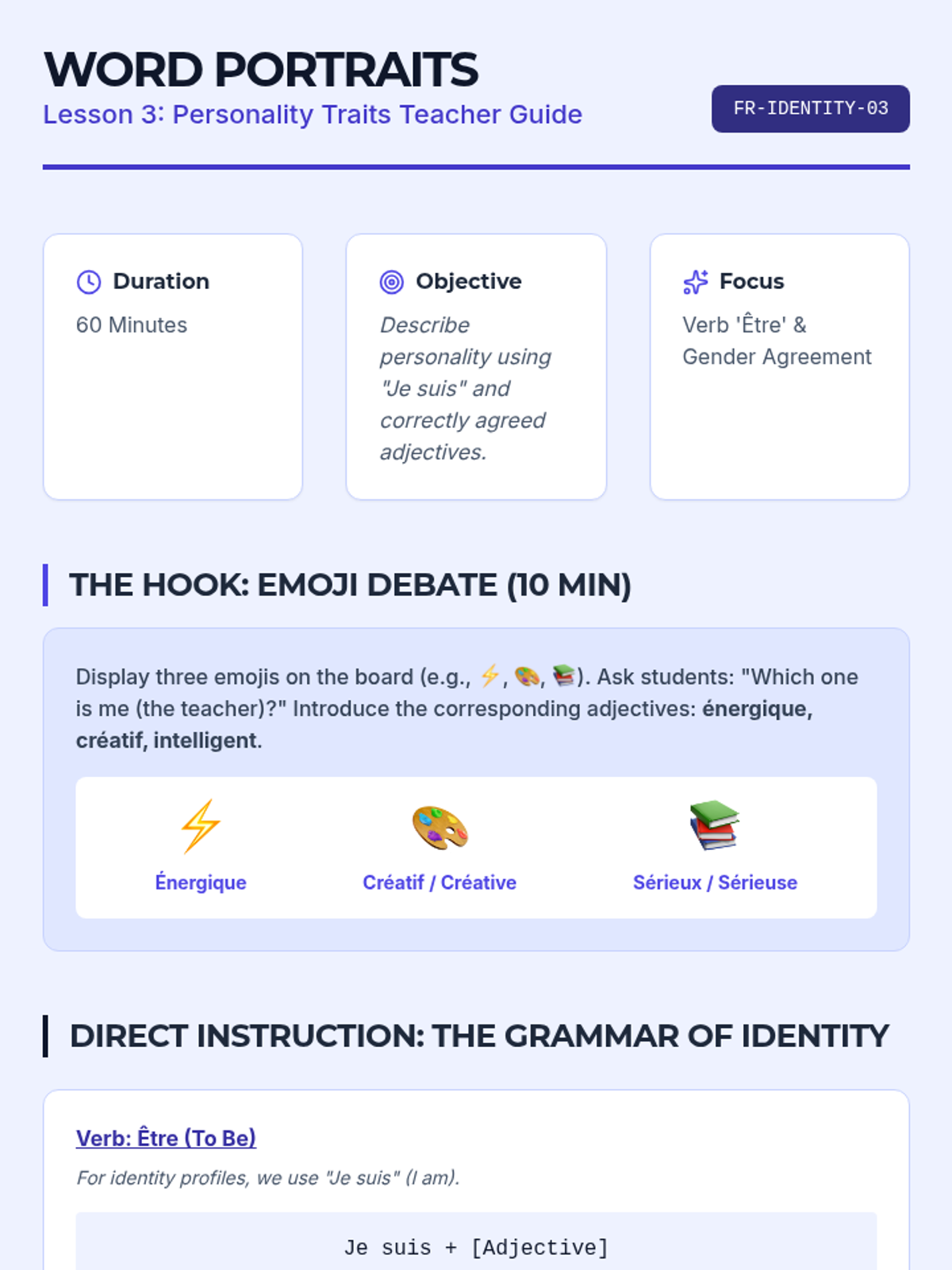
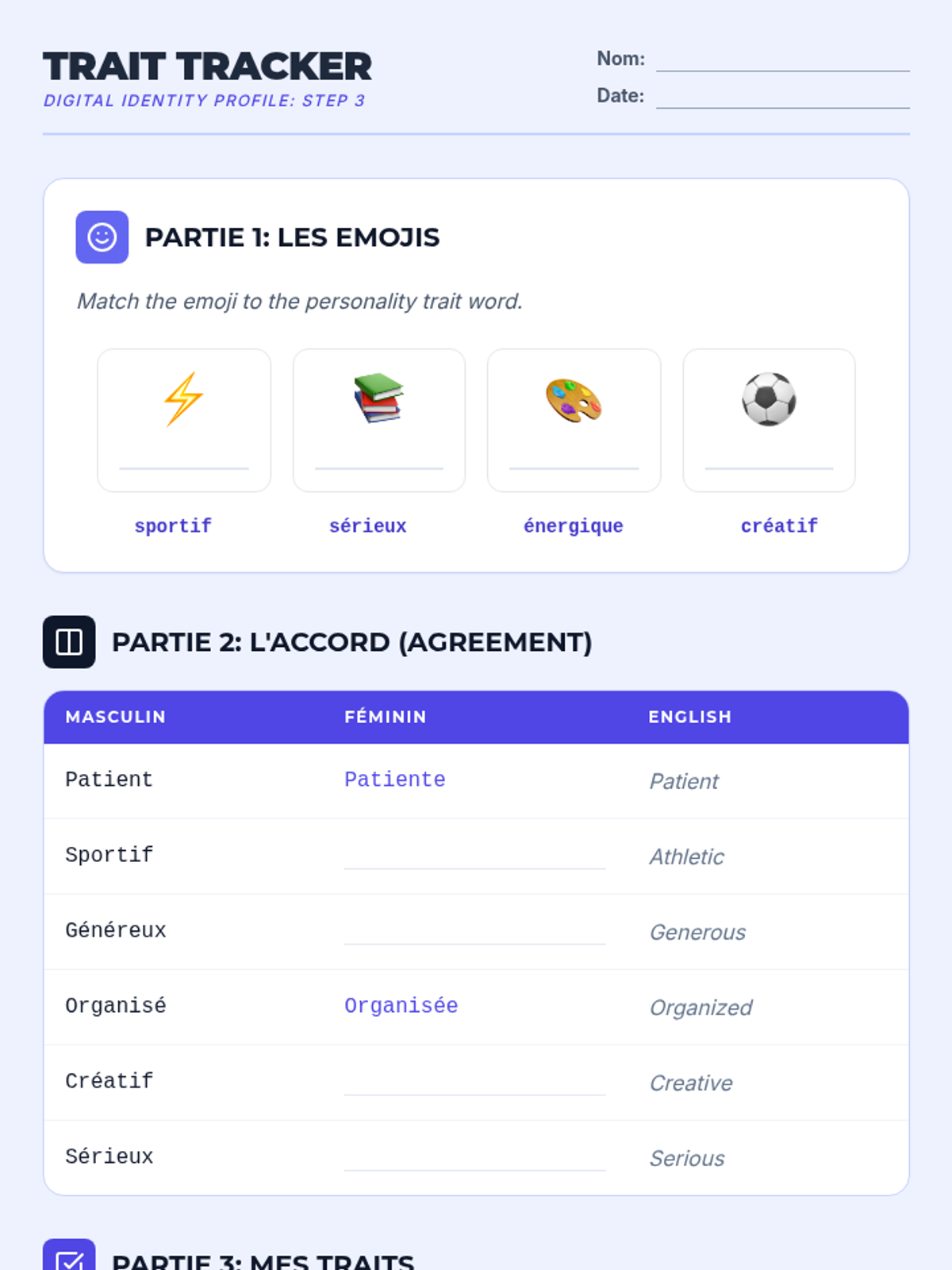
Students describe themselves using adjectives and learn gender and number agreement with the verb 'être'. They use emojis to bridge the gap between abstract traits and French vocabulary.
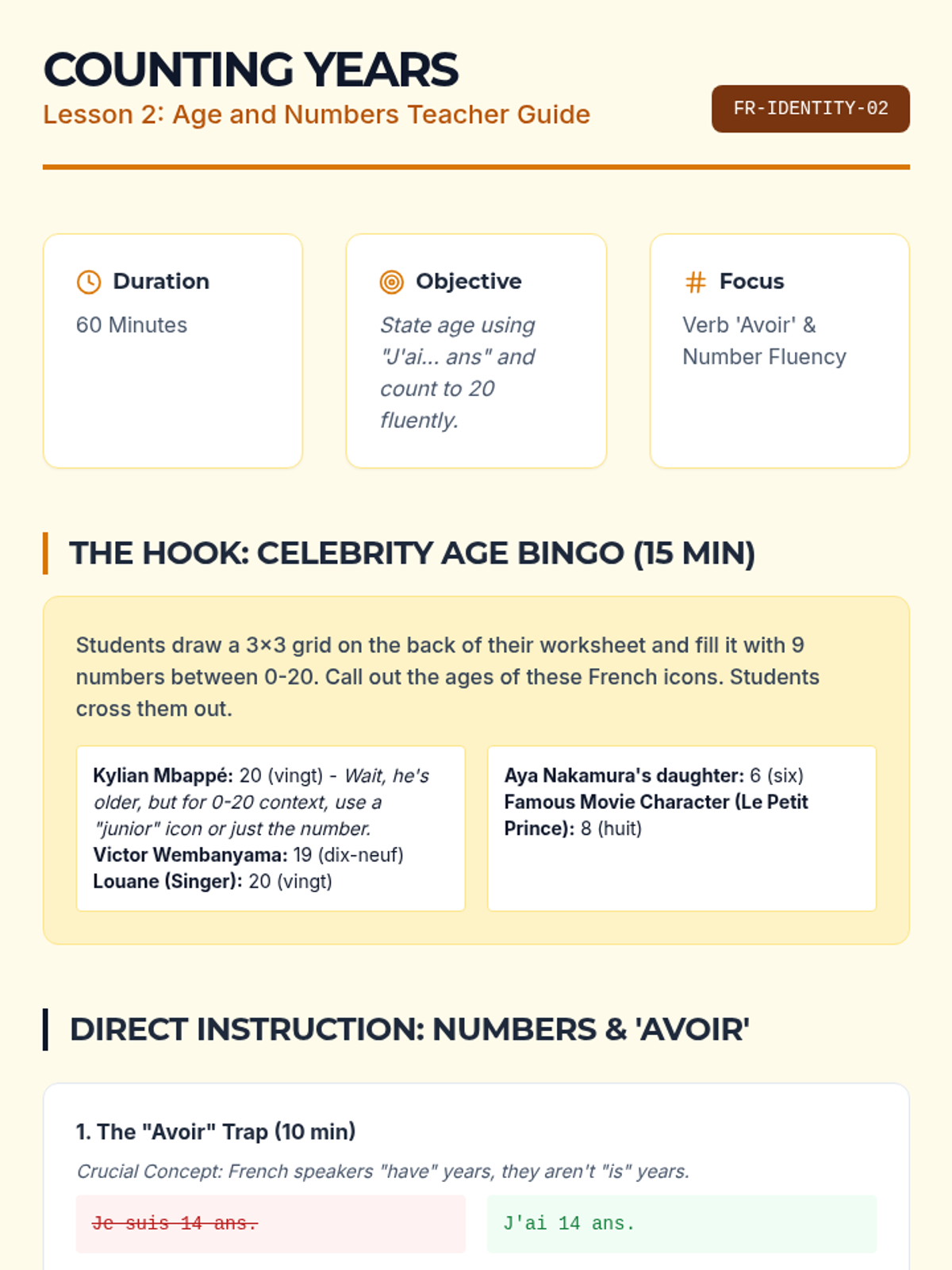
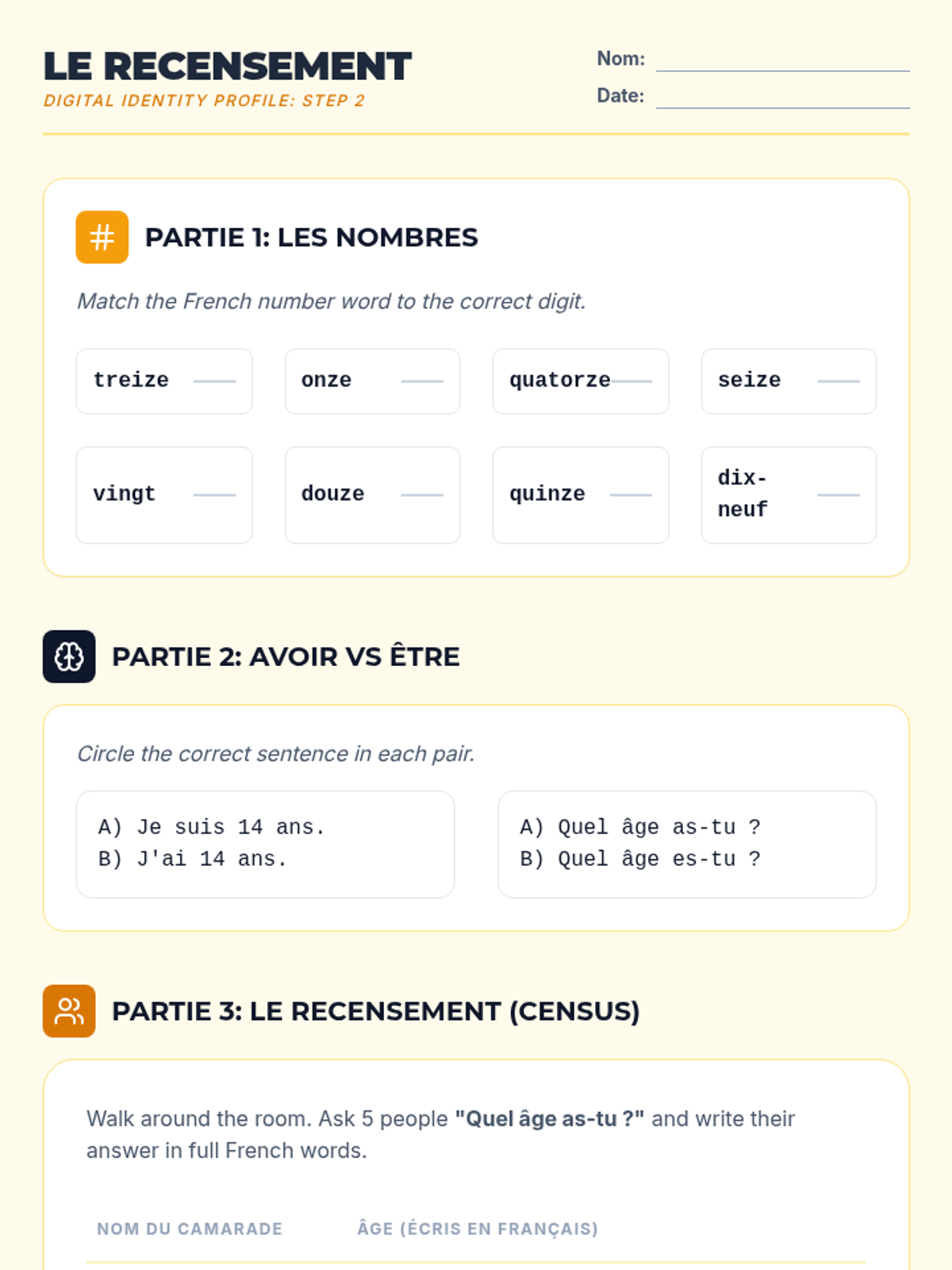
Focuses on the verb 'avoir' for age and numbers 0-20. Students engage in rhythmic counting and math games to build fluency and interview peers to collect data.
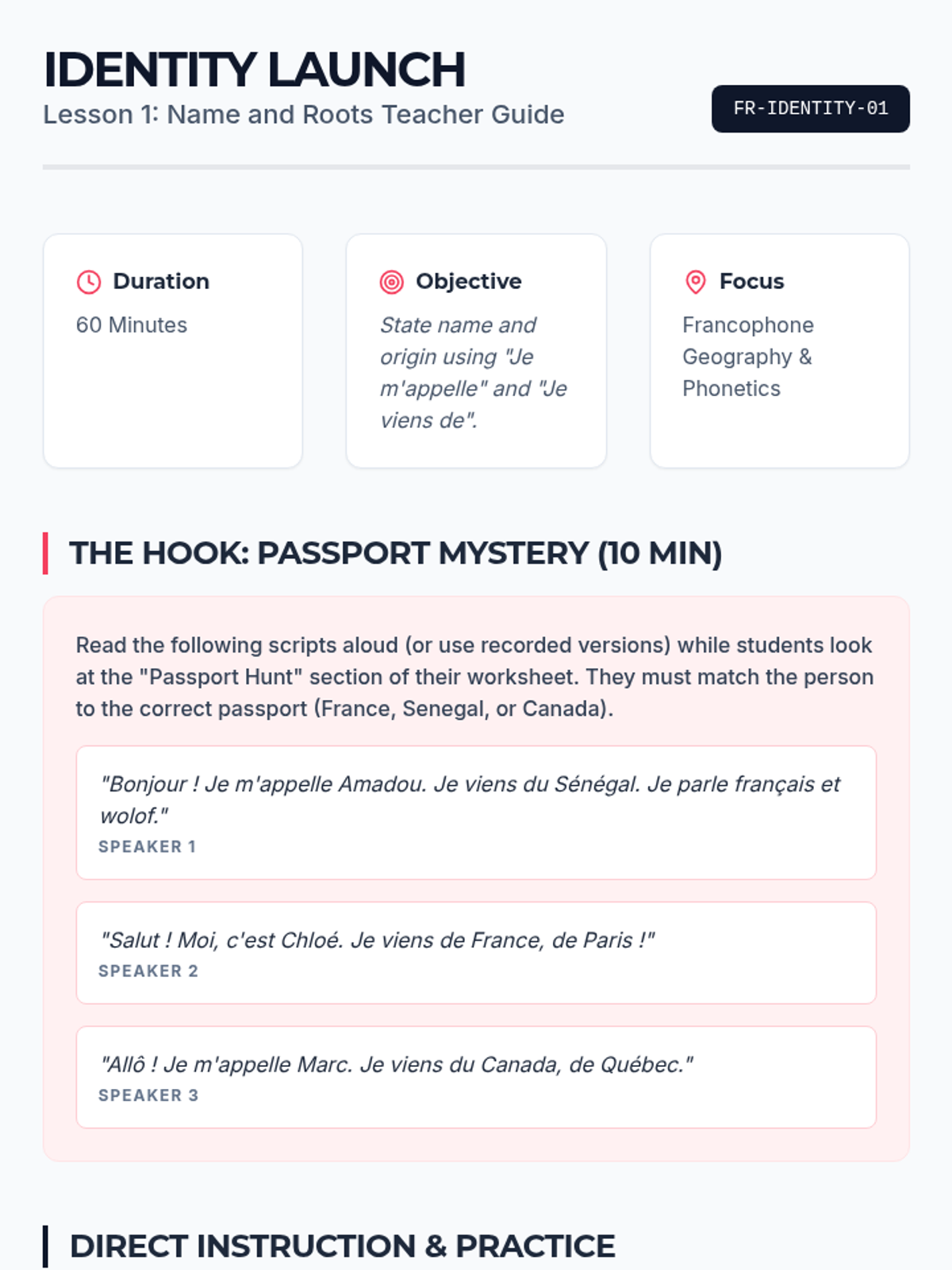
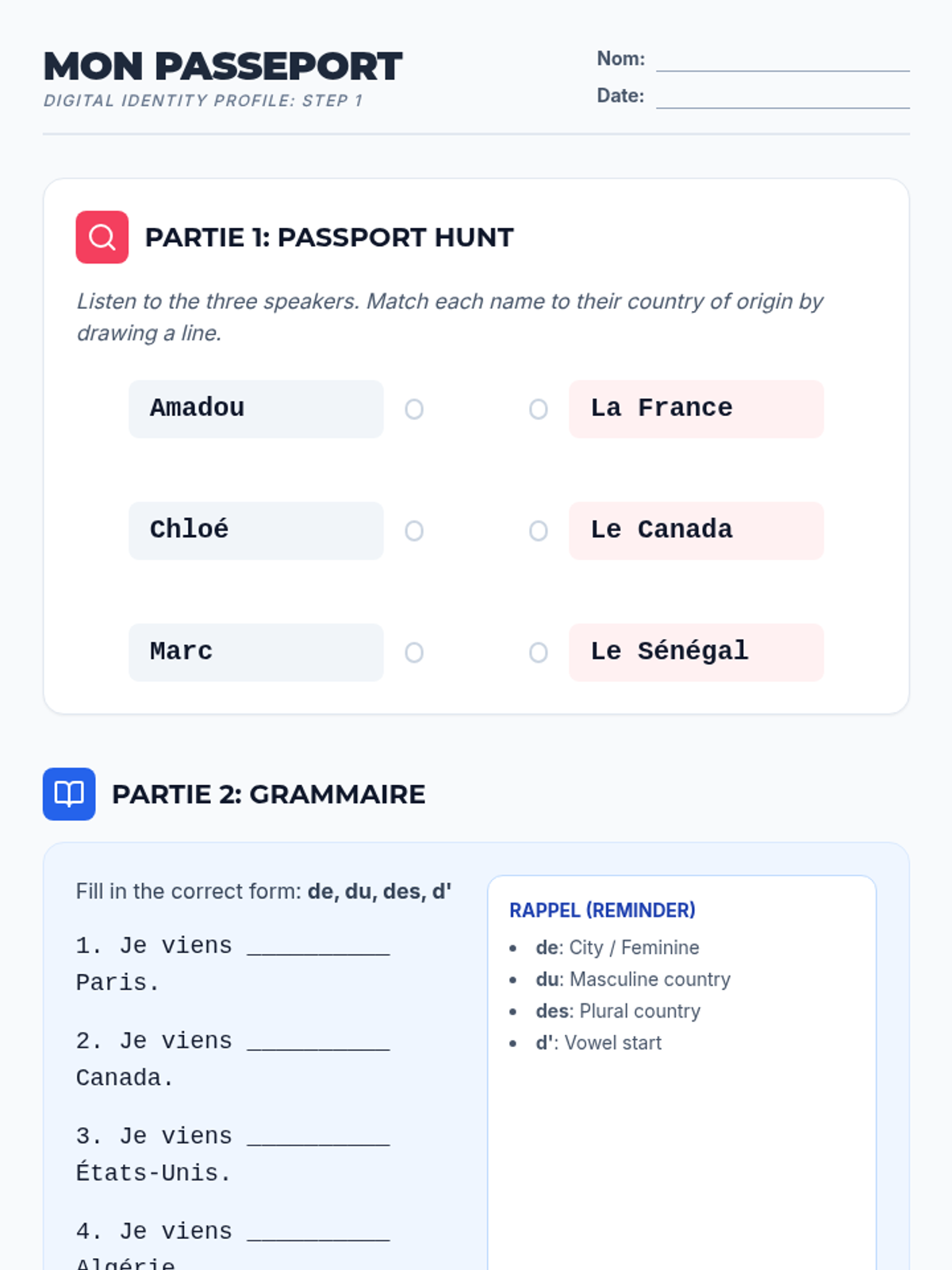
Students learn to introduce themselves using 'Je m'appelle' and state their origin using 'Je viens de'. They explore Francophone geography and practice the phonetics of personal introductions.
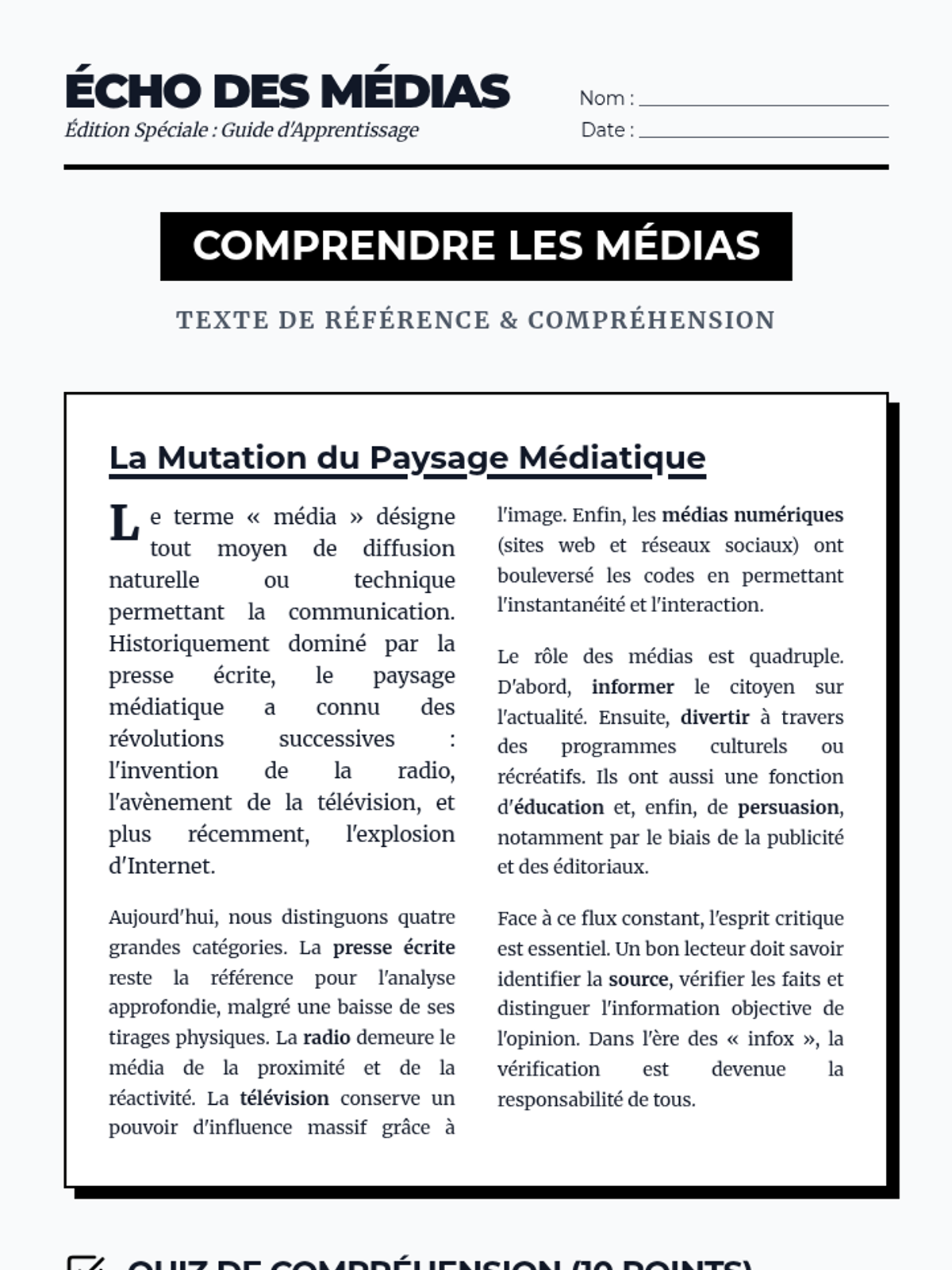
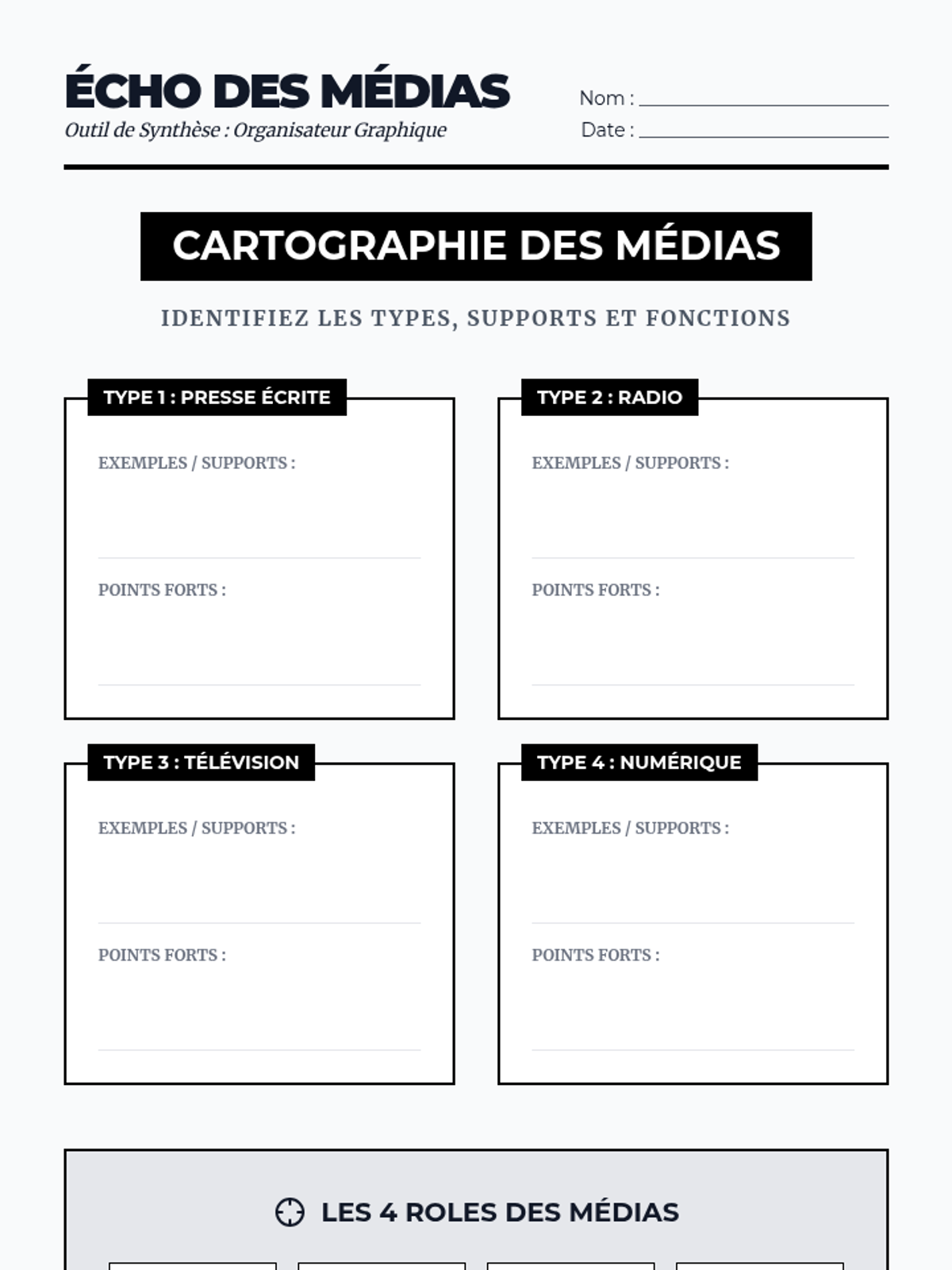
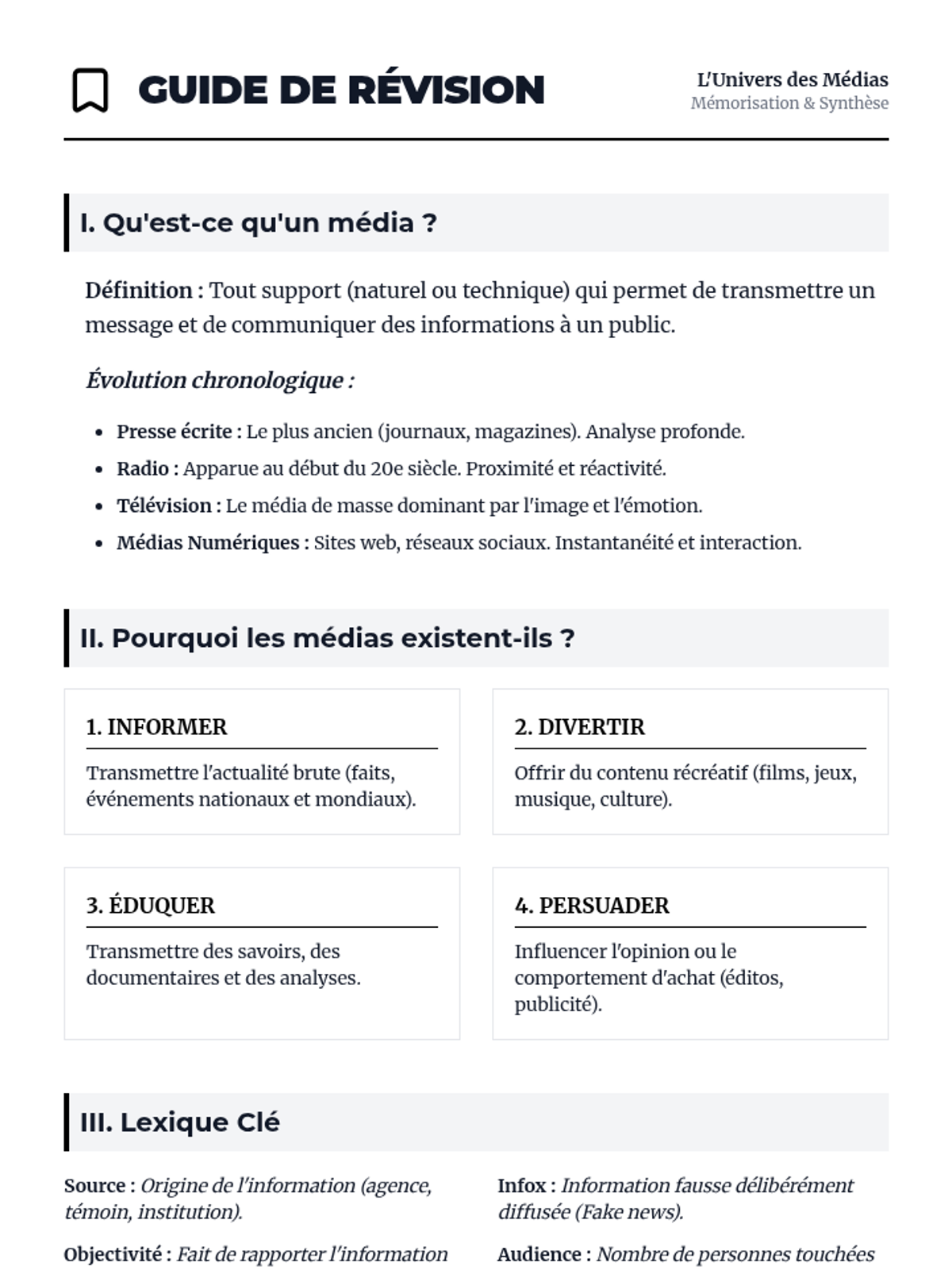
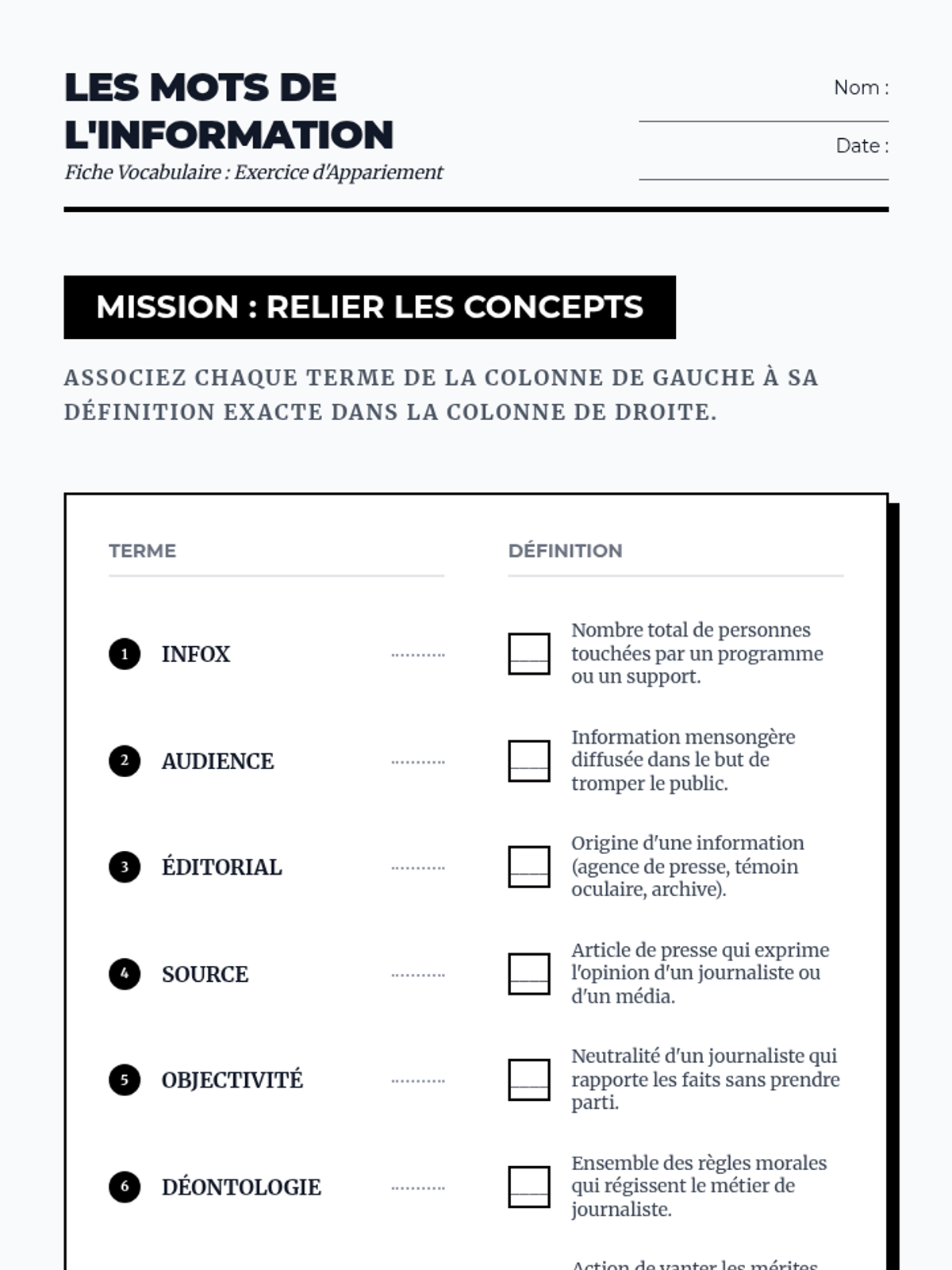
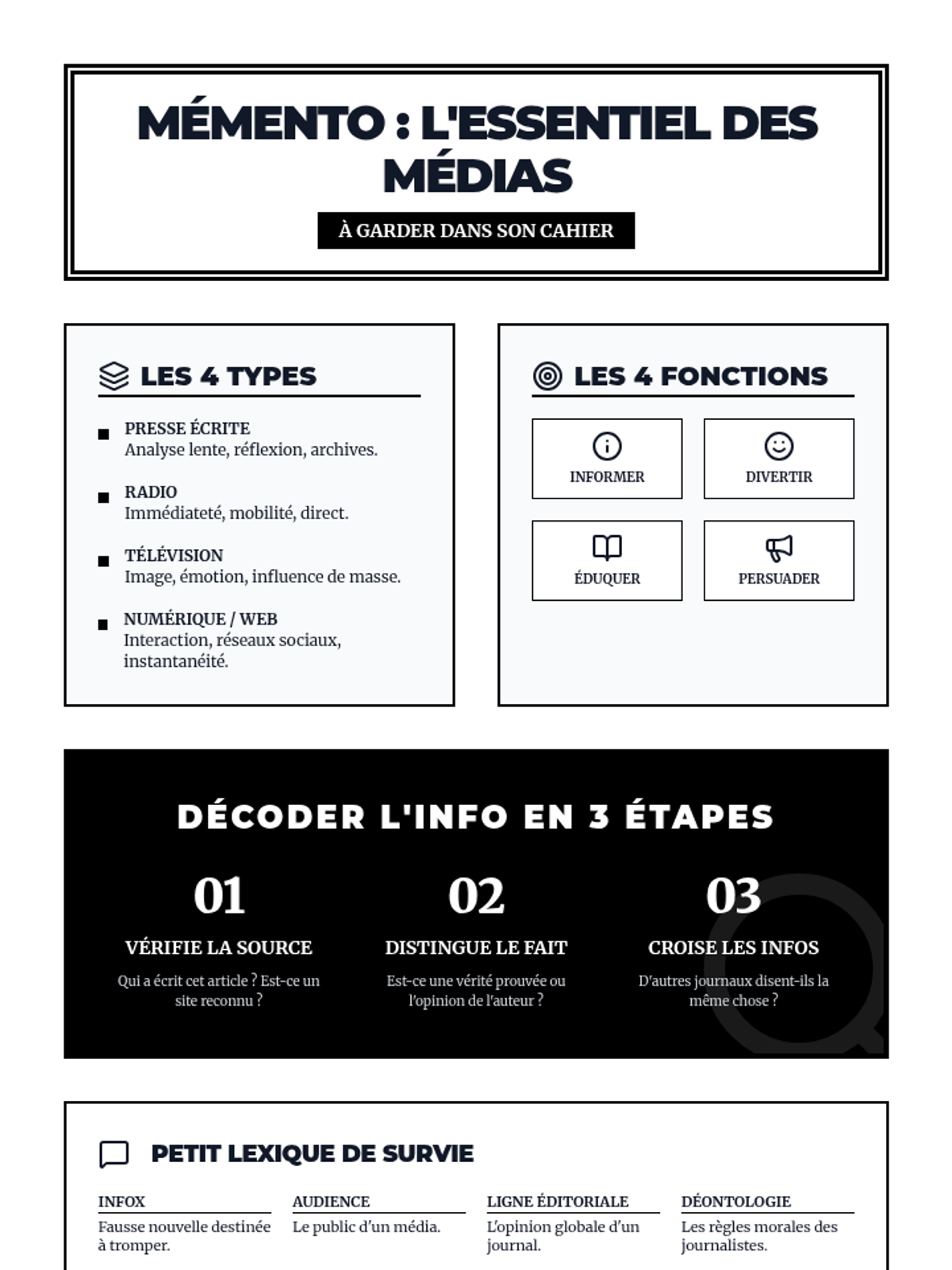
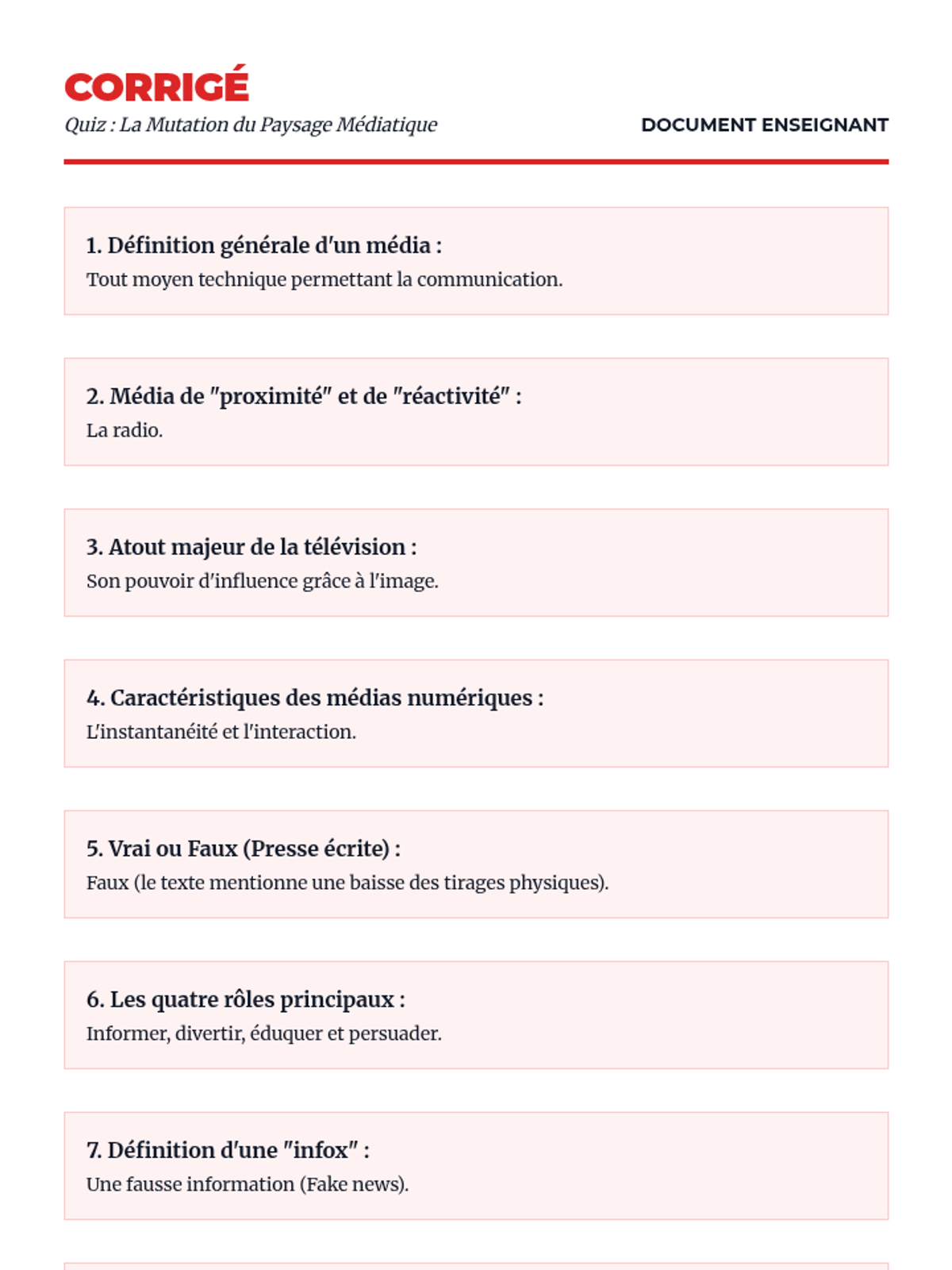
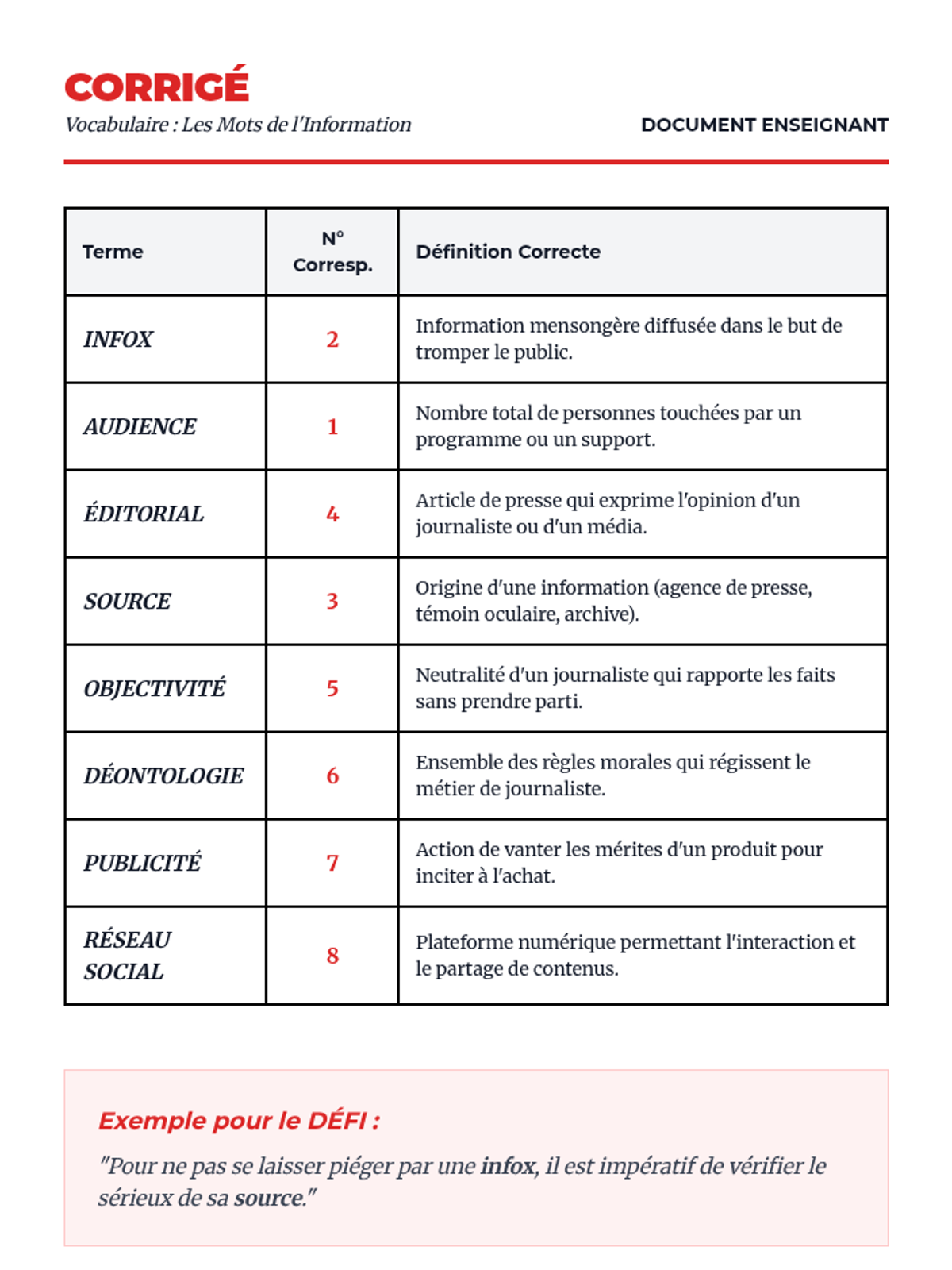
Cette leçon explore la diversité des médias modernes, de la presse écrite aux réseaux sociaux, tout en développant les compétences de lecture et de vocabulaire en français.
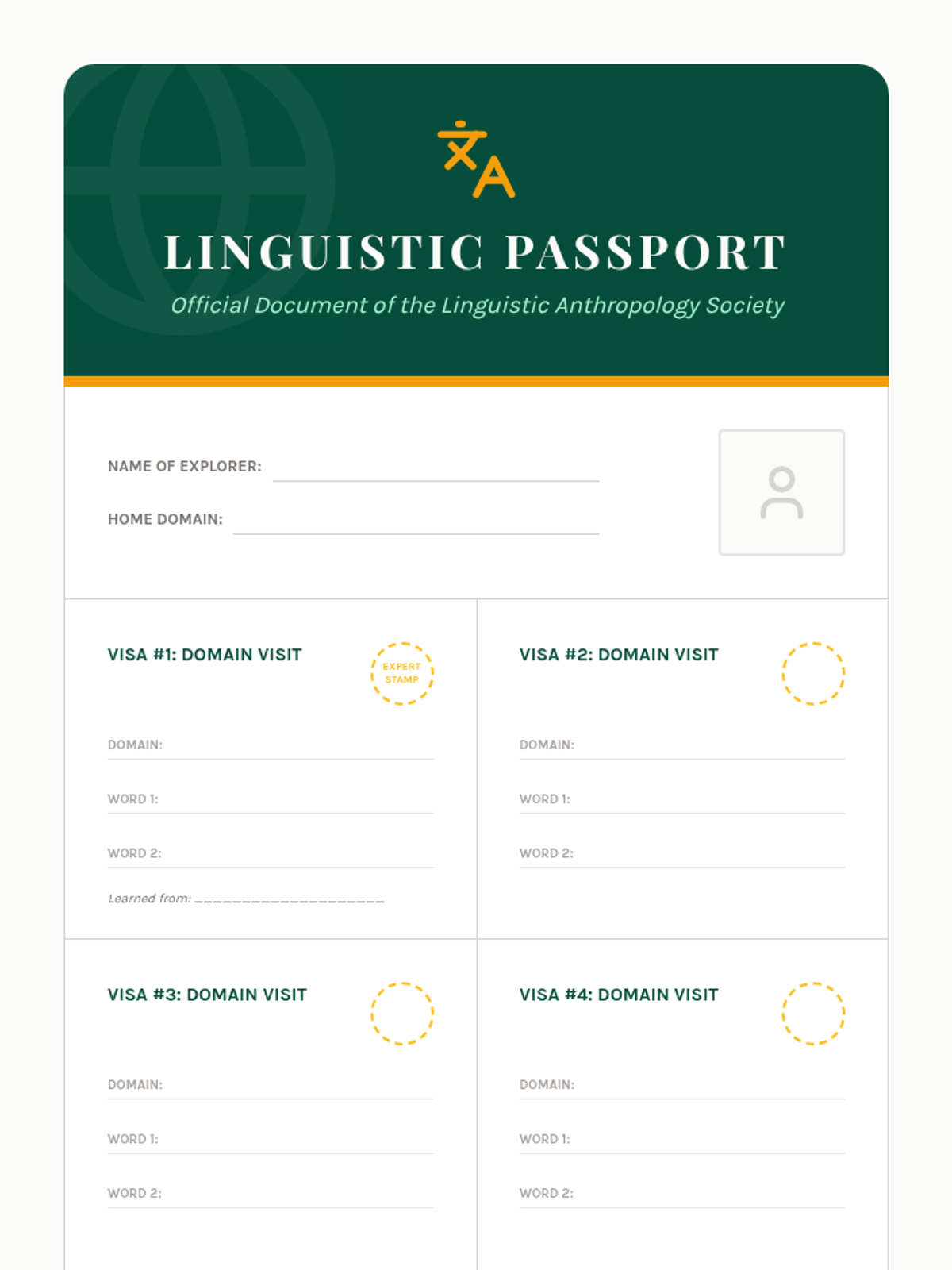
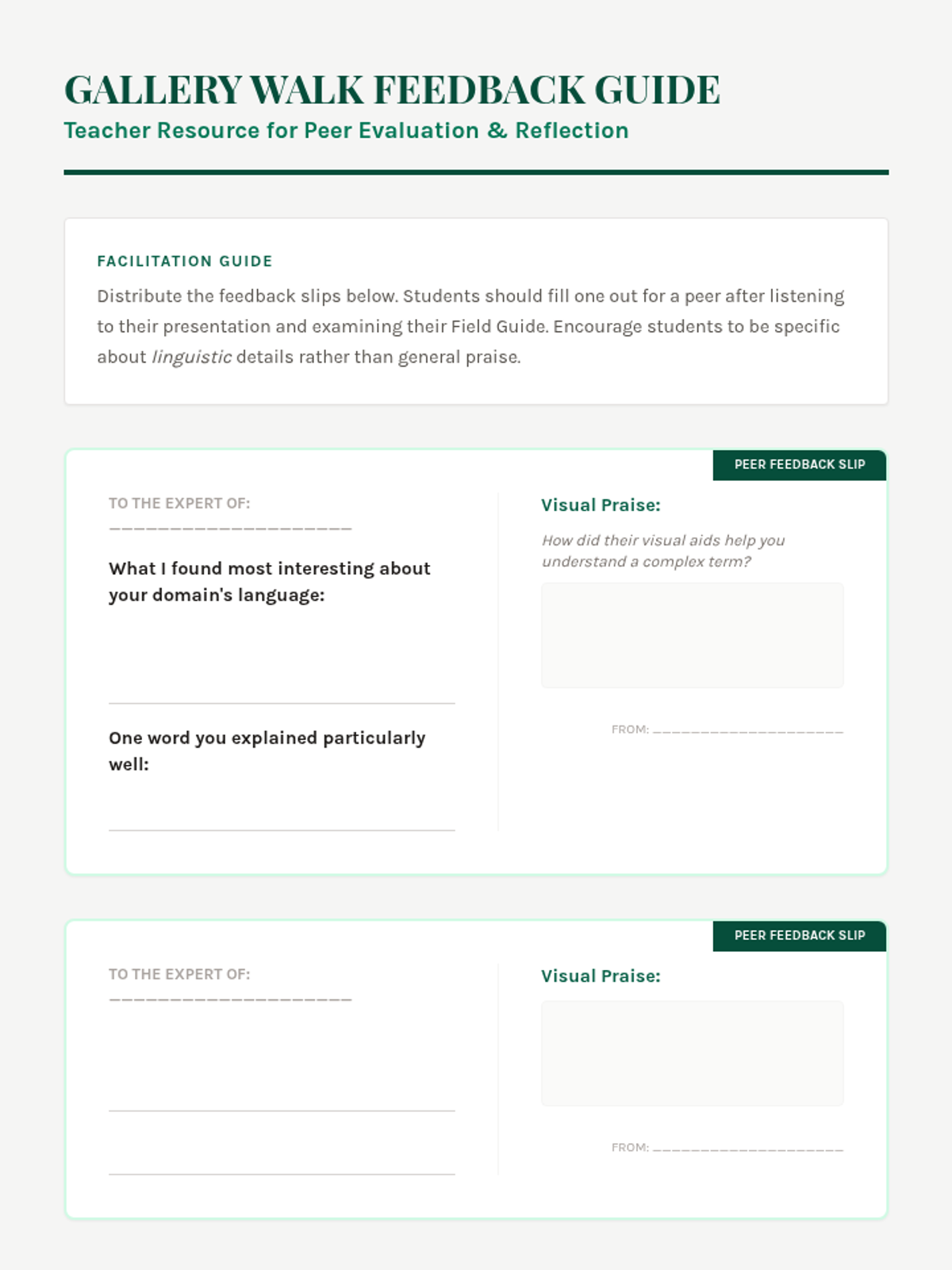
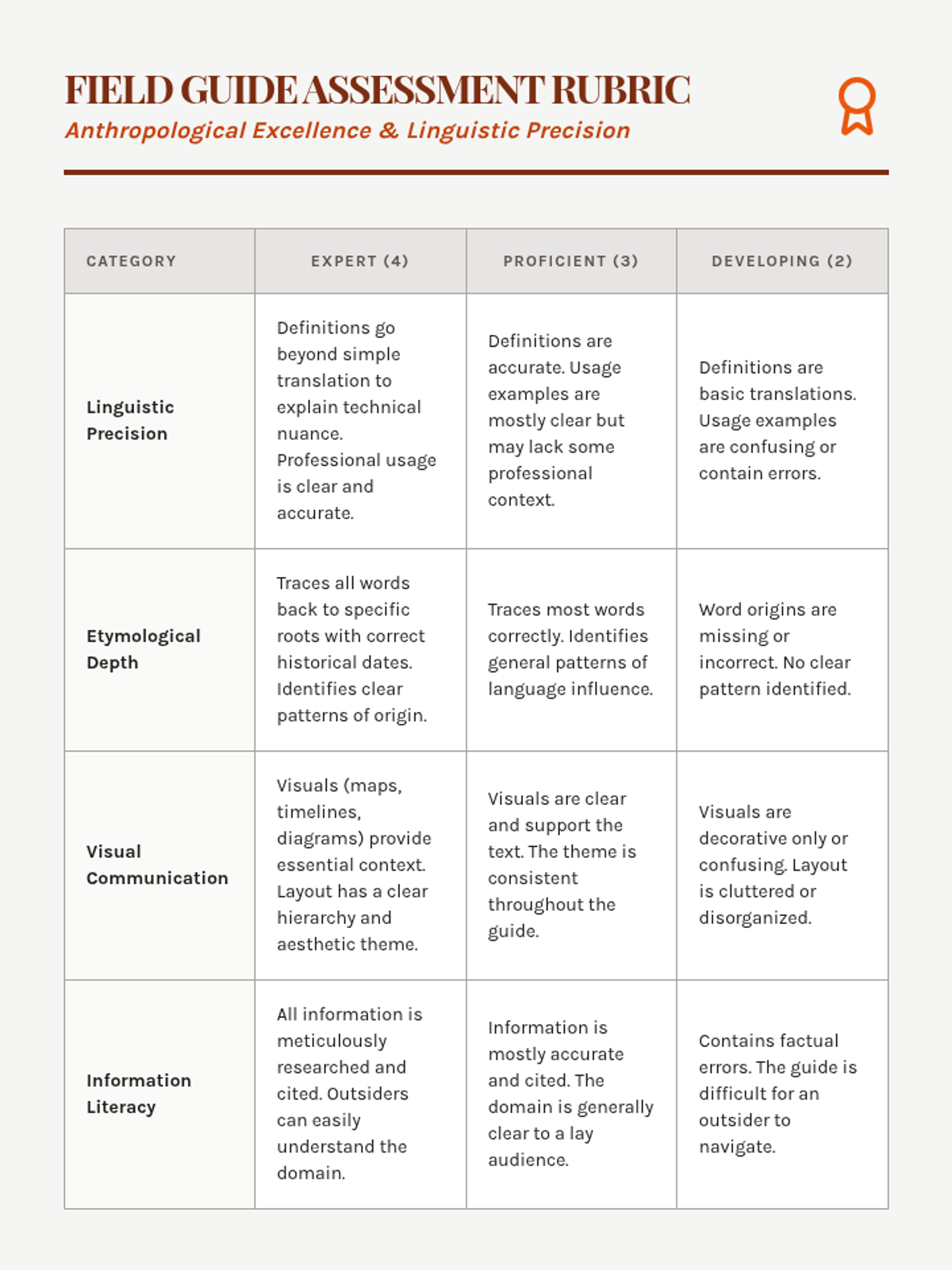
Students present their final field guides in a gallery walk format, teaching peers about the linguistic influences in their chosen domains.
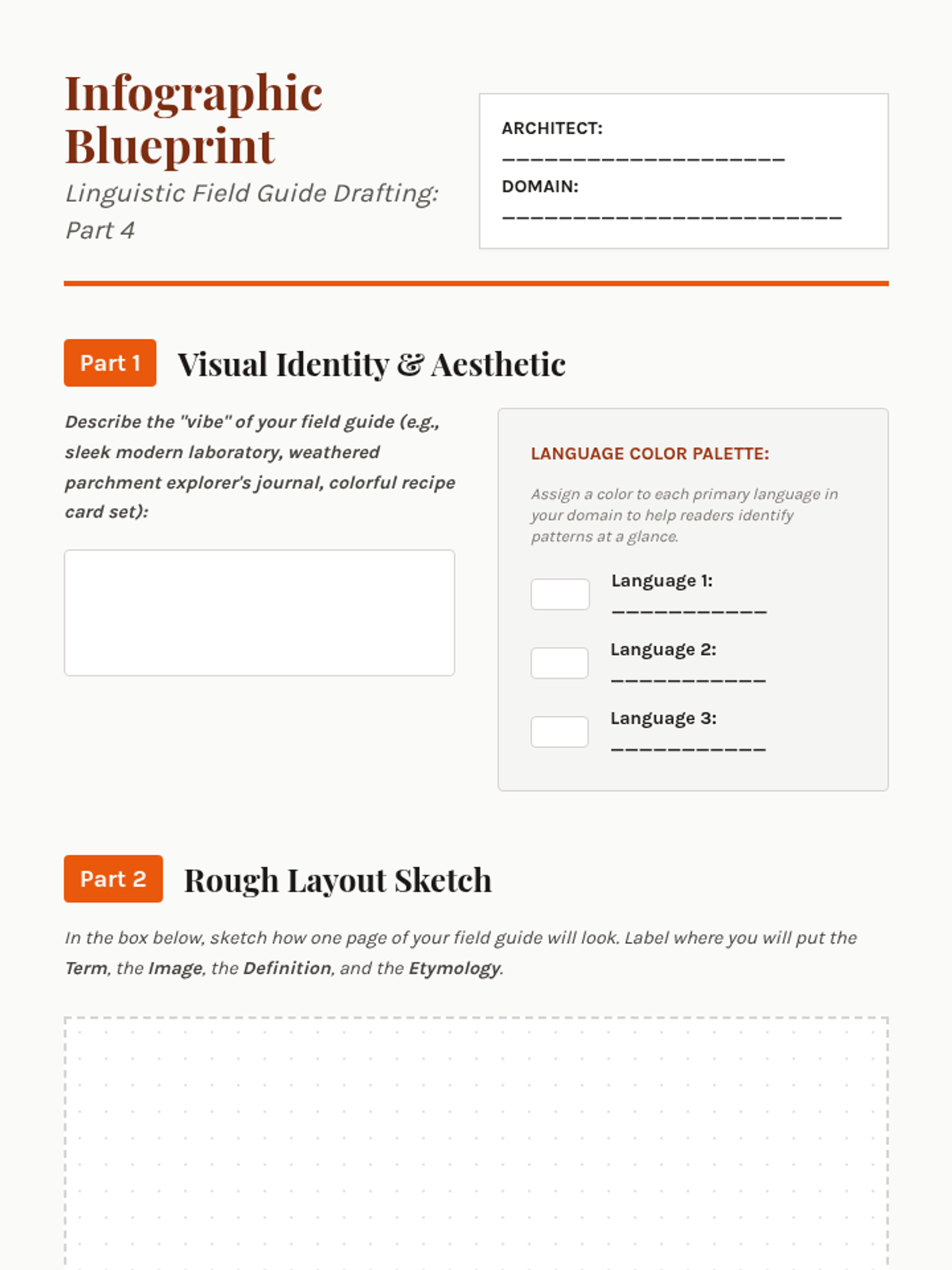
Students design visual aids and infographics to make complex foreign terminology accessible and memorable for a general audience.
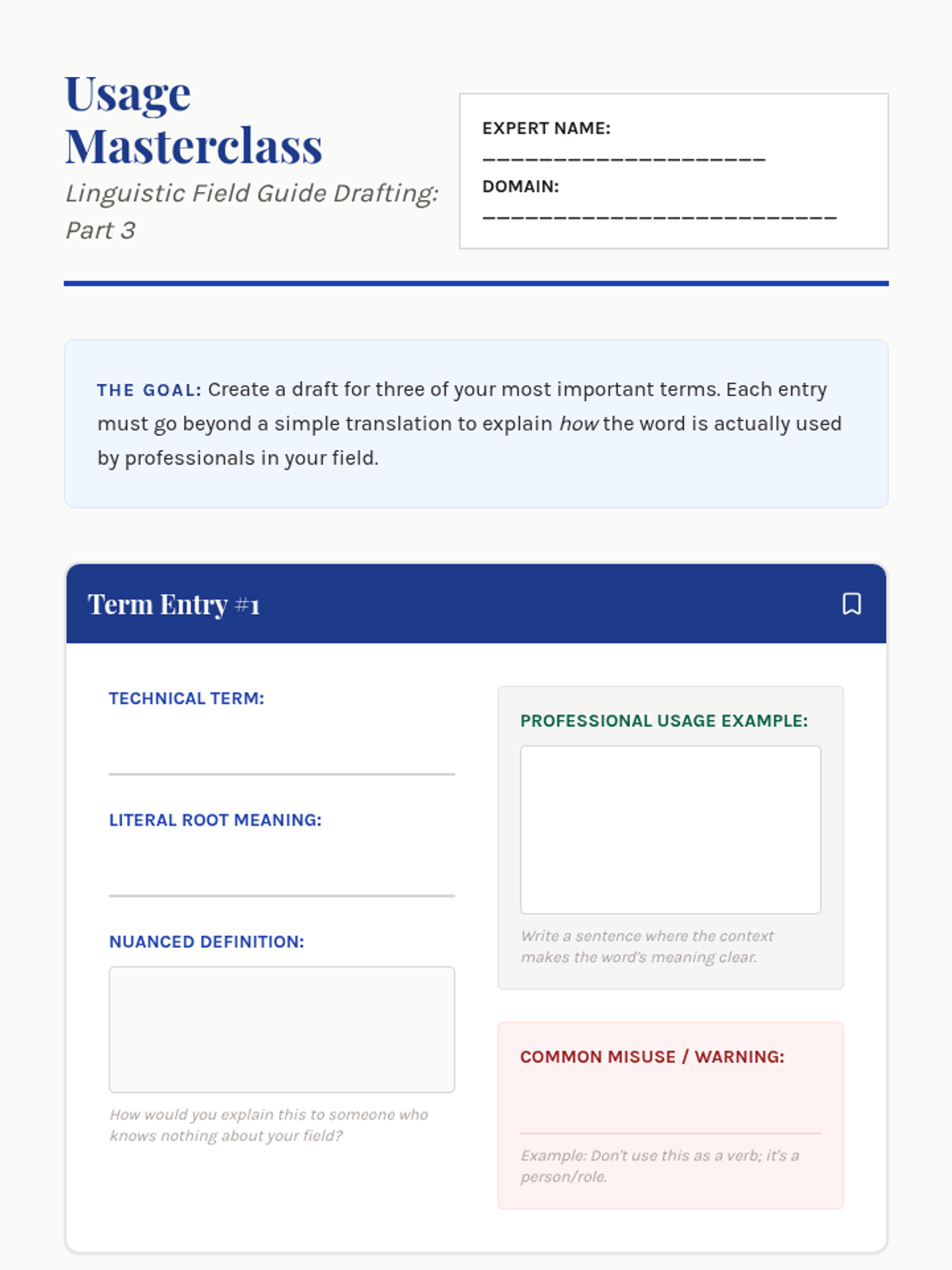
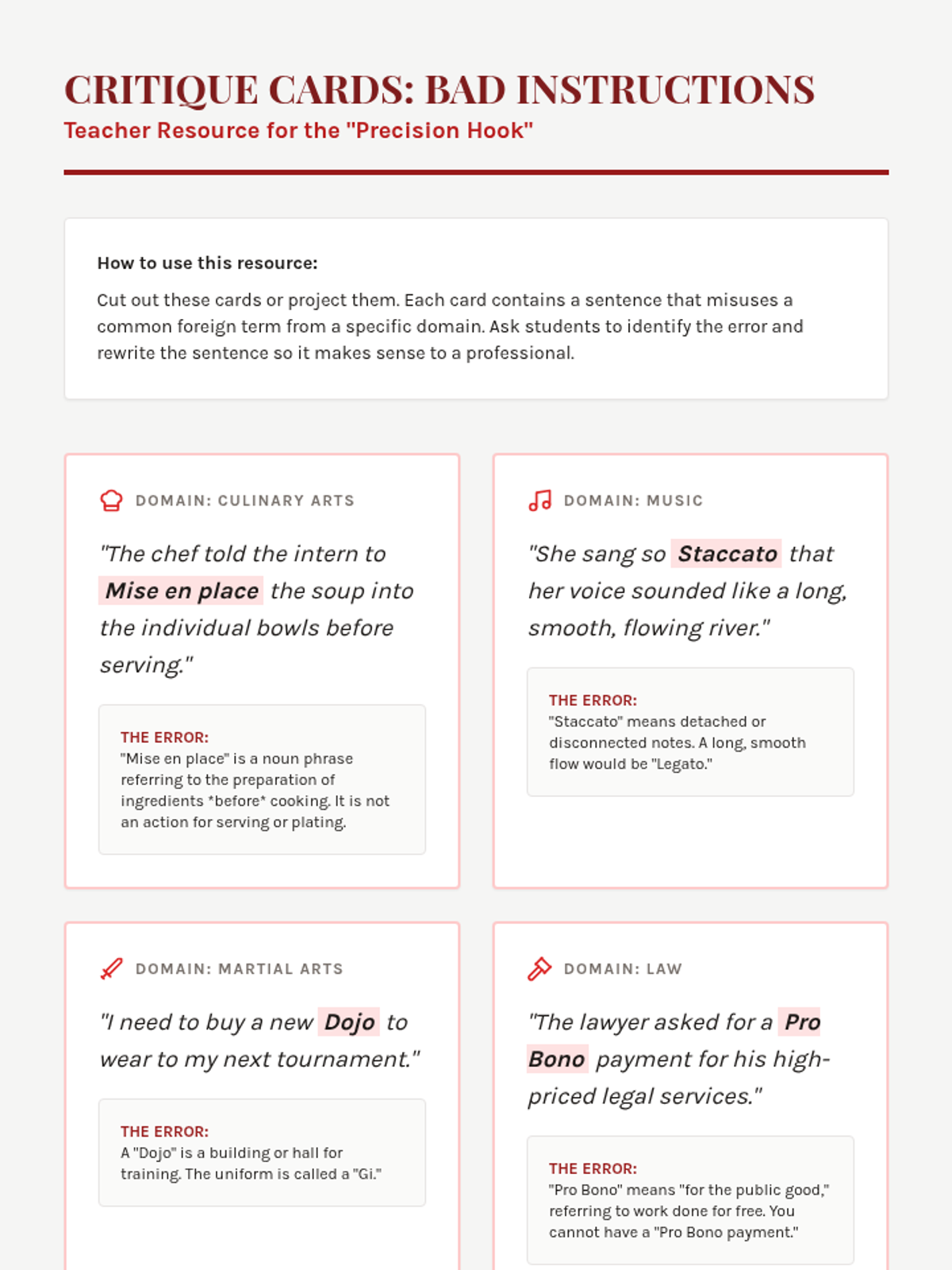
Students draft technical definitions and usage guides that explain the nuances of their chosen terms within their professional context.
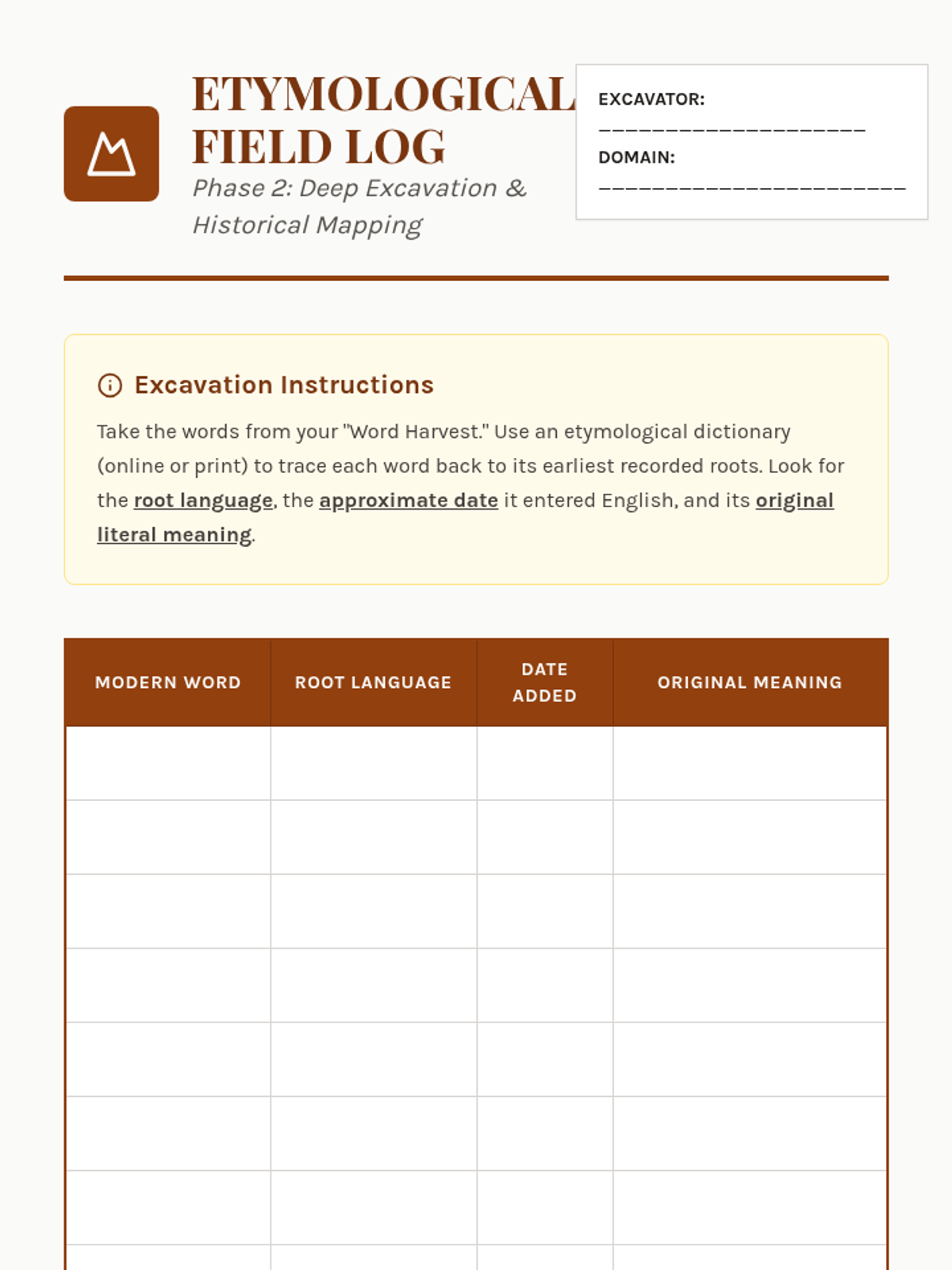
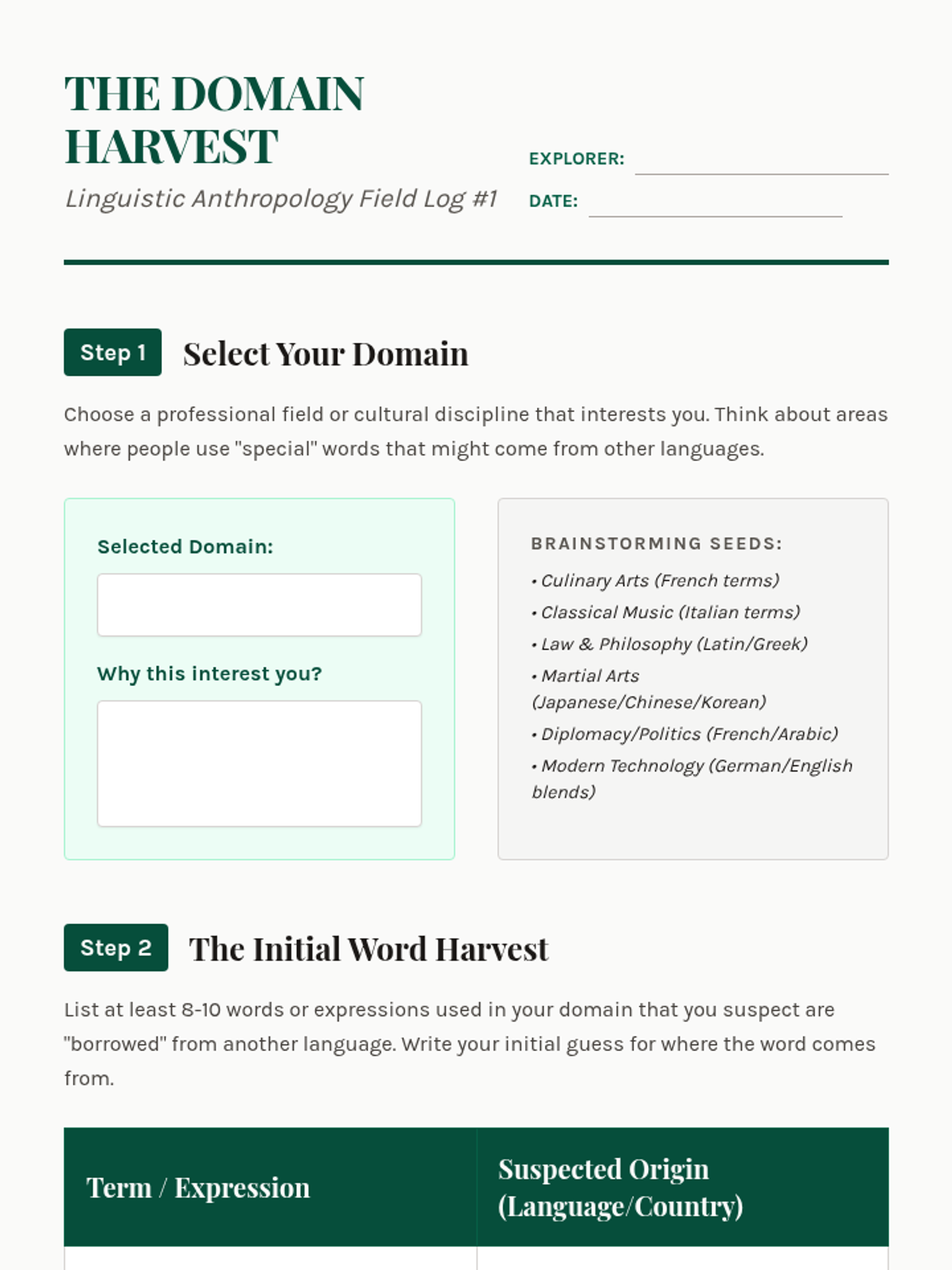
Students use etymological resources to trace the historical origins of their harvested words and identify cultural patterns in language usage.
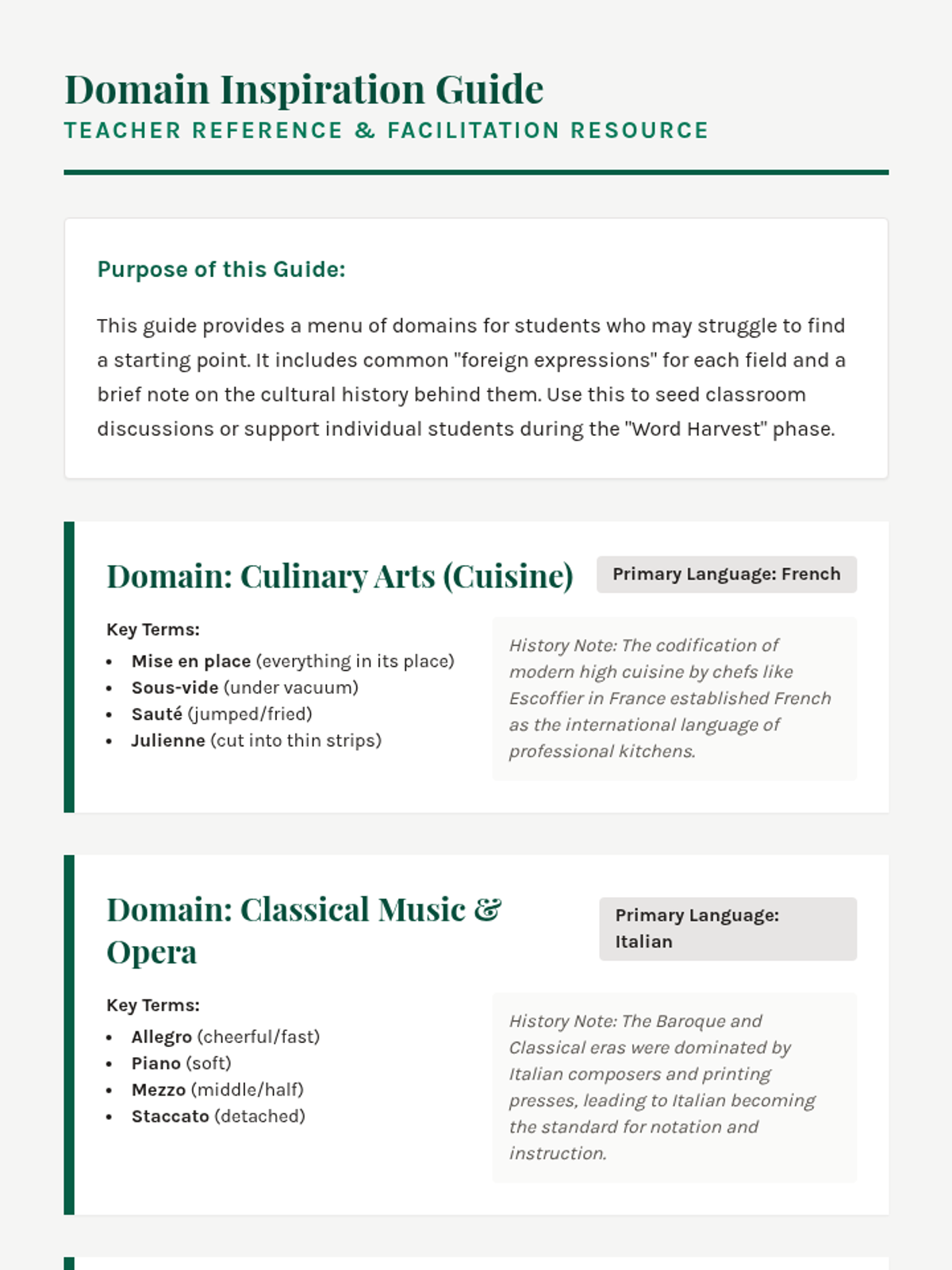
Students explore specialized vocabulary in various fields and select a domain of interest to begin their initial research into foreign terms.