Une leçon de vocabulaire pour les élèves de 6ème année, axée sur cinq mots académiques essentiels. La leçon comprend une présentation pour l'enseignement direct, une fiche d'exercices pour la pratique et un corrigé pour l'enseignant.
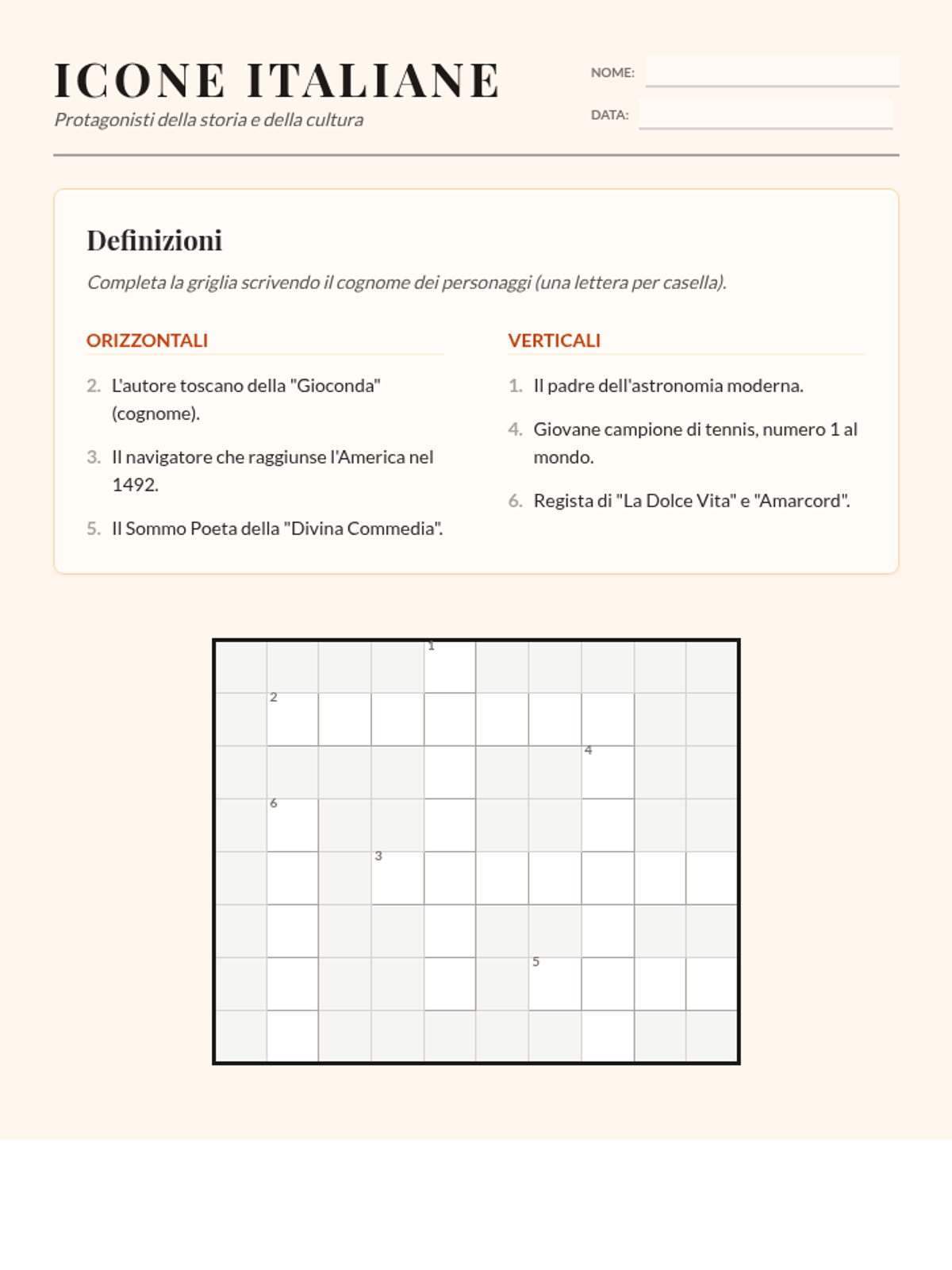
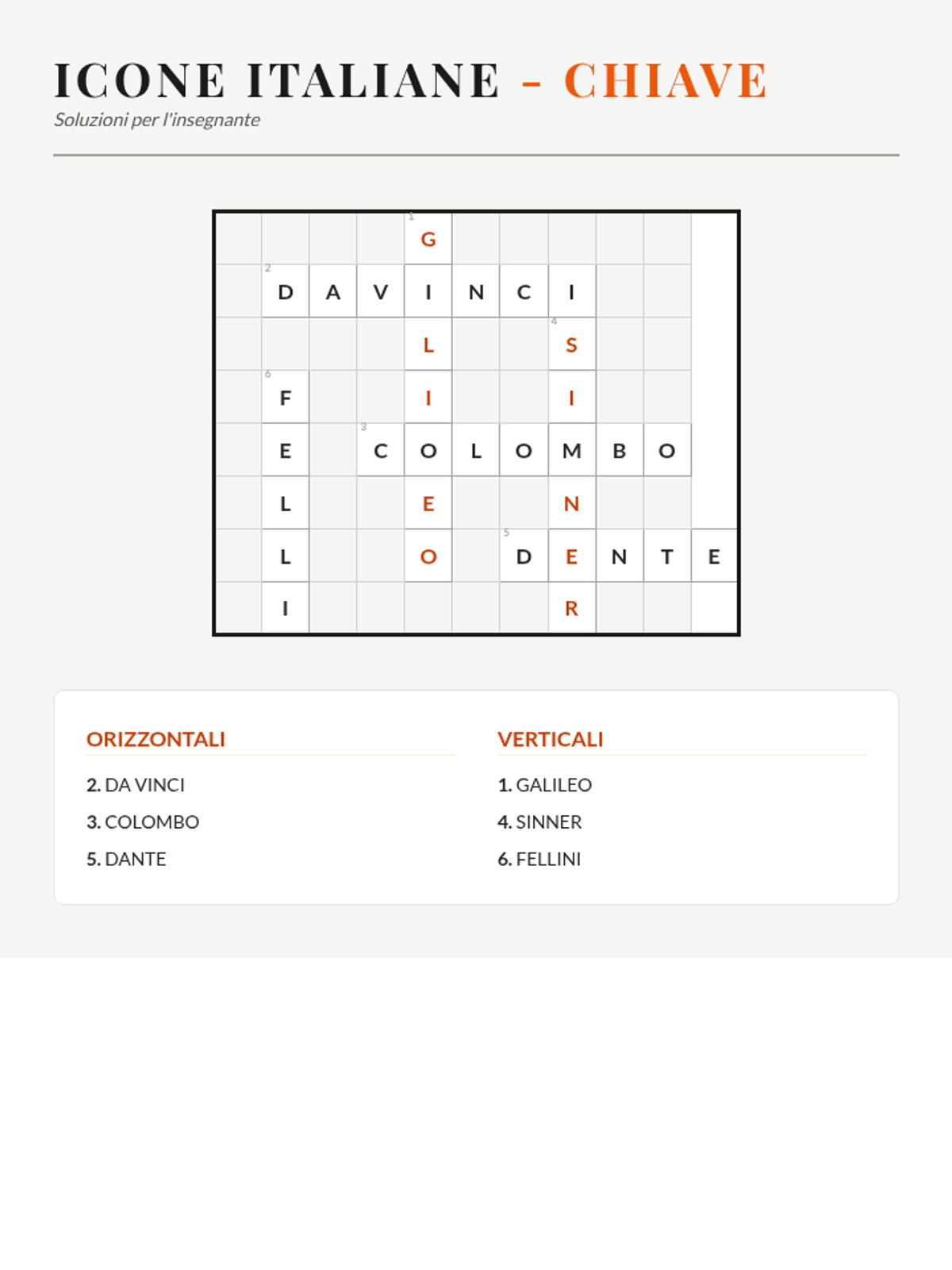
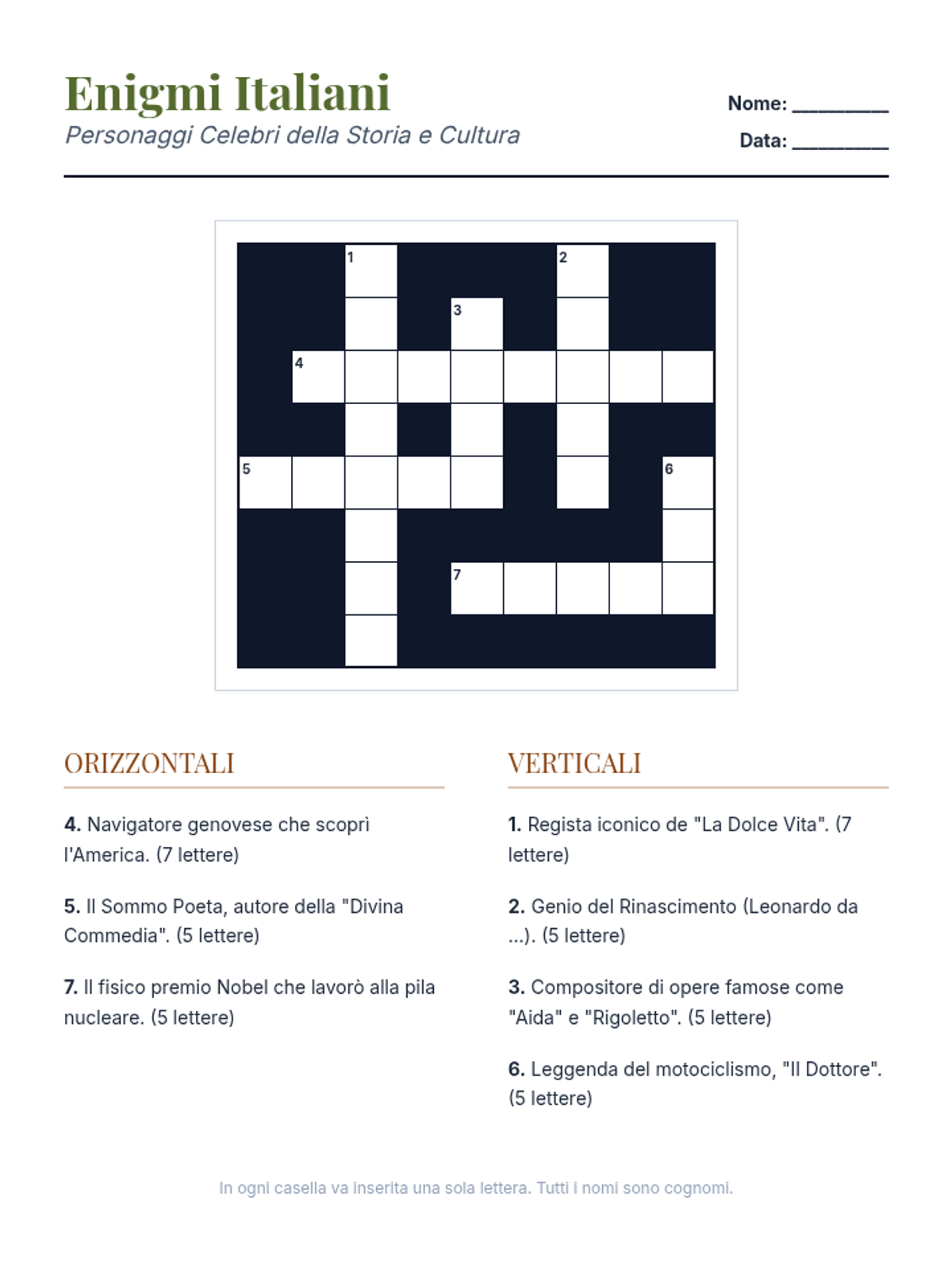
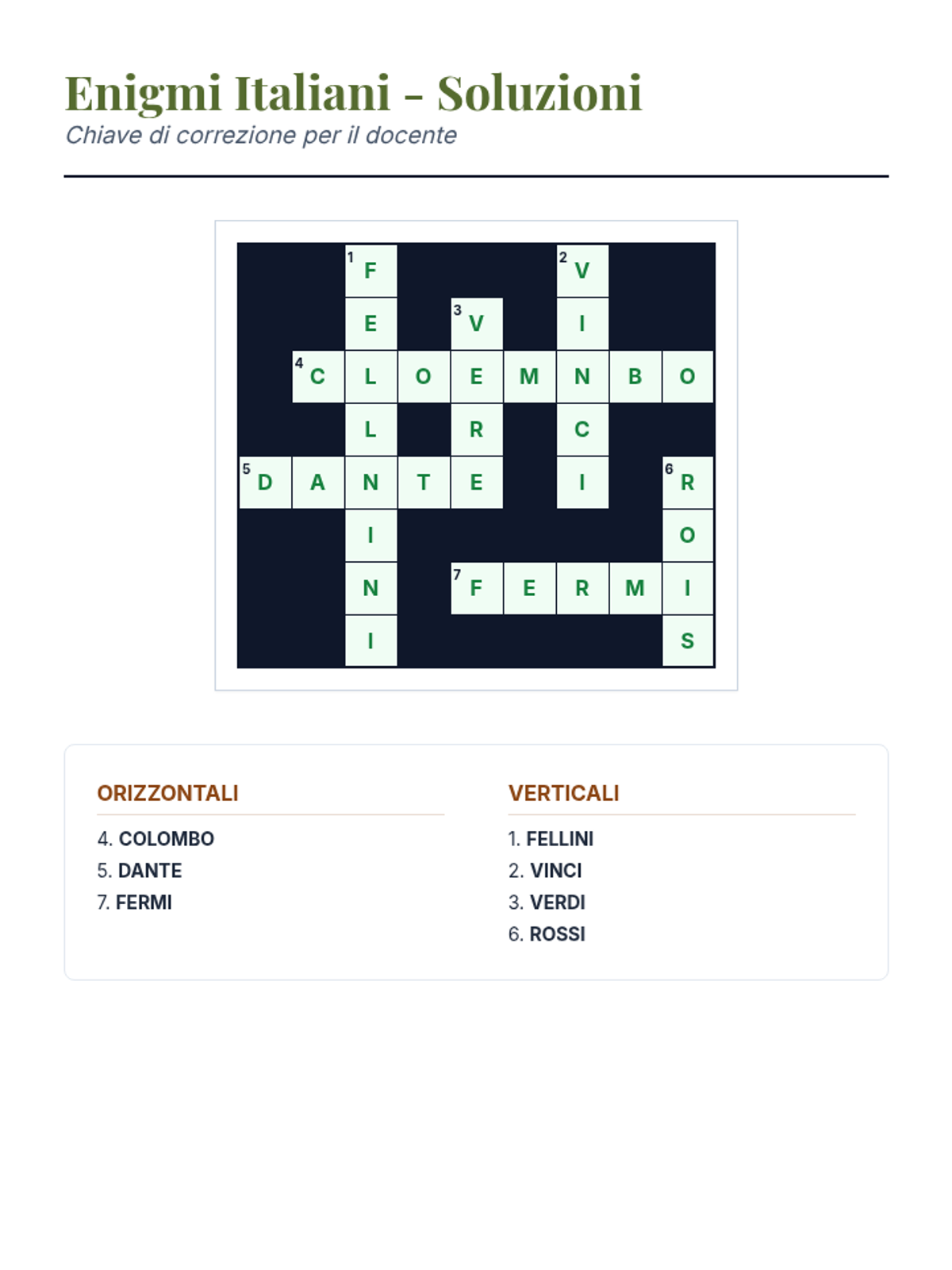
A lesson focusing on famous Italian figures from history to modern day, enhancing vocabulary and cultural knowledge through a crossword puzzle.
A lesson focused on famous Italian figures from history, art, science, and modern culture, designed for intermediate learners to practice vocabulary and cultural knowledge.
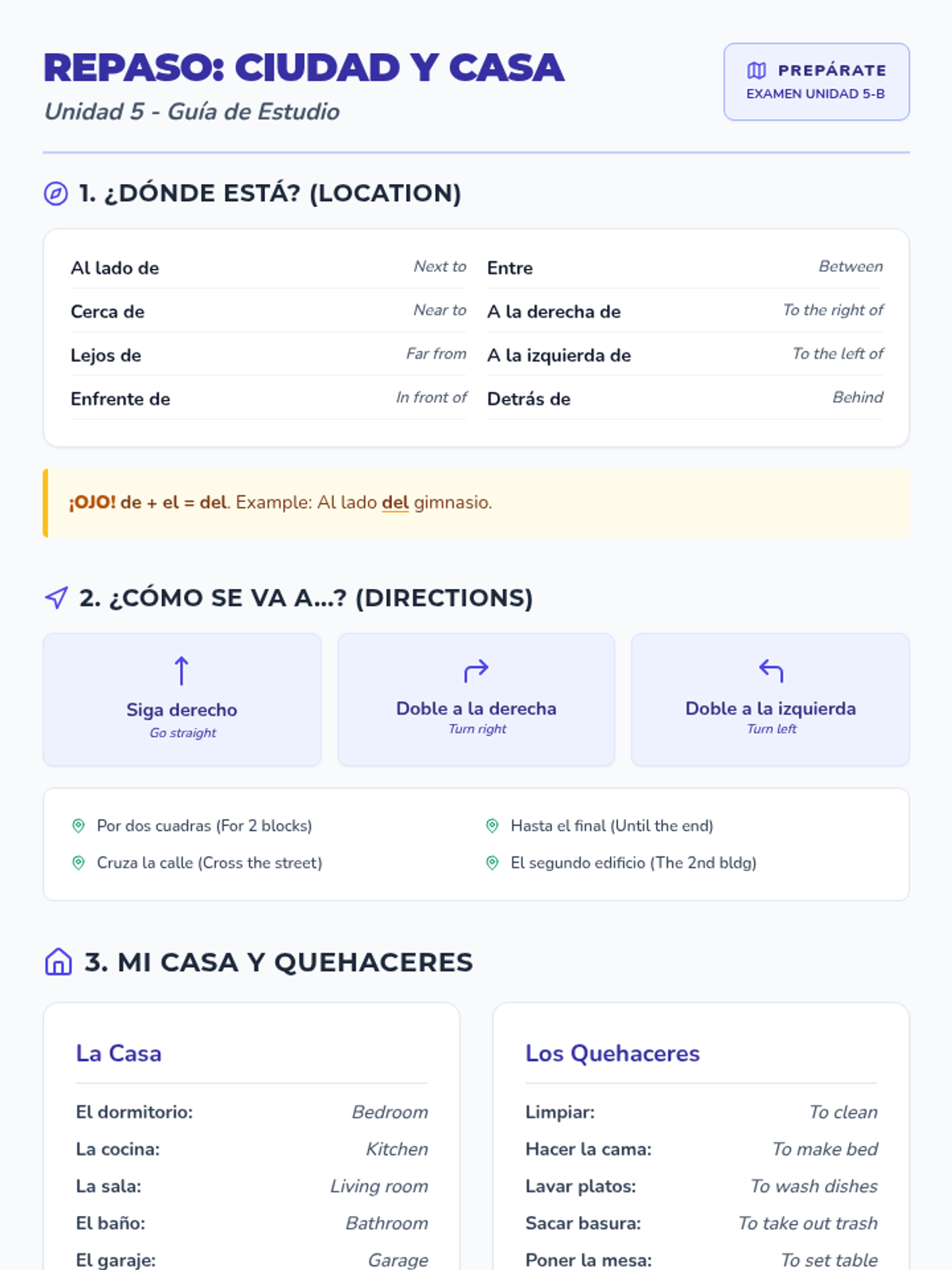
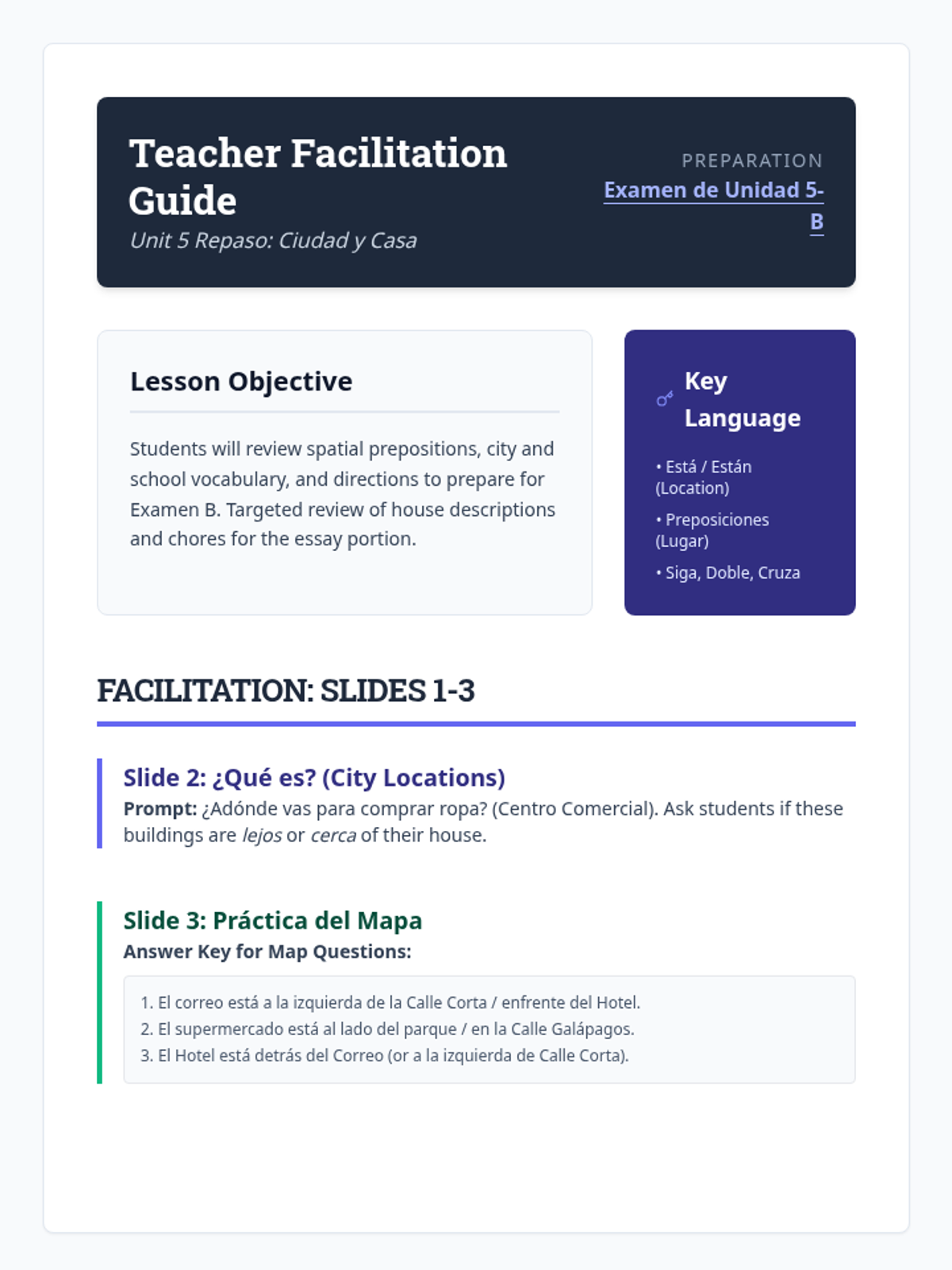
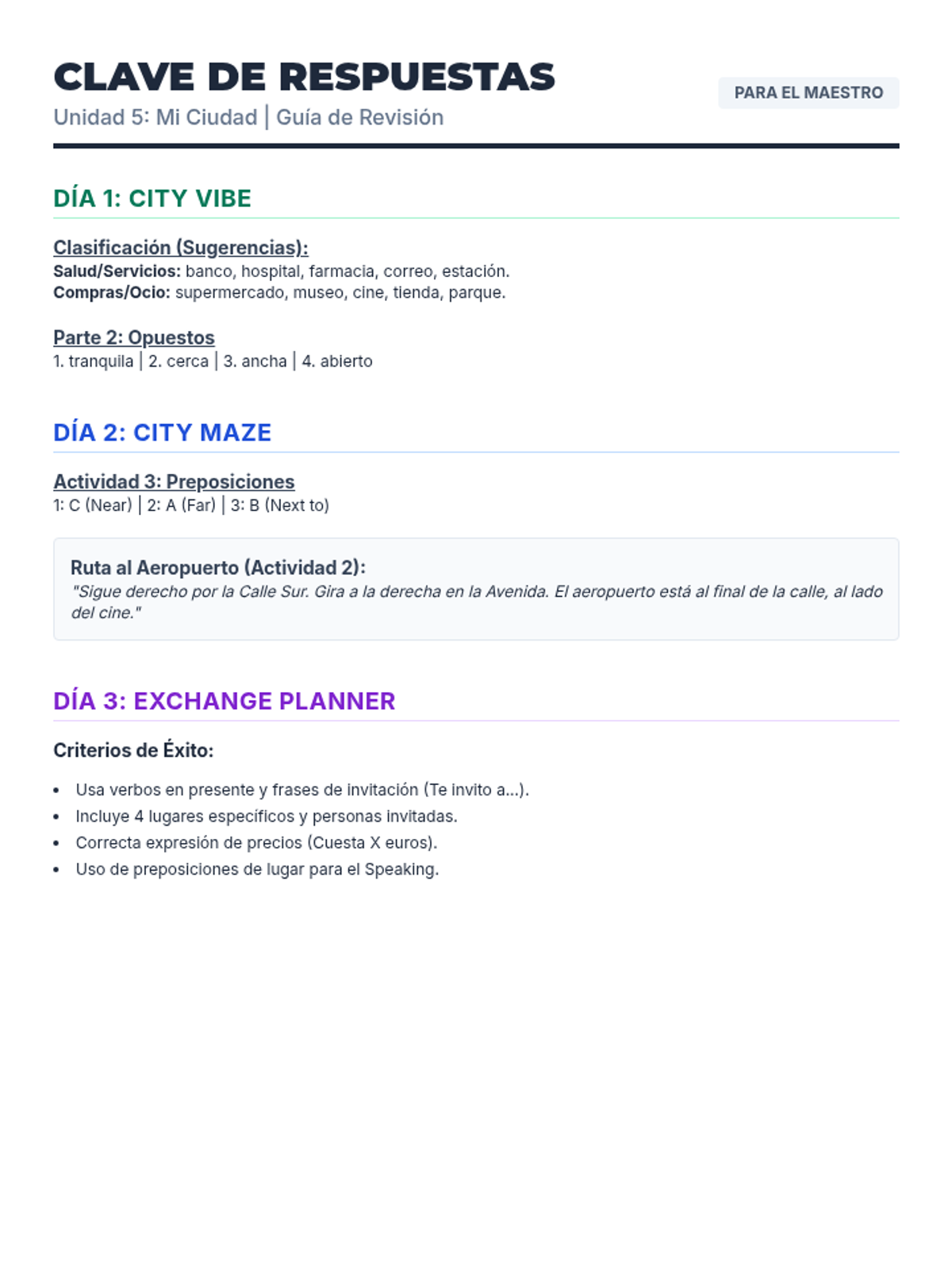
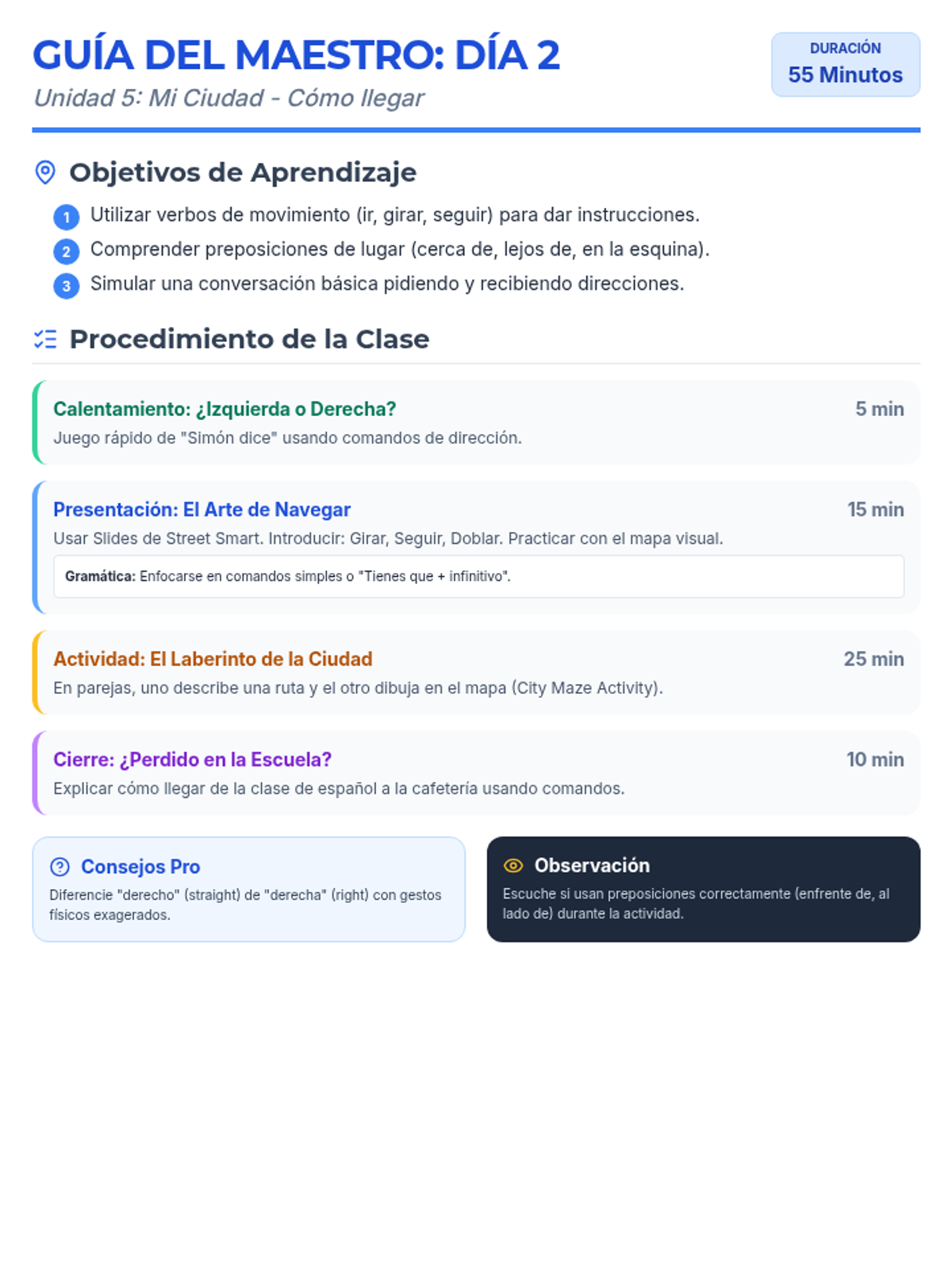
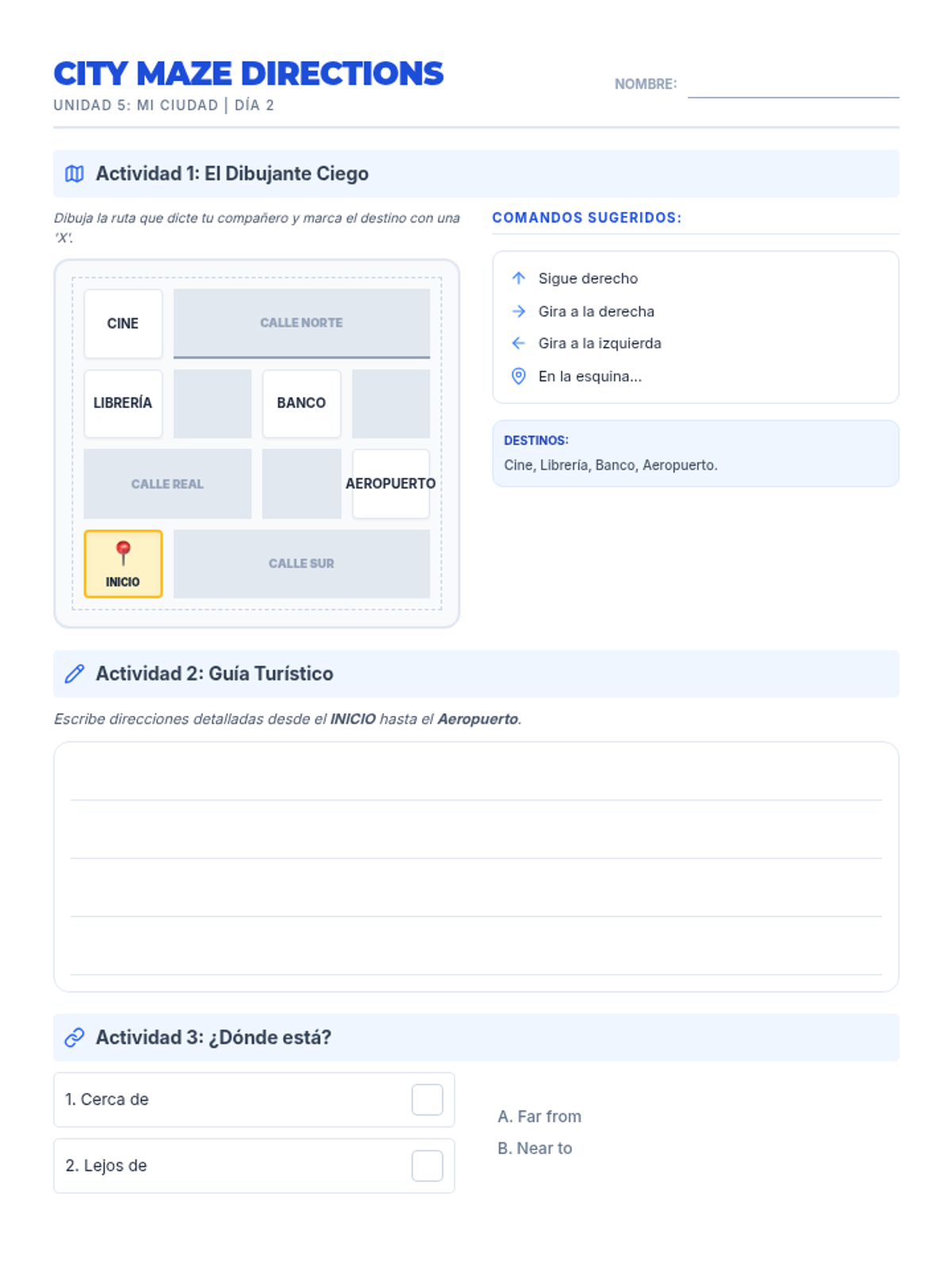
A comprehensive Spanish review lesson focusing on city locations, giving directions, school layout, and house descriptions to prepare students for the Unit 5 exam.
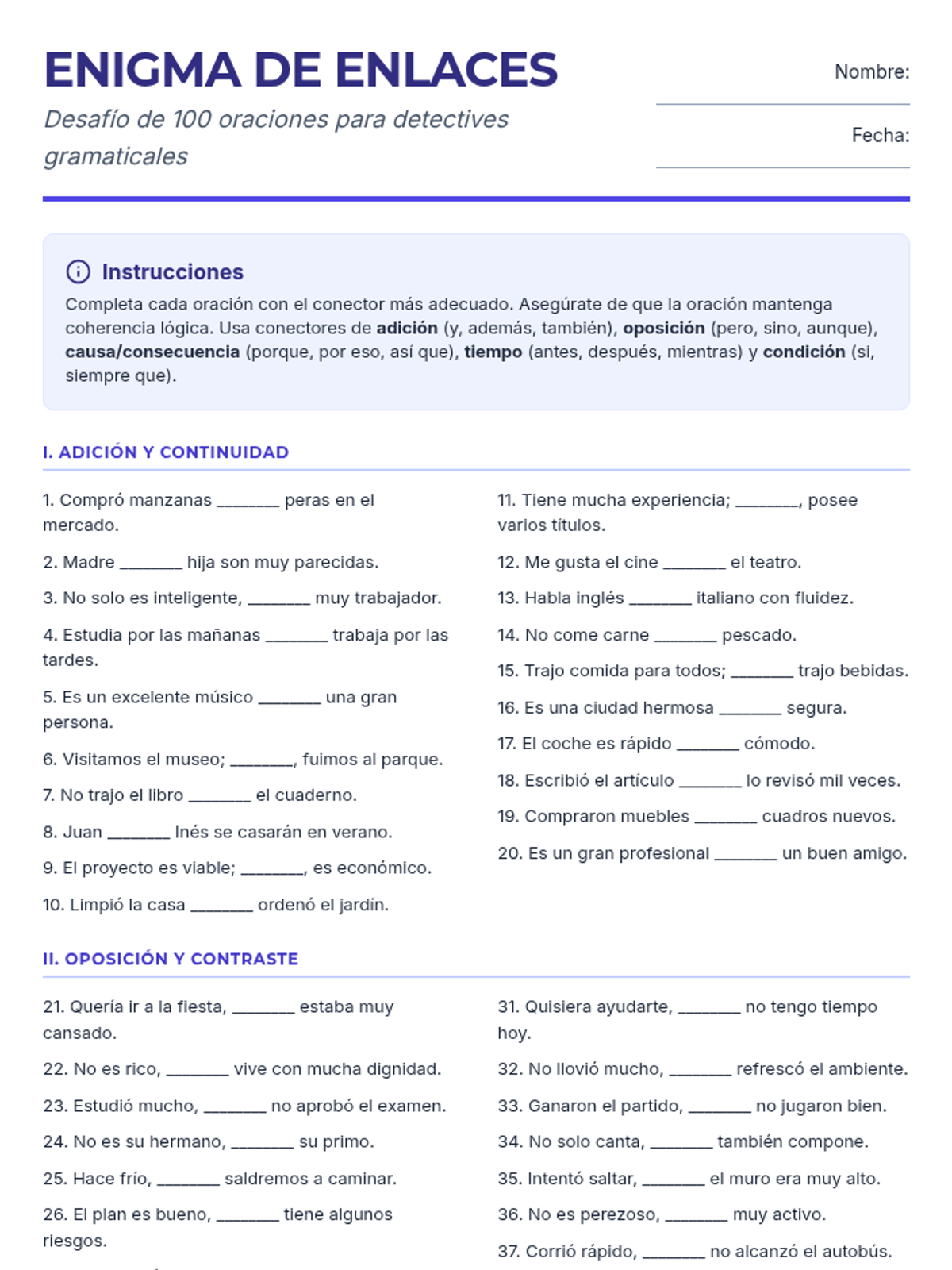
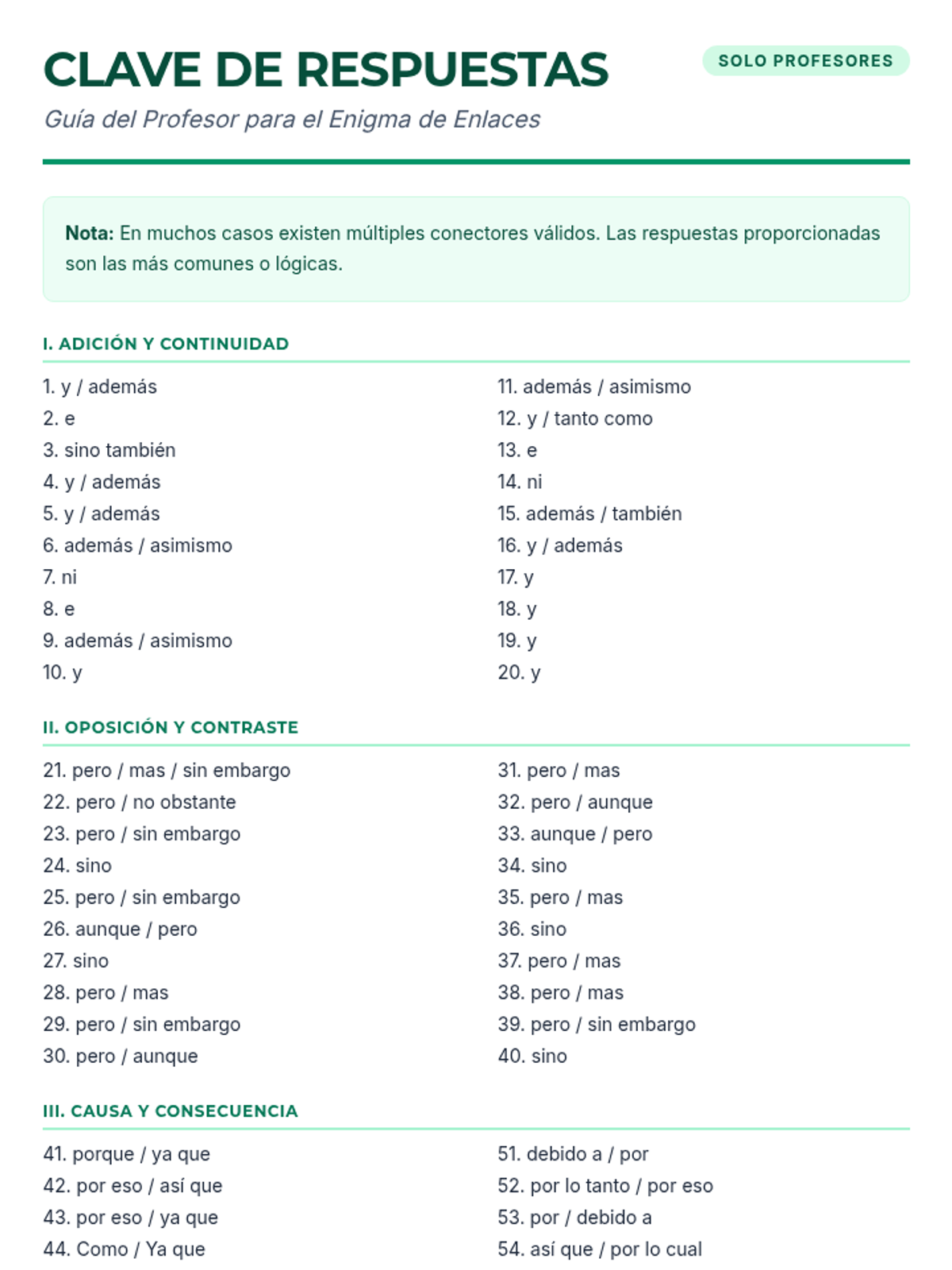
Una lección completa para dominar el uso de conectores gramaticales en español a través de la práctica intensiva y el análisis de contexto.
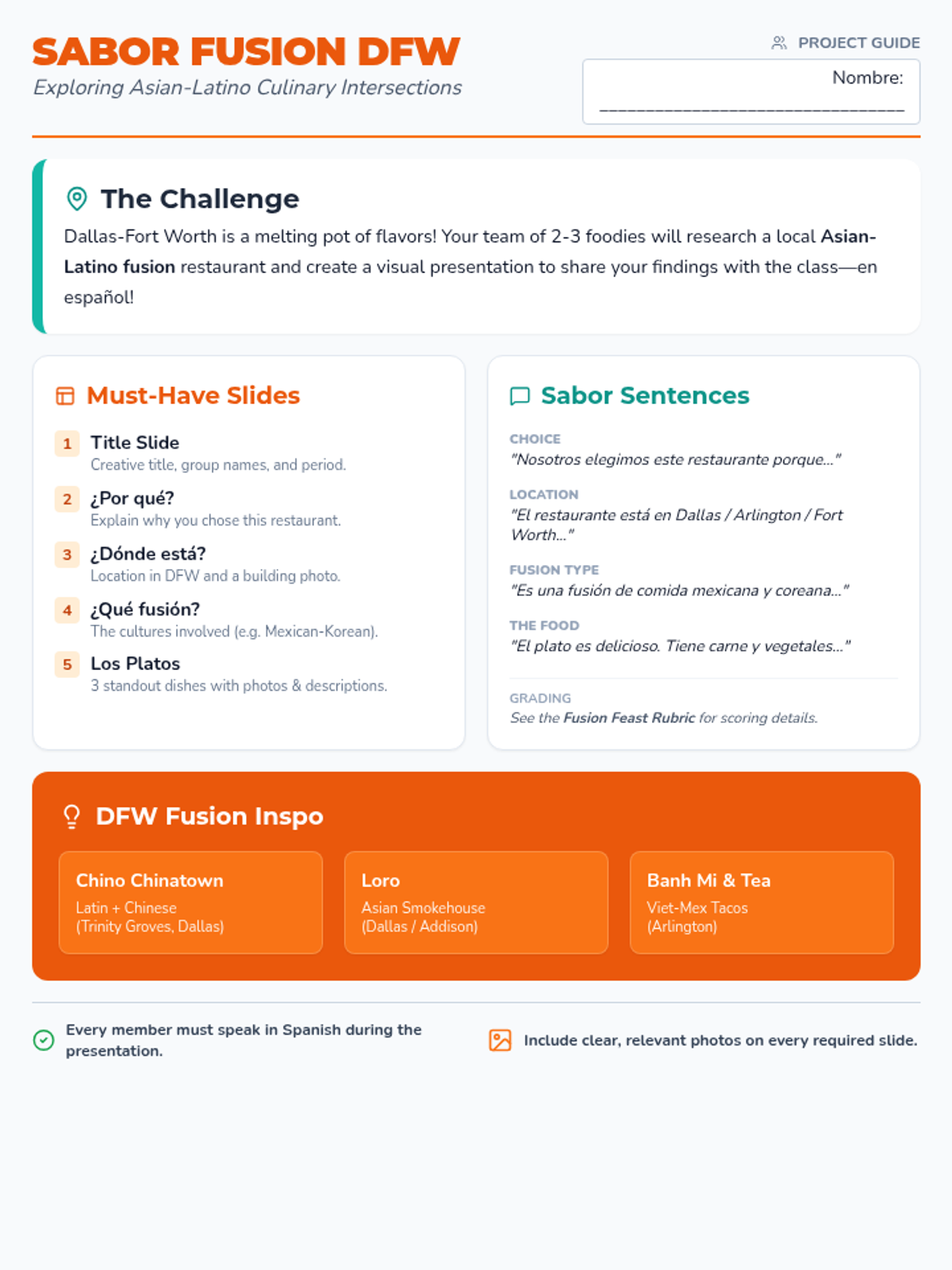
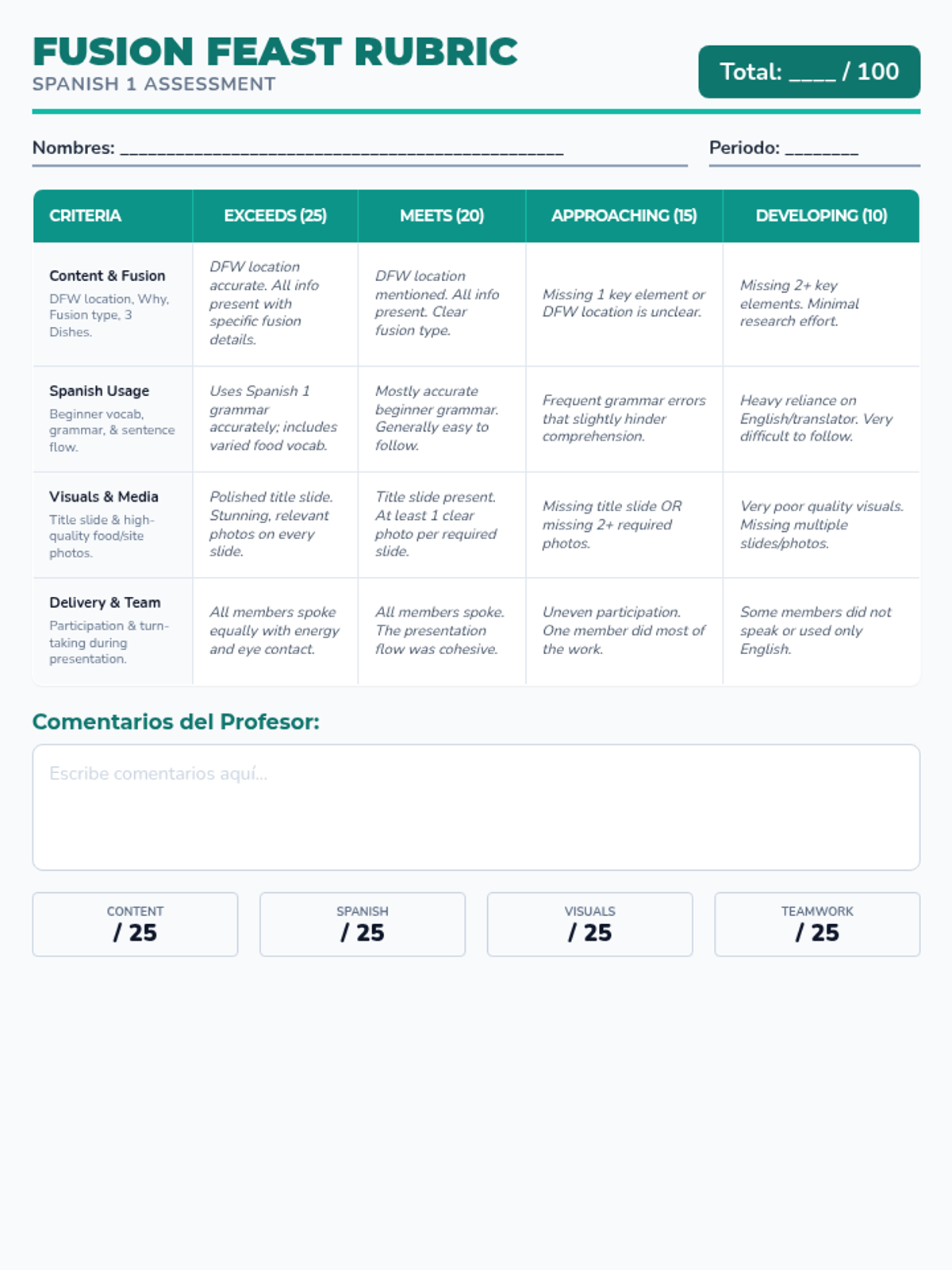
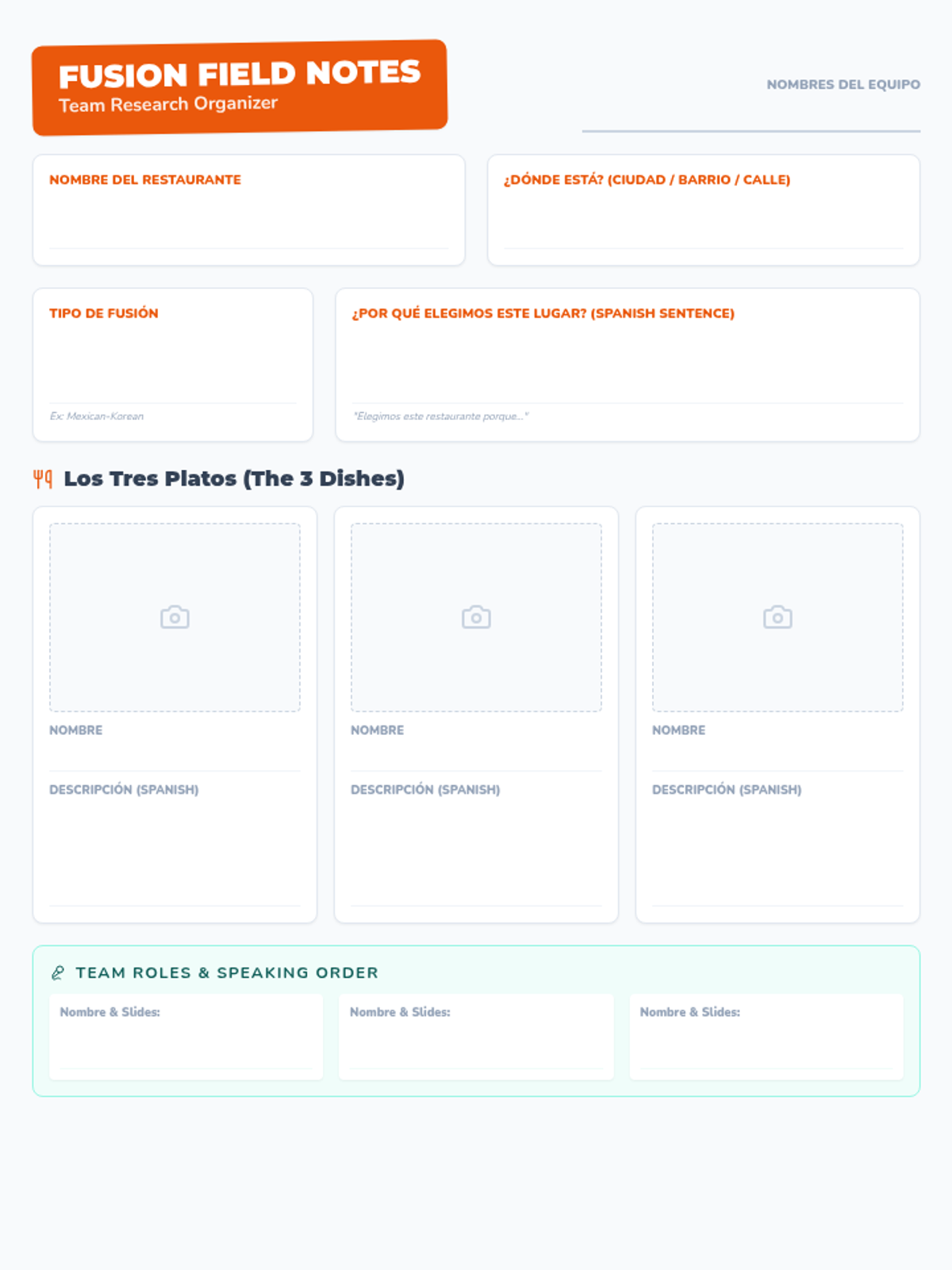
A beginner Spanish project where students research and present on Asian-Latino fusion restaurants in the Dallas-Fort Worth area, focusing on cultural intersection and culinary vocabulary.
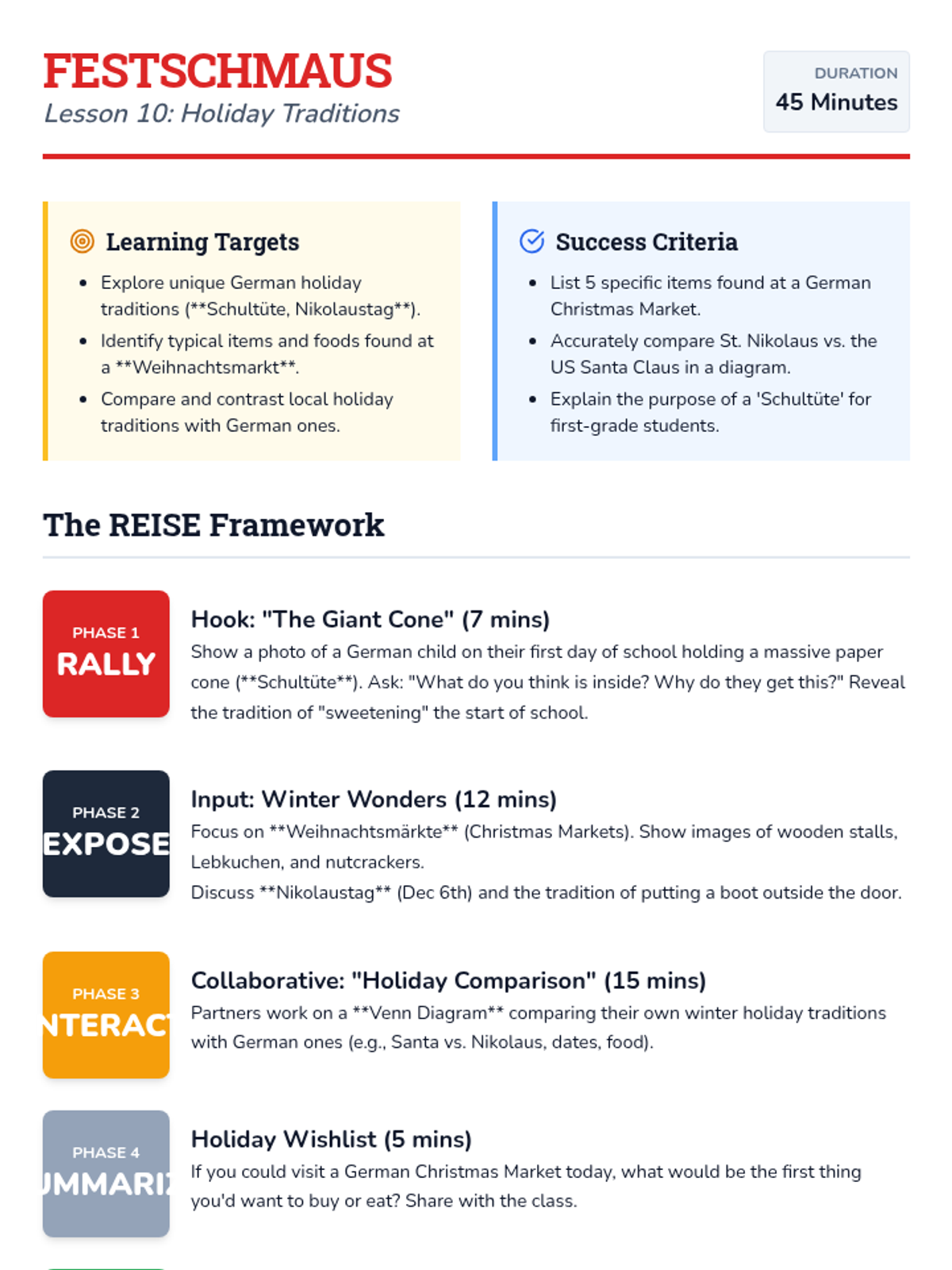
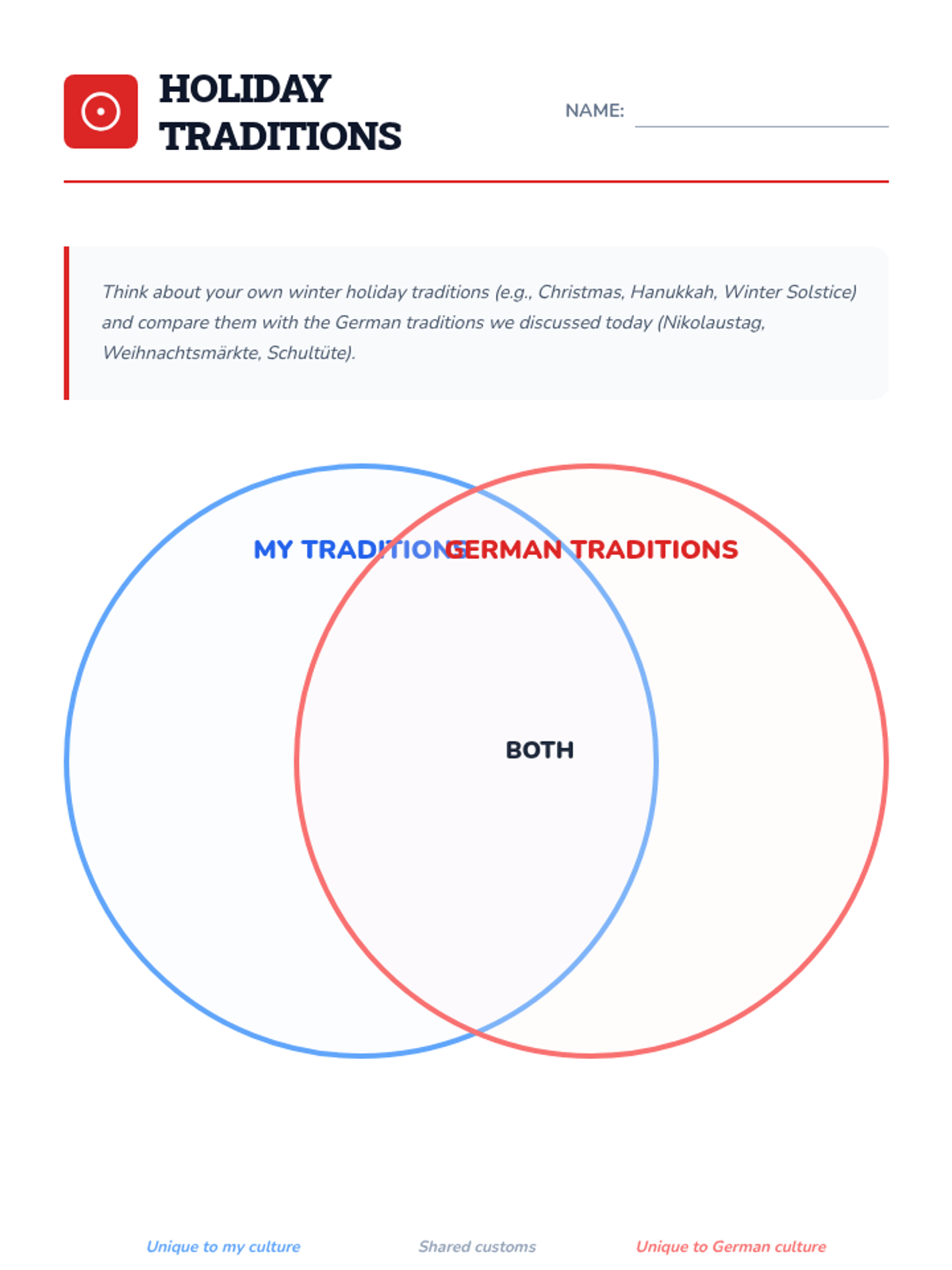
A festive conclusion focusing on German holiday traditions, including 'Schultüte' and 'Weihnachtsmärkte'. Students compare local and German celebrations using Venn diagrams.
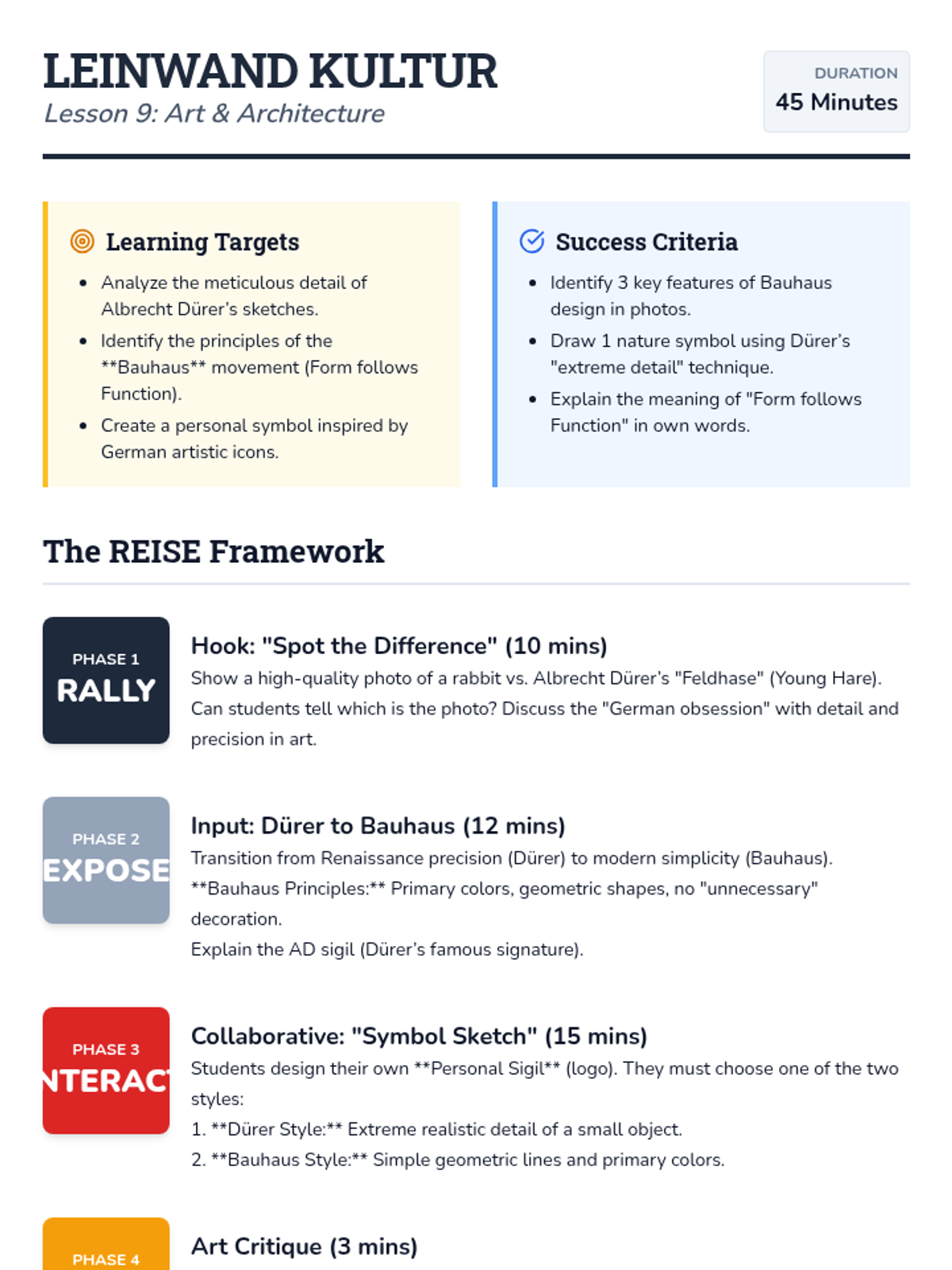
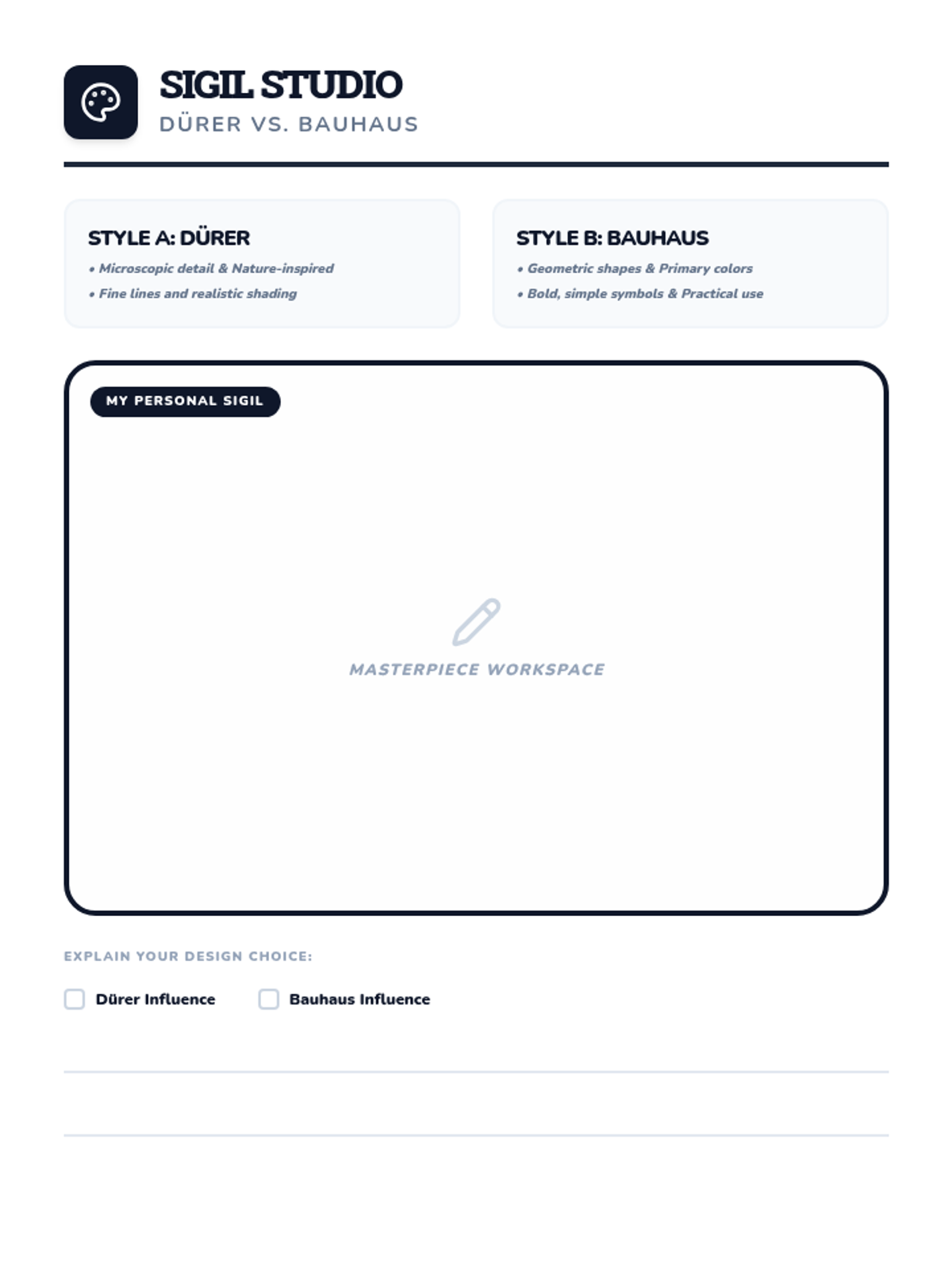
Analyzing the meticulous detail of Albrecht Dürer and the modernism of the Bauhaus movement. Students create their own symbols inspired by these German artistic icons.
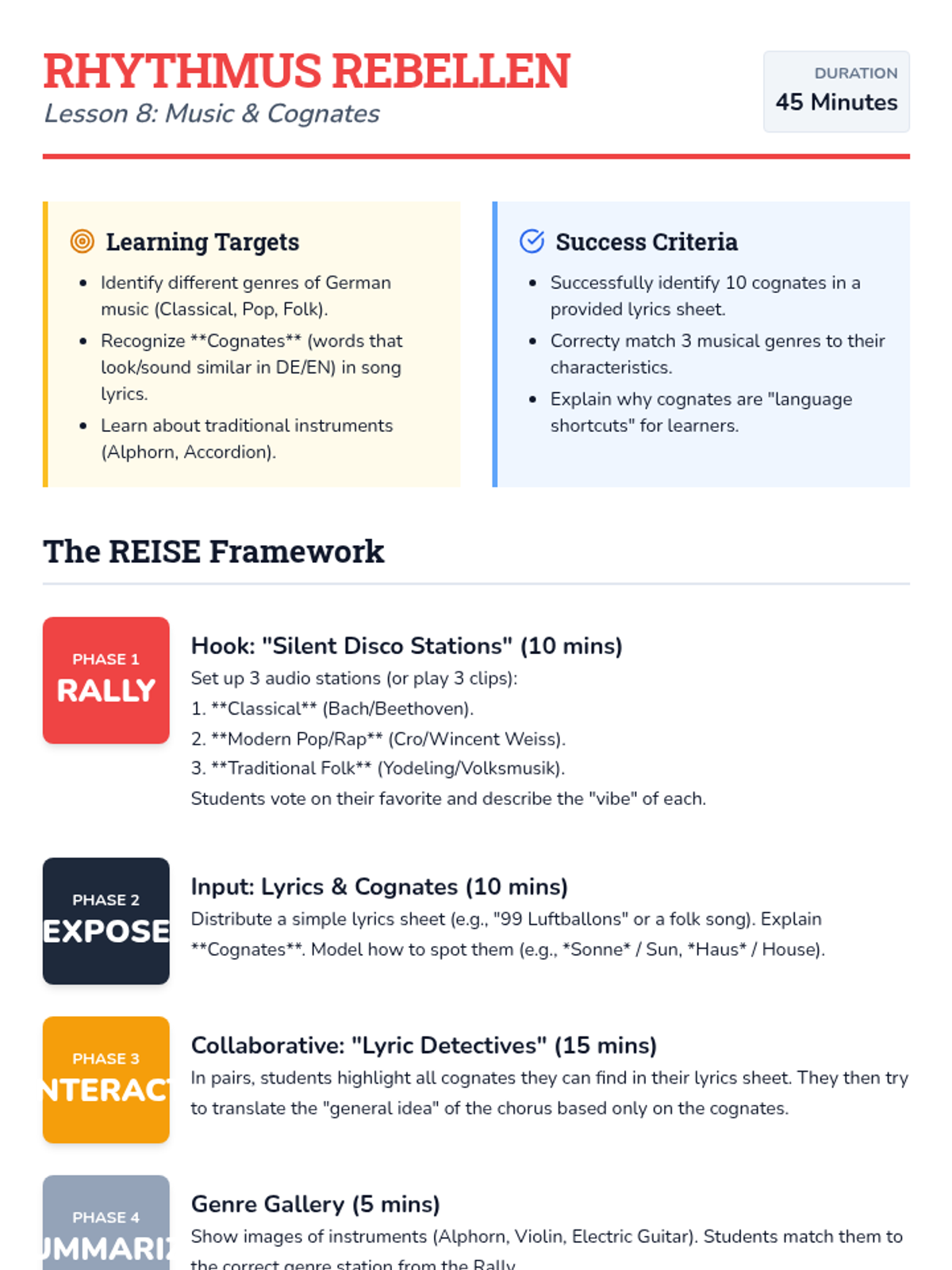
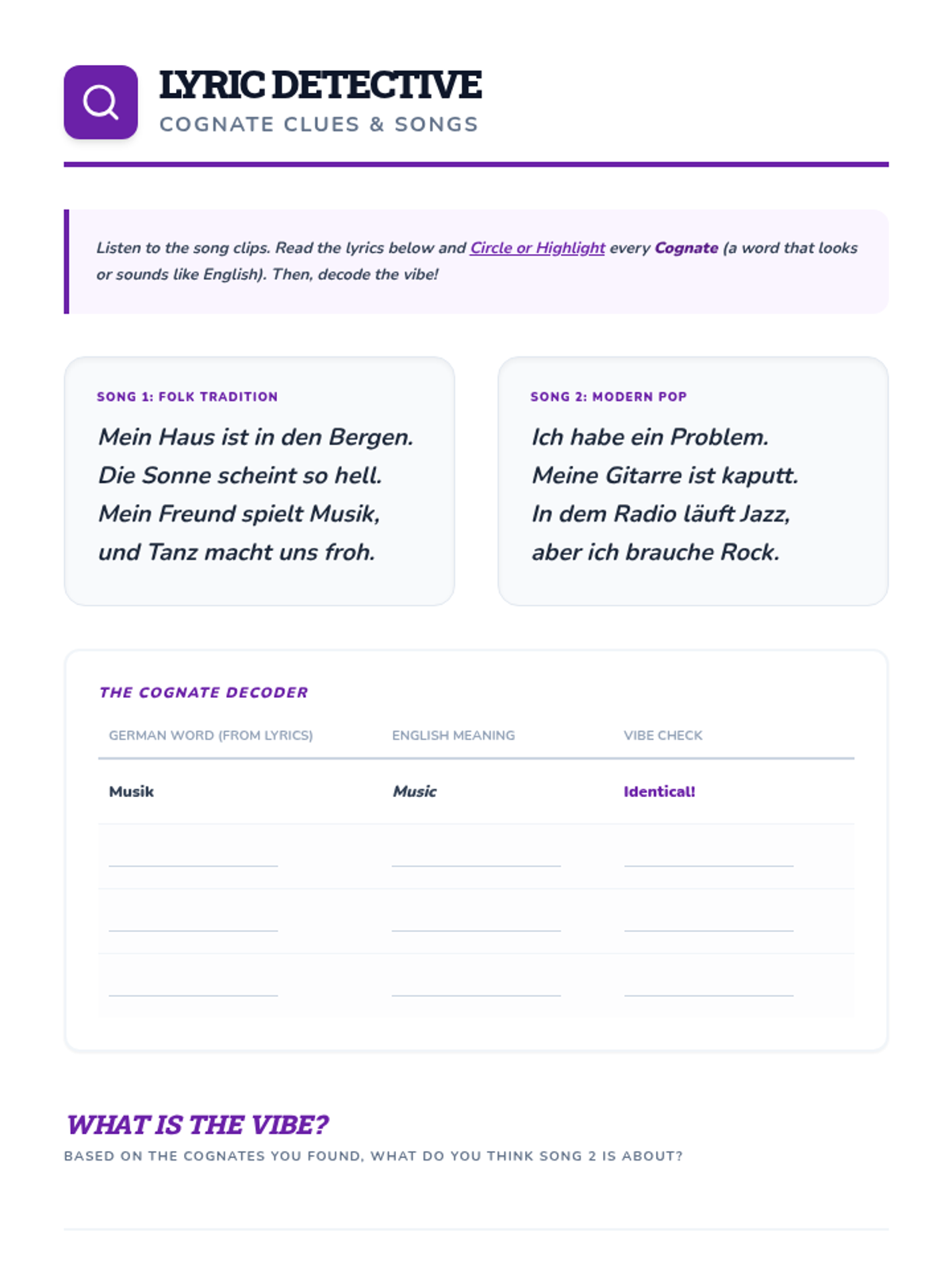
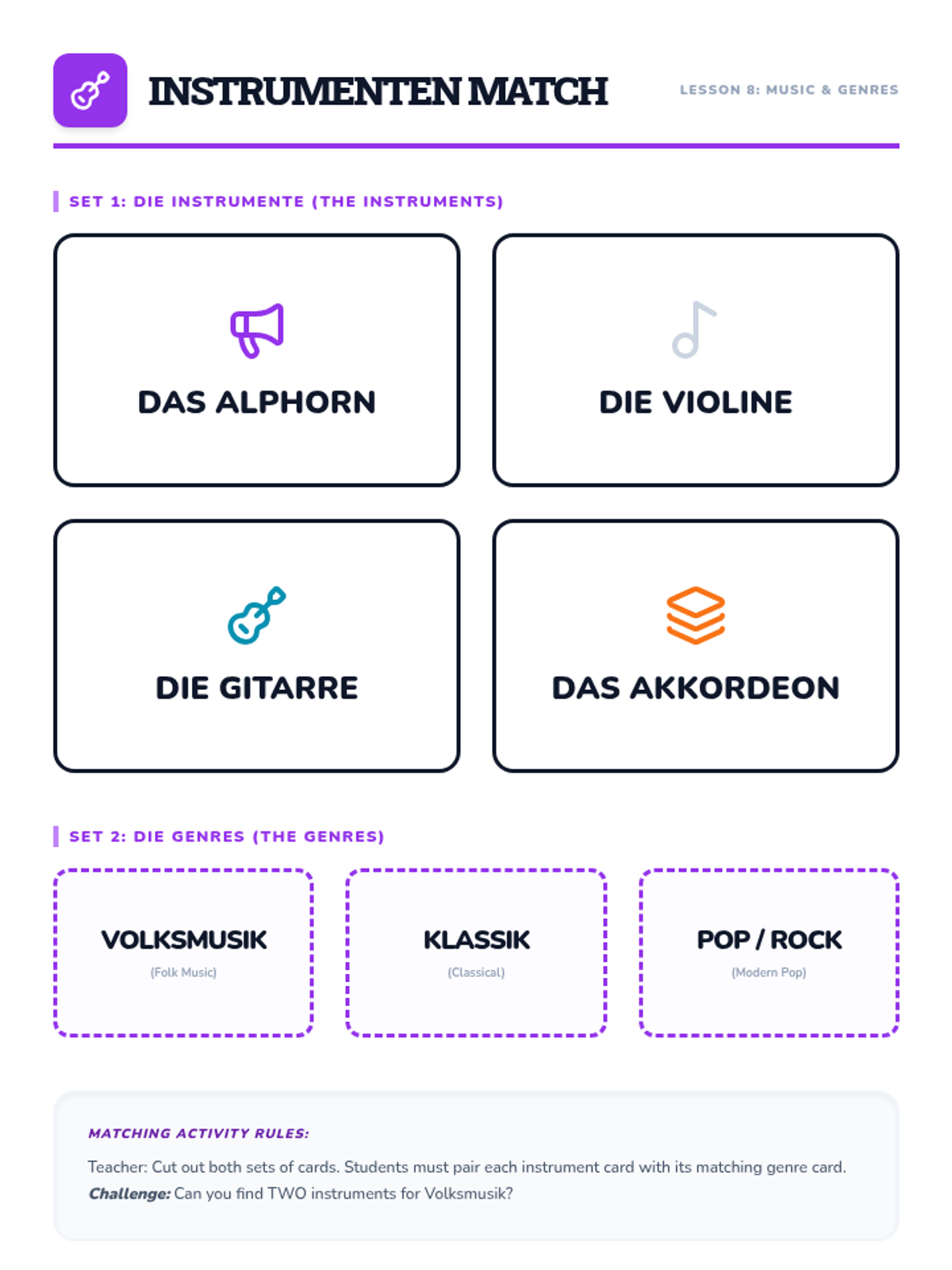
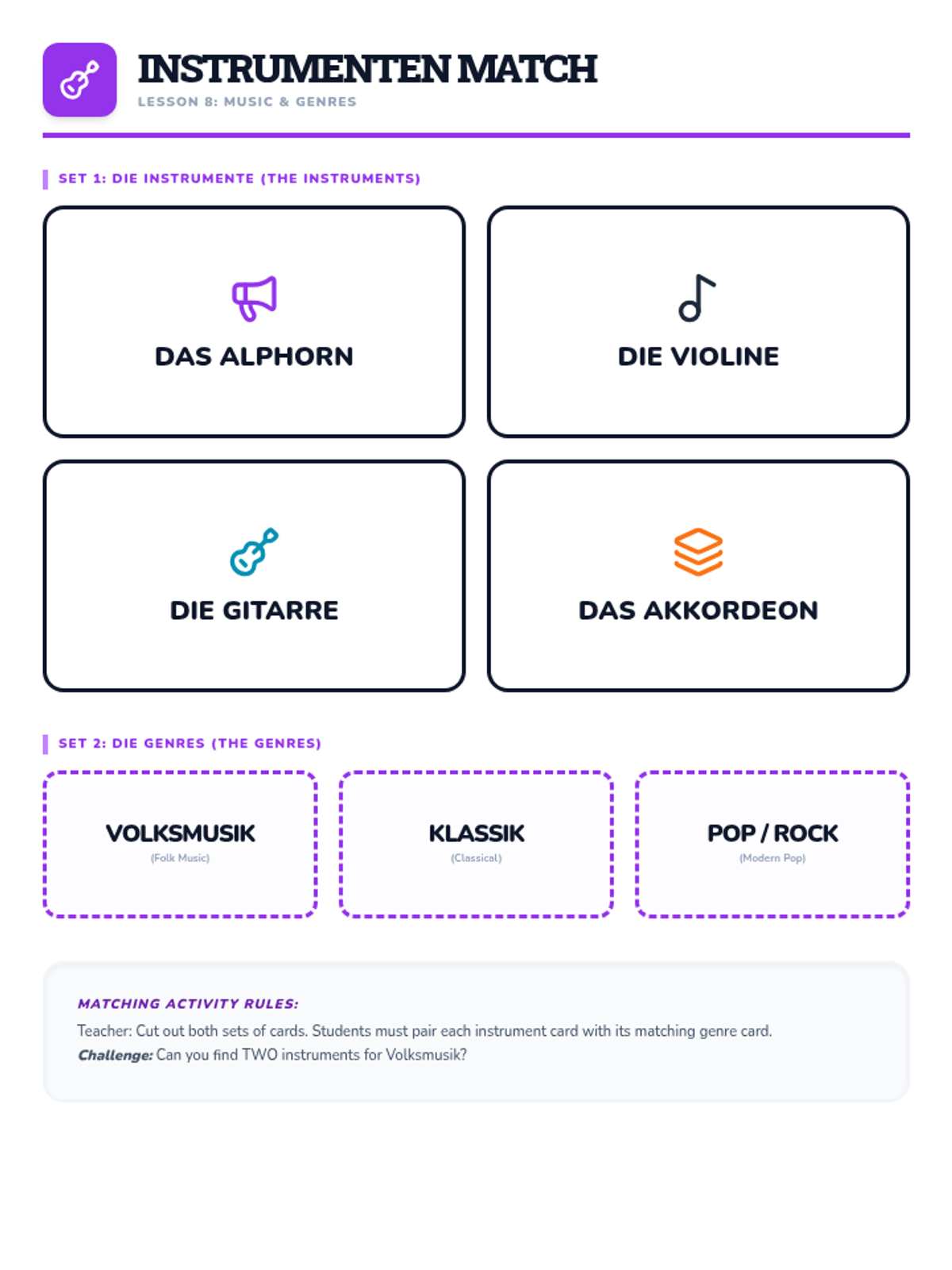
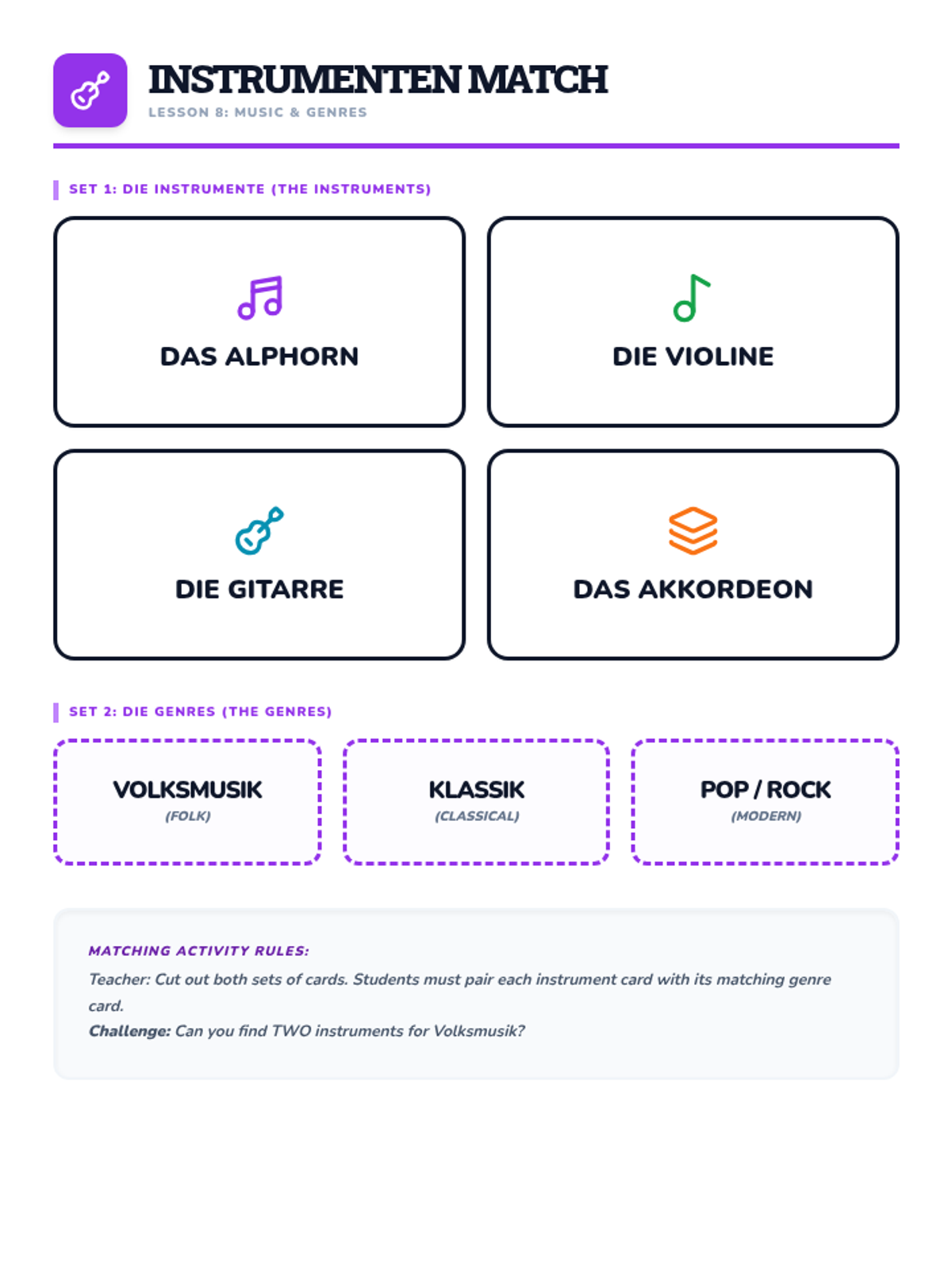
An exploration of German music from classical roots to modern pop and folk. Students analyze lyrics for cognates and identify traditional instruments.
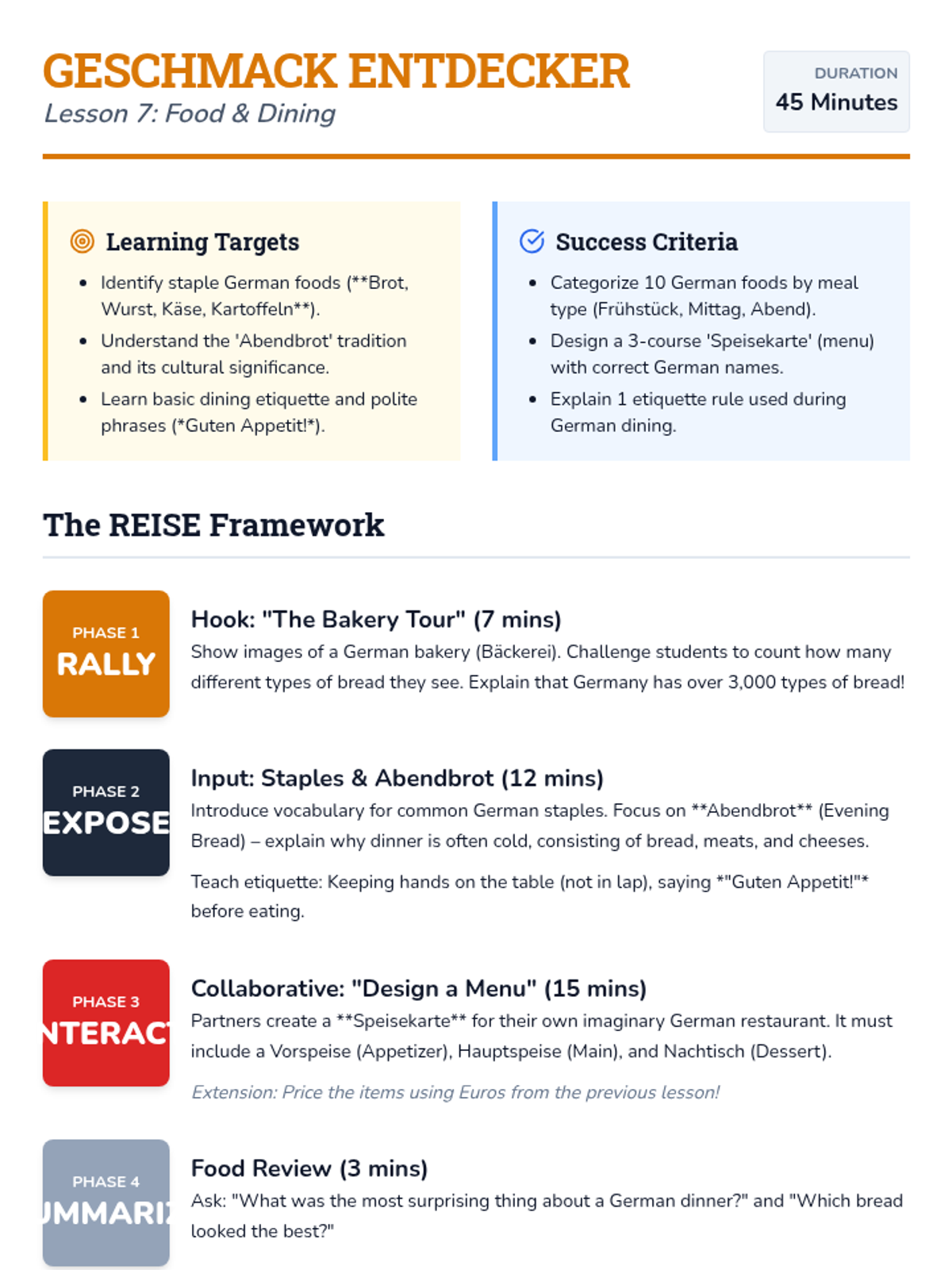
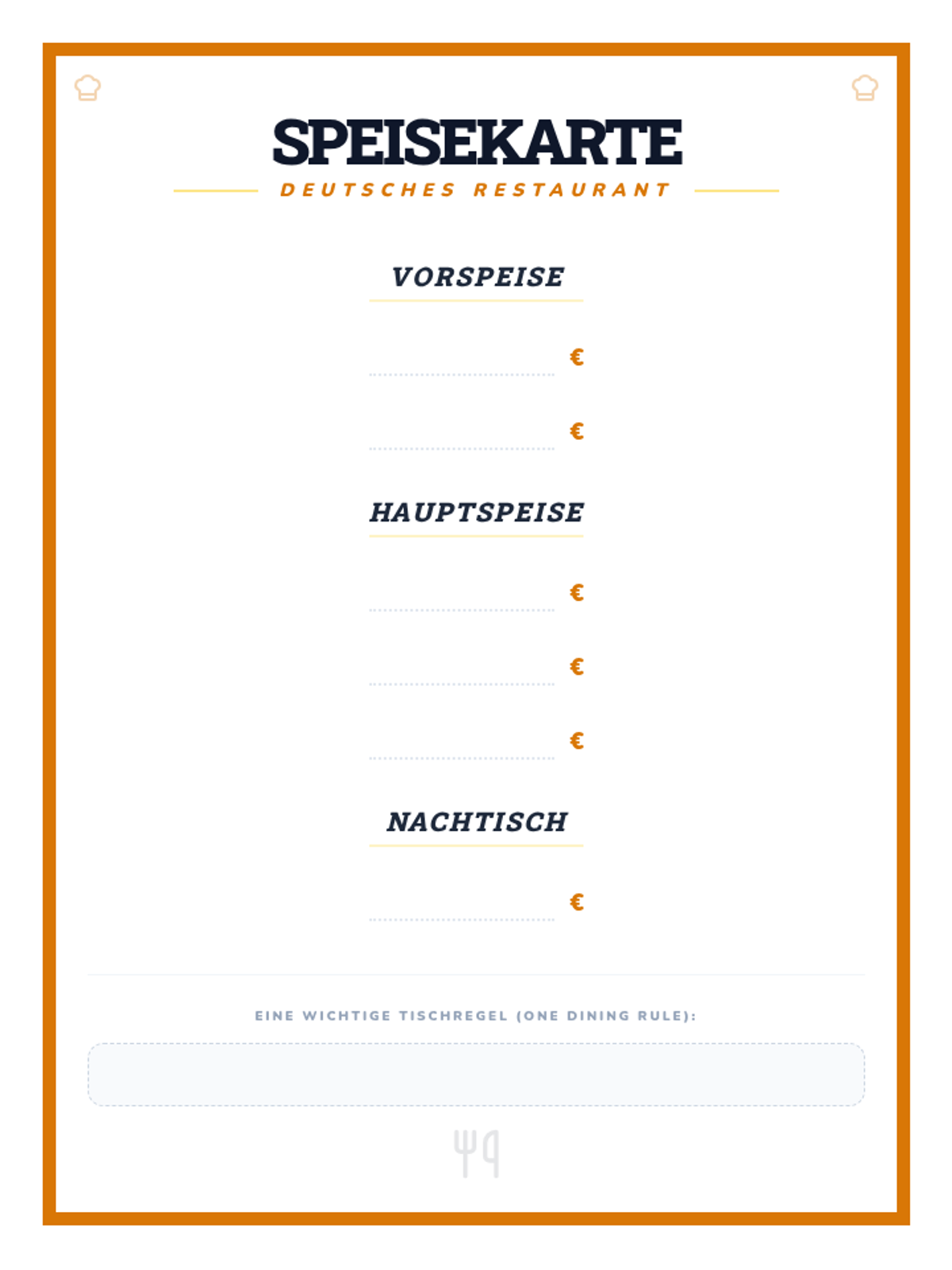
A culinary tour of German staples like bread and sausage. Students explore the 'Abendbrot' tradition and design their own German menu (Speisekarte).
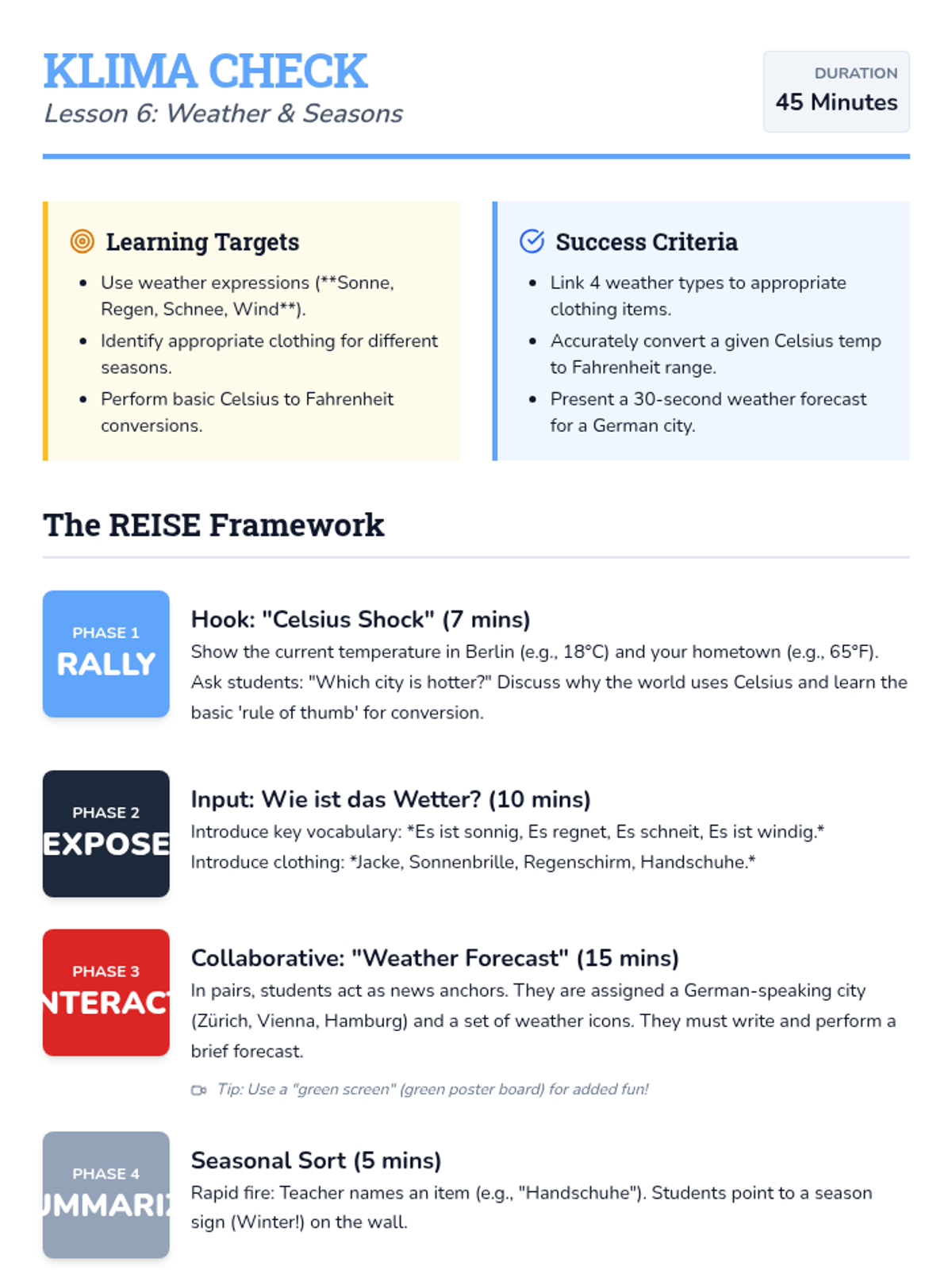
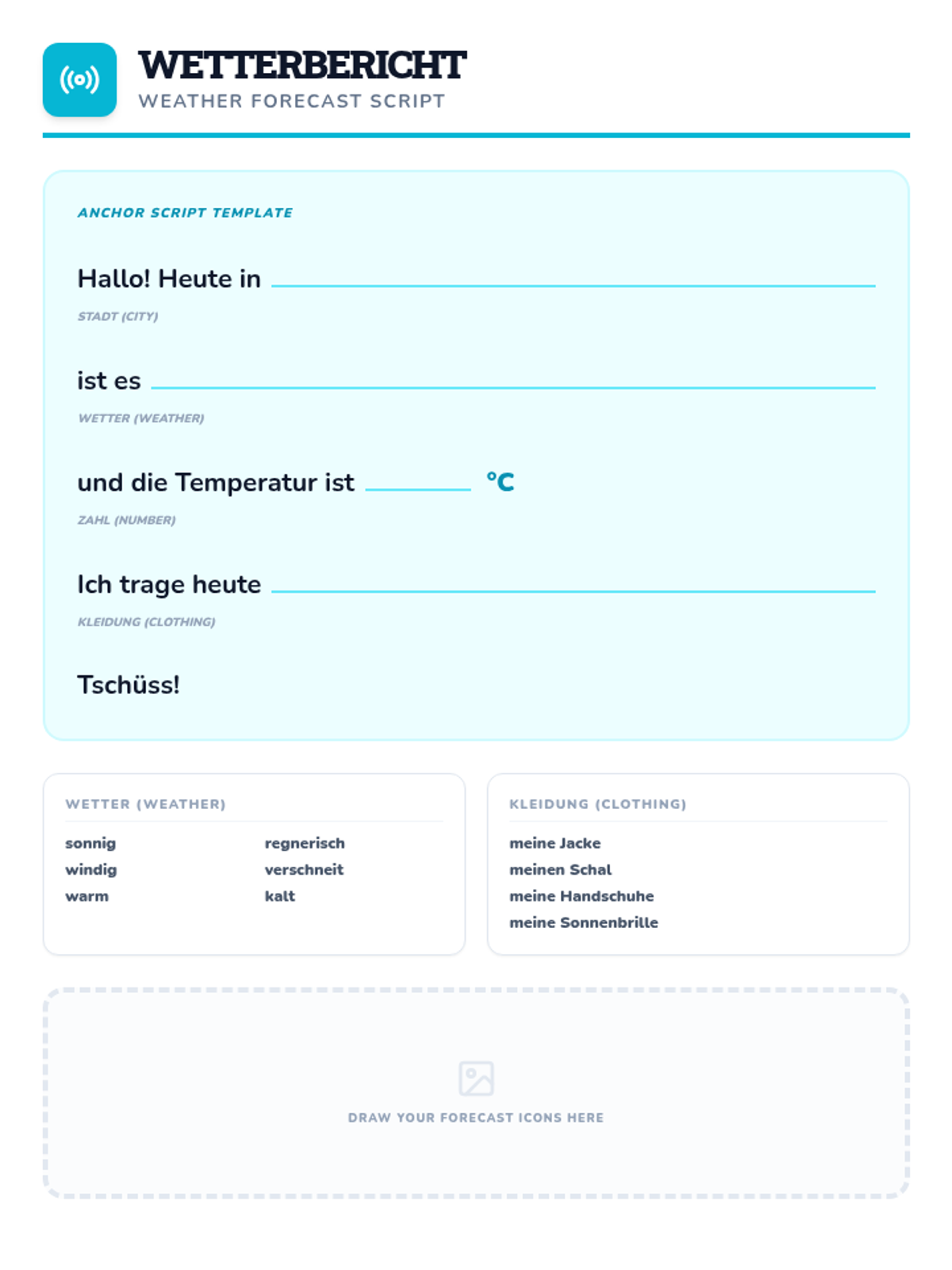
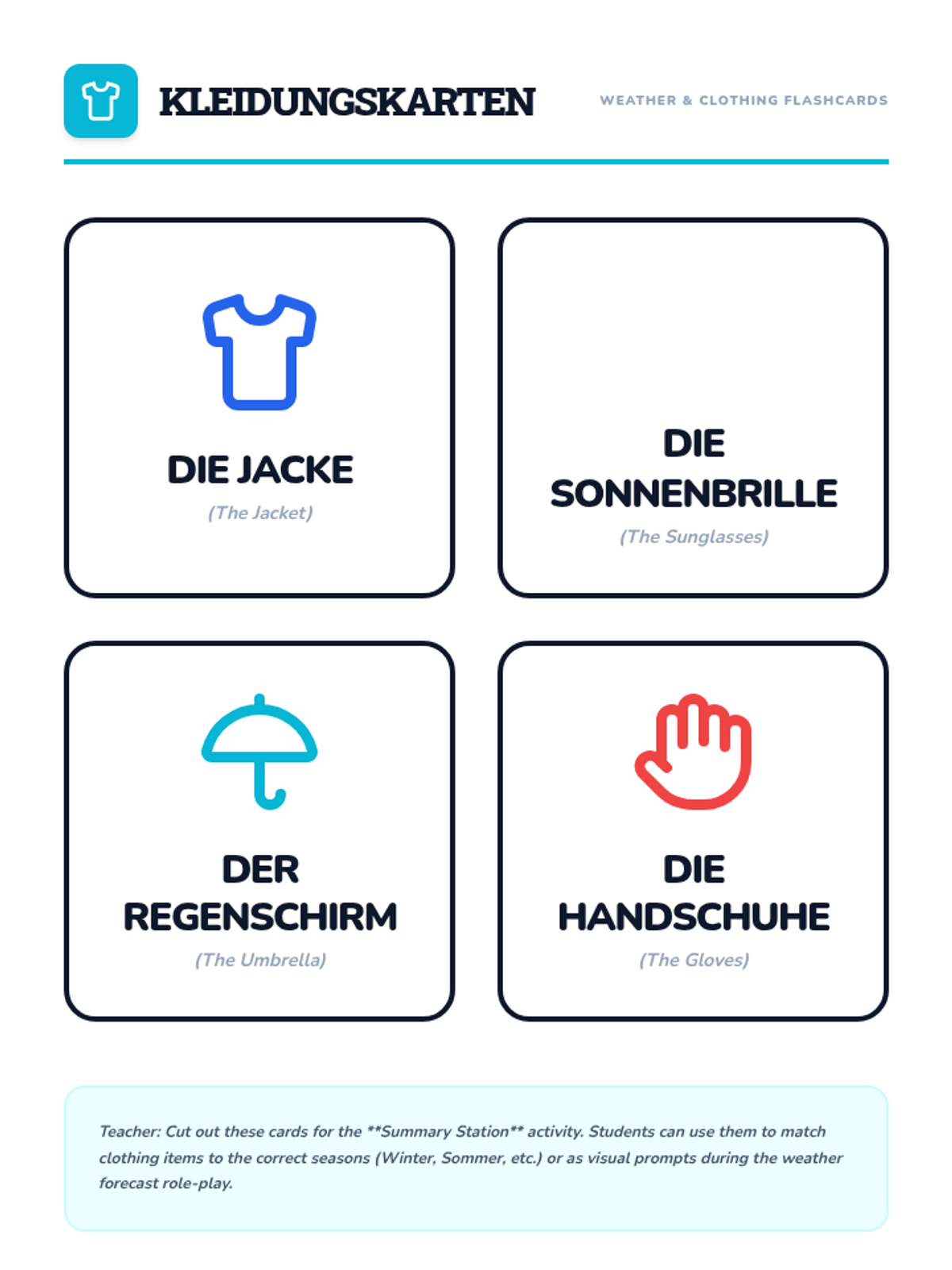
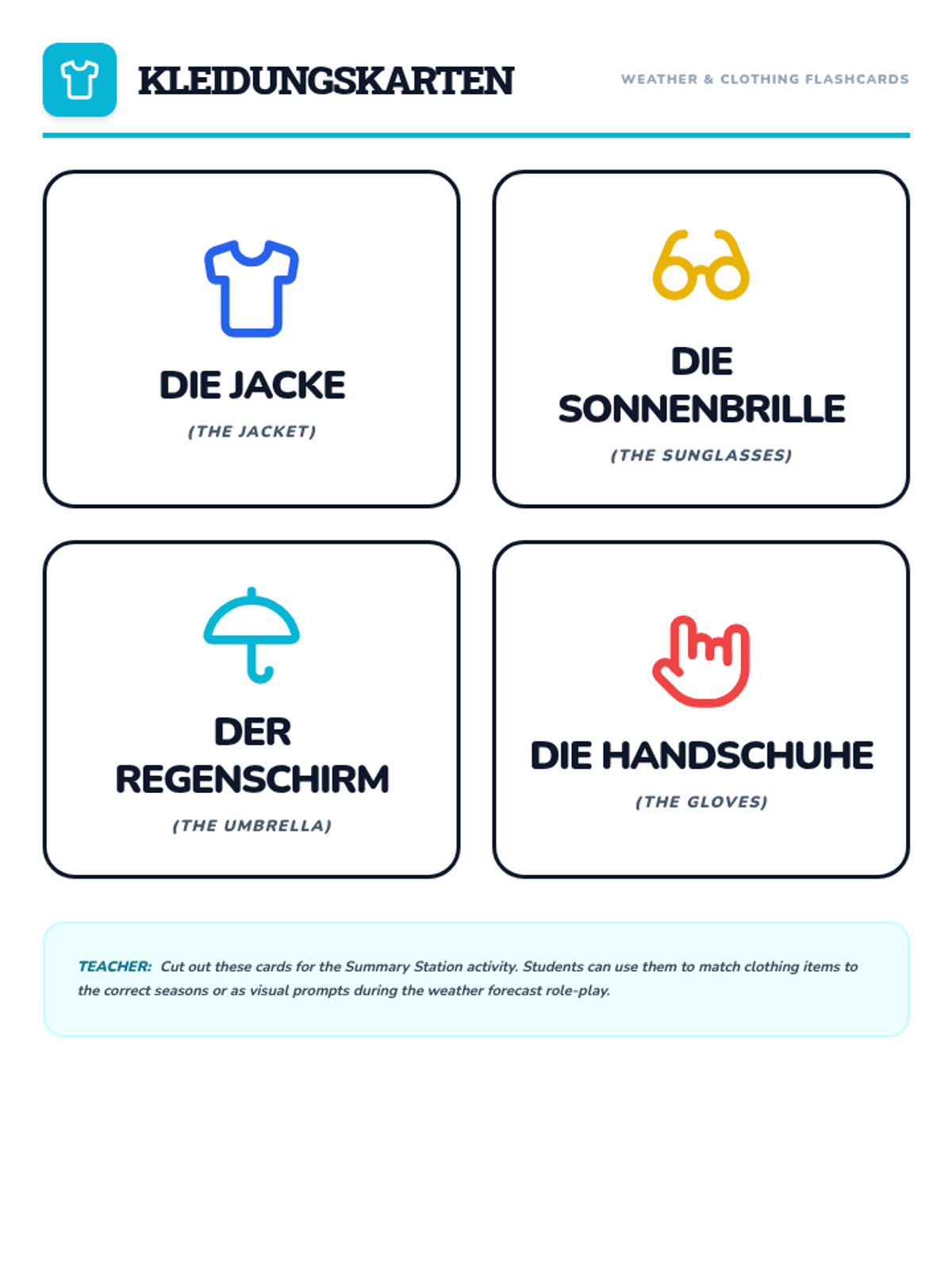
Weather expressions and seasonal clothing. Students convert Celsius to Fahrenheit and present a weather forecast for various German-speaking cities.
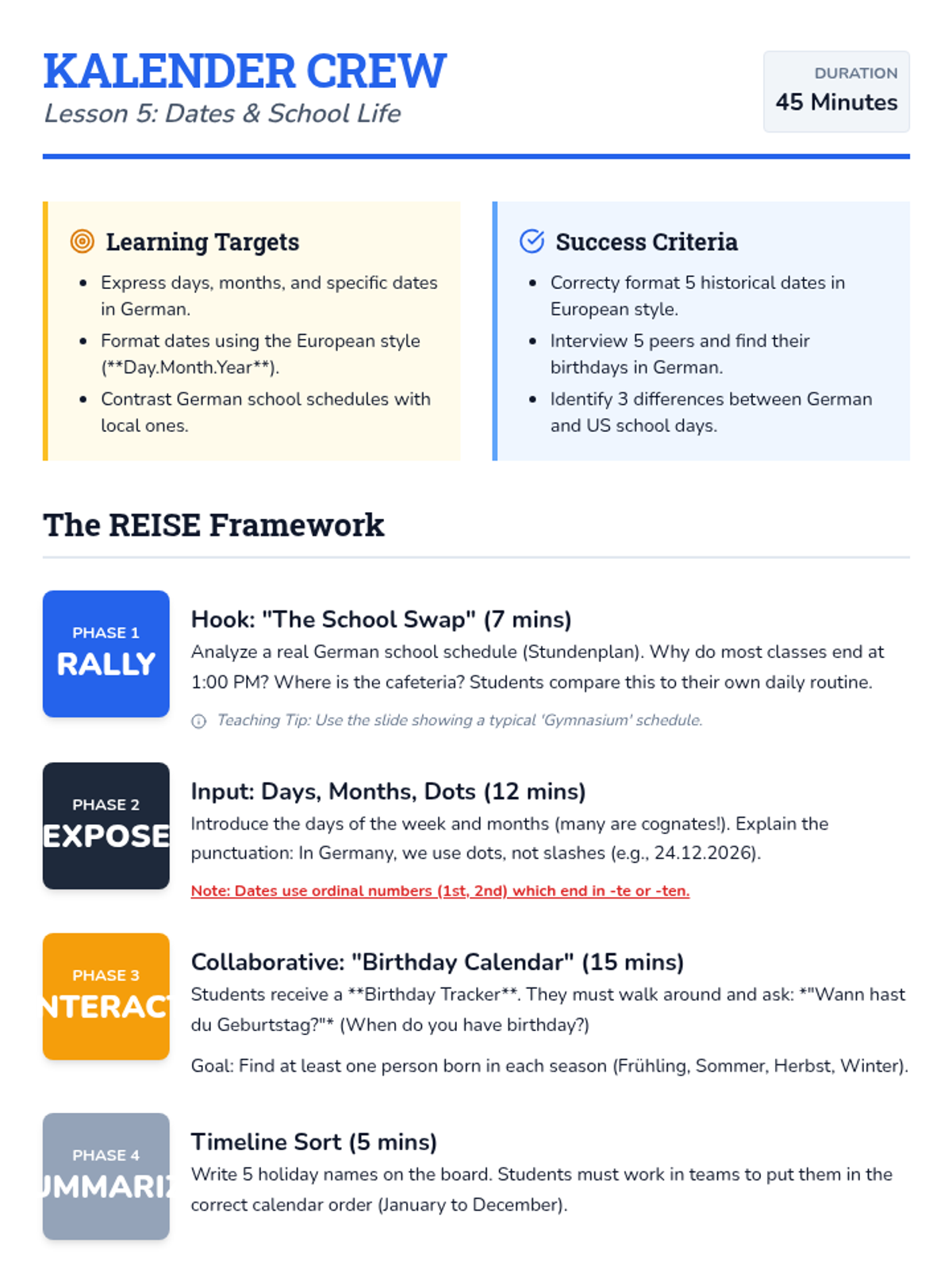
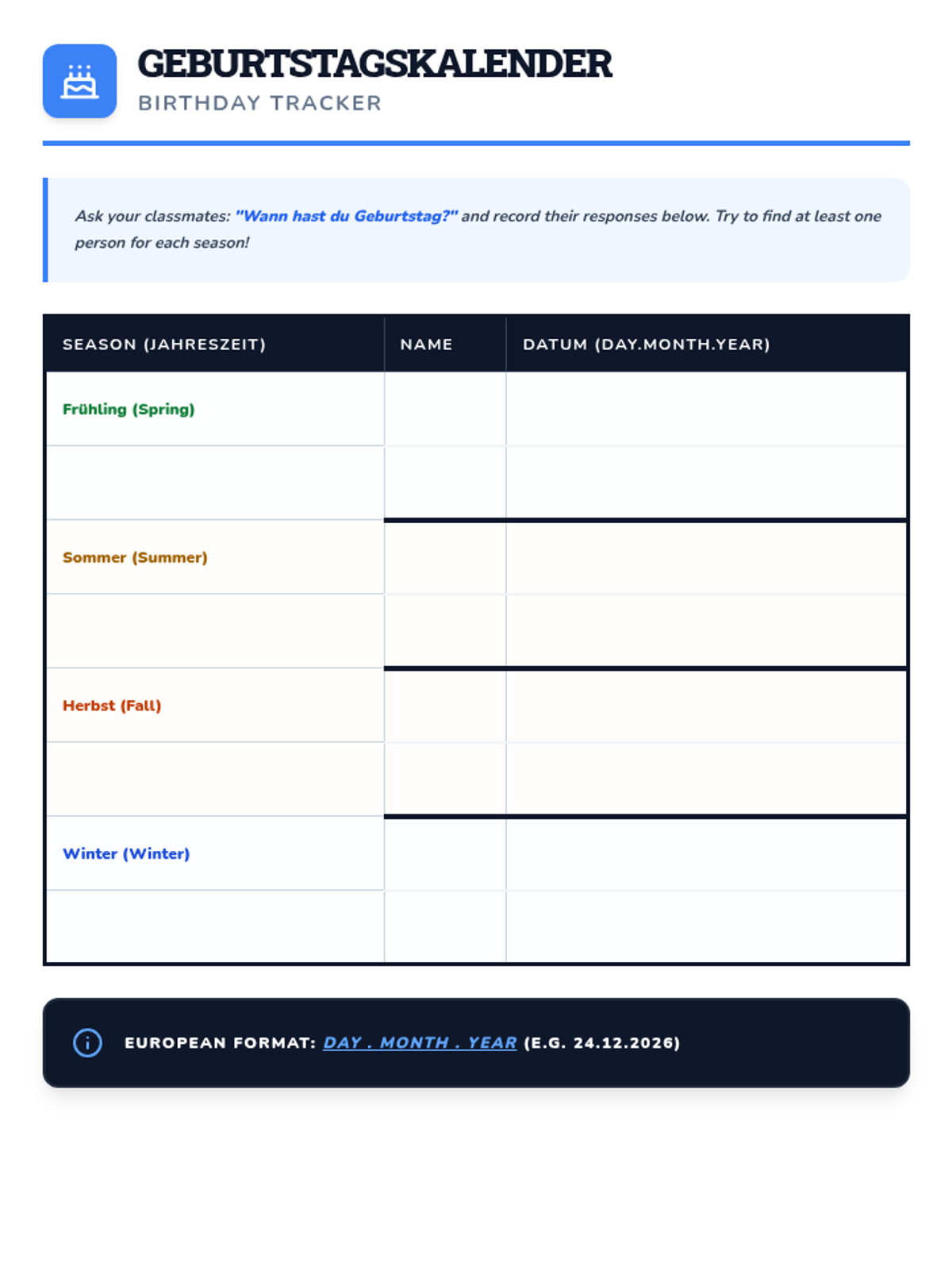
Exploring the German calendar and school system. Students learn date formatting (Day.Month.Year) and compare their school schedules with a typical German 'Halbtagsschule'.
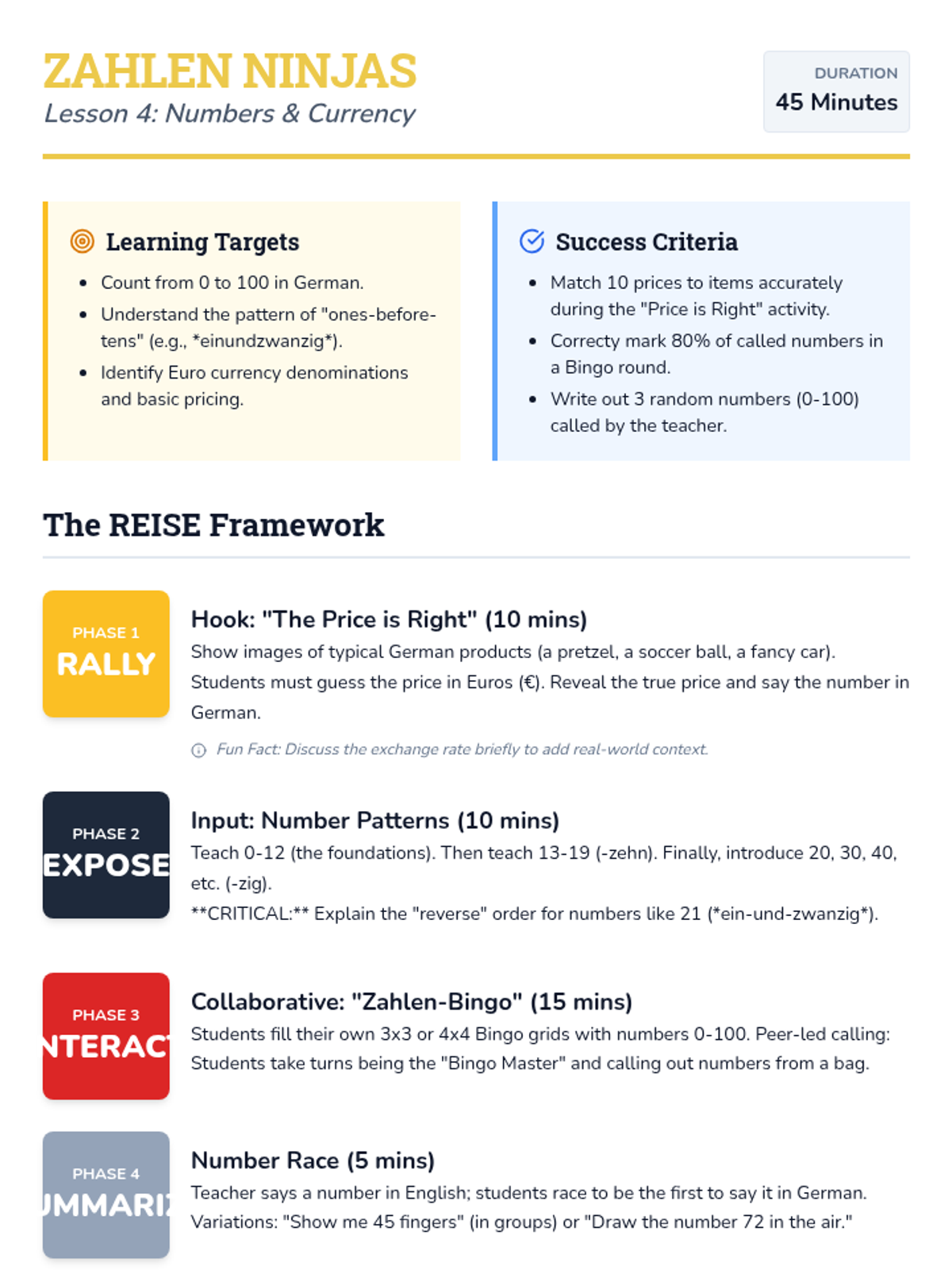
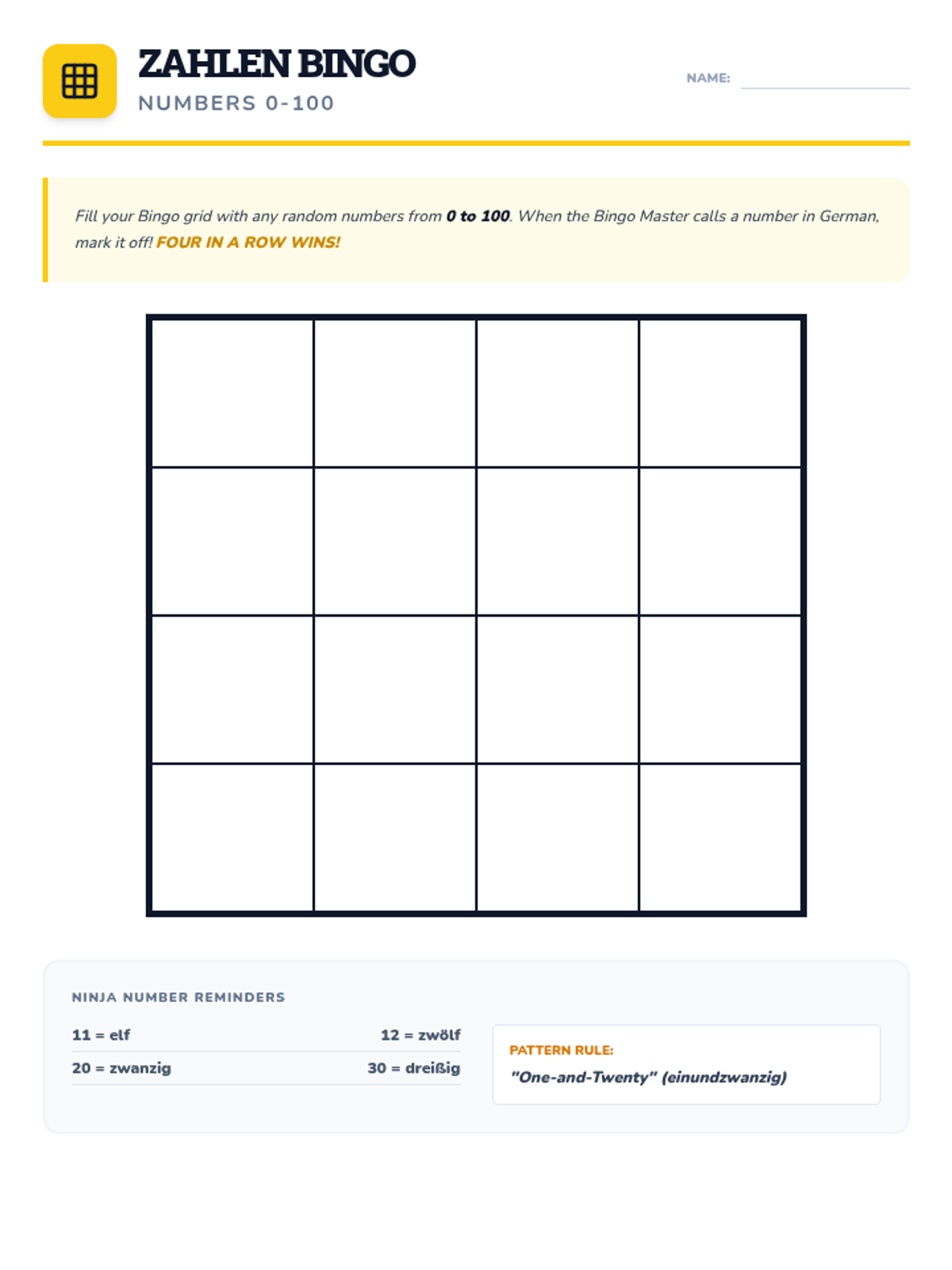
Students master counting up to 100 and explore the Euro currency. They participate in a German-themed 'Price is Right' and peer-led Bingo rounds.
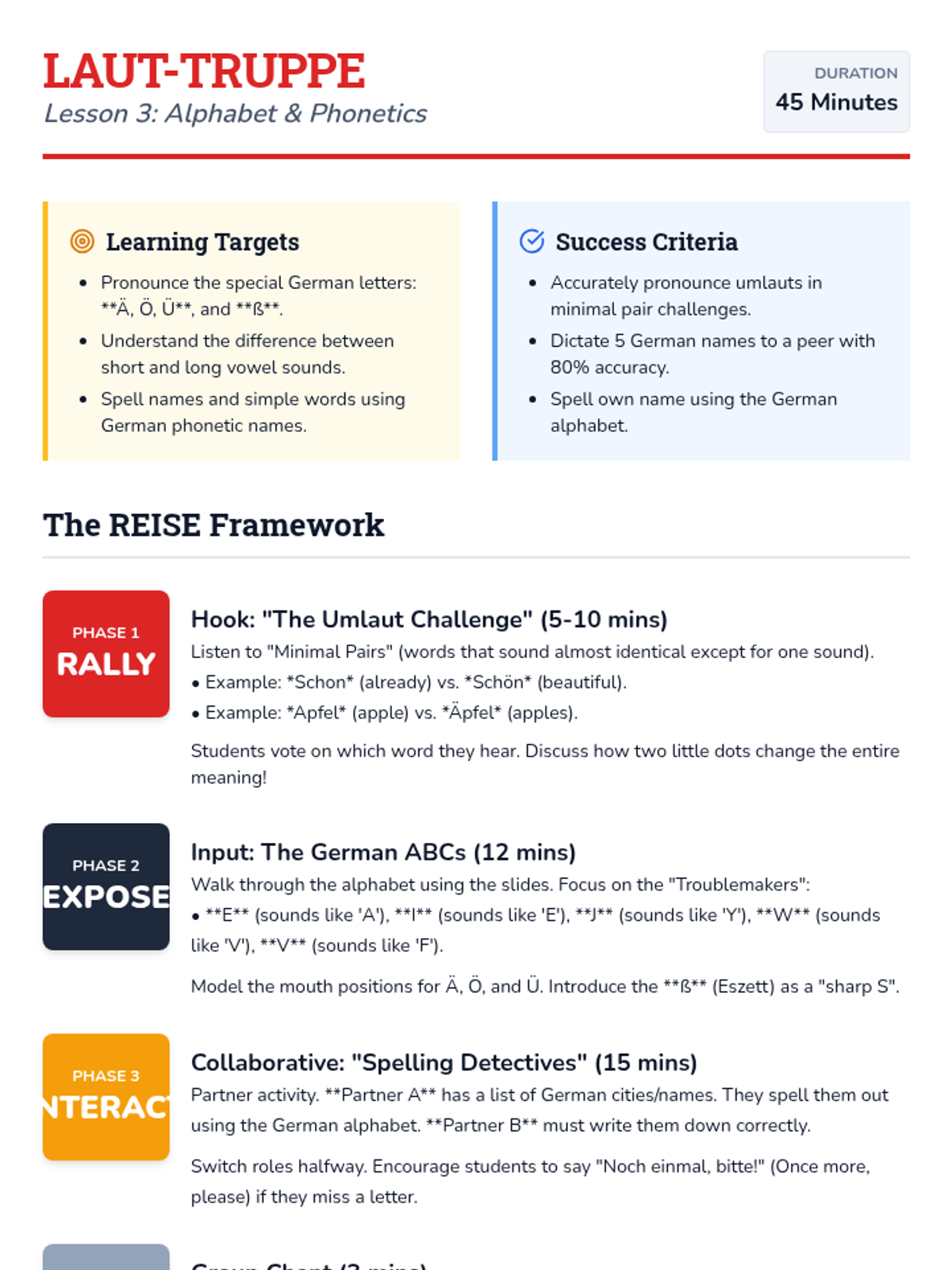
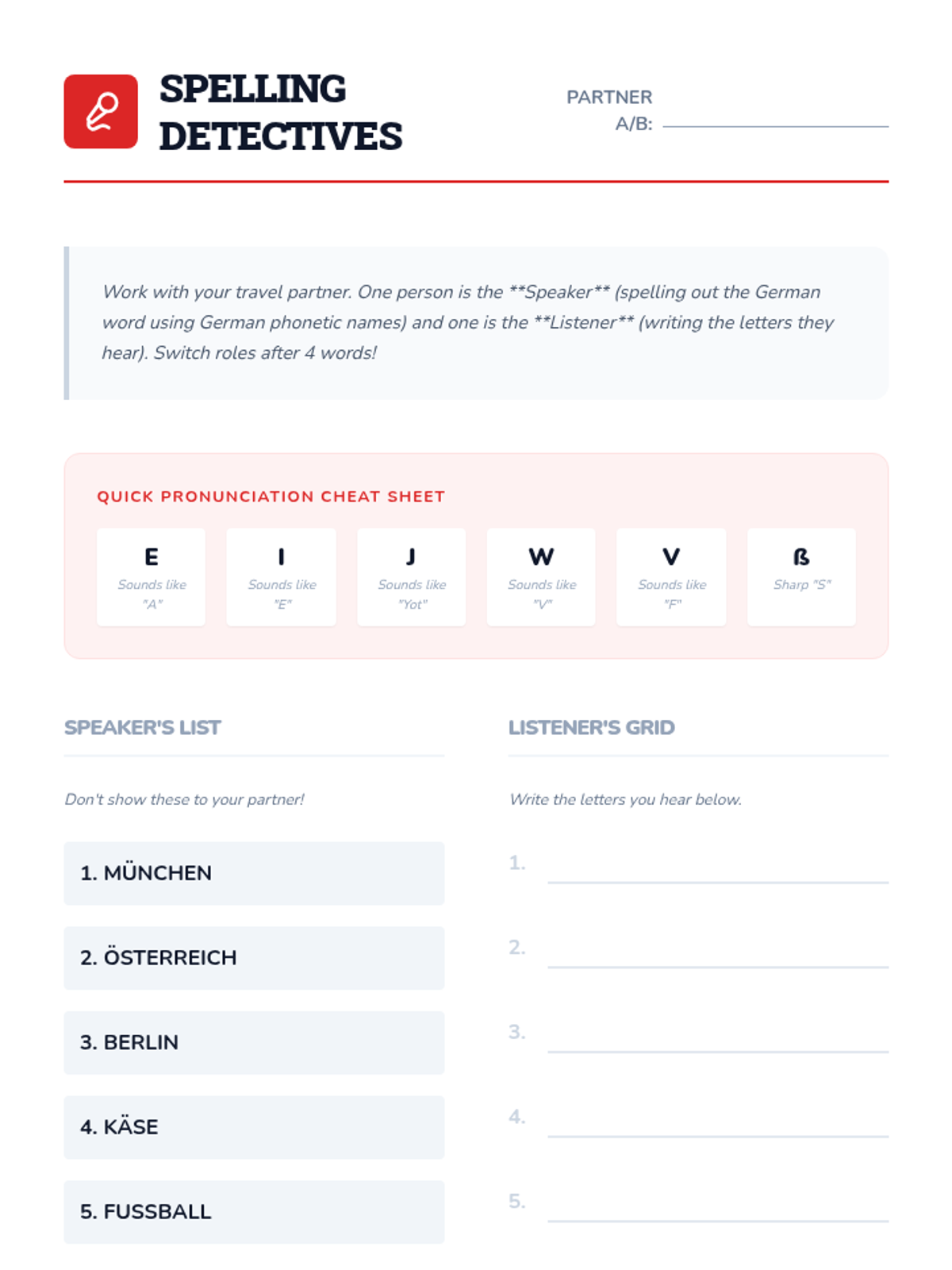
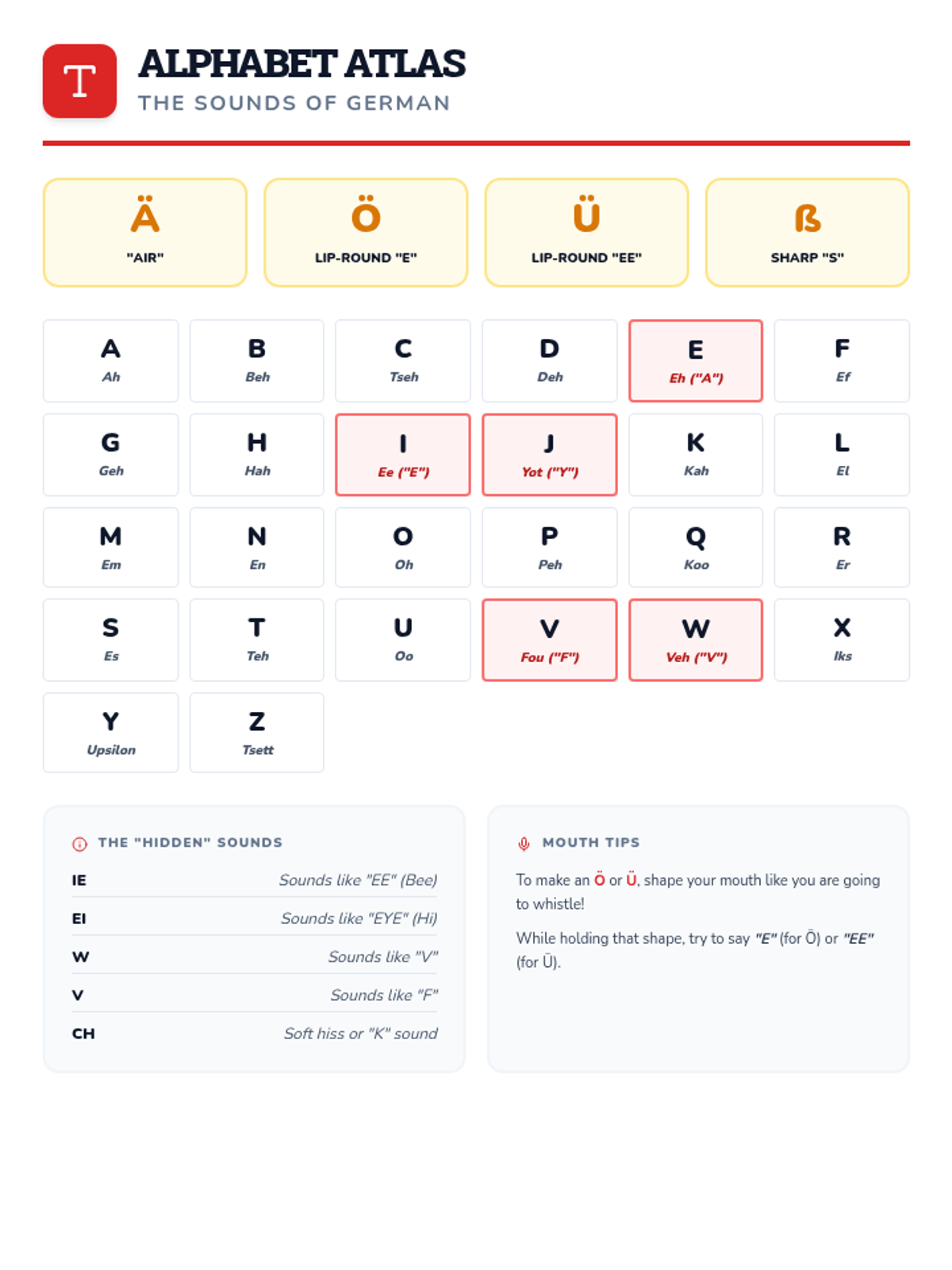
A phonetics-focused lesson covering the German alphabet, with special attention to the unique letters Ä, Ö, Ü, and ß. Students practice spelling names and identifying phonetic sounds.
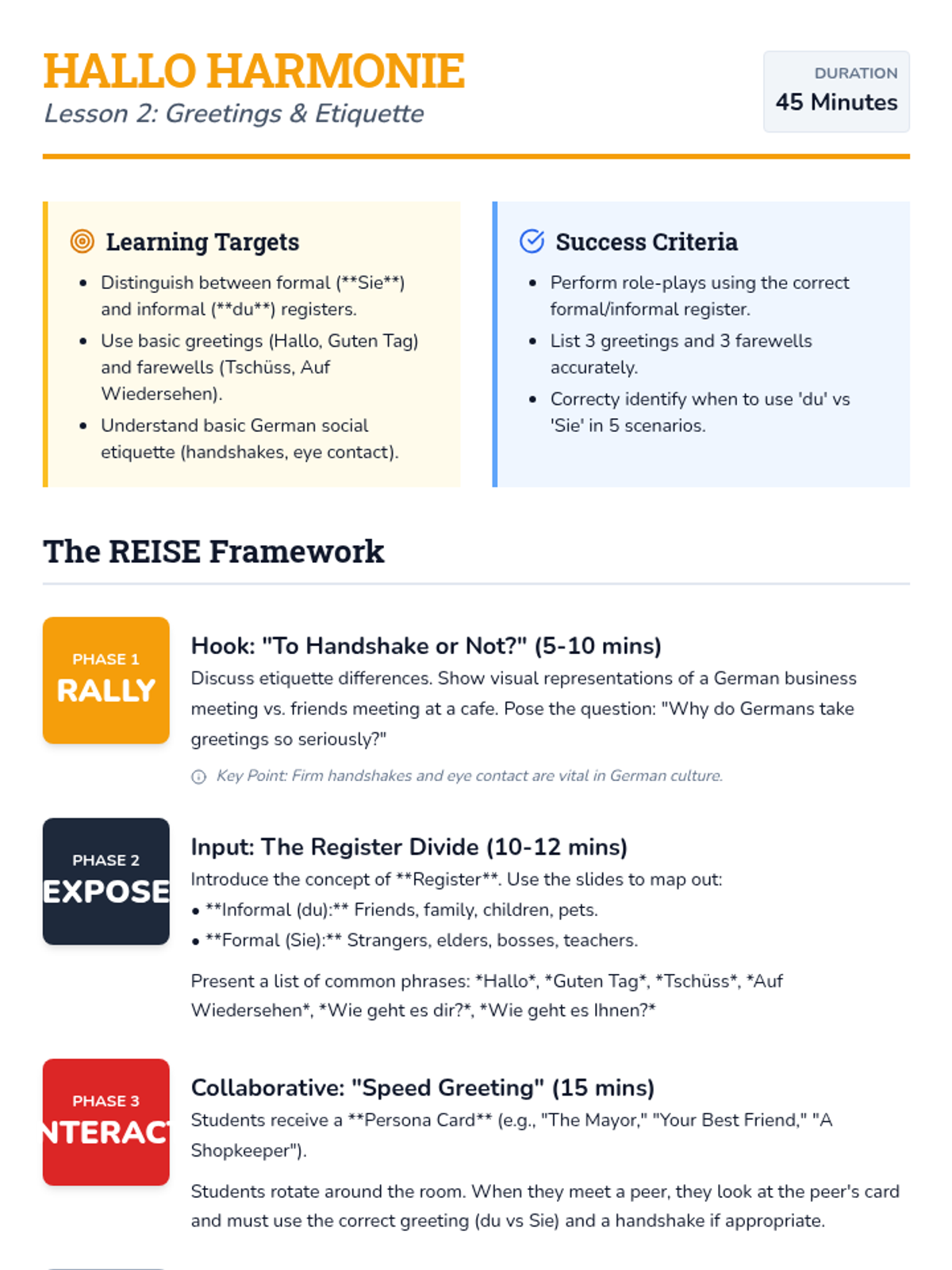
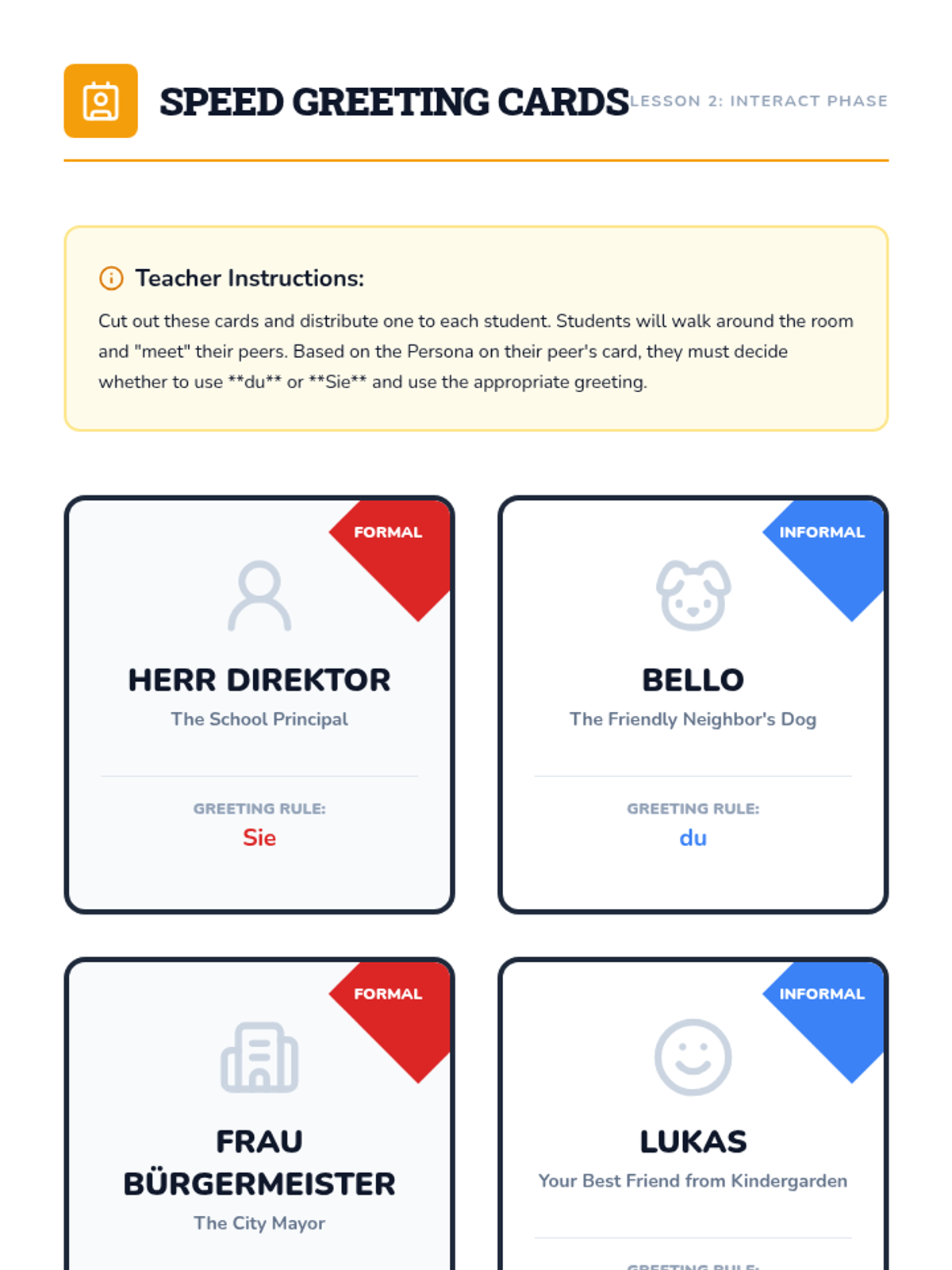
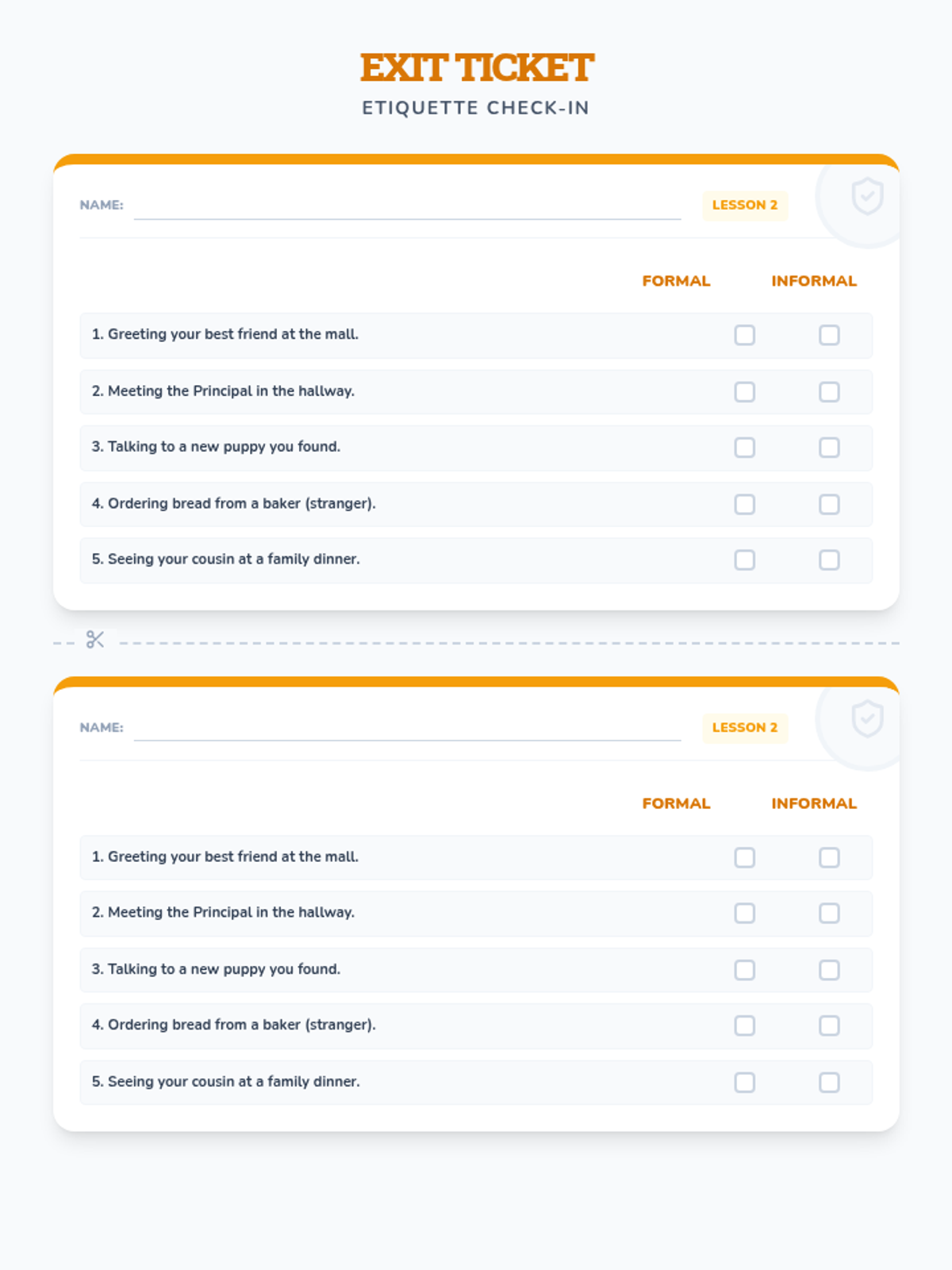
Students learn the nuances of German social interaction, specifically the distinction between the formal 'Sie' and informal 'du'. Activities include role-playing greetings with different personae.
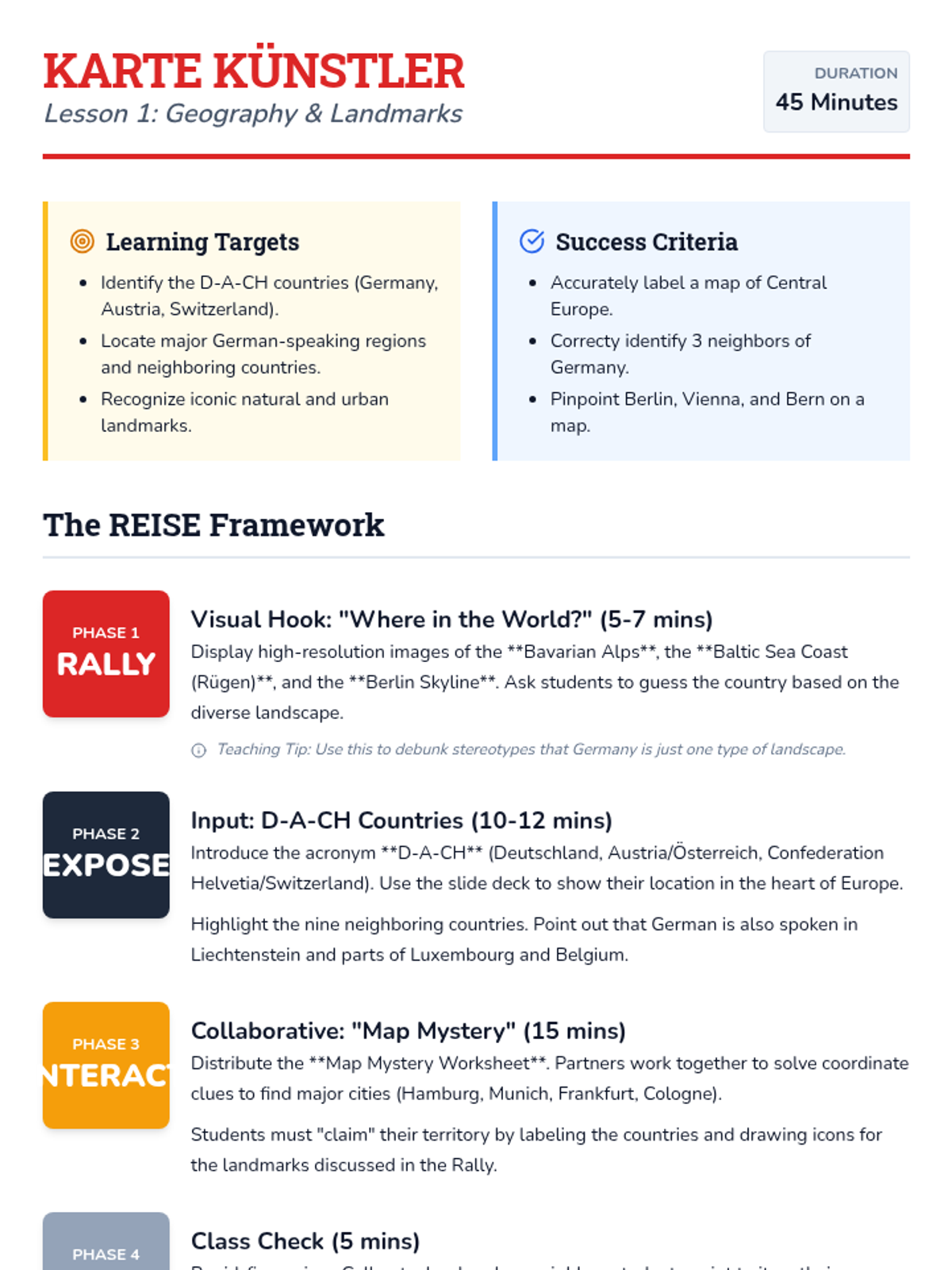
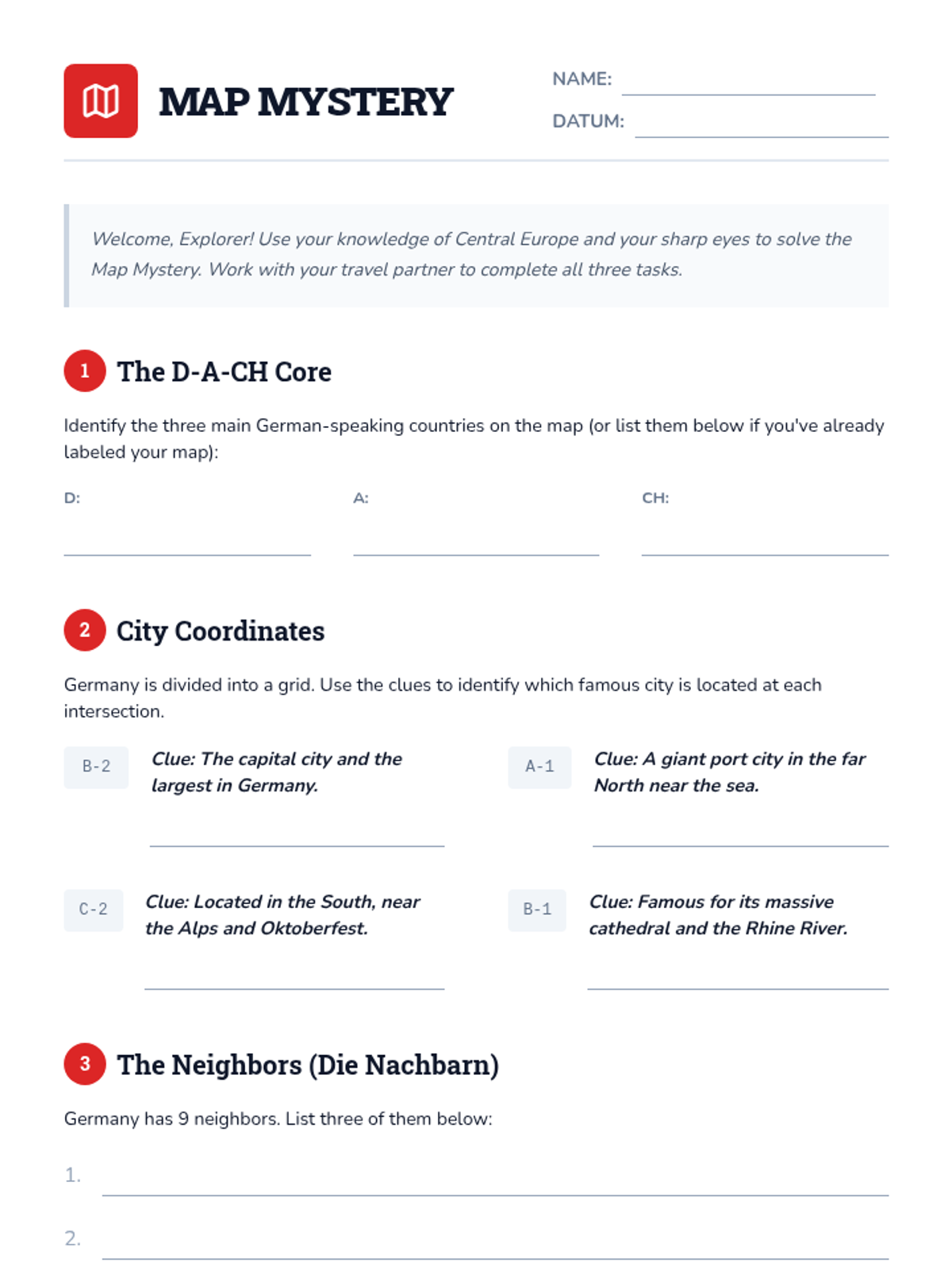
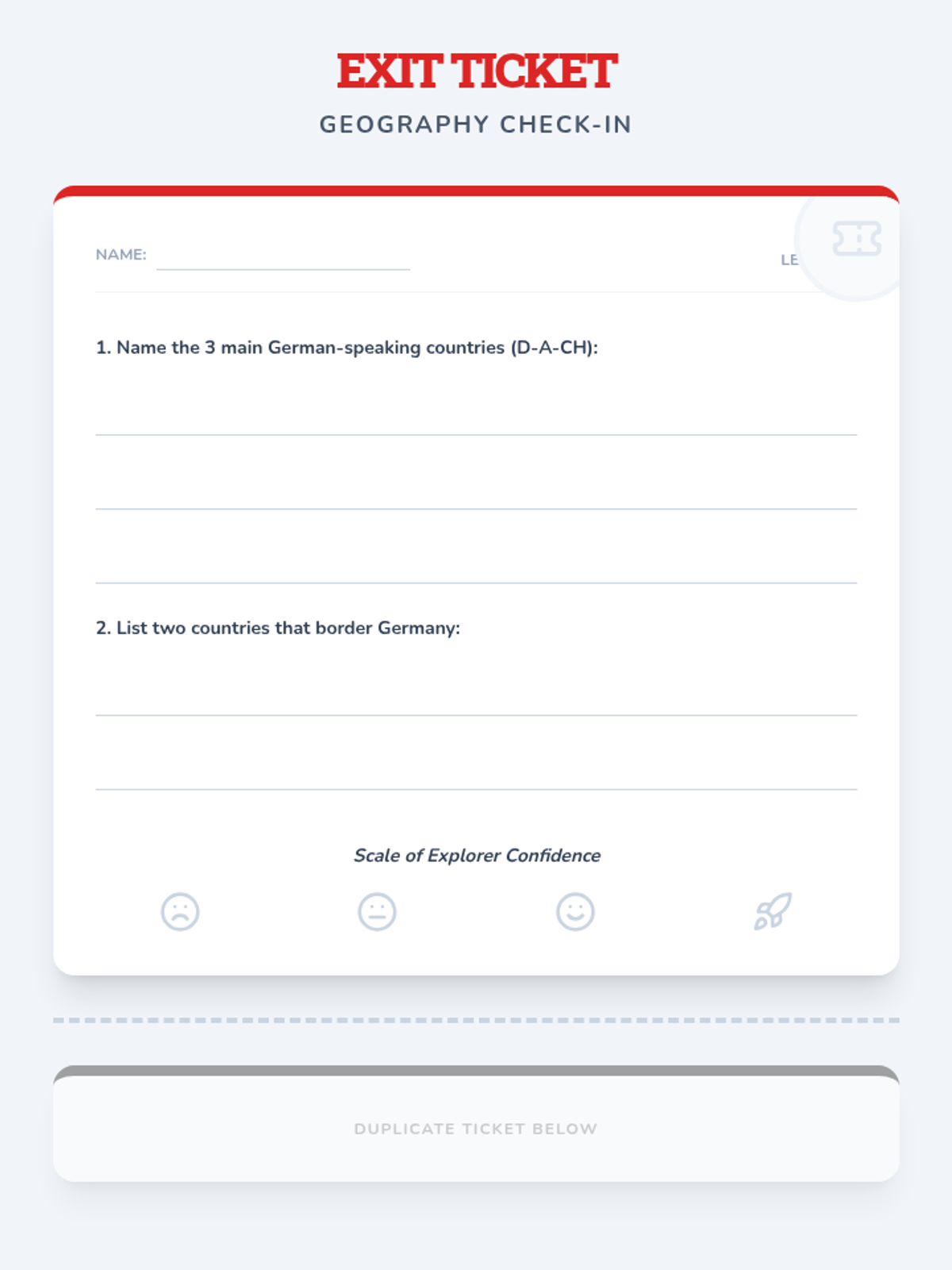
Students explore the geography of Central Europe, focusing on the D-A-CH countries (Germany, Austria, Switzerland) and major landmarks. Activities include a visual hook of the Alps and Baltic coast and a coordinate-based map mystery.
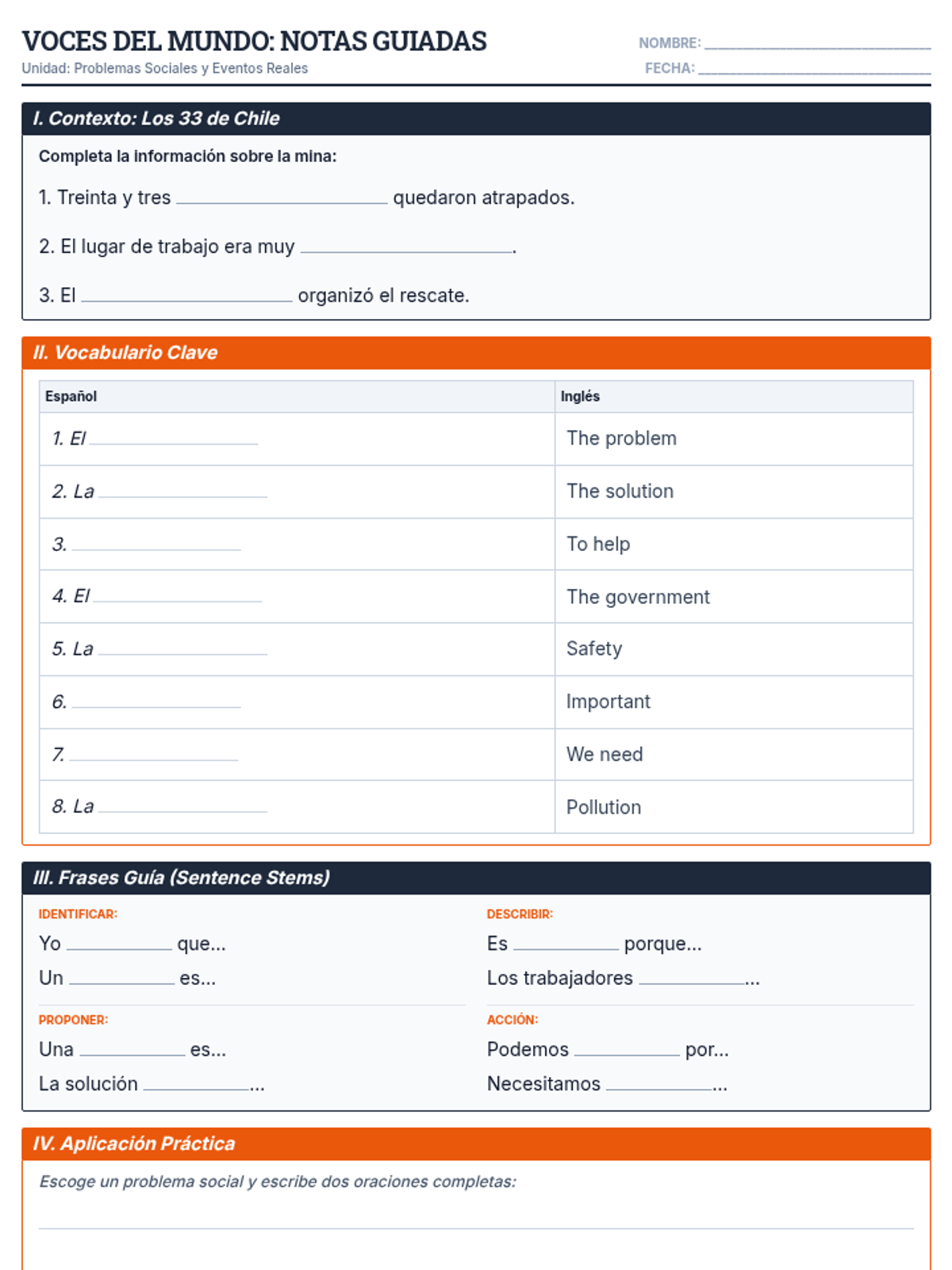
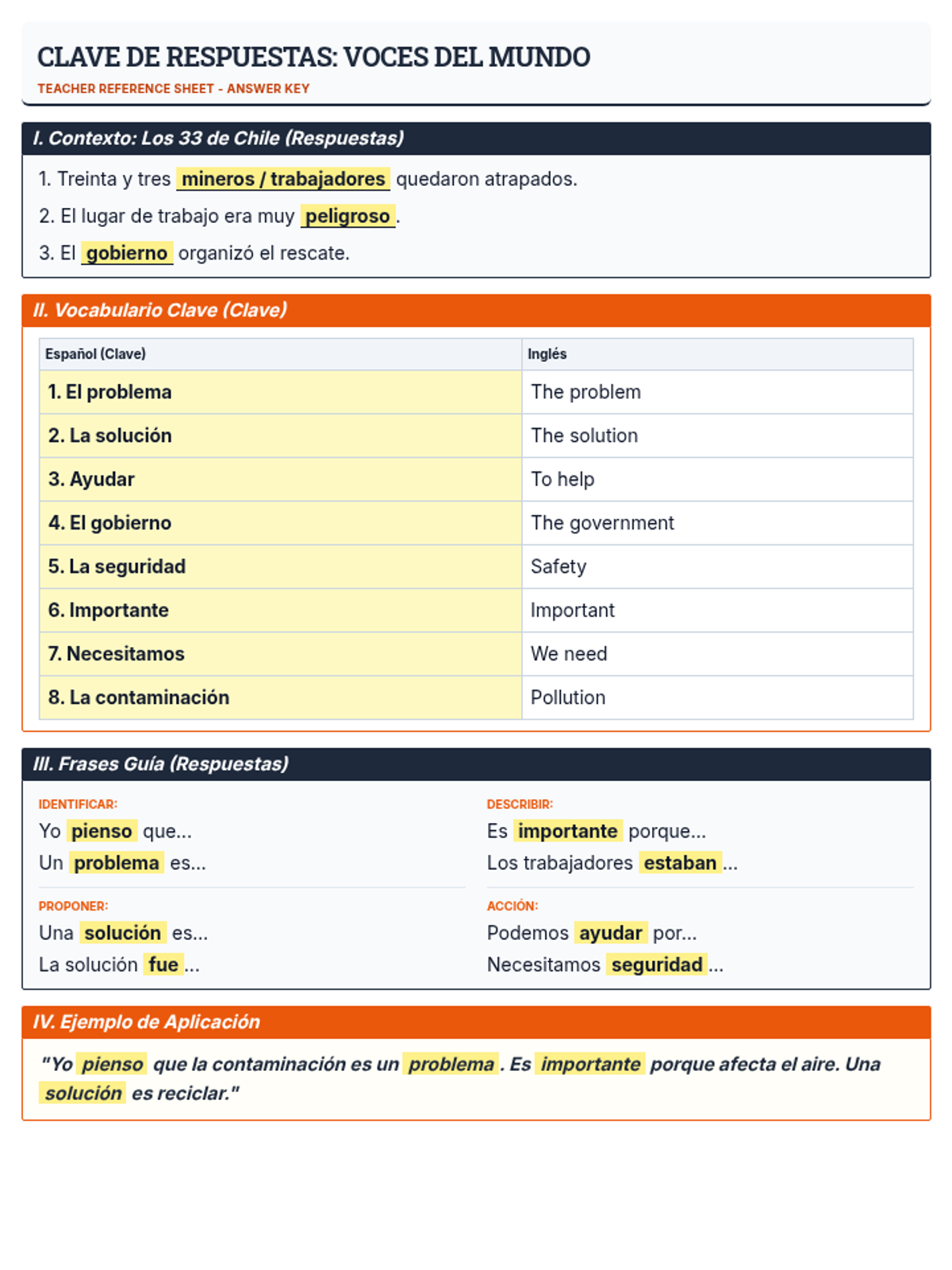
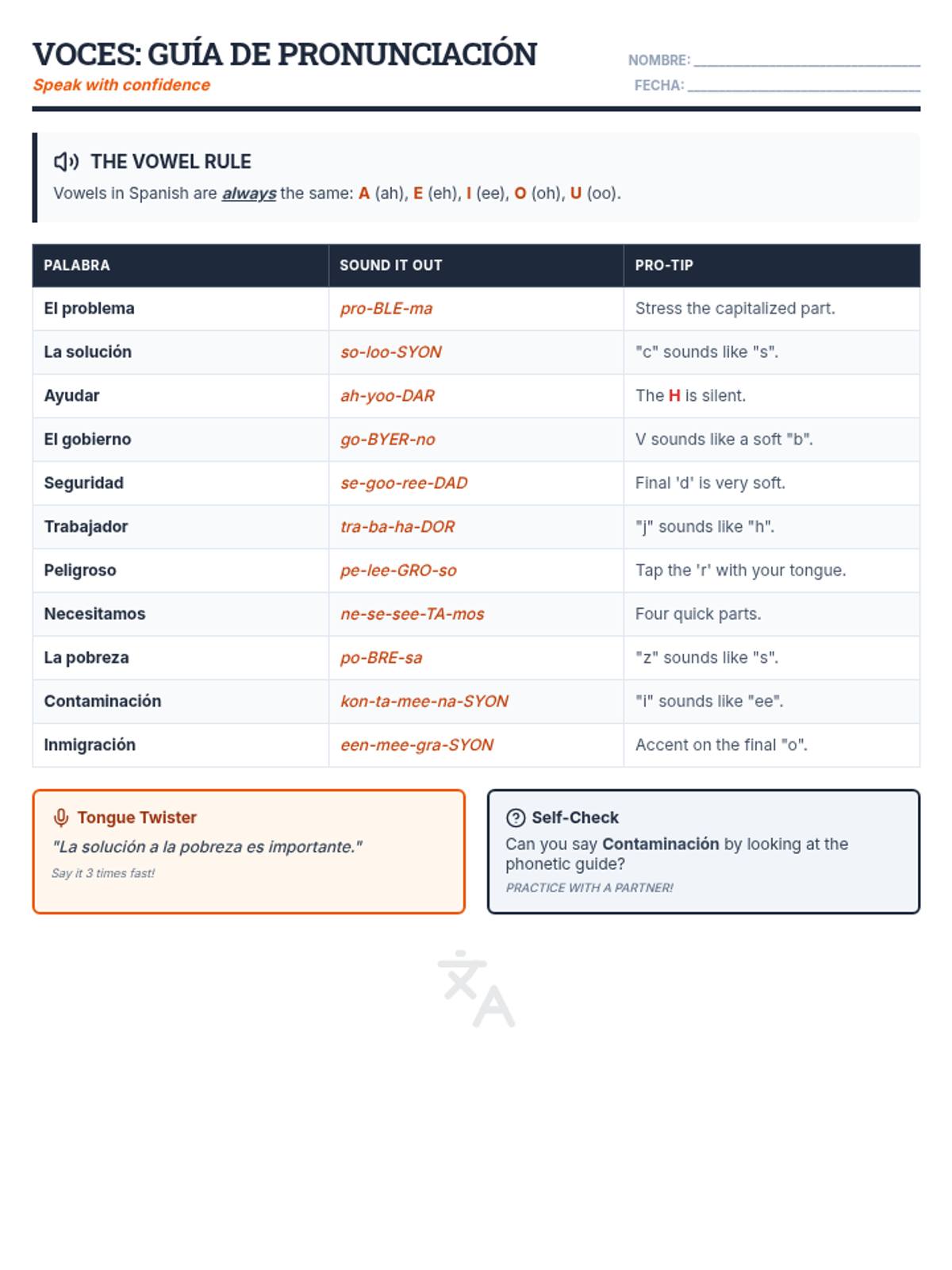
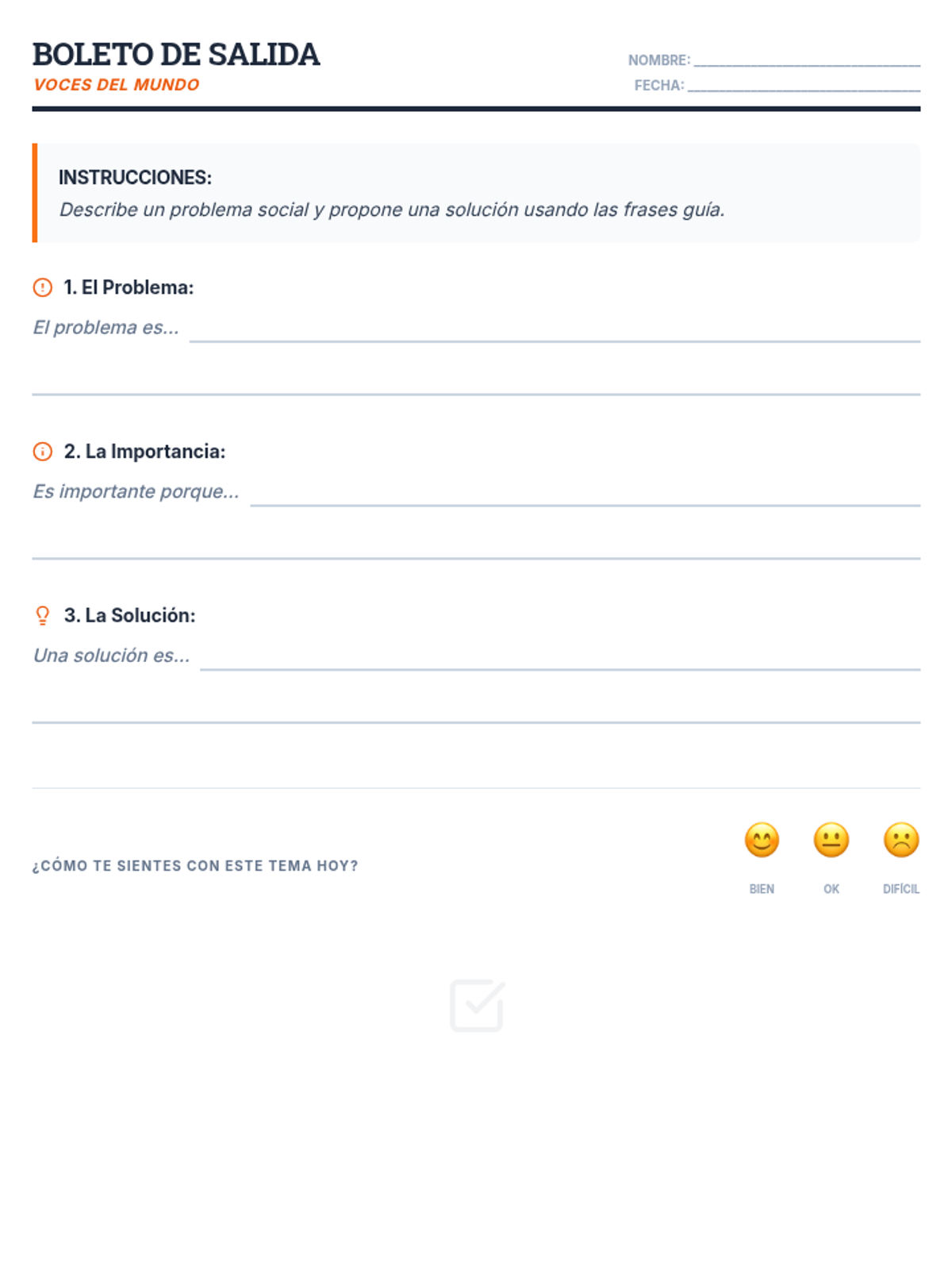
This lesson introduces students to social issues and real-world events through the context of the Chilean mine collapse, focusing on vocabulary acquisition and sentence stems for proposing solutions.
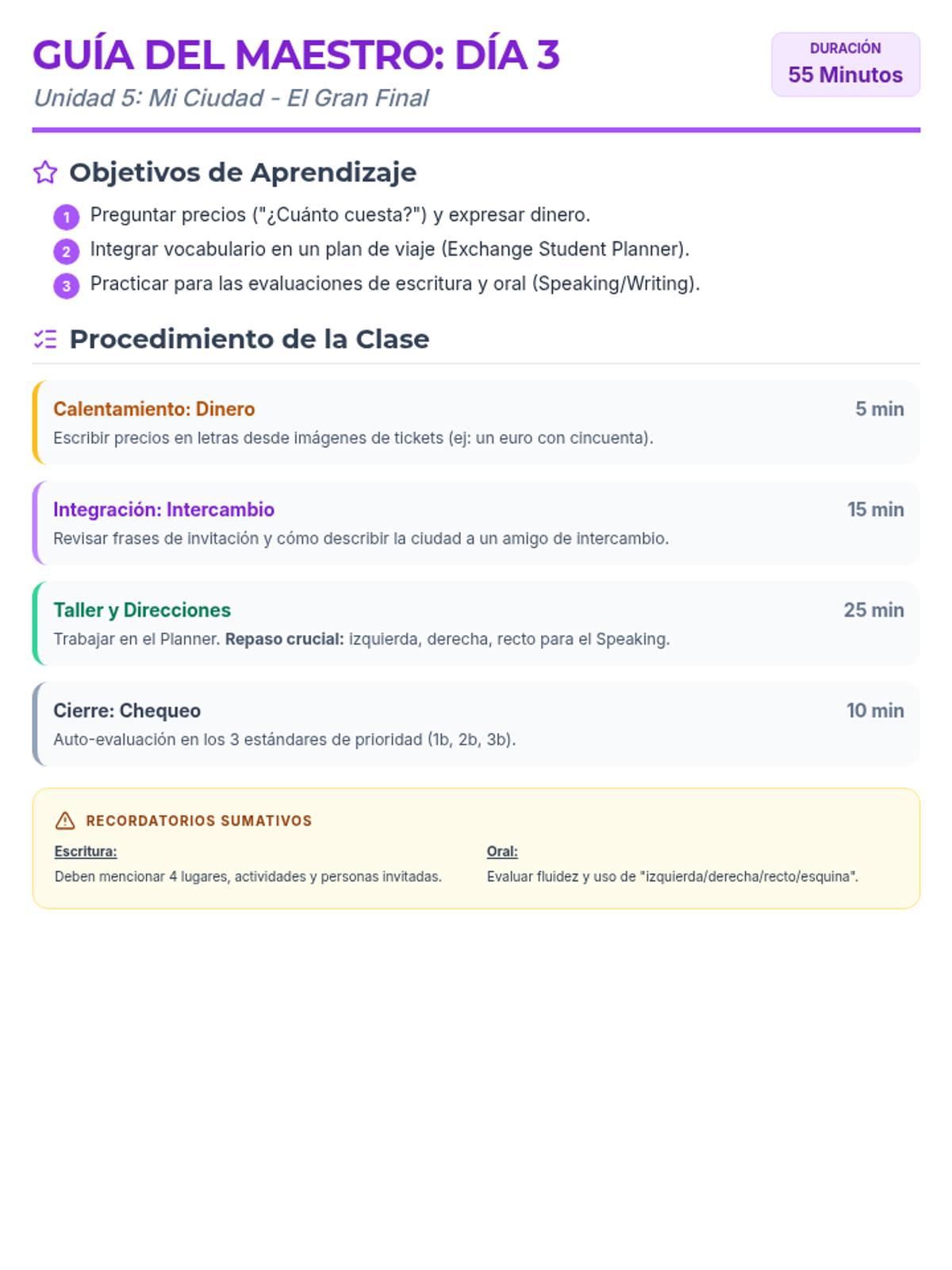
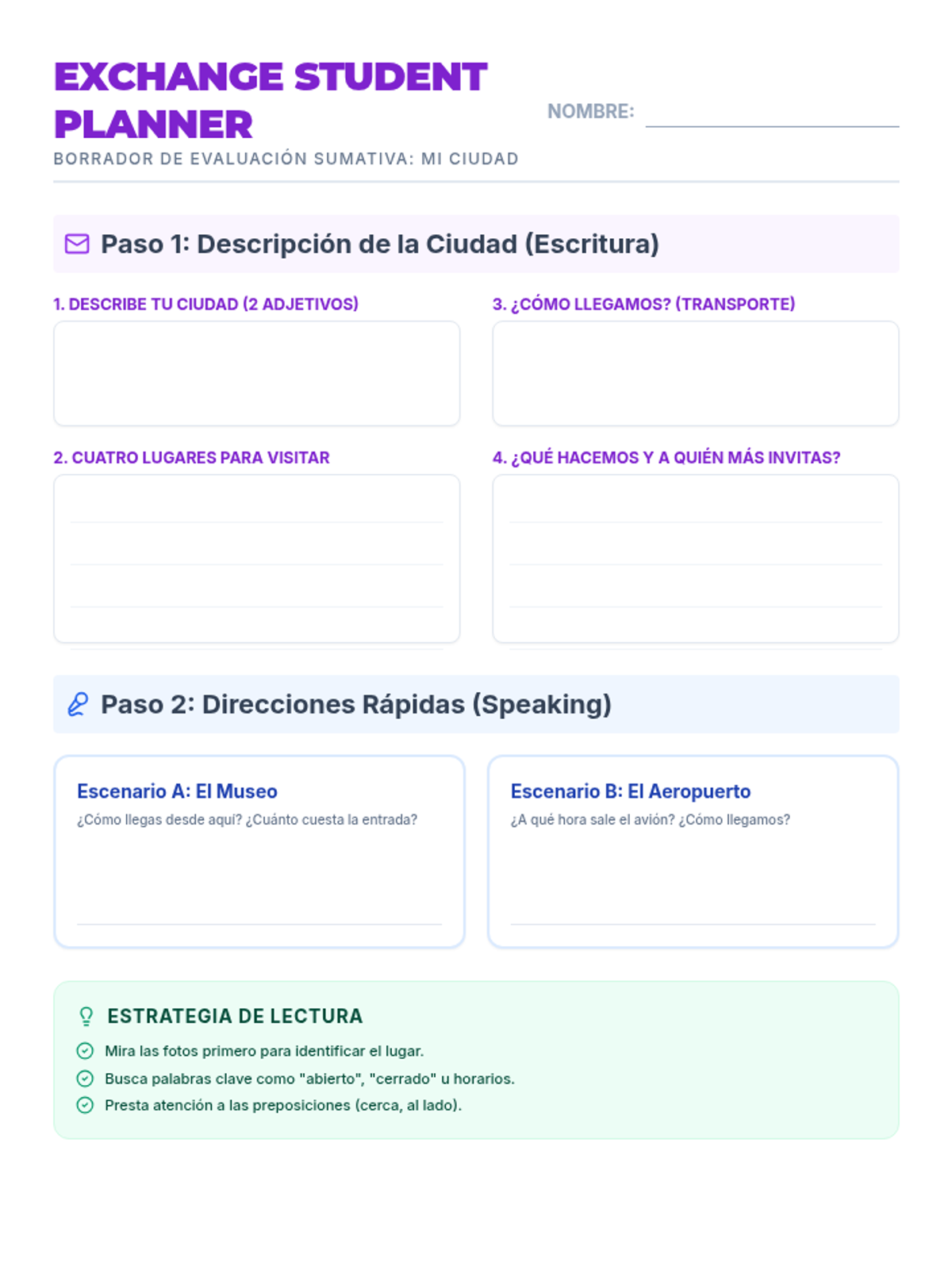
Day 3 integrates all concepts including costs, travel planning, and structured practice for the writing and speaking summative assessments.
Day 2 focuses on verbs of motion, prepositions of place, and the practical application of giving and receiving directions.
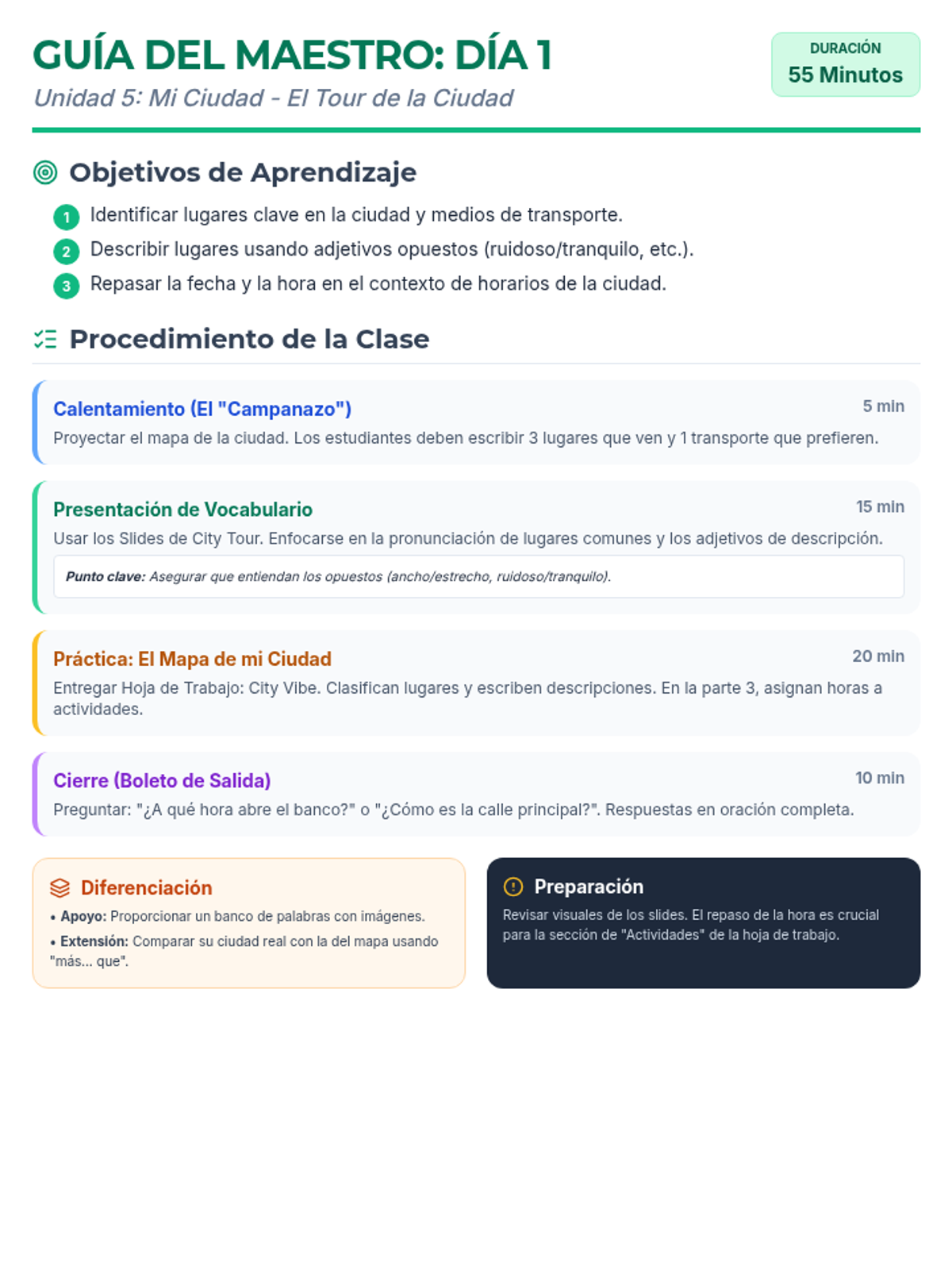
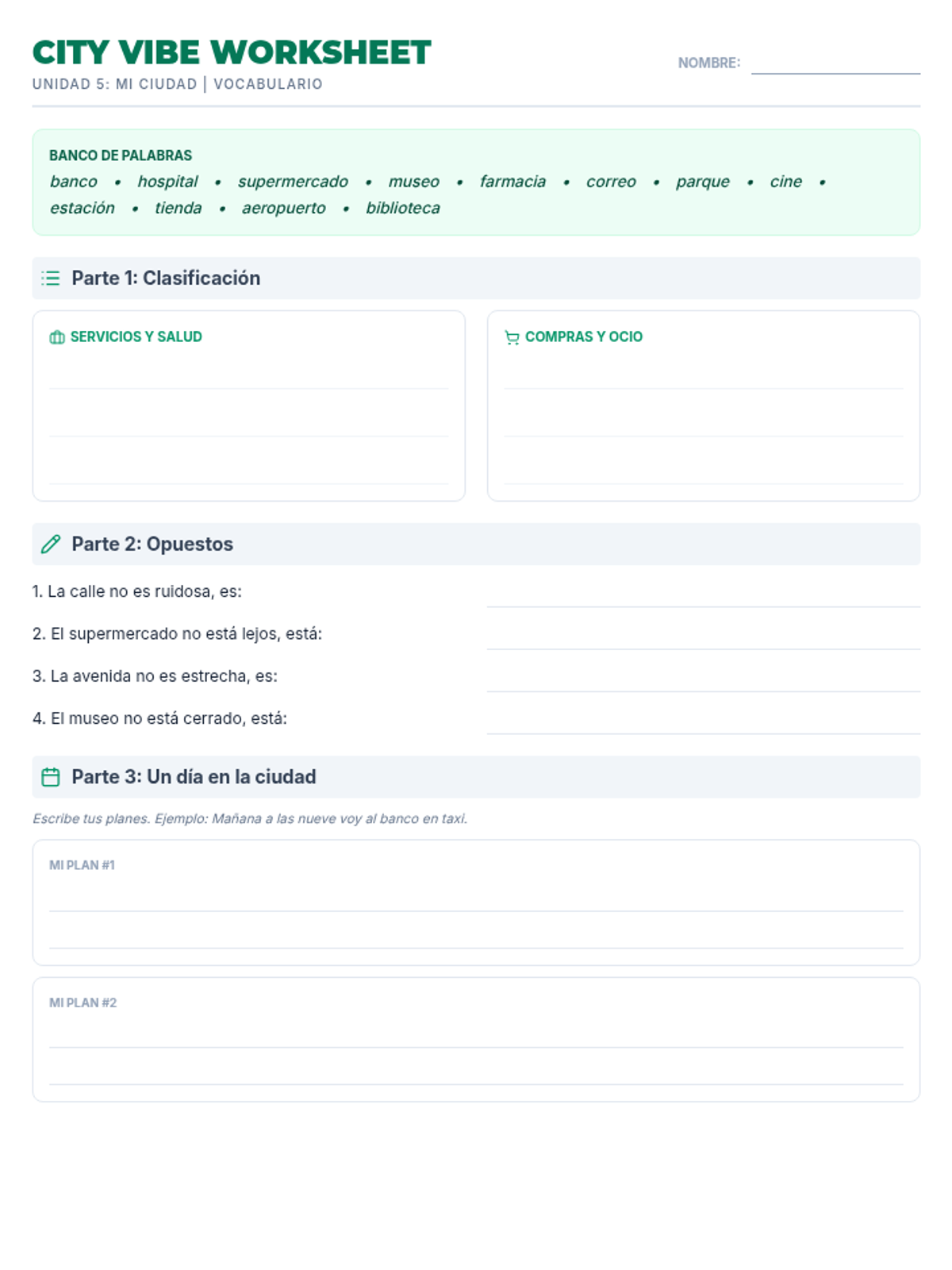
Day 1 focuses on identifying city locations, using descriptive adjectives, and reviewing date and time for planning city visits.
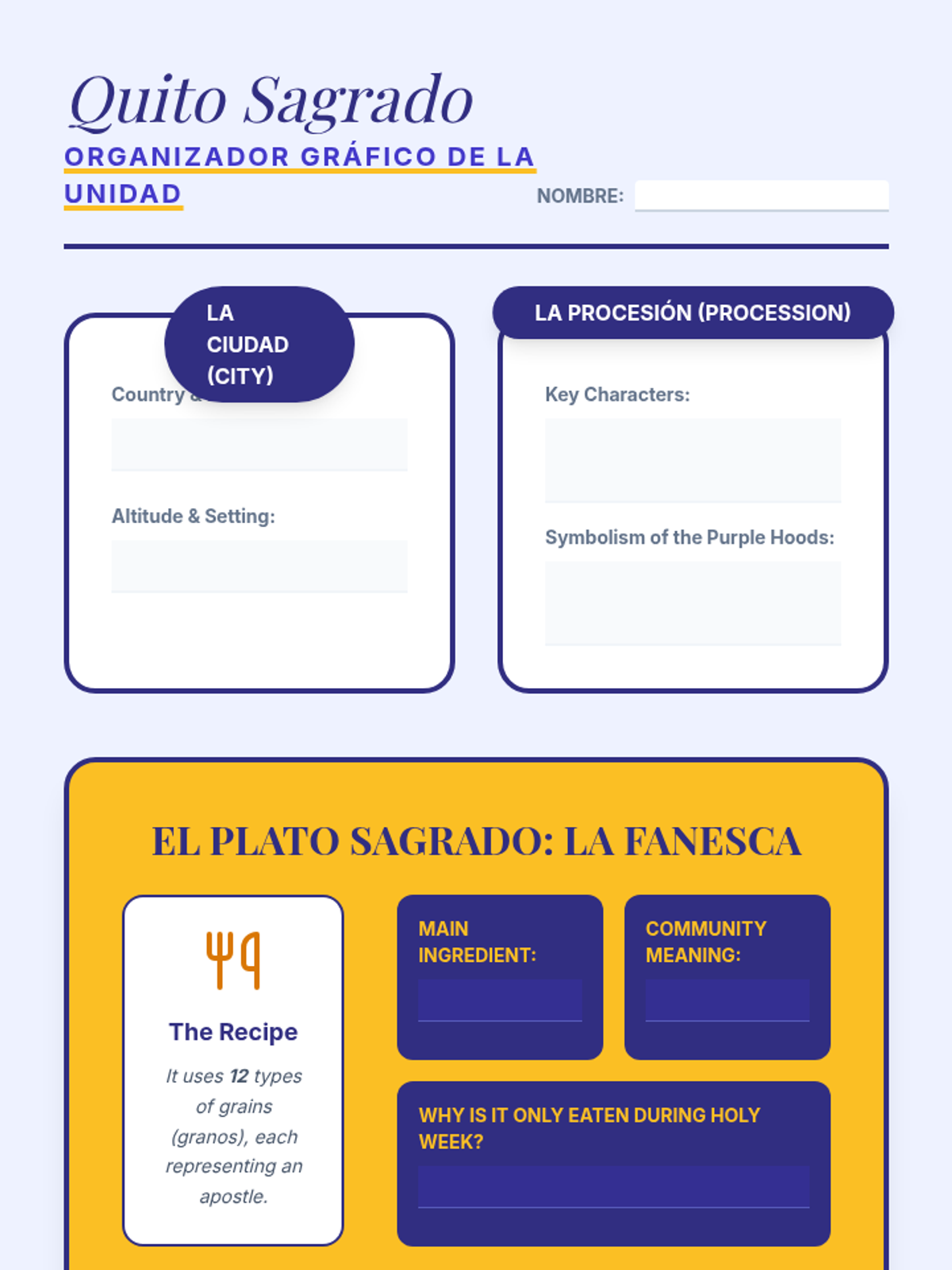
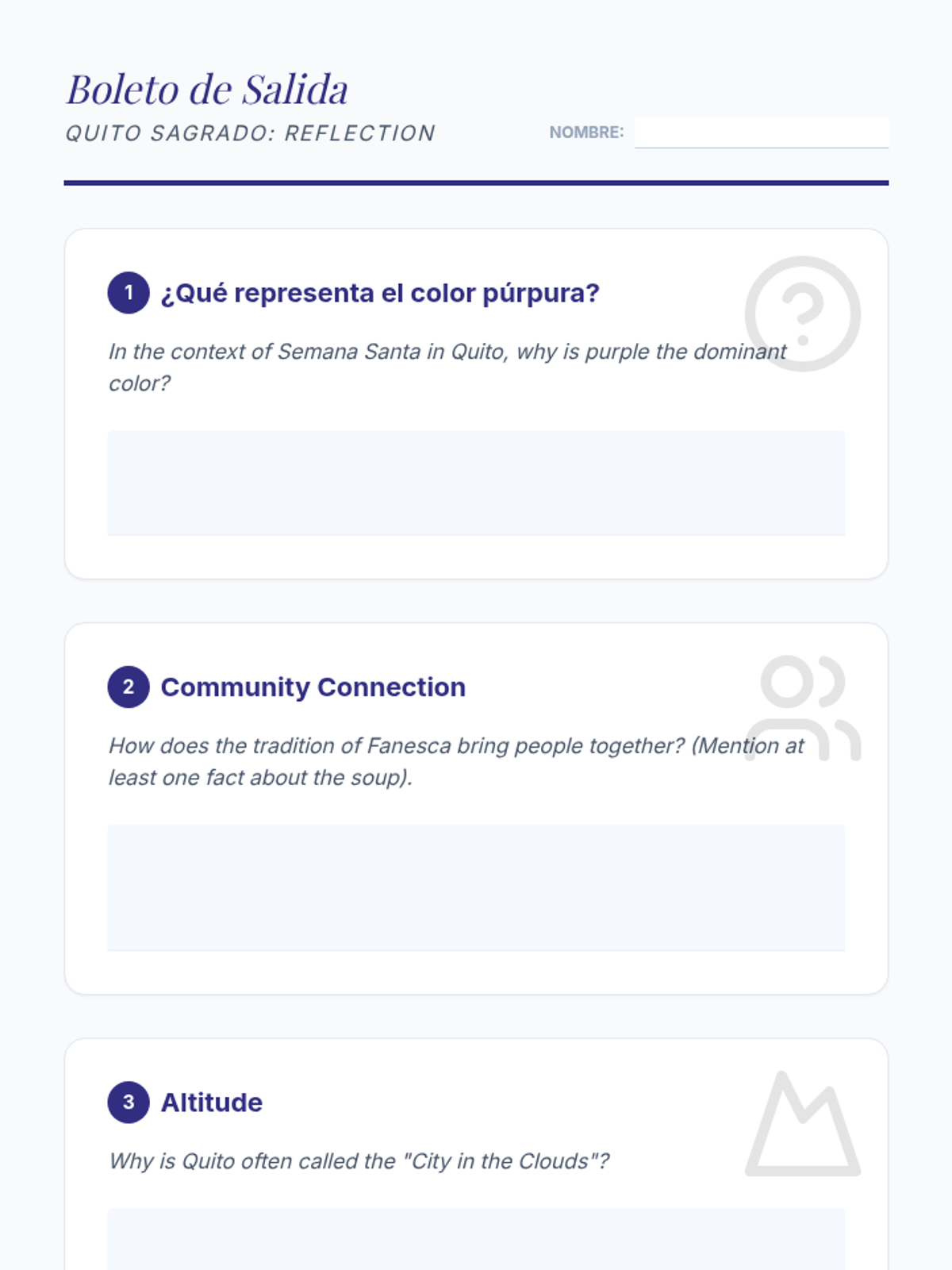
Exploring the role of community through the traditional Fanesca soup and summarizing the unit's learning with a graphic organizer.