Vocabulary, grammar, and cultural contexts for Spanish language acquisition across all proficiency levels. Develops skills in reading, writing, speaking, and listening through structured linguistic analysis and practice.
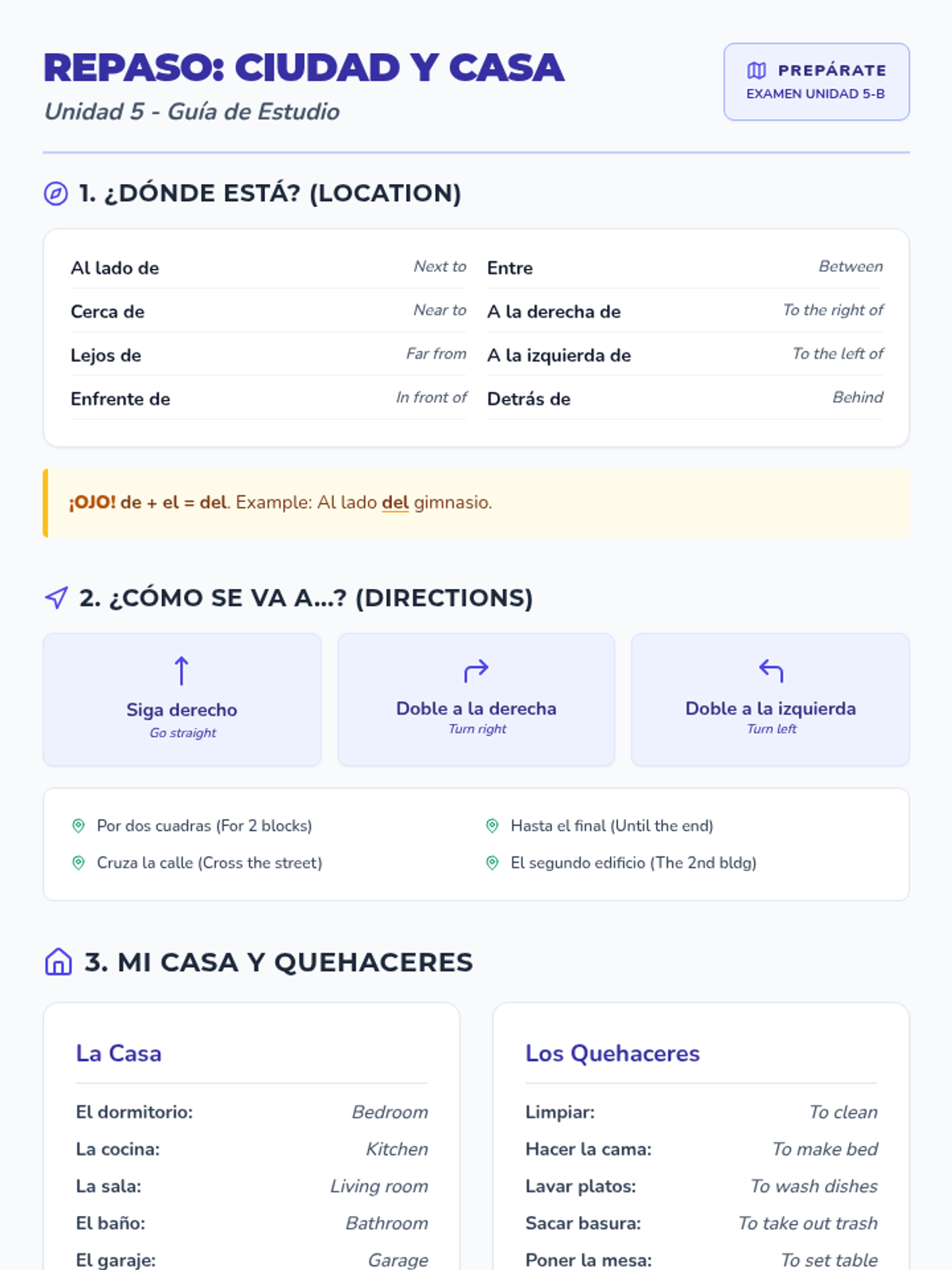
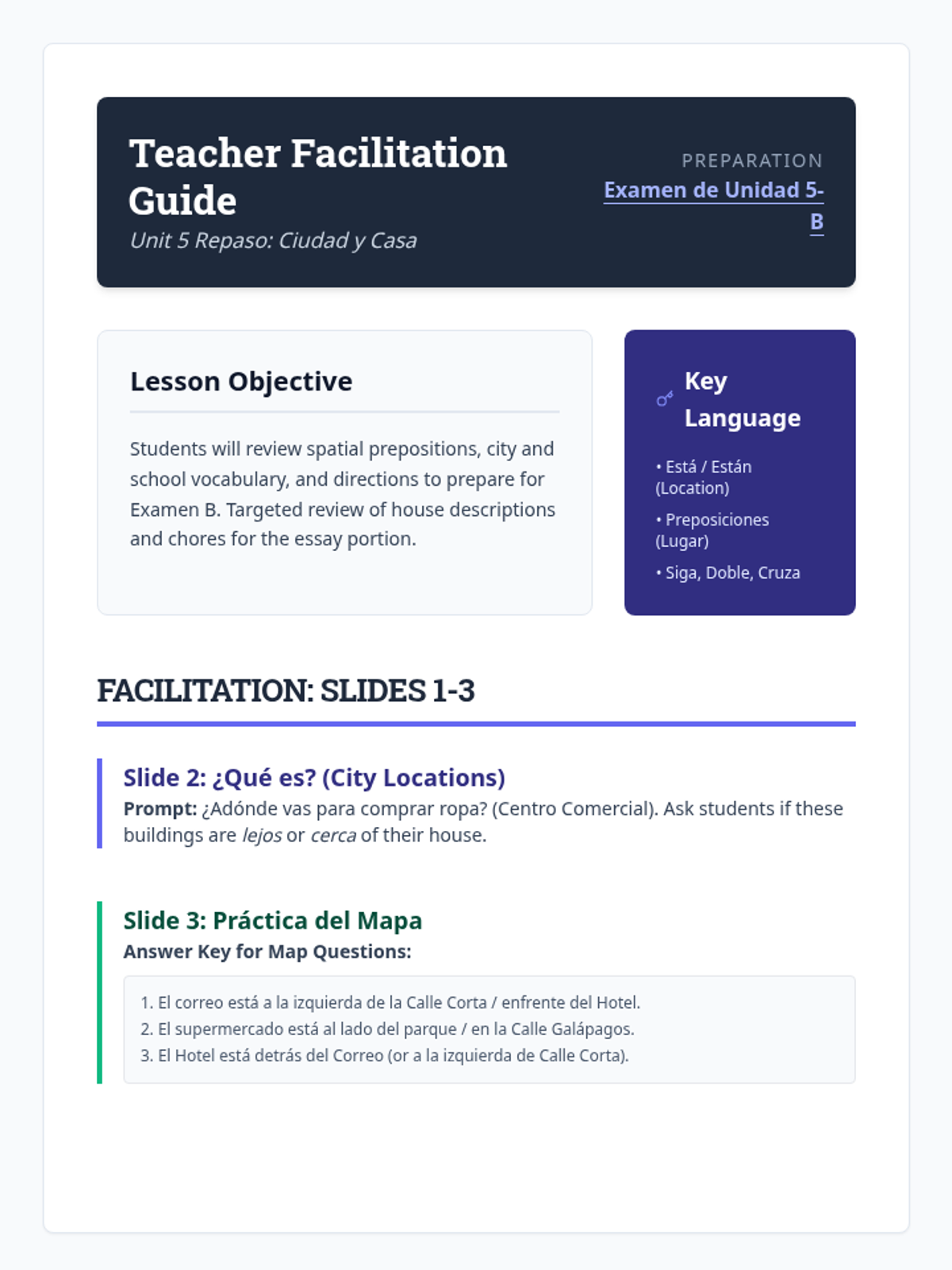
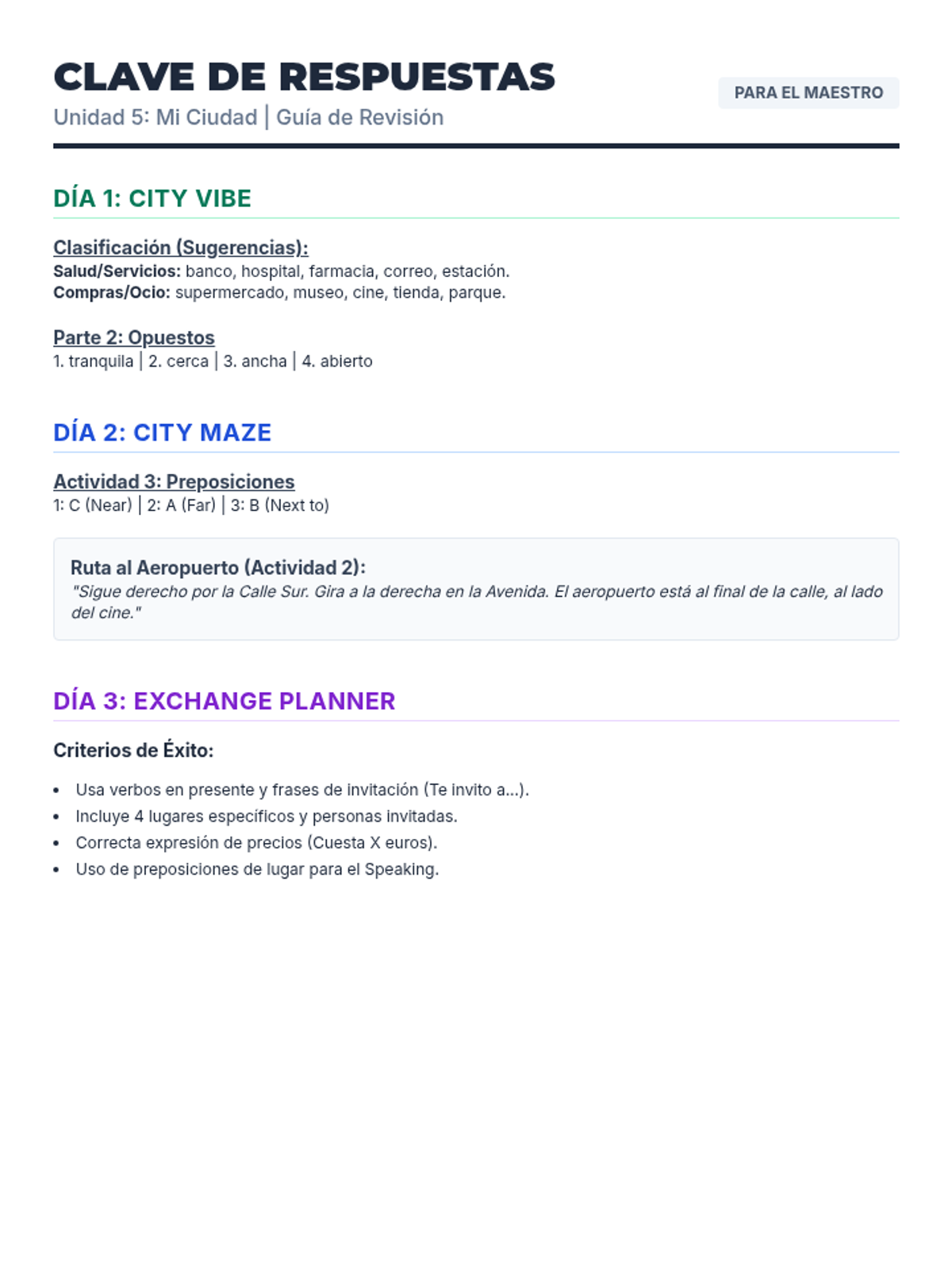
A comprehensive Spanish review lesson focusing on city locations, giving directions, school layout, and house descriptions to prepare students for the Unit 5 exam.
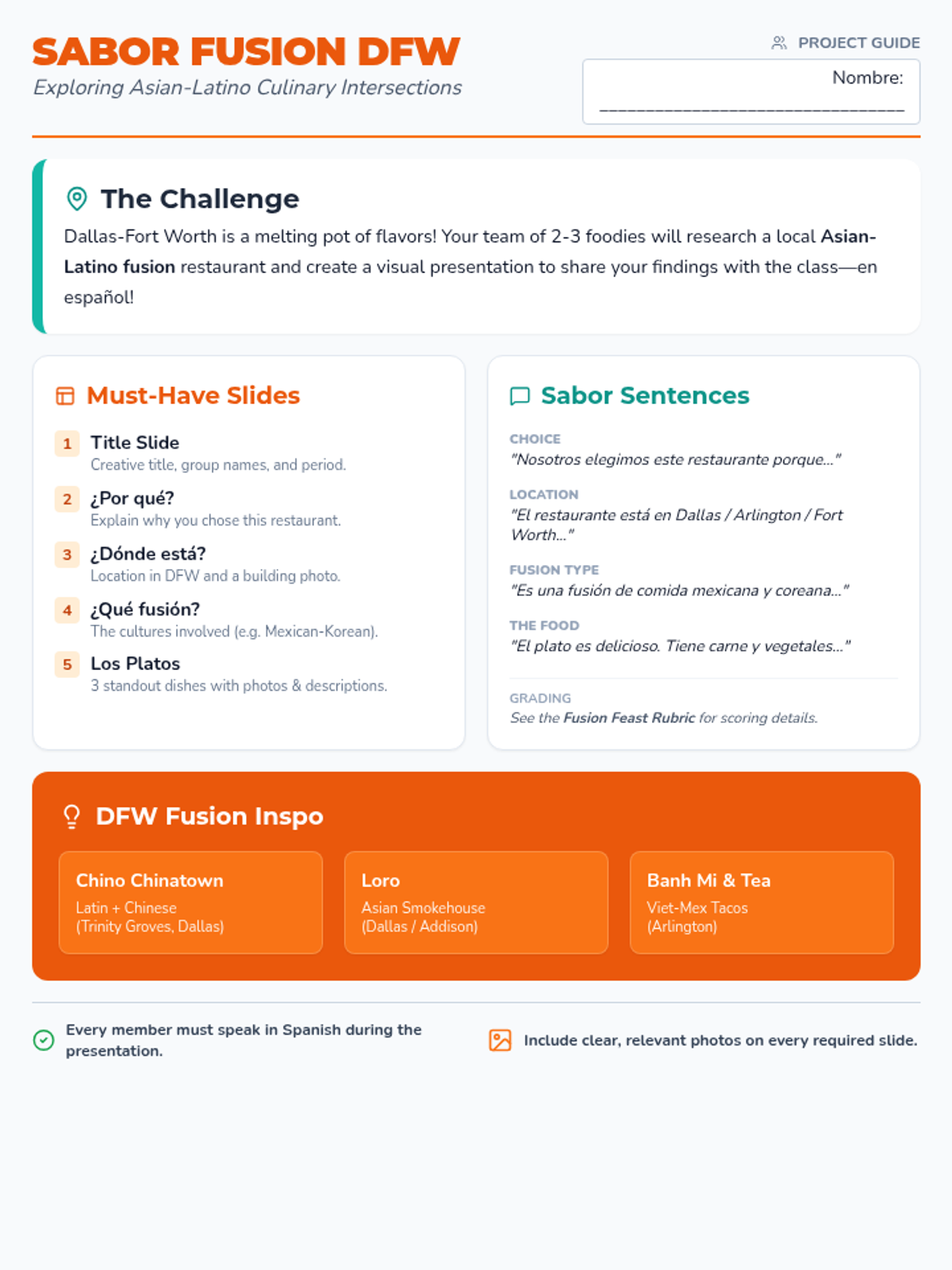
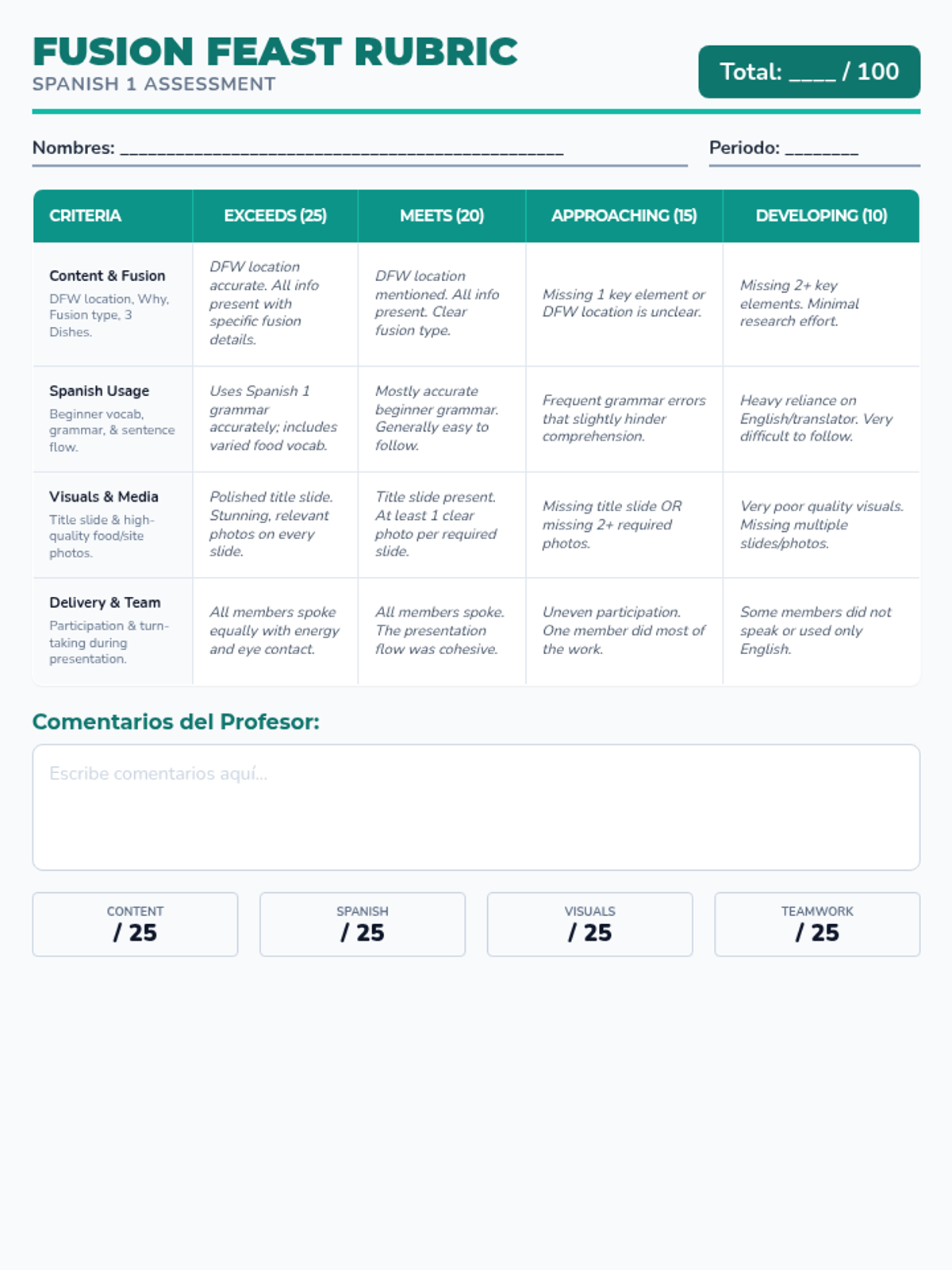
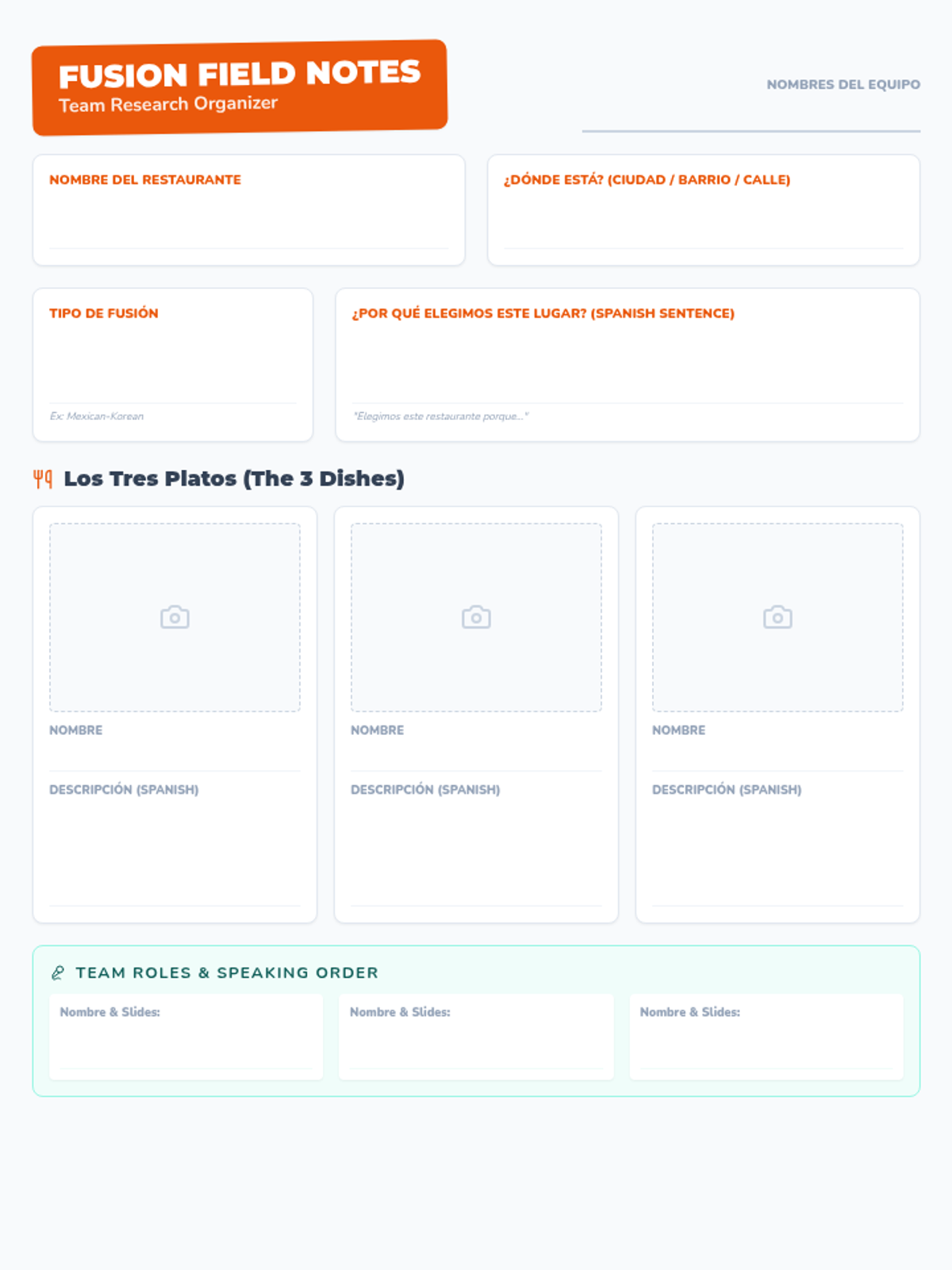
A beginner Spanish project where students research and present on Asian-Latino fusion restaurants in the Dallas-Fort Worth area, focusing on cultural intersection and culinary vocabulary.
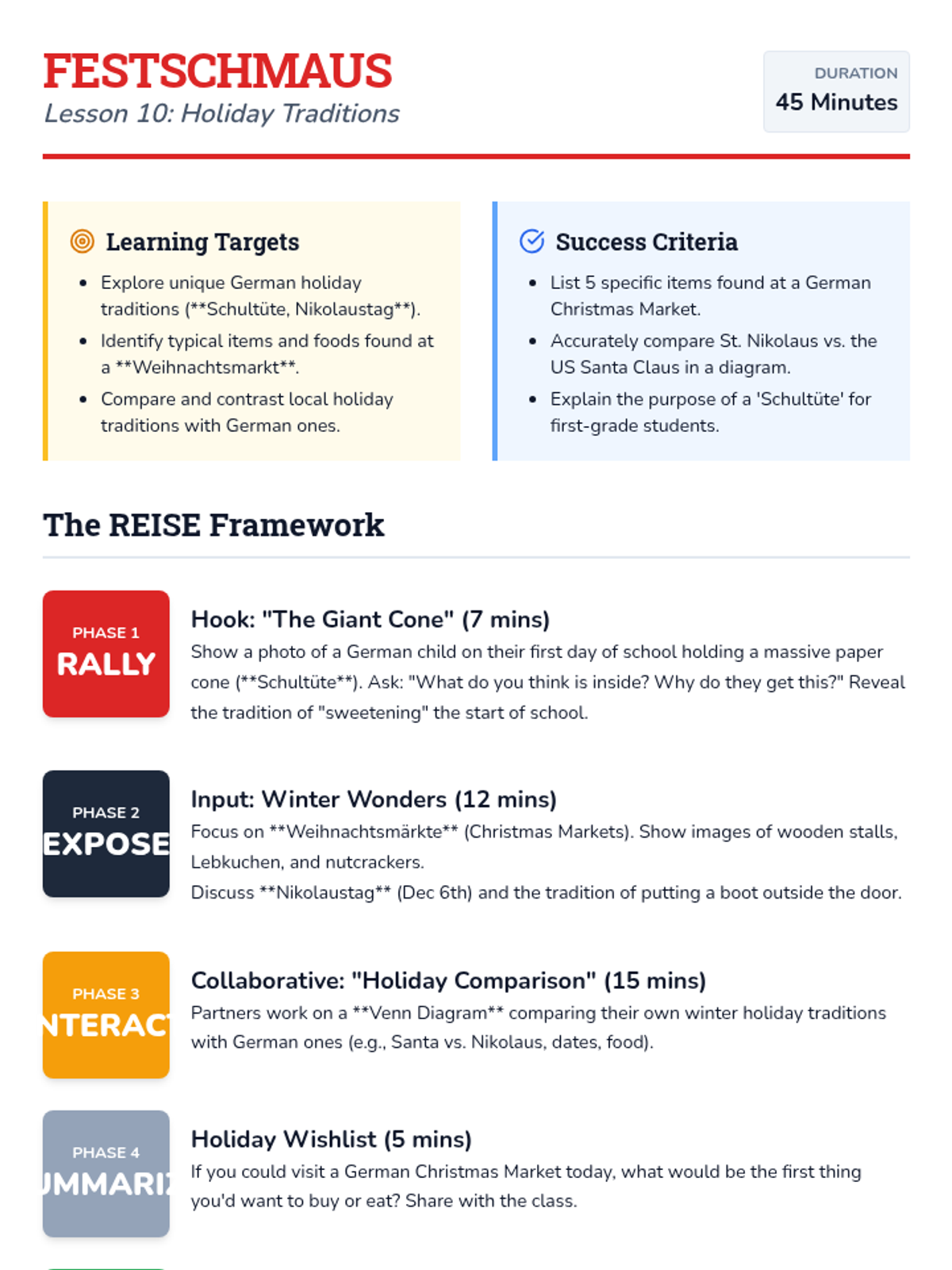
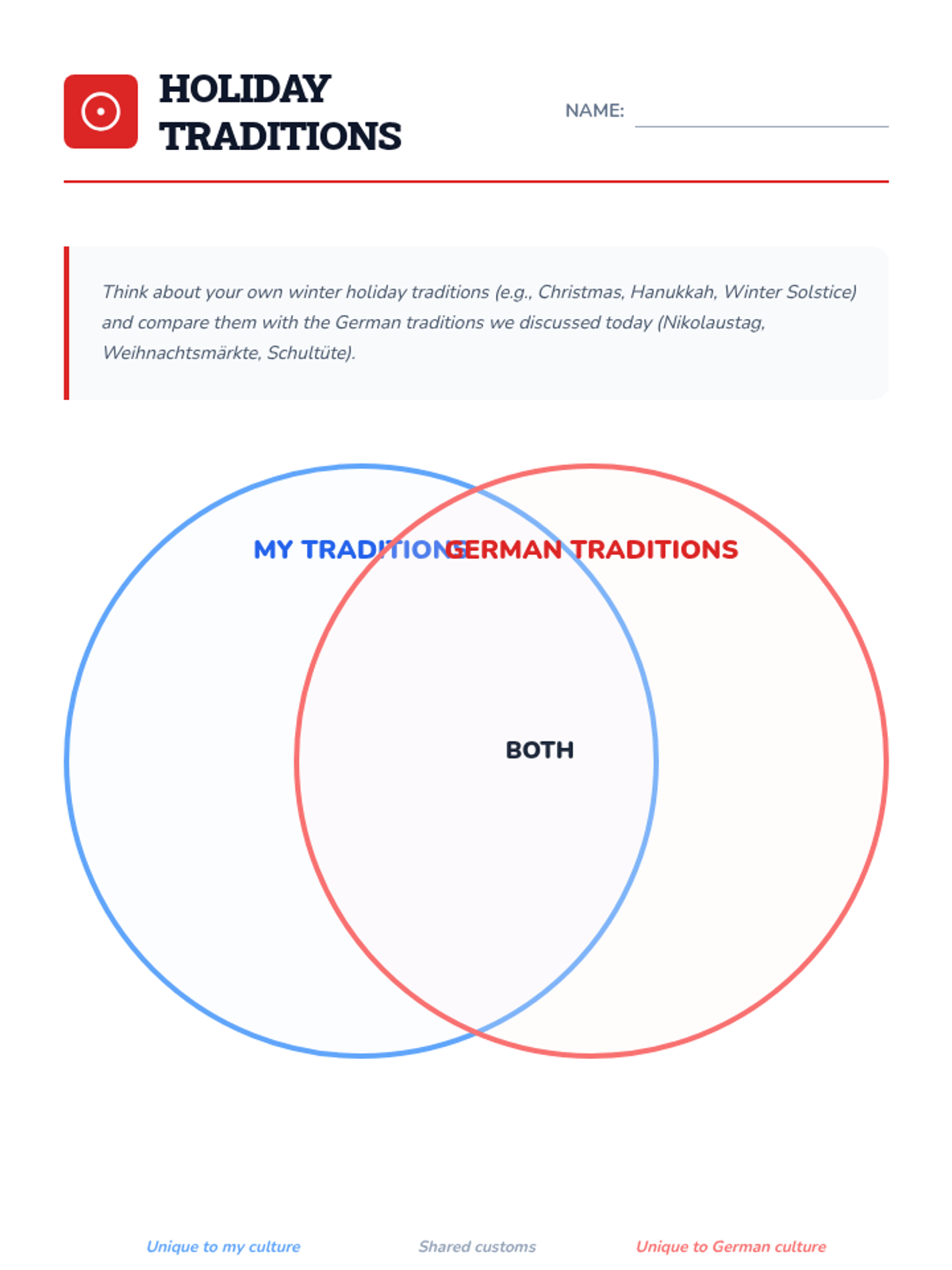
A festive conclusion focusing on German holiday traditions, including 'Schultüte' and 'Weihnachtsmärkte'. Students compare local and German celebrations using Venn diagrams.
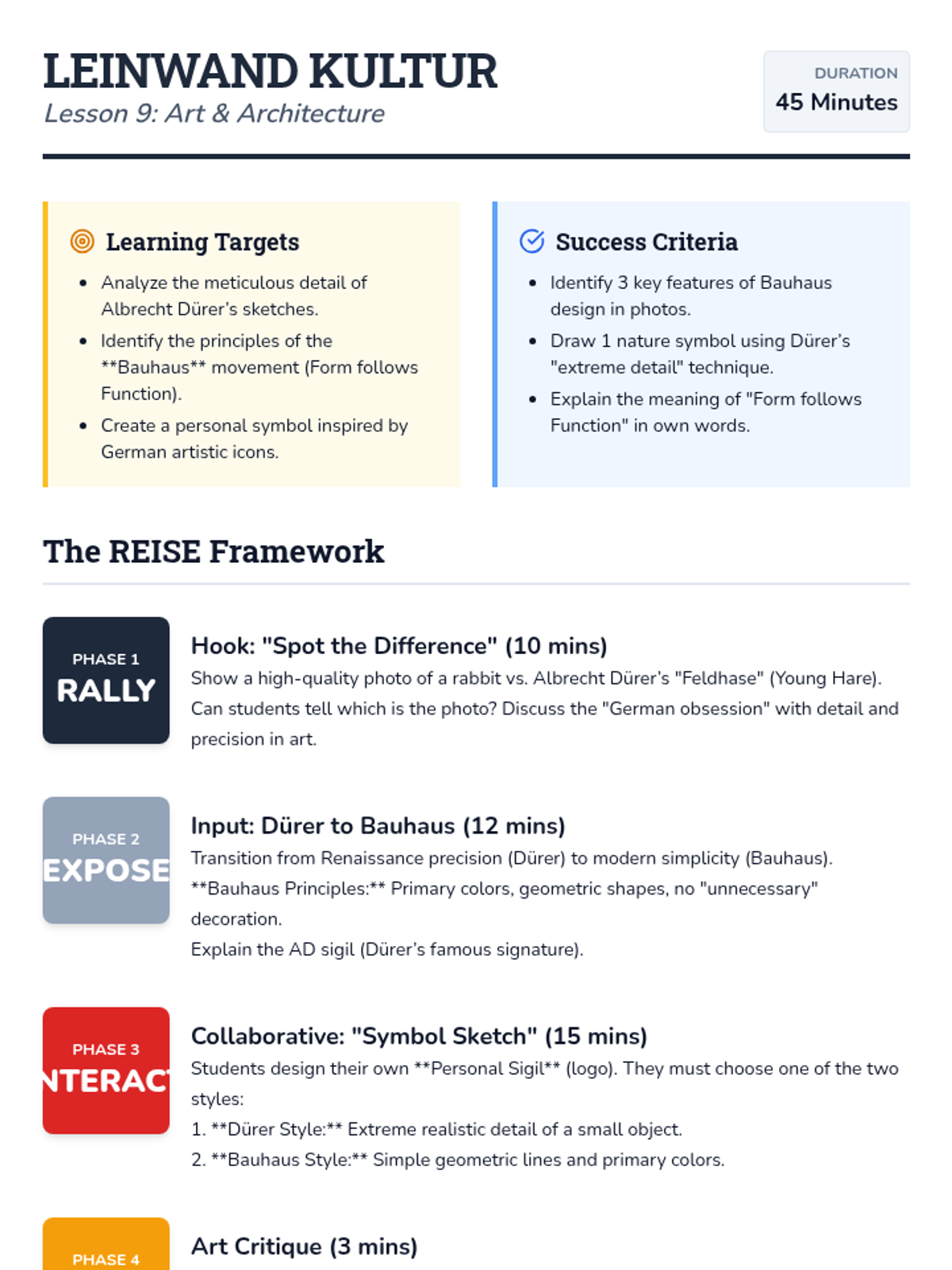
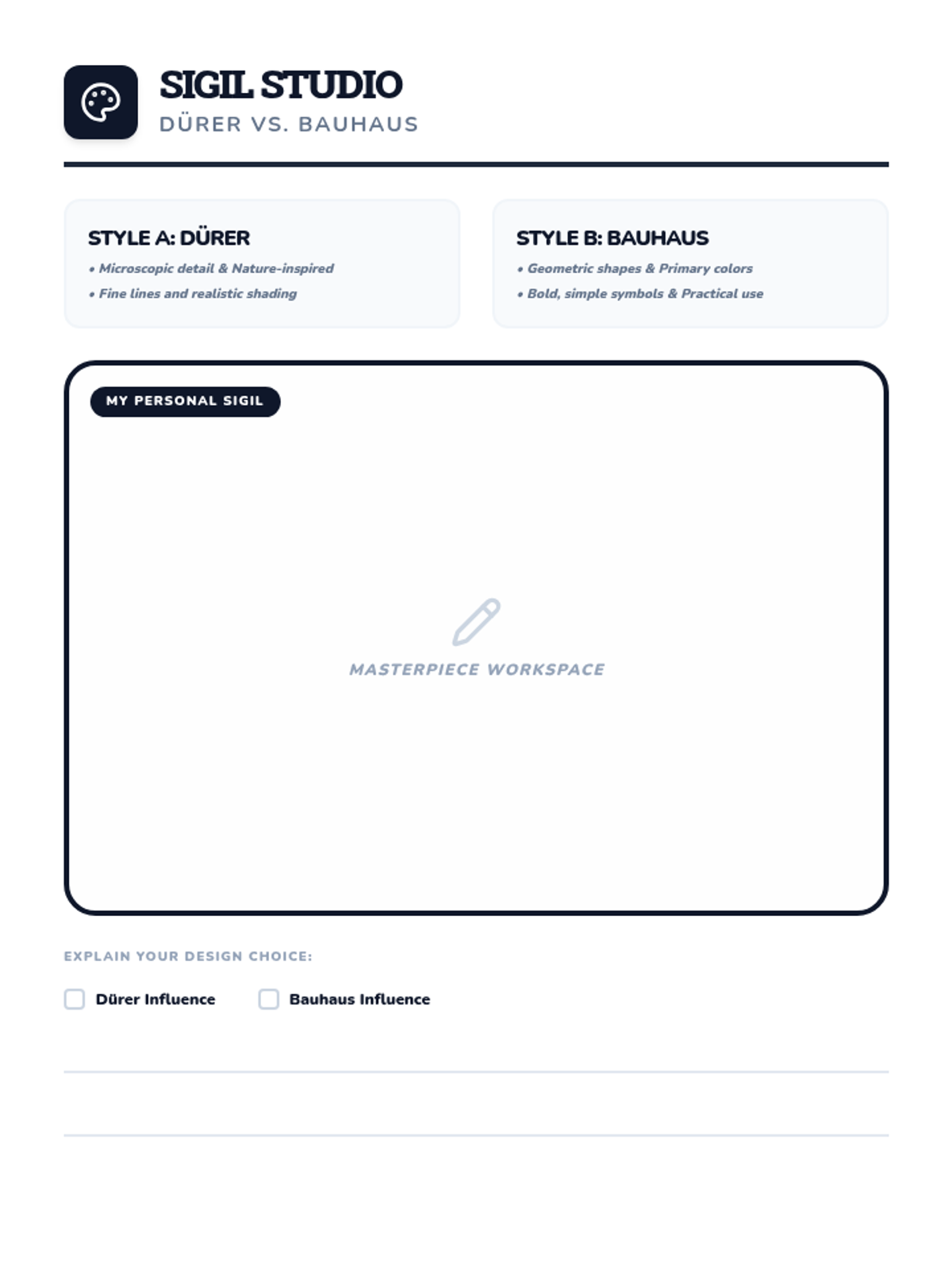
Analyzing the meticulous detail of Albrecht Dürer and the modernism of the Bauhaus movement. Students create their own symbols inspired by these German artistic icons.
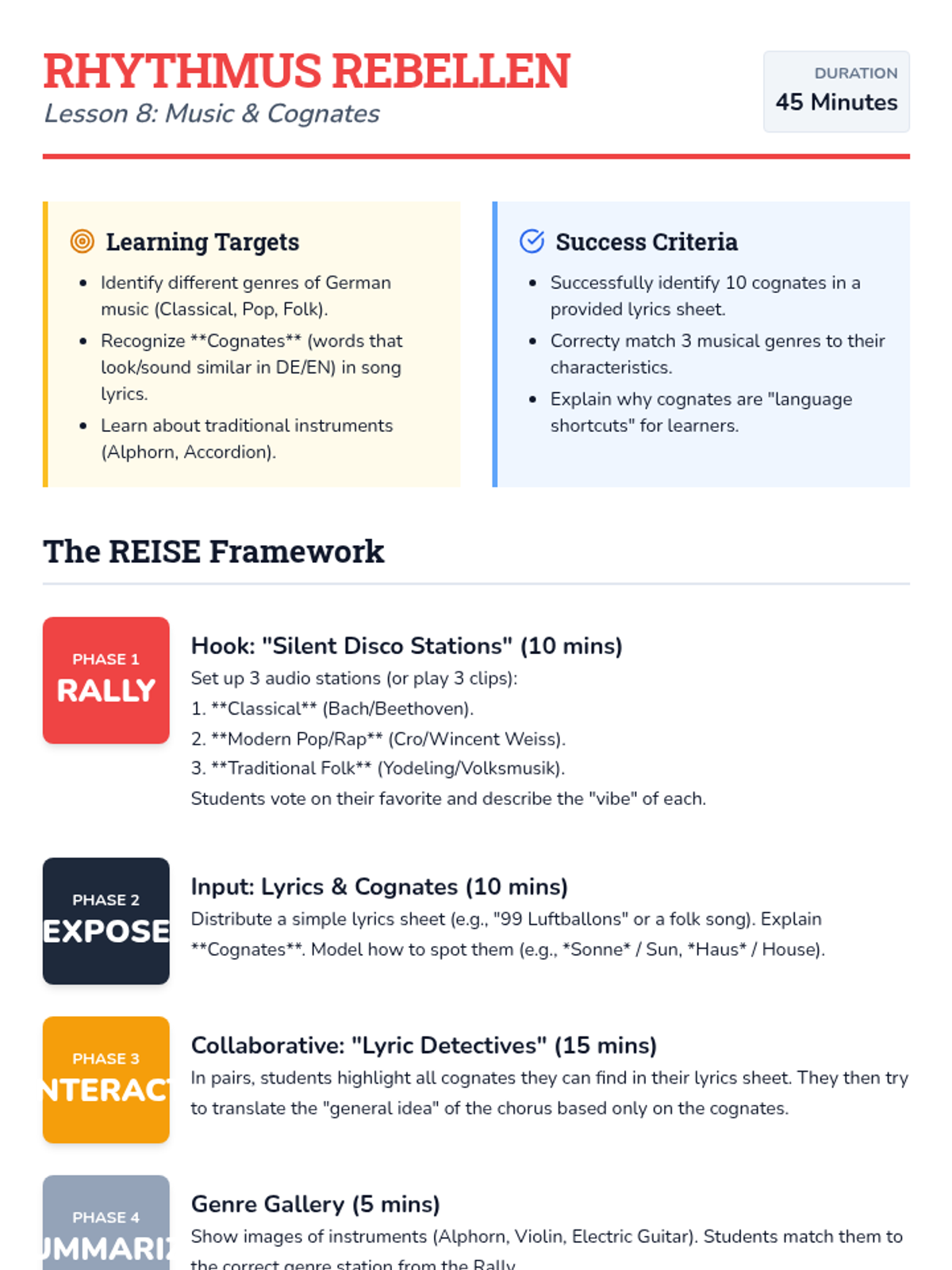
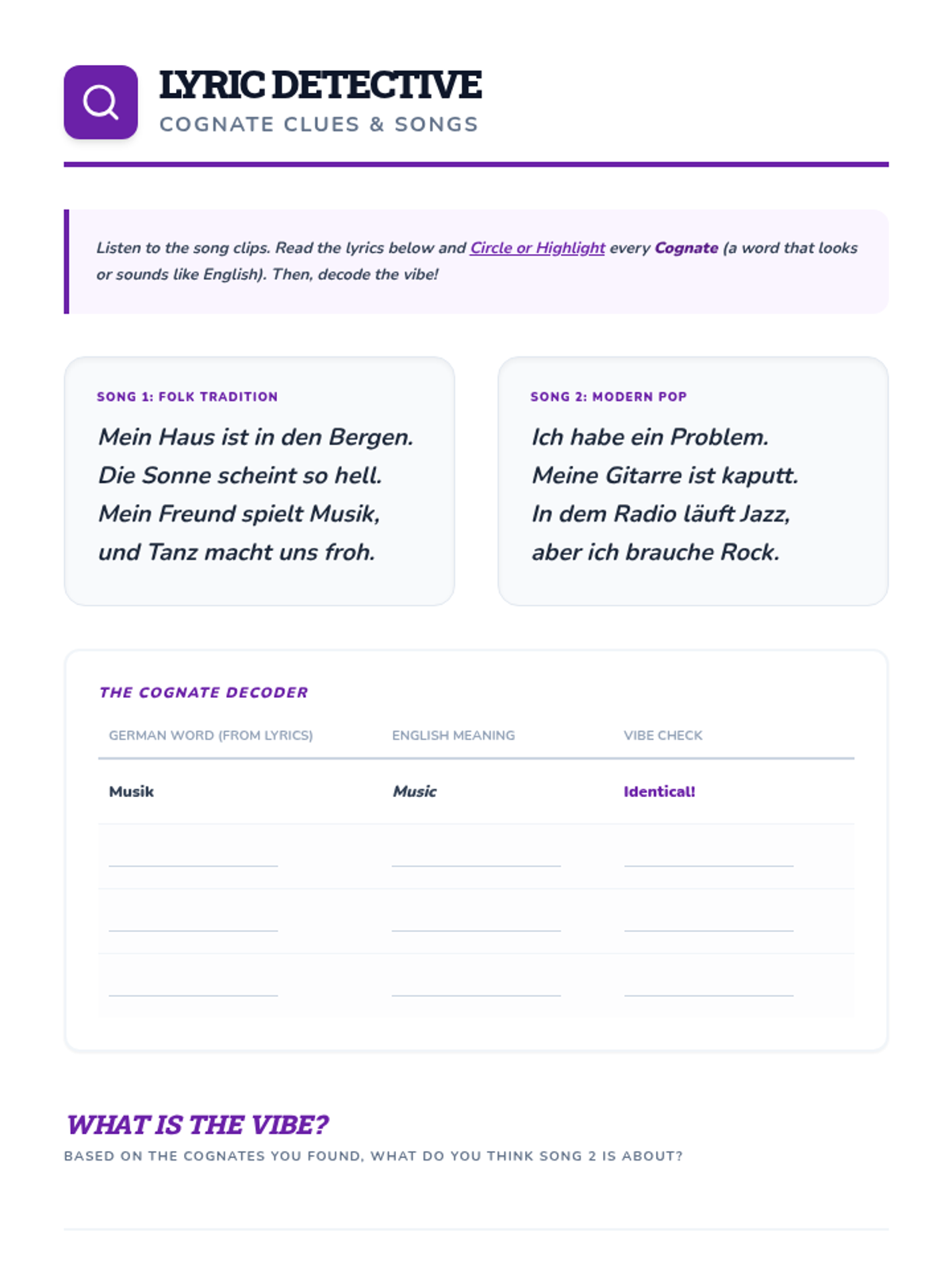
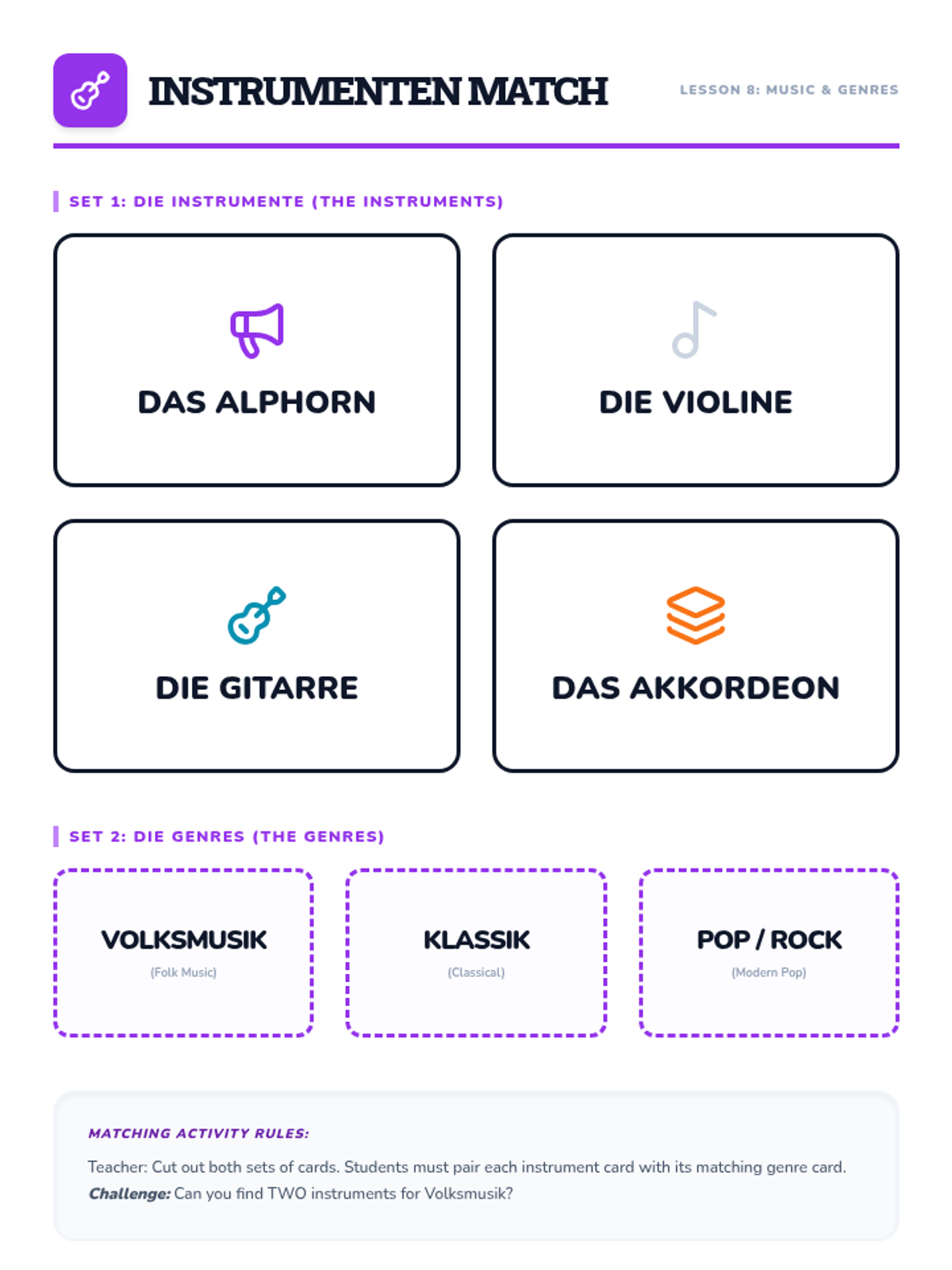
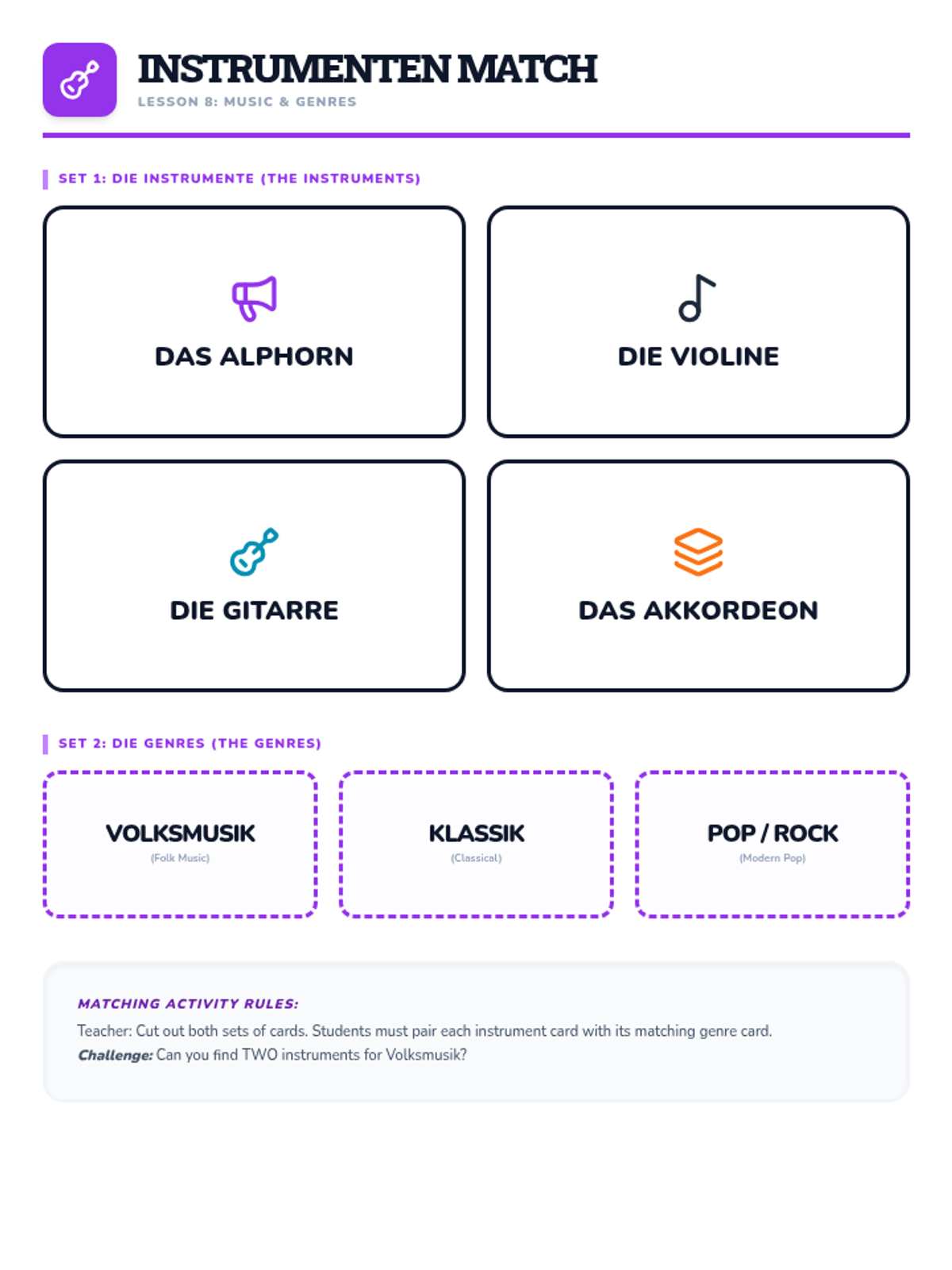
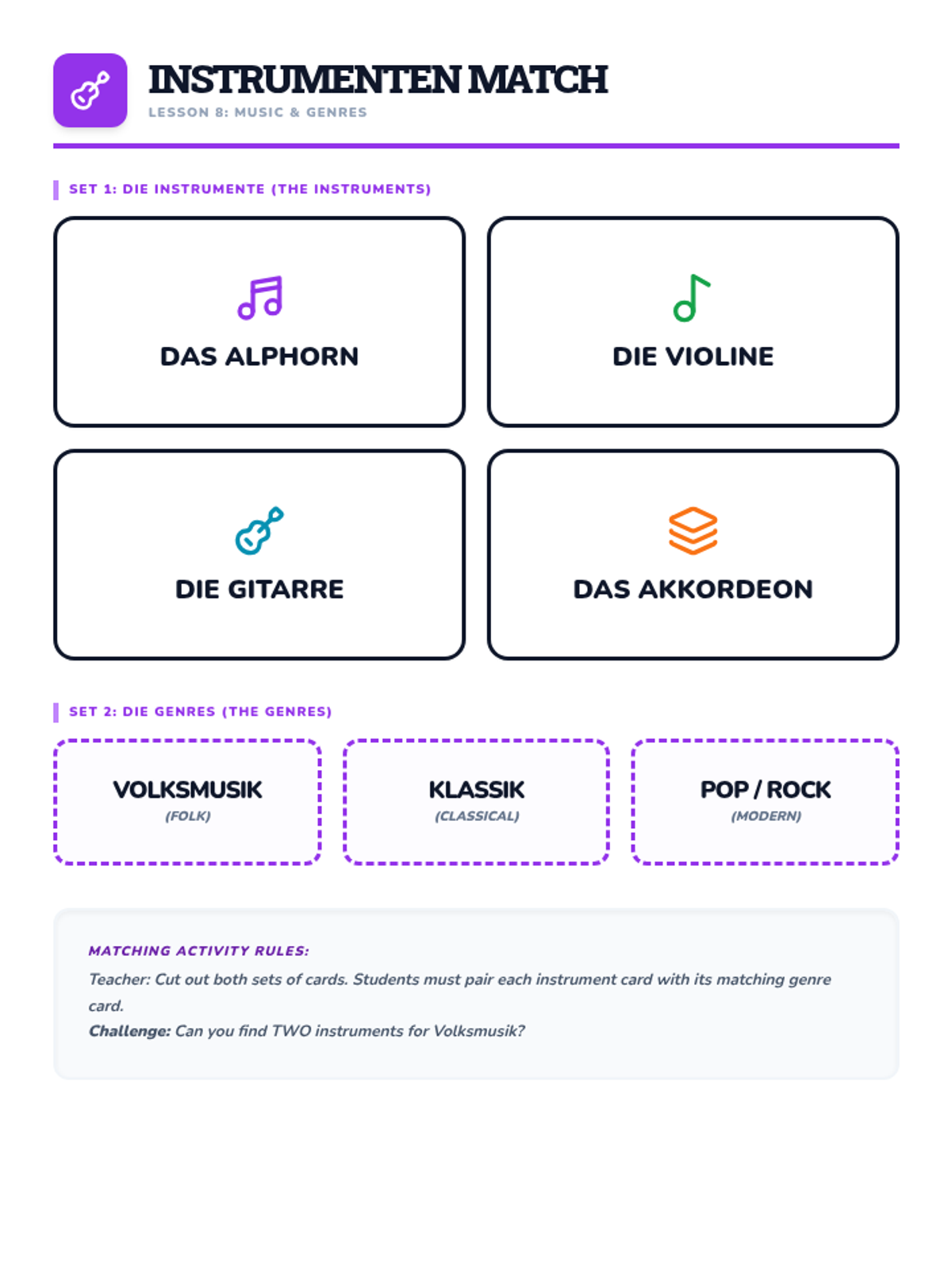
An exploration of German music from classical roots to modern pop and folk. Students analyze lyrics for cognates and identify traditional instruments.
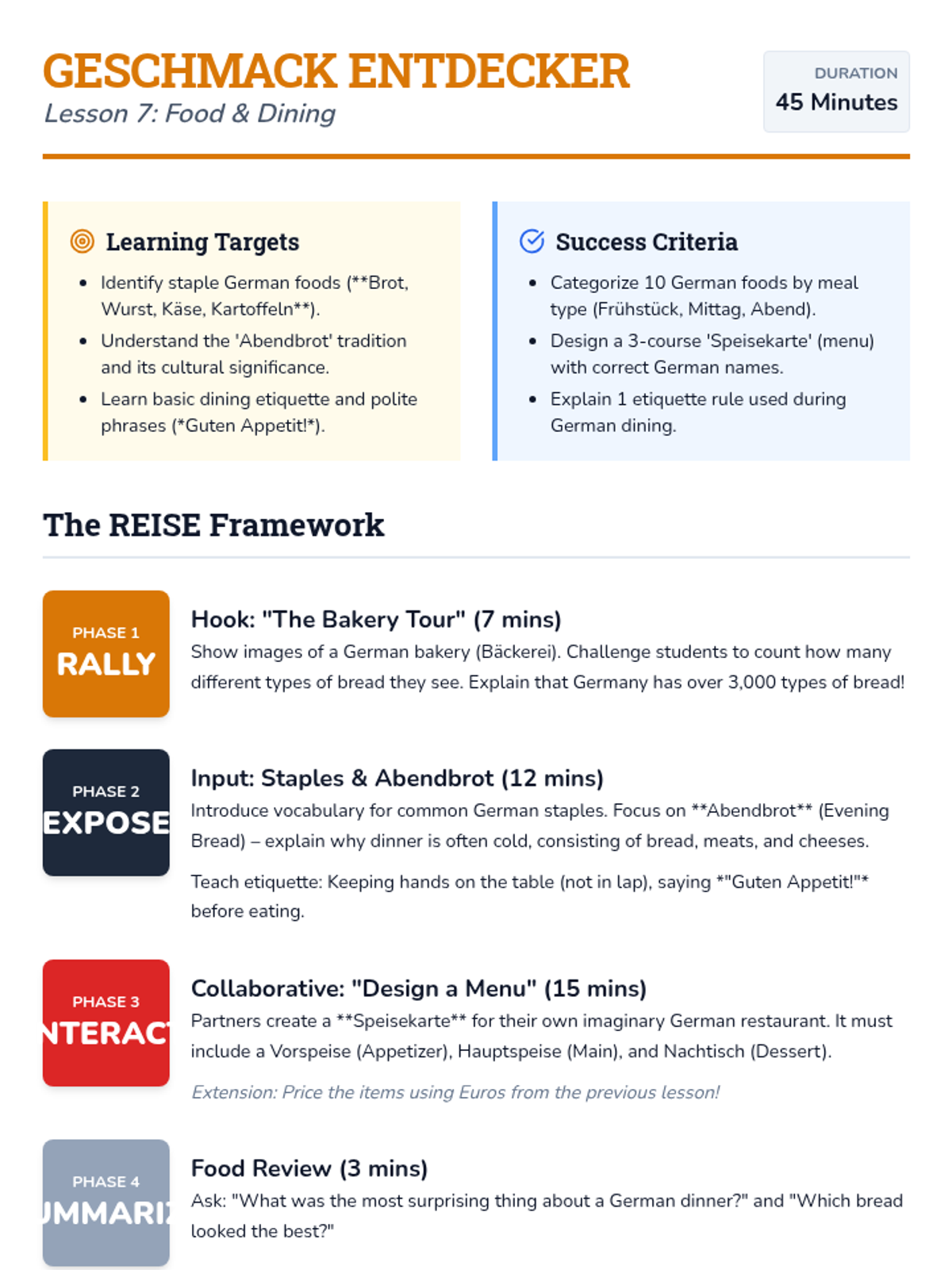
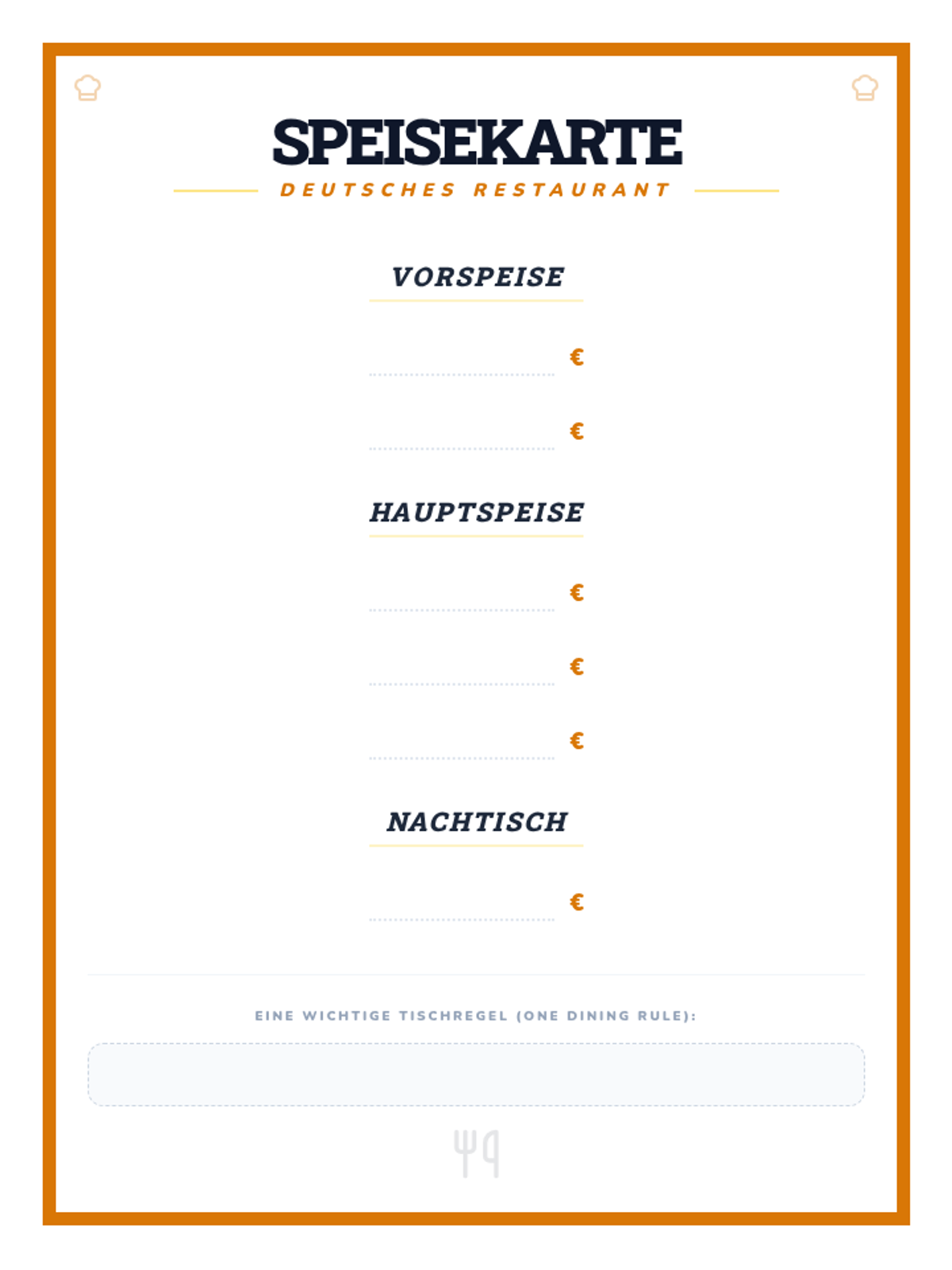
A culinary tour of German staples like bread and sausage. Students explore the 'Abendbrot' tradition and design their own German menu (Speisekarte).
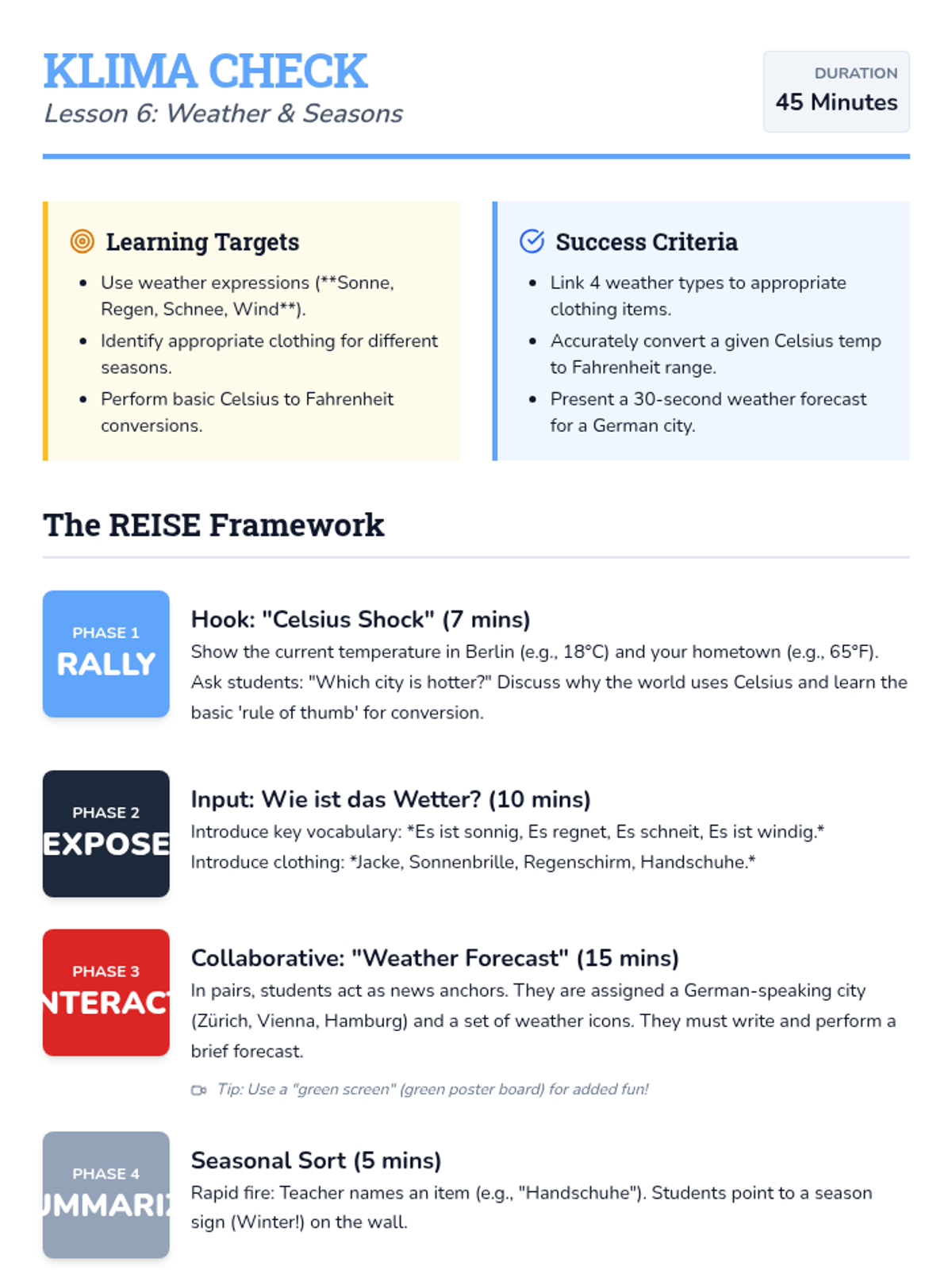
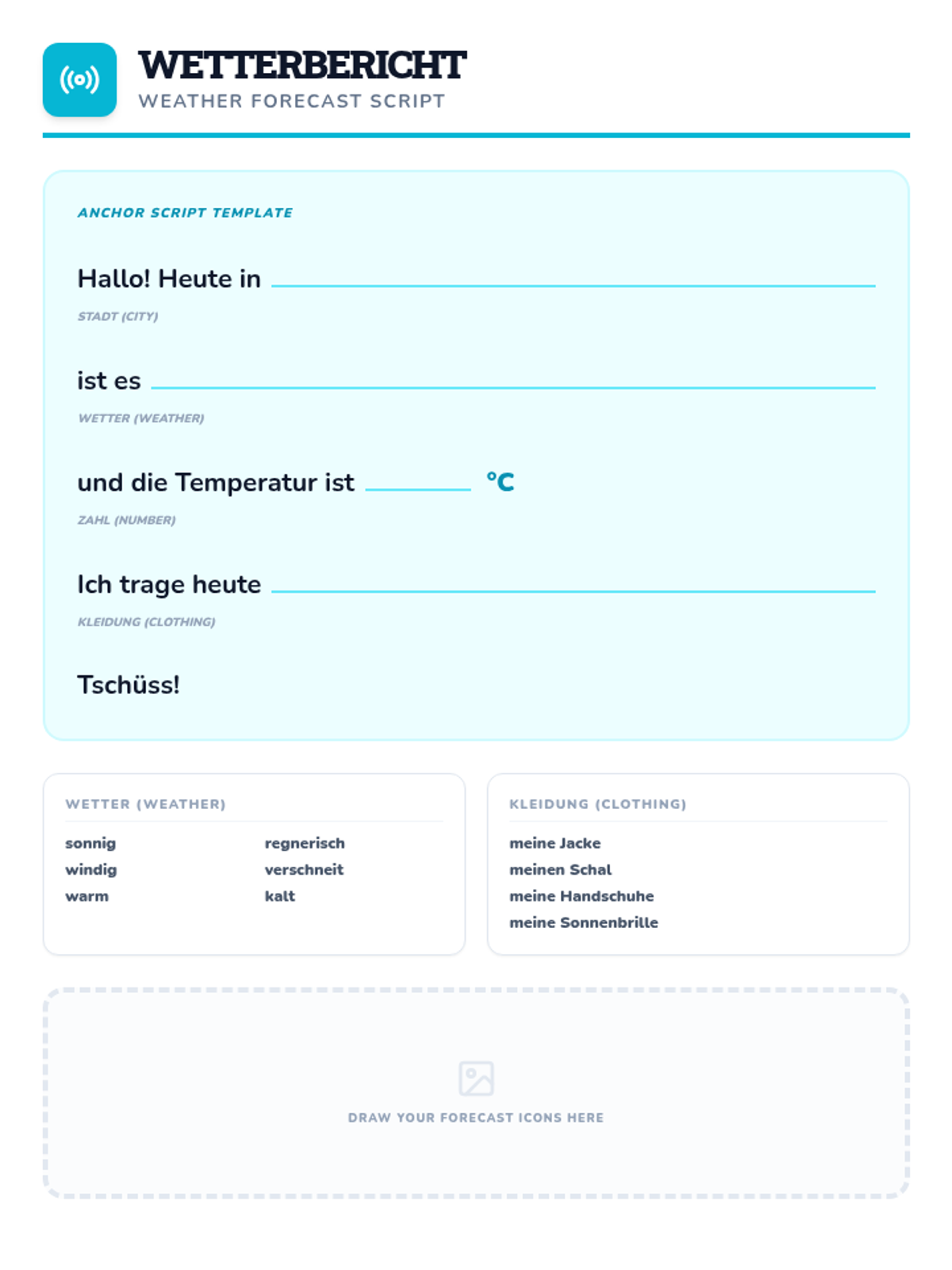
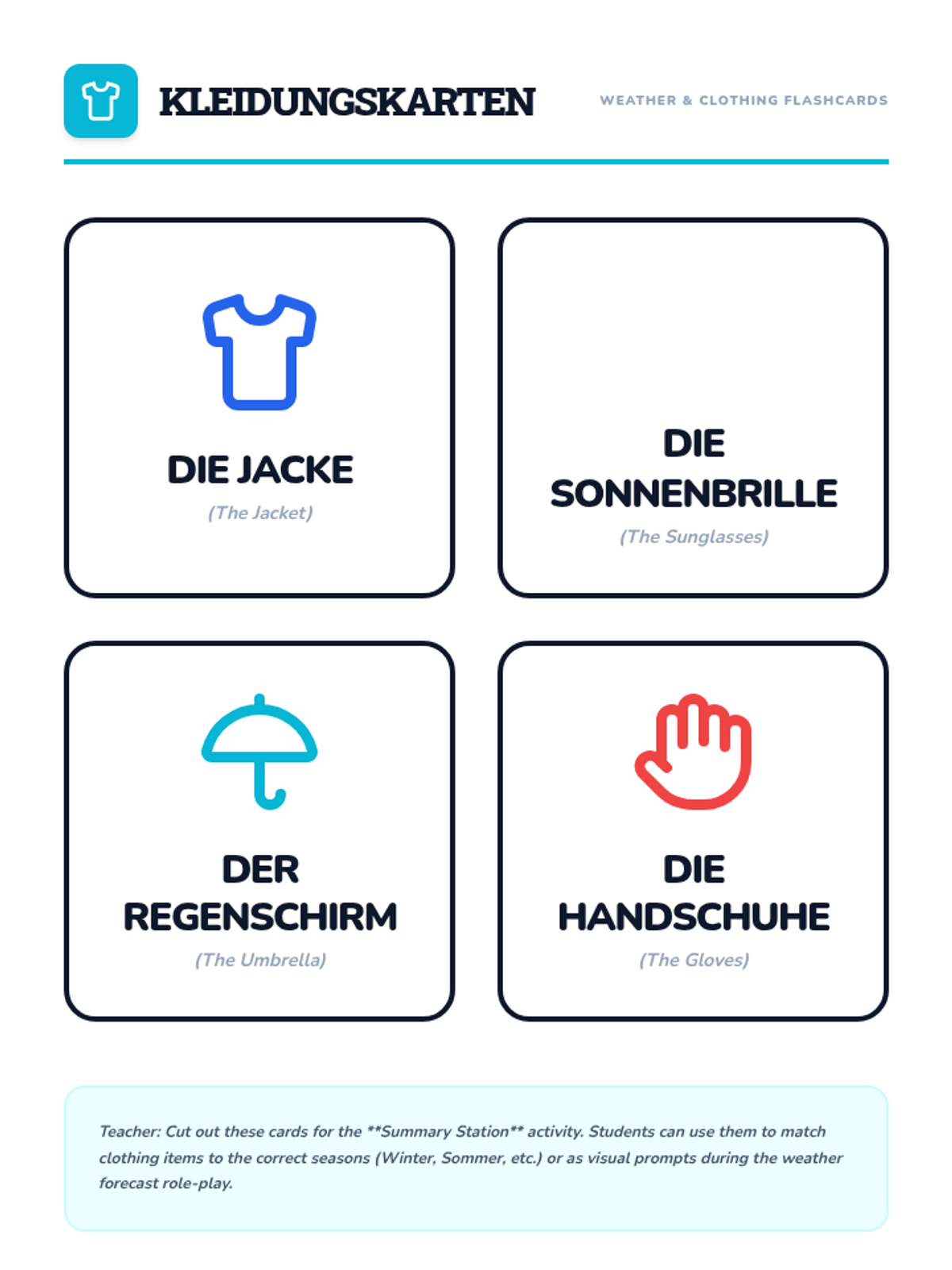
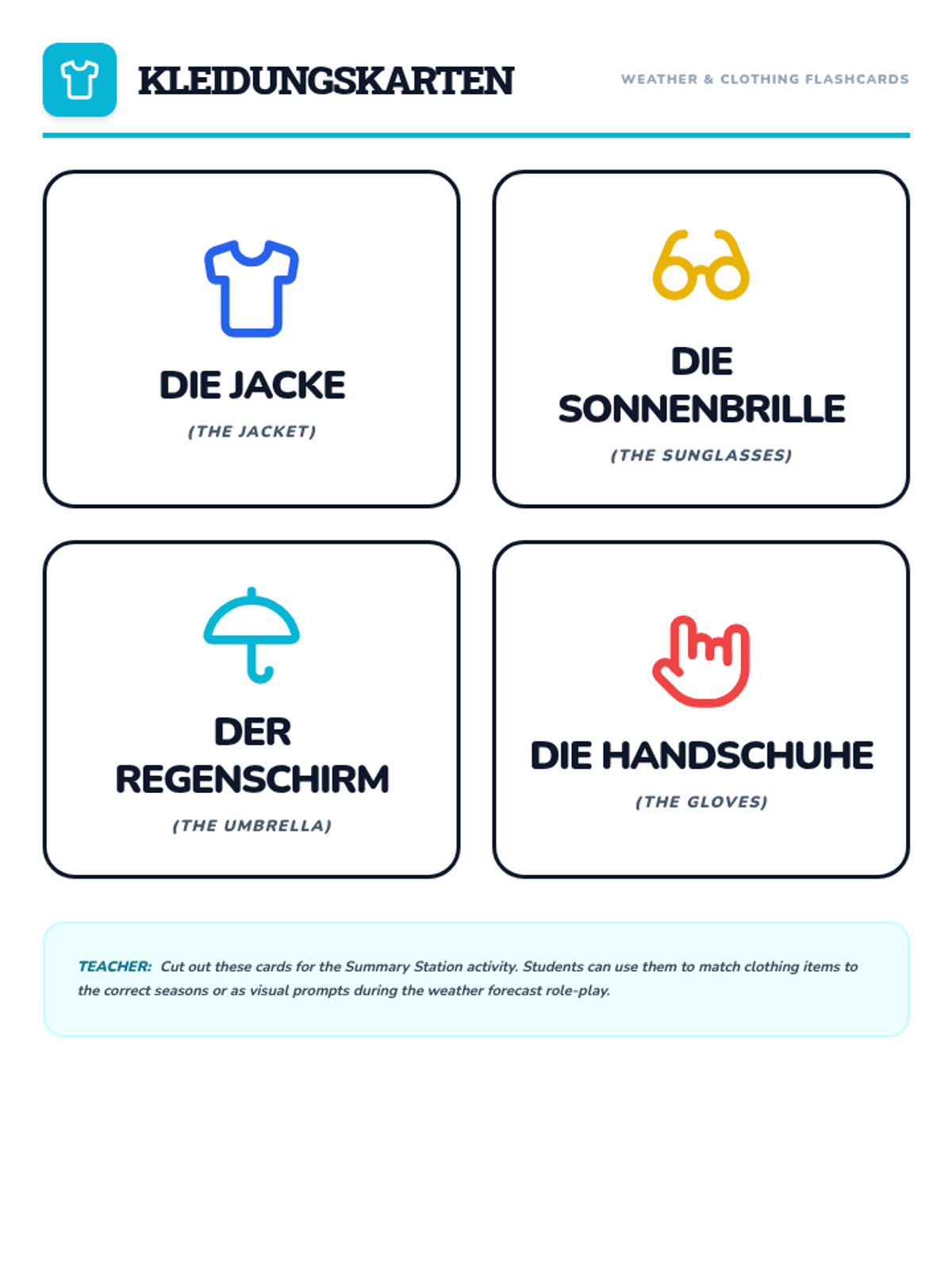
Weather expressions and seasonal clothing. Students convert Celsius to Fahrenheit and present a weather forecast for various German-speaking cities.
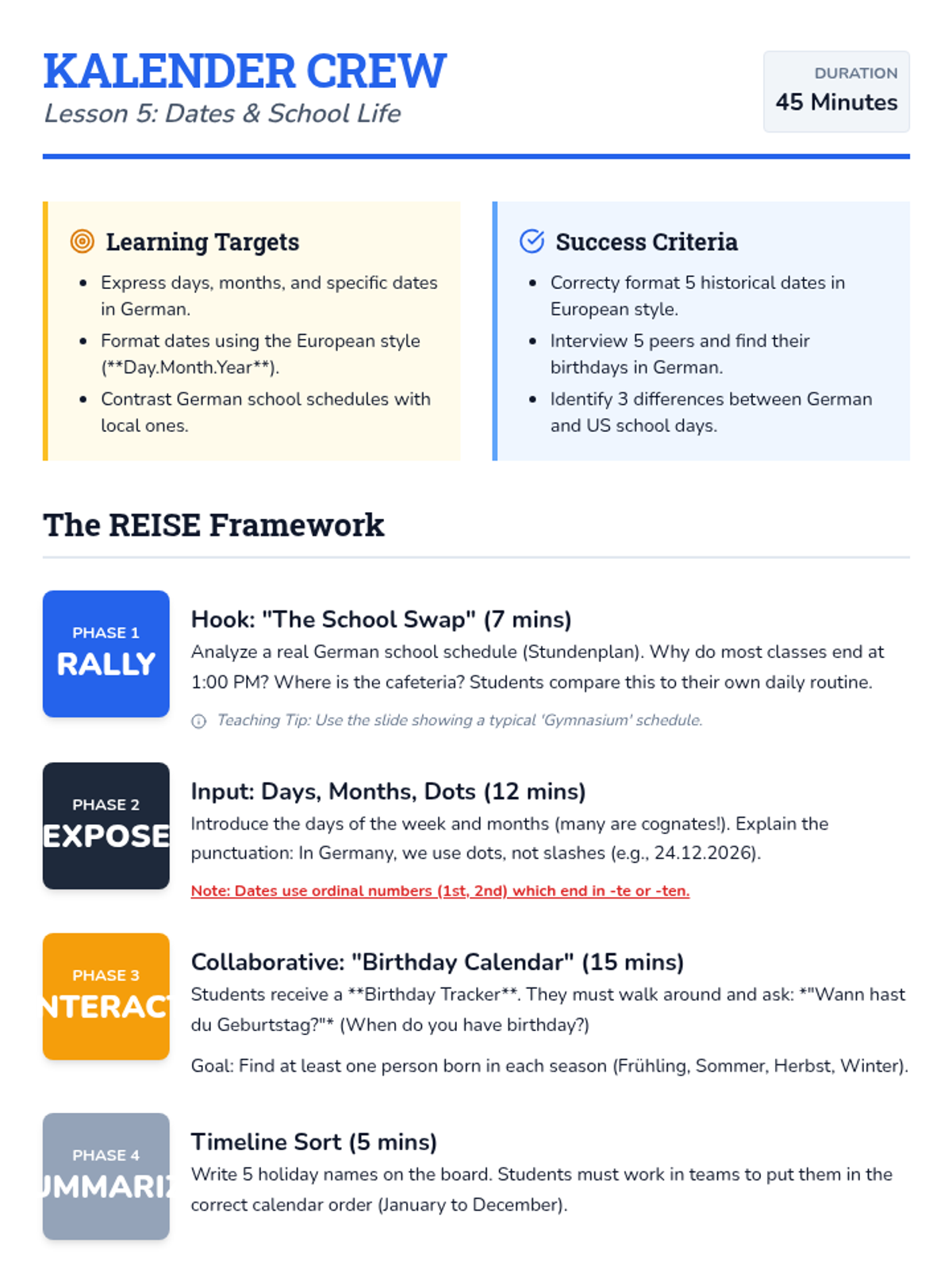
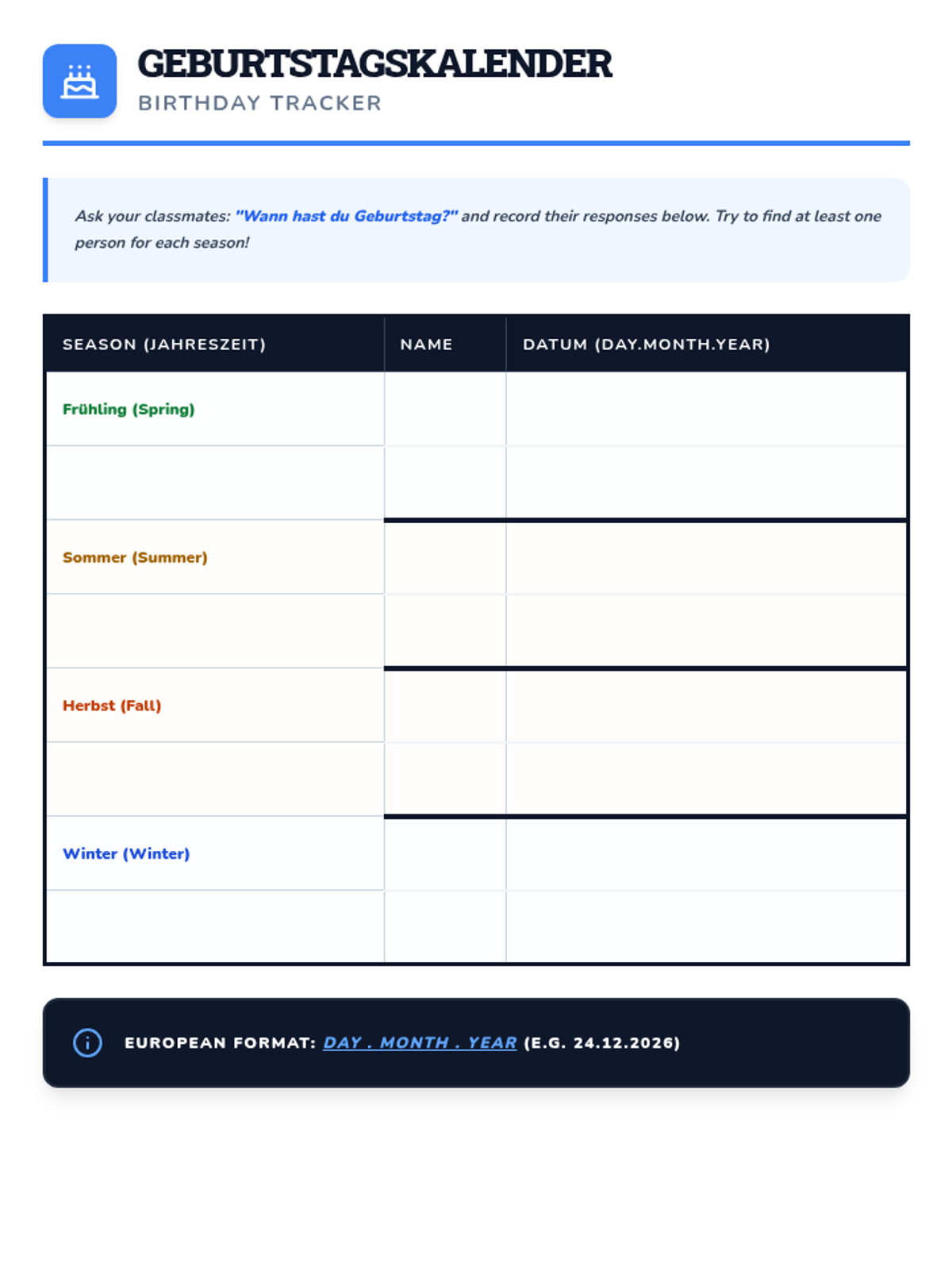
Exploring the German calendar and school system. Students learn date formatting (Day.Month.Year) and compare their school schedules with a typical German 'Halbtagsschule'.
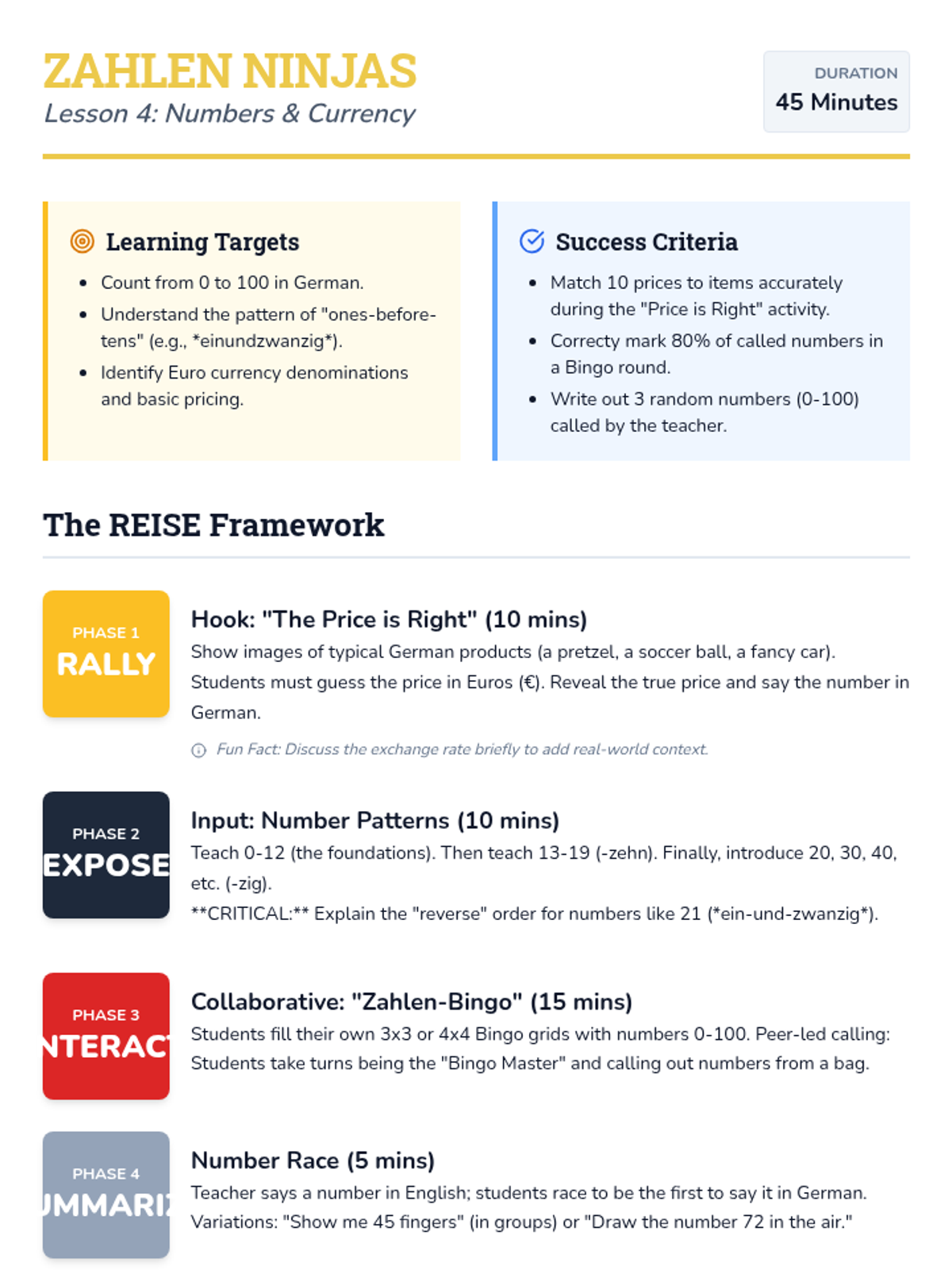
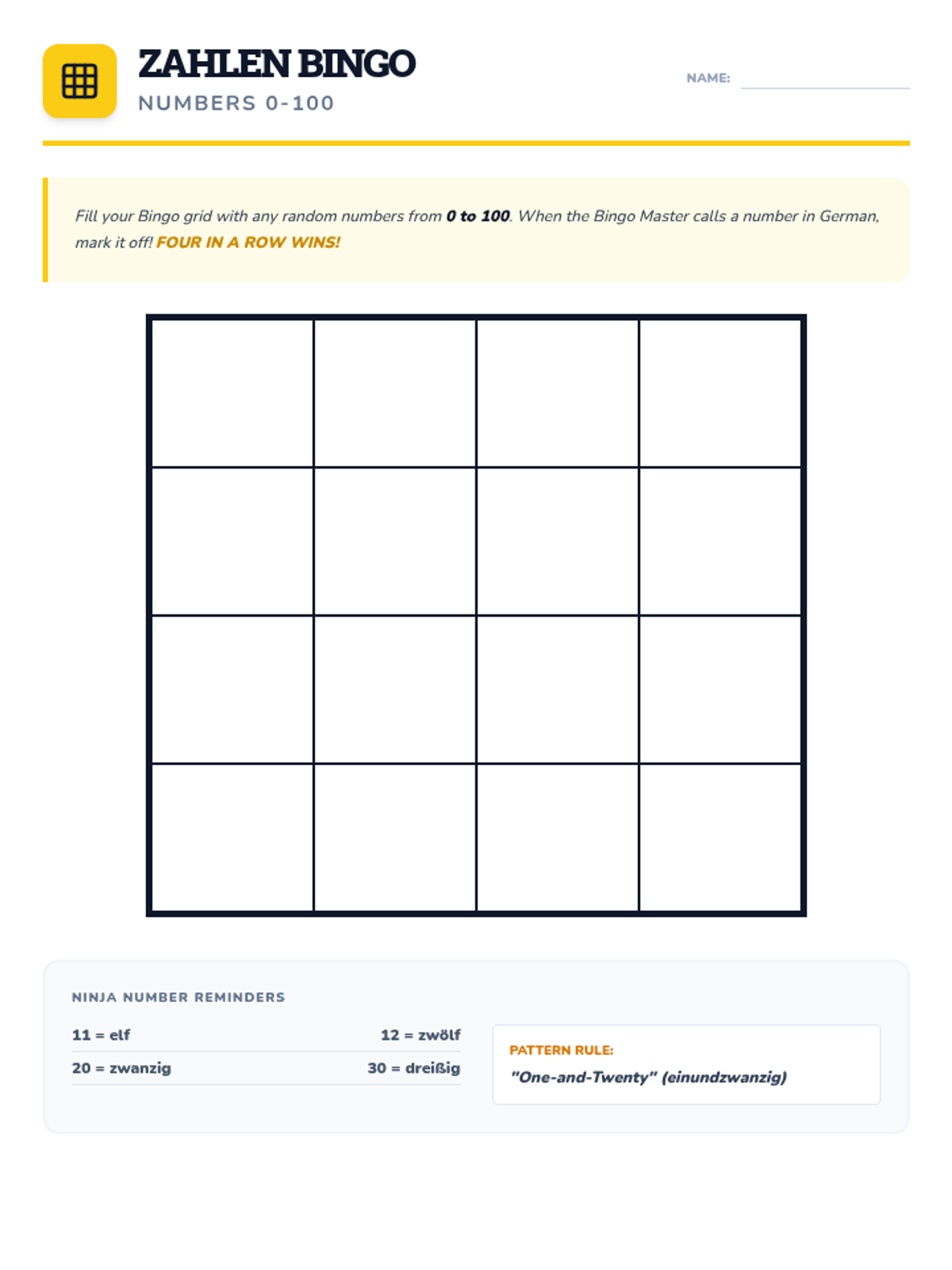
Students master counting up to 100 and explore the Euro currency. They participate in a German-themed 'Price is Right' and peer-led Bingo rounds.
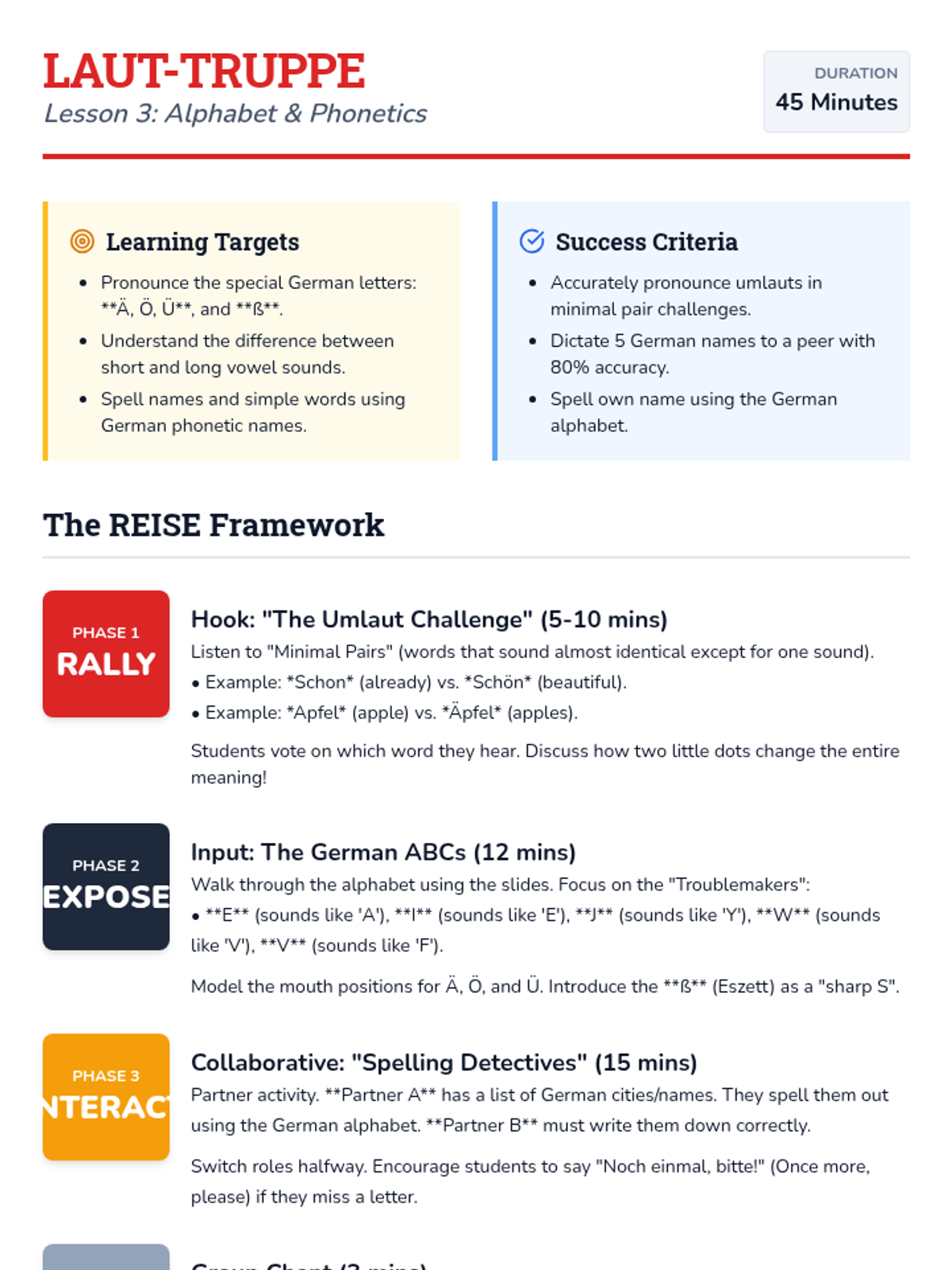
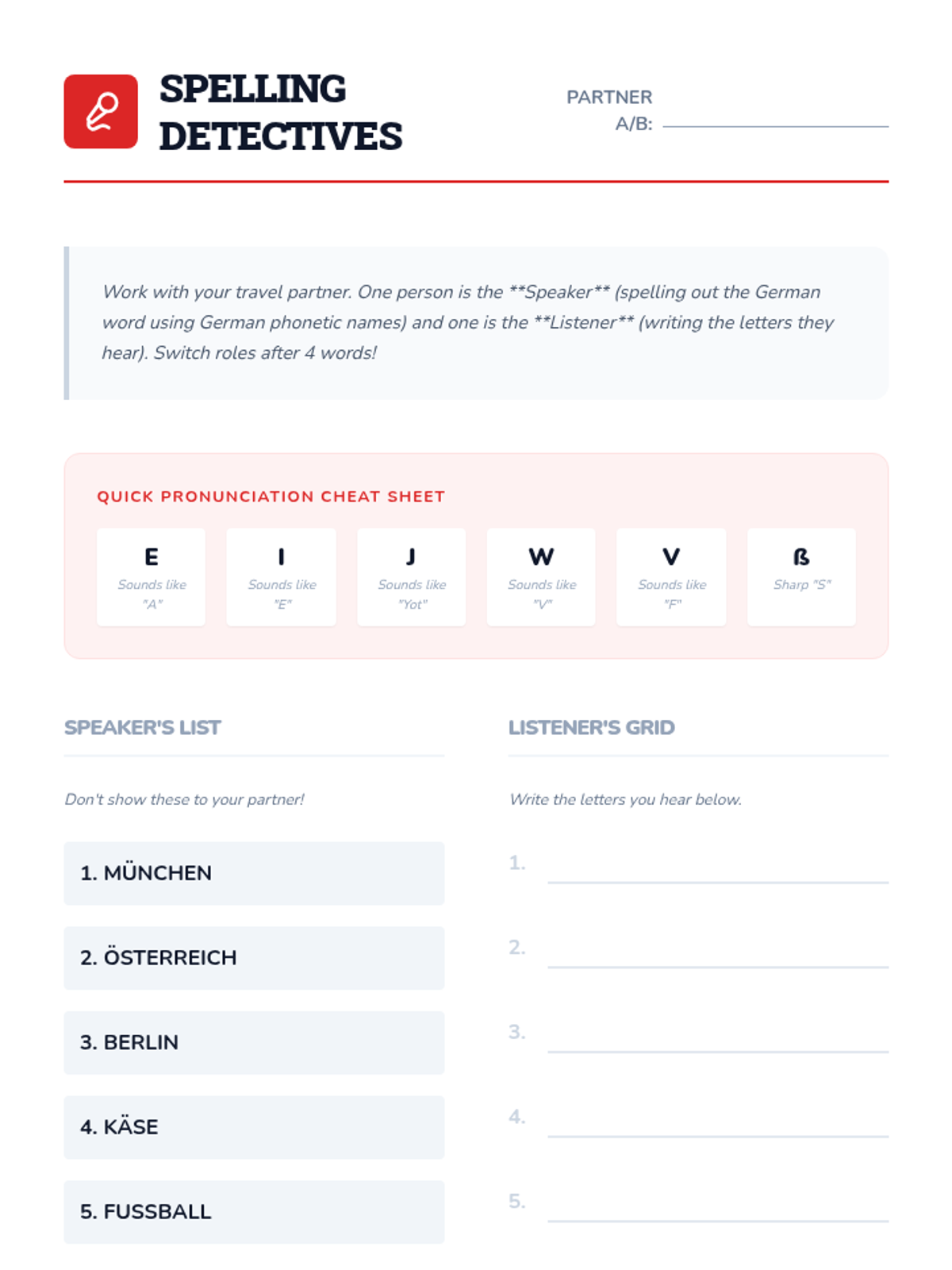
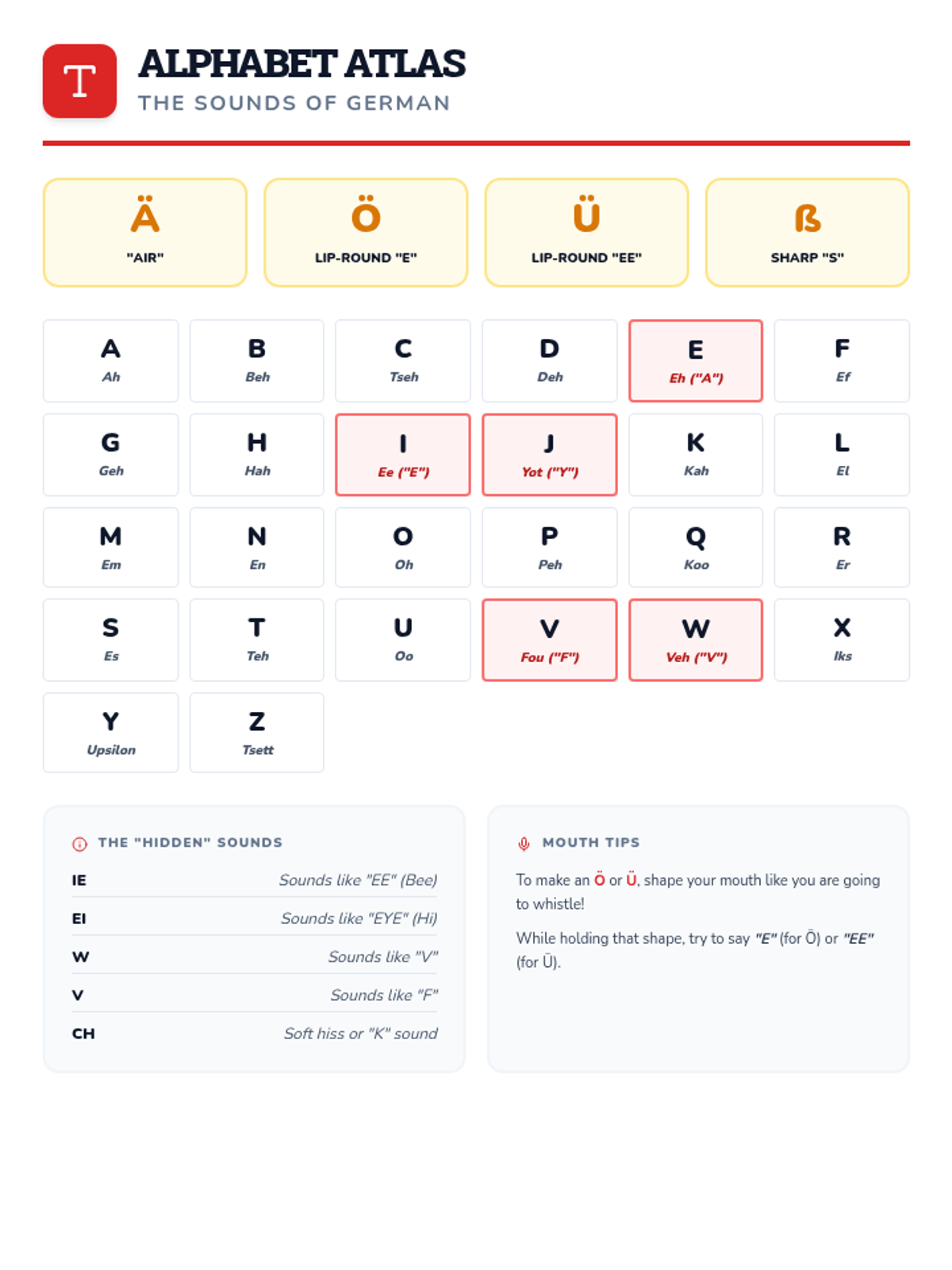
A phonetics-focused lesson covering the German alphabet, with special attention to the unique letters Ä, Ö, Ü, and ß. Students practice spelling names and identifying phonetic sounds.
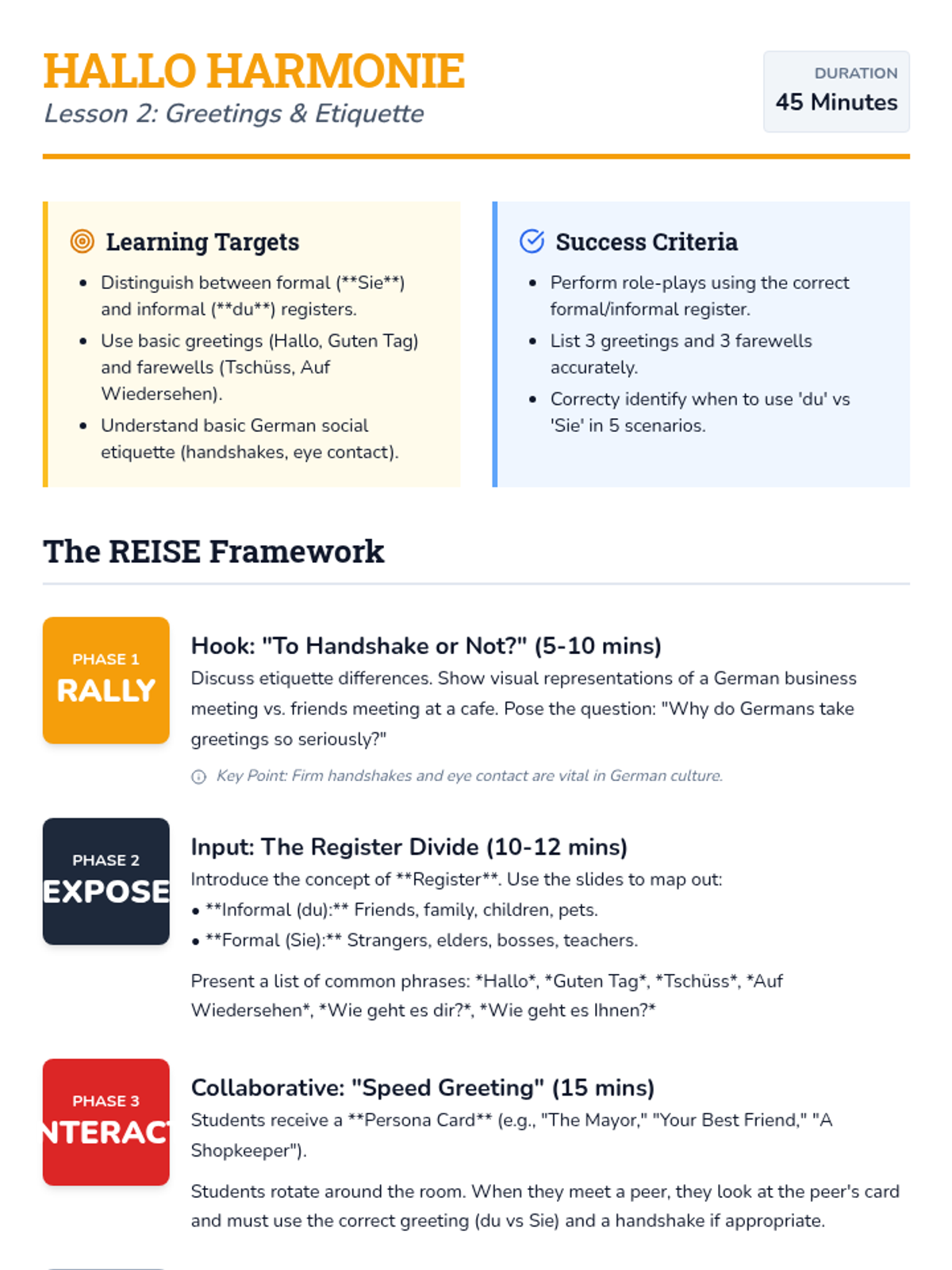
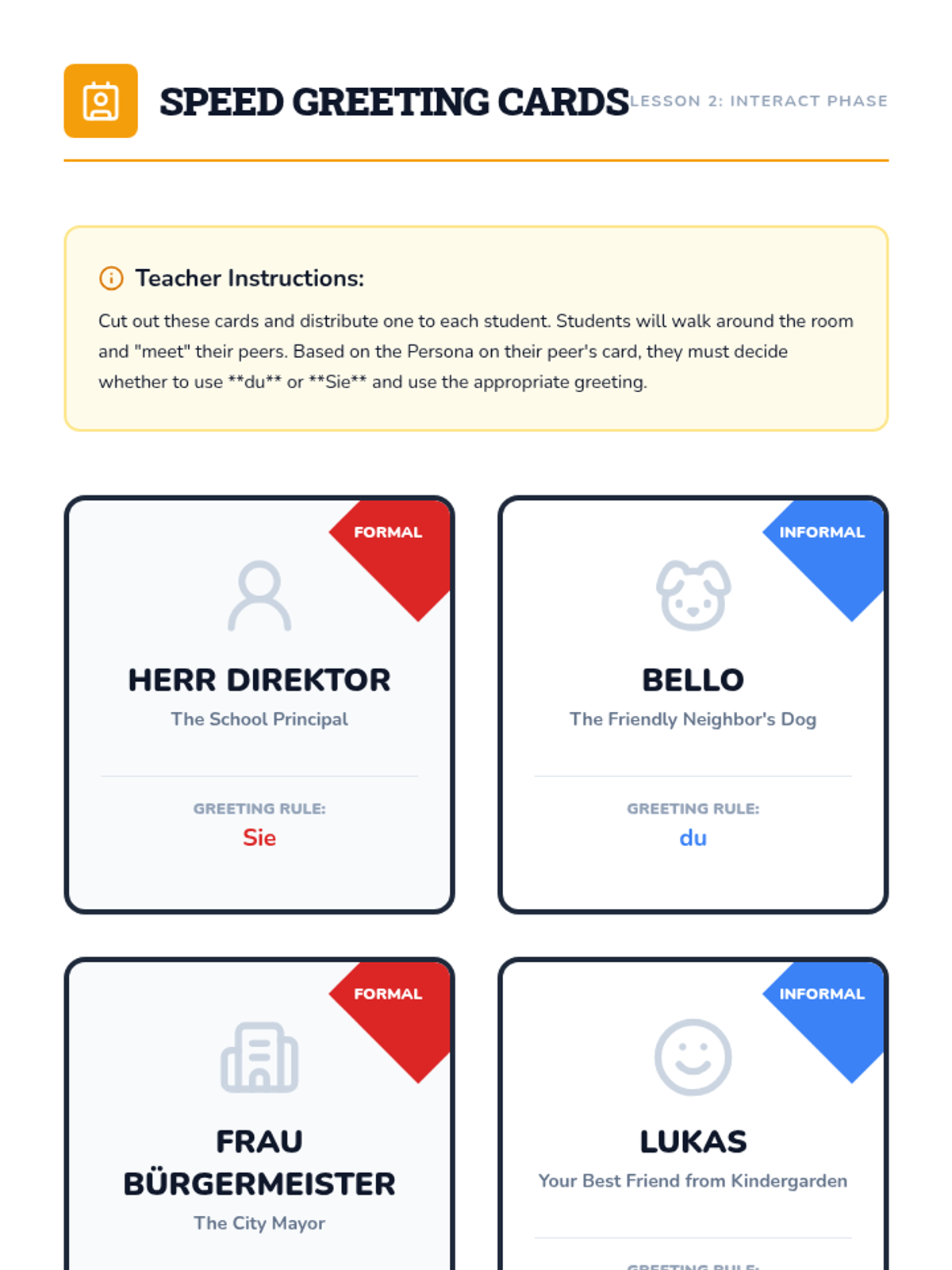
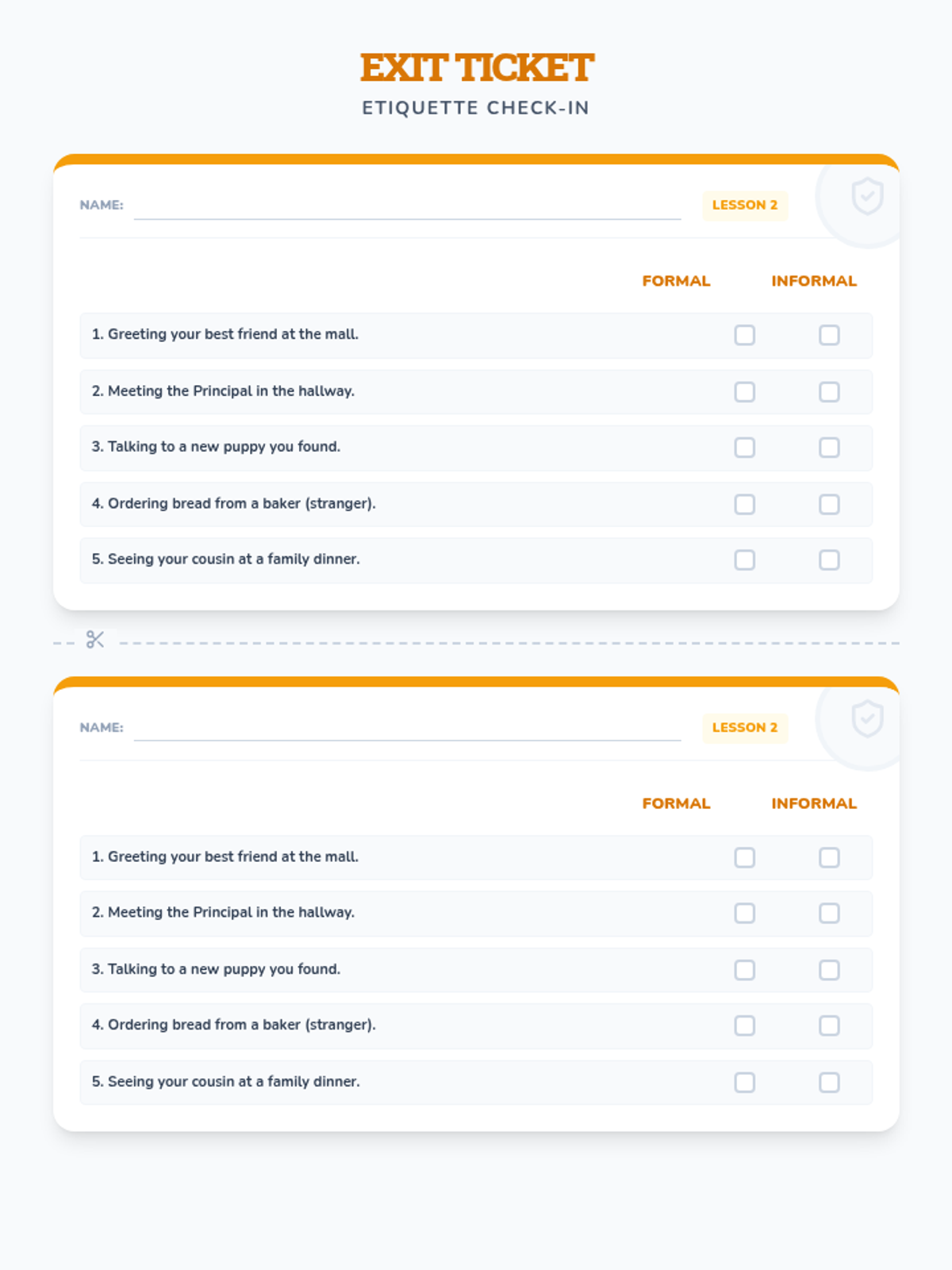
Students learn the nuances of German social interaction, specifically the distinction between the formal 'Sie' and informal 'du'. Activities include role-playing greetings with different personae.
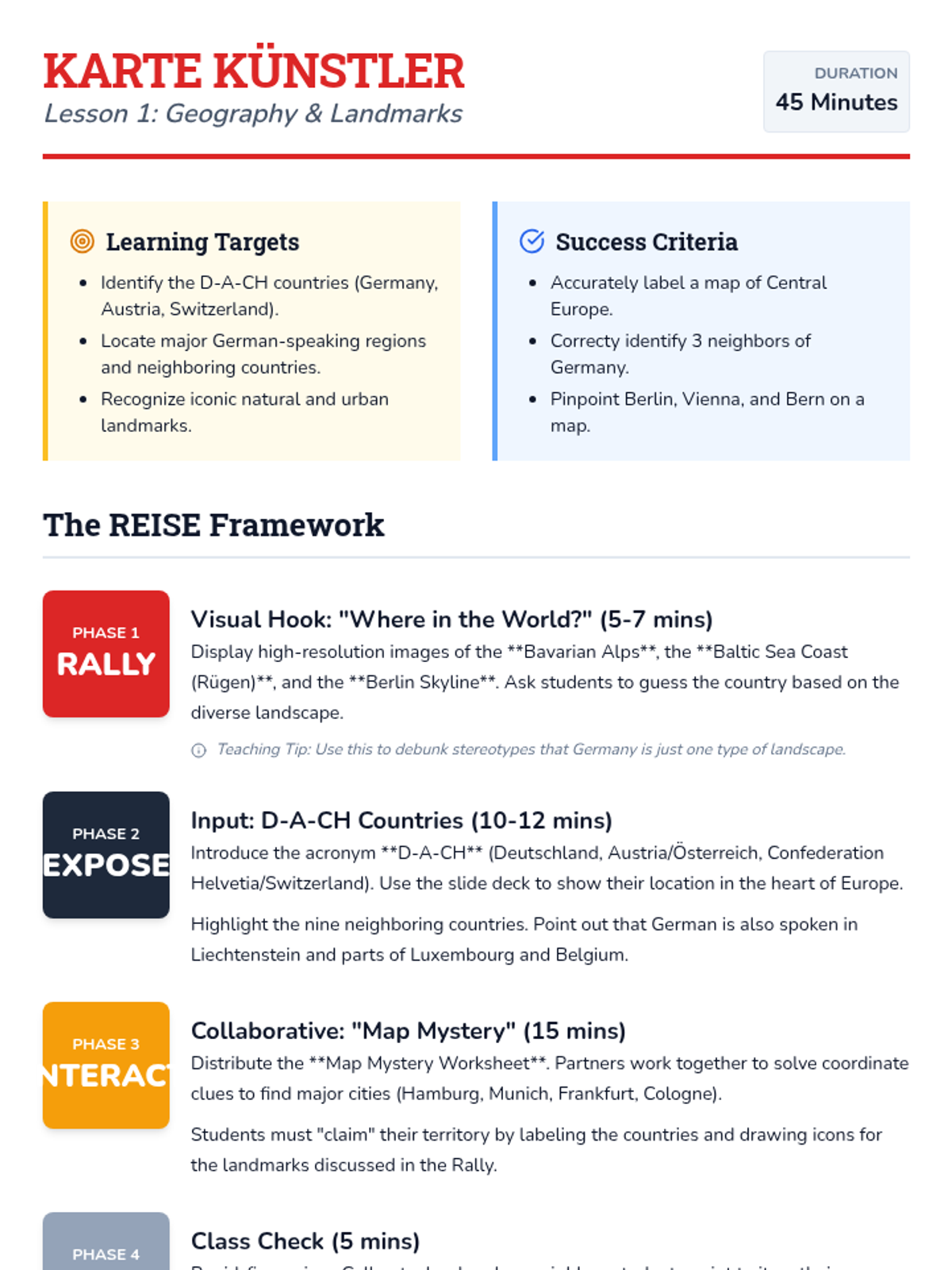
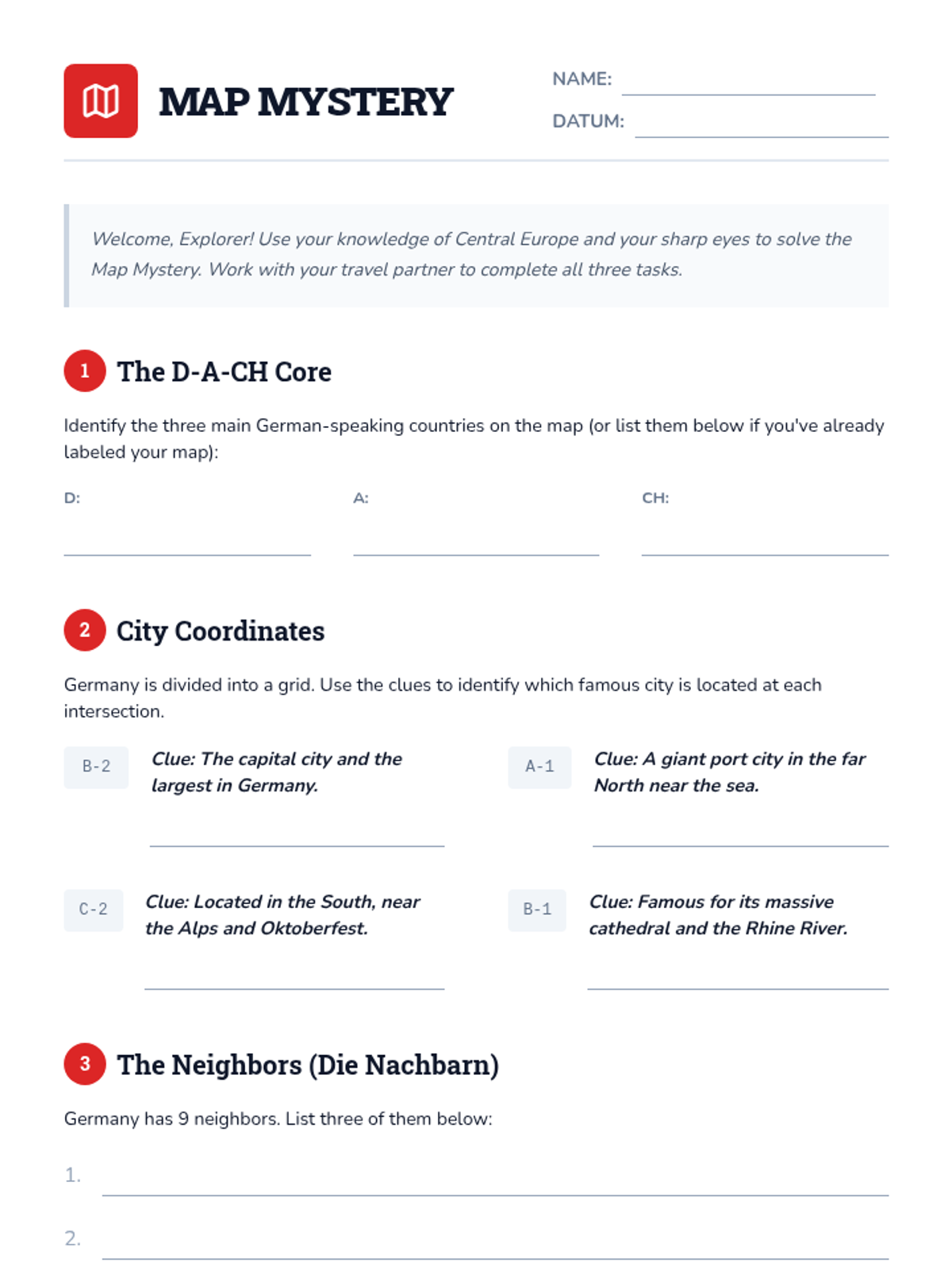
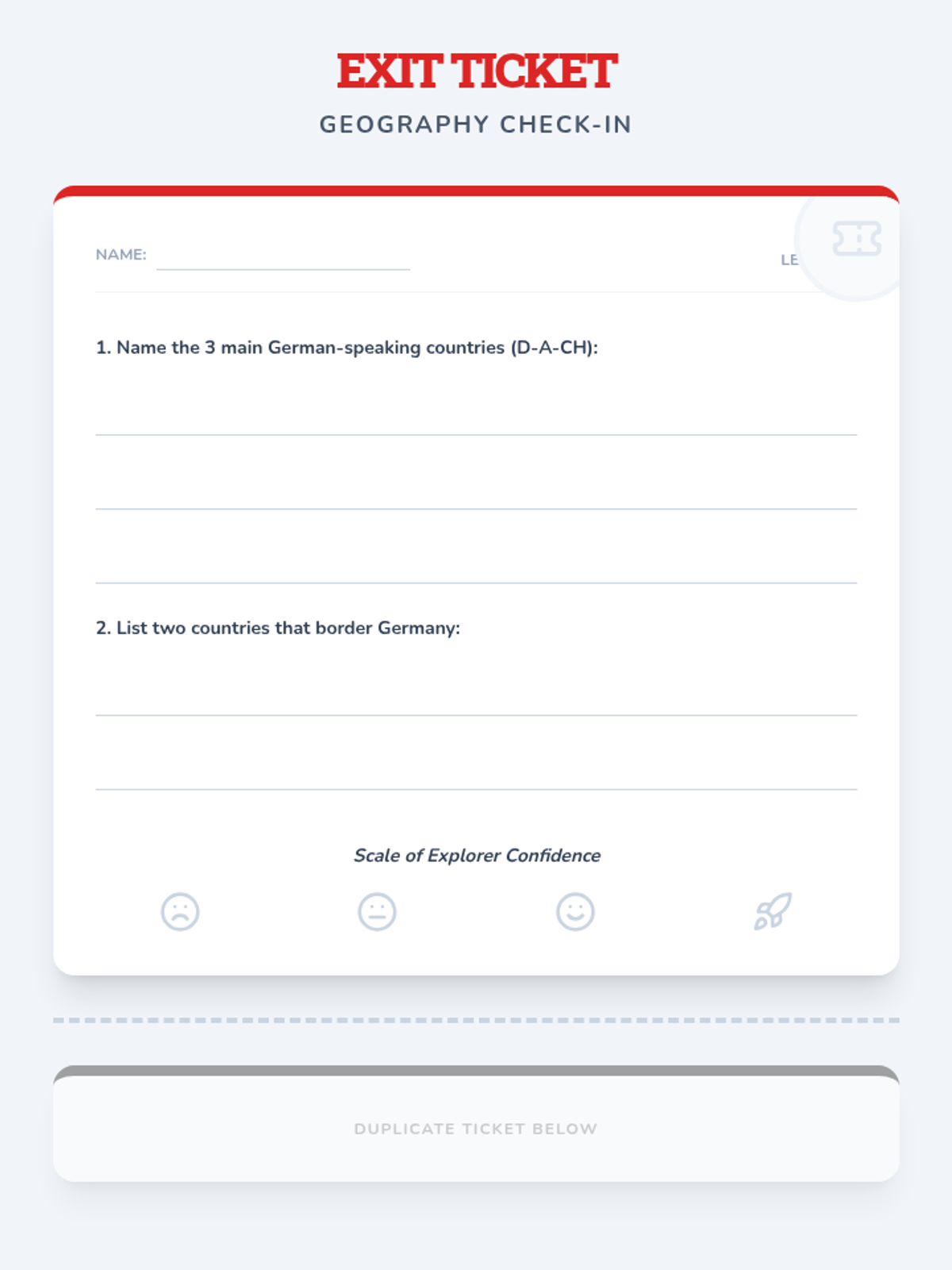
Students explore the geography of Central Europe, focusing on the D-A-CH countries (Germany, Austria, Switzerland) and major landmarks. Activities include a visual hook of the Alps and Baltic coast and a coordinate-based map mystery.
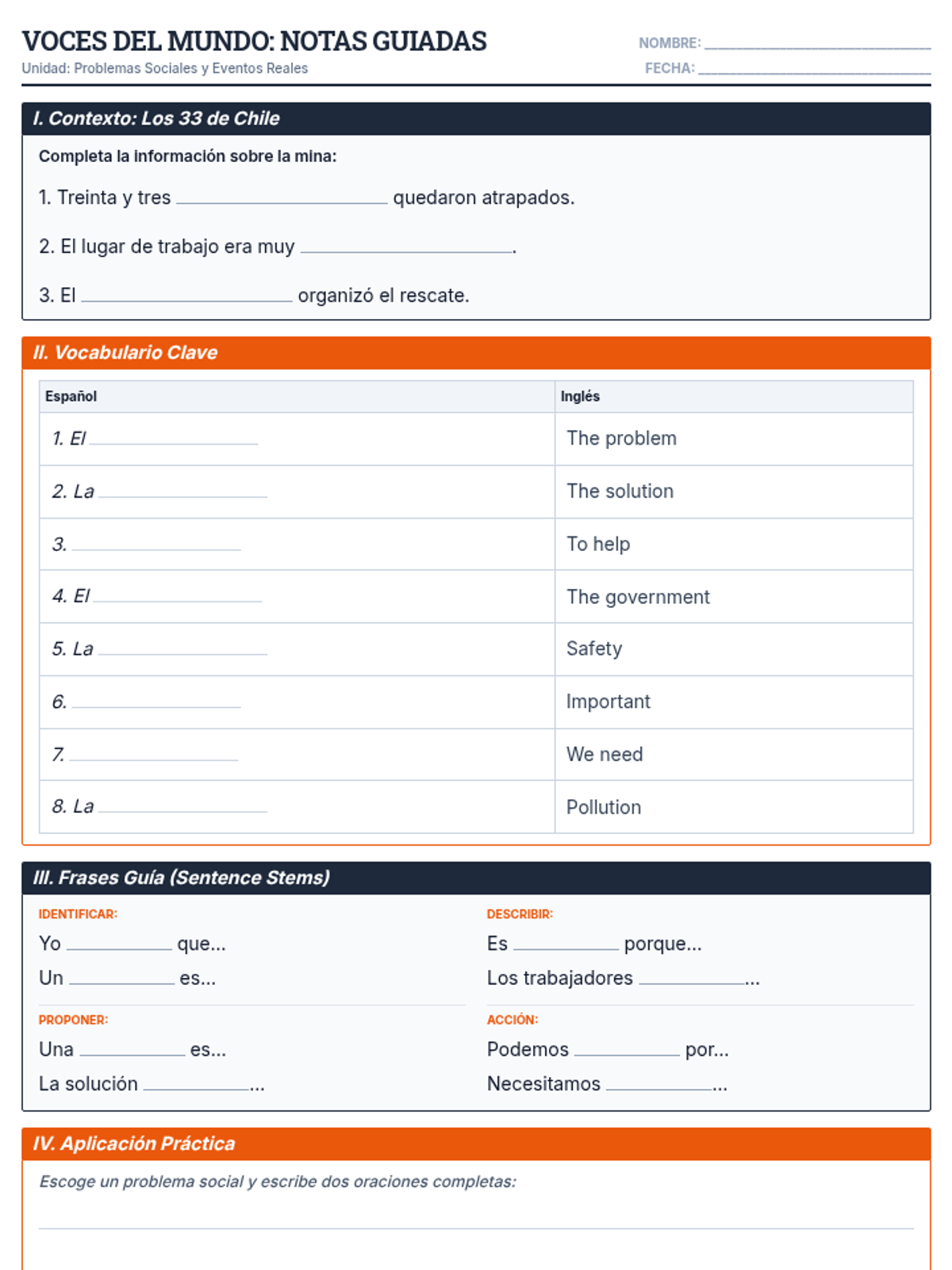
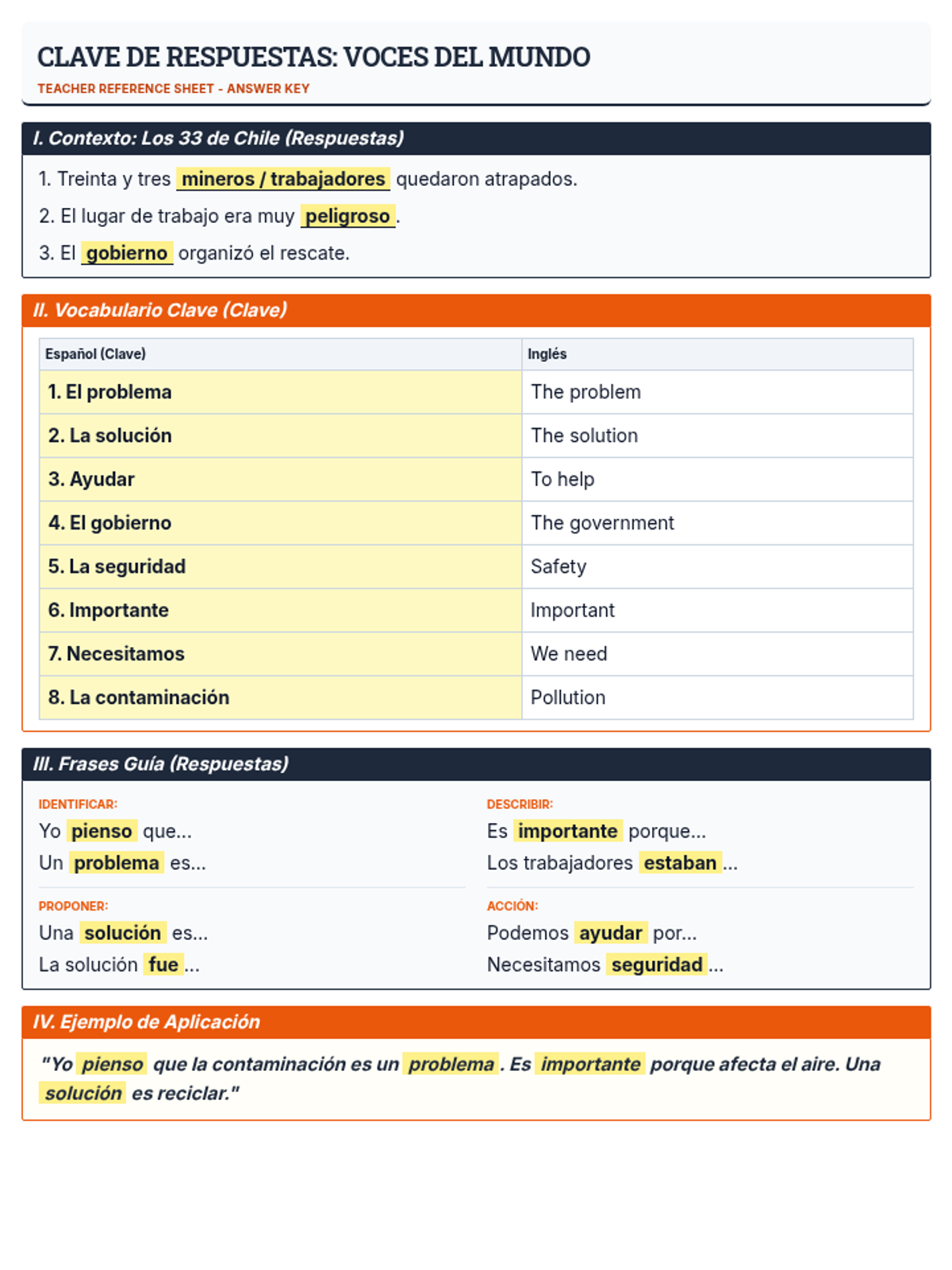
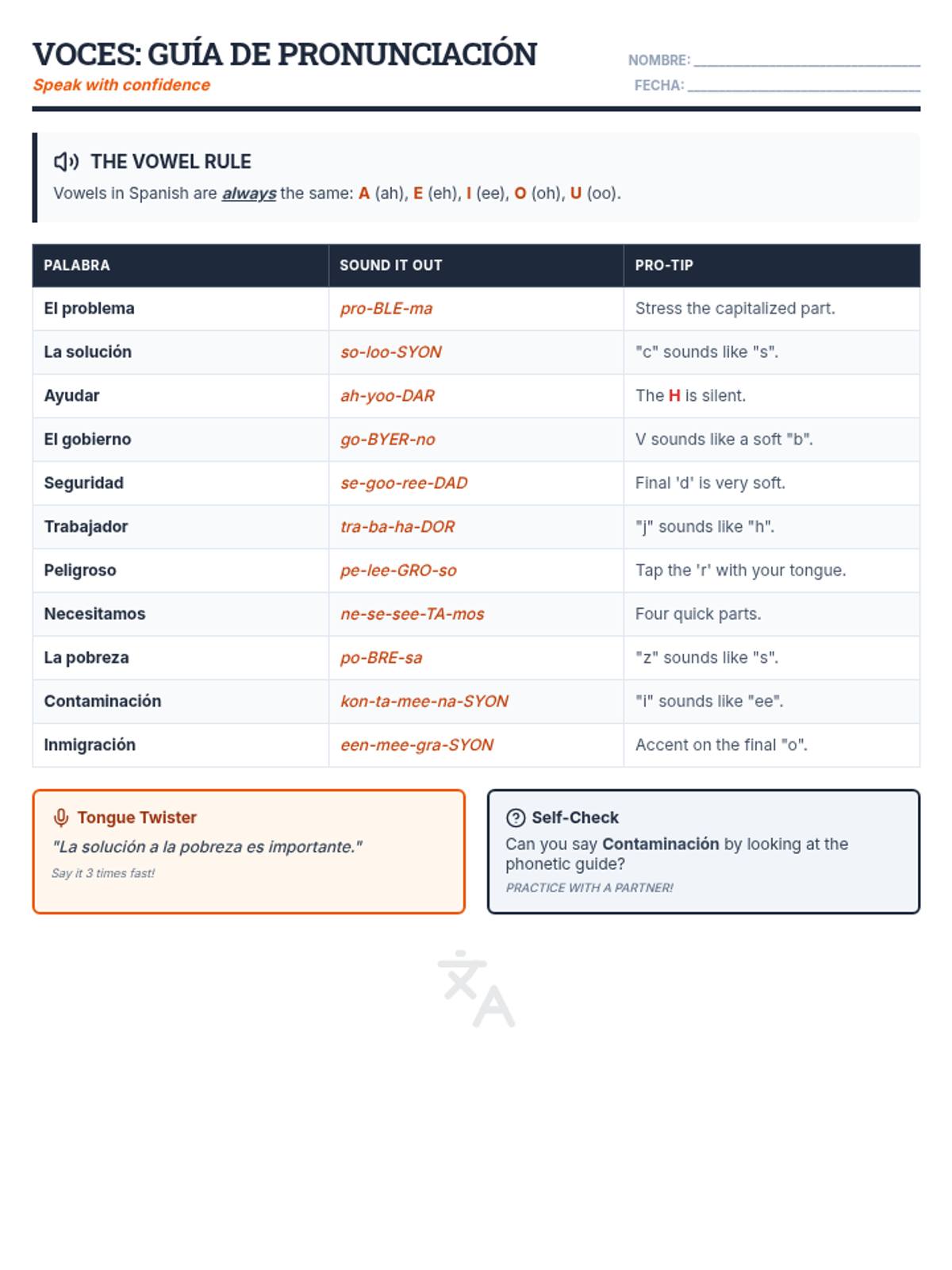
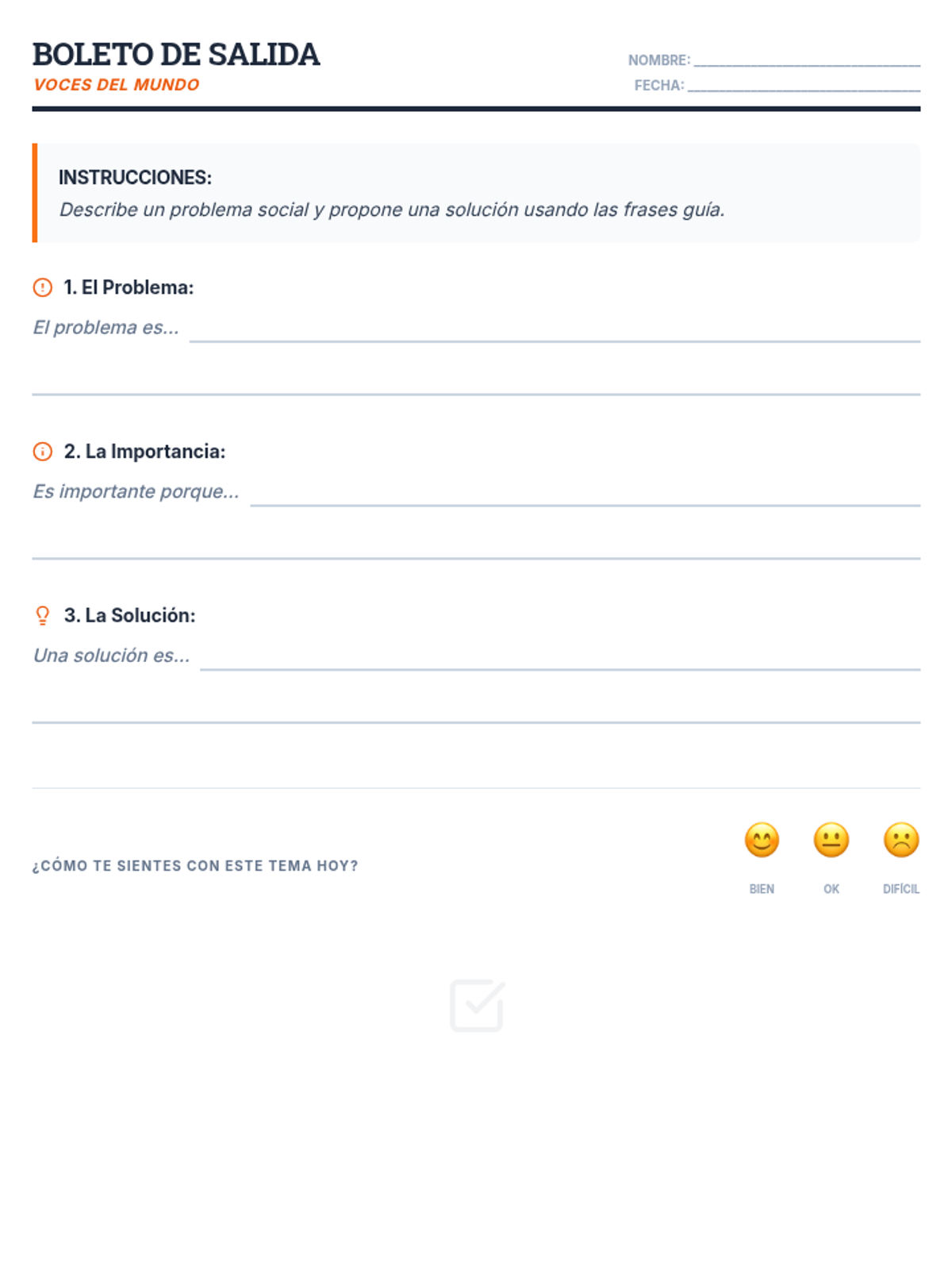
This lesson introduces students to social issues and real-world events through the context of the Chilean mine collapse, focusing on vocabulary acquisition and sentence stems for proposing solutions.
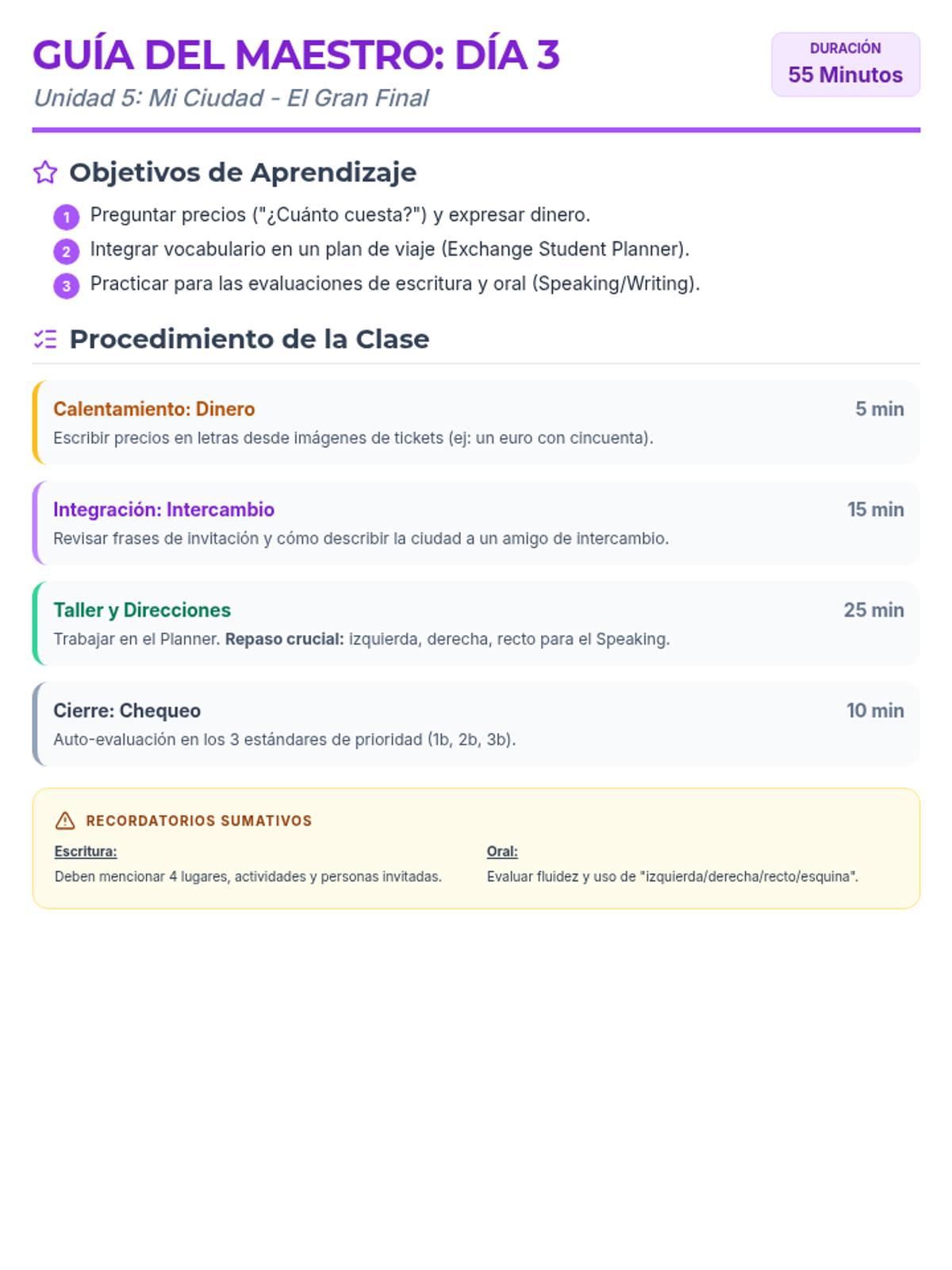
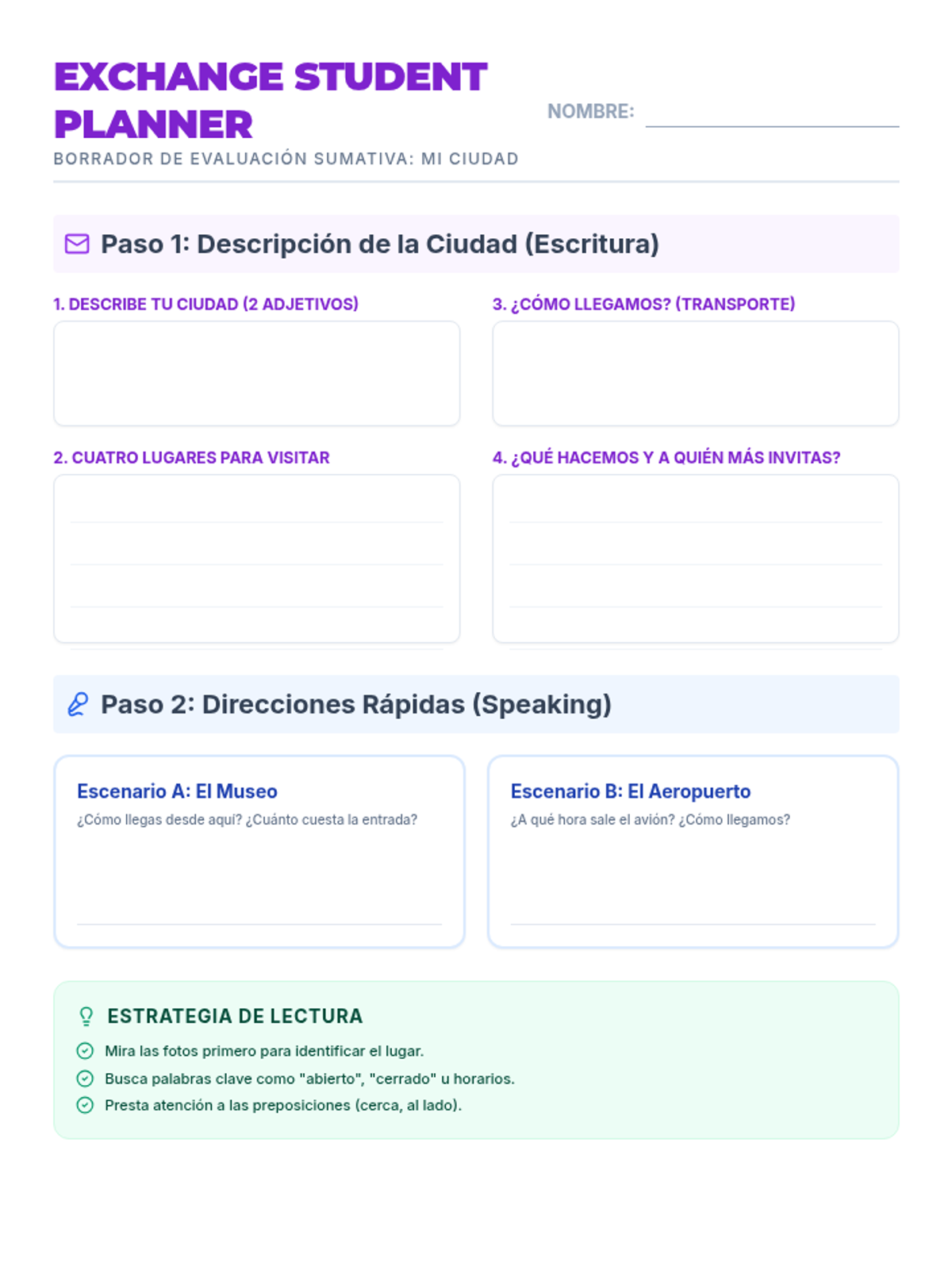
Day 3 integrates all concepts including costs, travel planning, and structured practice for the writing and speaking summative assessments.
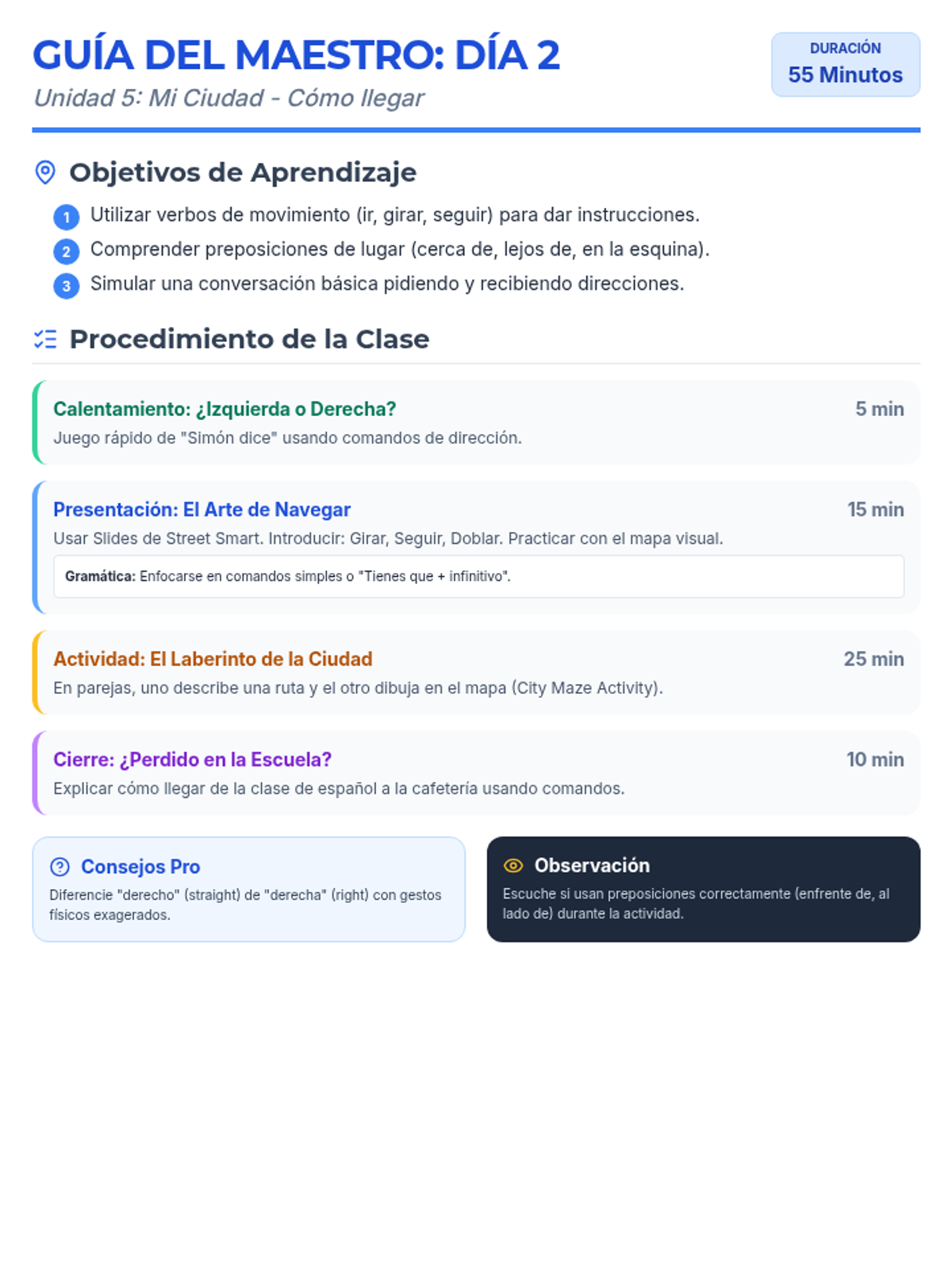
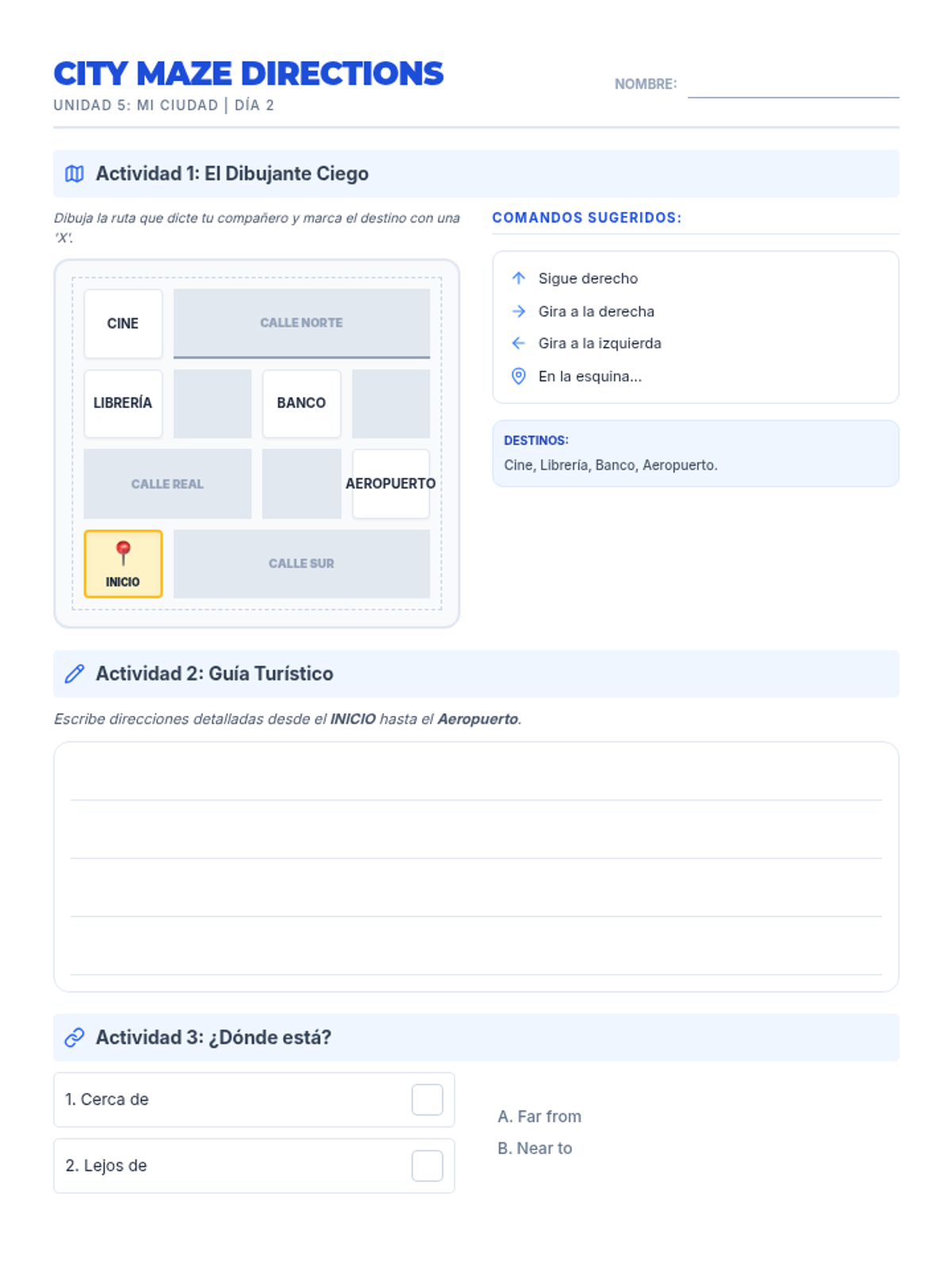
Day 2 focuses on verbs of motion, prepositions of place, and the practical application of giving and receiving directions.
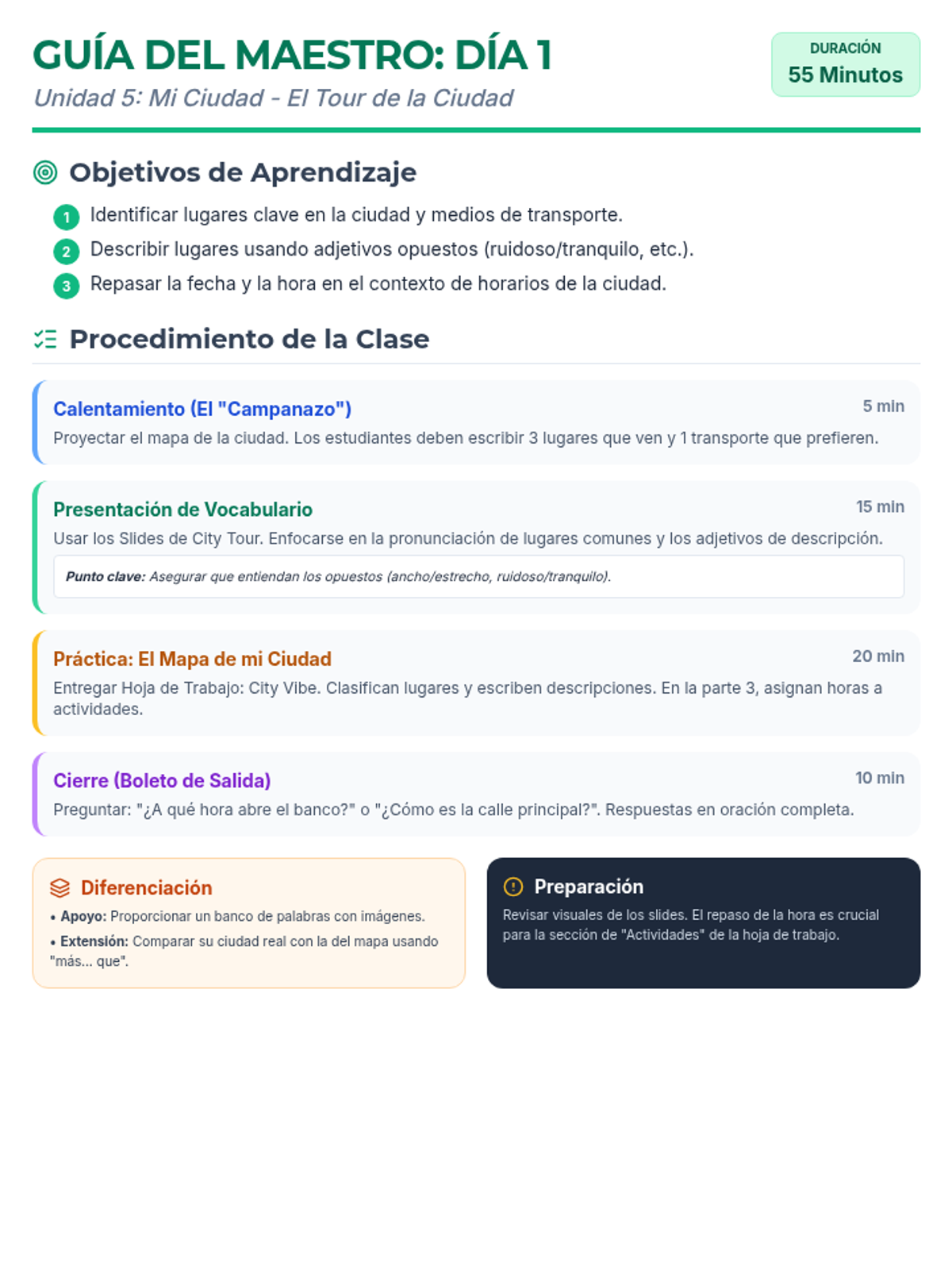
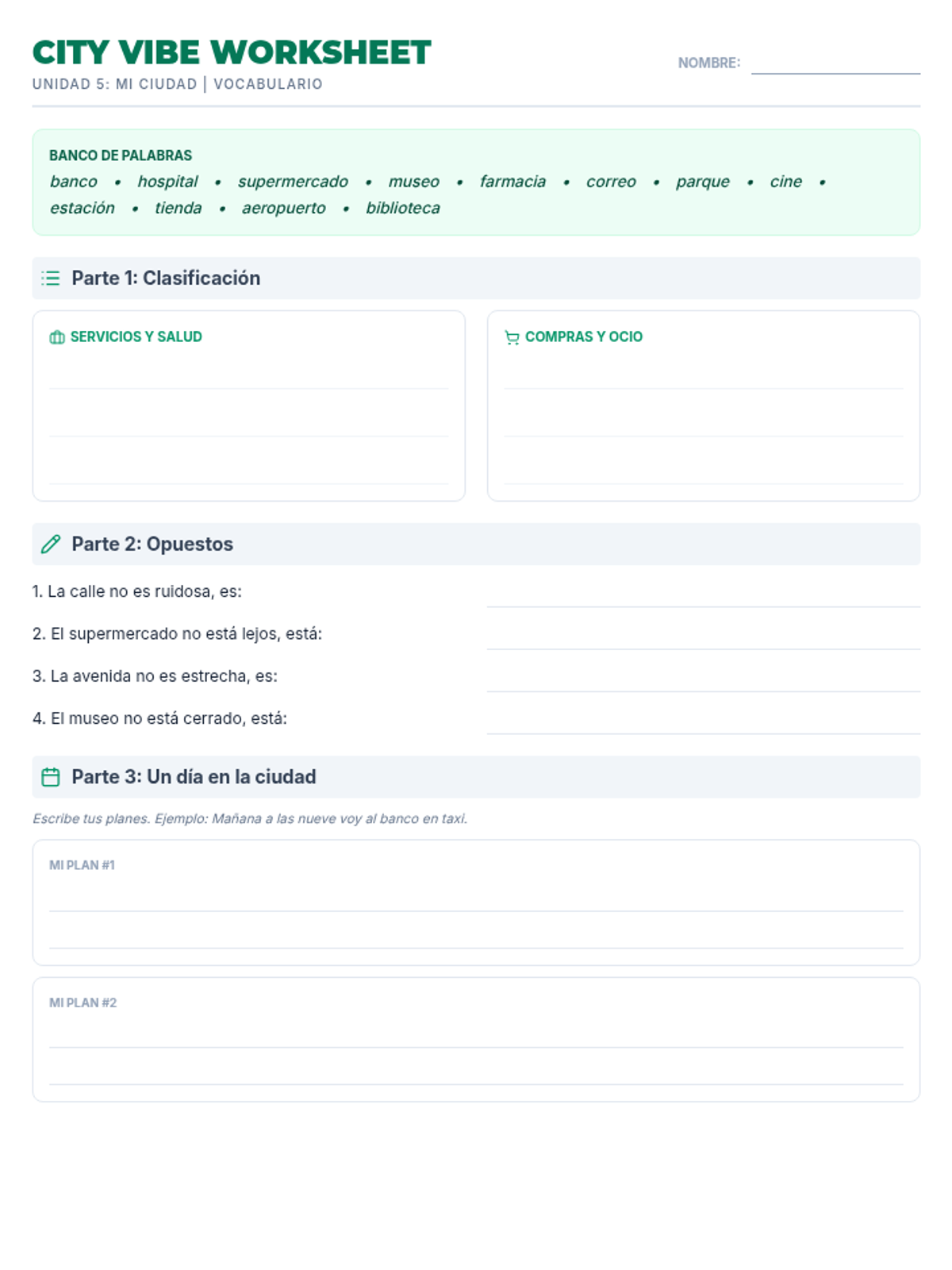
Day 1 focuses on identifying city locations, using descriptive adjectives, and reviewing date and time for planning city visits.
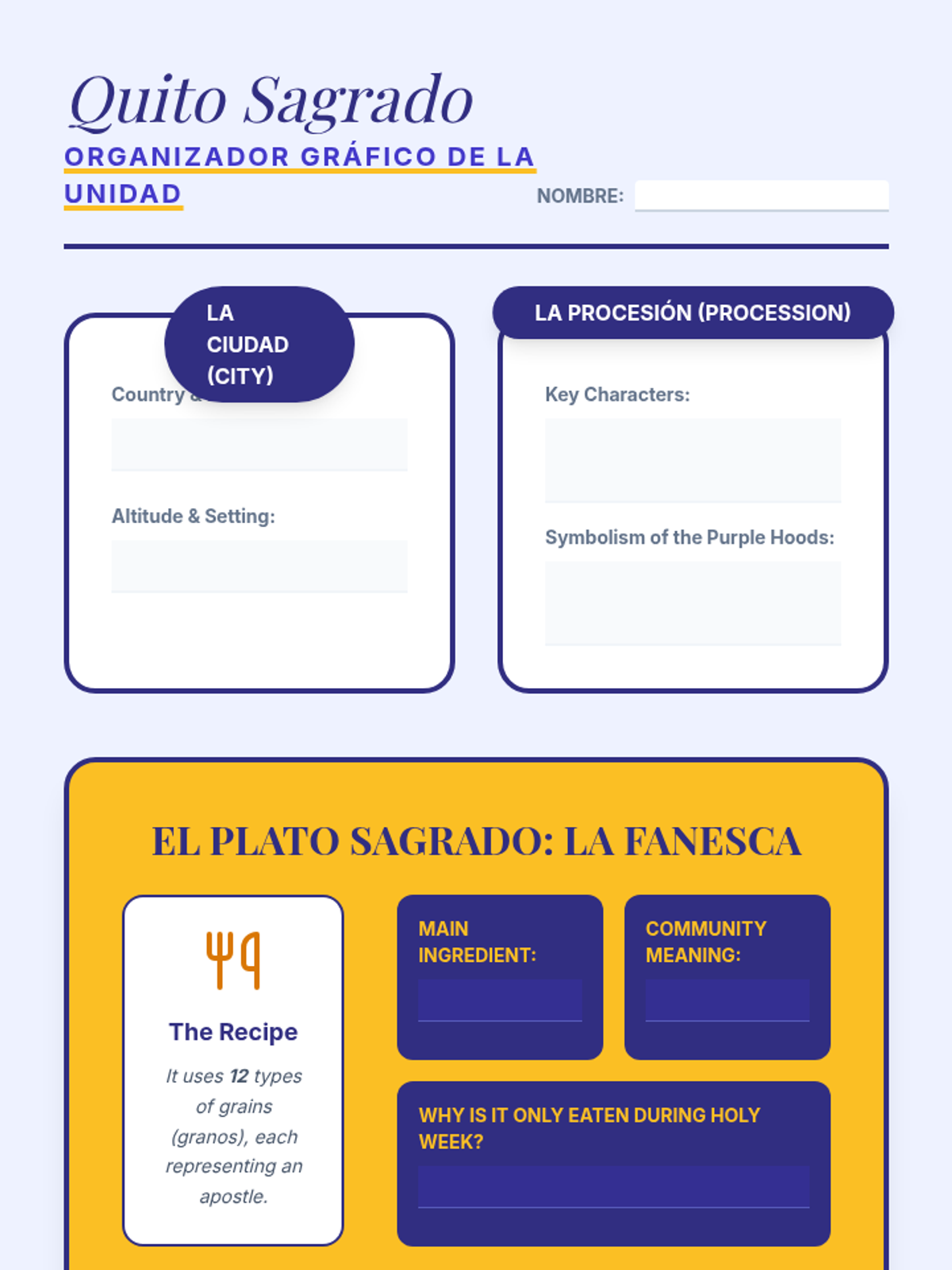
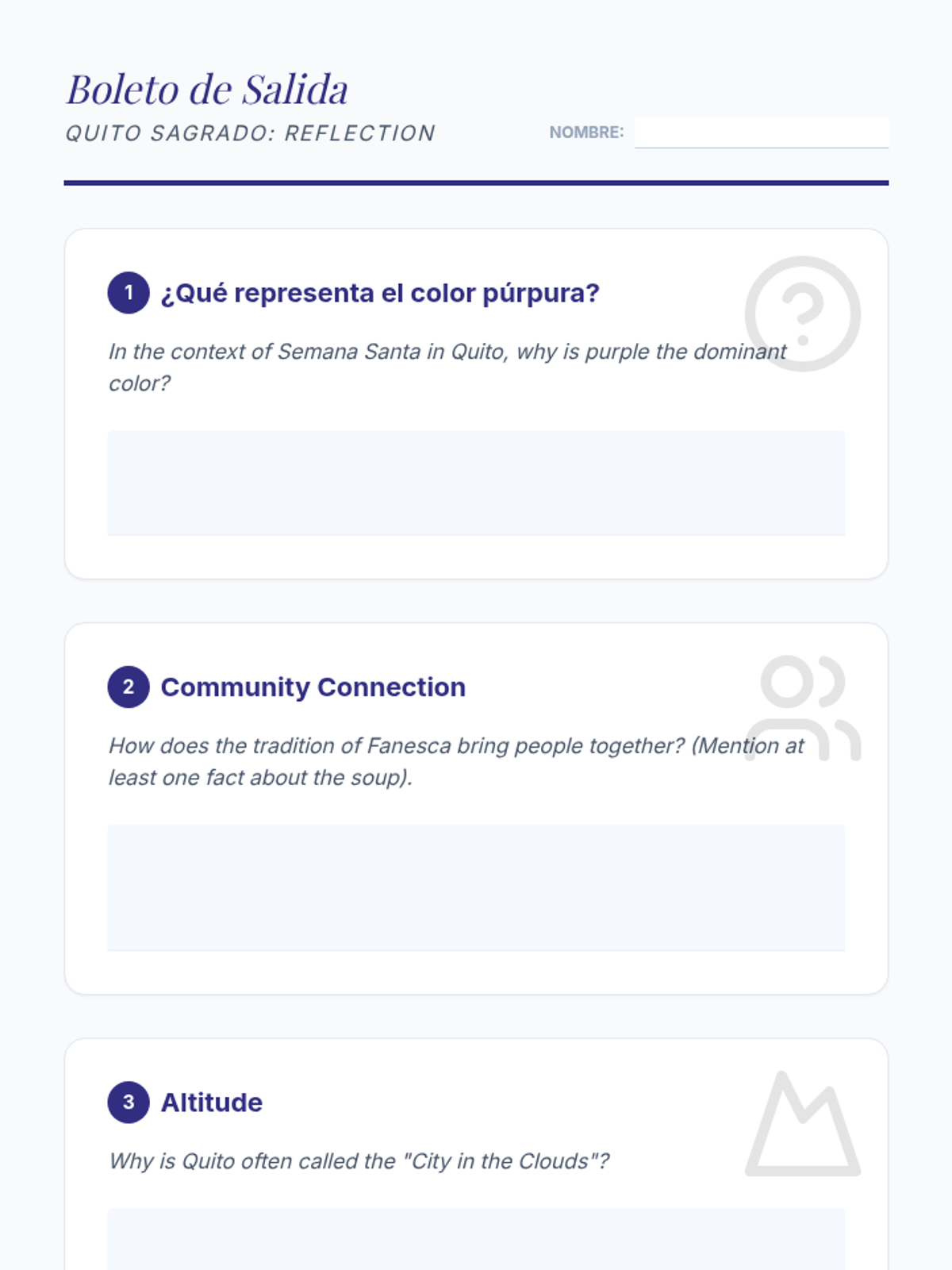
Exploring the role of community through the traditional Fanesca soup and summarizing the unit's learning with a graphic organizer.
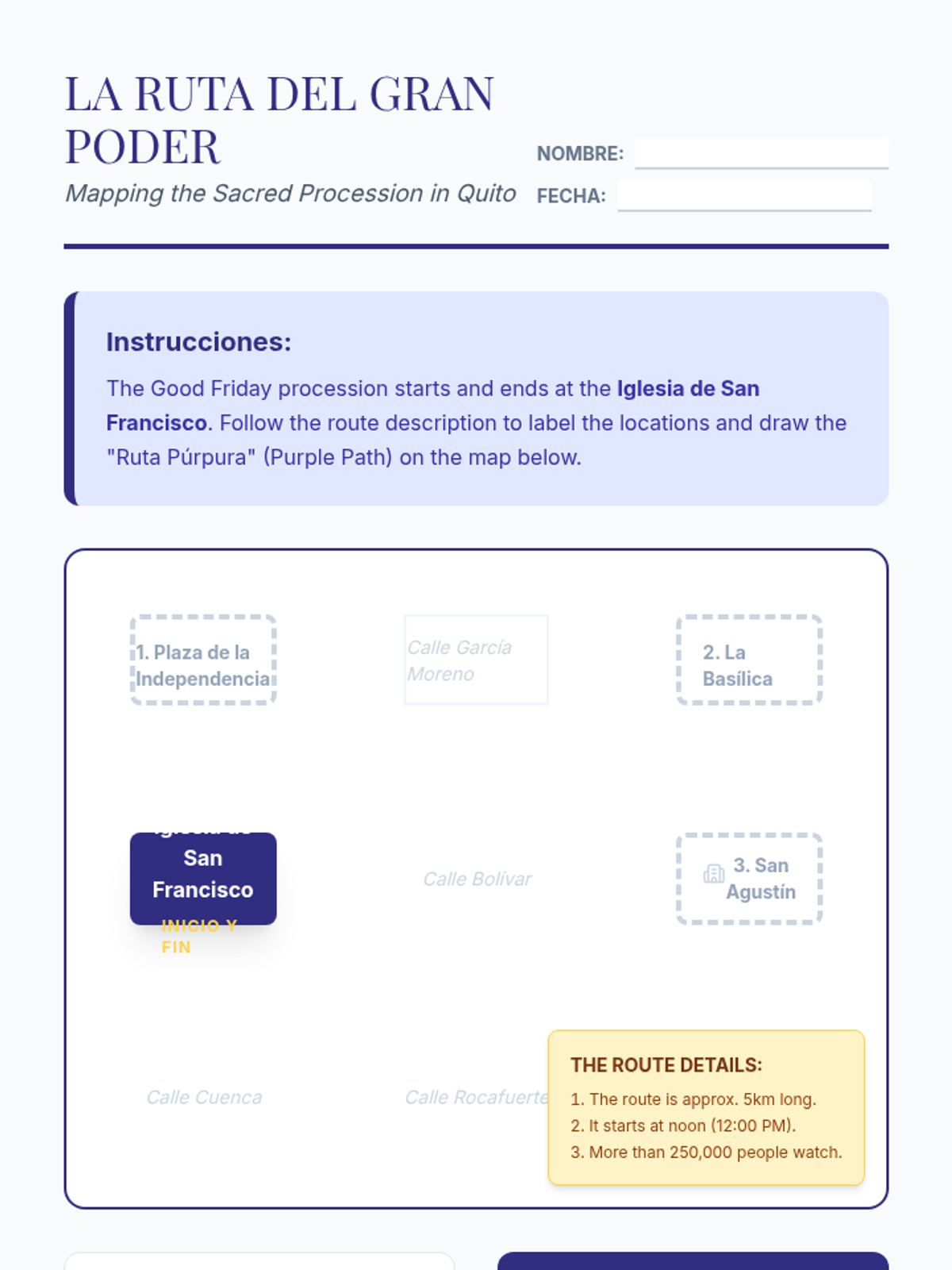
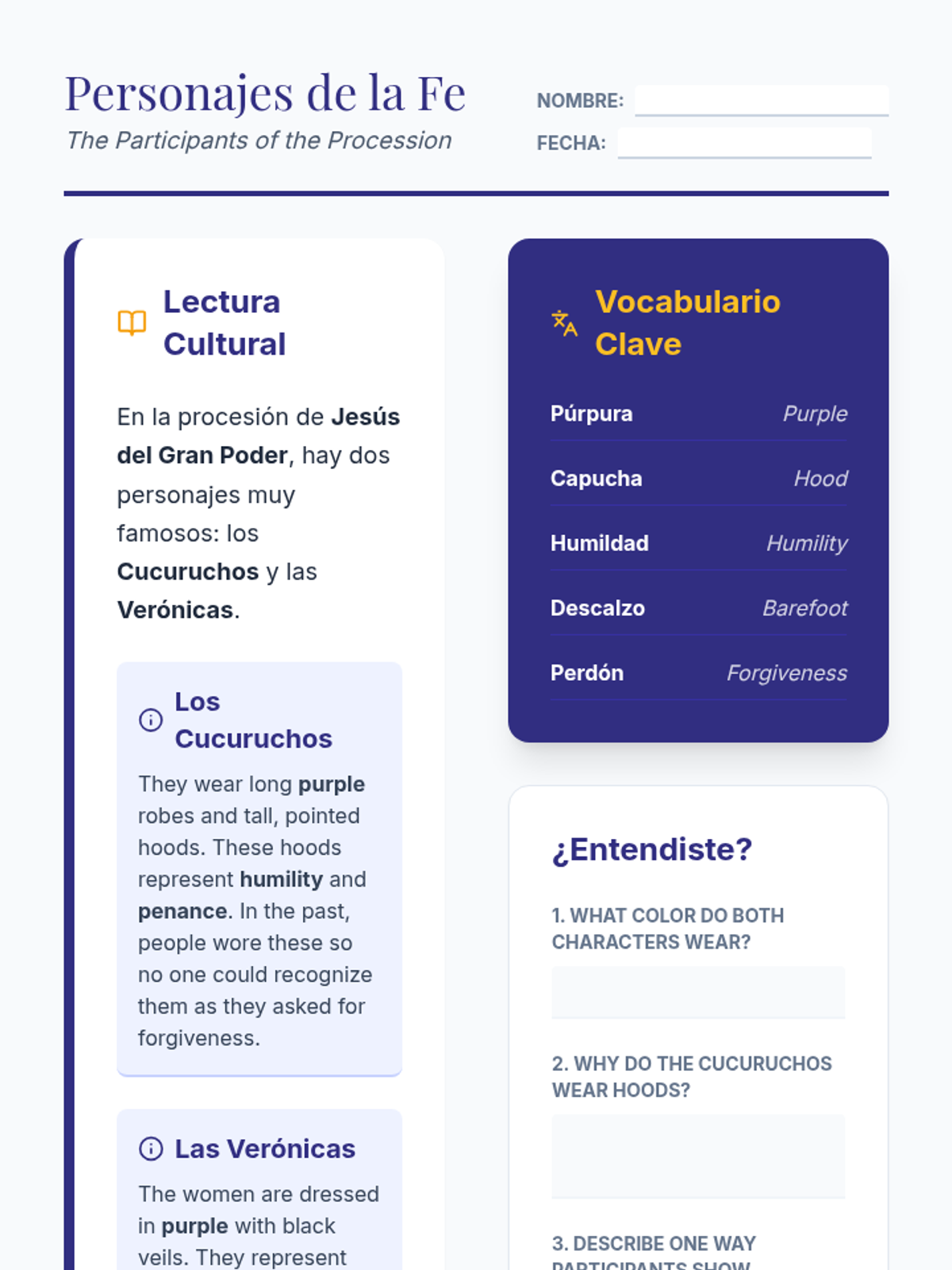
In-depth exploration of the Jesús del Gran Poder procession, including mapping the route through the Historic Center and understanding the symbolism of the participants.
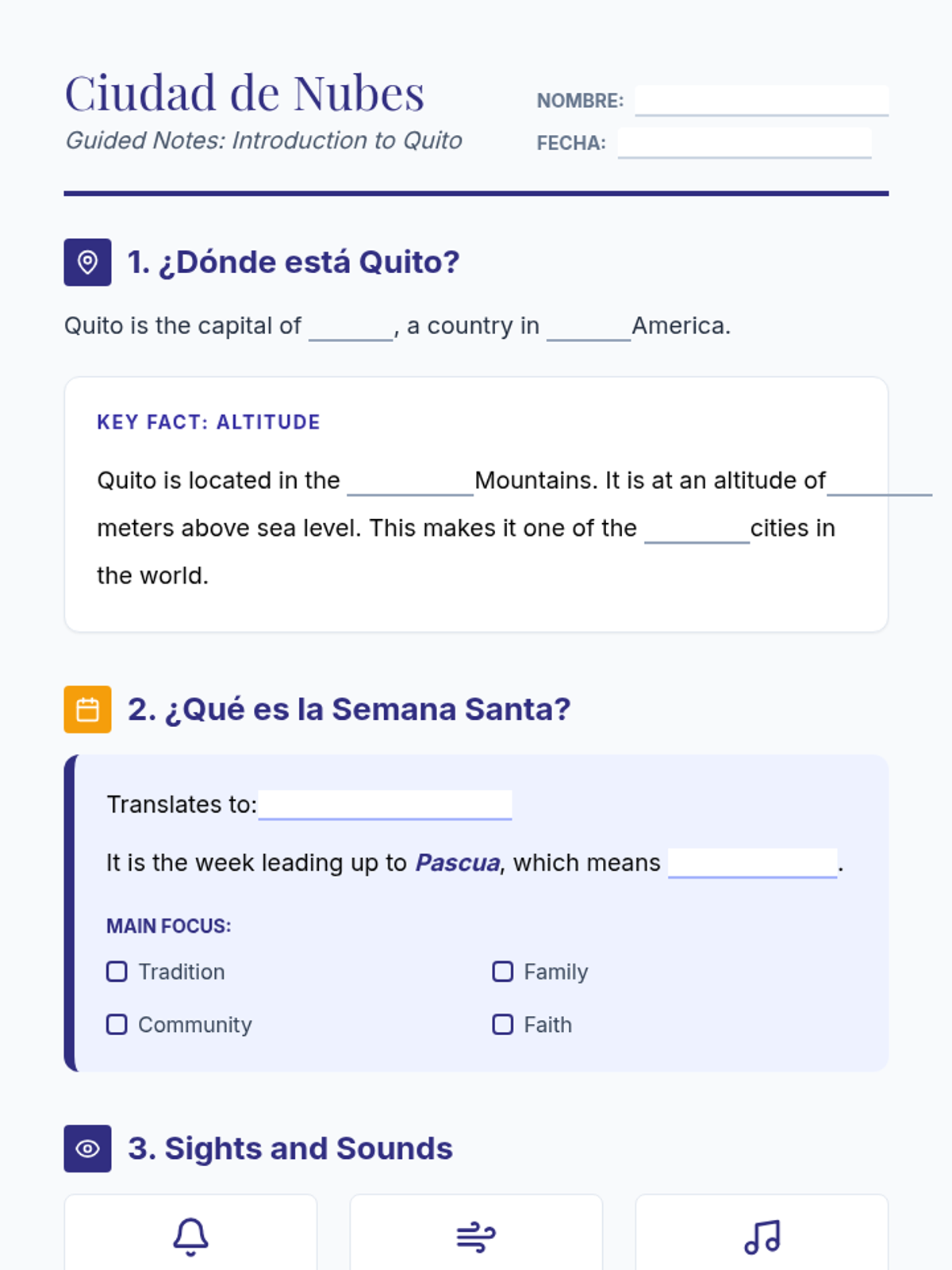
Introduction to Quito's geography and the basic concepts of Semana Santa, focusing on the visual and atmospheric elements of the city.
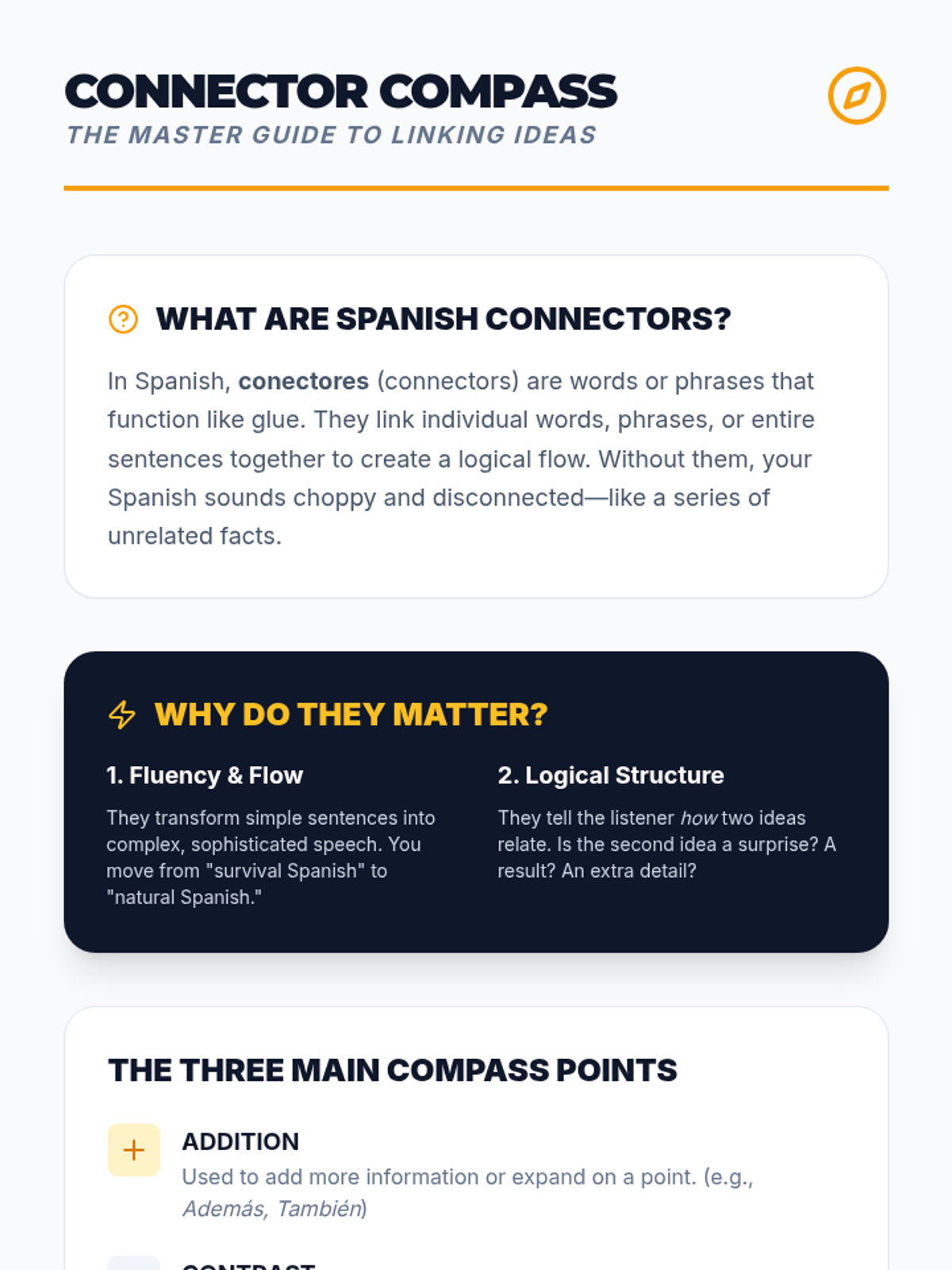
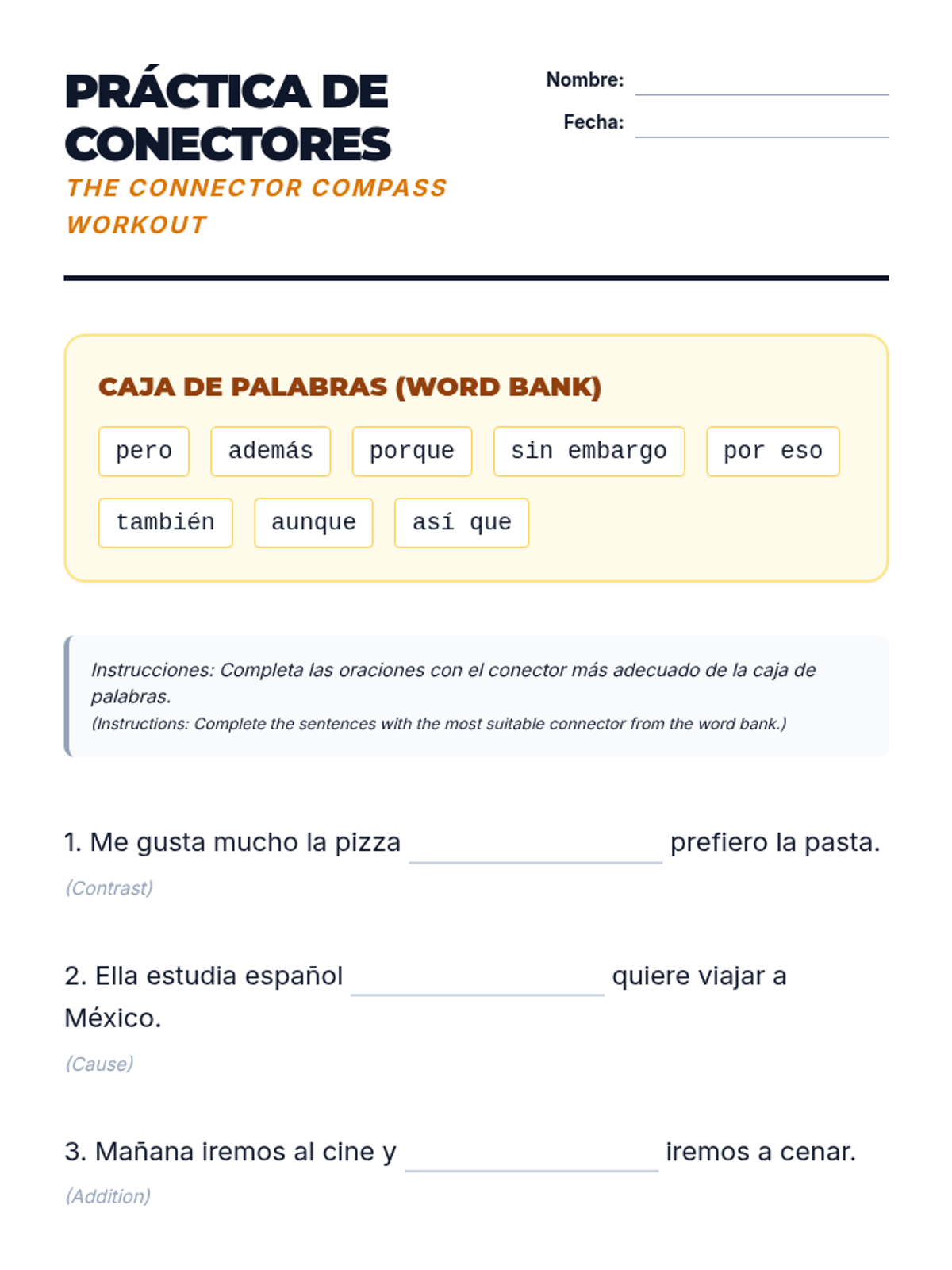
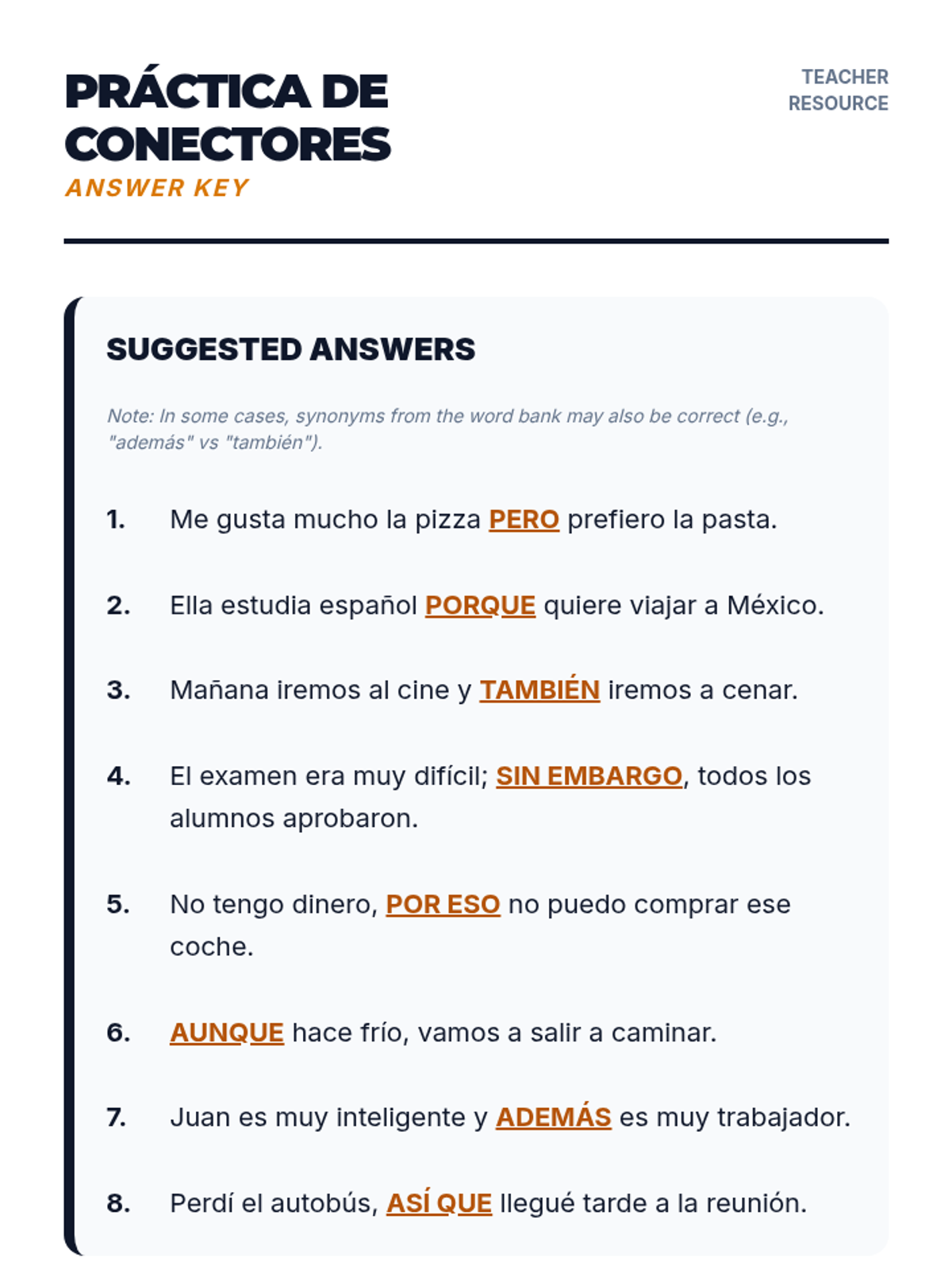
An introduction to essential Spanish conjunctions and transition words to improve sentence structure and narrative flow.
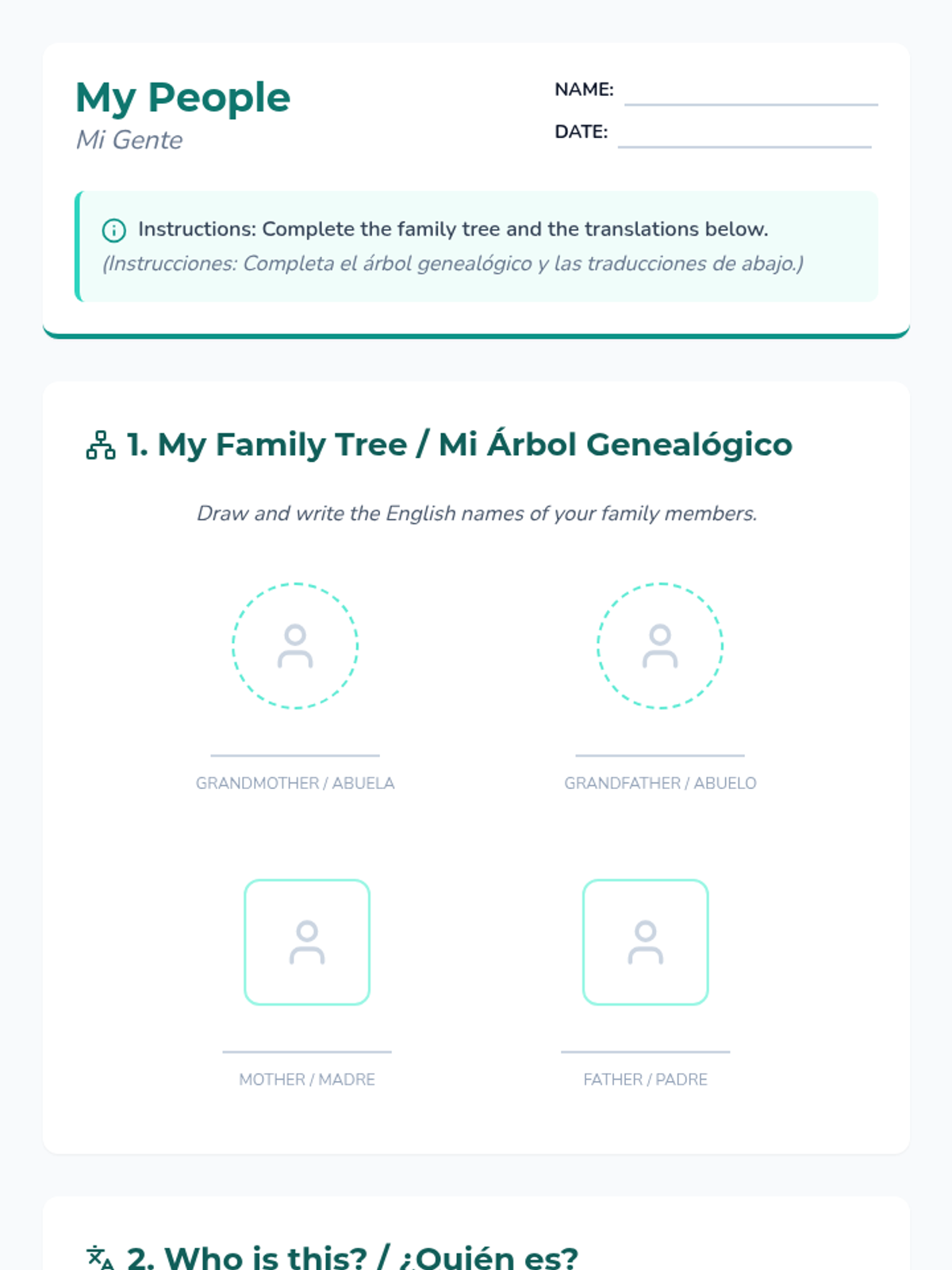
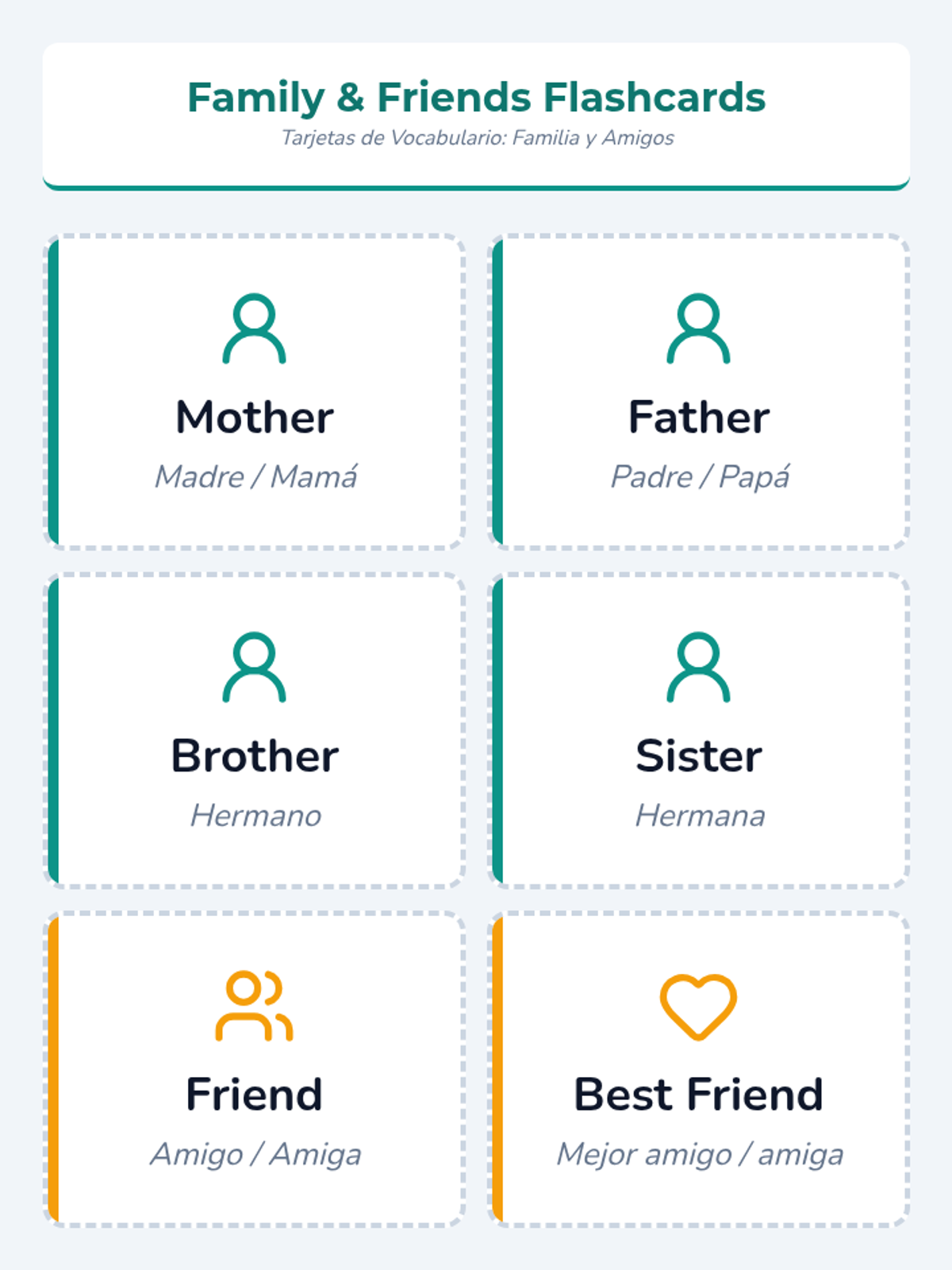
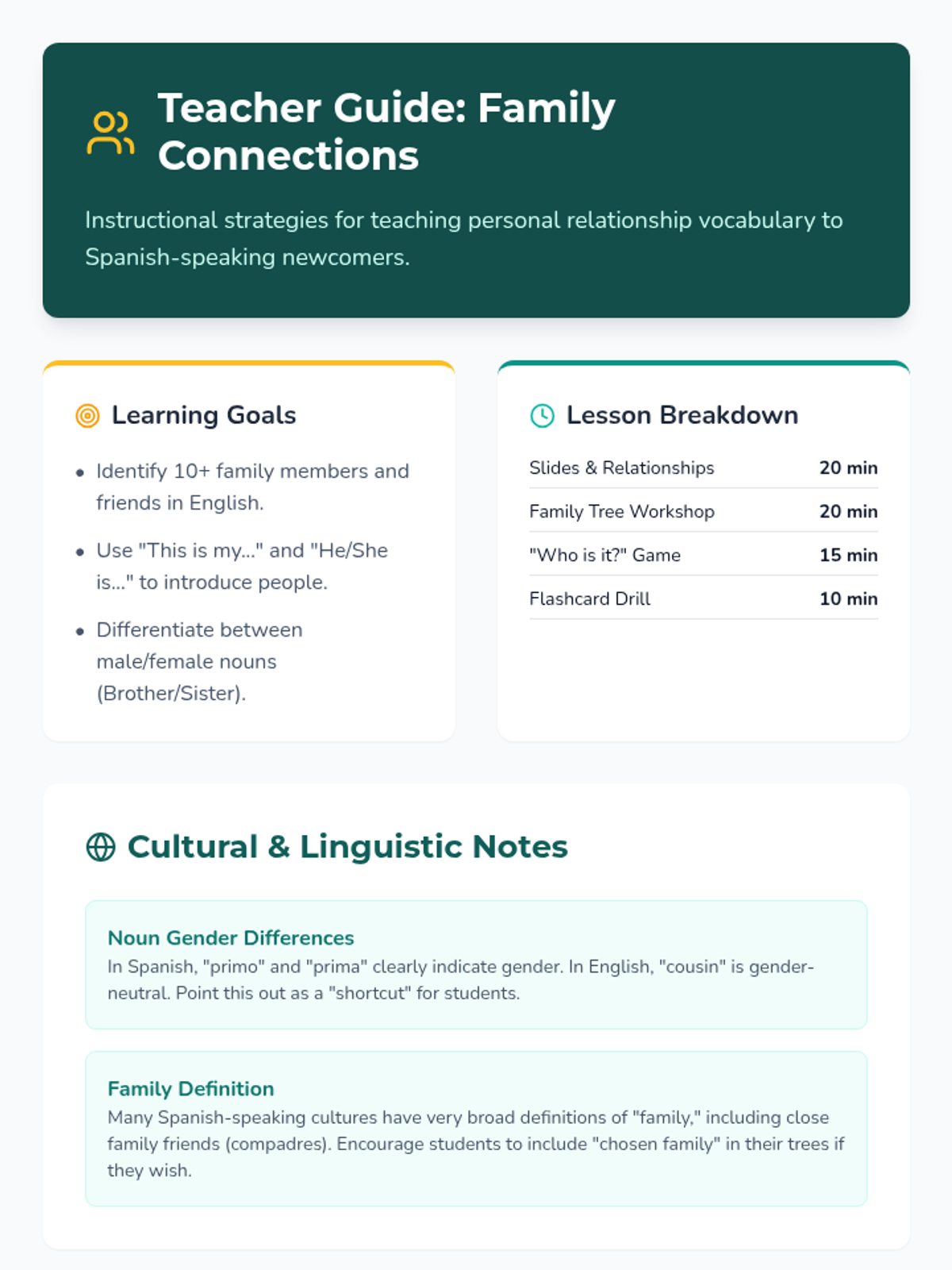
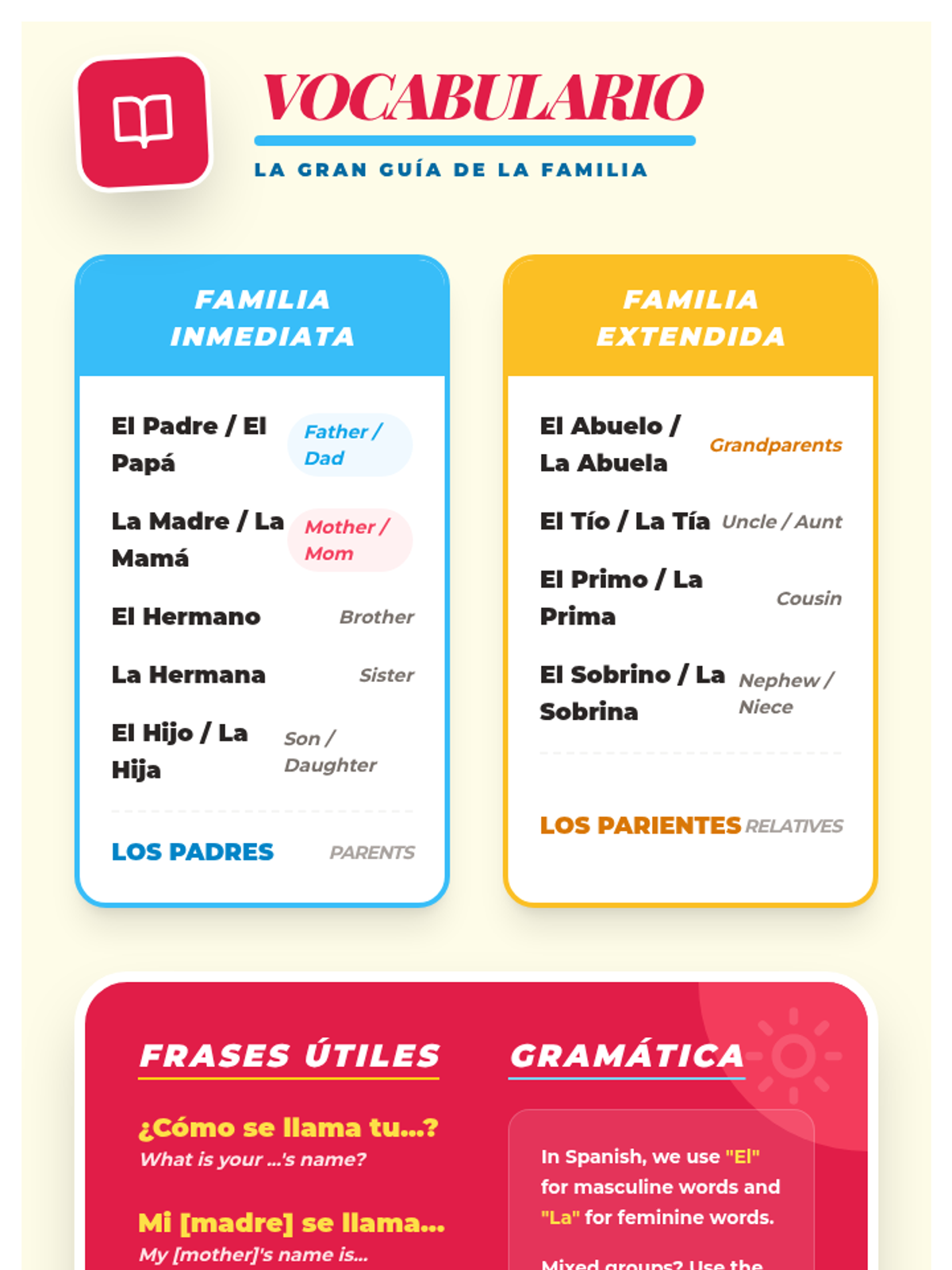
Introduces vocabulary for family members and friends, enabling students to describe their personal connections and home life.
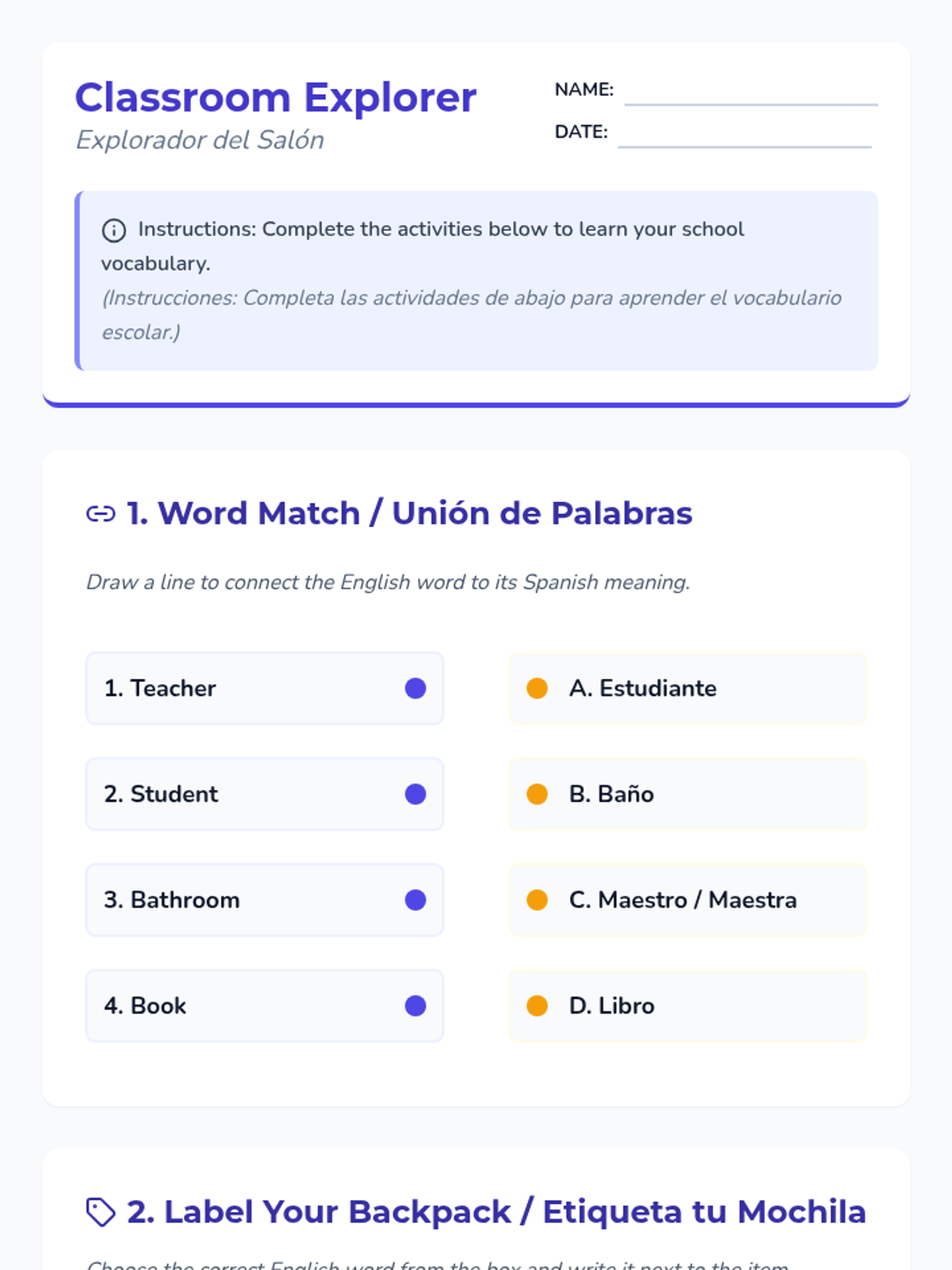
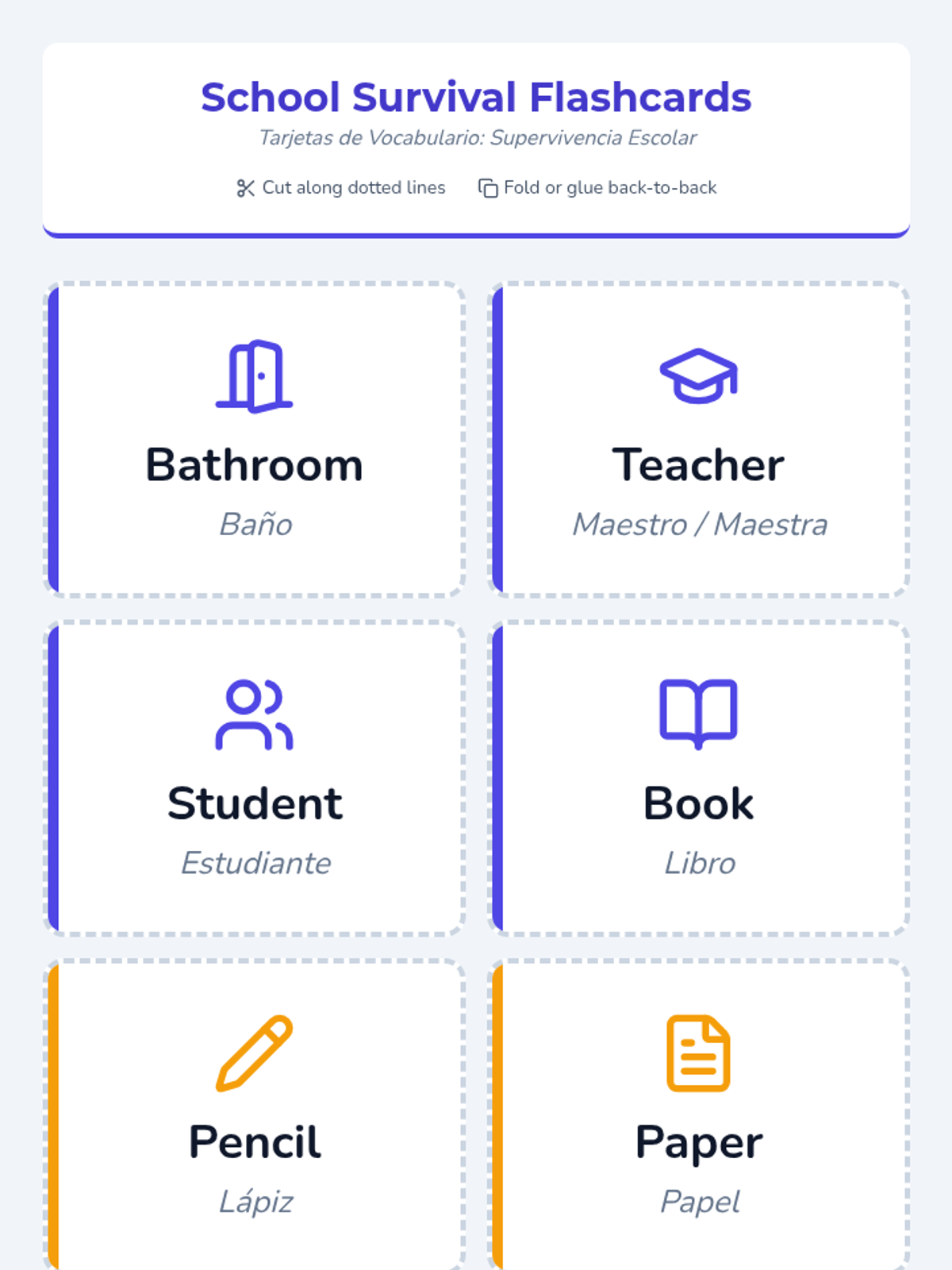
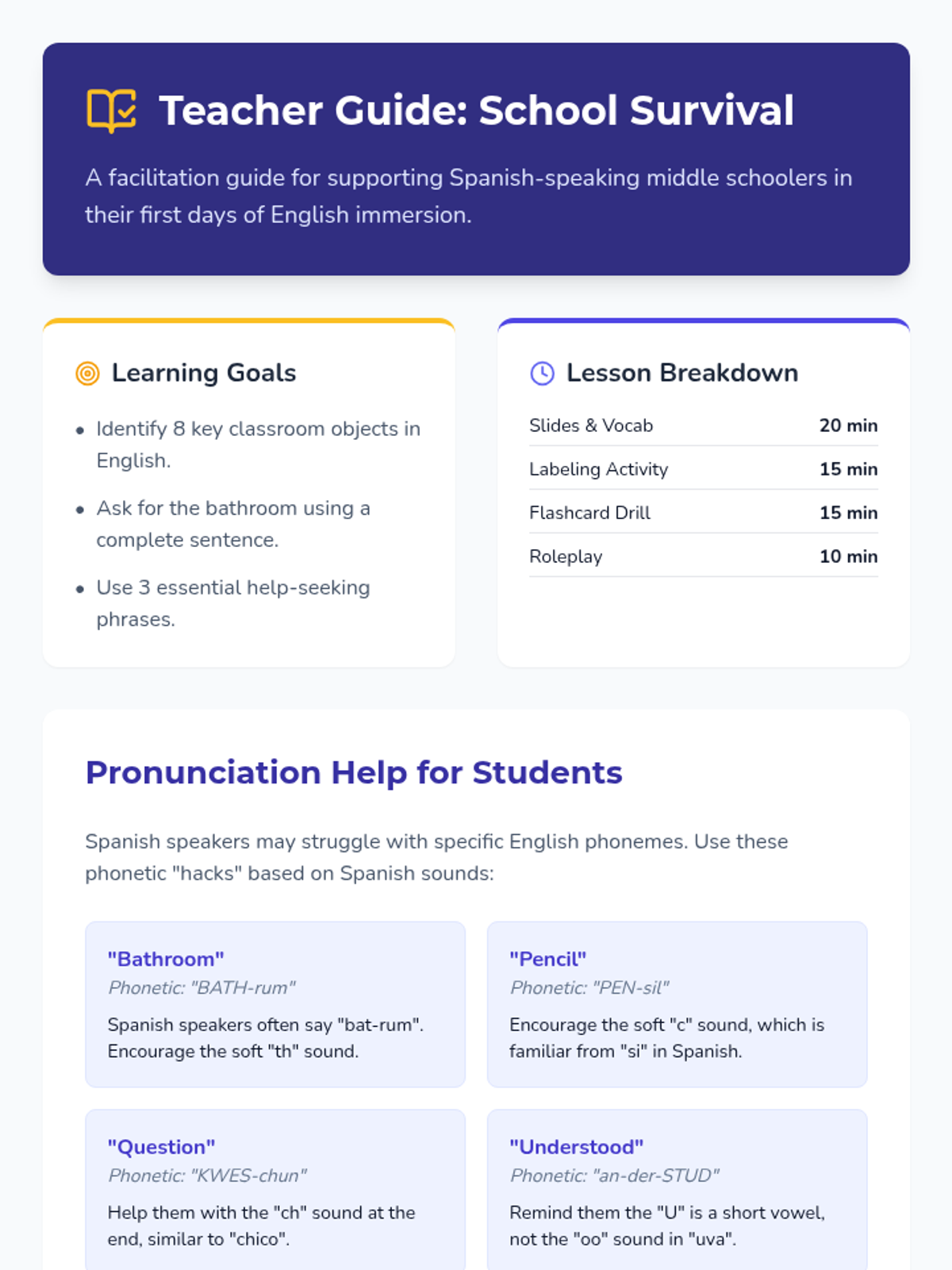
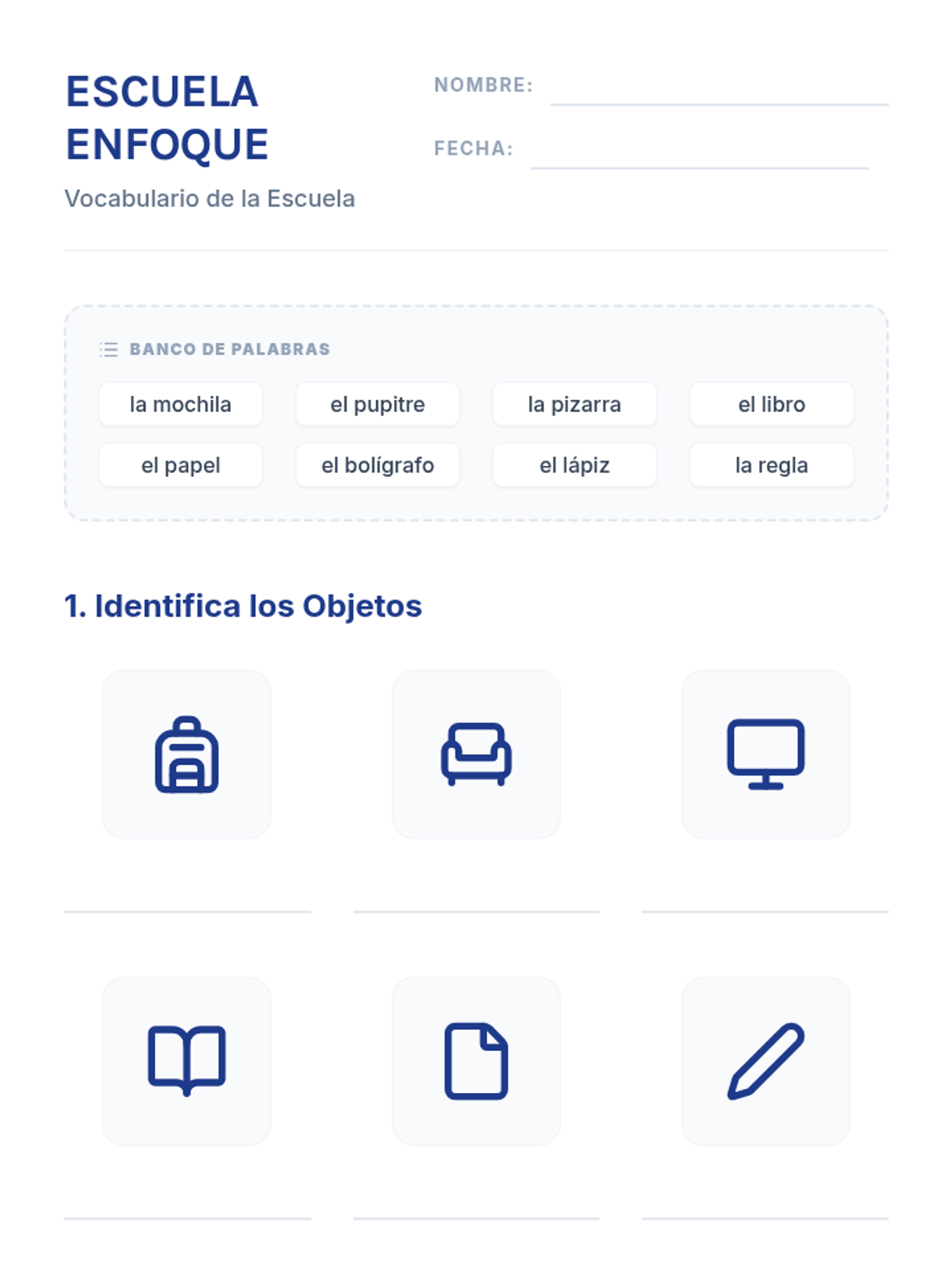
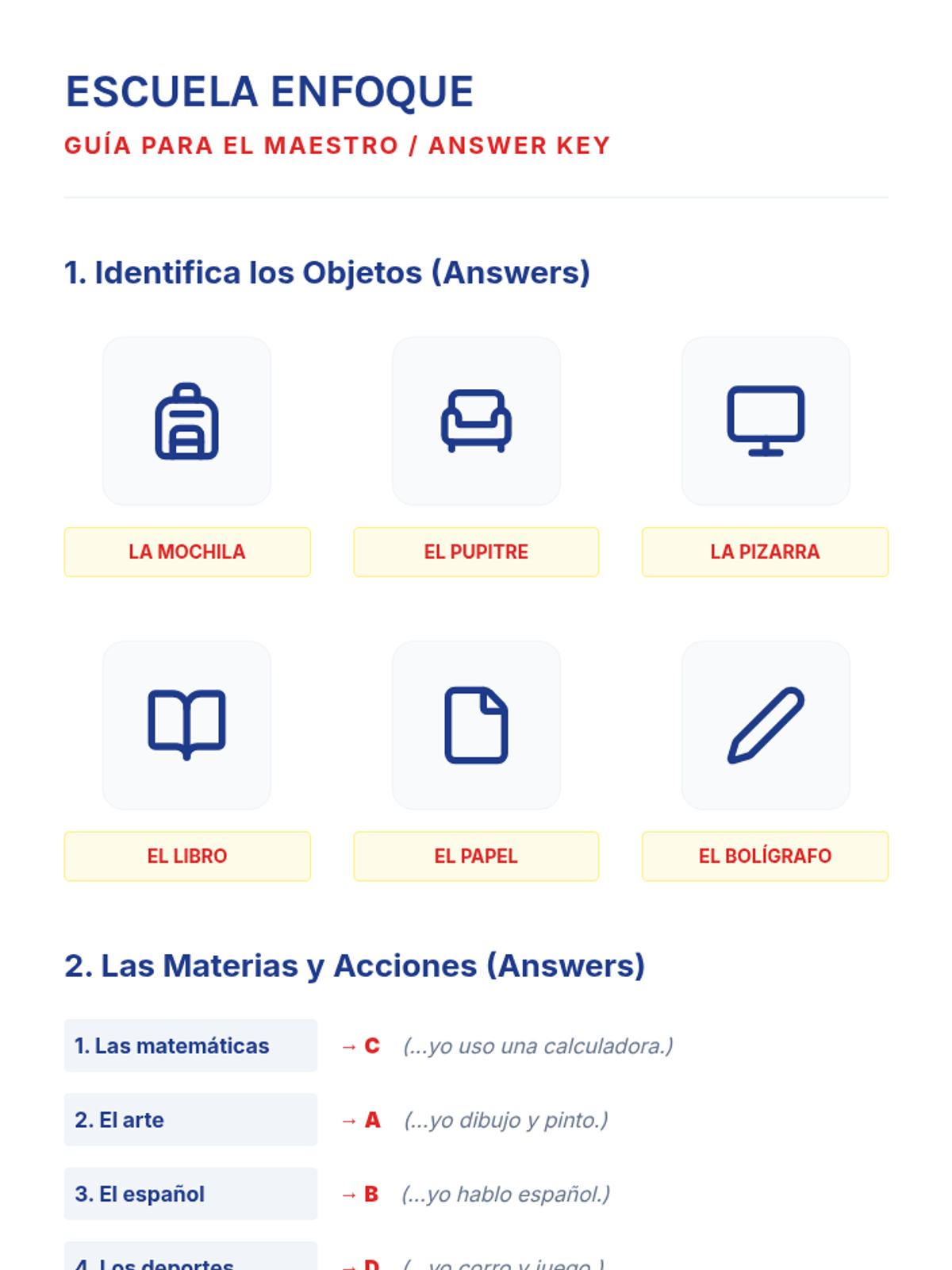
Focuses on essential school navigation including asking for the bathroom, identifying classroom objects, and basic school-day phrases in English and Spanish.
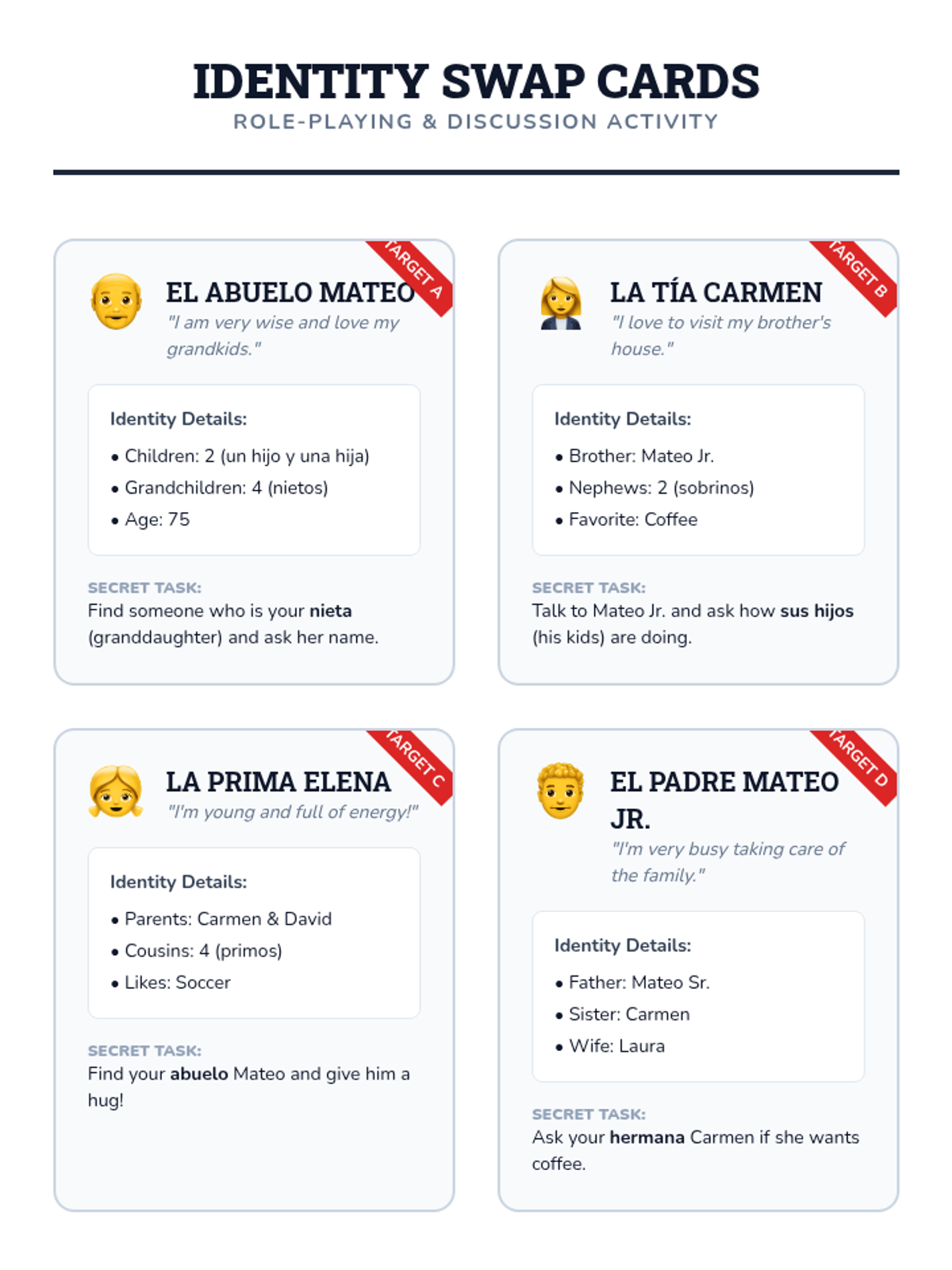
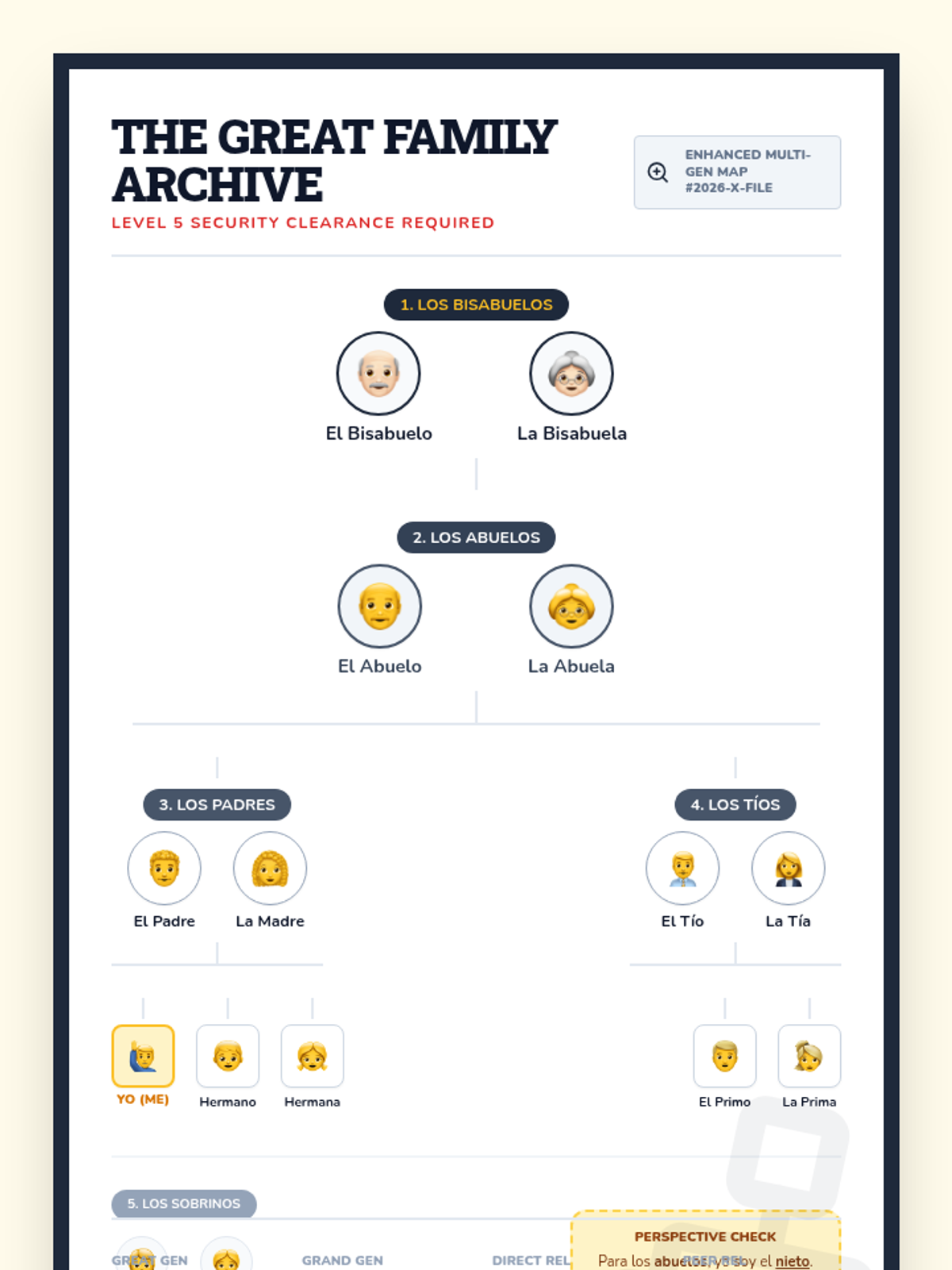
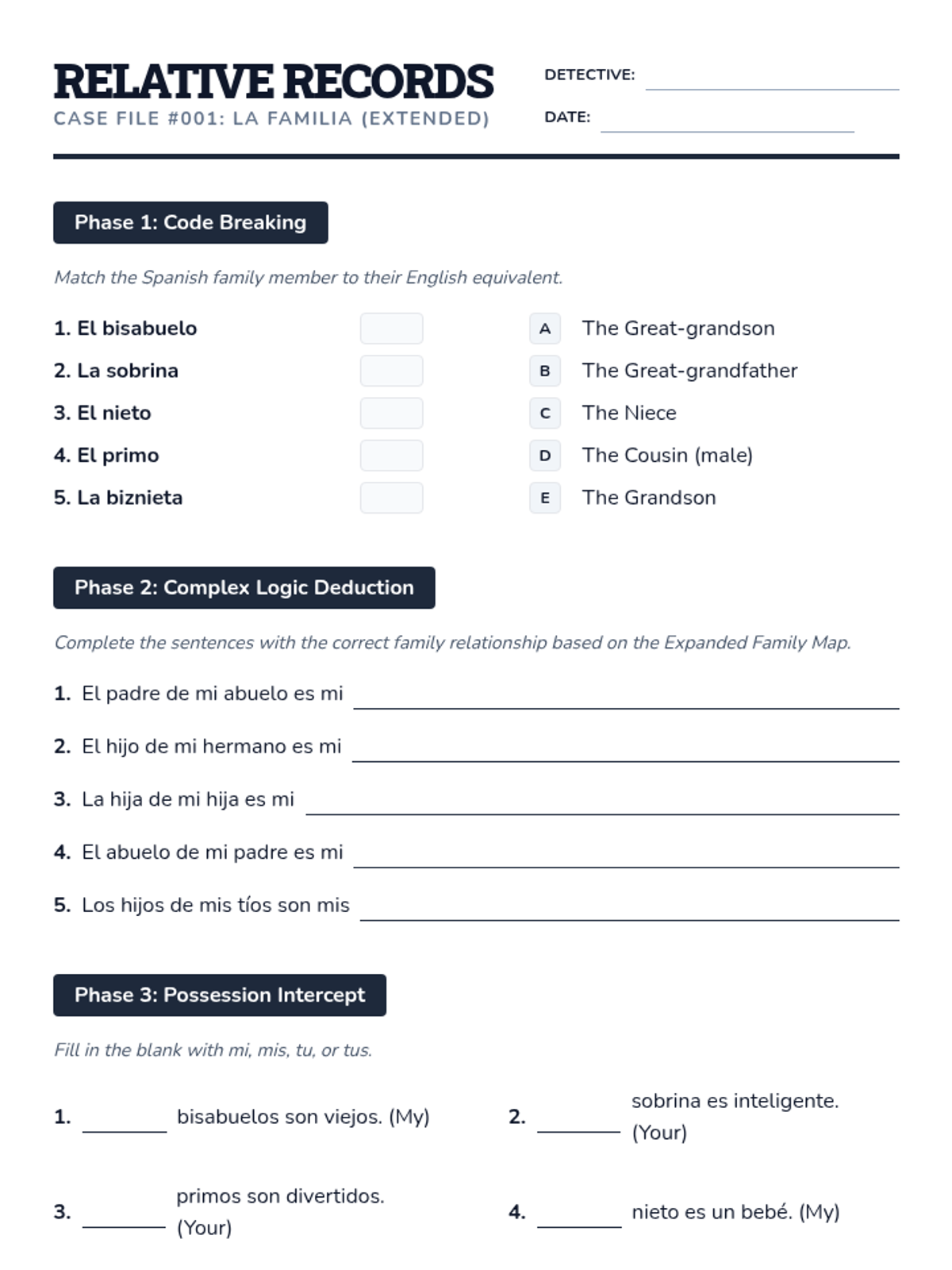
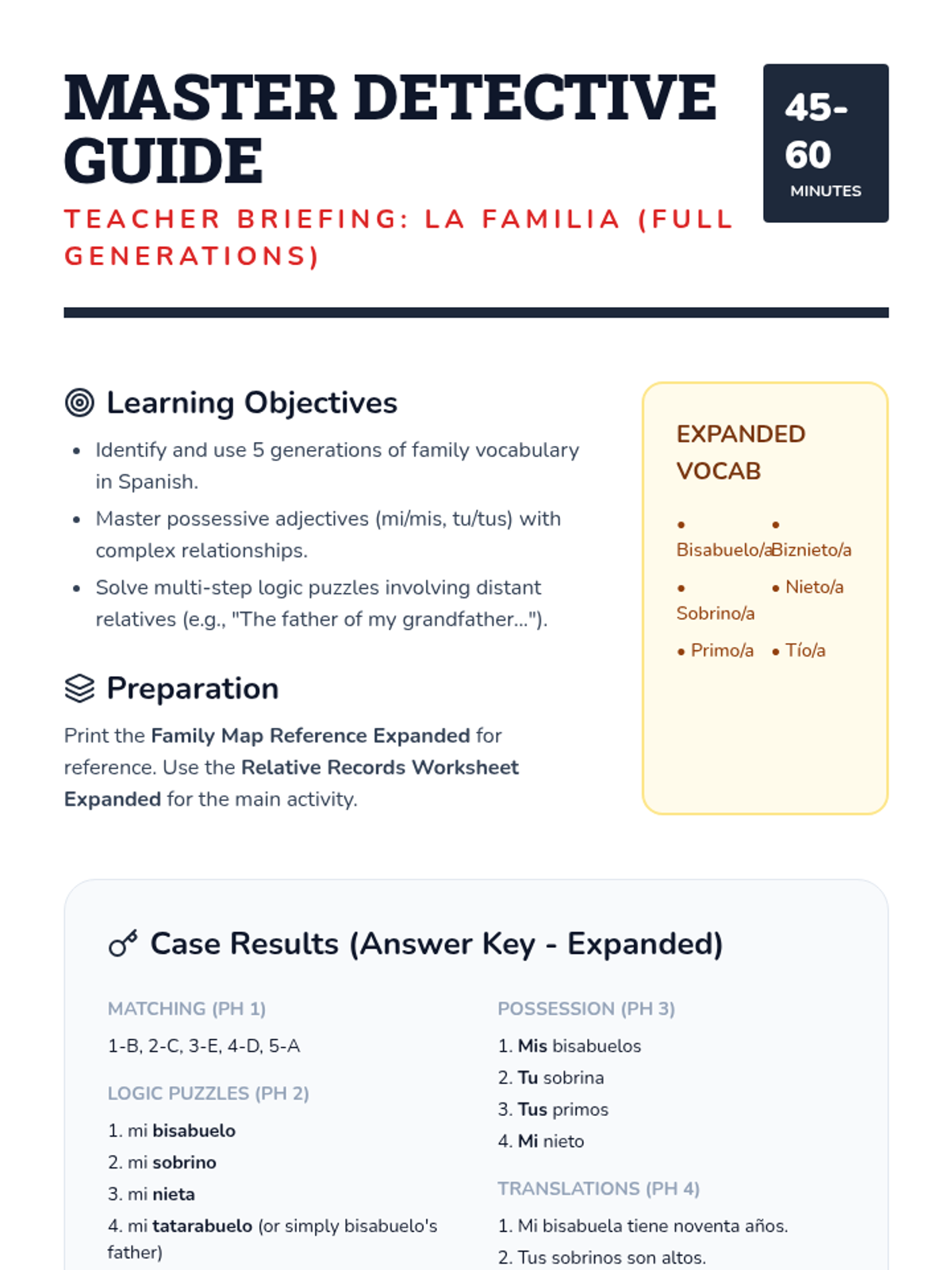
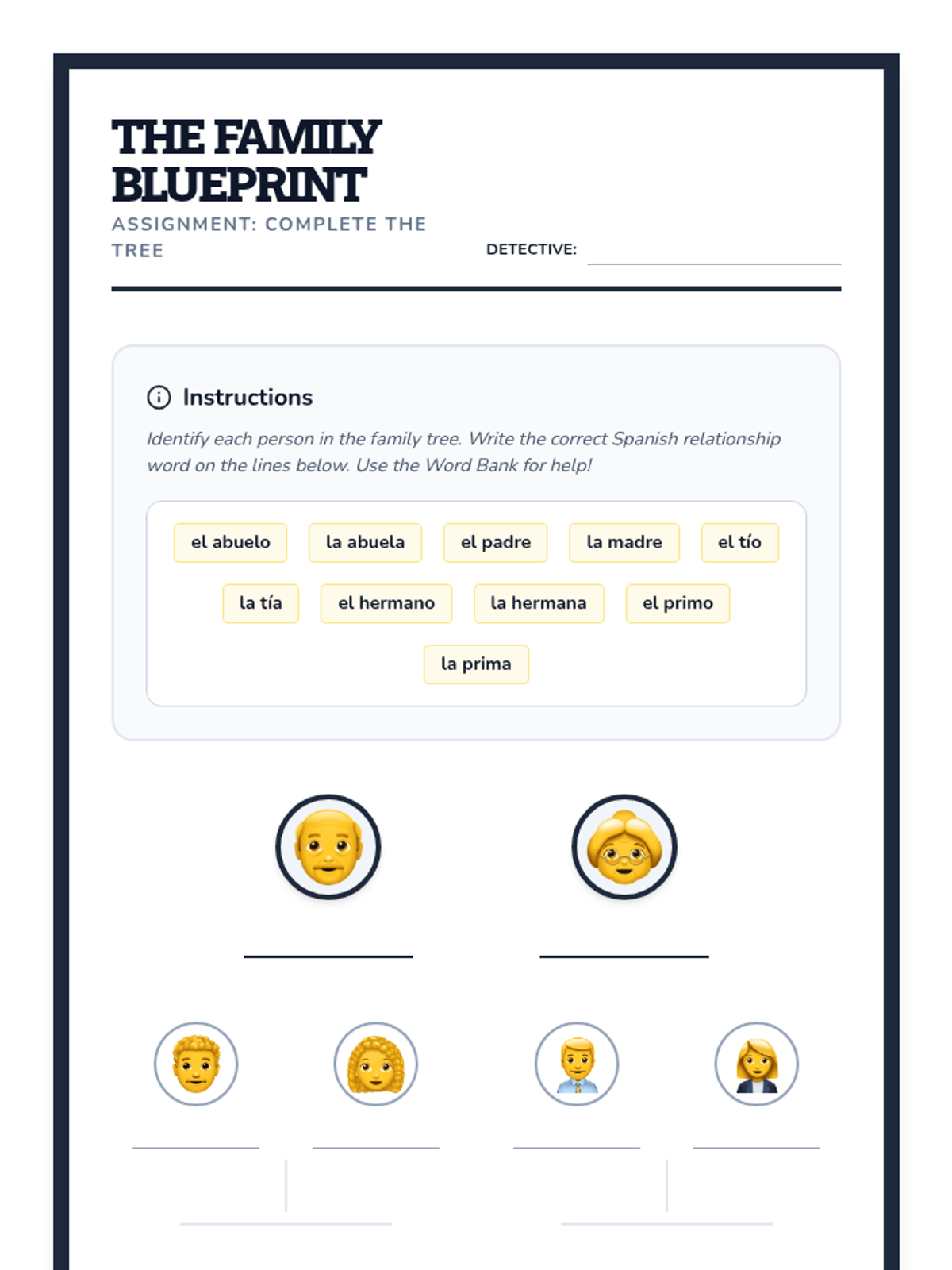
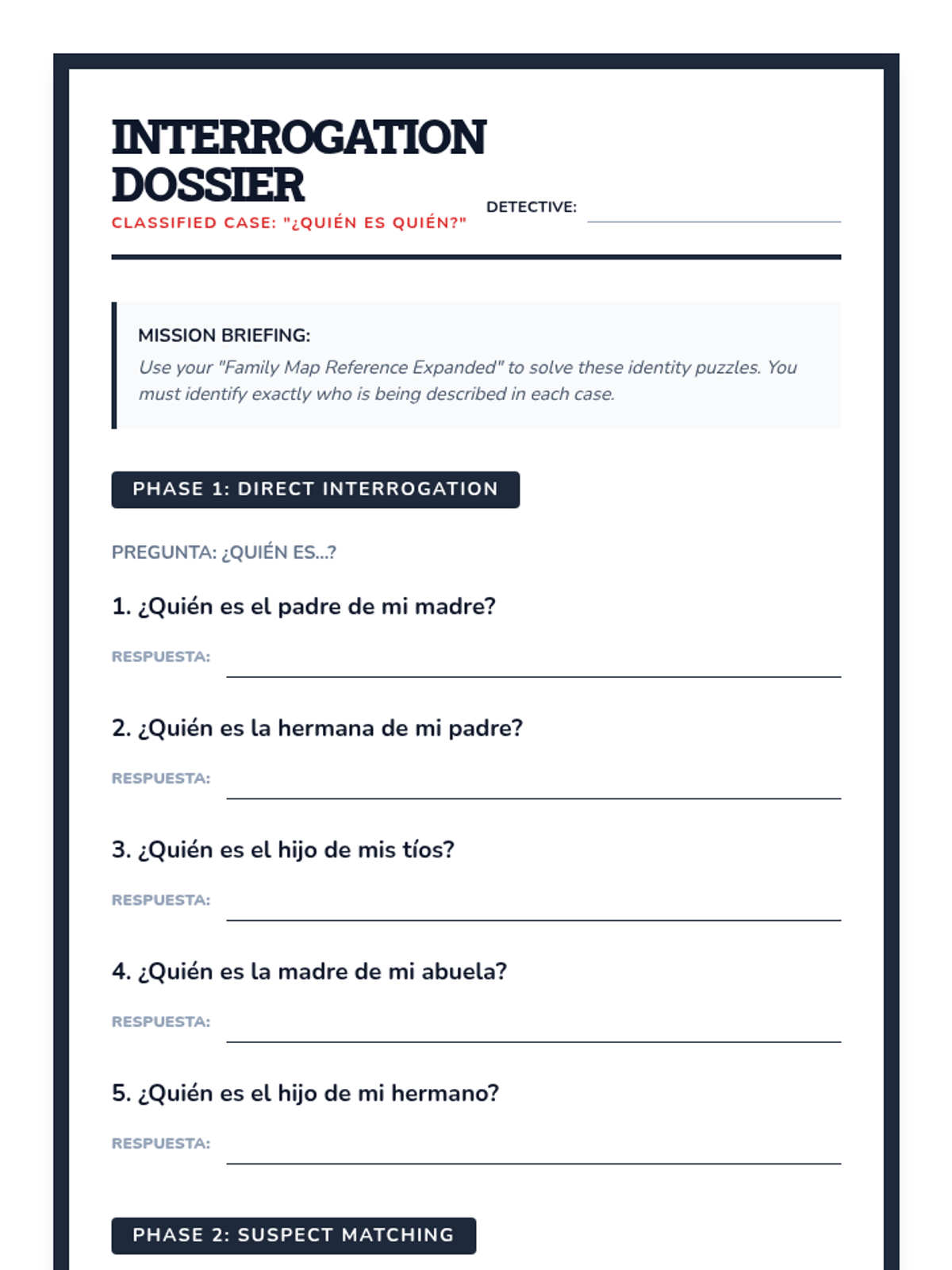
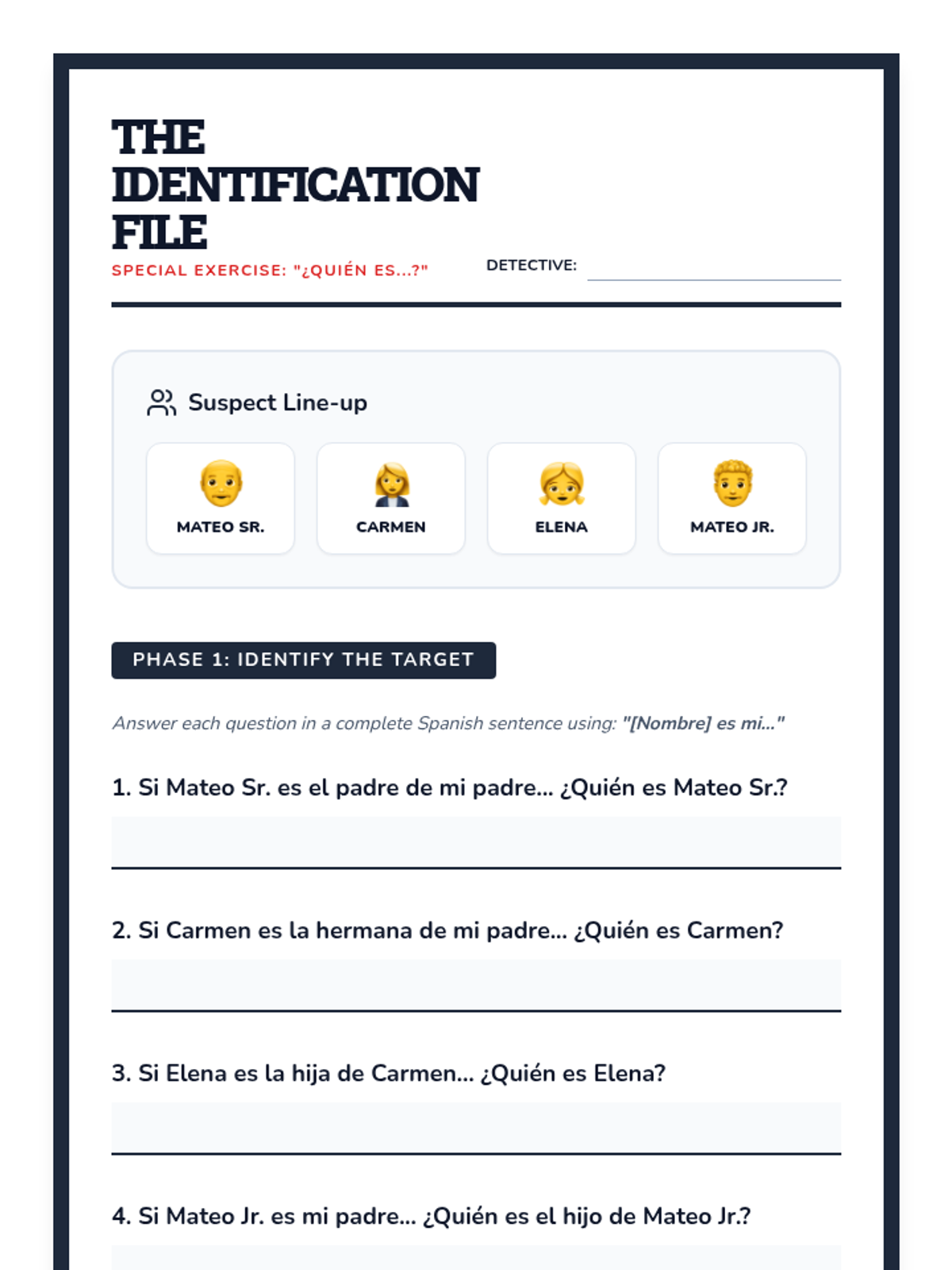
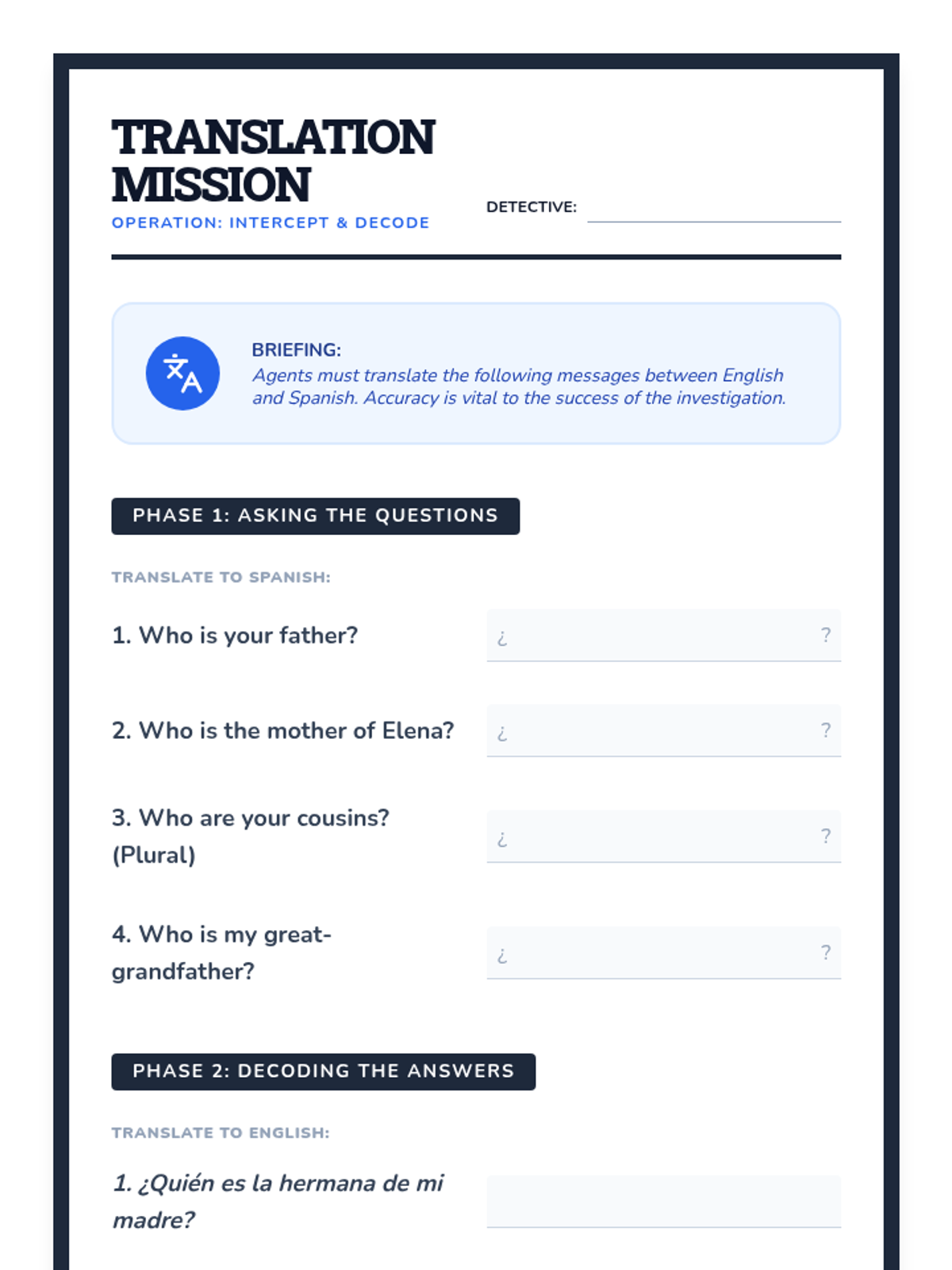
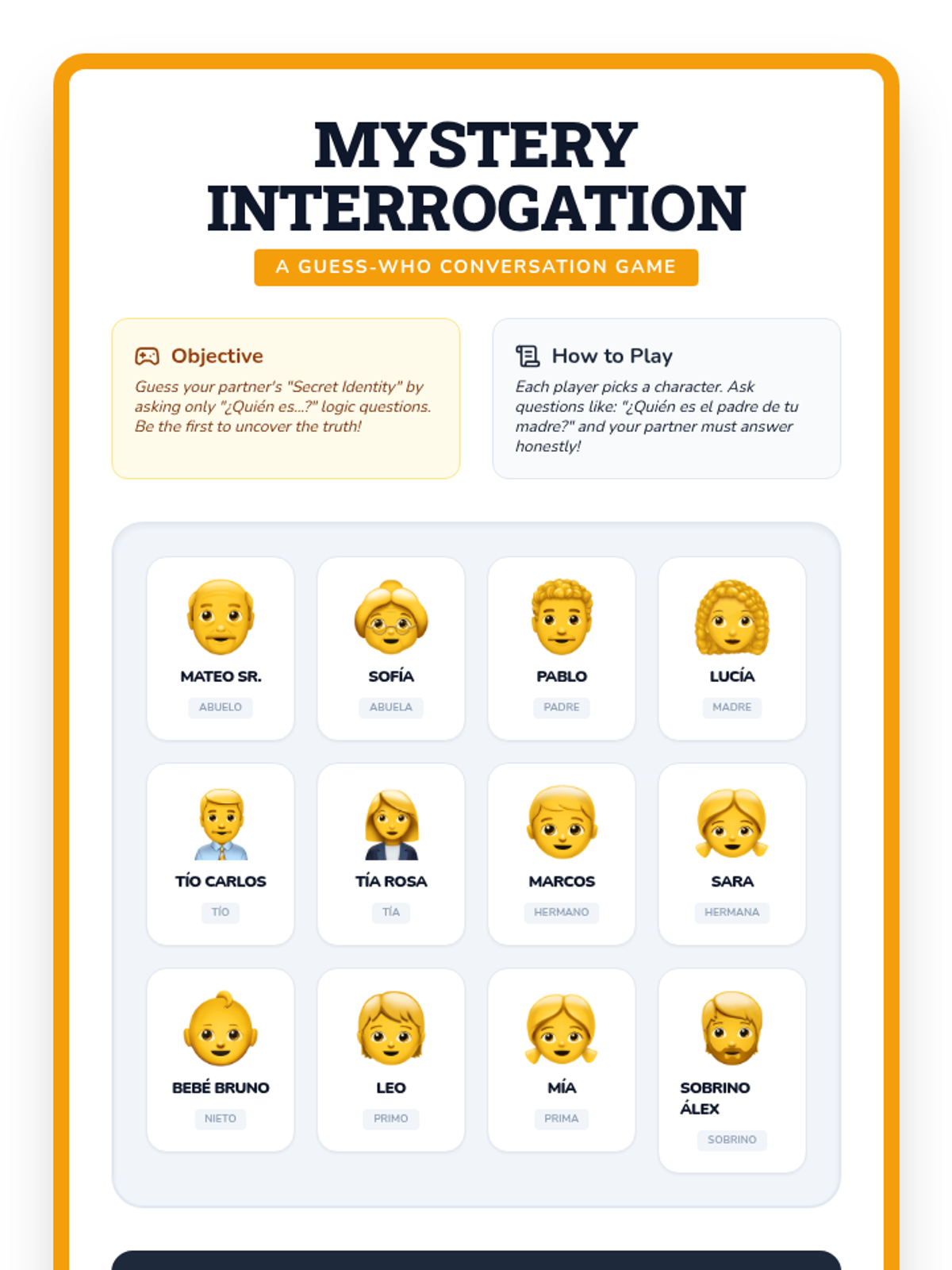
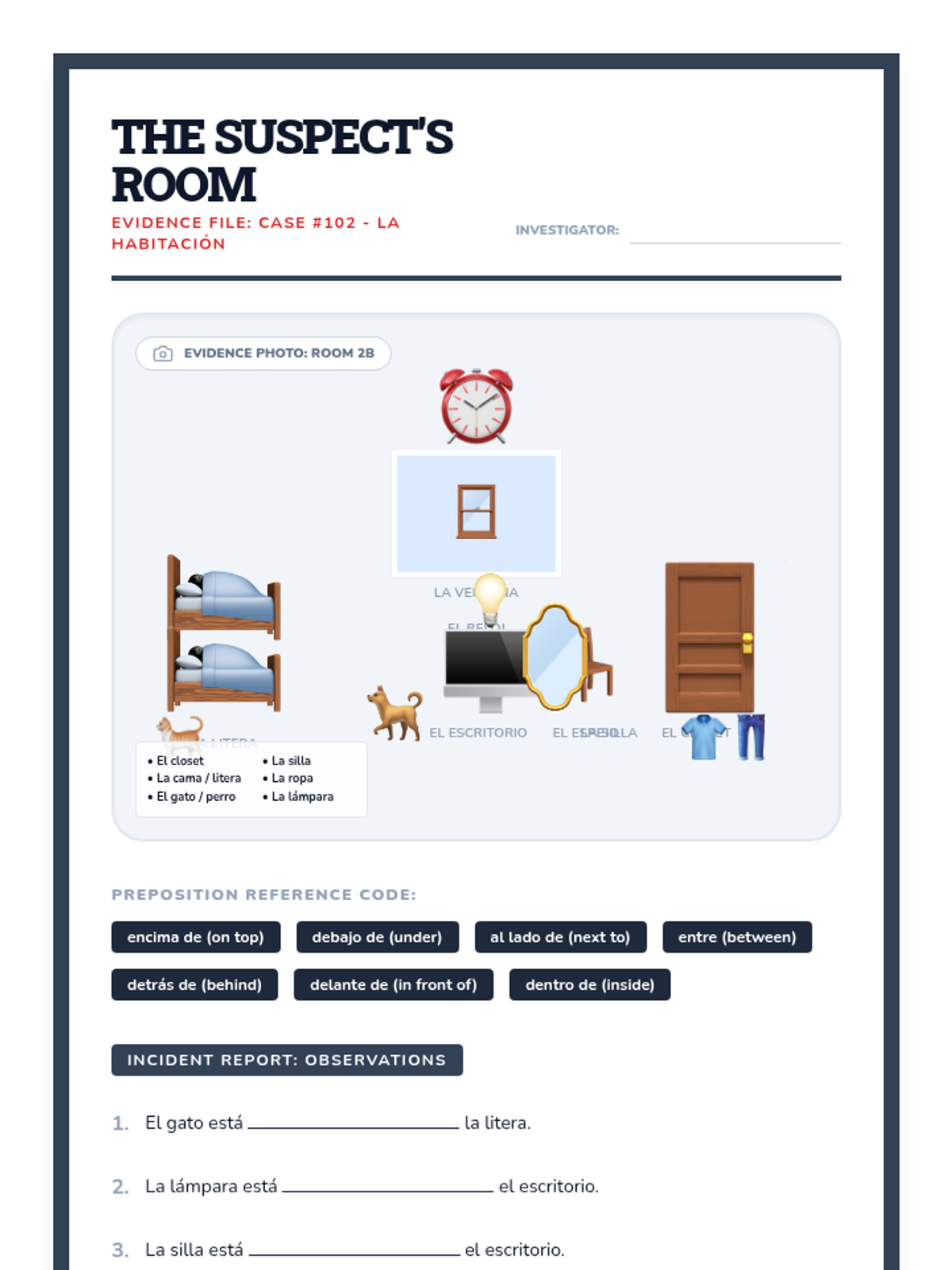
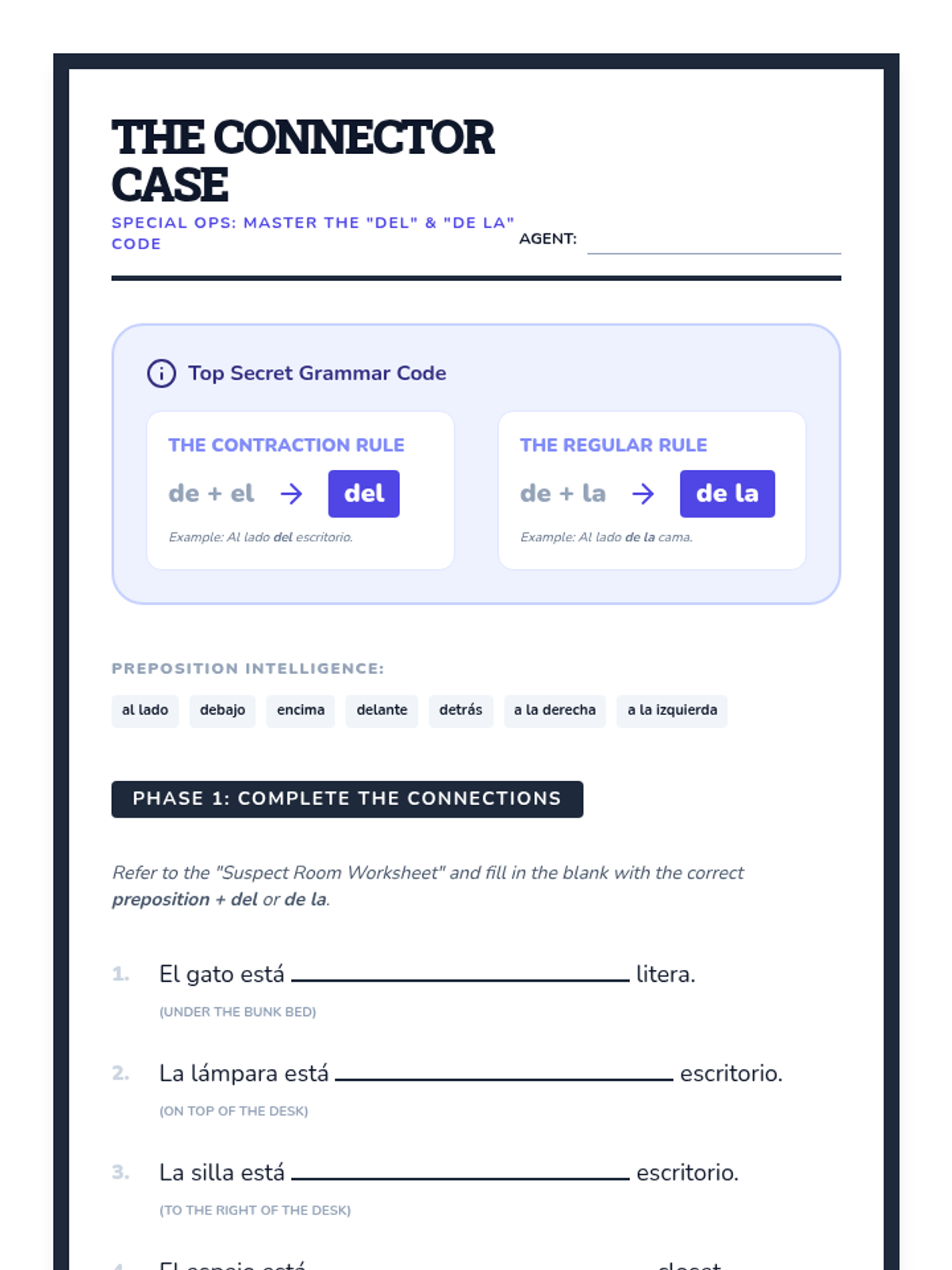
A comprehensive Spanish lesson focused on family and relatives vocabulary through a detective-themed investigation. Students will identify, describe, and discuss family members using a variety of interactive and written exercises.
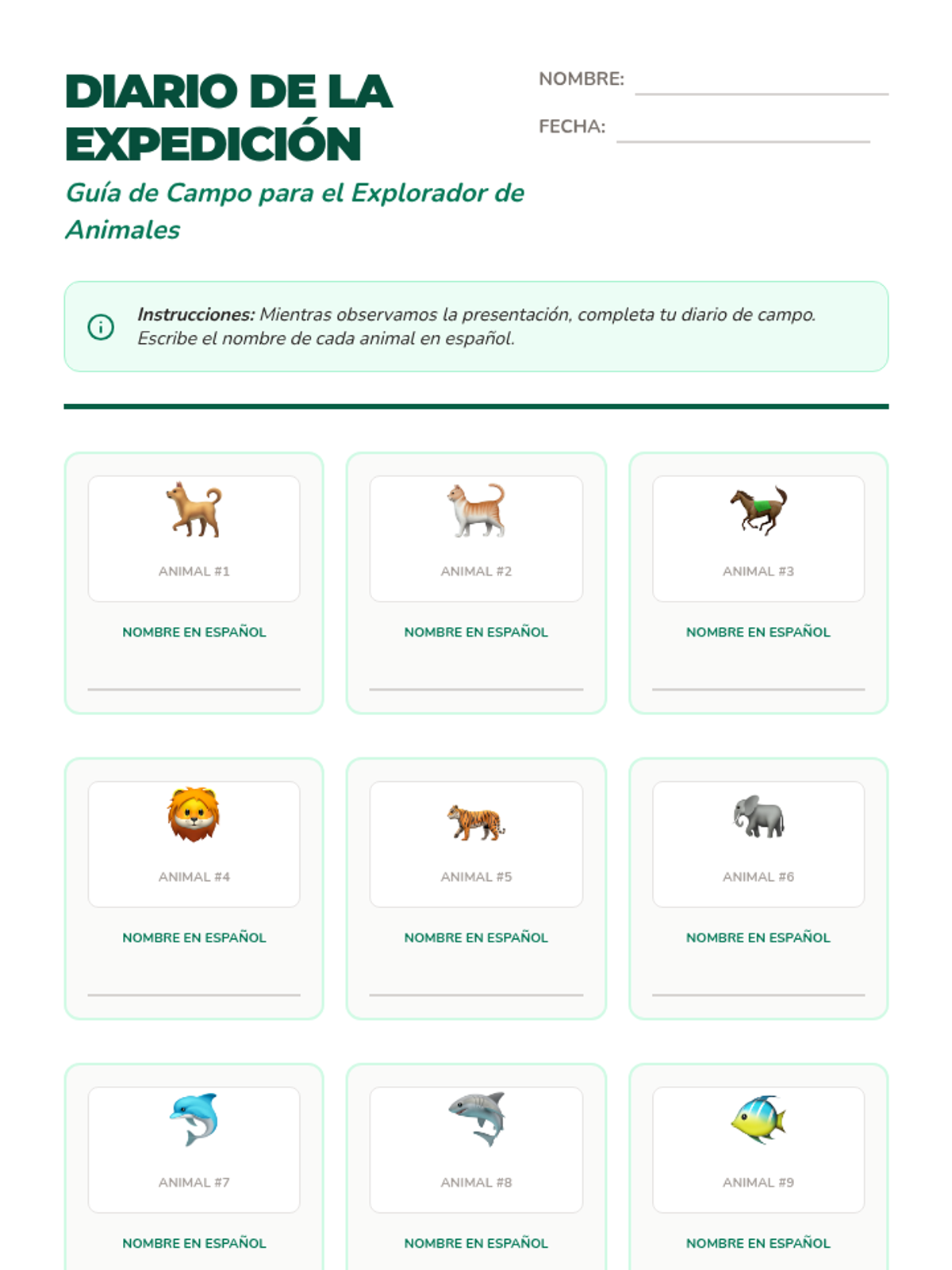
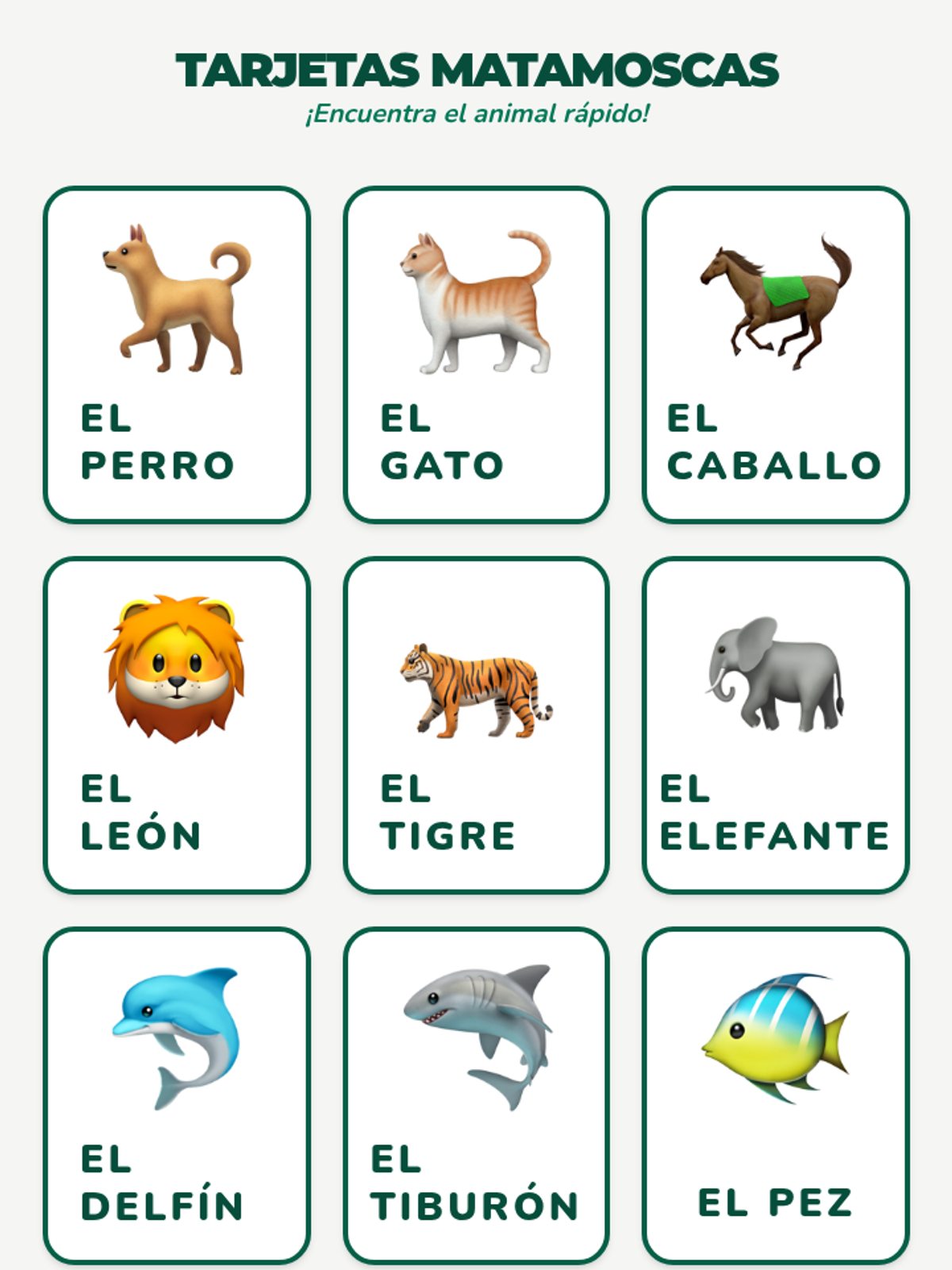
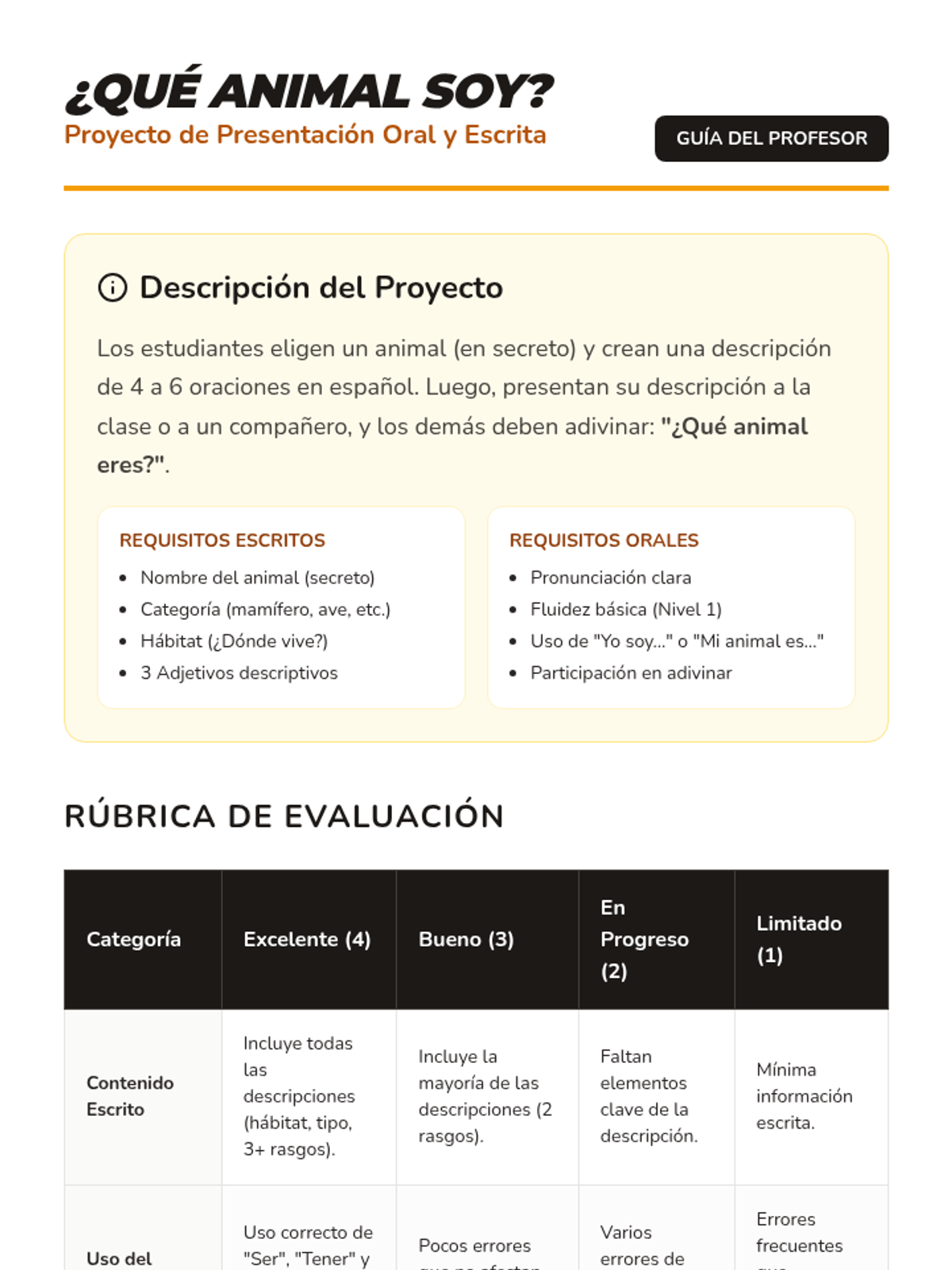
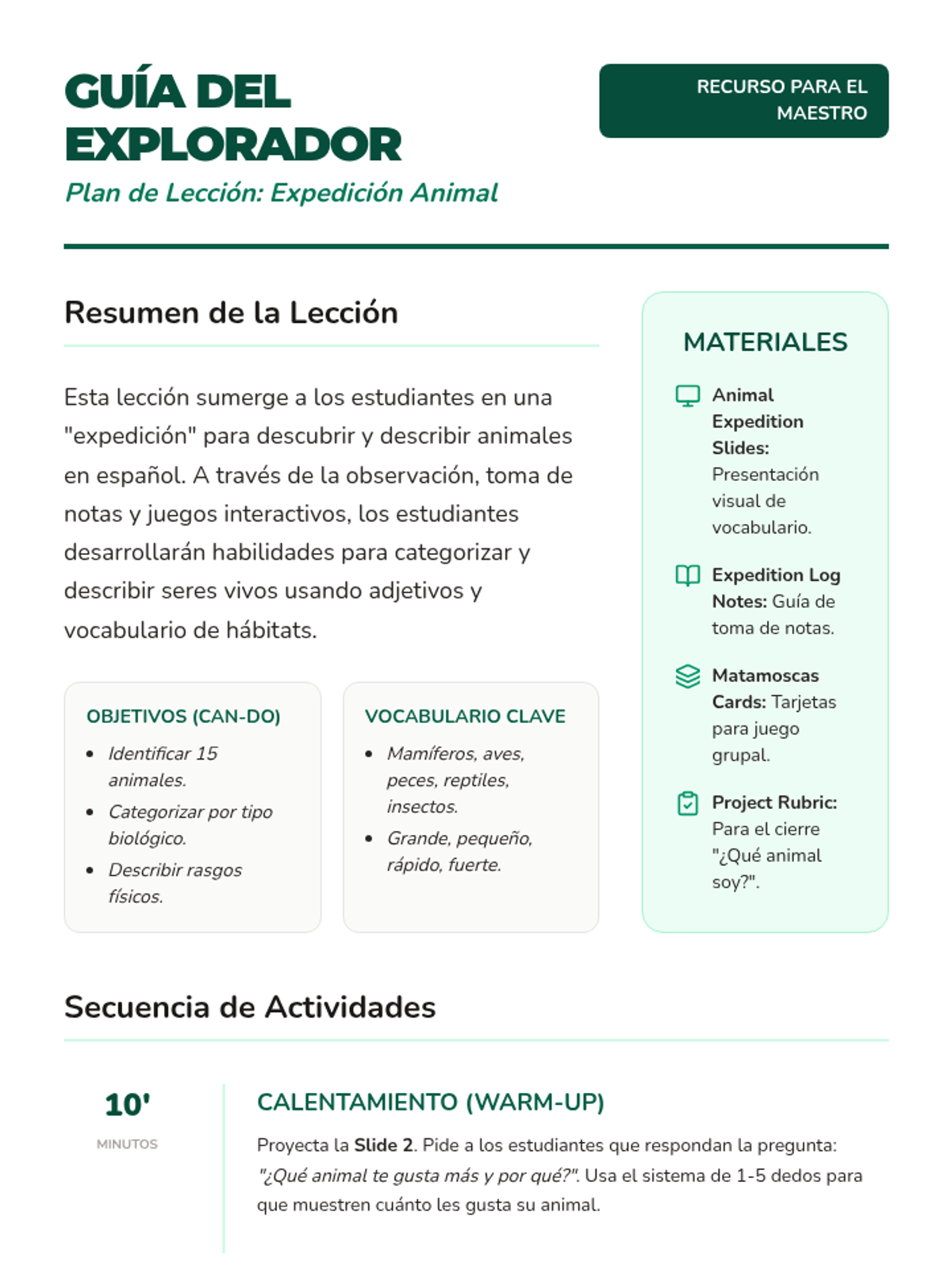
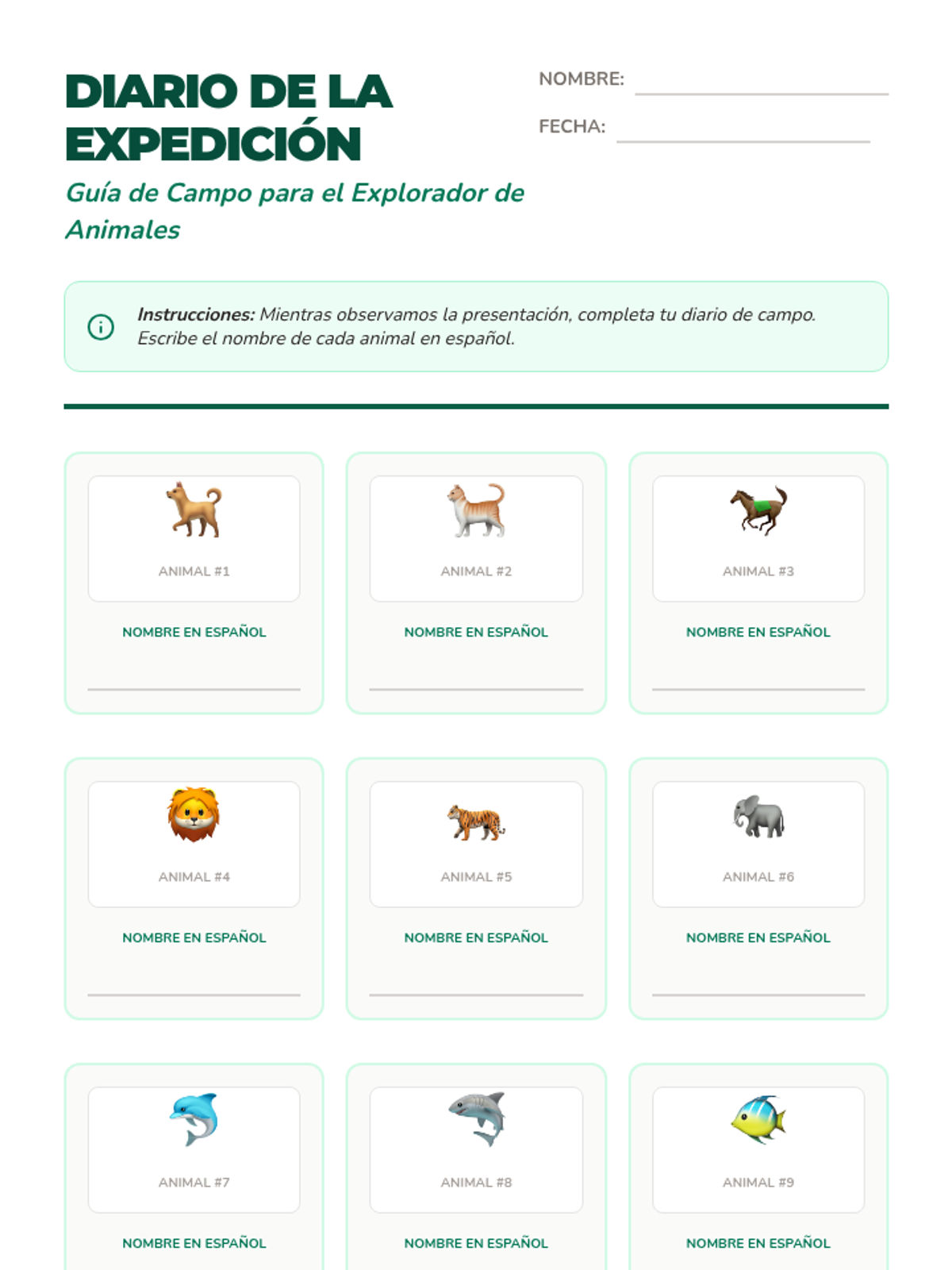
A lesson focused on identifying, categorizing, and describing animals in Spanish using basic adjectives and habitat vocabulary. Students will engage in interpretive listening and presentational writing to demonstrate their learning.
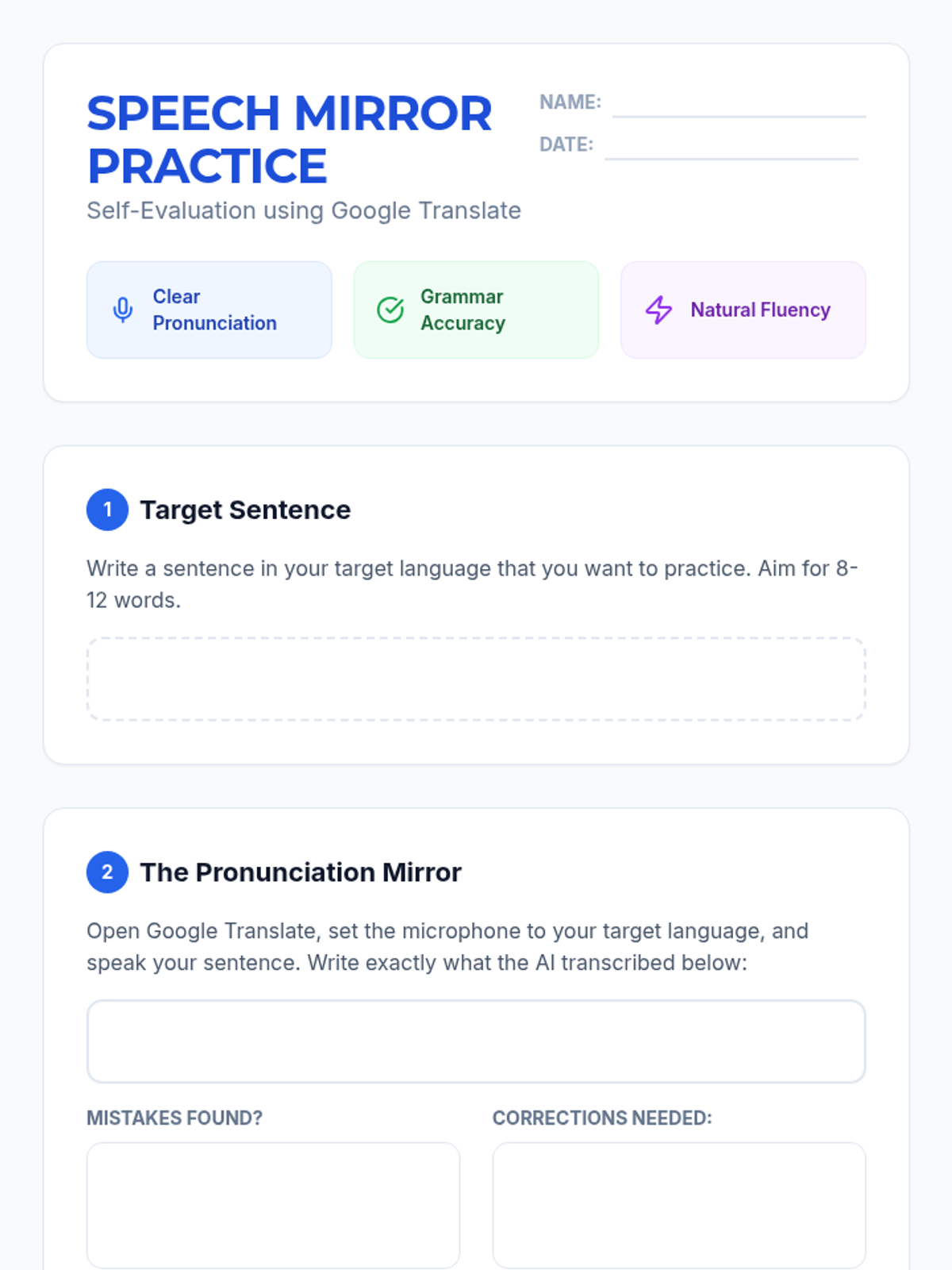
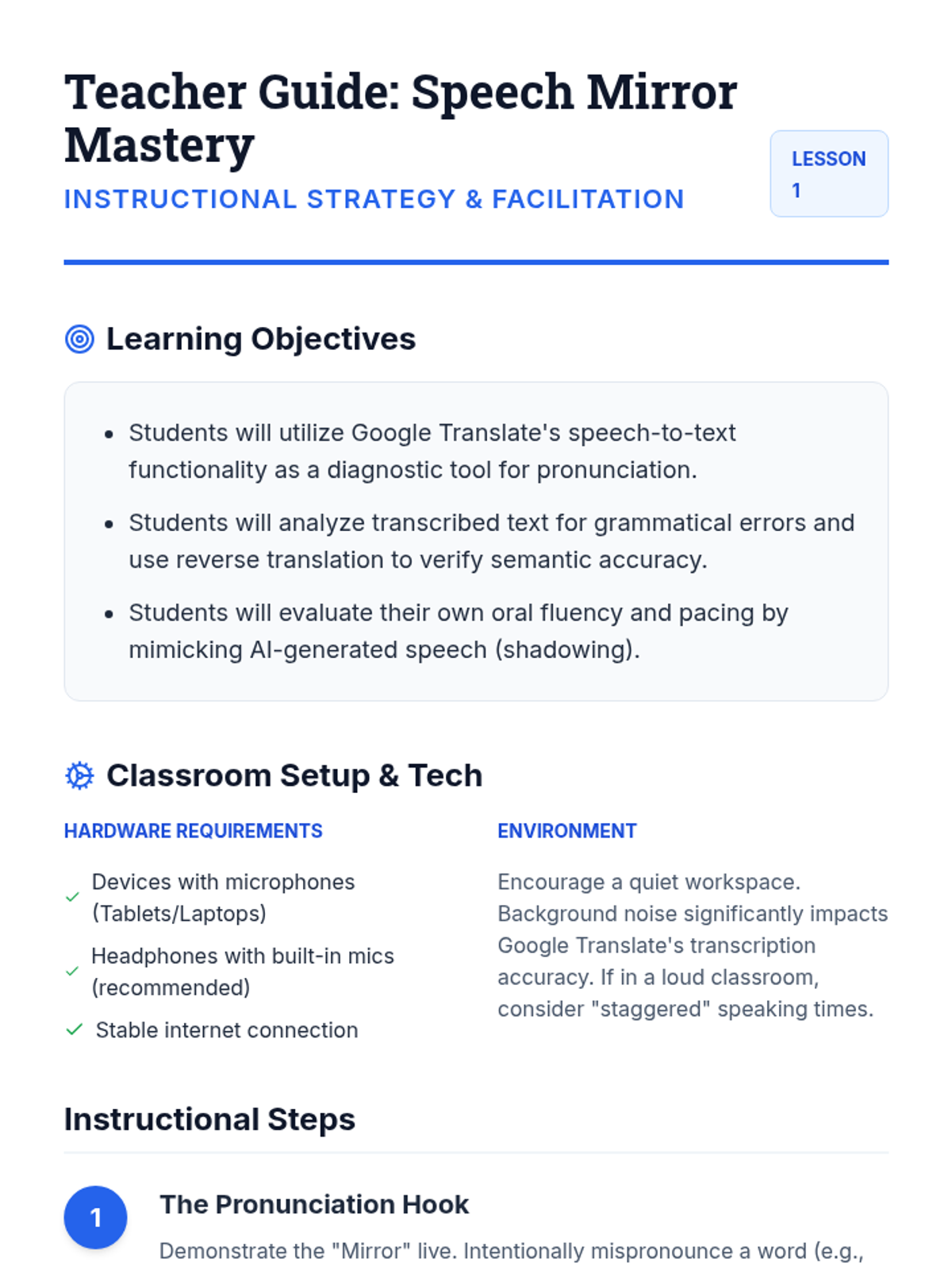
This lesson teaches students how to use Google Translate's speech-to-text and text-to-speech features to self-evaluate their spoken language. Focus areas include pronunciation clarity, grammatical accuracy of transcribed text, and oral fluency.
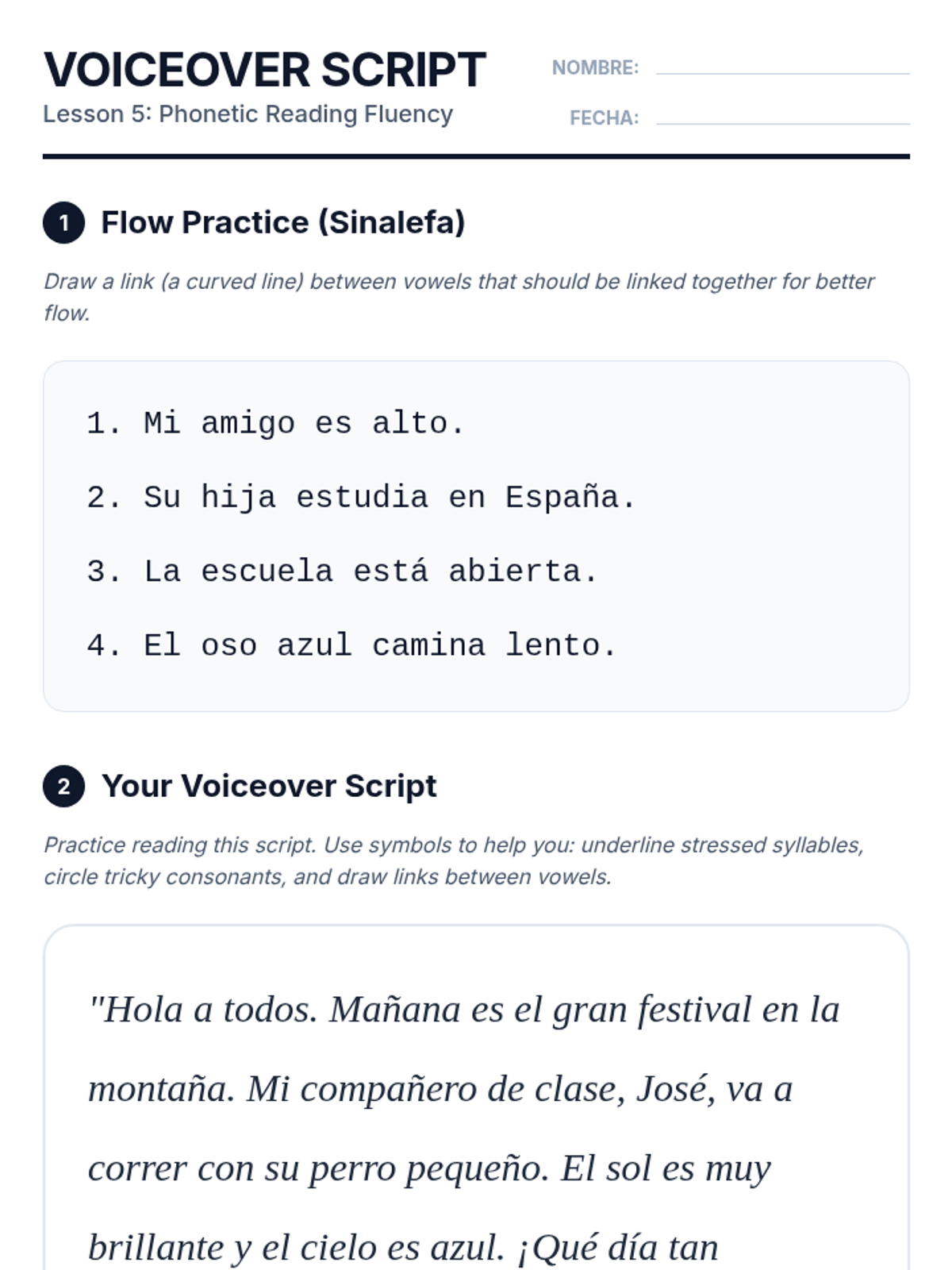
Bringing all skills together, students practice reading short paragraphs aloud, focusing on flow, linking words, and maintaining correct pronunciation, culminating in a recorded 'voiceover' activity.
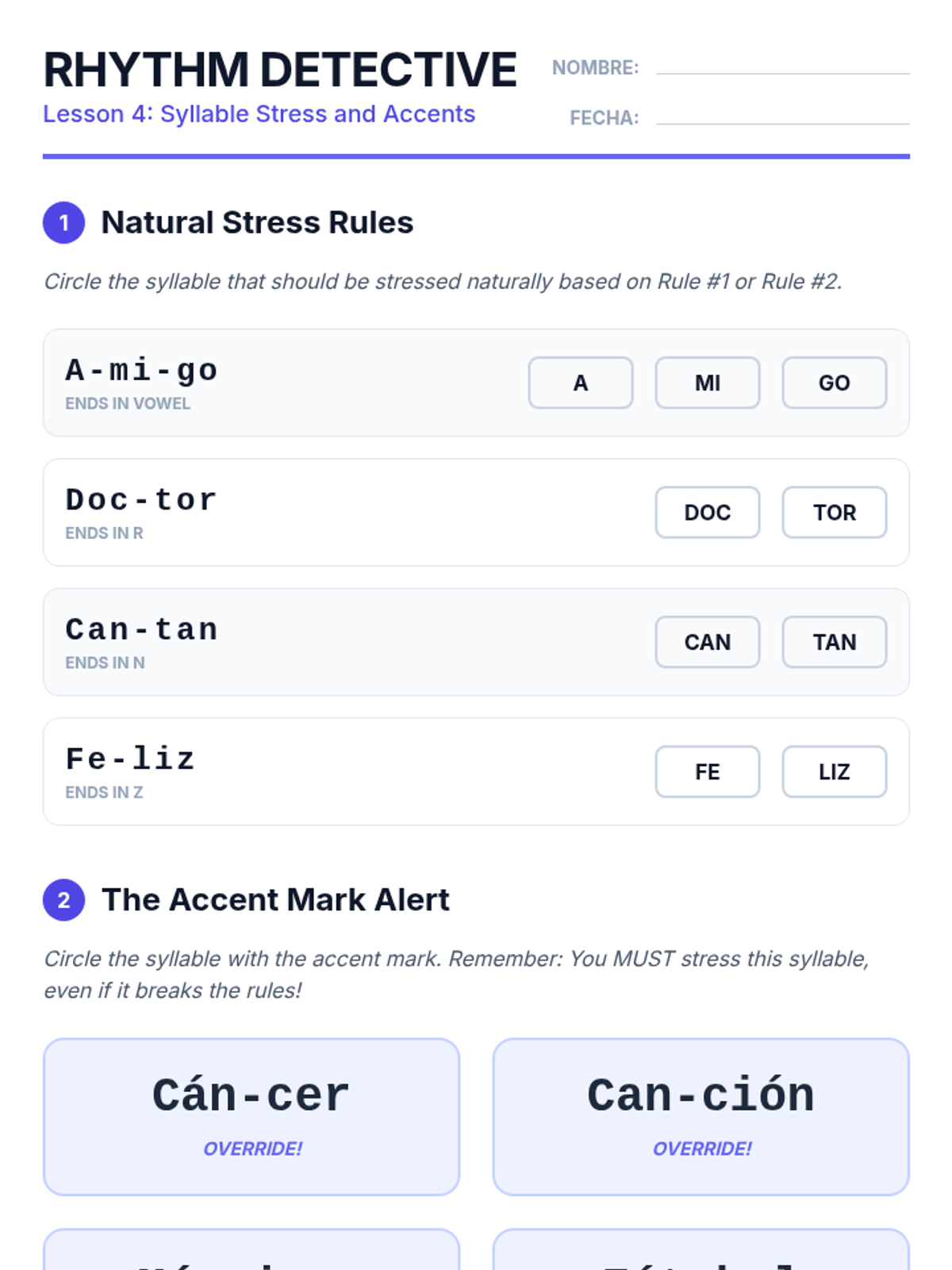
Students learn the two basic rules of natural stress in Spanish and how written accent marks (tildes) break those rules. They practice identifying emphasis through rhythmic activities.
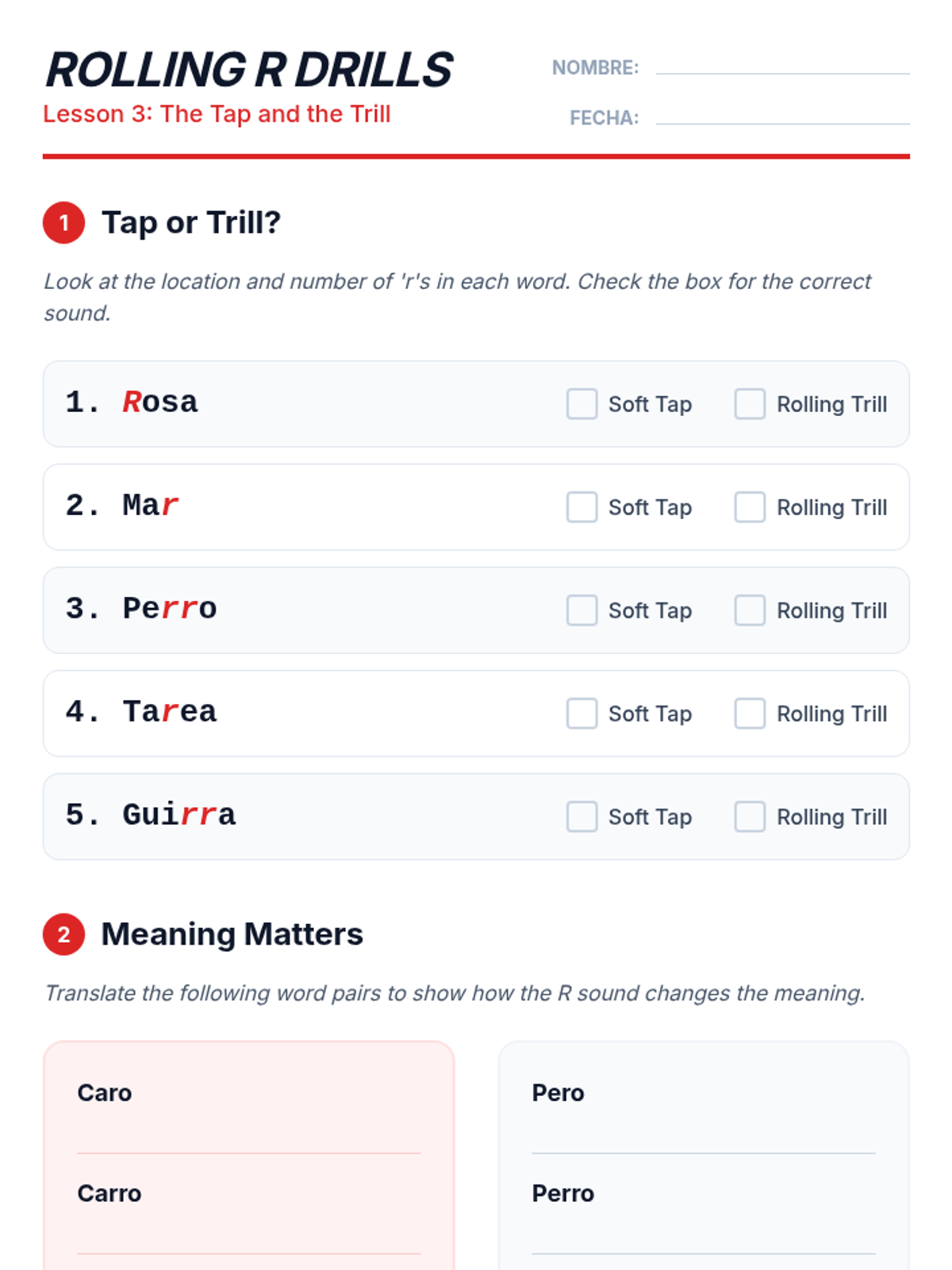
Students explore the difference between the single 'r' (tap) and the double 'rr' (trill), learning the physical mechanics of vibrating the tongue. The lesson focuses on distinguishing minimal pairs like 'pero' and 'perro'.
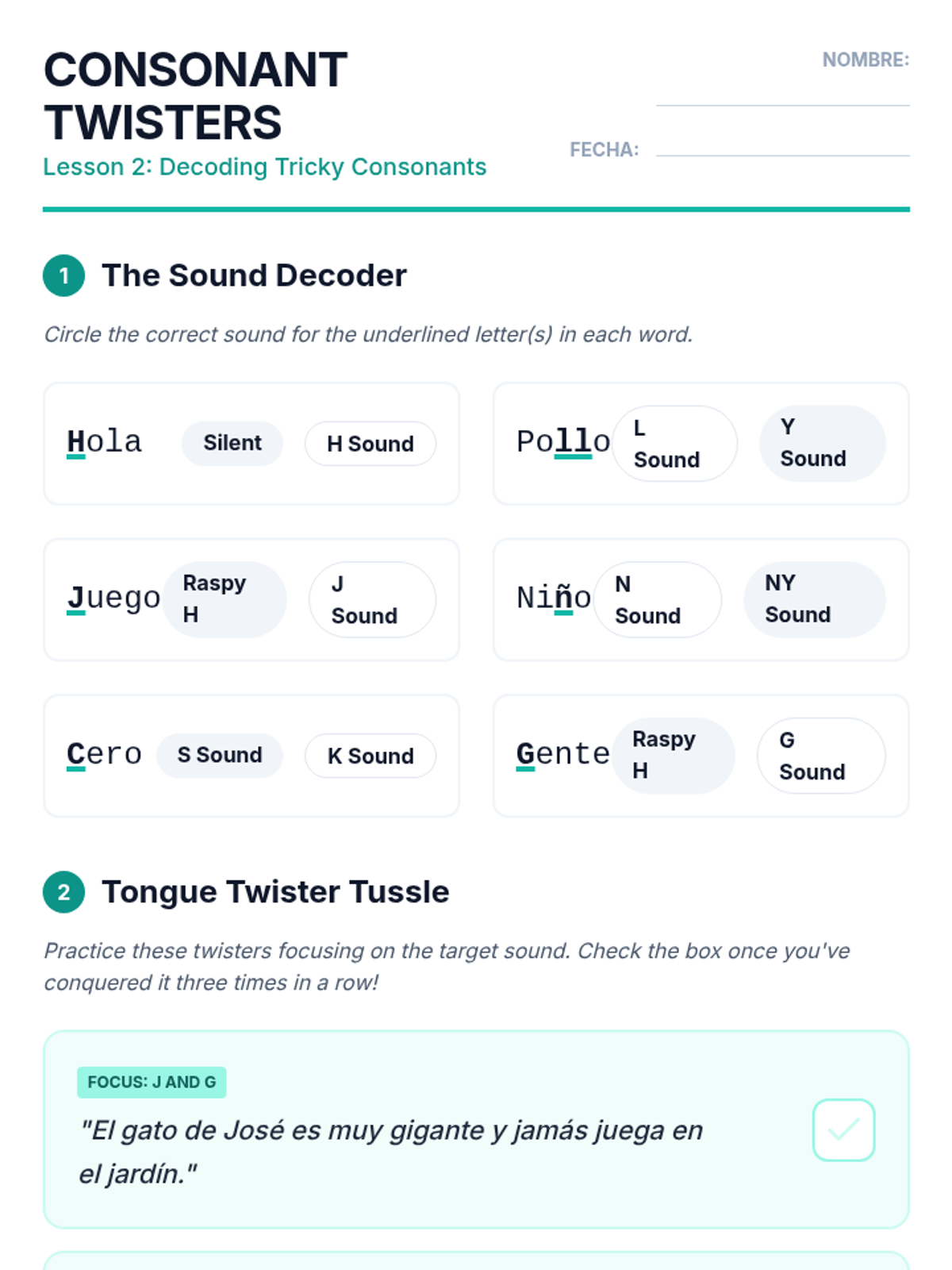
This lesson introduces consonants that function differently in Spanish, such as h (silent), j (aspirated), ll, ñ, and z/c. Students practice tongue placement and air flow to produce these sounds accurately through tongue twister challenges.
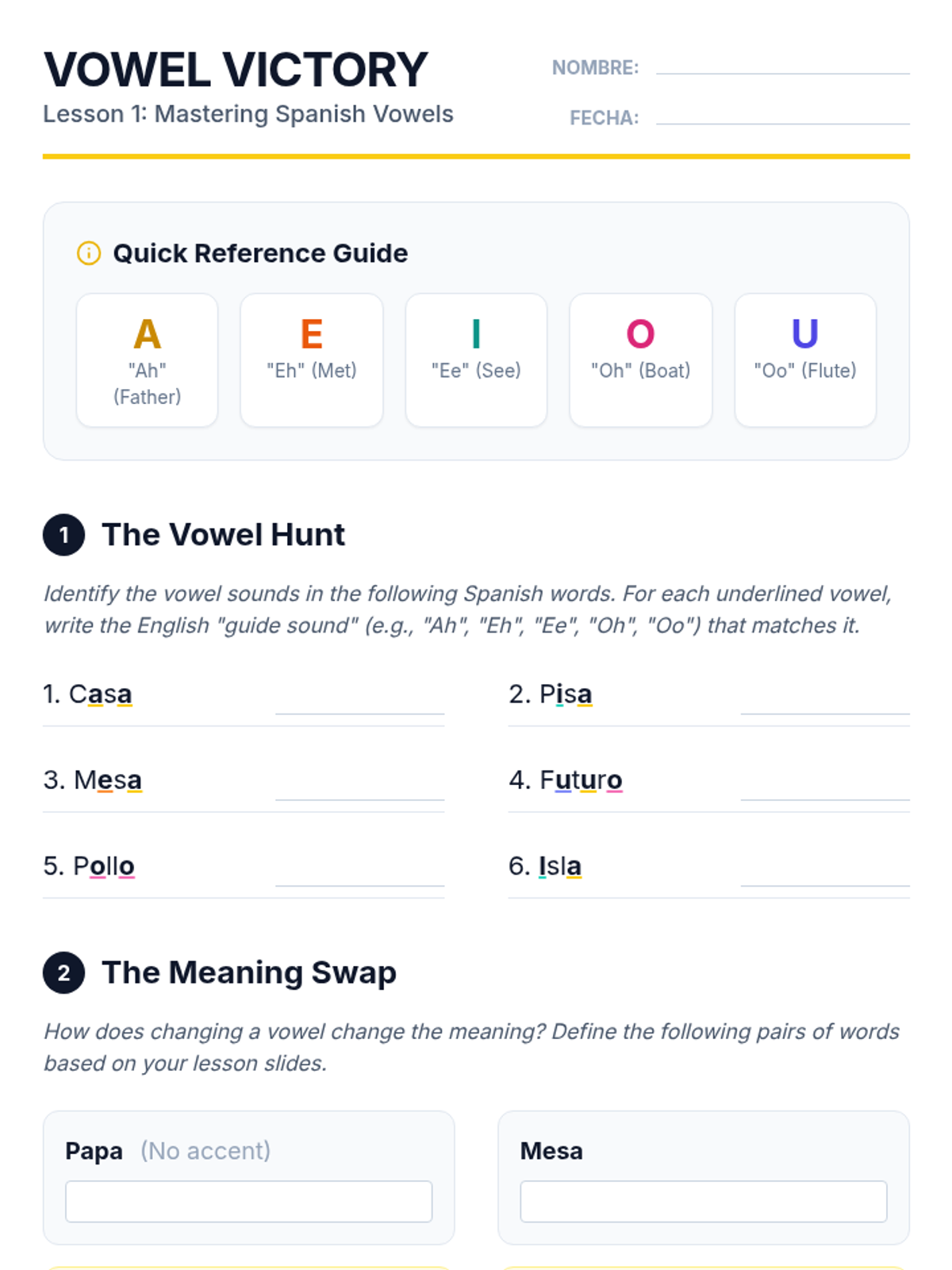
Students focus exclusively on the five Spanish vowels (a, e, i, o, u), learning their short, crisp, and invariable nature compared to English diphthongs. Through choral repetition and listening discrimination drills, students practice identifying and producing these core sounds.
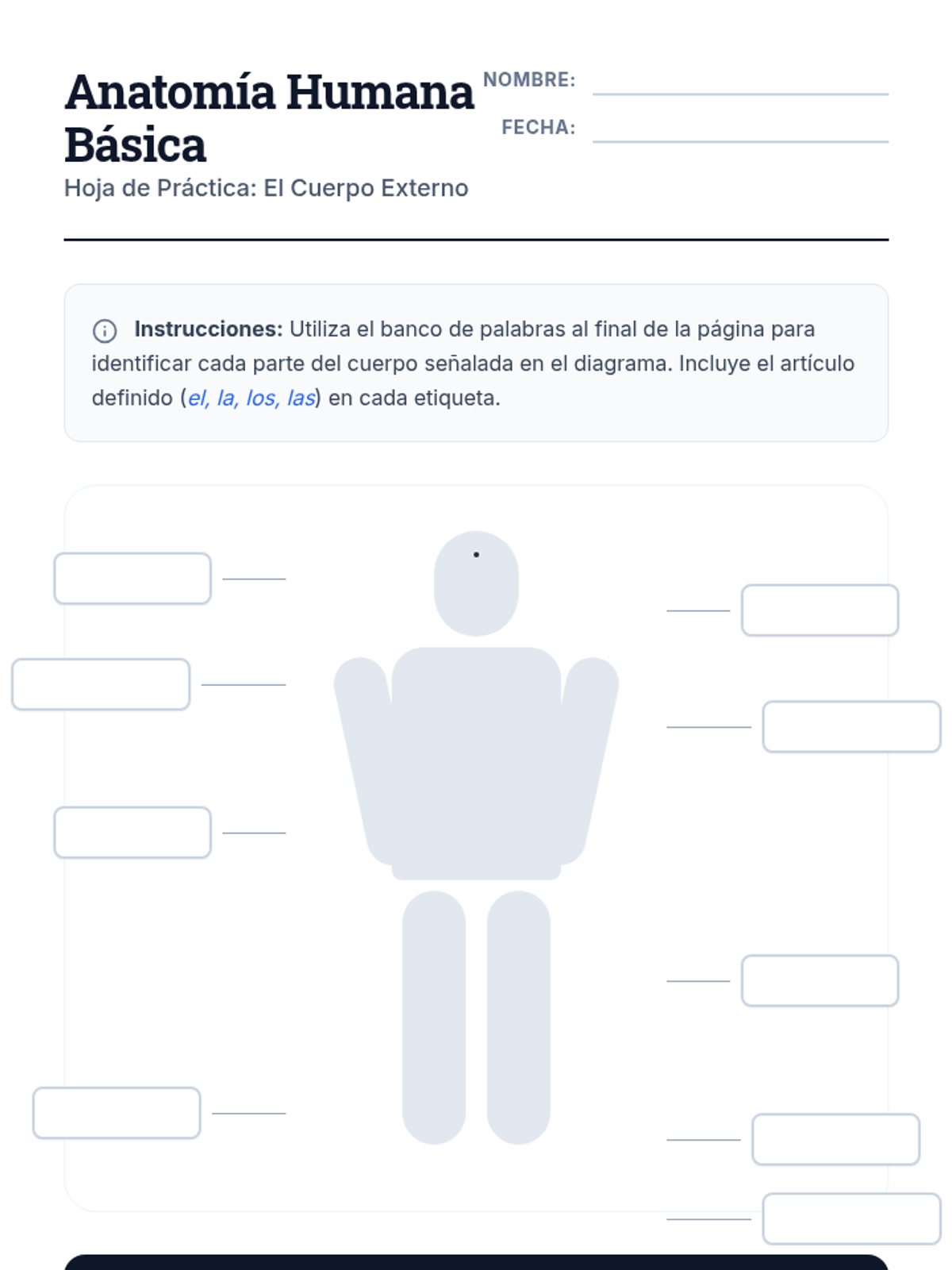
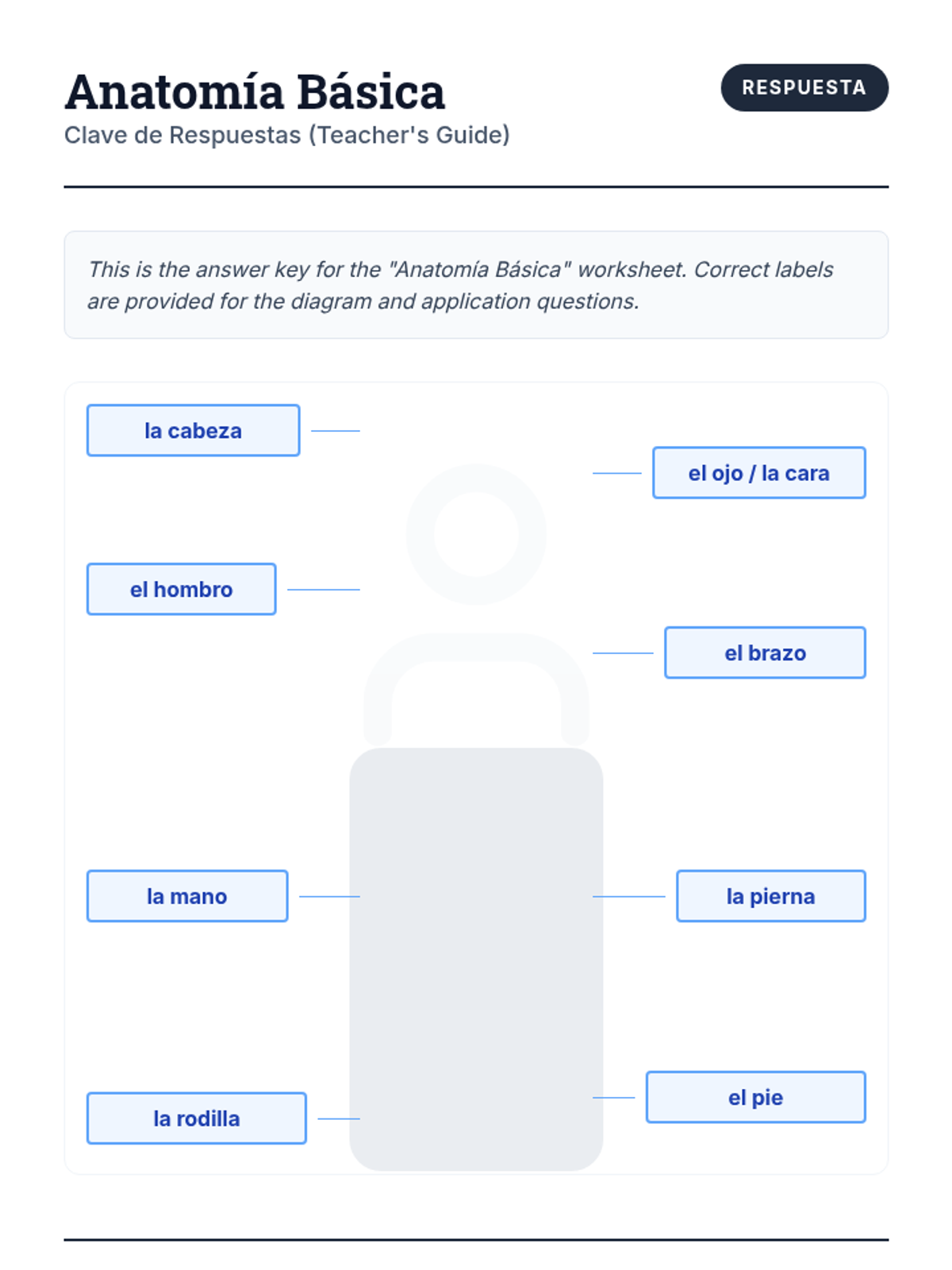
A lesson introducing basic external human anatomy in Spanish, focusing on 'el cuerpo' vocabulary through visual labeling and interactive practice.
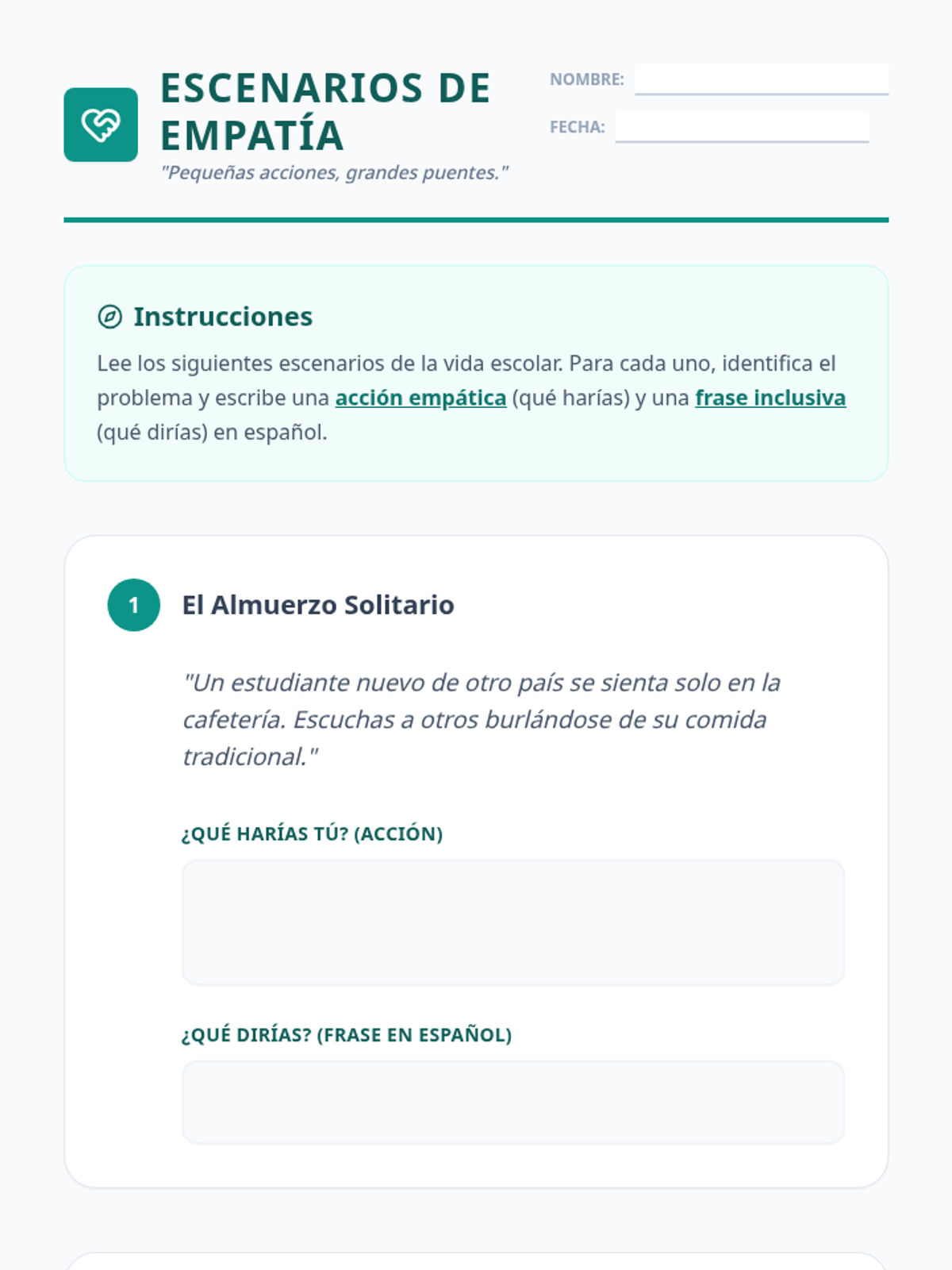
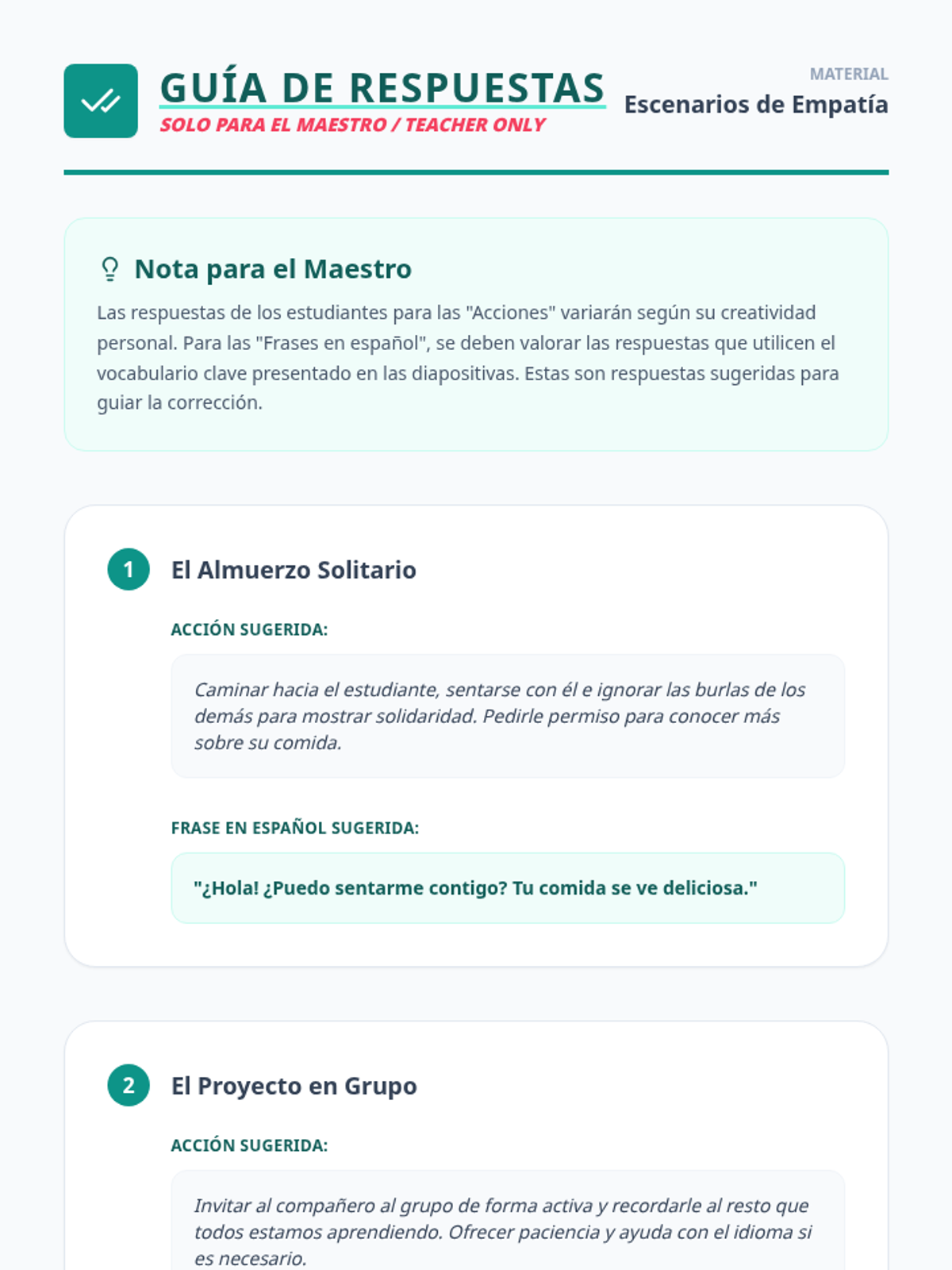
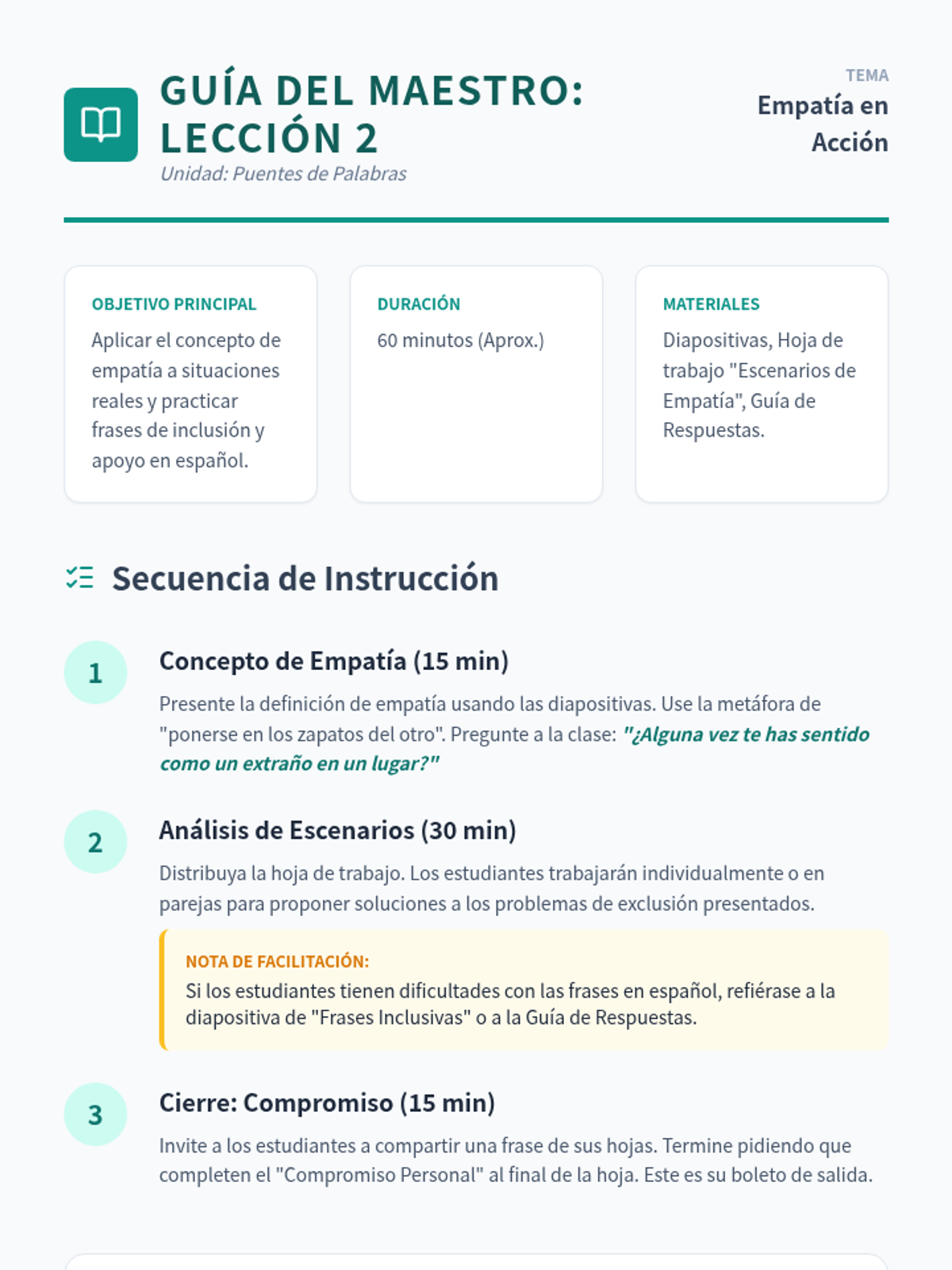
Focuses on empathy and social acceptance by analyzing scenarios and practicing inclusive language in Spanish.
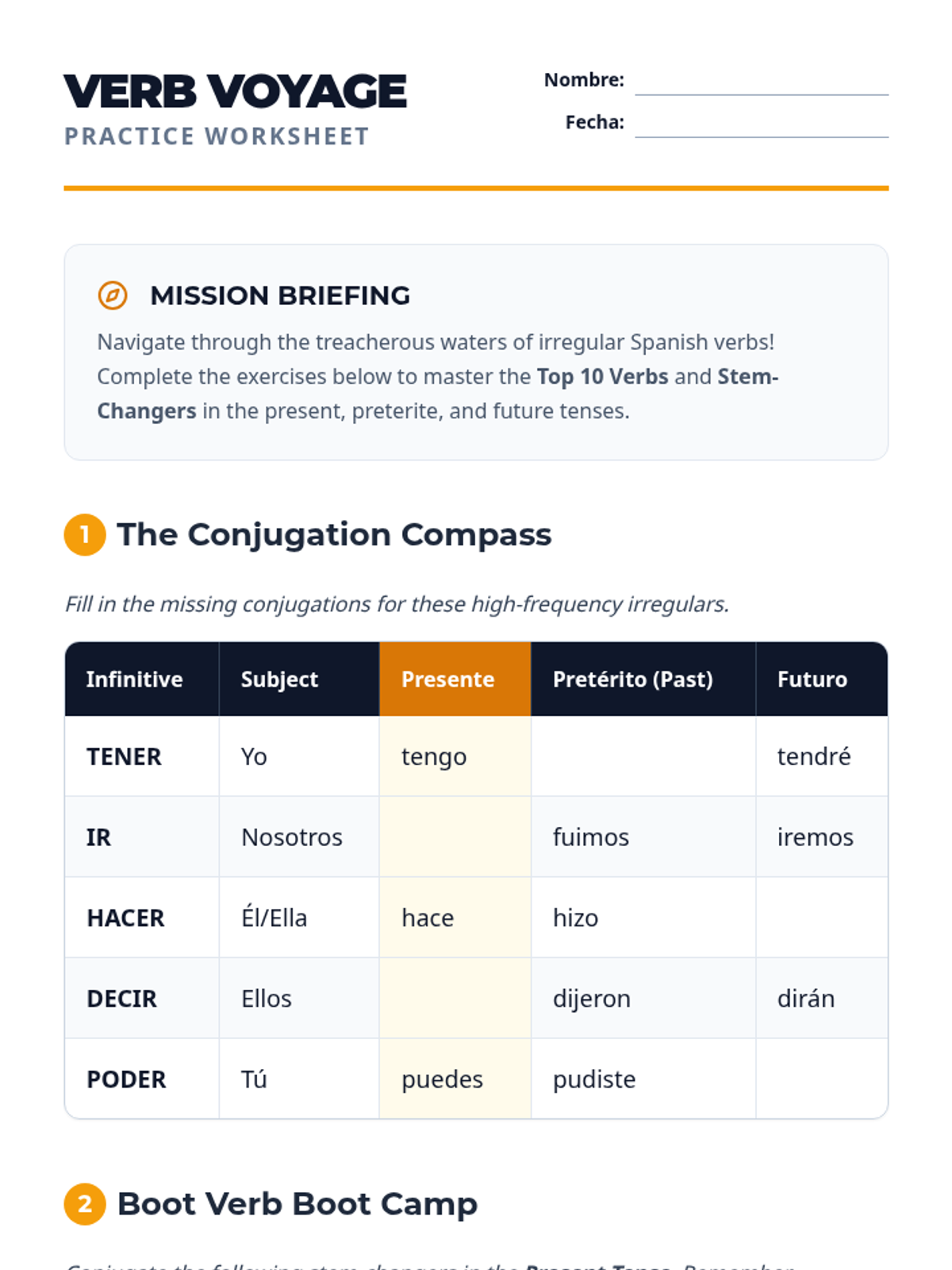
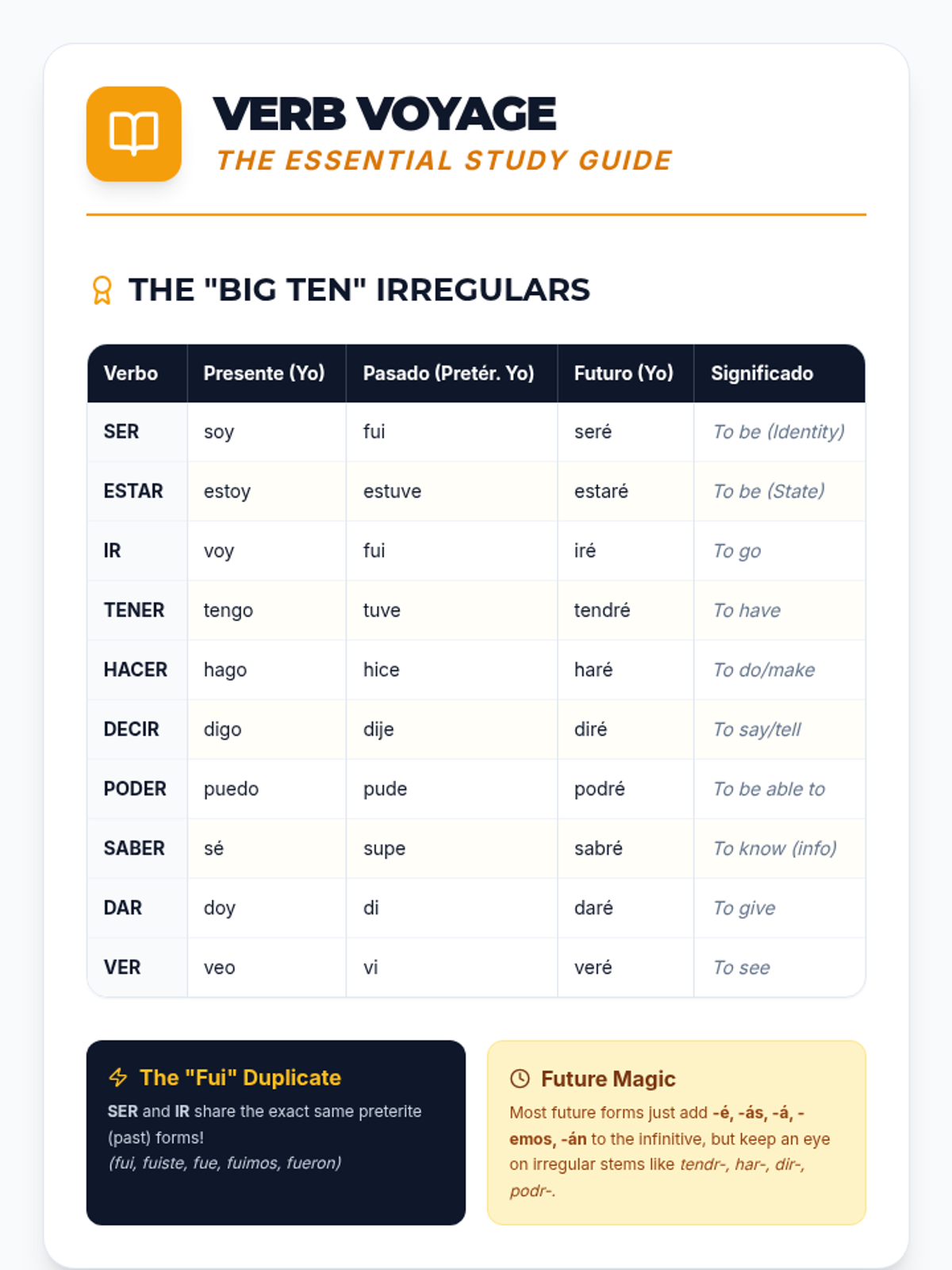
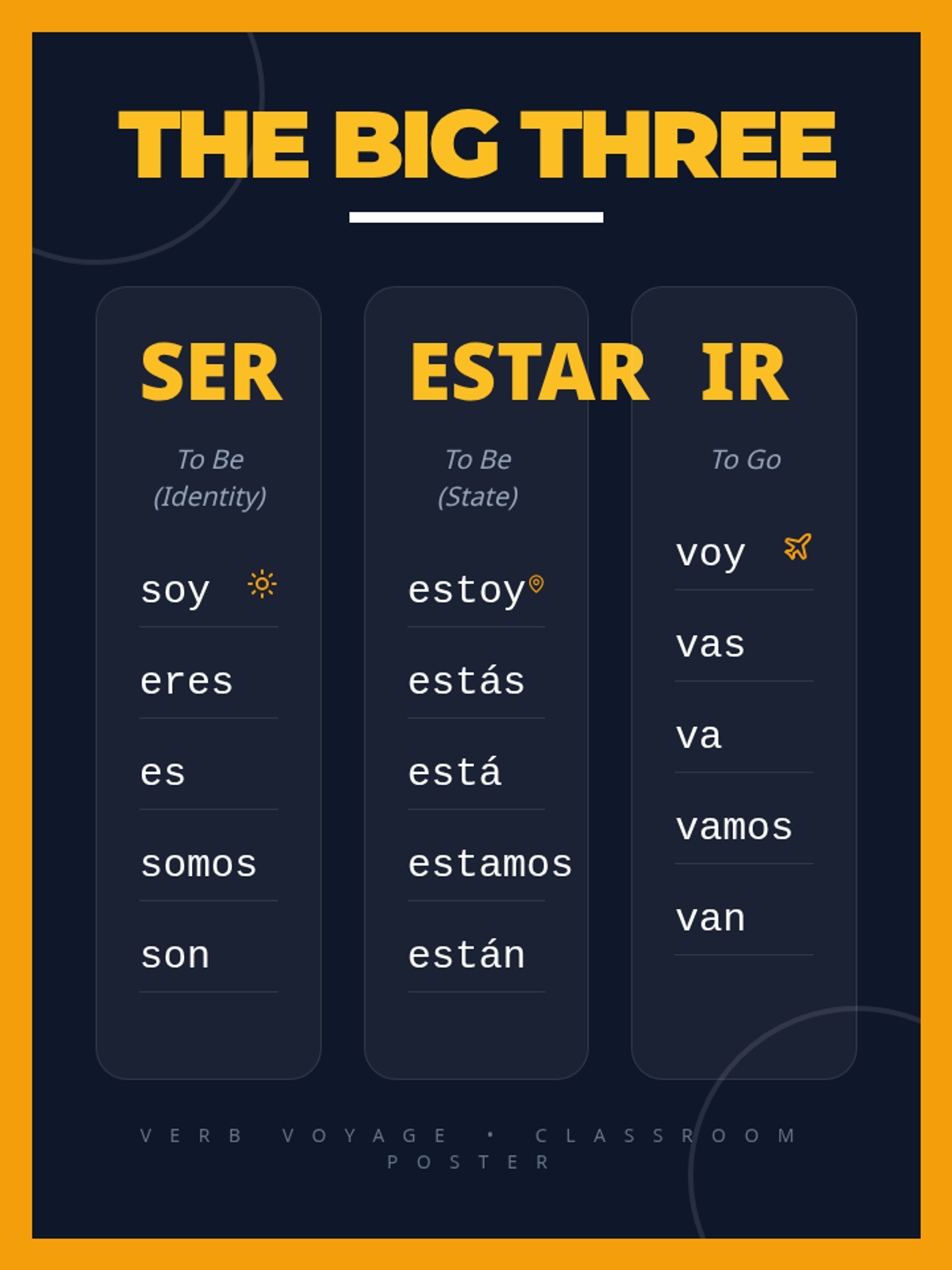
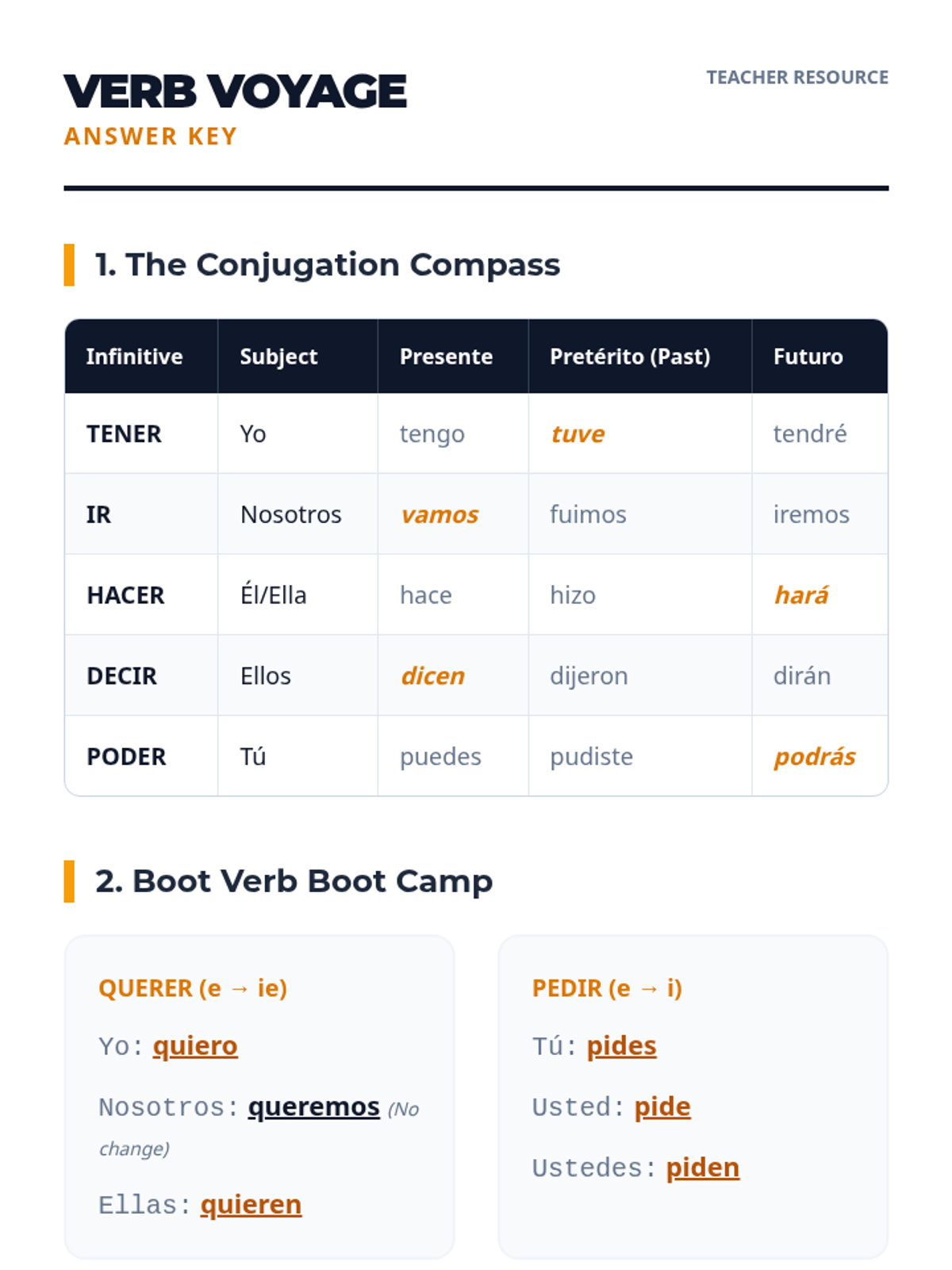
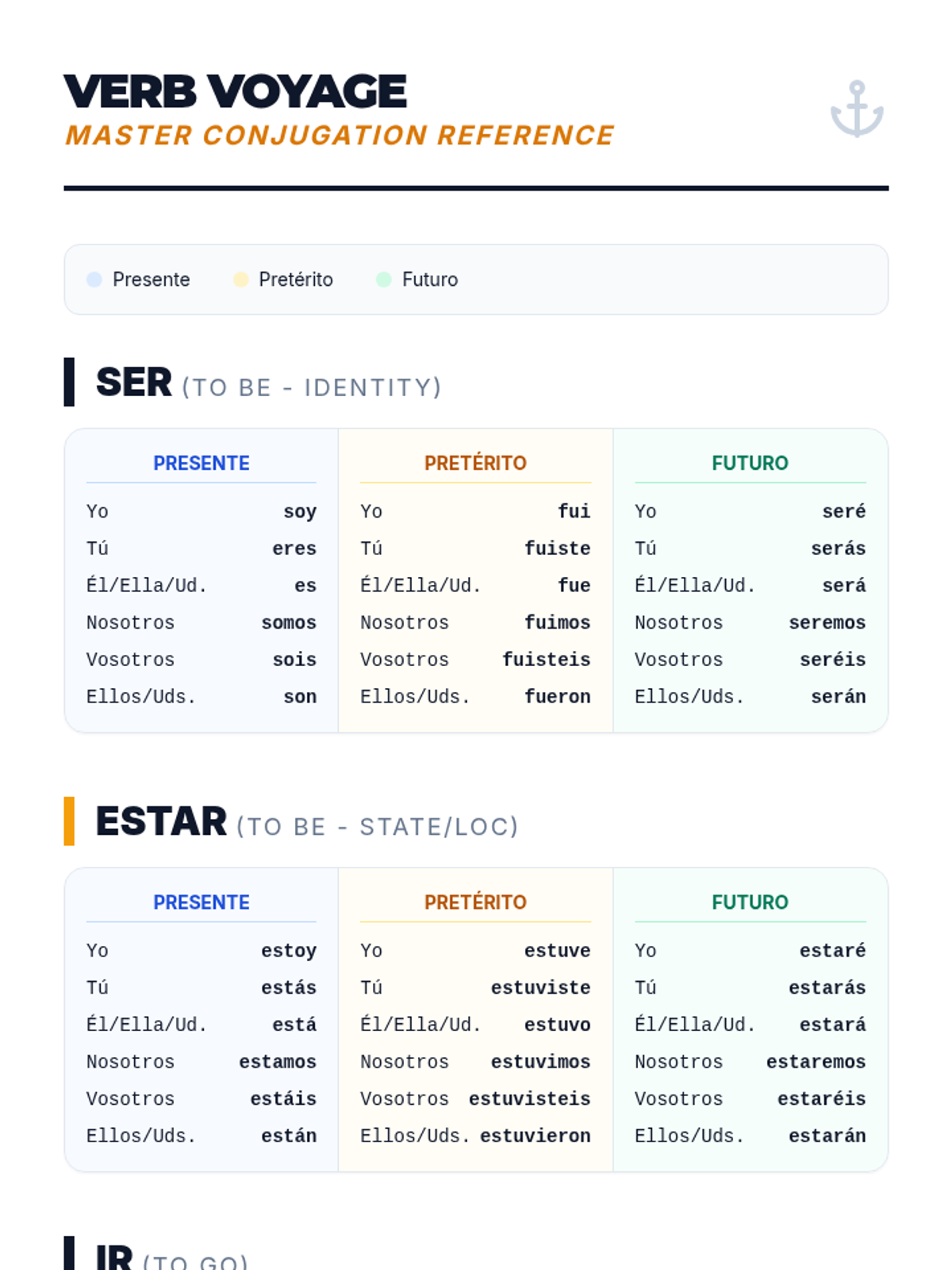
A comprehensive introduction to the most frequent irregular verbs in Spanish across present, preterite, and future tenses, including stem-changers.
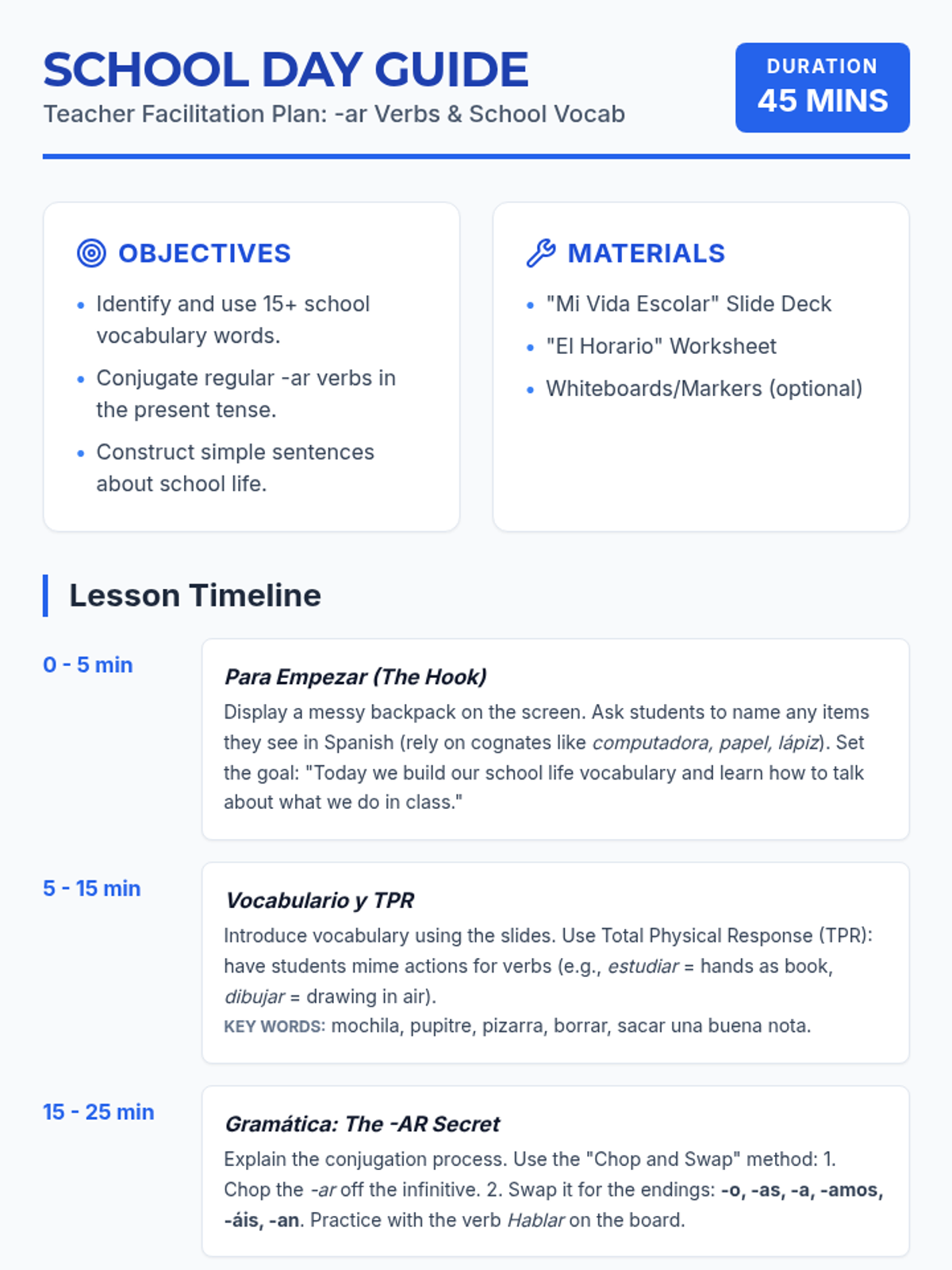
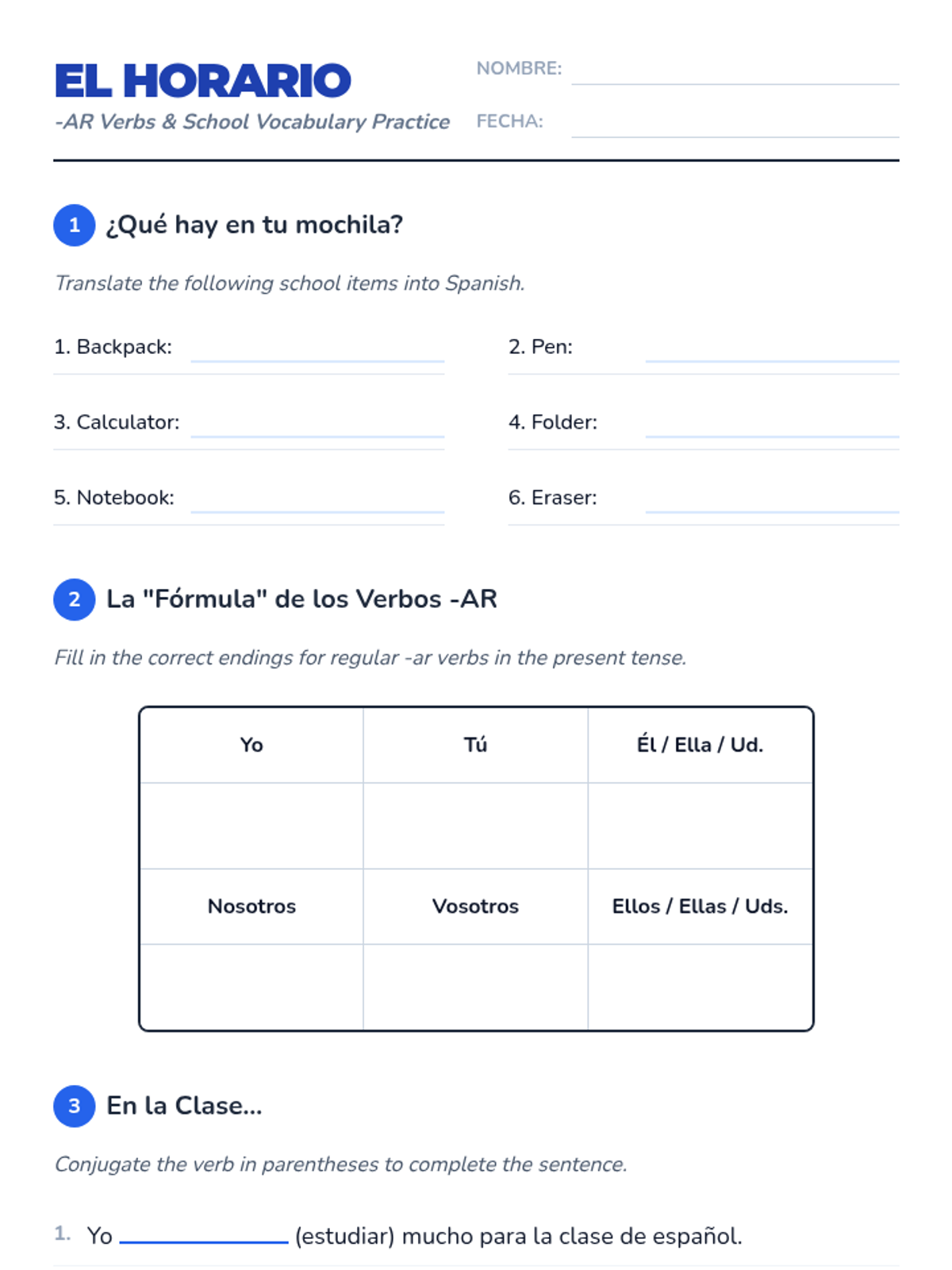
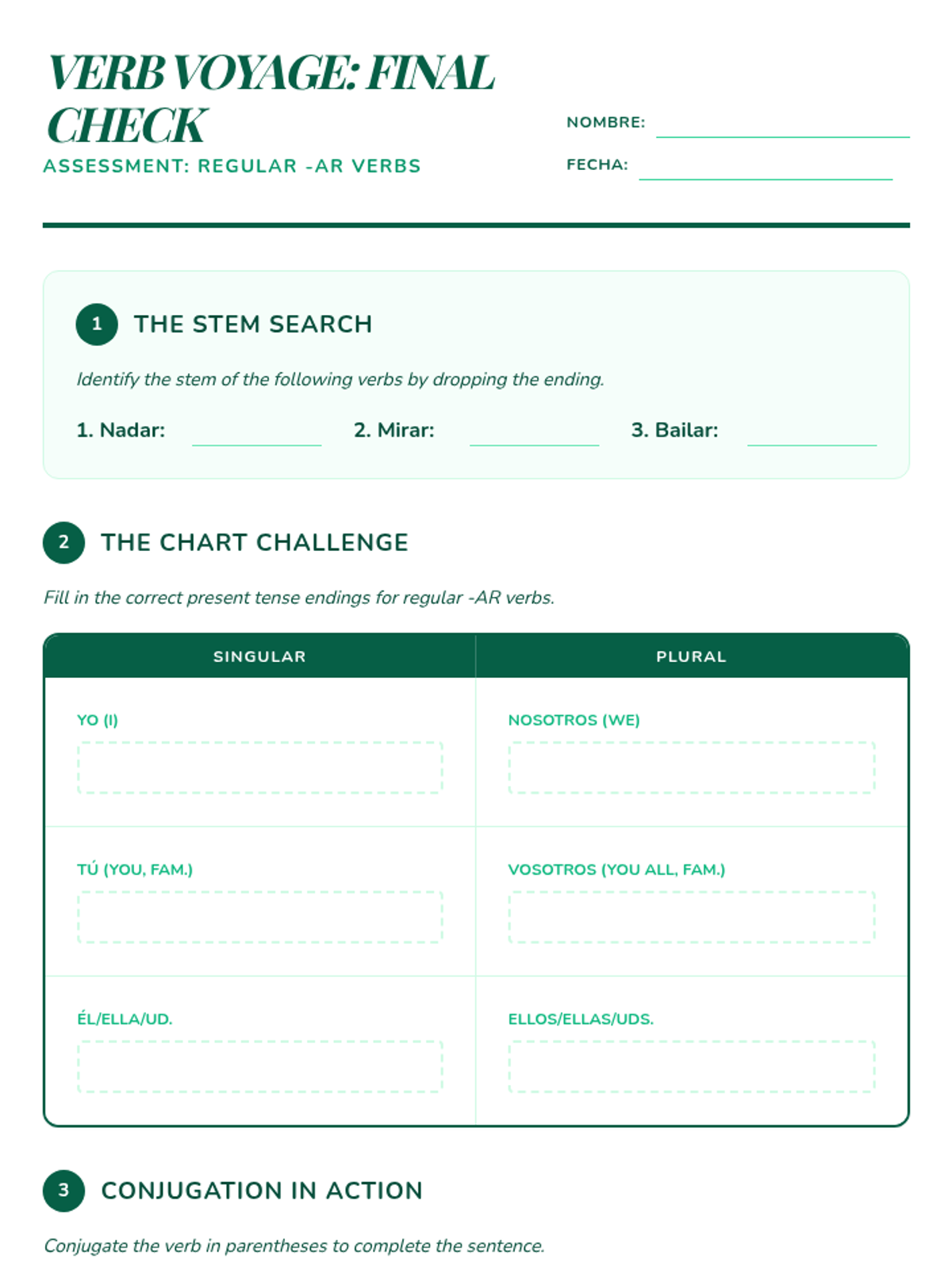
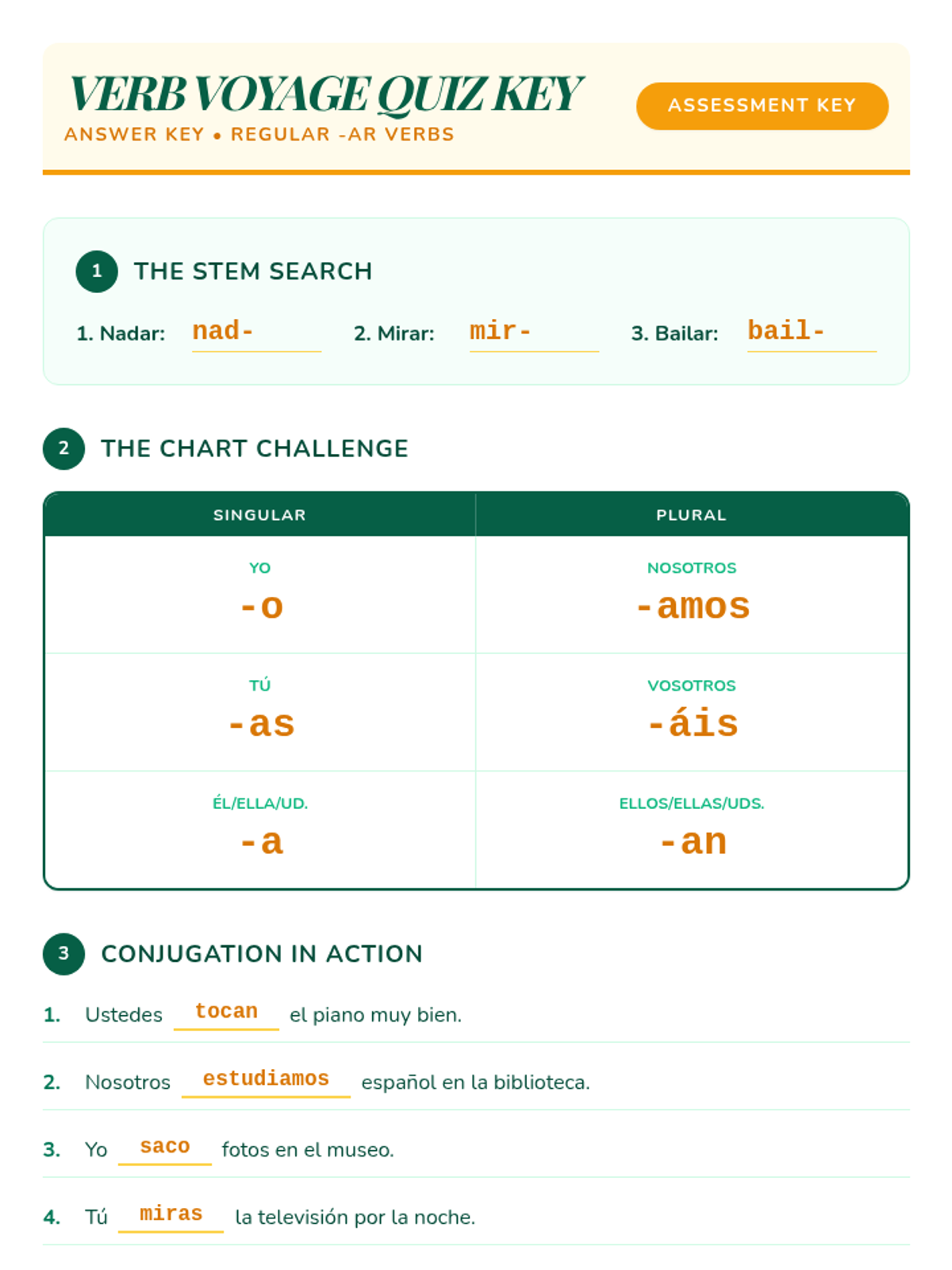
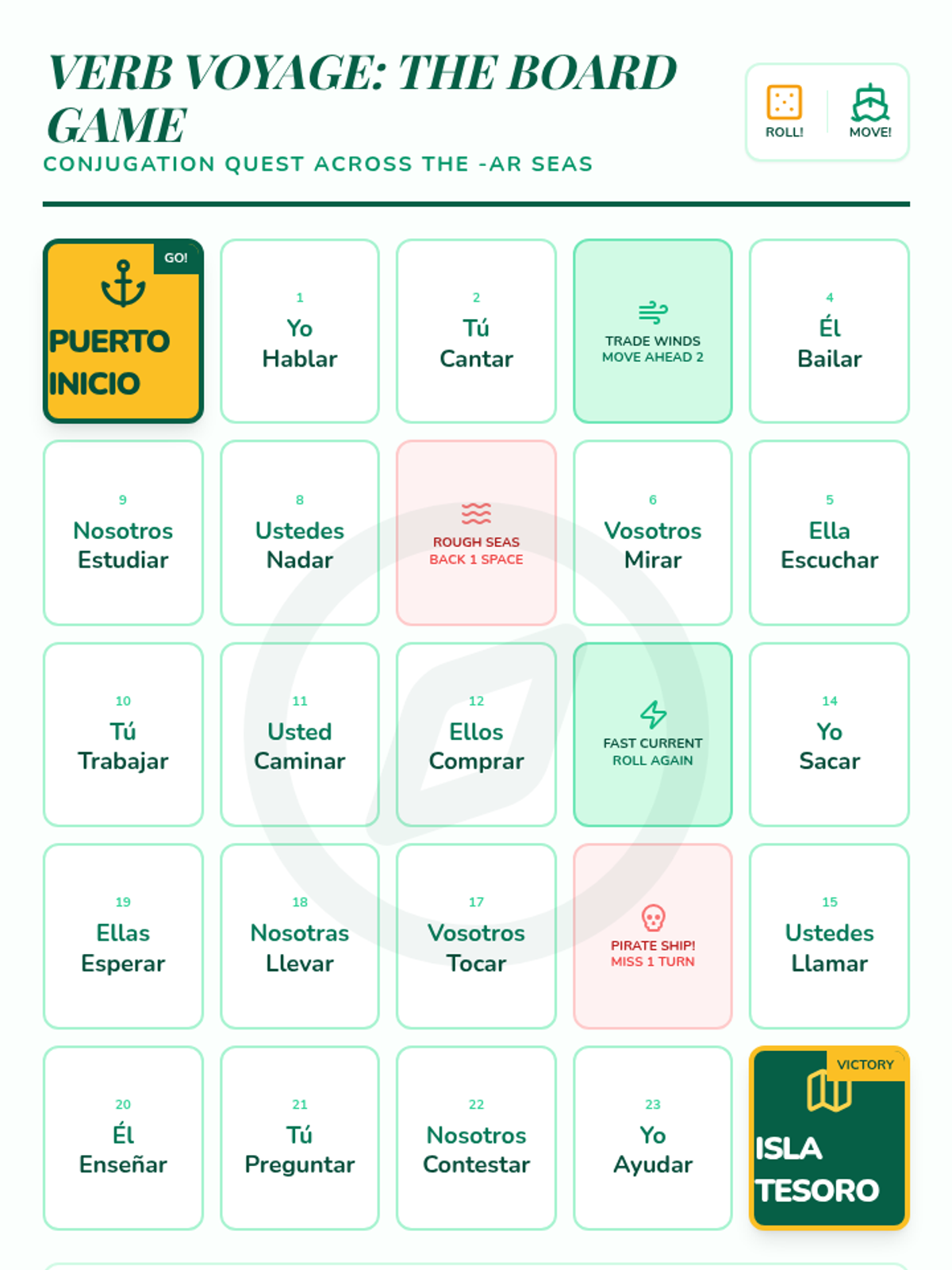
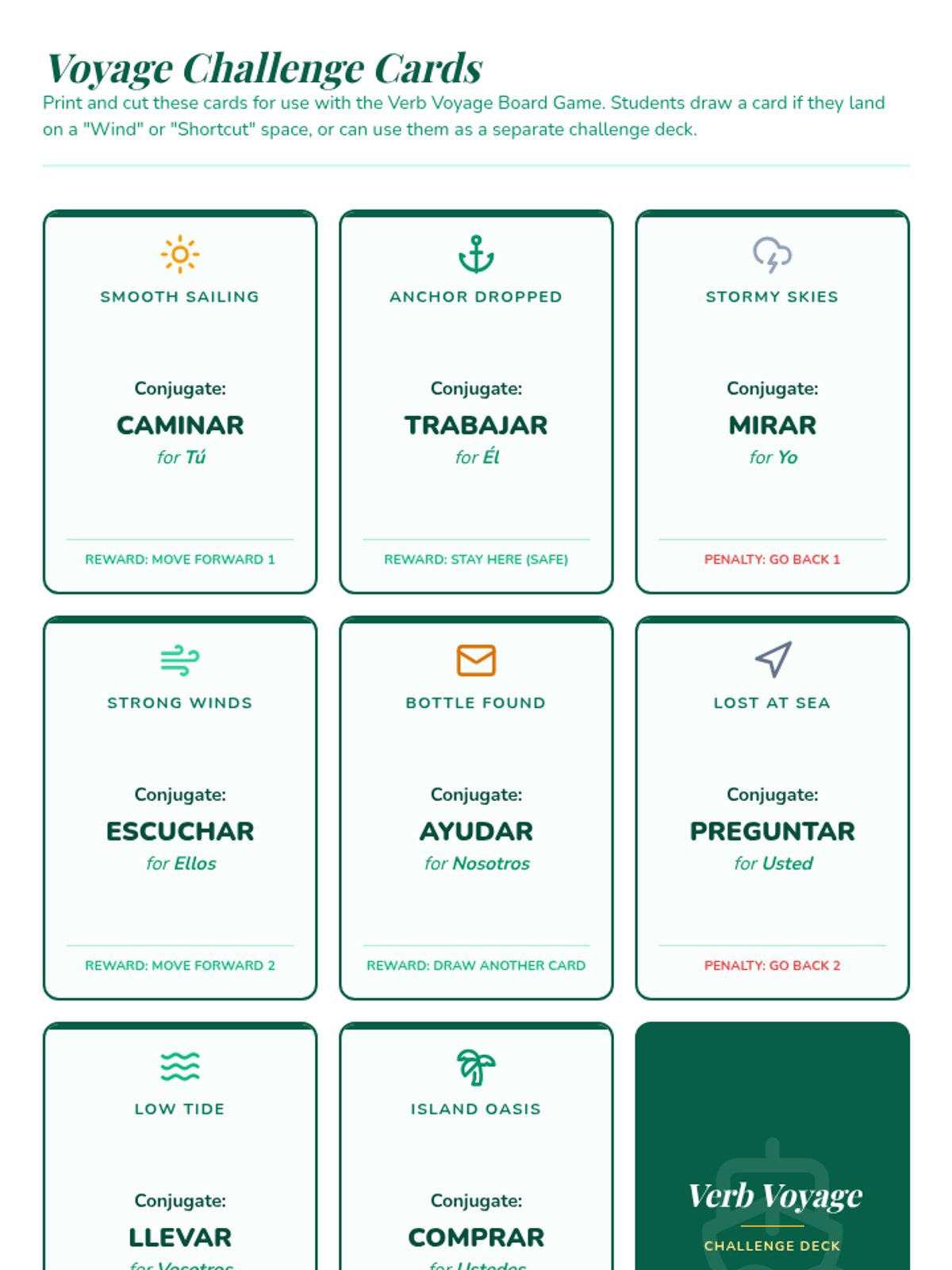
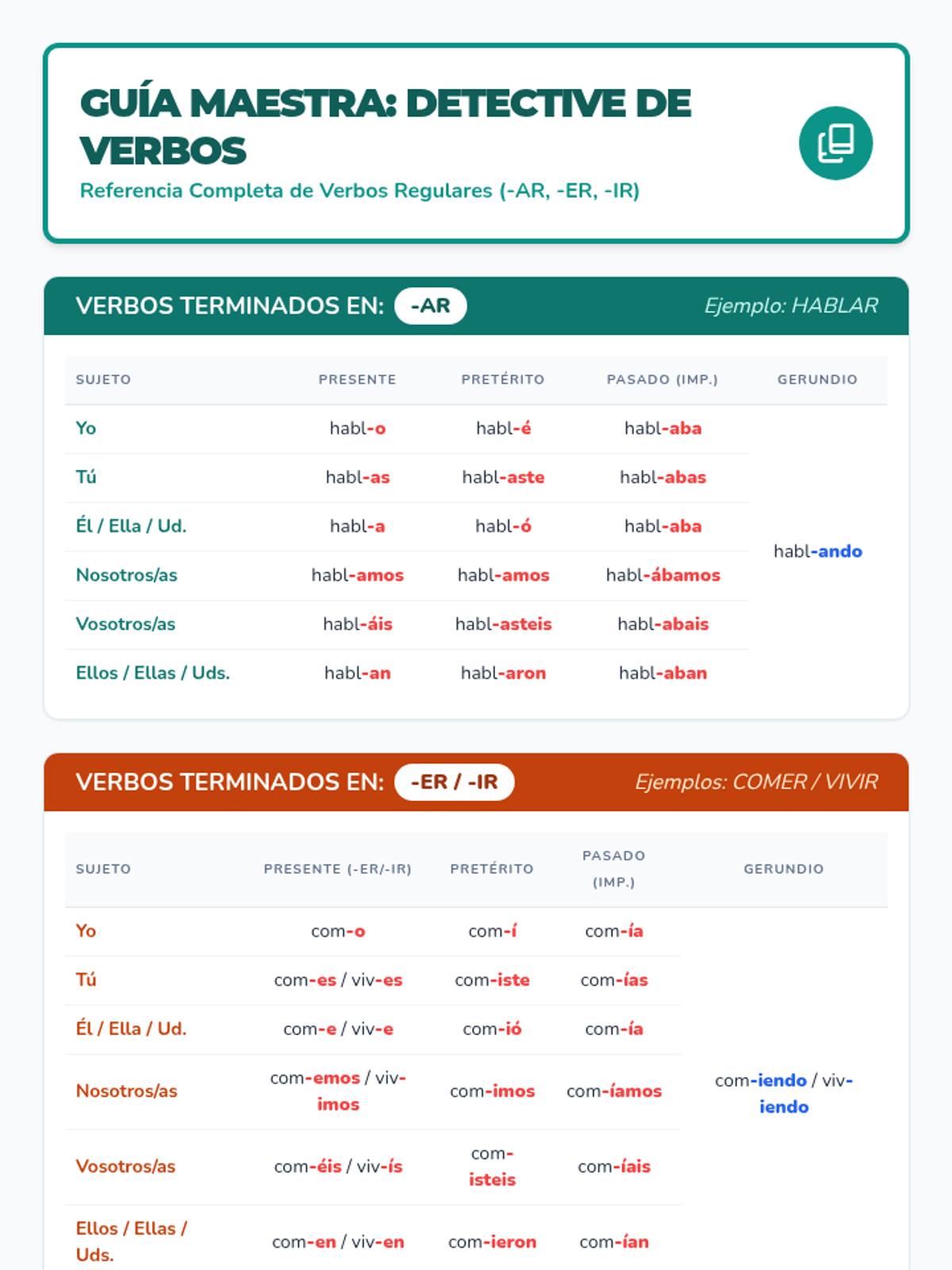
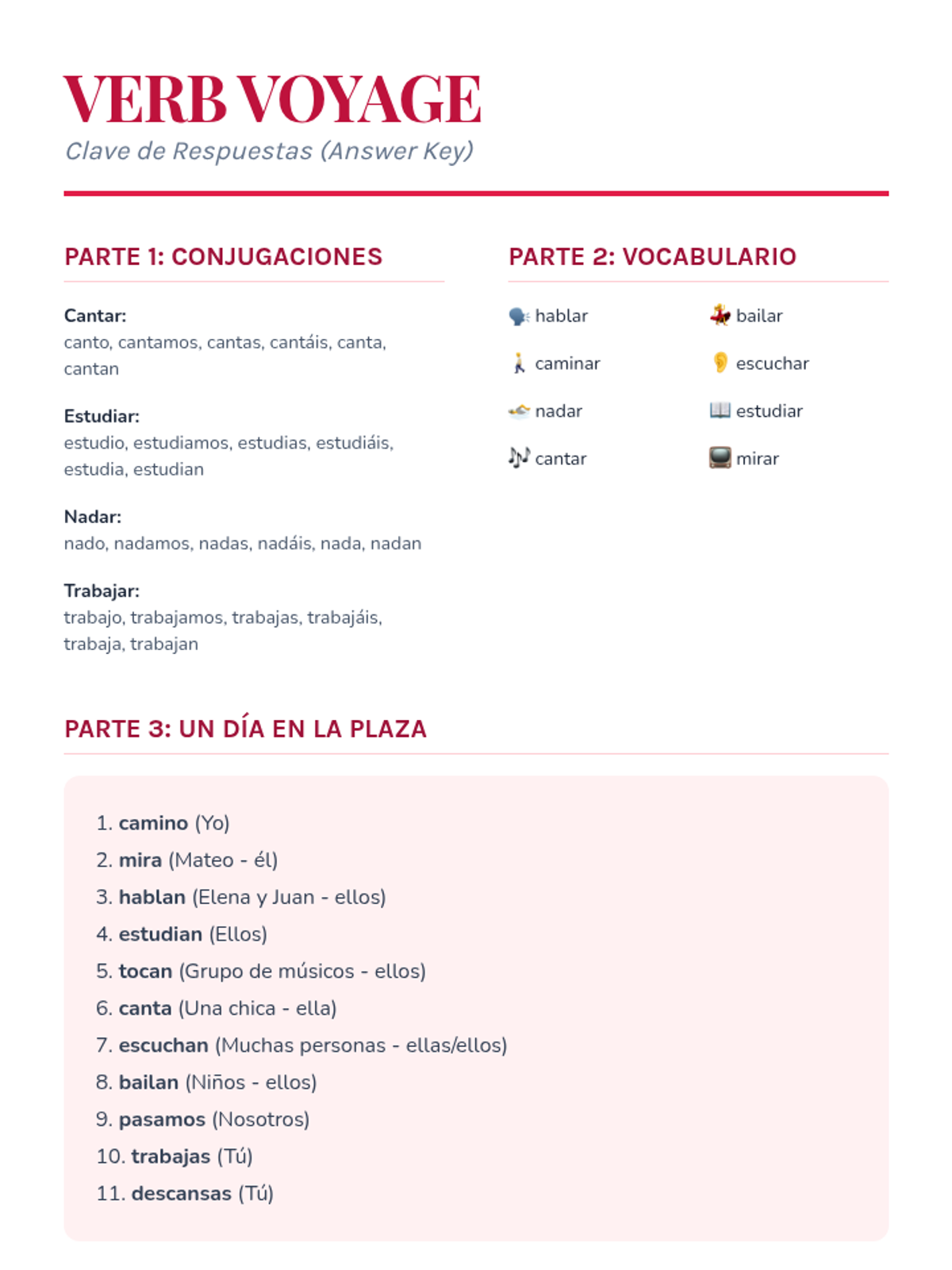
A comprehensive lesson covering regular -ar verb conjugations and school-related vocabulary for beginner Spanish students. includes a detailed timing guide, visual aids, and practice exercises.
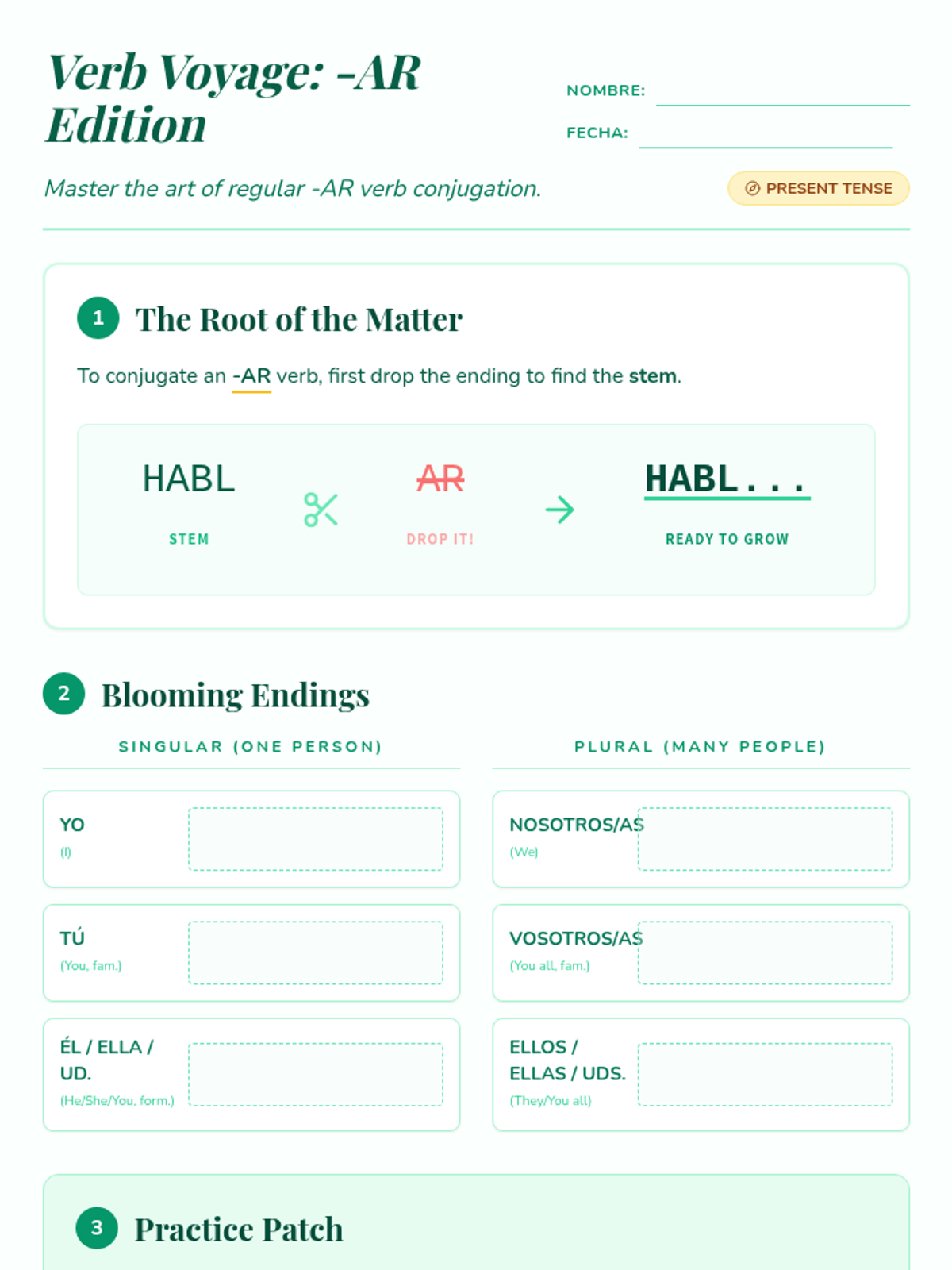
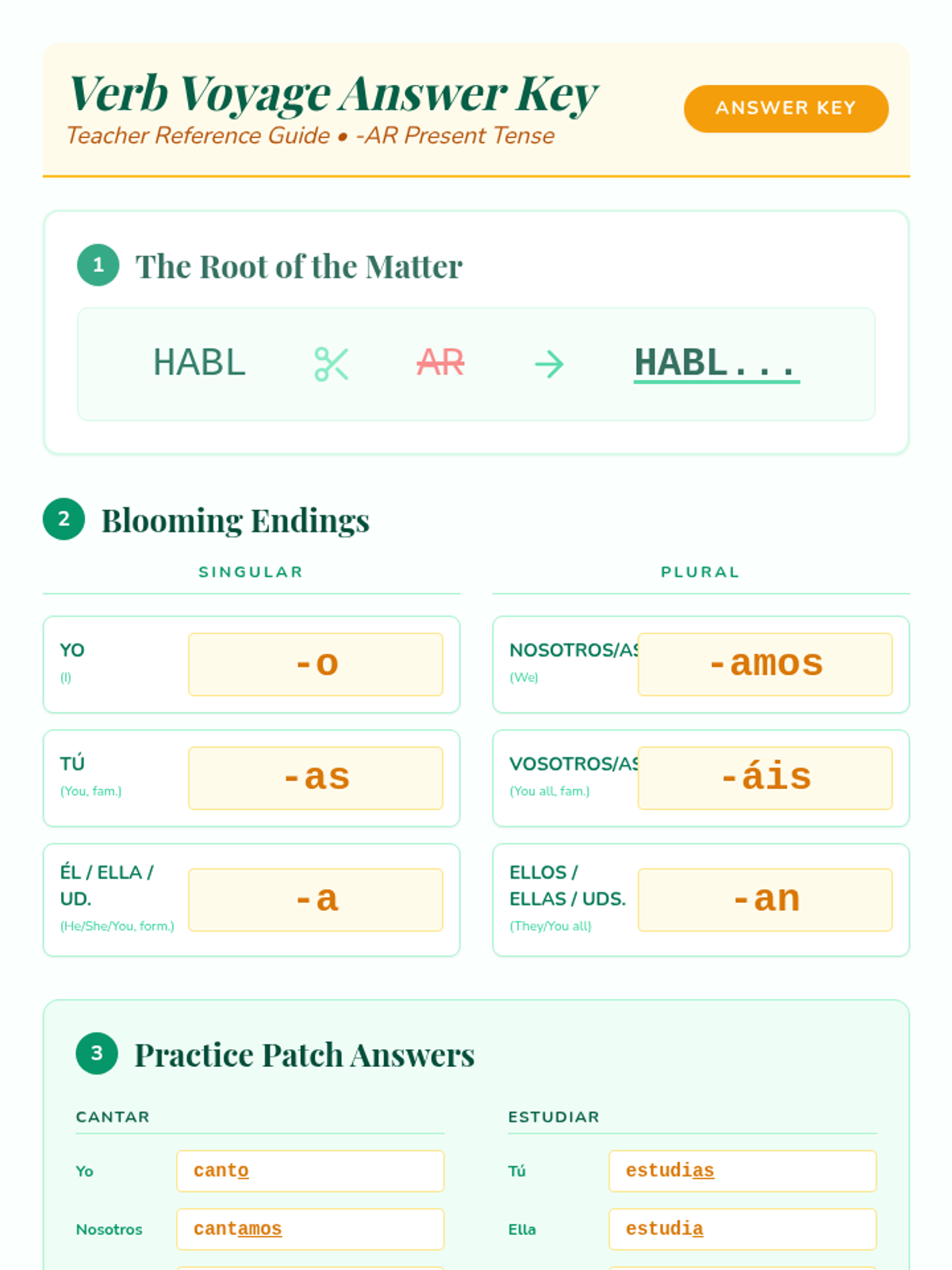
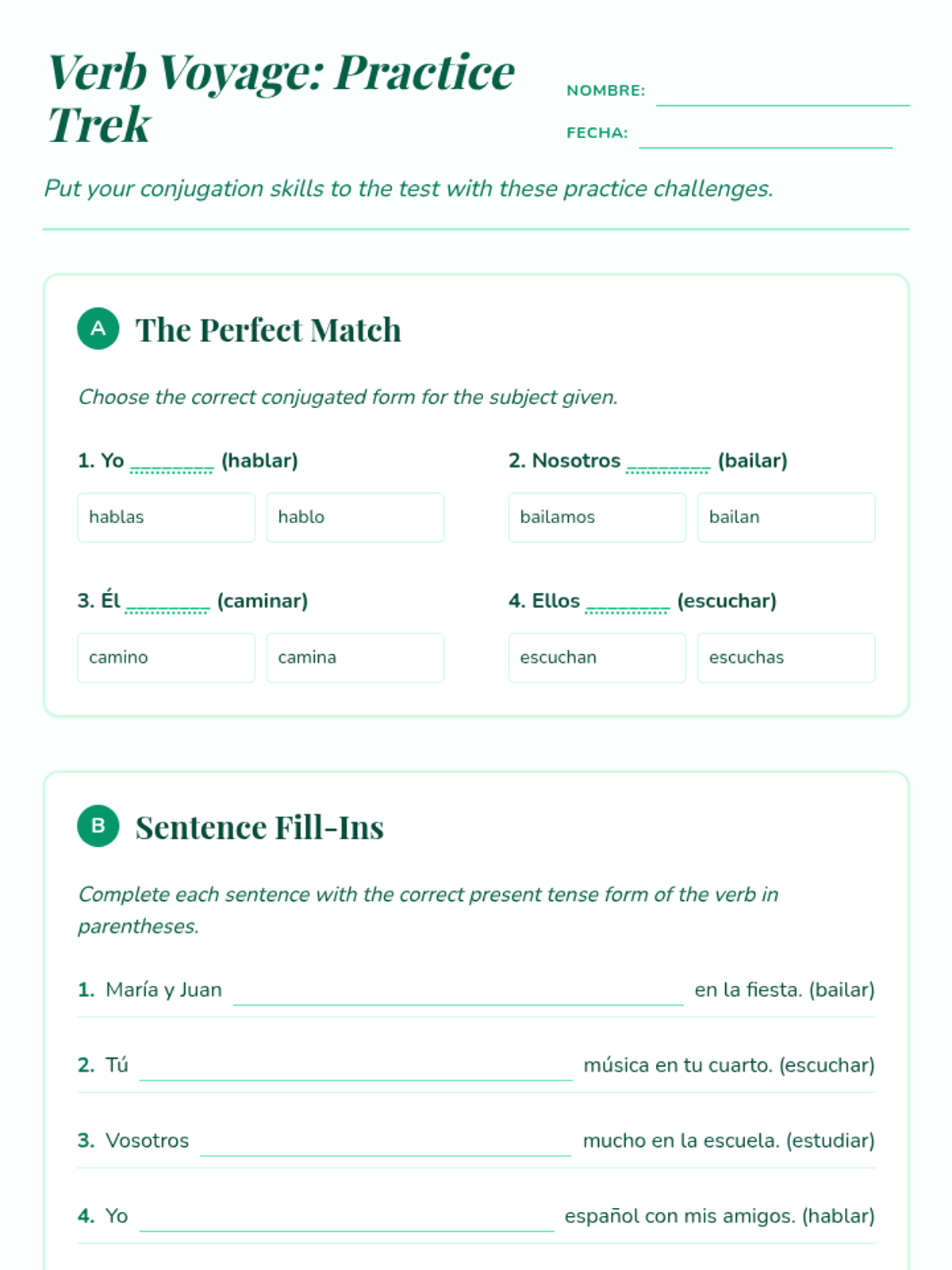
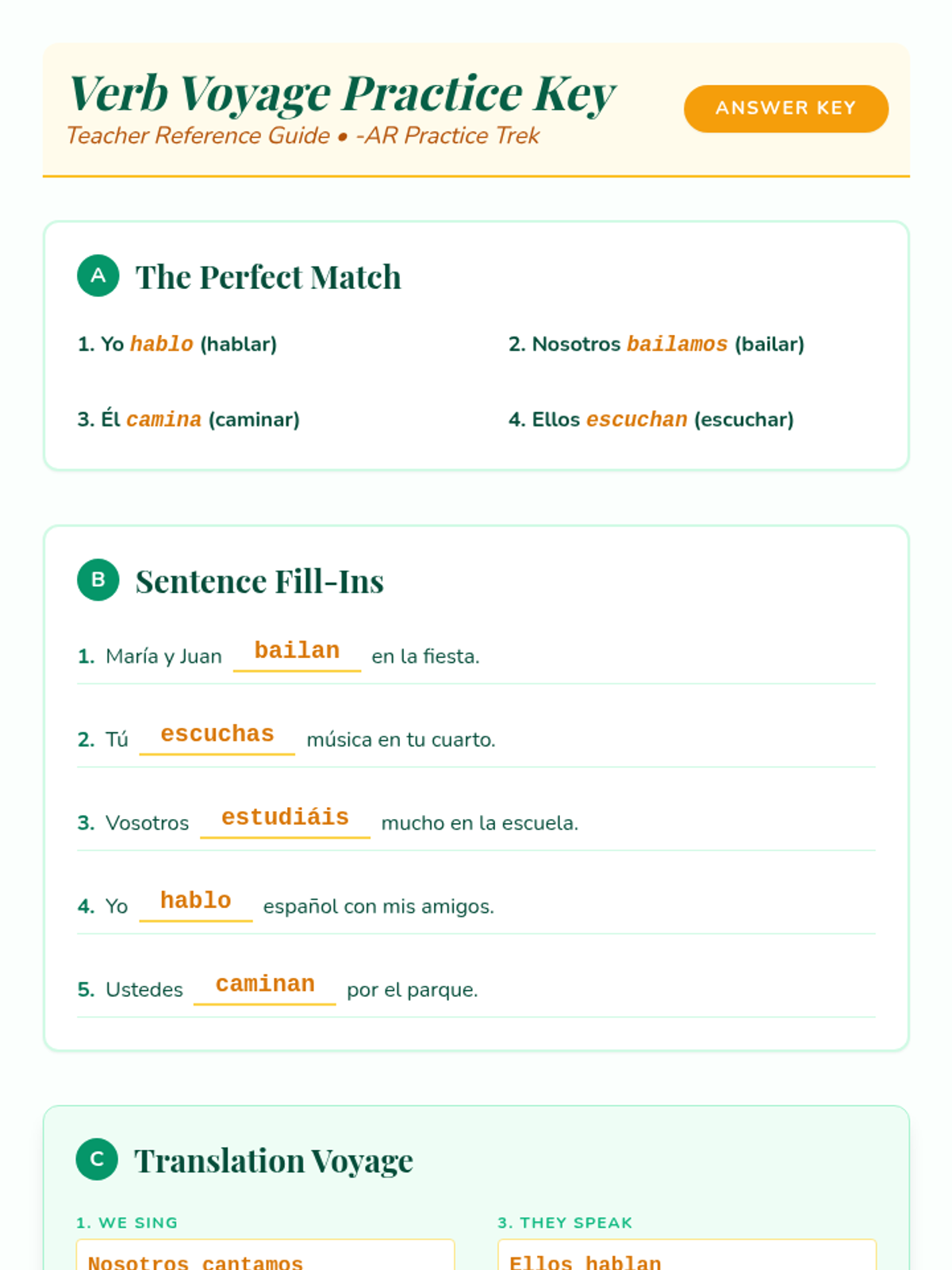
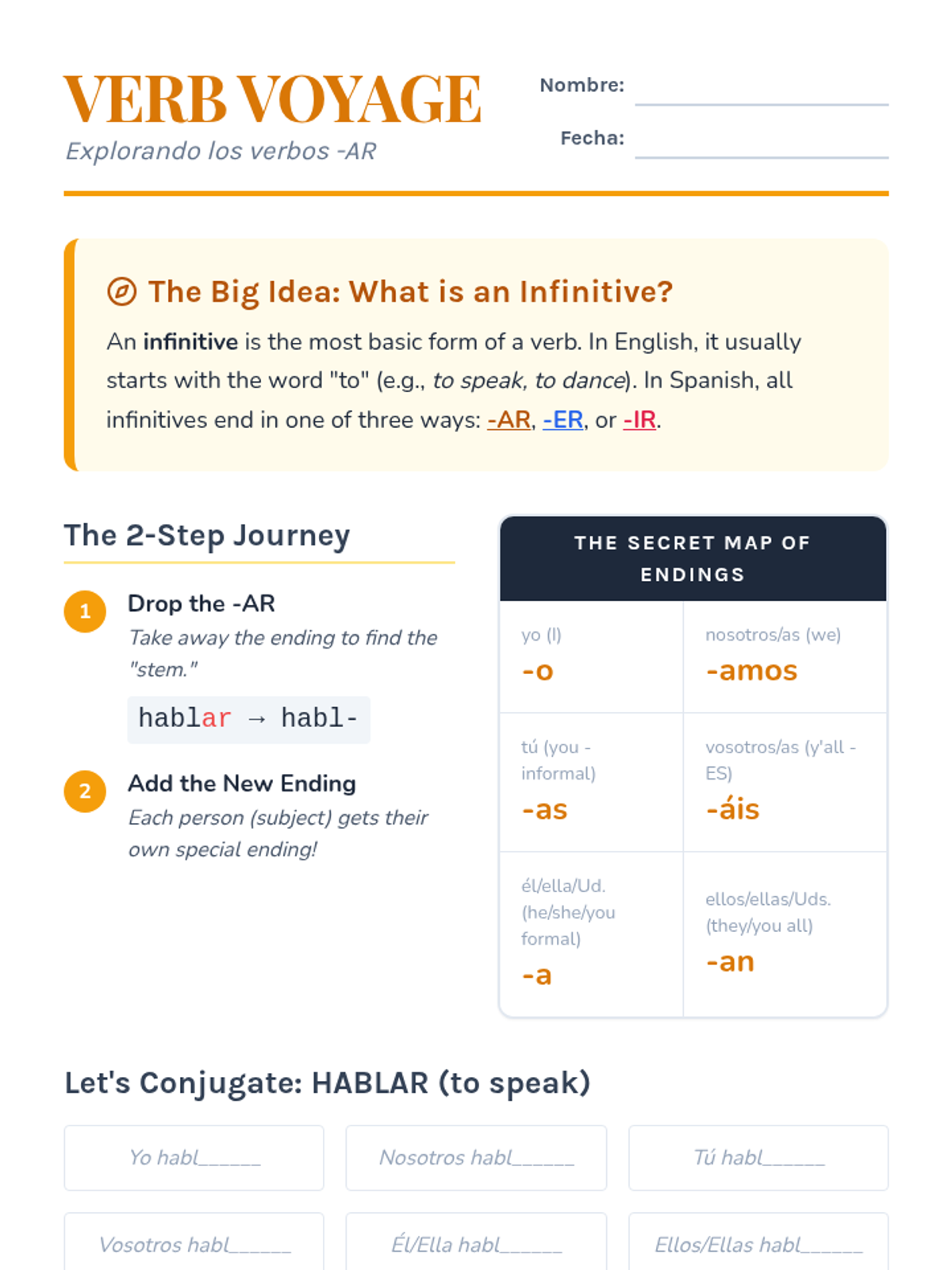
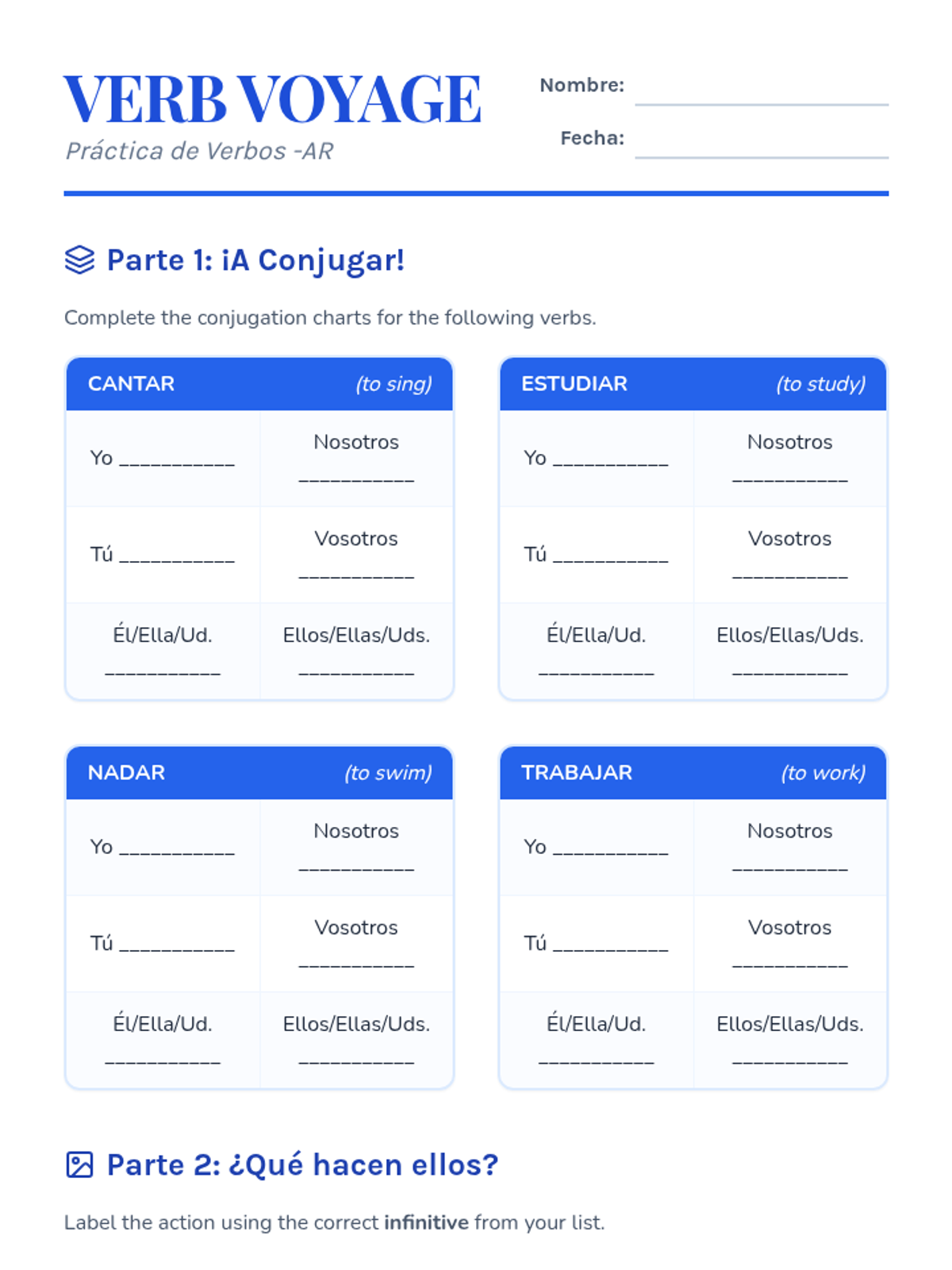
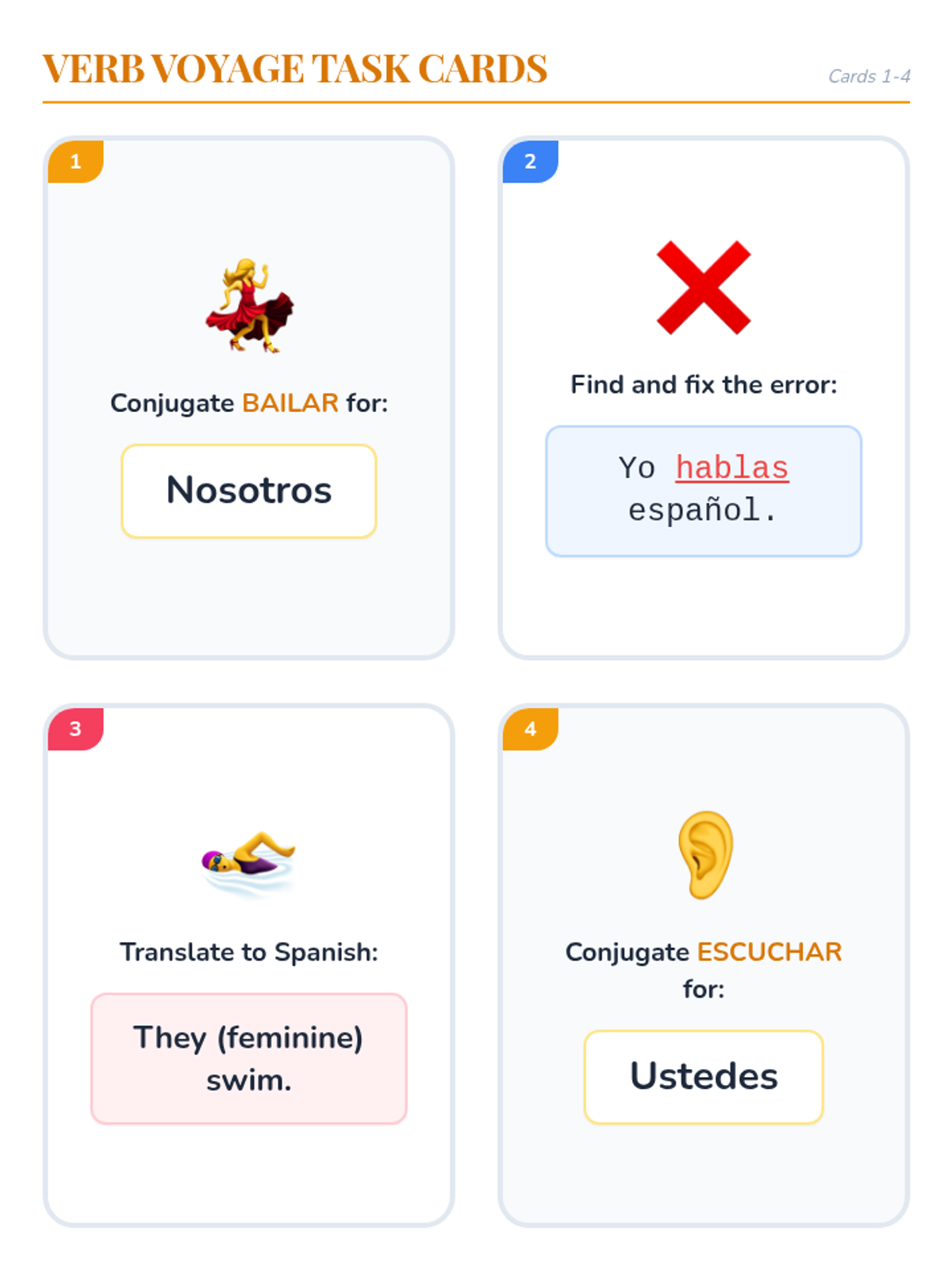
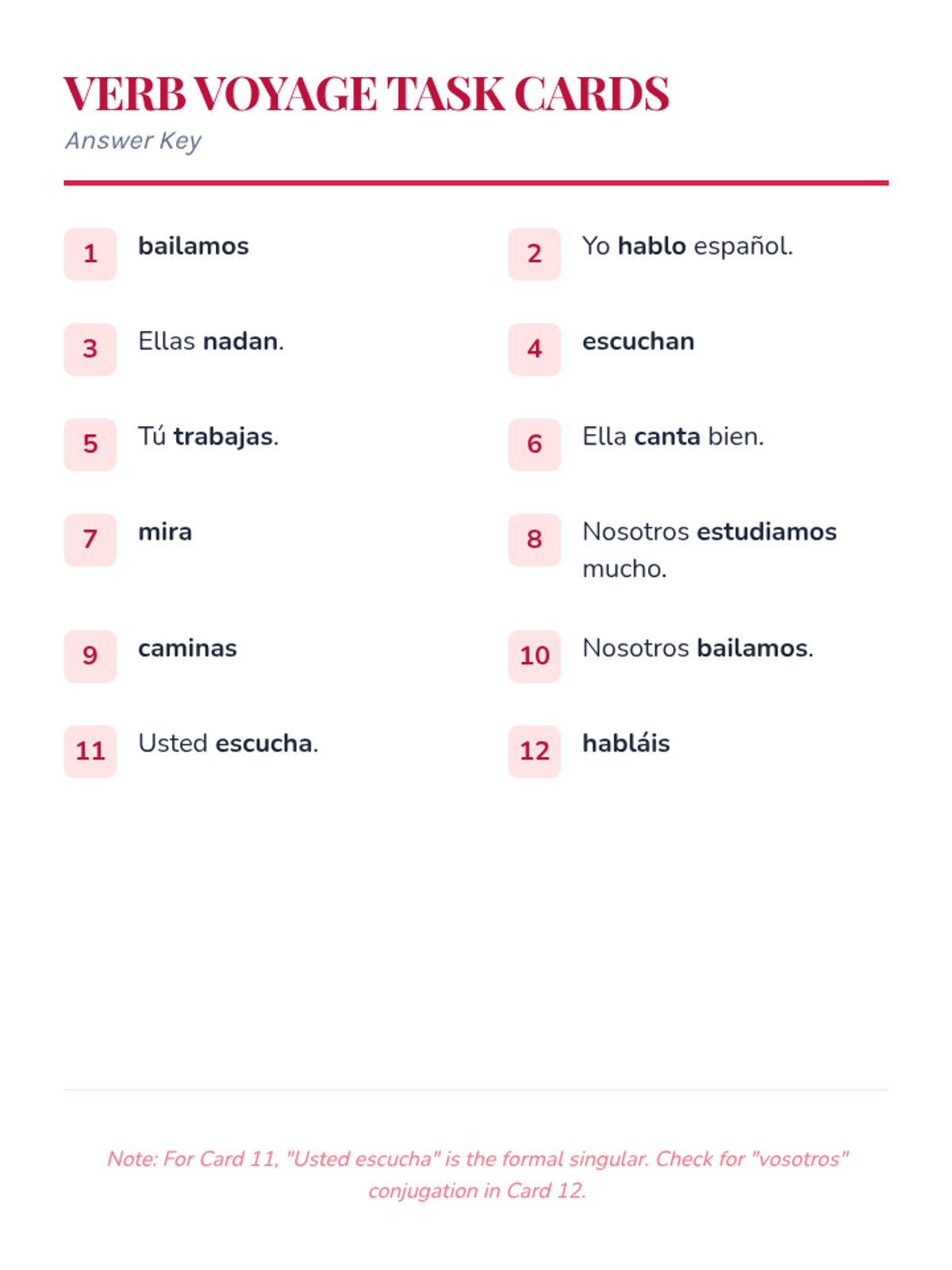
A foundational lesson on regular Spanish -AR verbs, focusing on identifying stems and applying the correct present tense endings.
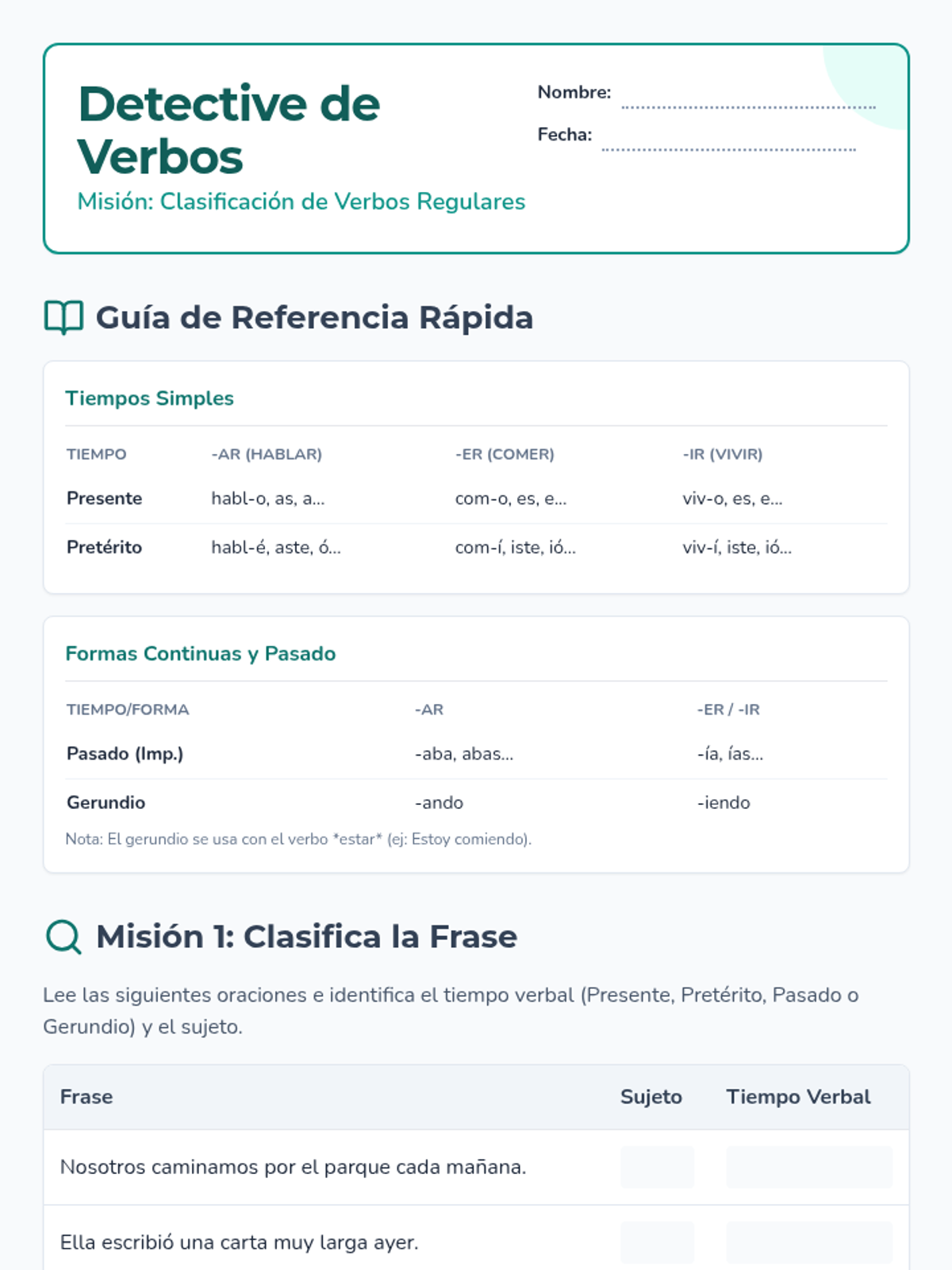
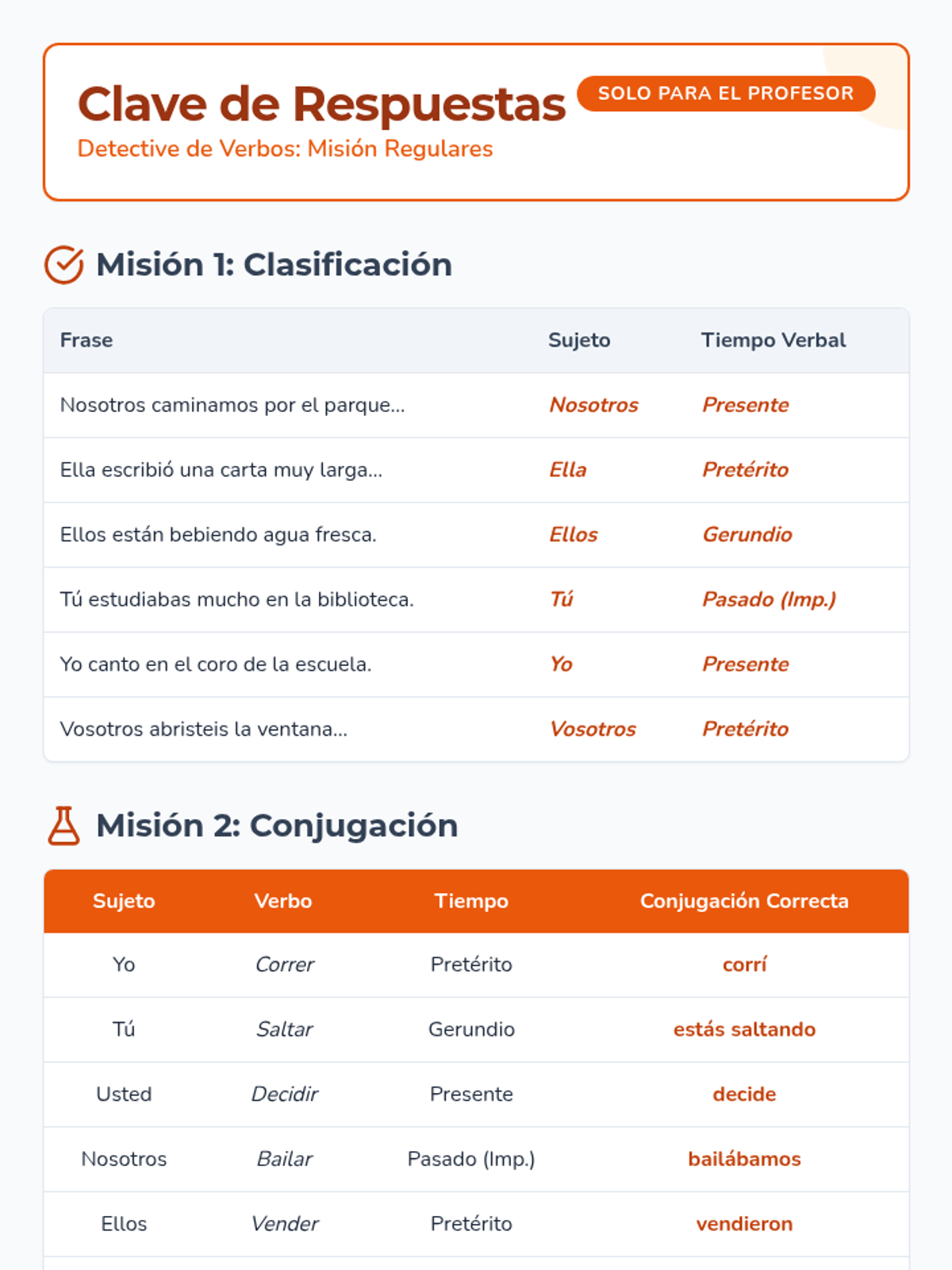
Una lección enfocada en la identificación y uso de verbos regulares en español en diferentes tiempos verbales.
An introductory lesson on Spanish present tense -ar verbs, covering conjugation rules, common vocabulary, and contextual application.
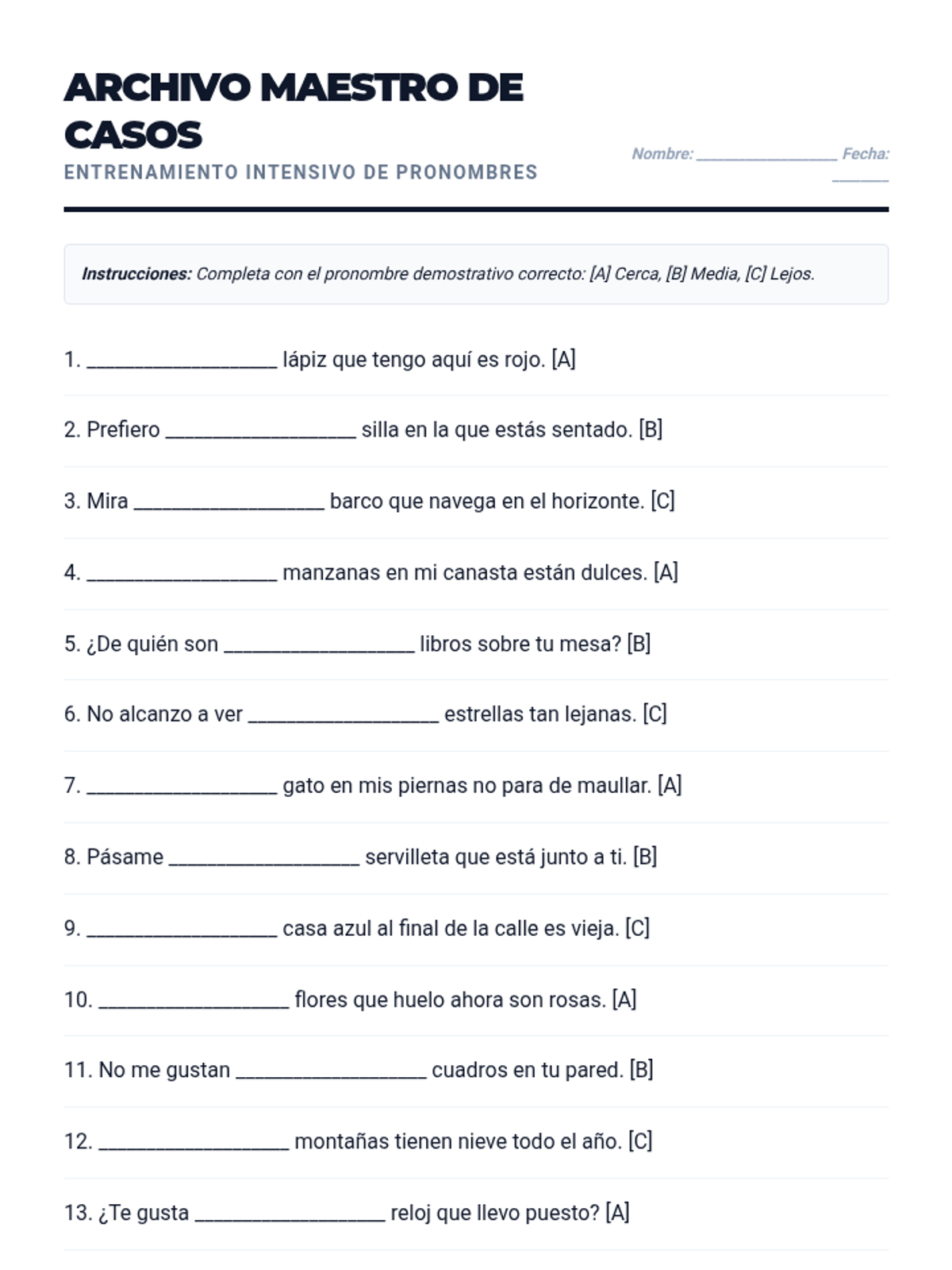
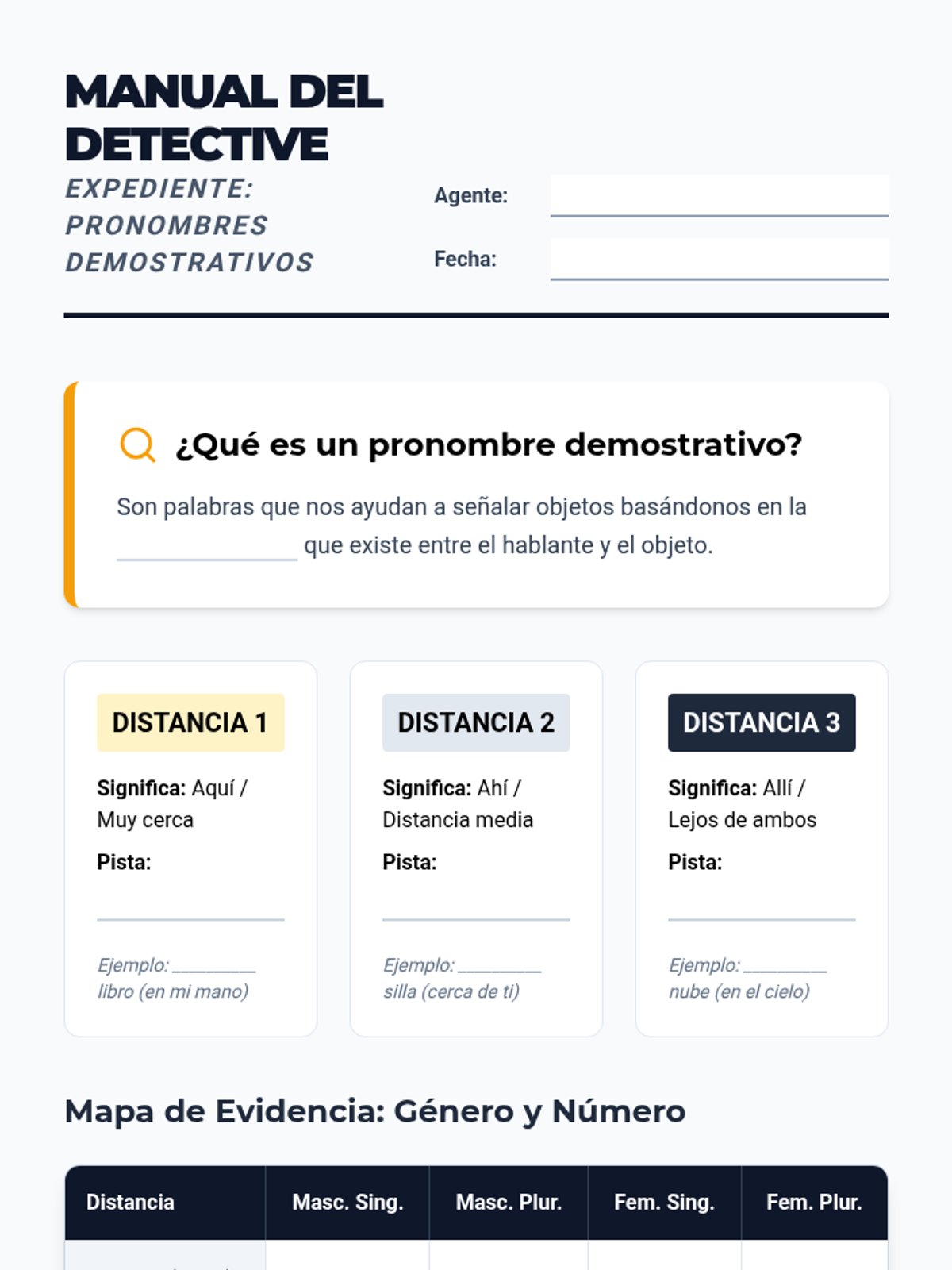
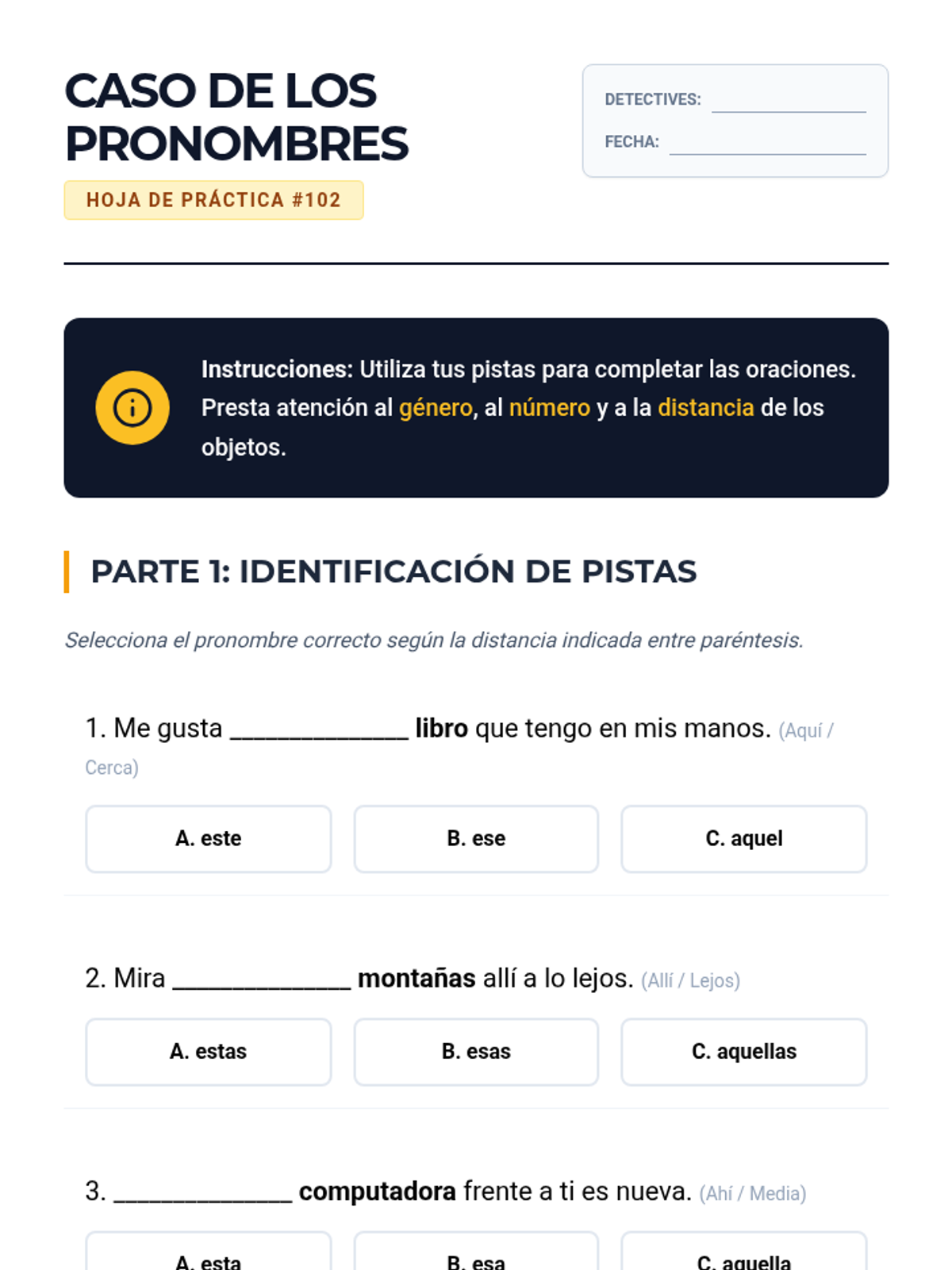
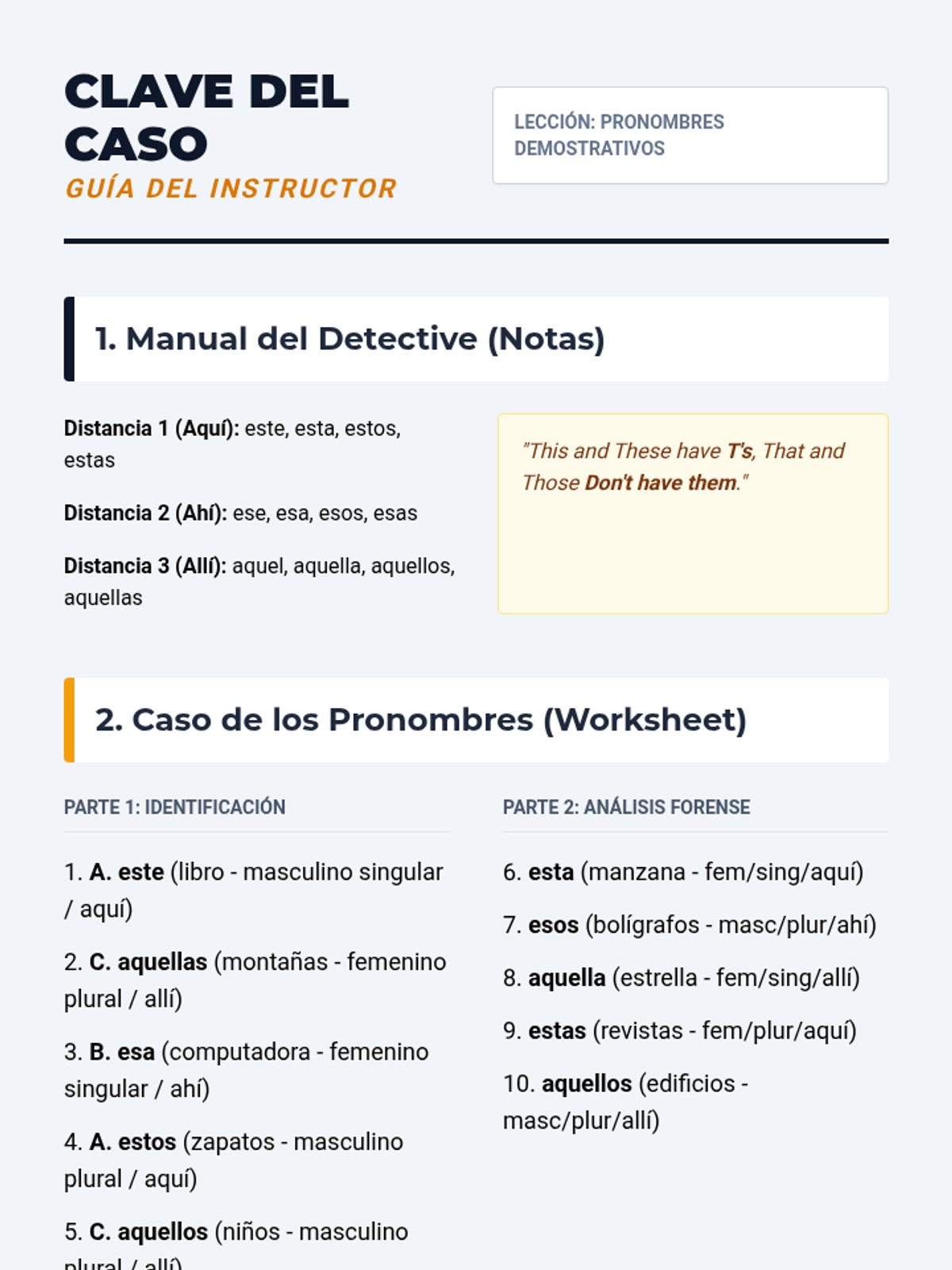
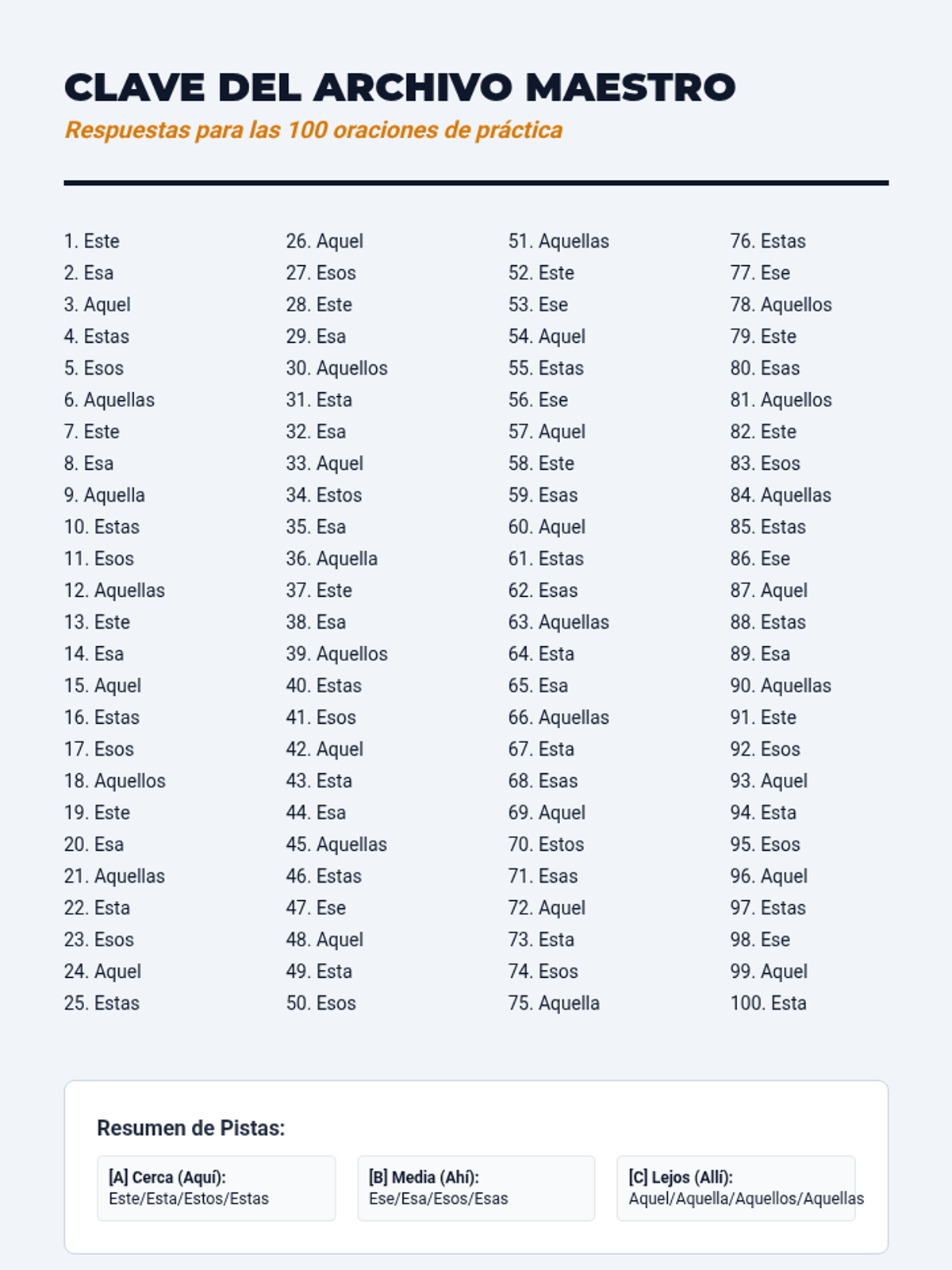
Una lección interactiva sobre los pronombres demostrativos en español (este, ese, aquel) enfocada en la distancia, el género y el número. Incluye una presentación visual, notas guiadas y práctica aplicada.
An introductory Spanish 1 lesson focusing on school-related vocabulary, including classroom objects, academic subjects, daily actions, and extracurricular activities.
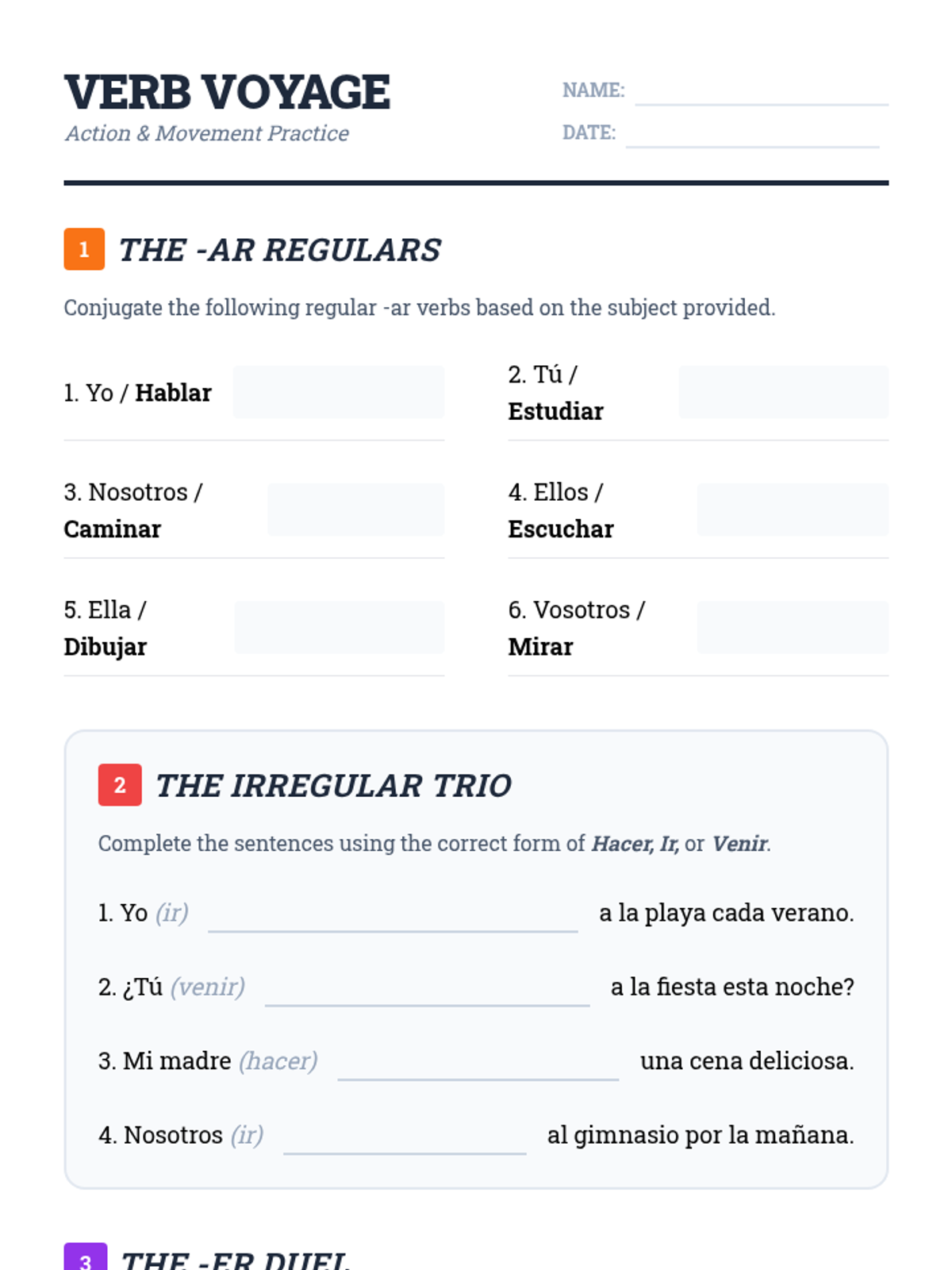
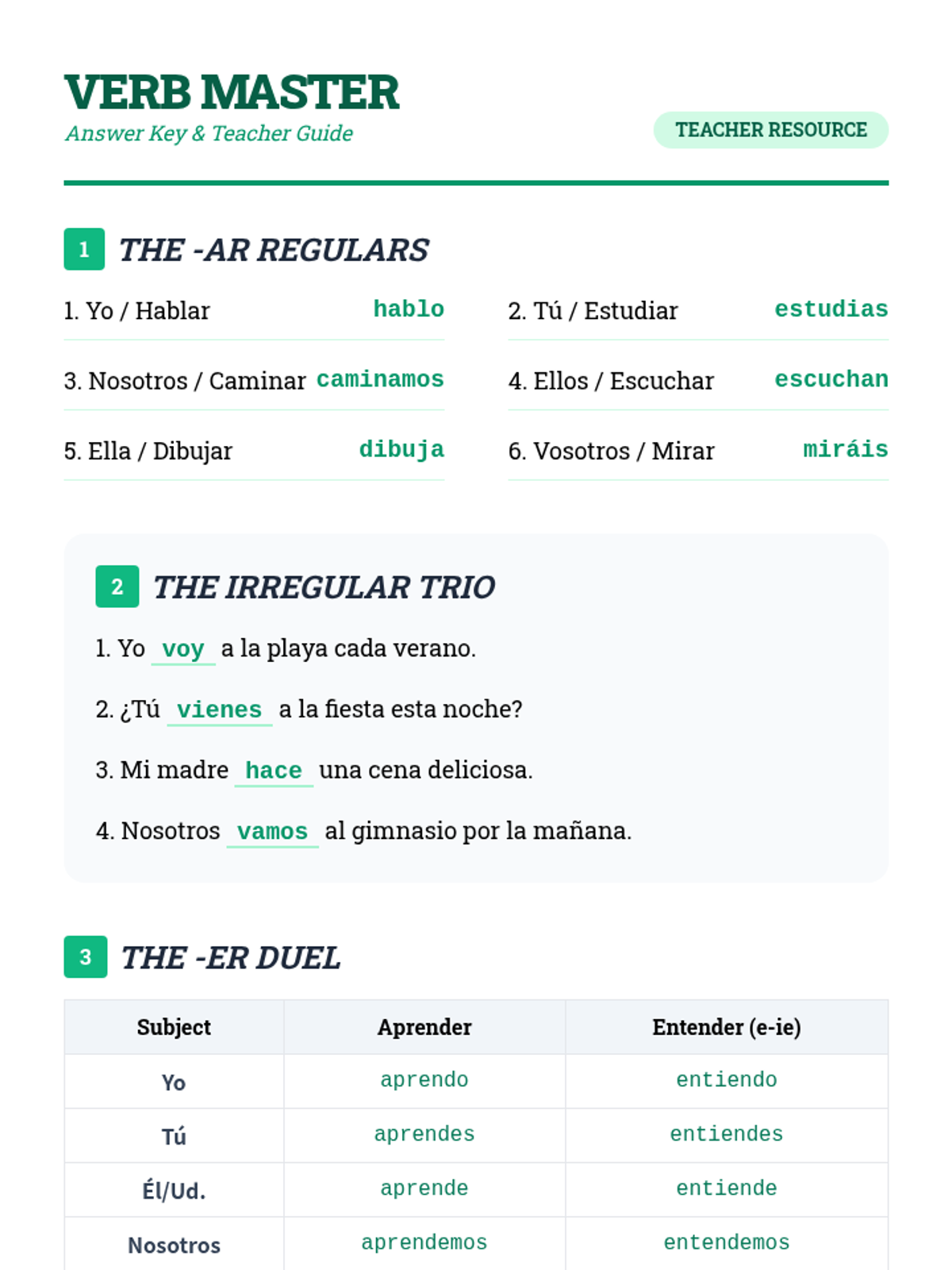
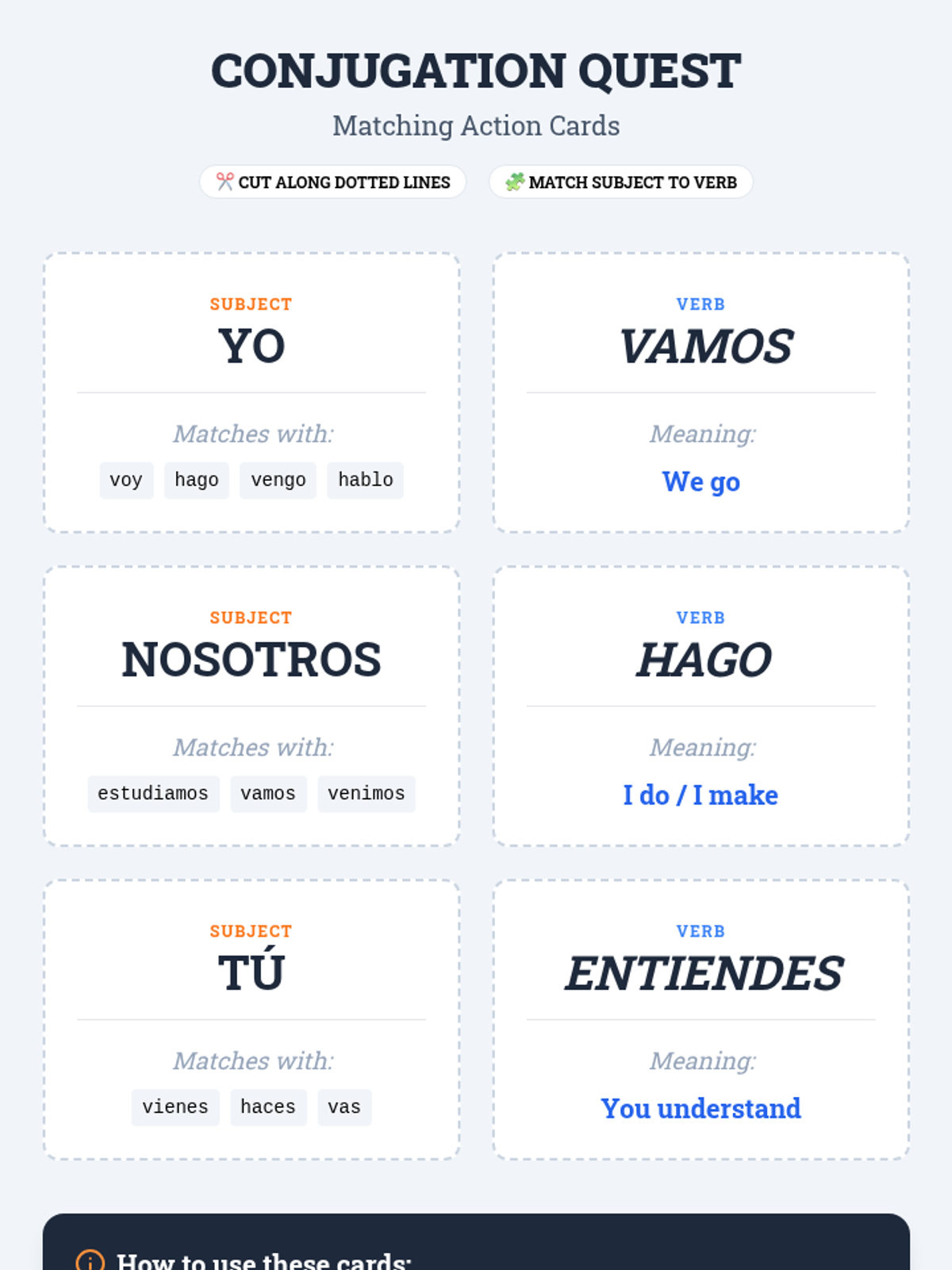
A comprehensive introduction to essential Spanish verbs, covering regular -ar and -er conjugations along with key irregular verbs like hacer, ir, and venir. Students will learn to describe daily actions and movement through interactive practice and translation.
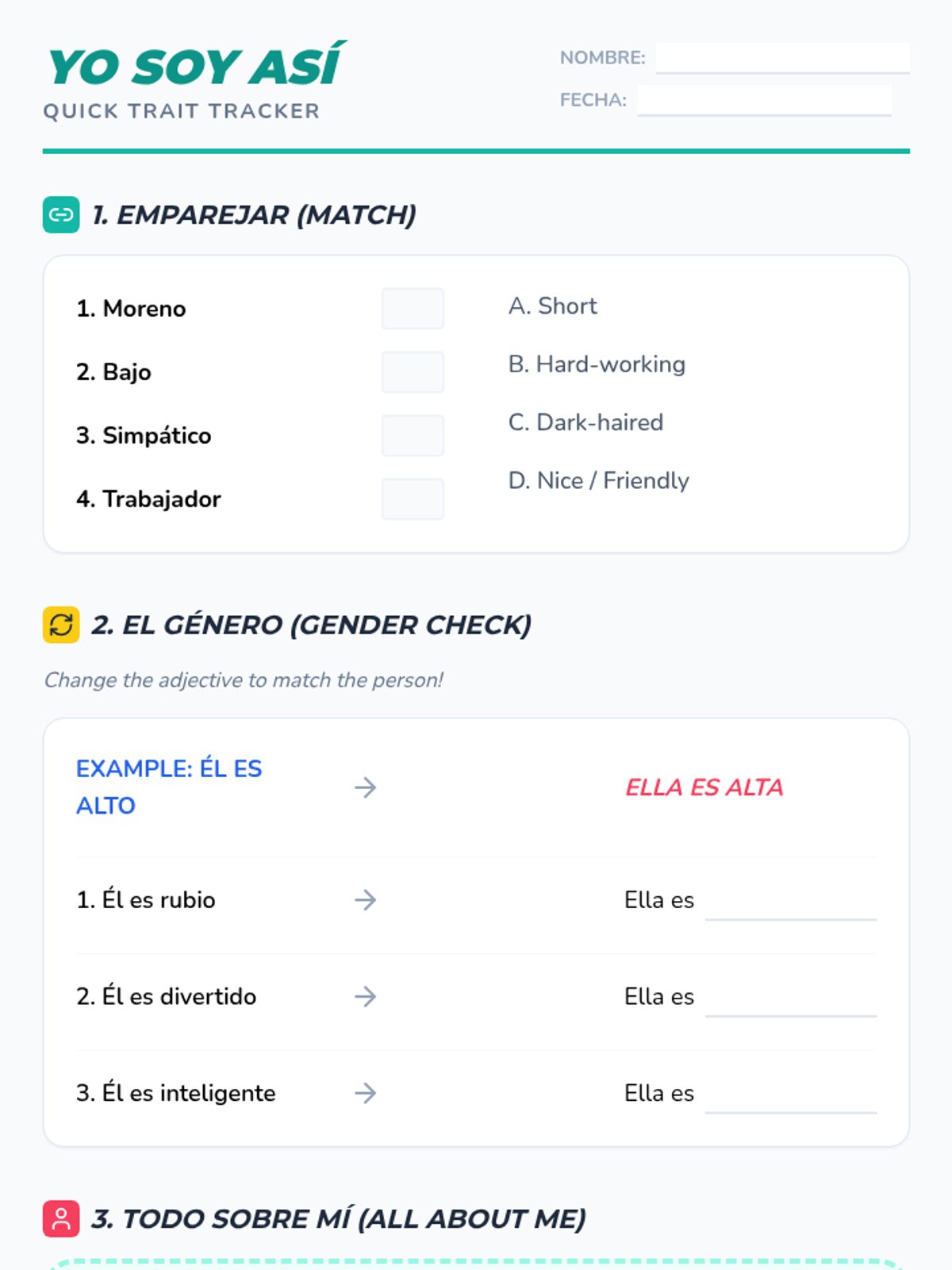
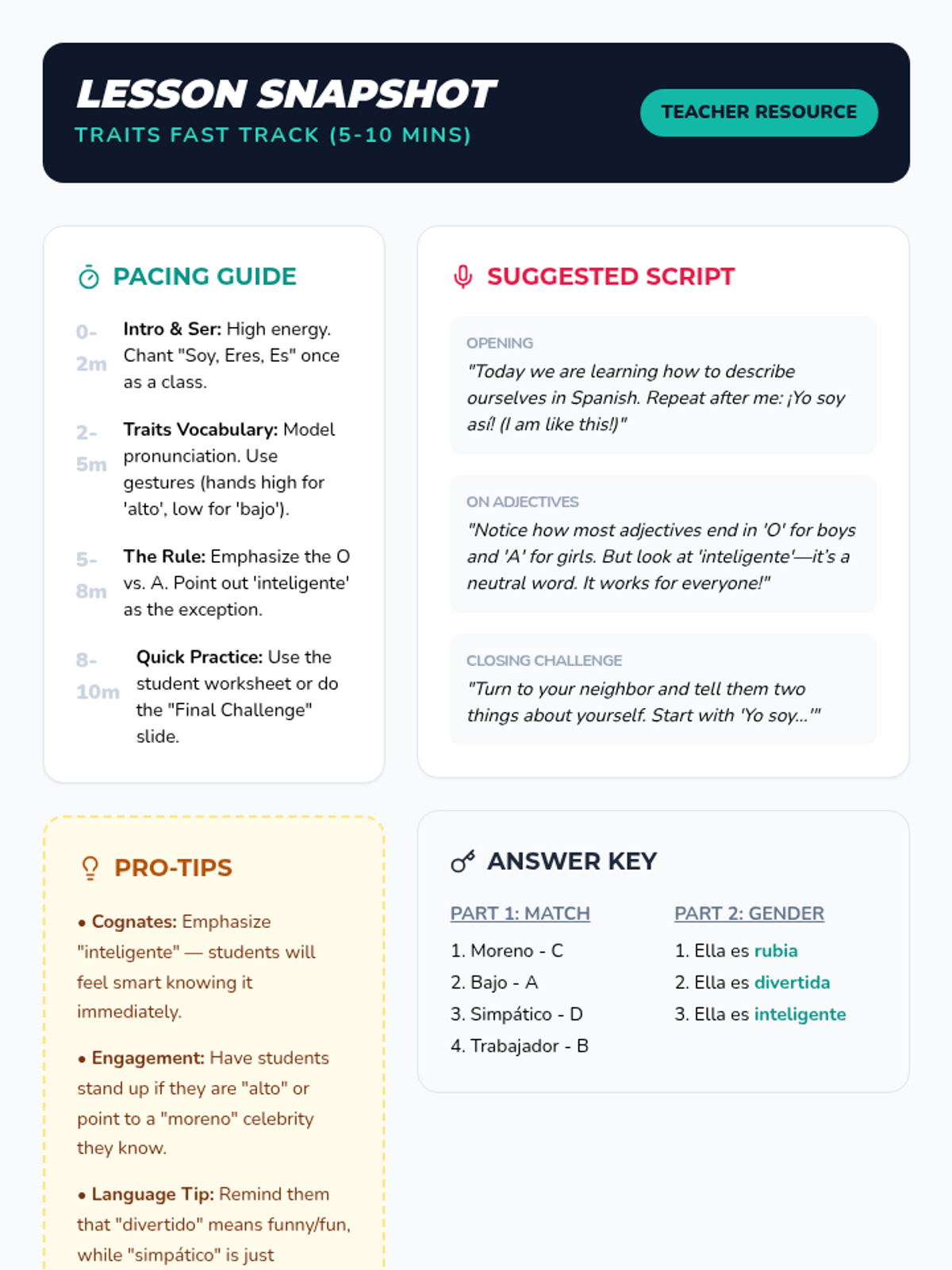
A lightning-fast introduction to physical and personality traits in Spanish, focusing on the verb 'ser' and basic adjective agreement for beginners.
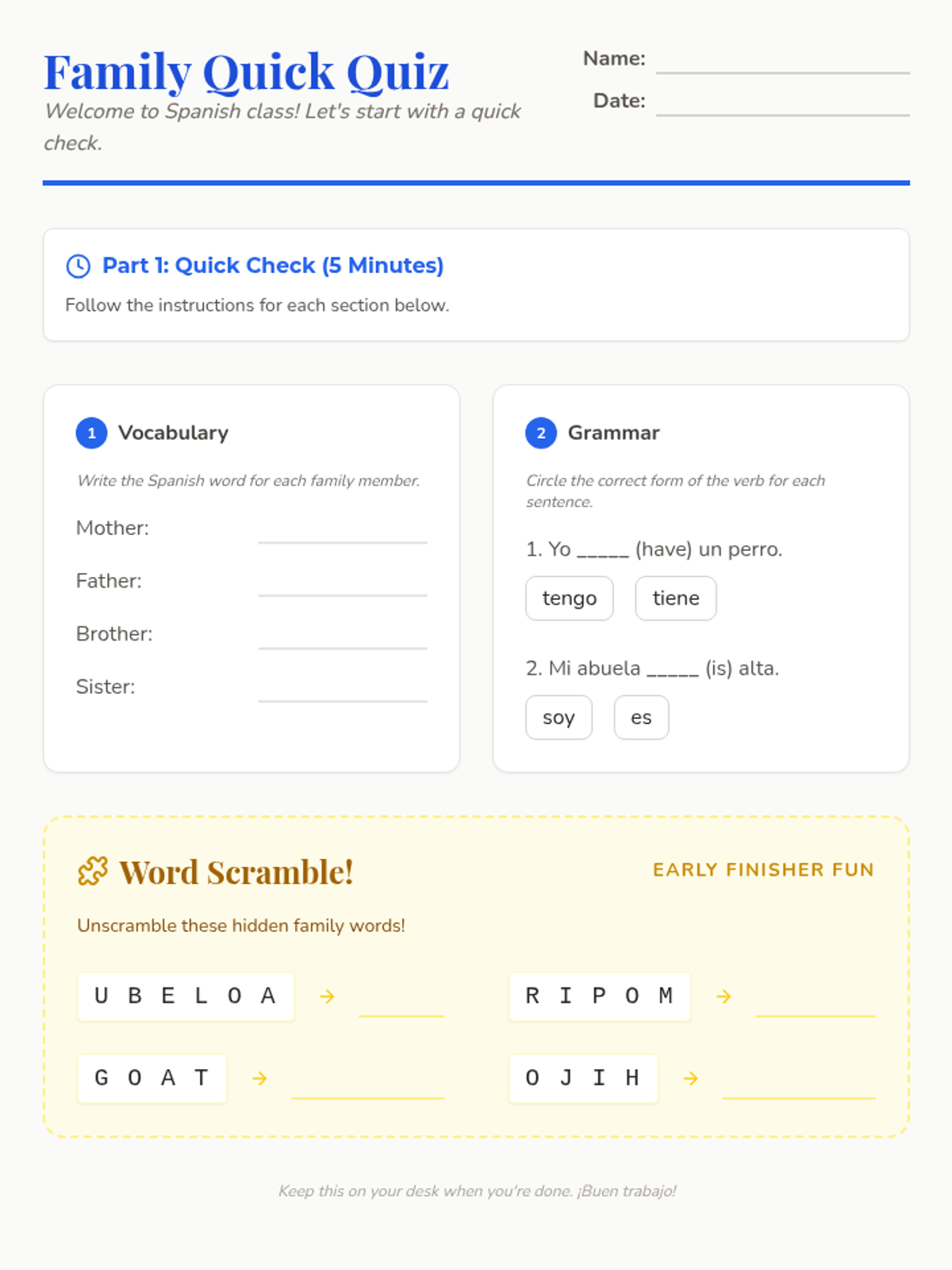
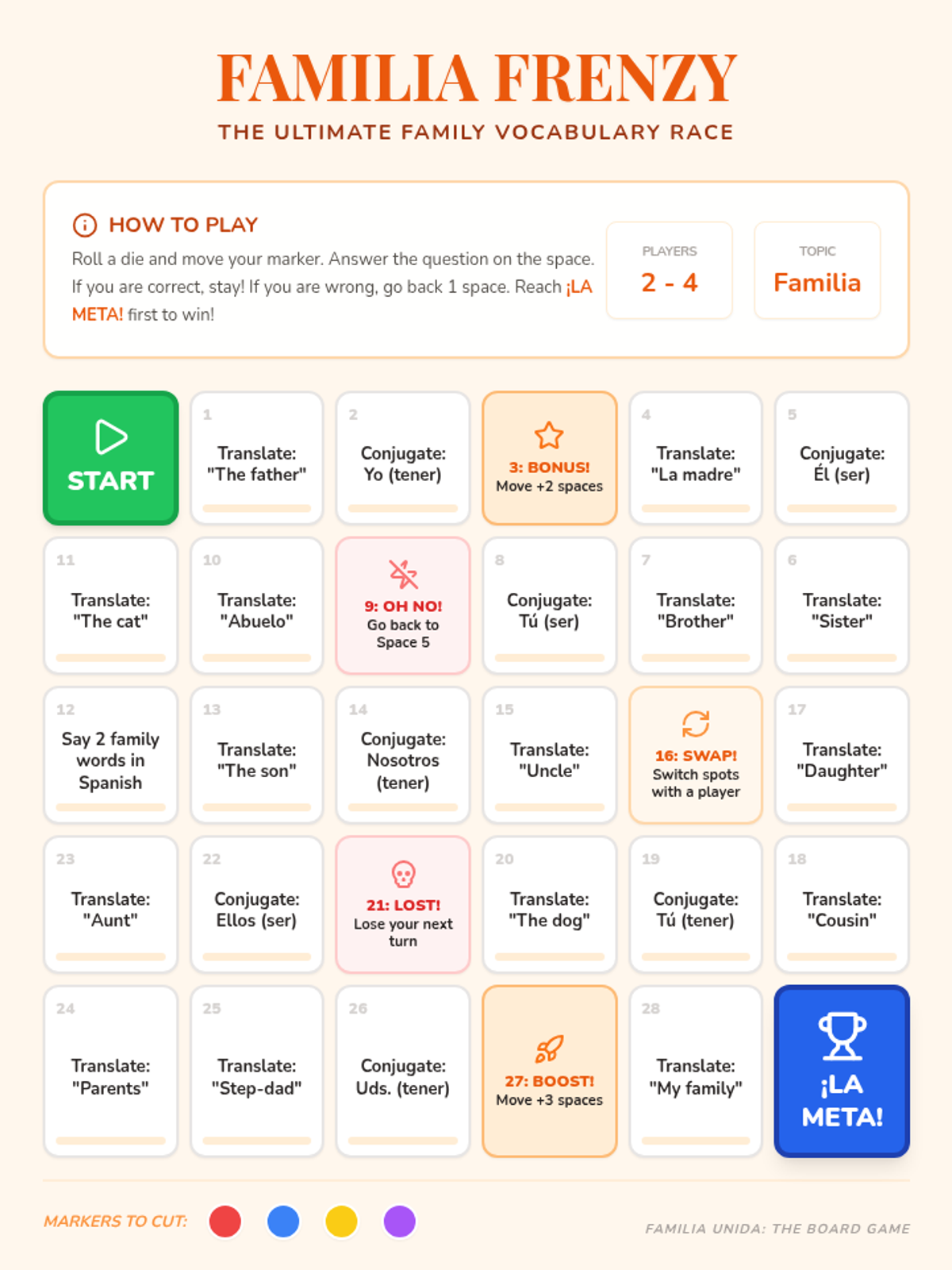
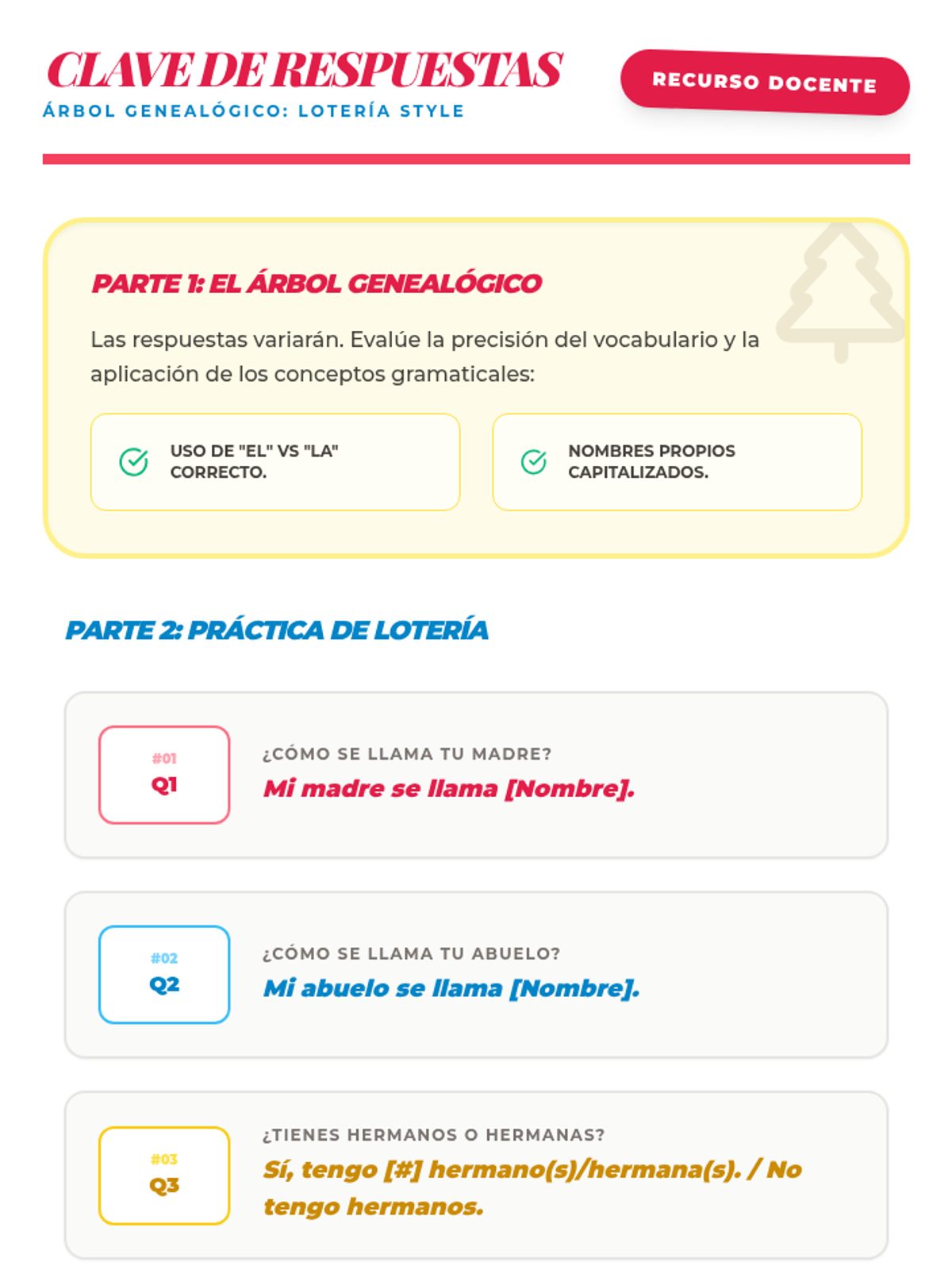
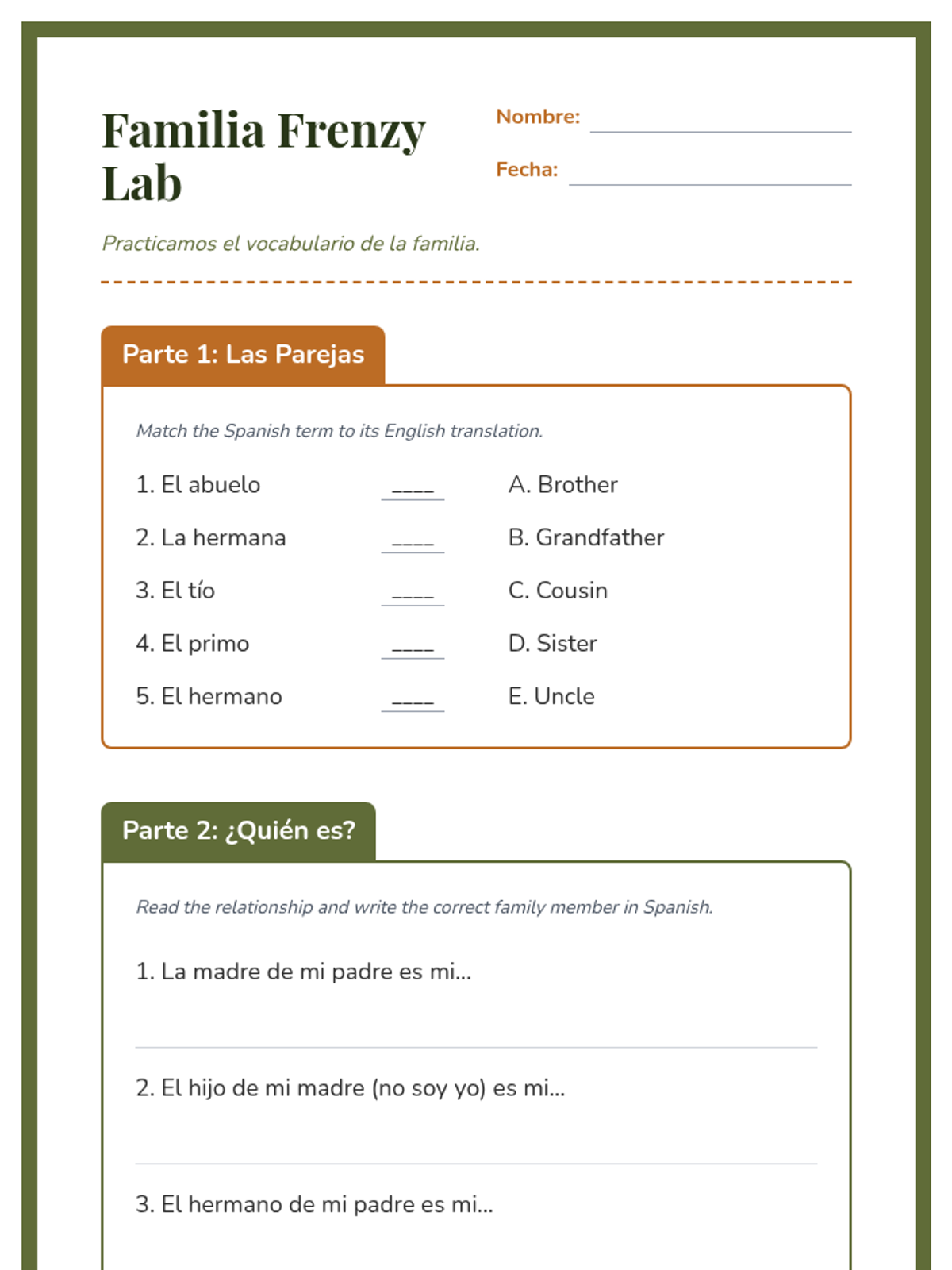
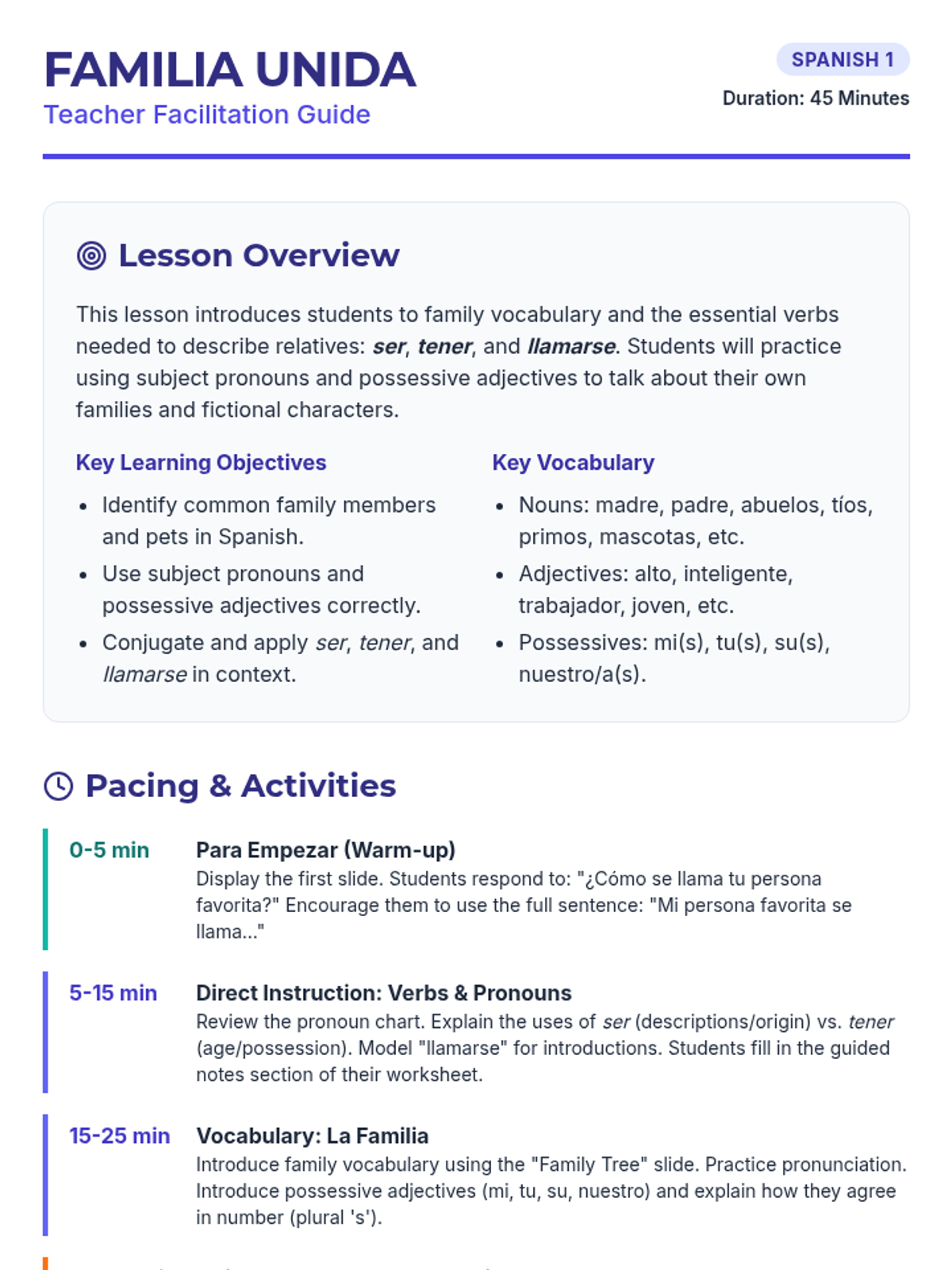
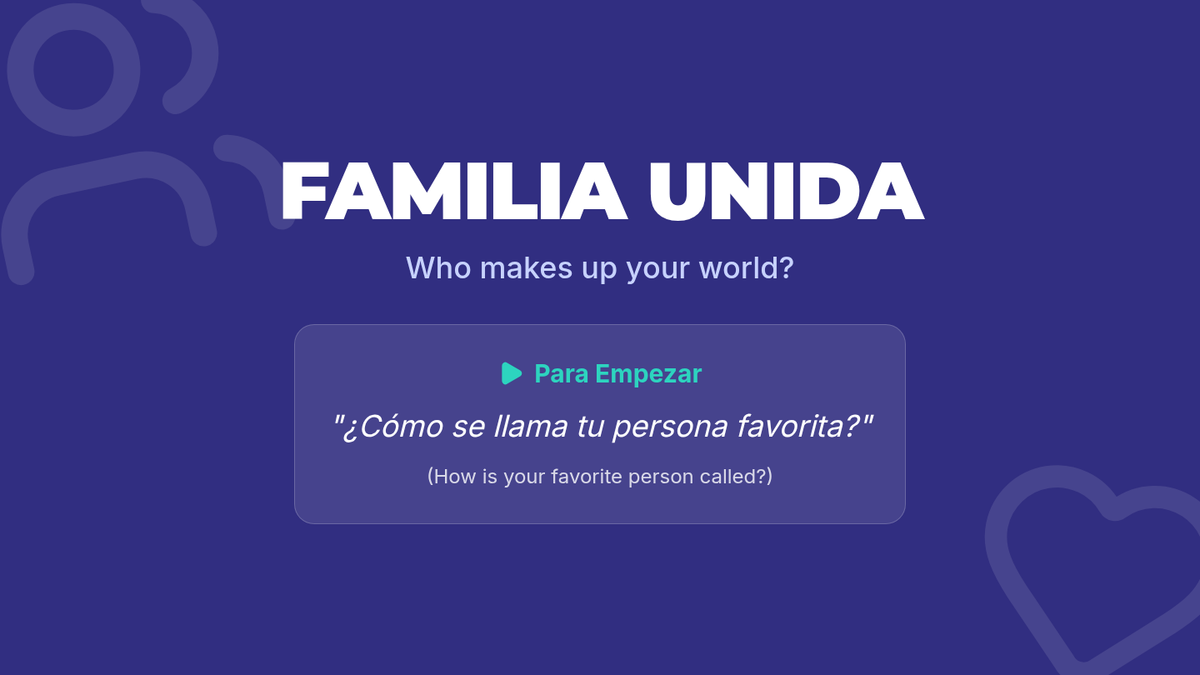
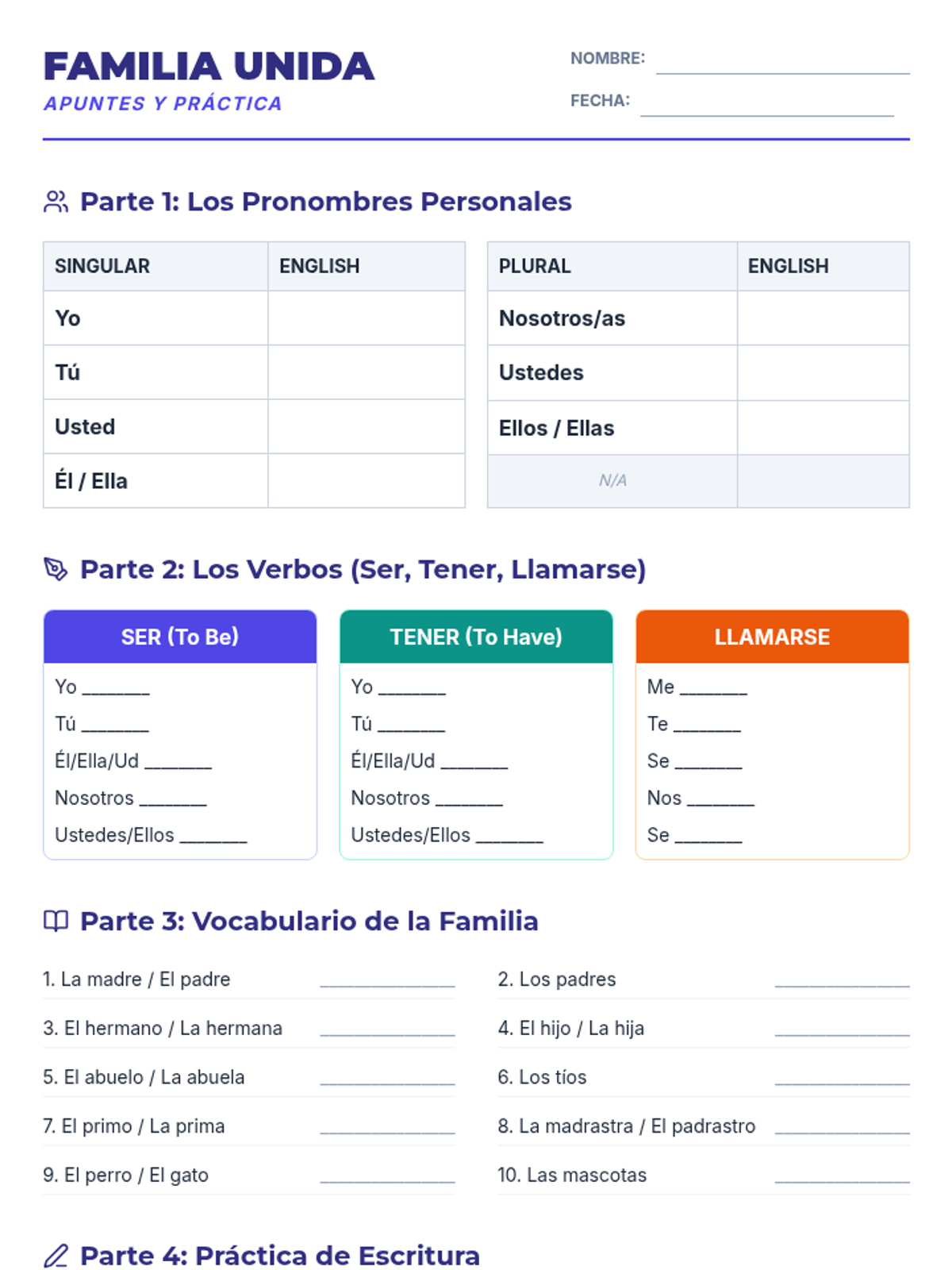
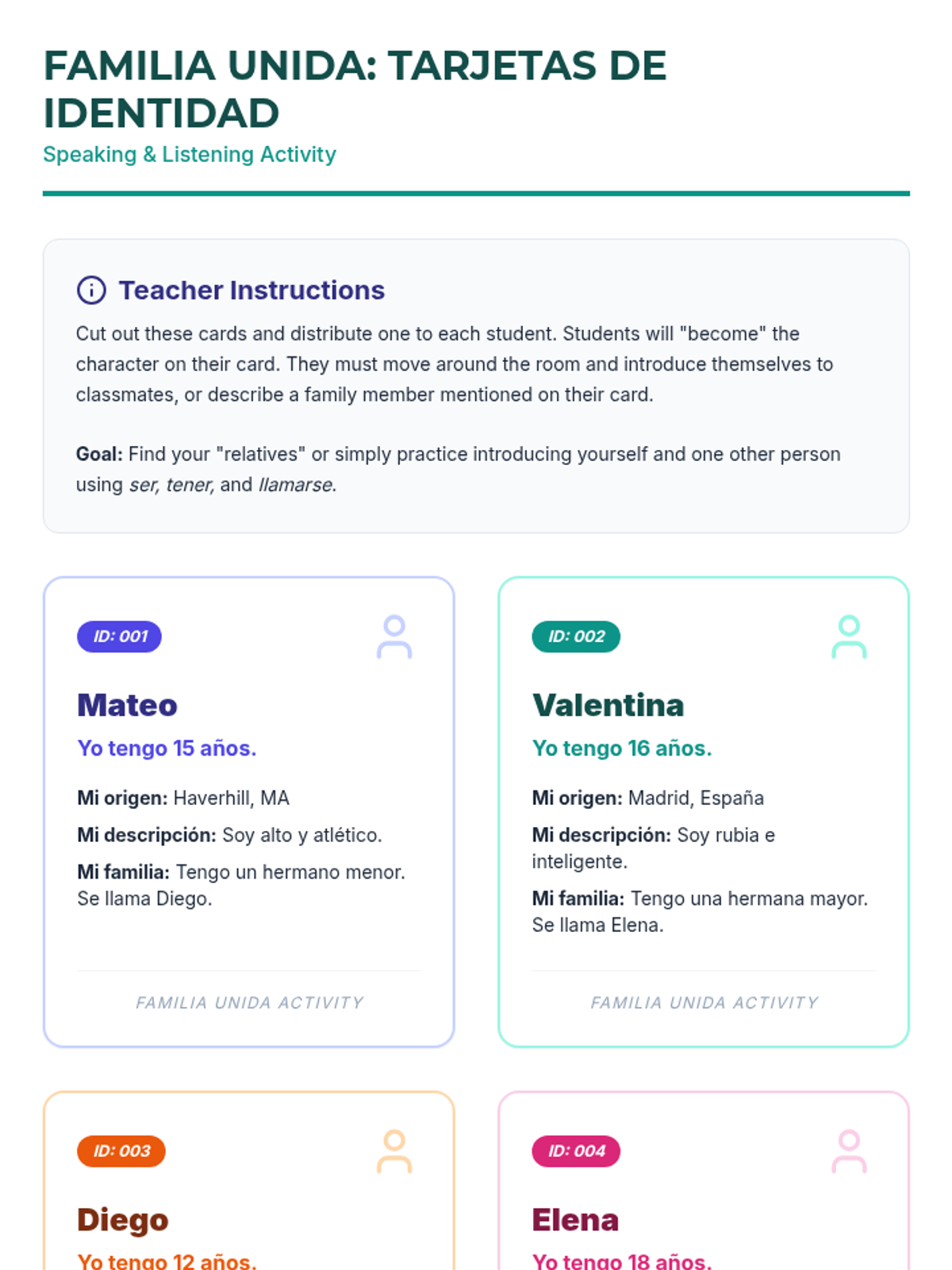
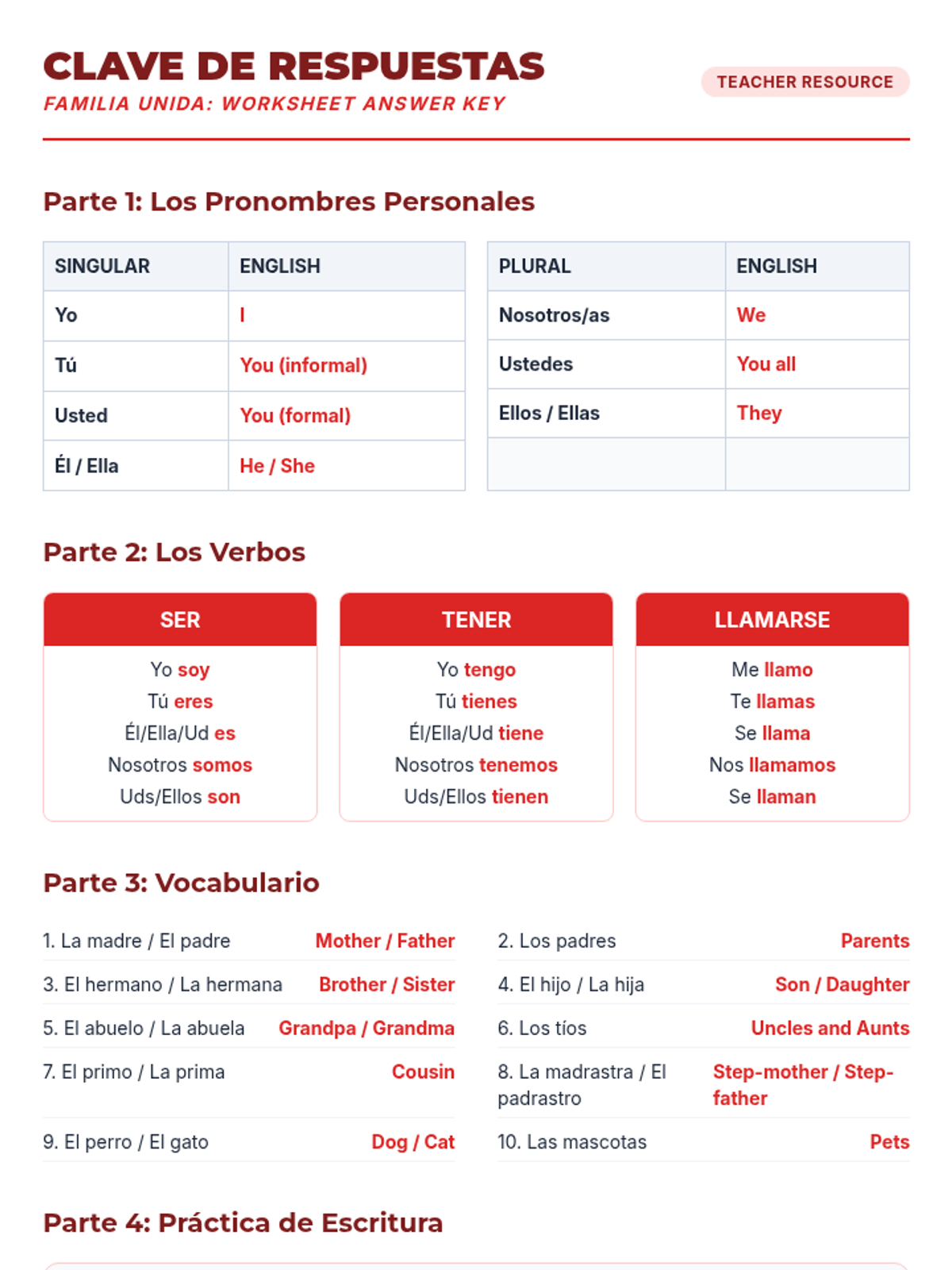
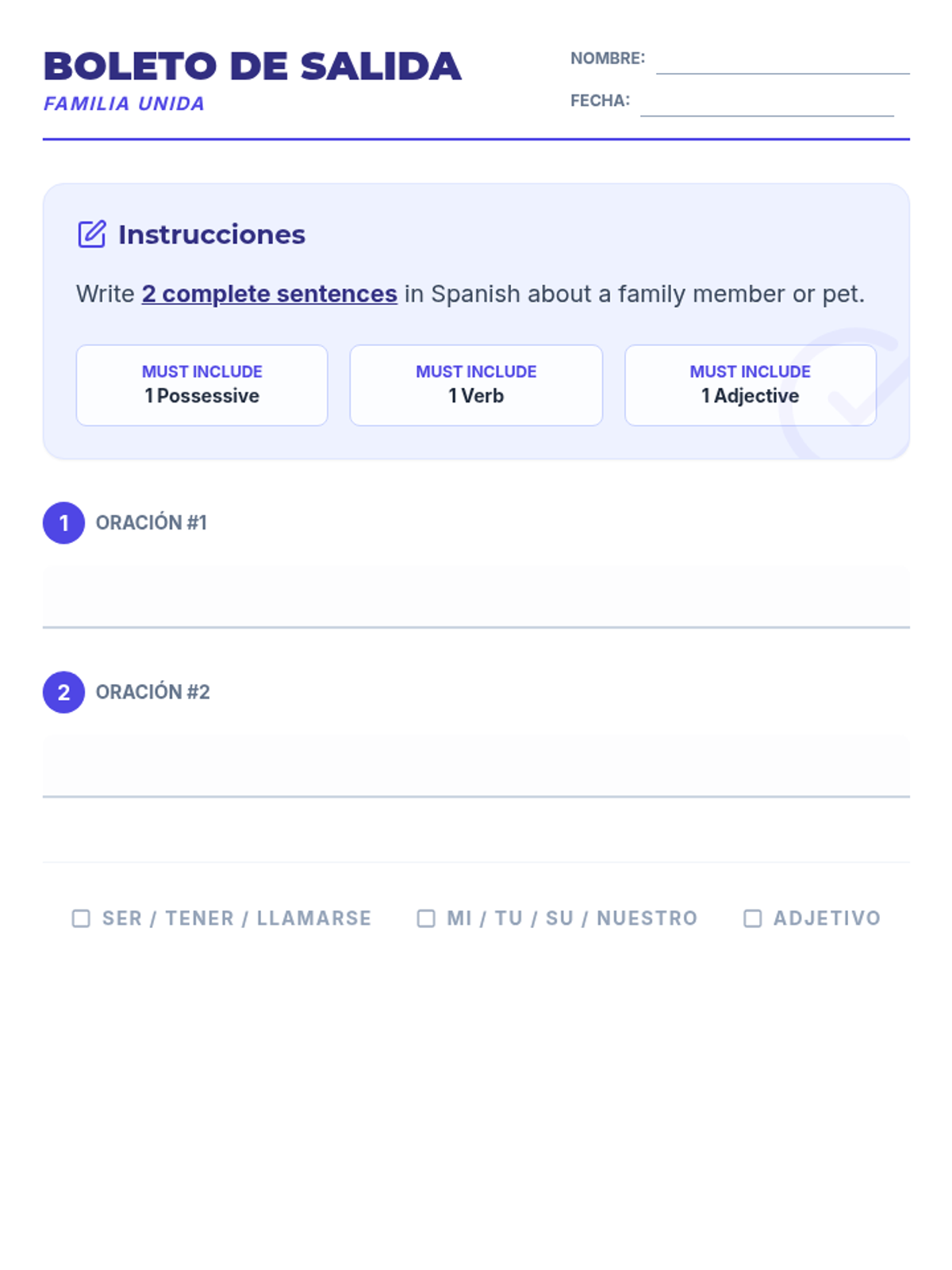
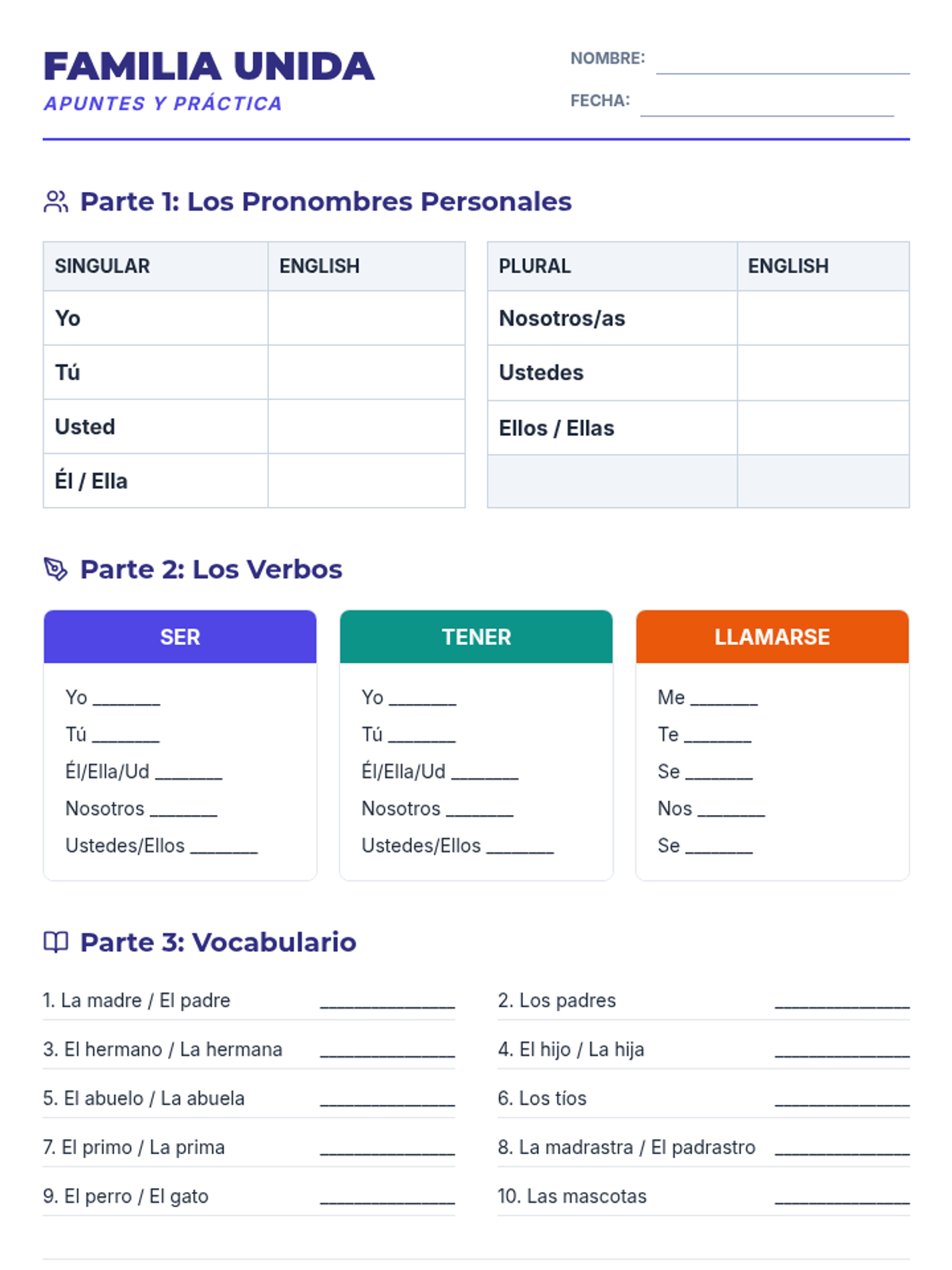
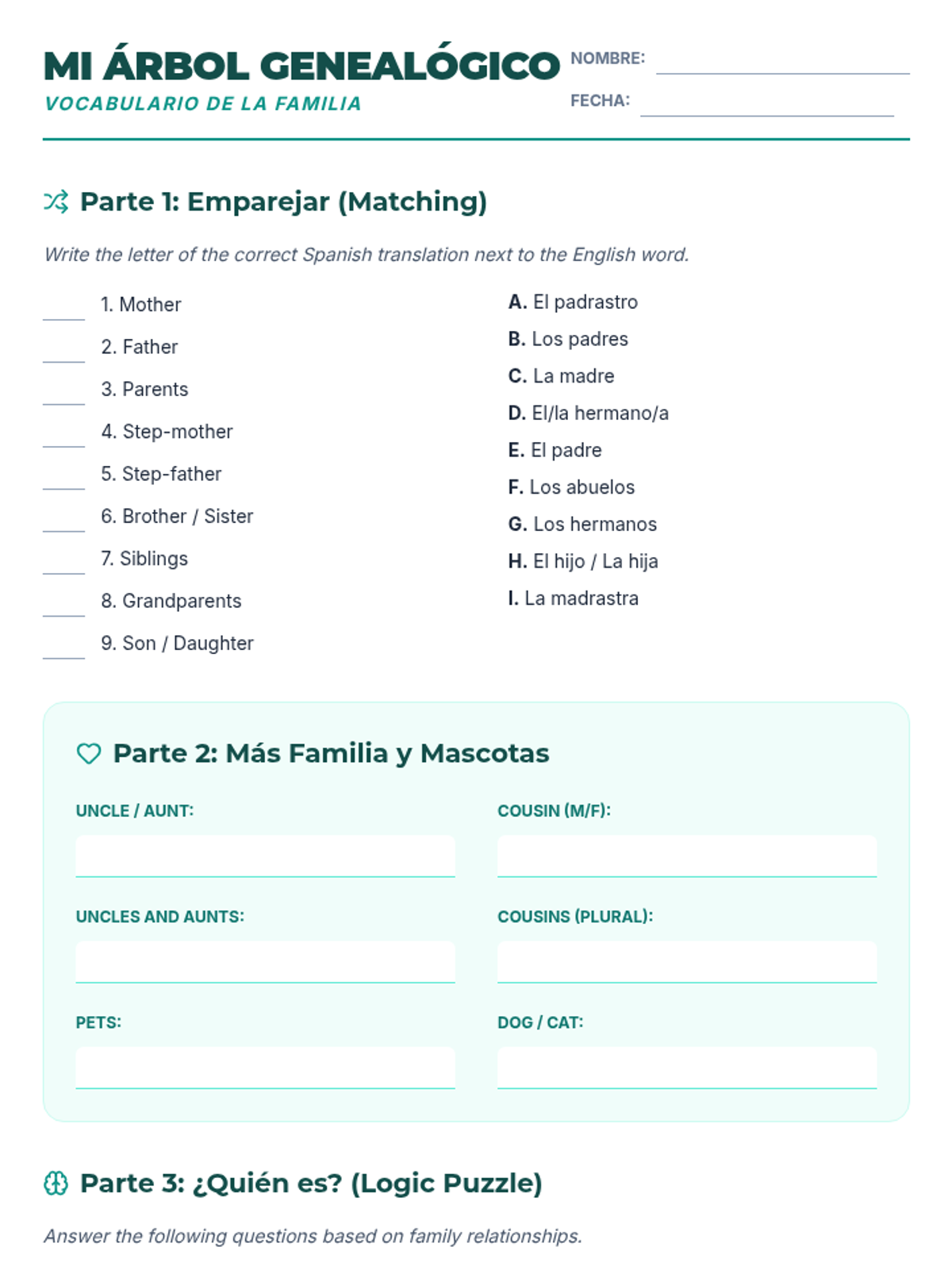
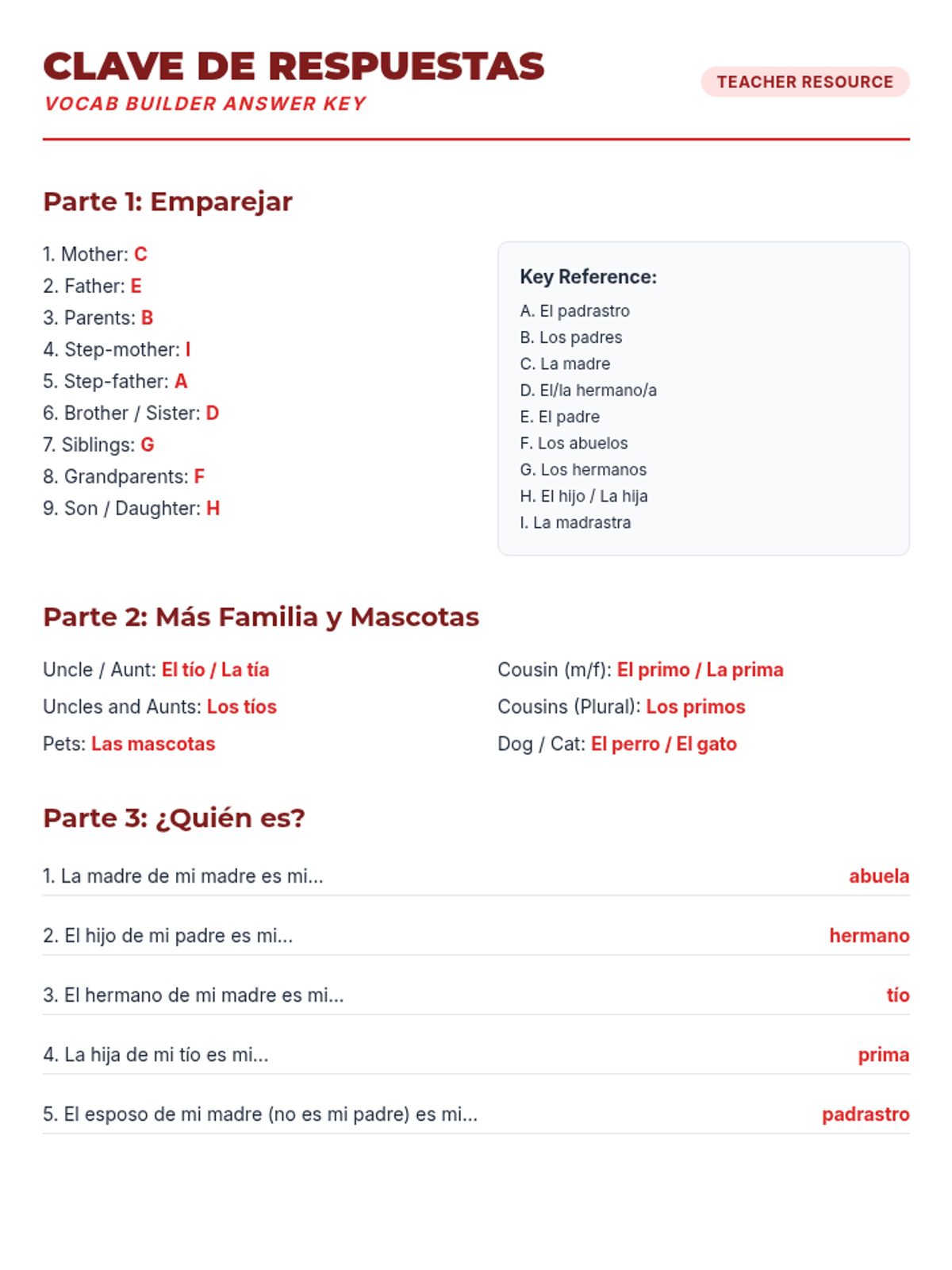
An introductory Spanish 1 lesson focused on family vocabulary, possessive adjectives, and the verbs ser, tener, and llamarse. Students will learn to describe their family members and pets while practicing subject pronouns.
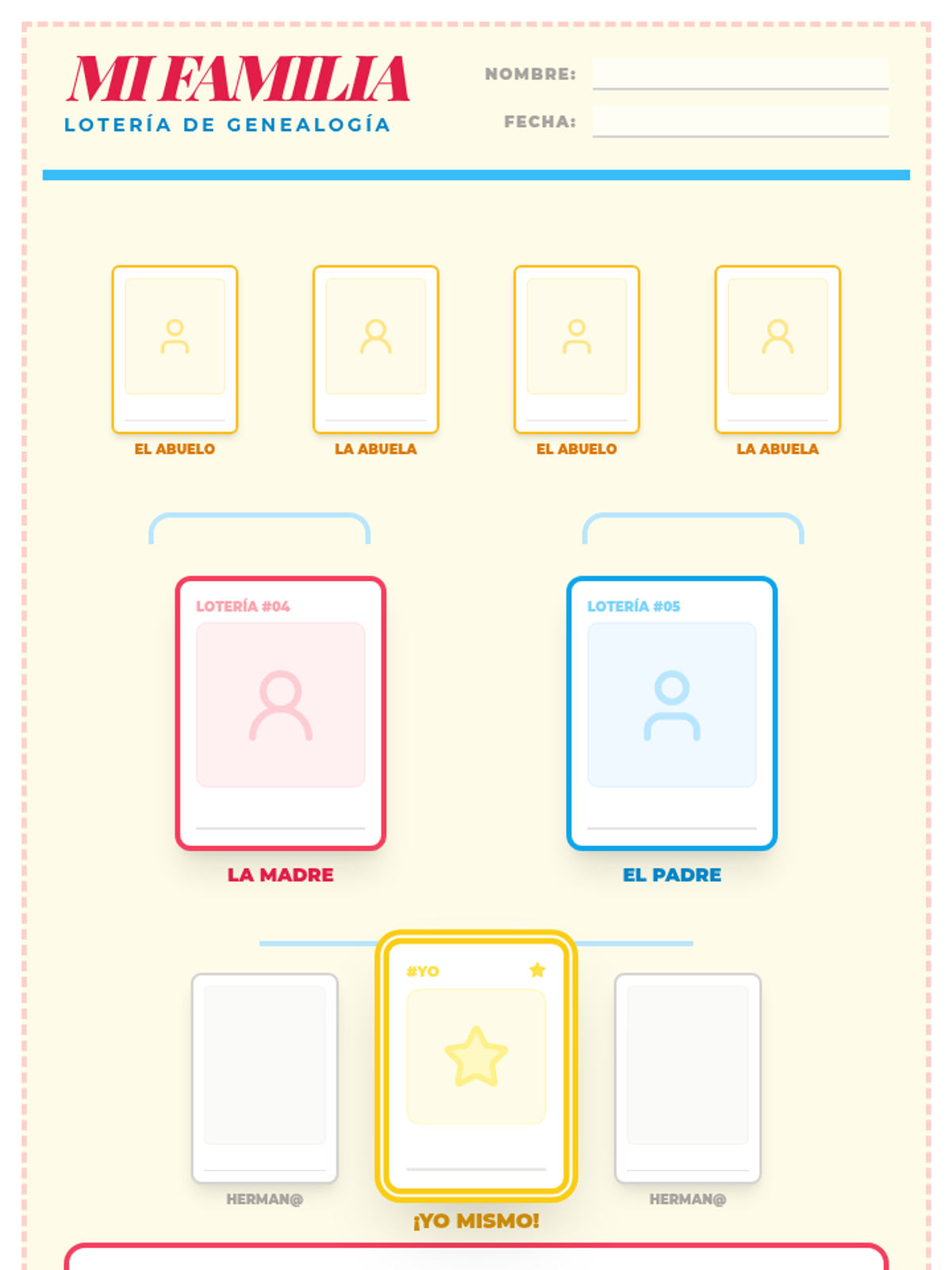
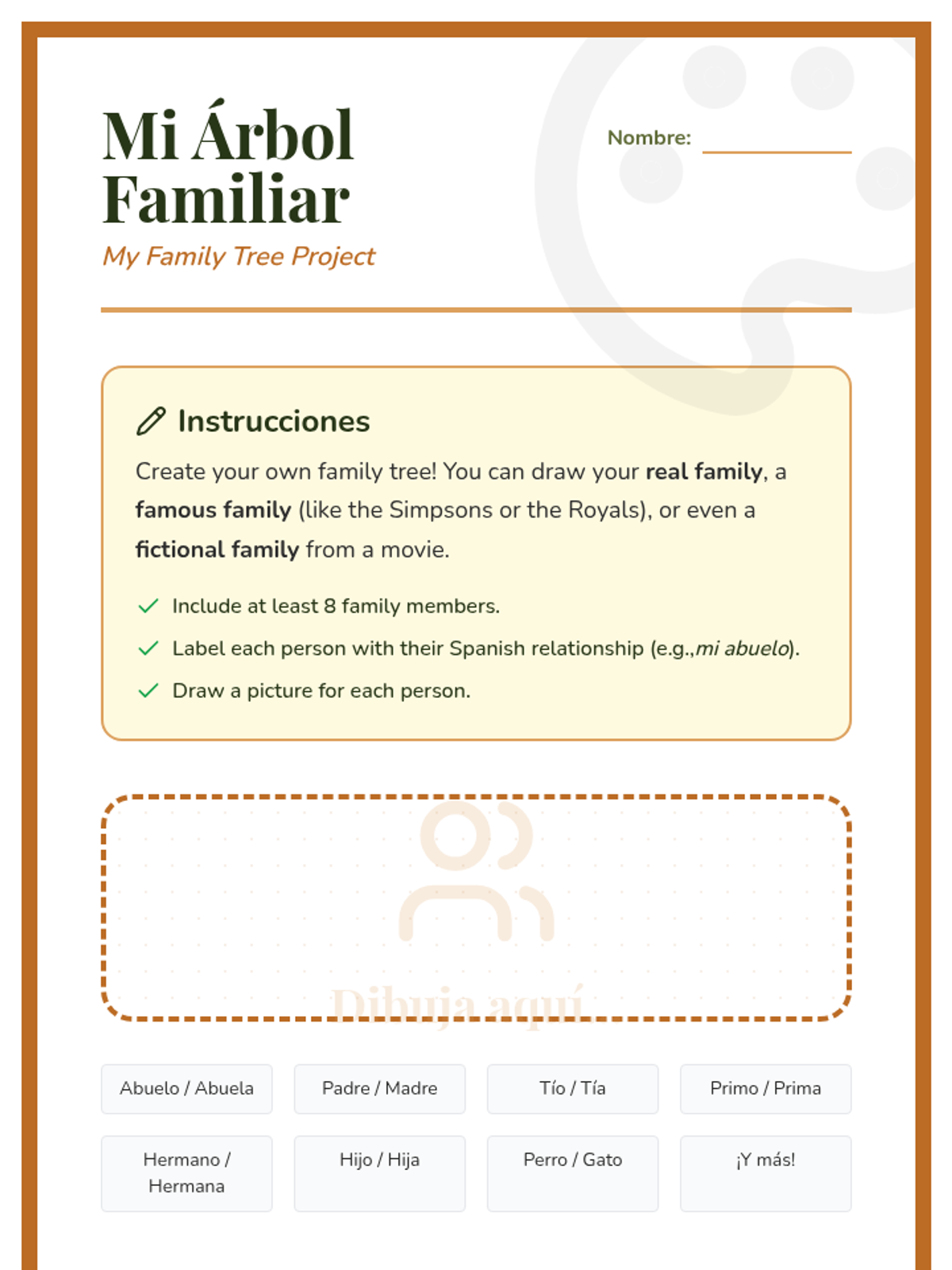
A beginner-level Spanish lesson where students learn and apply basic family vocabulary by constructing their own family tree graphic organizer.
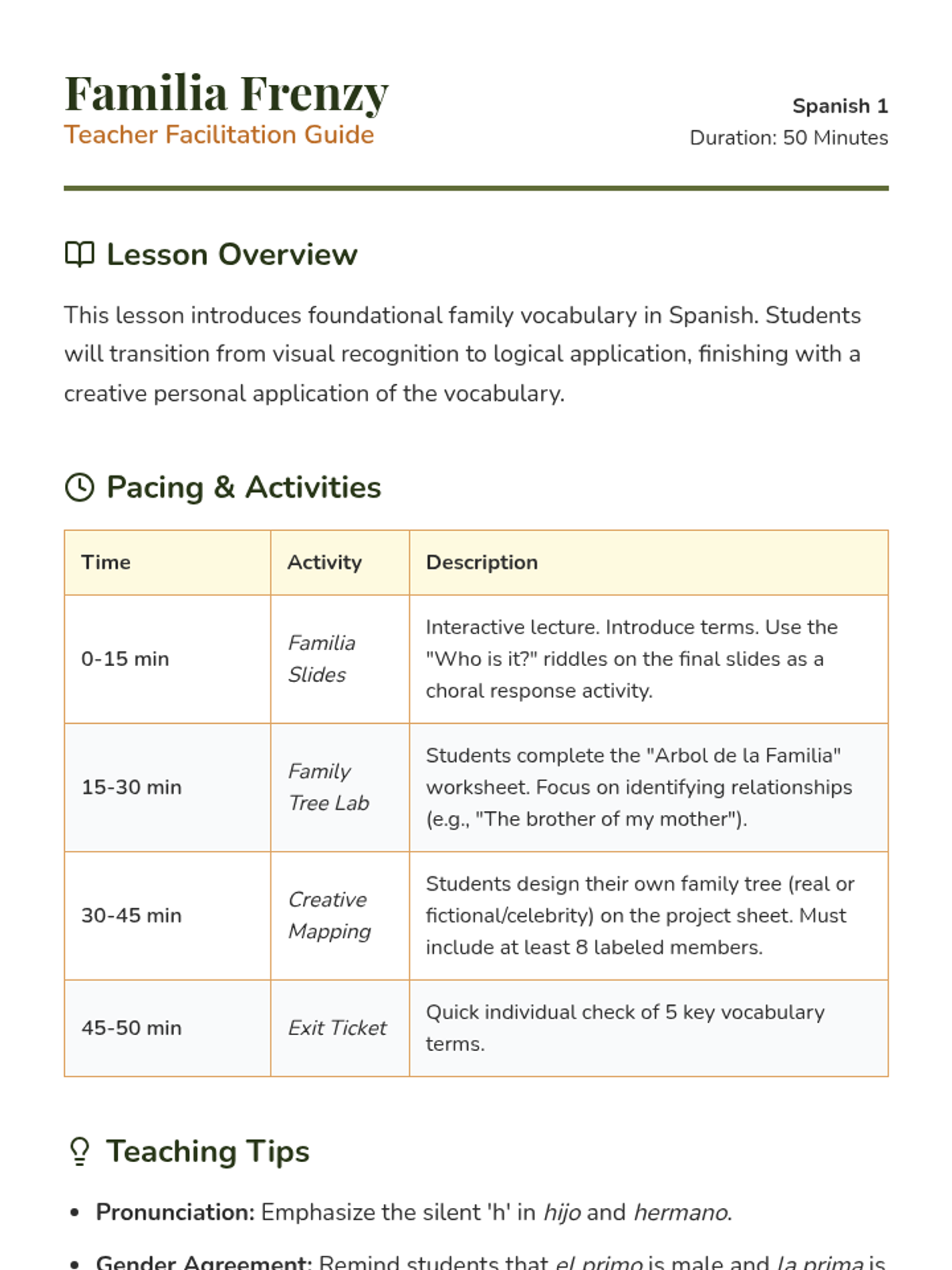
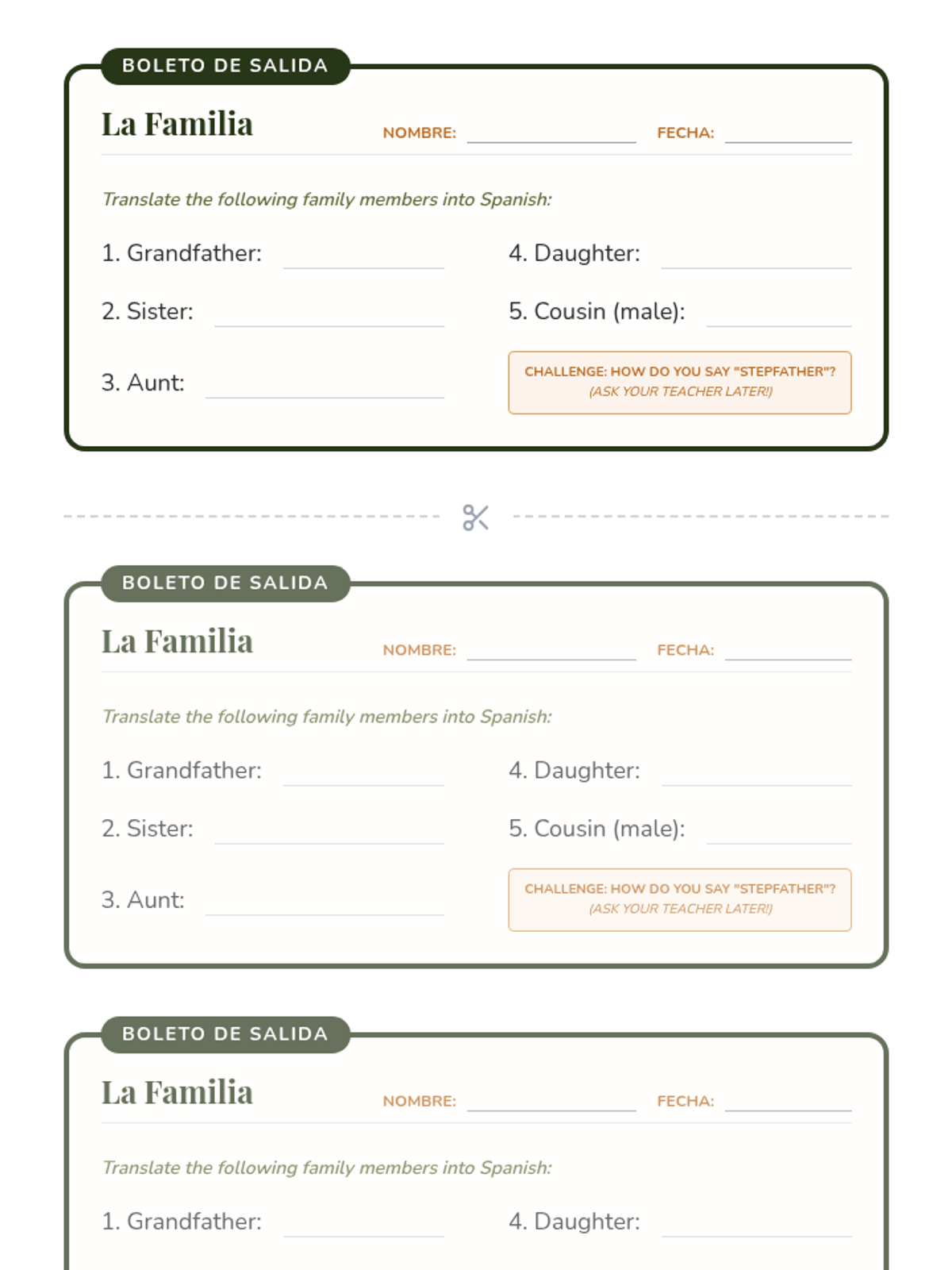
A 50-minute introductory Spanish 1 lesson focused on family member vocabulary through visual slides, a family tree reading activity, a creative mapping project, and a quick vocabulary check.
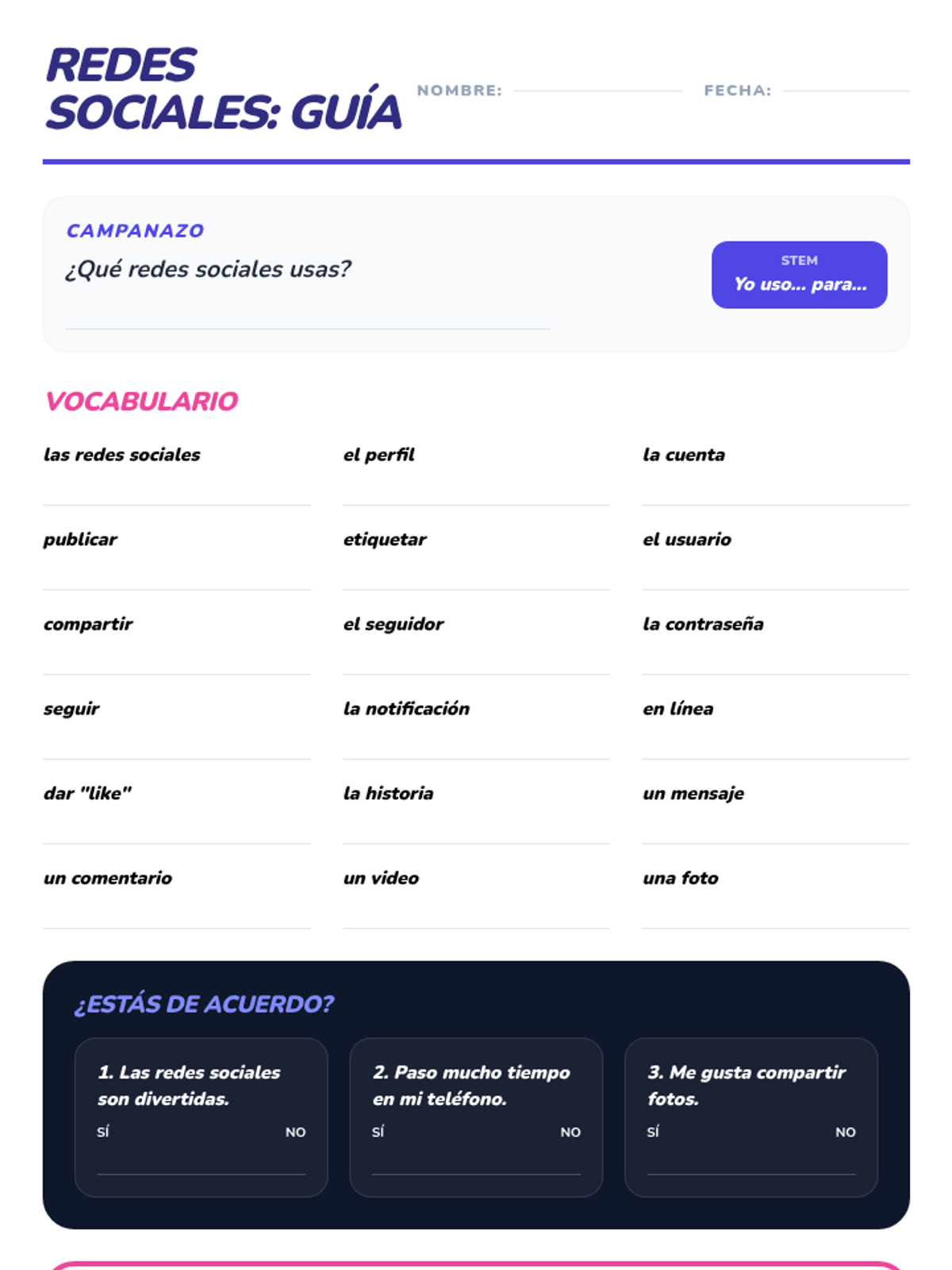
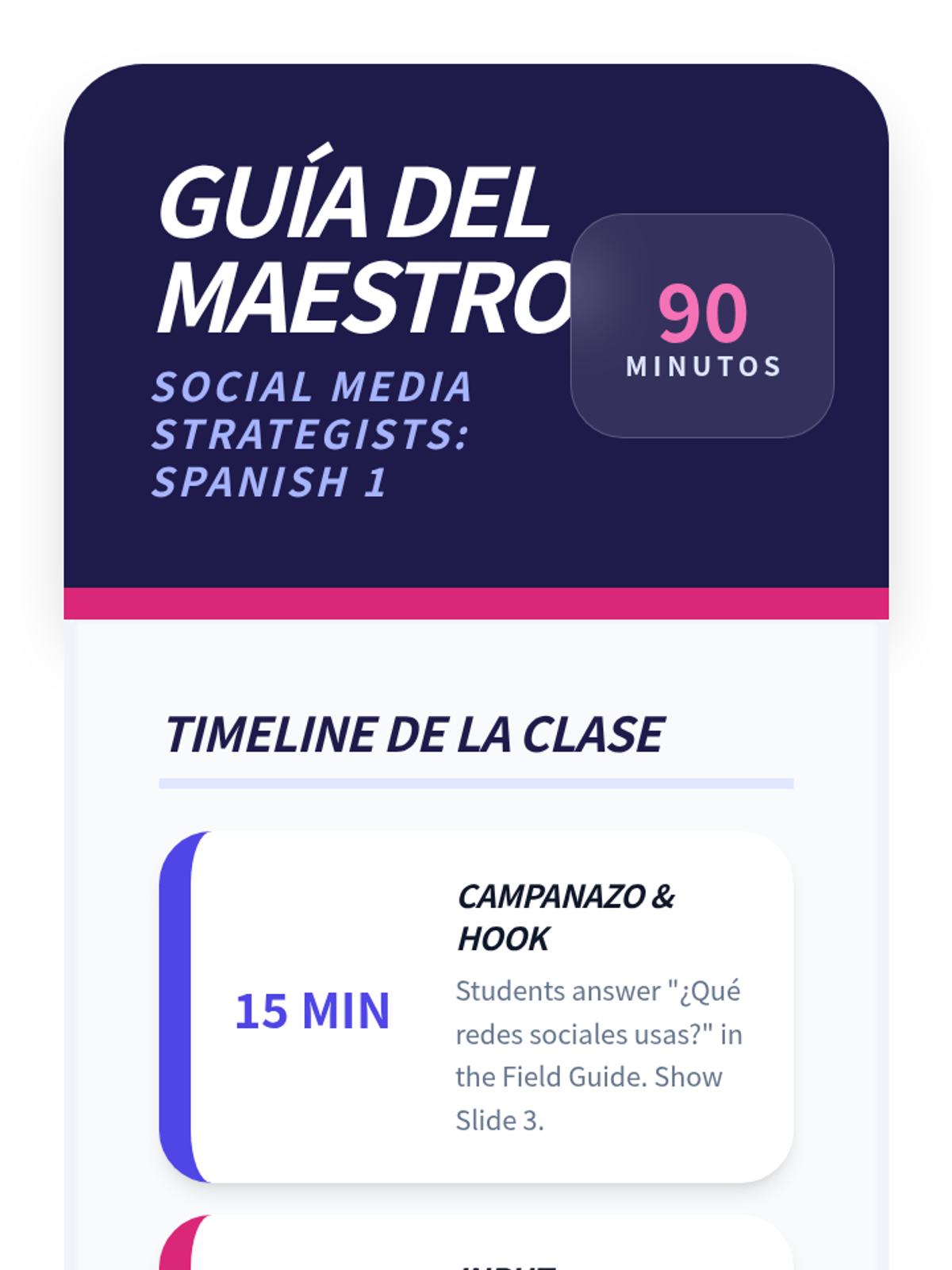
An introductory Spanish 1 lesson on social media vocabulary and expressing opinions (agreement/disagreement). Students will learn to identify key platforms and actions while discussing their digital habits.
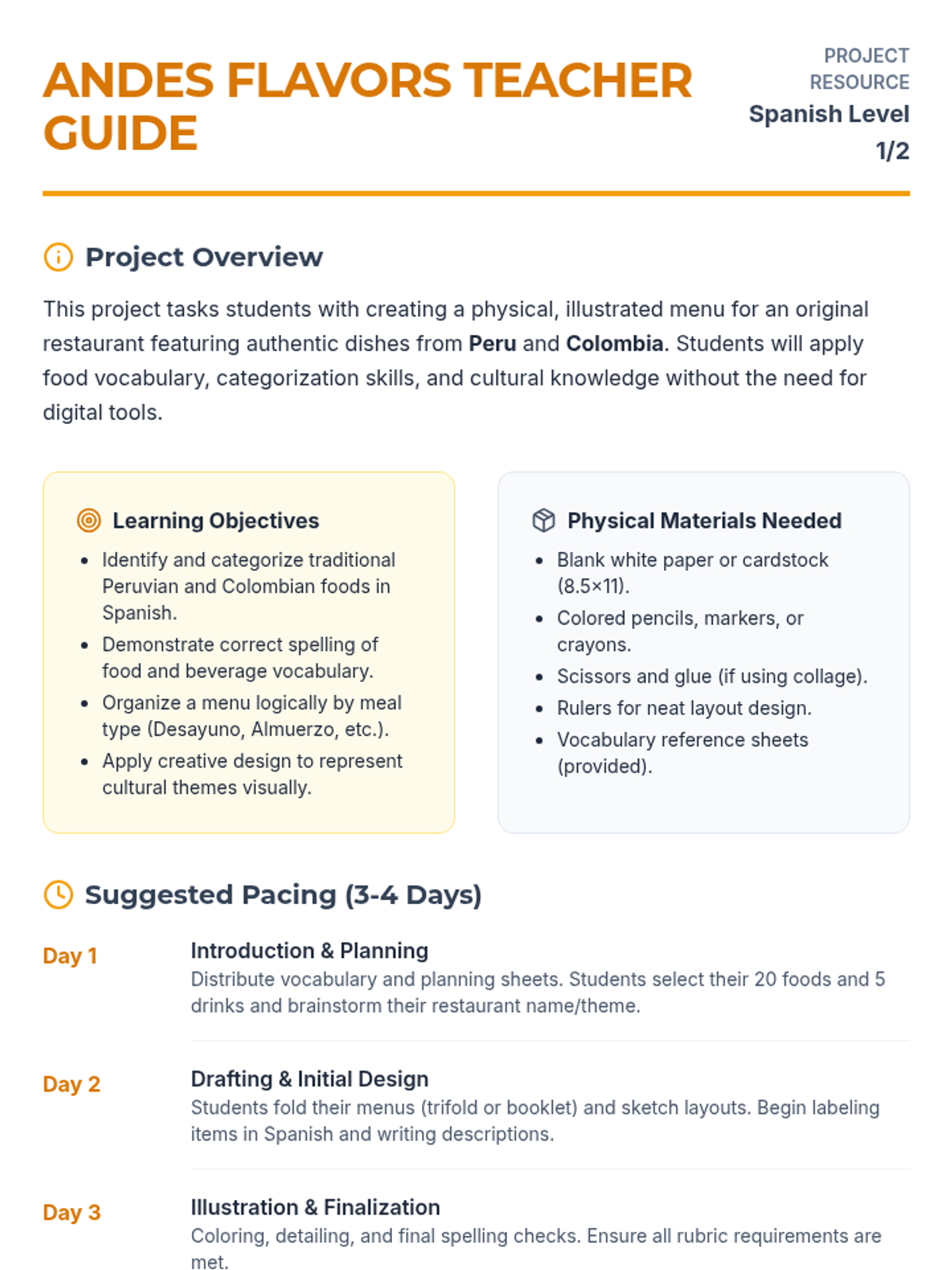
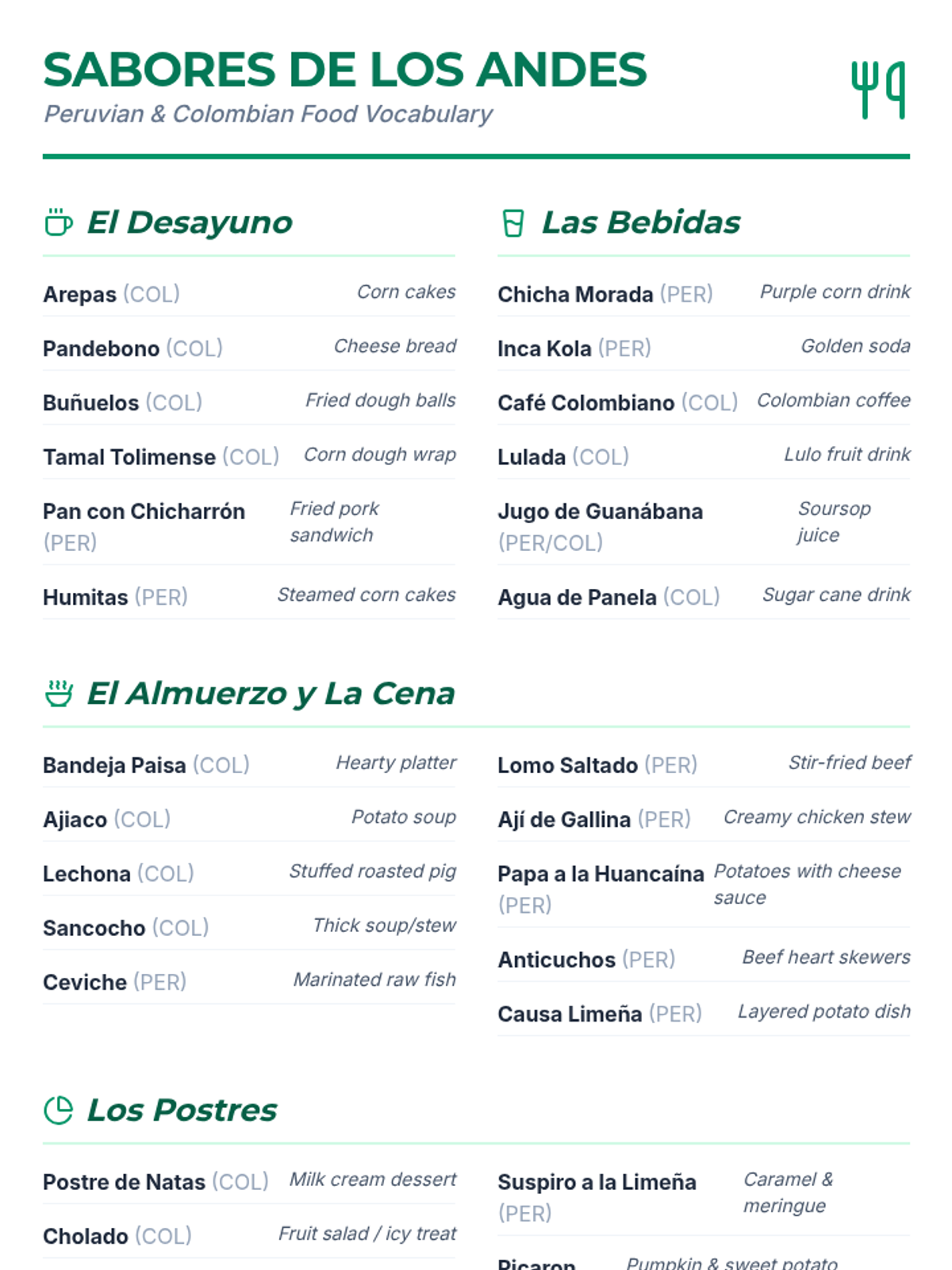
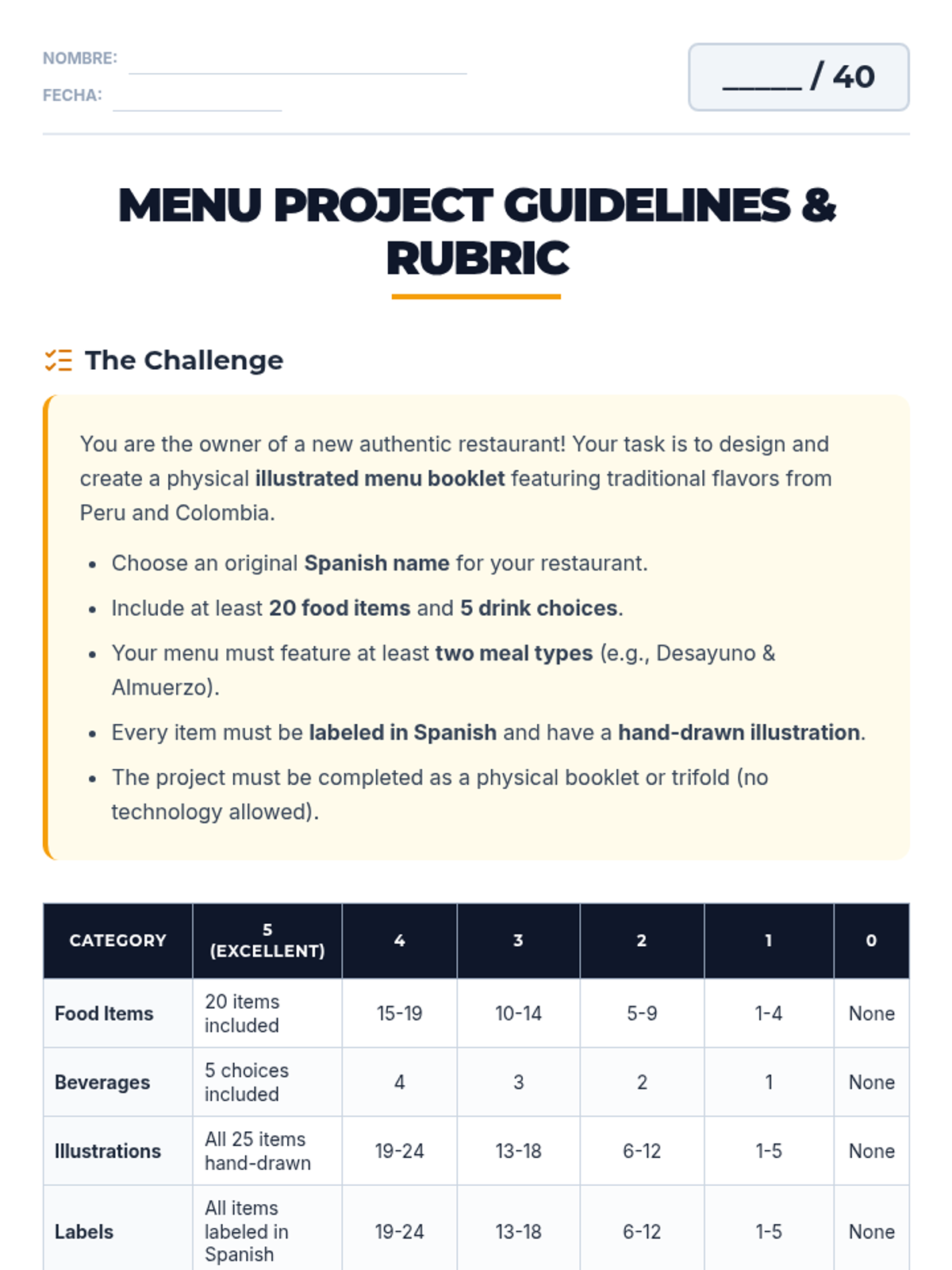
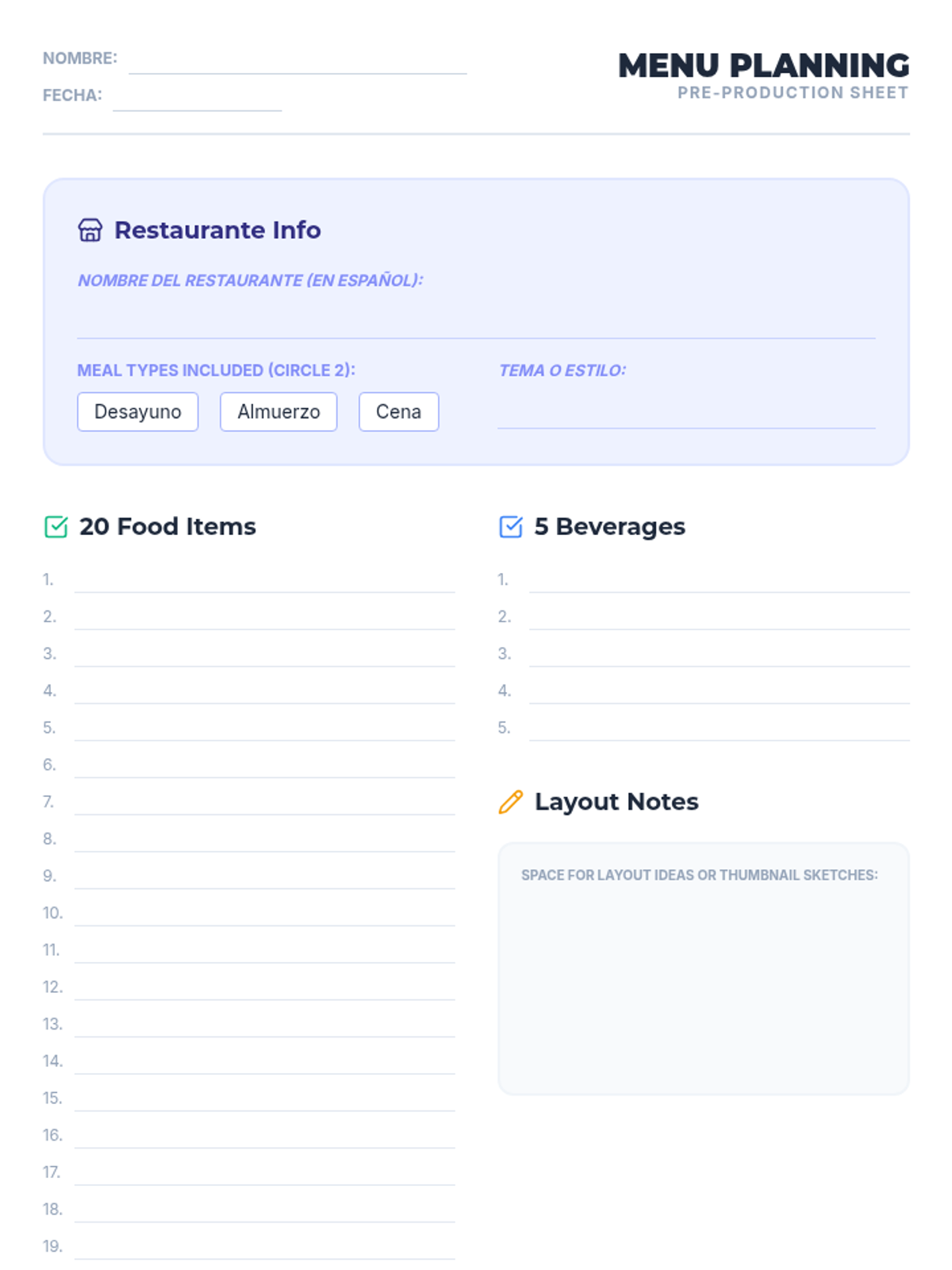
A hands-on Spanish language project where students design and illustrate an authentic menu featuring traditional Peruvian and Colombian cuisine, adapted for a technology-free classroom.
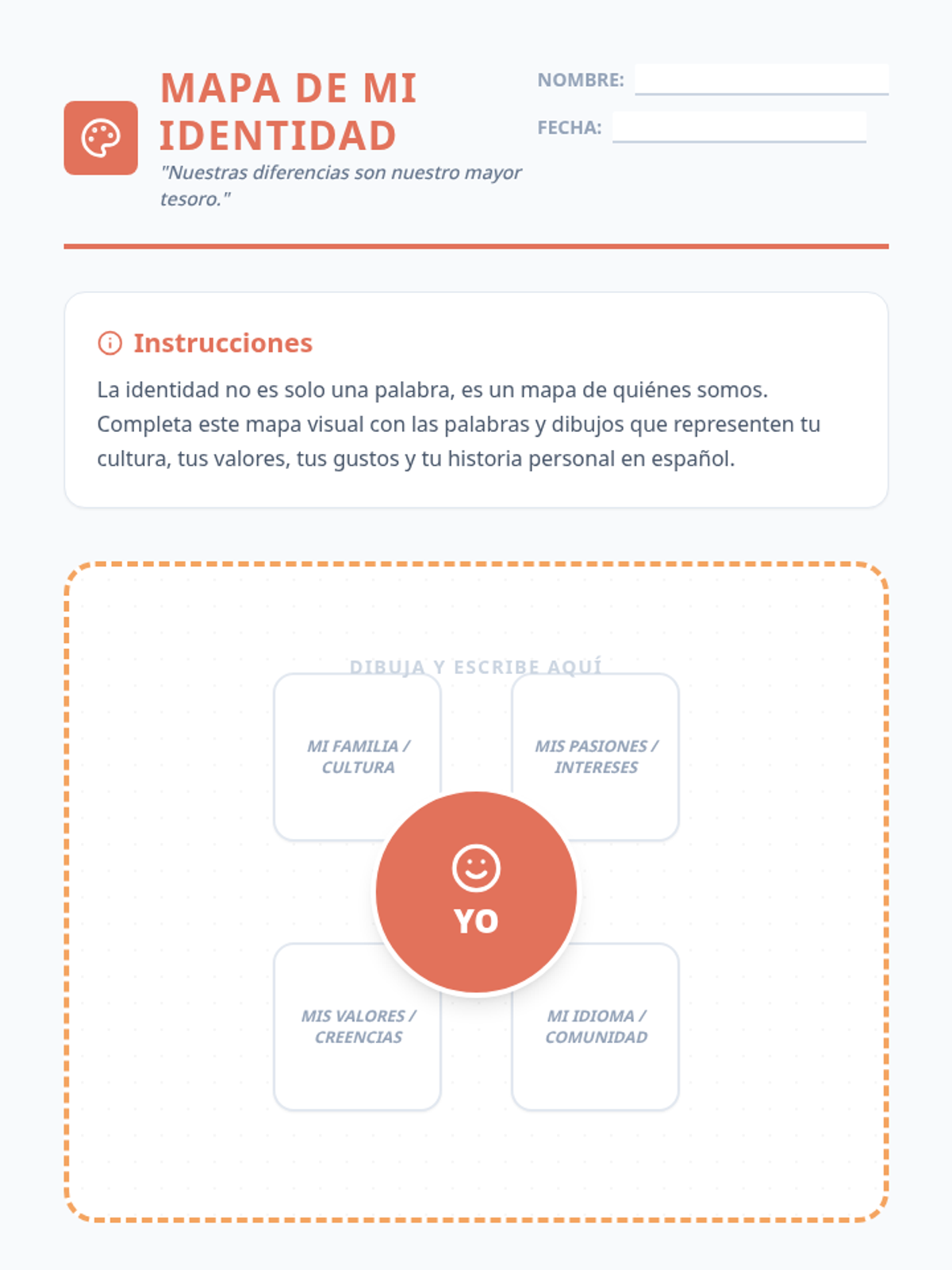
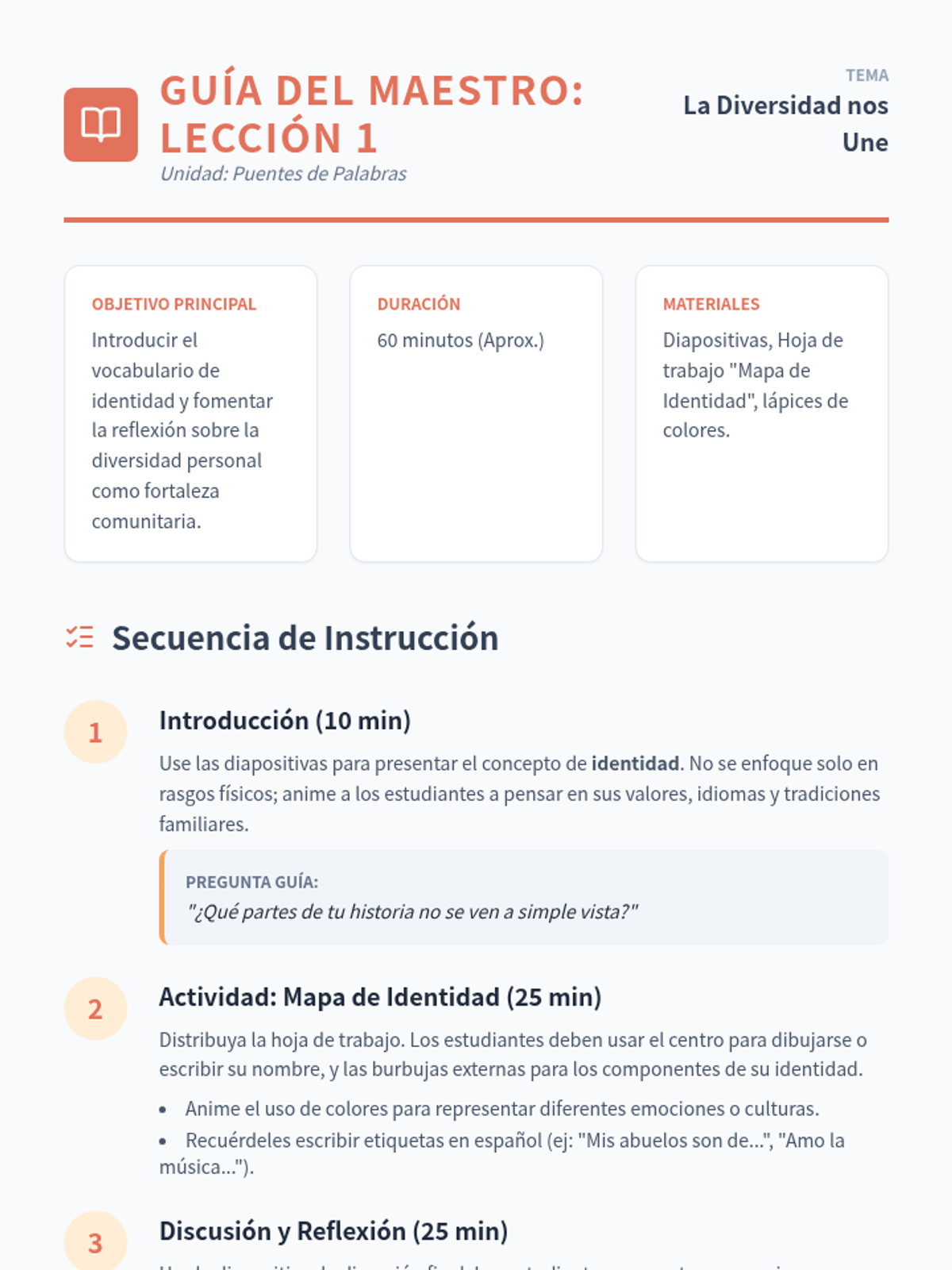
Introduces vocabulary related to identity and diversity, encouraging students to celebrate differences within their classroom and the Spanish-speaking world.
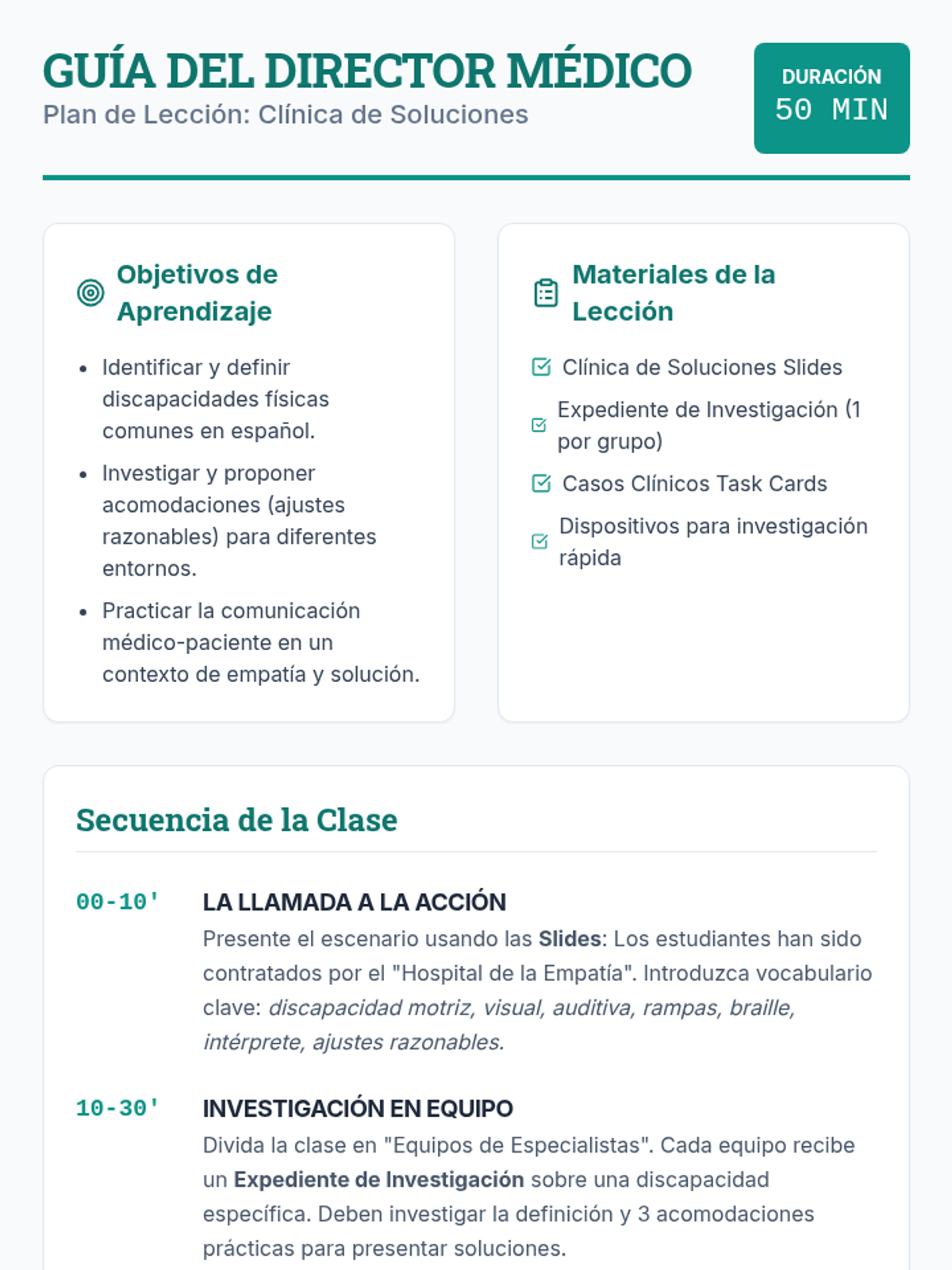
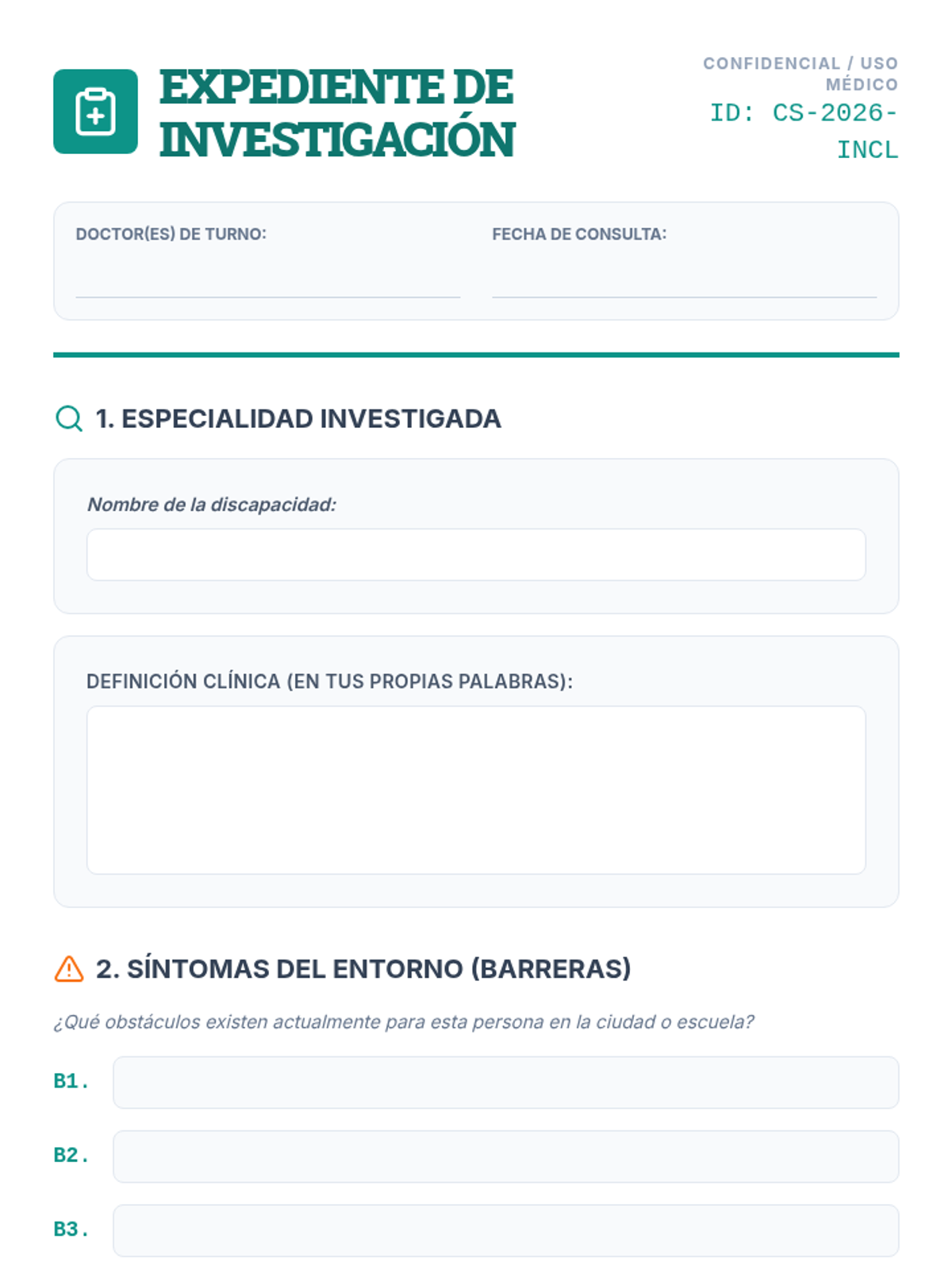
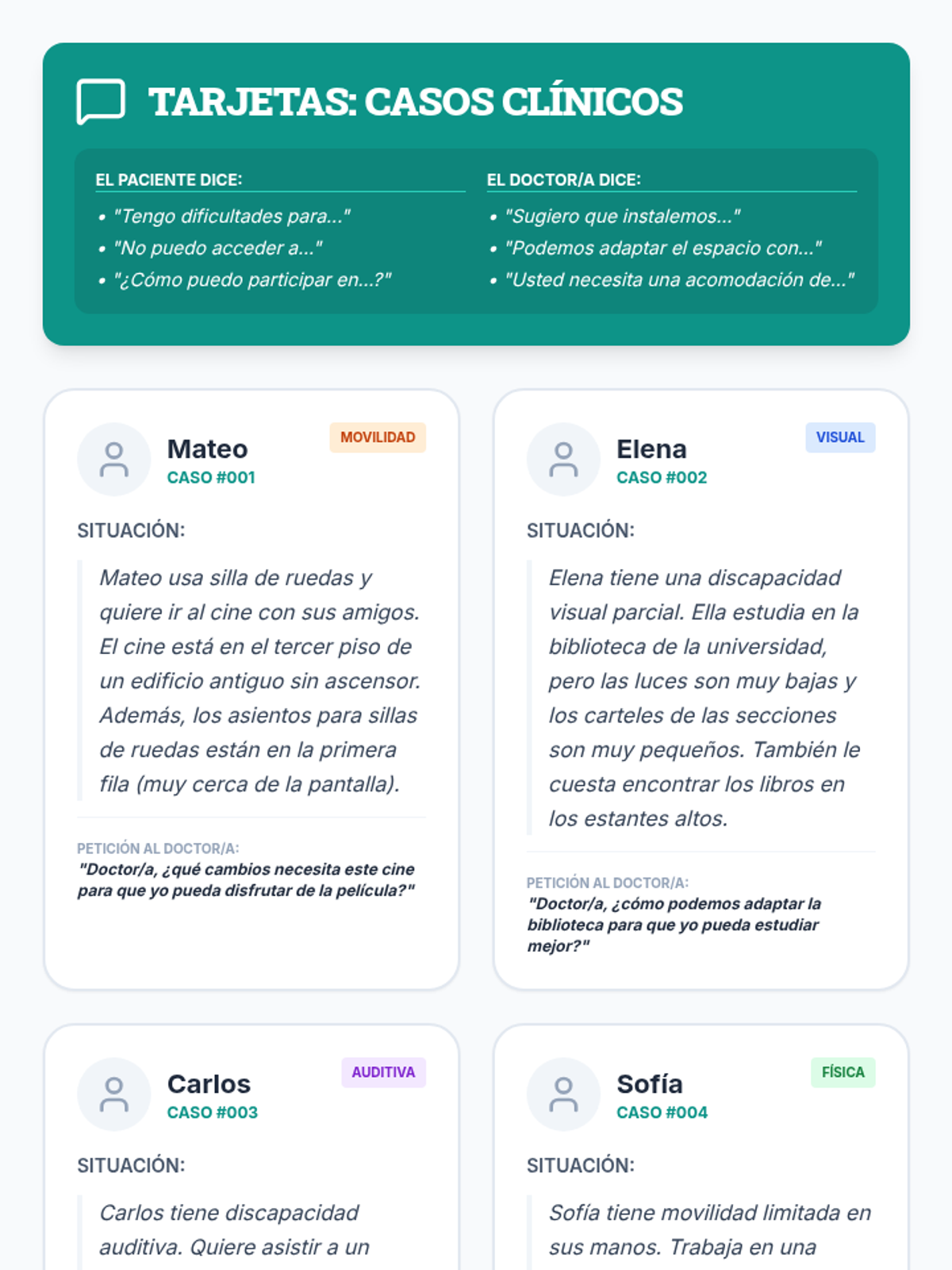
A high-energy, collaborative lesson where students act as medical consultants to research physical disabilities and design inclusive accommodations through role-play.
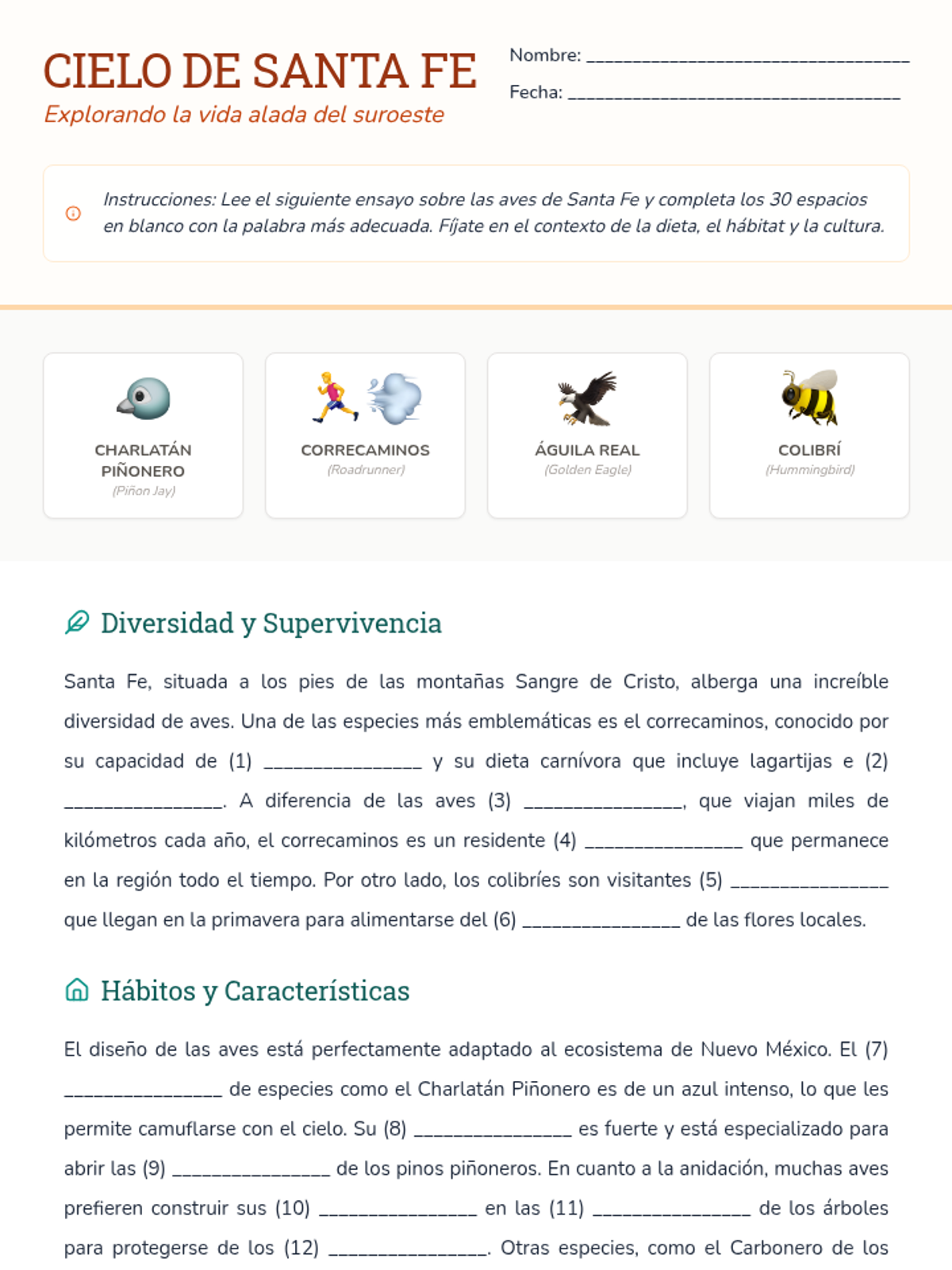
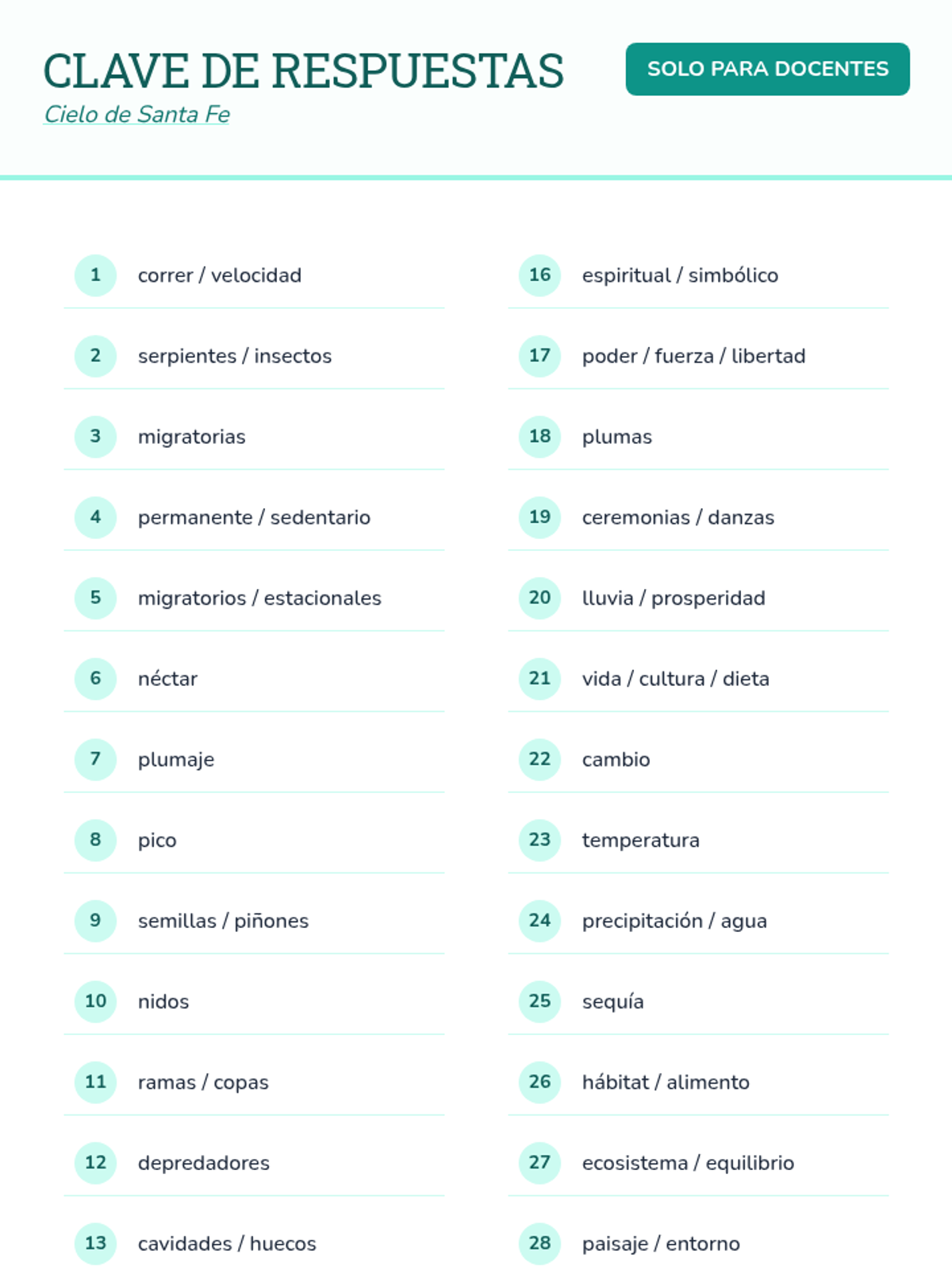
Una lección sobre la avifauna de Santa Fe, Nuevo México, que explora sus características físicas, su importancia cultural para los pueblos indígenas y los desafíos del cambio climático.