Right triangle ratios, unit circle definitions, and fundamental identities applied to angles and geometric relationships. Models periodic phenomena using trigonometric functions to analyze real-world cycles and waveforms.
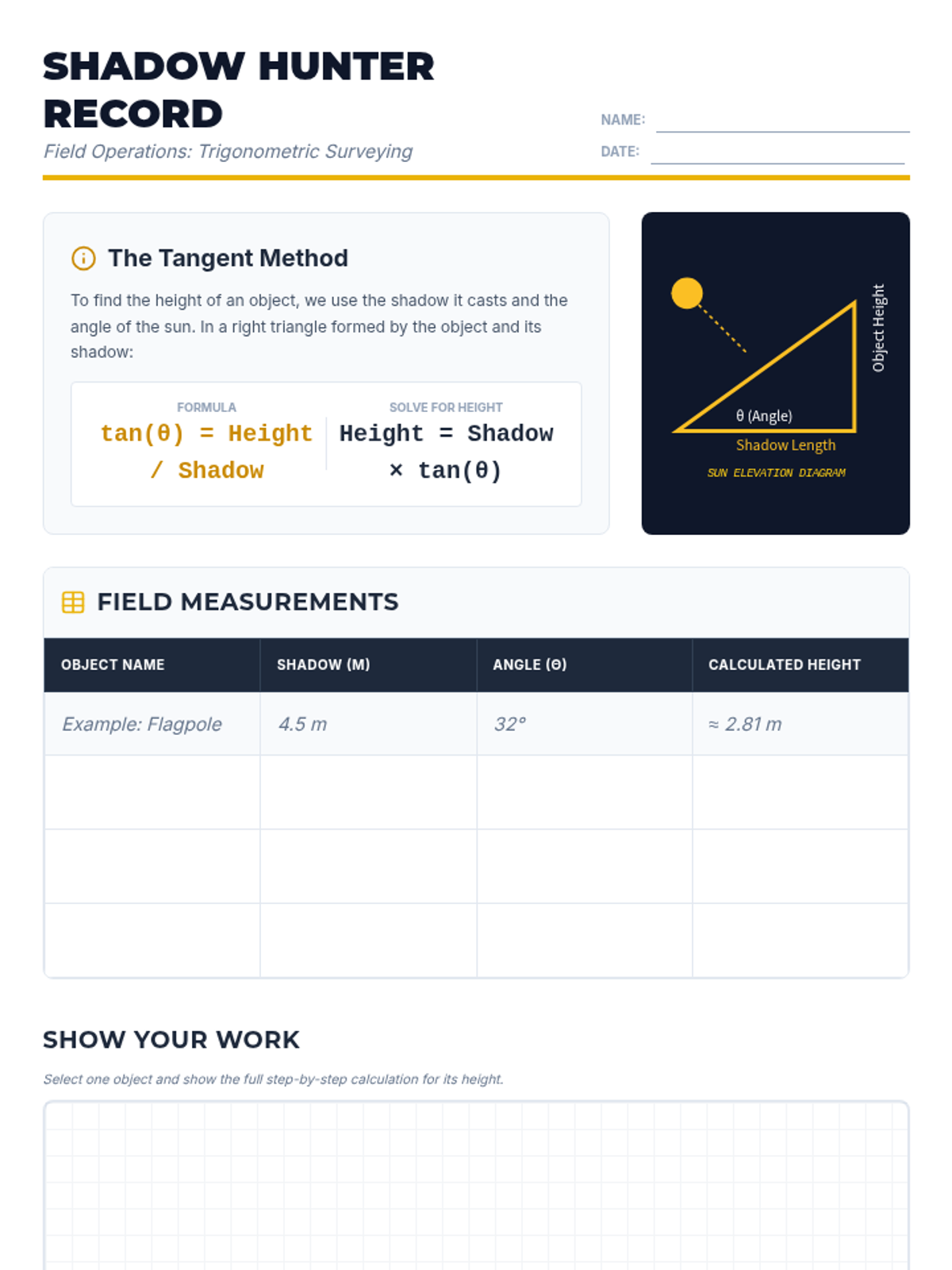
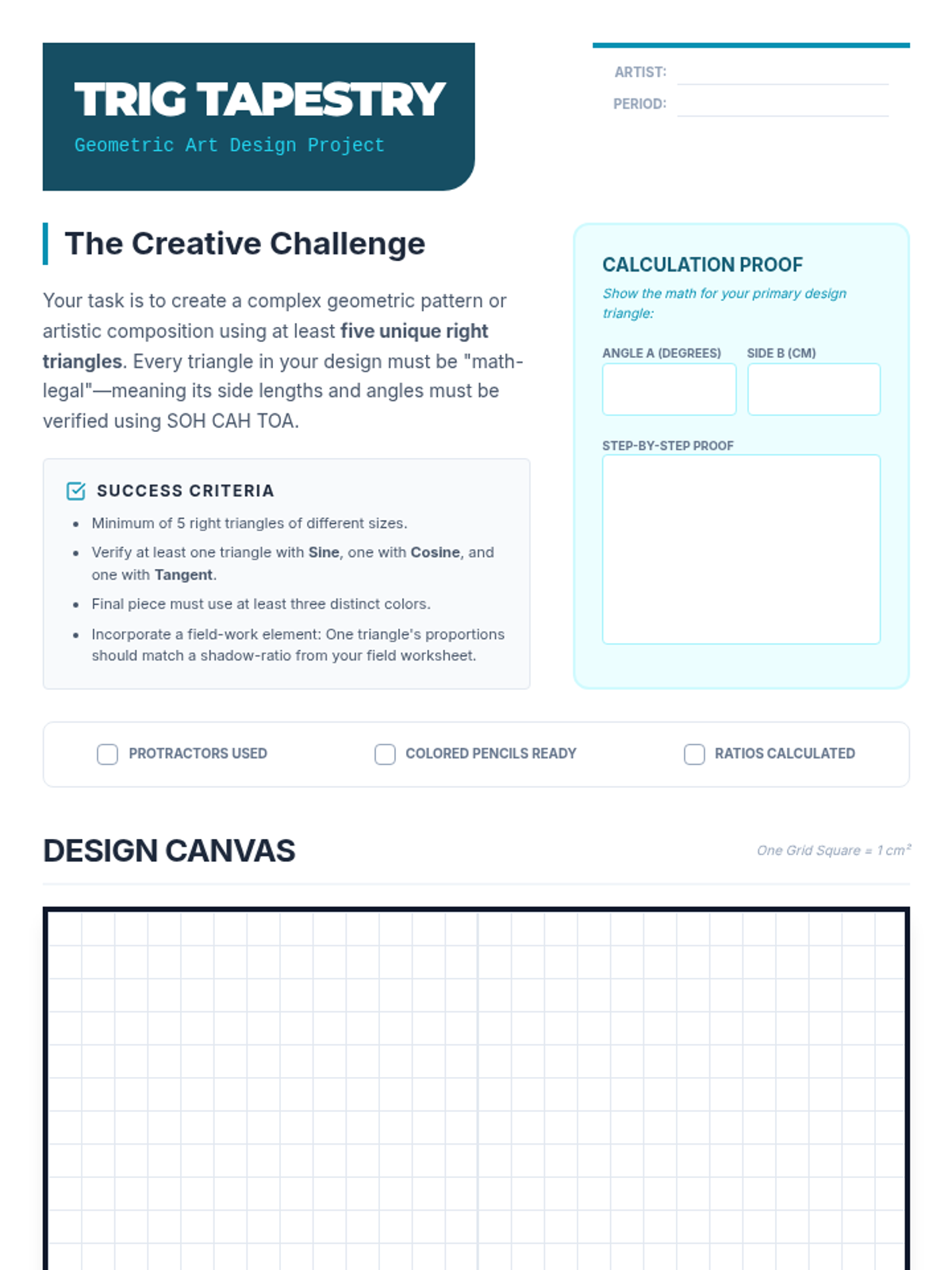
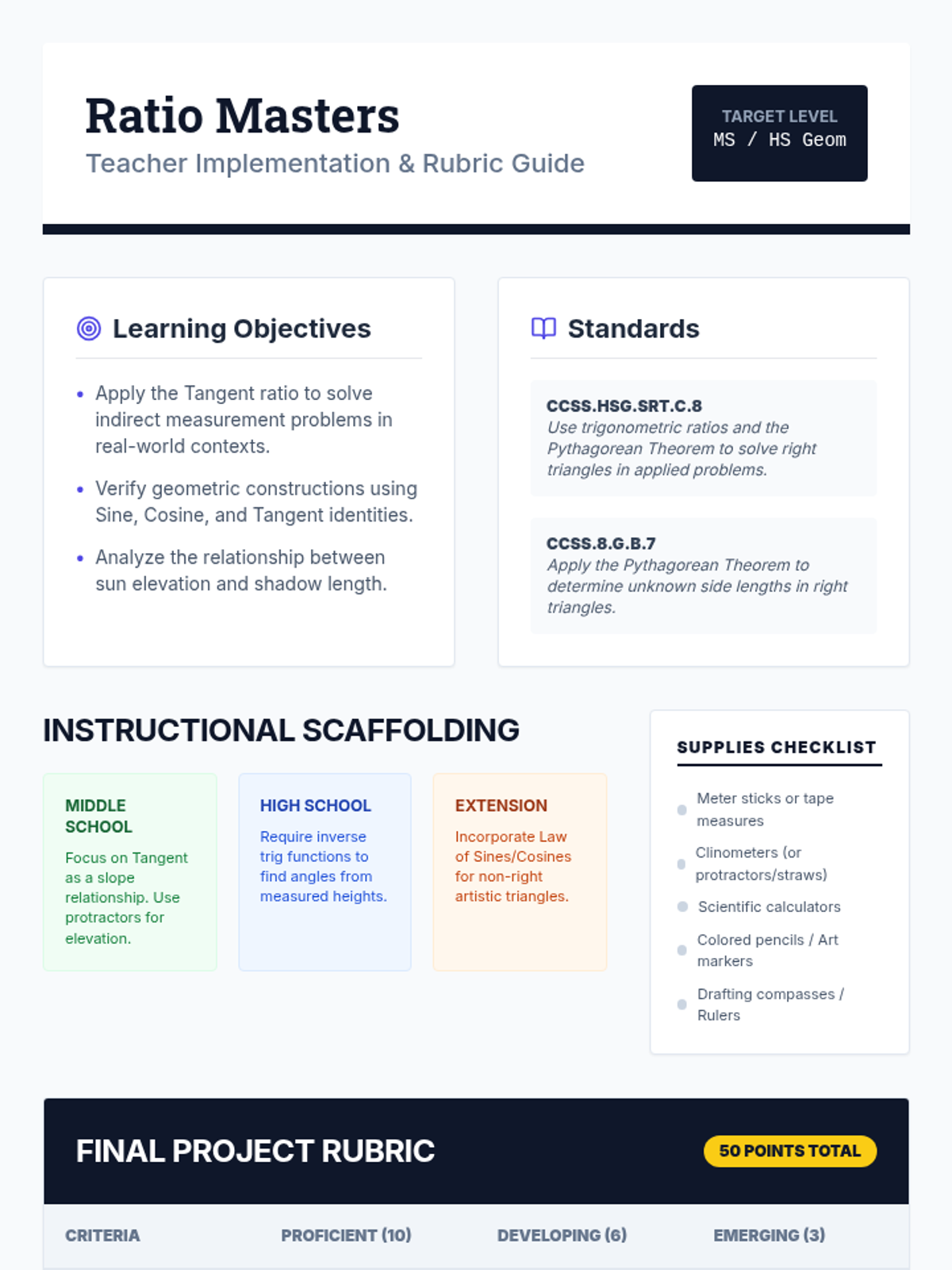
A comprehensive project-based learning unit where students apply trigonometric ratios to measure the heights of local landmarks and create intricate geometric art based on mathematical proportions.
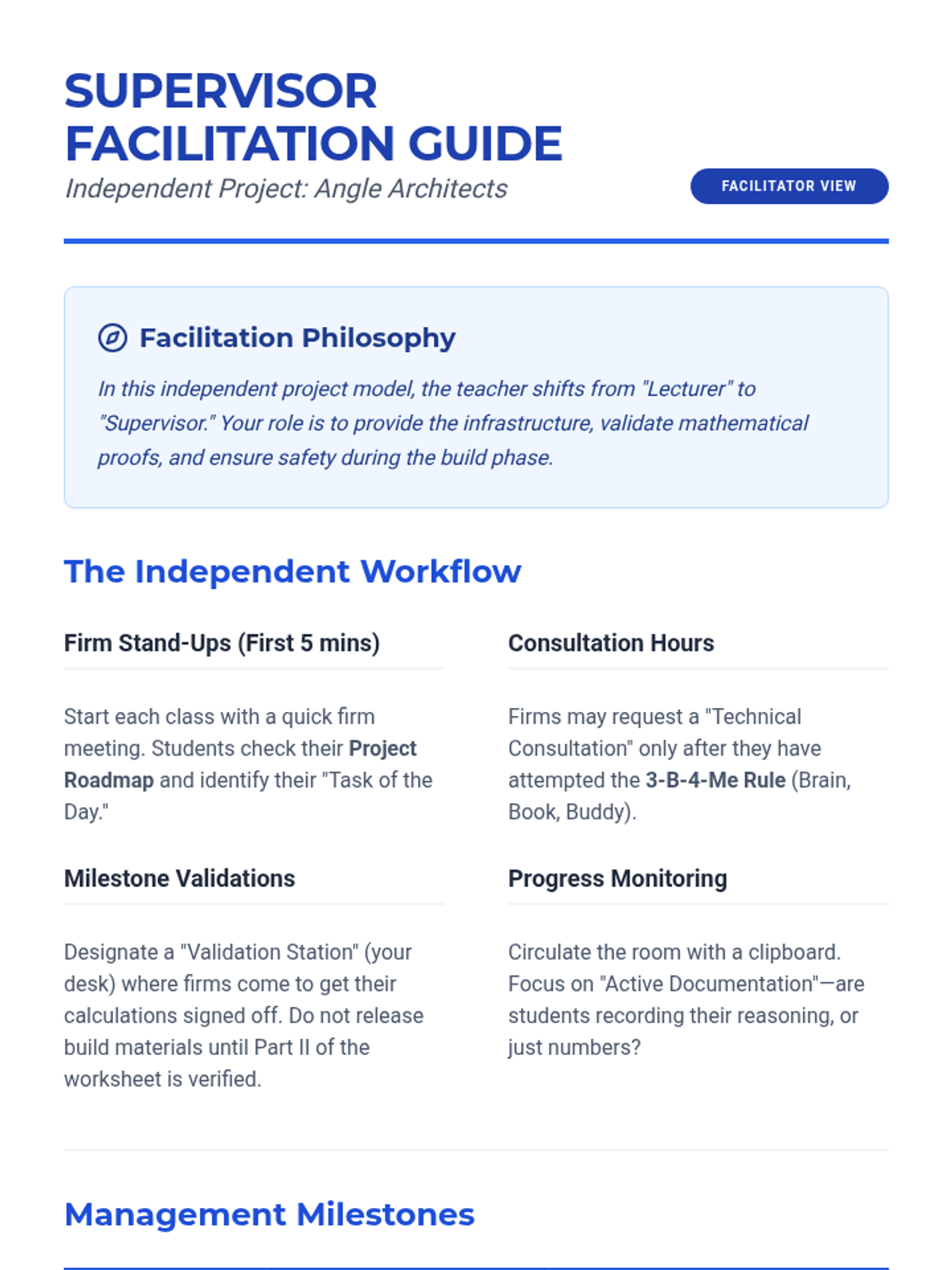
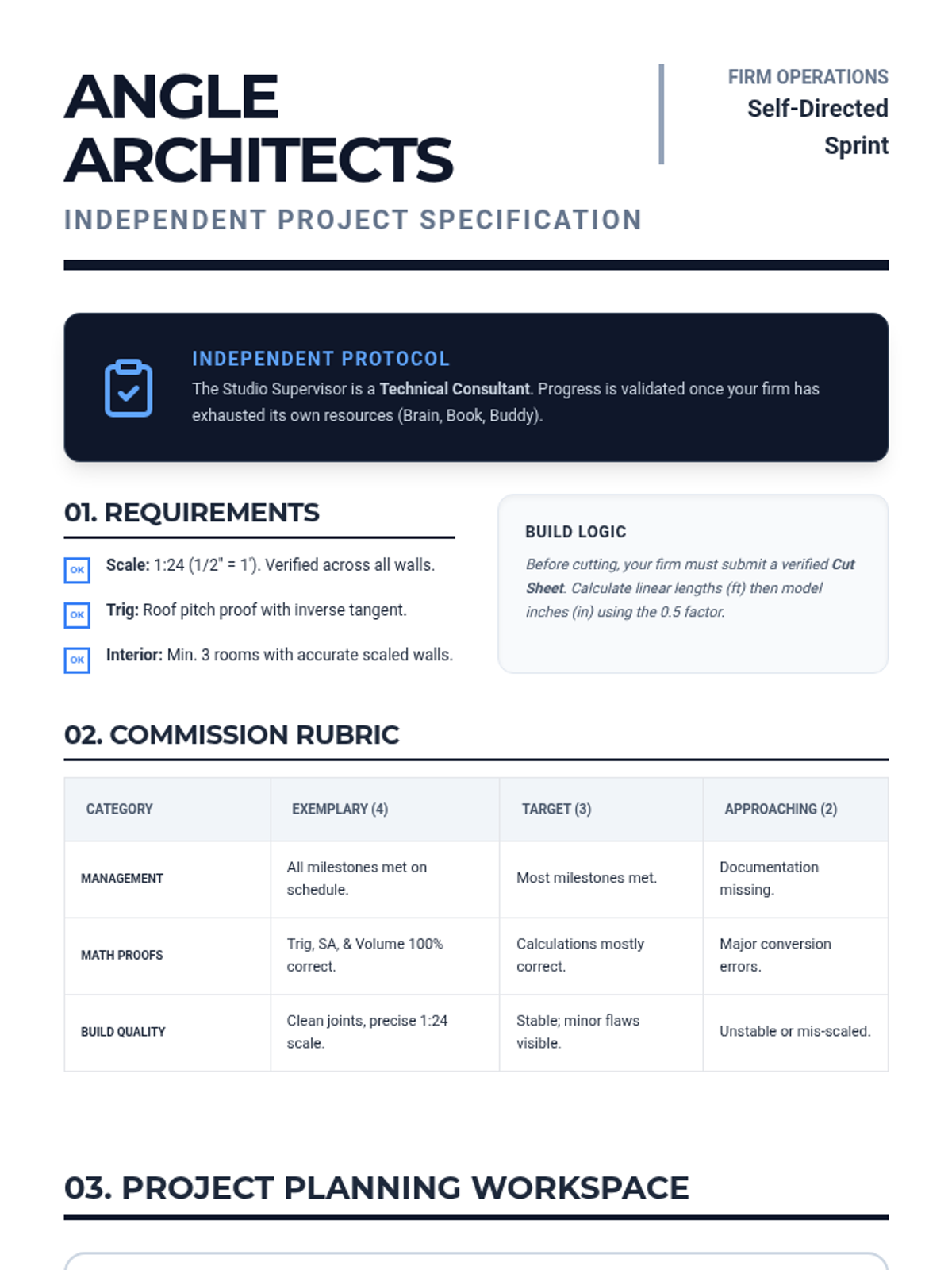
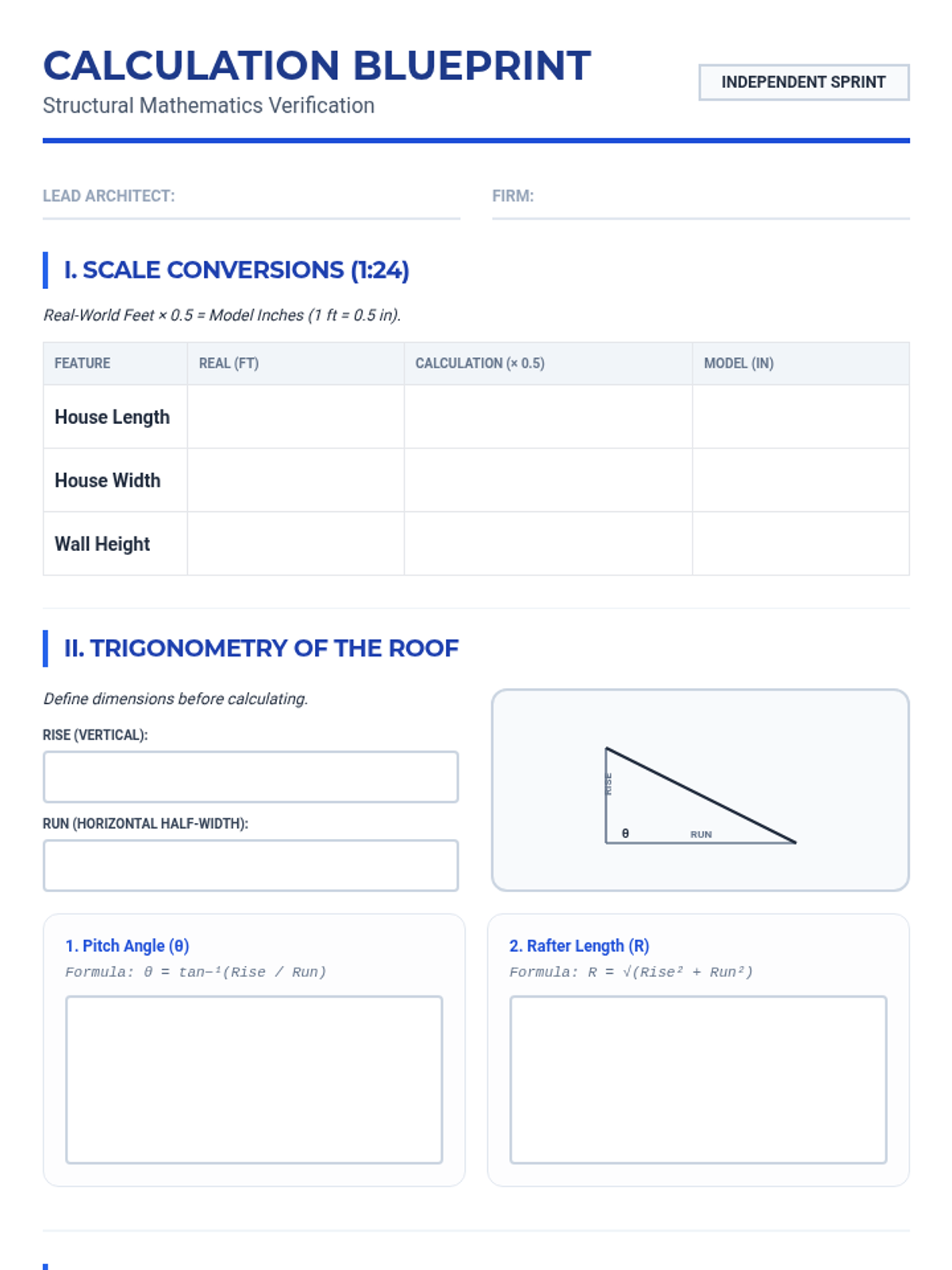
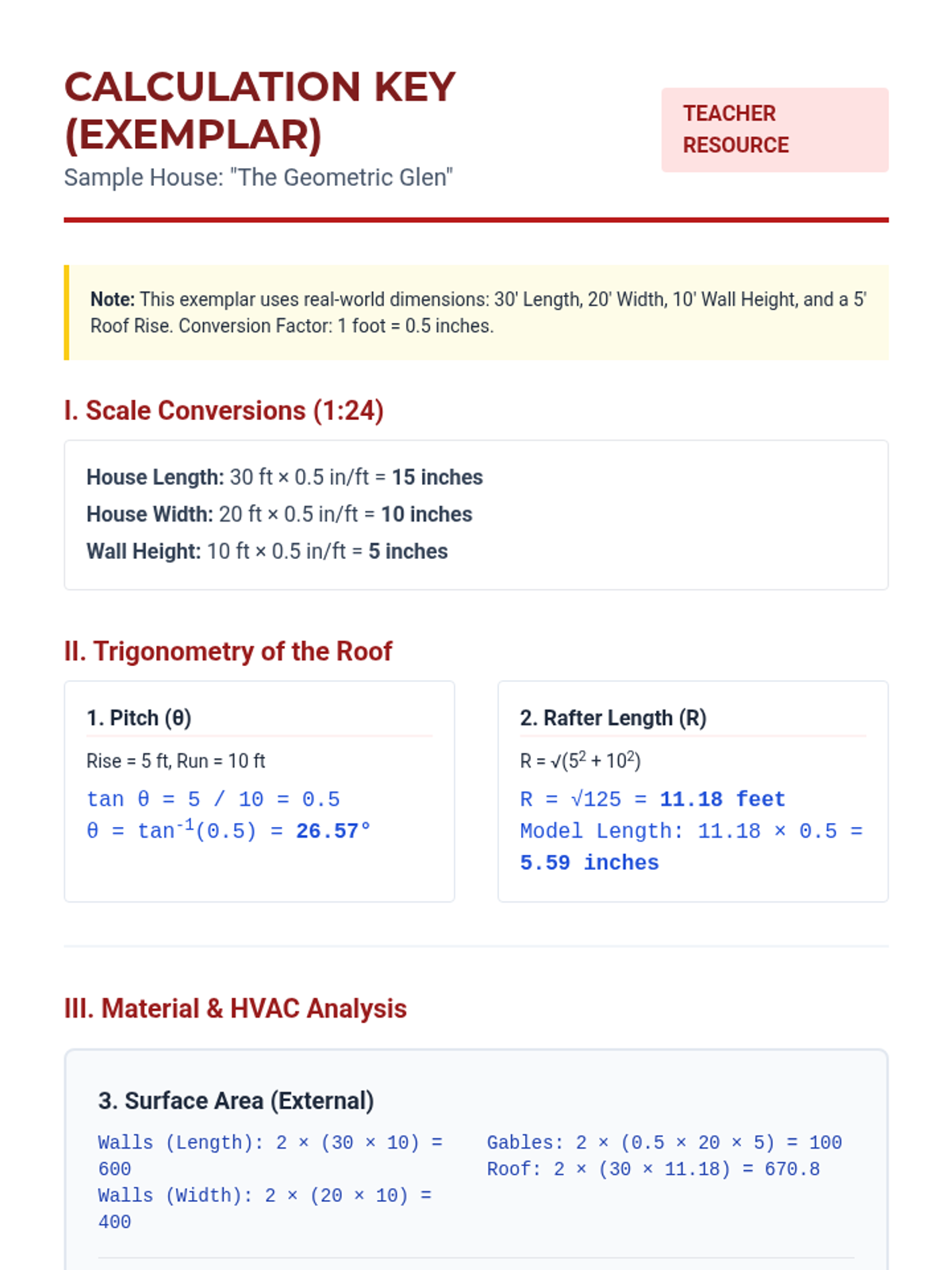
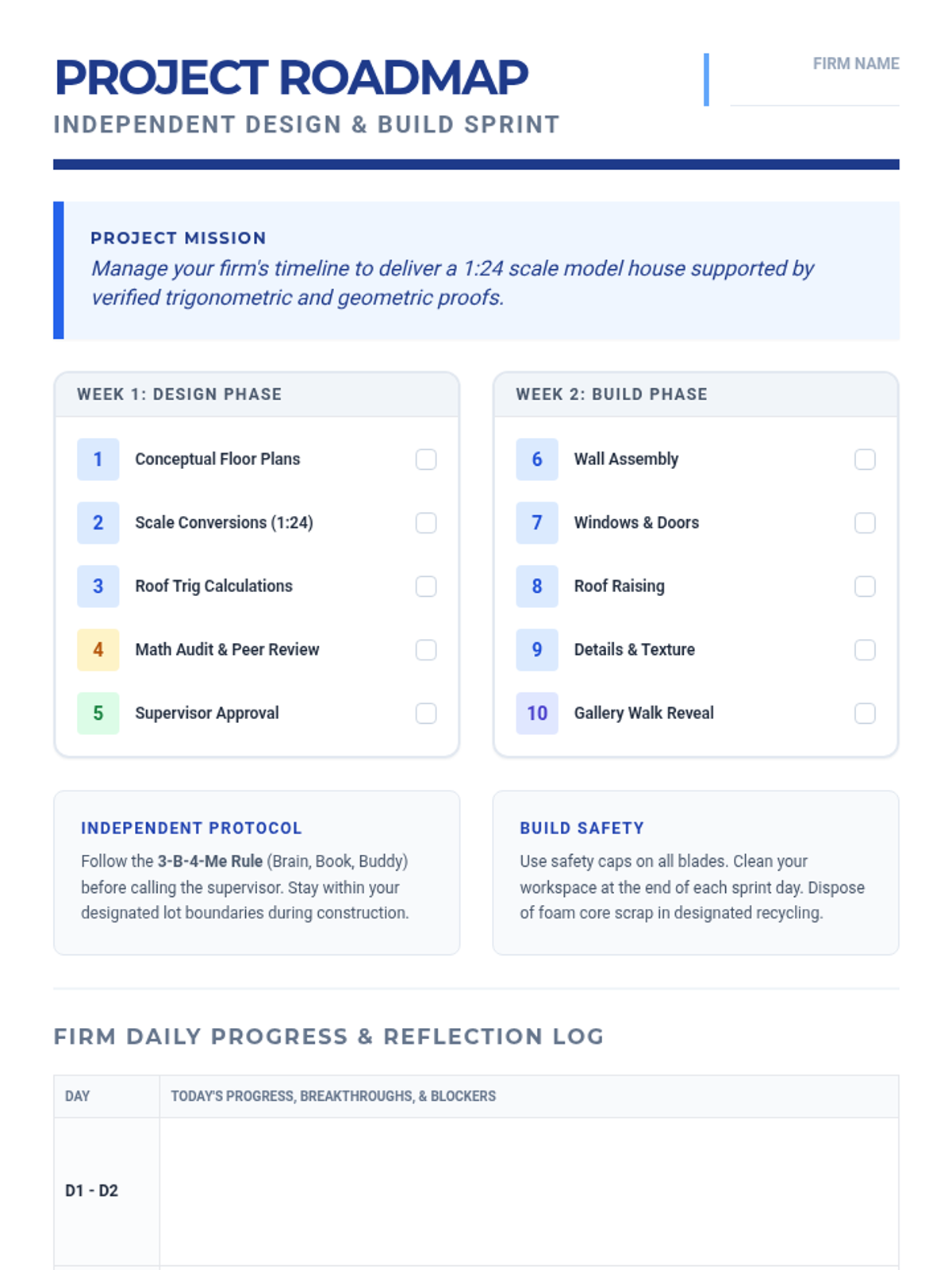
A comprehensive two-week geometry and trigonometry project where 10th-grade students design and build a scale model house, applying roof pitch calculations, surface area for materials, and volume for climate control systems.
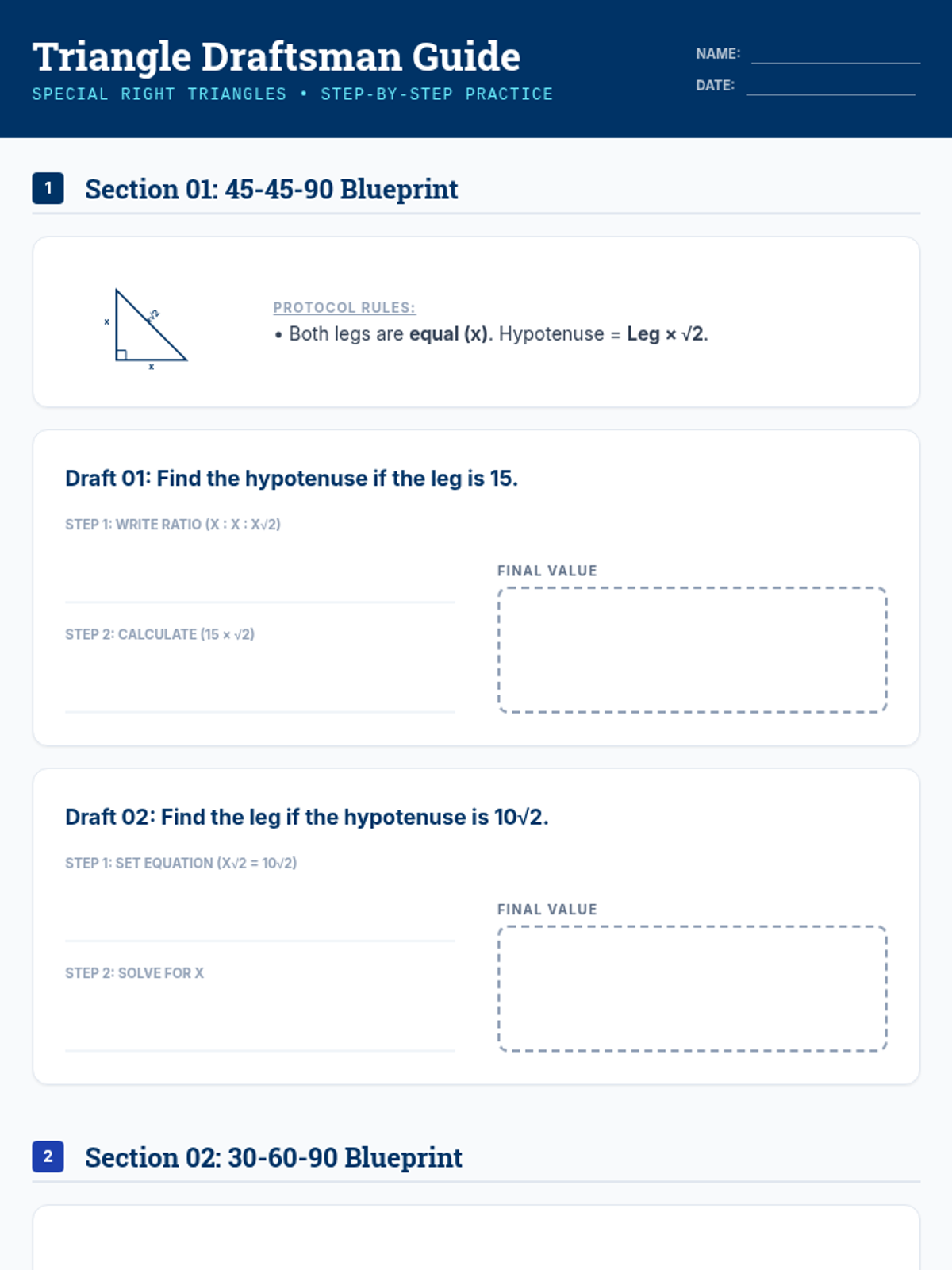
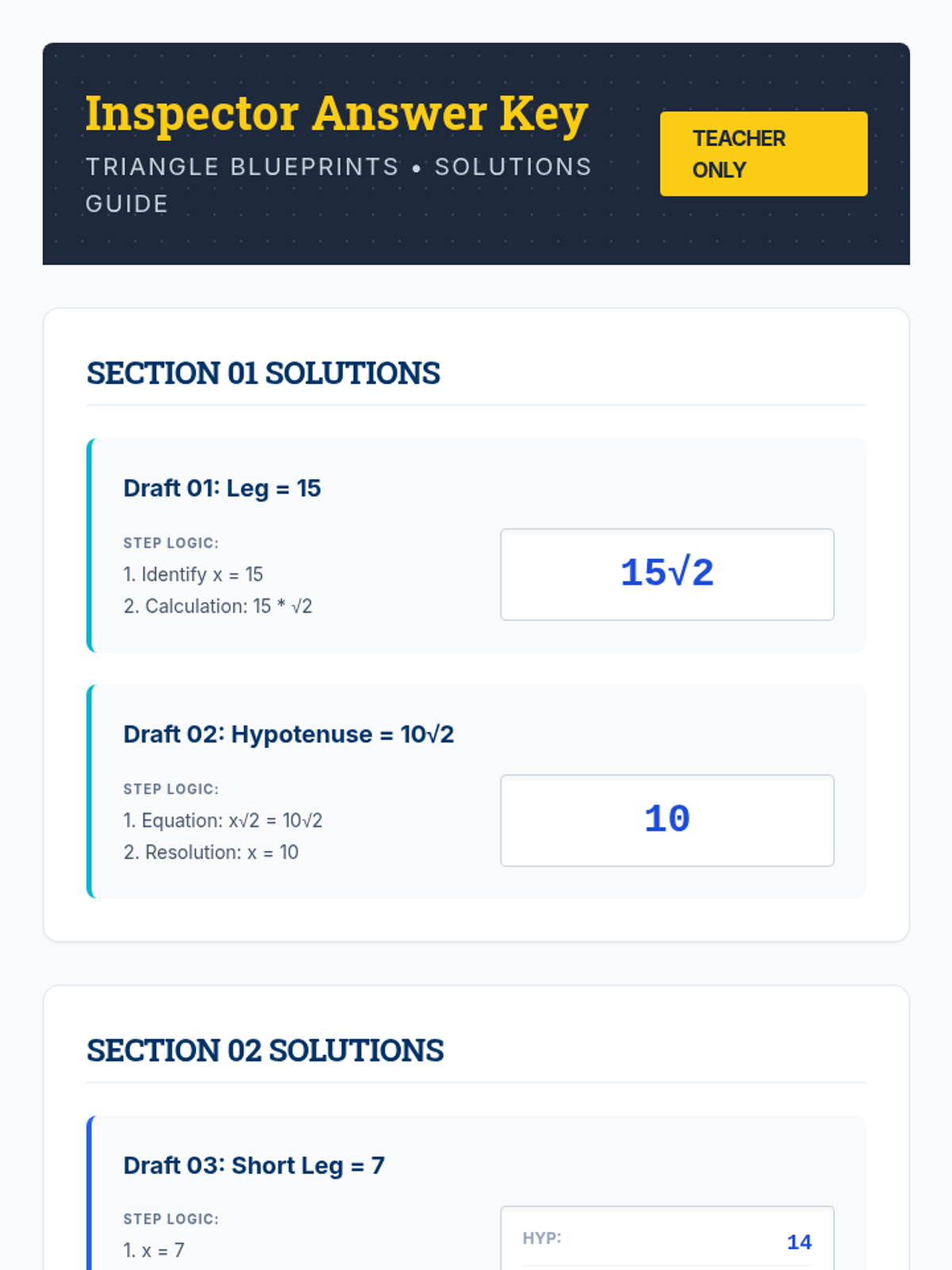
A series of geometry lessons focusing on right triangle relationships and trigonometry, starting with special right triangles.
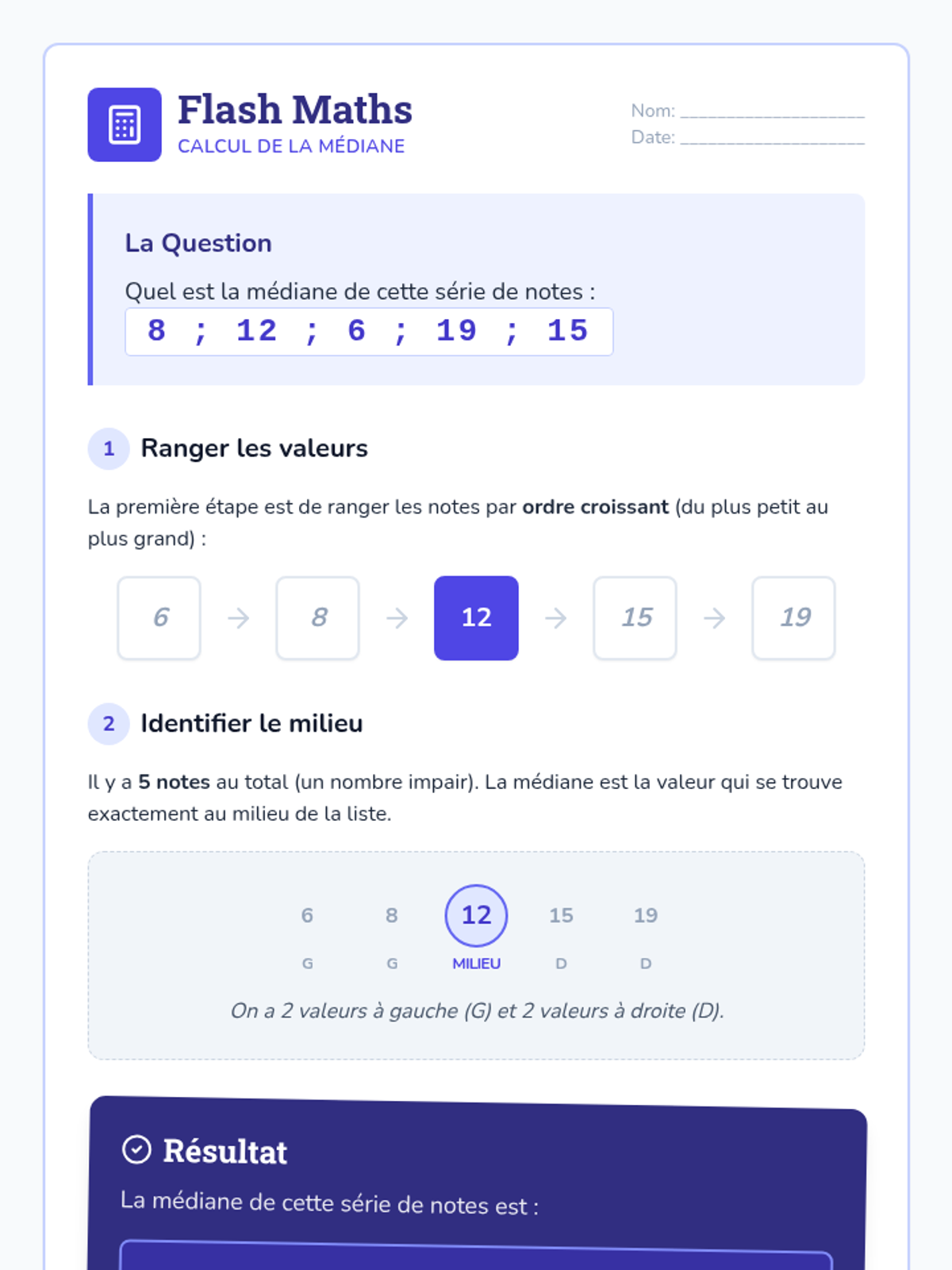
Une série de ressources éducatives couvrant divers concepts mathématiques essentiels comme les statistiques et la trigonométrie.
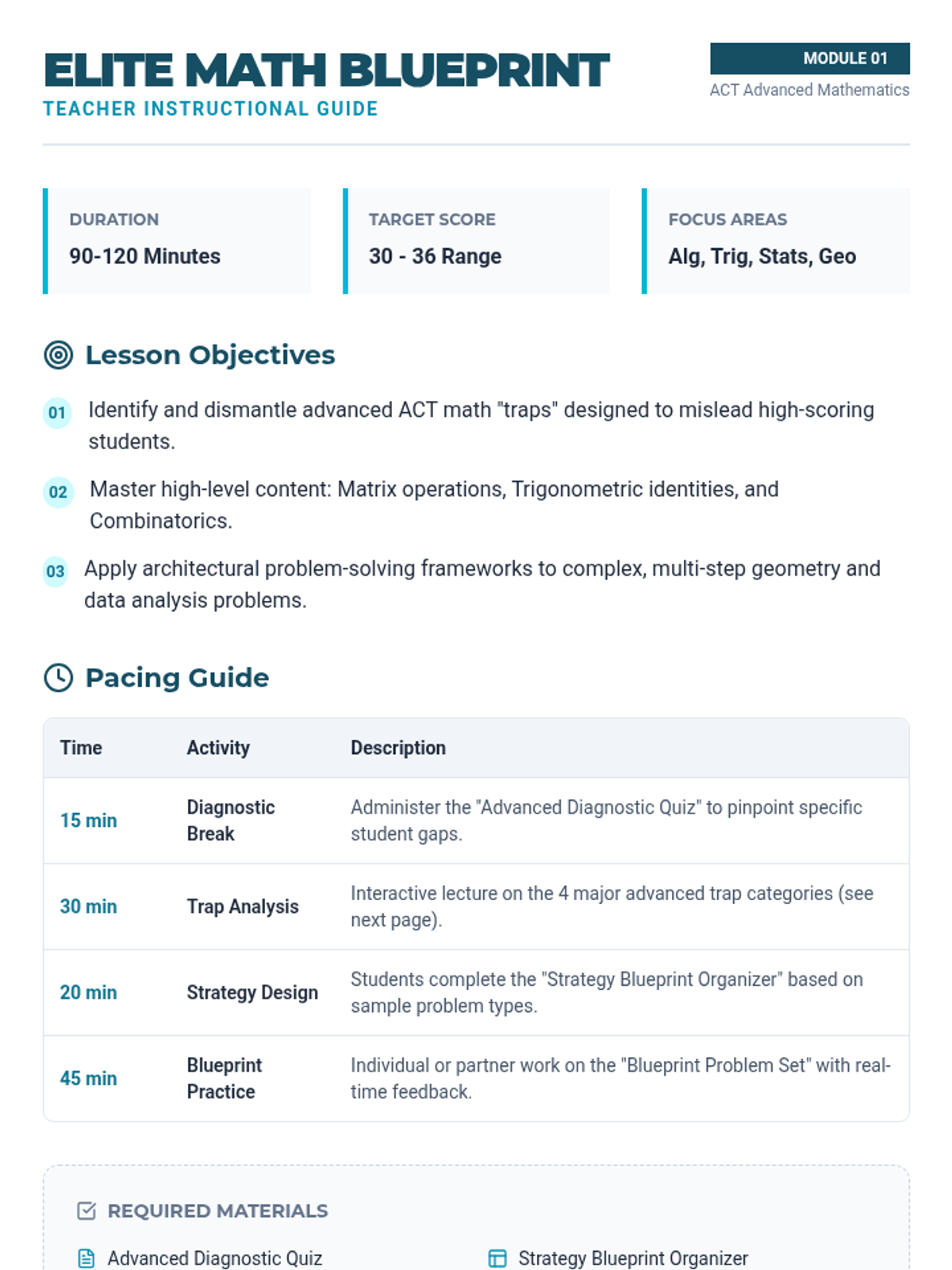
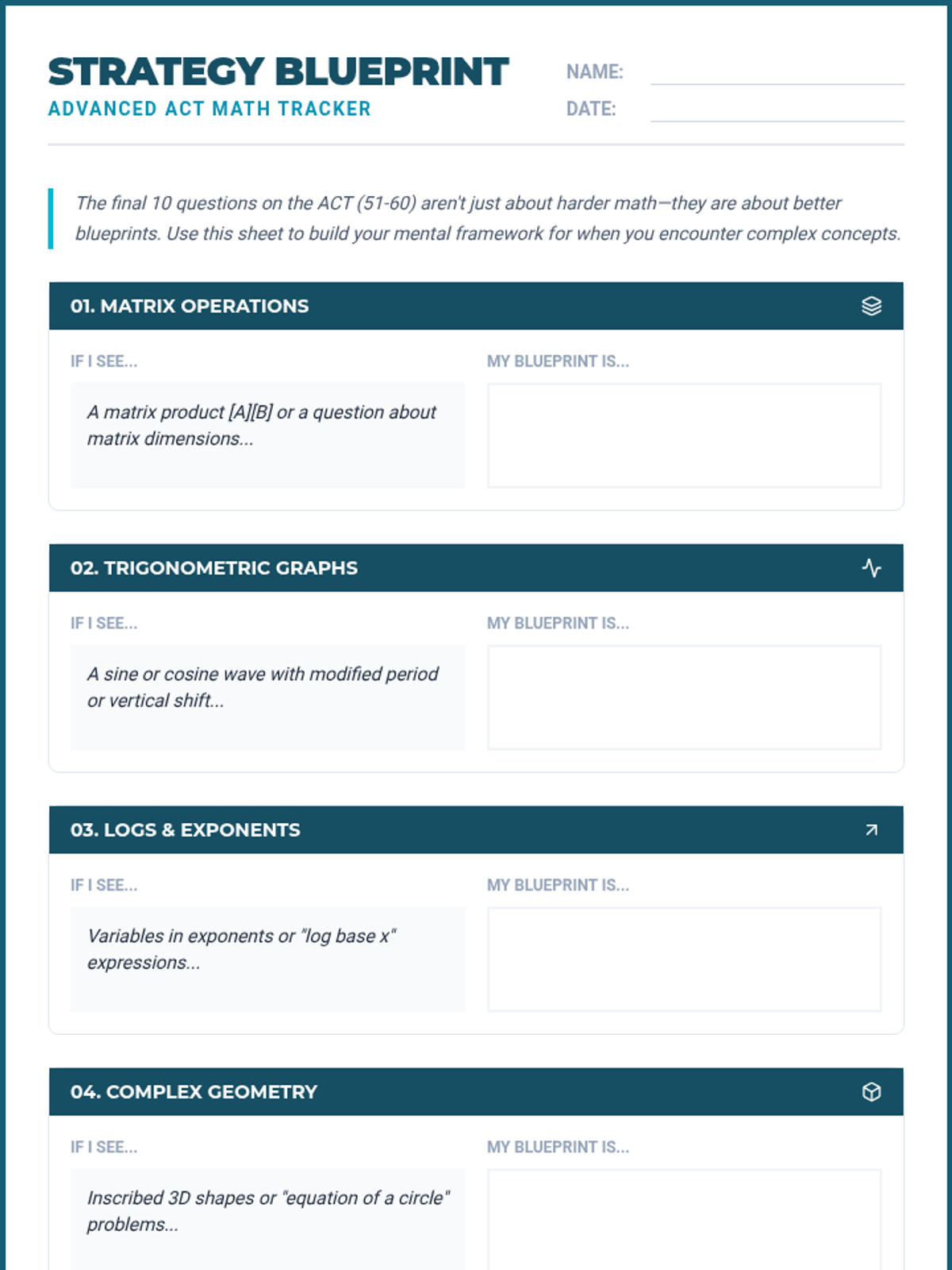
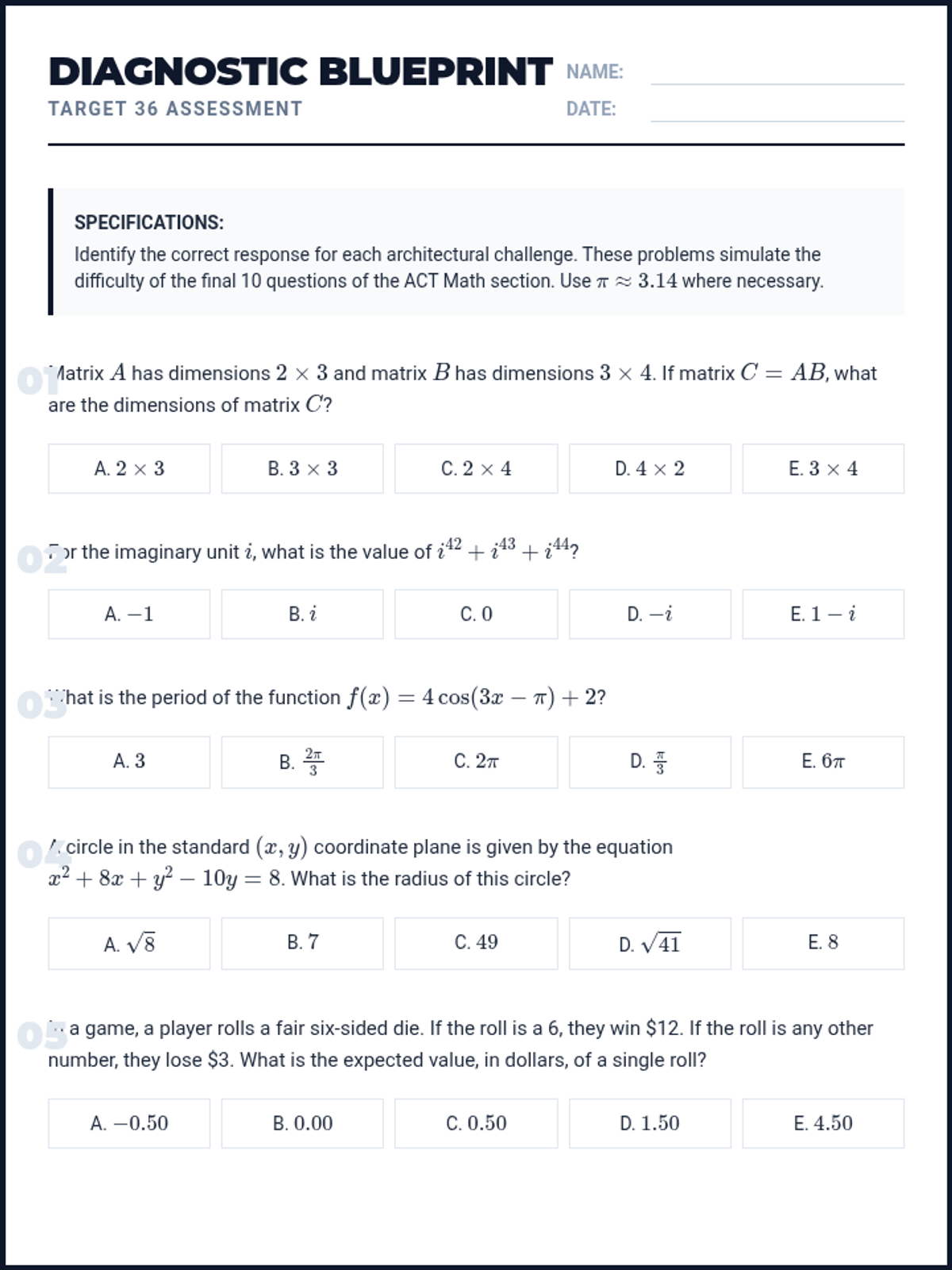
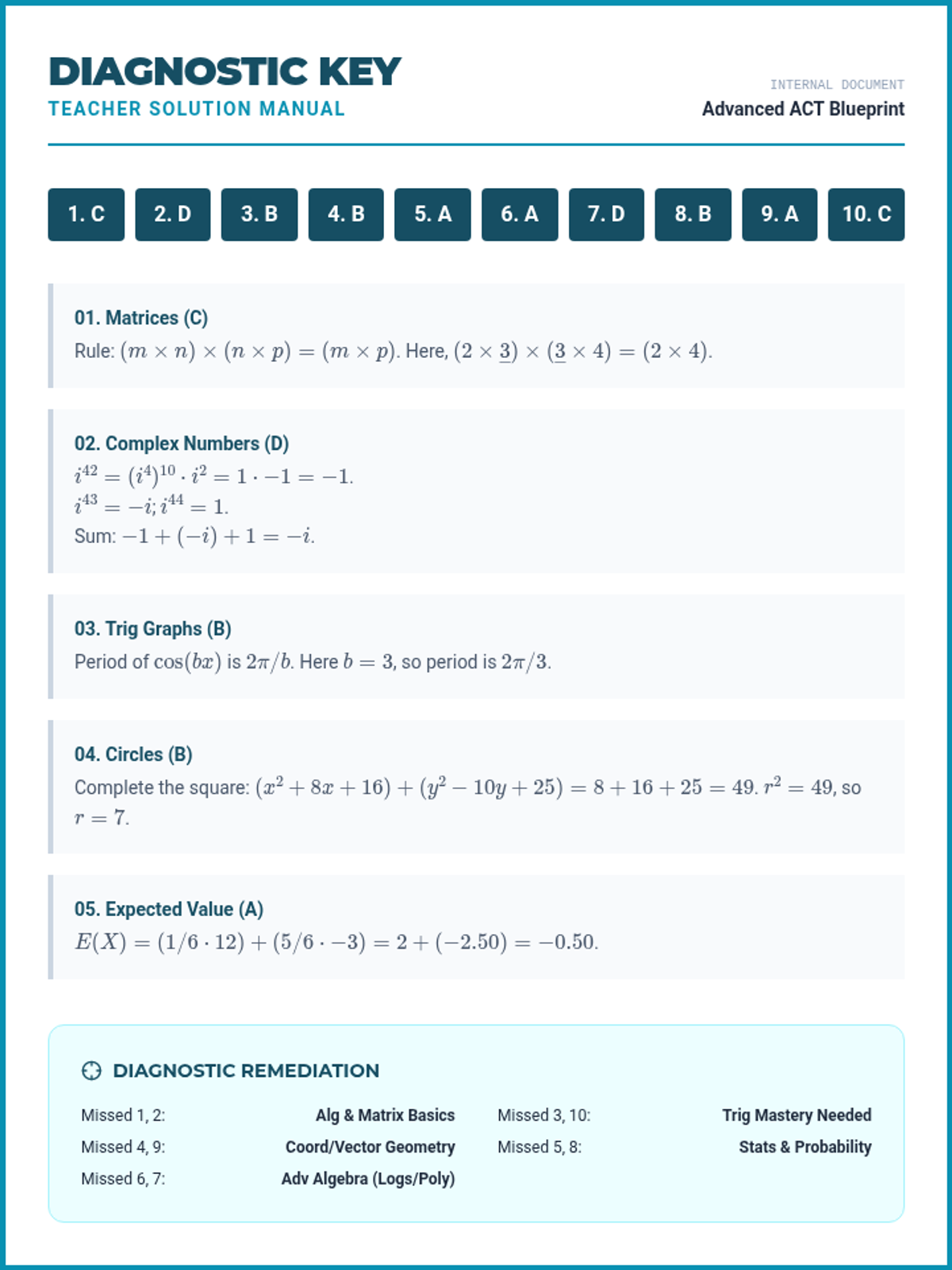
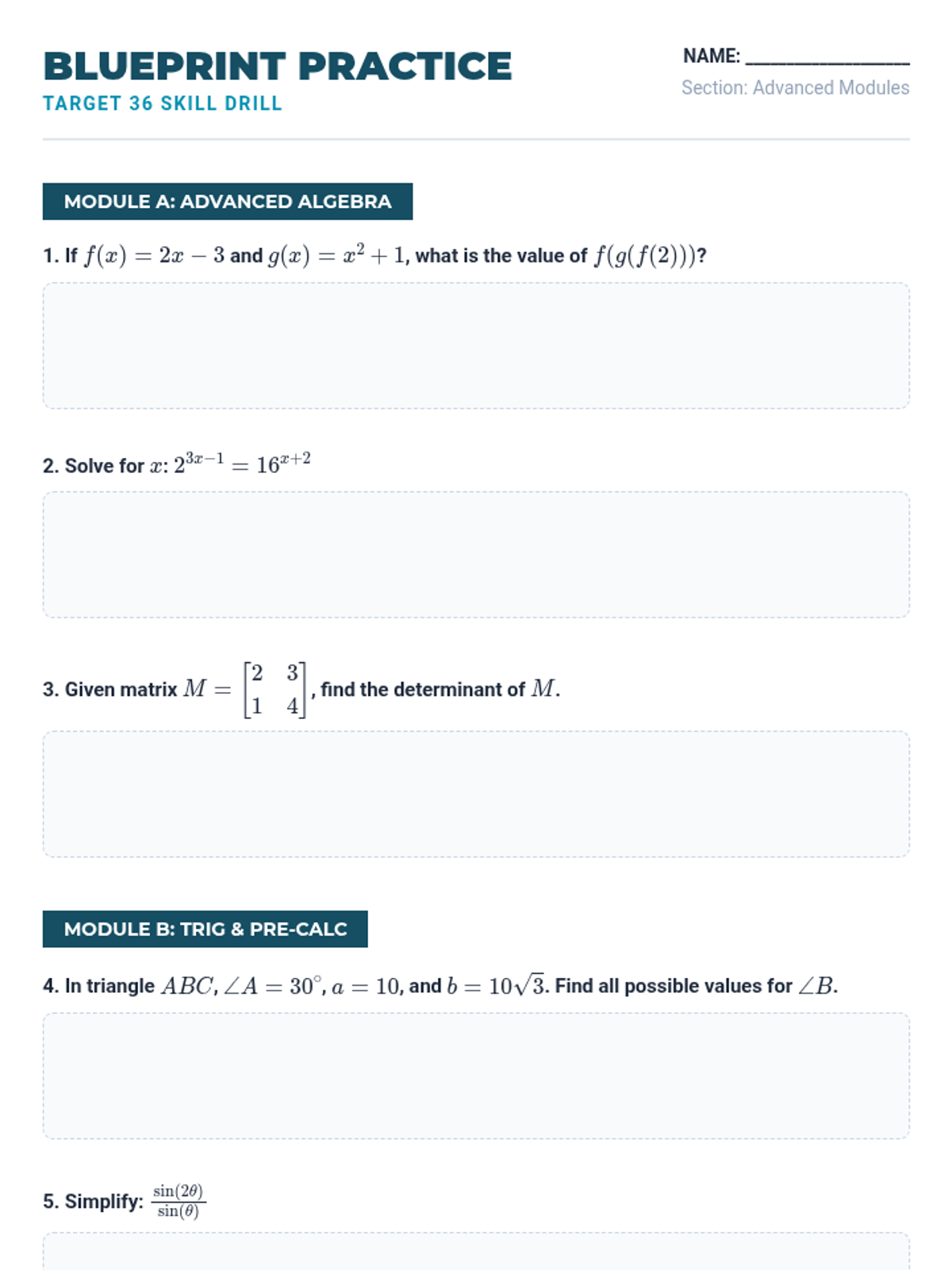
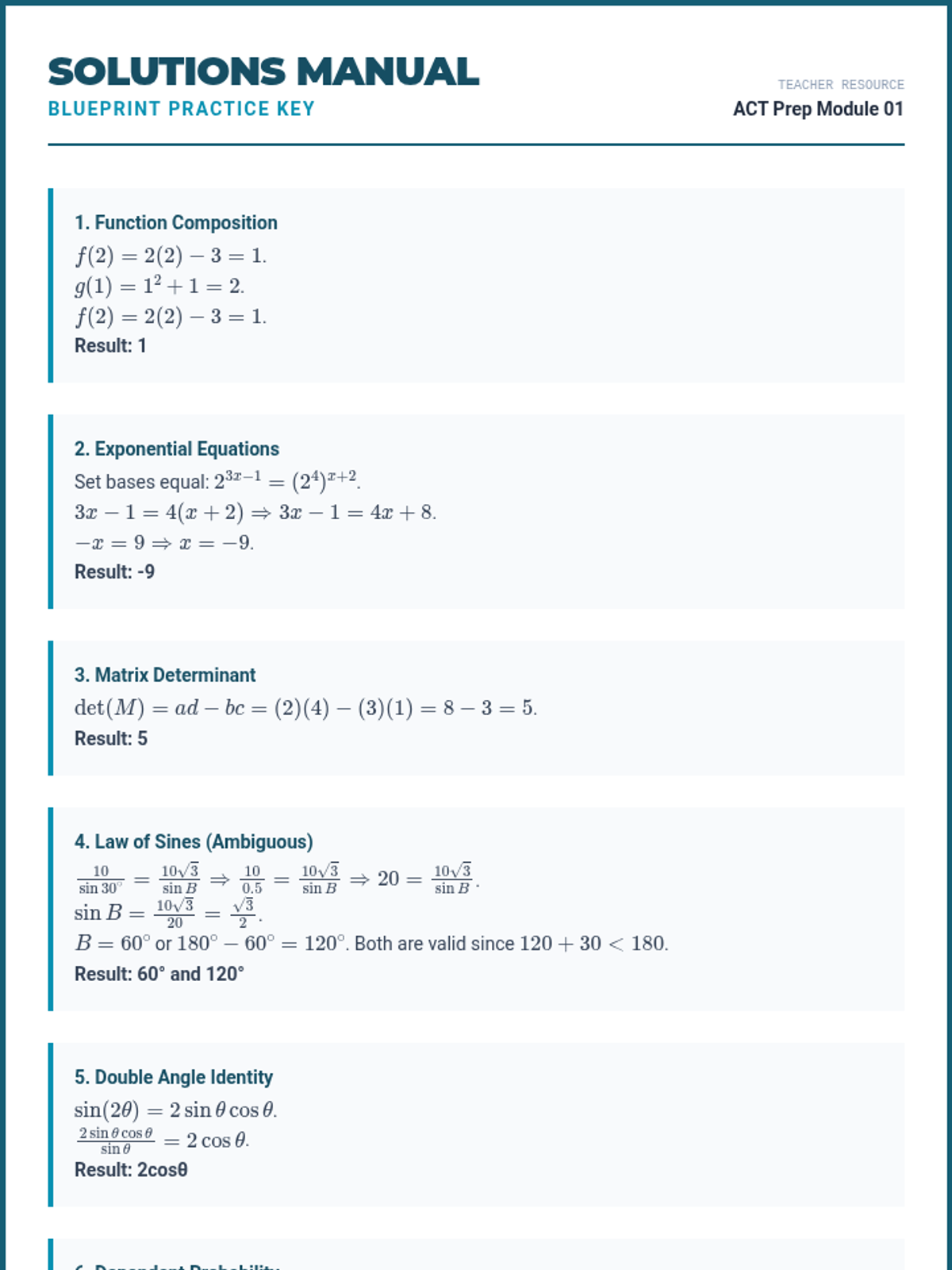
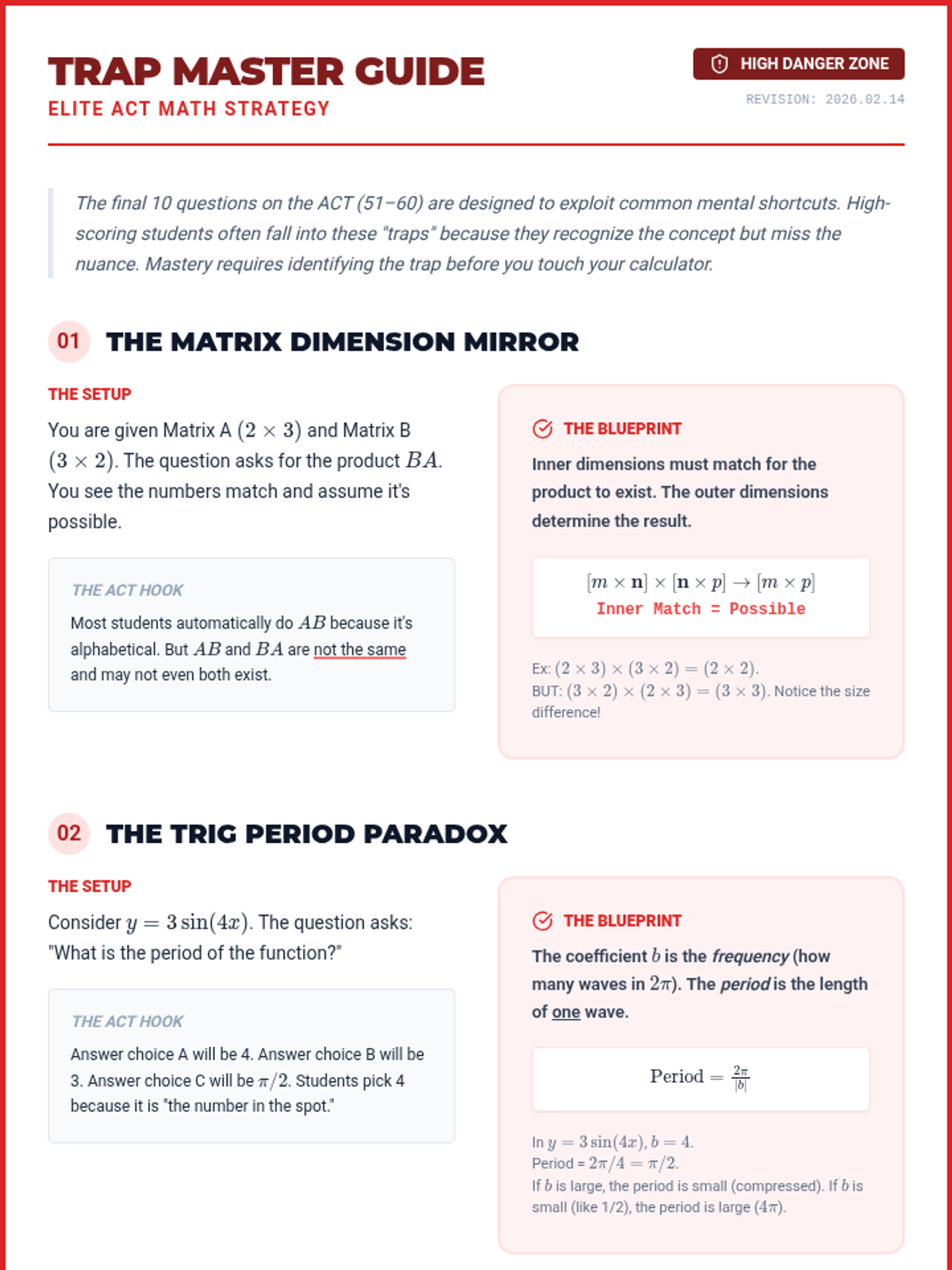
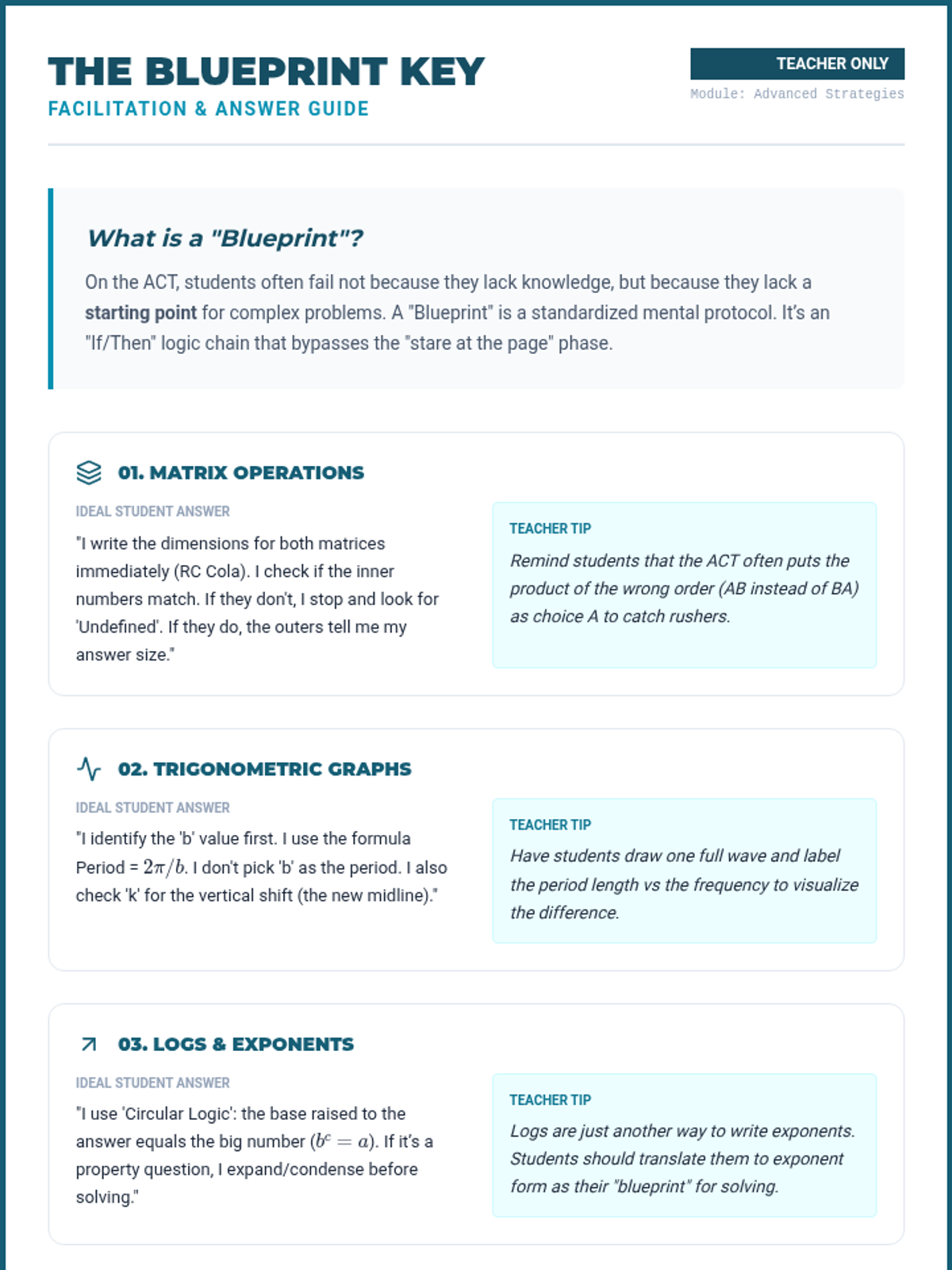
A comprehensive prep sequence for the most challenging questions on the ACT Math and Science sections. It focuses on high-level conceptual blueprints for math topics like complex numbers and matrices, alongside speed-reading and data-interpretation strategies for the Science section.
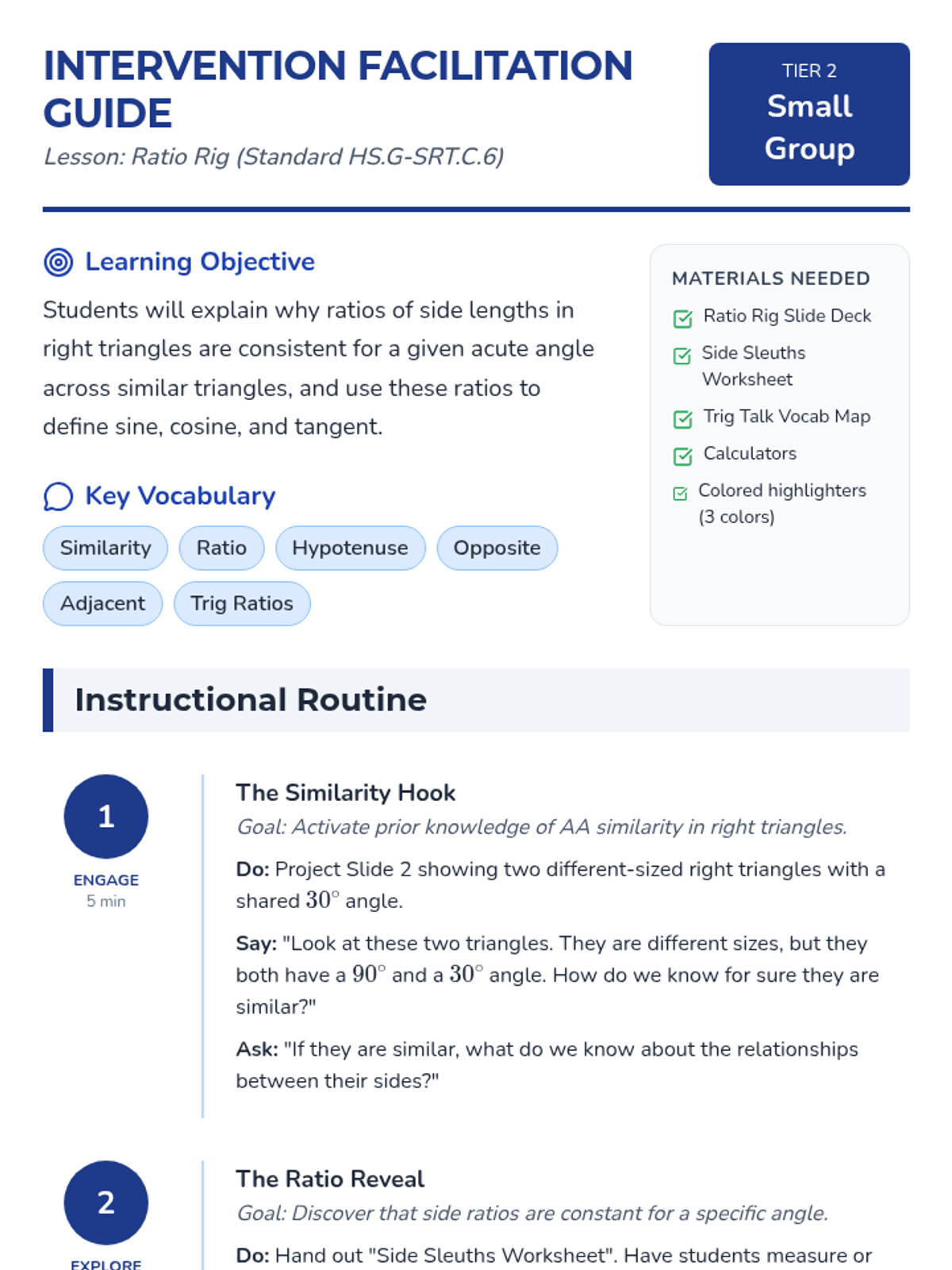
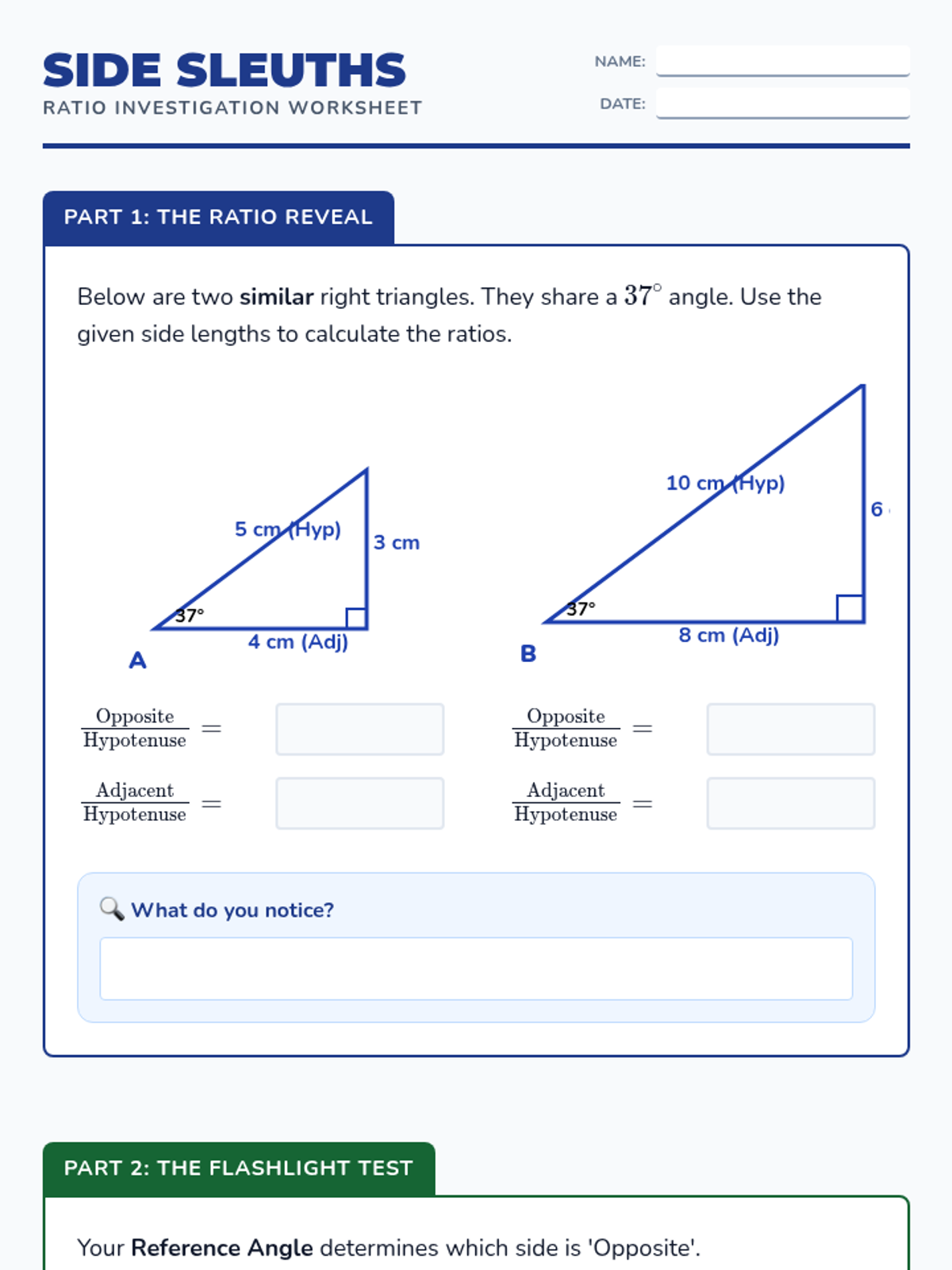
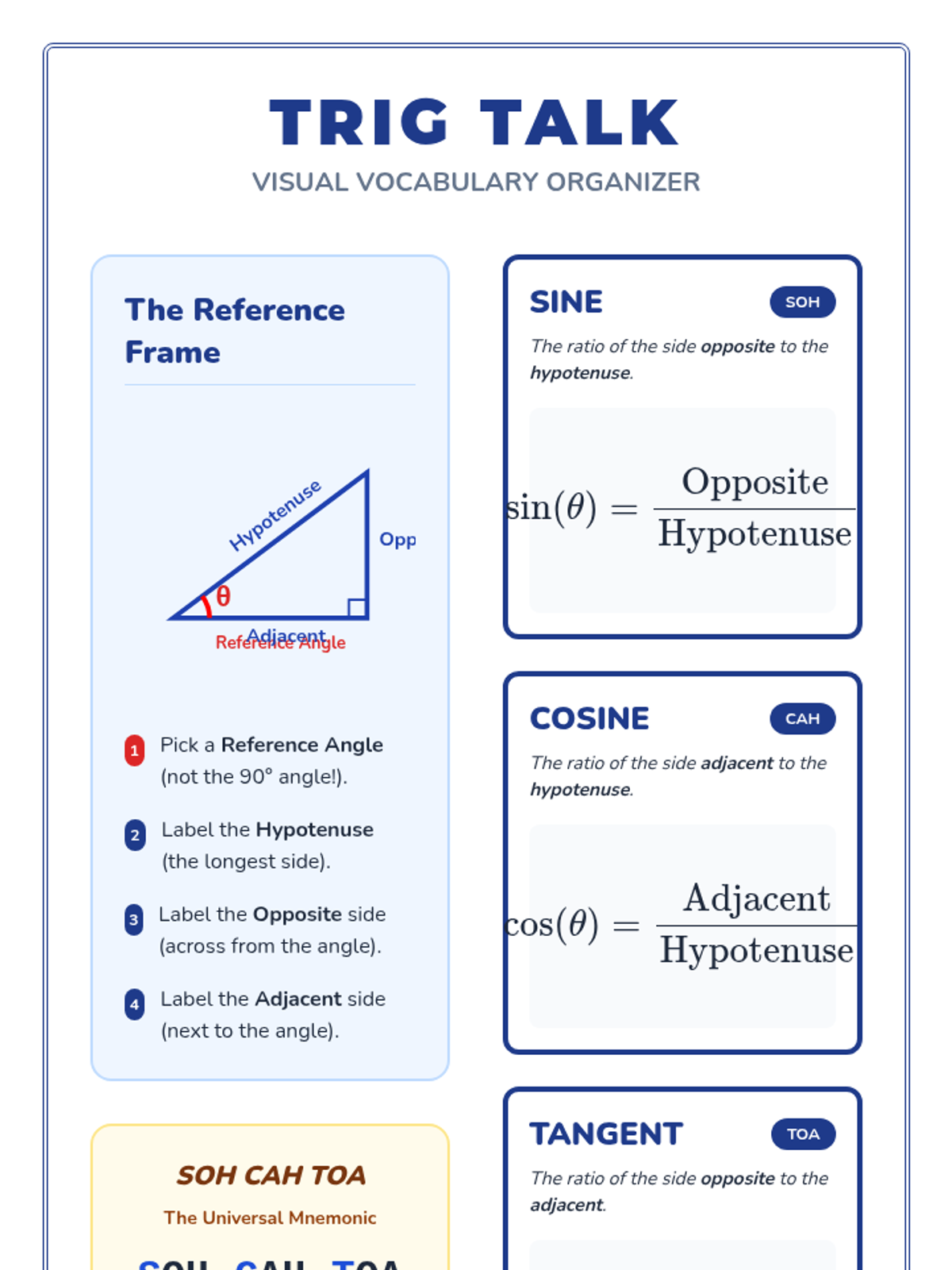
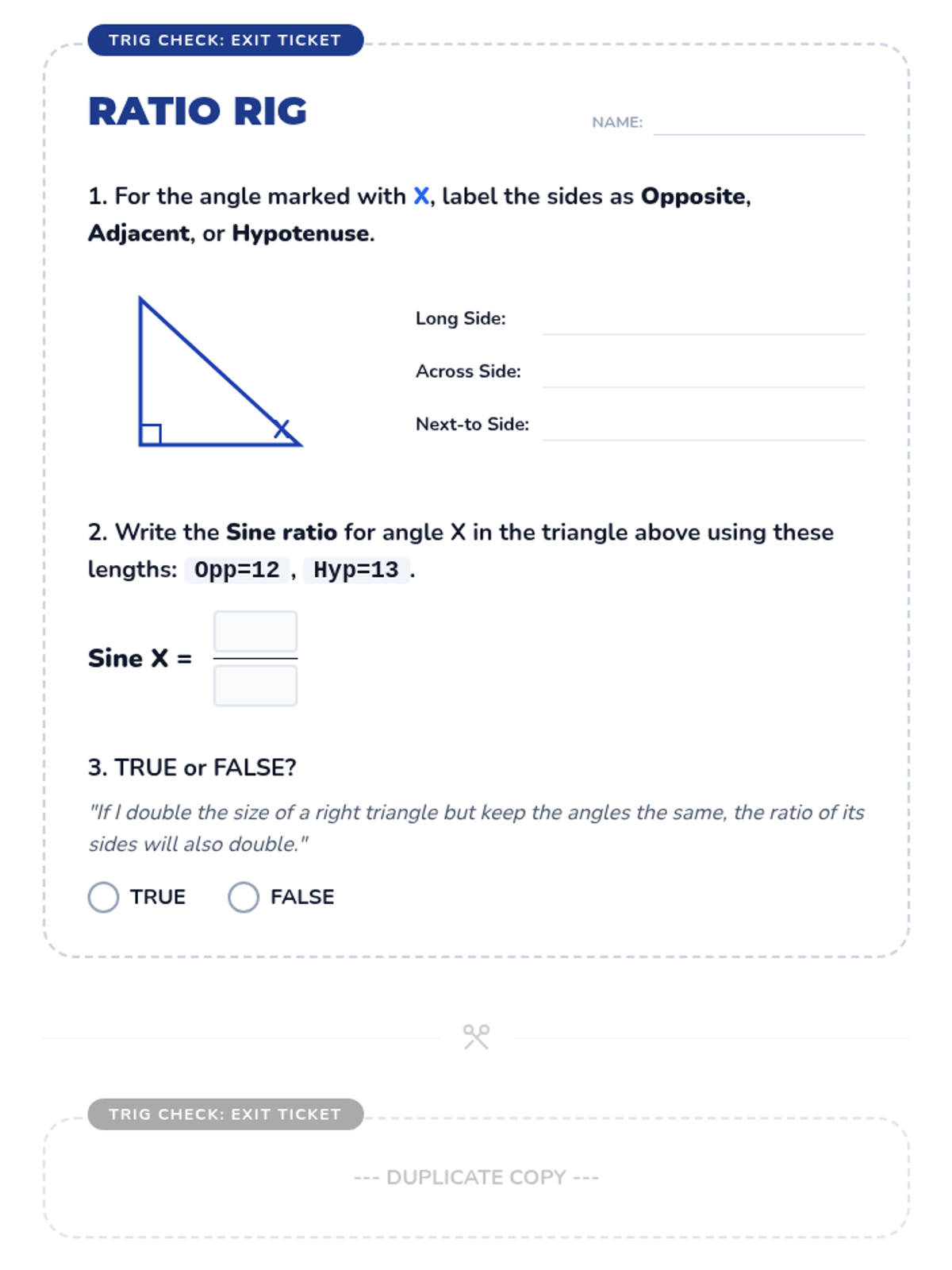
A series of targeted intervention lessons designed to bridge the gap between triangle similarity and basic trigonometry, focusing on conceptual understanding and ratio consistency.
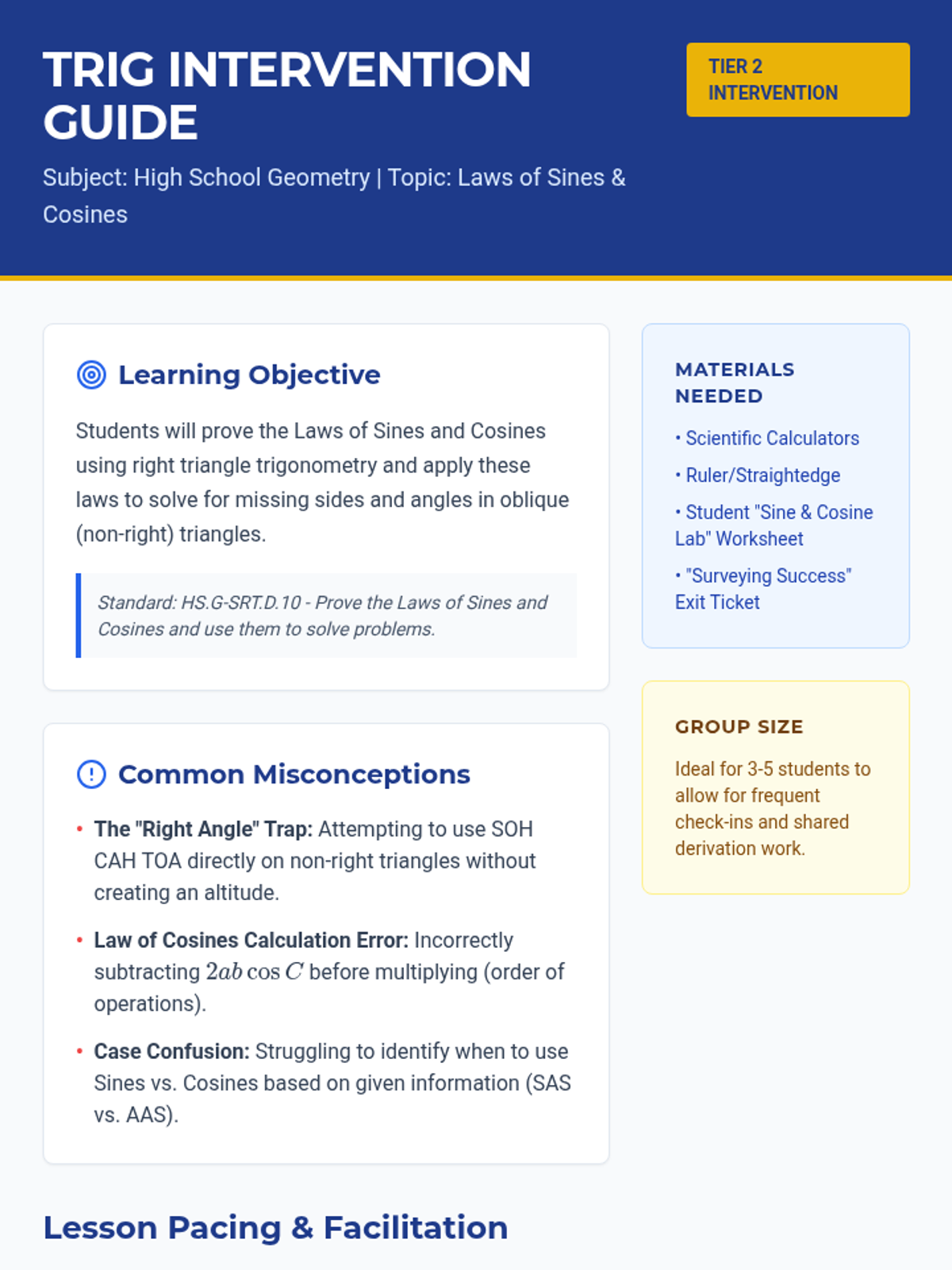
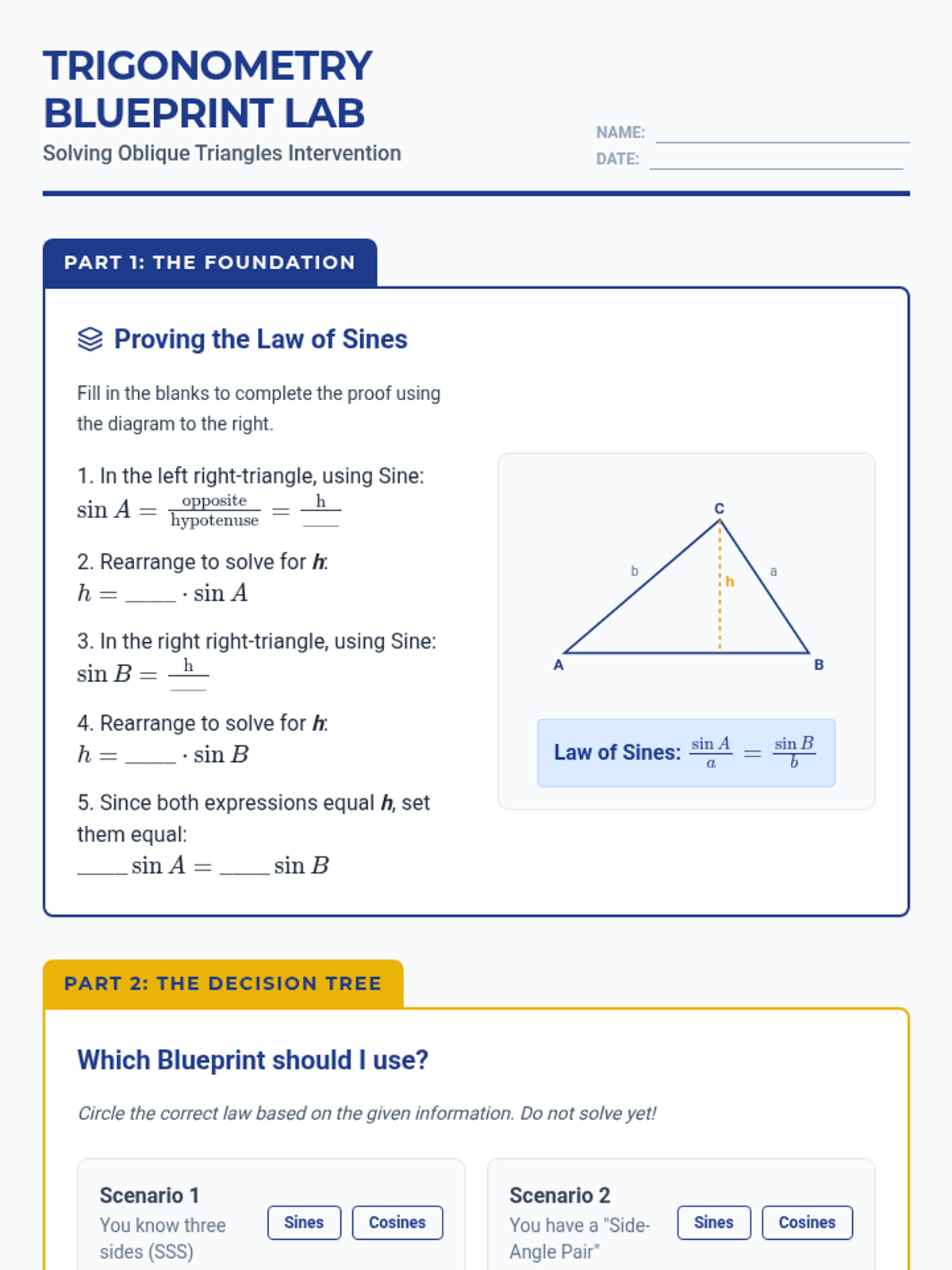
A targeted intervention sequence for High School Geometry students to master the Laws of Sines and Cosines through scaffolded proofs and practical application. The materials use a blueprint-inspired visual theme to emphasize the structural nature of trigonometry.
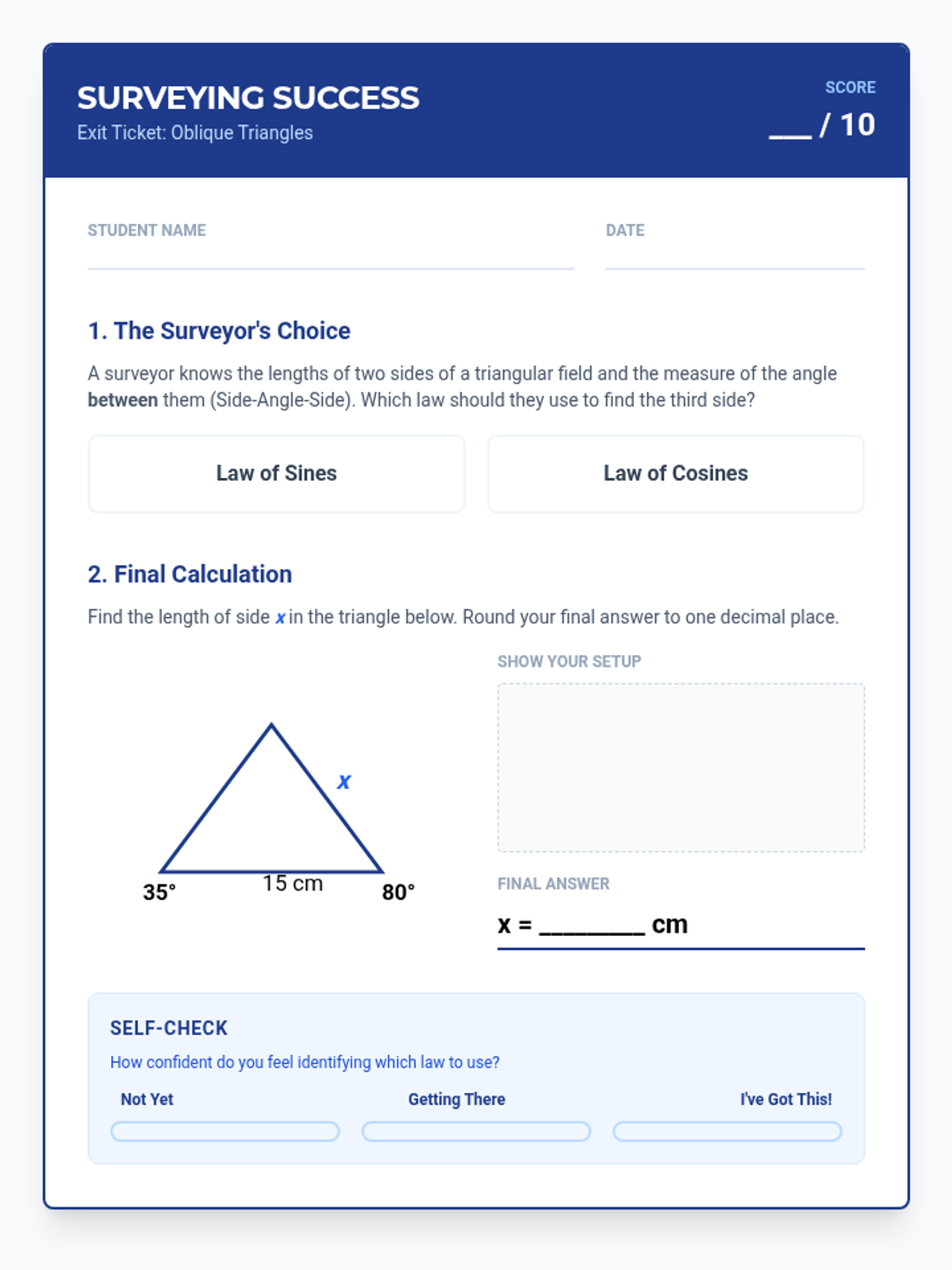
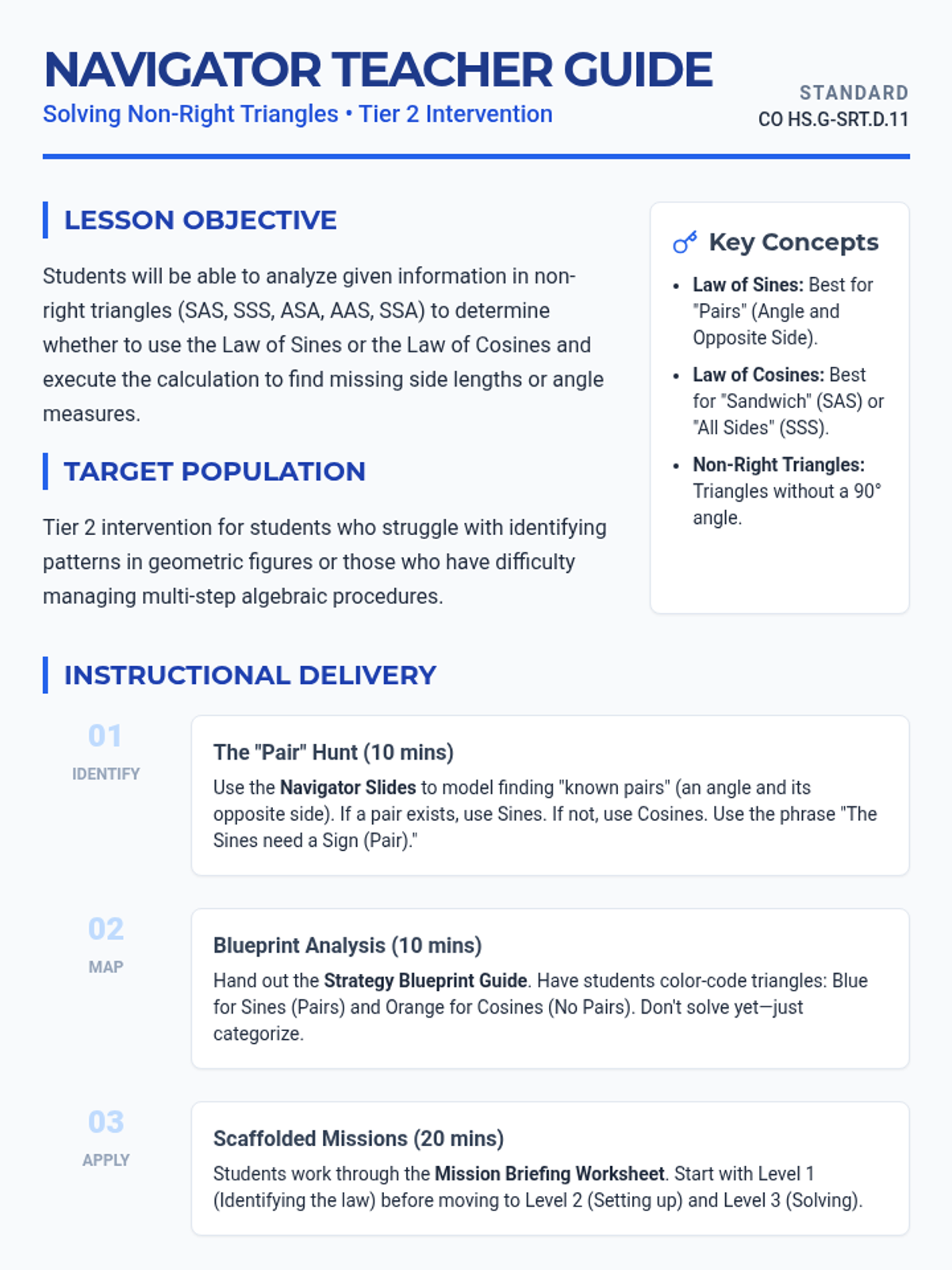
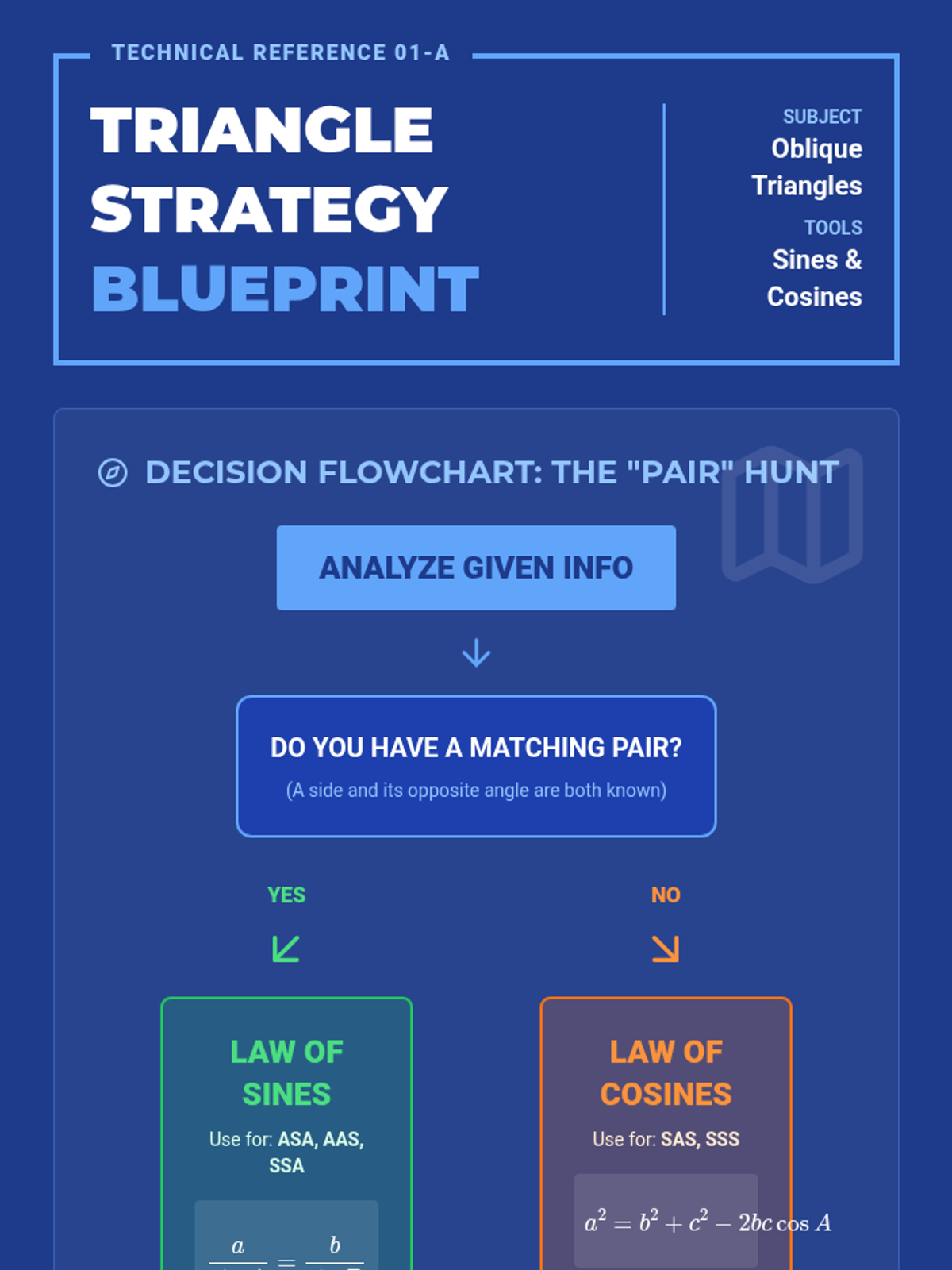
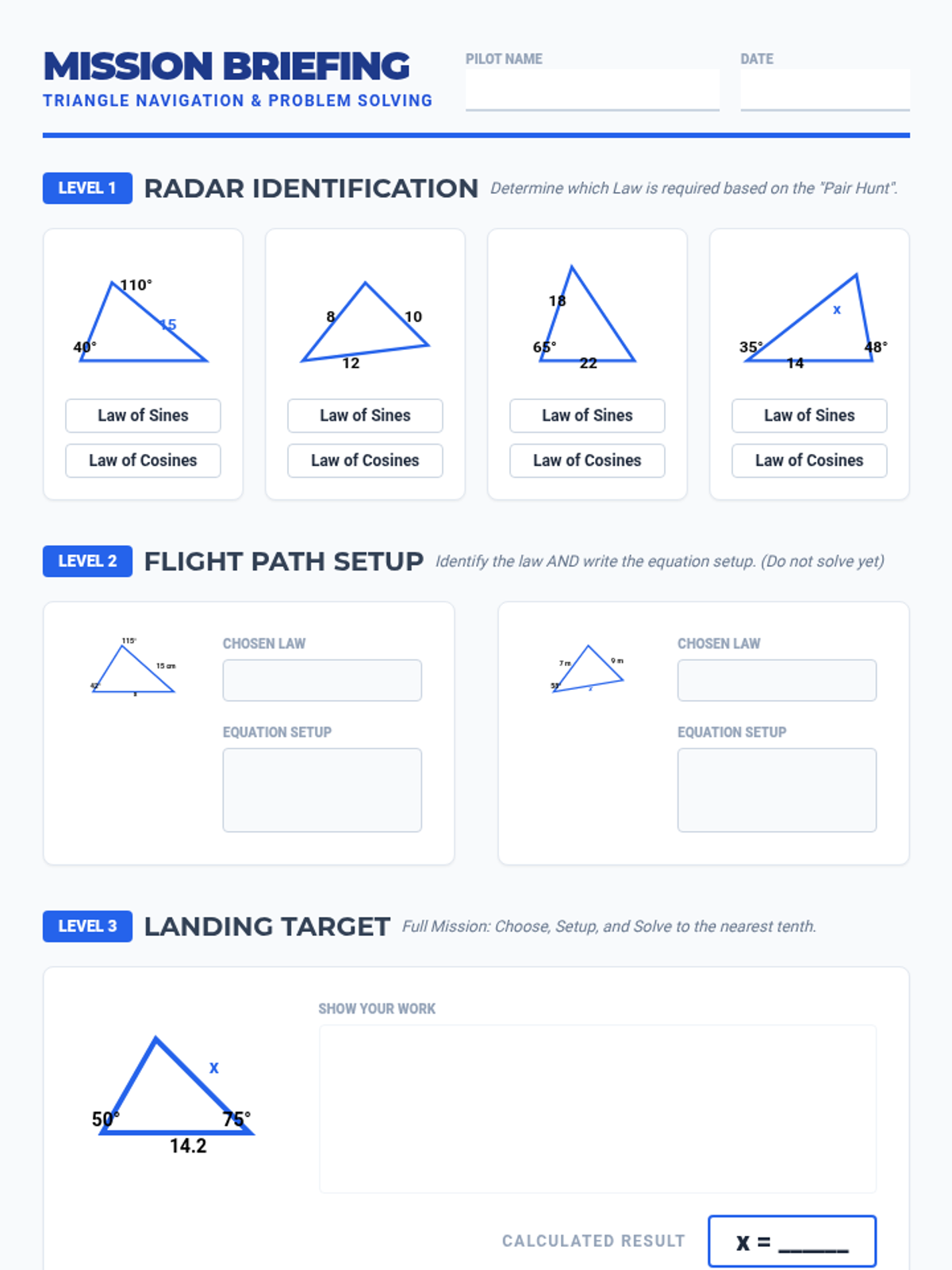
A specialized intervention sequence designed for high school geometry students to master solving non-right triangles using the Law of Sines and Law of Cosines, with a focus on decision-making and scaffolded practice.
A series of targeted interventions for high school students to master trigonometric functions and their applications in real-world modeling.
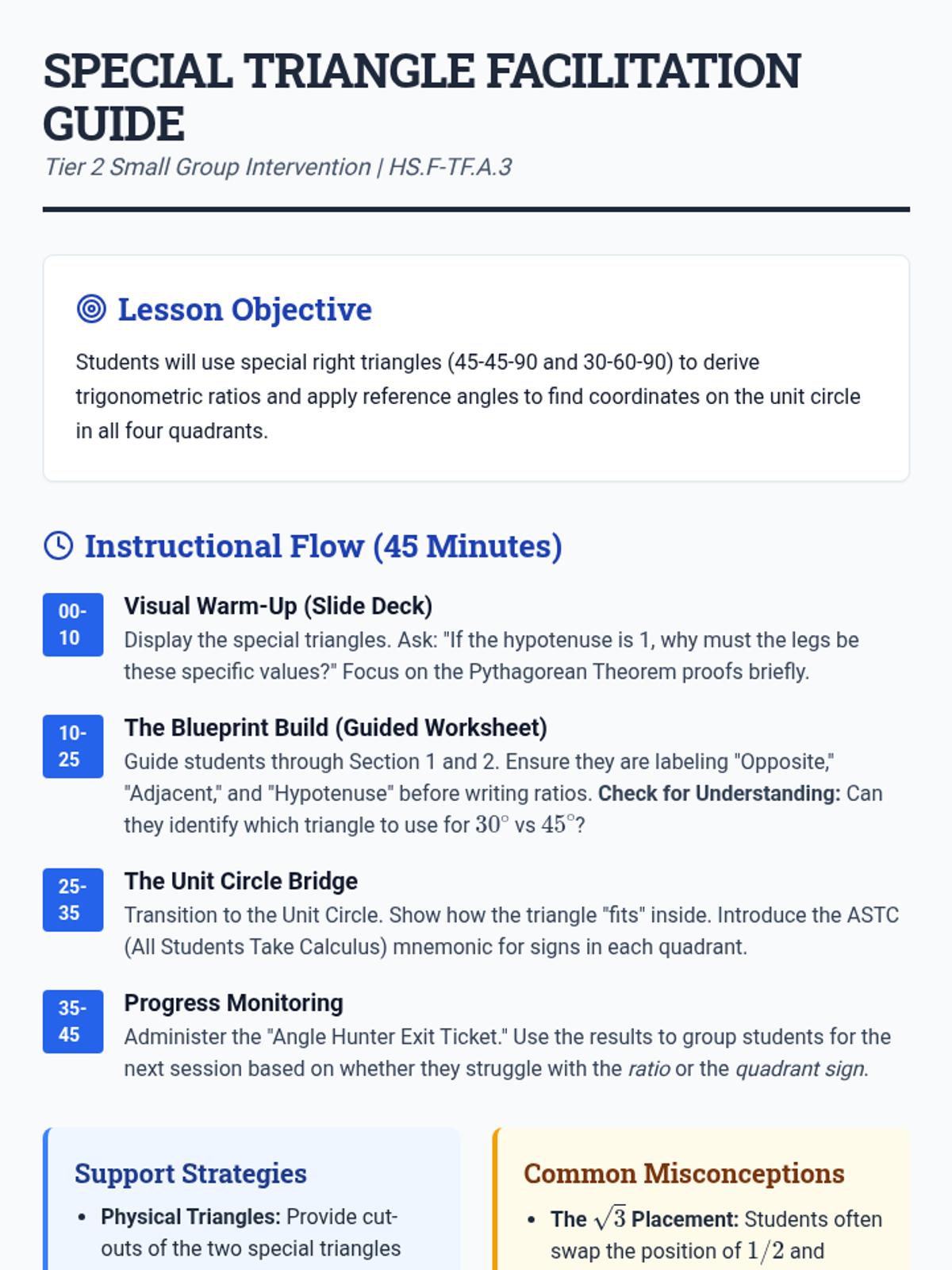
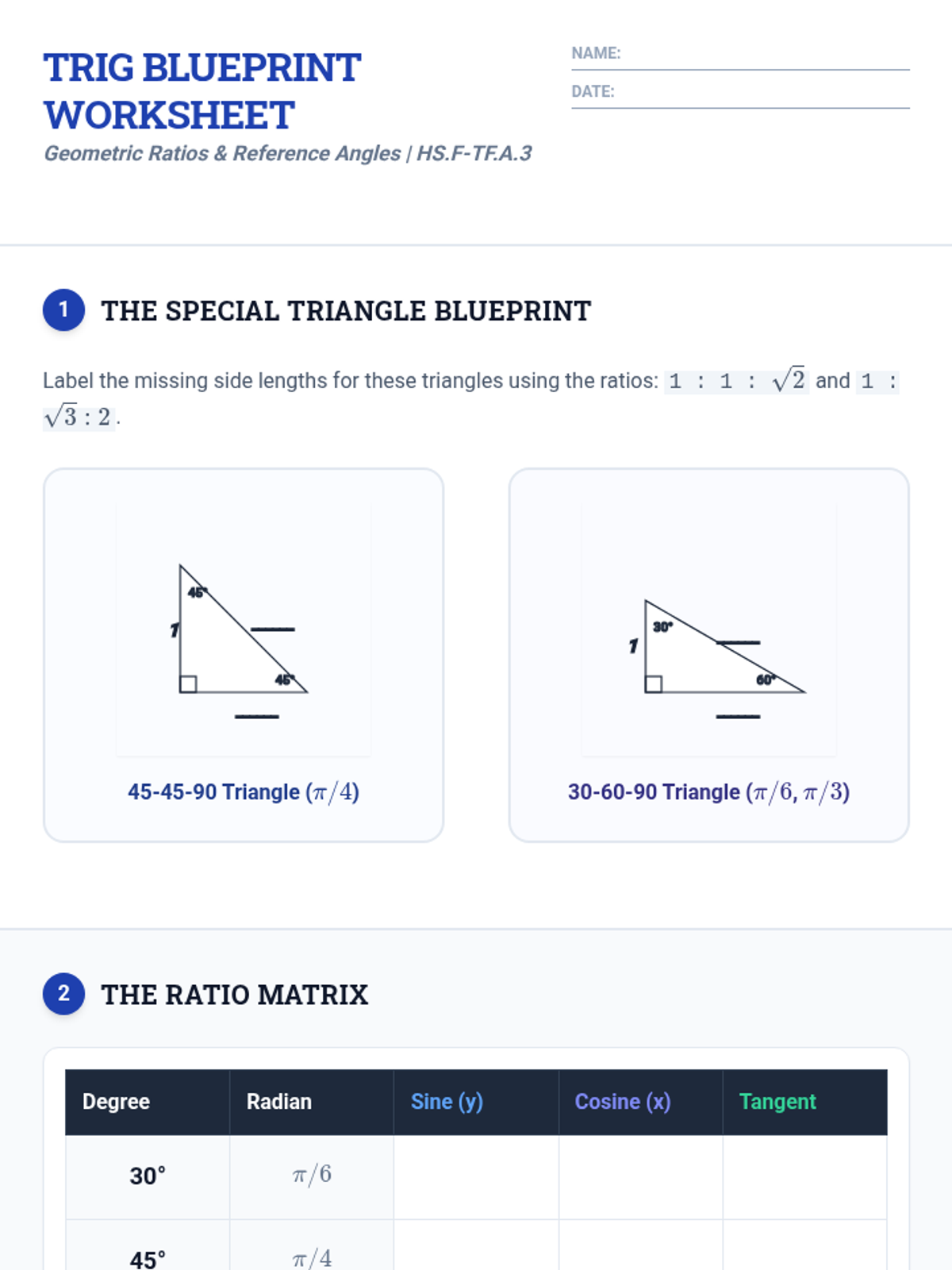
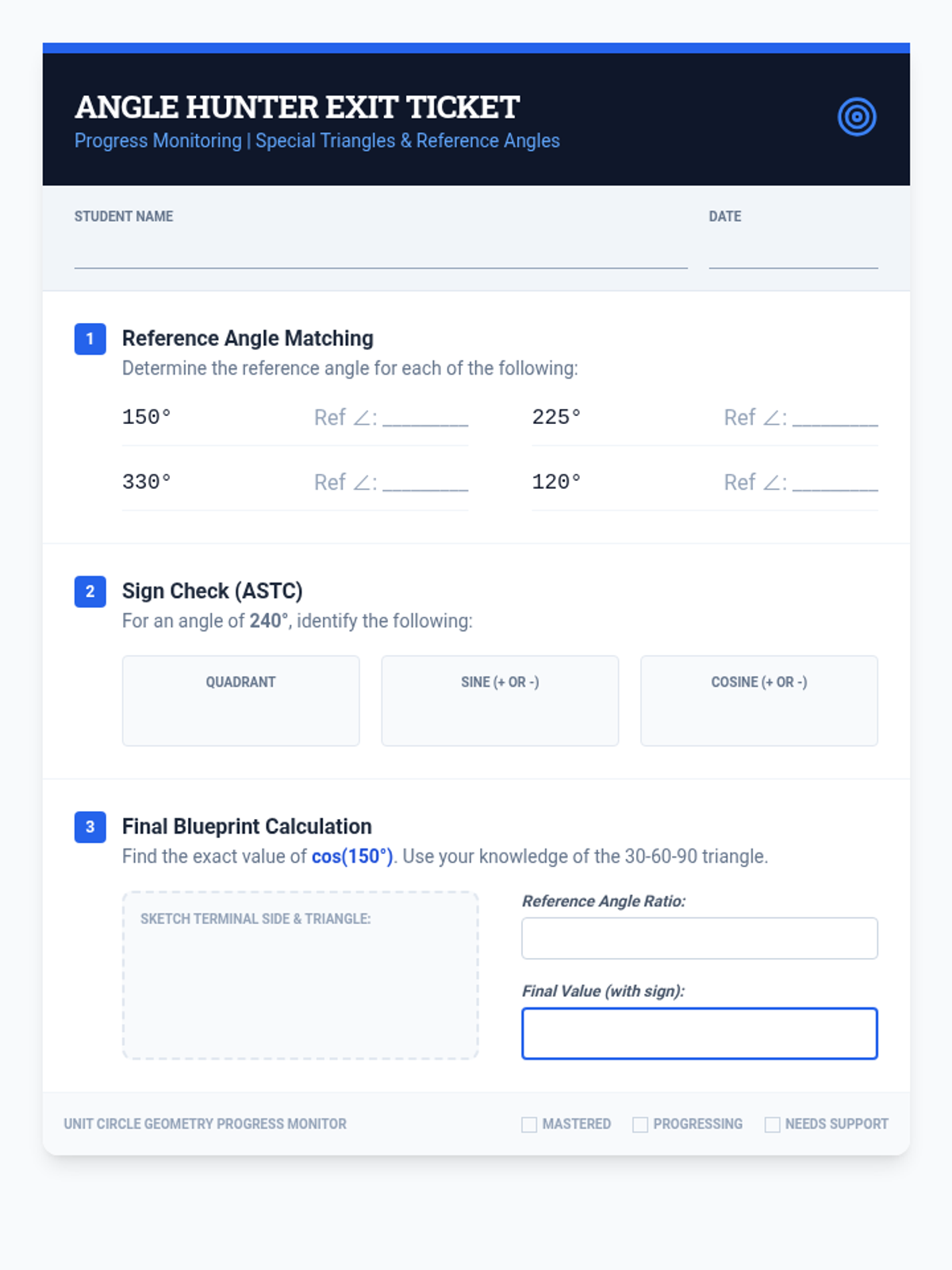
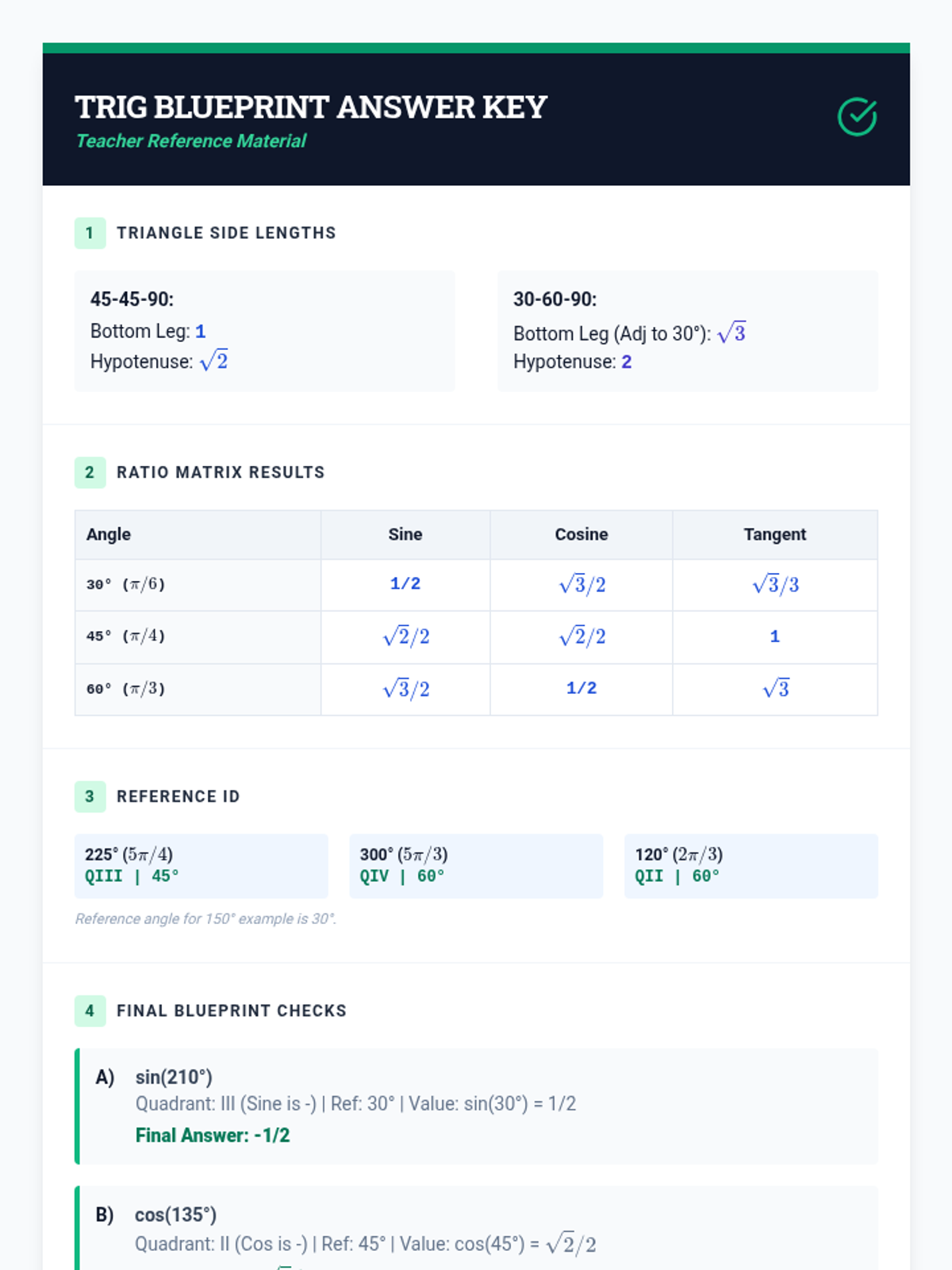
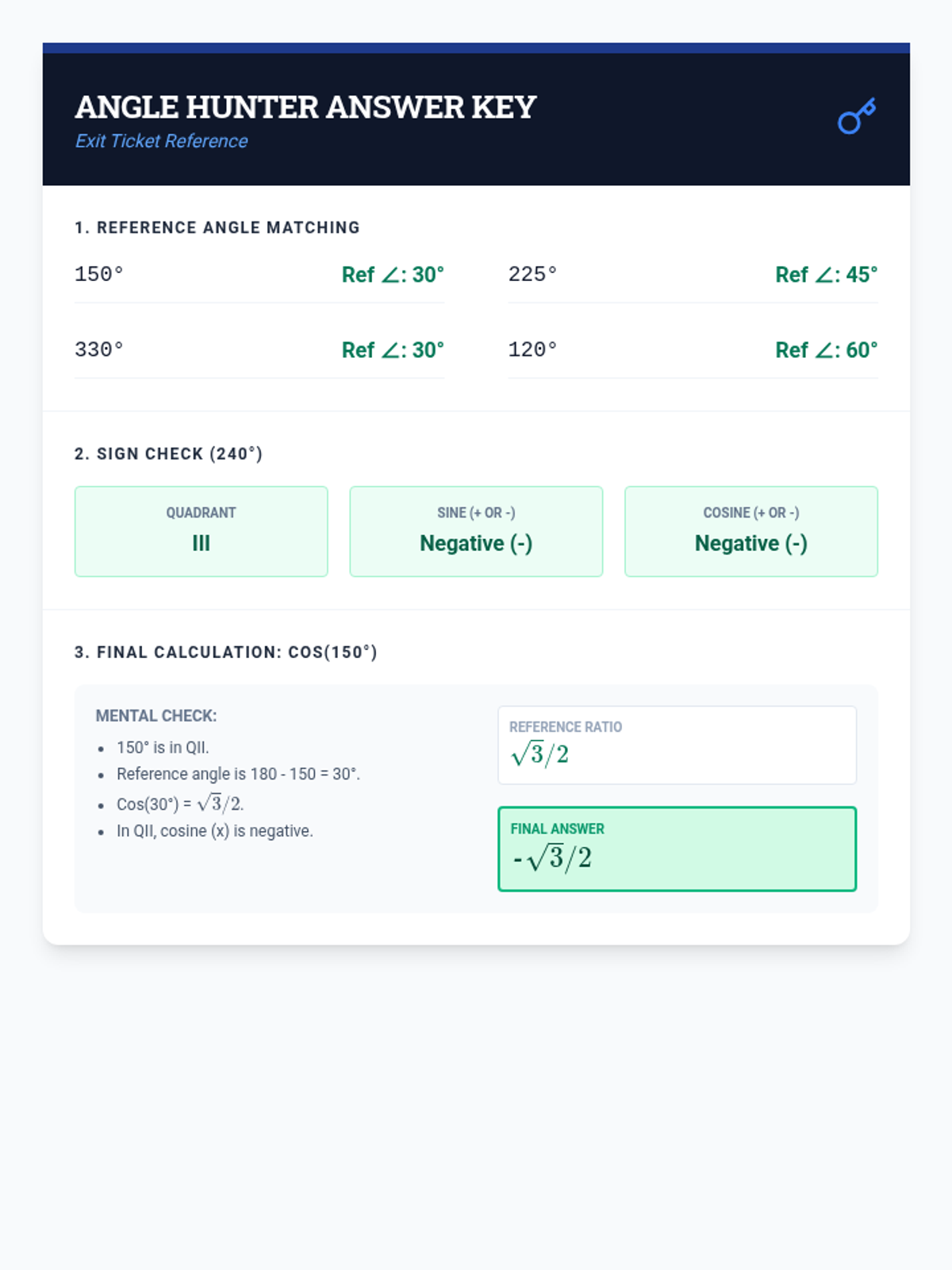
A Tier 2 intervention sequence focused on foundational trigonometry, moving from special right triangles to reference angles on the unit circle. This sequence provides scaffolded support for students struggling with geometric interpretations of sine, cosine, and tangent.
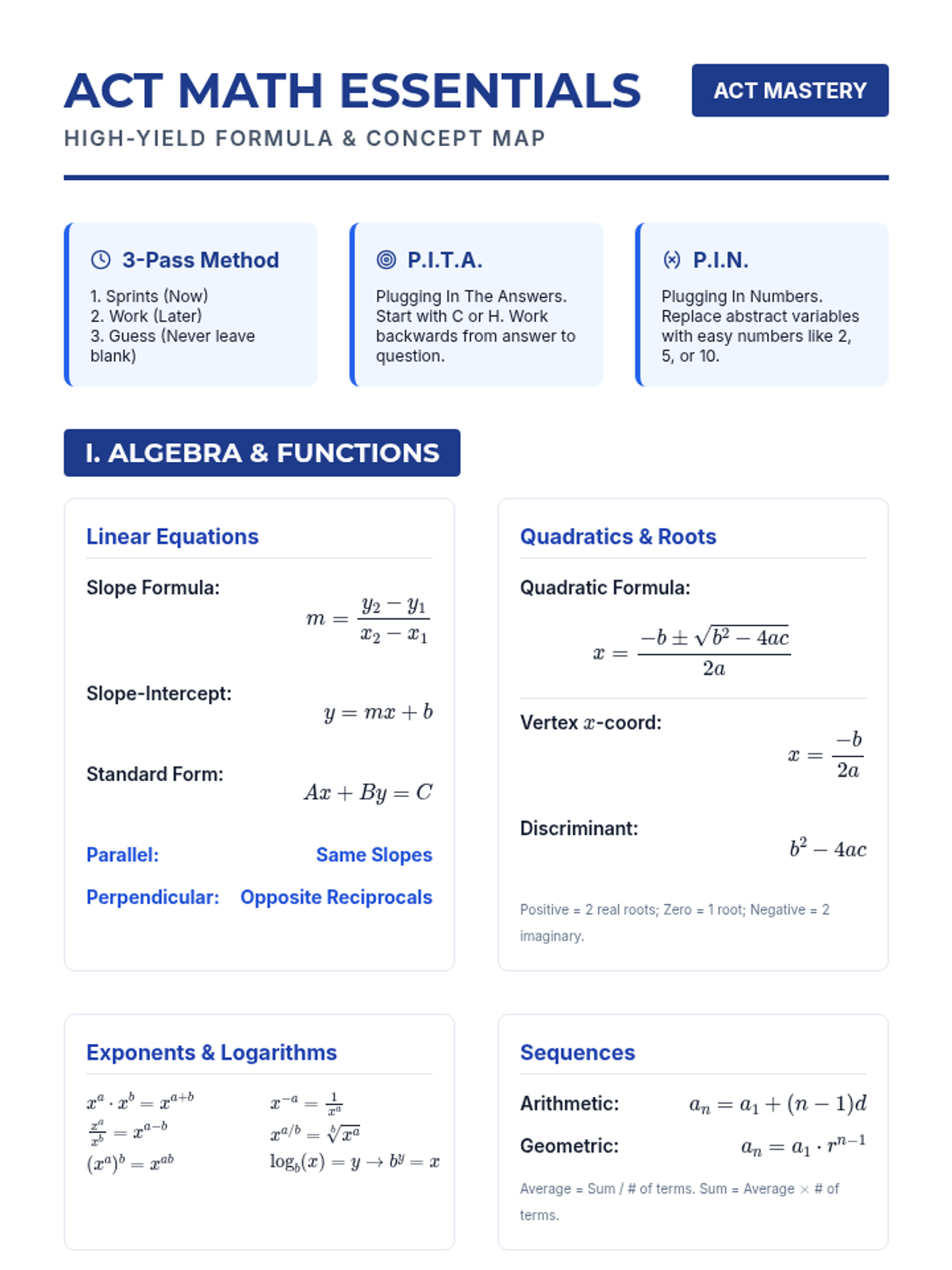
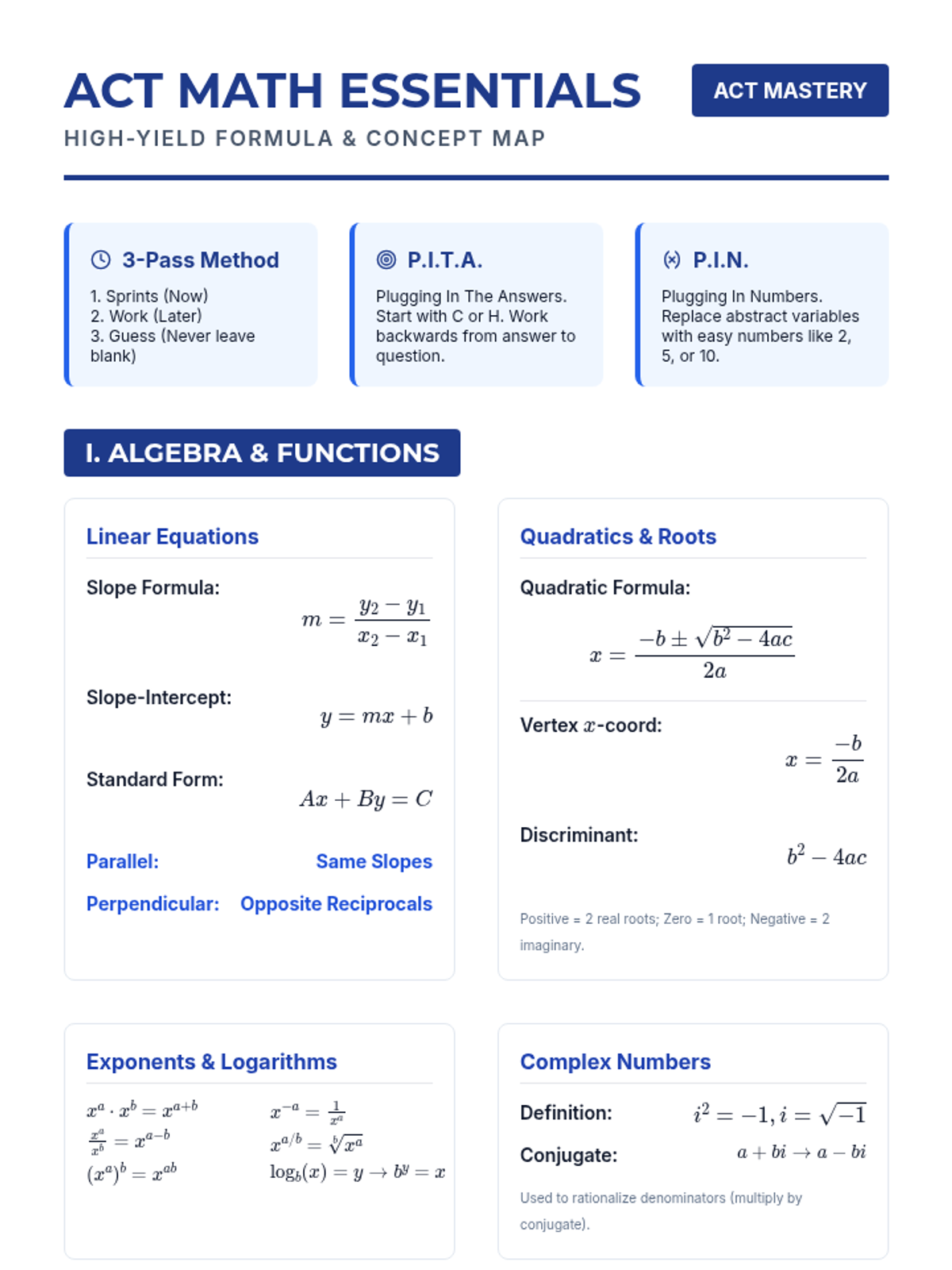
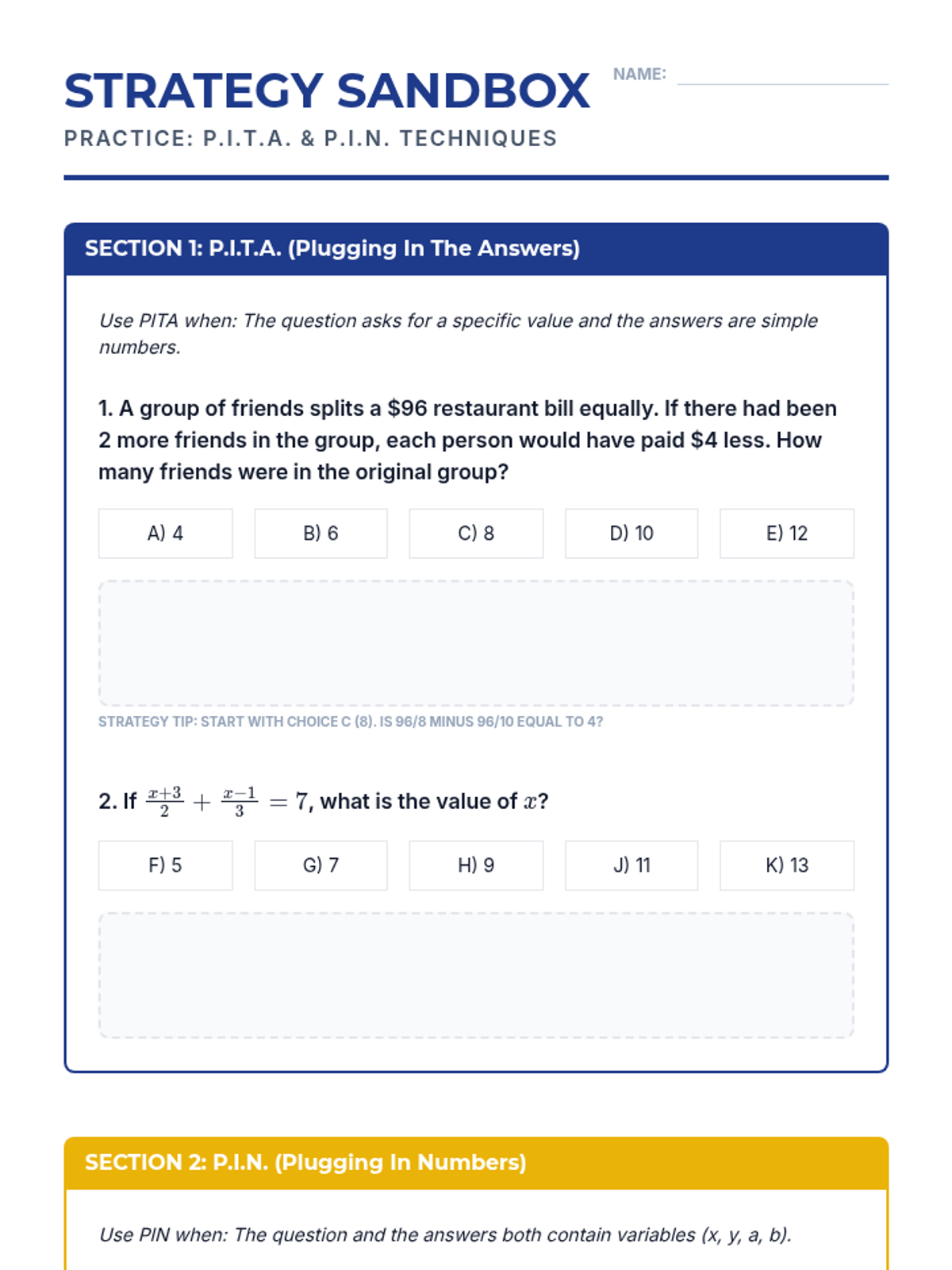
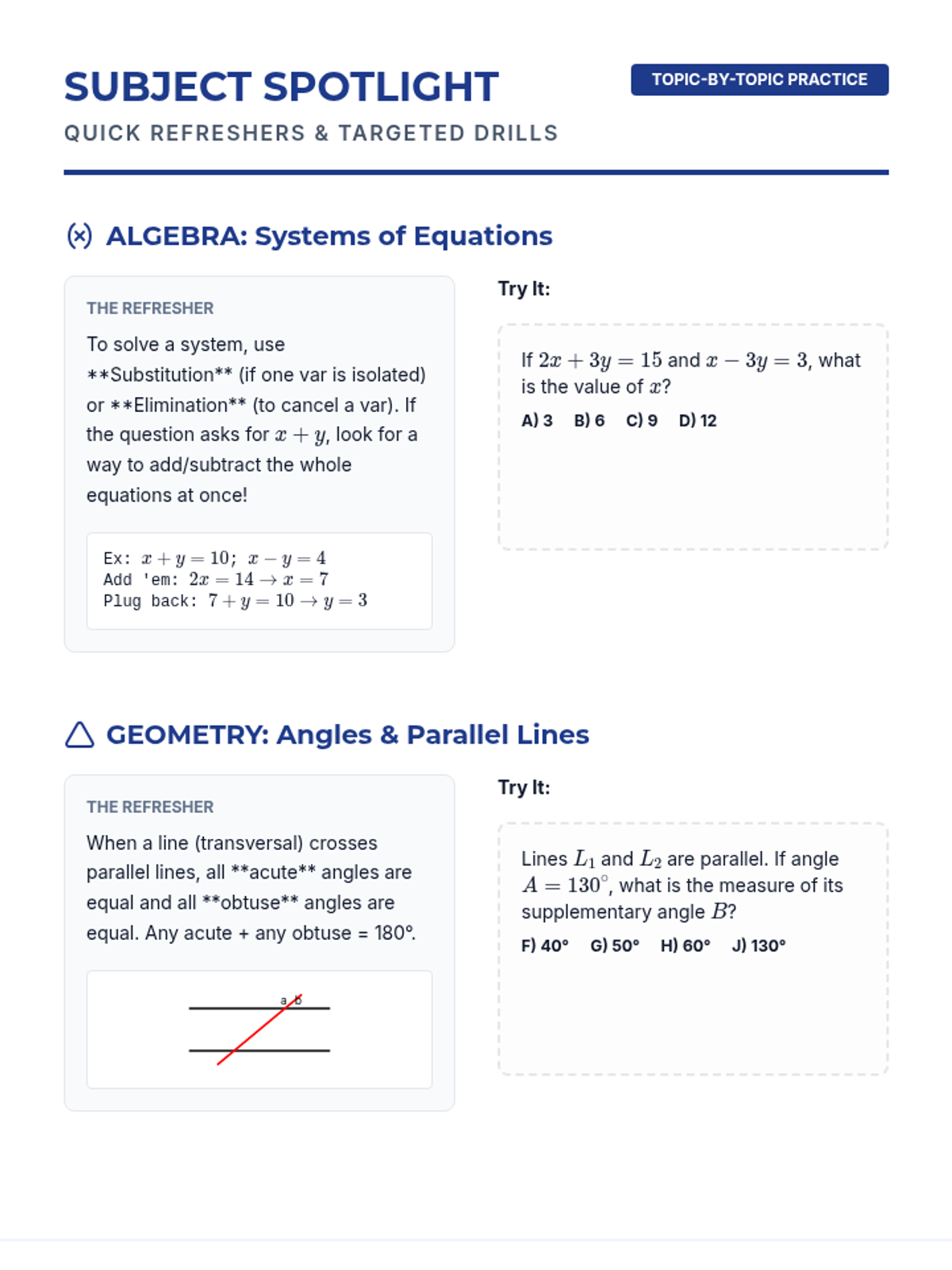
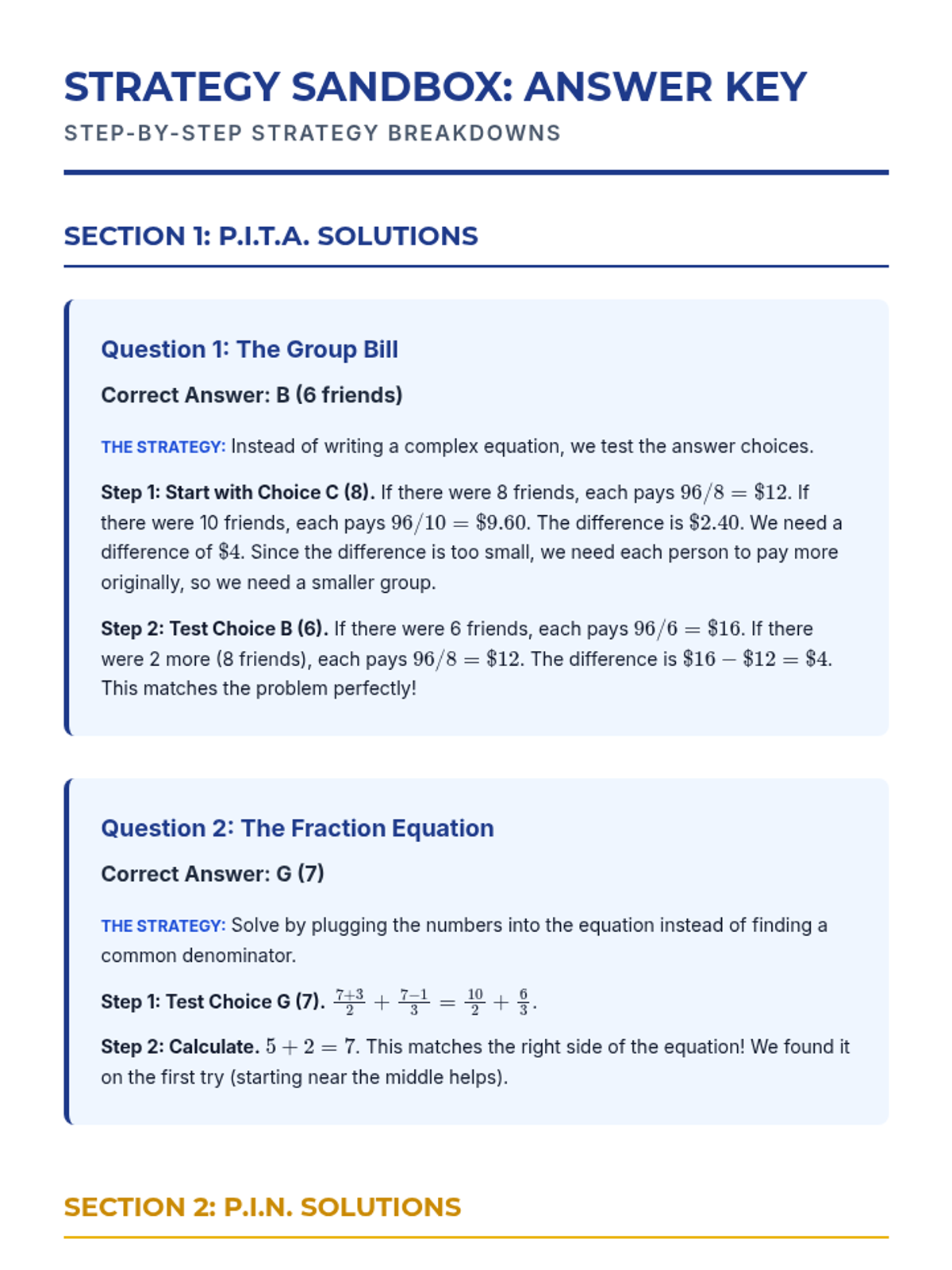
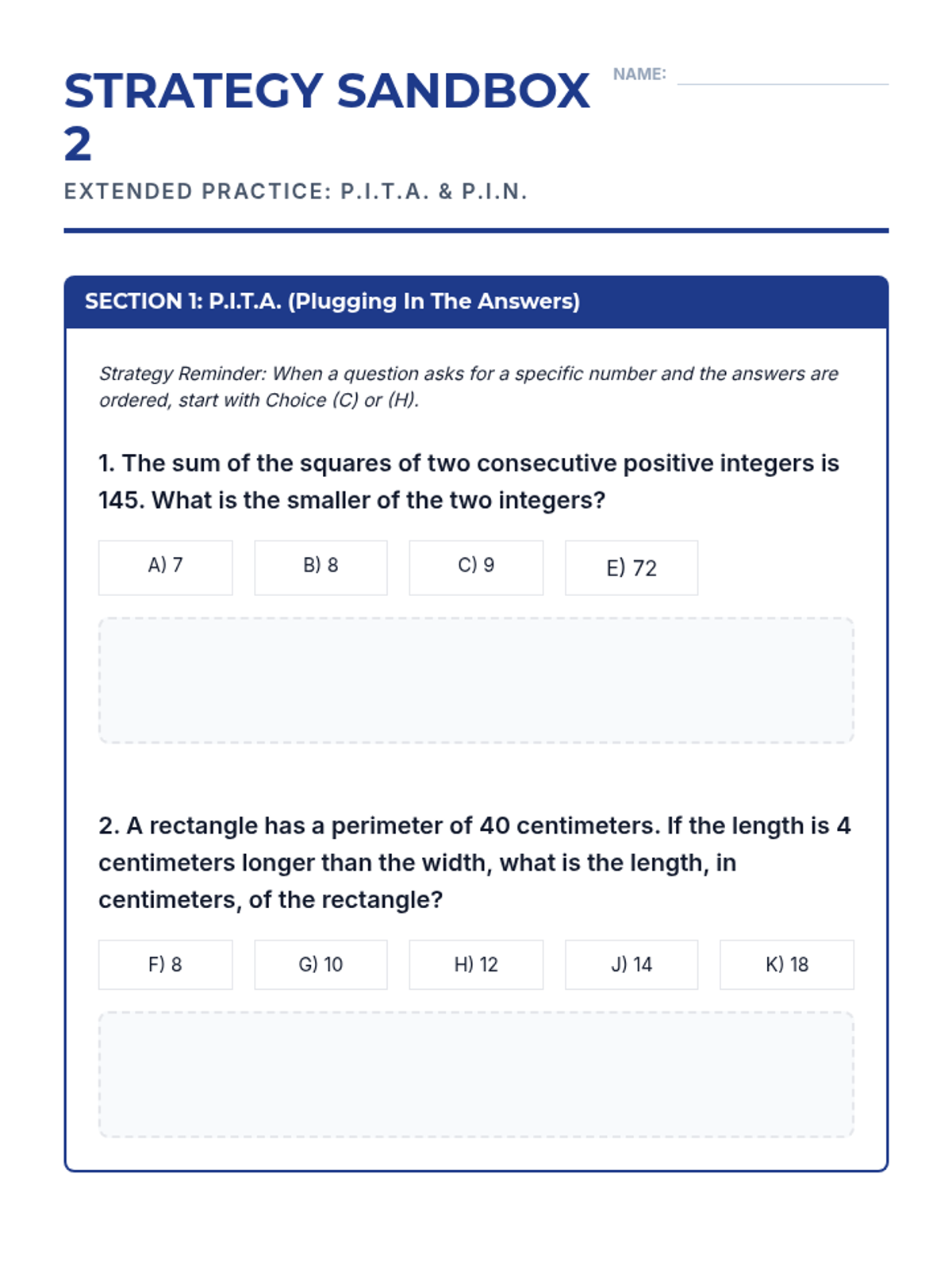
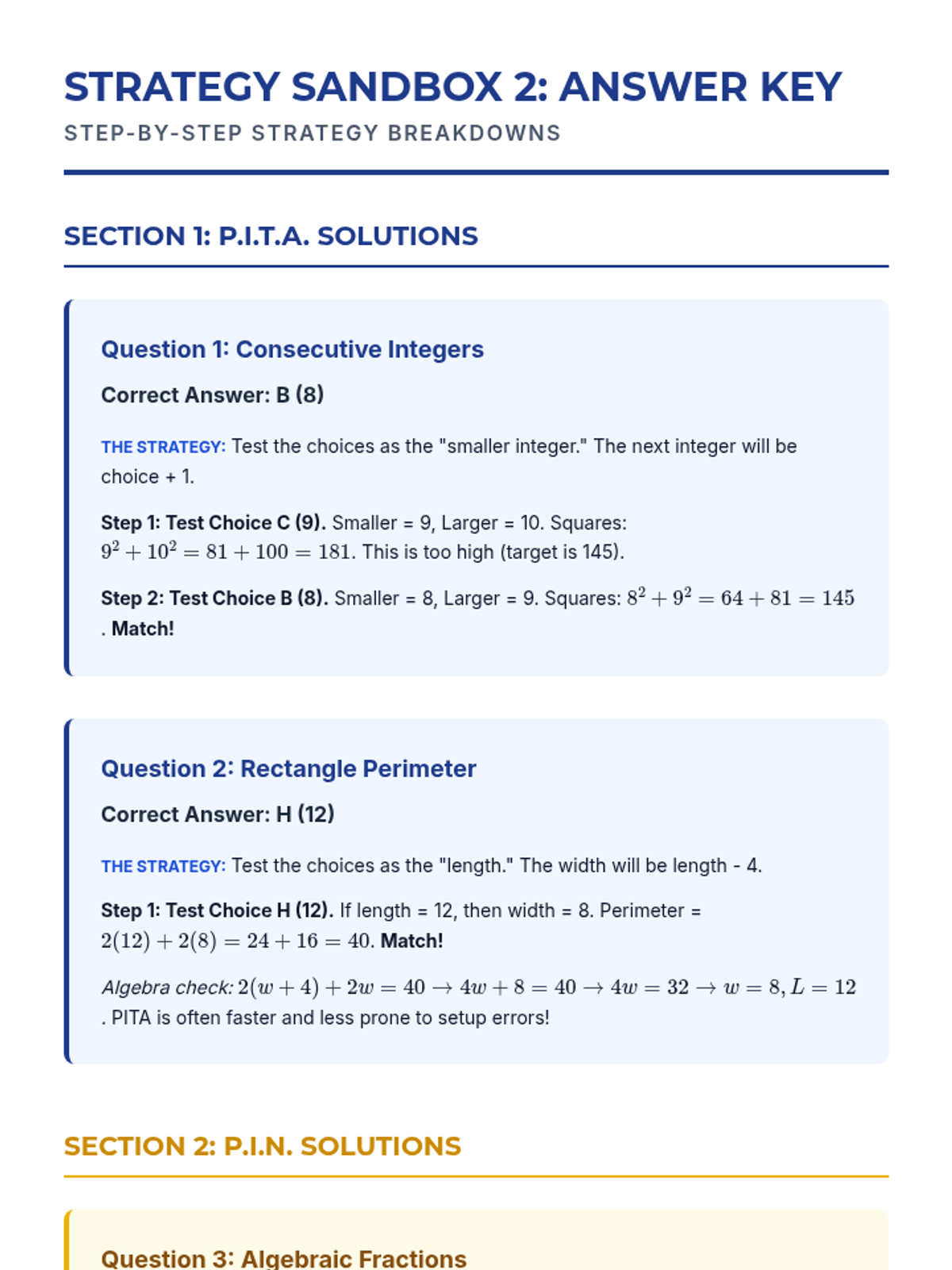
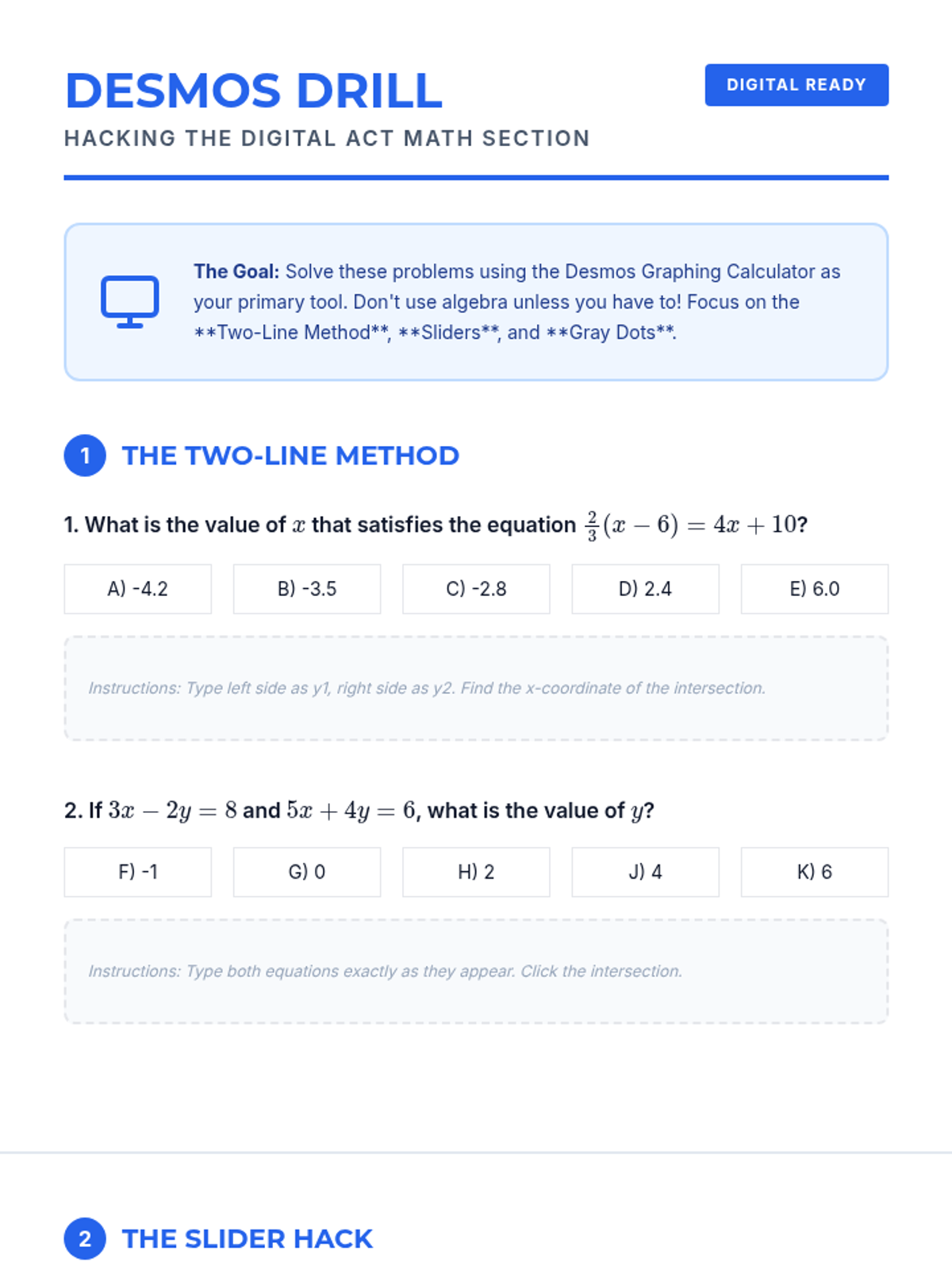
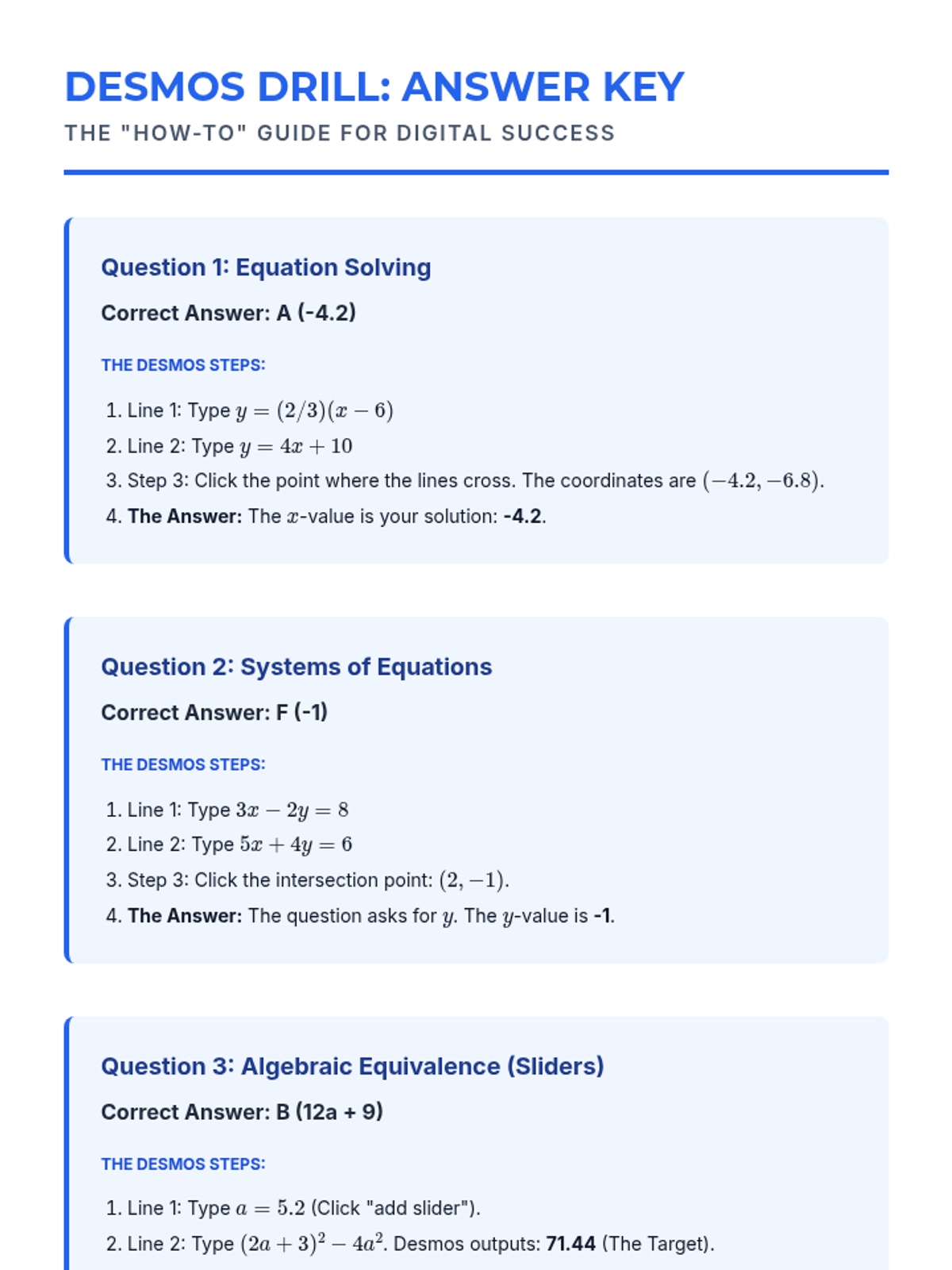
A comprehensive ACT Math preparation program focusing on essential strategies, high-yield Algebra and Geometry concepts, and realistic practice to boost scores.
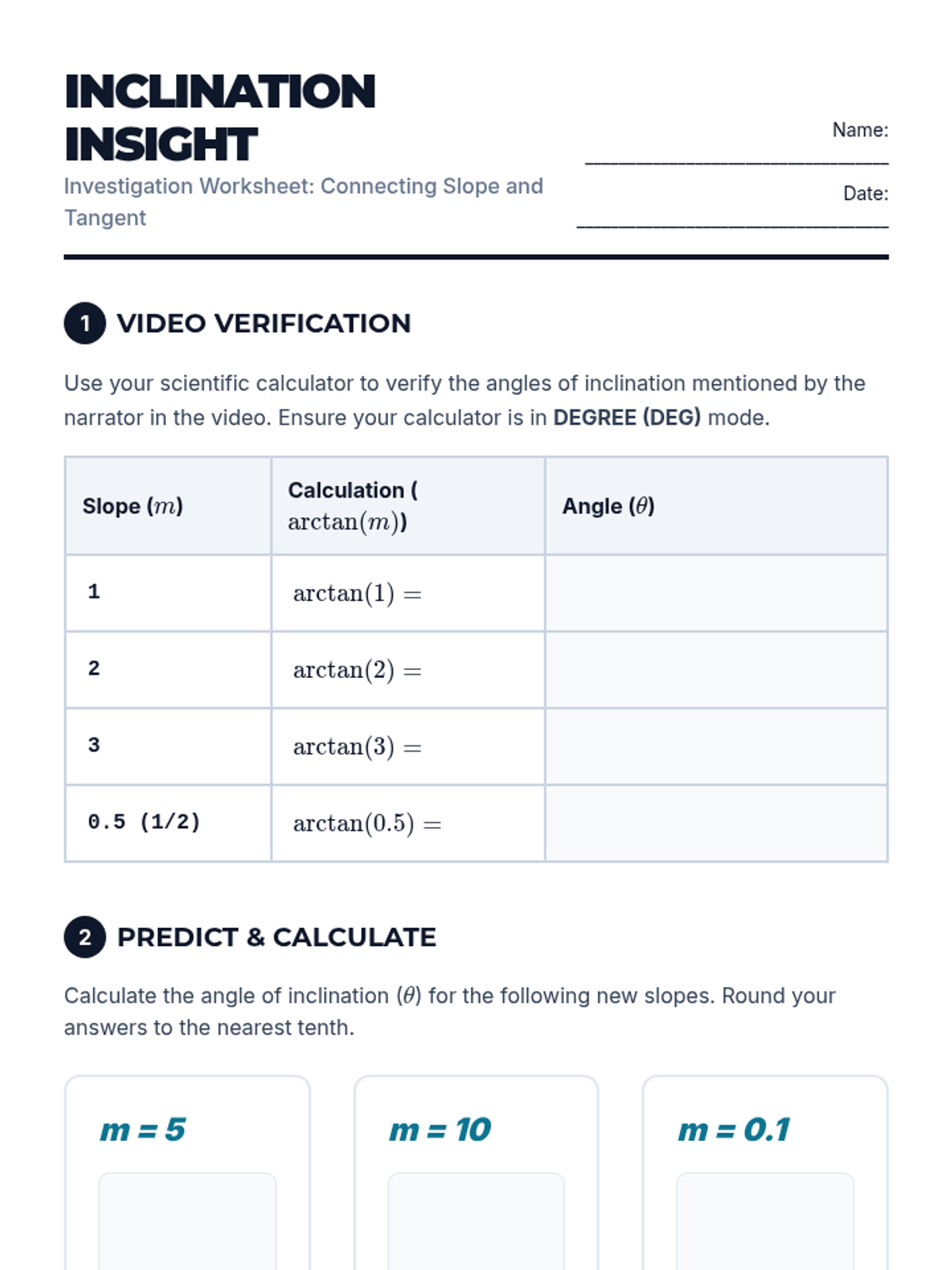
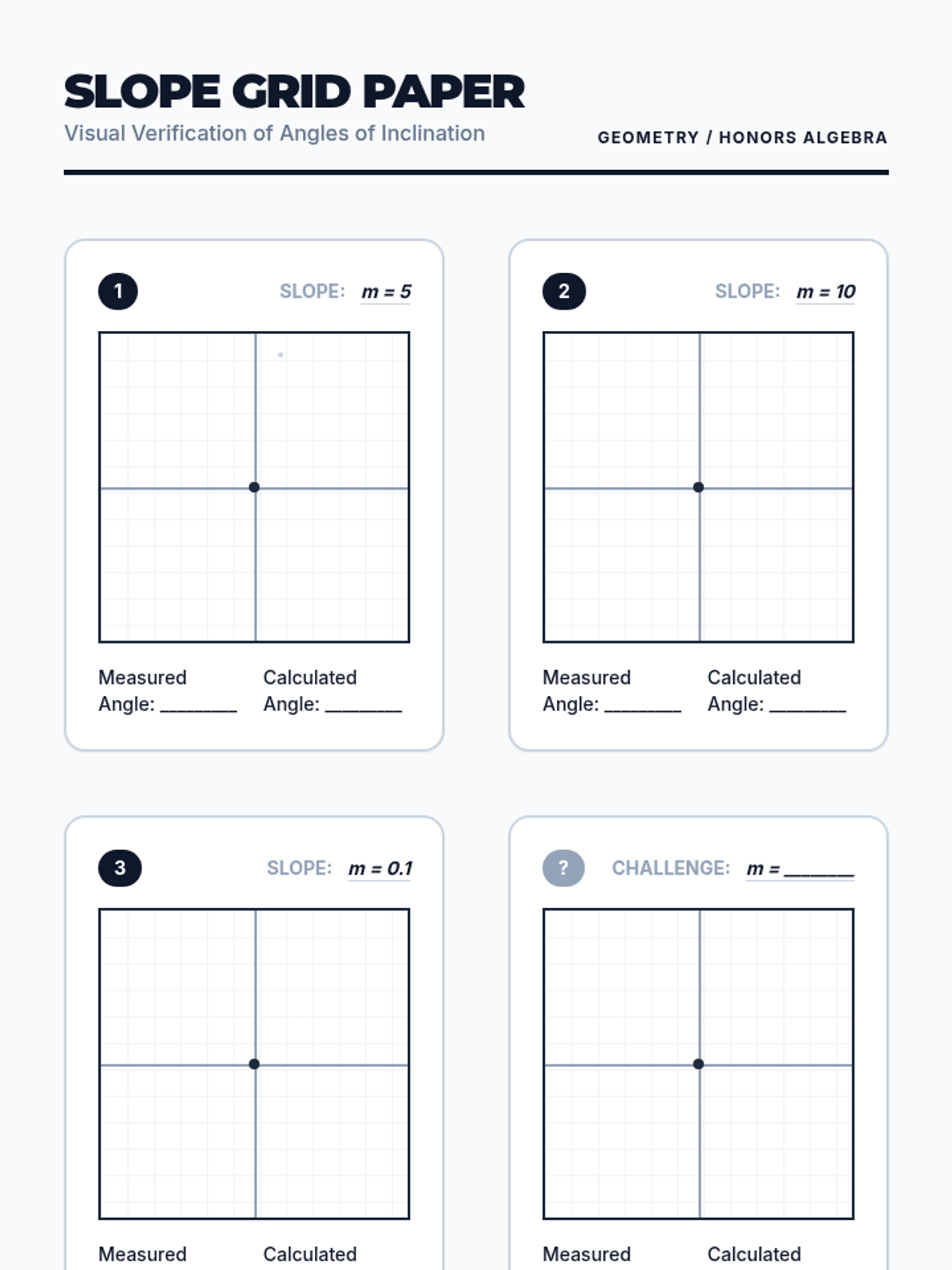
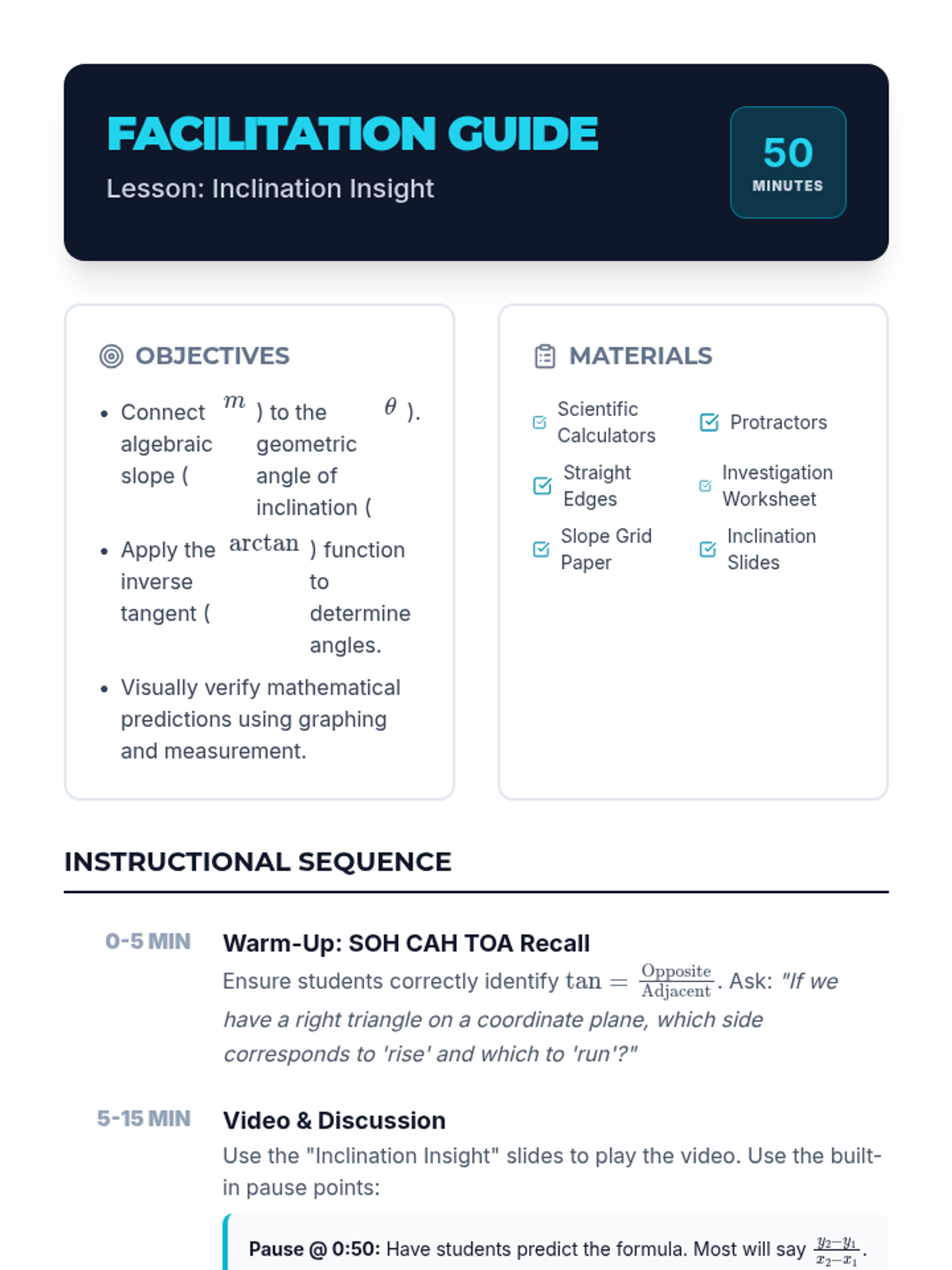
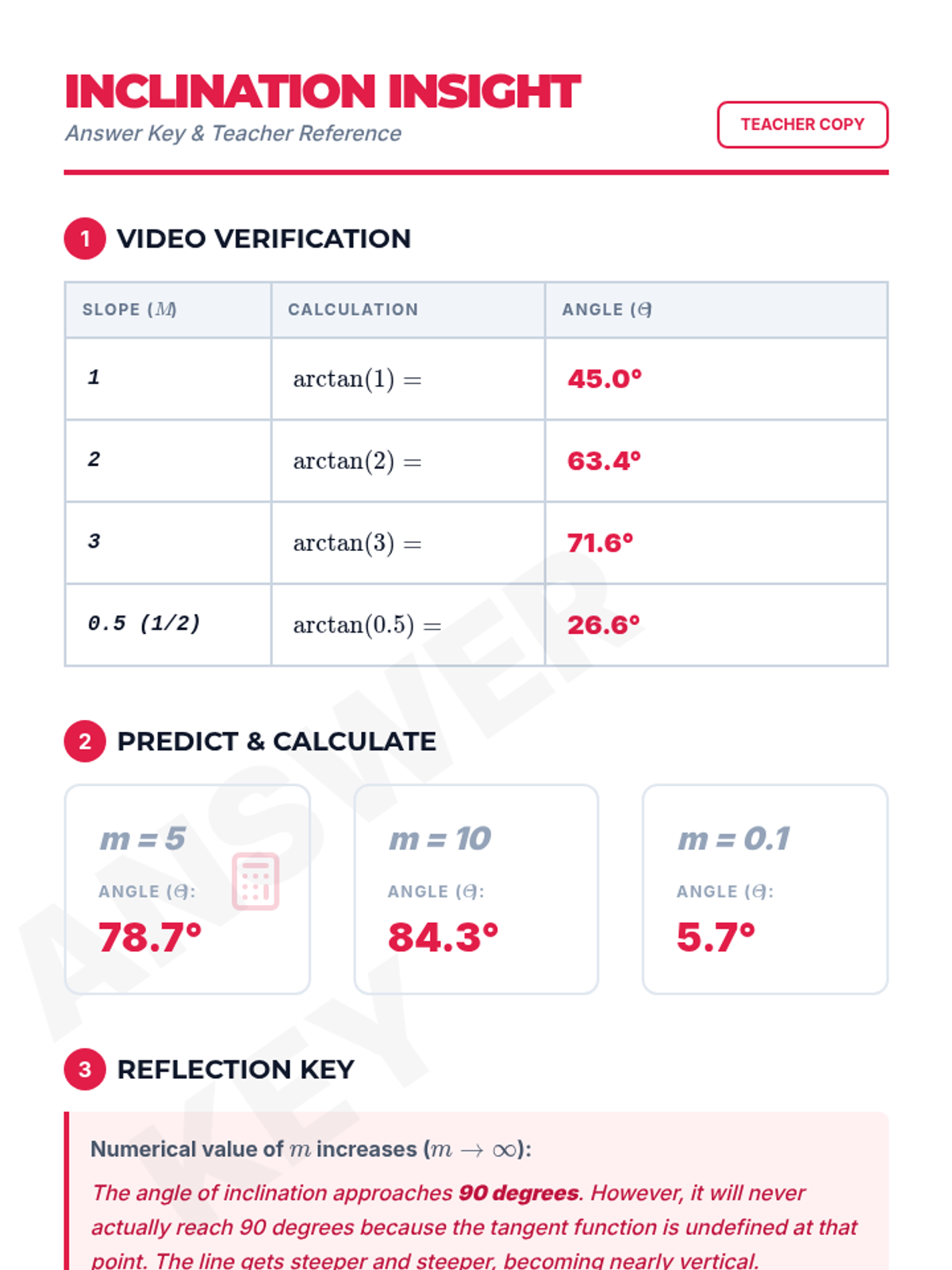
A specialized unit exploring the geometric properties of slope, connecting algebraic rates of change to trigonometric functions and the geometry of inclination.
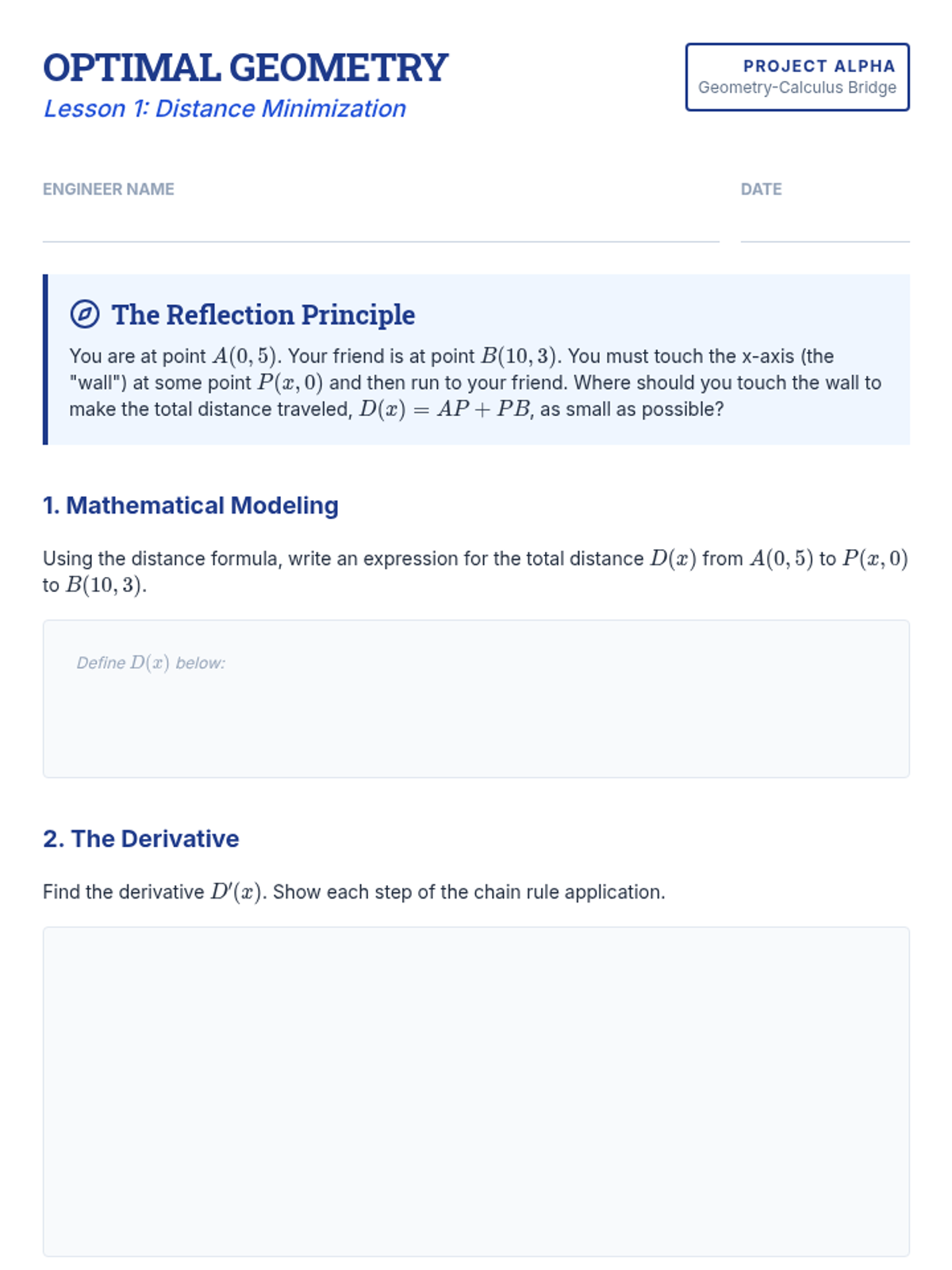
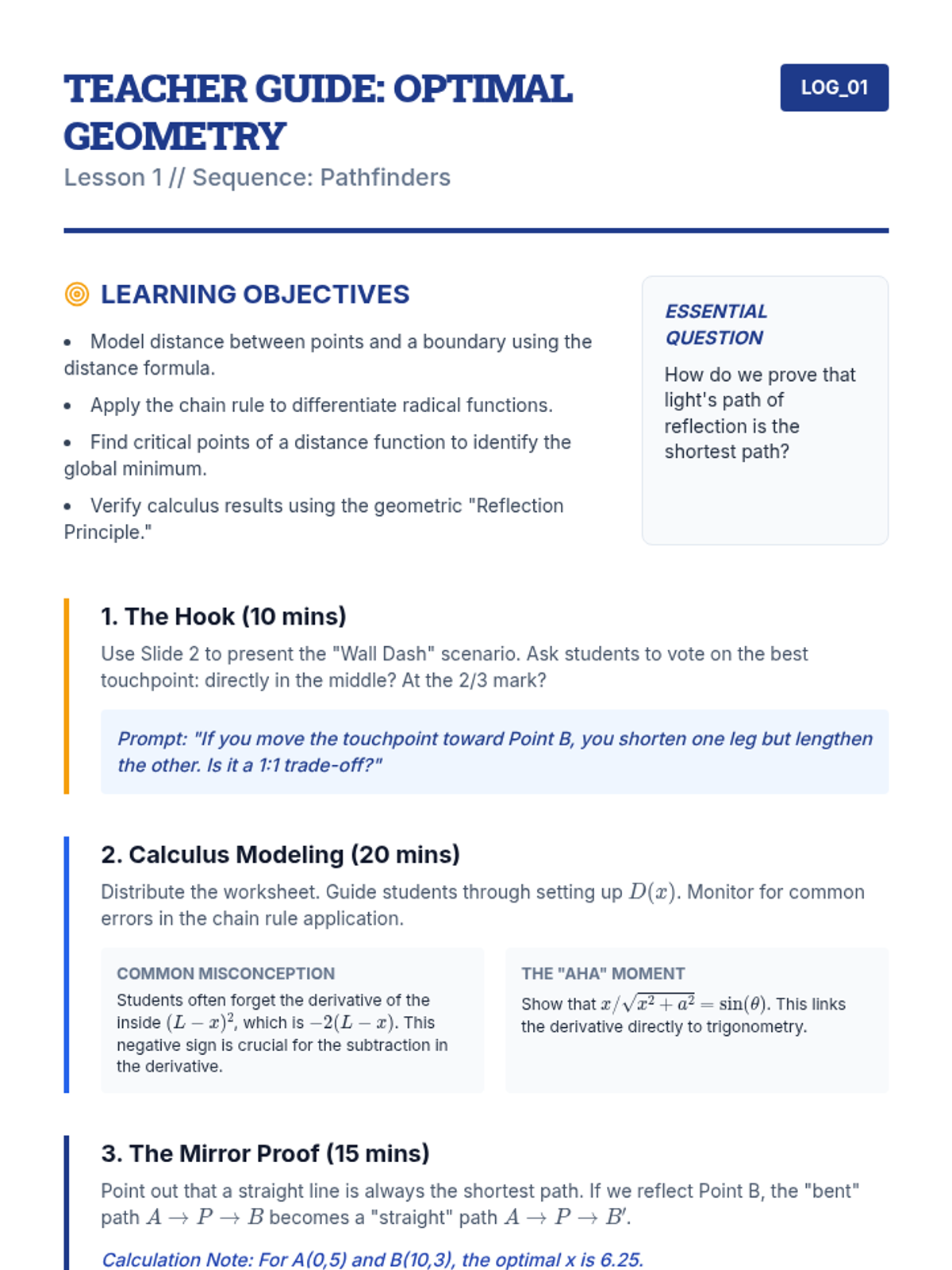
An inquiry-based exploration of calculus optimization, focusing on real-world efficiency in travel time, infrastructure cost, and business profit. Students progress from geometric shortest-paths to complex rate-based modeling.
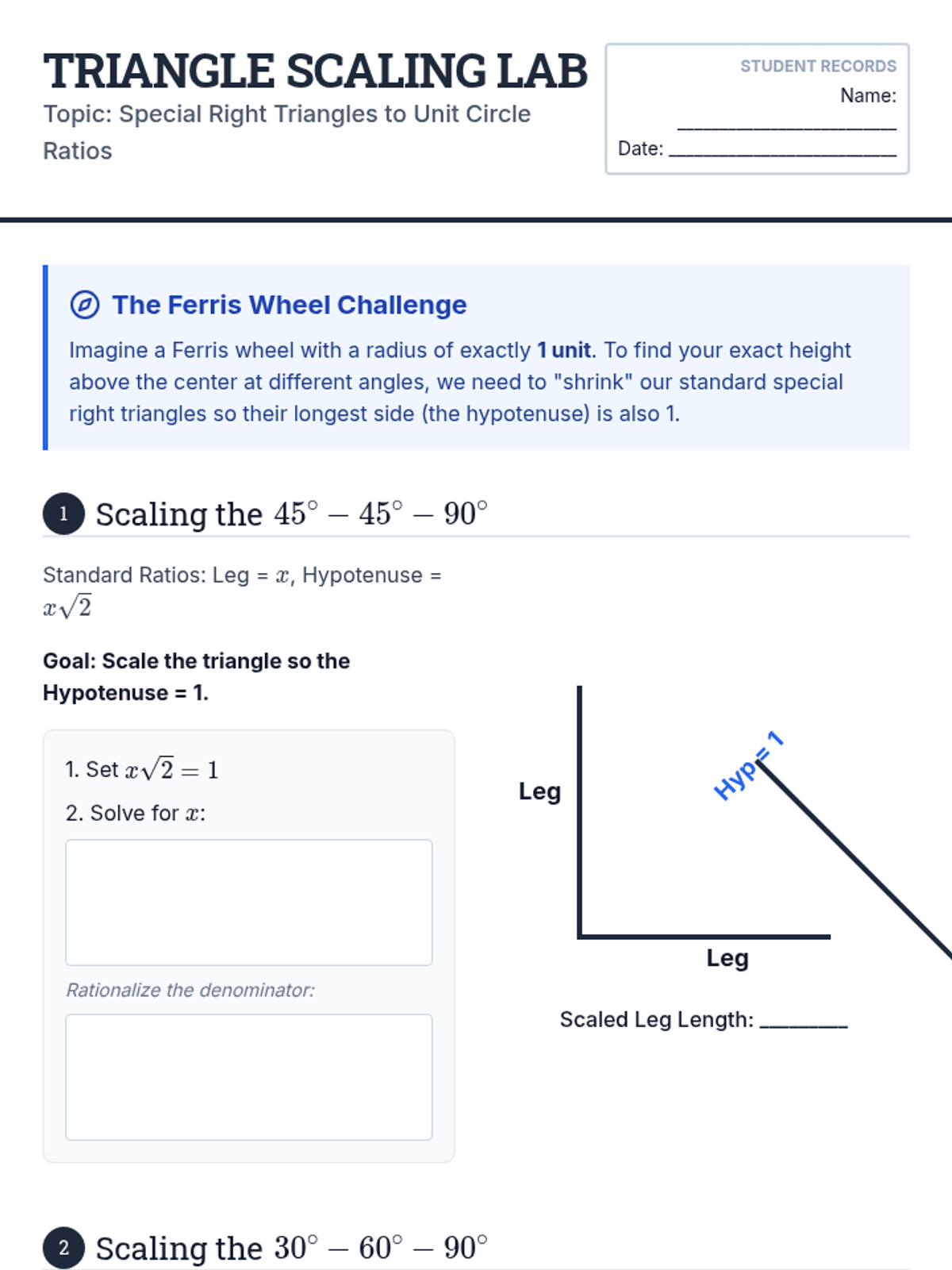
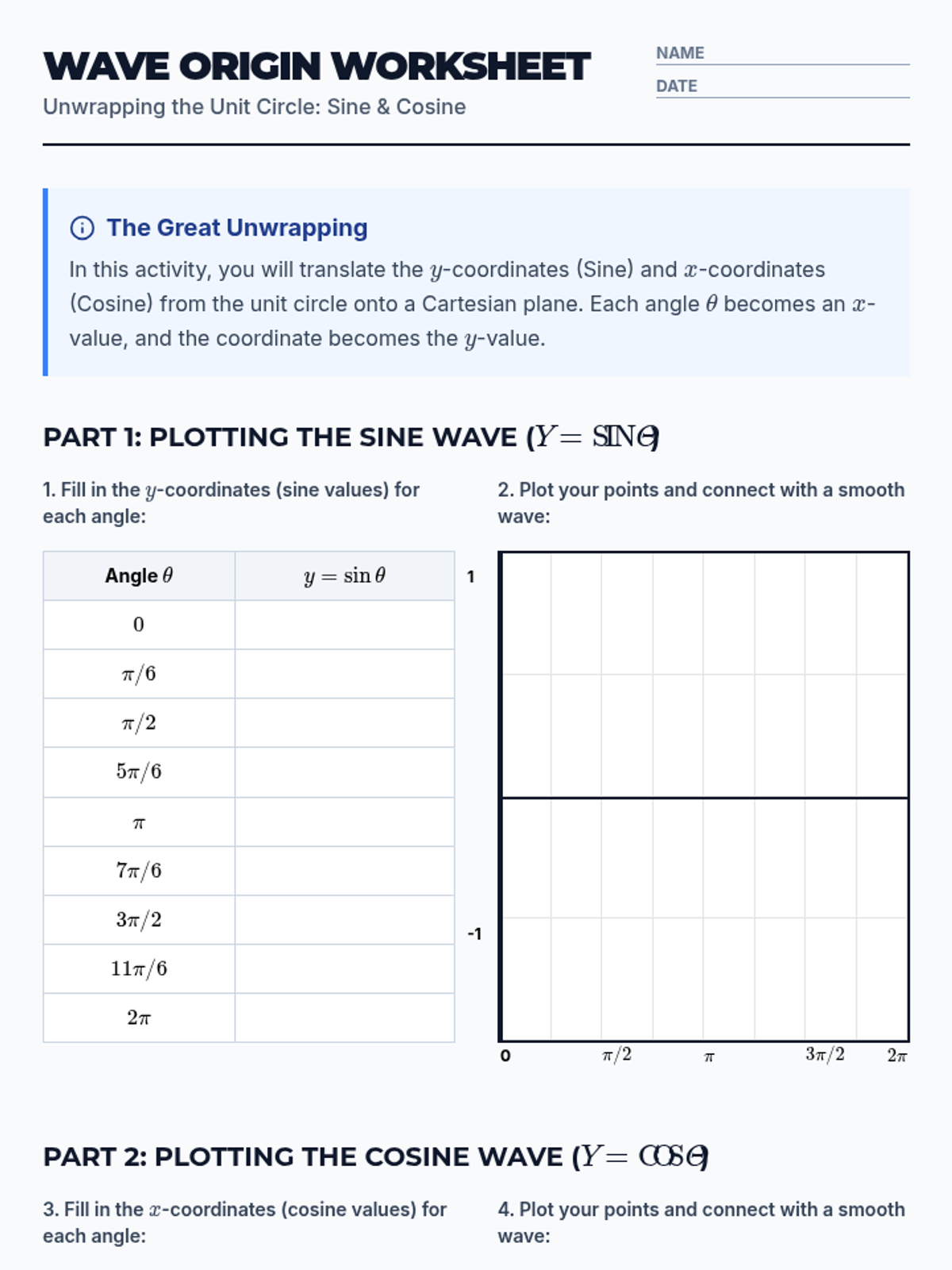
A comprehensive exploration of the unit circle, bridging geometry and trigonometry by scaling triangles, defining radians, and utilizing symmetry to evaluate trigonometric functions.
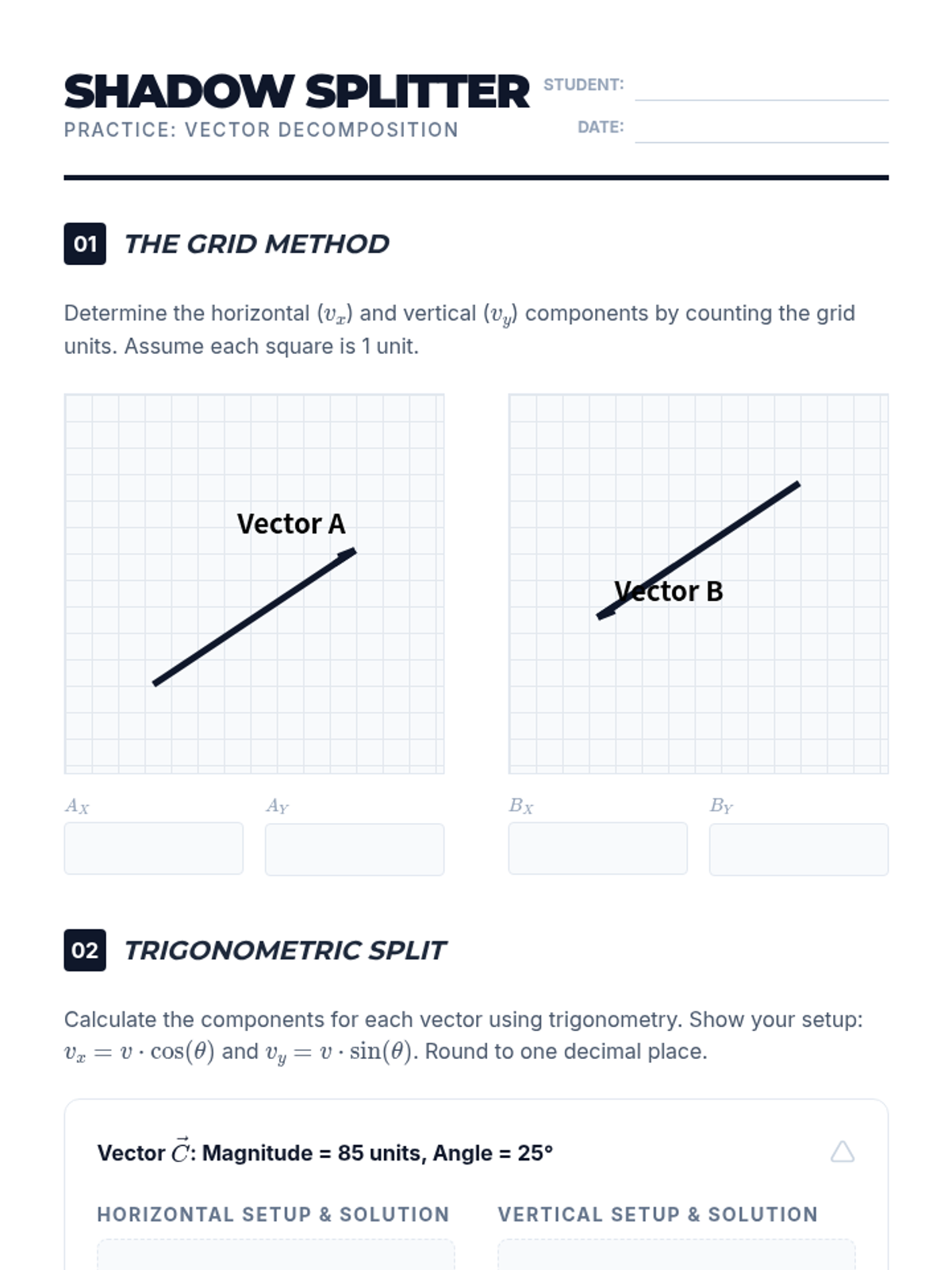
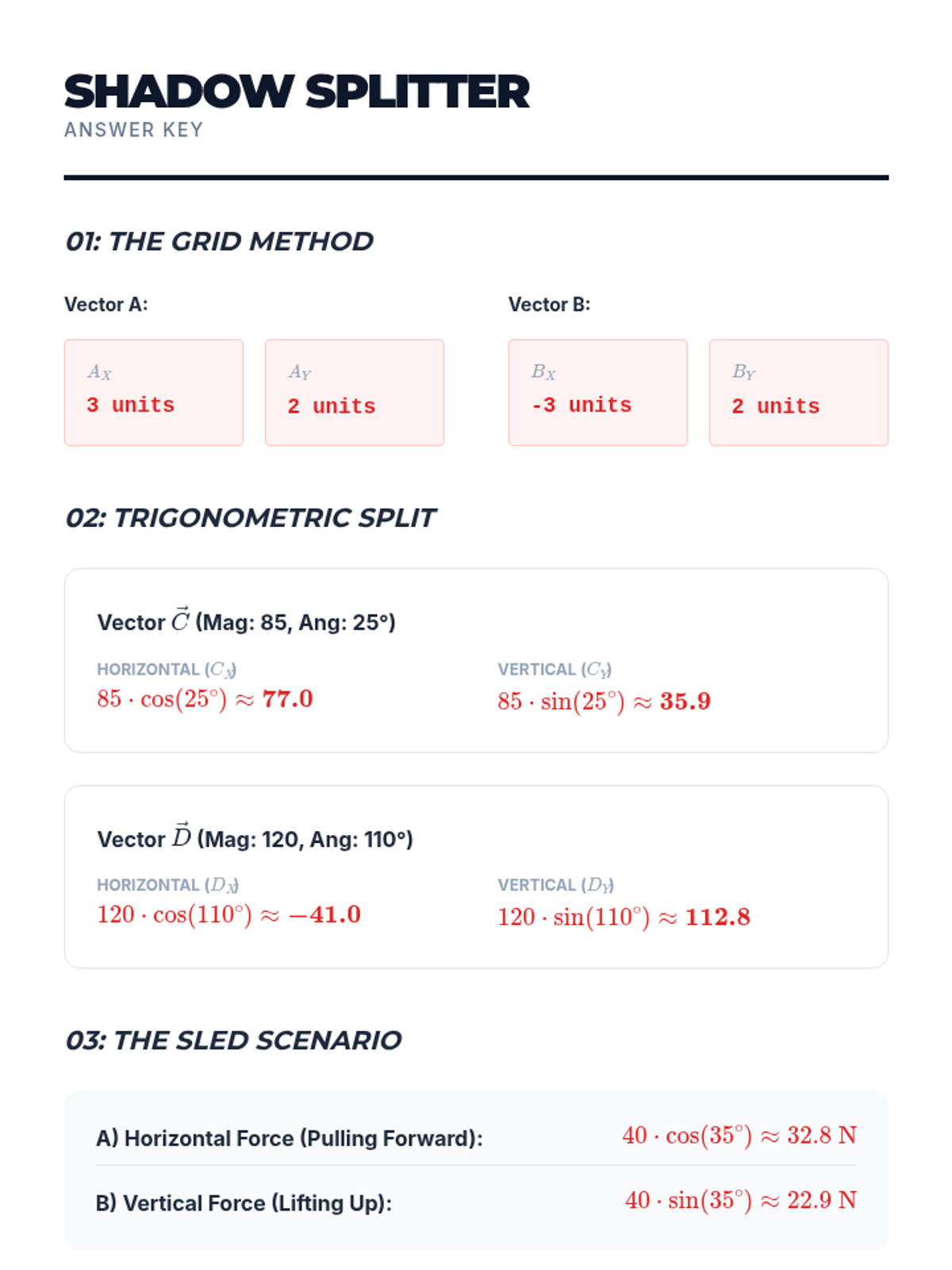
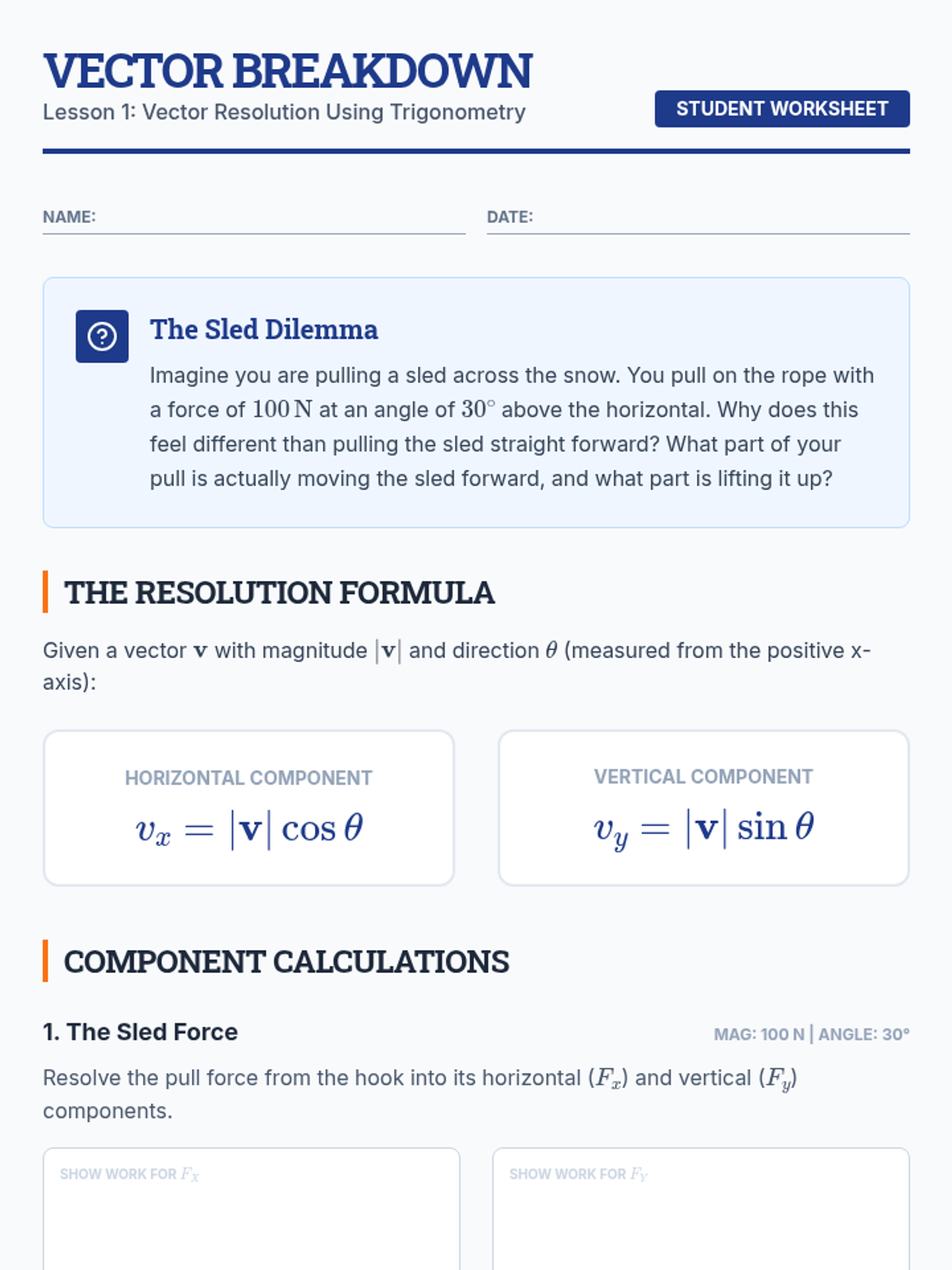
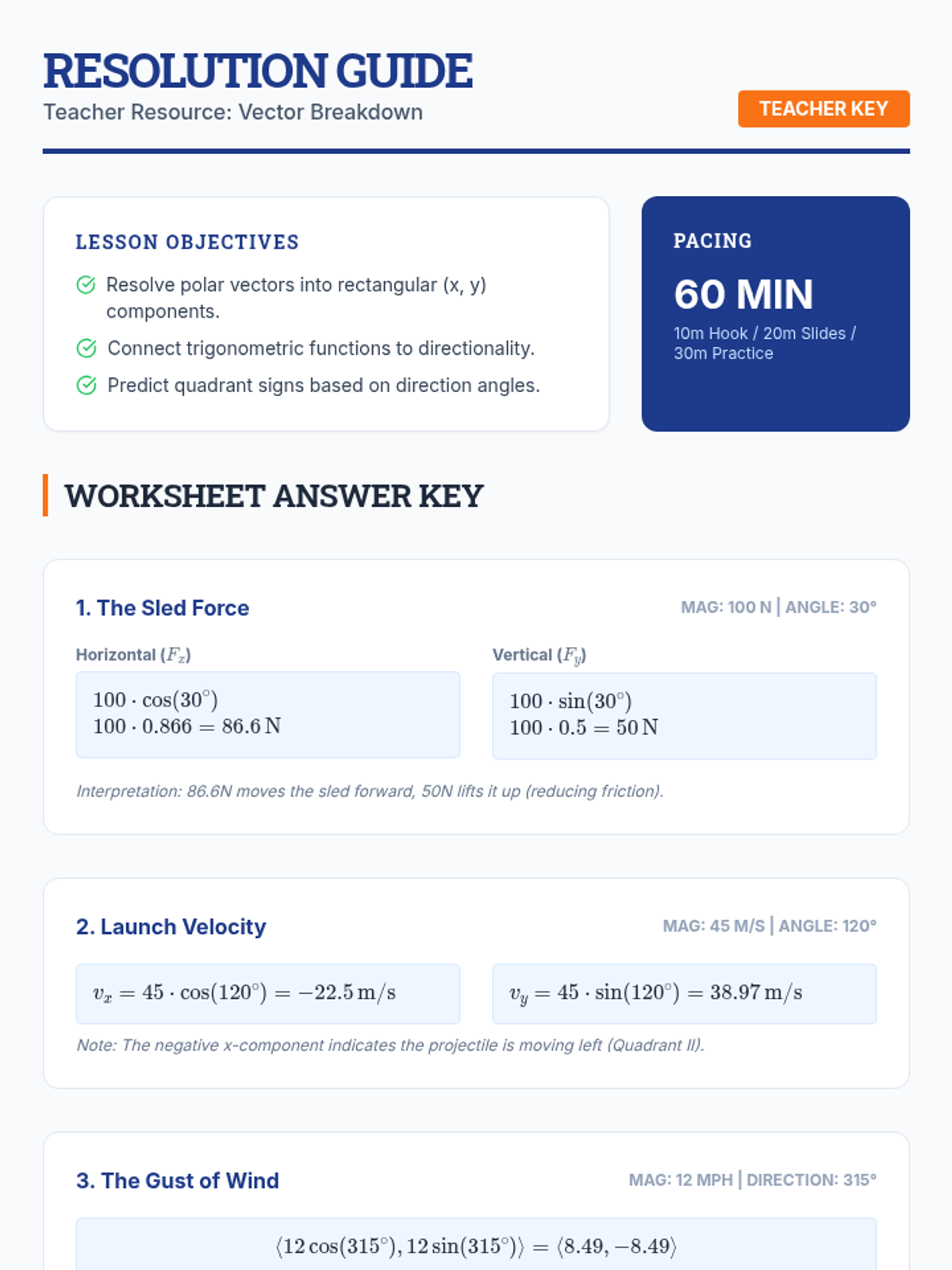
This sequence guides 9th-grade students through the algebraic representation of vectors. Moving from geometric drawings to coordinate components, students use trigonometry and the Pythagorean theorem to decompose, reconstruct, and add vectors with precision.
A comprehensive 10th-grade sequence on vector quantities, bridging algebraic resolution with real-world physics applications like navigation and static equilibrium. Students master resolving vectors, component arithmetic, and normalizing vectors to solve engineering and navigational challenges.
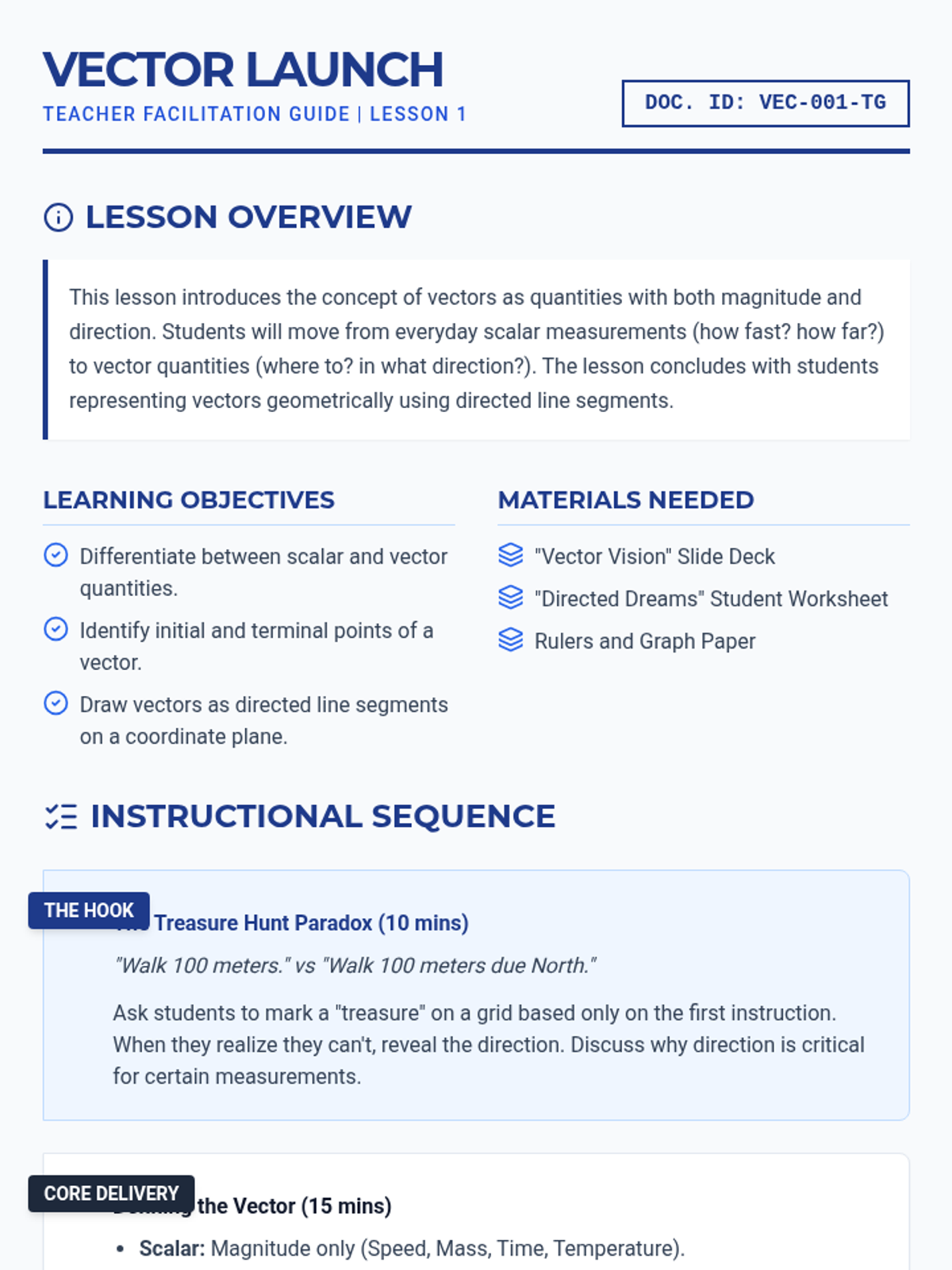
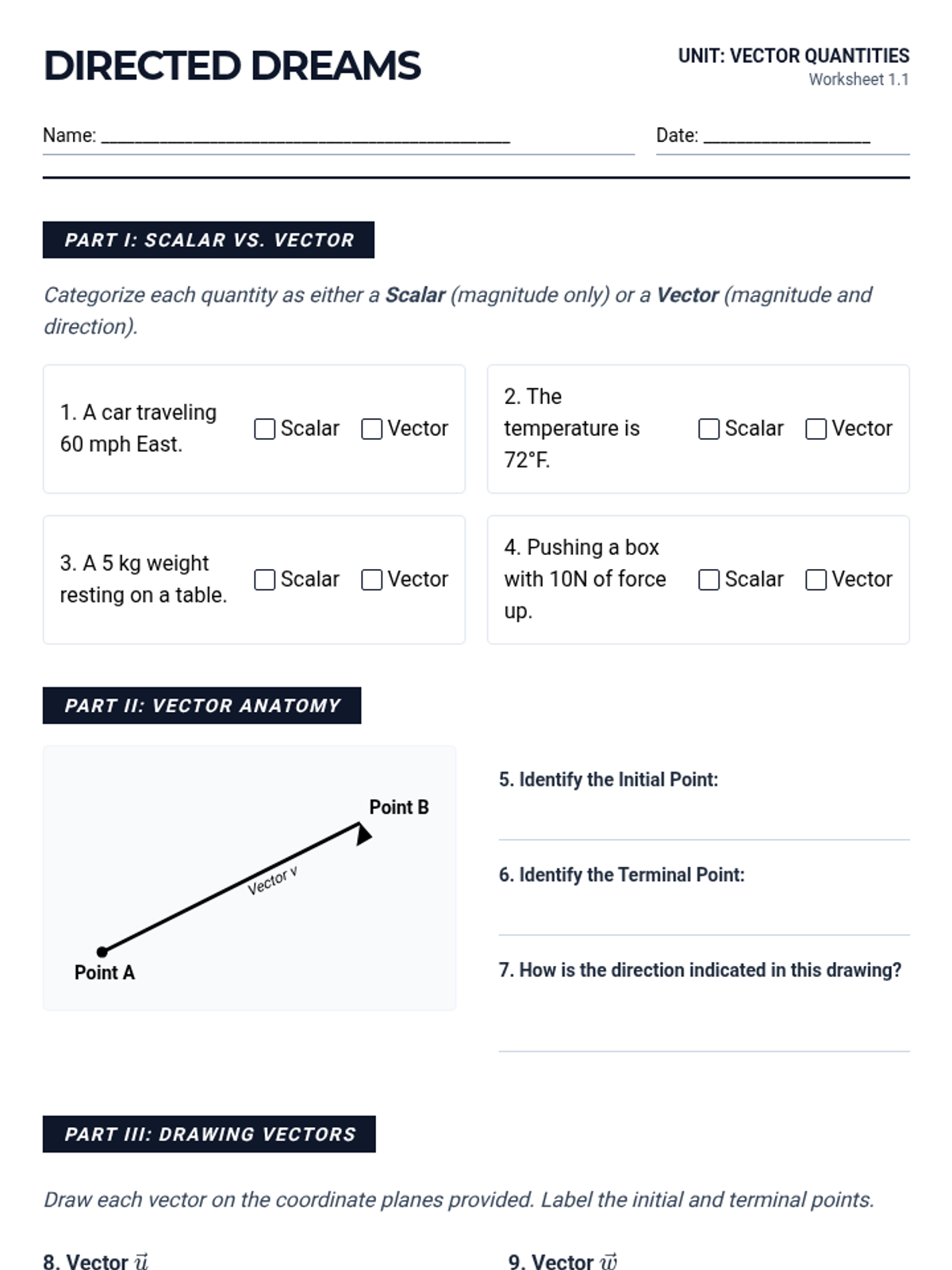
A comprehensive introduction to vectors through geometric representation, focusing on the distinction between scalars and vectors, visual addition/subtraction, scalar multiplication, and the transition to component form and magnitude calculation.
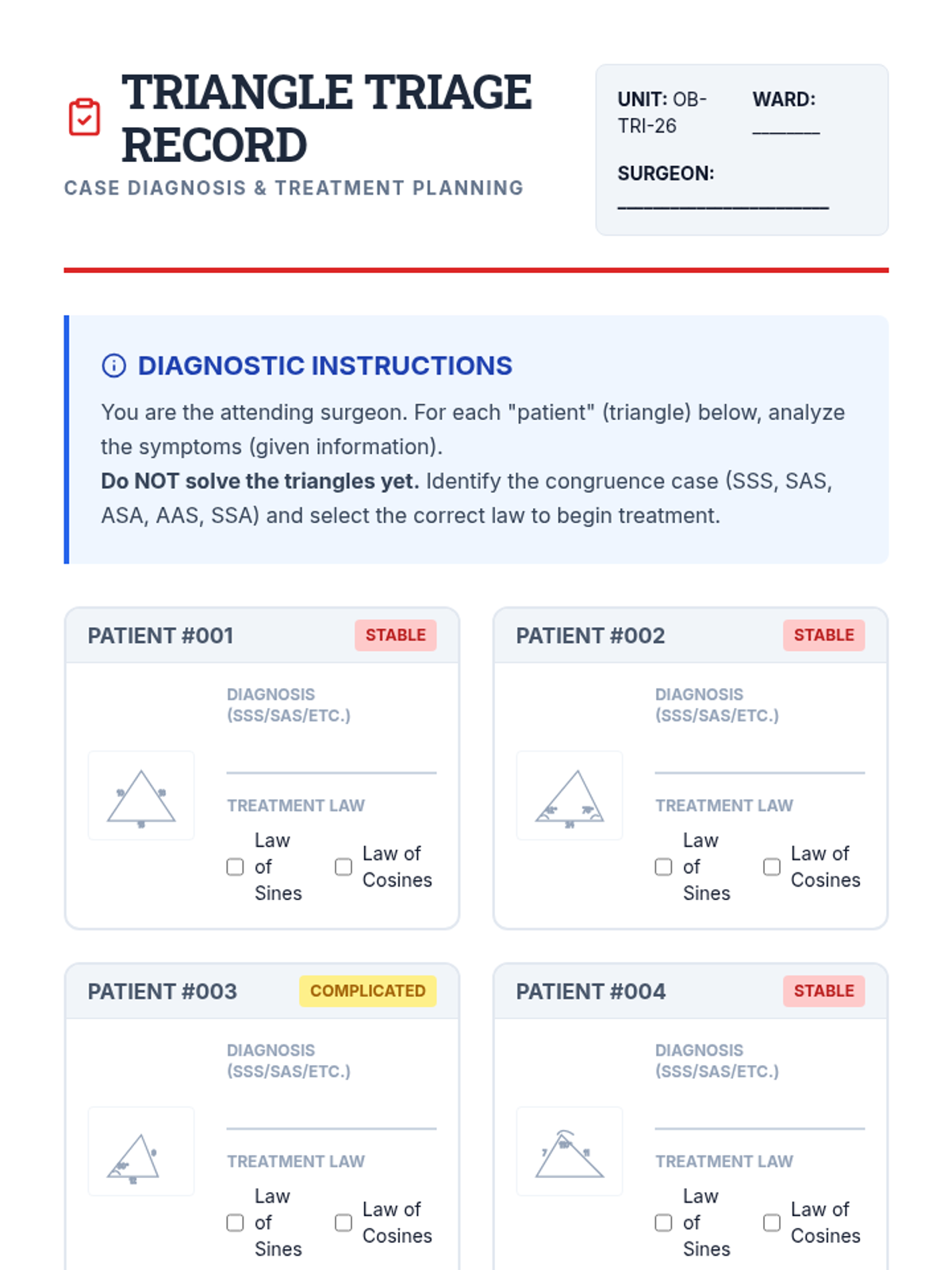
A high-level geometry sequence focused on diagnosing oblique triangles. Students use a medical 'triage' theme to master Law of Sines and Law of Cosines through pattern recognition, algebraic mastery, and mixed practice.
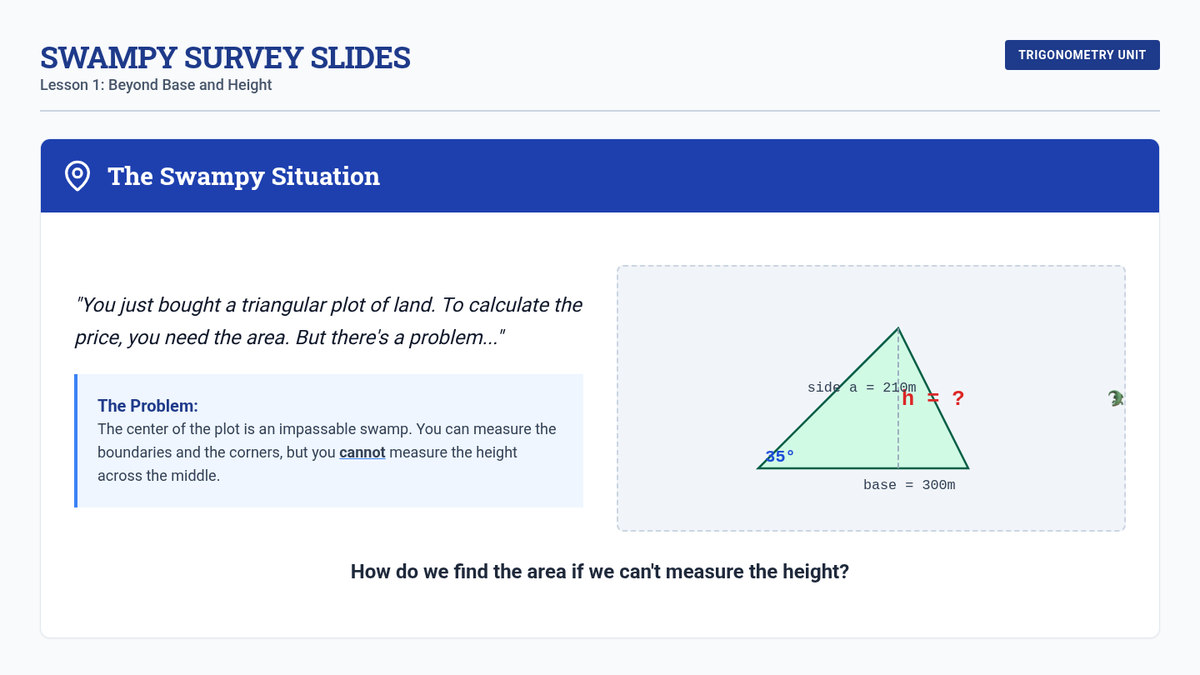
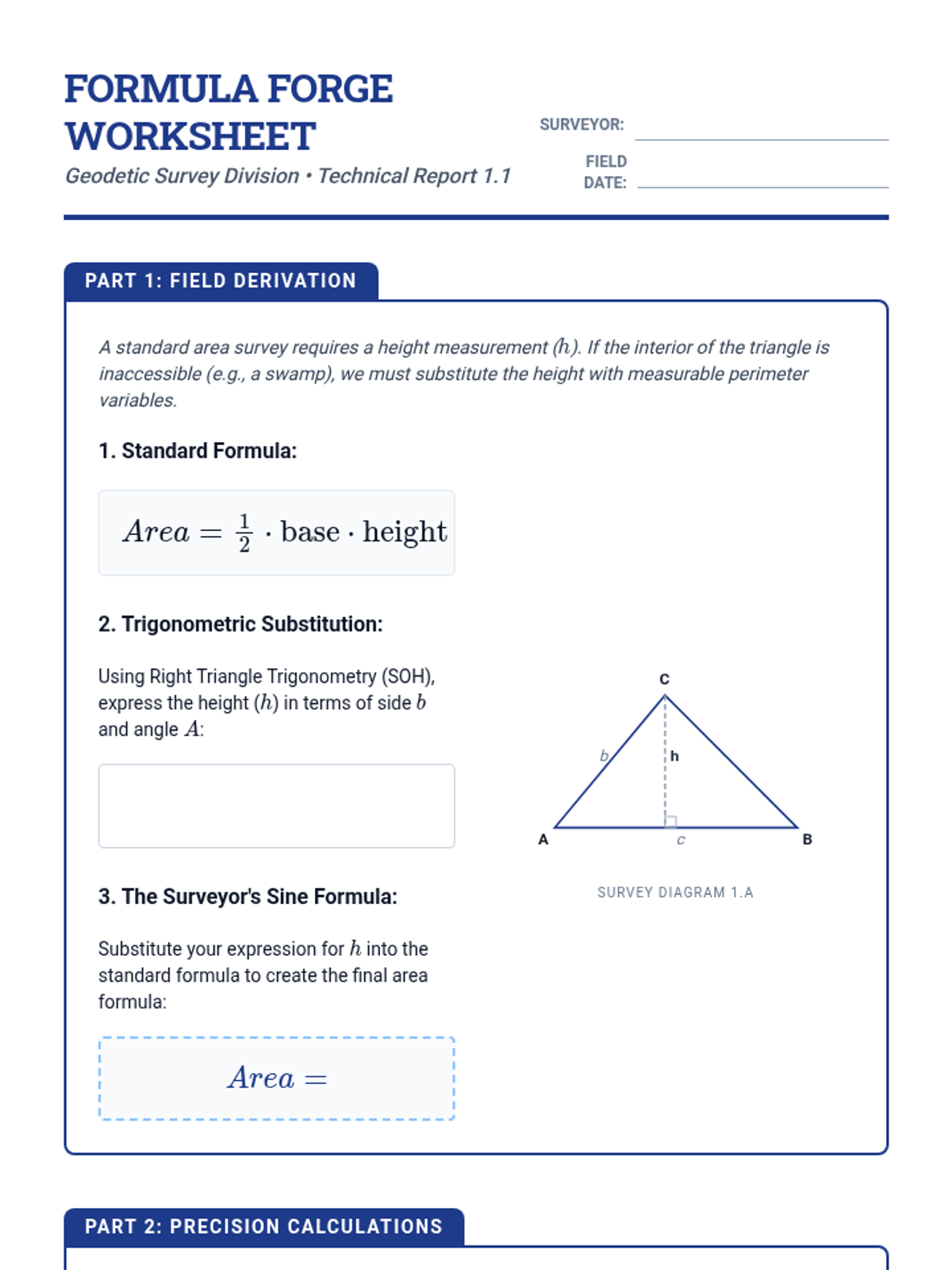
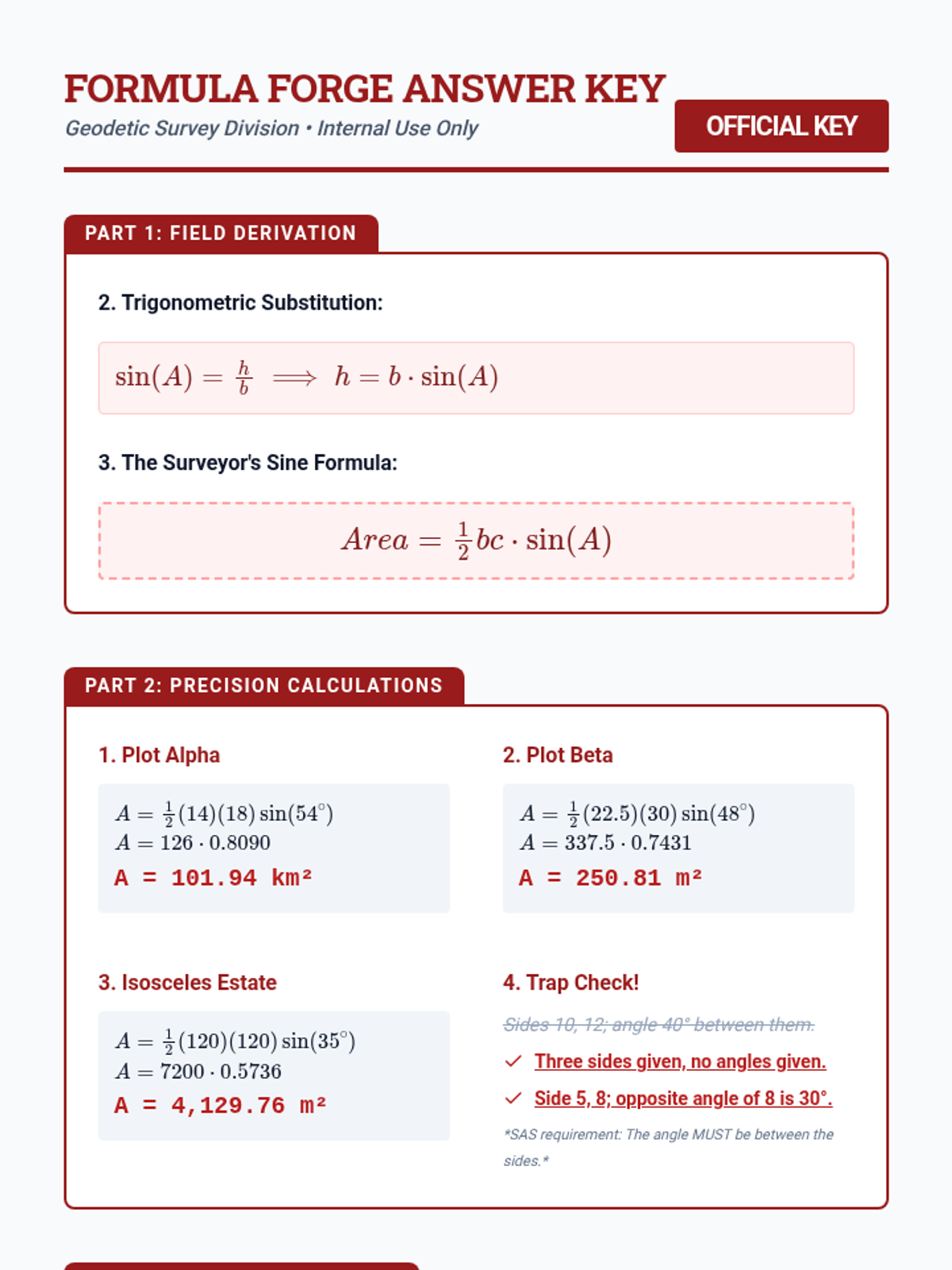
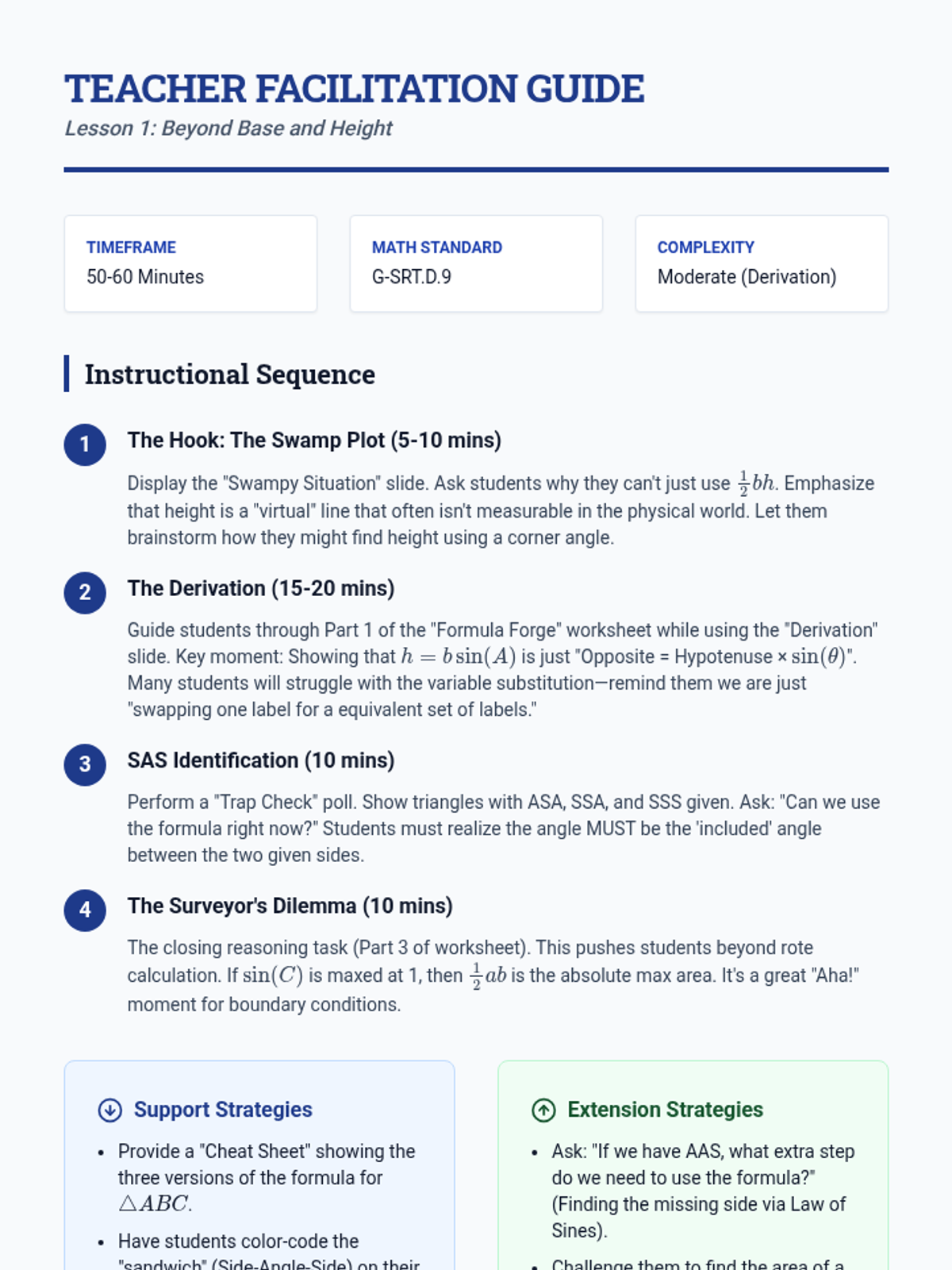
A comprehensive geometry sequence focused on finding the area of oblique triangles using trigonometric ratios and Heron's Formula, culminating in a real-world land surveying project.
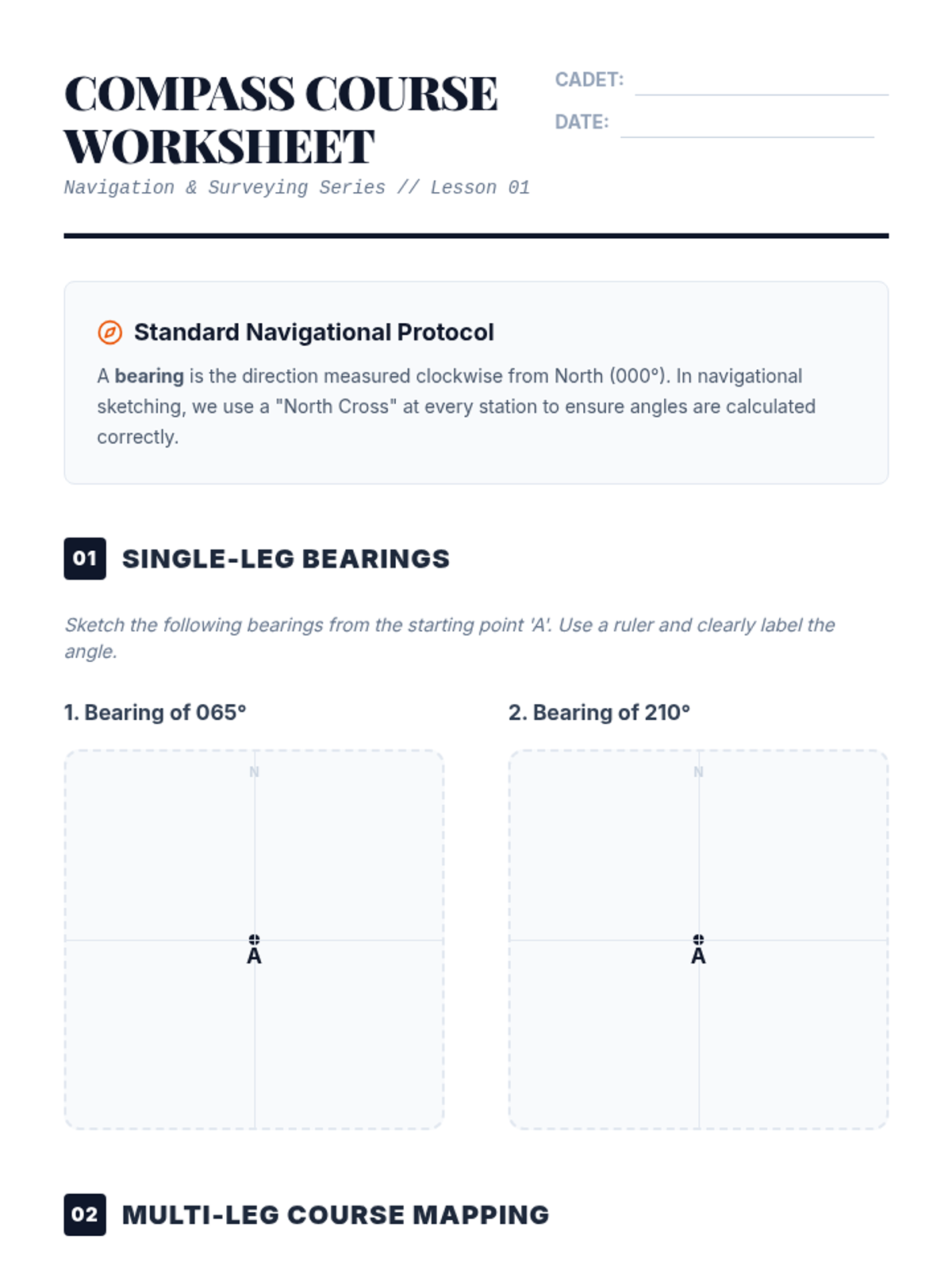
A 5-lesson geometry project where students apply the Law of Sines and Law of Cosines to solve real-world navigation and surveying problems, culminating in a search-and-rescue triangulation task.
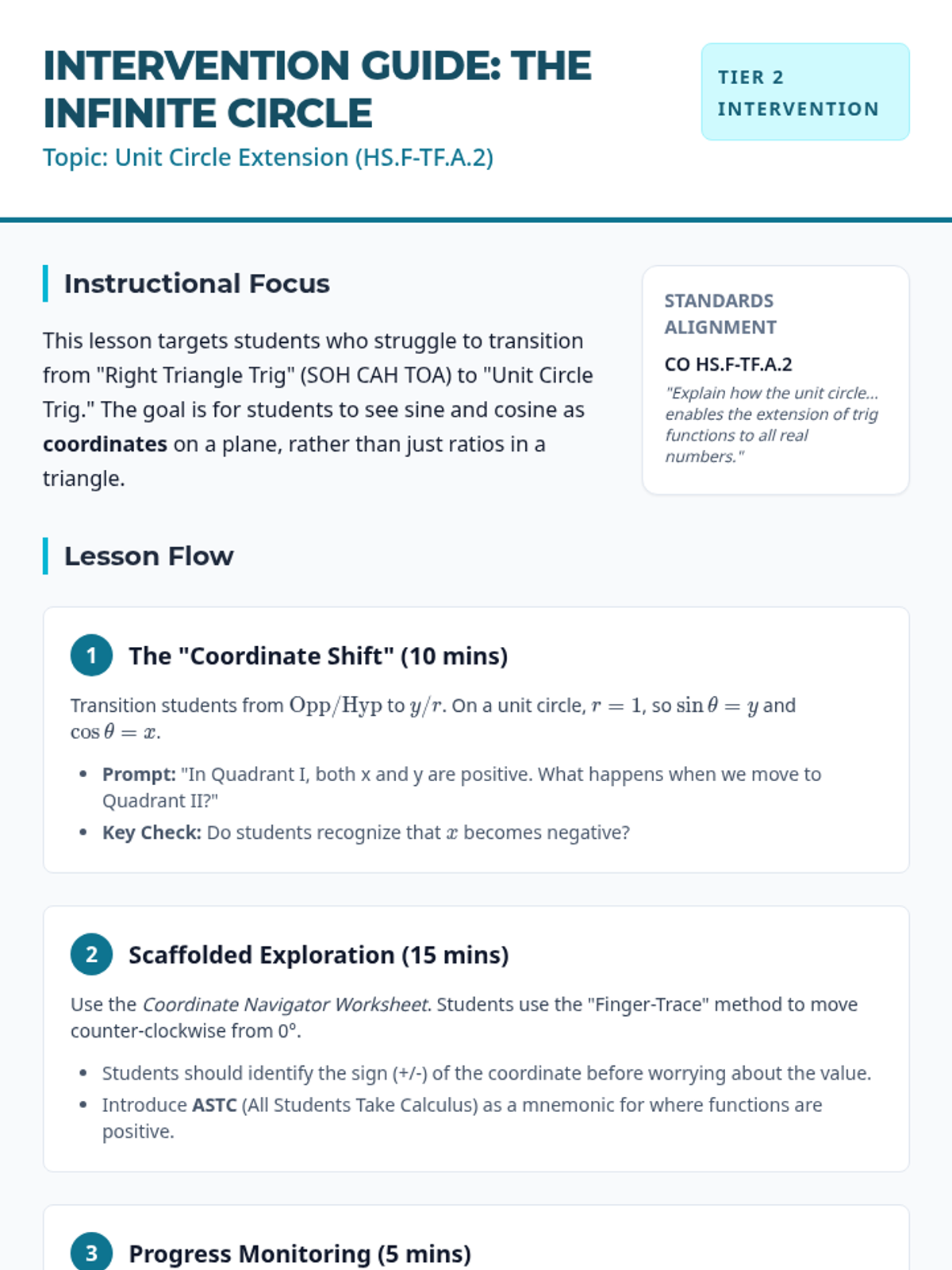
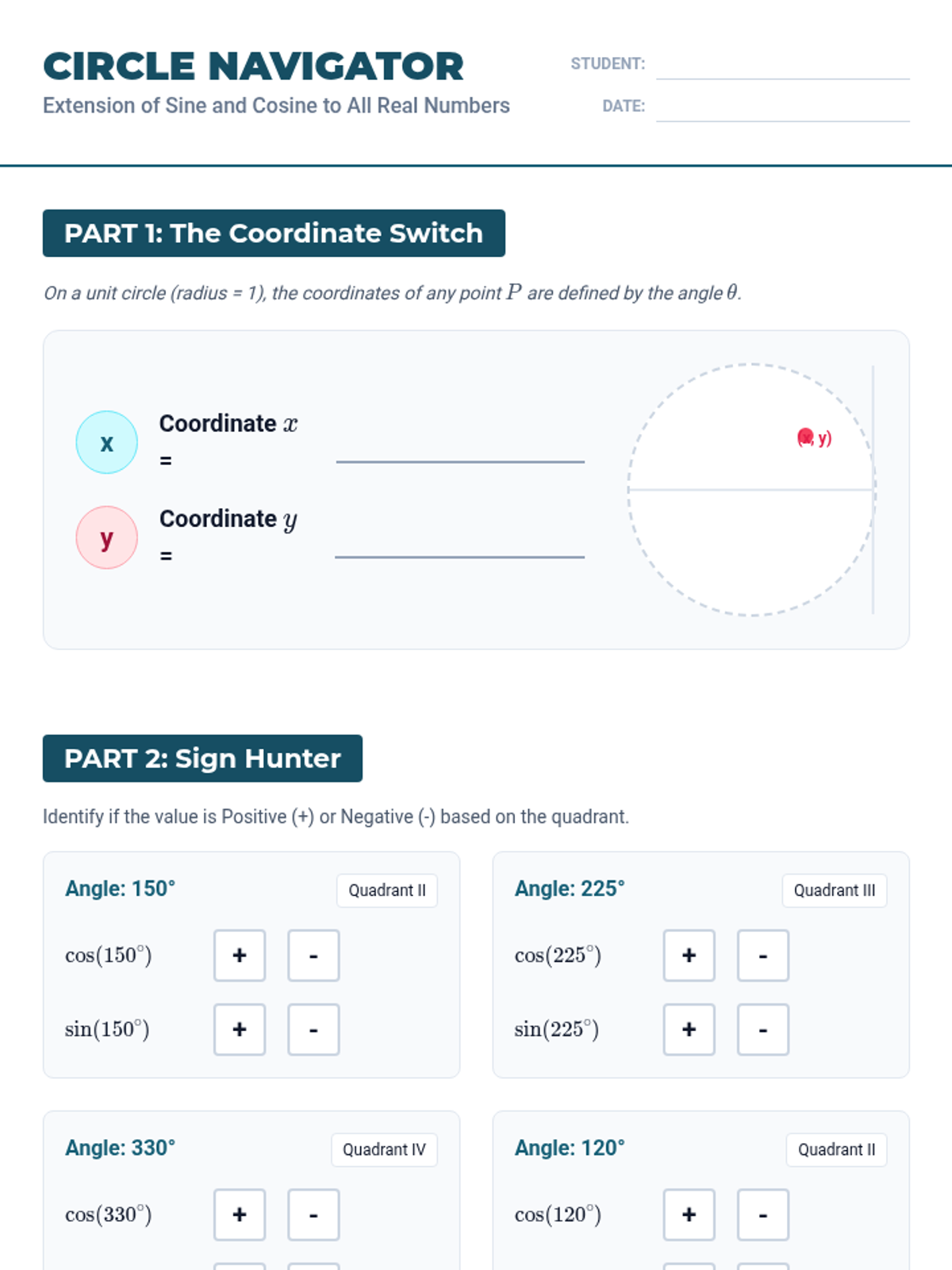
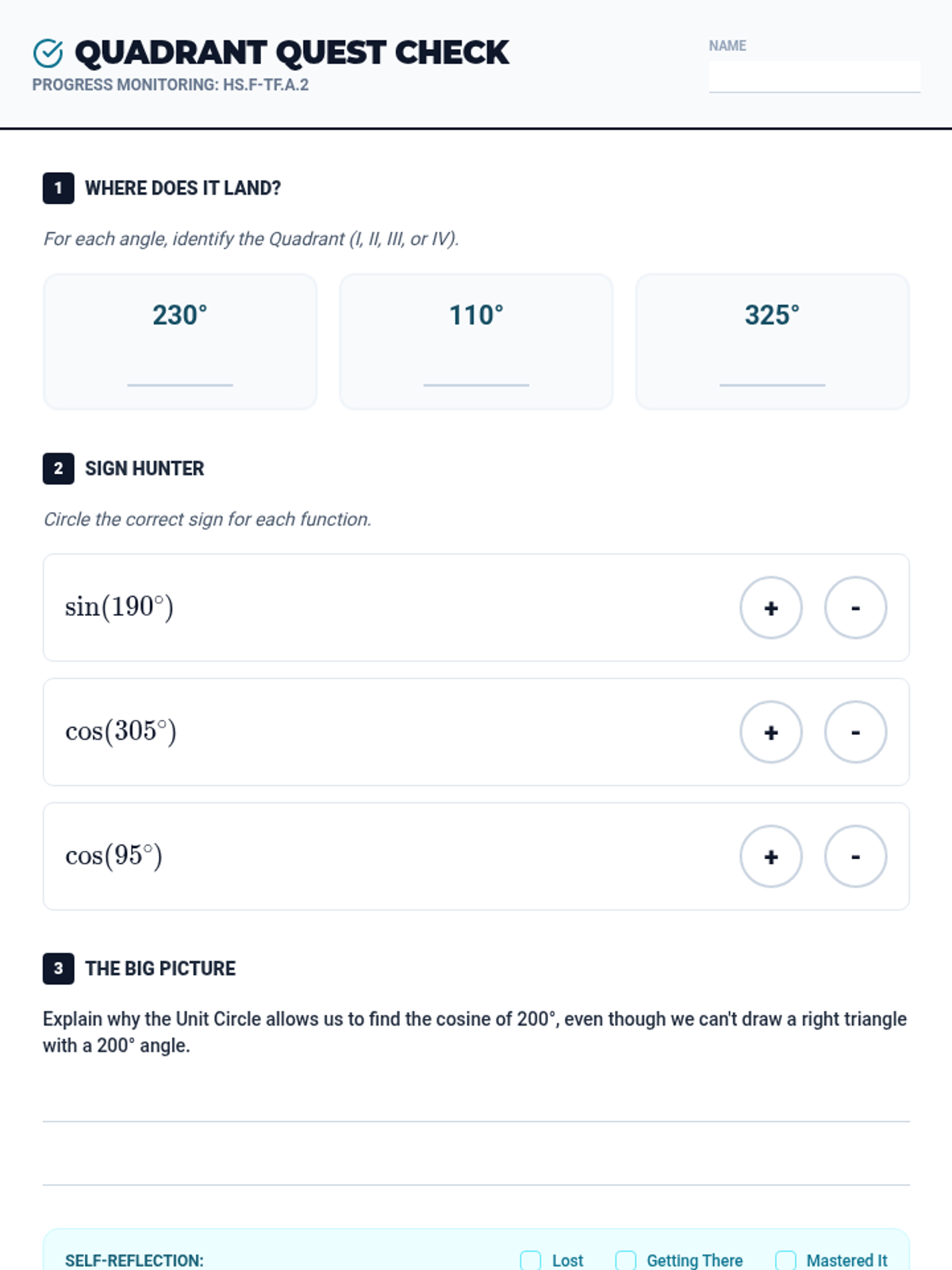
A targeted intervention sequence focused on extending trigonometric functions beyond right triangles using the unit circle. This sequence bridges the gap between basic trigonometry and periodic functions for students needing additional support.
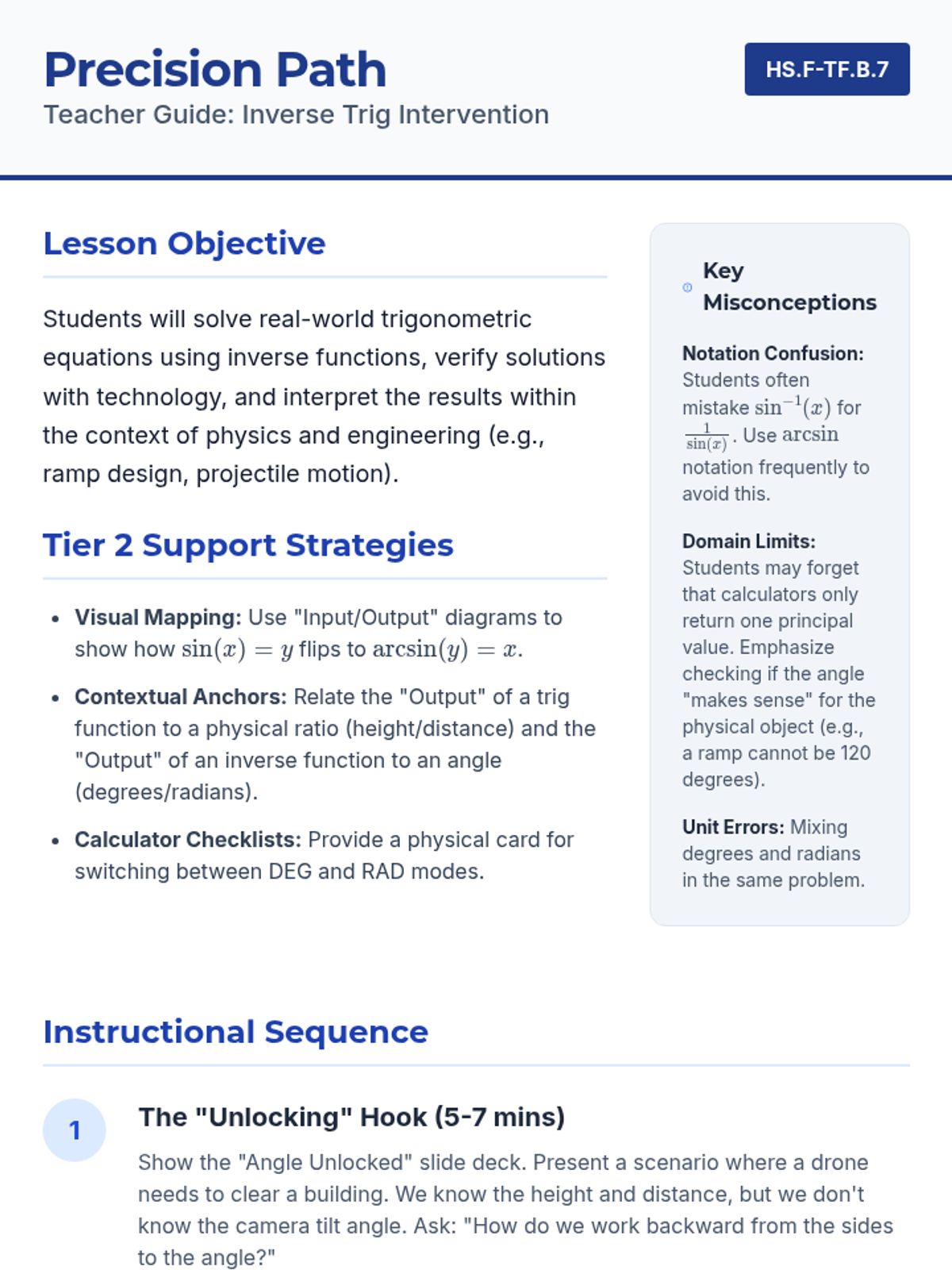
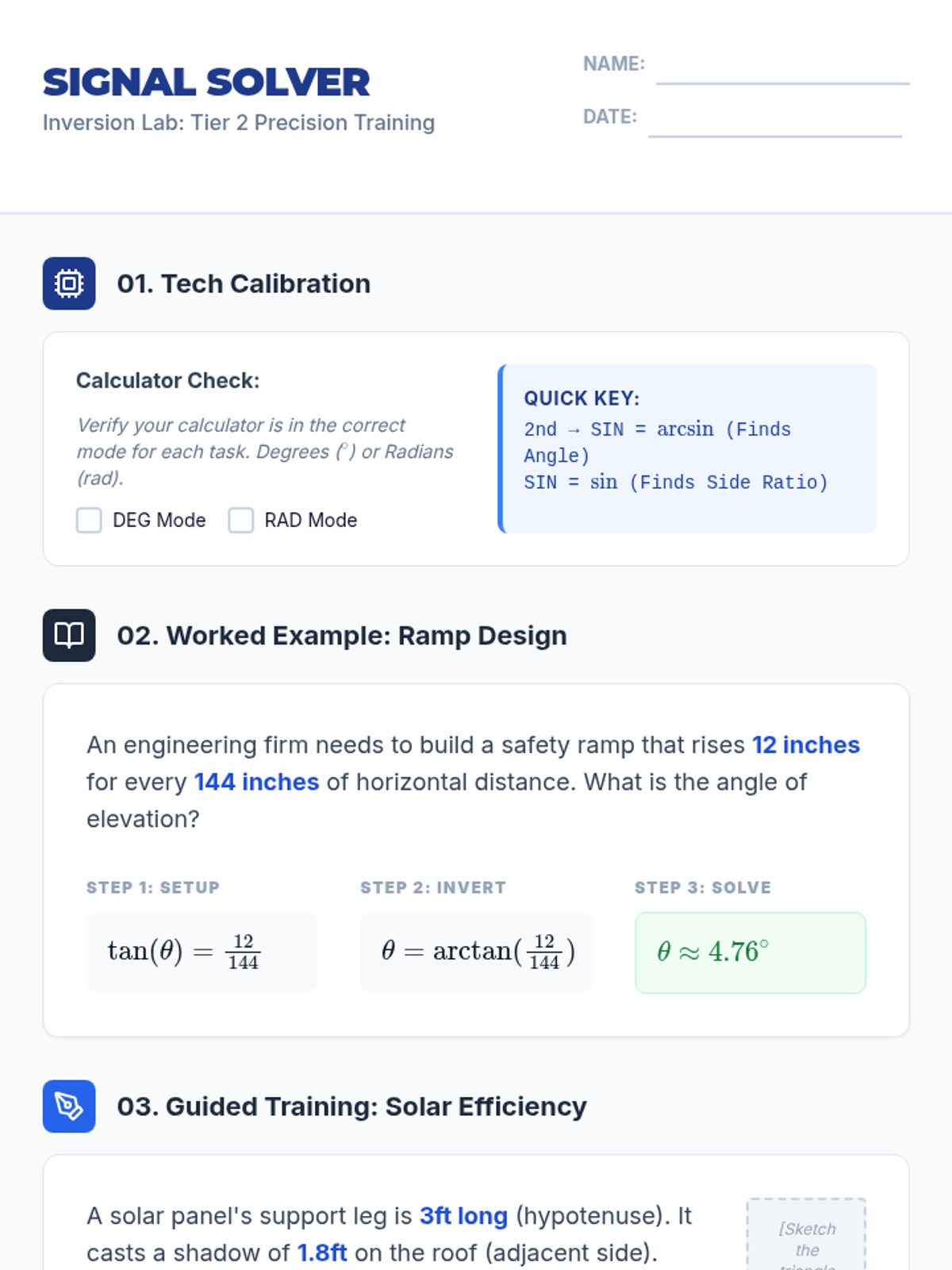
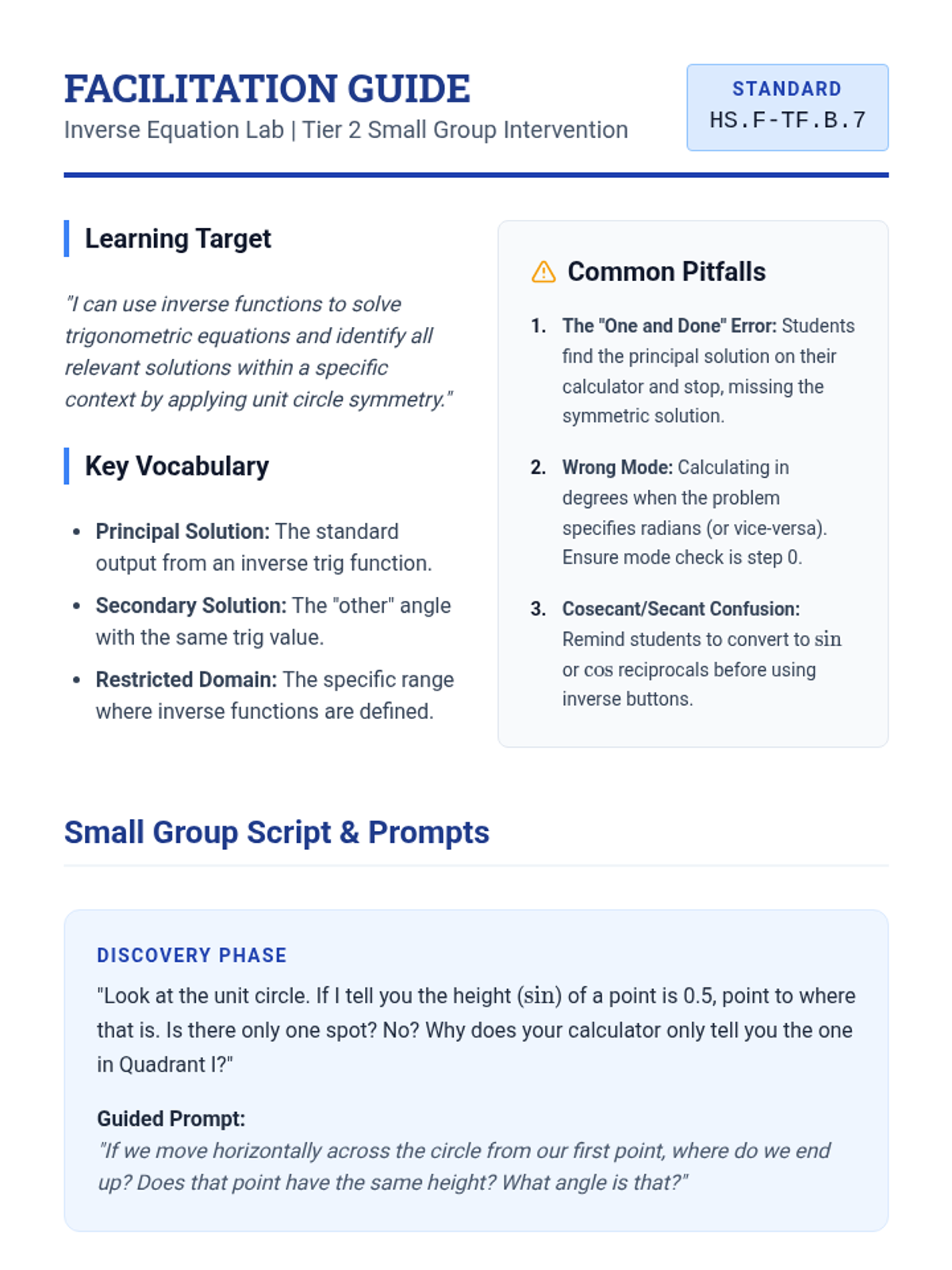
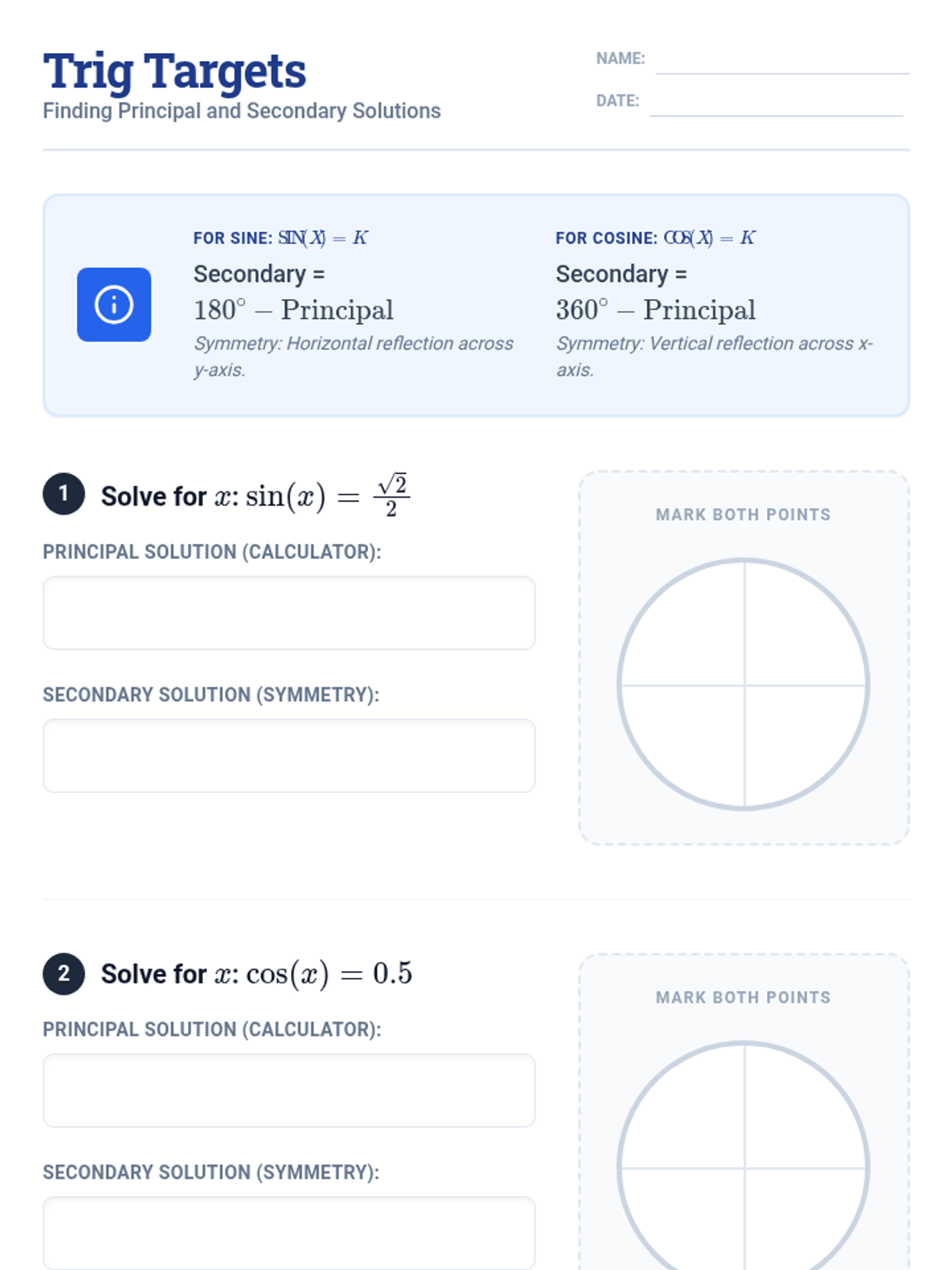
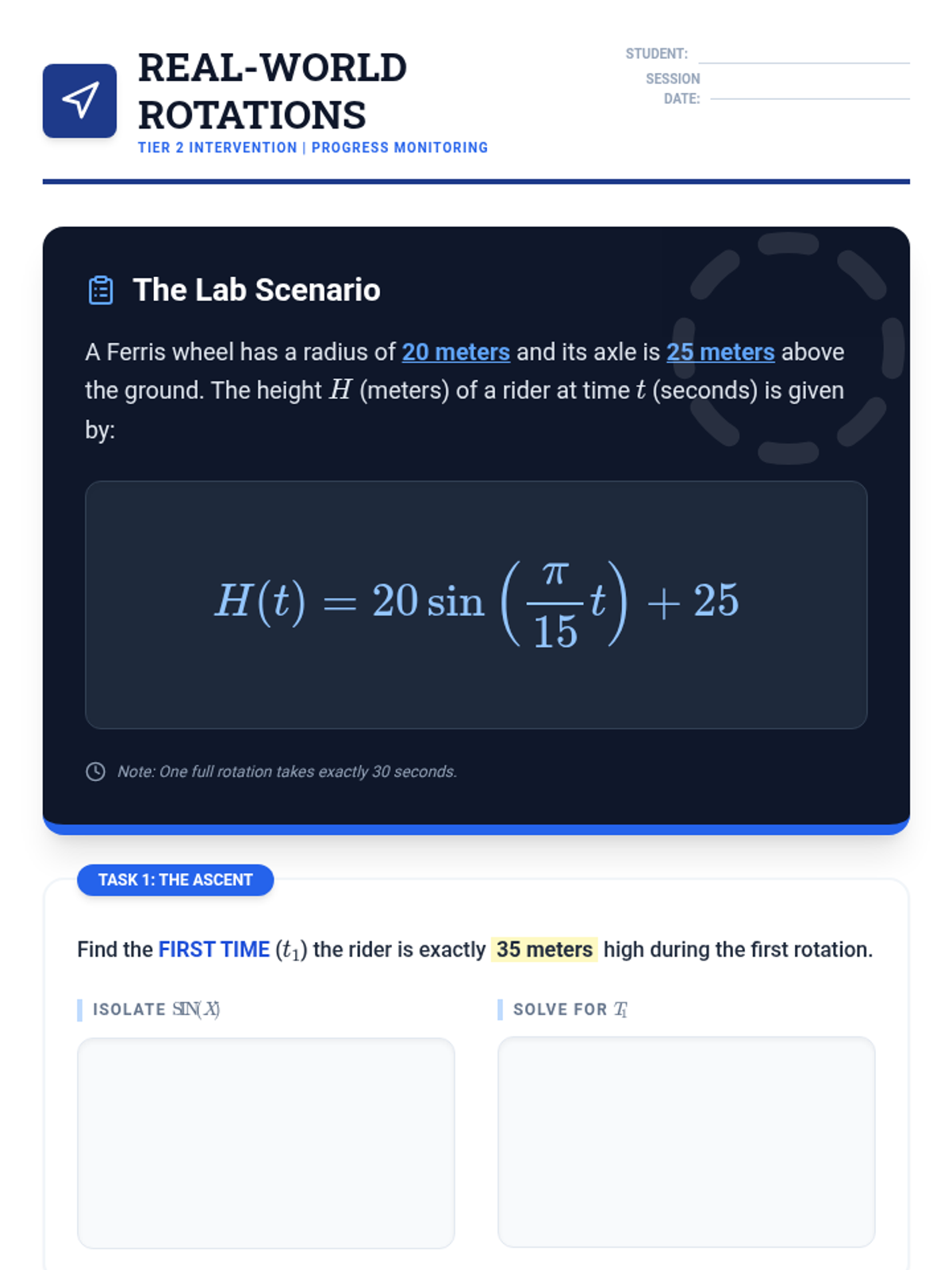
A targeted intervention sequence focused on mastering trigonometric equations through inverse functions, visual symmetry, and contextual application. This sequence provides Tier 2 support for students needing scaffolded paths to find both principal and secondary solutions.
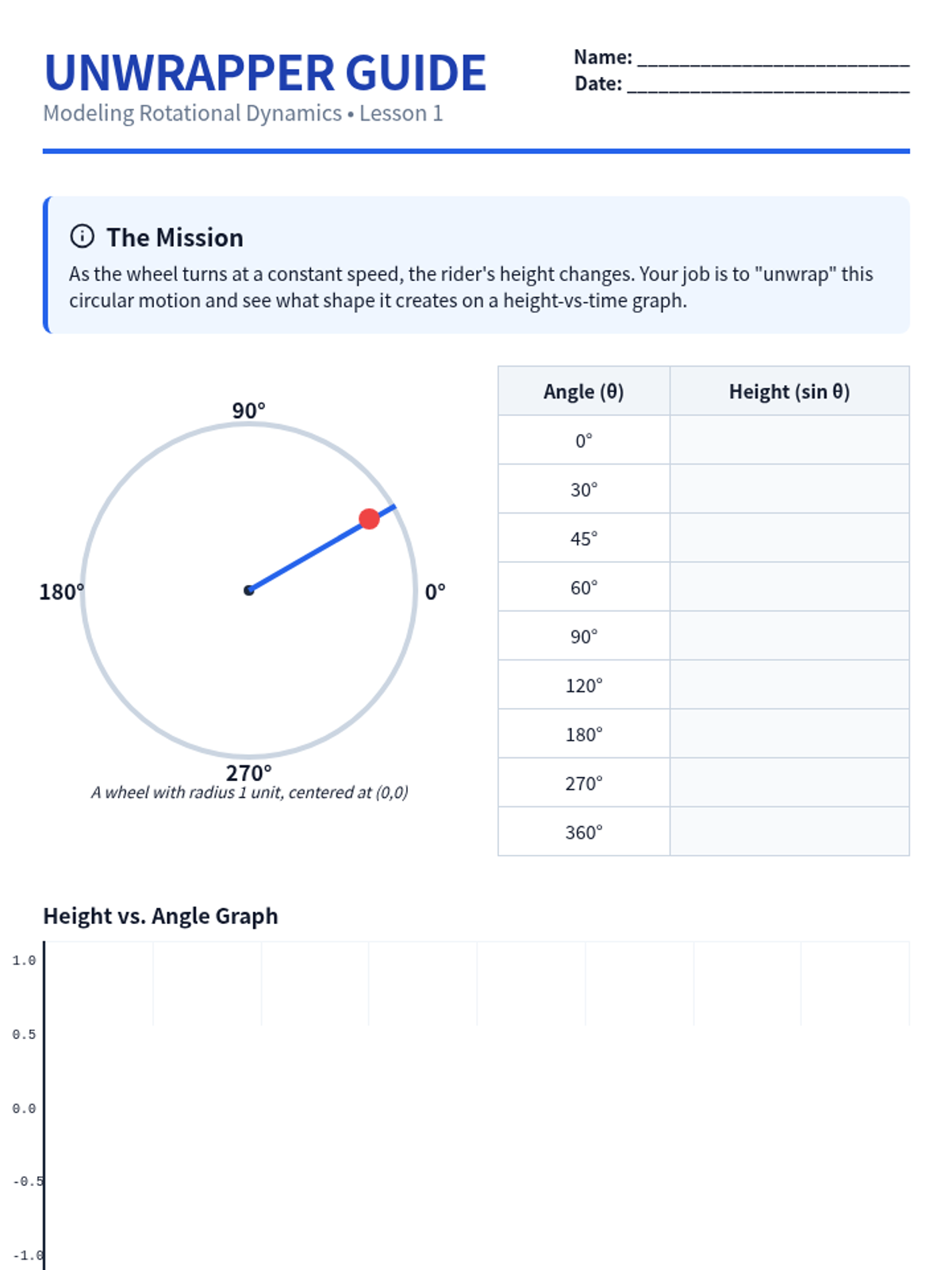
A 10th-grade trigonometry unit where students model circular motion using Ferris wheels, translating physical dimensions like radius, hub height, and speed into sine and cosine functions.
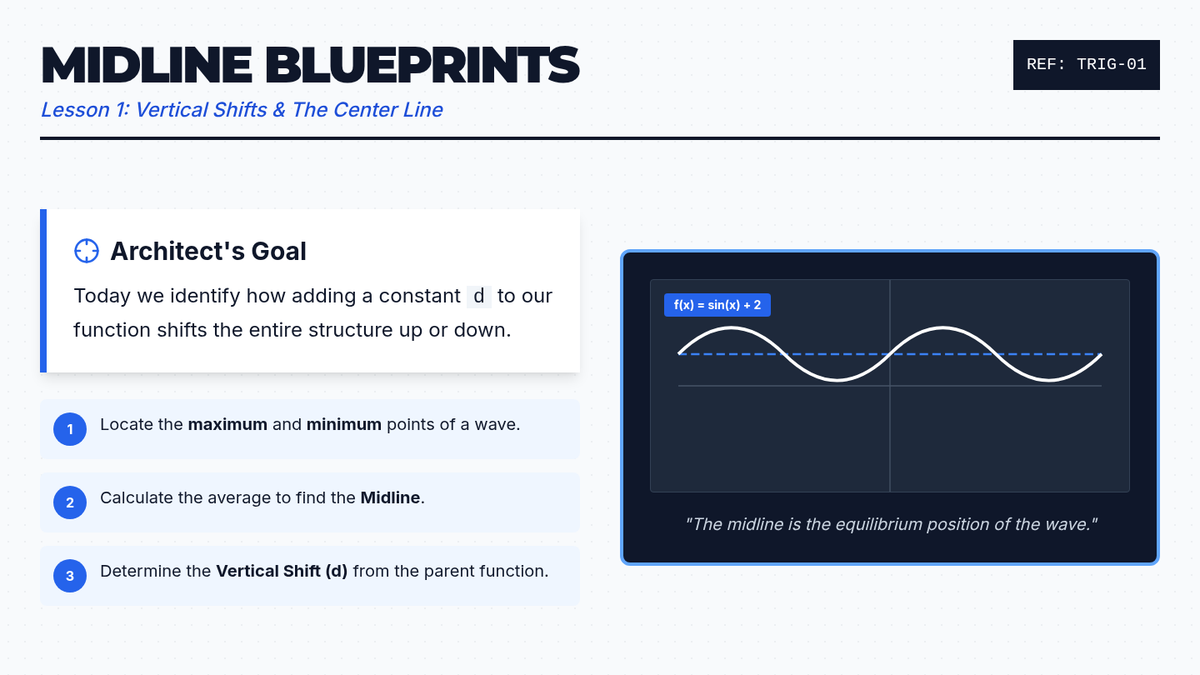
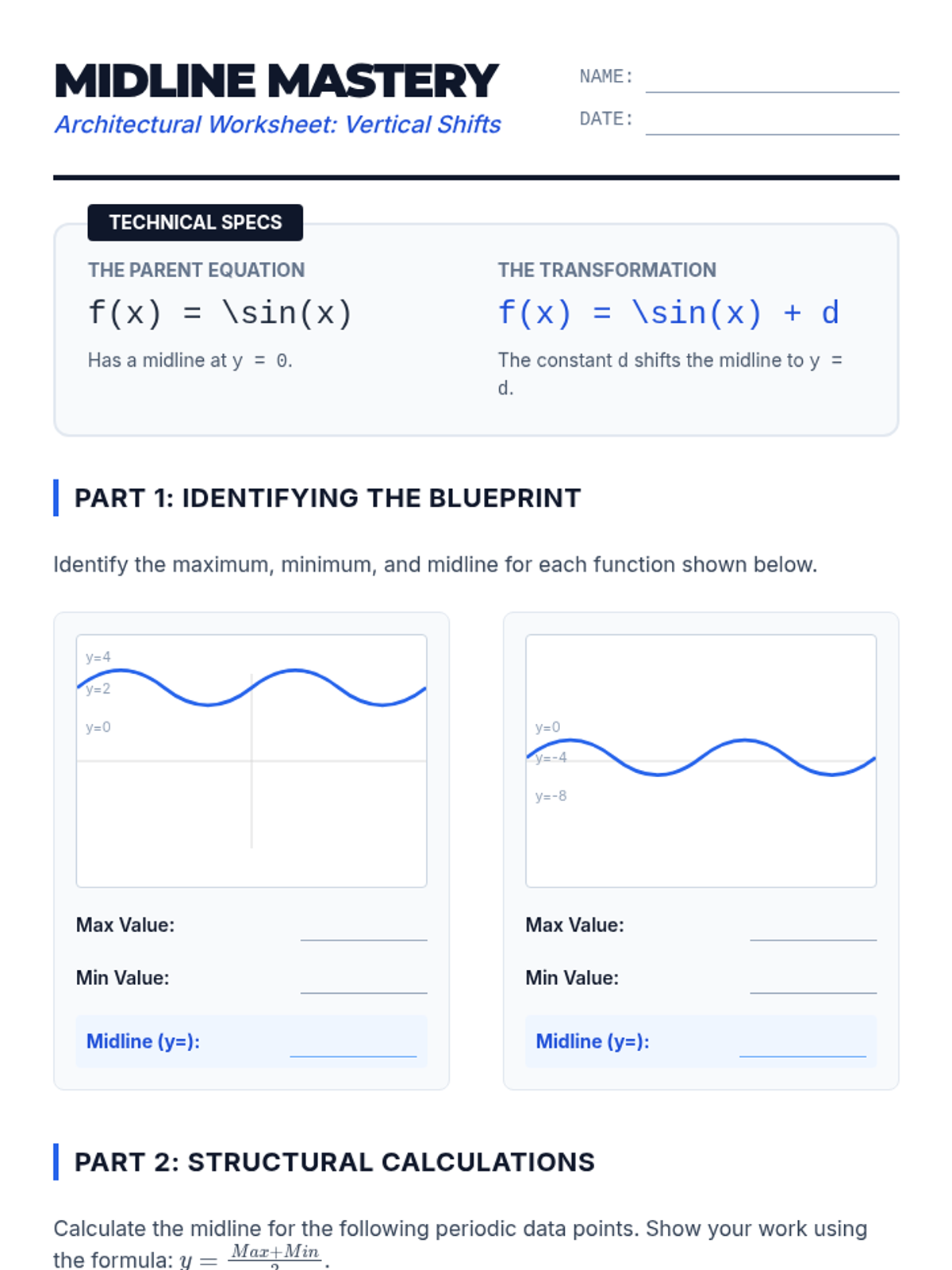
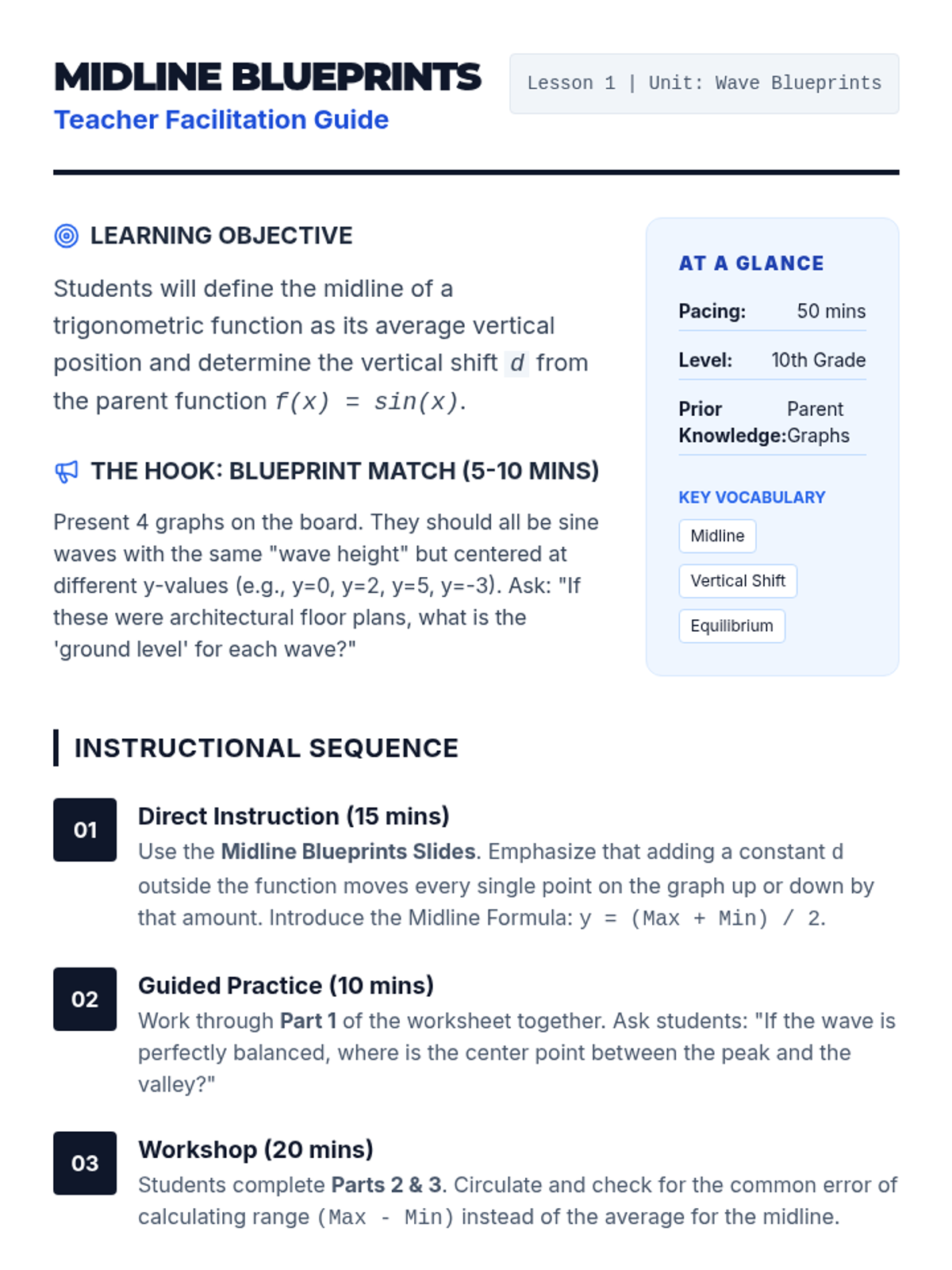
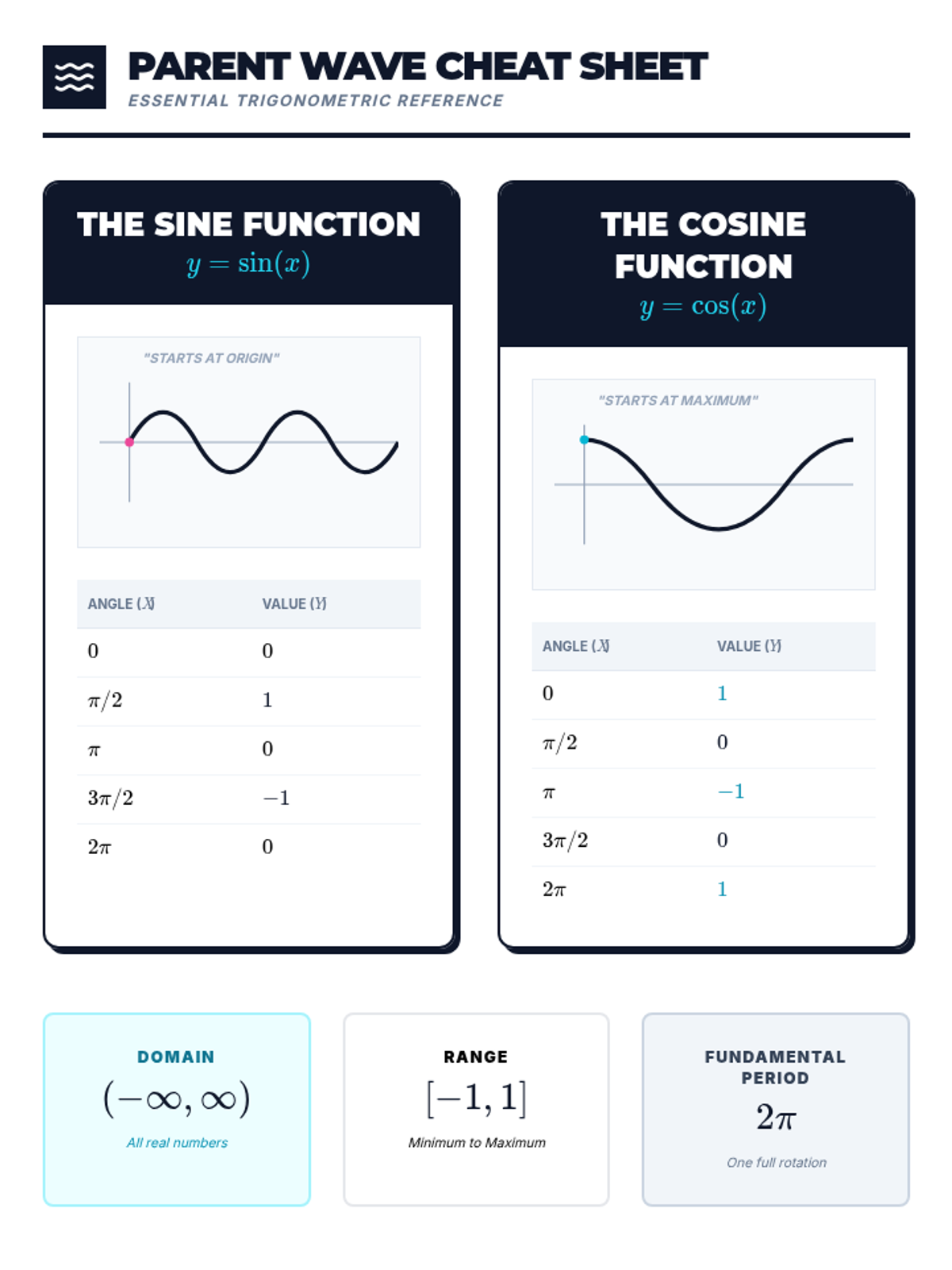
A comprehensive unit on trigonometric transformations, focusing on how parameters A, B, C, and D modify the parent sine and cosine functions. Students progress from simple vertical shifts to complex multi-parameter modeling.
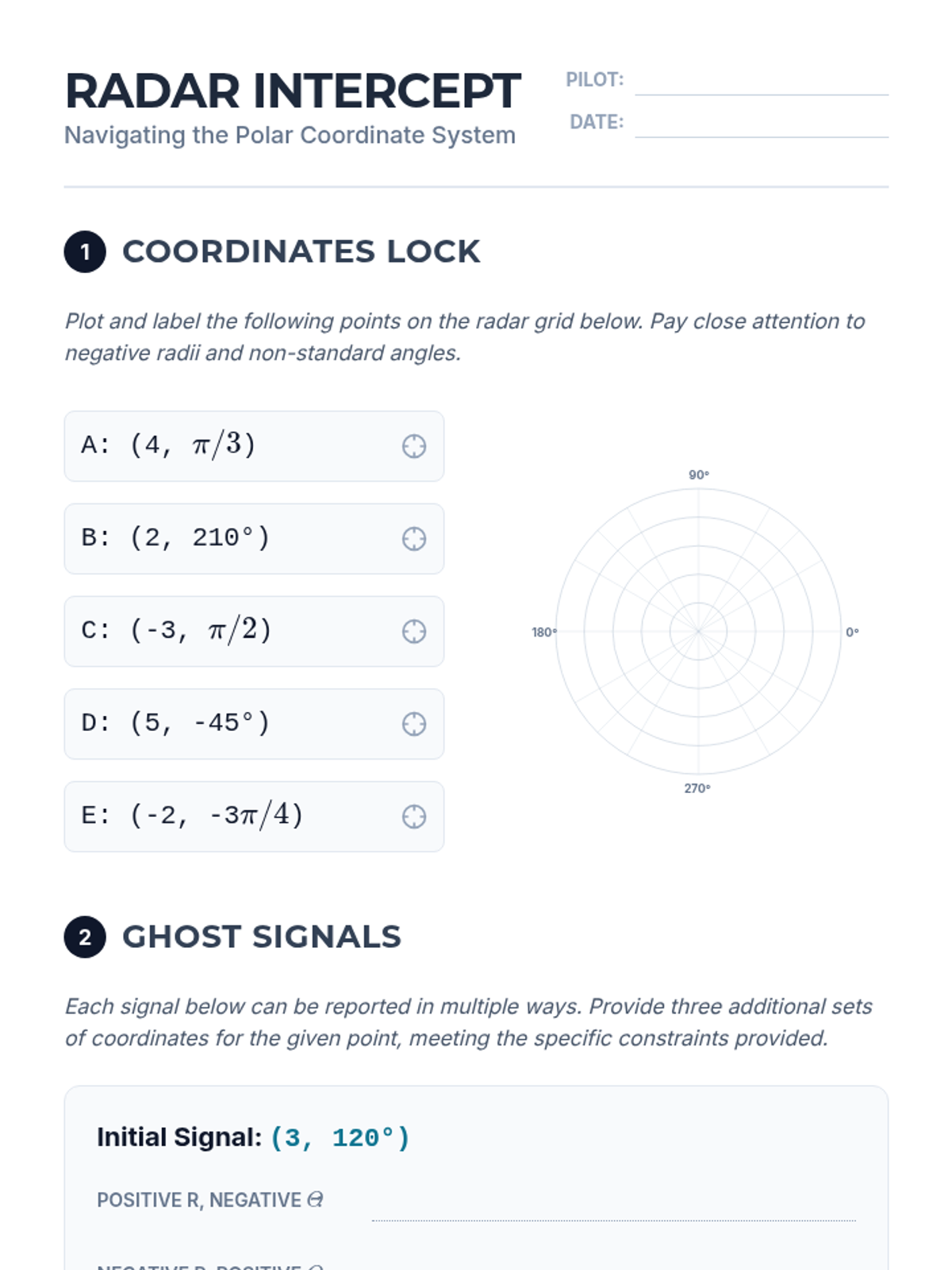
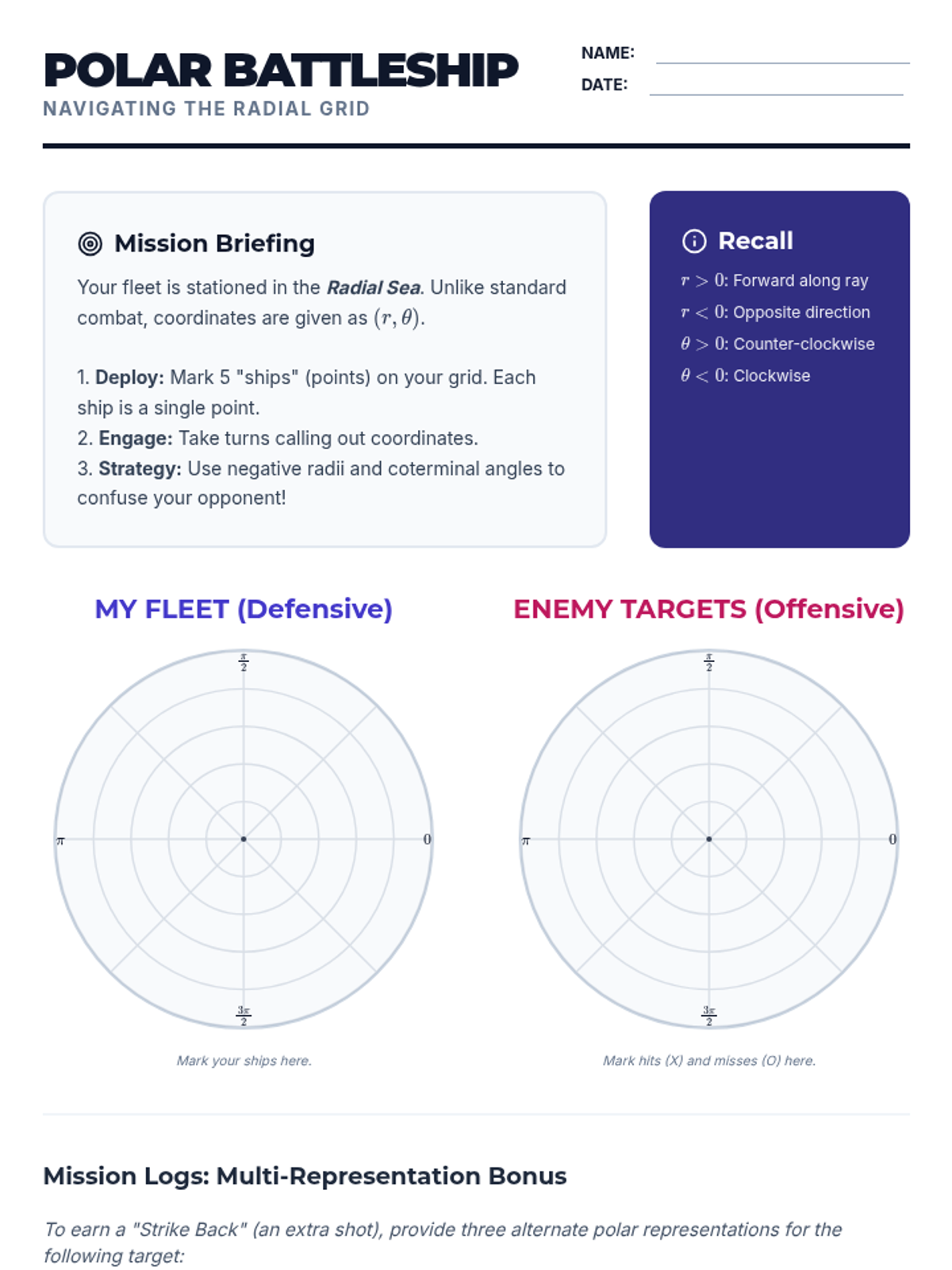
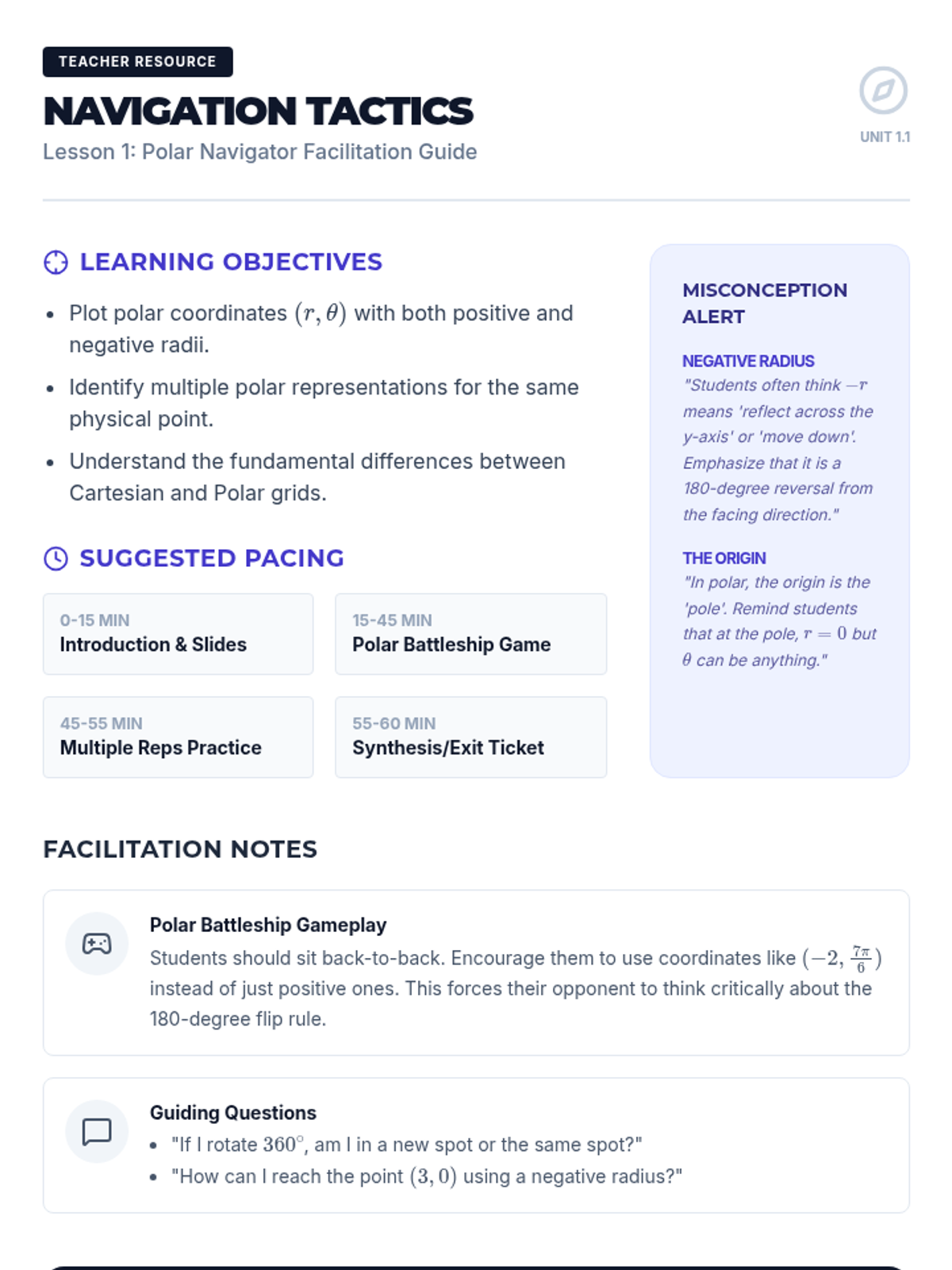
Students transition from Cartesian to polar coordinates, exploring the geometry of circular grids and the equations that define complex curves like roses and lima\u00e7ons. The unit covers plotting, conversion, and advanced graphing analysis with a focus on symmetry and intersection.
A comprehensive unit on polar coordinates and functions, moving from basic plotting to complex intersections and symmetry. Students explore the geometric beauty of curves like roses and lima\u00e7ons while mastering the algebraic conversions between rectangular and polar systems.
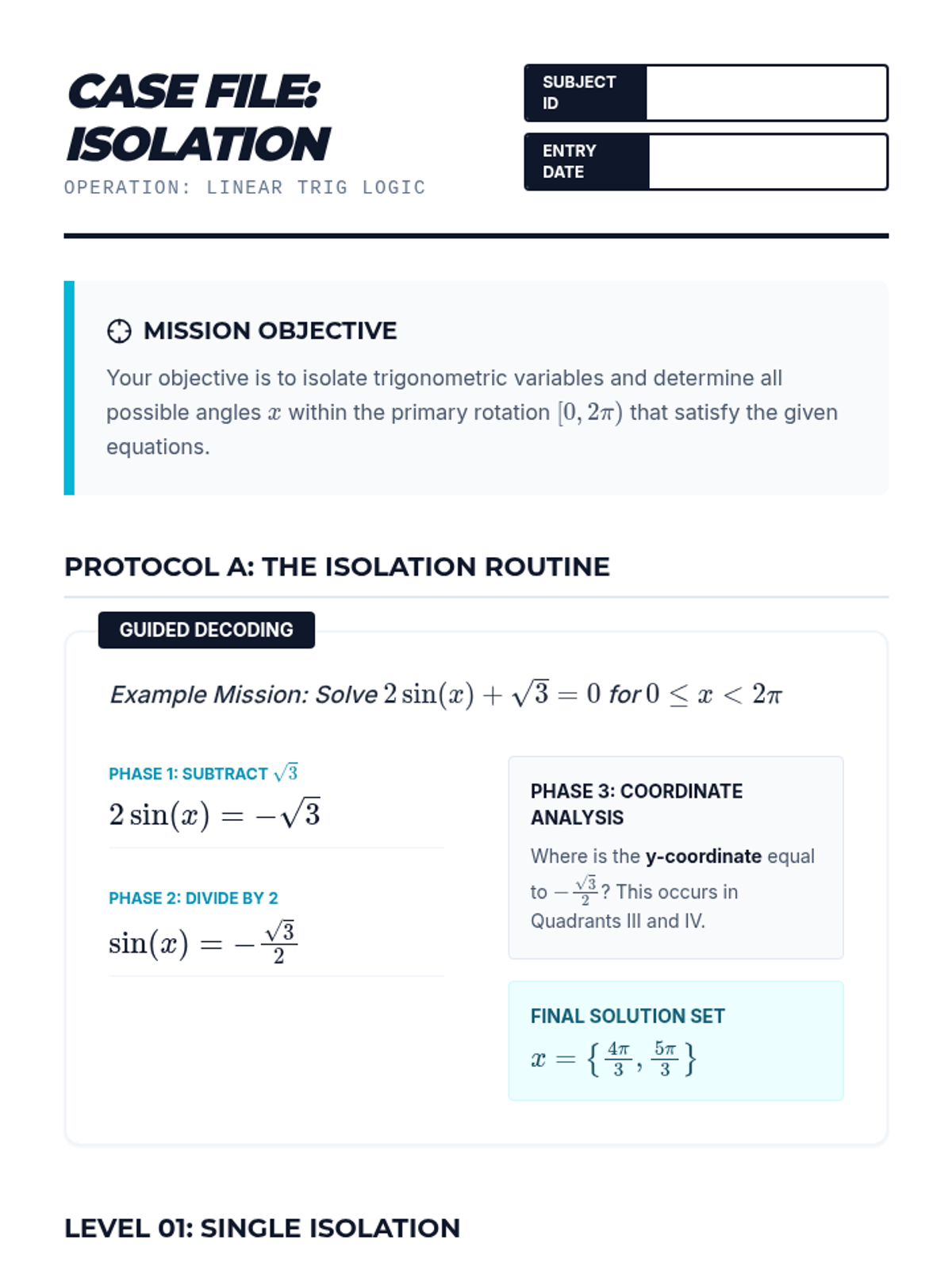
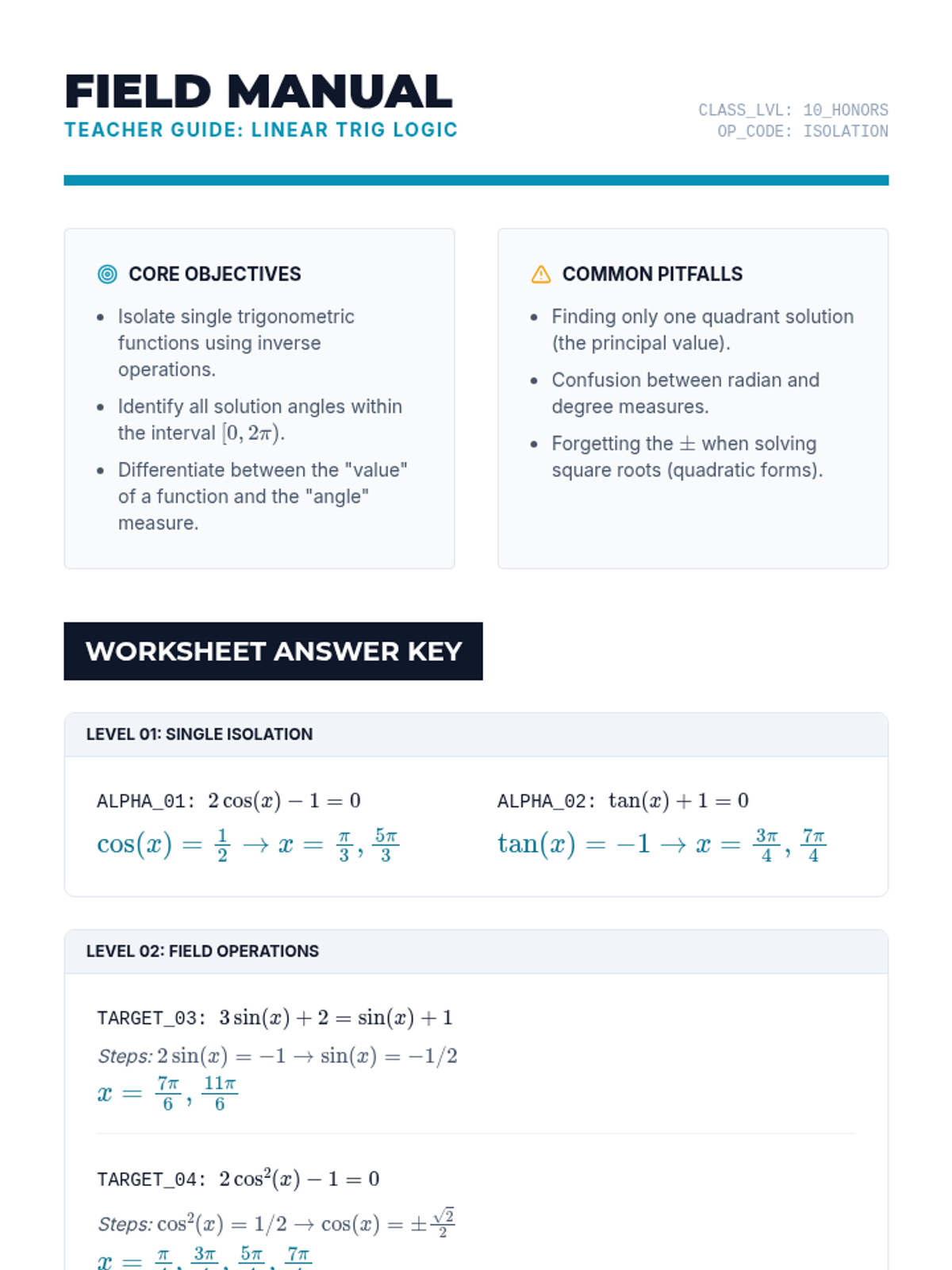
A comprehensive unit for 10th-grade trigonometry focused on solving conditional equations. Students move from linear isolation to advanced substitution using Pythagorean and multiple-angle identities, culminating in a themed escape room challenge.
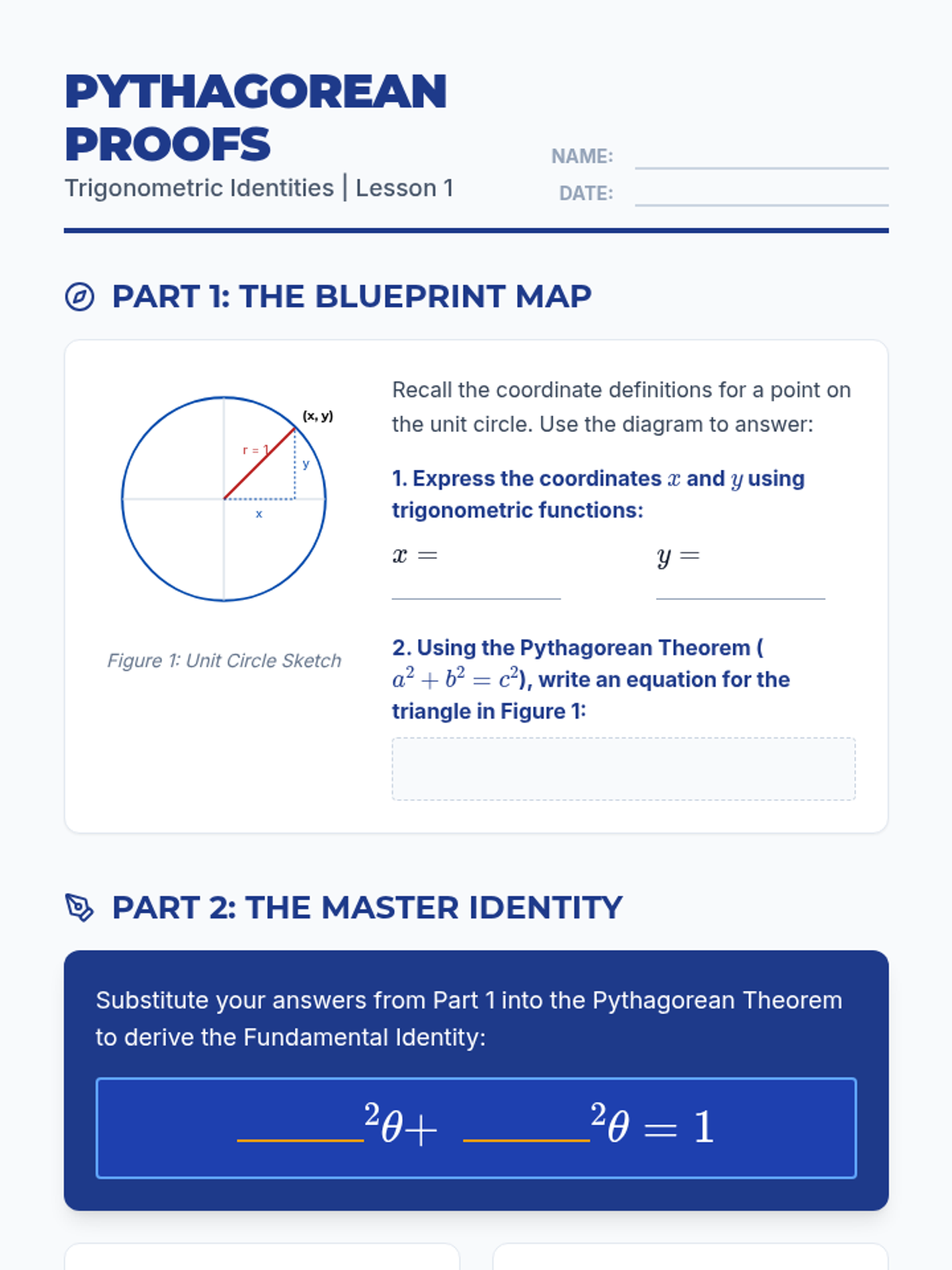
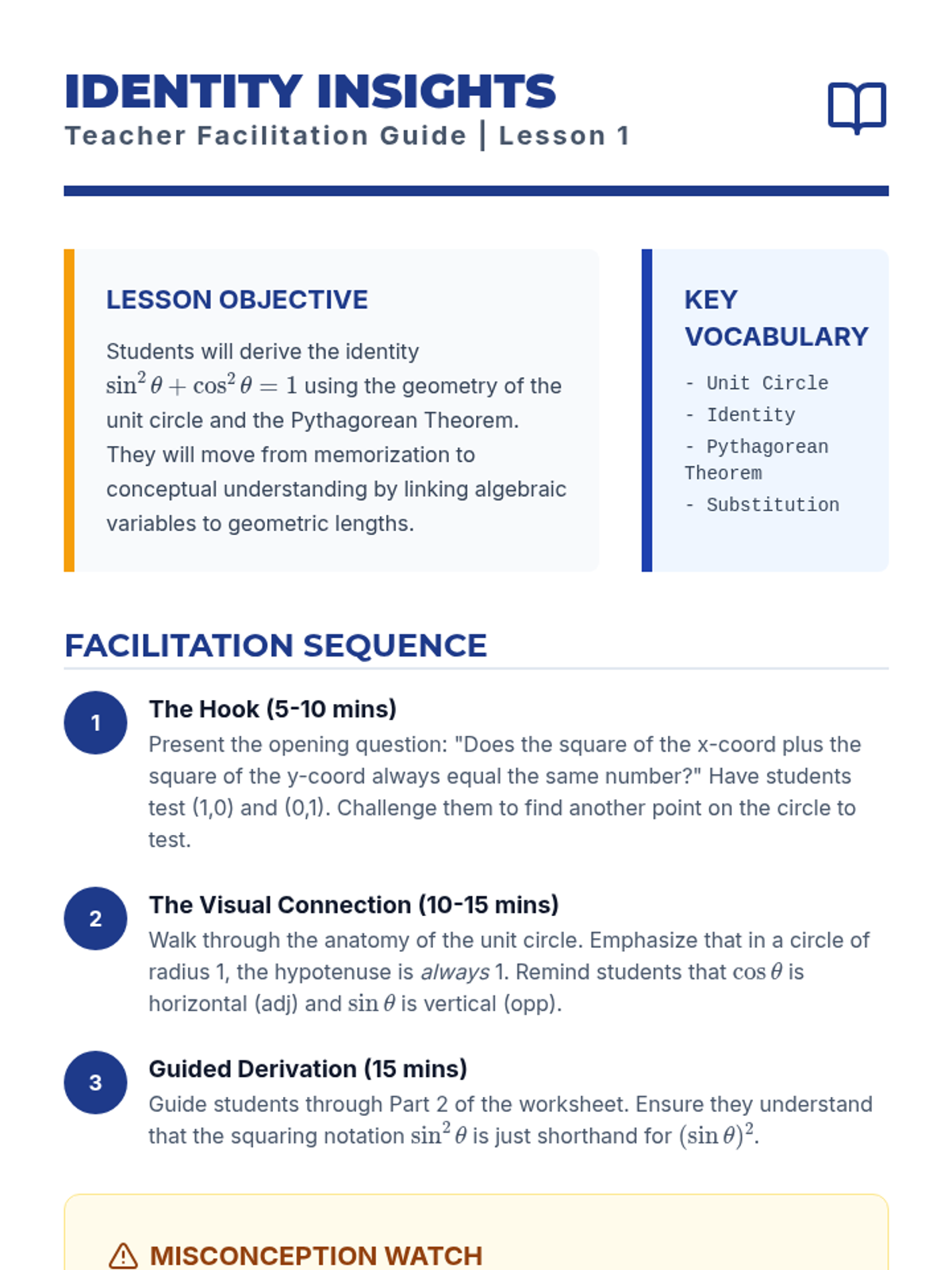
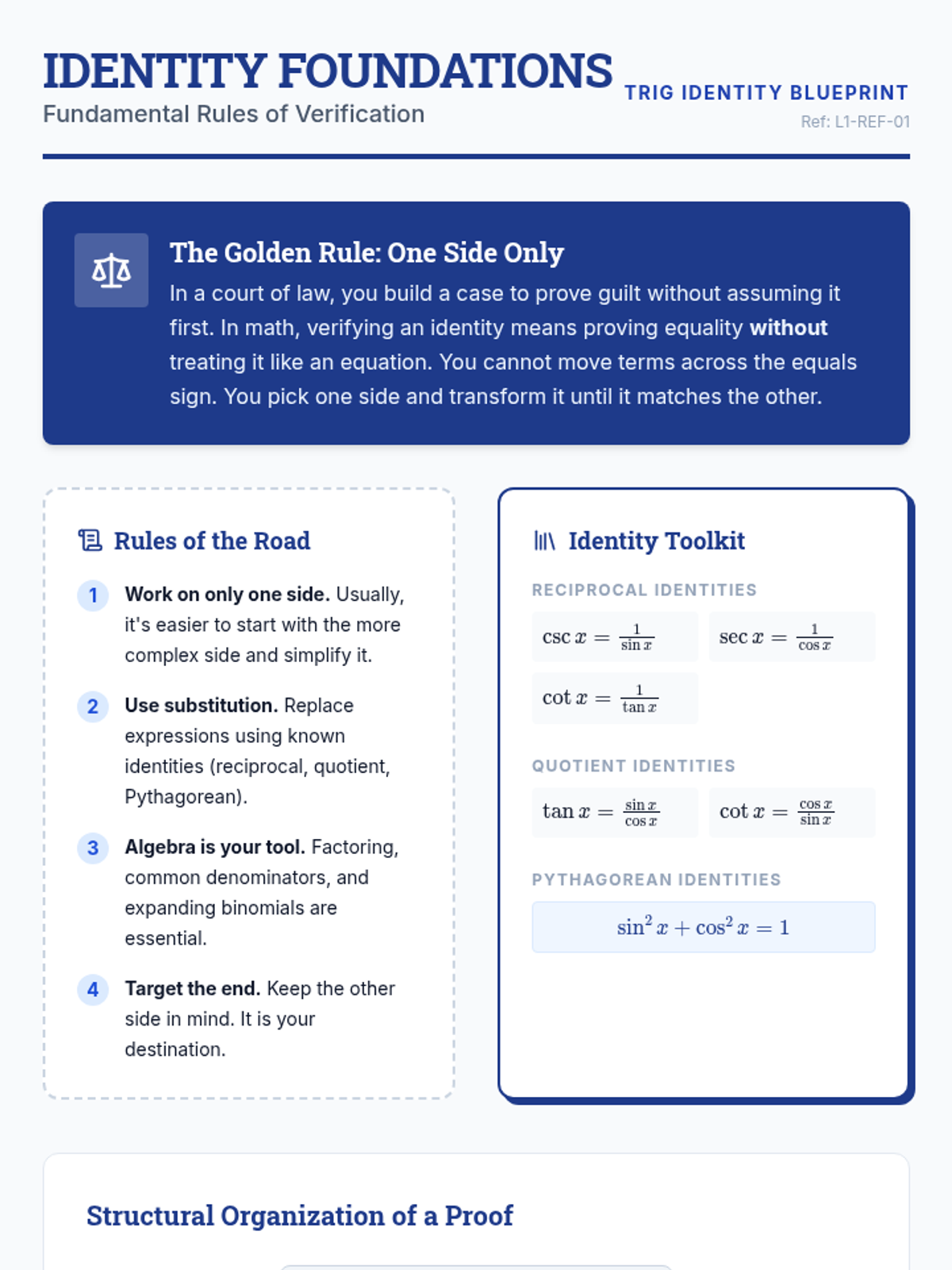
This inquiry-driven sequence connects the geometric definitions of the unit circle to algebraic trigonometric identities. Students derive Pythagorean, reciprocal, and quotient identities through visualization and algebraic proof to foster deep conceptual understanding.
A comprehensive unit on graphing trigonometric functions, transitioning from the unit circle to complex transformations. Students explore amplitude, period, phase shifts, and vertical translations for sine, cosine, and tangent functions.
This sequence explores the relationship between angular measurement and spatial geometry, moving from radian-based circle analysis to 3D volume derivation using trigonometry, Cavalieri's Principle, and solids of revolution. Students apply these concepts to high-level engineering and architectural contexts.
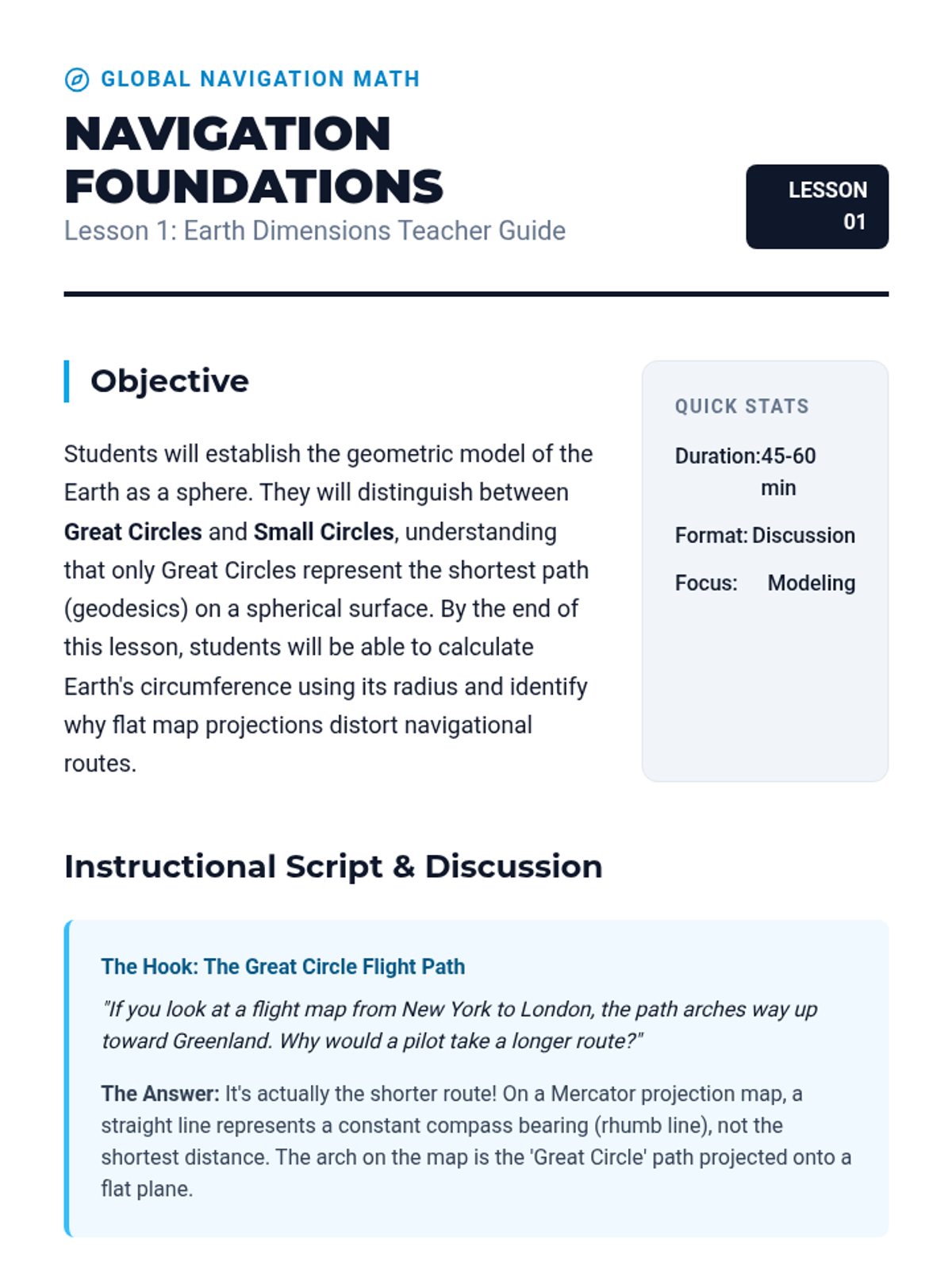
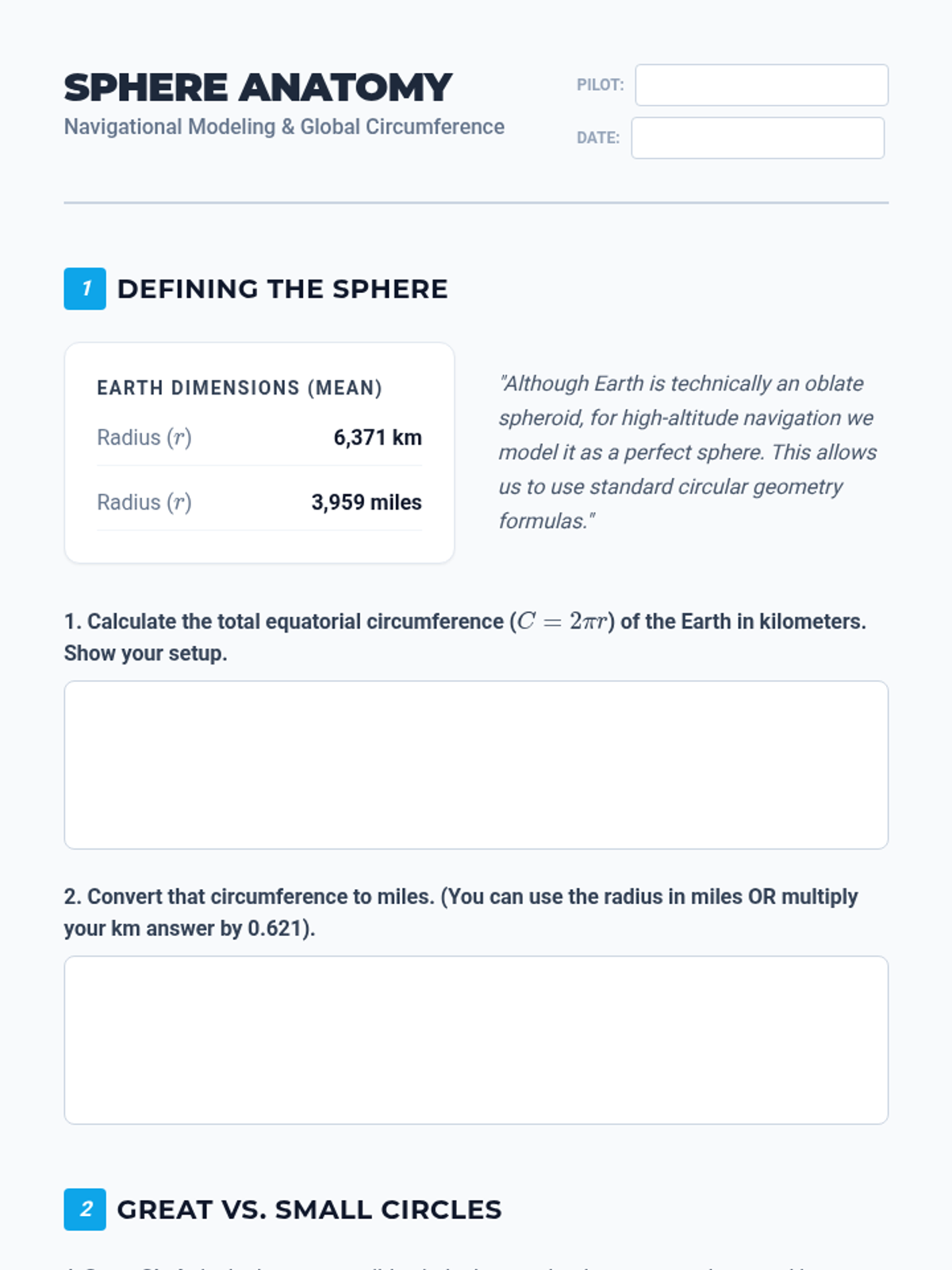
This sequence applies circular geometry to a global scale, introducing students to spherical geometry concepts used in navigation and aviation. Students treat the Earth as a sphere and use arc length formulas to calculate 'Great Circle' distances between cities, concluding with a flight path simulation.
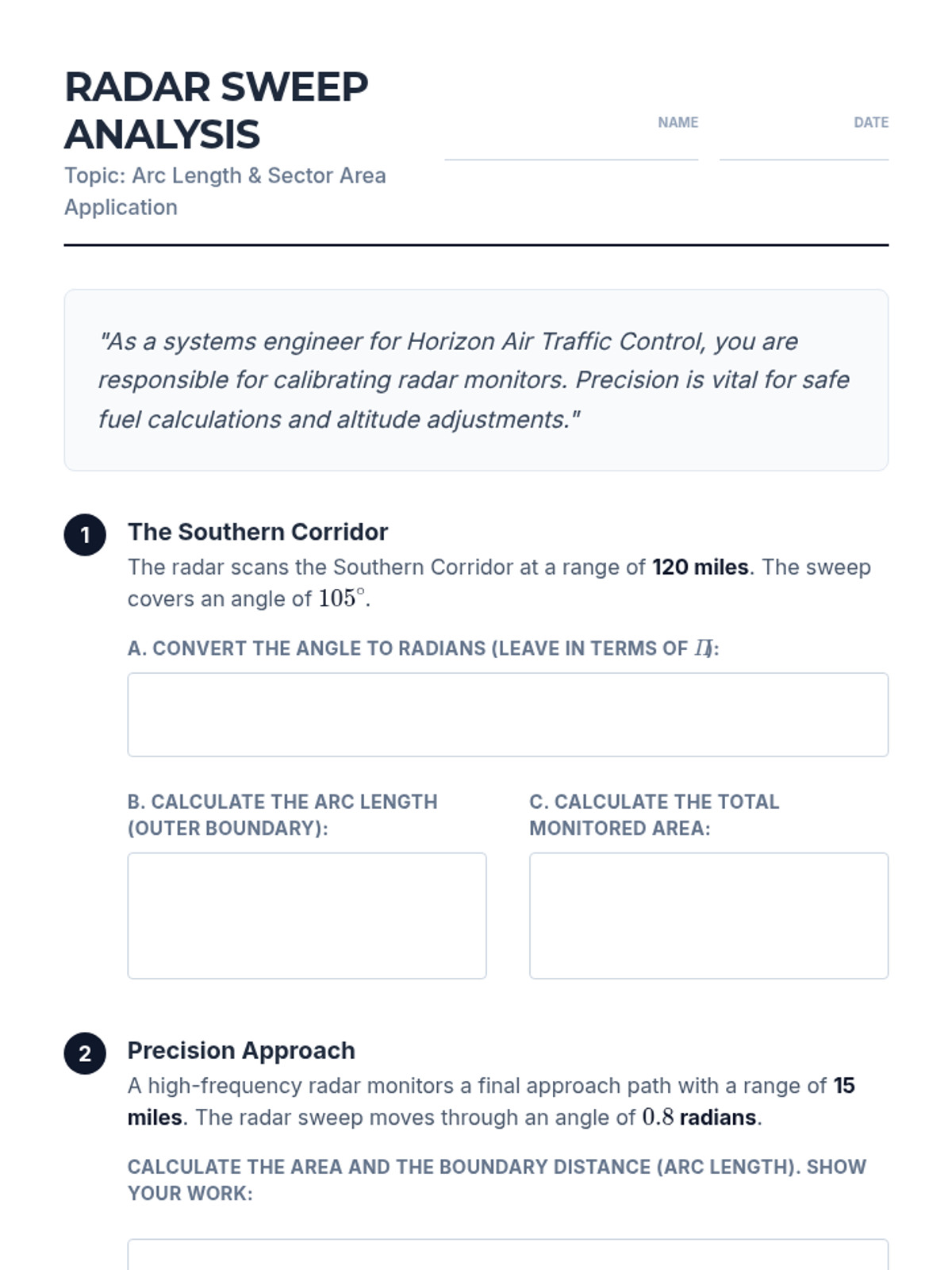
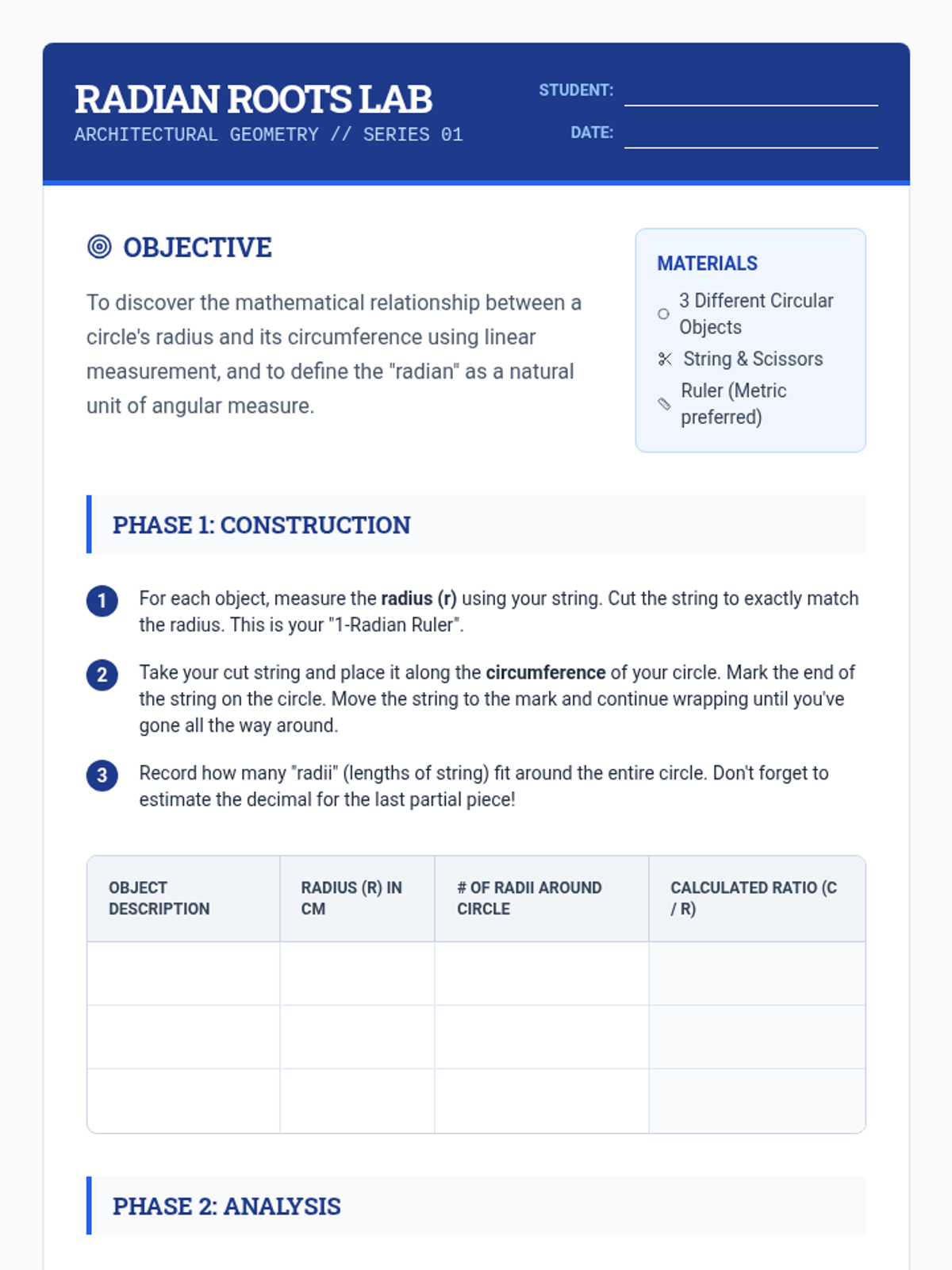
This sequence transitions 10th-grade students from degree-based measurements to the radian system, focusing on the conceptual definition of a radian and its practical application in calculating arc lengths and sector areas through simplified formulas.
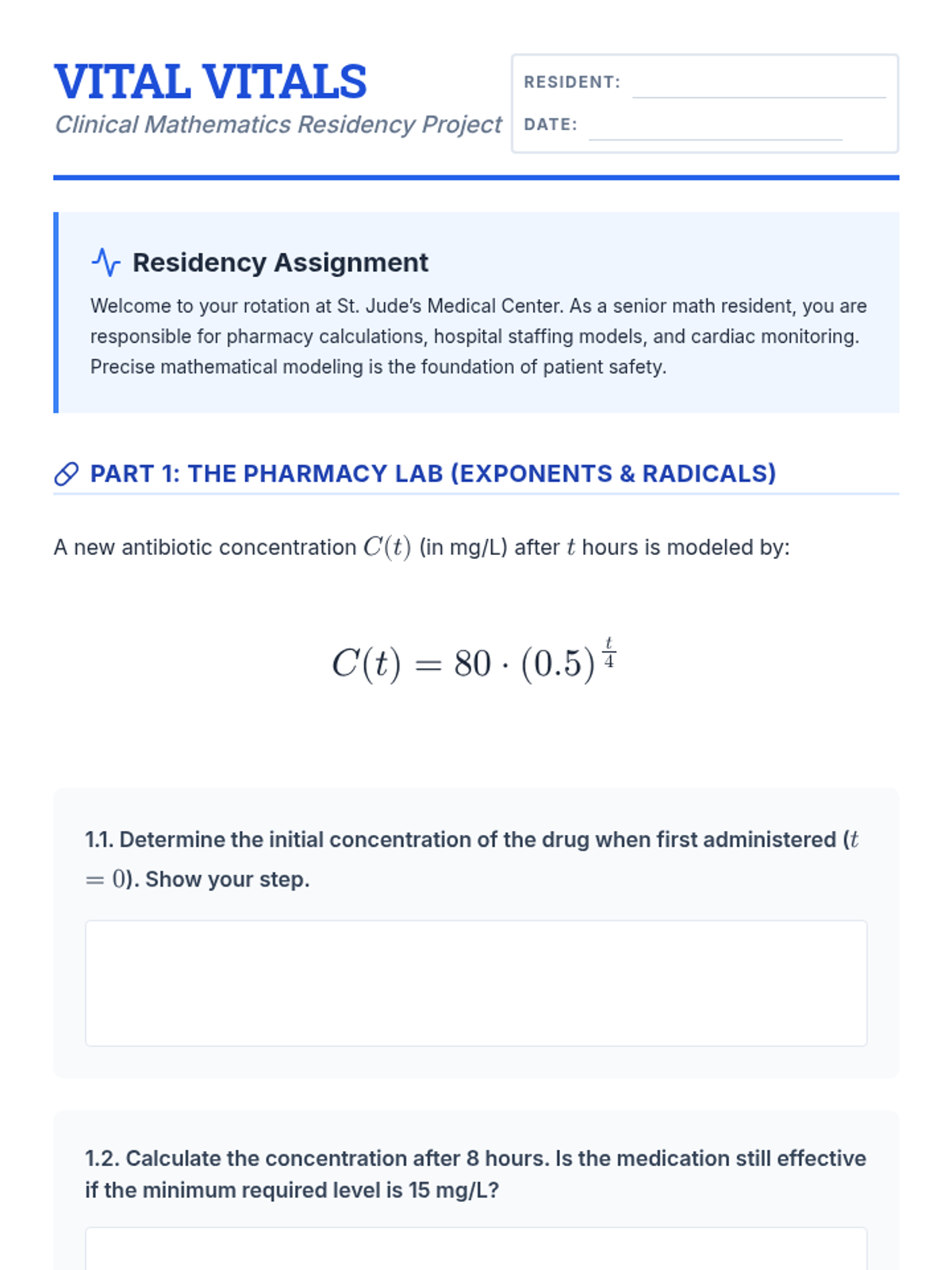
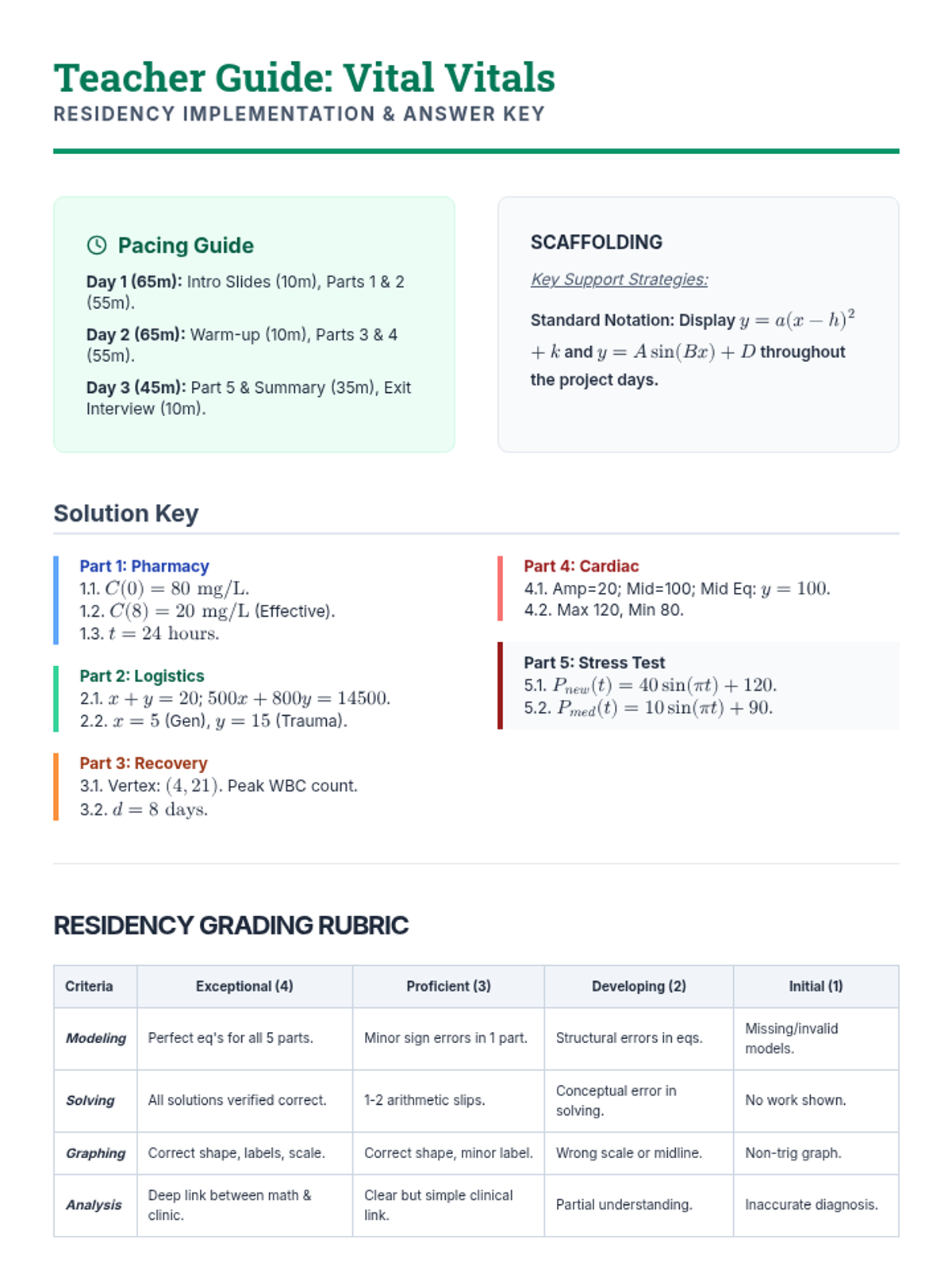
A 3-day healthcare-themed project for remedial precalculus students. It covers algebra 2 fundamentals, systems of equations, and introductory trigonometric transformations within clinical contexts.
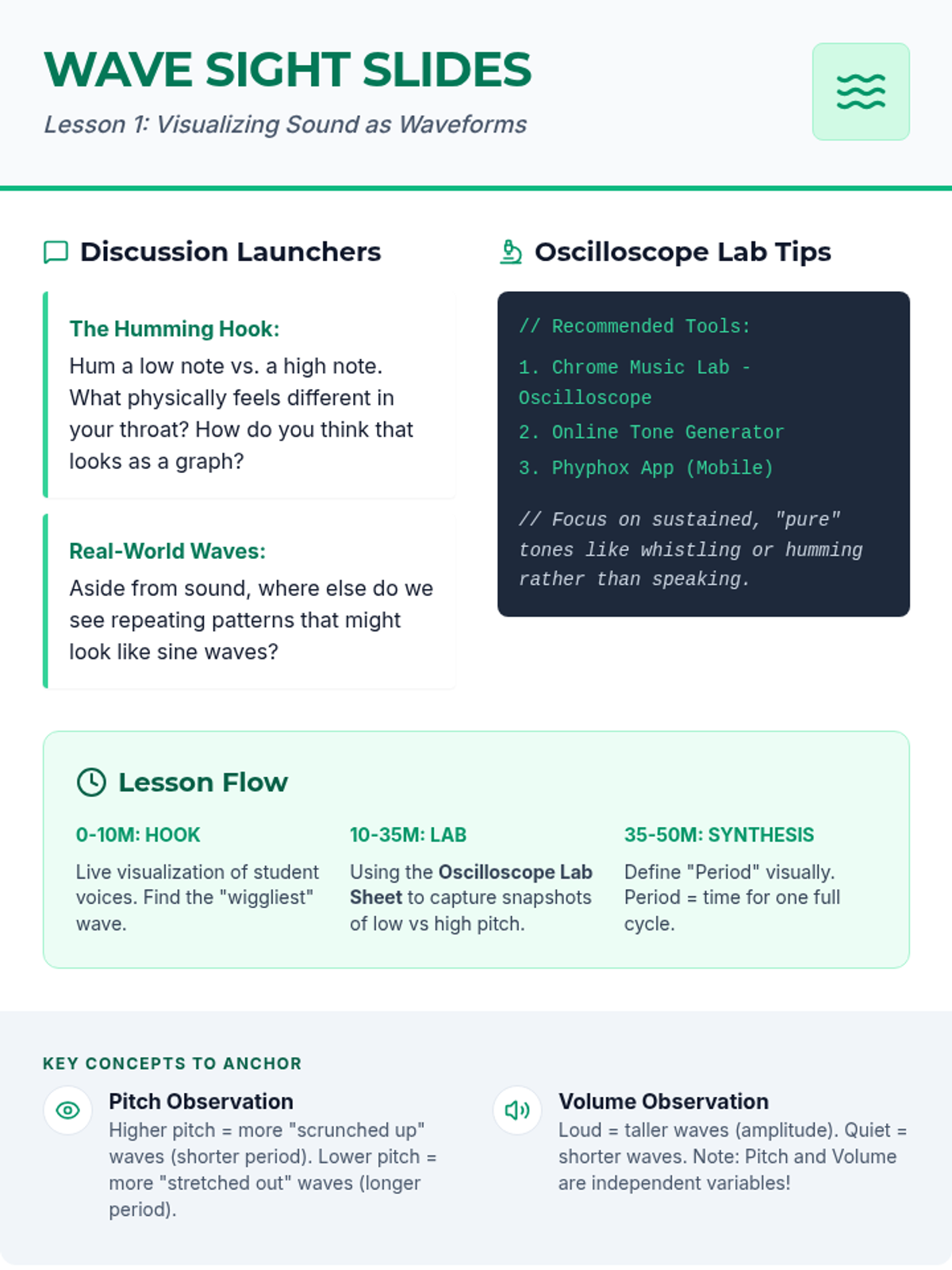
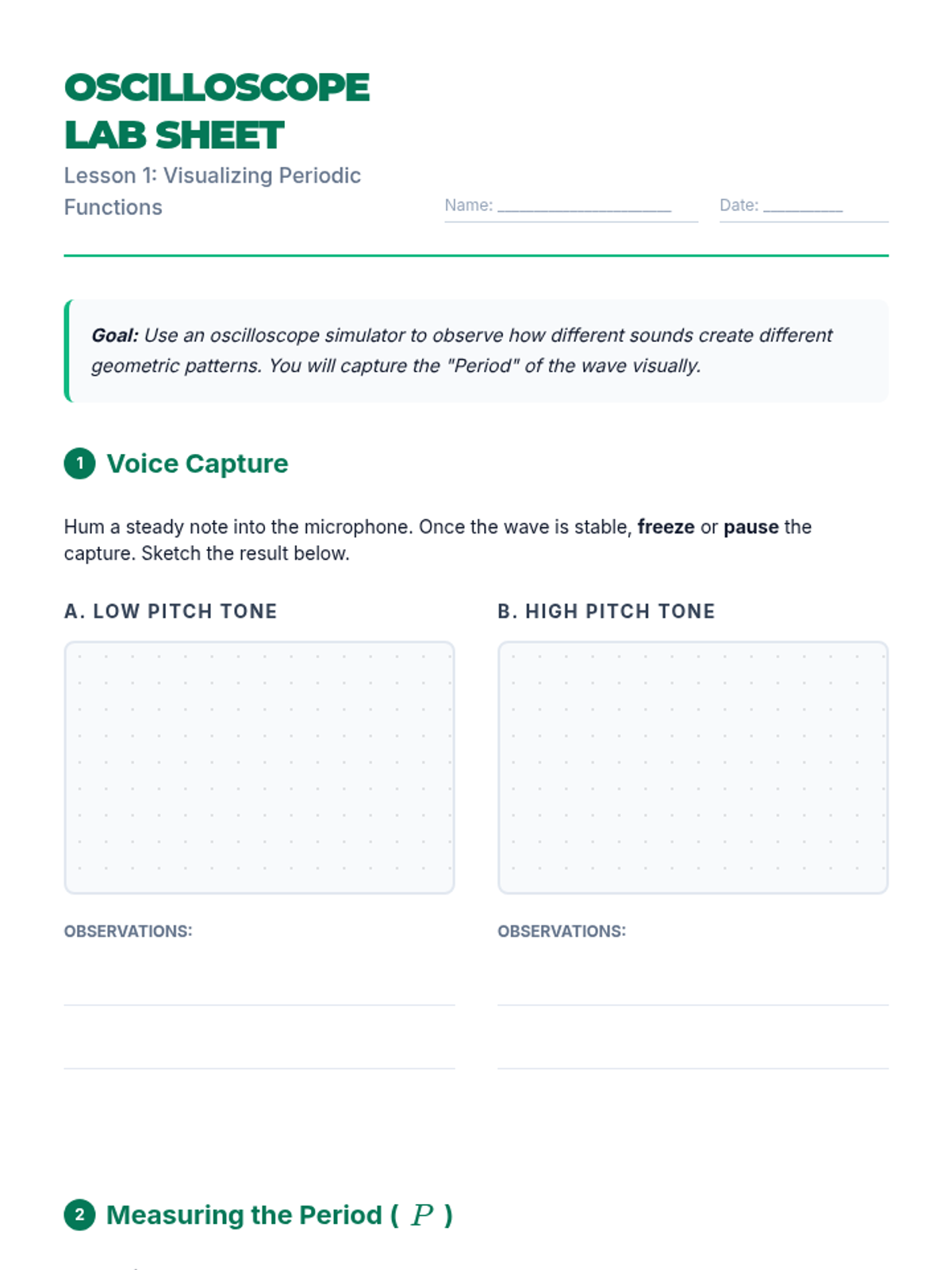
A high school trigonometry sequence that uses the physics of sound waves to teach modeling with trigonometric functions. Students explore pitch as frequency, volume as amplitude, and the superposition of waves to create harmonies and digital tones.
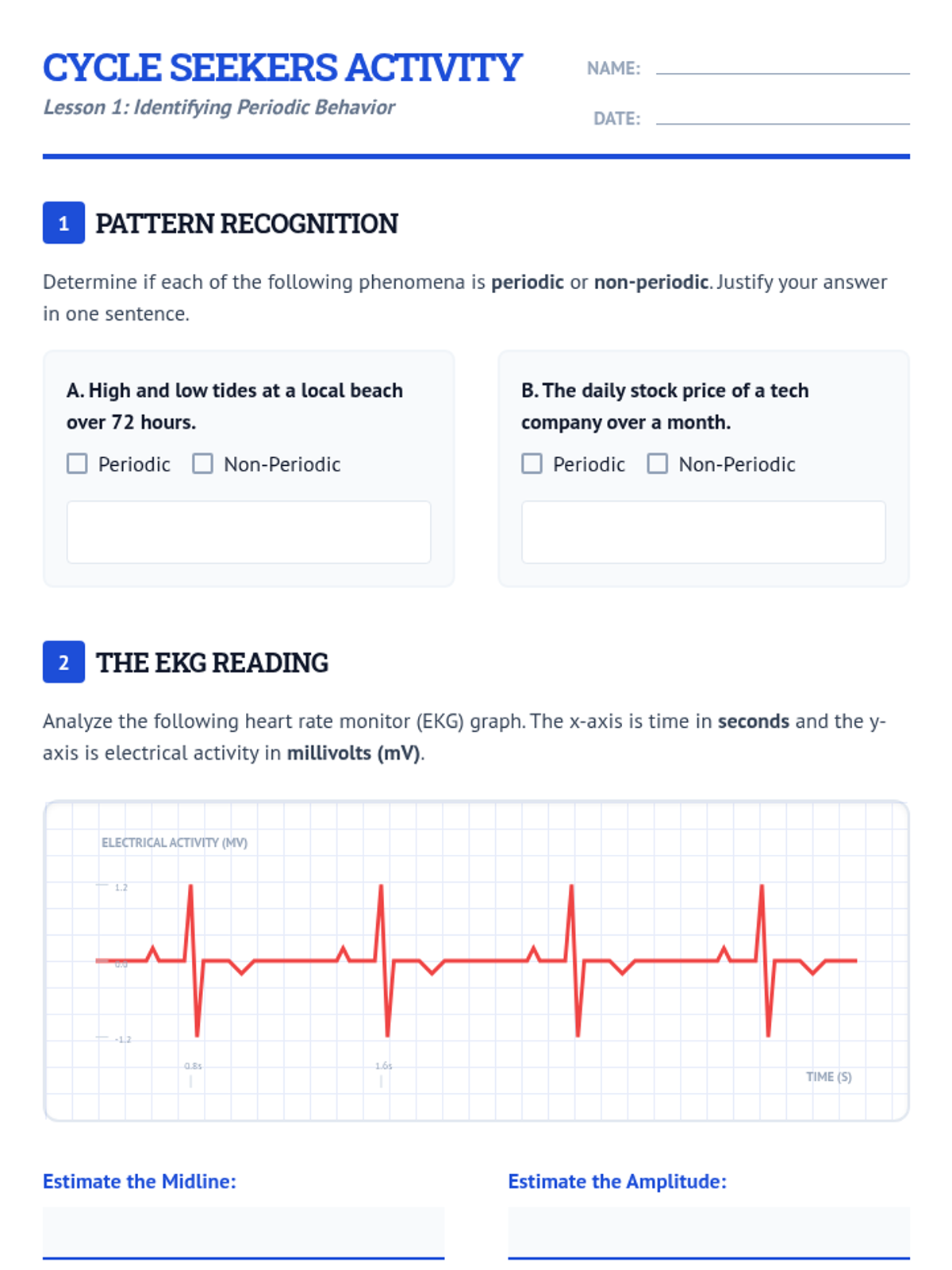
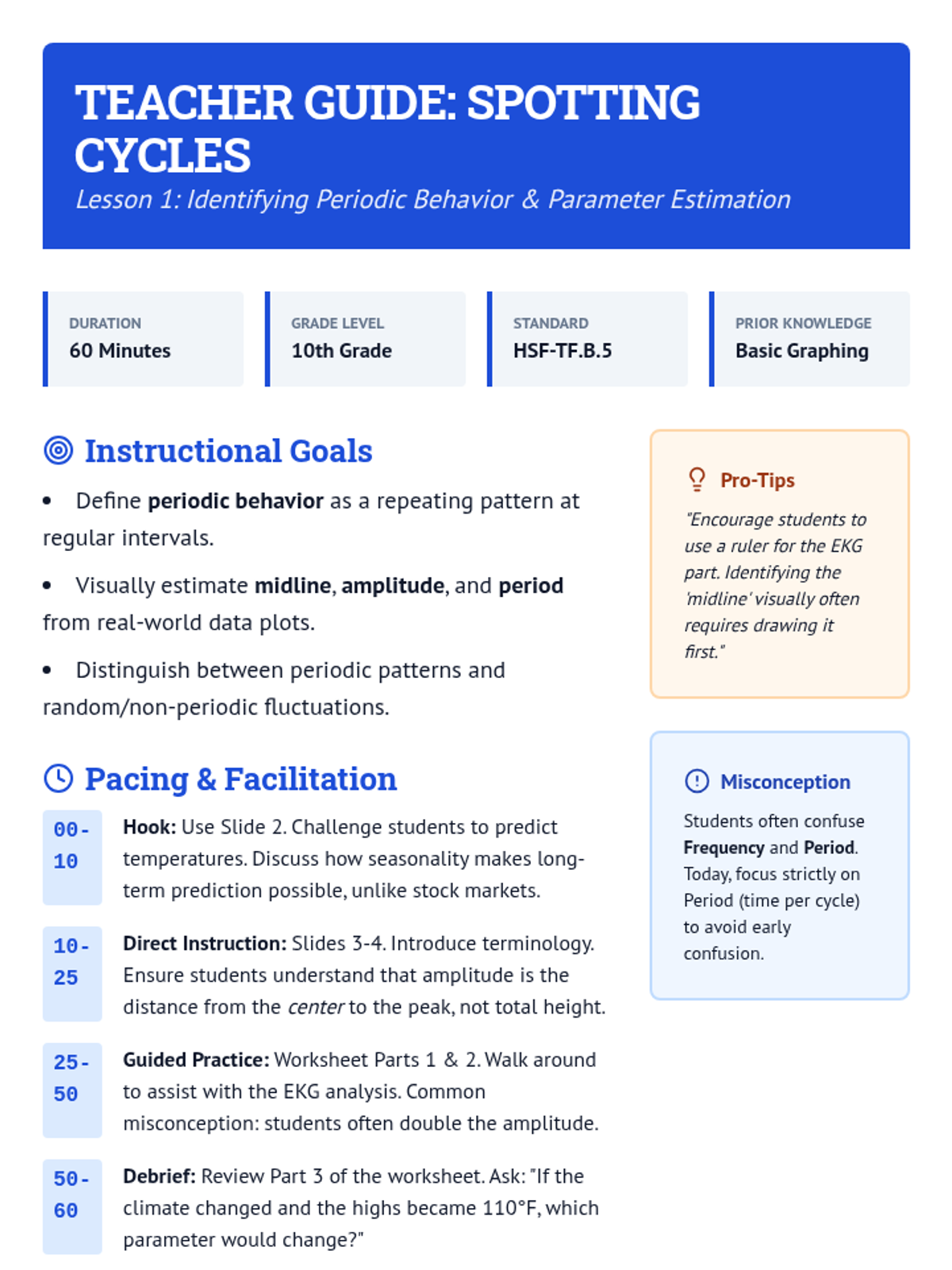
A comprehensive unit on modeling real-world periodic phenomena using trigonometric functions across physics, biology, and astronomy. Students master identifying amplitude, midline, and period from contextual data to build and solve predictive equations.
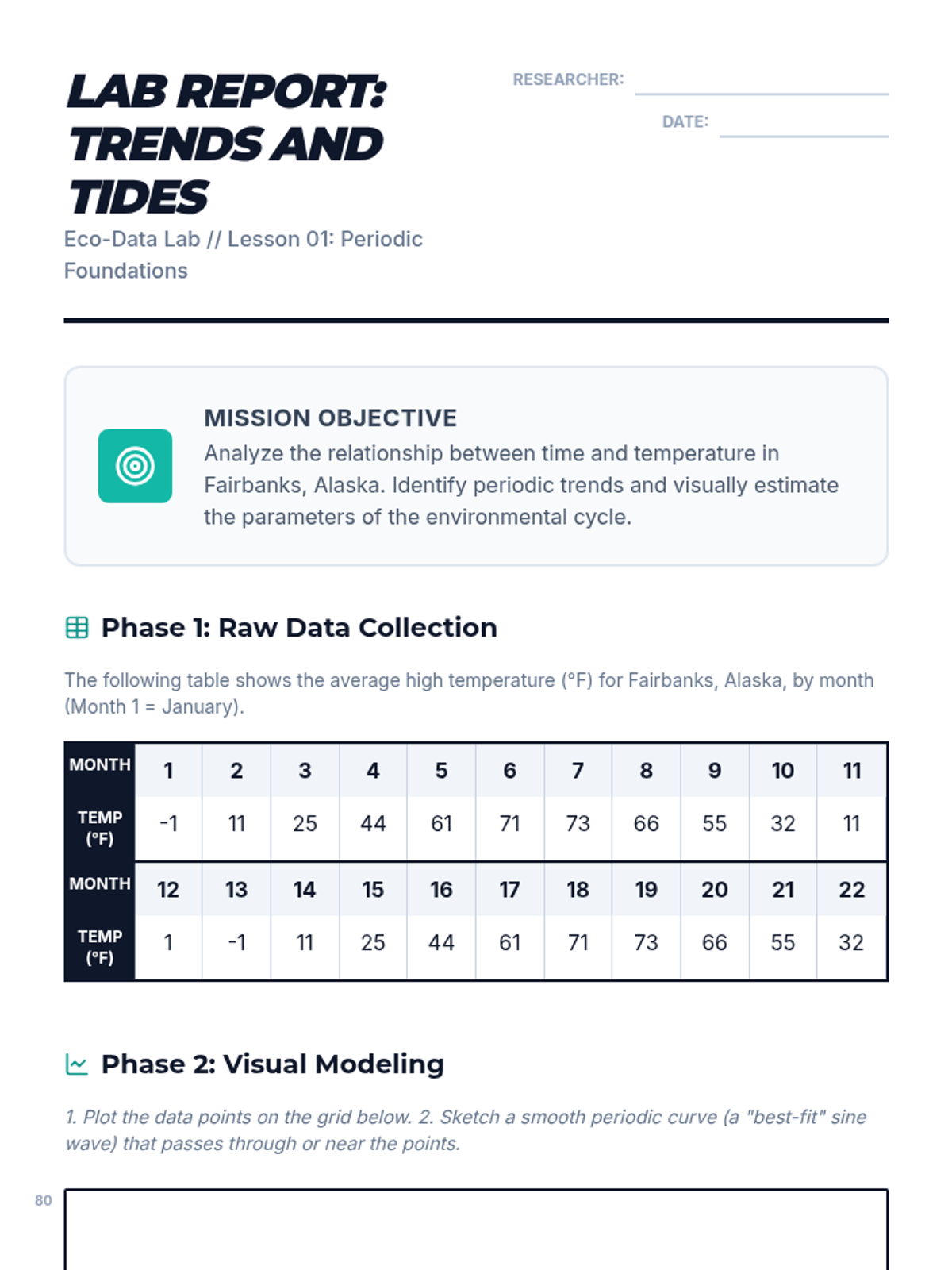
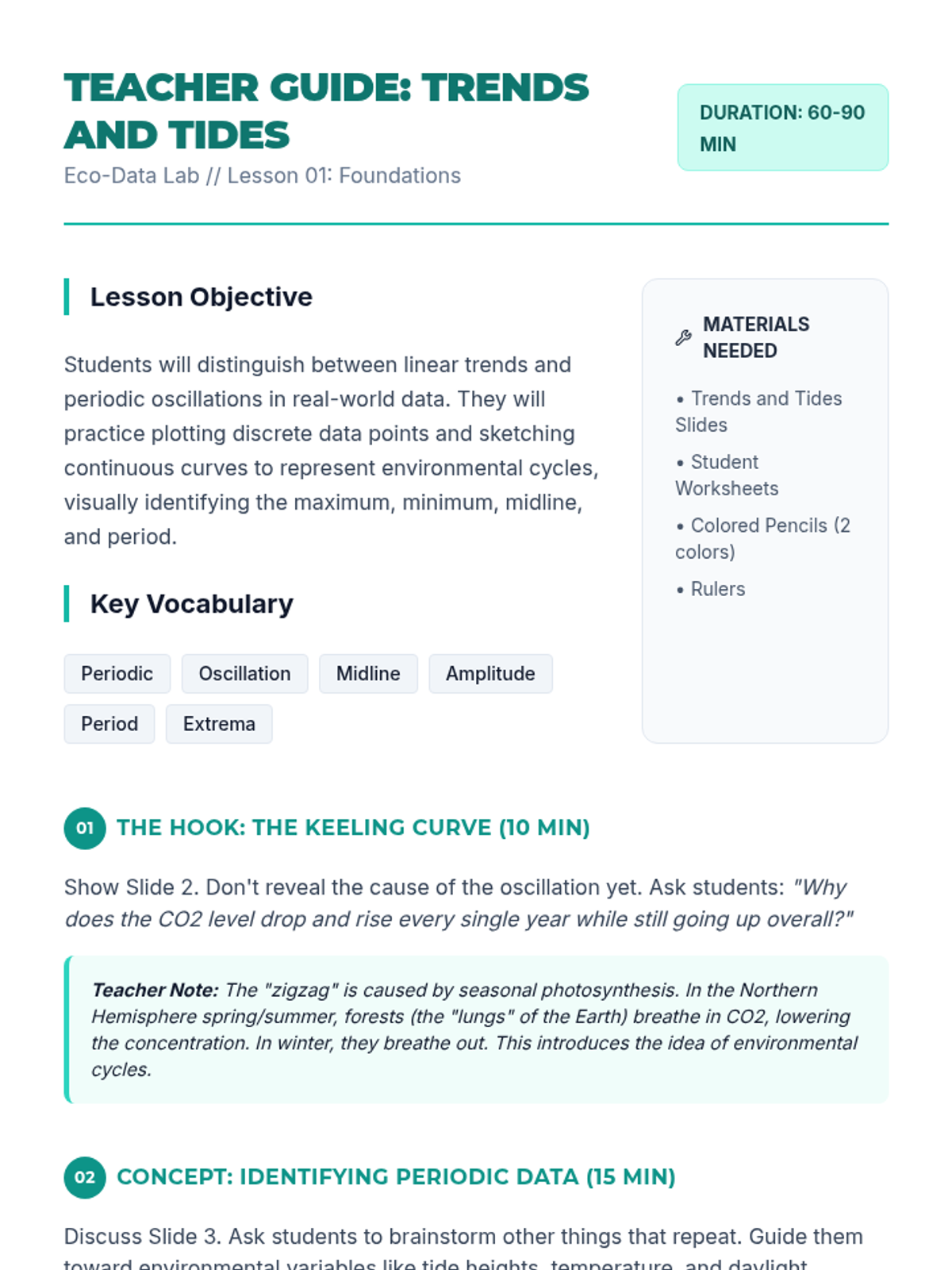
A comprehensive unit where students act as data scientists to model real-world environmental phenomena using trigonometric functions. They progress from visual estimation to precise algebraic modeling and technological regression to predict future environmental conditions.
A project-based trigonometry sequence where 10th-grade students model real-world periodic phenomena like tides, daylight, and circular motion using sinusoidal functions. Students progress from identifying periodic data to building and solving equations for time-sensitive predictions.
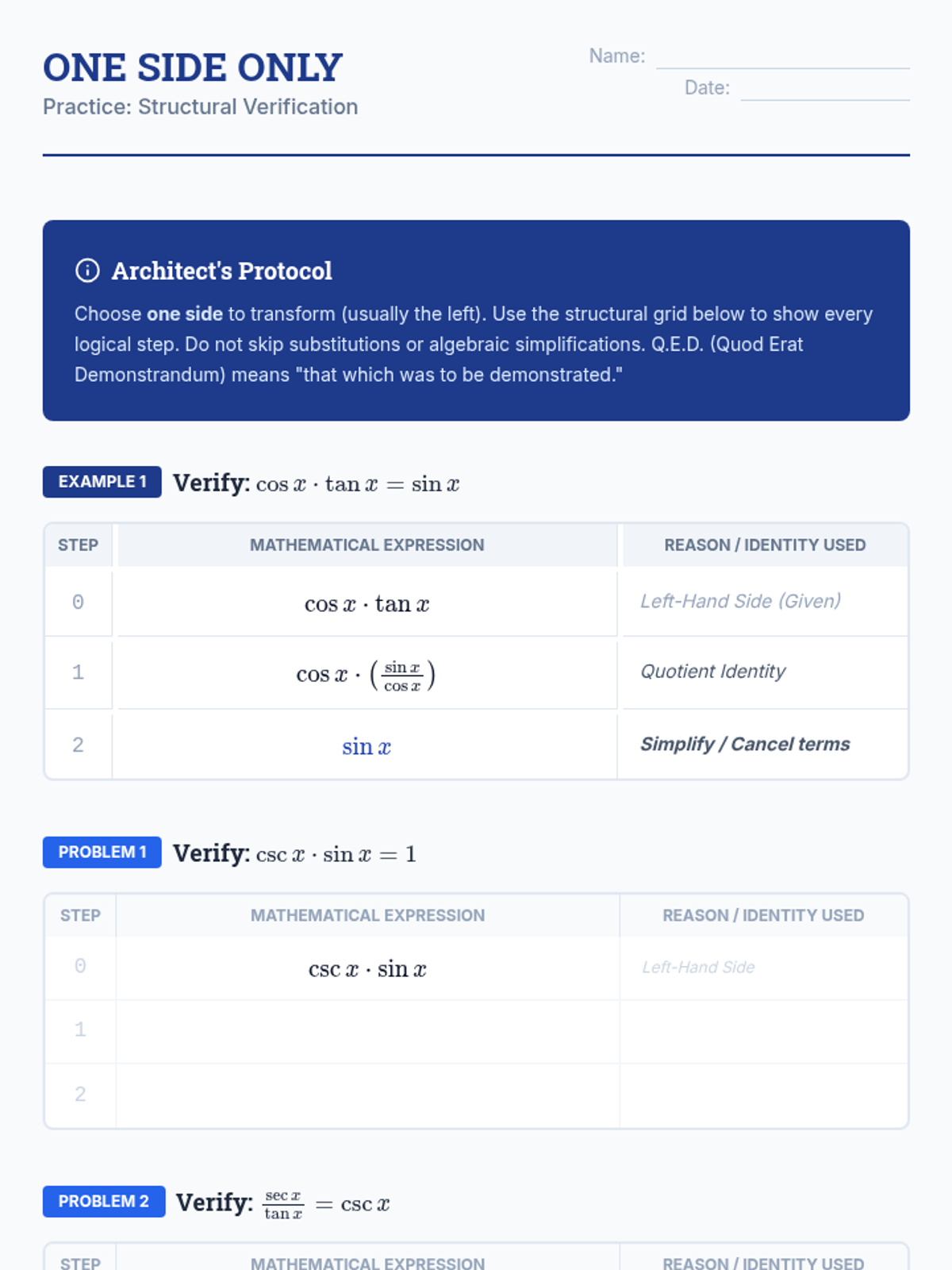
A comprehensive sequence for 10th-grade trigonometry focusing on the logical verification of identities. Students learn to navigate complex trigonometric expressions using specific strategies like sine-cosine conversion and conjugate multiplication, culminating in a formal proof portfolio.
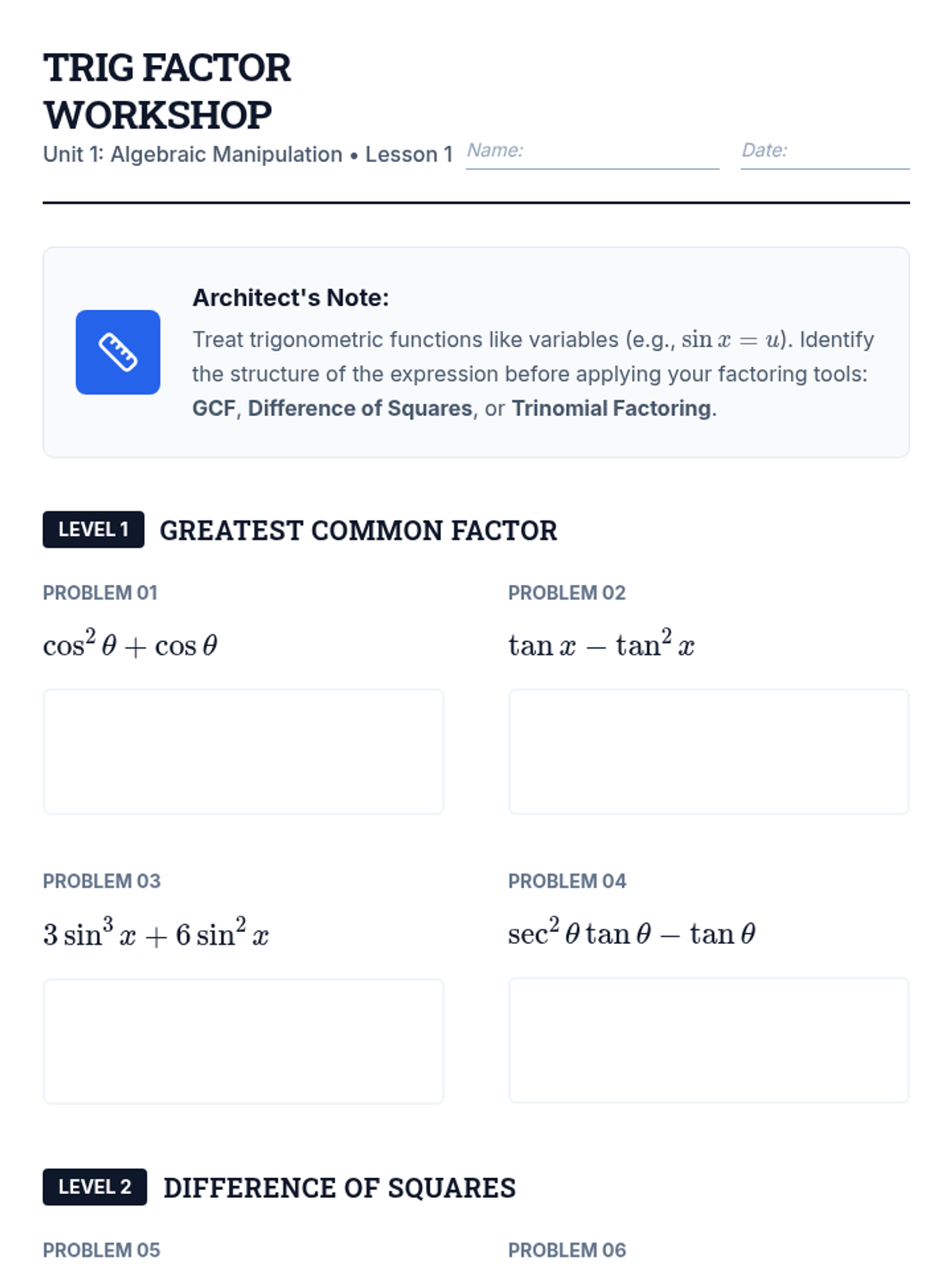
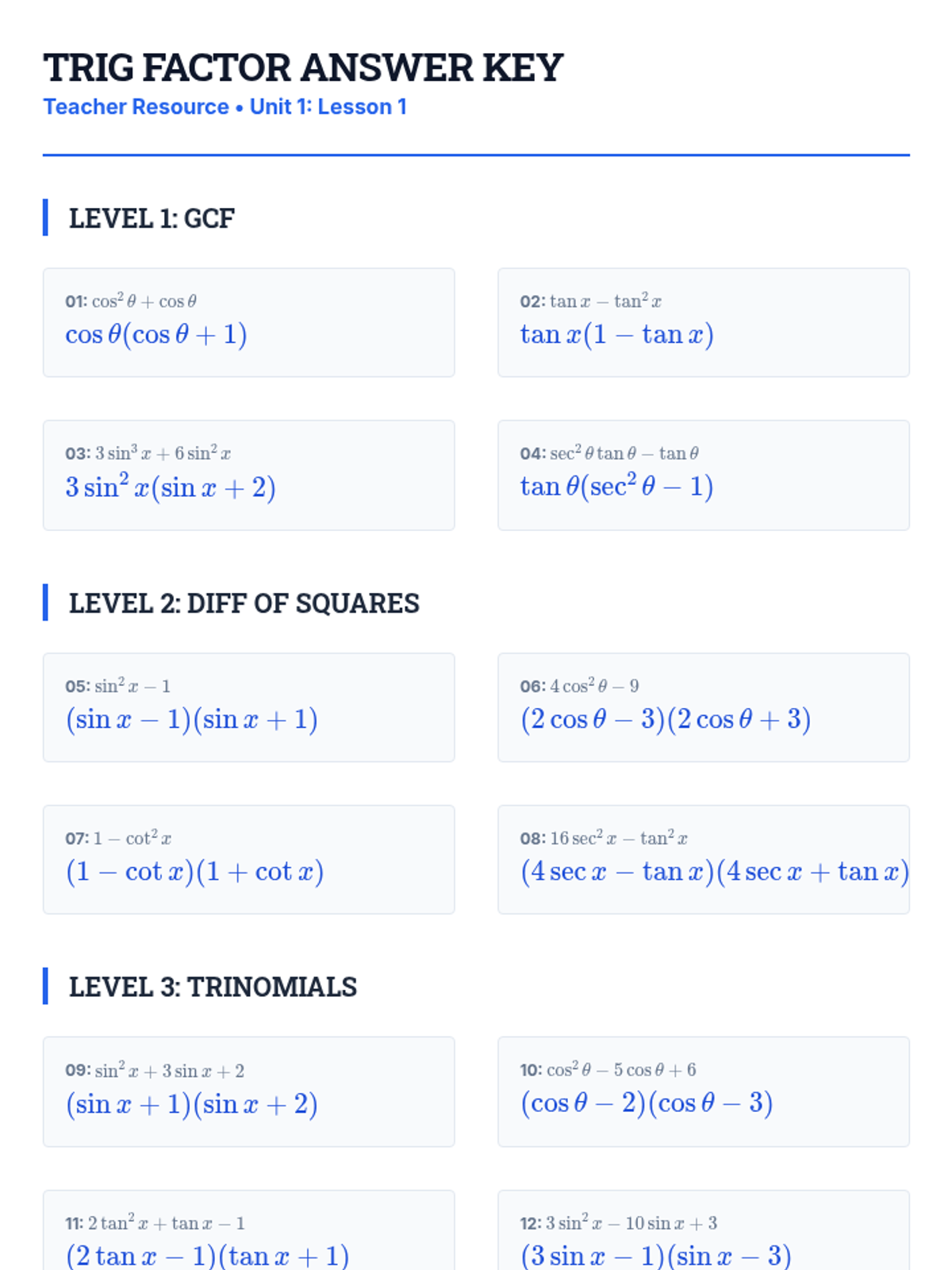
This workshop-style sequence focuses on the mechanics of simplifying complex trigonometric expressions using algebraic techniques like factoring, combining fractions, and Pythagorean substitution. Students learn to treat trigonometric functions as algebraic variables to achieve fluency and precision in preparation for formal proofs.