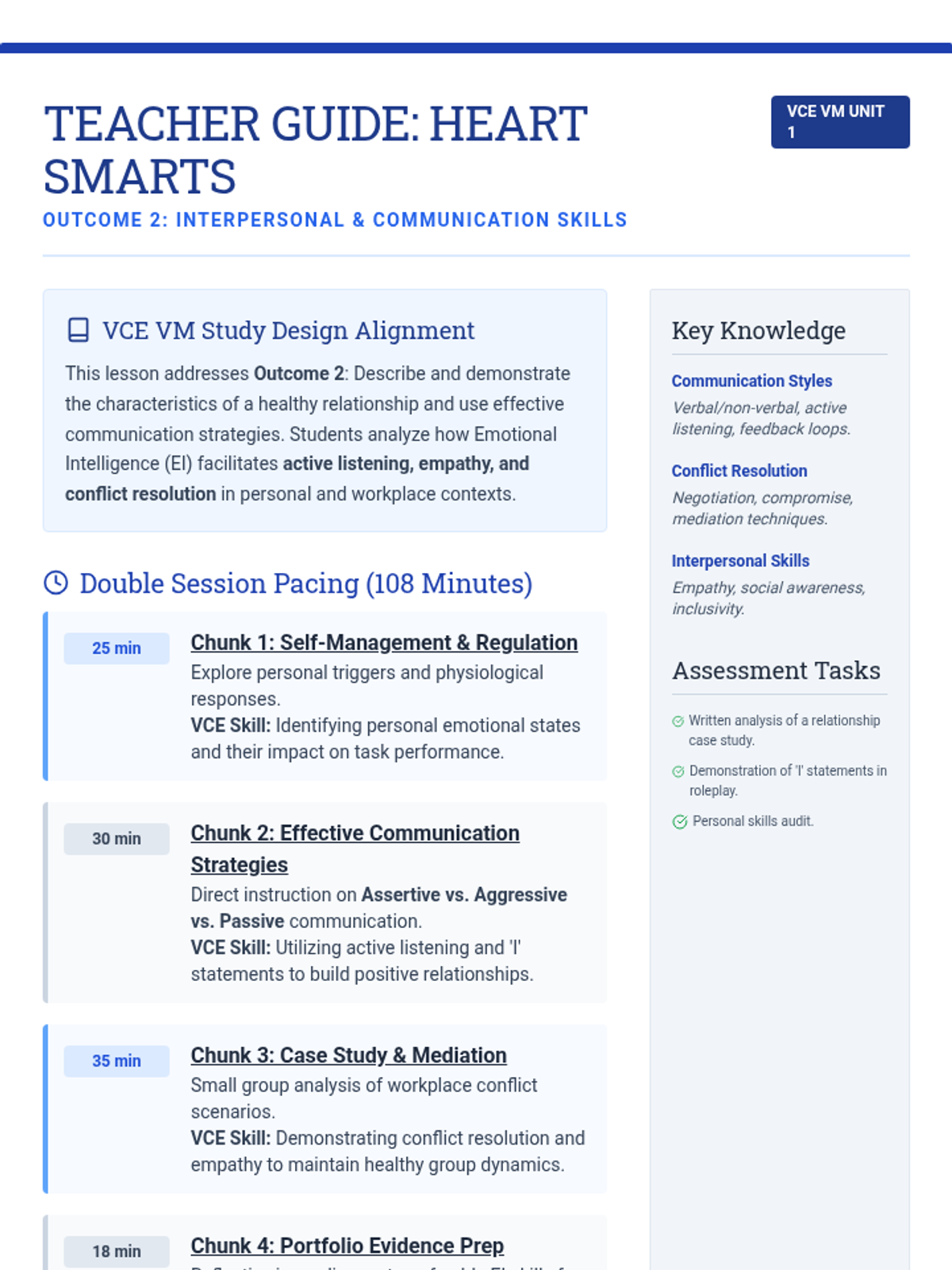
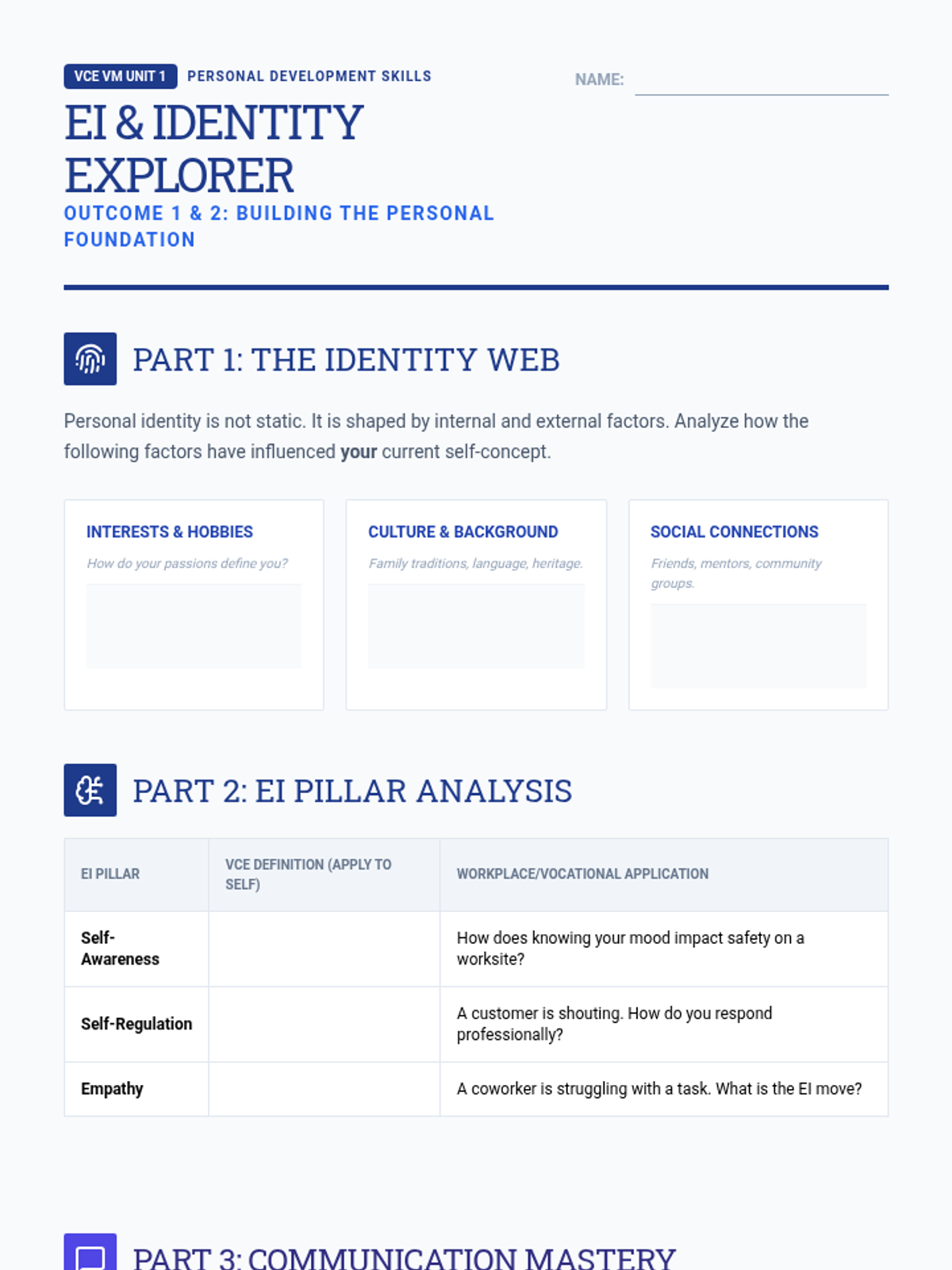
Fundamental concepts of emotional intelligence, stress reduction, and relaxation exercises. Develops skills for healthy relationships, digital balance, and resilience while establishing pathways for help-seeking and support systems.
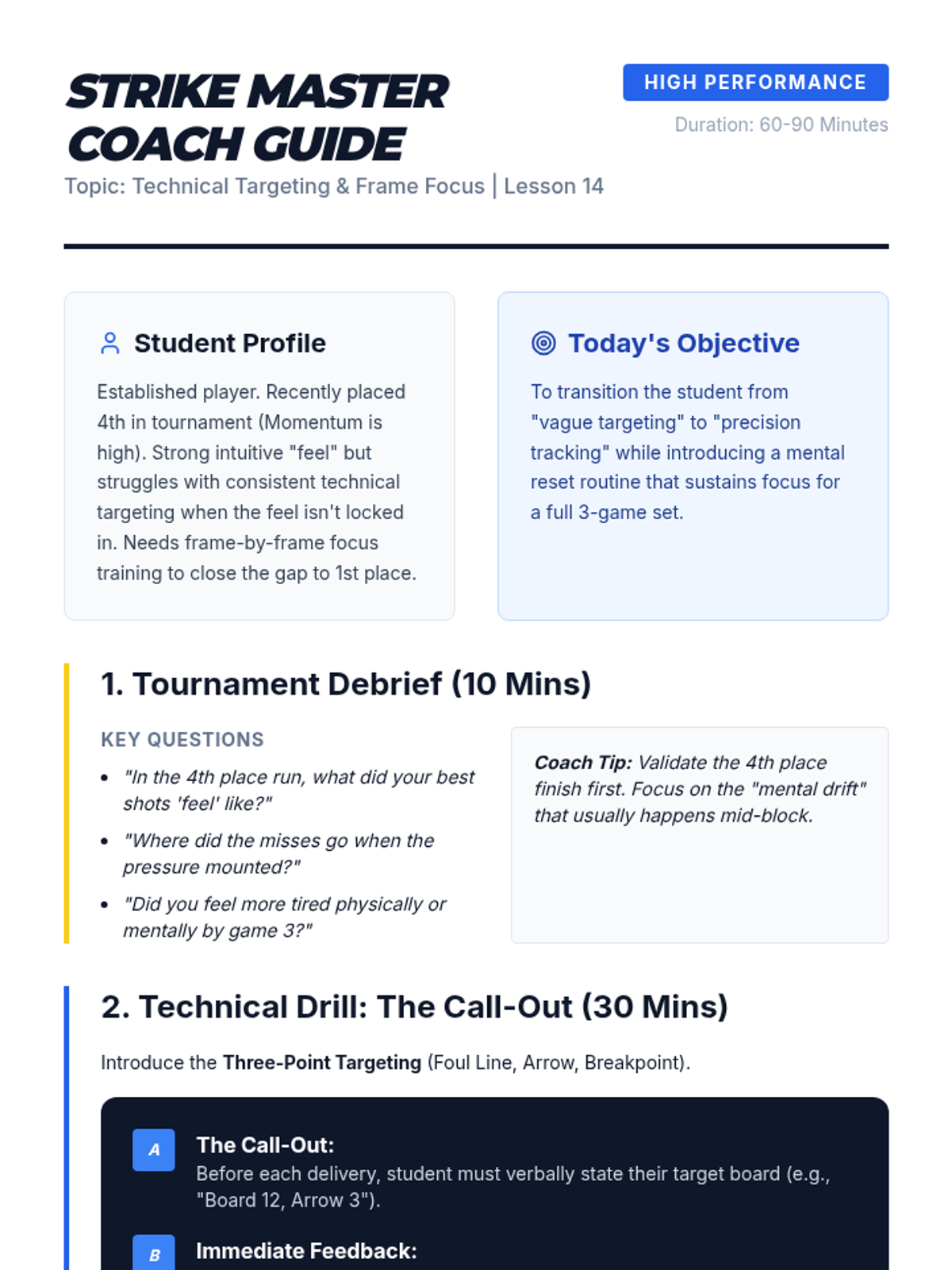
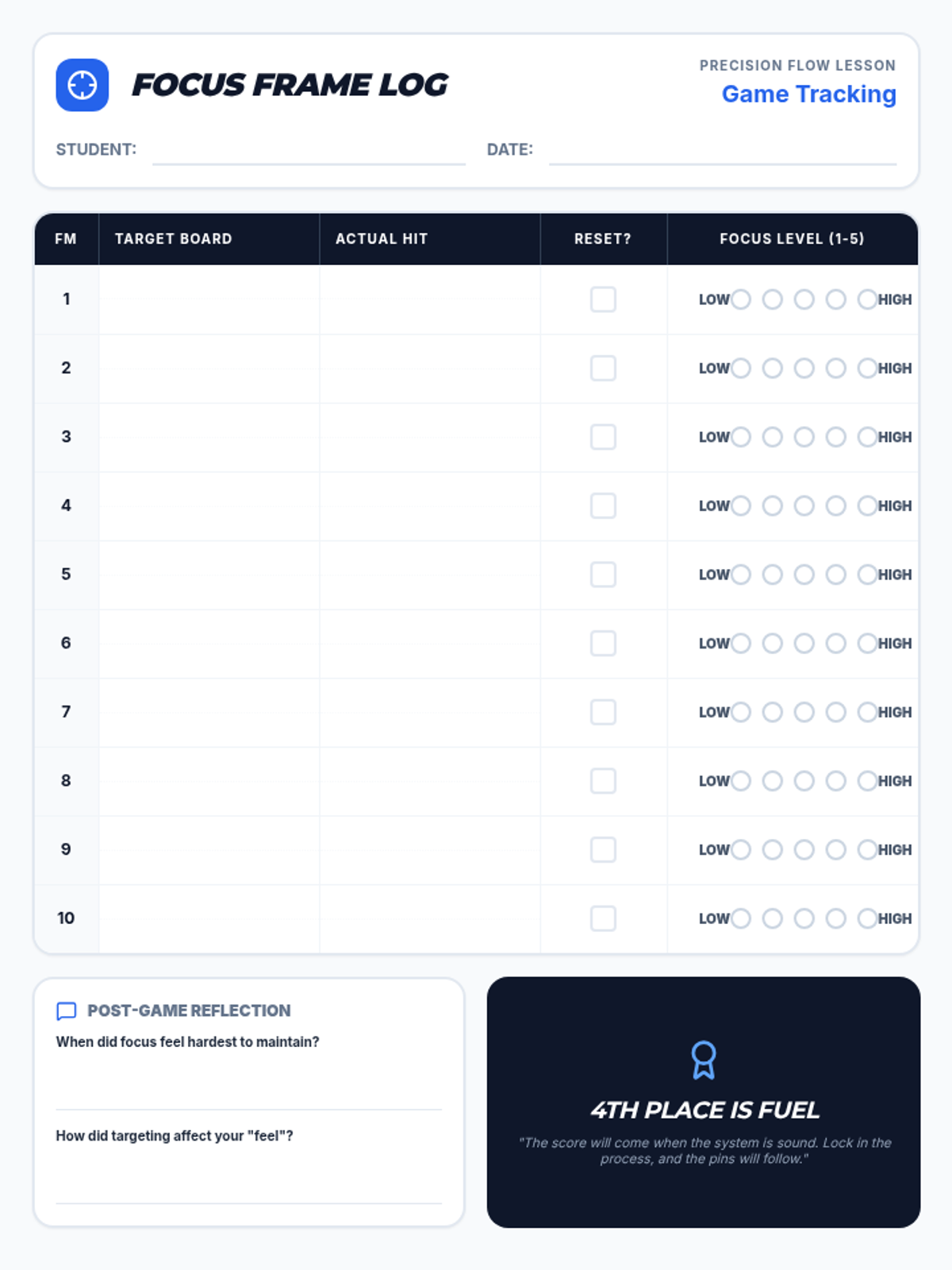
A high-performance bowling lesson designed to bridge the gap between intuitive 'feel' and technical precision targeting. Focused on maintaining mental stamina and frame-by-frame consistency for competitive athletes.
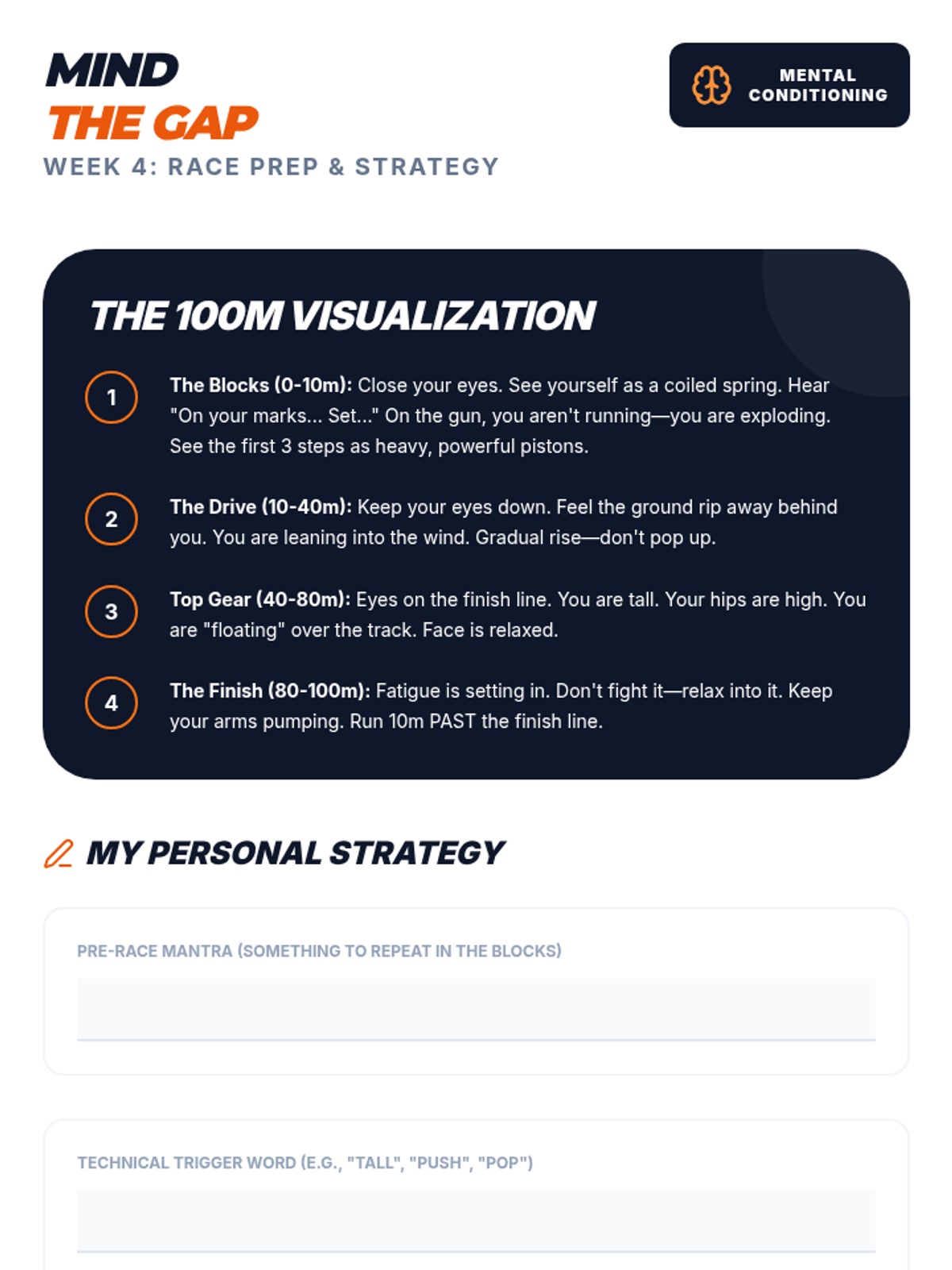
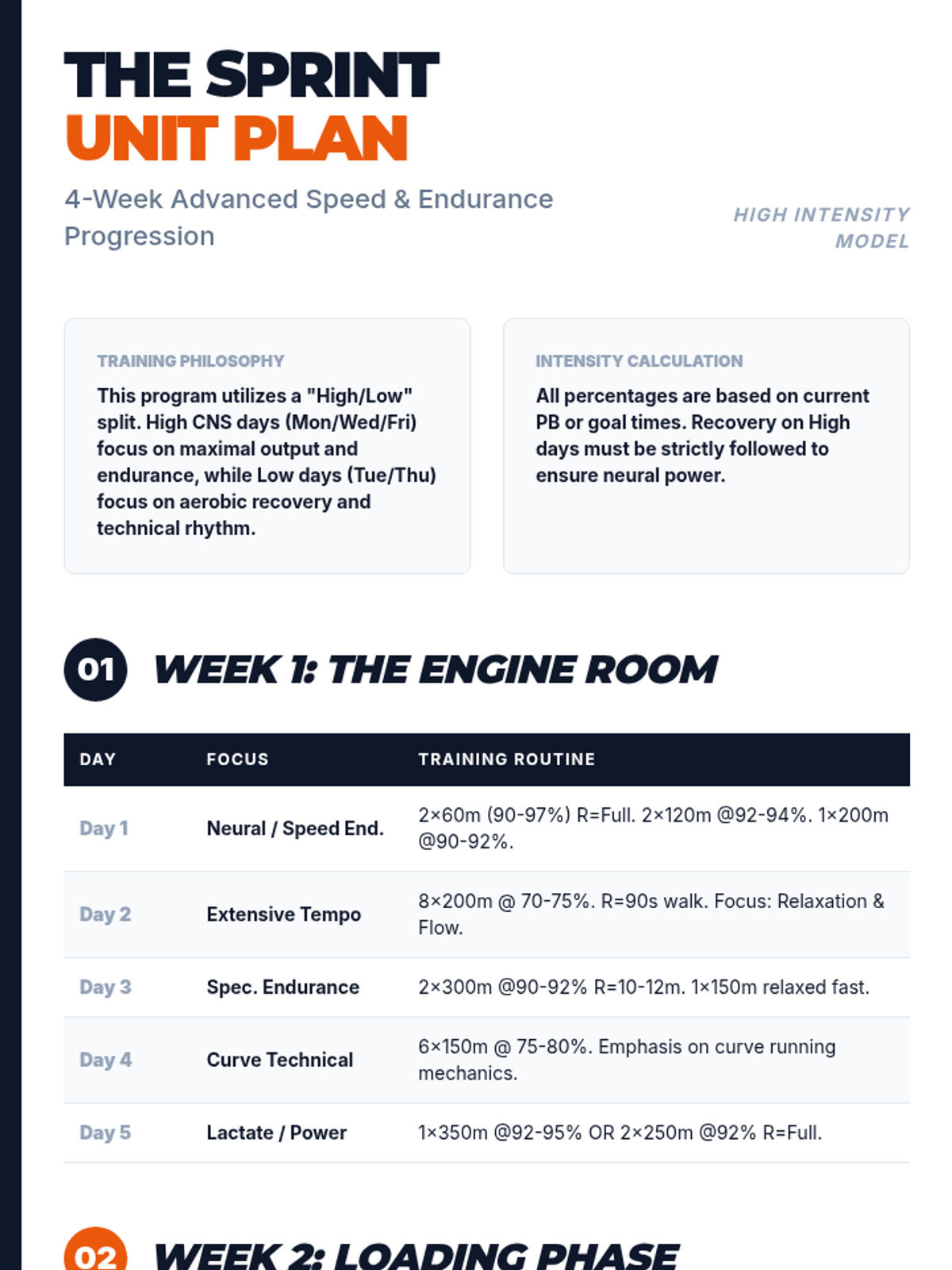
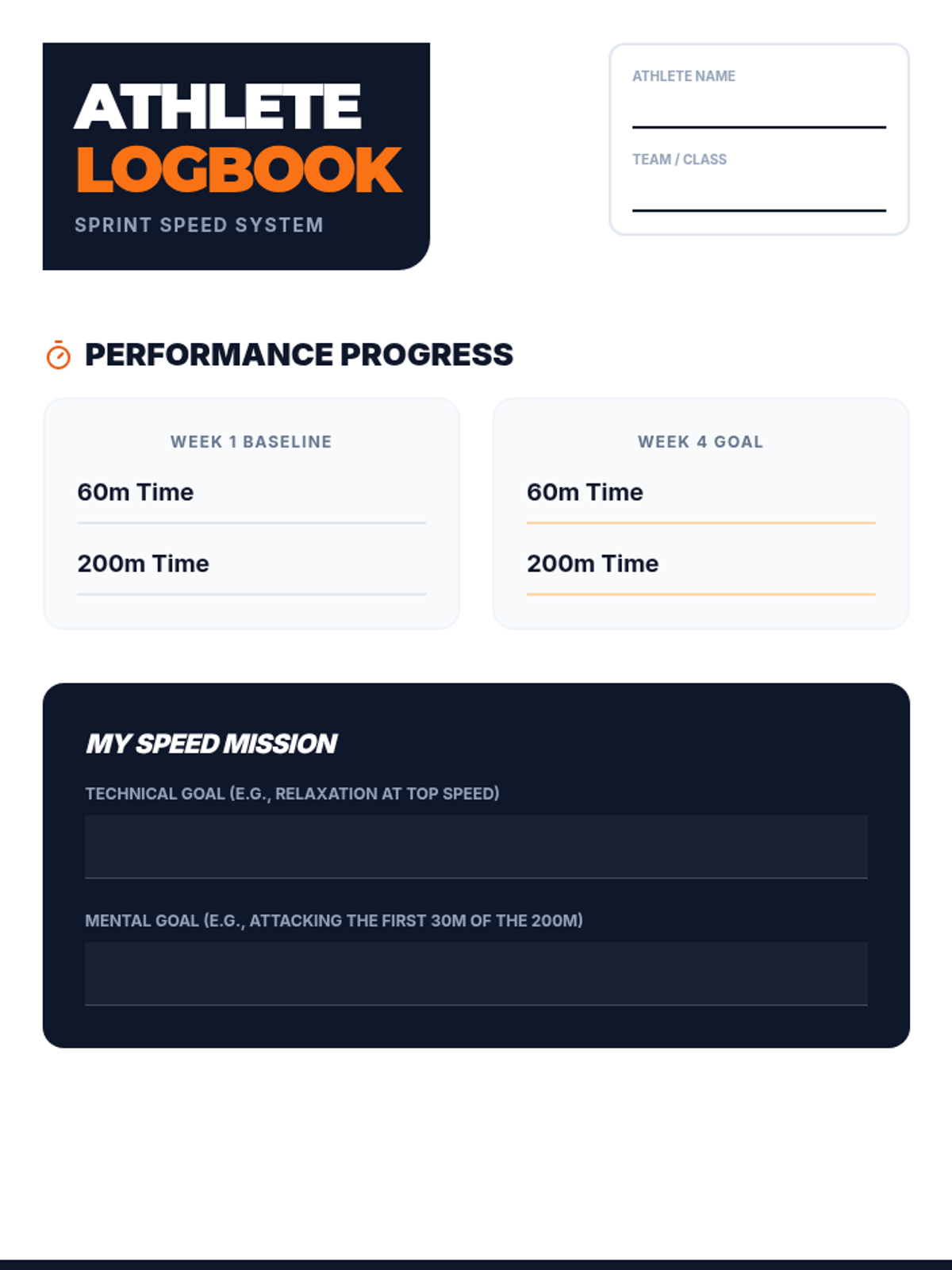
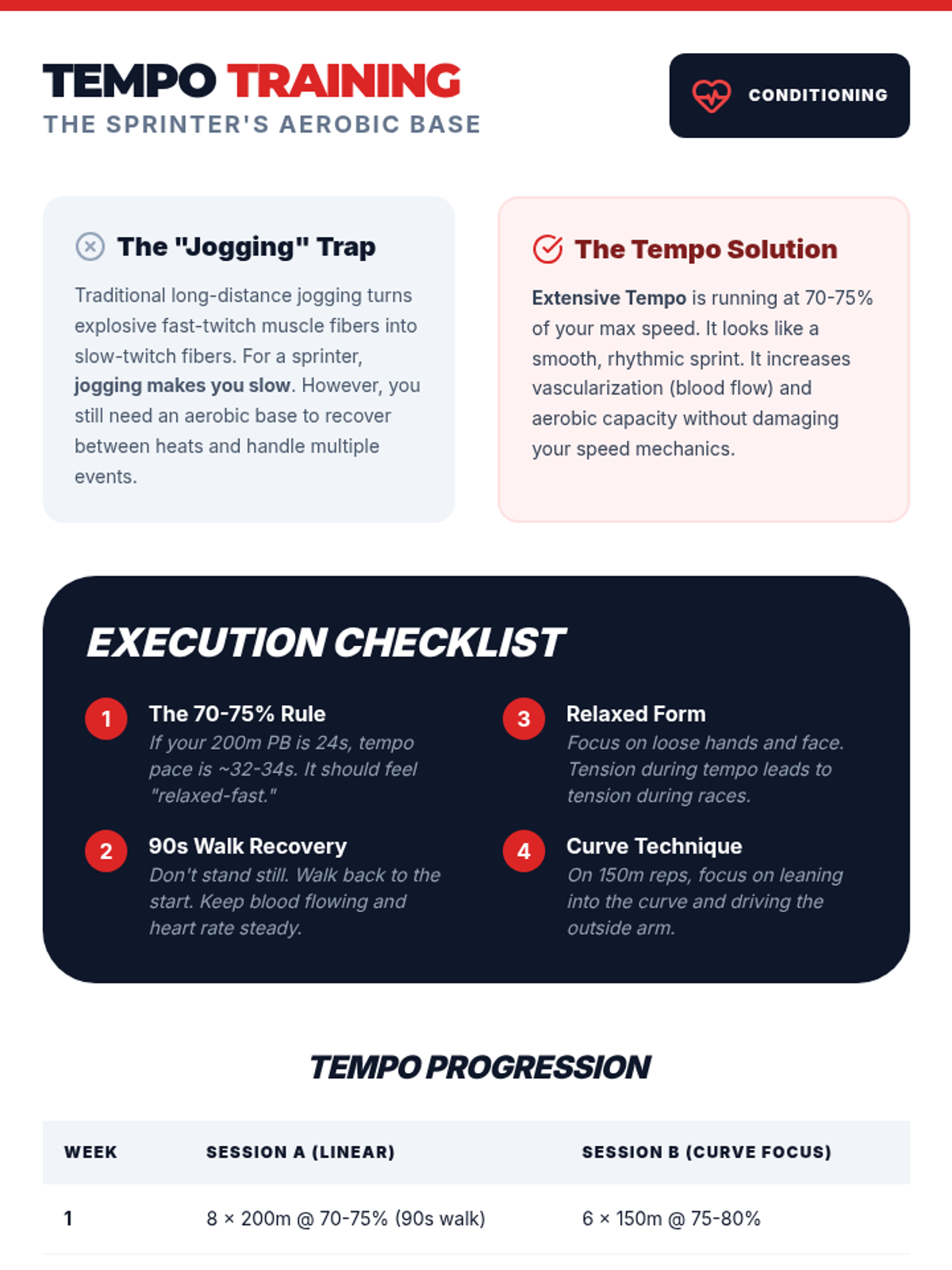
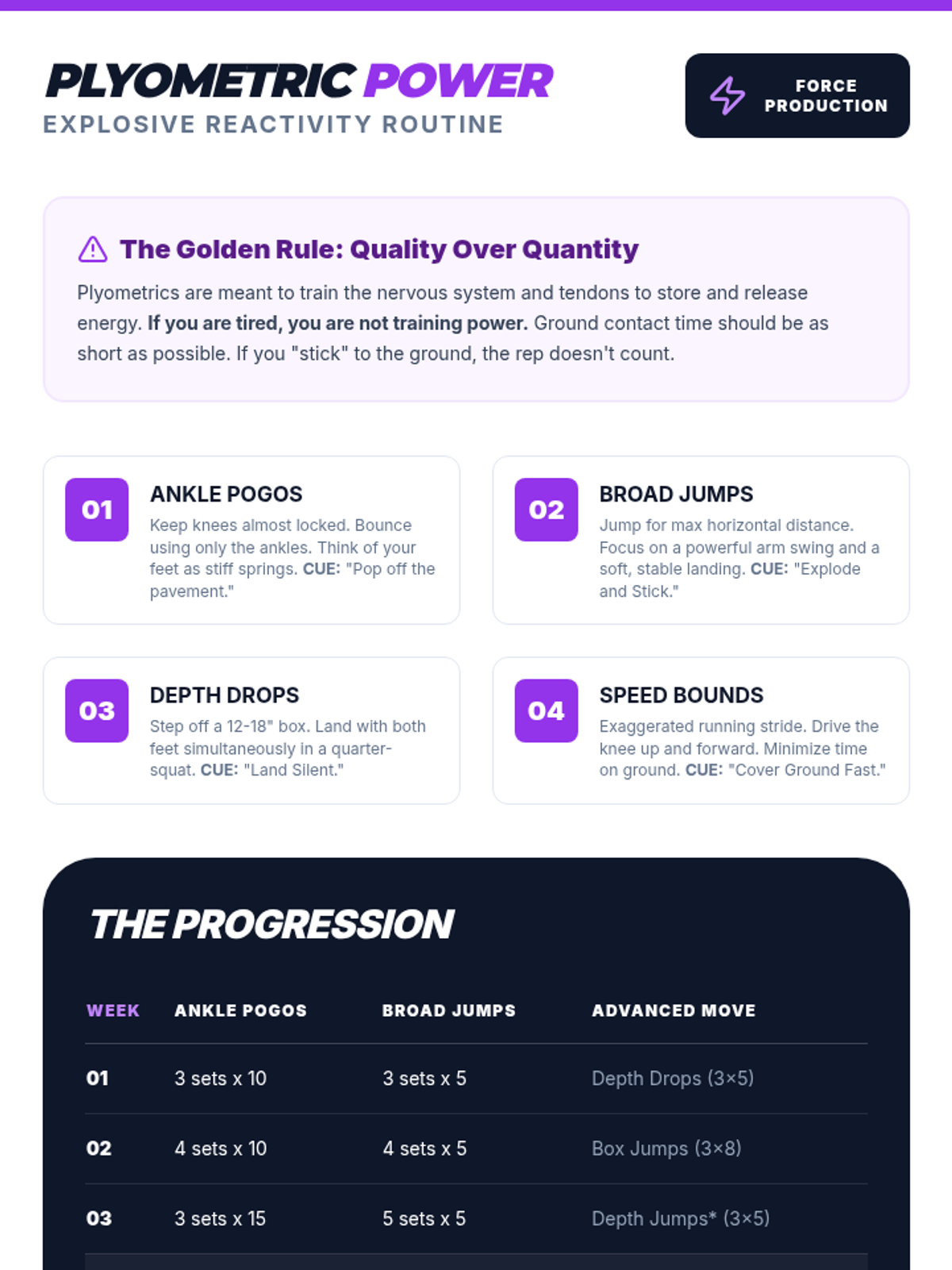
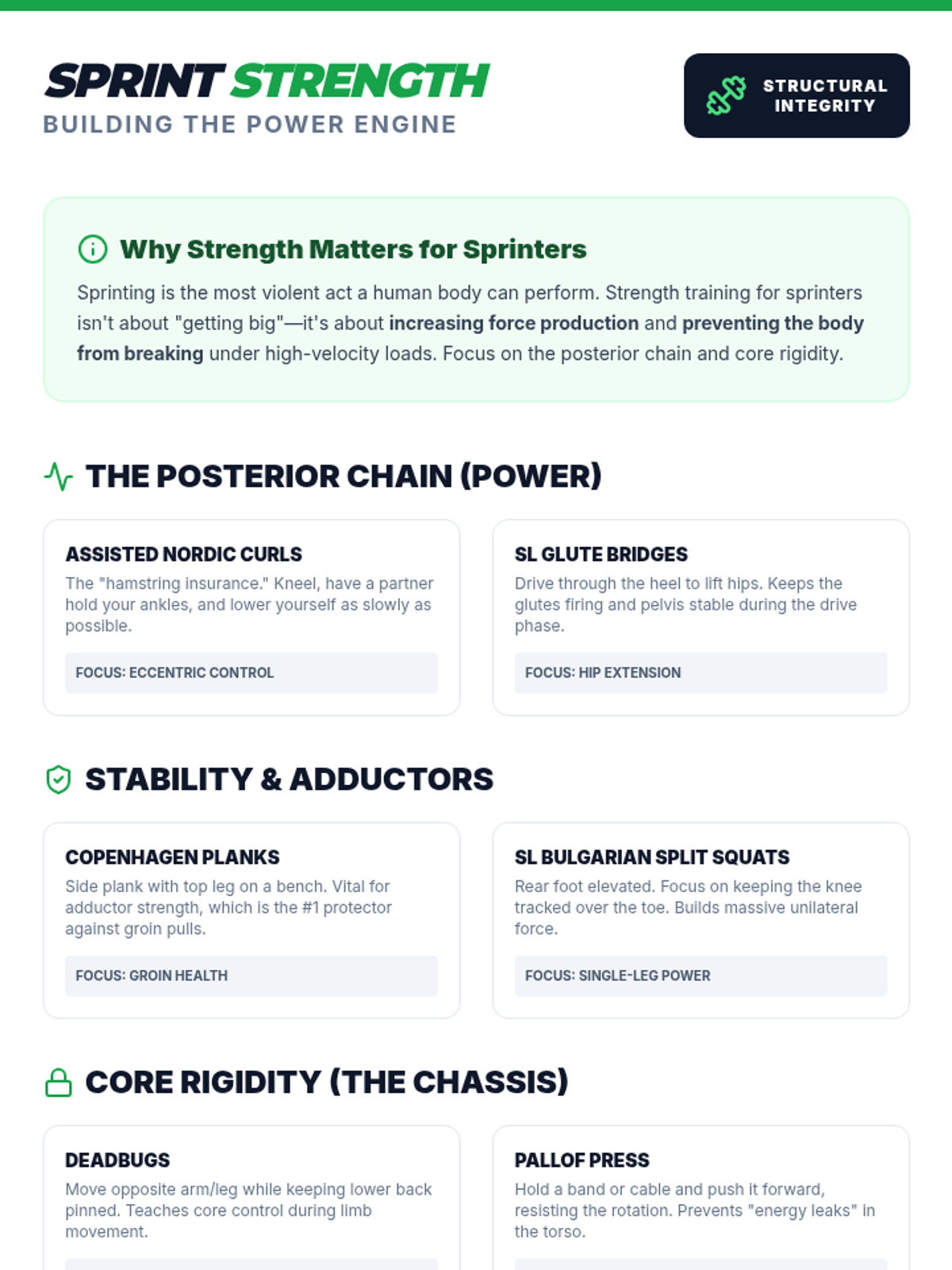
Fine-tuning starts, speed endurance intervals, and preparing for competition-style sprinting.
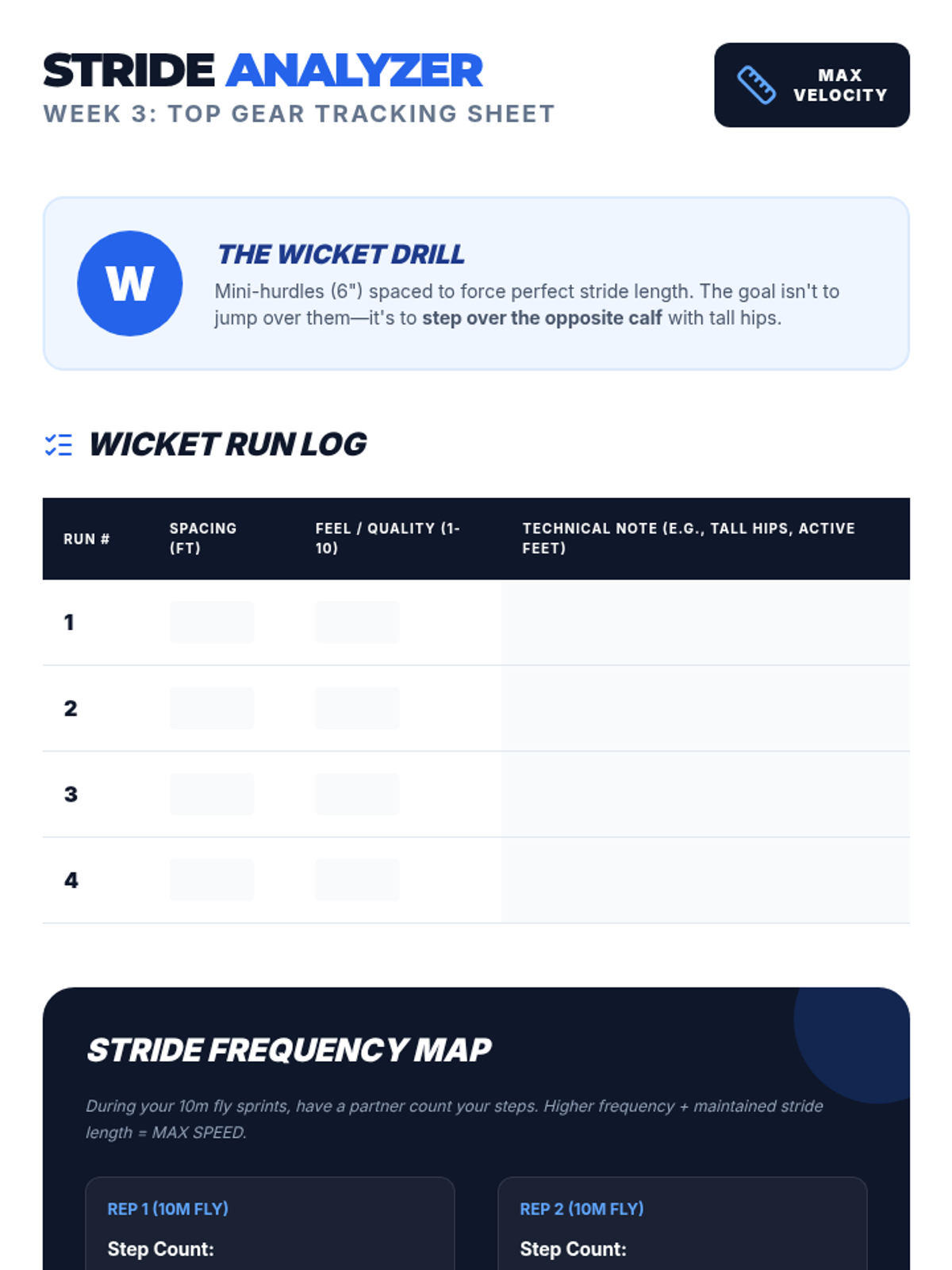
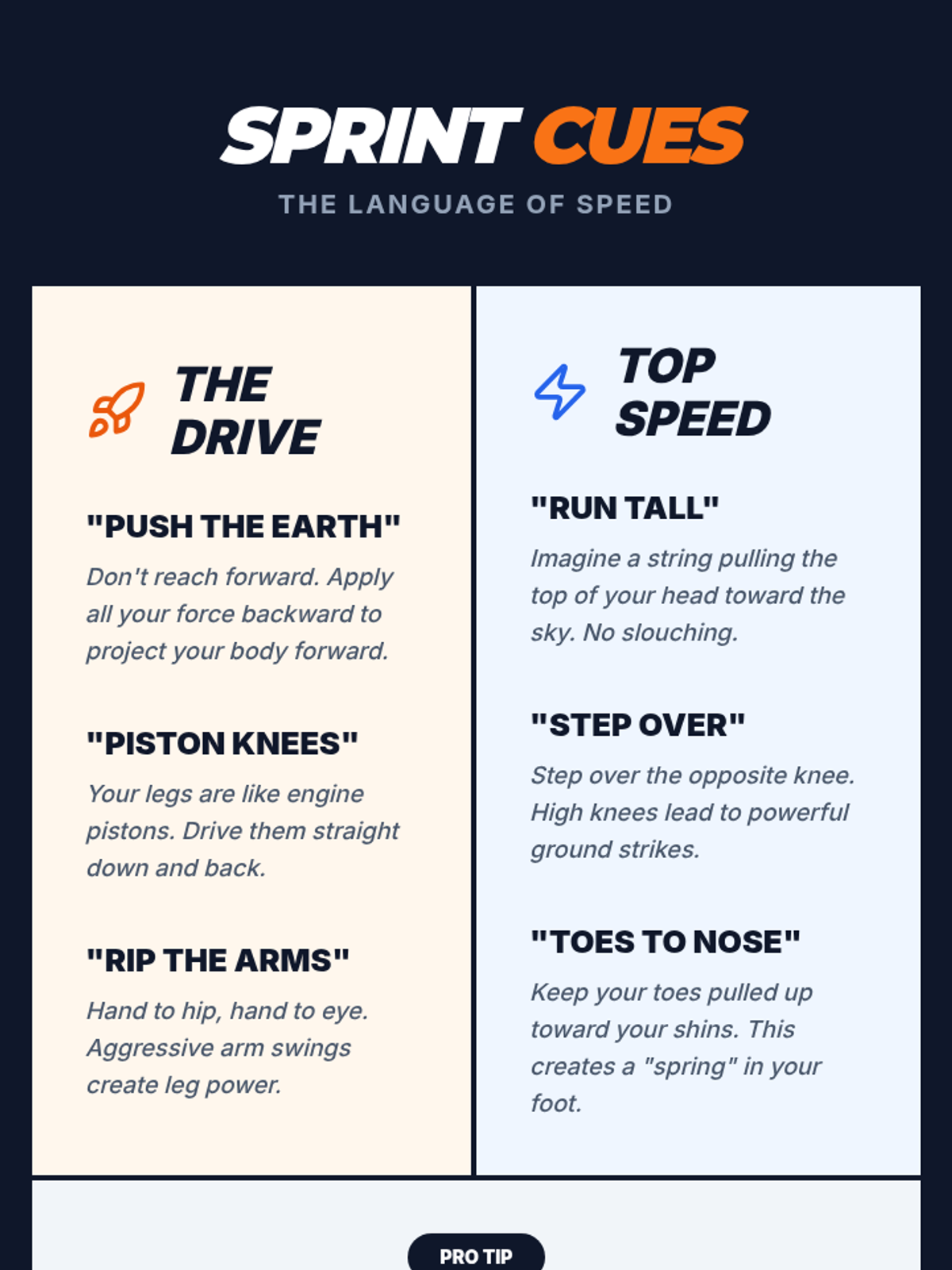
Training upright sprinting mechanics, stride frequency through wicket drills, and maximum velocity maintenance.
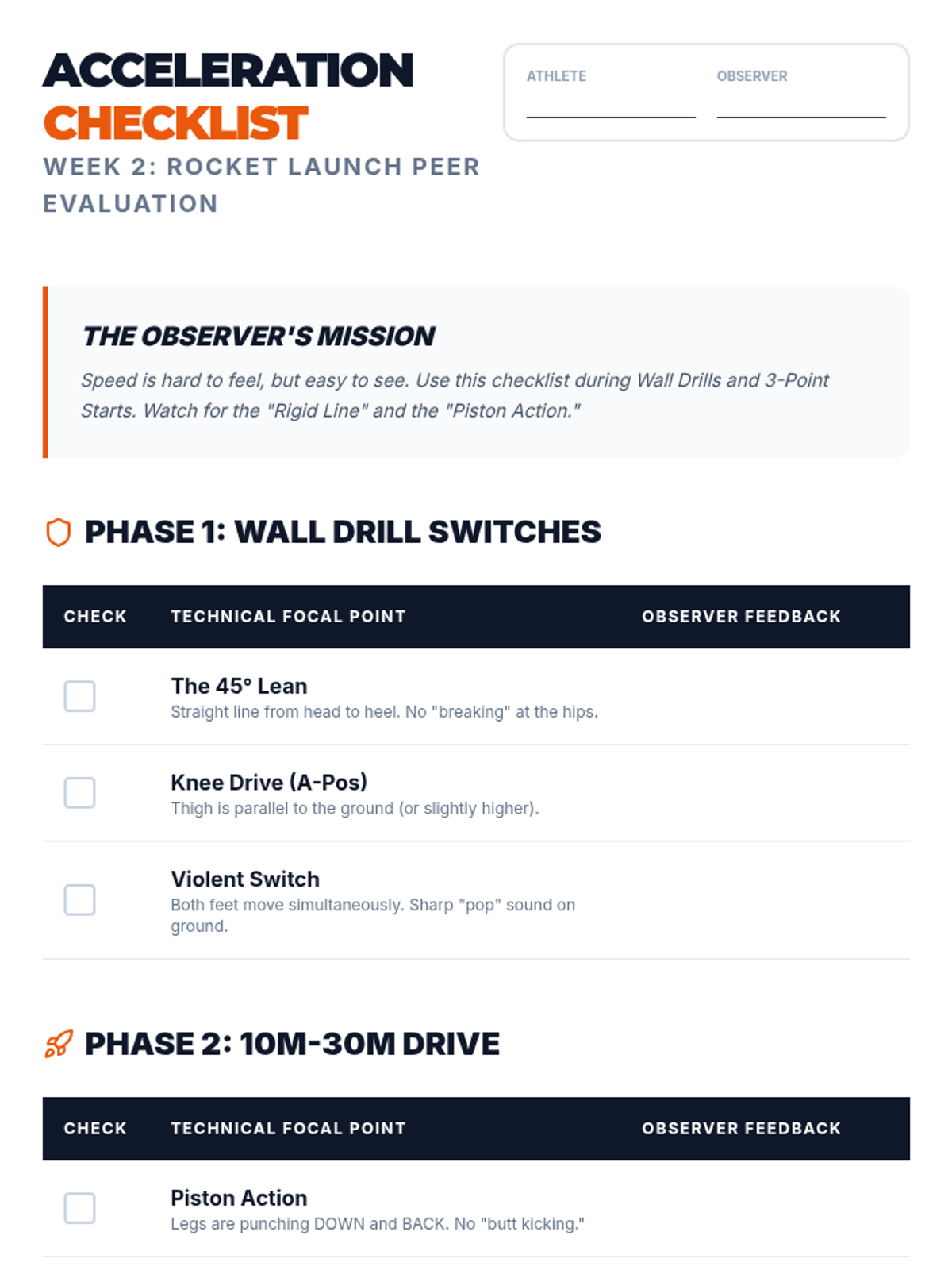
Introducing the drive phase, explosive wall drills, and higher-intensity plyometrics to build raw power.
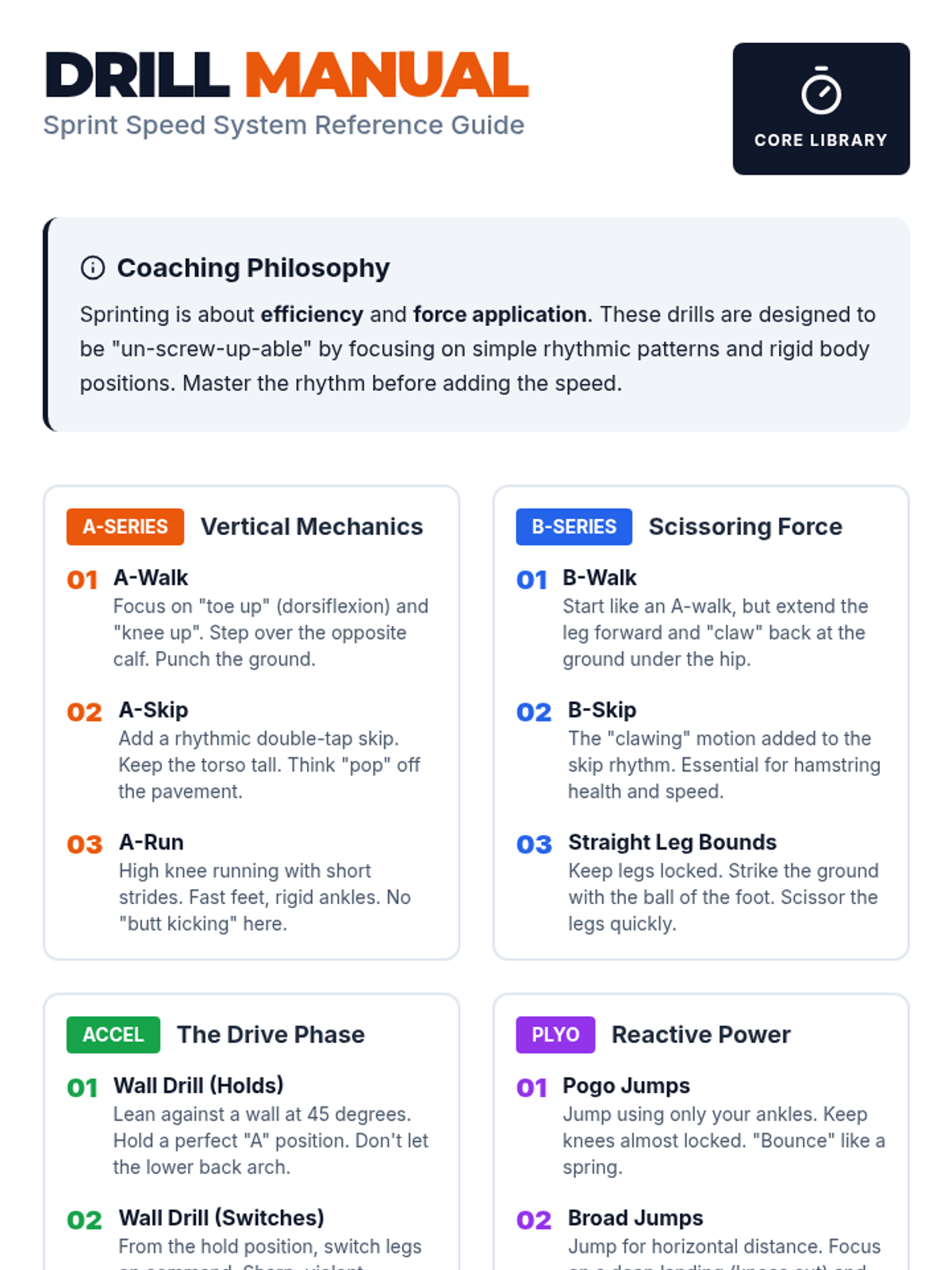
Focus on establishing proper sprint posture, rhythmic drills (A-skips), and basic core strength to prevent injury.
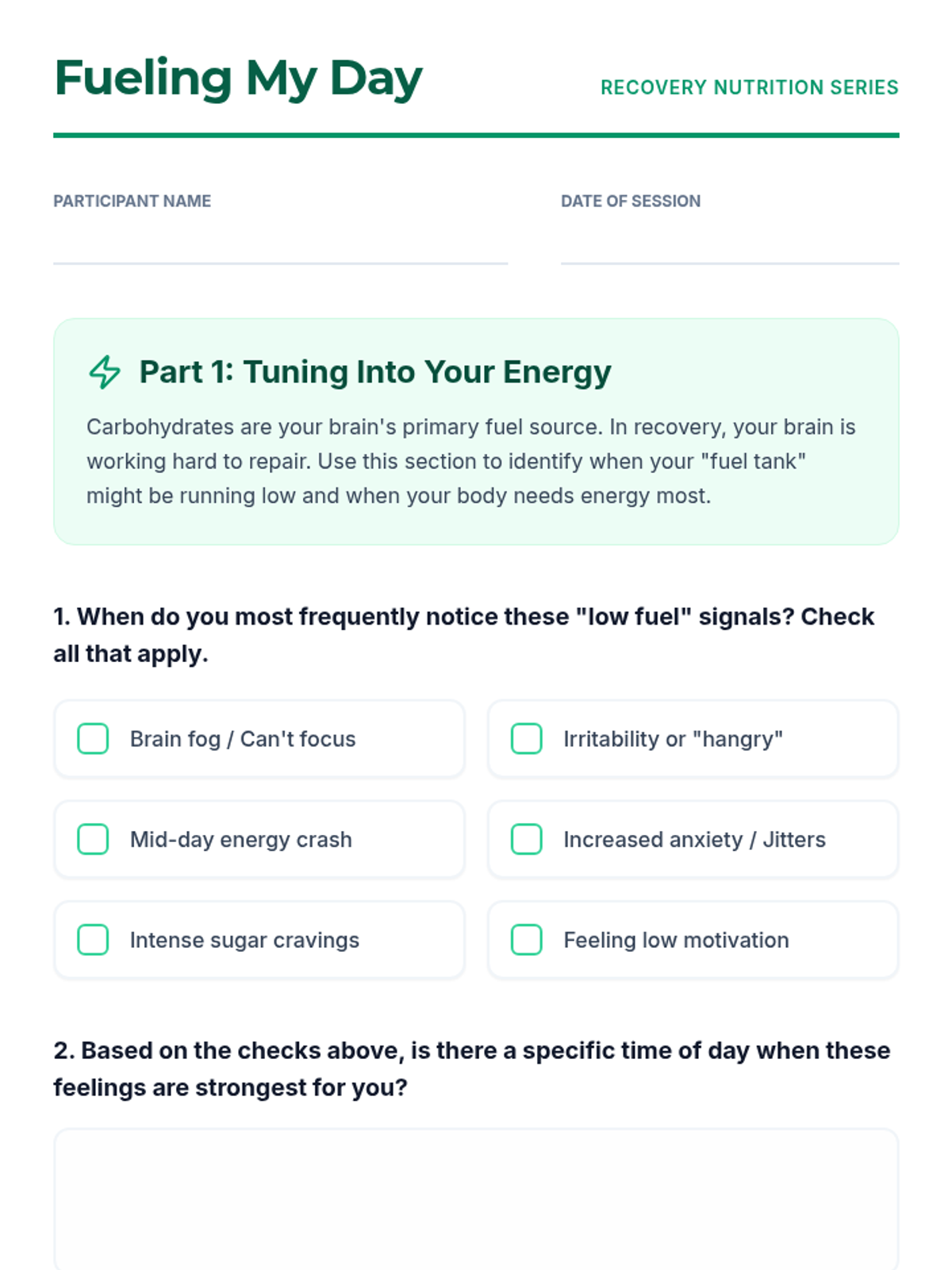
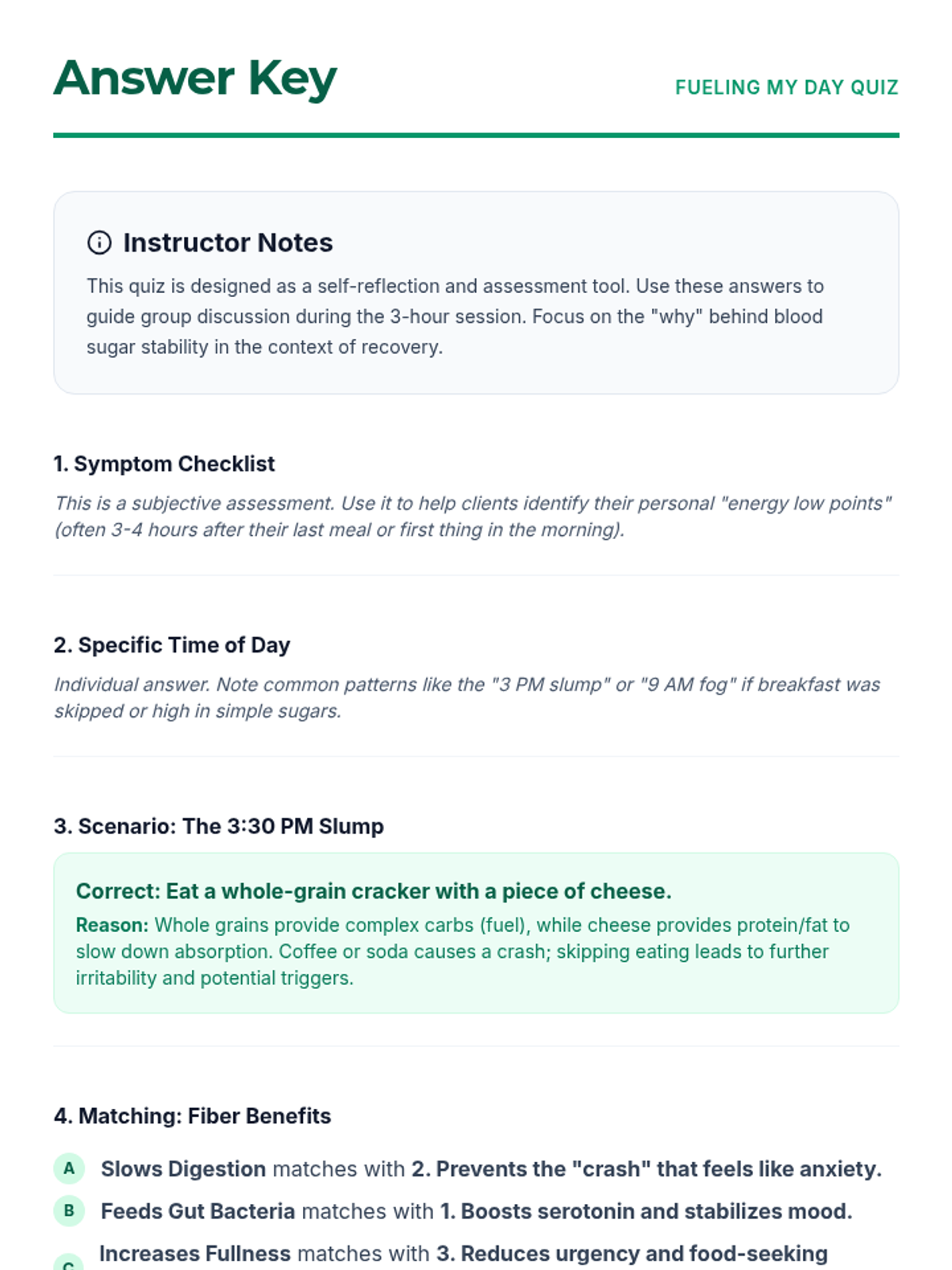
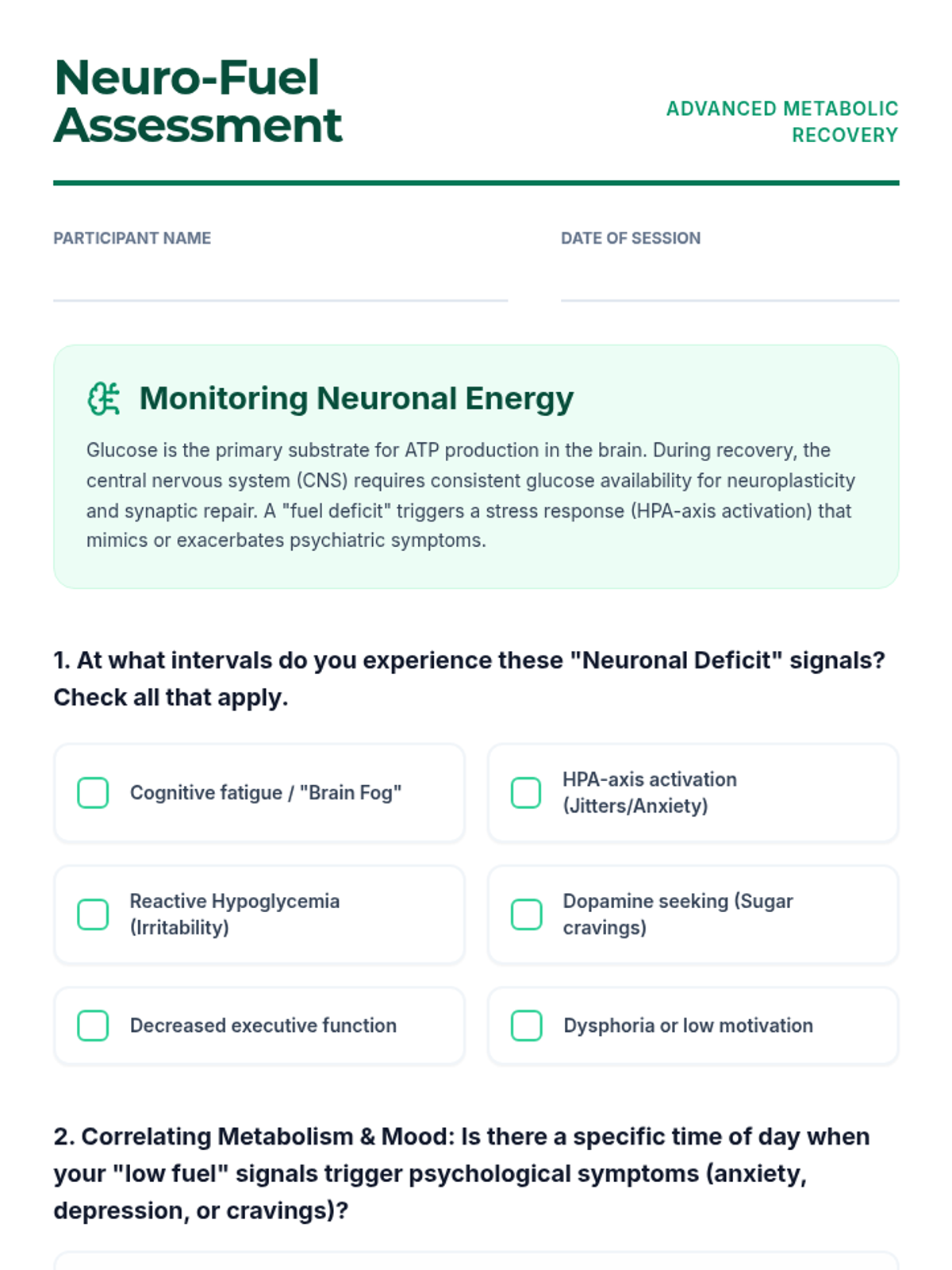
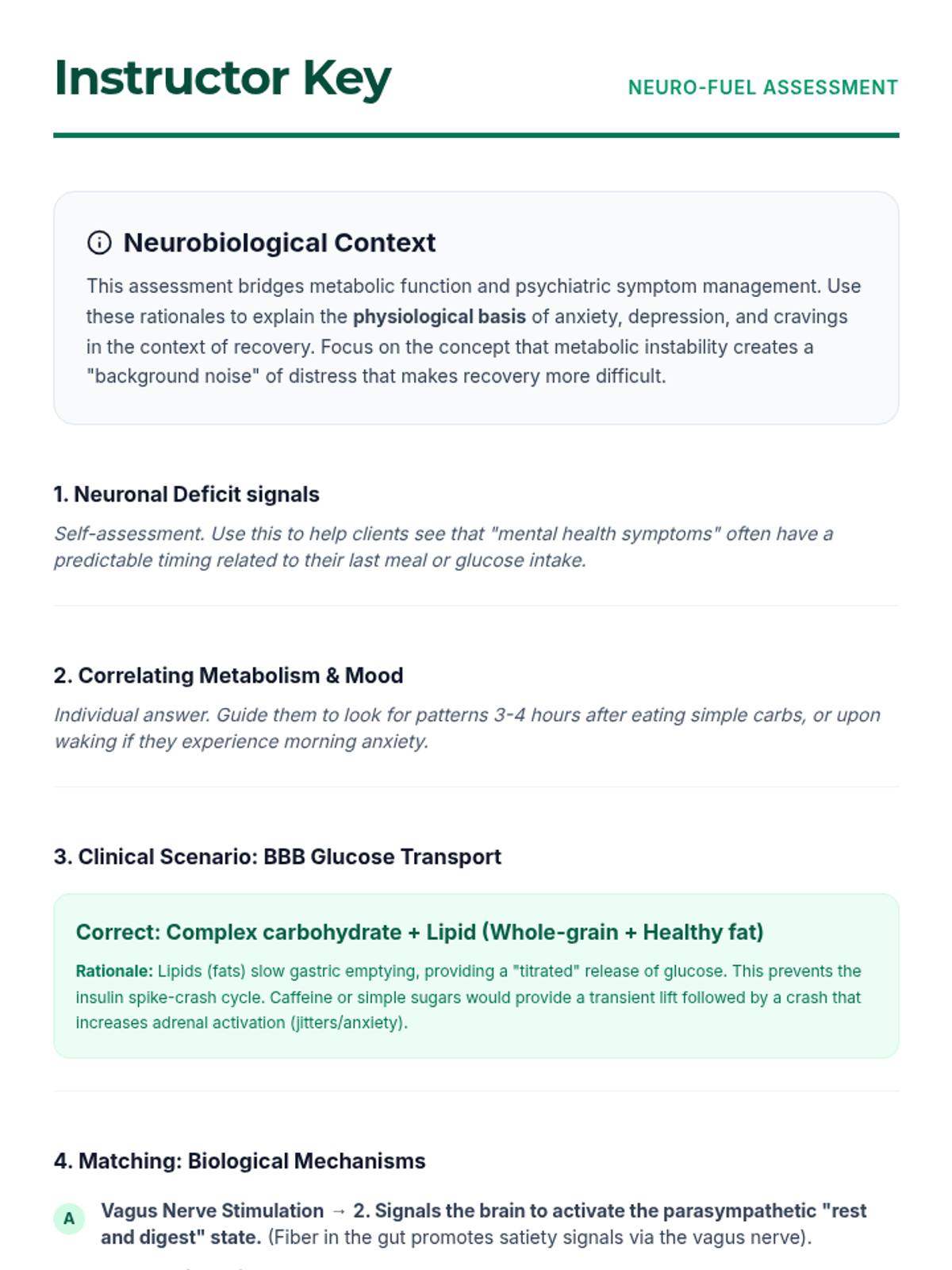
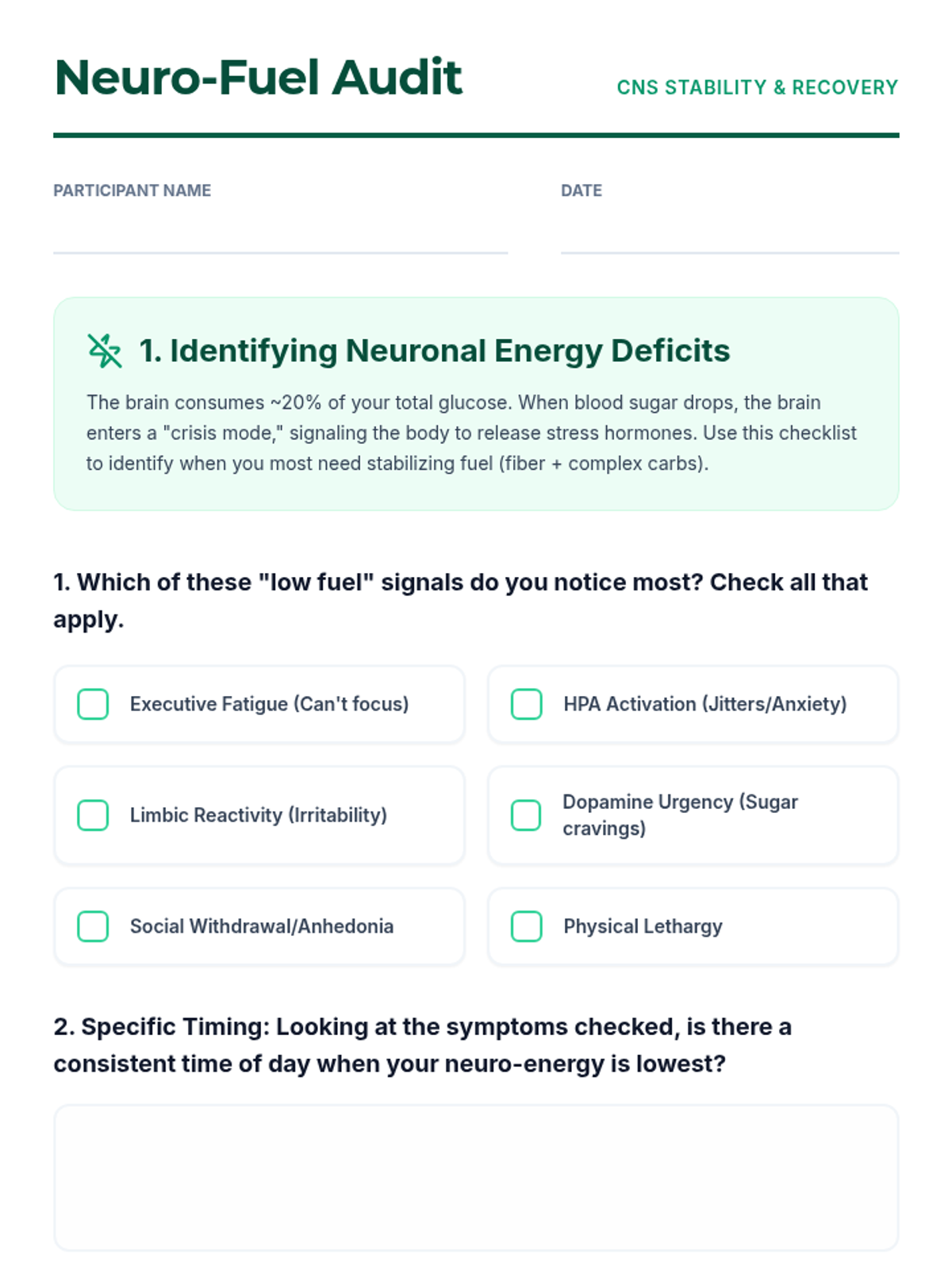
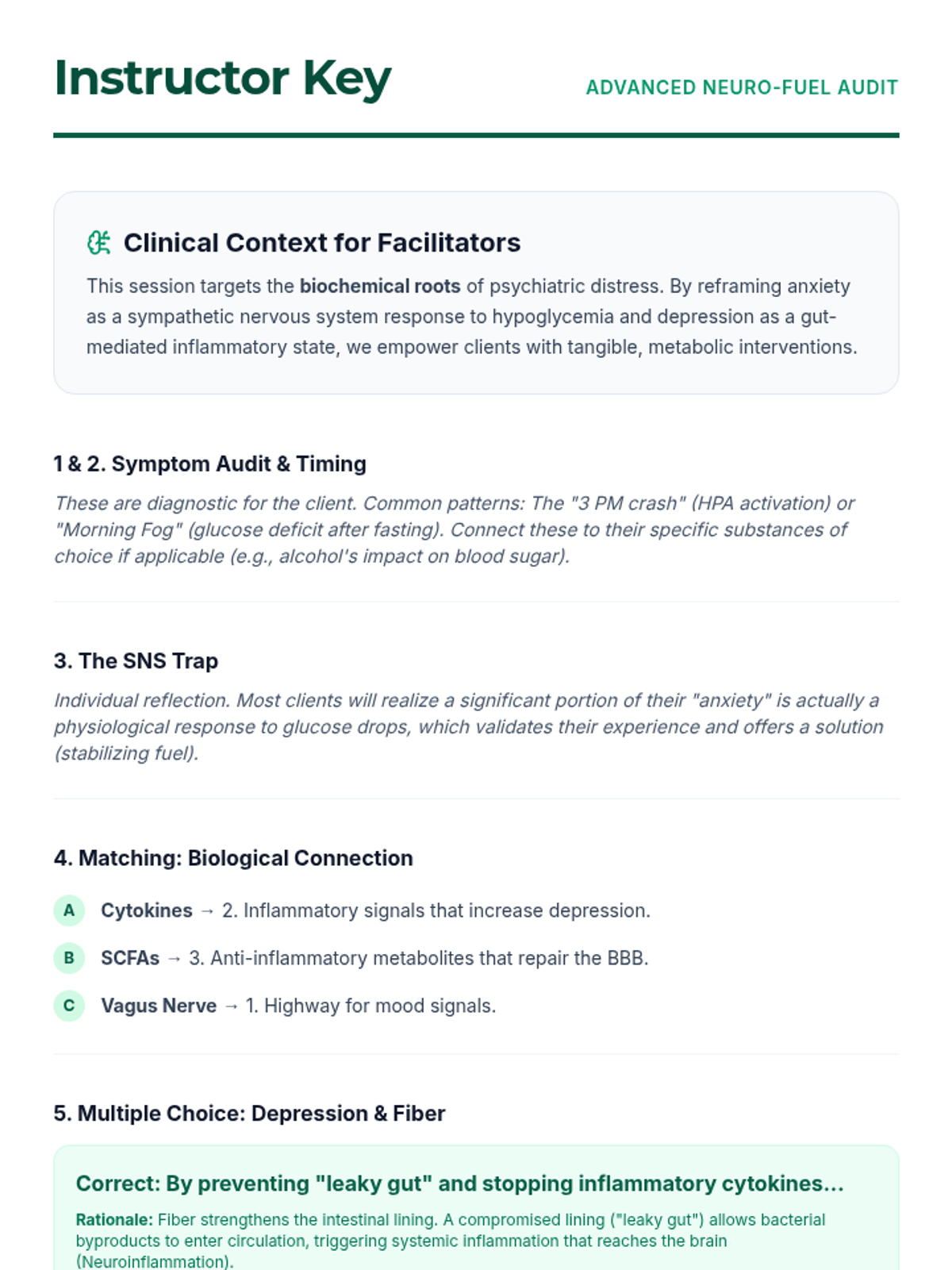
This lesson explores the neurobiological link between nutrition and psychiatric symptoms, focusing on the inflammatory model of depression, sympathetic nervous system regulation, and the role of complex carbohydrates and fiber in executive function.
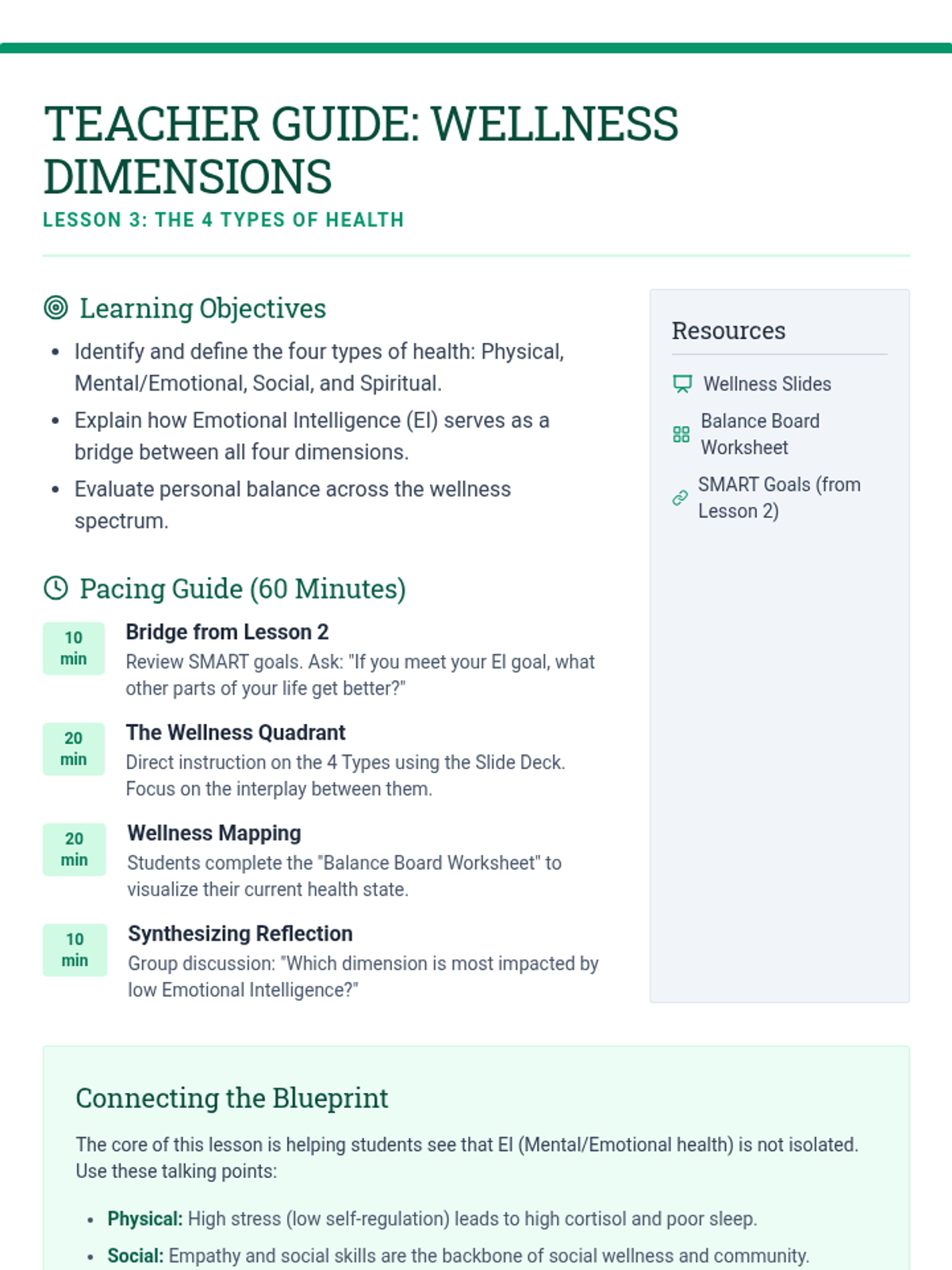
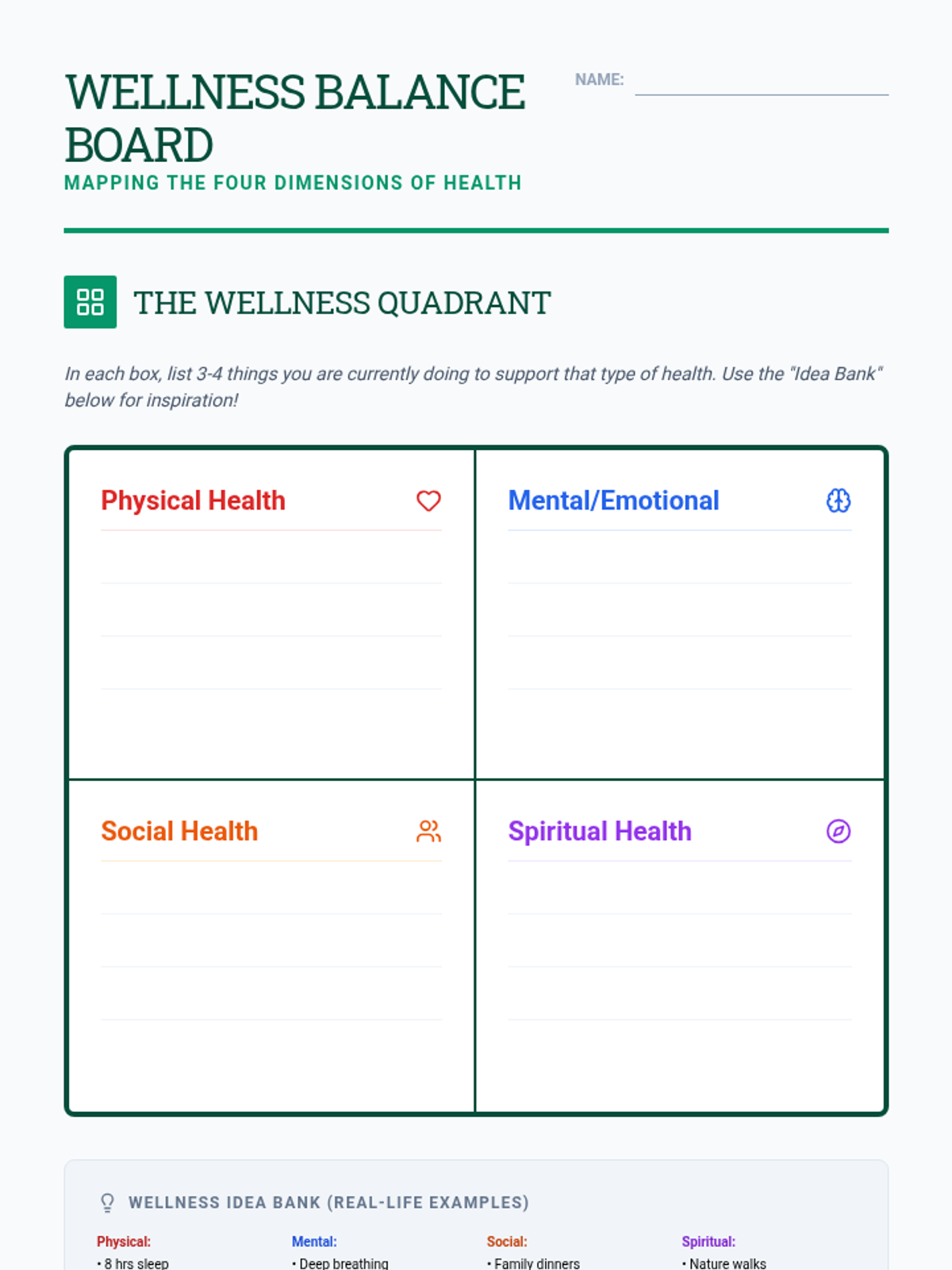
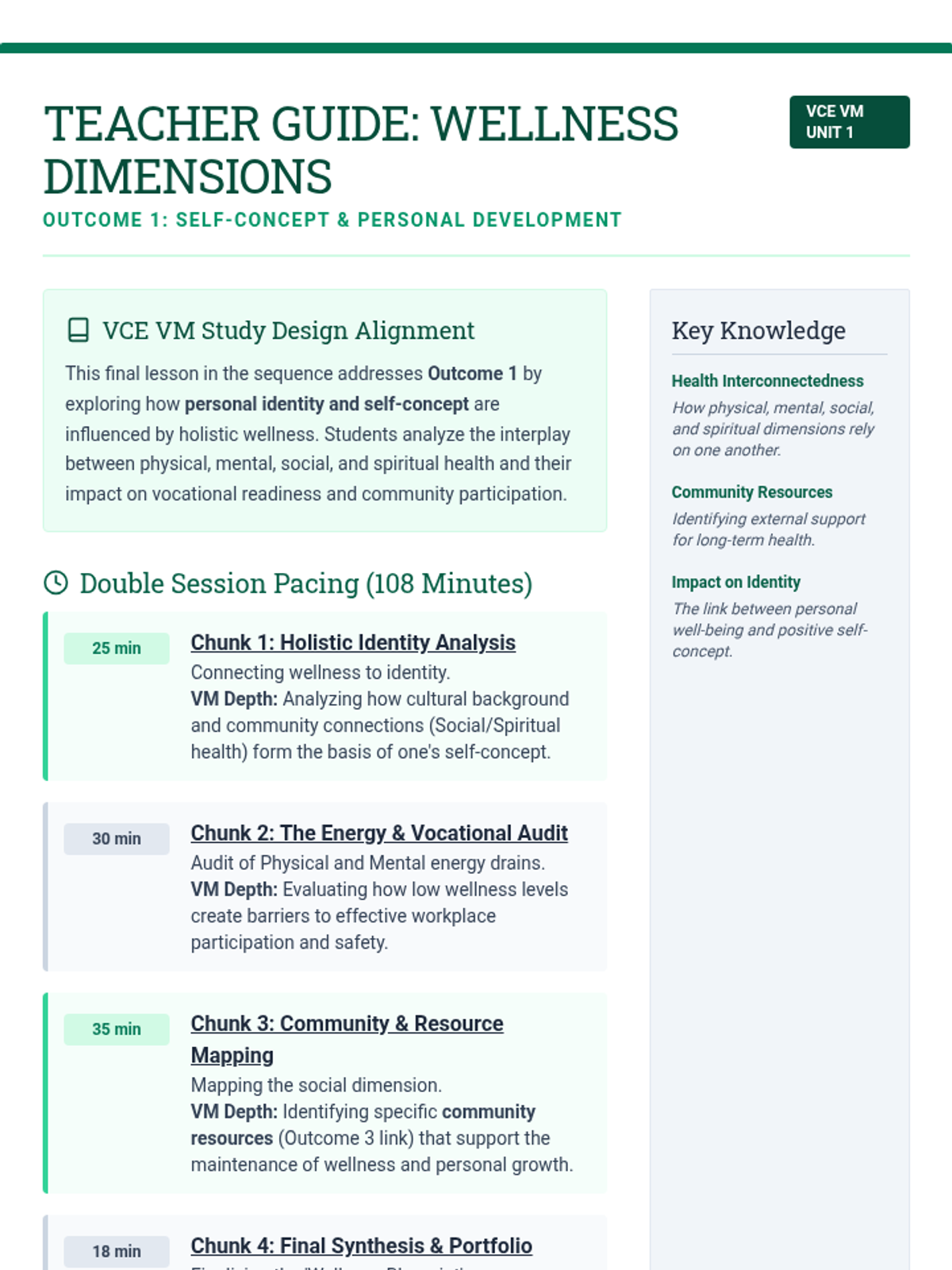
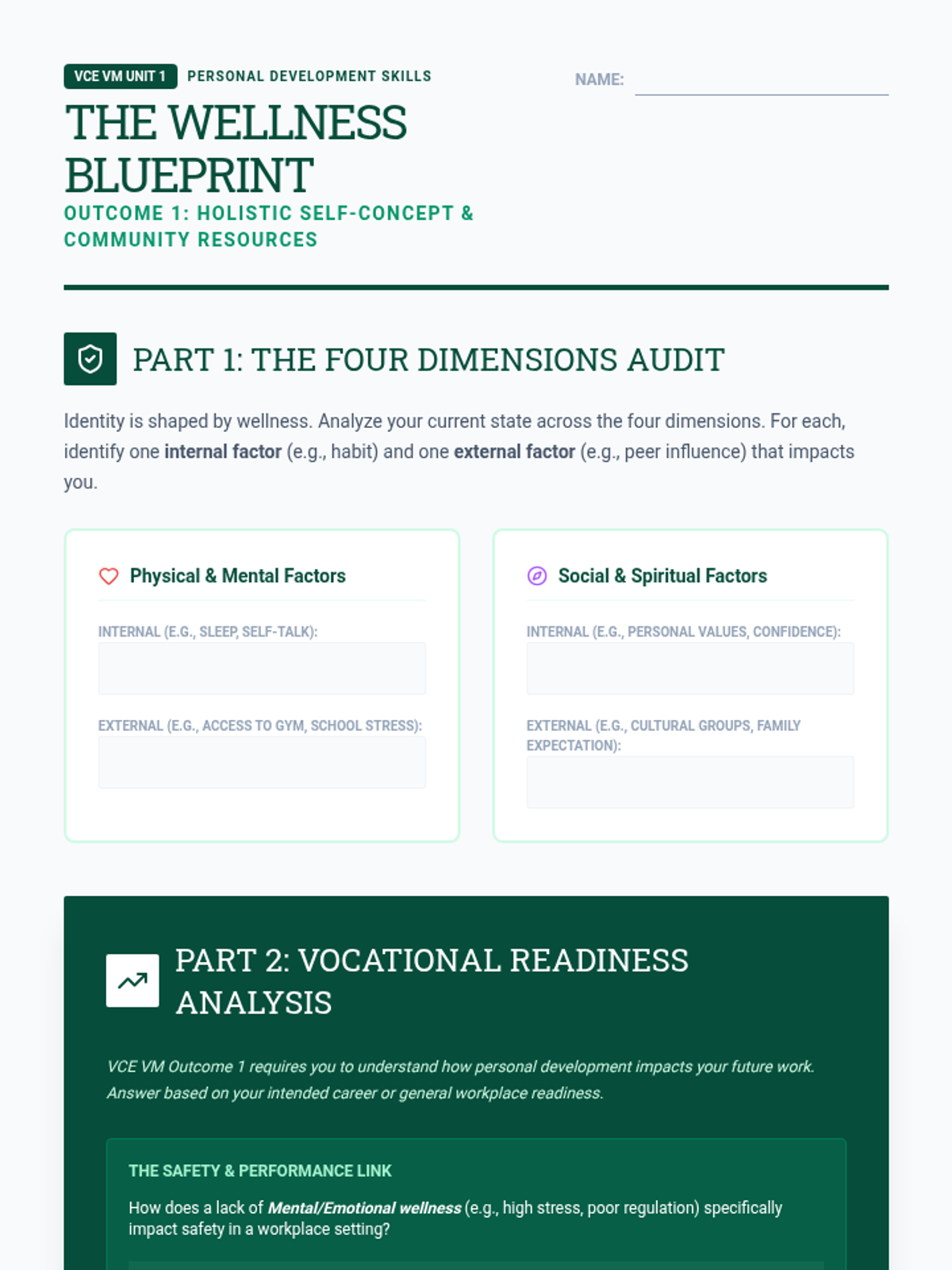
An exploration of holistic health through the four dimensions of well-being. Students analyze how their emotional intelligence goals support their overall health and balance.
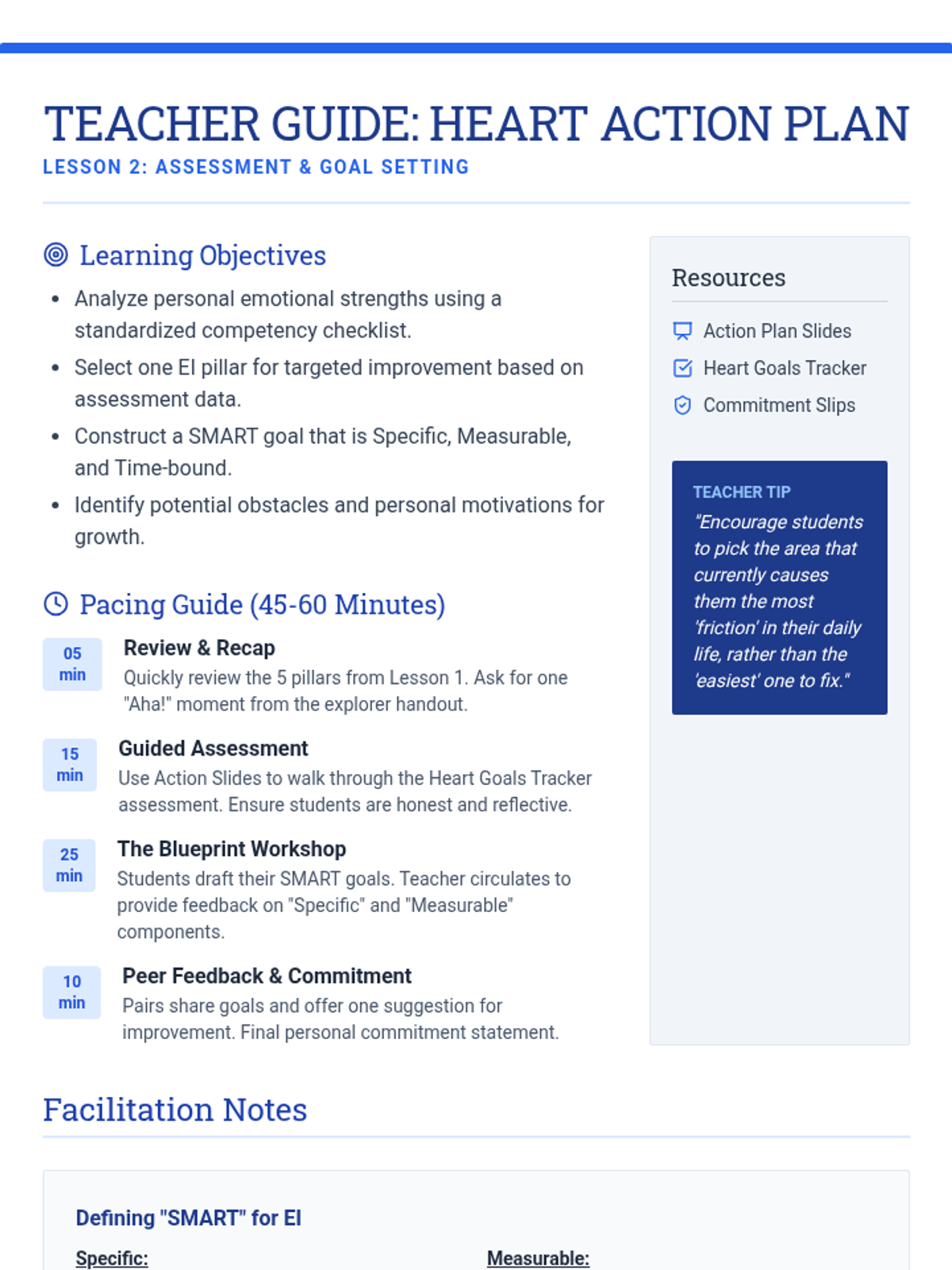
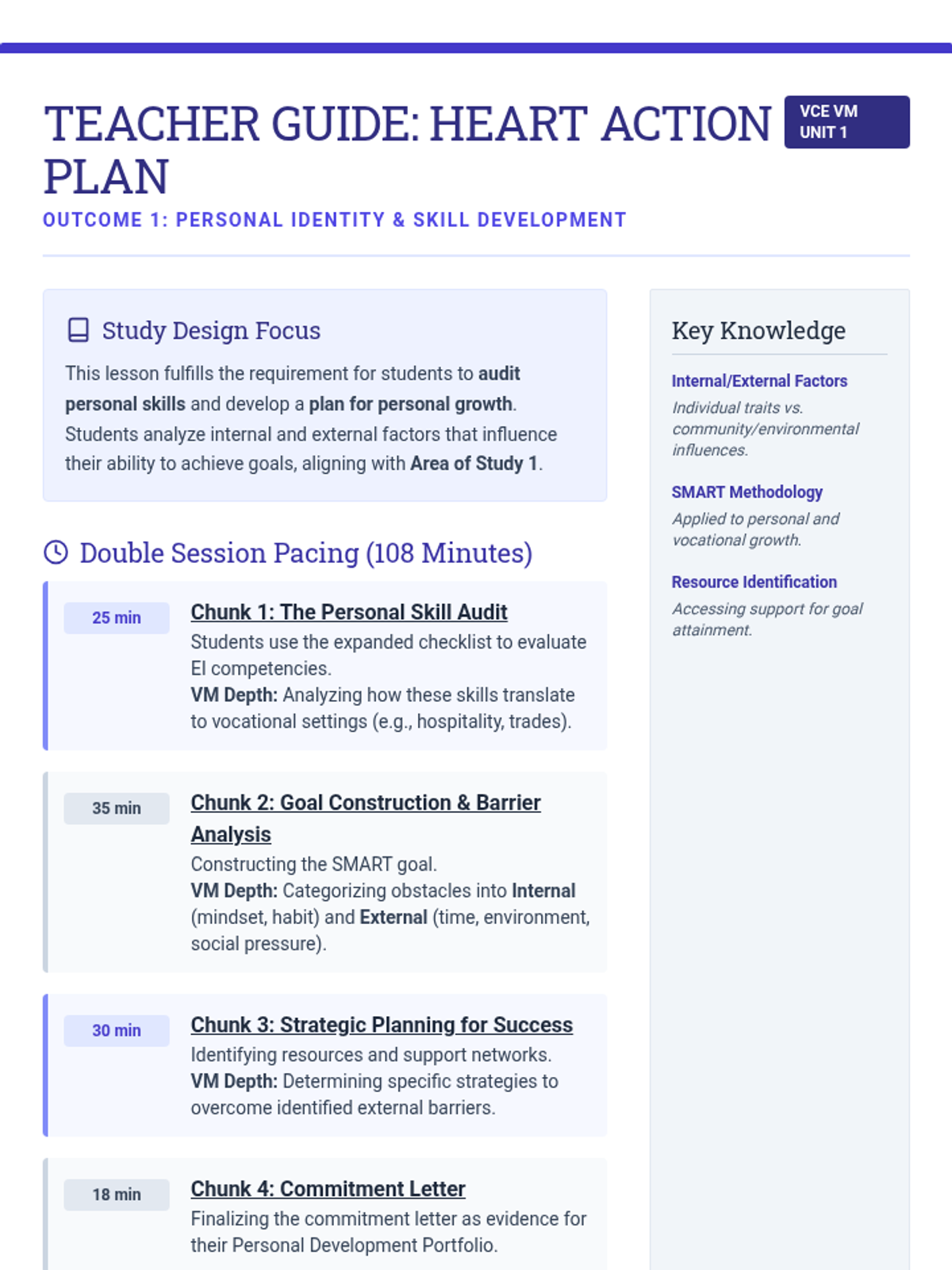
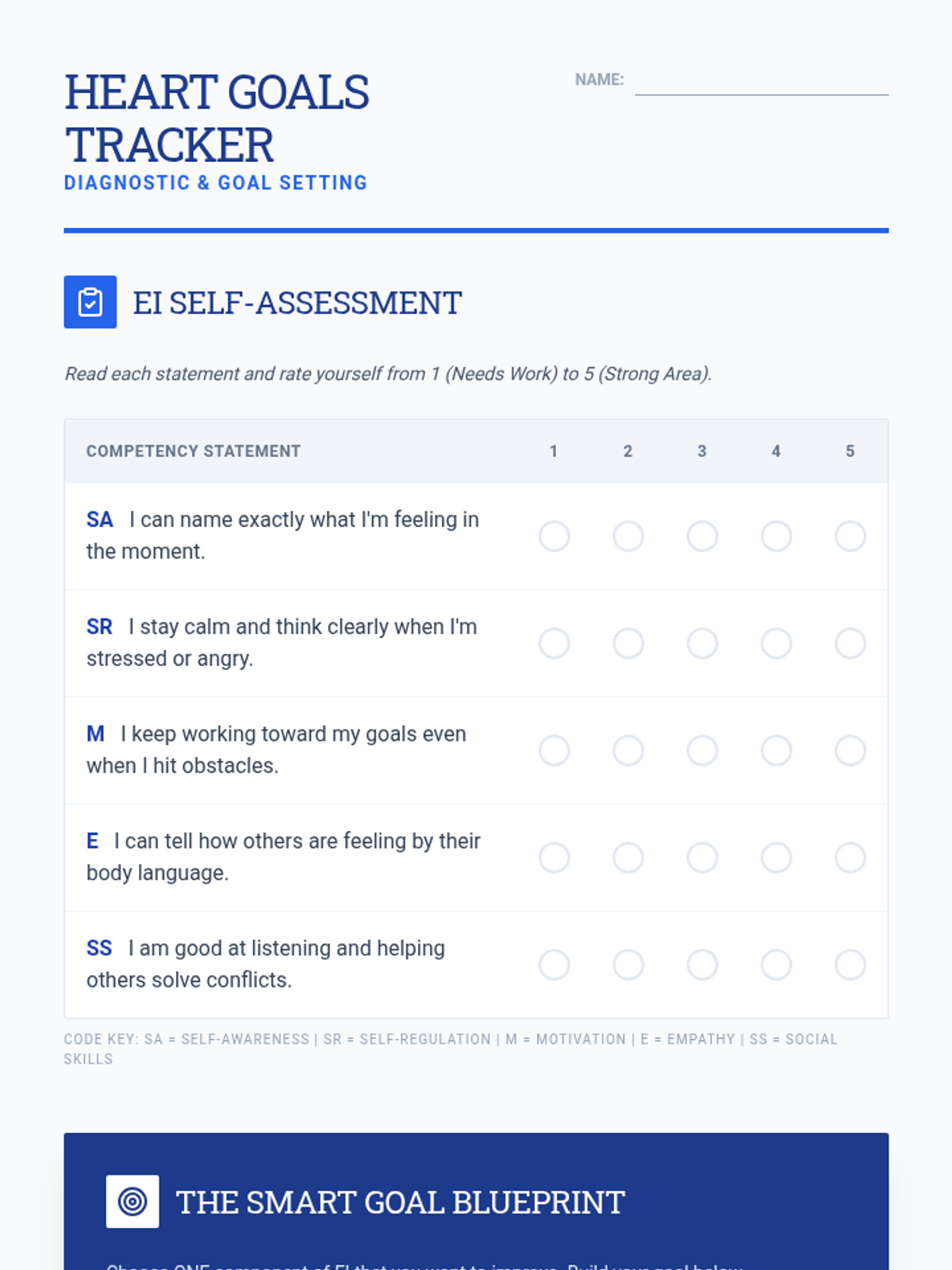
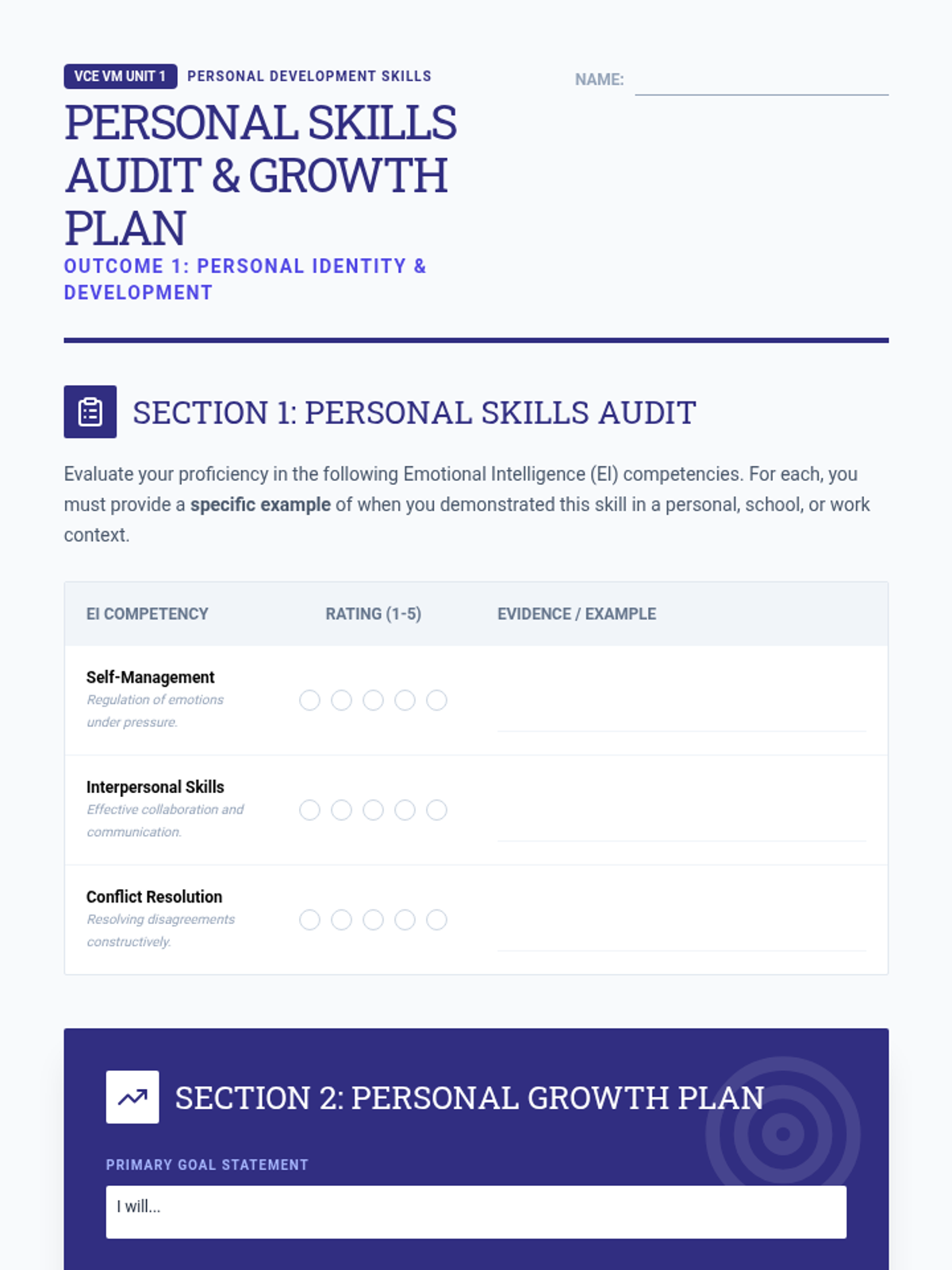
A follow-up workshop focused on personal application. Students perform a deep-dive self-assessment and construct a formal SMART goal plan for their emotional development.
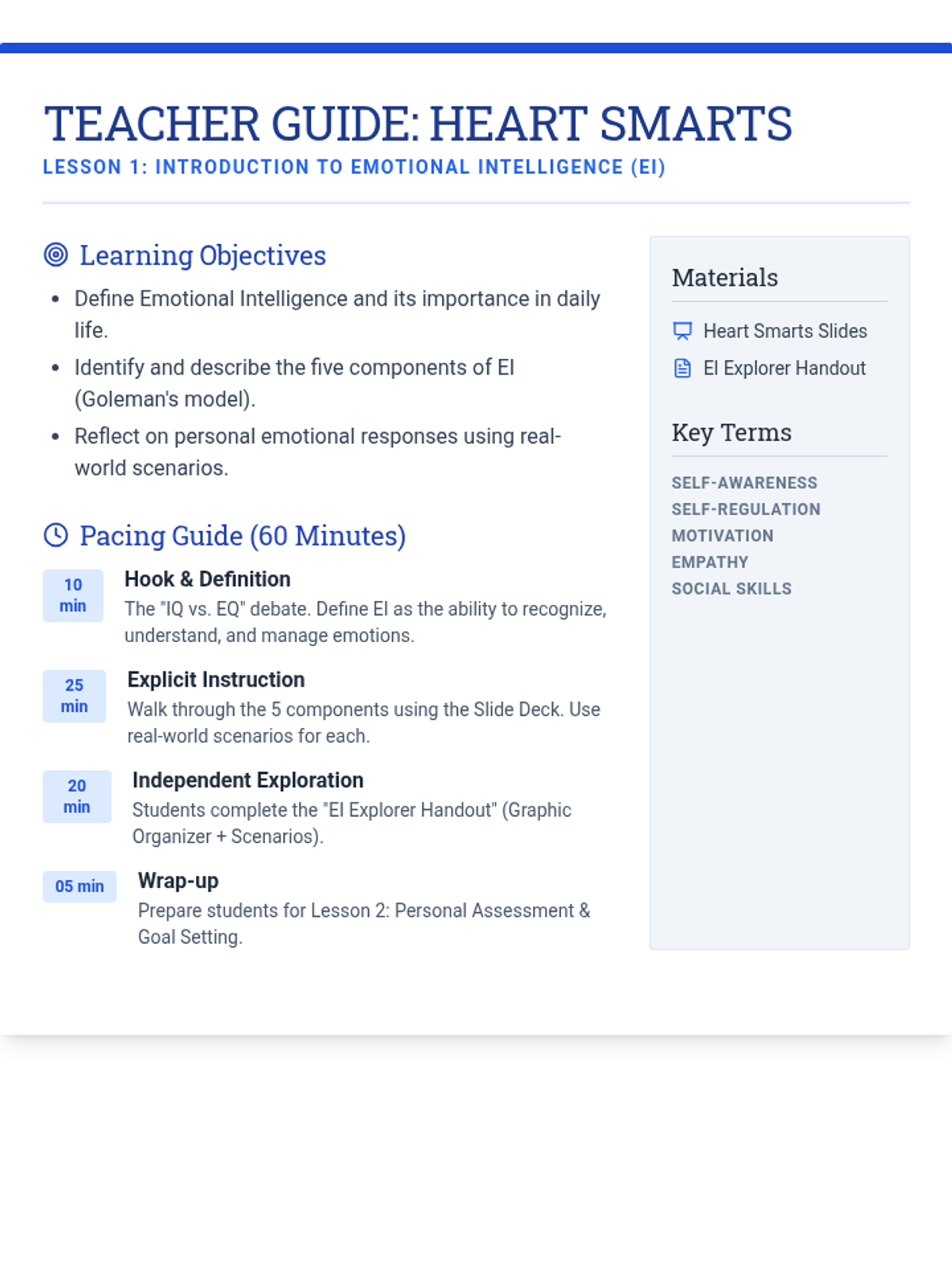
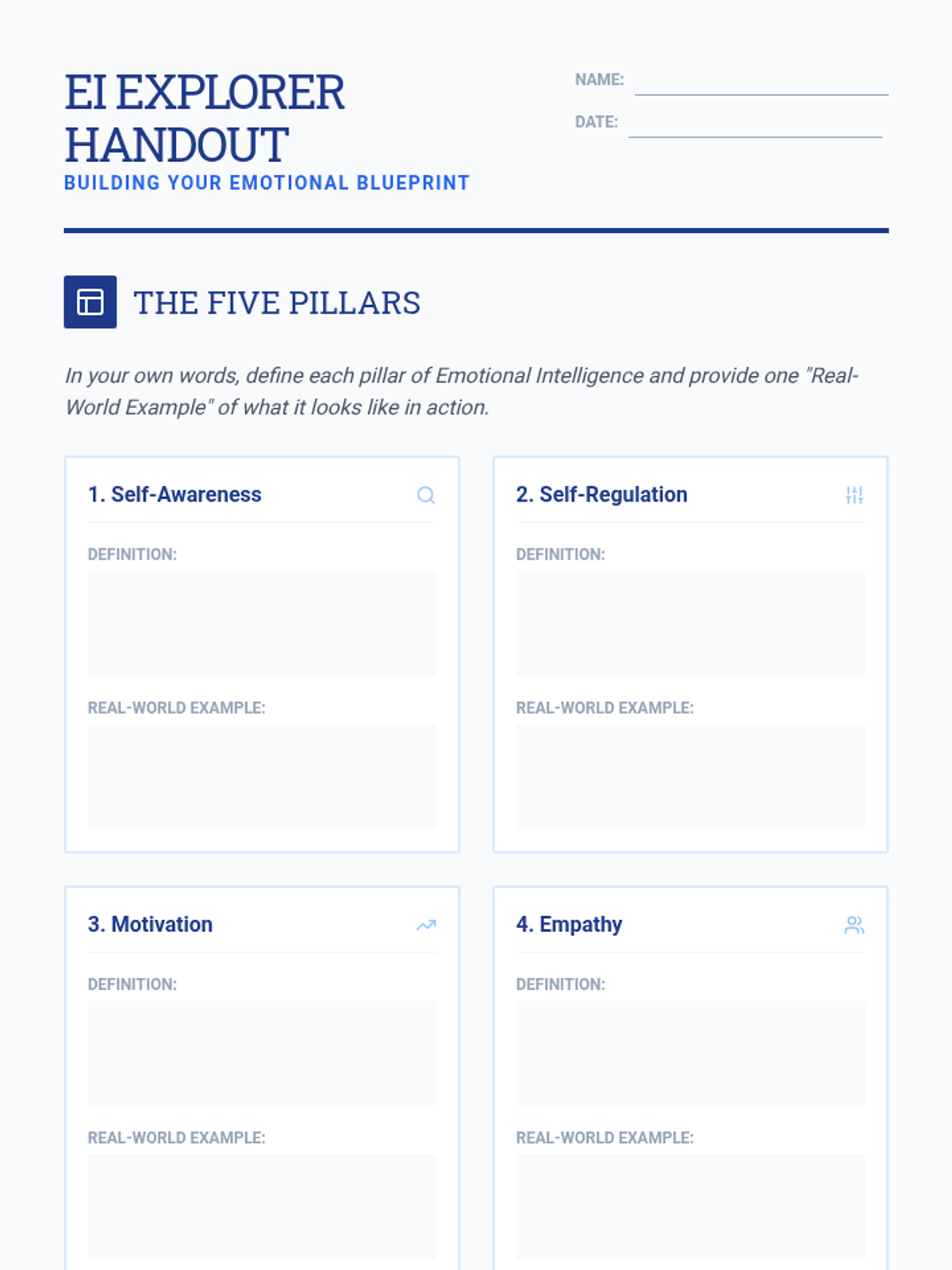
A comprehensive introduction to the five components of Emotional Intelligence: self-awareness, self-regulation, motivation, empathy, and social skills. Students engage through explicit instruction and independent reflection.
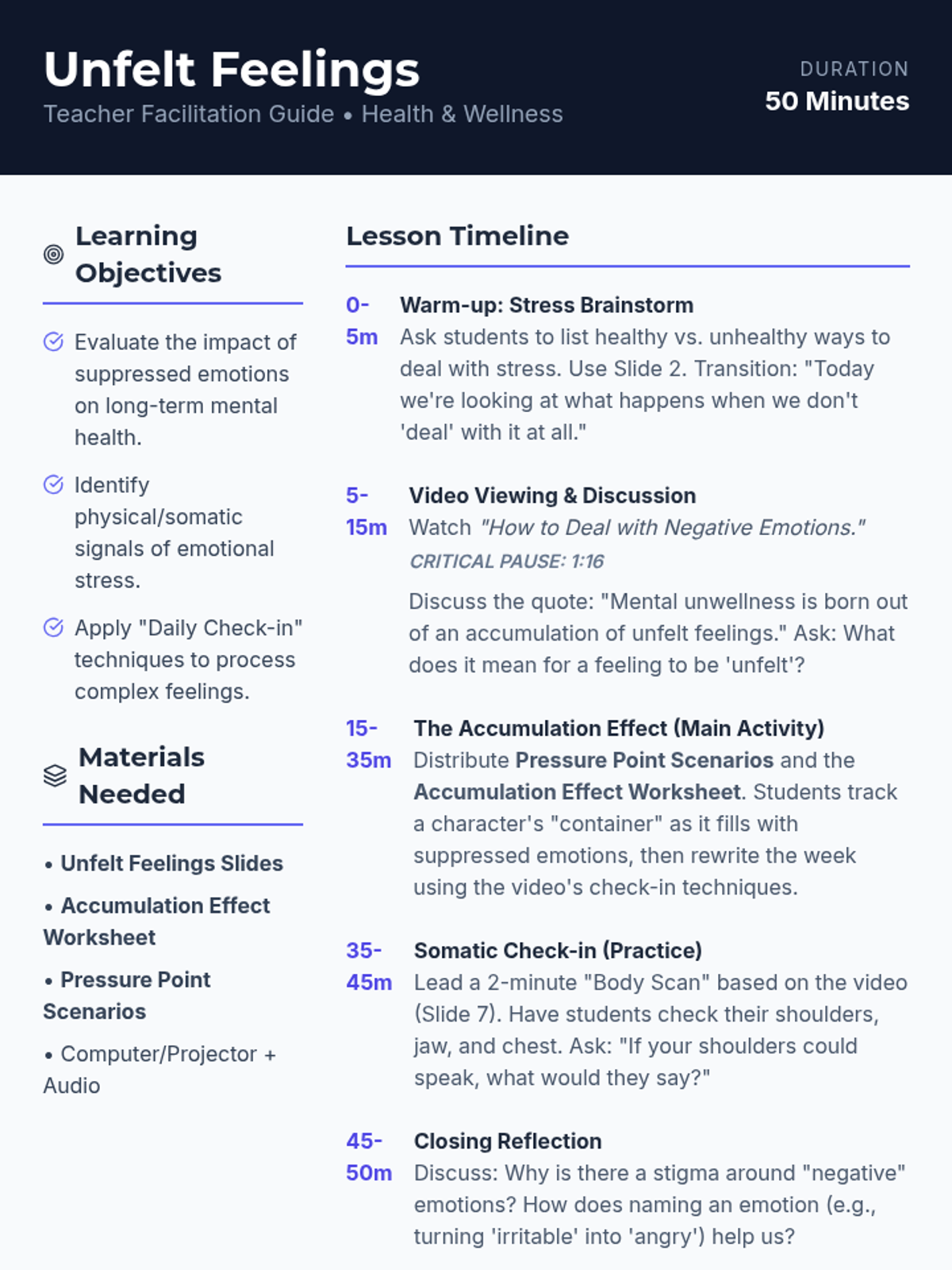
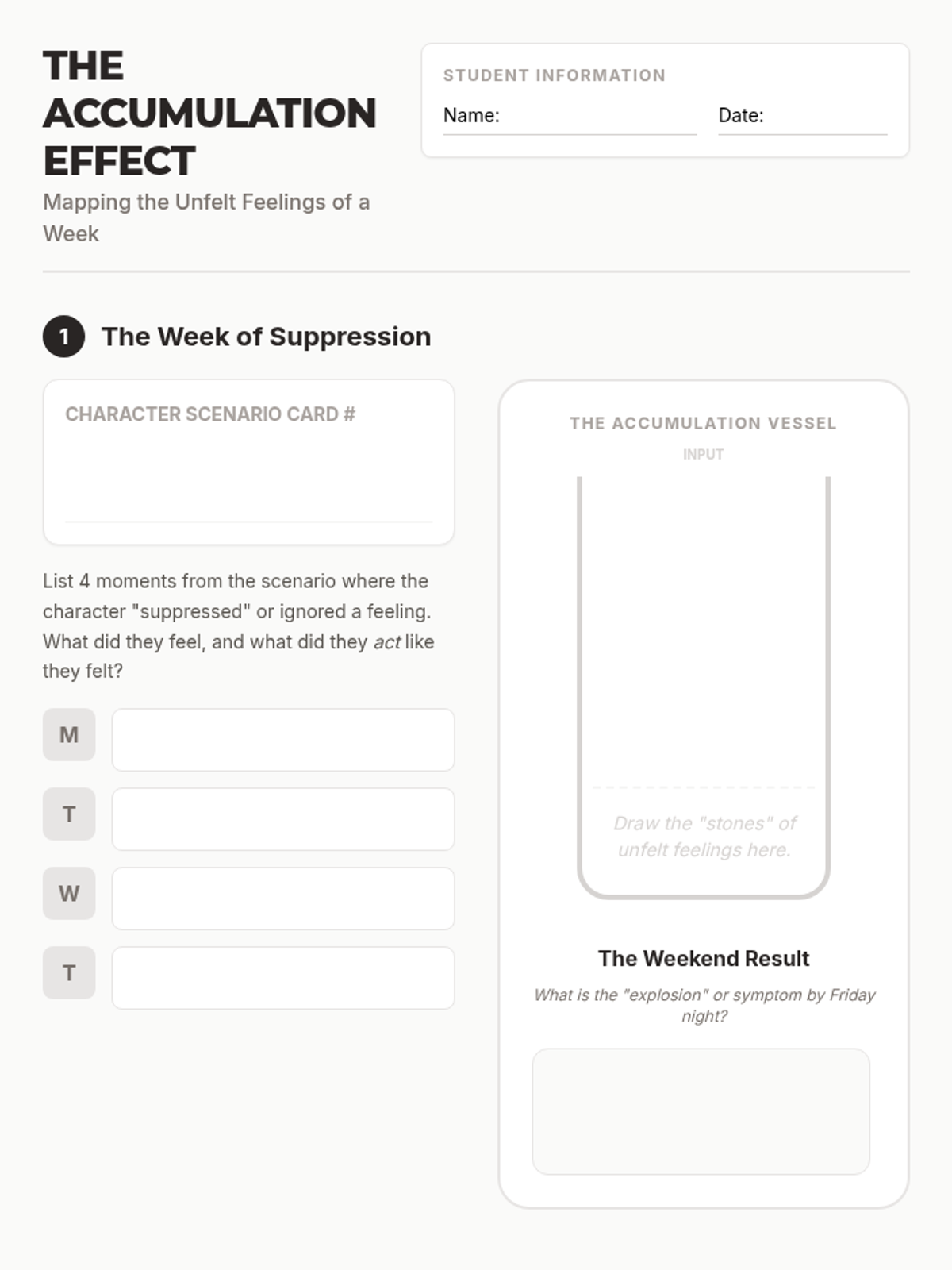
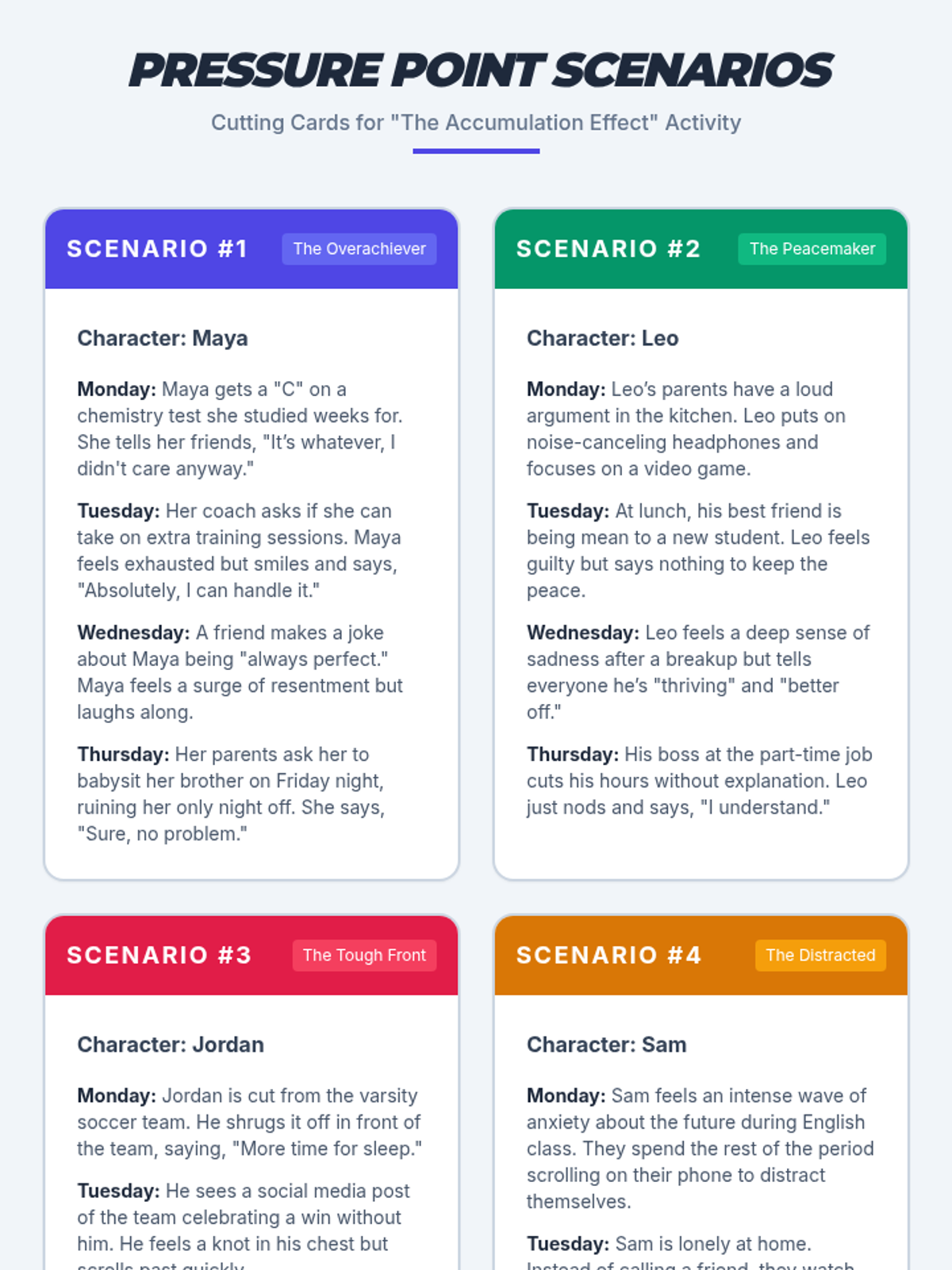
A lesson exploring how suppressed emotions accumulate over time and the practical techniques for identifying and processing them to maintain mental health. Students will analyze scenarios of 'the accumulation effect' and apply daily check-in strategies.
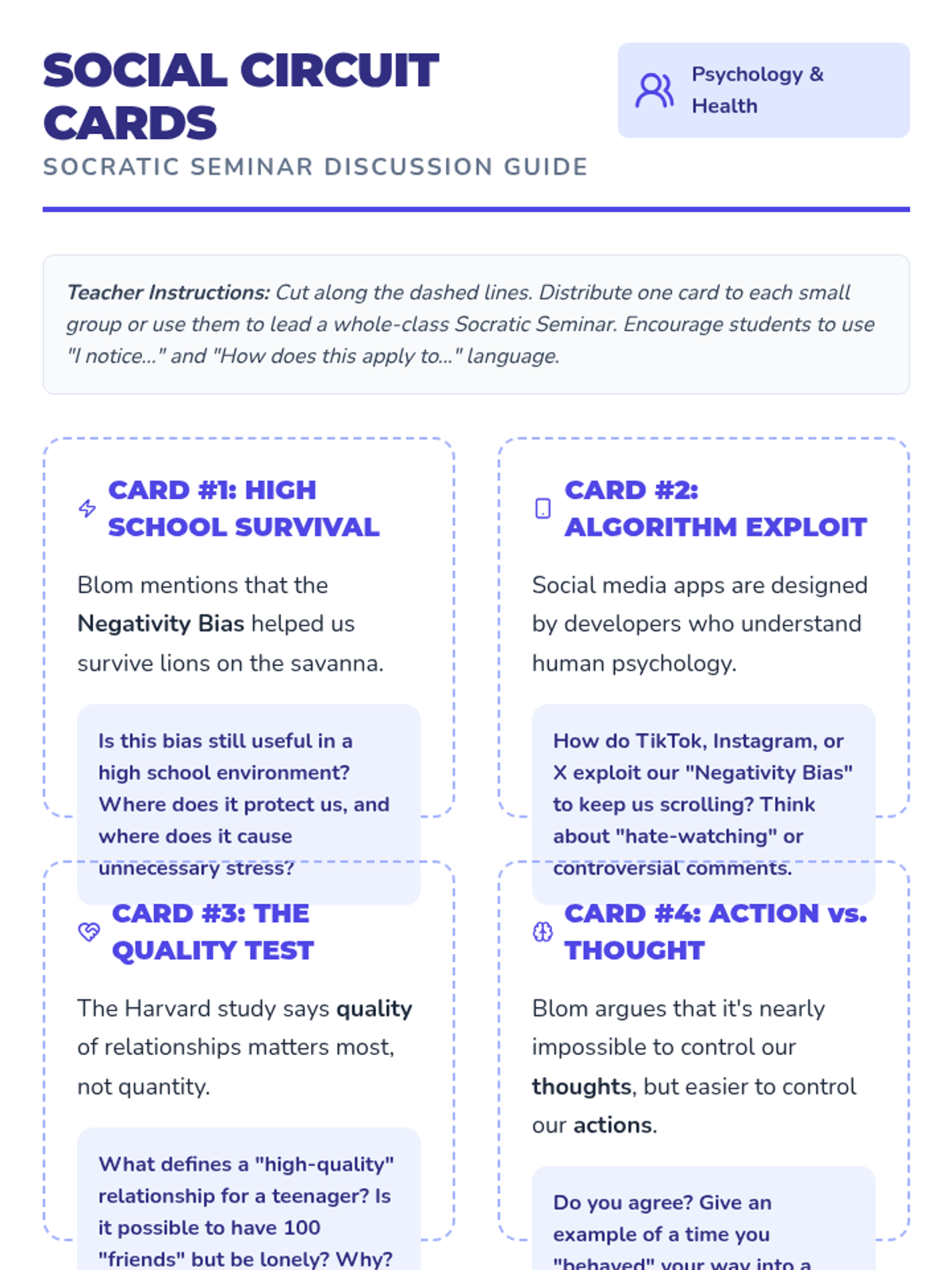
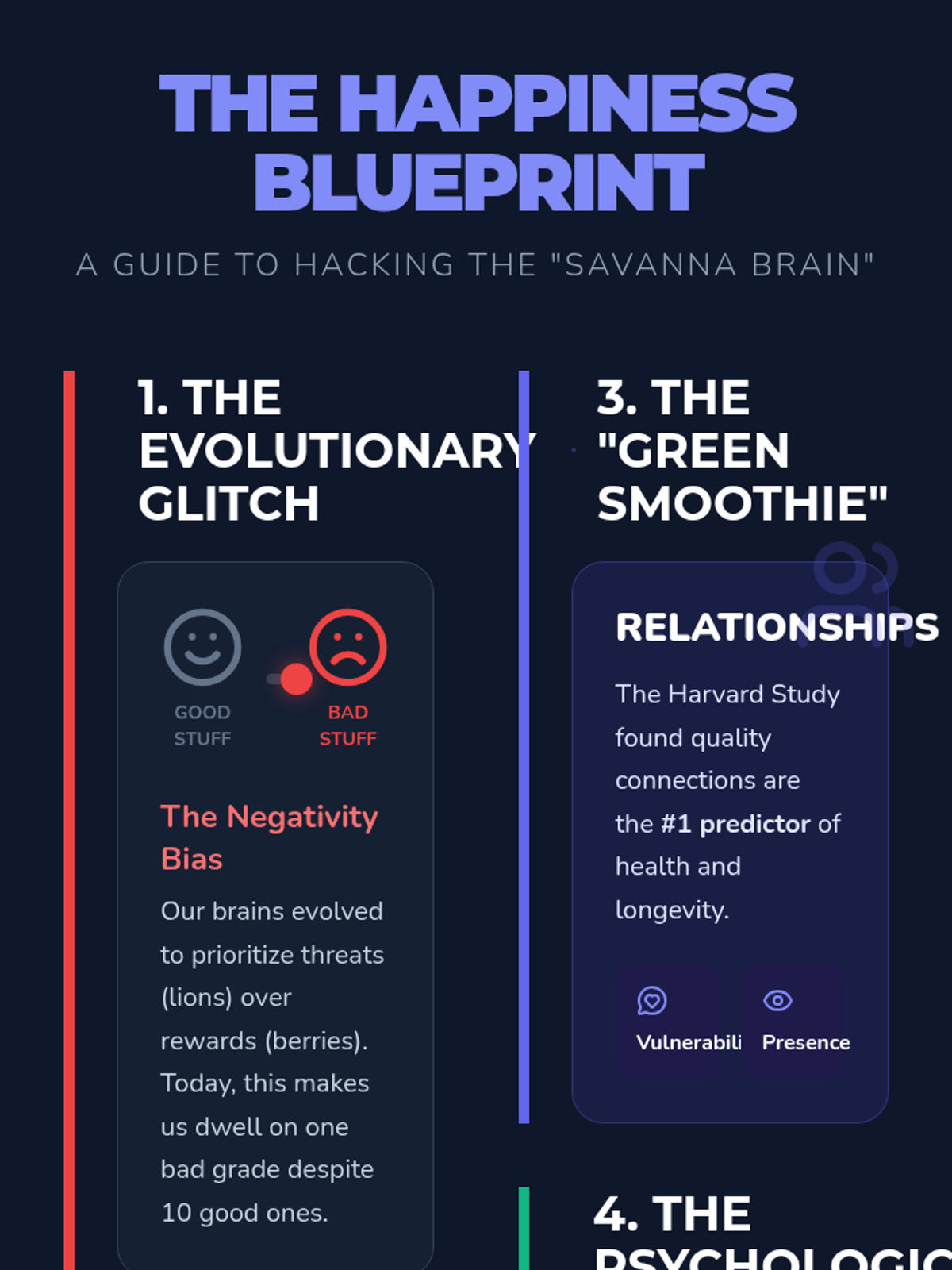
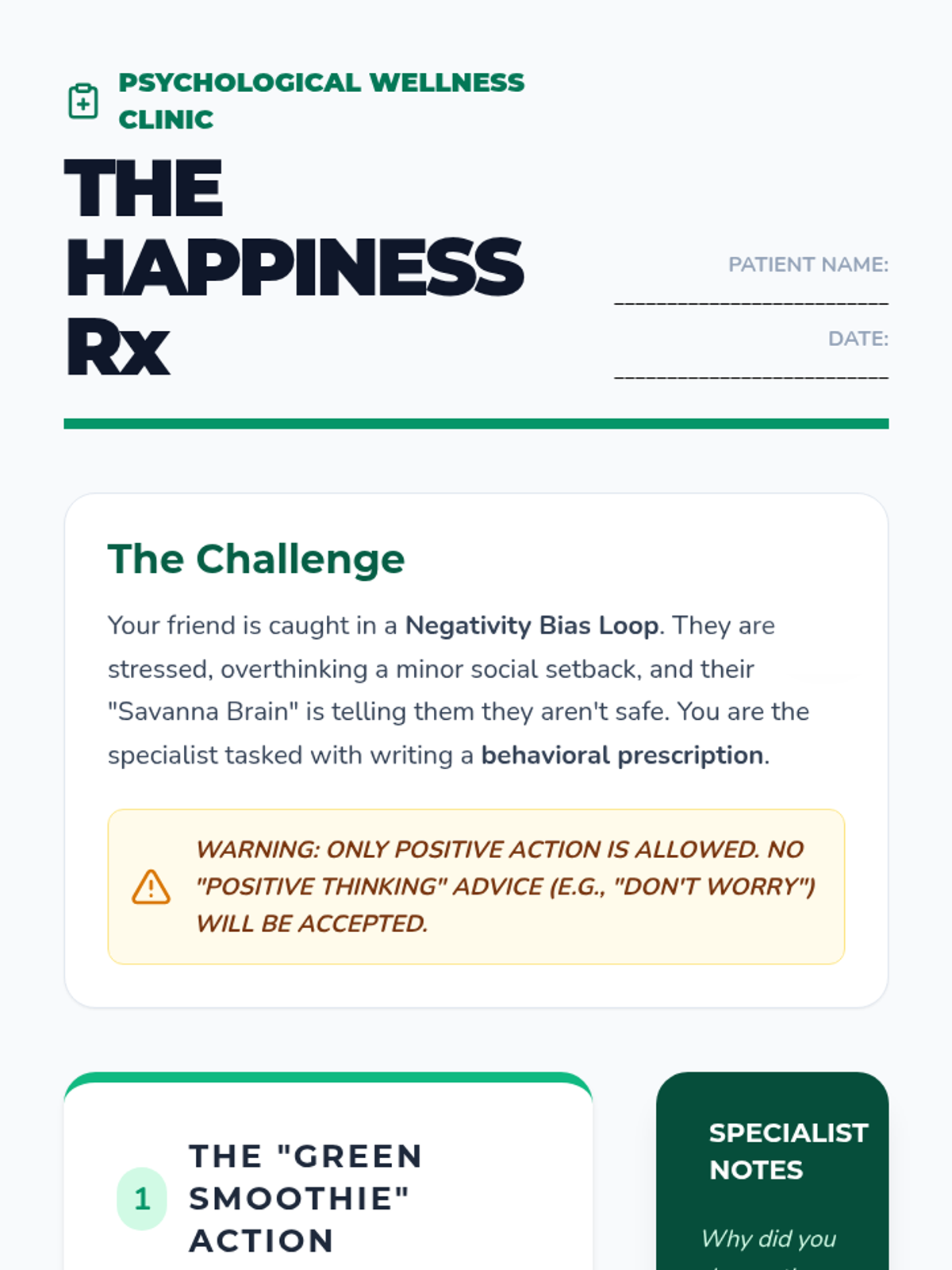
A psychology and health lesson for high schoolers exploring why our brains are wired for negativity and how to 'train' for happiness through behavioral actions and social connection. Inspired by Katarina Blom's TEDx talk, students analyze evolutionary biology and the Harvard Study of Adult Development.
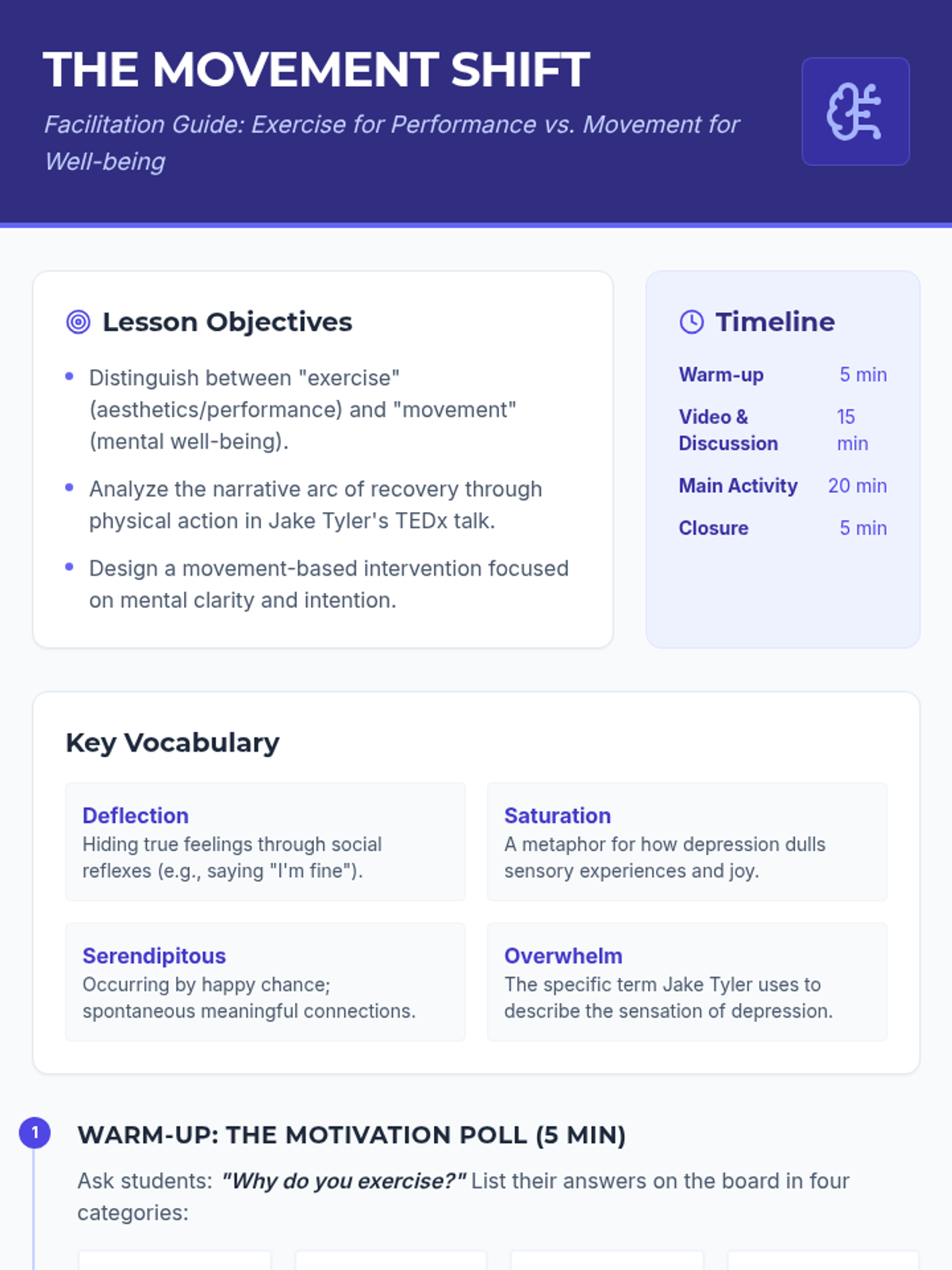
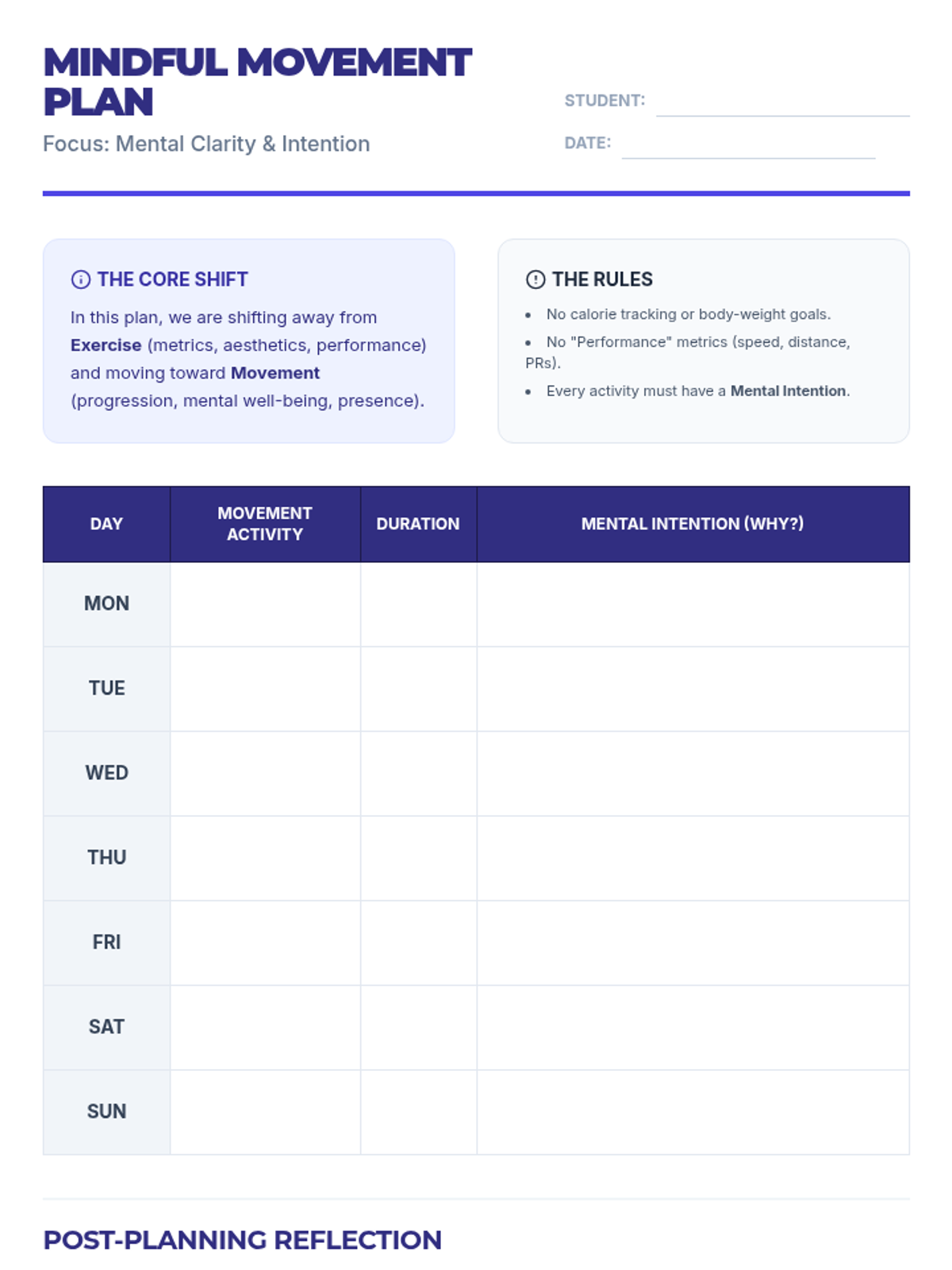
A Physical Education and Sports Medicine lesson exploring the psychological benefits of movement versus traditional exercise. Students analyze Jake Tyler's TEDx talk on depression and design a one-week movement plan focused on mental clarity and intention rather than physical metrics.
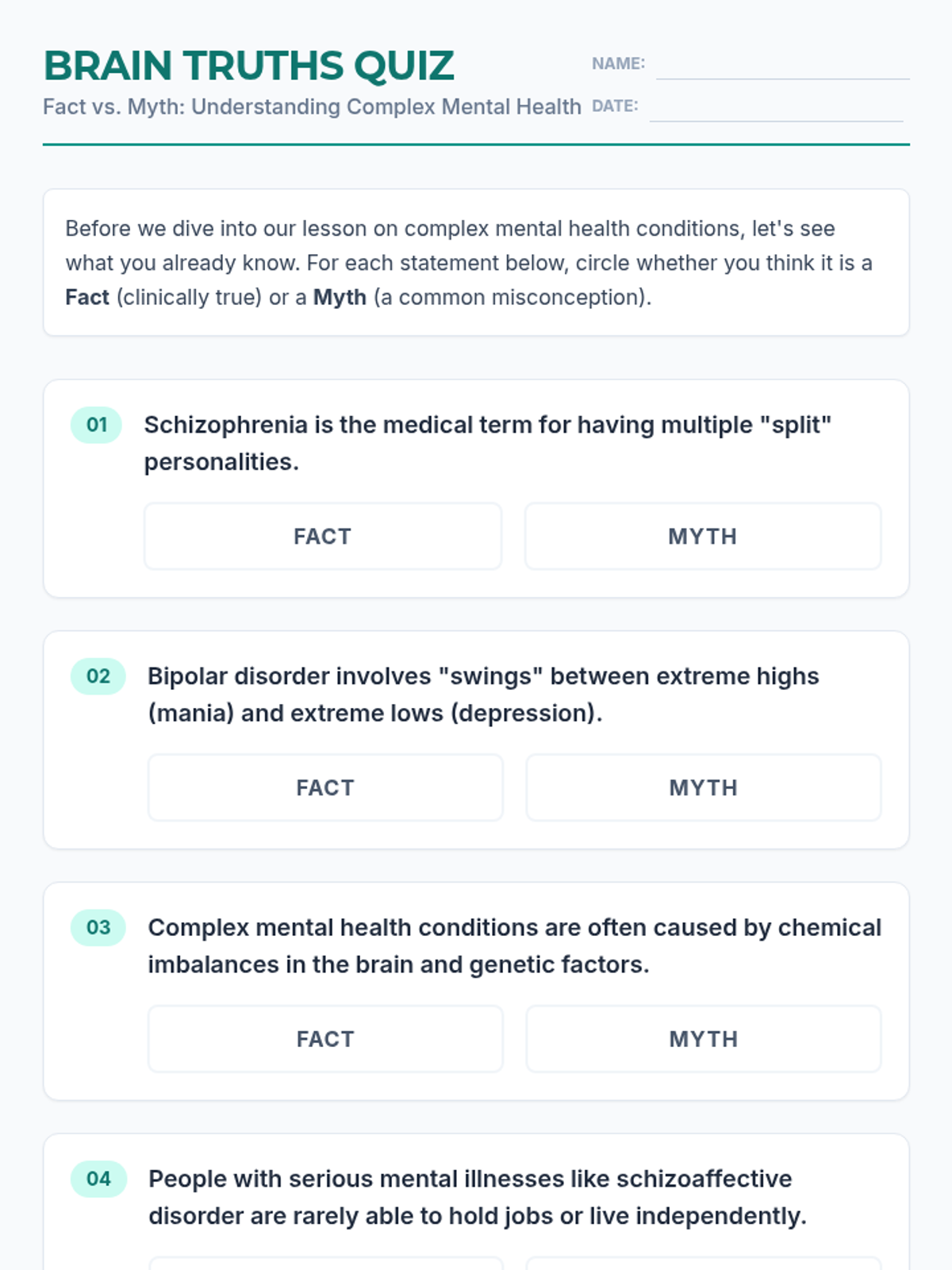
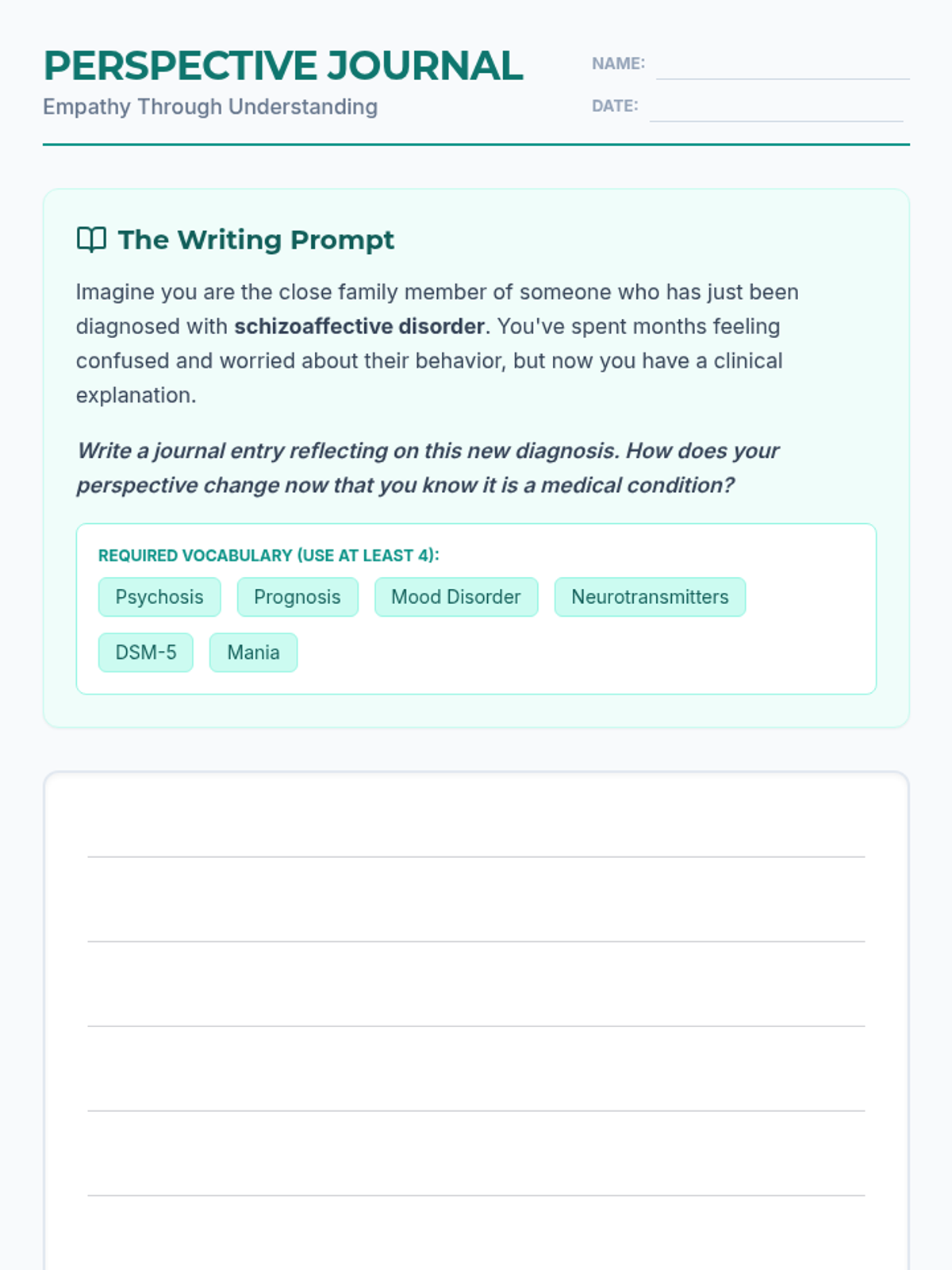
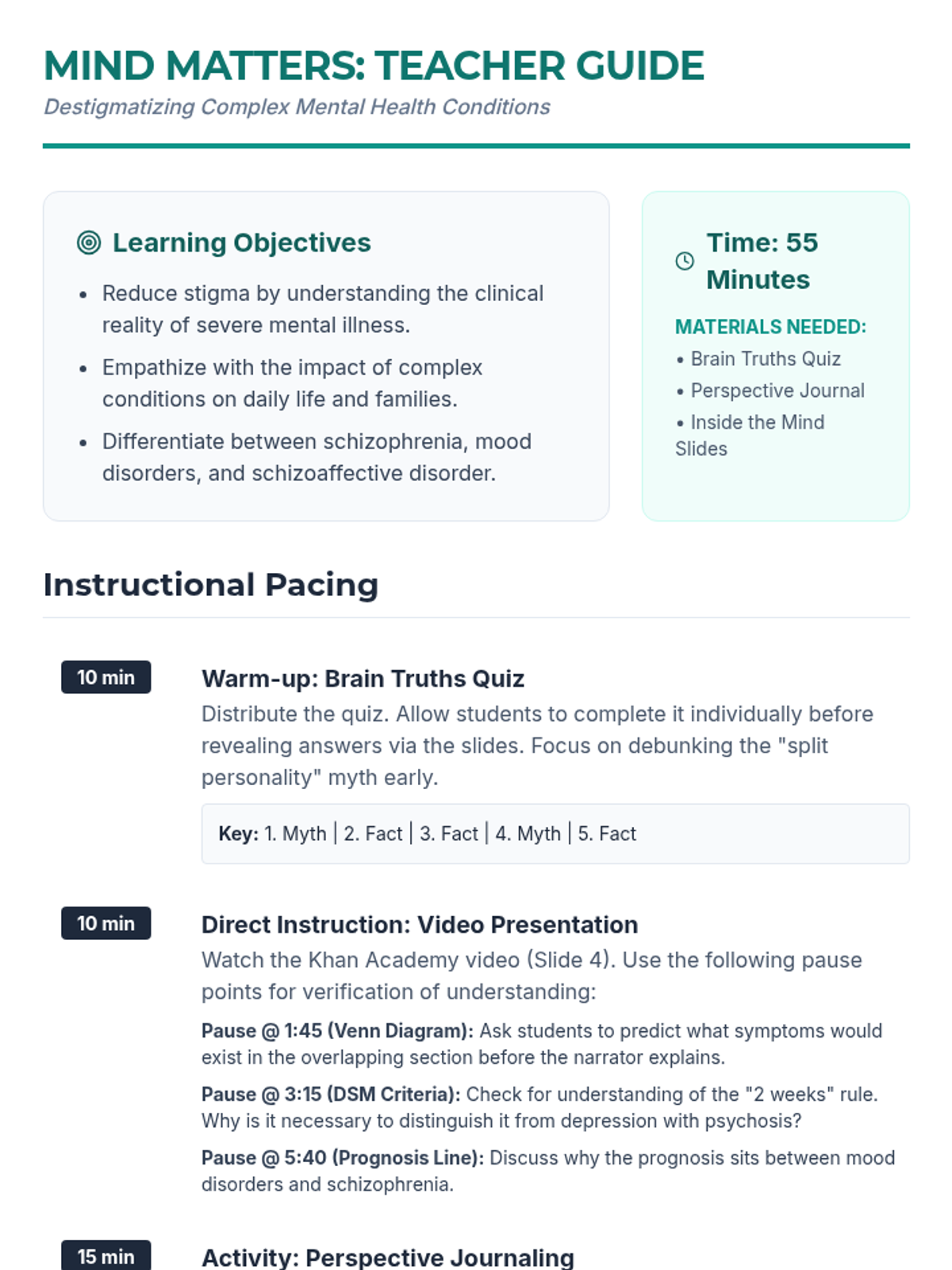
This lesson explores complex mental health conditions like schizoaffective disorder, schizophrenia, and bipolar disorder, focusing on destigmatization through clinical understanding and empathy. Students learn to distinguish between common myths and medical realities while practicing perspective-taking for those affected by these diagnoses.
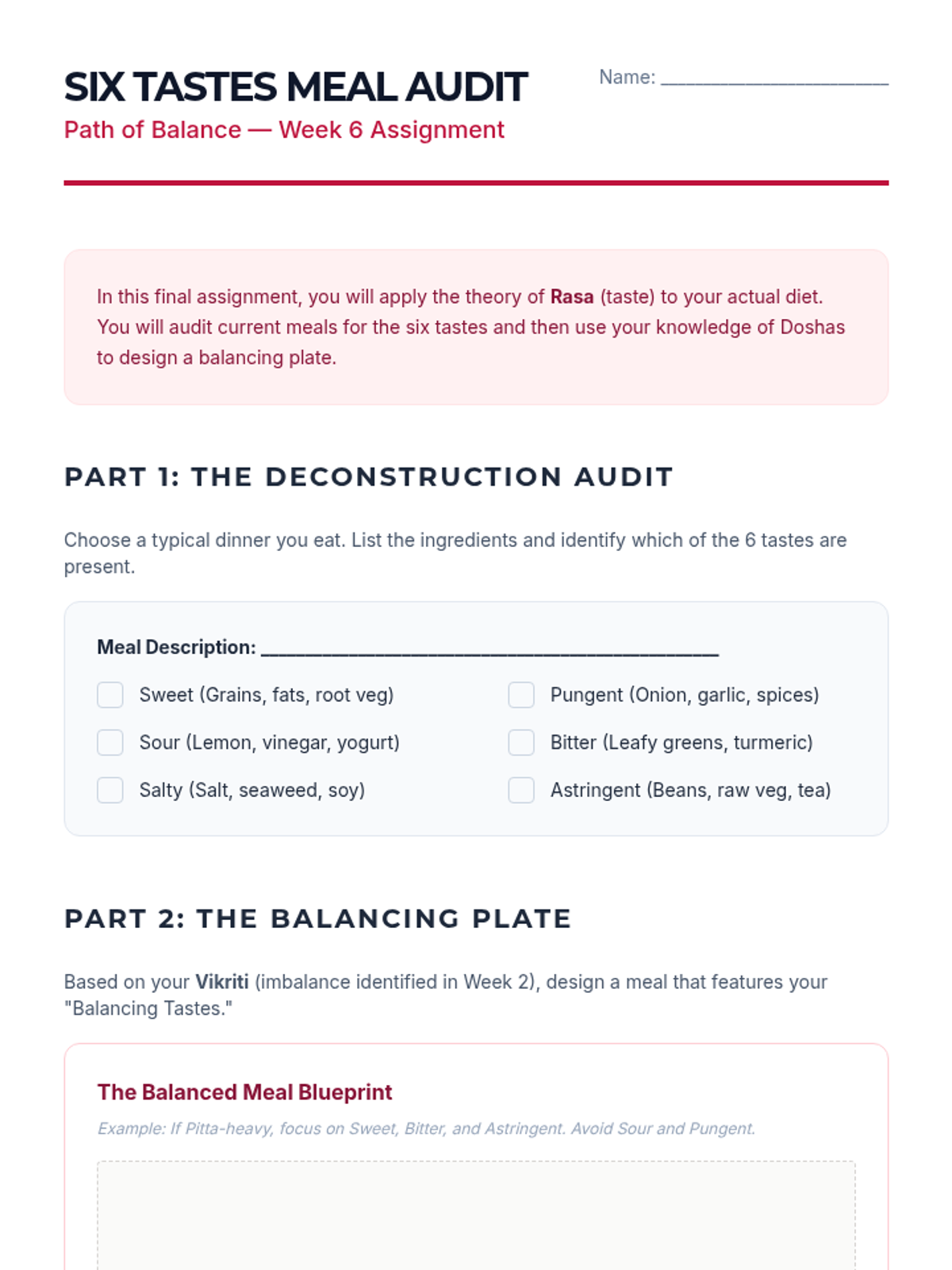
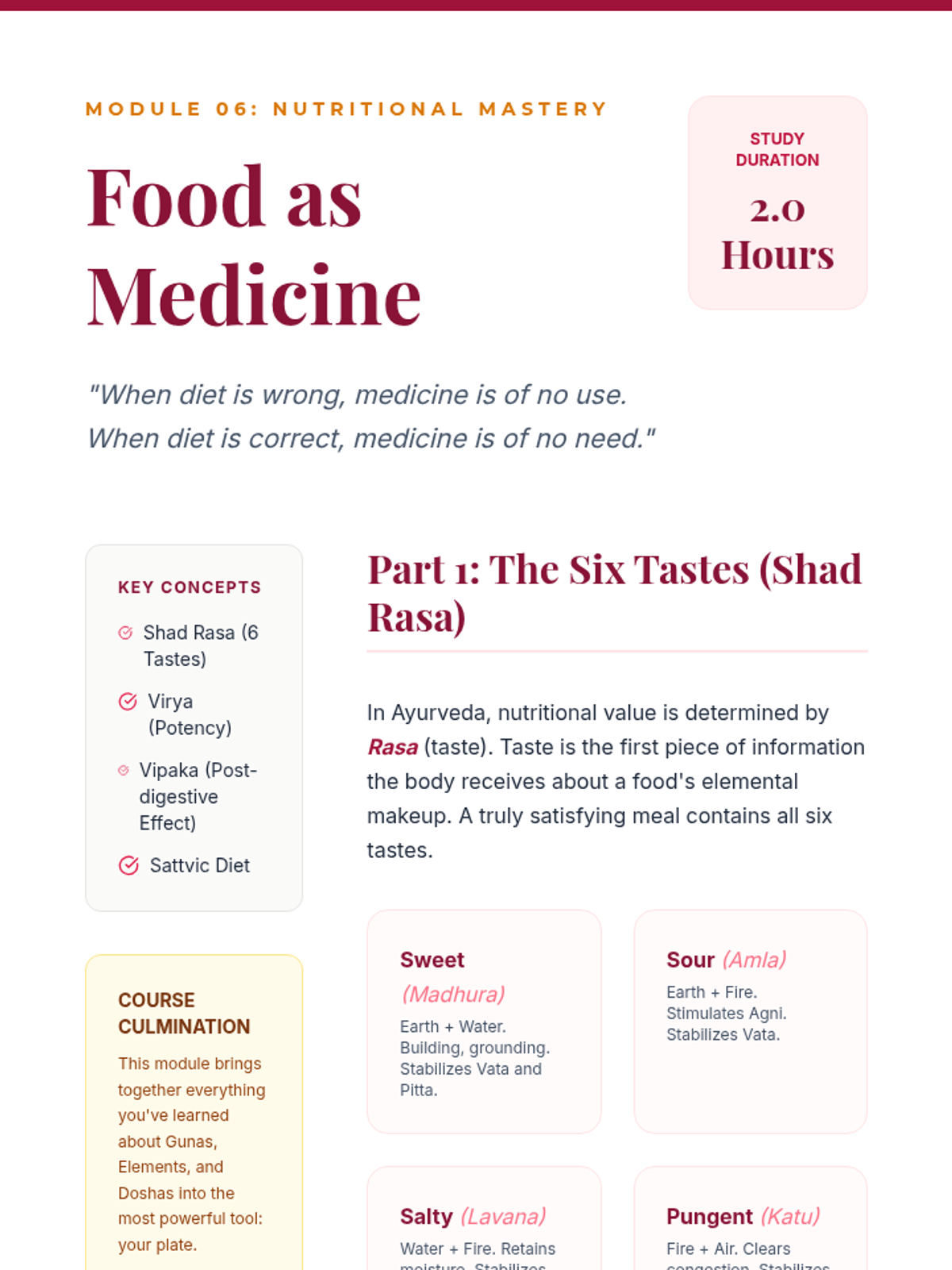
The study of Ayurvedic dietetics, the six tastes (Rasas), the qualities of food (Gunas), and how to use nutrition as the ultimate medicine.
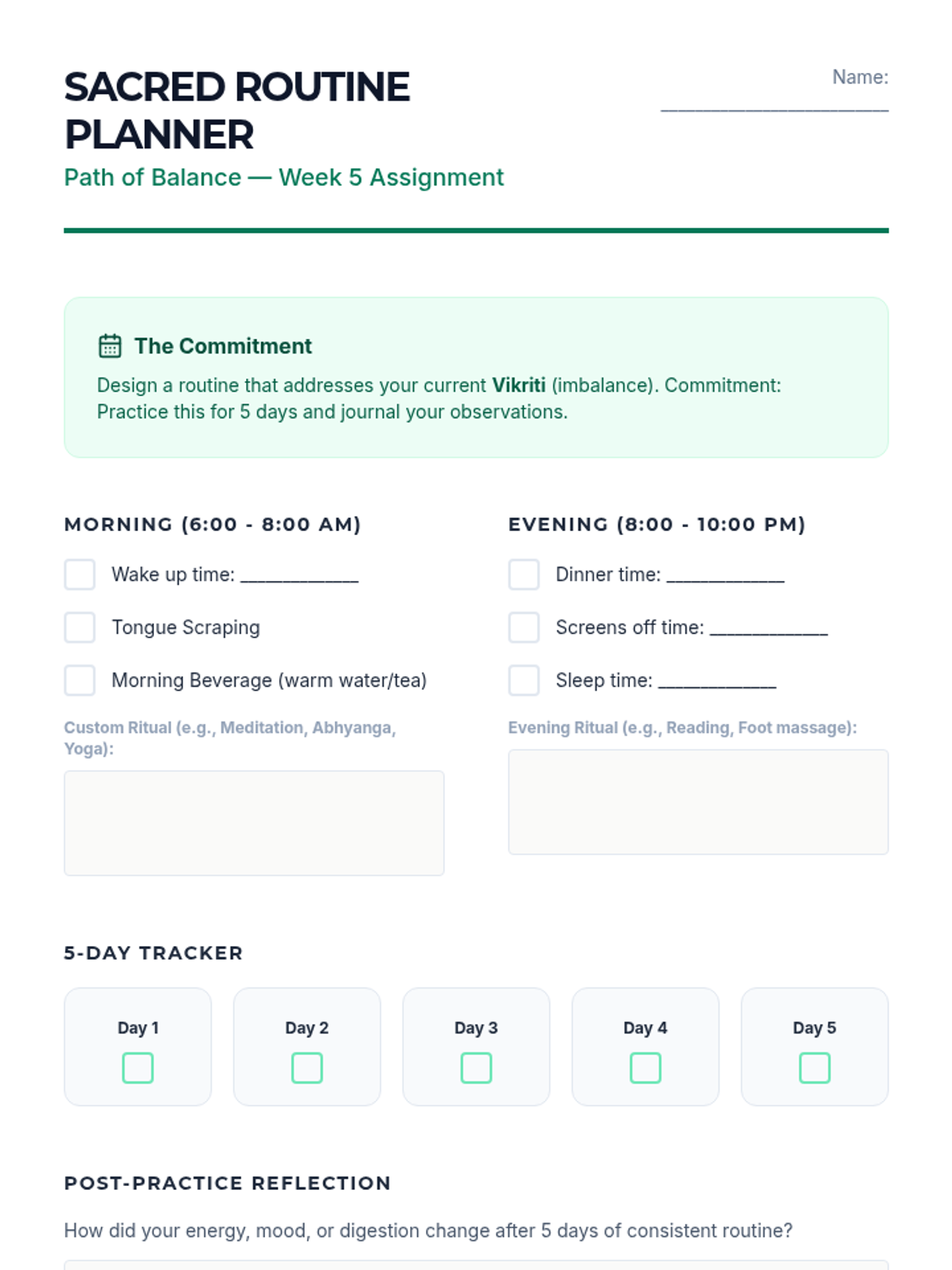
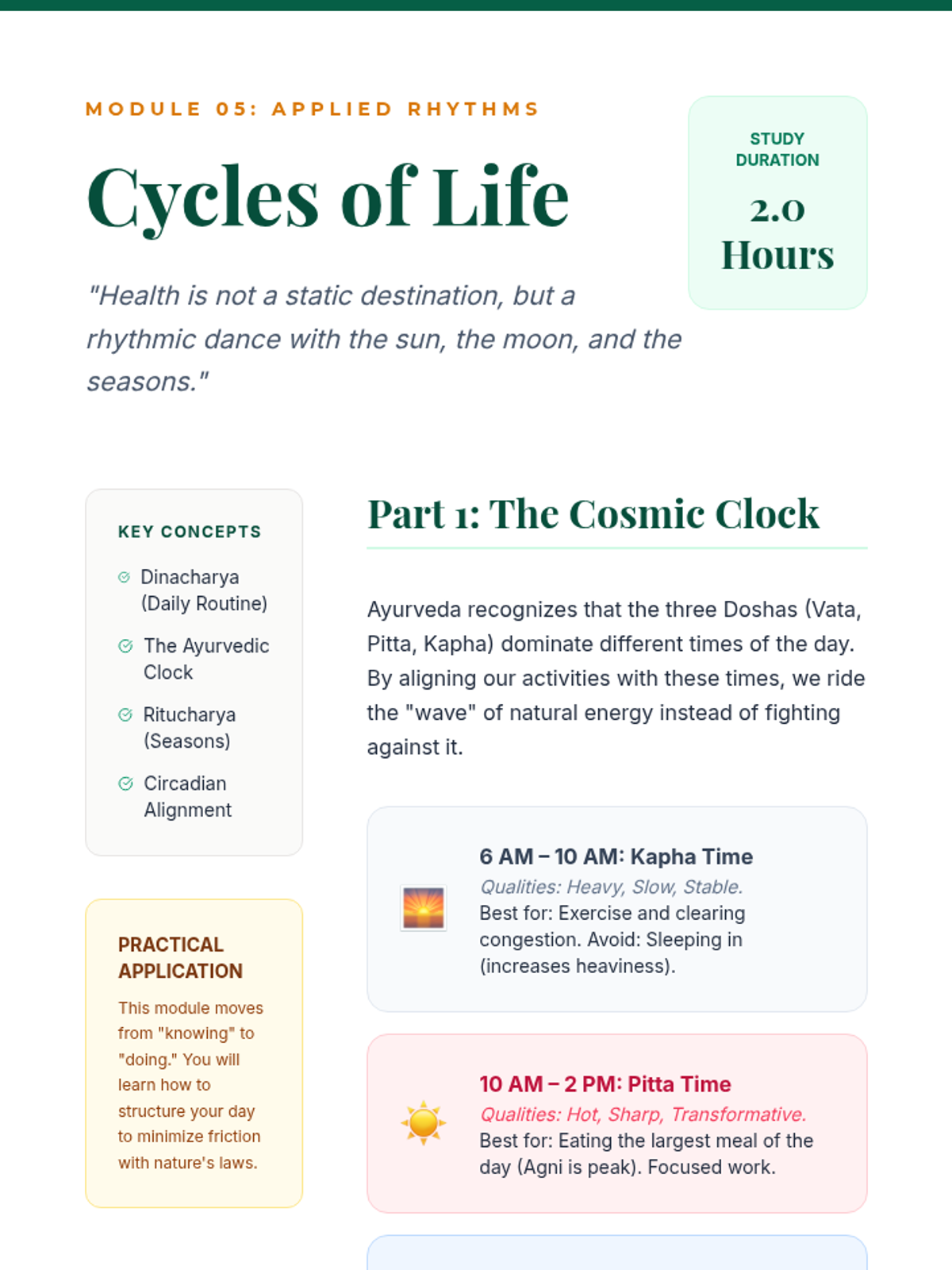
Practical application of Ayurvedic wisdom through daily routines (Dinacharya) and seasonal regimens (Ritucharya) to align with natural rhythms.
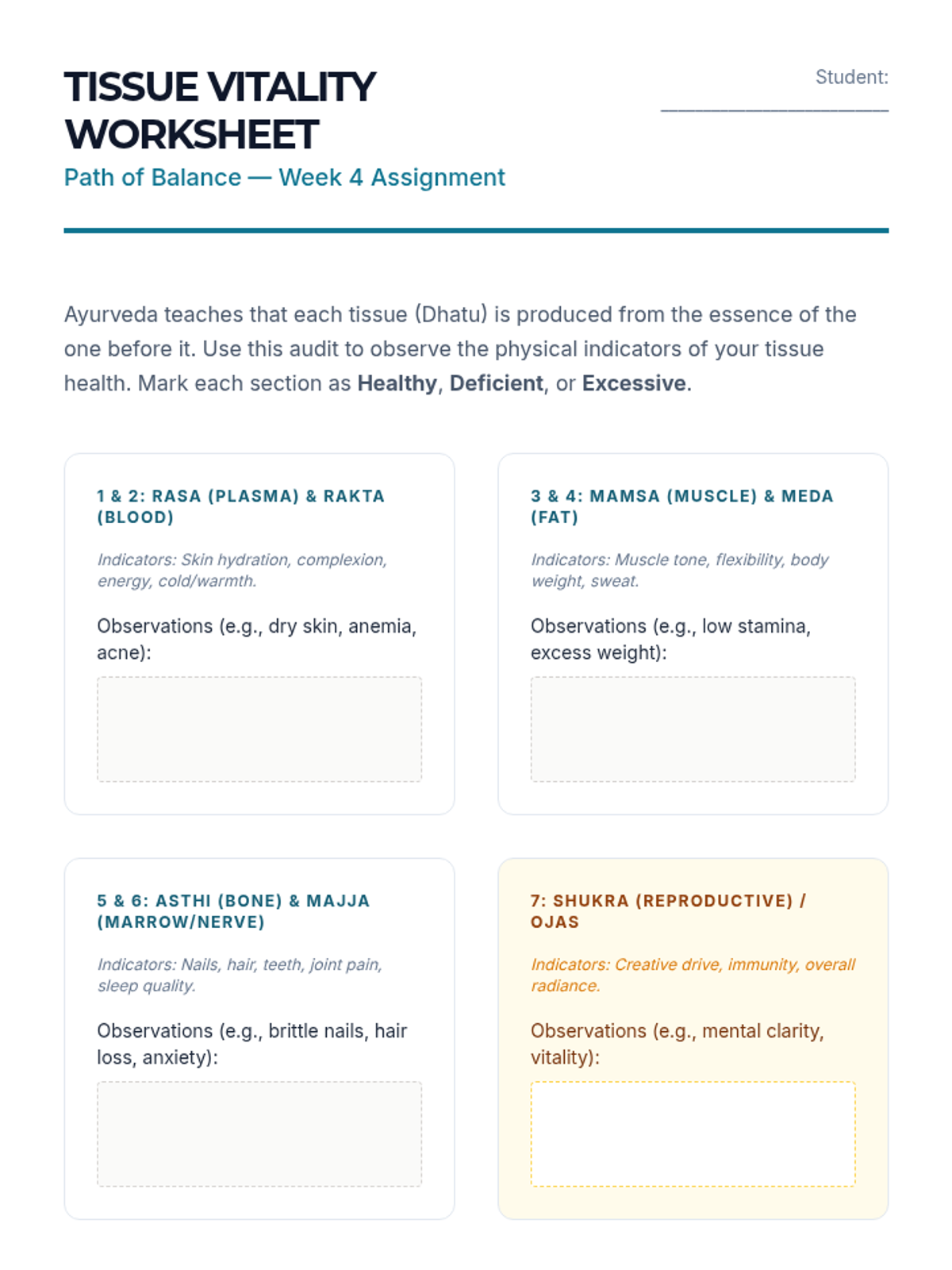
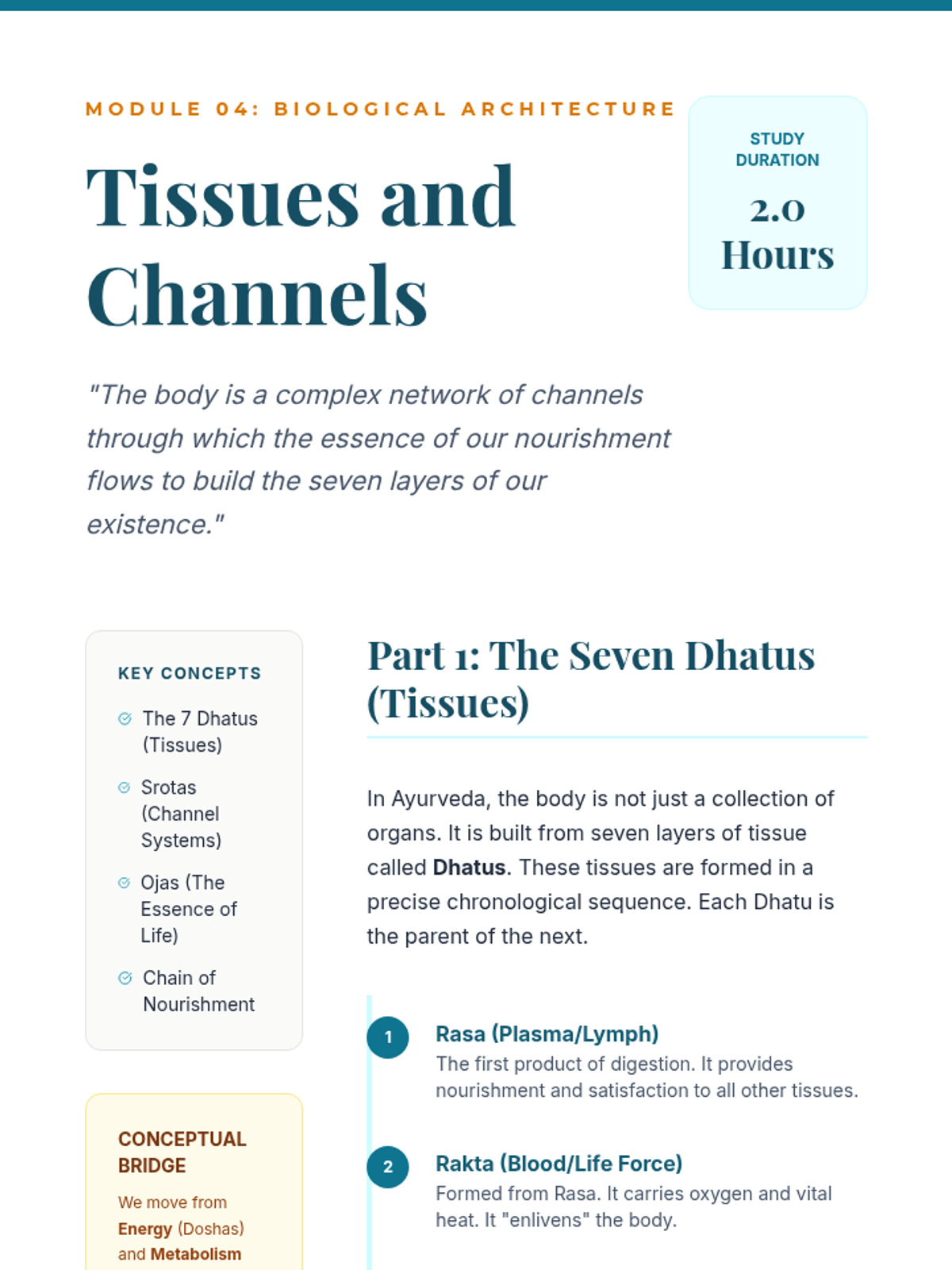
Examines the seven layers of tissues (Dhatus) and the complex system of channels (Srotas) that transport energy and matter throughout the body.
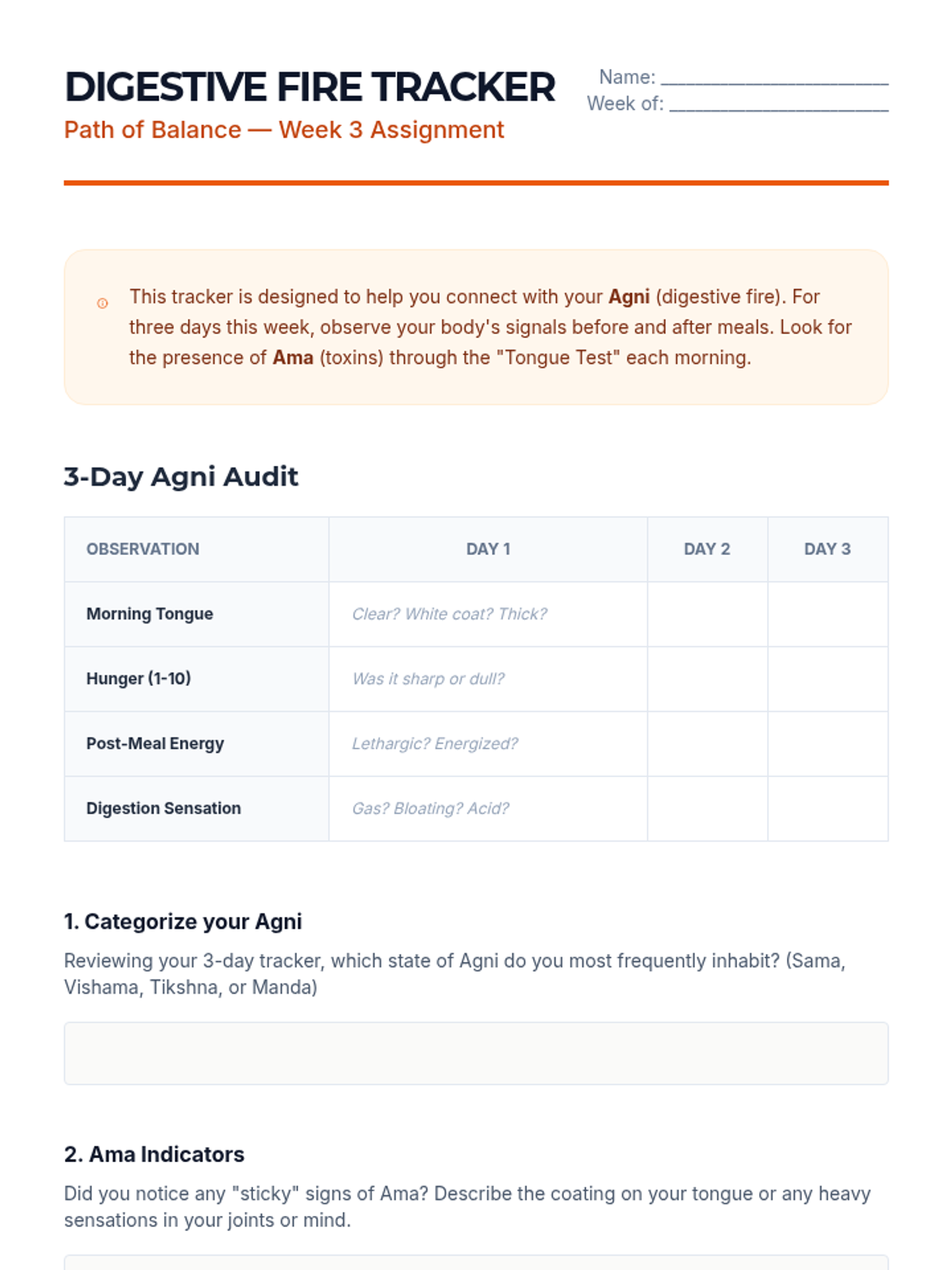
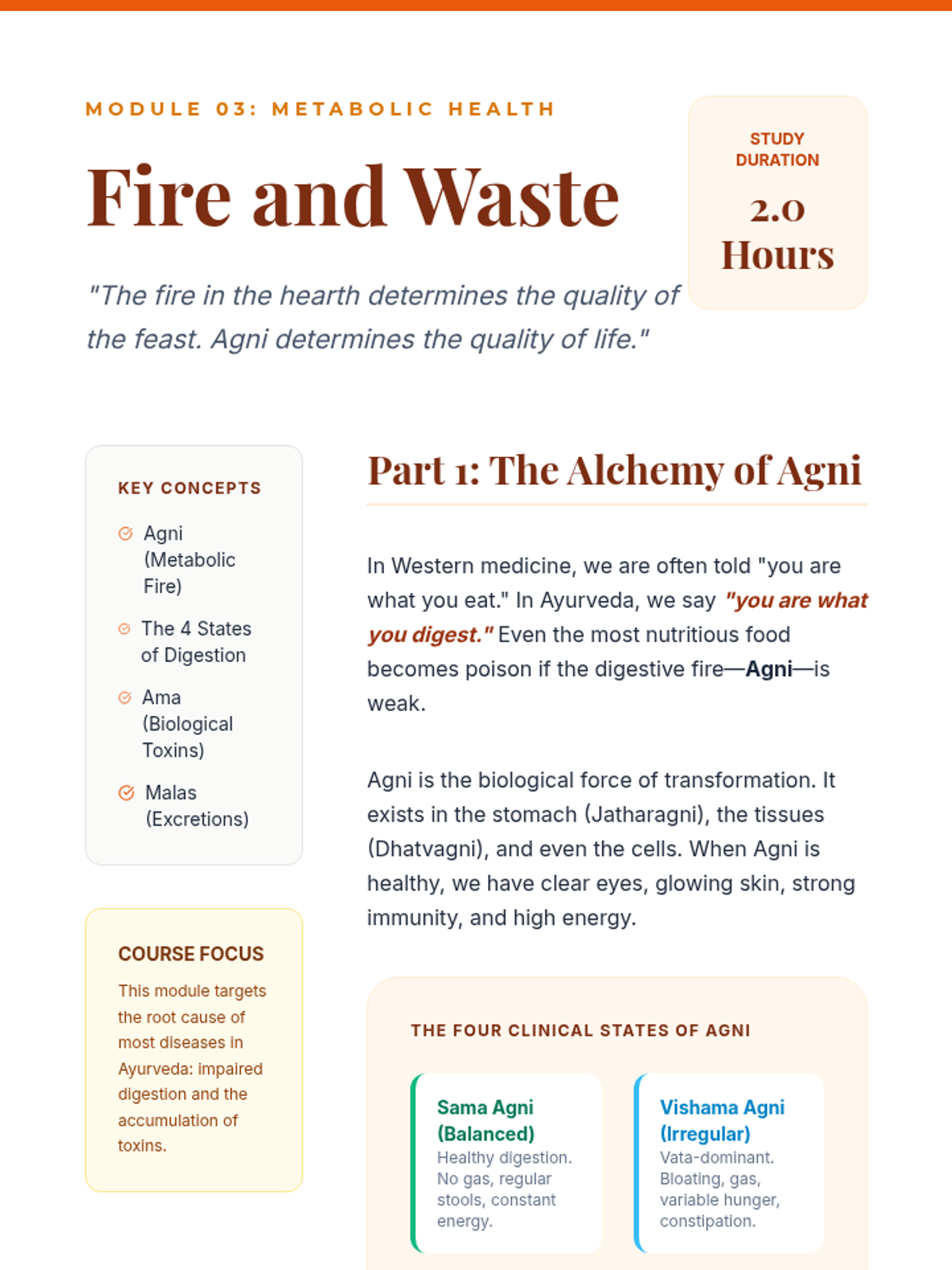
Explores the mechanics of digestion (Agni), the creation of metabolic toxins (Ama), and how to maintain internal purity and metabolic health.
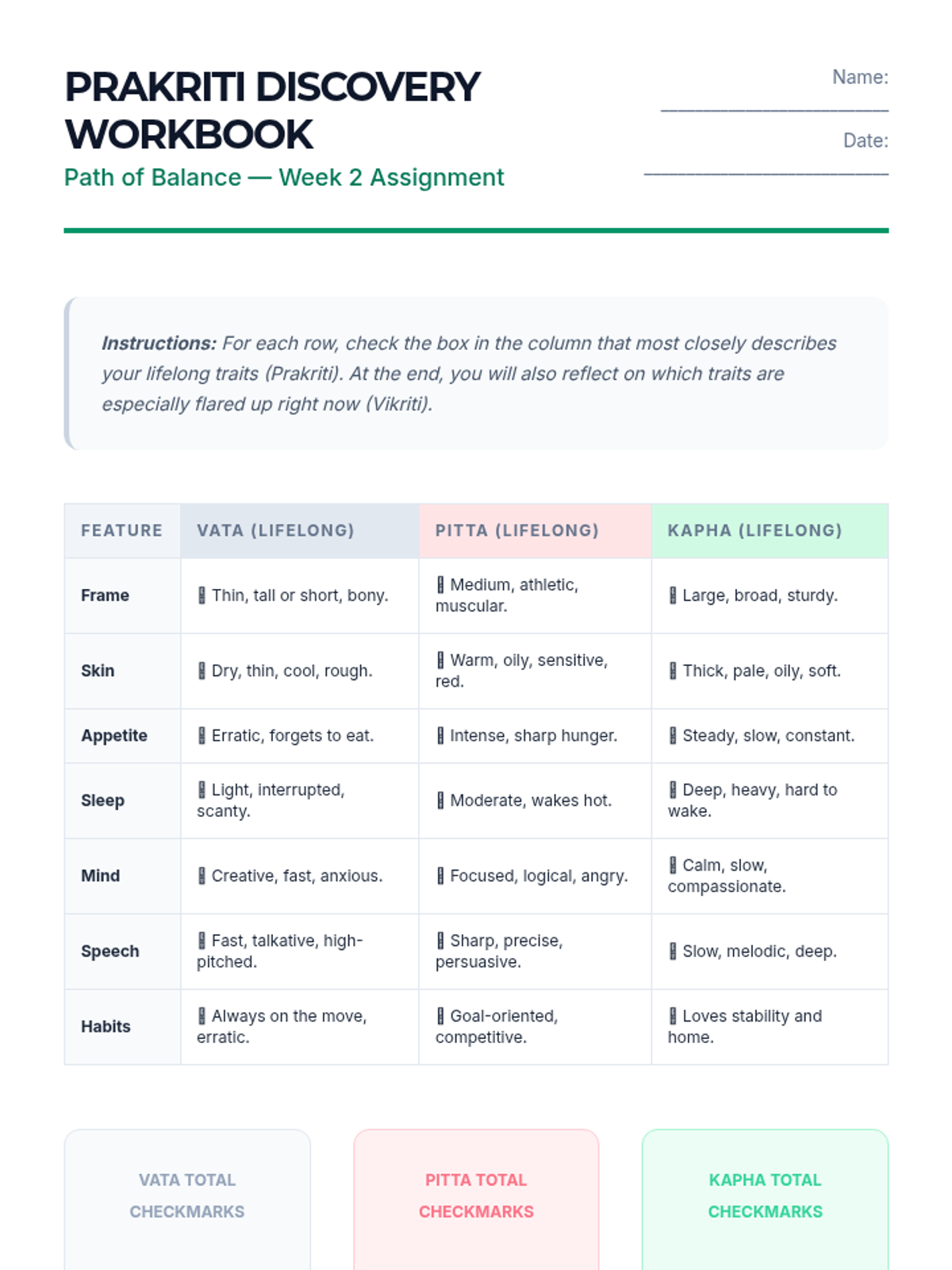
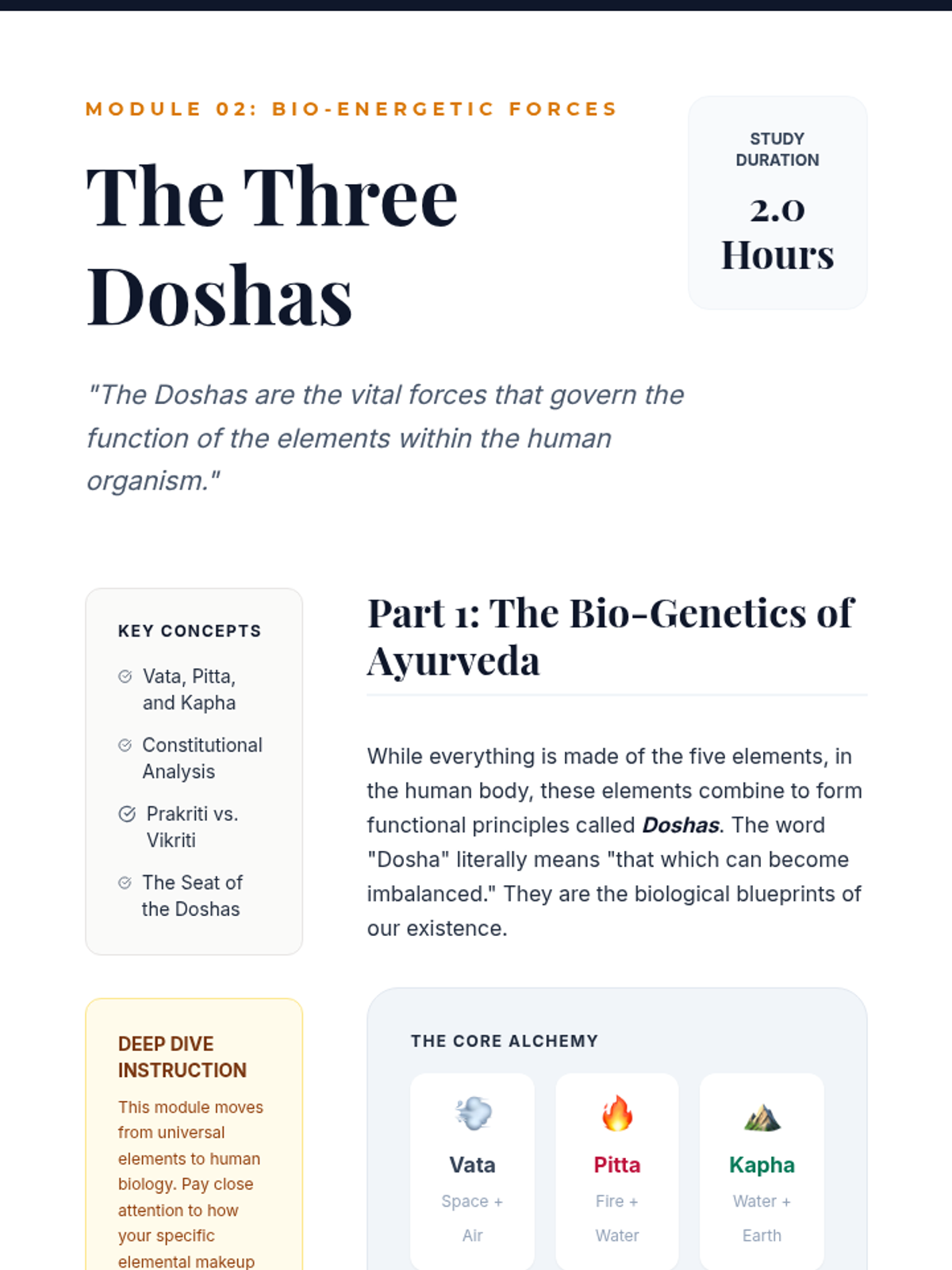
A deep dive into the three vital forces (Vata, Pitta, Kapha) that govern all biological processes, and the discovery of one's unique constitution (Prakriti).
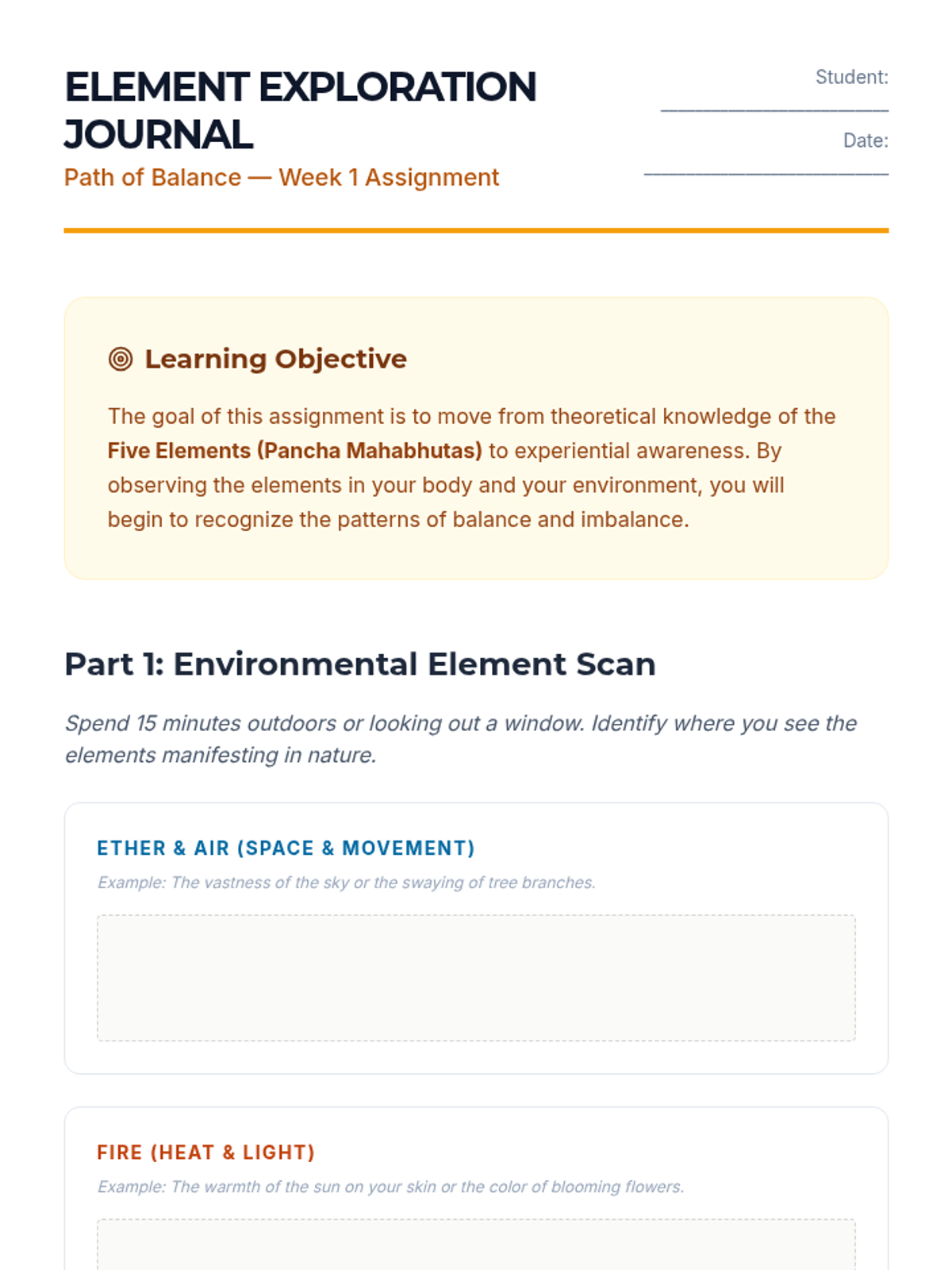
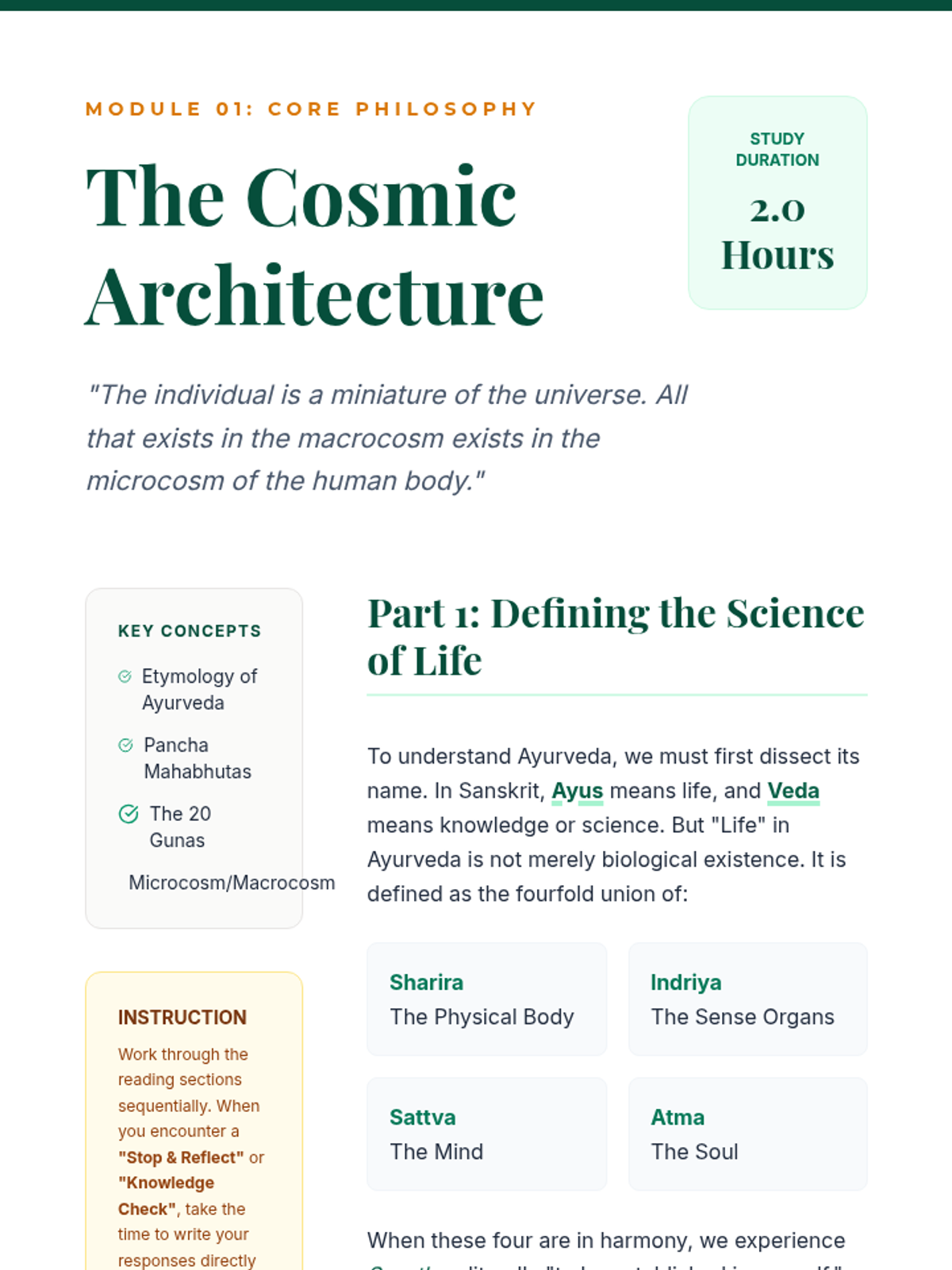
Focuses on the origins of Ayurveda, the philosophy of 'Science of Life', and the fundamental building blocks of the universe: the Five Elements (Pancha Mahabhutas).
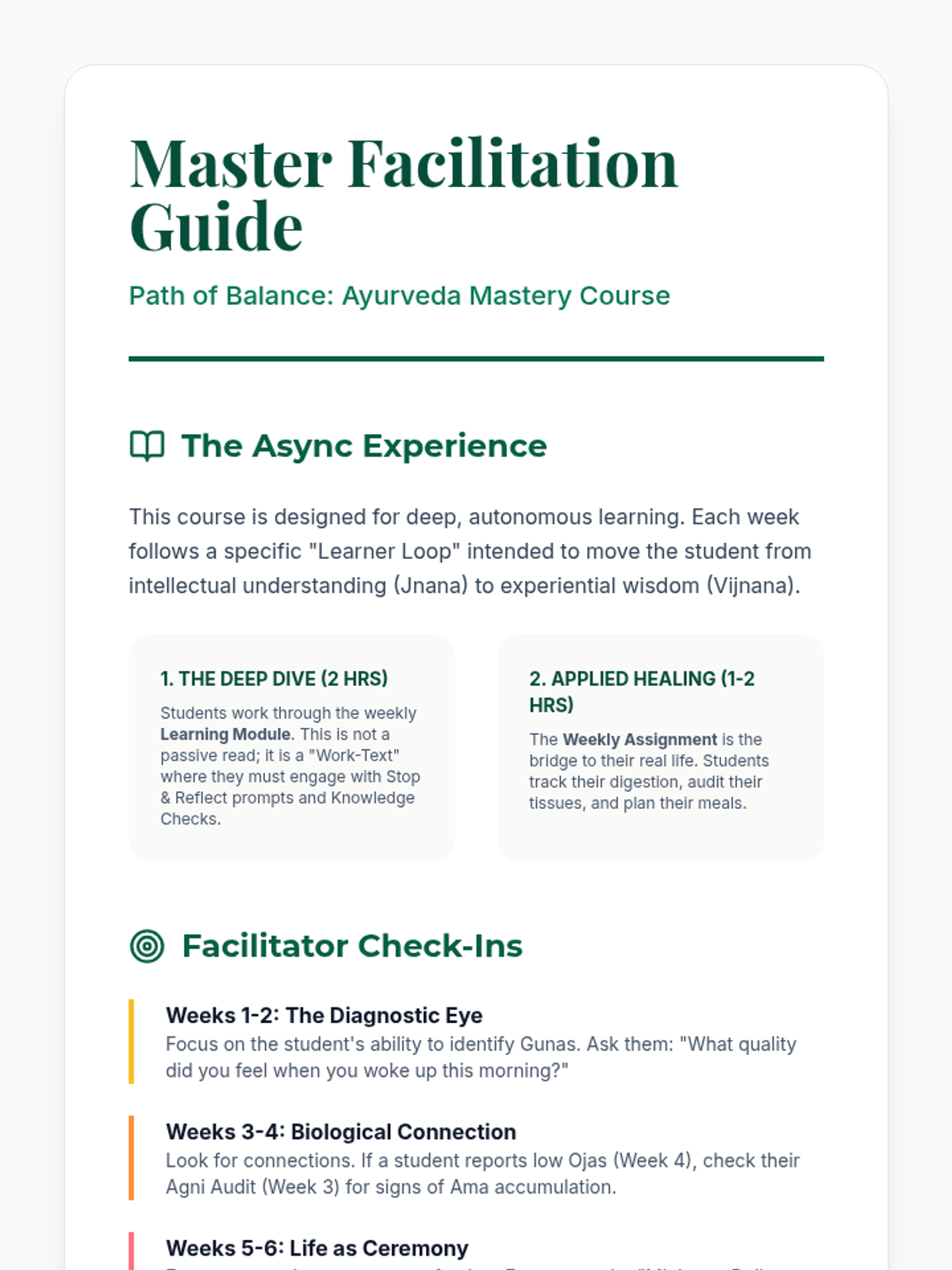
A comprehensive introduction to the ancient Indian healing system of Ayurveda, covering its historical roots, core principles of balance, and a comparative analysis with Western medical practices.
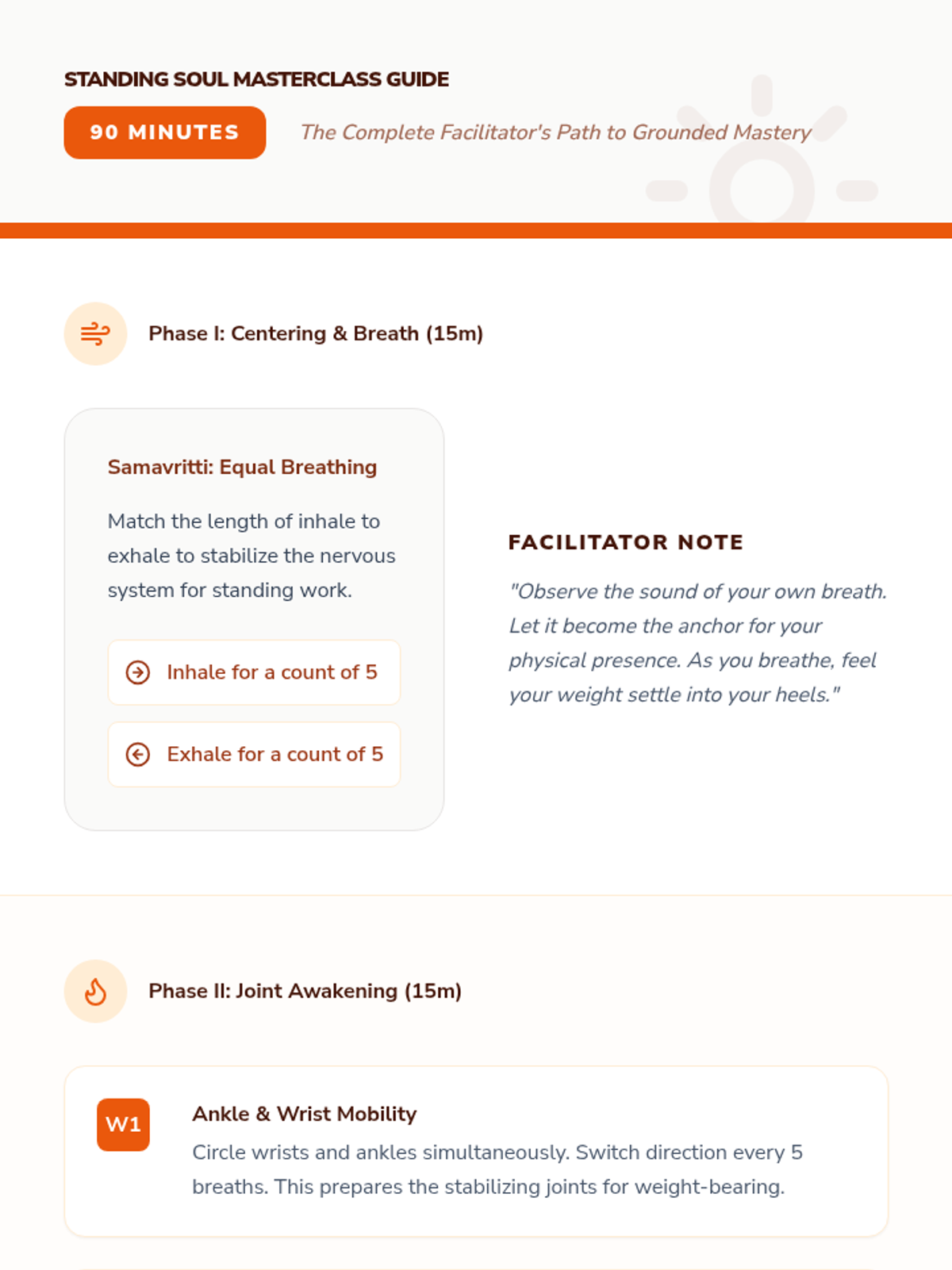
A beginner-friendly 90-minute standing yoga session focused on grounding, balance, and fundamental postures to transition from seated to standing practice.
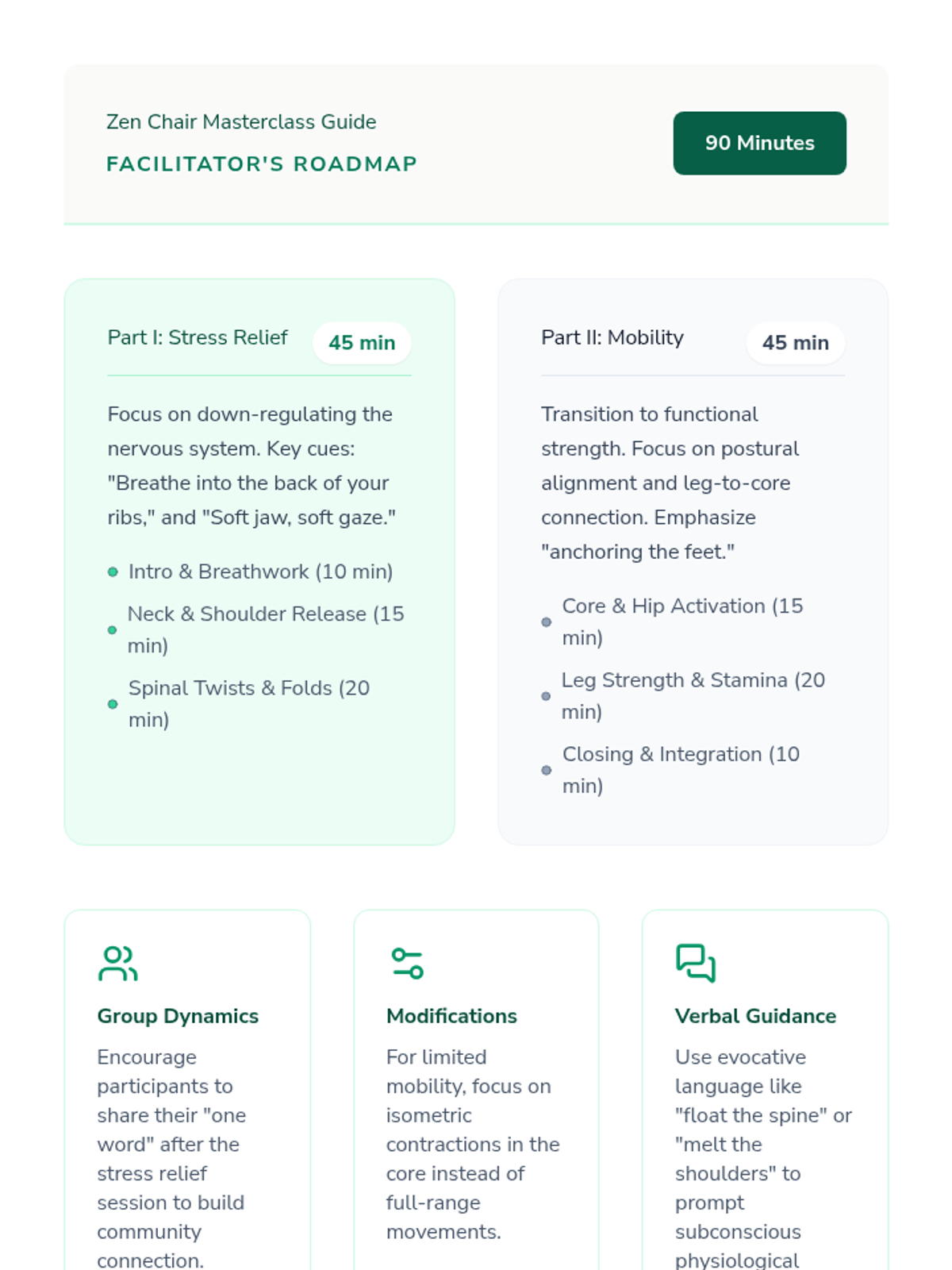
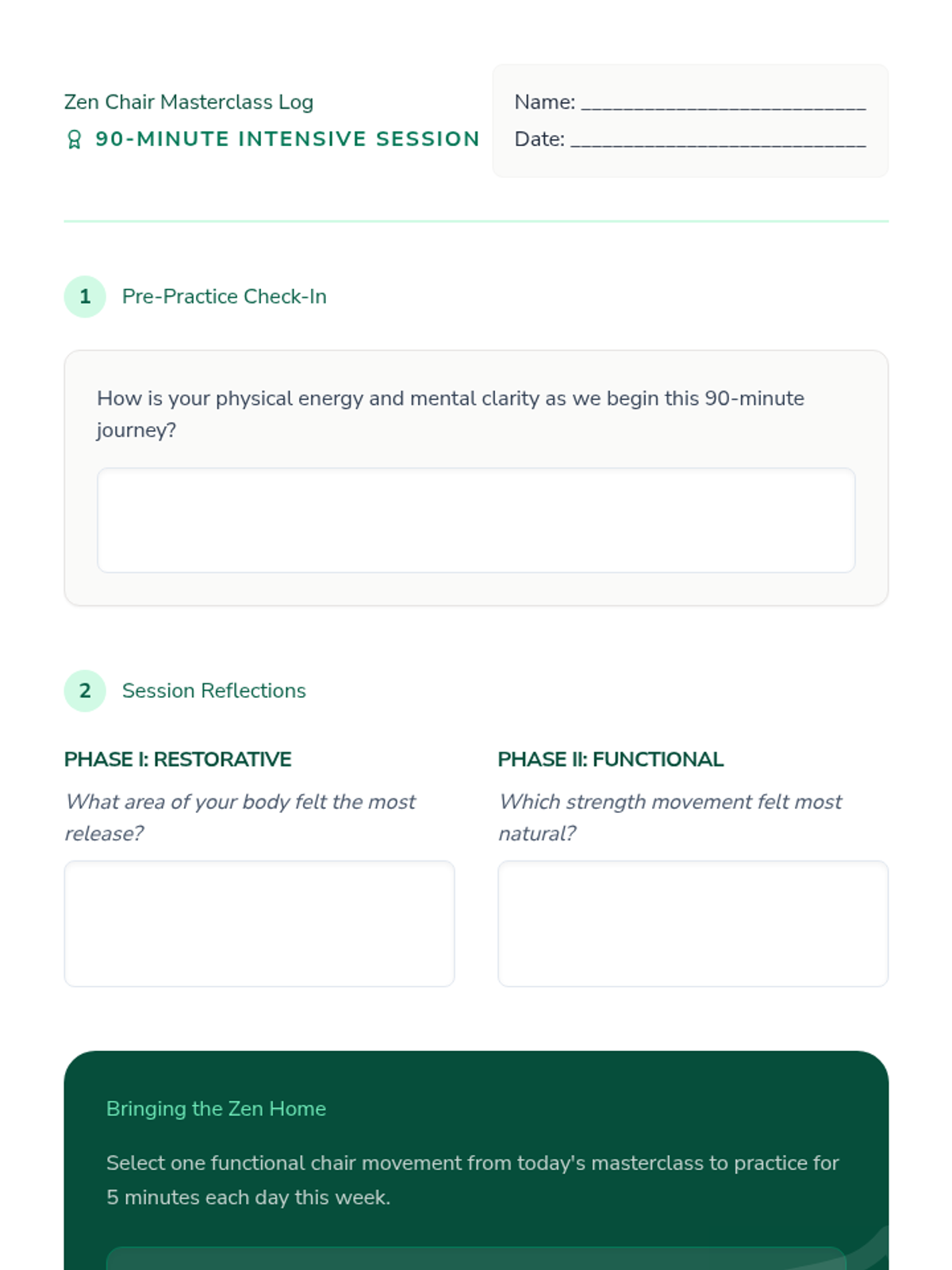
A deep-dive chair yoga experience combining stress relief and functional mobility, featuring two full-length guided practice videos. This 90-minute masterclass is designed to build both mental calm and physical strength.
A lesson focused on understanding and implementing stress management techniques to improve sleep quality and hygiene.
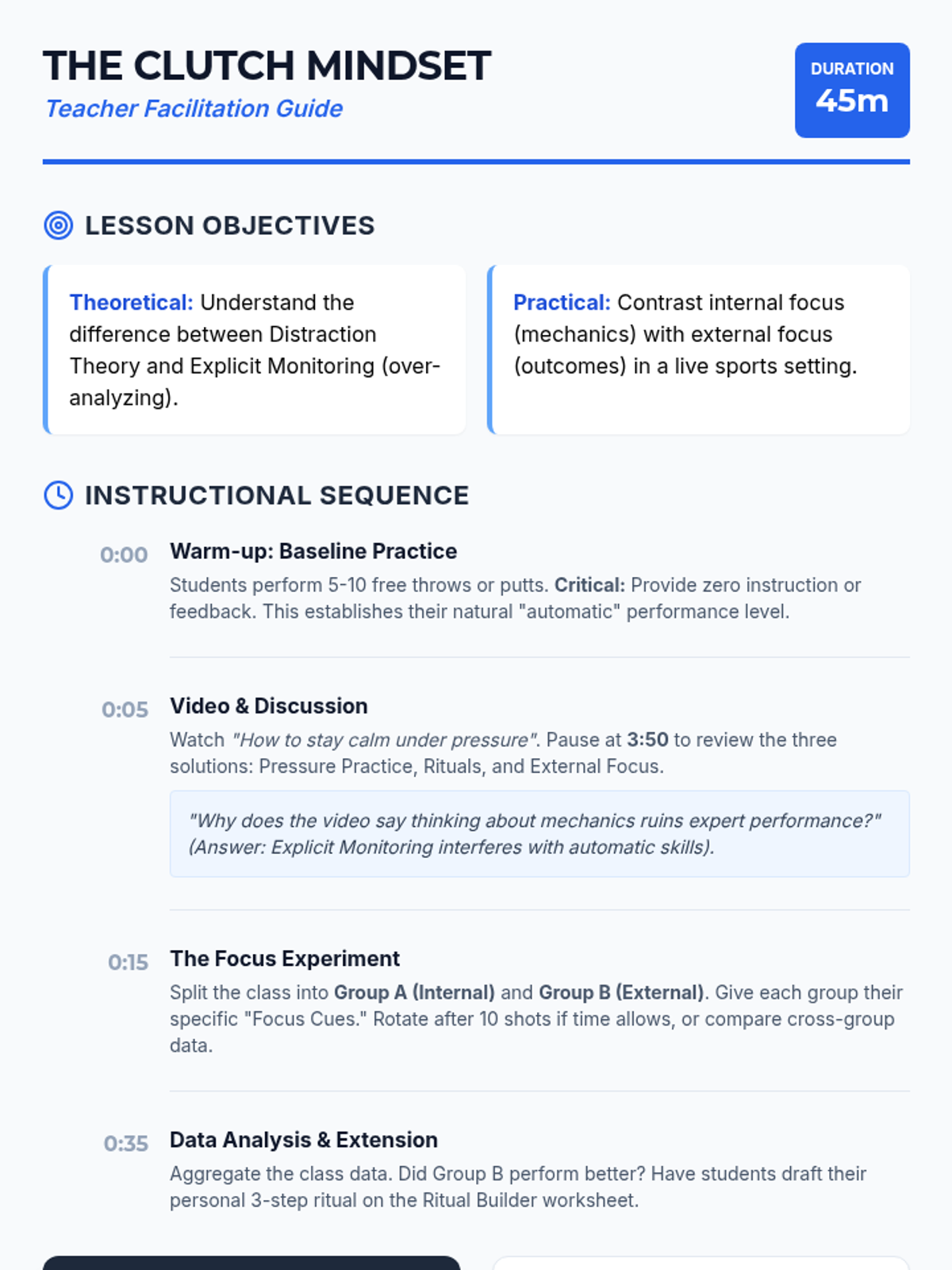
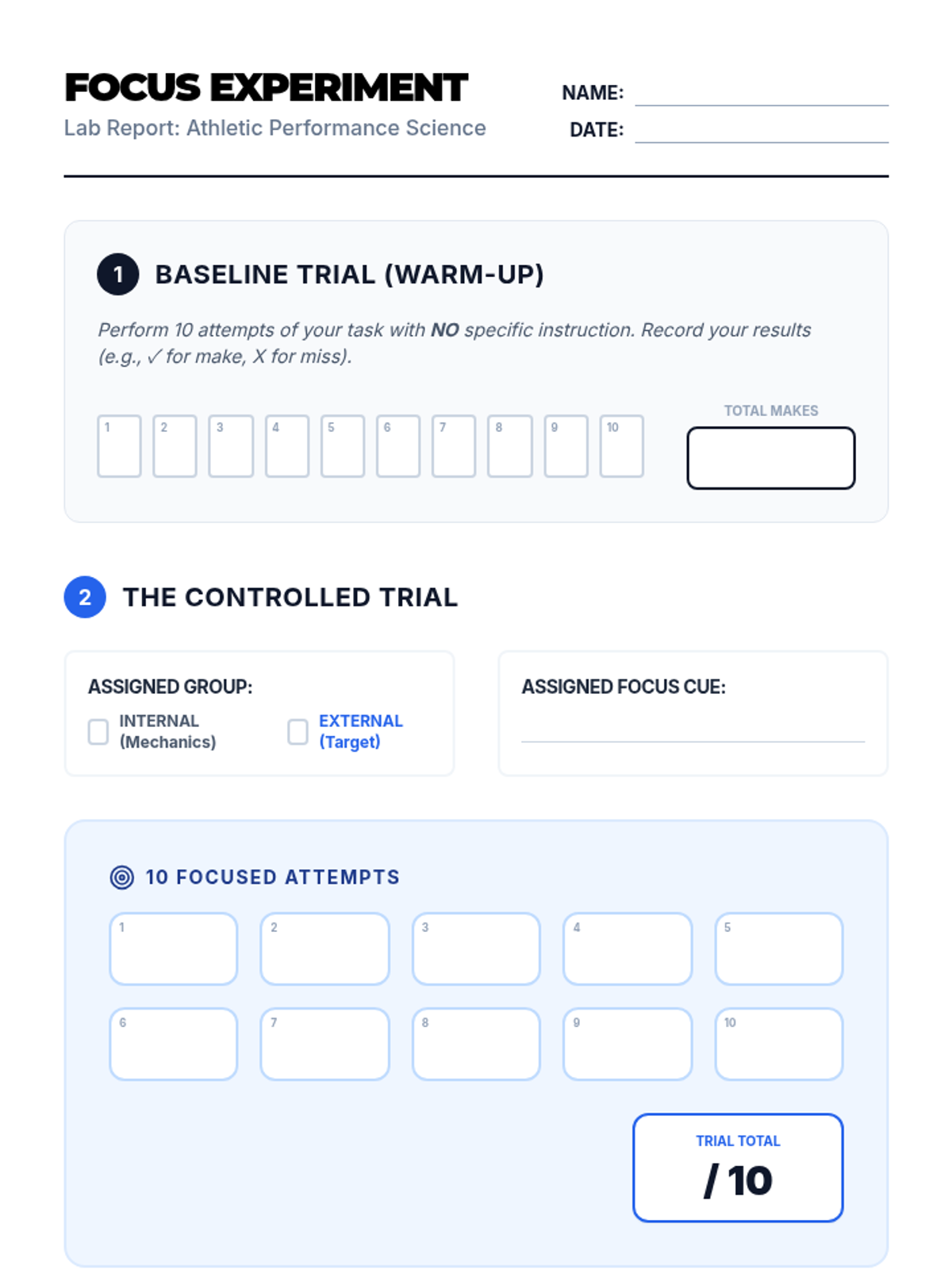
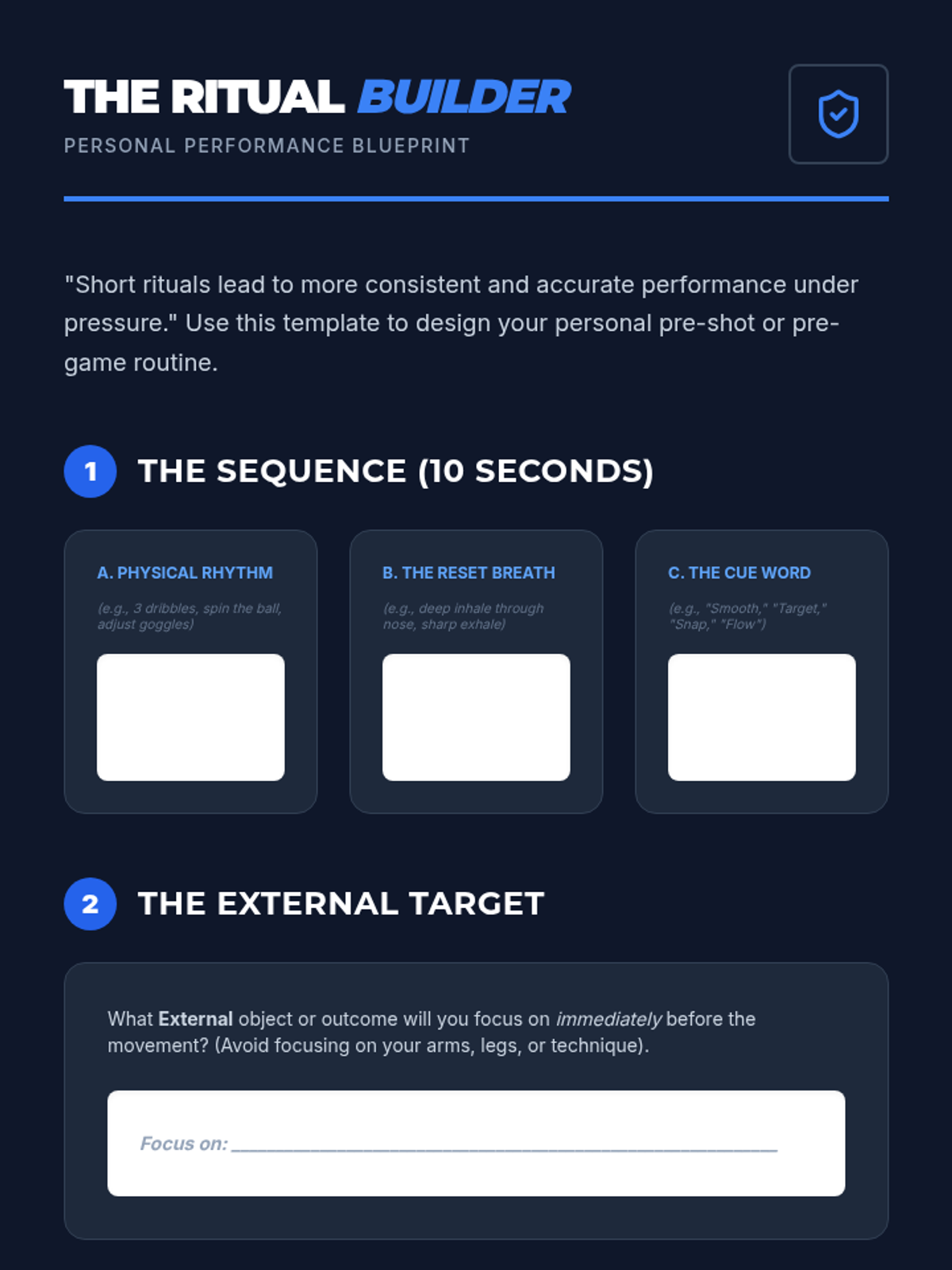
A high-performance psychology lesson for athletes and PE students exploring why 'over-thinking' mechanics leads to choking and how an external focus on targets improves consistency. Students participate in a live experiment to test internal vs. external focus theories.
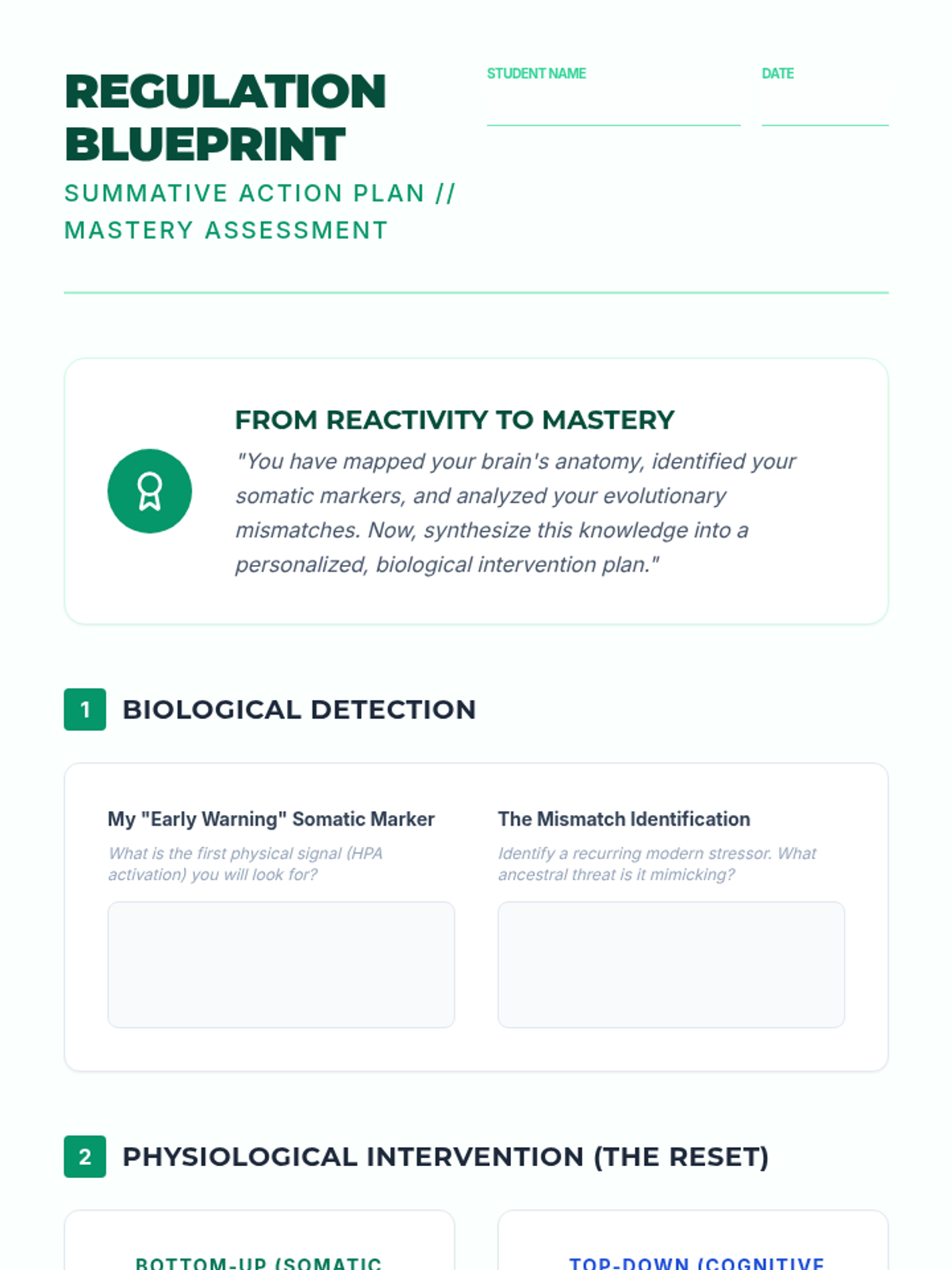
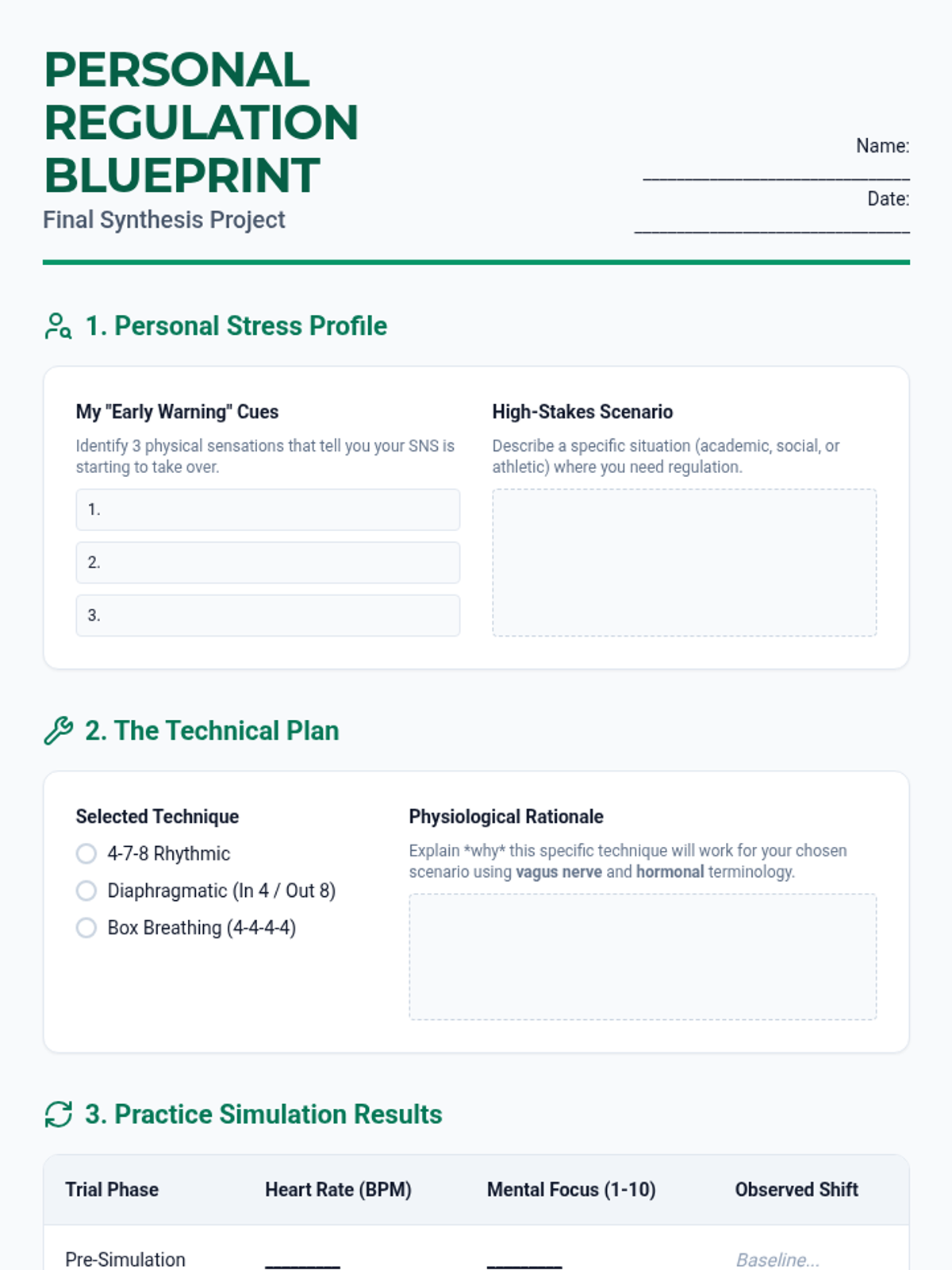
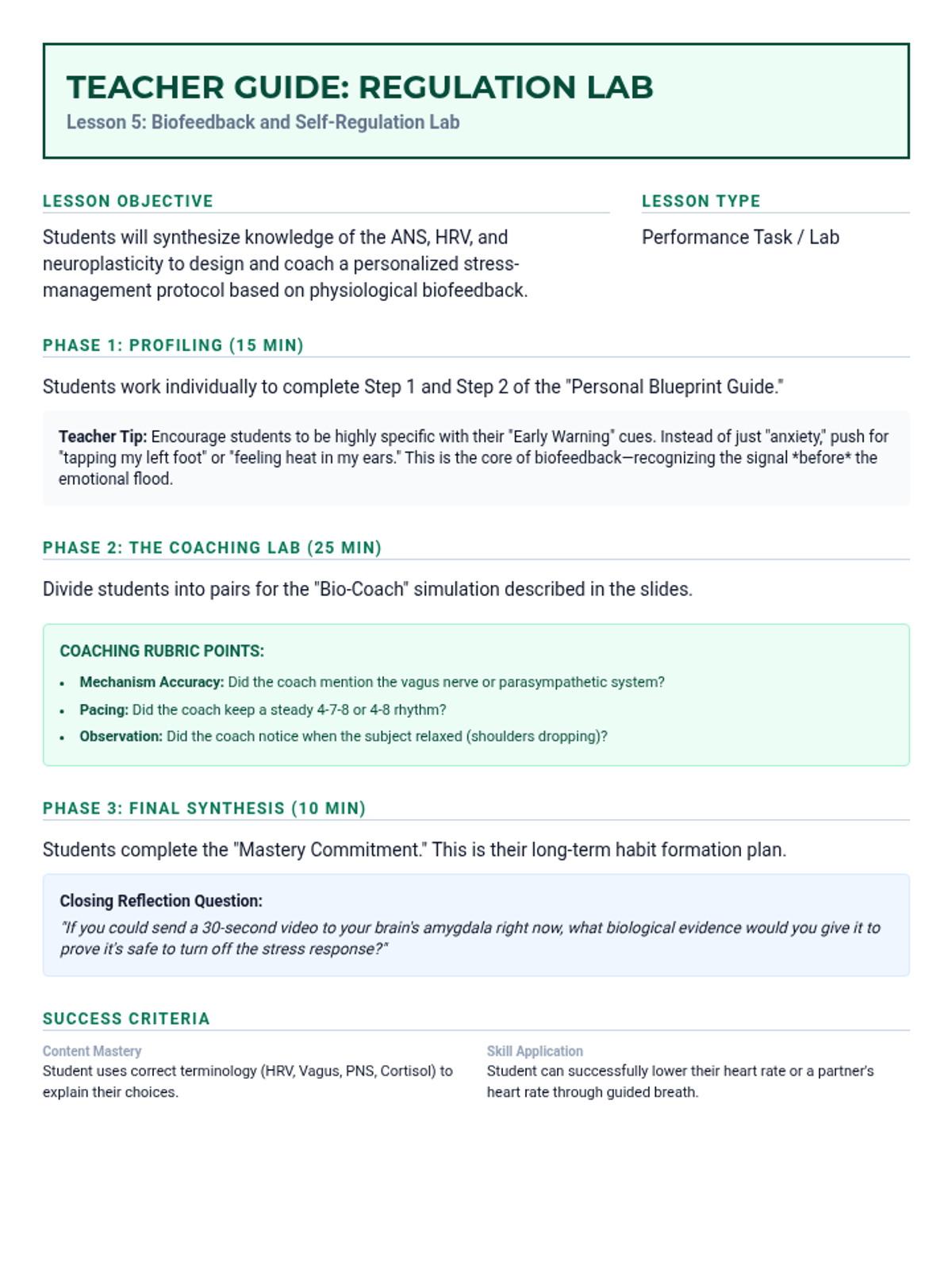
Students design personal physiological intervention plans based on biofeedback principles and vagus nerve stimulation techniques.
A technical look at the physiological feedback loops that create panic attacks, including CO2 sensitivity and the role of the sympathetic nervous system.
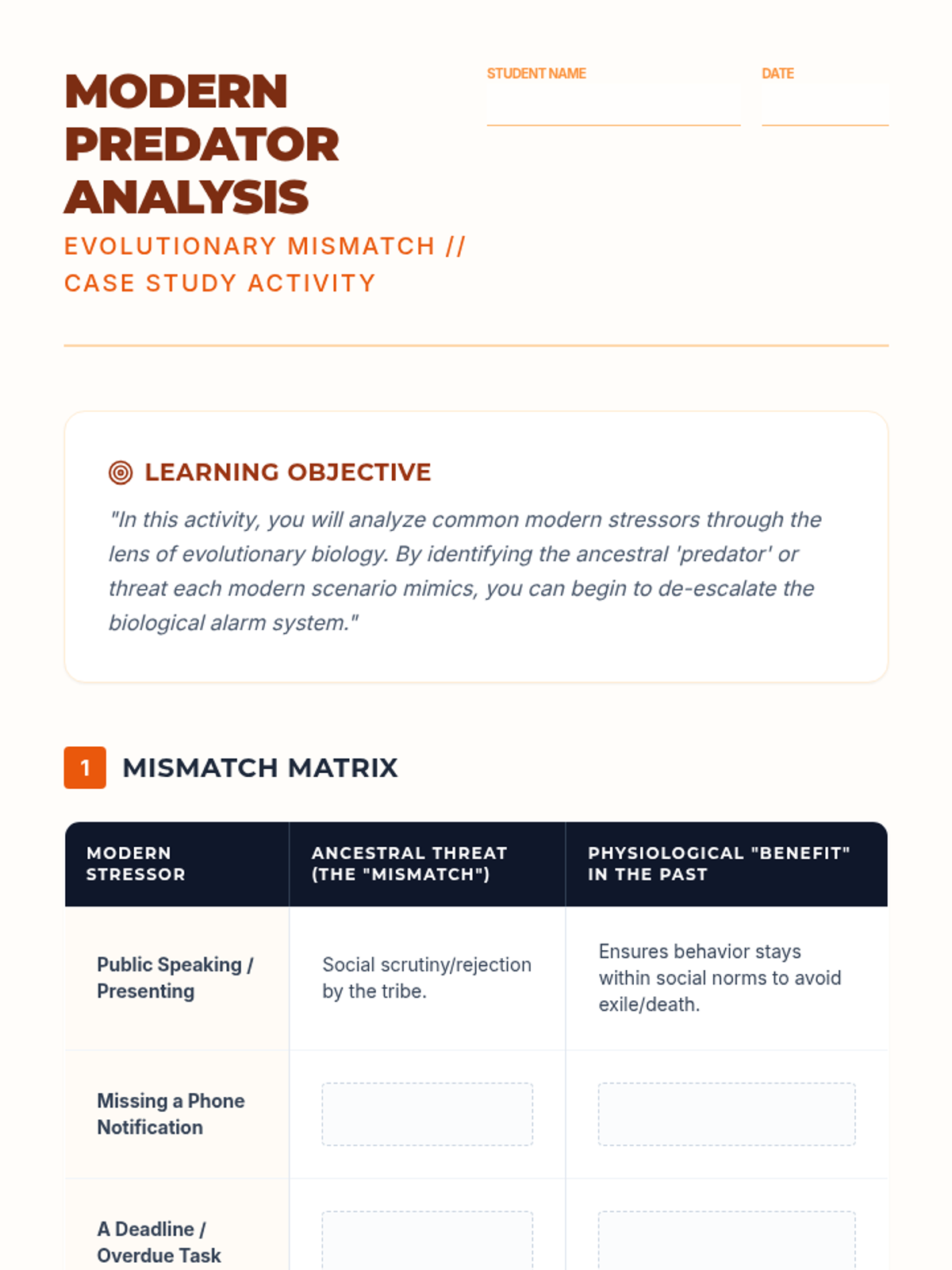
Analyzing how ancient survival mechanisms react to non-life-threatening modern stressors, such as exams and social pressures.
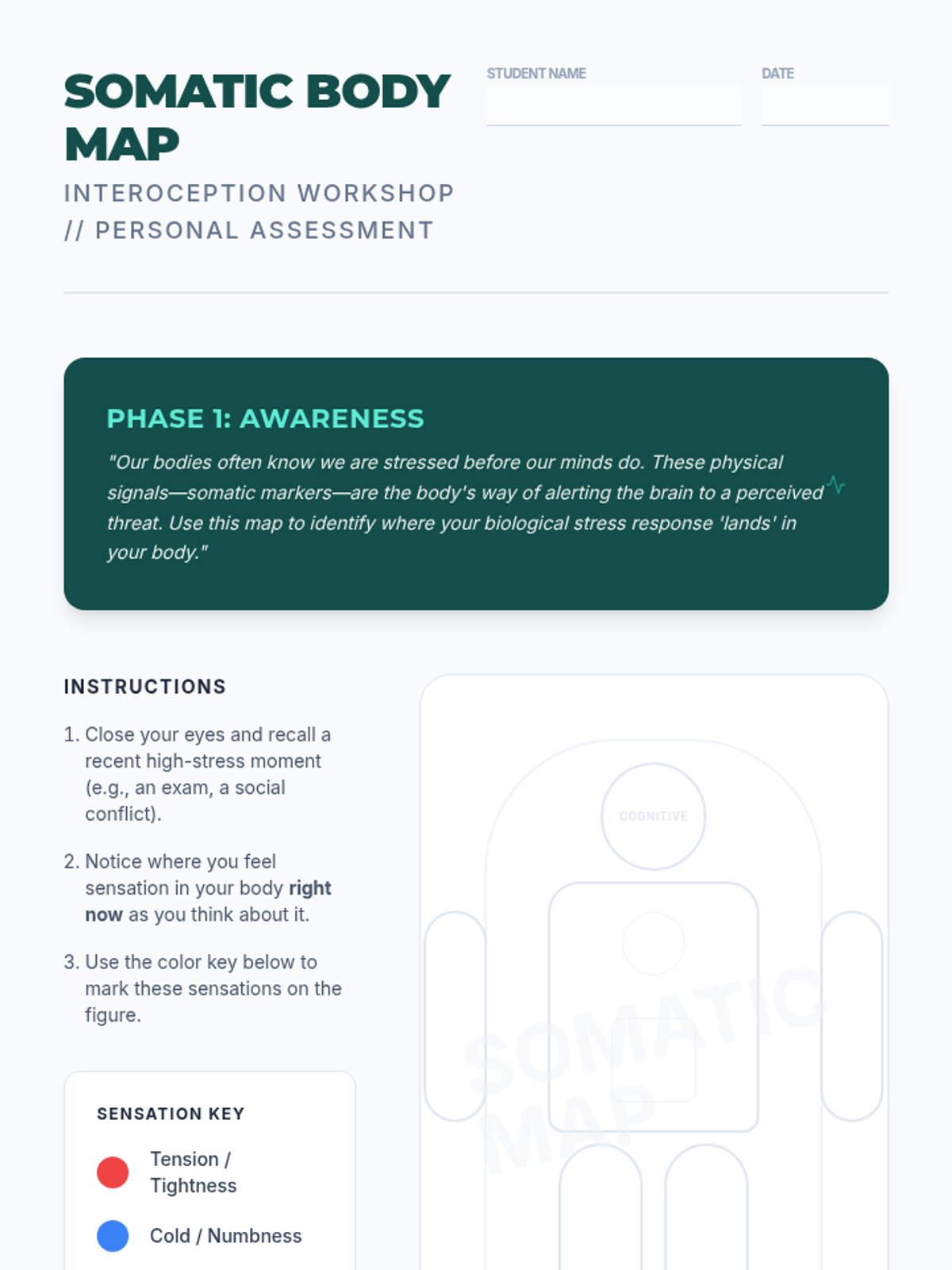
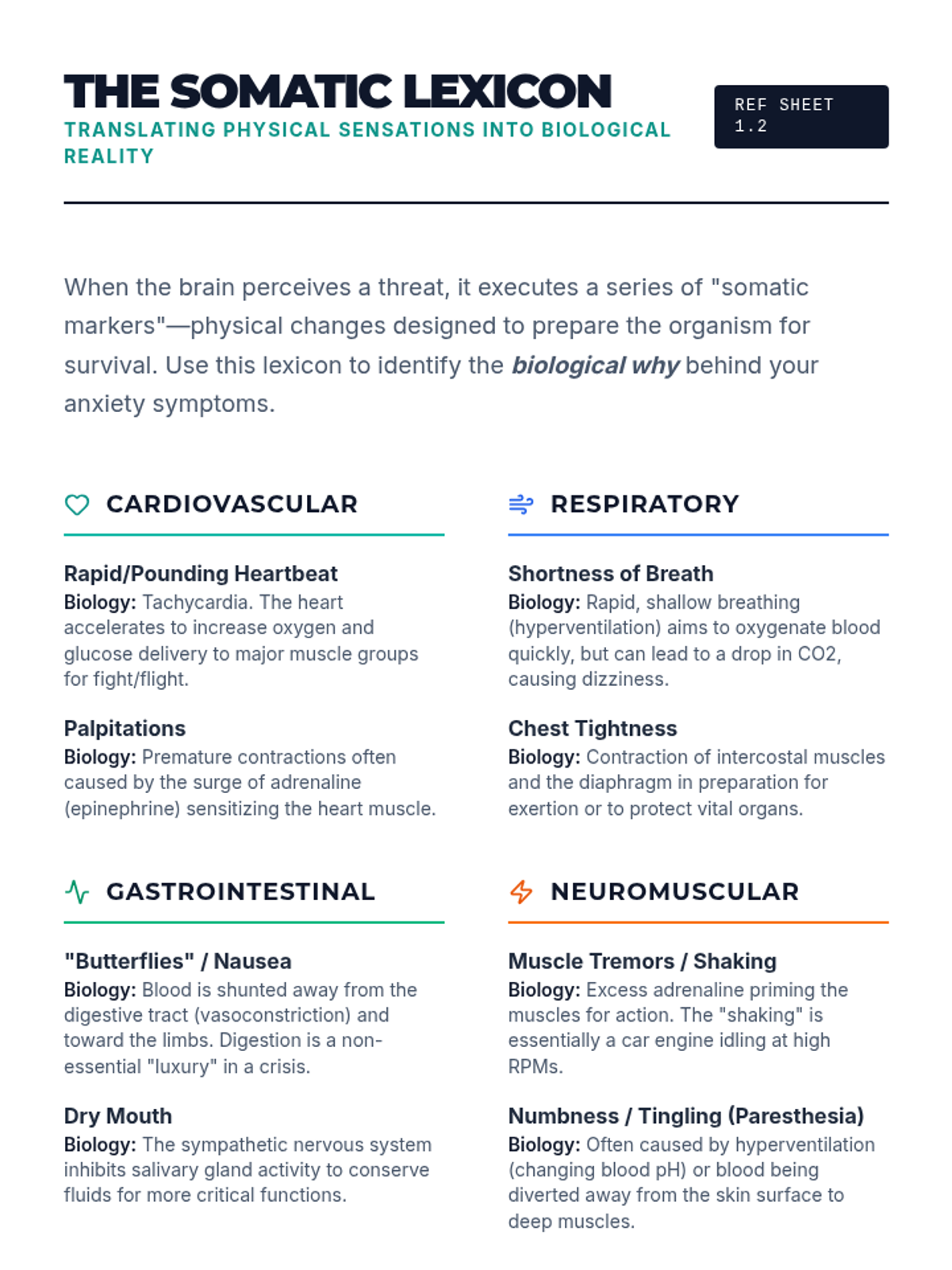
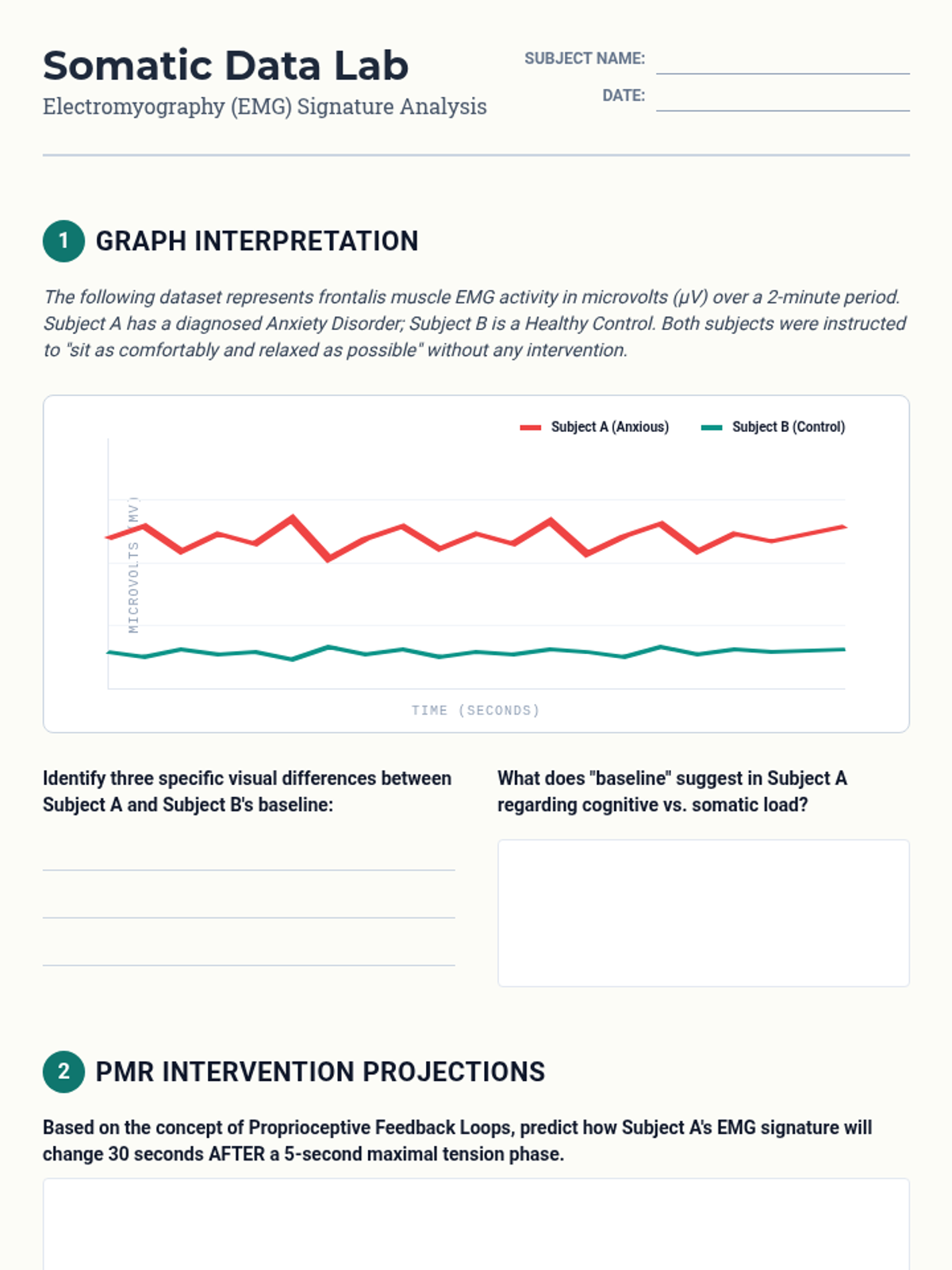
A workshop-style lesson where students identify their personal physical markers of anxiety and create visual maps of somatic tension.
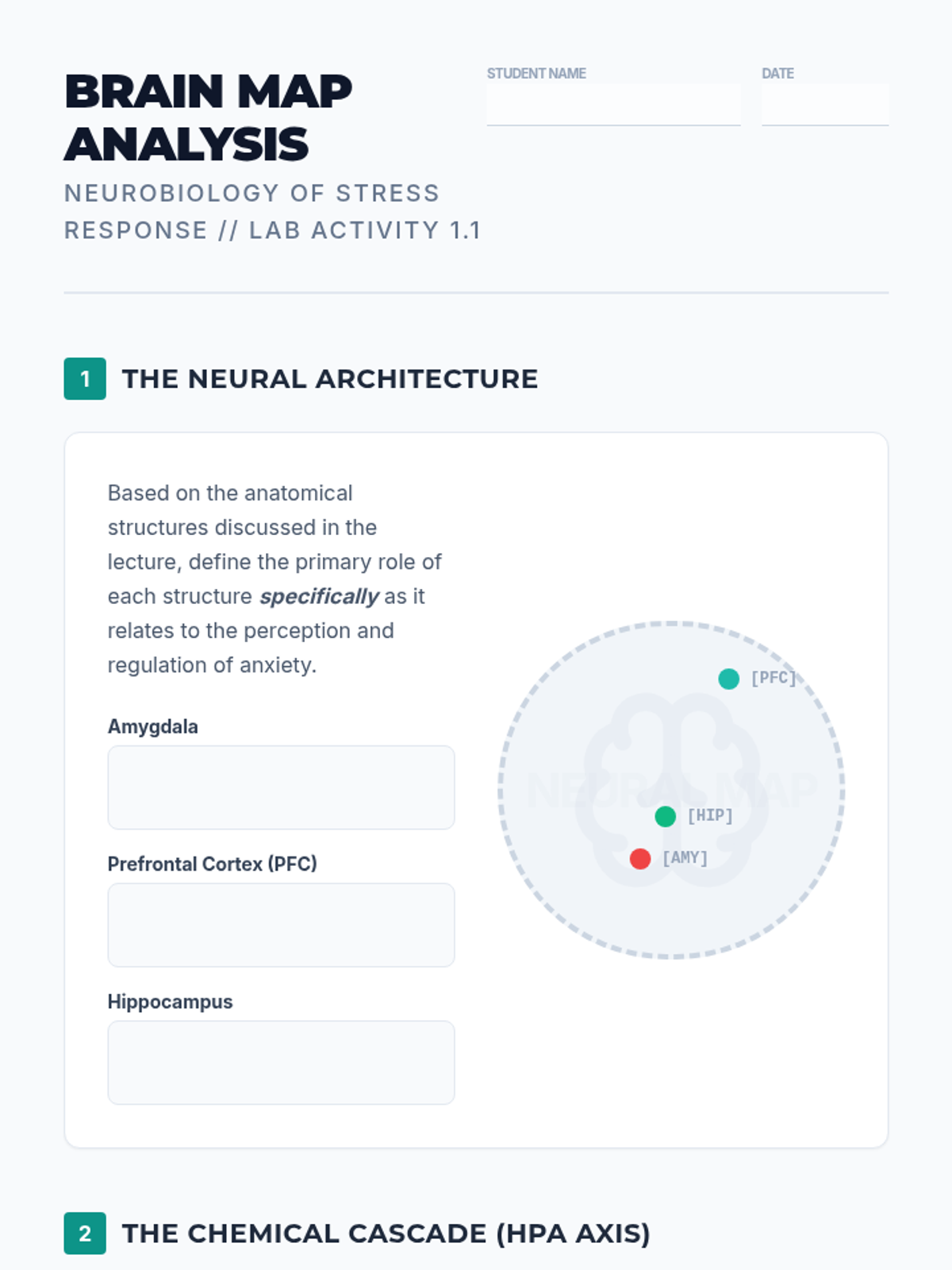
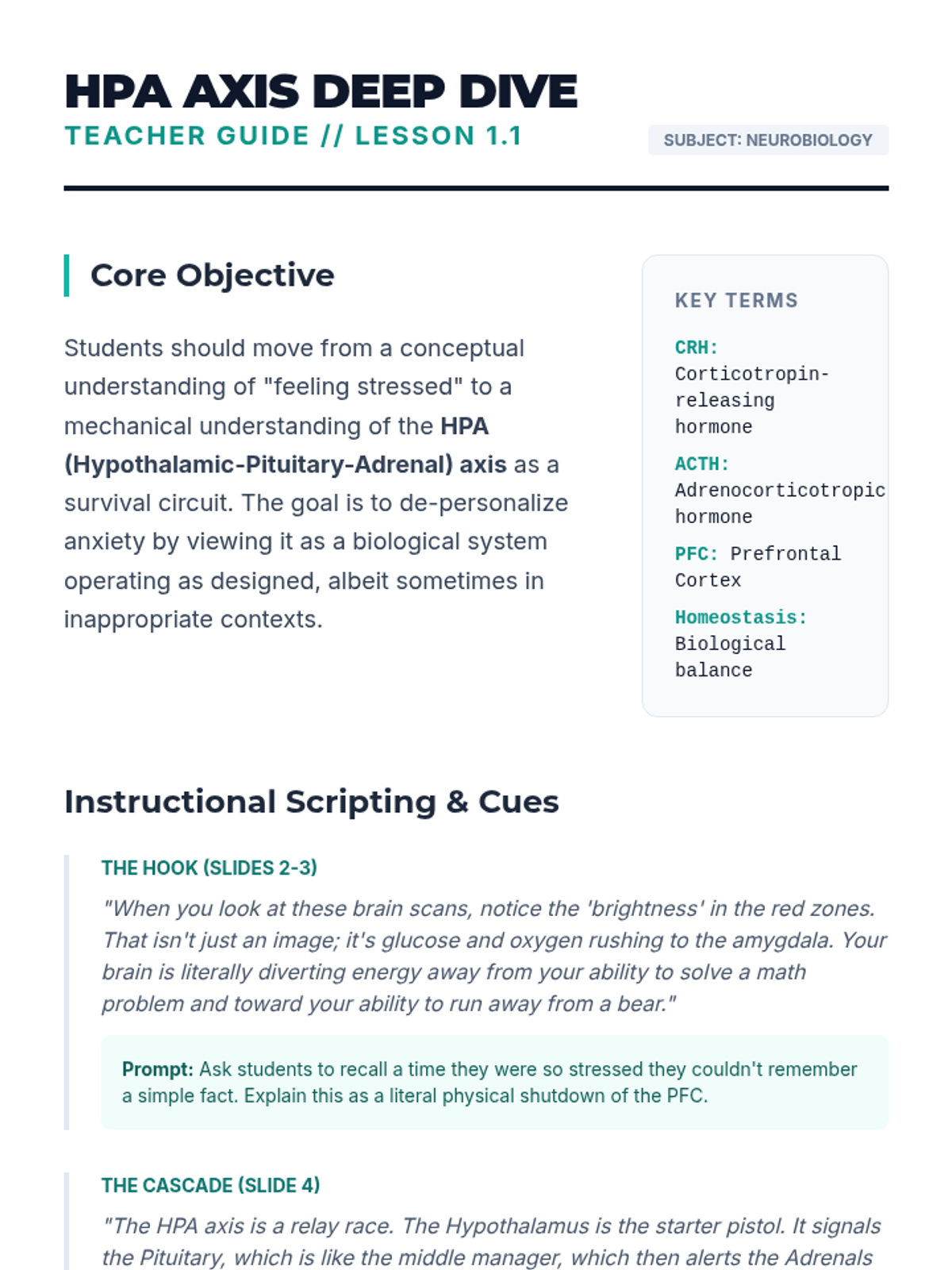
An exploration of brain anatomy and the chemical messengers involved in the stress response, focusing on the interplay between the amygdala and the prefrontal cortex.
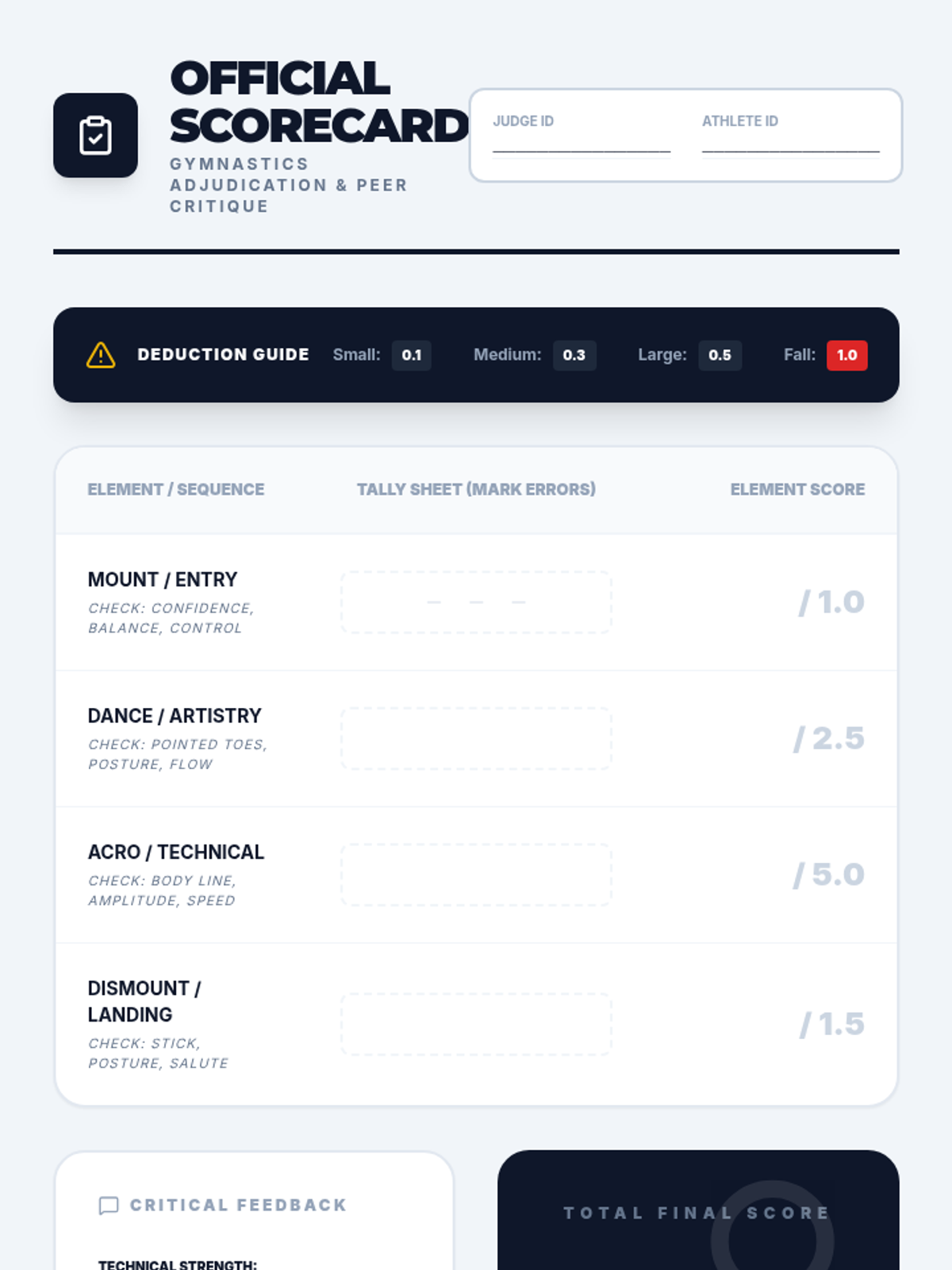
A culminating performance where students execute their routines and peer-judge using simplified technical criteria.
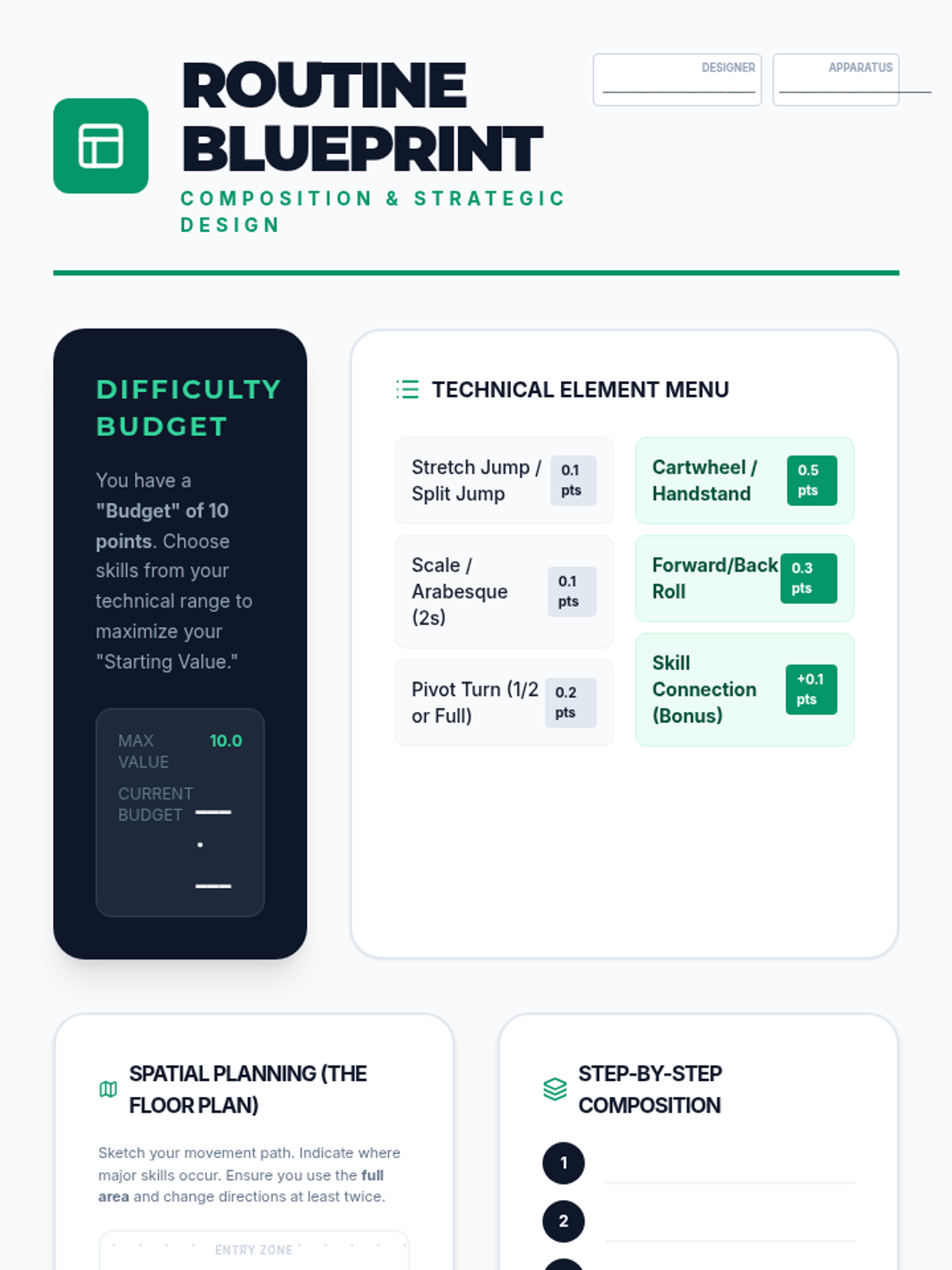
Students design their own routines using a "difficulty budget" and spatial planning for floor or apparatus.
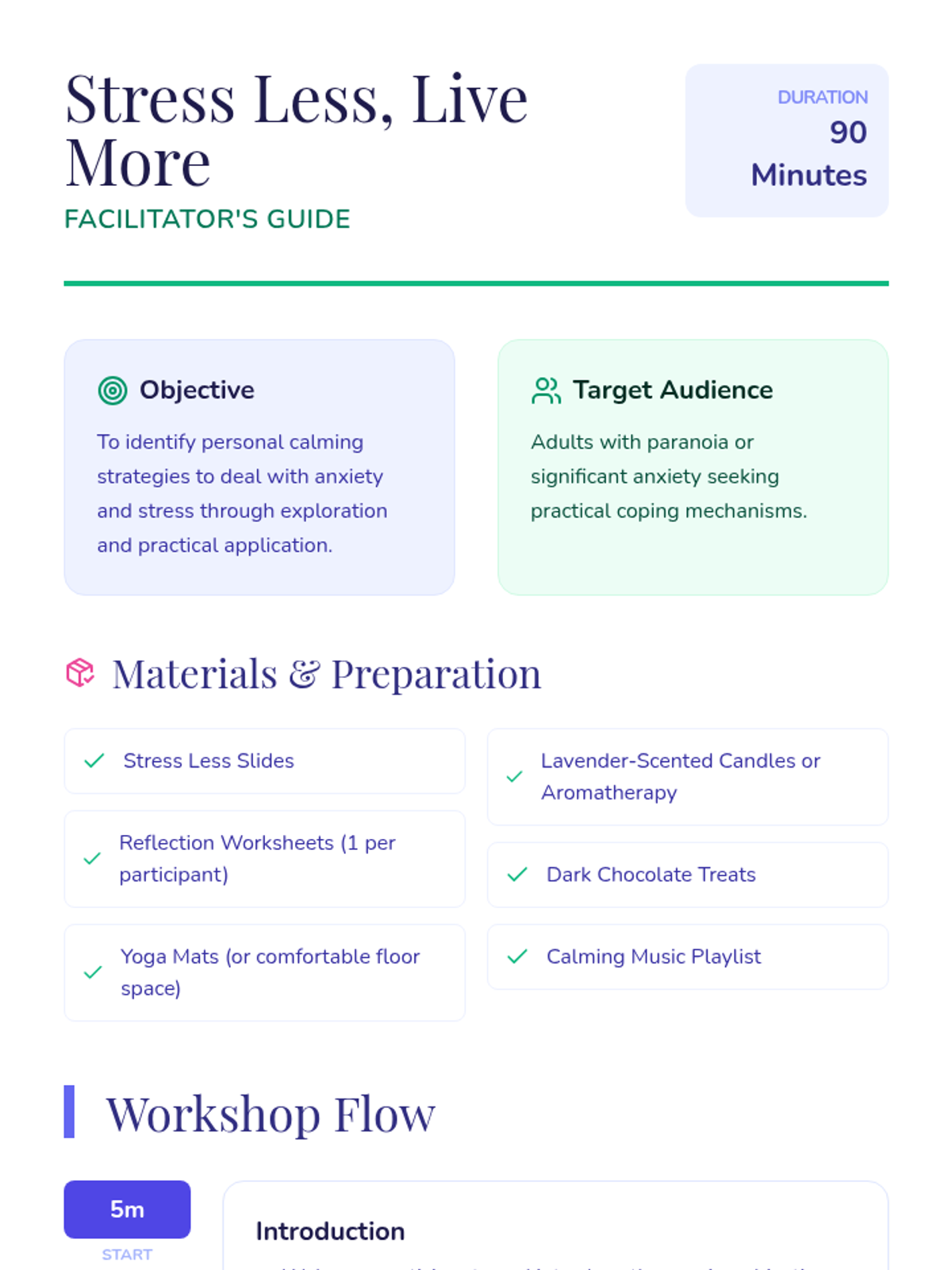
A comprehensive wellness session for adults focusing on practical stress management techniques, including muscle relaxation, yoga, and mindfulness exercises.
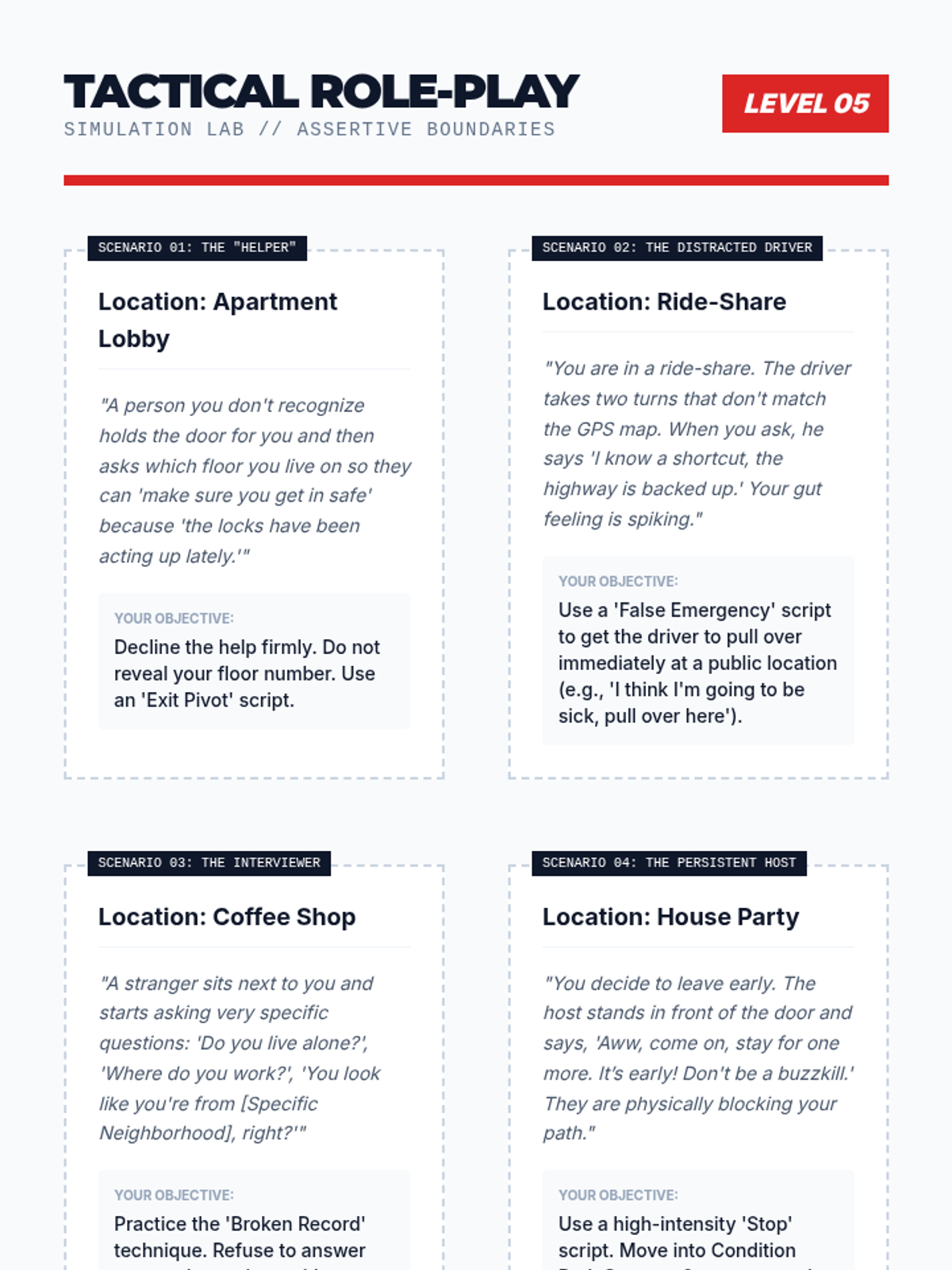
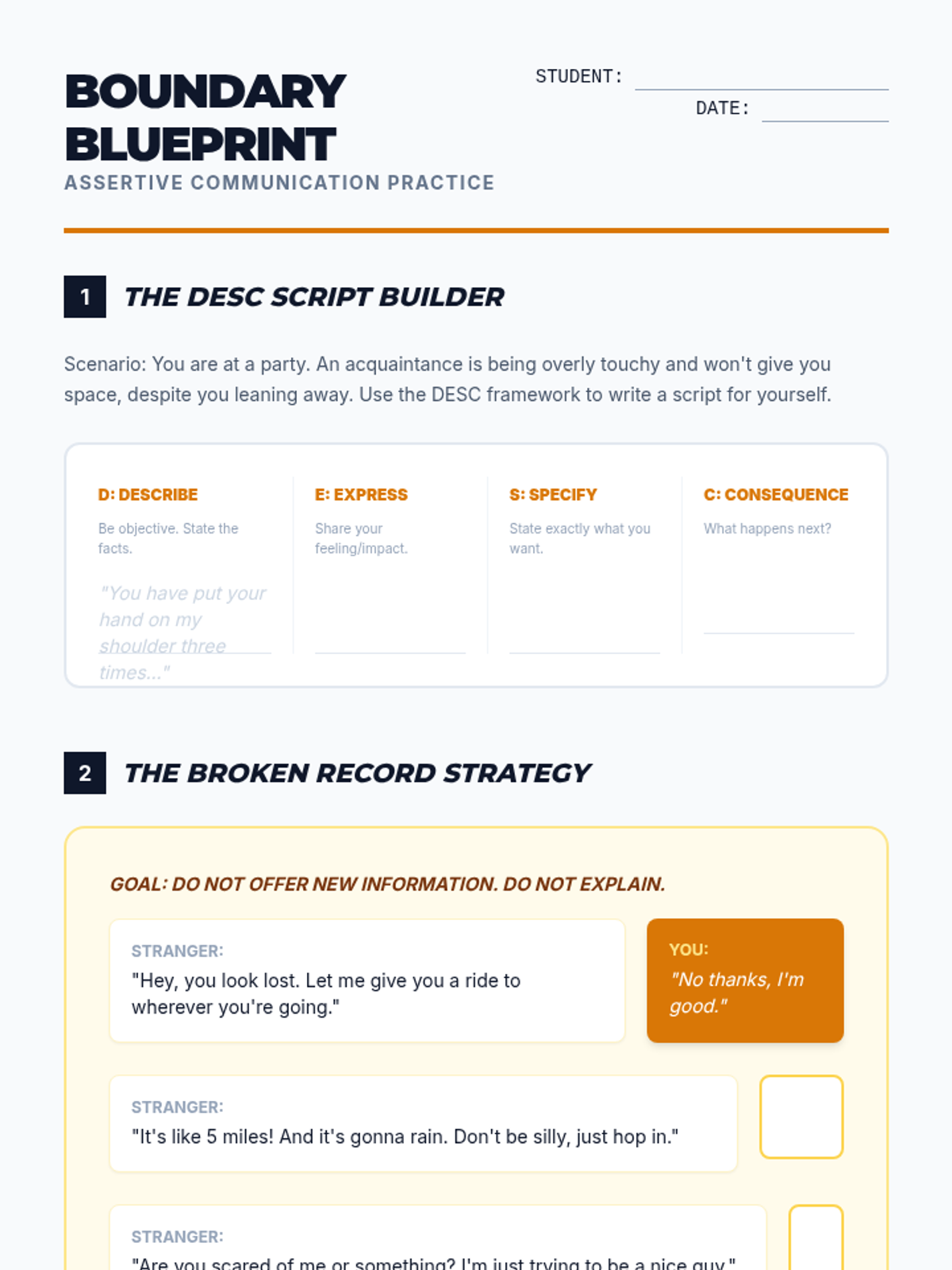
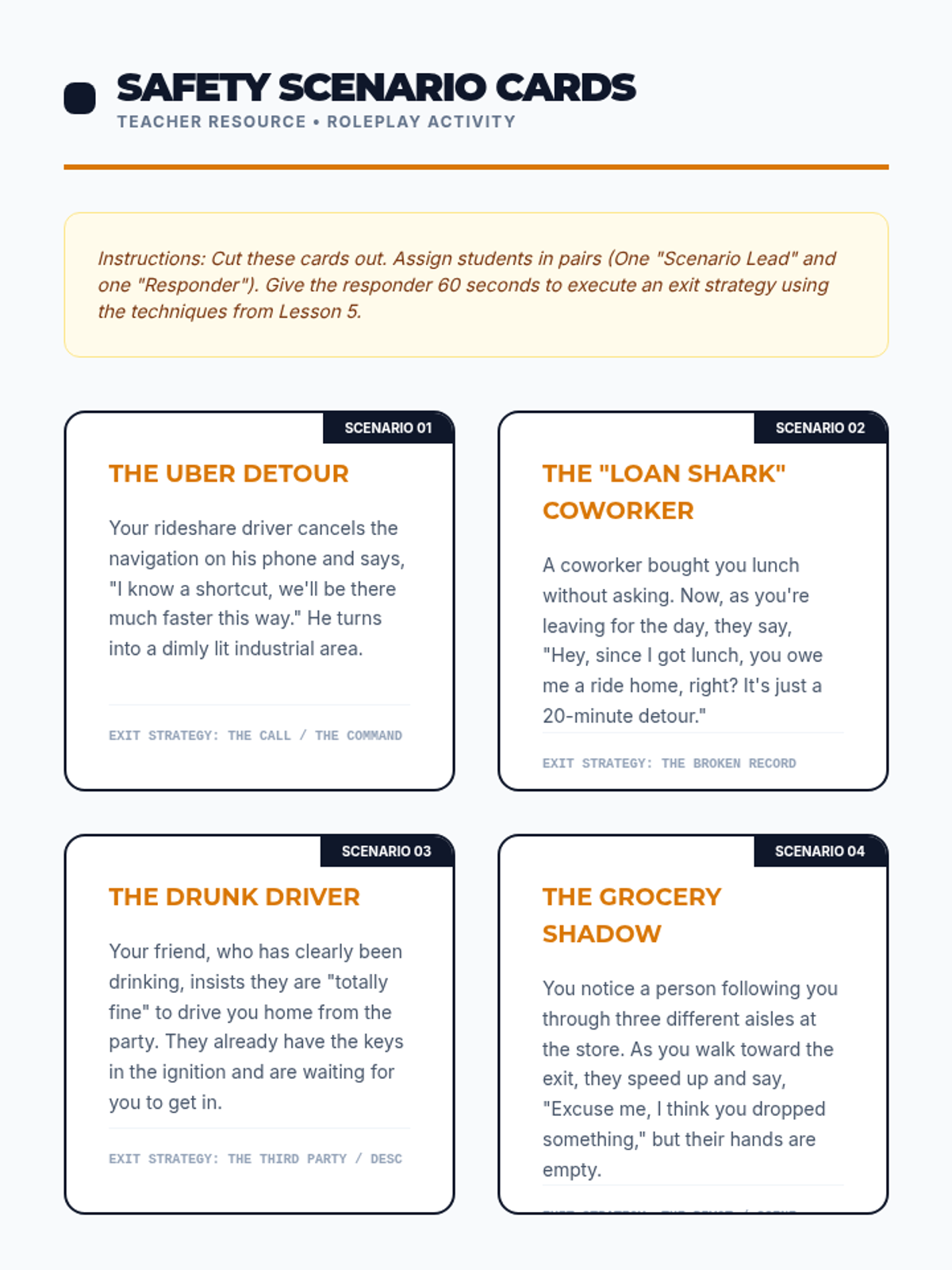
Practicing assertive communication and physical exit strategies to overcome the freeze response and take decisive action in unsafe situations.
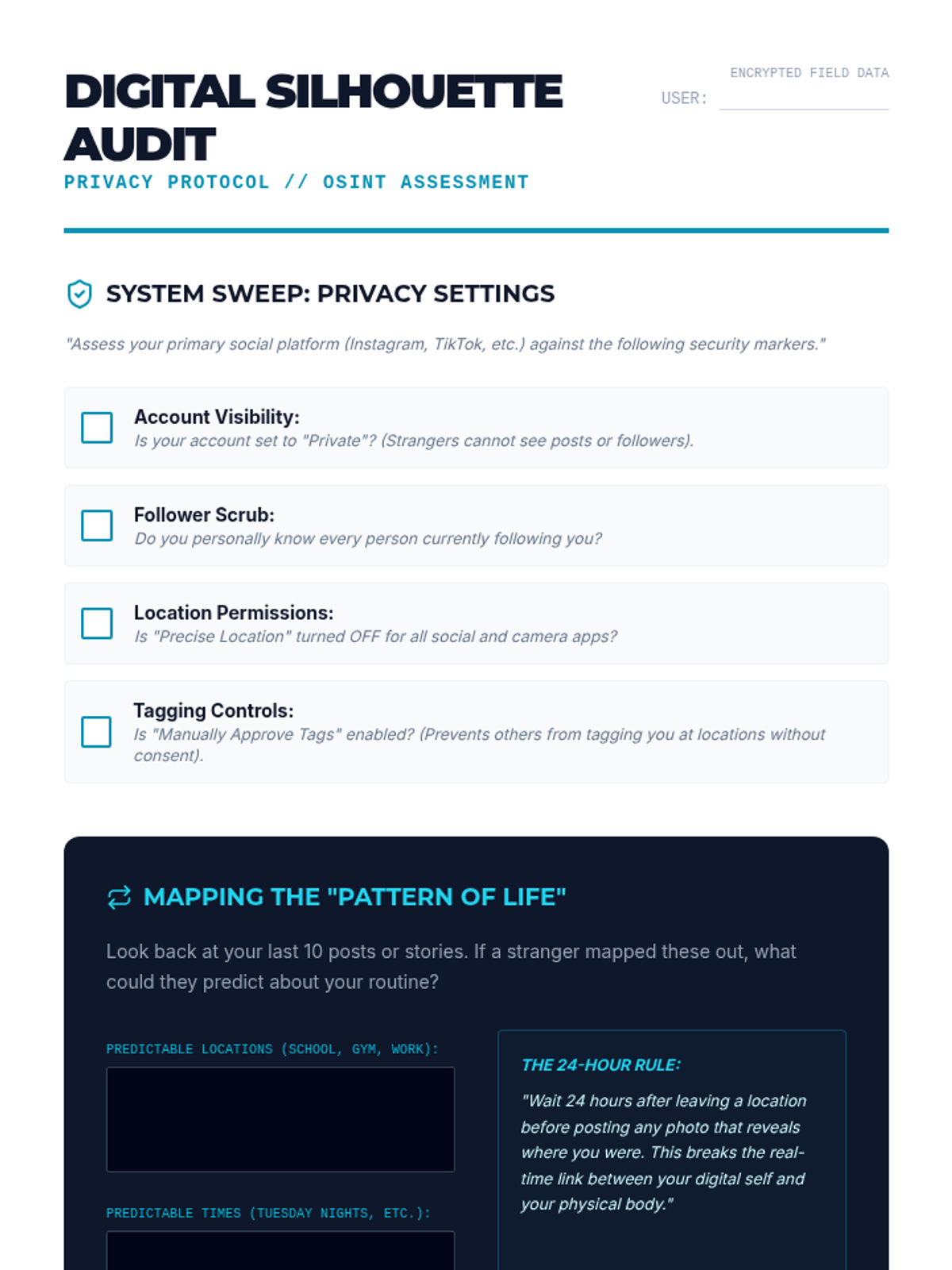
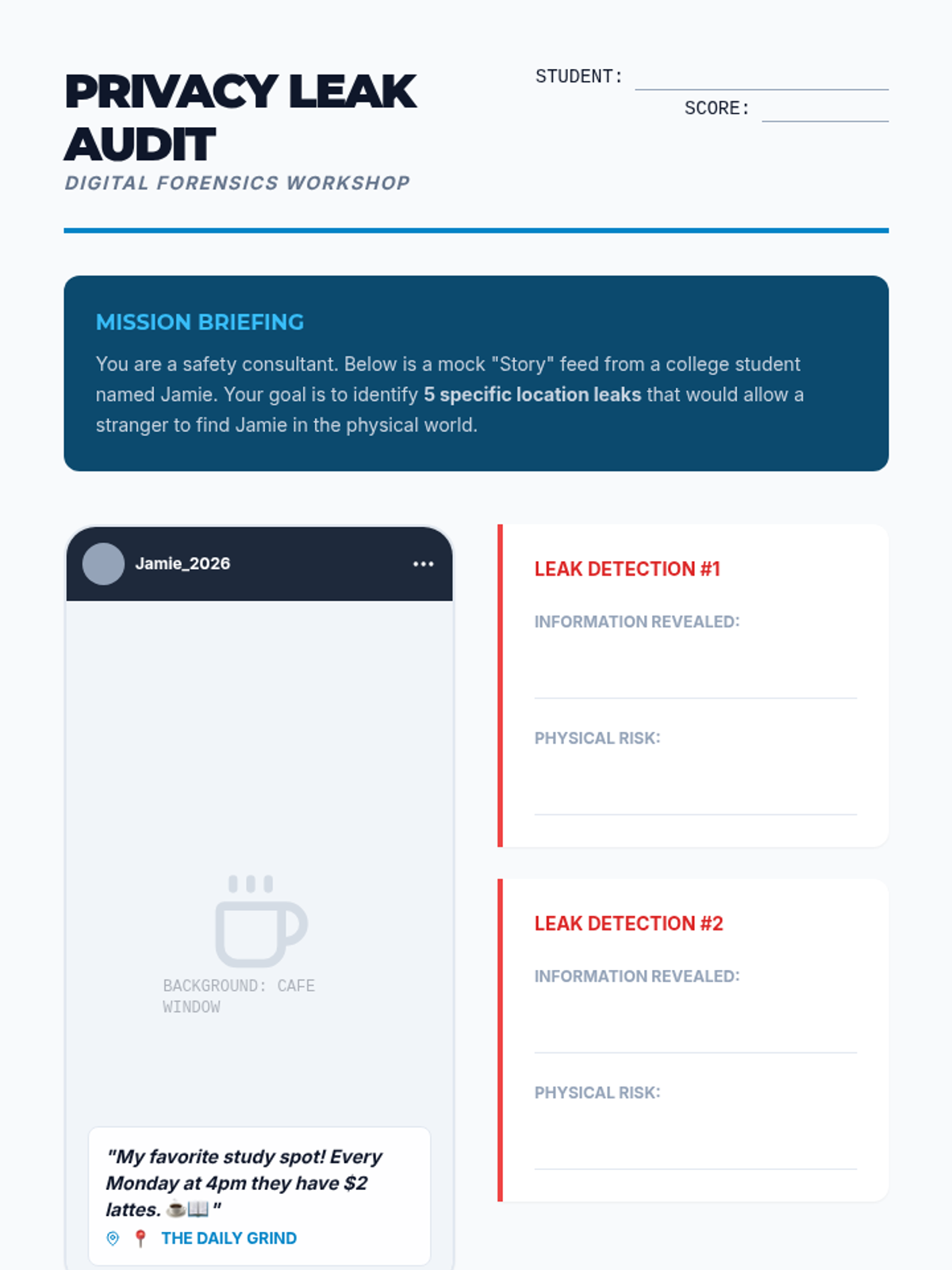
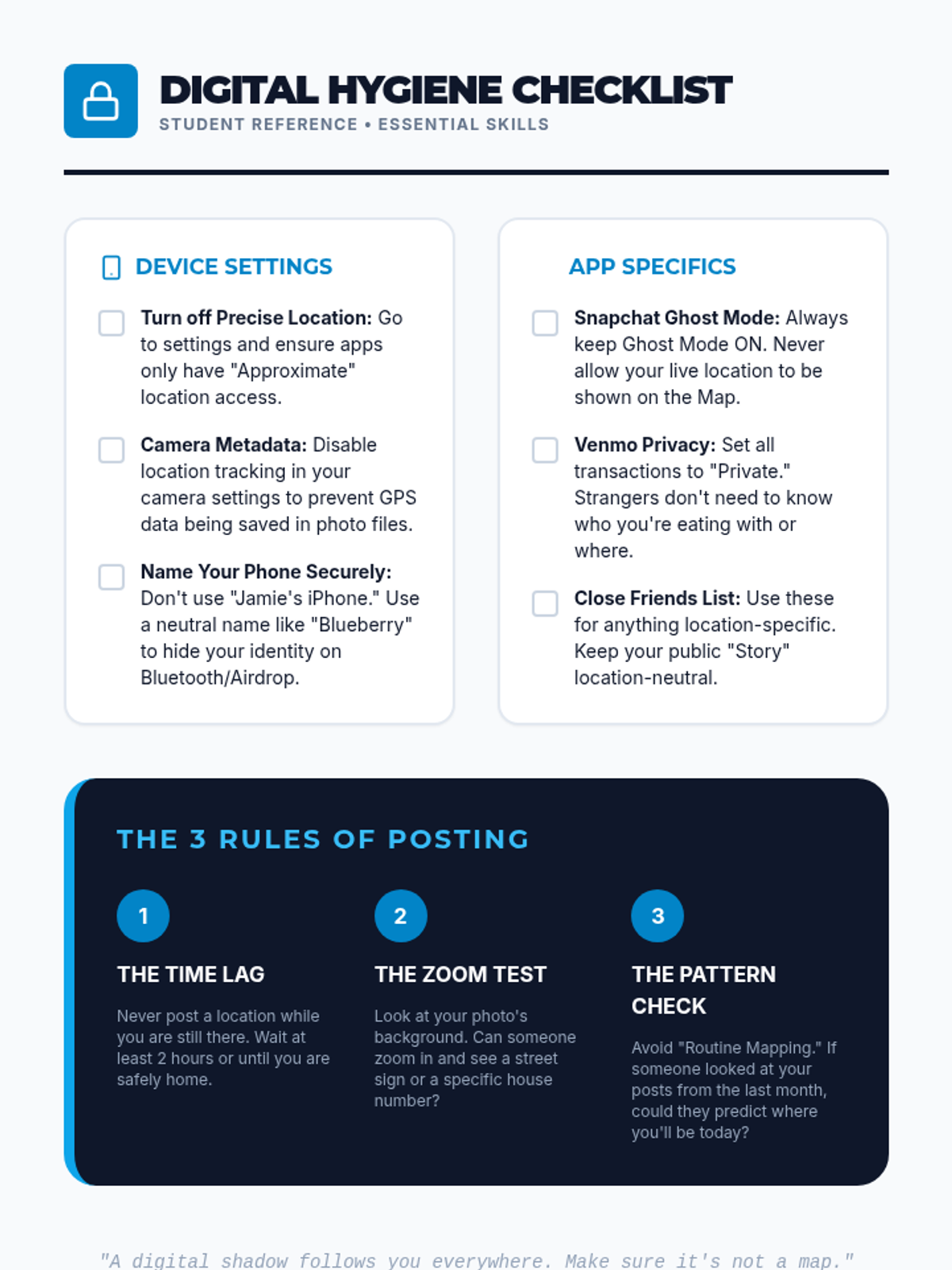
Students audit their digital habits to understand how location data and social media can create physical vulnerabilities.
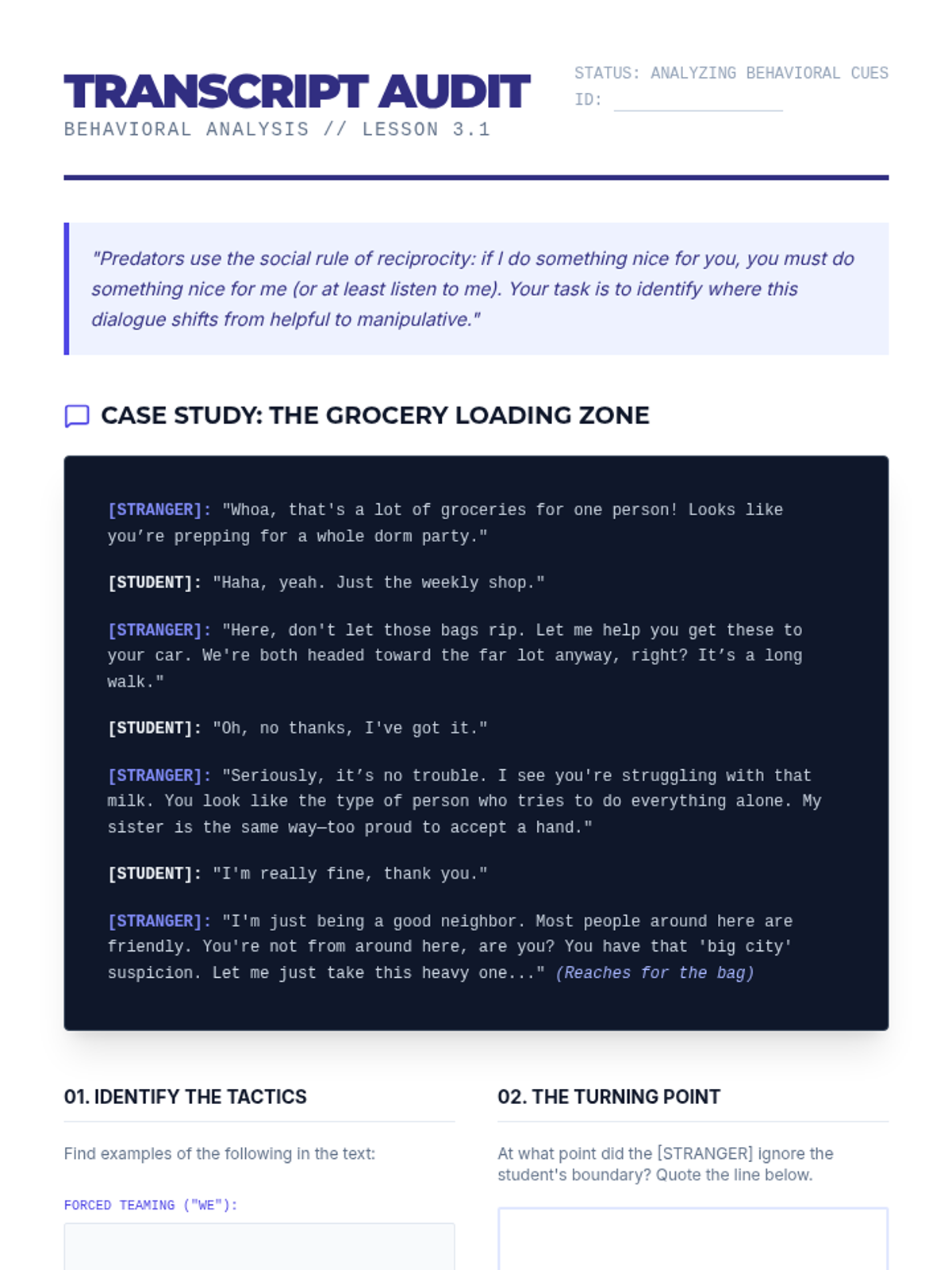
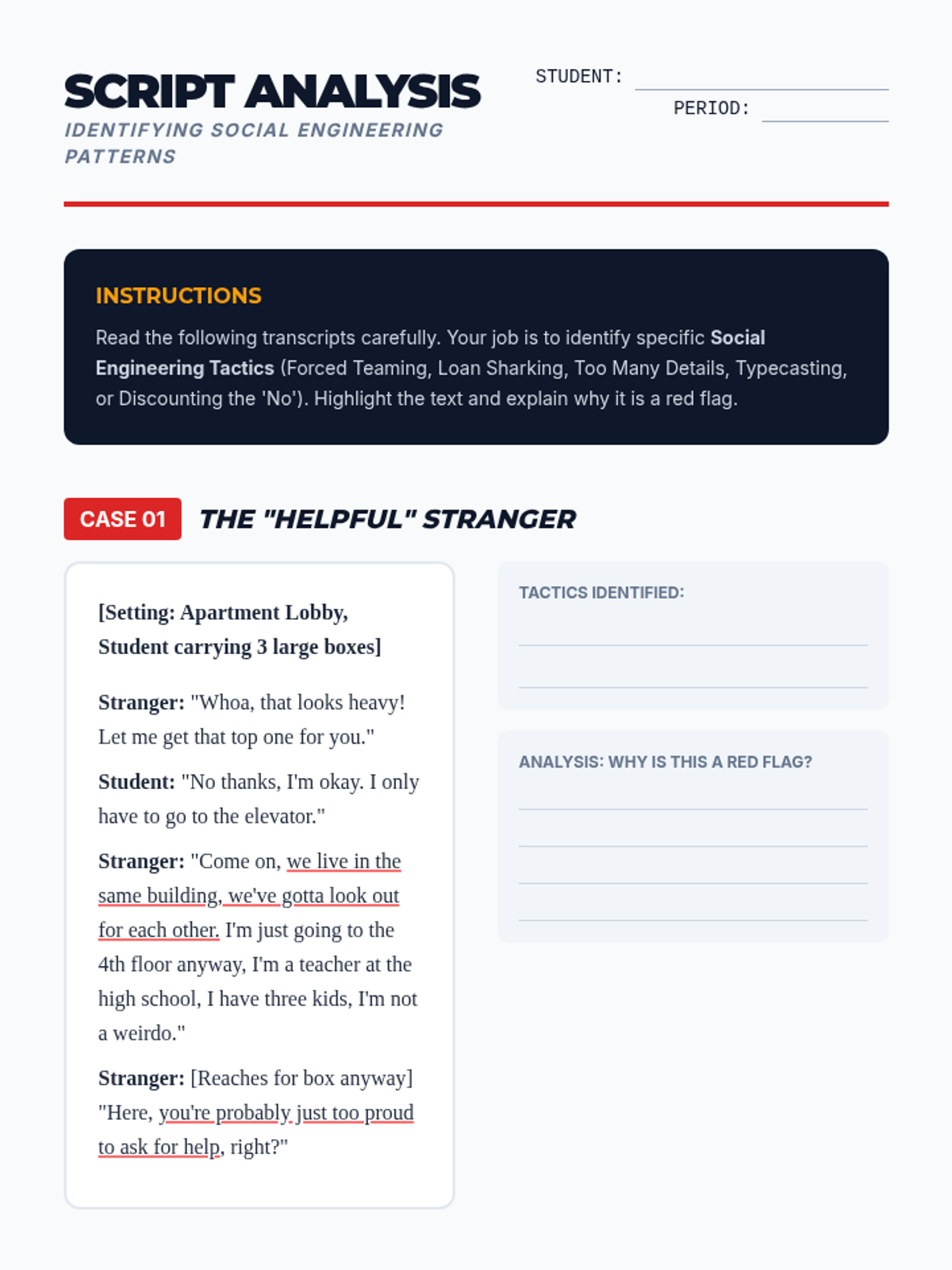
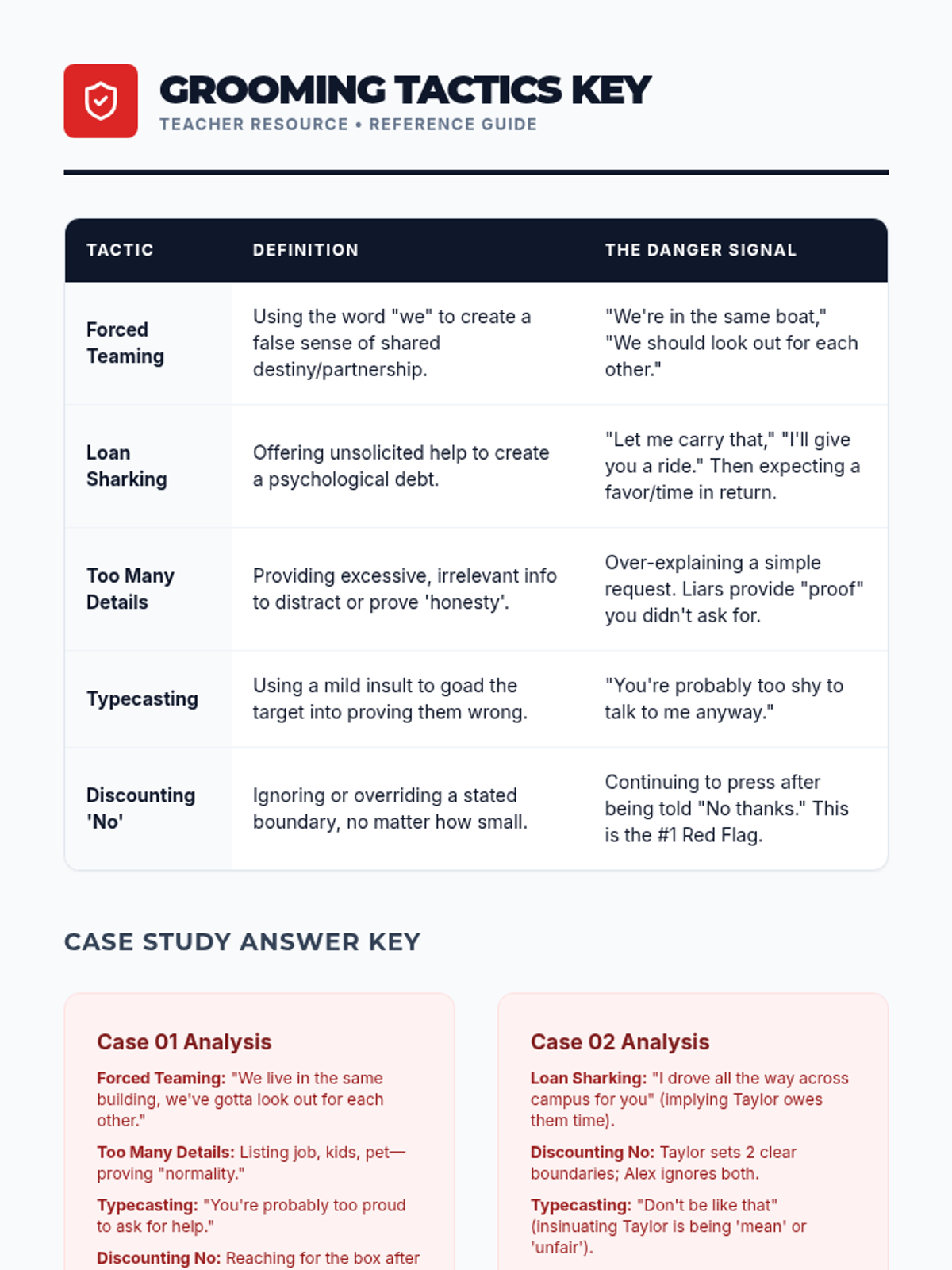
An analysis of psychological manipulation tactics used by predators, teaching students to prioritize safety over social politeness.
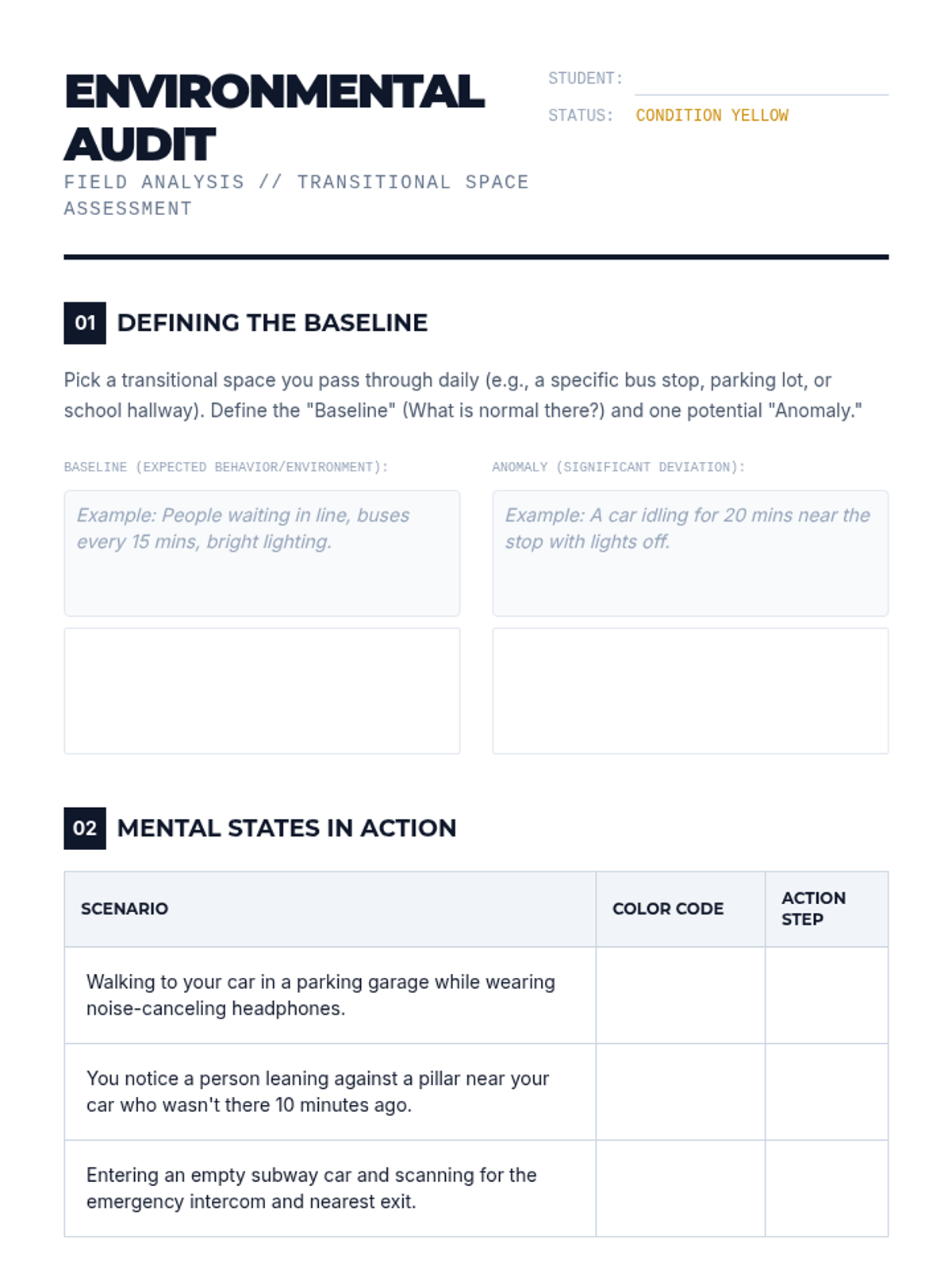
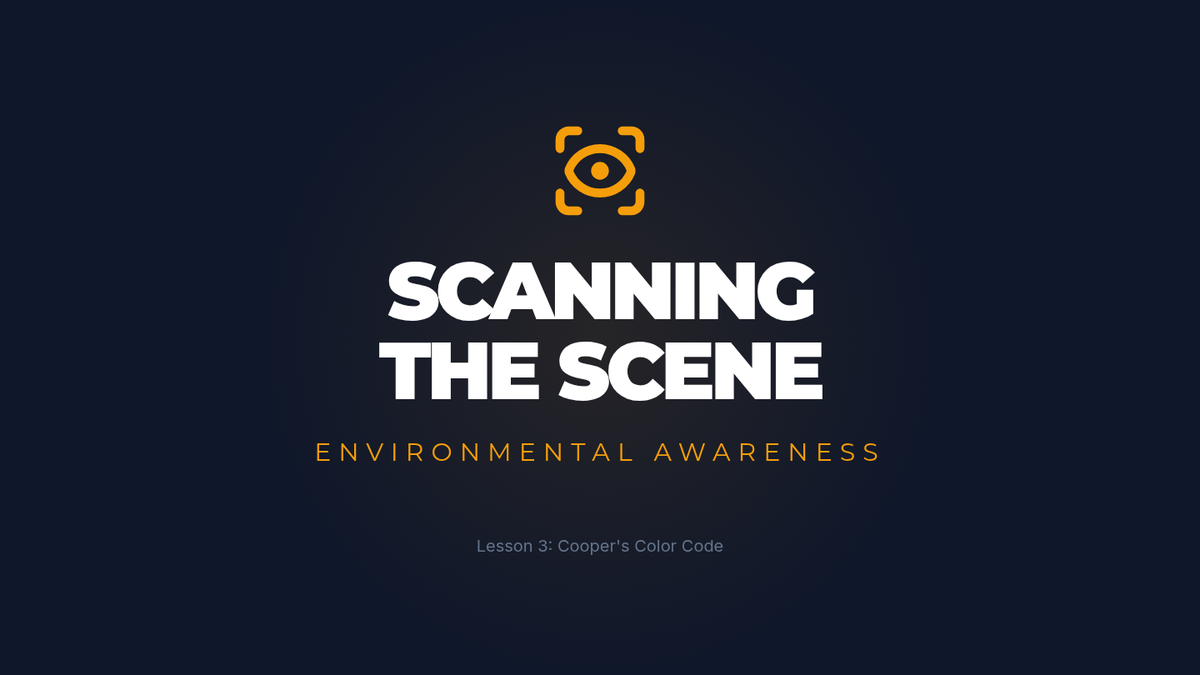
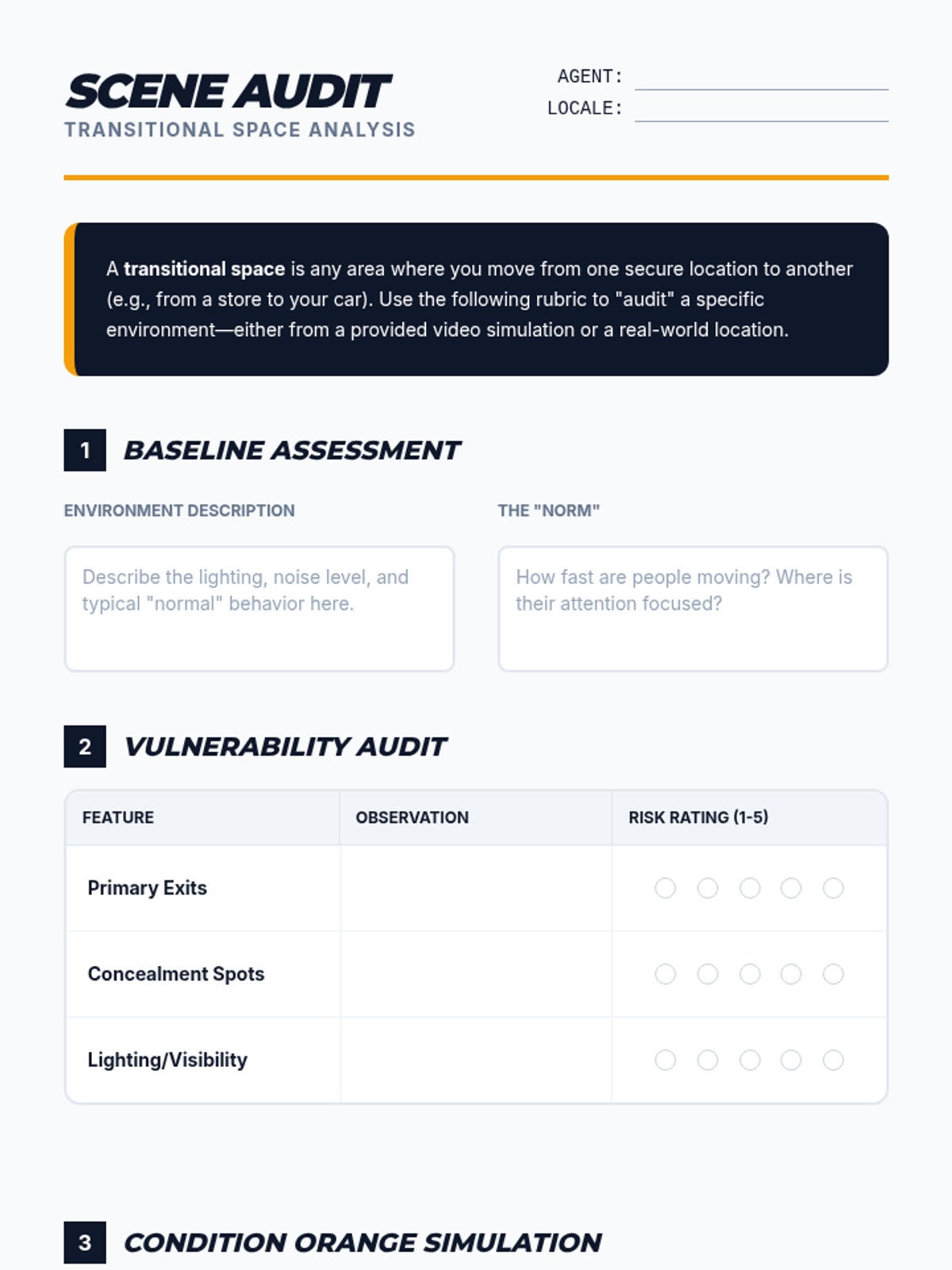
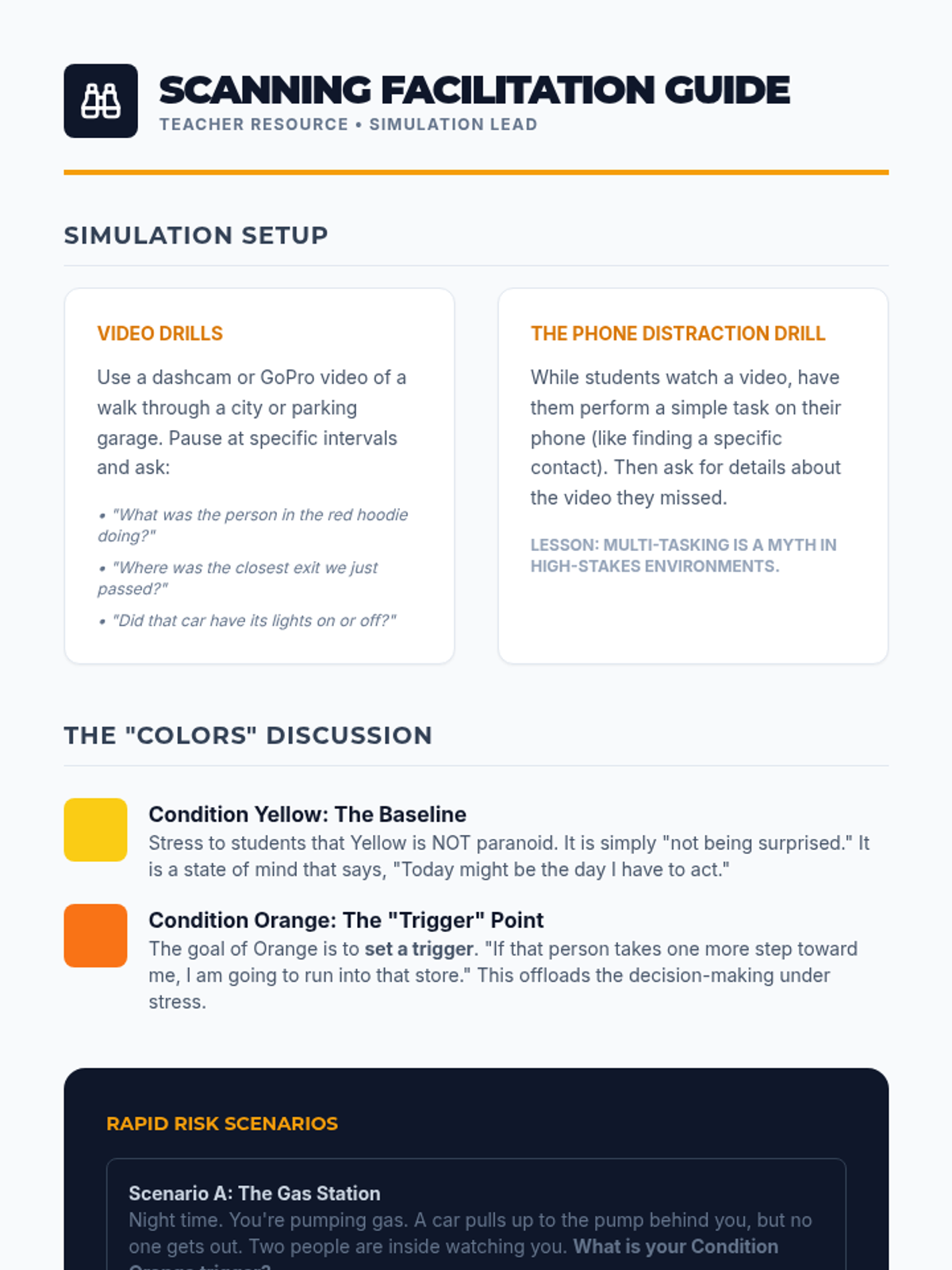
Focuses on identifying risks in transitional spaces using Cooper's Color Codes and environmental scanning techniques to recognize baseline anomalies.
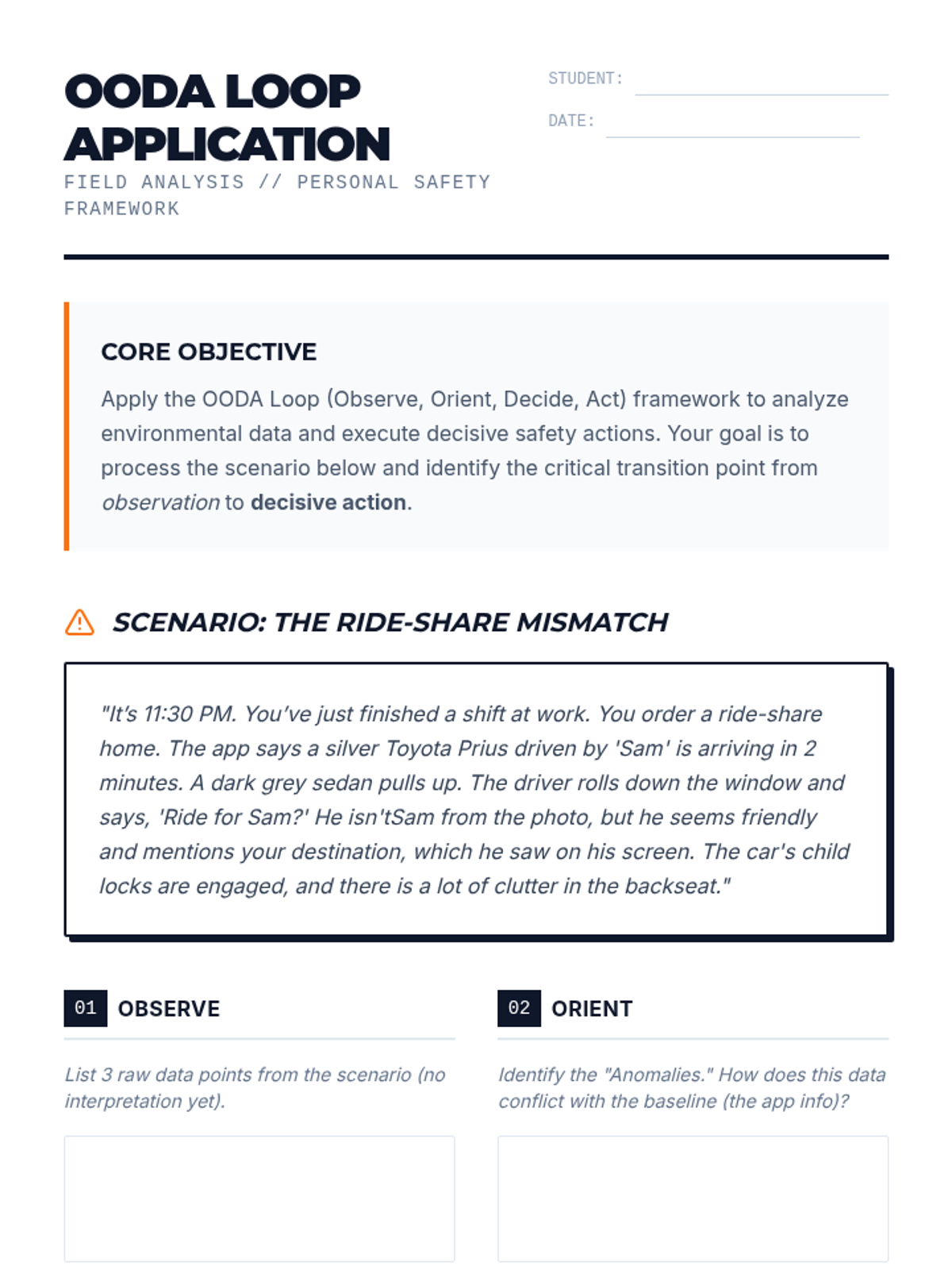
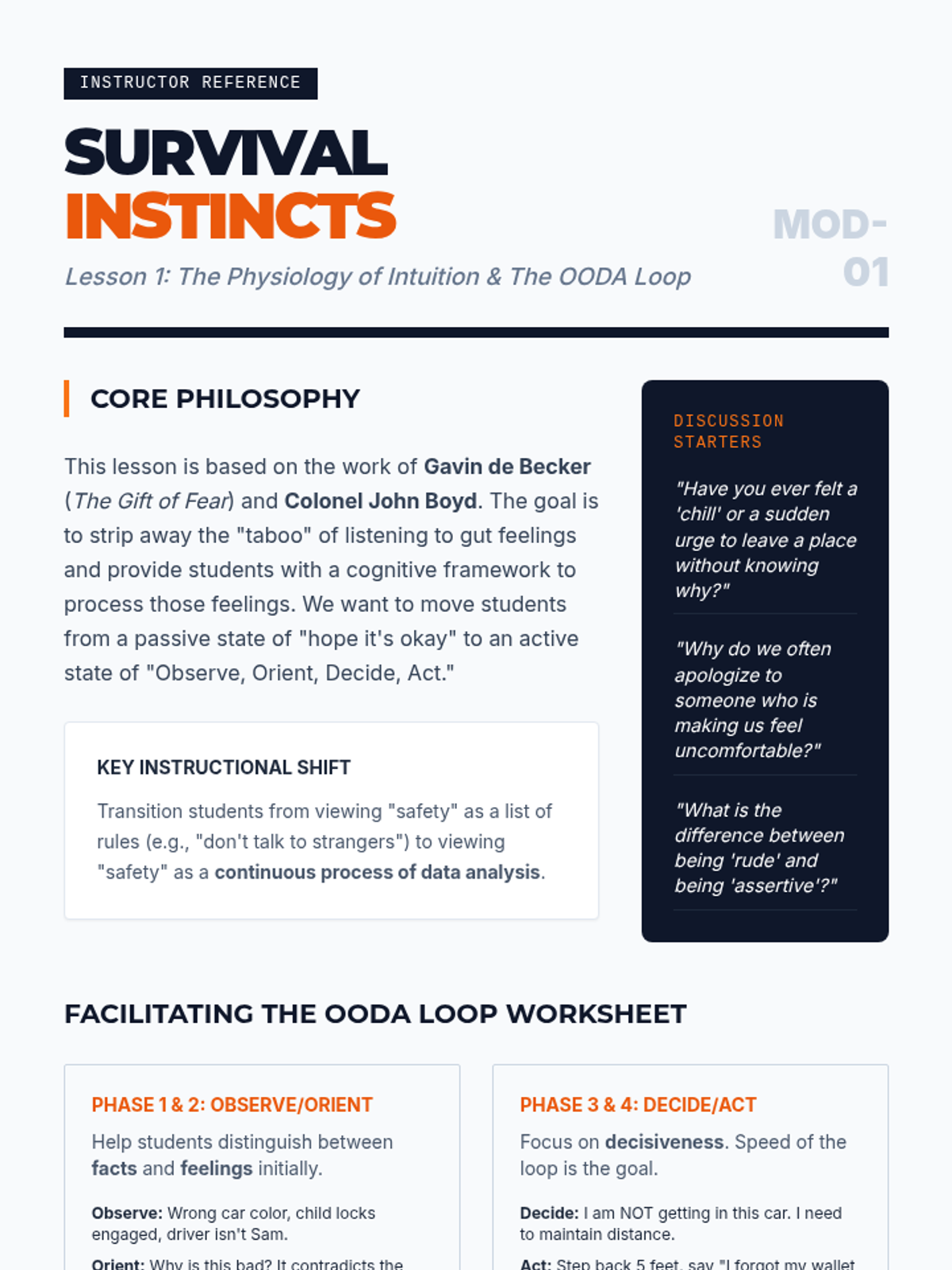
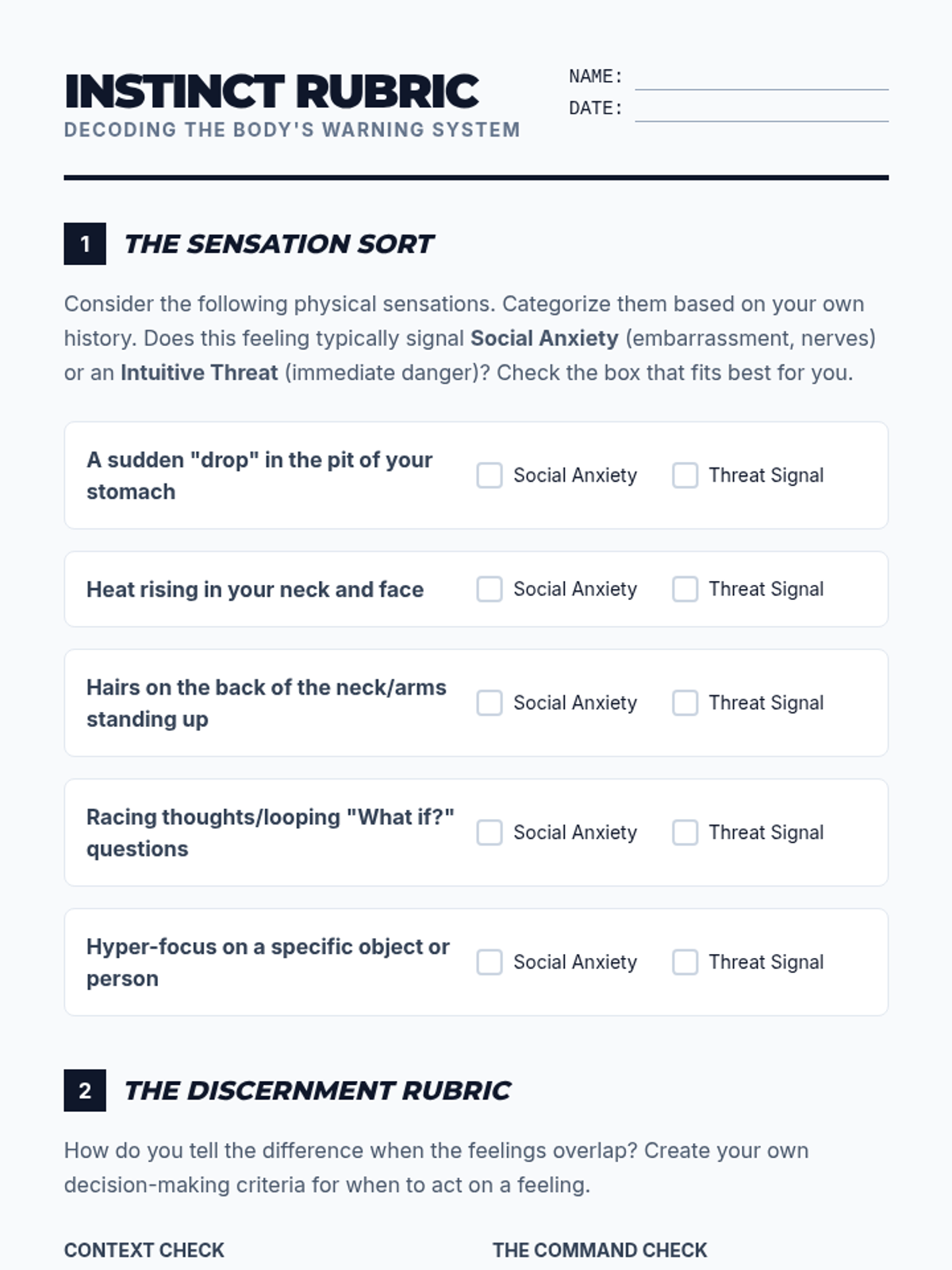
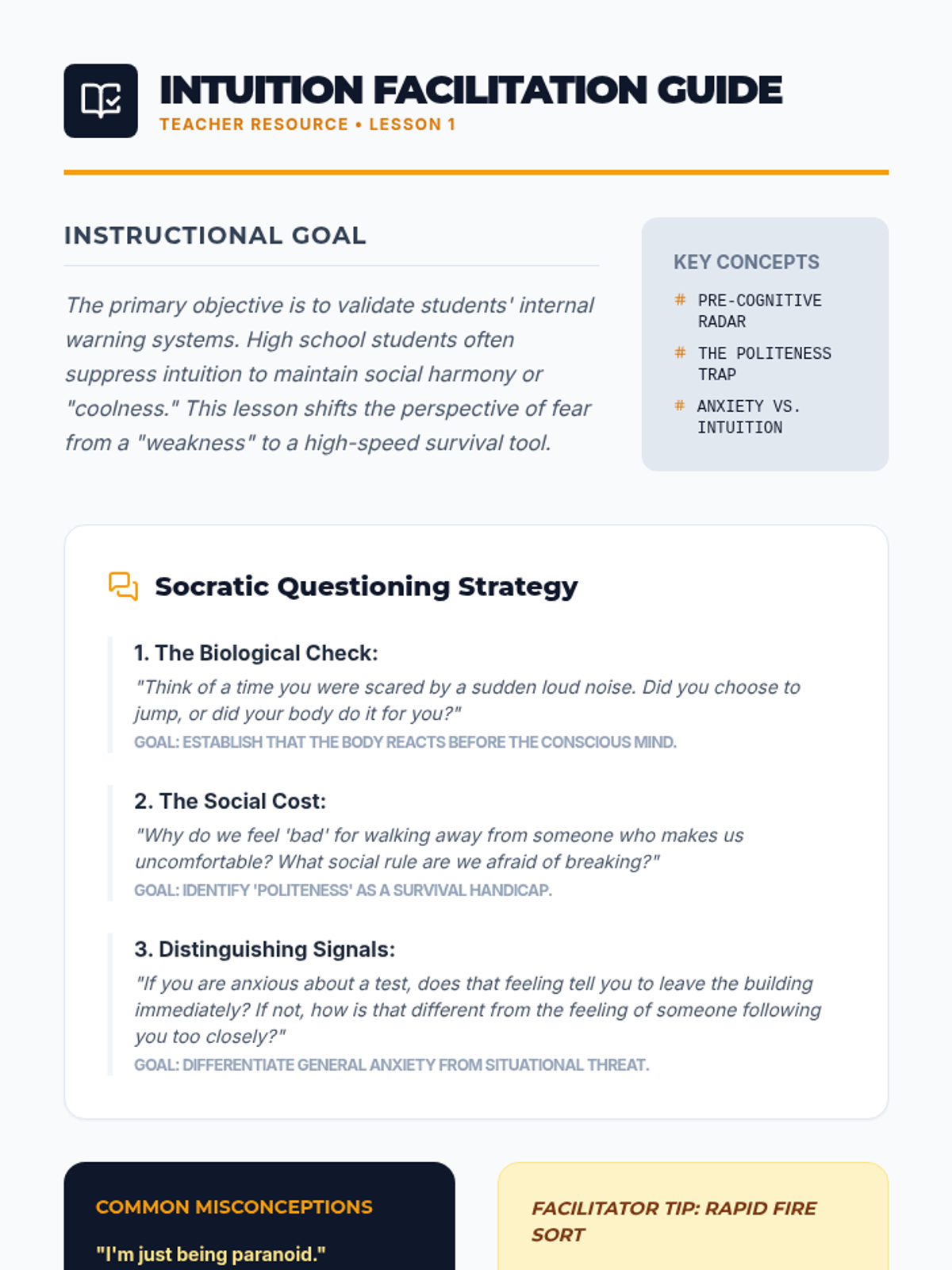
Students explore the biological basis of intuition and learn to apply the OODA loop (Observe, Orient, Decide, Act) to process environmental data and distinguish between anxiety and true threat indicators.
The culminating lesson focuses on assertive communication and verbal de-escalation to extricate oneself from unsafe situations, overcoming the 'politeness trap.'
A workshop on the intersection of digital behavior and physical safety, focusing on how geotagging and oversharing can compromise physical location privacy.
Students practice environmental scanning in high-risk transitional spaces using Cooper's Color Code to identify anomalies and maintain peripheral awareness.
This lesson identifies subtle red flags in interpersonal interactions, focusing on social engineering and grooming tactics like forced teaming and boundary testing in social and professional settings.
Students examine the biological mechanisms of the 'fight or flight' response and learn to distinguish between general anxiety and valid intuitive warnings using concepts from 'The Gift of Fear.'
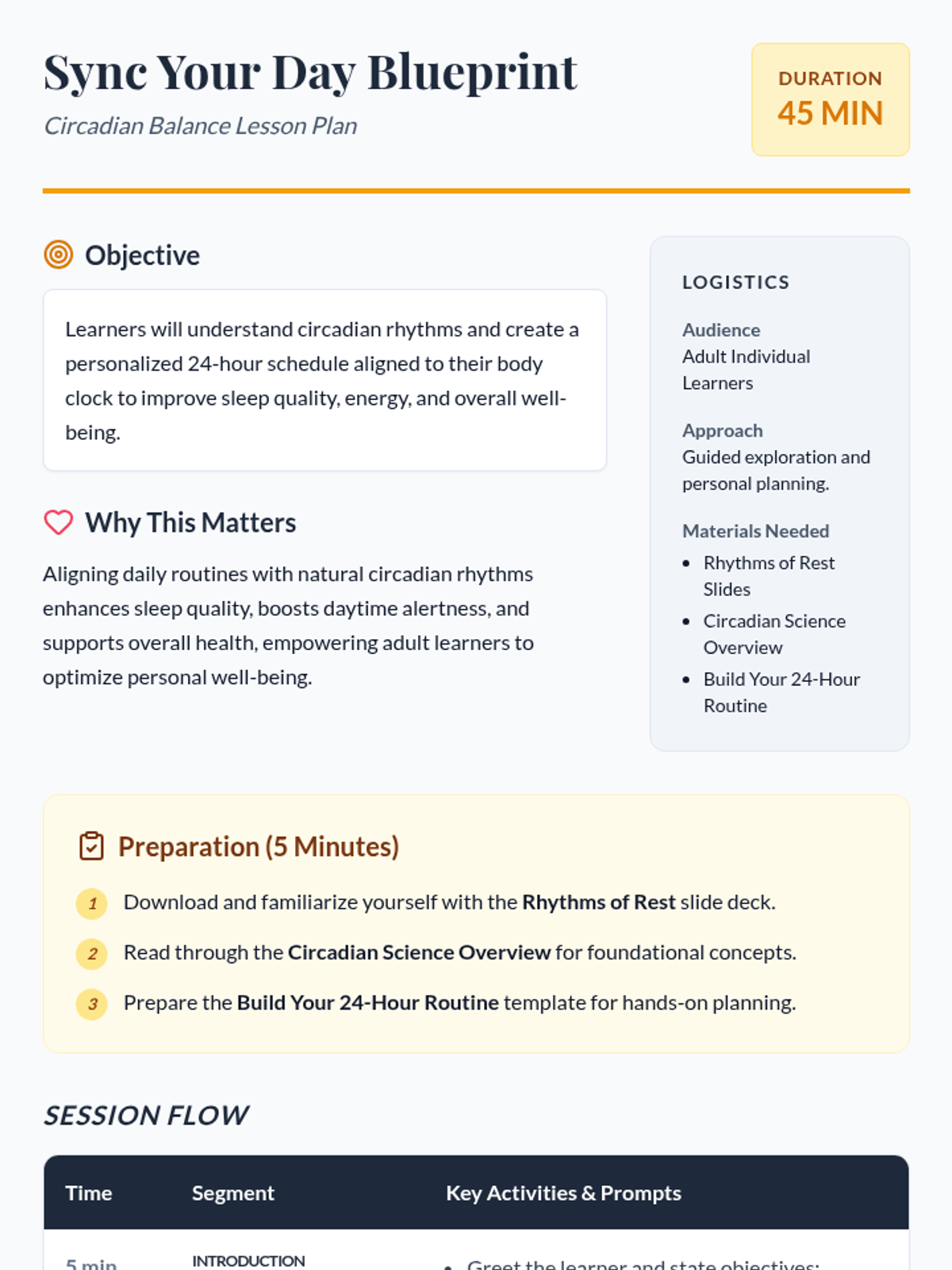
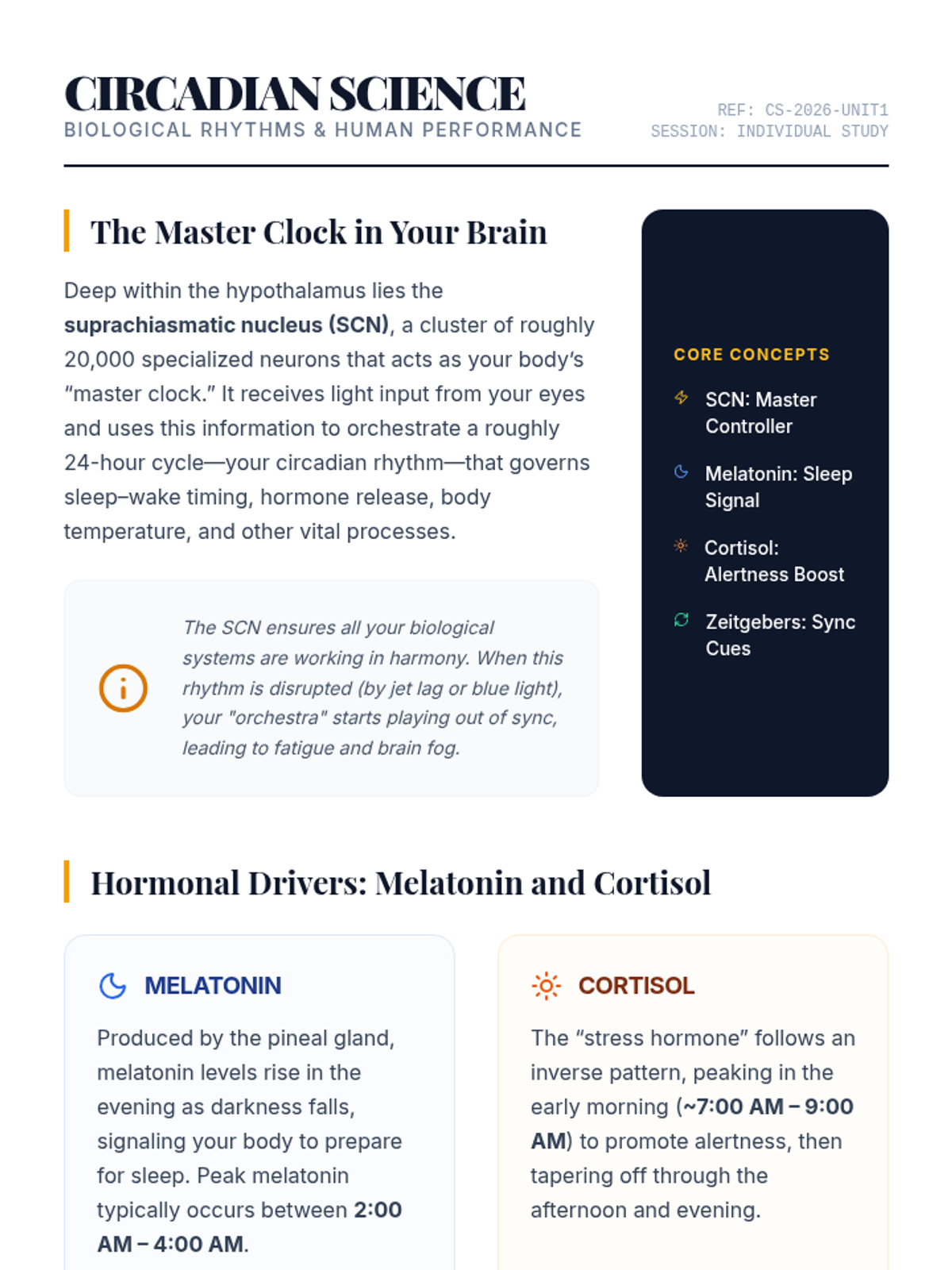
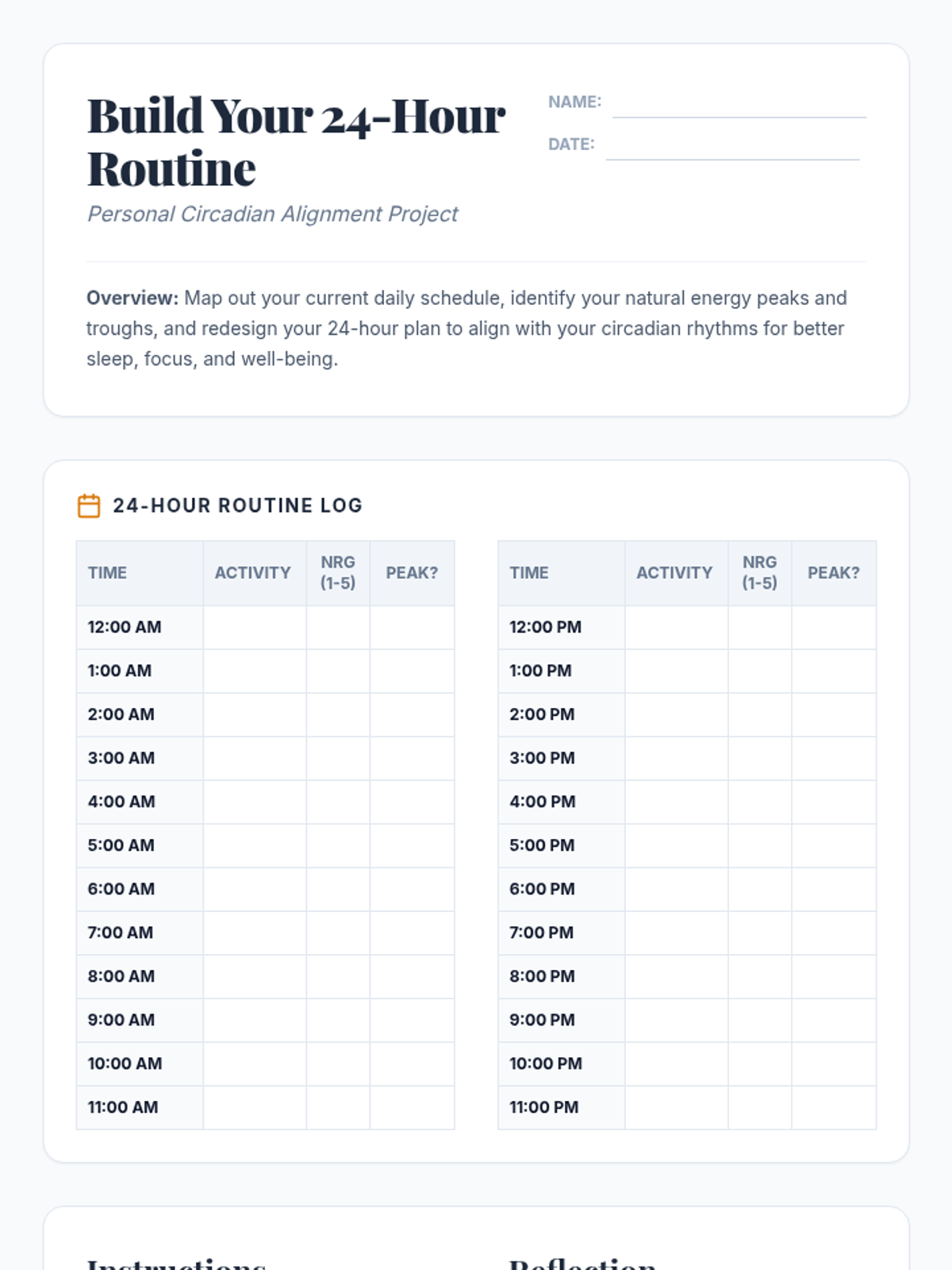
A 45-minute individual guide for adult learners to align their daily routines with natural circadian rhythms for improved sleep and energy.
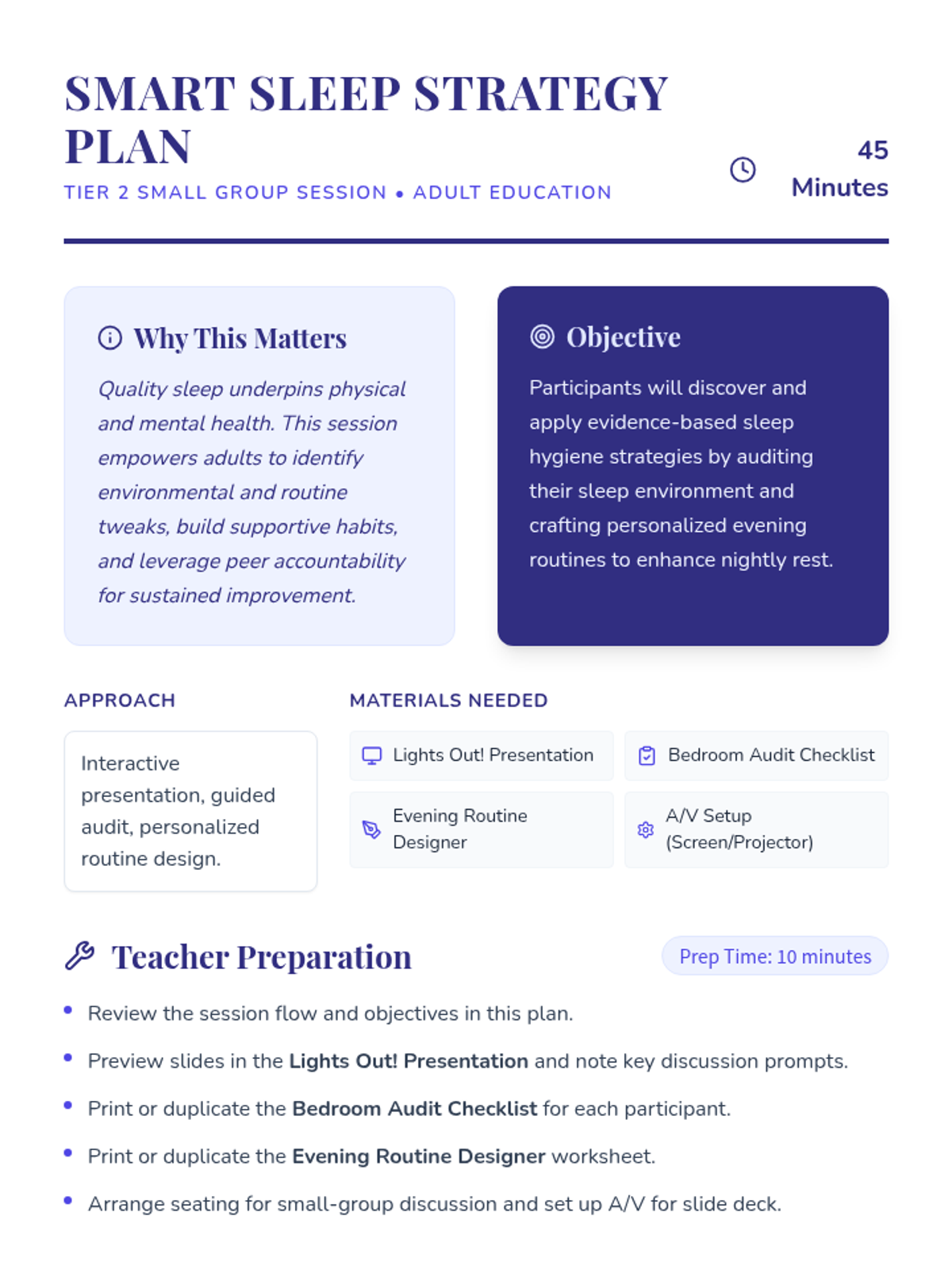
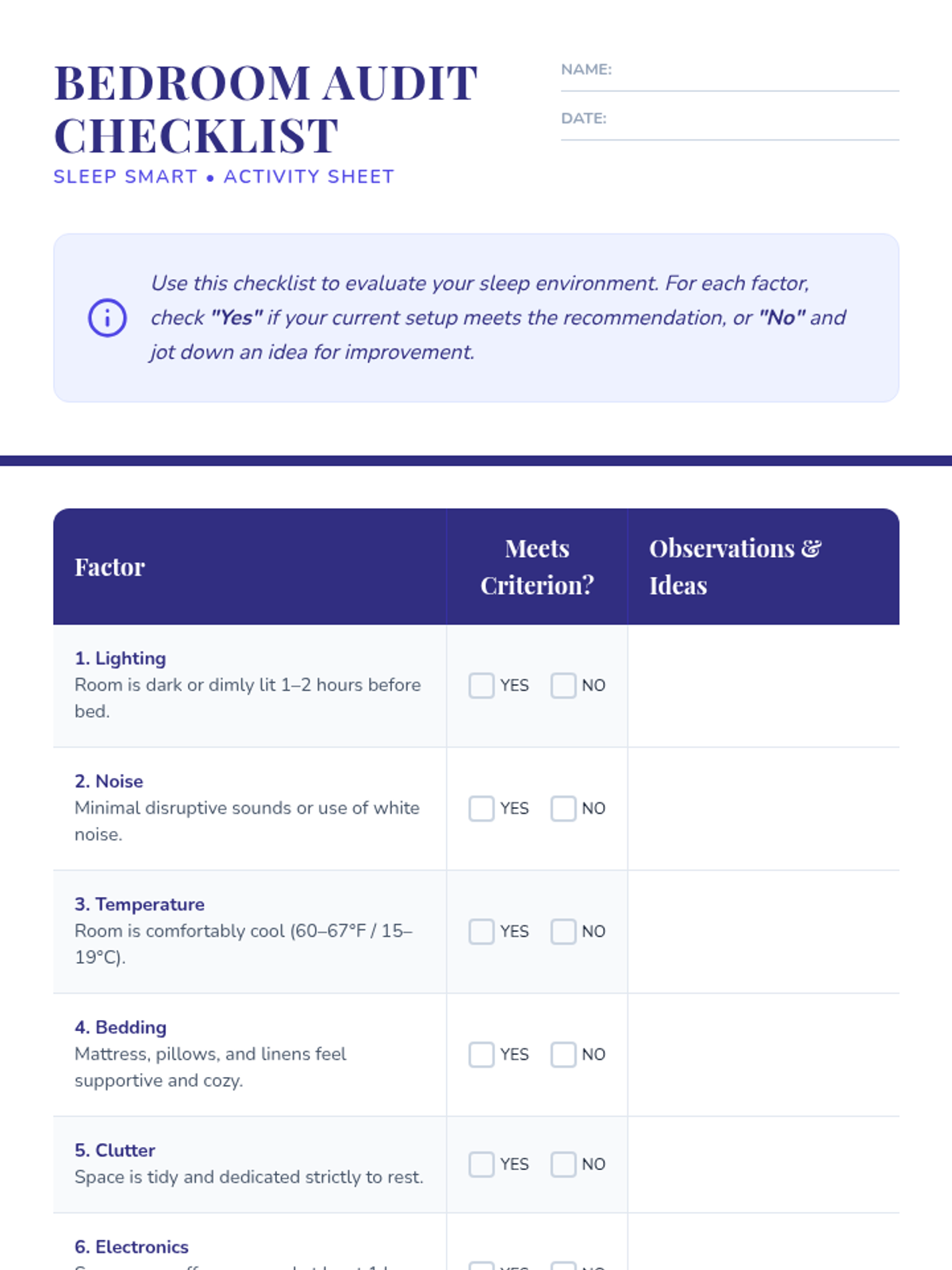
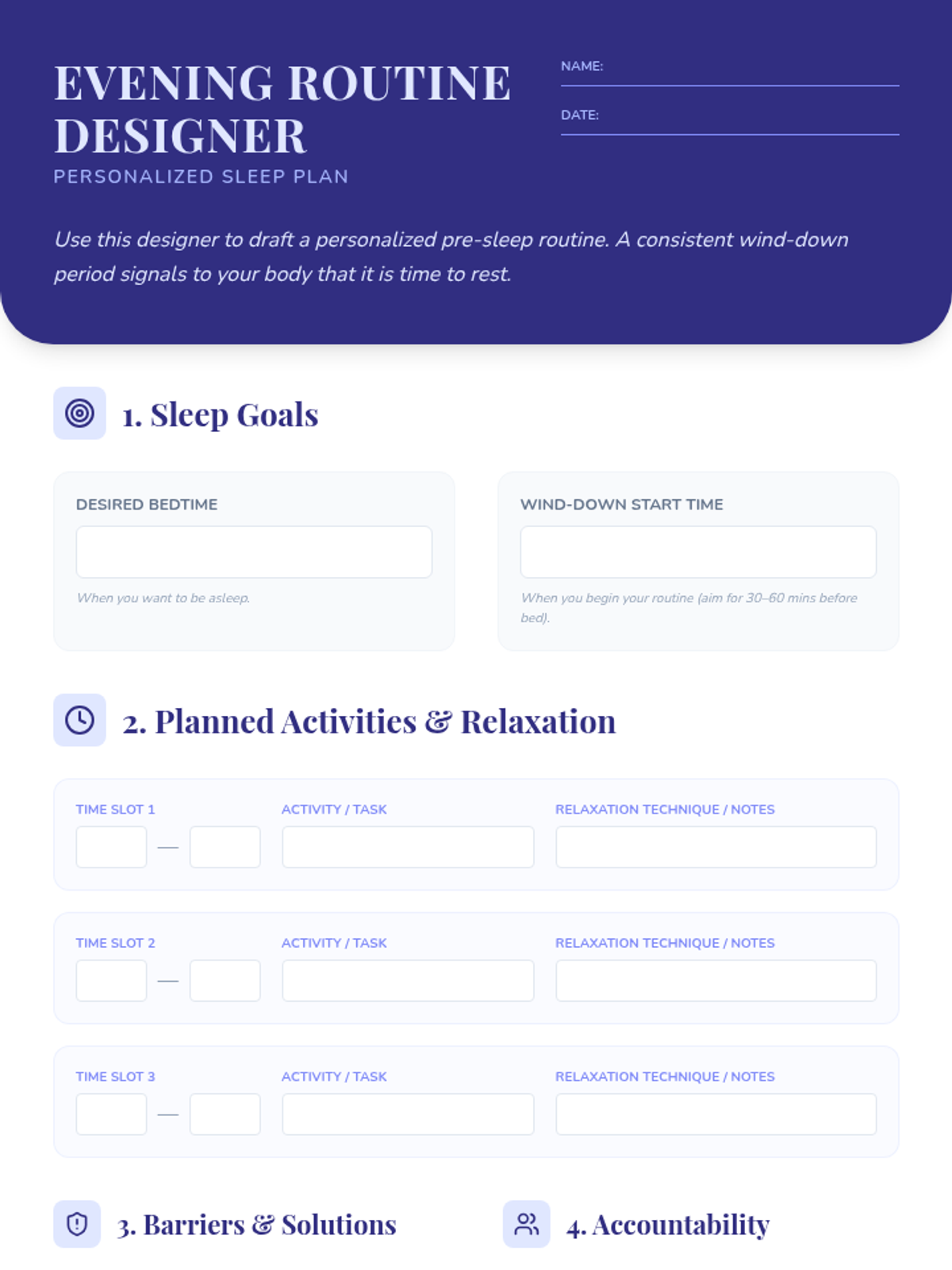
A 45-minute Tier 2 small group session for adults focused on sleep hygiene. Participants will audit their sleep environments and design personalized evening routines to improve rest and overall well-being.
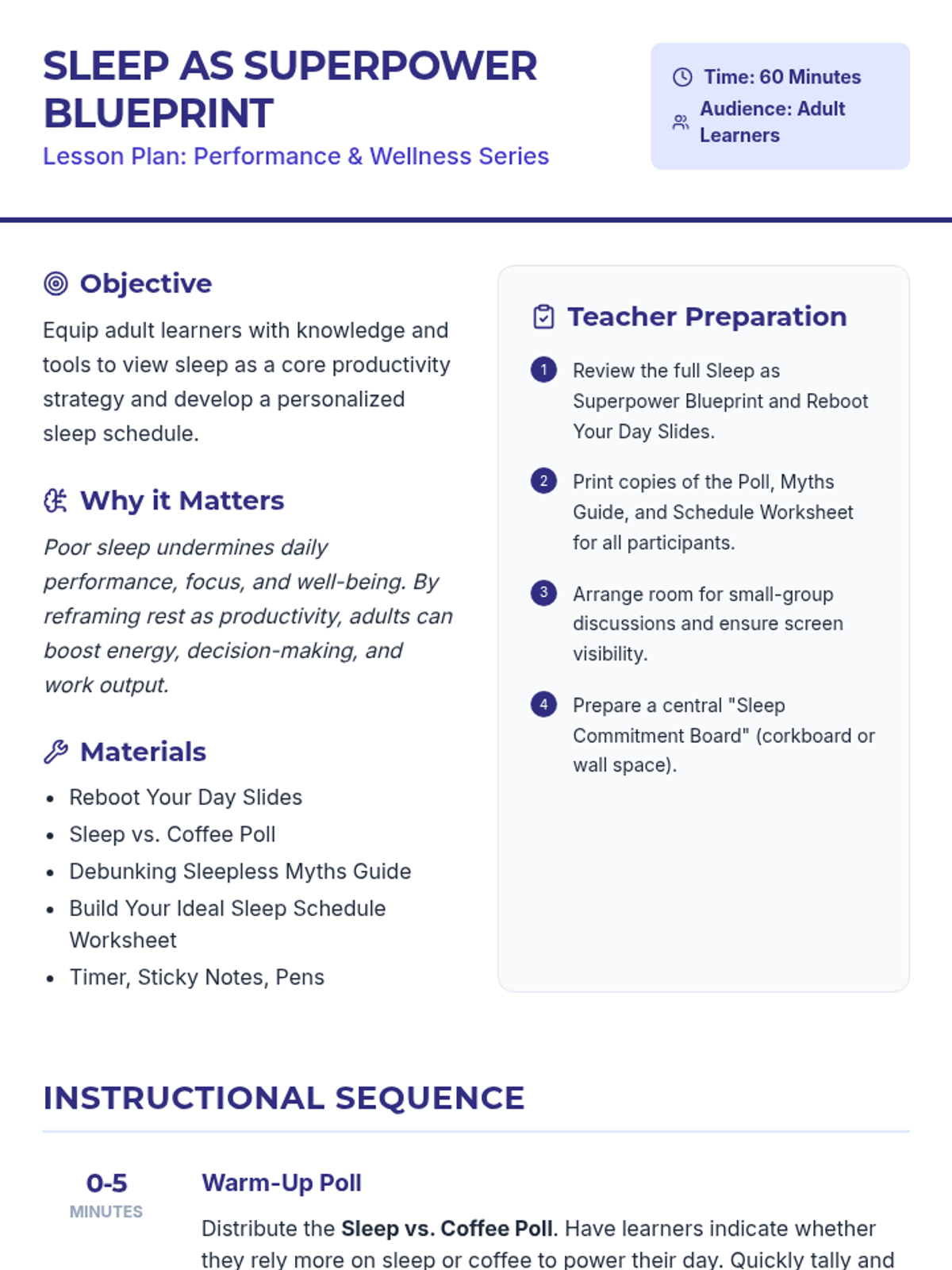
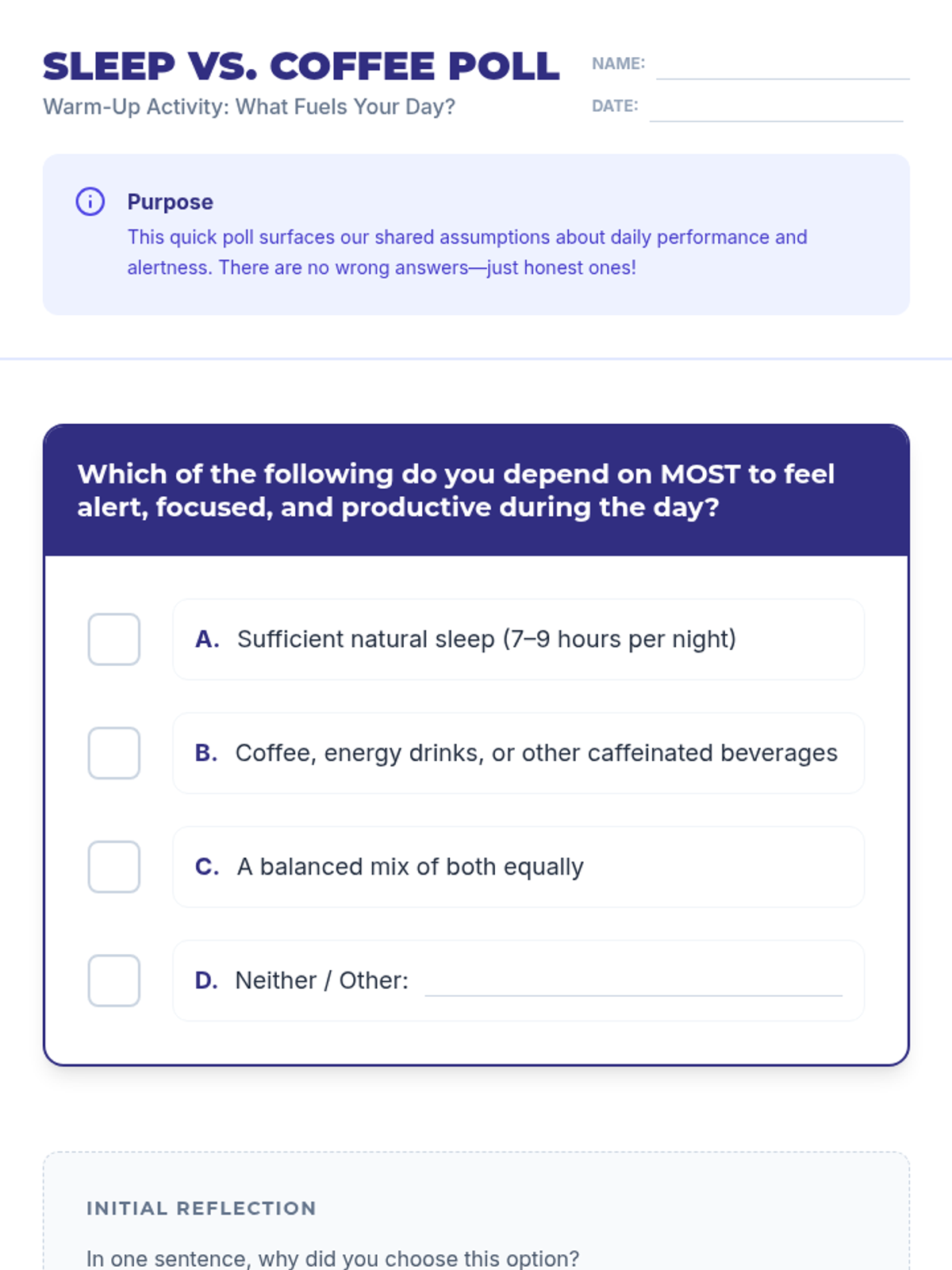
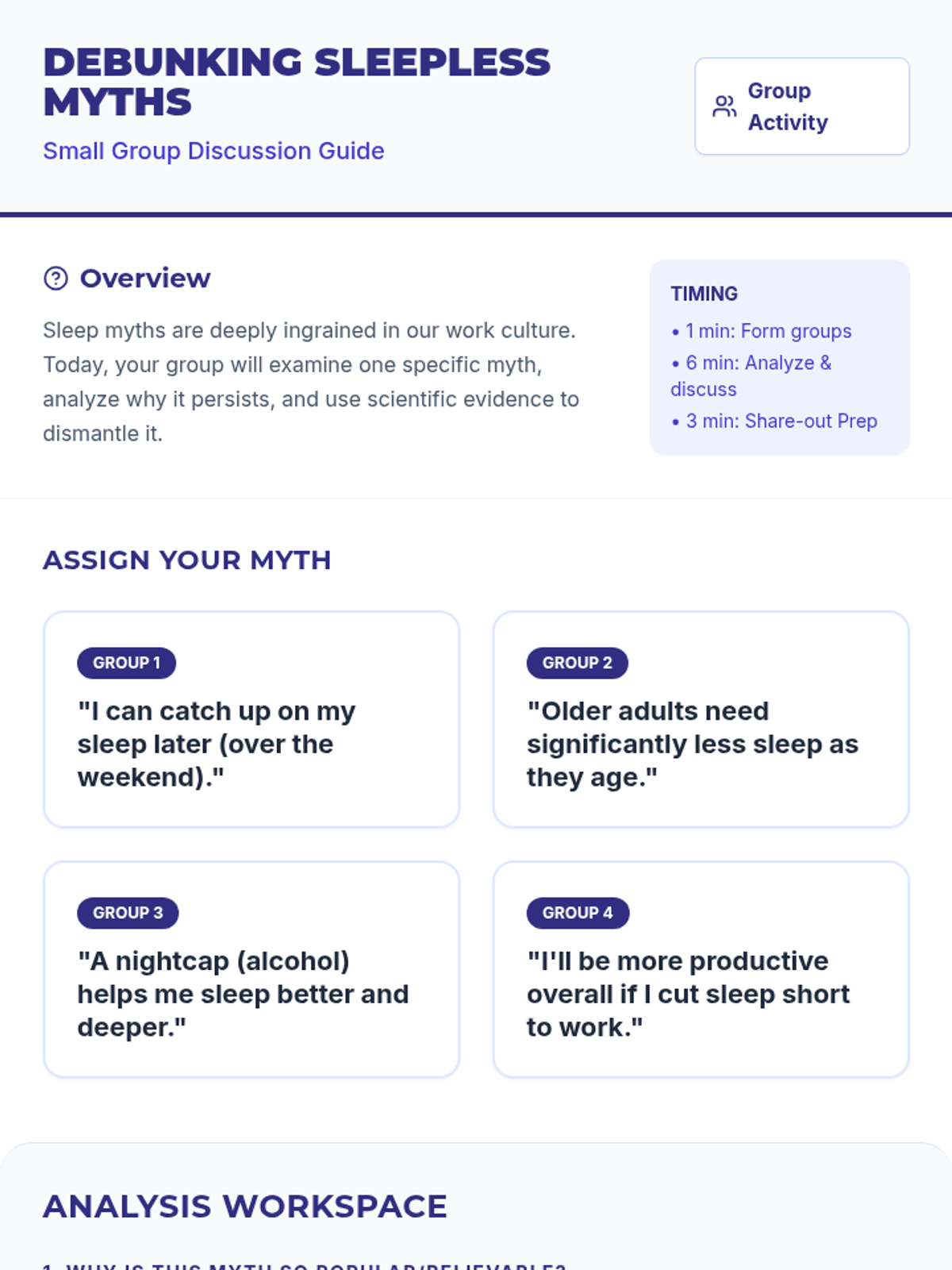
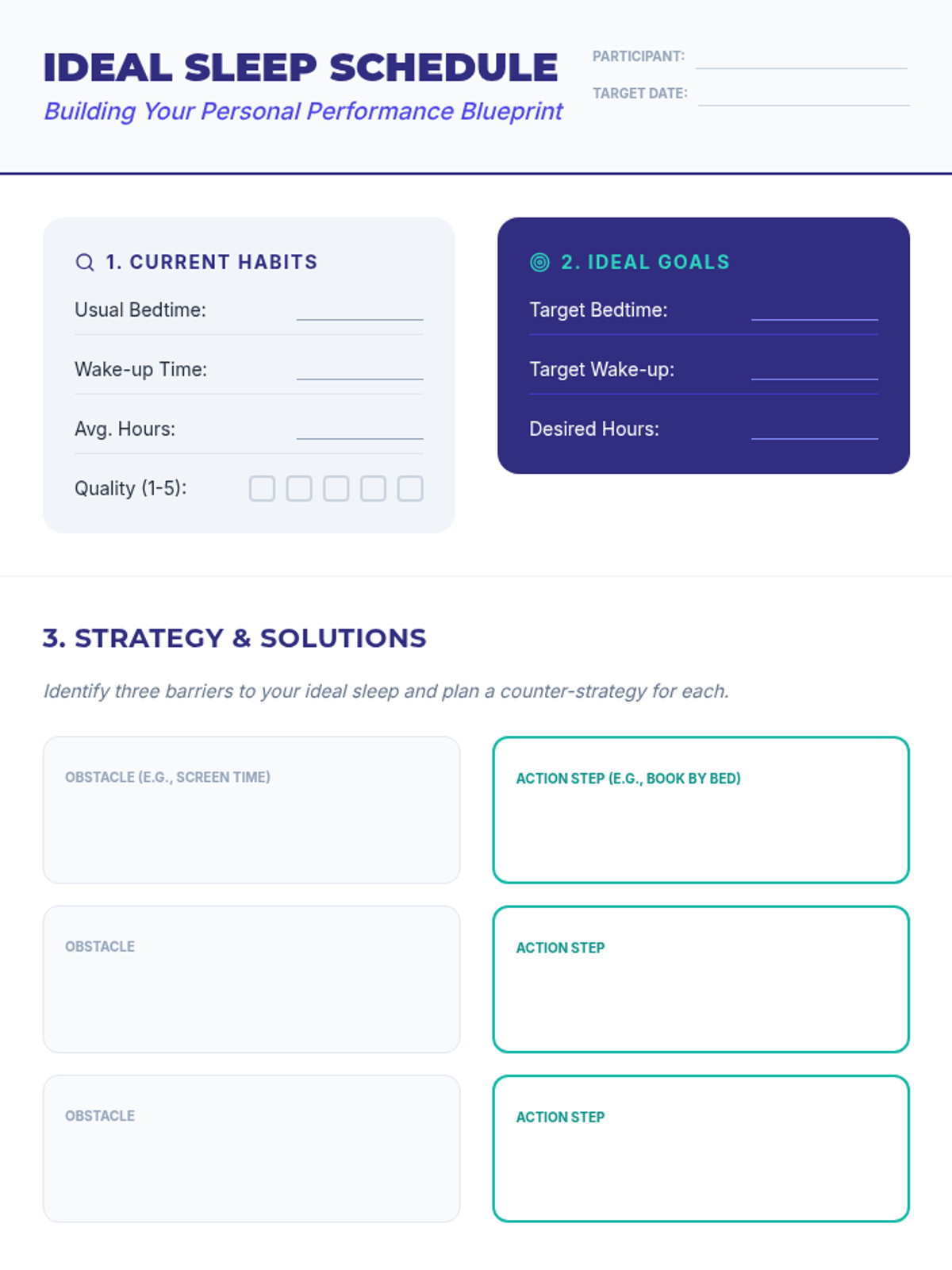
A 60-minute session for adult learners that reframes sleep as a critical productivity tool, featuring interactive polls, evidence-based discussions, and personalized schedule planning.
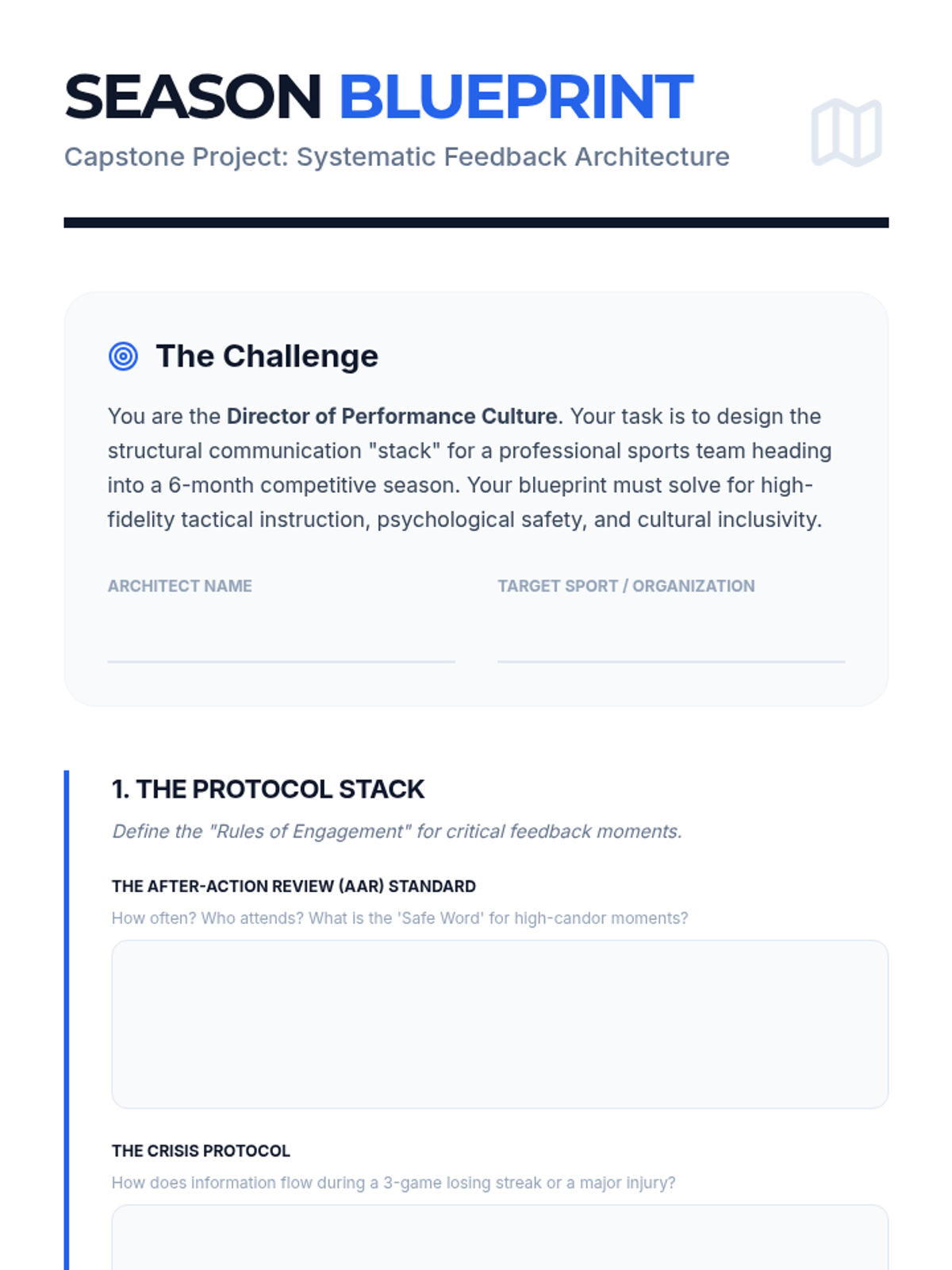
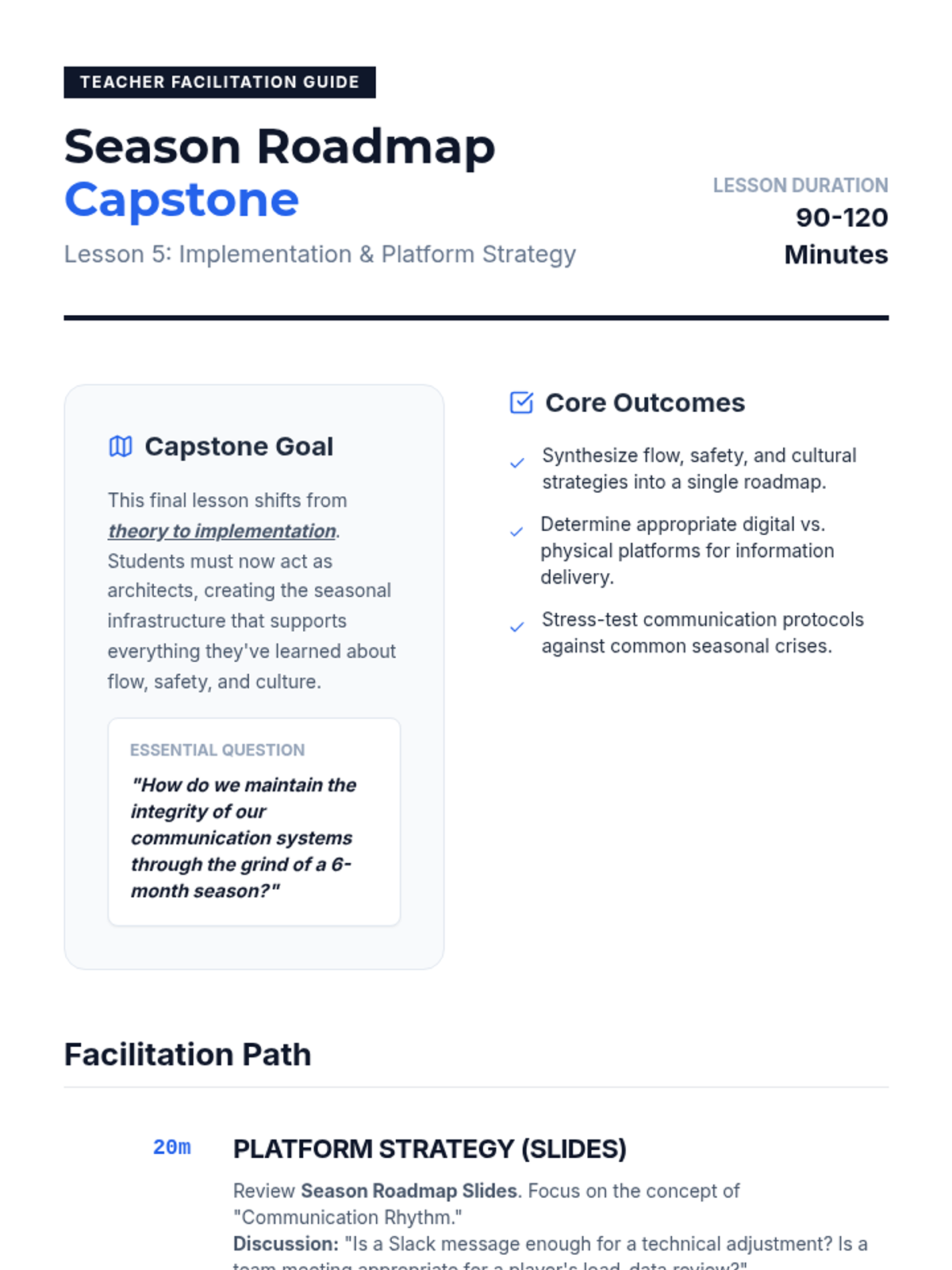
The capstone lesson where students architect a comprehensive communication roadmap and platform strategy for a full competitive season.
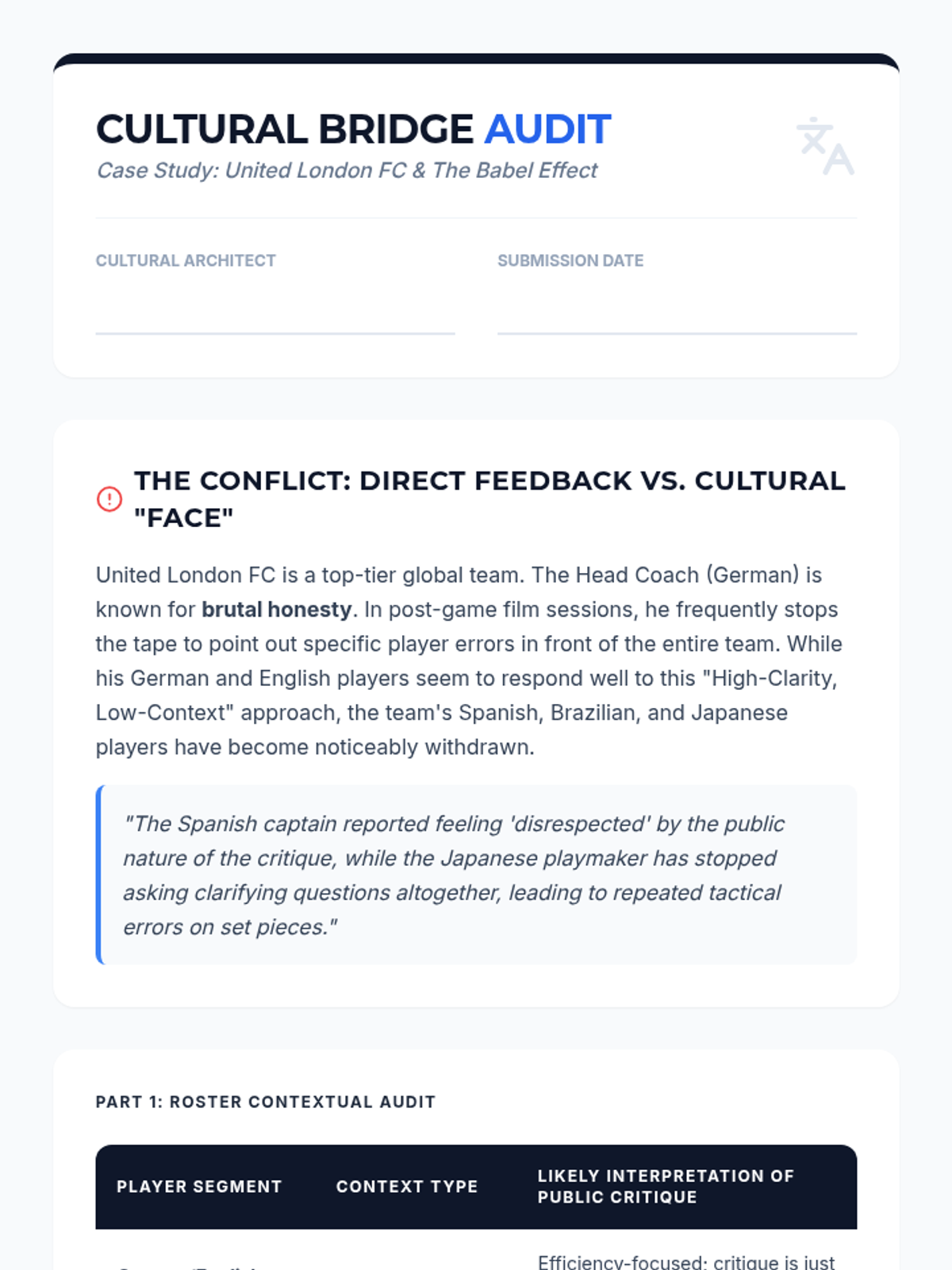
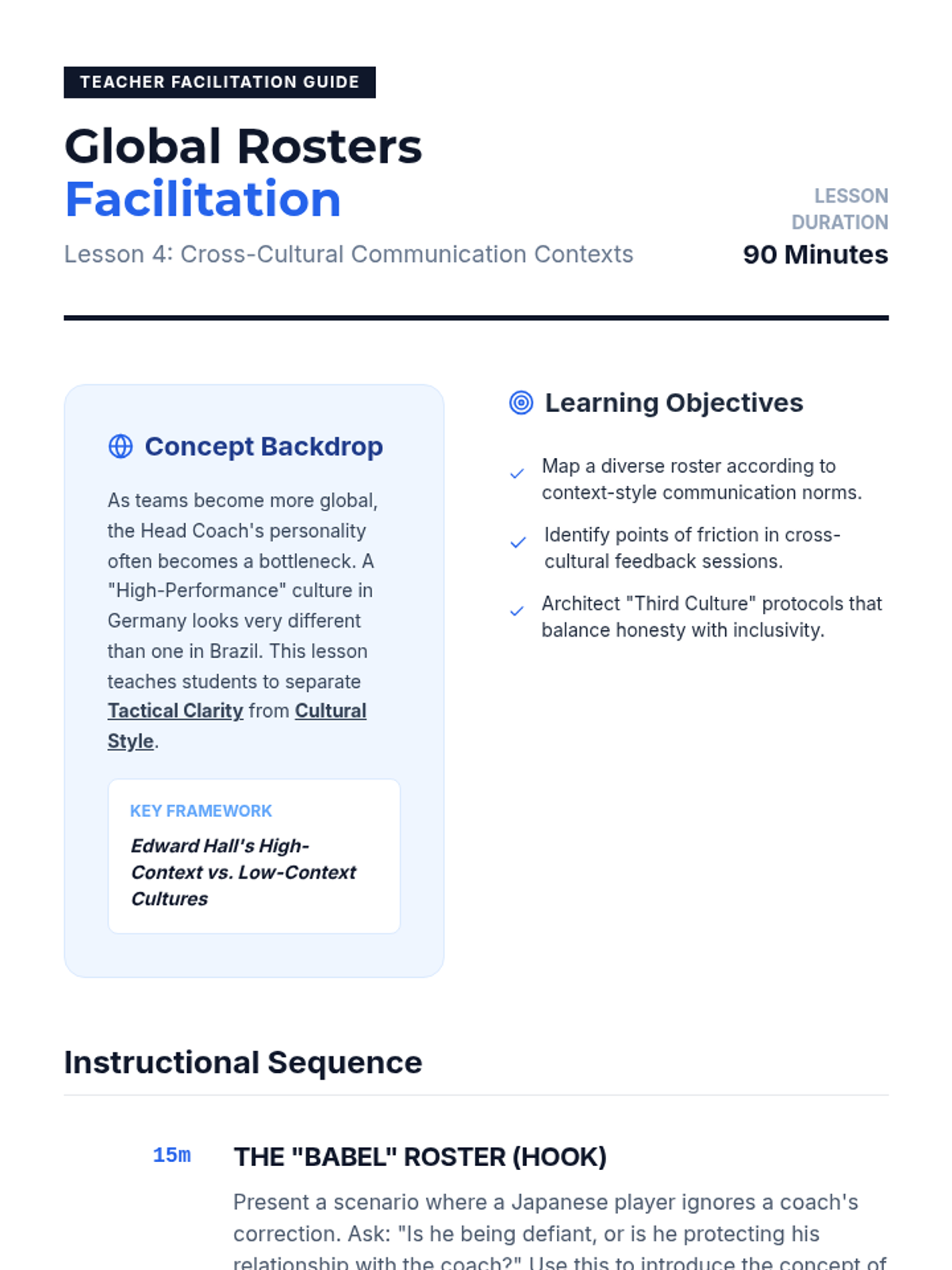
Students will investigate cross-cultural communication barriers and develop strategies for leading diverse, global athletic rosters.
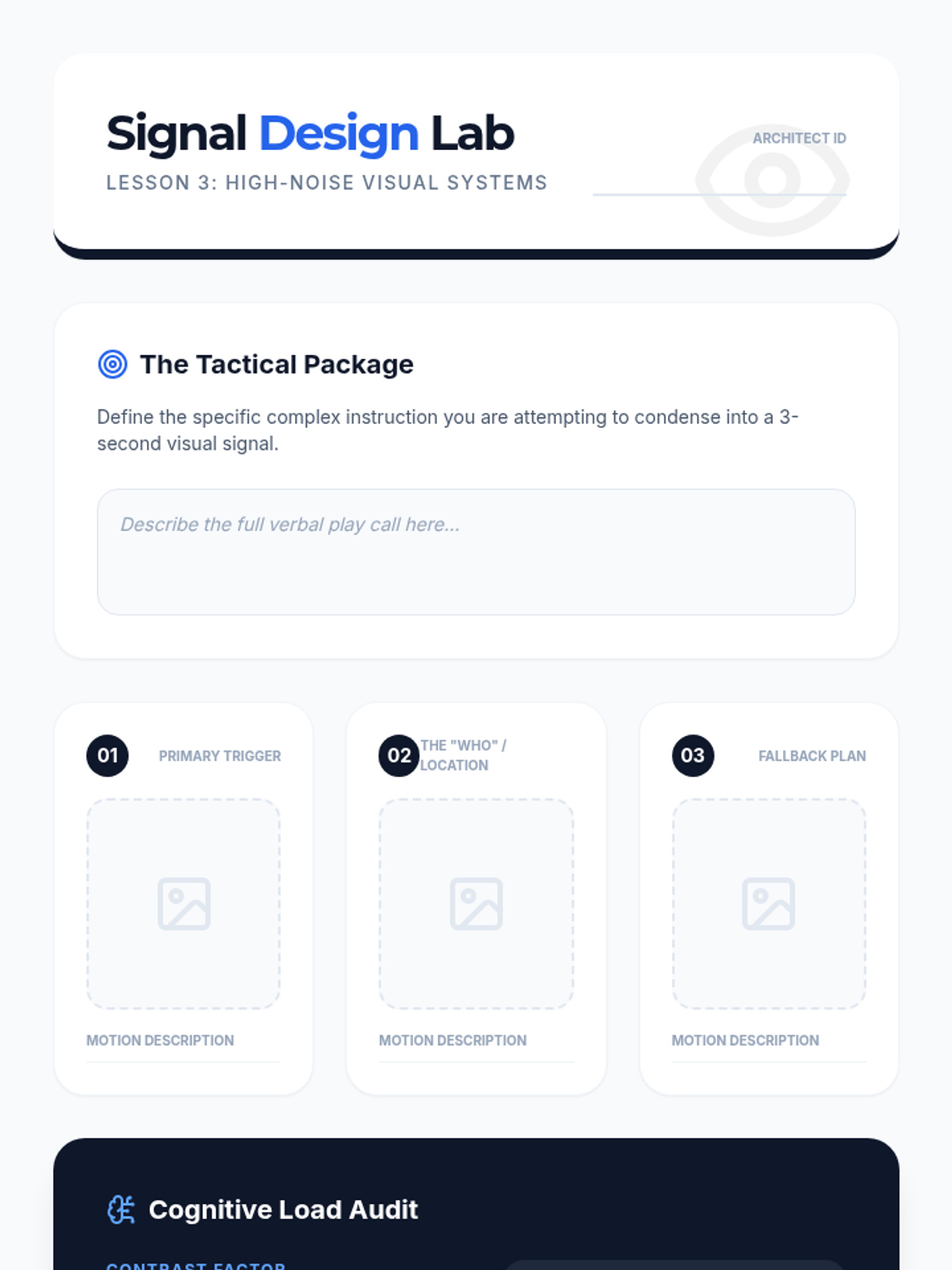
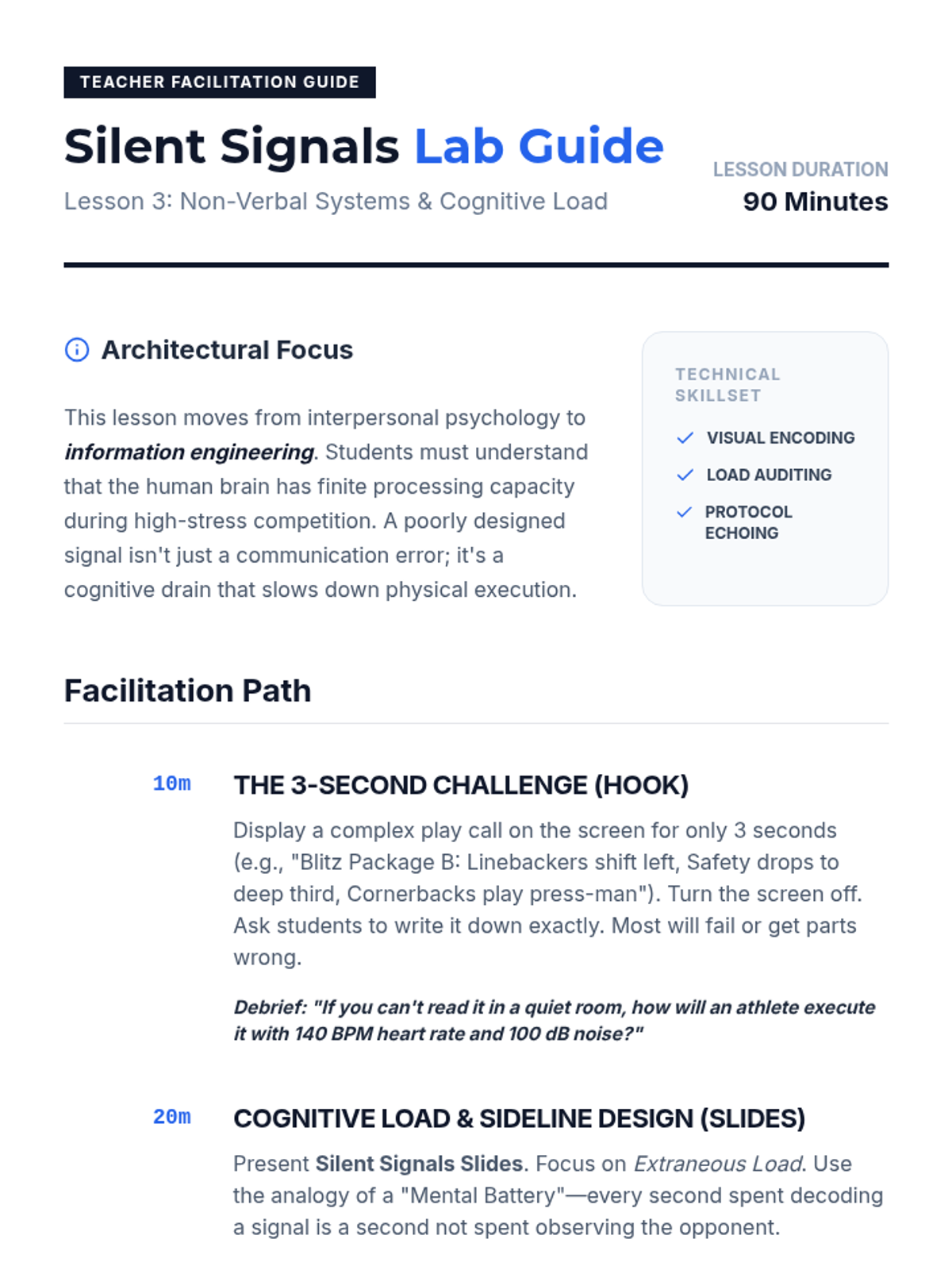
An exploration of non-verbal signaling and sideline communication strategies designed to minimize cognitive load during high-pressure competition.
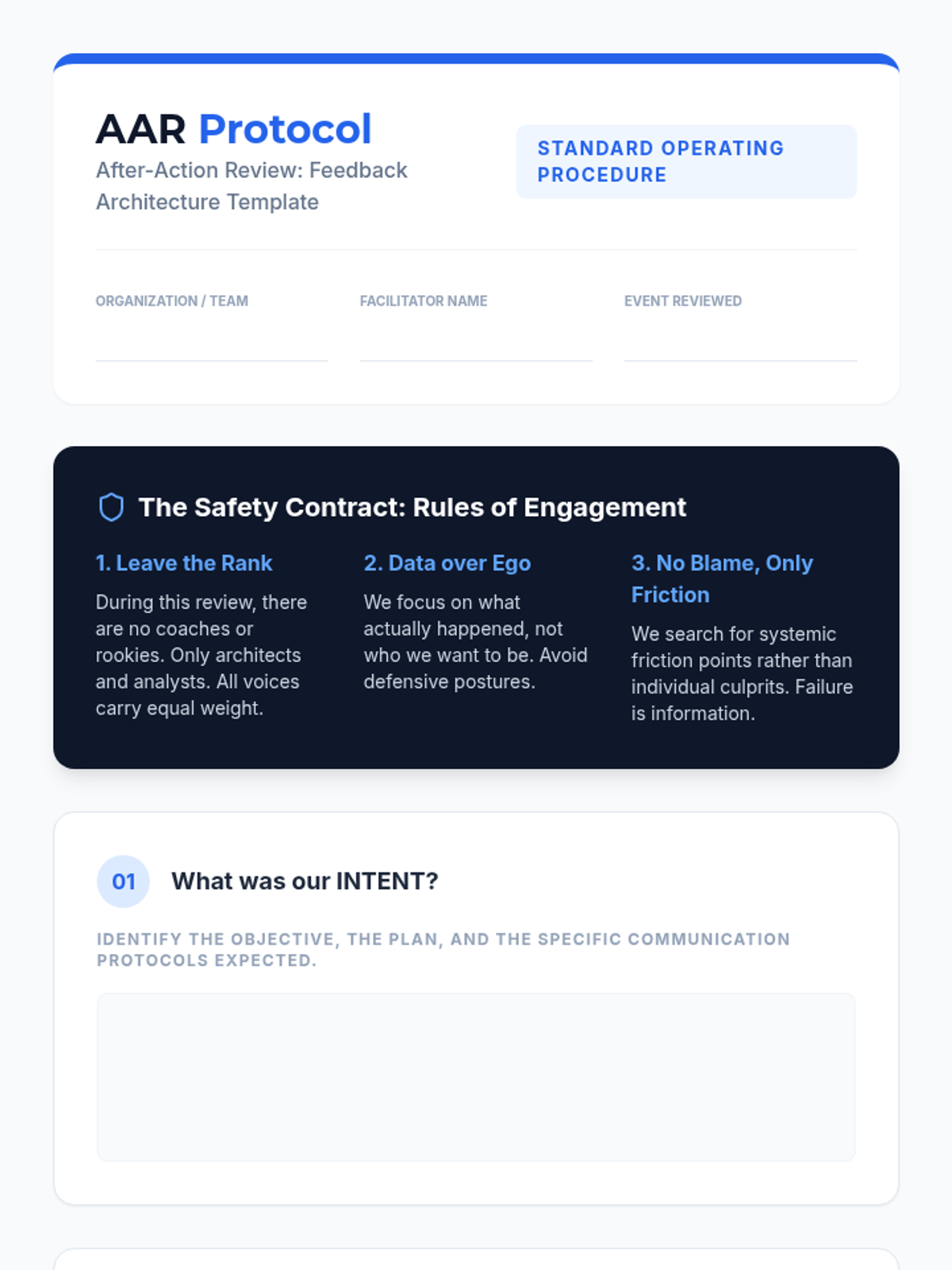
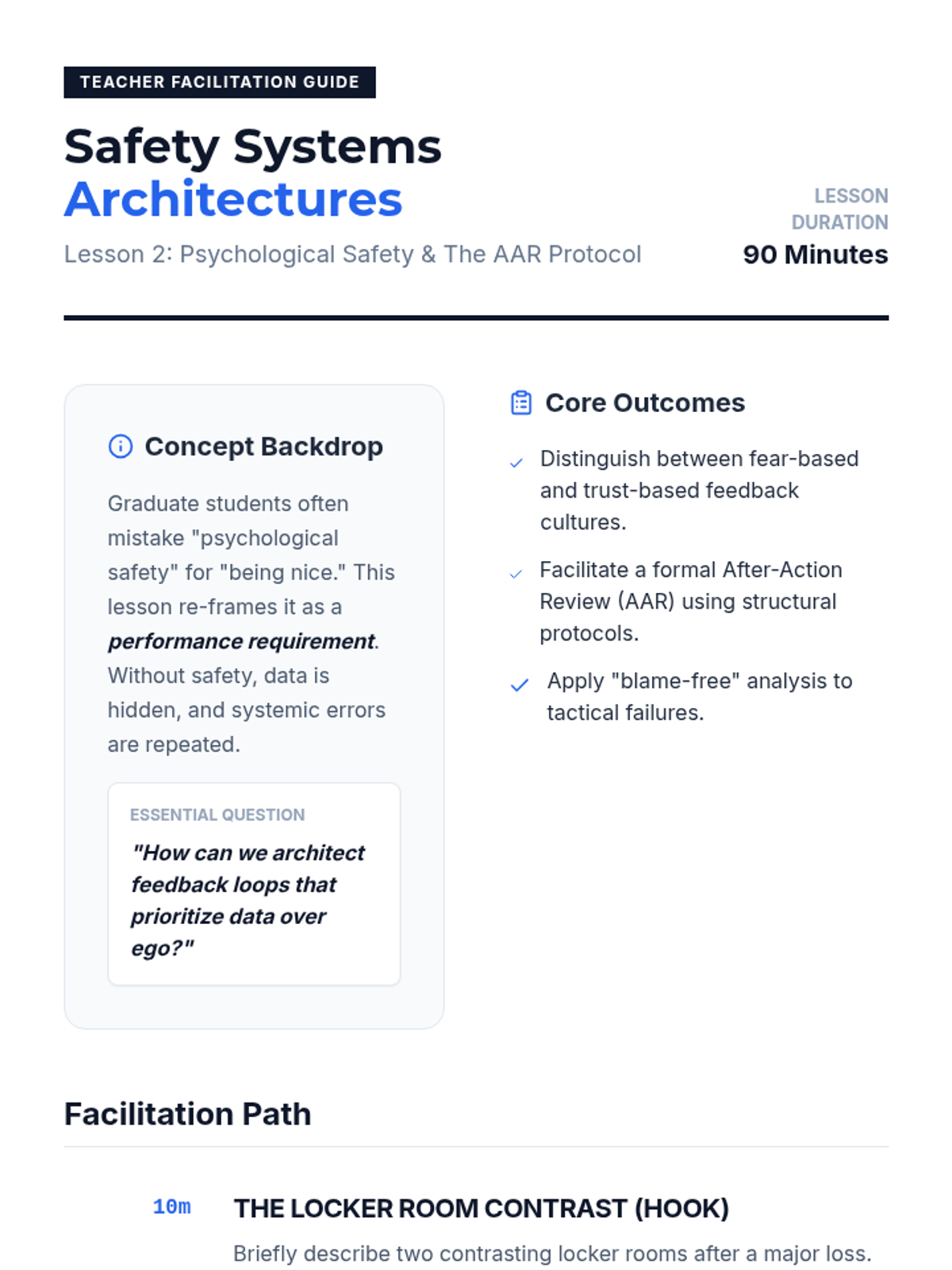
This lesson focuses on the intersection of psychology and management, teaching students to build feedback loops that foster psychological safety and high performance.
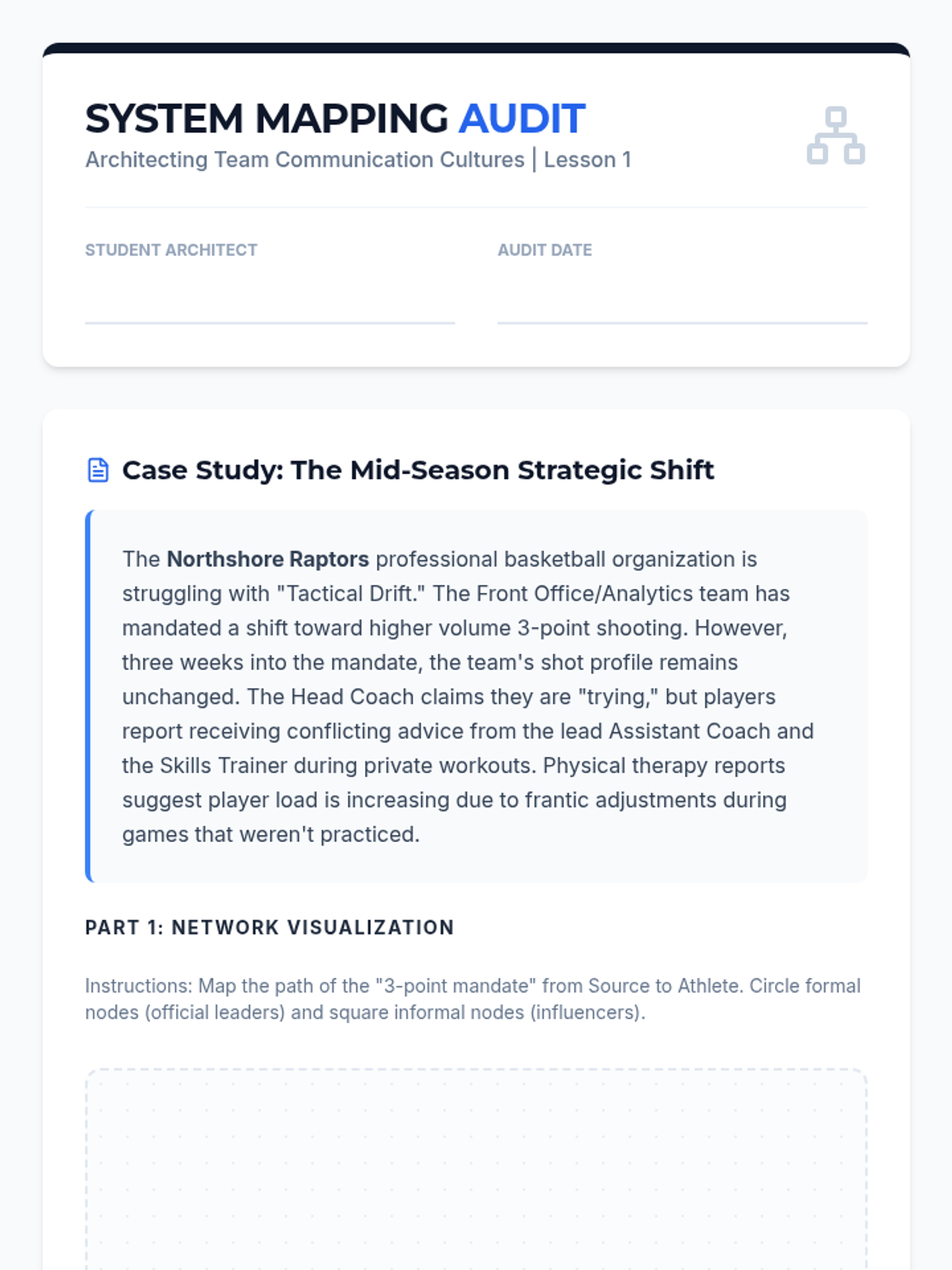
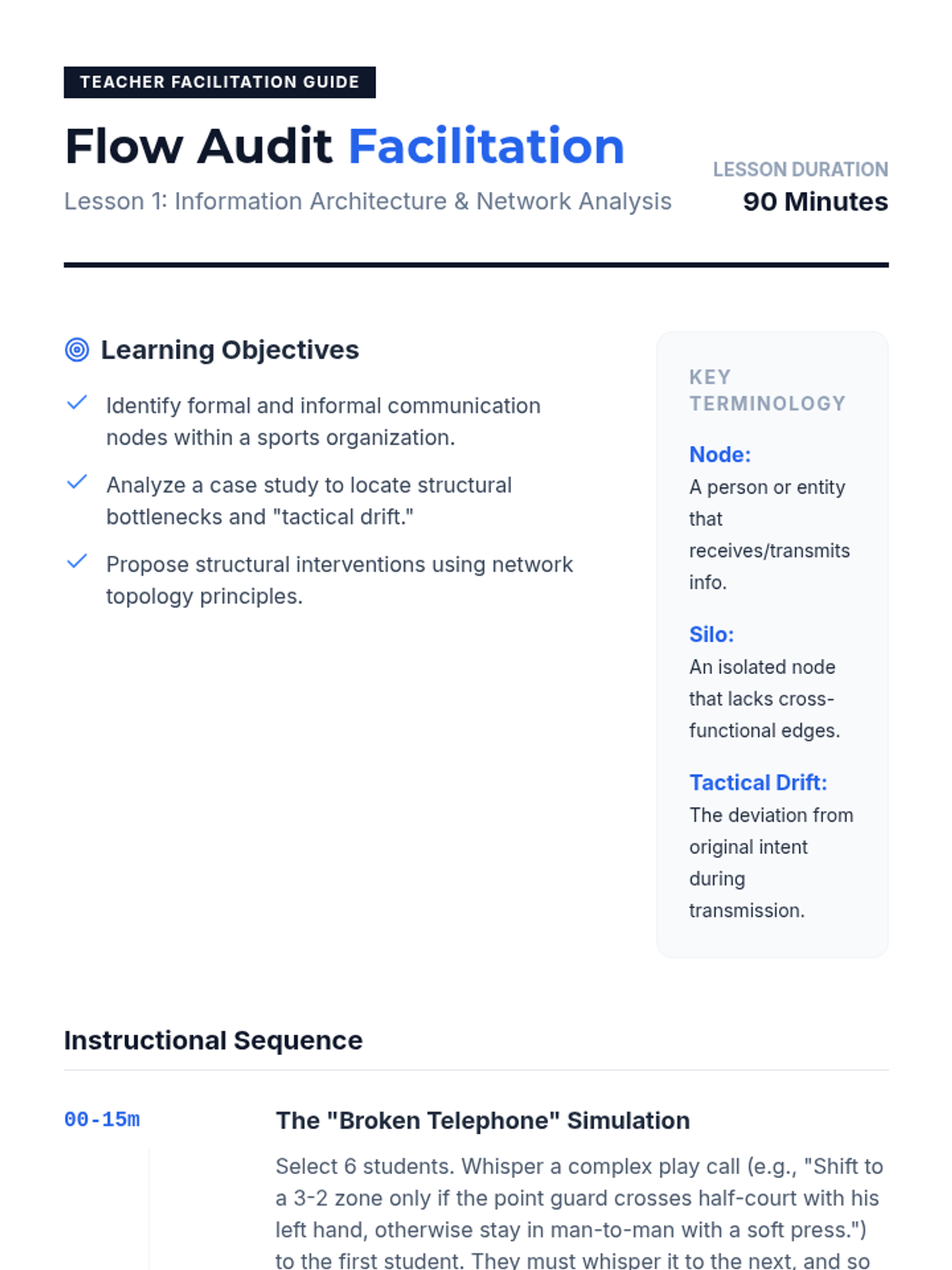
Students will learn to map information flow and identify bottlenecks within athletic organizations using network analysis and systems mapping.
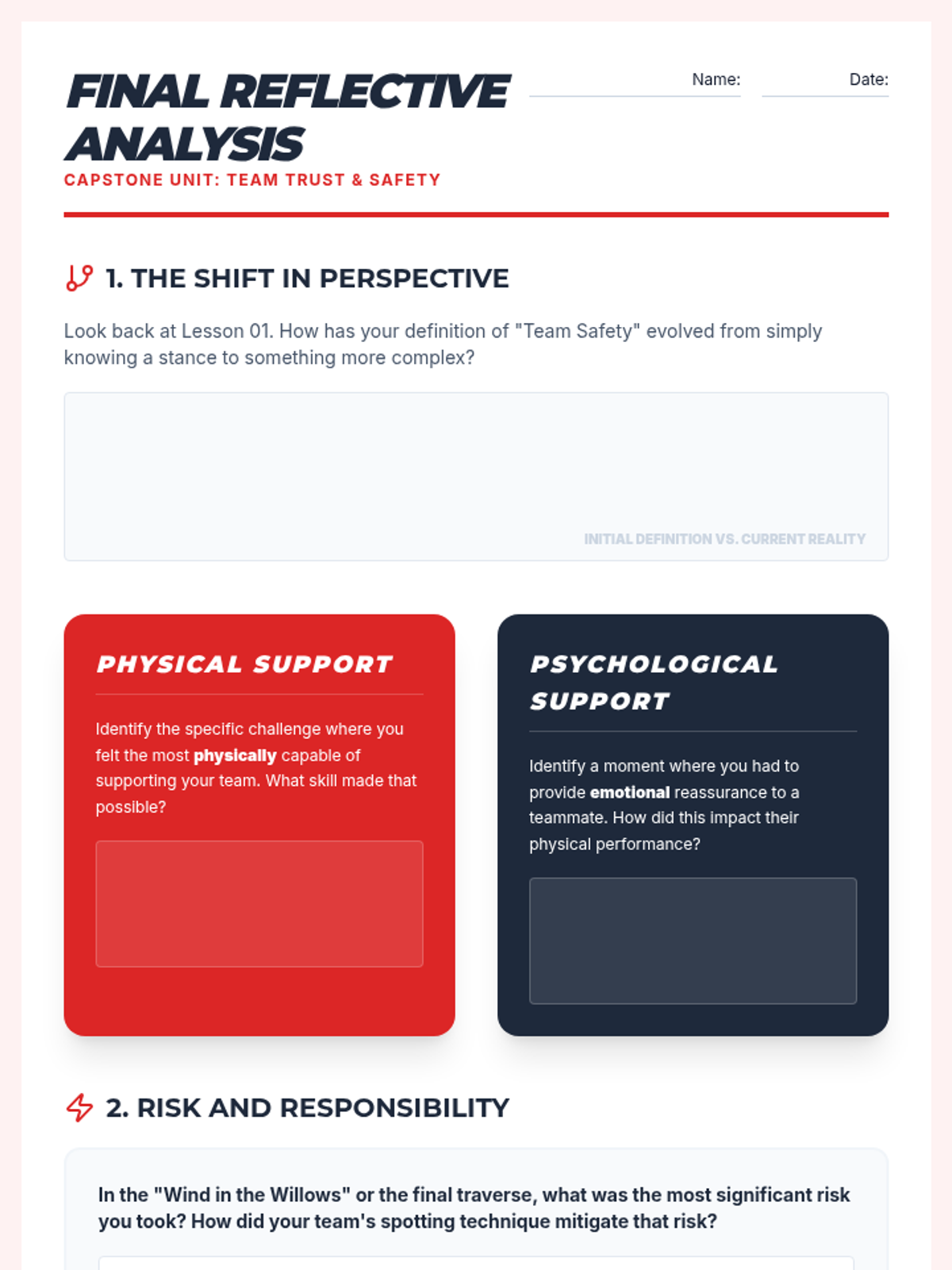
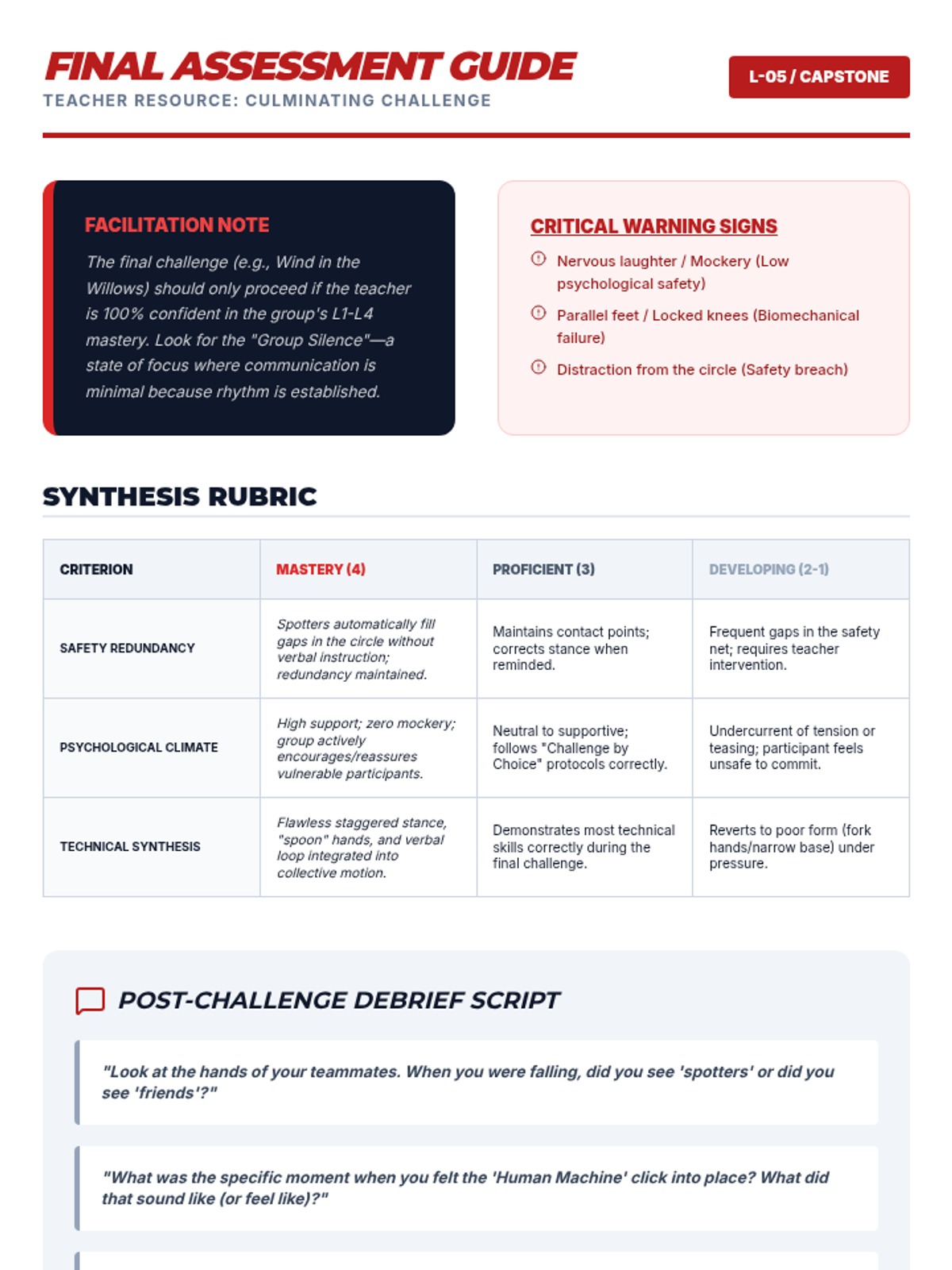
Students undertake a significant trust activity, such as a 'Wind in the Willows' circle or a waist-high wall traverse with spotting. The lesson synthesizes spotting skills, verbal communication, and emotional support into a final demonstration of group cohesion.
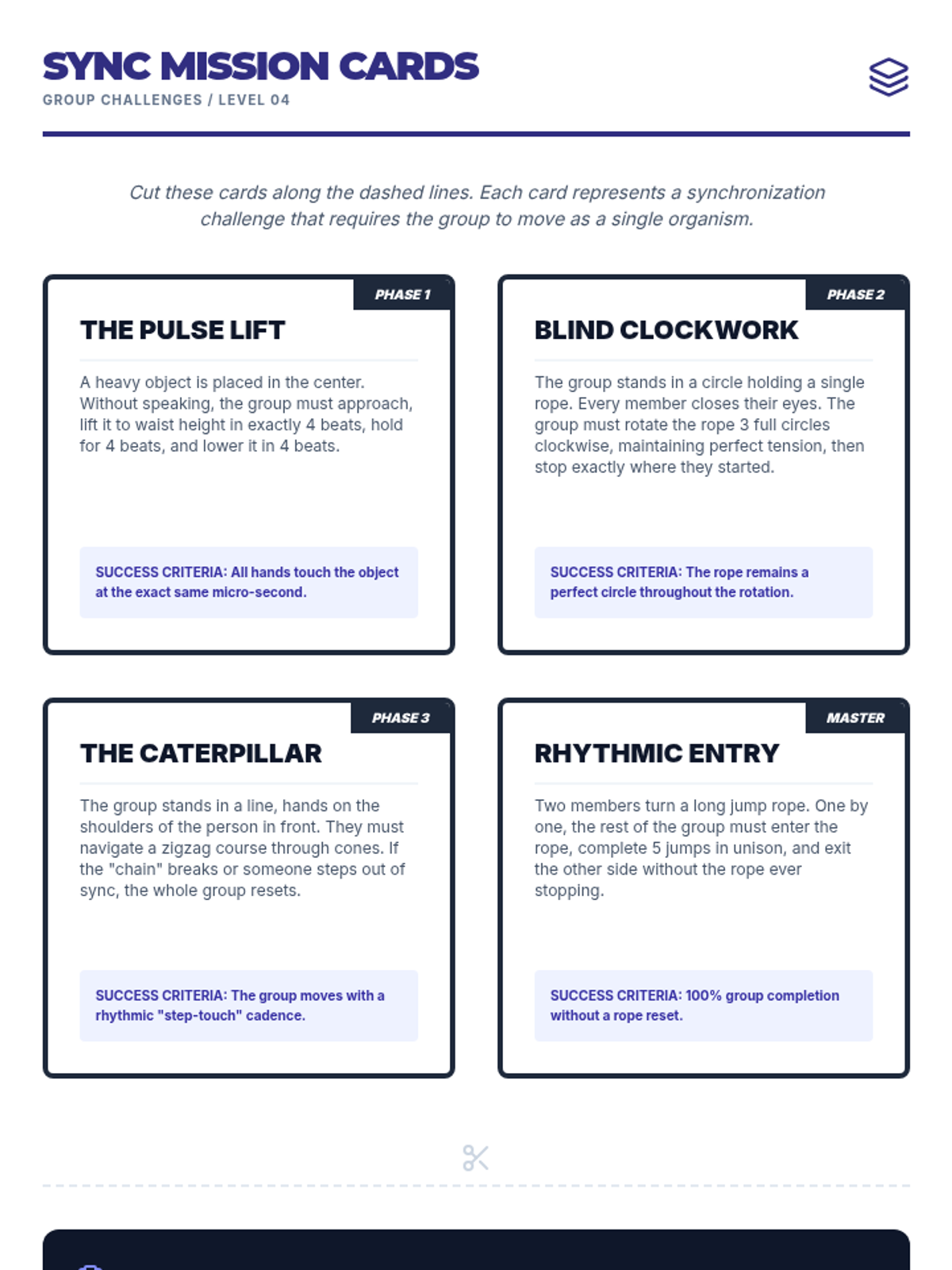
The class engages in activities requiring moving heavy objects or large mats as a single unit. Focus is placed on reading group rhythm and anticipating the movements of others to prevent injury or failure.
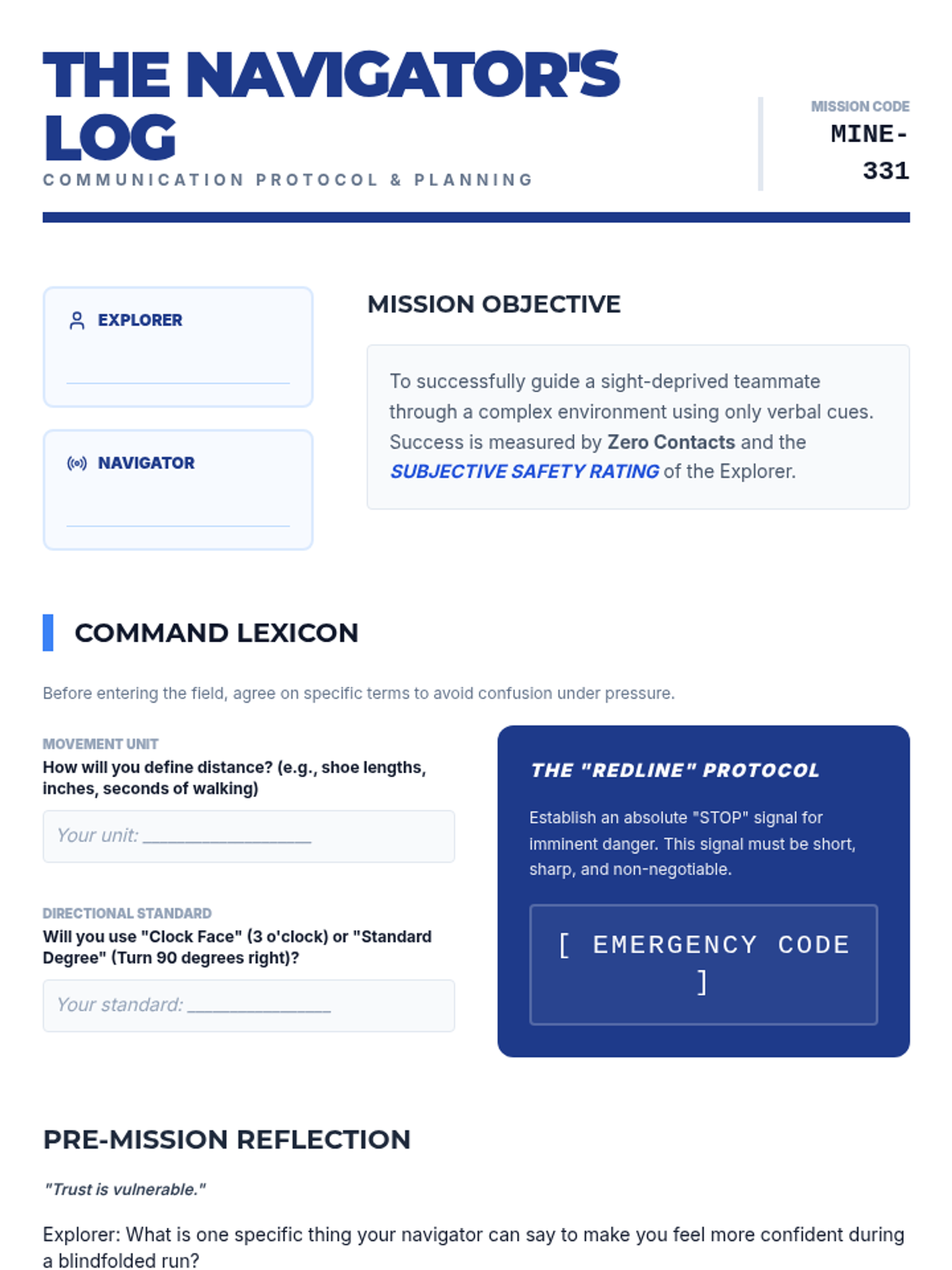
One partner is blindfolded while the other guides them through a 'minefield' of soft obstacles using only verbal commands. The lesson highlights the necessity of precise language and the vulnerability required to trust a guide completely.
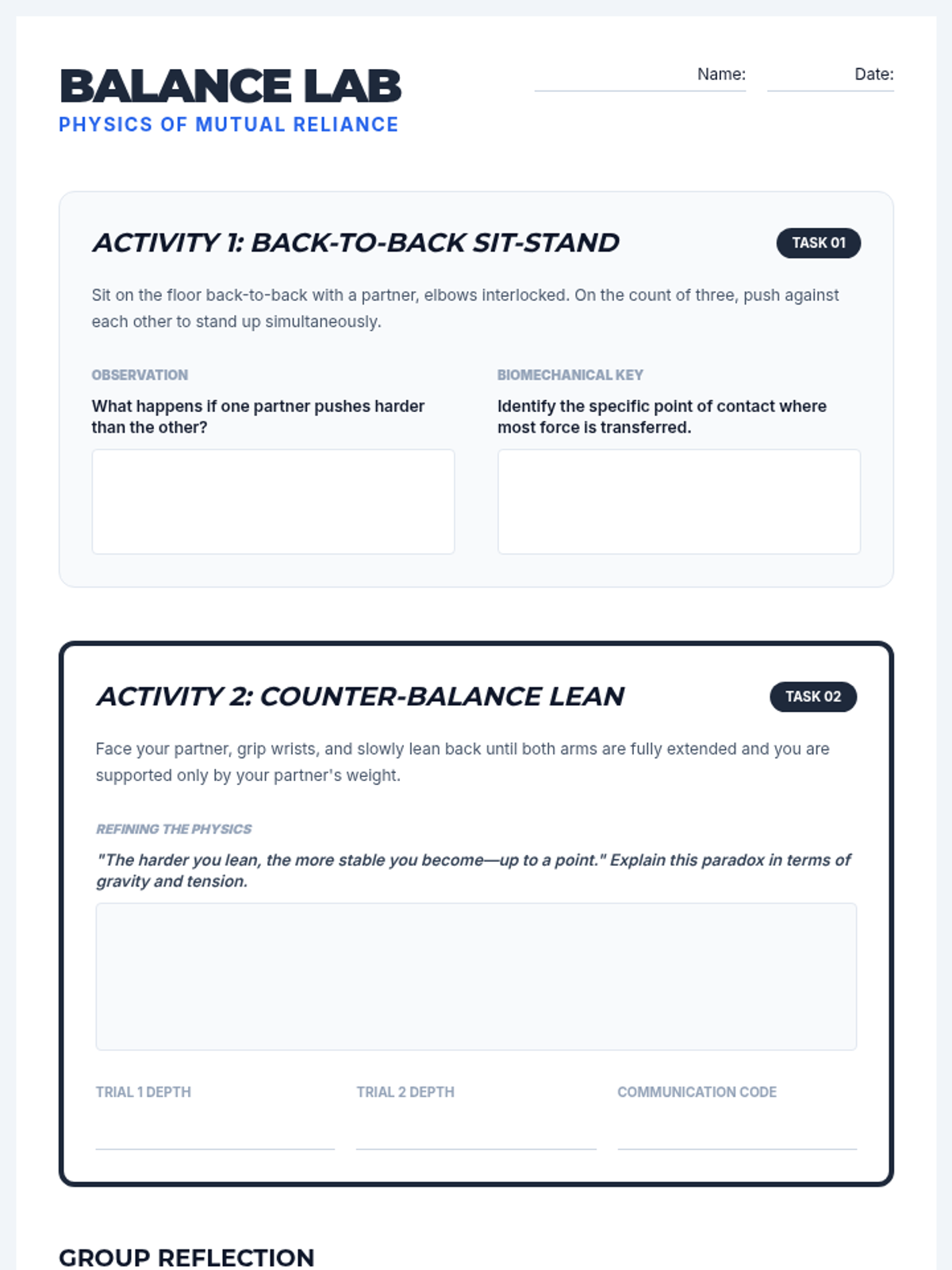
Partners and small groups engage in activities requiring them to lean against one another to maintain balance. This lesson explores the physics of mutual reliance, where the failure of one person to commit causes the group to fall.
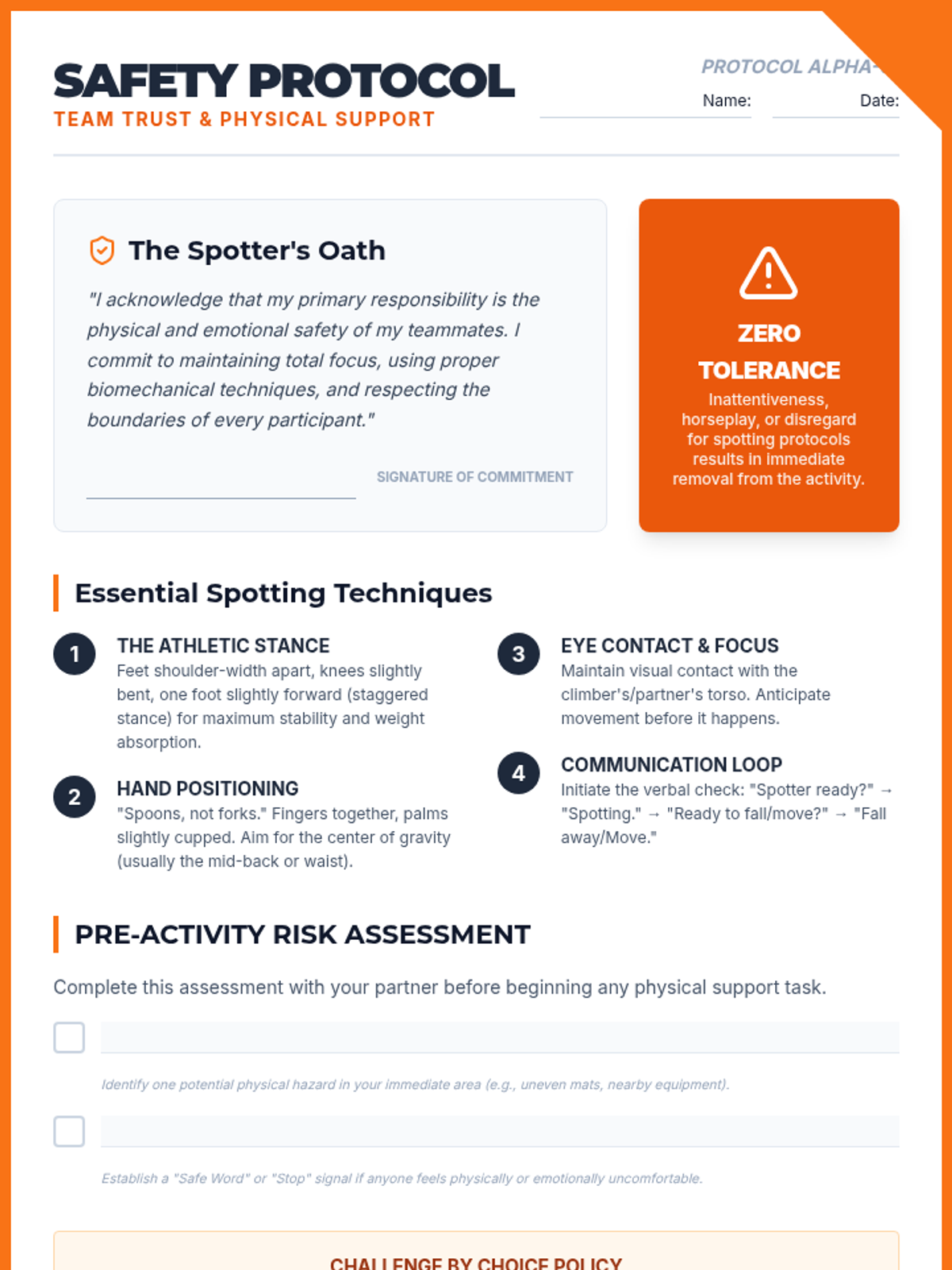
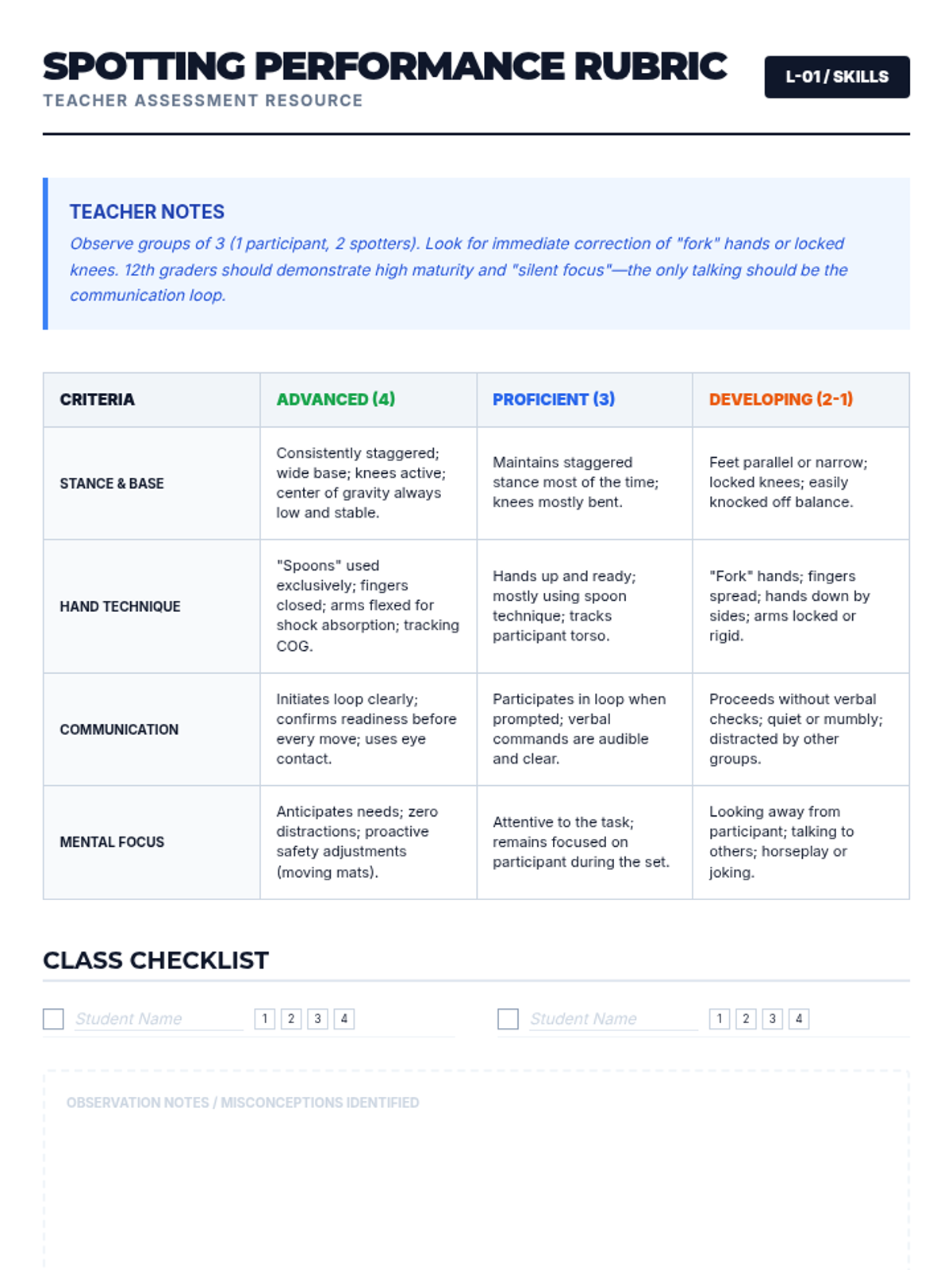
Students learn the biomechanics of safe spotting and weight support, practicing proper stance and hand placement. The lesson establishes the 'challenge by choice' protocol, ensuring all participants understand the safety contract required for cooperative physical work.
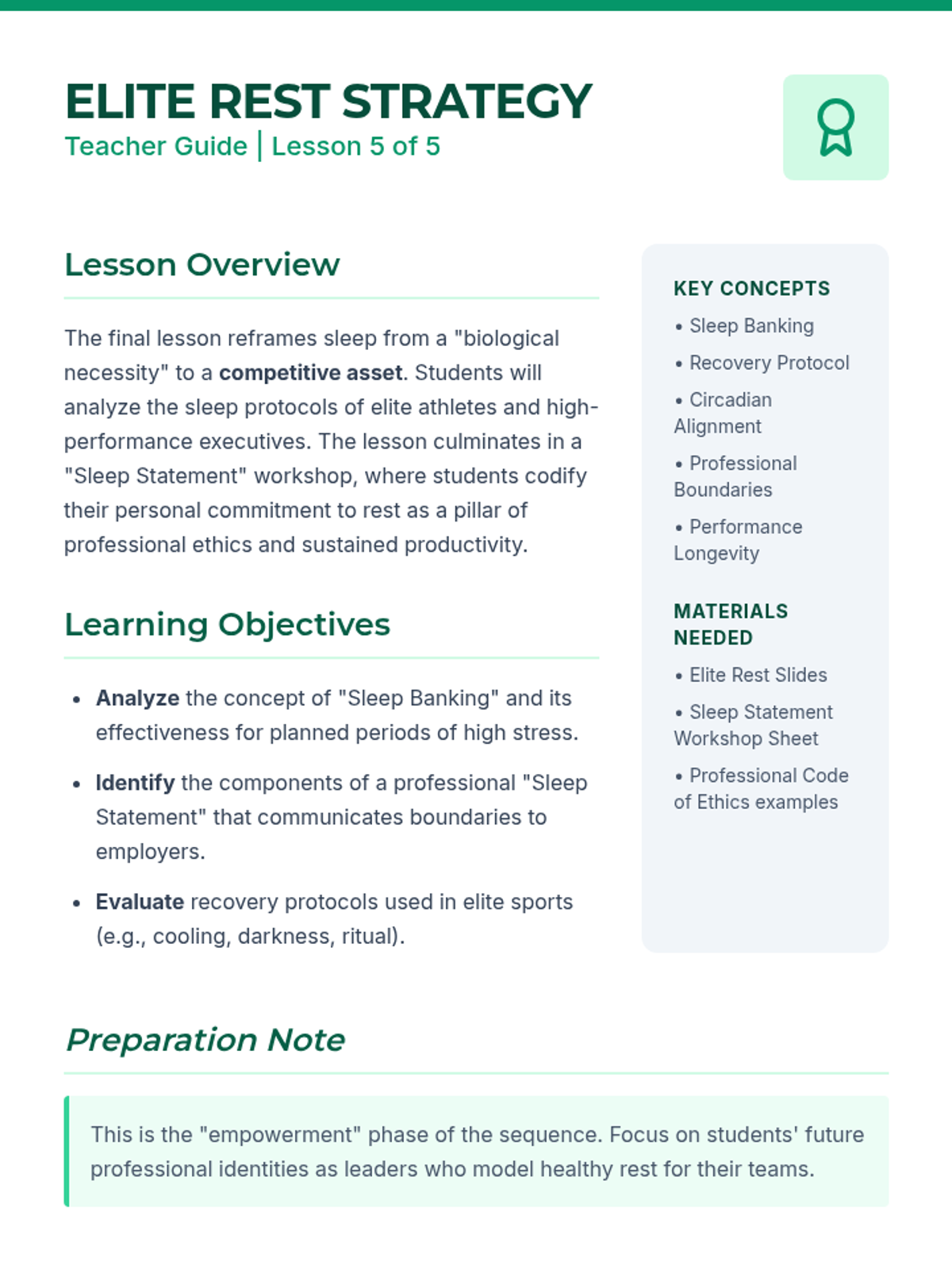
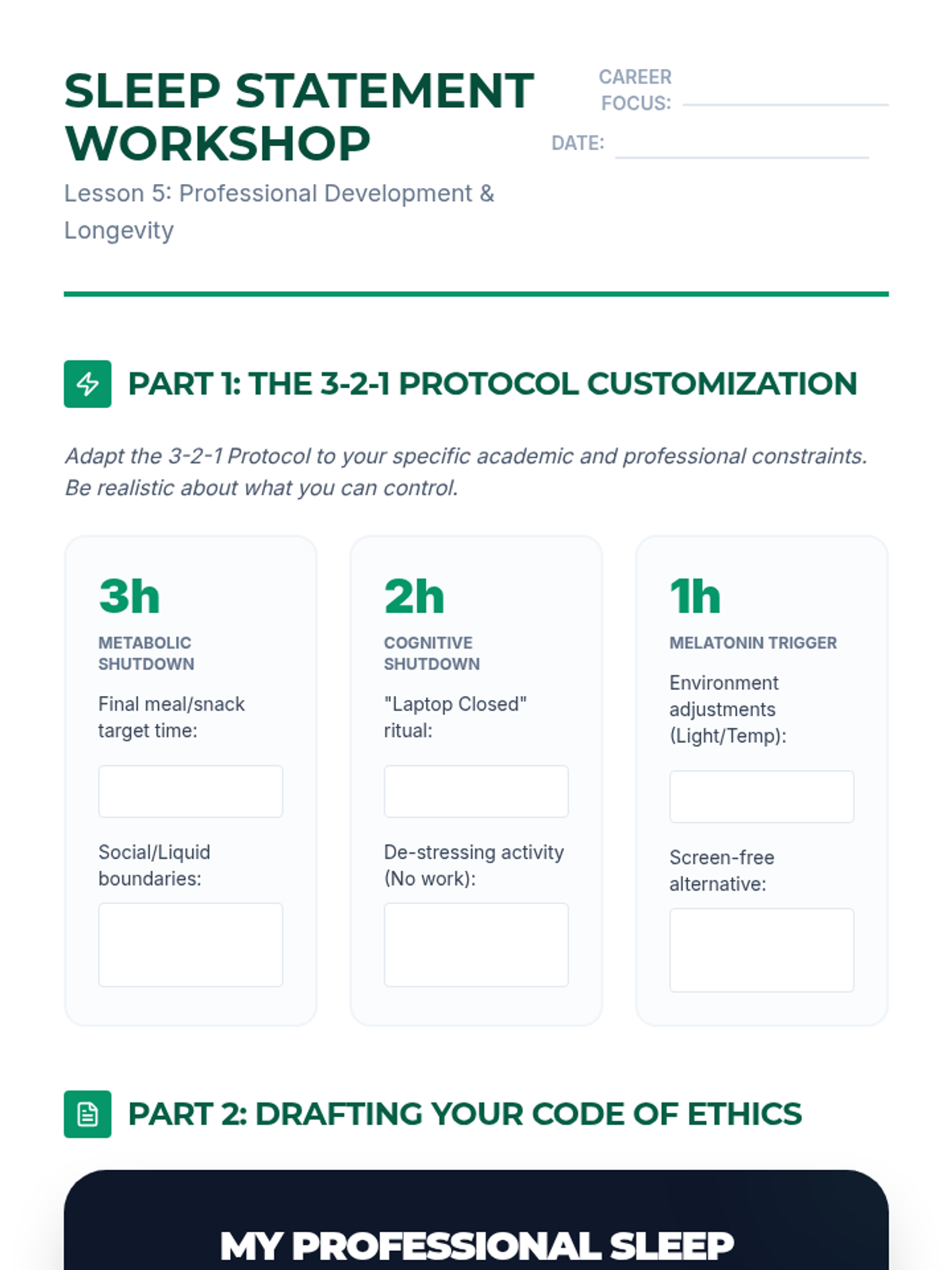
Reframe sleep as a high-performance tool used by elite athletes and executives. Students develop personalized sleep strategies and draft a professional 'Sleep Statement' for their future careers.
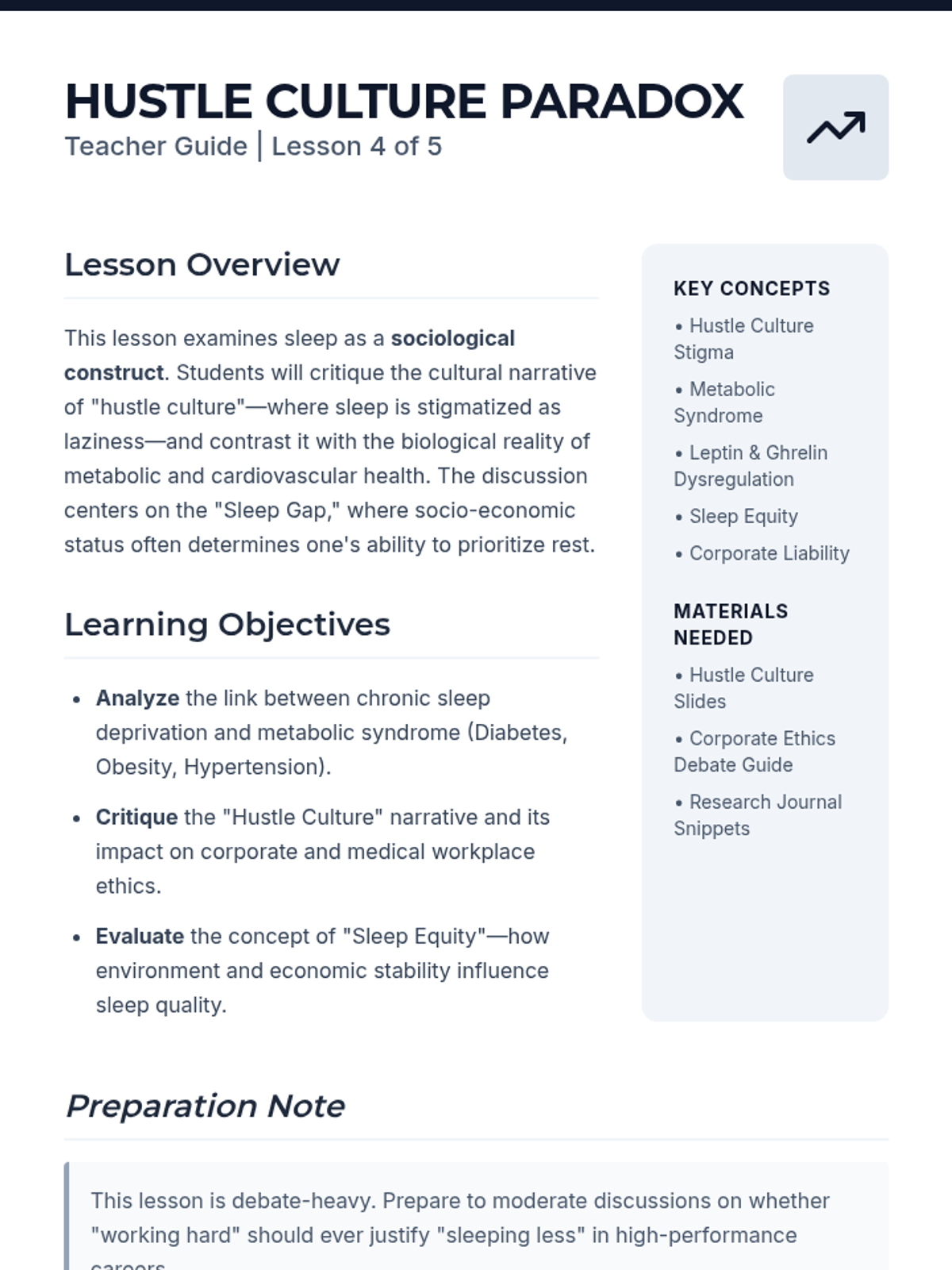
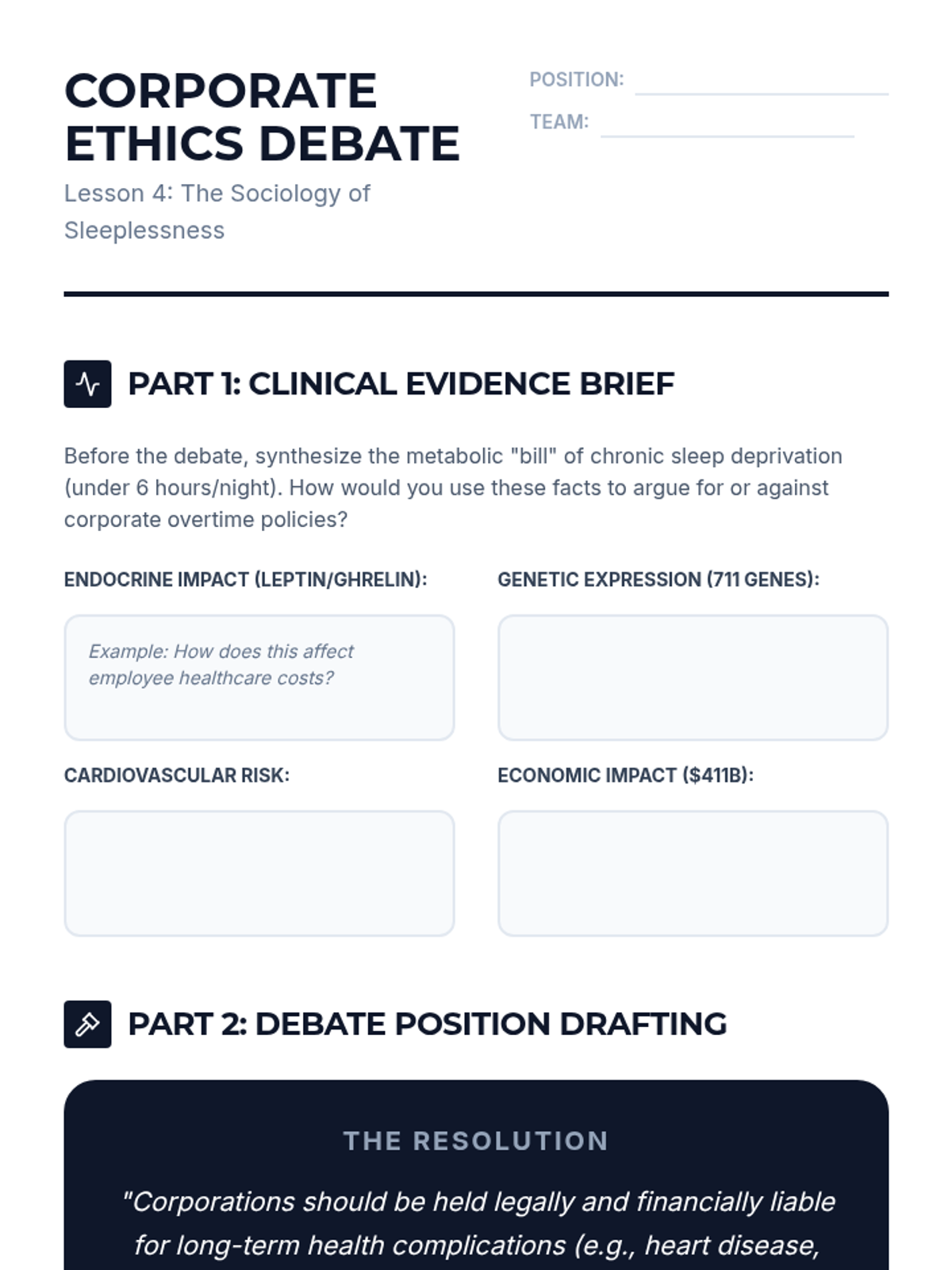
Critique the sociological stigmatization of sleep in high-pressure industries. Students debate the ethics of 'hustle culture' and analyze the long-term metabolic costs of chronic sleeplessness.
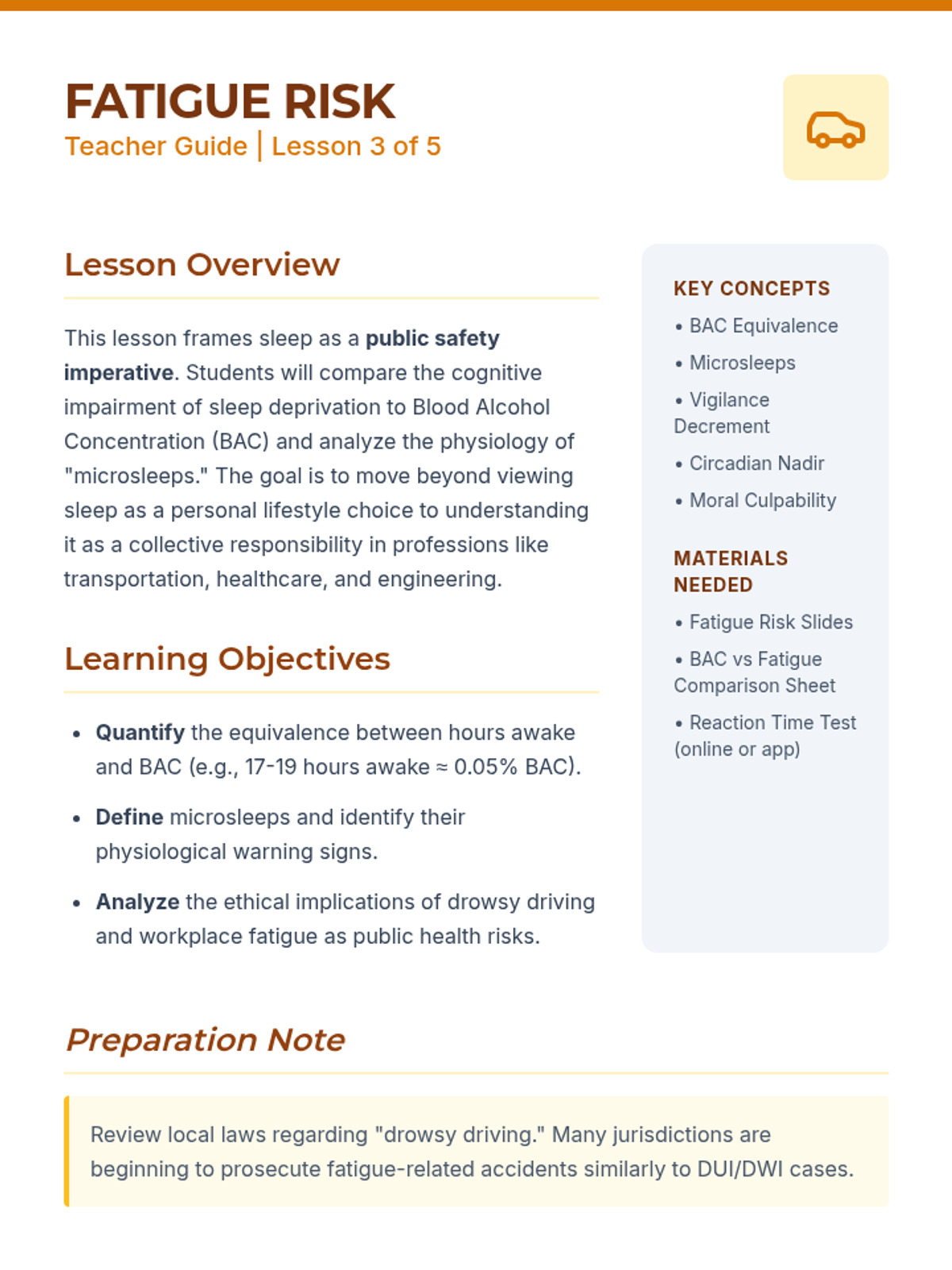
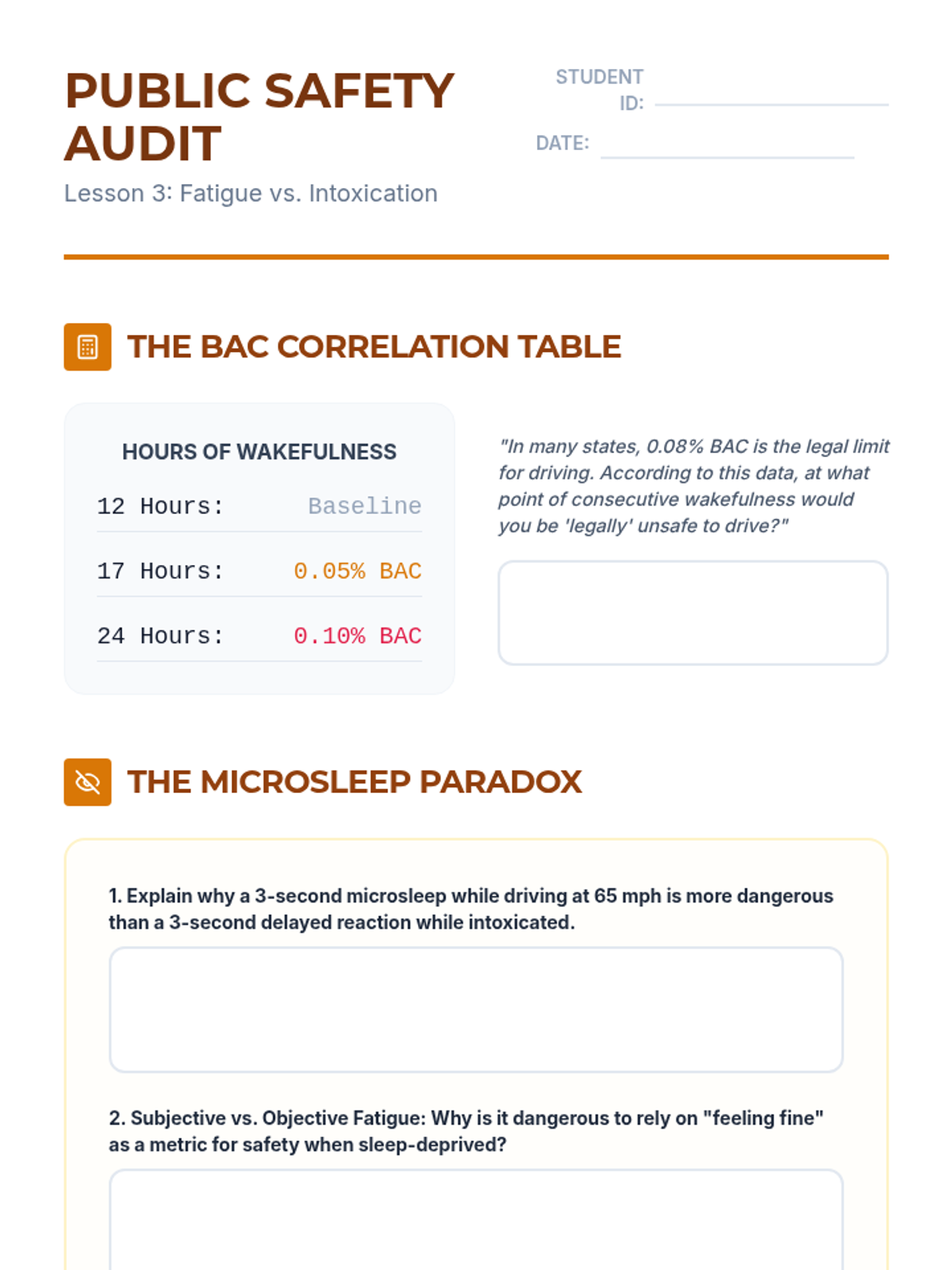
Analyze the public health risks of drowsy driving and workplace fatigue. Students compare the cognitive impairment of sleep loss to alcohol intoxication and explore the ethics of public safety.
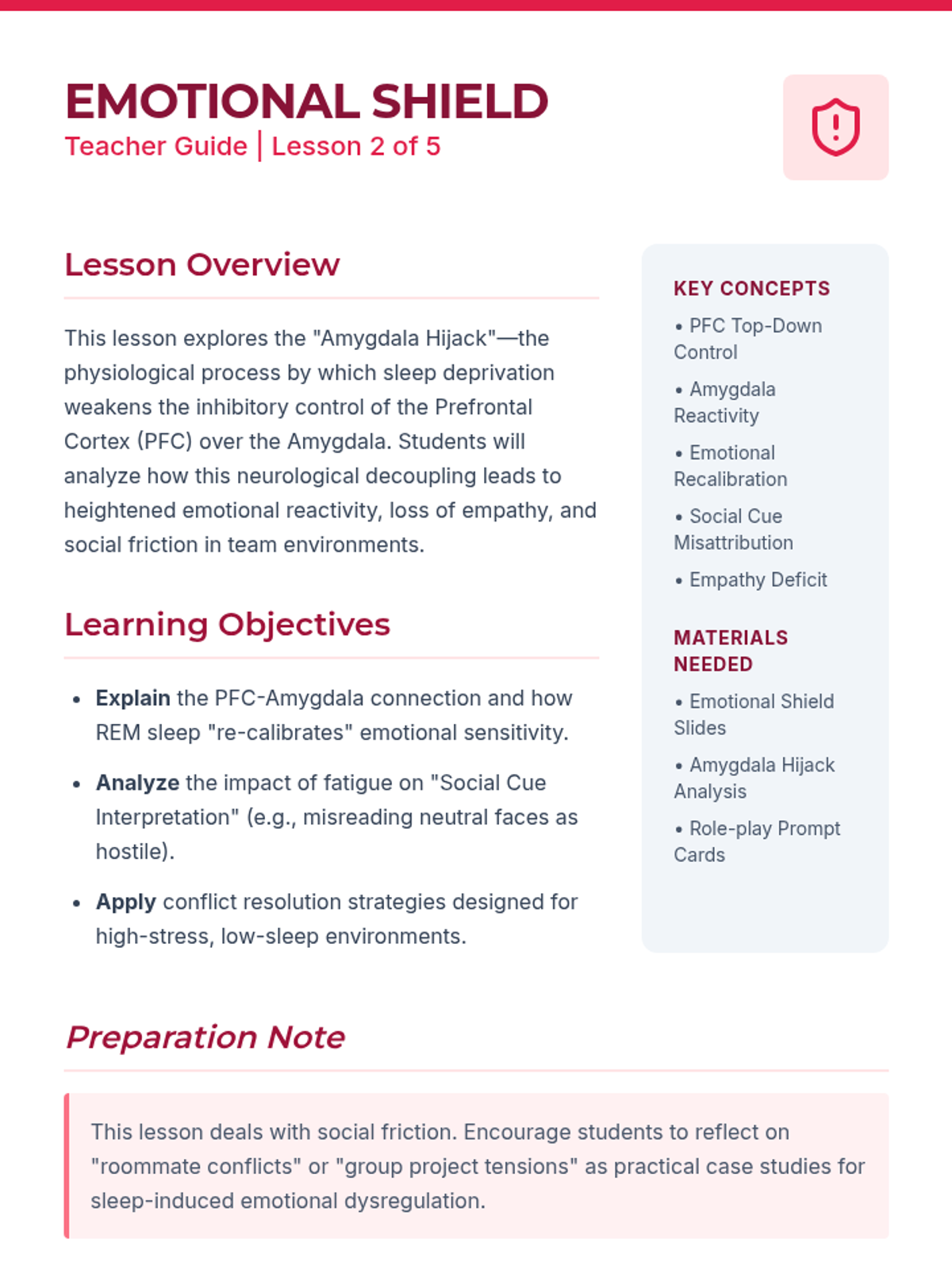
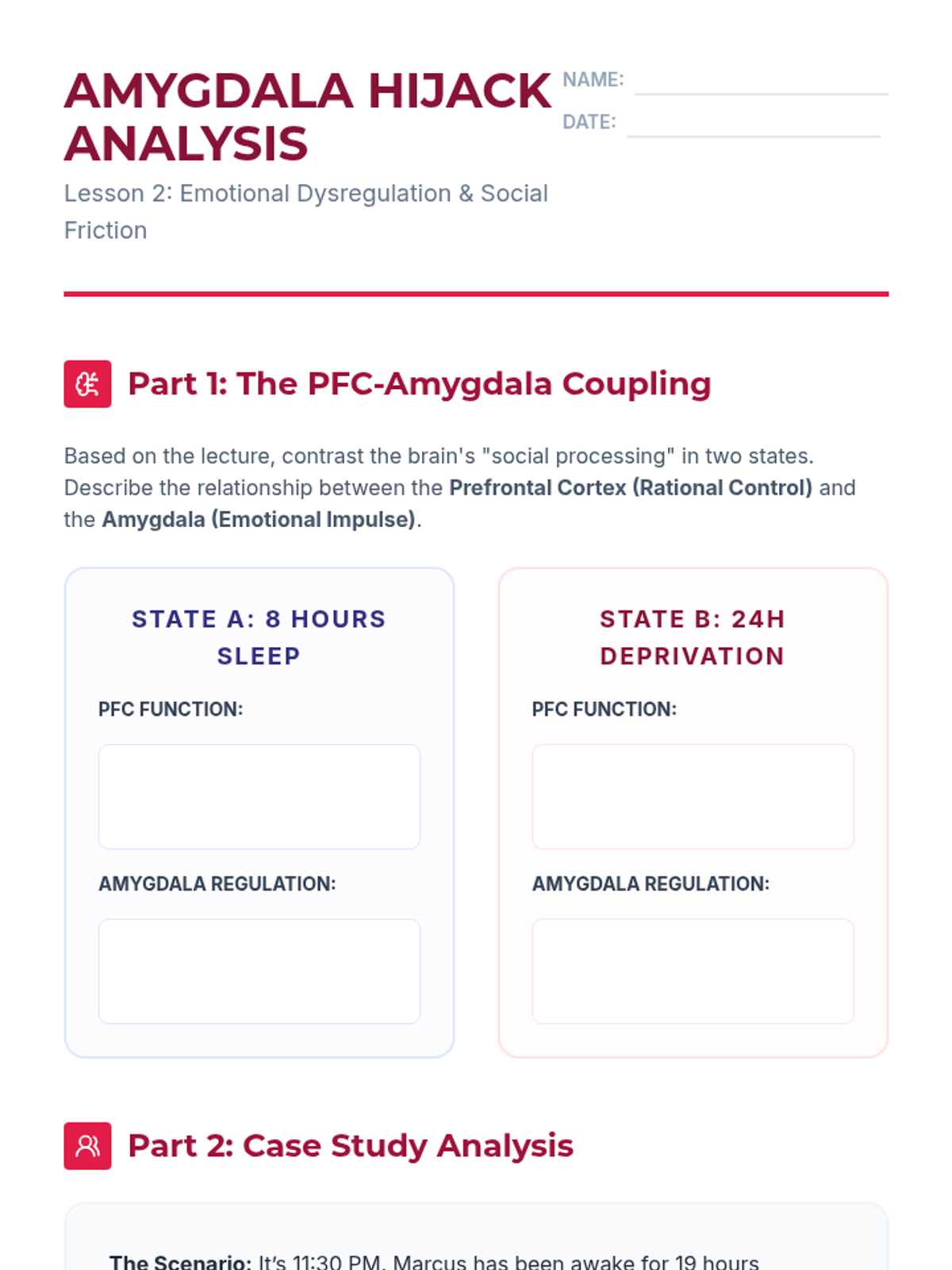
Examine the relationship between sleep deprivation, amygdala reactivity, and prefrontal cortex regulation. Students analyze how fatigue impairs social functioning and professional collaboration.
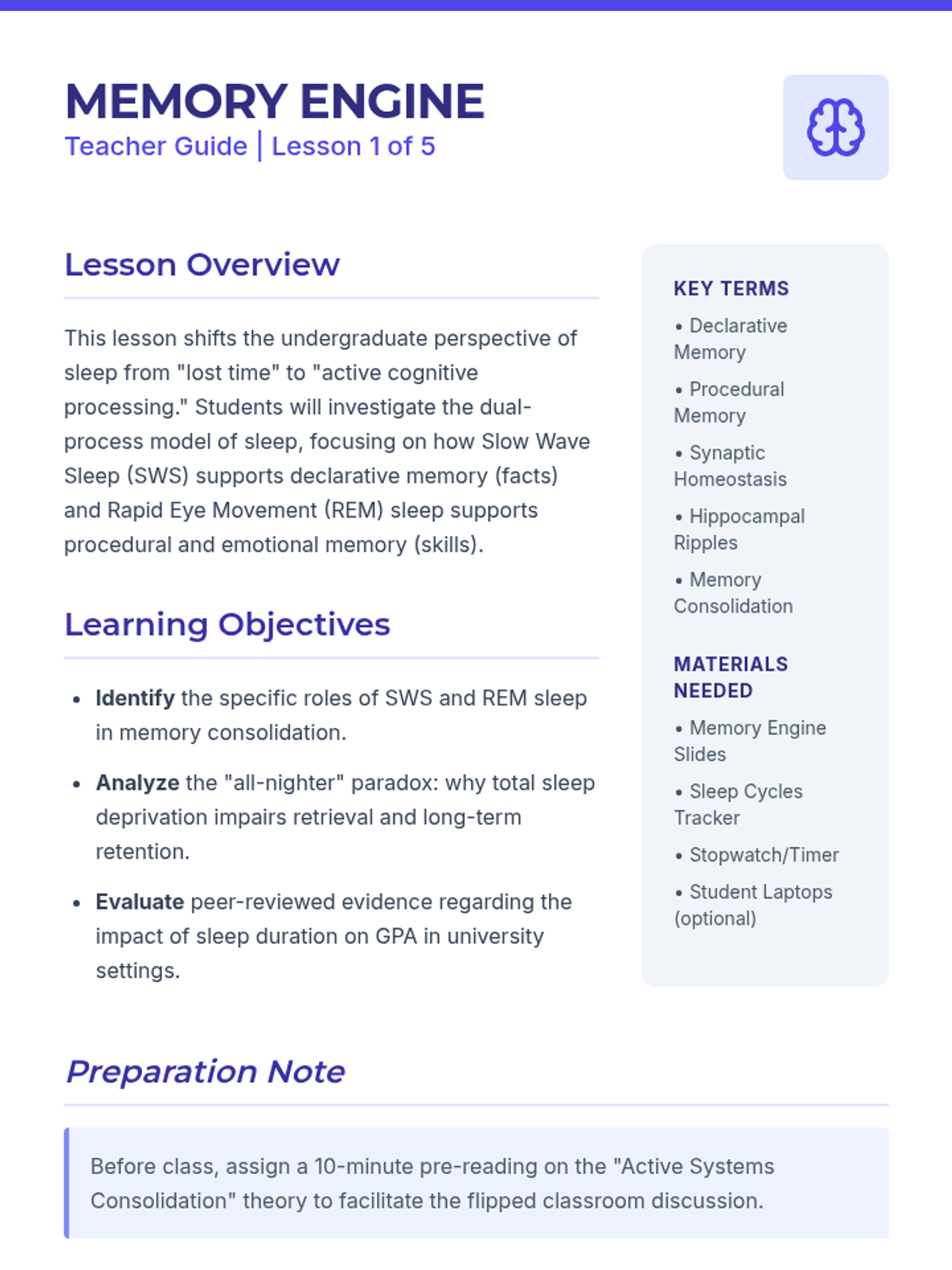
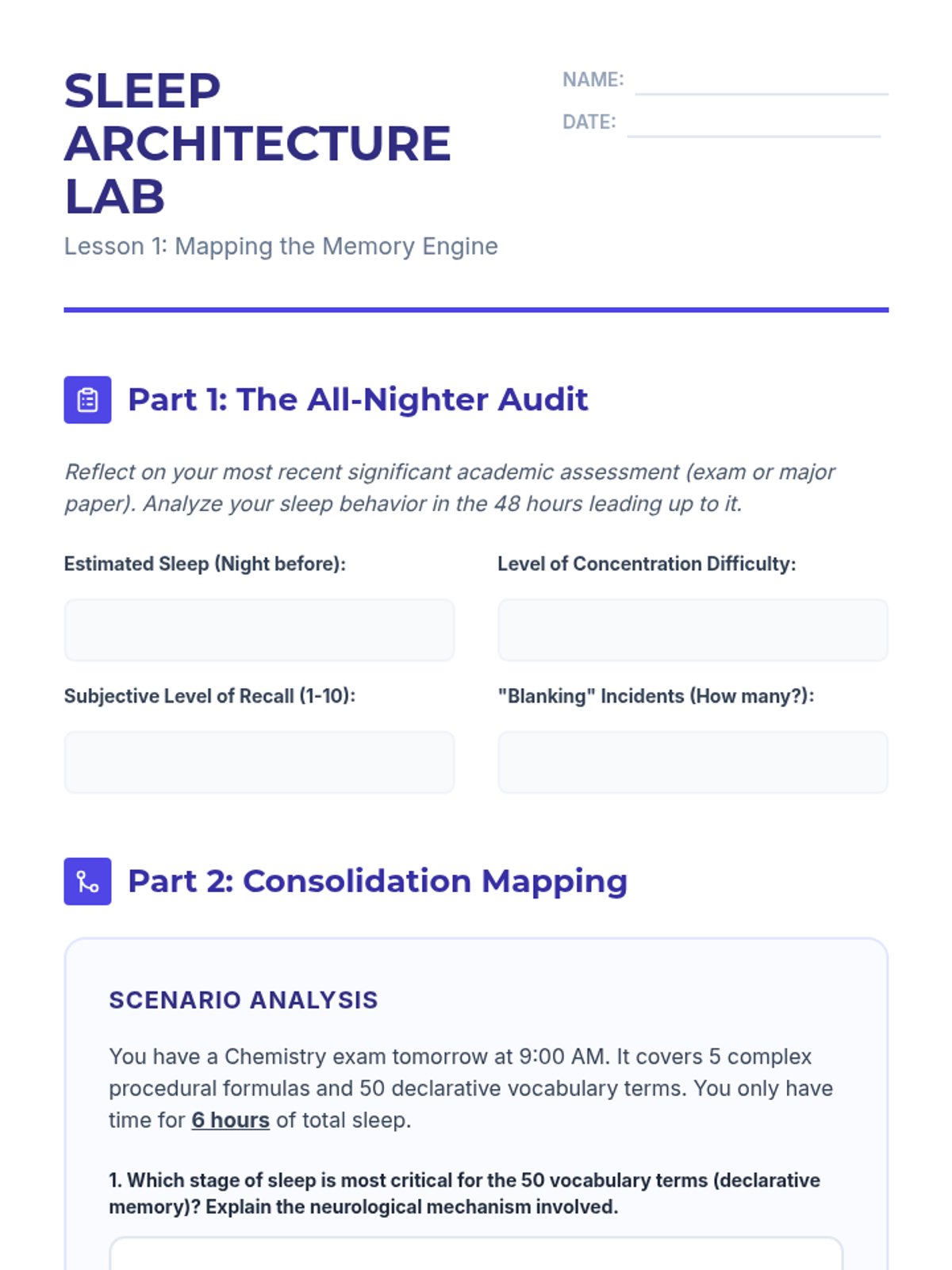
Investigate the neurological roles of REM and Slow Wave Sleep in memory consolidation. Students compare academic outcomes of 'all-nighters' versus restorative sleep through the lens of cognitive science.
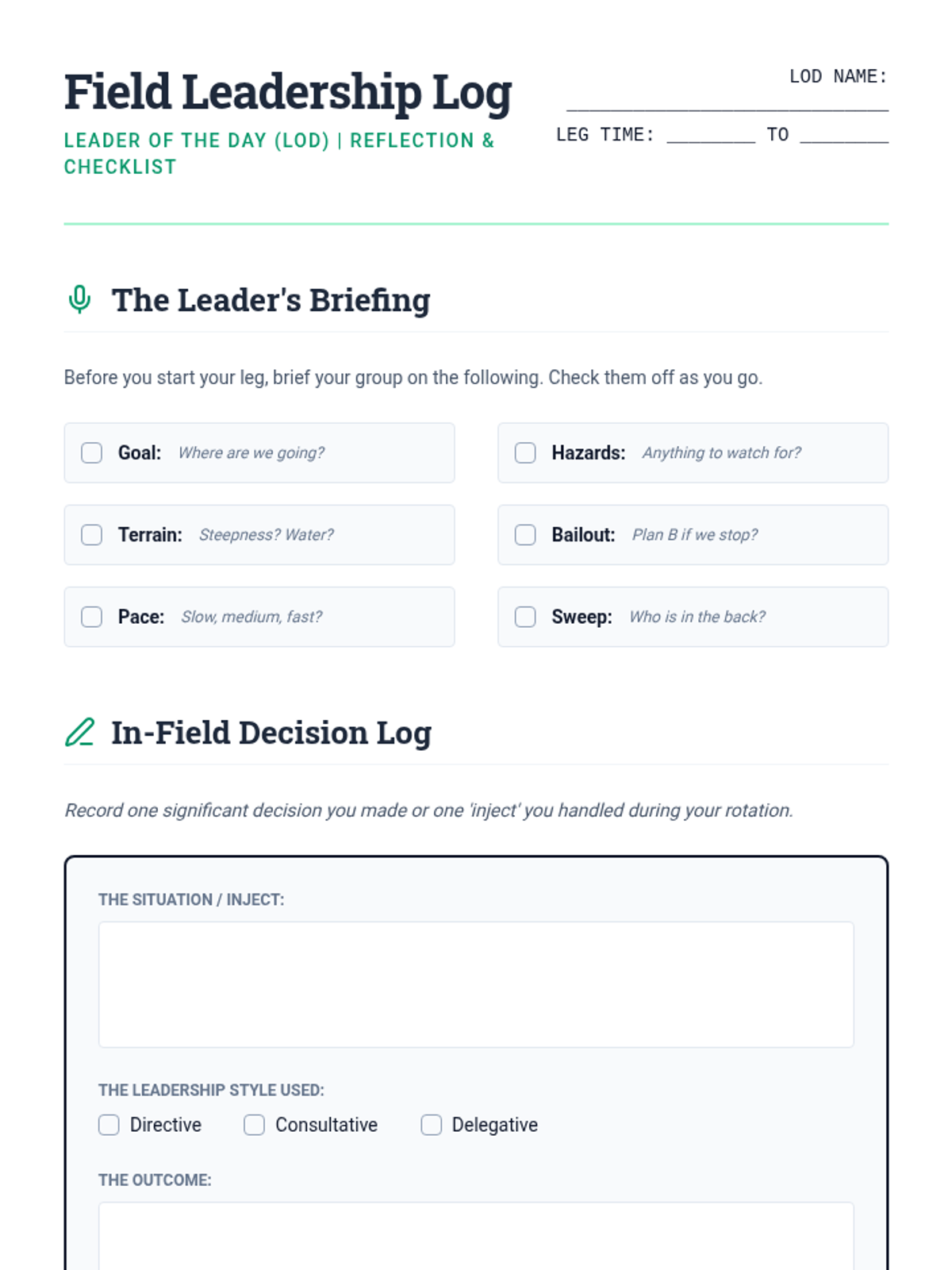
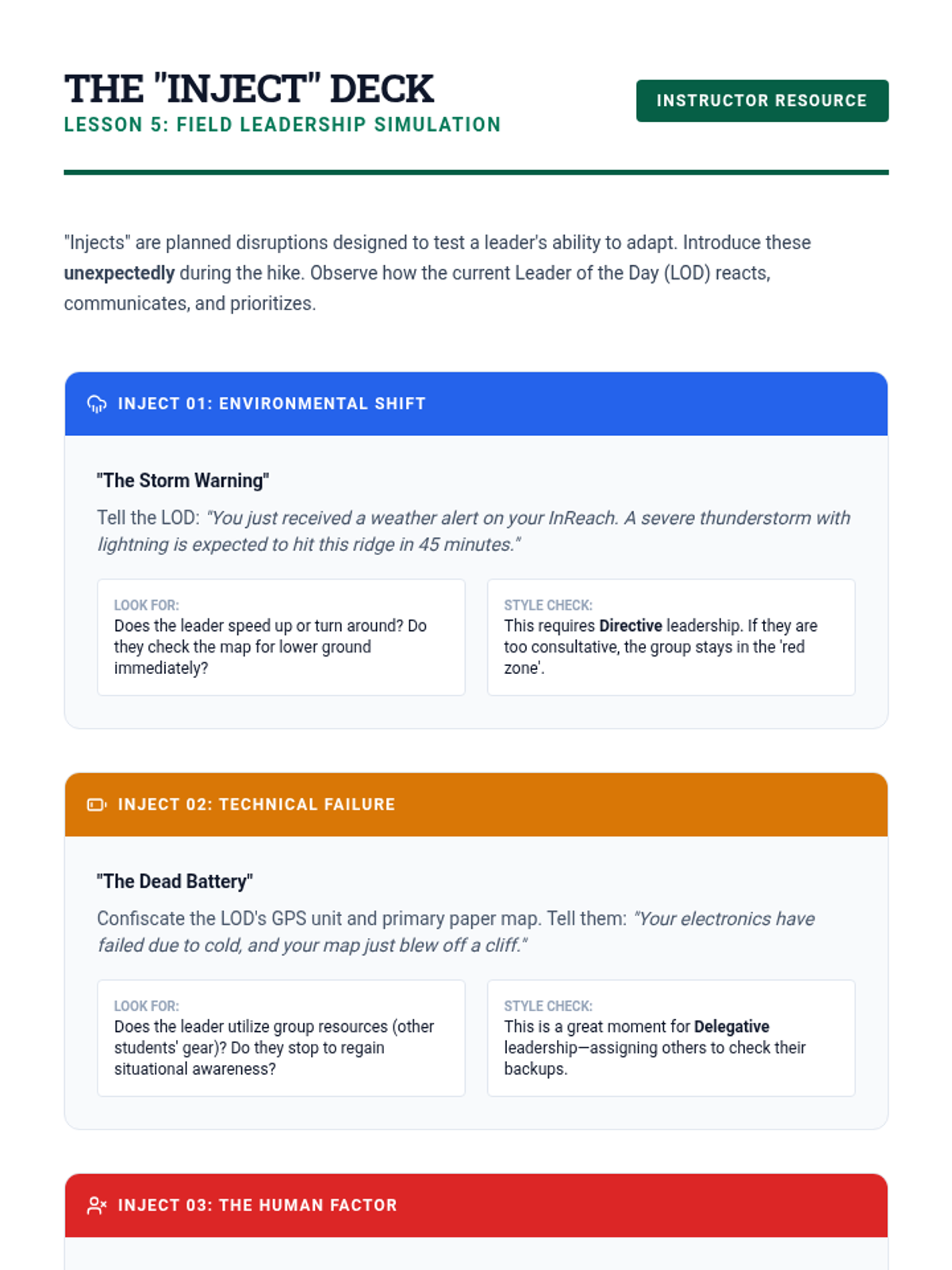
A hands-on field simulation where students apply leadership theories, real-time navigation, and adaptive decision-making while managing group dynamics and 'inject' scenarios.
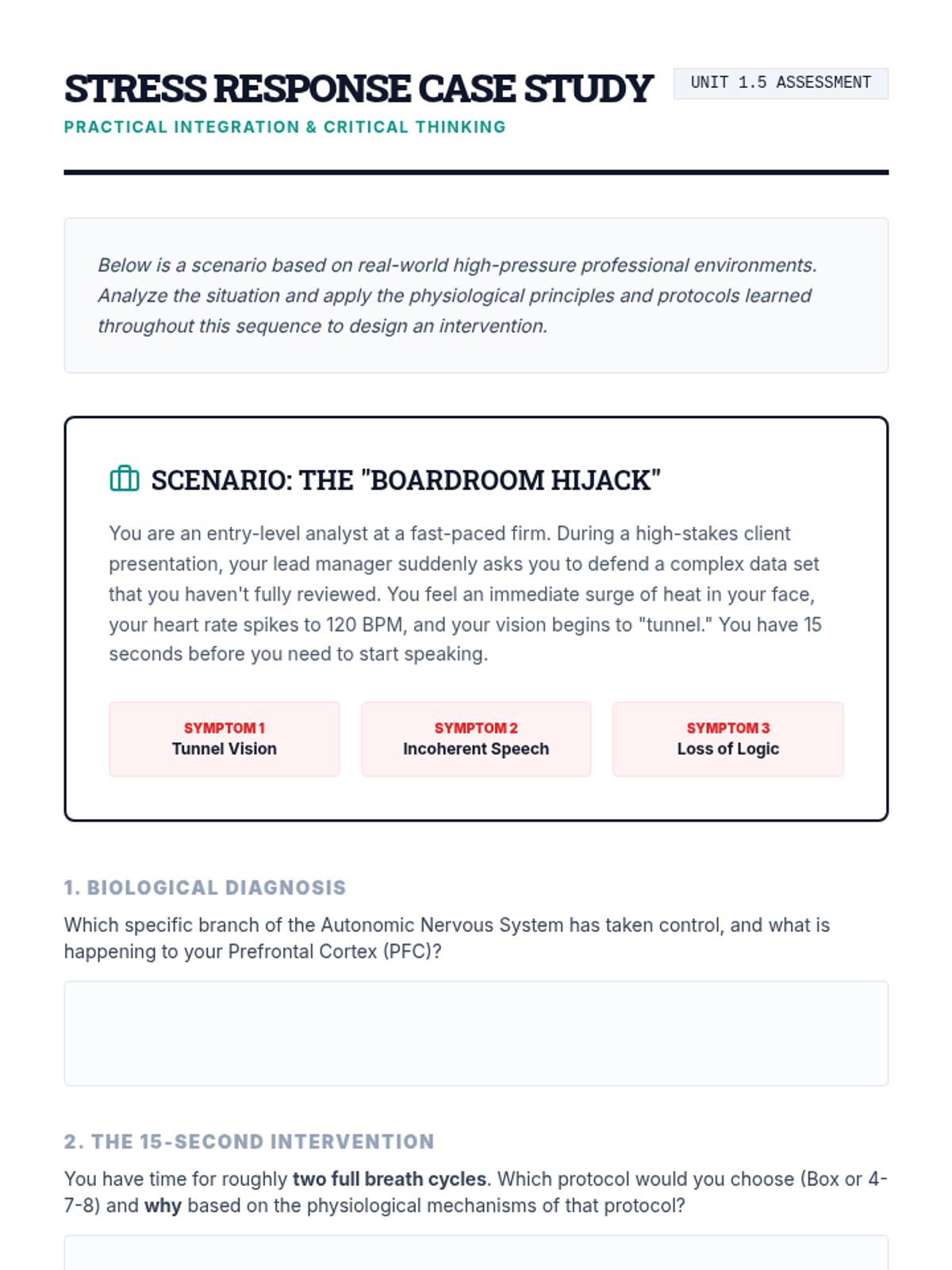
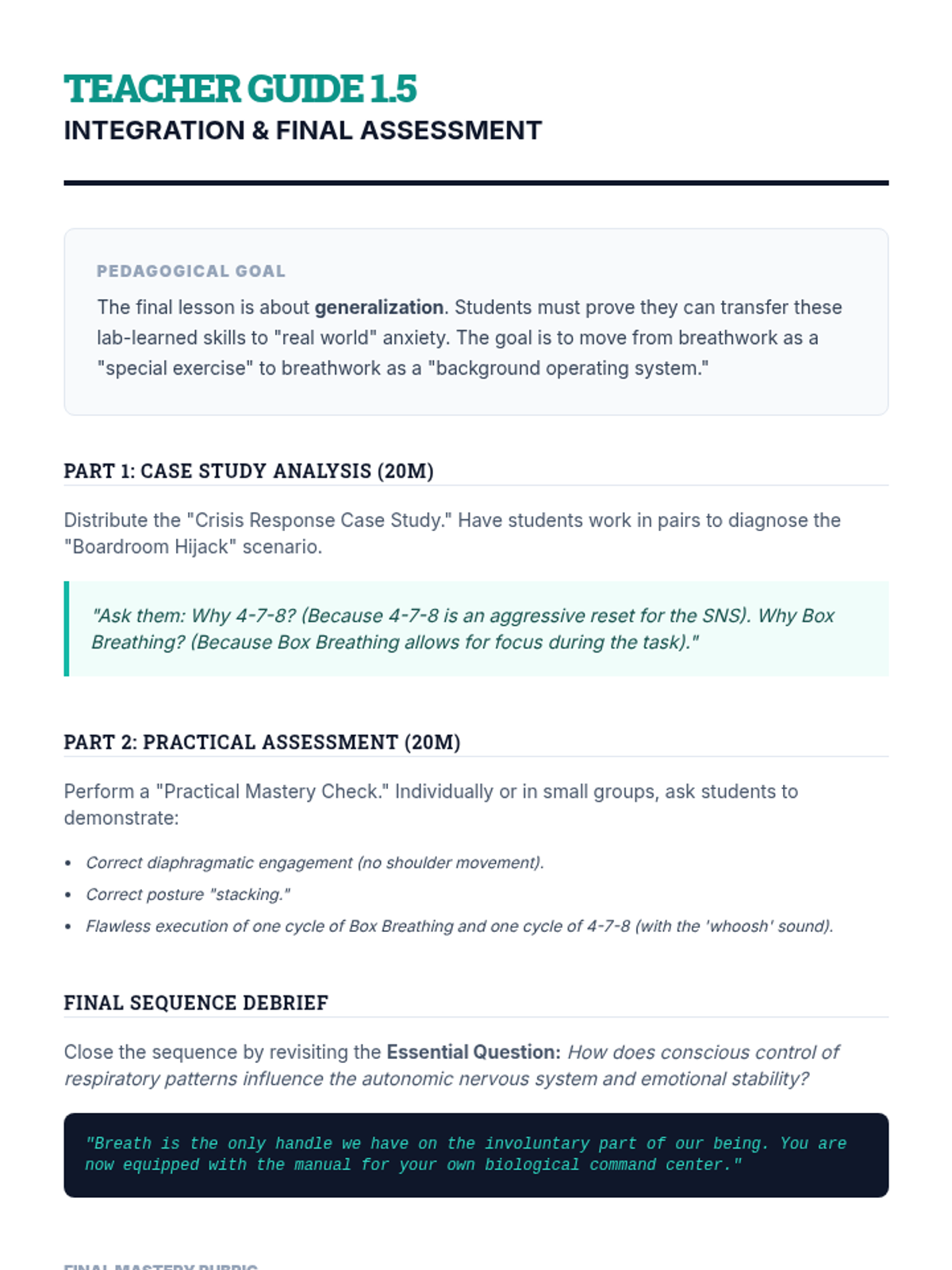
Synthesize learned techniques into a rapid-response protocol for high-stress scenarios using case studies and practical simulations.
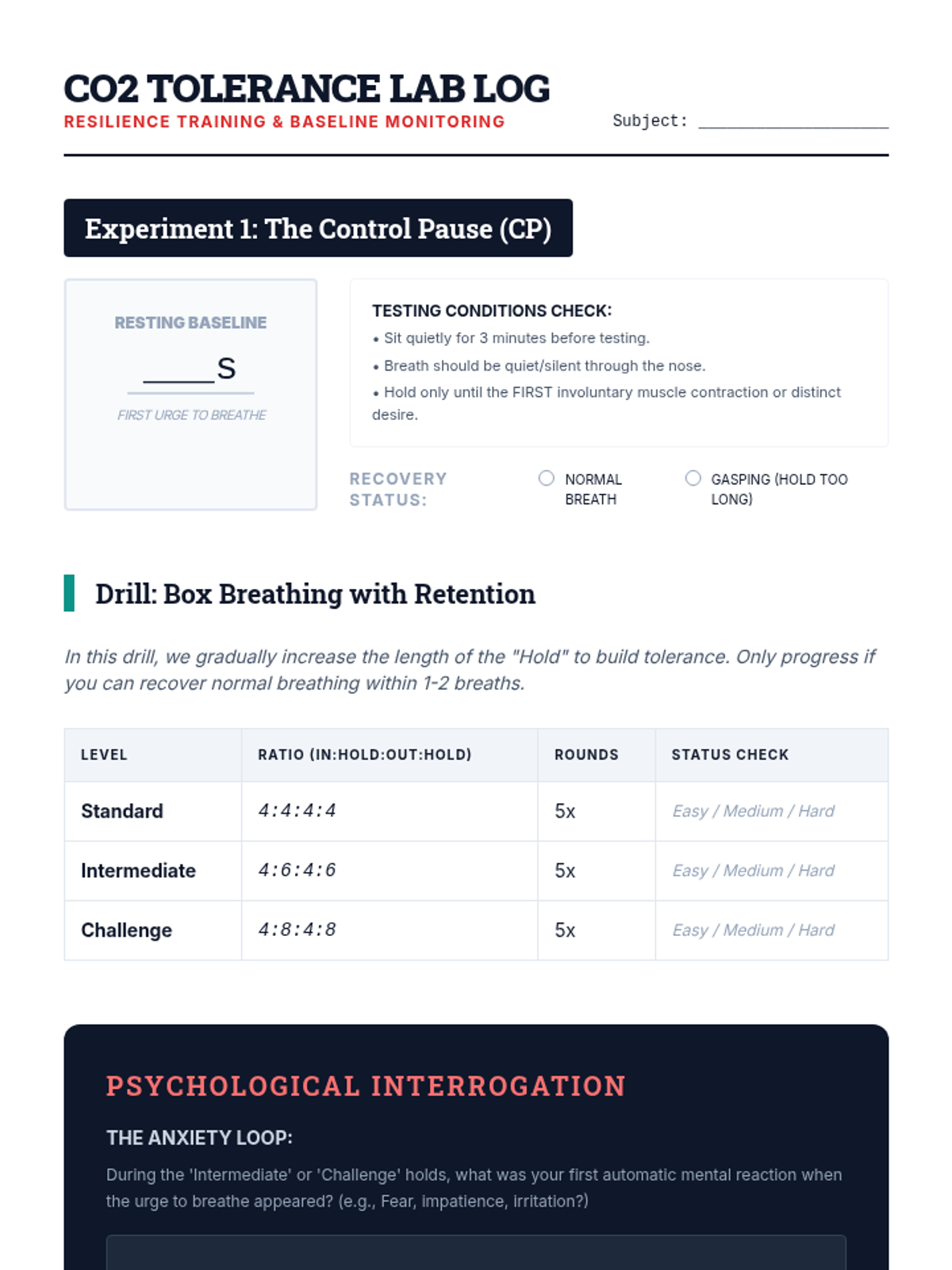
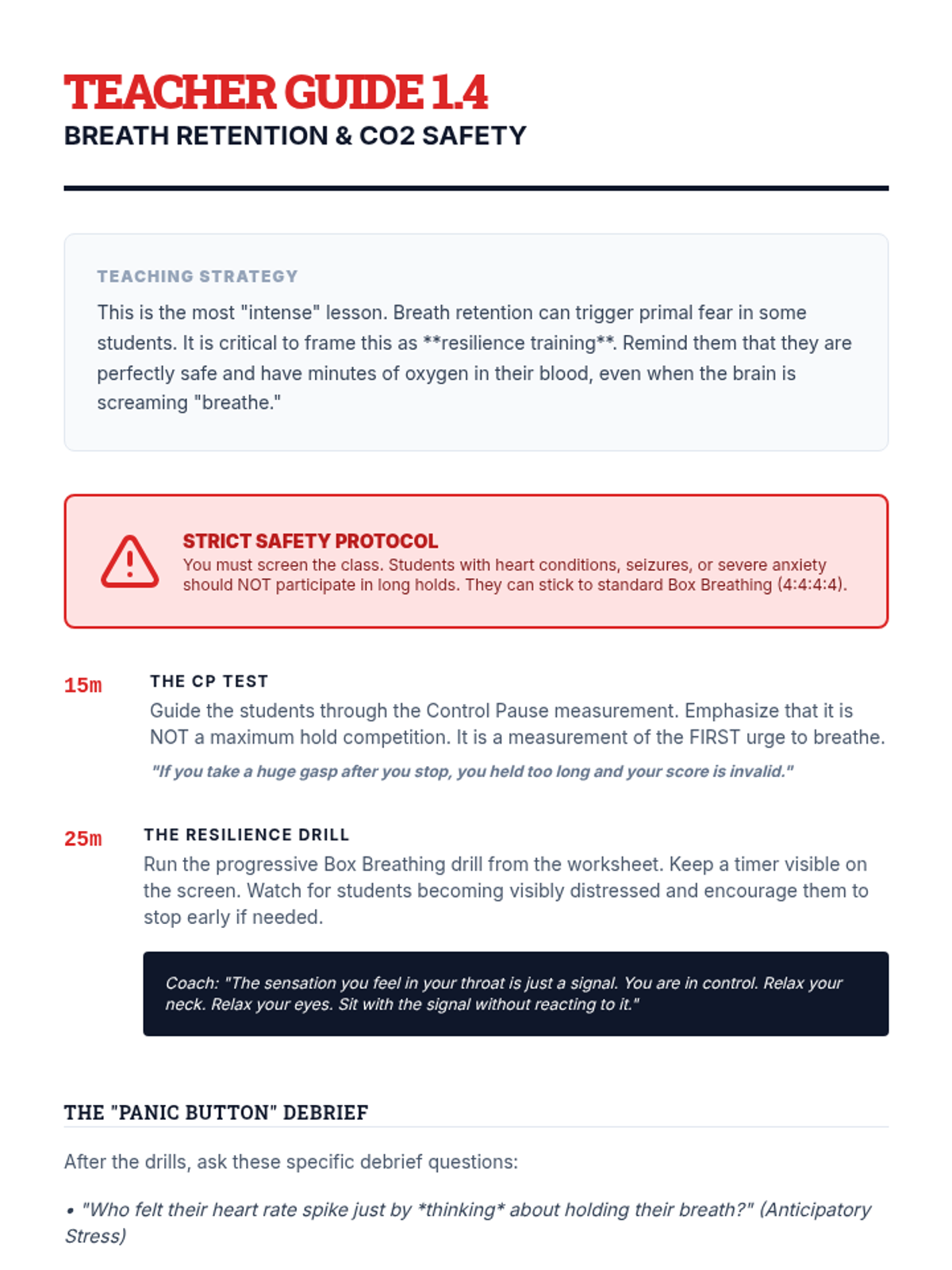
Introduce CO2 tolerance and breath retention as tools for improving psychological resilience and reducing breathlessness-induced anxiety.
Students design a personal stress-response plan based on physiological cues. They practice identifying a trigger, measuring their physical response, and applying the most effective breathwork technique for their biology.
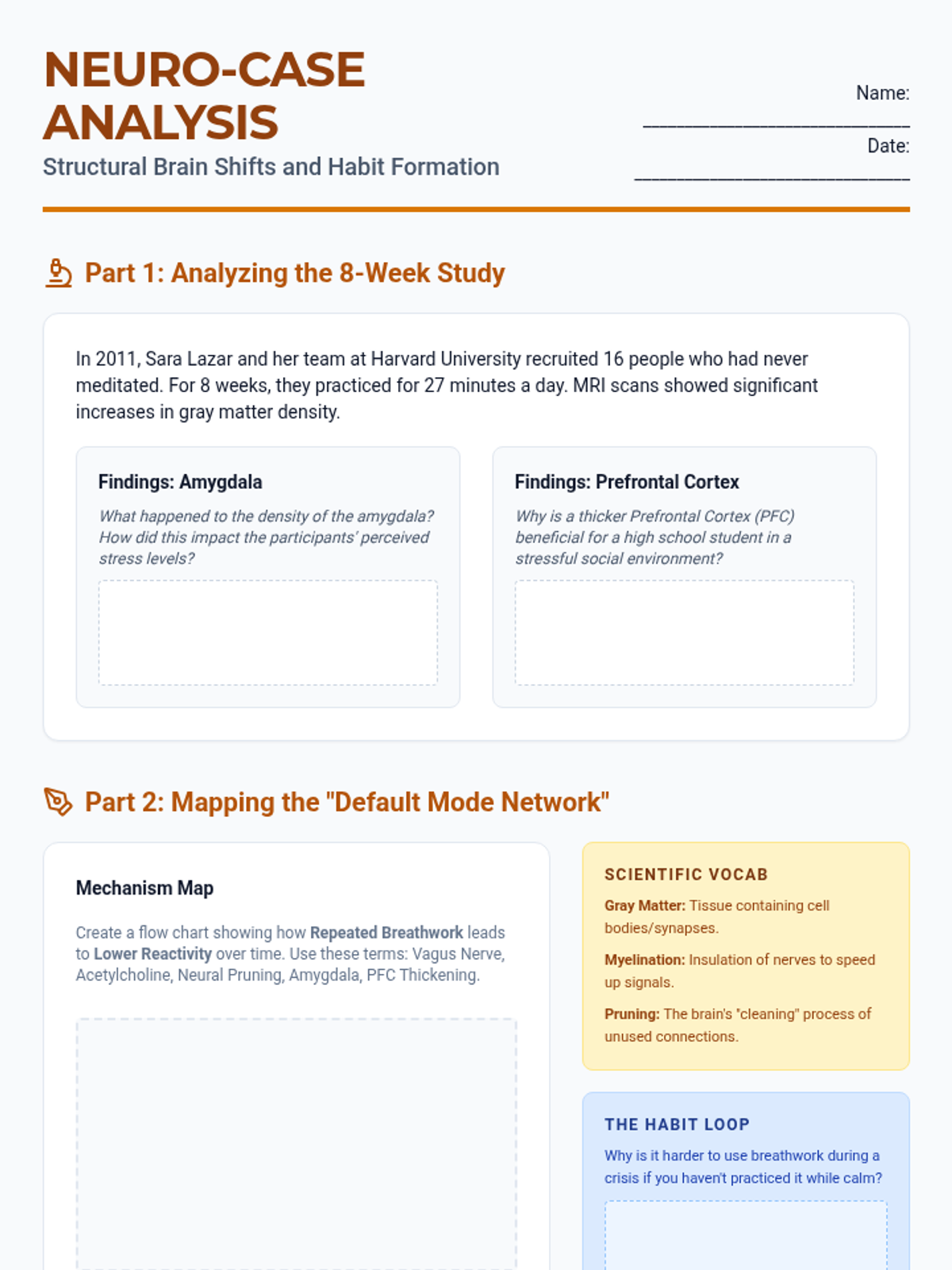
Students investigate neuroplasticity and how repeated meditation practice physically alters brain structure over time. They review case studies regarding meditation's effect on the amygdala and prefrontal cortex.
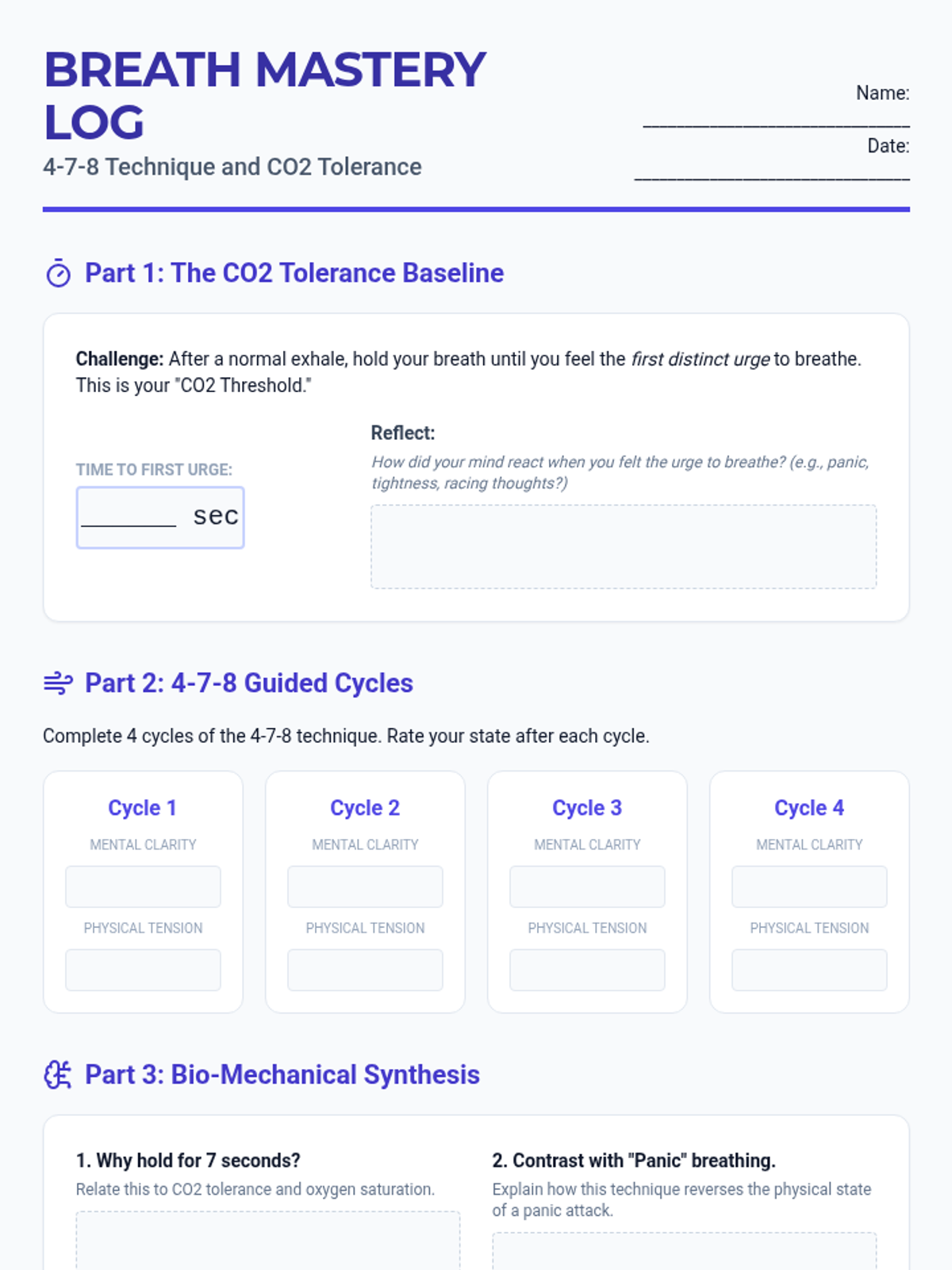
This lesson introduces the 4-7-8 rhythmic breathing pattern and the concept of carbon dioxide tolerance. Students practice the technique and discuss immediate physiological shifts in mental clarity and physical tension.
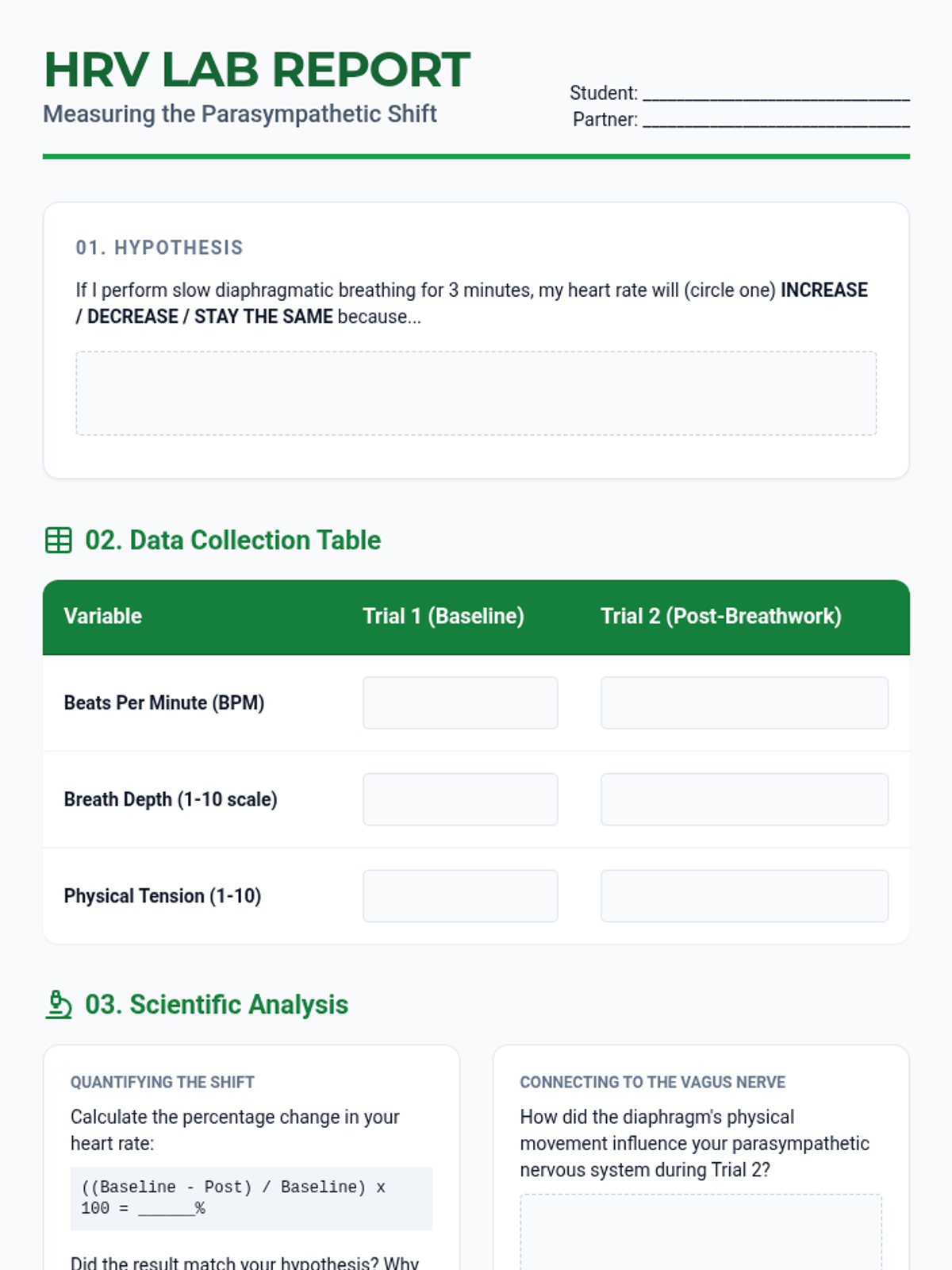
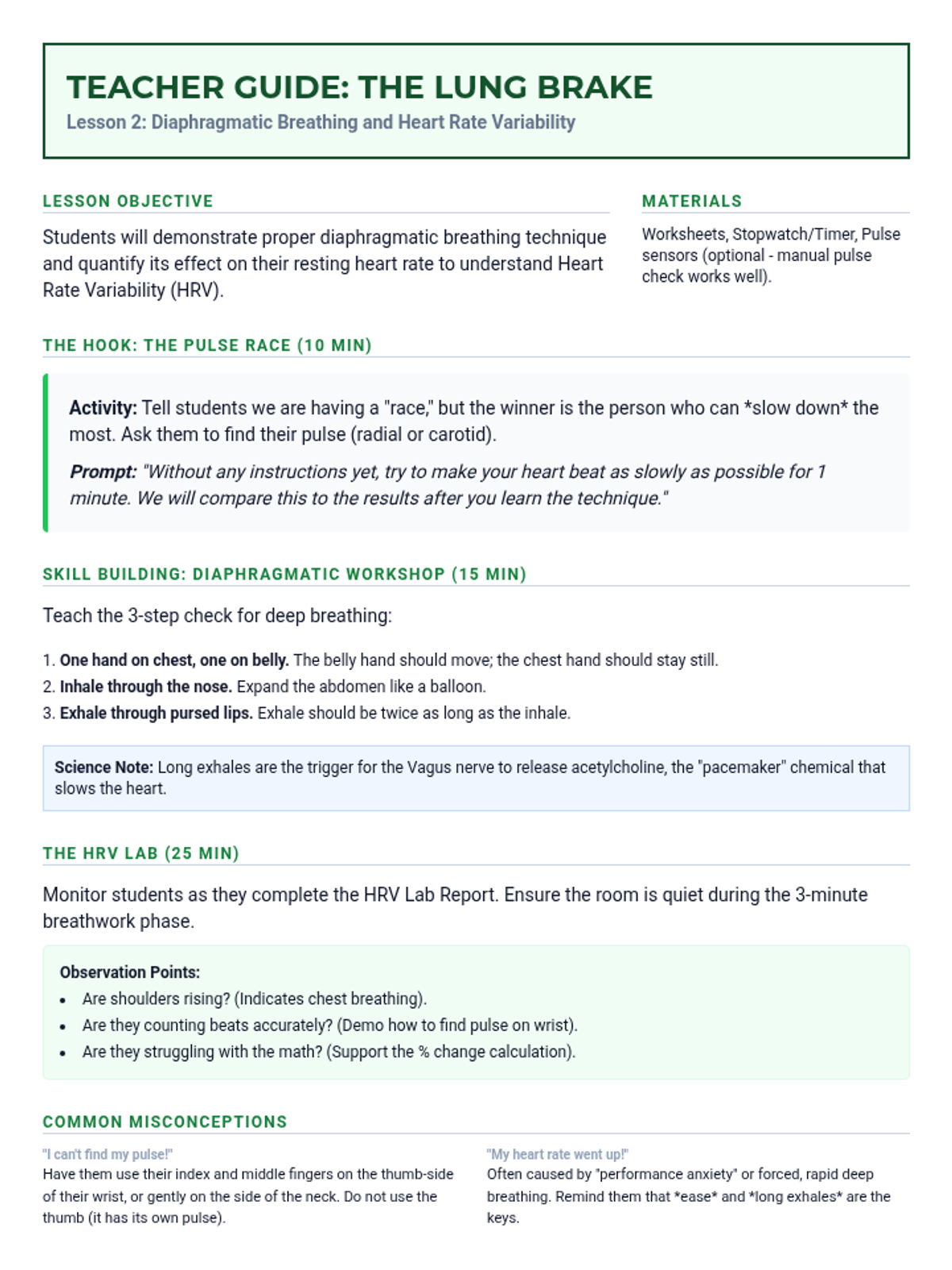
Students learn the mechanics of diaphragmatic breathing versus shallow chest breathing. They perform a lab activity measuring their resting heart rate and observe changes in beats per minute through controlled breathing.
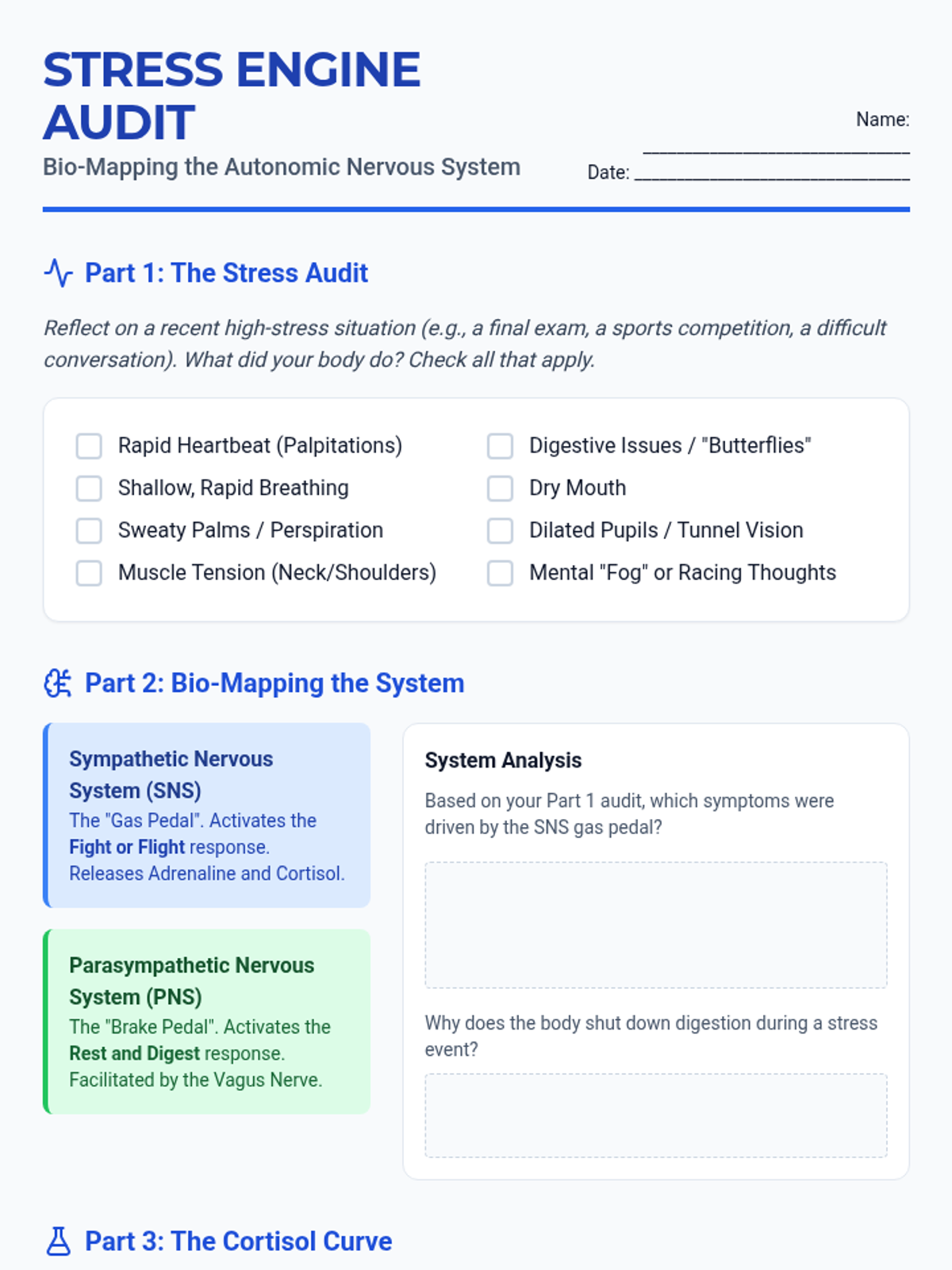
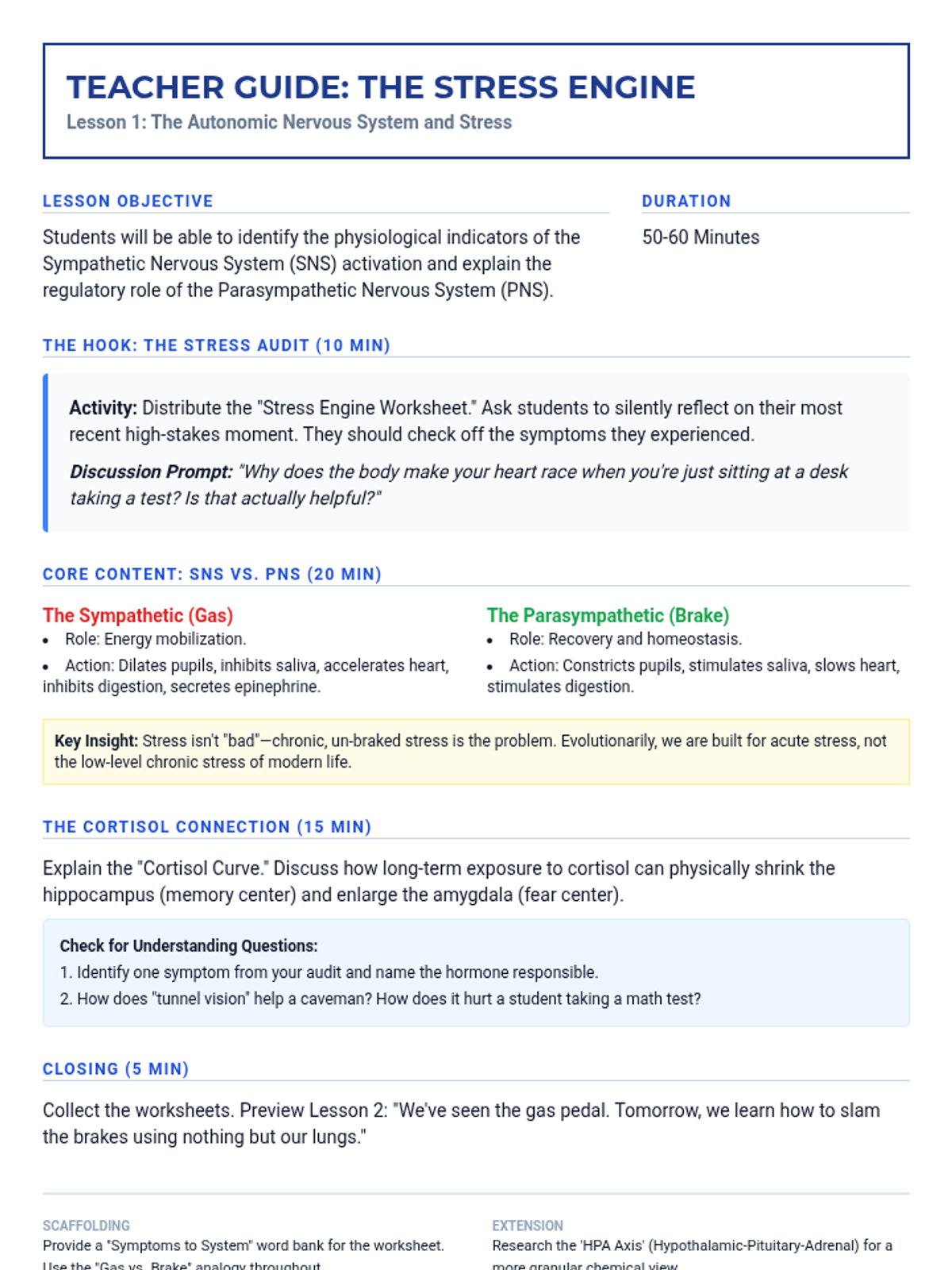
Students explore the functions of the sympathetic and parasympathetic nervous systems to understand the biological basis of stress. They analyze the role of cortisol and adrenaline, identifying personal physical indicators of stress activation.
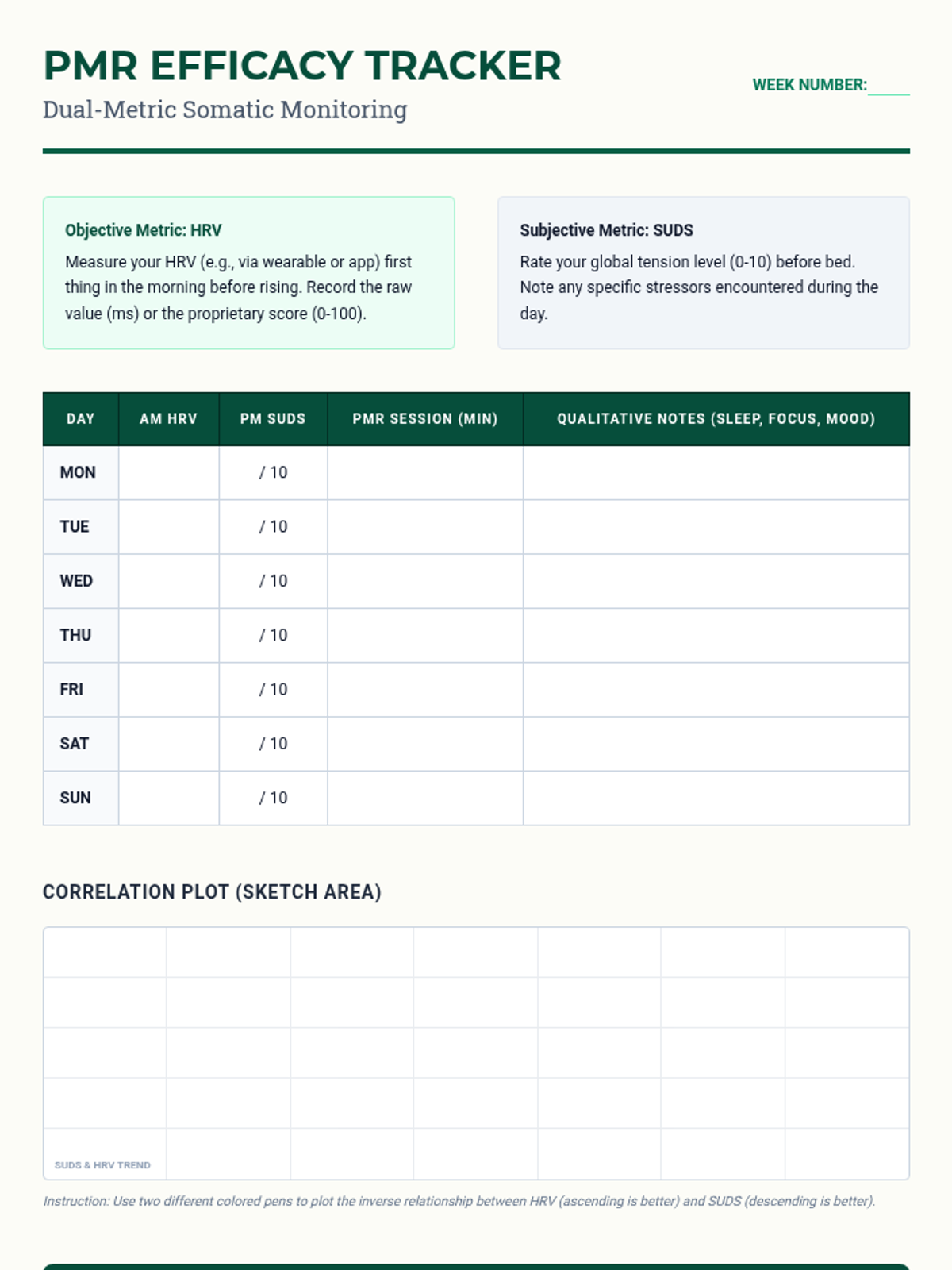
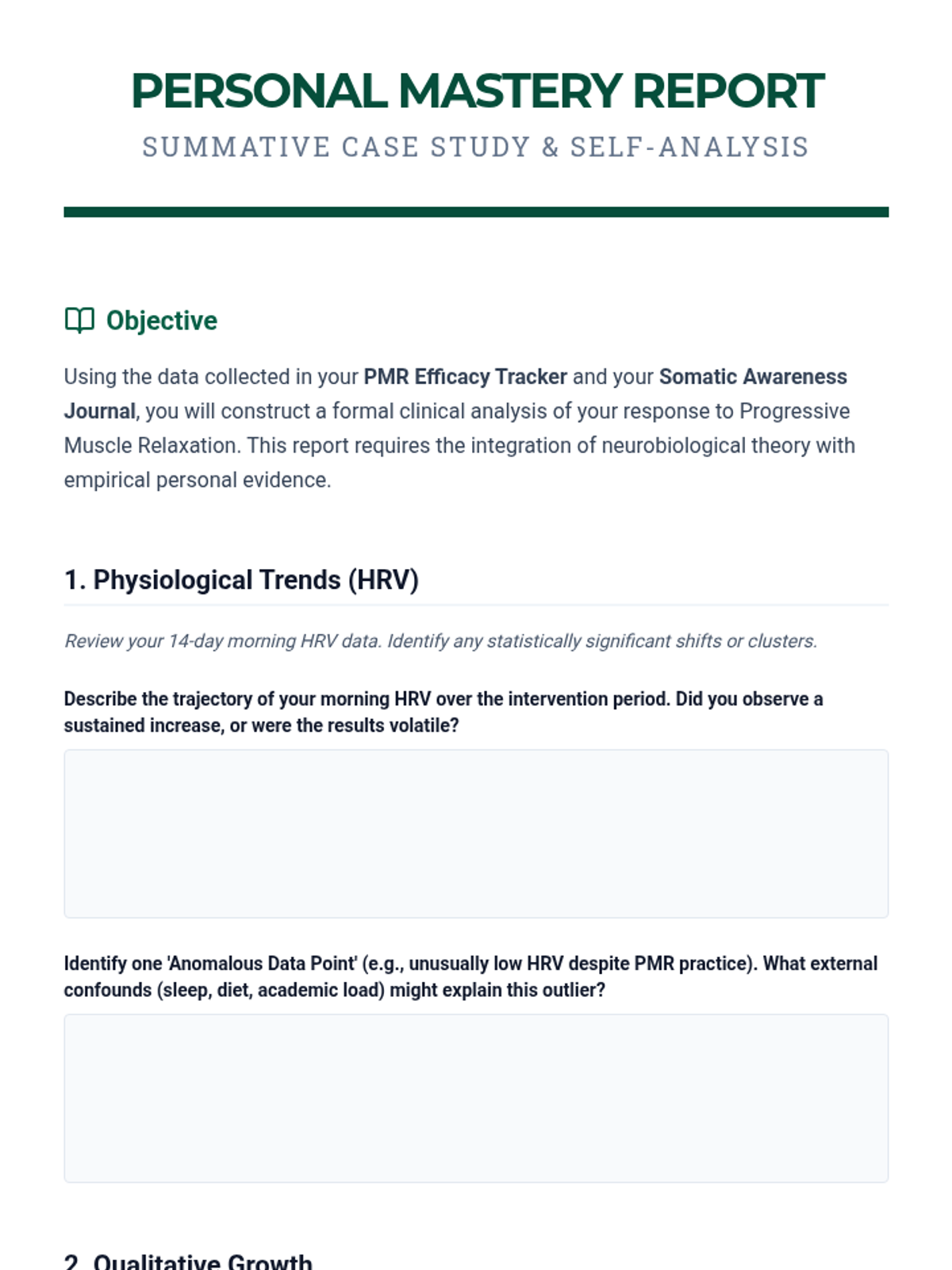
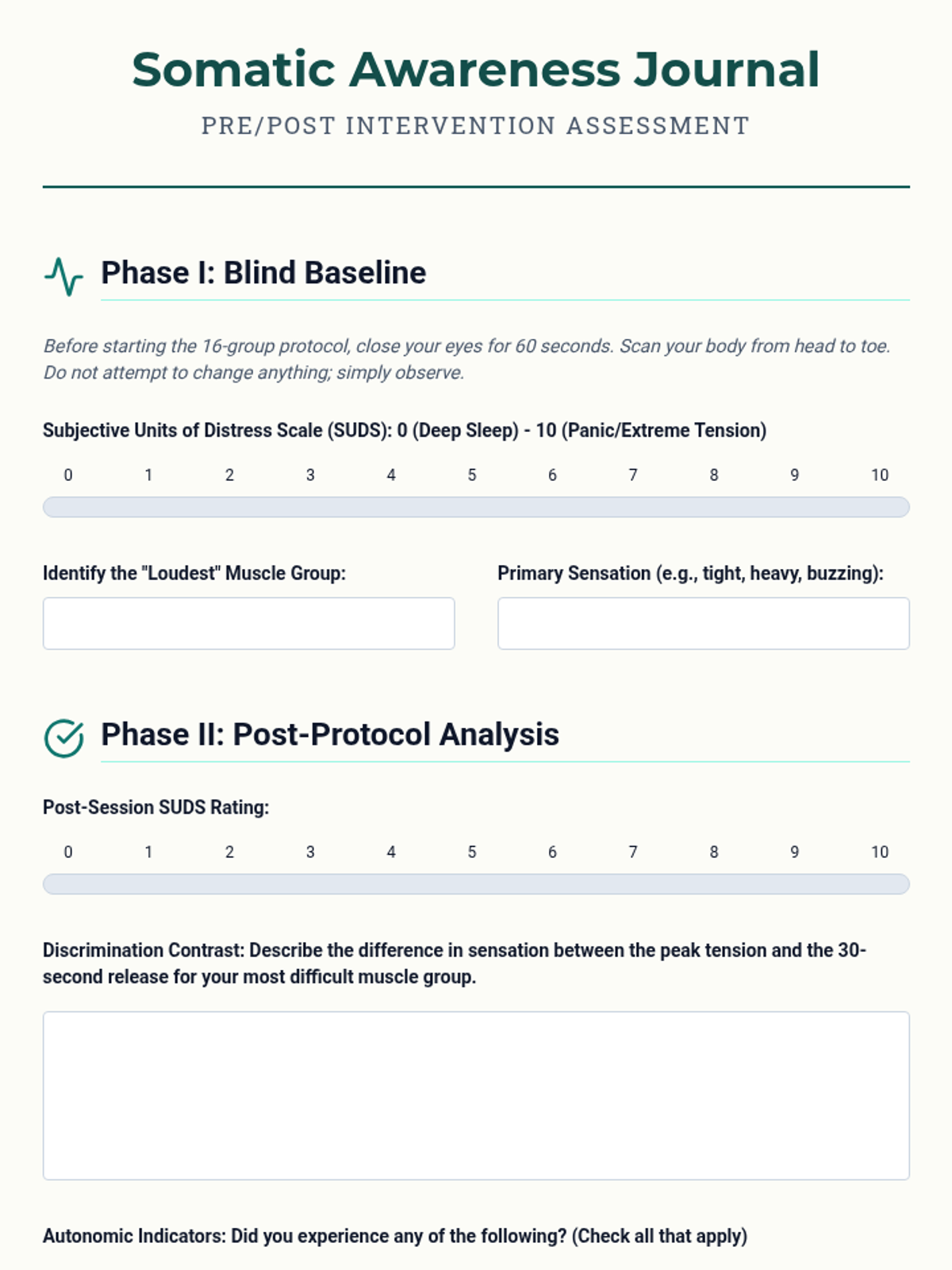
Students design and implement a self-monitoring protocol to track the impact of PMR on sleep quality and baseline anxiety using subjective and objective data.
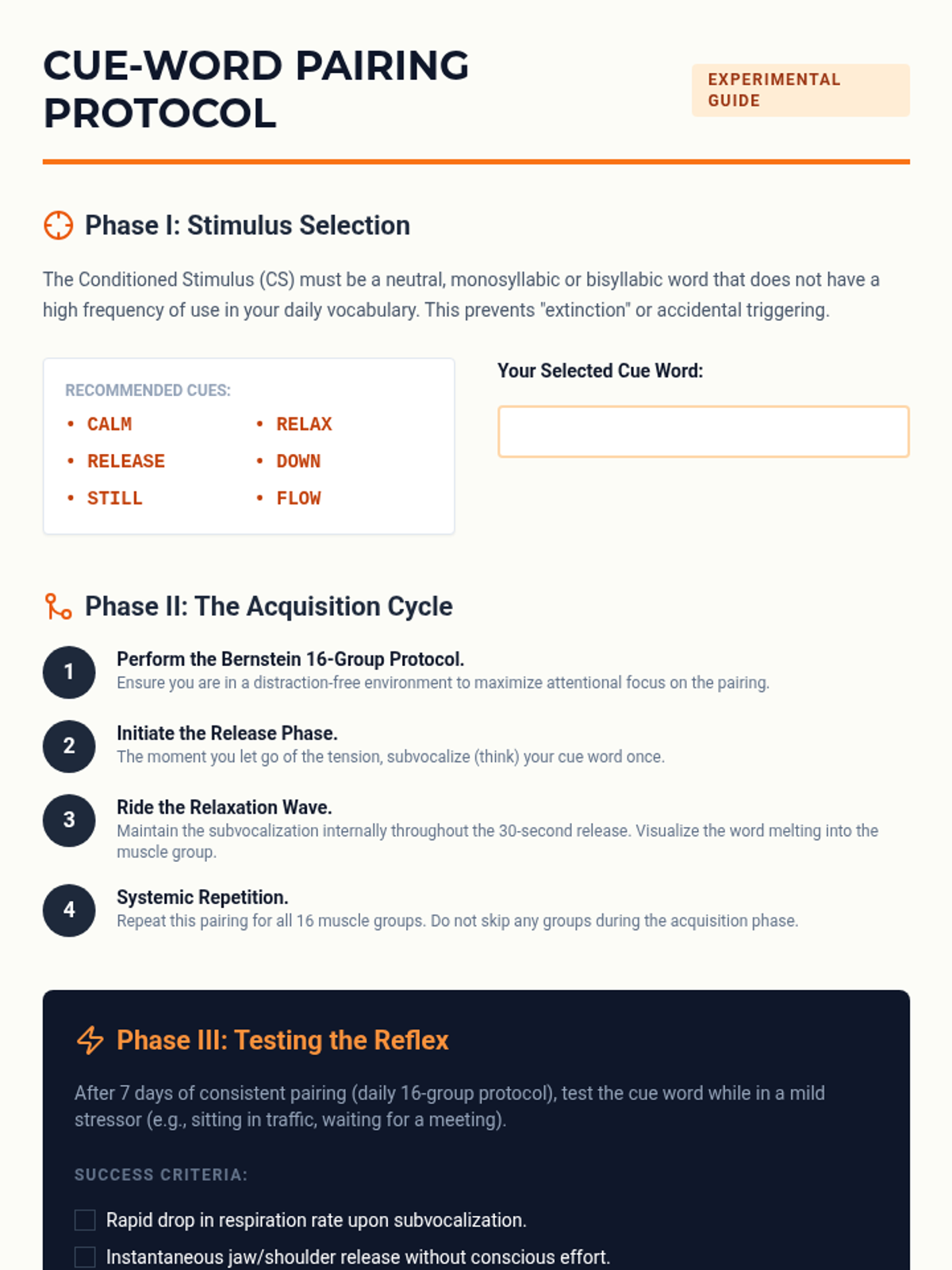
Focuses on classical conditioning principles to pair a cue word with the physiological state of relaxation for rapid induction.
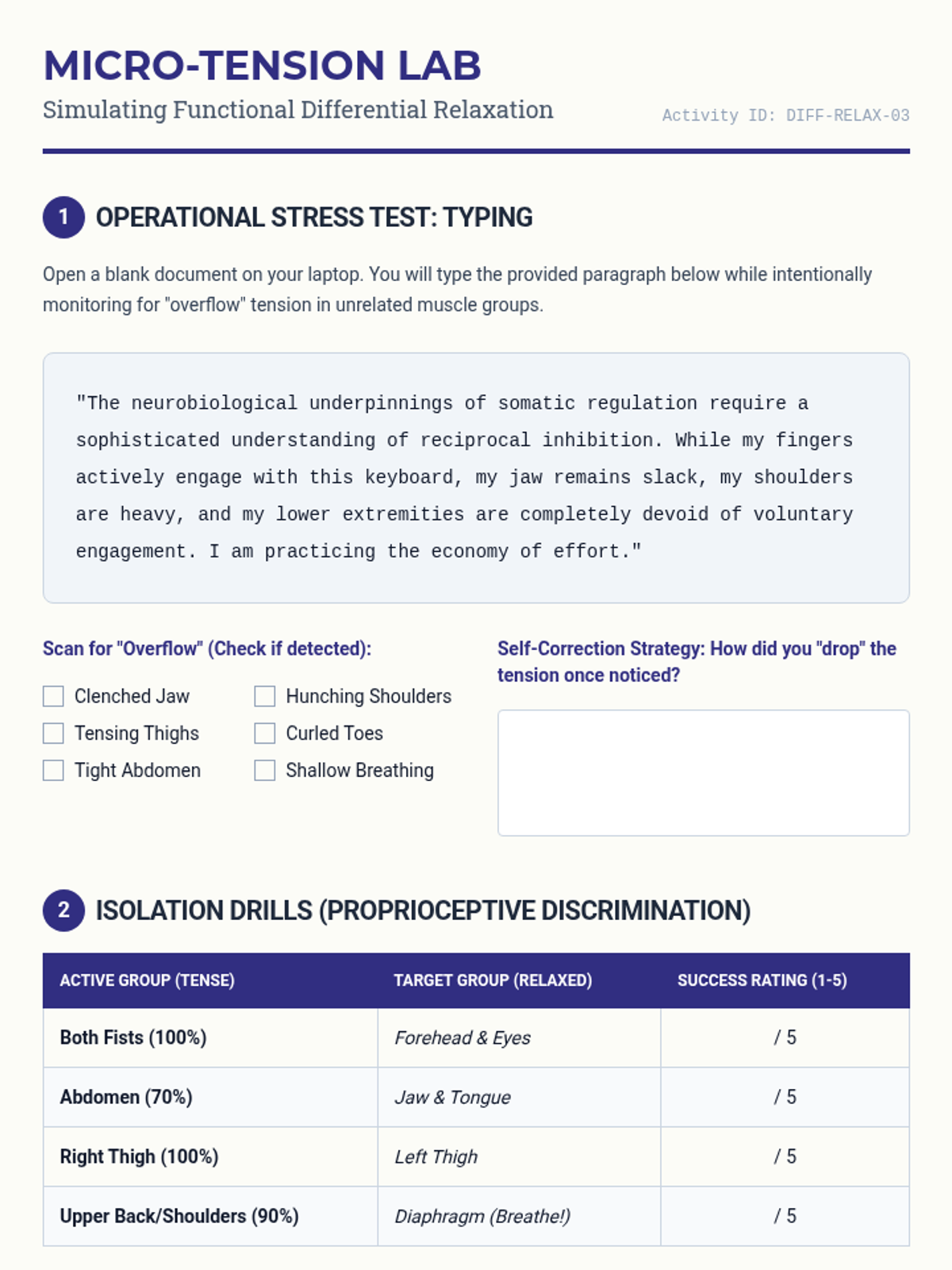
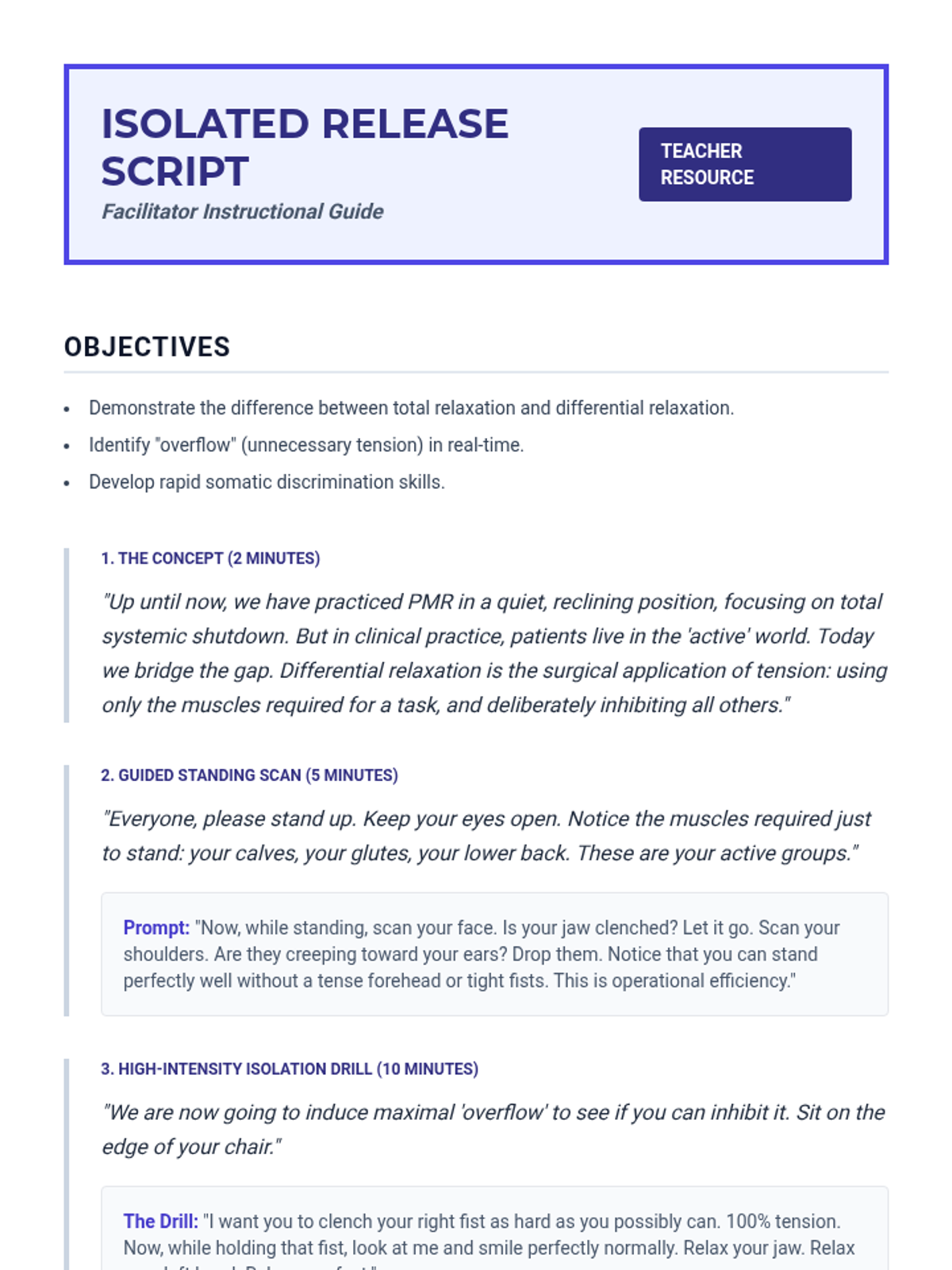
Students learn to identify and release micro-tension in specific muscle groups while maintaining activity in others, bridging the gap to functional daily application.
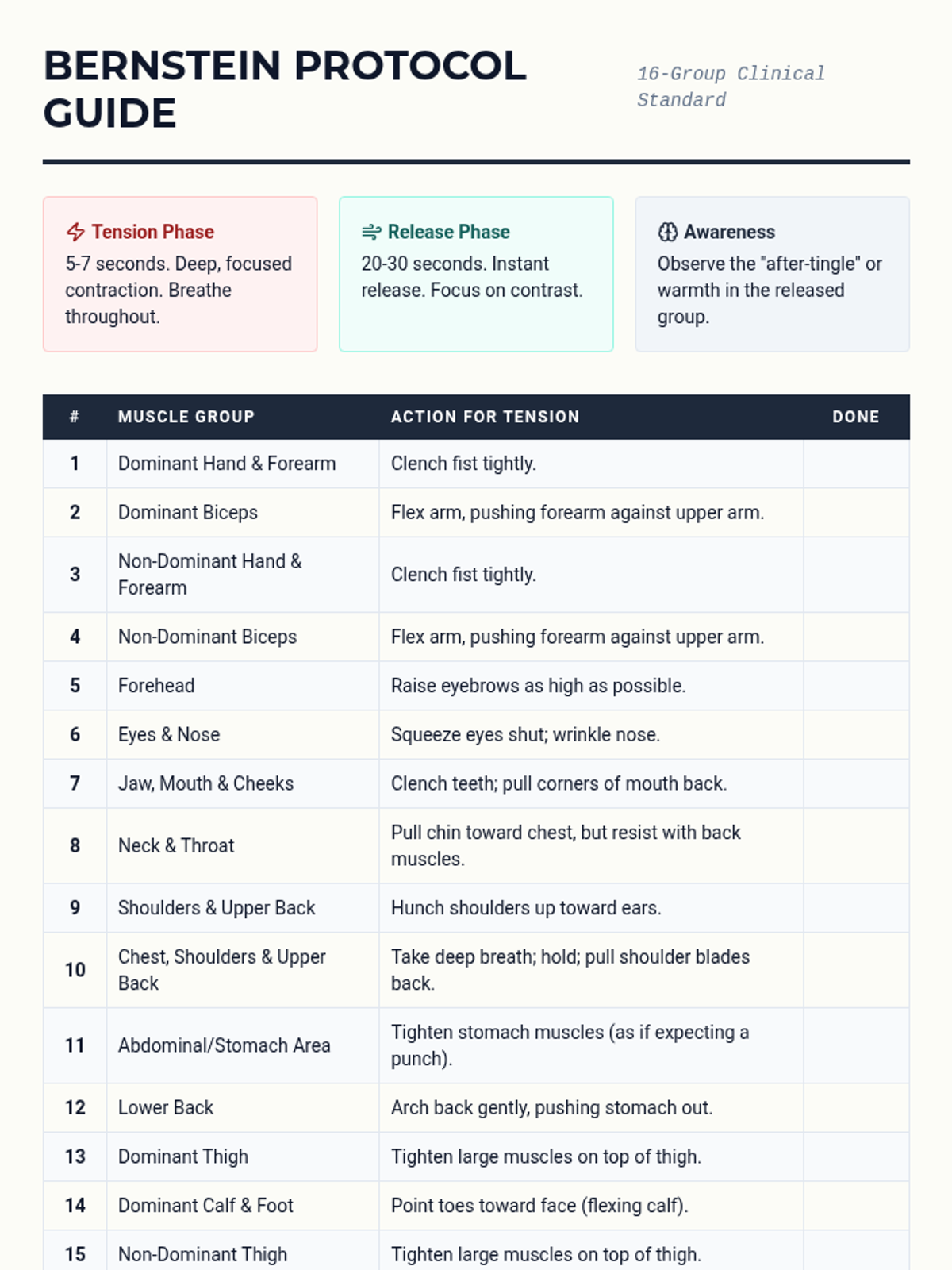
A workshop-style session for practicing the full Bernstein & Borkovec 16-muscle group protocol with a focus on tension thresholds.
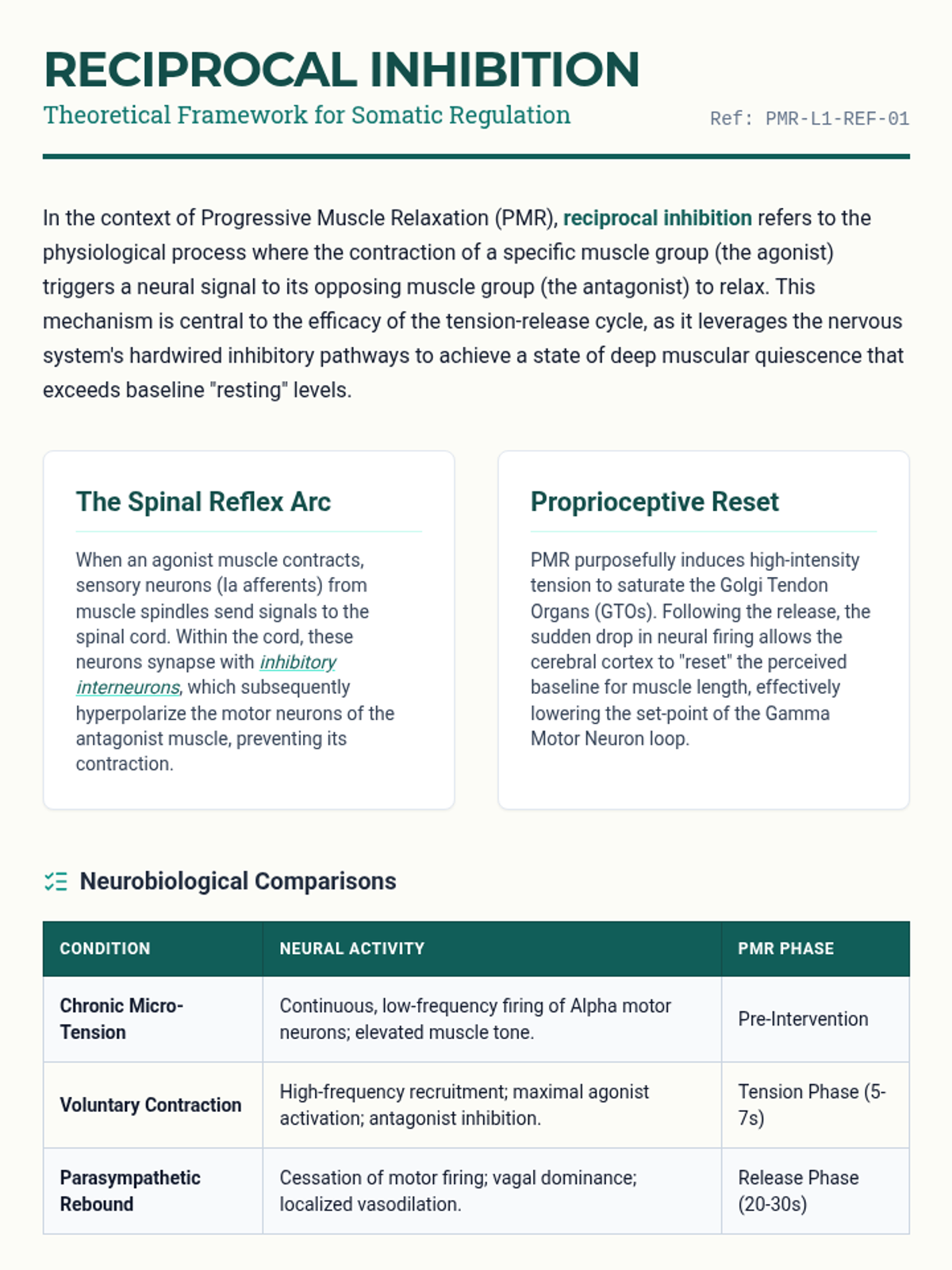
Students analyze the physiological connection between voluntary muscle tension and parasympathetic activation, covering reciprocal inhibition and proprioceptive feedback loops.
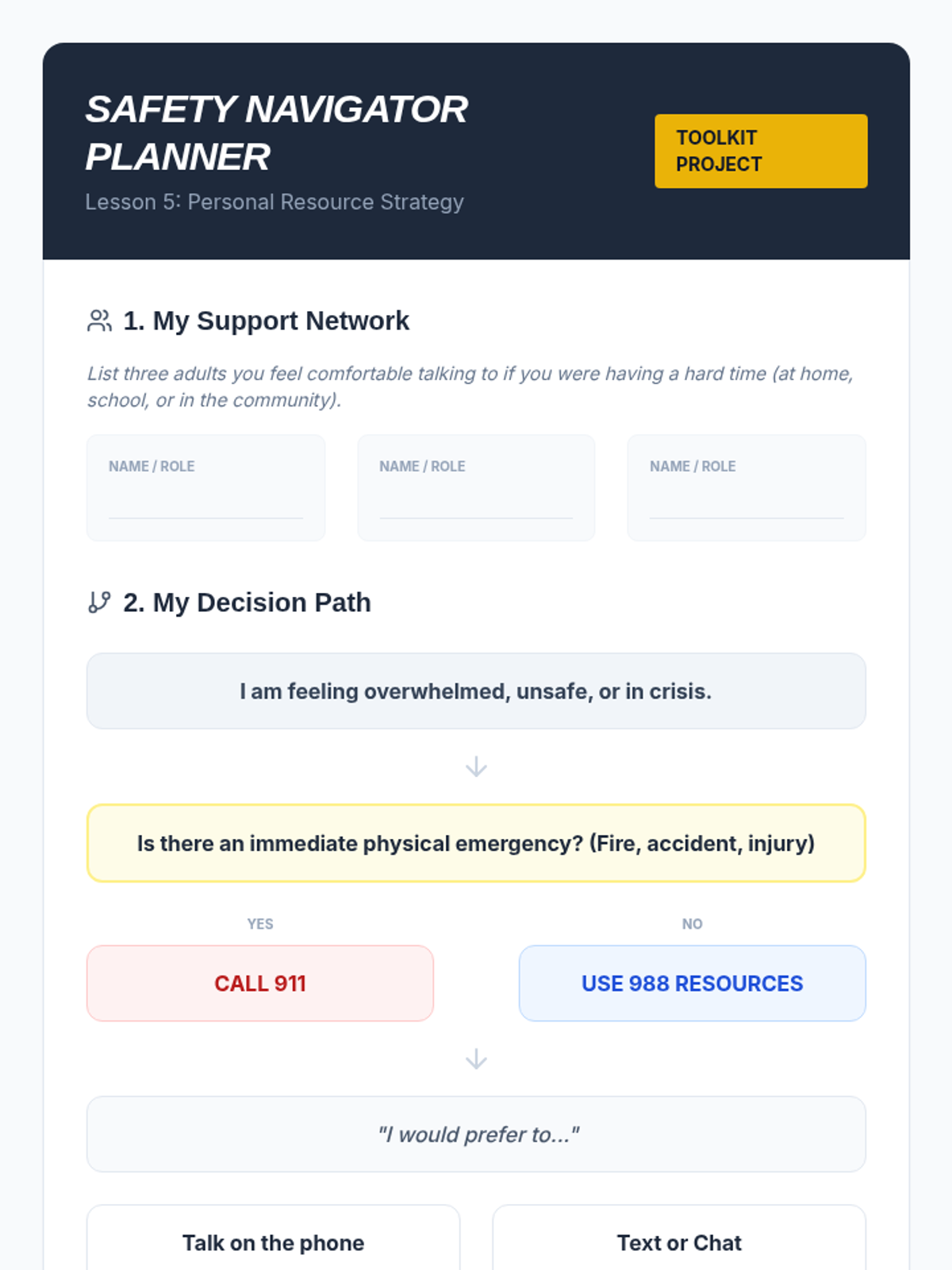
Students compile verified resources and create a personal safety flowchart and discreet reference tools (wallet cards or phone backgrounds) for future support.
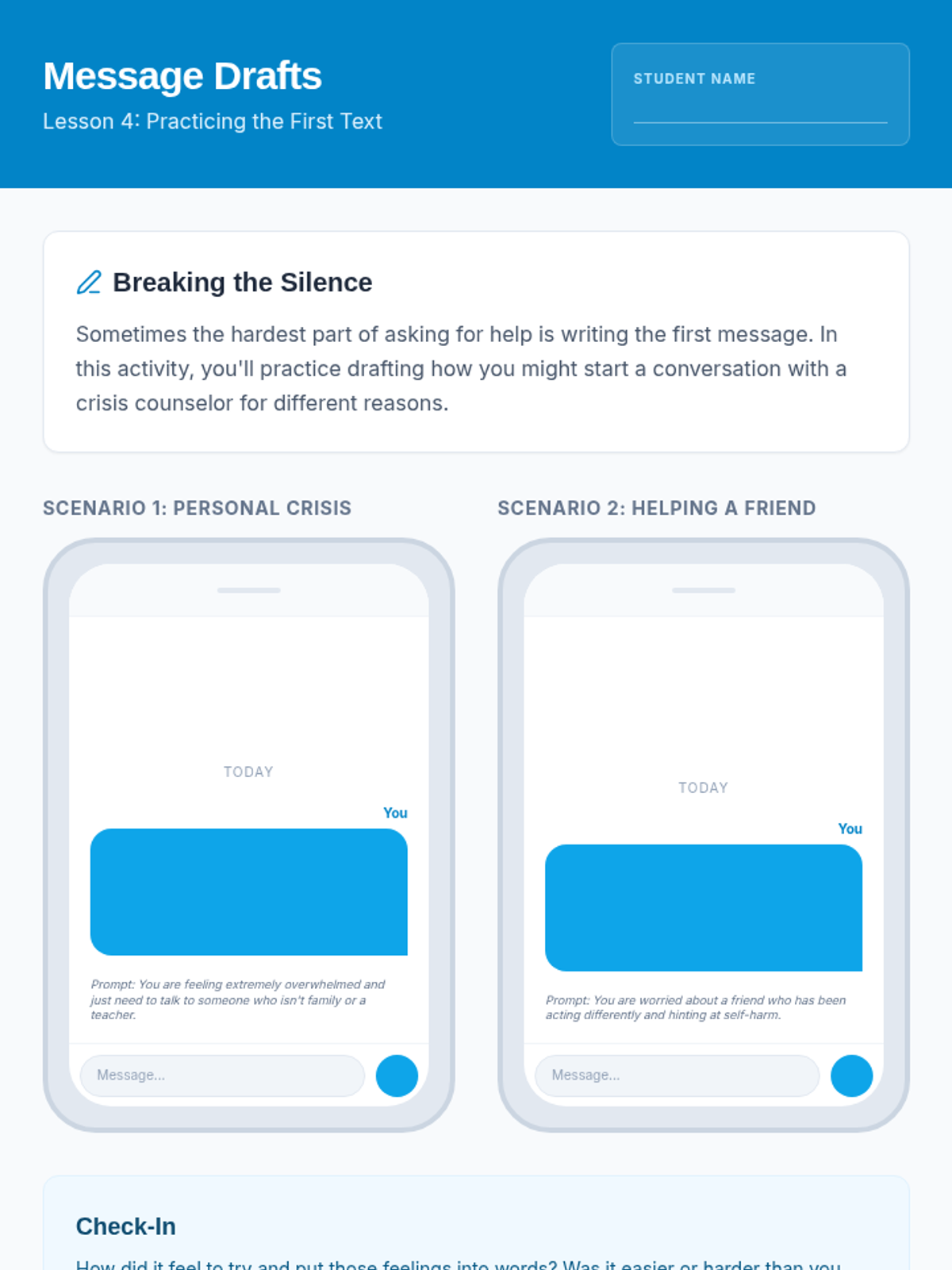
Focusing on text/chat options, students review script templates and practice drafting initial messages to initiate conversations with crisis counselors.
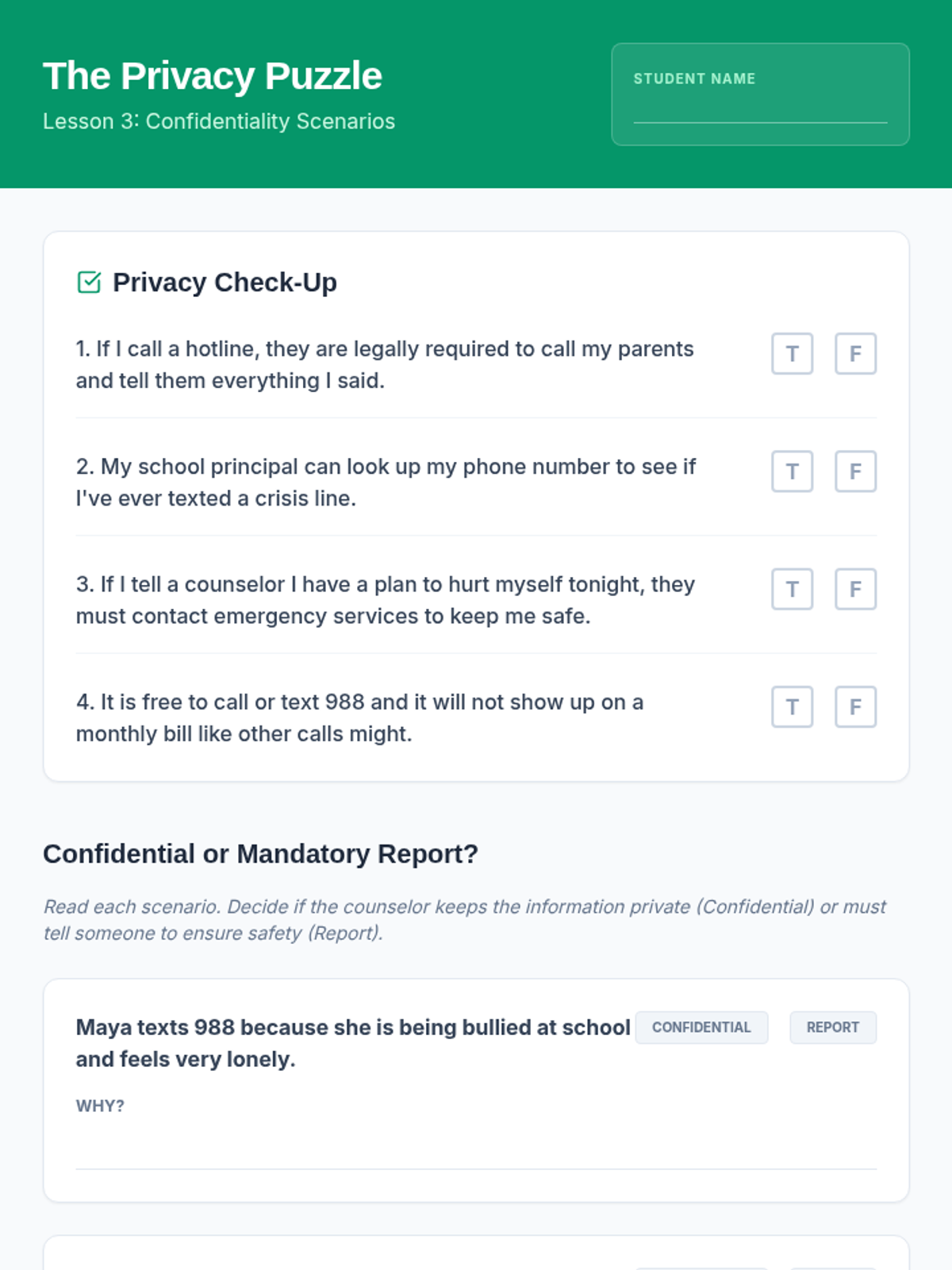
Students explore the concept of confidentiality, learning what information stays private and what triggers mandatory reporting to ensure safety.
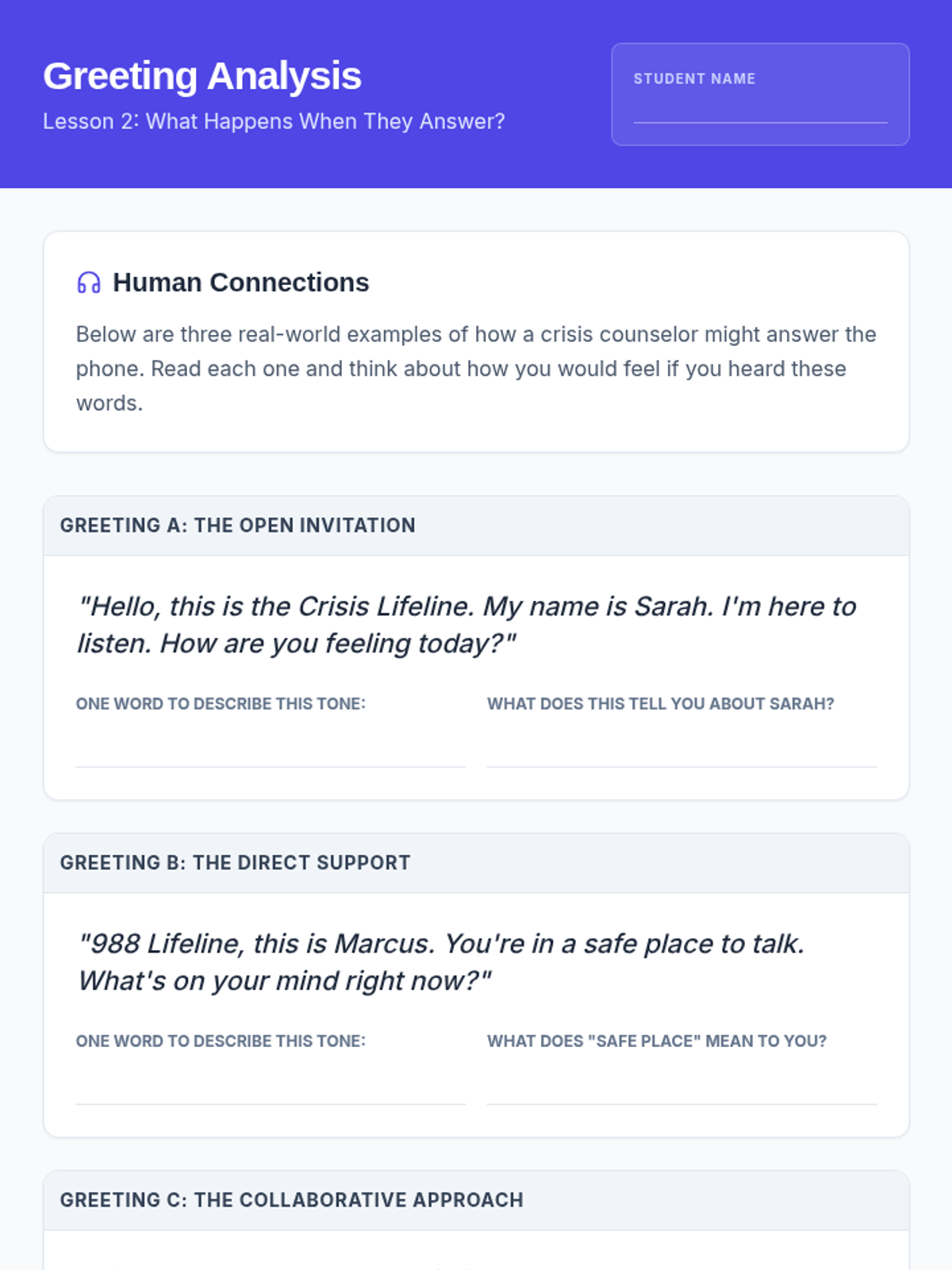
This lesson walks students through the step-by-step process of contacting a crisis line, from automated menus to the initial greeting from a trained counselor.
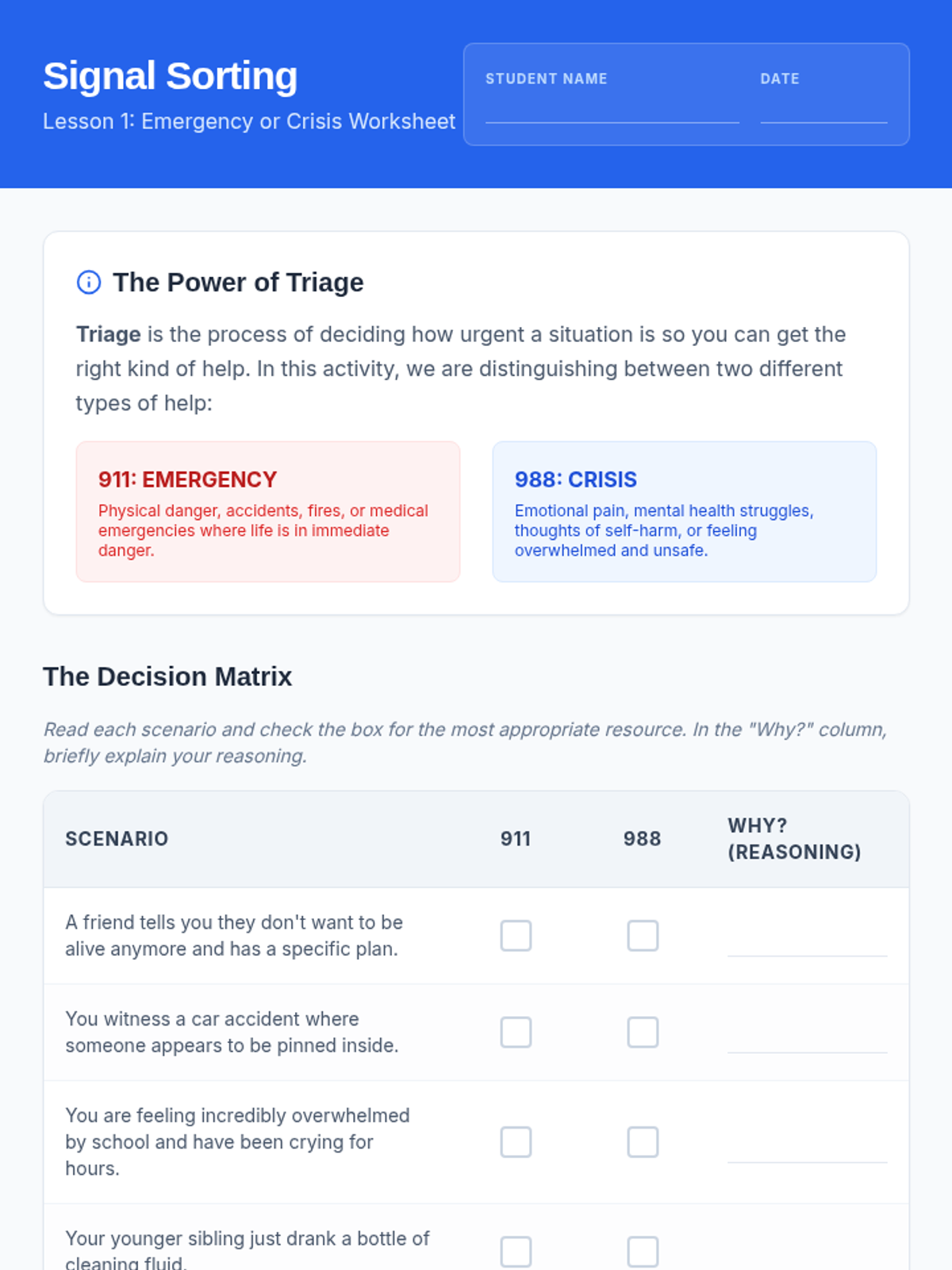
Students differentiate between immediate physical danger requiring 911 and emotional crises suitable for hotlines like 988 through a sorting activity and discussion on triage.
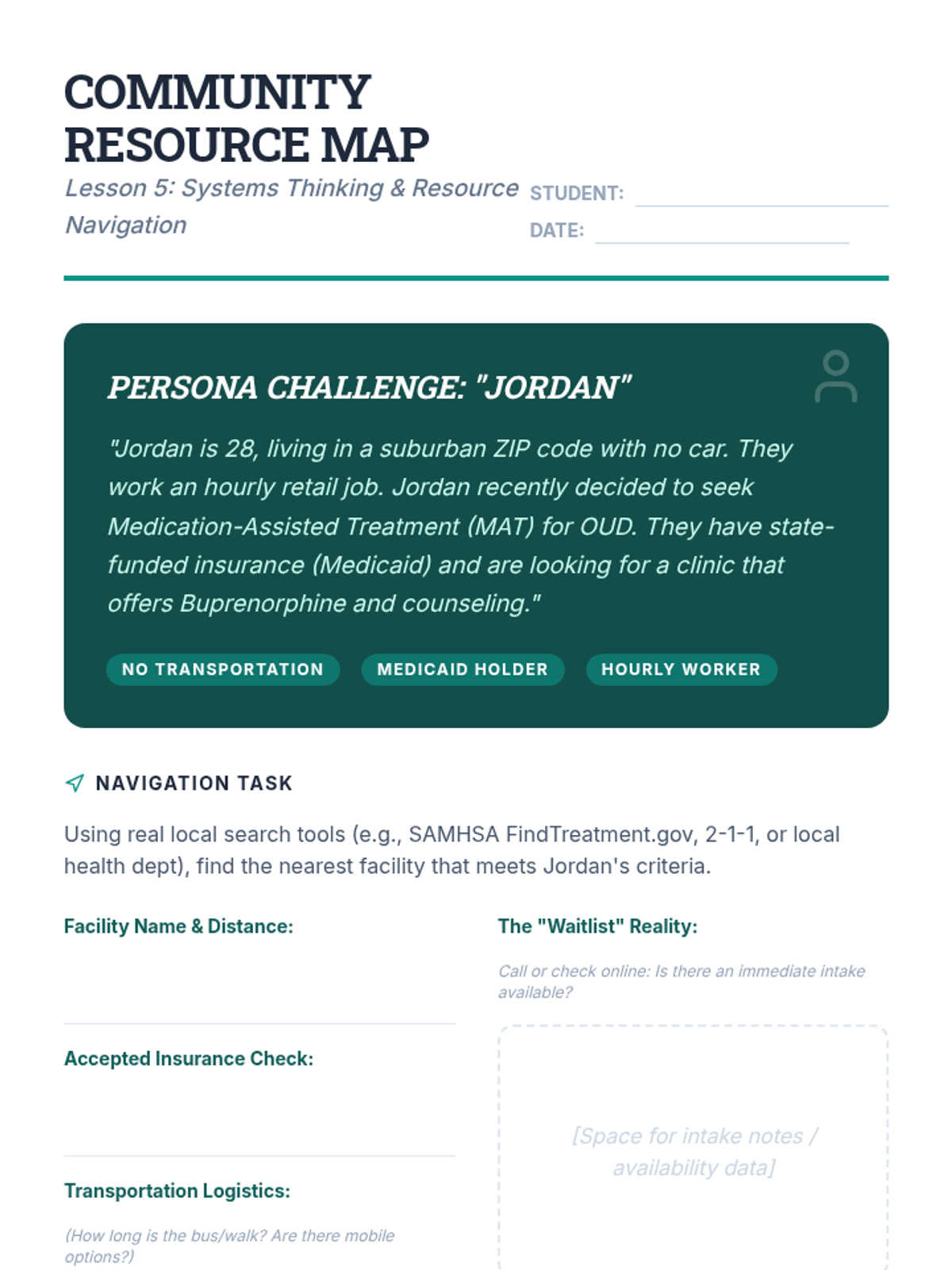
Investigates evidence-based treatment options and community recovery ecosystems, culminating in a resource mapping project.
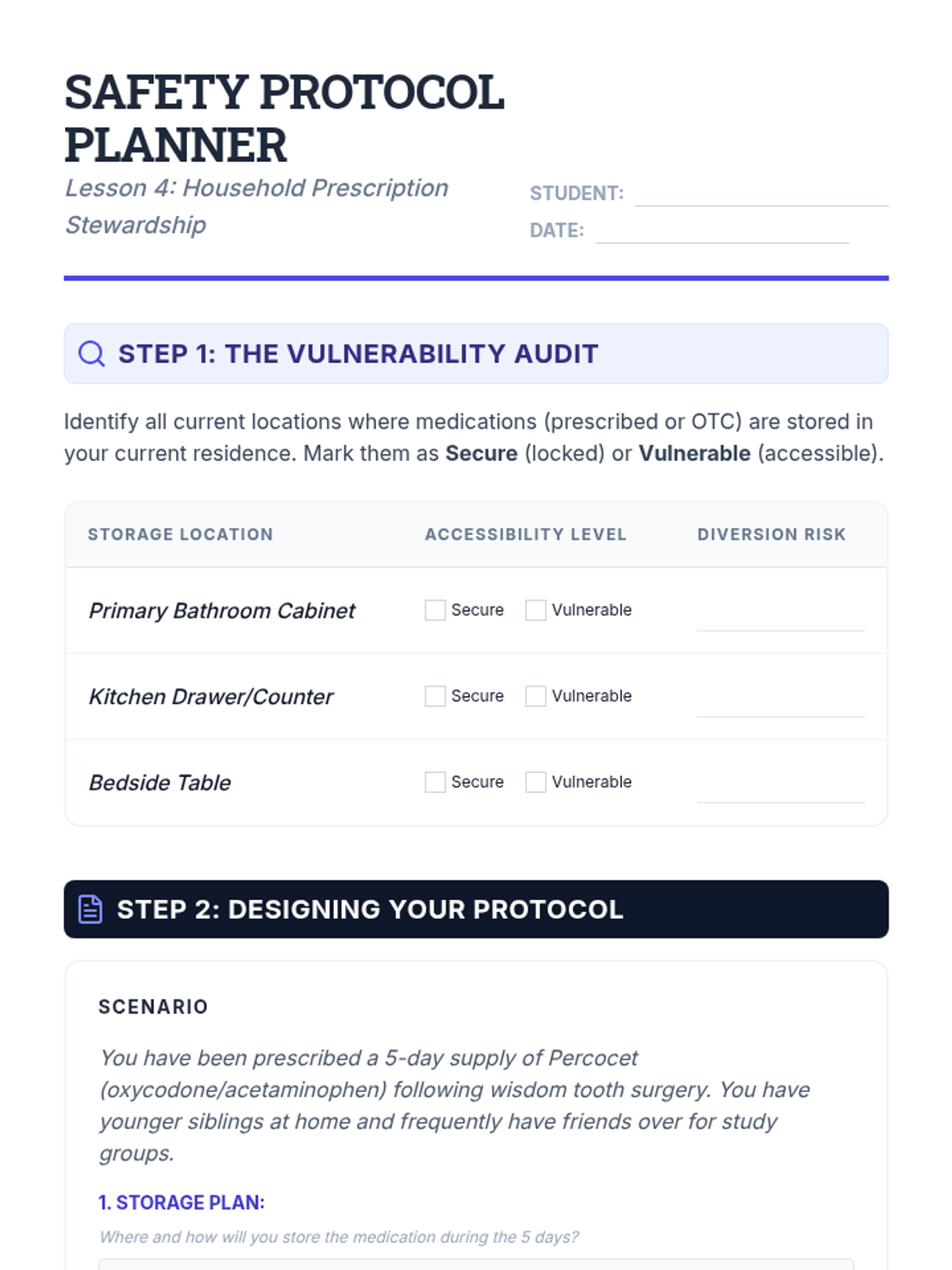
Focuses on prescription management, including secure storage, dosage adherence, and safe disposal methods to prevent diversion.
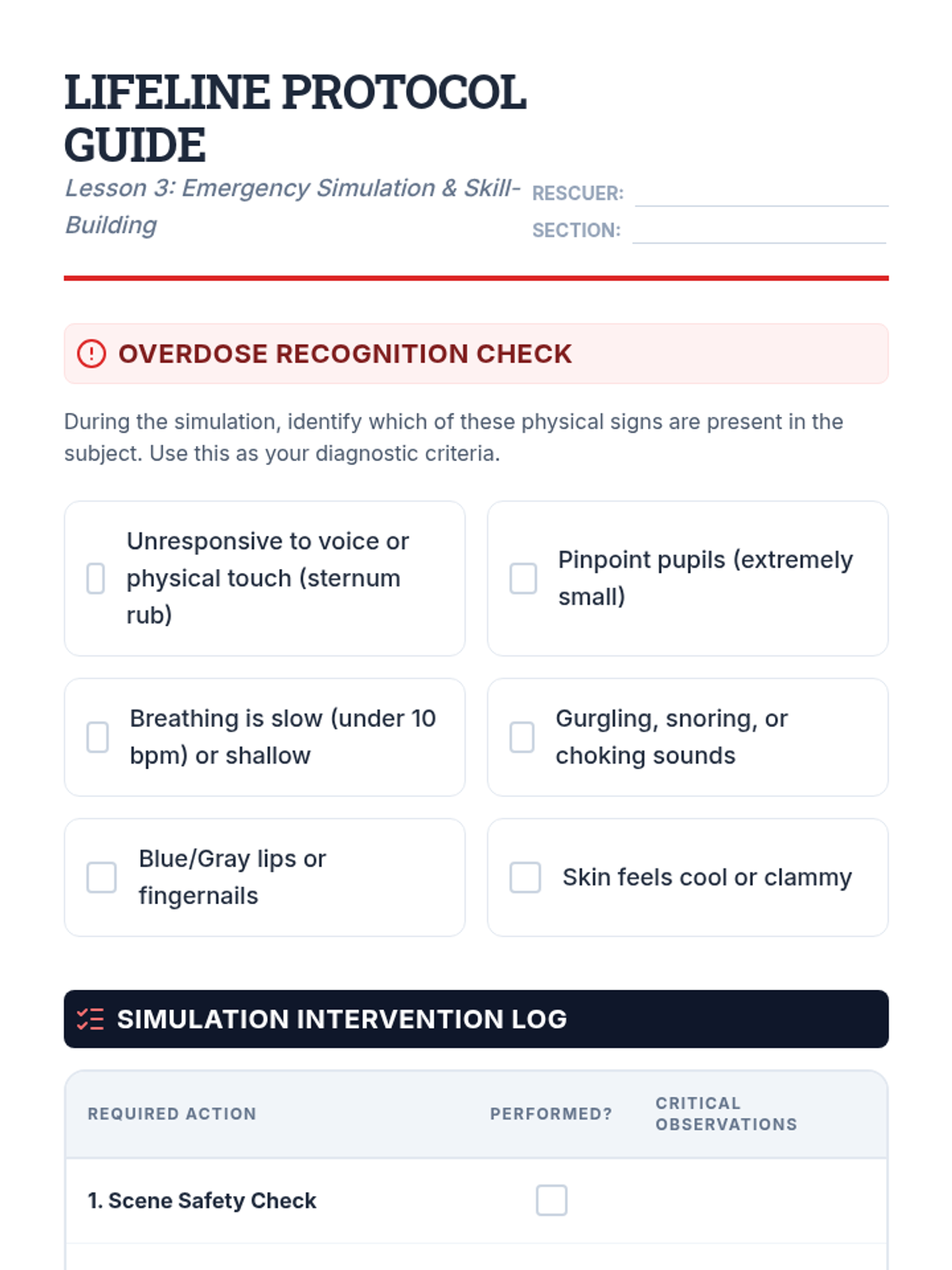
Trains students to identify overdose signs and participate in simulations covering Naloxone administration and Good Samaritan laws.
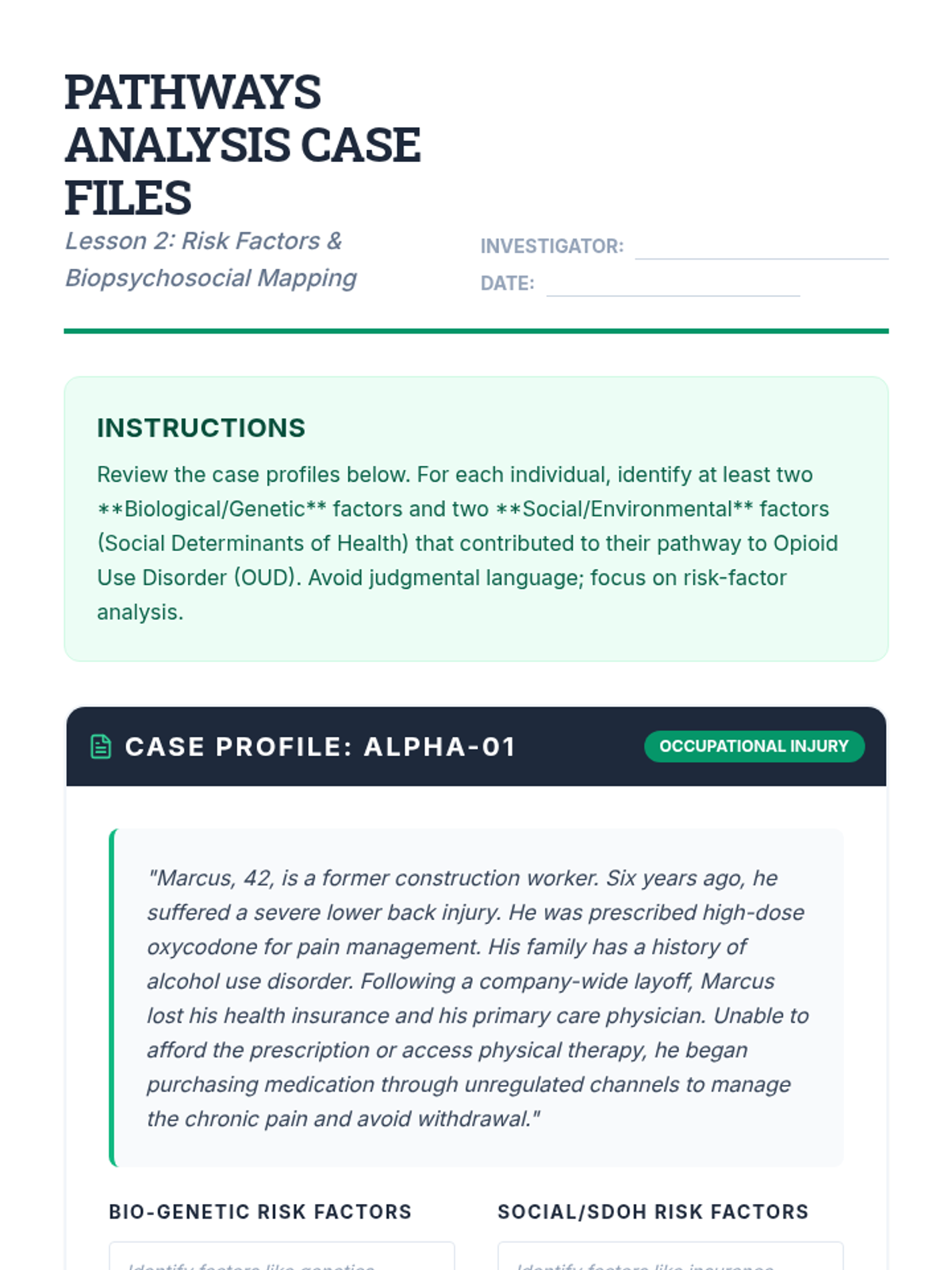
Utilizes real-world case studies to trace pathways to dependency and evaluates social determinants of health and genetic predispositions.
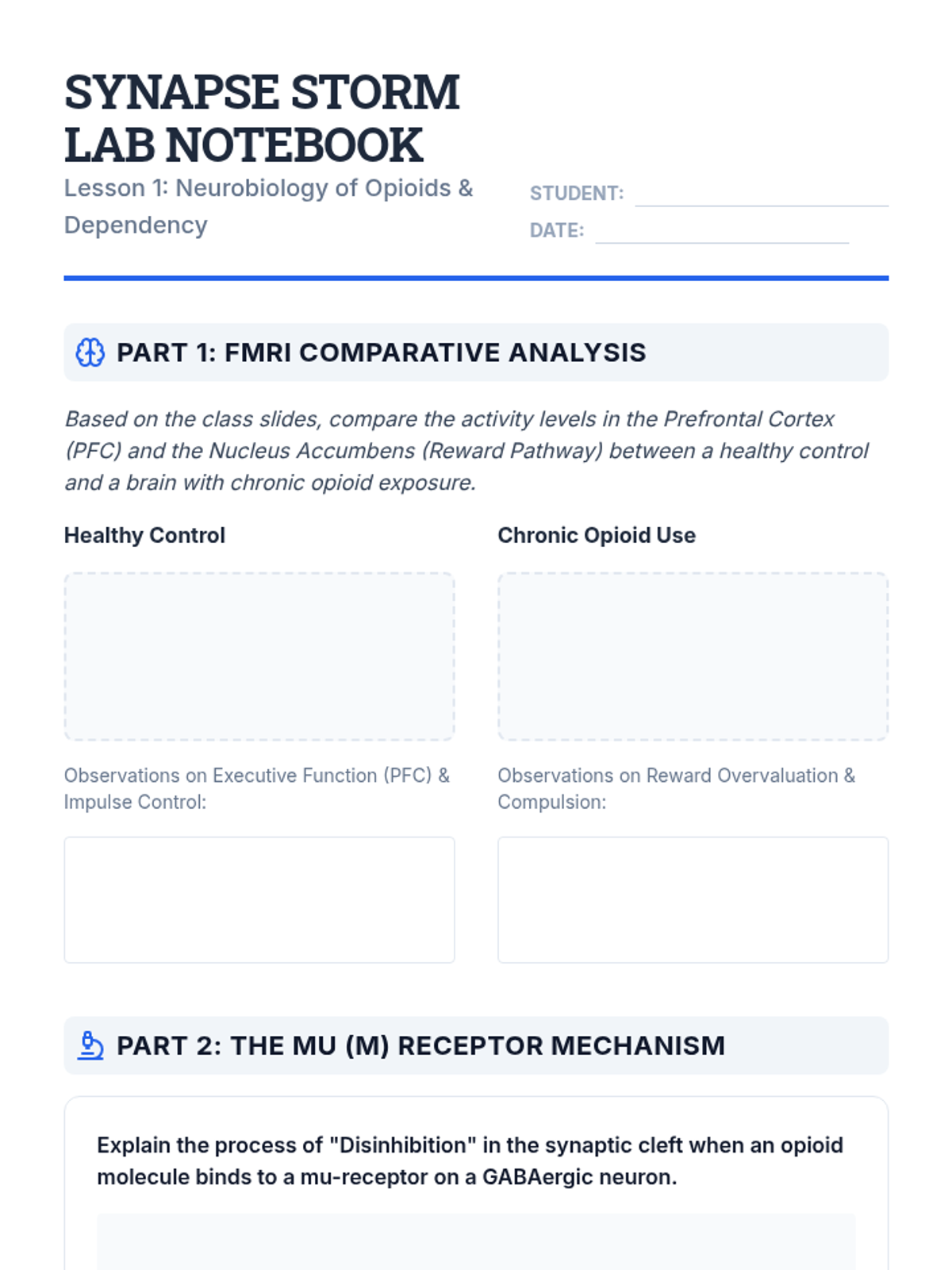
Students explore the pharmacokinetics of opioids, focusing on interaction with mu-opioid receptors and the impact on the brain's reward system and structural changes.
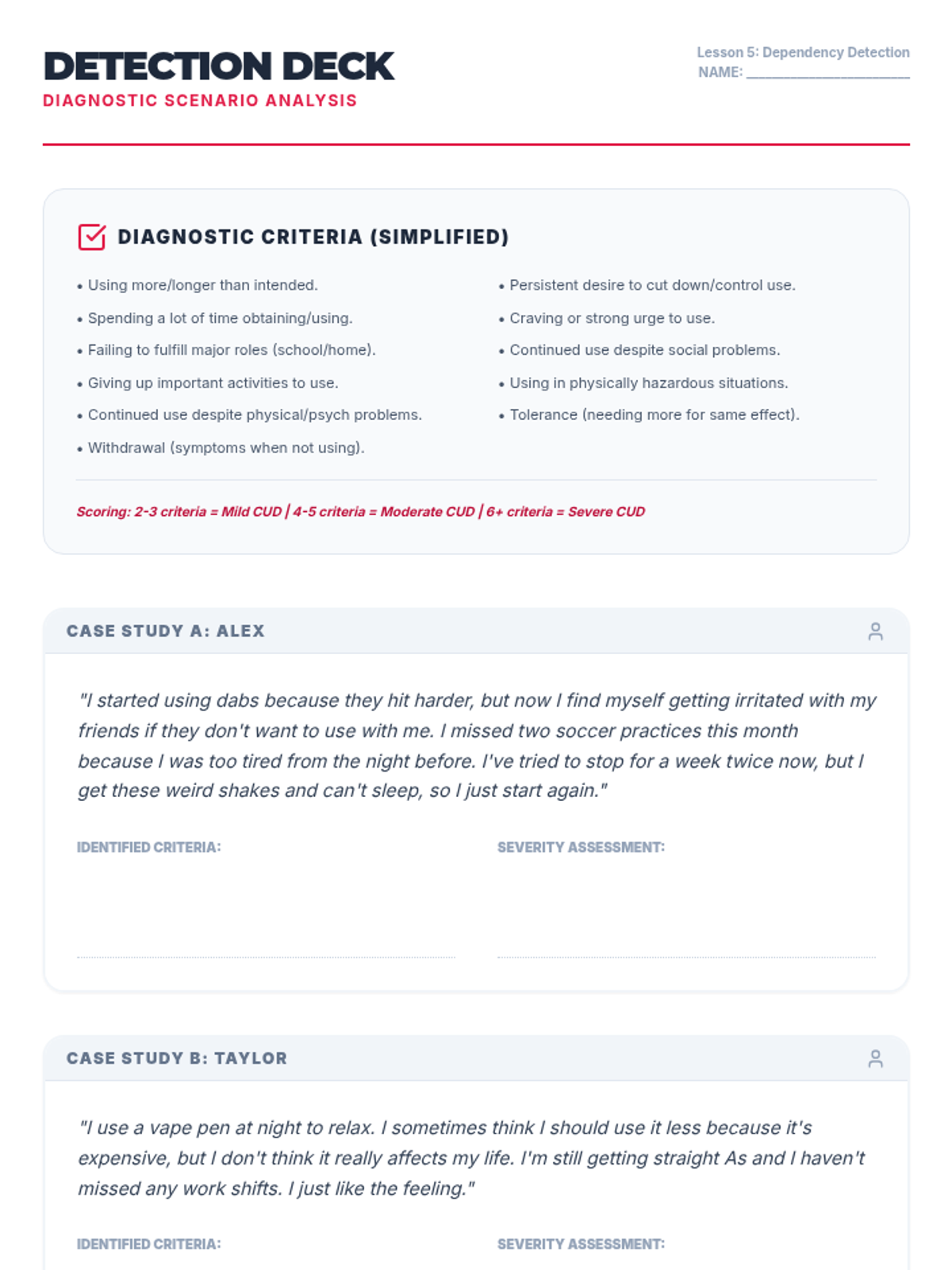
Students learn the DSM-5 criteria for Cannabis Use Disorder and identify resources for support and cessation.
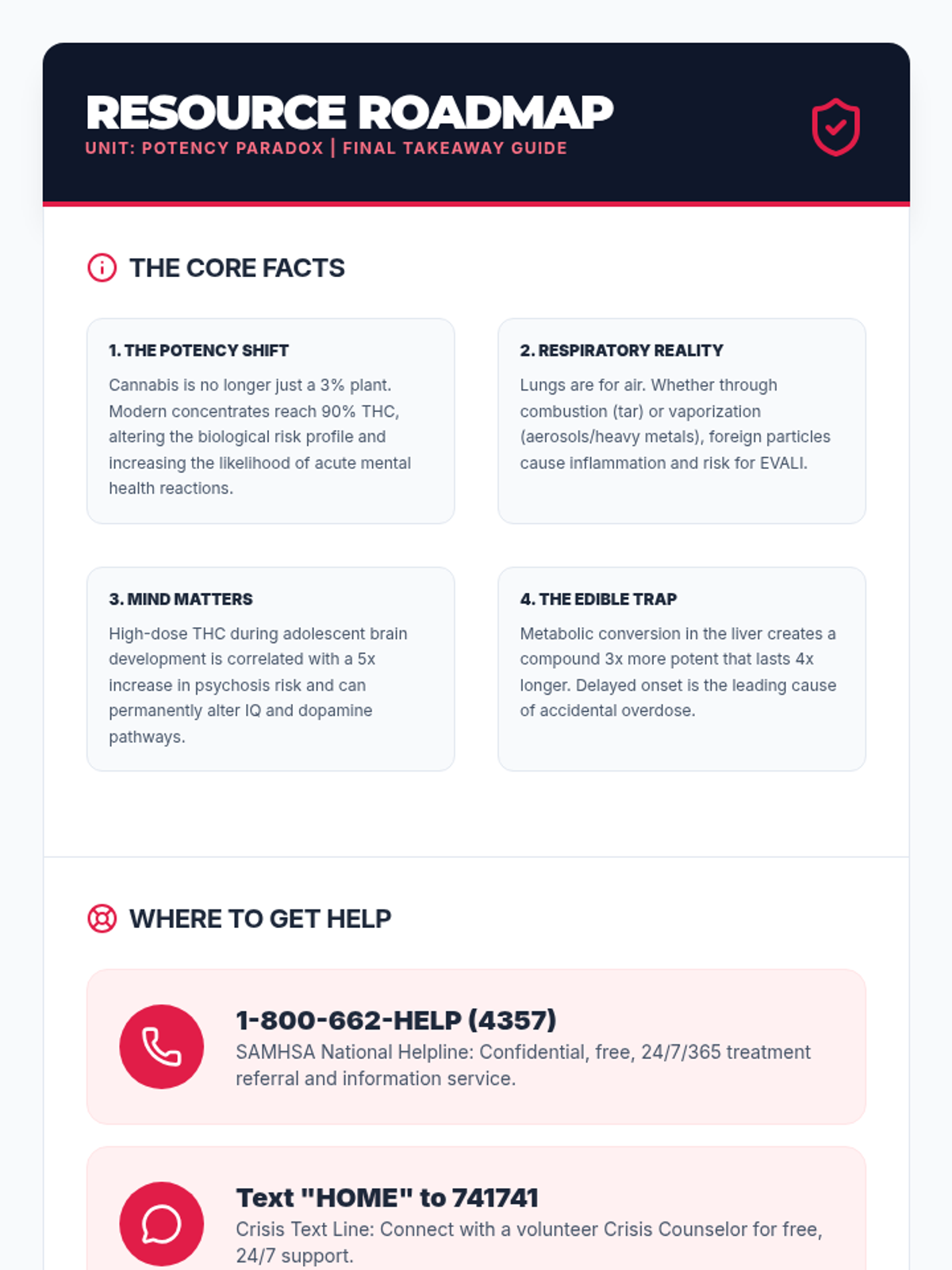
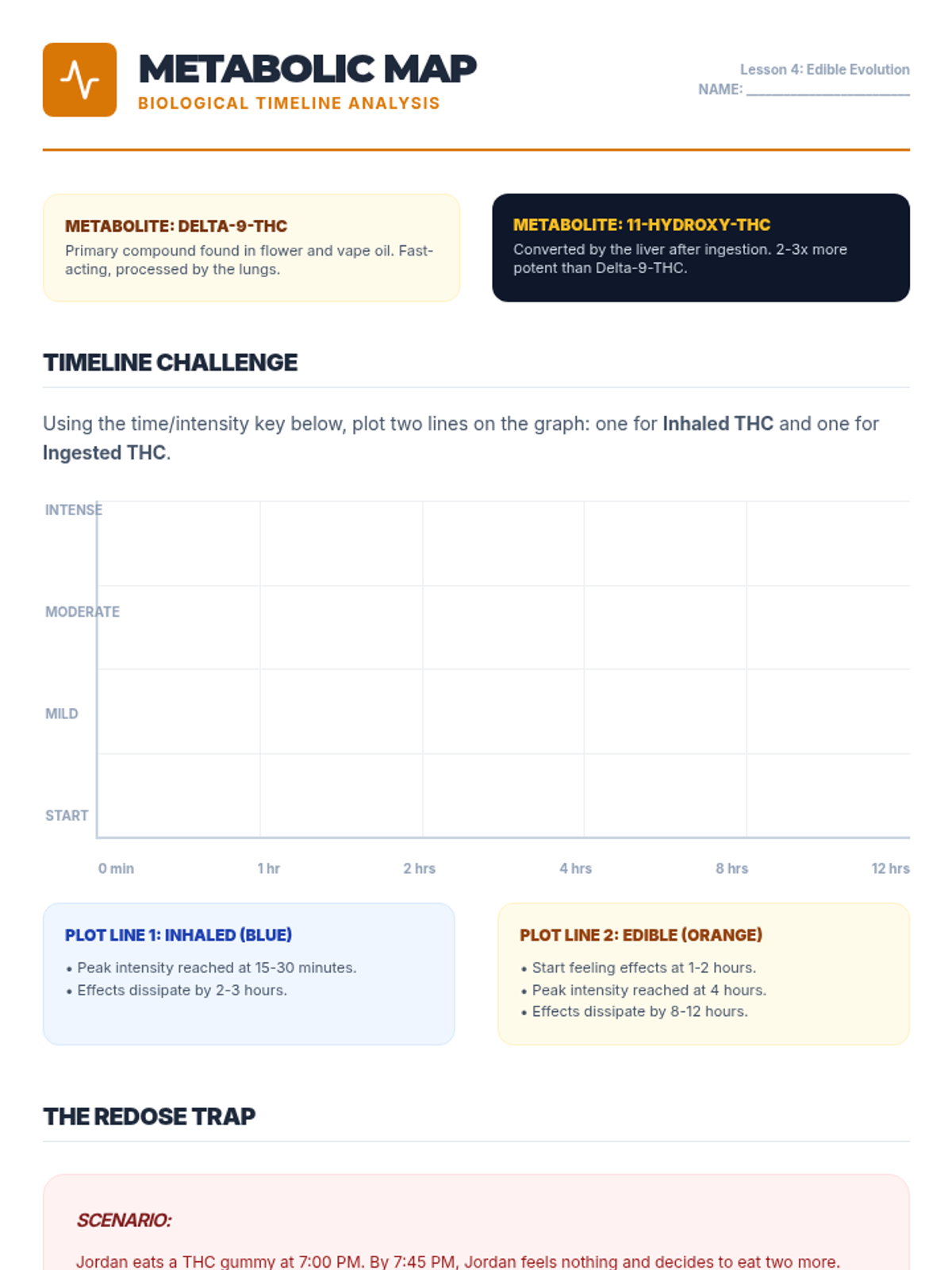
Students learn about the digestive metabolism of THC, timing differences between ingestion and inhalation, and associated overdose risks.
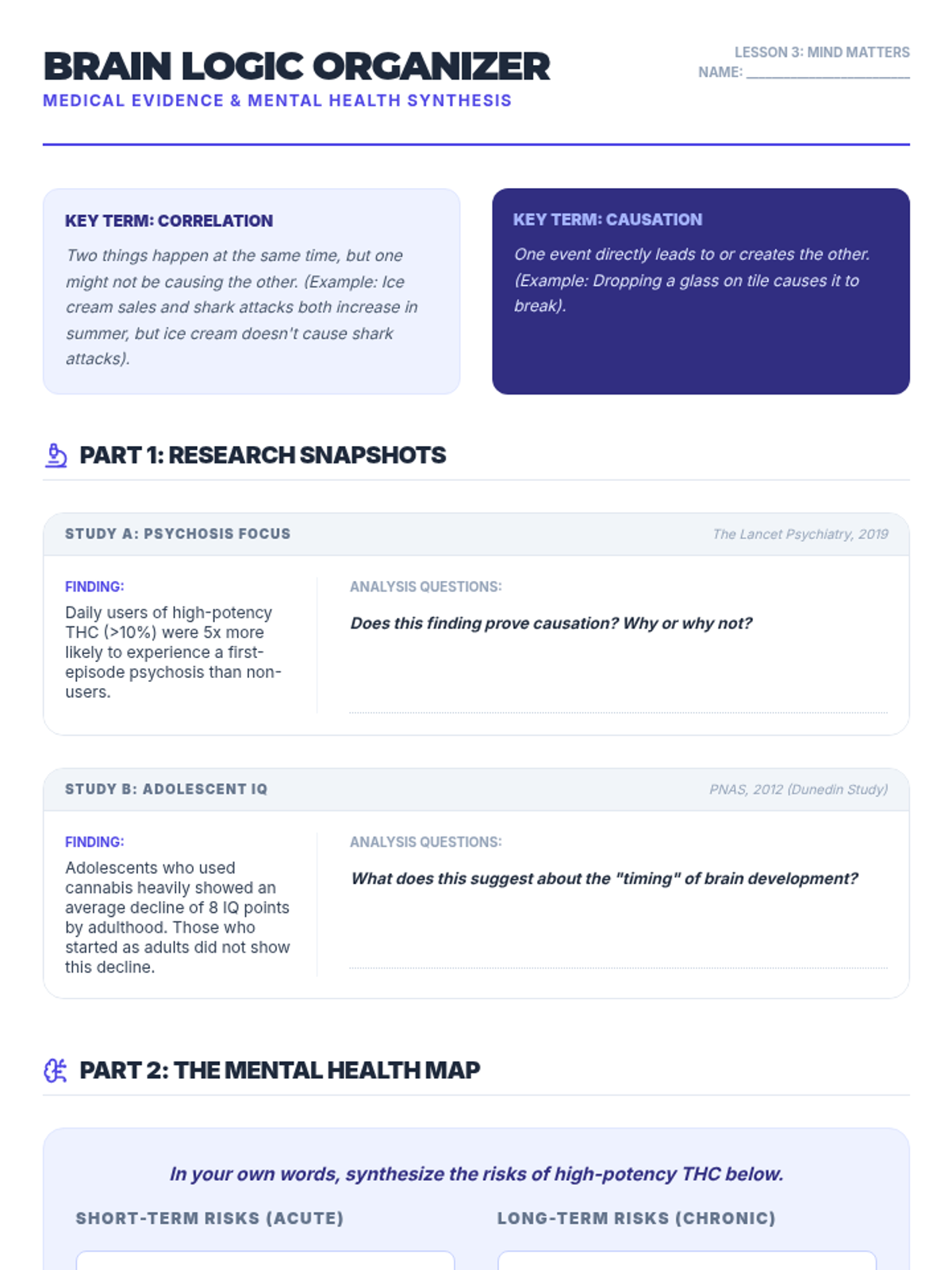
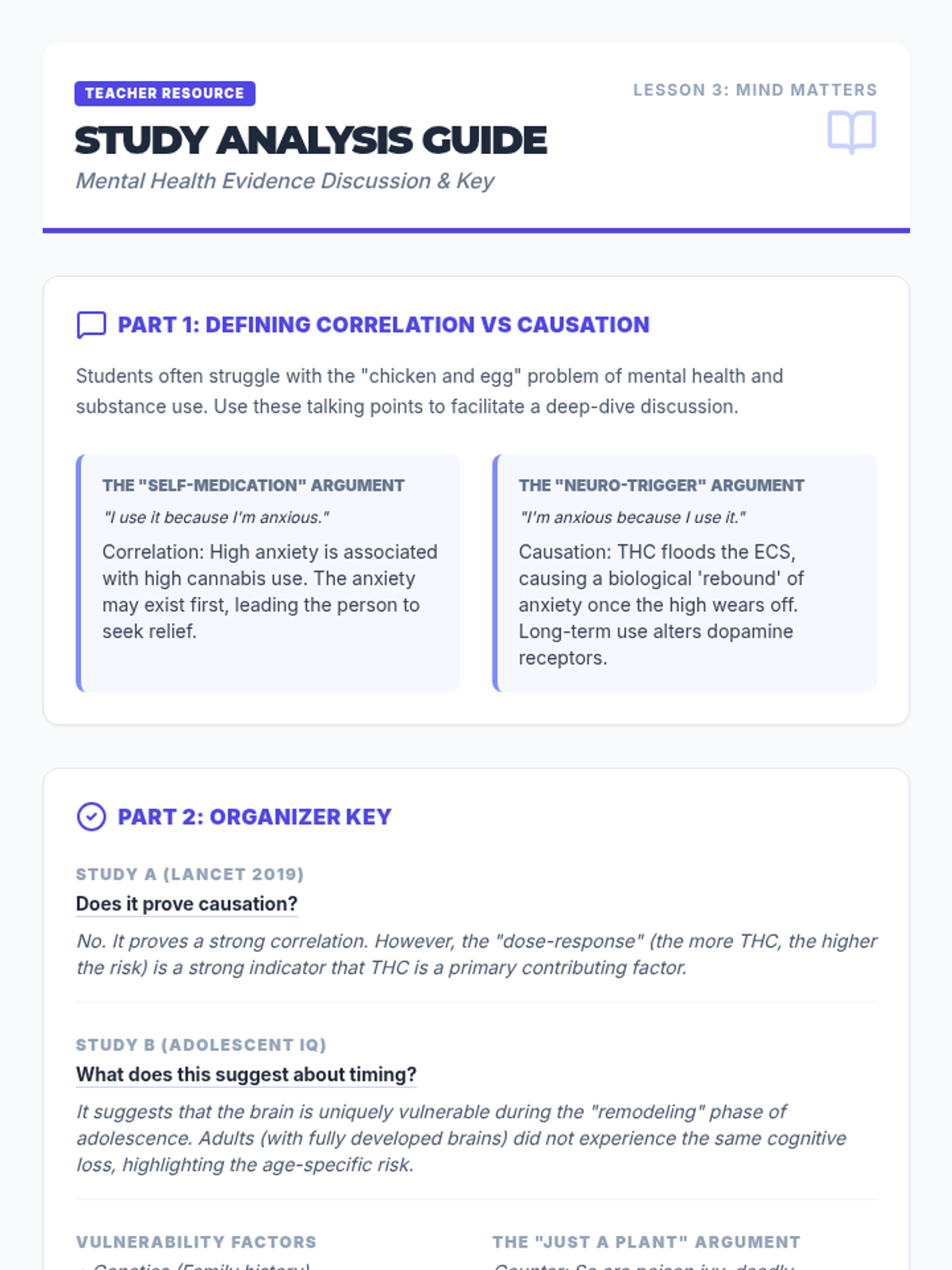
Students review links between high-potency cannabis and mental health issues, emphasizing the difference between correlation and causation.
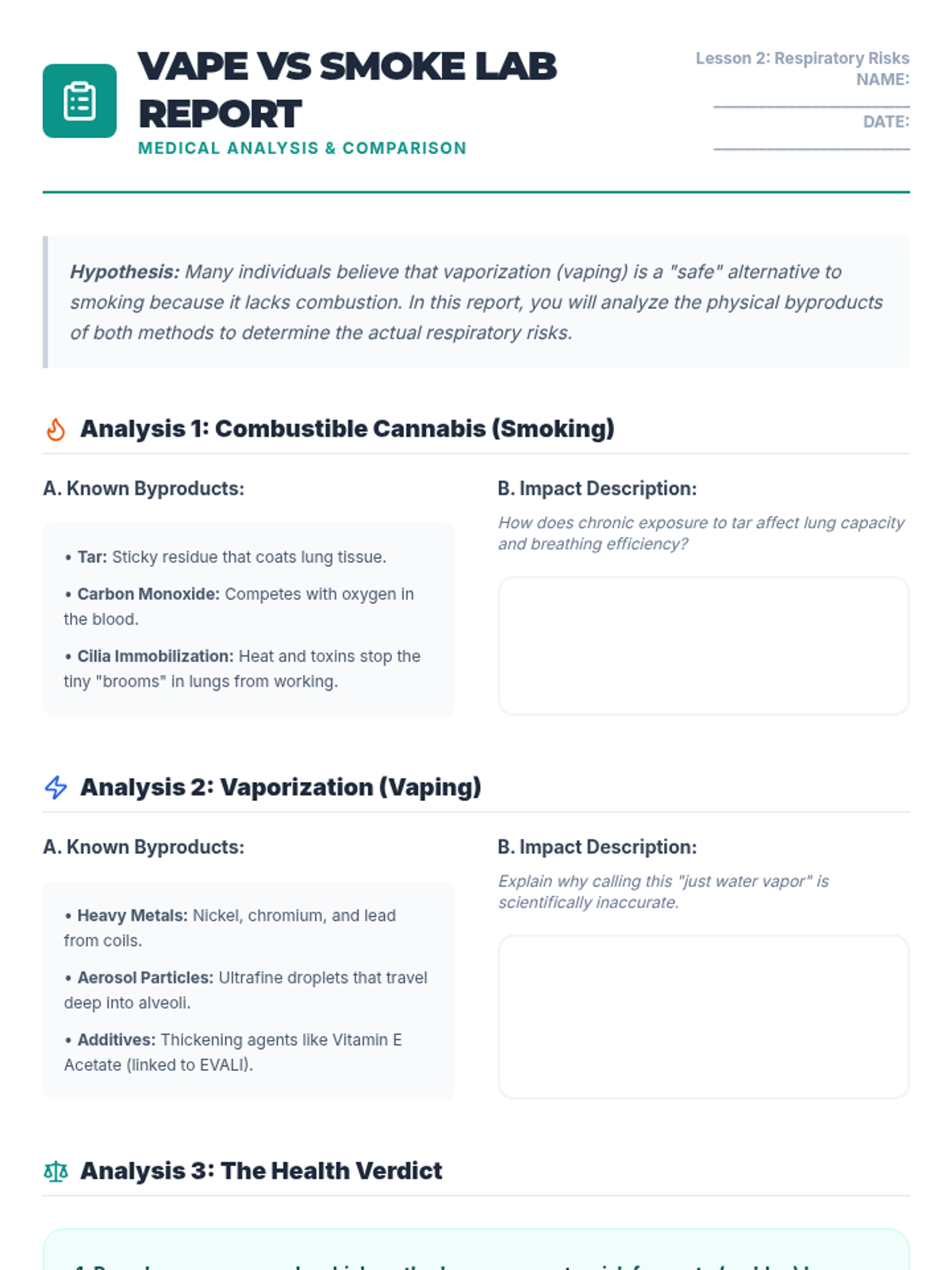
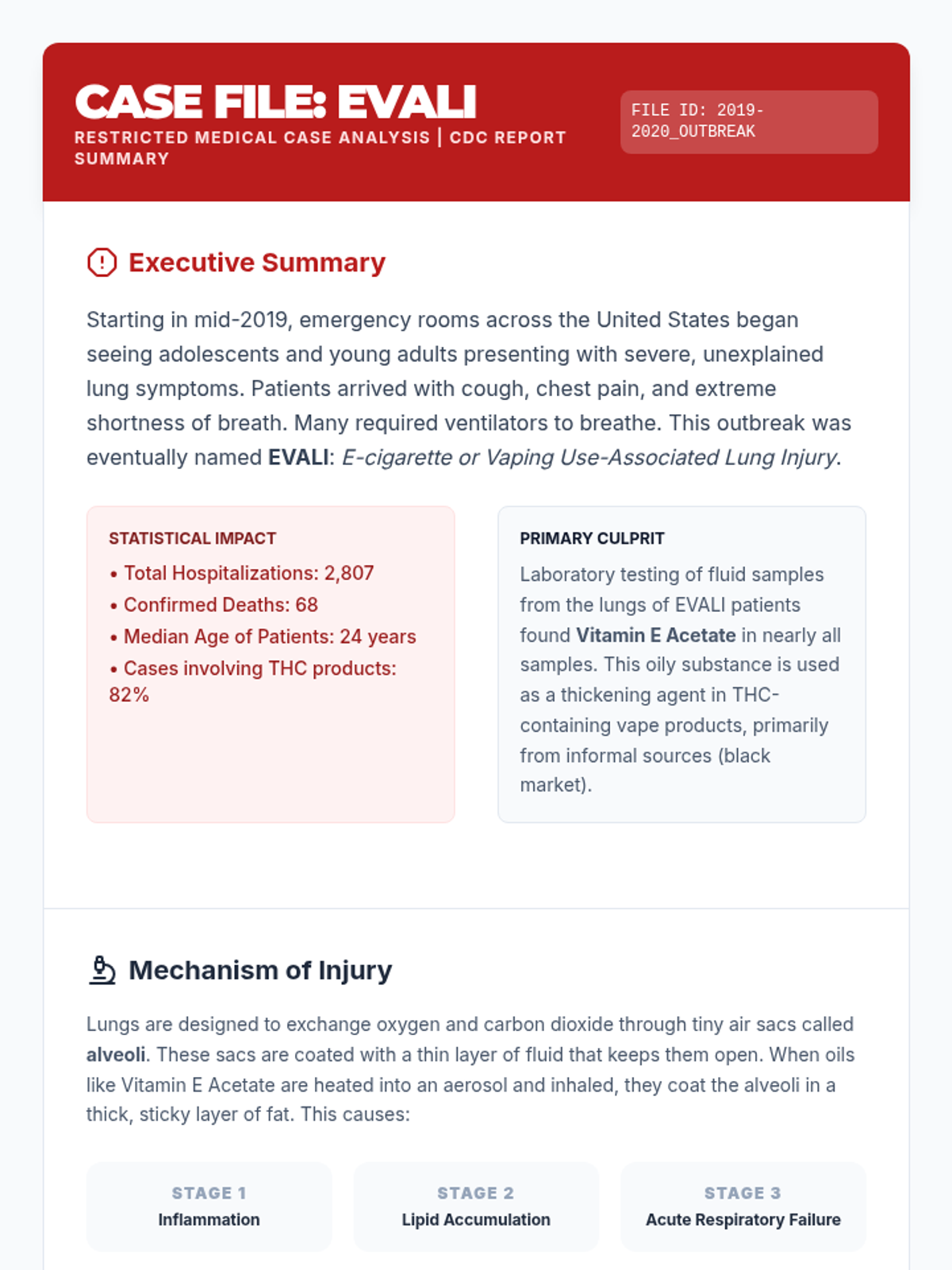
Students examine the respiratory effects of combustible cannabis versus vaporization, including EVALI and tar inhalation evidence.
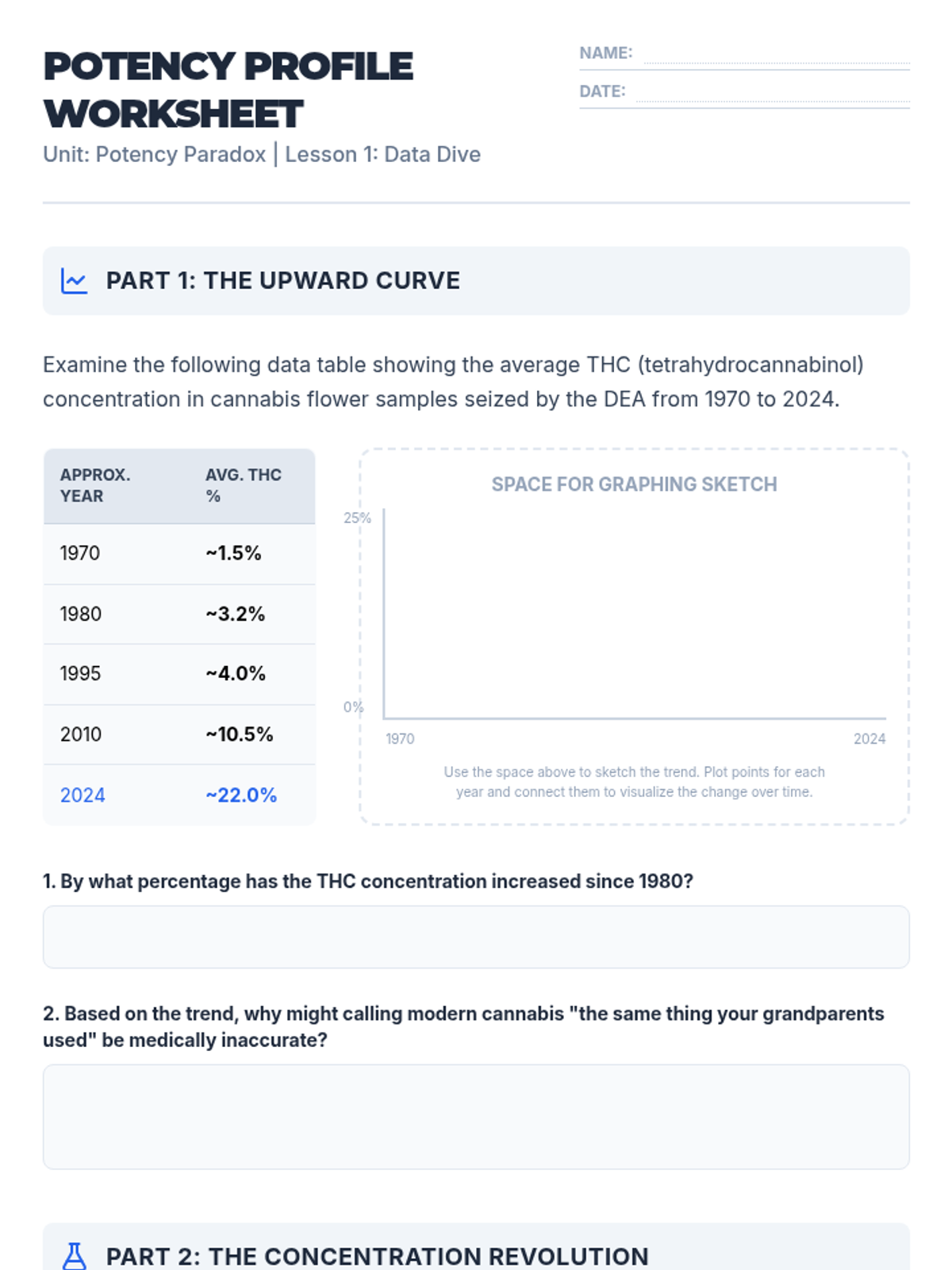
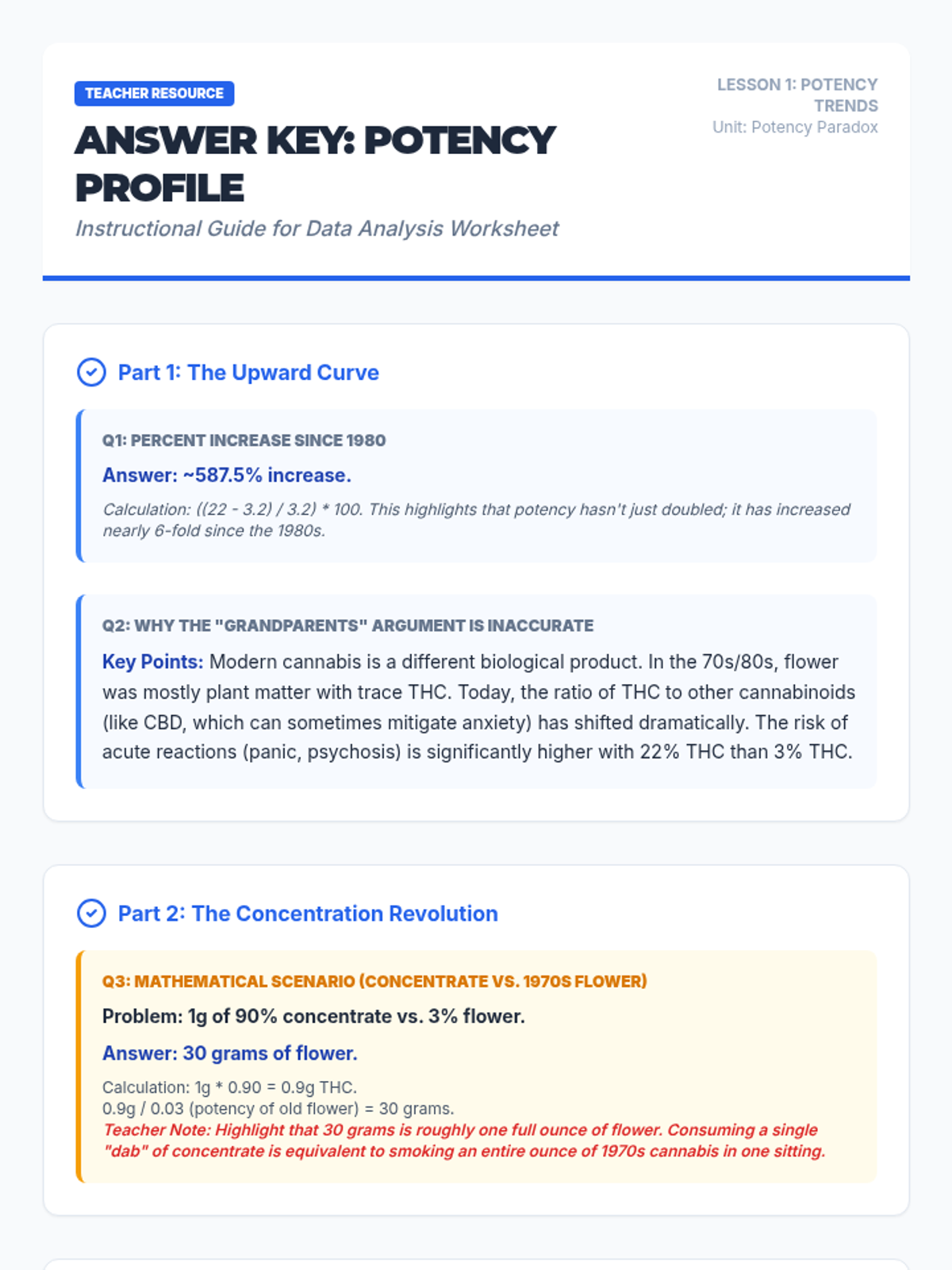
Students analyze charts comparing THC percentages from the 1970s to modern concentrates, discussing how concentration shifts change biological impact.
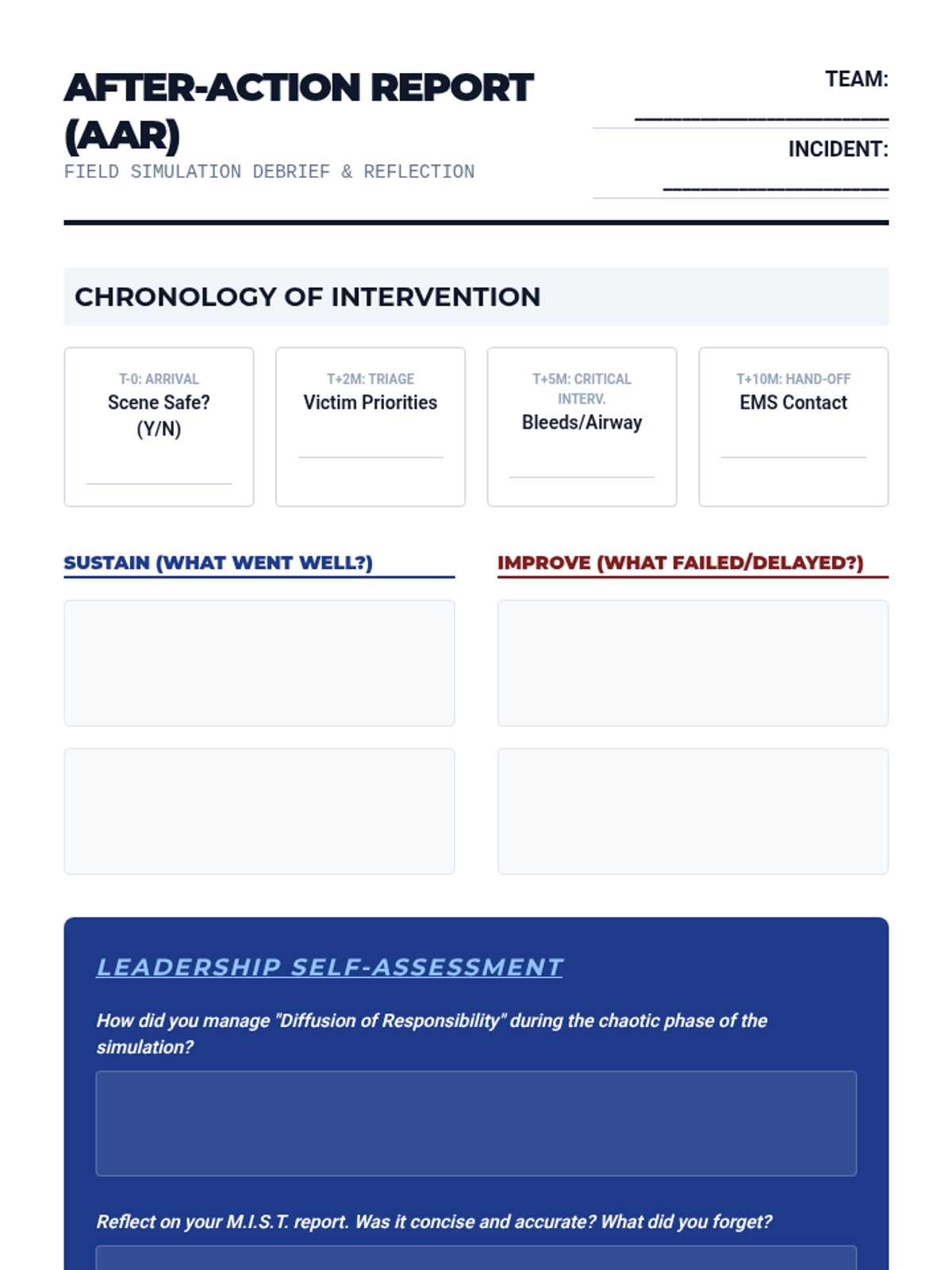
The culminating simulation where students manage a complex emergency scenario from initial discovery to professional hand-off. They must coordinate scene safety, lead bystanders, and provide medical intervention under high-pressure conditions.
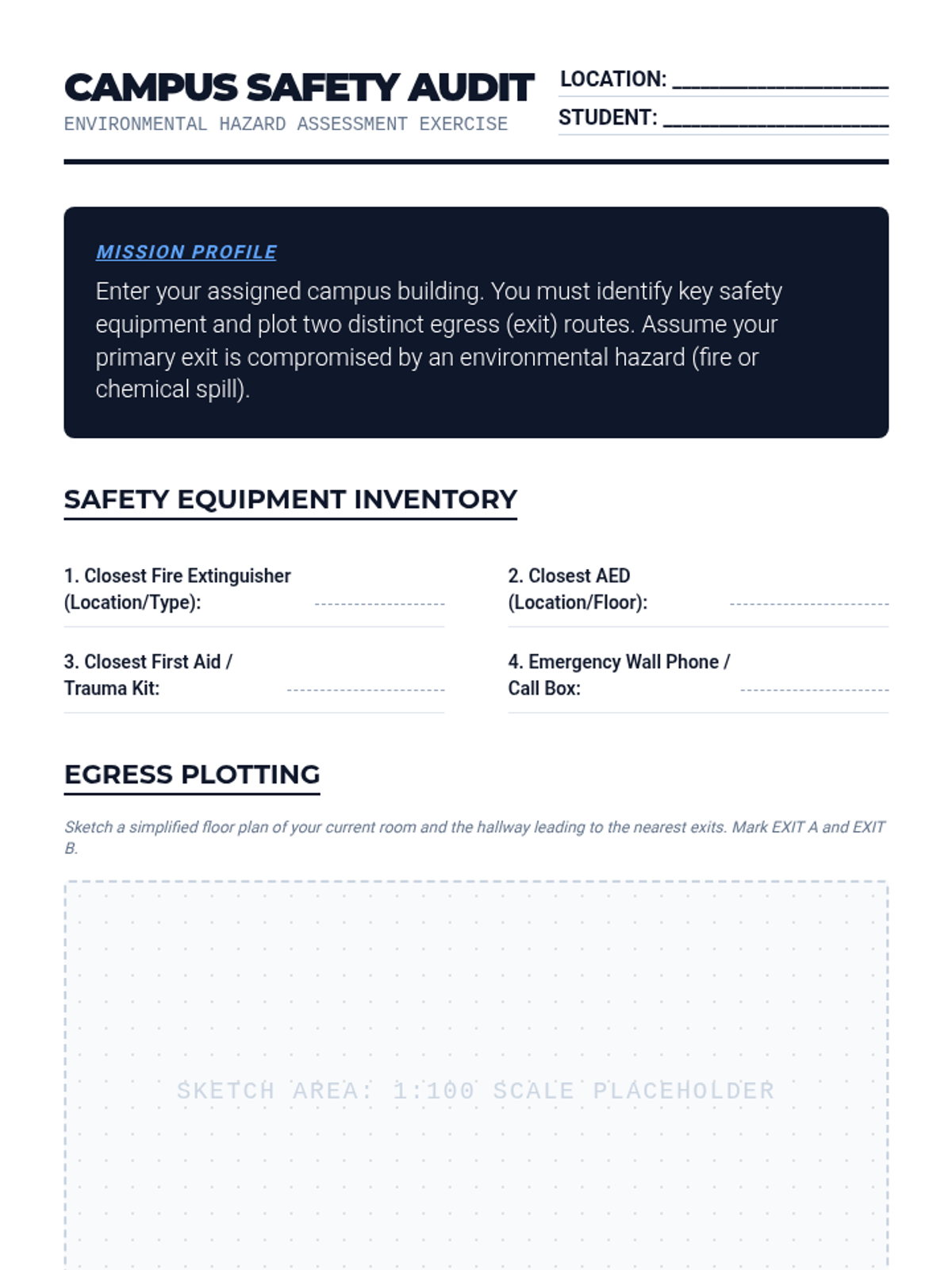
Covers responses to broader environmental threats including fires, chemical spills, and active threats. Students learn evacuation versus shelter-in-place protocols and conduct a campus safety audit to identify egress points and safety equipment.
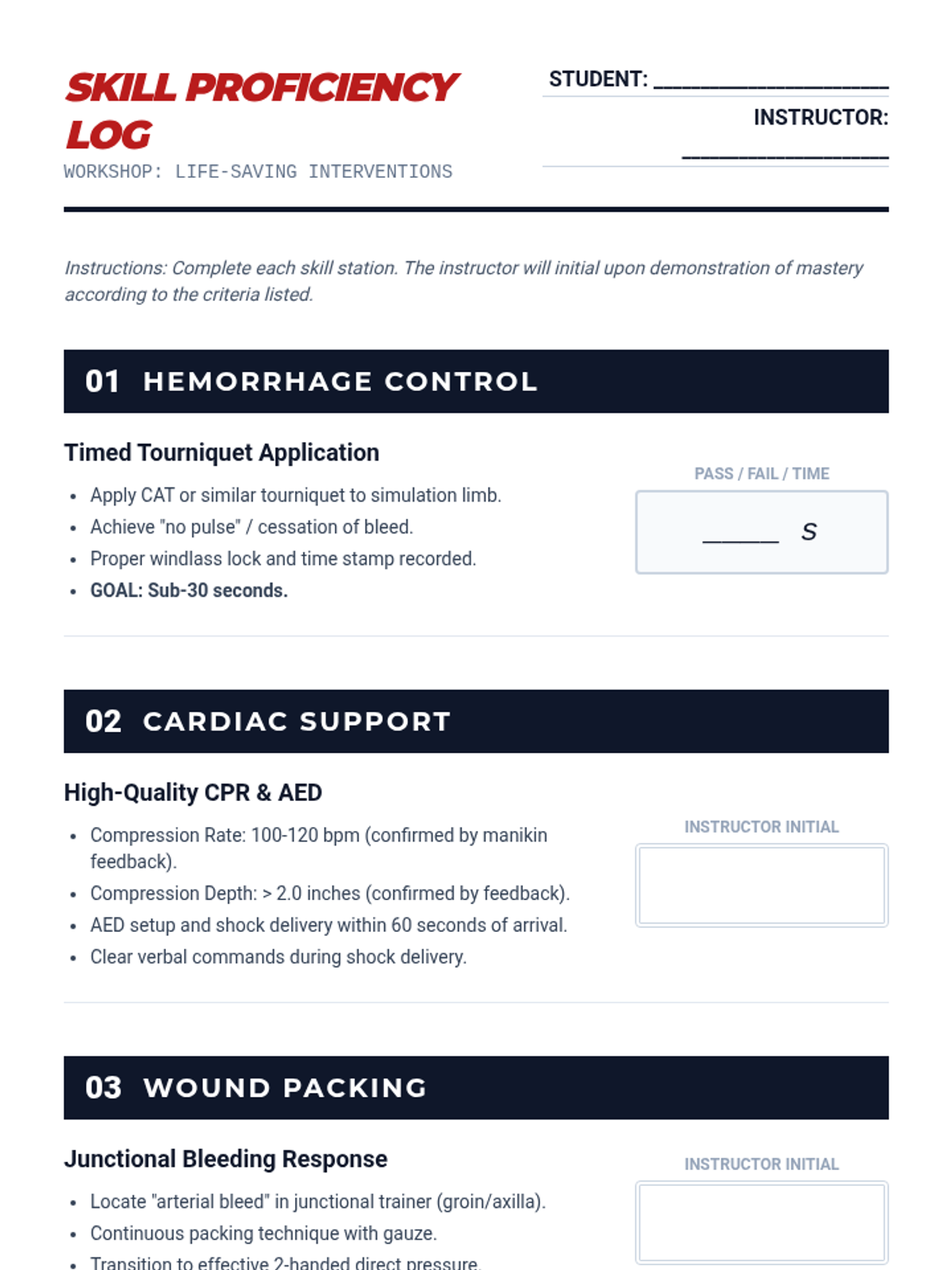
A hands-on workshop focused on life-saving interventions for traumatic hemorrhage and cardiac arrest. Students gain proficiency in tourniquet application, wound packing, high-quality CPR, and AED deployment through mastery-based practice.
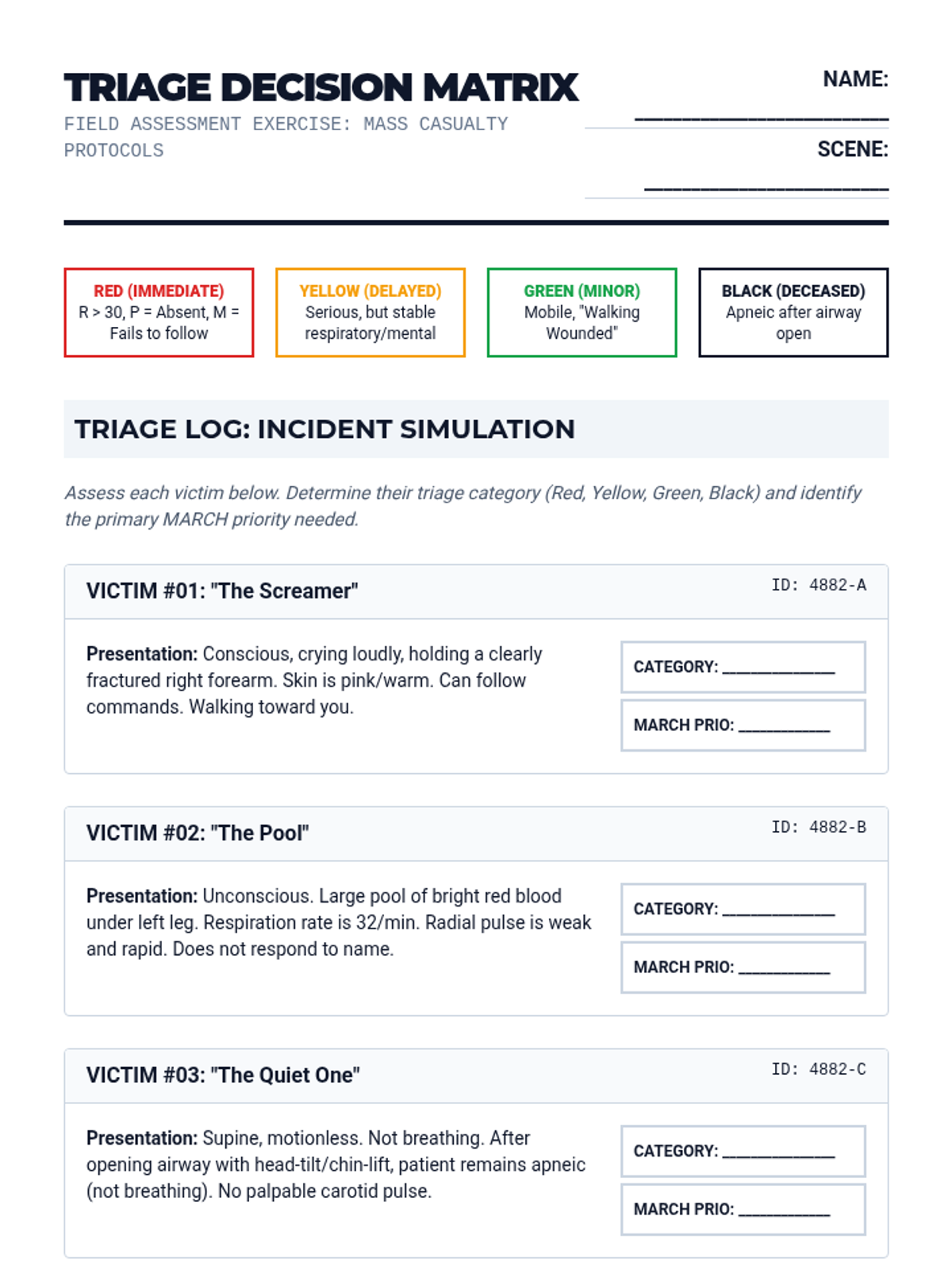
Introduces the MARCH algorithm (Massive hemorrhage, Airway, Respiration, Circulation, Hypothermia) and triage protocols for prioritizing care in multi-victim scenarios. Students practice rapid scene evaluation and victim categorization in a simulated chaotic environment.