Fundamental techniques for racket sports, track and field, and gymnastics maneuvers. Develops physical literacy through martial arts disciplines and self-defense strategies.
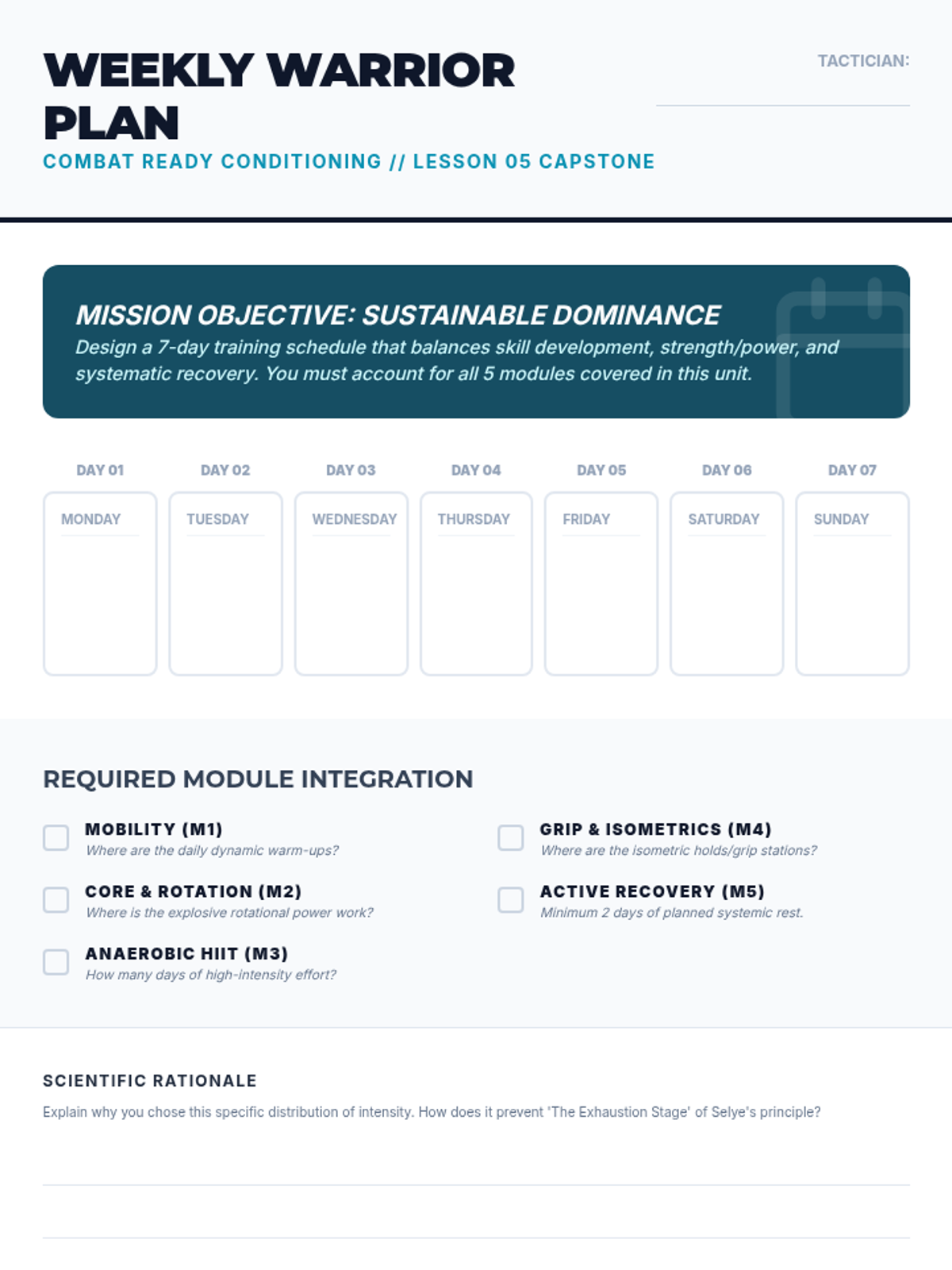
Covers the science of recovery and program design, culminating in students creating a sustainable weekly training protocol.
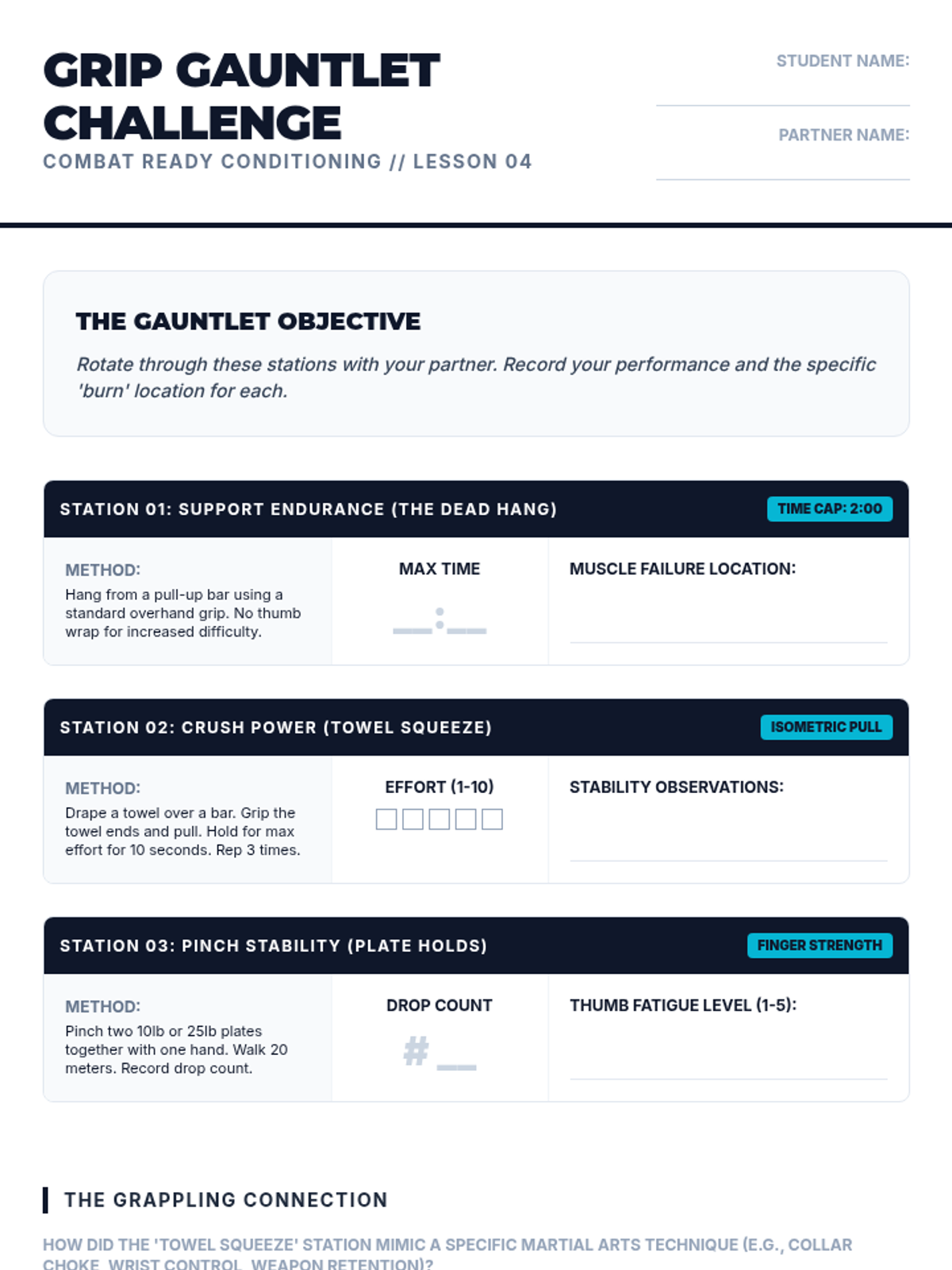
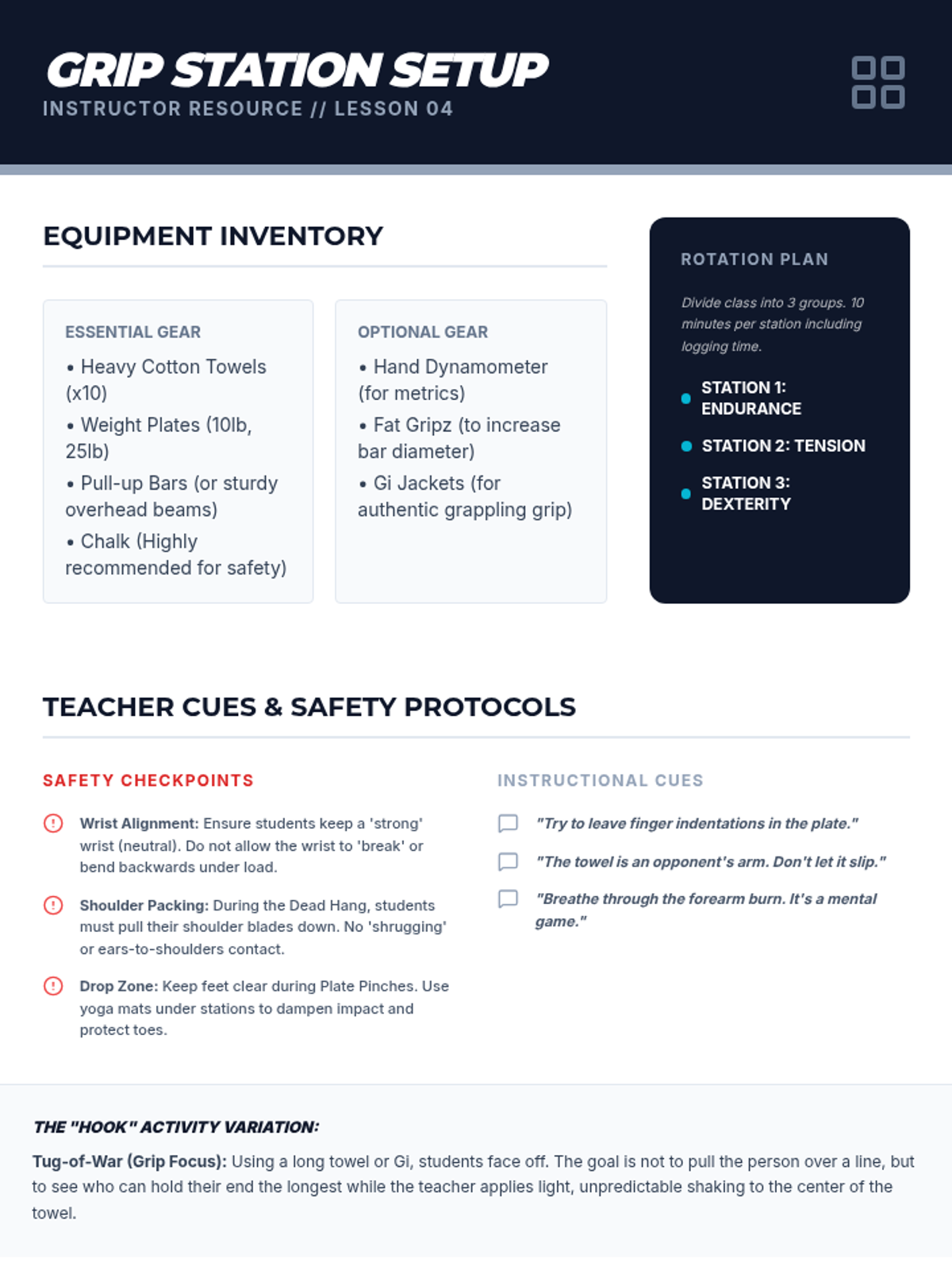
Explores the mechanics of grip and isometric tension, vital for grappling and weapon retention in martial arts.
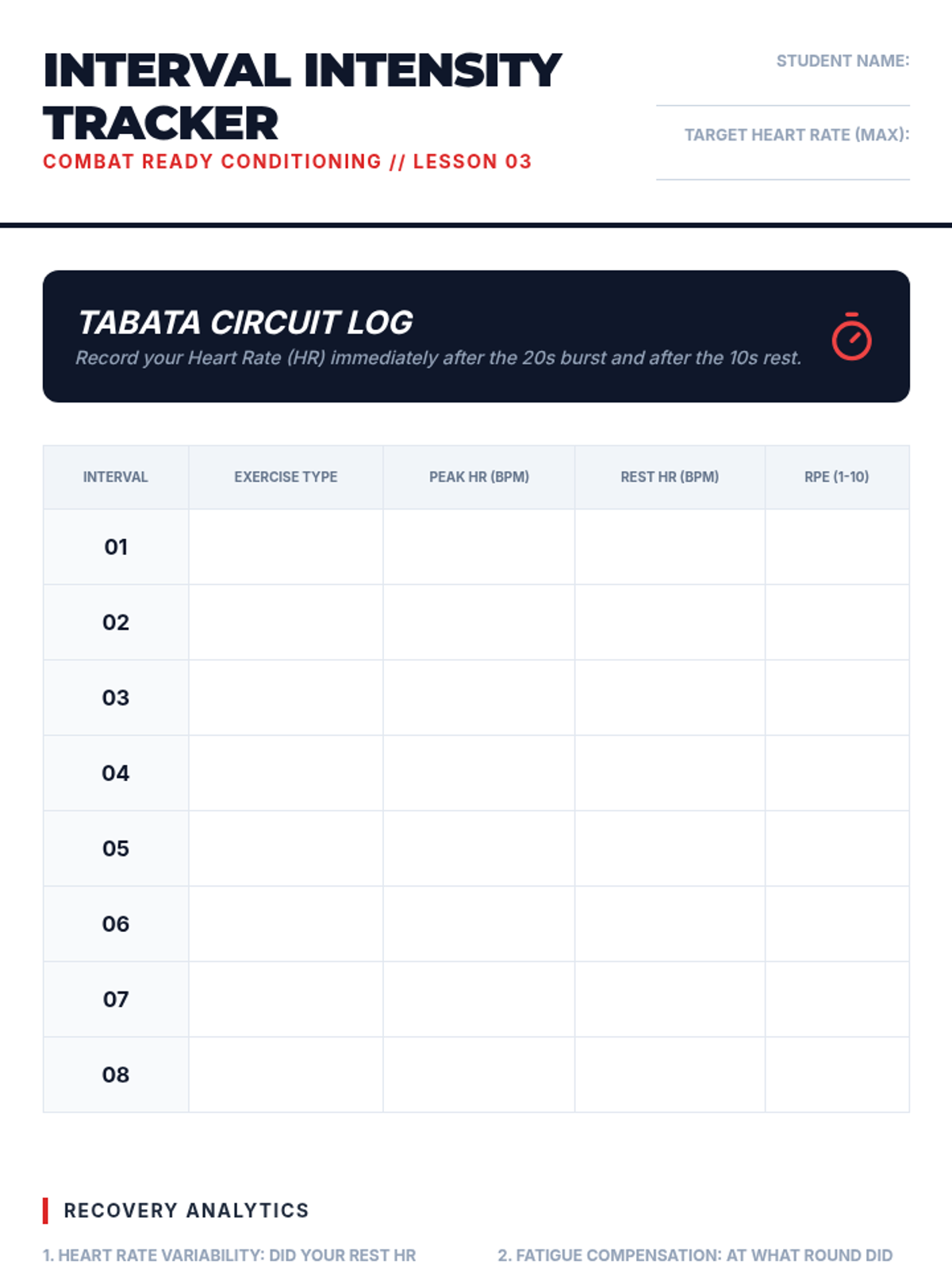
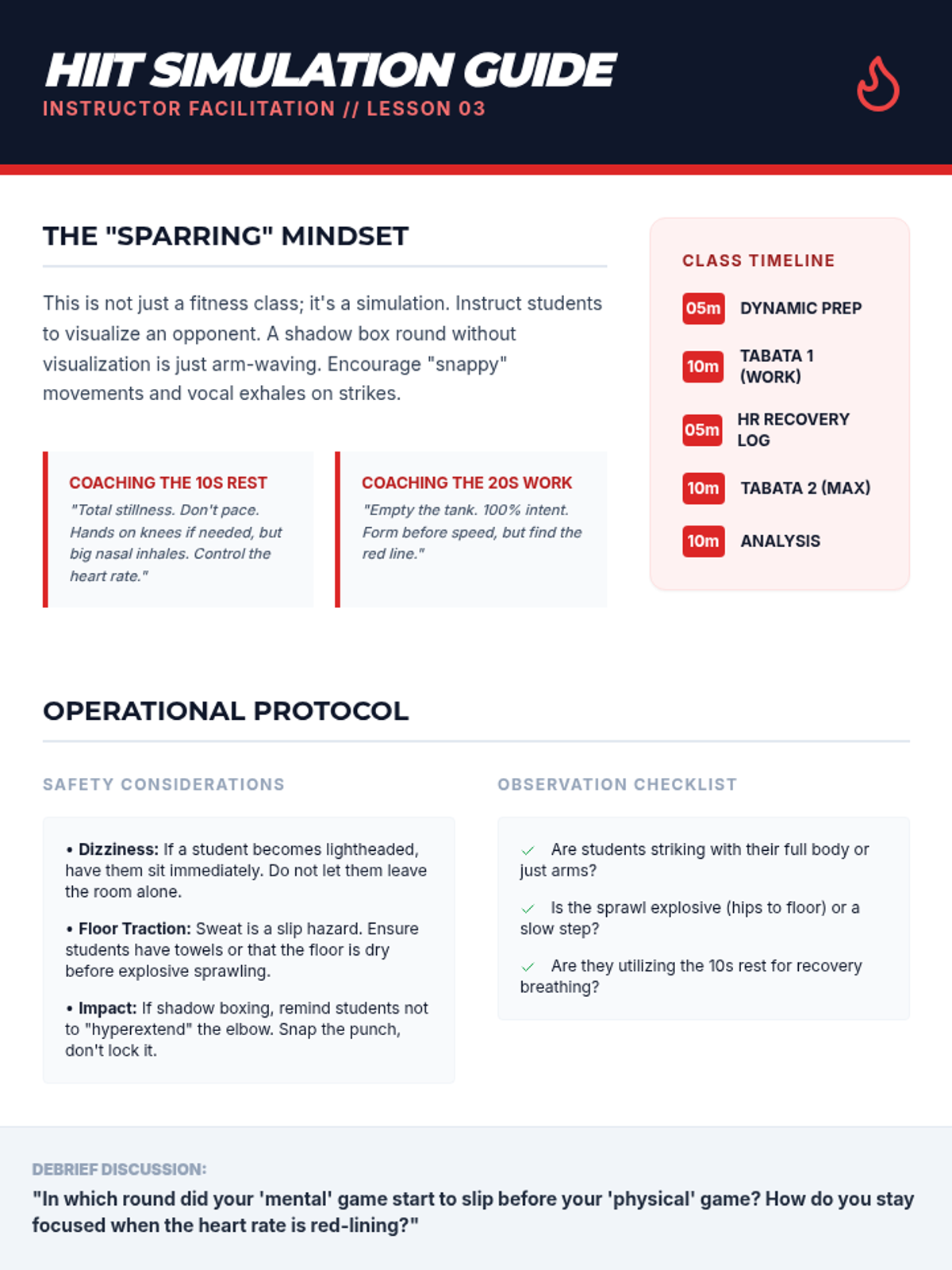
Simulates the high-intensity energy demands of combat through HIIT, focusing on anaerobic capacity and rapid recovery.
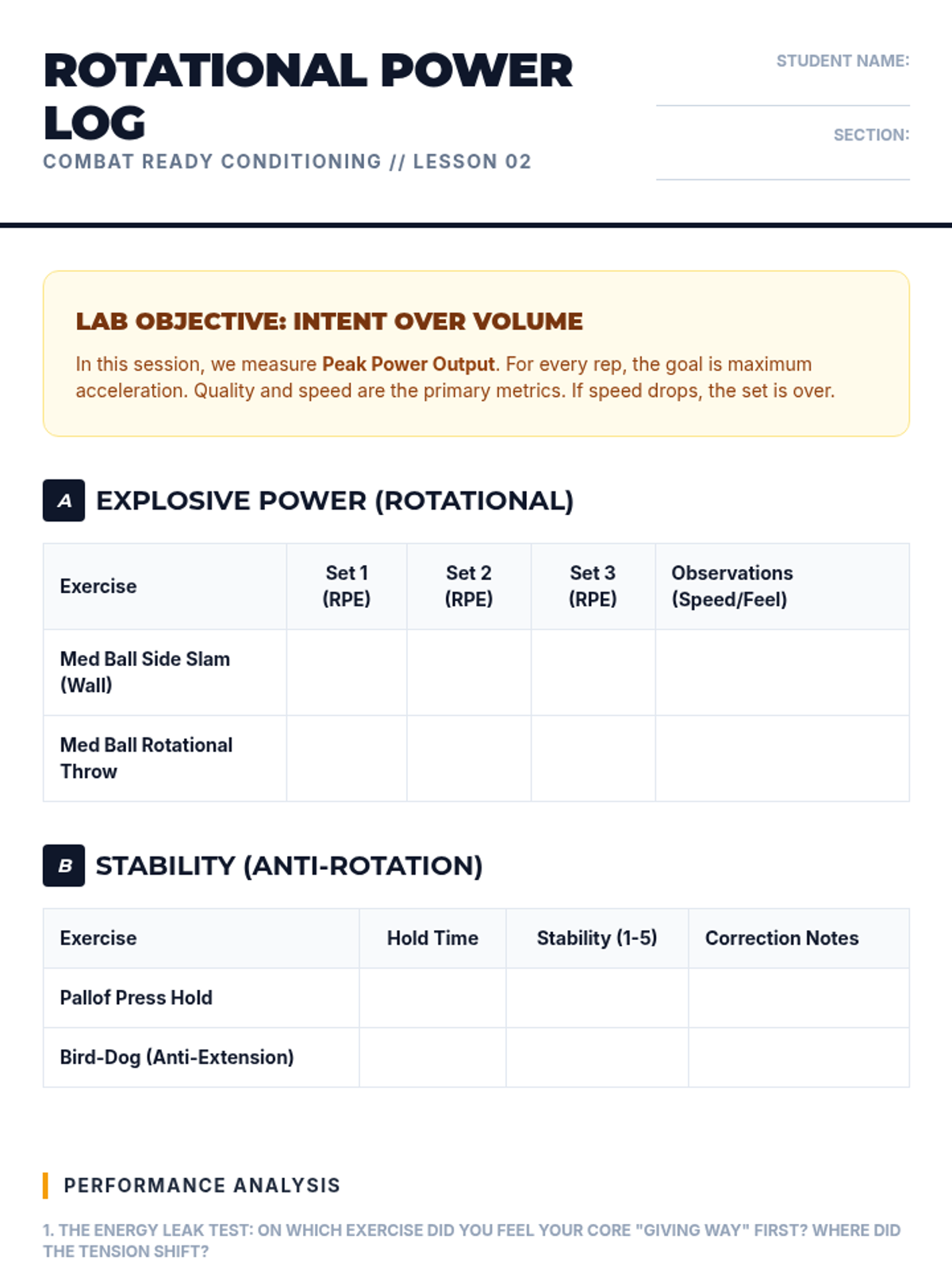
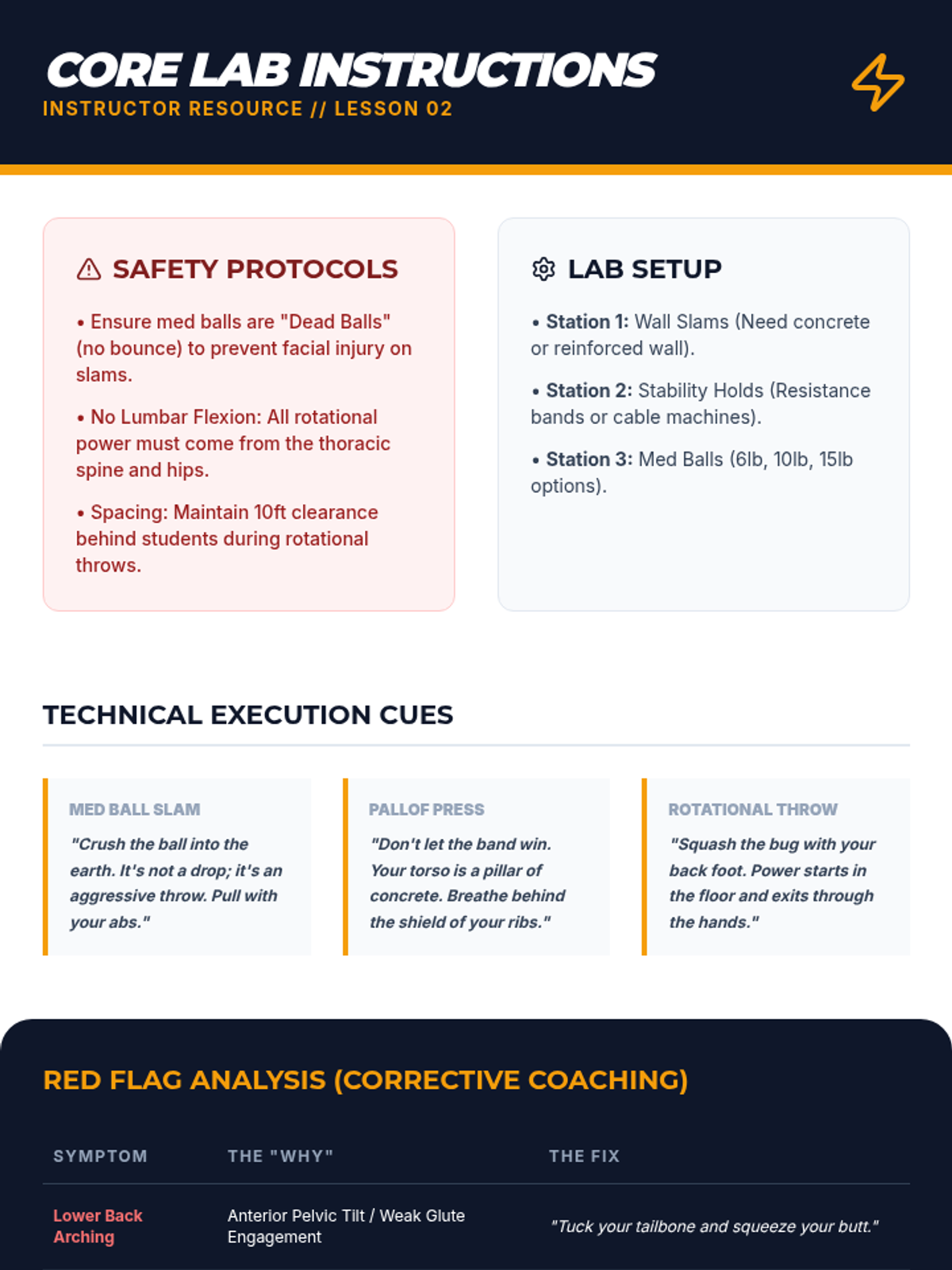
Focuses on the core's role as a power transmitter, teaching students how to generate rotational force and maintain spinal stability.
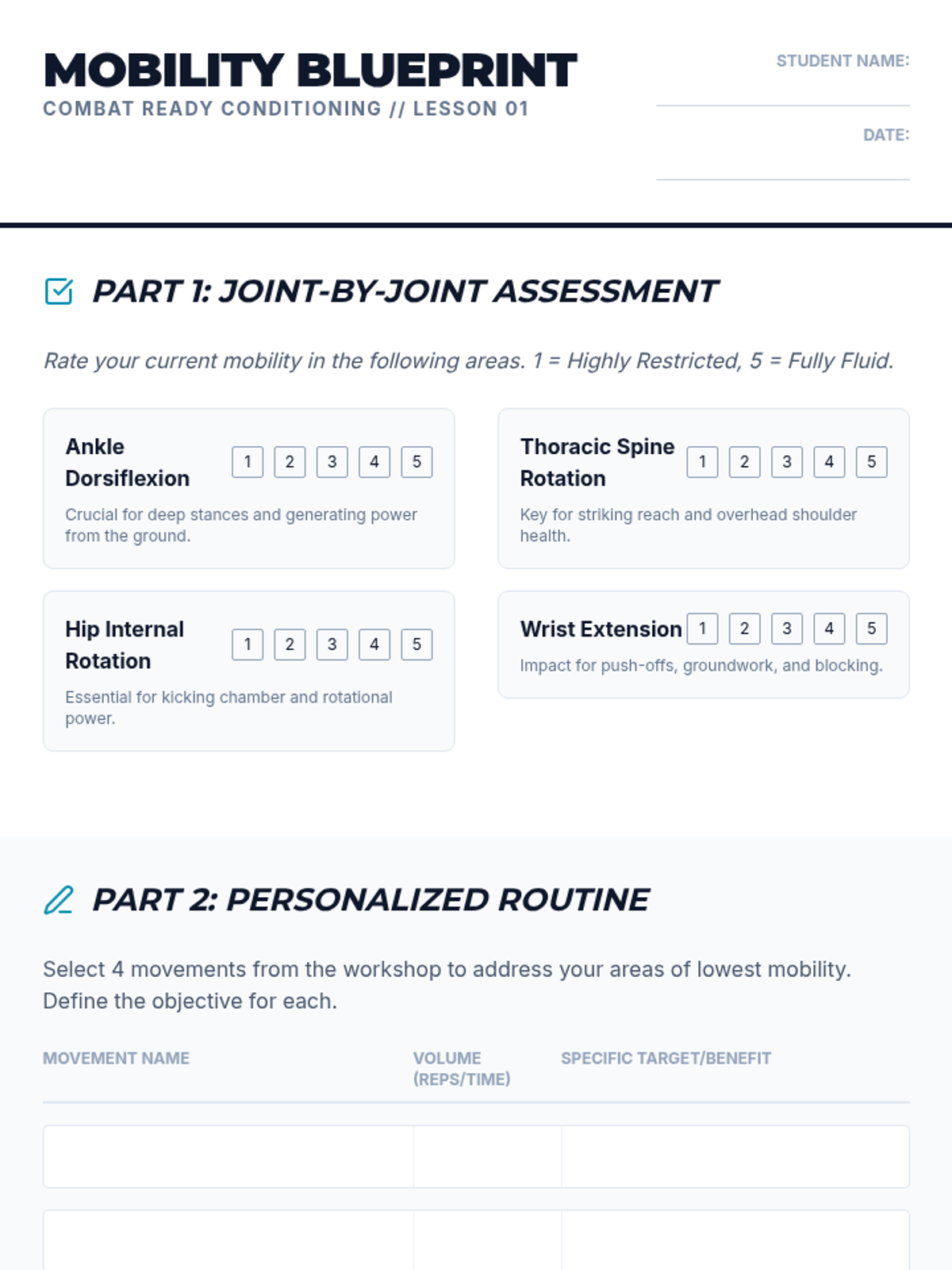
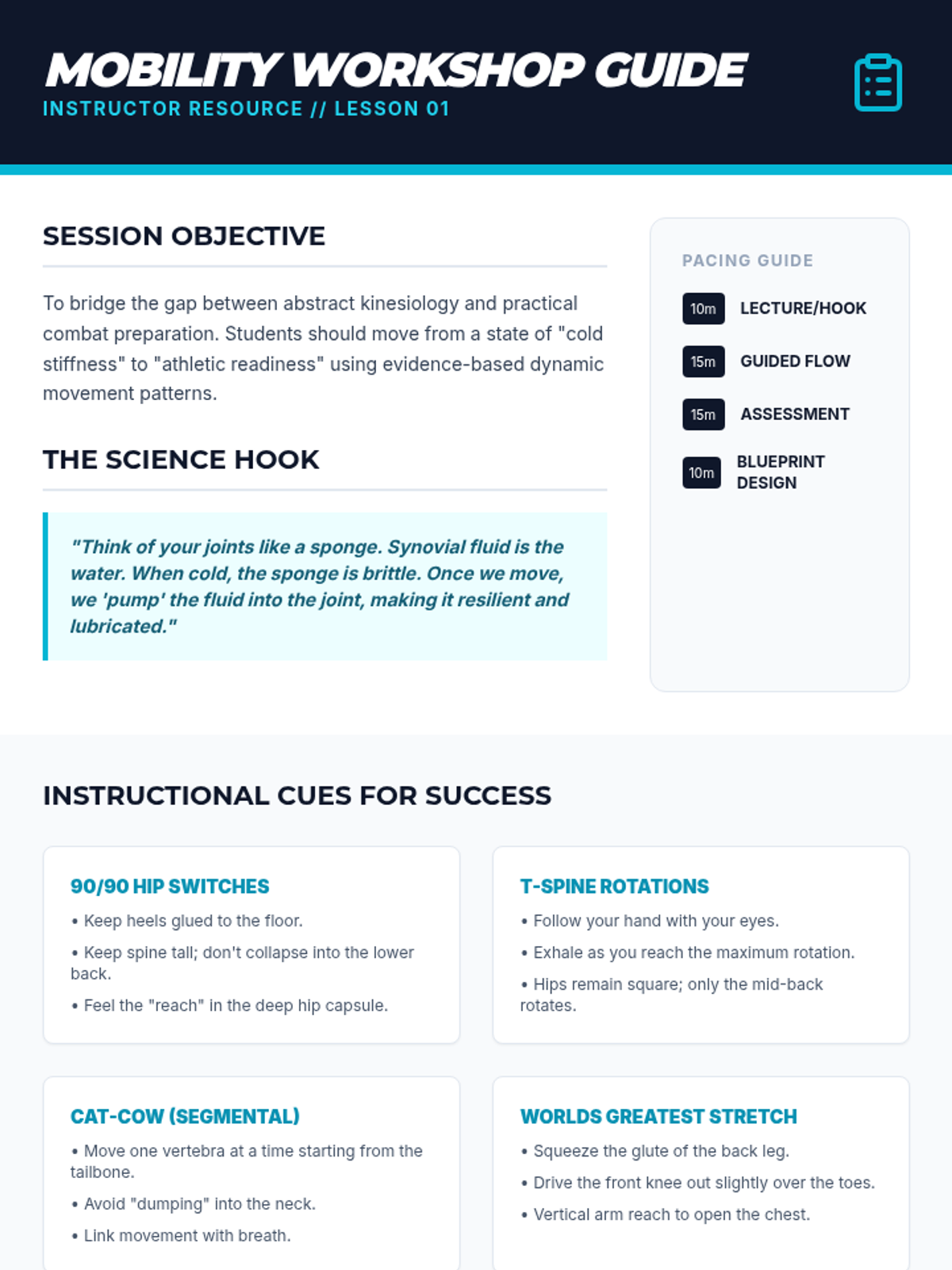
Students explore the science of mobility, learning dynamic routines to prepare the body for the high-impact demands of striking and grappling.
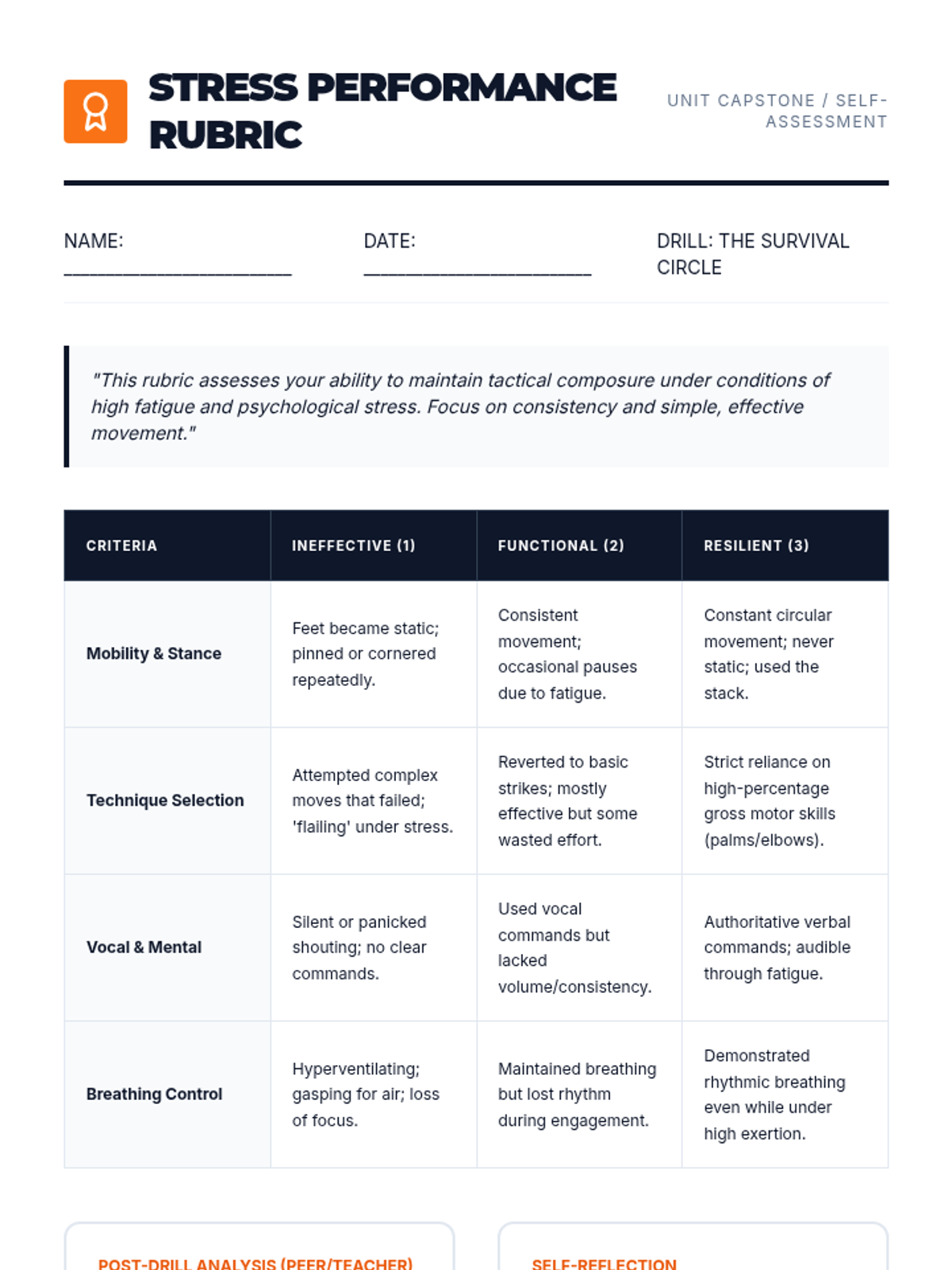
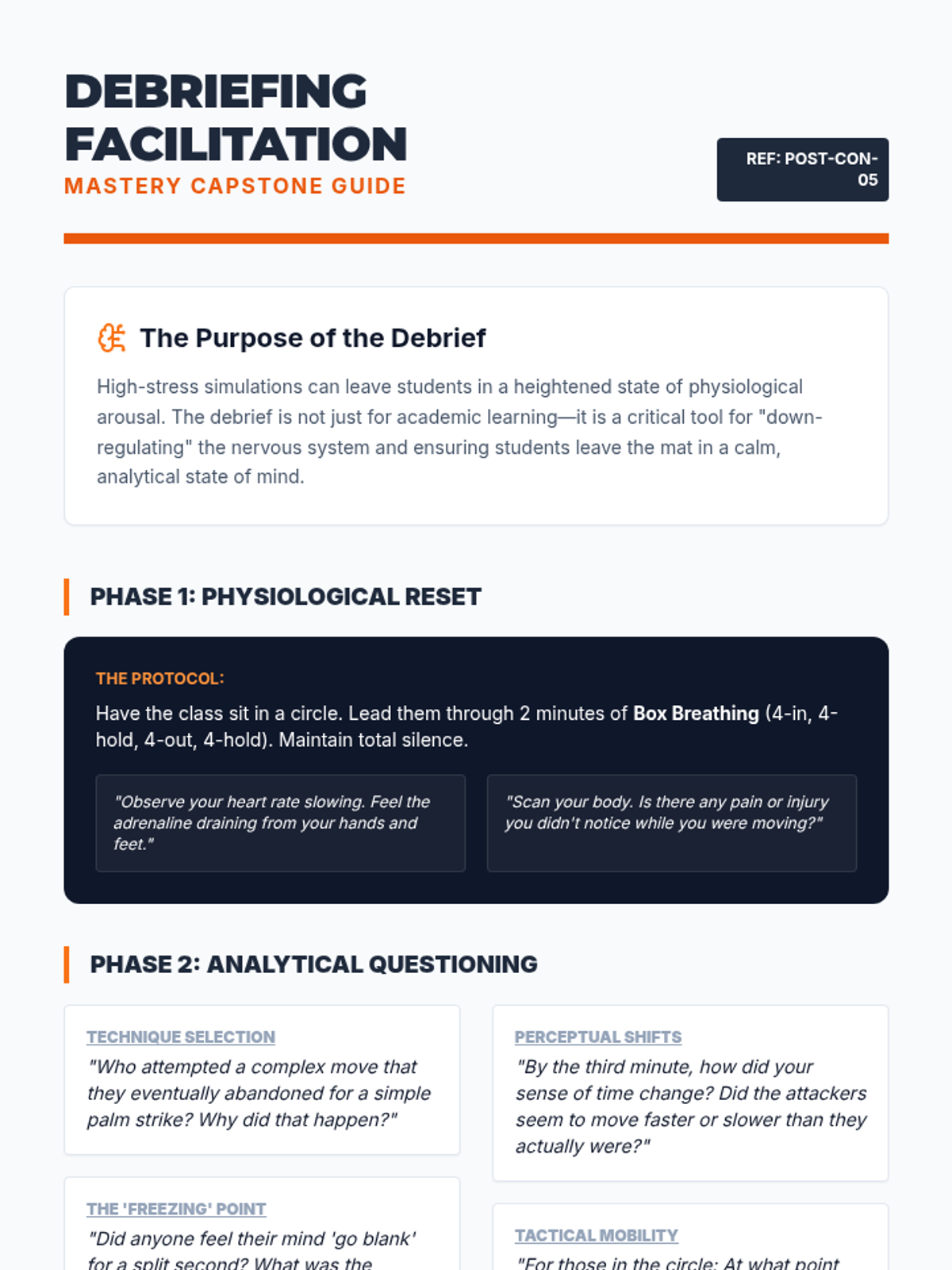
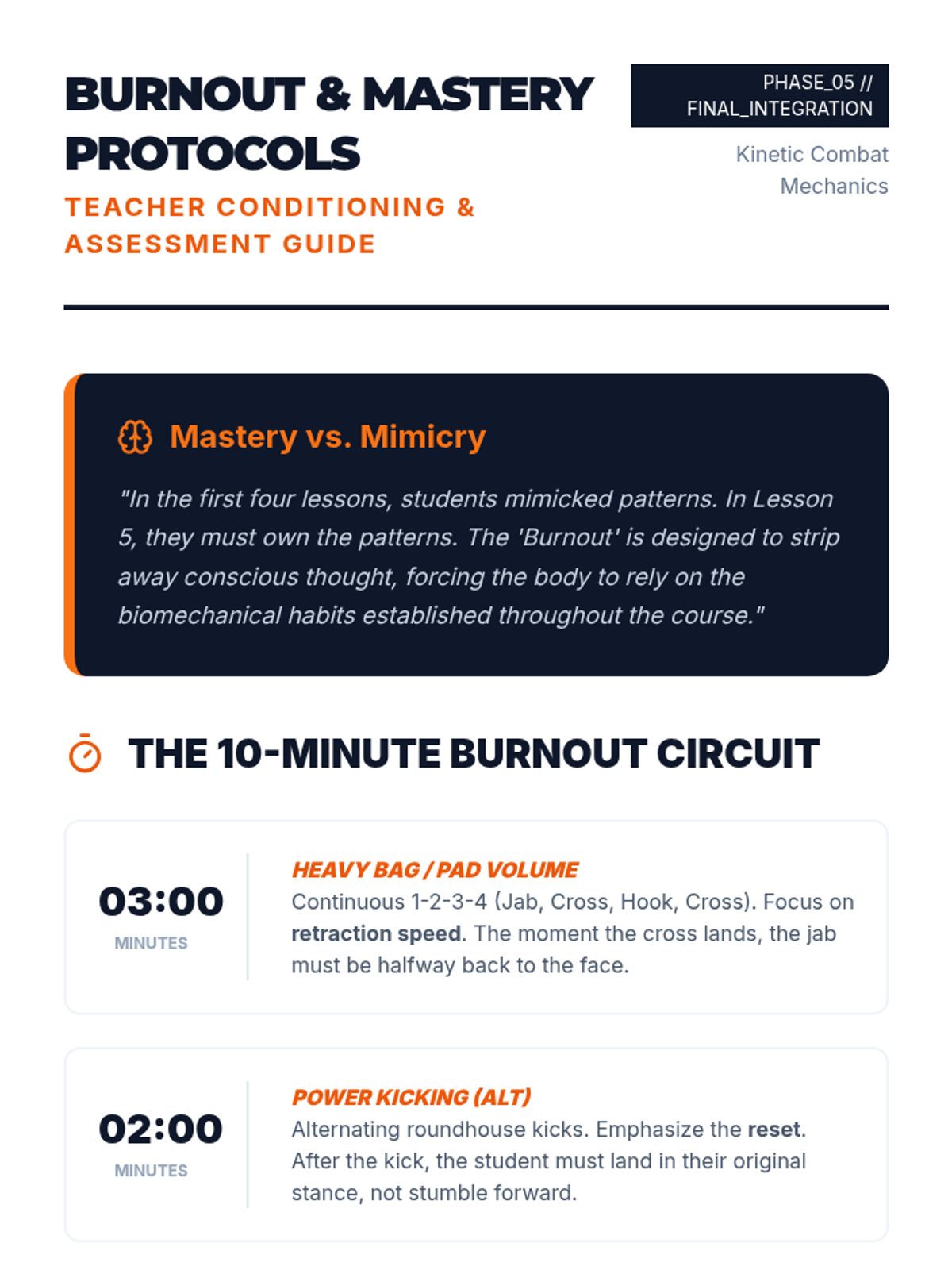
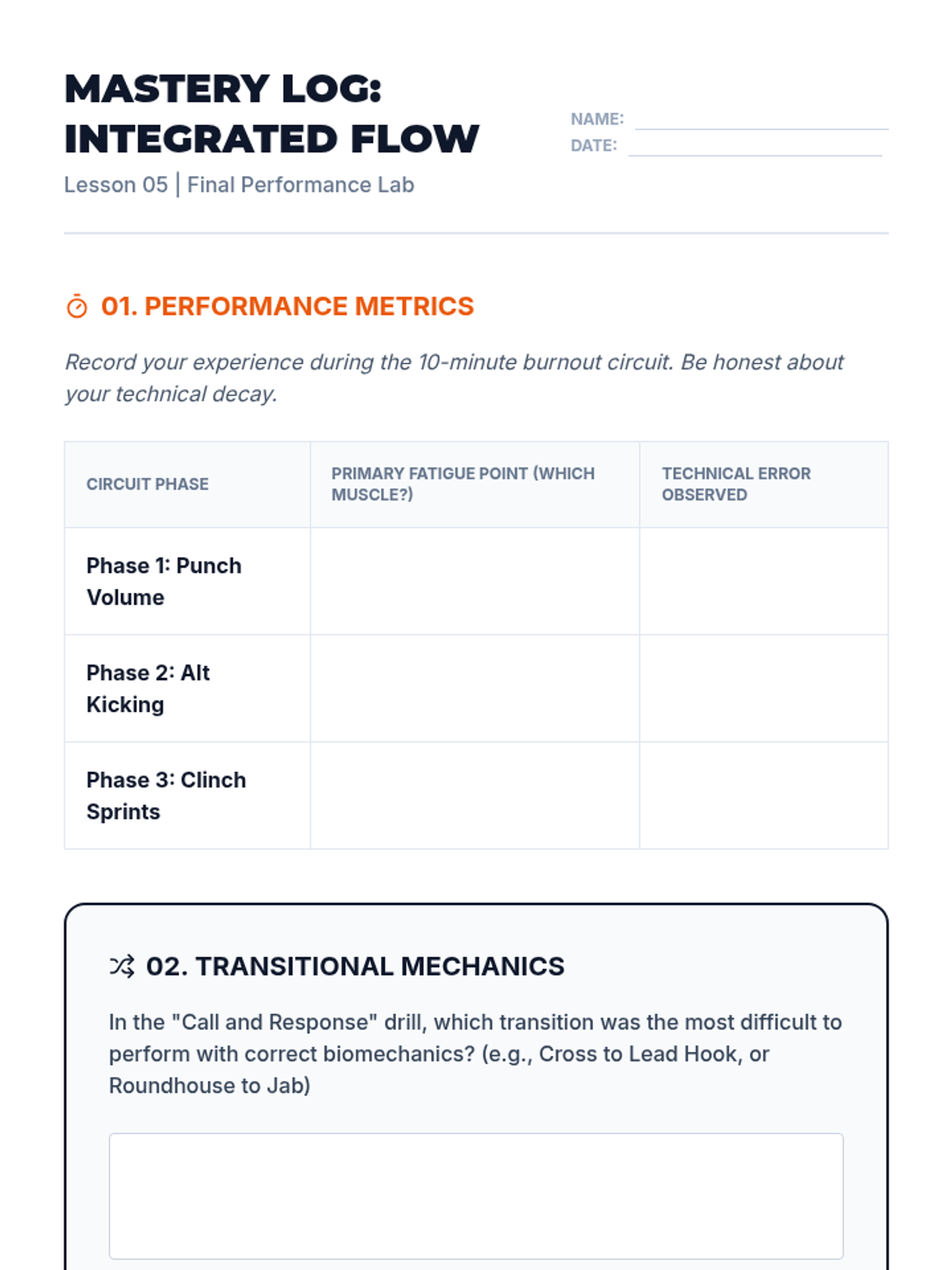
The capstone lesson featuring high-intensity drills designed to induce safe levels of panic and fatigue. Students must apply learned skills under extreme duress to build mental and physical resilience.
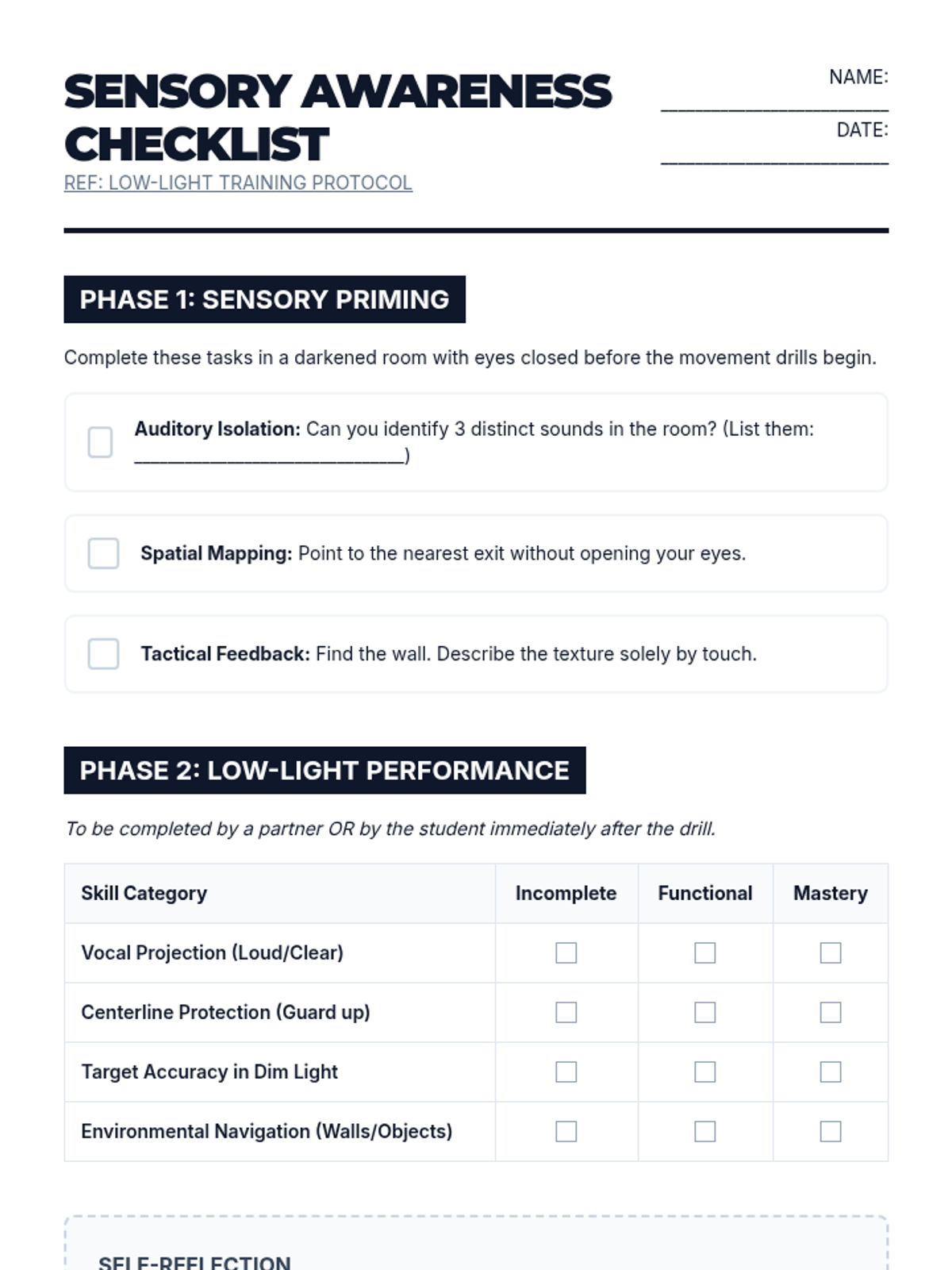
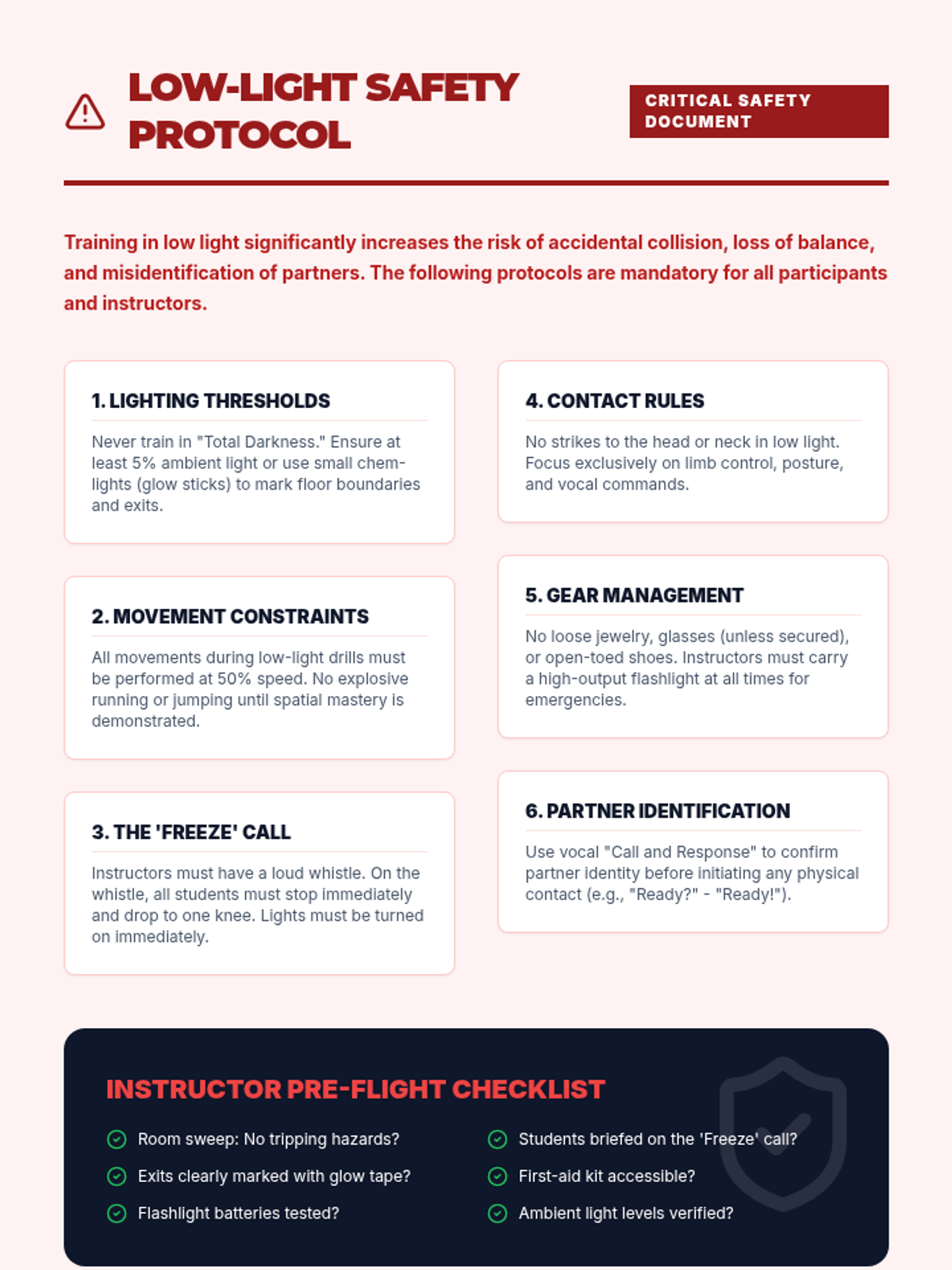
Trains students to function in low-visibility environments, emphasizing auditory cues and vocal commands. Addresses the psychological impact of sensory deprivation on threat assessment.
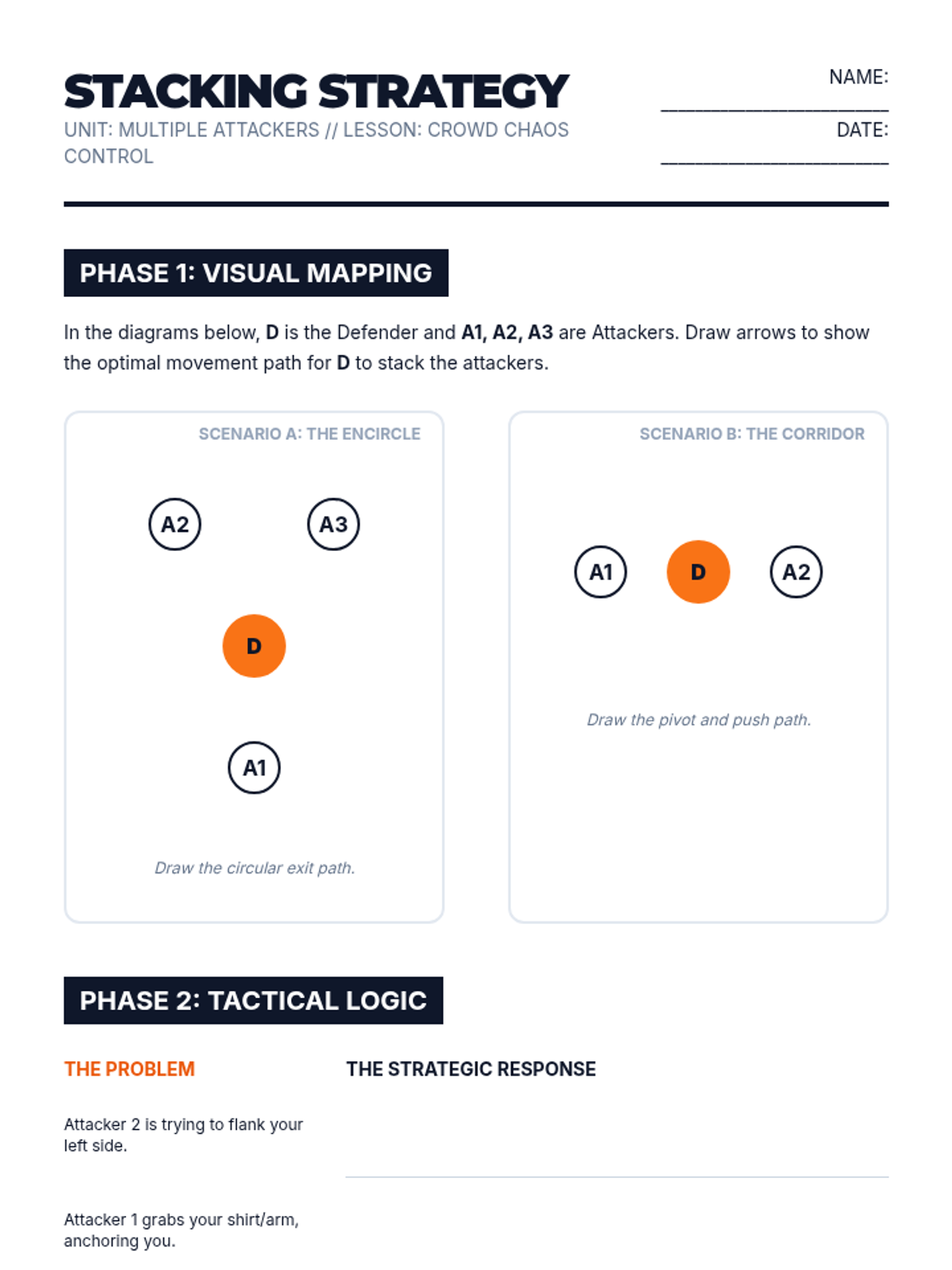
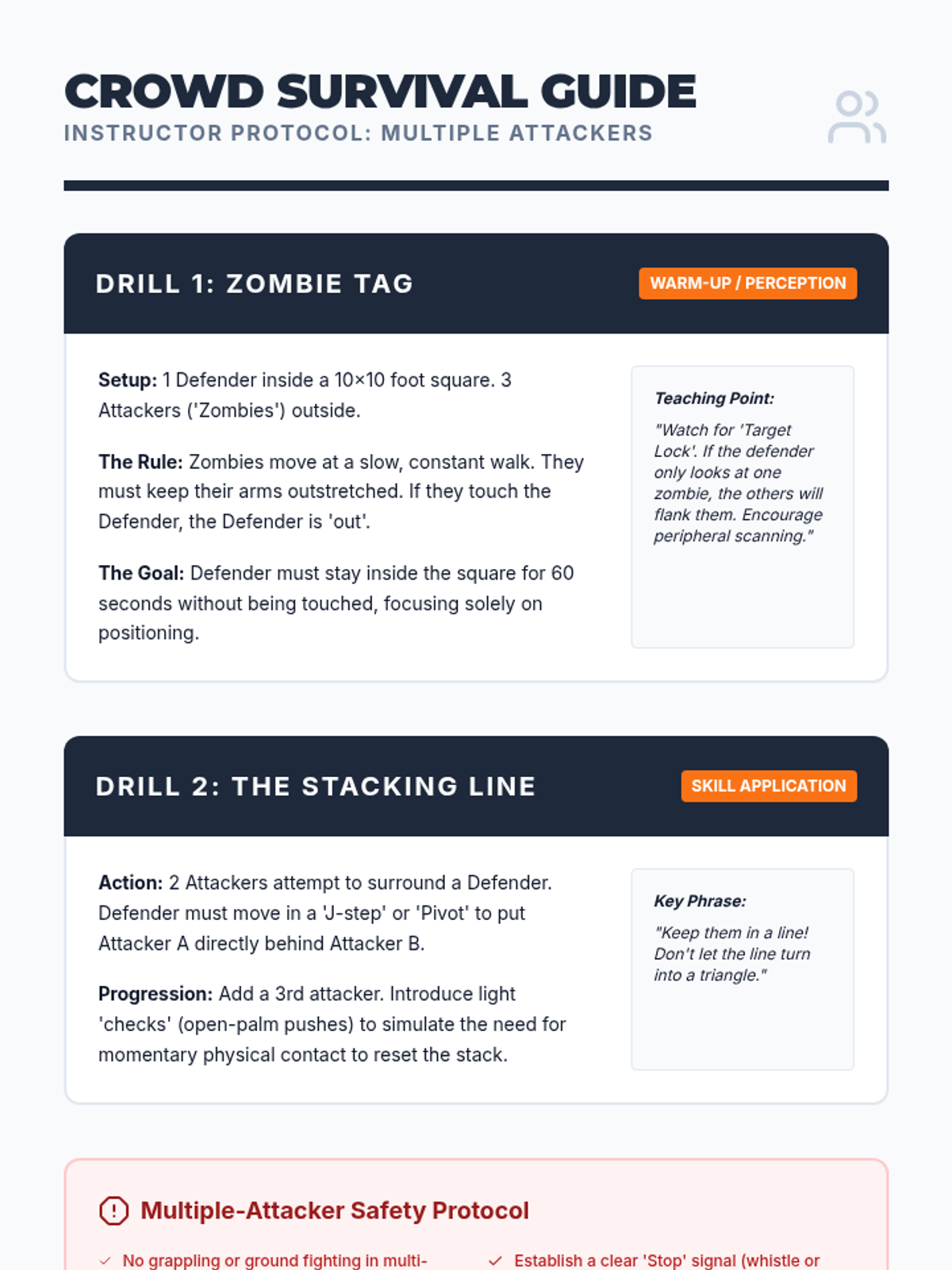
Introduces strategies for managing more than one opponent, focusing on the principle of 'stacking' to prevent being surrounded. Emphasizes peripheral vision and constant mobility.
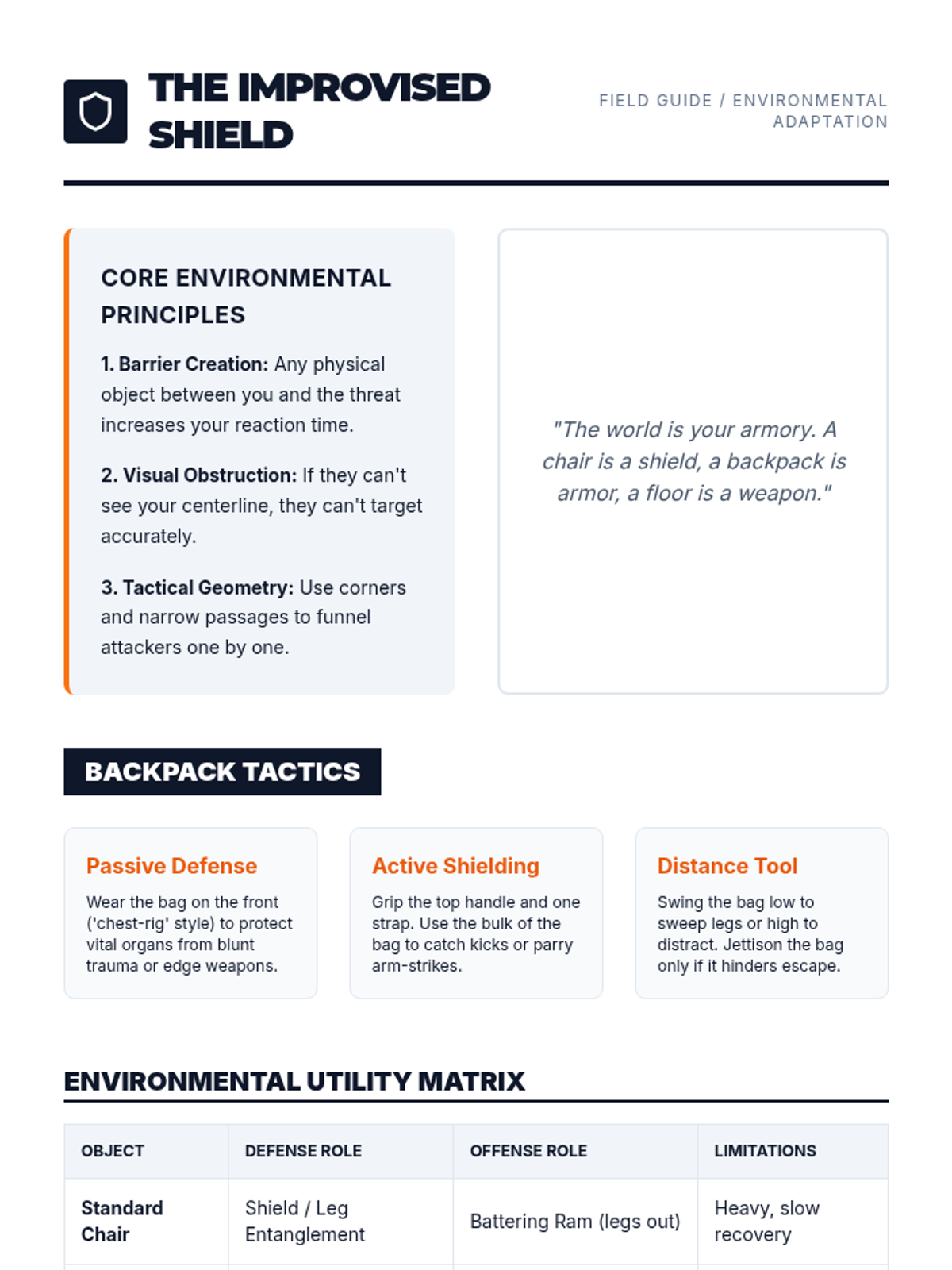
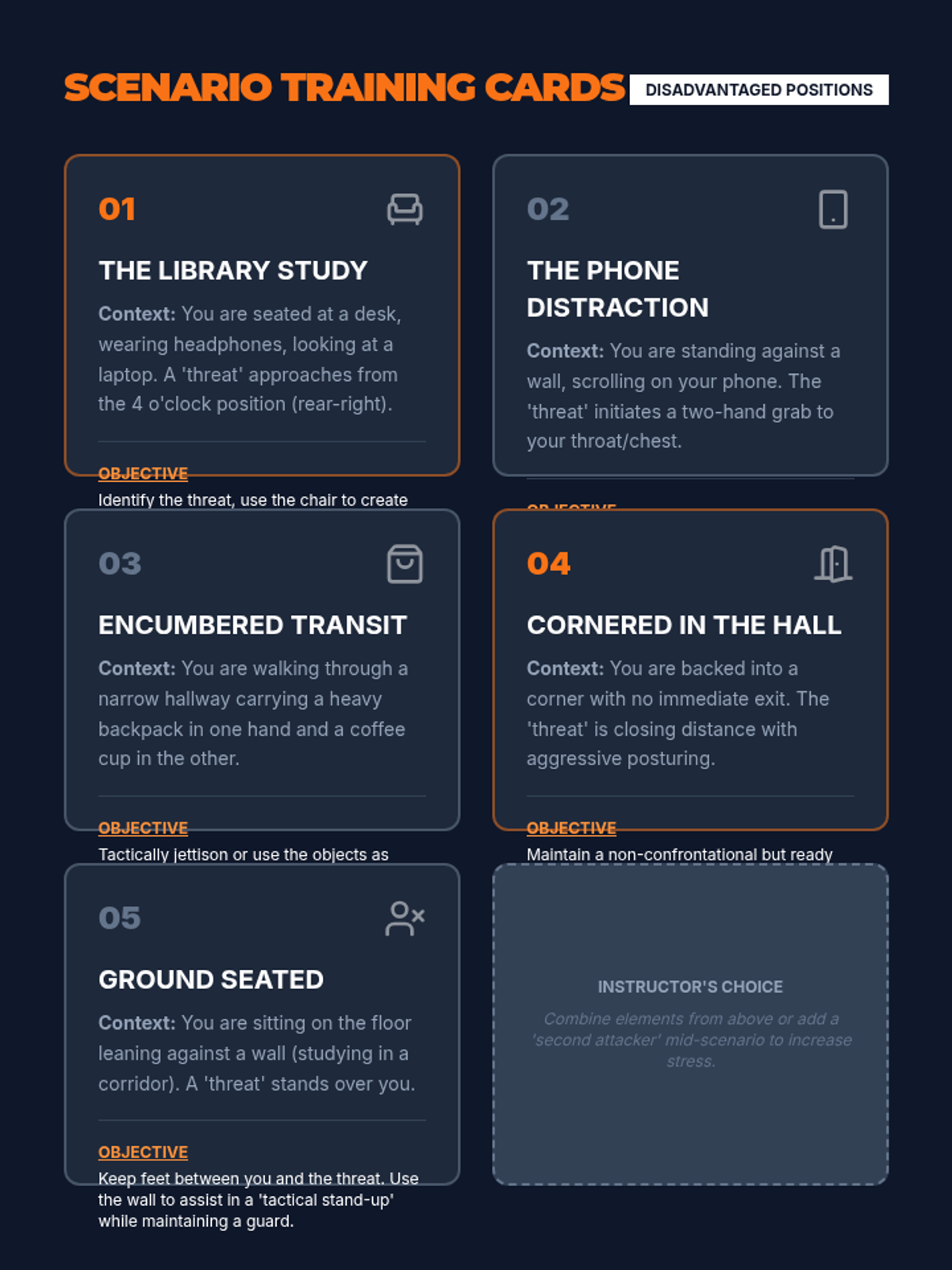
Teaches students to adapt self-defense techniques to real-world constraints such as being seated, pinned against walls, or carrying everyday objects. Focuses on improvisation and tactical awareness over rigid technique.
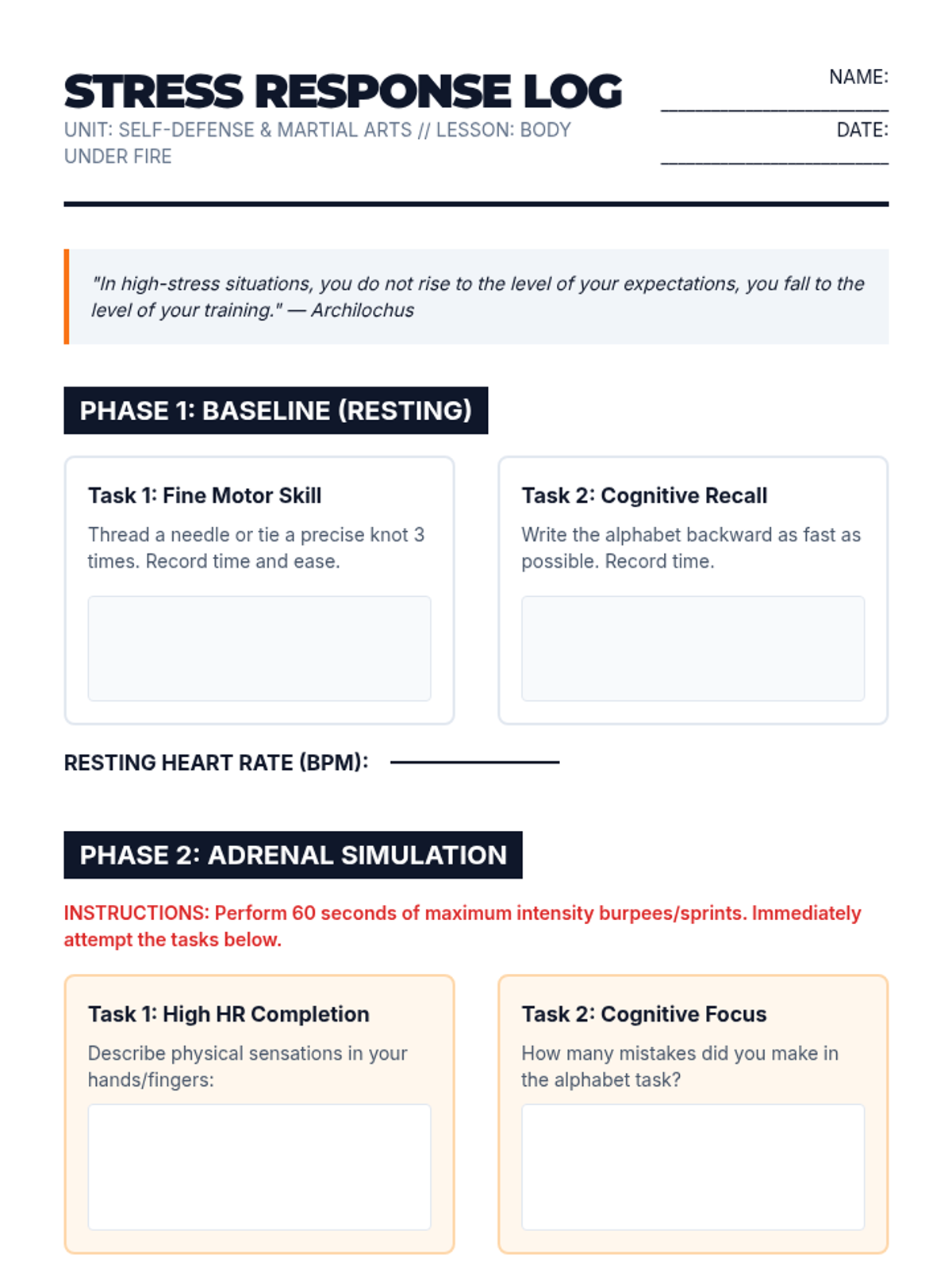
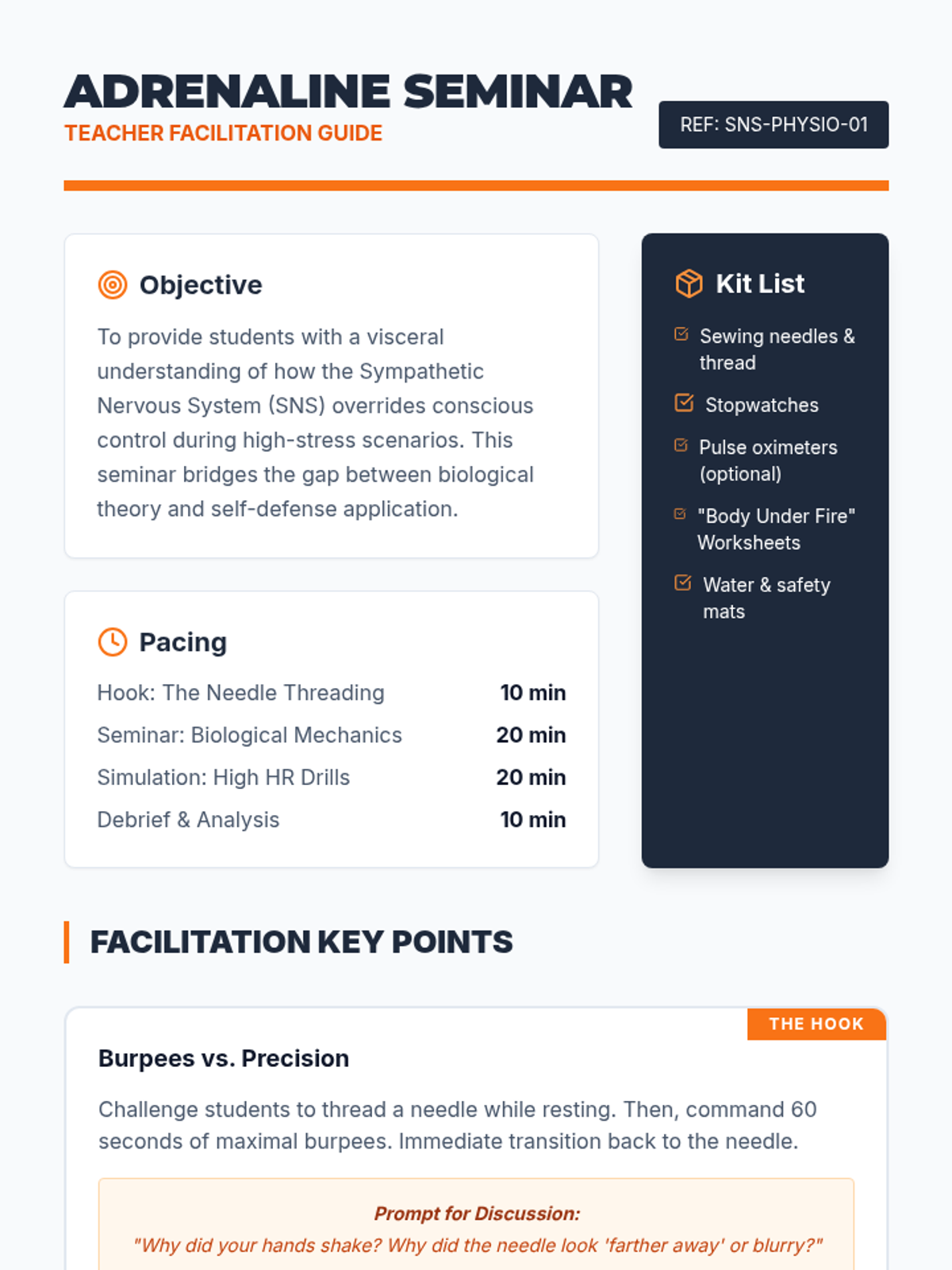
Explores the sympathetic nervous system's response to danger, including tunnel vision, auditory exclusion, and the loss of fine motor skills. Students engage in drills to experience heart rate elevation and its impact on task performance.
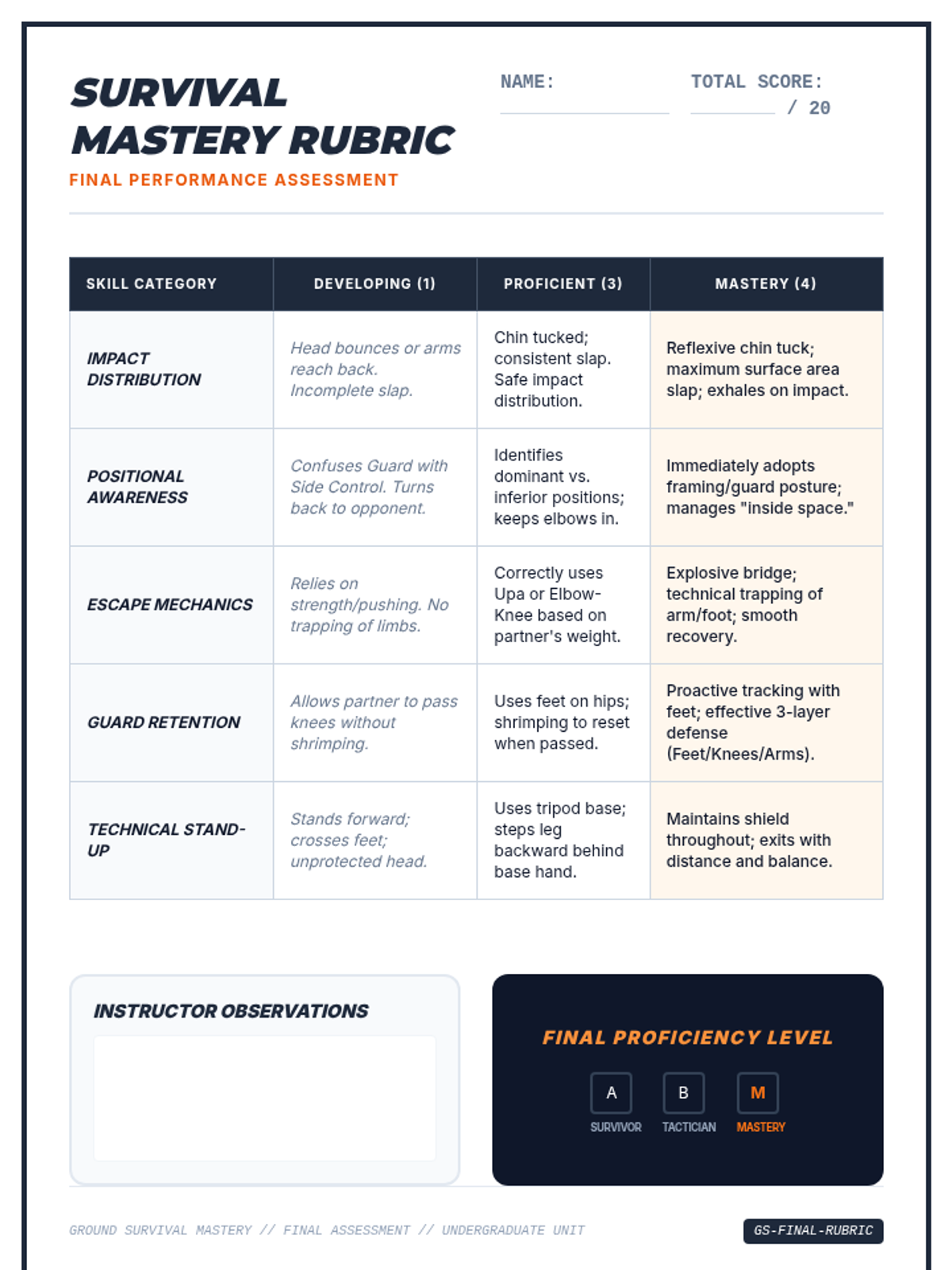
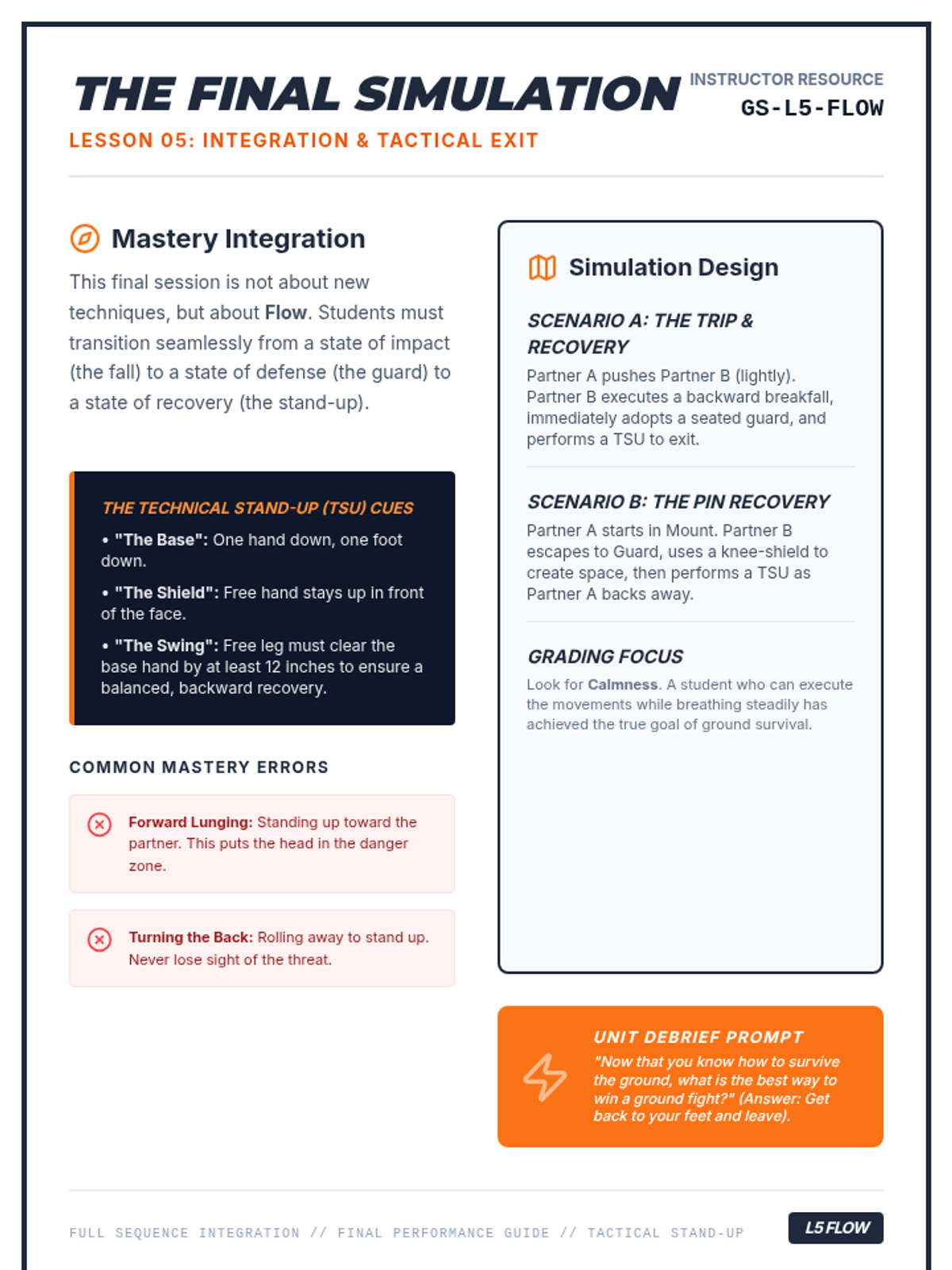
The culmination of the unit, focusing on the technical stand-up. Students integrate all skills into a flow that moves from a fall to a safe standing position.
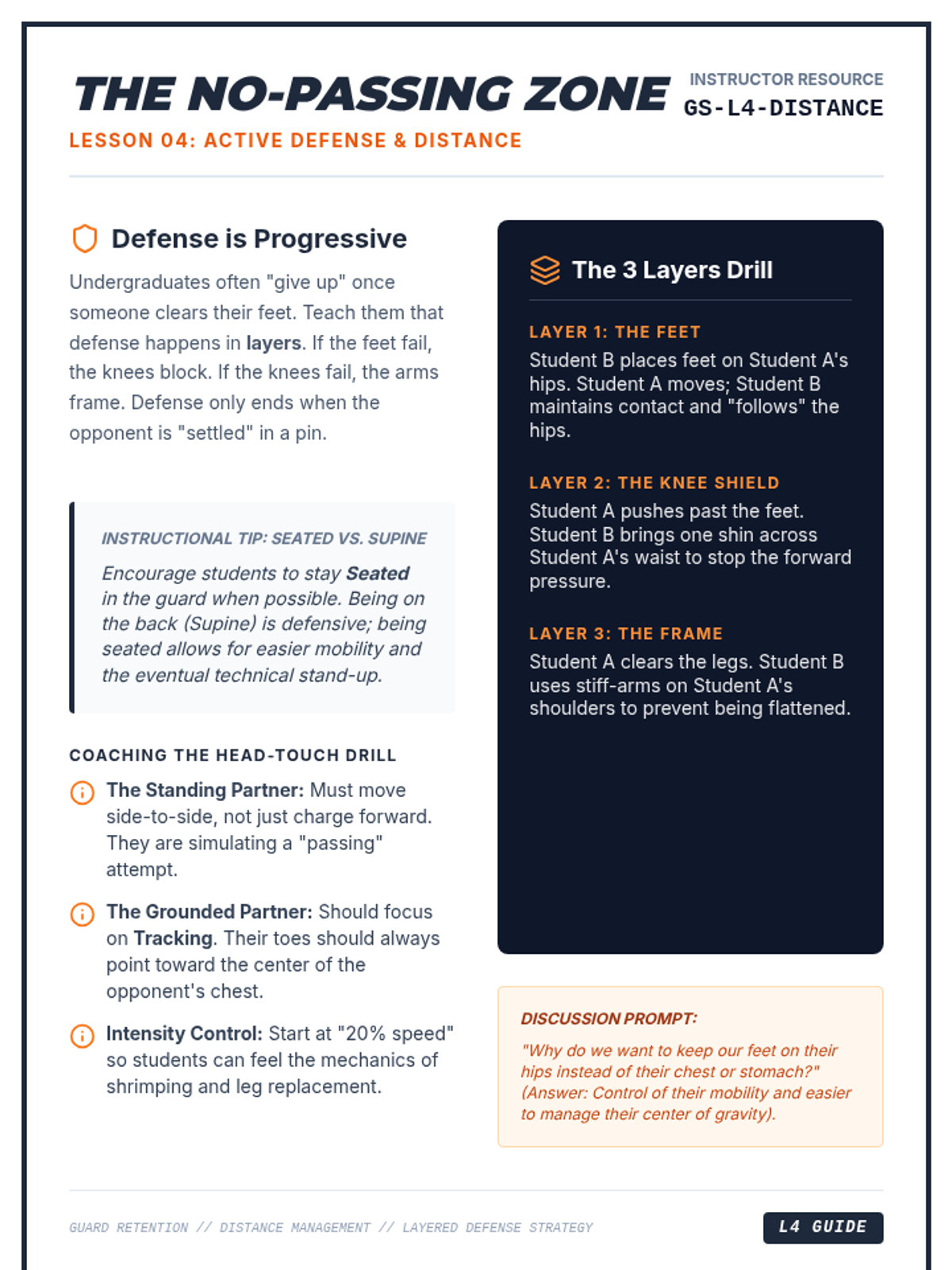
Teaches the use of legs as a primary defensive barrier. Students learn guard retention, framing, and distance management to prevent an attacker from closing in.
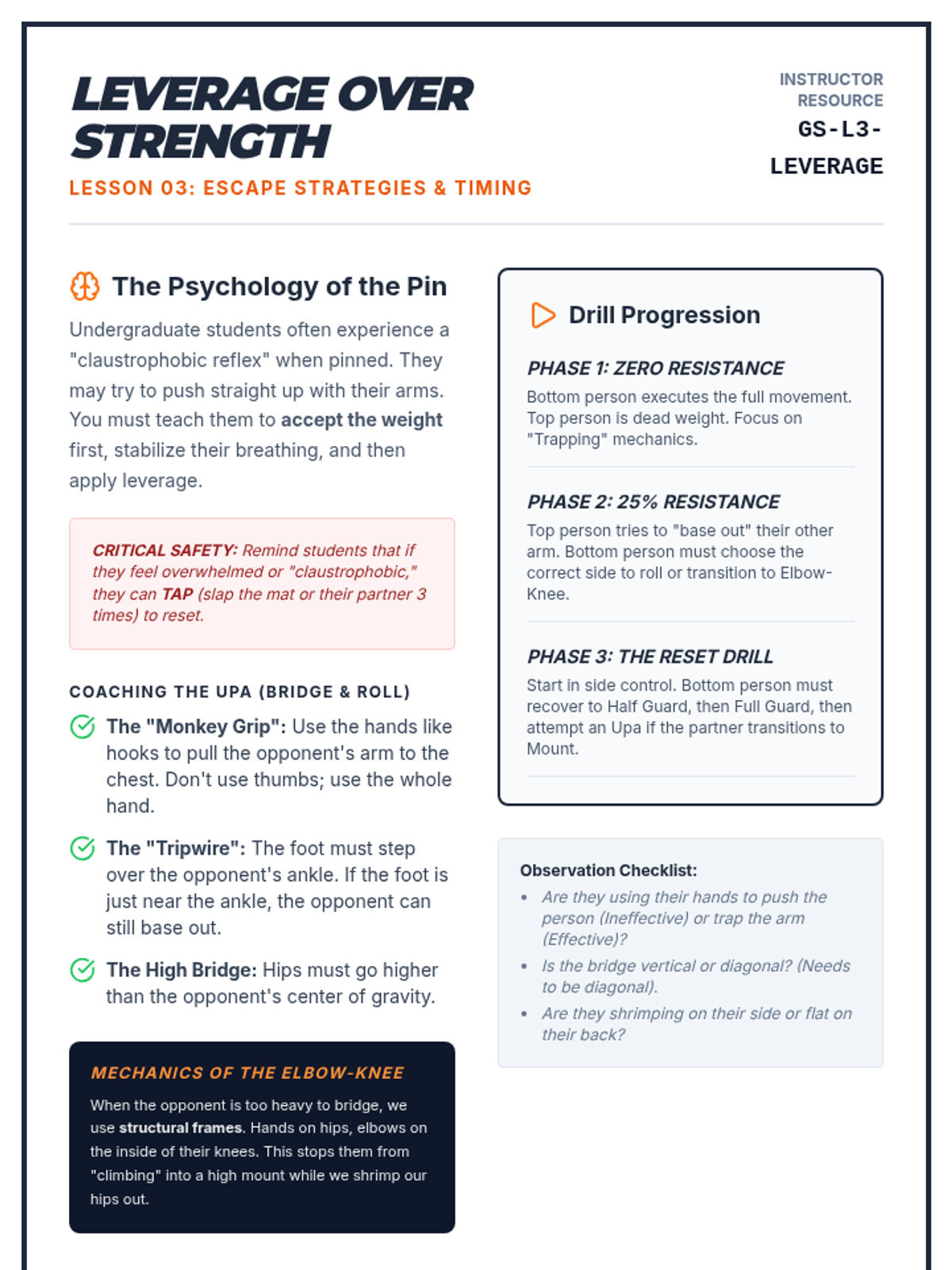
Focuses on escaping dominant pins. Students learn the bridge-and-roll (upa) and elbow-knee escapes to neutralize an opponent's weight and regain neutral position.
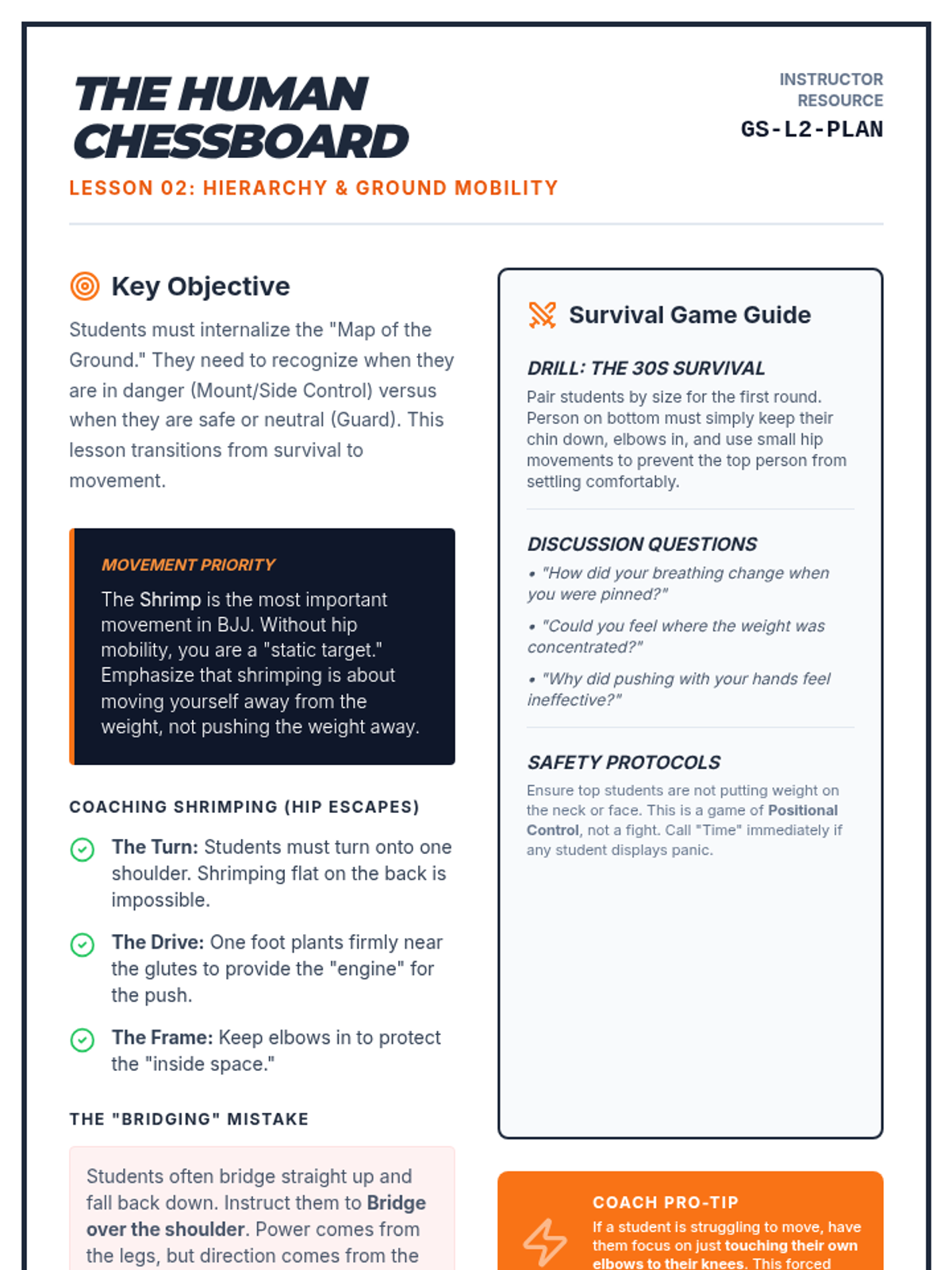
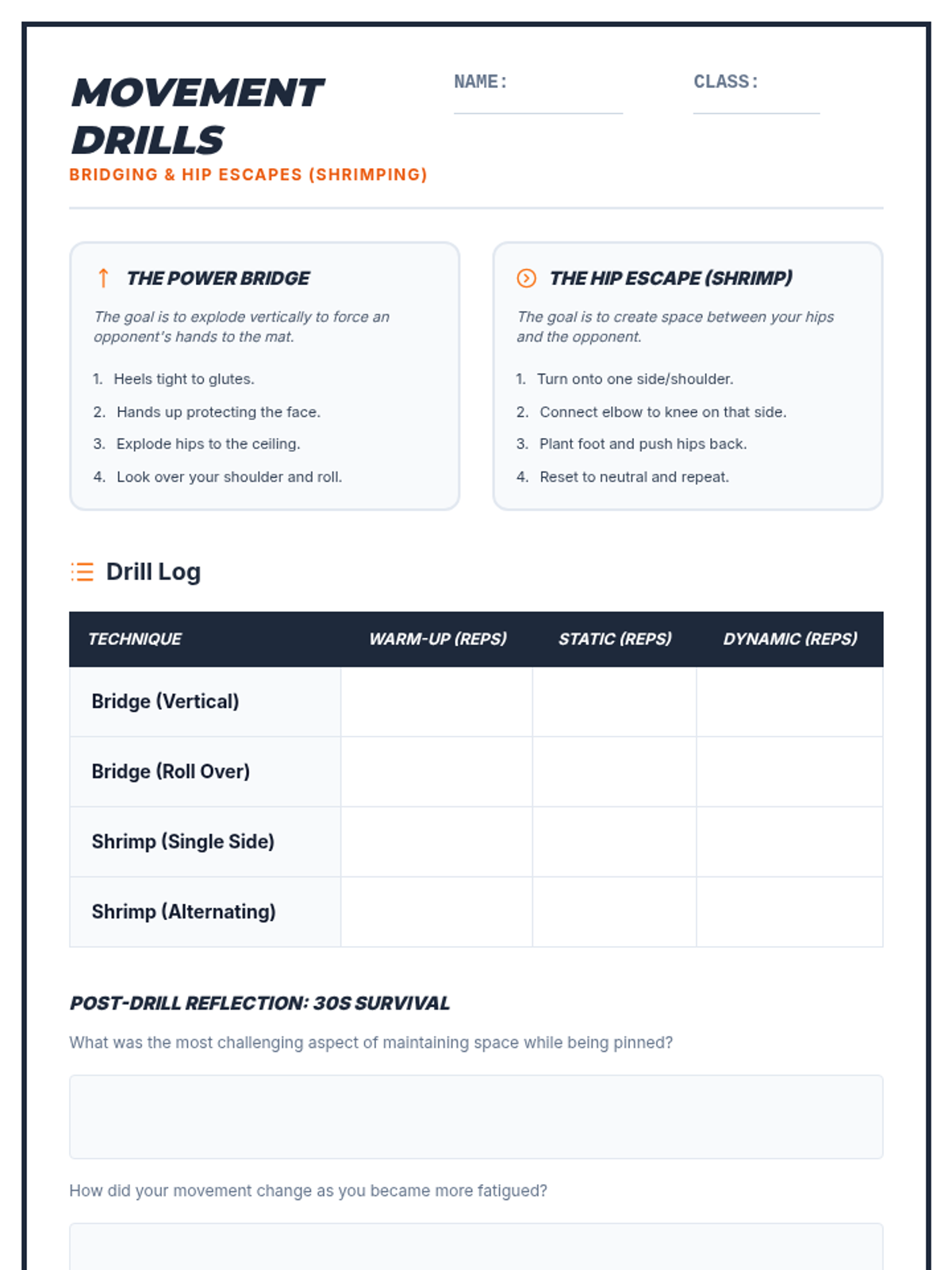
Introduces the tactical map of ground fighting. Students learn the hierarchy of positions (Guard, Side Control, Mount) and essential mobility skills like shrimping and bridging.
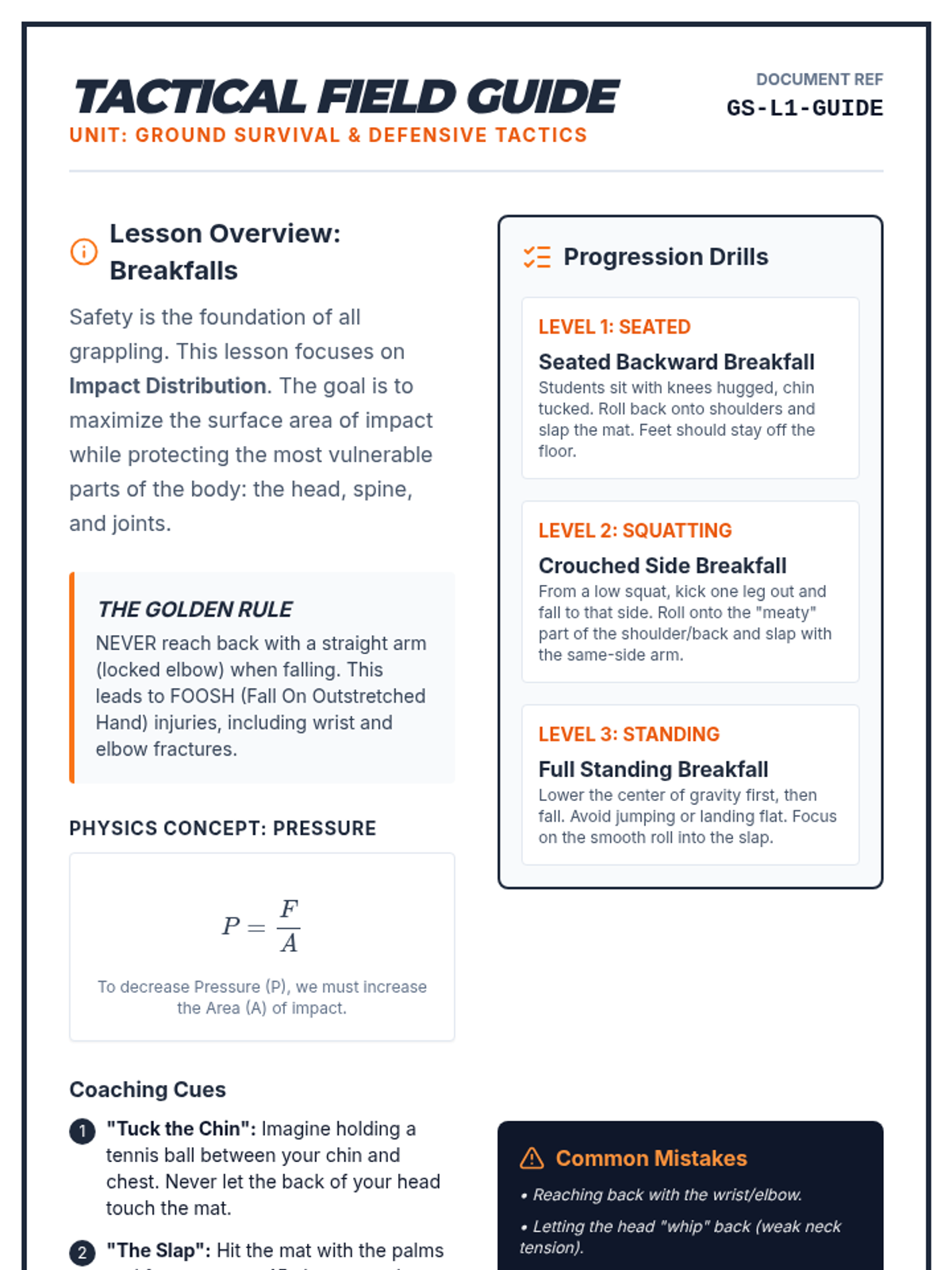
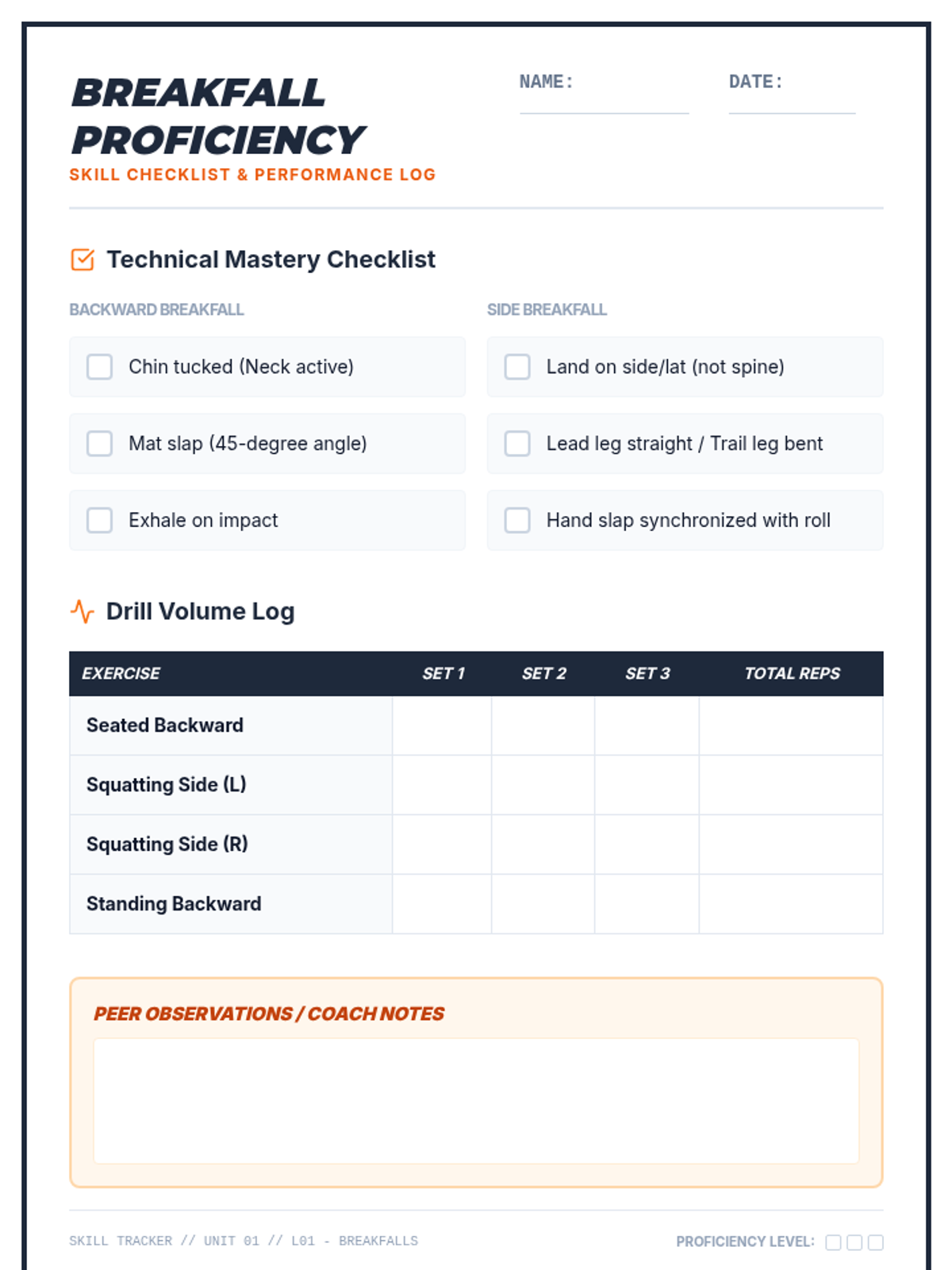
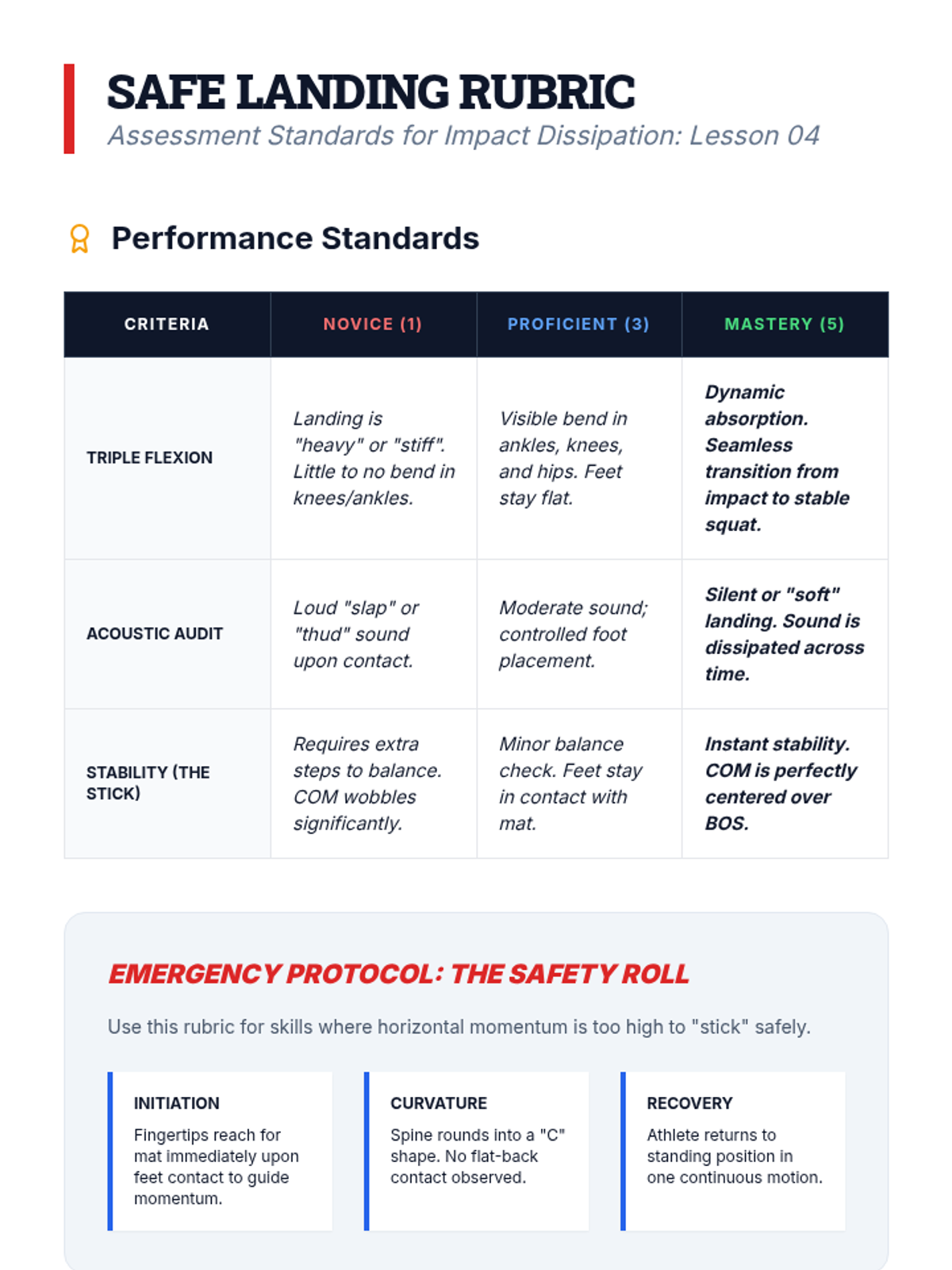
Focuses on the physics of impact distribution and the fundamental skill of falling without injury. Students master backward, side, and forward breakfalls.
Integrate all striking elements into fluid sequences. This lesson focuses on transitions, breathing rhythm, and high-intensity conditioning.
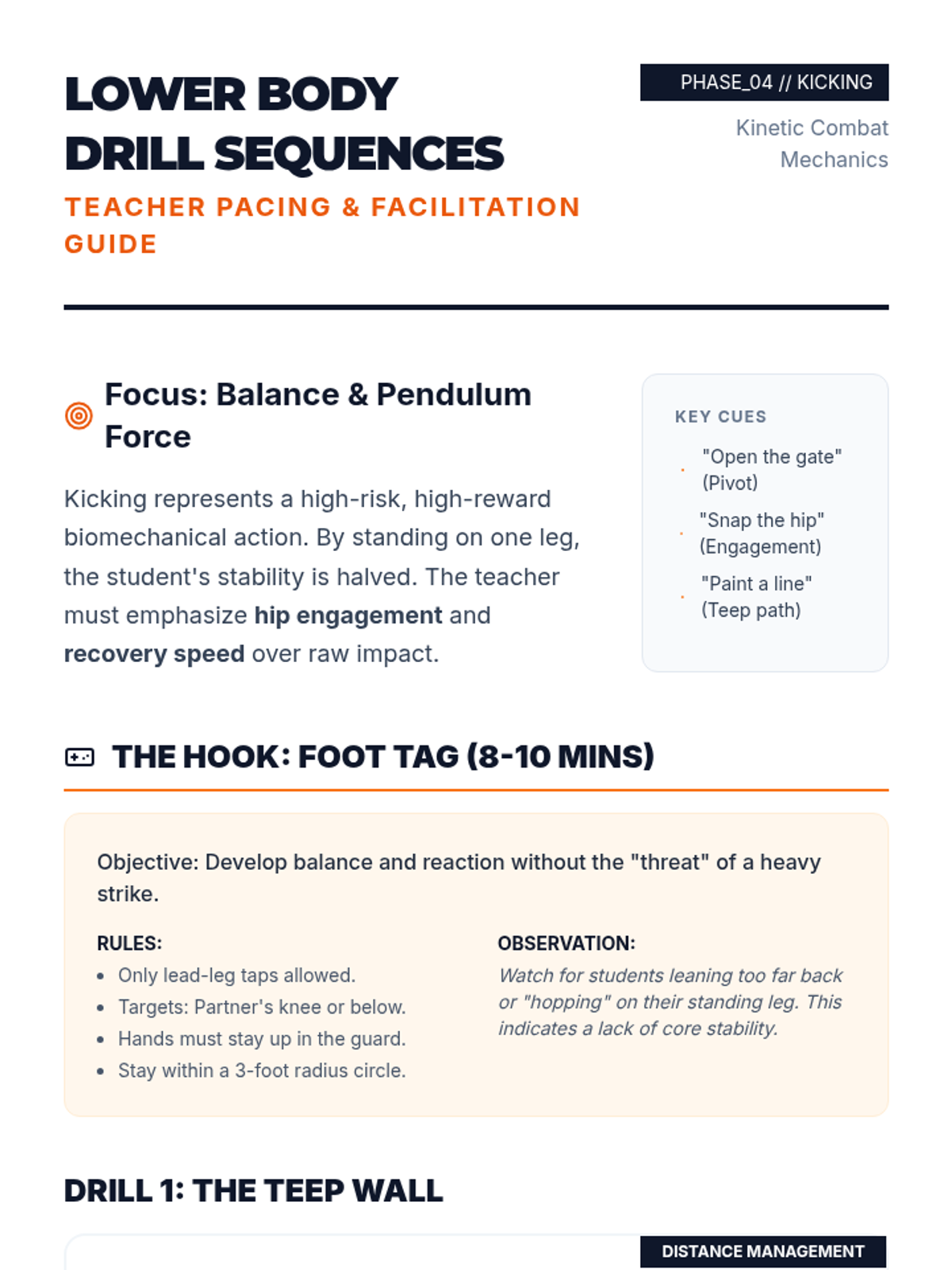
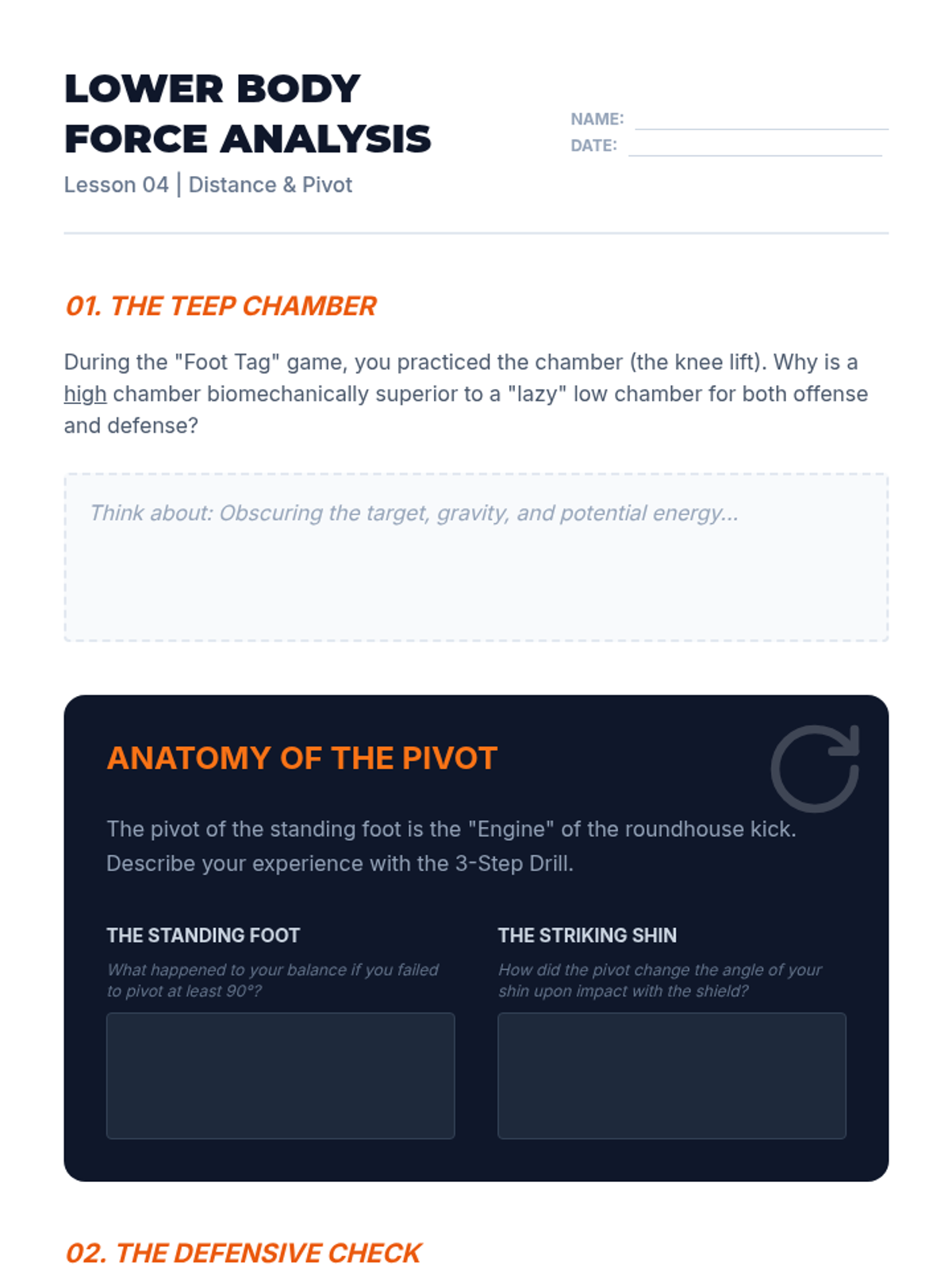
Develop distance management and powerful kicks. This lesson covers the push kick and roundhouse, along with defensive shielding techniques.
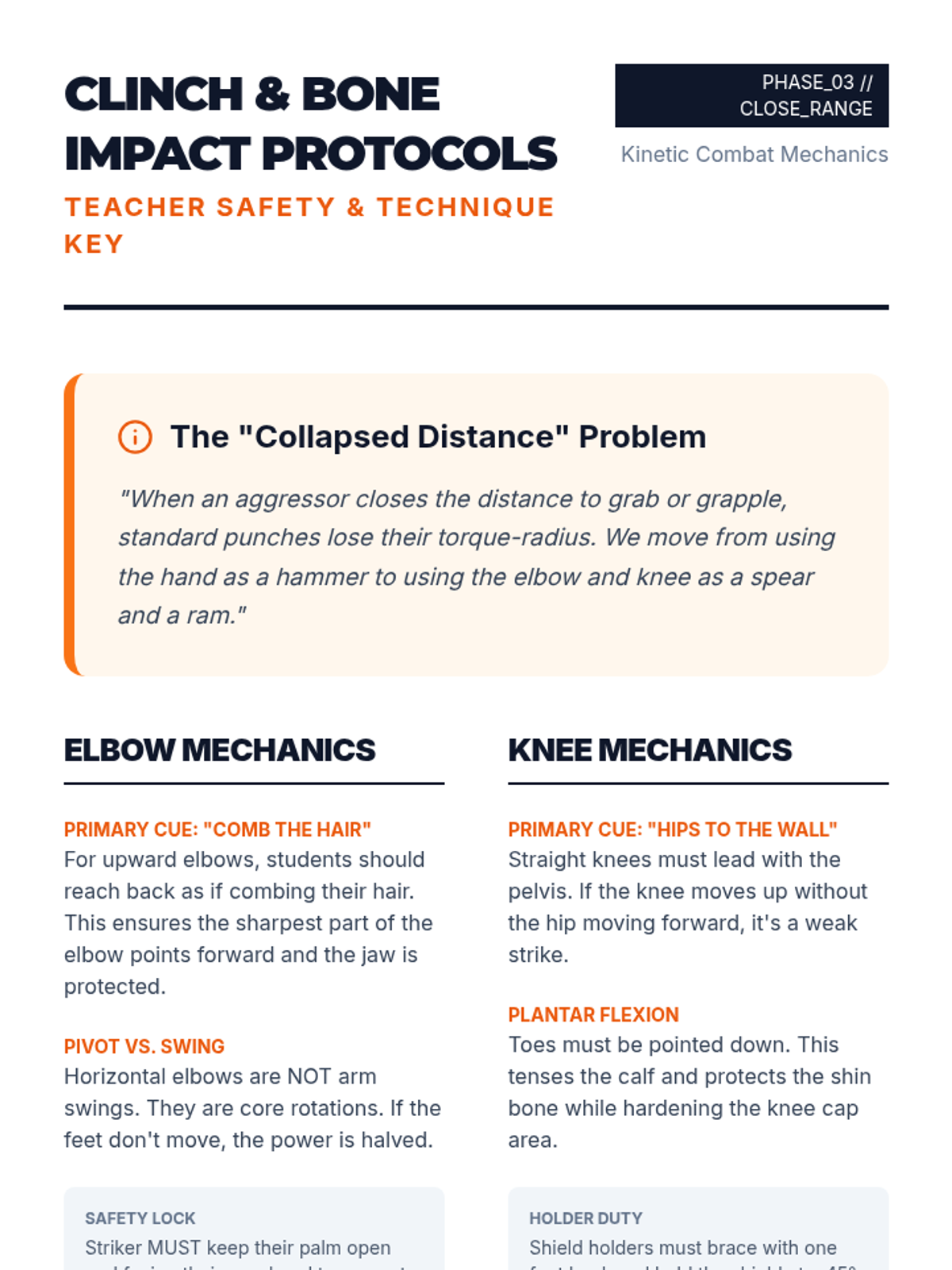
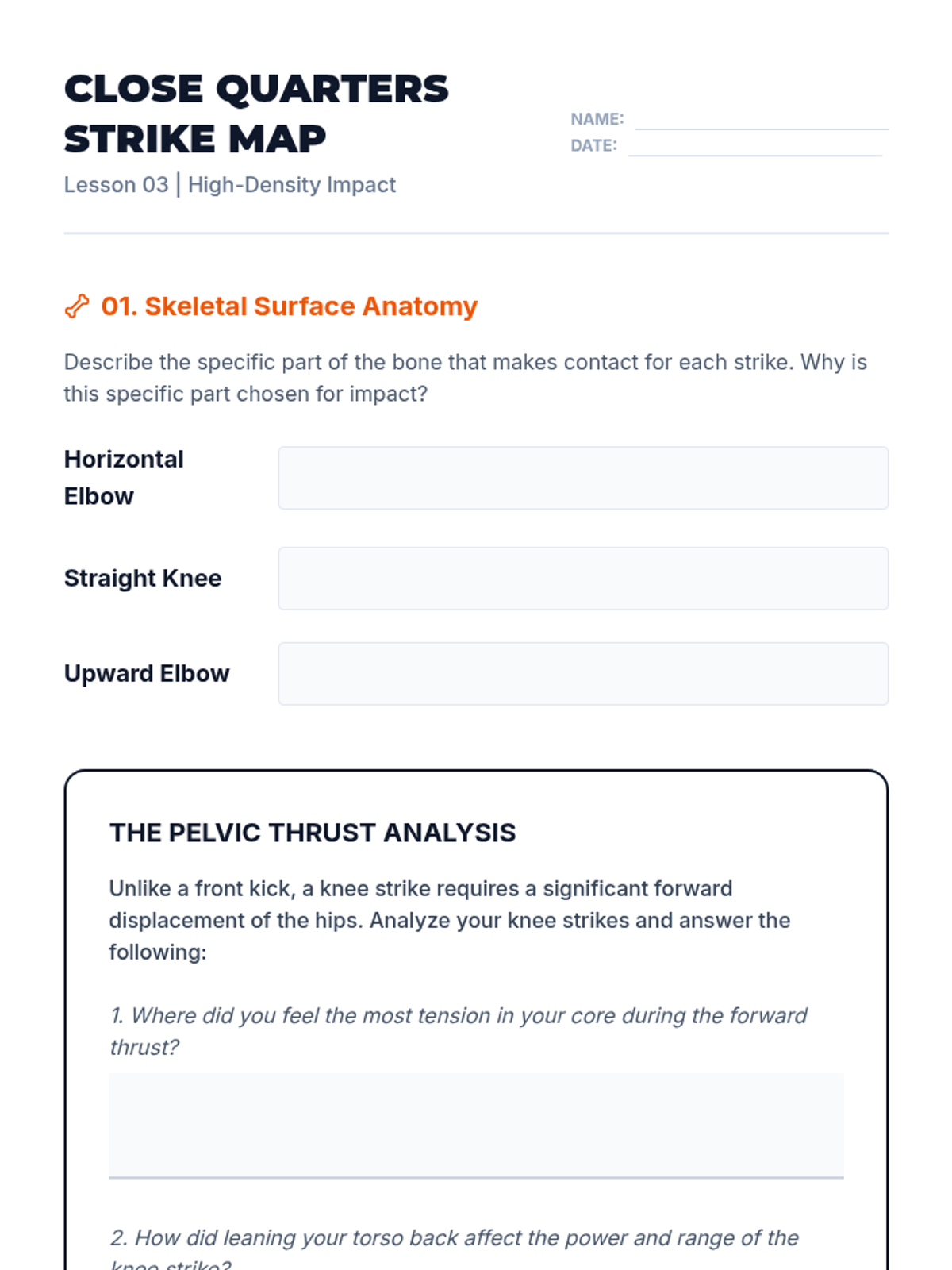
Master close-range combat tools. This lesson focuses on the mechanics of elbow and knee strikes, utilizing the body's hardest surfaces for maximum impact.
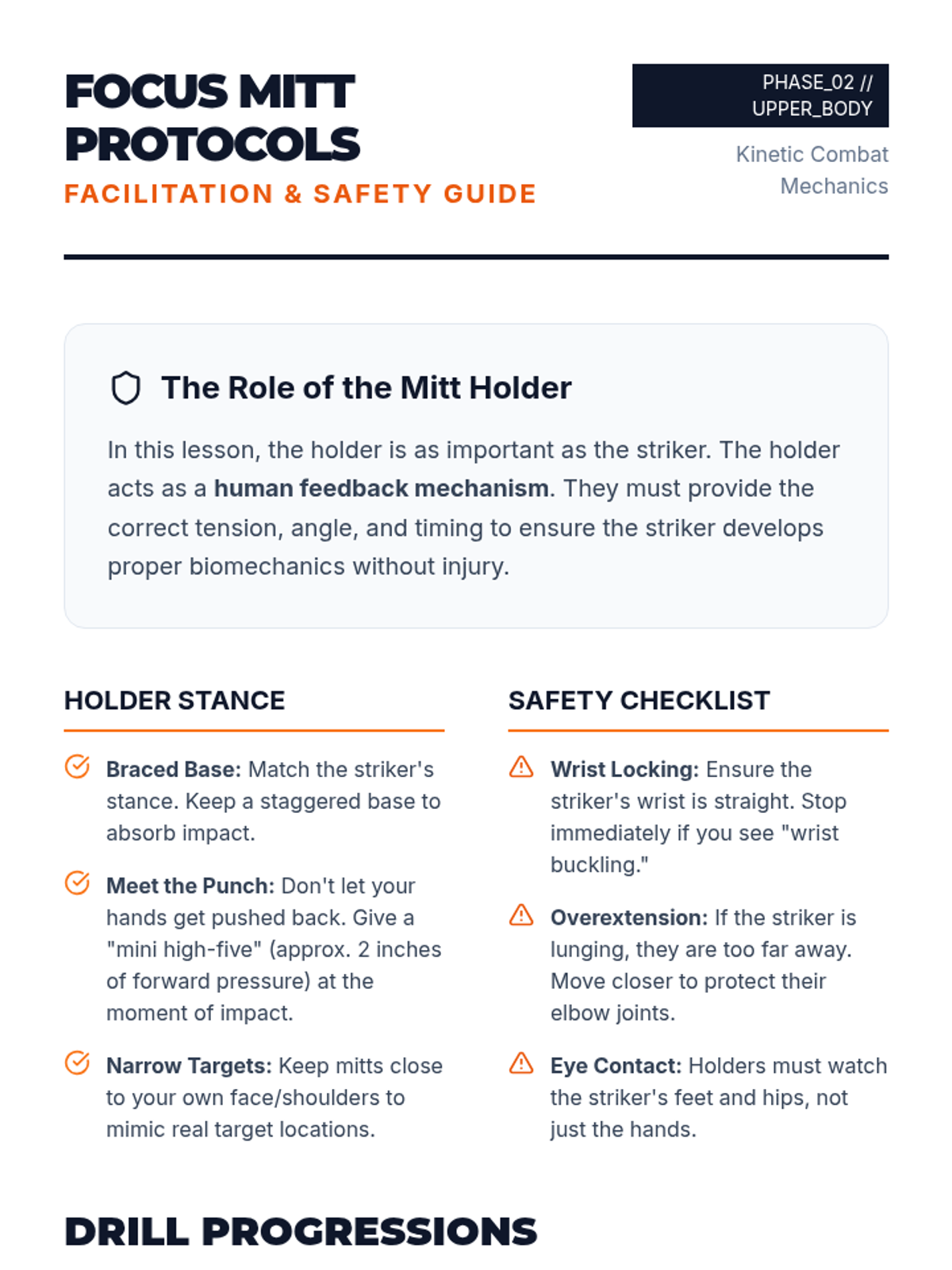
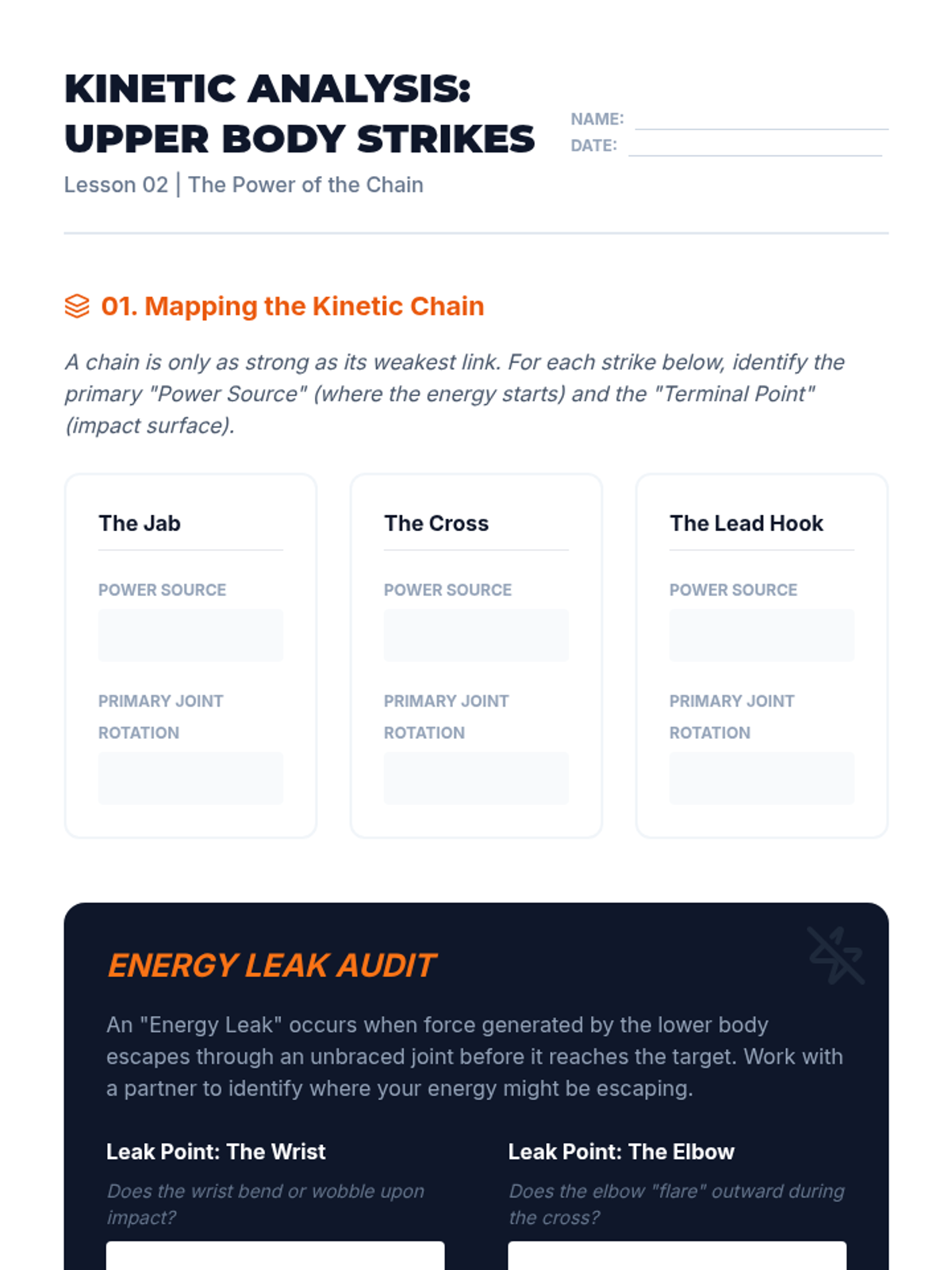
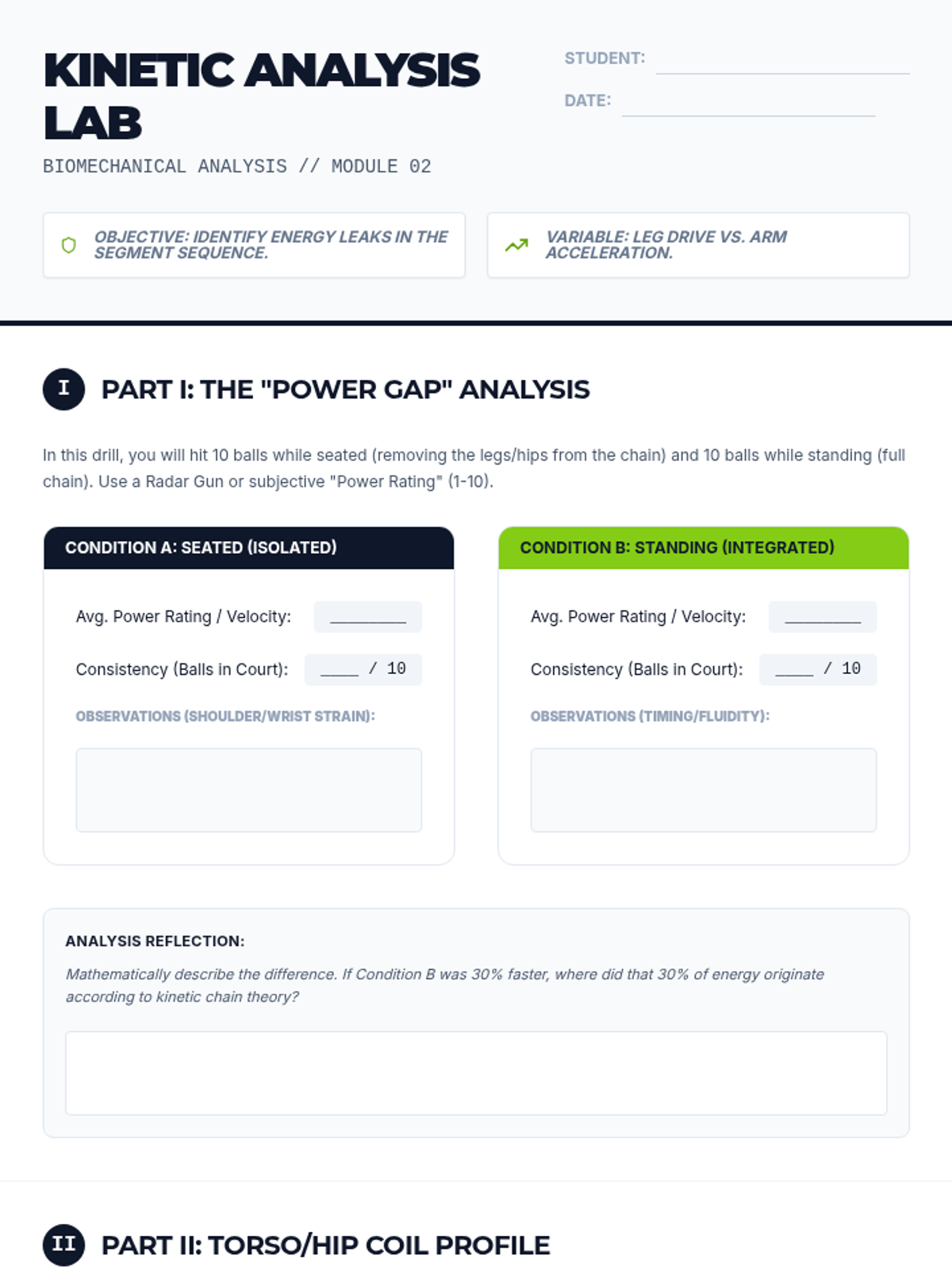
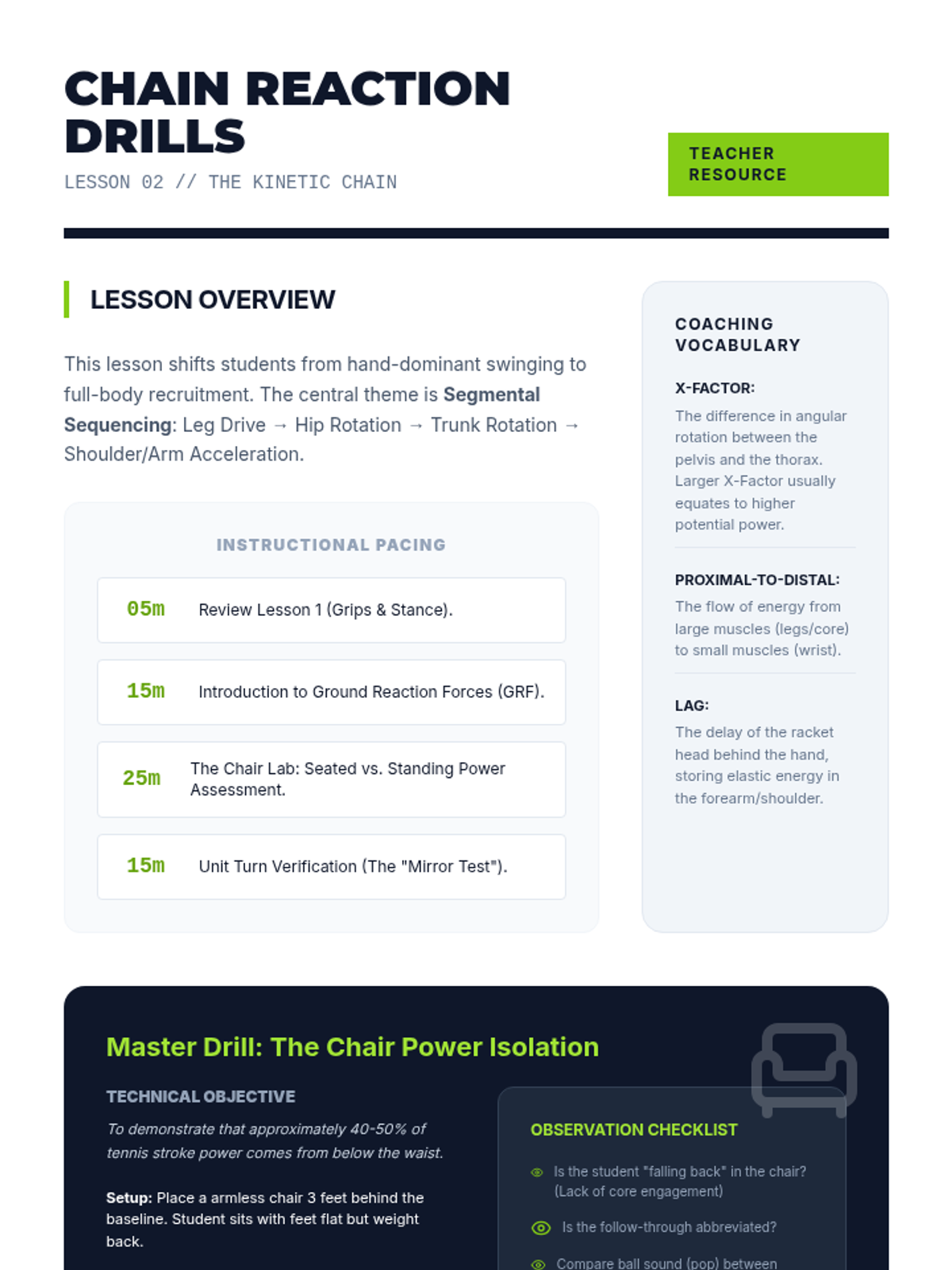
Explore the kinetic chain from the ground up. This lesson breaks down the mechanics of the jab, cross, and hook, emphasizing hip rotation and proper alignment.
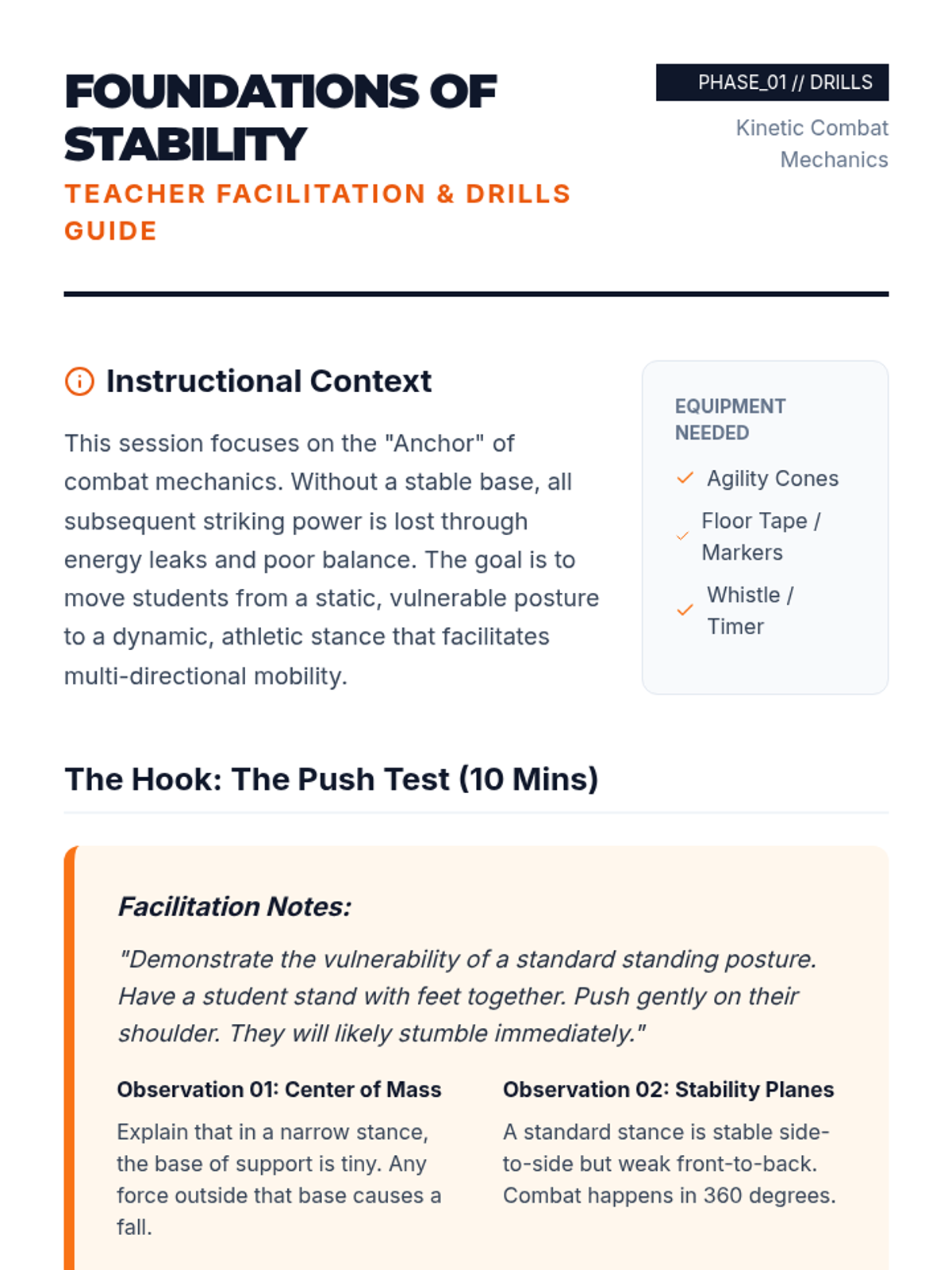
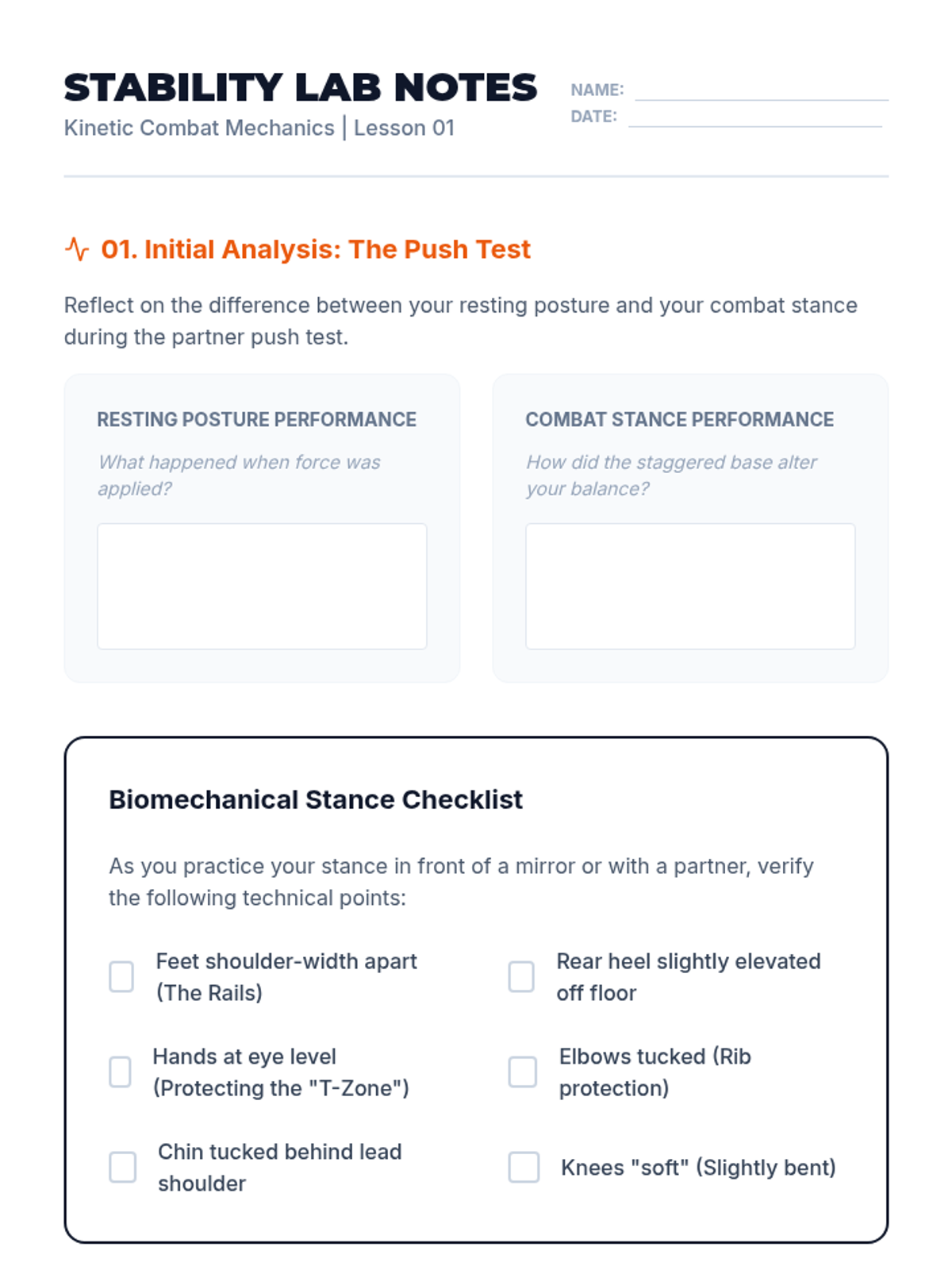
Establish a foundation for balance and mobility. This lesson introduces the staggered combat stance and efficient footwork patterns to maintain stability during movement.
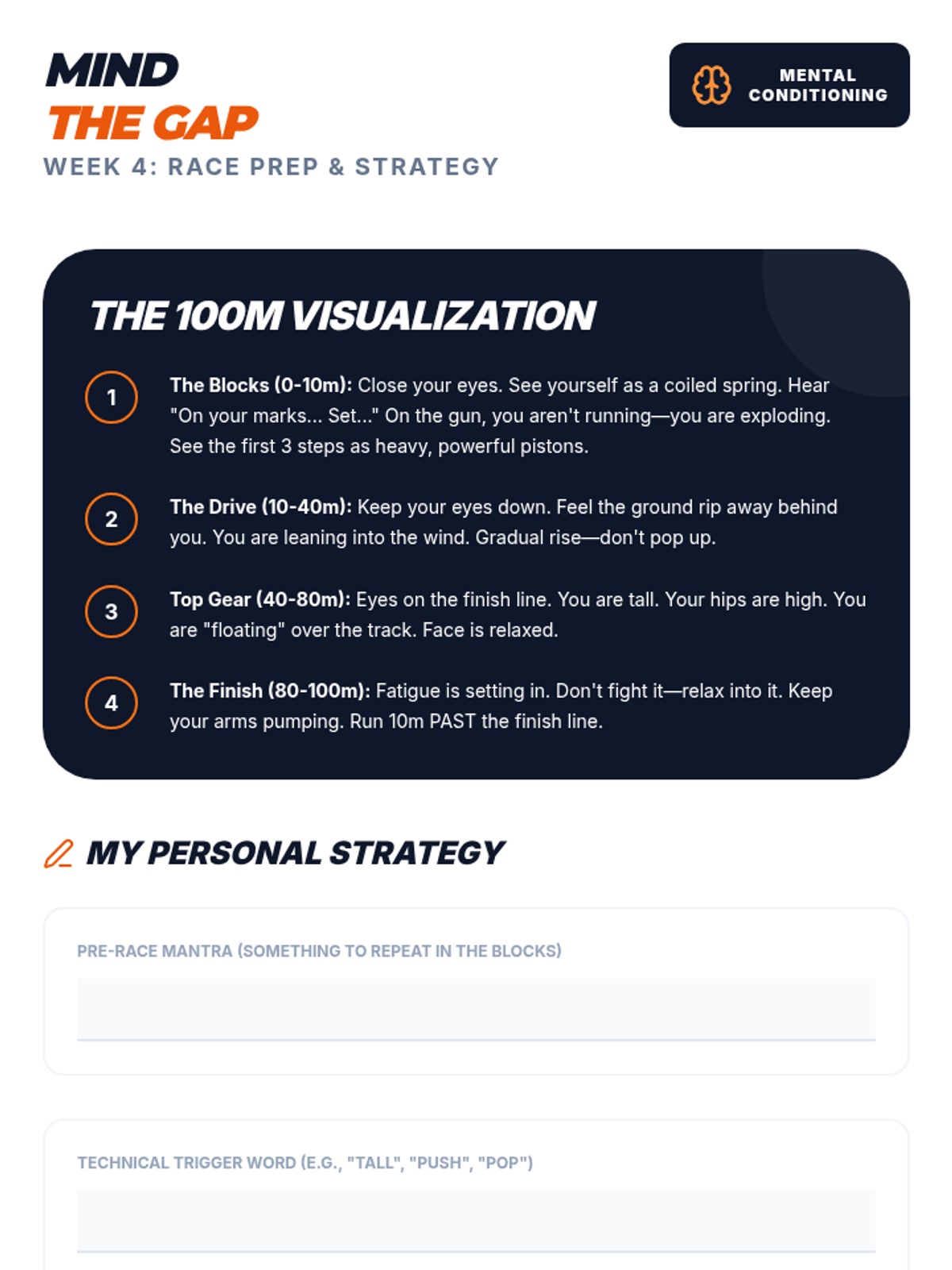
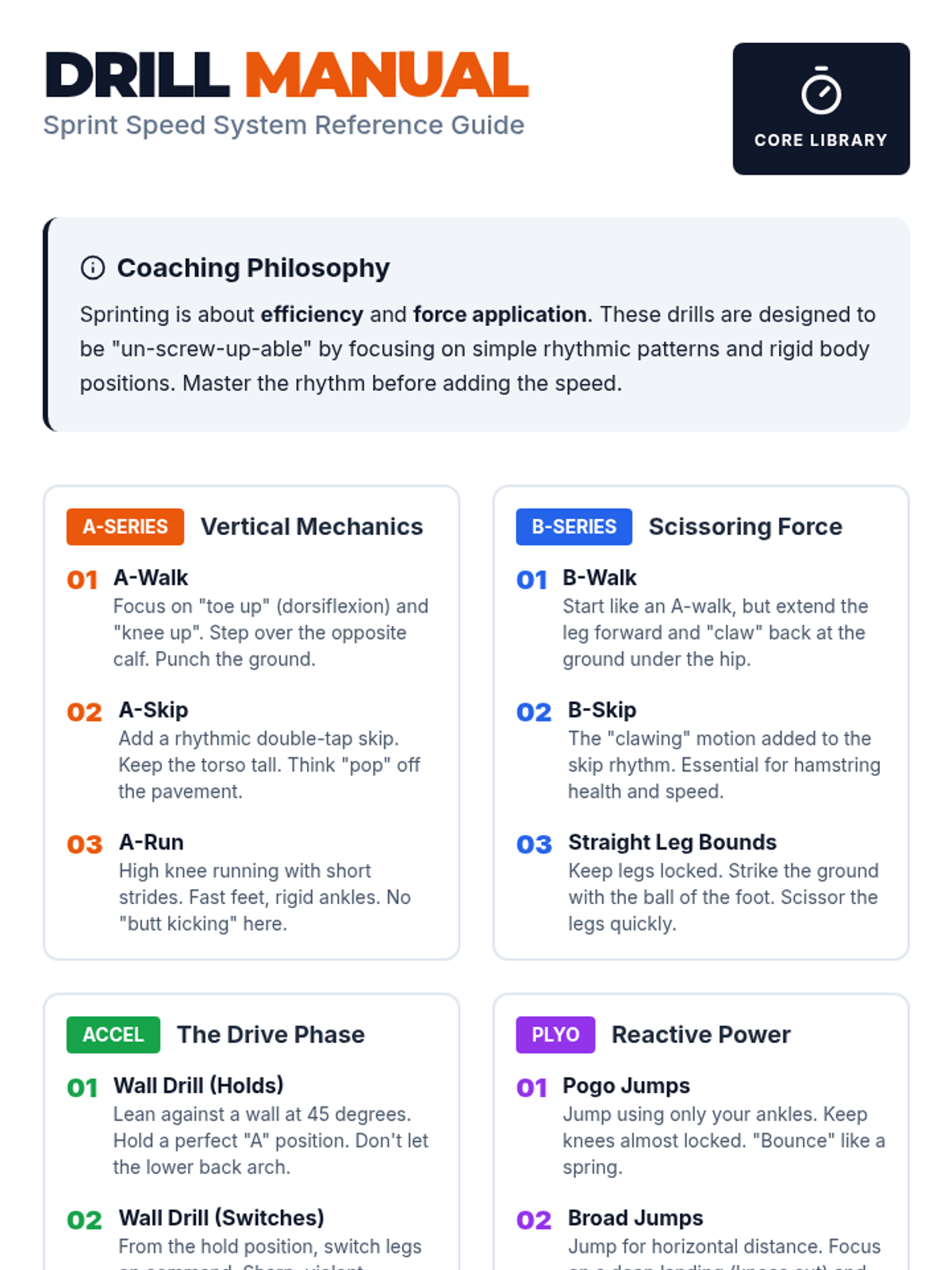
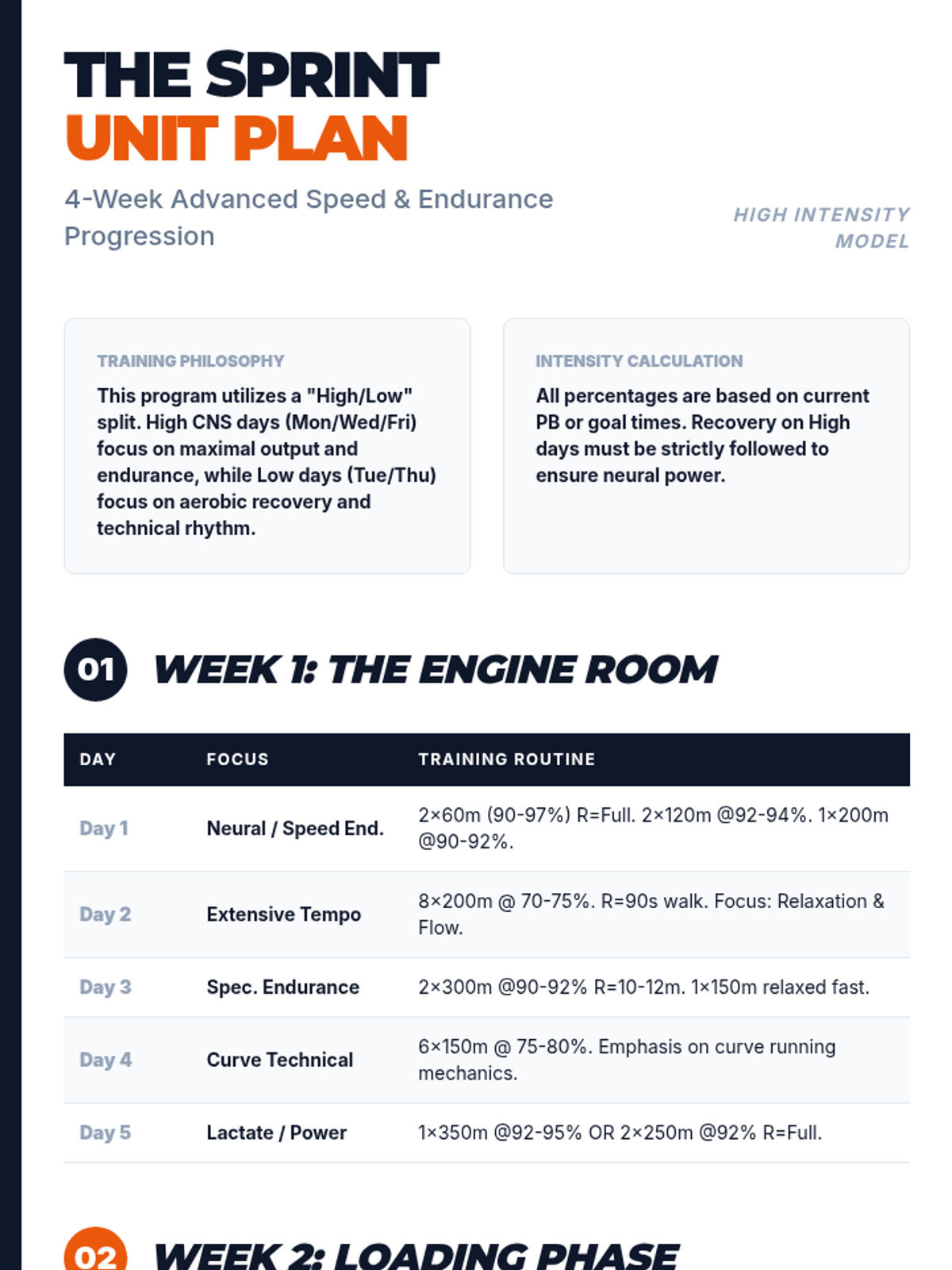
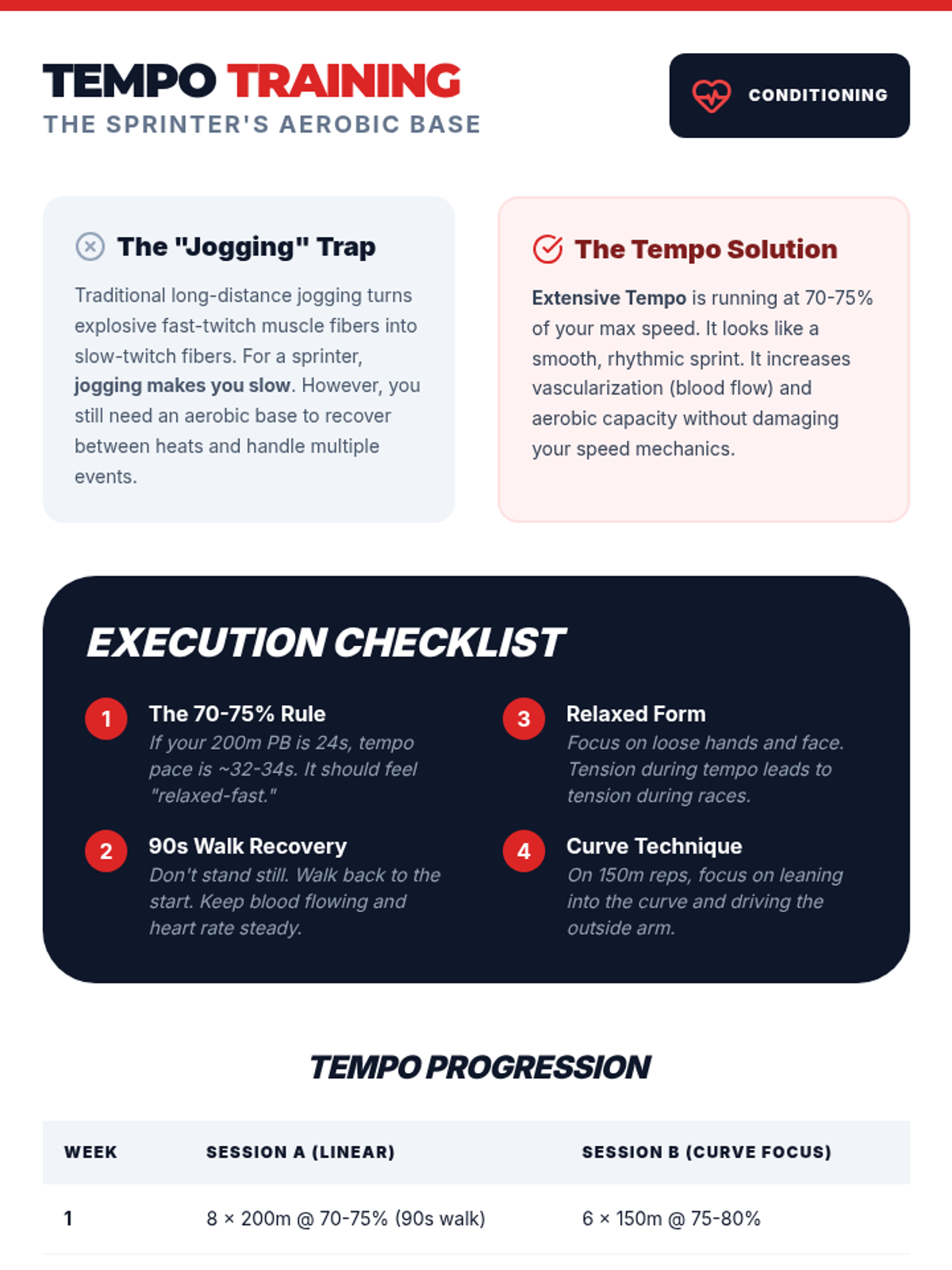
Fine-tuning starts, speed endurance intervals, and preparing for competition-style sprinting.
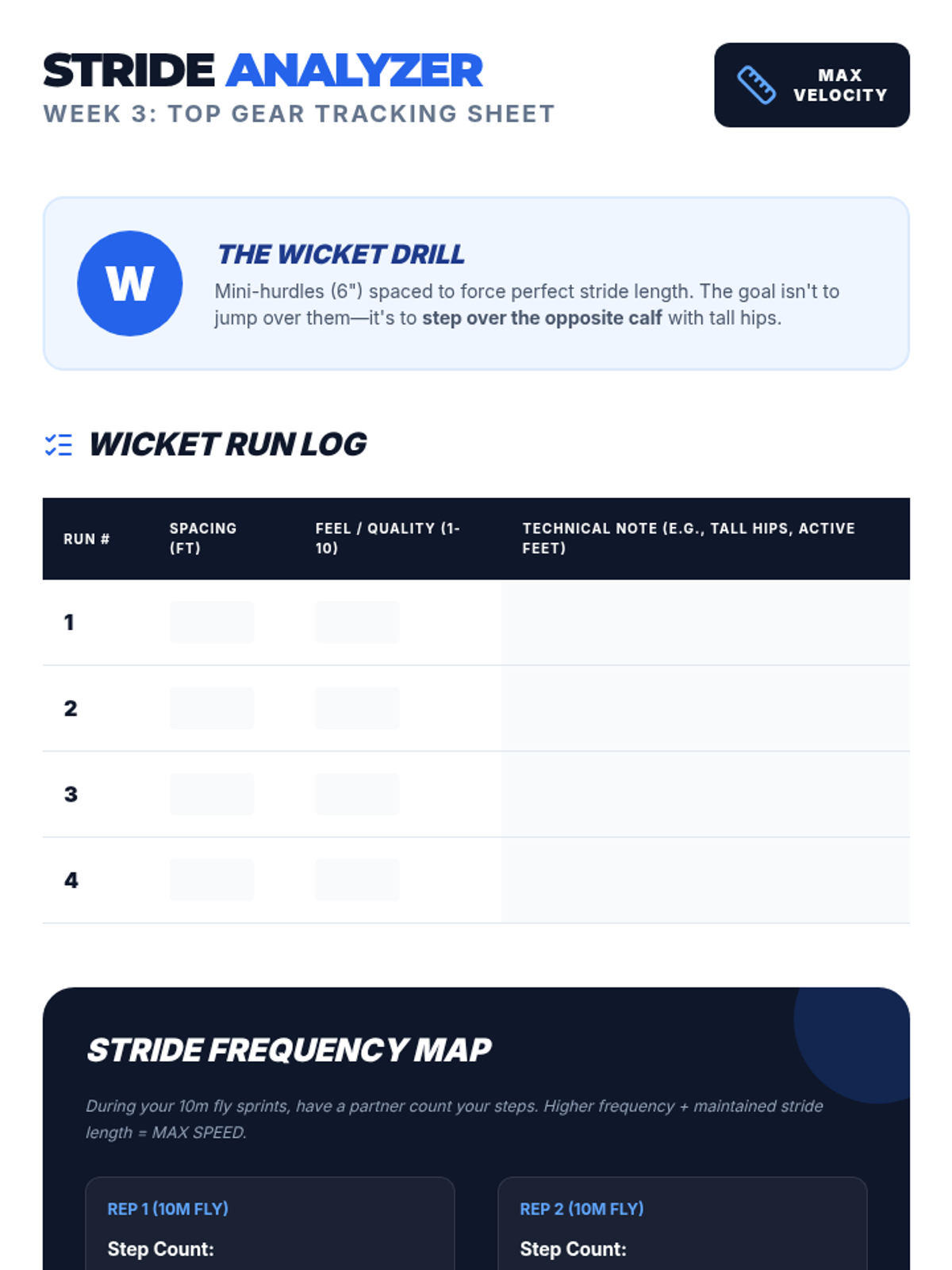
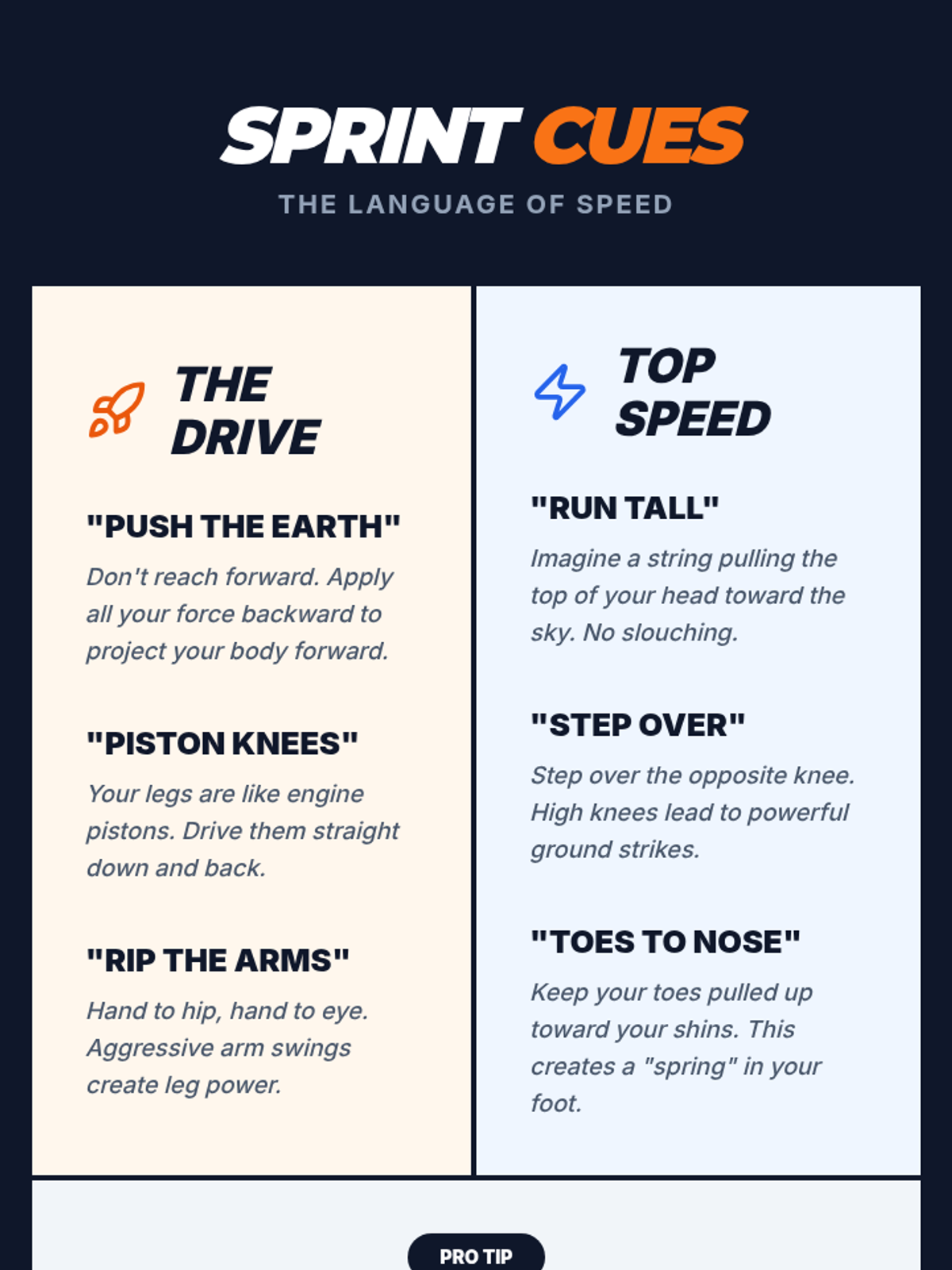
Training upright sprinting mechanics, stride frequency through wicket drills, and maximum velocity maintenance.
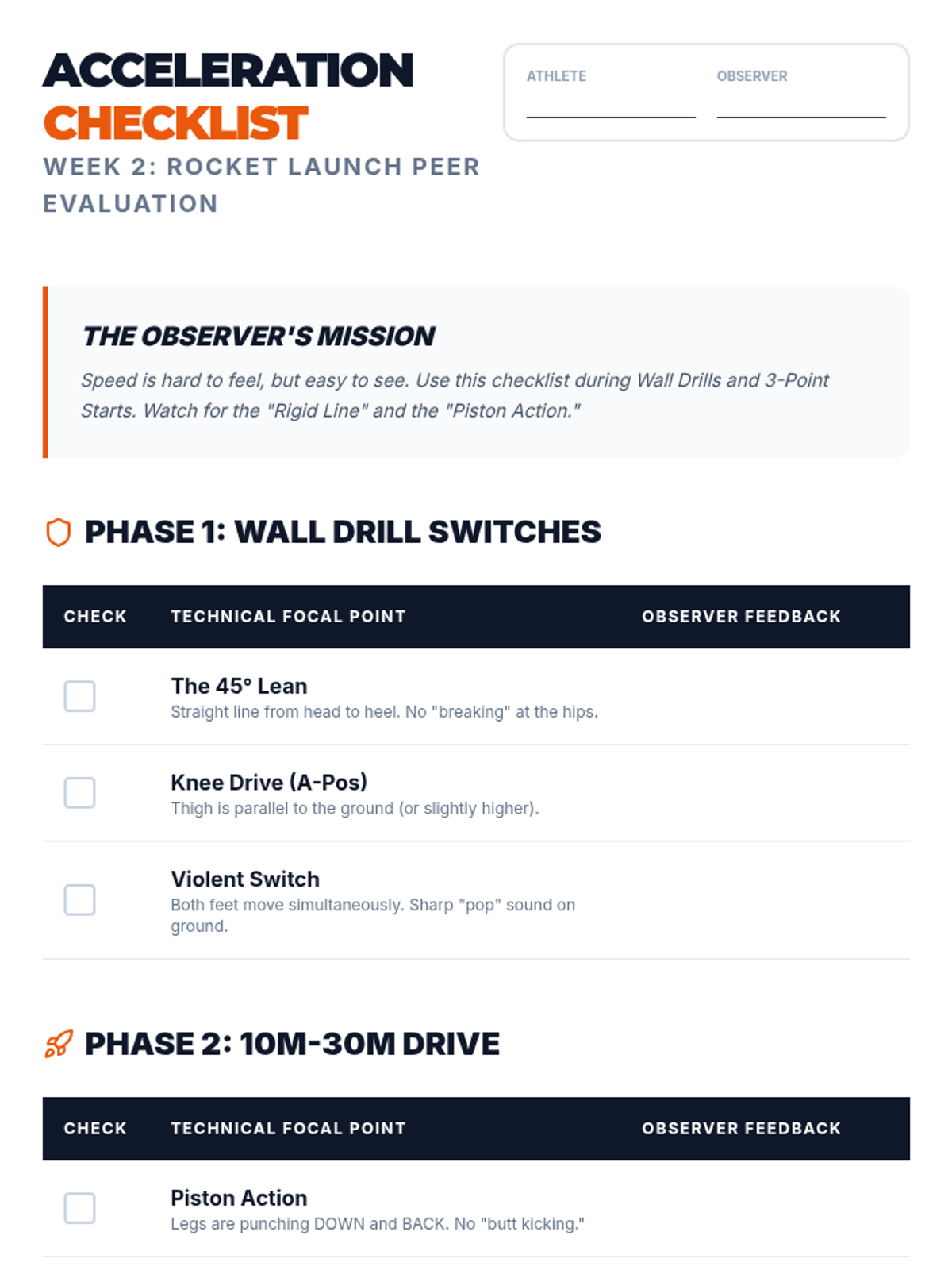
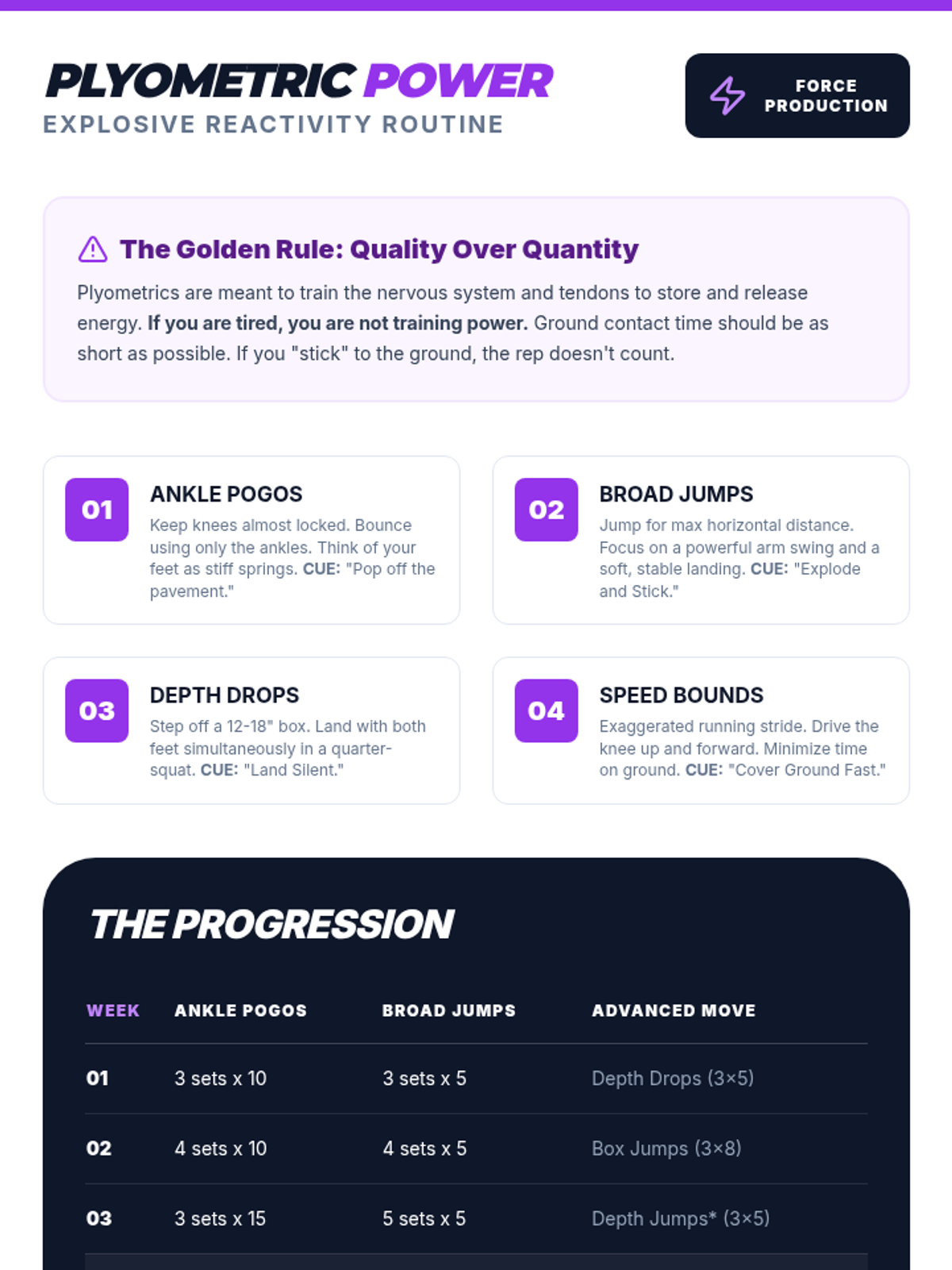
Introducing the drive phase, explosive wall drills, and higher-intensity plyometrics to build raw power.
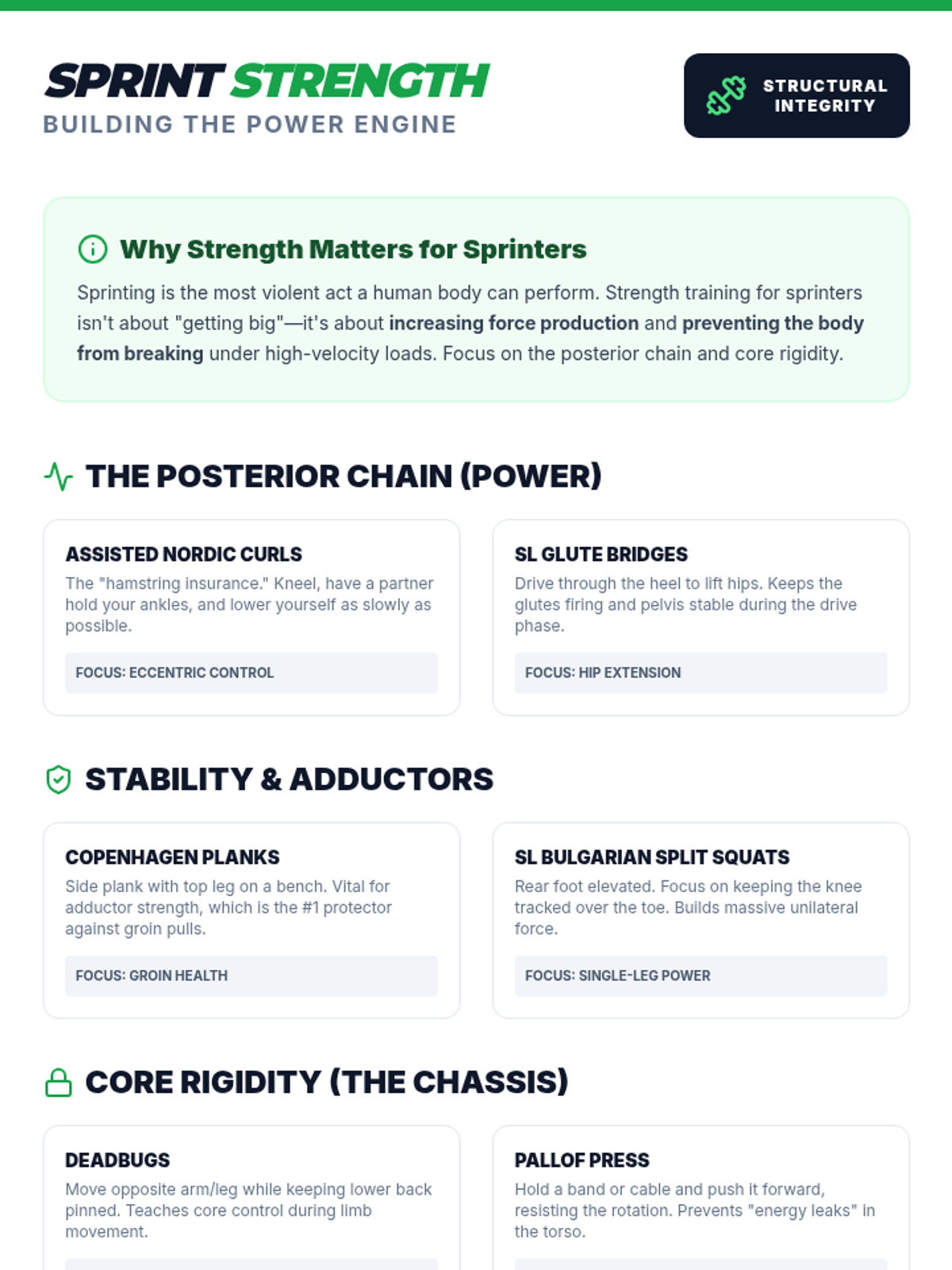
Focus on establishing proper sprint posture, rhythmic drills (A-skips), and basic core strength to prevent injury.
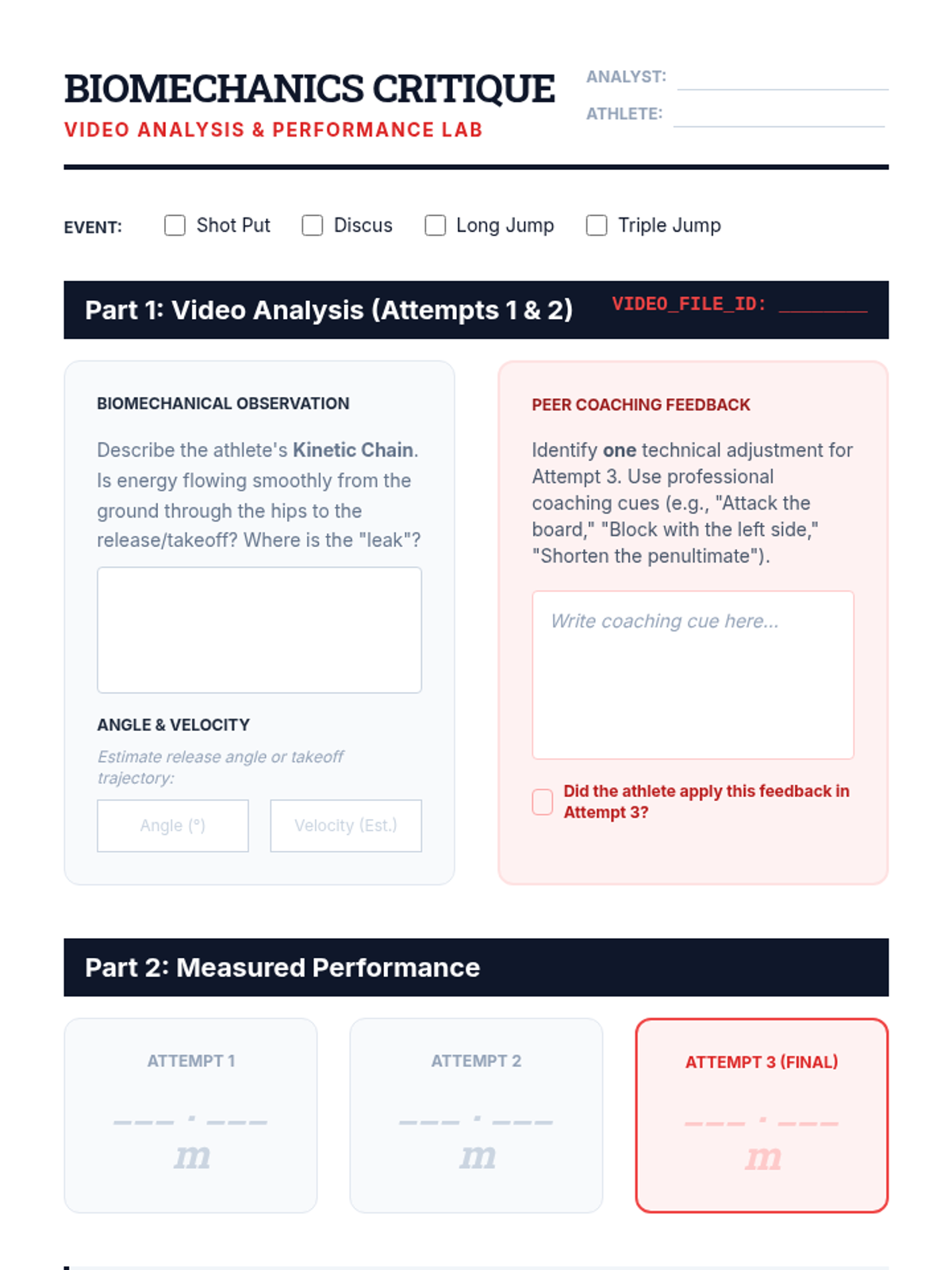
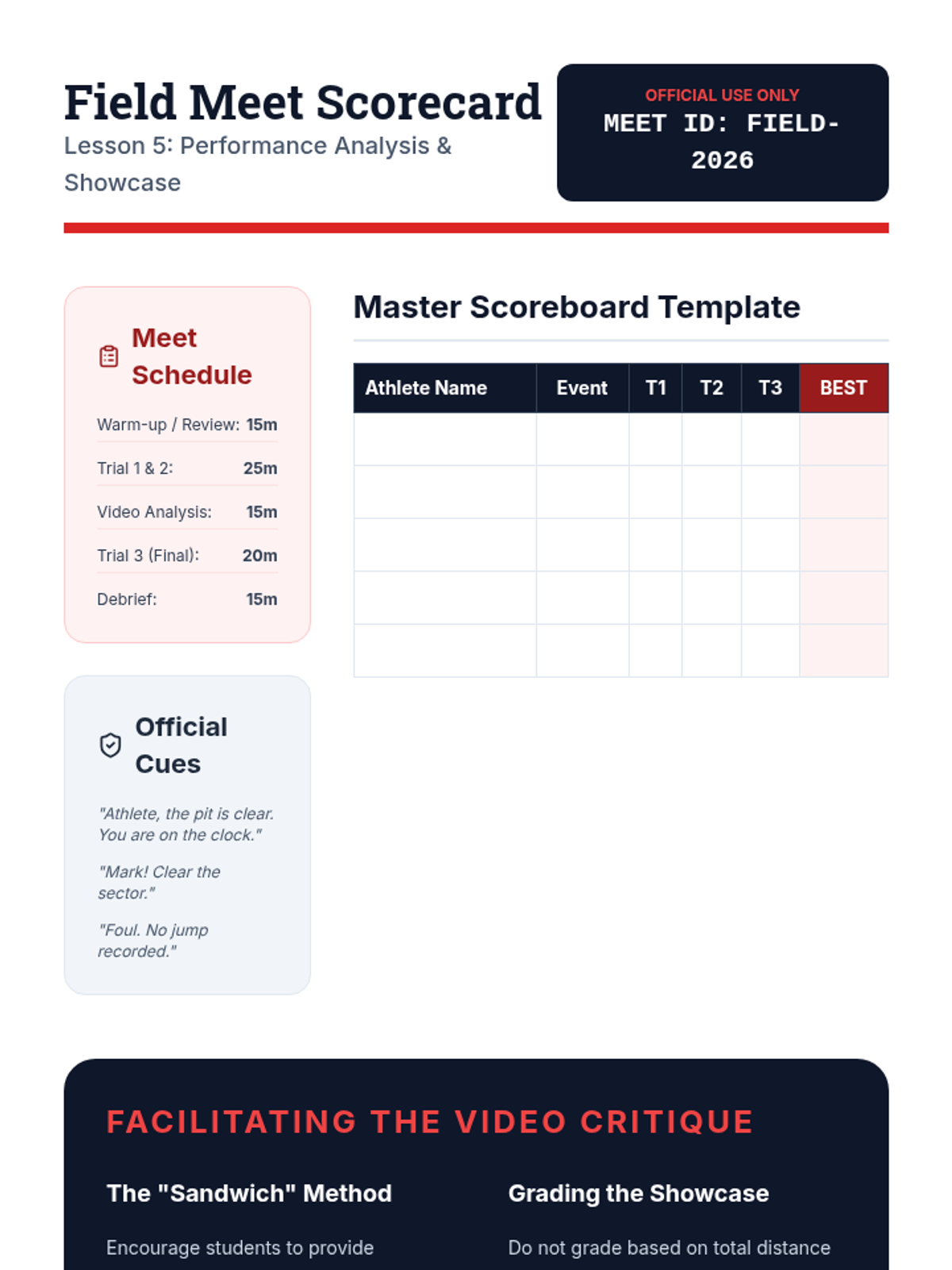
The culmination of the unit where students use video analysis to critique form and compete in a field event showcase, adhering to official competition rules.
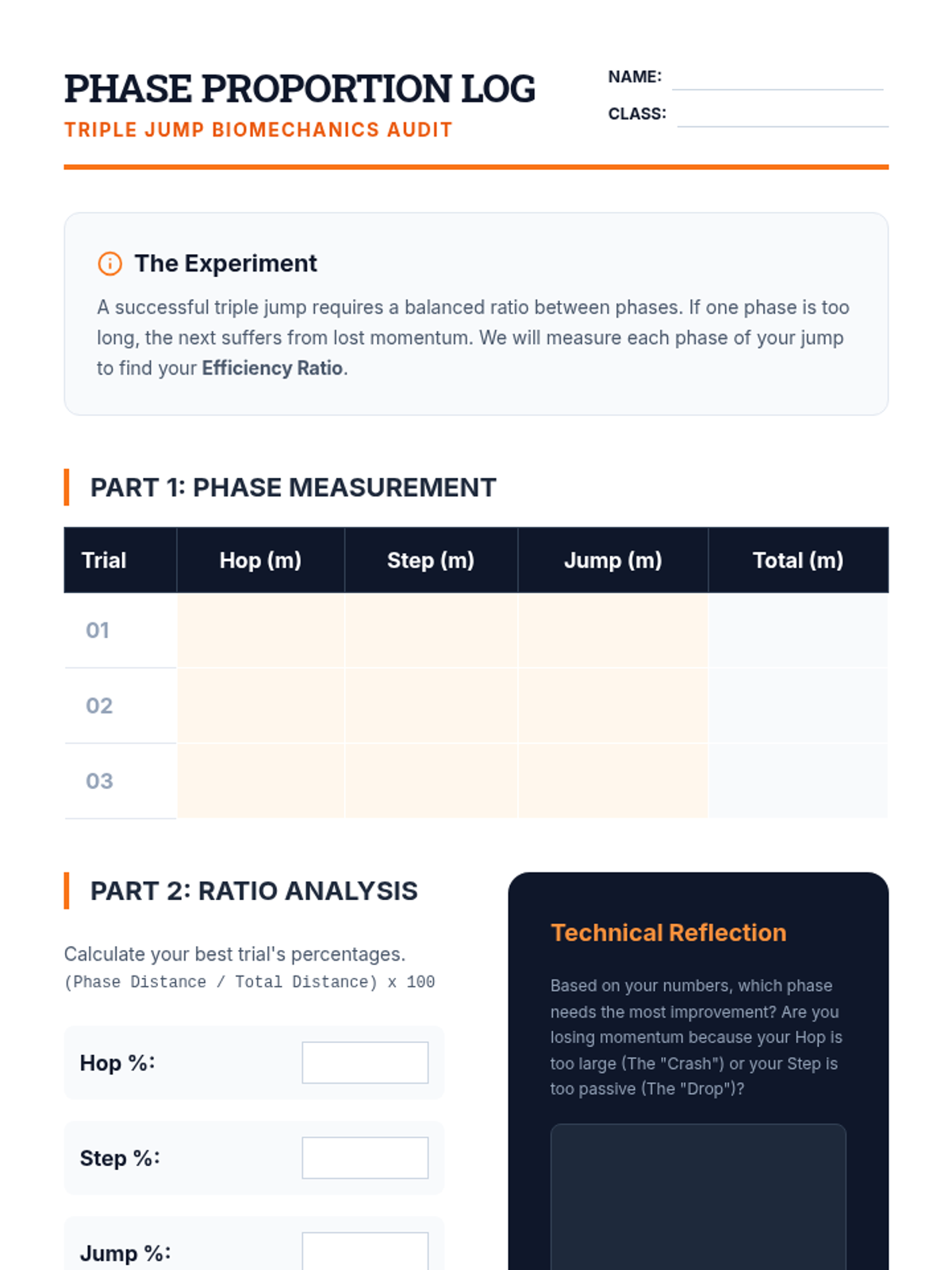
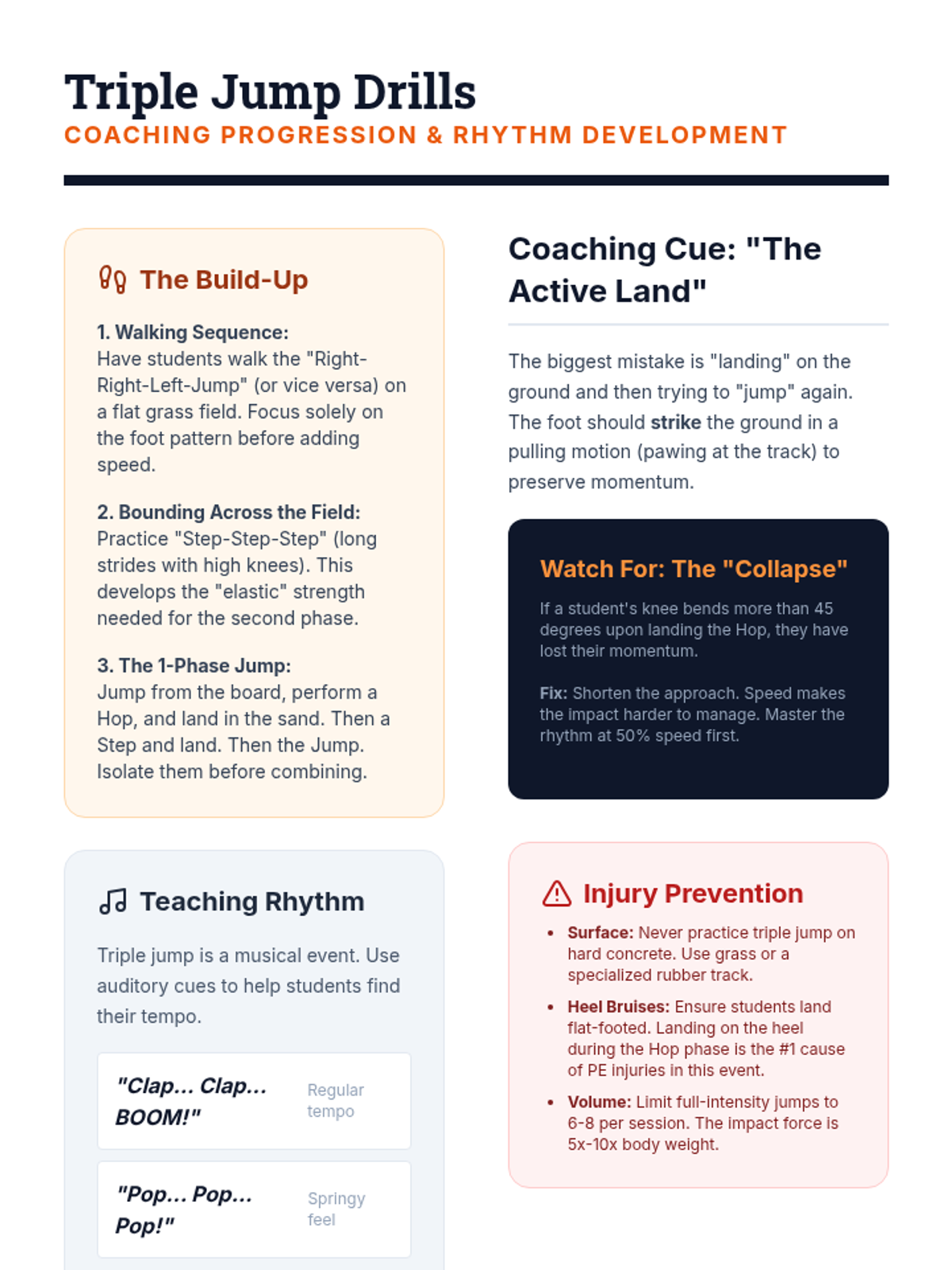
Introduction to the complex 'hop, step, jump' coordination of the triple jump. Students practice rhythmic bounding and maintaining momentum through multiple impact phases.
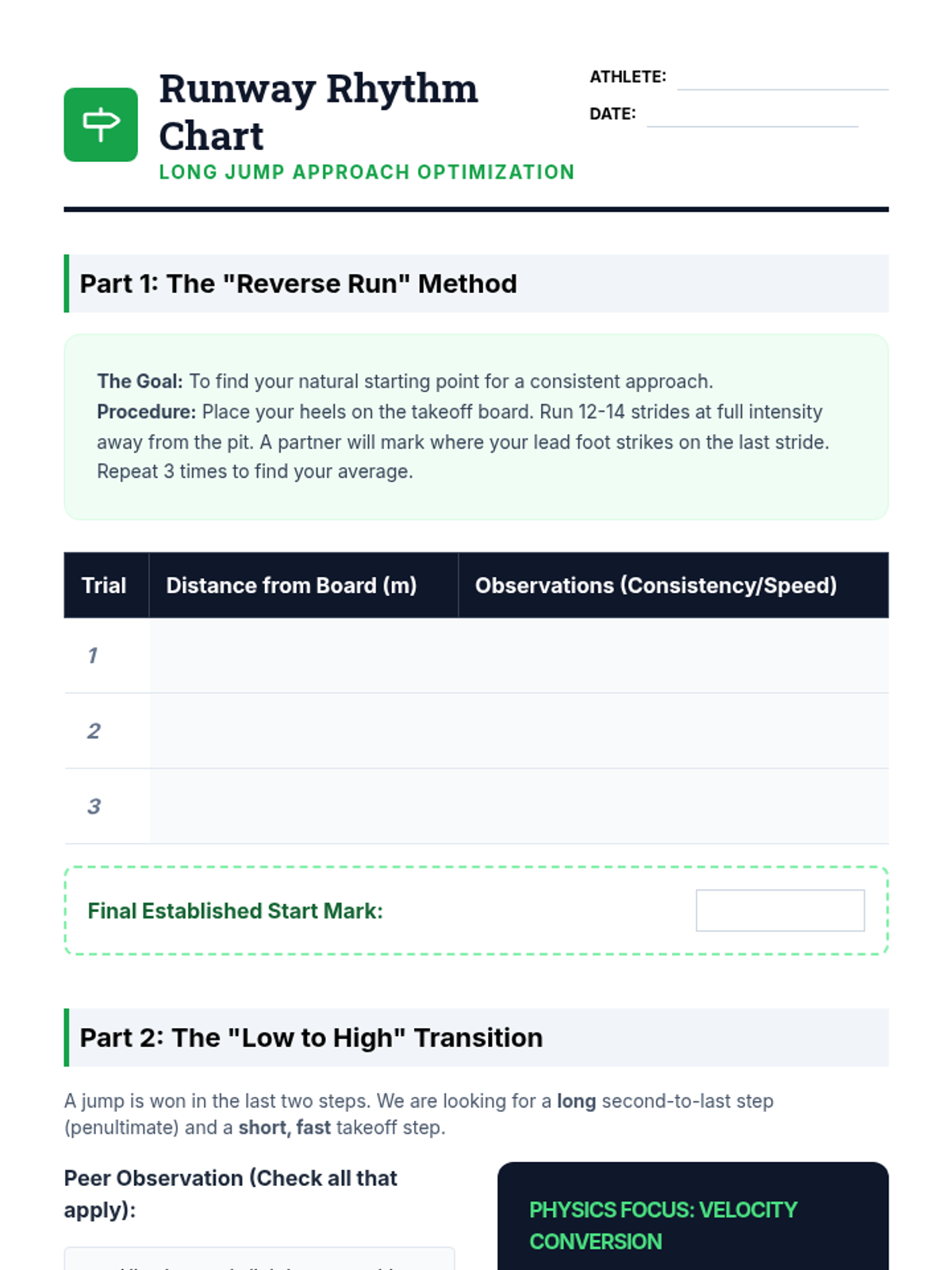
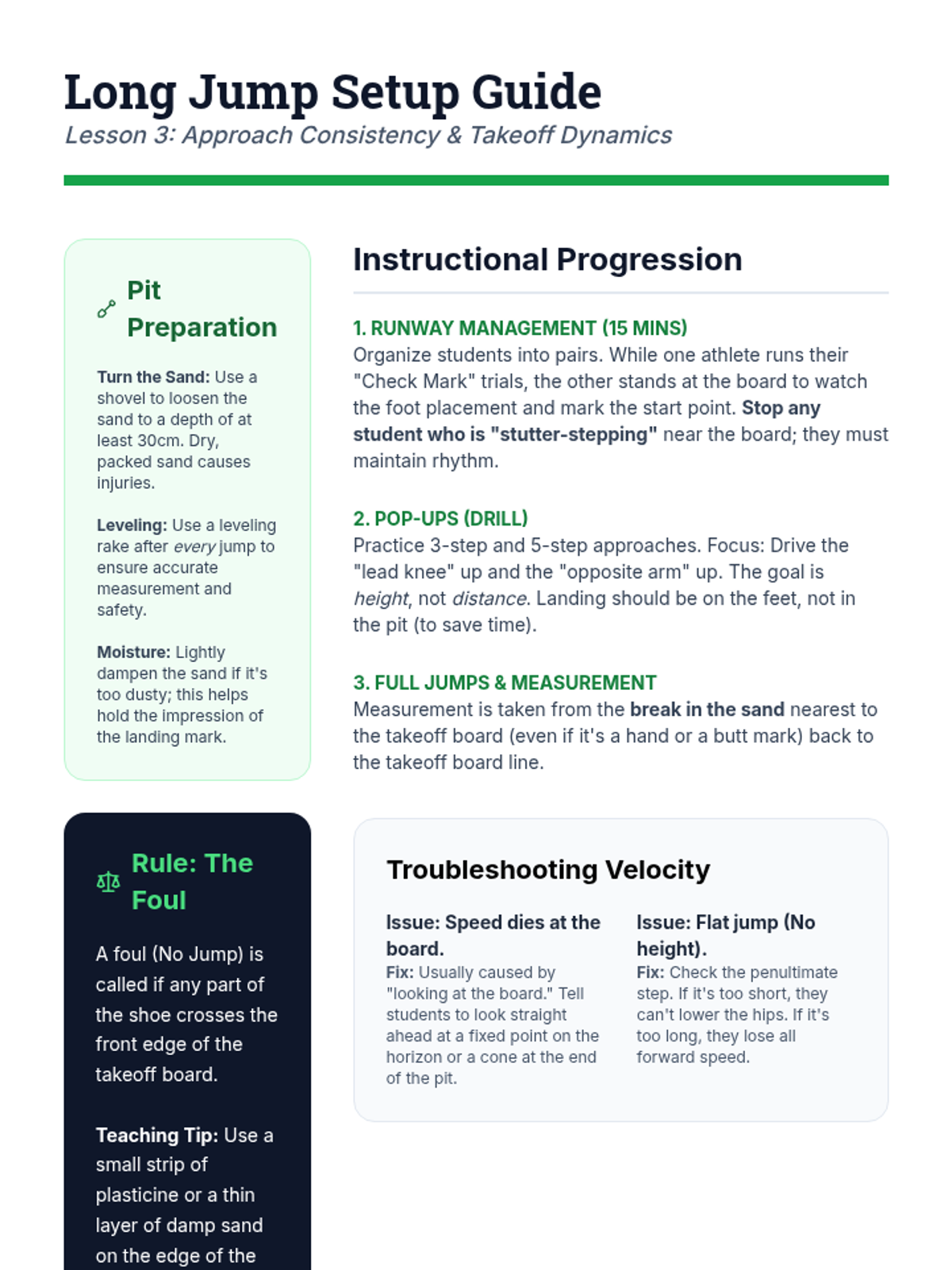
A deep dive into the four phases of the long jump. Students focus on runway consistency, converting horizontal velocity to vertical lift, and perfecting the landing.
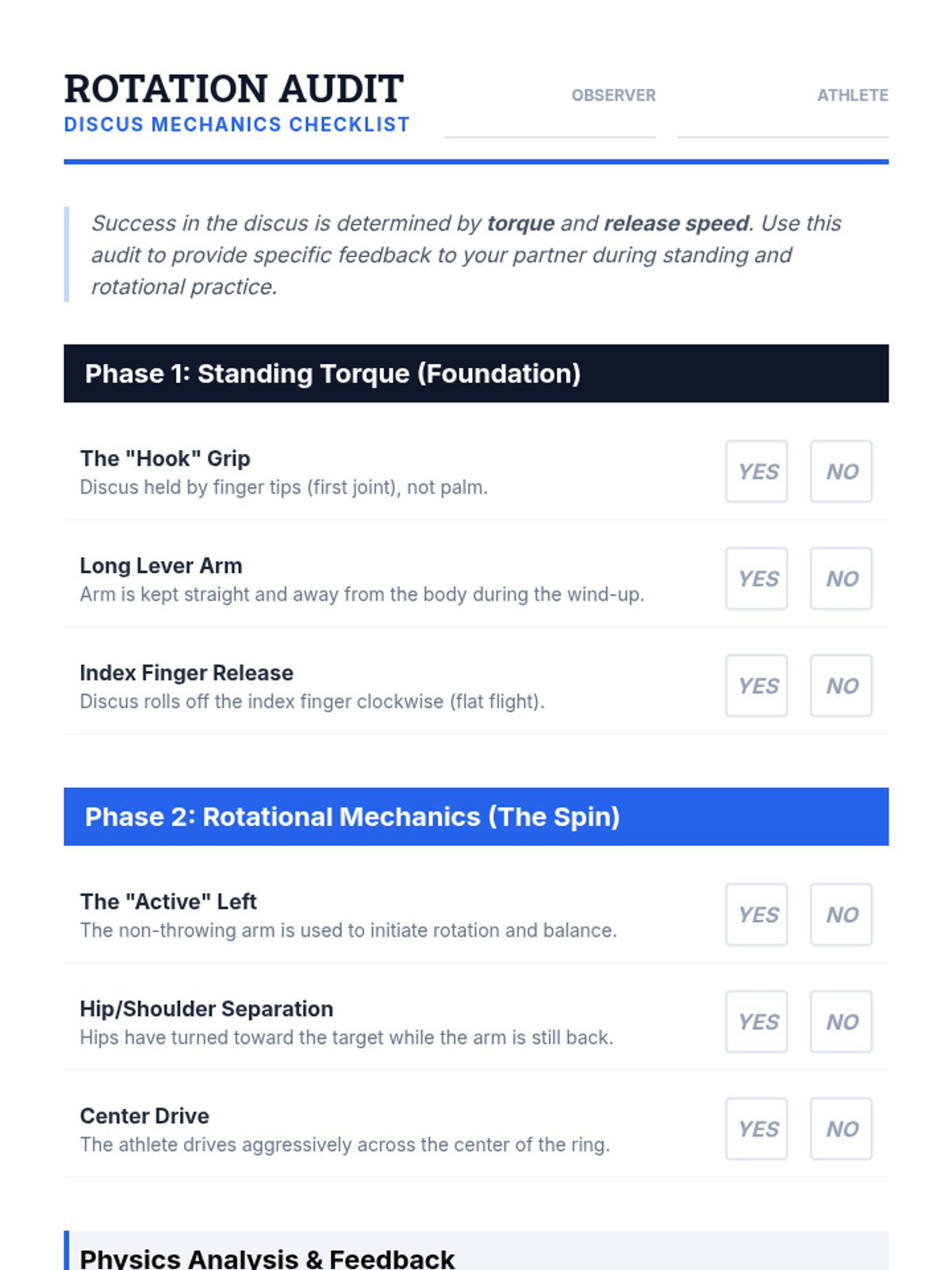
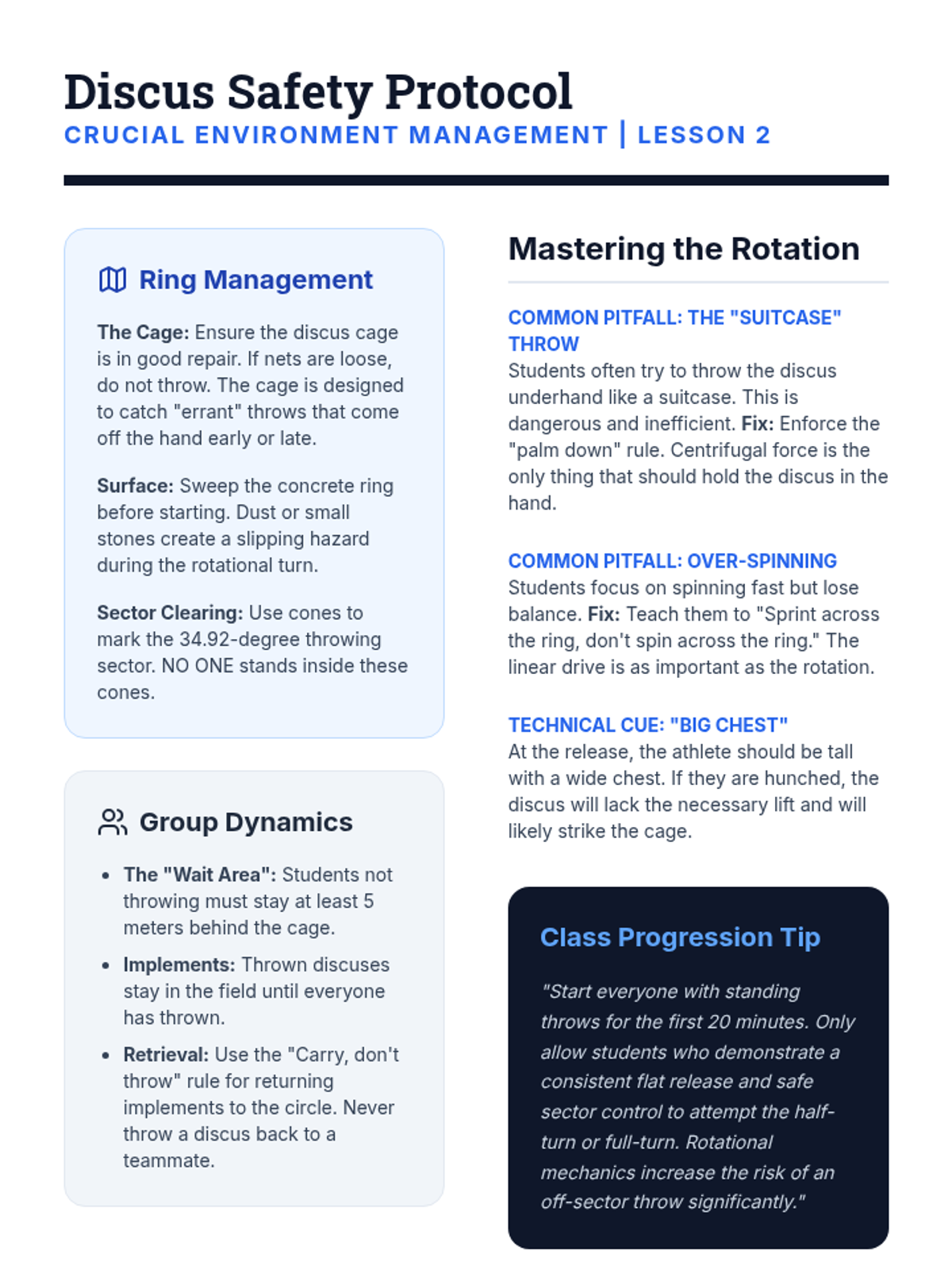
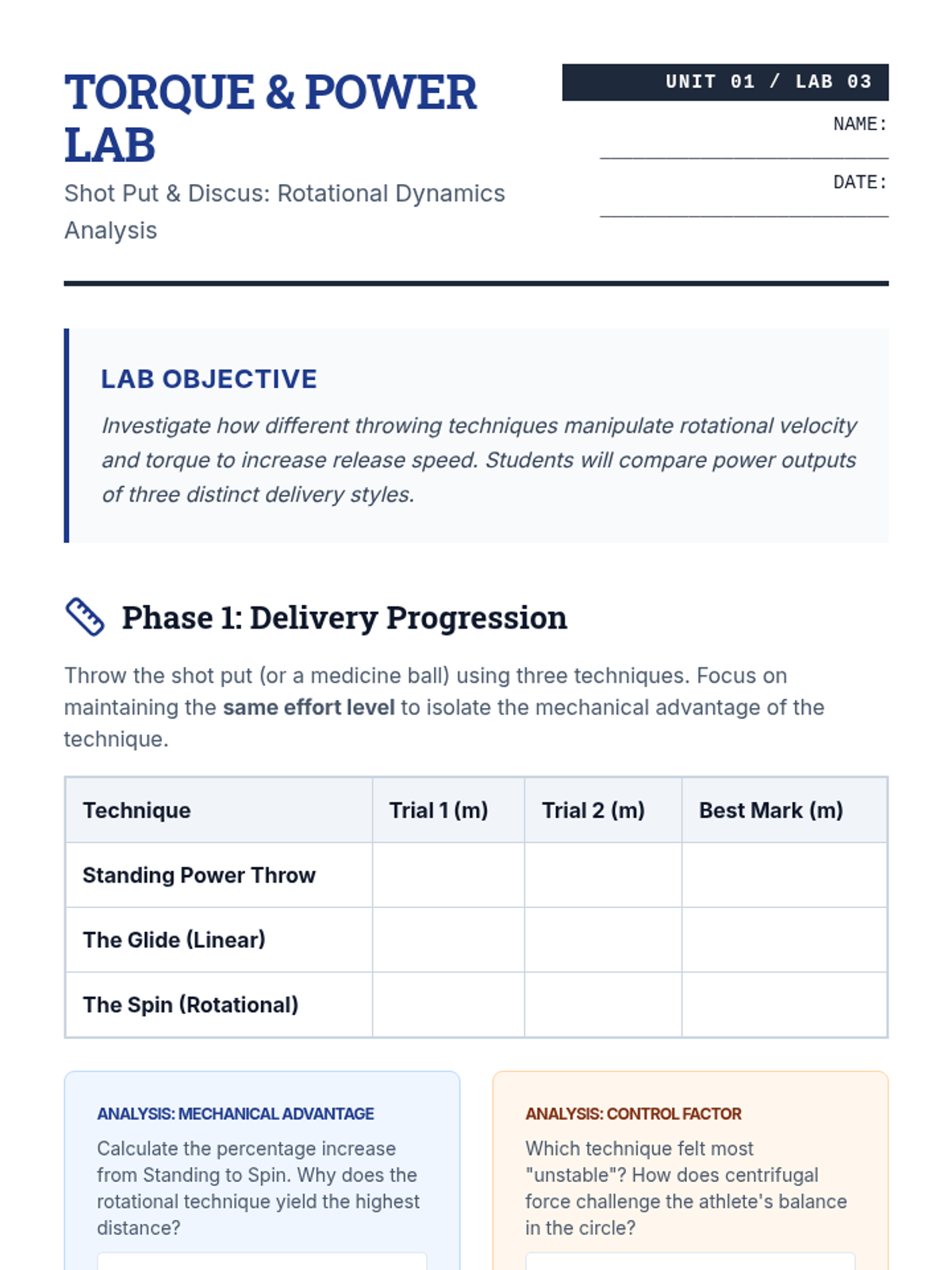
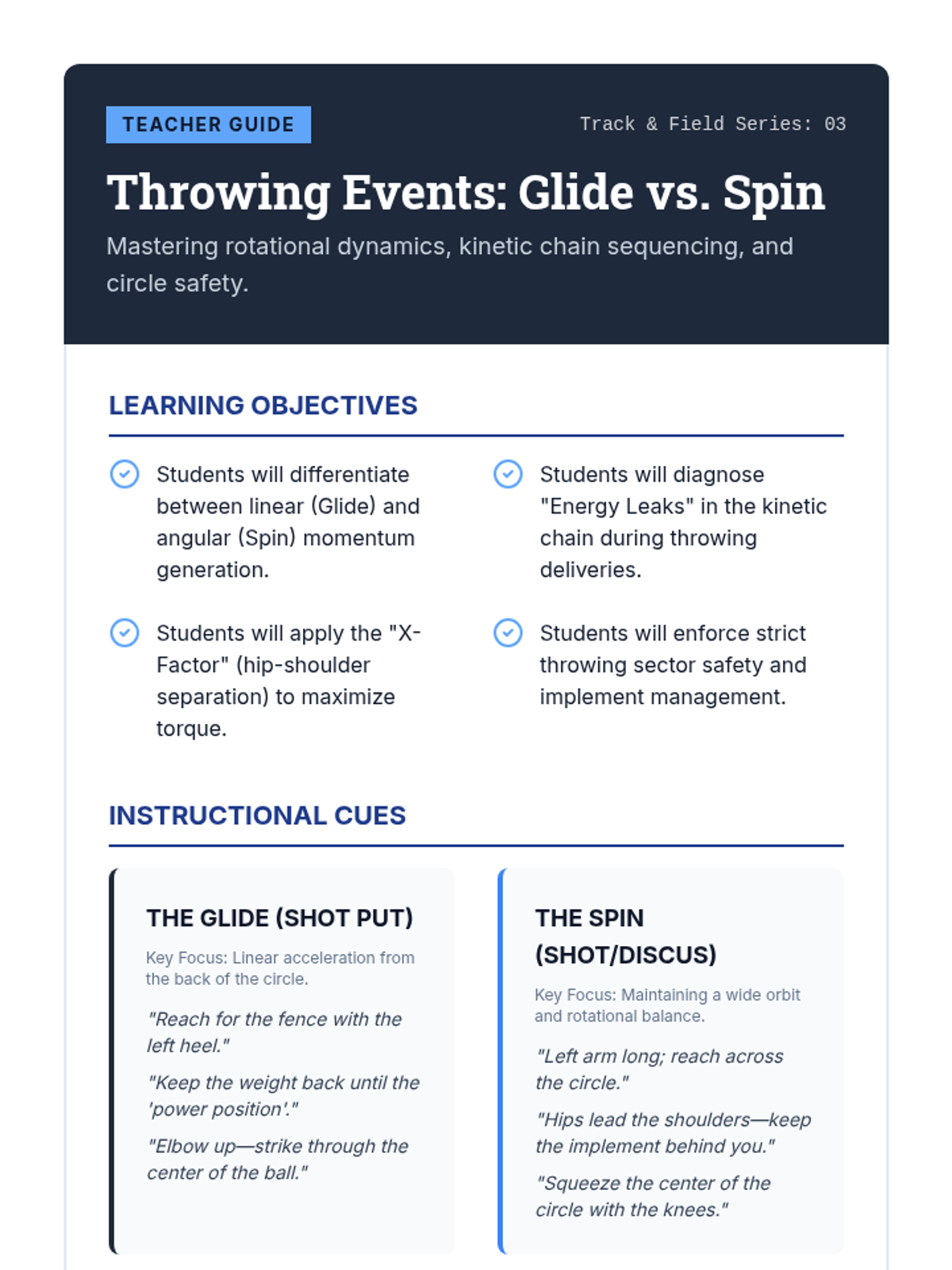
Exploring the rotational mechanics of the discus throw. Students learn about torque, centrifugal force, and aerodynamics while practicing the transition from standing throws to rotational movement.
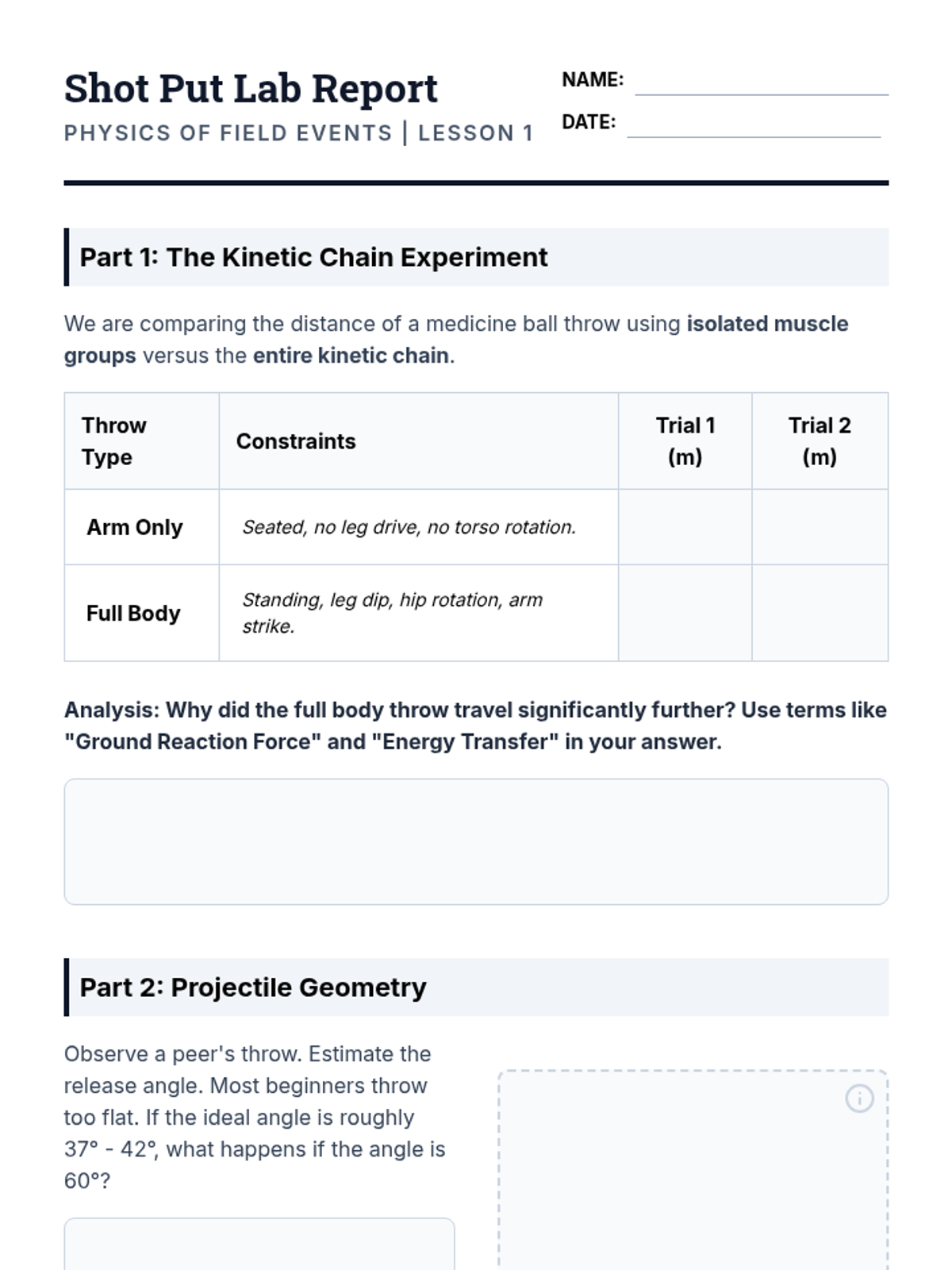
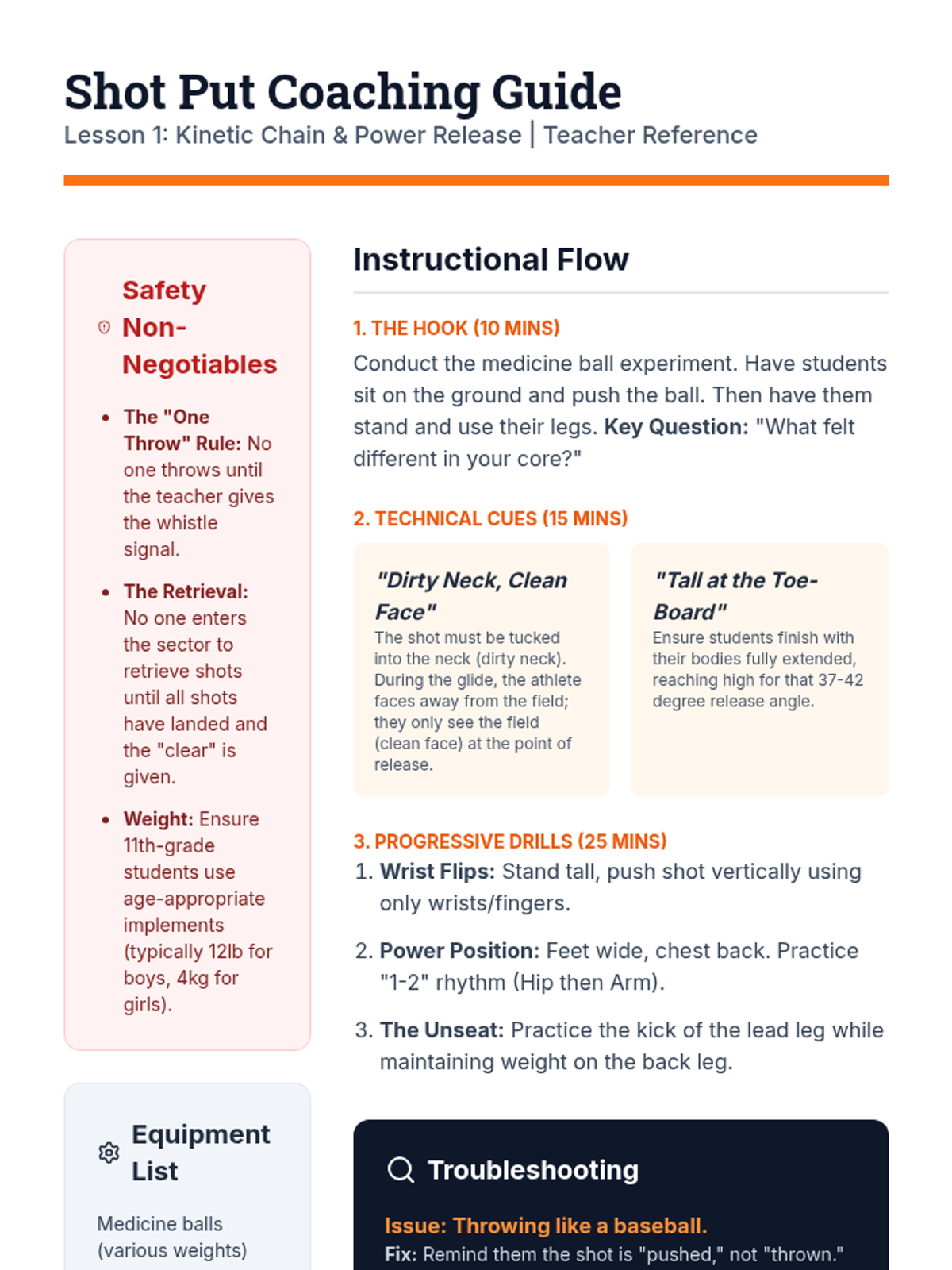
Introduction to shot put technique with a focus on the kinetic chain and the physics of projectile motion. Students compare different throwing methods to understand how leg drive generates power.
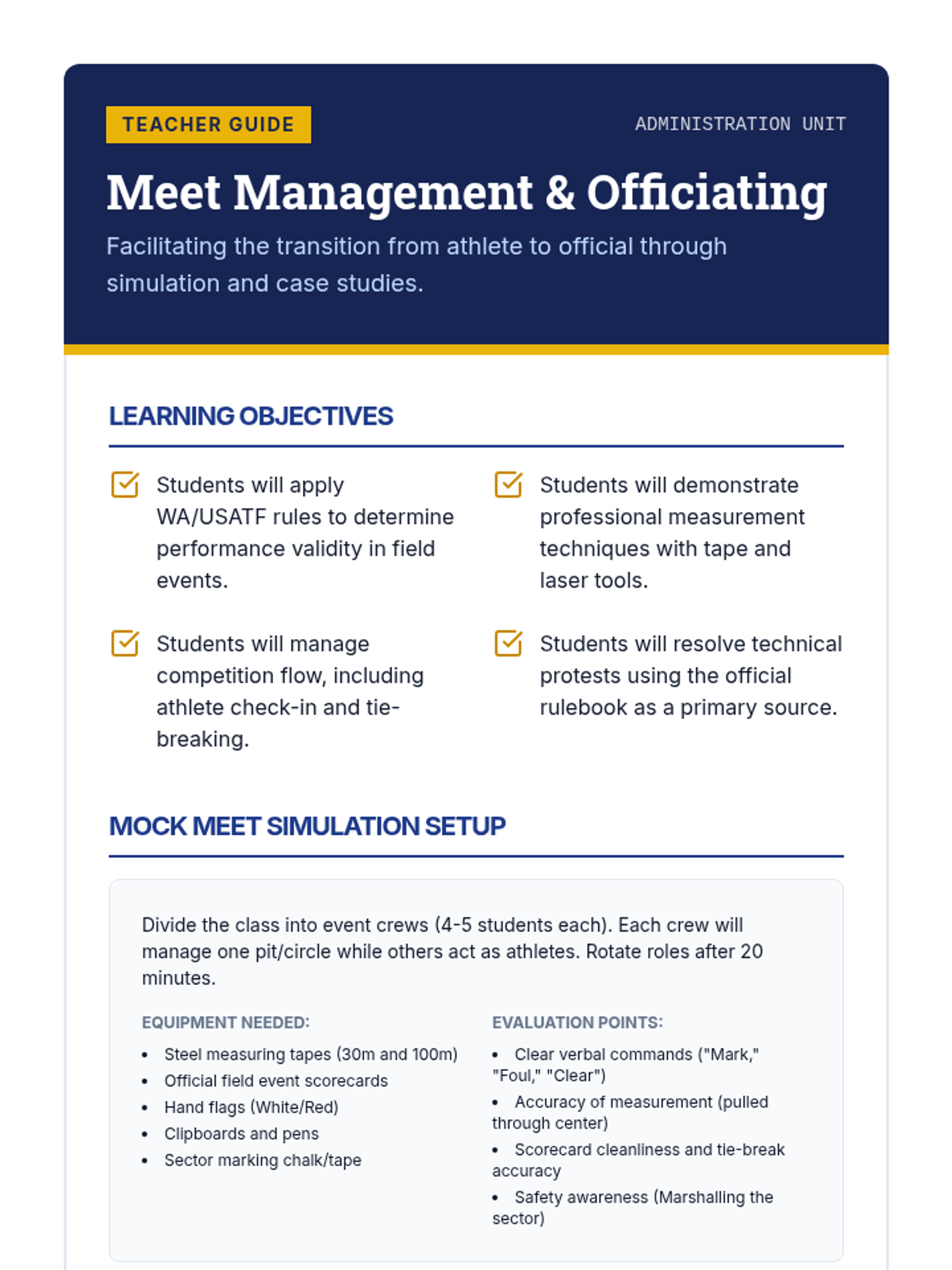
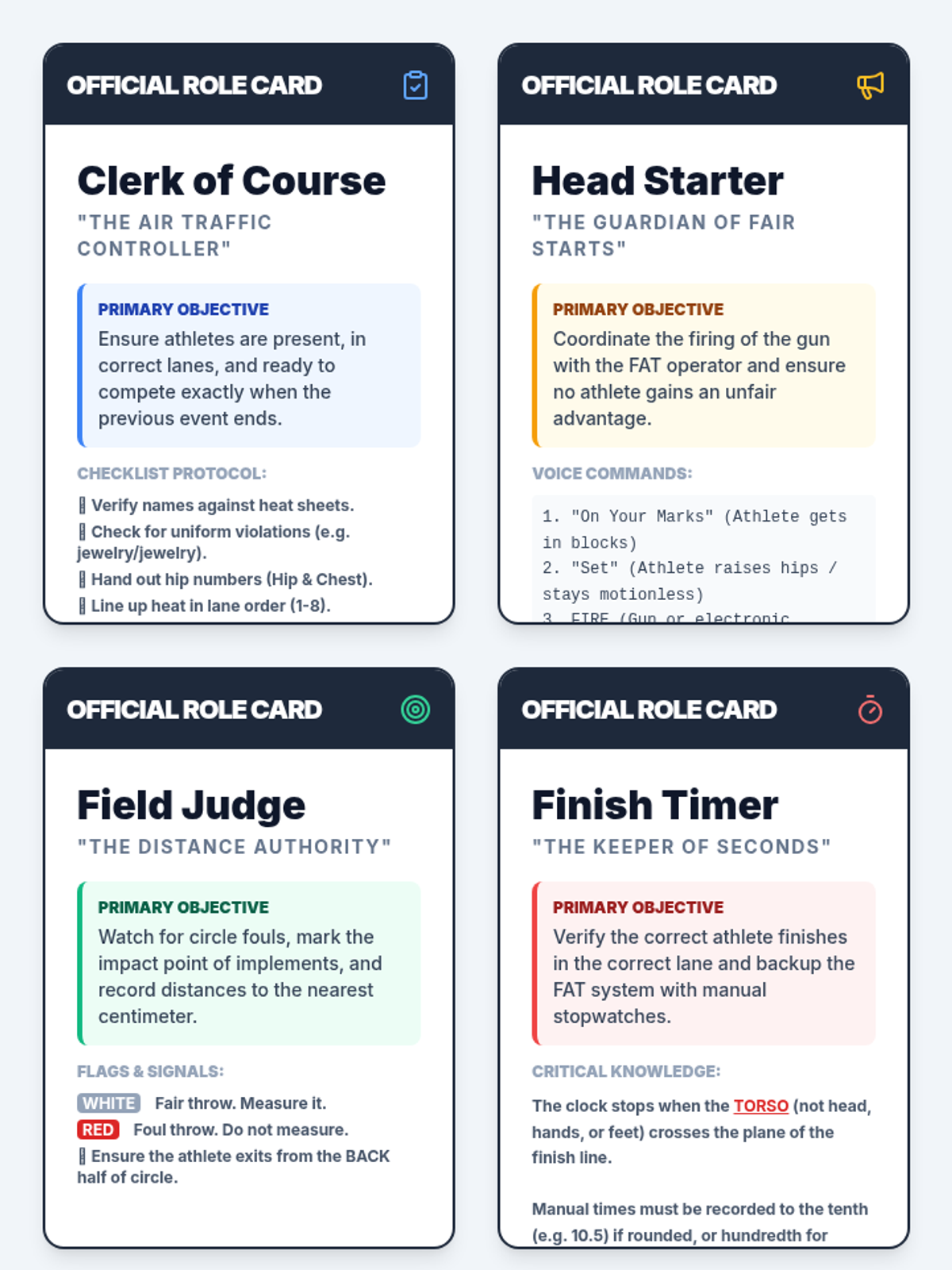
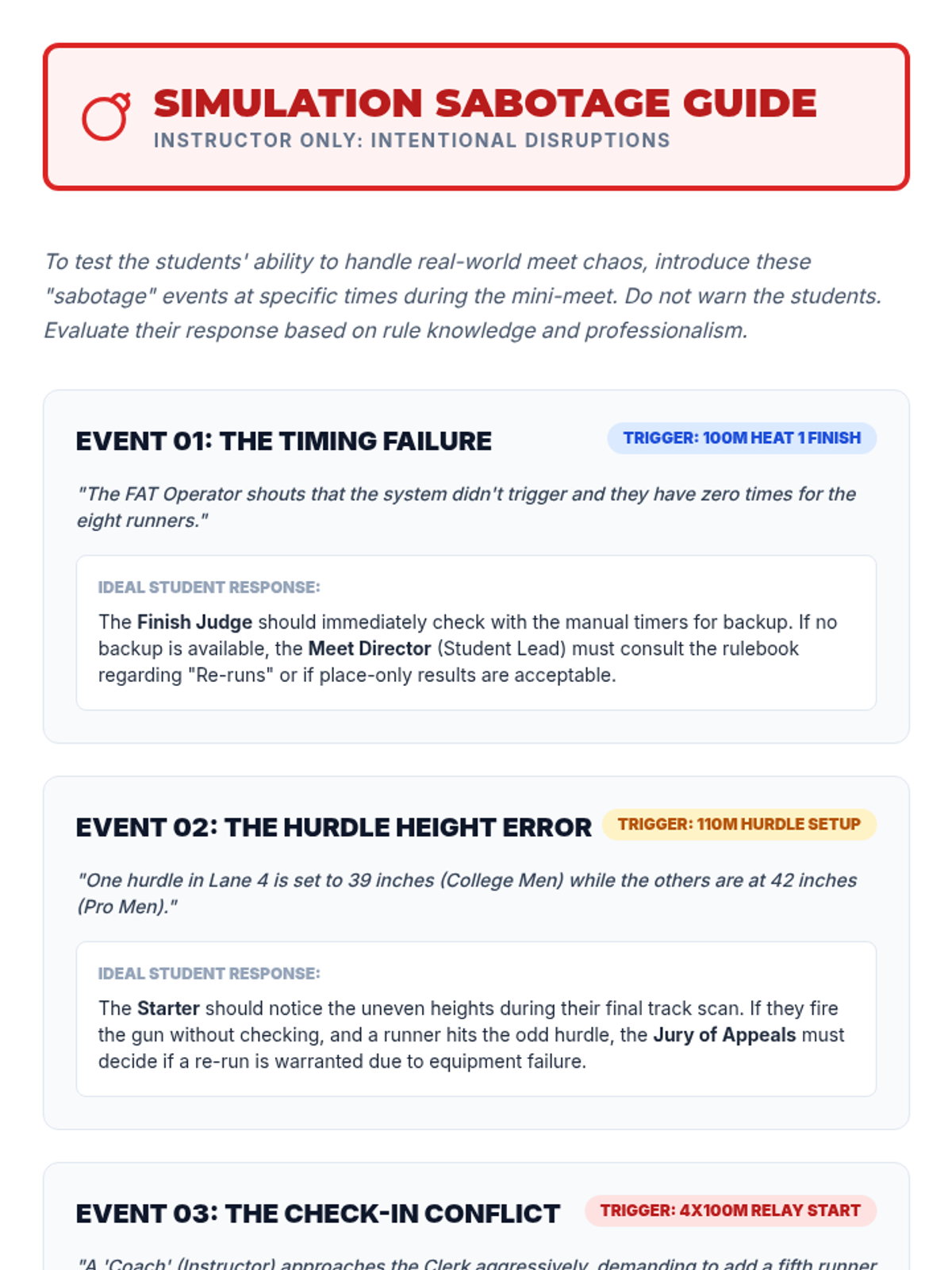
Transition to officiating and management, applying competition rules and logistics in a simulated meet environment.
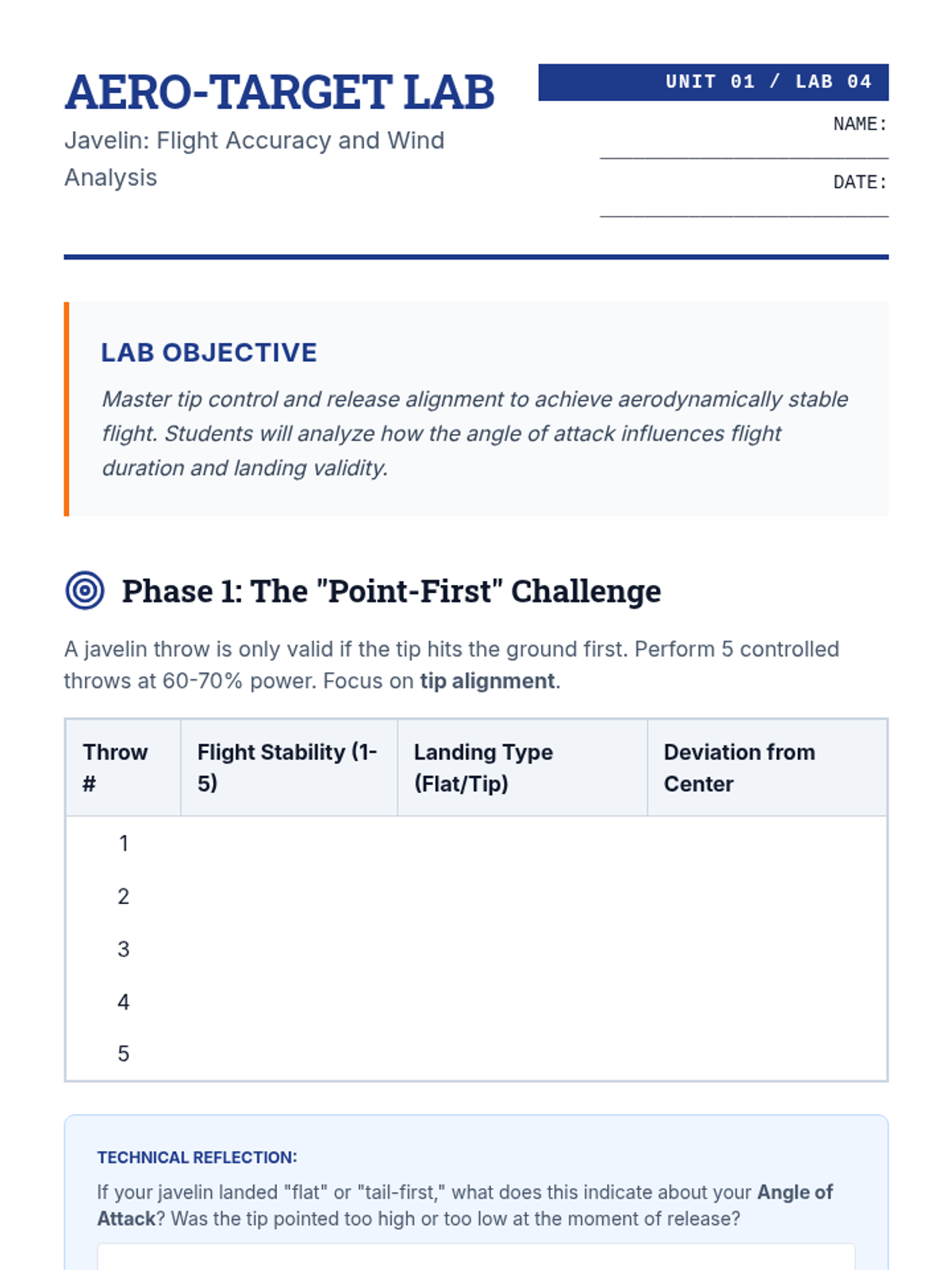
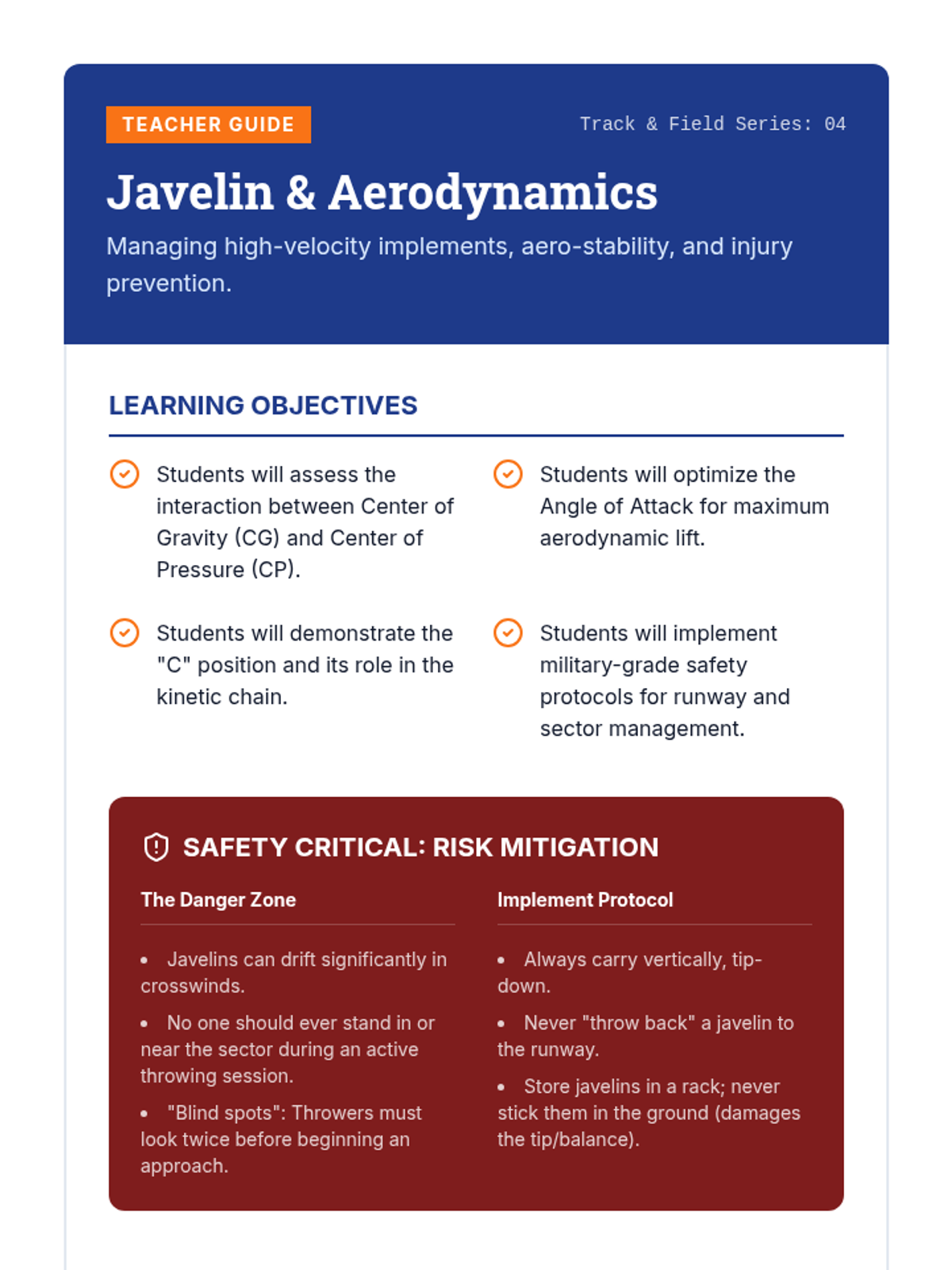
Investigate javelin aerodynamics and safety, focusing on release angles and the biomechanical requirements of the throw.
Analyze the physics of throwing events, contrasting glide and rotational techniques through the lens of torque and kinetic chains.
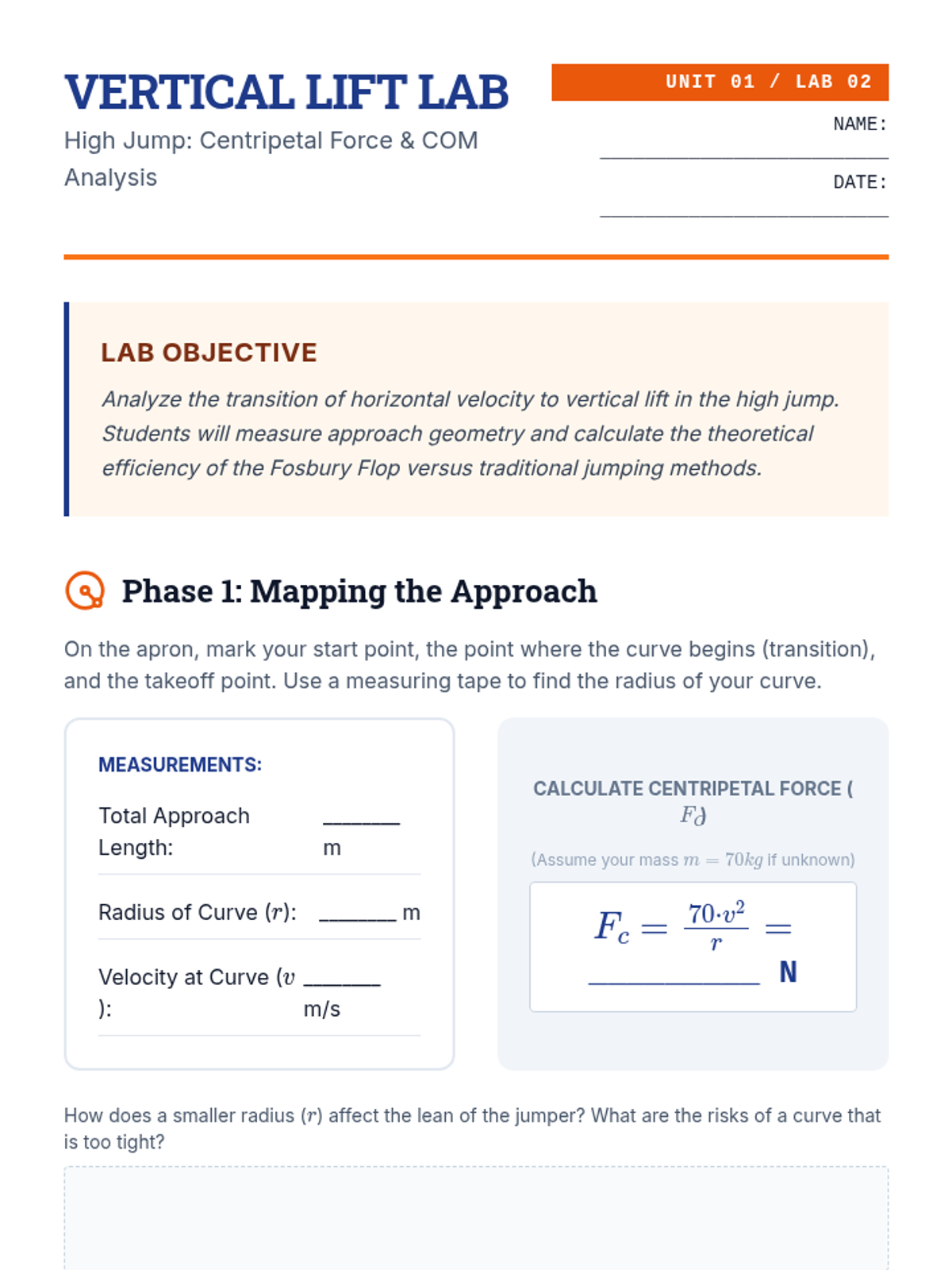
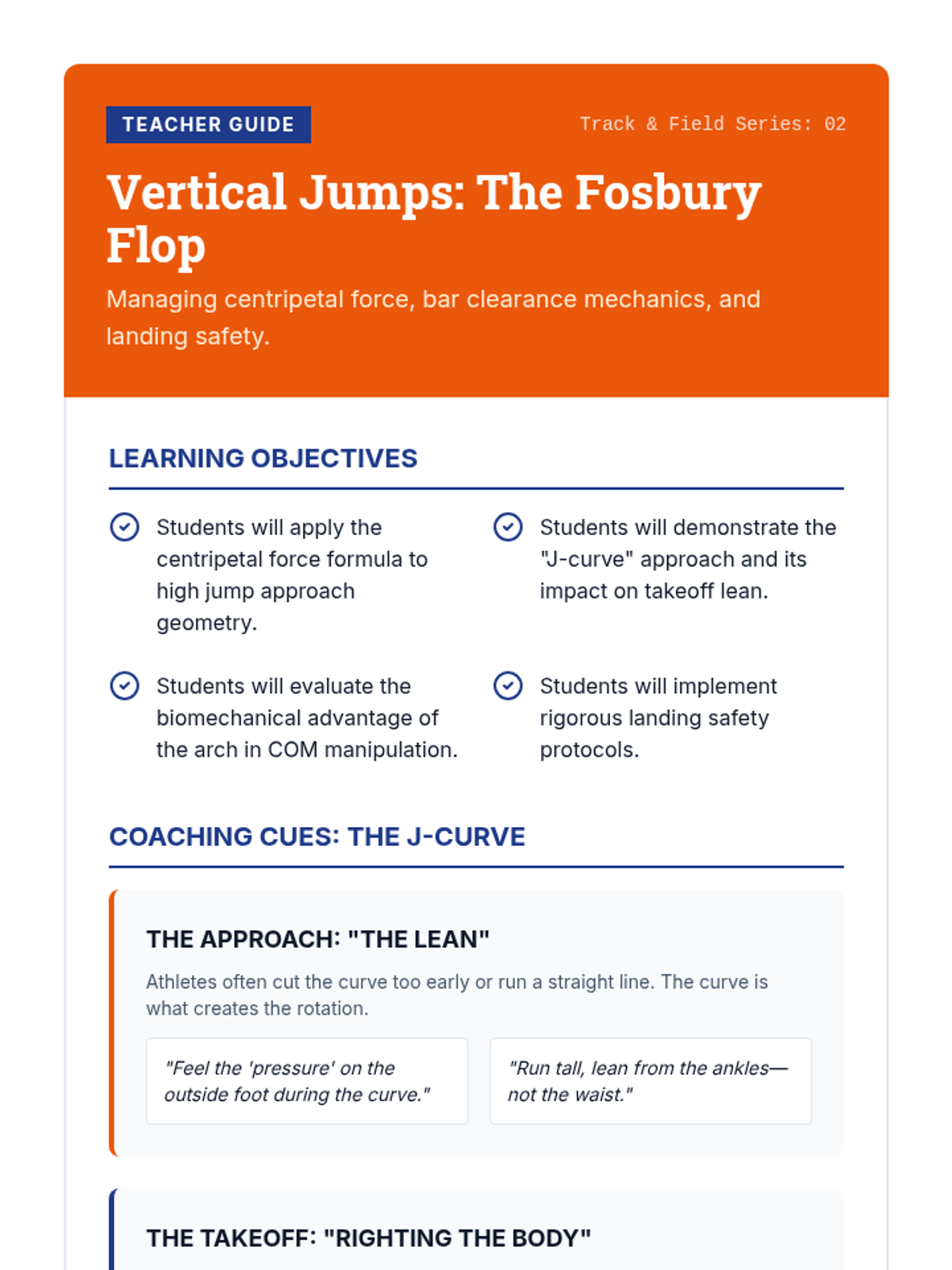
Break down the mechanics of the Fosbury Flop, including centripetal force in the approach and vertical lift strategies.
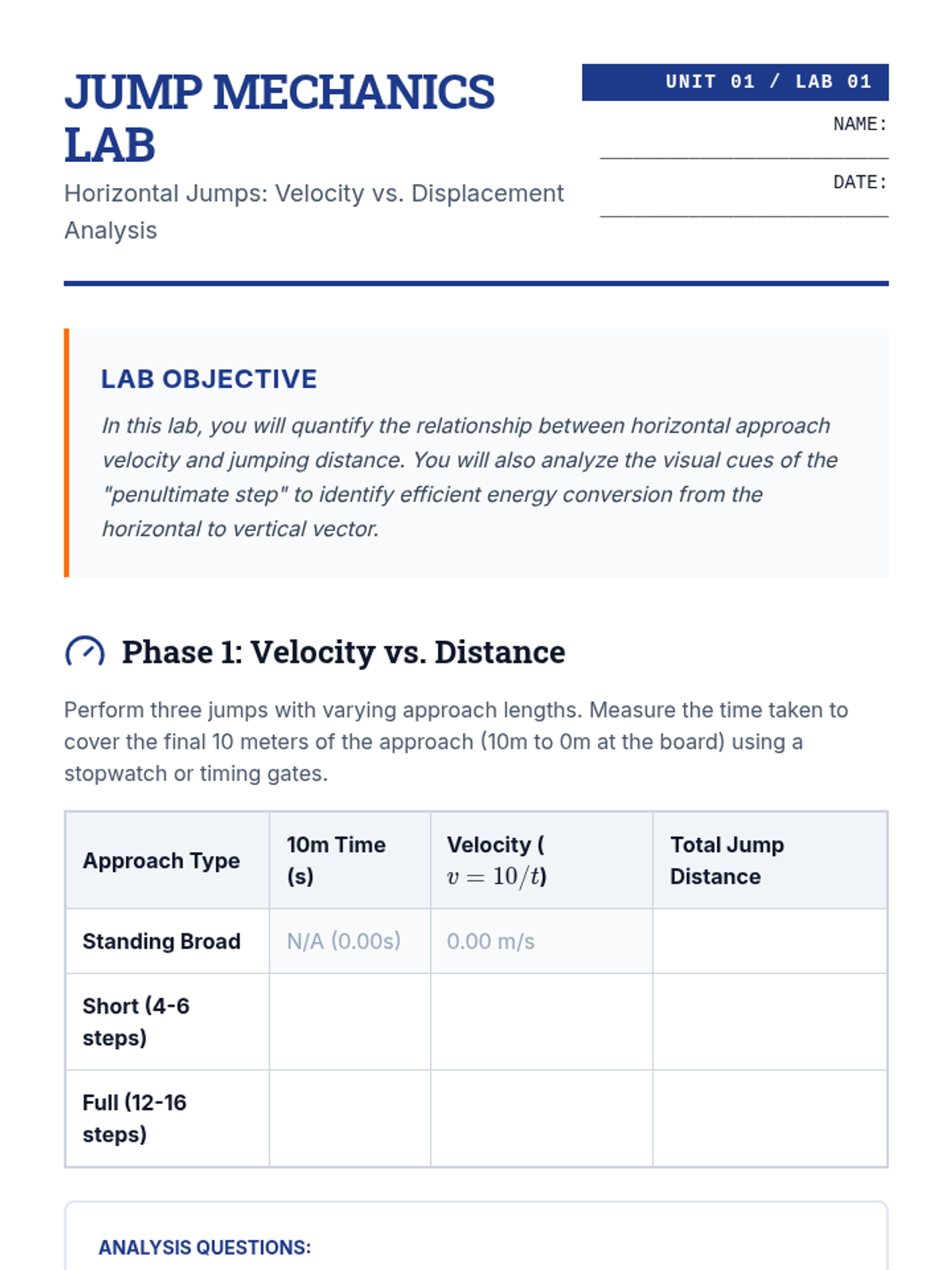
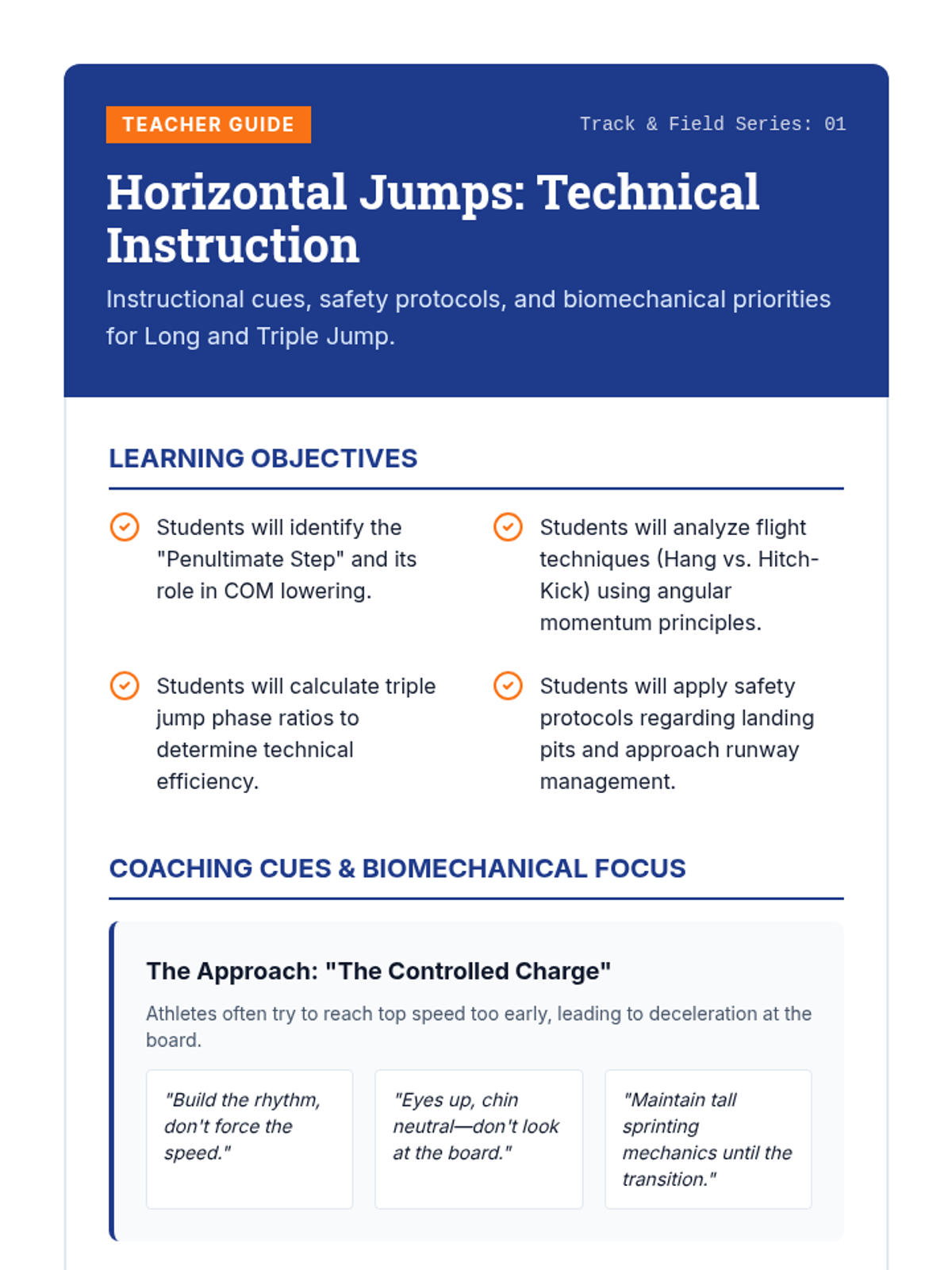
Examine the biomechanics of the approach and takeoff in horizontal jumps, focusing on momentum transfer and flight techniques.
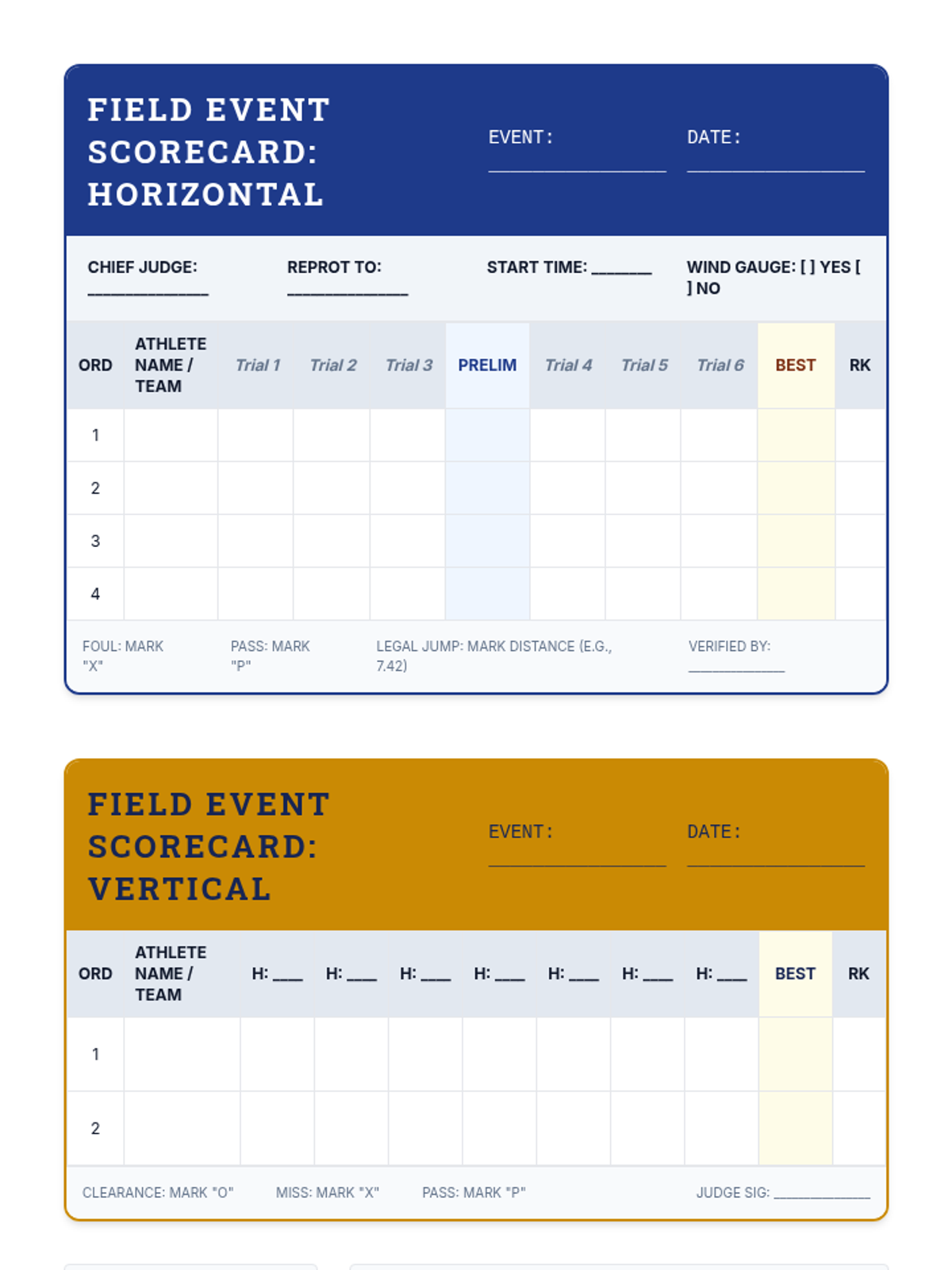
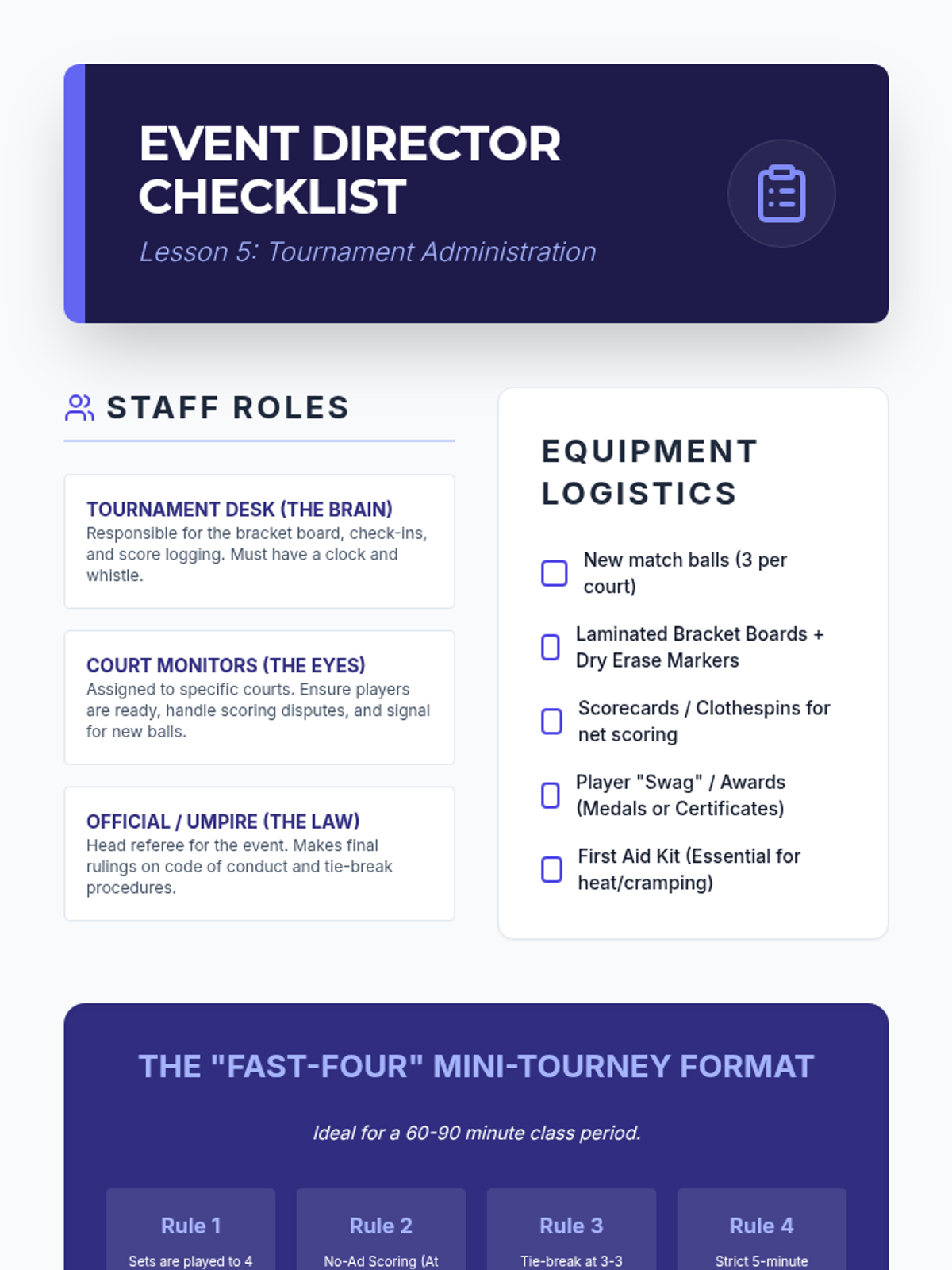
A capstone simulation where students manage a mini-meet, handling check-ins, officiating, and real-time problem-solving.
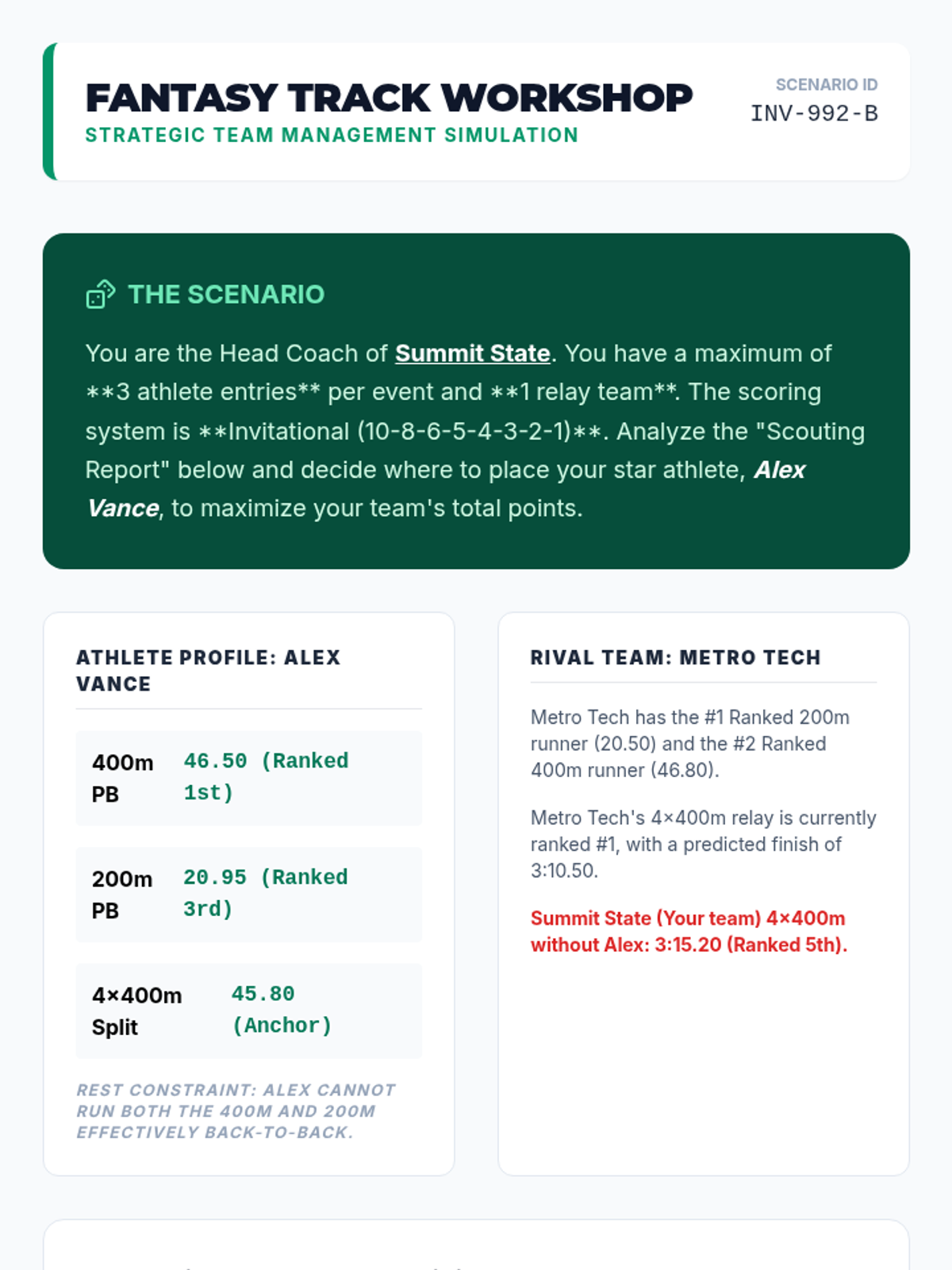
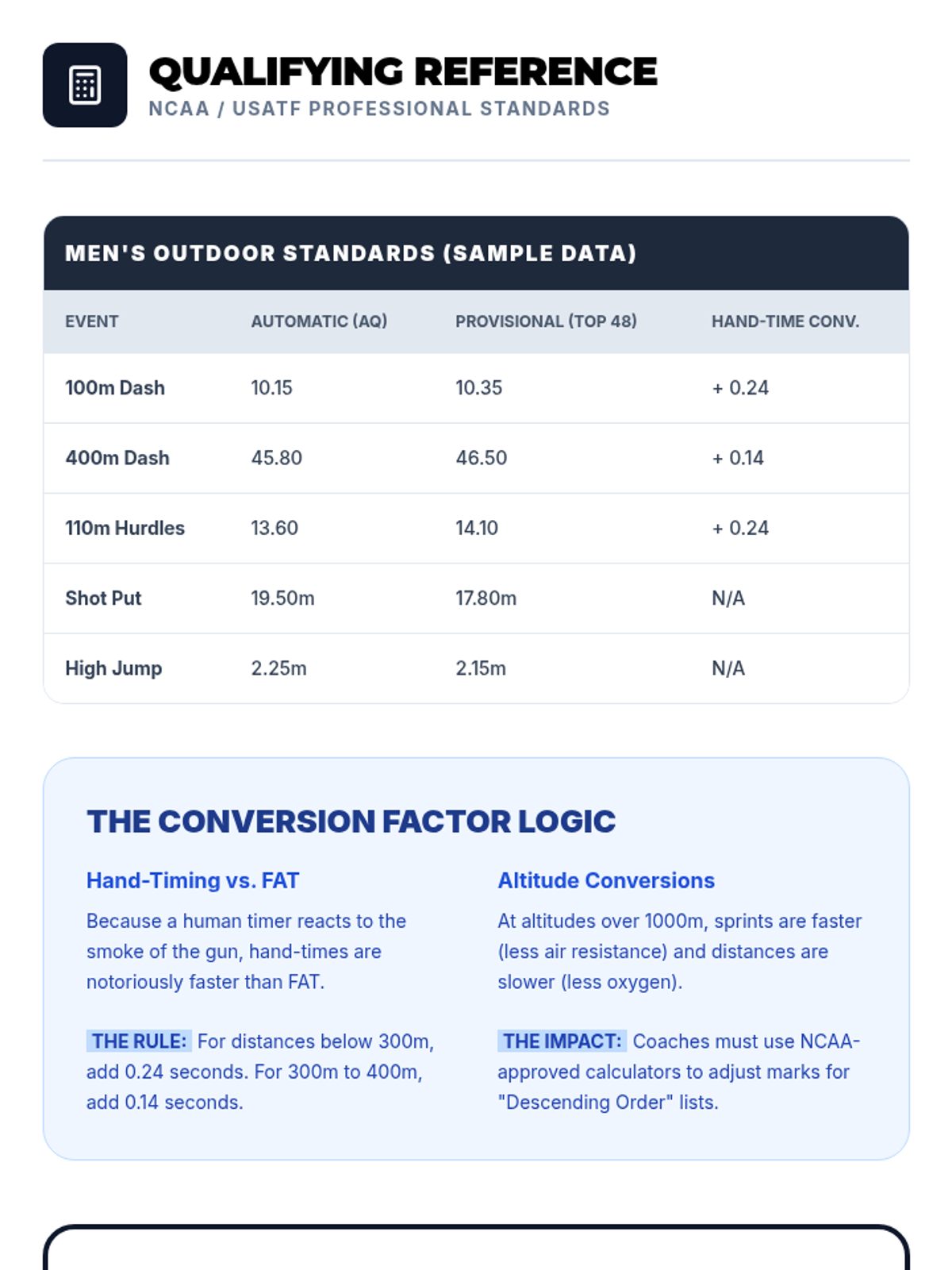
Students learn the mechanics of team scoring and the data-driven process of qualifying for championships.
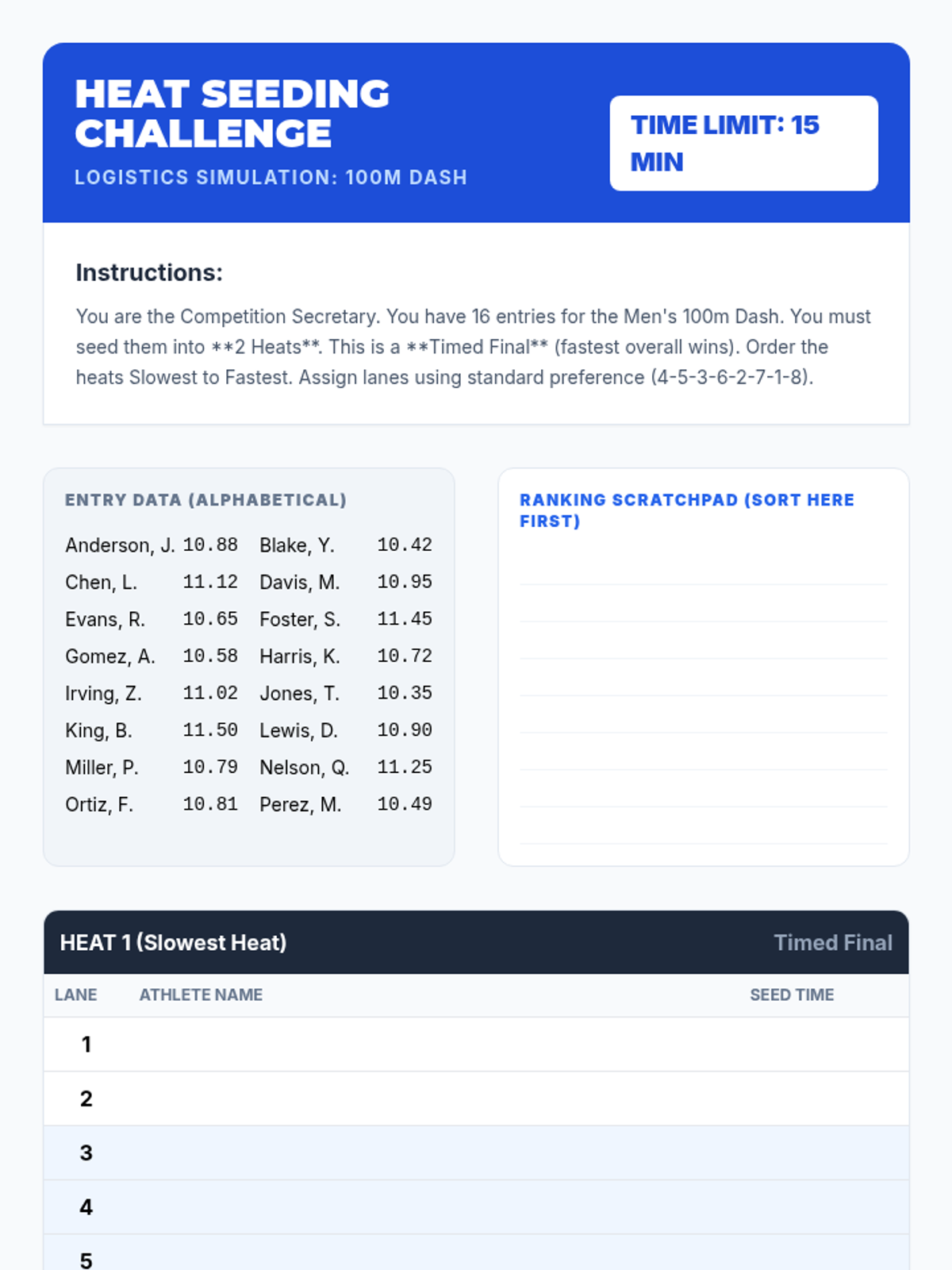
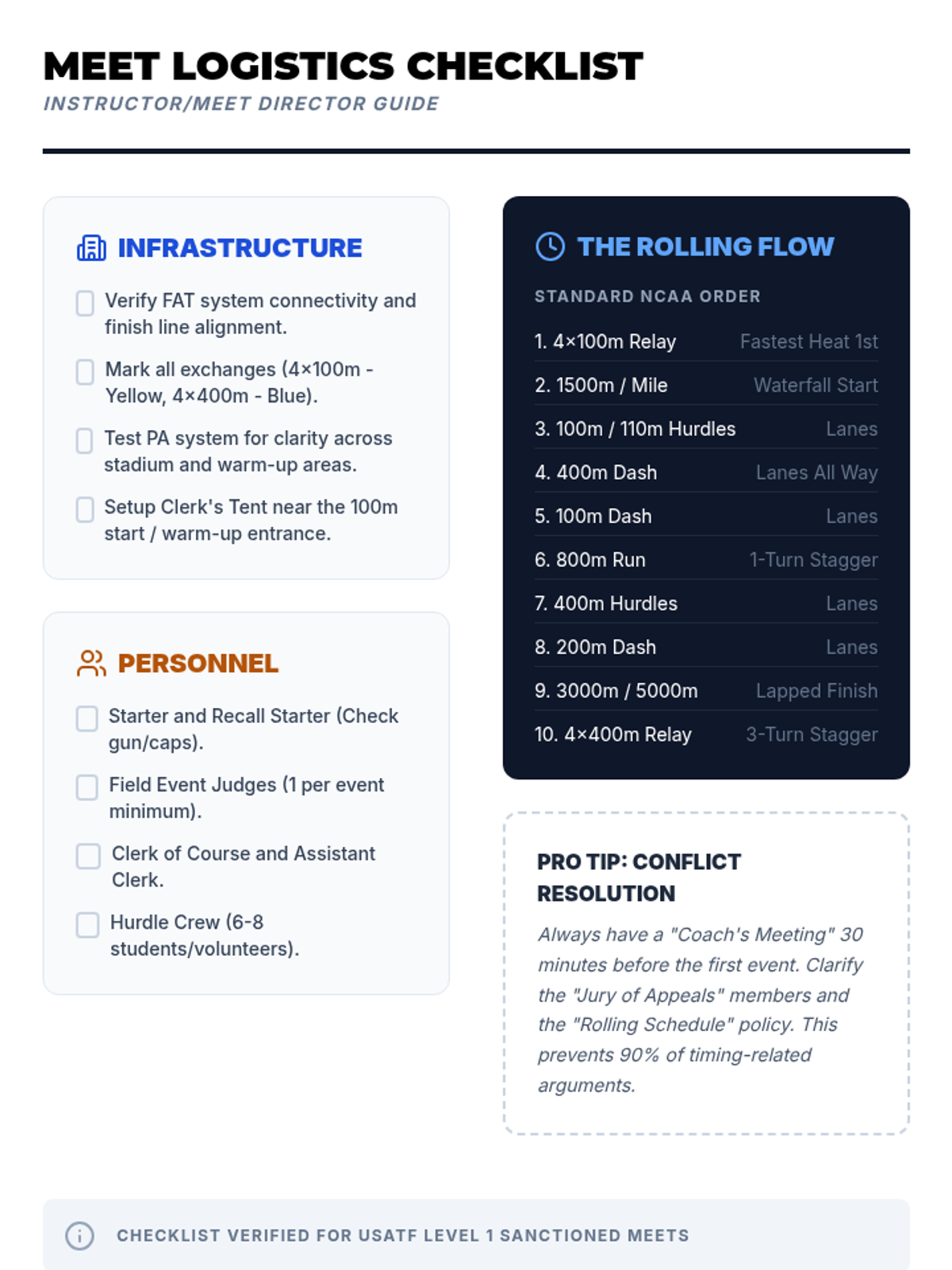
Focuses on the logistical complexities of running a track meet, including seeding, timing, and flight management.
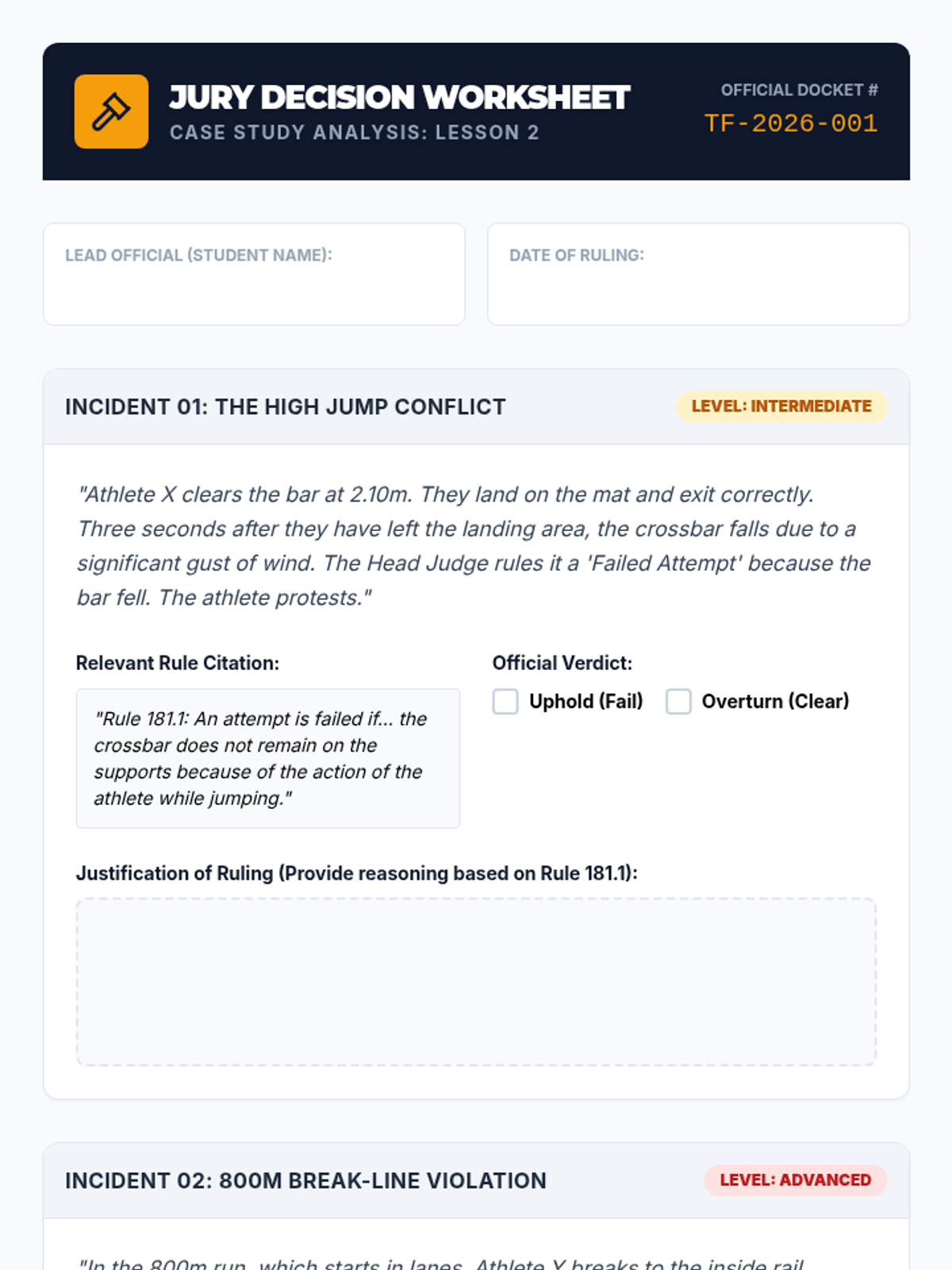
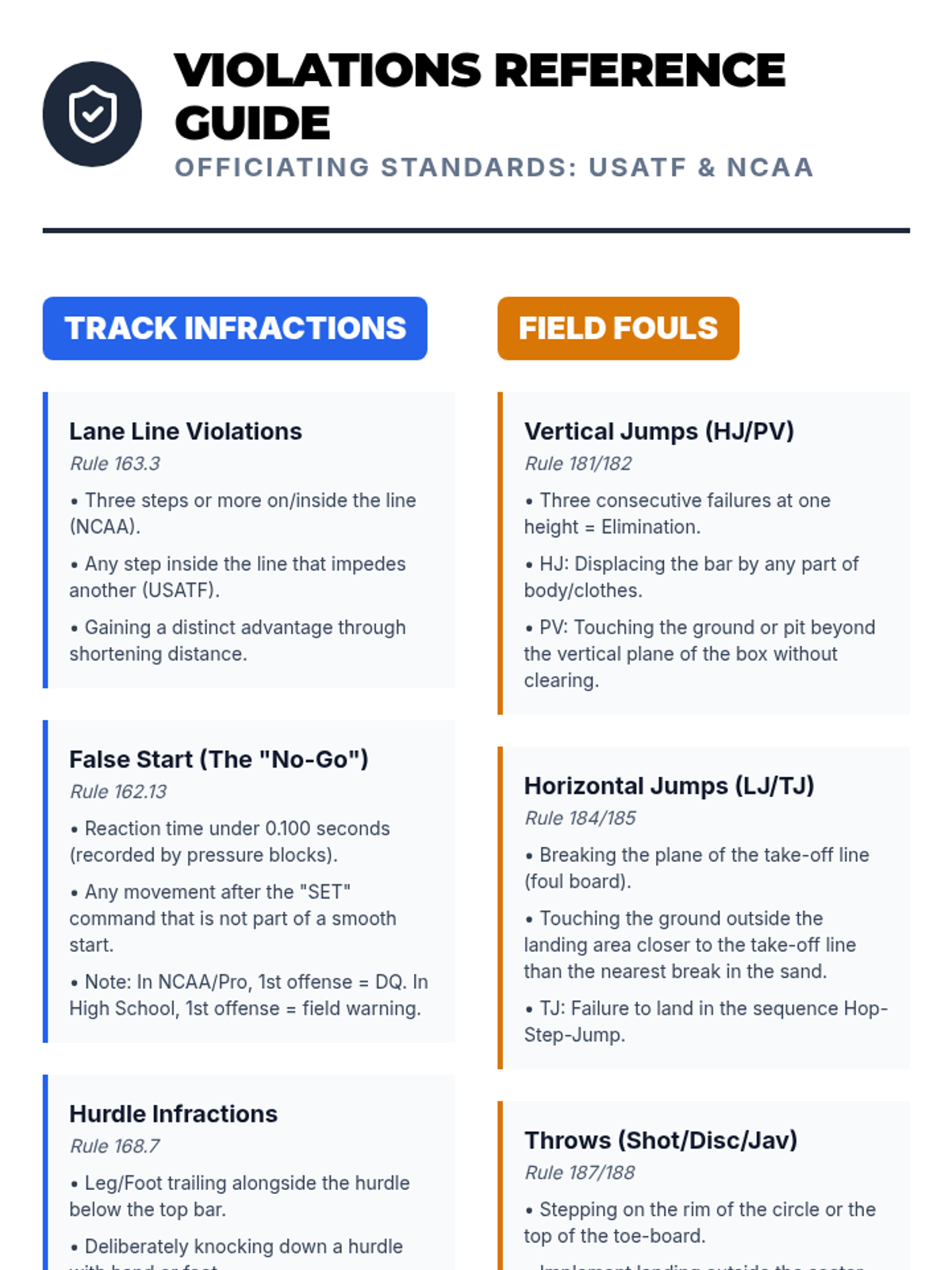
An in-depth examination of USATF and NCAA rules, focusing on officiating standards and the interpretation of competition regulations.
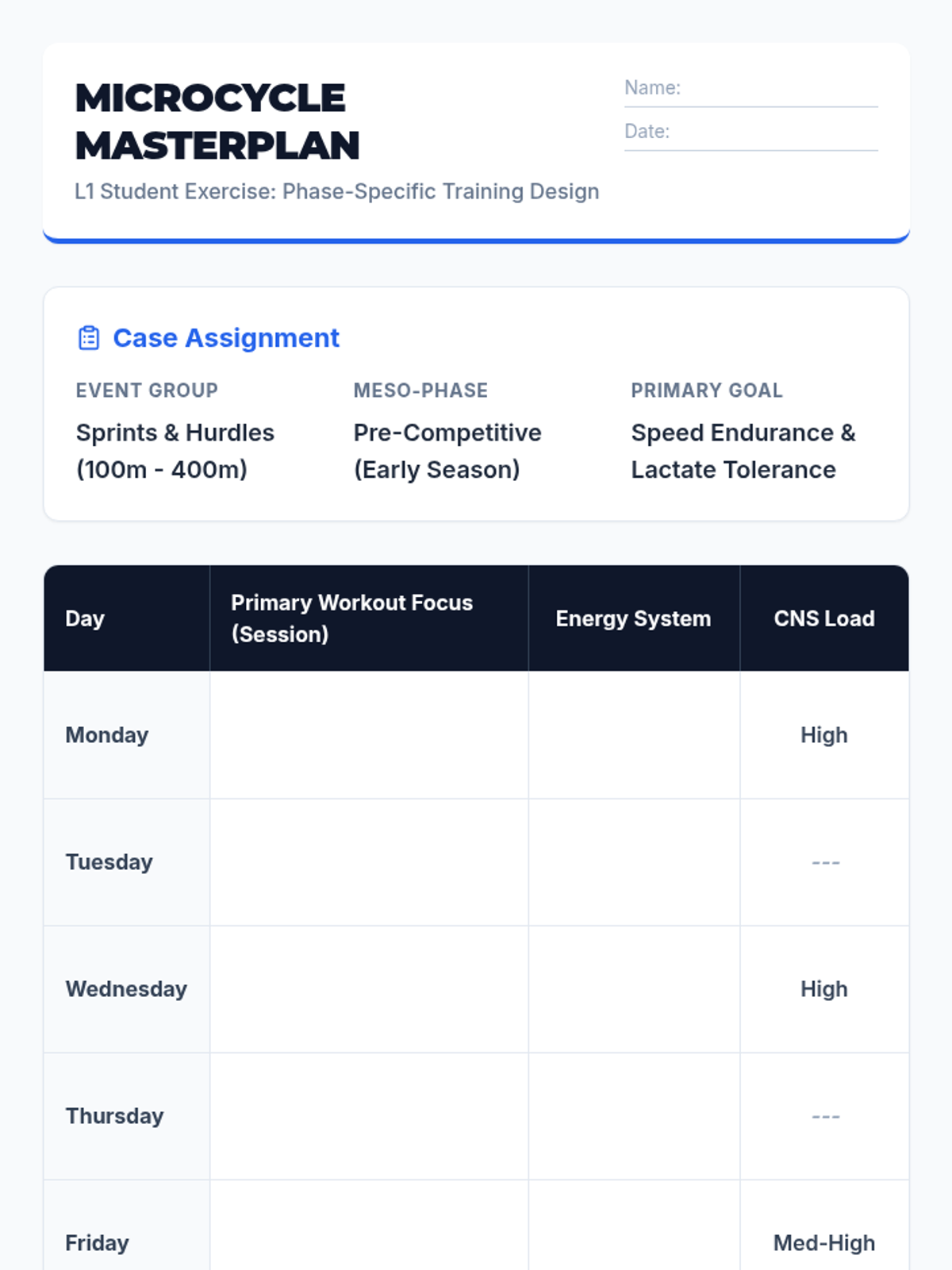
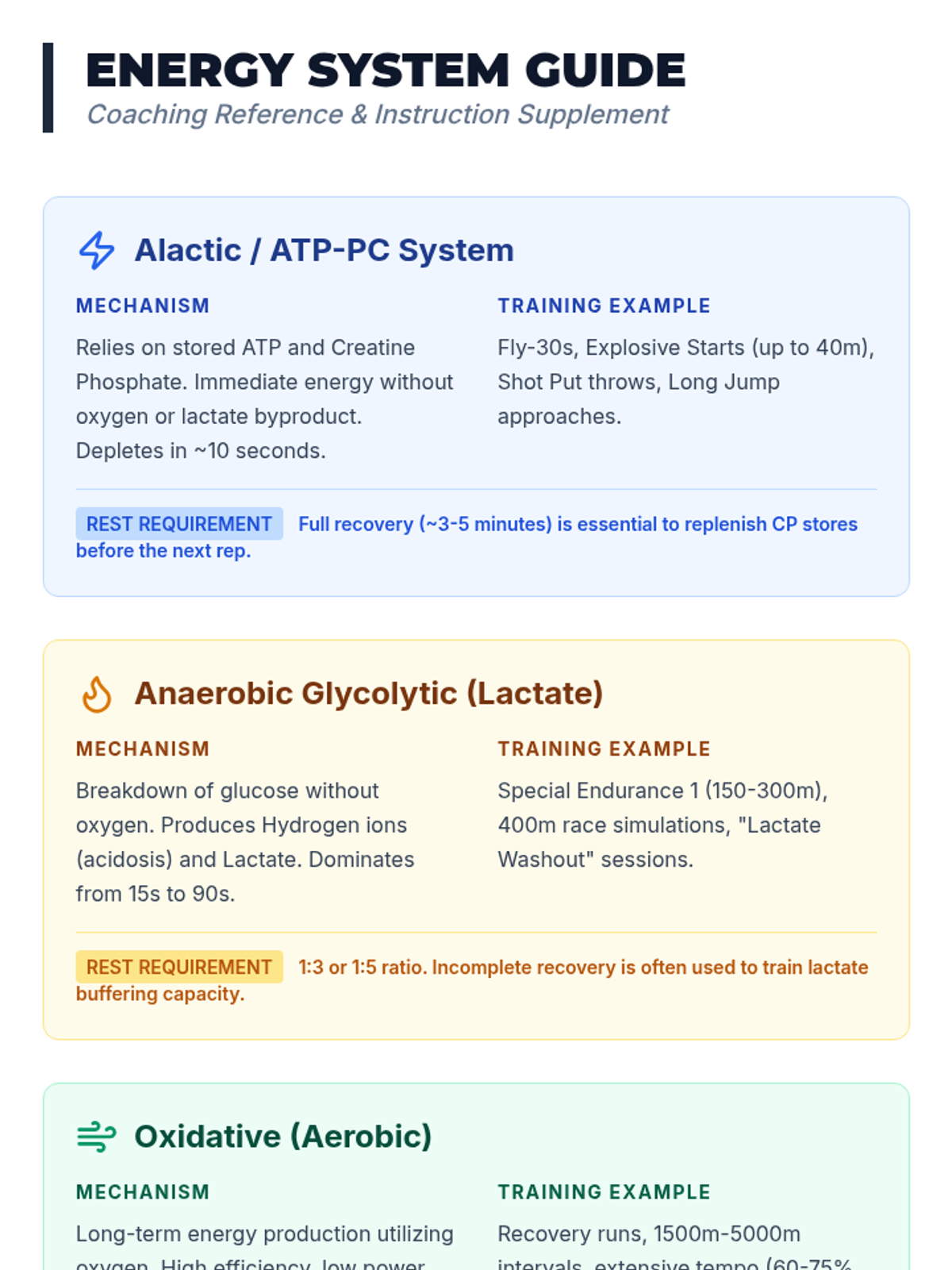
Students explore the physiological foundations of track and field performance and learn to structure training programs using periodization models.
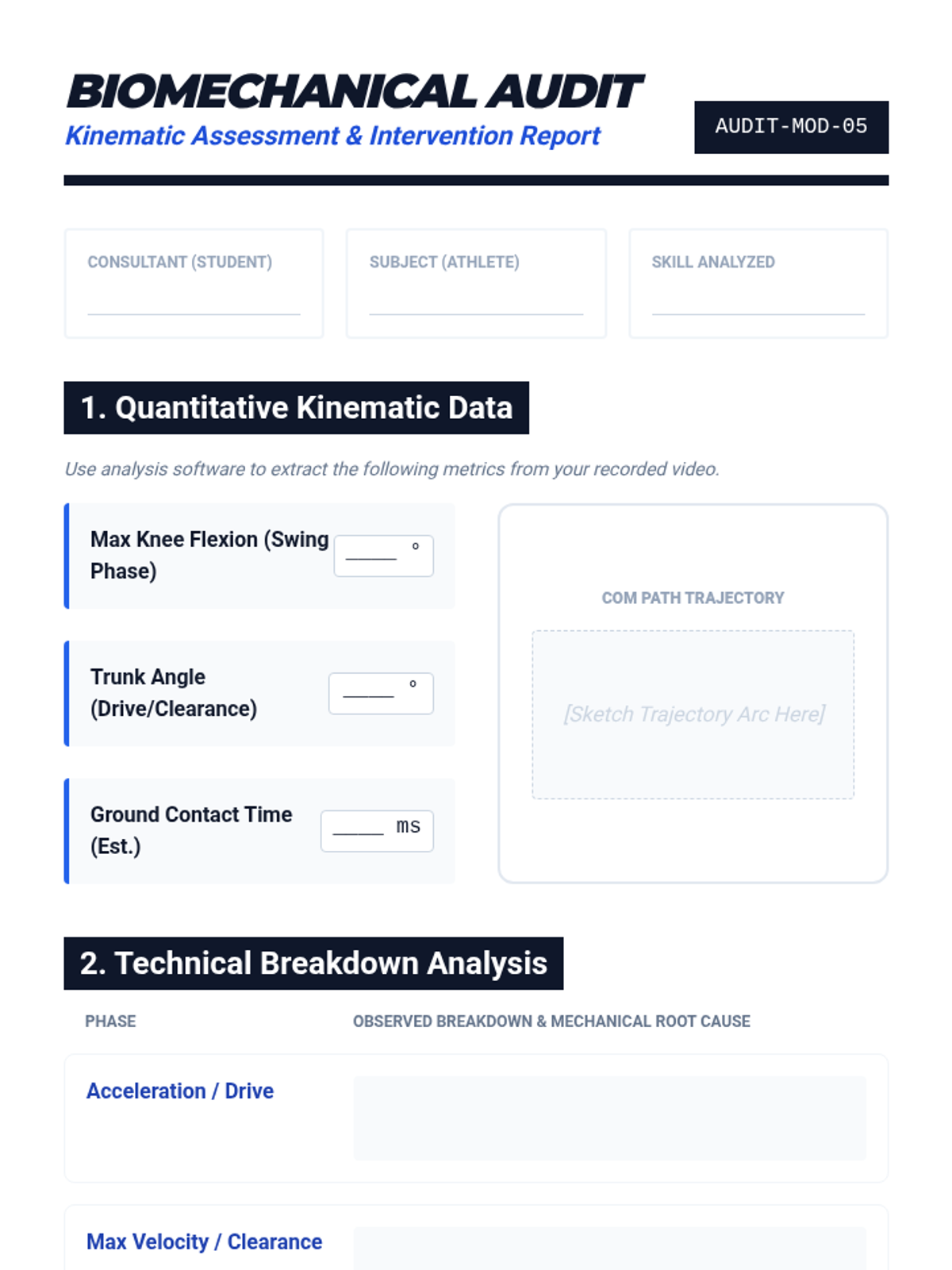
A culminating session where students use video analysis software to measure joint angles and identify mechanical breakdowns in sprint and hurdle performance.
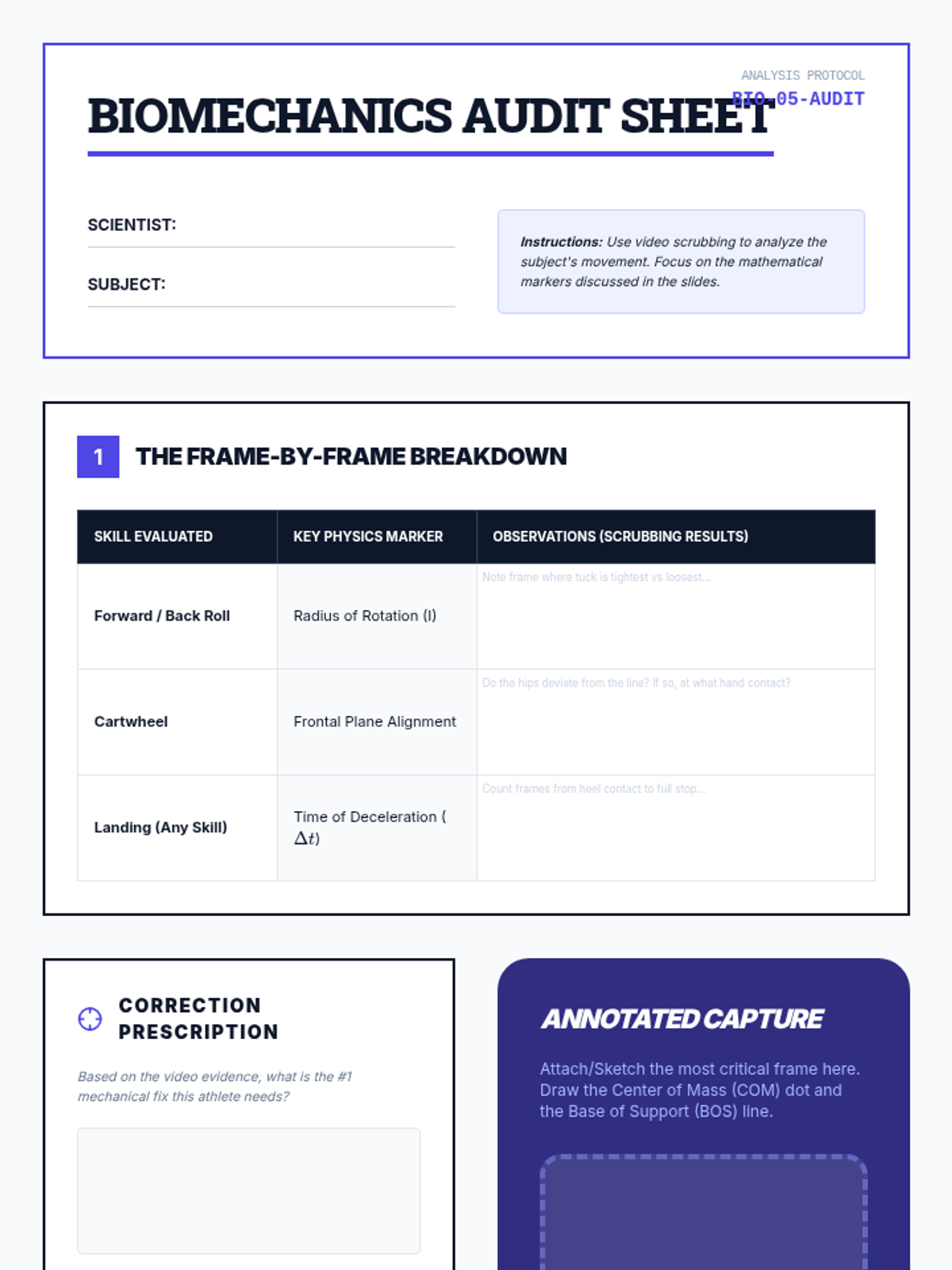
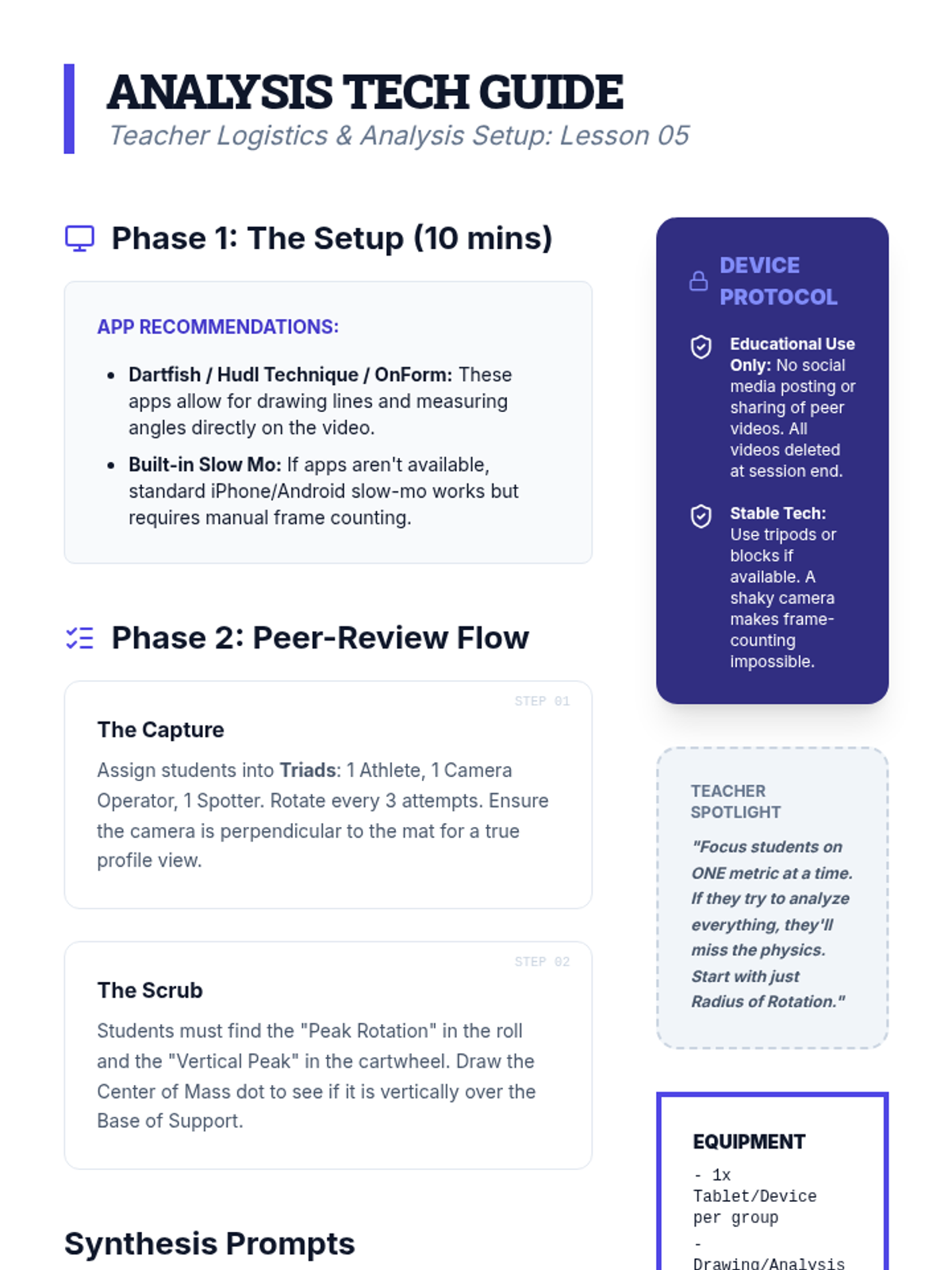
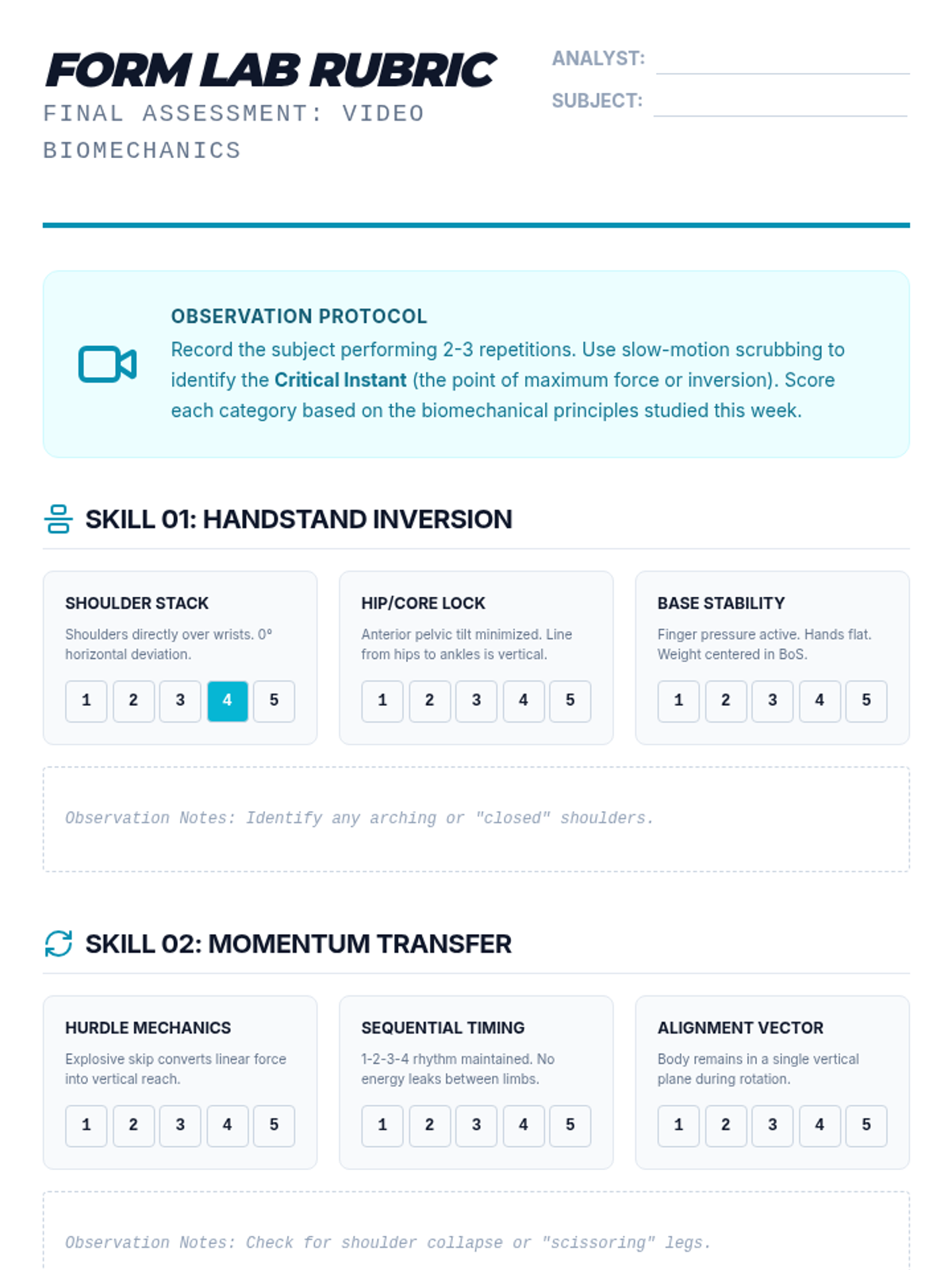
Using tablets, students record their tumbling skills and use slow-motion playback to identify deviations from ideal biomechanical models. They set specific goals for correction based on their findings.
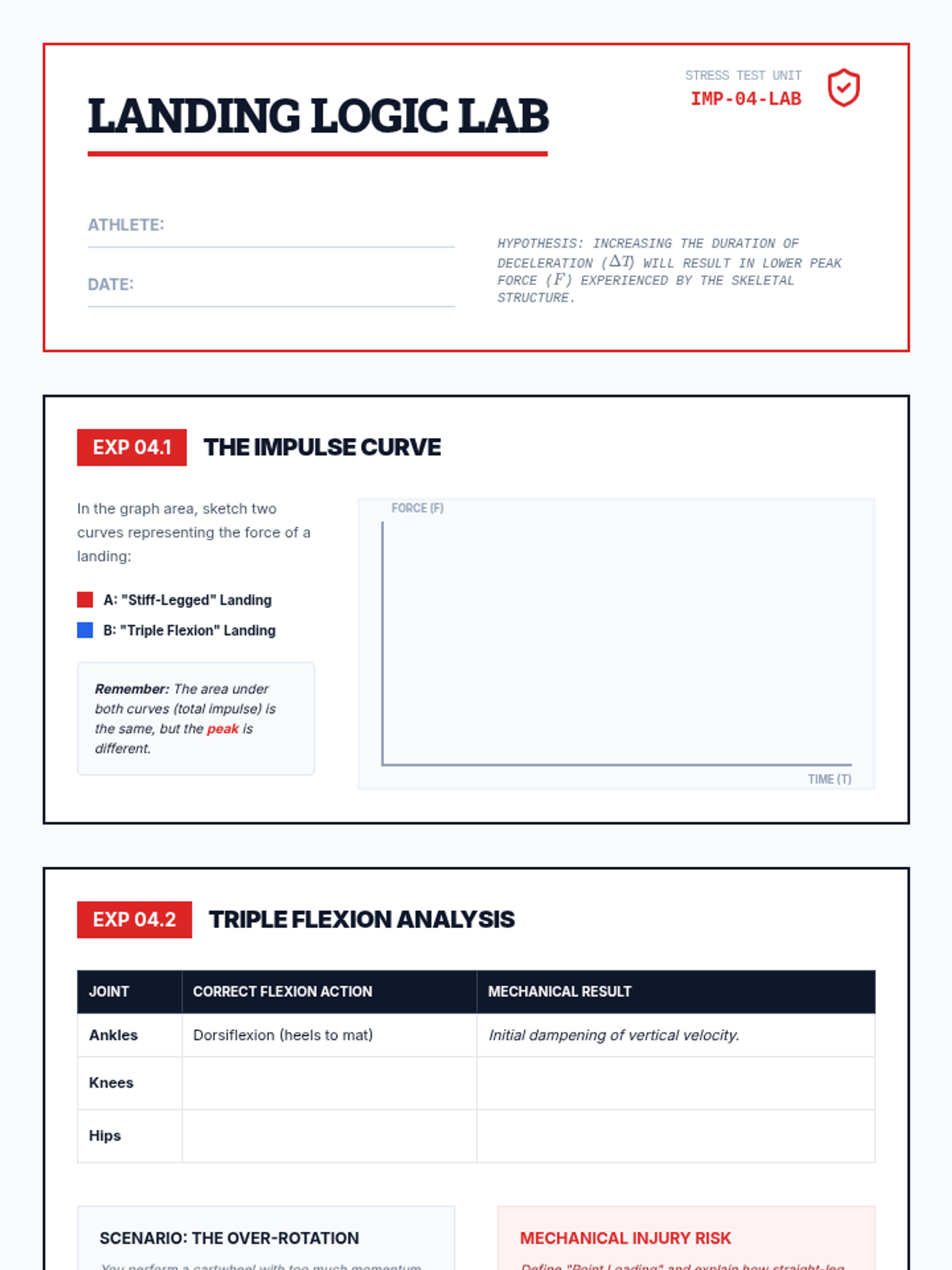
Students practice various landings from different heights and skills, analyzing the physics of impulse. They learn how increasing the time of impact reduces force on joints to prevent injury.
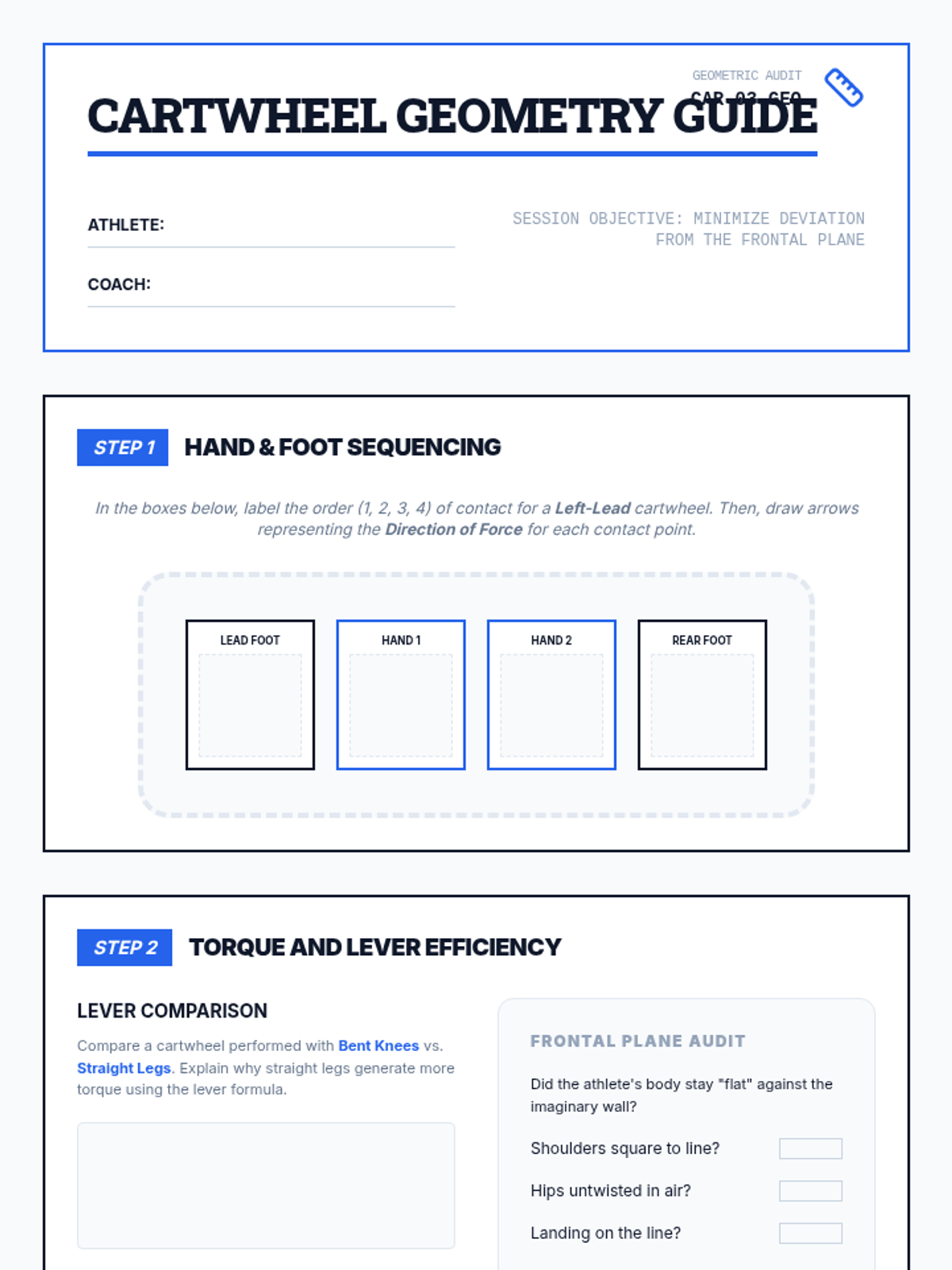
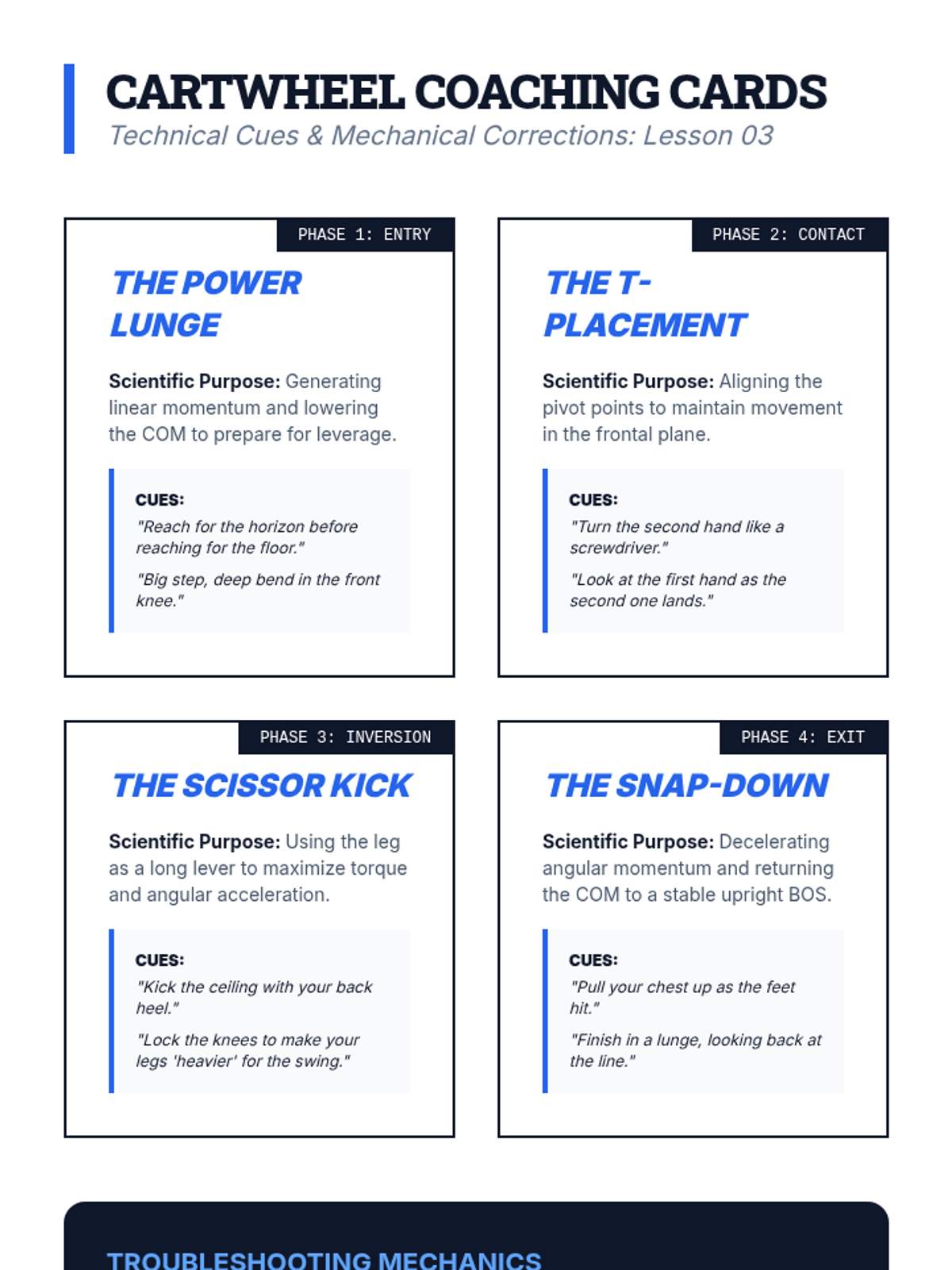
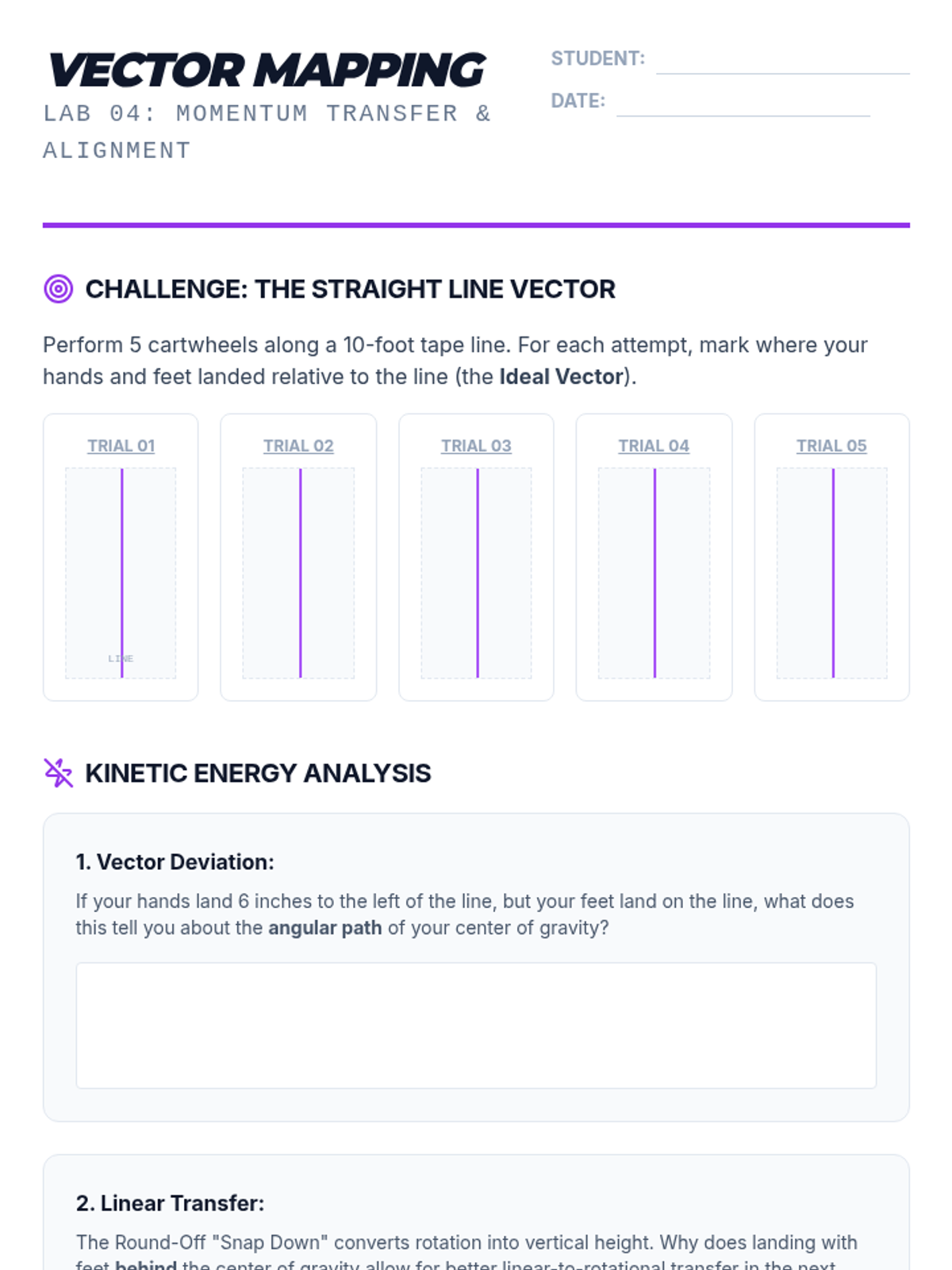
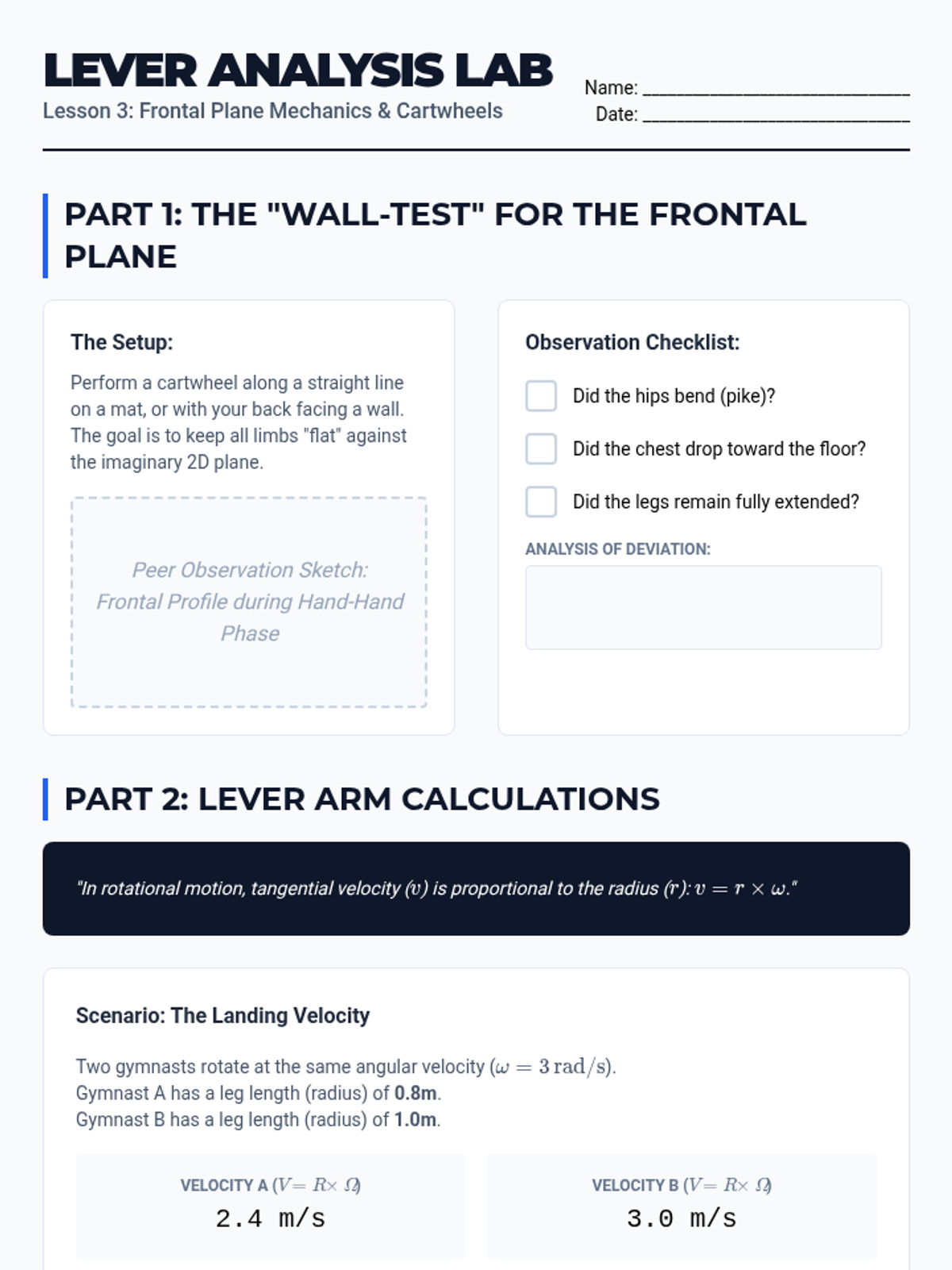
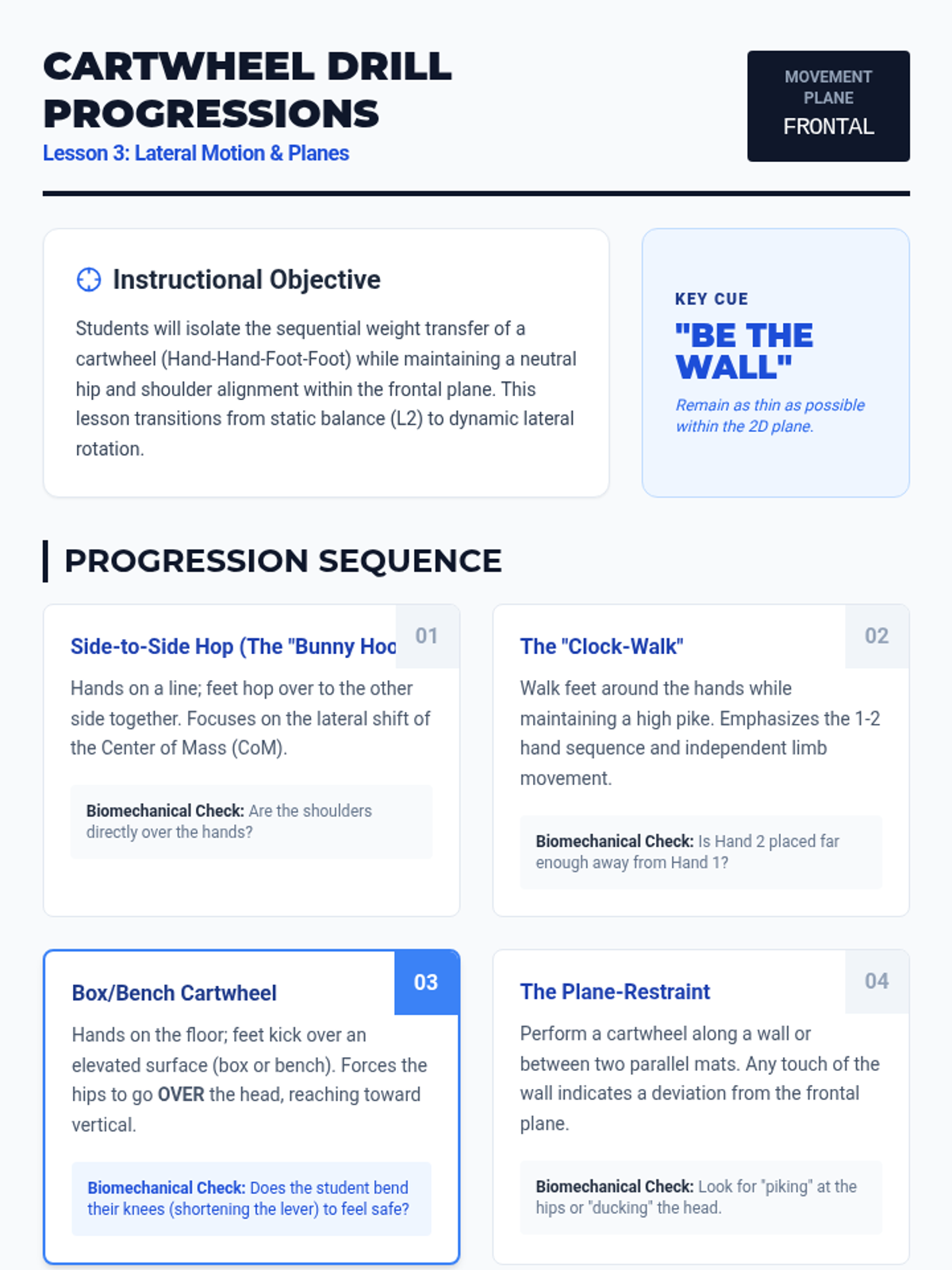
Students learn the hand-hand-foot-foot rhythm of the cartwheel, focusing on the lever action of the legs and the lateral movement plane. They use momentum to return to a standing position safely.
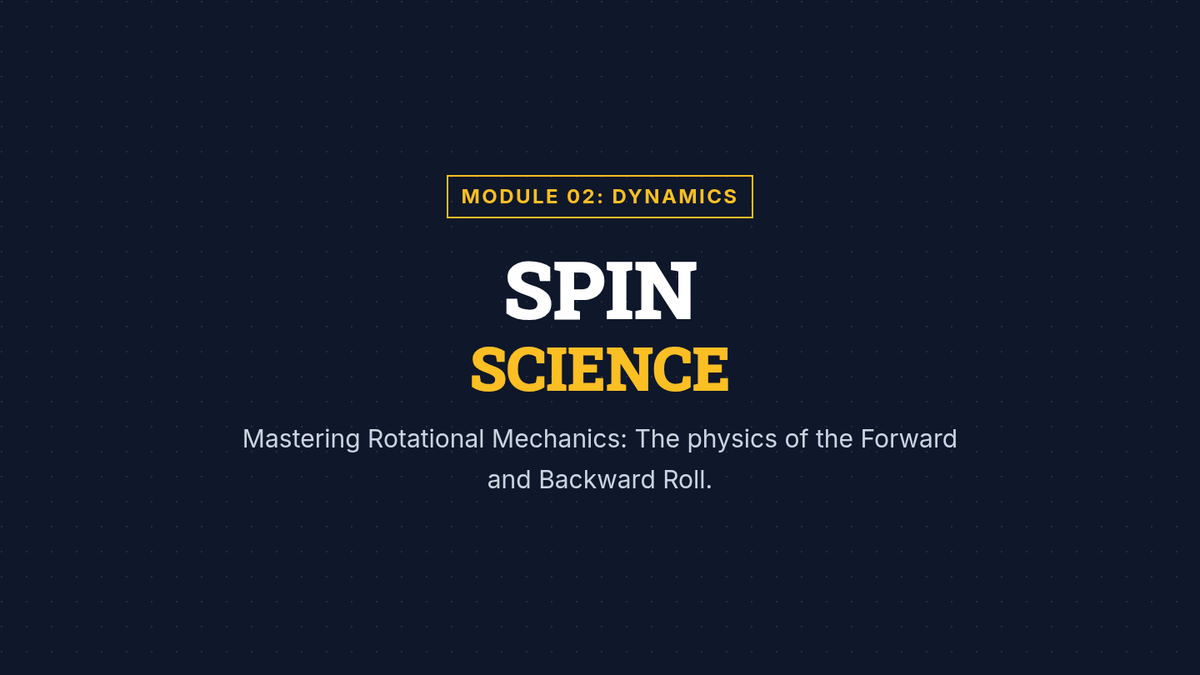
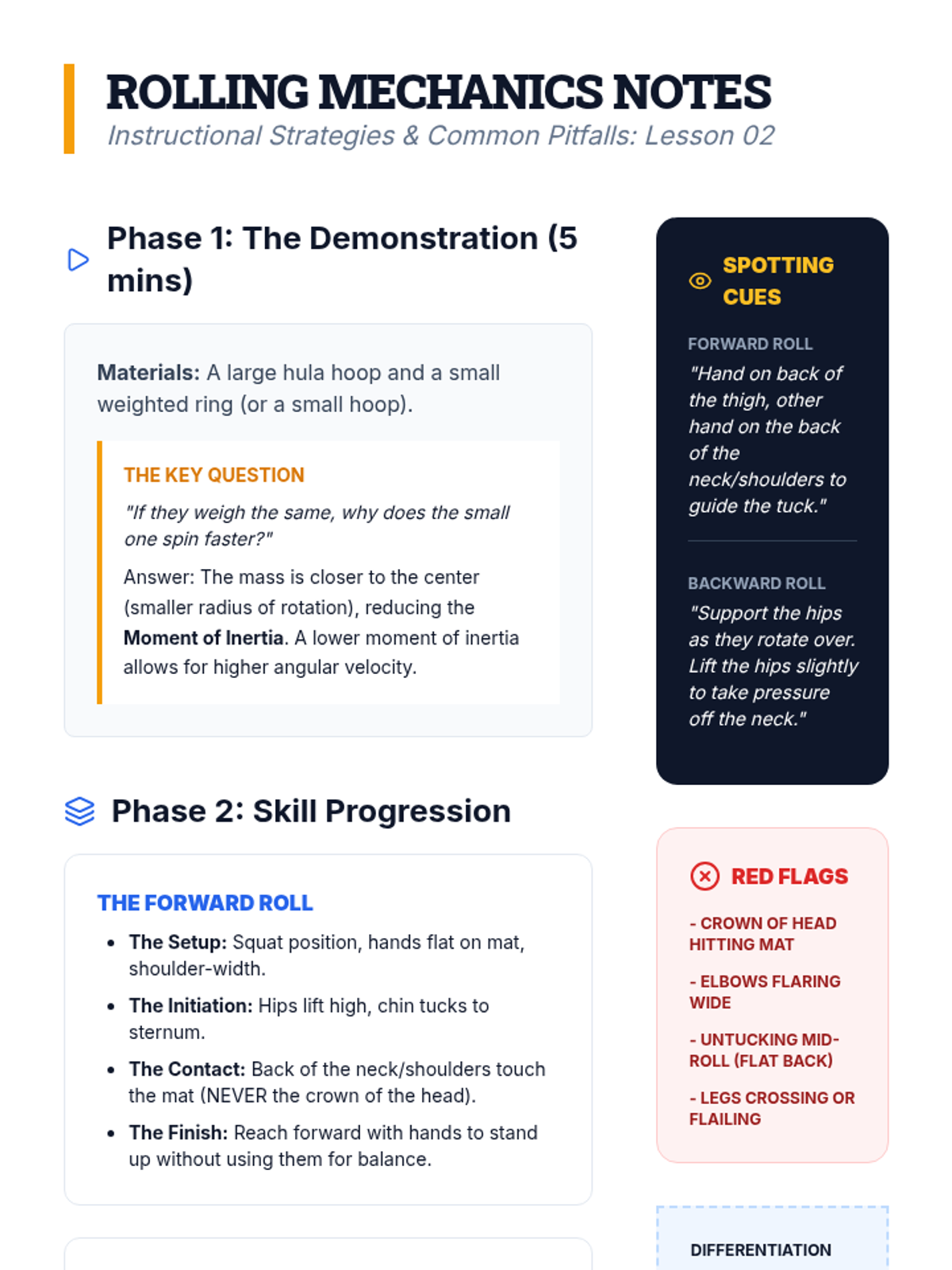
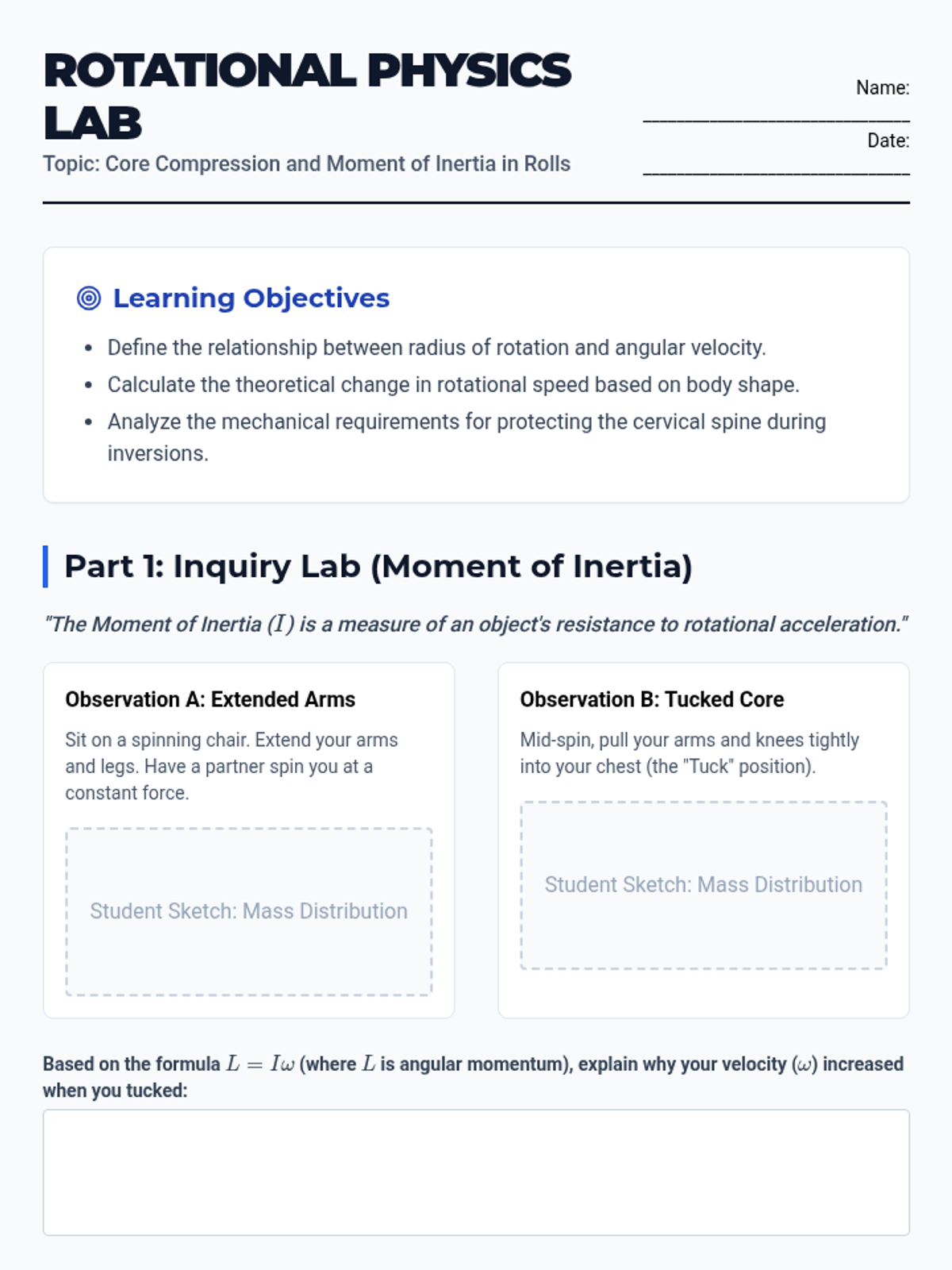
Focusing on tucked shapes, students practice forward and backward rolls to understand how reducing the radius of rotation increases speed. Peer observation focuses on spinal alignment and chin tucking.
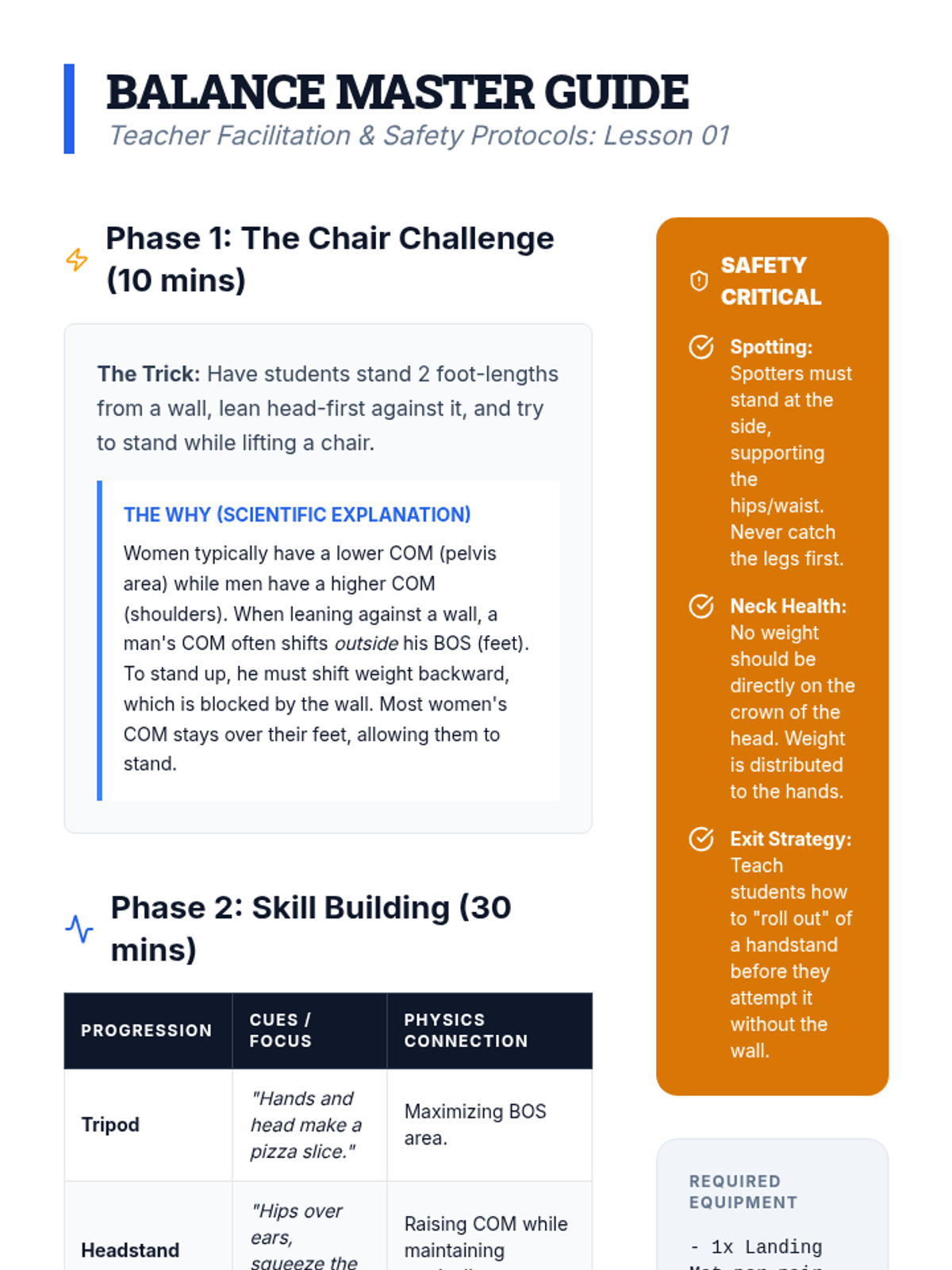
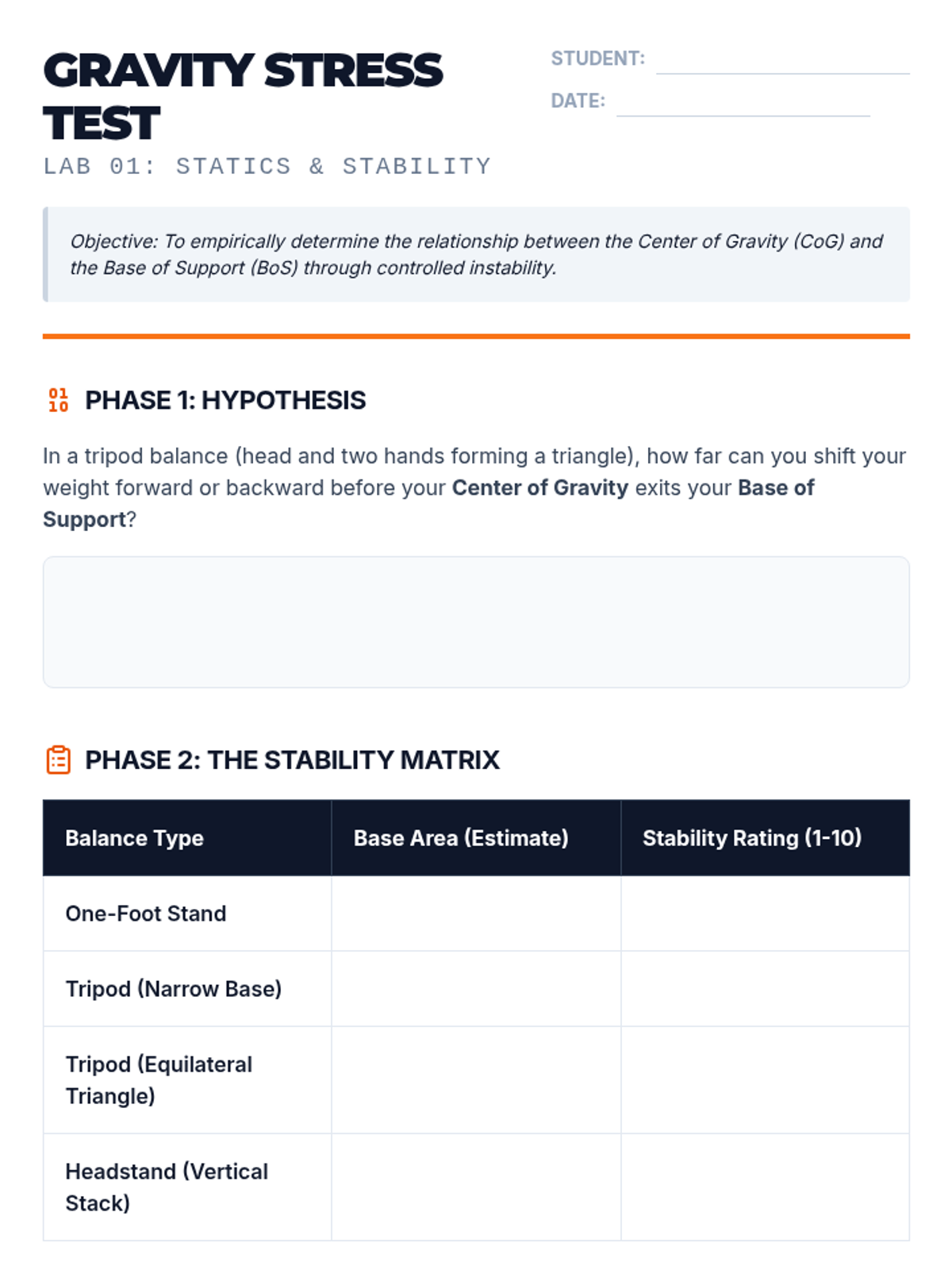
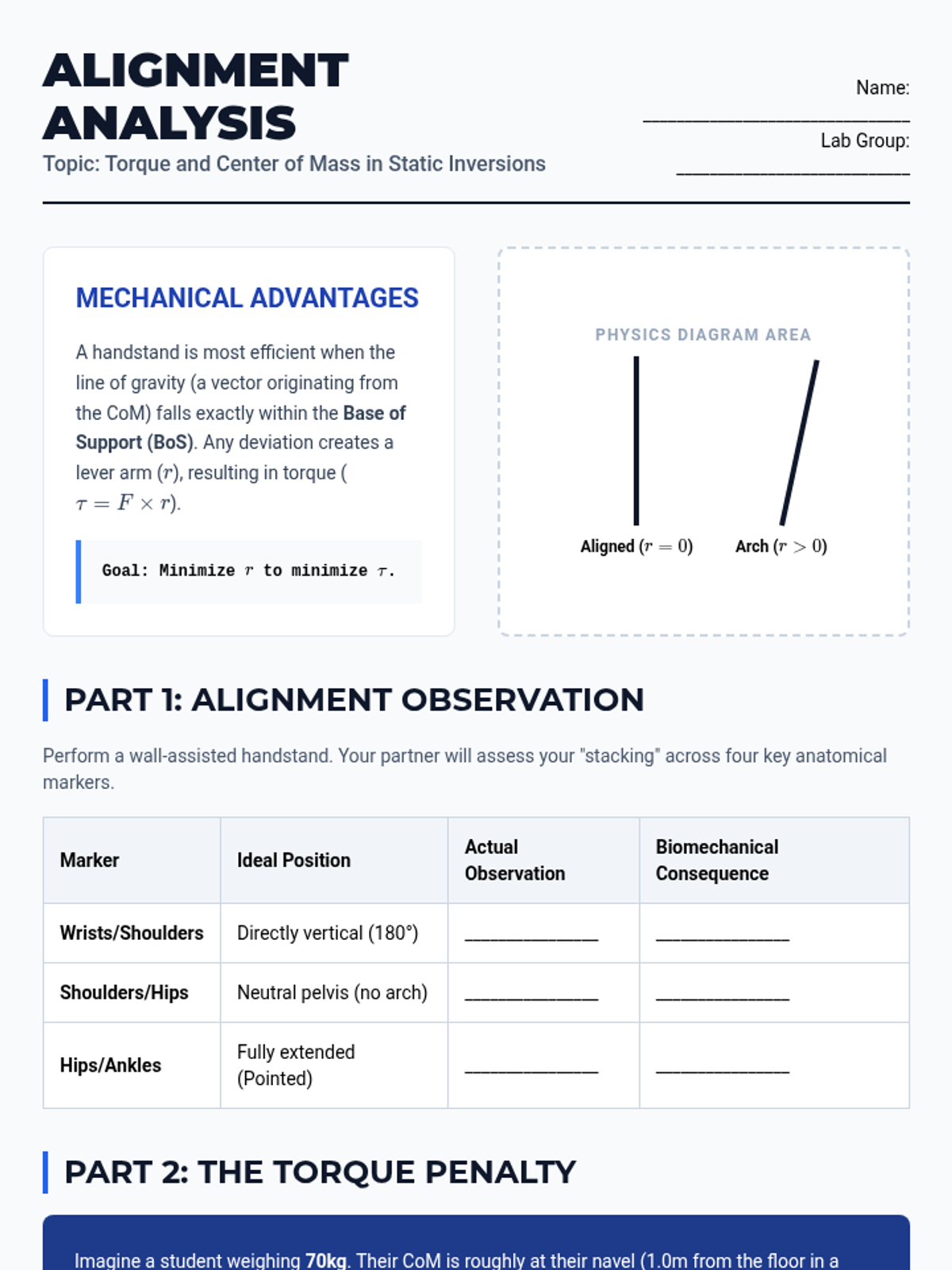
Students explore static balance by manipulating their center of gravity in relation to their base of support through tripods, headstands, and handstand progressions. They analyze how body alignment affects stability using biomechanical principles.
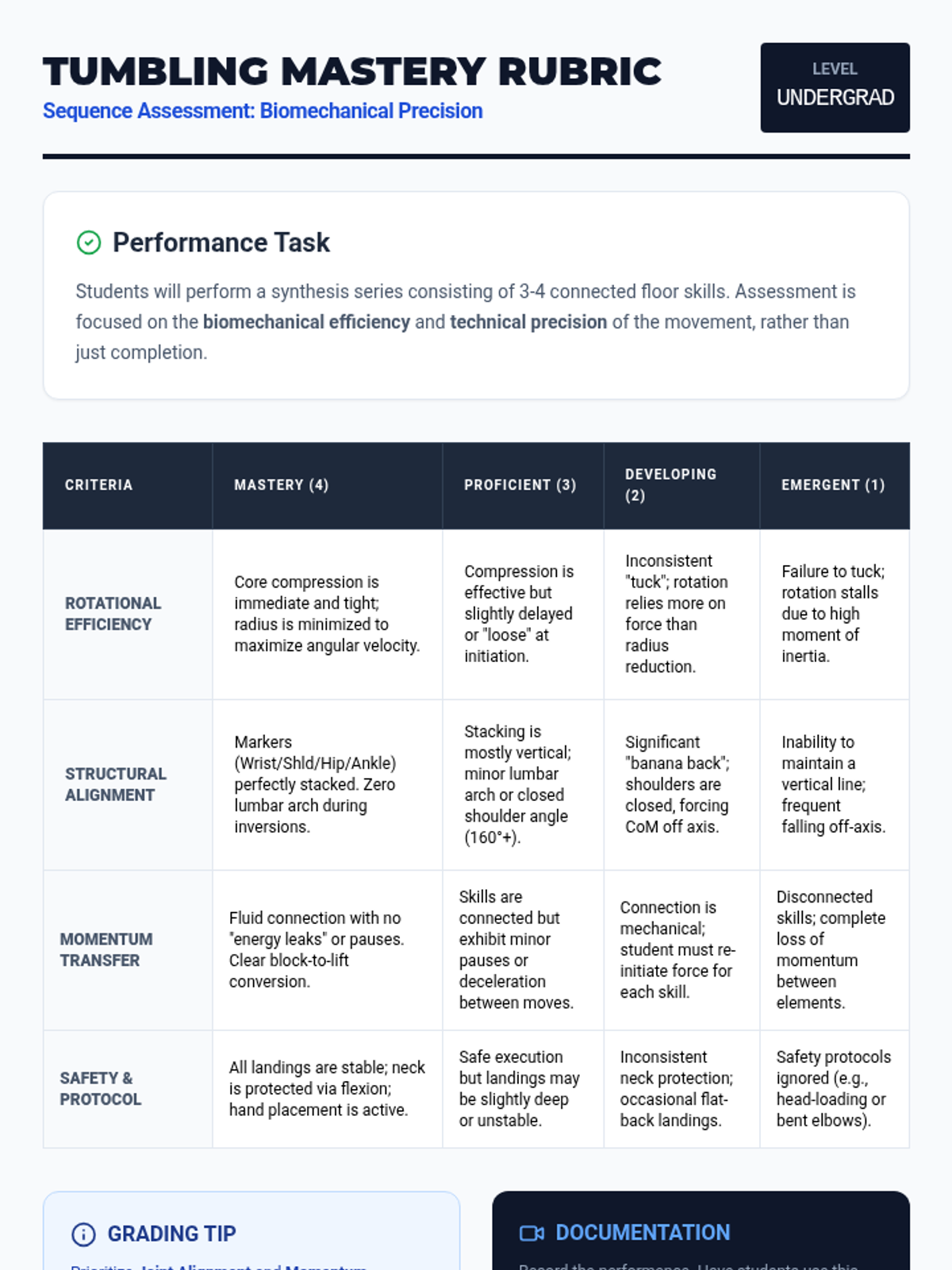
The culminating lesson transforms the gym into a lab where students use slow-motion video to analyze their technique. Using biomechanical rubrics, they identify specific form corrections based on joint angles and alignment.
Focusing on cartwheels and round-offs, this lesson teaches students how to transfer linear momentum into rotational force. They analyze the hurdle step and sequential limb placement to maintain energy throughout the movement.
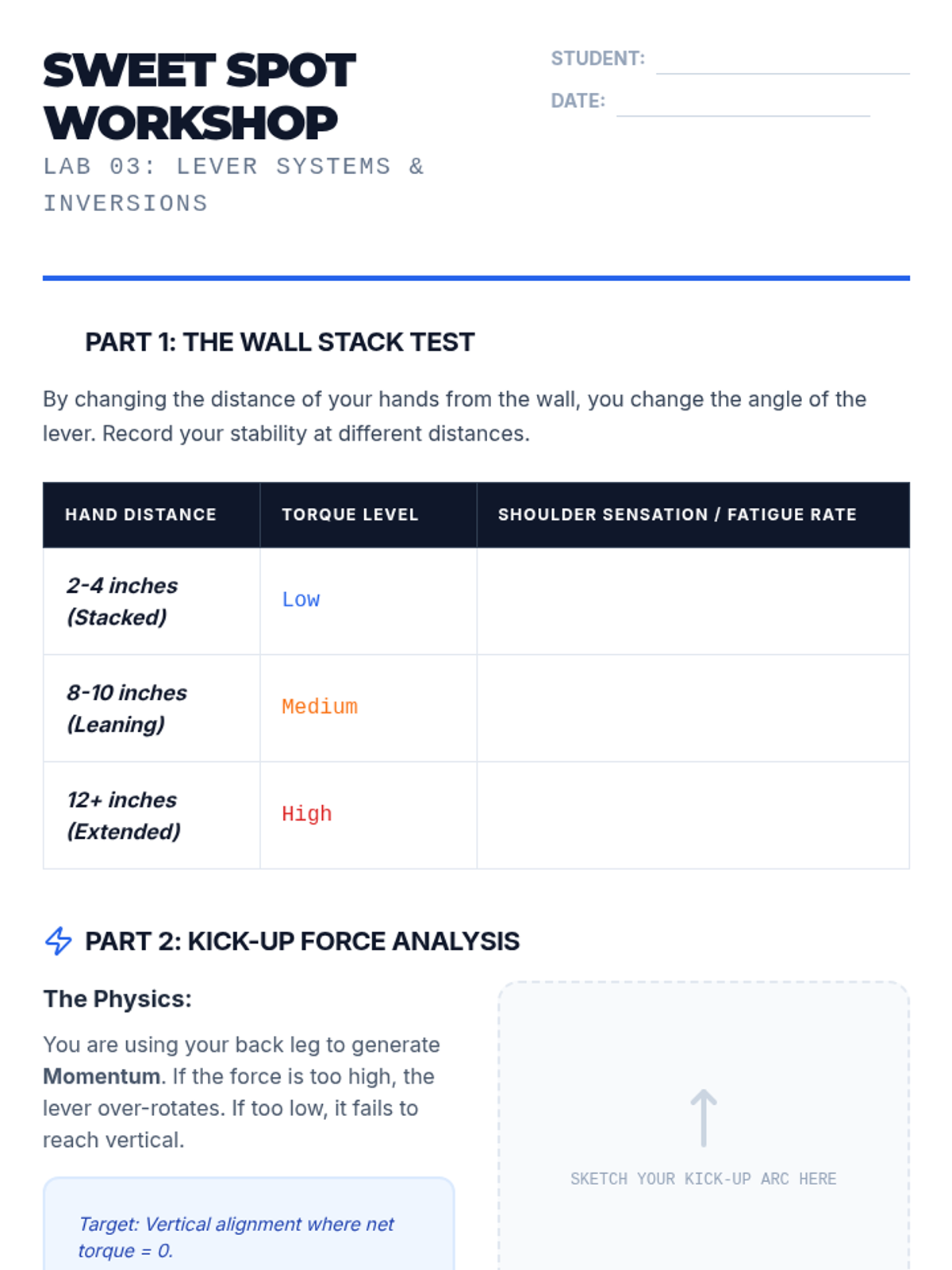
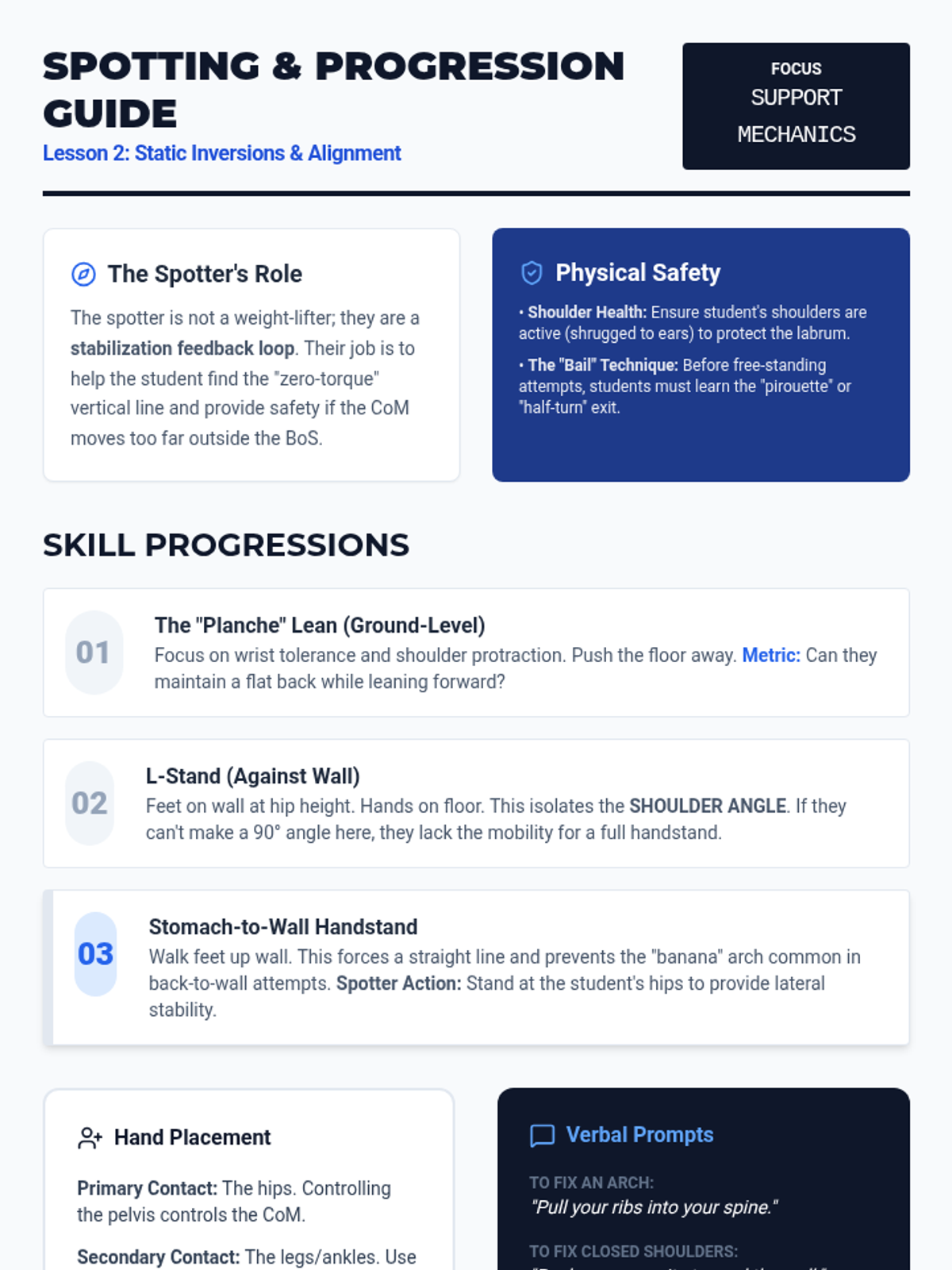
Students analyze the handstand as a lever system, focusing on the mechanics of the kick-up and the importance of shoulder stacking. The lesson uses wall-supported drills to isolate the biomechanical requirements for a vertical inversion.
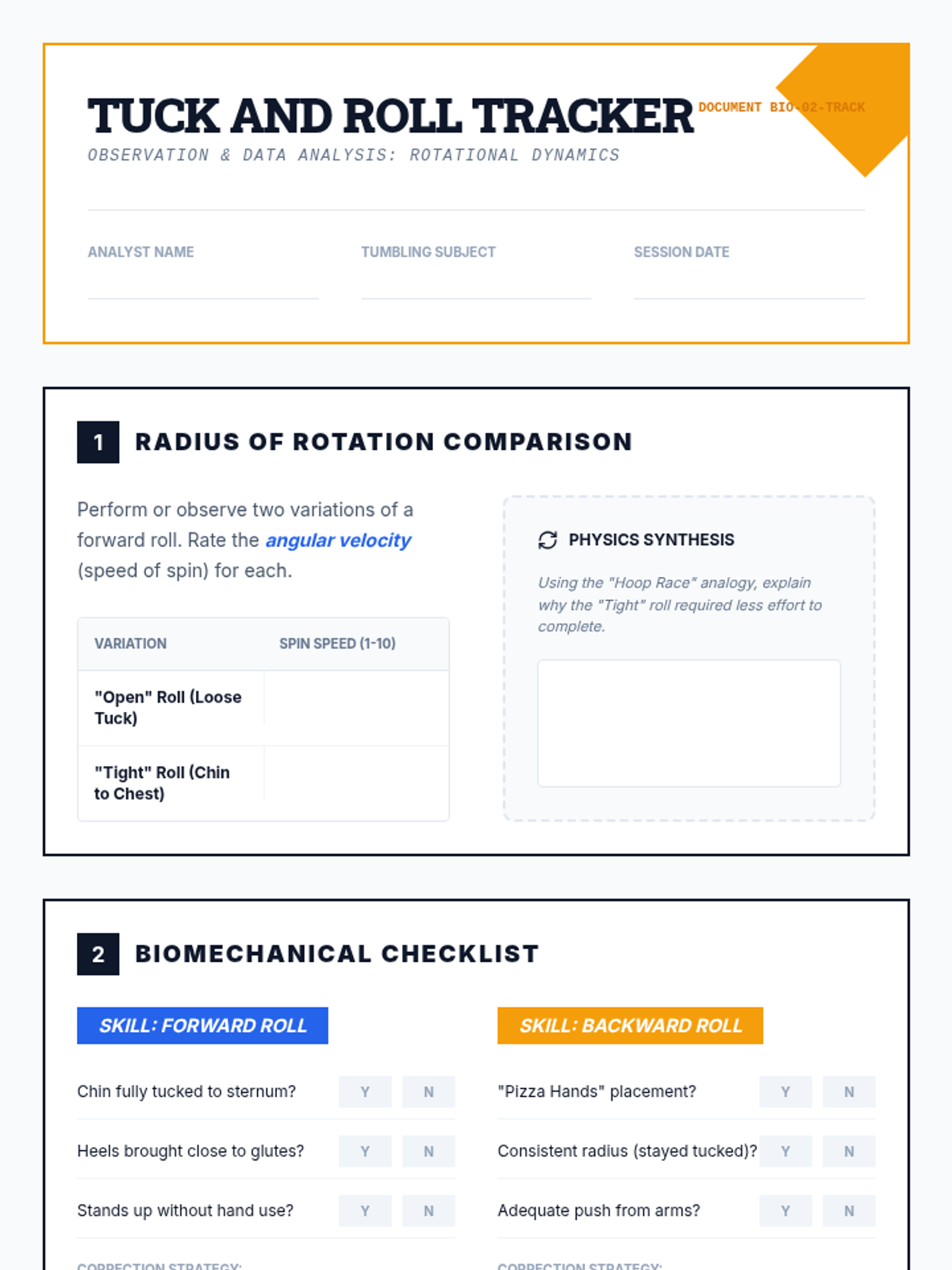
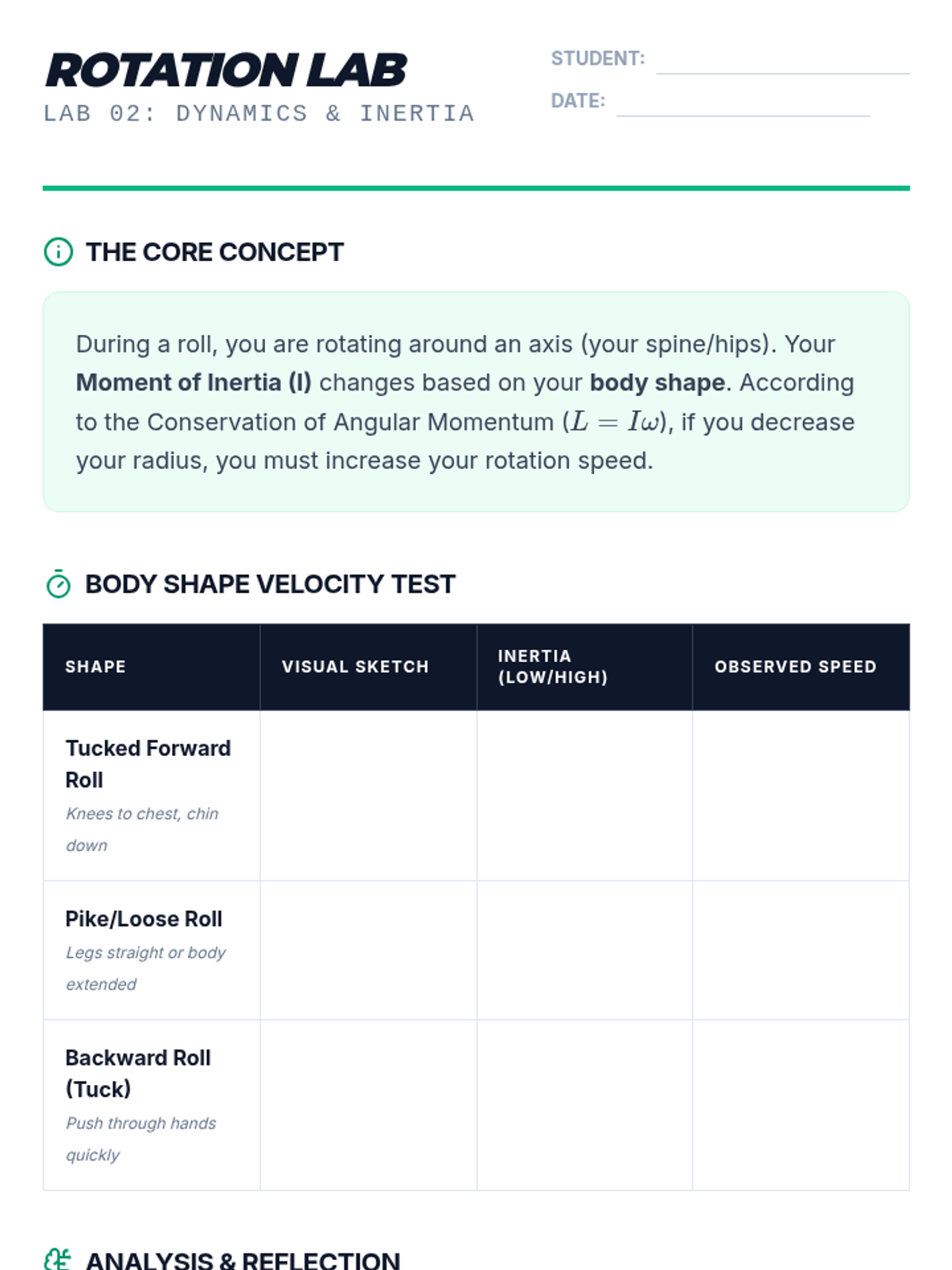
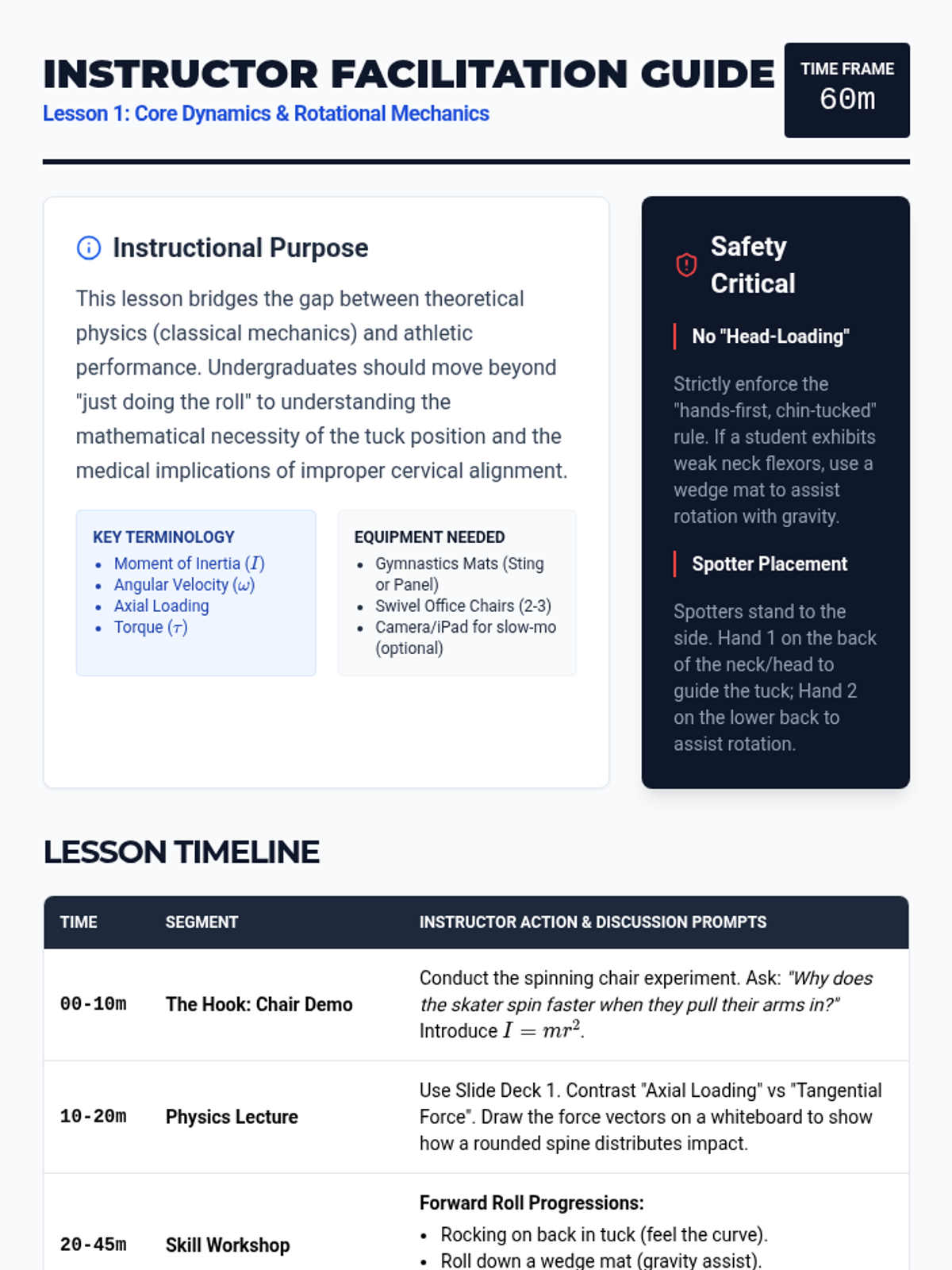
This lesson explores how tuck tightness influences rotation speed in forward and backward rolls through the lens of rotational inertia. Students experience the conservation of angular momentum by varying their body shape during rolls.
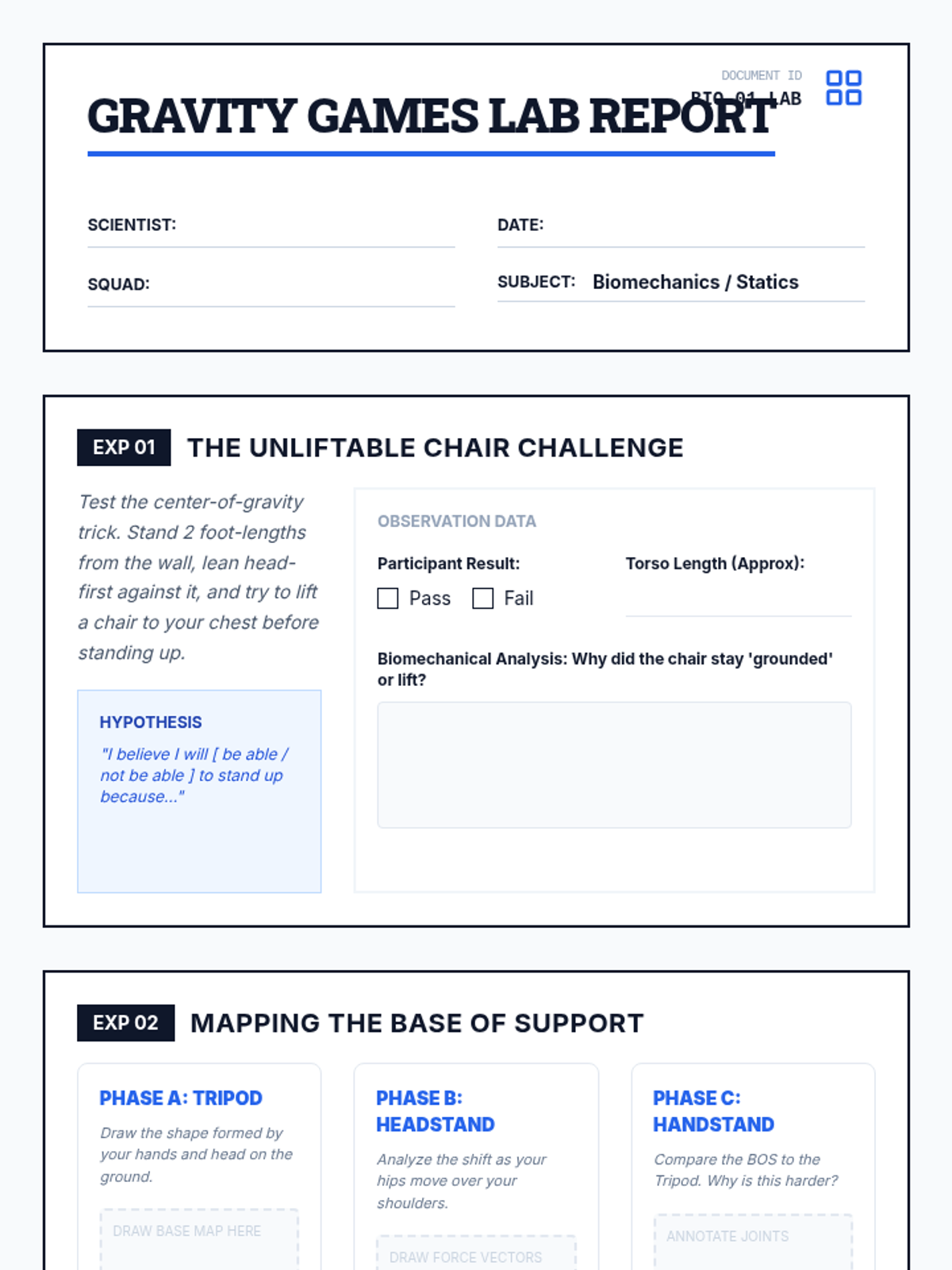
Students investigate the relationship between center of gravity and base of support by performing tripod and headstand balances. They analyze how body alignment affects stability and identifies the physics behind static inversions.
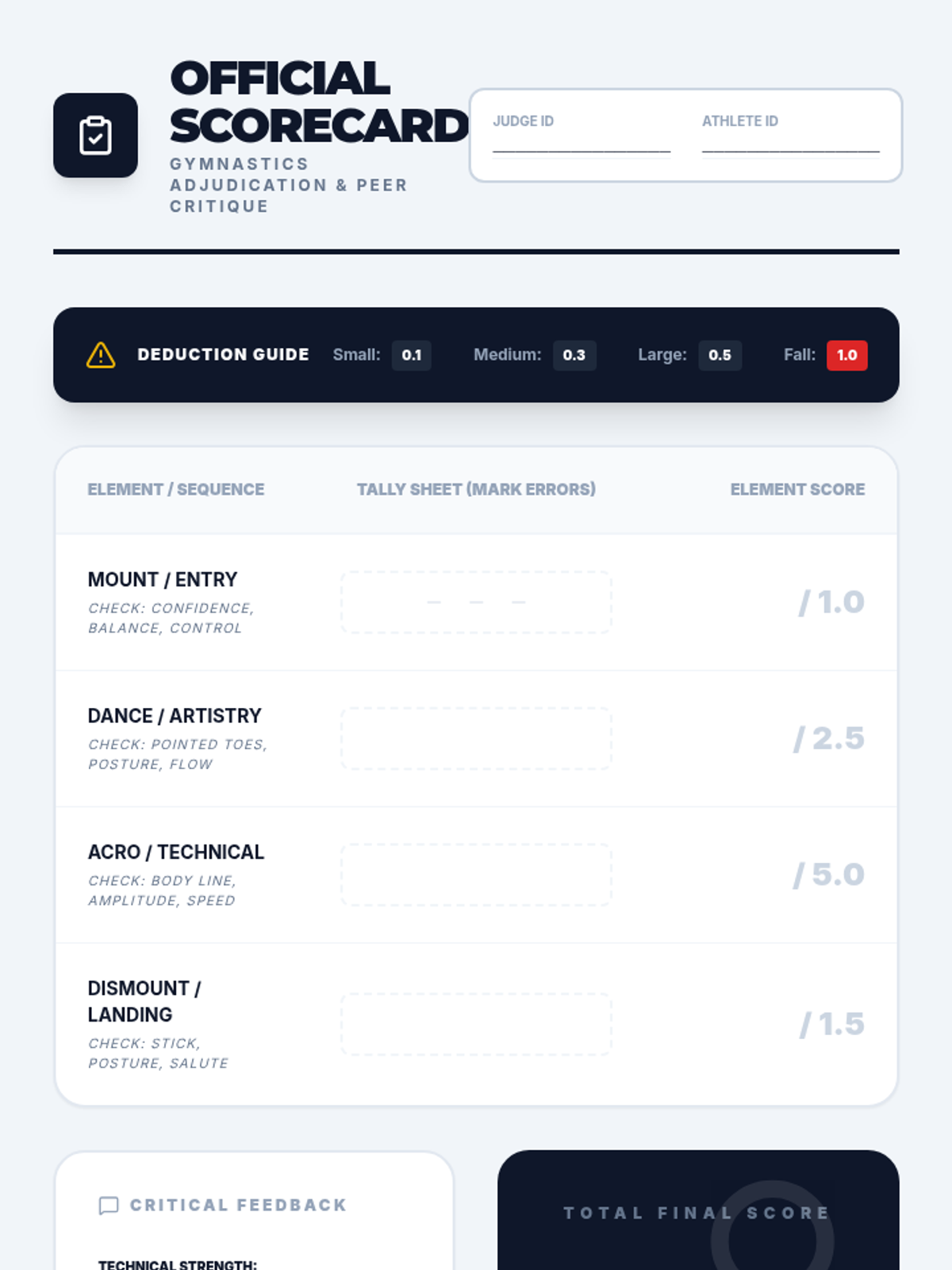
A culminating performance where students execute their routines and peer-judge using simplified technical criteria.
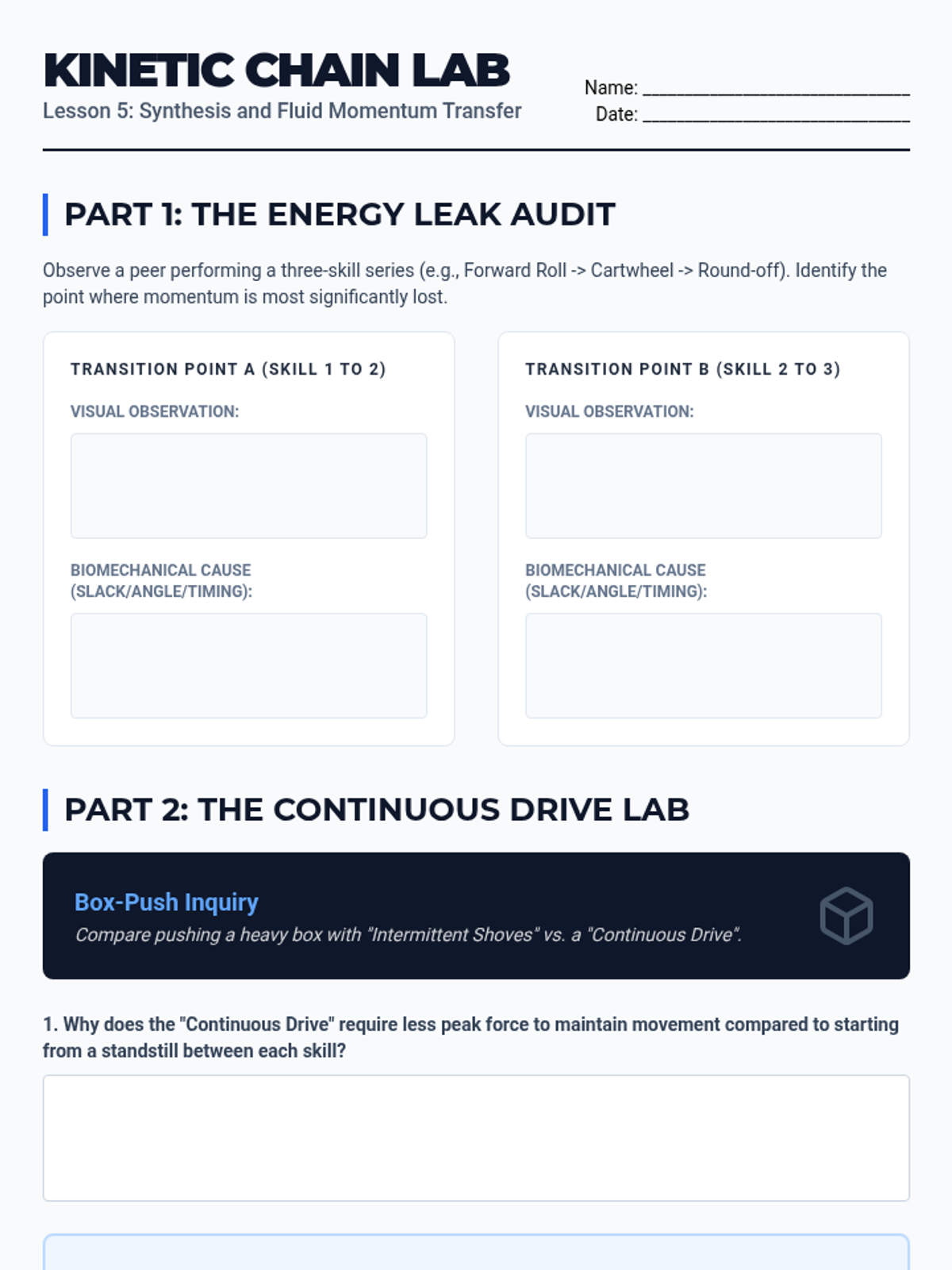
Synthesize skills into fluid series, focusing on minimizing energy leaks and maximizing momentum transfer between movements.
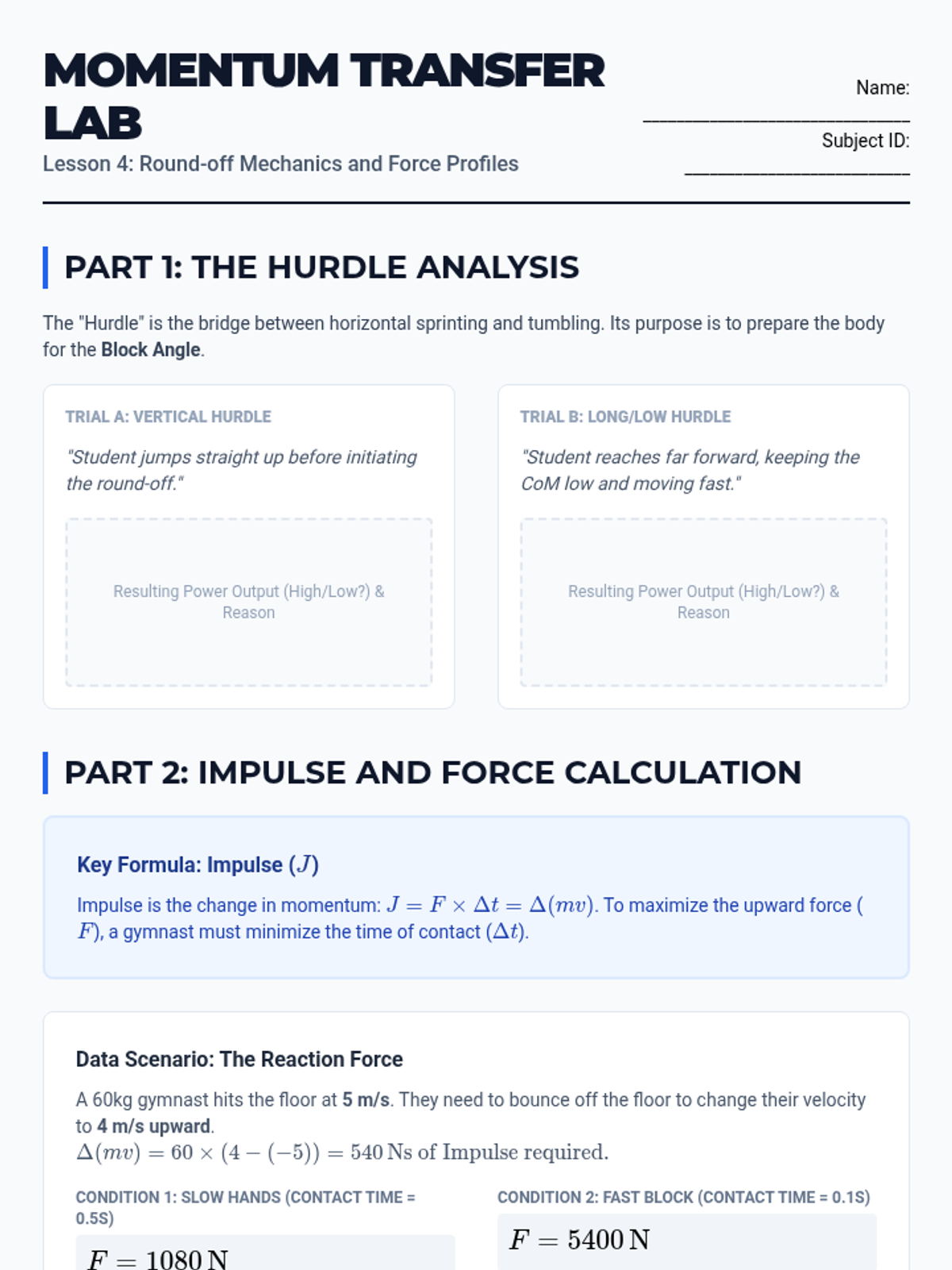
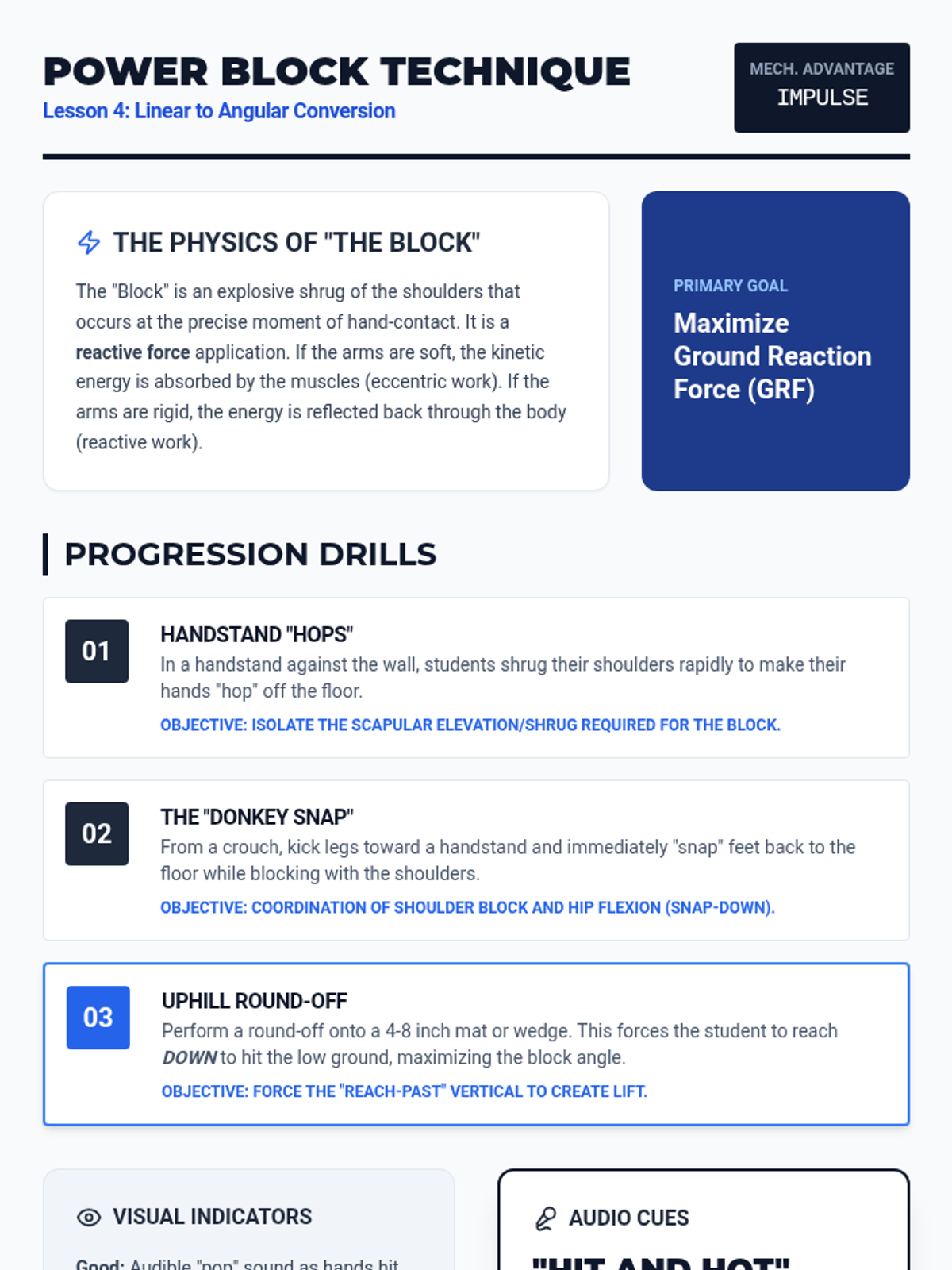
Progress to the round-off, analyzing how horizontal speed is converted into vertical lift and the mechanics of the 'block'.
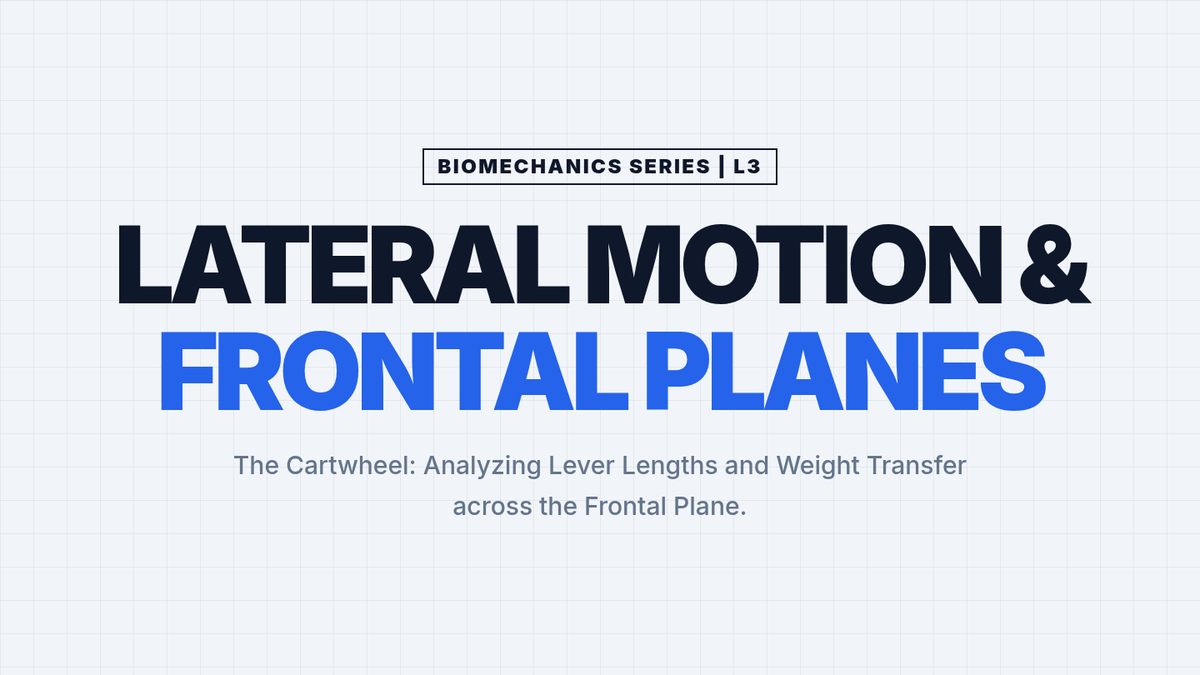
Examine the cartwheel through lateral coordination, weight transfer, and the concept of lever length in the frontal plane.
Analyze the handstand as a structural column, focusing on shoulder mobility, stacked alignment, and the physics of balance.
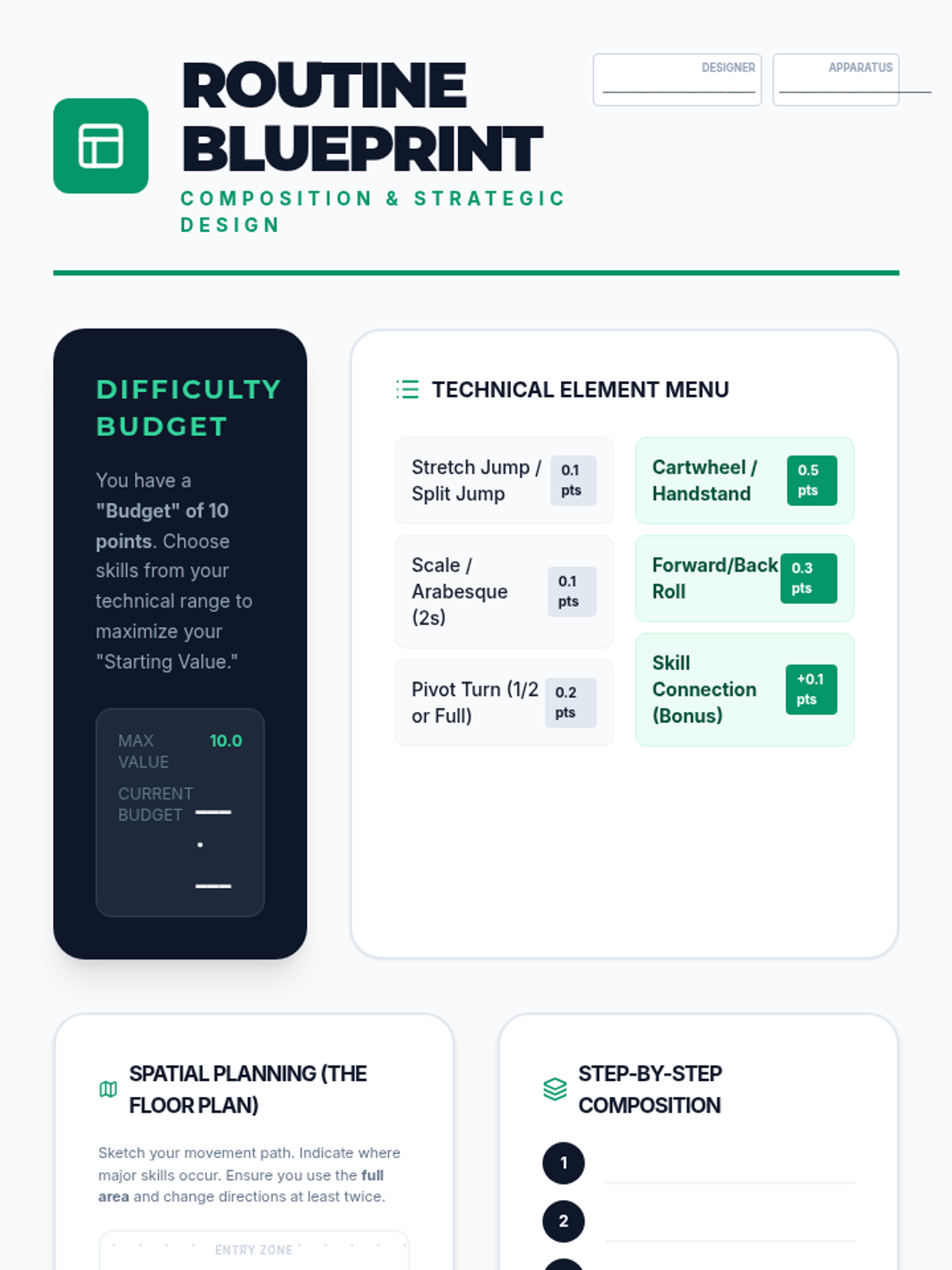
Students design their own routines using a "difficulty budget" and spatial planning for floor or apparatus.
Explore the relationship between core compression and rotational speed through rolls, emphasizing the moment of inertia and spinal safety.
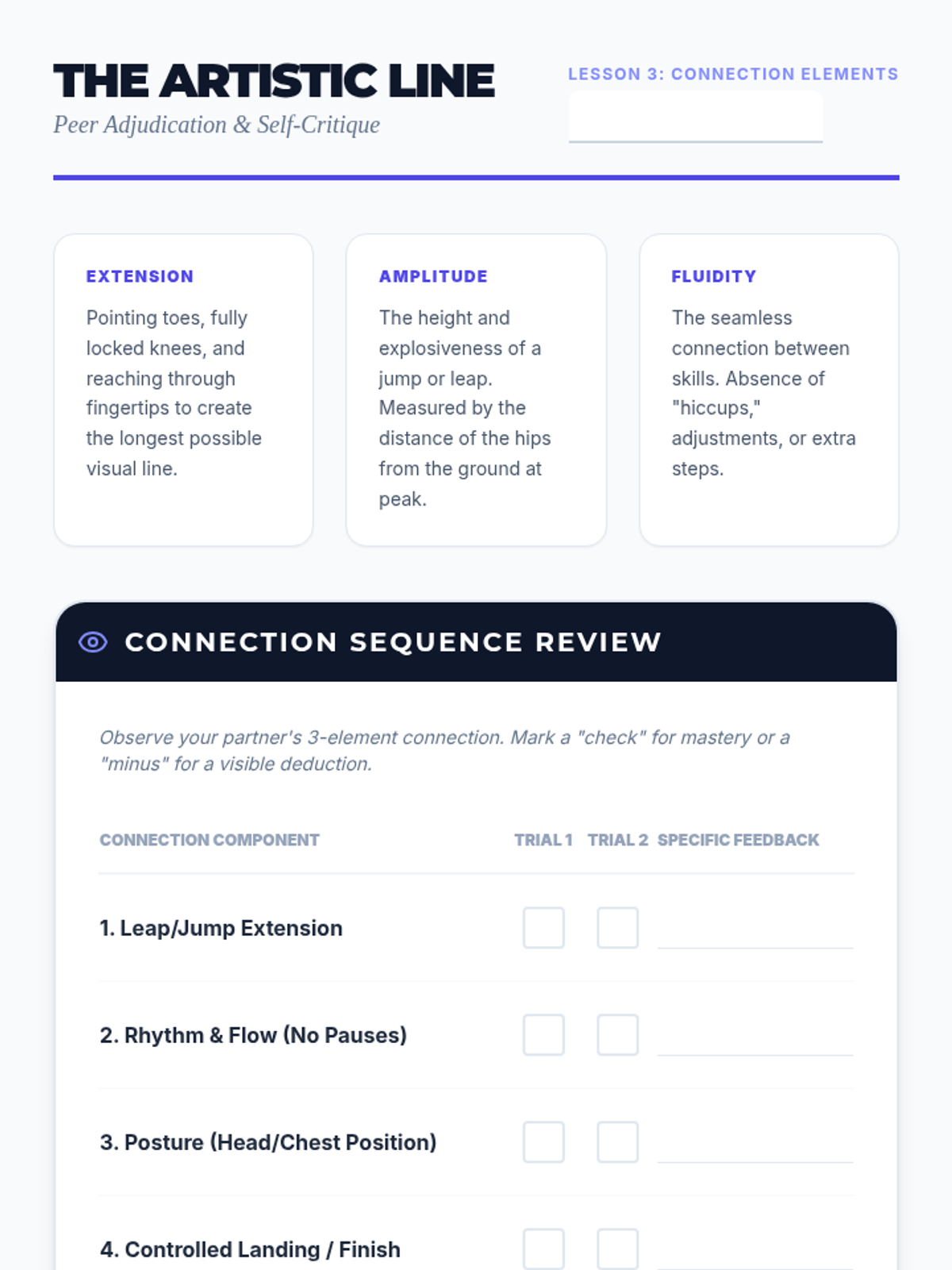
Explores the artistic side of gymnastics through leaps, turns, and connecting elements that emphasize posture and fluidity.
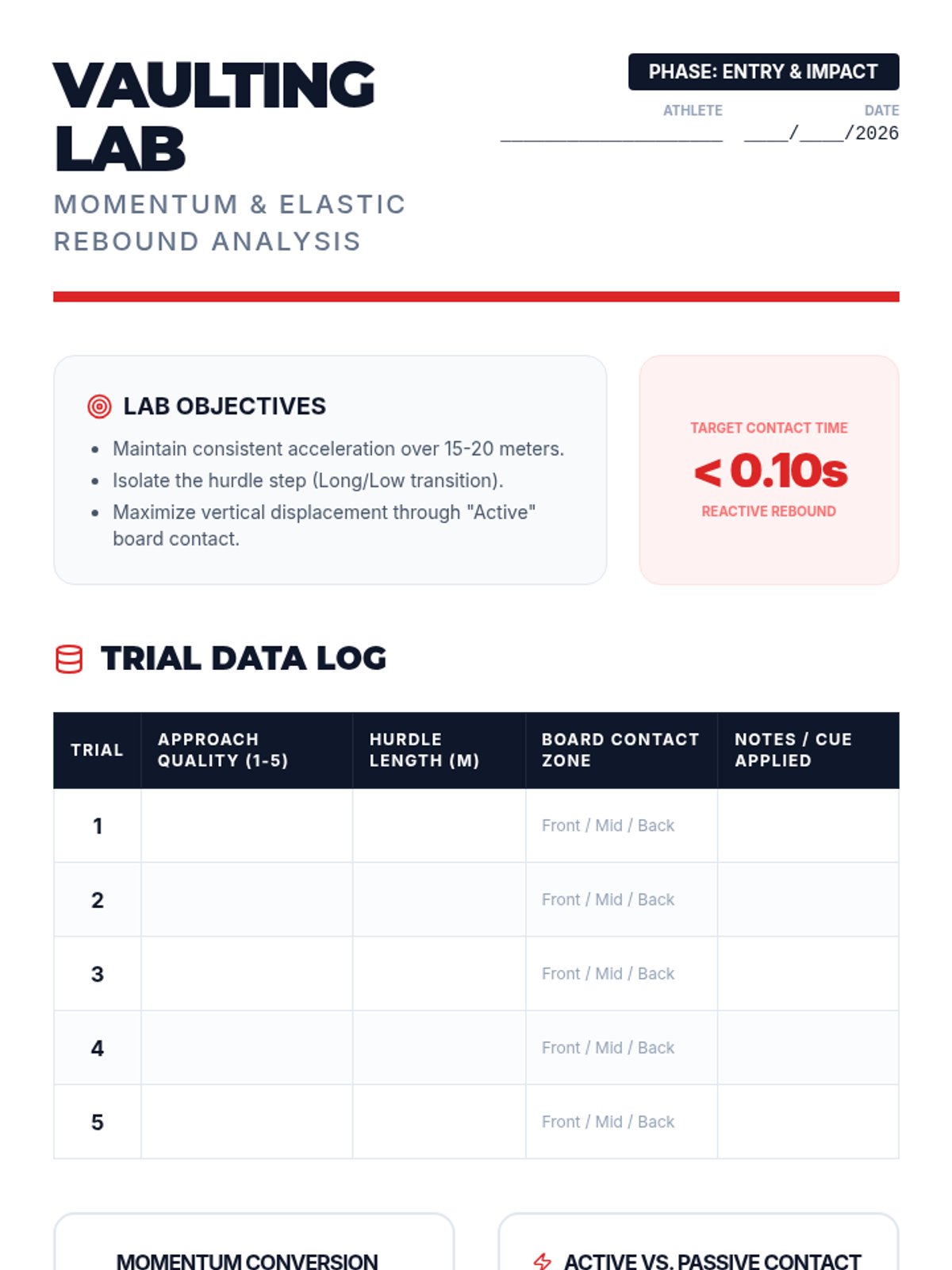
Deconstructs the vault into its fundamental phases: the run, hurdle, and punch, focusing on springboard physics and timing.
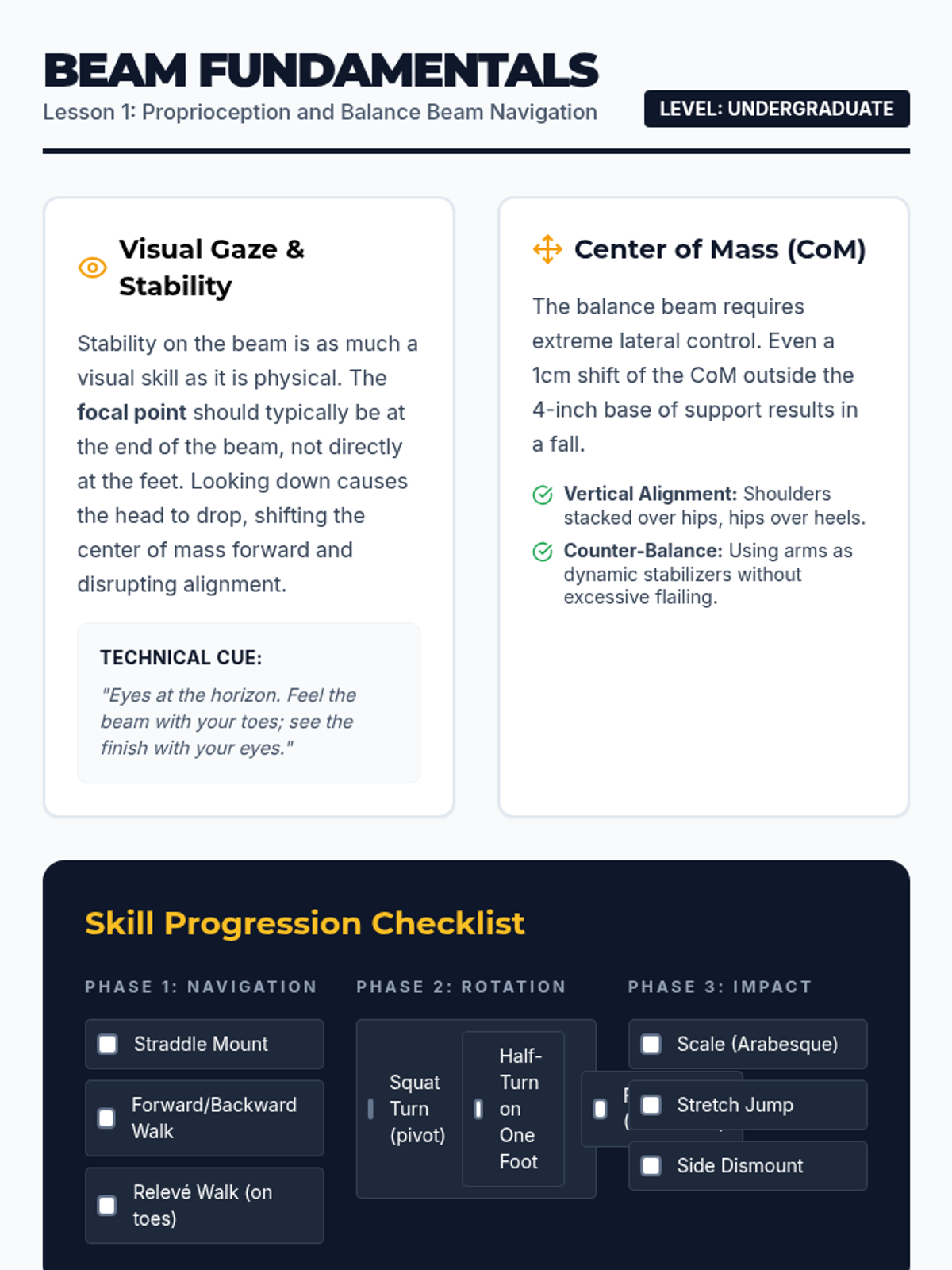
Focuses on the transition to balance beam, emphasizing gaze control, center of mass, and proprioceptive awareness on a narrow surface.
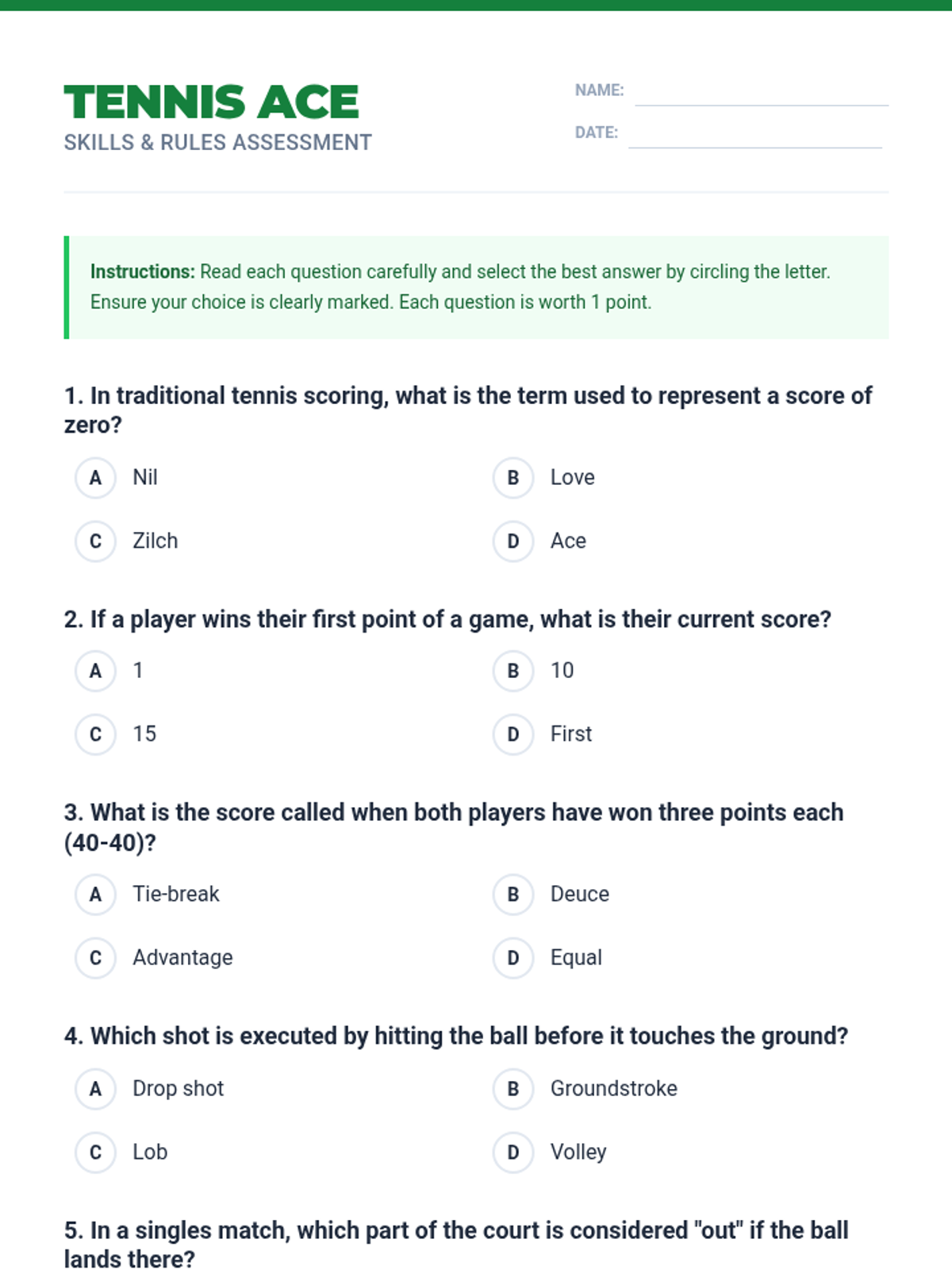
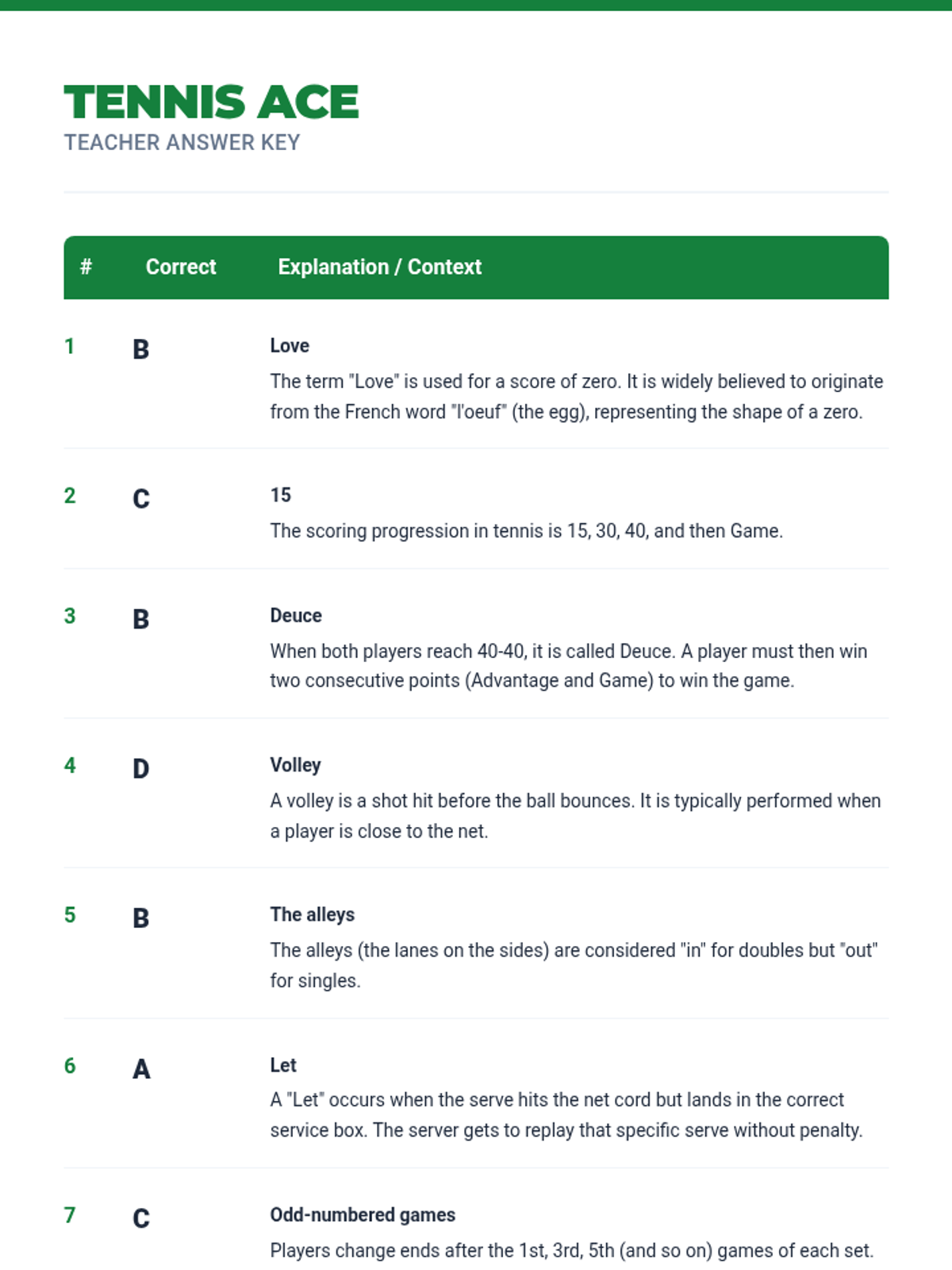
A foundational lesson covering tennis rules, scoring, strokes, and court positioning, designed to prepare students for gameplay and officiating.
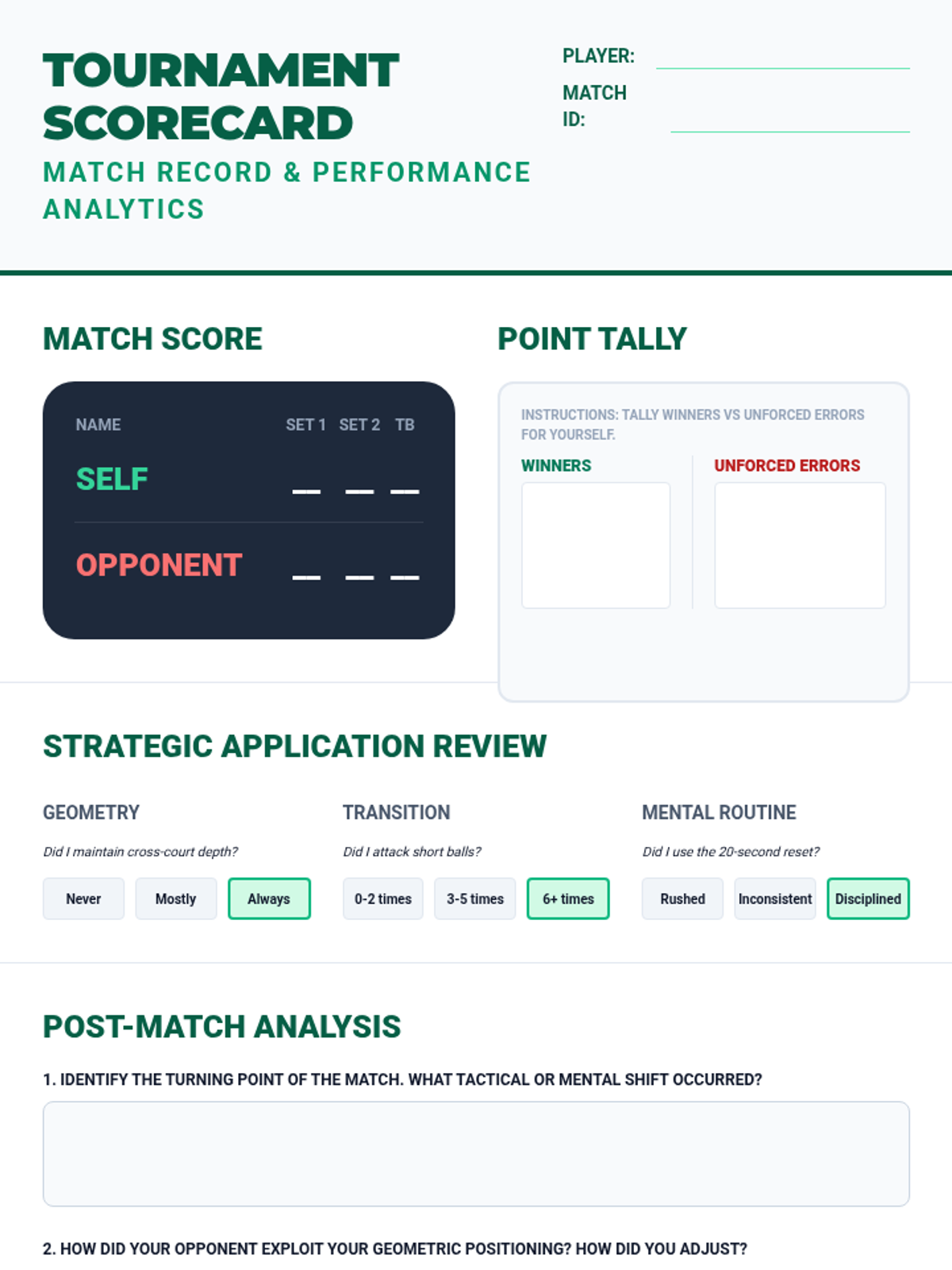
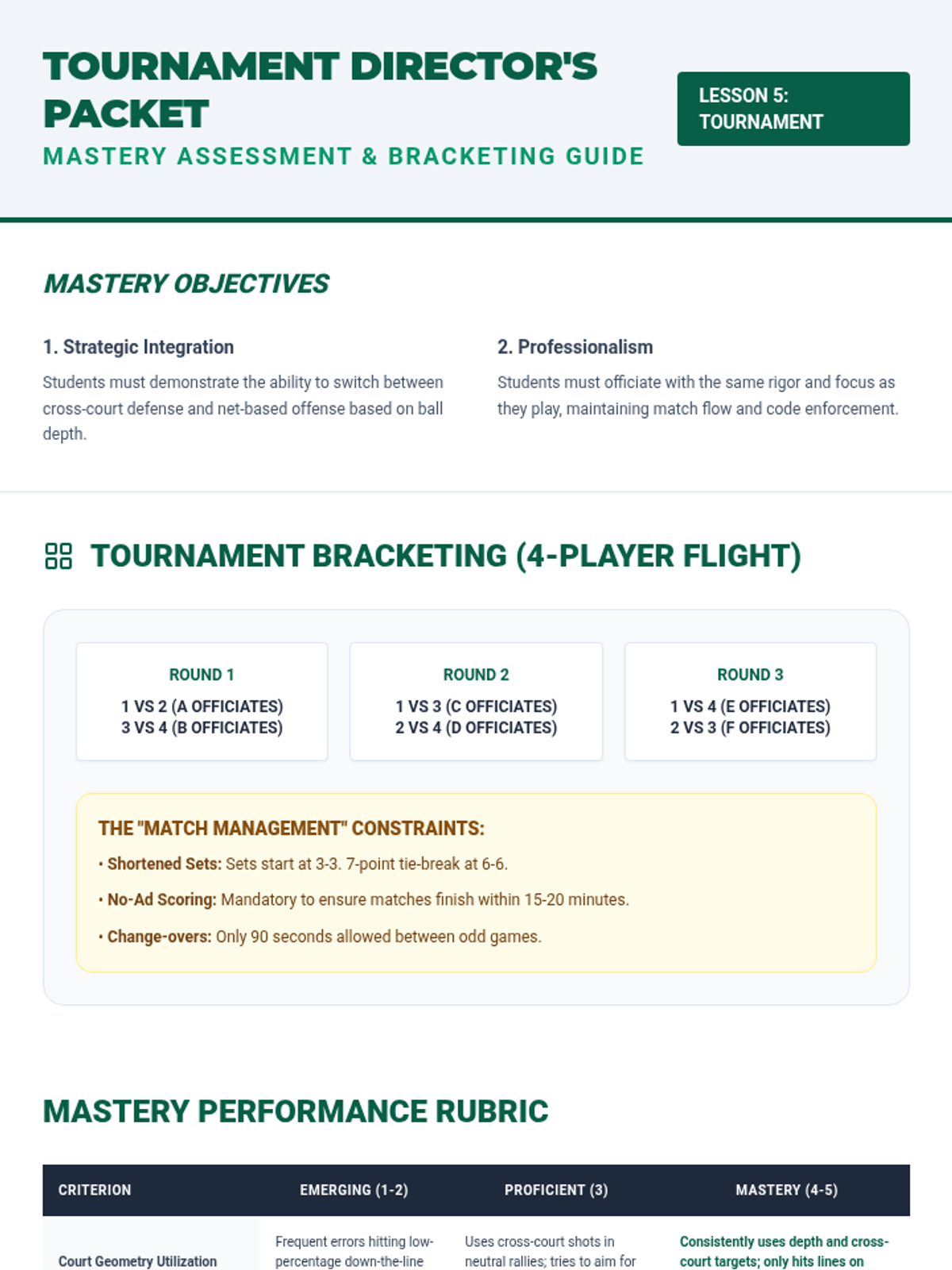
Apply tactical knowledge and mental resilience in a competitive round-robin tournament simulation.
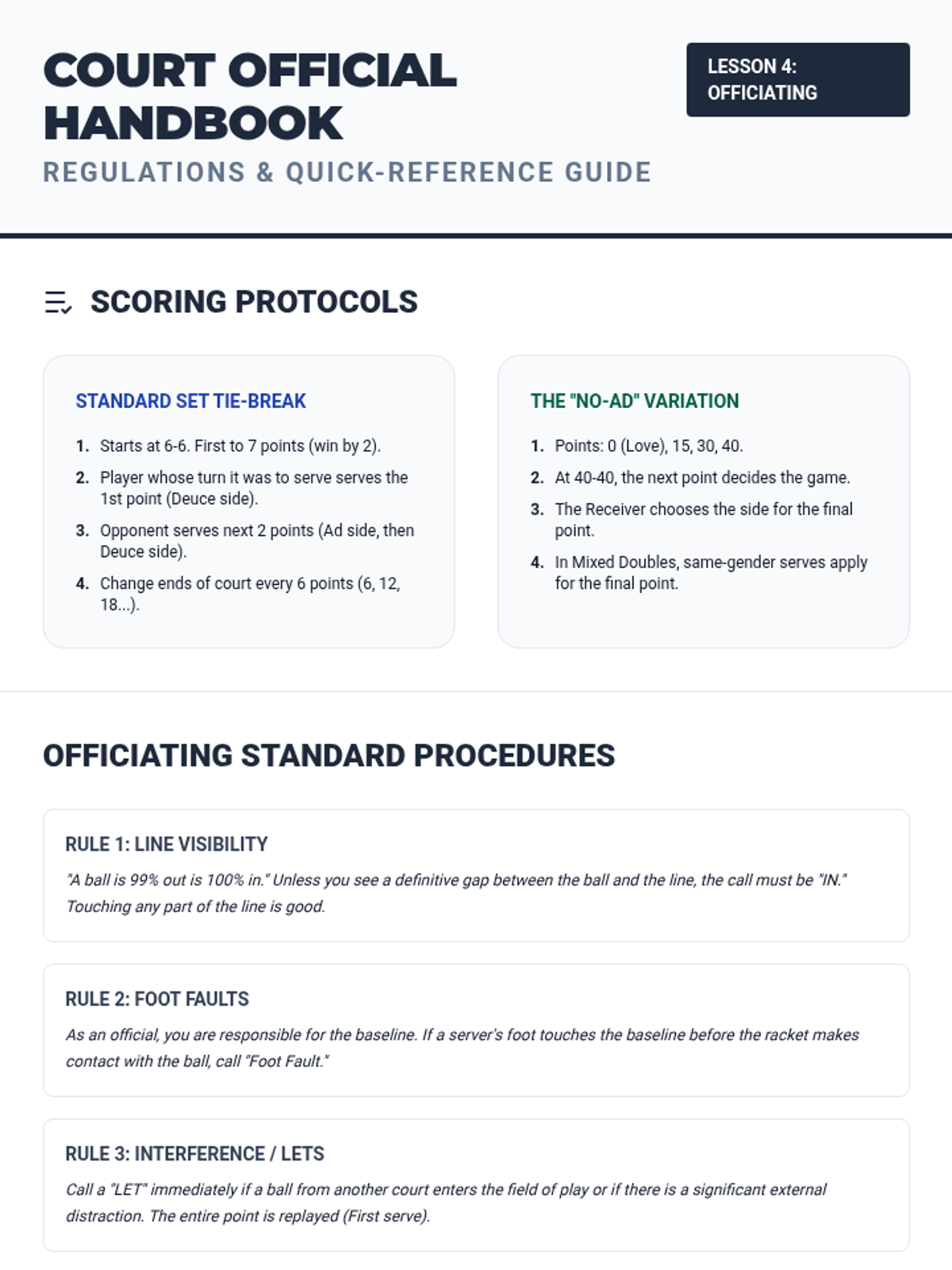
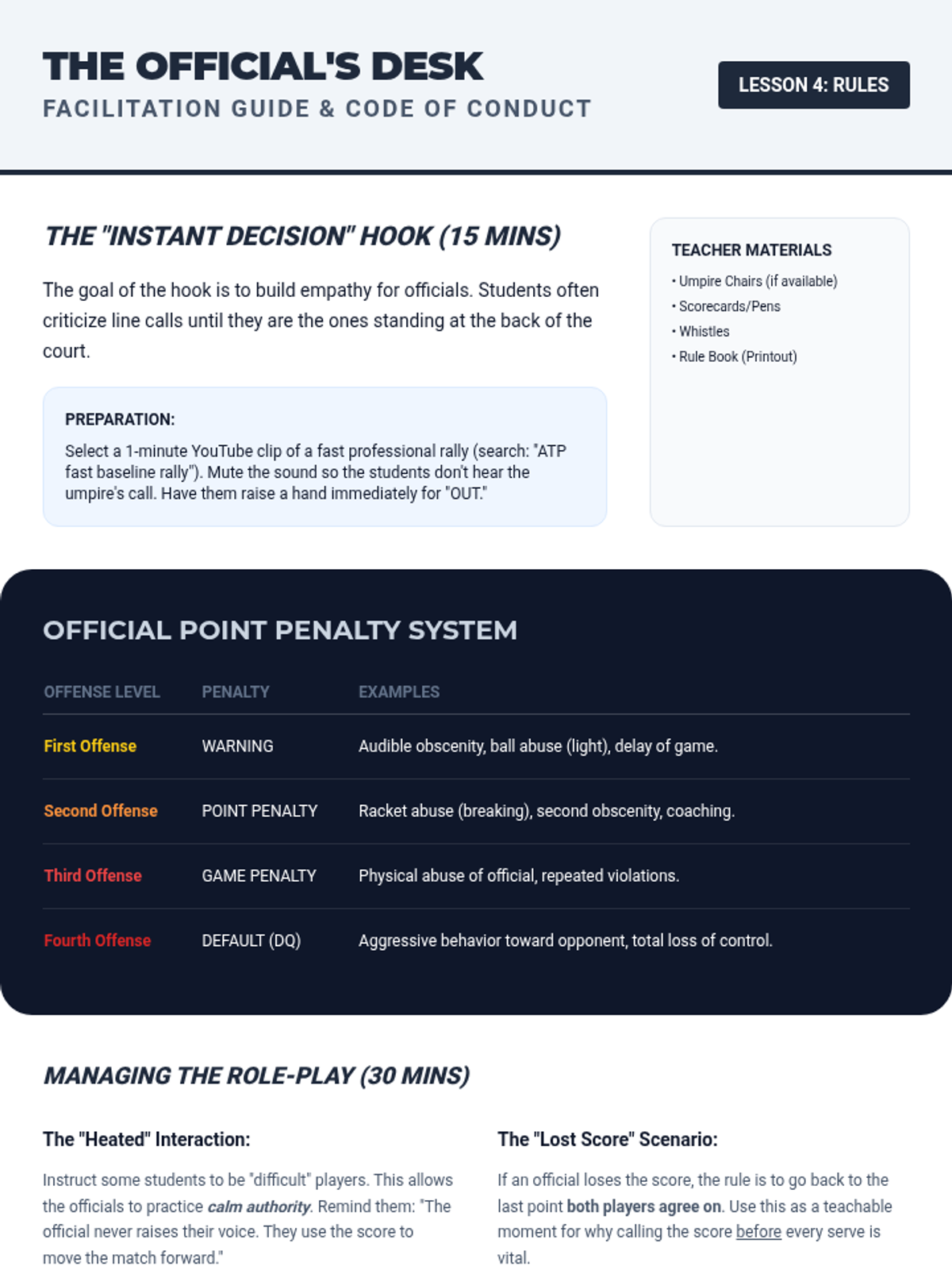
Master the rules, scoring systems, and officiating etiquette required for self-regulated and competitive match play.
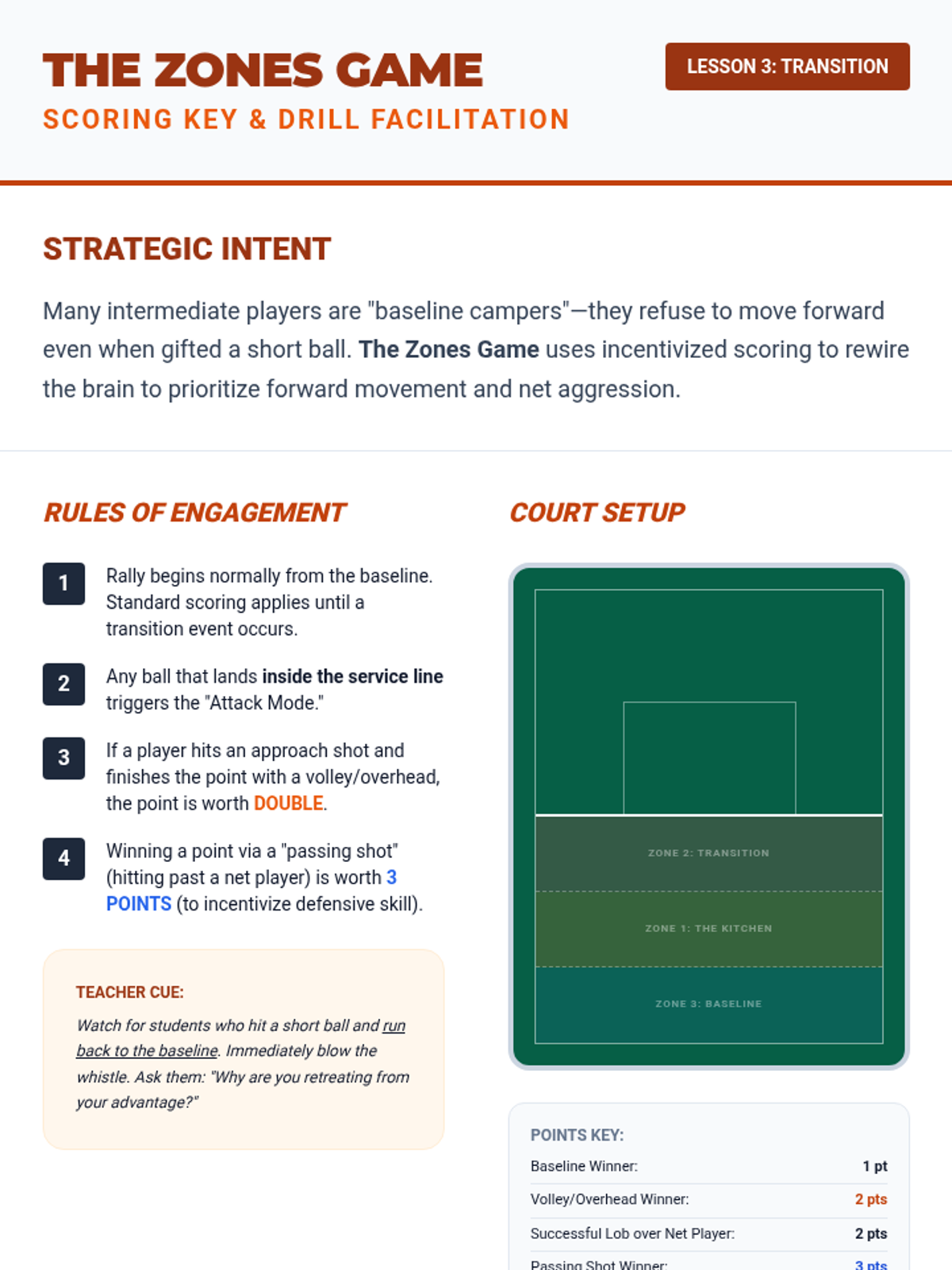
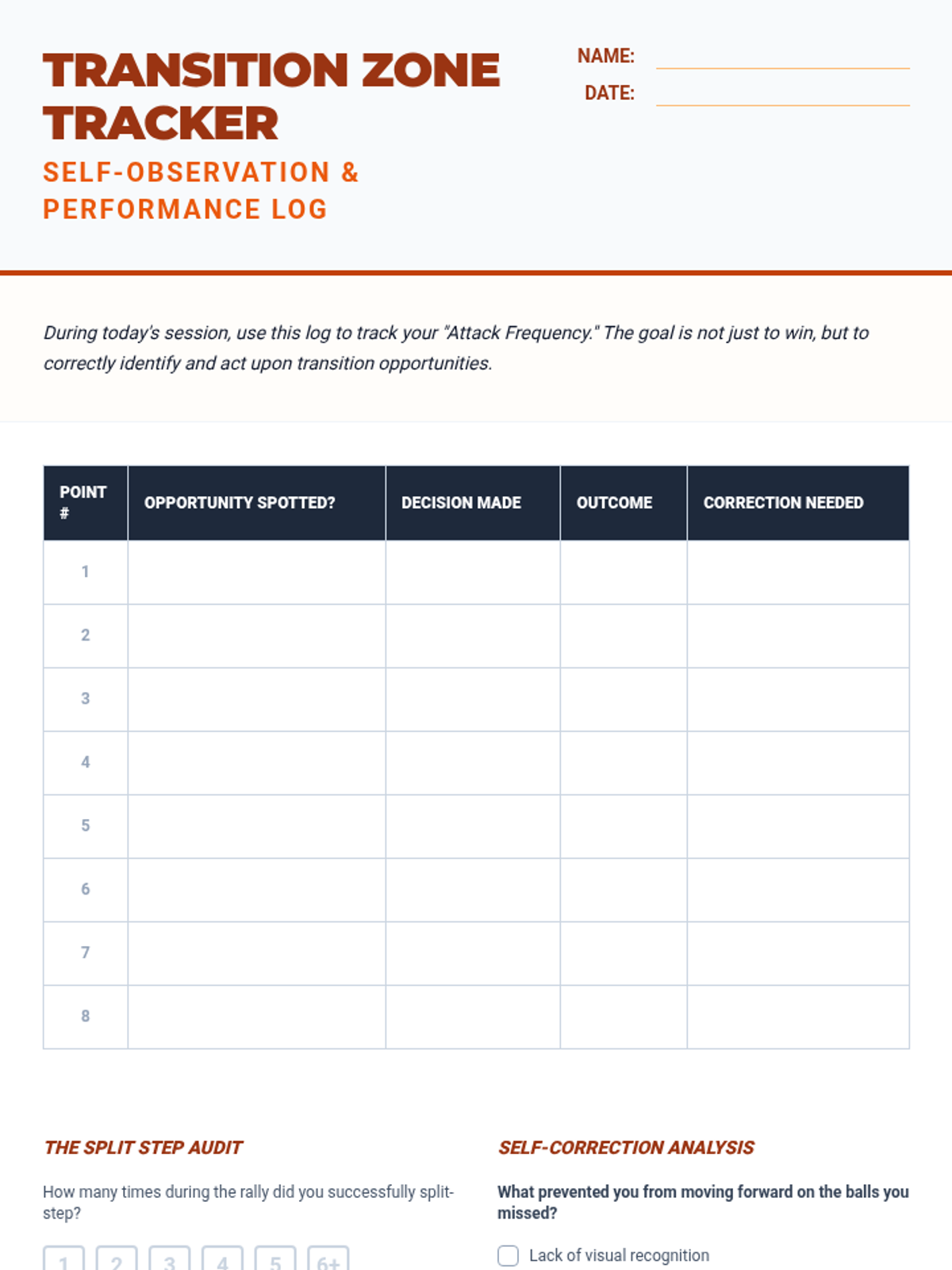
Develop the ability to recognize short balls and transition effectively from baseline defense to net offense.
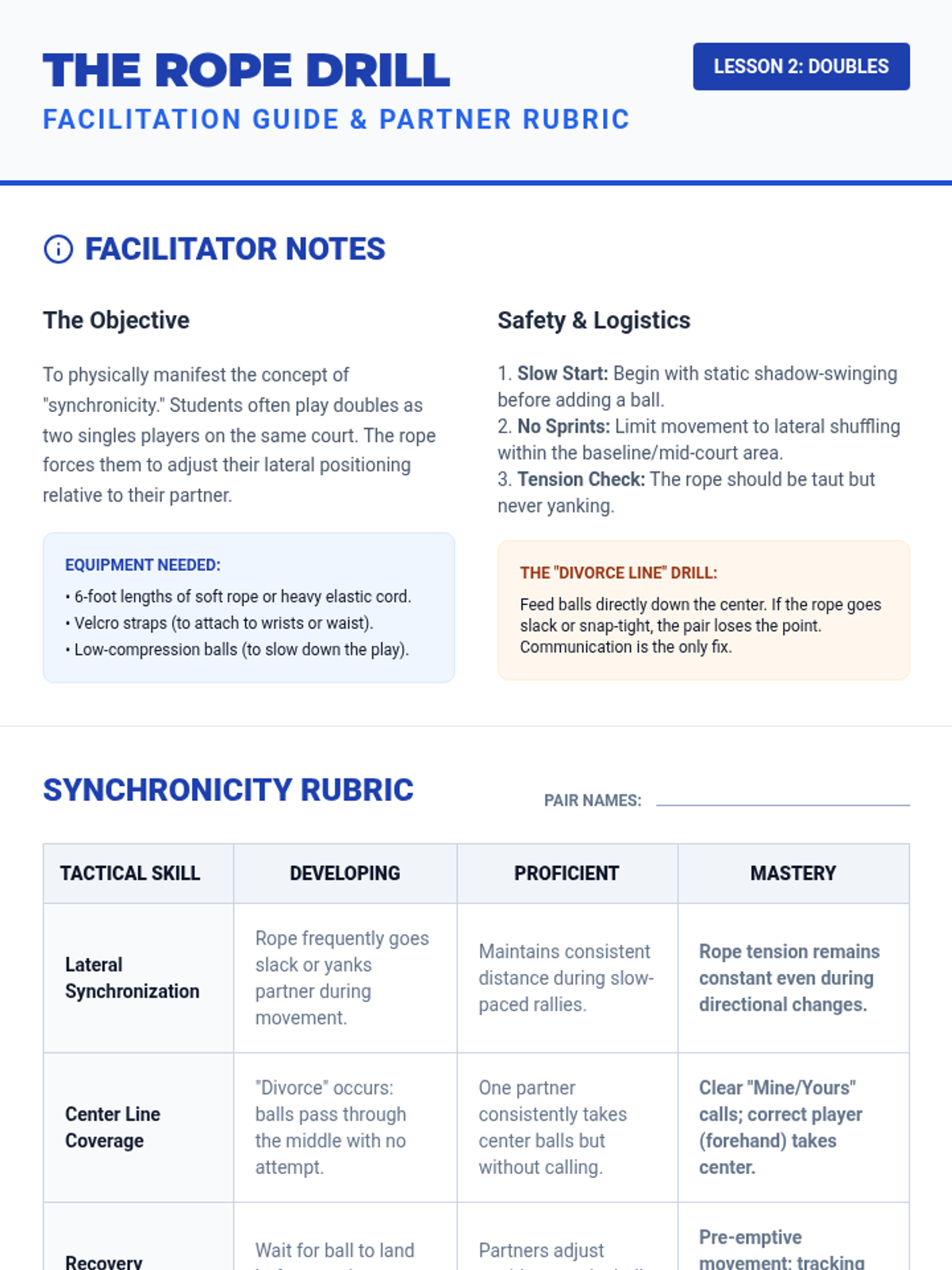
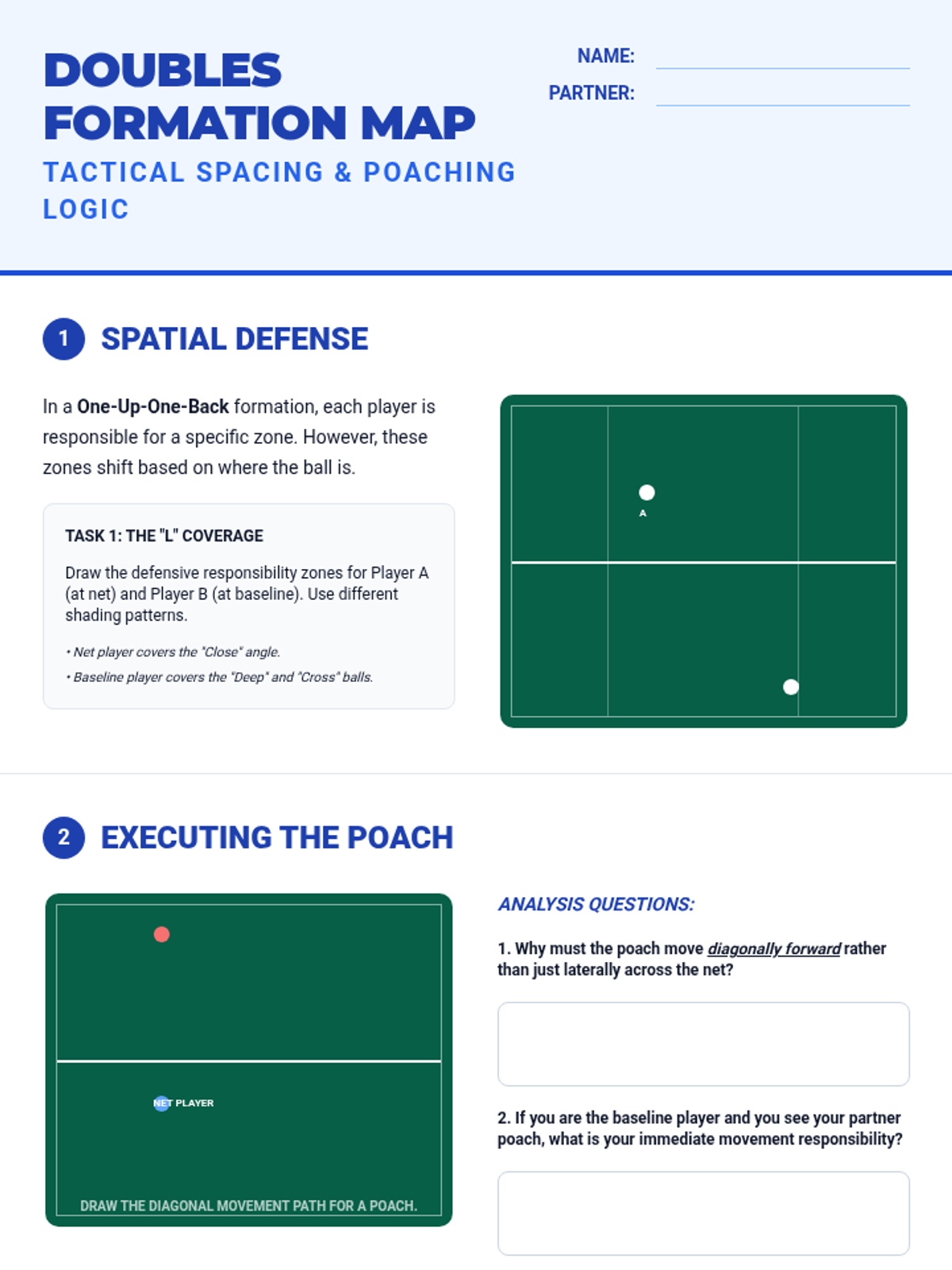
Master doubles strategy through spatial awareness, synchronized movement, and effective partner communication.
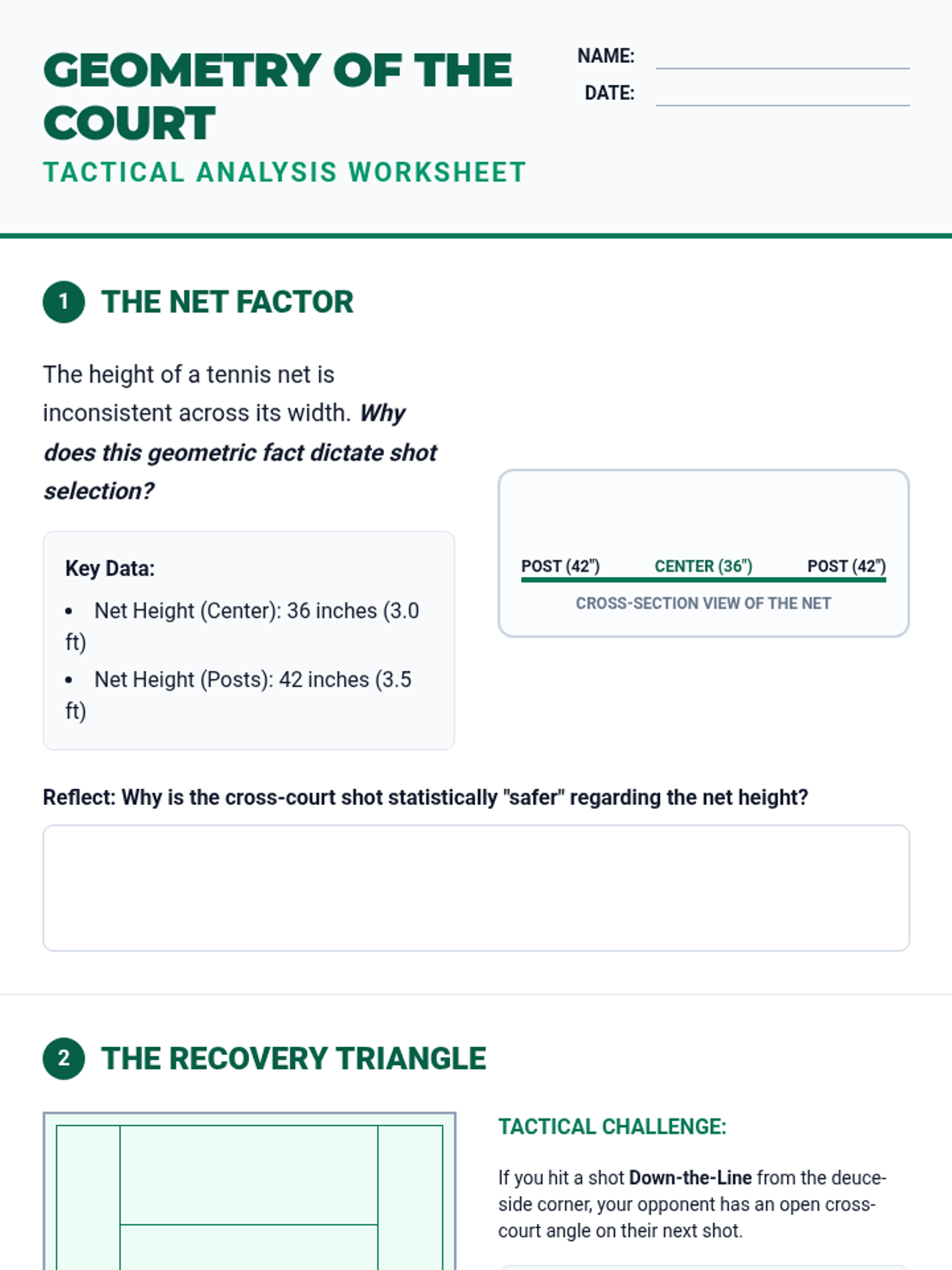
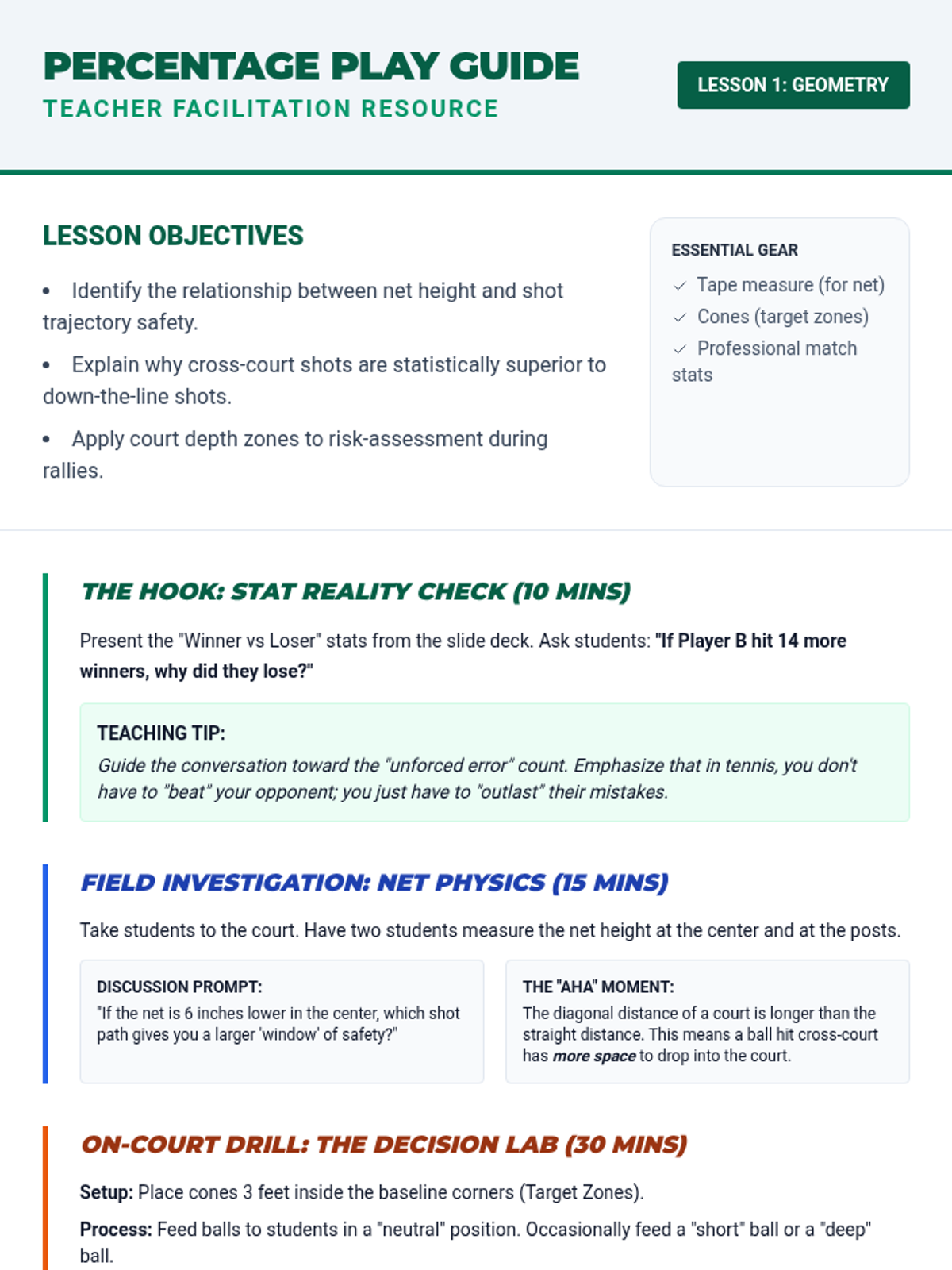
Investigate court geometry and 'percentage play' to reduce unforced errors and understand the statistical advantages of depth and cross-court targets.
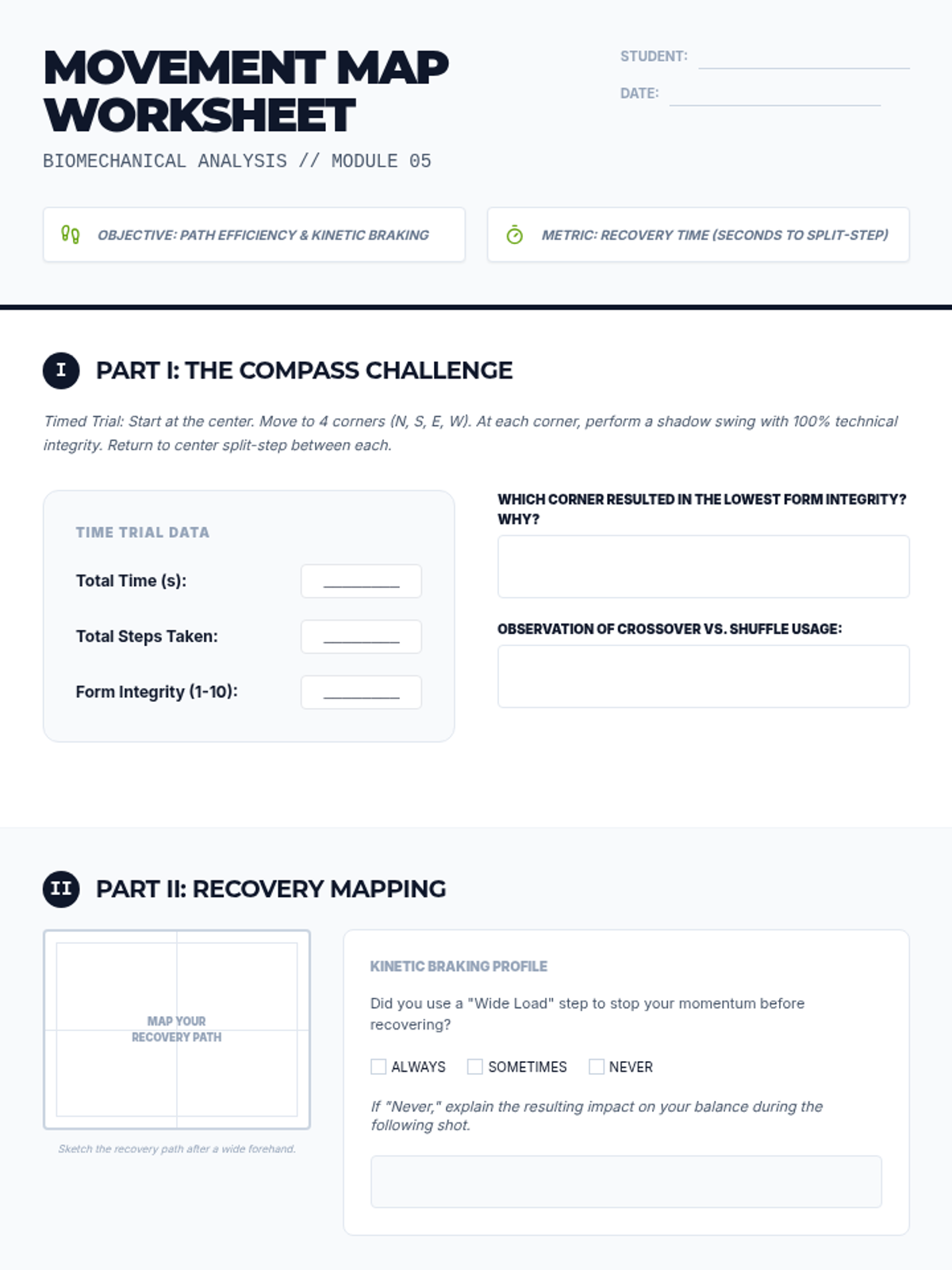
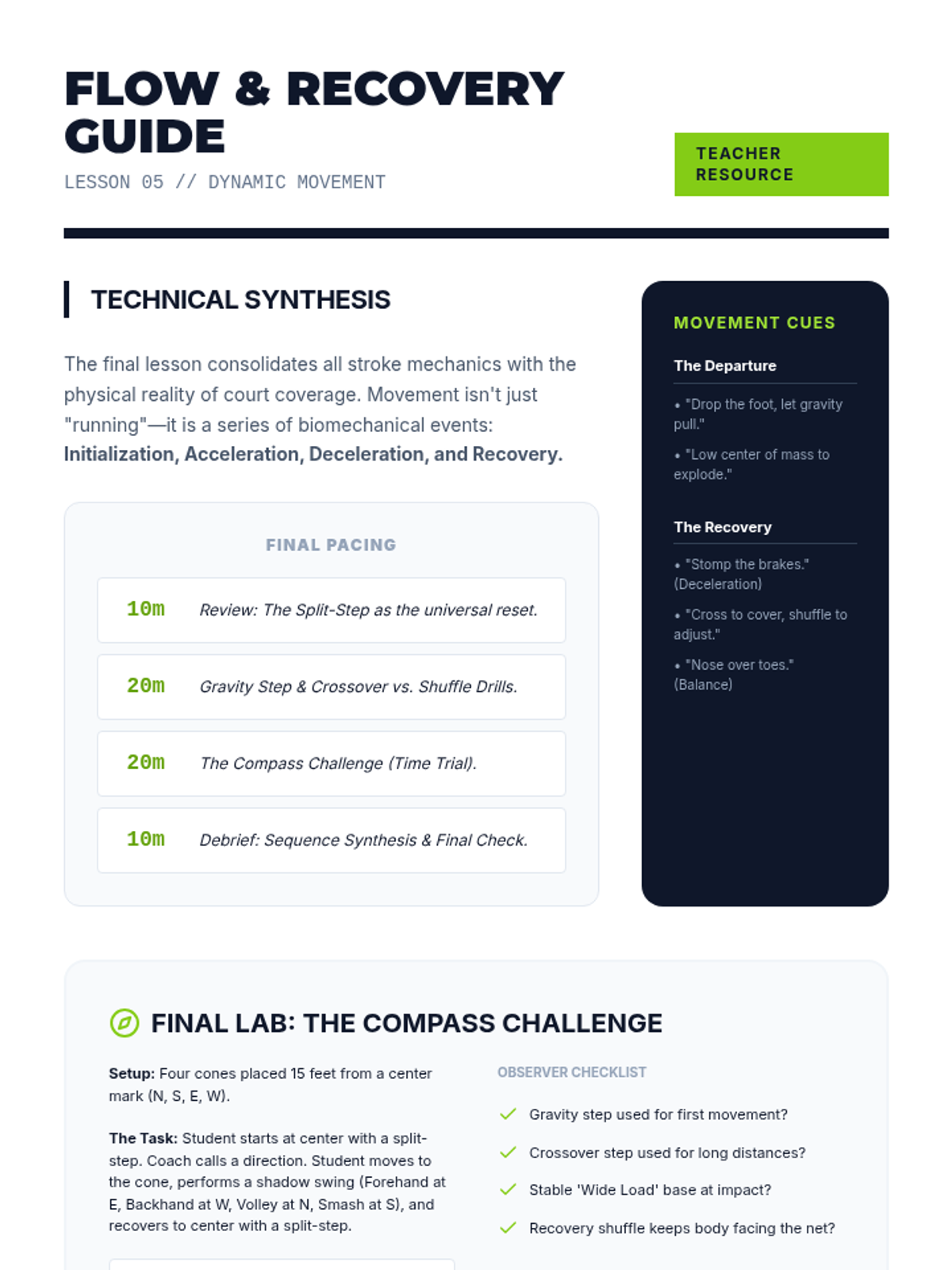
Integrate stroke mechanics with dynamic movement patterns and recovery strategies to maintain court positioning.
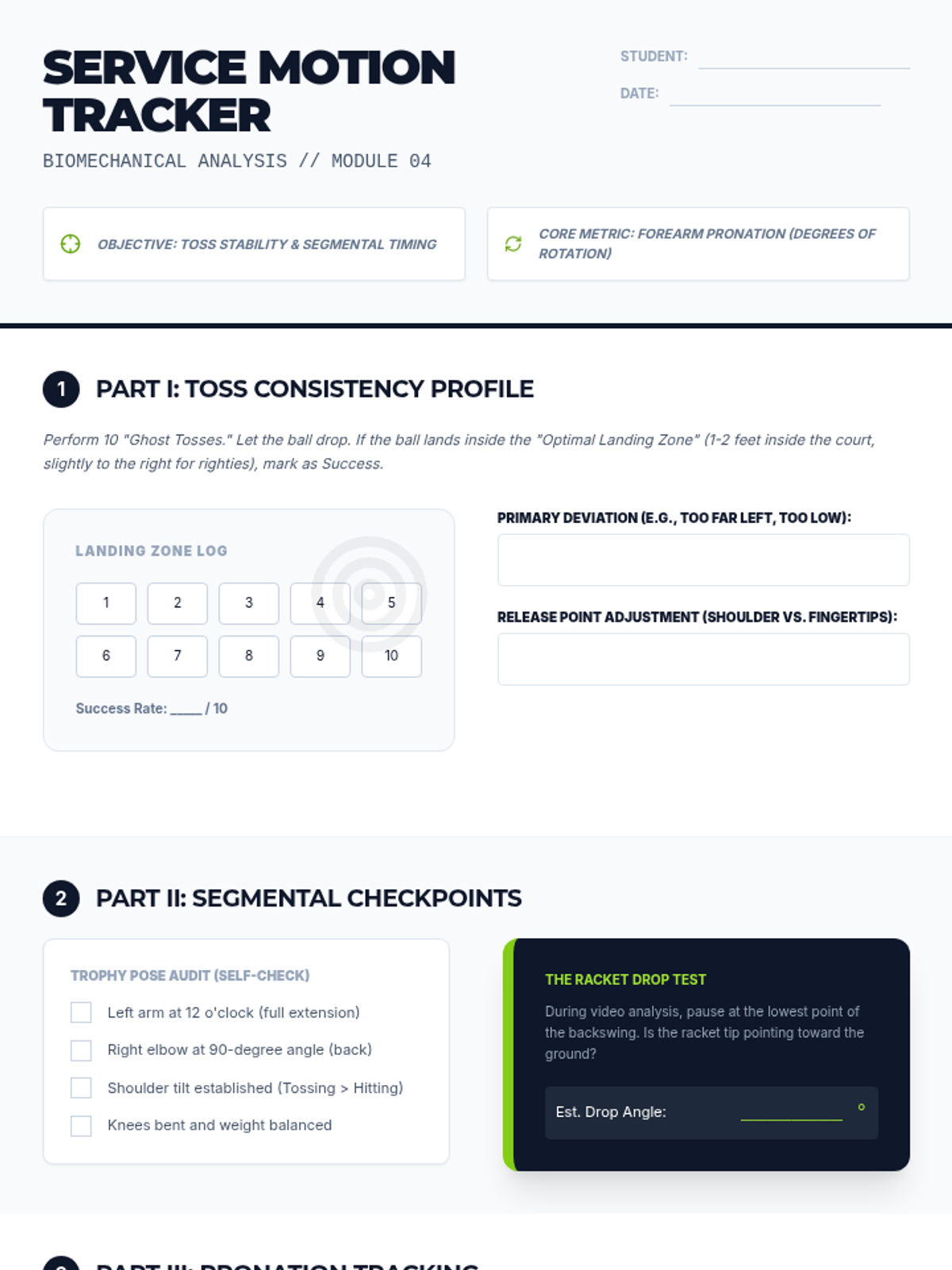
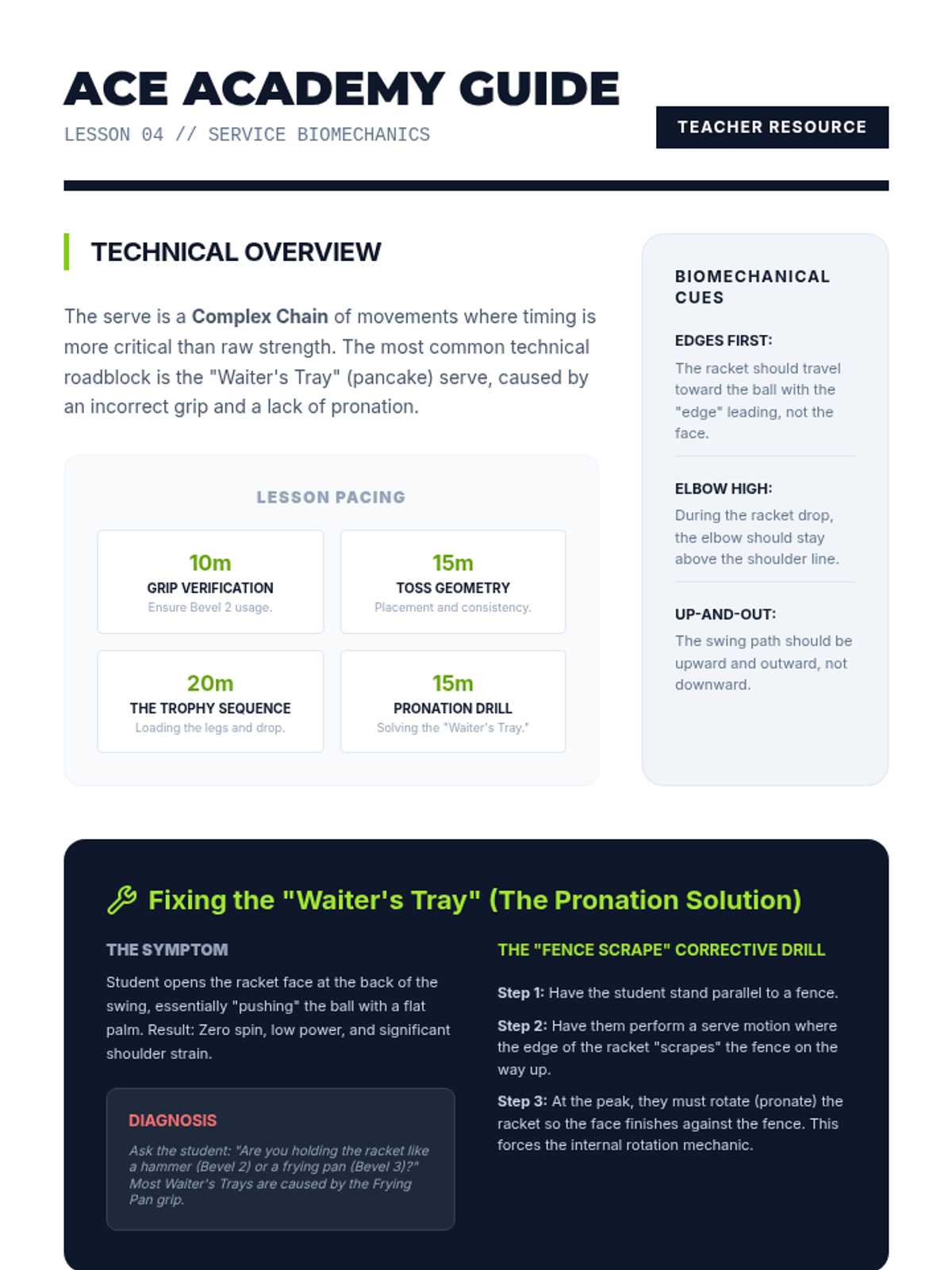
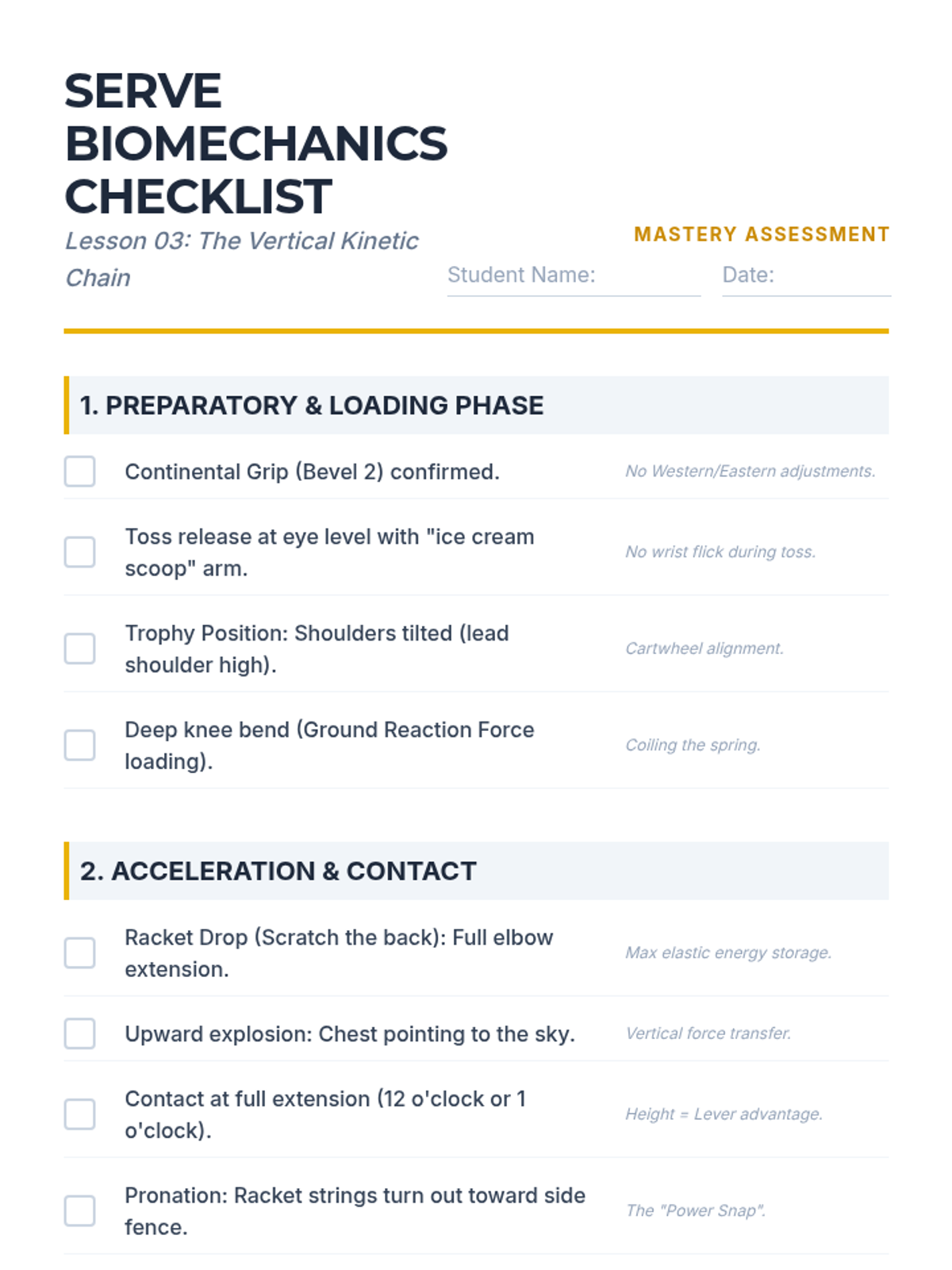
Explore the complex biomechanics of the serve, including the trophy pose, racket drop, and forearm pronation.
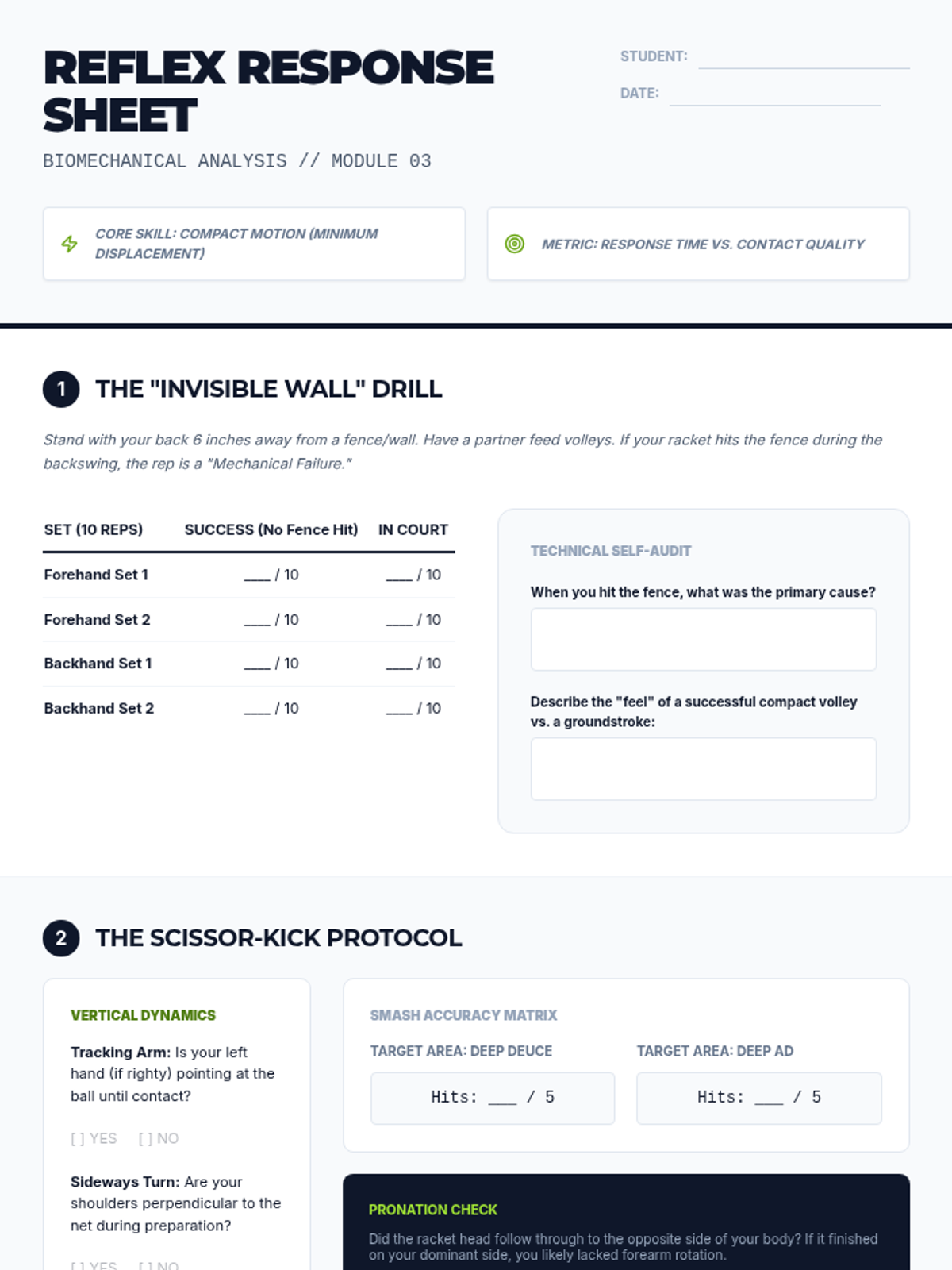
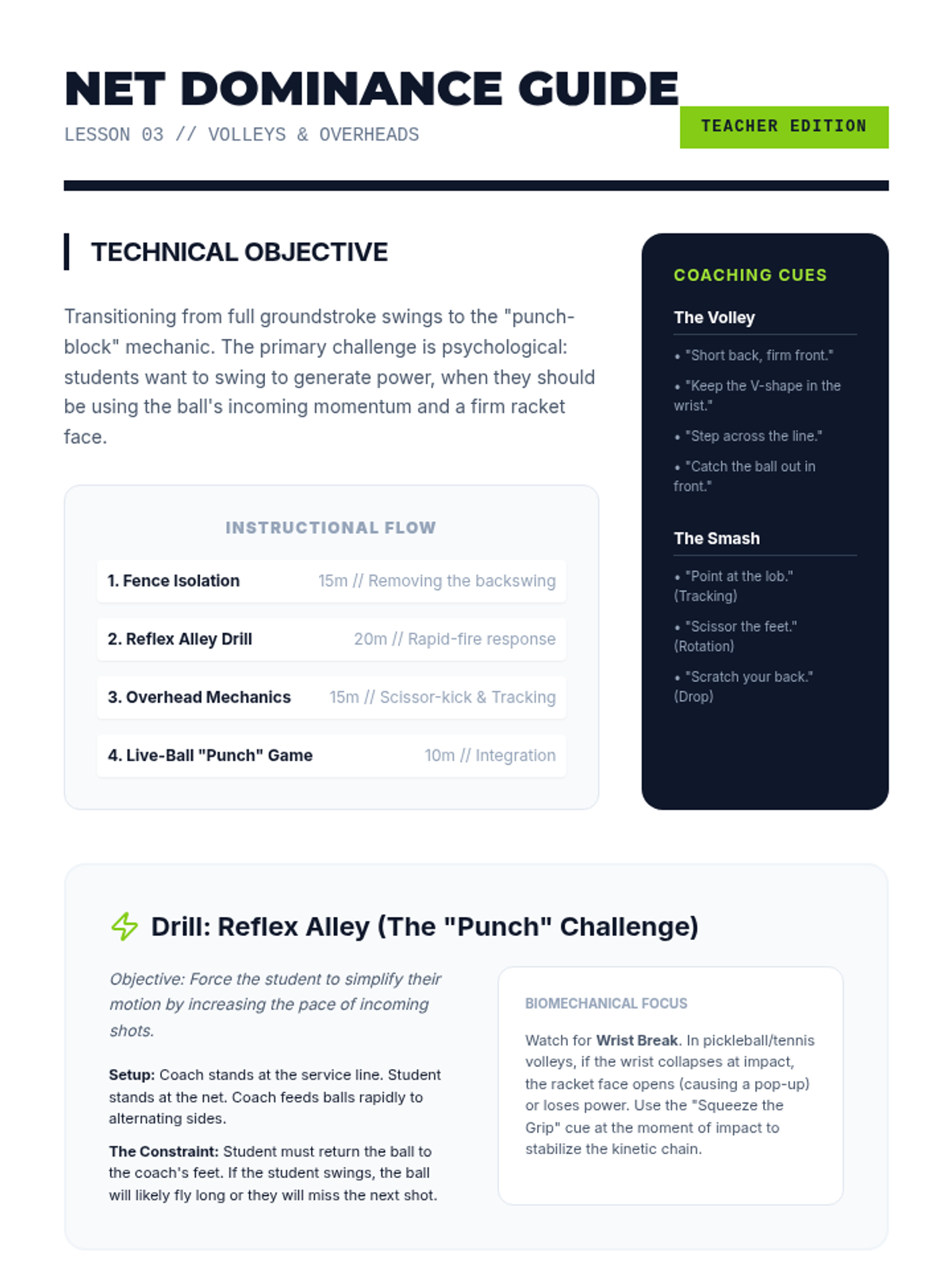
Master the mechanics of volleys and overheads, focusing on compact motions and rapid reflex responses.
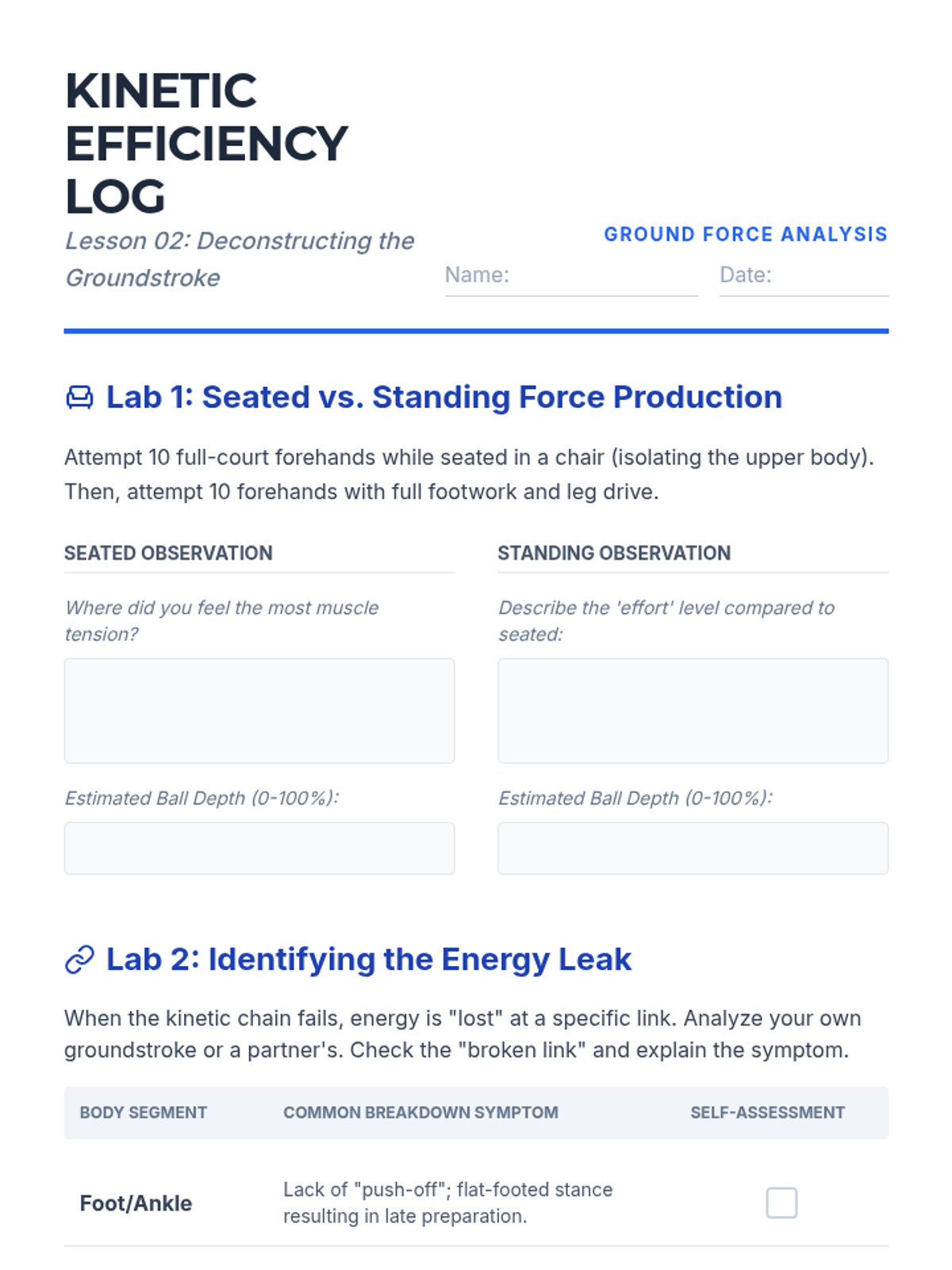
Deconstruct the forehand and backhand swings to emphasize energy transfer from the ground up through the kinetic chain.
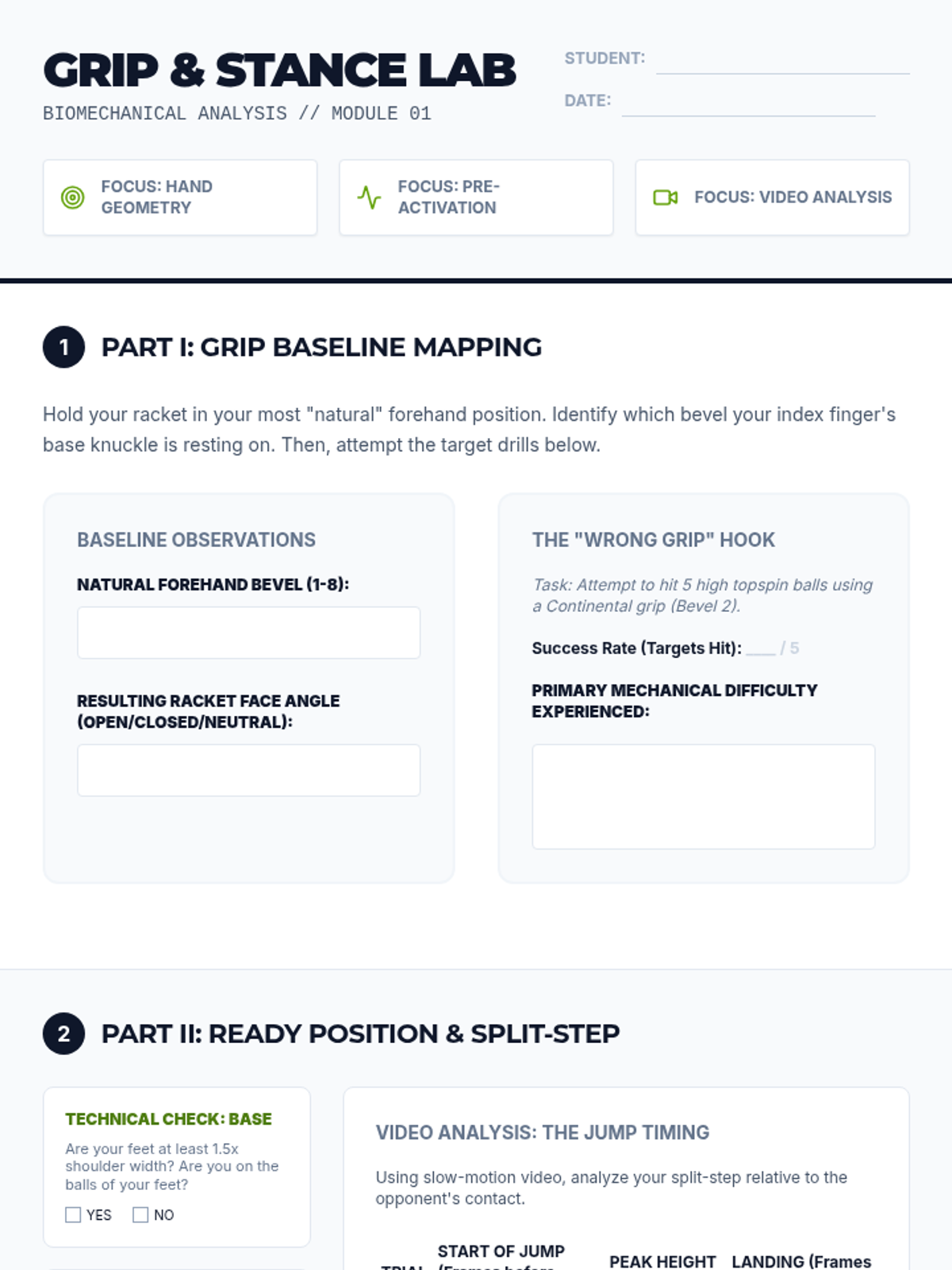
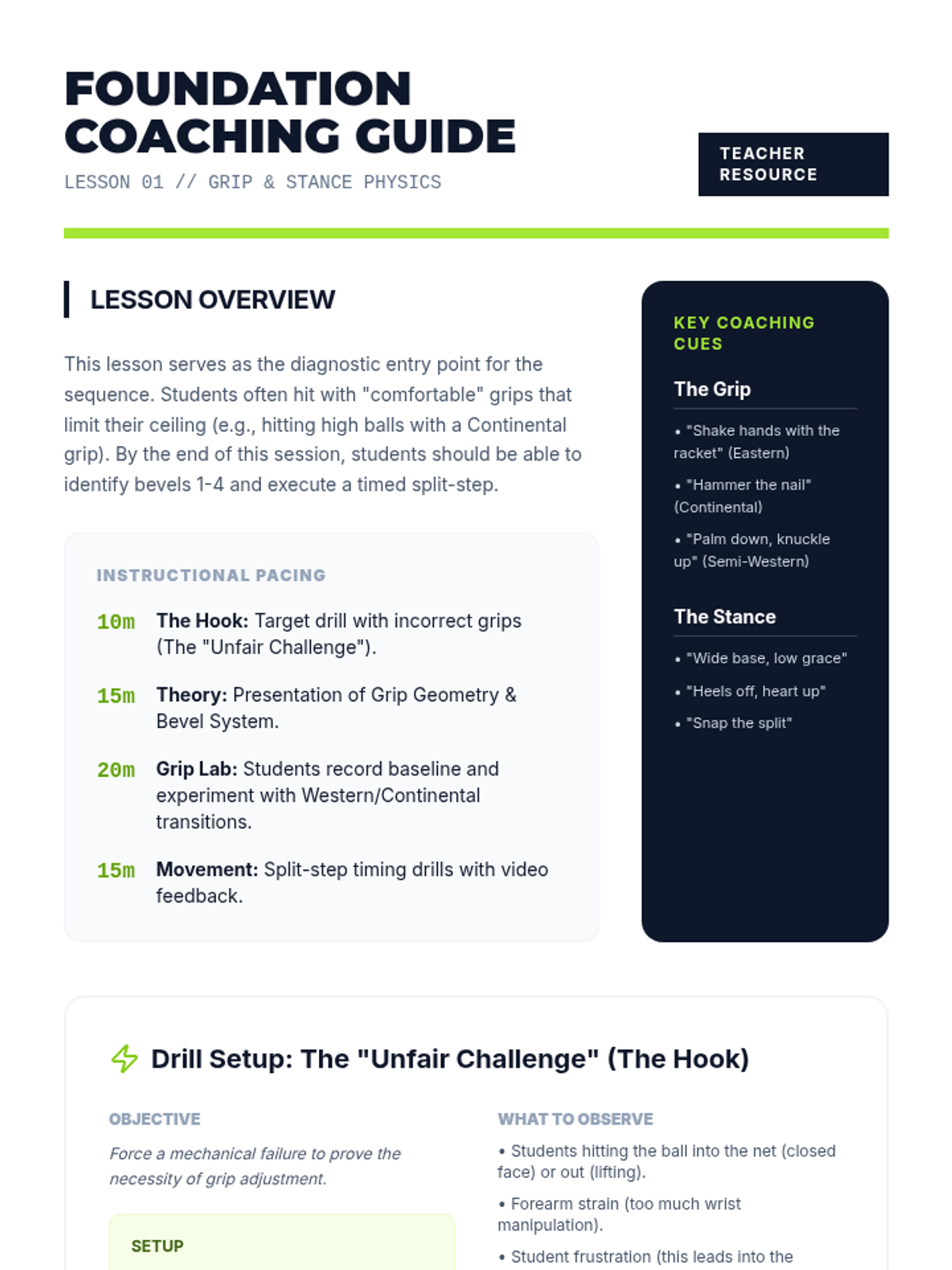
Analyze the biomechanical implications of various grips and establish an active athletic foundation through the split-step and ready position.
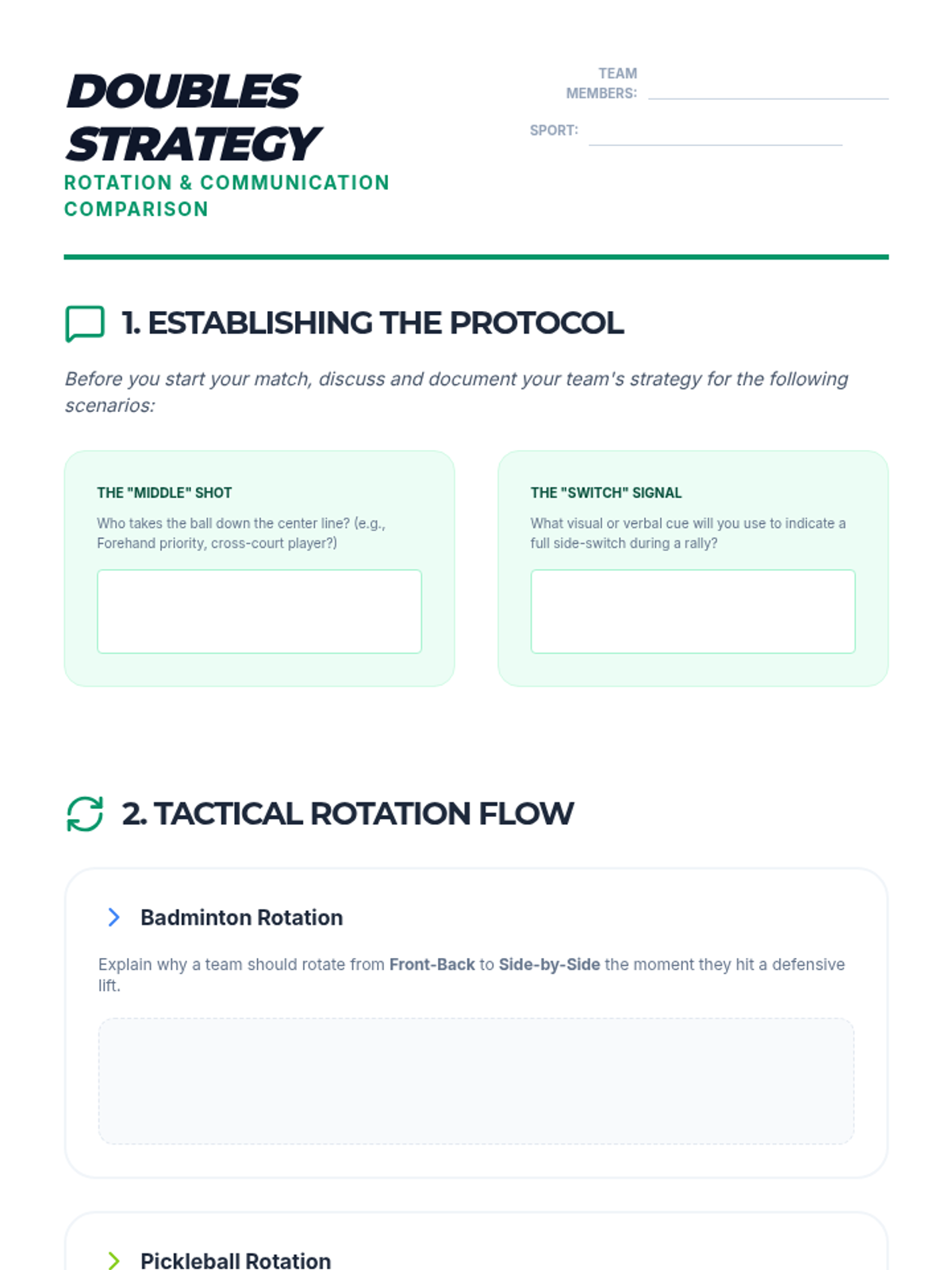
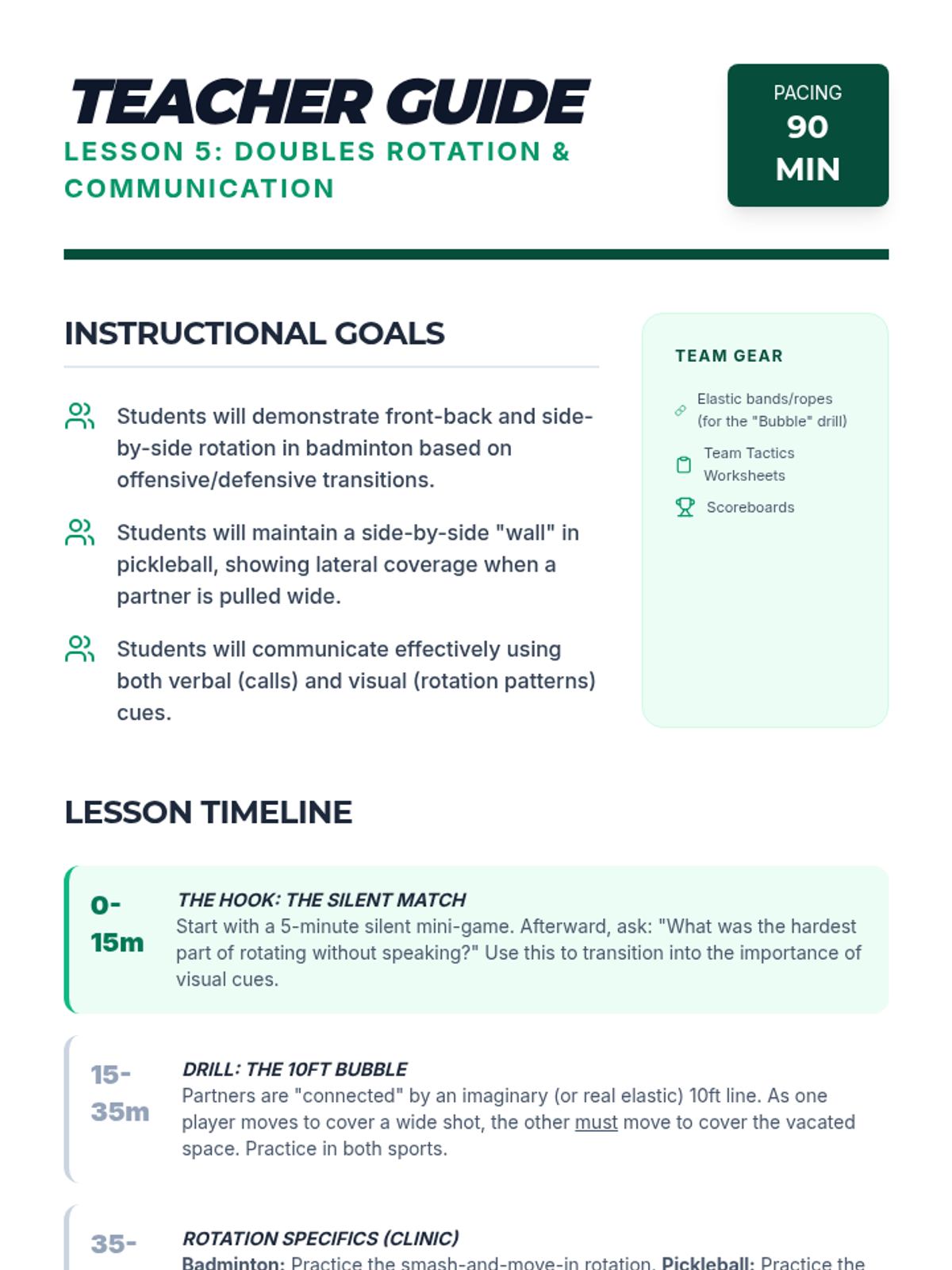
The sequence concludes with advanced doubles tactics, contrasting the front-back formation often used in badminton attacks with the side-by-side wall of pickleball. Students practice communicating switches and coverage areas in live play.
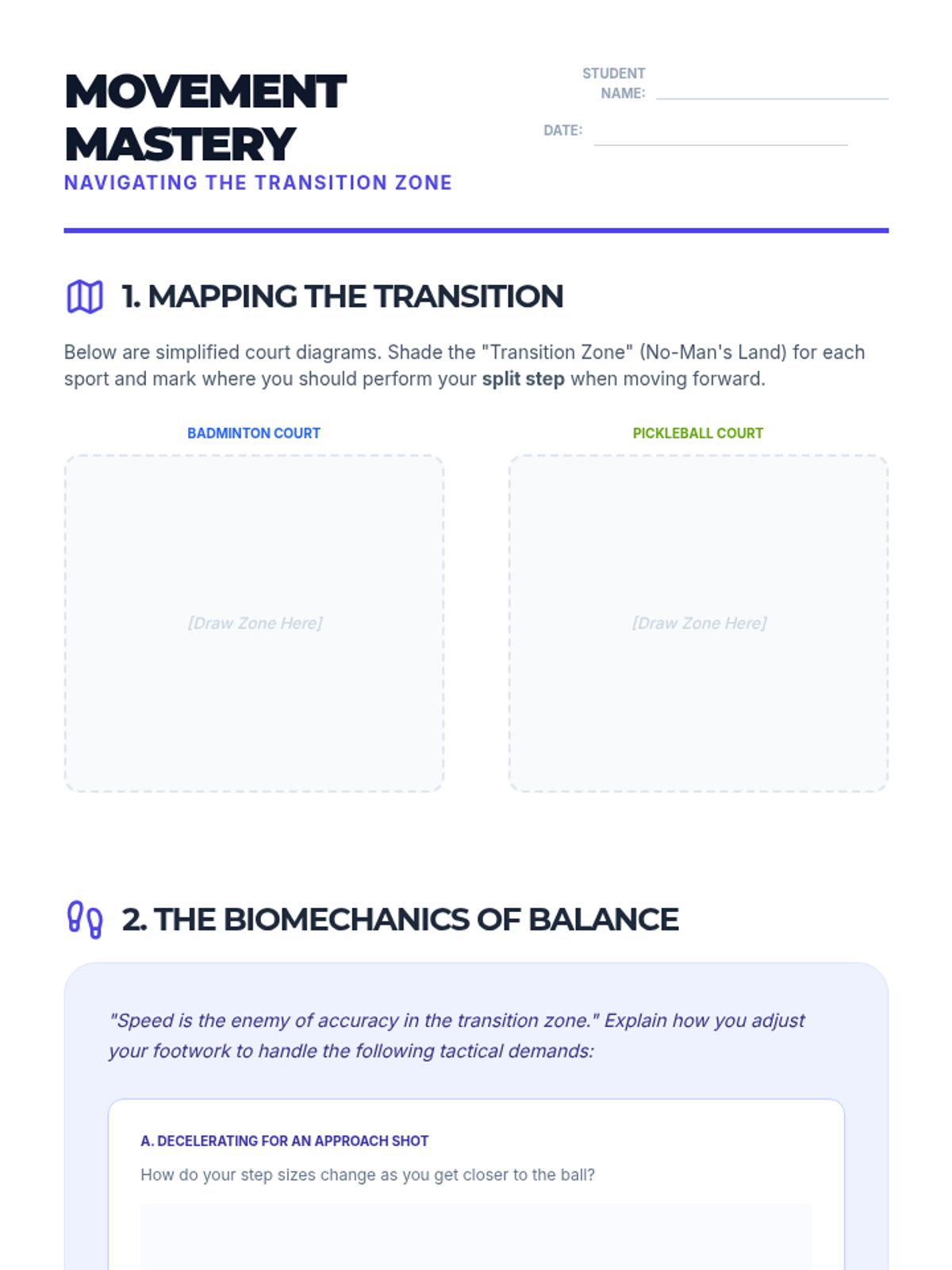
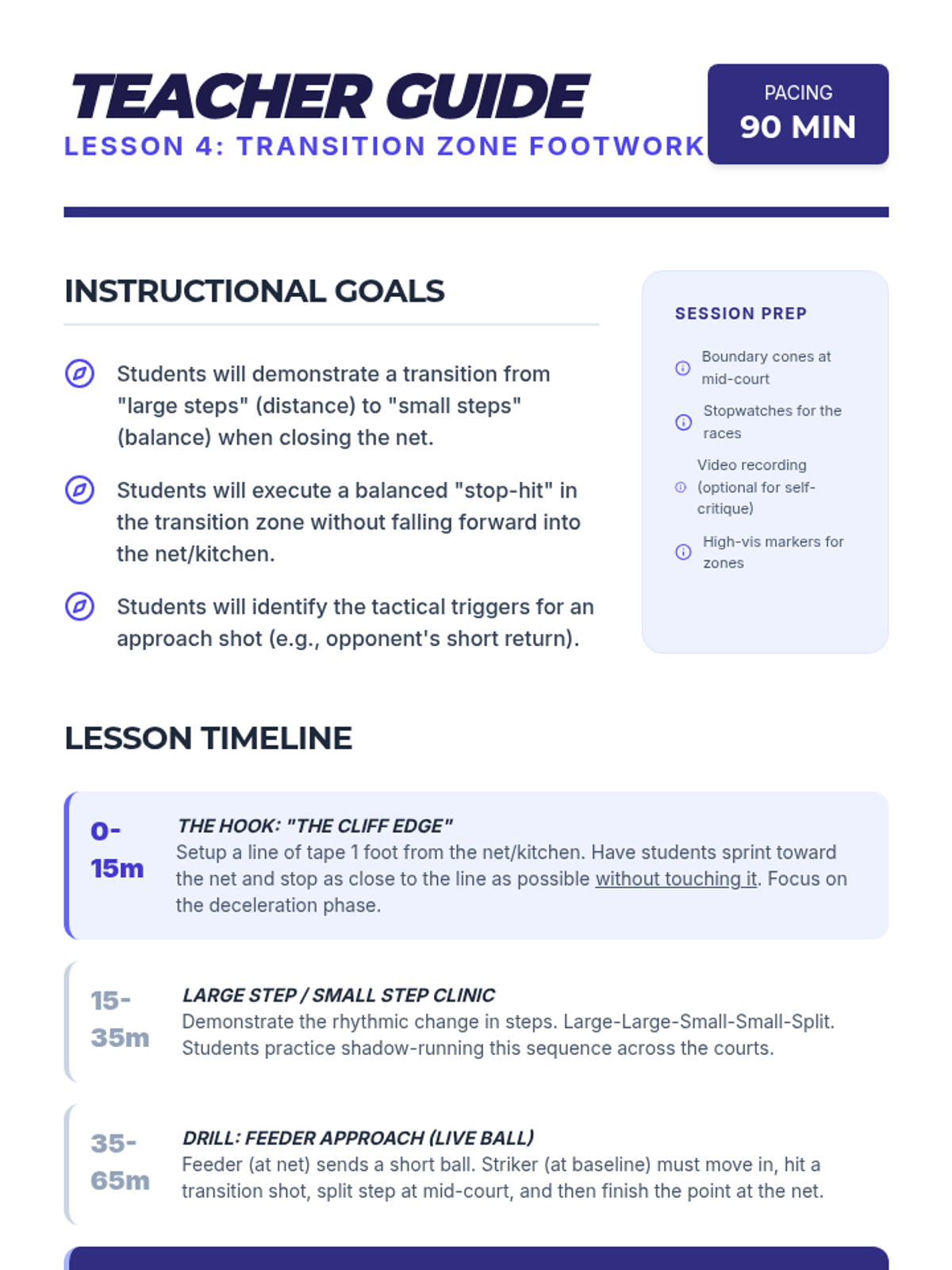
Students analyze the 'no-man's land' in both sports, learning how to move safely from the baseline to the net. The lesson breaks down approach shots and the specific footwork needed to close the gap without being lobbed or passed.
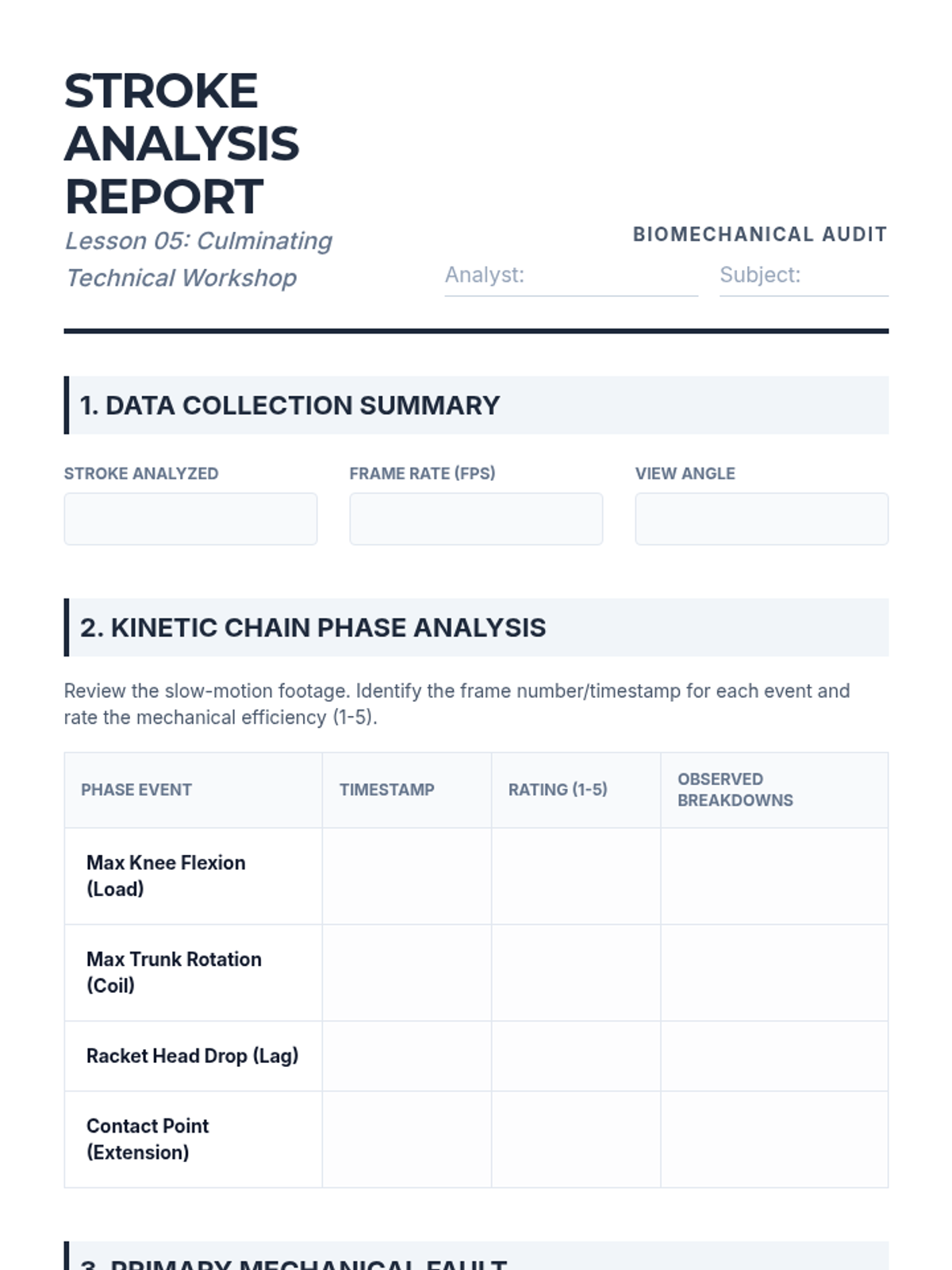
In this culminating workshop, students record each other's strokes and use analysis software to identify breaks in the kinetic chain. They apply corrective feedback in real-time, bridging the gap between theoretical biomechanics and physical execution.
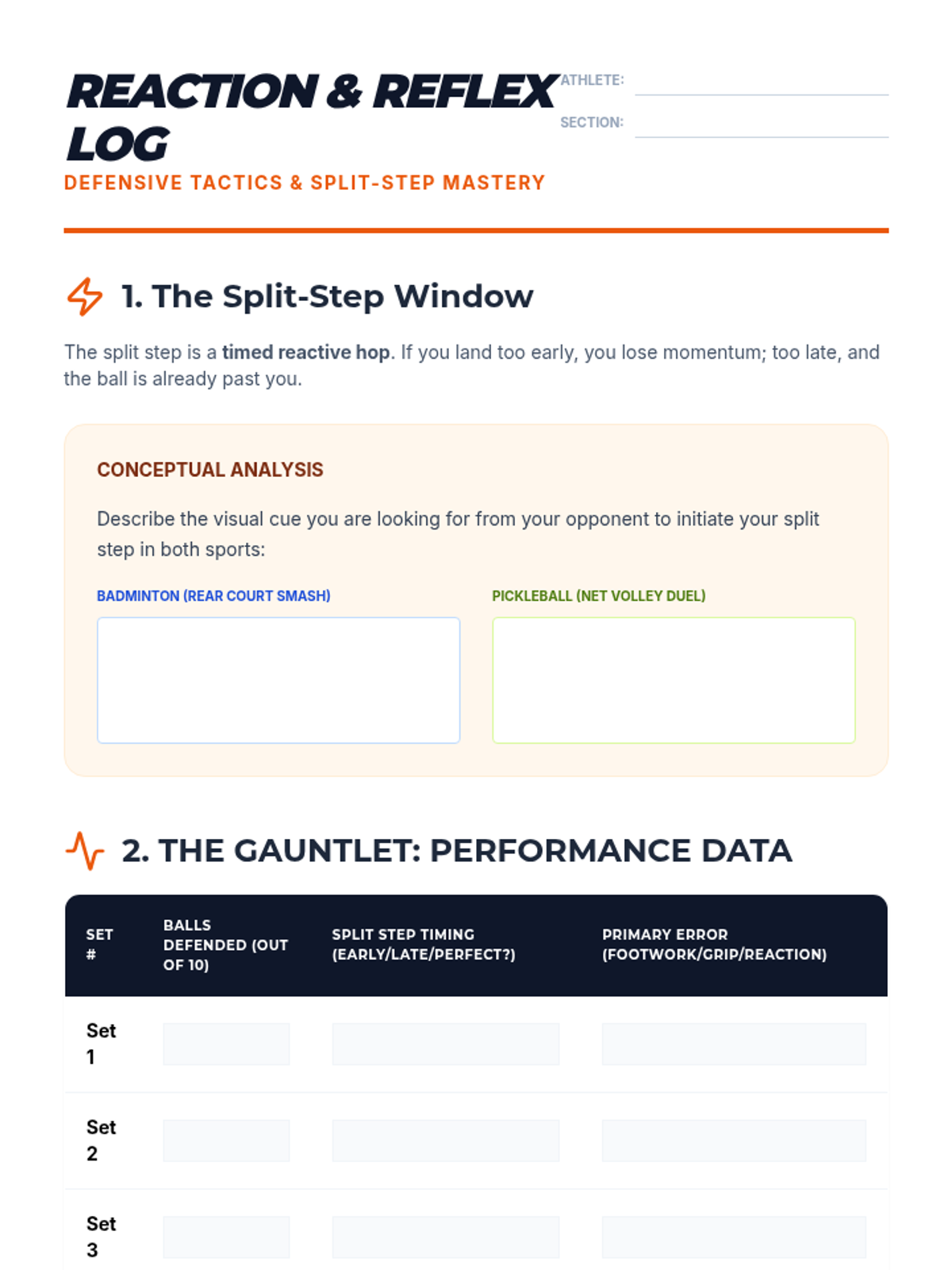
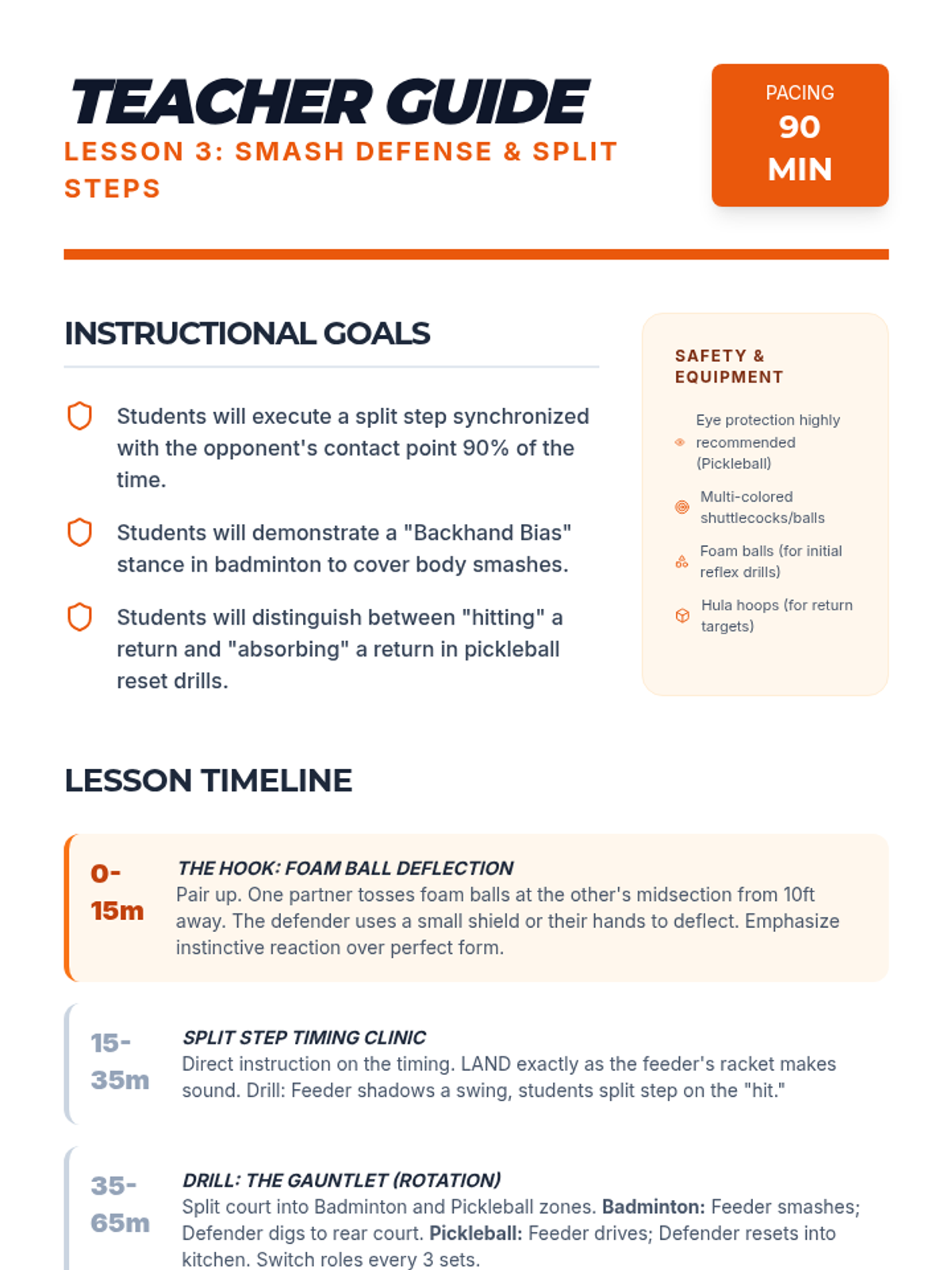
This lesson focuses on defensive transitions, specifically the split step required right before an opponent contacts the ball. Drills cover digging smashes in badminton and resetting hard volleys in pickleball.
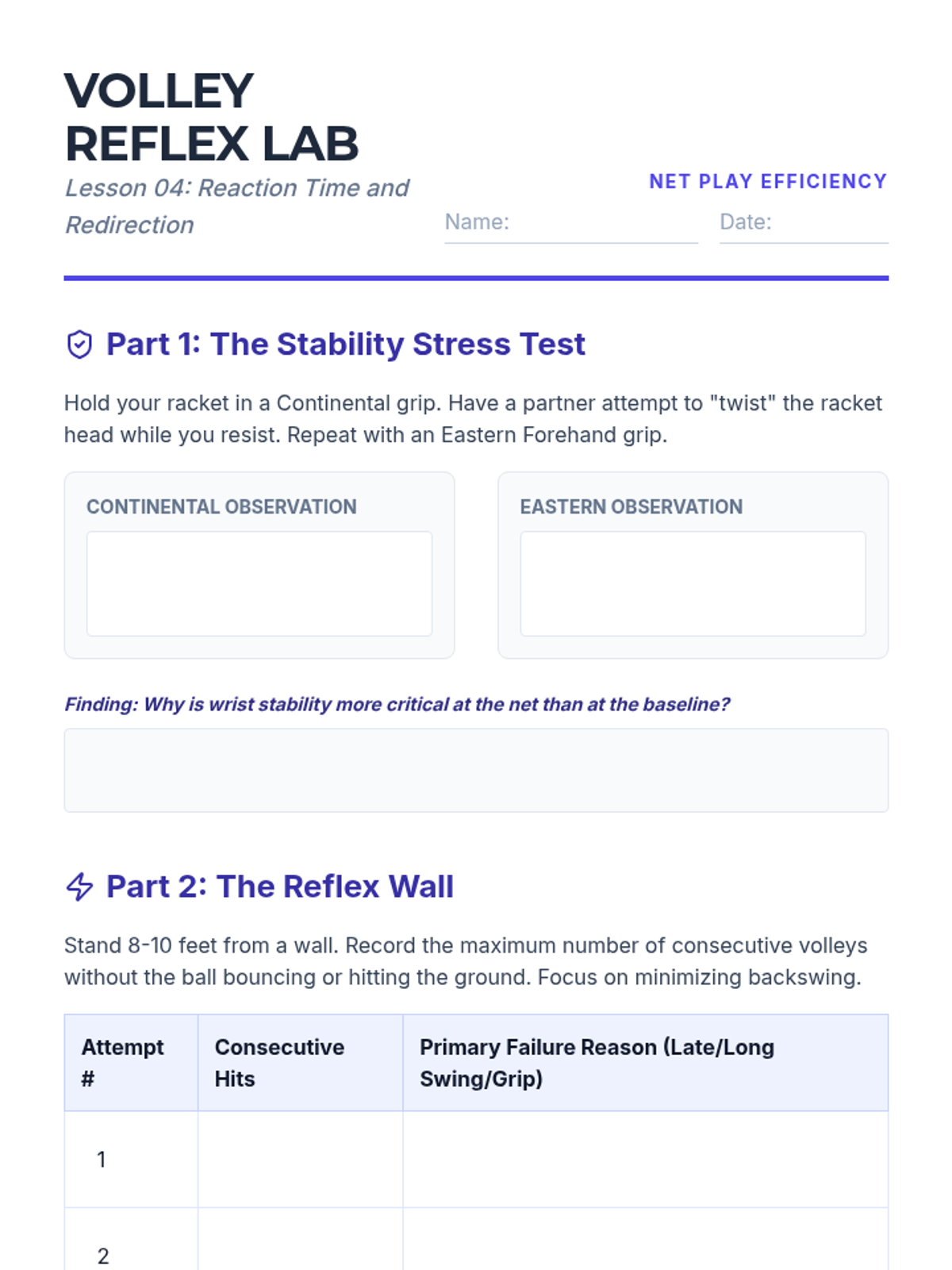
Focusing on the Continental grip, students learn the punch-block technique required for net play. Drills emphasize minimizing backswing and utilizing incoming pace, crucial for transitioning from baseline to net.
Students dissect the complex motion of the serve, breaking it down into stance, toss, trophy position, and pronation. The lesson emphasizes the difference between flat, slice, and kick serves through wrist positioning and toss location.
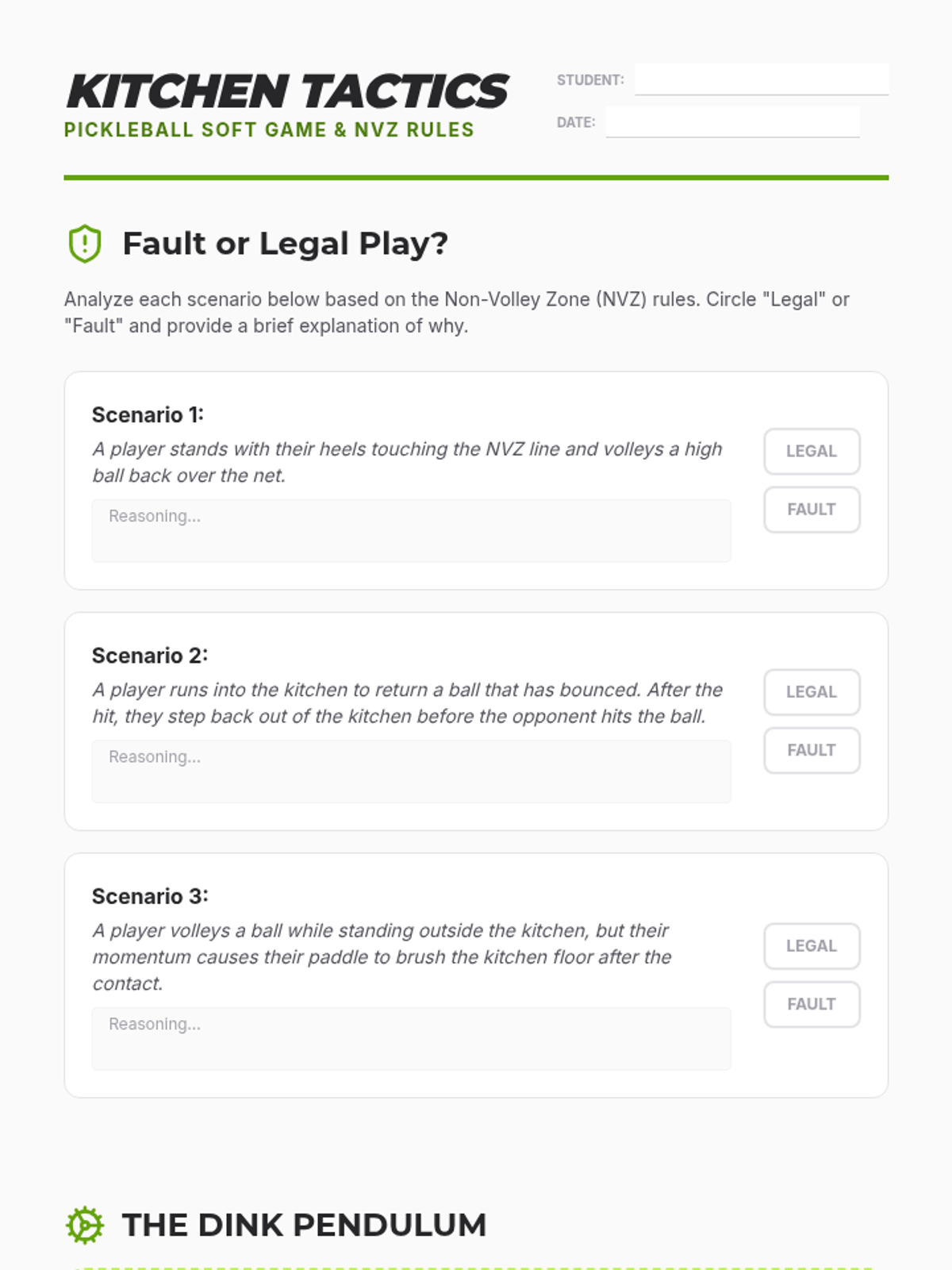
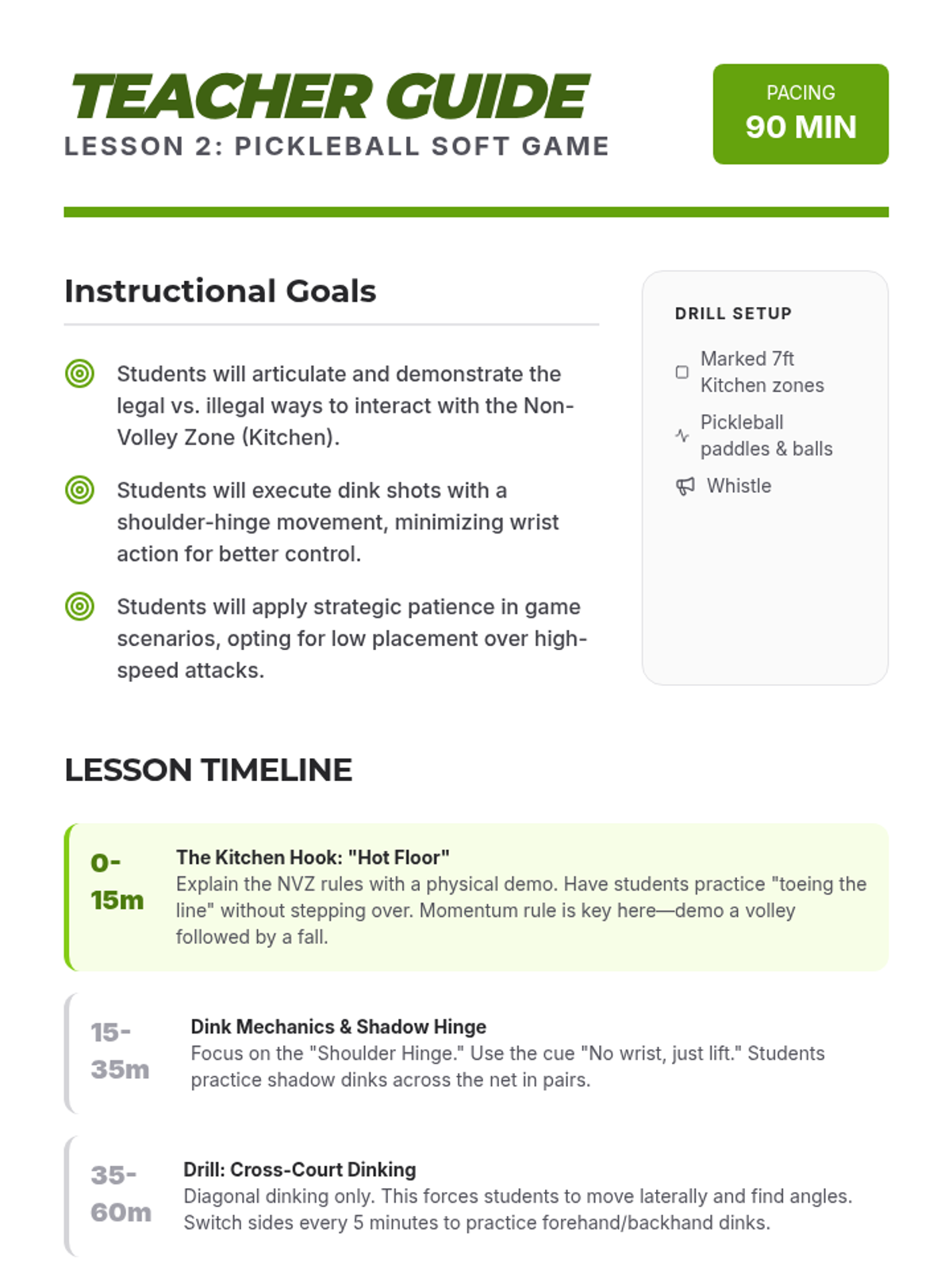
Transitioning to the lower net, students master the 'soft game' essential to pickleball. They practice patience and touch at the Non-Volley Zone (Kitchen), learning to neutralize hard hitters with low, unattackable shots.
This lesson deconstructs the forehand and backhand, focusing on the transfer of energy from the legs through the core to the racket. Students practice loading phases and rotational force application to generate pace without excessive arm strain.
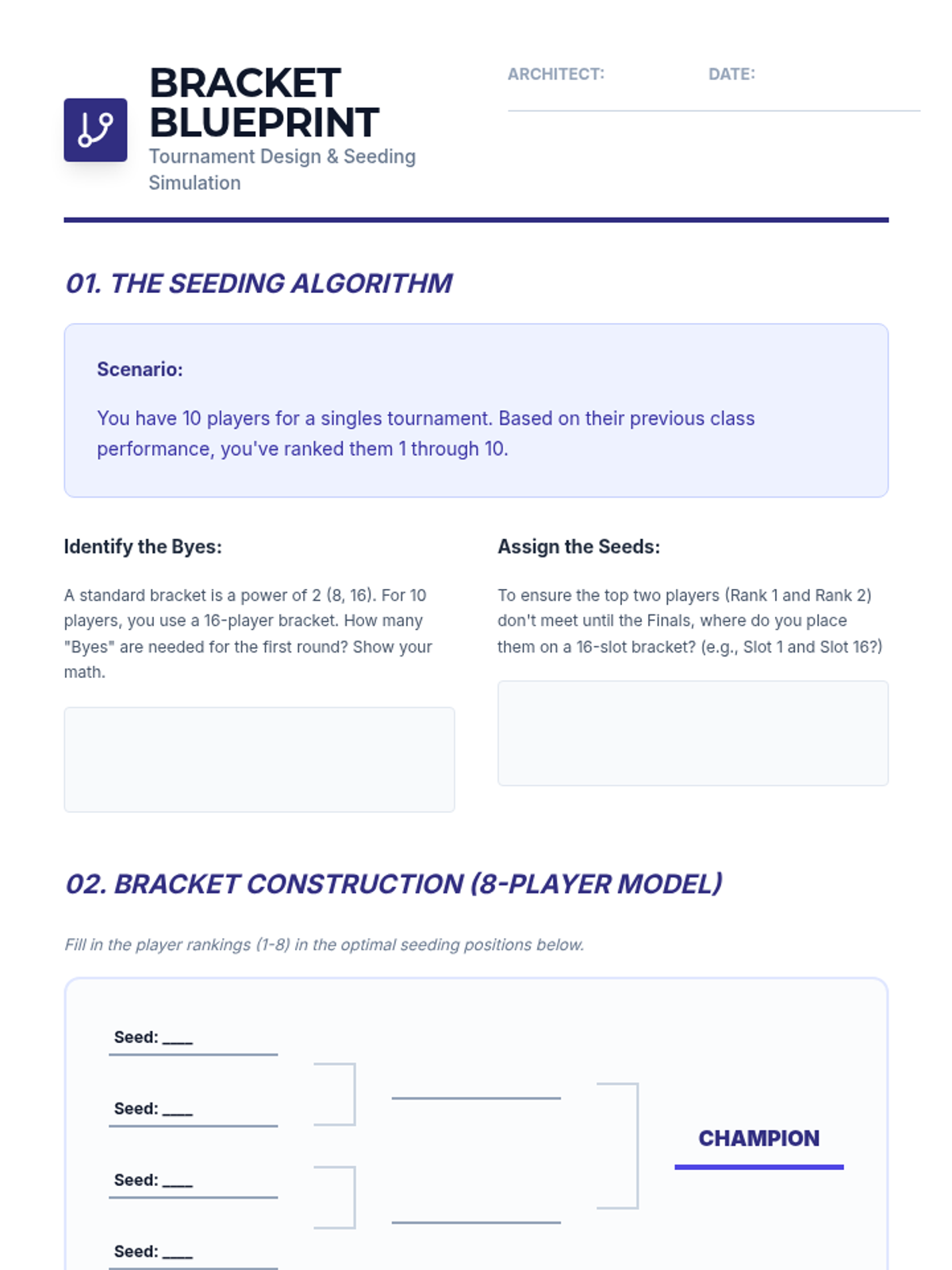
Students learn the logistics of tournament organization, including seeding, bracket structures, and administrative duties for running a successful competition.