Principles of muscular strength, endurance, and cardiovascular conditioning. Develops skills for setting personal fitness goals while incorporating flexibility and stretching techniques for injury prevention.
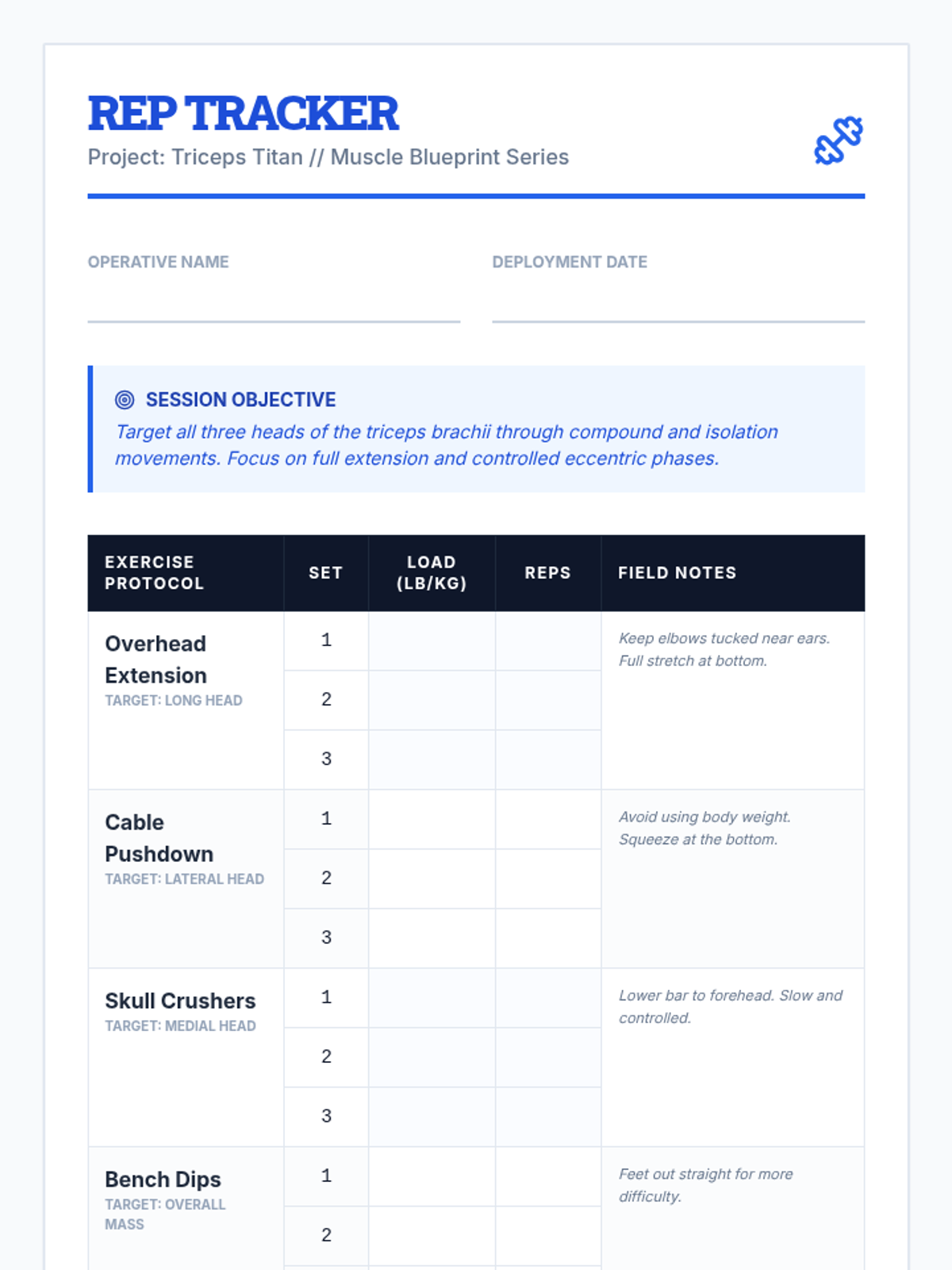
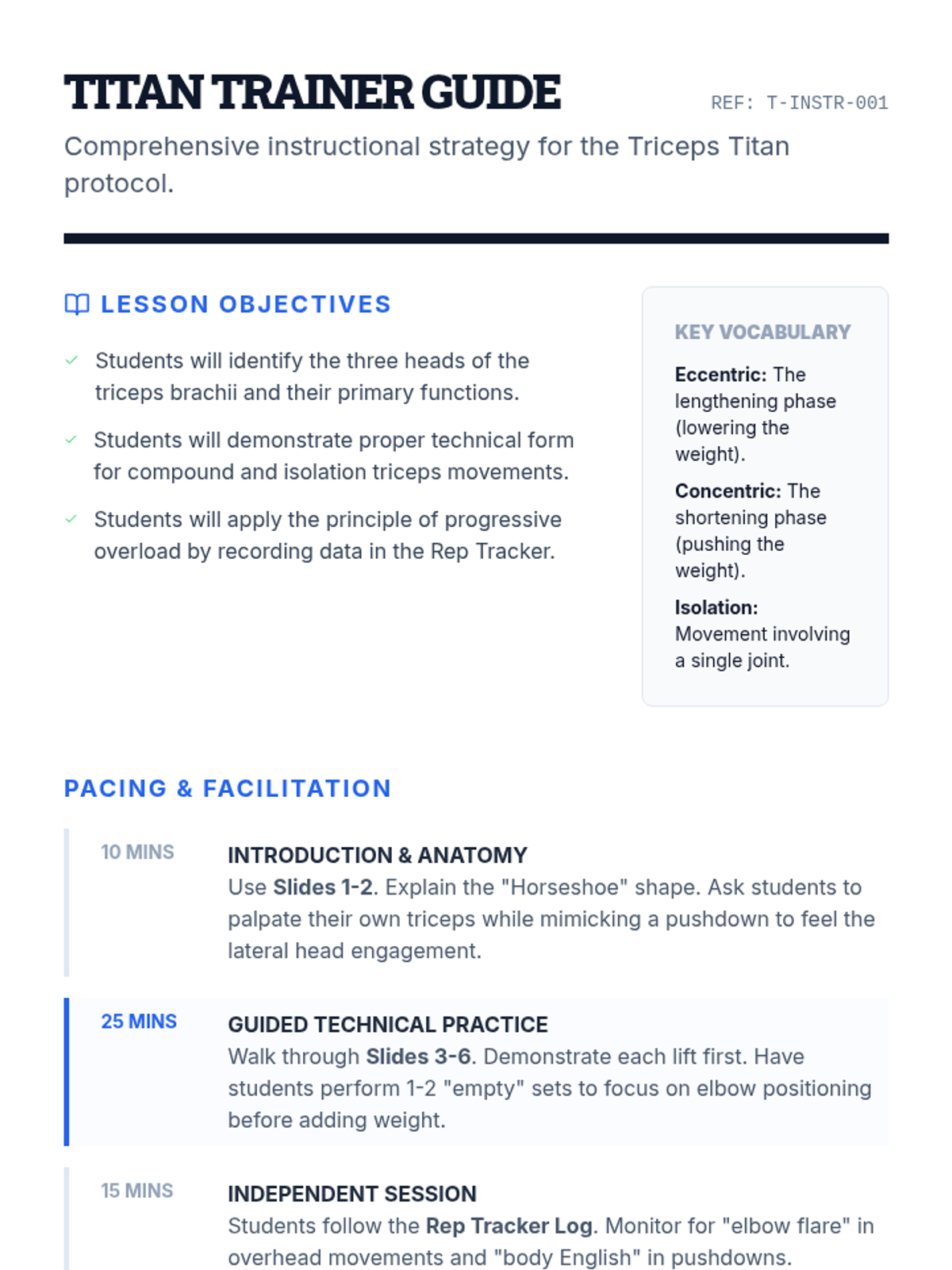
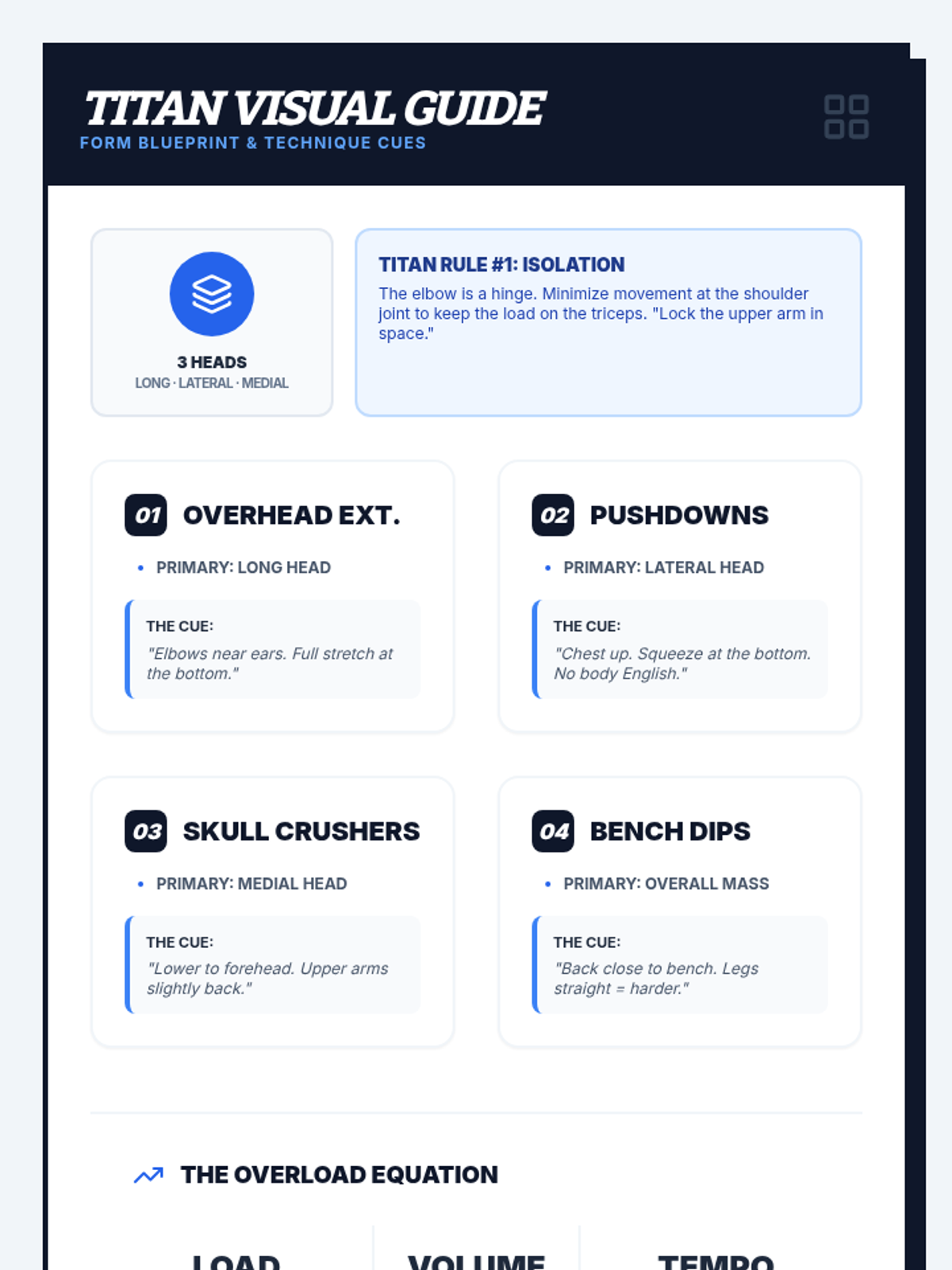
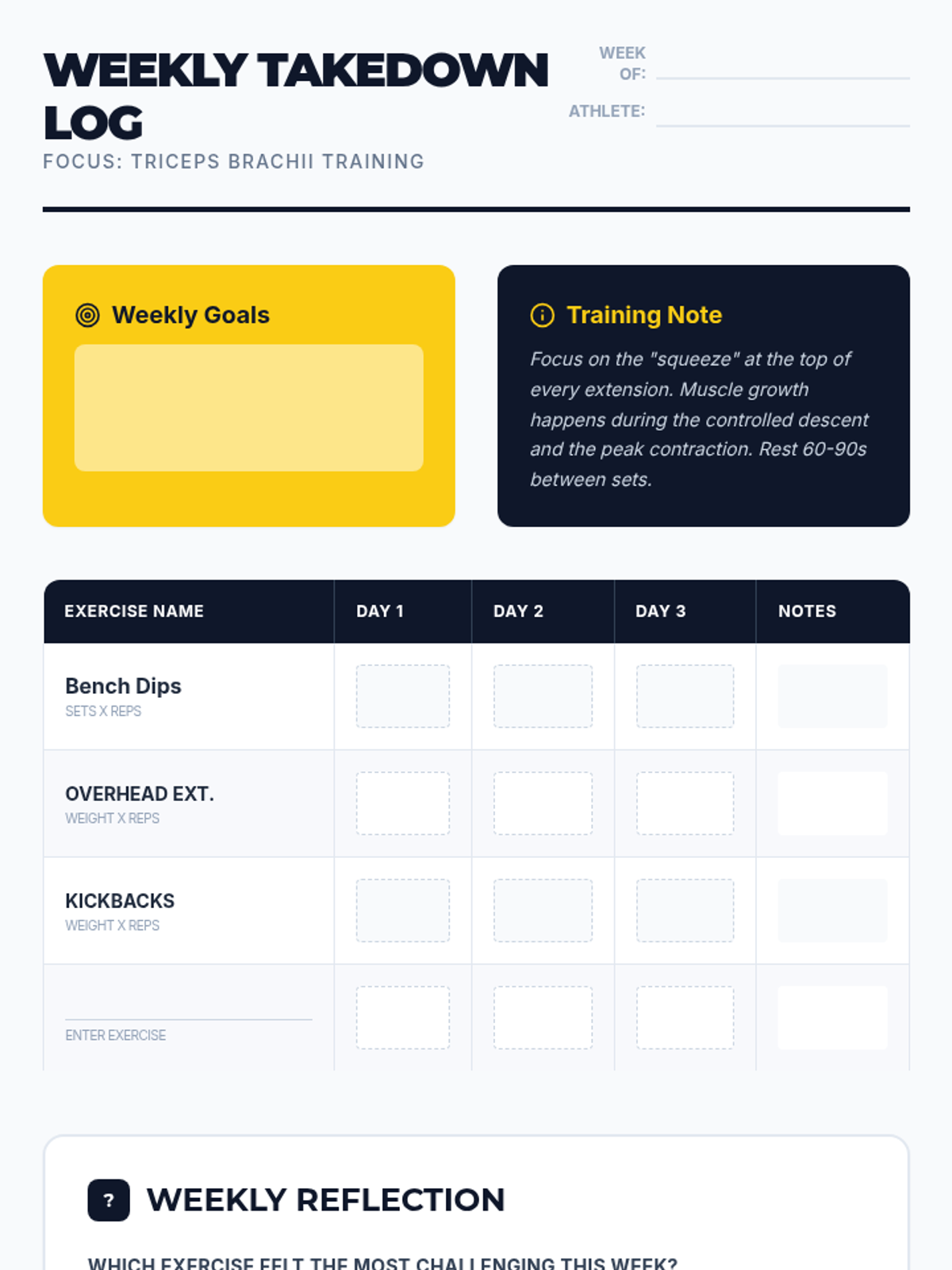
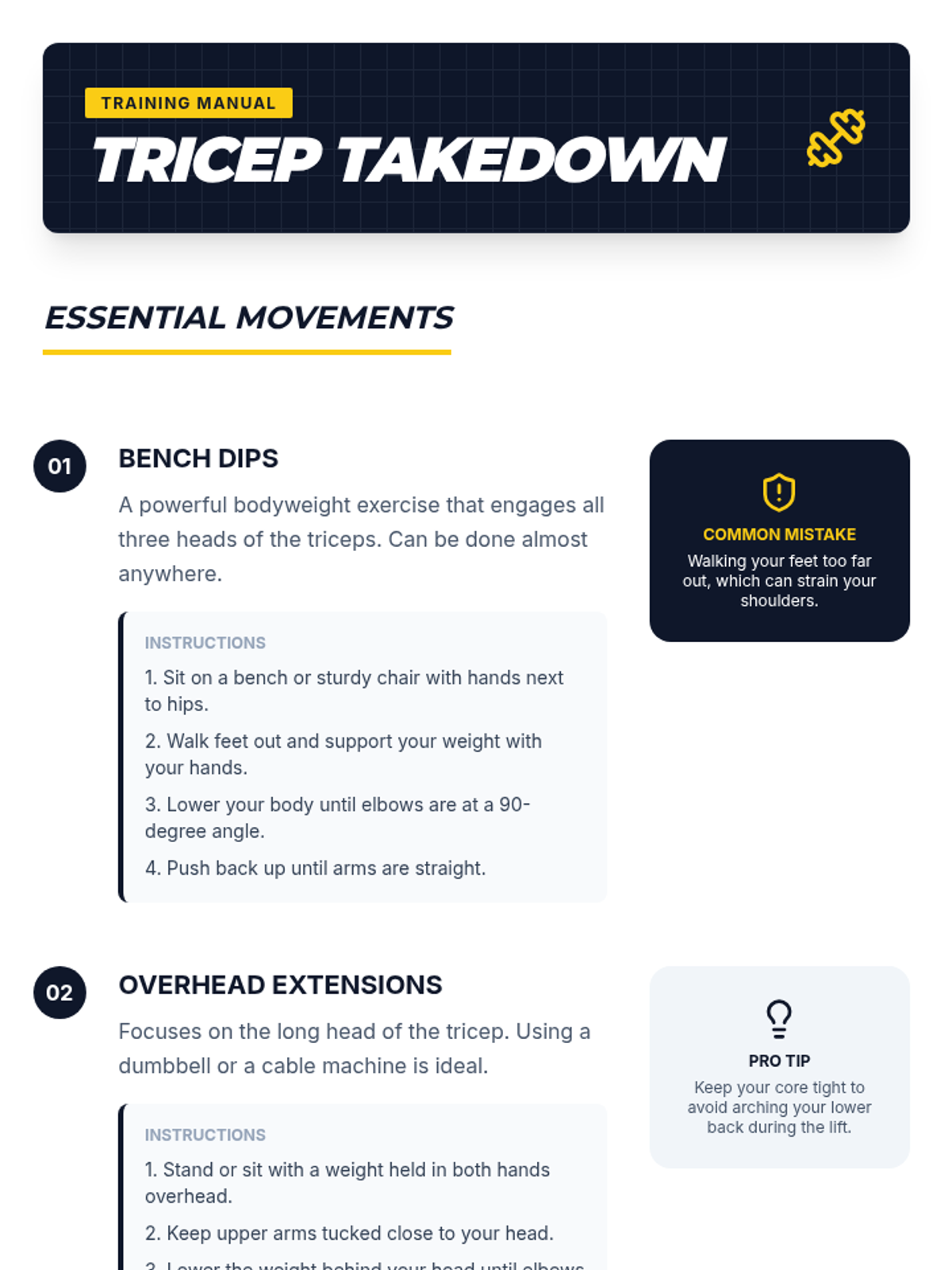
A comprehensive guide and tracking system for building stronger triceps, featuring visual exercise instructions and a progress log.
A focused fitness program designed to strengthen and tone the triceps (the back of the arms) through targeted exercises and progress tracking.
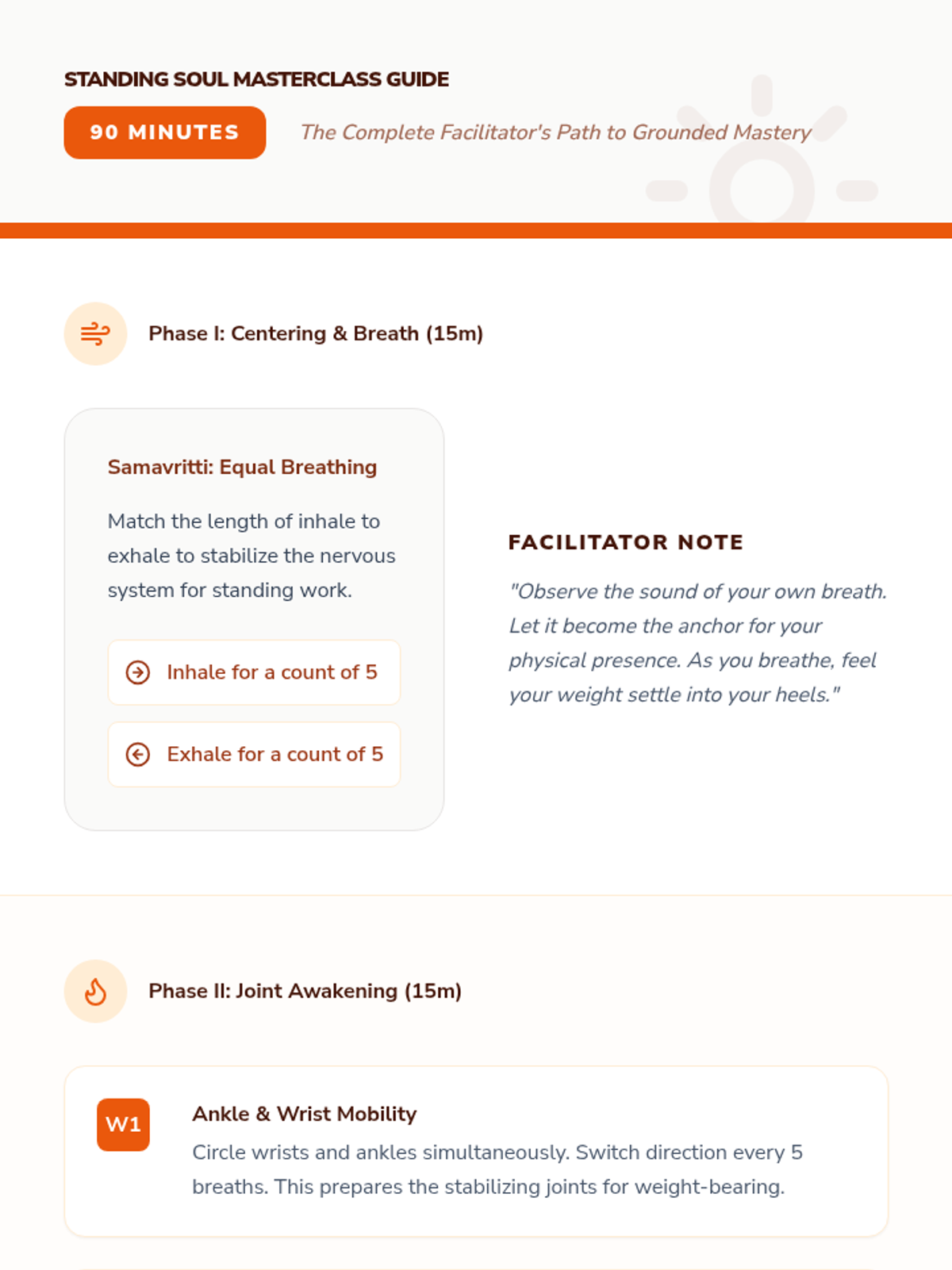
A beginner-friendly 90-minute standing yoga session focused on grounding, balance, and fundamental postures to transition from seated to standing practice.
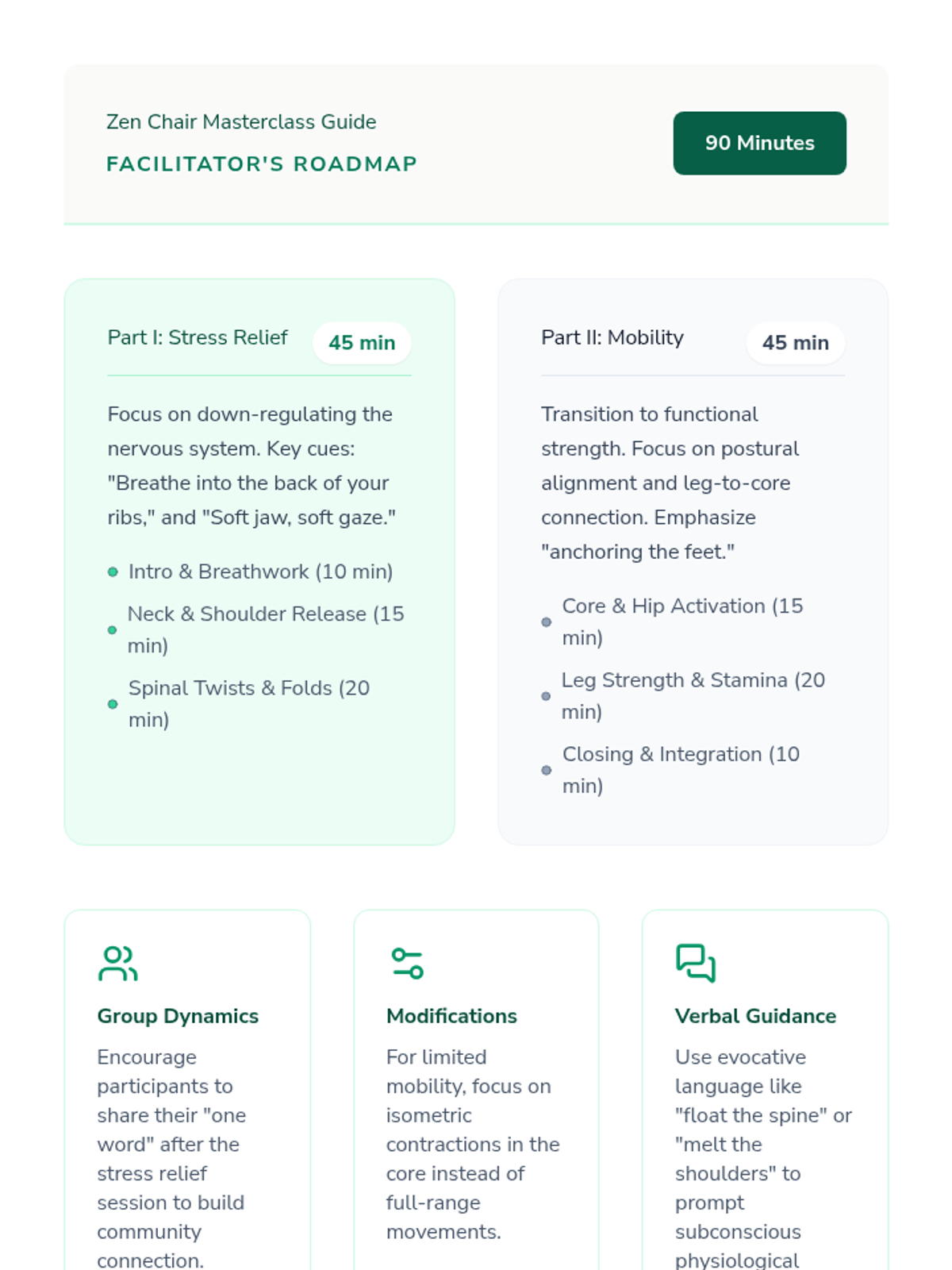
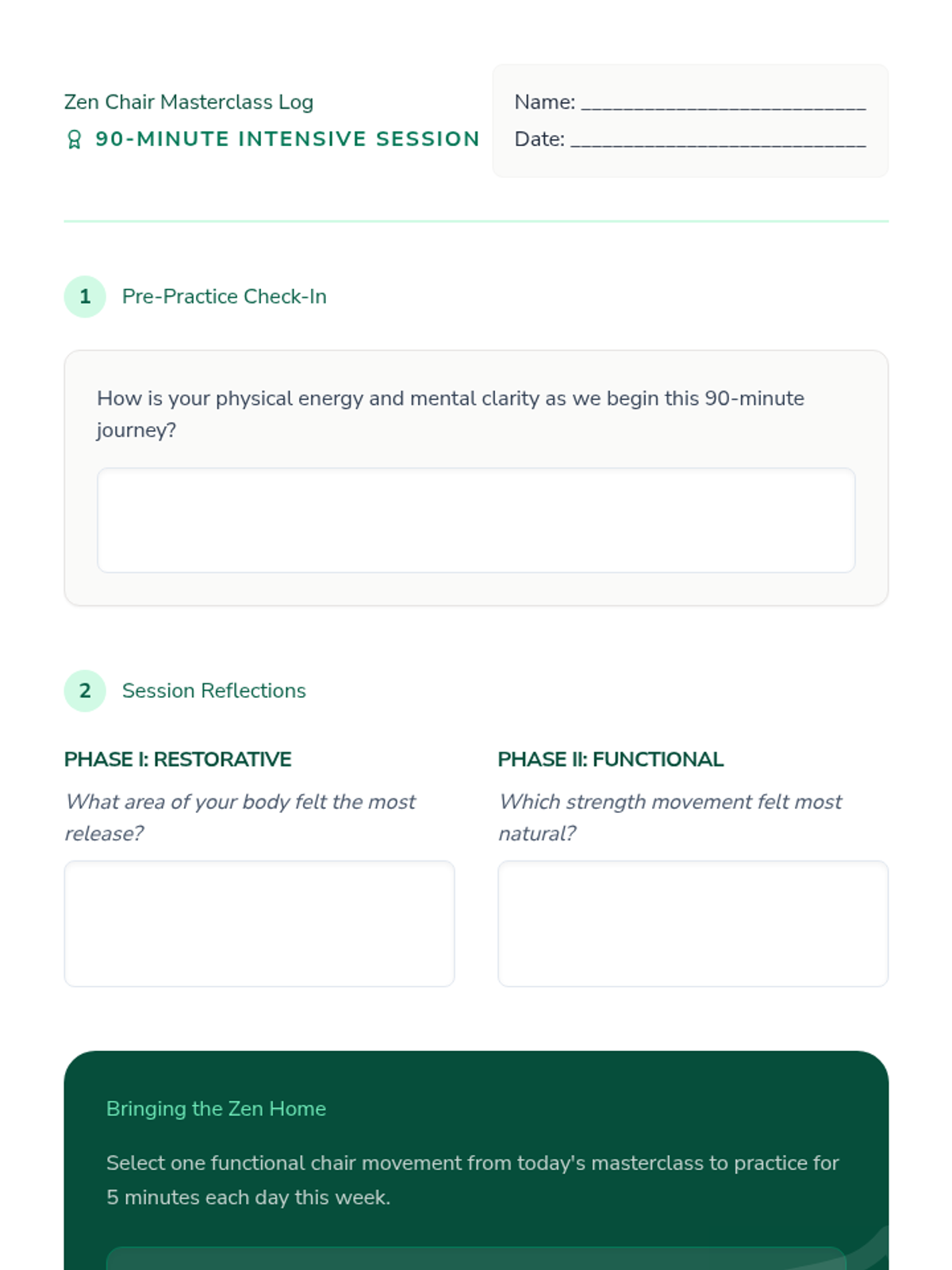
A deep-dive chair yoga experience combining stress relief and functional mobility, featuring two full-length guided practice videos. This 90-minute masterclass is designed to build both mental calm and physical strength.
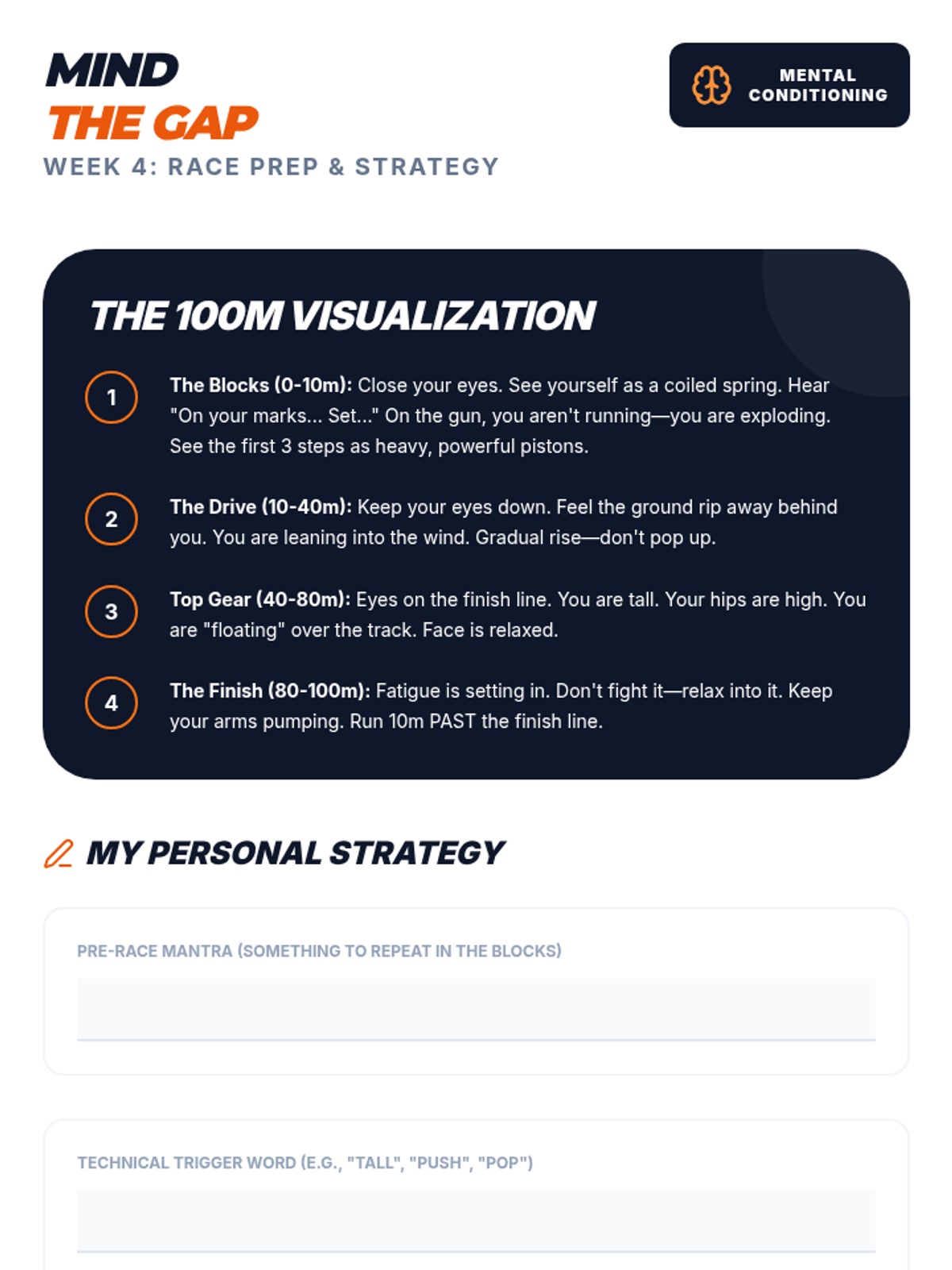
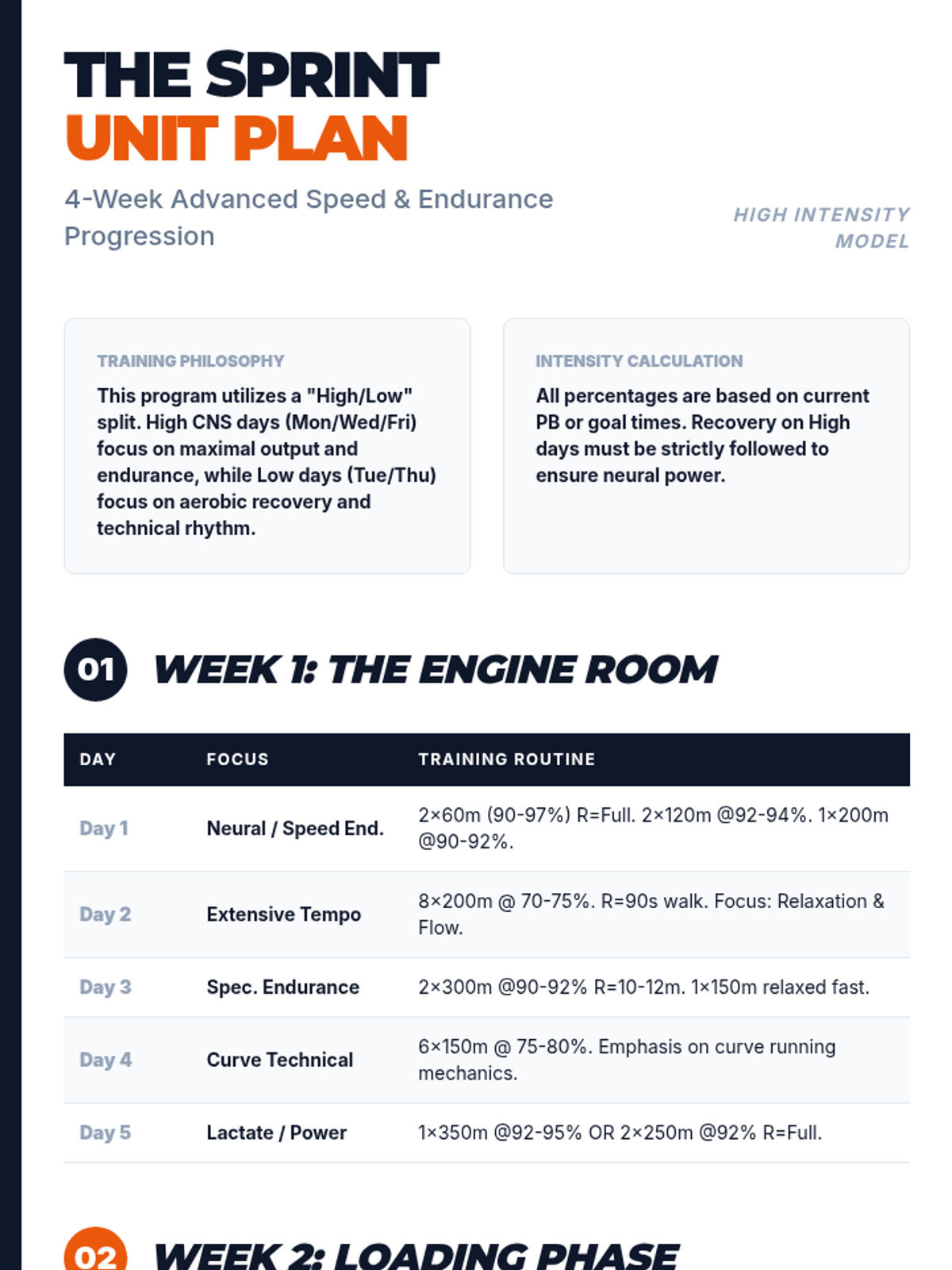
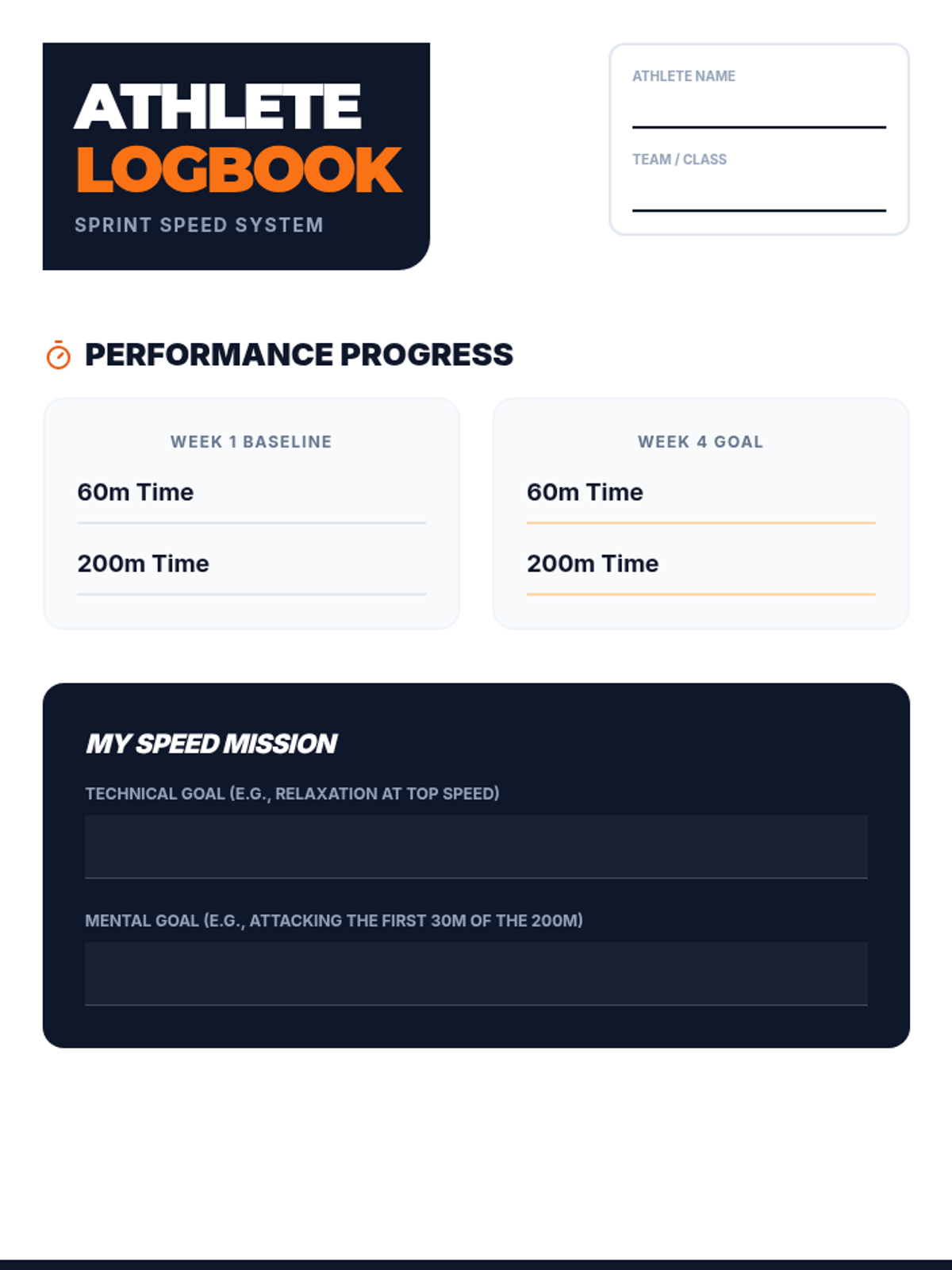
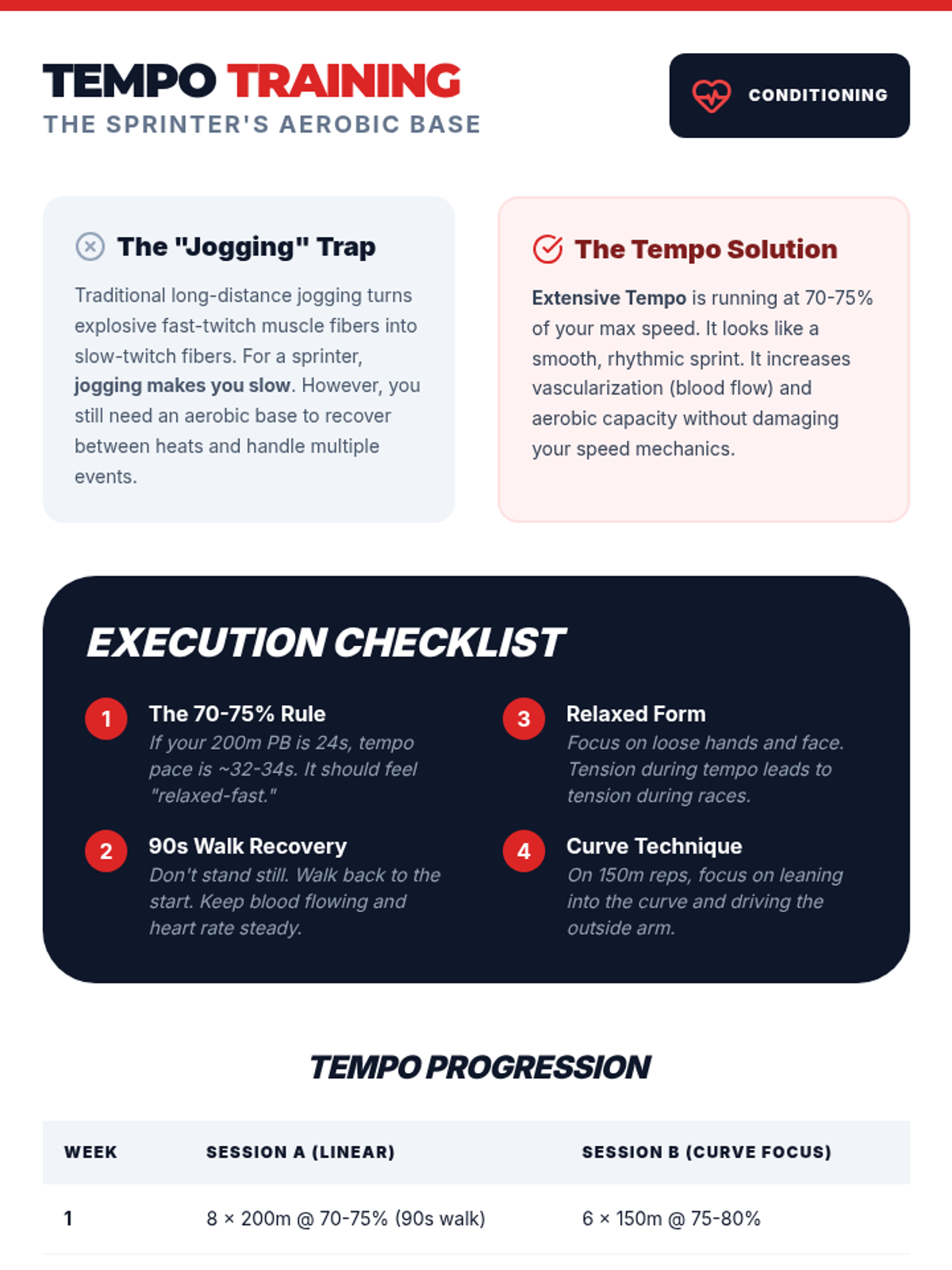
Fine-tuning starts, speed endurance intervals, and preparing for competition-style sprinting.
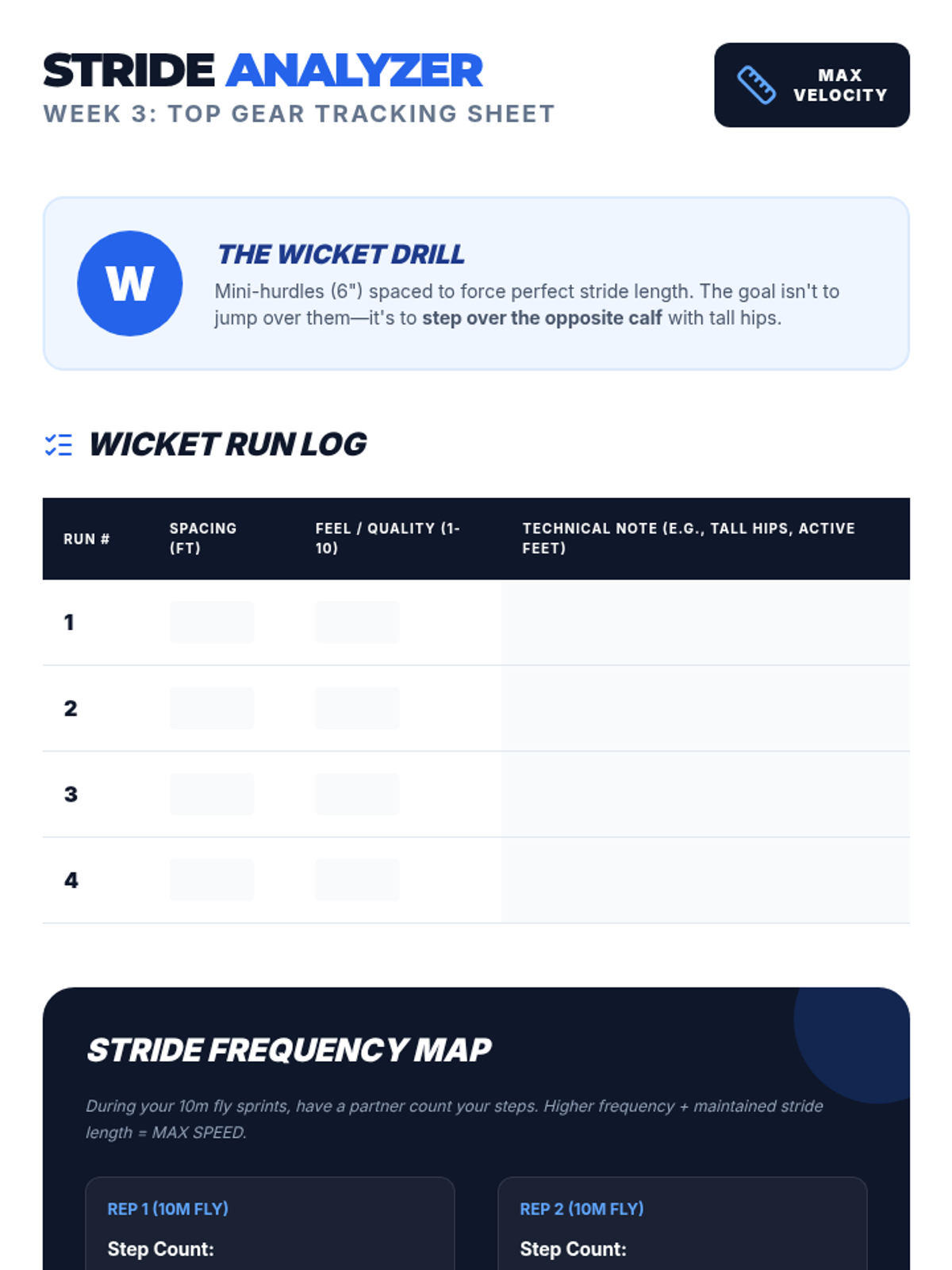
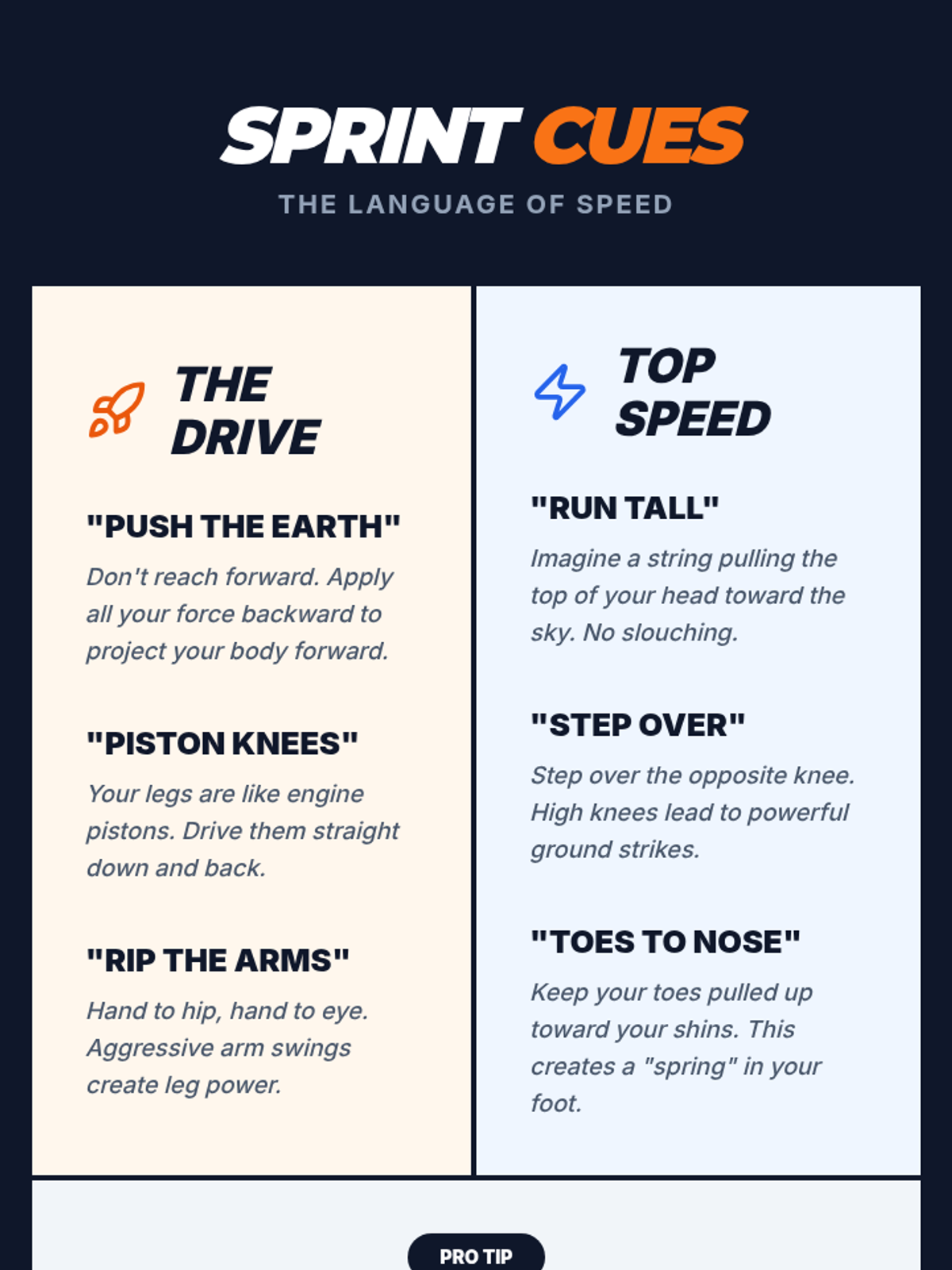
Training upright sprinting mechanics, stride frequency through wicket drills, and maximum velocity maintenance.
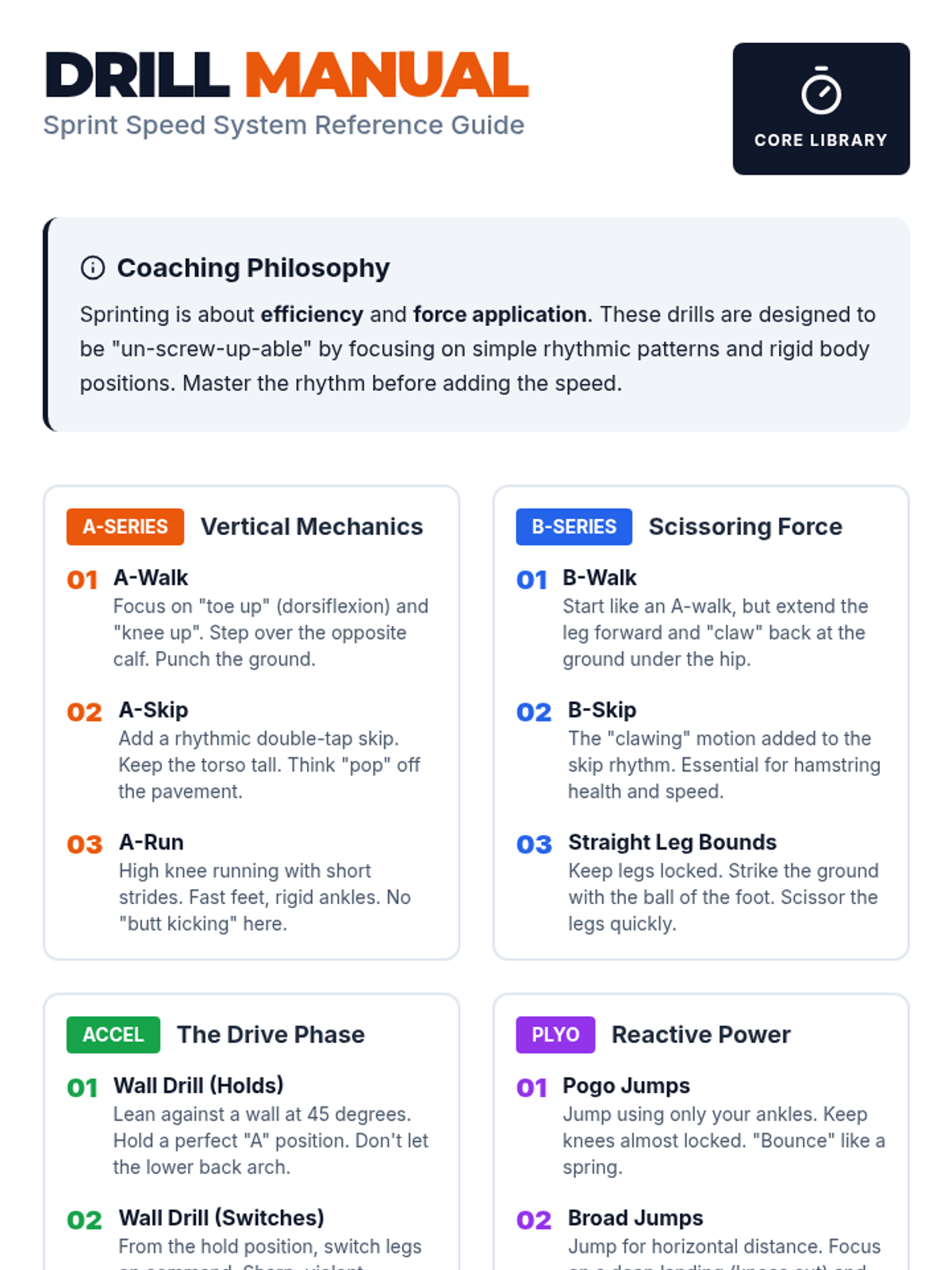
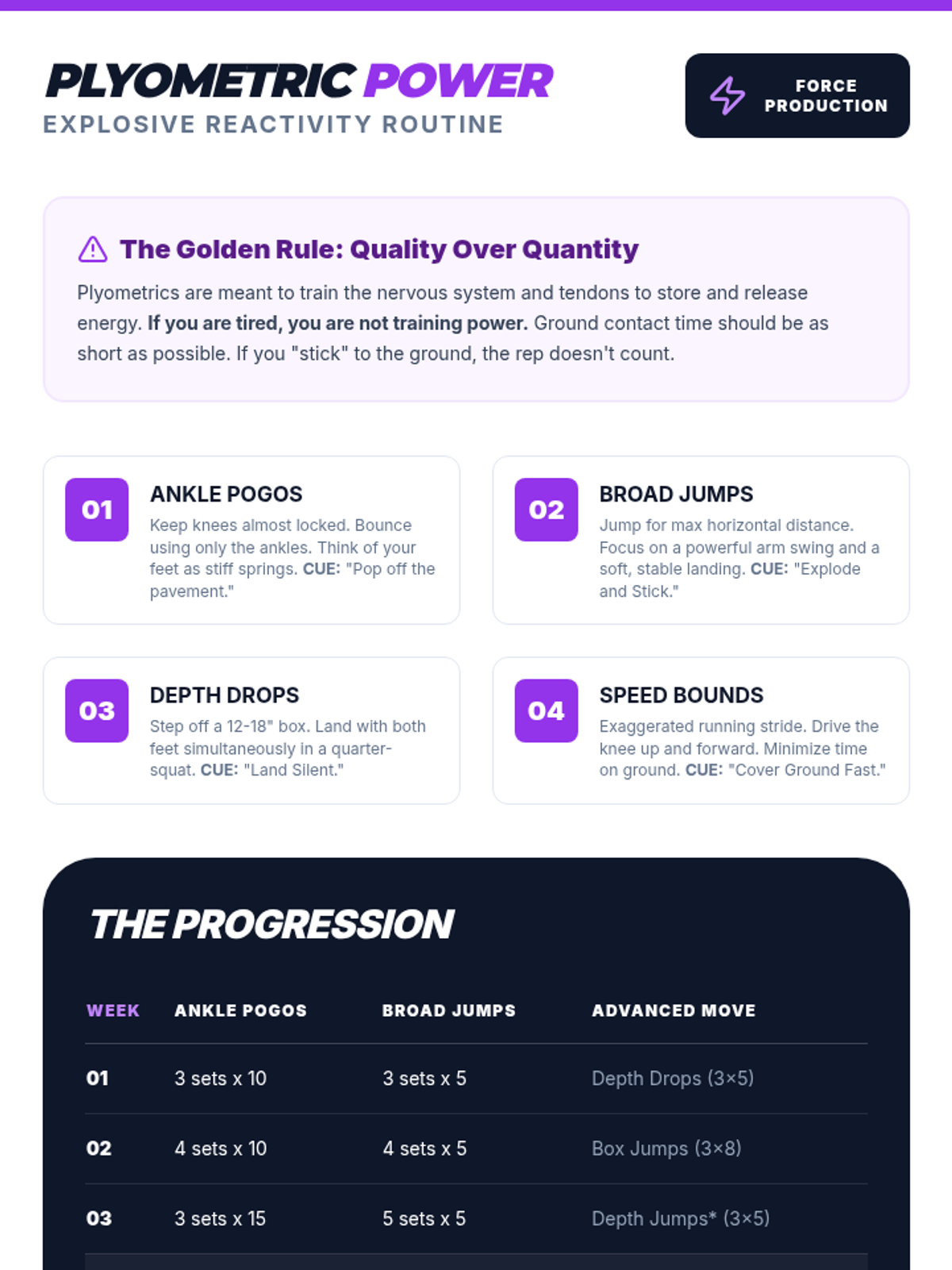
Introducing the drive phase, explosive wall drills, and higher-intensity plyometrics to build raw power.
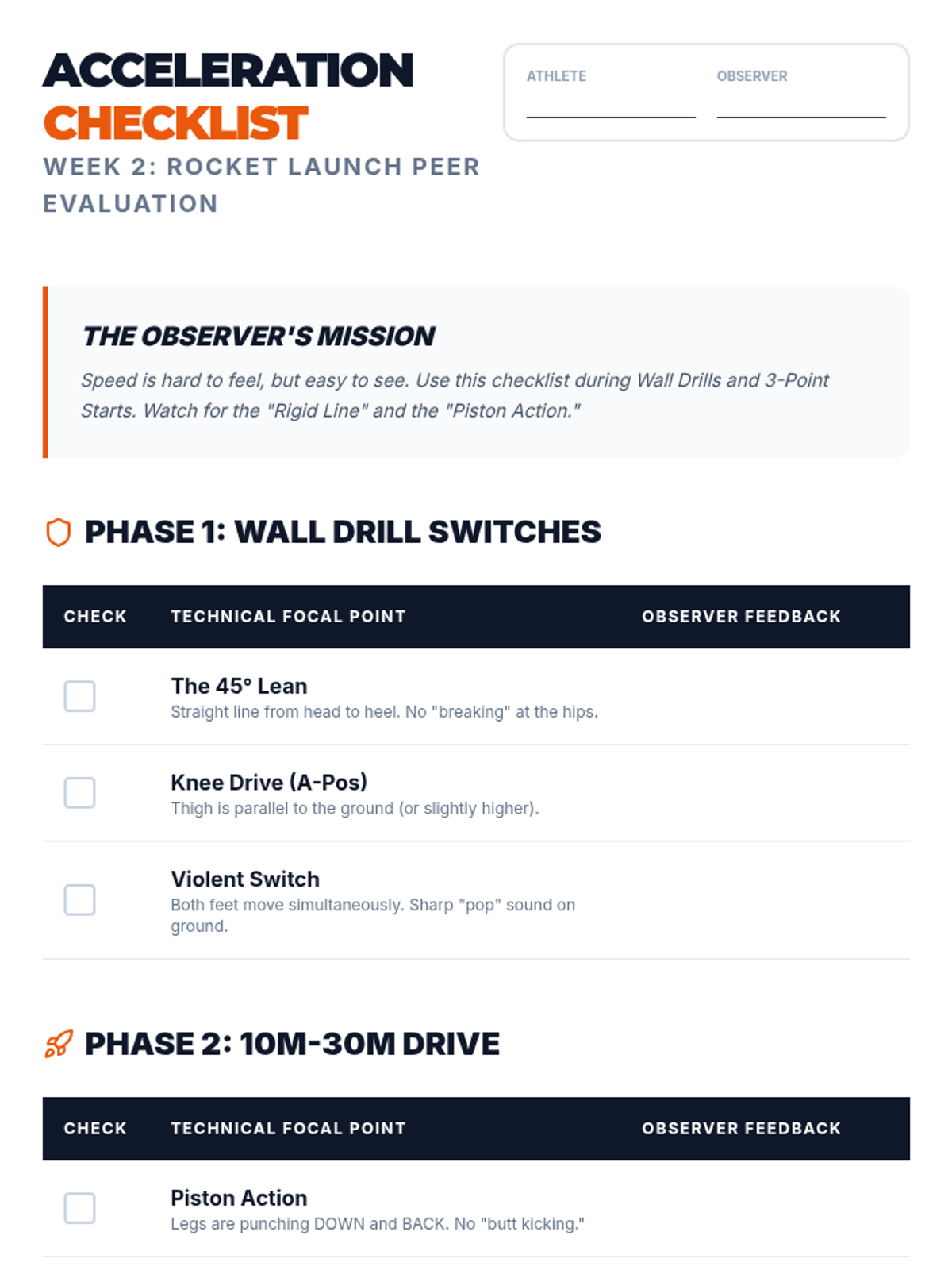
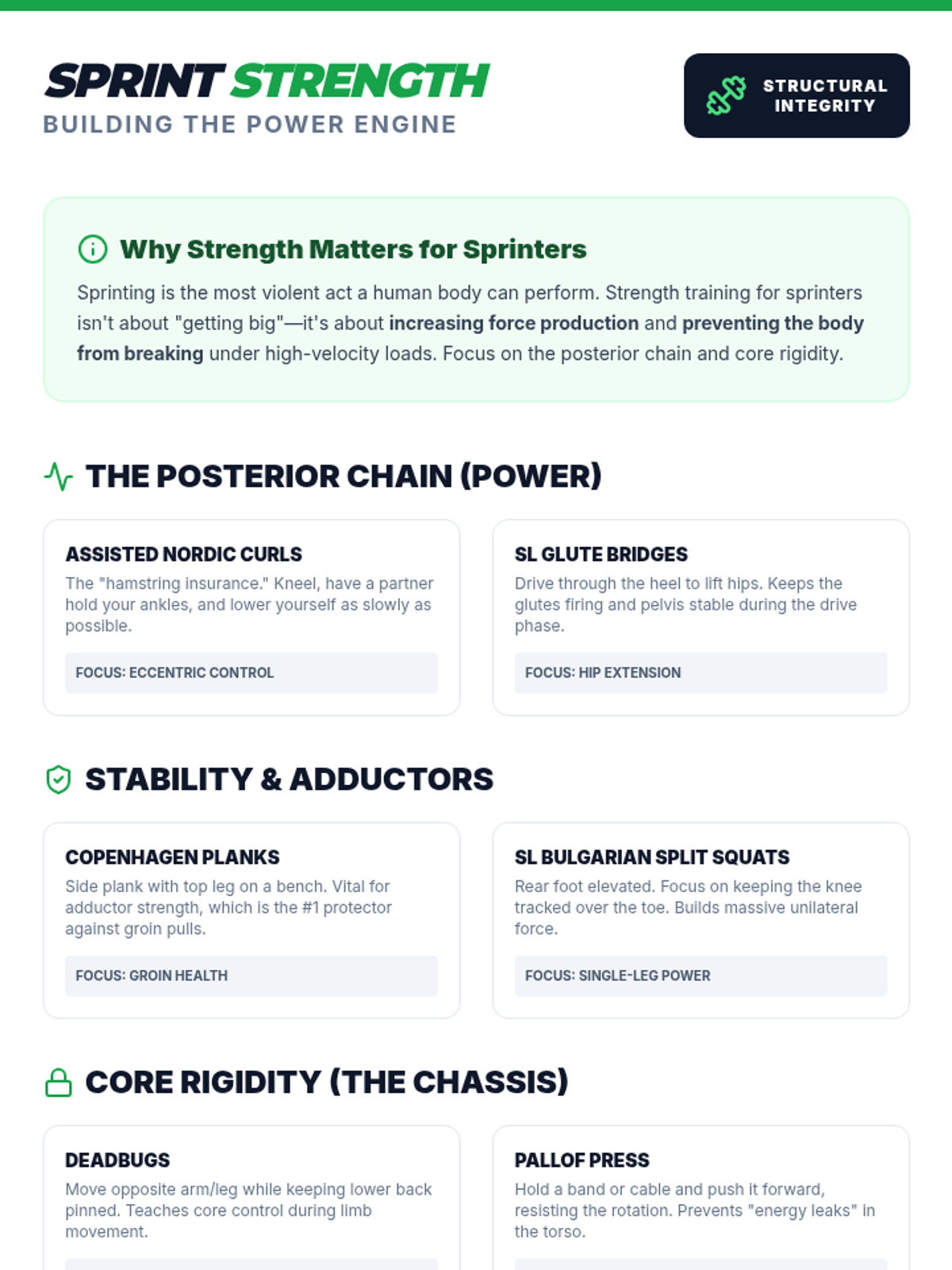
Focus on establishing proper sprint posture, rhythmic drills (A-skips), and basic core strength to prevent injury.
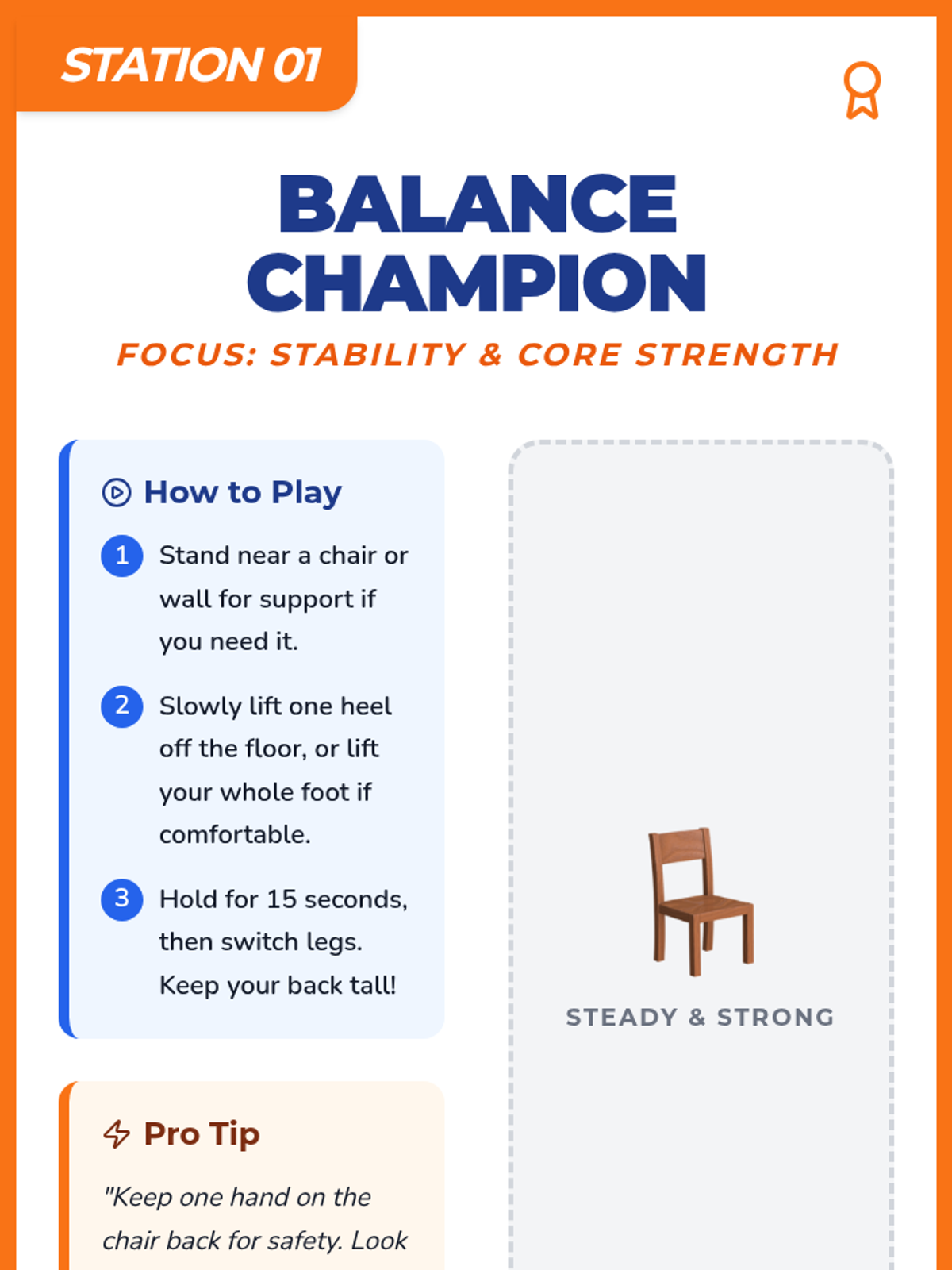
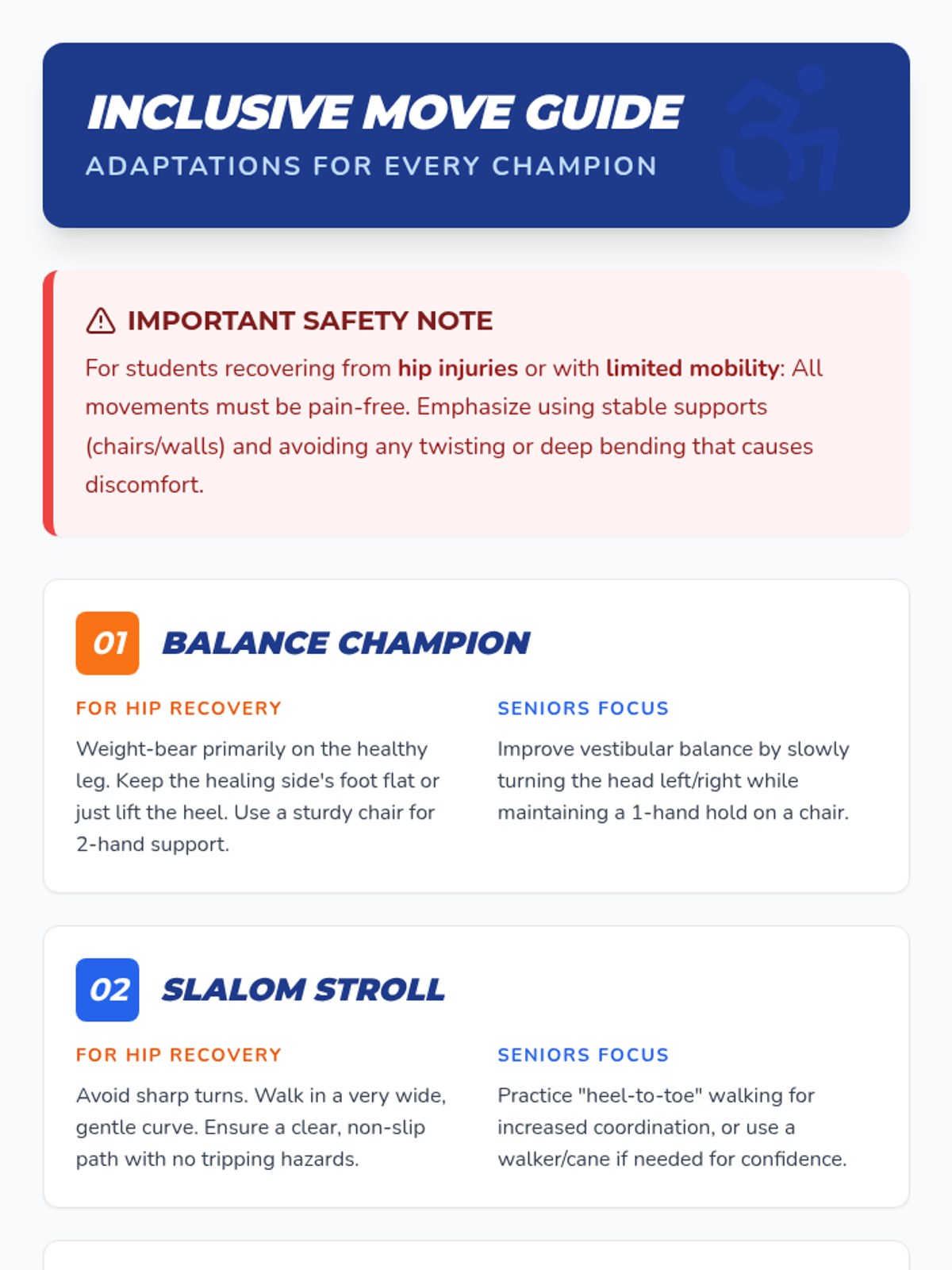
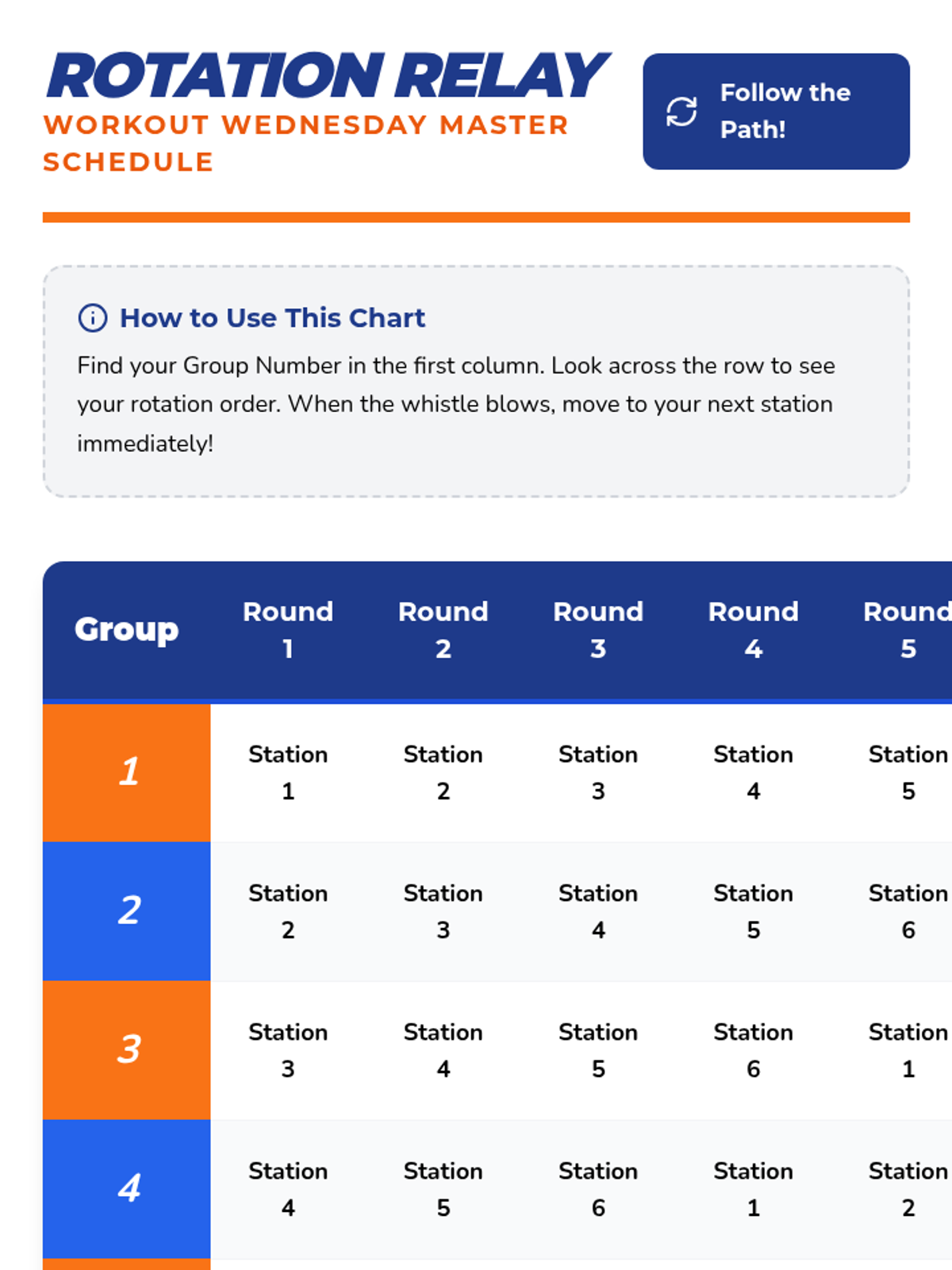
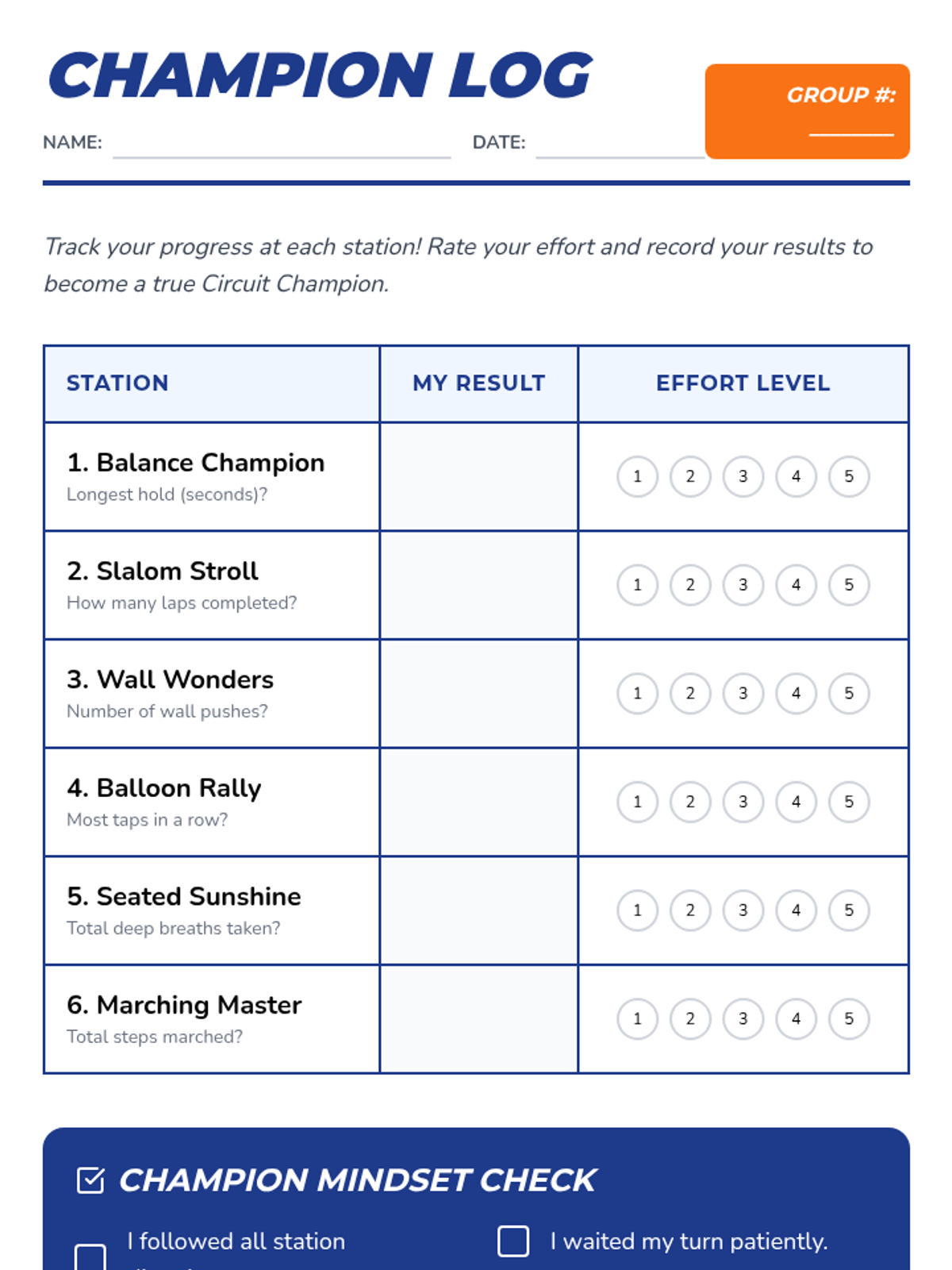
A high-energy station rotation circuit designed to build gross motor skills, balance, and social teamwork through 'Workout Wednesday' routines. Students rotate through six physical challenges while tracking their personal progress.
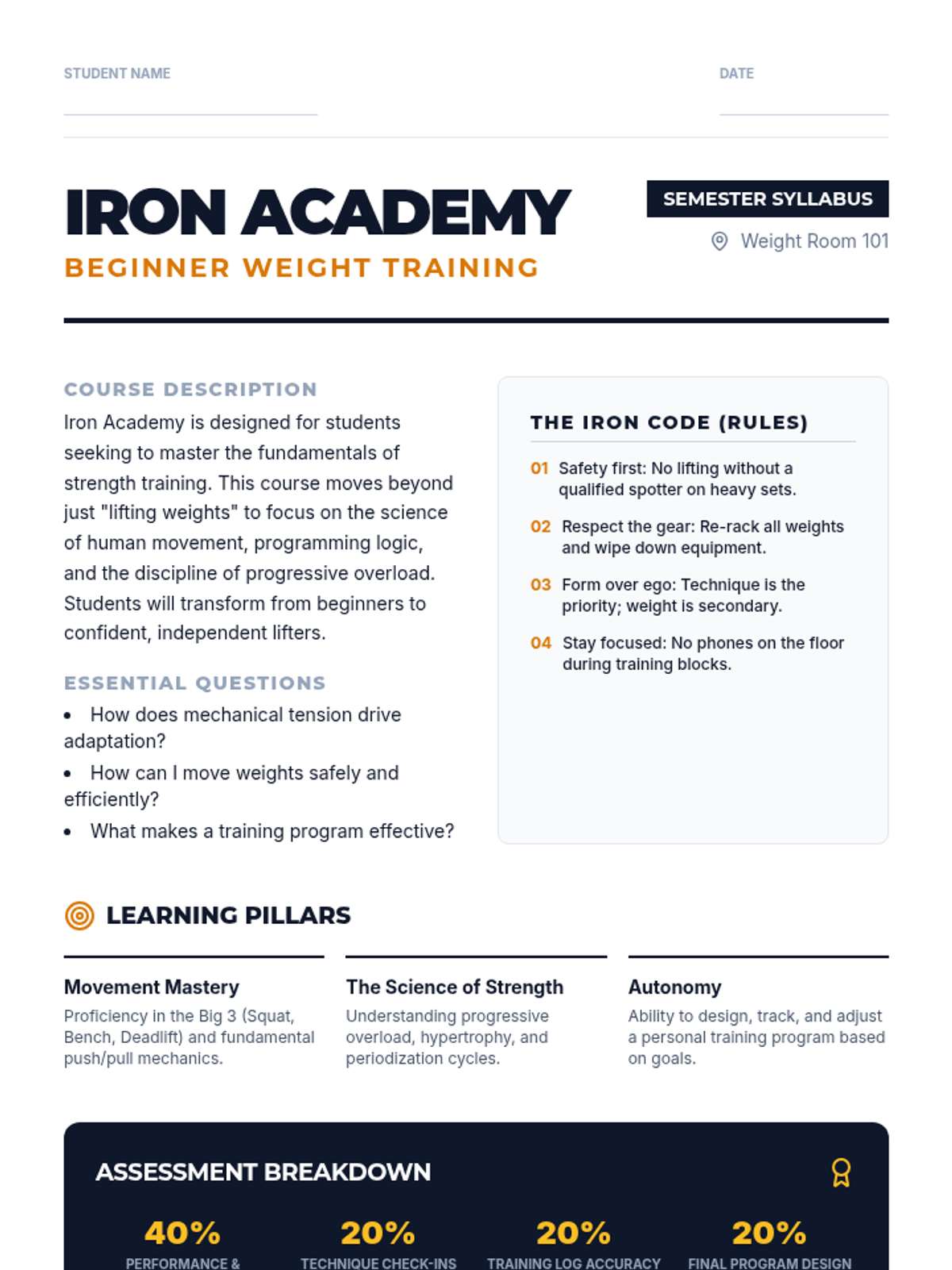
A comprehensive introduction to the Iron Academy weight training course, featuring a detailed syllabus and 18-week course map for a semester-long beginner program.
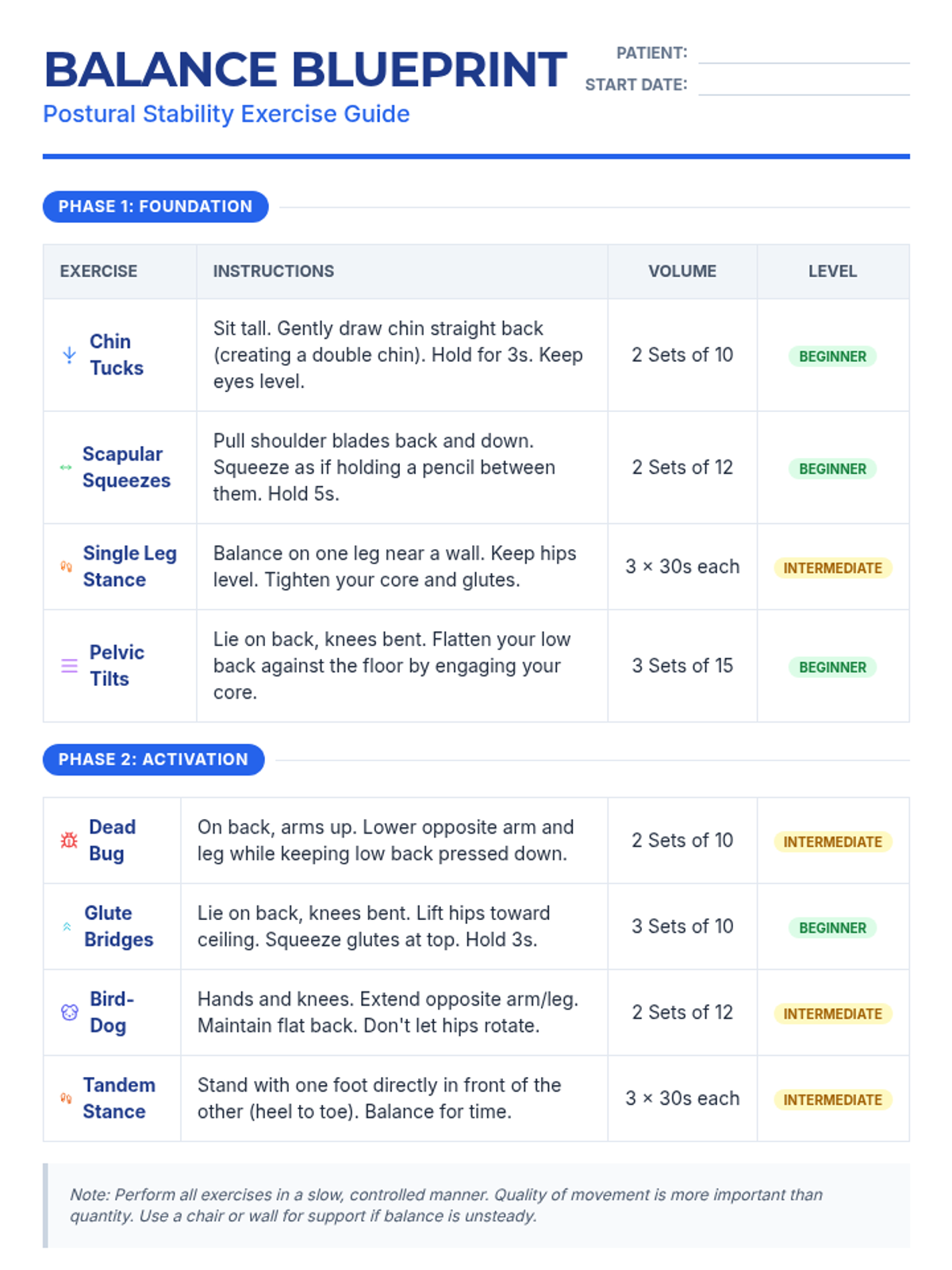
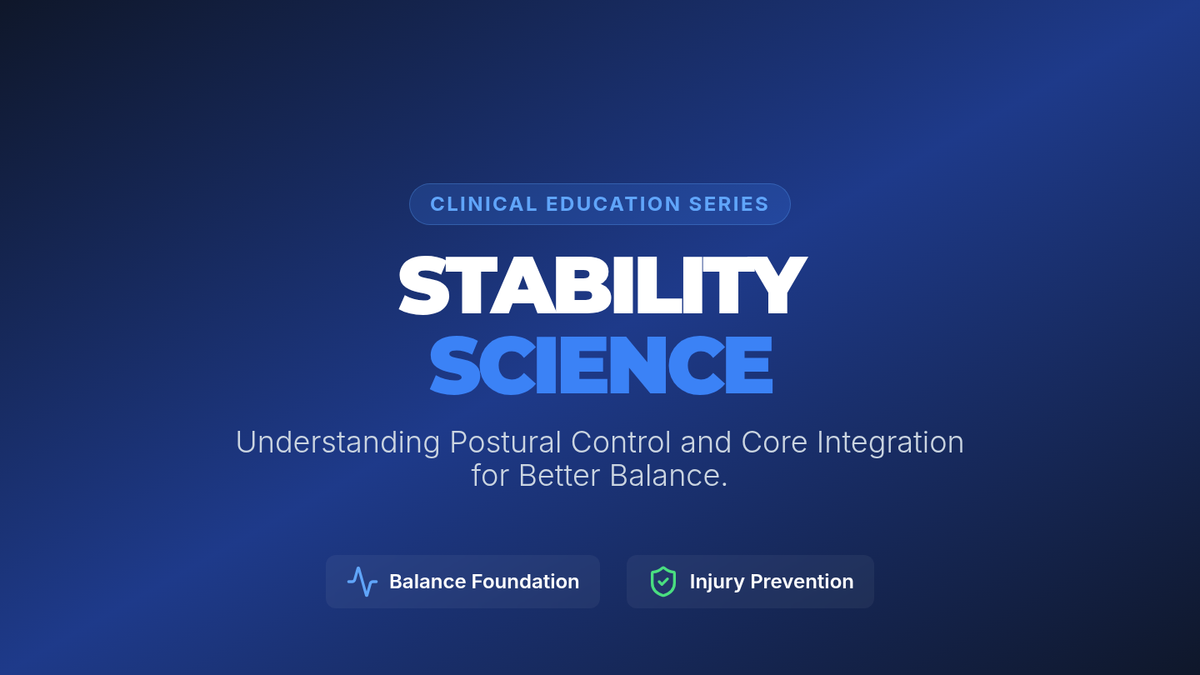
A comprehensive guide to postural stability, featuring educational slides, patient exercise charts, and clinical evaluation tools to improve balance and core strength.
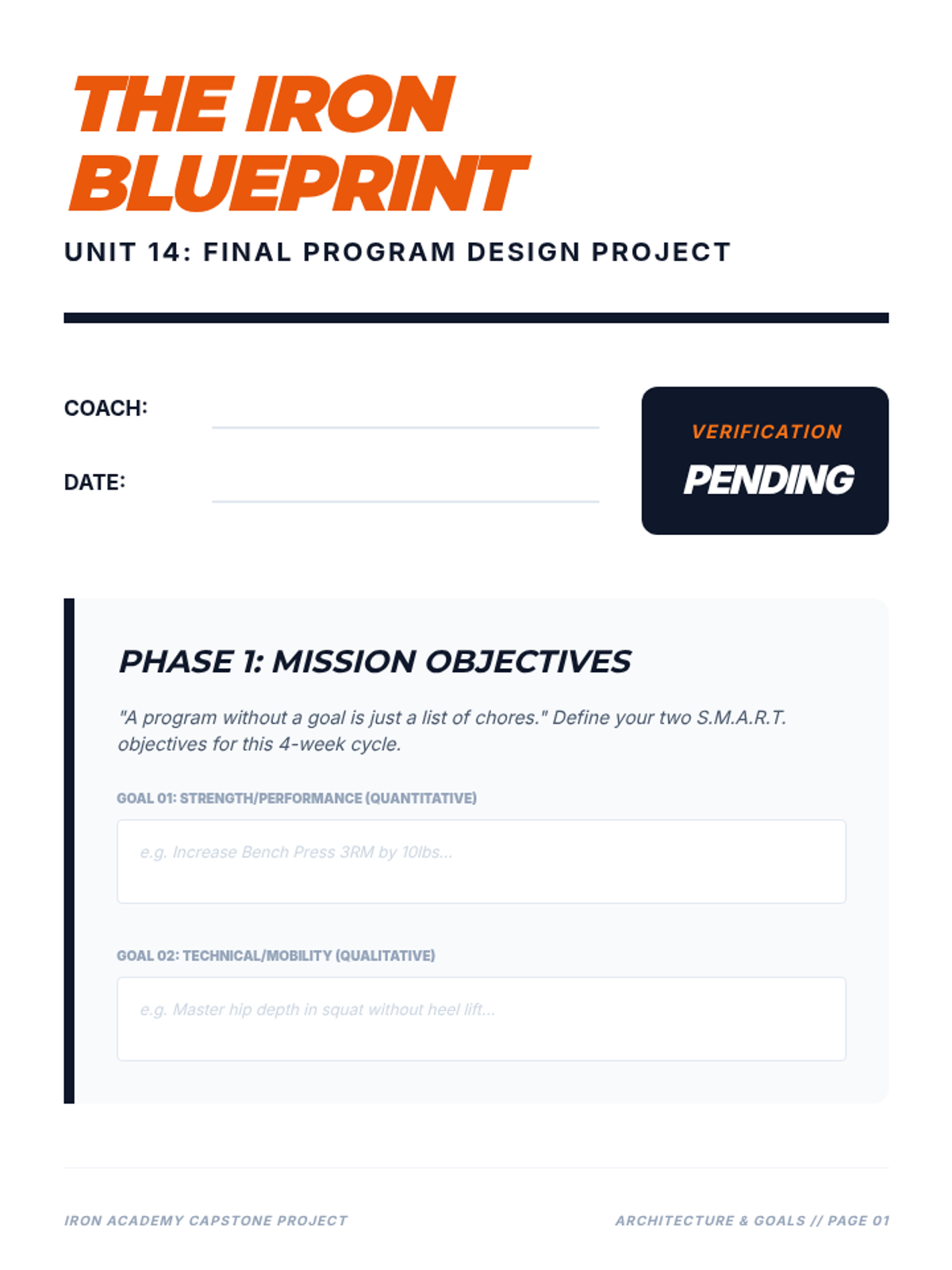
Final synthesis project where students design, justify, and prepare to execute a personalized 4-week training cycle based on the curriculum principles.
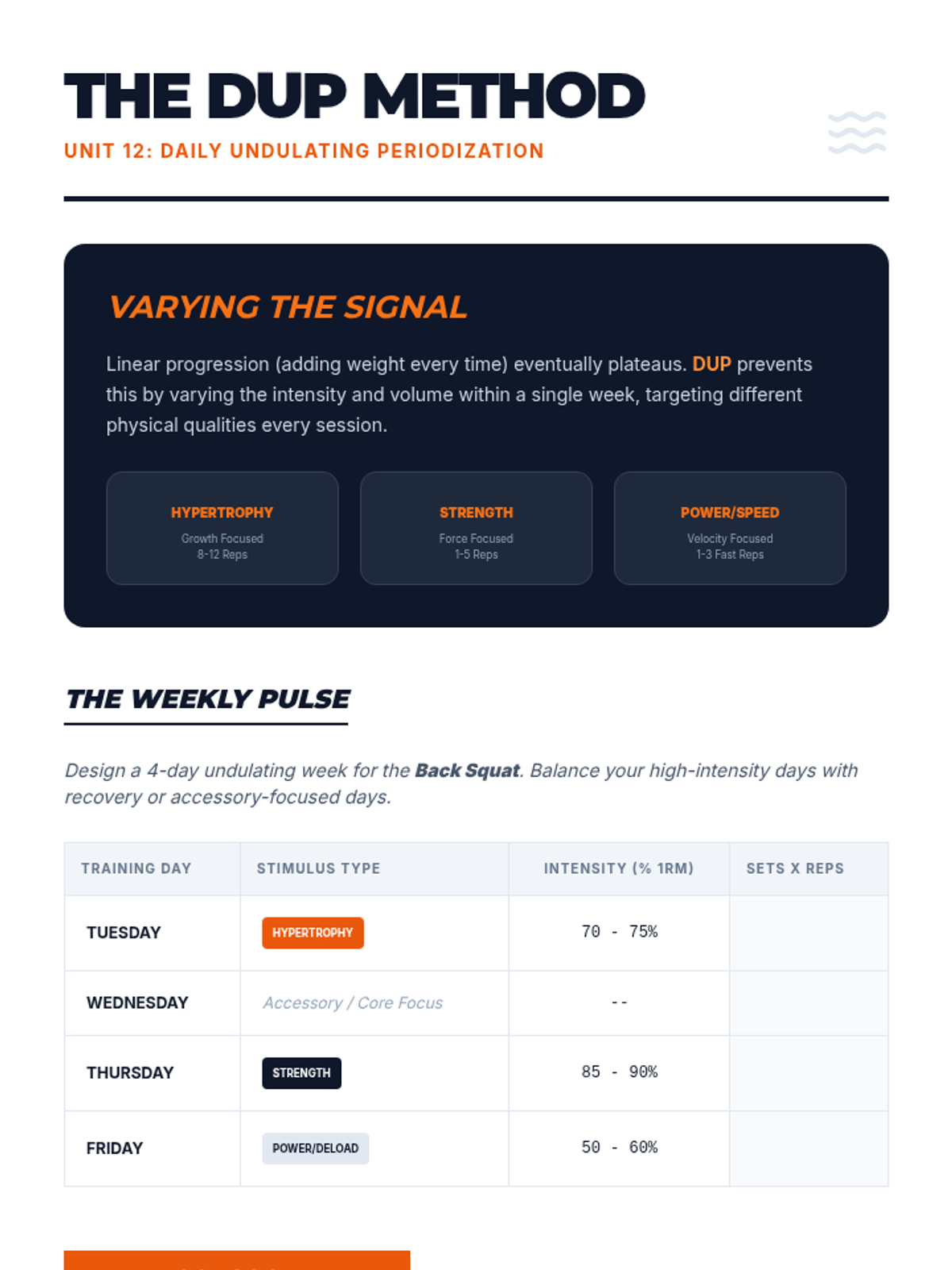
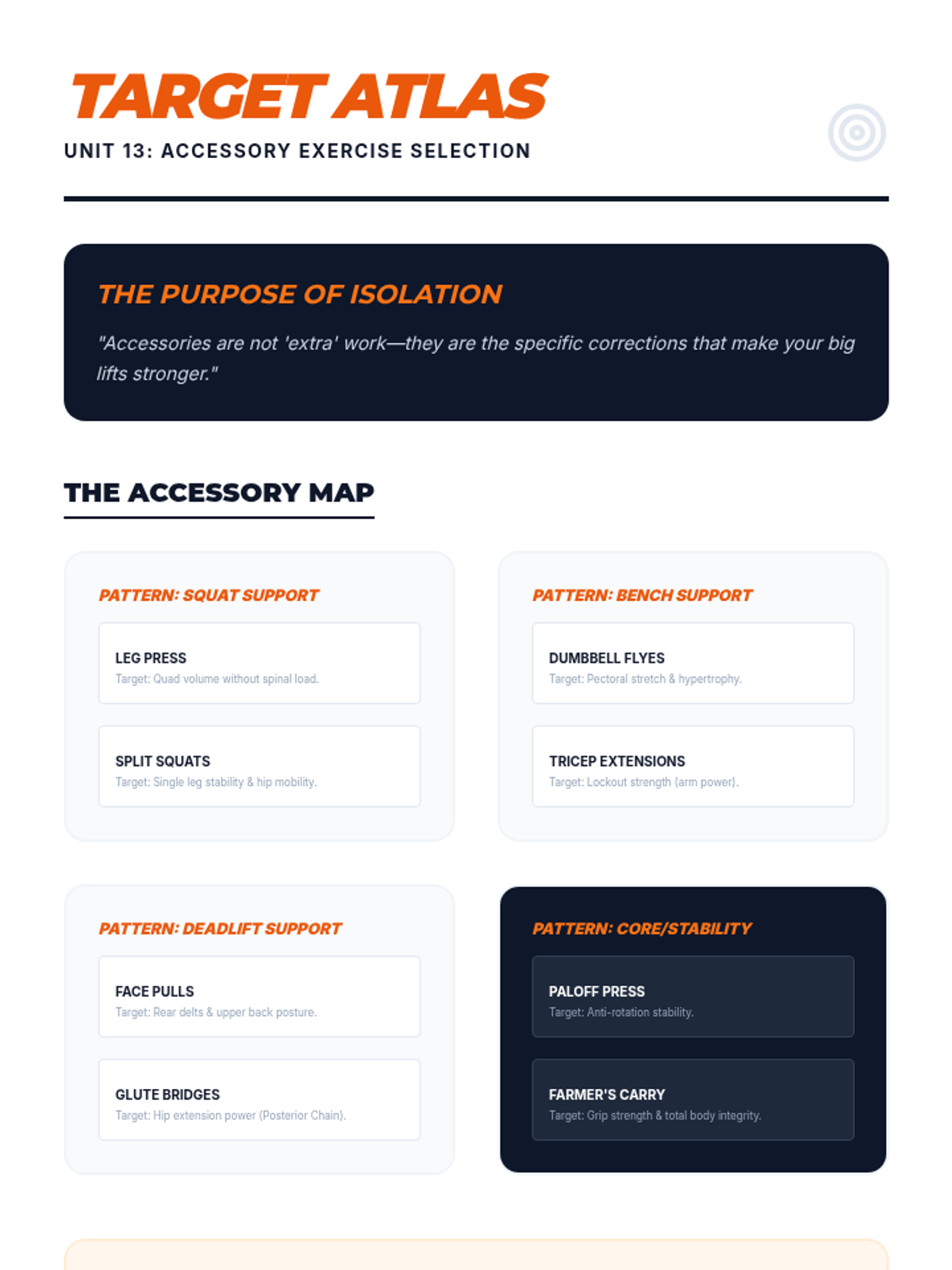
Focuses on advanced periodization, specifically Daily Undulating Periodization (DUP), and the science of exercise selection to drive continued adaptation.
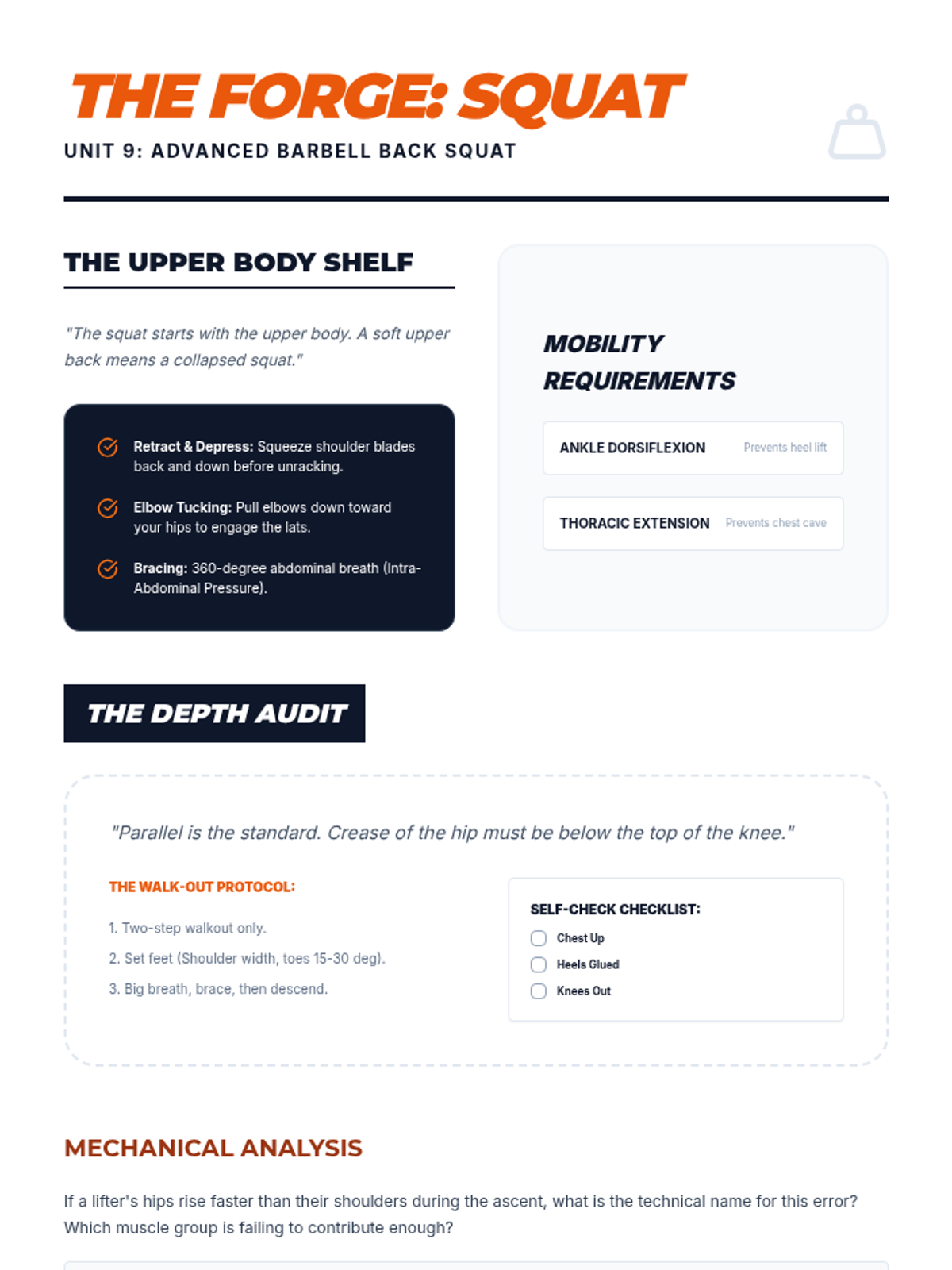
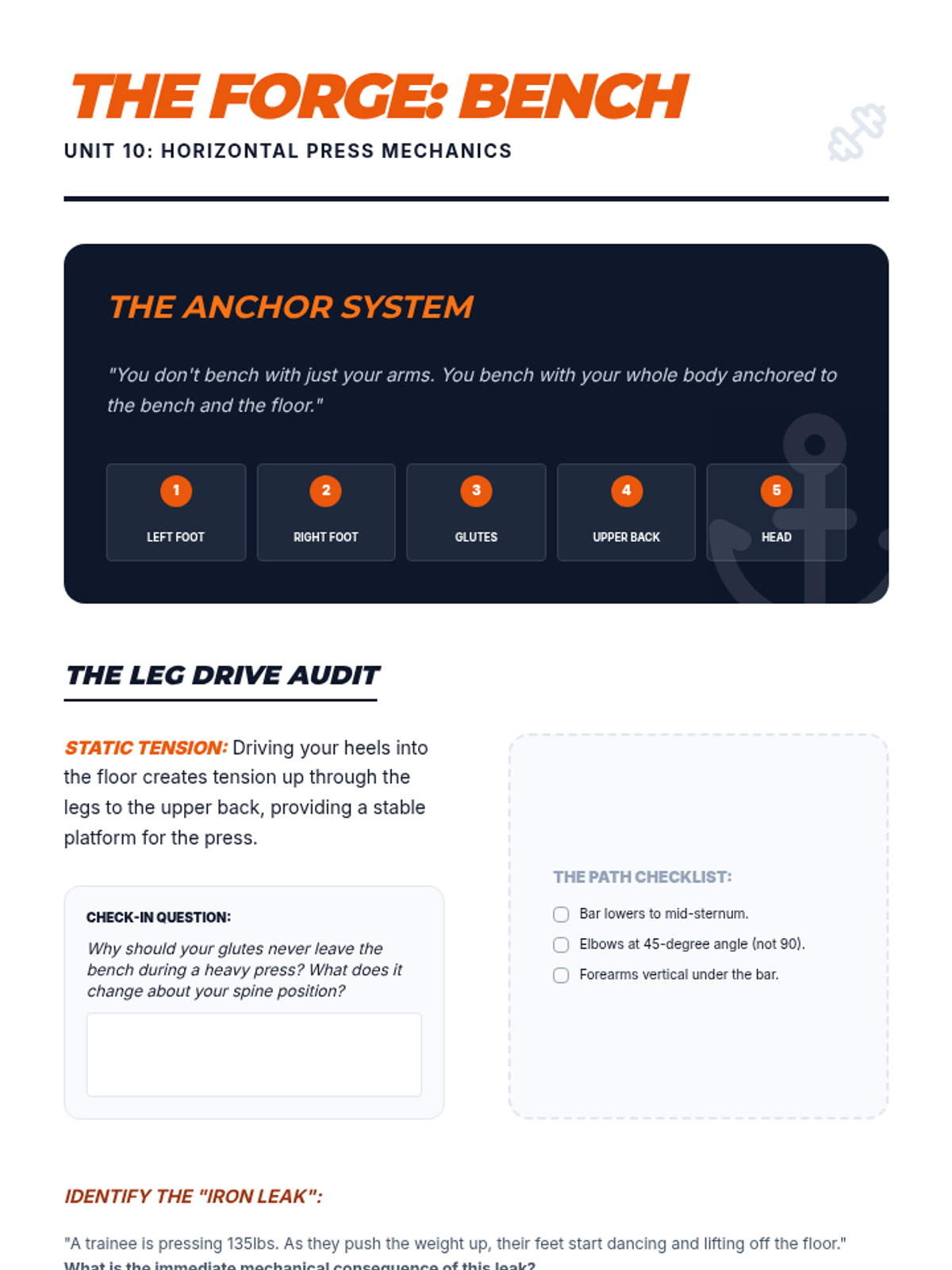
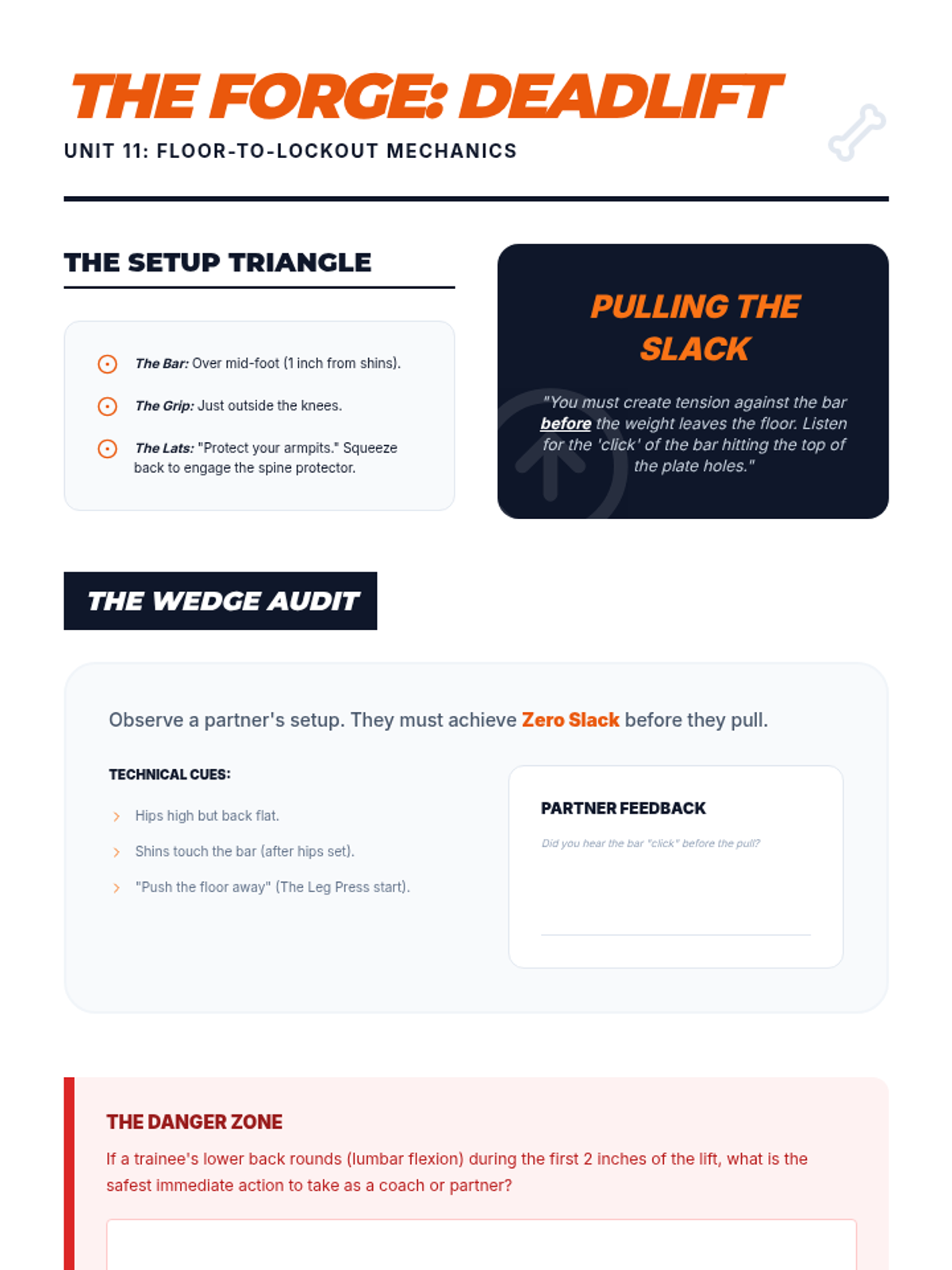
Technical mastery of the 'Big Three' (Squat, Bench, Deadlift) with emphasis on safety, setup, and heavy load mechanics.
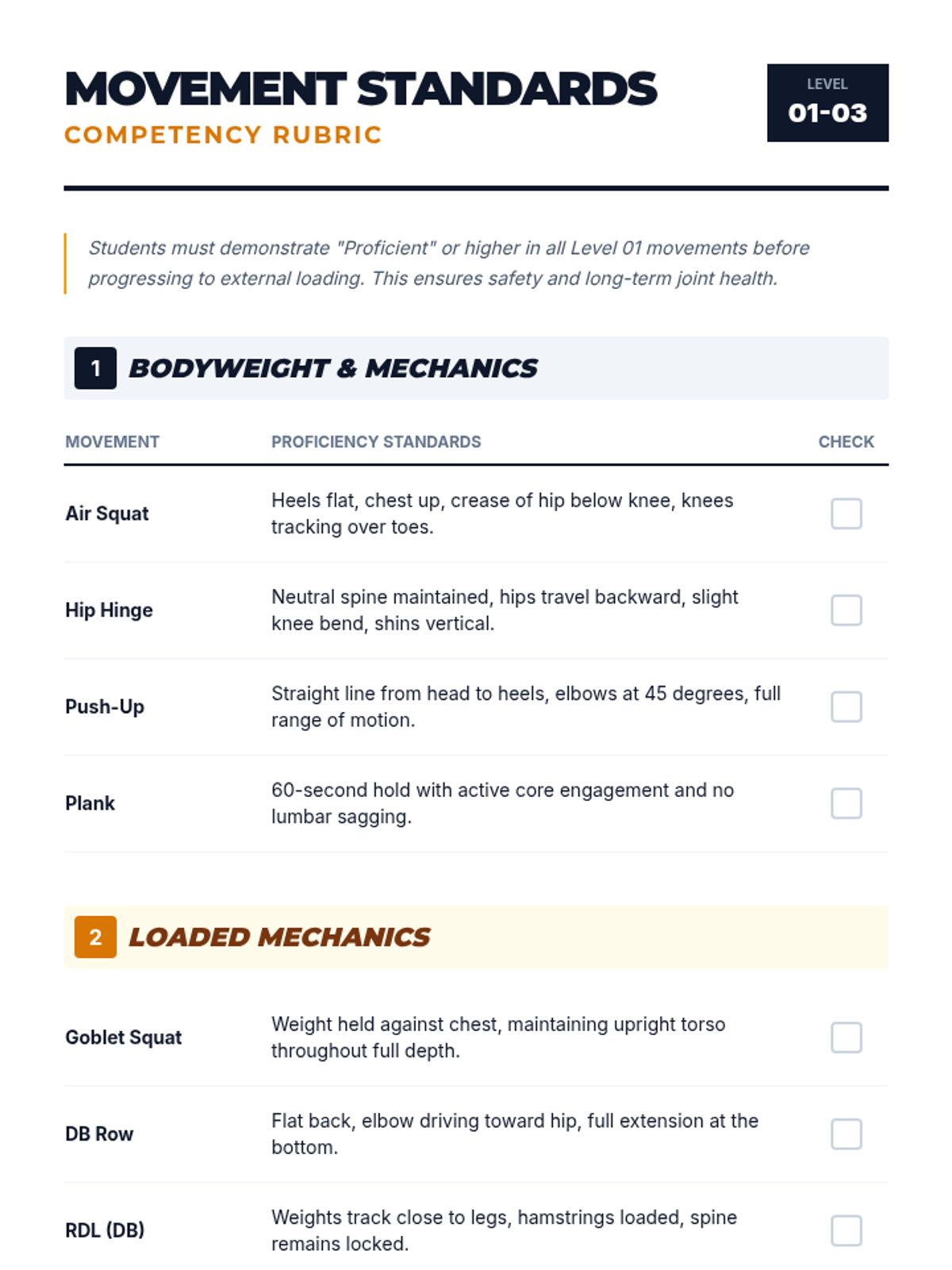
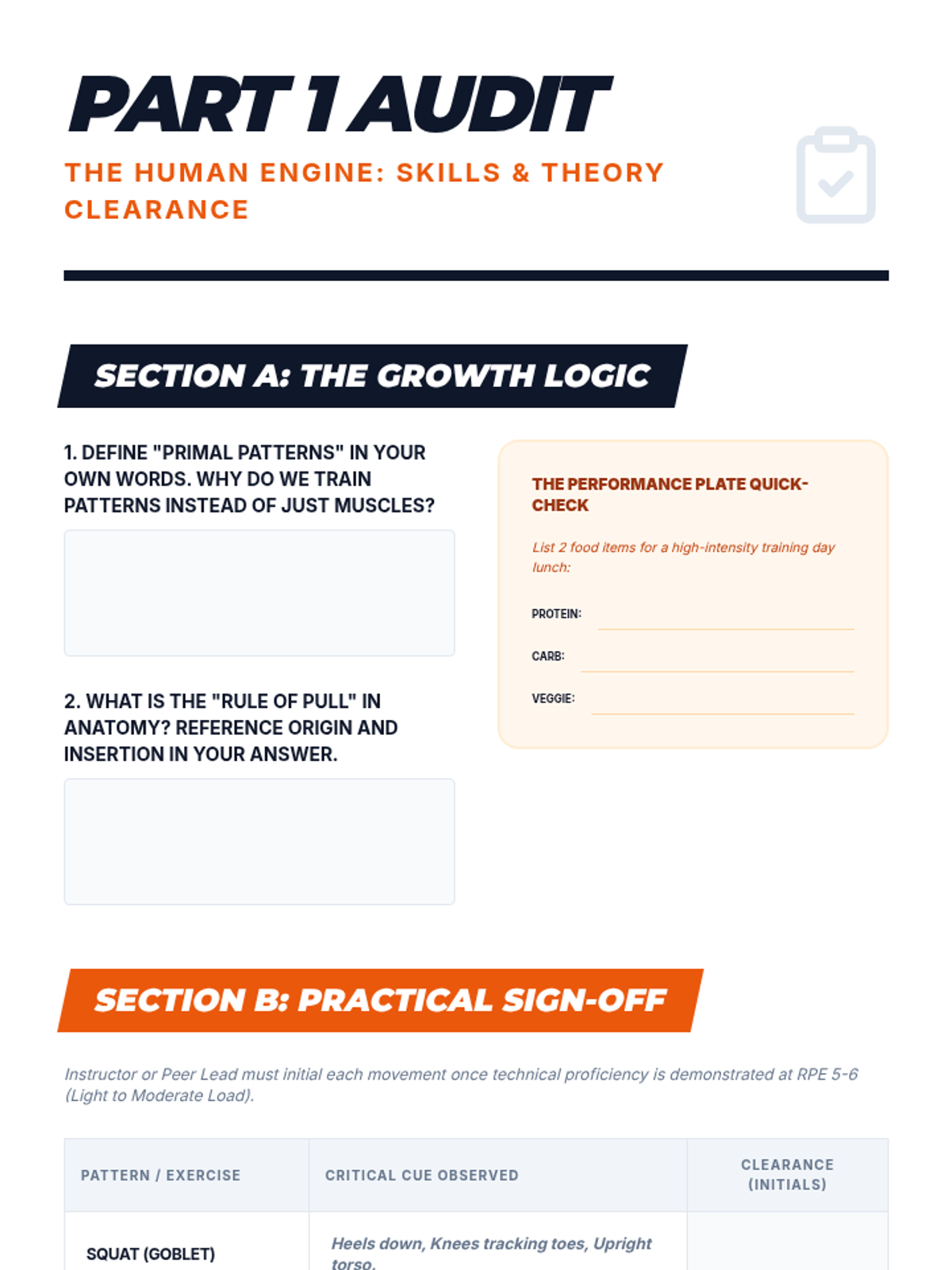
Comprehensive review of Part 1 concepts and a practical skills audit to clear students for the advanced compound lifts of Part 2.
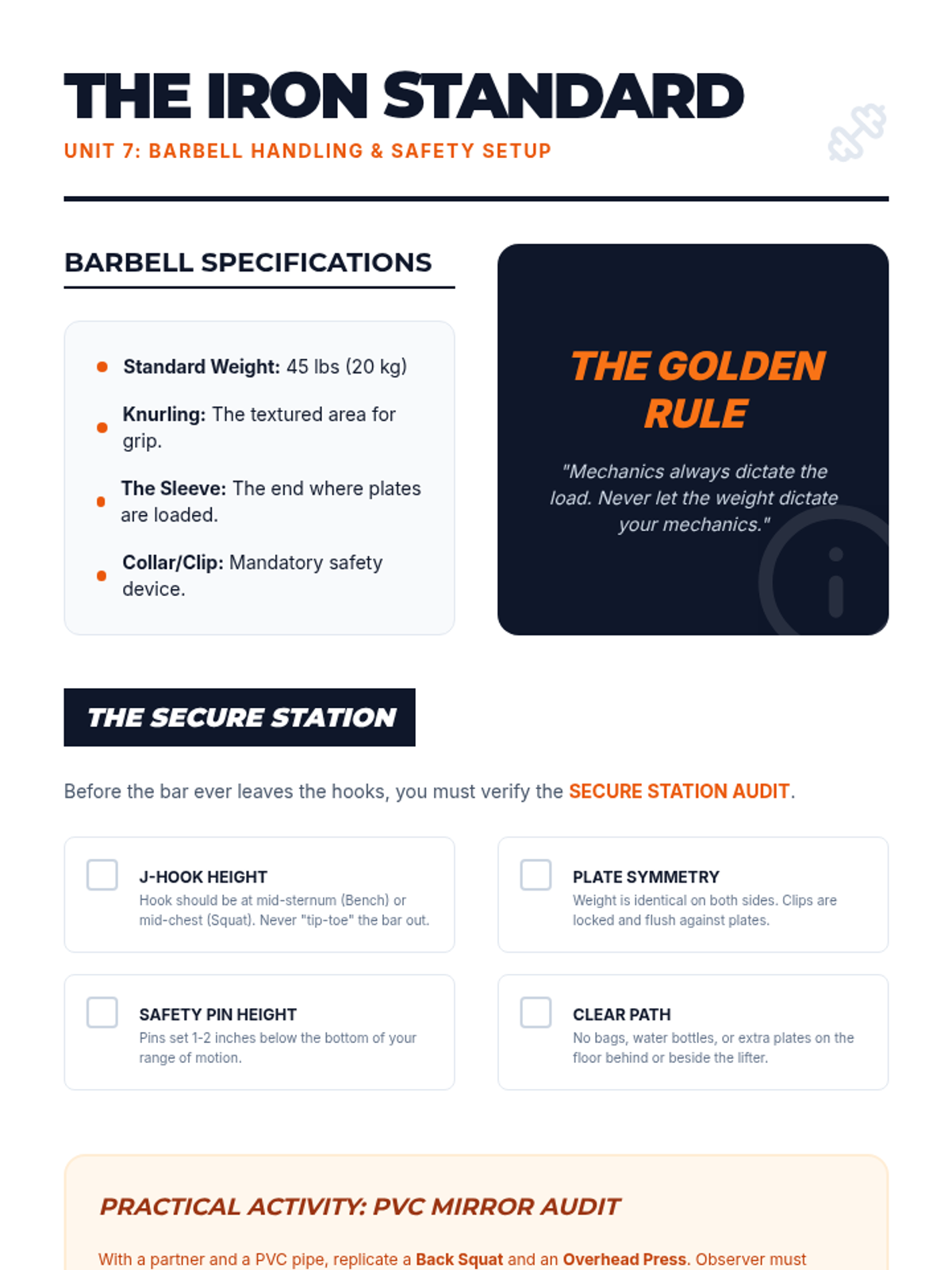
Transition from bodyweight to external resistance, focusing on barbell handling, safety rack setup, and maintaining primal mechanics under load.
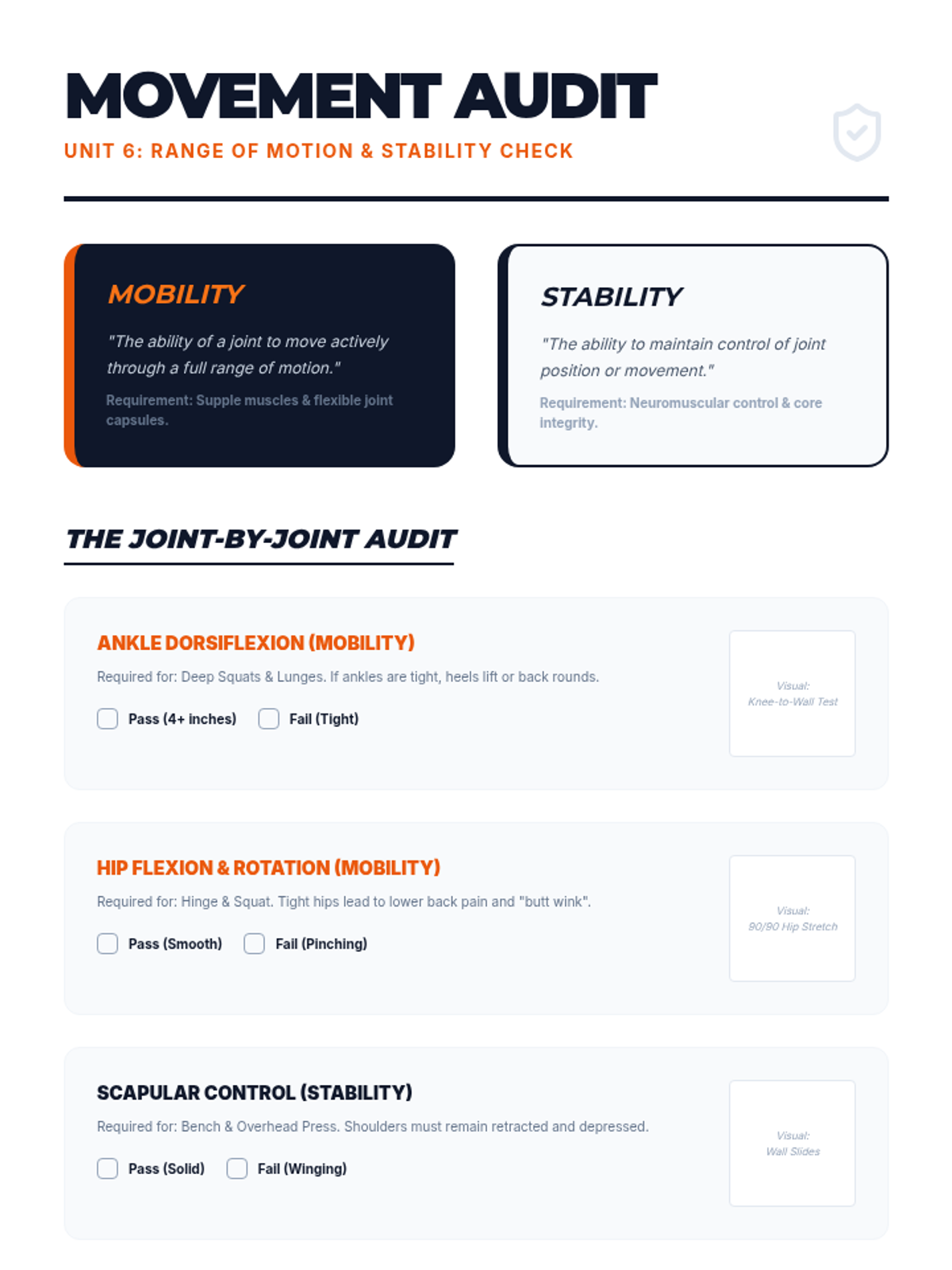
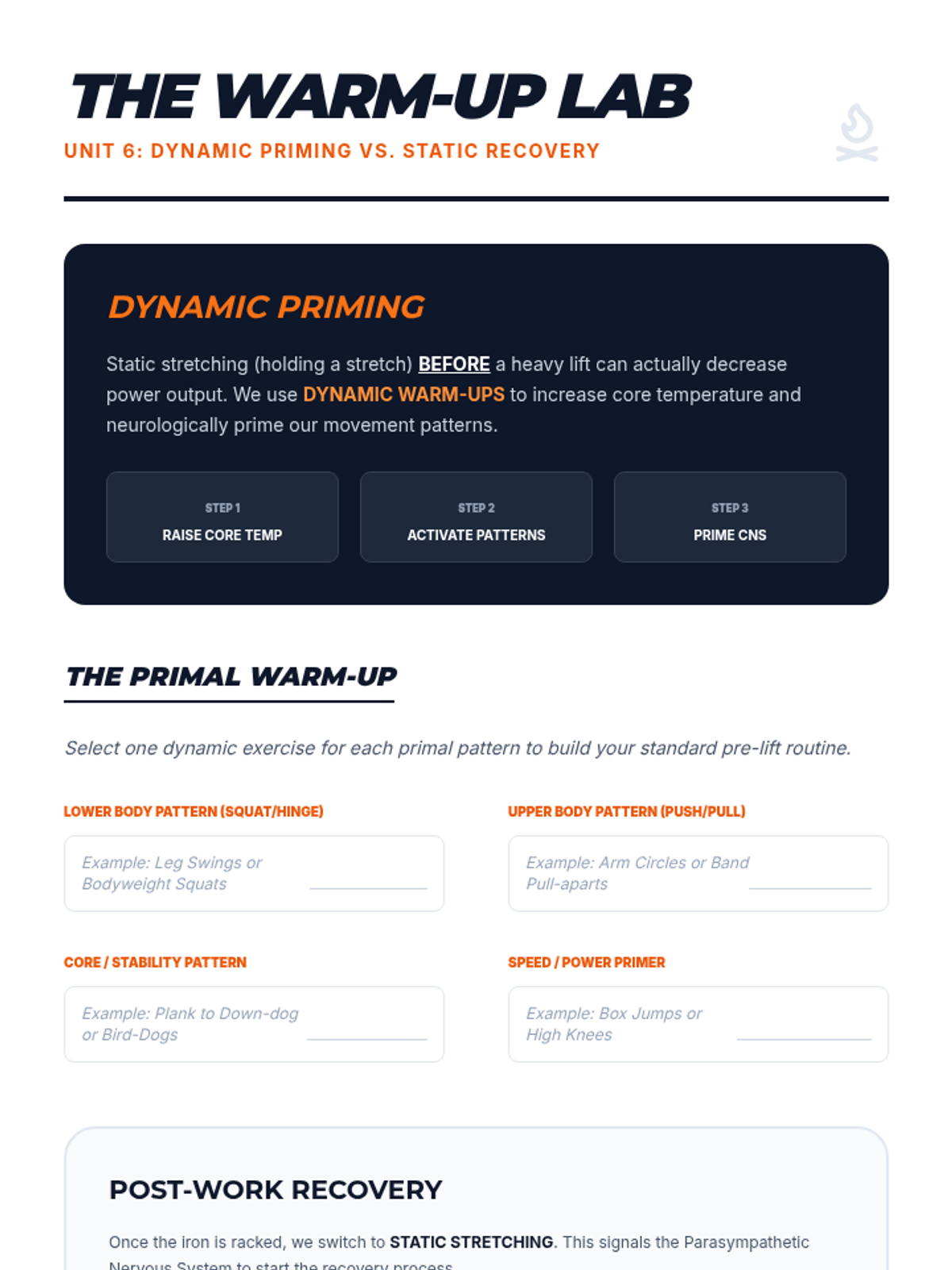
Focuses on dynamic warm-ups, joint range of motion (mobility), and postural stability to prepare the body for external load and prevent injury.
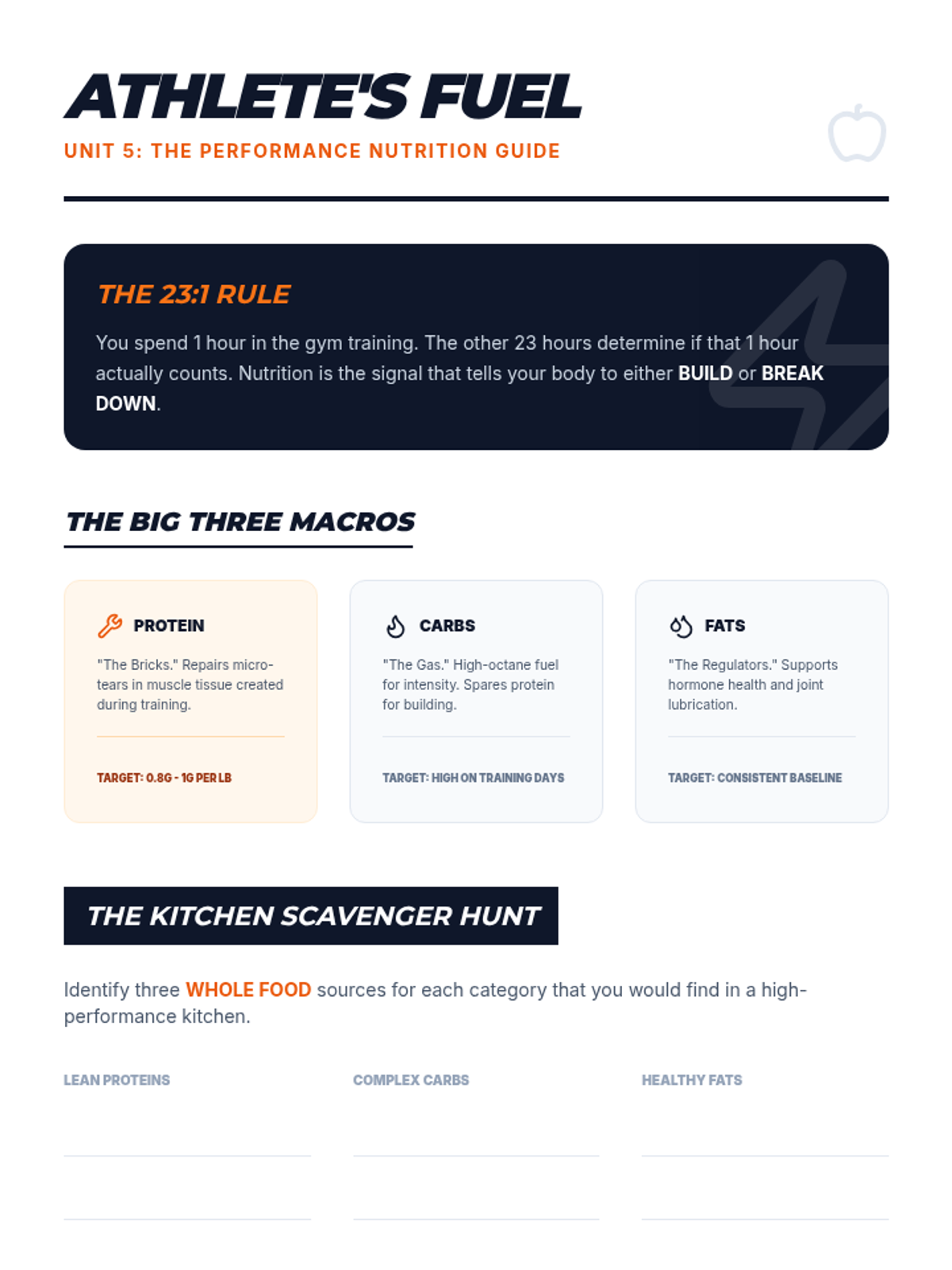
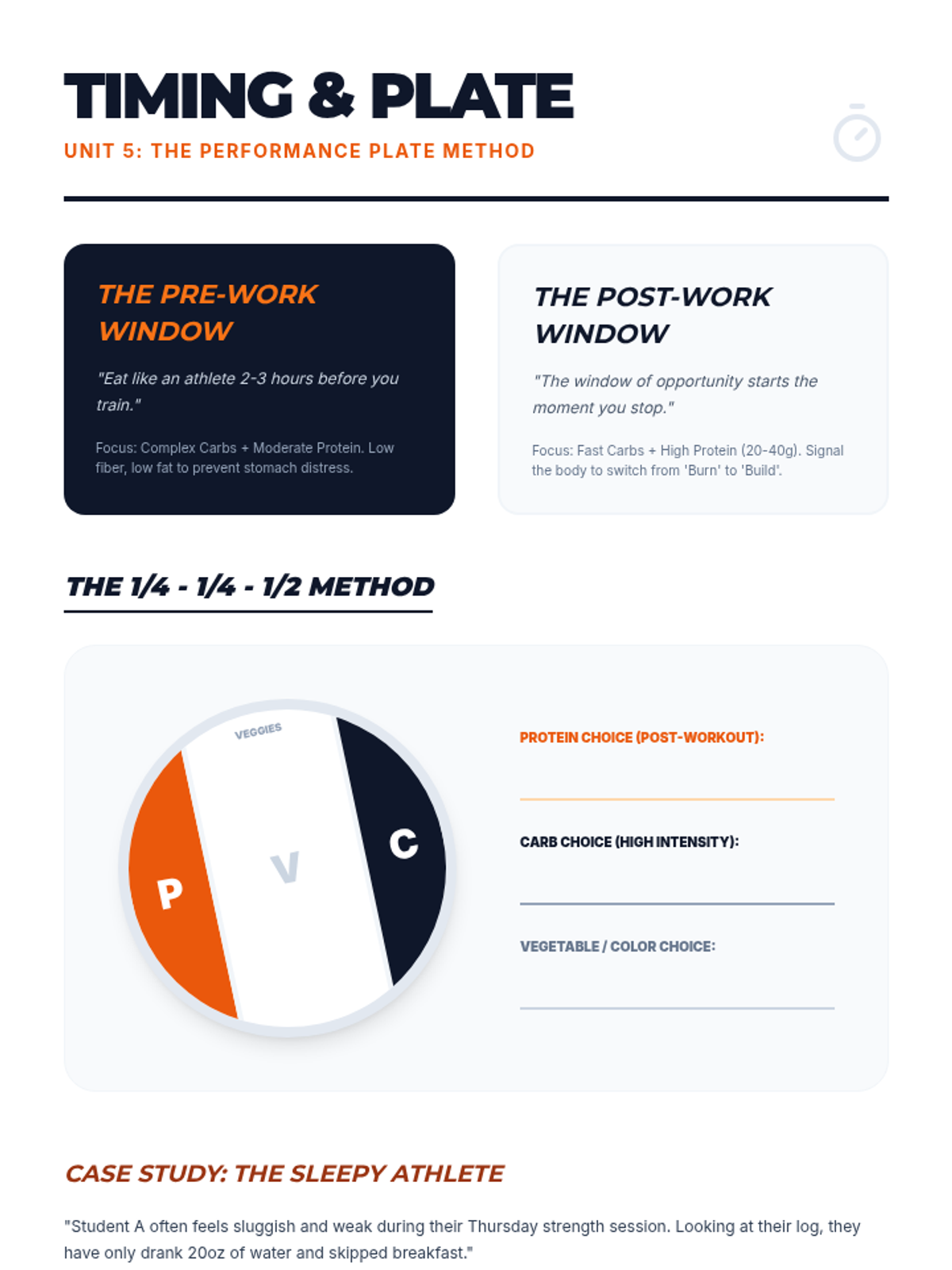
Focuses on macronutrients, hydration, and timing strategies to fuel workouts and optimize recovery for high school athletes.
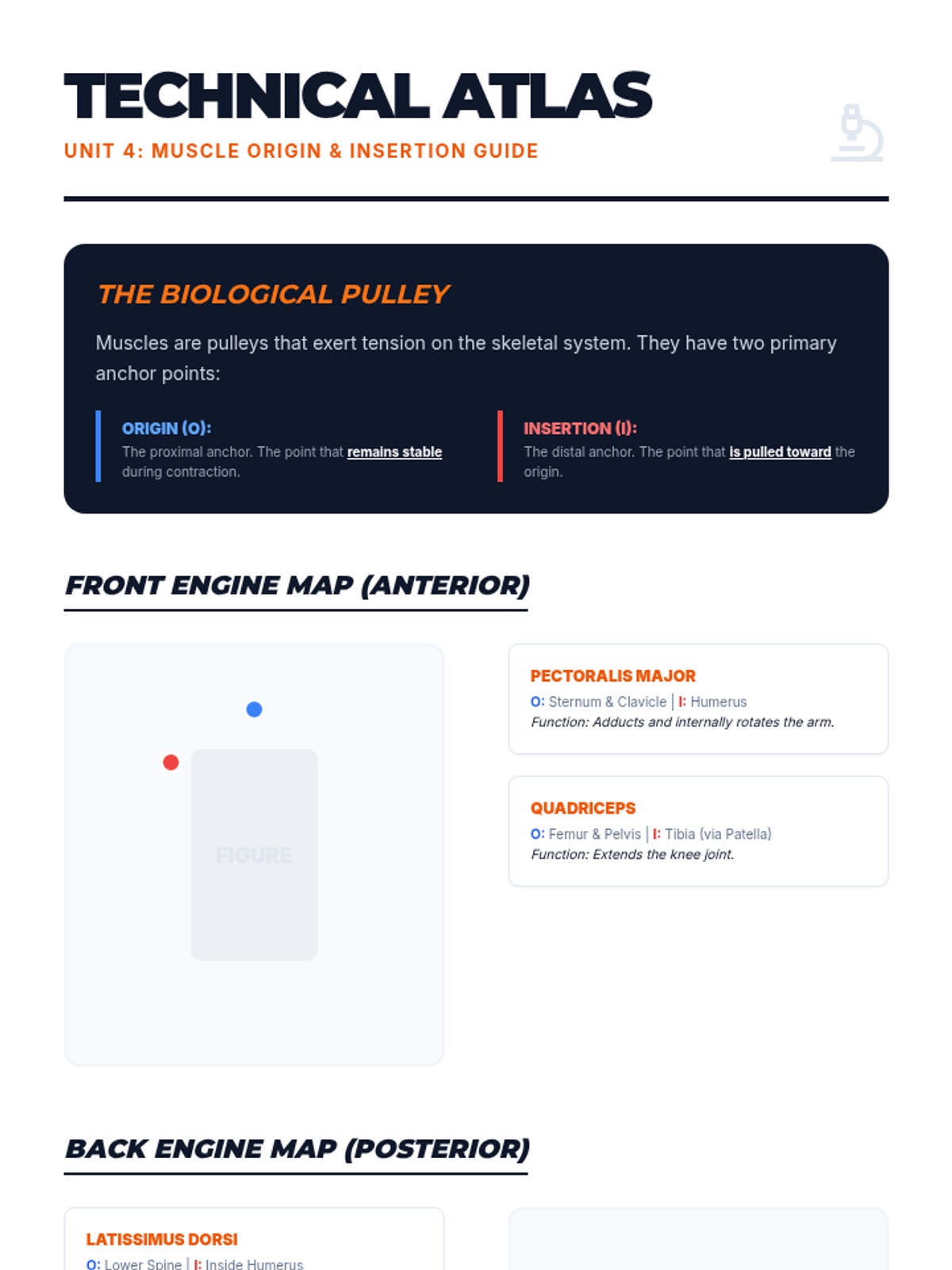
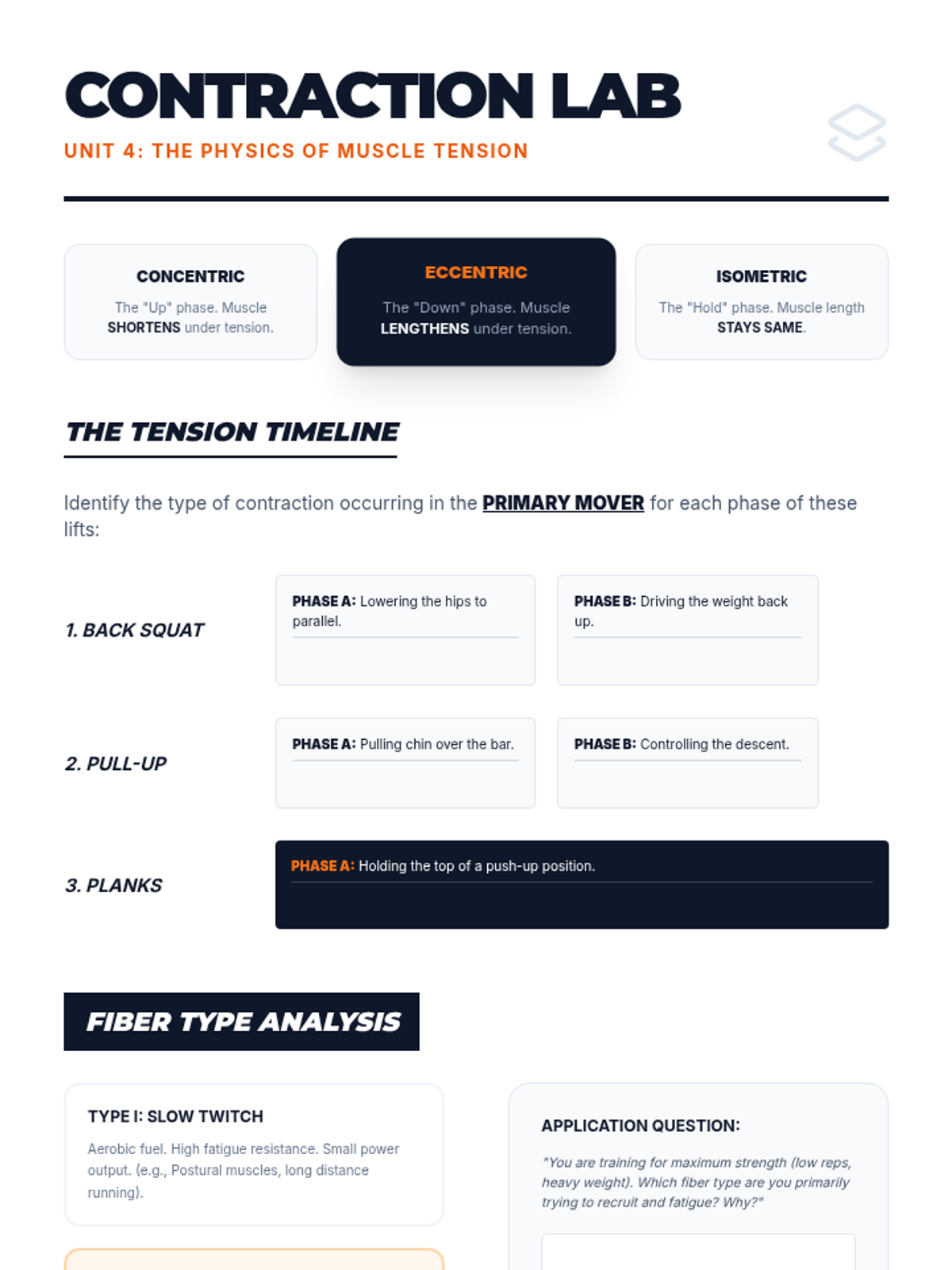
Introduction to major muscle groups, their technical origin/insertion points, and the biomechanics of muscle contractions (concentric, eccentric, isometric).
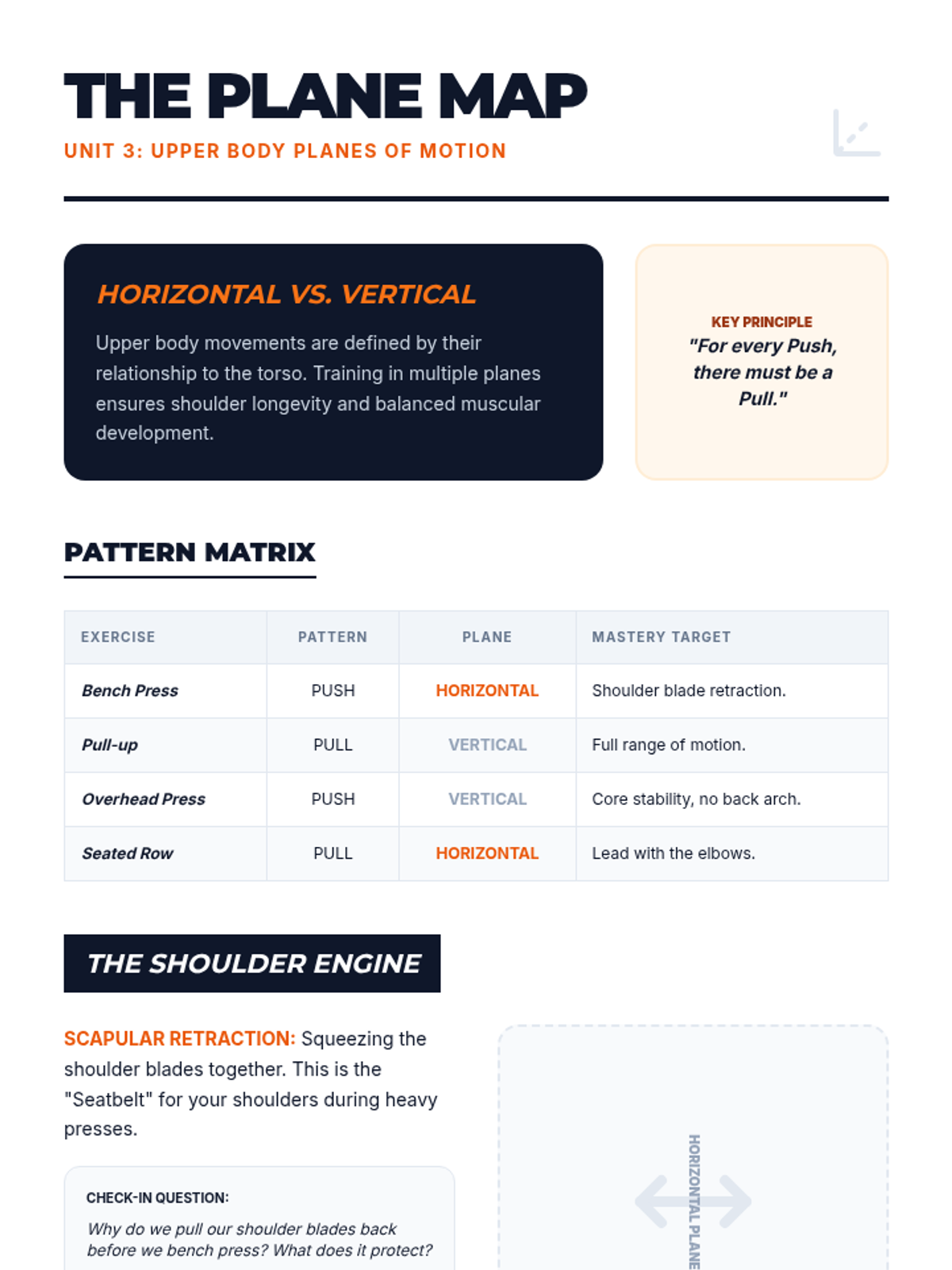
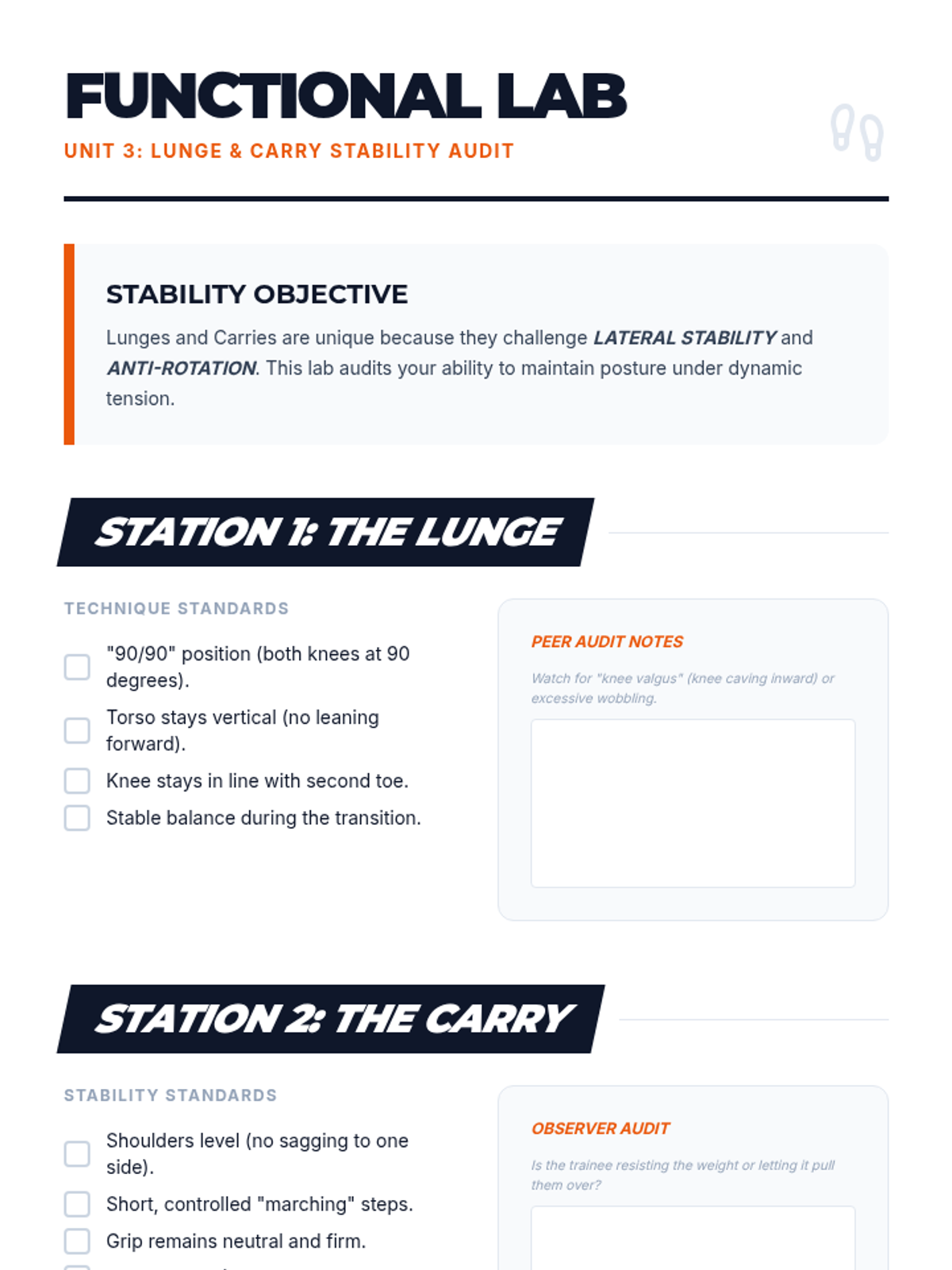
Covers the mechanics of the Push, Pull, Lunge, and Carry patterns, focusing on postural integrity and multi-planar movement.
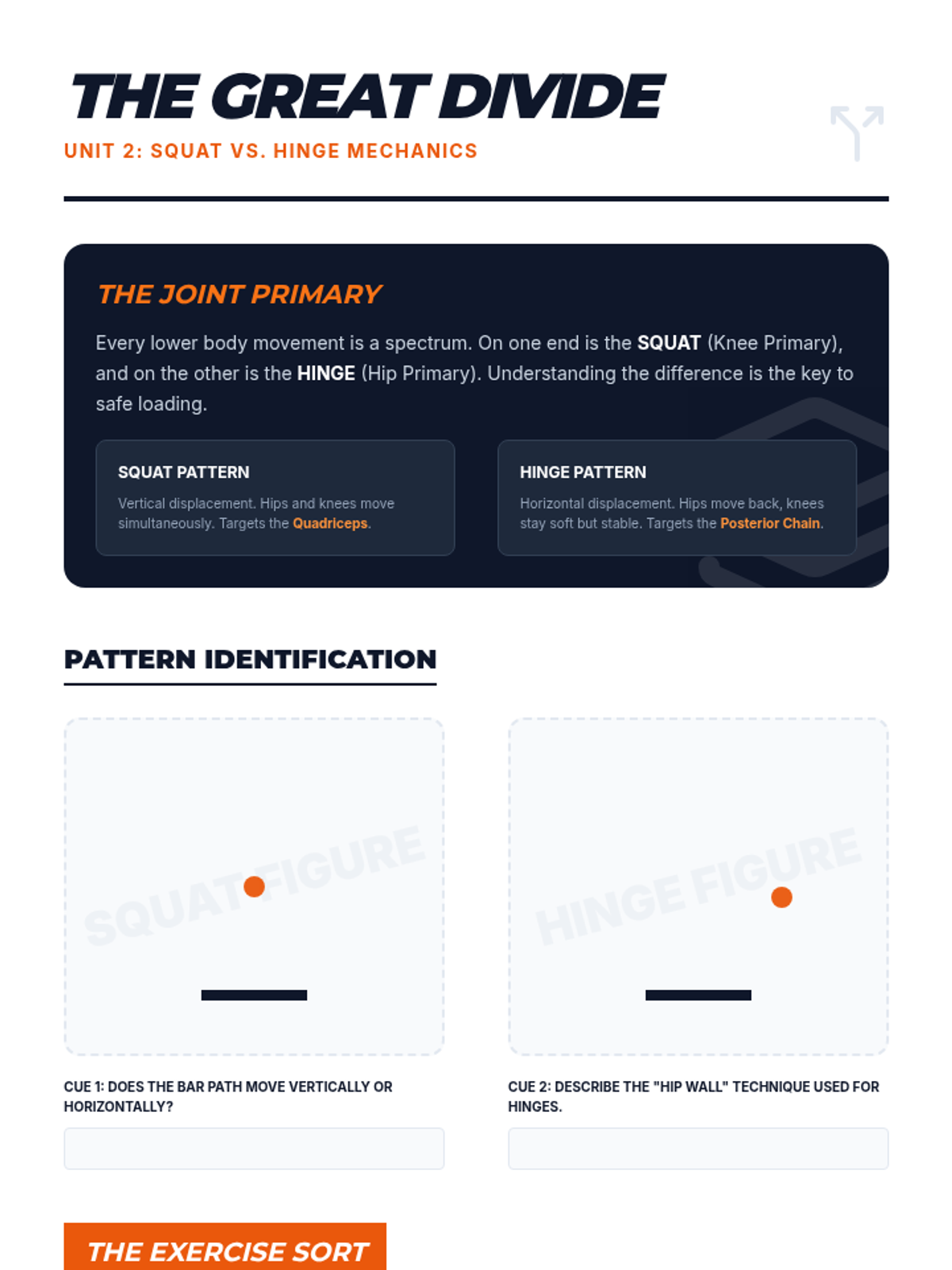
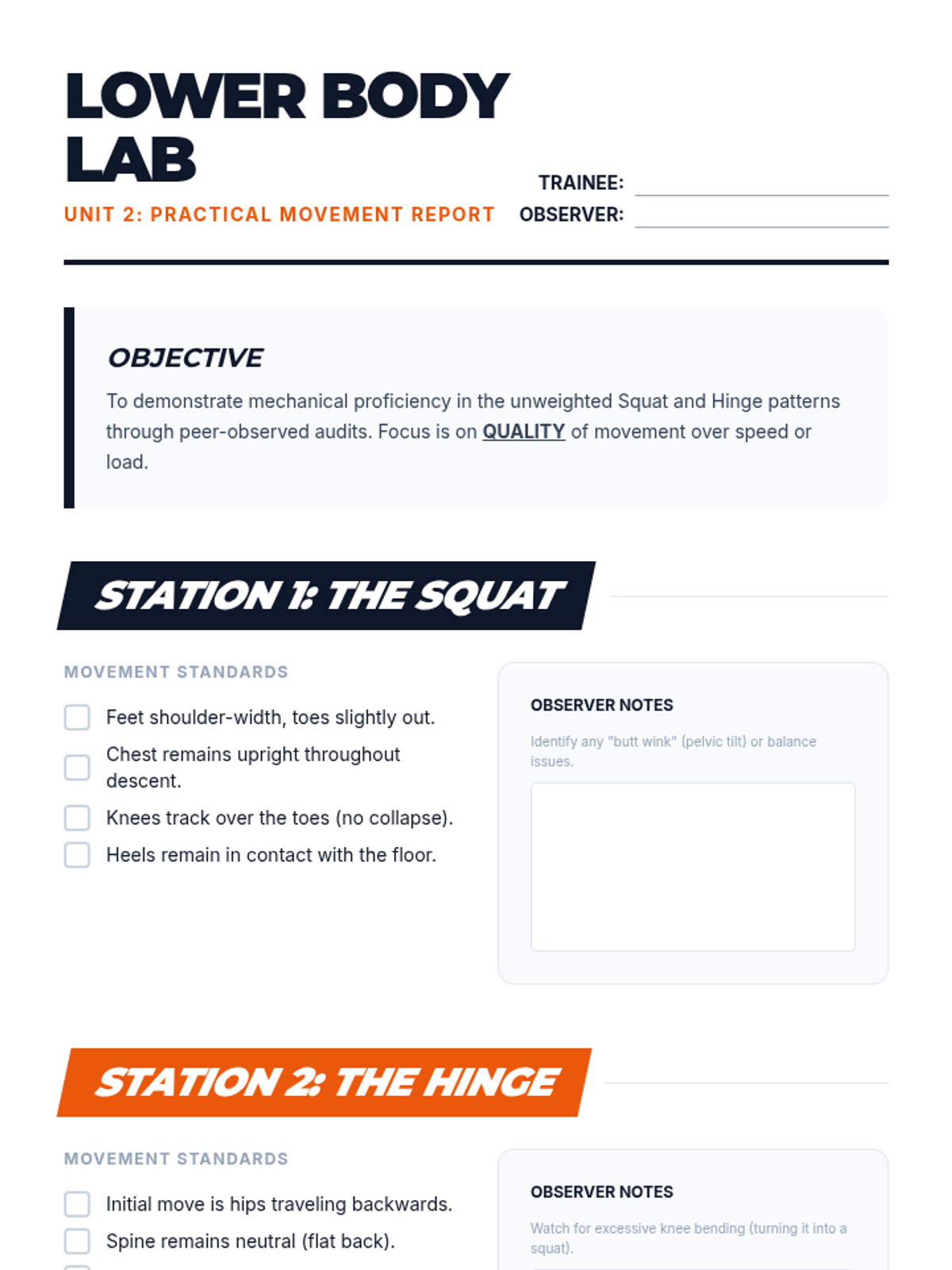
Focuses on the mechanics of the Squat and Hinge patterns, establishing the foundation for lower body power and structural health.
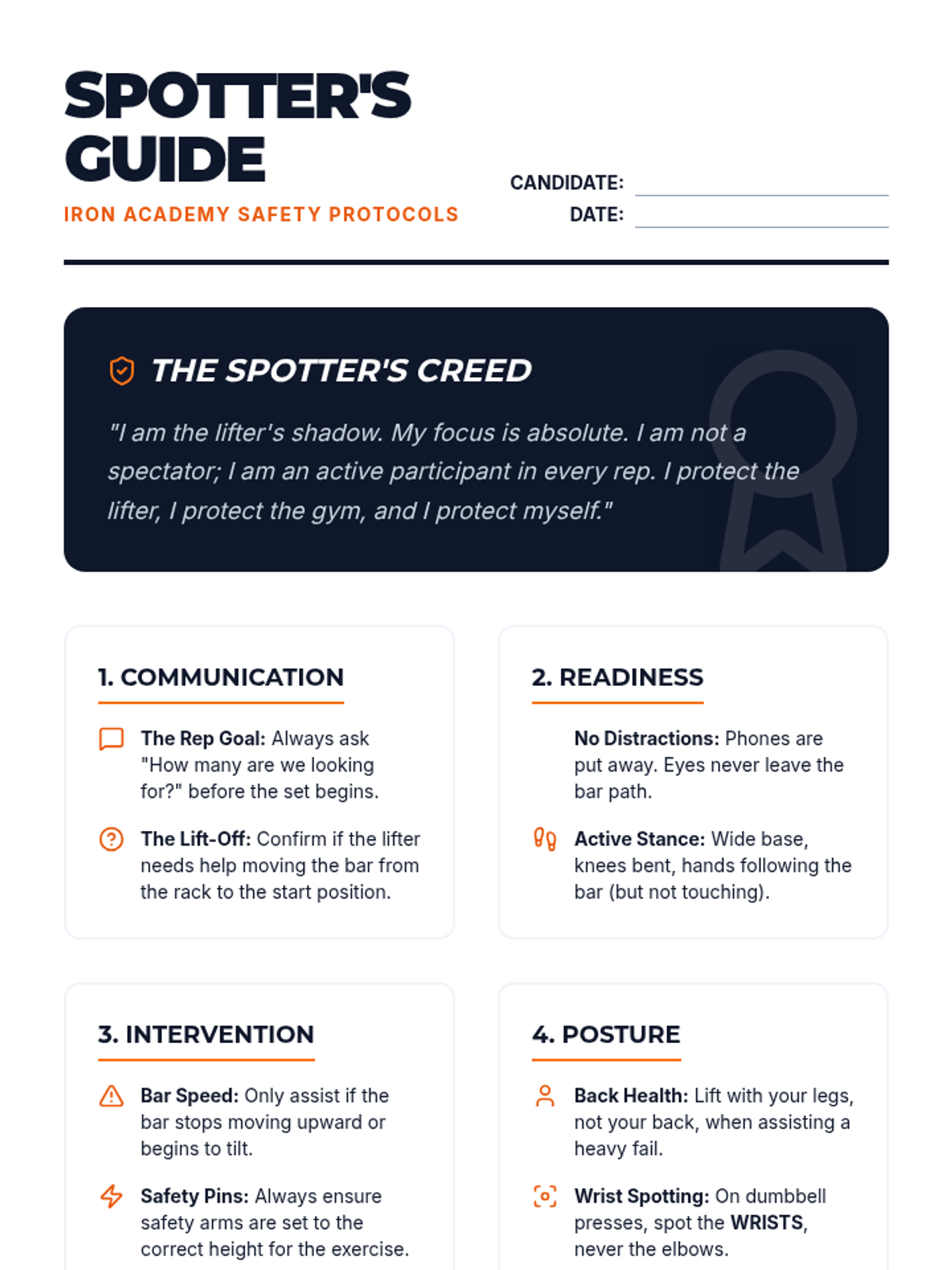
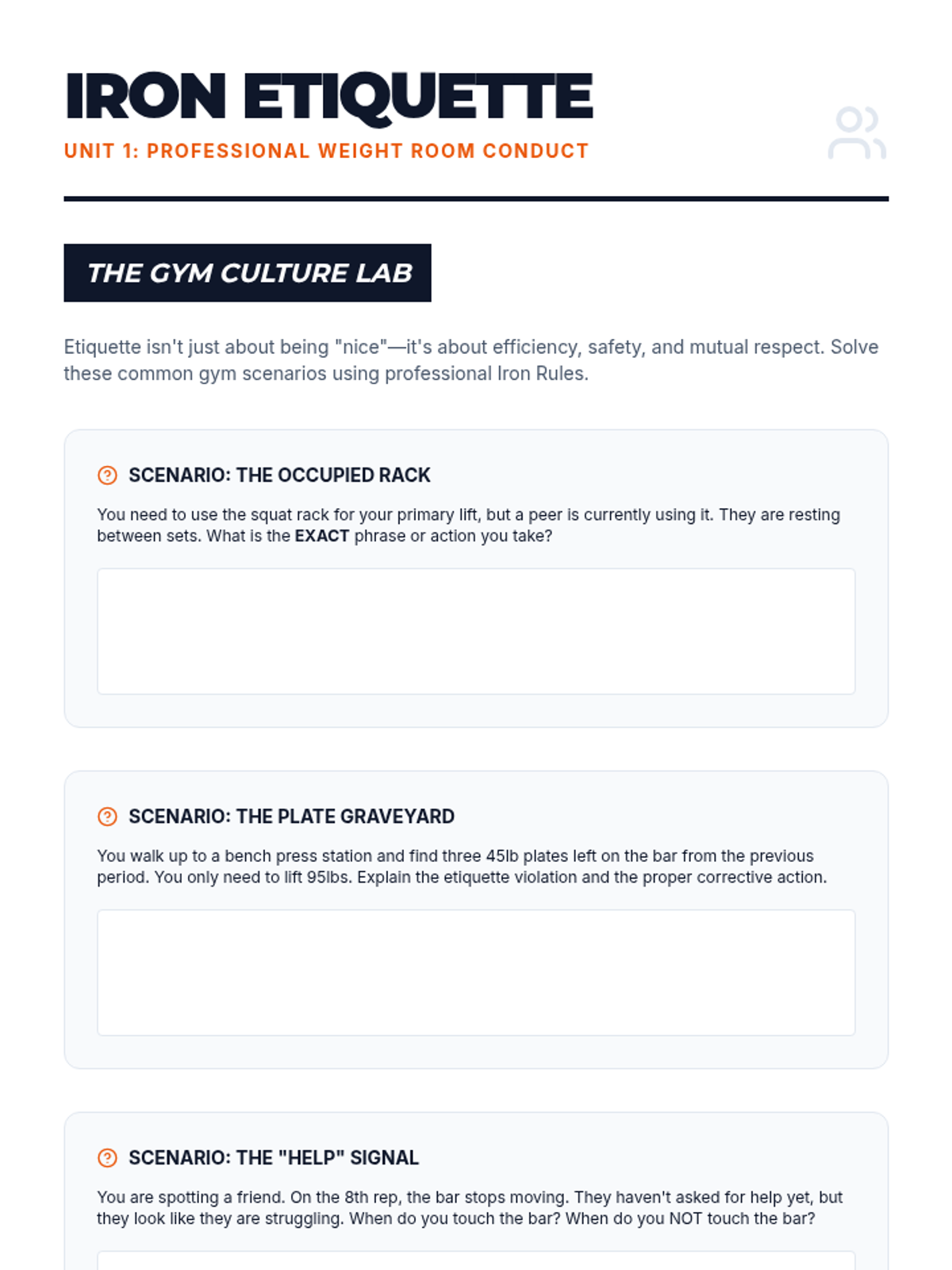
Focuses on weight room safety, professional etiquette, and the critical mechanics of spotting to ensure a safe training environment.
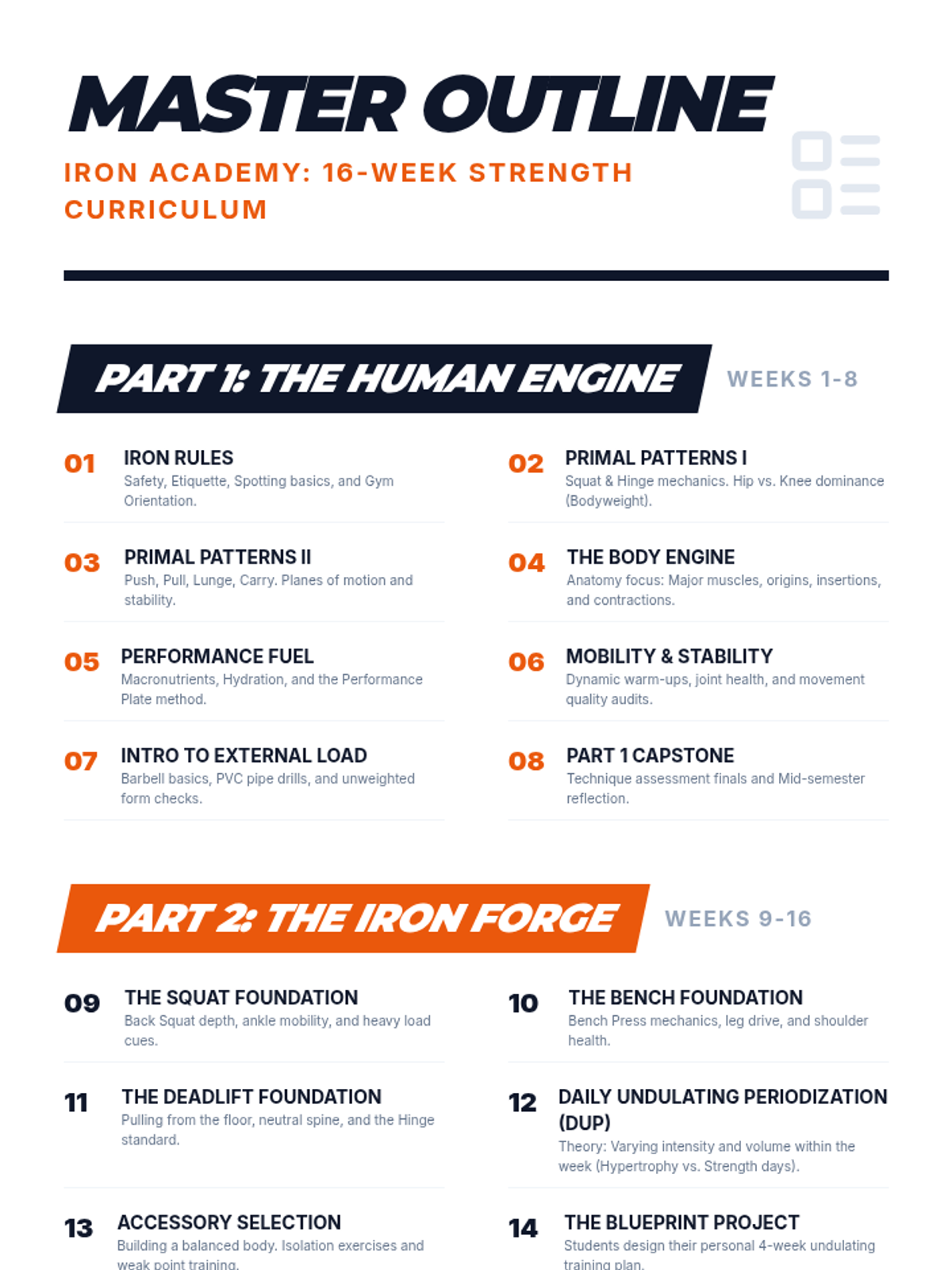
Planning and organizational resources for the 16-week Iron Academy curriculum, including the master week-by-week outline.
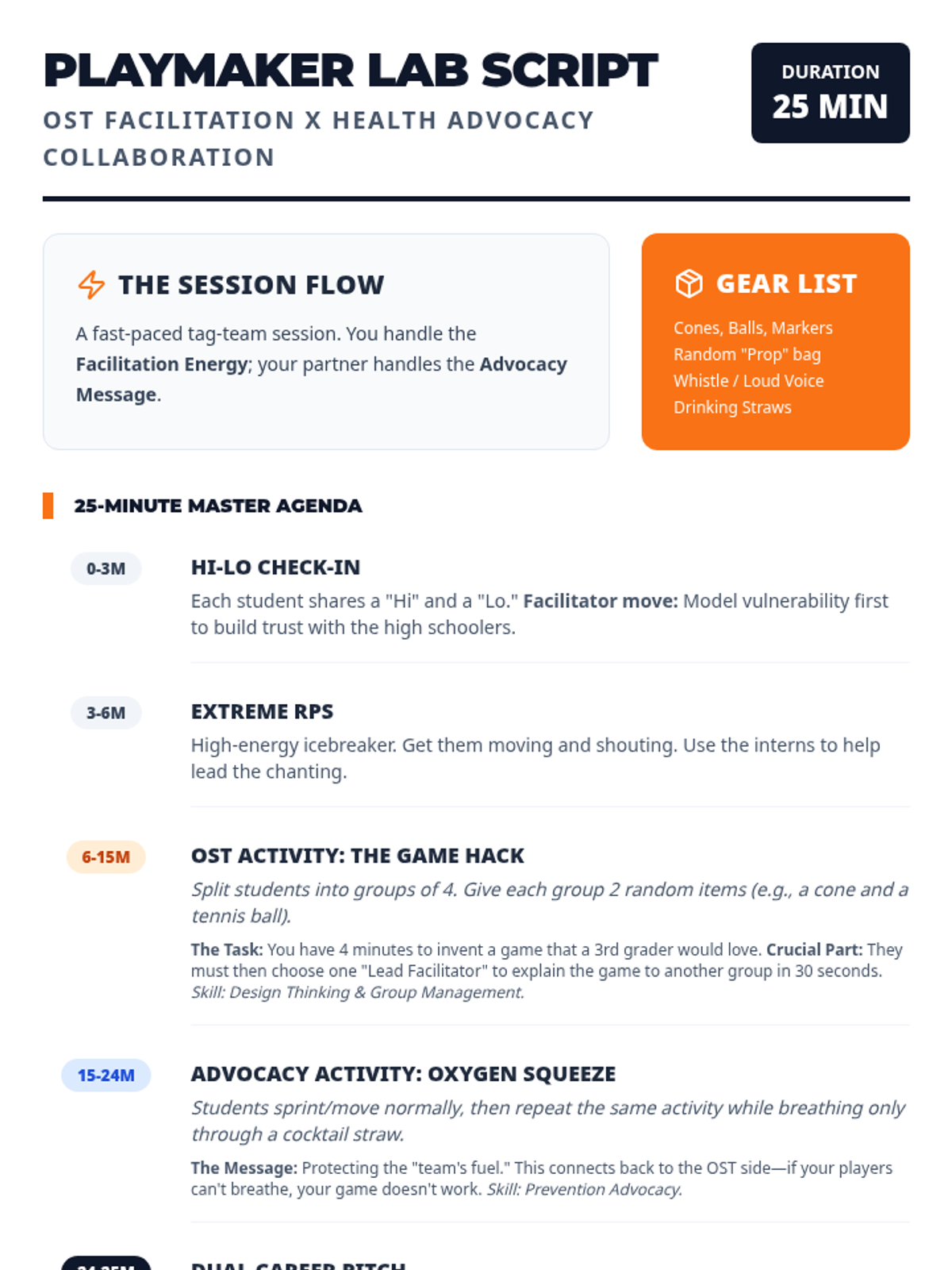
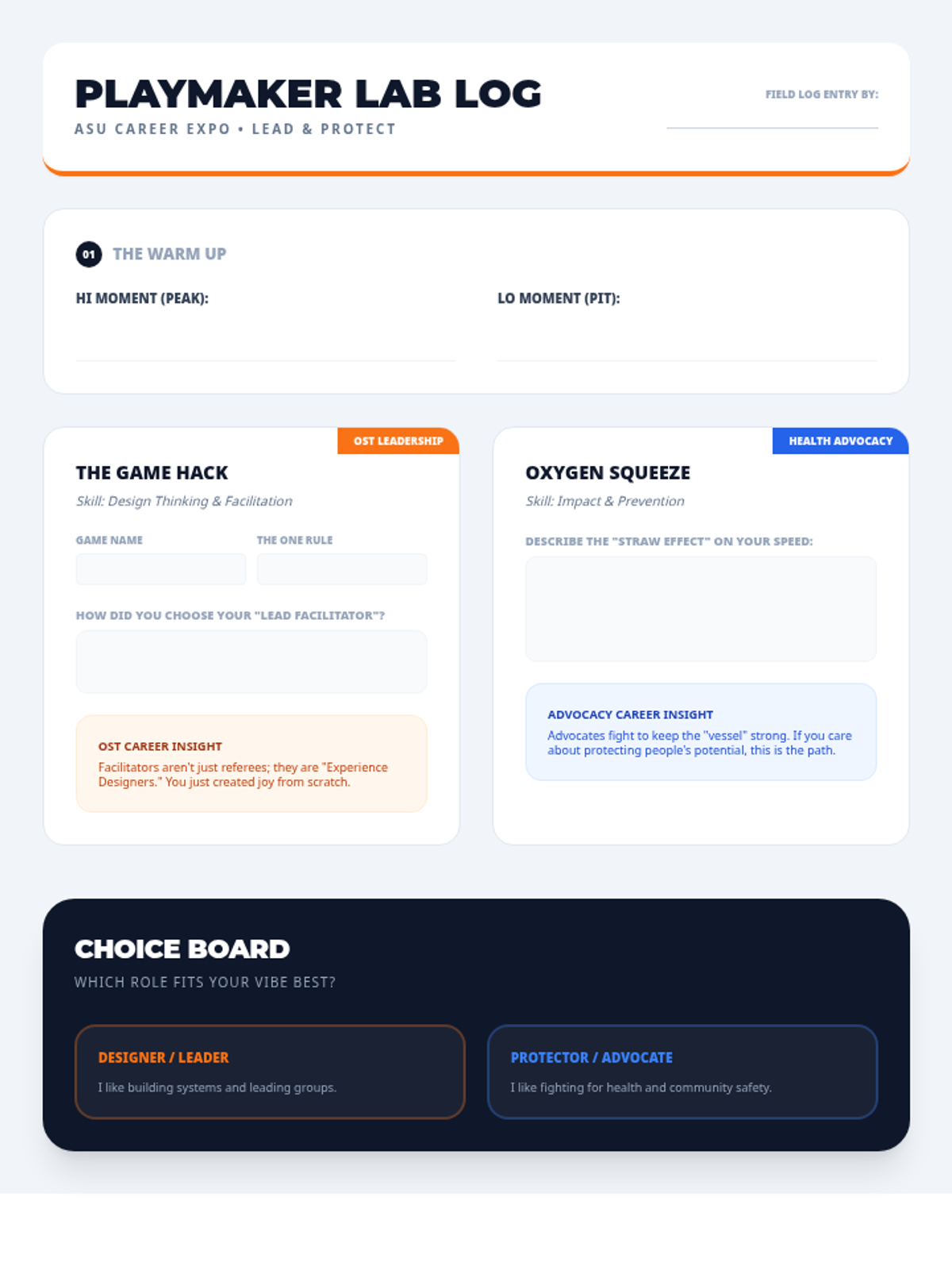
A fast-paced, 25-minute experiential session where students explore careers in out-of-school-time (OST) and health advocacy. In collaboration with an anti-vaping professional, students learn how to use play and game design to promote healthy choices and lead community-wide change.
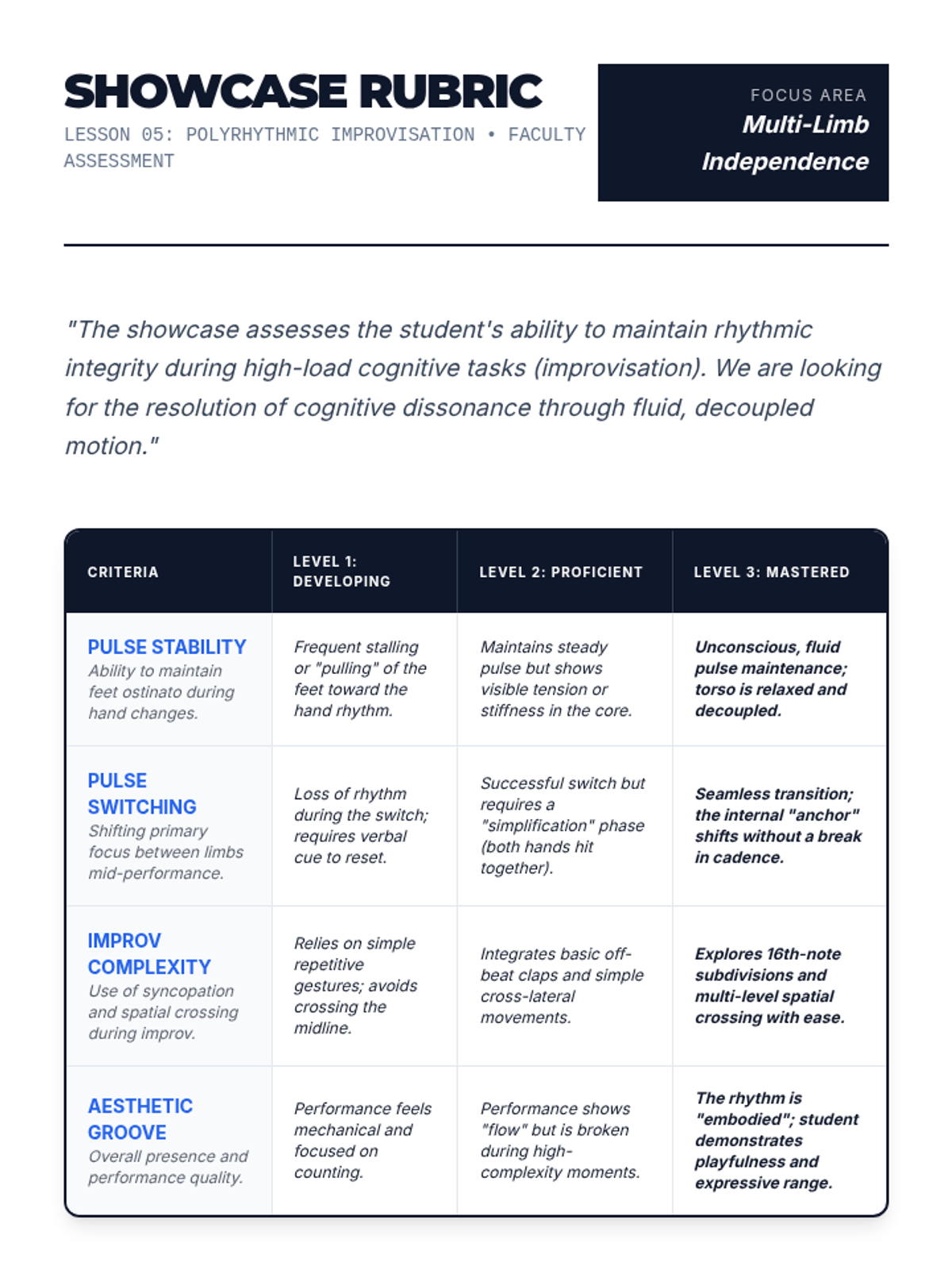
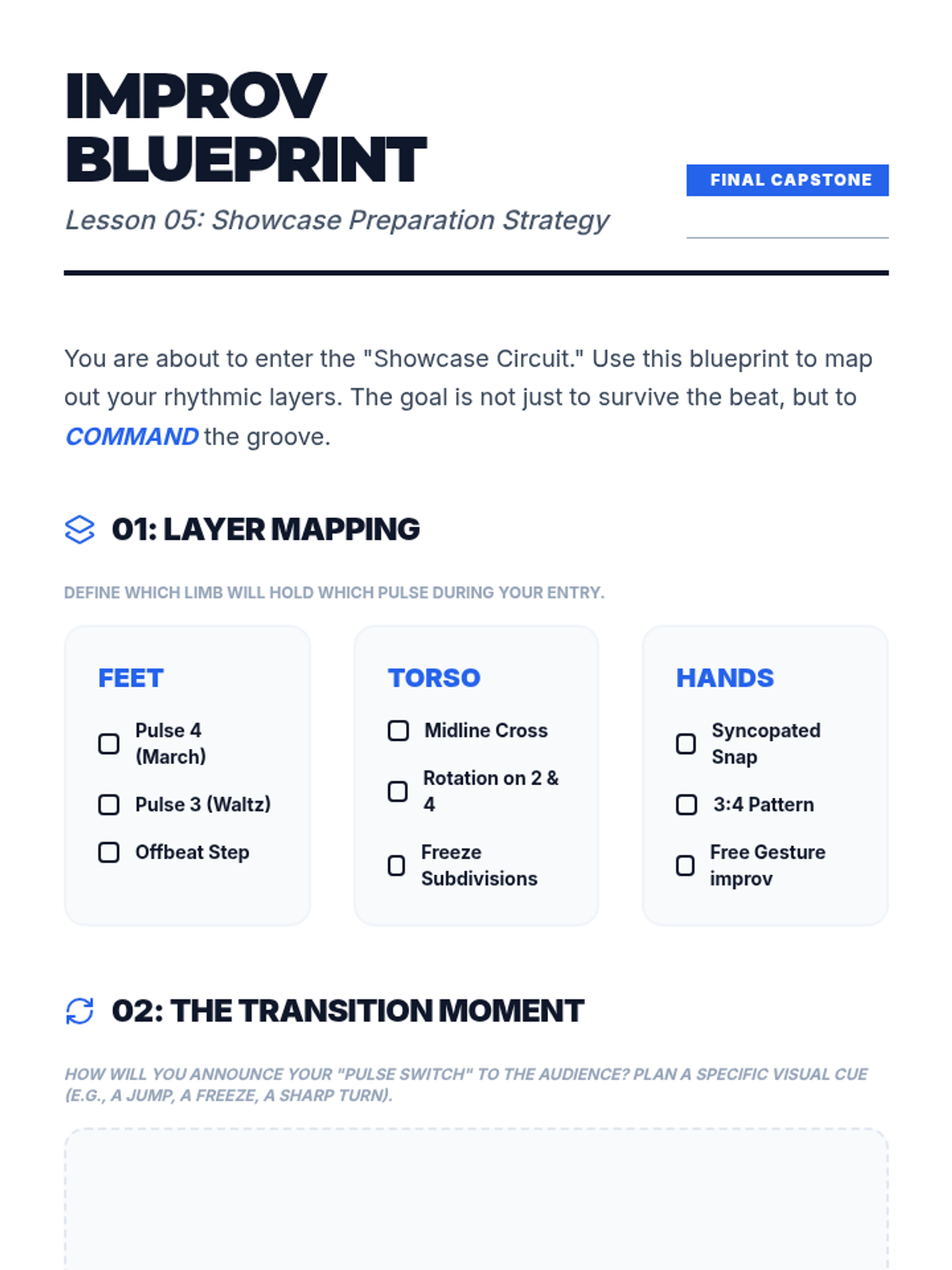
The capstone lesson where students improvise movement within a strict polyrhythmic framework, demonstrating mastery of pulse switching and groove maintenance.
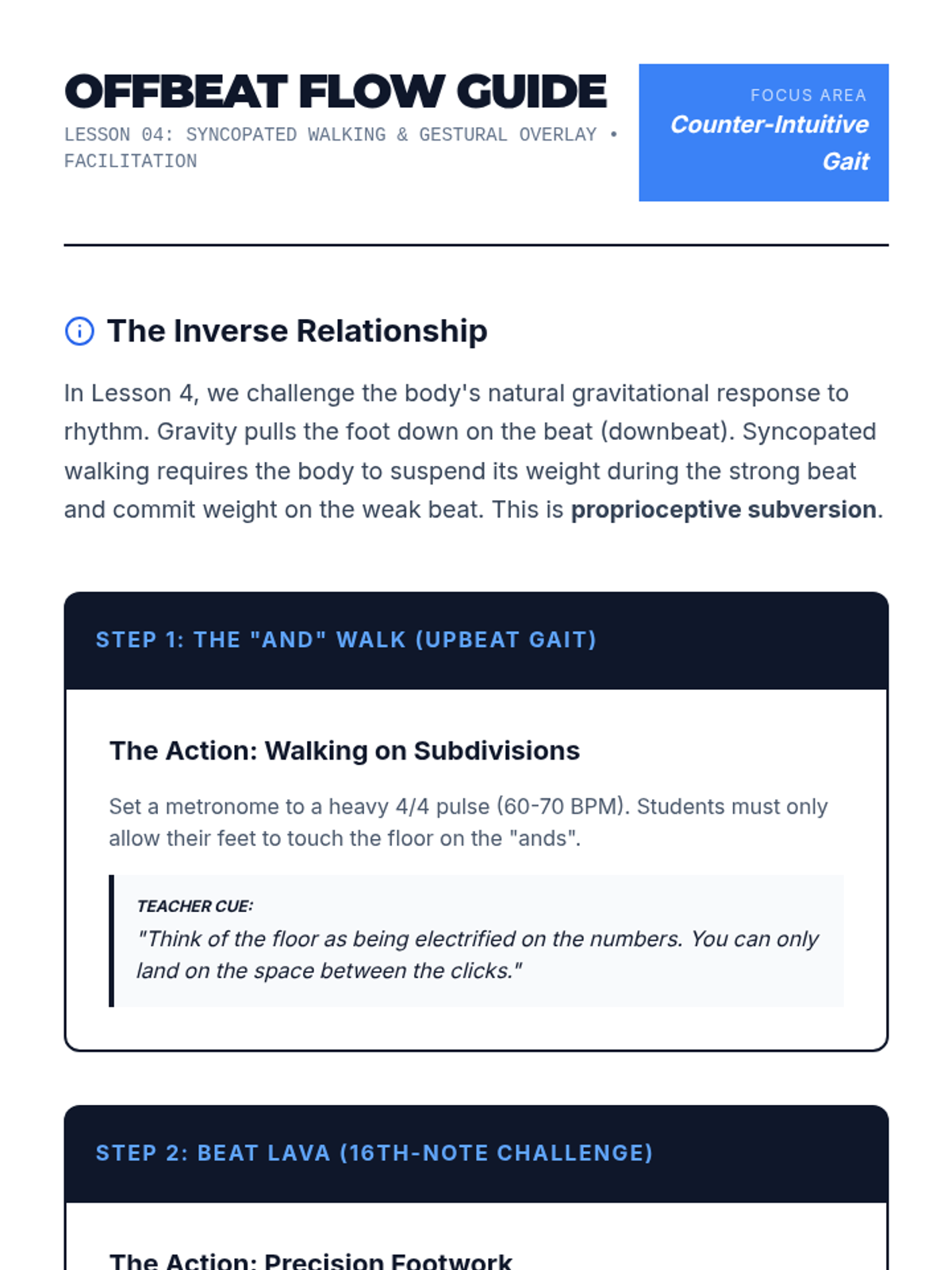
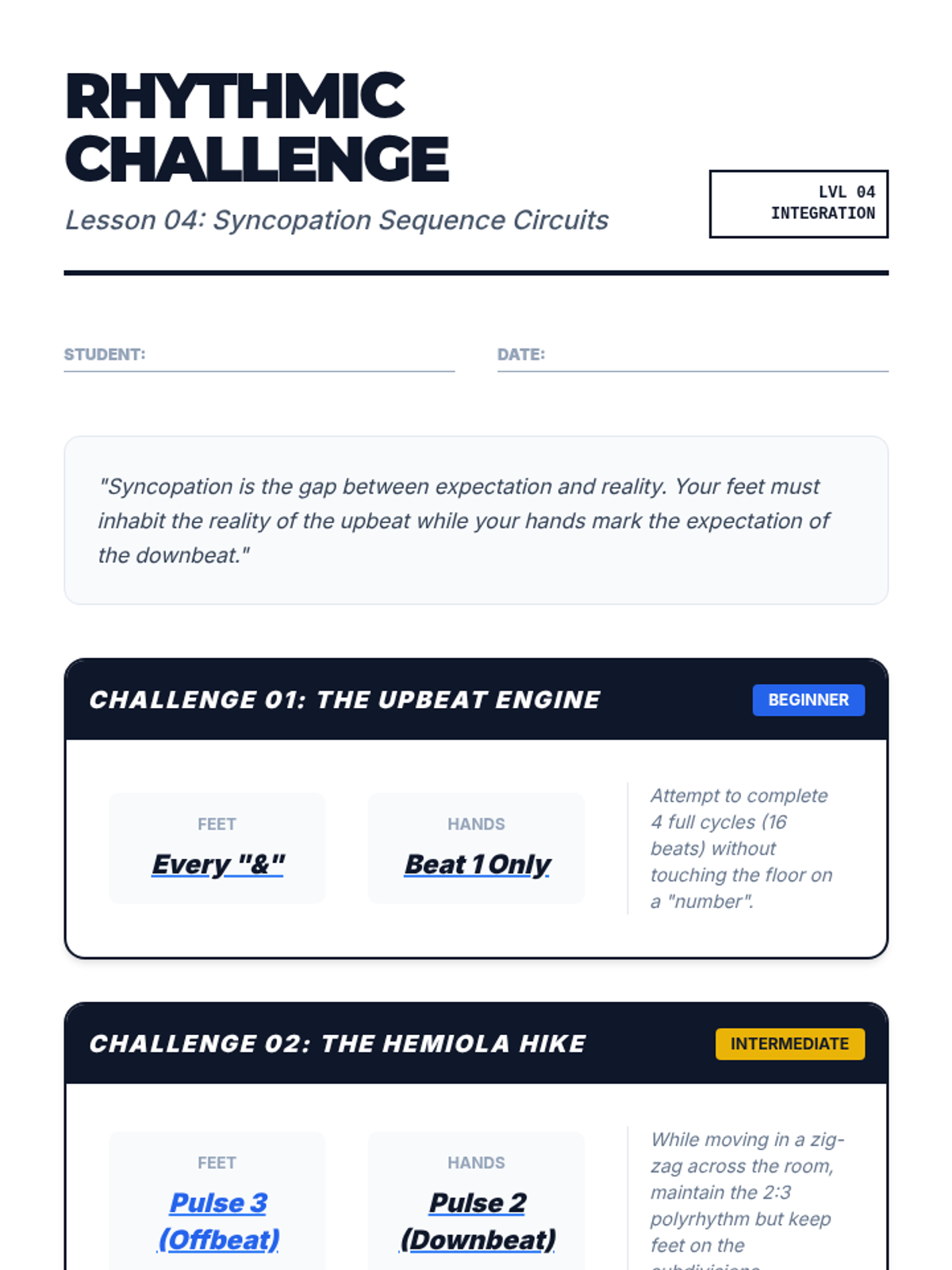
Students practice 'walking the syncopation' by stepping on off-beats while gesturing on downbeats, reversing natural motor tendencies.
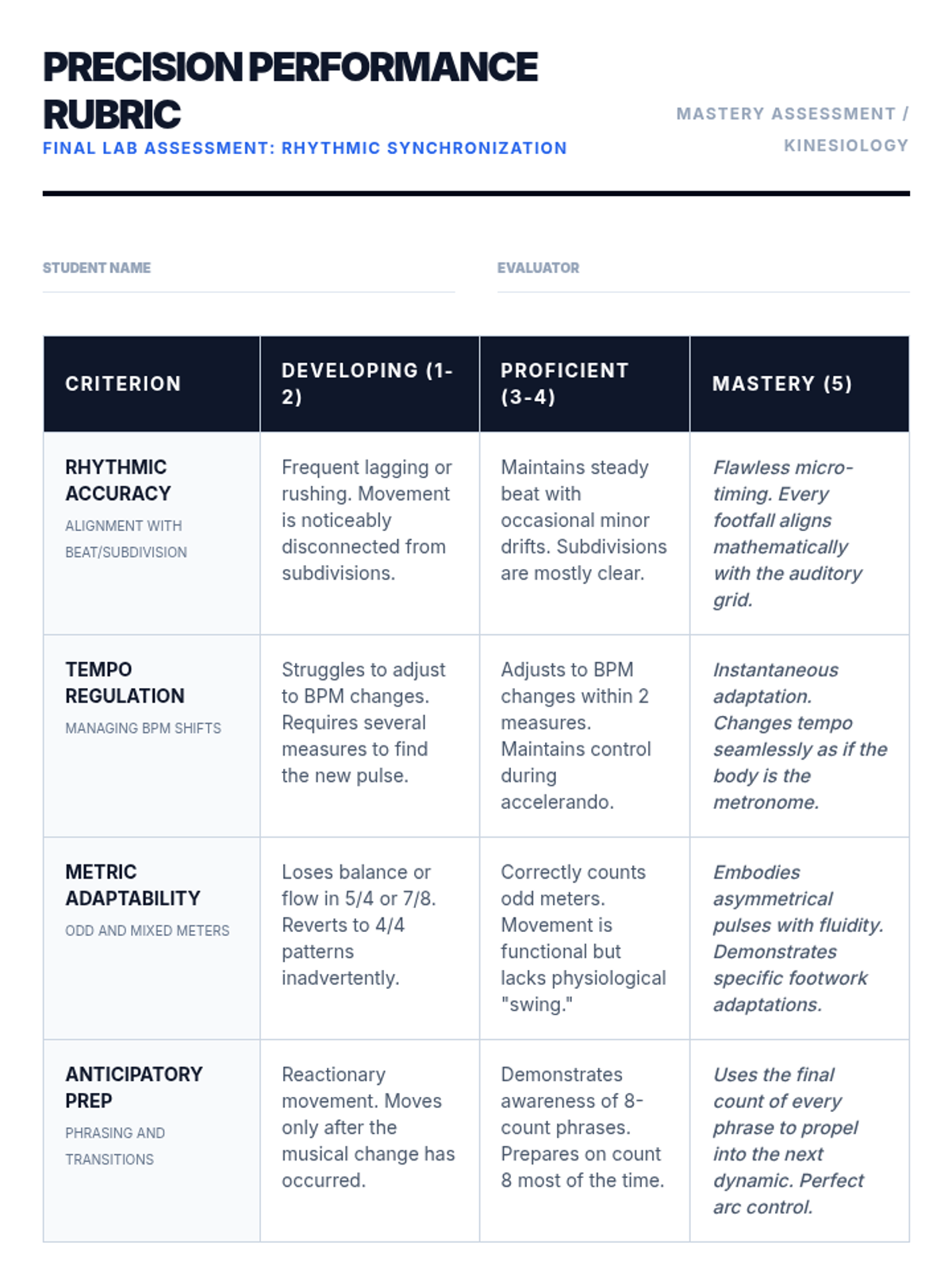
A culminating performance lab evaluating adaptability, tempo regulation, and precision across varying musical environments.
Challenging rhythmic symmetry through non-standard time signatures (5/4, 7/8) and adapting locomotor movements to irregular structures.
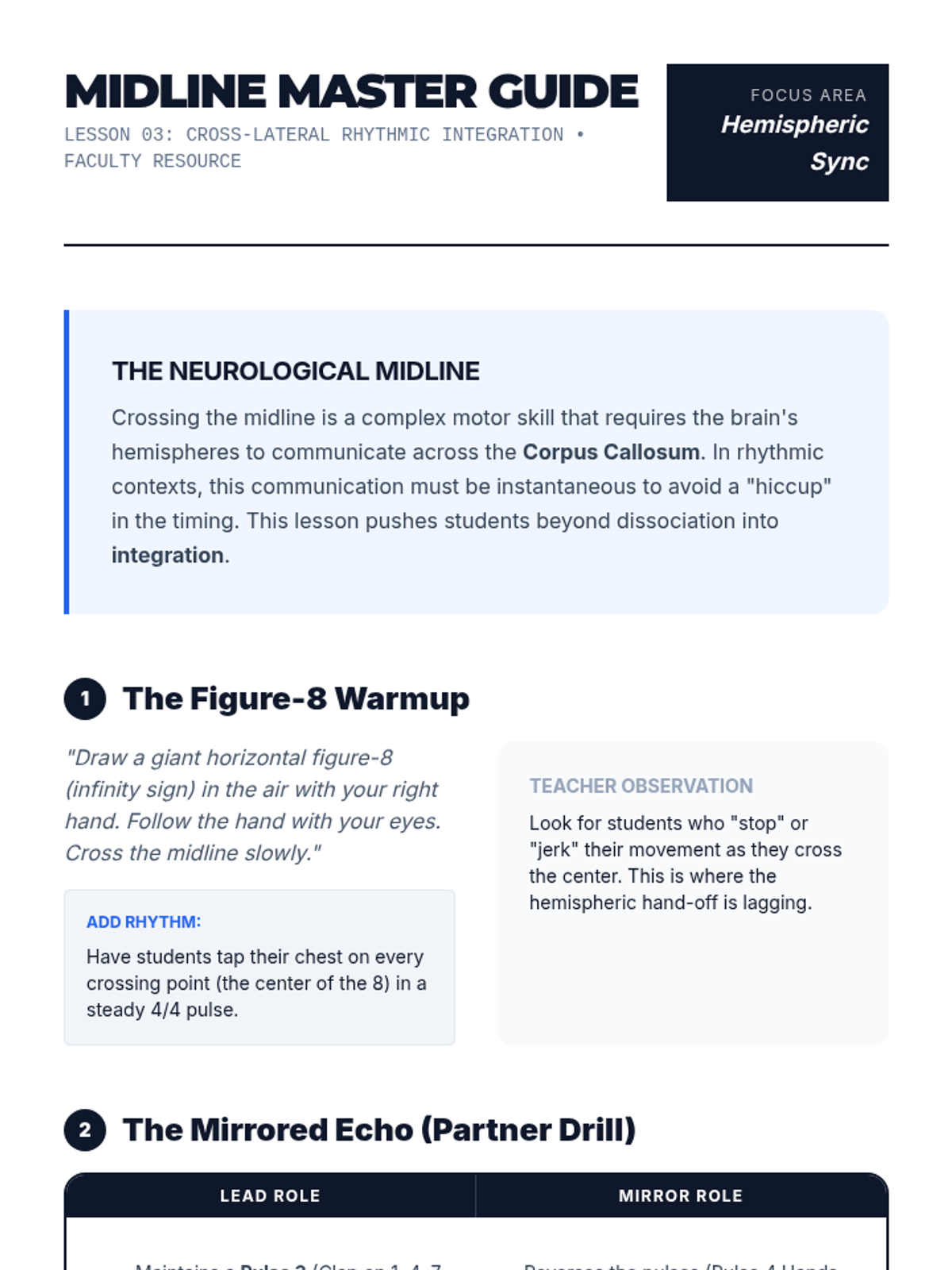
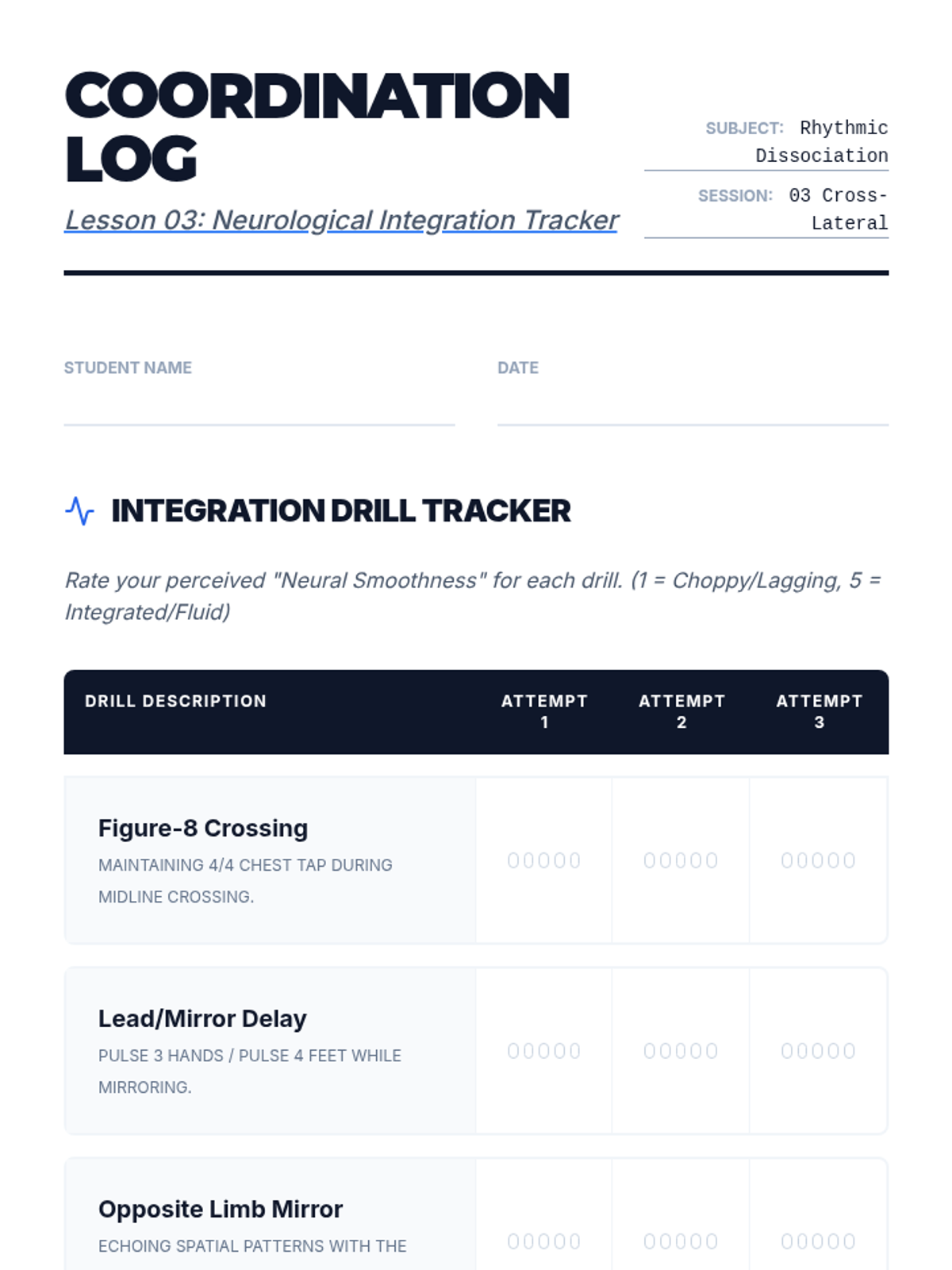
Students practice crossing the midline while maintaining rhythmic distinctness to enhance communication between the brain's left and right hemispheres.
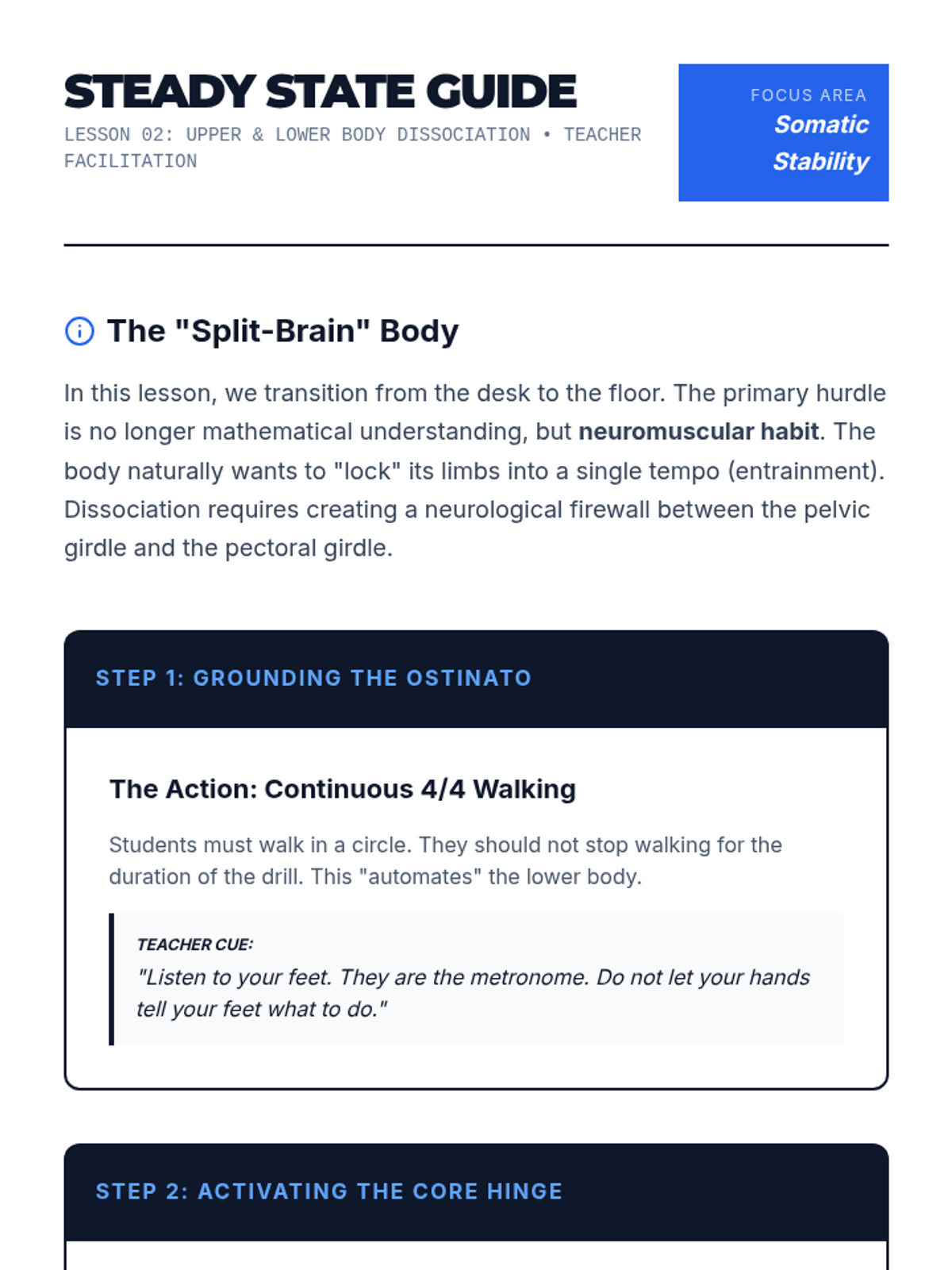
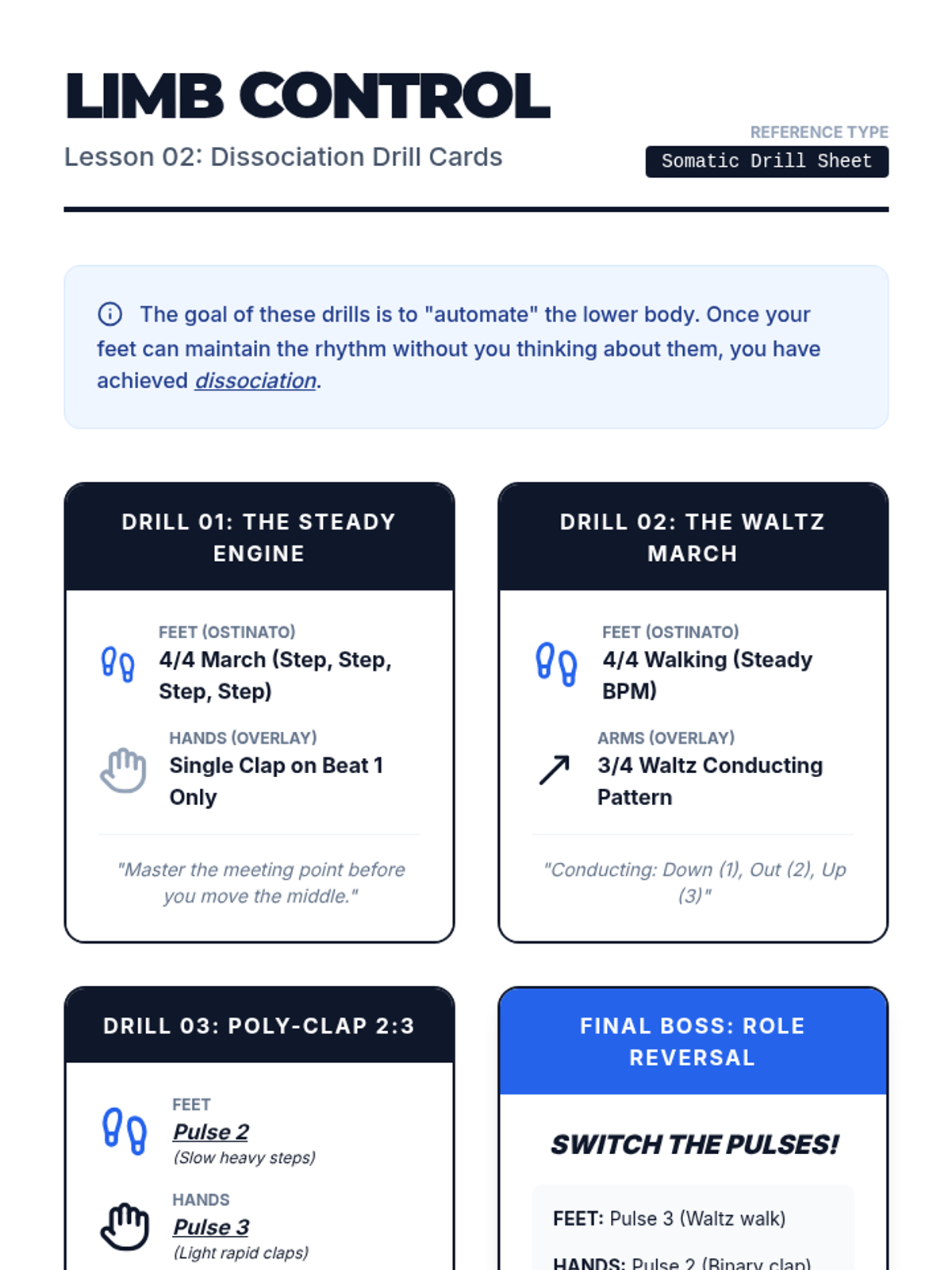
This lesson transitions rhythmic theory to standing movement, focusing on maintaining a grounded foot ostinato while executing contrasting upper-body gestures.
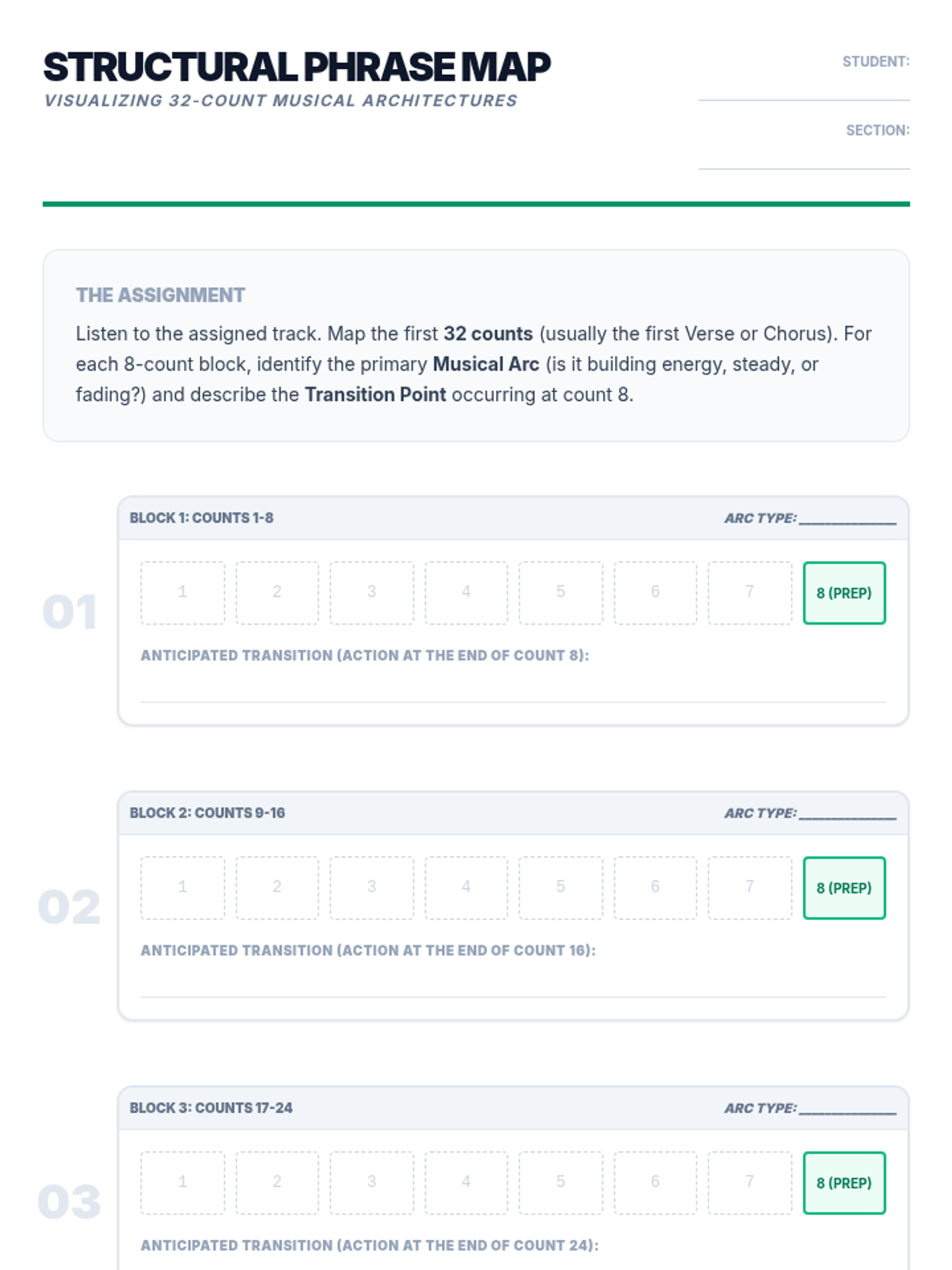
Transitioning from individual beats to larger musical sentences, students learn to identify and move within 8-count and 32-count phrasing.
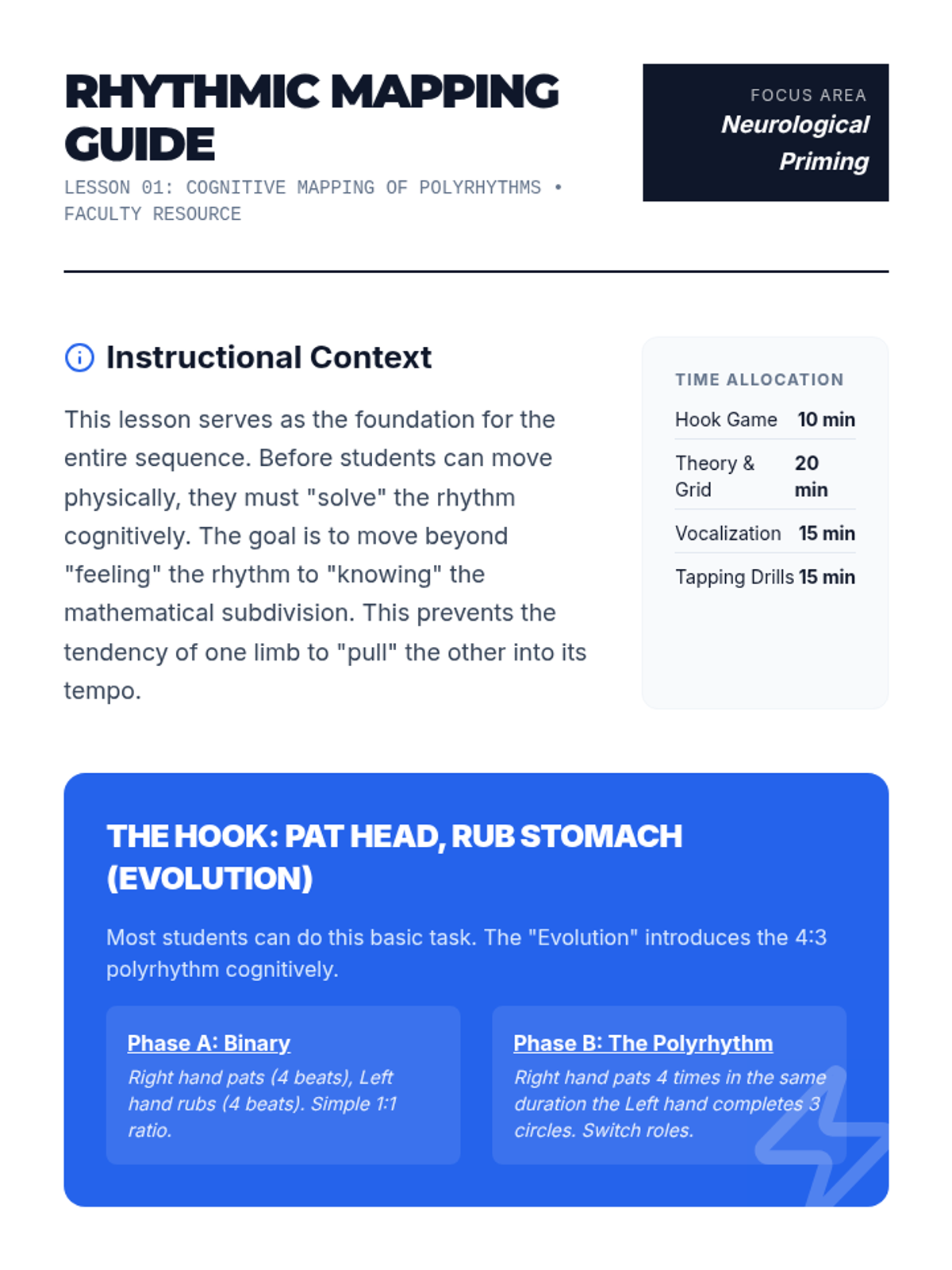
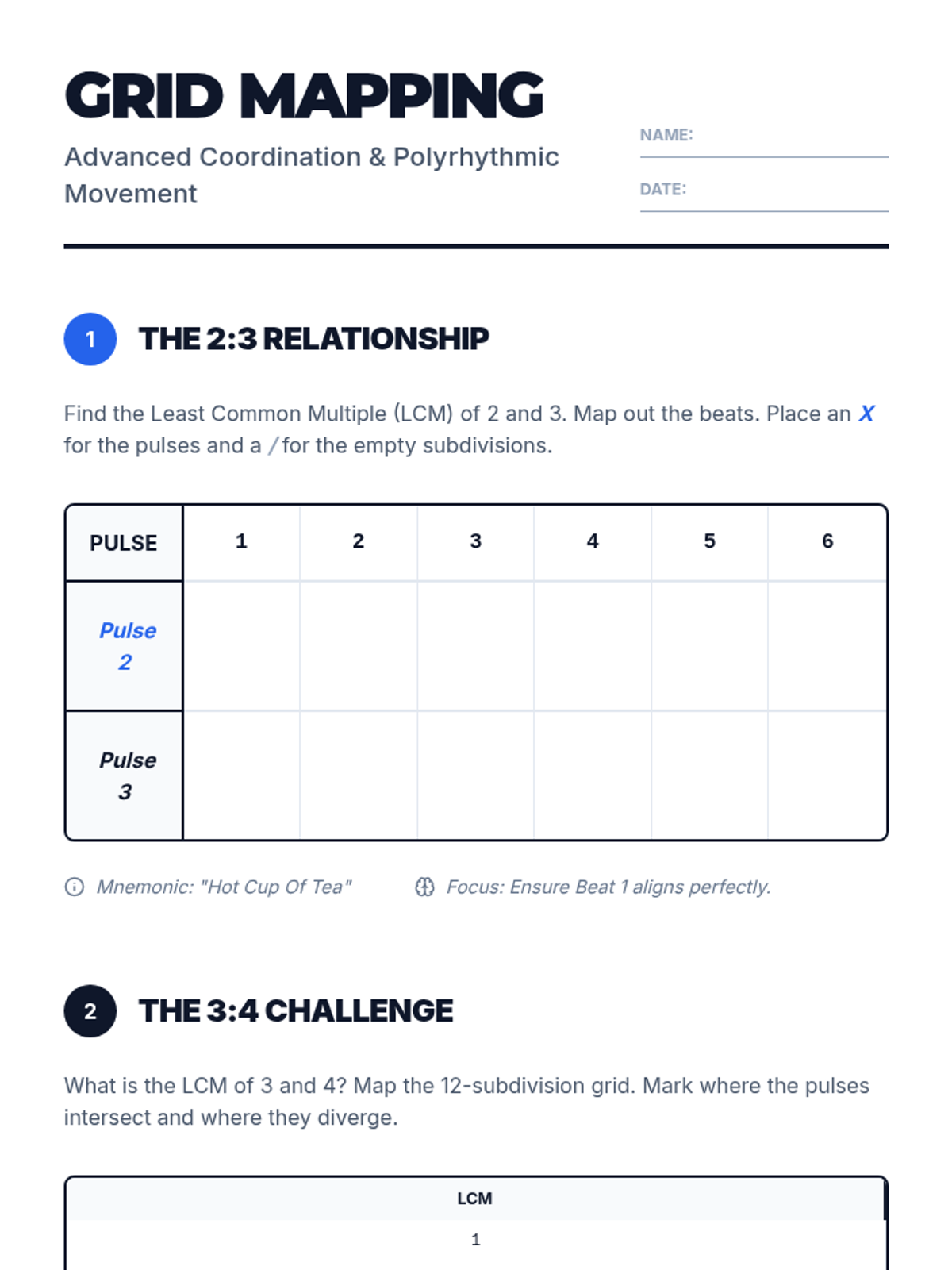
Students explore the mathematical relationships between conflicting rhythms (2:3, 3:4) using a grid method for visualization before applying them to vocalizations and hand tapping.
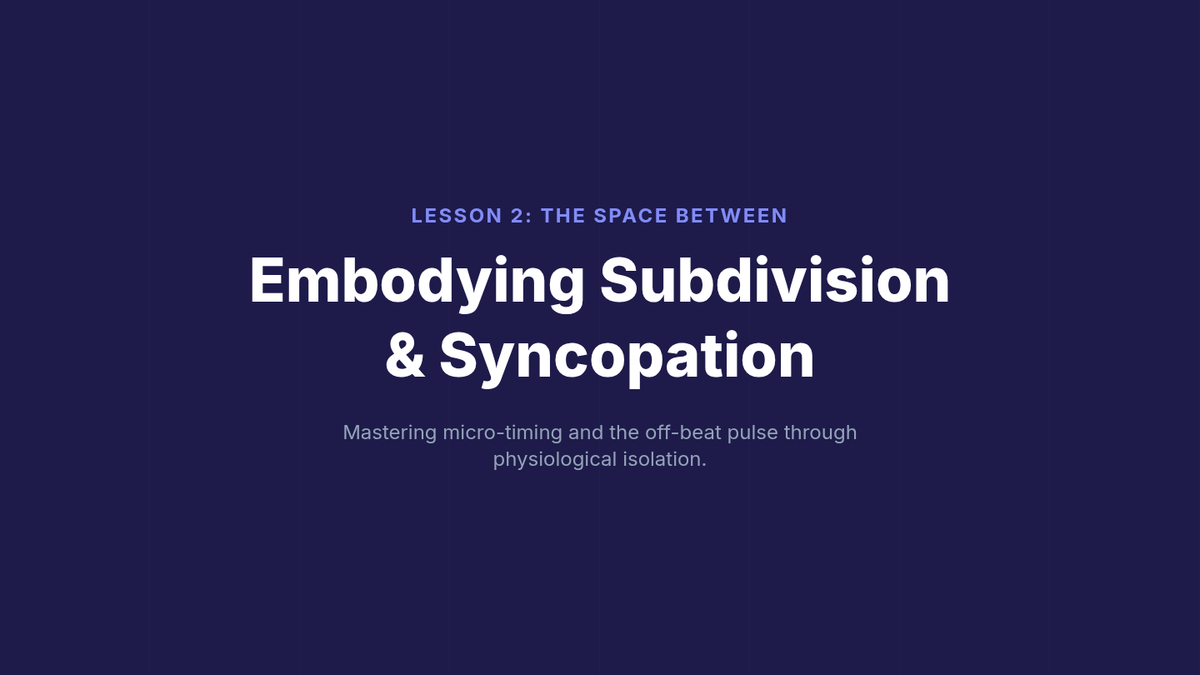
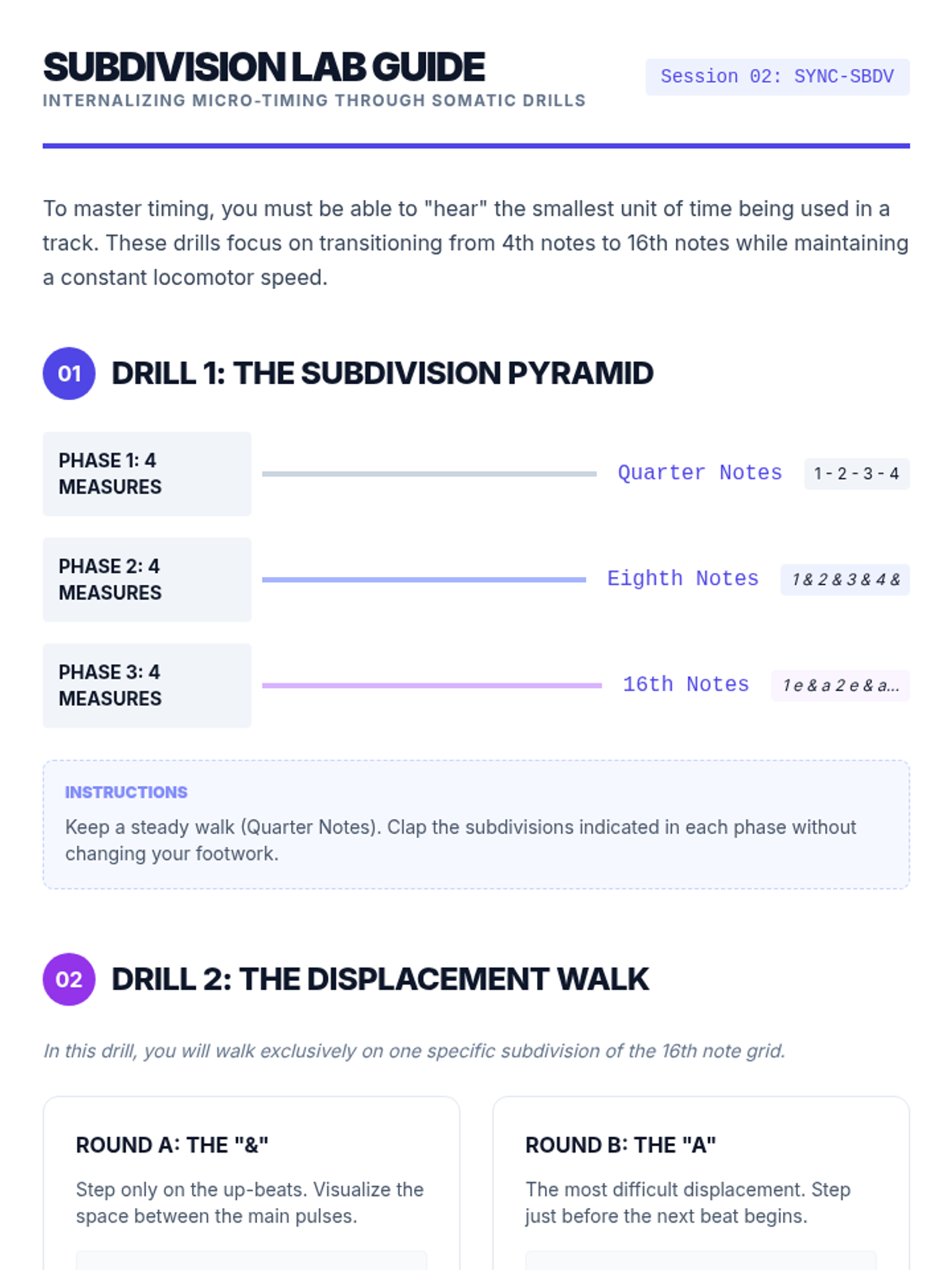
Exploration of the spaces between beats, focusing on micro-timing accuracy through subdivisions and syncopated movement patterns.
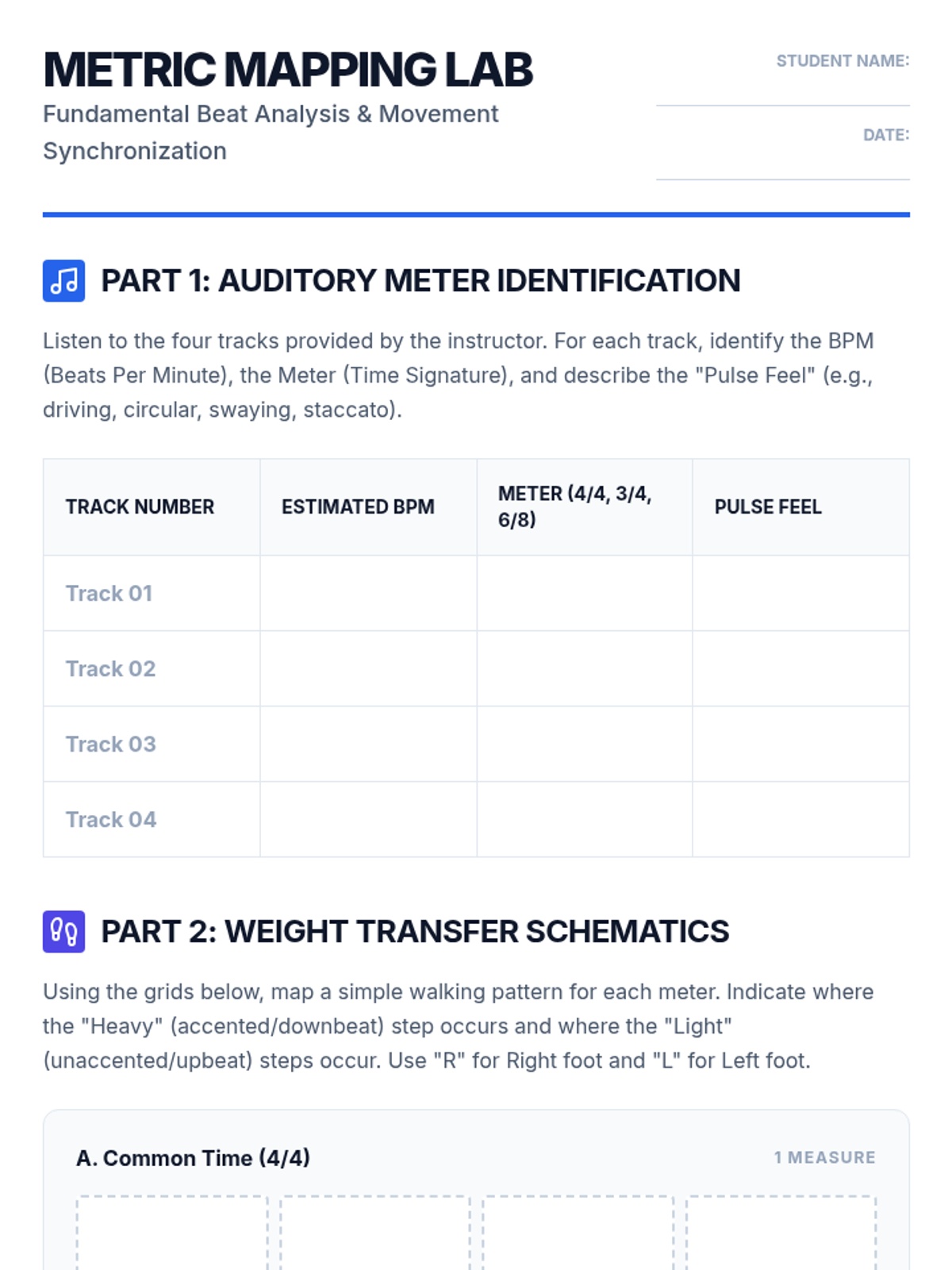
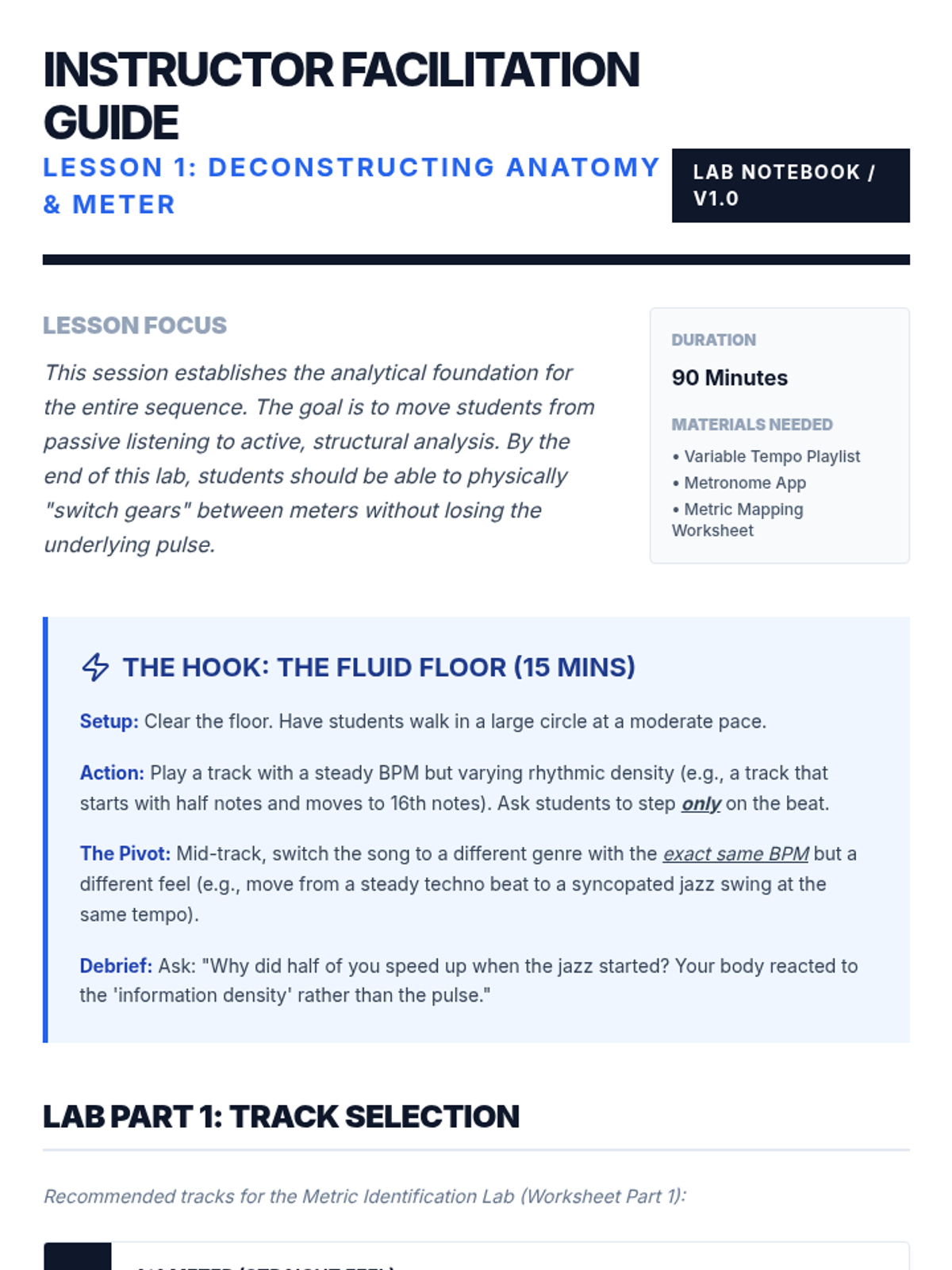
Students analyze the hierarchy of musical time, distinguishing between beat, tempo, meter, and rhythm, and map them to locomotor patterns.
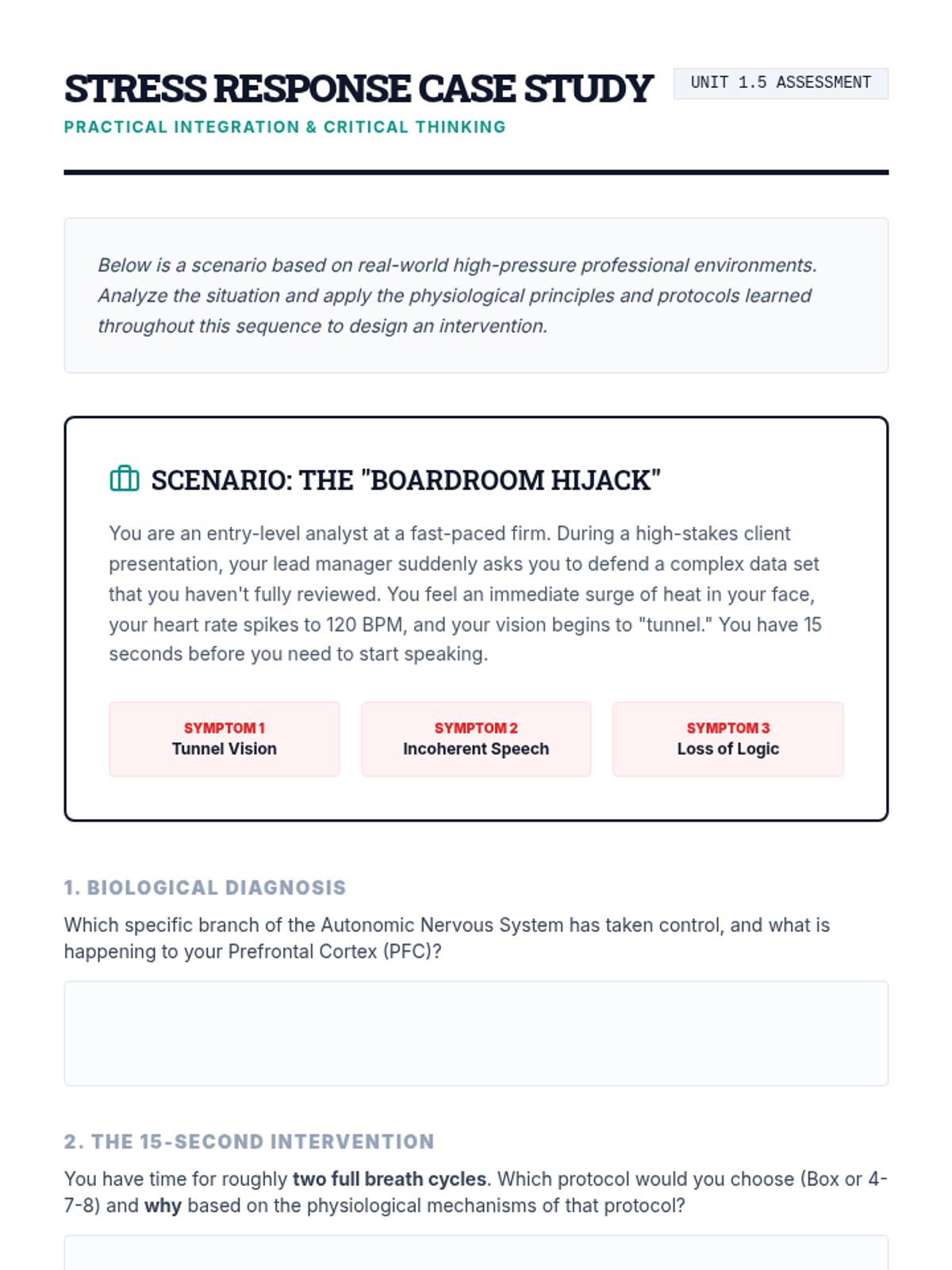
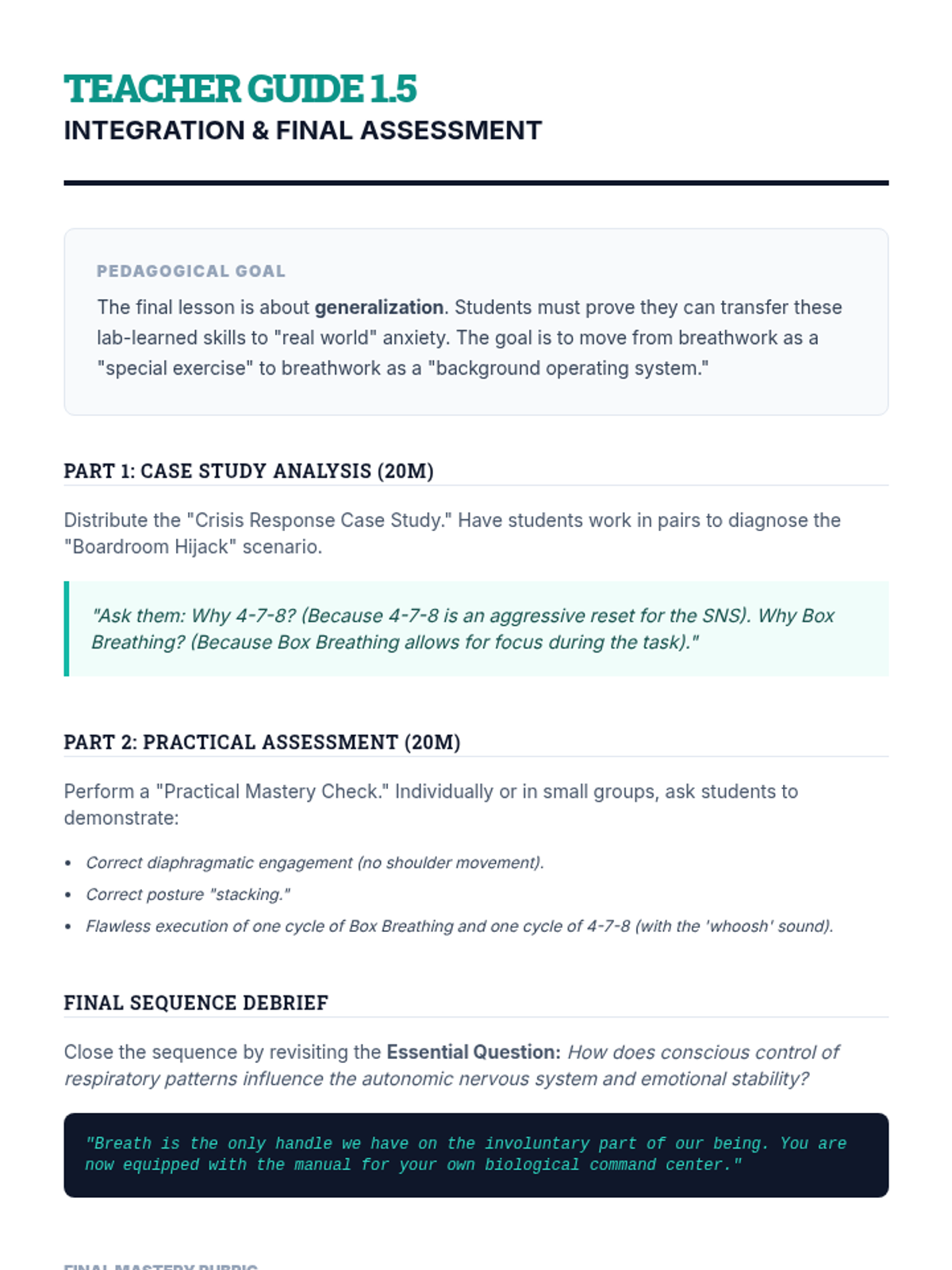
Synthesize learned techniques into a rapid-response protocol for high-stress scenarios using case studies and practical simulations.
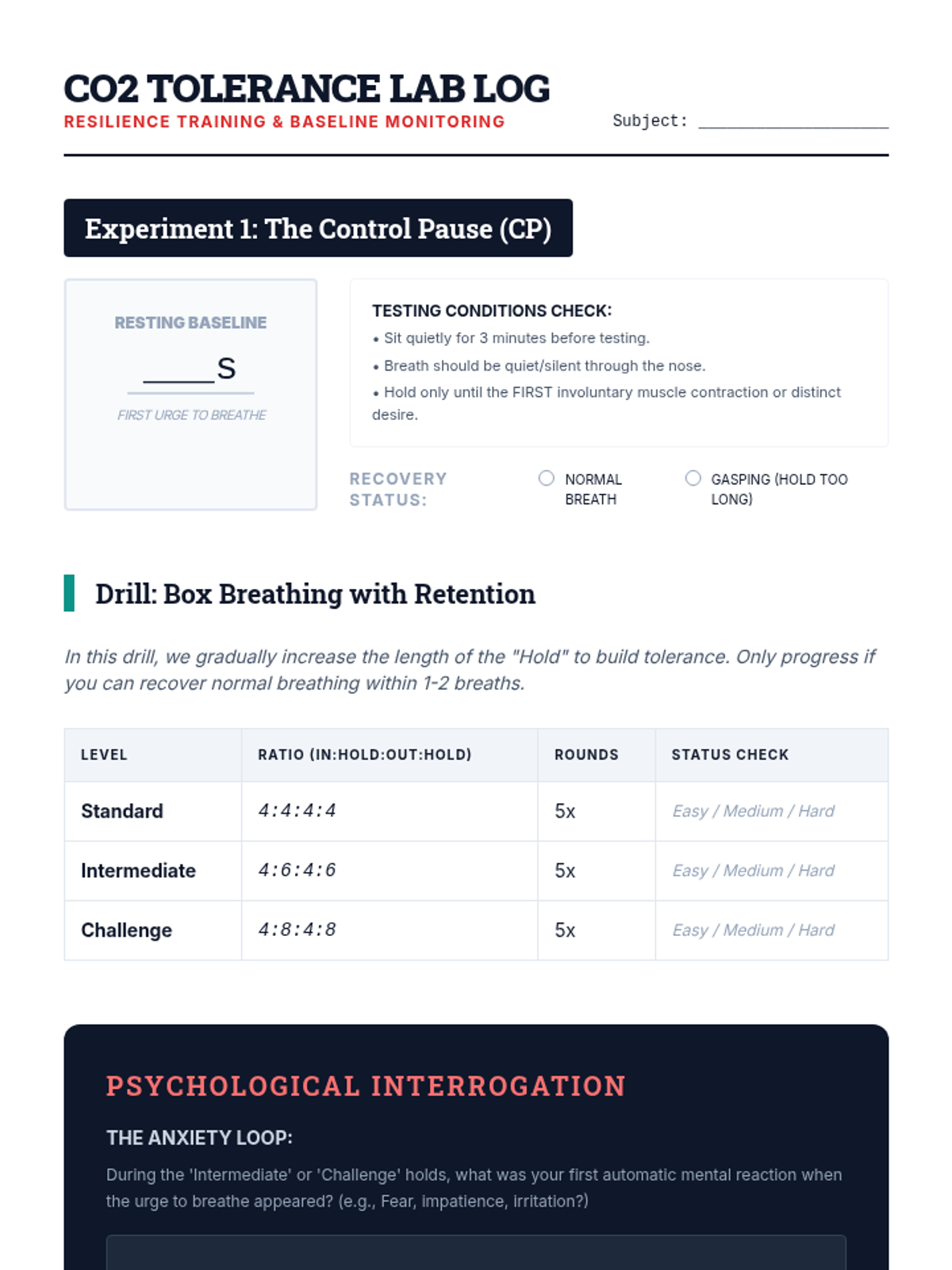
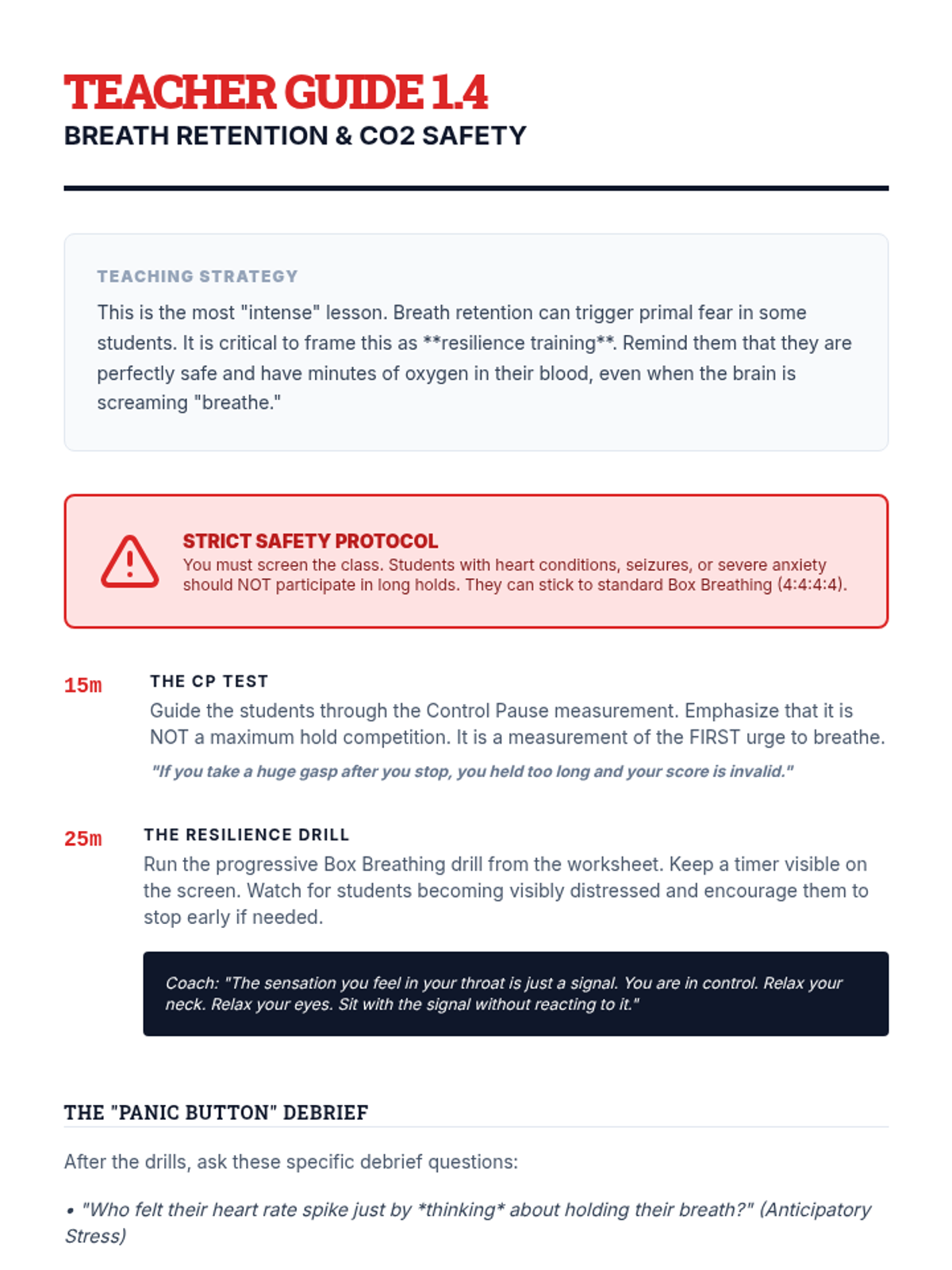
Introduce CO2 tolerance and breath retention as tools for improving psychological resilience and reducing breathlessness-induced anxiety.
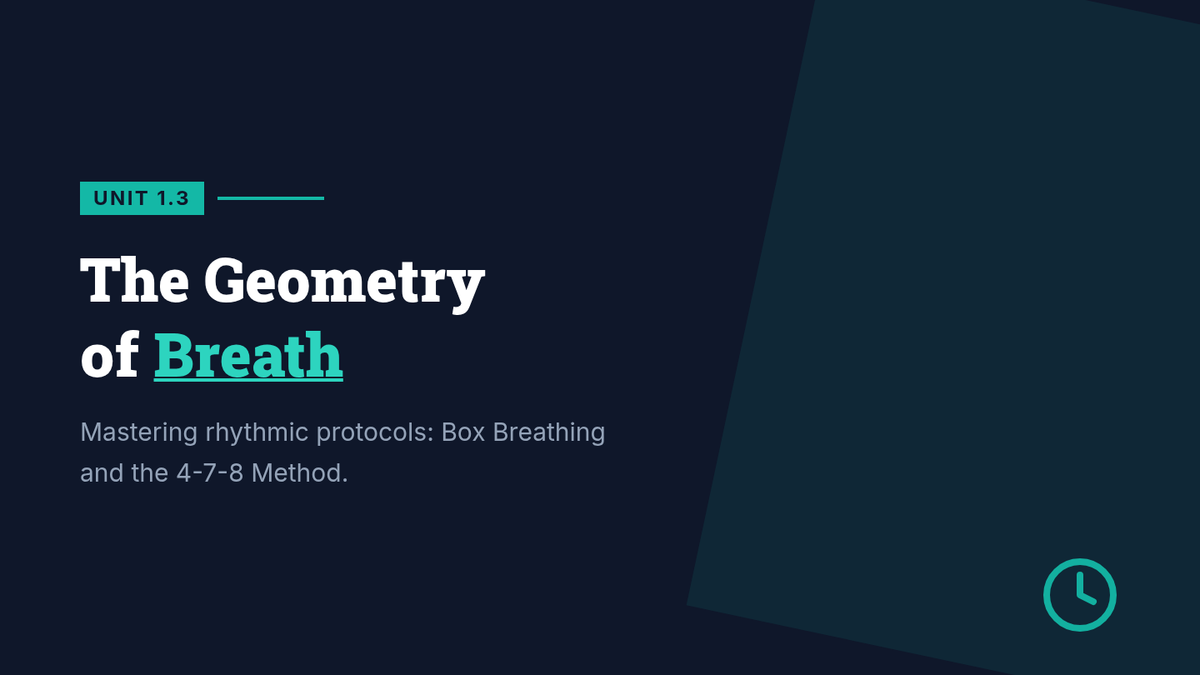
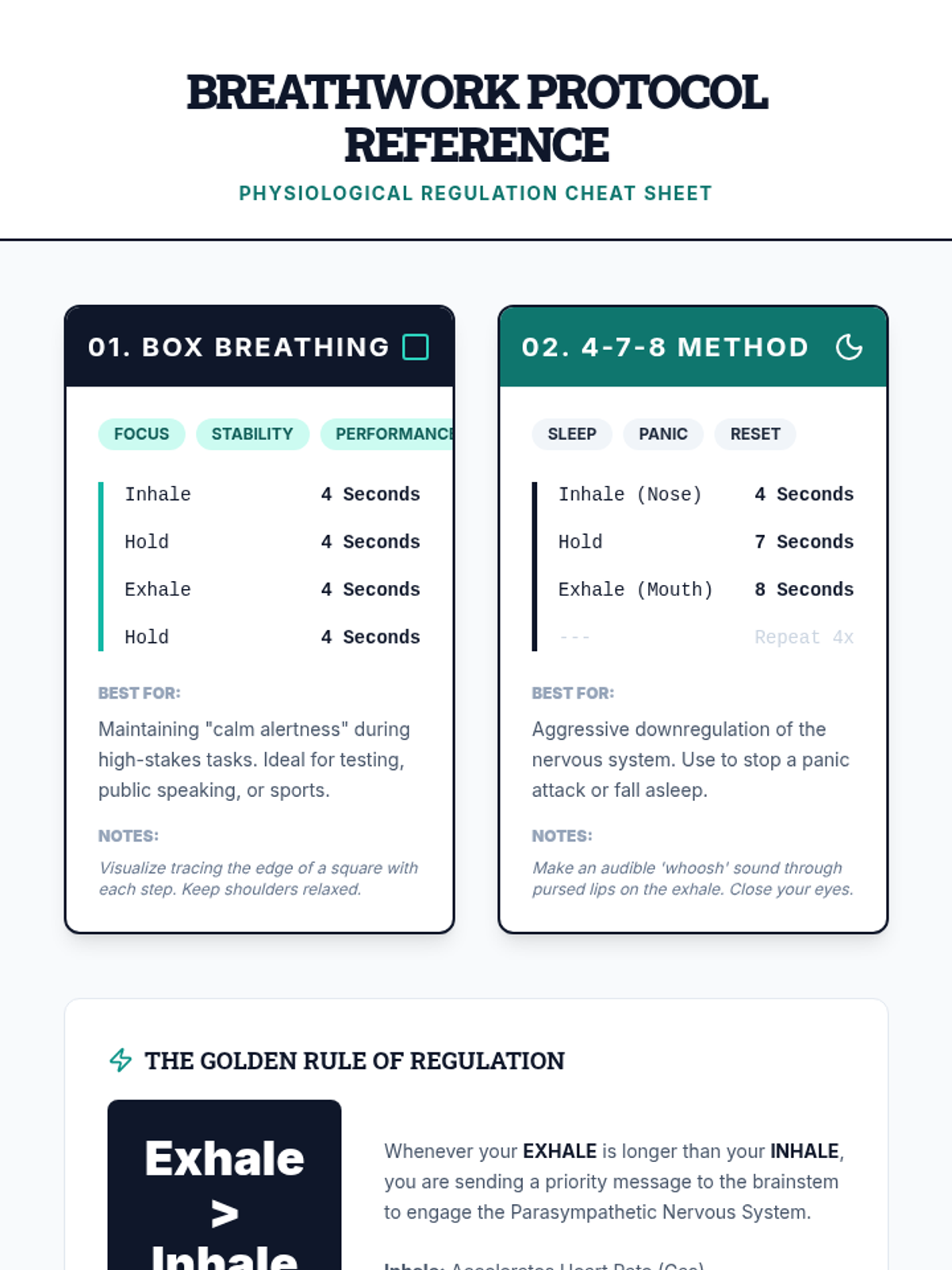
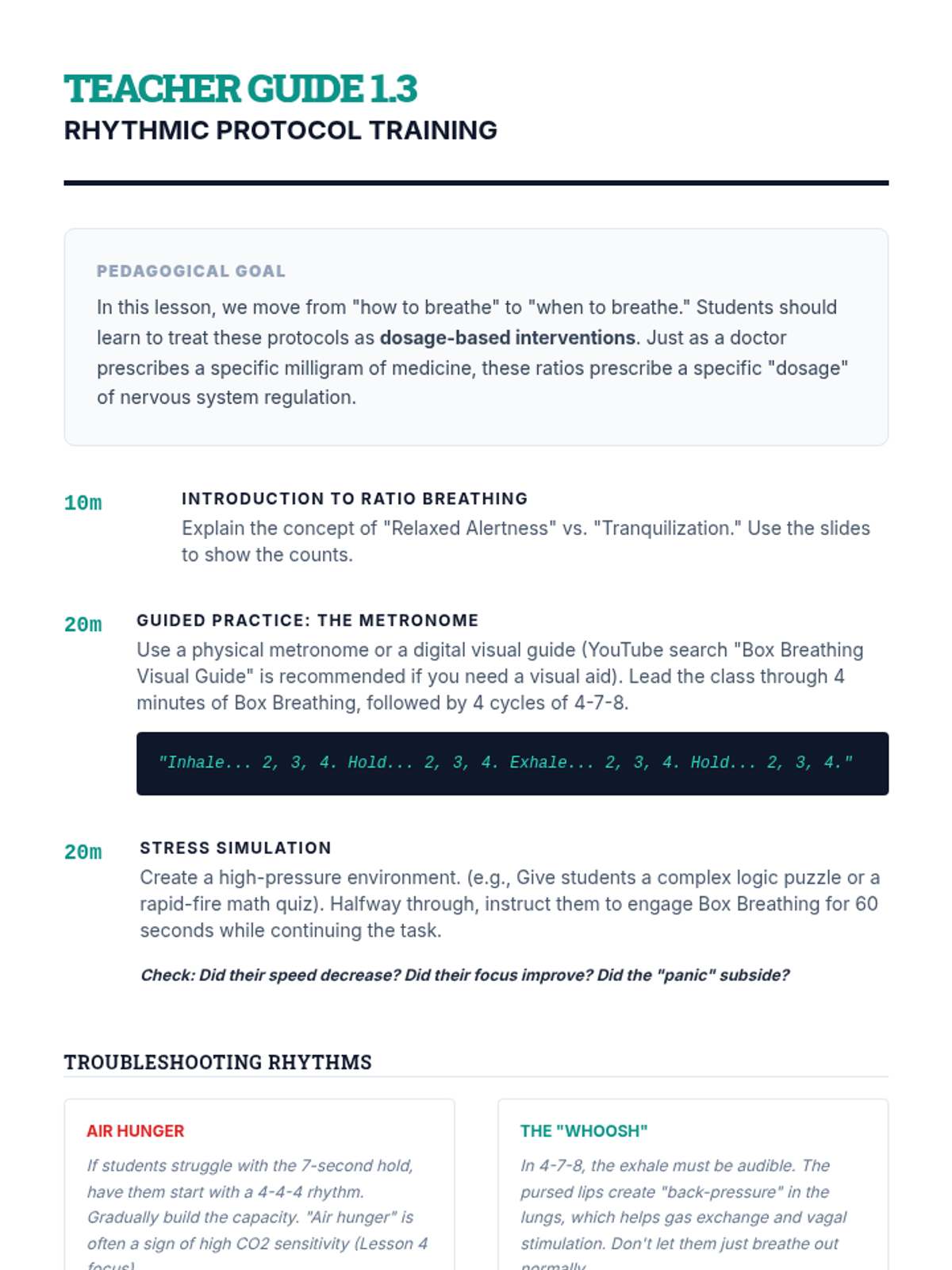
Practice structured rhythmic techniques such as Box Breathing and the 4-7-8 method to regulate emotional states and manage acute stress.
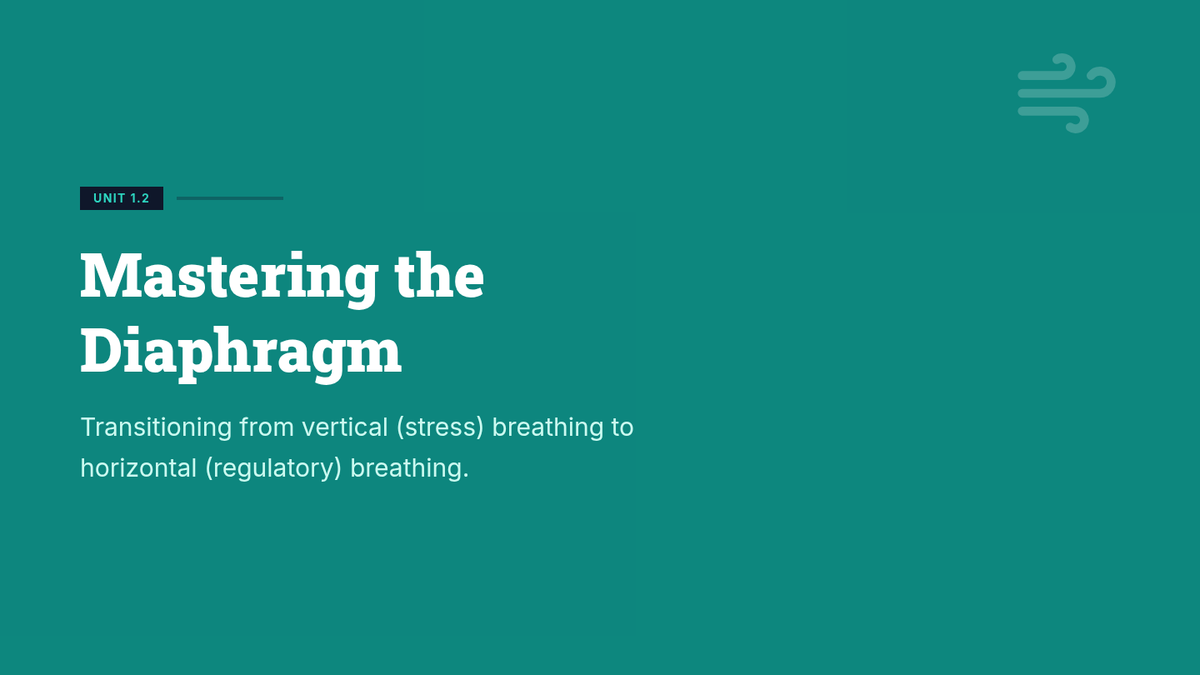
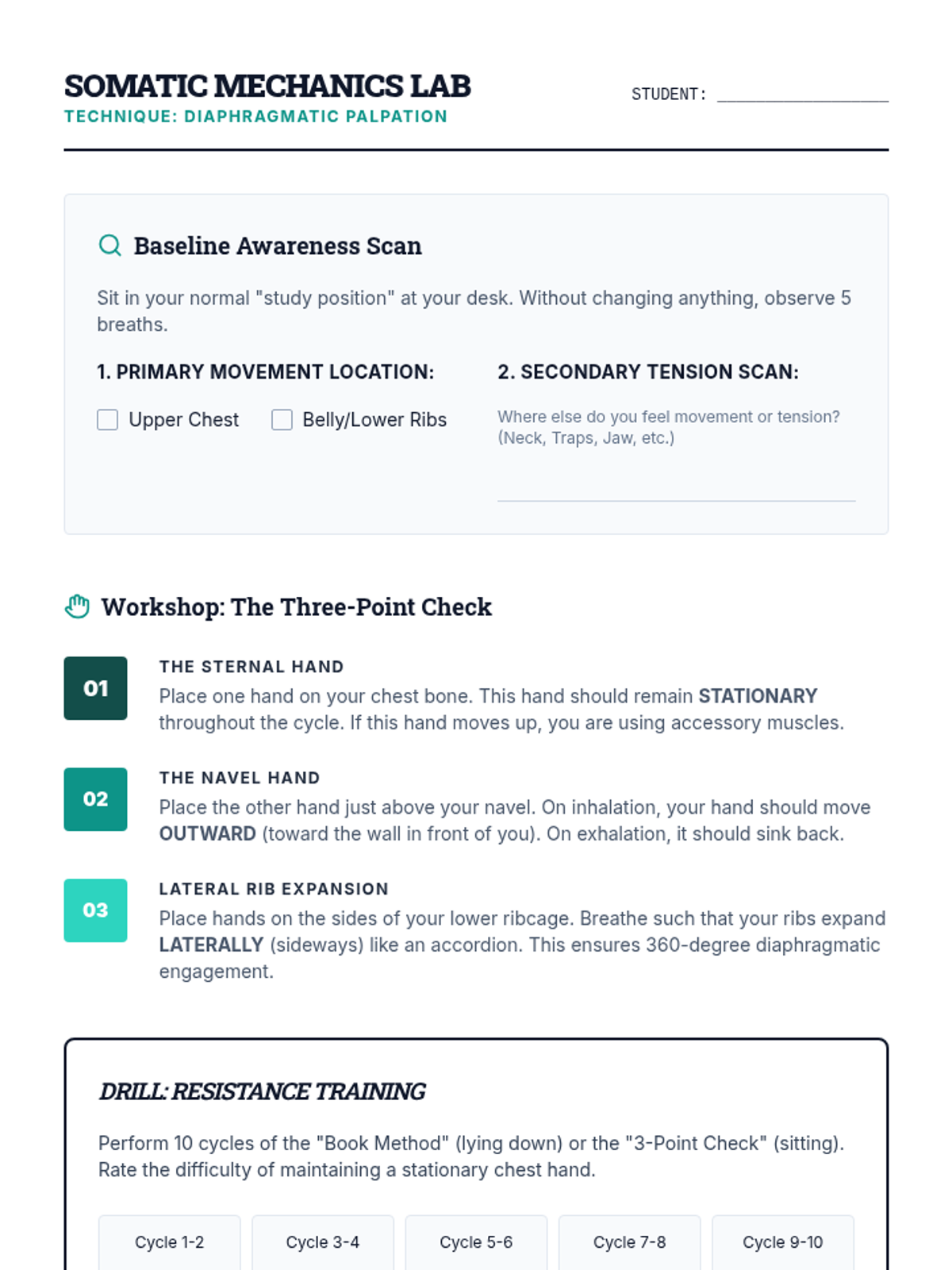
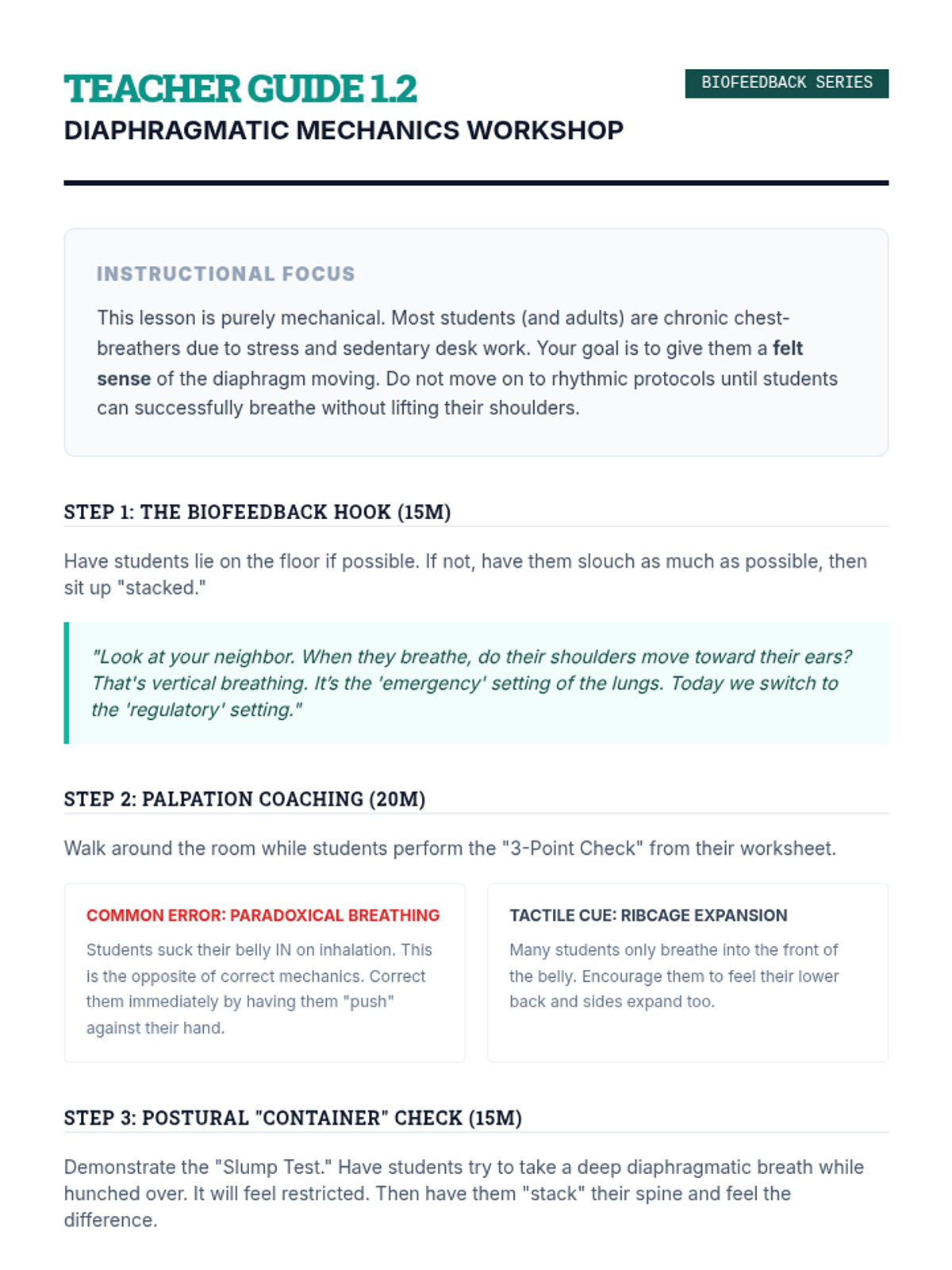
Focus on correcting breathing patterns from shallow chest breathing to deep diaphragmatic engagement, including posture and palpation techniques.
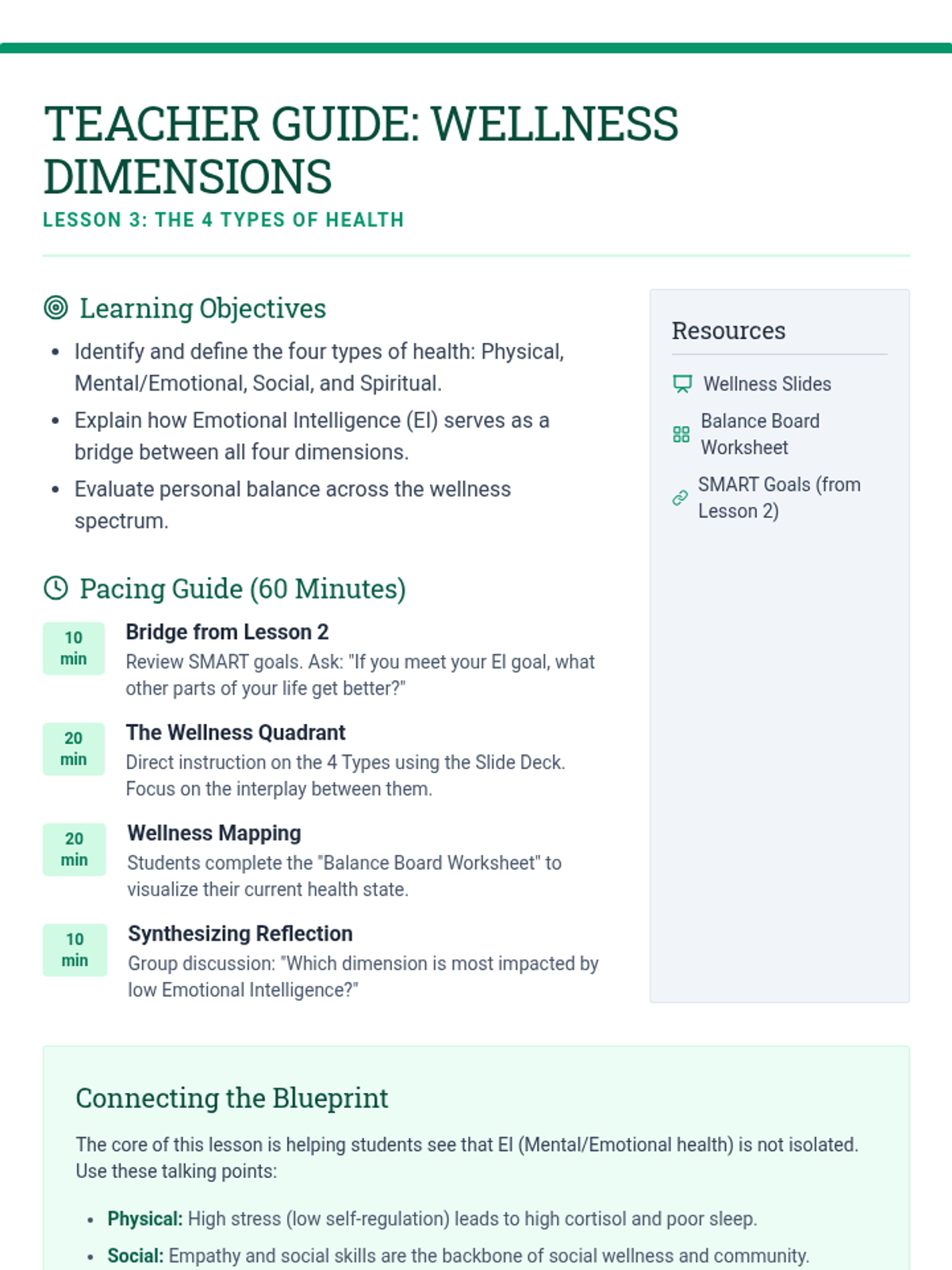
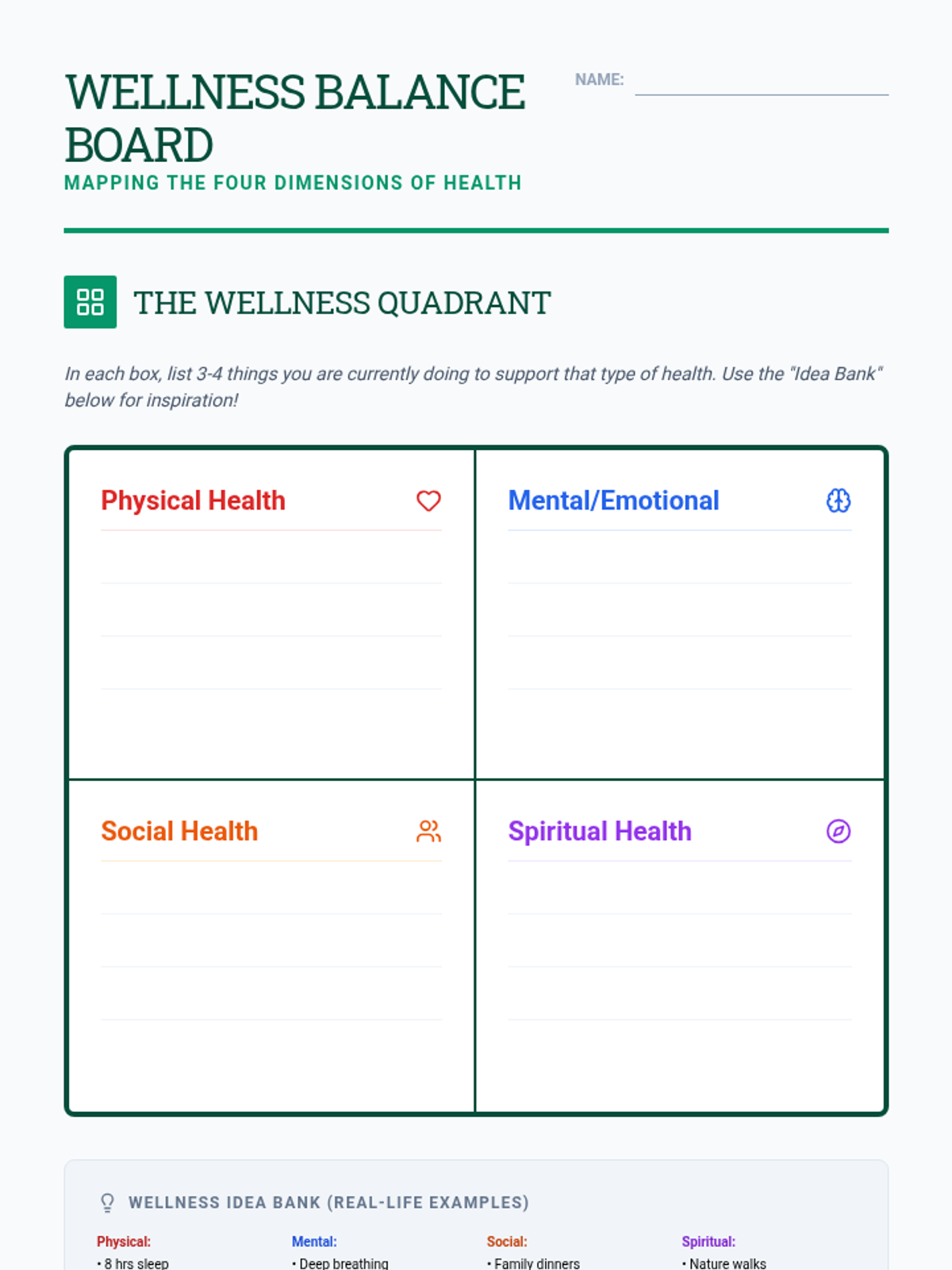
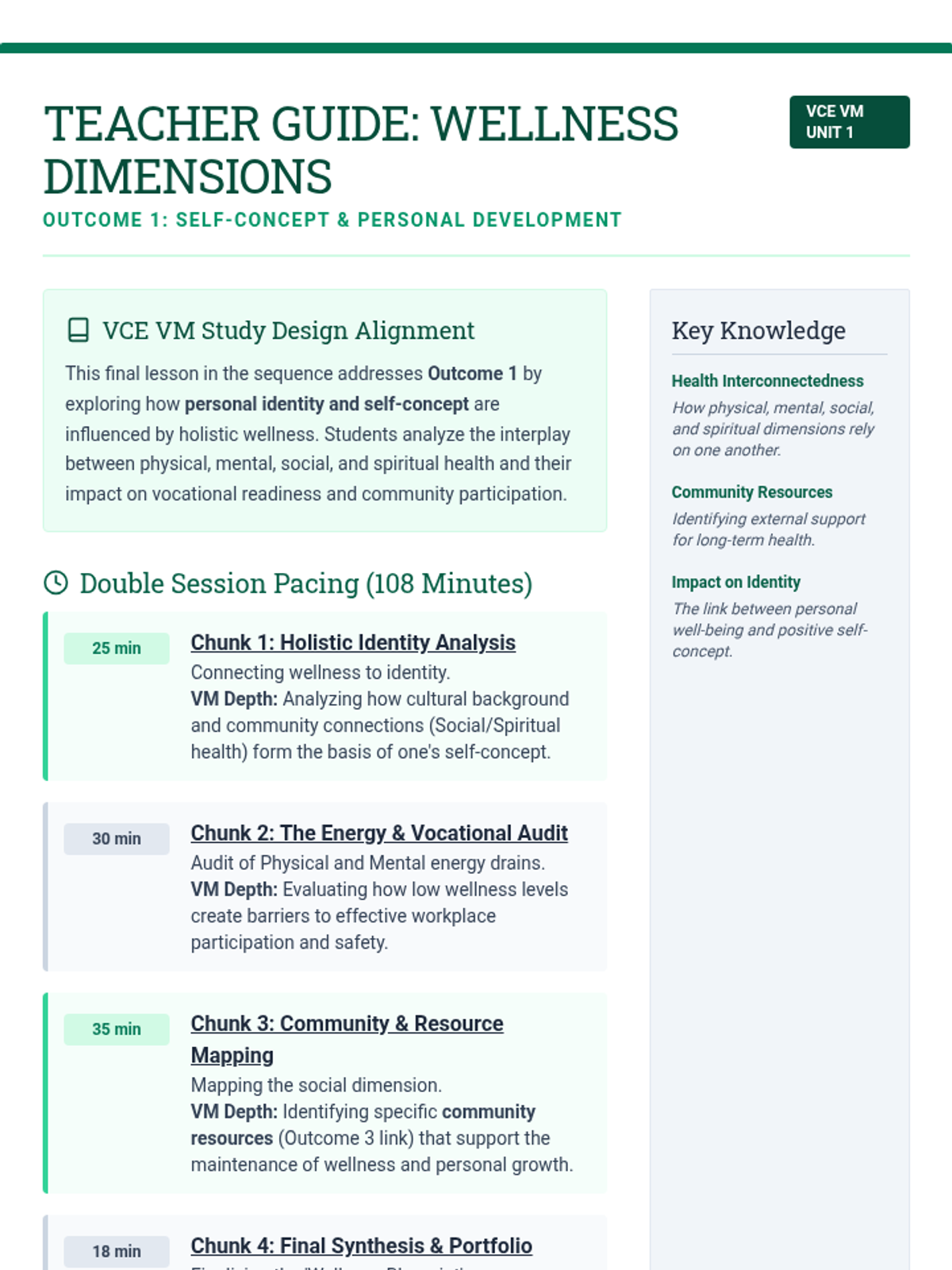
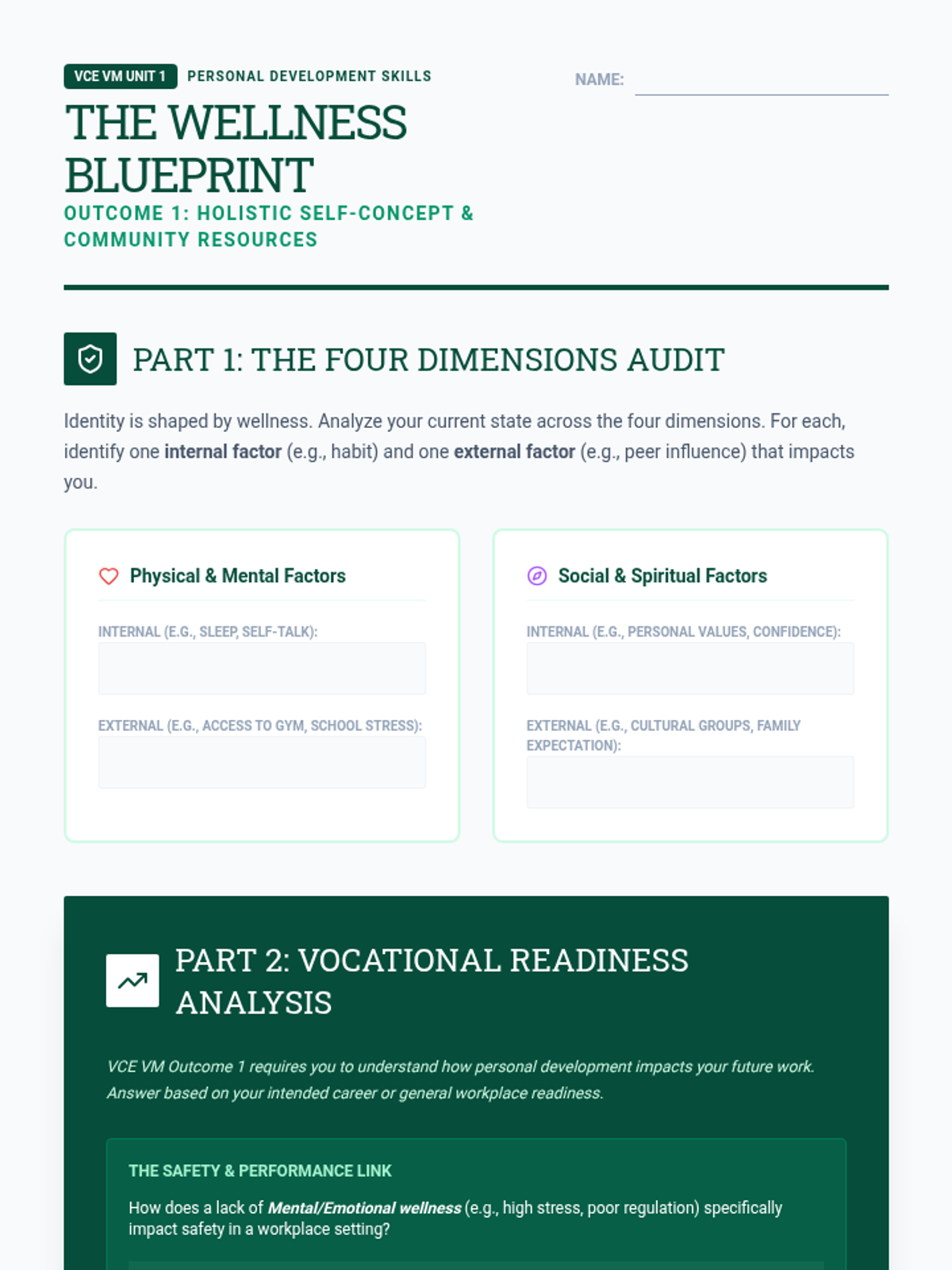
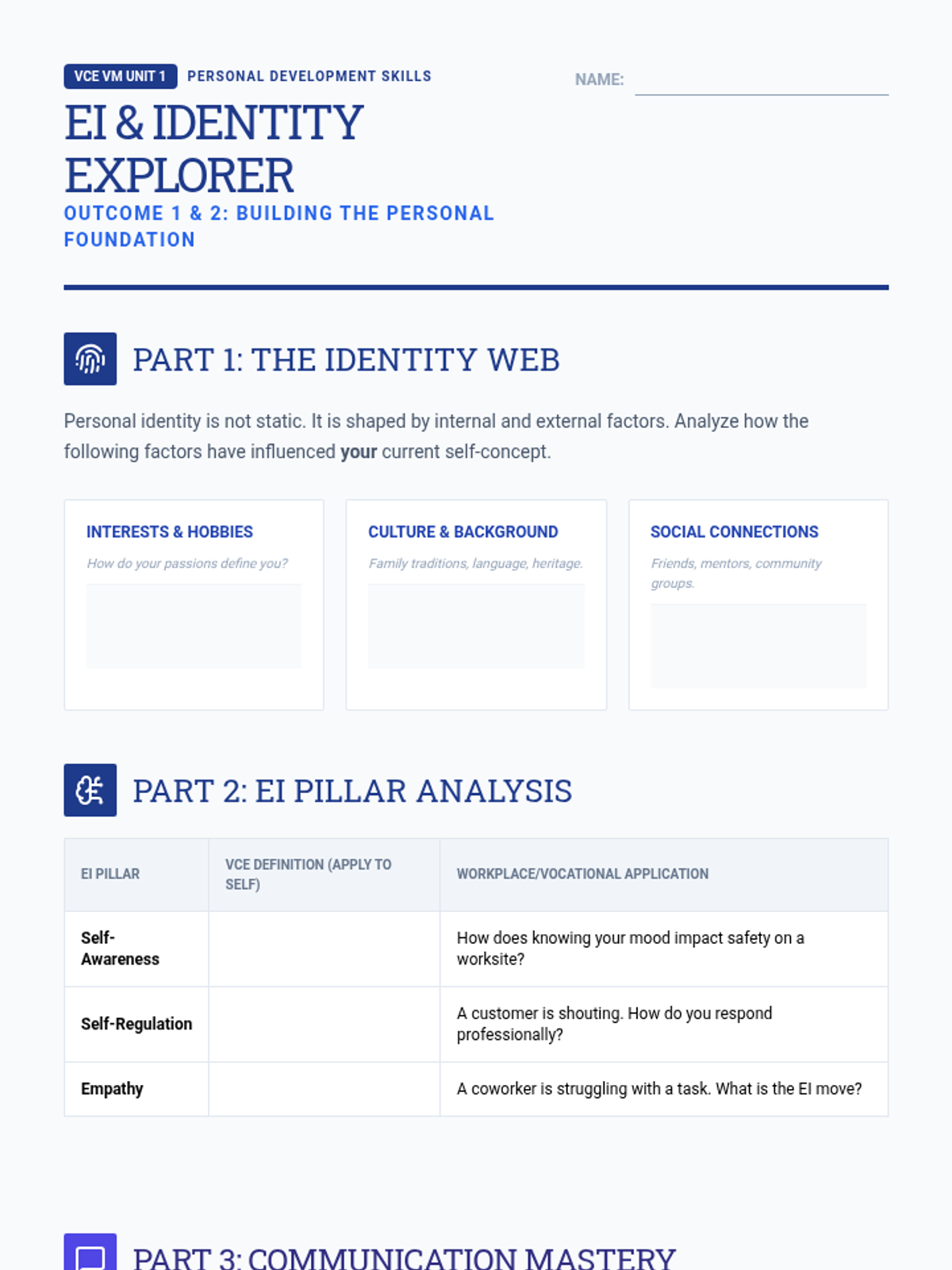
An exploration of holistic health through the four dimensions of well-being. Students analyze how their emotional intelligence goals support their overall health and balance.
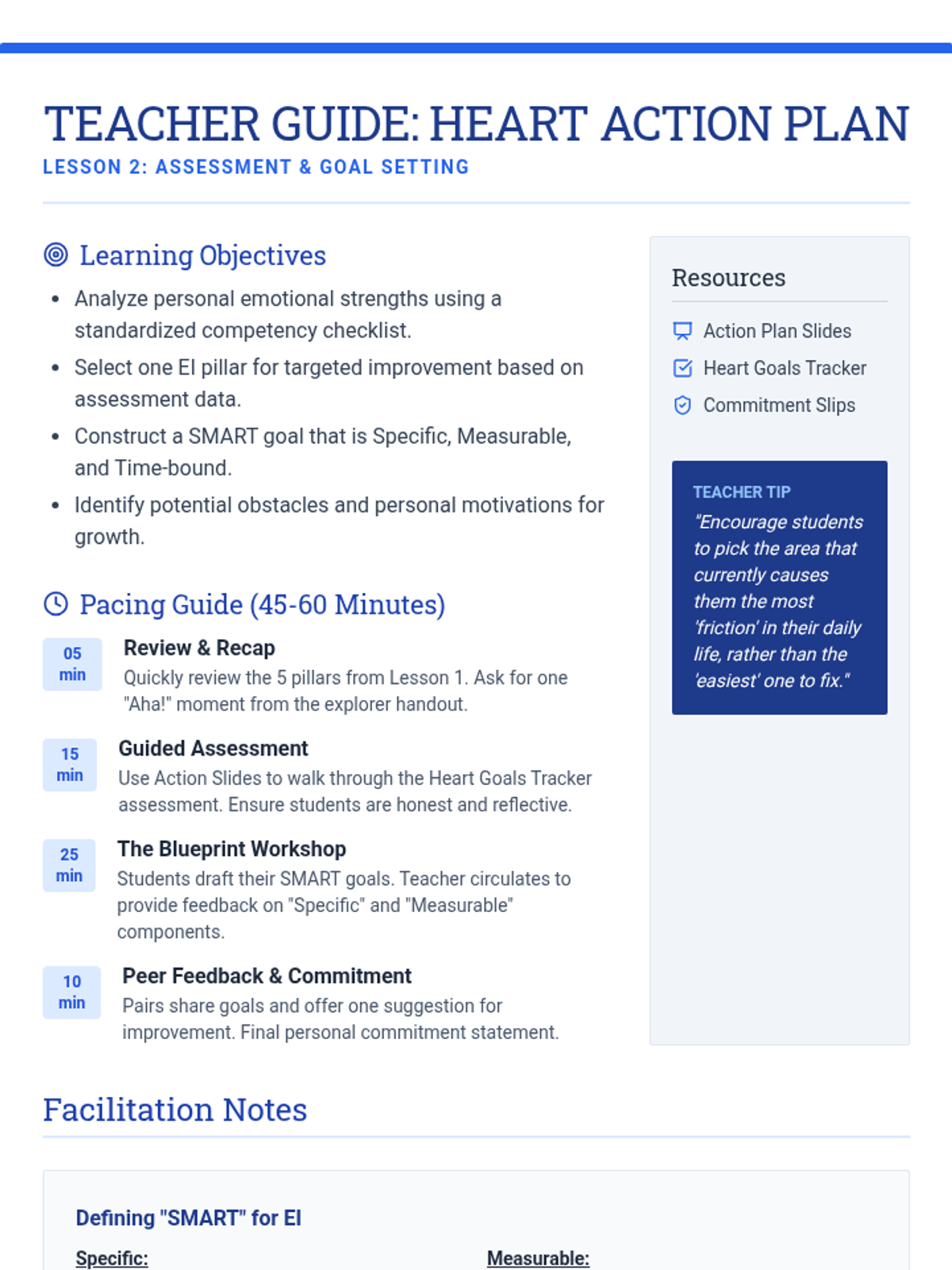
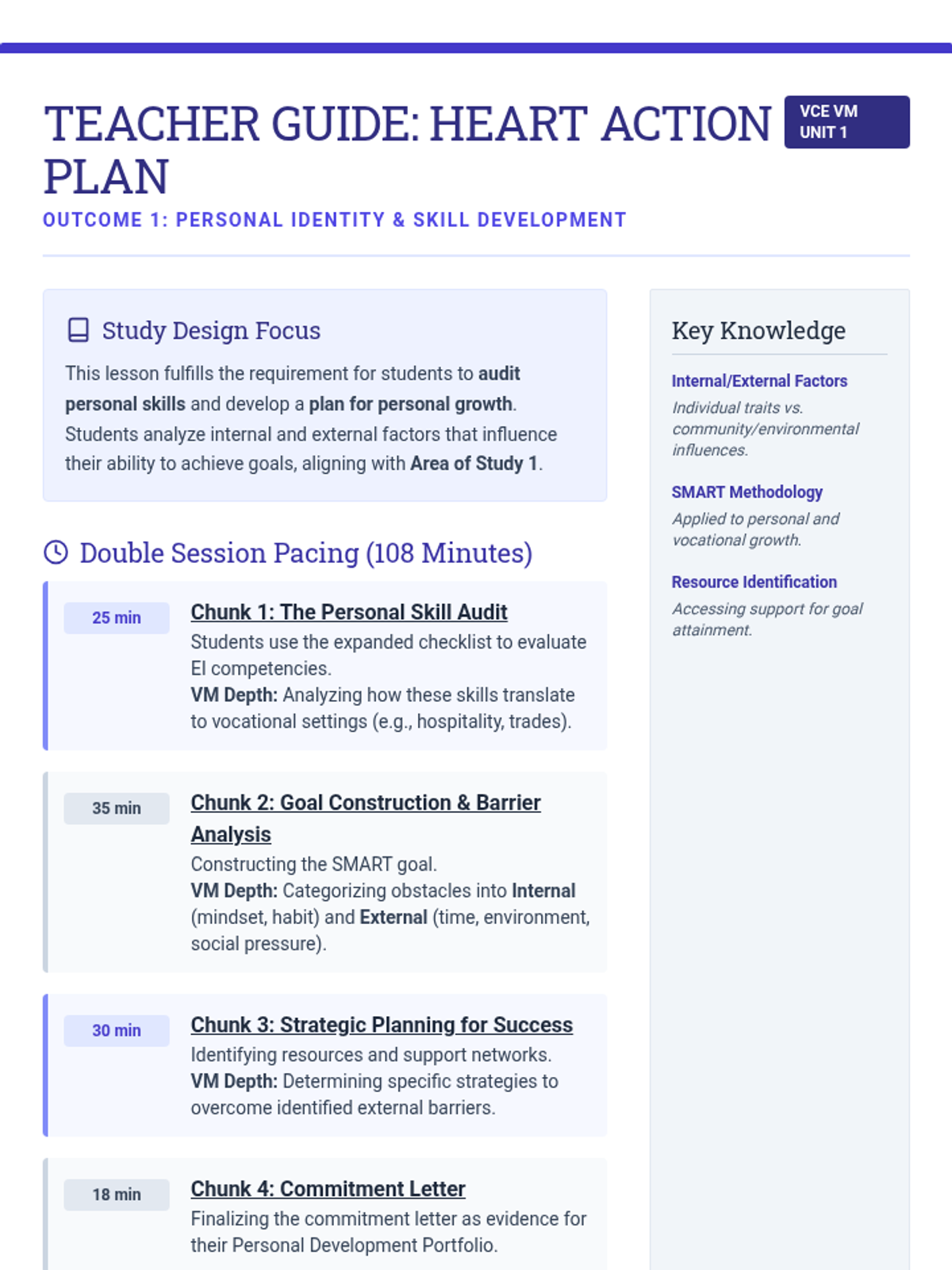
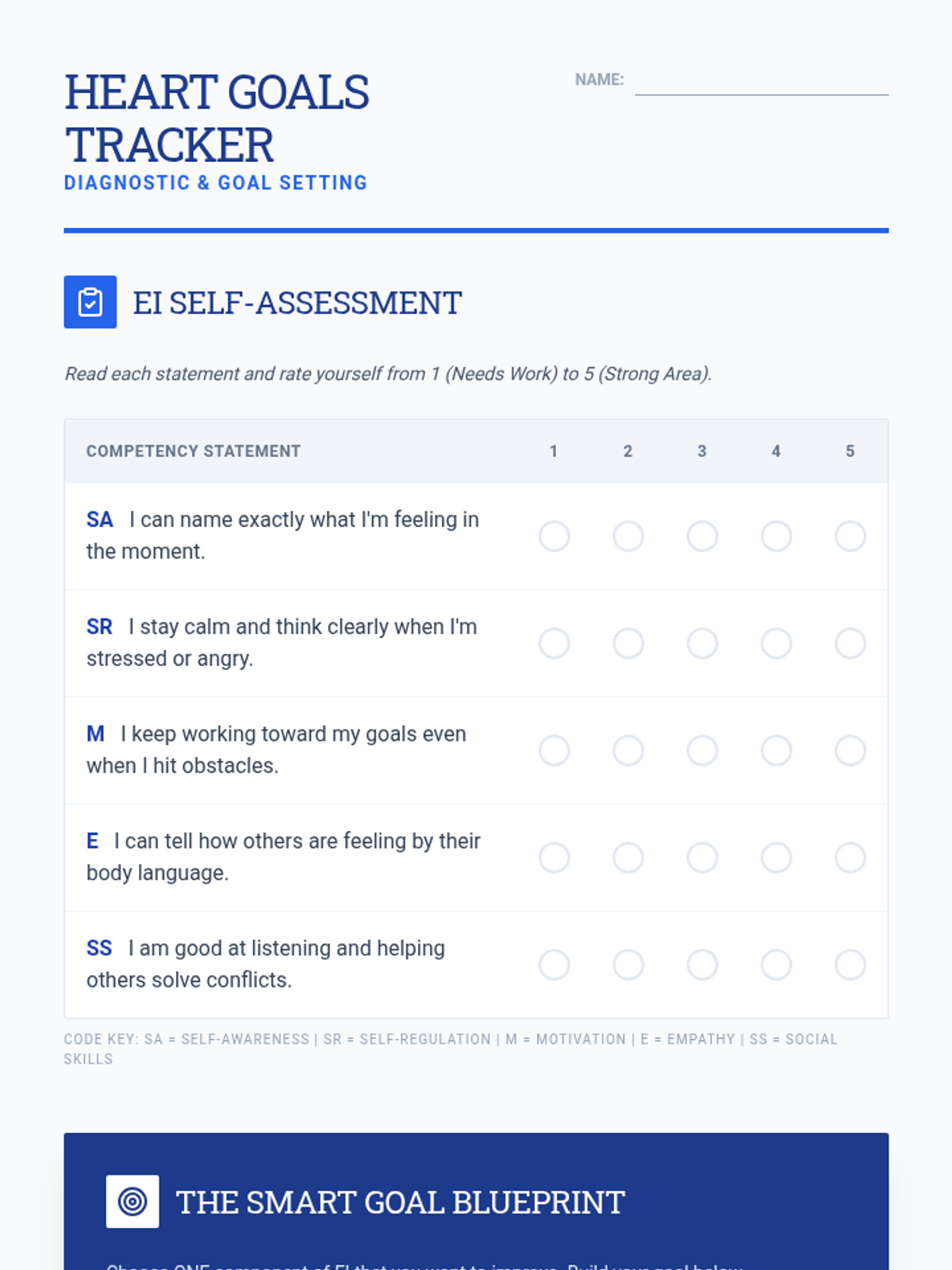
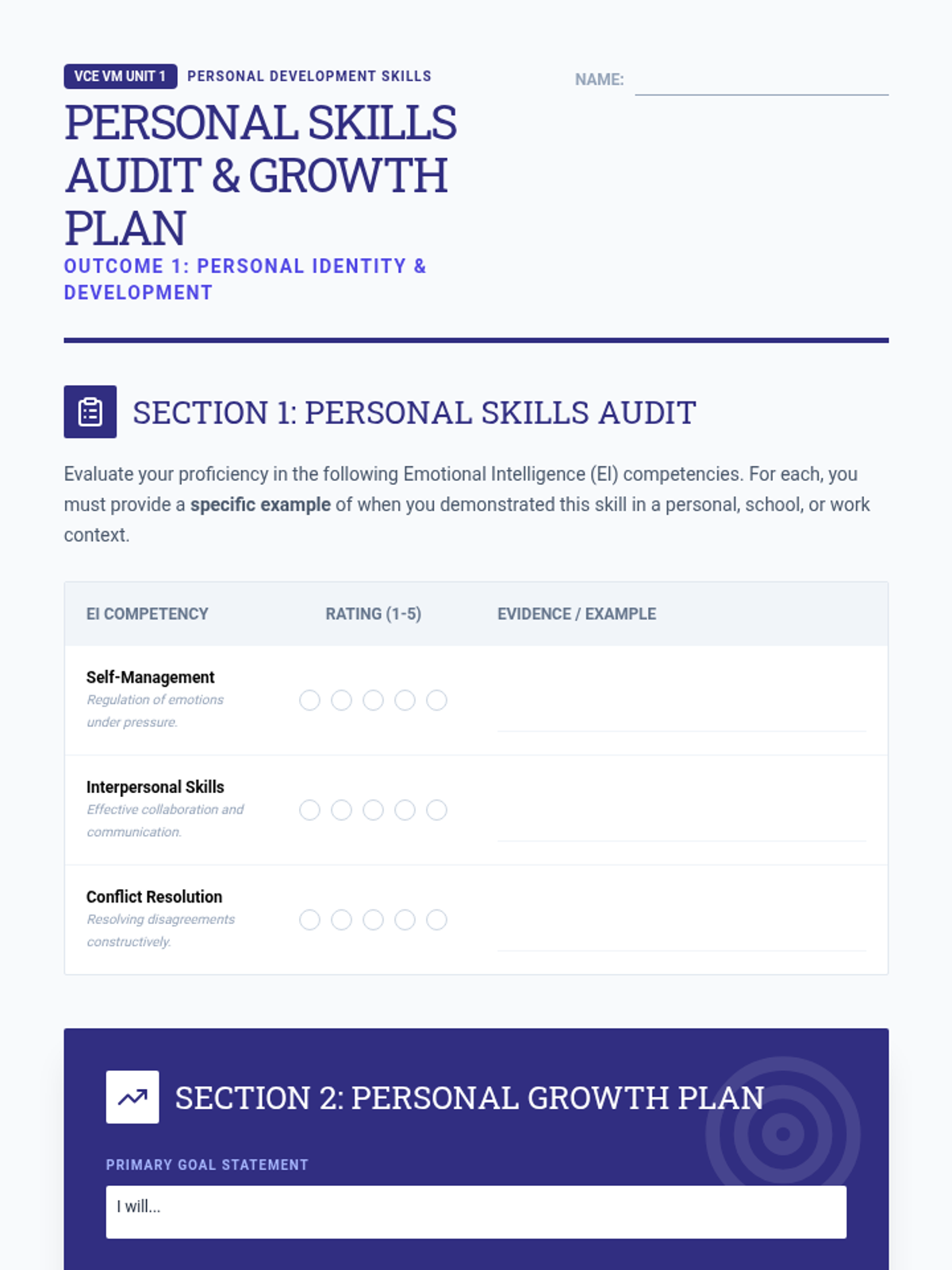
A follow-up workshop focused on personal application. Students perform a deep-dive self-assessment and construct a formal SMART goal plan for their emotional development.
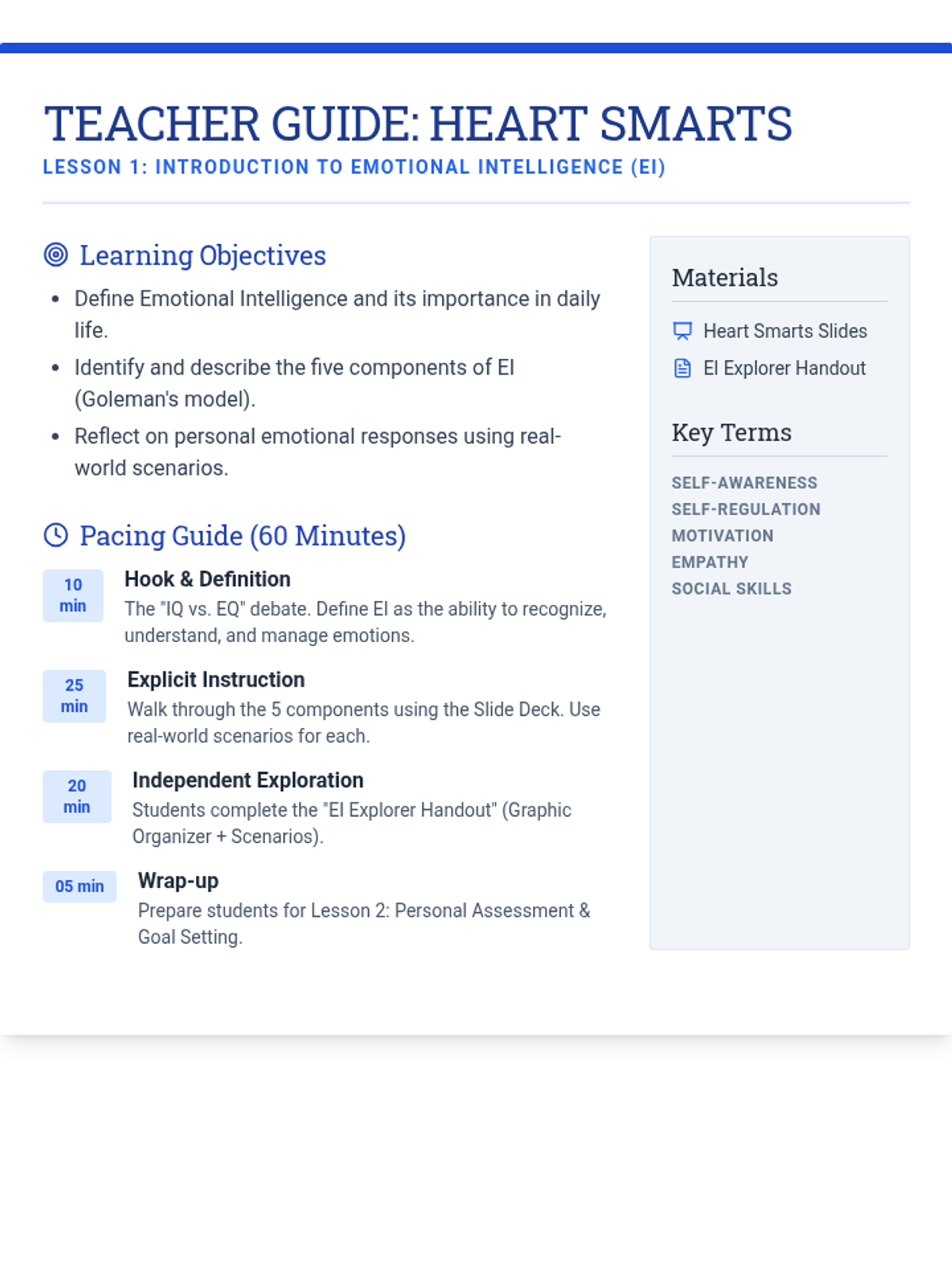
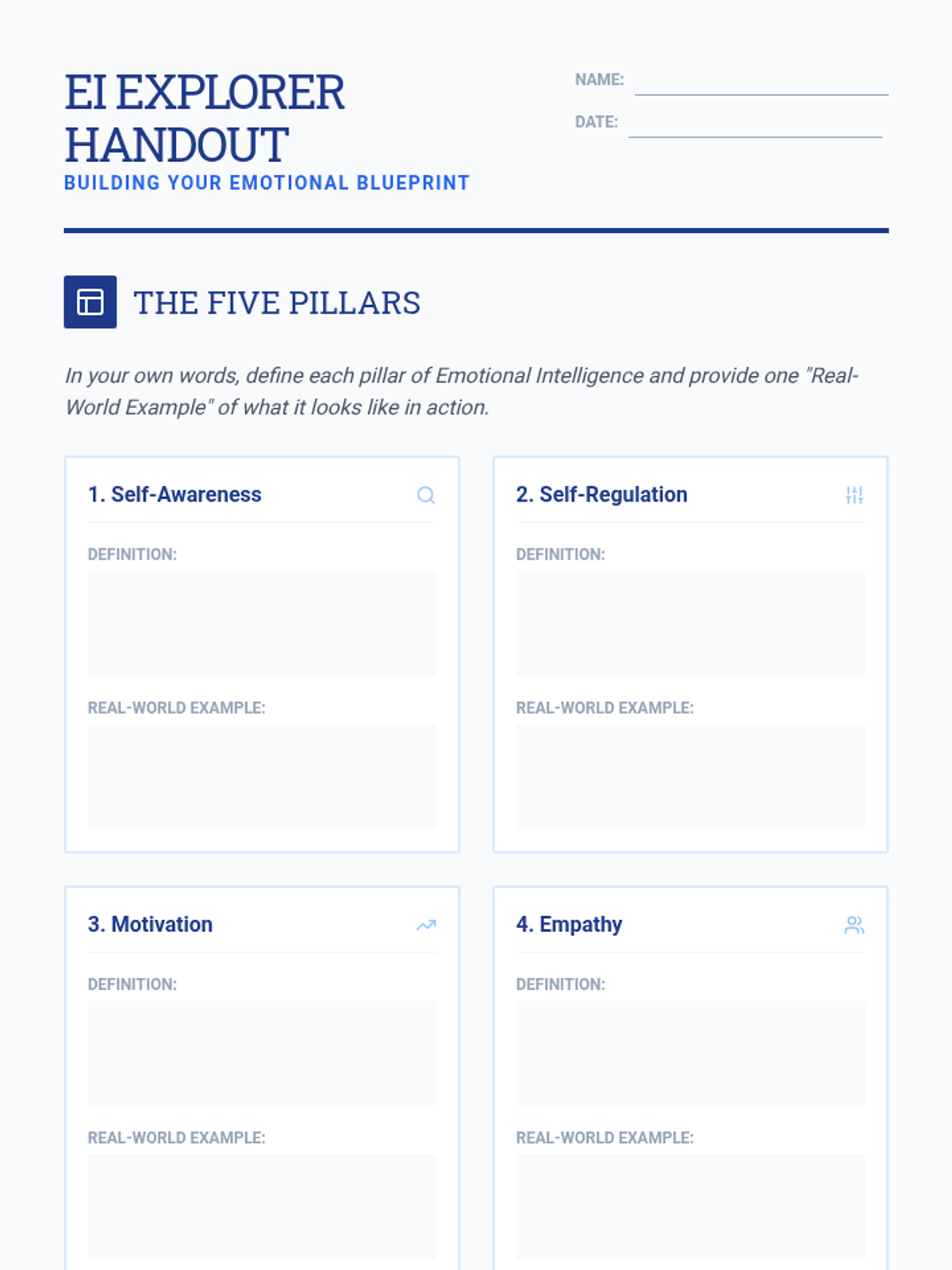
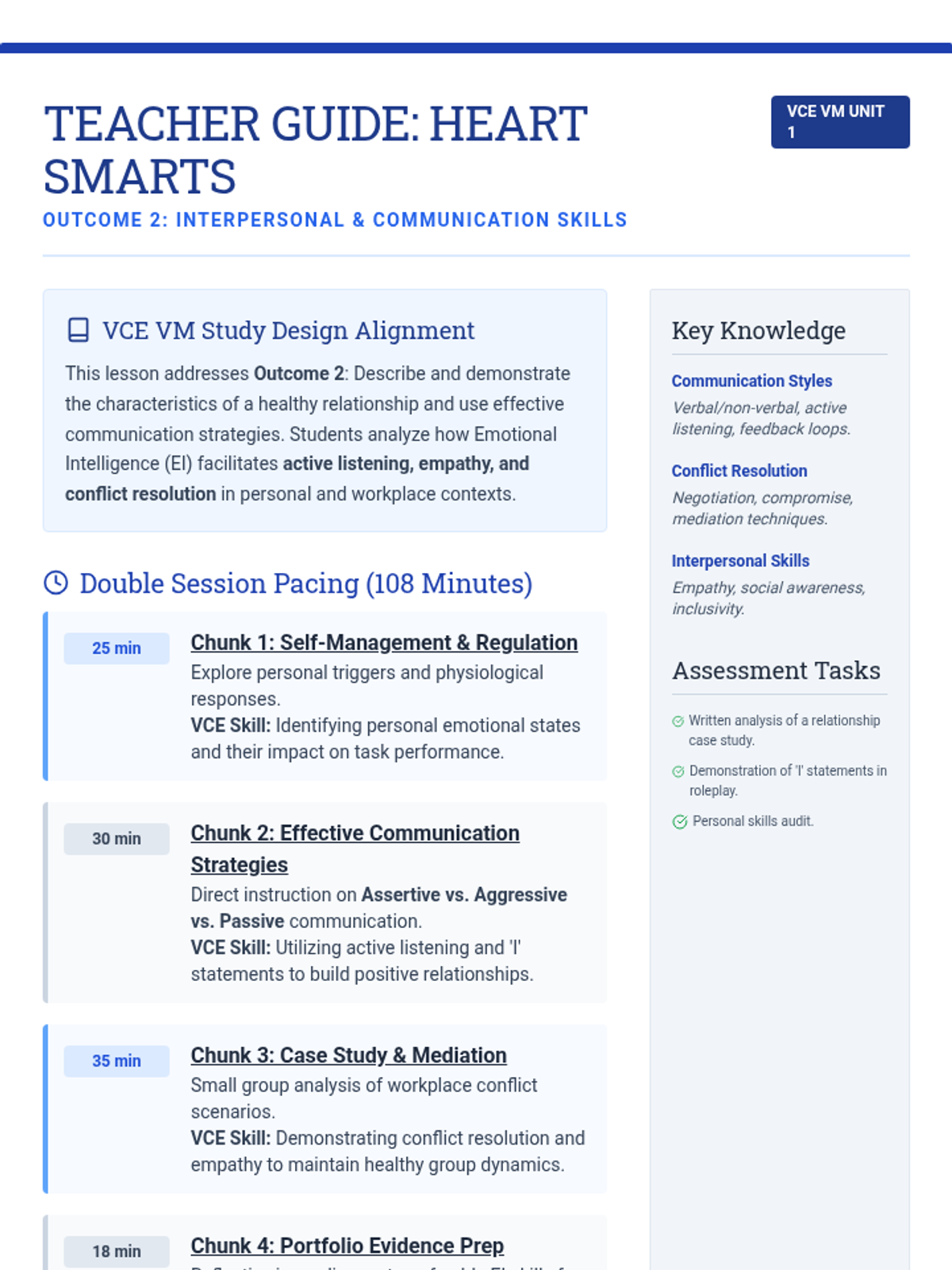
A comprehensive introduction to the five components of Emotional Intelligence: self-awareness, self-regulation, motivation, empathy, and social skills. Students engage through explicit instruction and independent reflection.
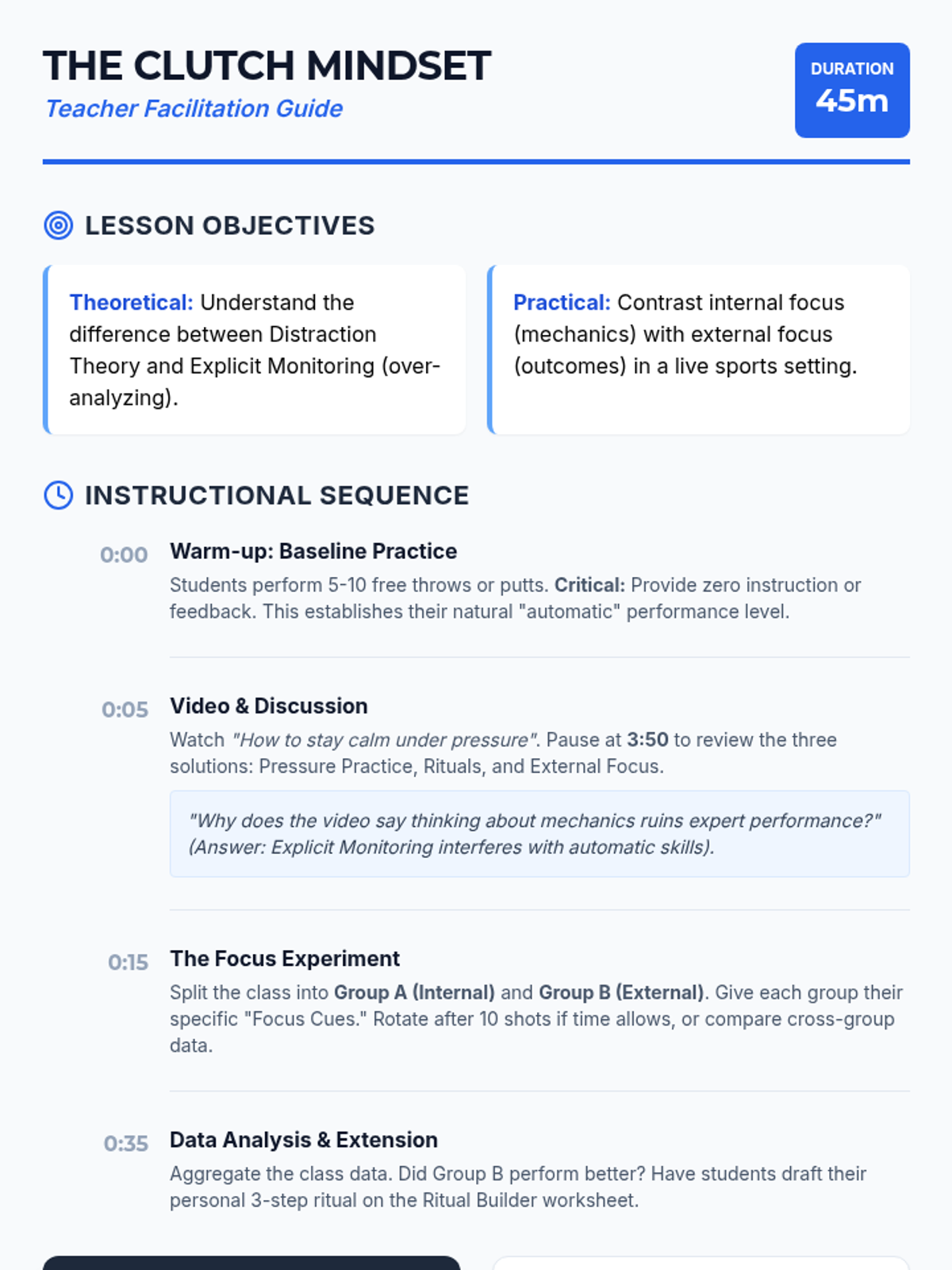
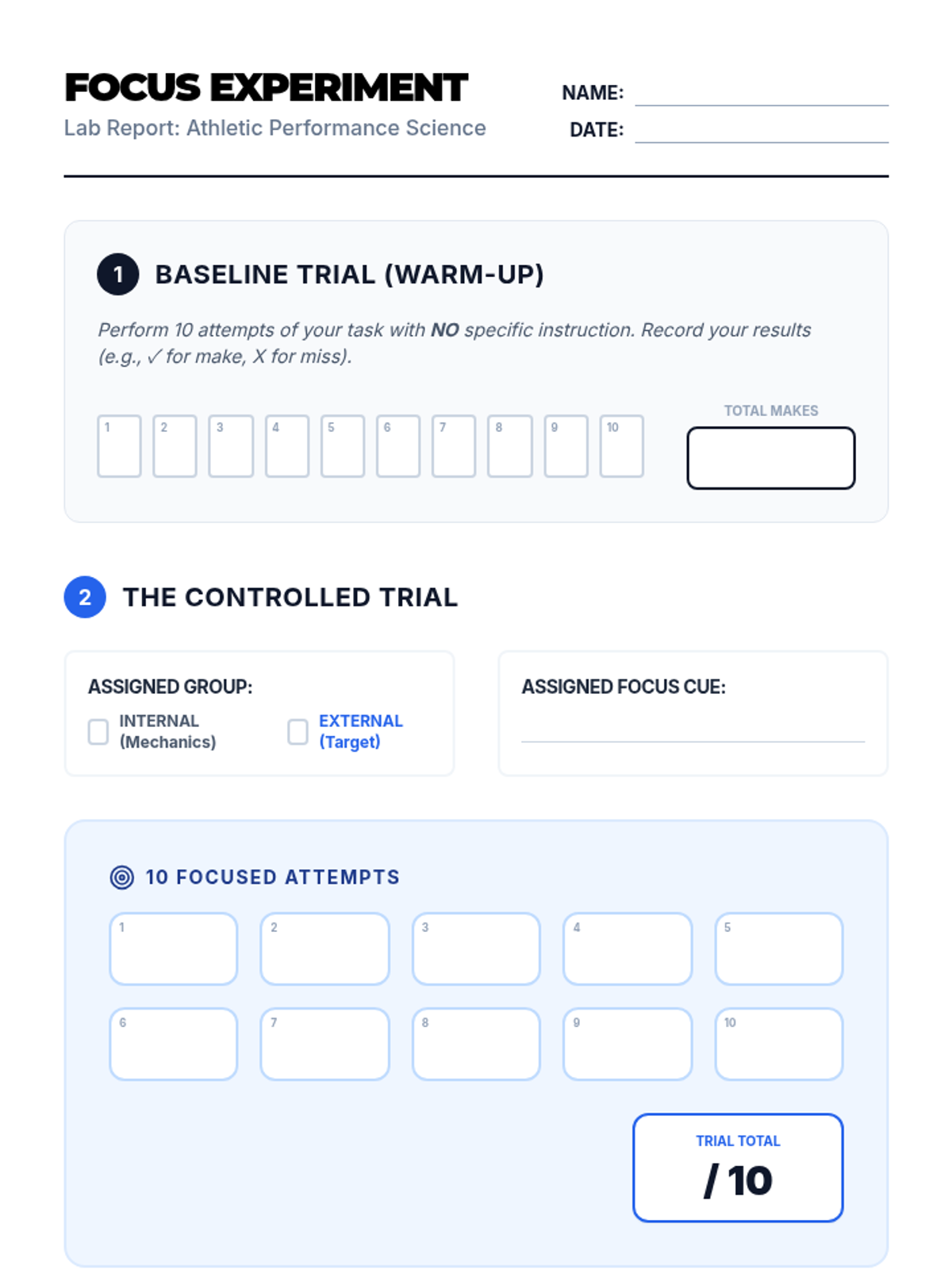
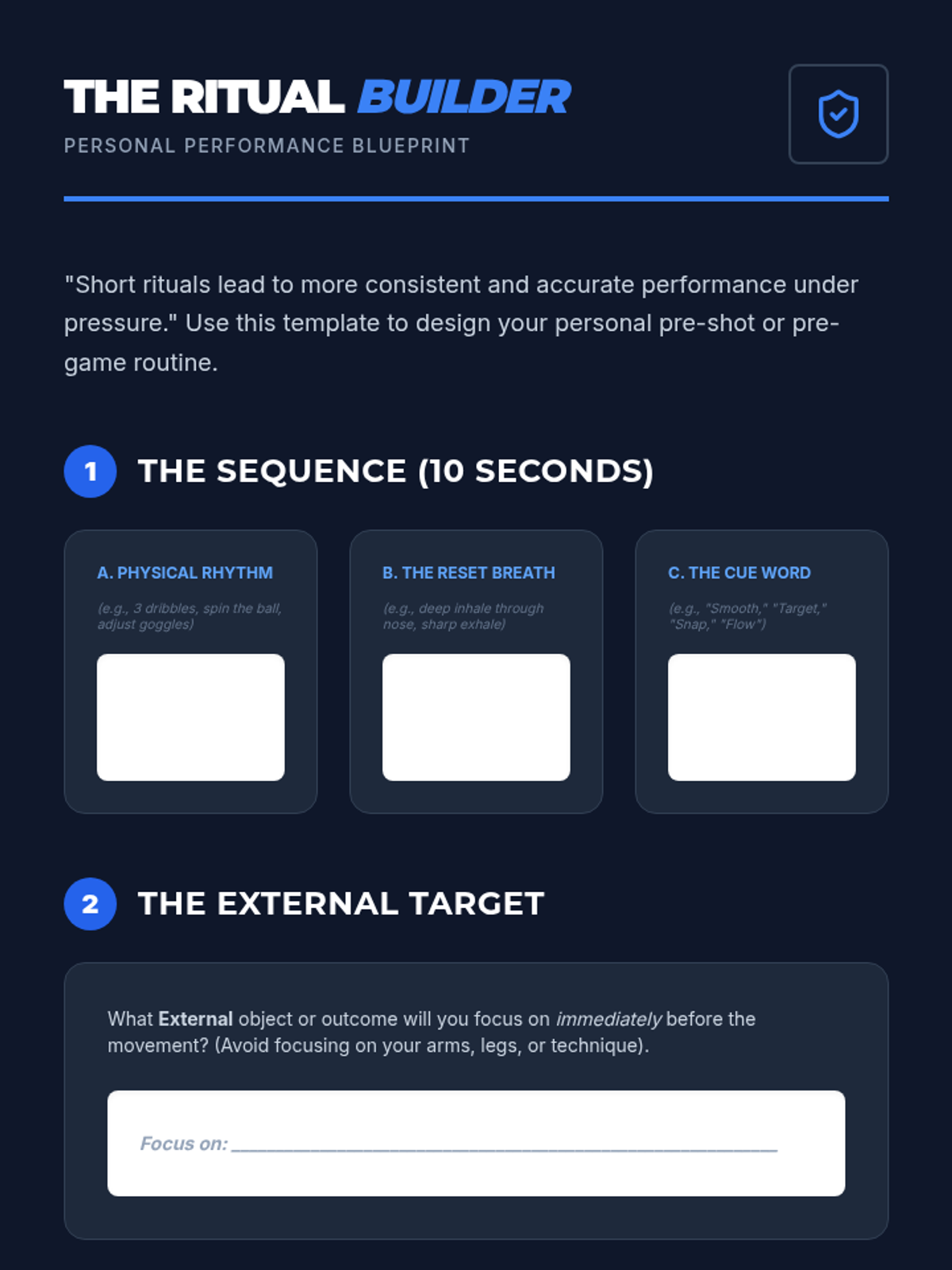
A high-performance psychology lesson for athletes and PE students exploring why 'over-thinking' mechanics leads to choking and how an external focus on targets improves consistency. Students participate in a live experiment to test internal vs. external focus theories.
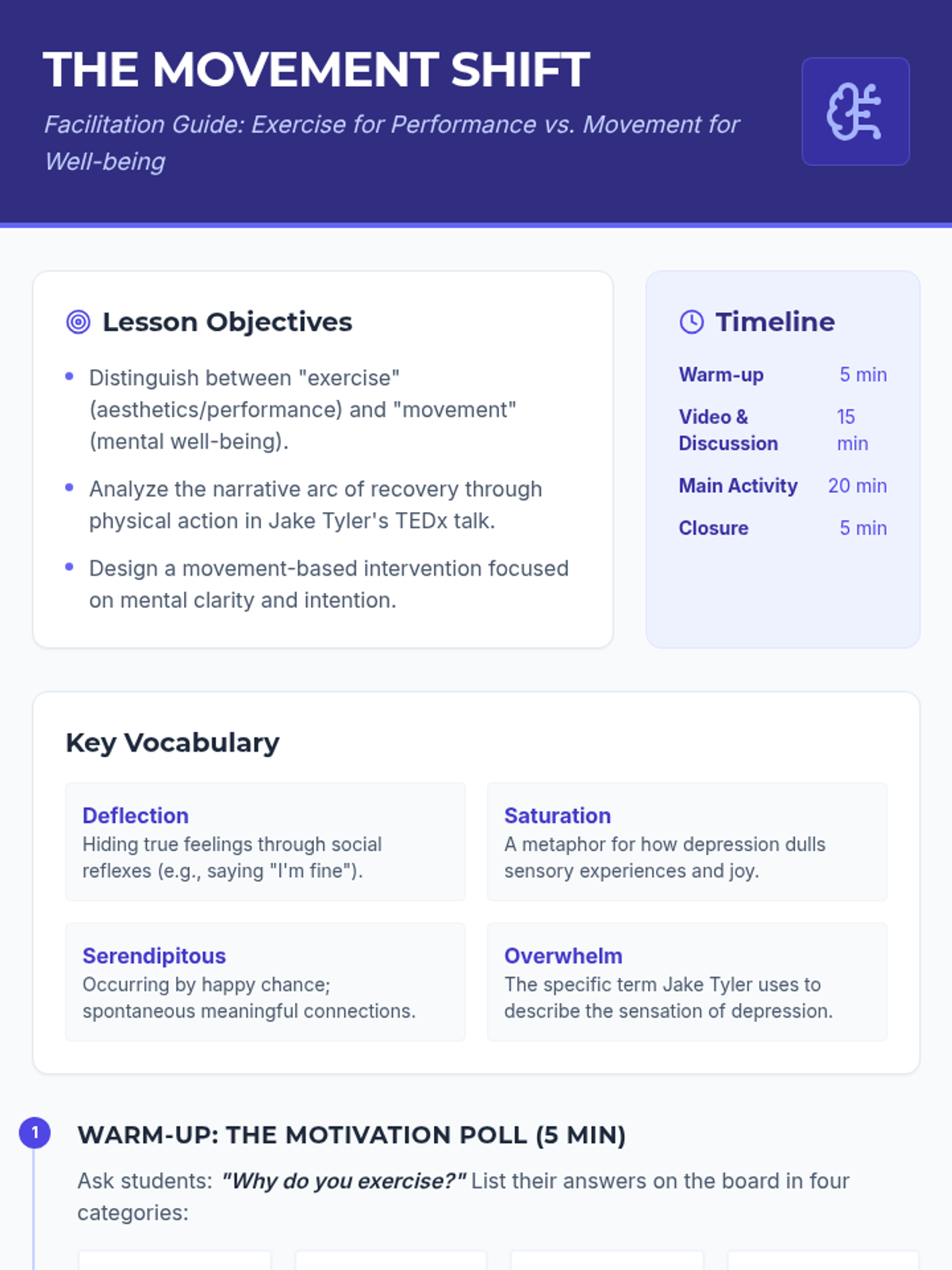
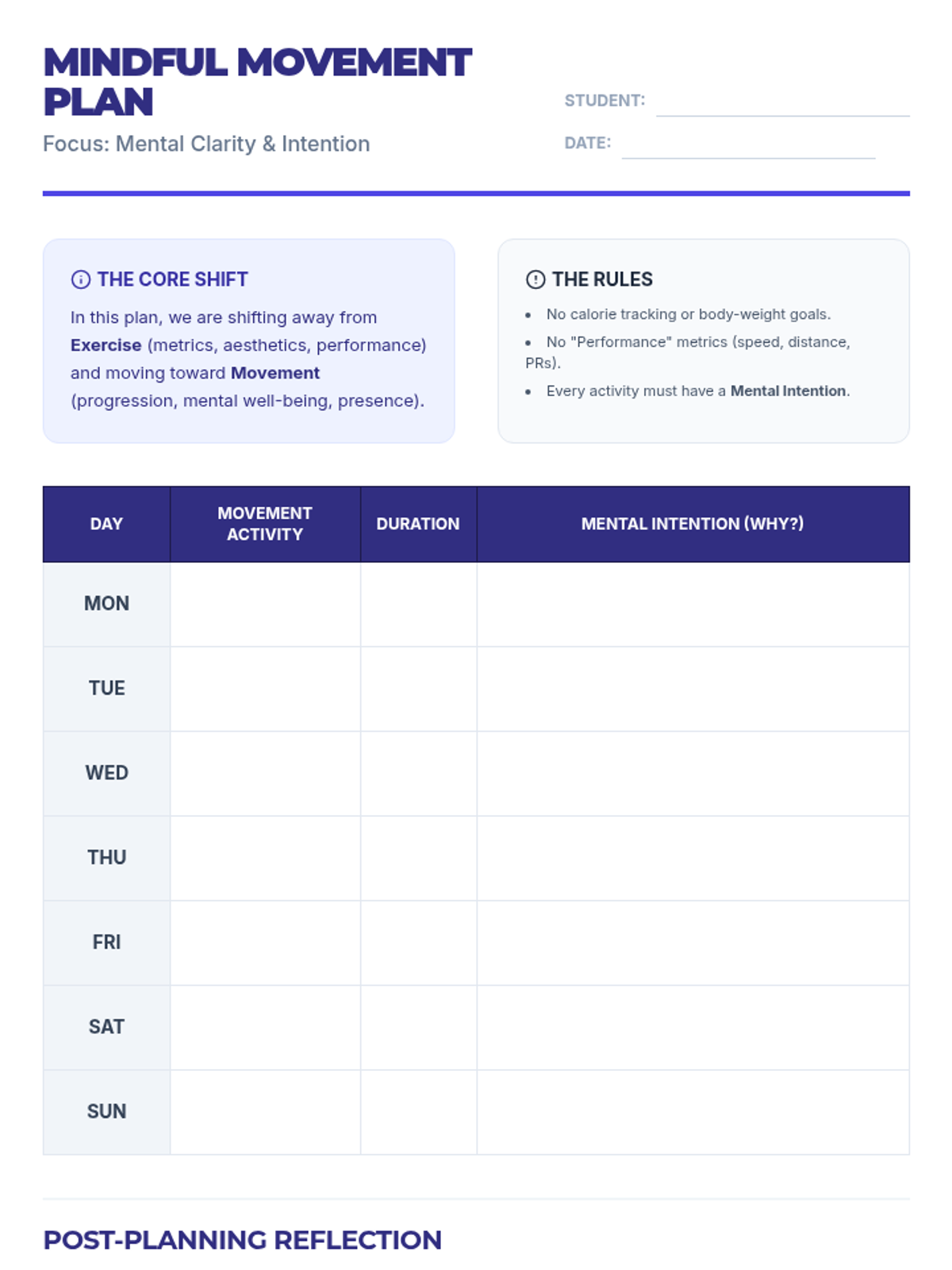
A Physical Education and Sports Medicine lesson exploring the psychological benefits of movement versus traditional exercise. Students analyze Jake Tyler's TEDx talk on depression and design a one-week movement plan focused on mental clarity and intention rather than physical metrics.