Essential safety protocols, map reading, and compass navigation for wilderness environments. Strengthens group dynamics and problem-solving through structured outdoor team-building challenges.
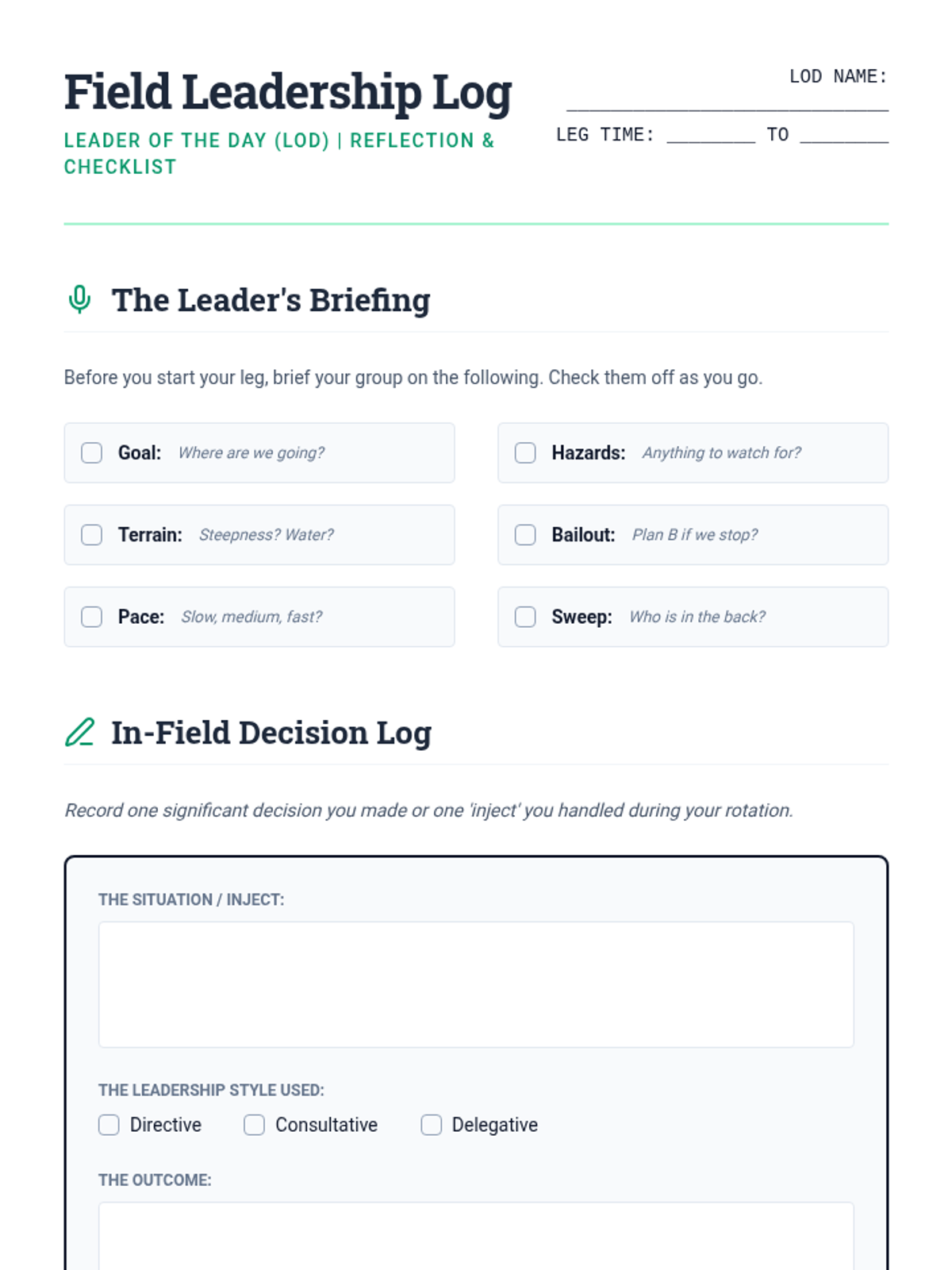
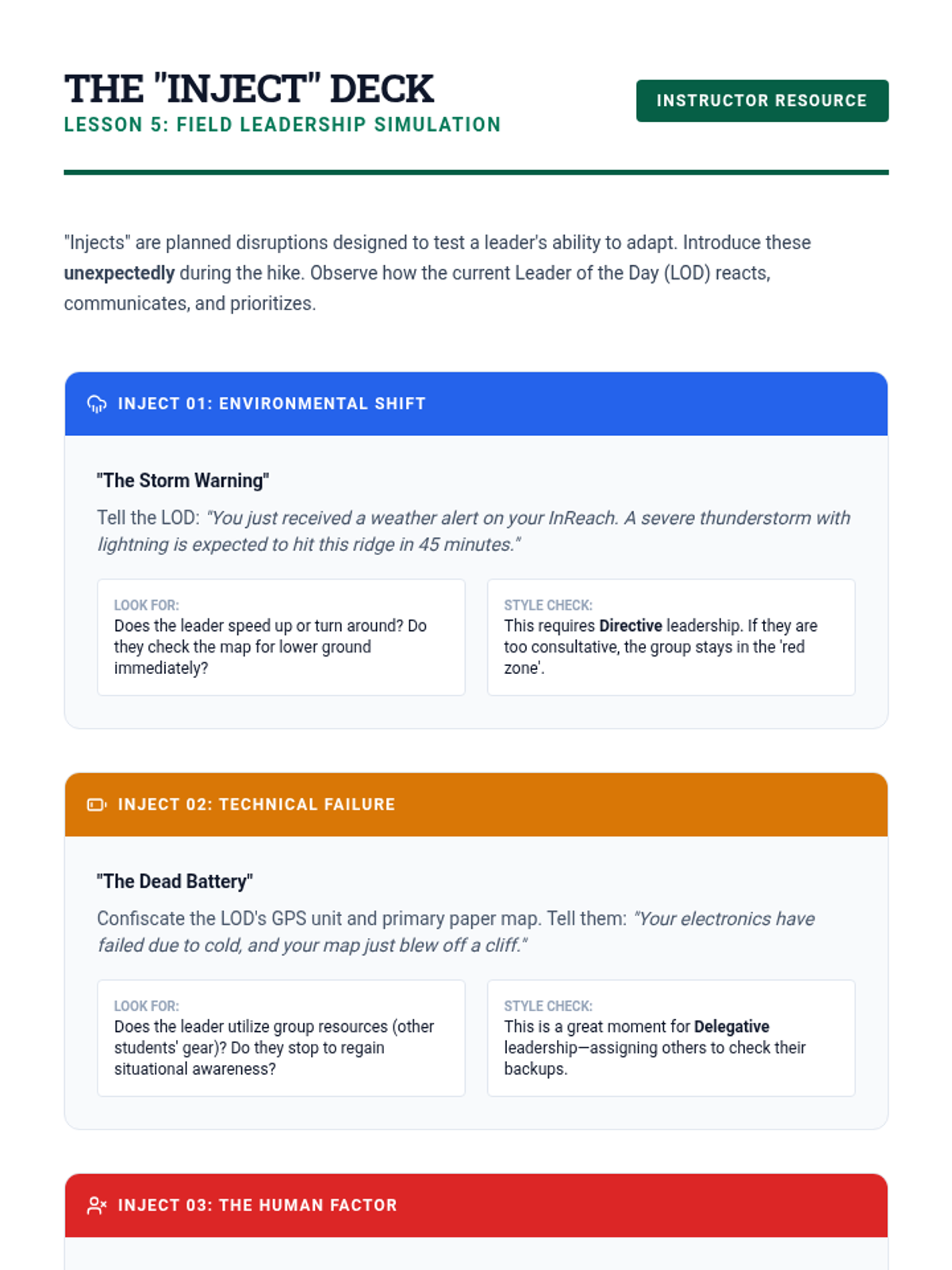
A hands-on field simulation where students apply leadership theories, real-time navigation, and adaptive decision-making while managing group dynamics and 'inject' scenarios.
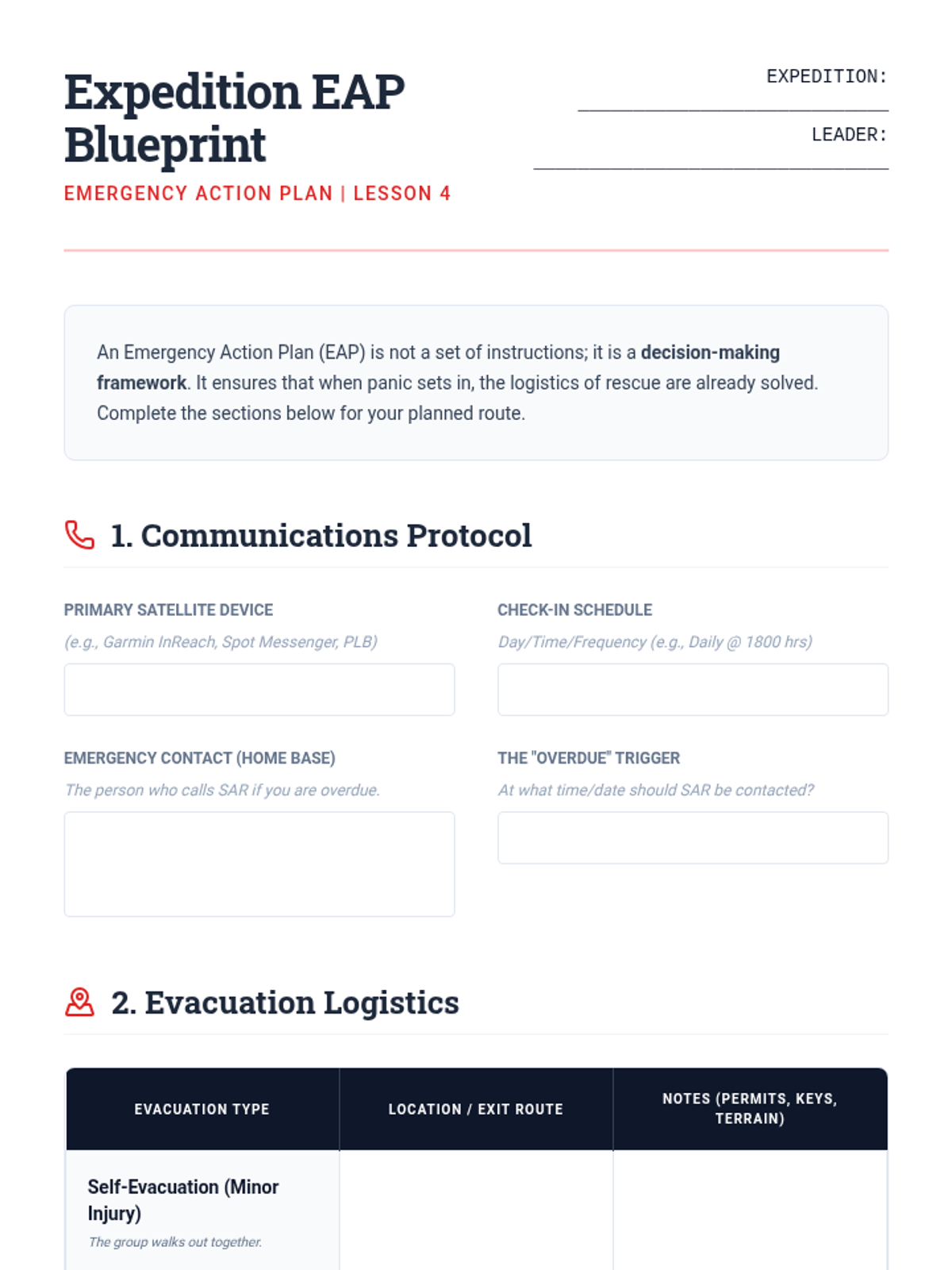
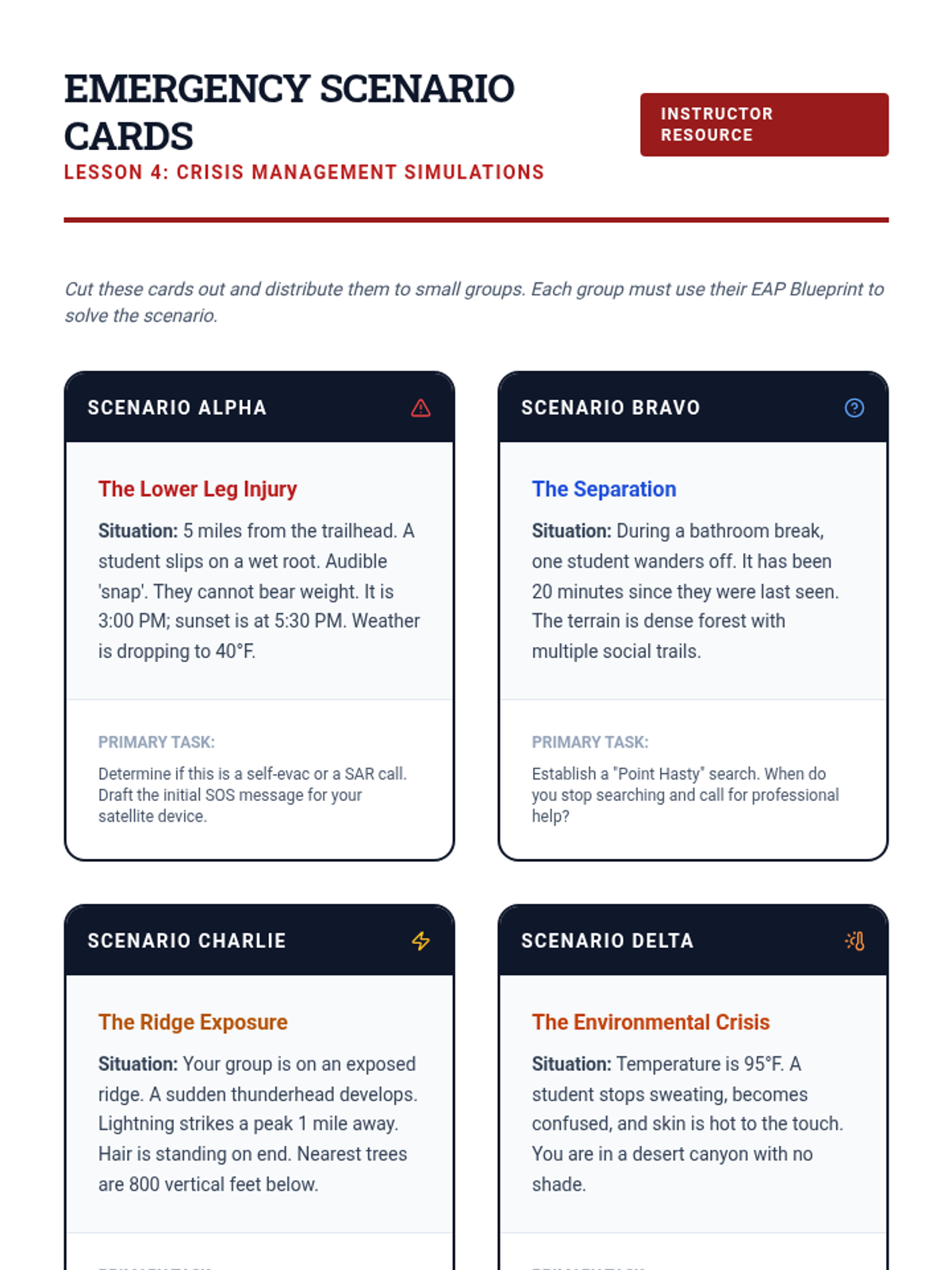
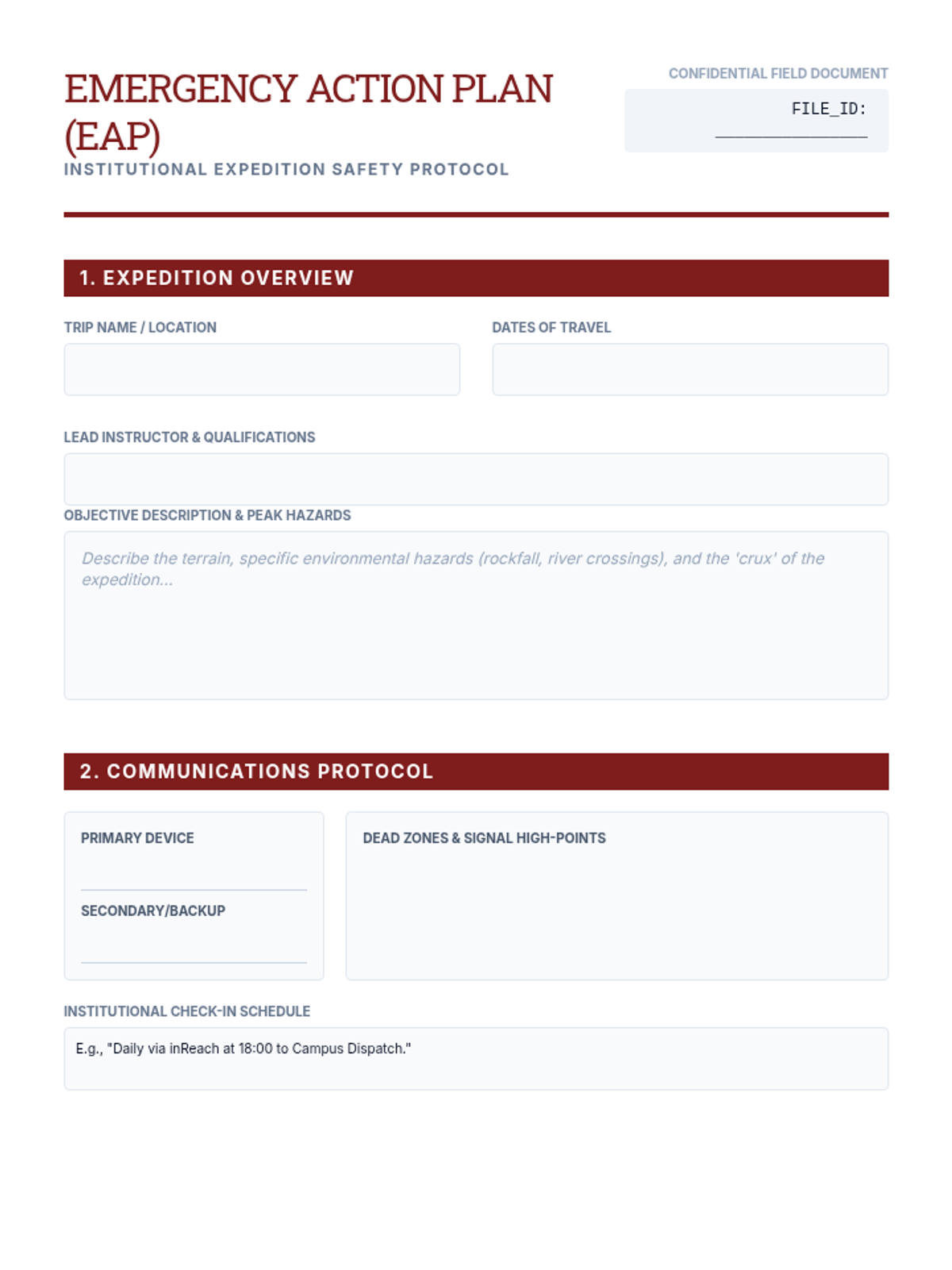
Developing robust Emergency Action Plans (EAPs) and understanding the ethical implications of Leave No Trace principles during crisis management.
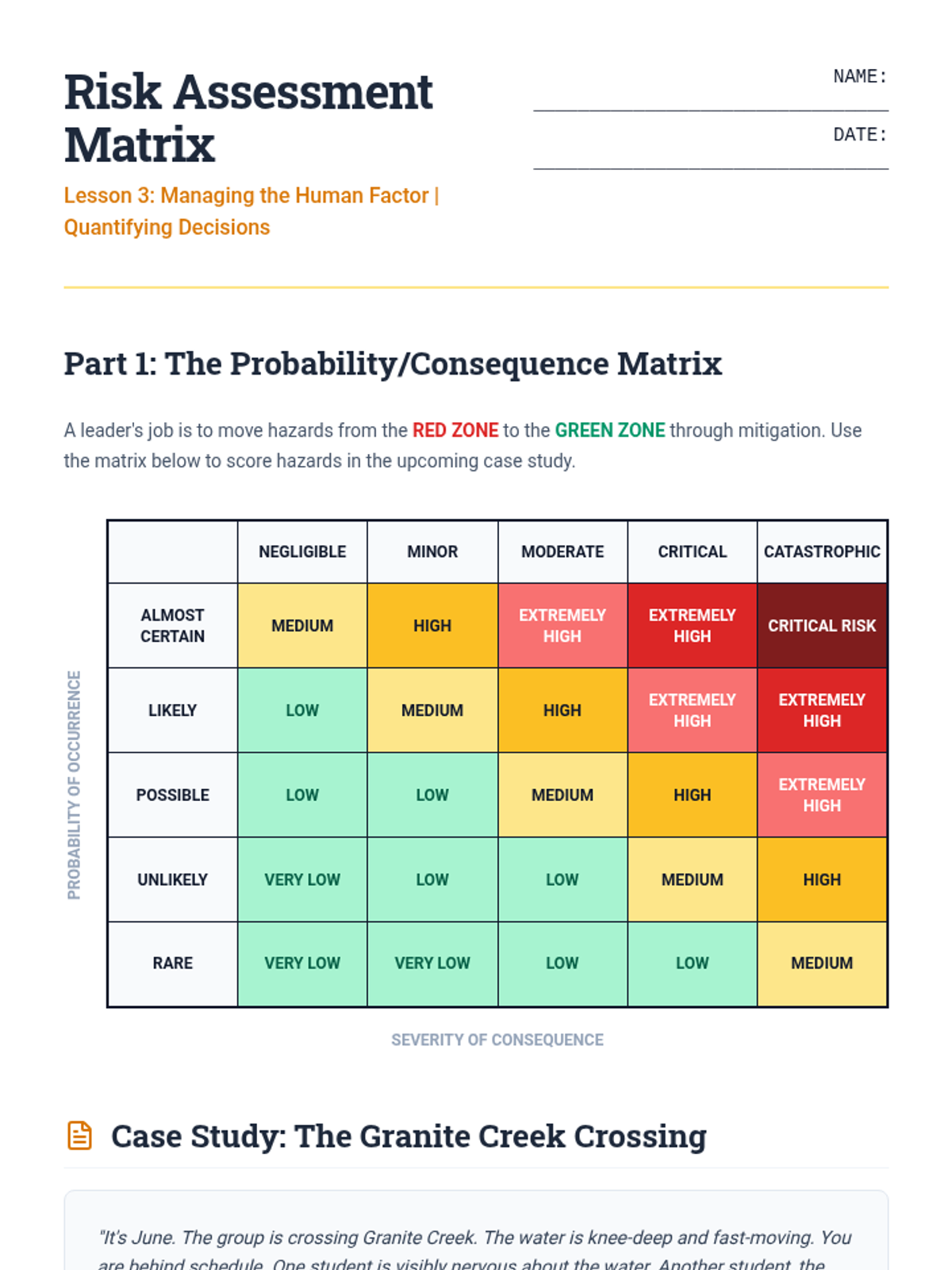
A deep dive into objective and subjective hazards, focusing on the 'human factor' and heuristic traps that influence decision-making in high-risk environments.
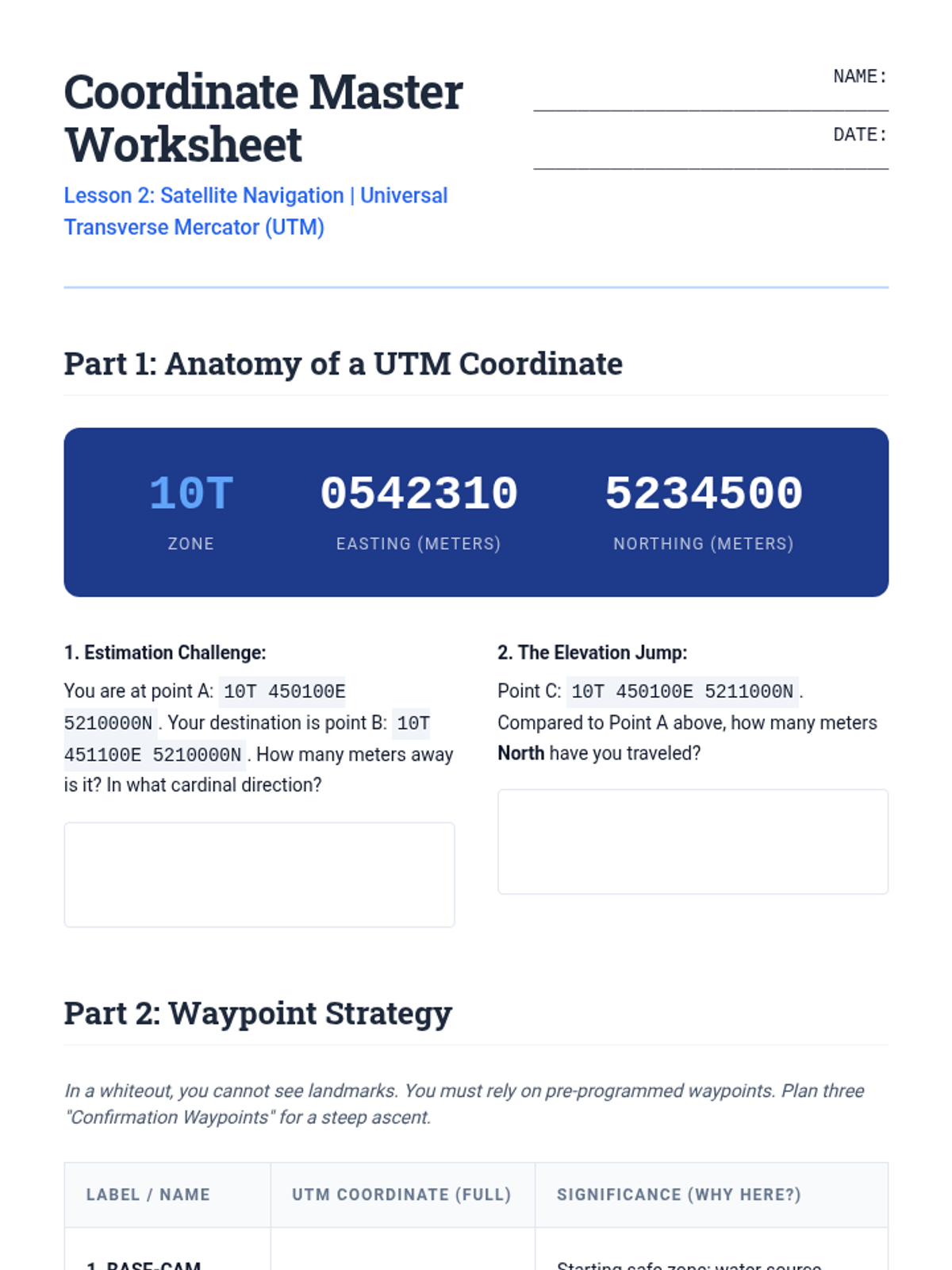
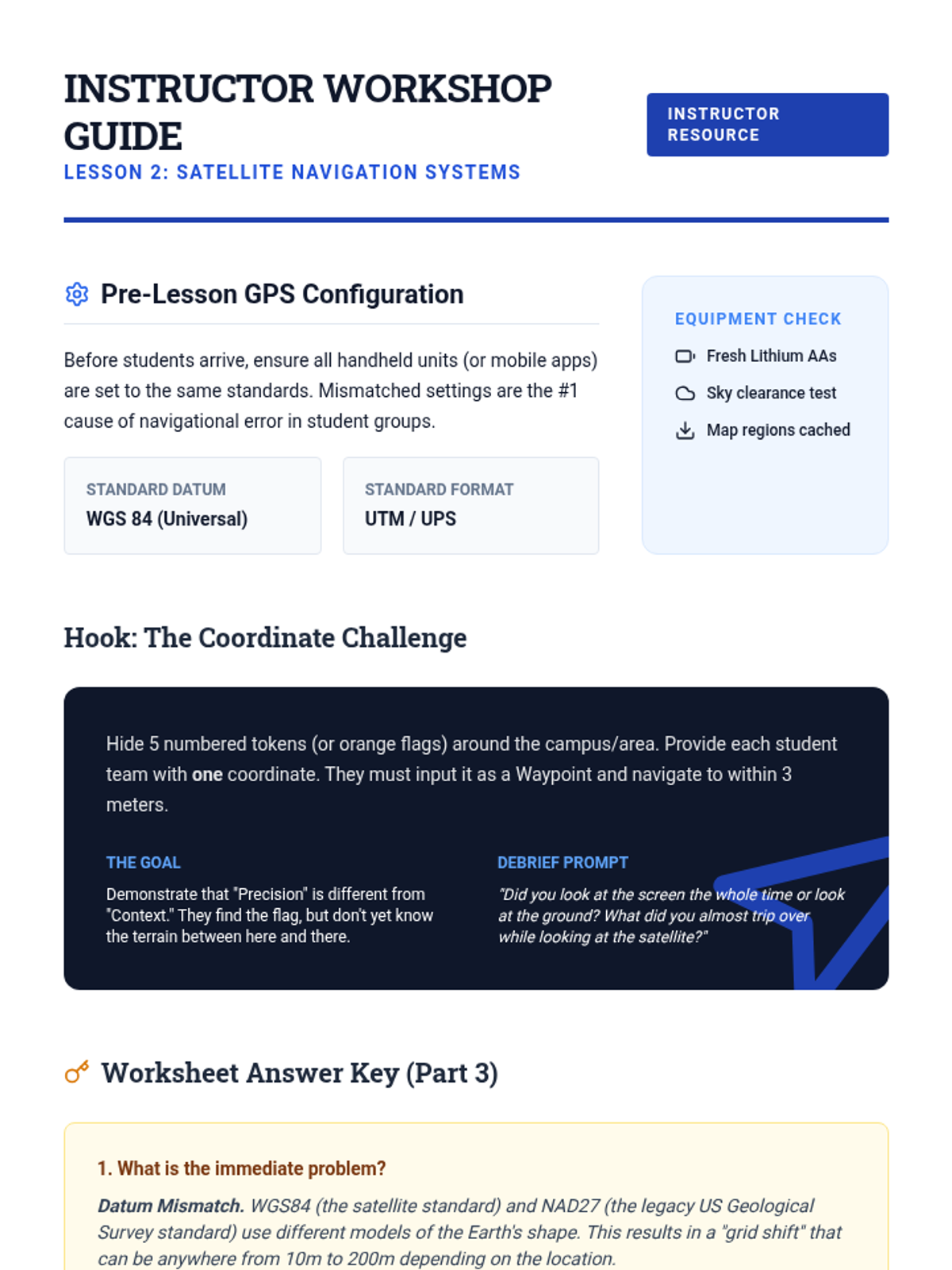
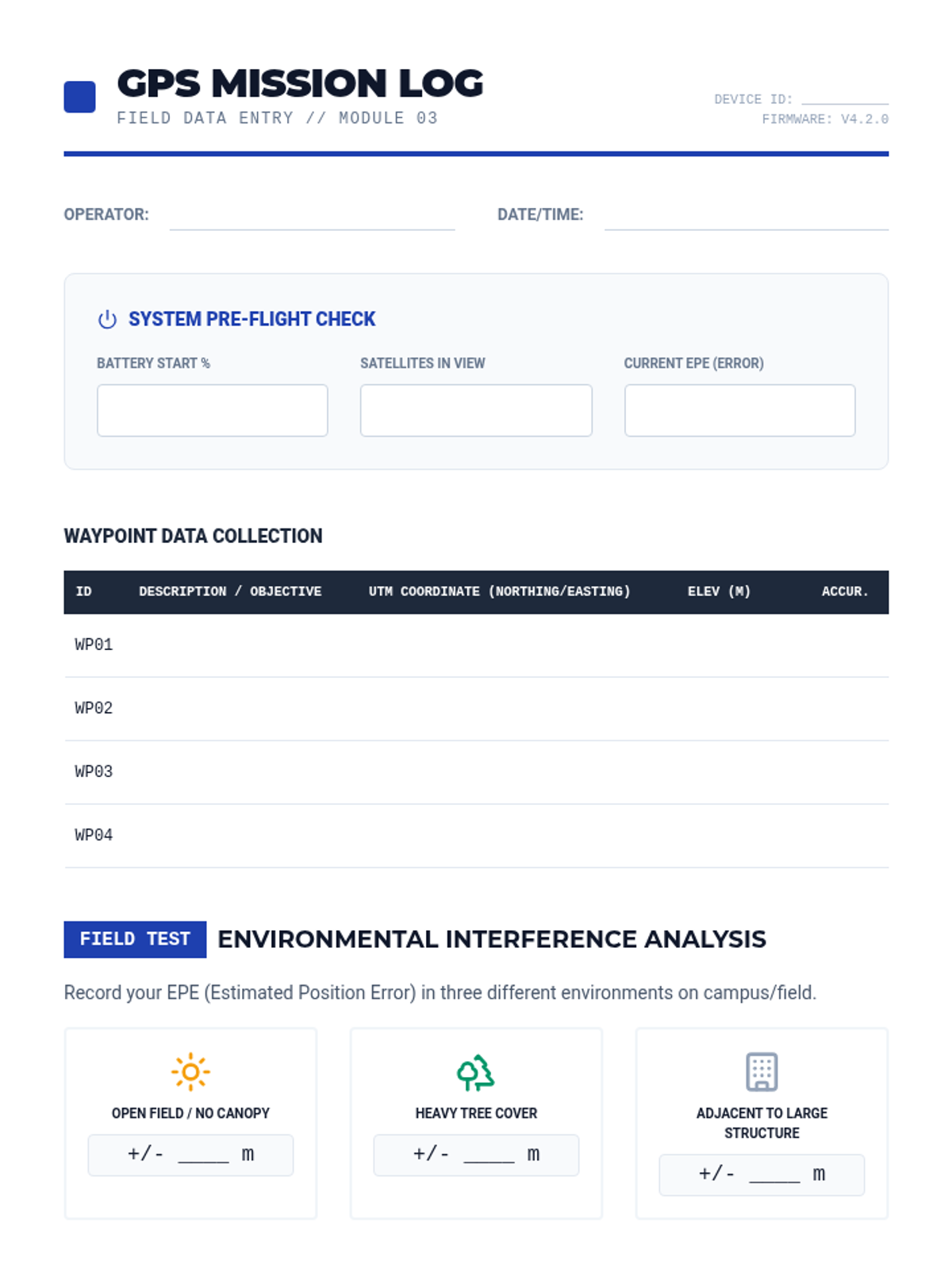
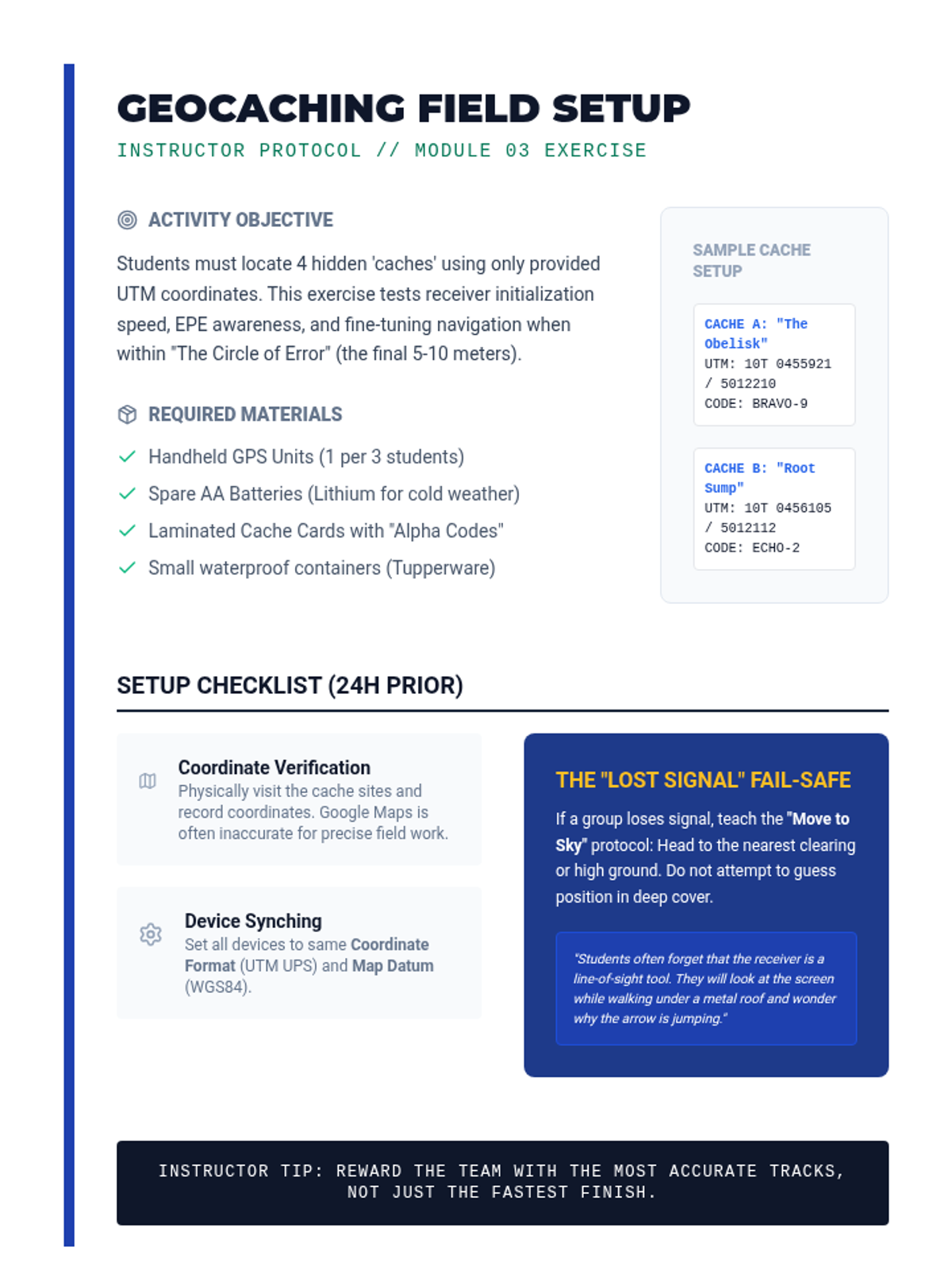
A technical exploration of satellite navigation, coordinate systems (UTM vs. Lat/Long), and the strategic use of GPS units as a secondary tool to traditional map and compass.
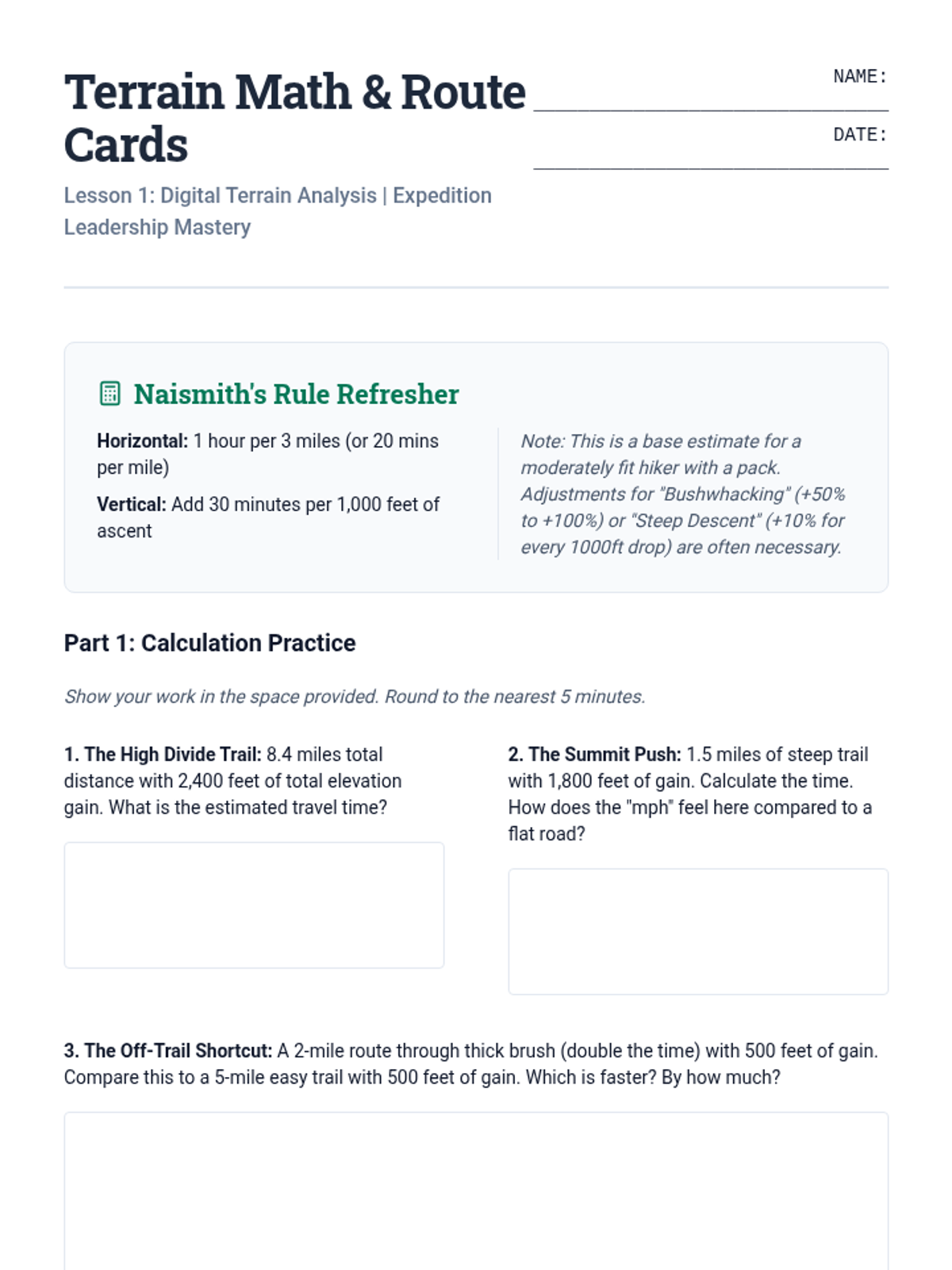
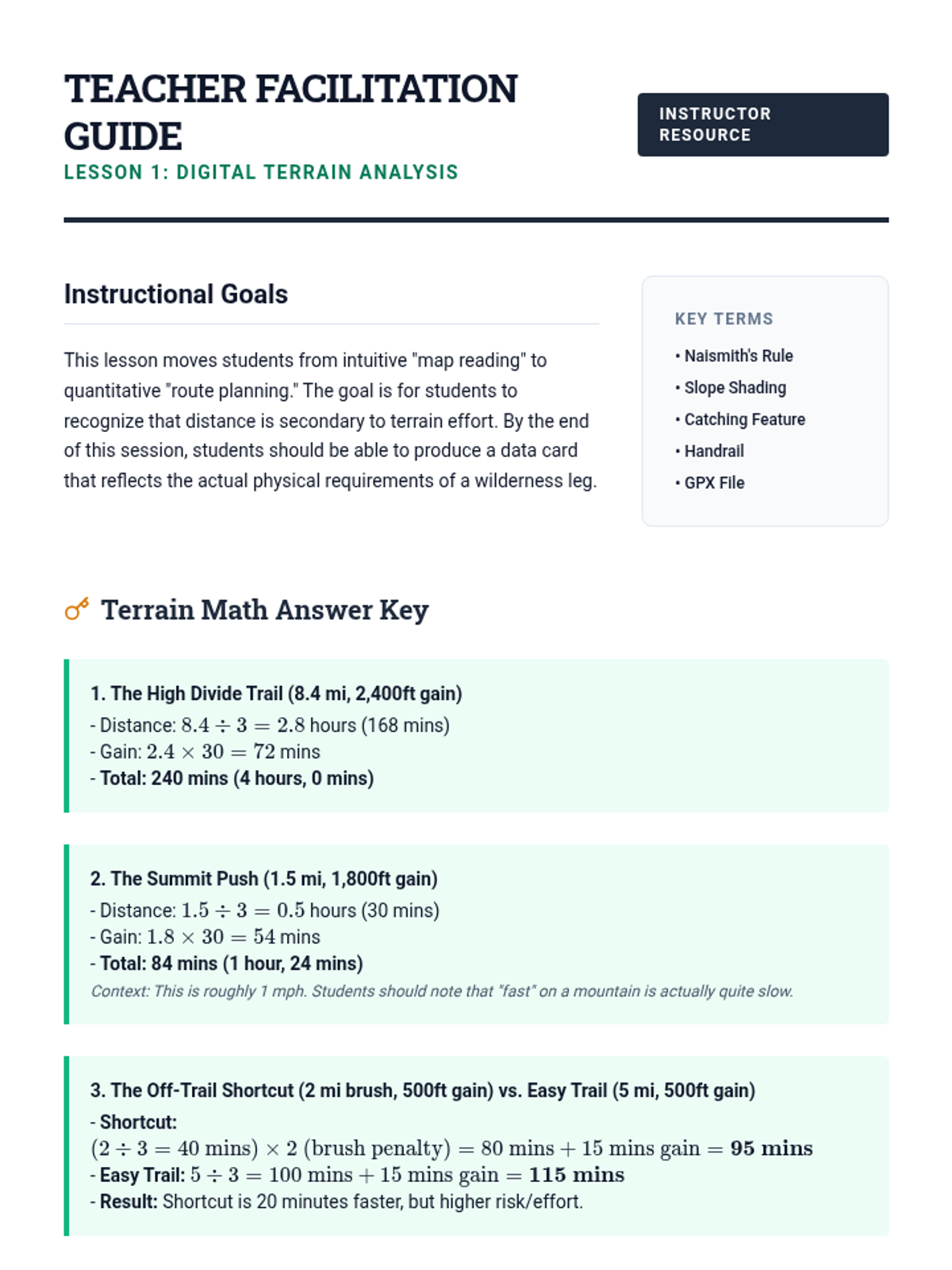
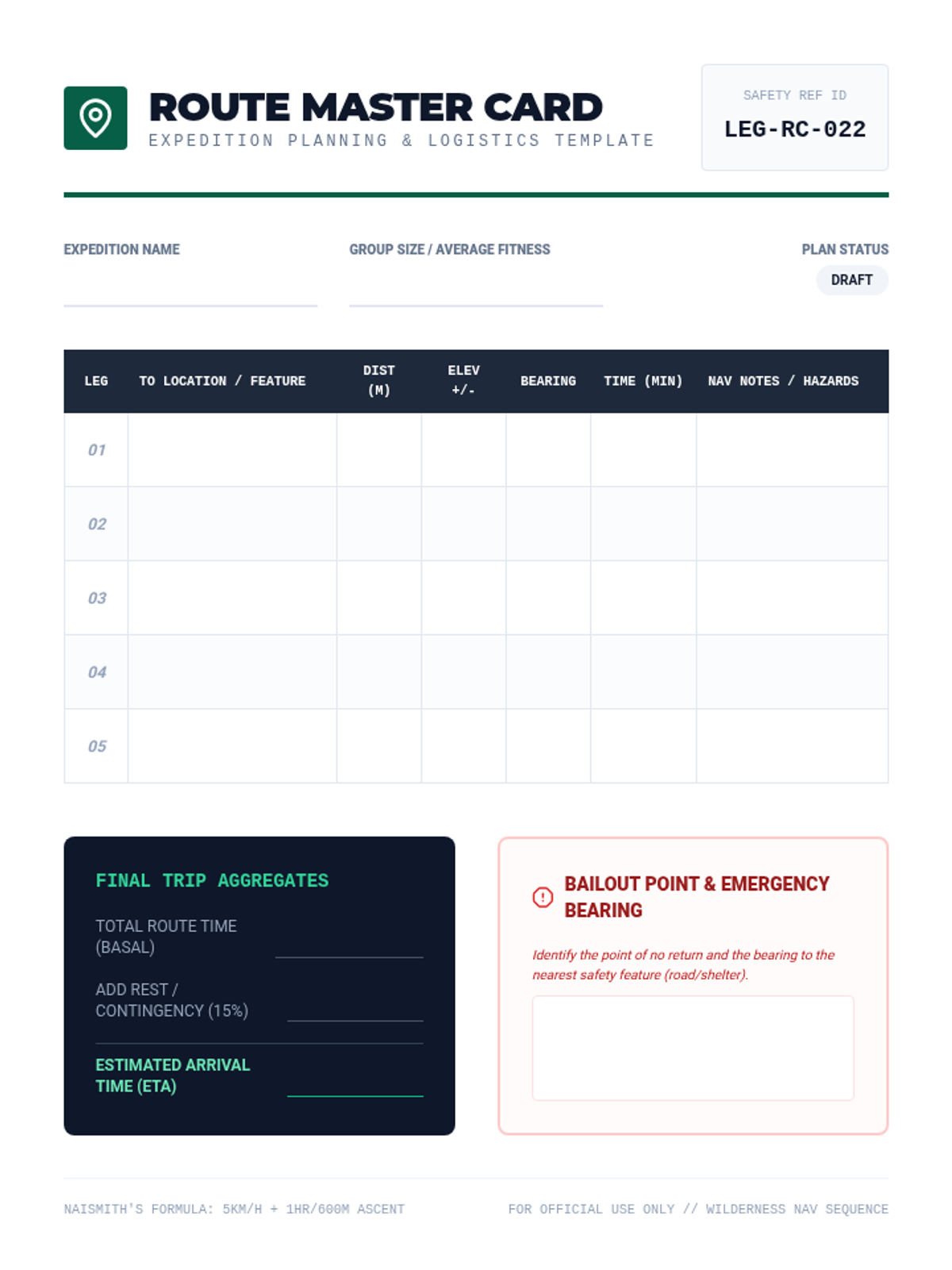
Students master digital mapping tools to build detailed route plans, applying Naismith's Rule for travel time estimation and analyzing terrain features through elevation profiles.
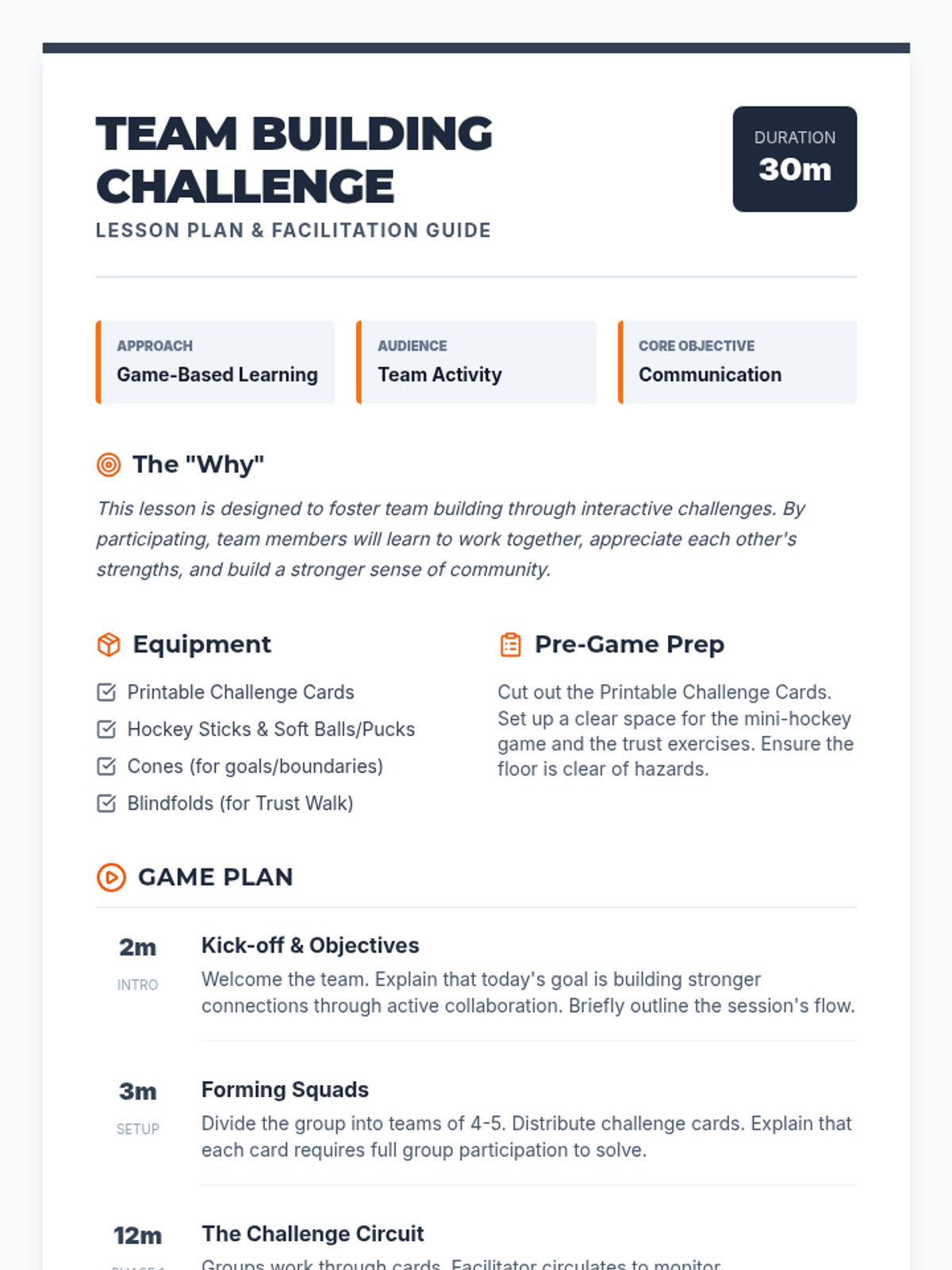
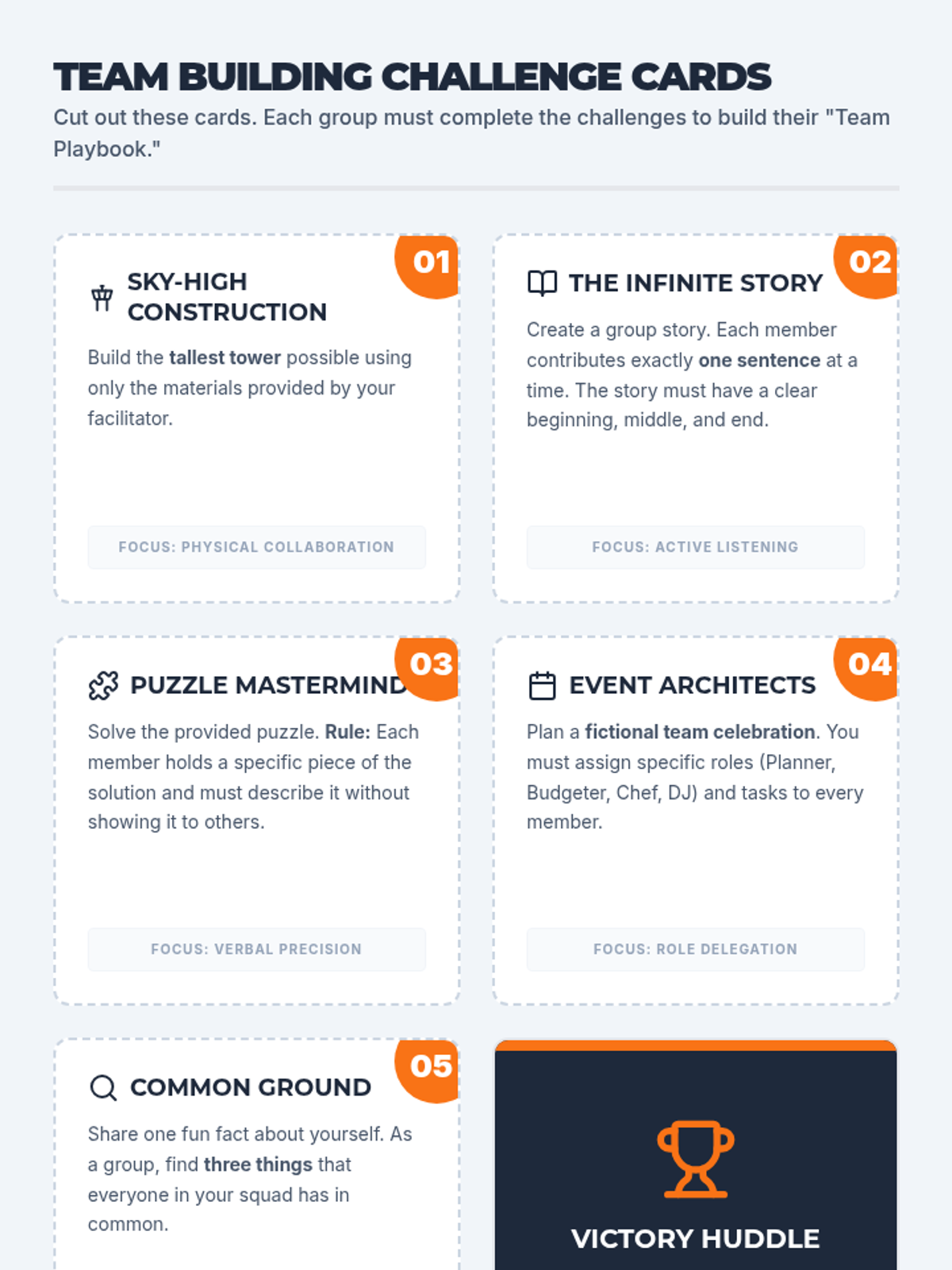
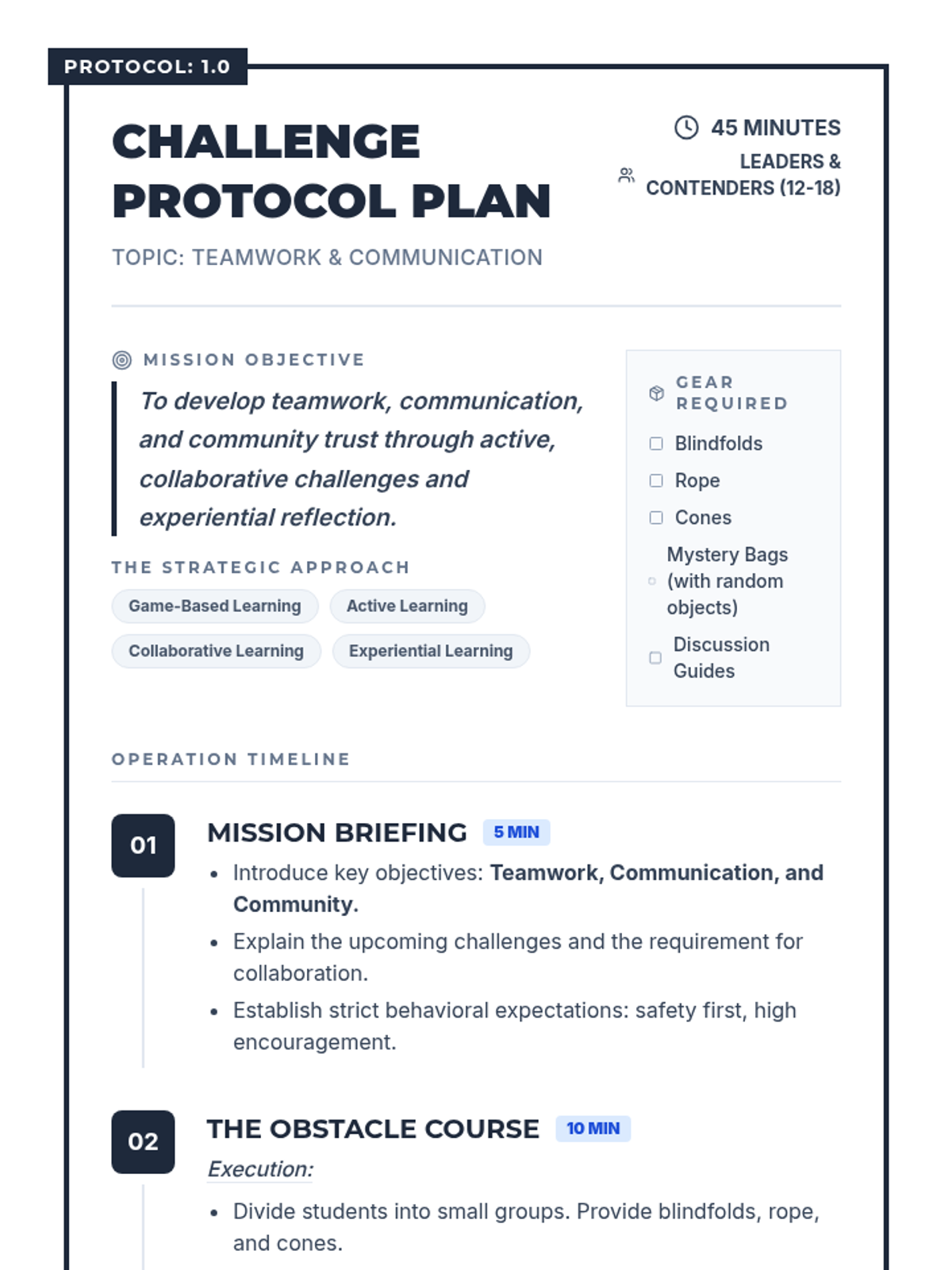
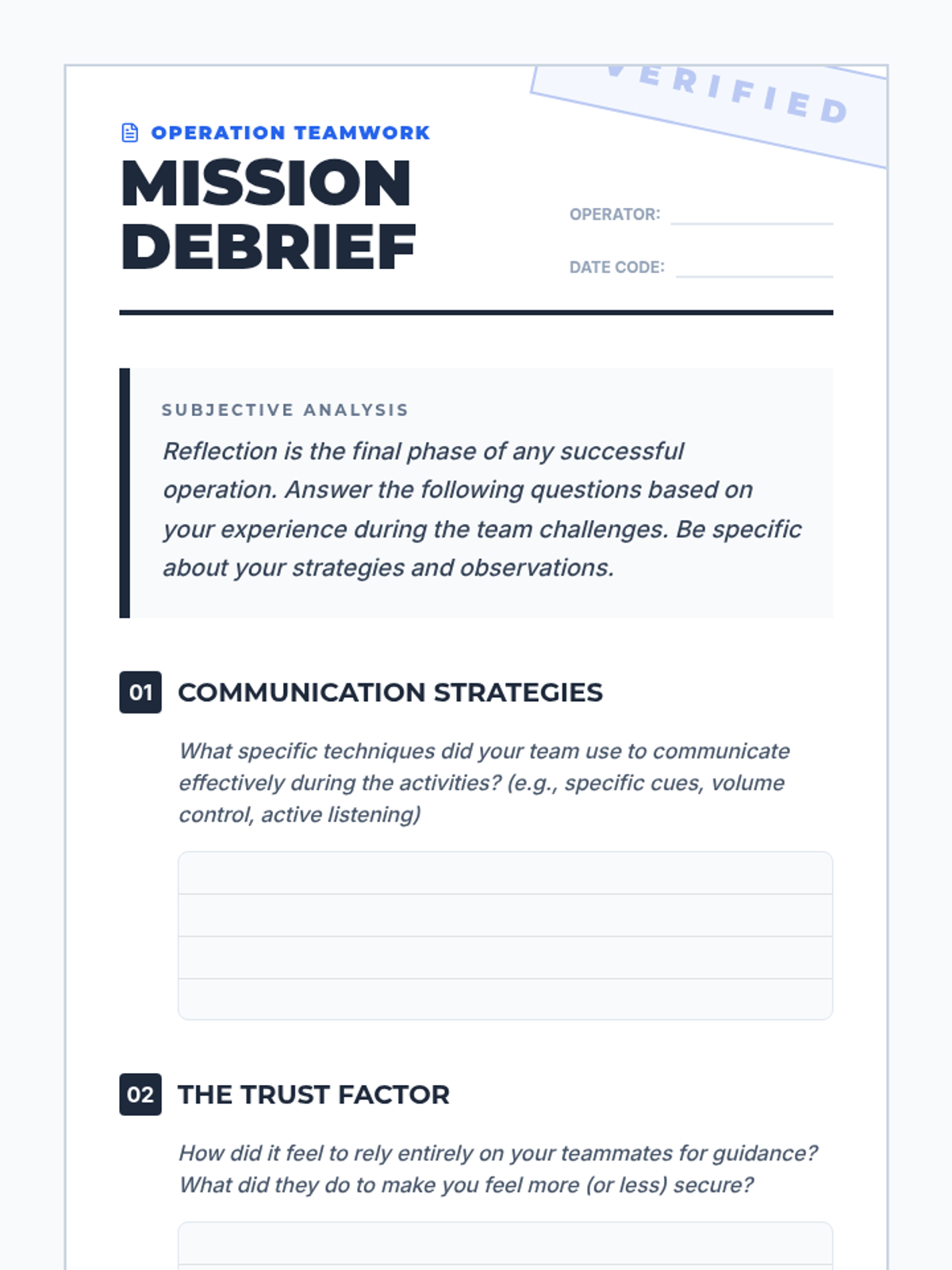
A high-energy team-building lesson focused on communication, trust, and collaboration through interactive challenges and a hockey-themed strategy game.
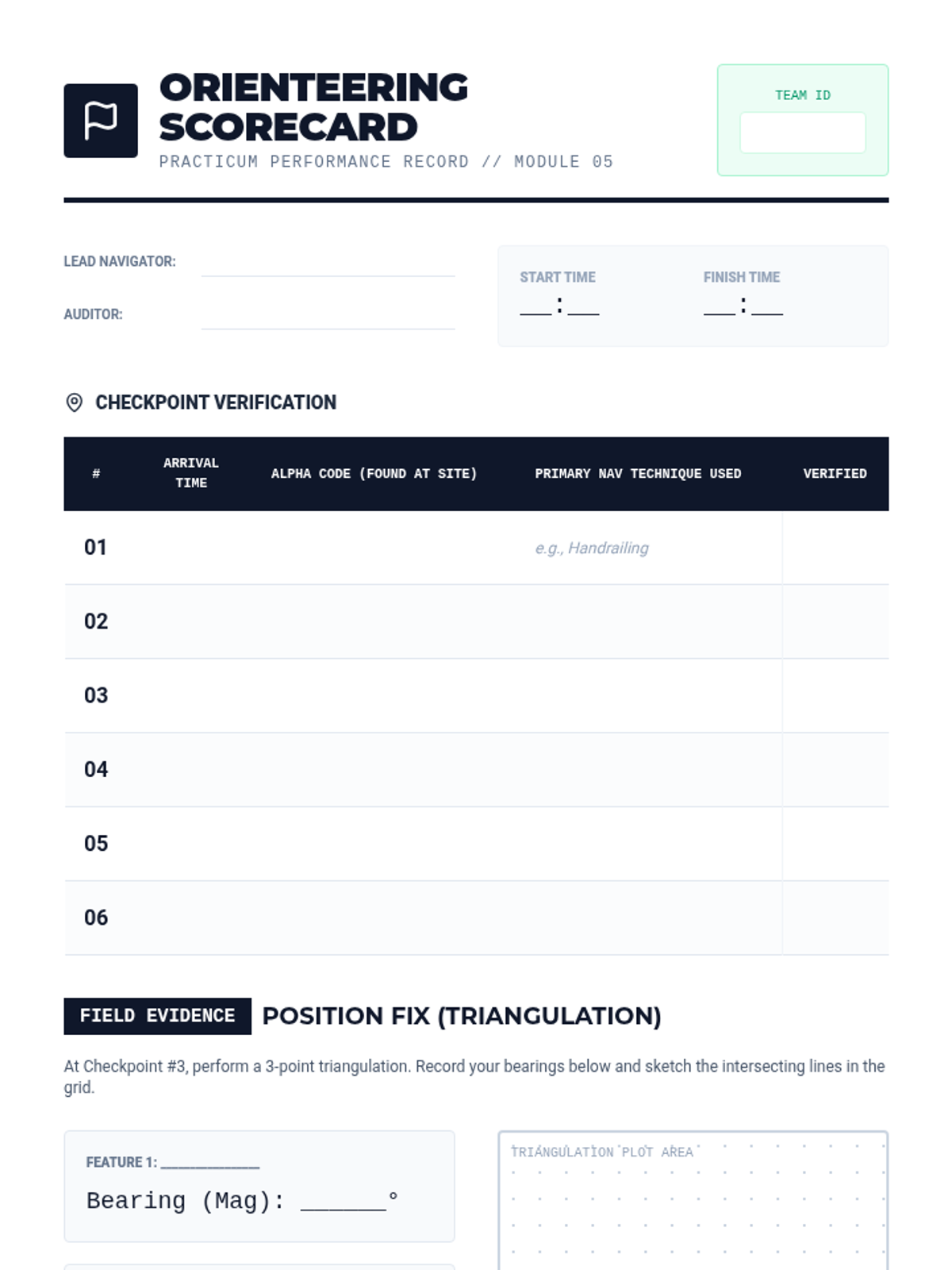
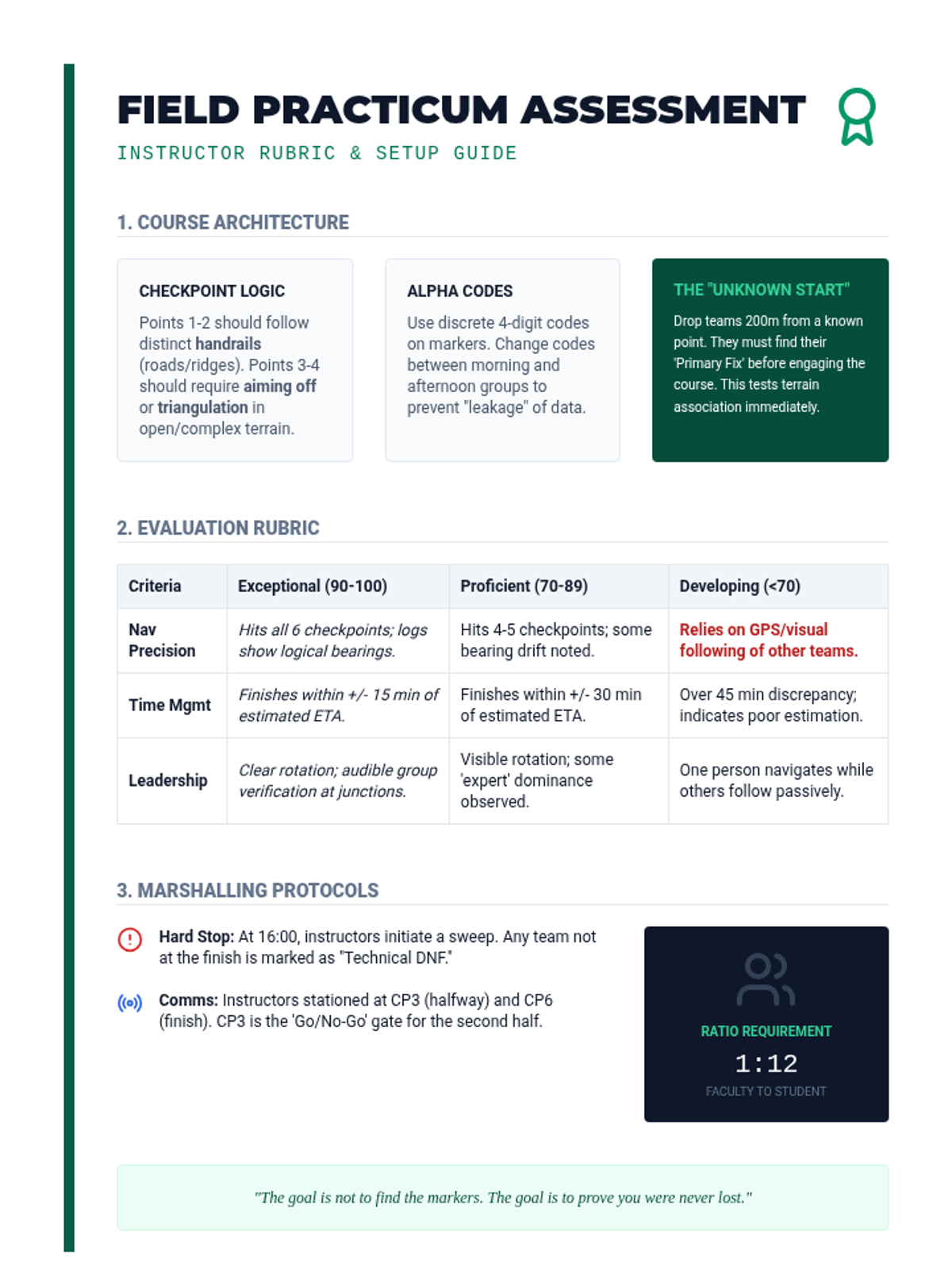
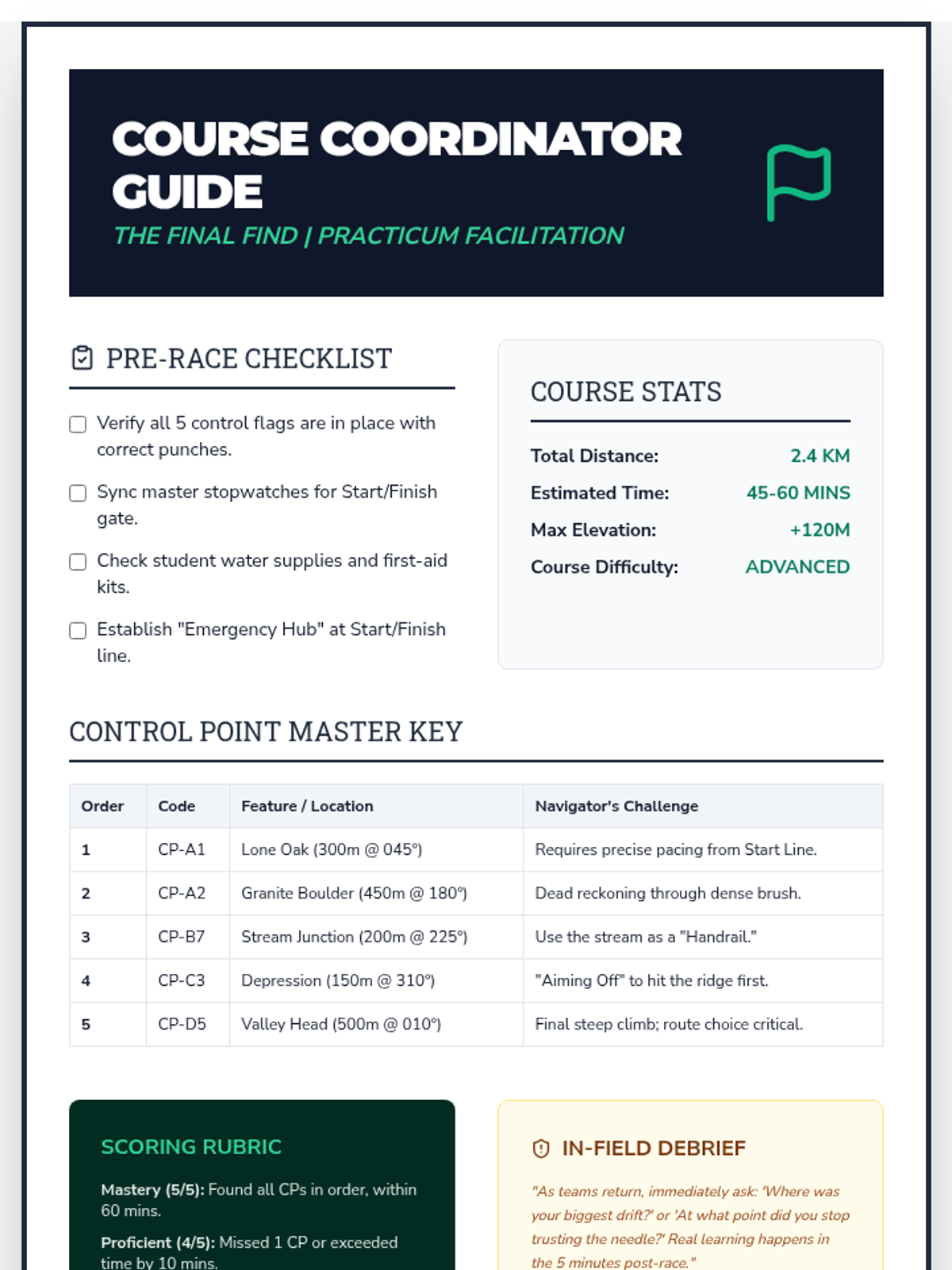
A physically demanding field practicum where students execute a timed orienteering course using map, compass, and triangulation techniques.
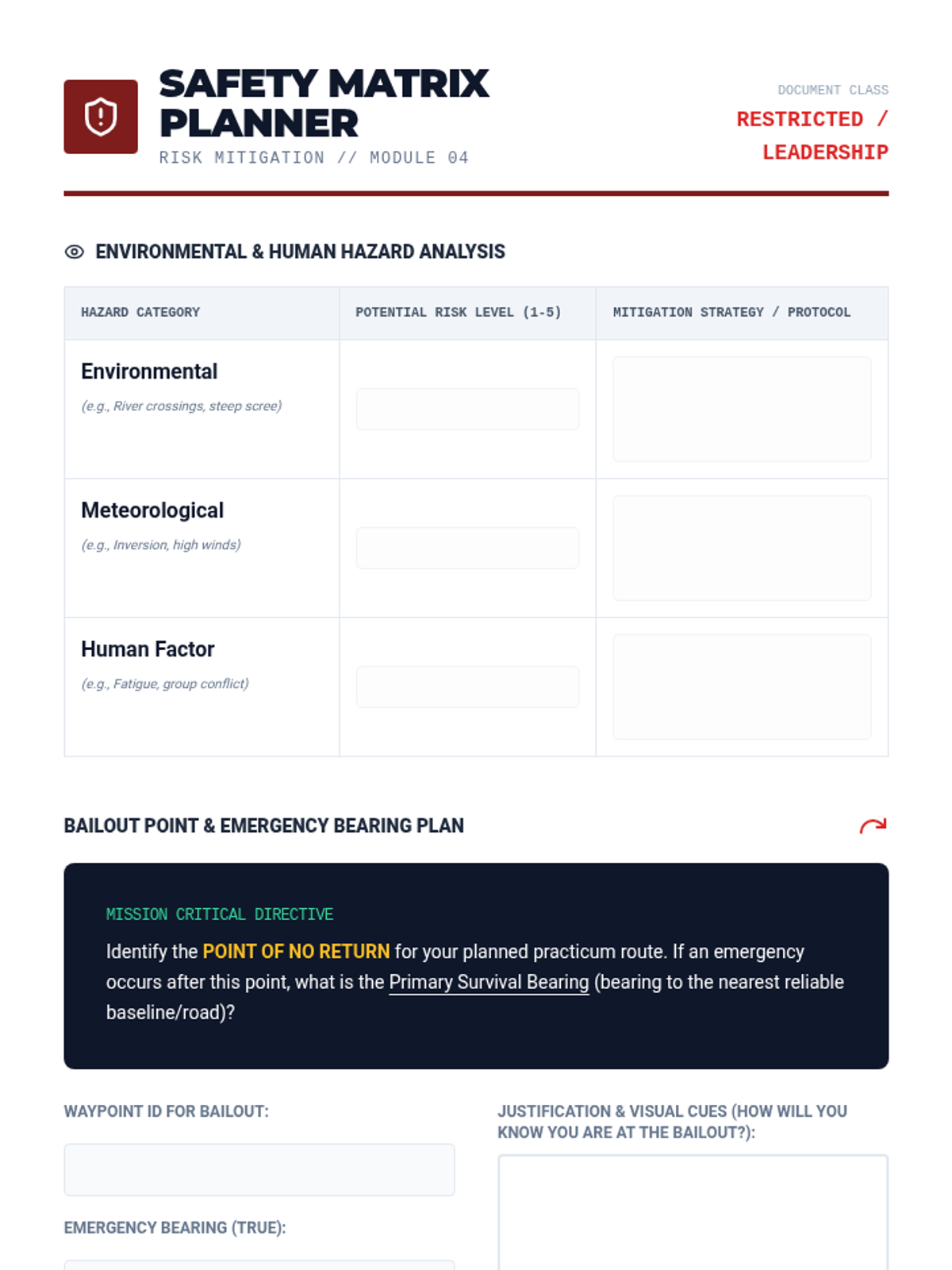
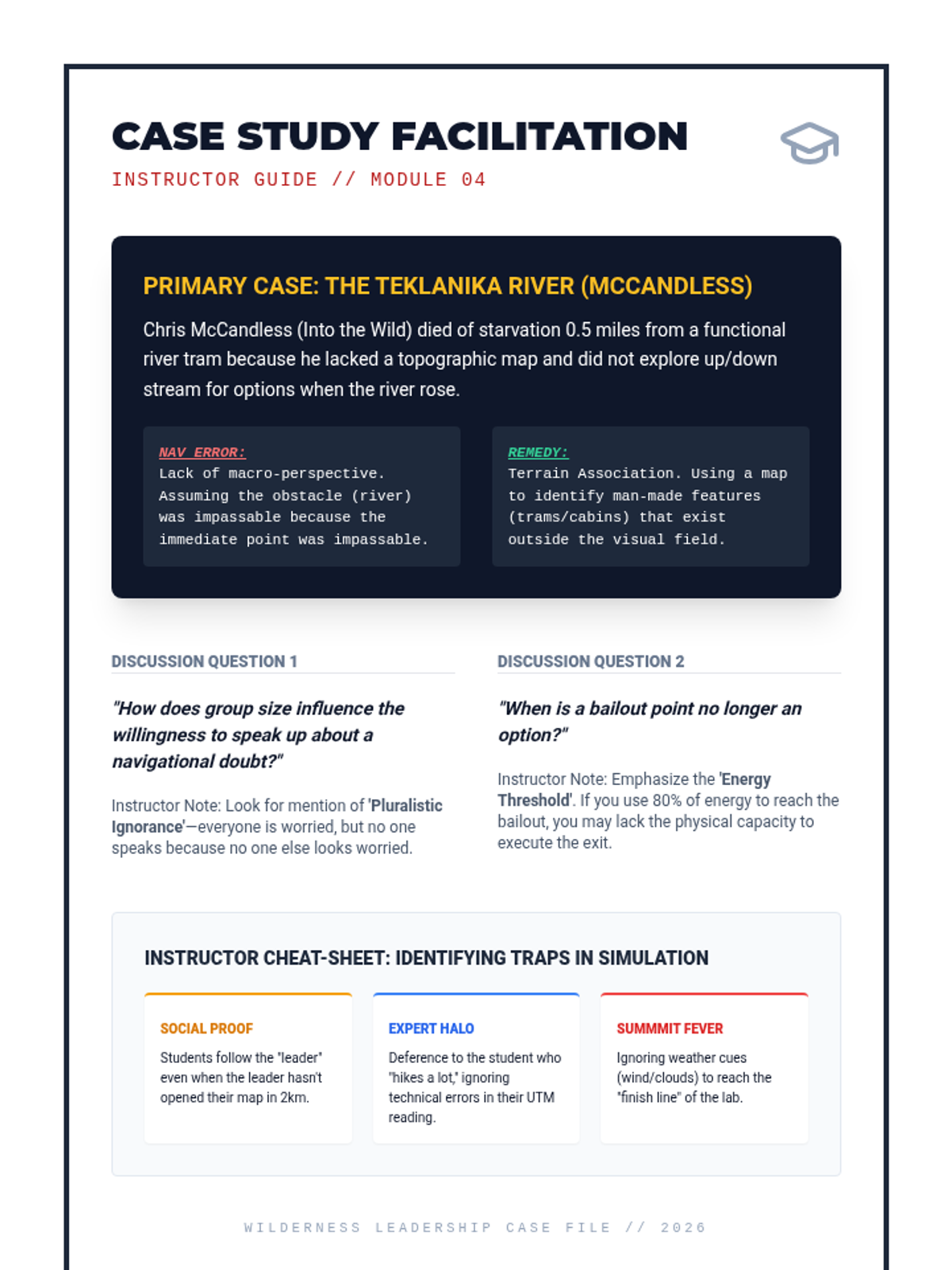
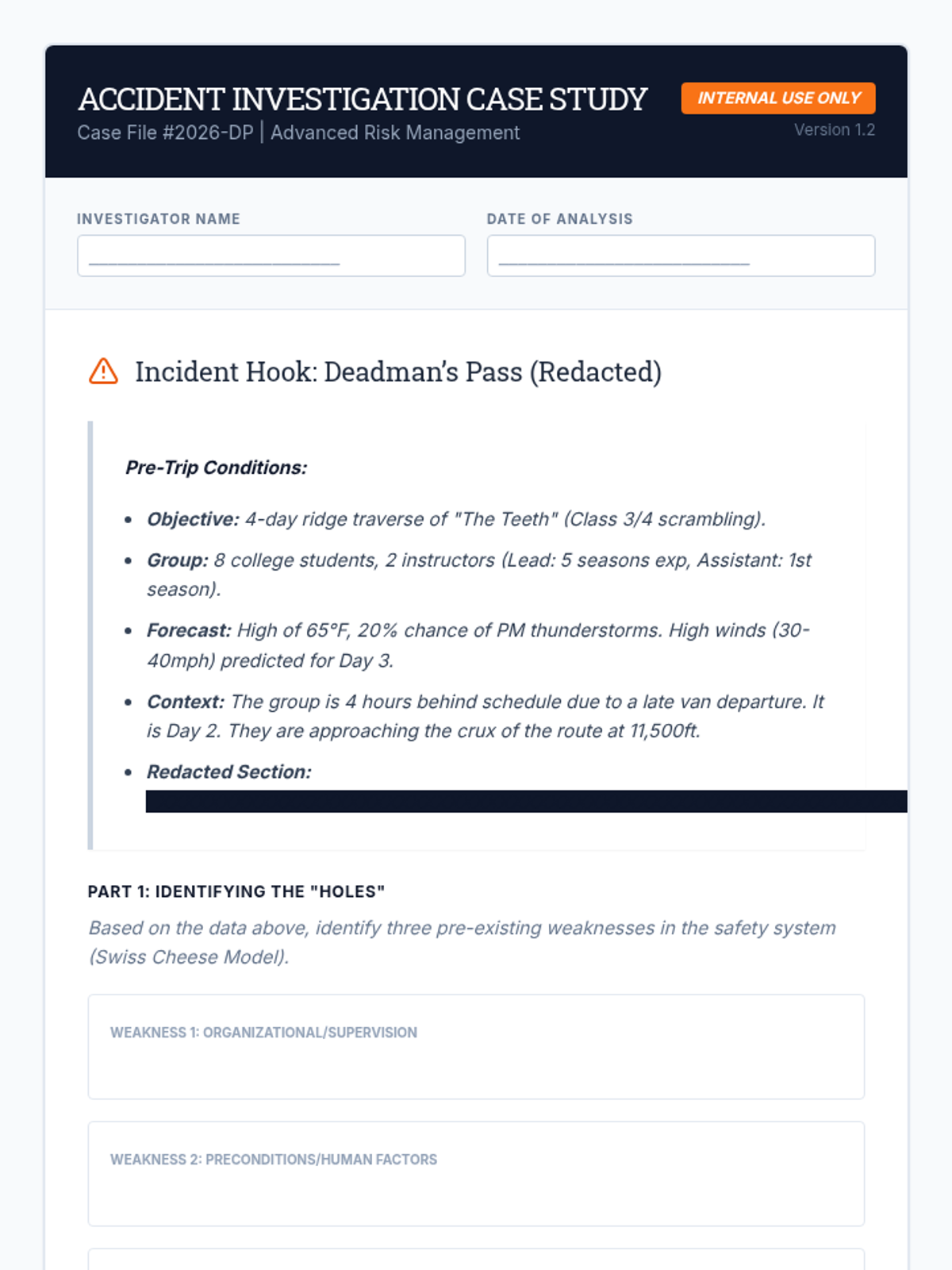
Critical analysis of backcountry decision-making, accident reports, and the development of safety matrices for emergency preparedness in wilderness leadership.
An exploration of GPS technology, waypoint management, and the integration of digital tools with traditional navigation methods, emphasizing technological limitations.
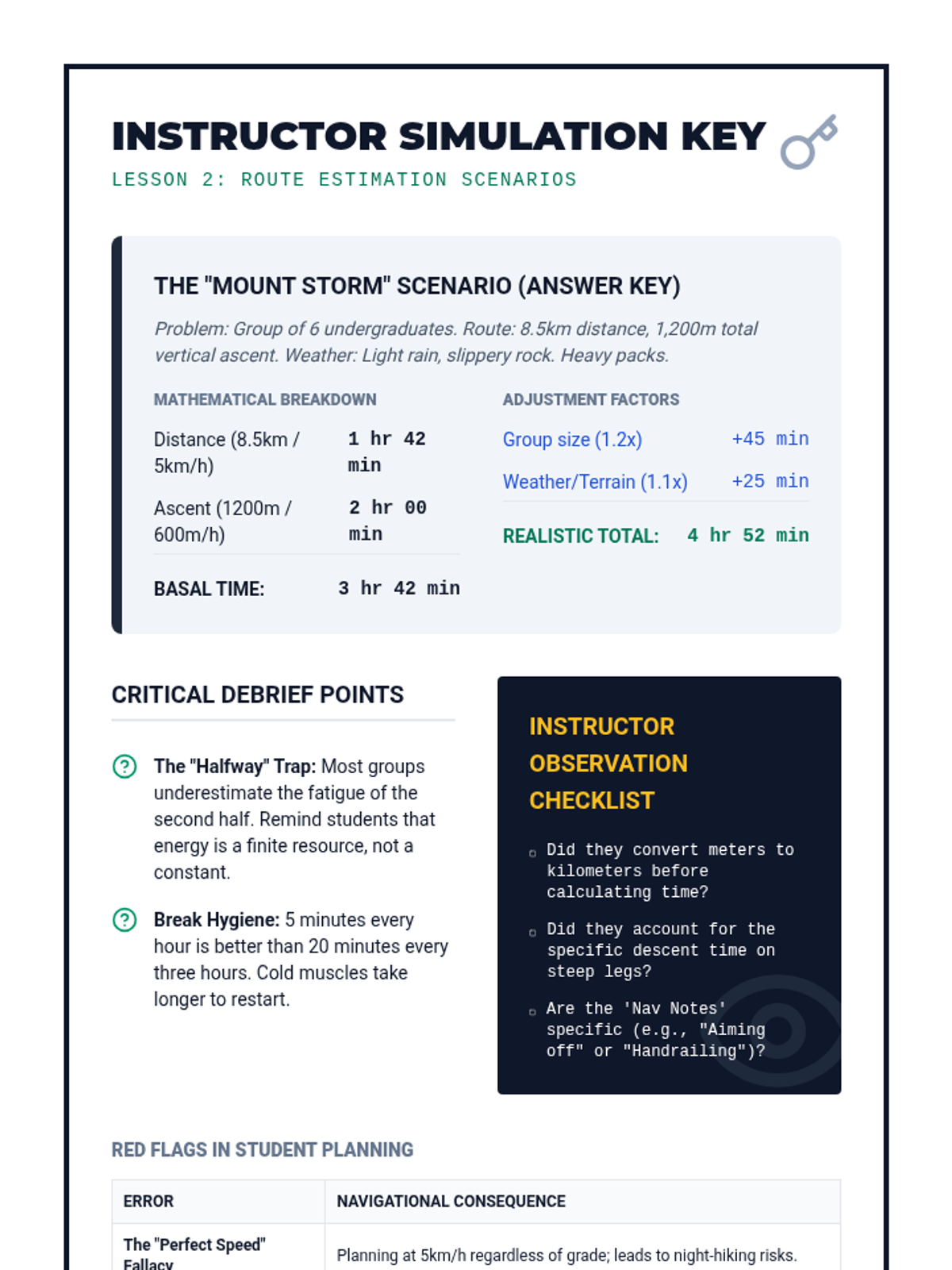
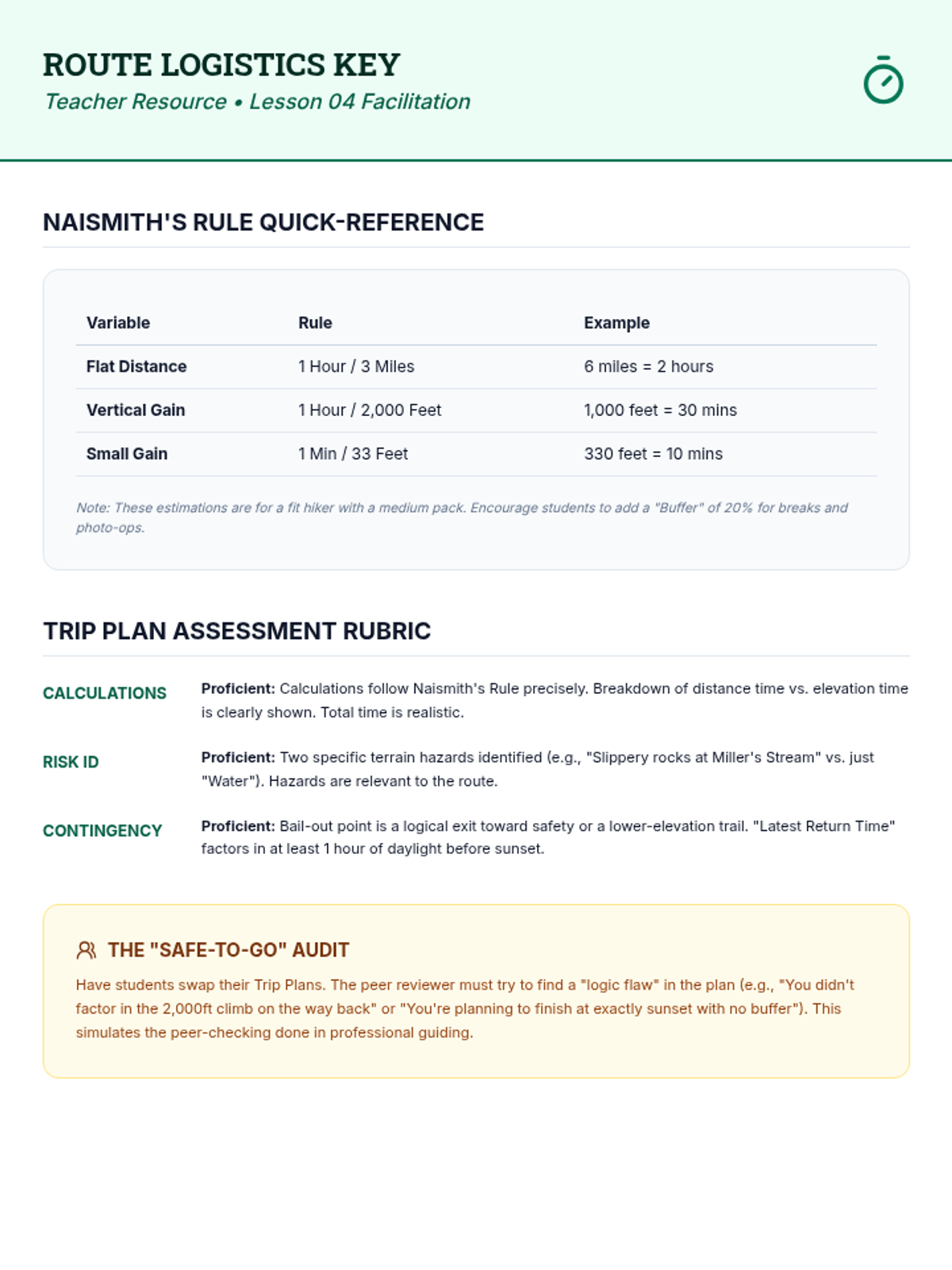
Application of mathematical models like Naismith's Rule to estimate travel times and create detailed logistical route plans for wilderness expeditions.
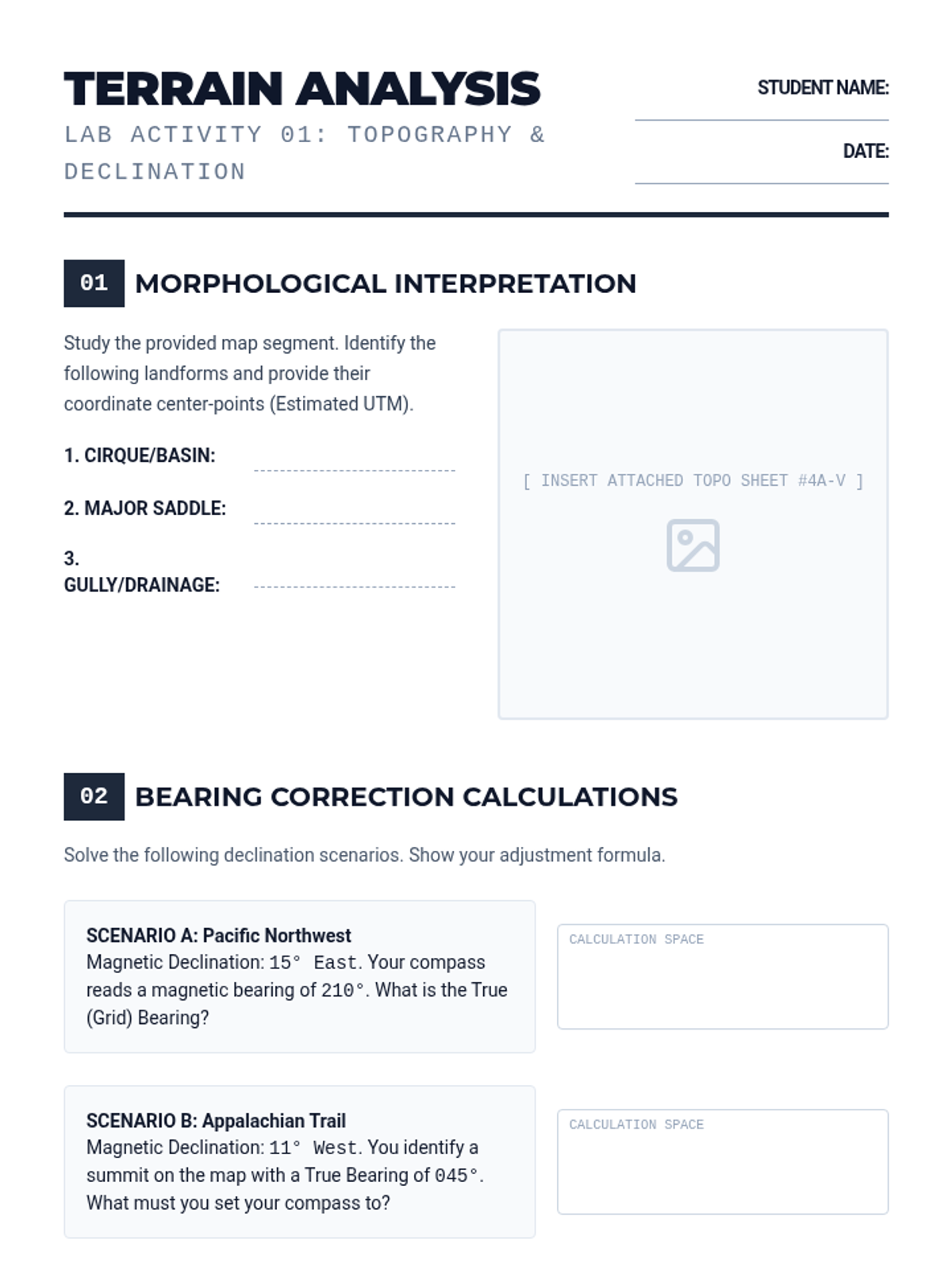
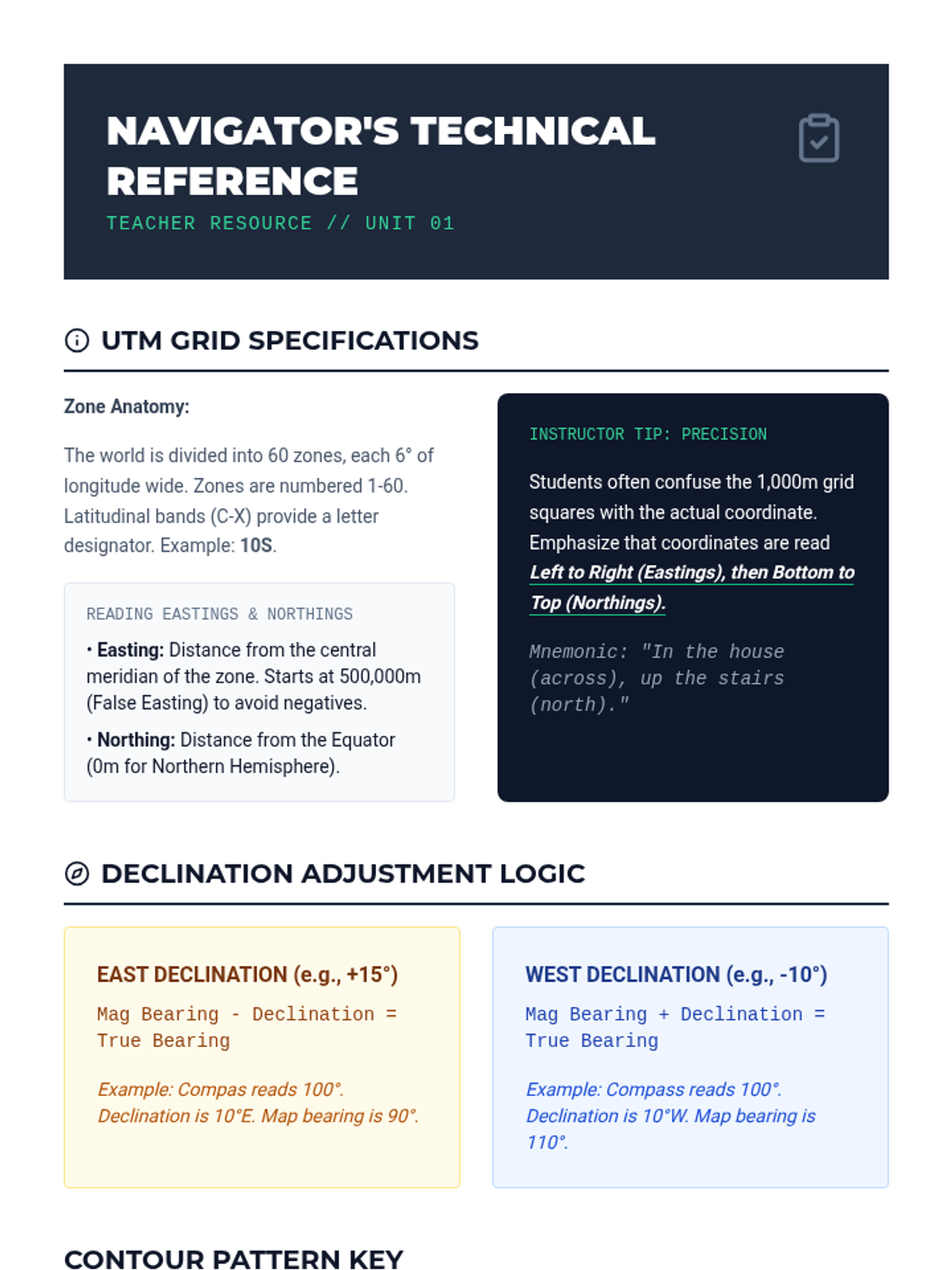
Students master technical topographic interpretation, UTM coordinate systems, and the physics of magnetic declination to visualize 3D terrain from 2D data.
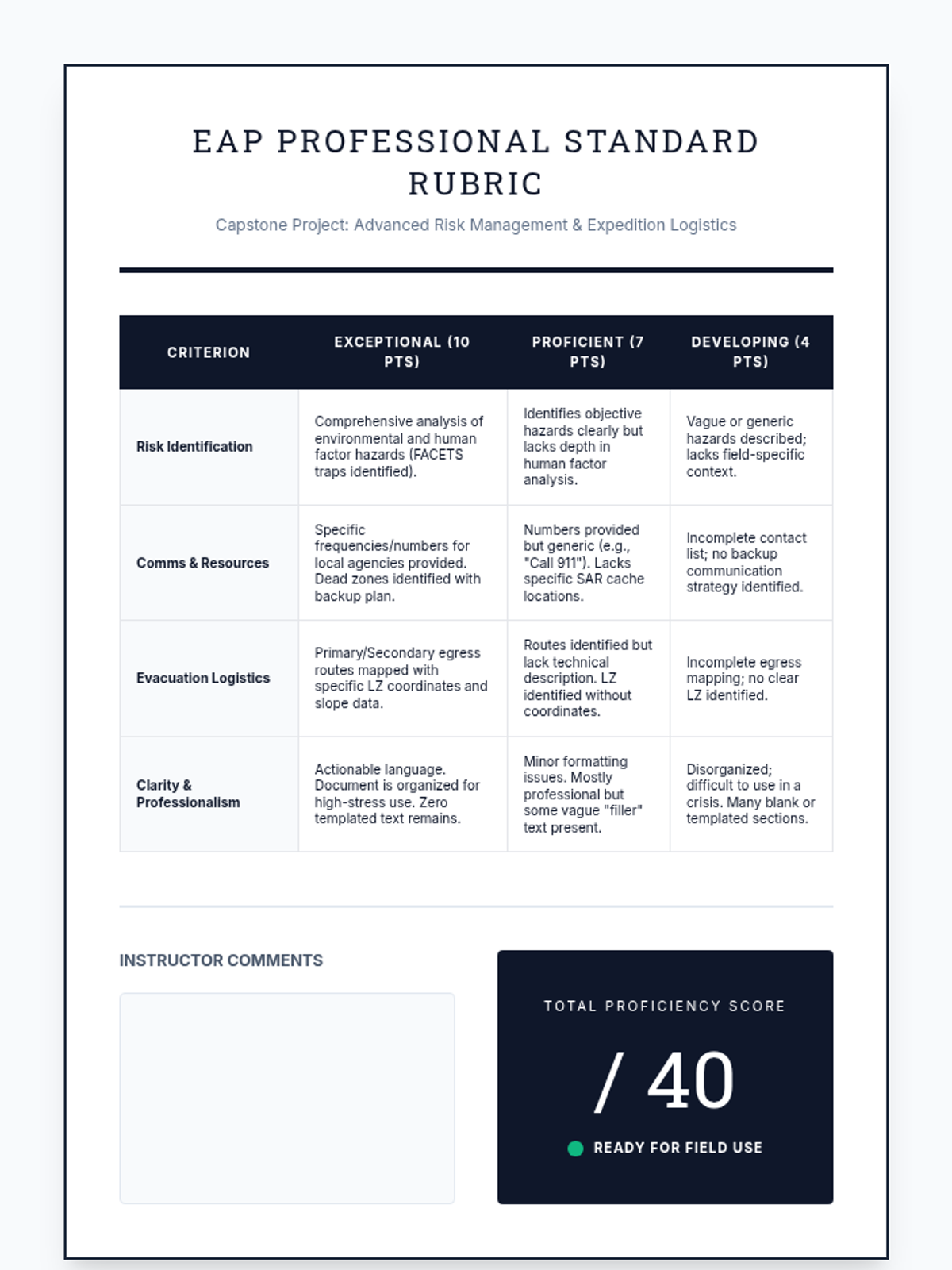
The culminating project where students synthesize all prior learning to draft and present a professional Emergency Action Plan (EAP).
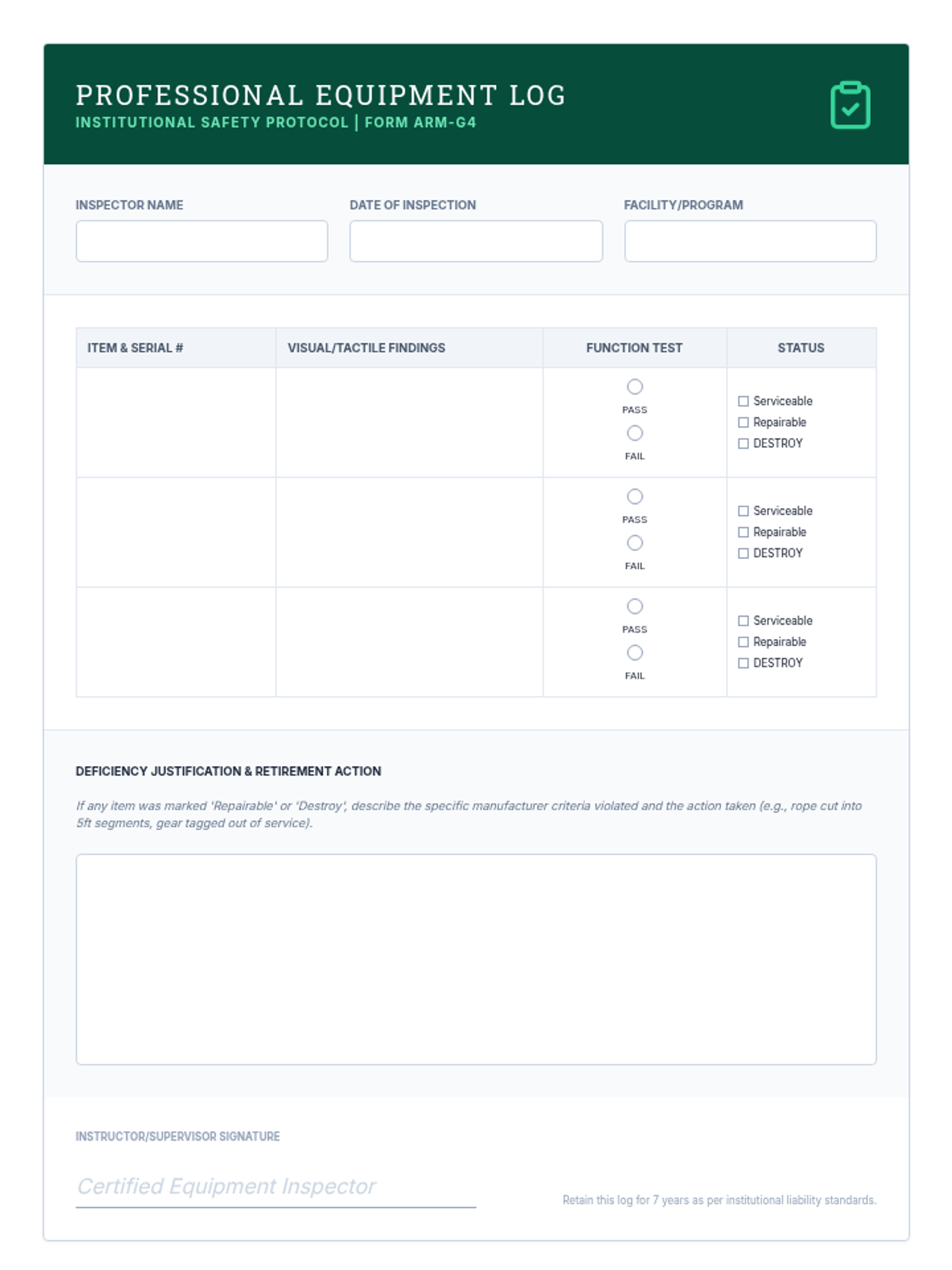
Covers professional standards for PPE inspection, equipment lifecycle management, and the legal implications of gear failure.
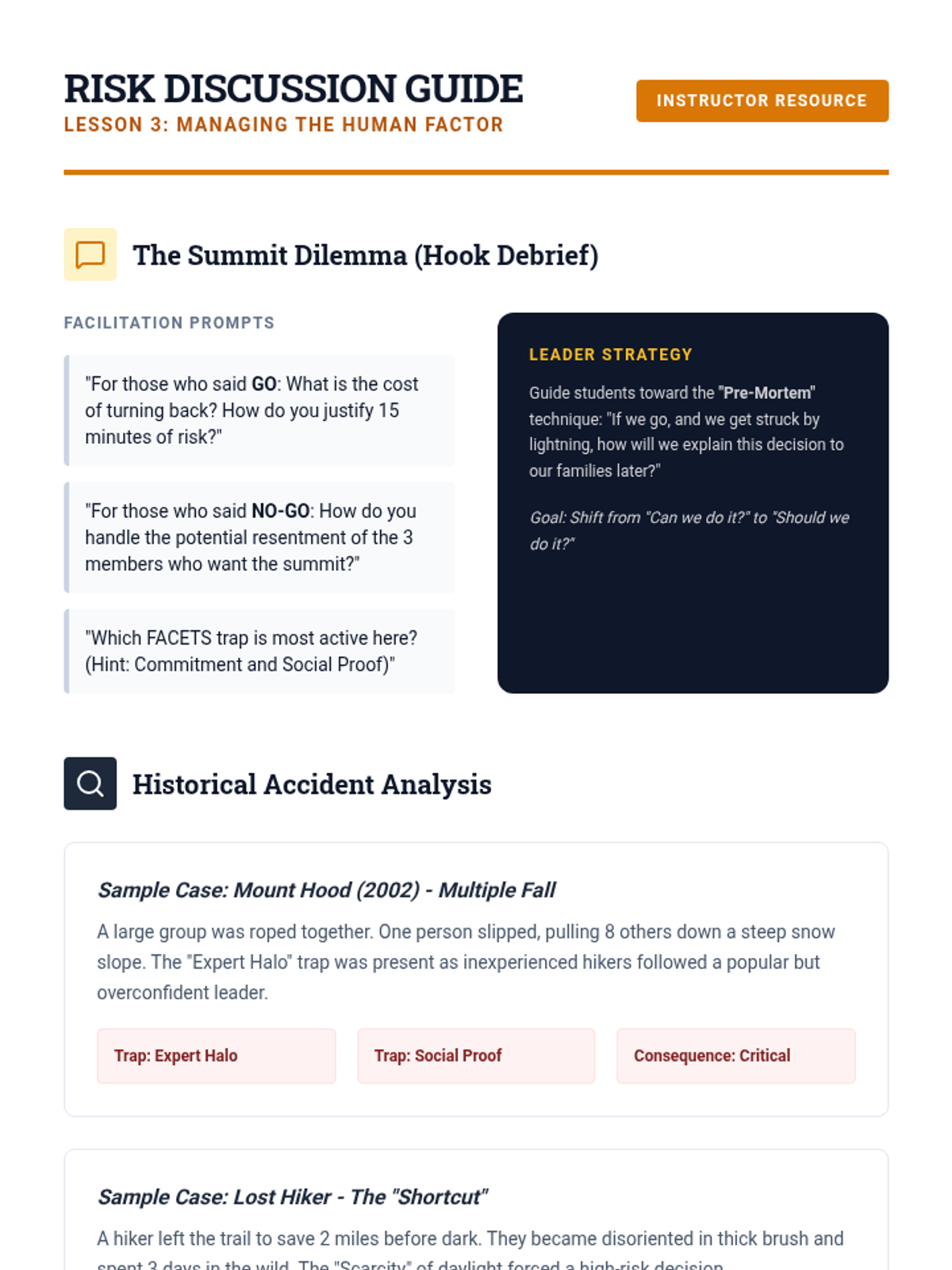
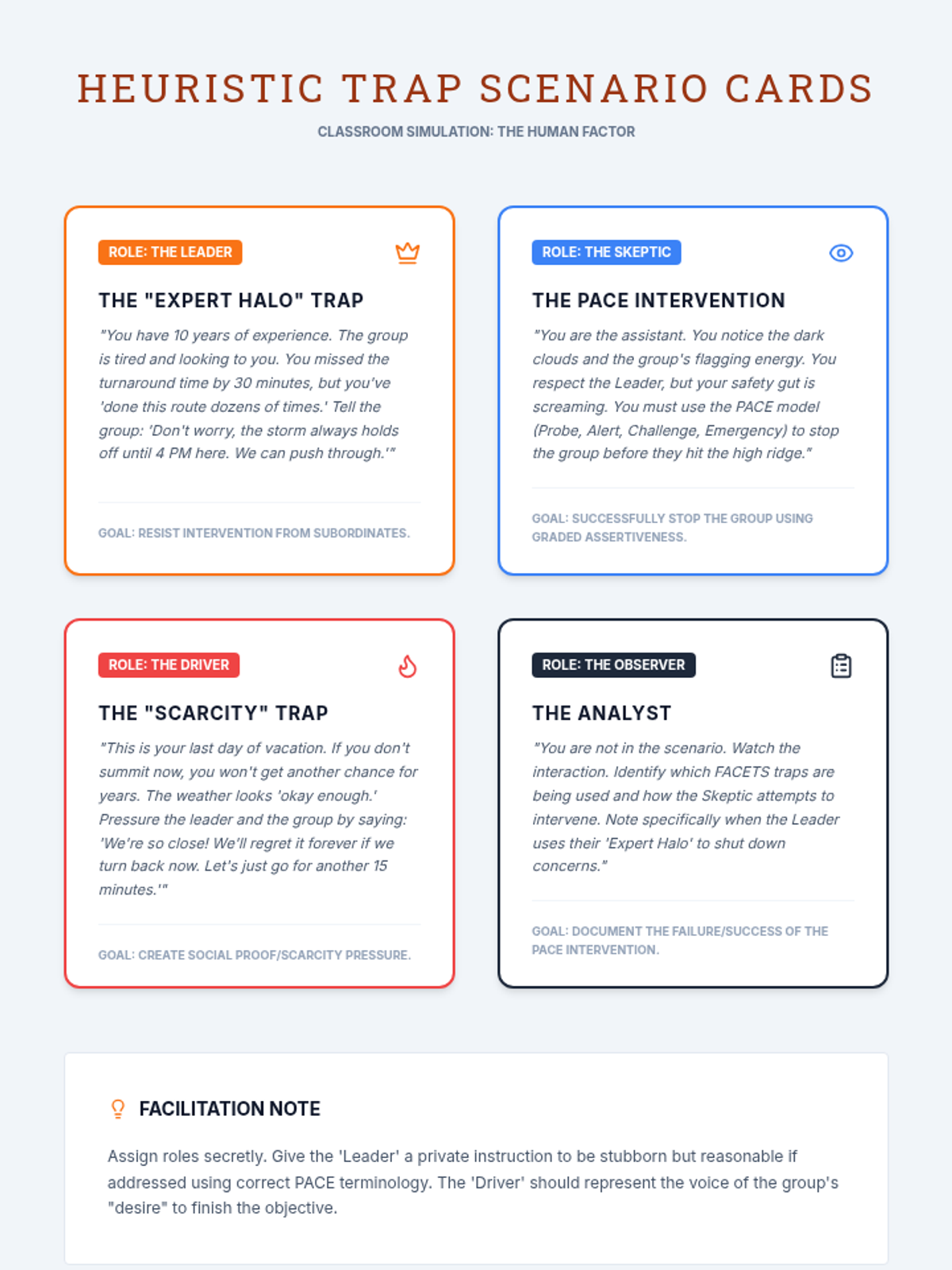
Explores the psychology of decision-making, specifically heuristic traps (FACETS) and graded assertiveness in group leadership.
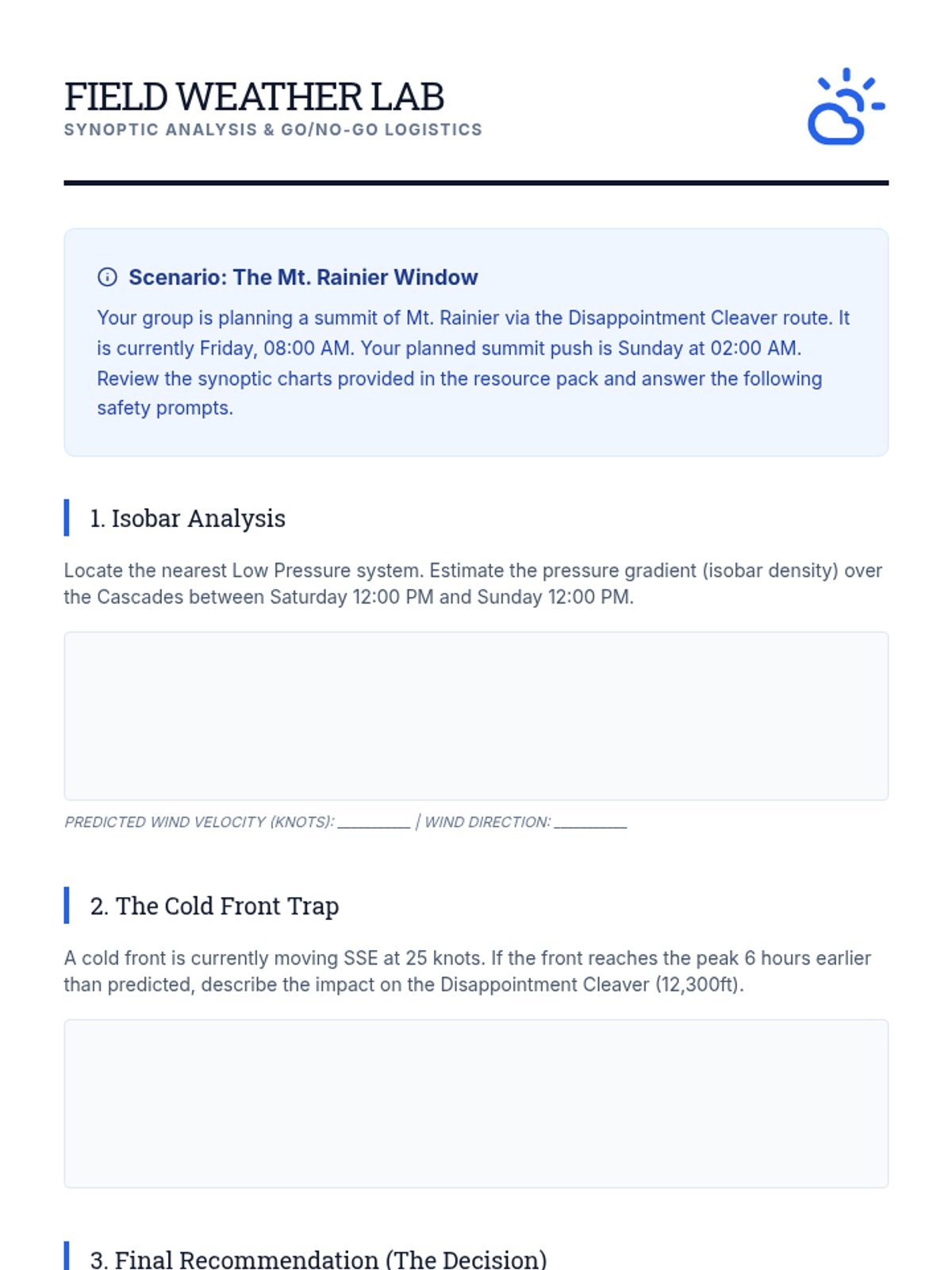
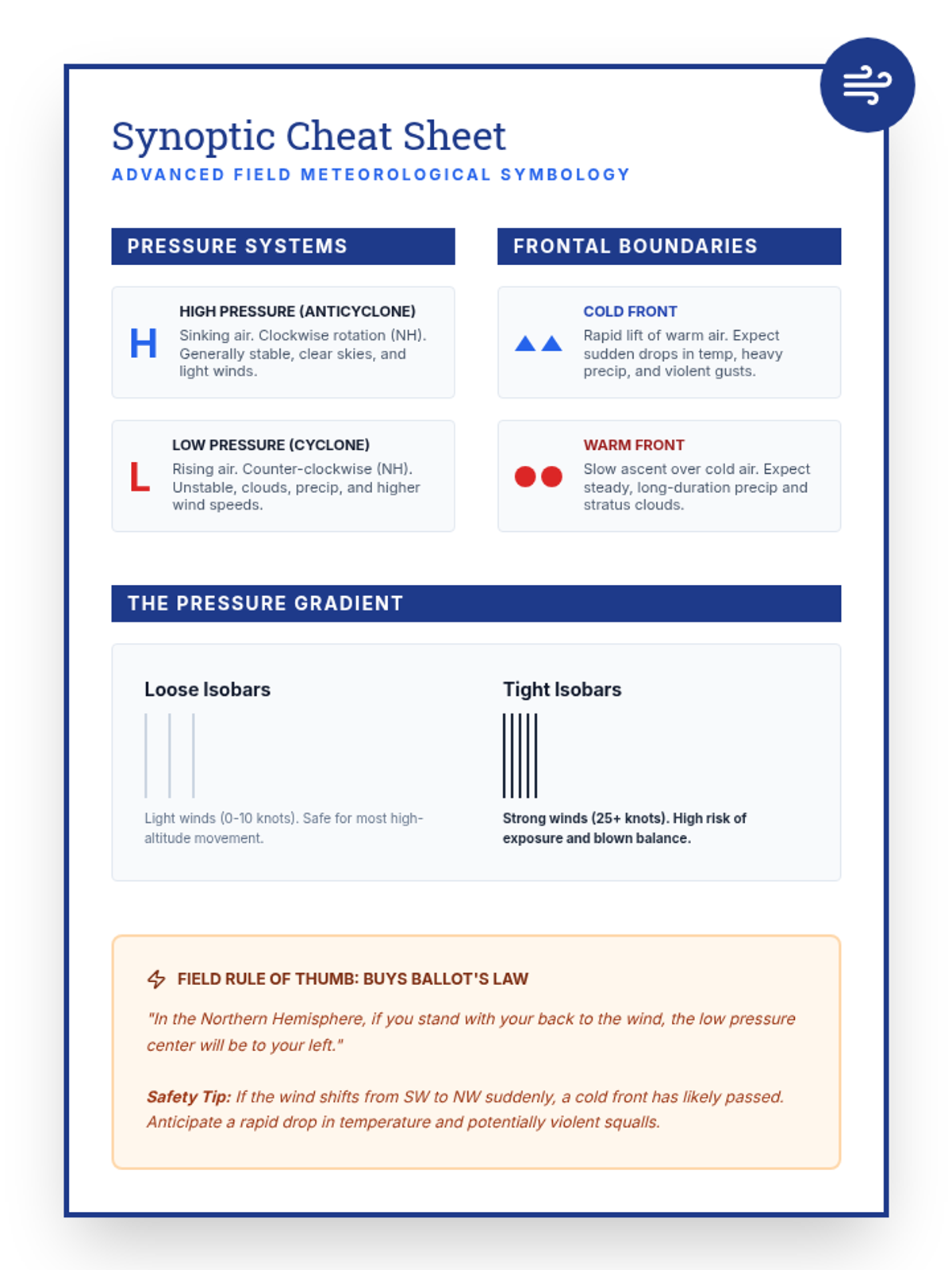
Focuses on reading synoptic charts and predicting micro-climate shifts to make informed go/no-go decisions in the field.
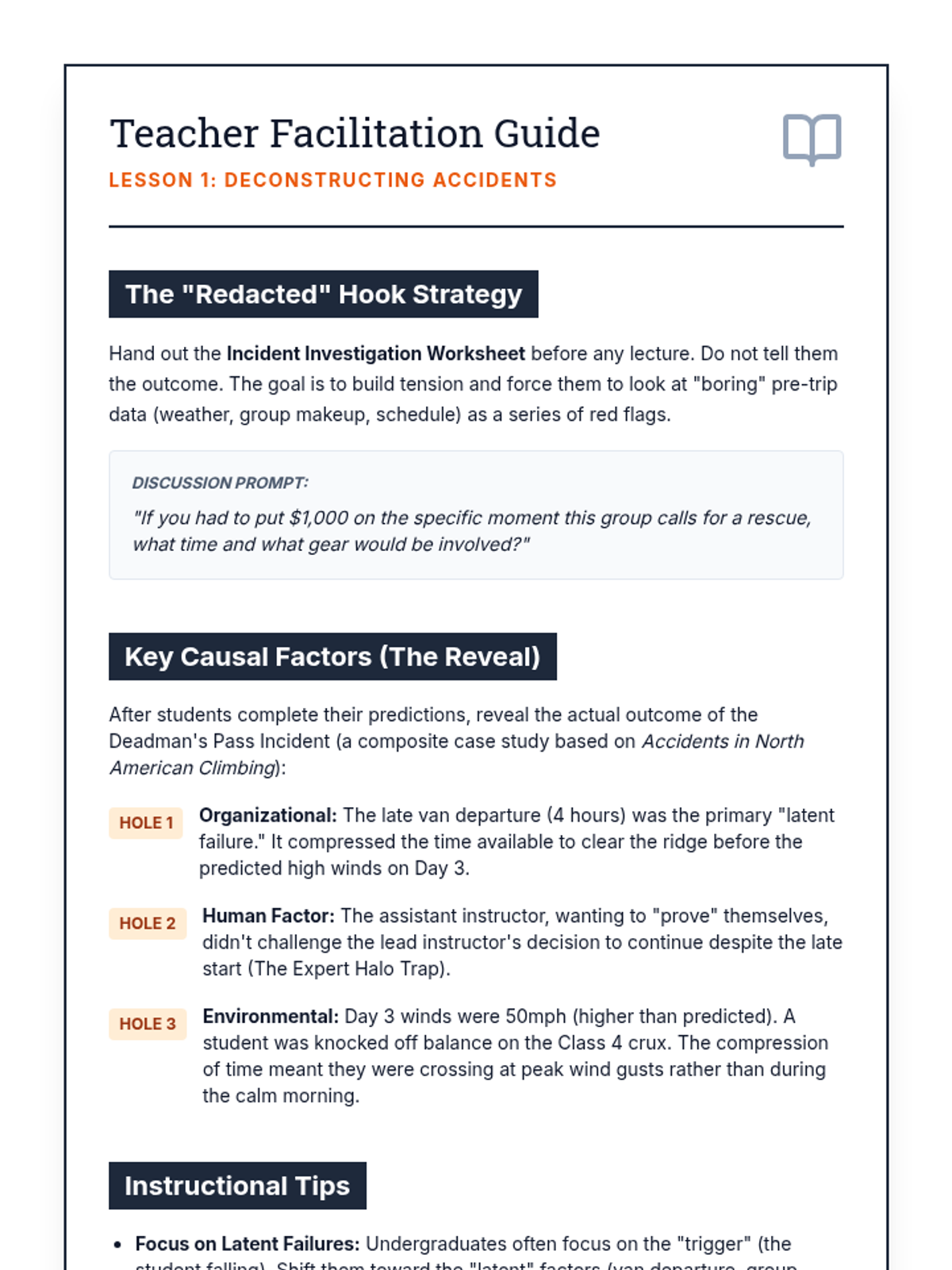
Students analyze case studies and apply the Swiss Cheese Model to understand how environmental hazards and human factors converge to cause accidents.
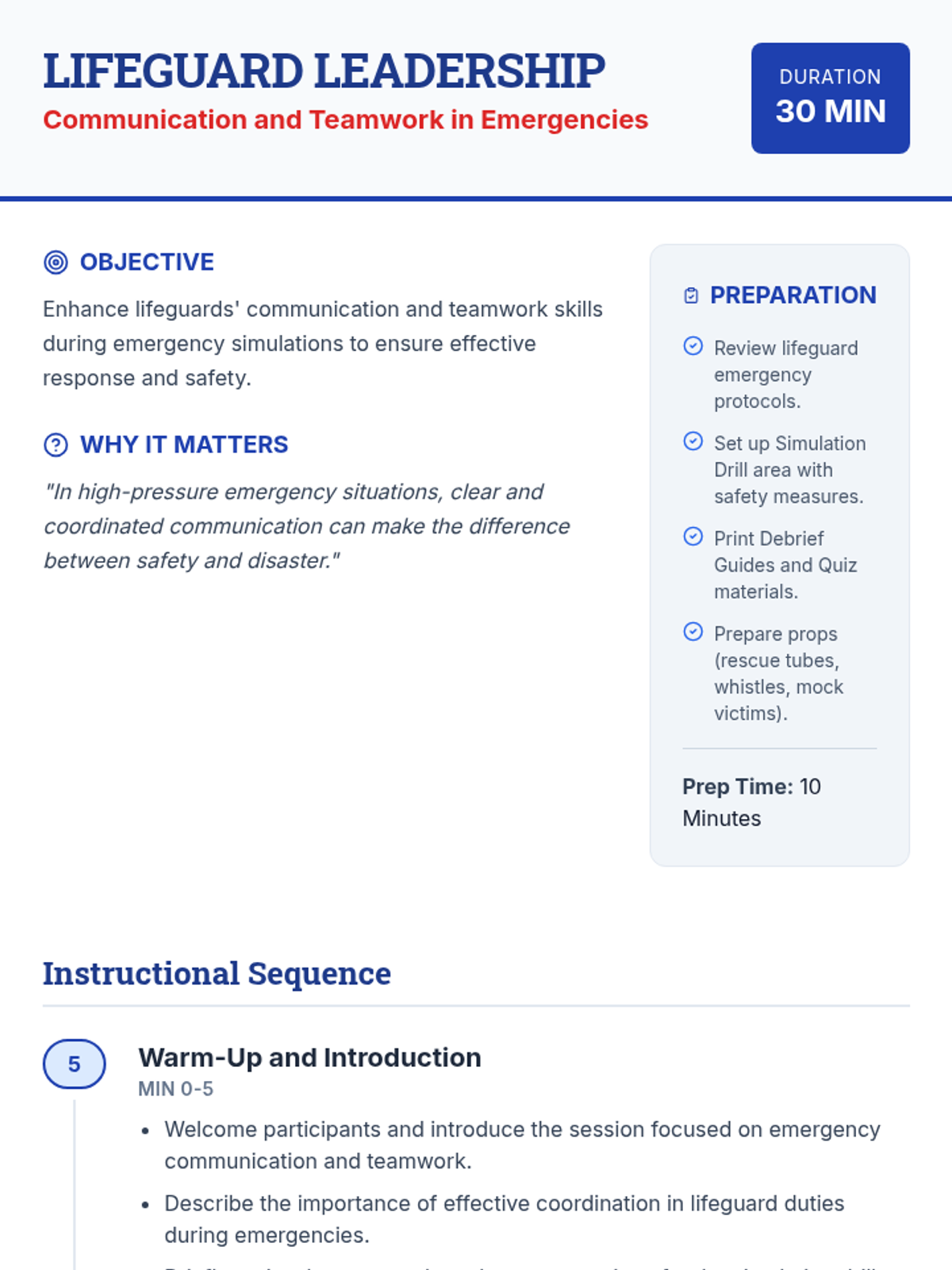
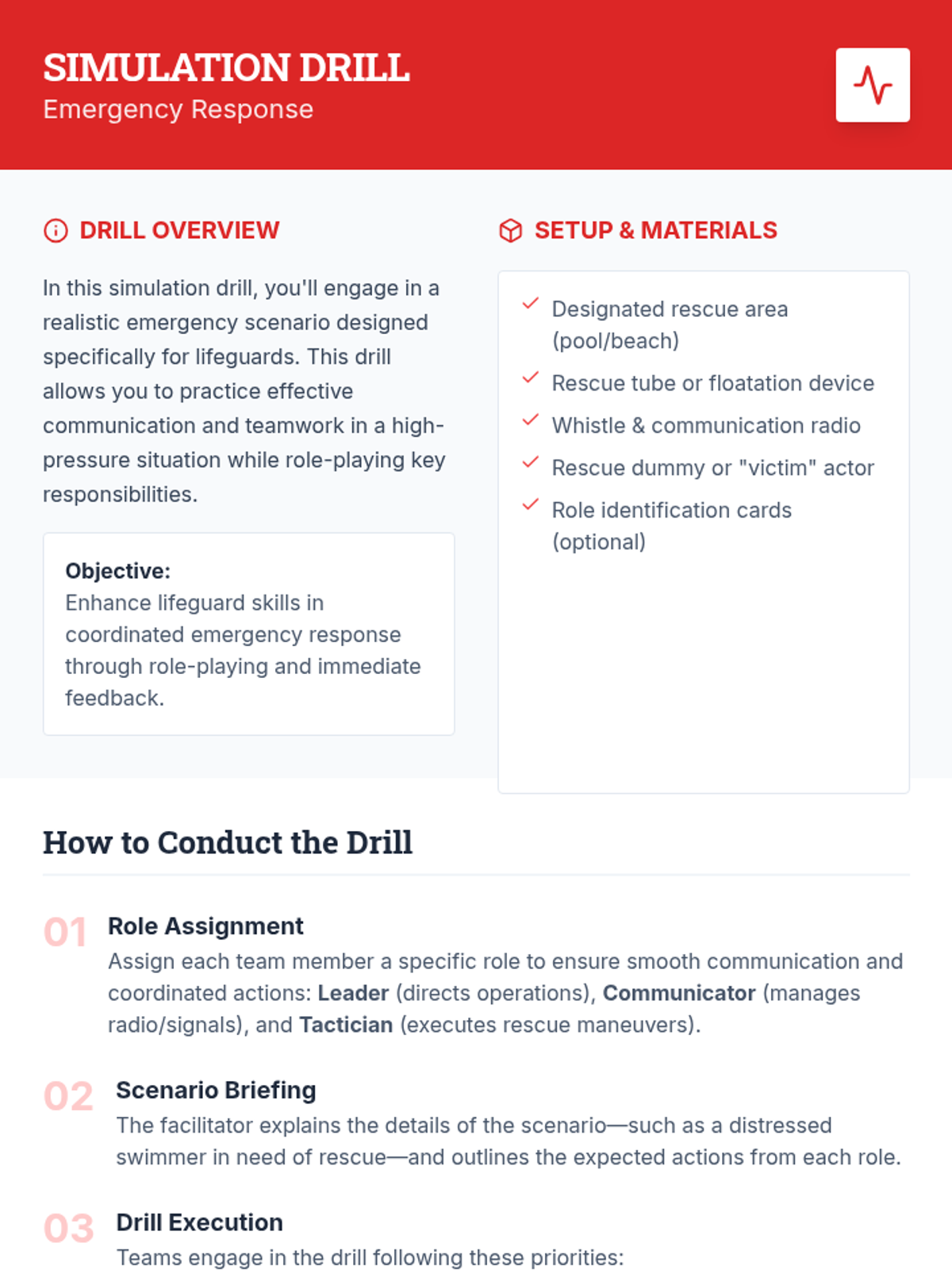
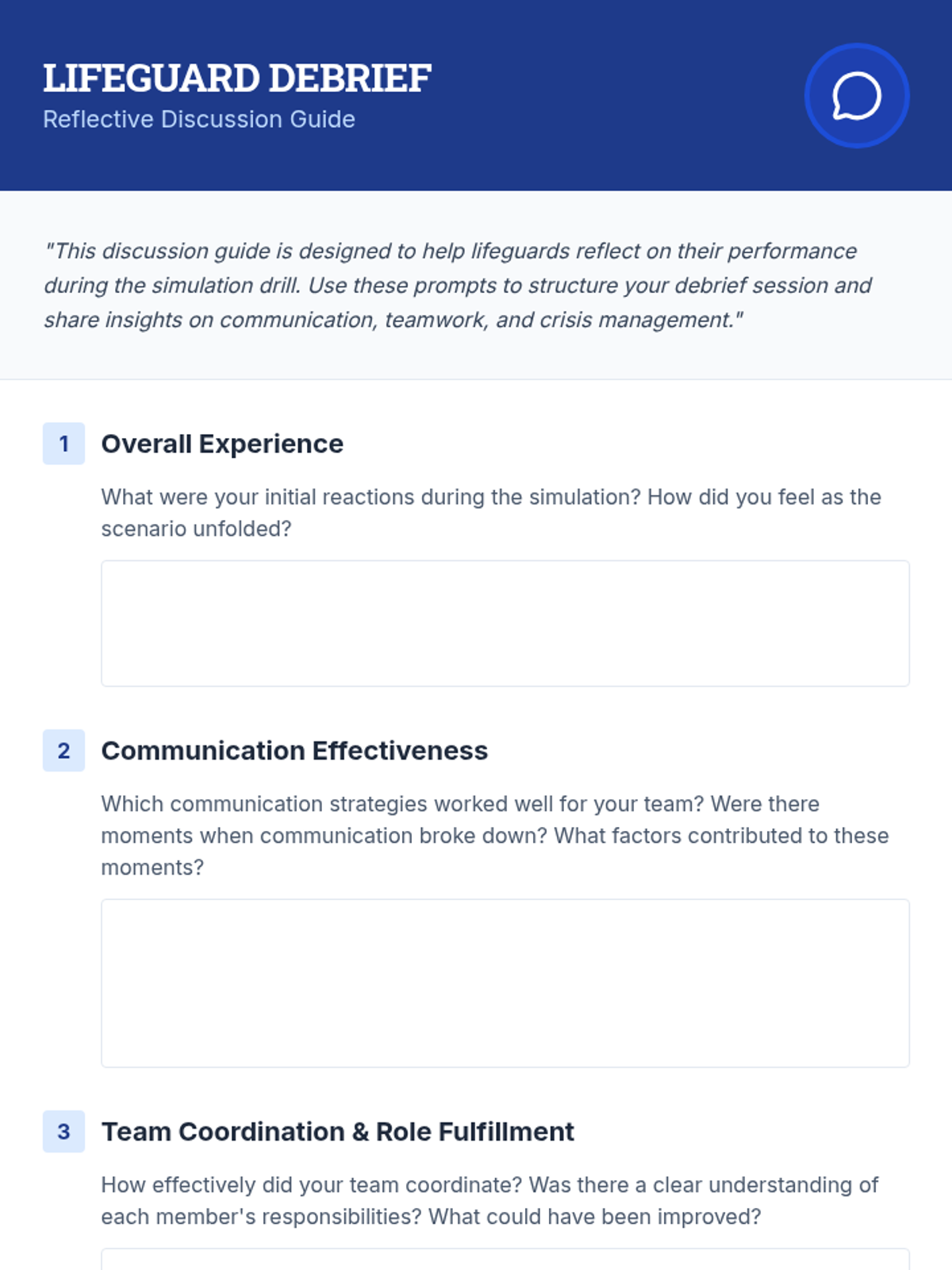
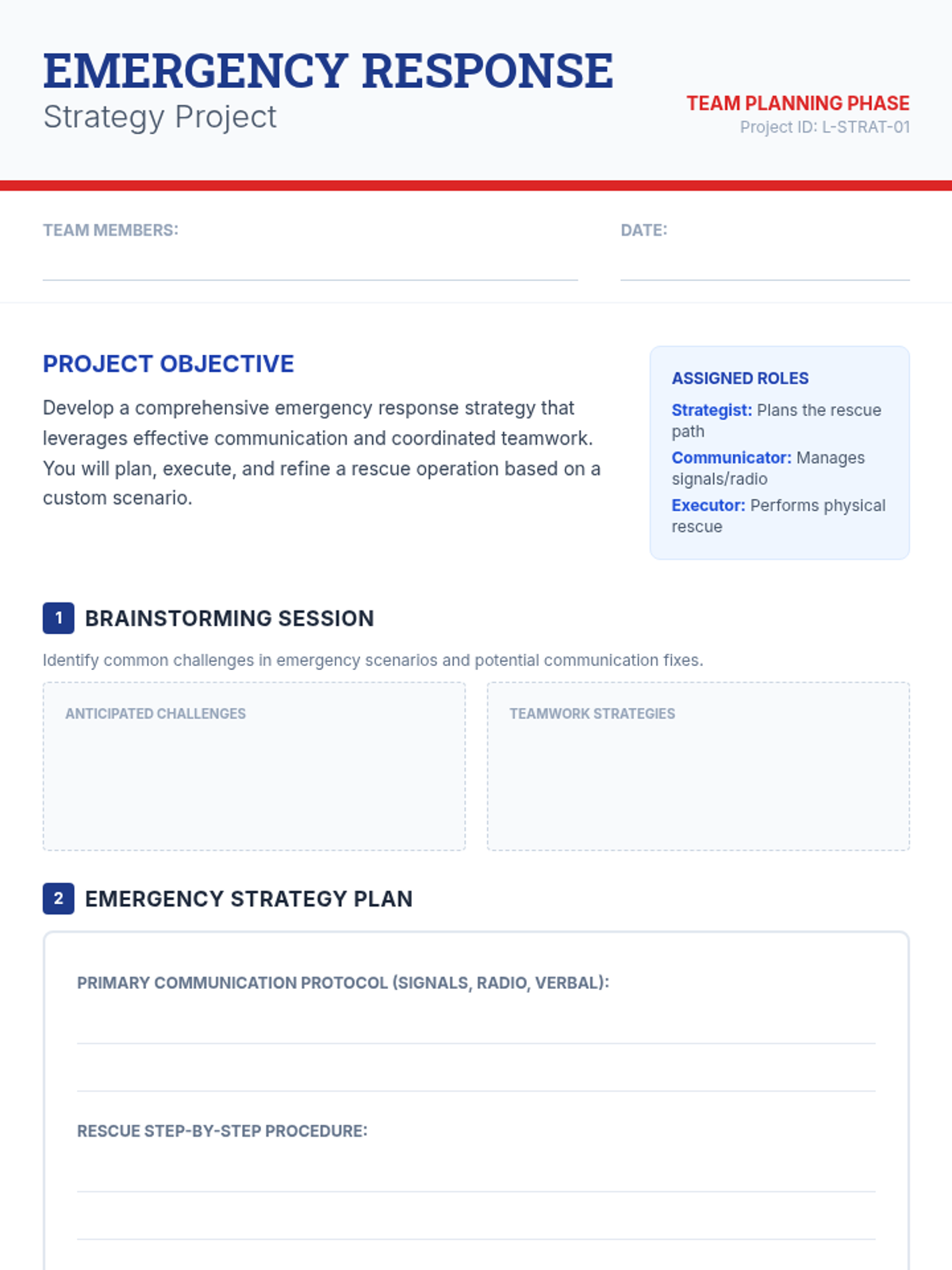
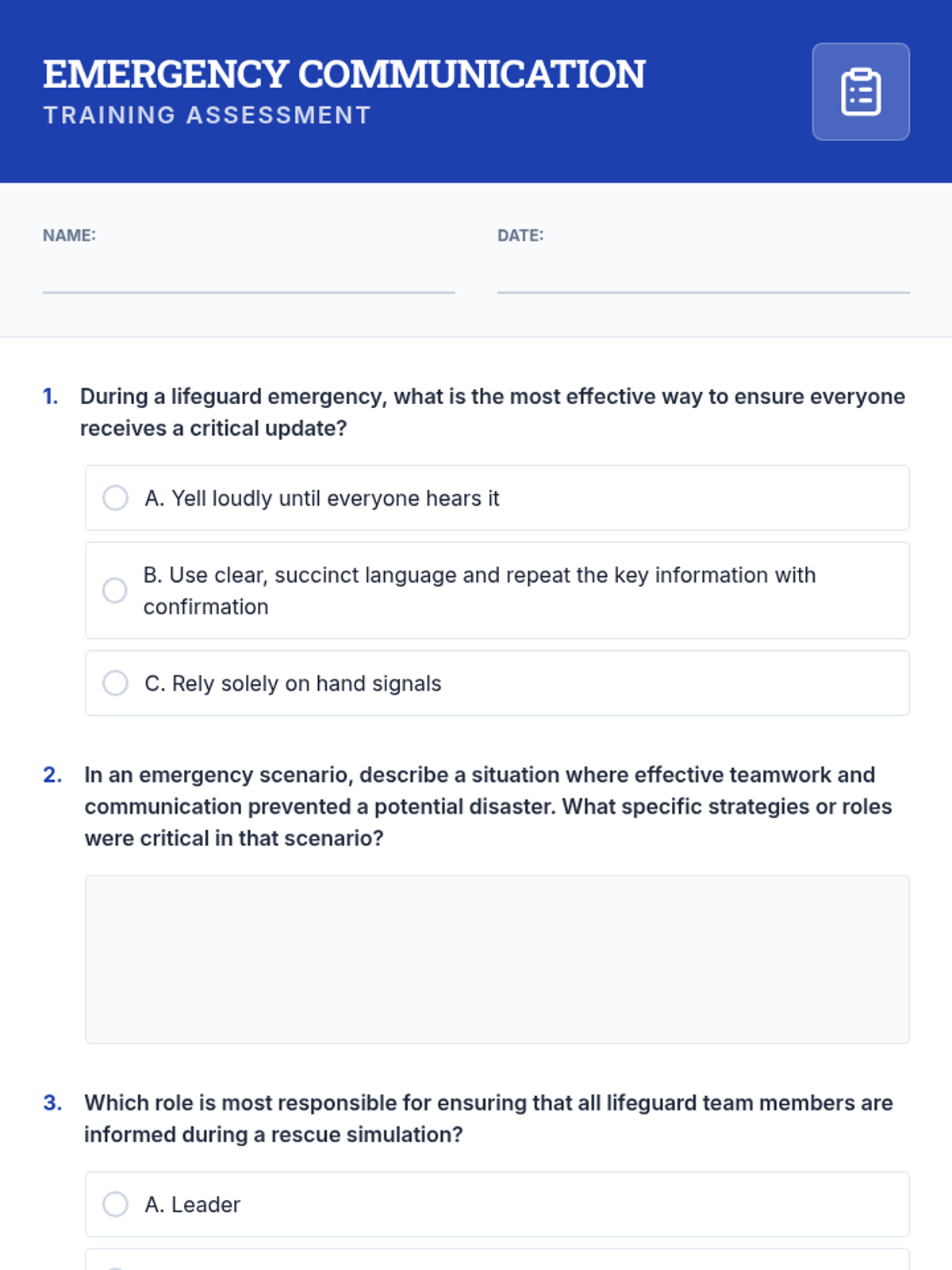
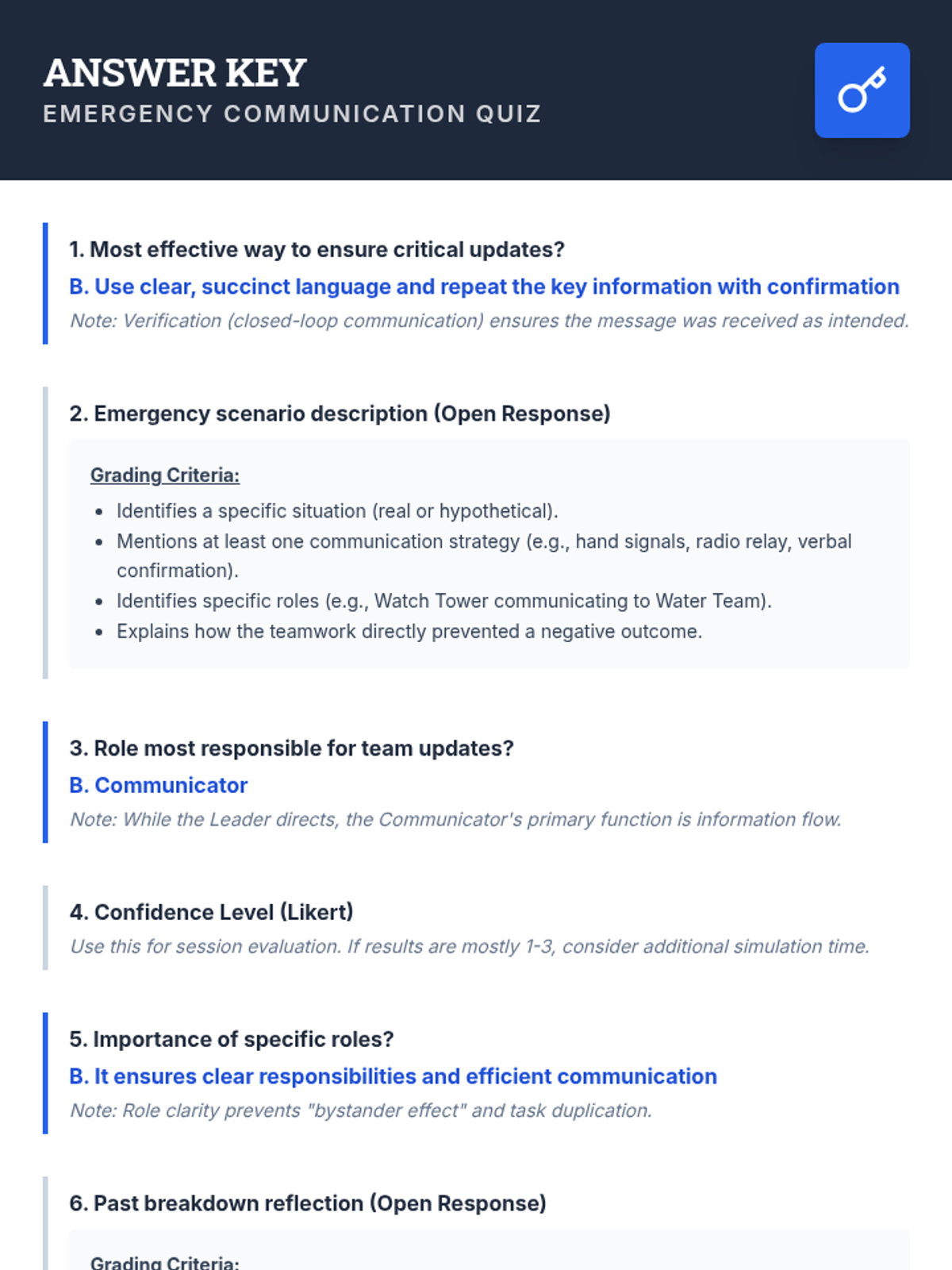
A 30-minute training session for lifeguards focused on enhancing communication and teamwork during high-pressure emergency scenarios through simulations and structured reflection.
An active, game-based lesson focused on building communication, trust, and collaboration through physical challenges and creative problem-solving tasks.
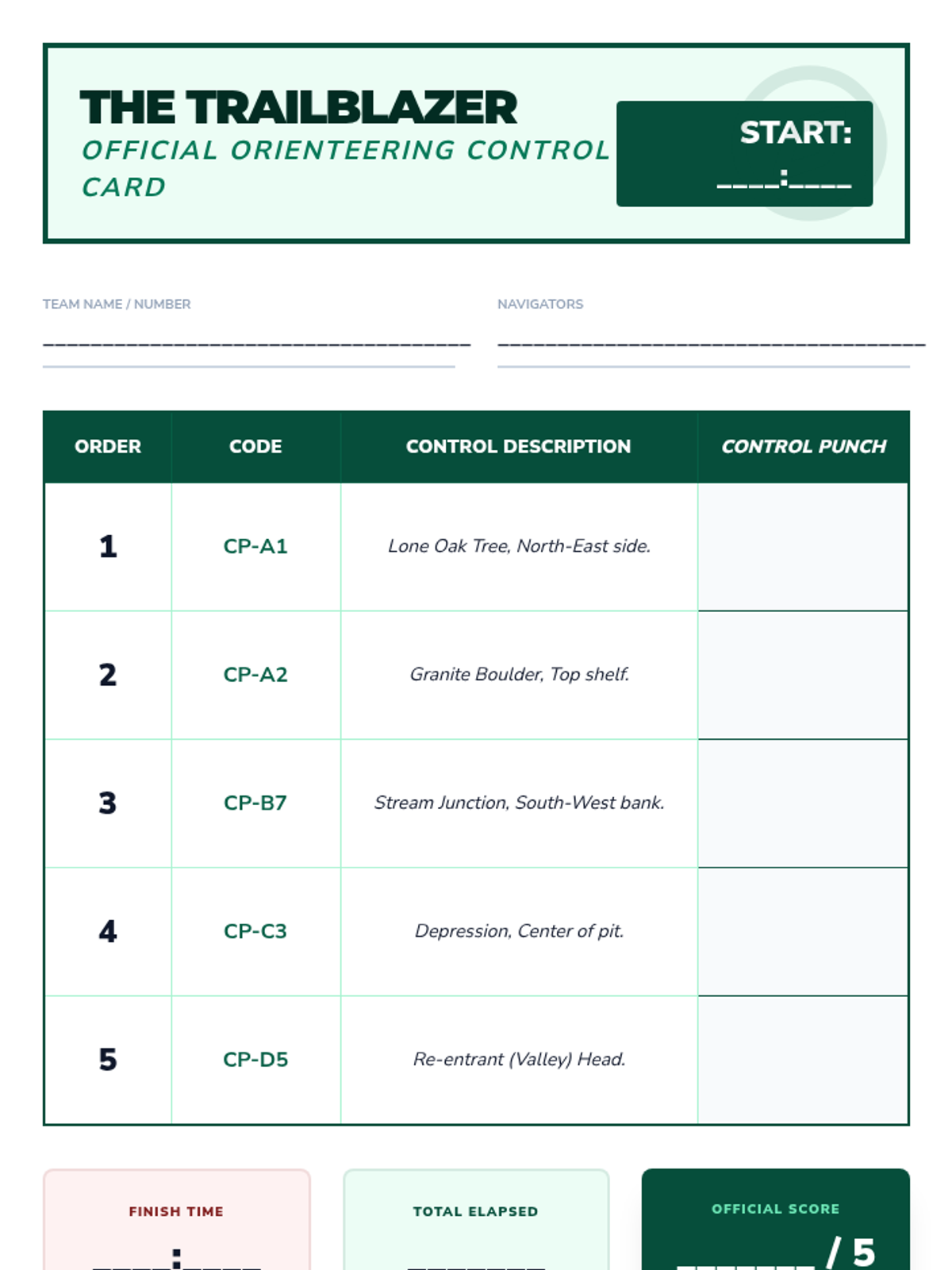
A culminating timed orienteering event where students navigate a complex course to find sequential control points.
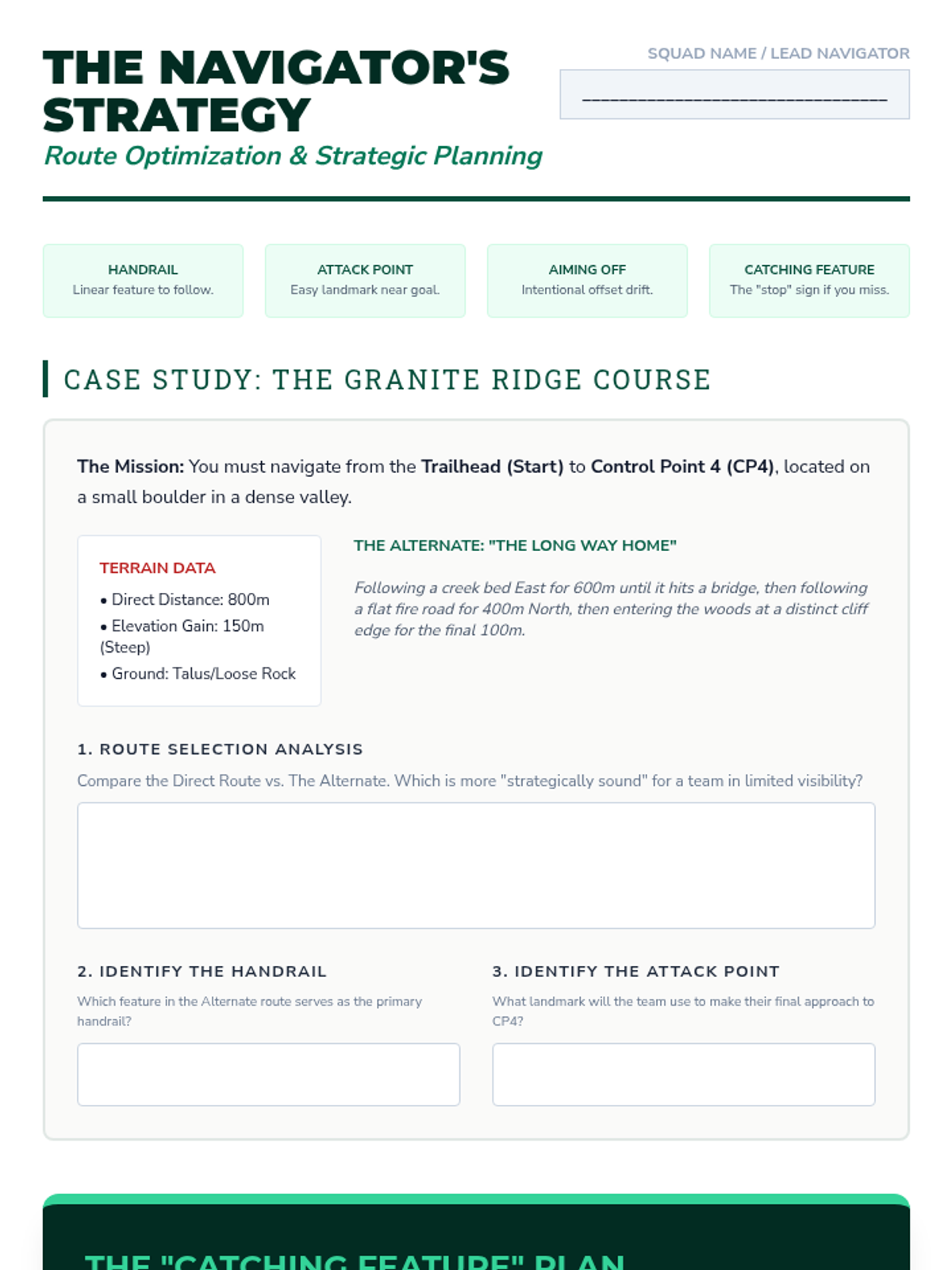
Students analyze terrain for strategic advantages using concepts like handrails, aiming off, and attack points.
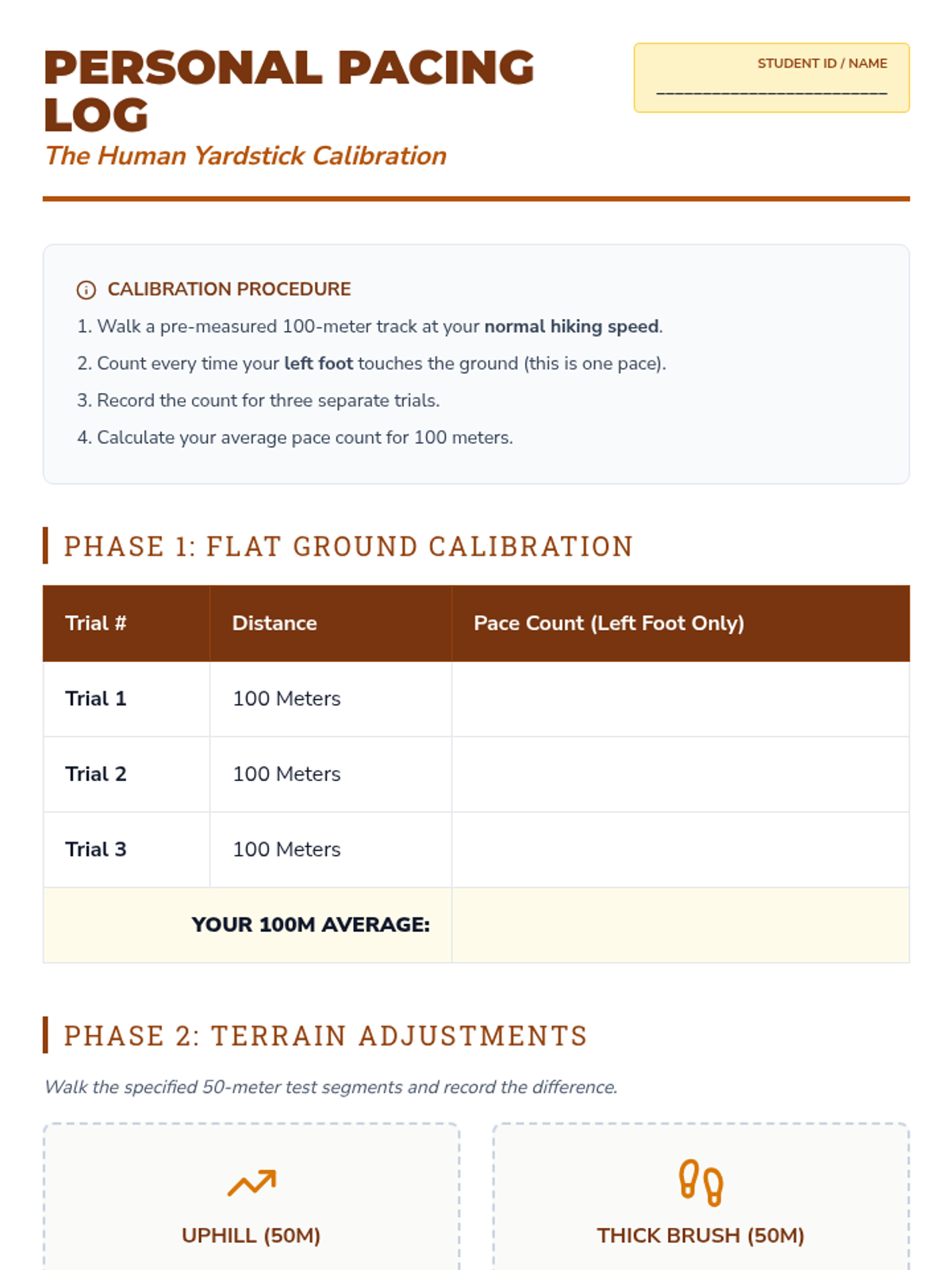
Students calculate their personal pace counts and apply dead reckoning to navigate without visual landmarks.
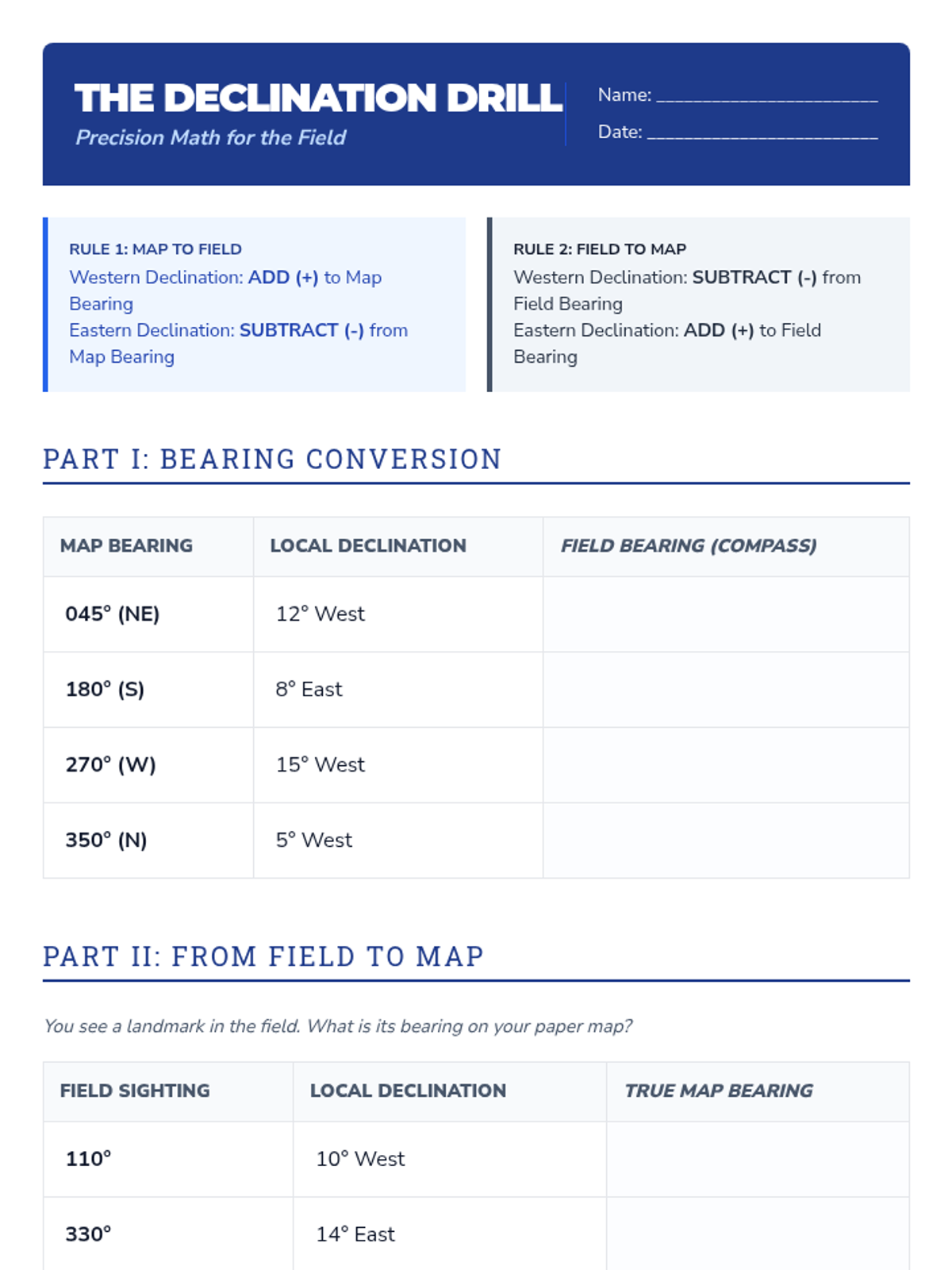
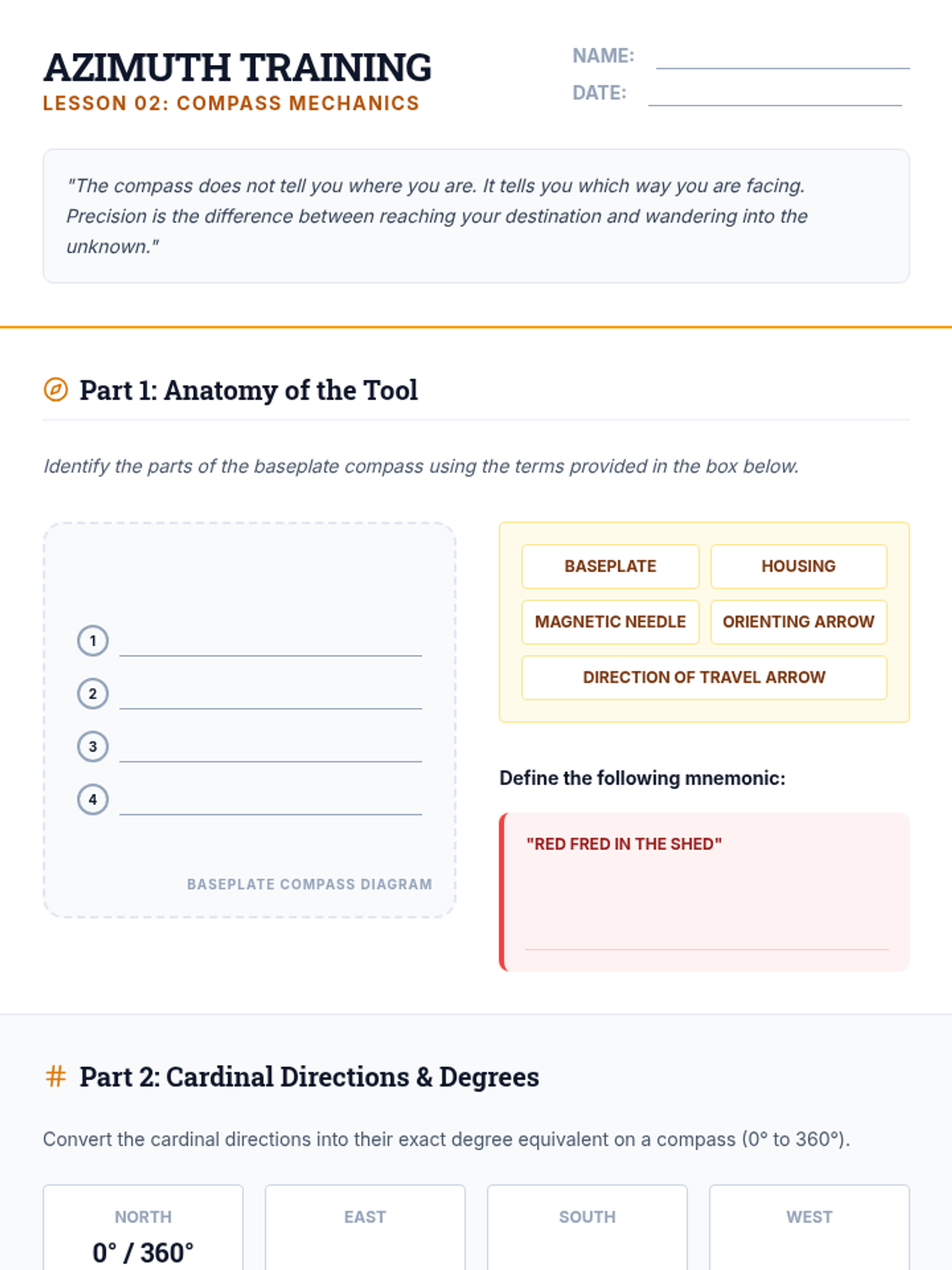
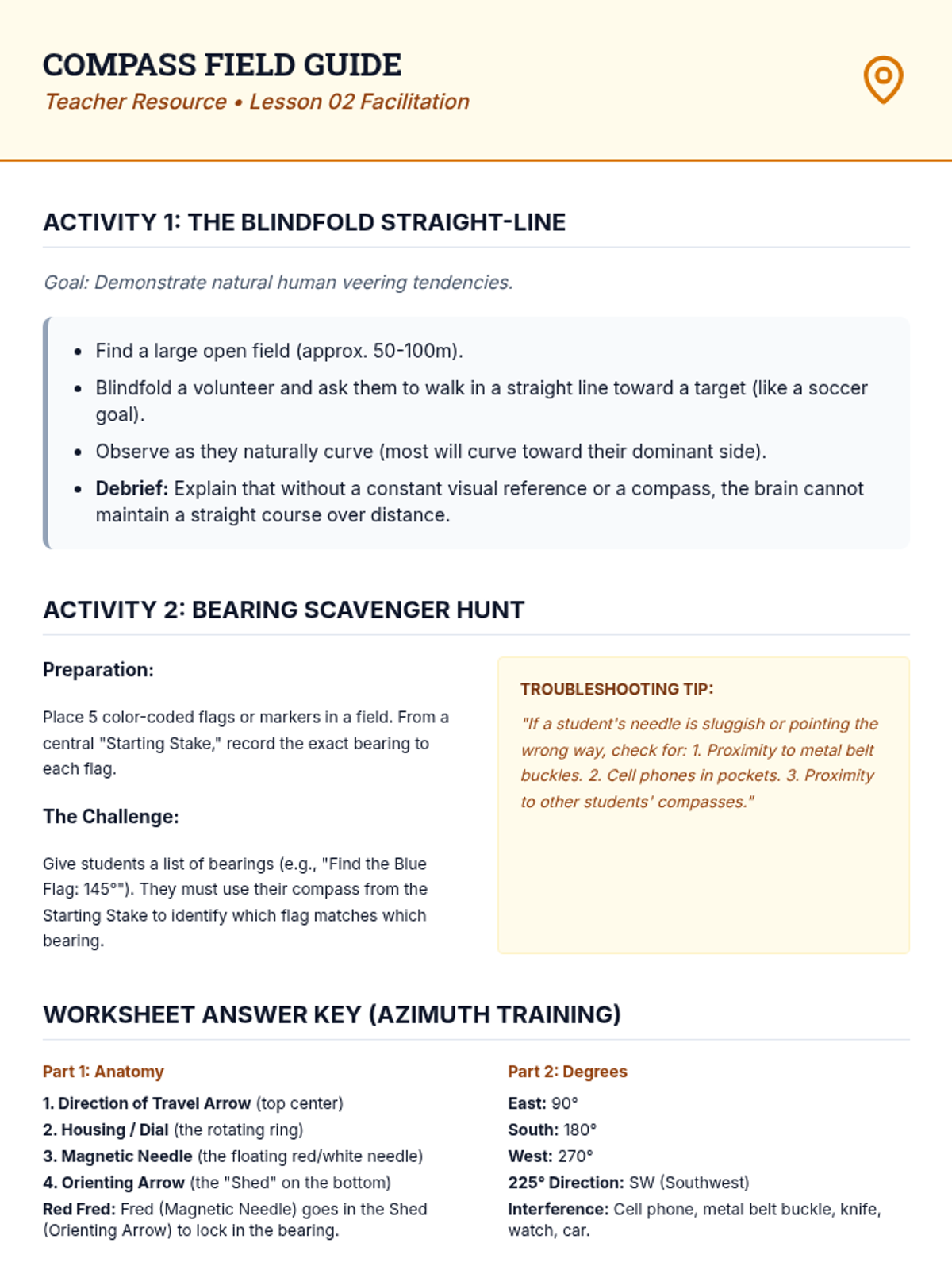
A technical workshop on using baseplate compasses, calculating bearings, and adjusting for magnetic declination.
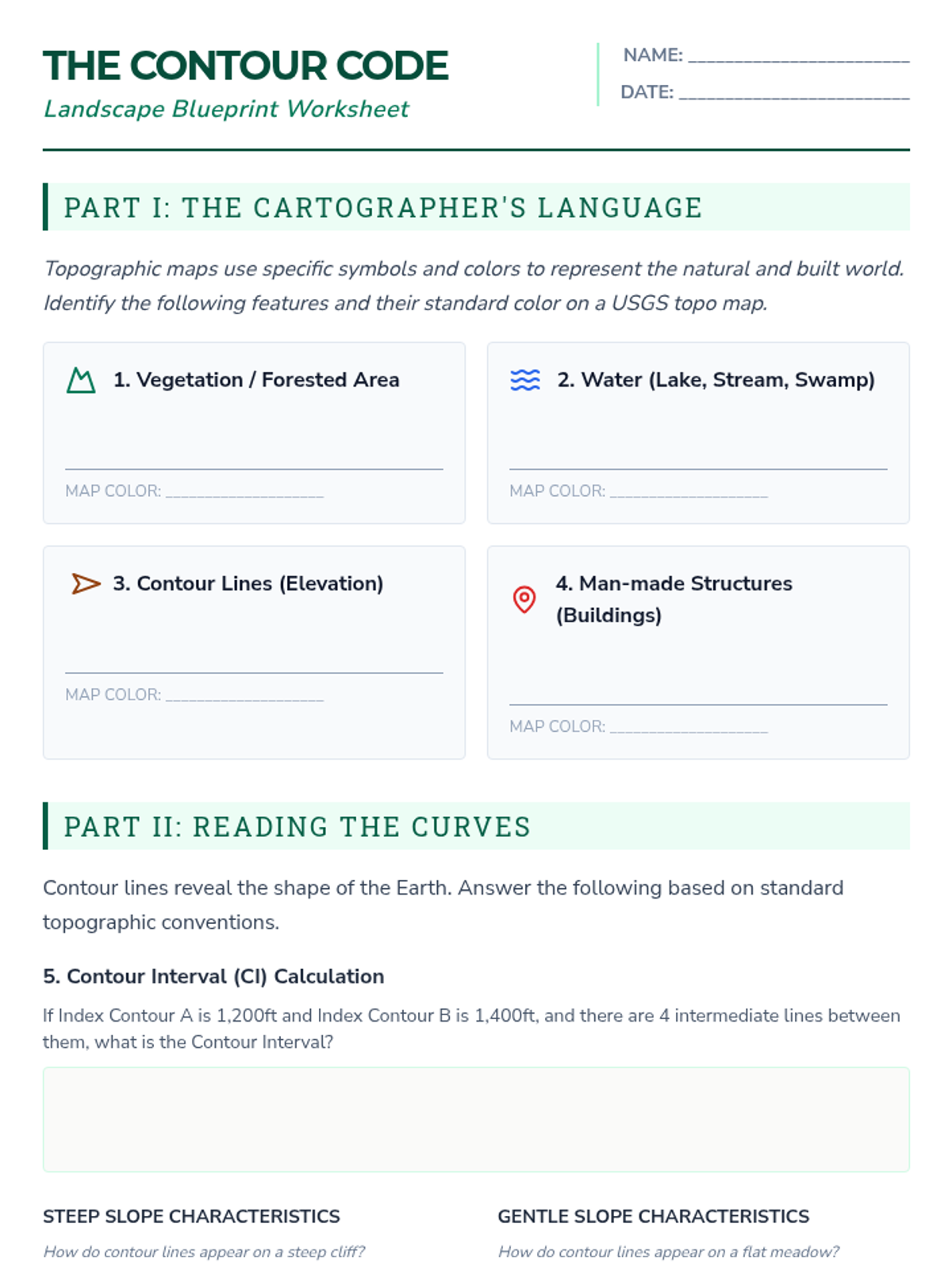
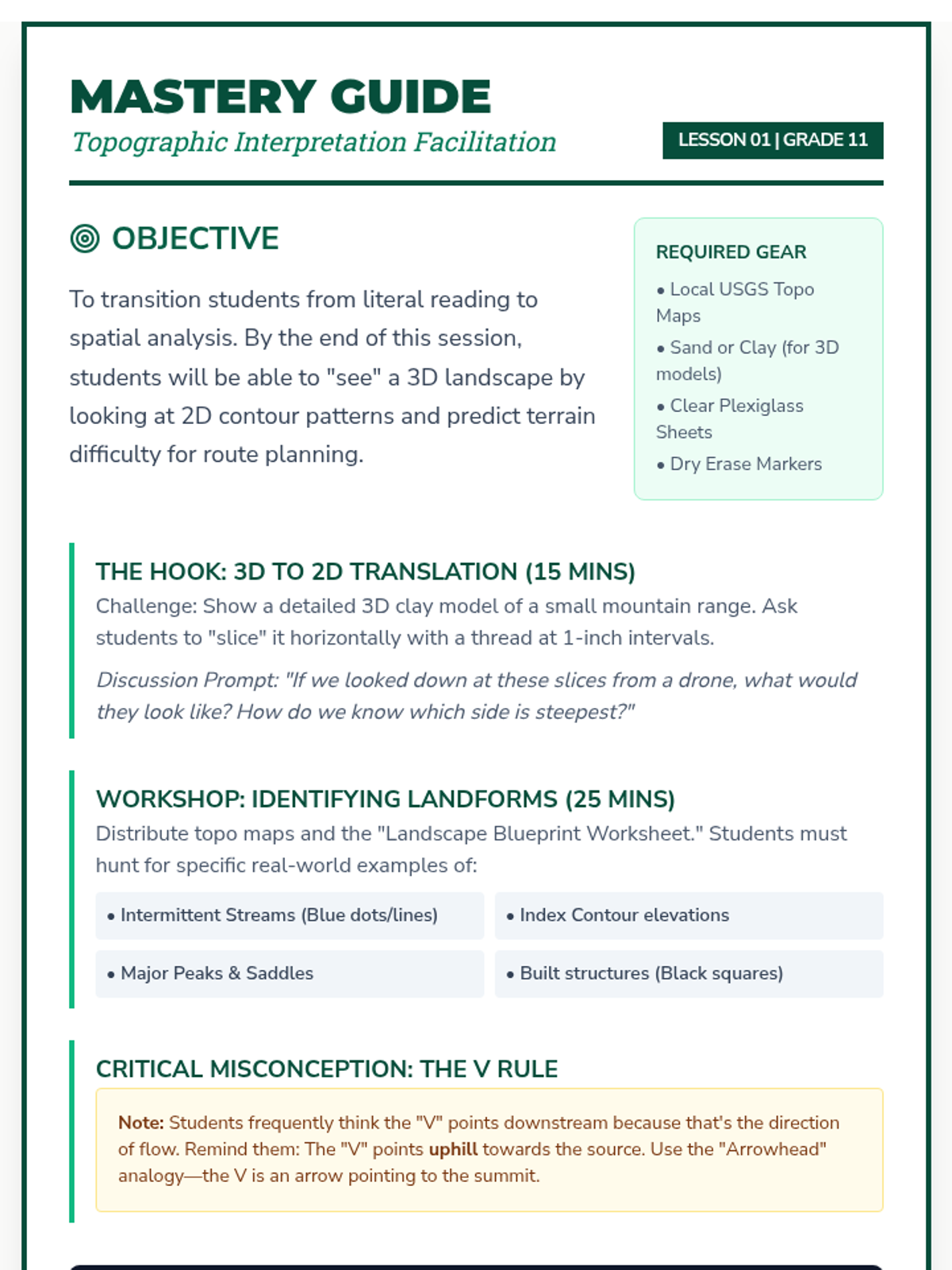
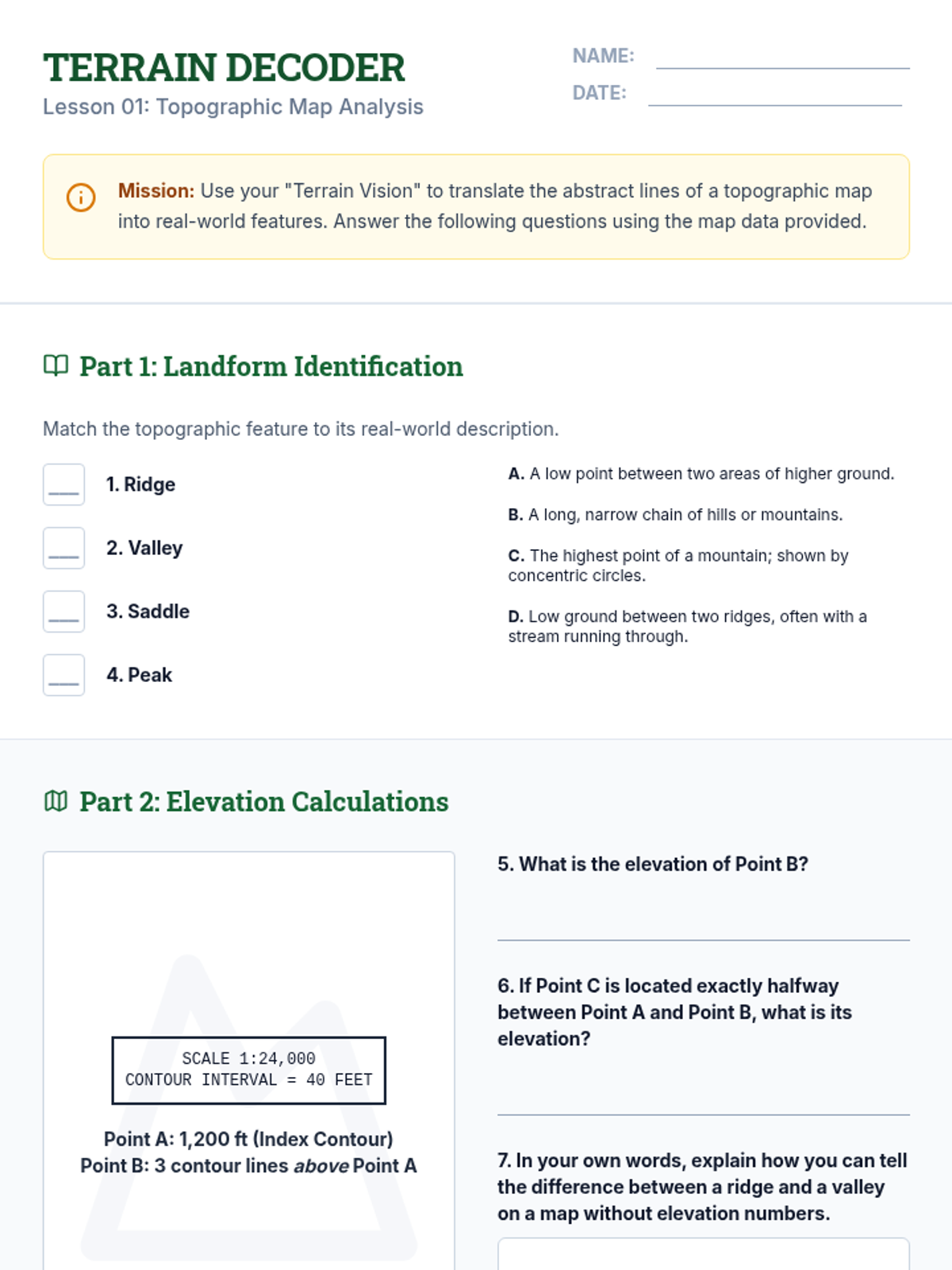
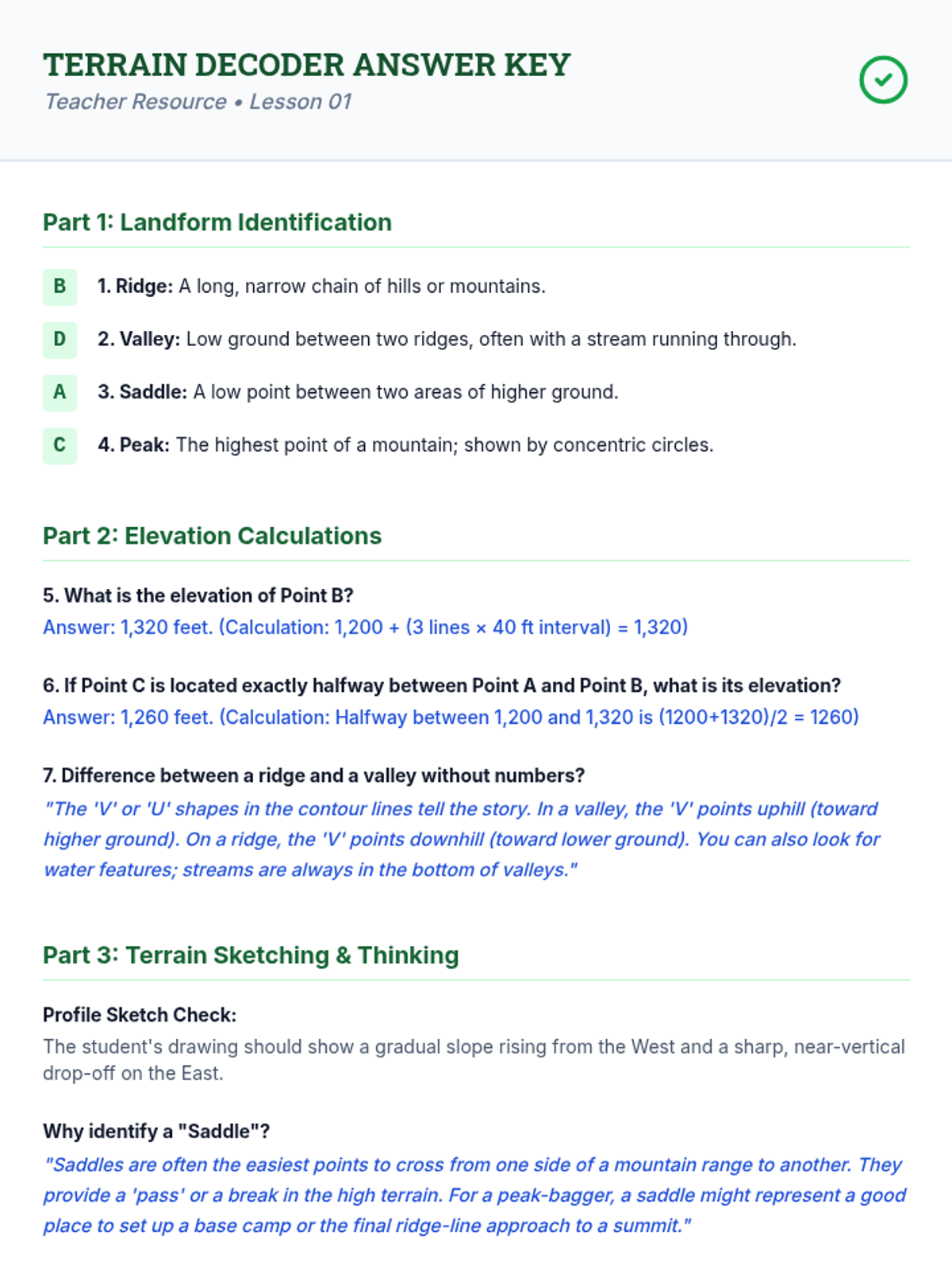
Students deconstruct topographic maps, visualizing 3D terrain from 2D contour lines and identifying key landscape features.
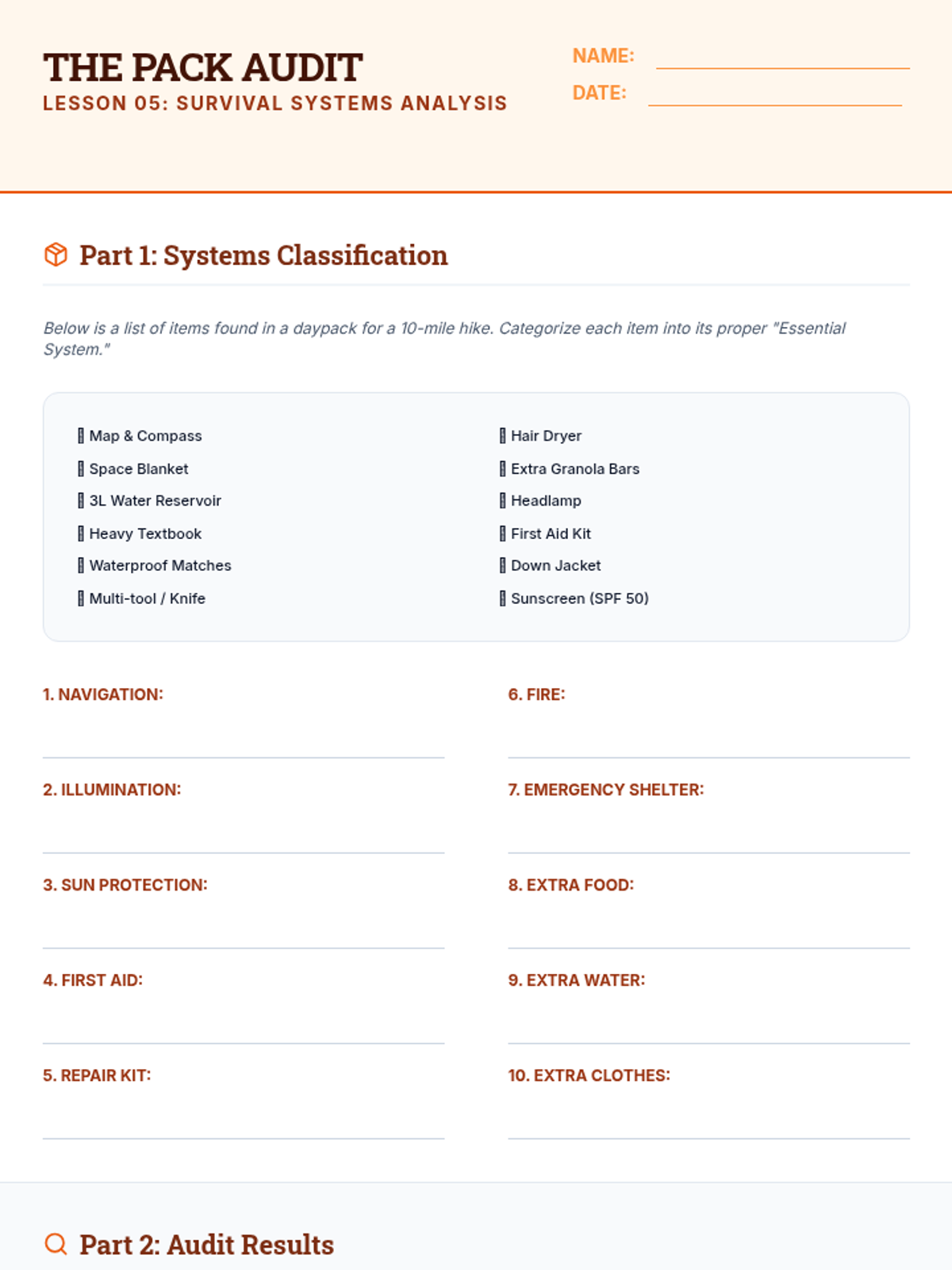
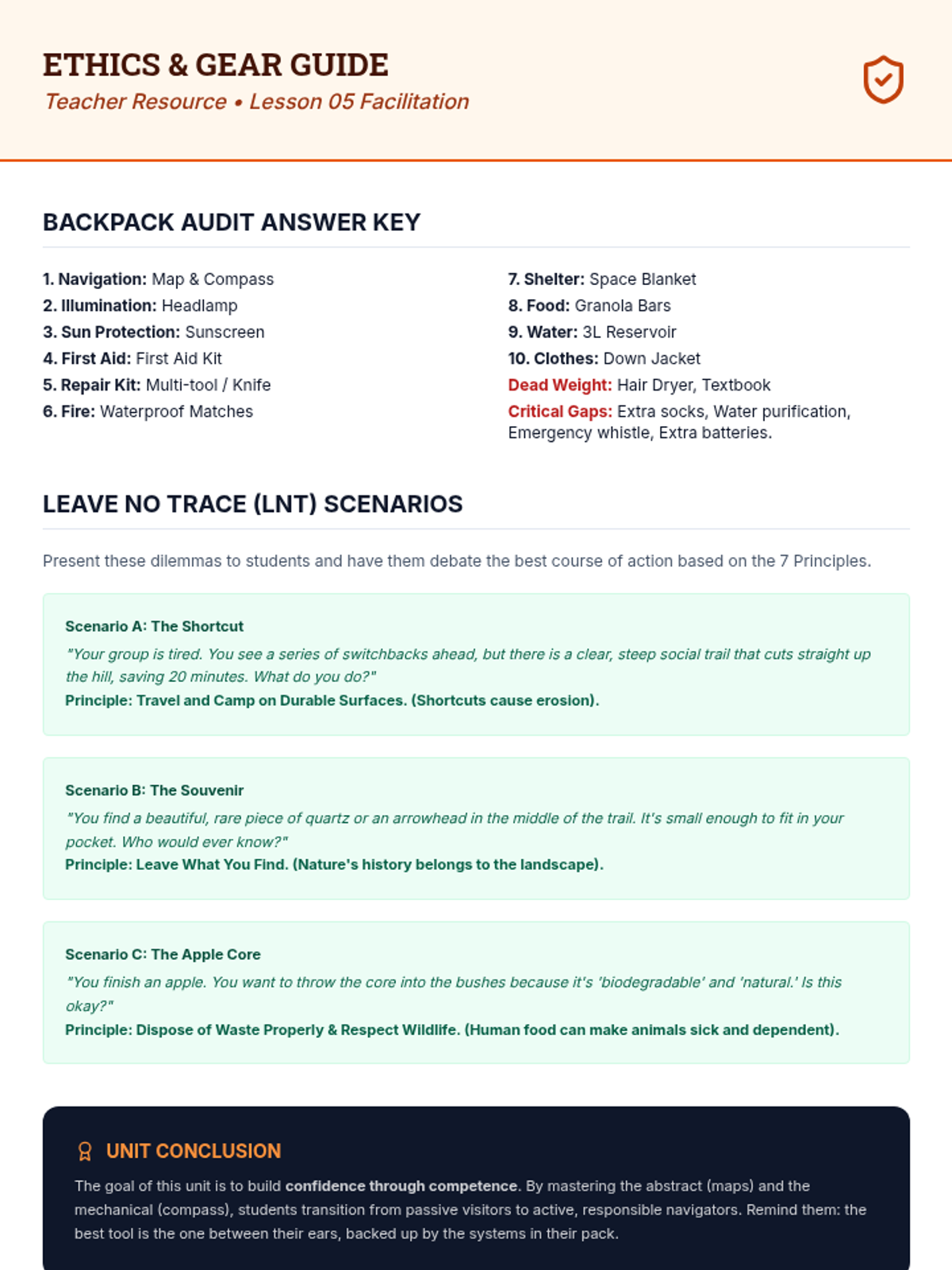
Essential gear for wilderness safety and the ethics of Leave No Trace principles.
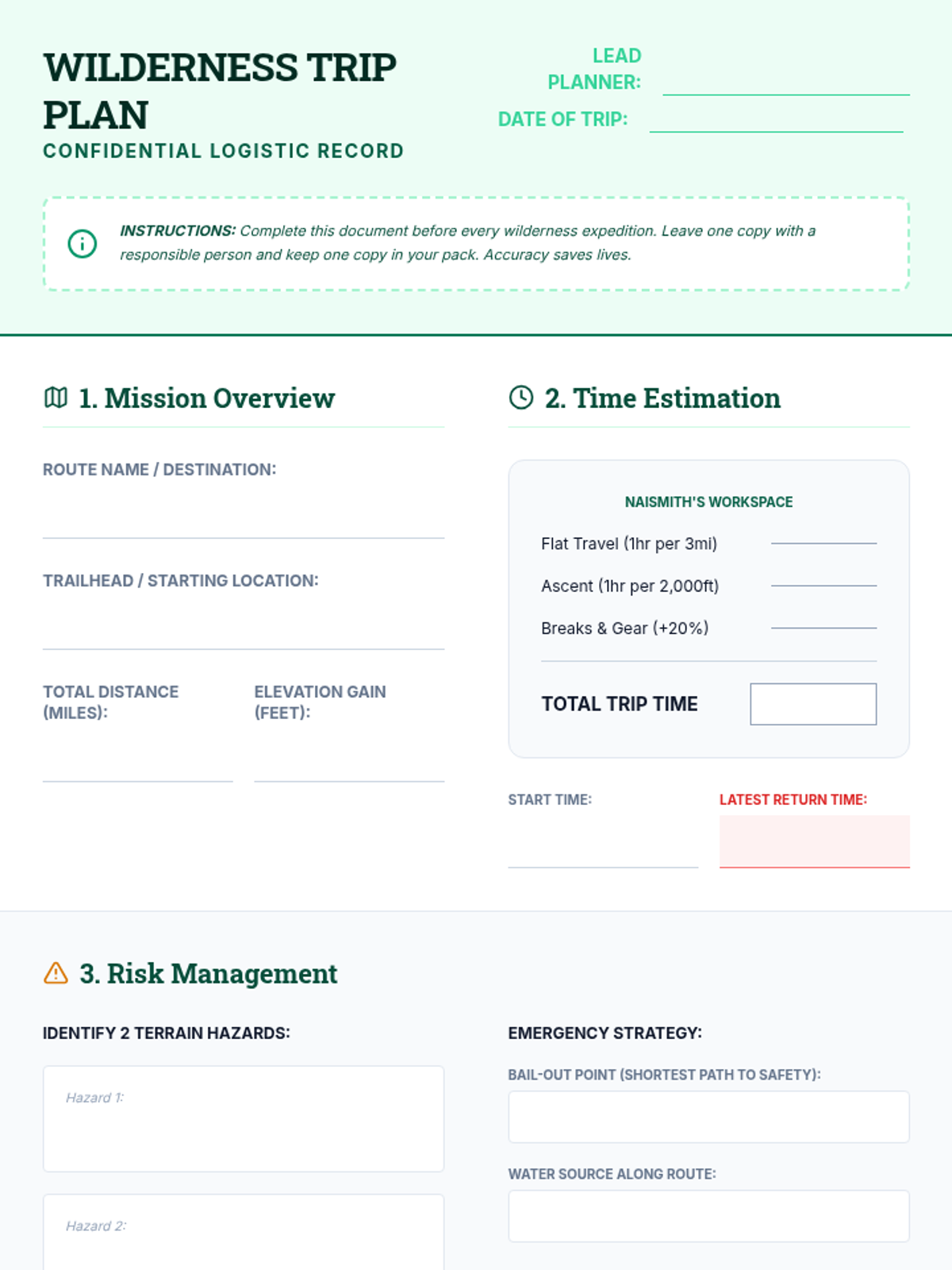
Logistical planning using Naismith's Rule to calculate travel time and assessing route risks.
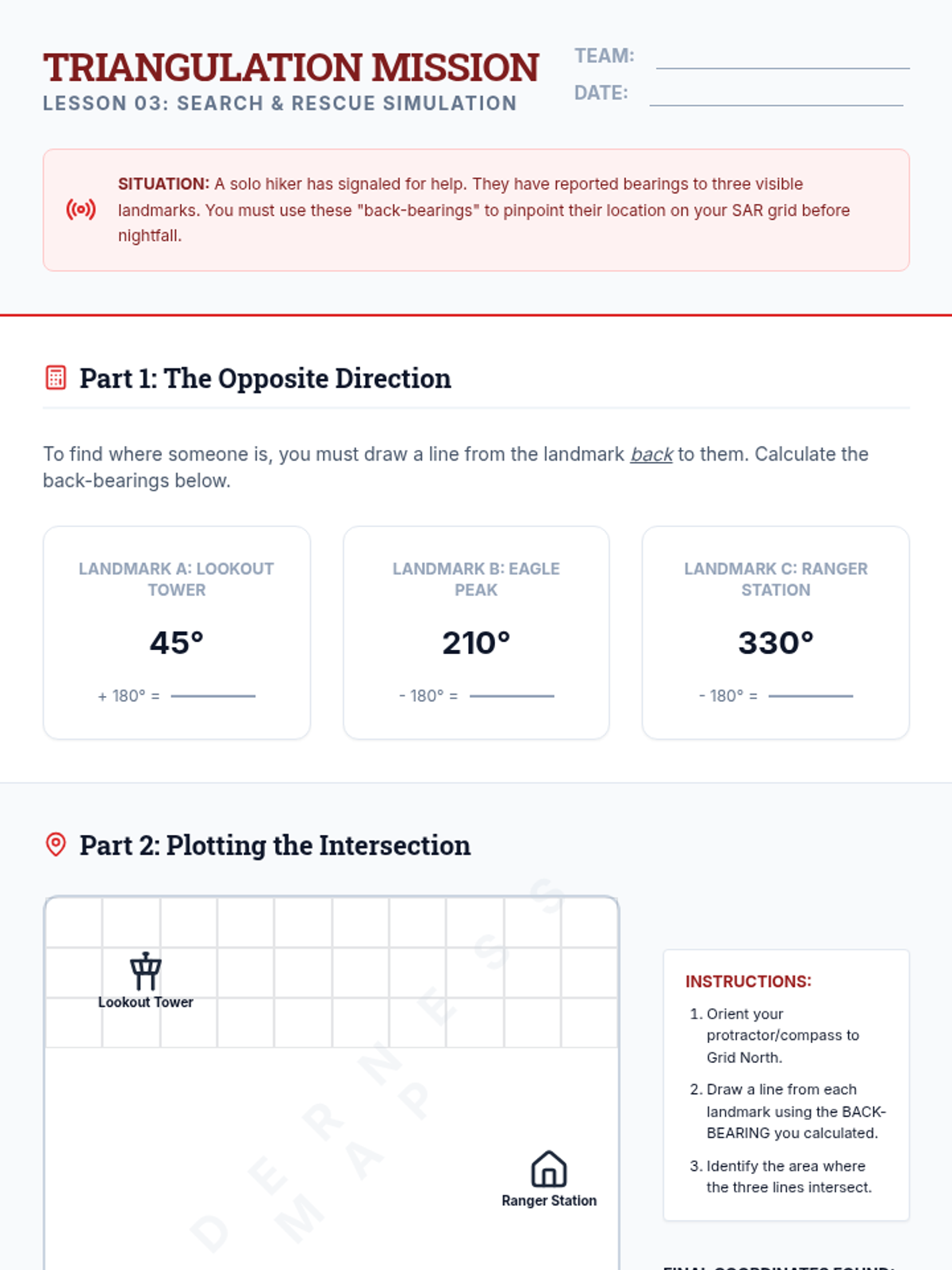
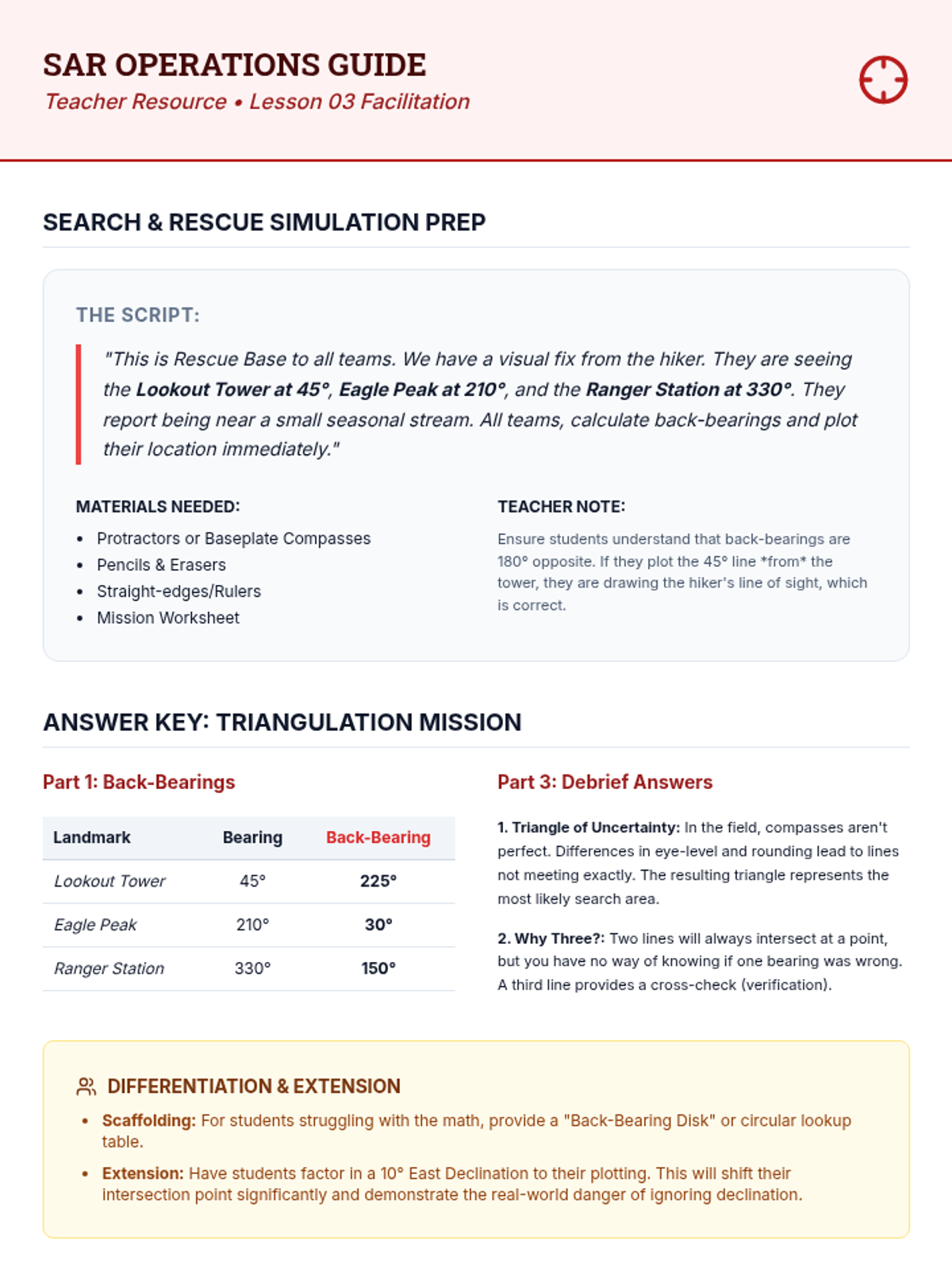
Integrating map and compass skills to pinpoint an unknown location using back-bearings and triangulation.
Introduction to the baseplate compass, magnetic declination, and the process of shooting and following bearings.
Students learn to translate 2D contour lines into 3D visualizations, identifying ridges, valleys, and peaks.
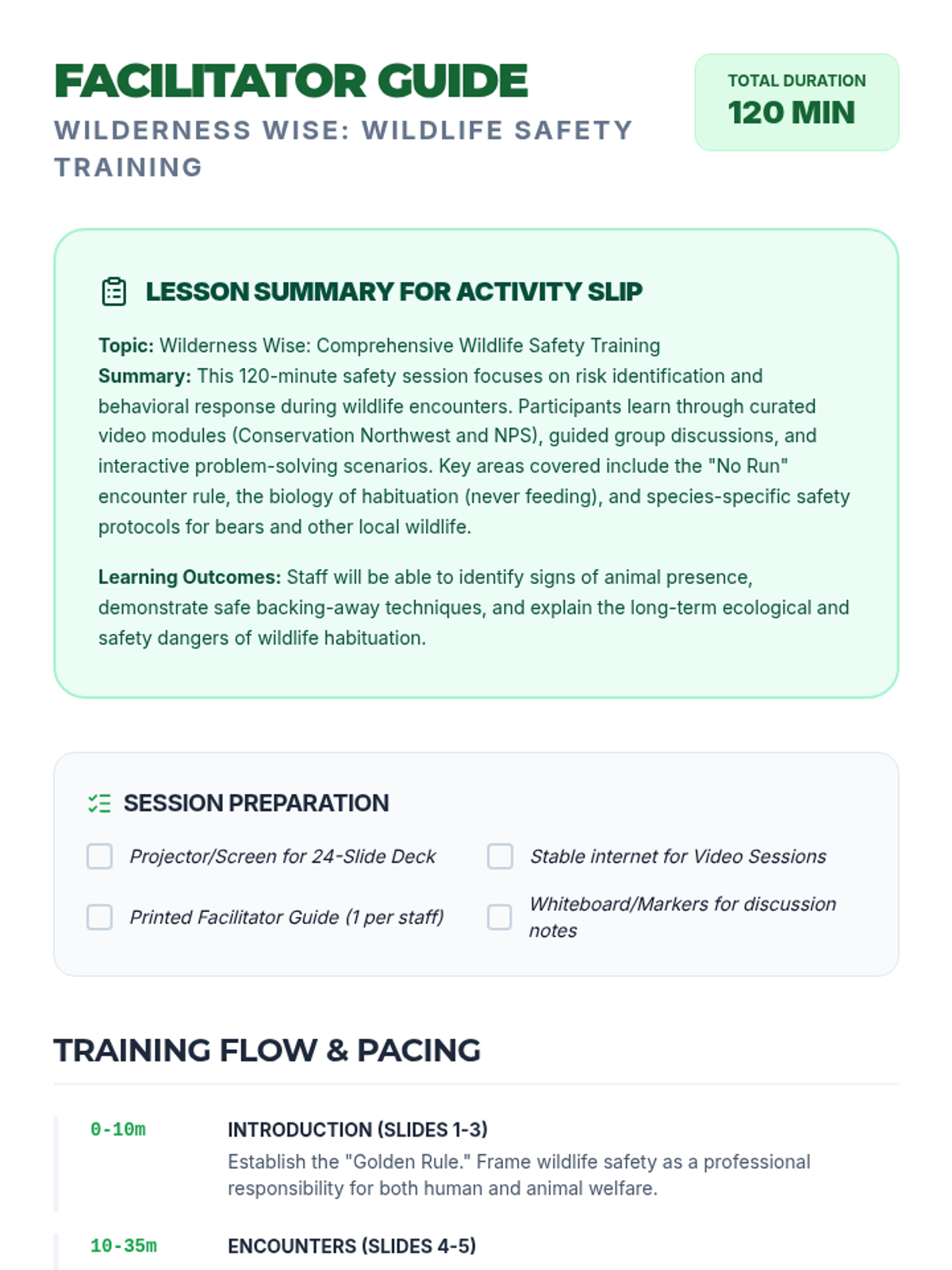
A comprehensive 120-minute safety training session focused on identifying wildlife risks, recognizing safe behaviors, and responding correctly to animal encounters. This lesson equips participants with practical skills to protect both themselves and local wildlife.