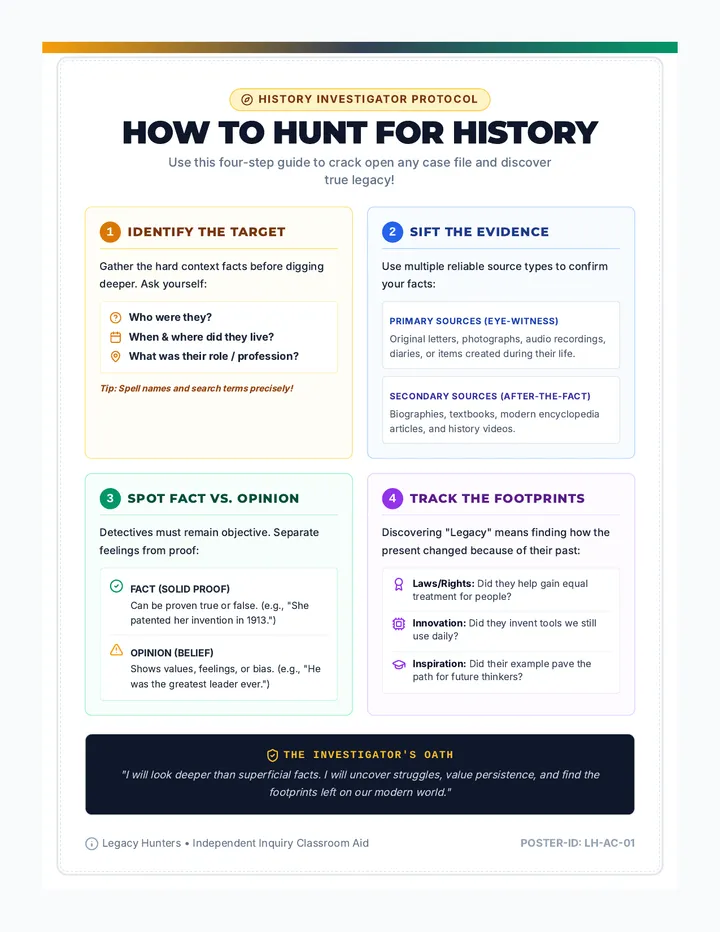
Analytical frameworks for interpreting history, geography, and civic information. Equips learners with tools for chronological sequencing, map literacy, and critical evaluation of primary and secondary sources.
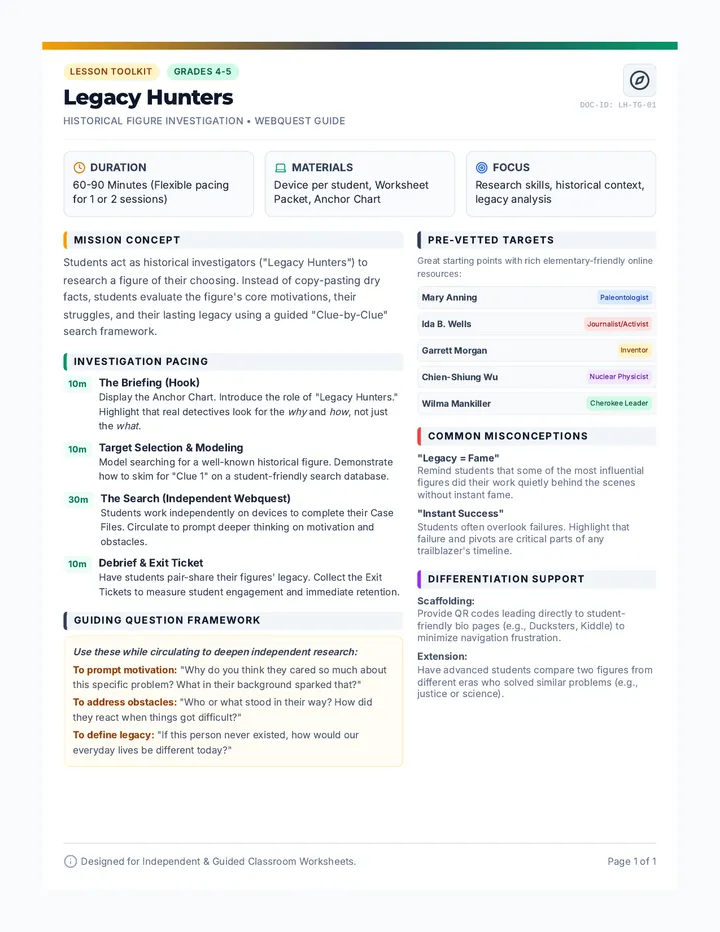
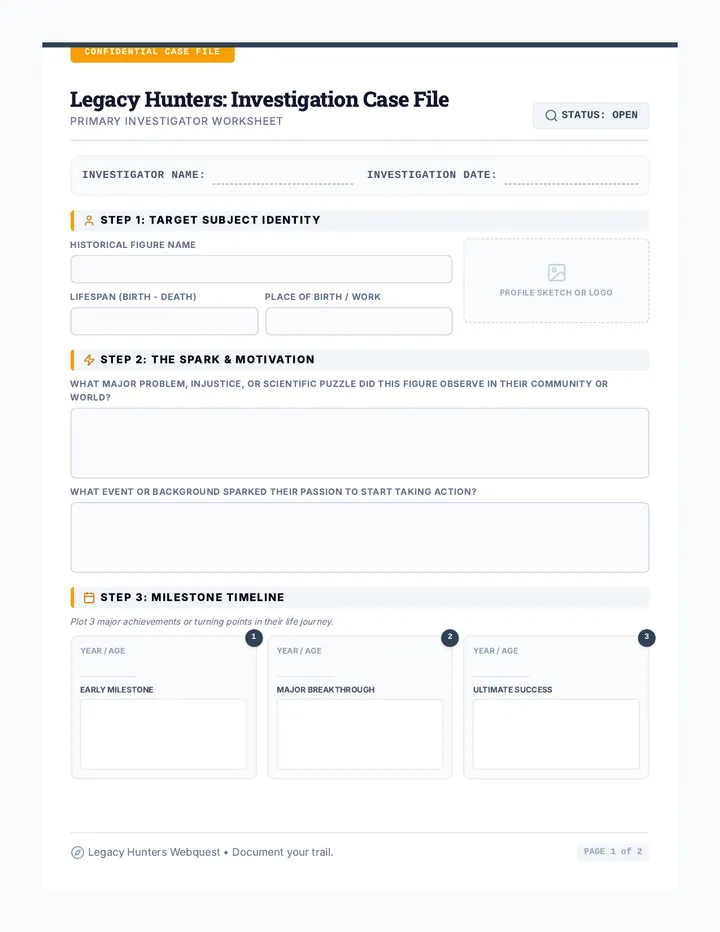
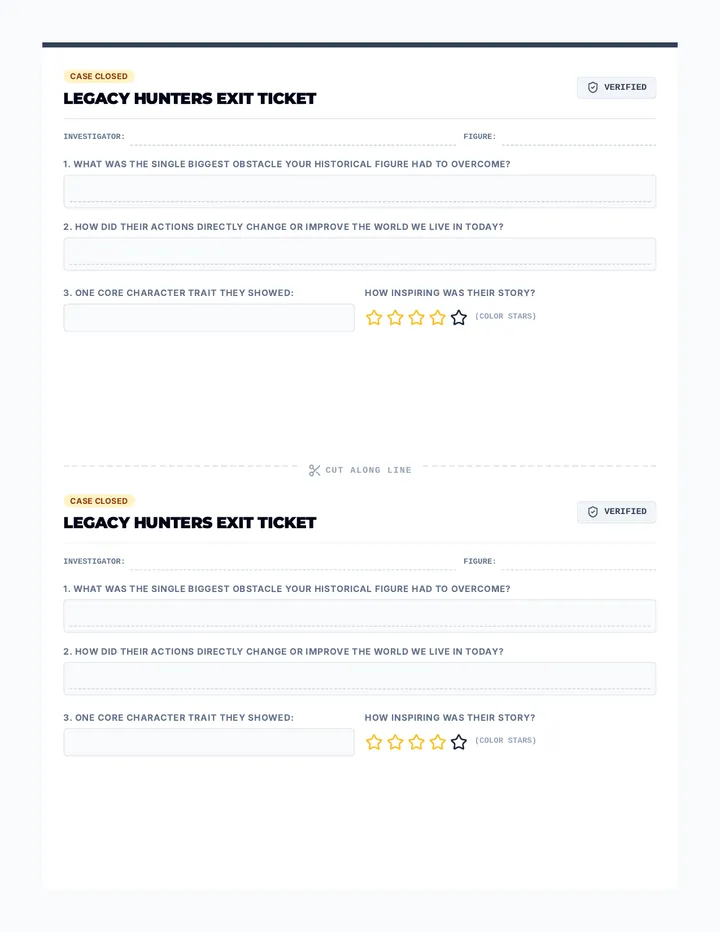
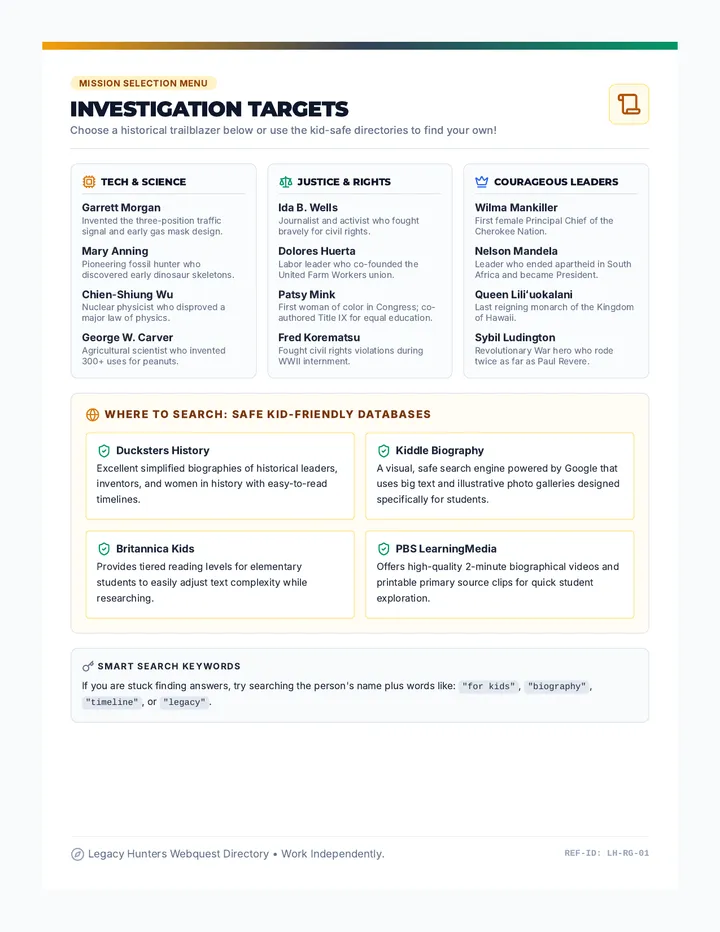
A complete history webquest lesson bundle designed for late elementary students to independently research diverse historical figures. Students act as research detectives to discover the lives, struggles, and lasting legacies of inventors, activists, and leaders.
Tracing North Carolina's industrial growth and innovations with a focus on advanced vocabulary and context clues.
A lesson introducing 3rd graders to the key events that sparked the American Revolution, focusing on the tension between the colonies and Great Britain.
Une programmation complète pour le Cycle 2 basée sur les nouveaux programmes de 2025, structurée par thématiques et par année (CP, CE1, CE2) pour toutes les matières.
A comprehensive lesson on the founding of the English colonies in North America, featuring a visual timeline of major settlements from Roanoke to Georgia.
In this geography and environmental science lesson, third-grade students trace the journey of a plastic bottle from a local Indiana storm drain through the Wabash, Ohio, and Mississippi Rivers to the Atlantic Ocean, fostering an understanding of watersheds and conservation.
A hands-on crafting lesson where students build an interactive map of Christopher Columbus's first voyage to the Americas. This lesson reinforces CKLA Grade 3 Unit 9 concepts including the motivations for exploration and the geography of the Atlantic crossing.
A hands-on exploration of the 13 Colonies, tracking key events from the founding of Jamestown to the brewing tensions of the American Revolution. Students use a cut-and-paste timeline to organize the social, economic, and religious milestones of the colonial era.
A comprehensive study of Ancient Egypt focusing on the Nile River, the role of Pharaohs, and the engineering of pyramids. Includes reading, assessment, and interactive note-taking.
A comprehensive lesson on the colonial bread-making process, featuring the roles of millers and bakers, bartering practices, and sequencing the steps from grain to loaf.
A lesson introducing the abolitionist movement, focusing on the people who worked to end slavery. Students will learn the definition of "abolish," identify key leaders like Frederick Douglass, and explore the moral arguments against the practice of slavery.
A lesson comparing the lives of Northern factory workers with enslaved people in the South. Students will explore the concepts of paid labor, harsh working conditions, and the fundamental differences between freedom and slavery.
A lesson examining the Northern industrial economy, focusing on manufacturing, the production of steel, and the role of factories and transportation in regional trade. Students will explore how industrialization shaped Northern society and its economic relationship with the South.
A lesson exploring the economic differences between the North and South, focusing on agriculture, the plantation system, and regional crops. Students will compare and contrast the different types of labor and resources used in each region.
A lesson focusing on Harriet Tubman's escape and the historical significance of the Mason-Dixon Line as a boundary between freedom and slavery. Students will practice sequencing historical events and identifying key geographical markers.
Cette formation pour les professeurs de TPS-PS vise à professionnaliser la conception des "traces" d'activités (cahiers de vie, affichages). En s'appuyant sur les photos de classe et les guides 2025, les enseignants apprennent à rendre les apprentissages explicites pour les élèves et les familles.
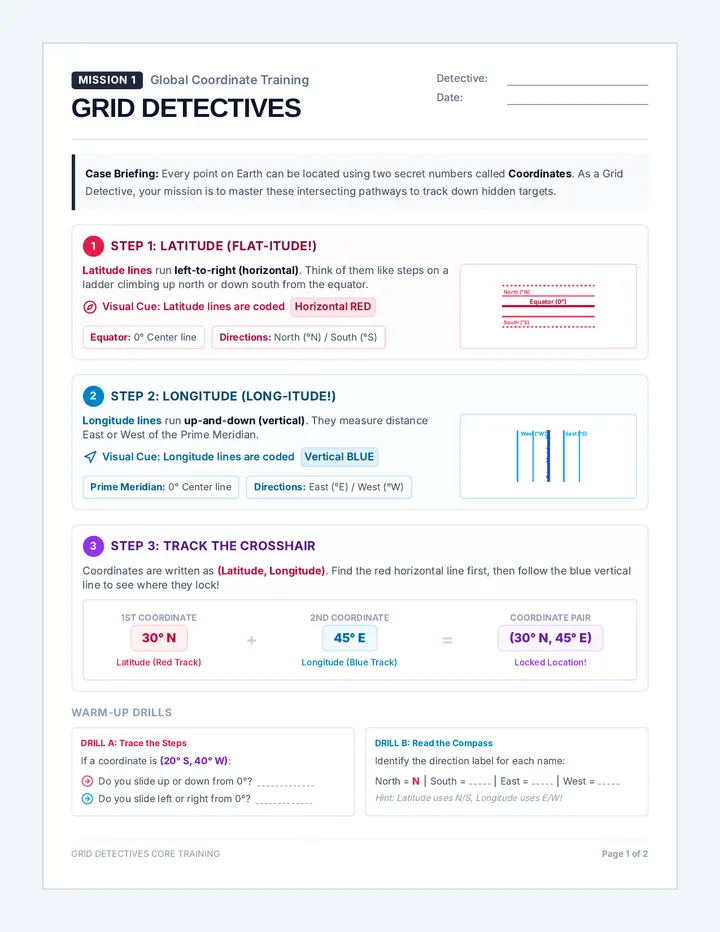
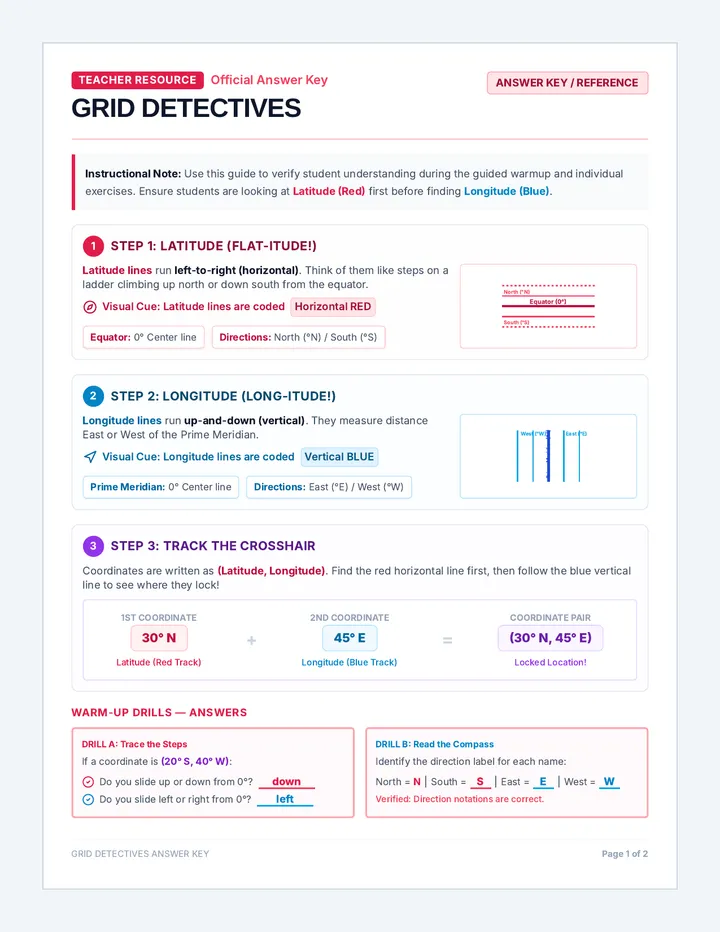
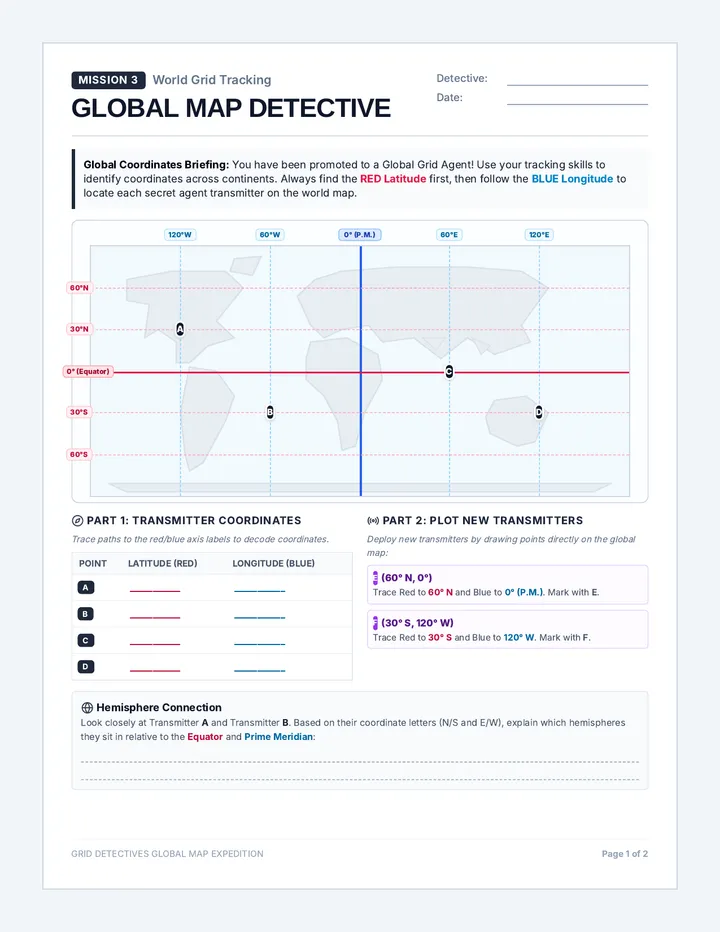
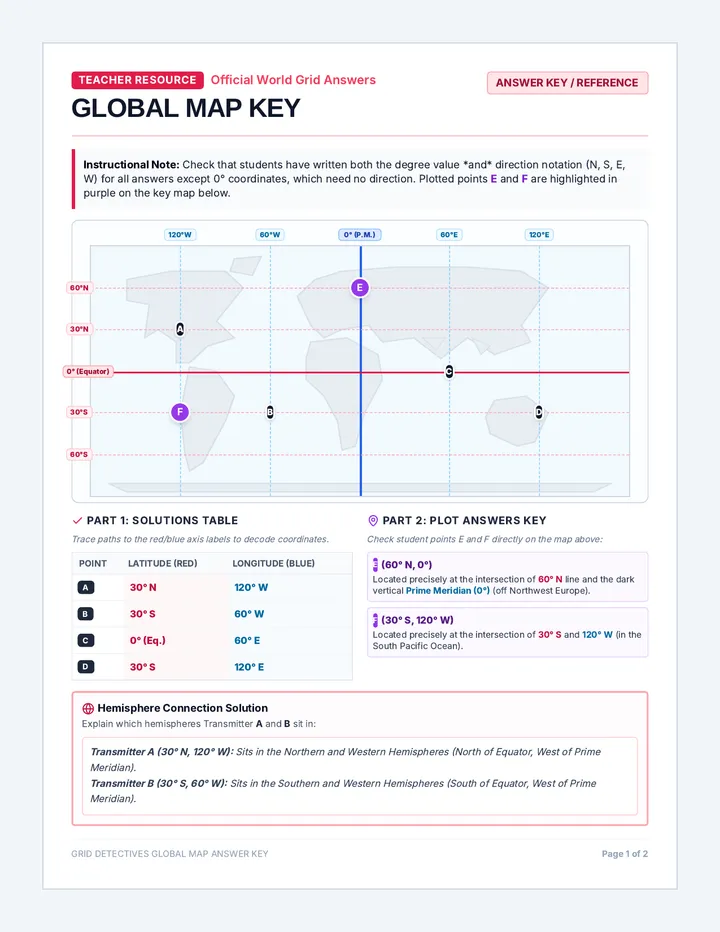
A guided lesson on latitude and longitude using structured, color-coded pathways. Students master horizontal latitude (red) and vertical longitude (blue) through step-by-step visual scaffolds and targeted practice.
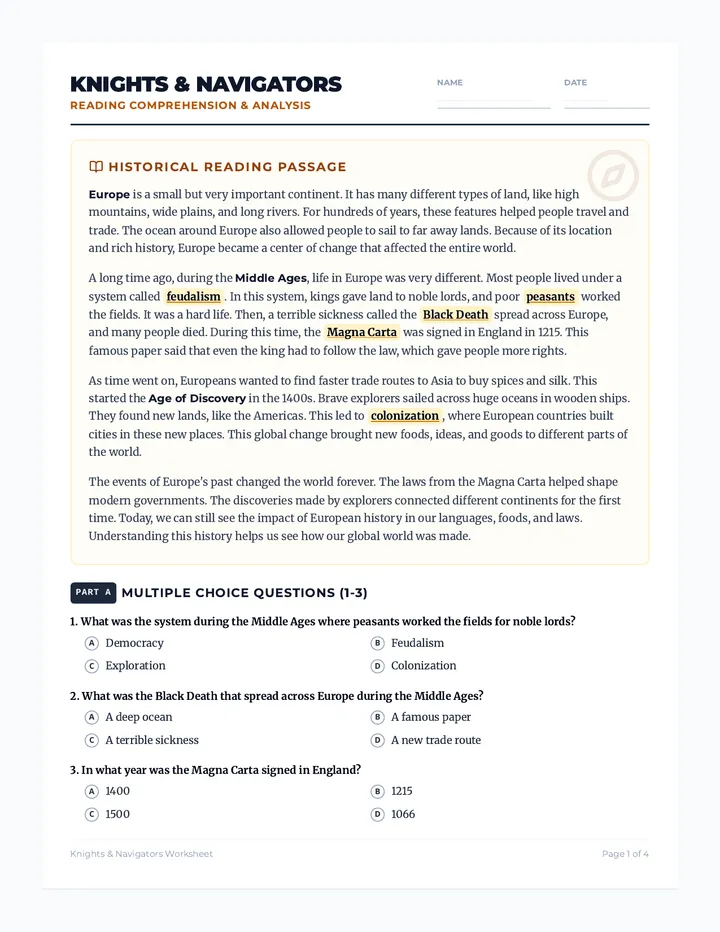
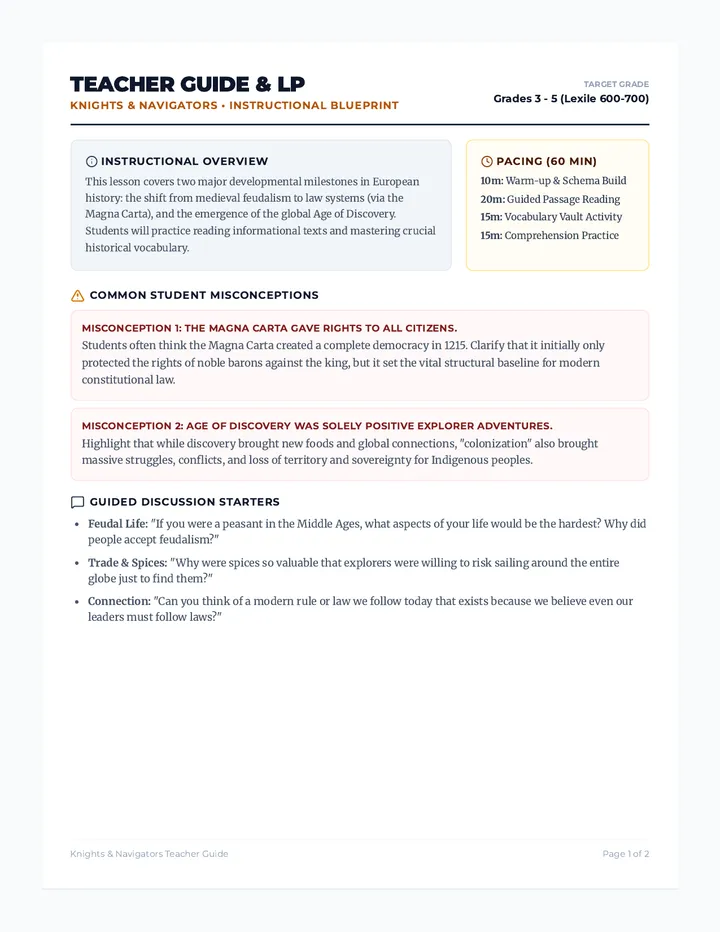
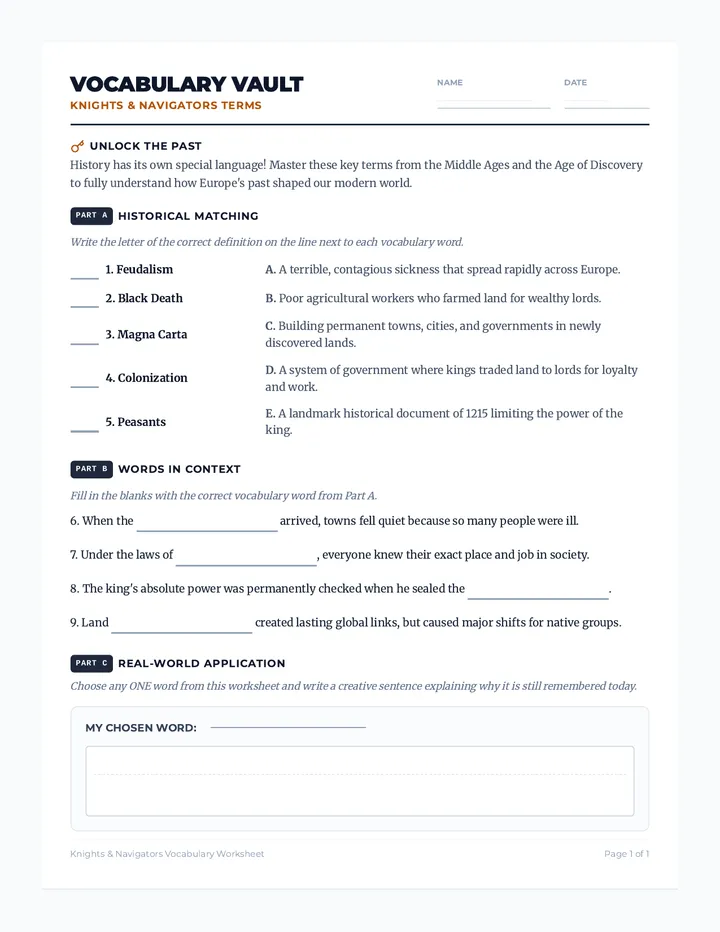
A fun and engaging history lesson exploring Europe during the Middle Ages and the Age of Discovery. Students read about key historical shifts, complete robust comprehension checks, and master vocabulary.
An introductory exploration of the United Kingdom's geography, focusing on its four constituent countries and major landmarks like the River Thames.
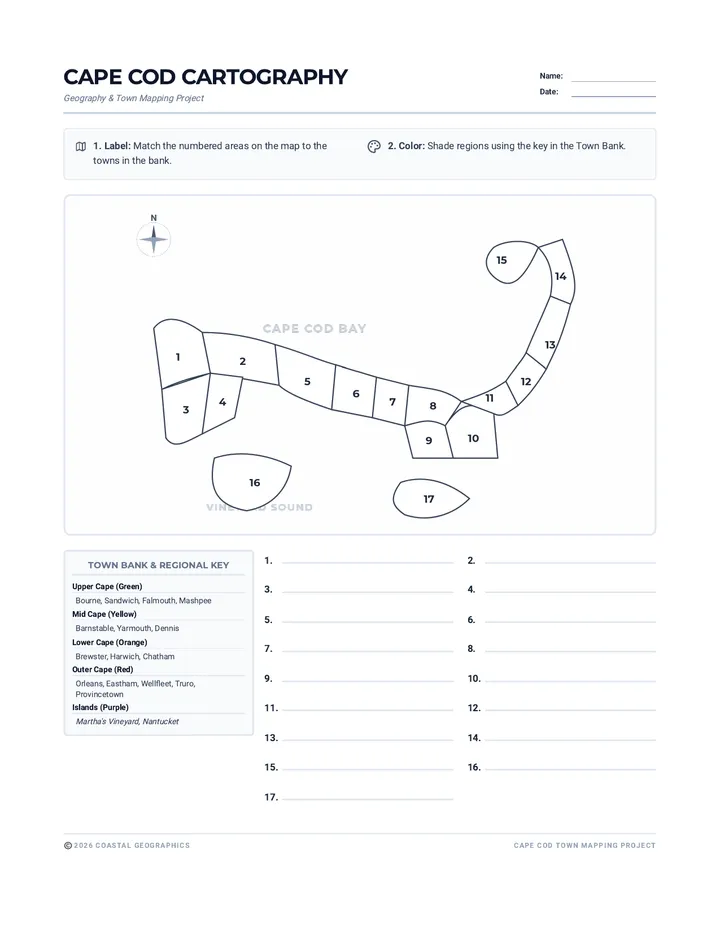
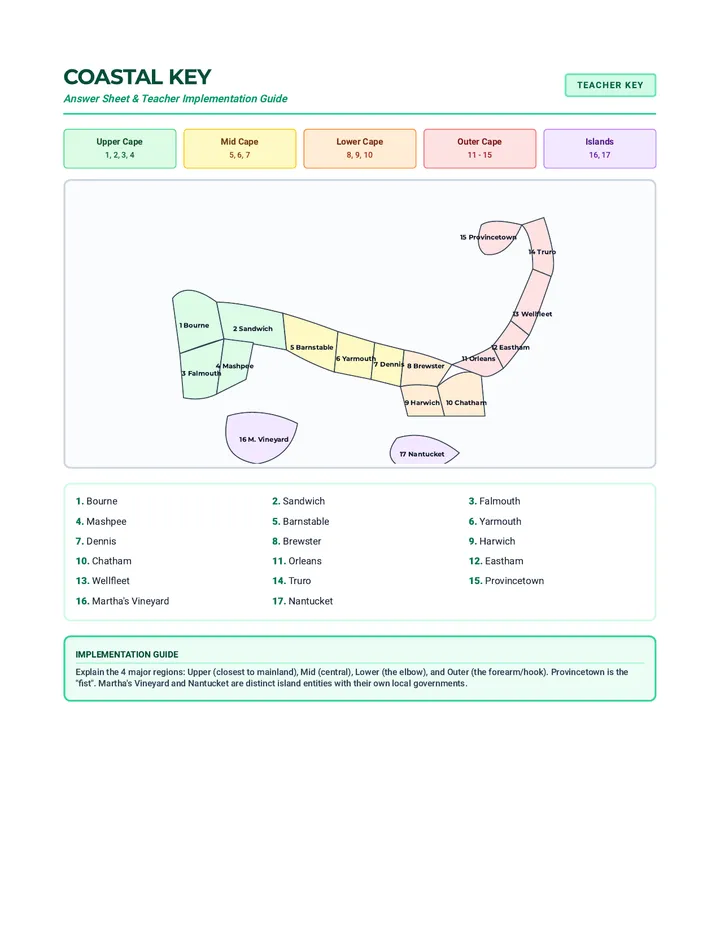
A lesson focused on the unique geography of Cape Cod and the Islands, including town identification and regional categorization.
A foundational lesson on global geography focusing on identifying and labeling the seven continents using visual cues and spatial relationships.
An introductory lesson for third graders to explore the distinct regions of the original thirteen colonies, focusing on geography, climate, and daily life.
Students learn the foundational skills of cartography, focusing on how to read, interpret, and create maps using real-world symbols, scales, and coordinates.
A social studies lesson for grades 4-6 focusing on the early days of the American Revolution, vocabulary of the conflict, and the sights and sounds of the struggle for independence.
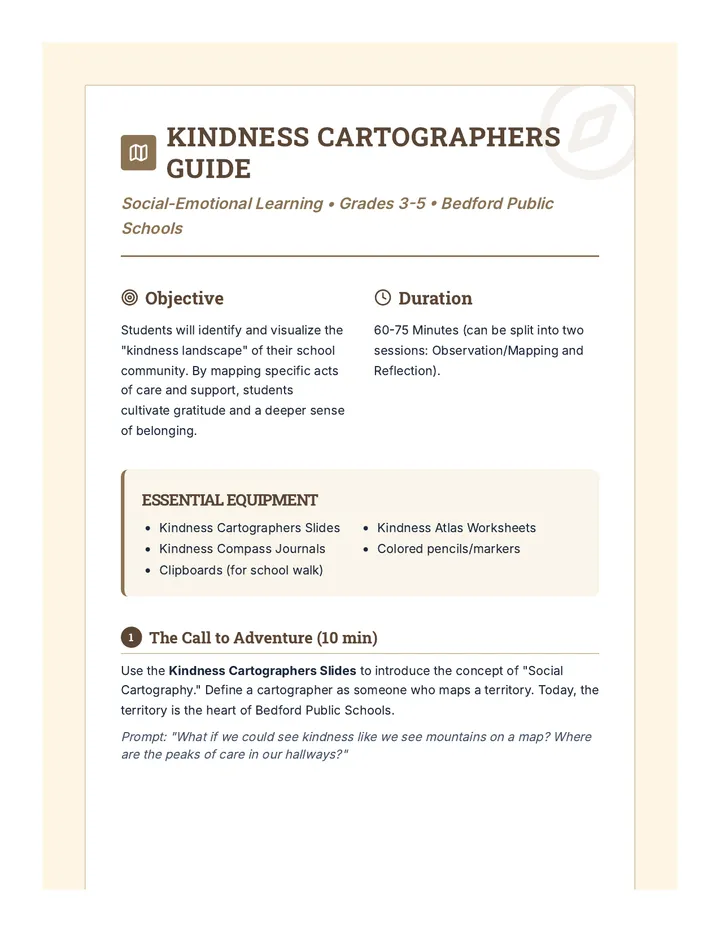
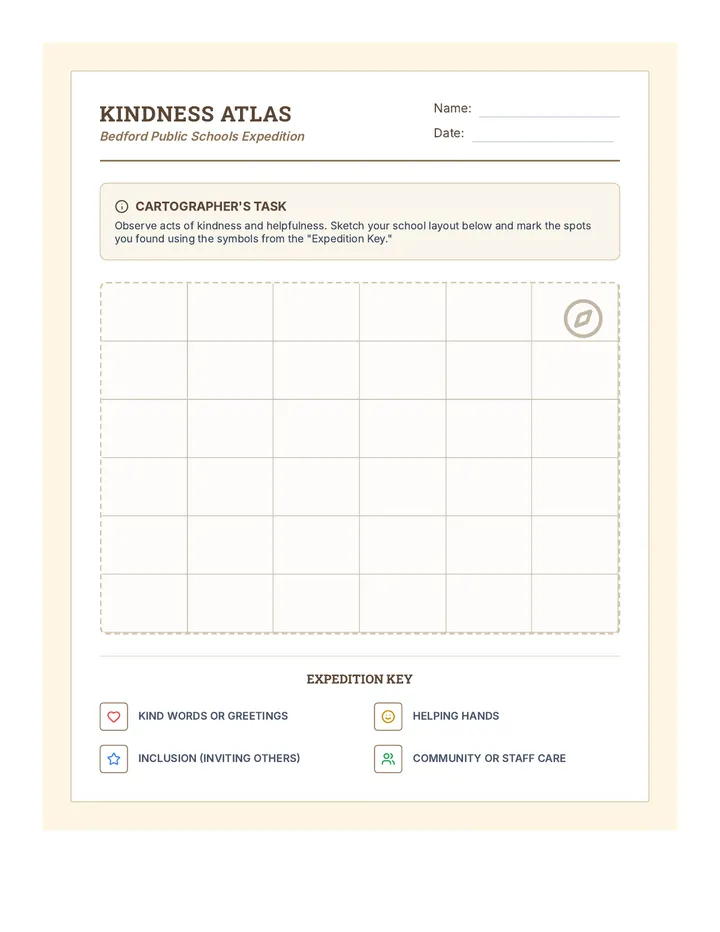
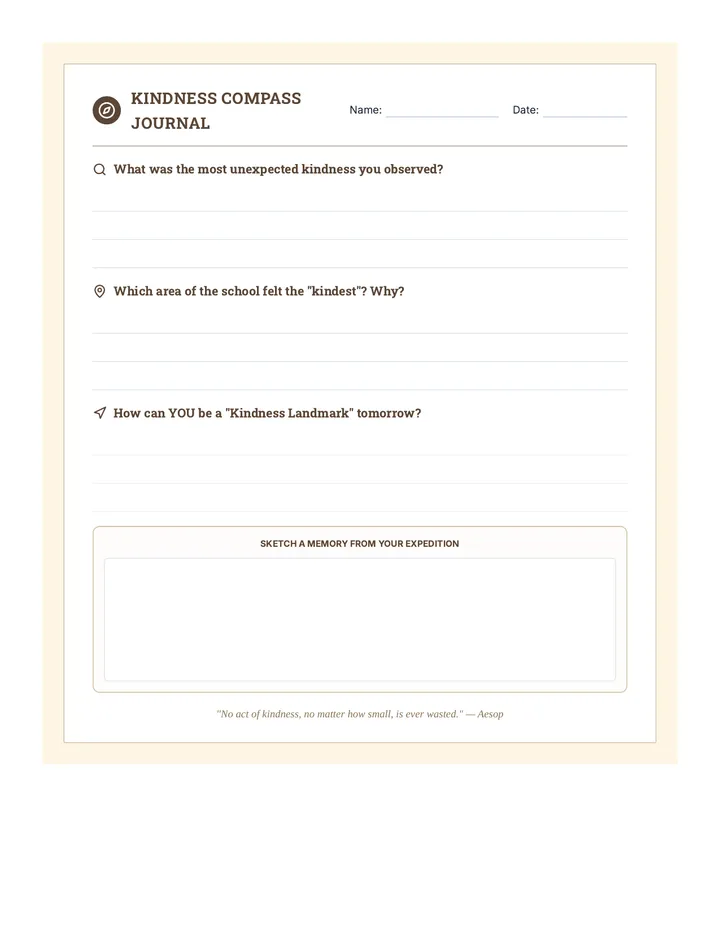
A social-emotional learning lesson for grades 3-5 where students act as 'cartographers' to identify, observe, and map acts of kindness within Bedford Public Schools, fostering community awareness and appreciation.
Students will learn to navigate their local community by mastering map keys and symbols. This lesson includes instructional slides, a reading passage, and a hands-on mapping activity.
Students take on the role of 15th-century explorers, creating a weathered voyage log and learning to use navigational tools like the quadrant. This lesson aligns with Grade 3 CKLA Unit 9, focusing on the motivations and challenges of the Age of Exploration.
A foundational vocabulary lesson for 3rd graders to understand the key terms of the Age of Discovery and early exploration through visual aids and interactive practice.
A high-stakes, interactive game show focused on Ohio's government and citizenship, designed to practice RI.3.1-RI.3.8 and L.3.4-L.3.5 standards. Students will navigate questions about the branches of government, local leadership, and civic duties.
A hands-on geography and science project where 3rd-grade students design detailed maps of specific habitats (Wetlands, Plains, or Deserts) while mastering essential map skills like legends, scale, and orientation.
Students explore the history of Riverton through map analysis, identifying how land use has changed over a century and designing future urban solutions.
A captivating introduction to Ancient Rome for 3rd graders, covering daily life, engineering marvels, and the legacy of the empire through visual exploration and hands-on activities.
A project-based lesson where 3rd-grade students explore the physical characteristics of mountains, wetlands, plains, and deserts through a variety of creative choices.
A lesson exploring the life and contributions of Buffalo Bill Cody, featuring a simulated trifold presentation board for historical analysis.
An informational lesson about the history and significance of Memorial Day, focusing on vocabulary development through context clues and identifying main ideas with supporting details.
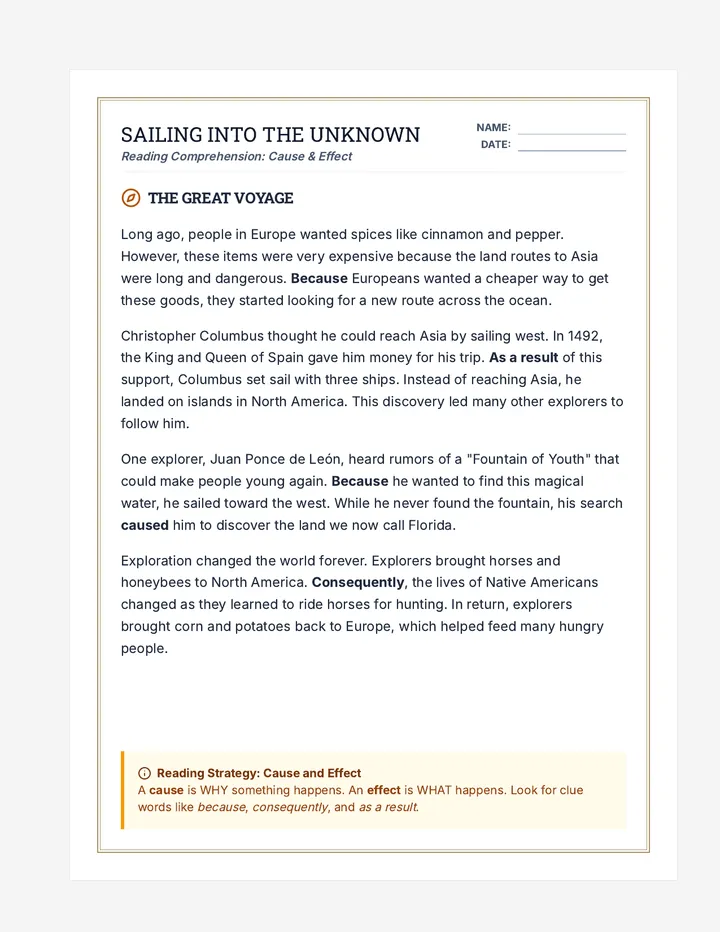
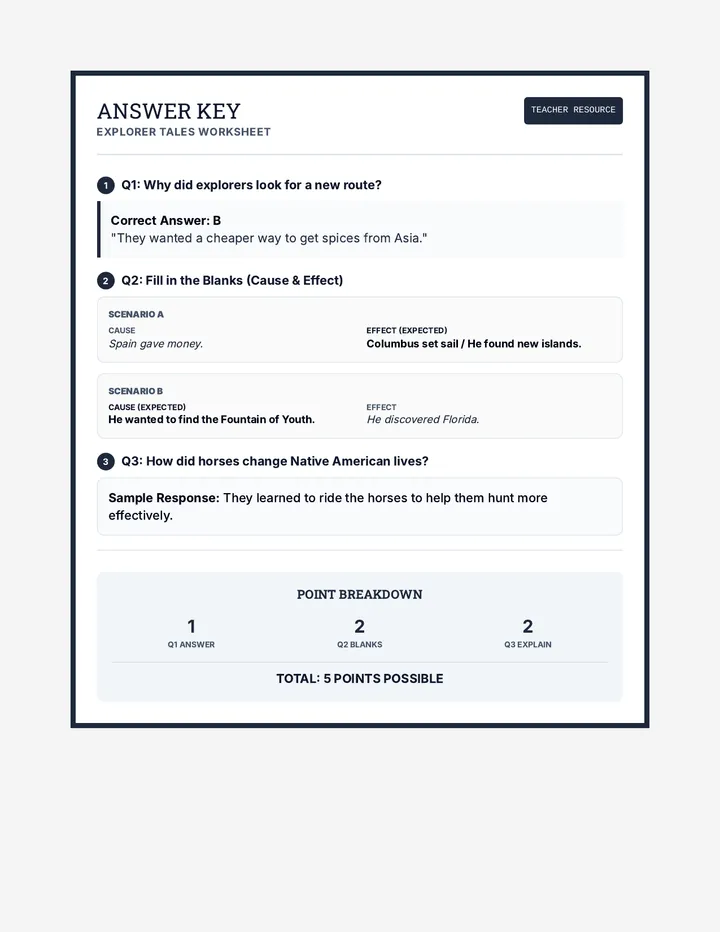
A lesson focused on European explorers of North America, specifically designed for third-grade students to practice identifying cause and effect relationships within informational texts.
A lesson focusing on life in a medieval castle, featuring a reading passage adapted for Grade 3 reading levels that aligns with Grade 4 CKLA social studies standards. Students will practice vocabulary, answer comprehension questions, and use the RACER strategy for an open response.
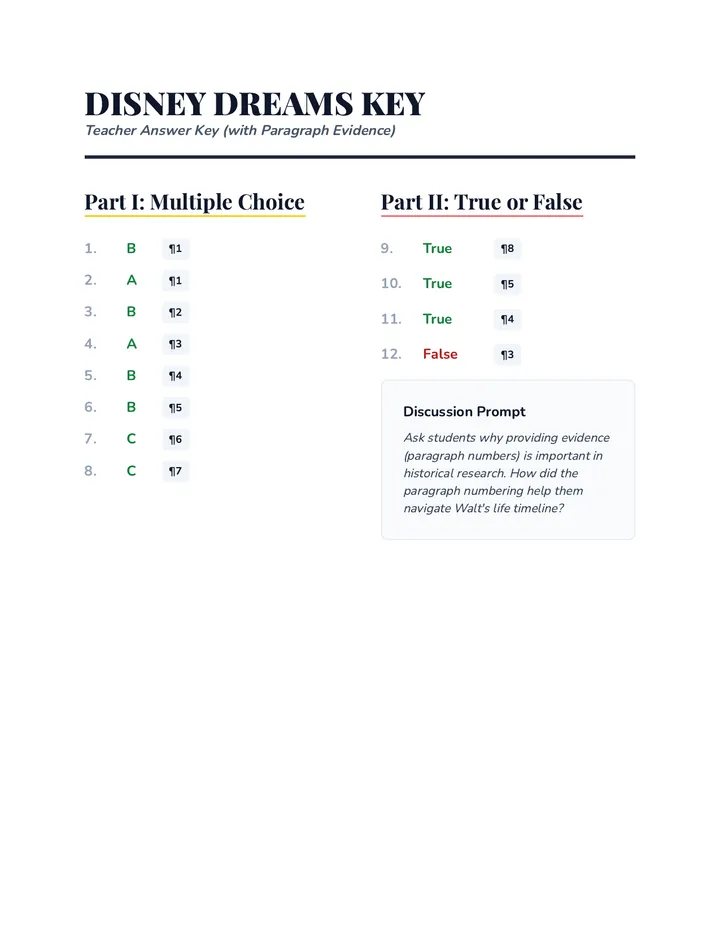
A comprehensive reading and assessment lesson exploring the life and legacy of Walt Disney, from his humble beginnings on a Missouri farm to the creation of a global entertainment empire.
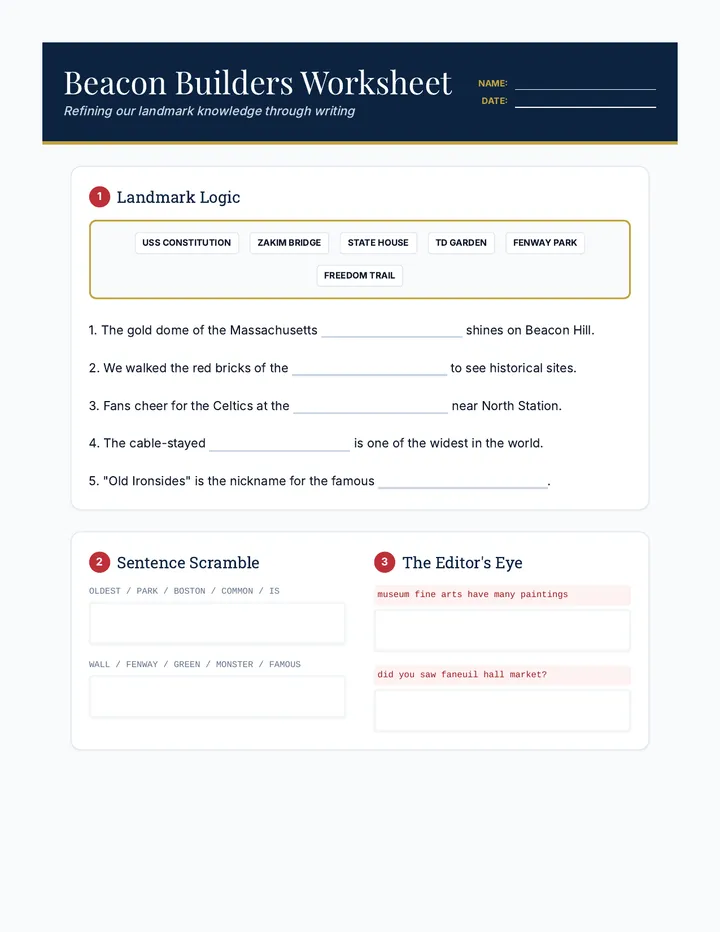
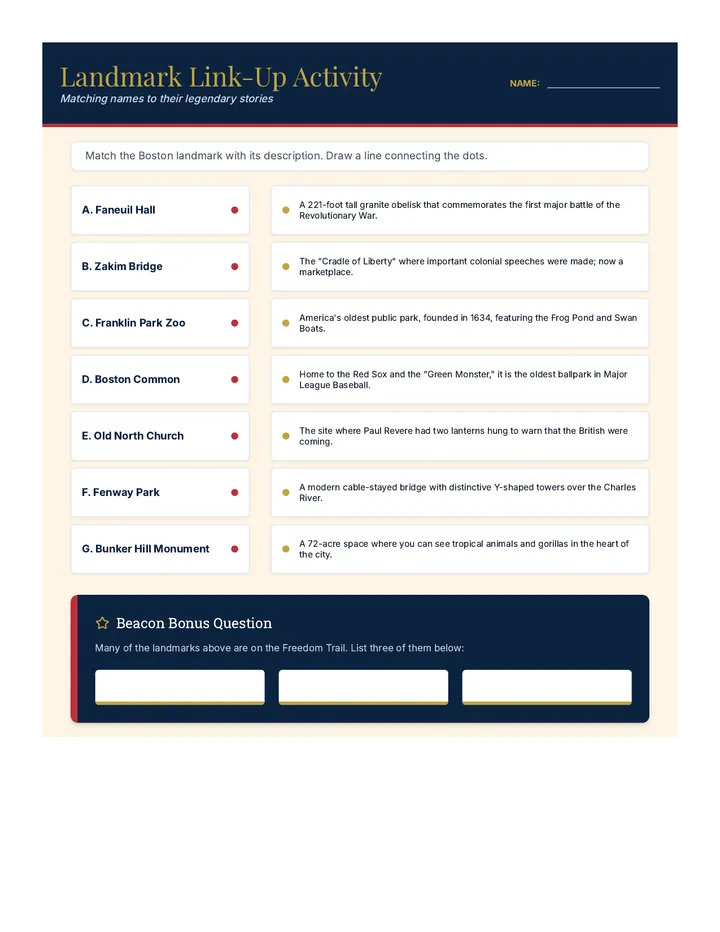
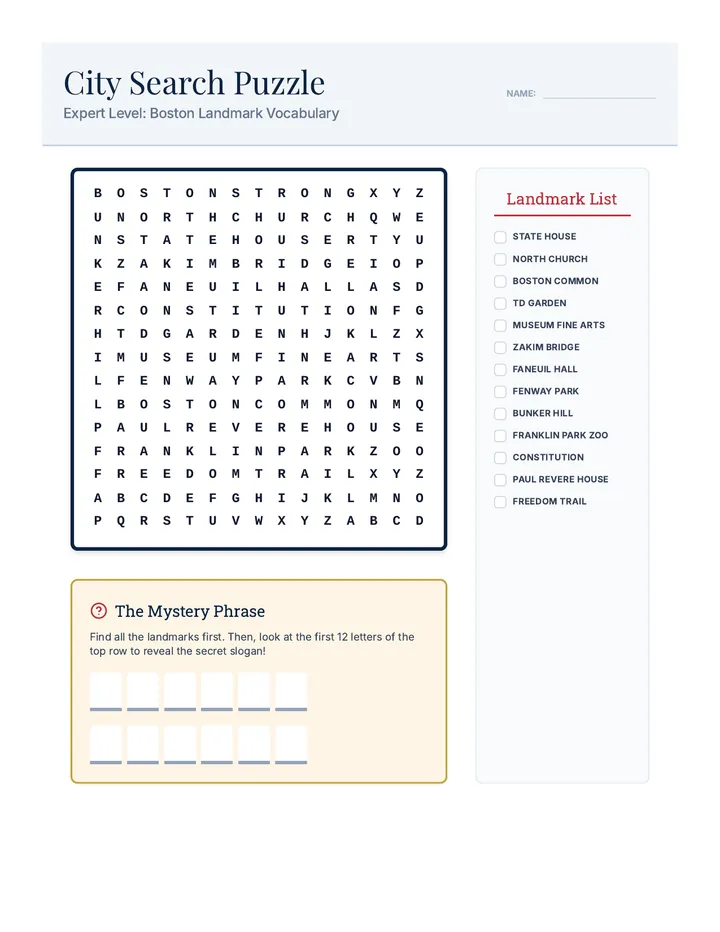
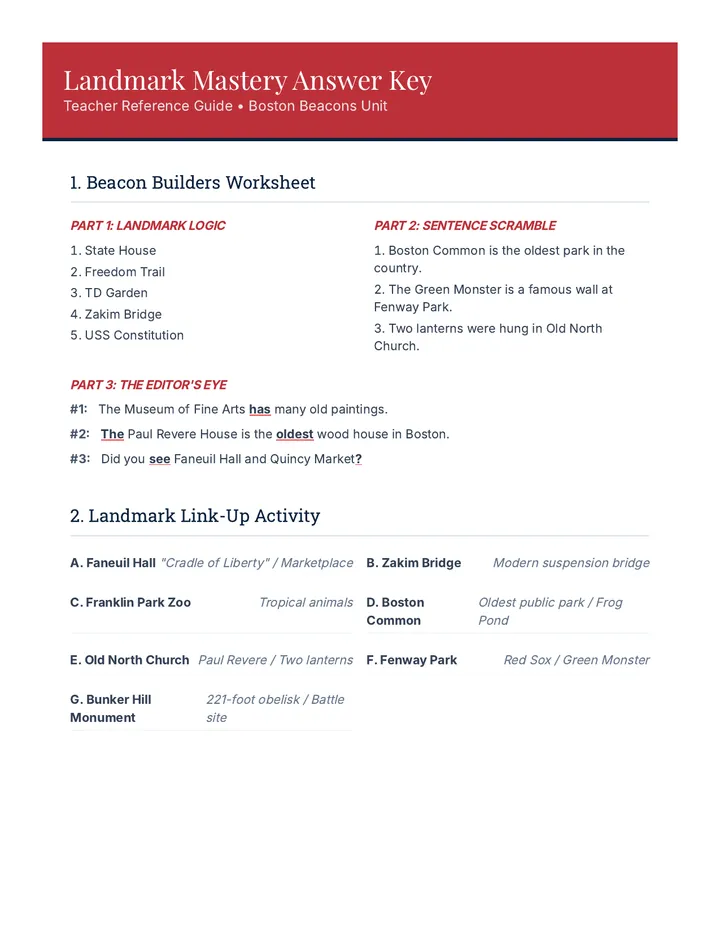
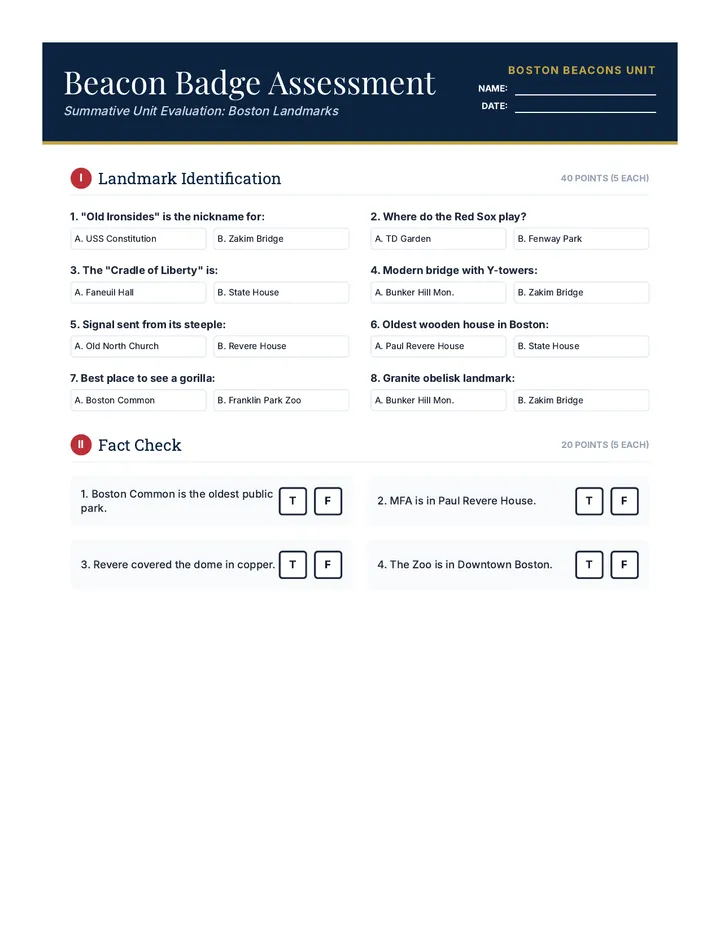
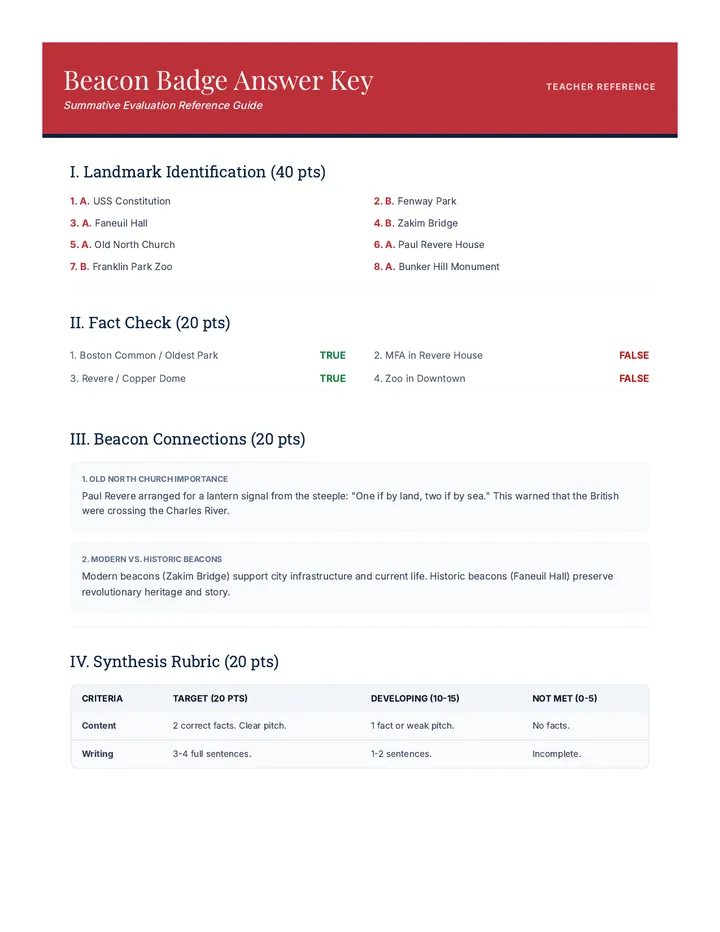
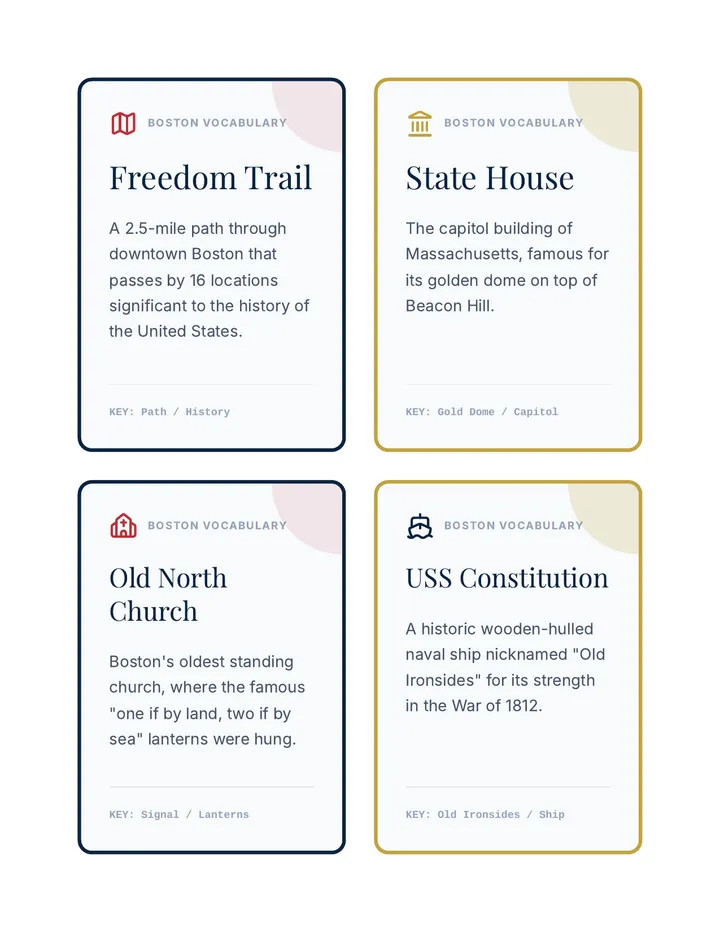
A comprehensive set of practice activities for students to master their knowledge of Boston's most iconic landmarks through sentence construction, matching, and vocabulary puzzles.
A comprehensive literacy and history packet exploring Paul Revere's legendary journey through vocabulary building, close reading, and critical analysis.
Students compare 19th-century frontier life in Indiana to modern-day Franklin Township, researching local landmarks and designing a digital time capsule to document how technology and daily life have evolved.
A lesson exploring Julius Caesar's historic decision to cross the Rubicon river, focusing on simple narrative structure and reading comprehension for young learners.
A comprehensive look at the history of the Battle of Puebla and how Cinco de Mayo has evolved into a vibrant celebration of Mexican culture and cuisine.
A historical inquiry into the Salem Witch Trials for third graders, focusing on the differences between popular myths and historical facts, and exploring what daily life was like in a Puritan community.
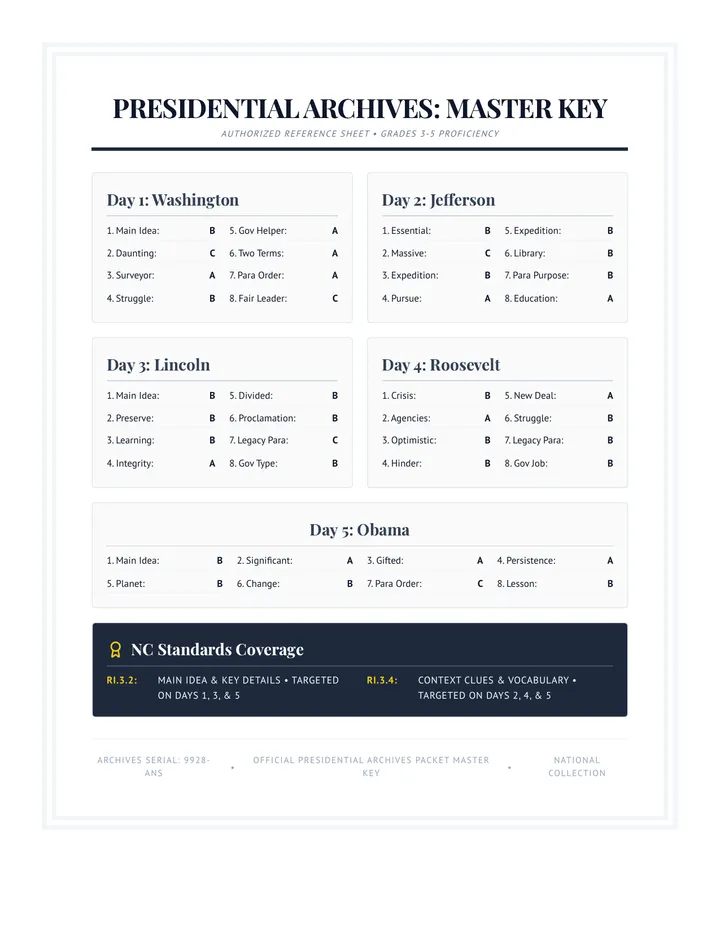
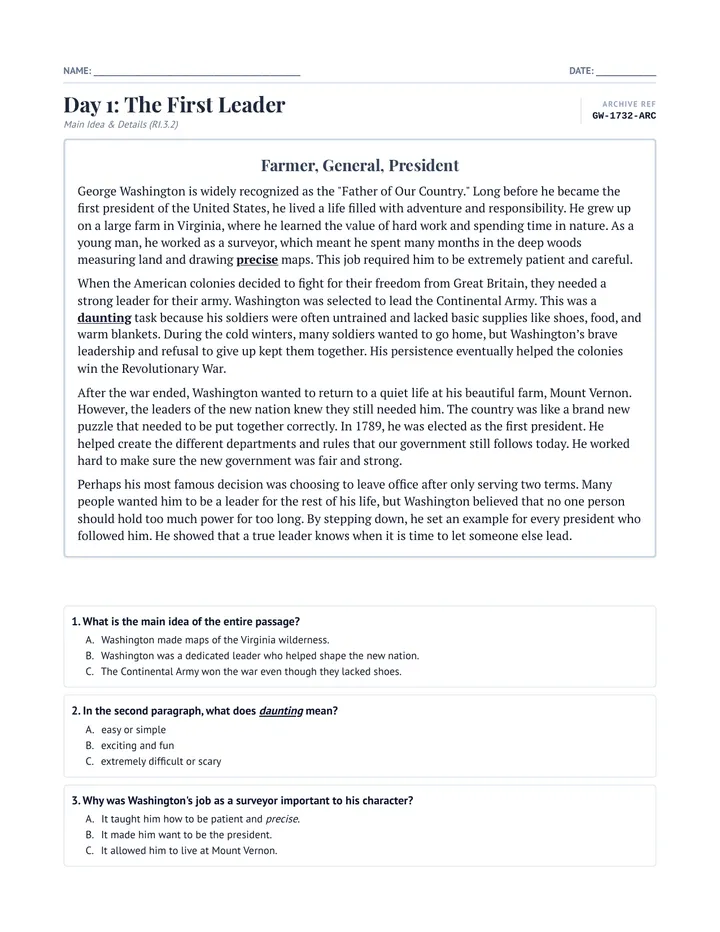
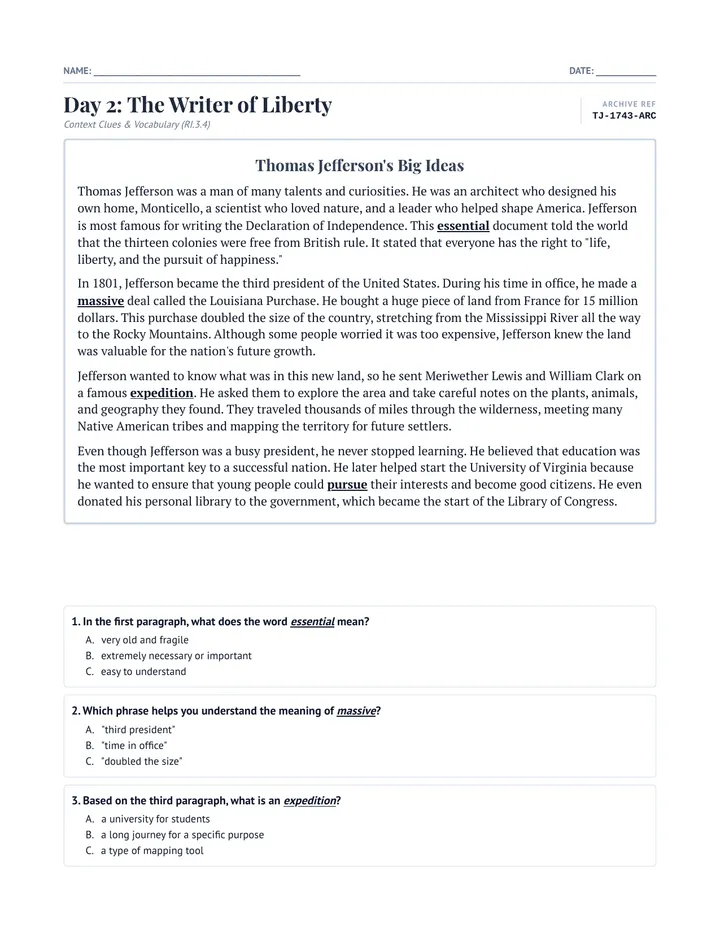
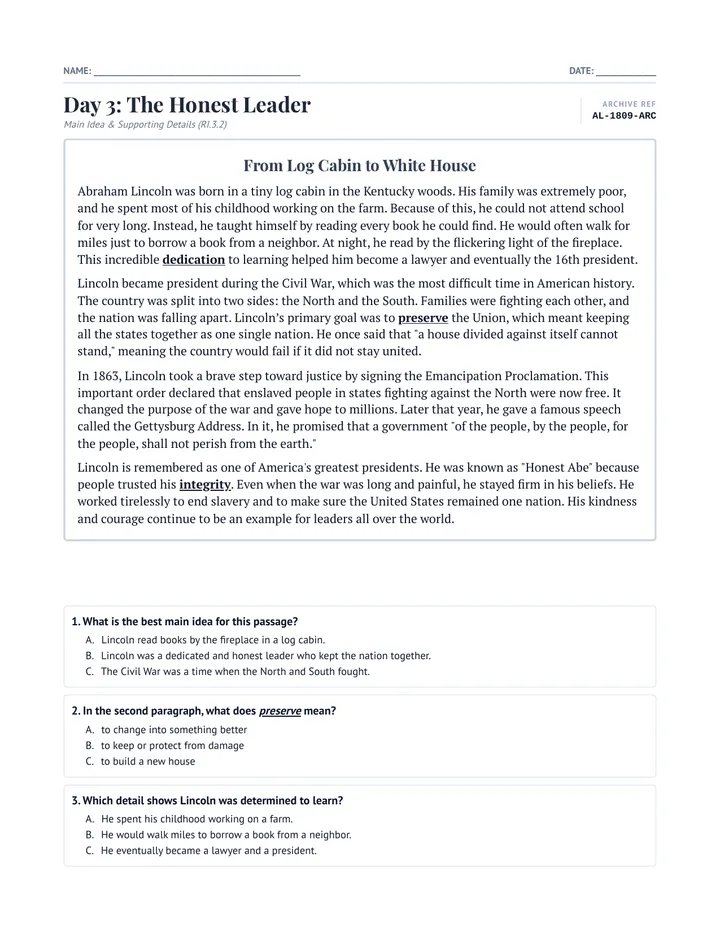
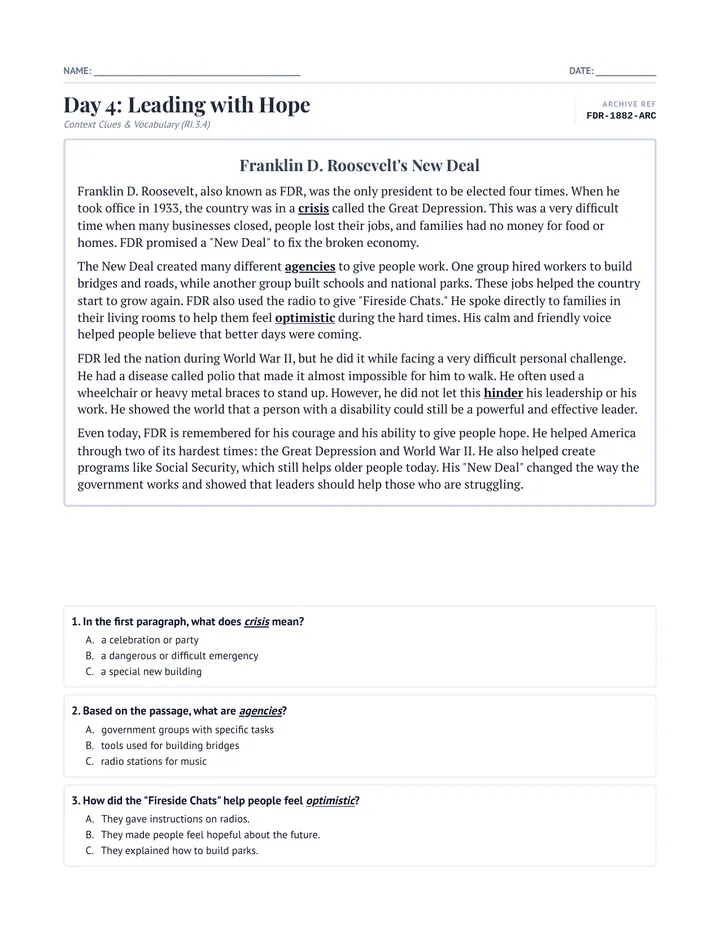
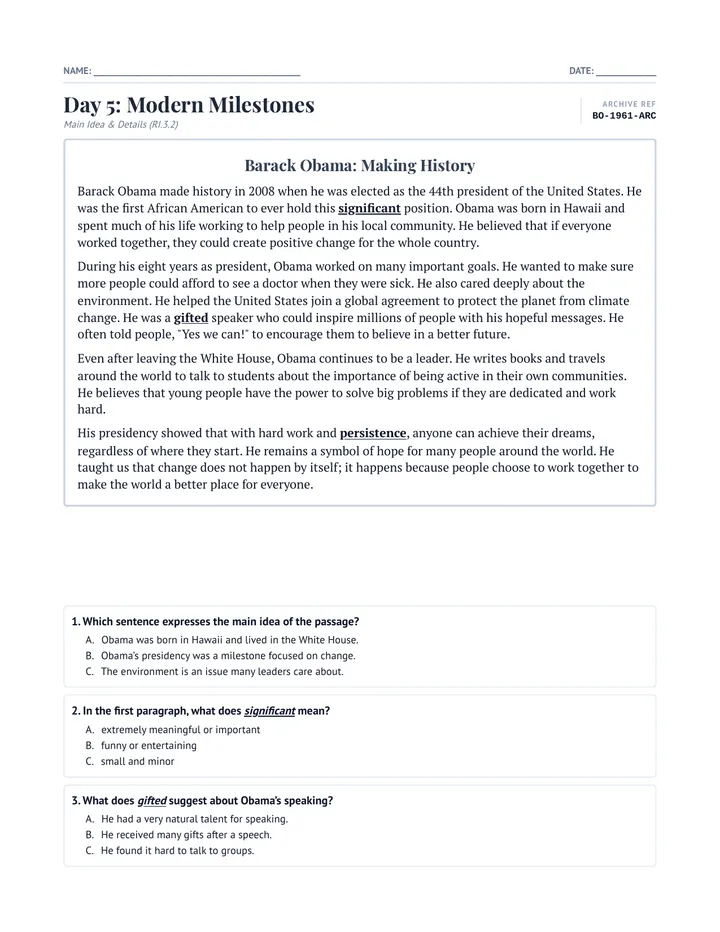
A 5-day series of readings and assessments focused on past presidents, designed to build historical knowledge and ELA test-taking skills.