Fundamental techniques for soccer, volleyball, football, and basketball alongside strategic gameplay and communication skills. Emphasizes sportsmanship and collaborative tactics within a competitive team environment.
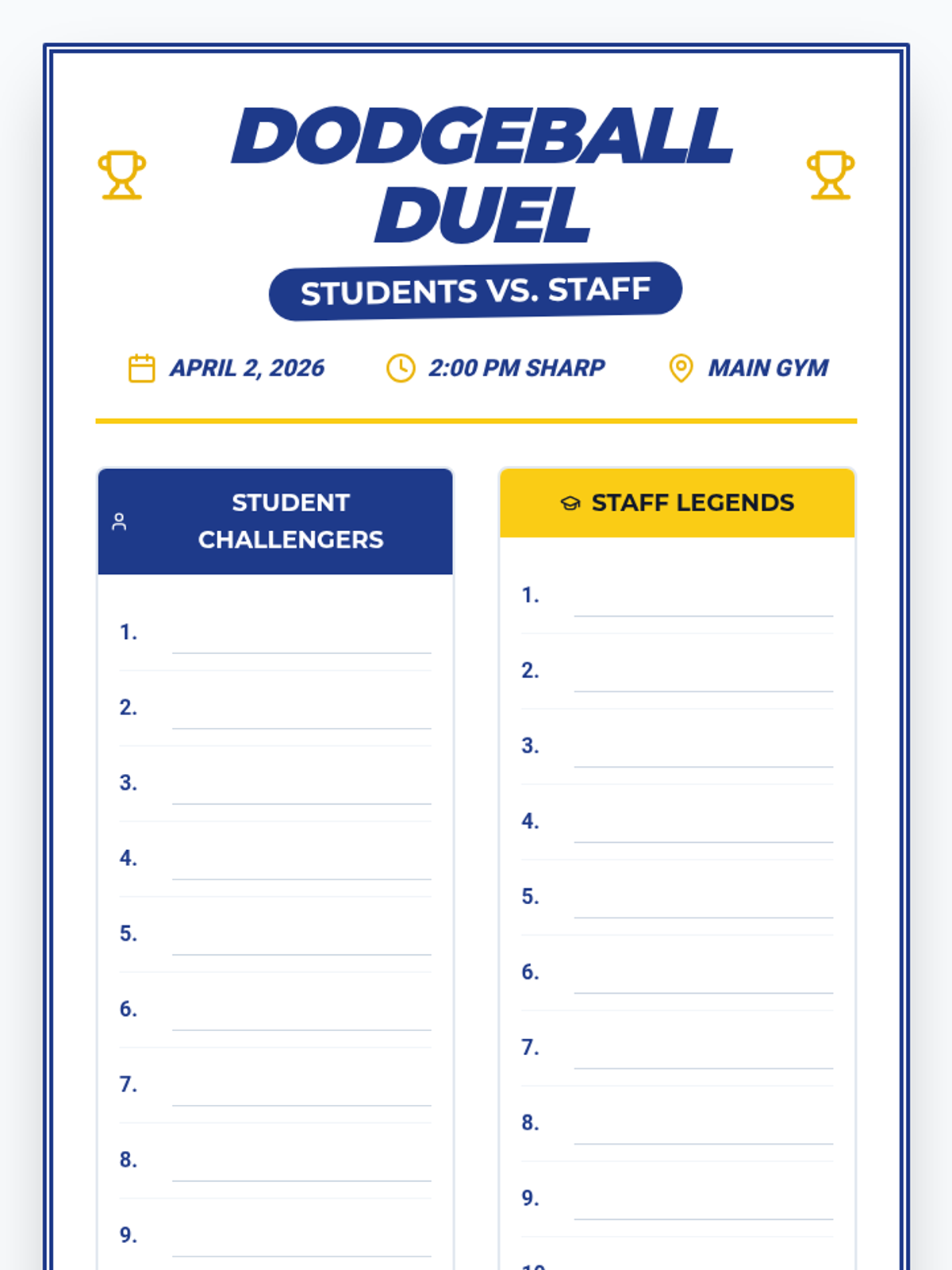
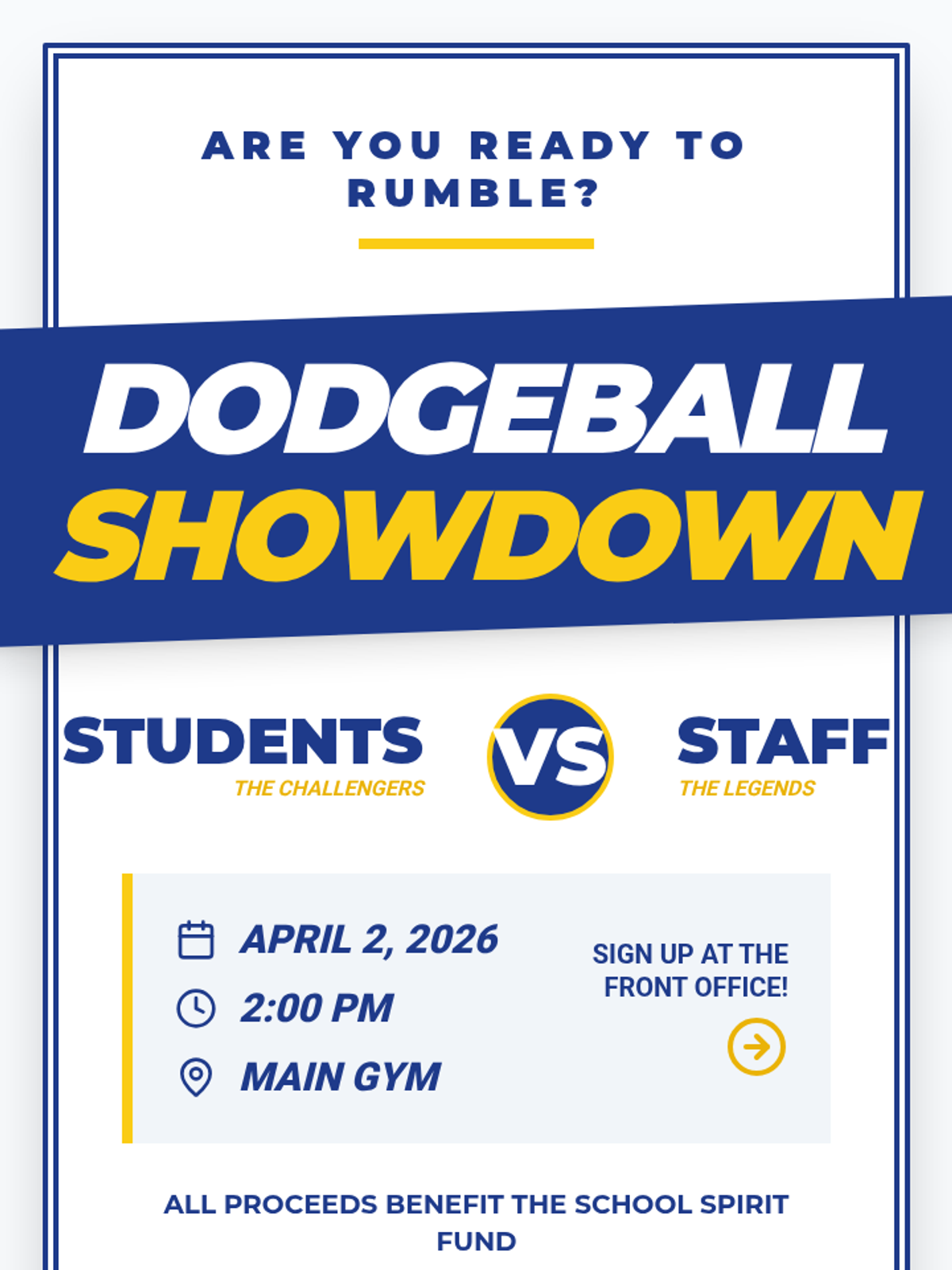
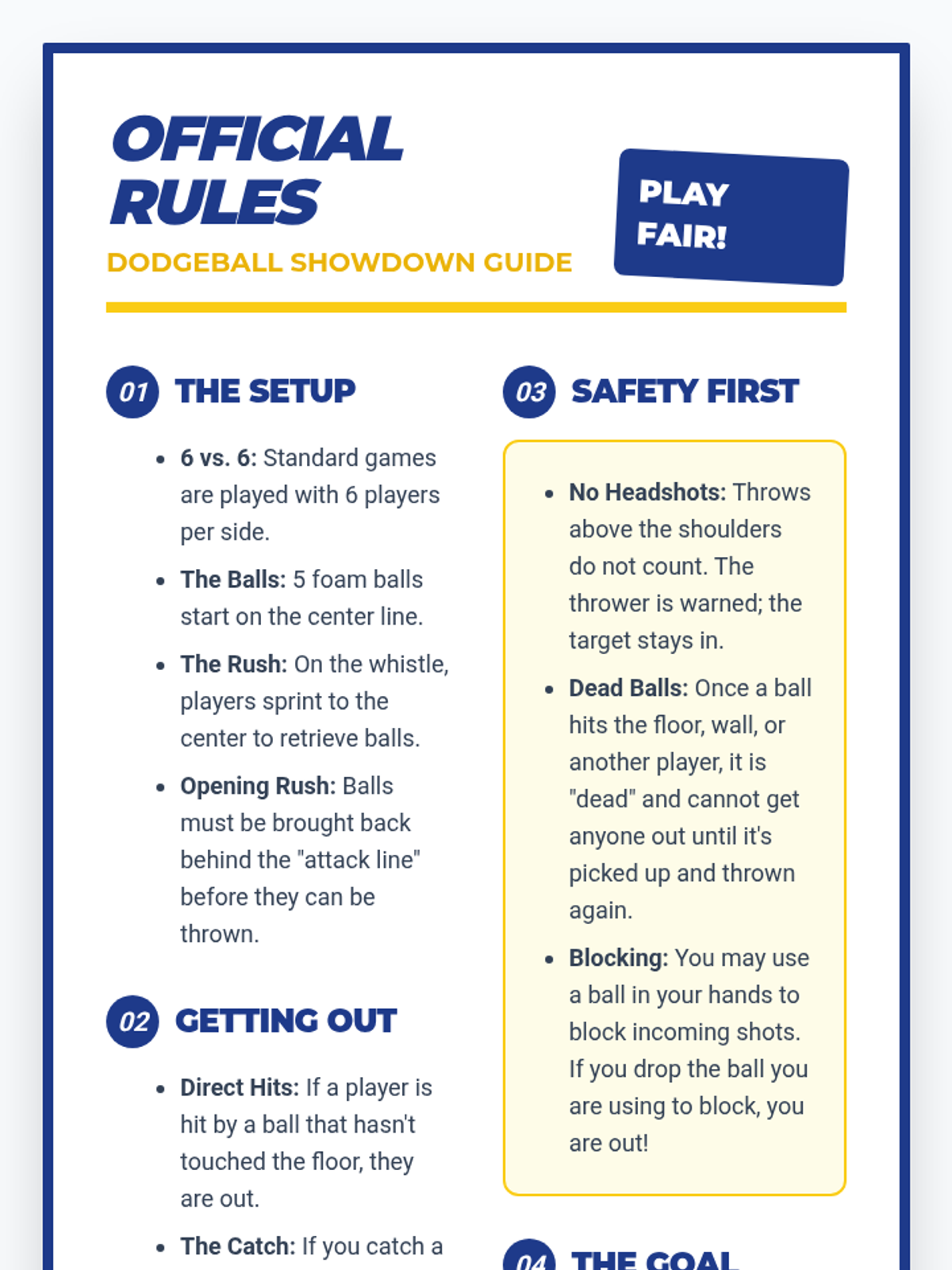
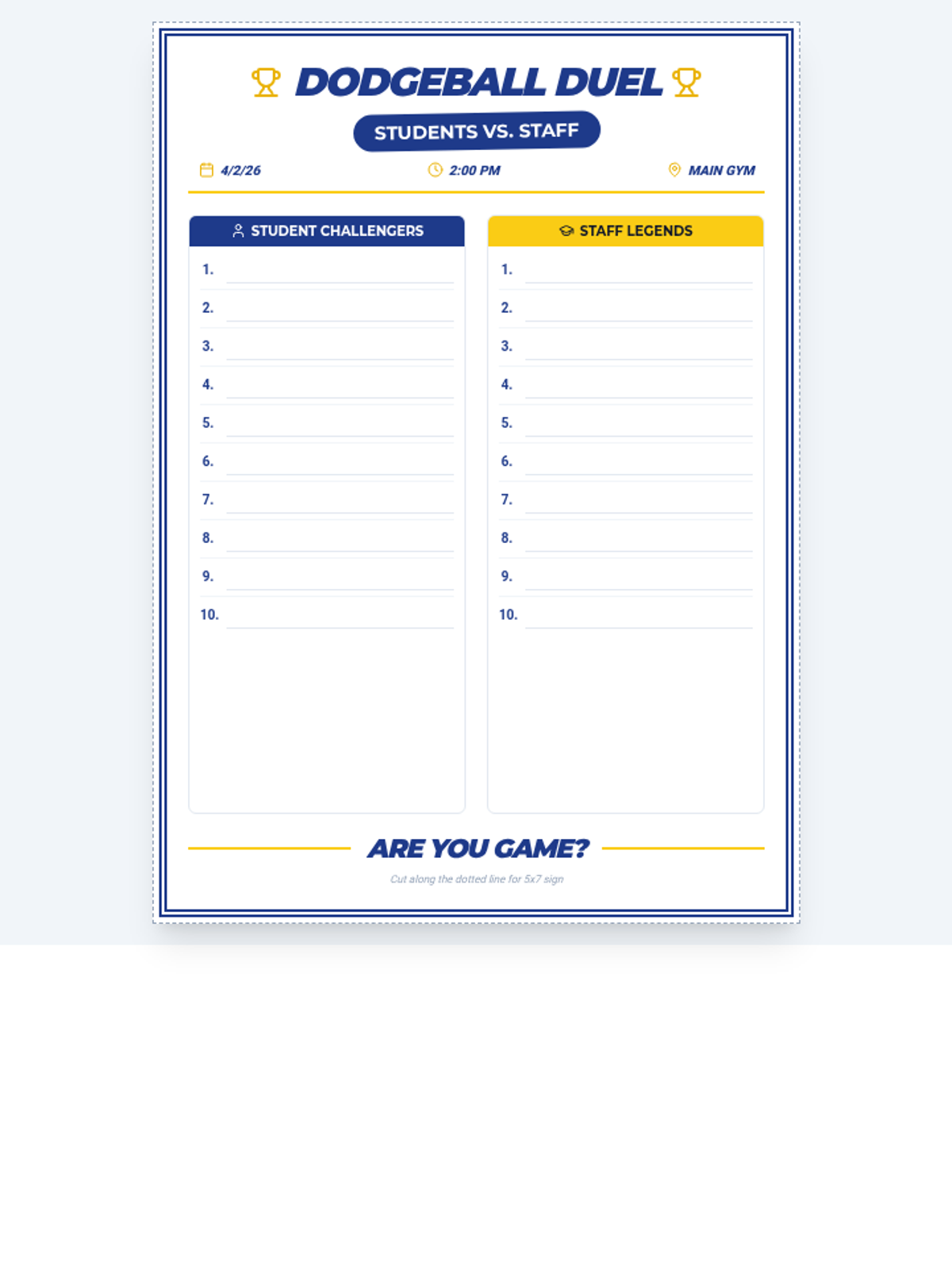
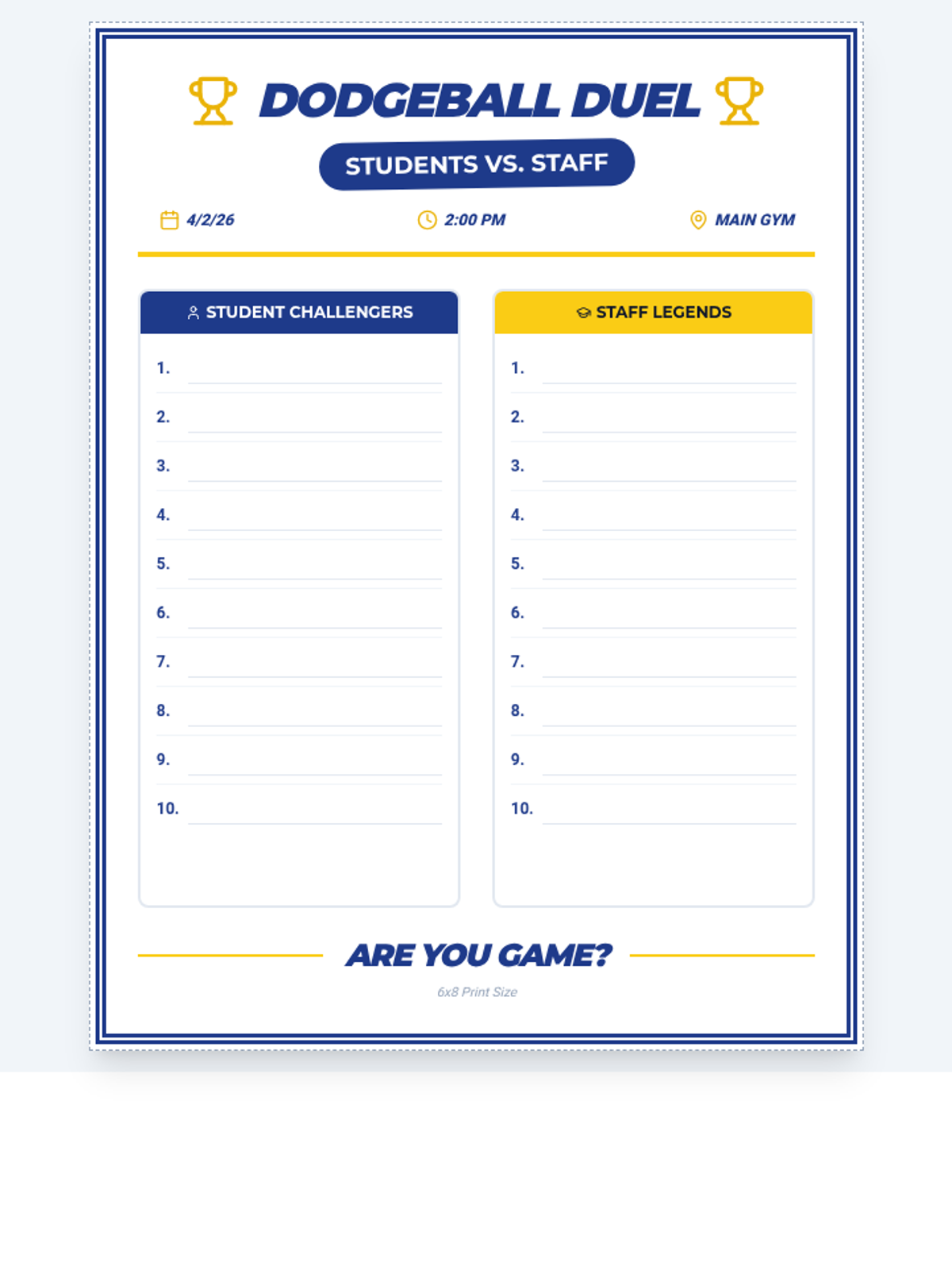
A collection of resources for organizing and promoting the annual Students vs. Staff dodgeball event, fostering school spirit and healthy competition.
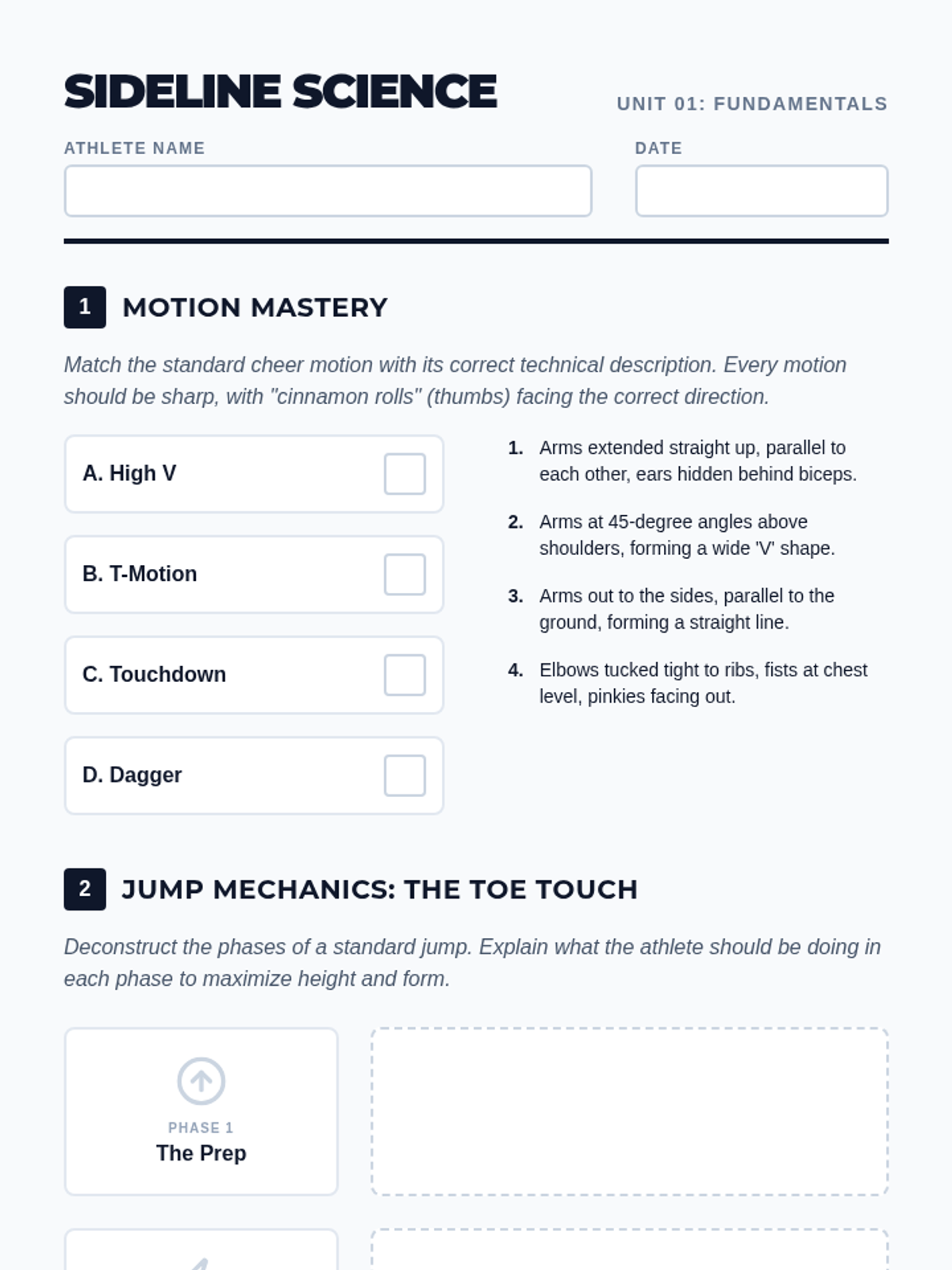
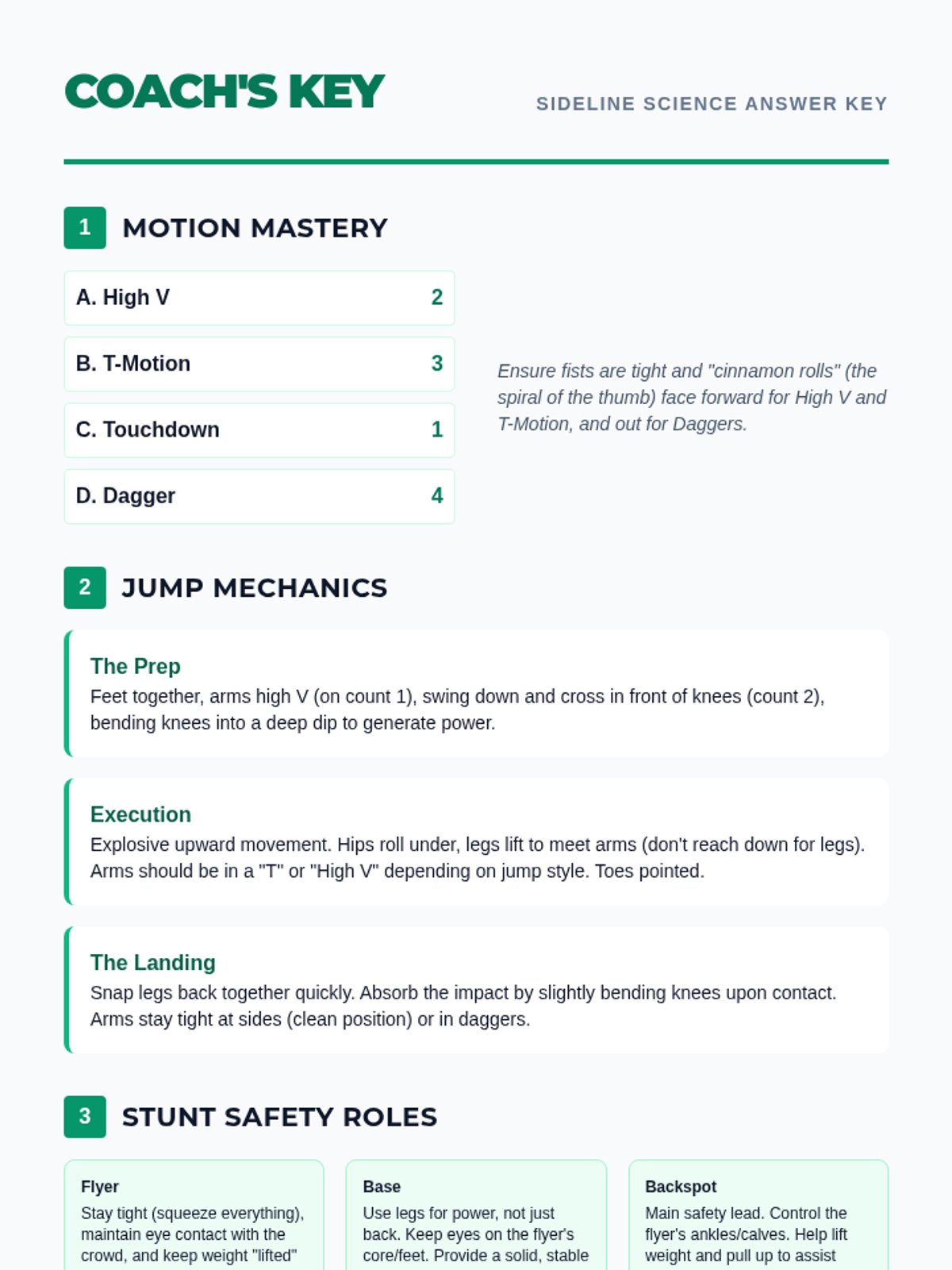
A comprehensive introduction to the fundamentals of high school cheerleading, covering terminology, motion technique, and safety protocols.
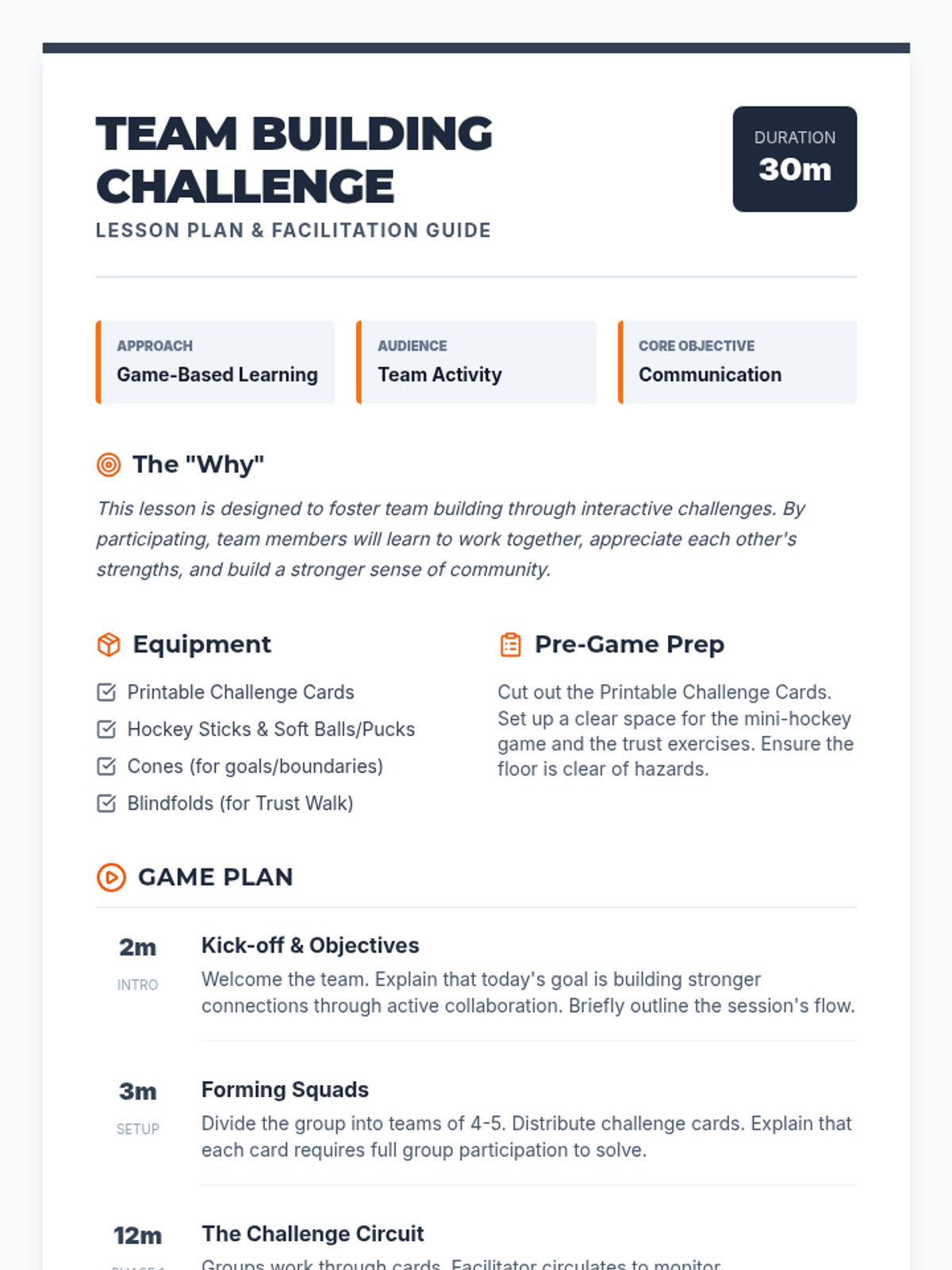
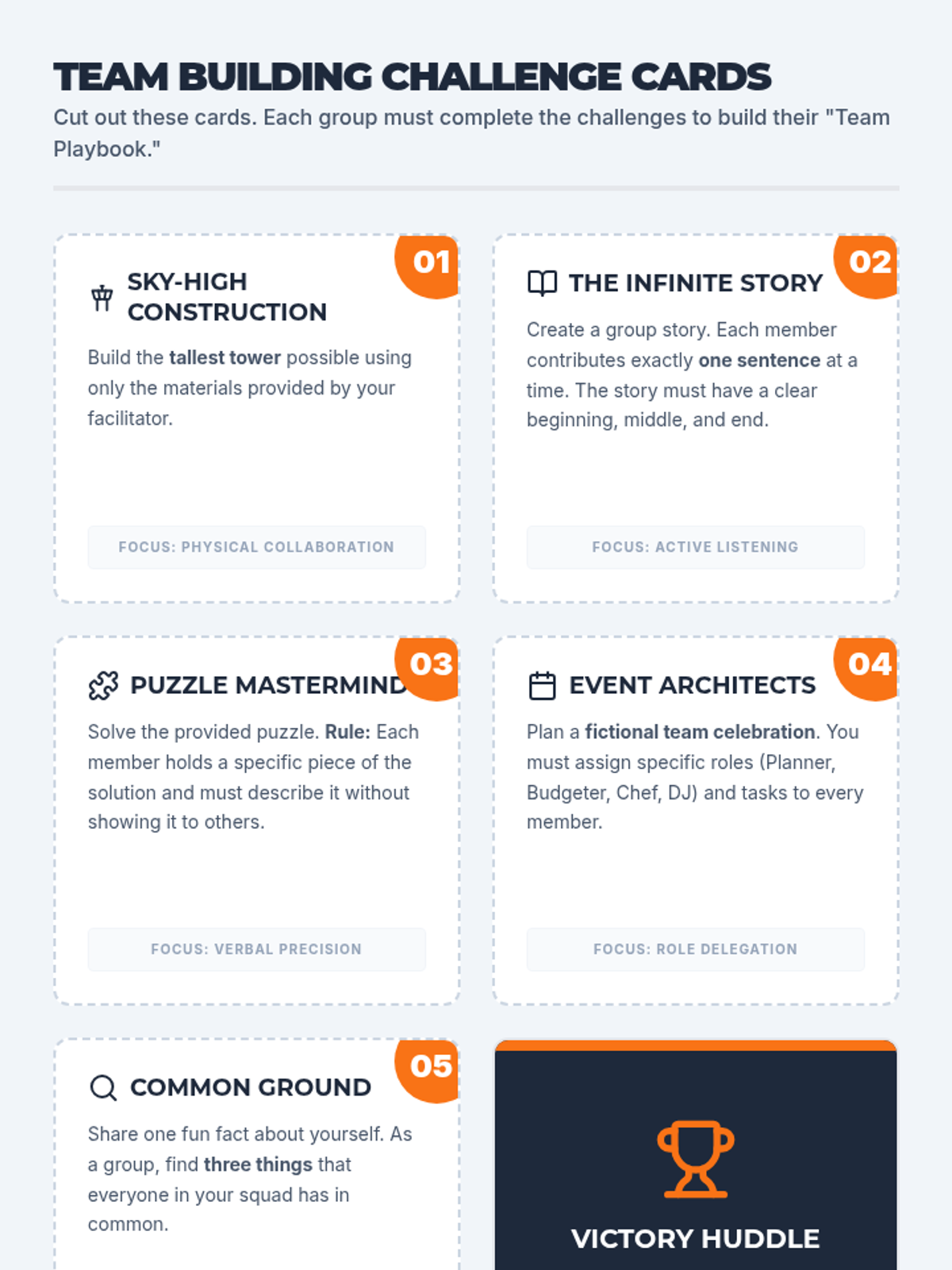
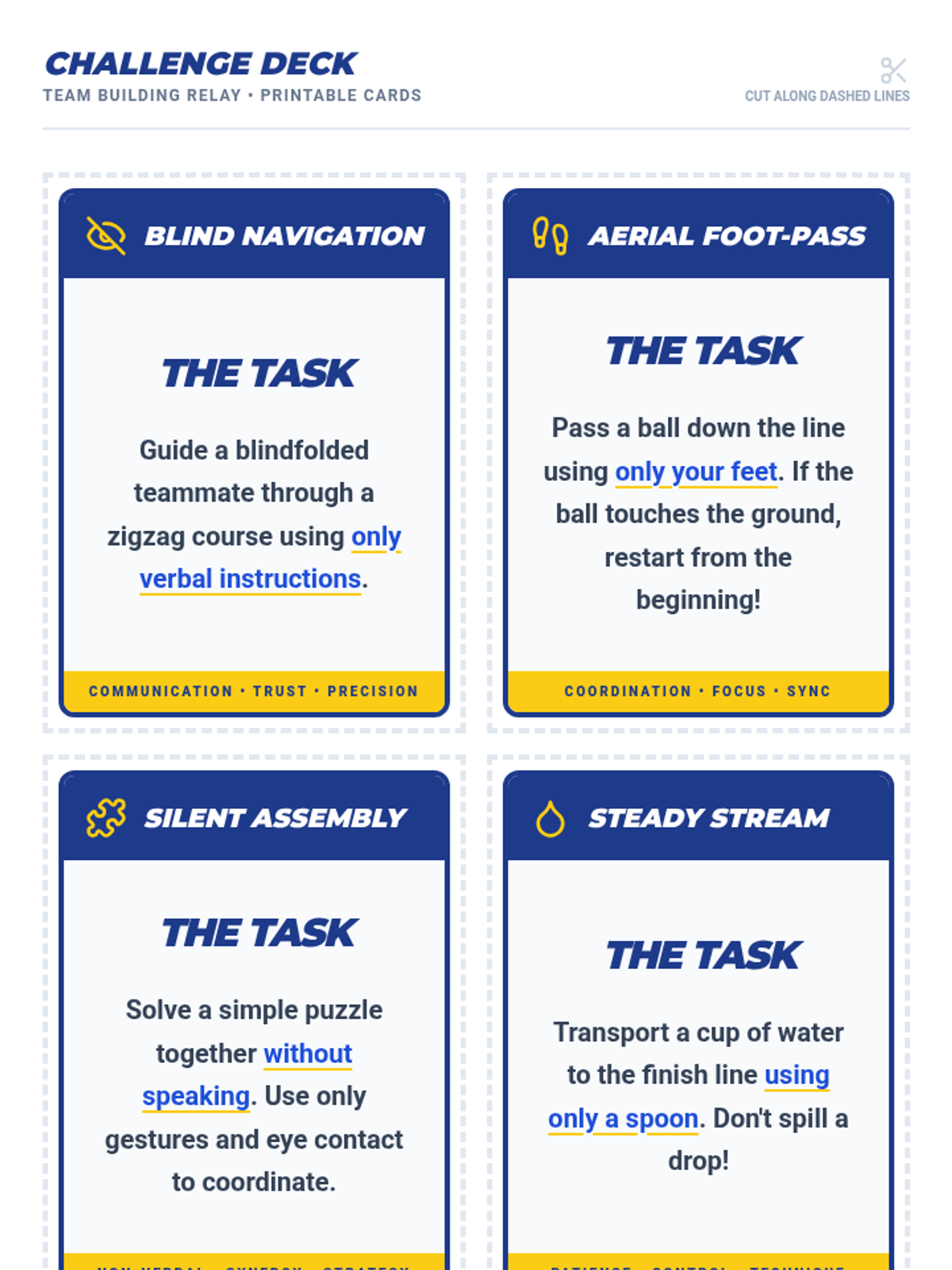
A high-energy team-building lesson focused on communication, trust, and collaboration through interactive challenges and a hockey-themed strategy game.
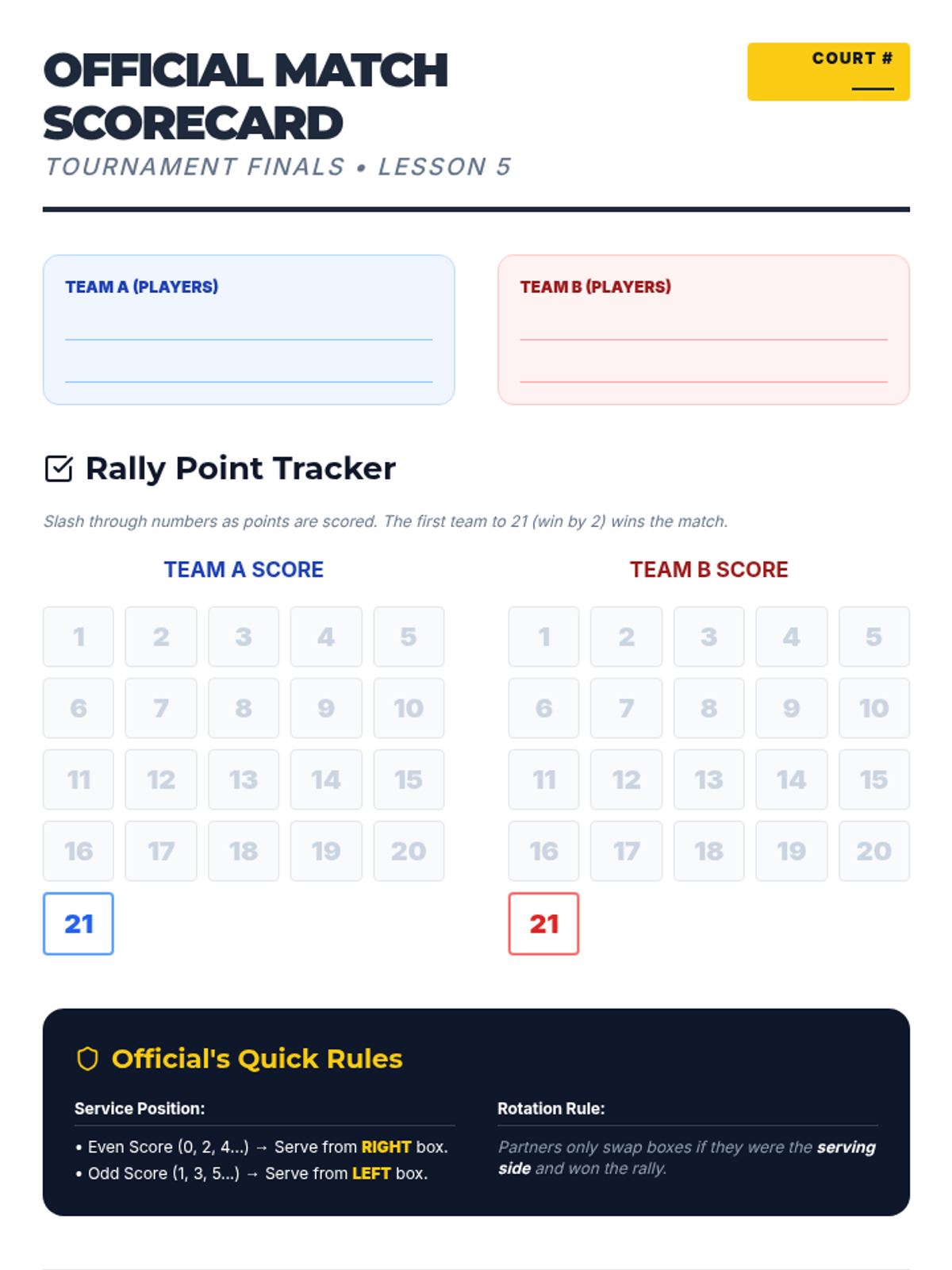
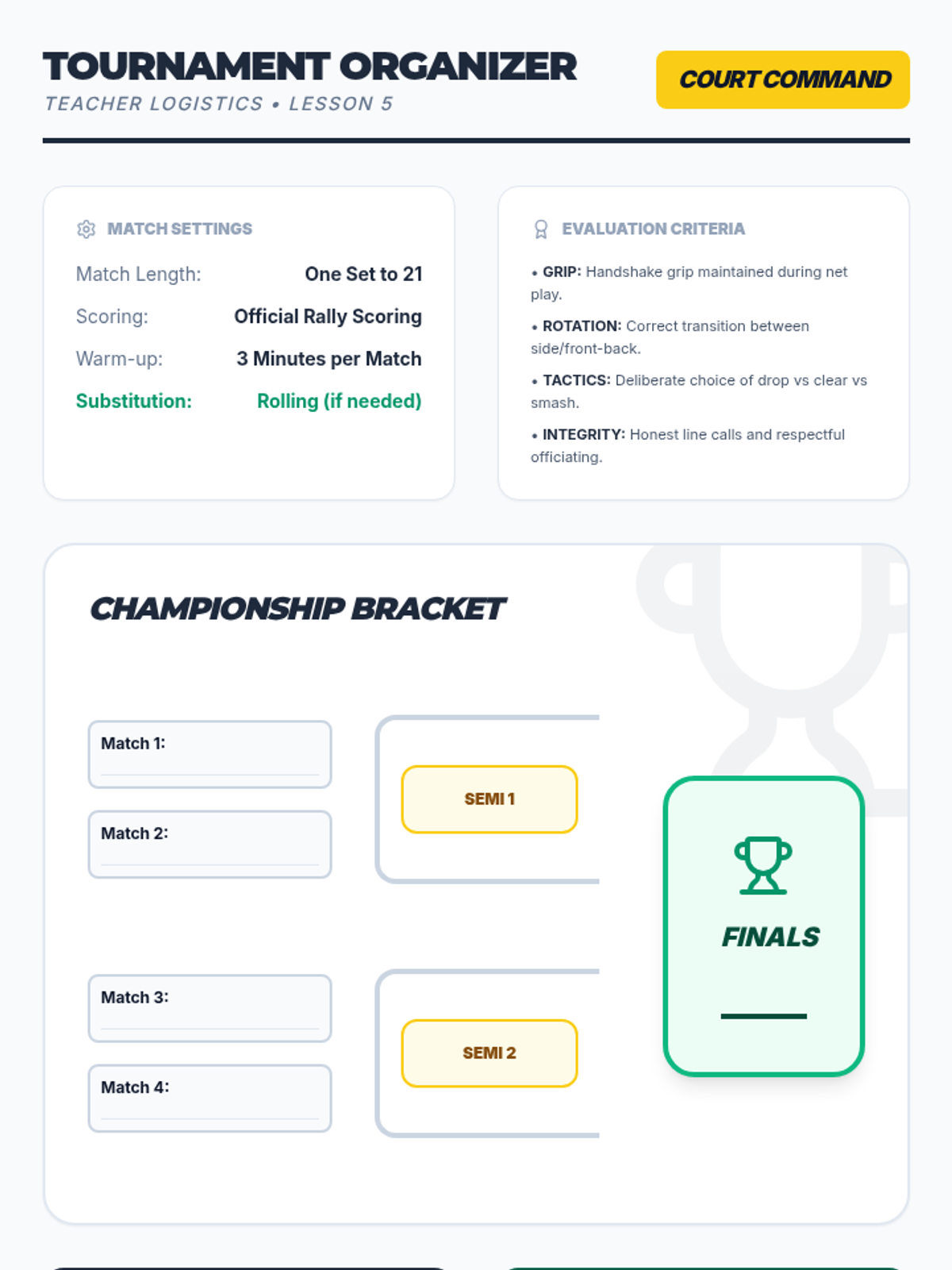
The unit concludes with students applying their skills in a doubles tournament format, learning rotation systems (front-back/side-by-side) and practicing official officiating and scoring.
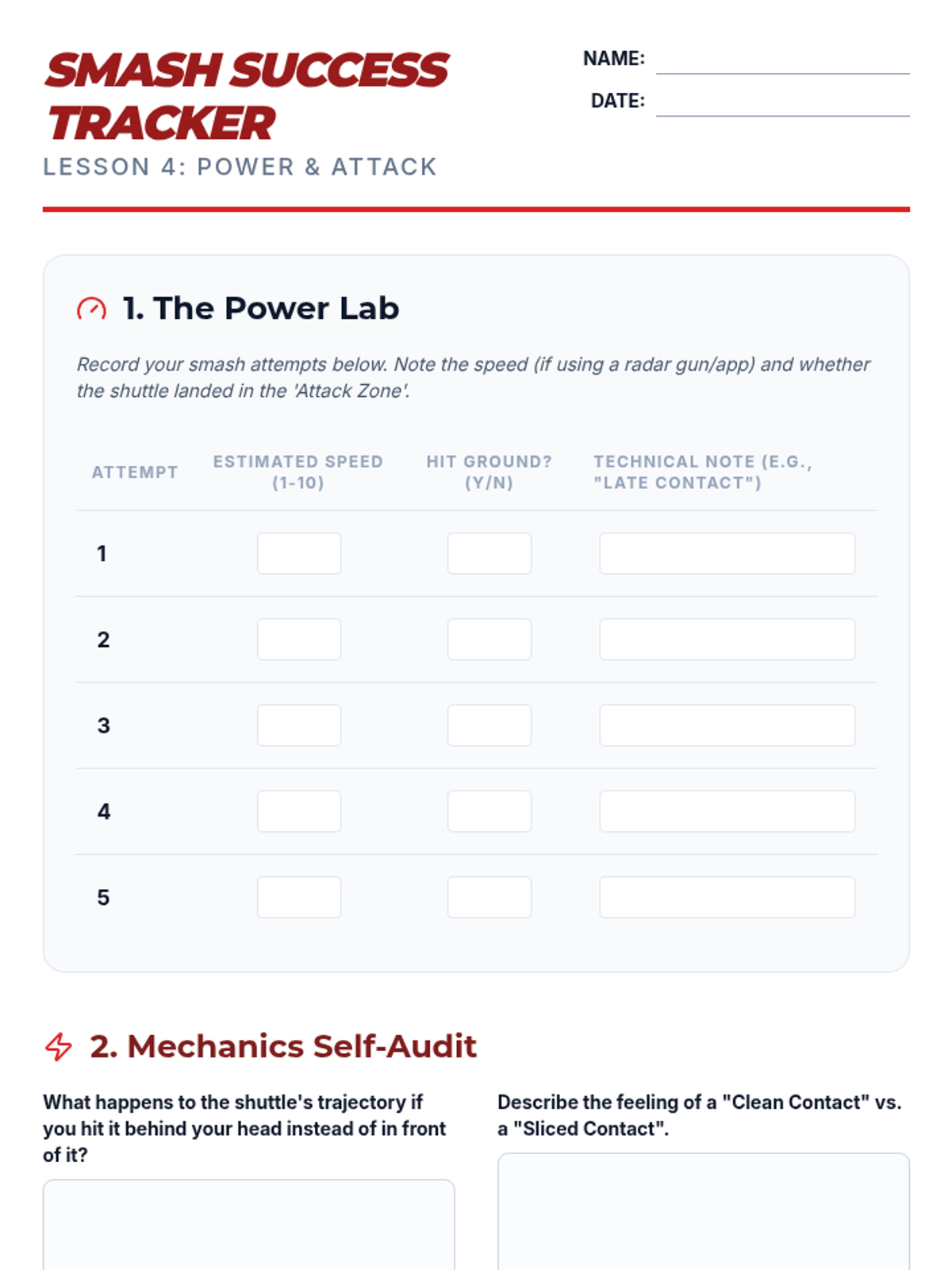
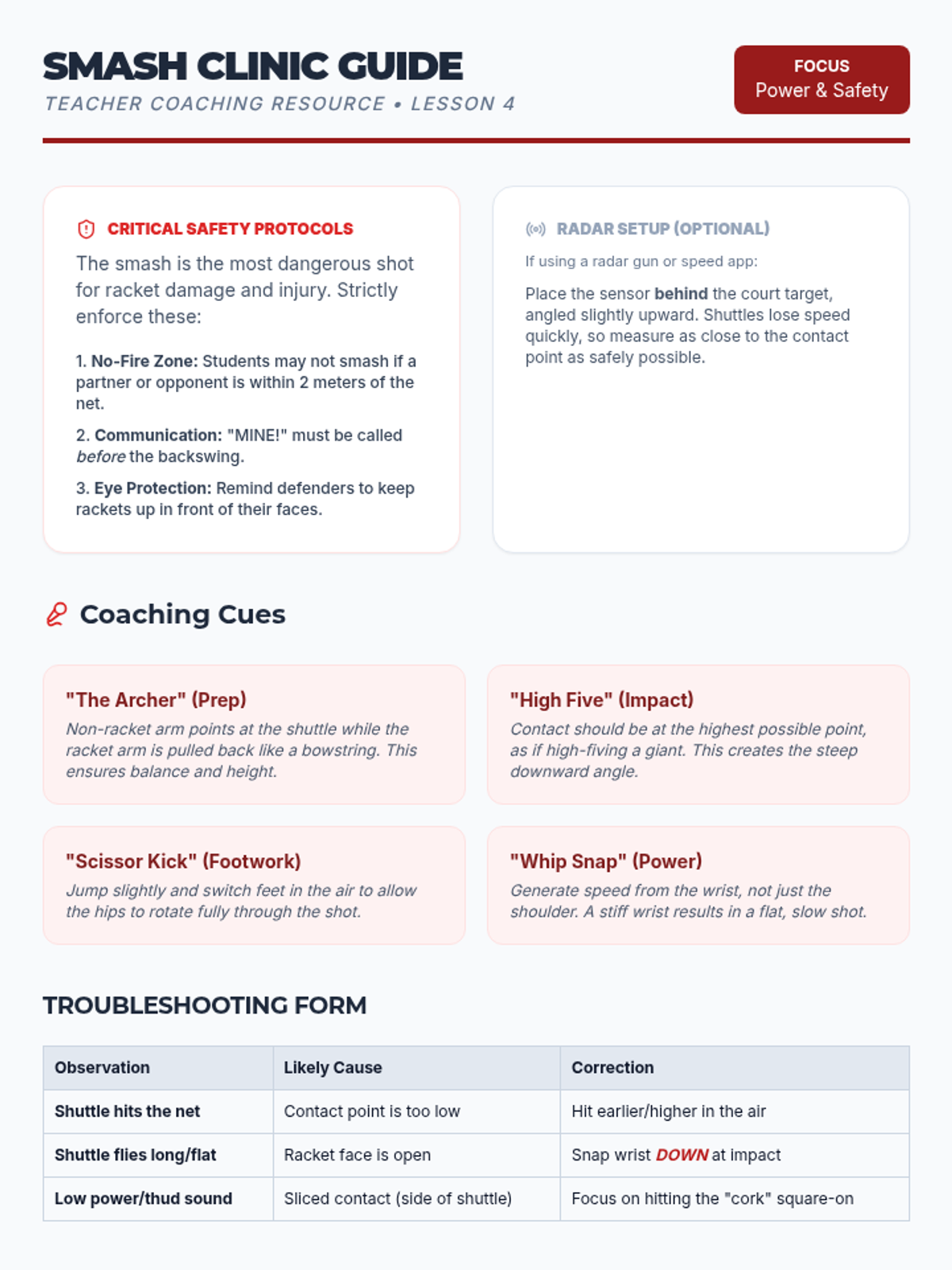
The most aggressive stroke in badminton, the smash, is introduced with a focus on timing, contact point, and safety during doubles play.
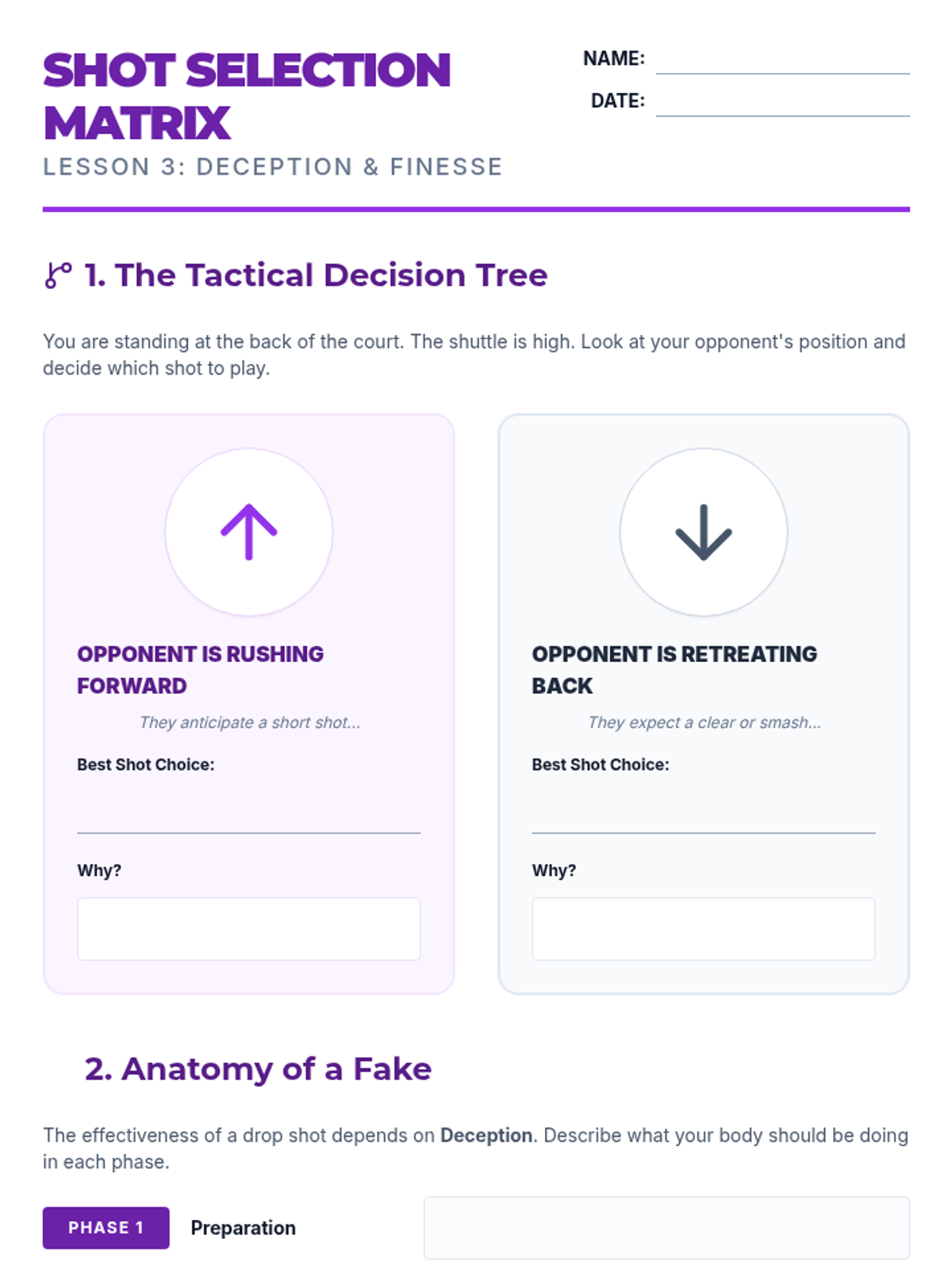
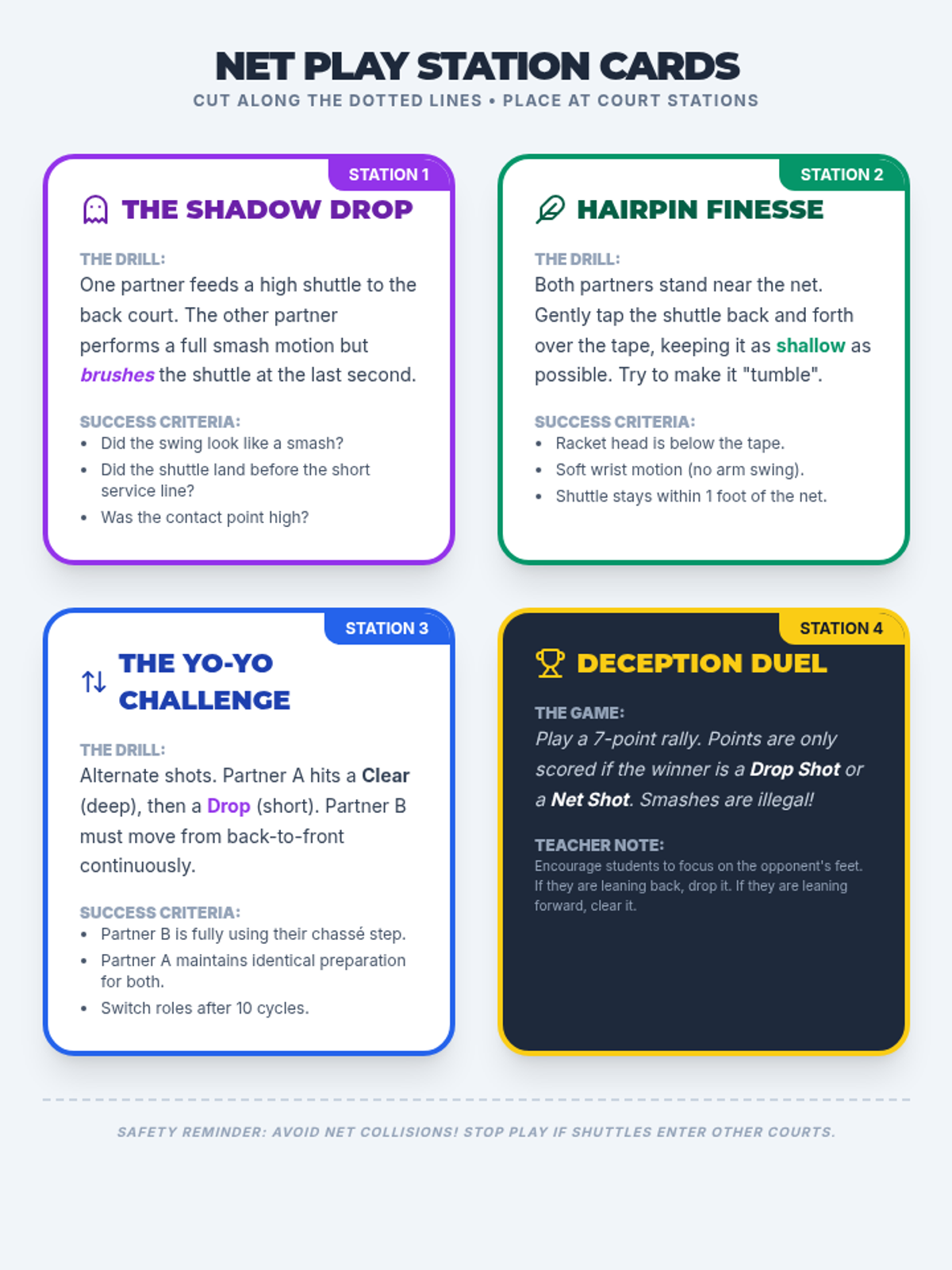
Students practice the art of deception by learning the drop shot and hairpin net shots. The focus is on racket head deceleration and moving the opponent through varied shot depth.
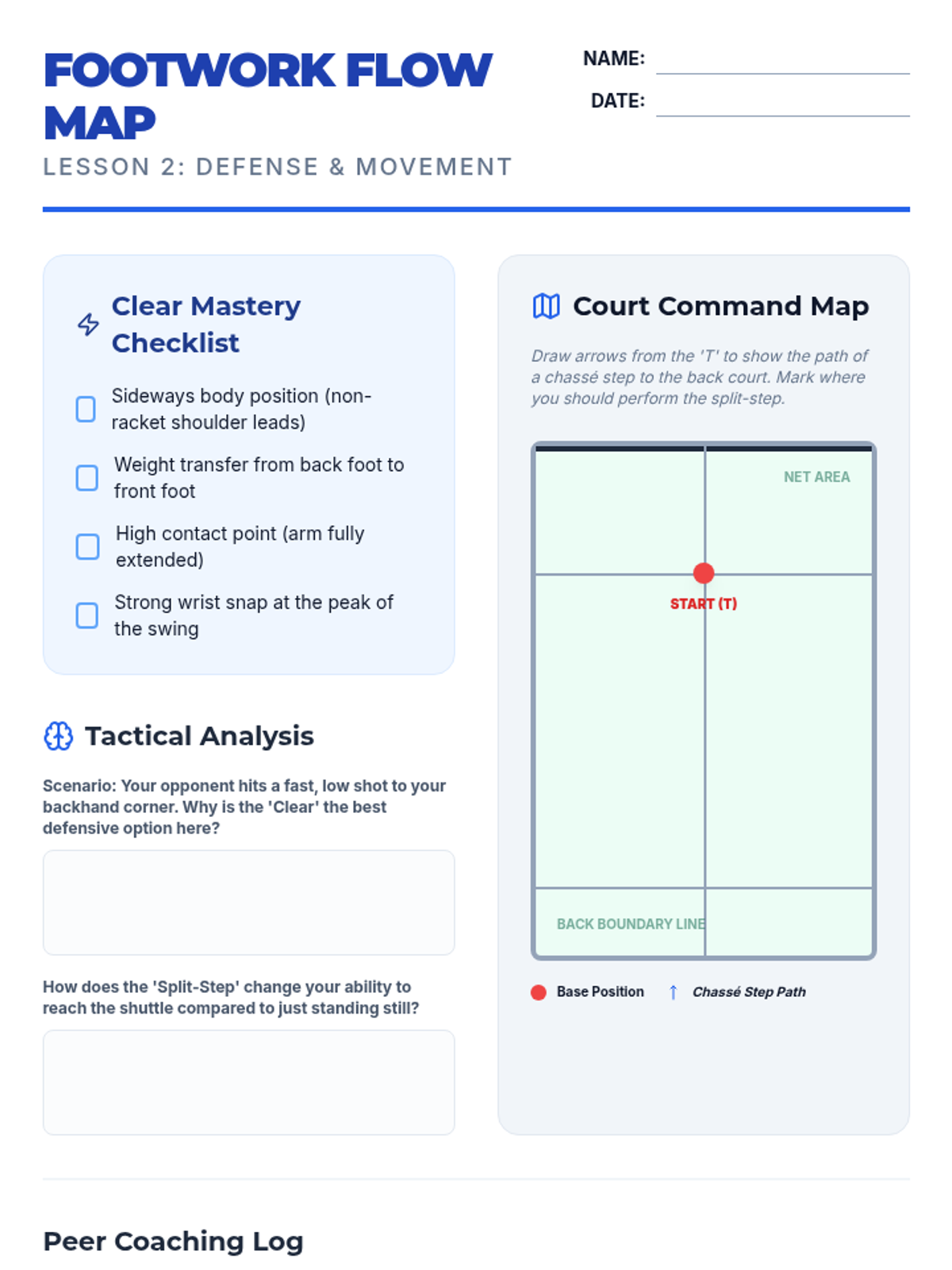
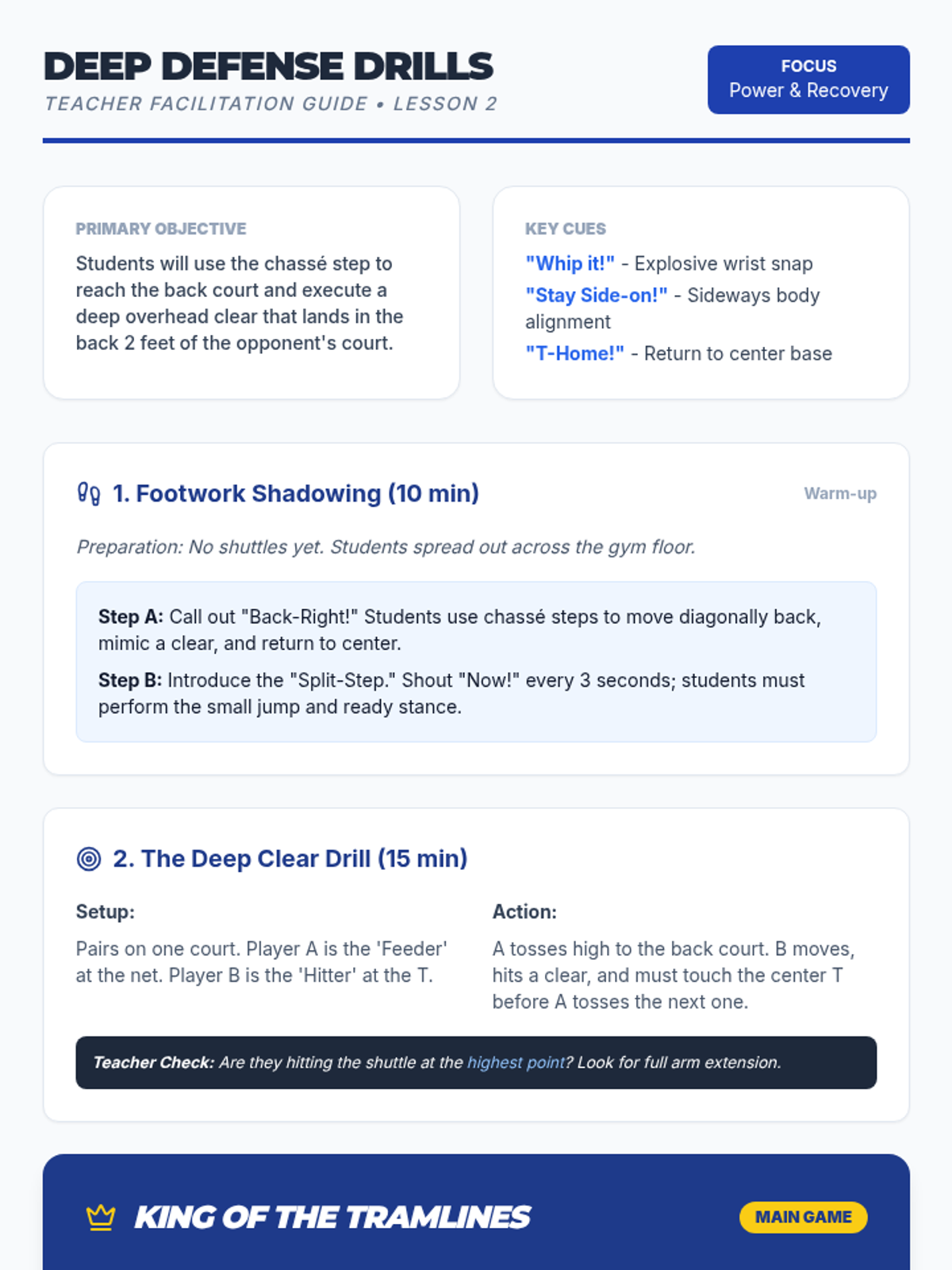
This lesson covers the overhead clear as a defensive tool and the essential footwork patterns (chassé and split-step) needed to recover and cover the court effectively.
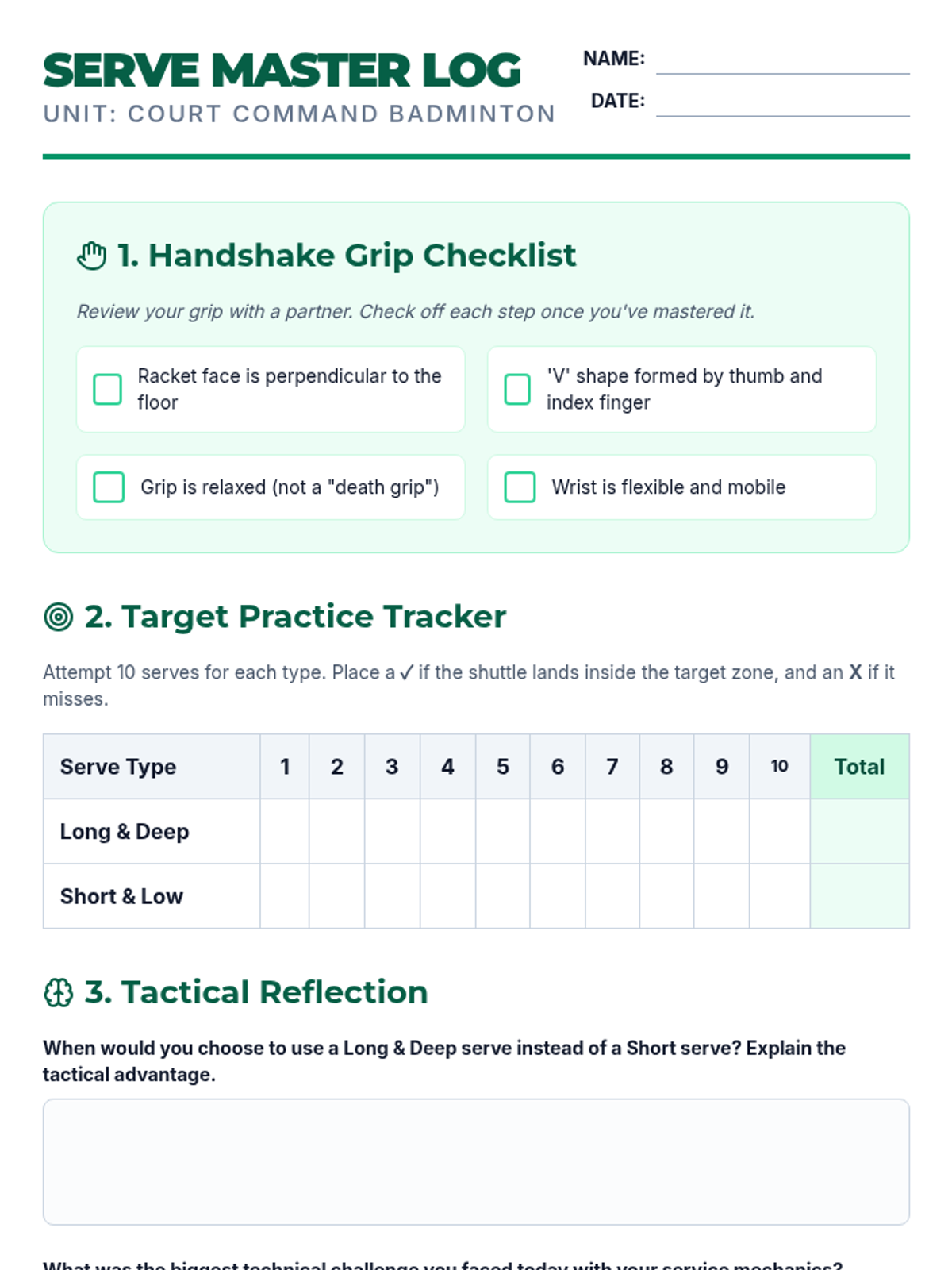
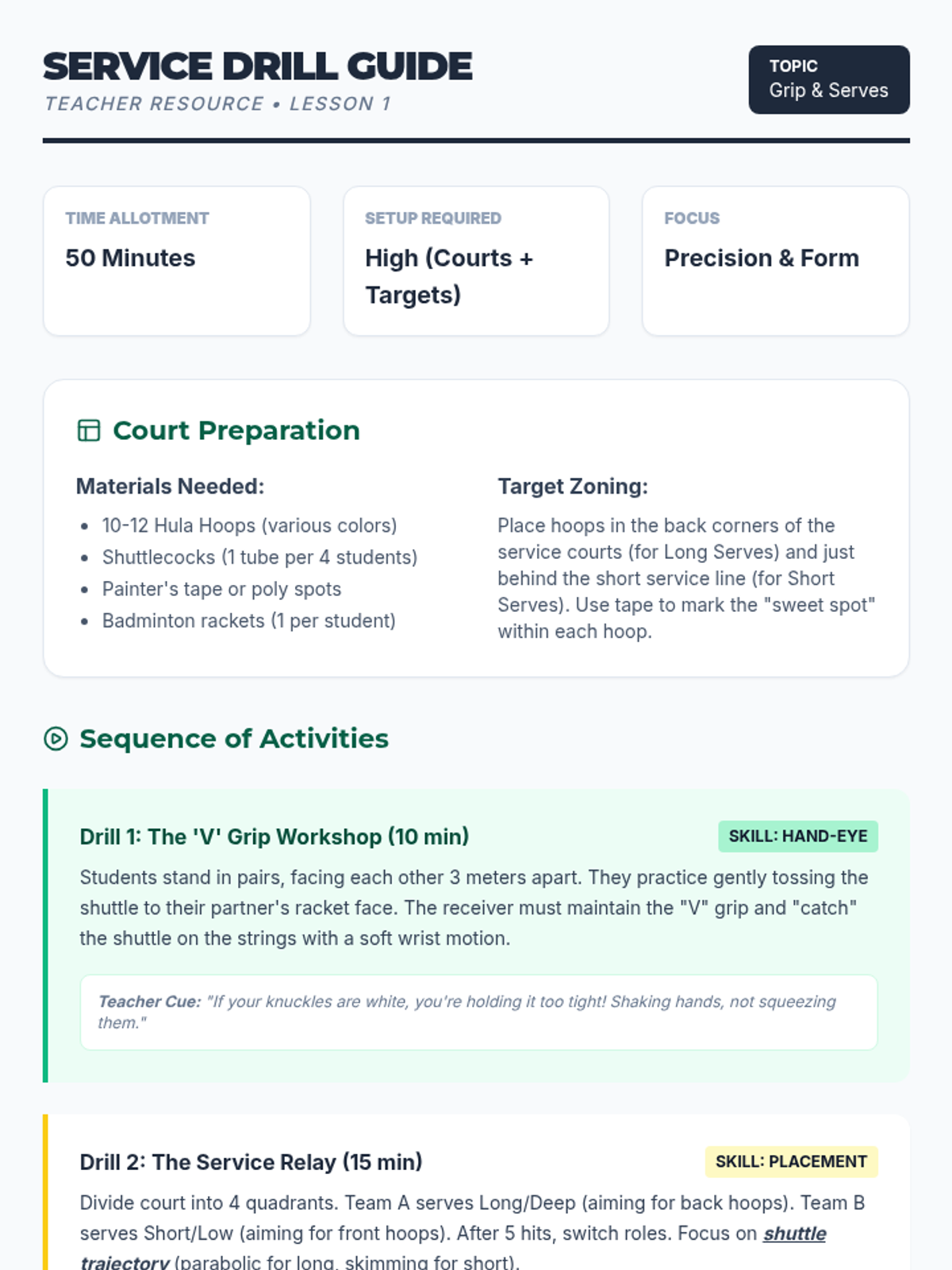
Students master the foundational handshake grip and learn the mechanics of high-deep and low-short serves. The lesson emphasizes precision placement within the service court to gain an early tactical advantage.
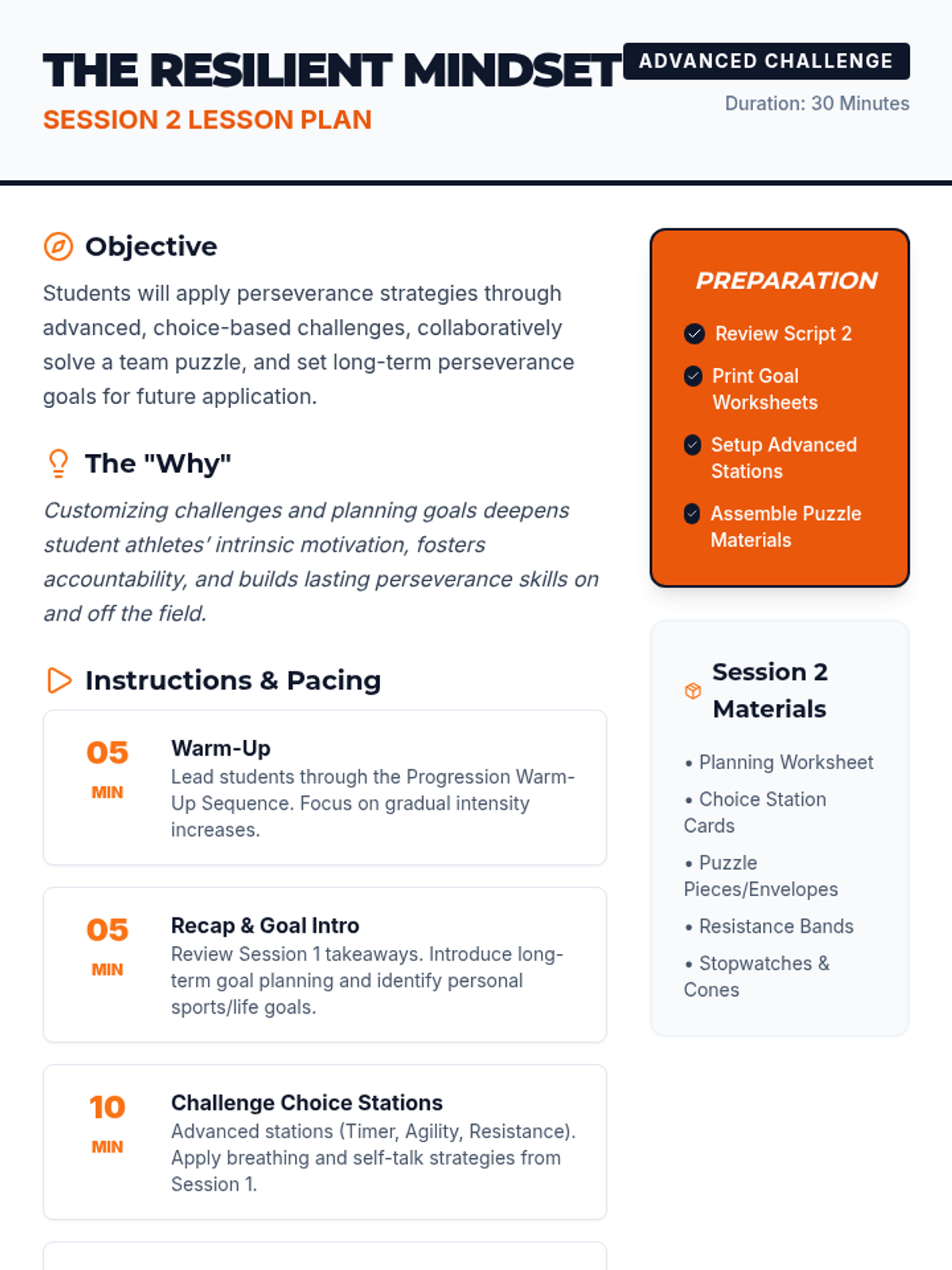
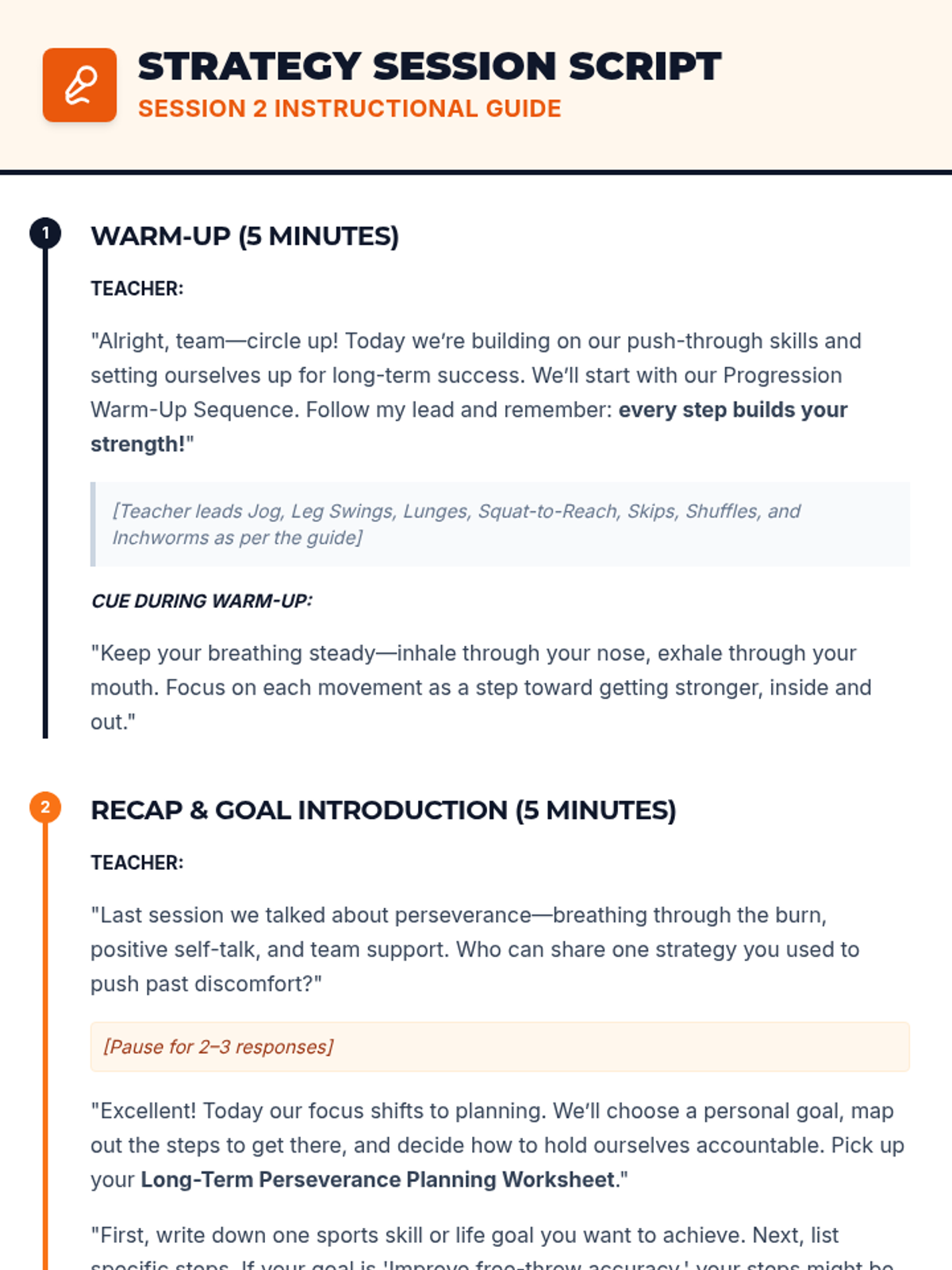
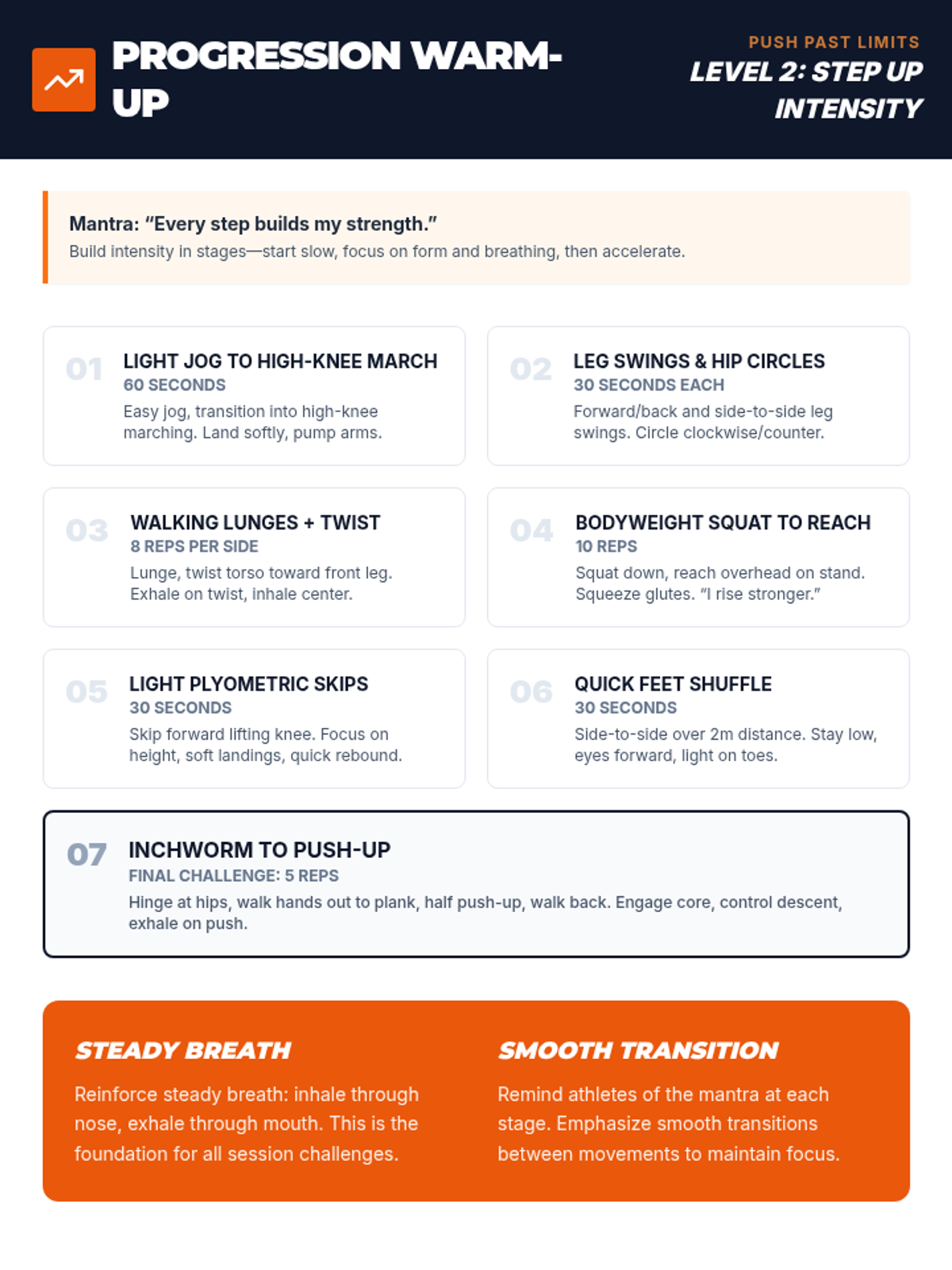
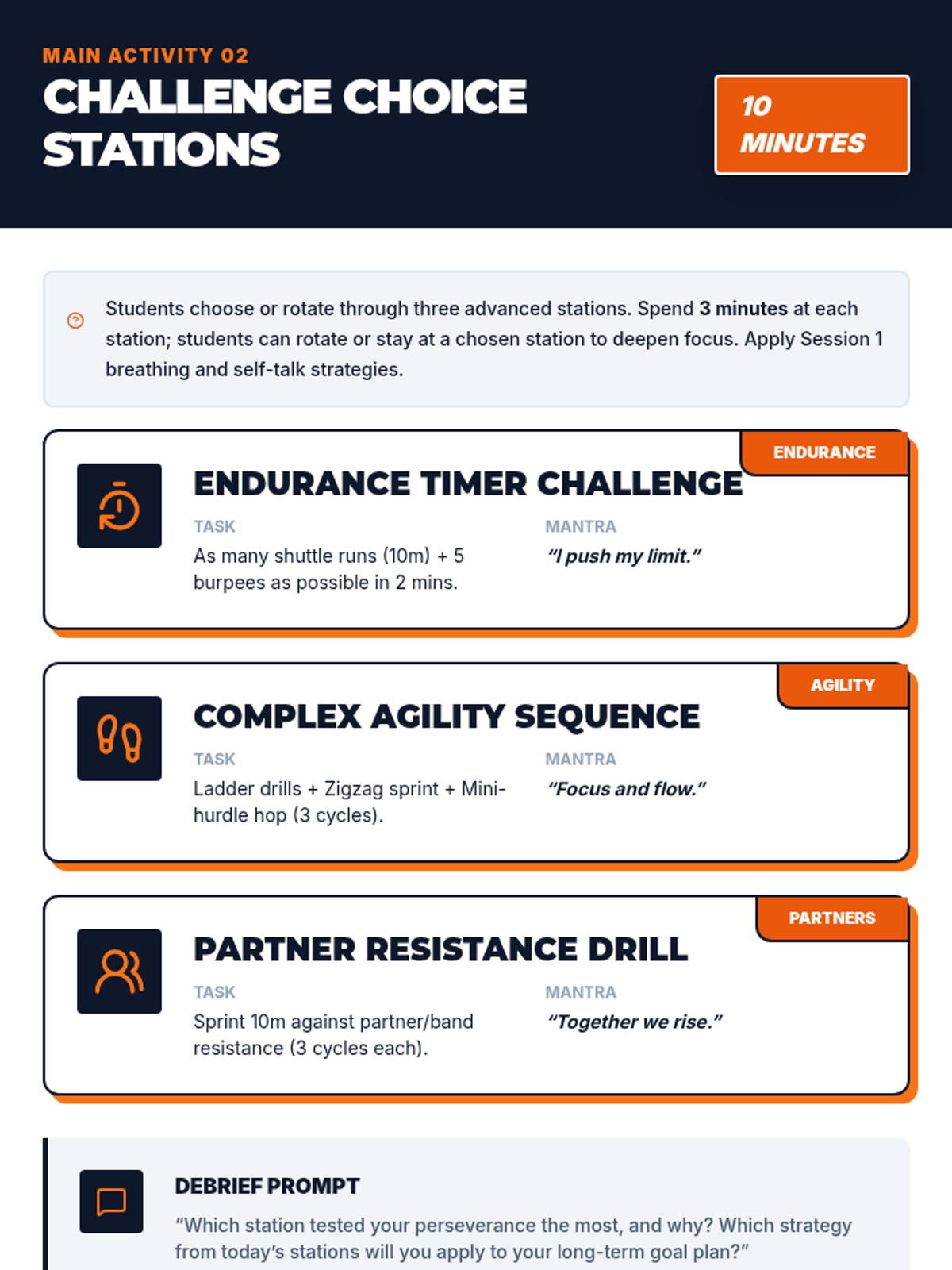
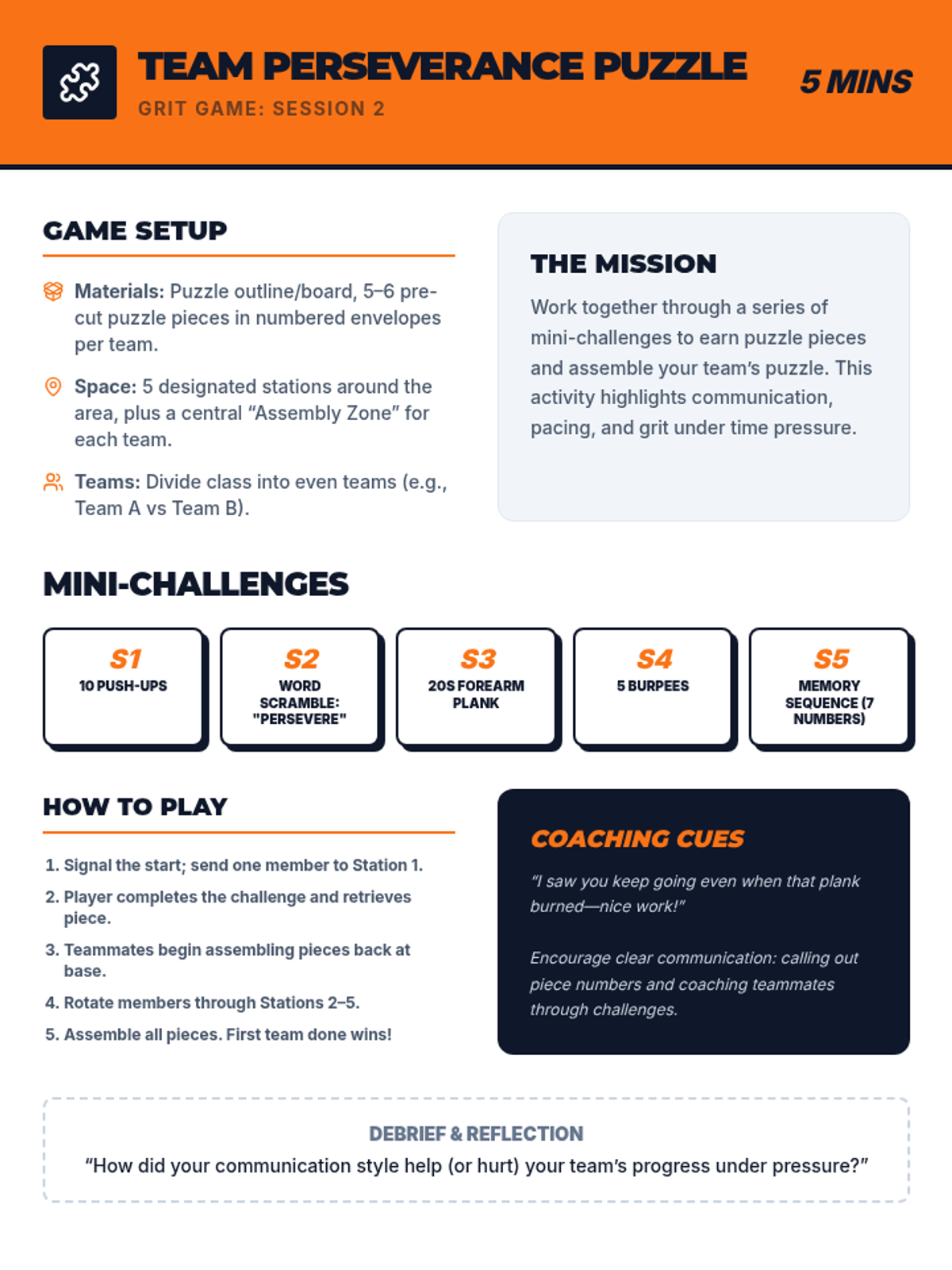
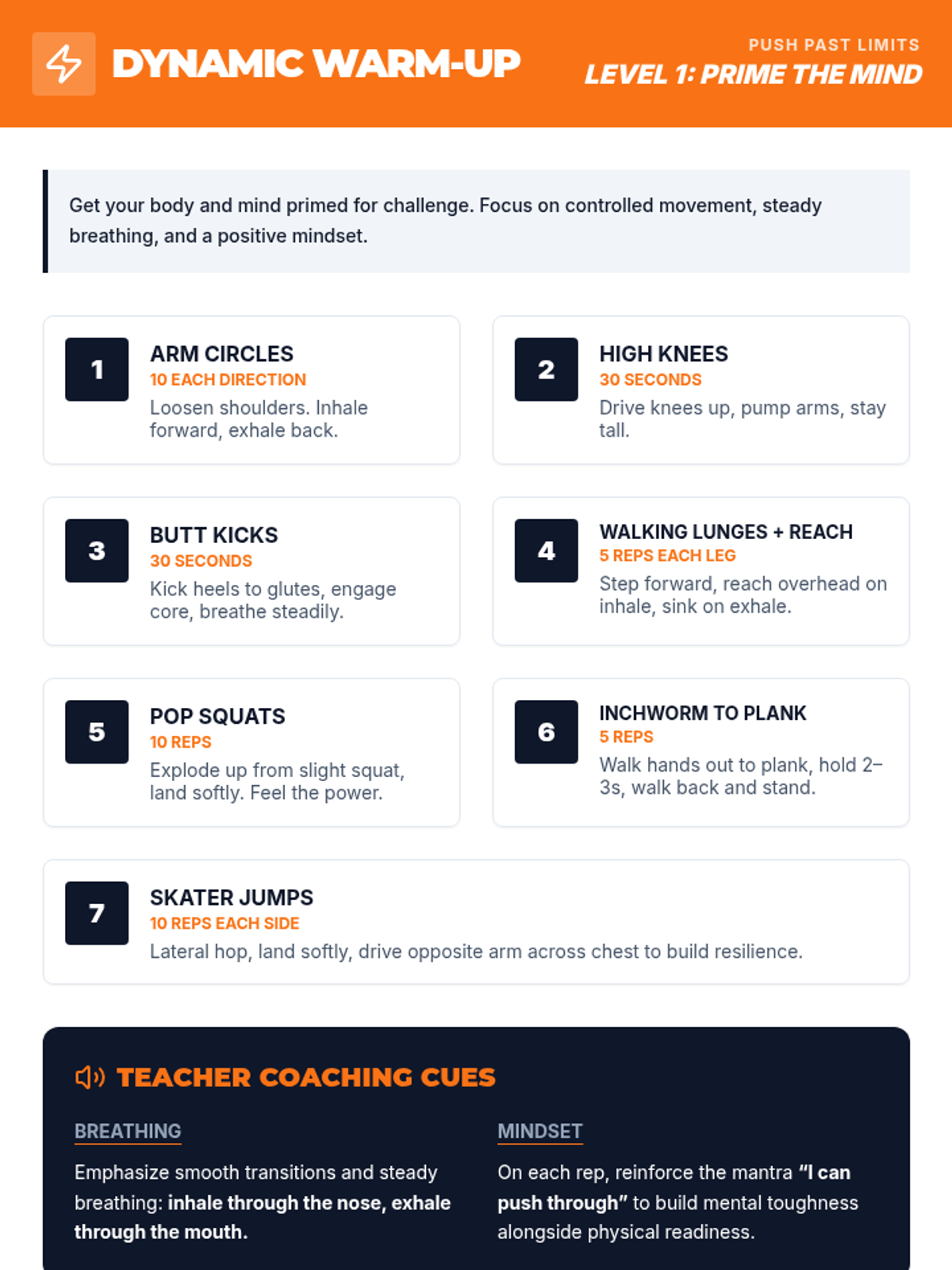
Students apply perseverance to advanced choice-based challenges, work as a team to solve a puzzle, and create long-term goal plans for future application in sports and life.
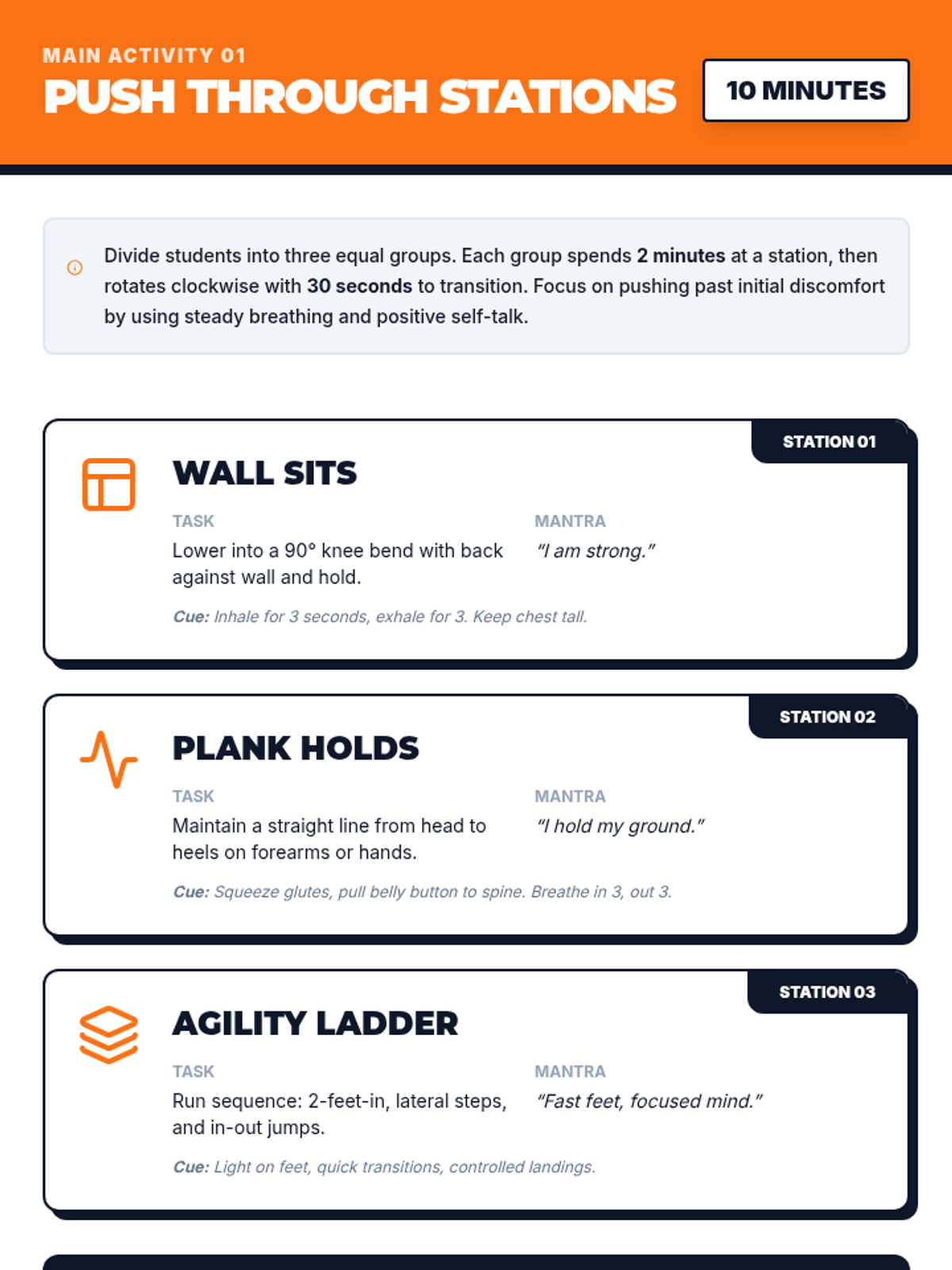
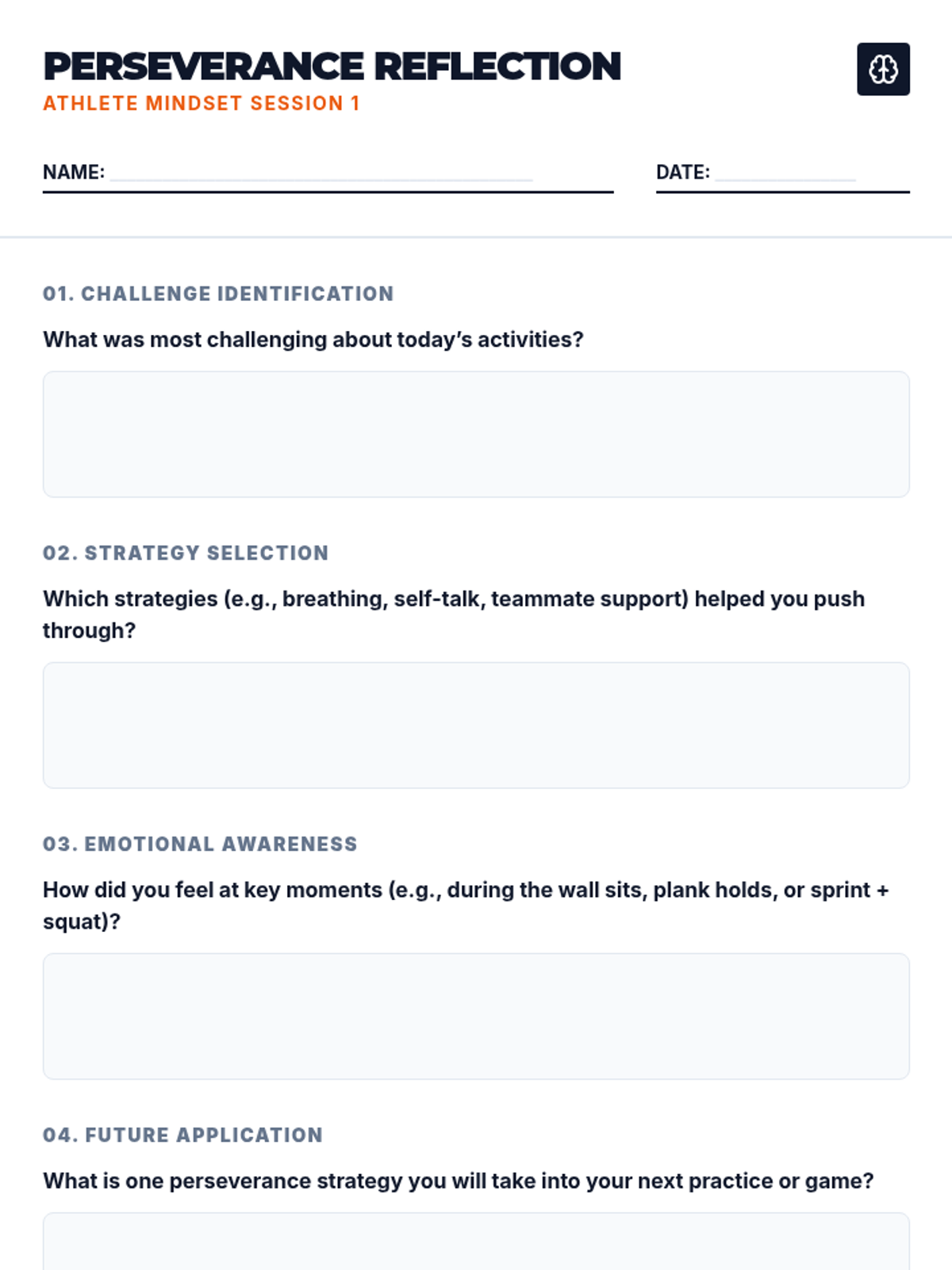
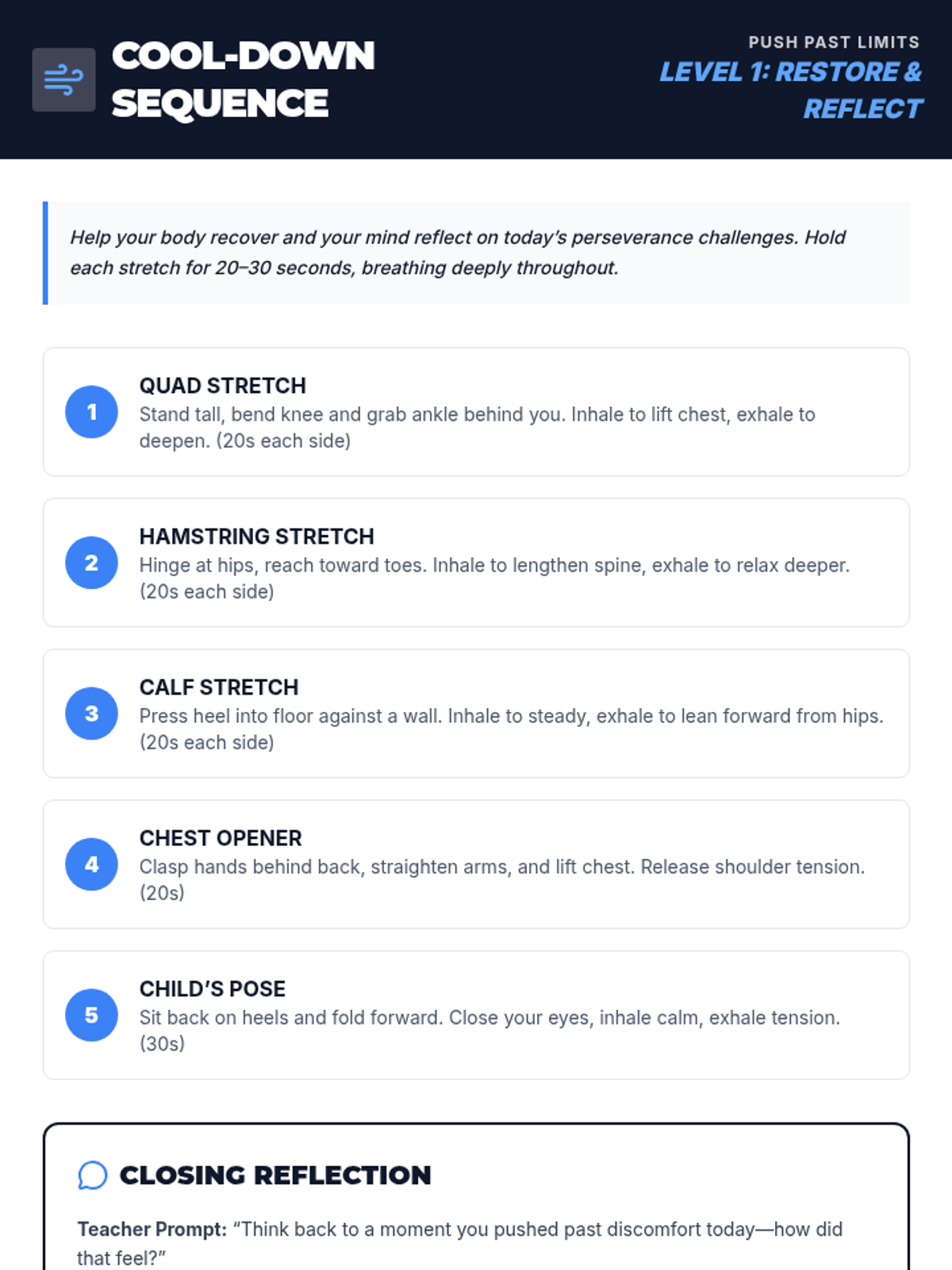
Students define perseverance, practice pushing through short physical challenges at stations, and reflect on the mental strategies used to overcome discomfort.
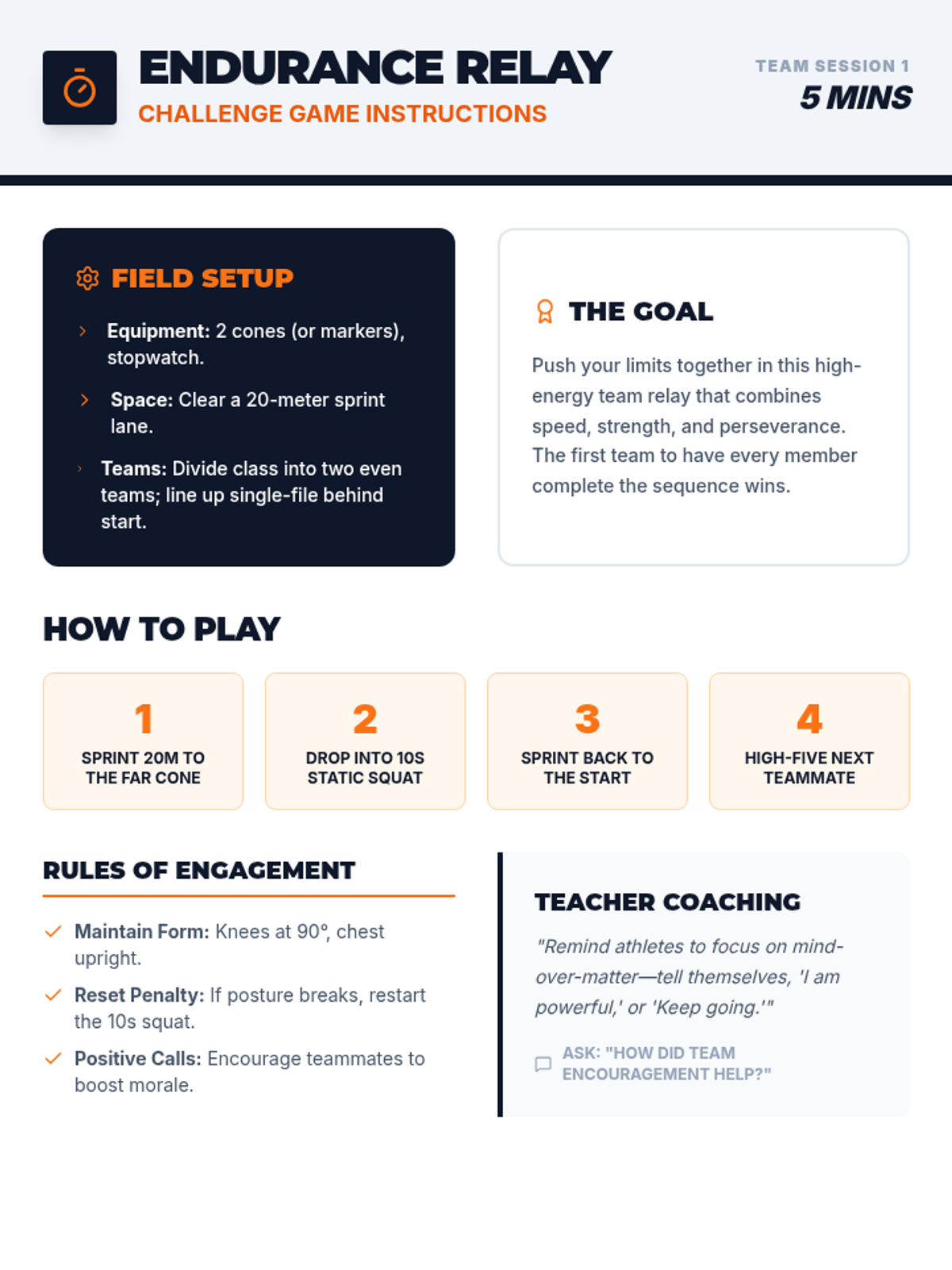
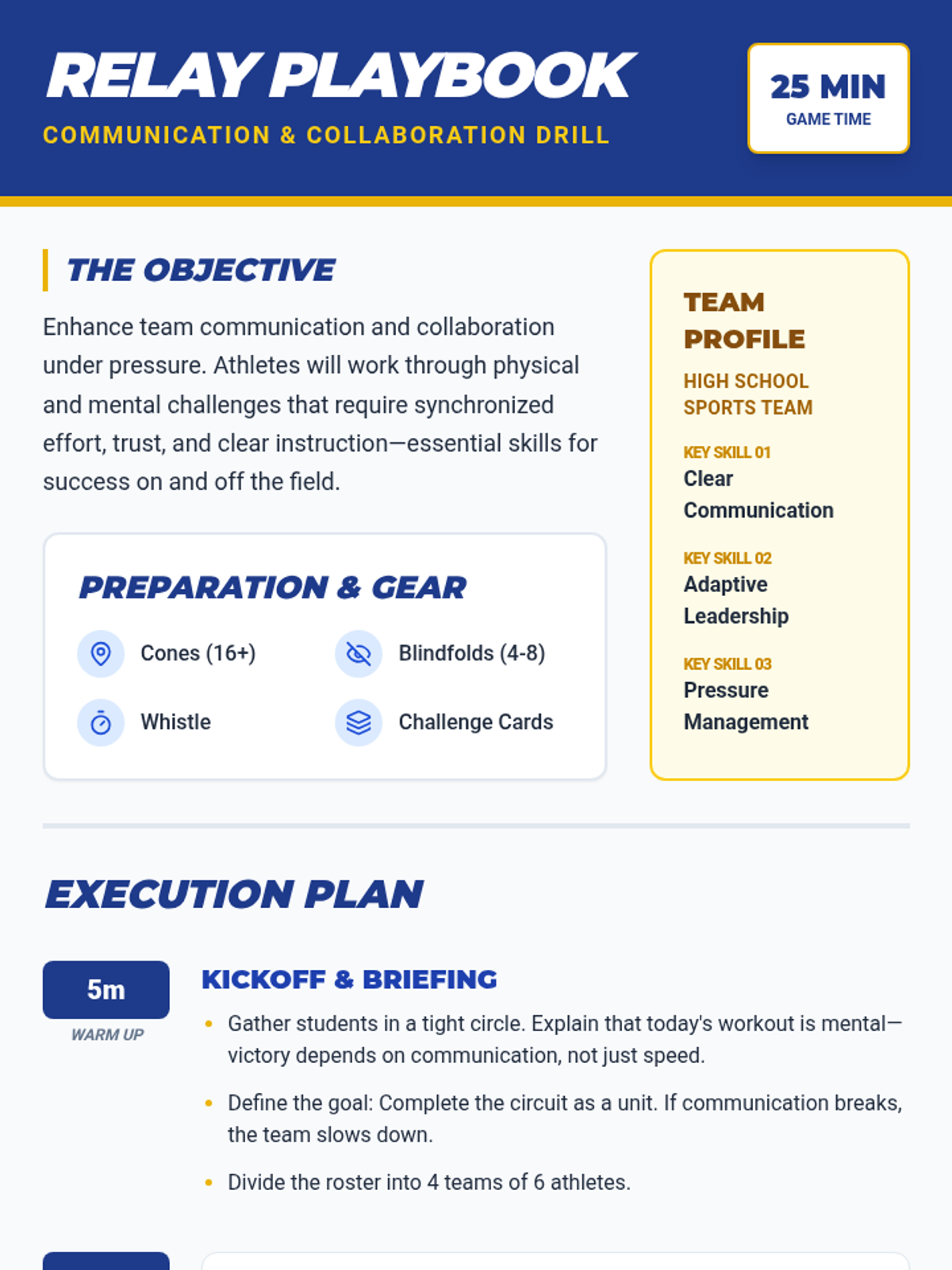
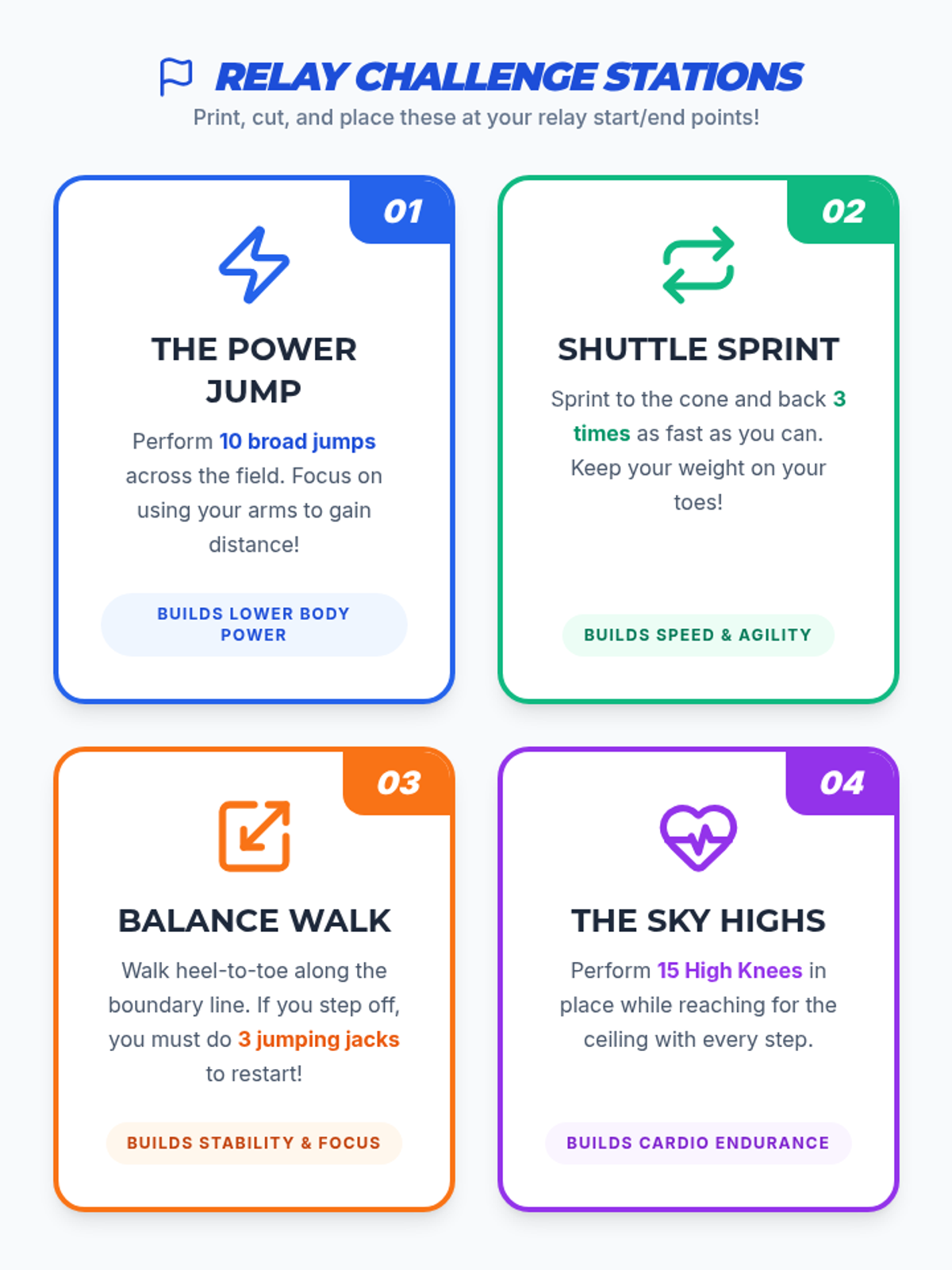
A high-energy relay activity designed for high school sports teams to strengthen communication and collaboration under pressure through physical and mental challenges.
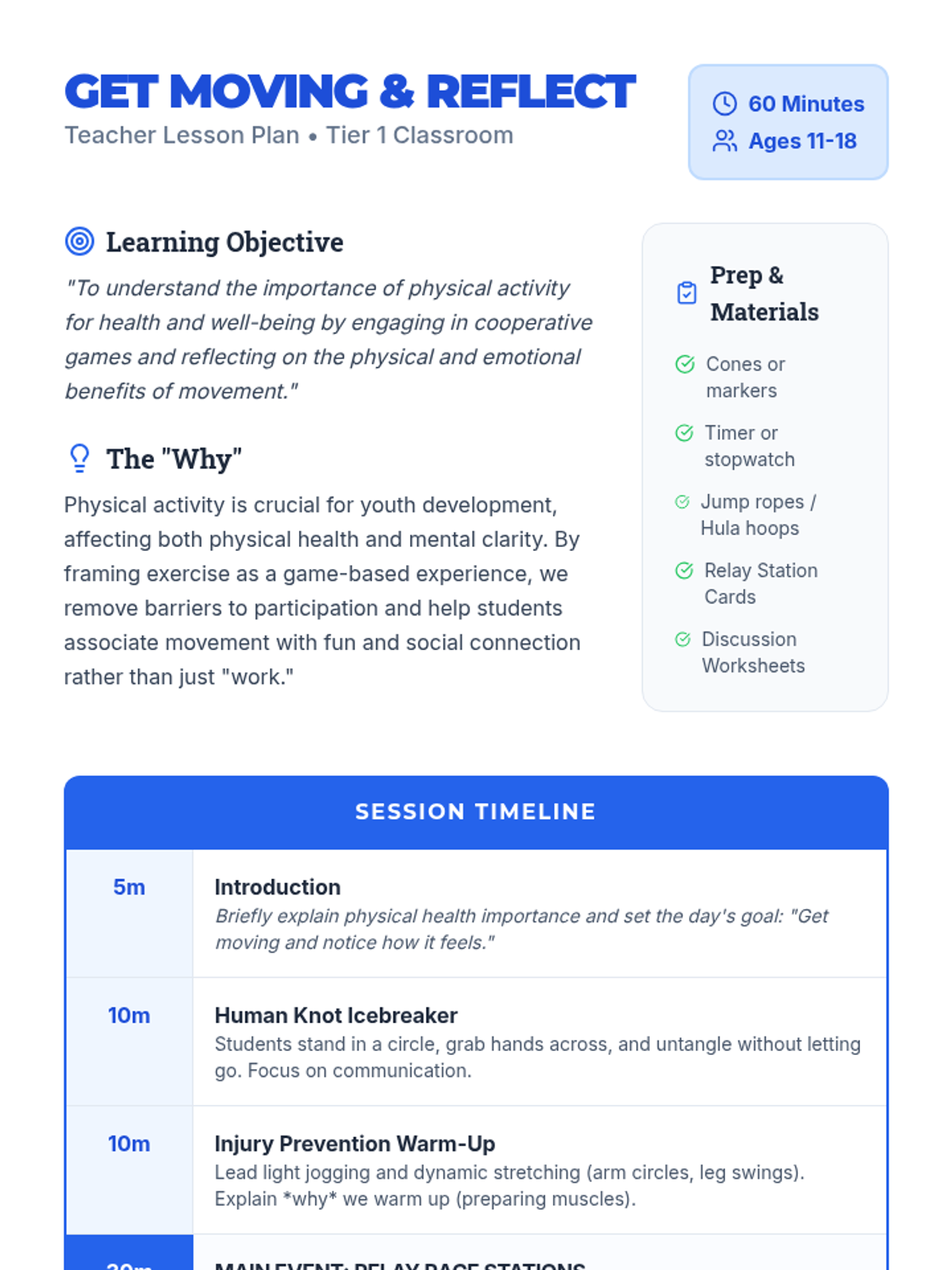
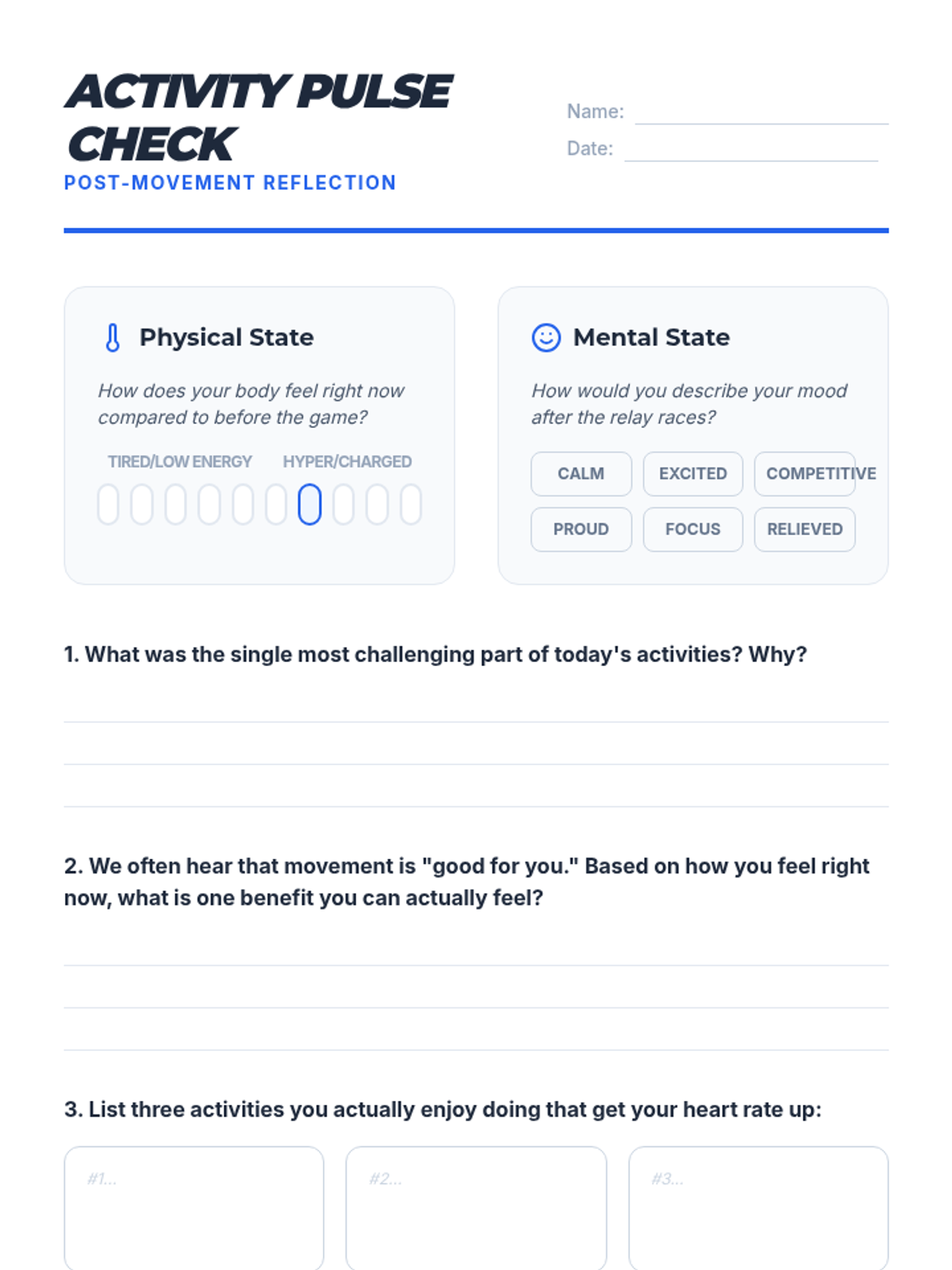
An energetic lesson focused on physical health, teamwork, and reflection through relay races and group discussion. Students engage in high-energy activities followed by mindful reflection on the benefits of an active lifestyle.
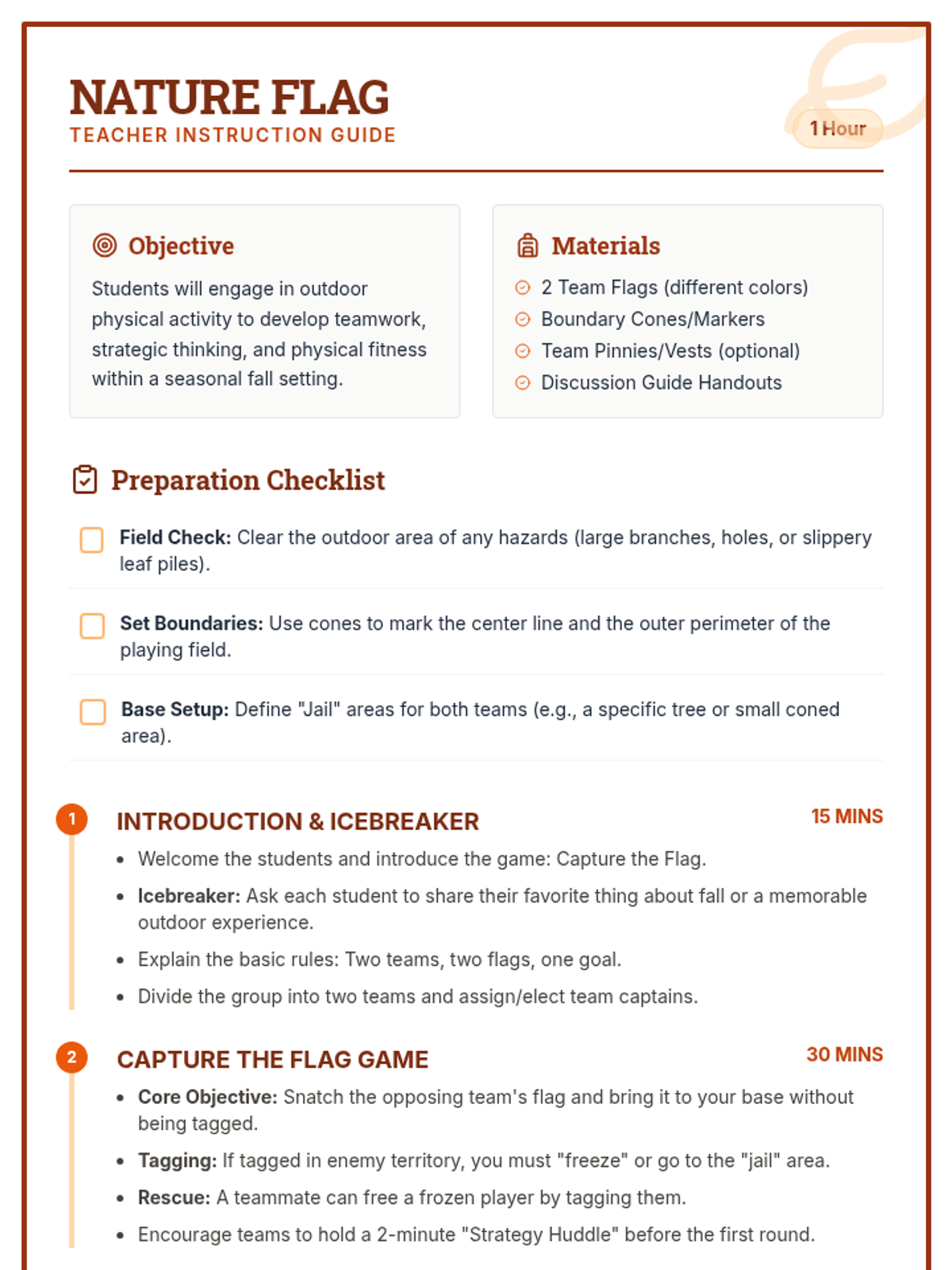
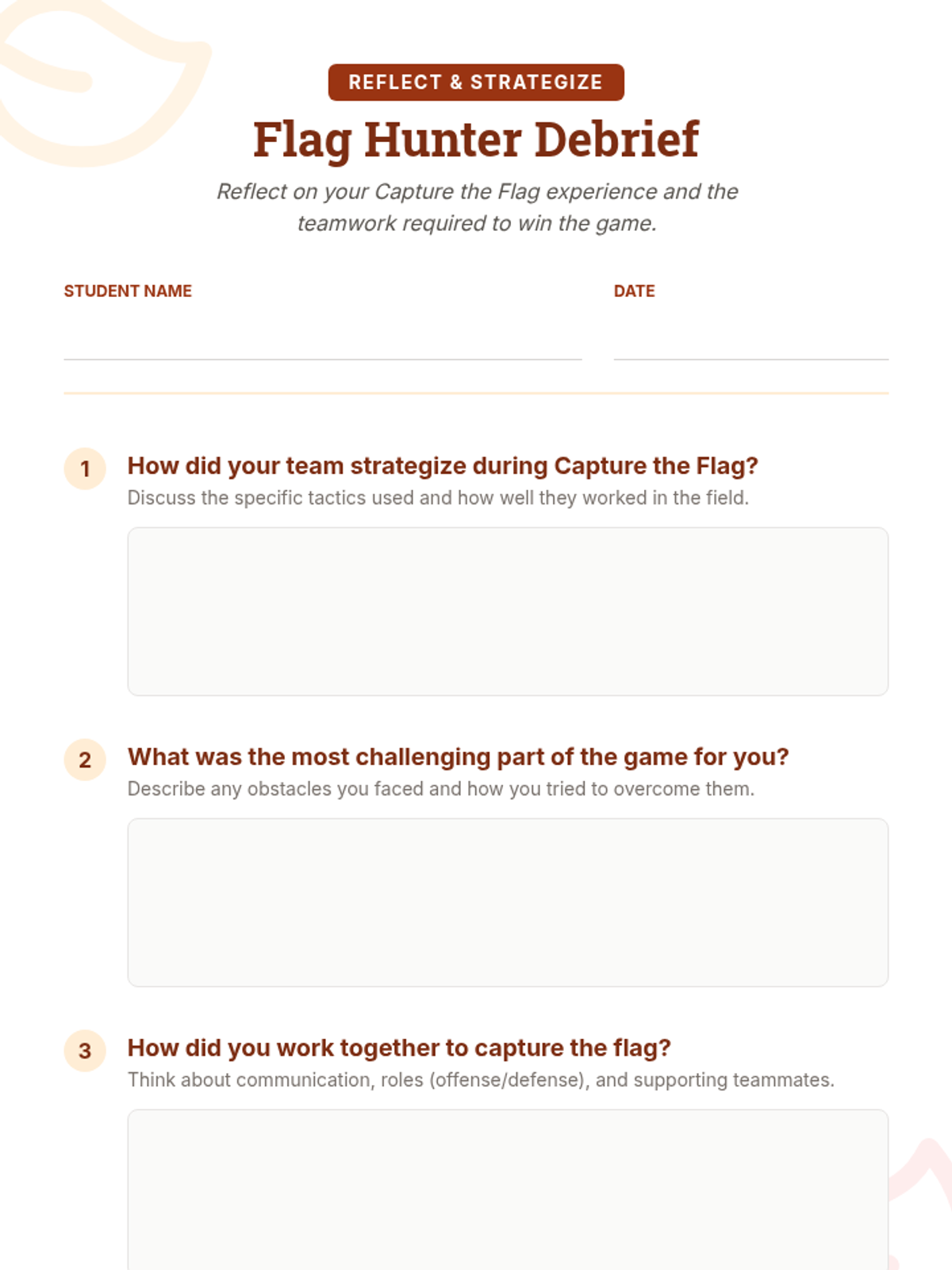
An active, outdoor lesson where students play Capture the Flag to develop teamwork, strategy, and physical fitness in a fall nature setting.
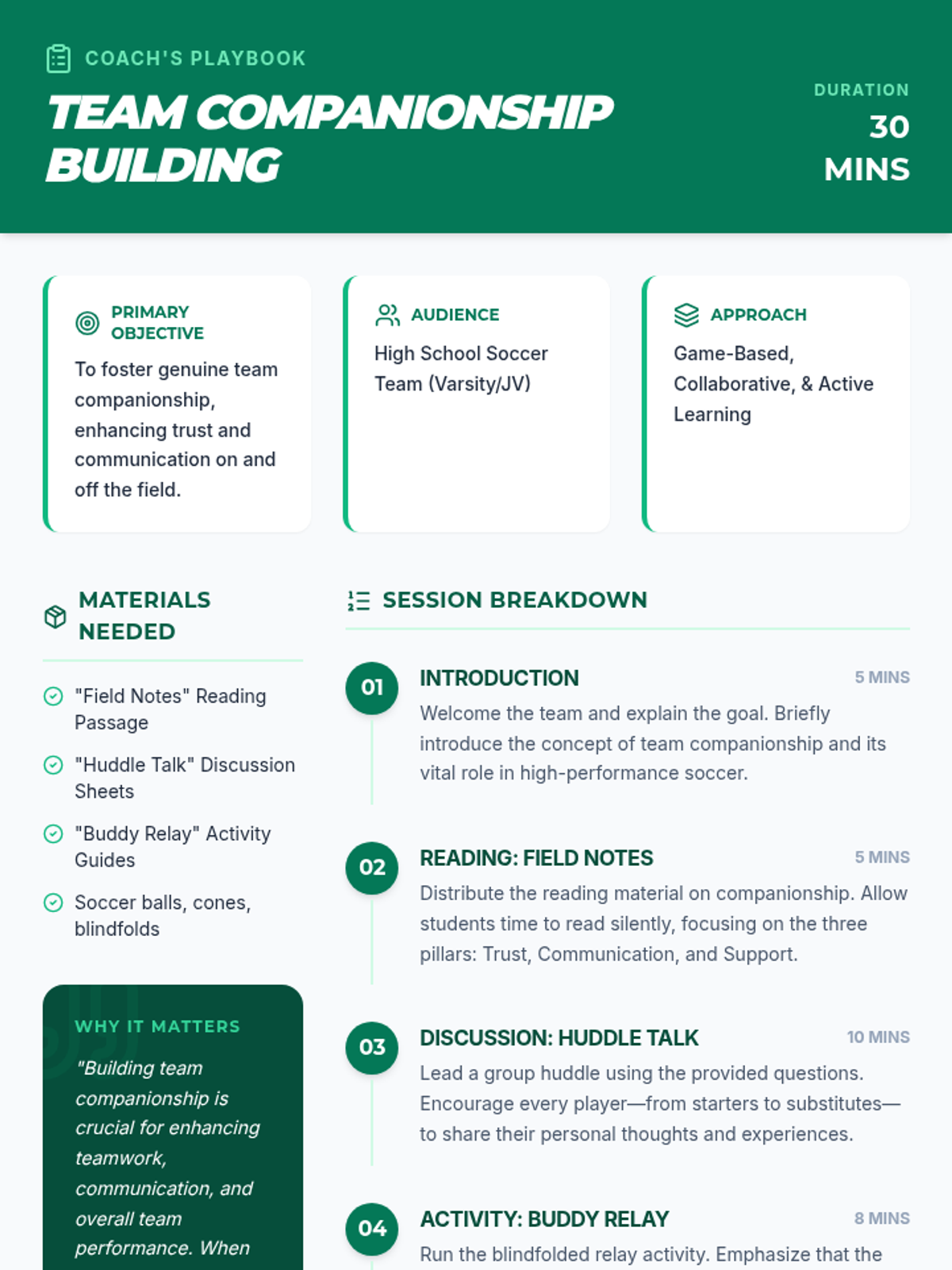
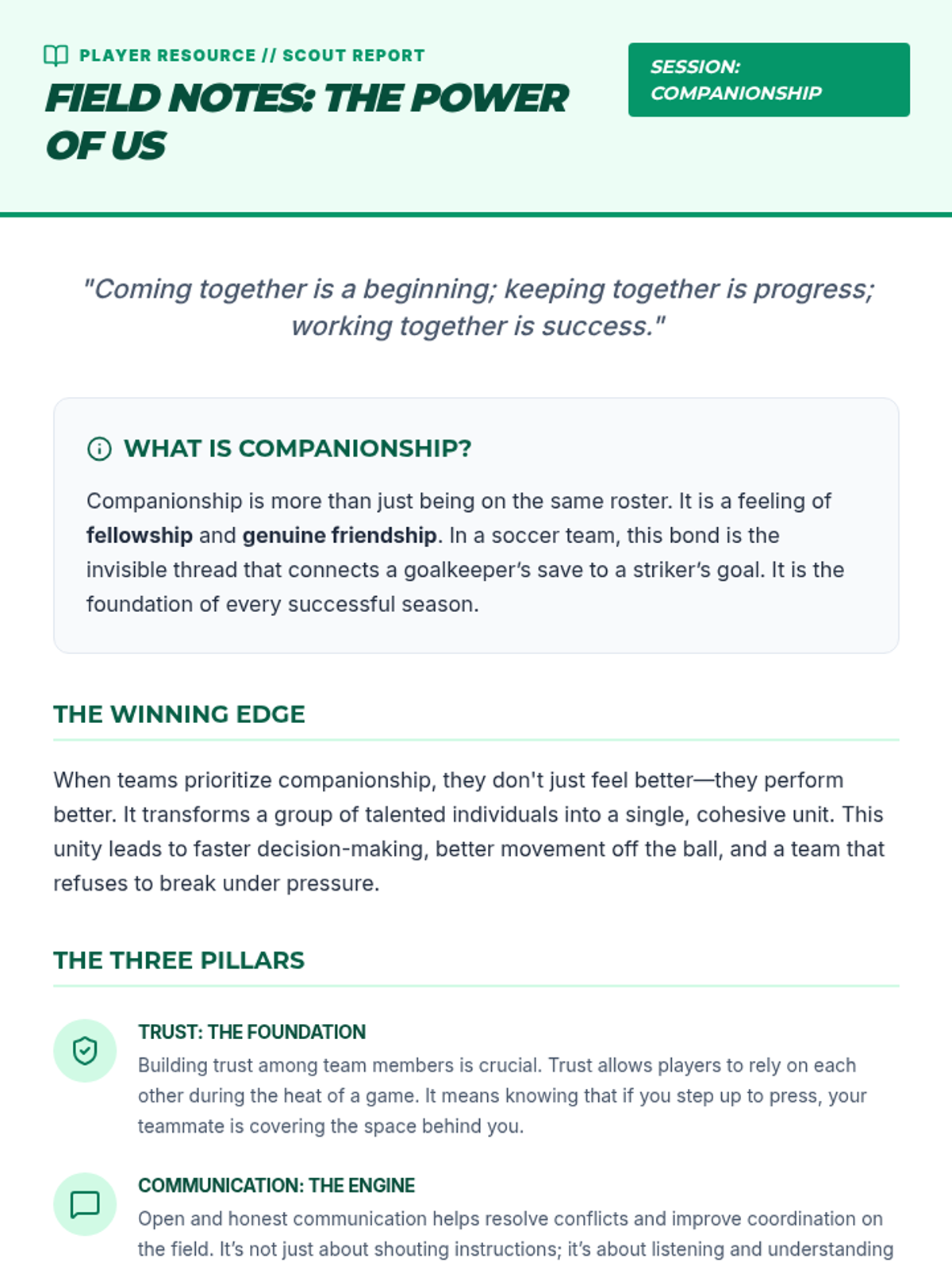
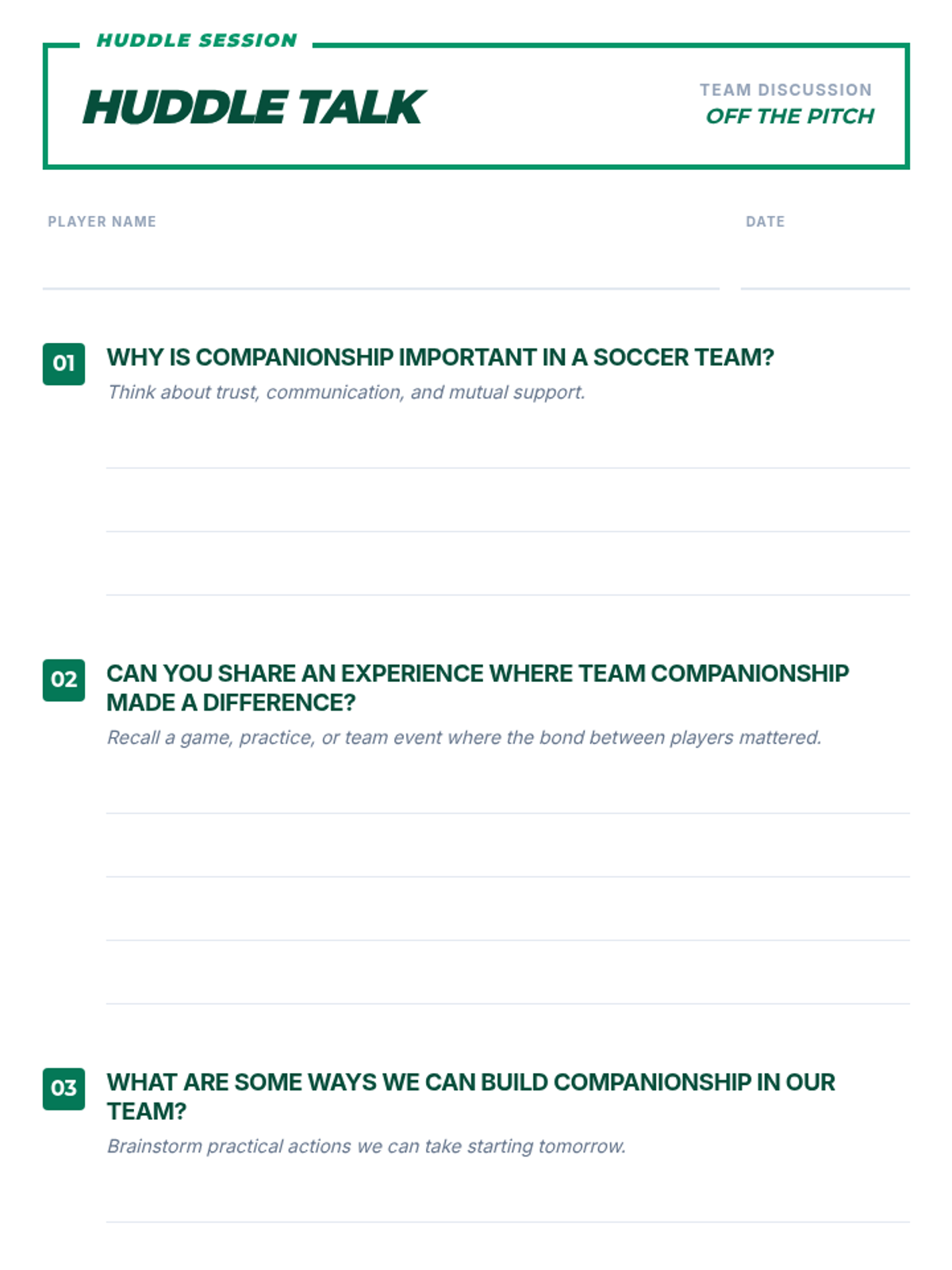
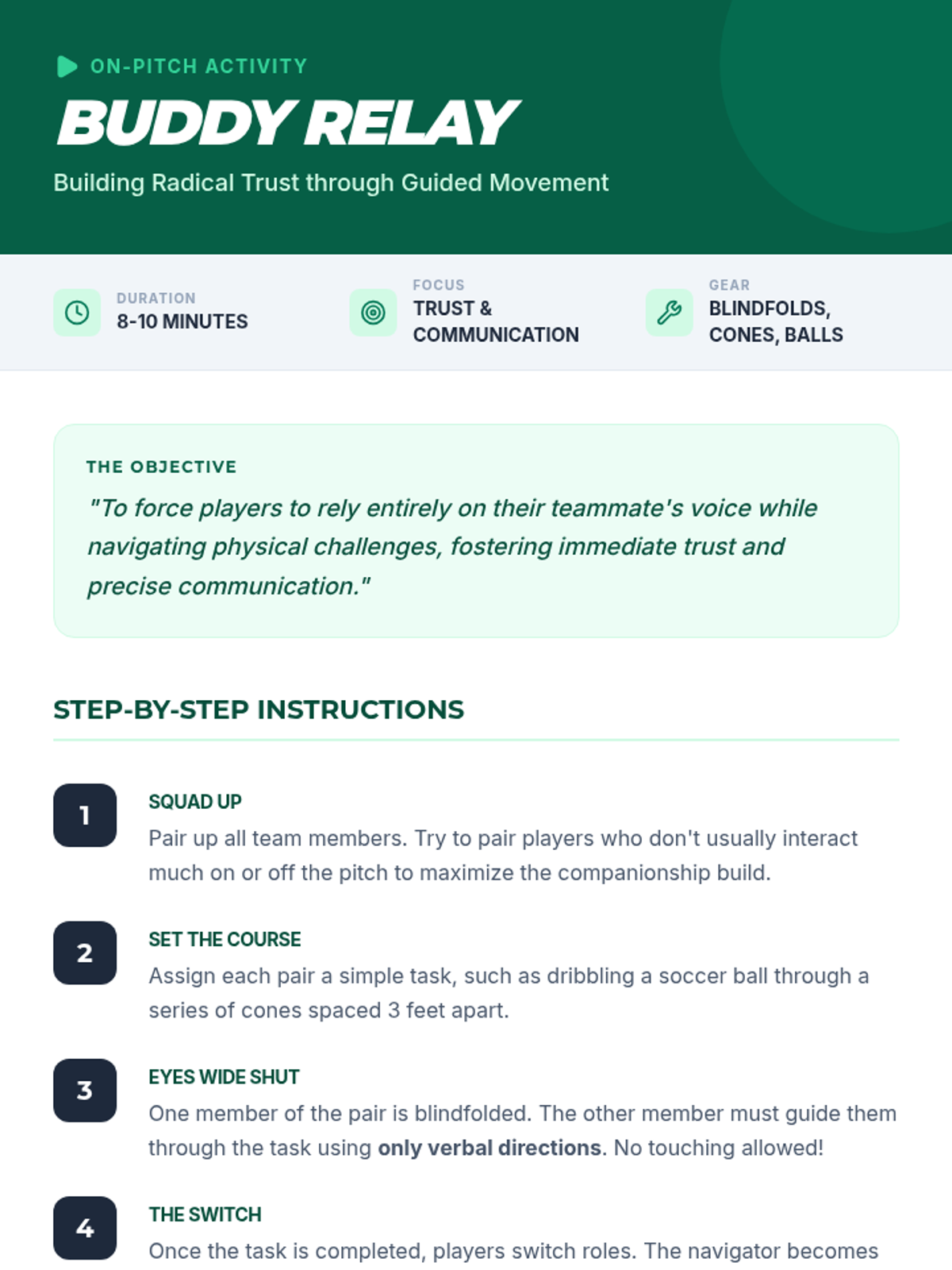
A 30-minute interactive lesson for high school soccer players to build trust, communication, and mutual support through reading, discussion, and a blindfolded relay activity.
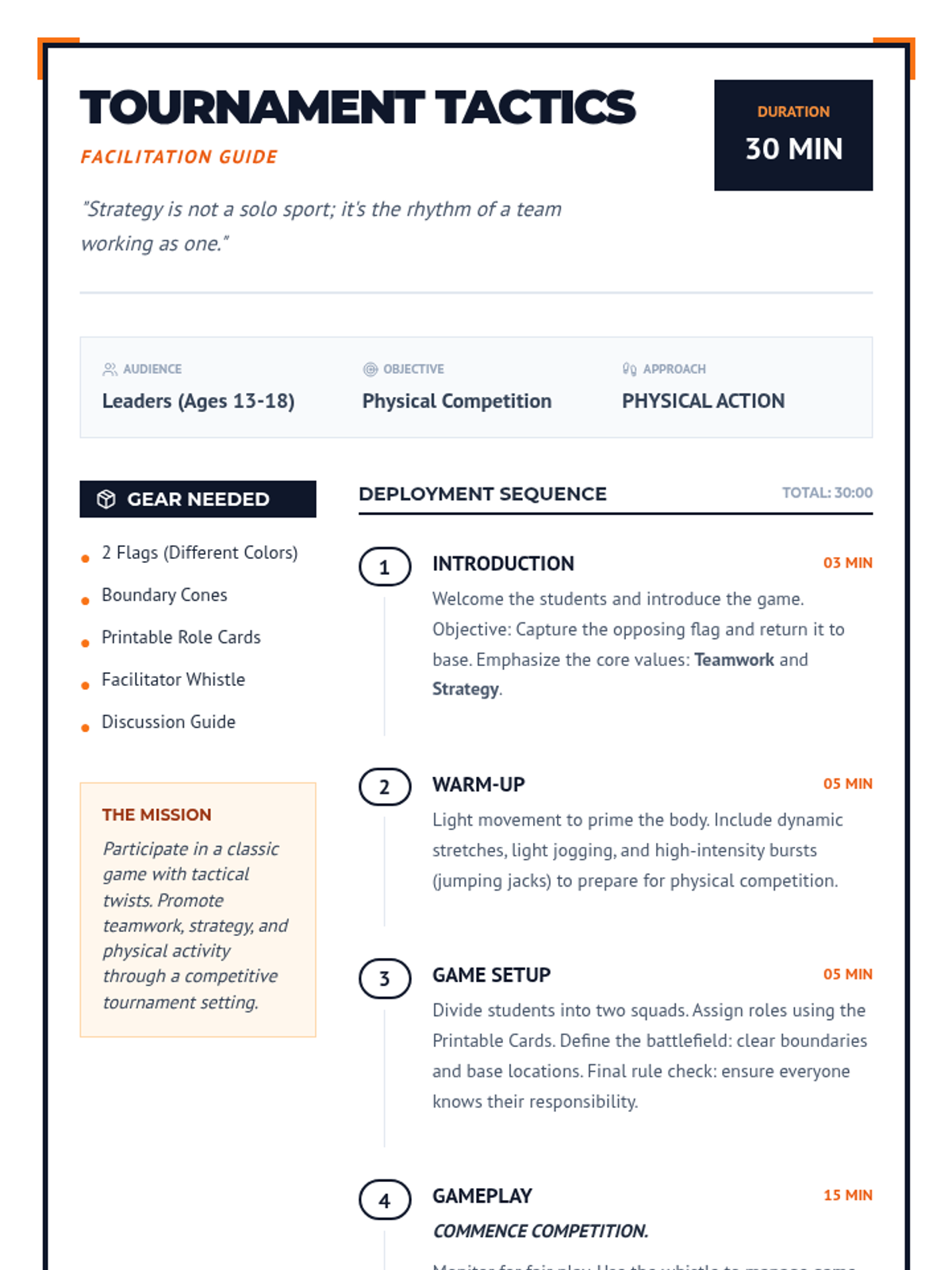
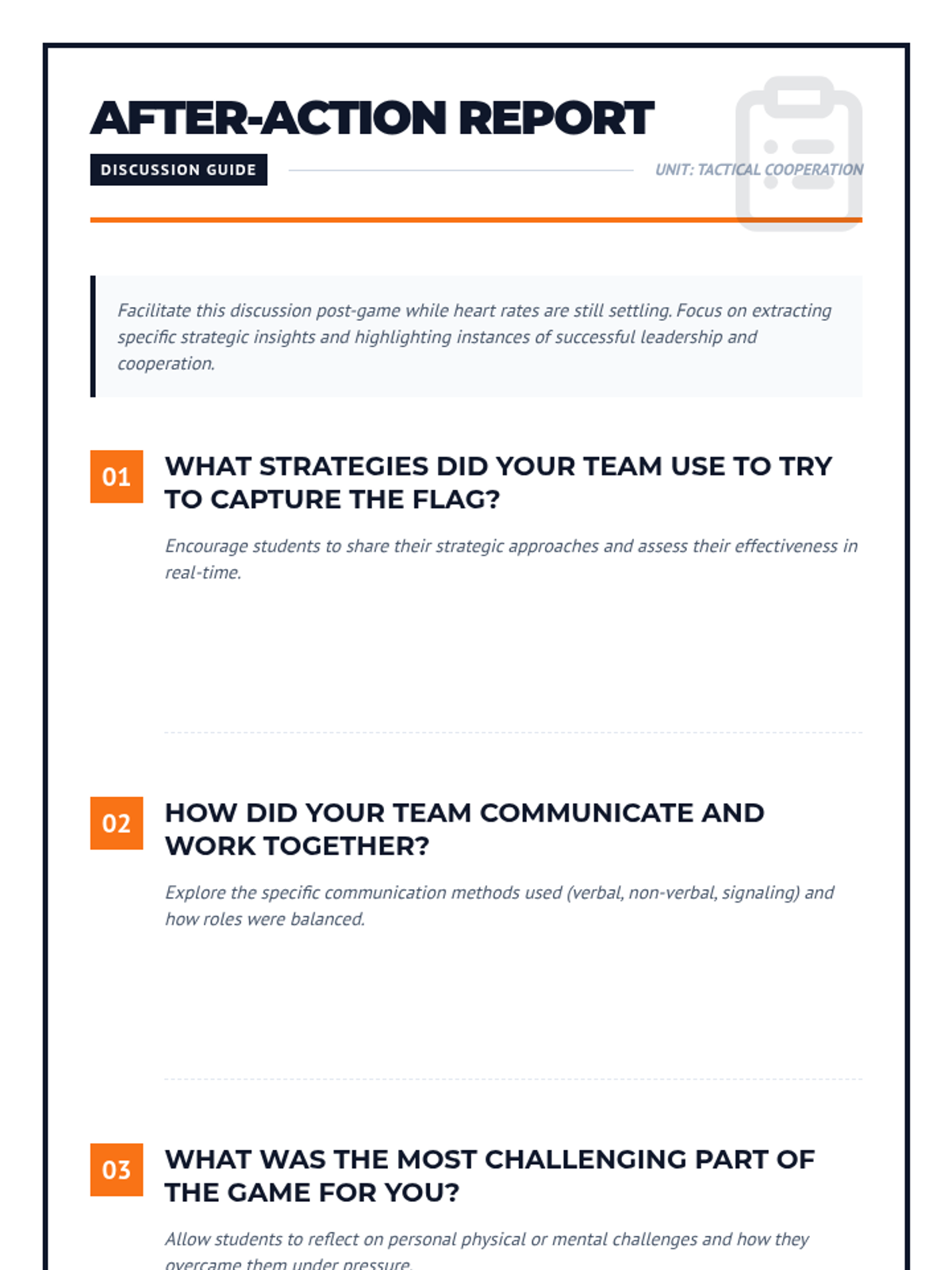
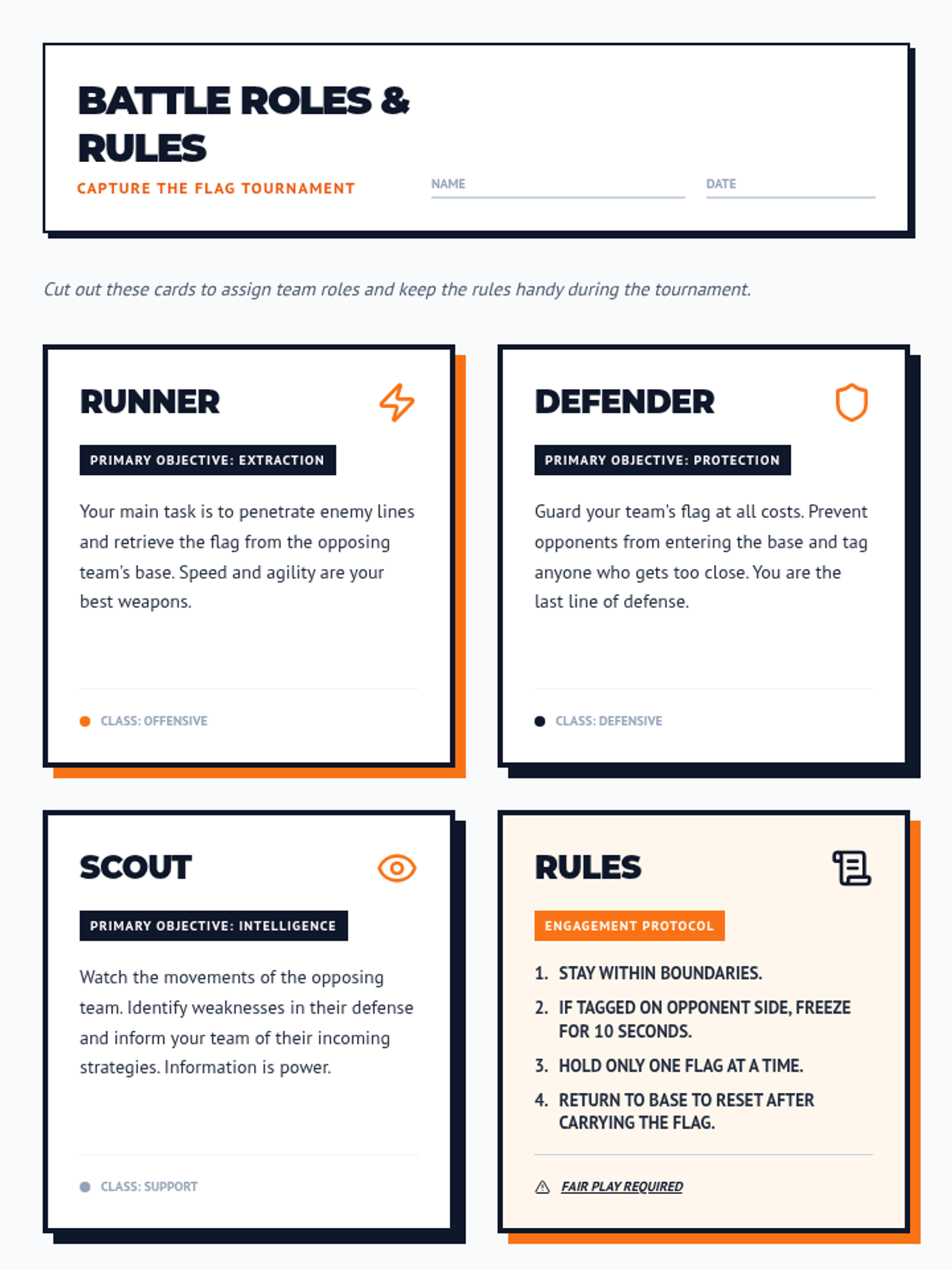
A high-energy, strategy-focused physical education lesson where students engage in a classic game of Capture the Flag with specialized roles and tactical reflection.
A collection of resources to celebrate and thank swim coaches at a winter banquet, including a heartfelt speech, a visual presentation of season highlights, and personalized thank-you cards for athletes to sign.
Explores the social and environmental consequences of substance use in school and guides students through a restorative reflection process for re-entry.
Focuses on the physiological and neurological impact of nicotine, vapes, and THC on the developing teenage brain and body.
A culminating simulation where students compete in track events while rotating through officiating roles, applying all technical and strategic skills learned.
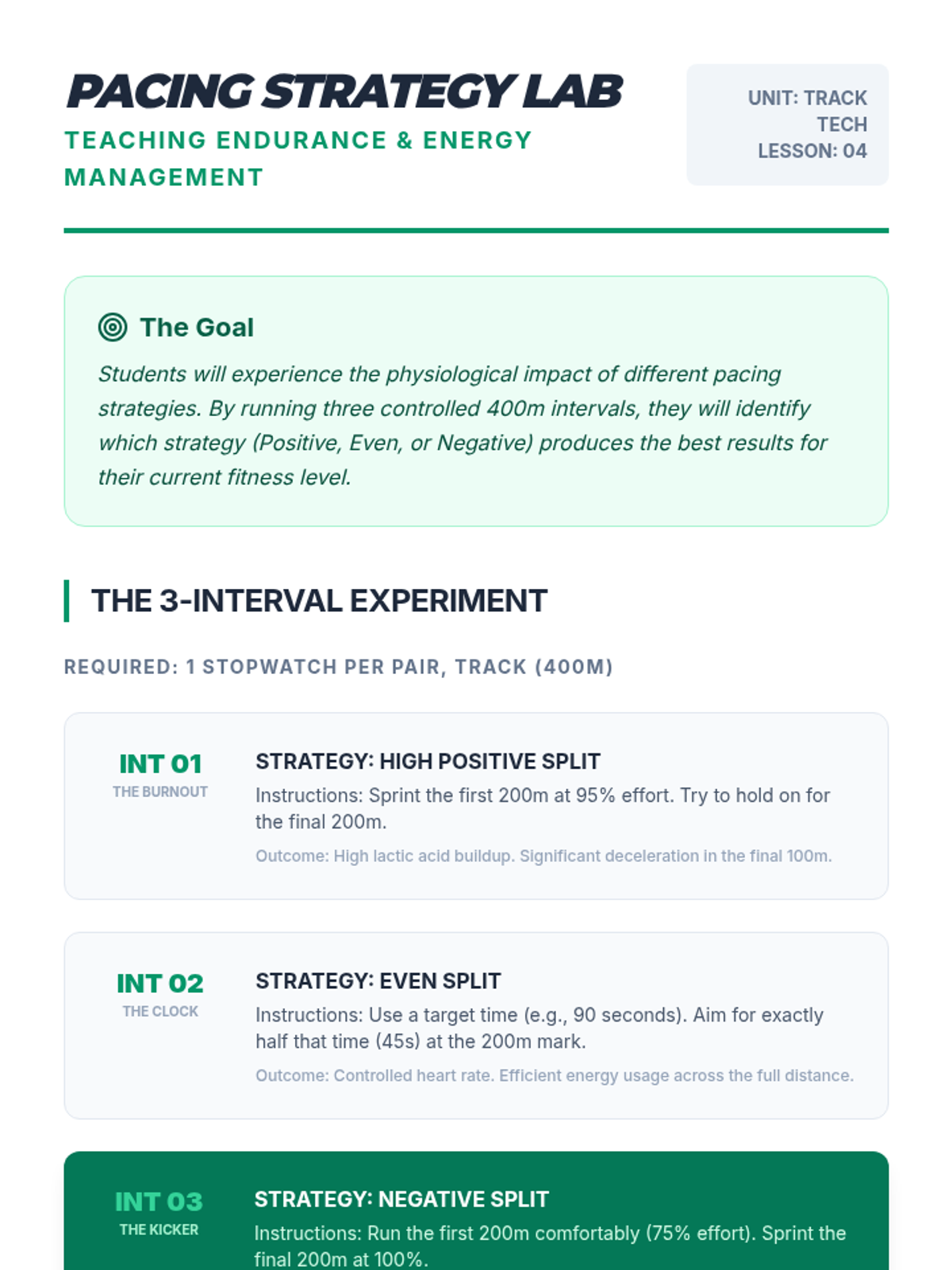
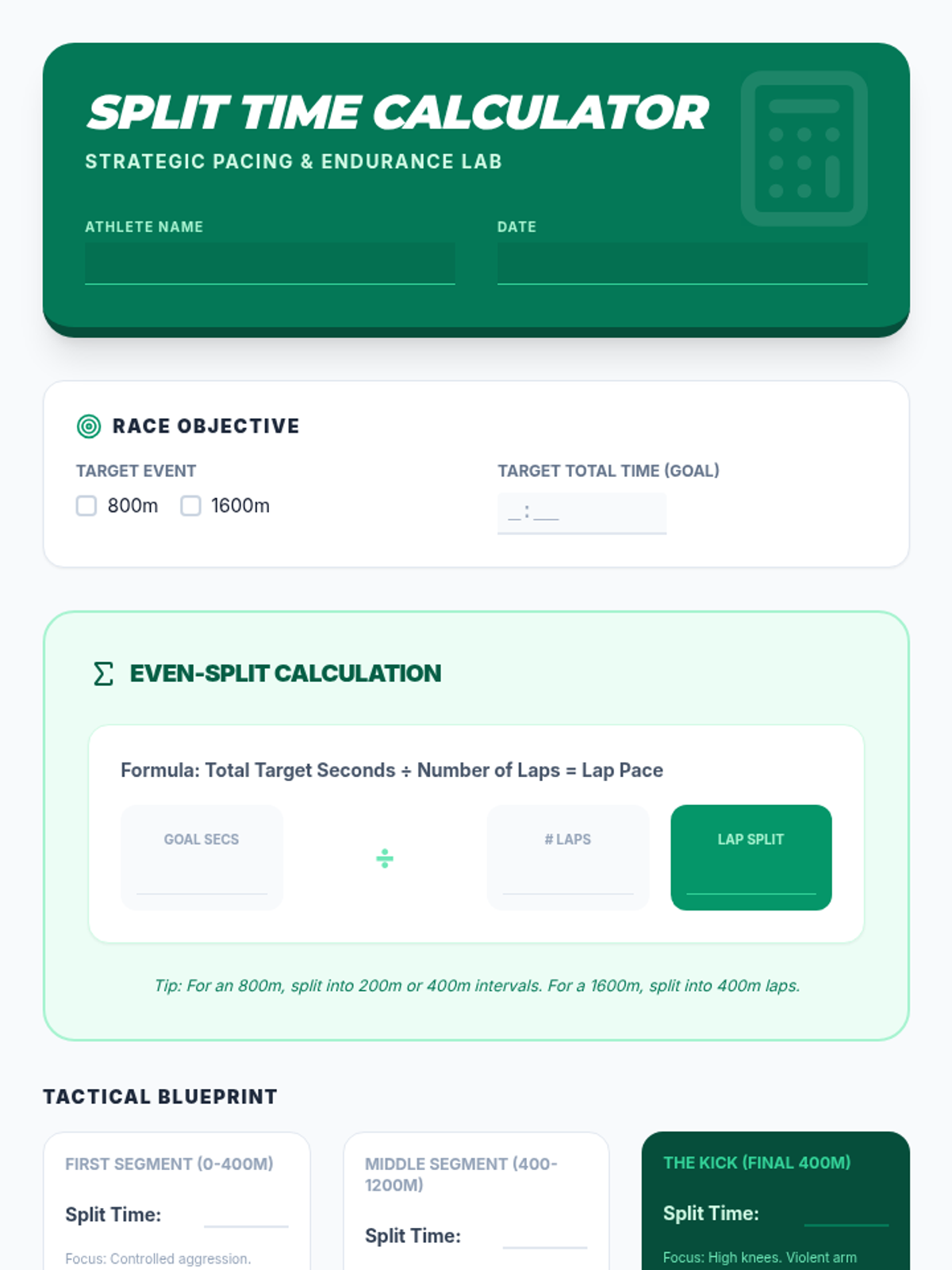
Explores the energy systems required for 800m and 1600m races, with students experimenting with different pacing strategies and split time calculations.
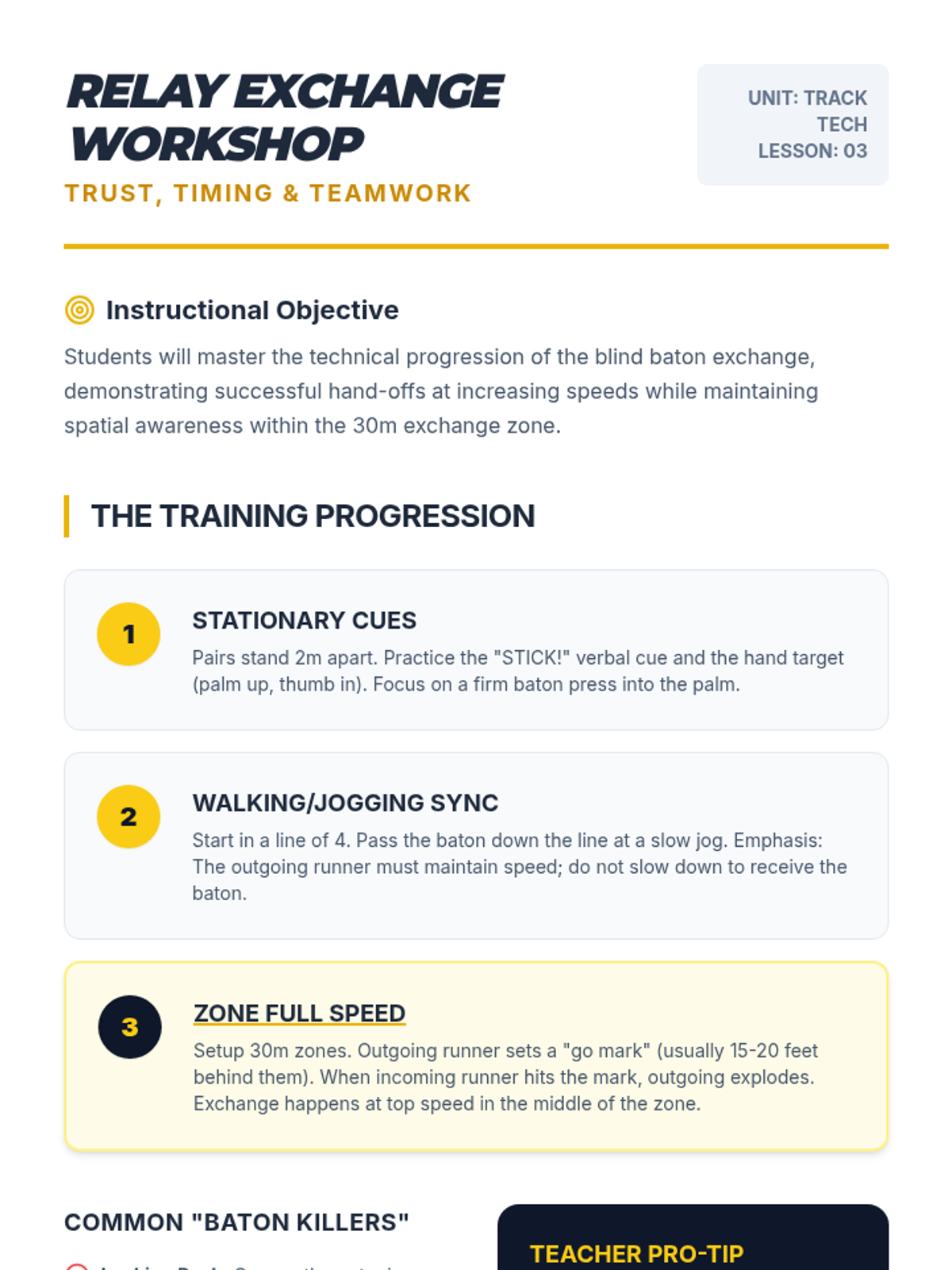
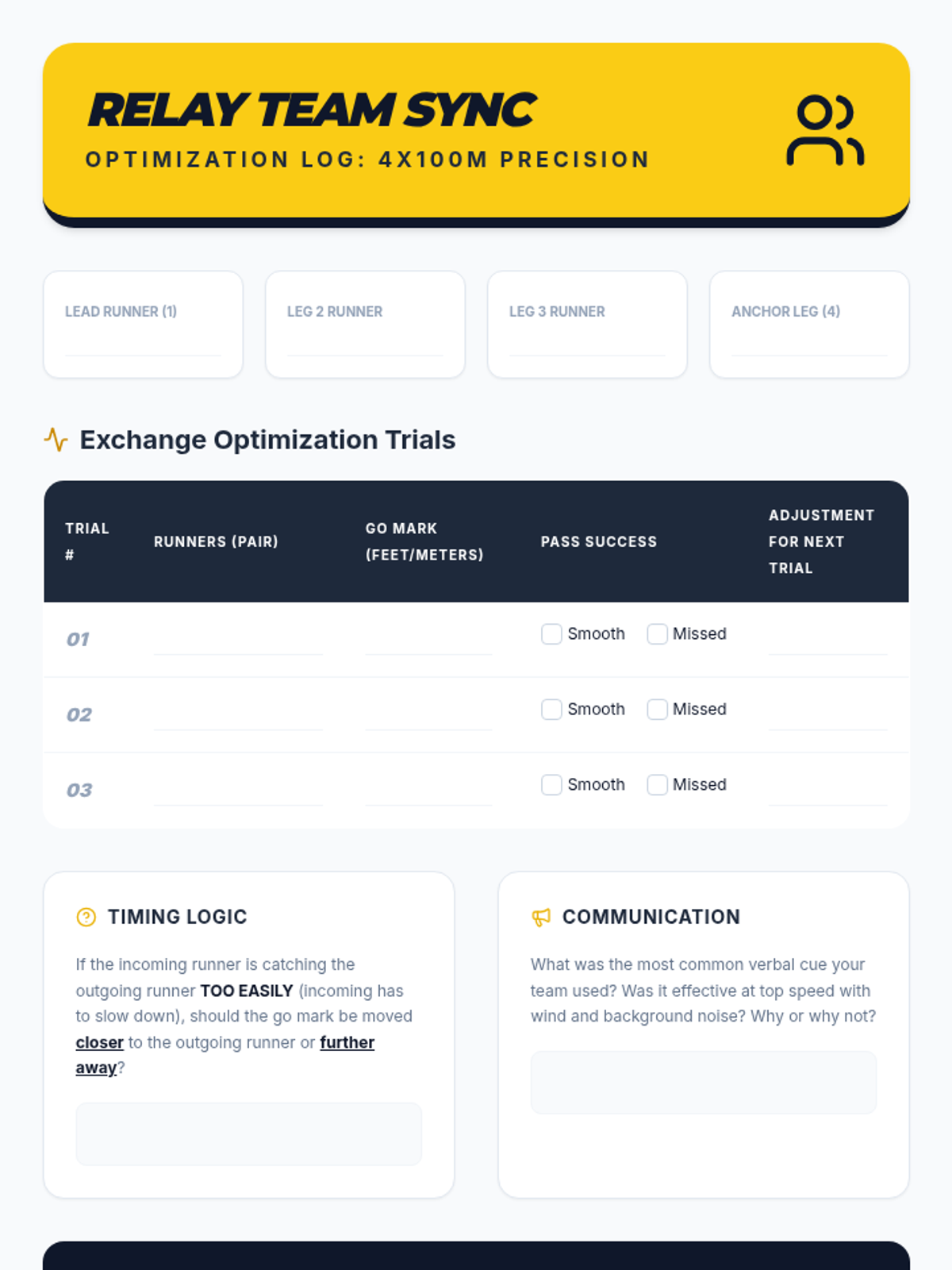
Covers the technical and collaborative requirements of the blind relay exchange, focusing on timing, verbal cues, and spatial awareness in the acceleration zone.
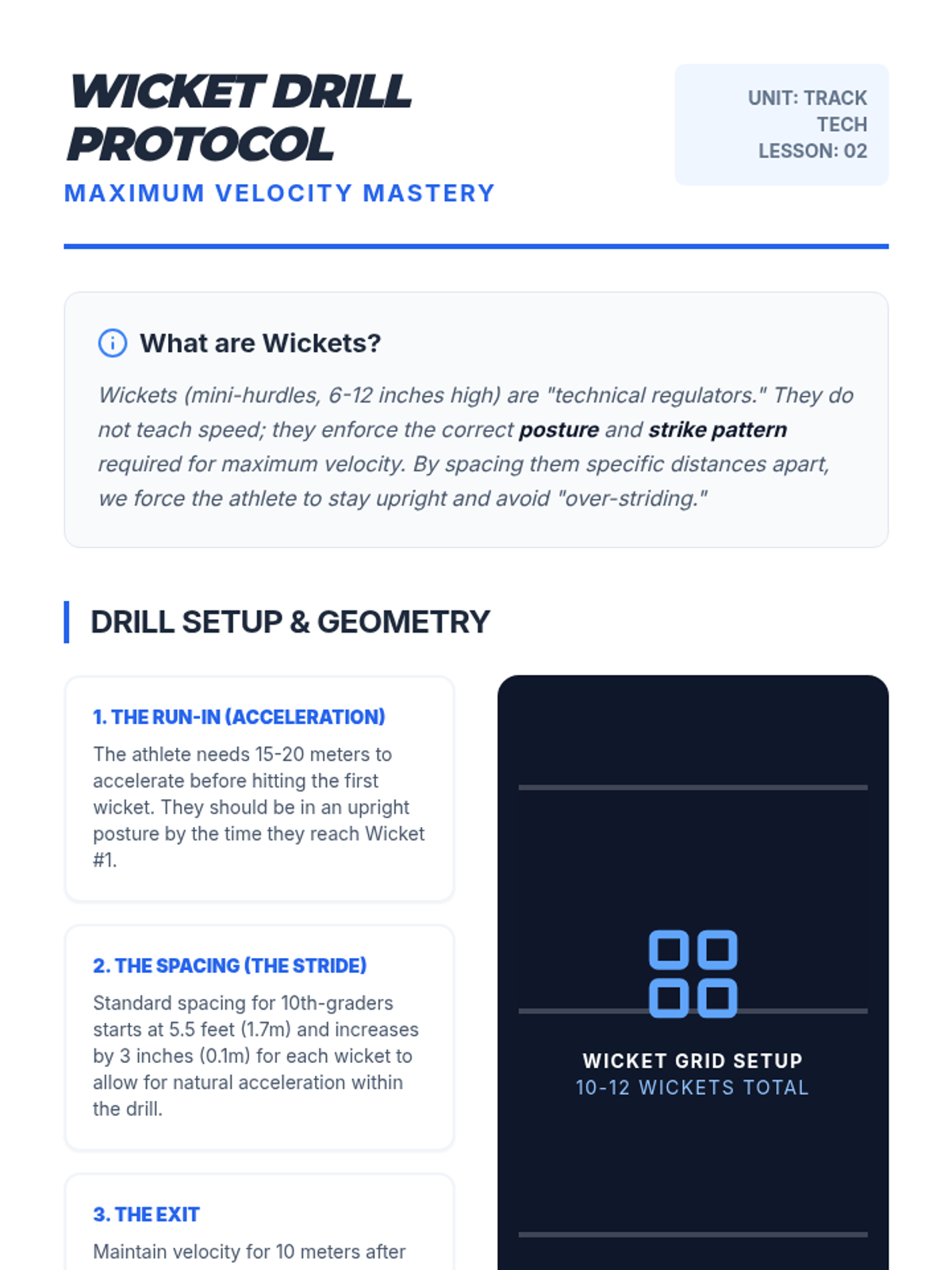
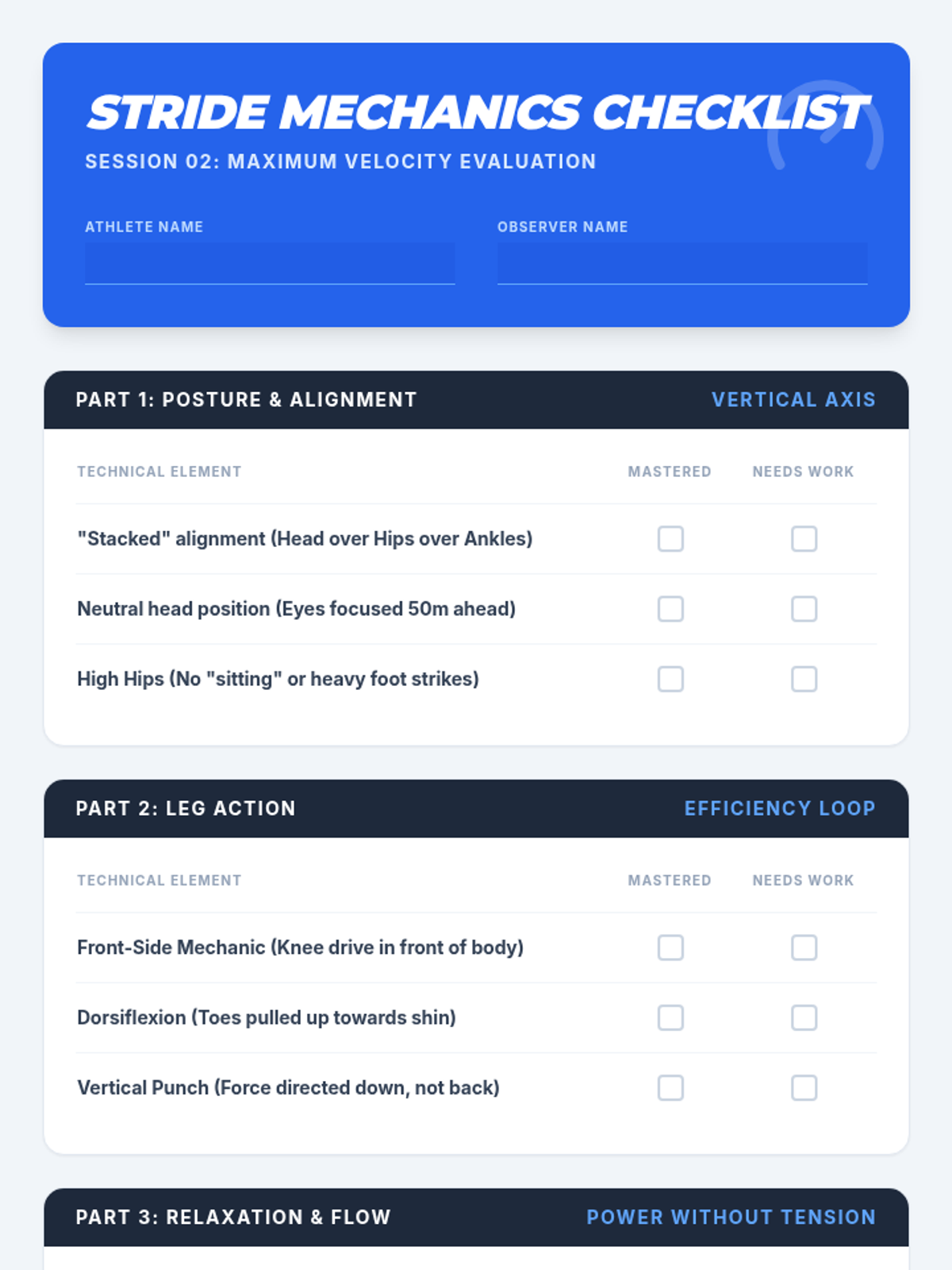
Transitions from acceleration to top speed, emphasizing upright sprinting posture, front-side mechanics, and the importance of relaxation at maximum velocity.
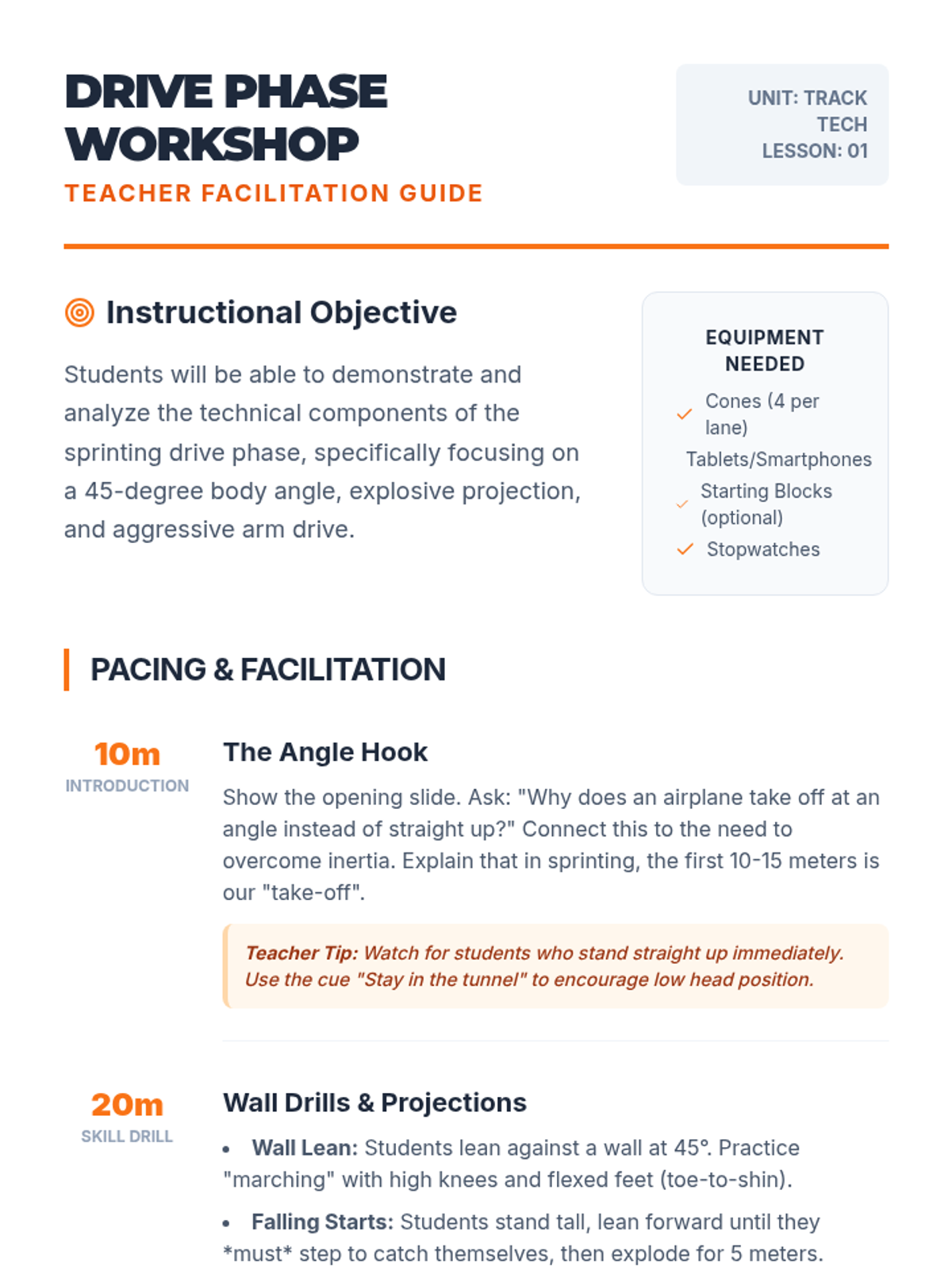
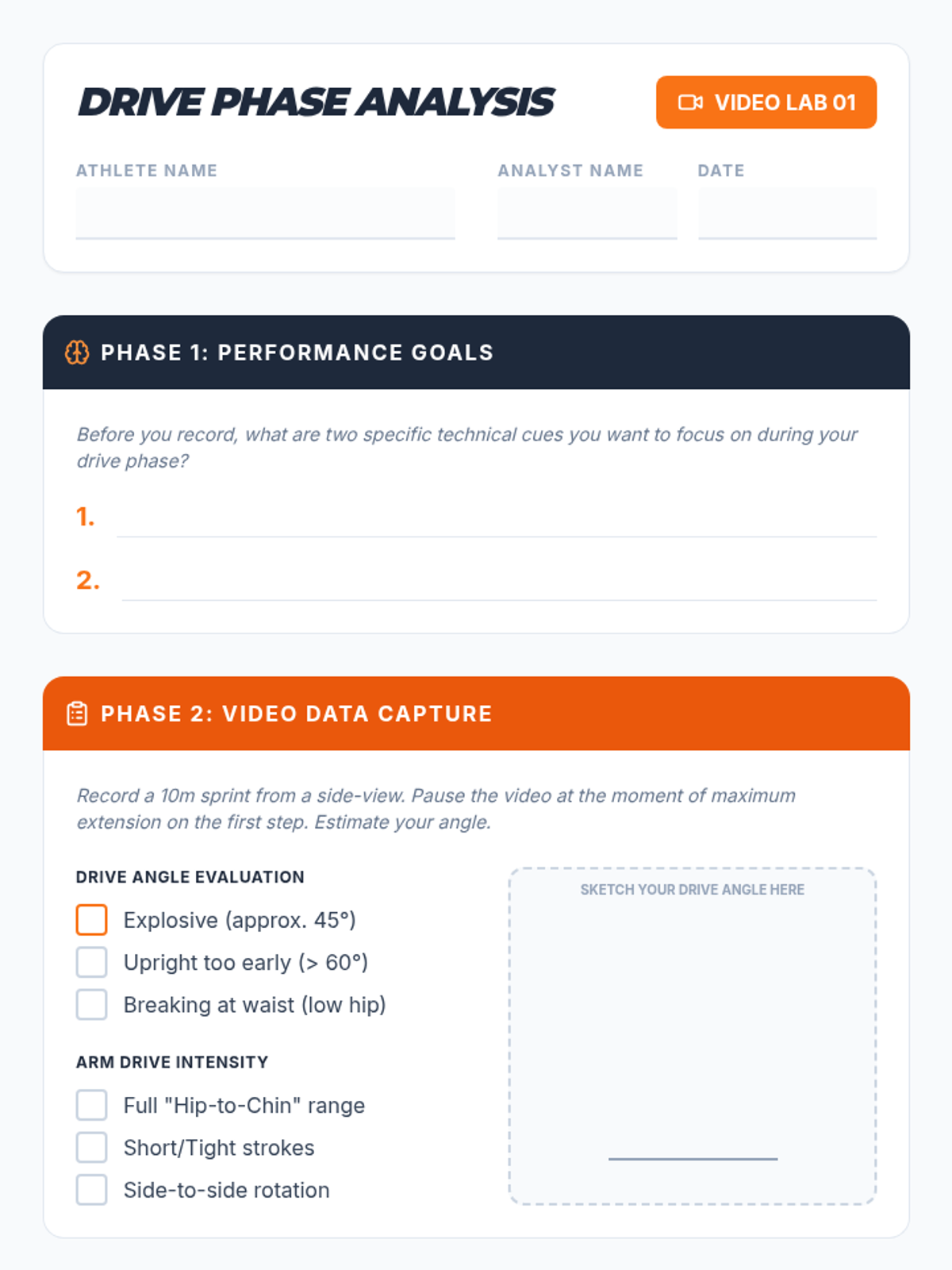
Focuses on the 'drive phase' of sprinting, teaching students to generate explosive force and maintain optimal body angles during acceleration. Includes peer video analysis and wall drills.
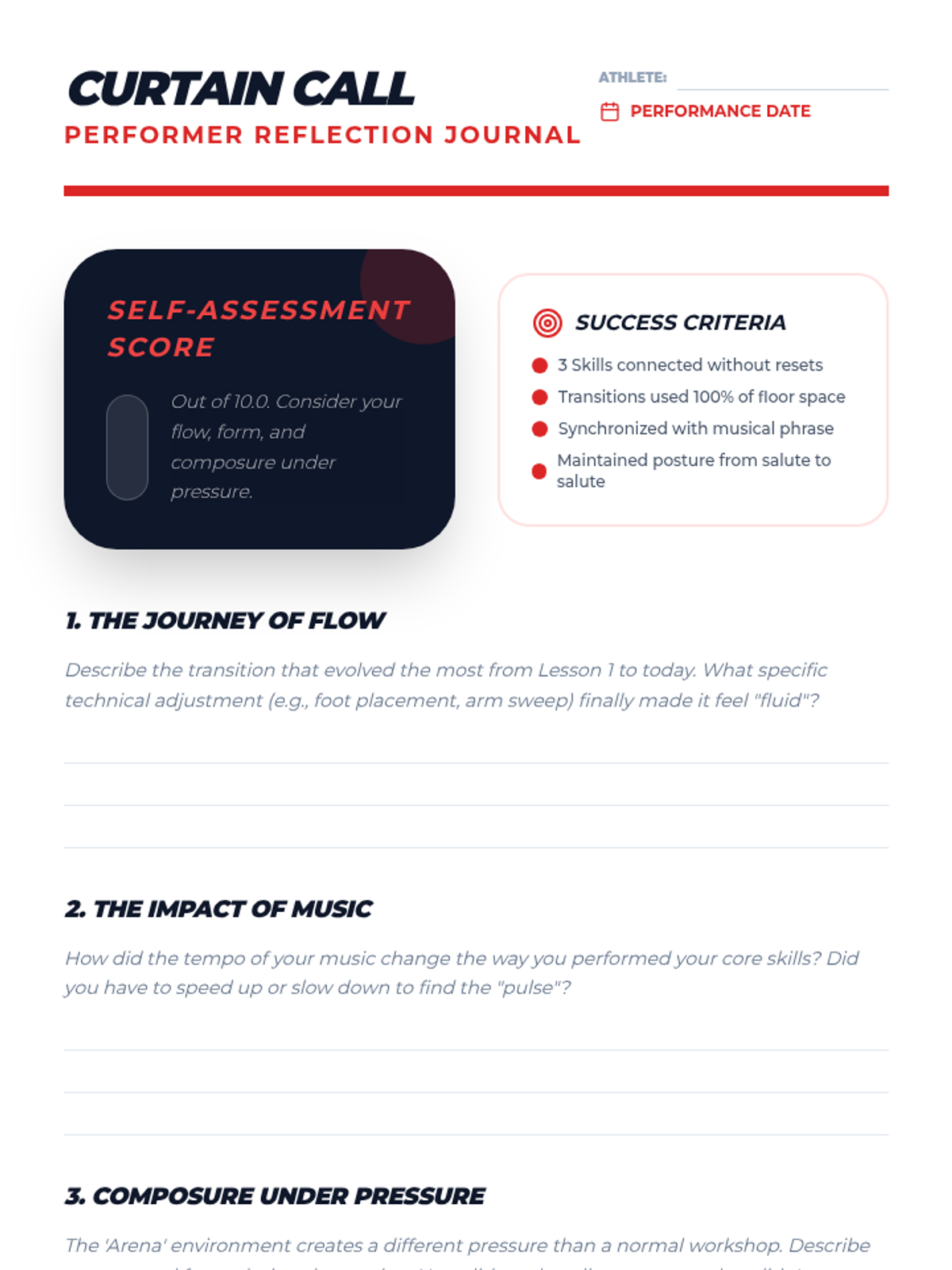
The sequence concludes with students performing their fully composed floor routines in a simulated competition environment. Students demonstrate mastery of flow, form, and composure, followed by a final reflection on their creative journey.
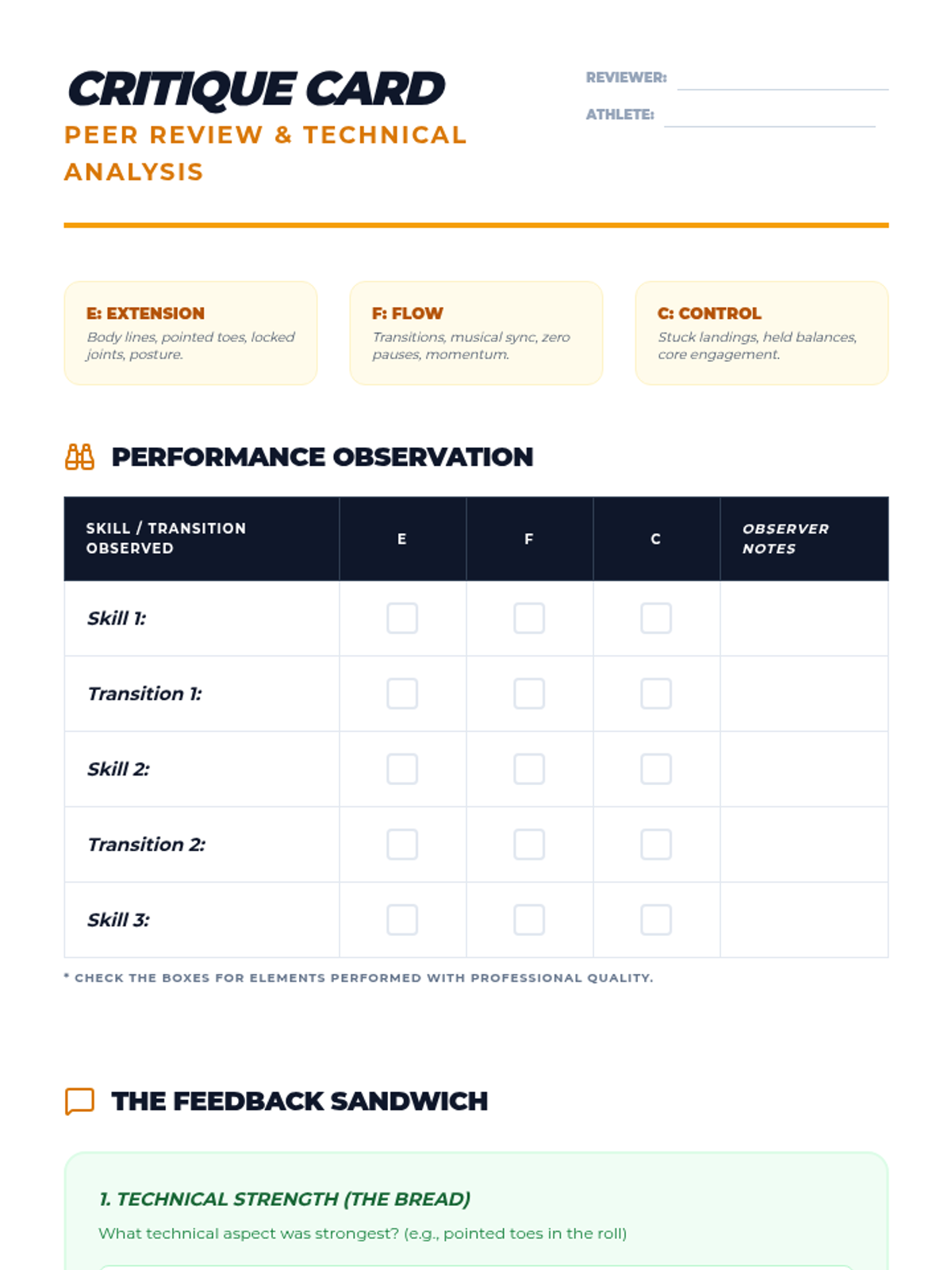
Utilizing peer review, students showcase draft routines and provide structured feedback based on professional criteria. This lesson emphasizes critical observation and the implementation of refinements for performance excellence.
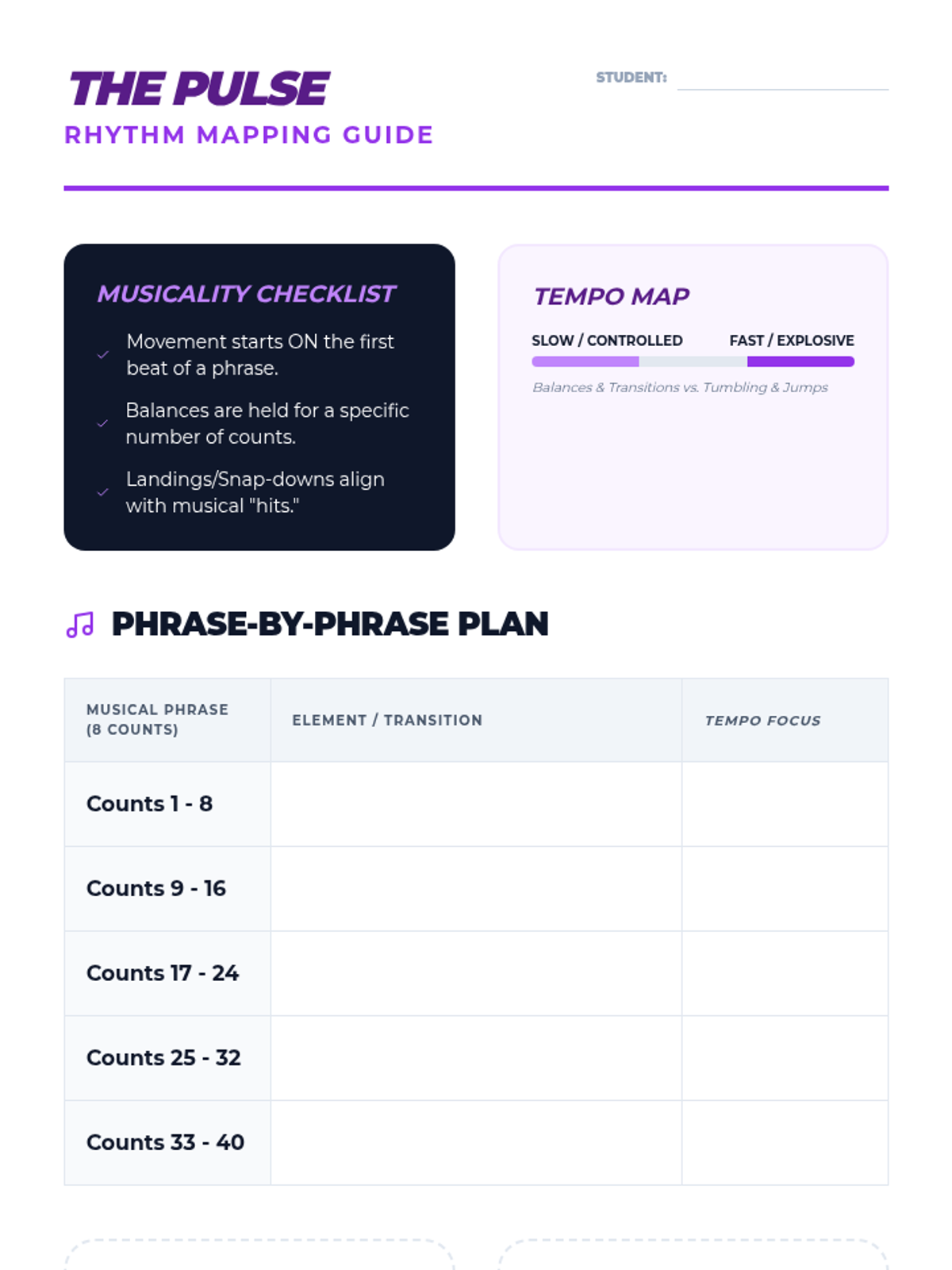
Students investigate the relationship between movement and music, focusing on rhythm, tempo, and synchronization. They experiment with performing gymnastics skills to varying beats and learn to move with intentionality.
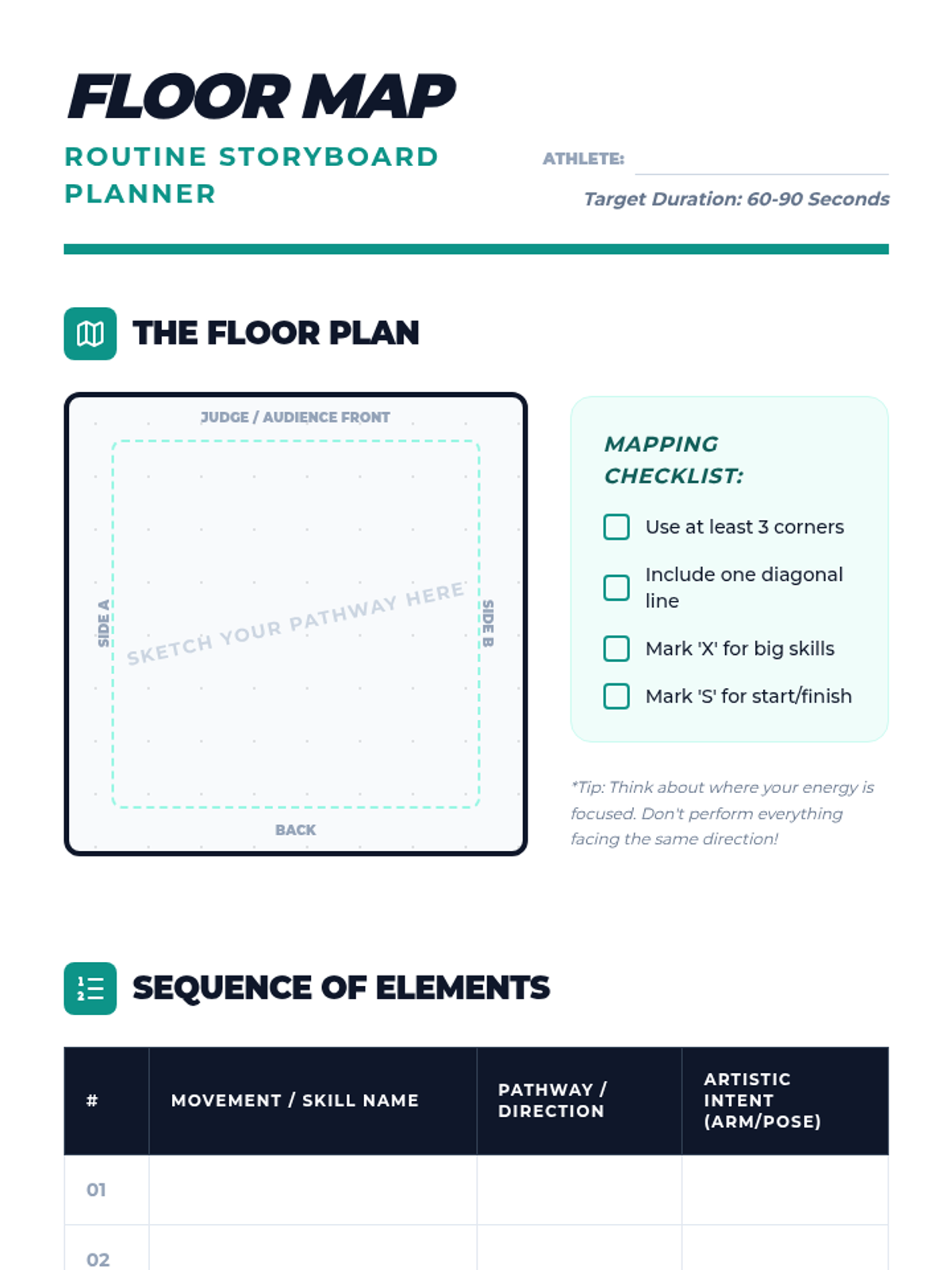
This lesson focuses on the technical and artistic components of a competitive floor routine, including spatial usage and required elements. Students draft a storyboard for their own routine, planning how to utilize the entire floor area effectively.
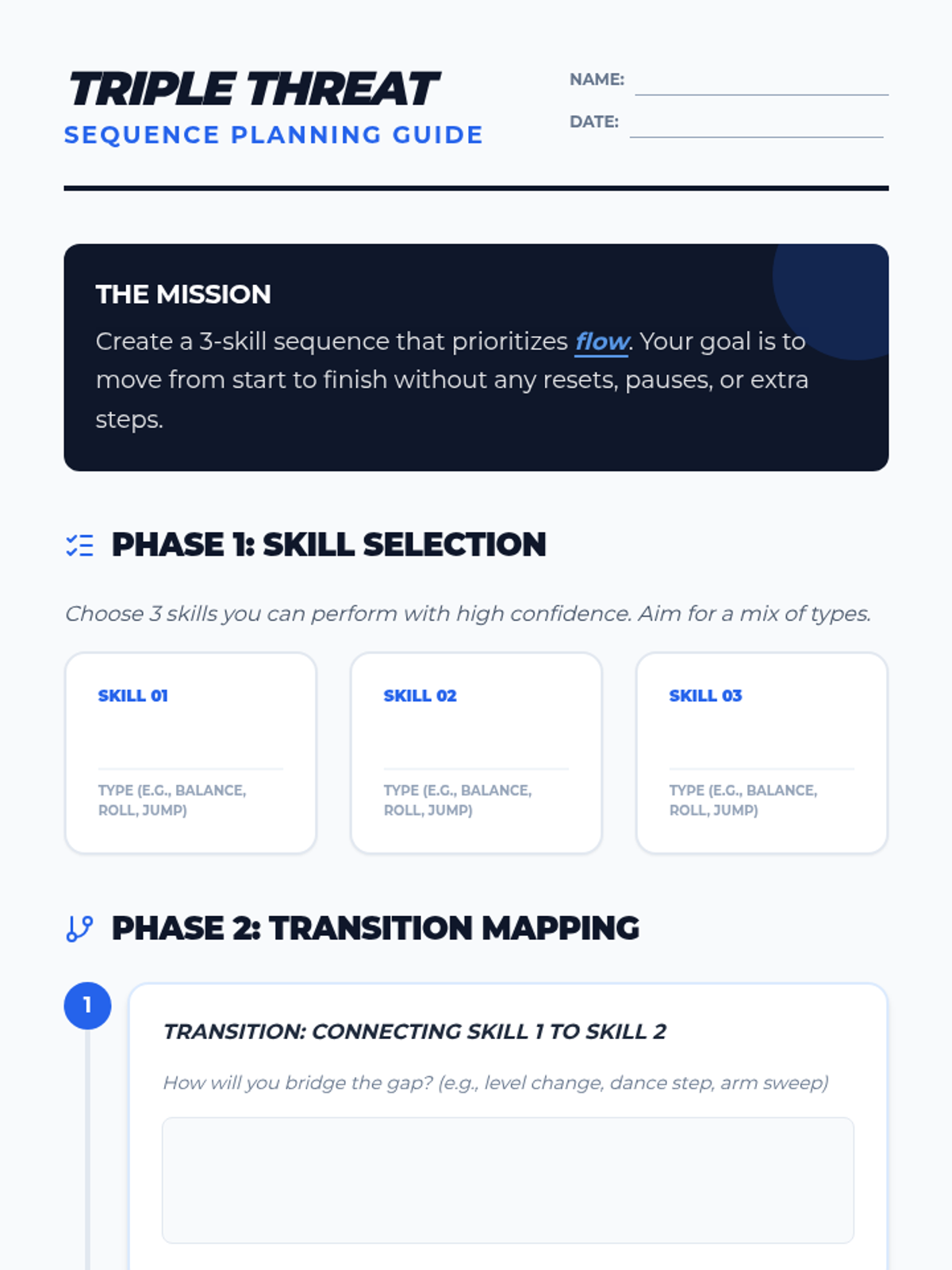
Students explore the concept of 'flow' in gymnastics, learning how to connect static poses and dynamic moves with creative transitions. The lesson culminates in the creation of a three-move sequence that emphasizes seamless movement.
The class tournament begins with a focus on implementing the practiced strategies. Between games, teams conduct brief 'halftime talks' to discuss what is working and what needs to change.
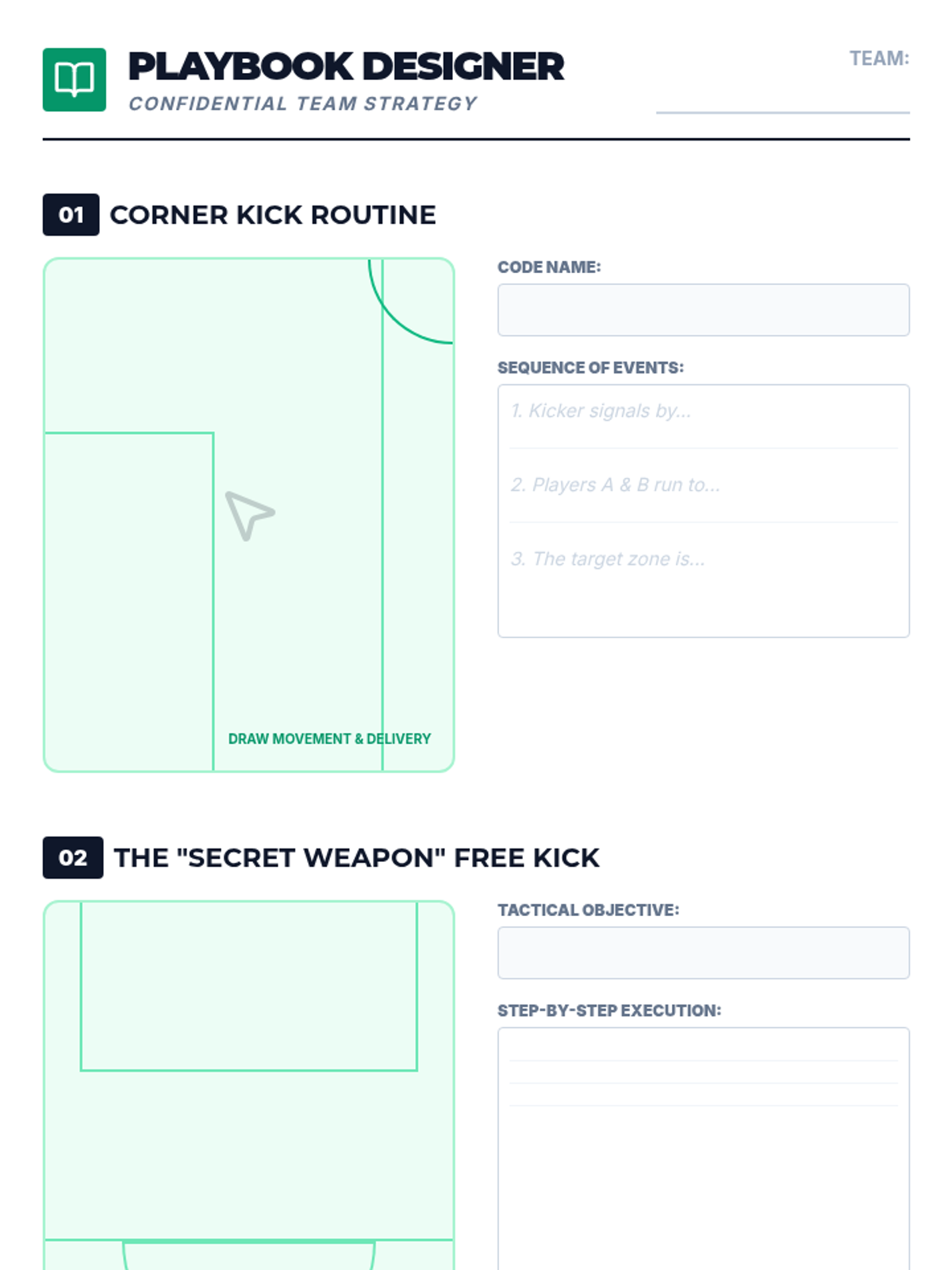
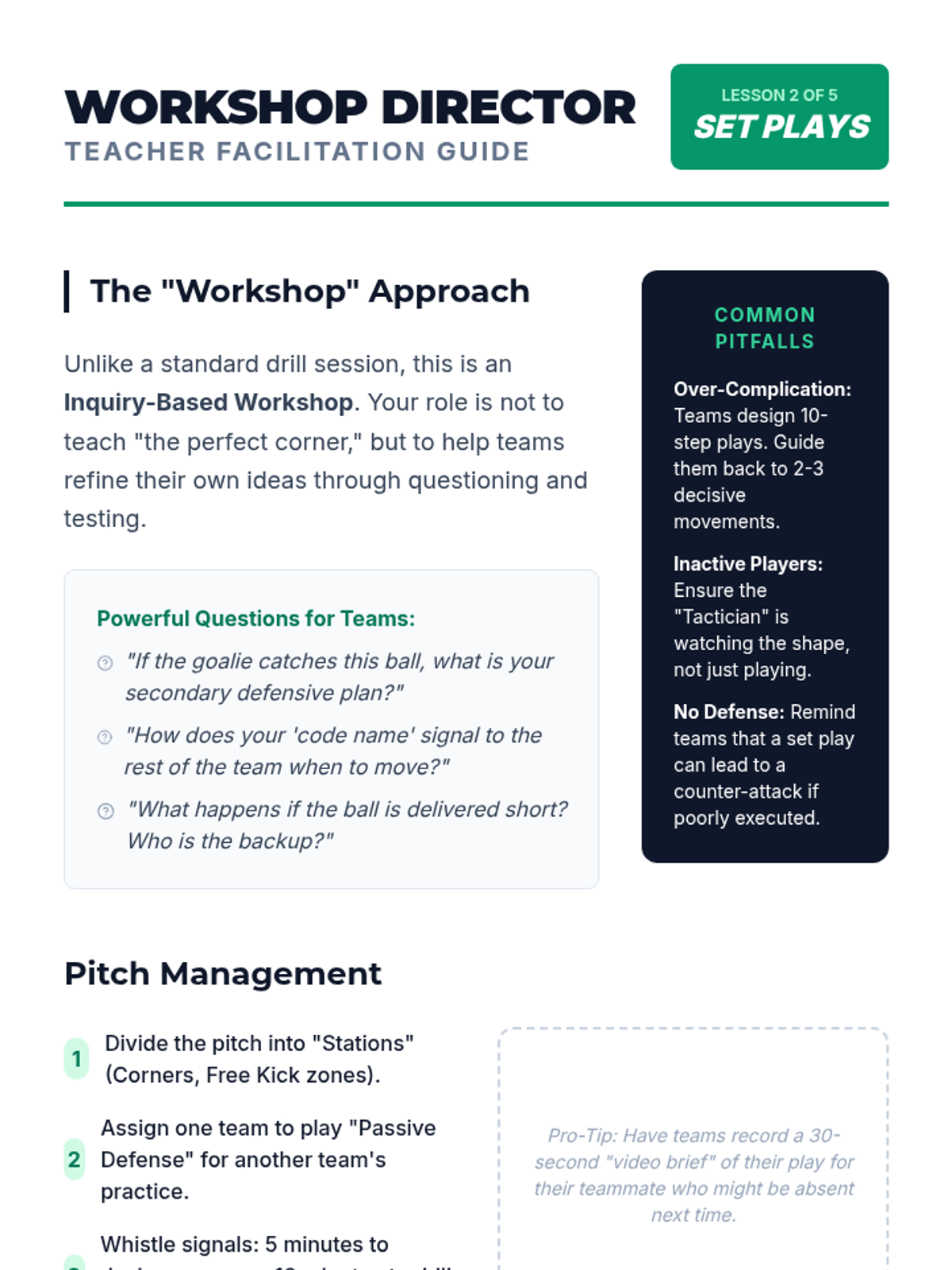
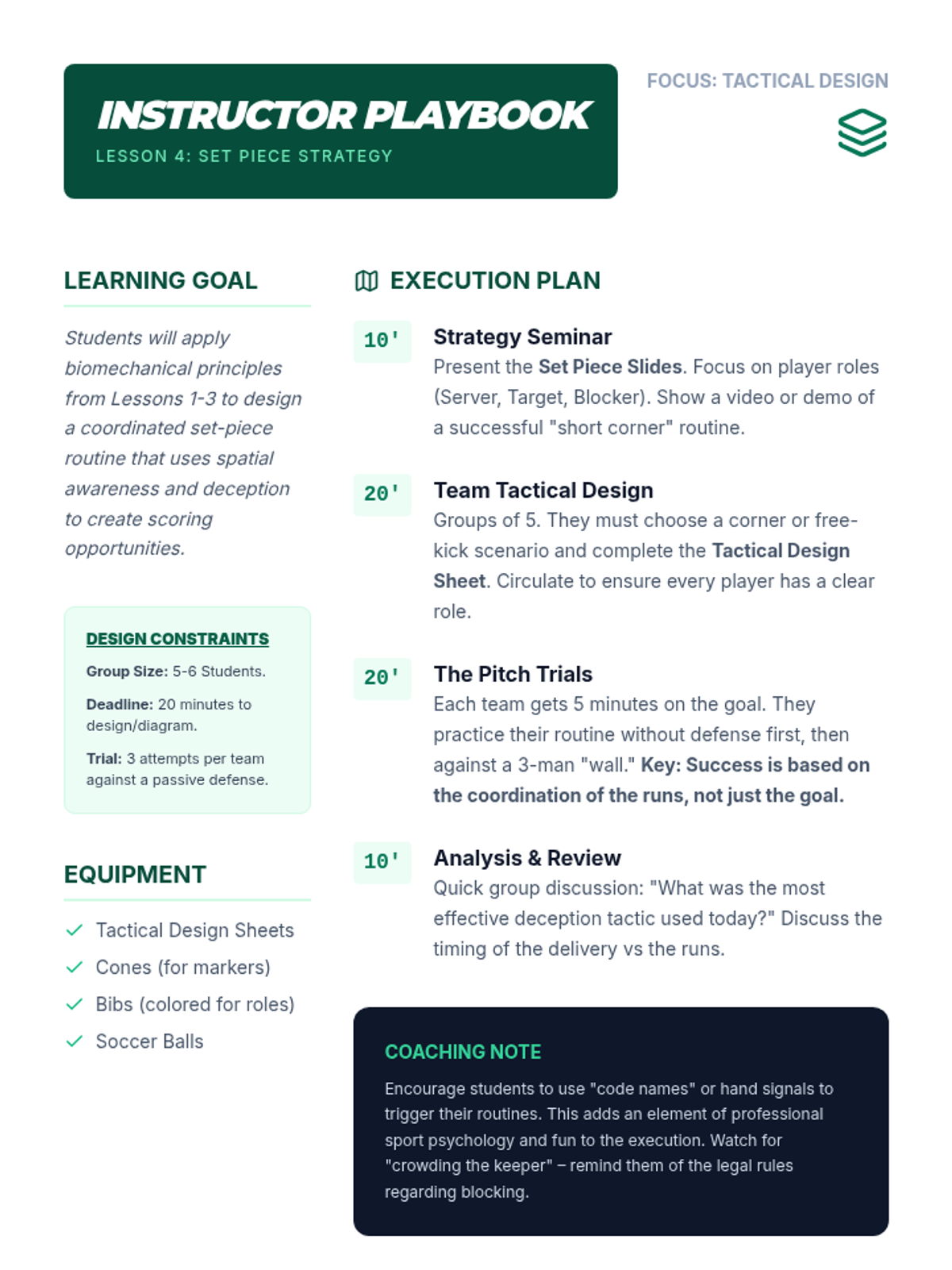
Teams spend the lesson designing and practicing two specific set plays (one corner kick, one free kick) and one defensive protocol. They document these plays to be used in the upcoming tournament.
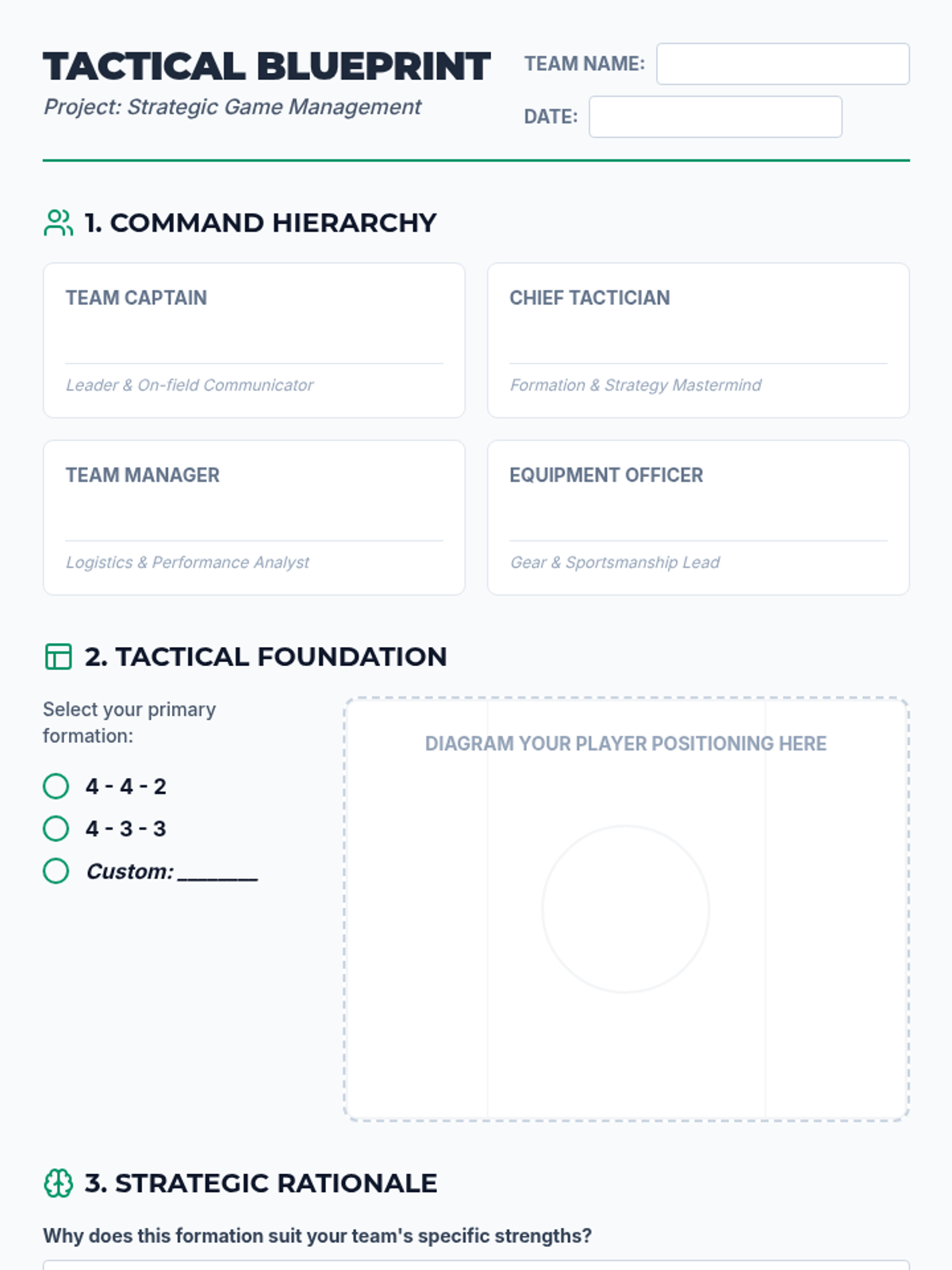
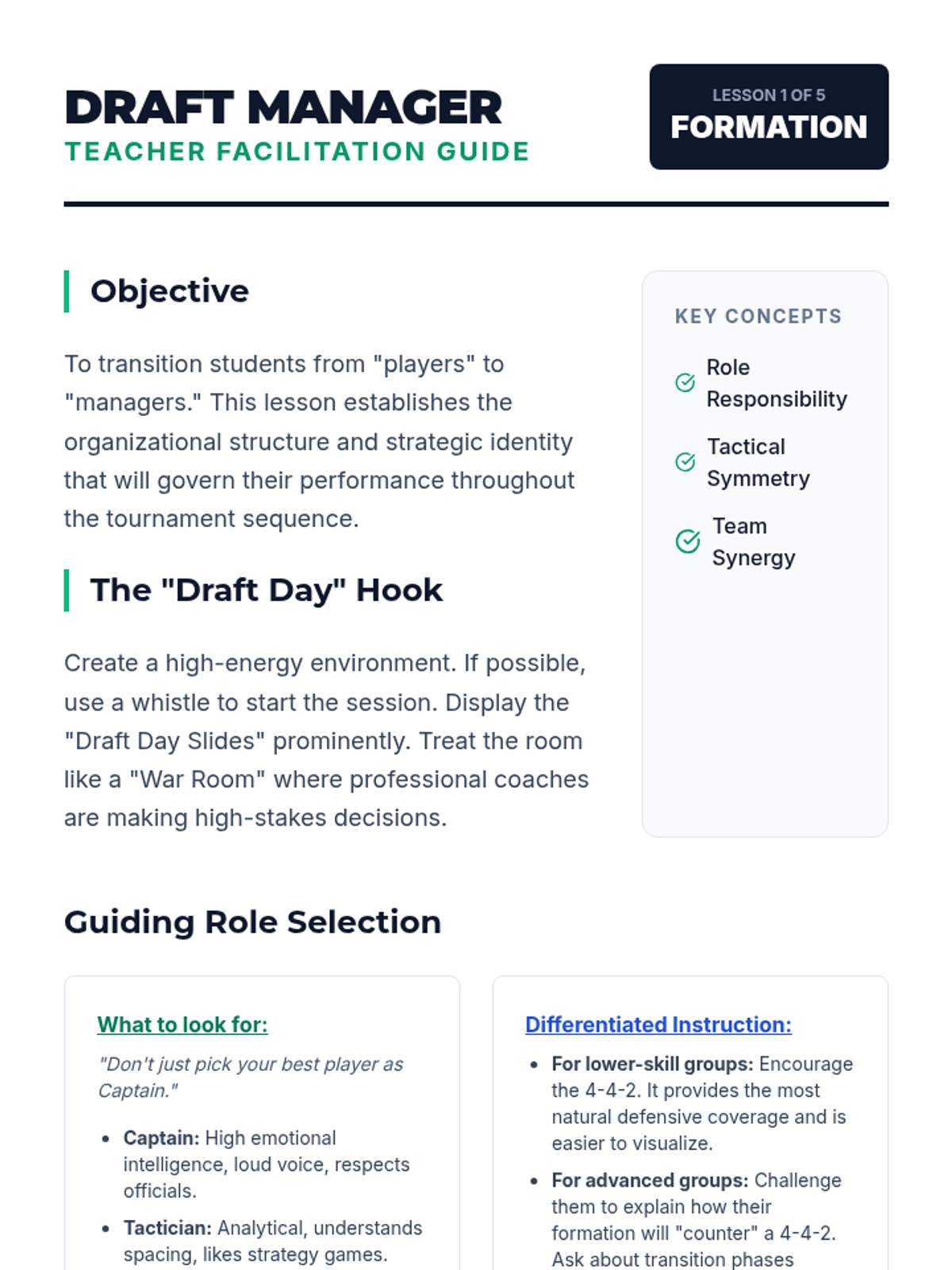
Students form teams and assume roles such as captain, tactician, and manager. They draft a team charter and choose a formation (e.g., 4-4-2, 4-3-3) that best suits their players' strengths.
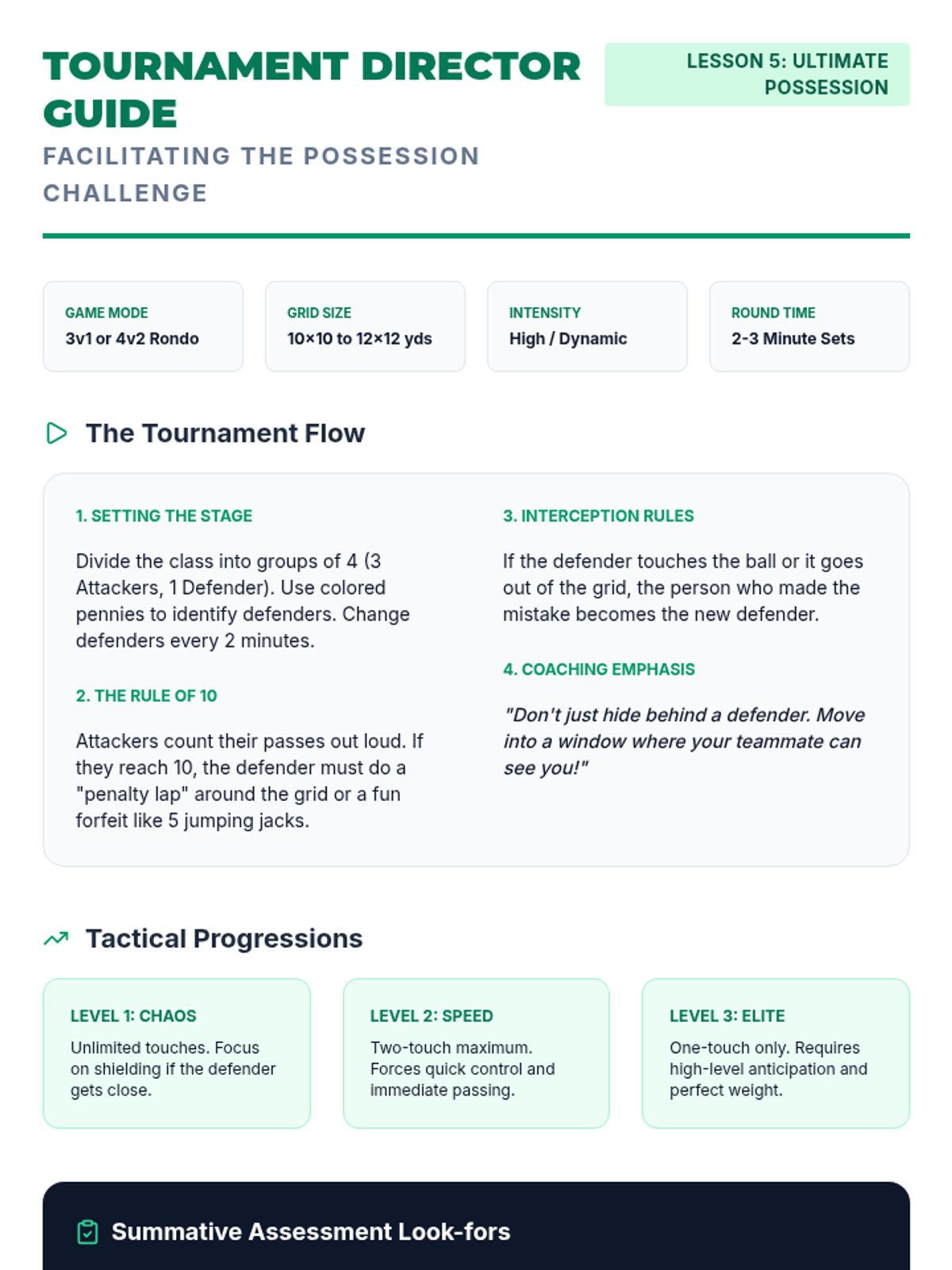
A culmination of skills applied in small-sided possession games focusing on decision-making.
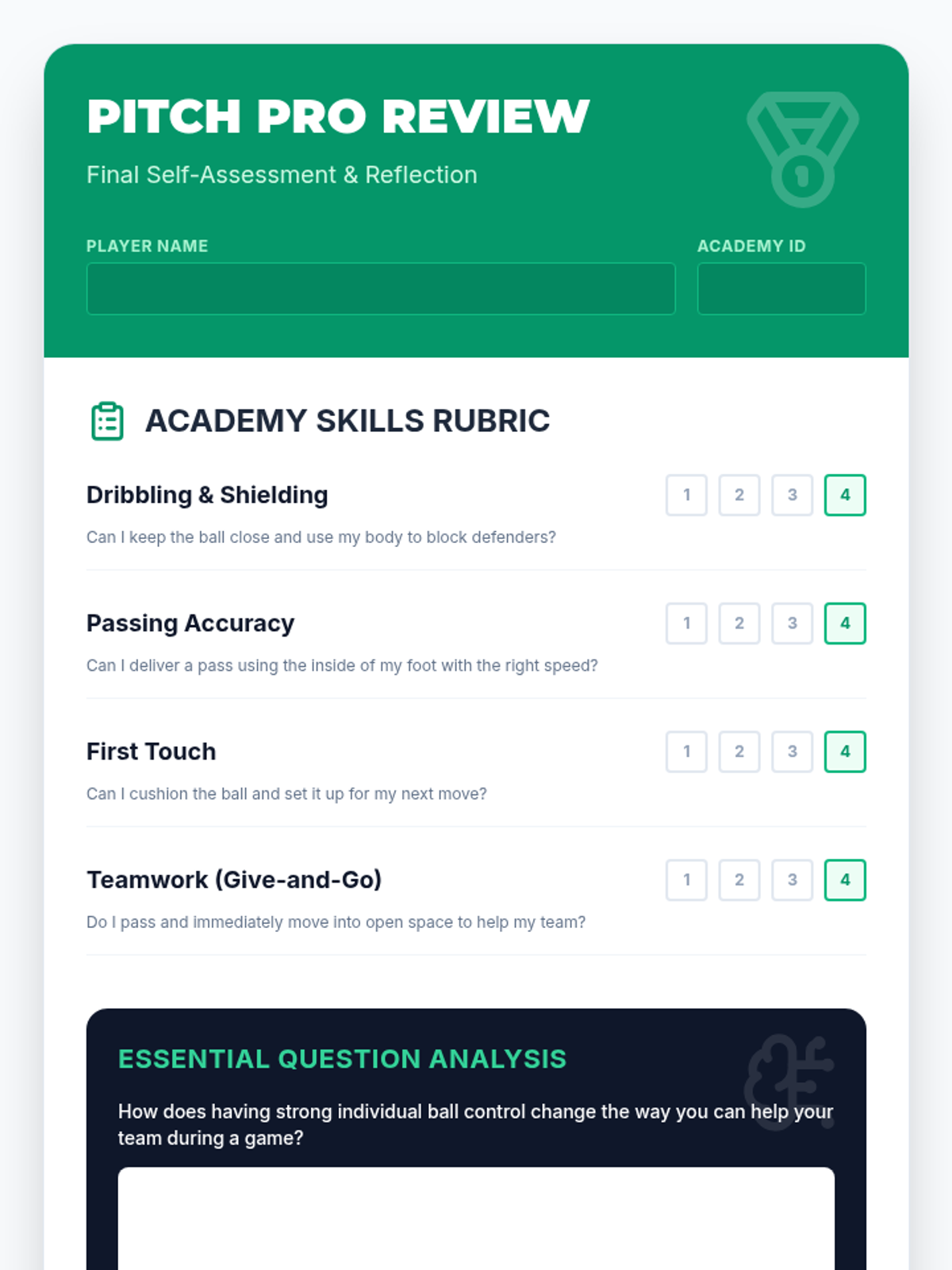
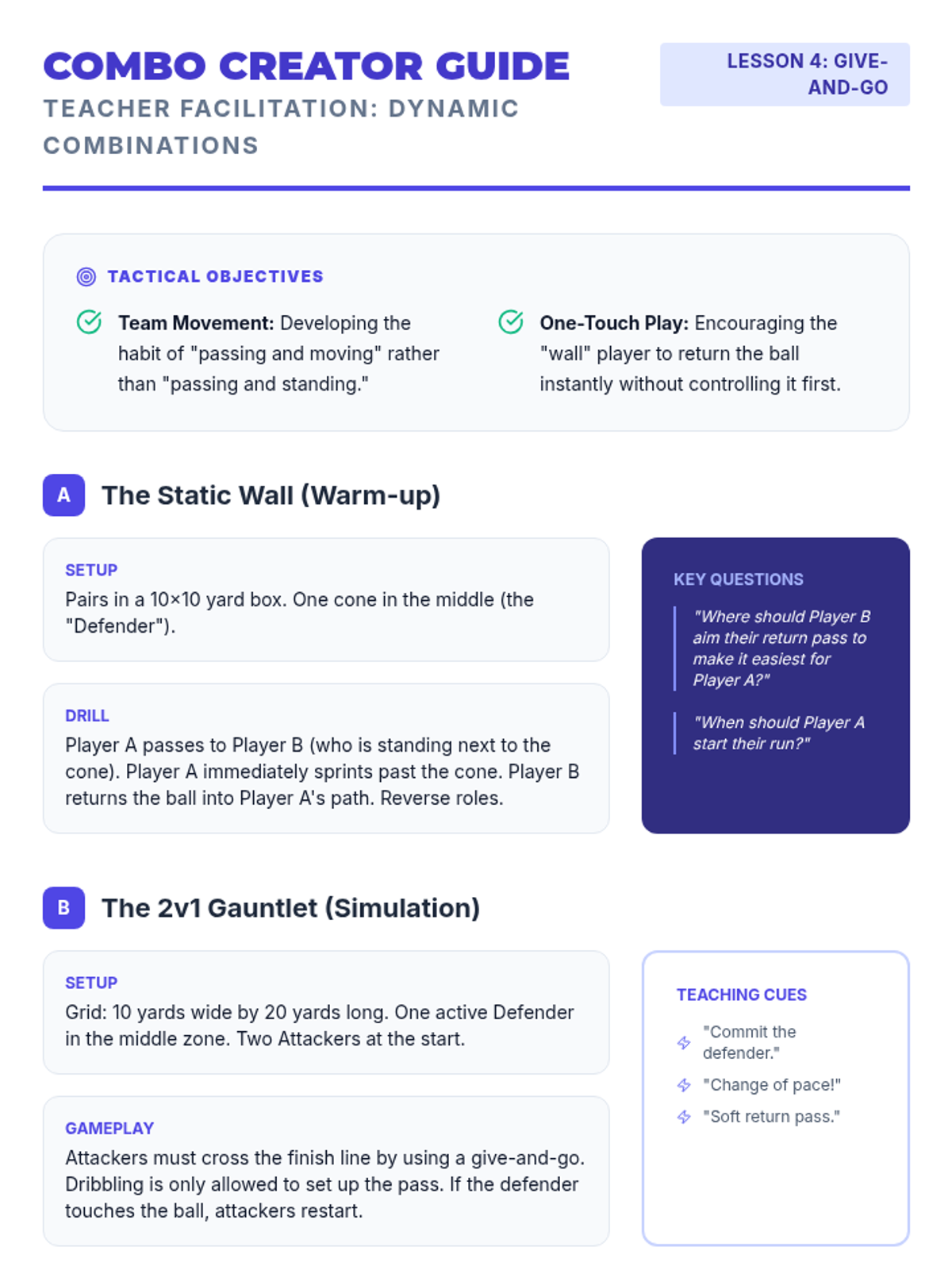
Introduces the wall pass or give-and-go as a way to bypass defenders through teamwork.
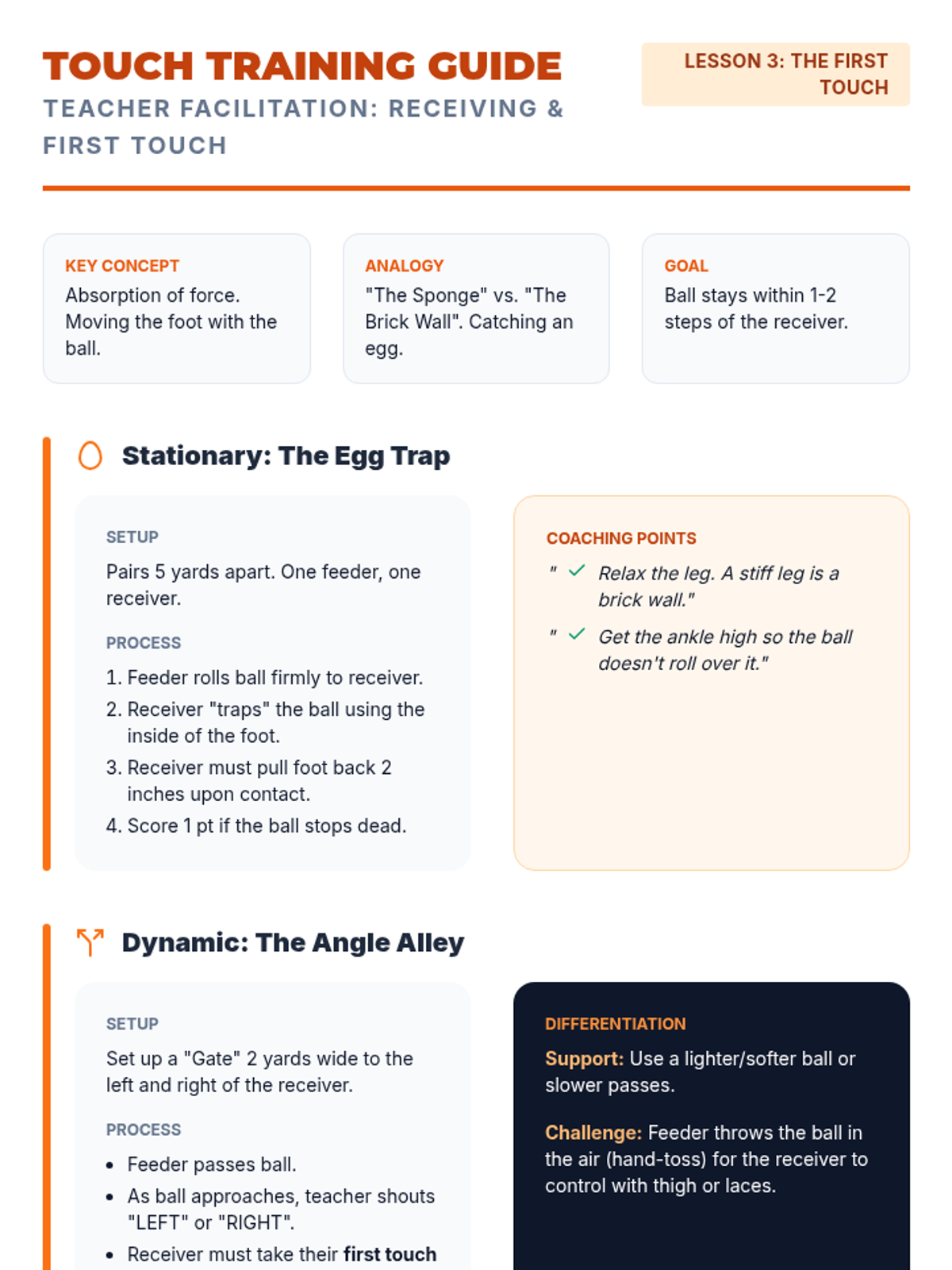
Teaches students how to cushion the ball's impact to maintain control during the first touch.
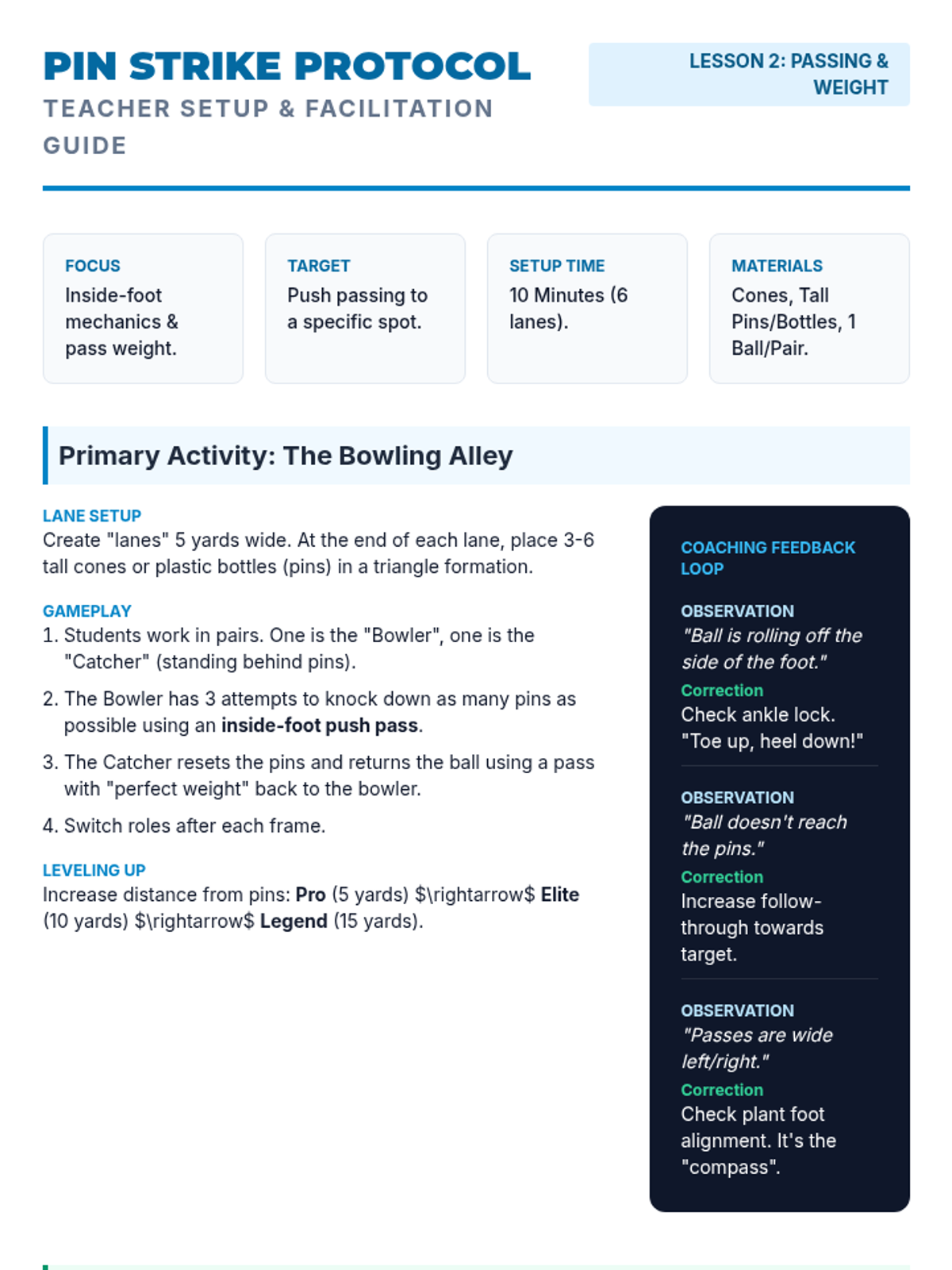
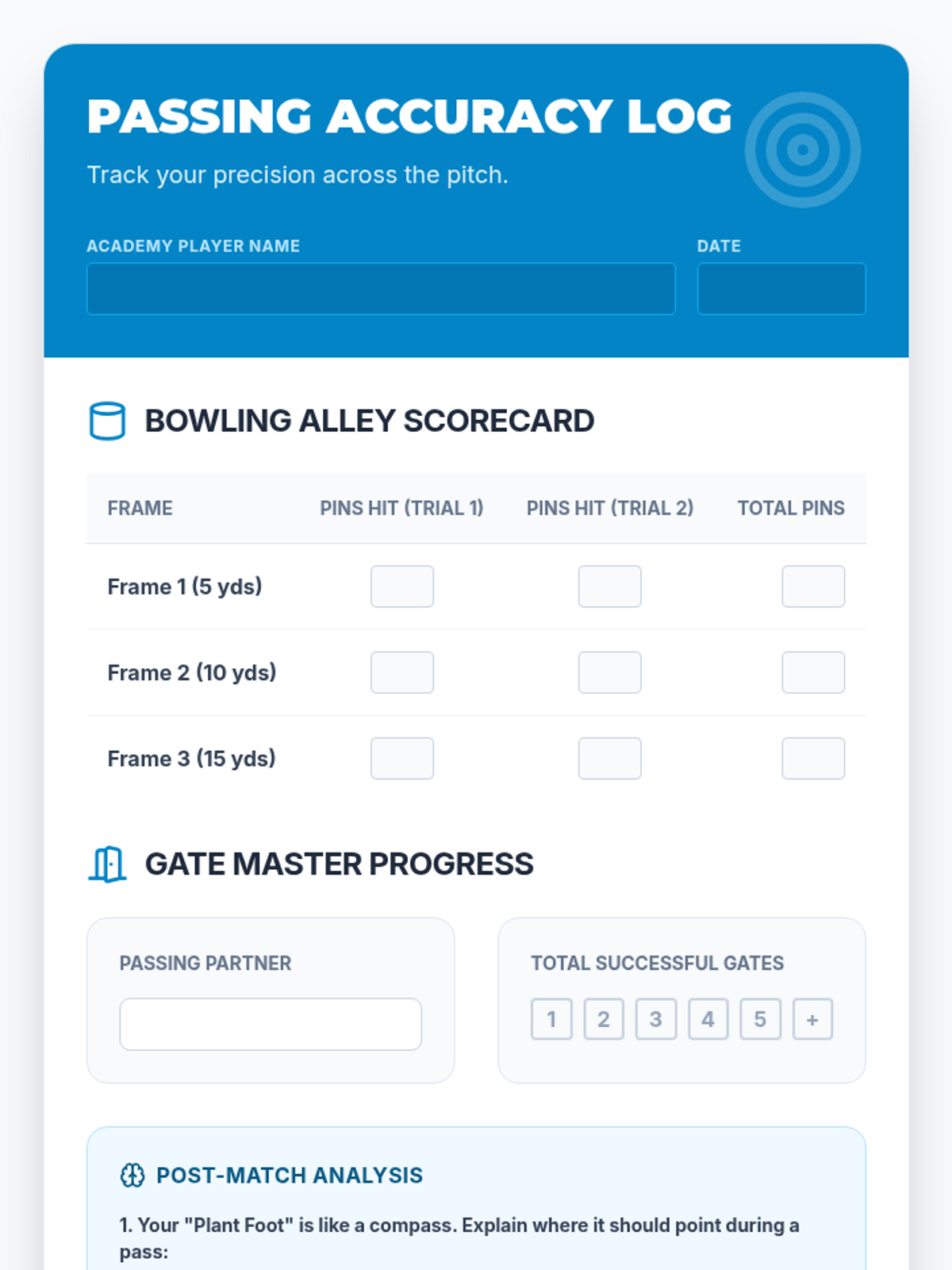
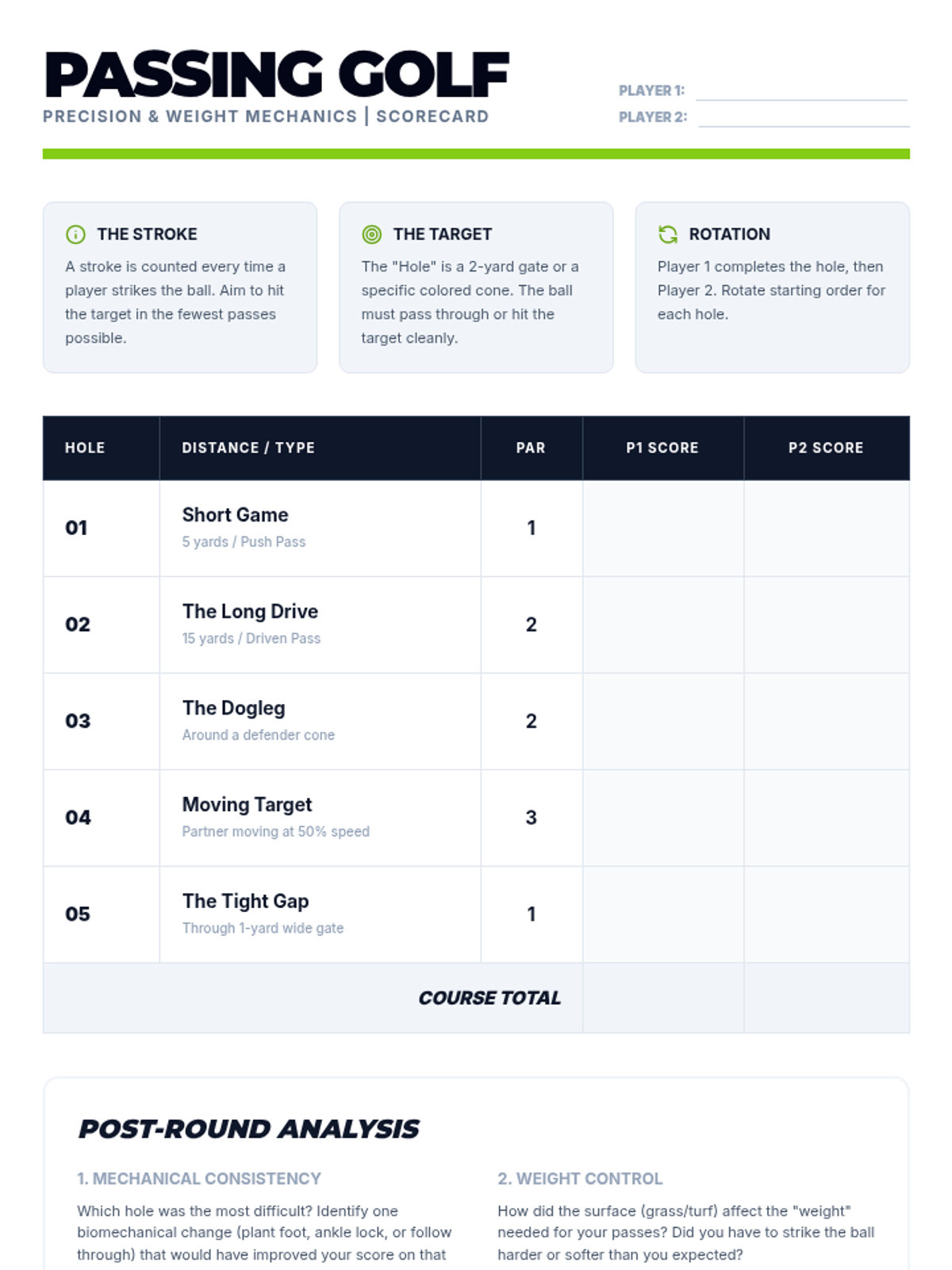
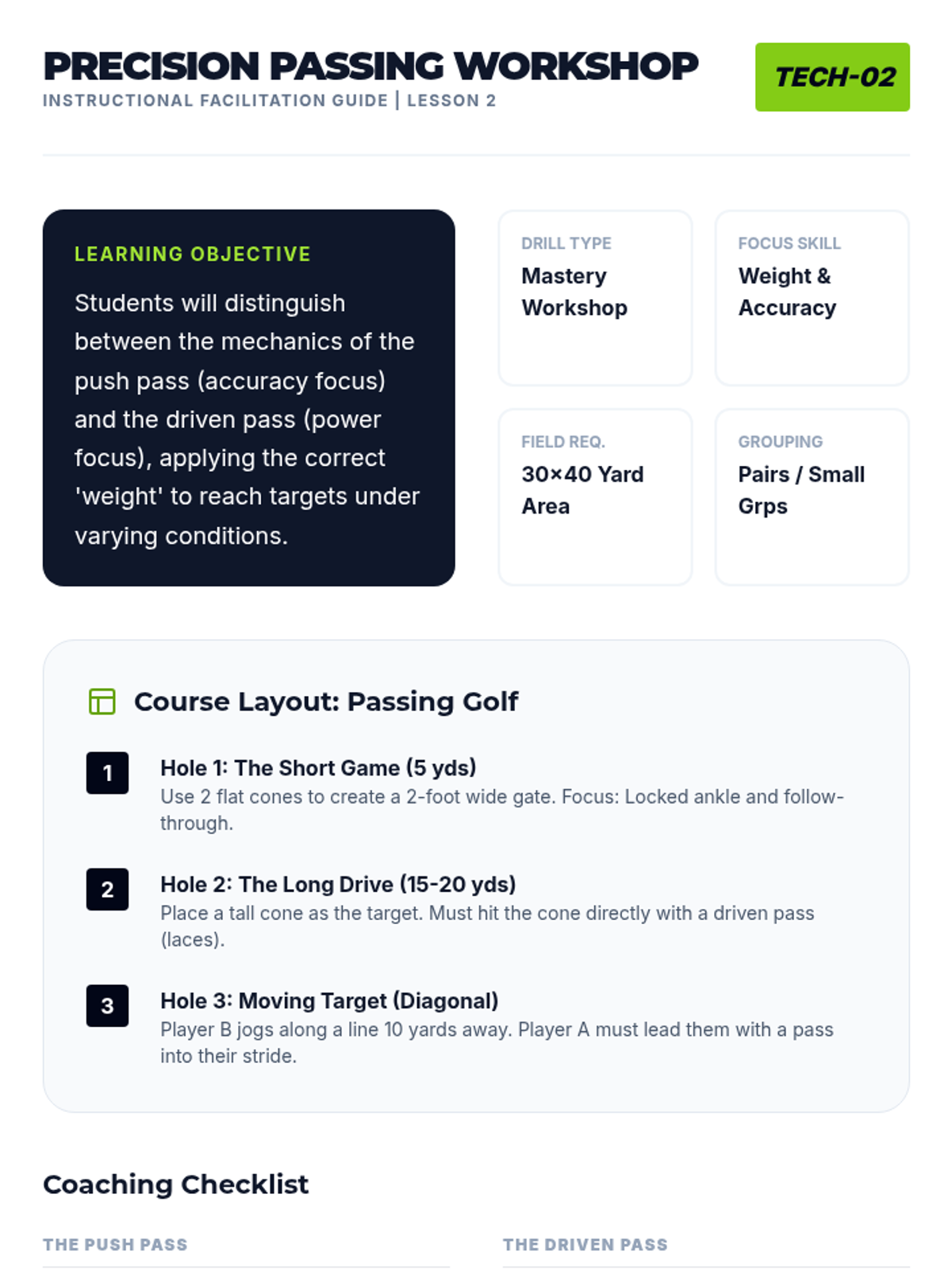
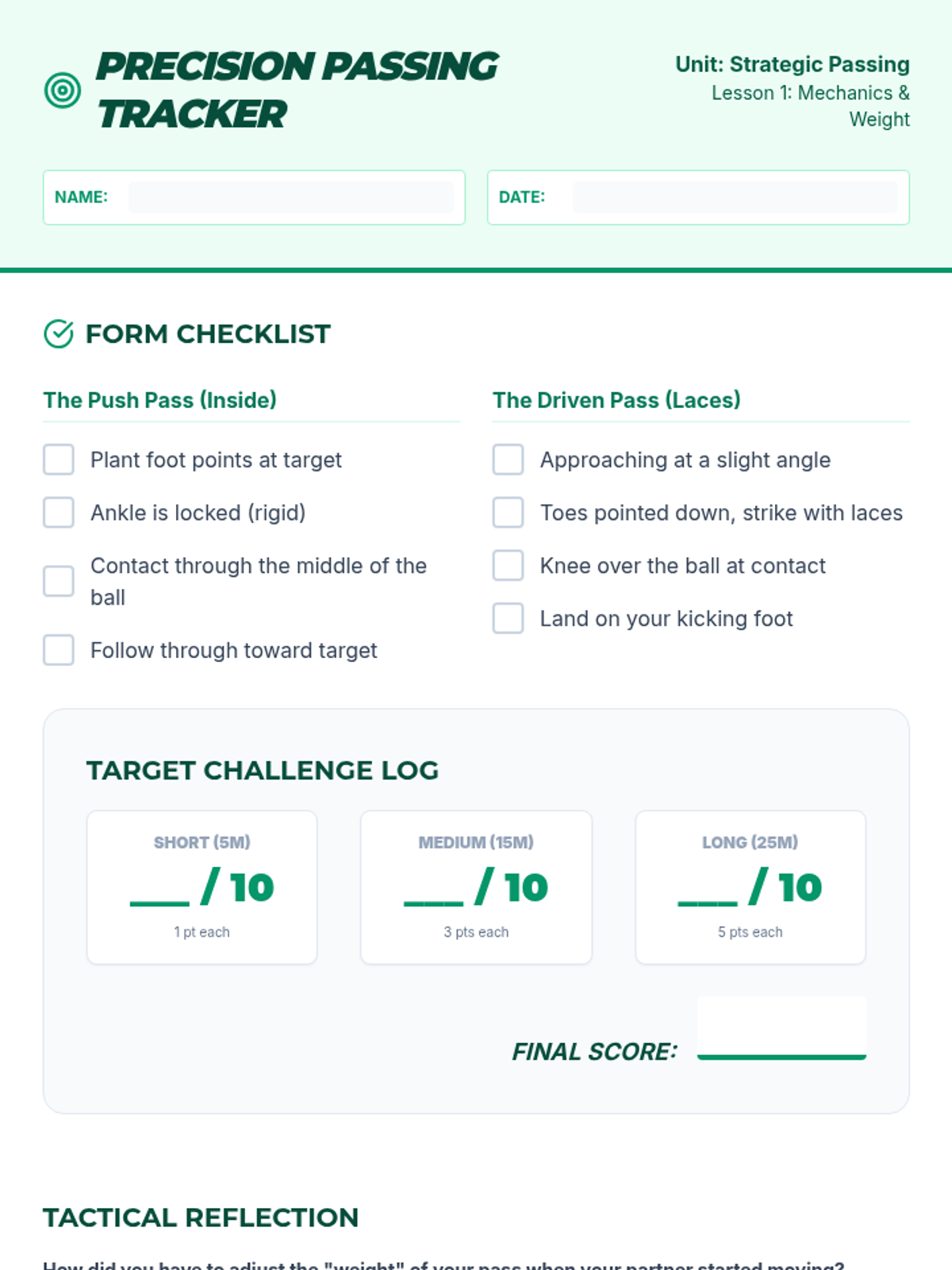
Focuses on the mechanics of the push pass for accuracy and the concept of 'weight' in passing.
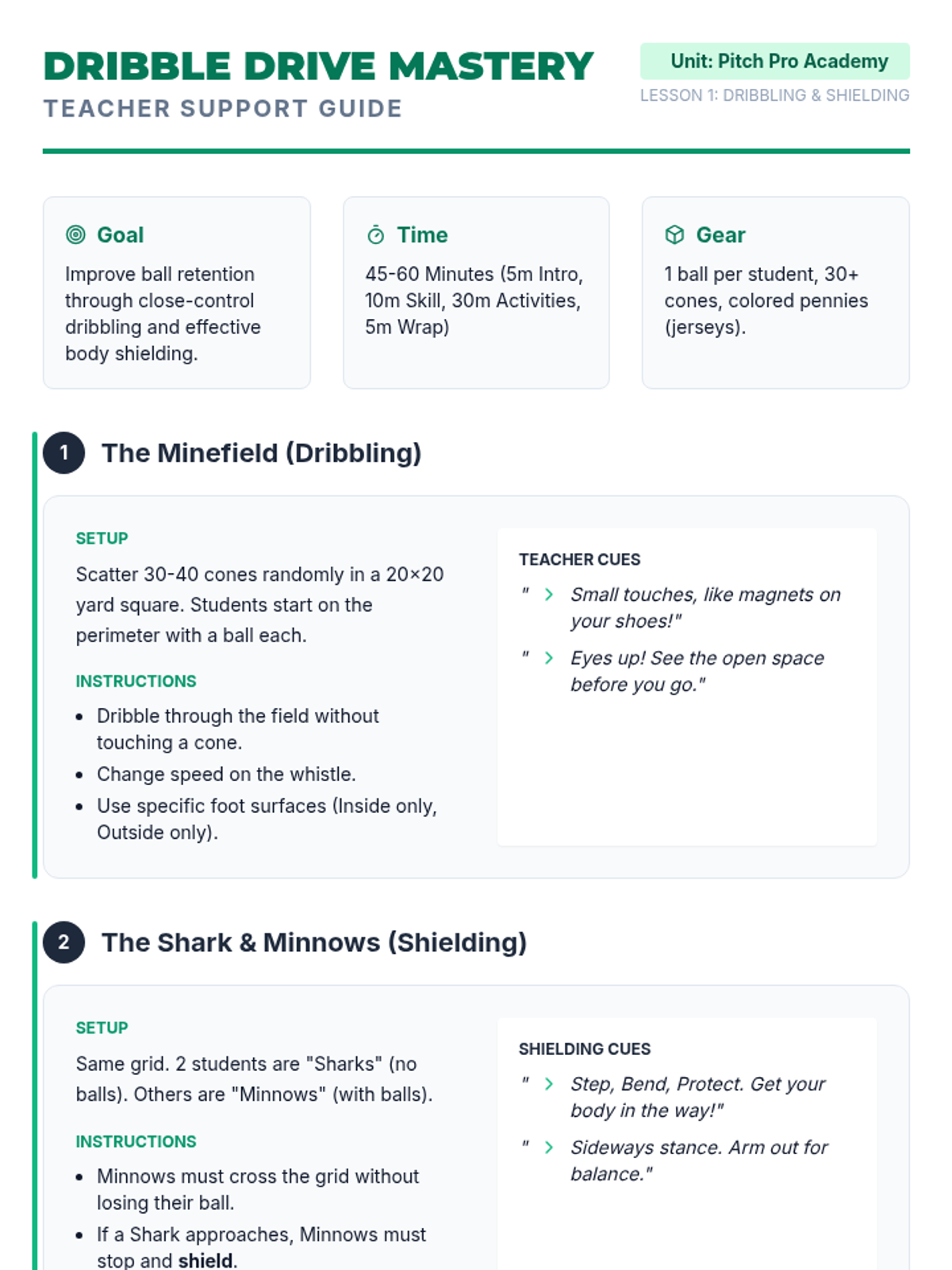
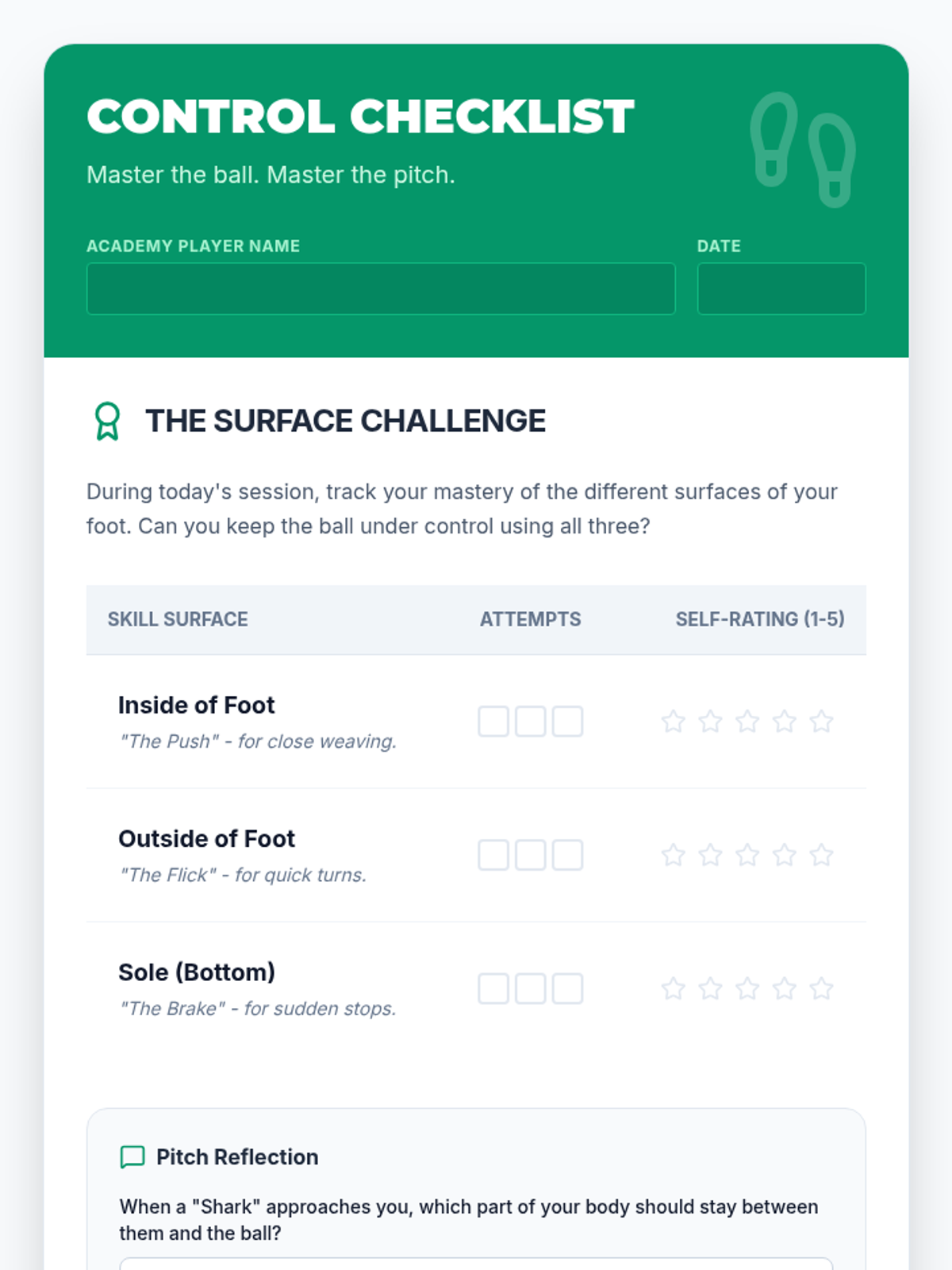
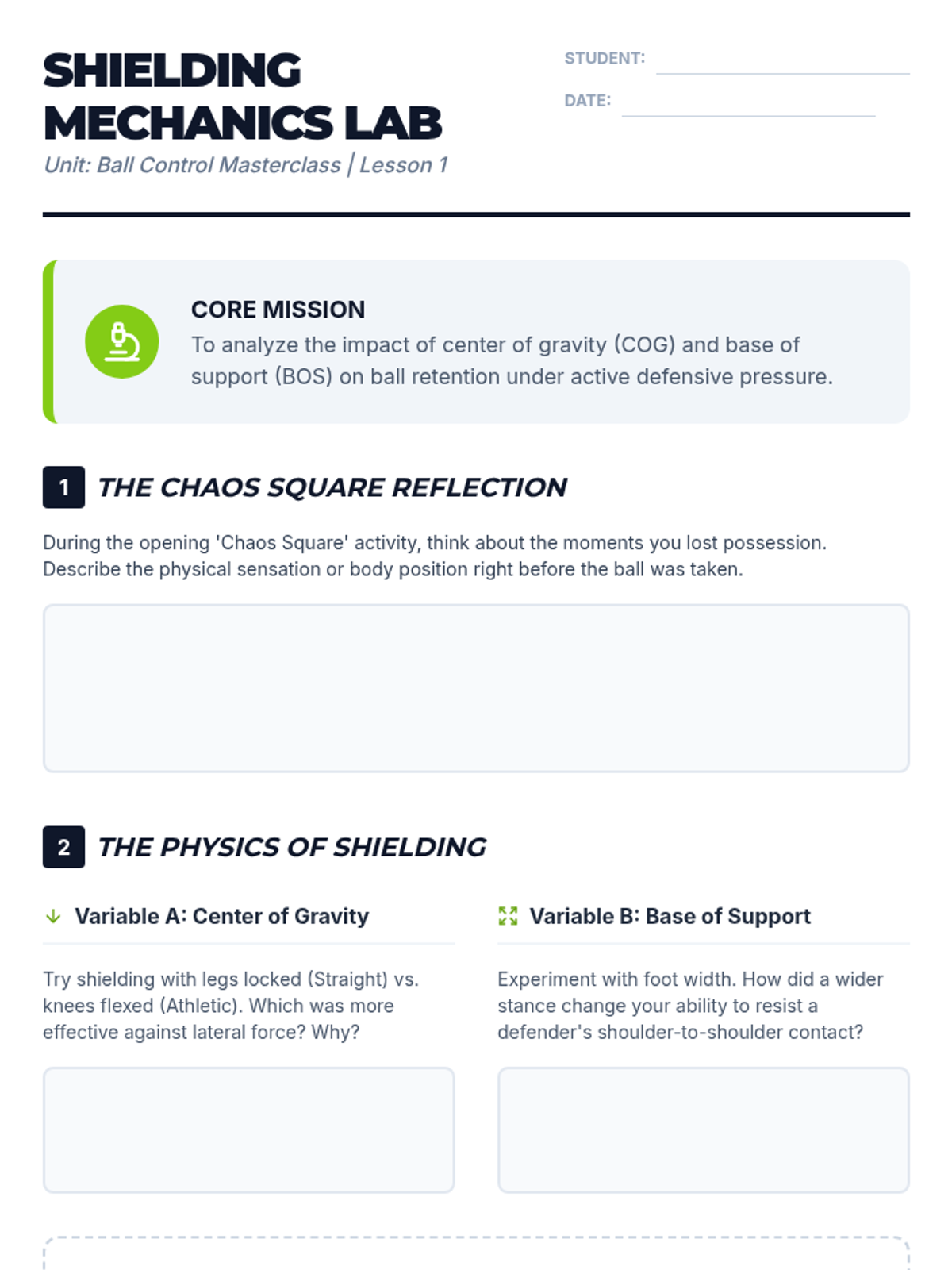
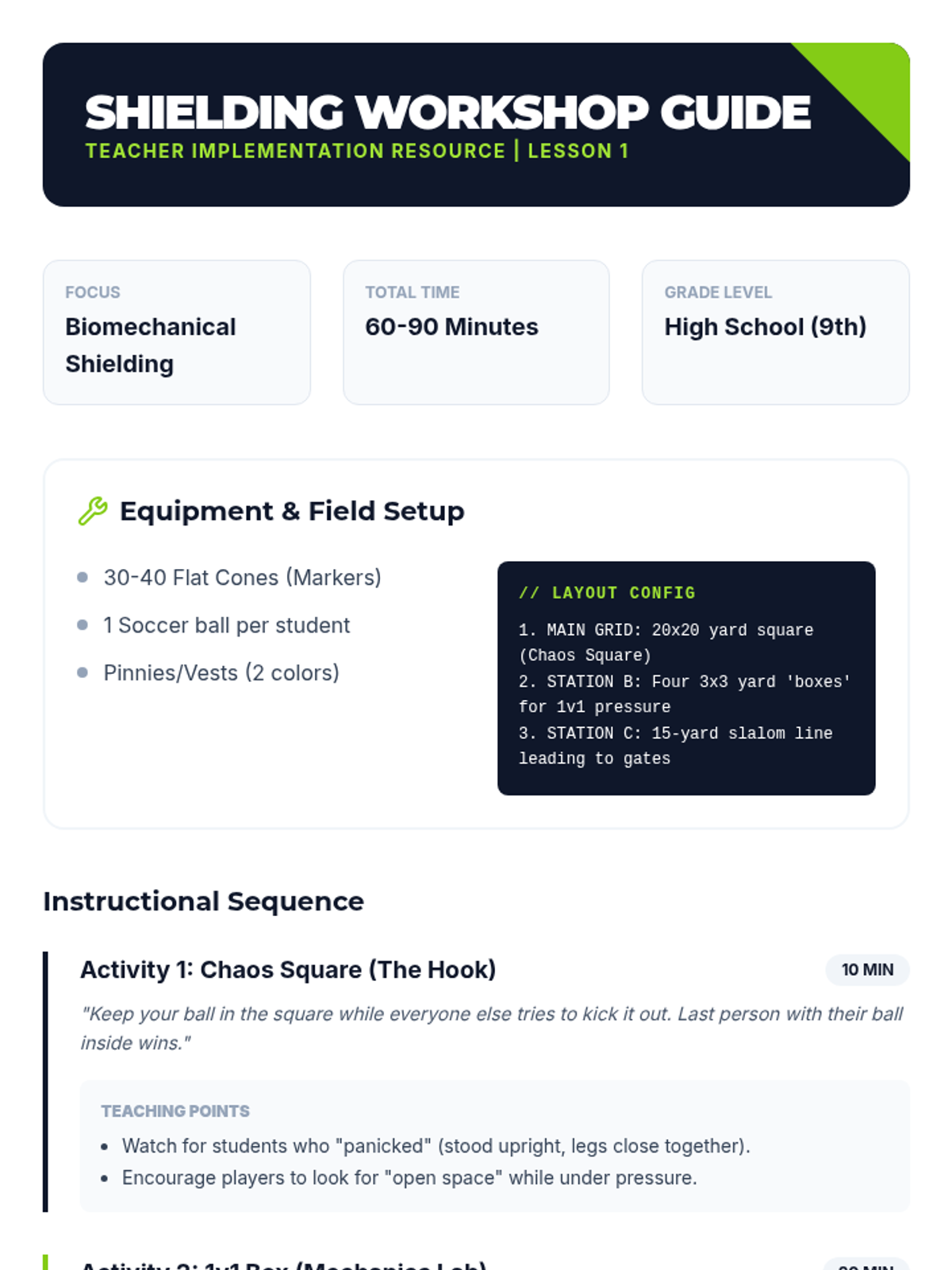
Students focus on keeping the ball close while moving and using their body to protect the ball from opponents.
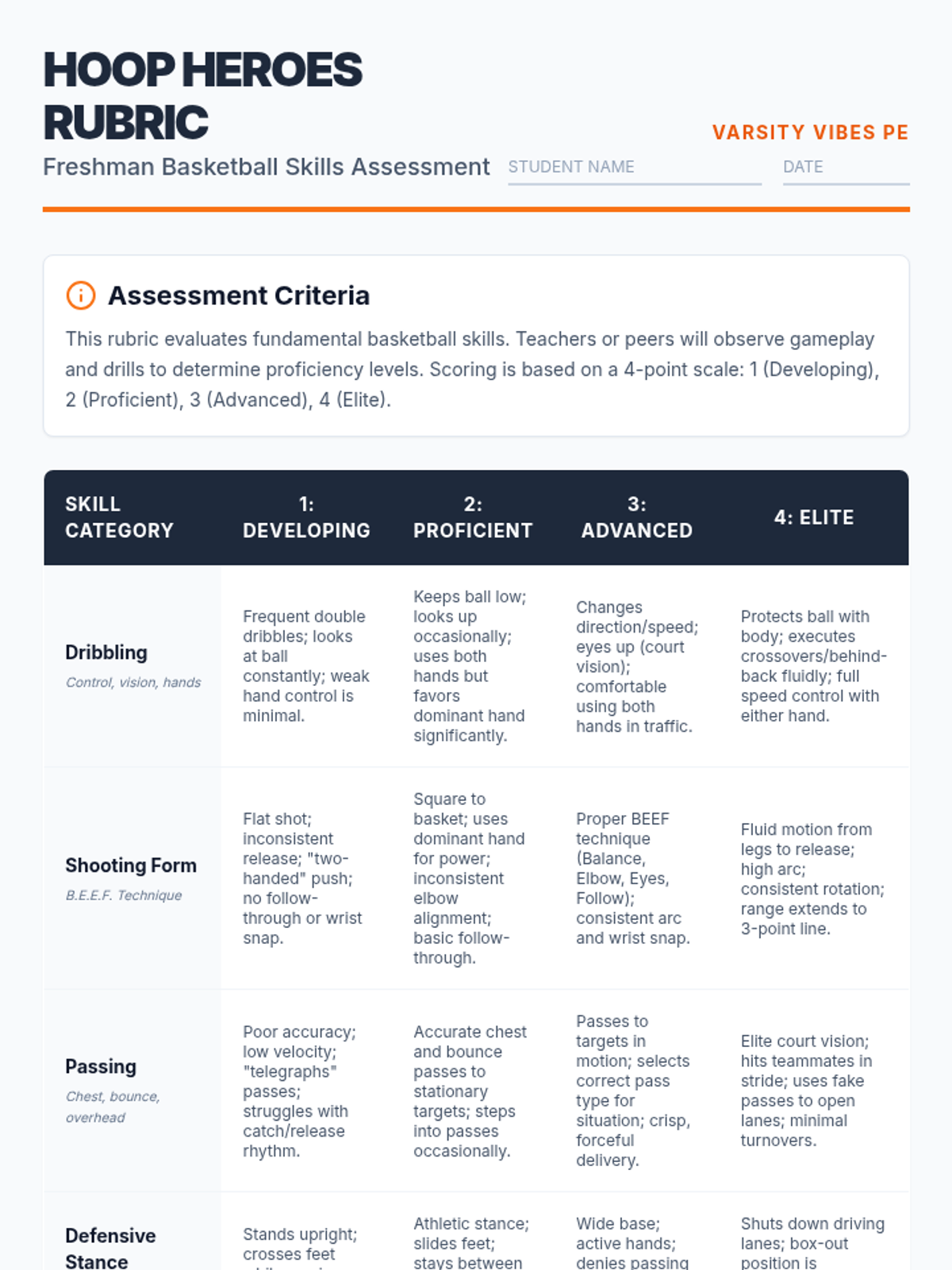
Assessment tools for mastering basketball fundamentals including shooting, dribbling, and defensive positioning.
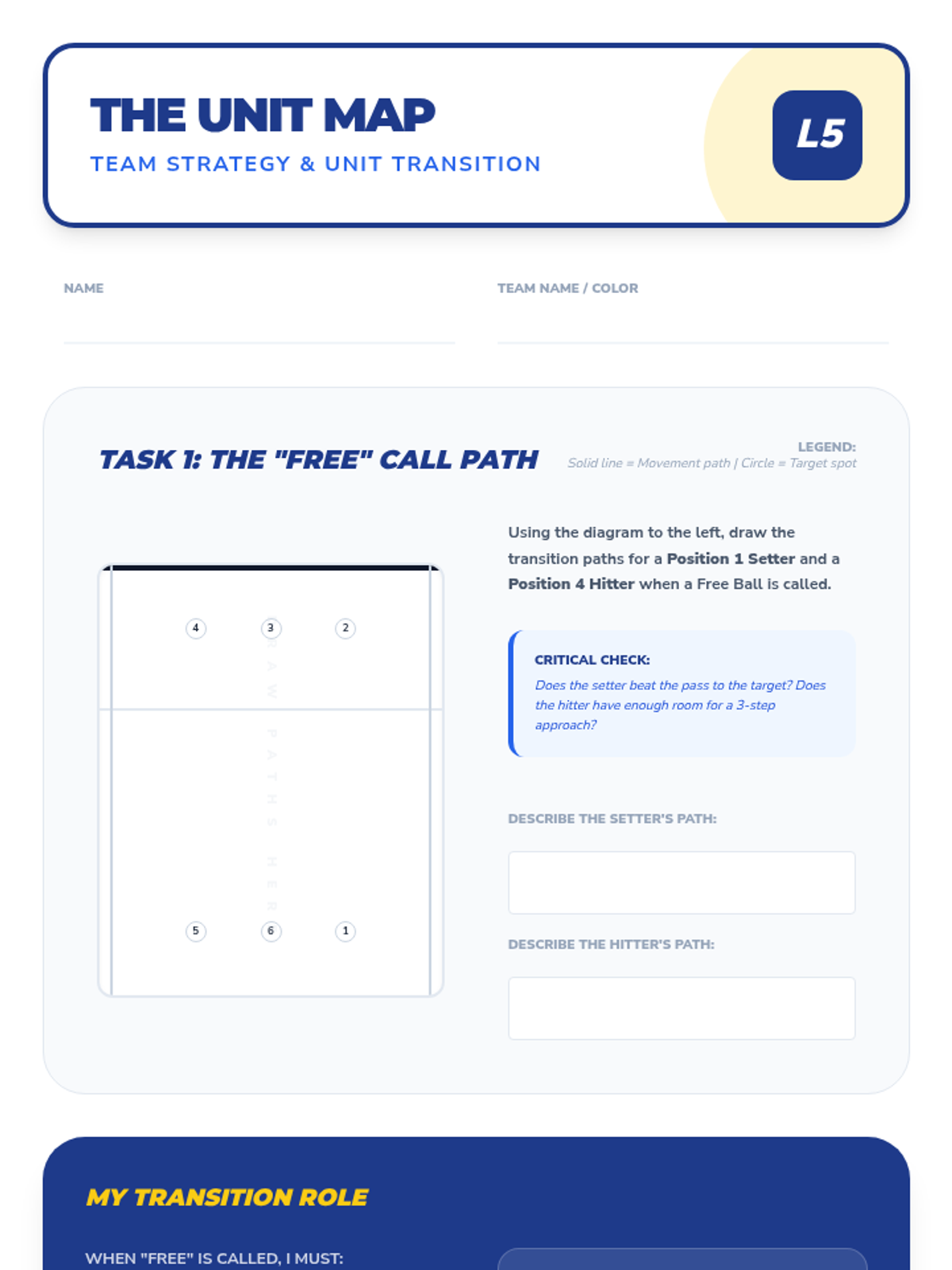
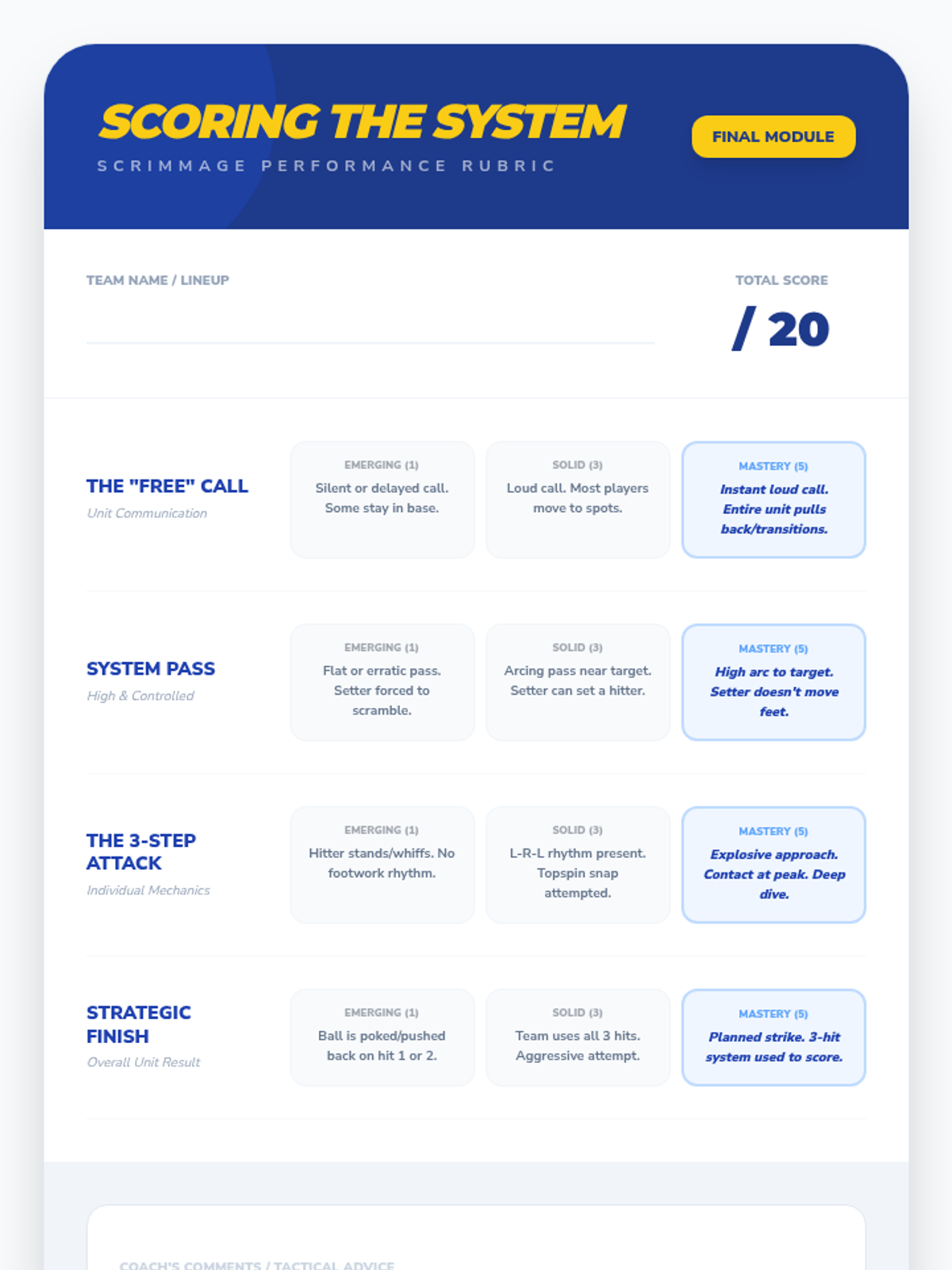
Students learn the concept of a 'free ball' offense, where the team pulls back to pass an easy ball, then transitions immediately to attack. The lesson simulates the full cycle: pass, set, and attack in a 6 vs. 6 setting. Emphasis is on moving as a unit.
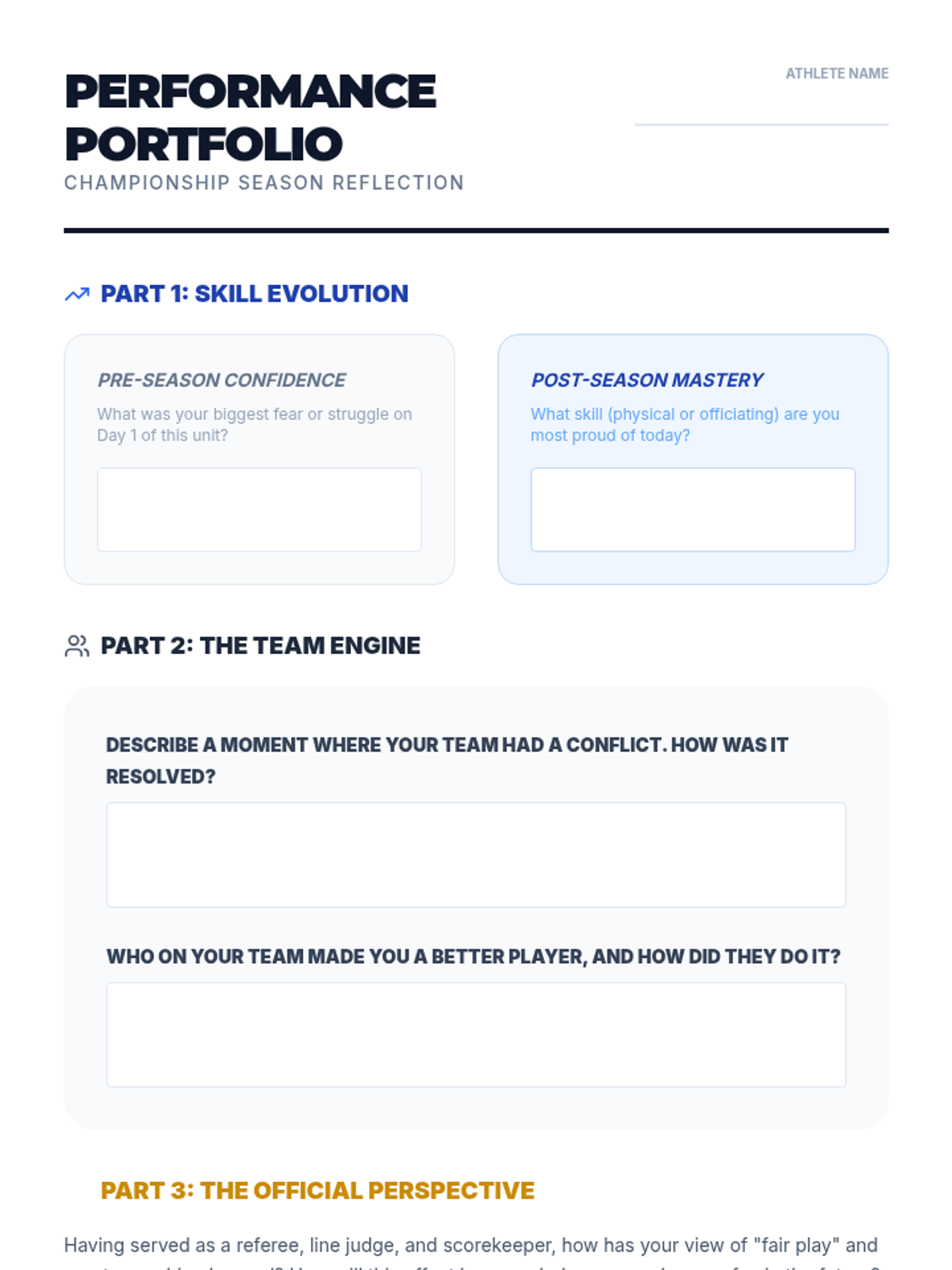
The sequence concludes with the championship matches and a comprehensive reflection on individual growth, team dynamics, and the value of sportsmanship.
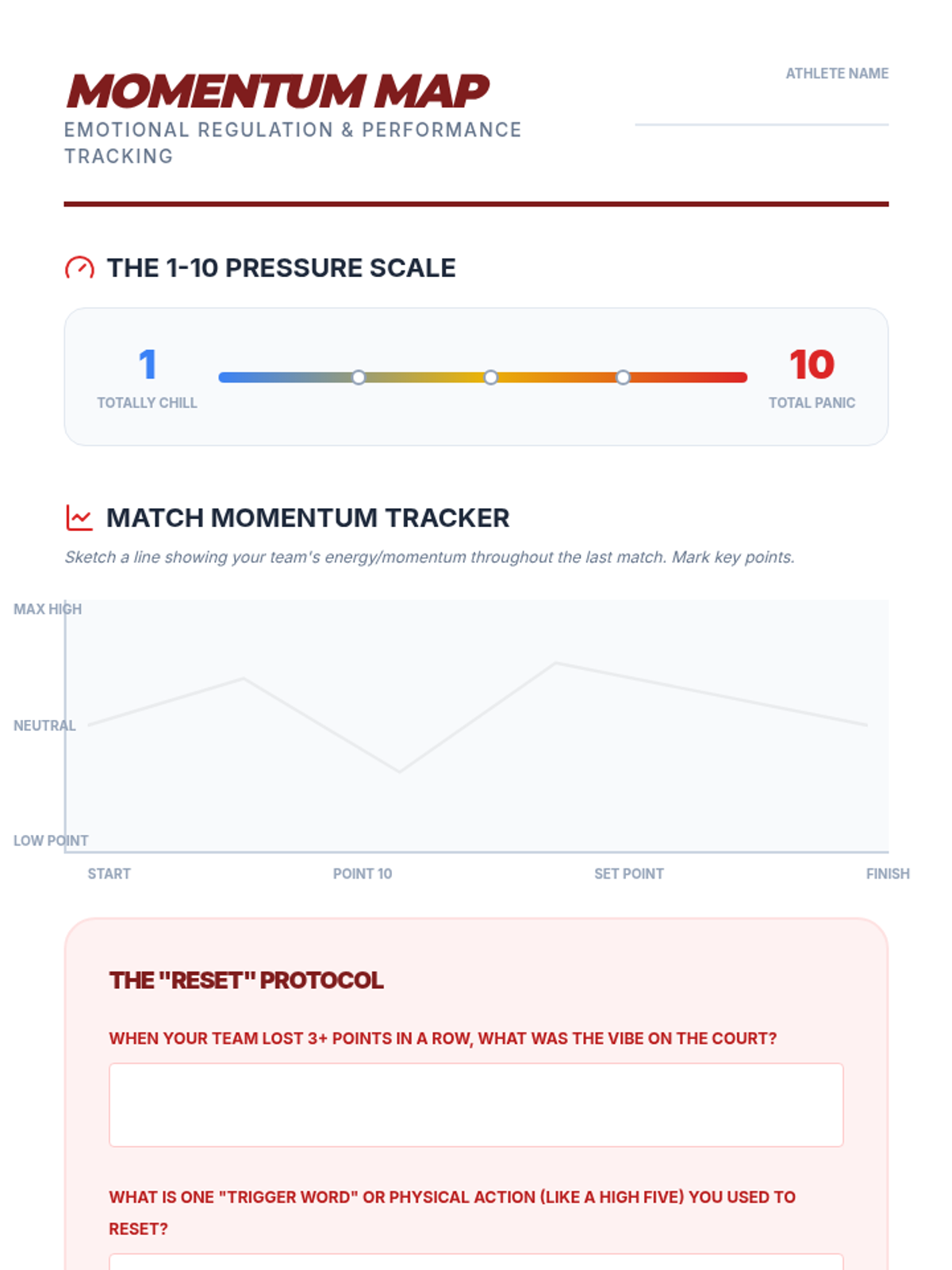
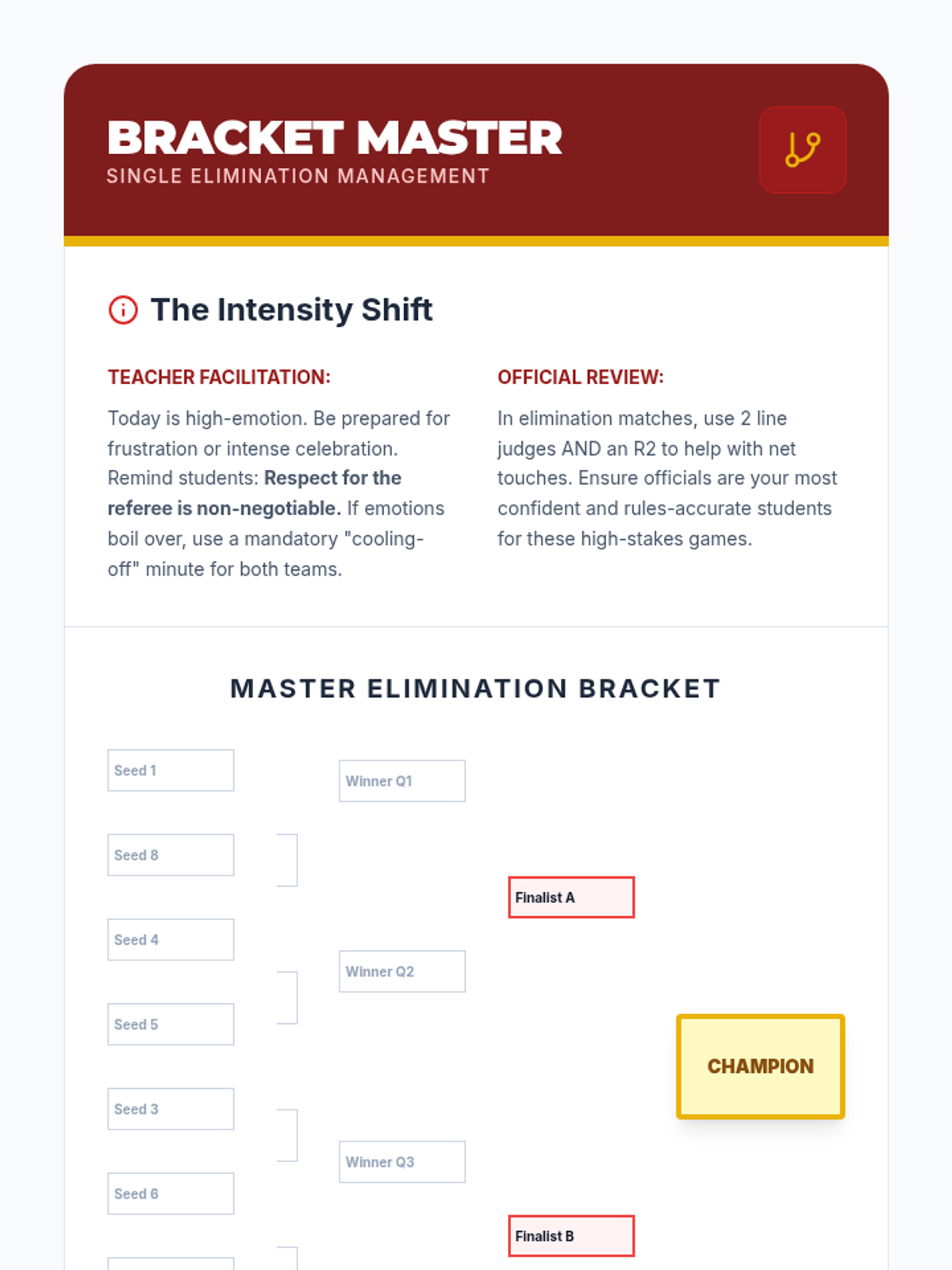
Intensity peaks during the elimination bracket, focusing on managing momentum swings, emotional regulation, and performing under the pressure of sudden-death matches.
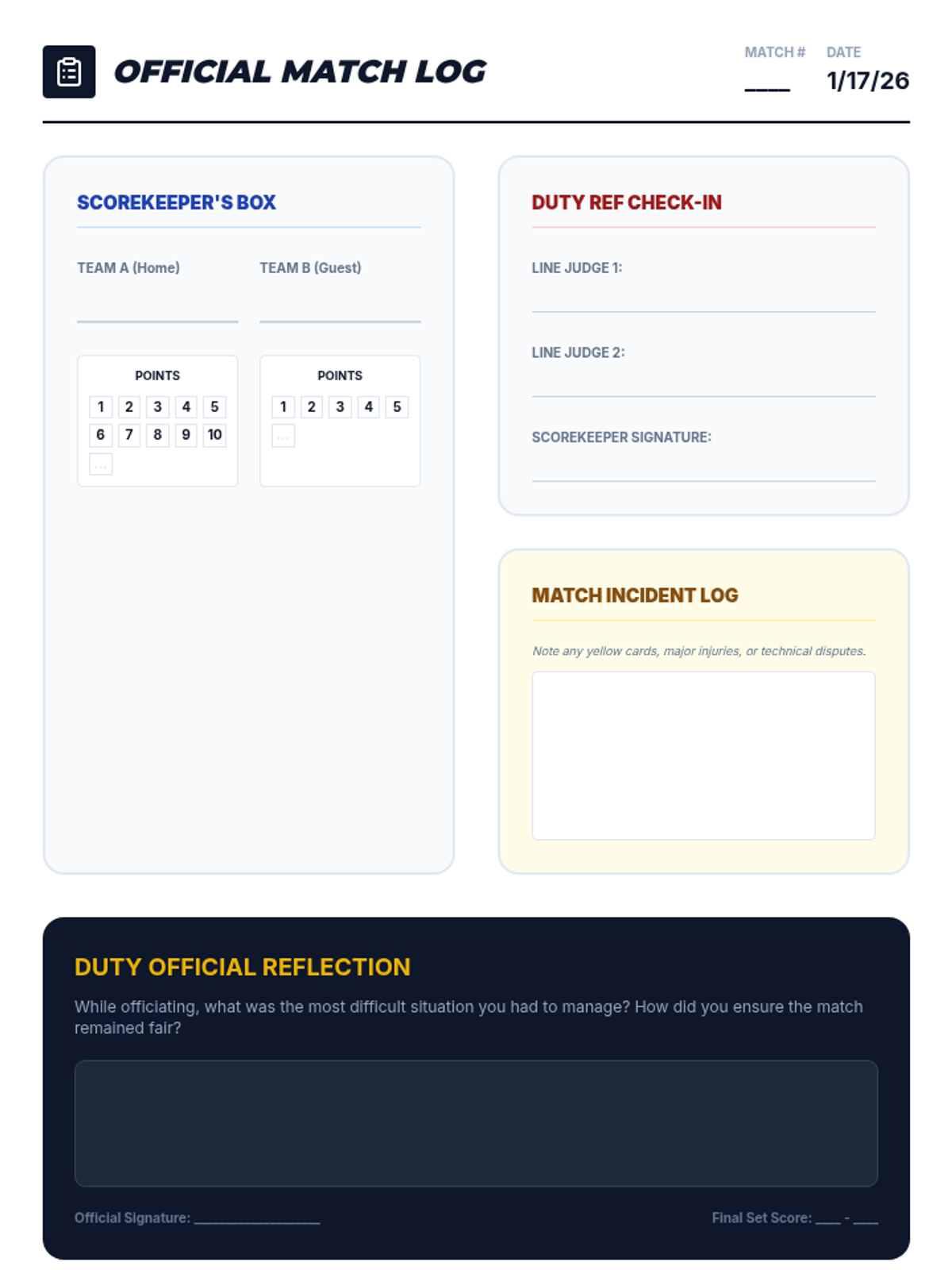
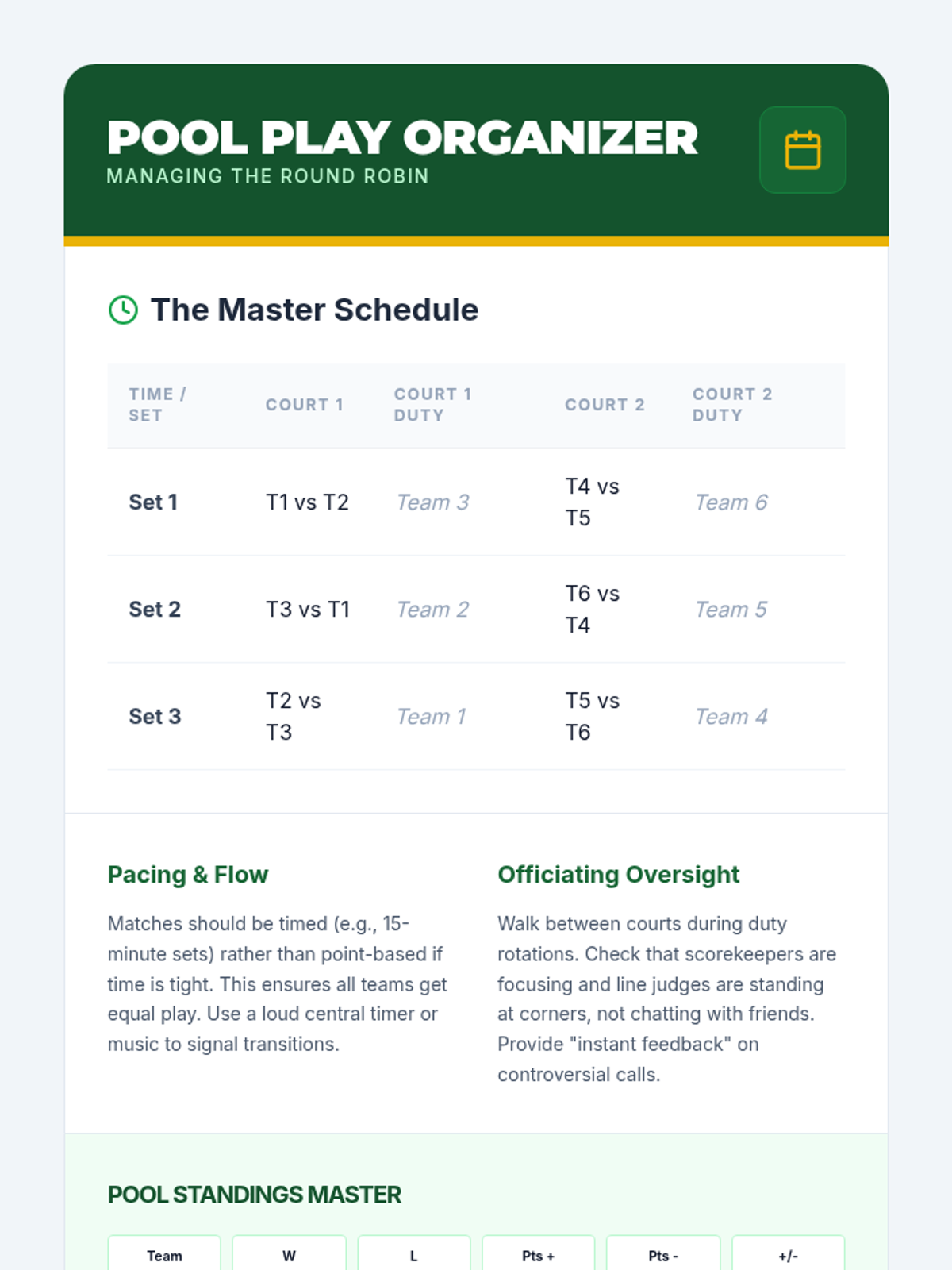
The tournament begins with round-robin pool play, where students rotate between active gameplay and official officiating duties including scorekeeping and line judging.
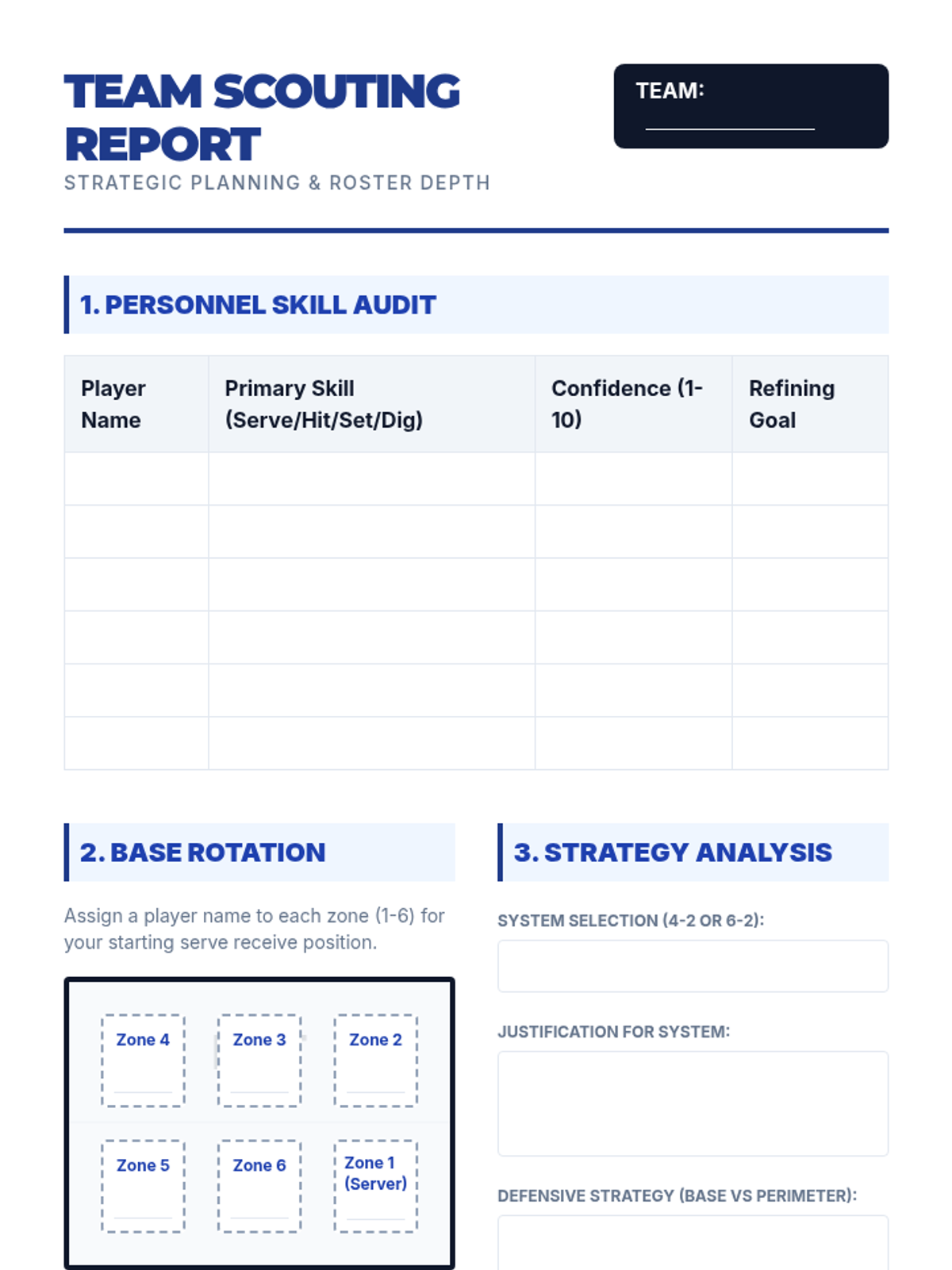
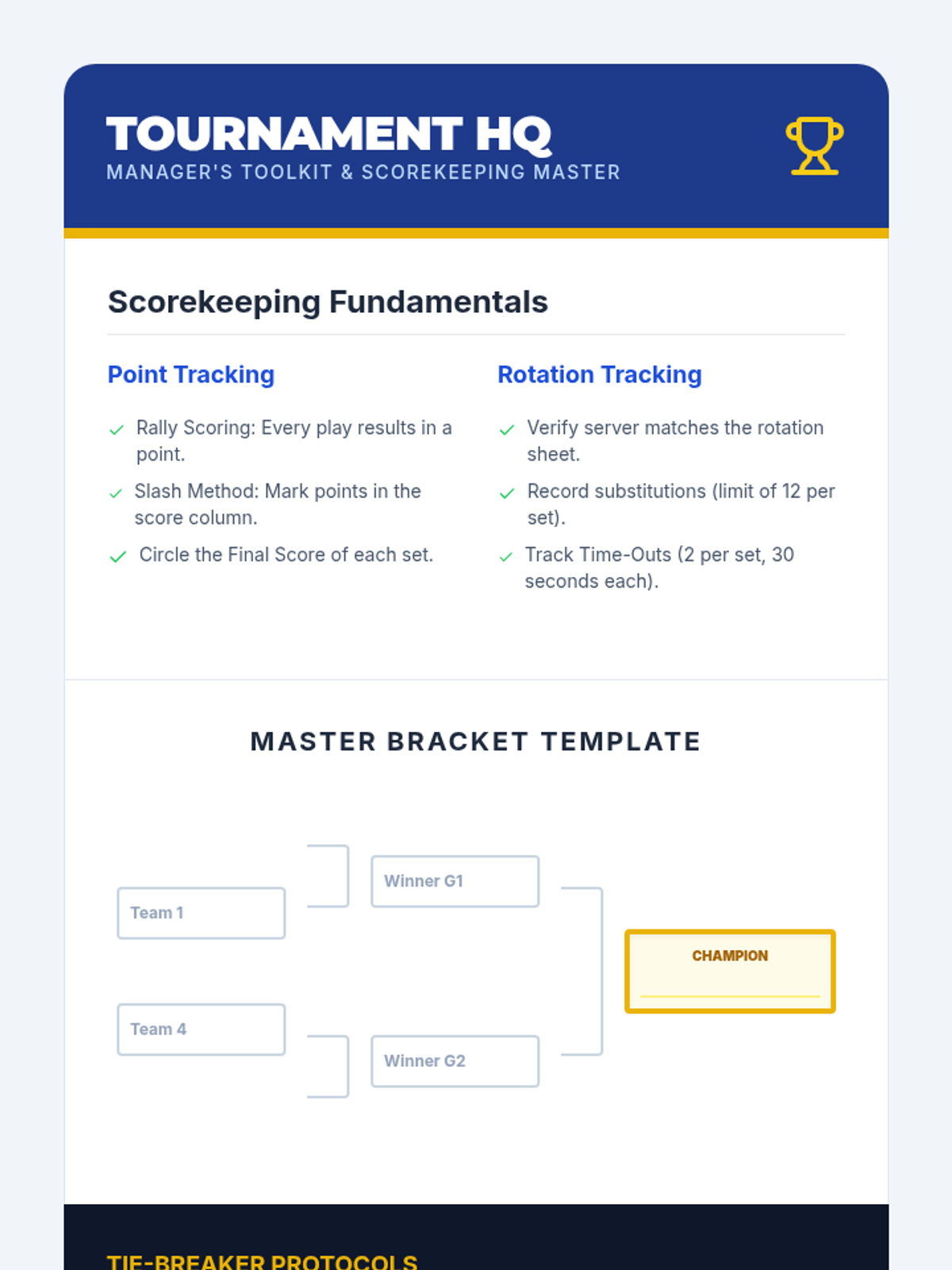
Teams develop their competitive identity by designing offensive and defensive systems, creating scouting reports, and understanding the logistics of tournament brackets.
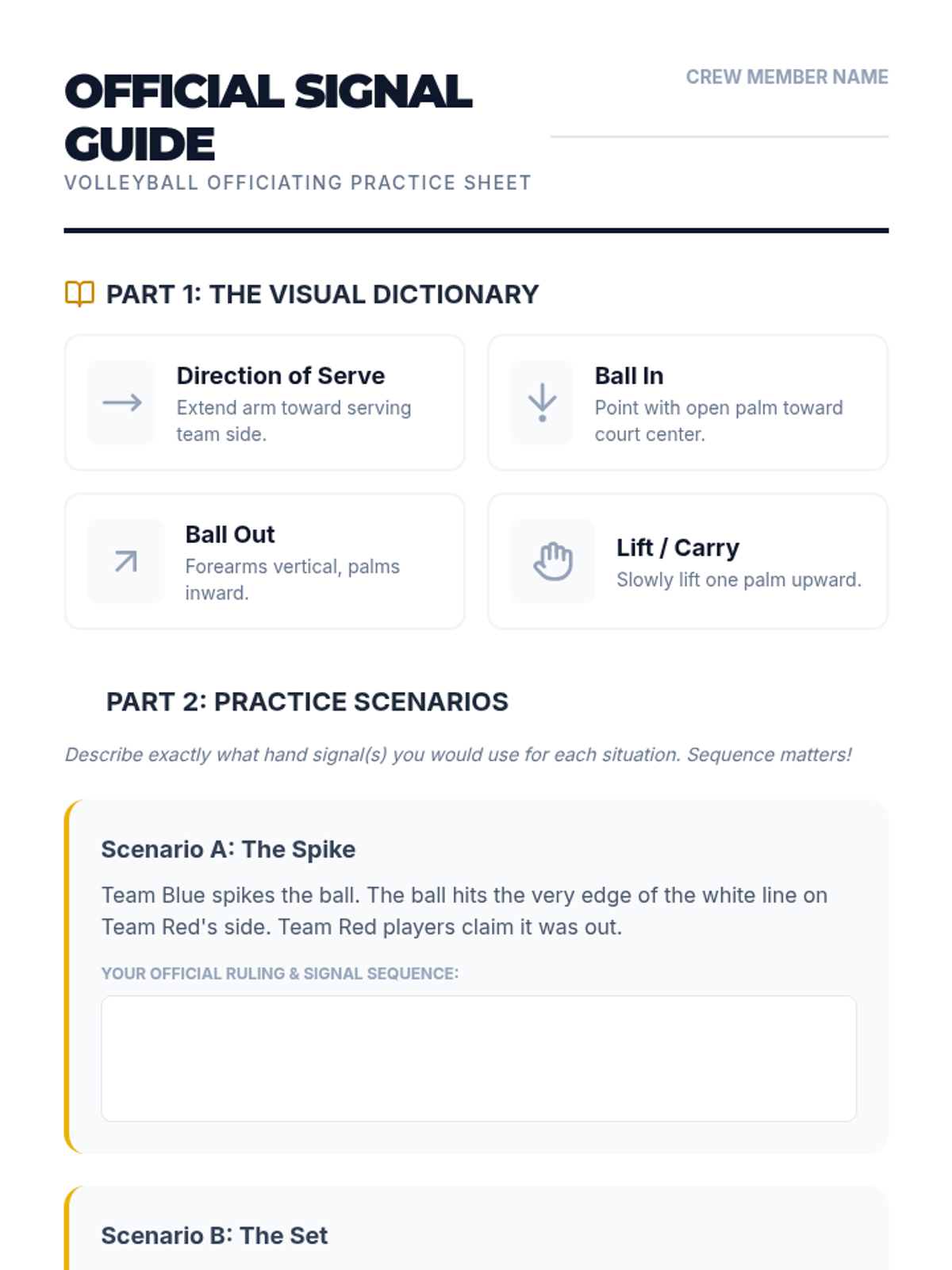
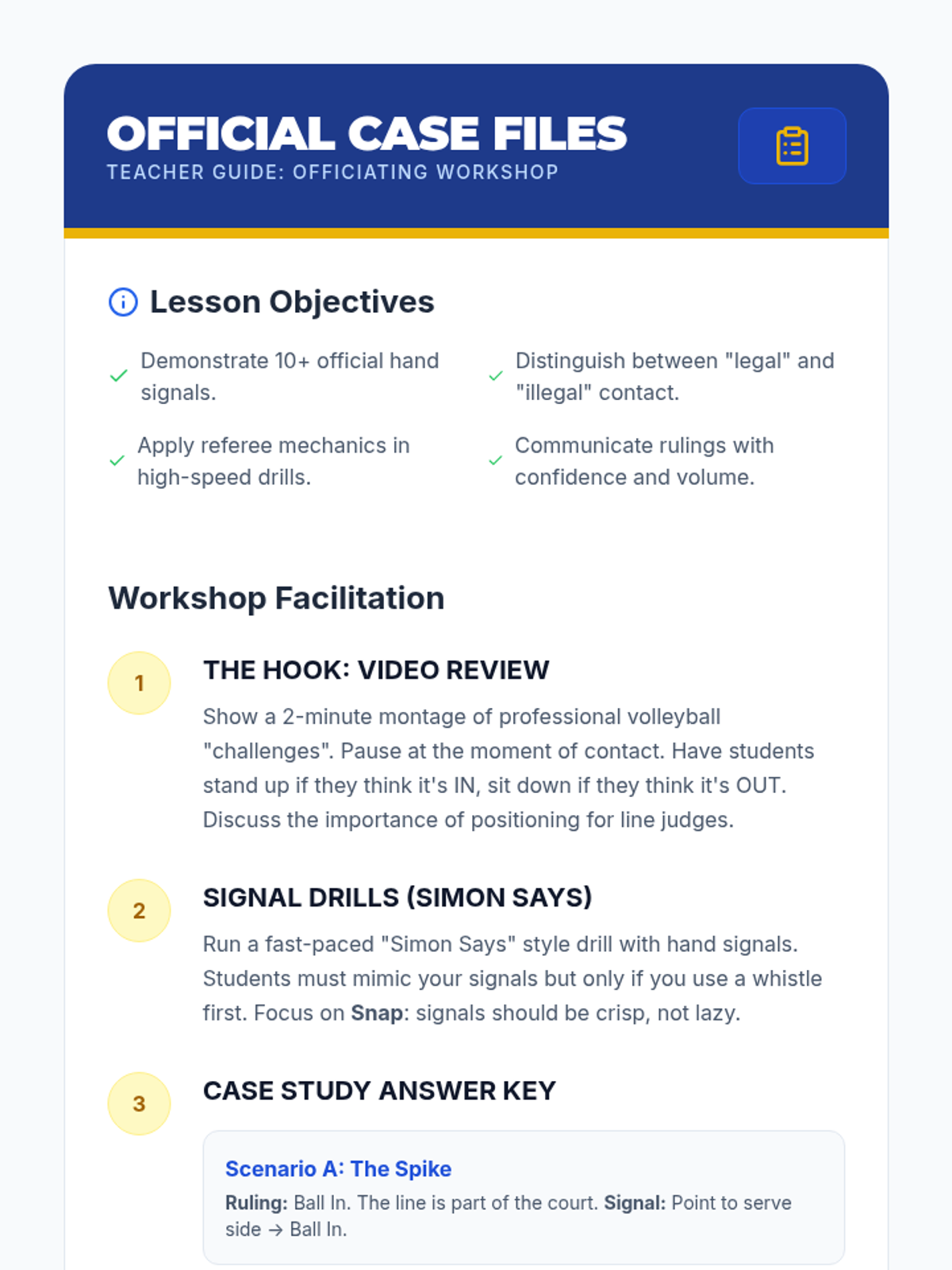
Students master the visual language of volleyball officiating, learning official hand signals, referee responsibilities, and the nuances of rule interpretation for competitive play.
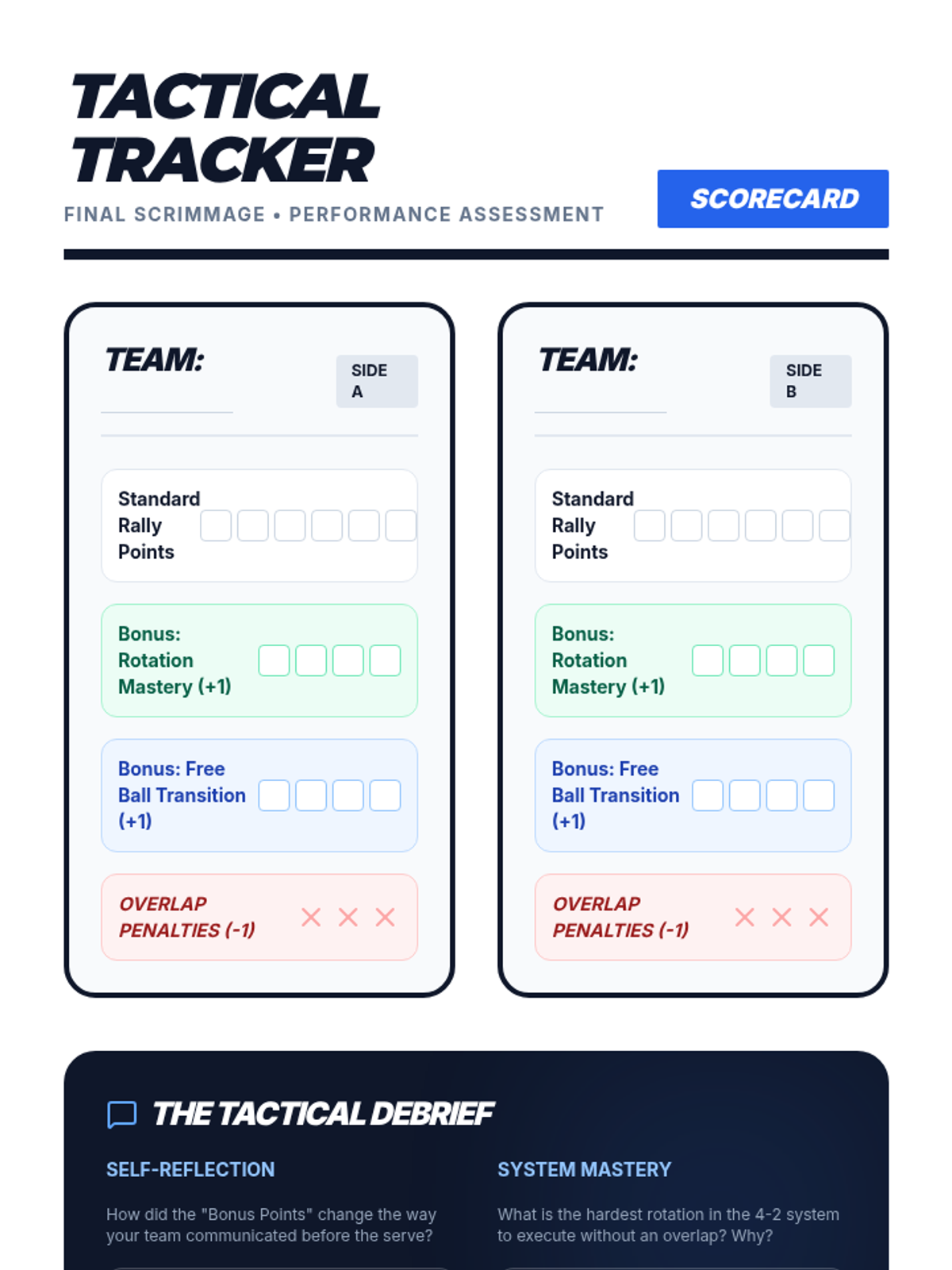
A controlled scrimmage where points are awarded for rotational accuracy and successful team transitions.
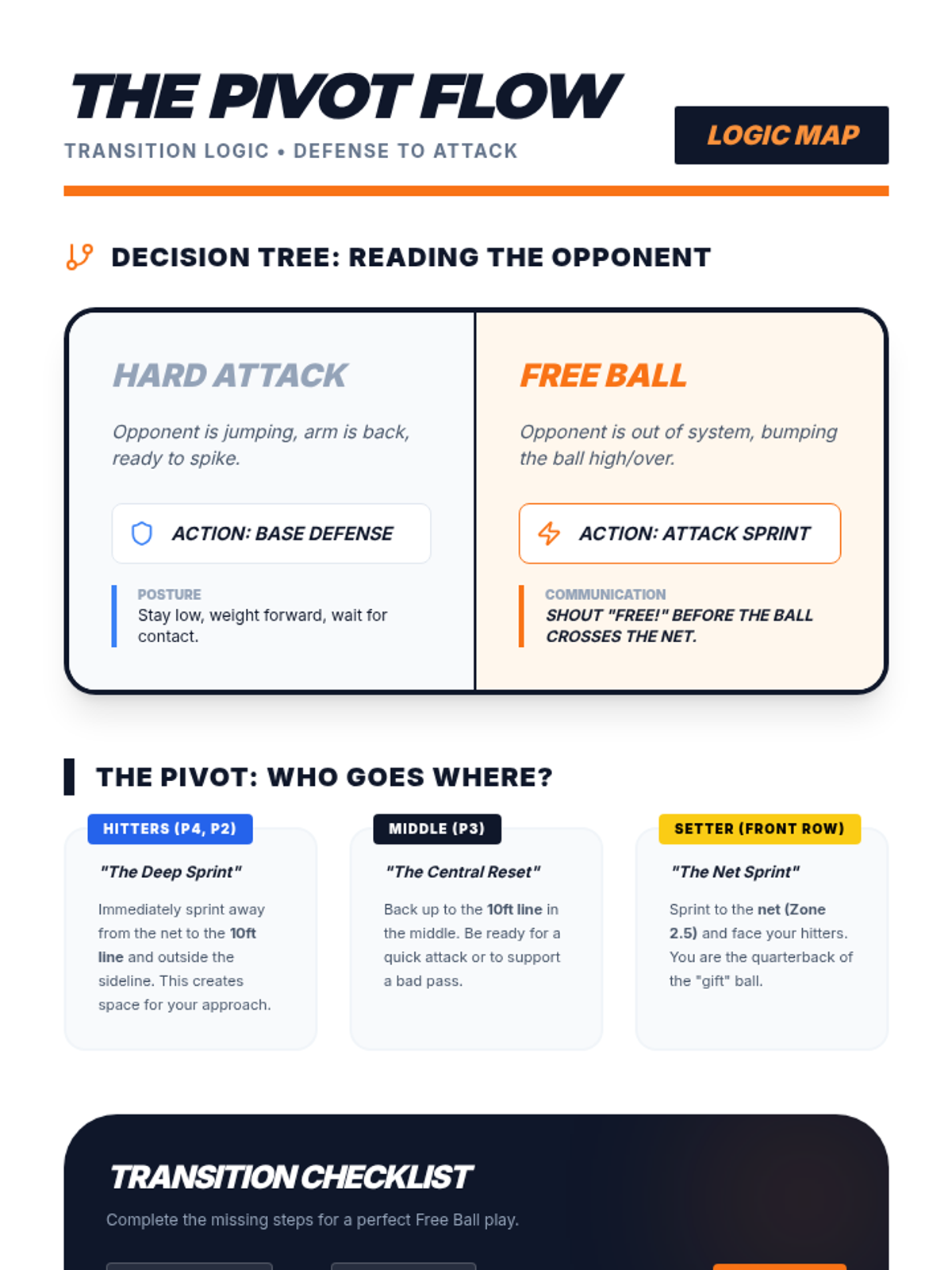
Drills focused on recognizing free balls and immediately transitioning from a defensive stance to an offensive attack.
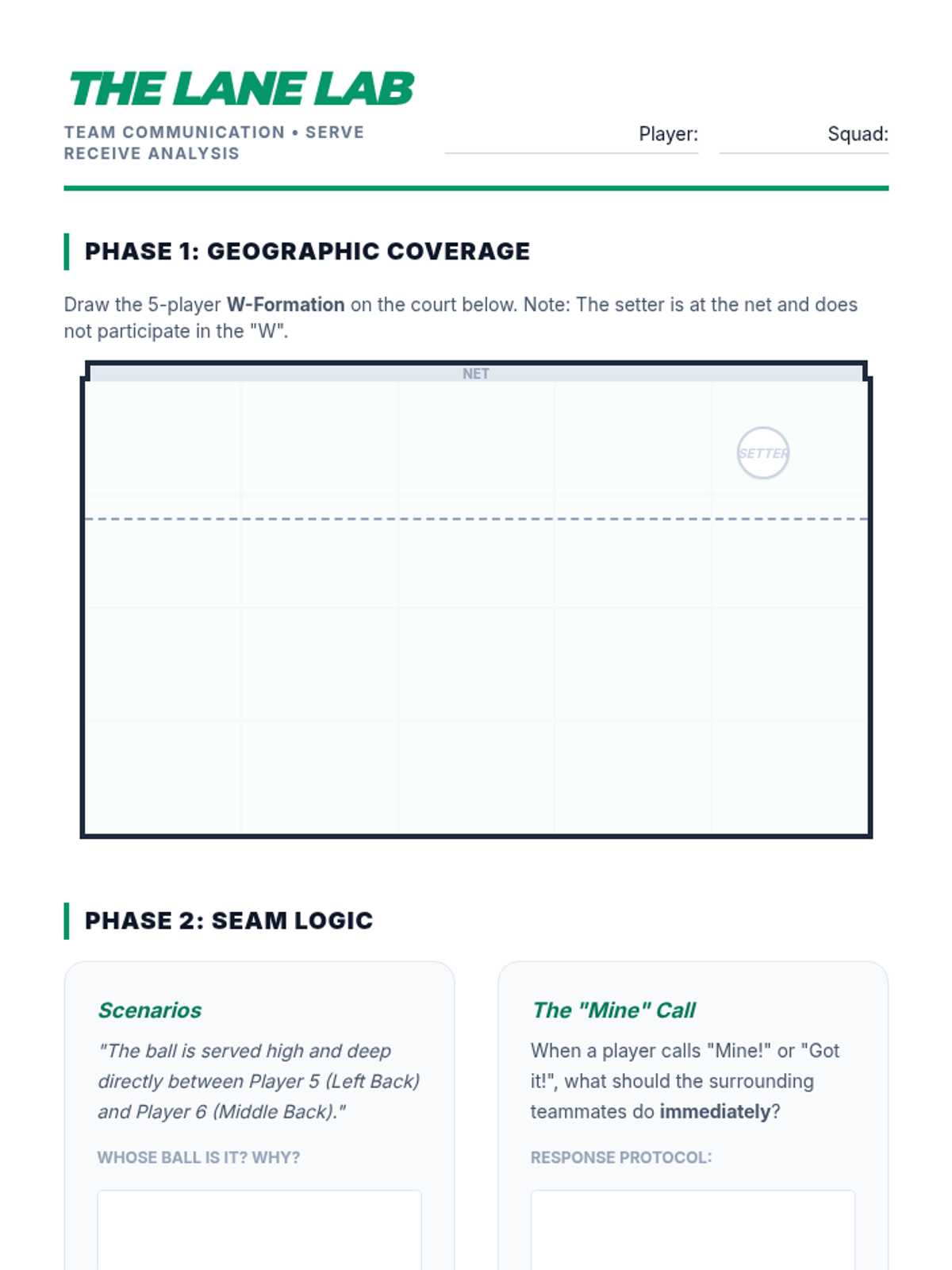
Practicing the 'W' formation for serve receive, with a heavy emphasis on verbal communication and lane responsibility.
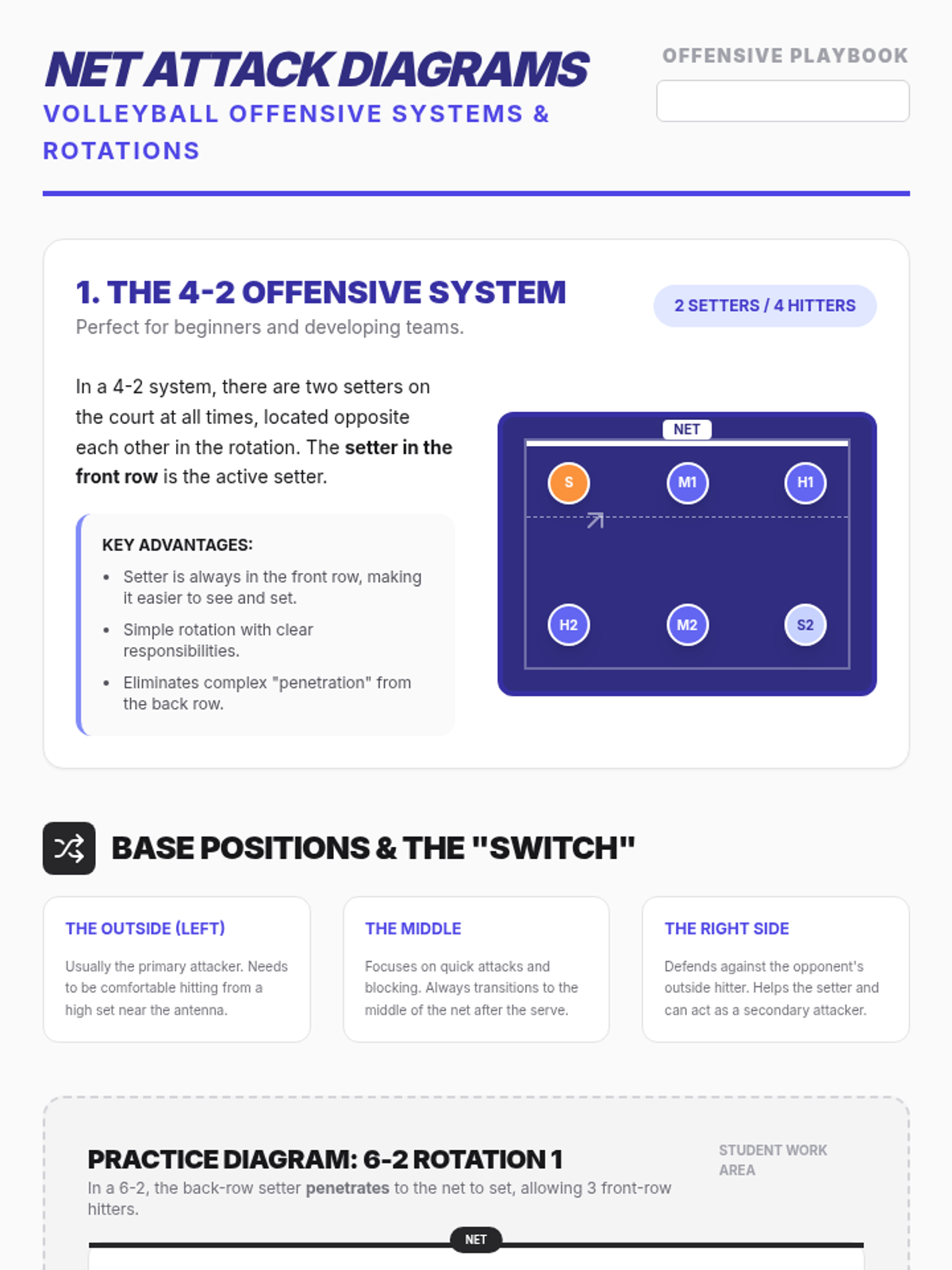
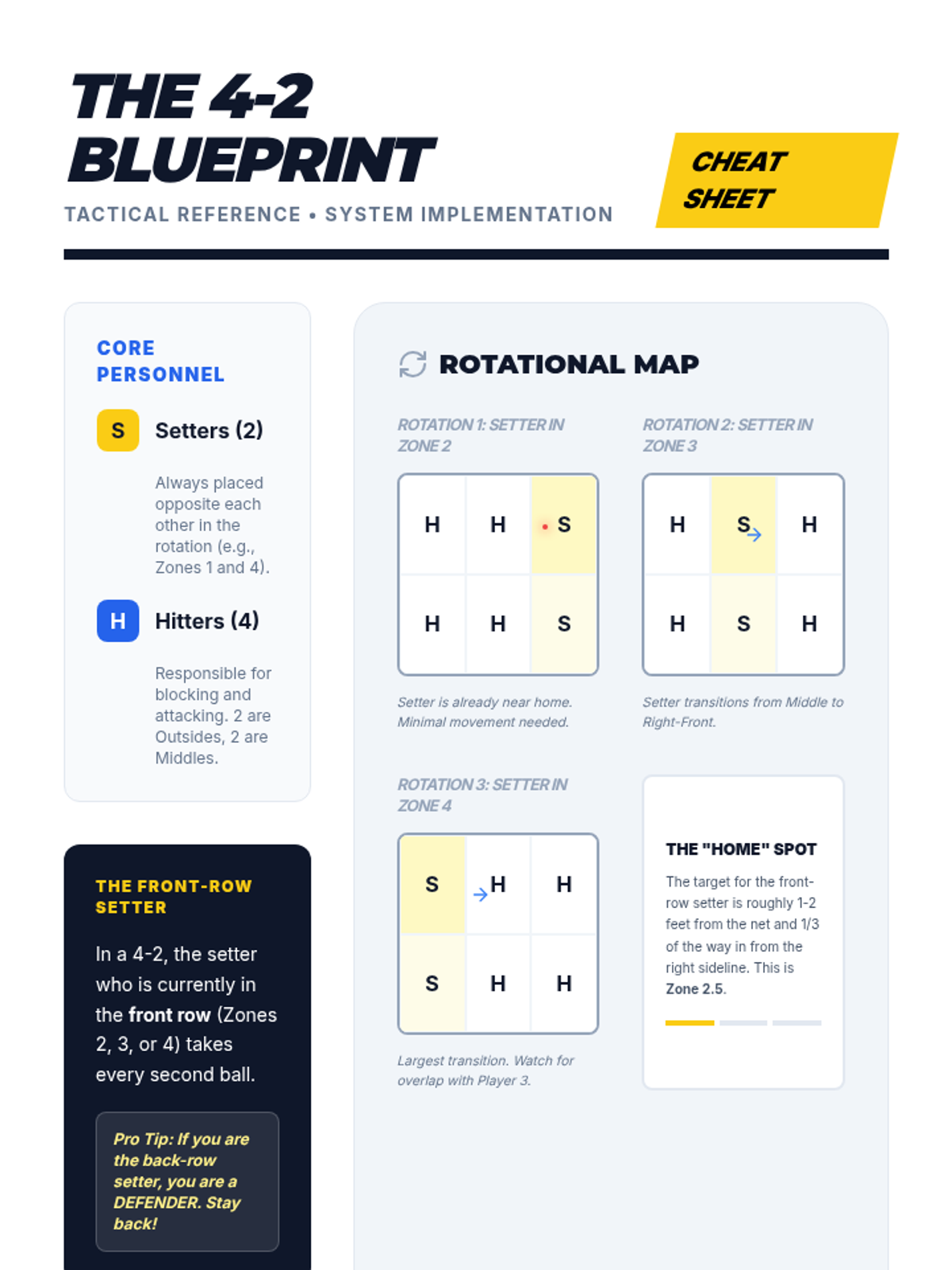
An introduction to the 4-2 system (4 hitters, 2 setters), focusing on identifying the front-row setter and transitioning to setting positions.
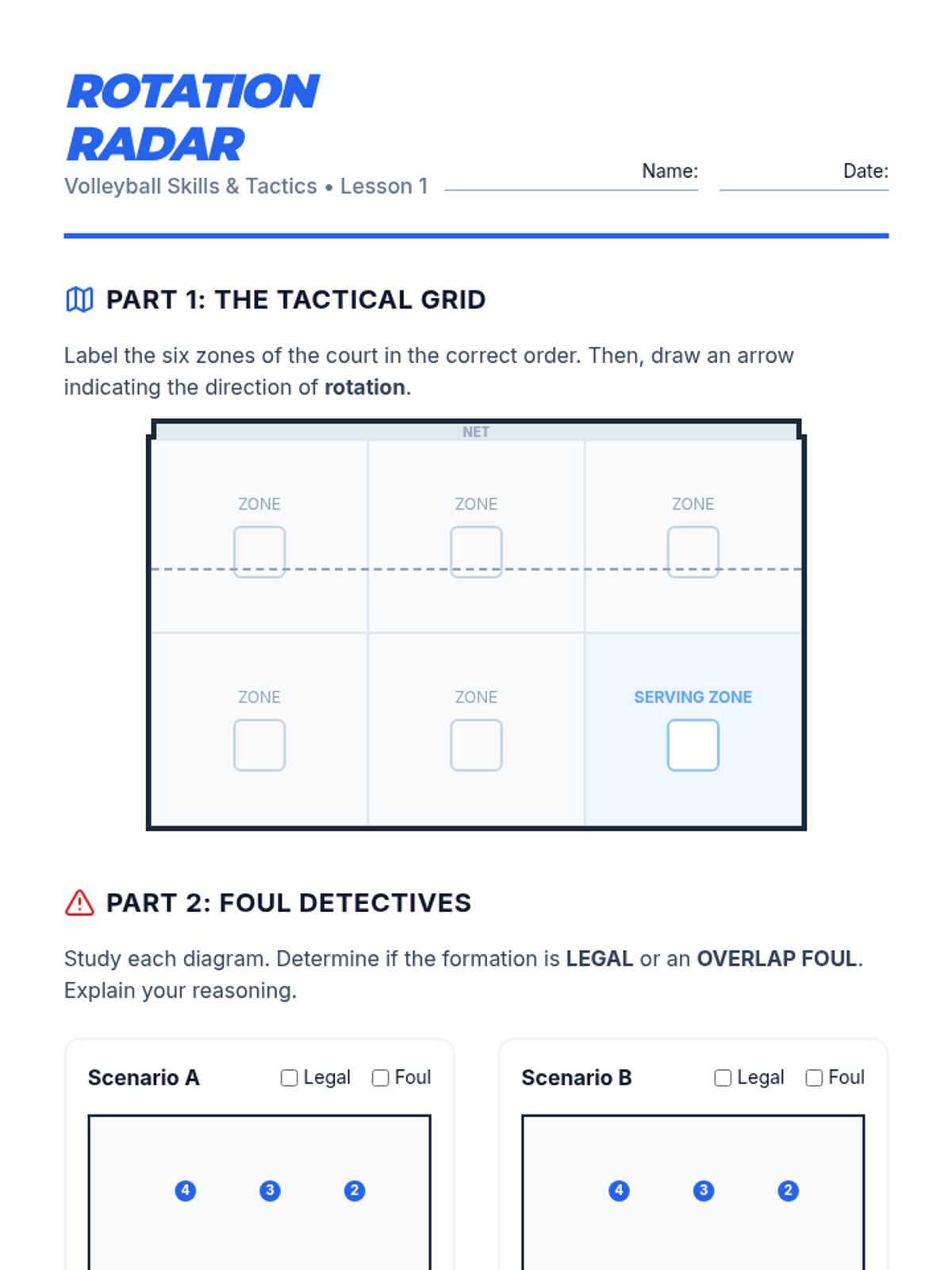
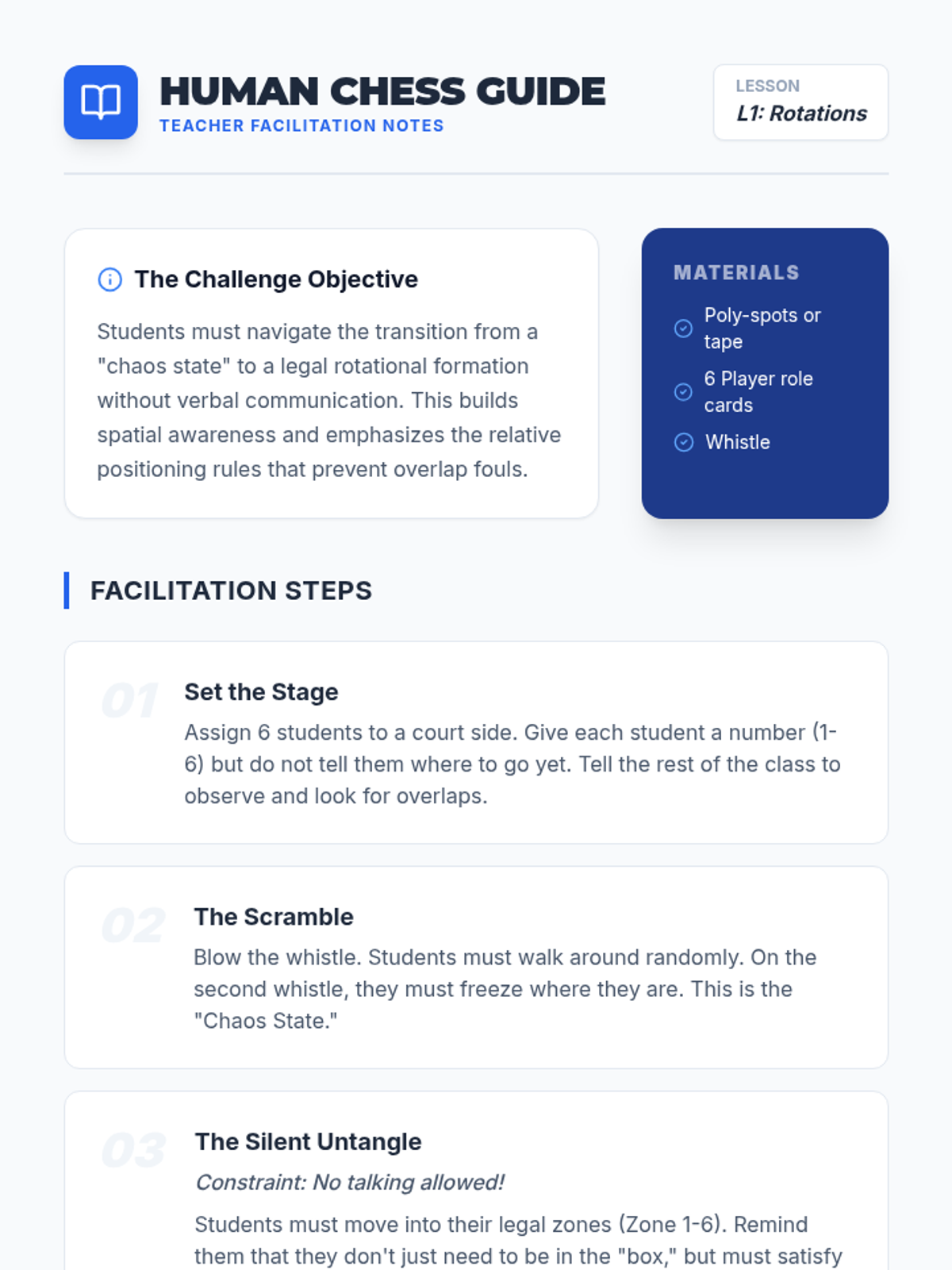
Students learn the rules of clockwise rotation and positional overlap through diagrams and a 'human chess' puzzle.
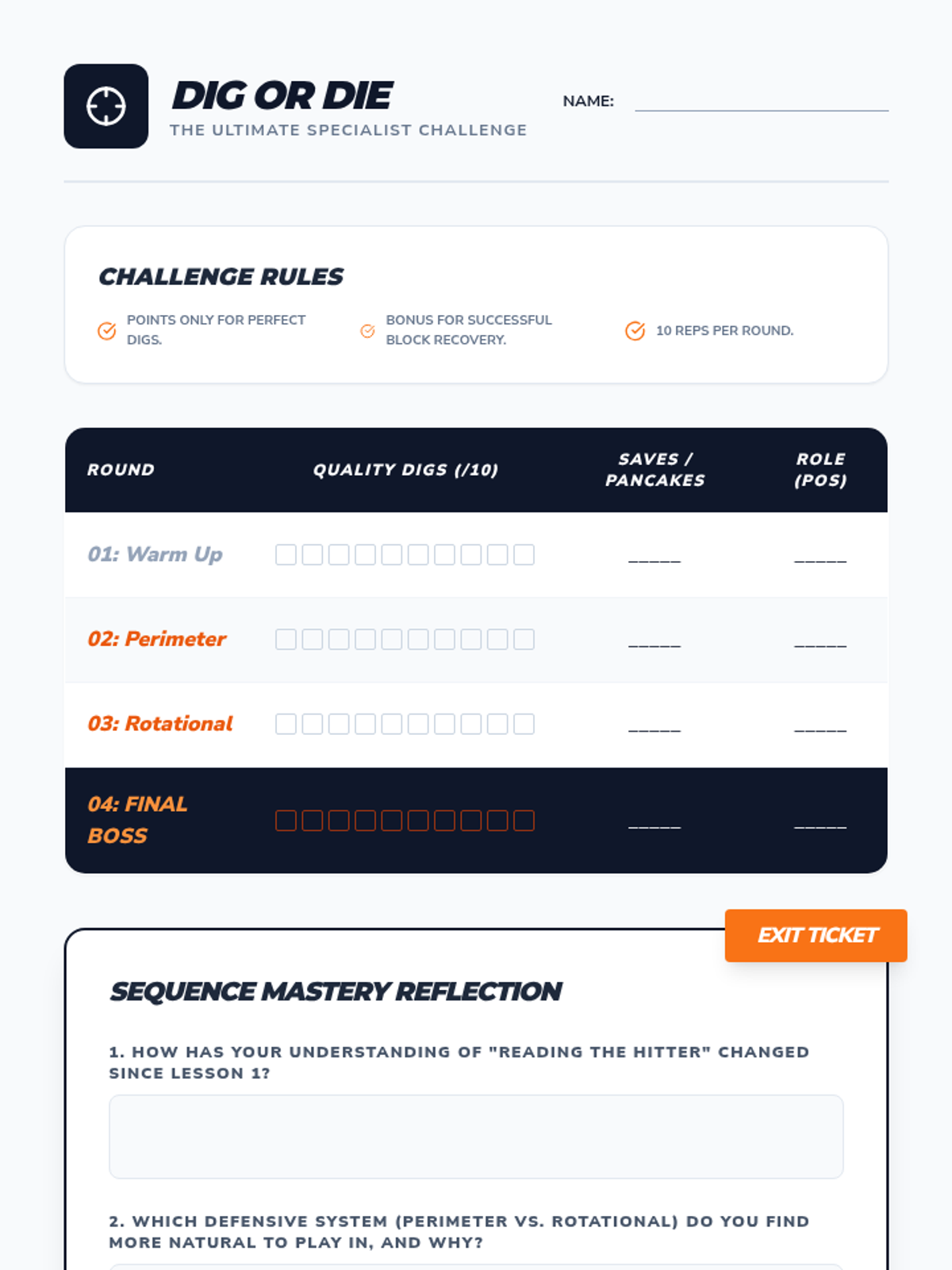
Consolidates skills through high-repetition drills and 'Dig or Die' challenges, focusing on Libero/DS-style digging and resilience.
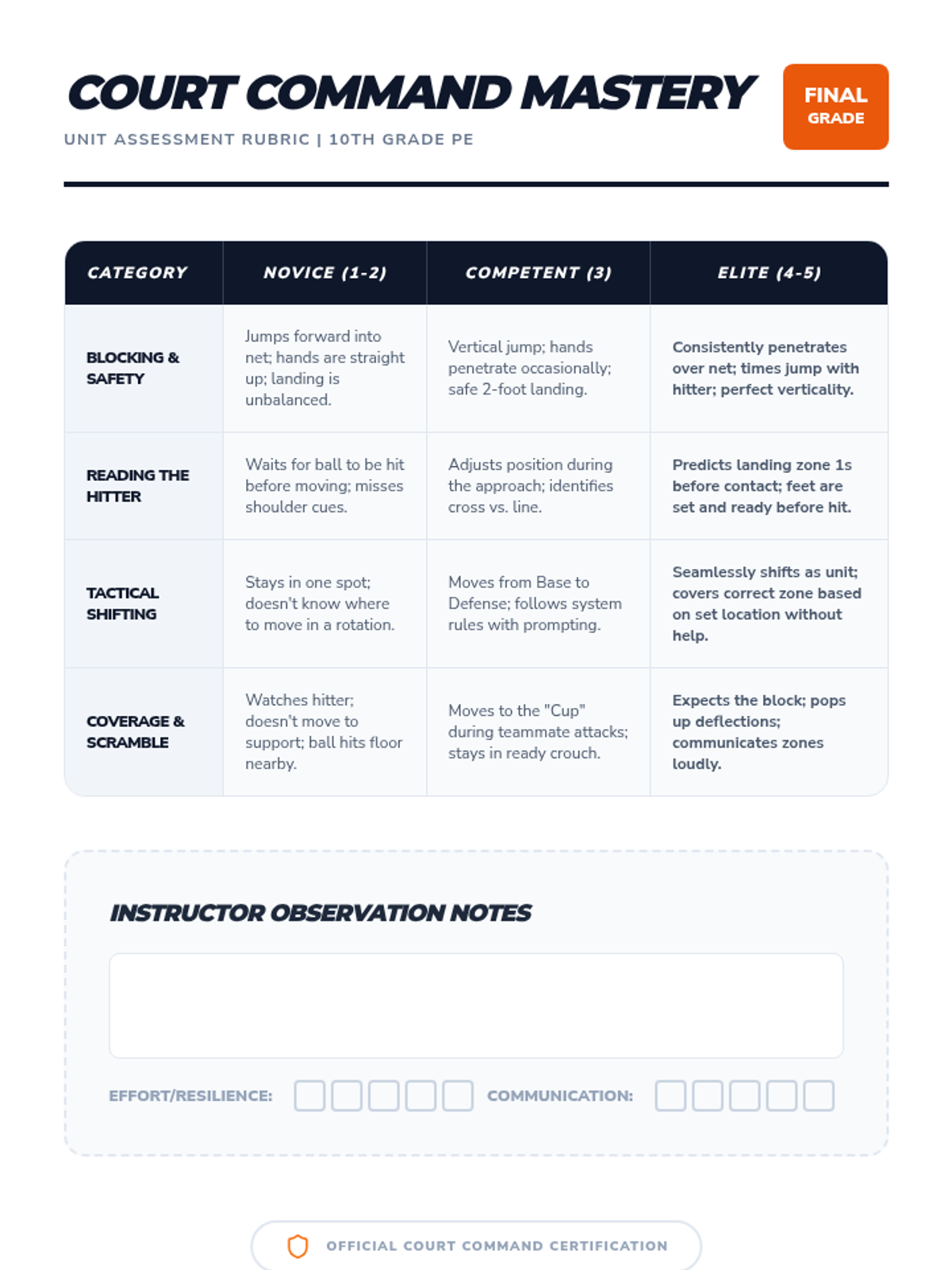
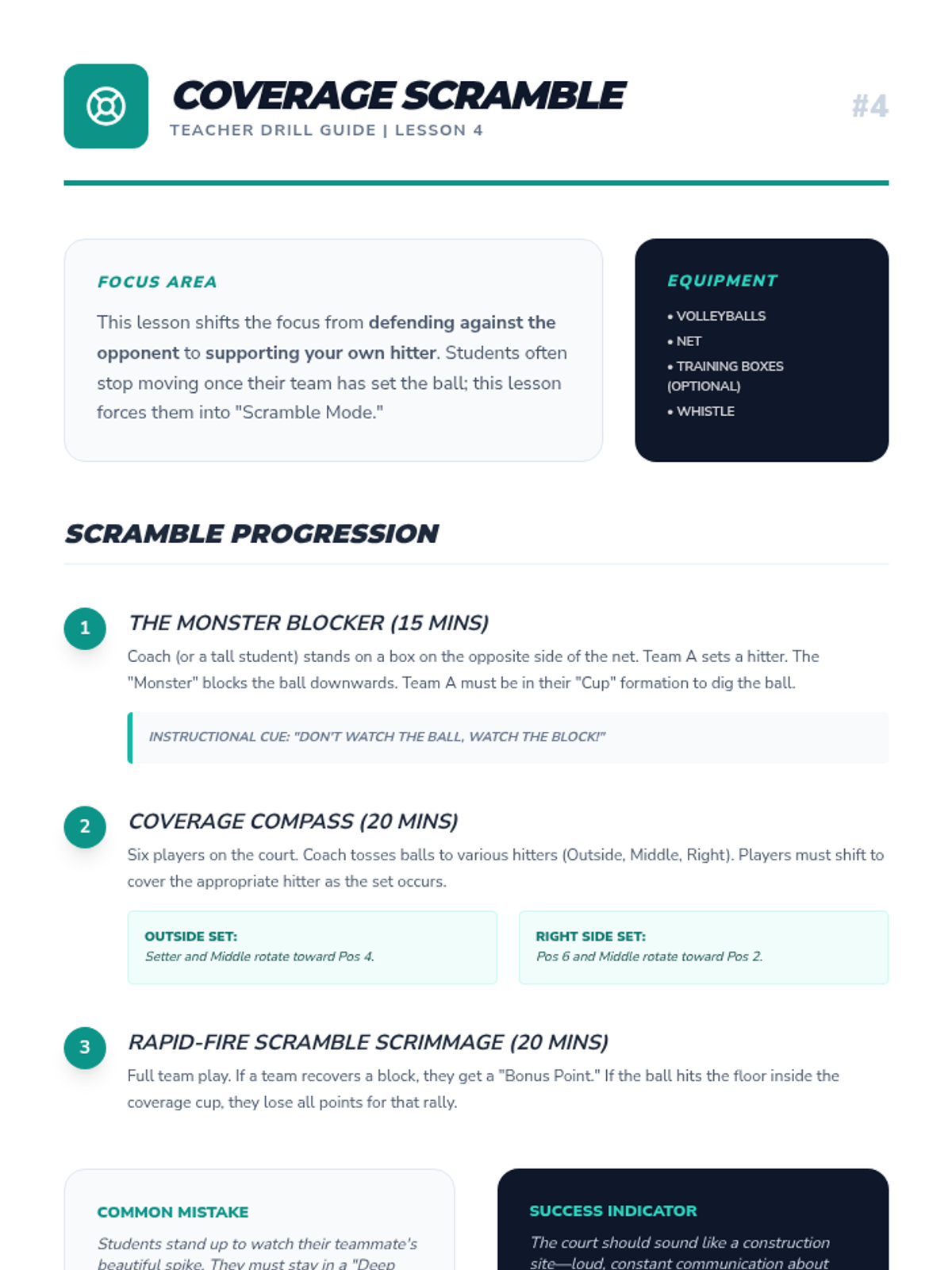
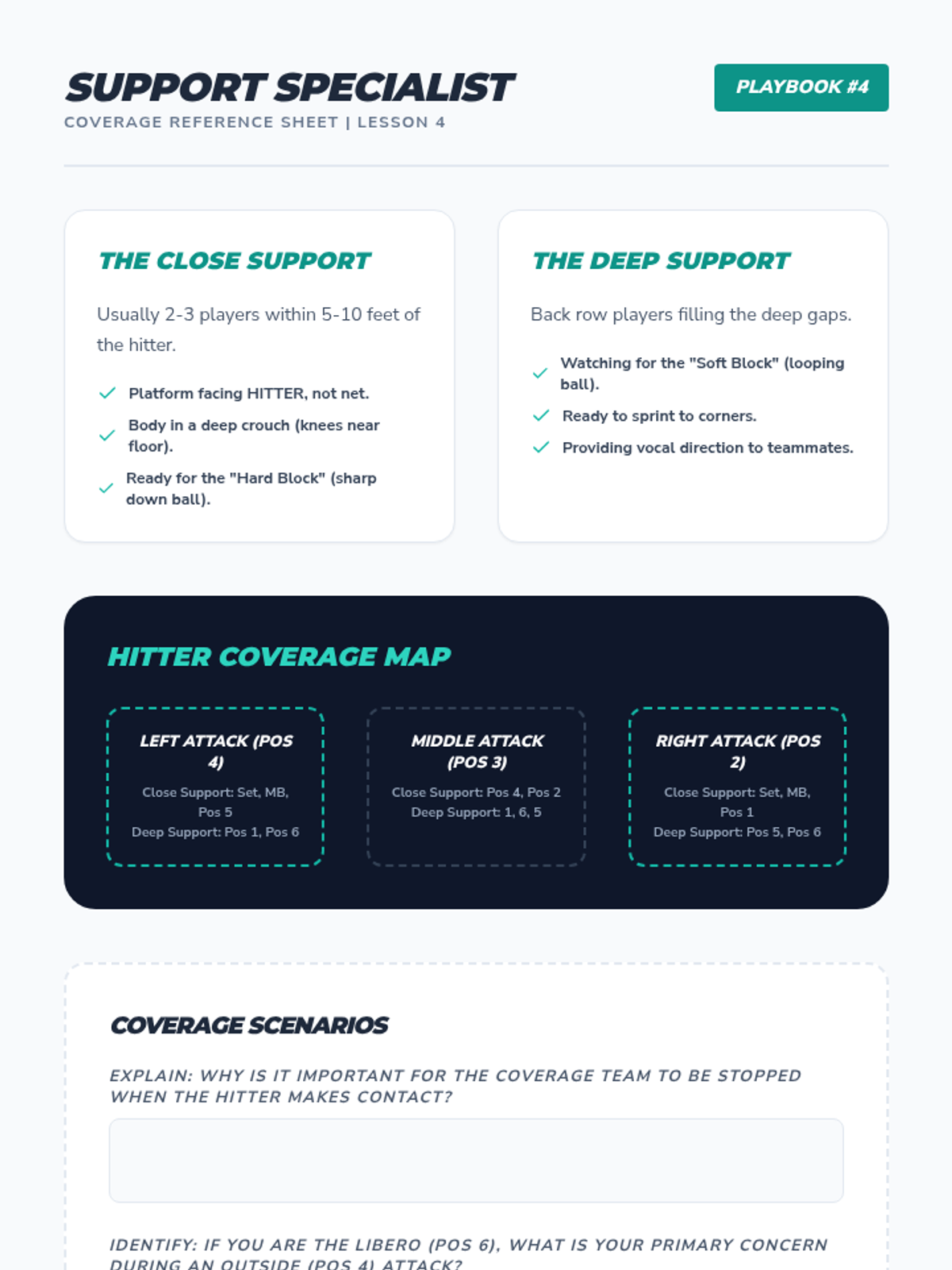
Covers the 'scramble' phase of defense, specifically covering hitters during an attack and reacting to blocked balls.
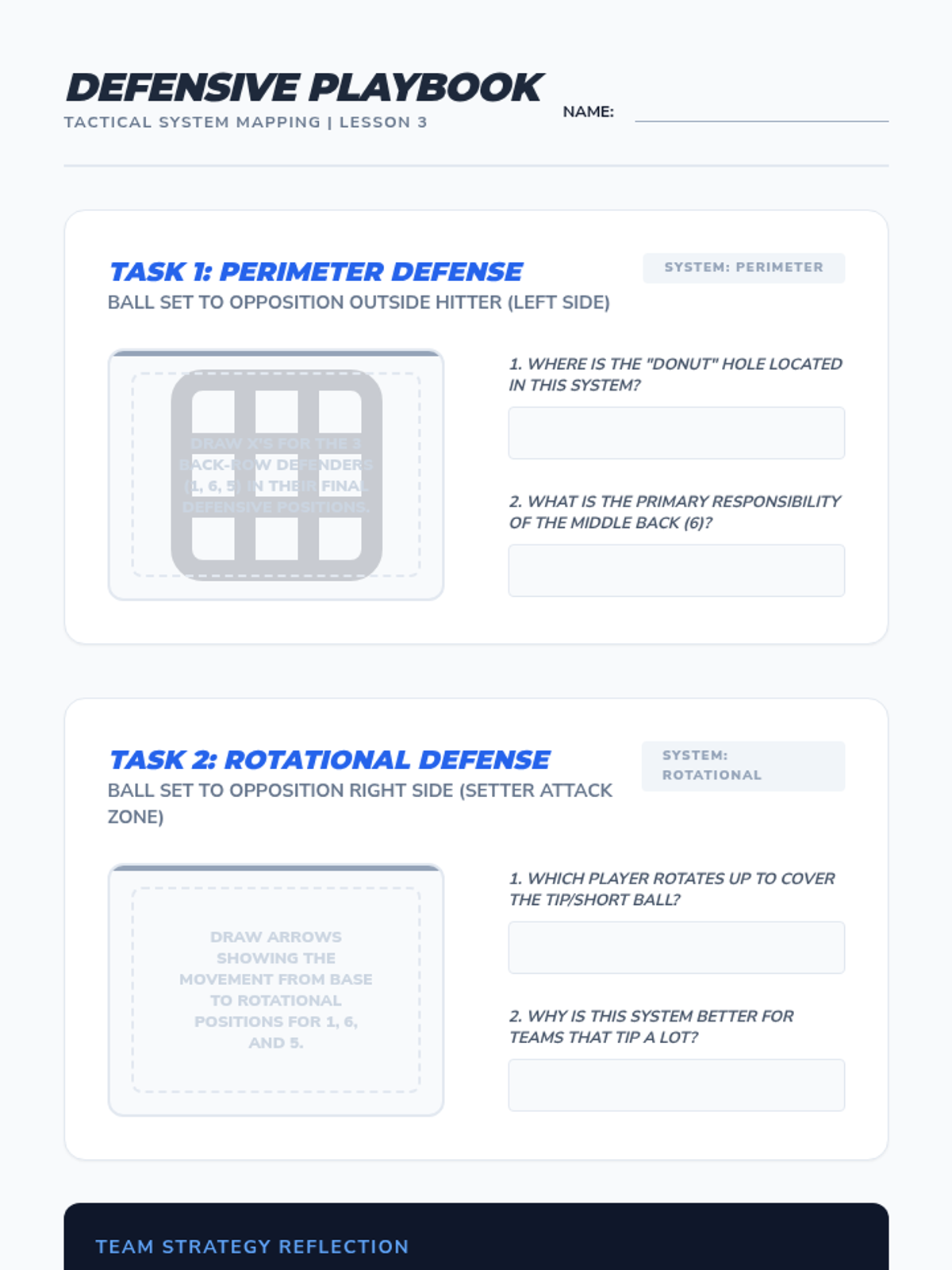
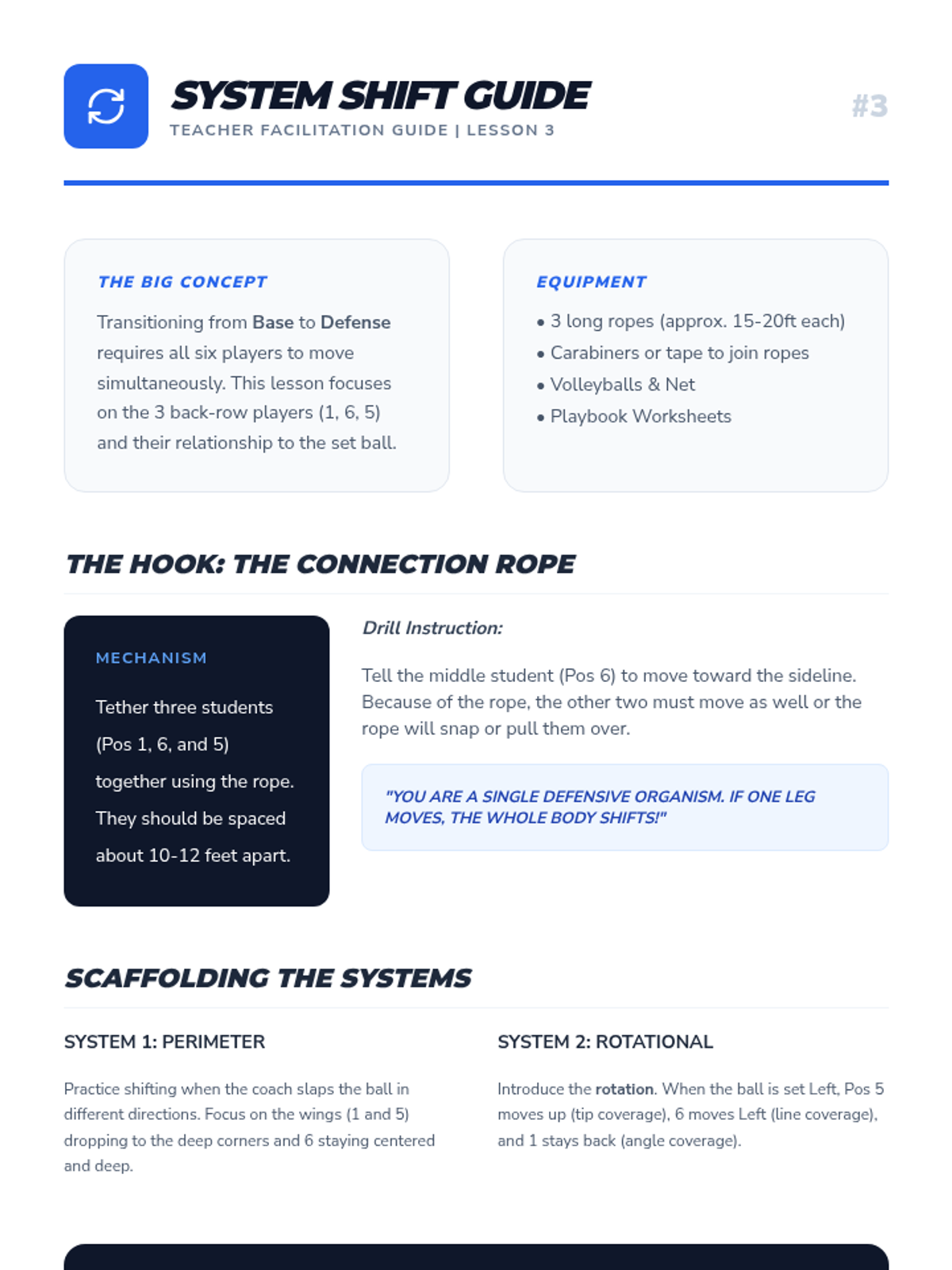
Introduces tactical team movements, specifically rotational and perimeter systems, emphasizing how the back row shifts in response to the set.
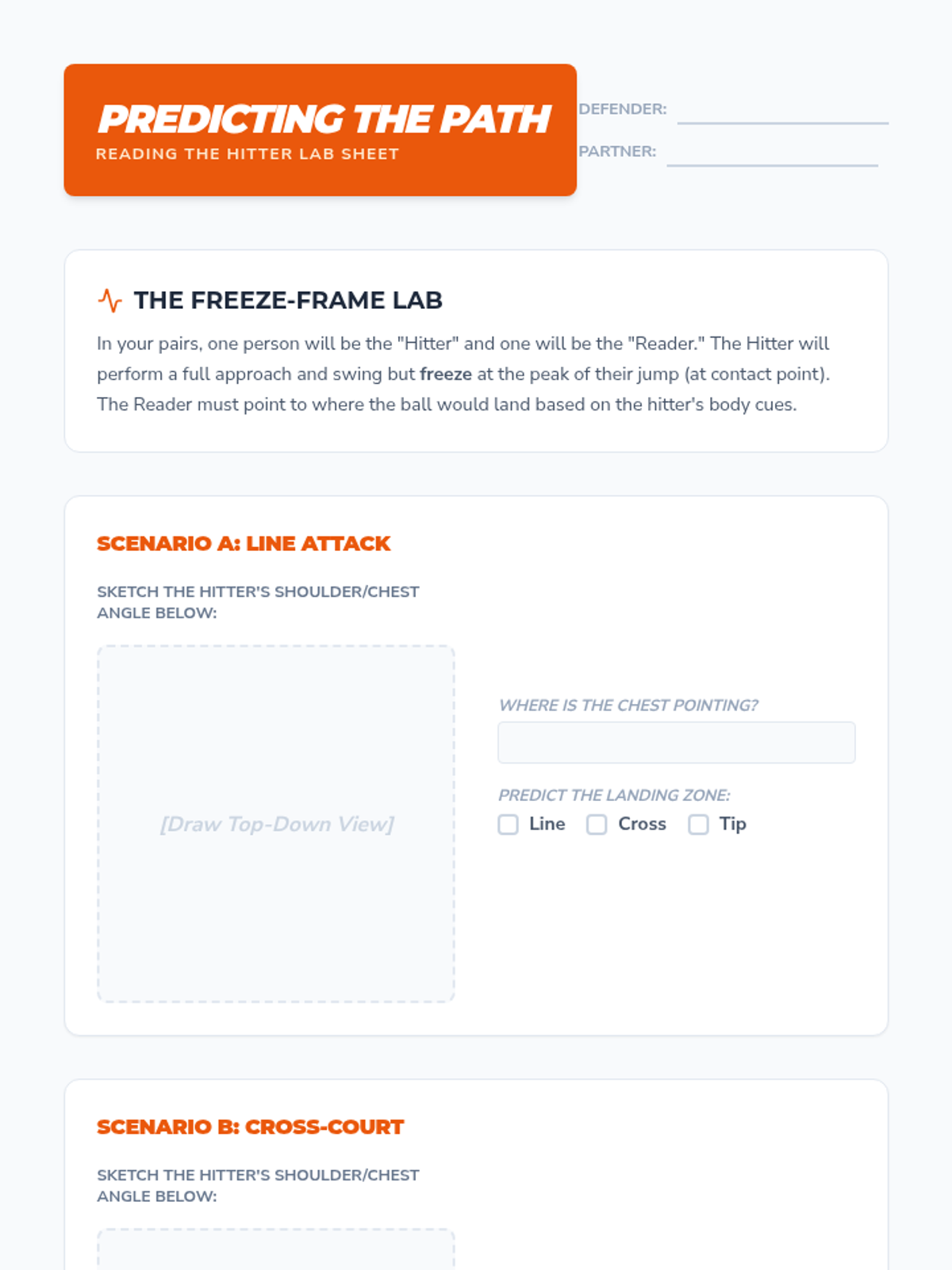
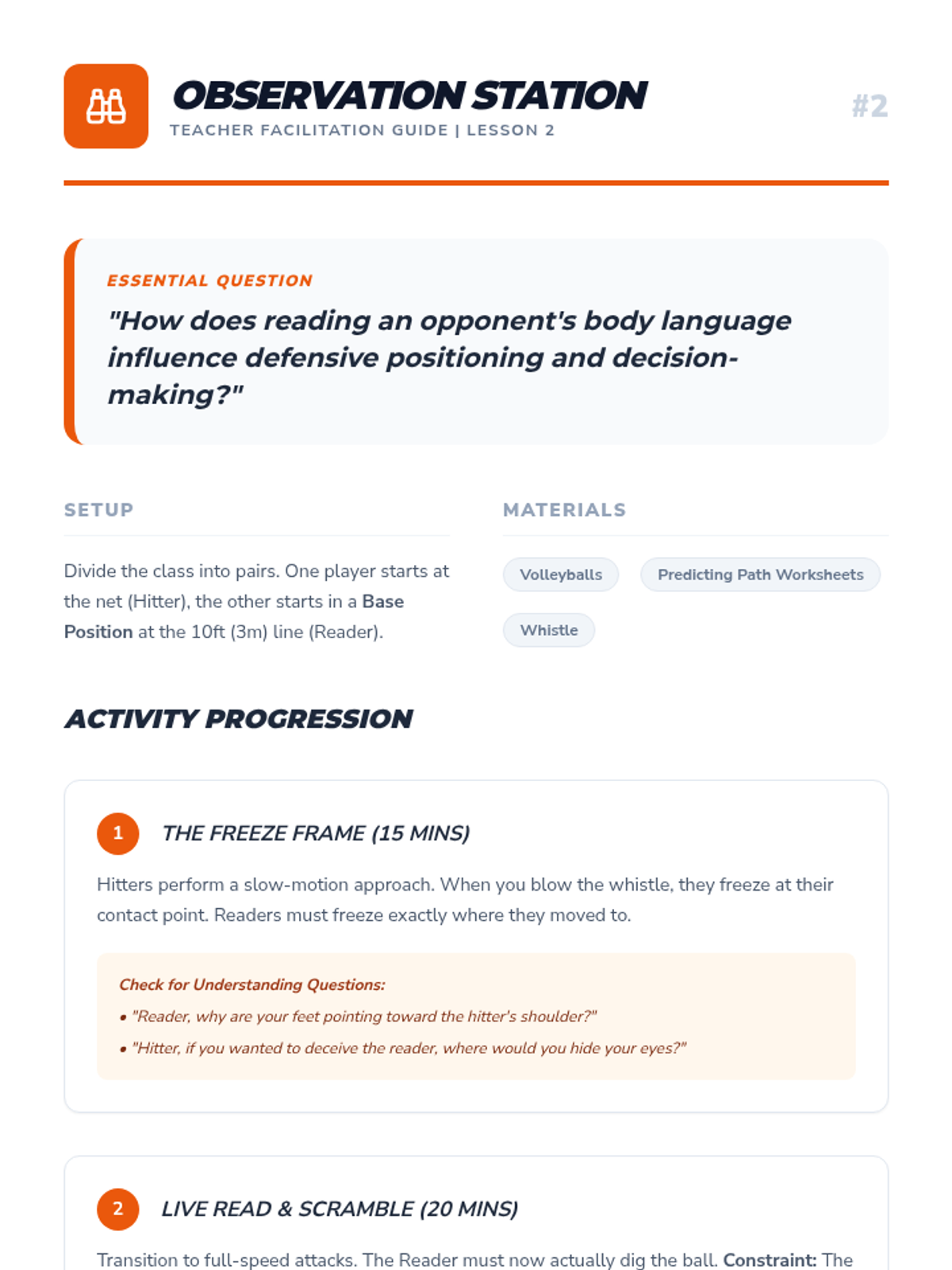
Teaches students to analyze hitter body language and shoulder angles to anticipate ball trajectory and shift from base to defensive positions.
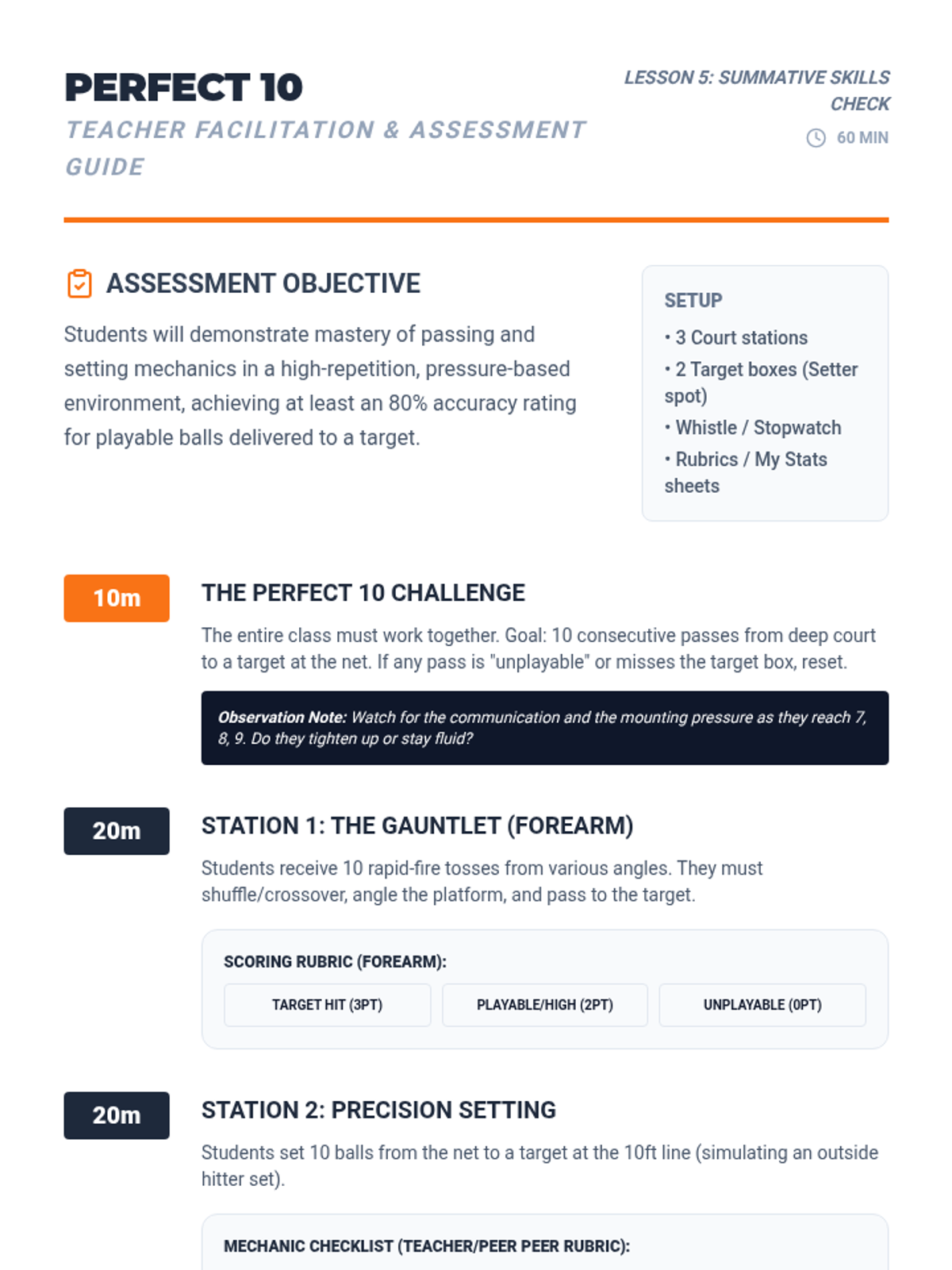
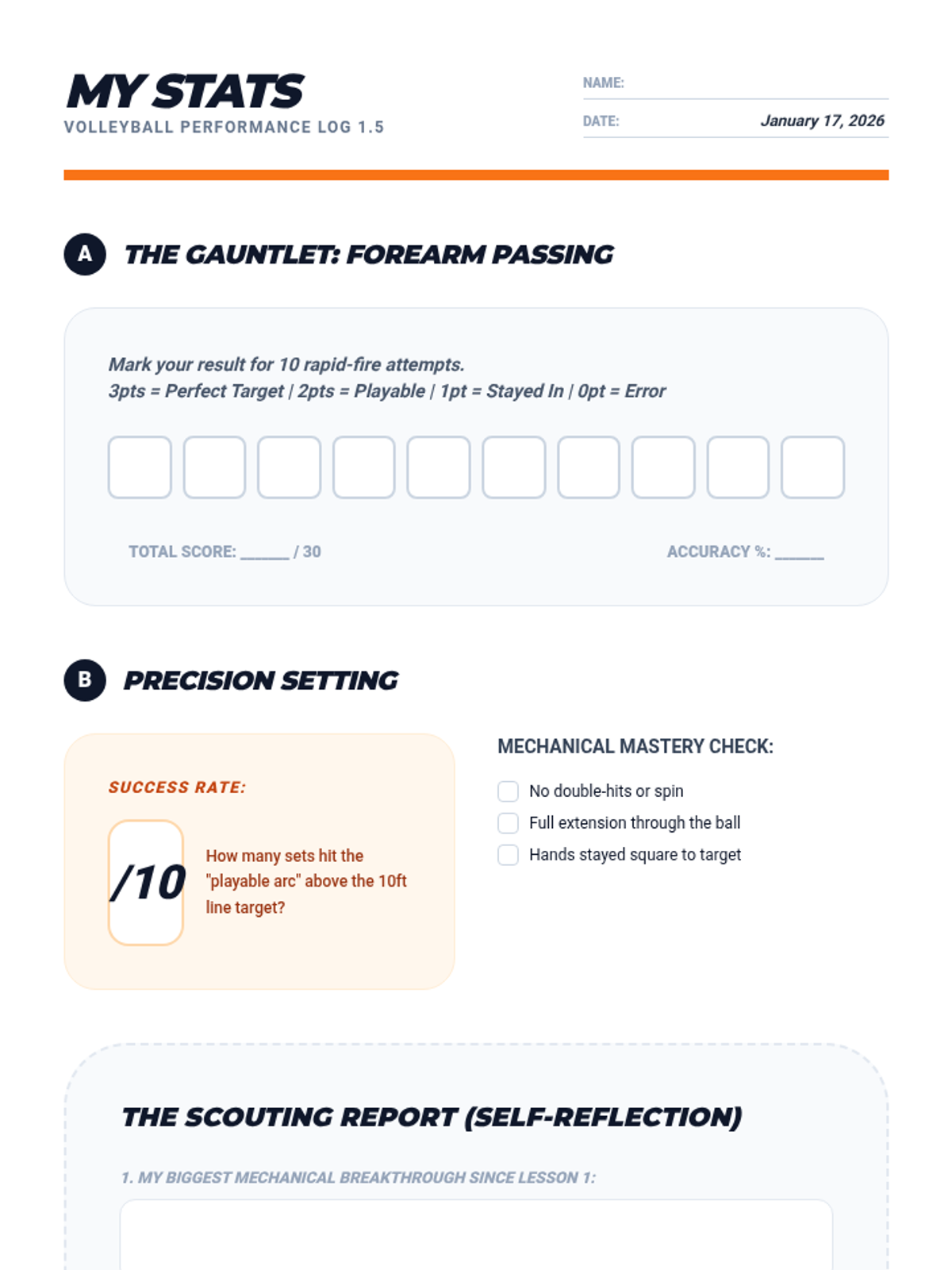
In this culminating lesson, students apply passing and setting skills in a rapid-fire drill environment. Students track their own success rates in delivering playable balls to a target under time constraints.
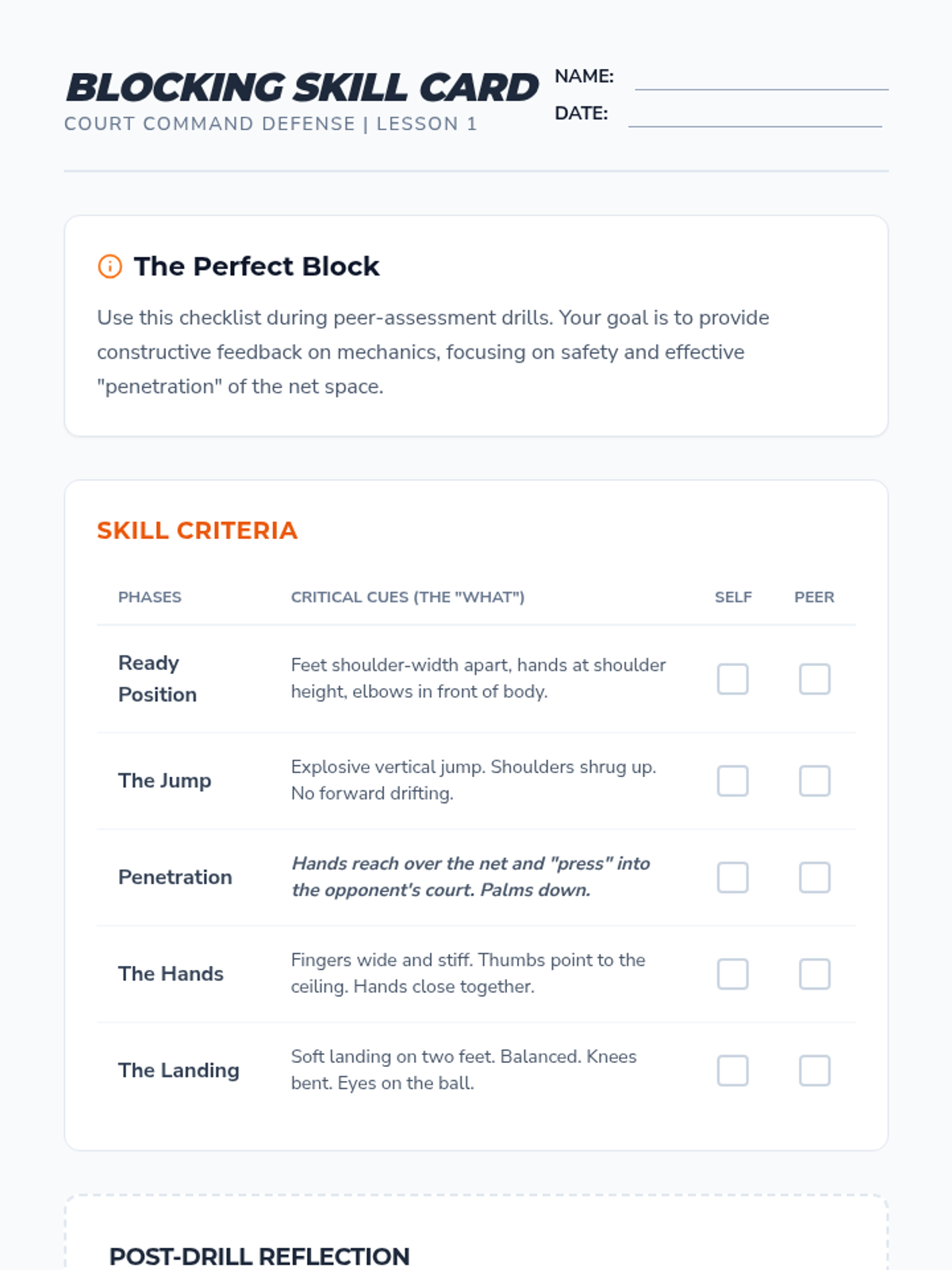
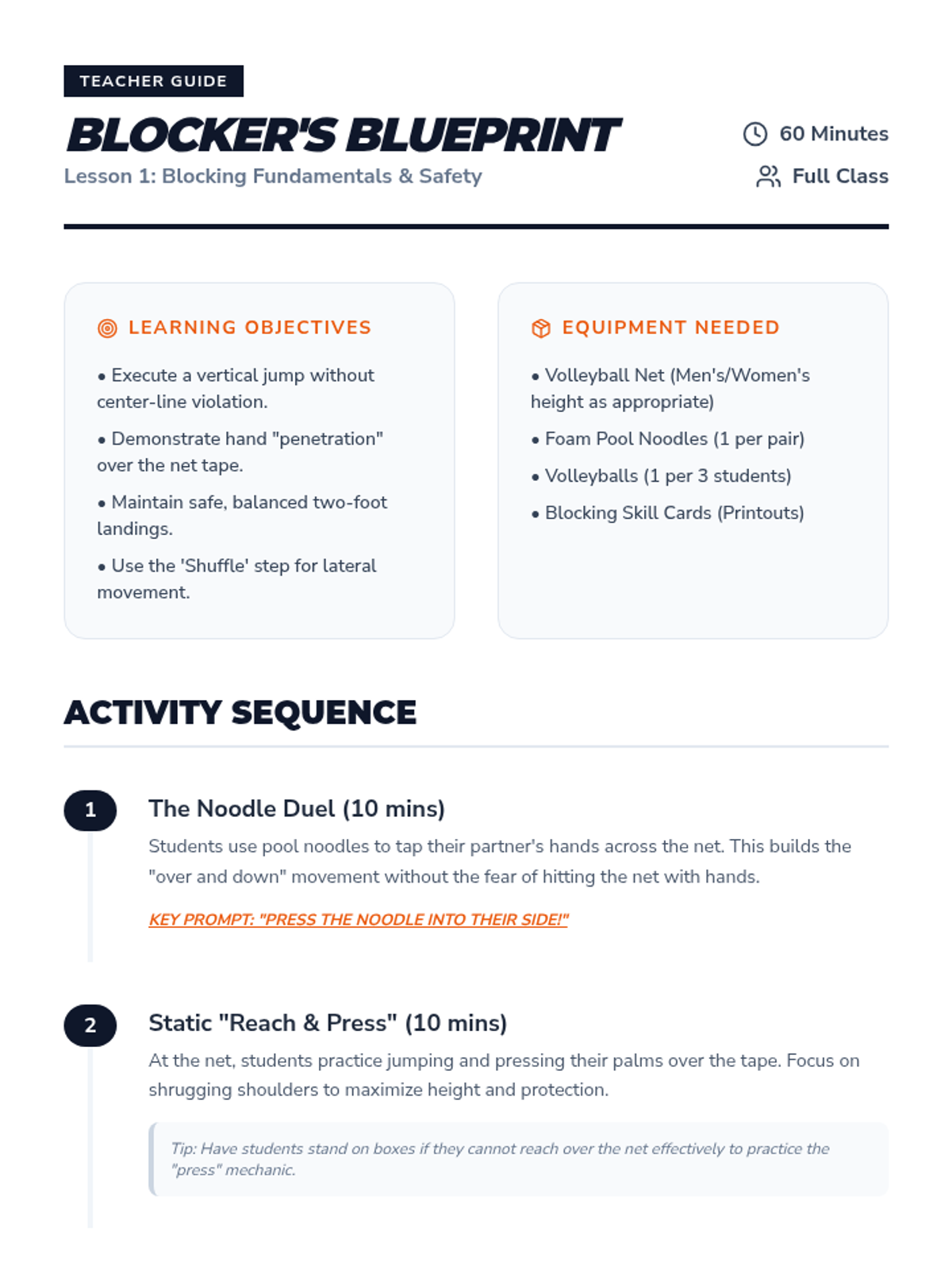
Focuses on the mechanics of independent blocking, emphasizing hand penetration over the net and safe landing techniques to prevent injury.
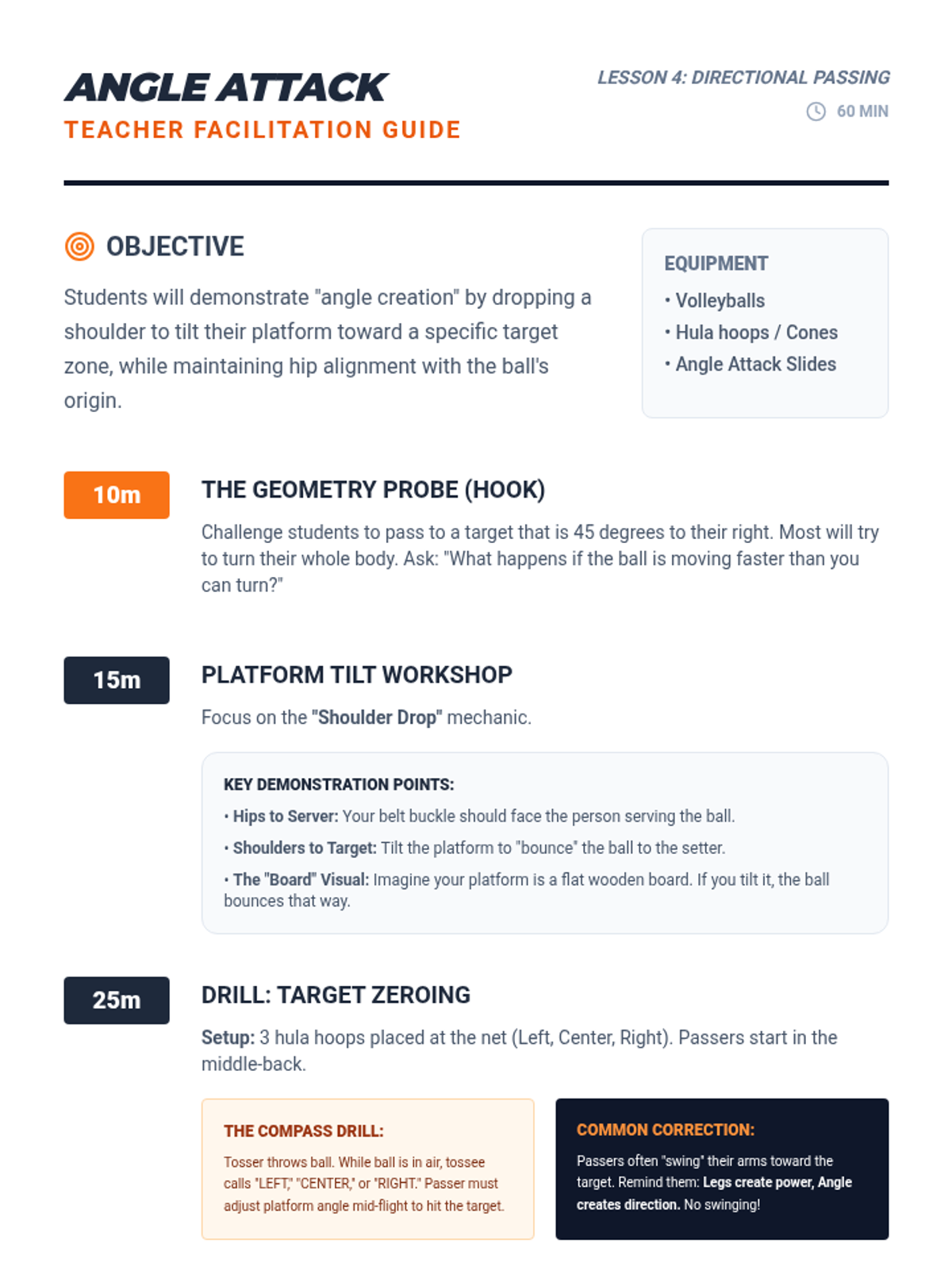
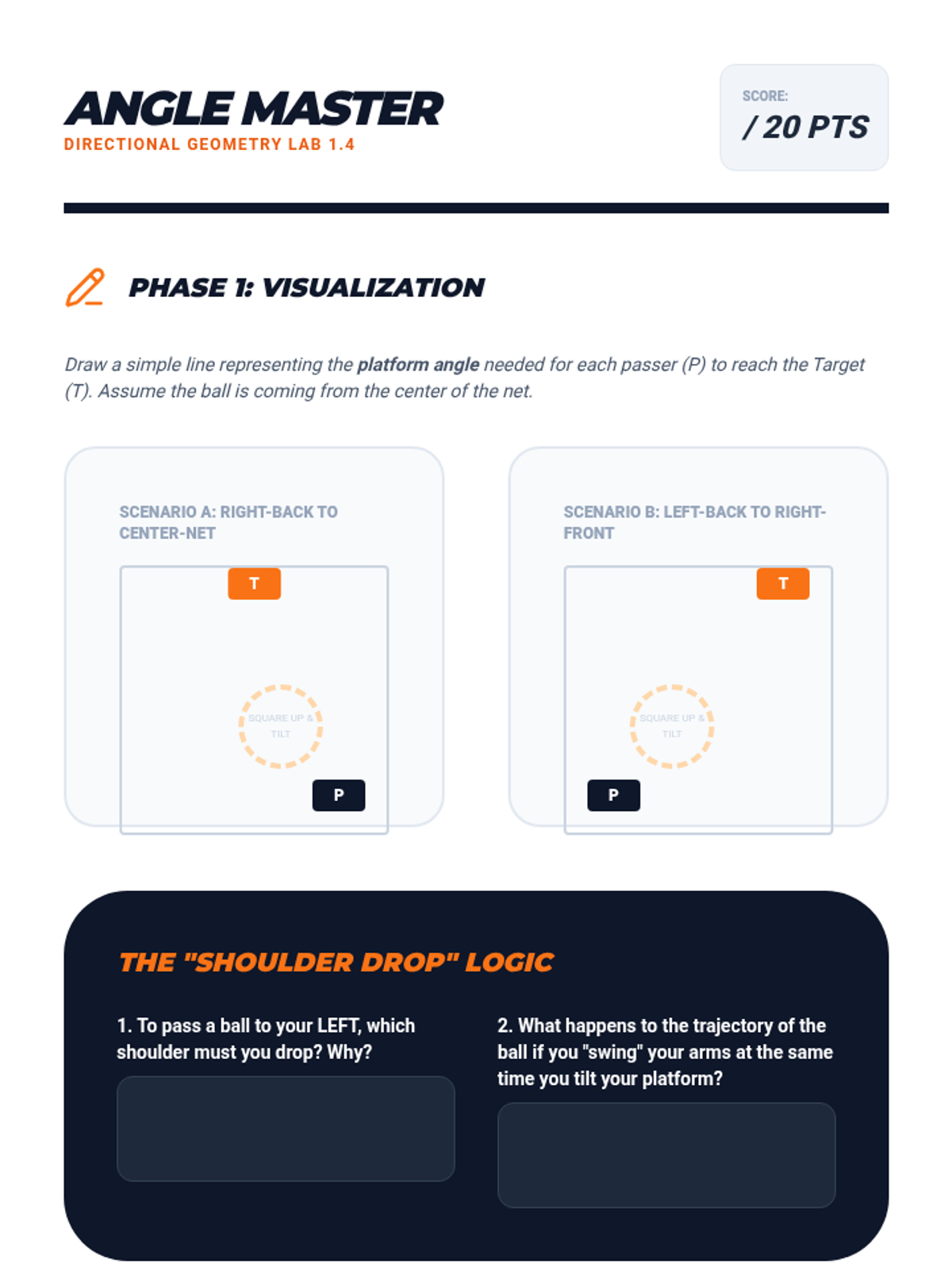
The lesson moves to directional passing, where students learn to drop a shoulder to angle their platform toward the setter target. Activities require passing from deep court positions to a specific target zone at the net.
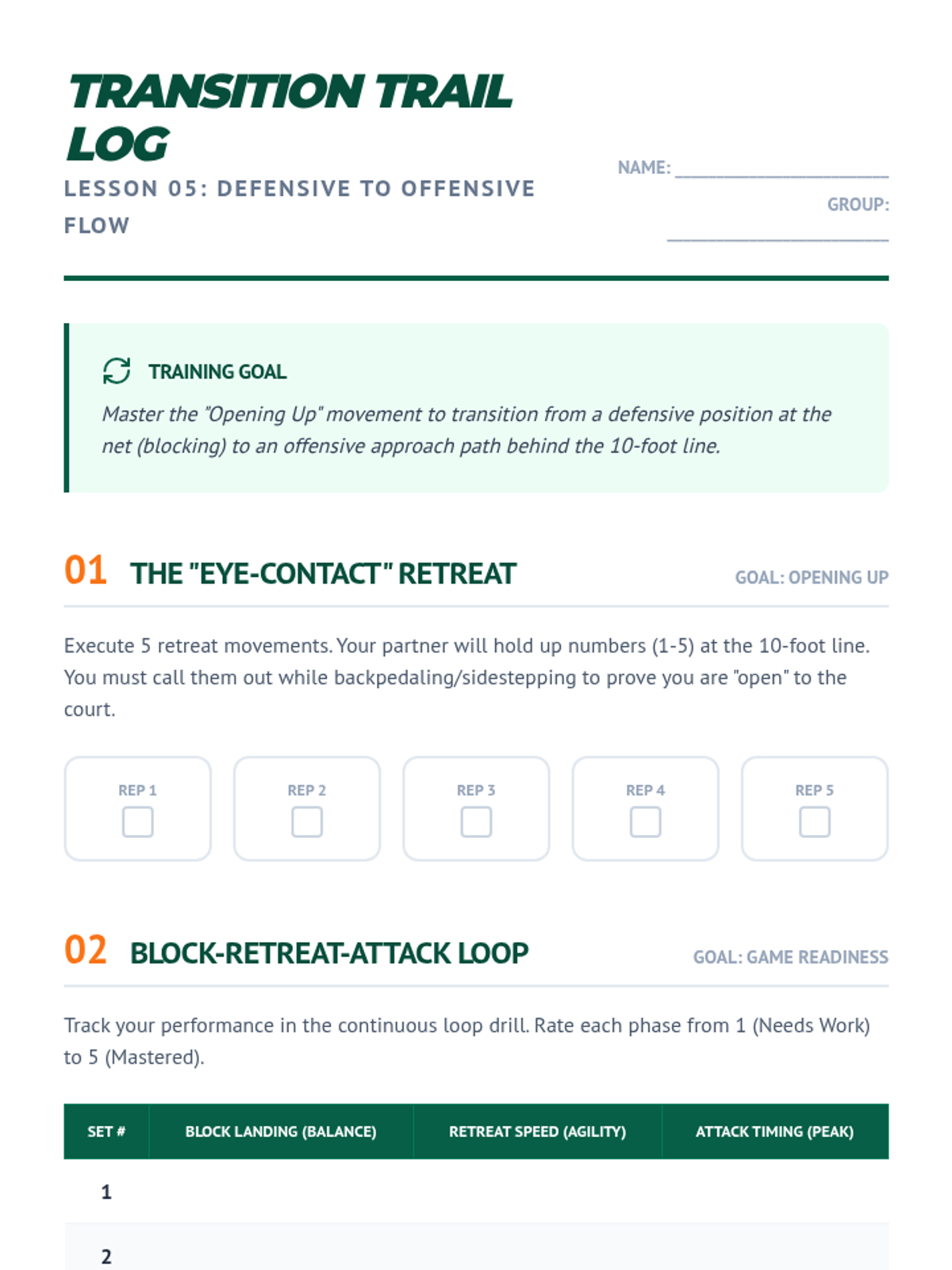
Focuses on moving from defense to offense quickly, emphasizing the transition from blocking/passing to an attacking approach.
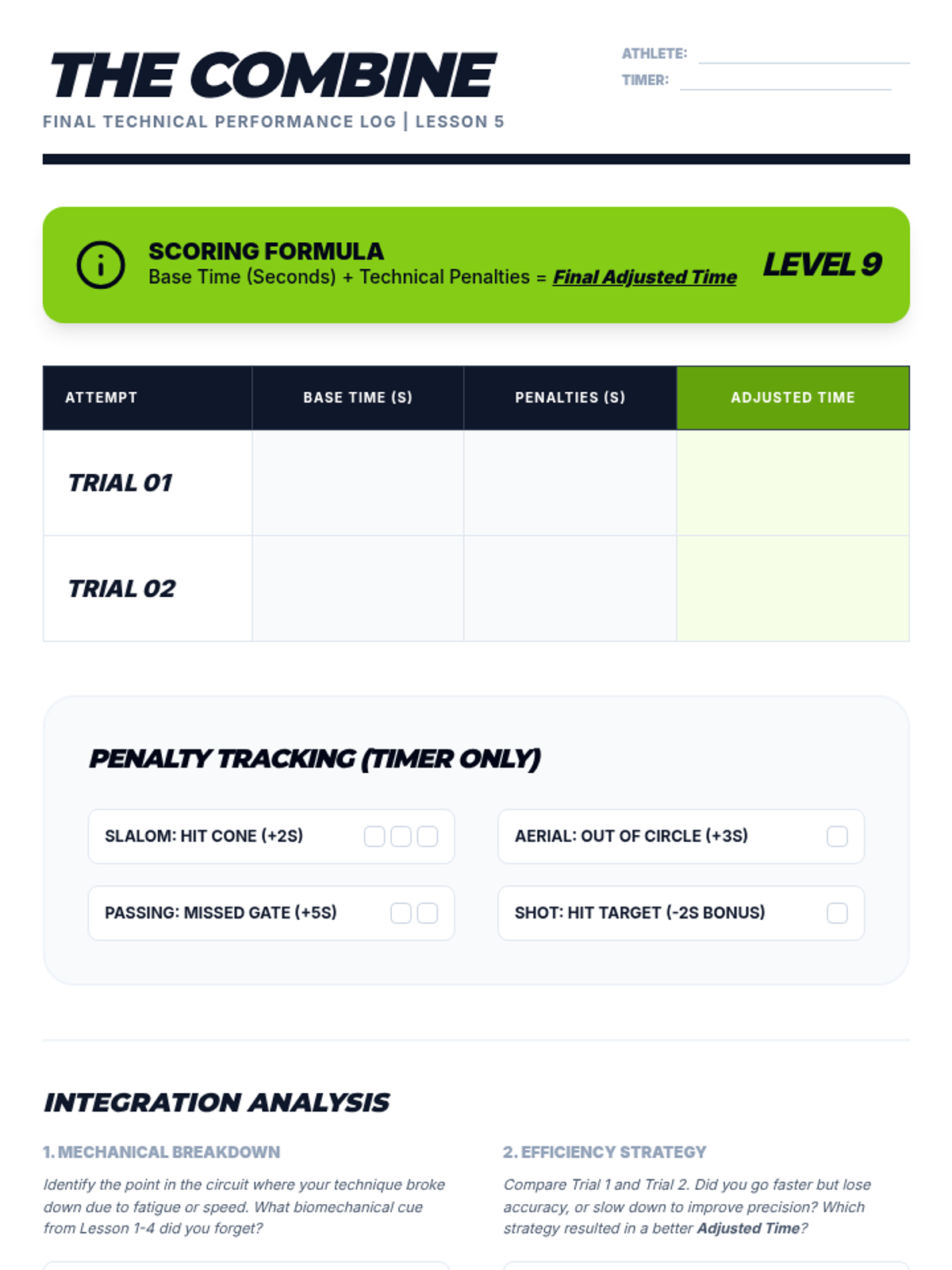
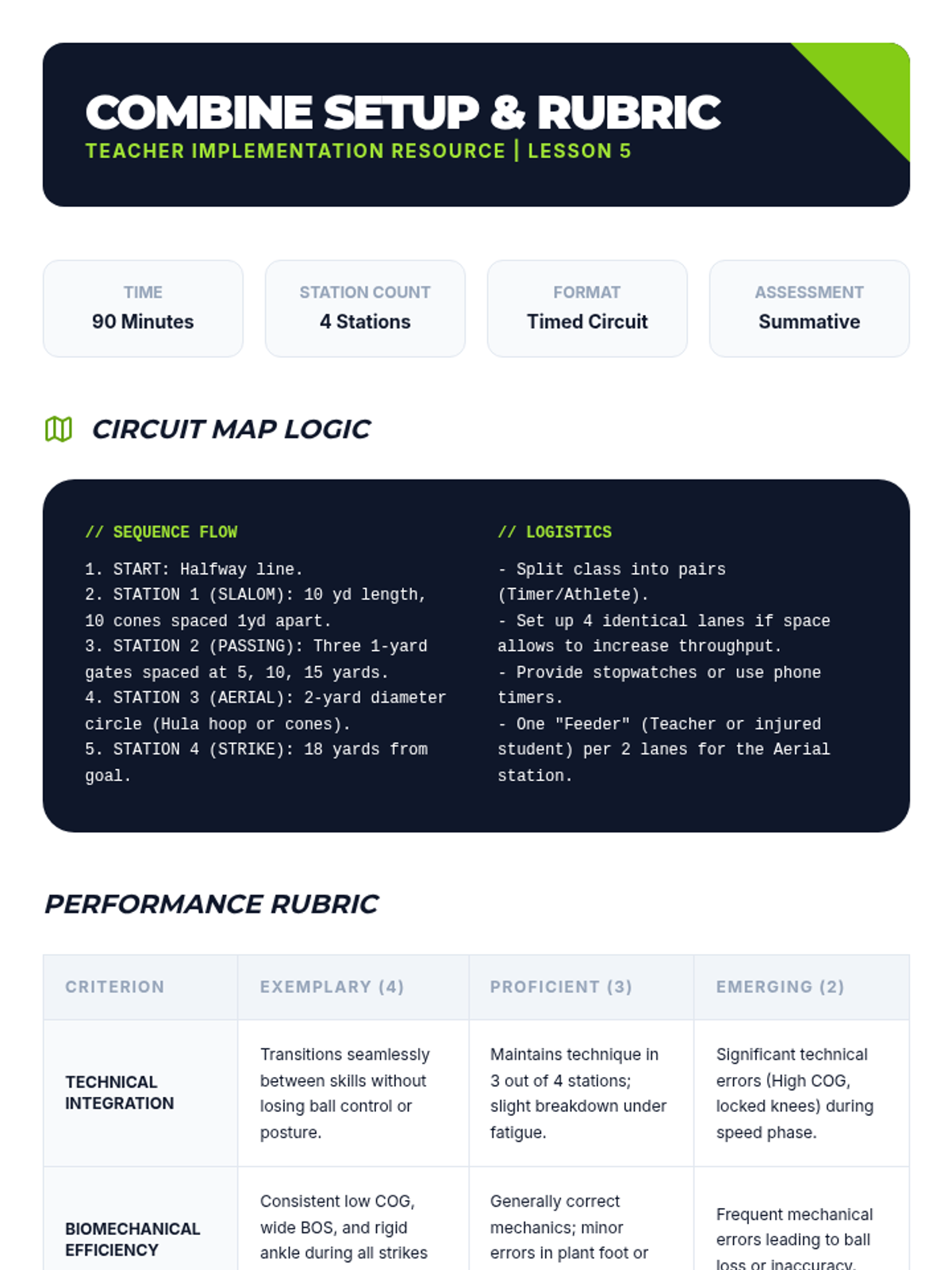
A culminating technical circuit that assesses integration of dribbling, passing, and finishing under time and pressure.
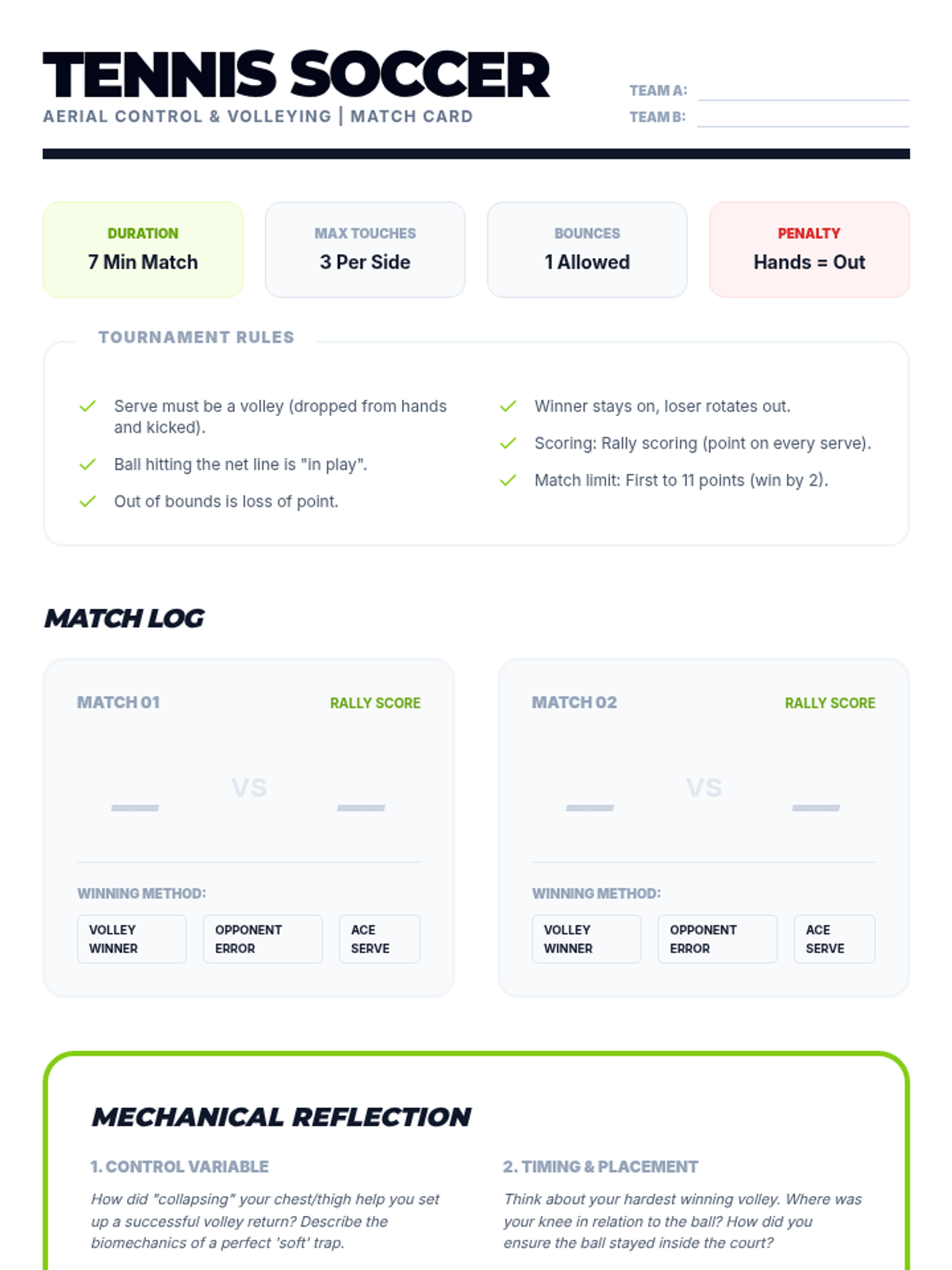
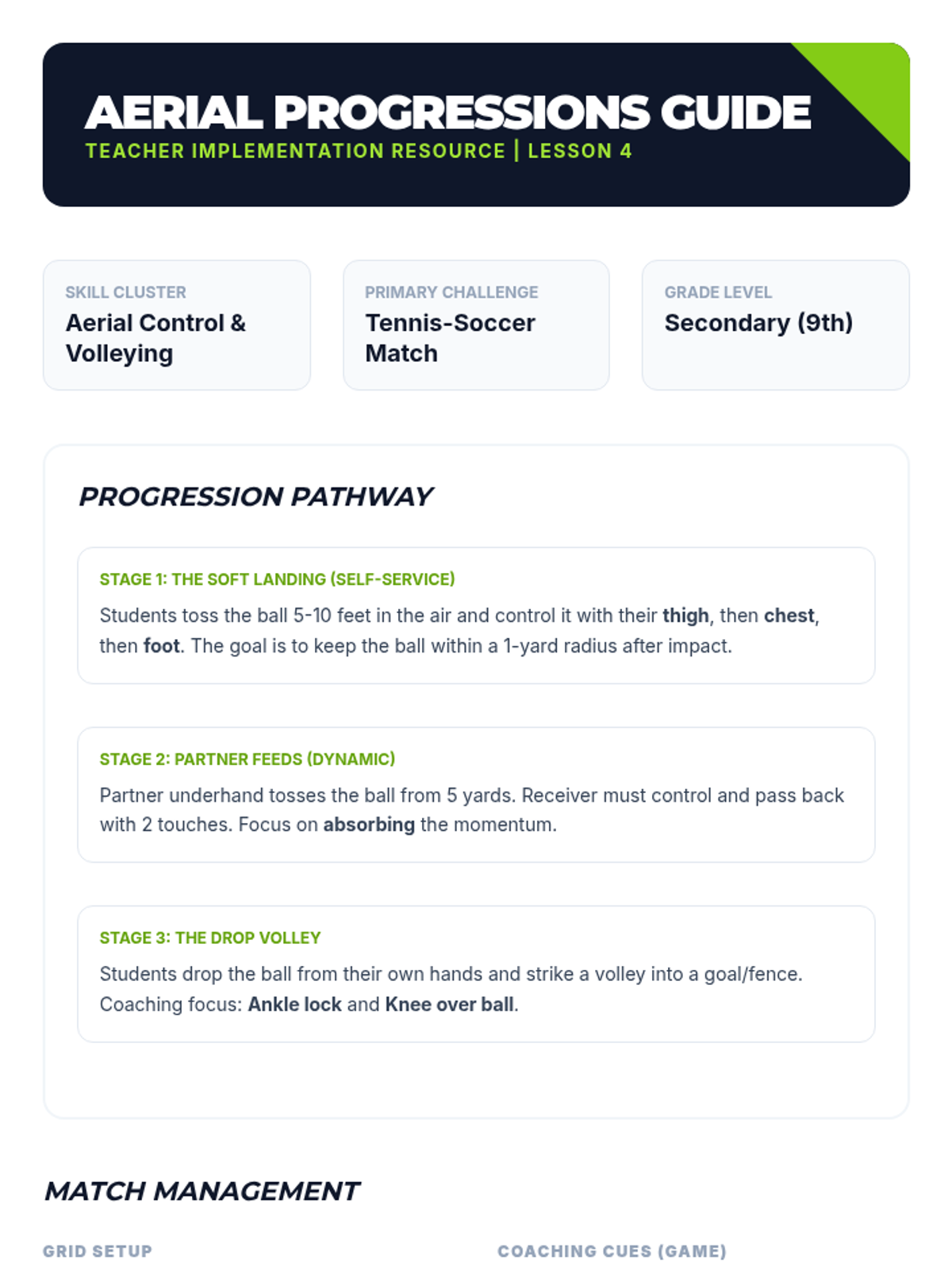
Introduces techniques for controlling the ball out of the air using the chest, thigh, and foot, as well as volleying mechanics.
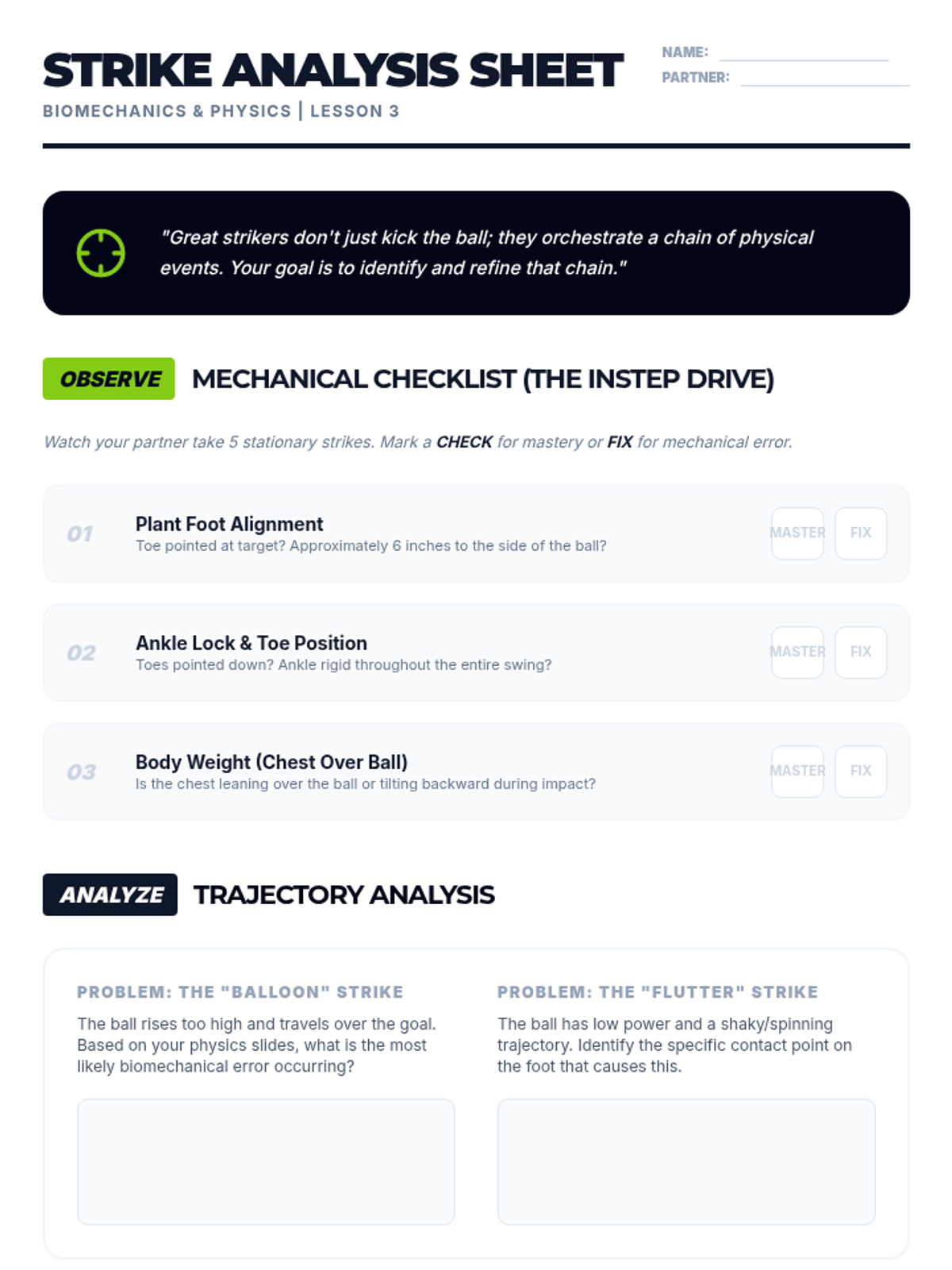
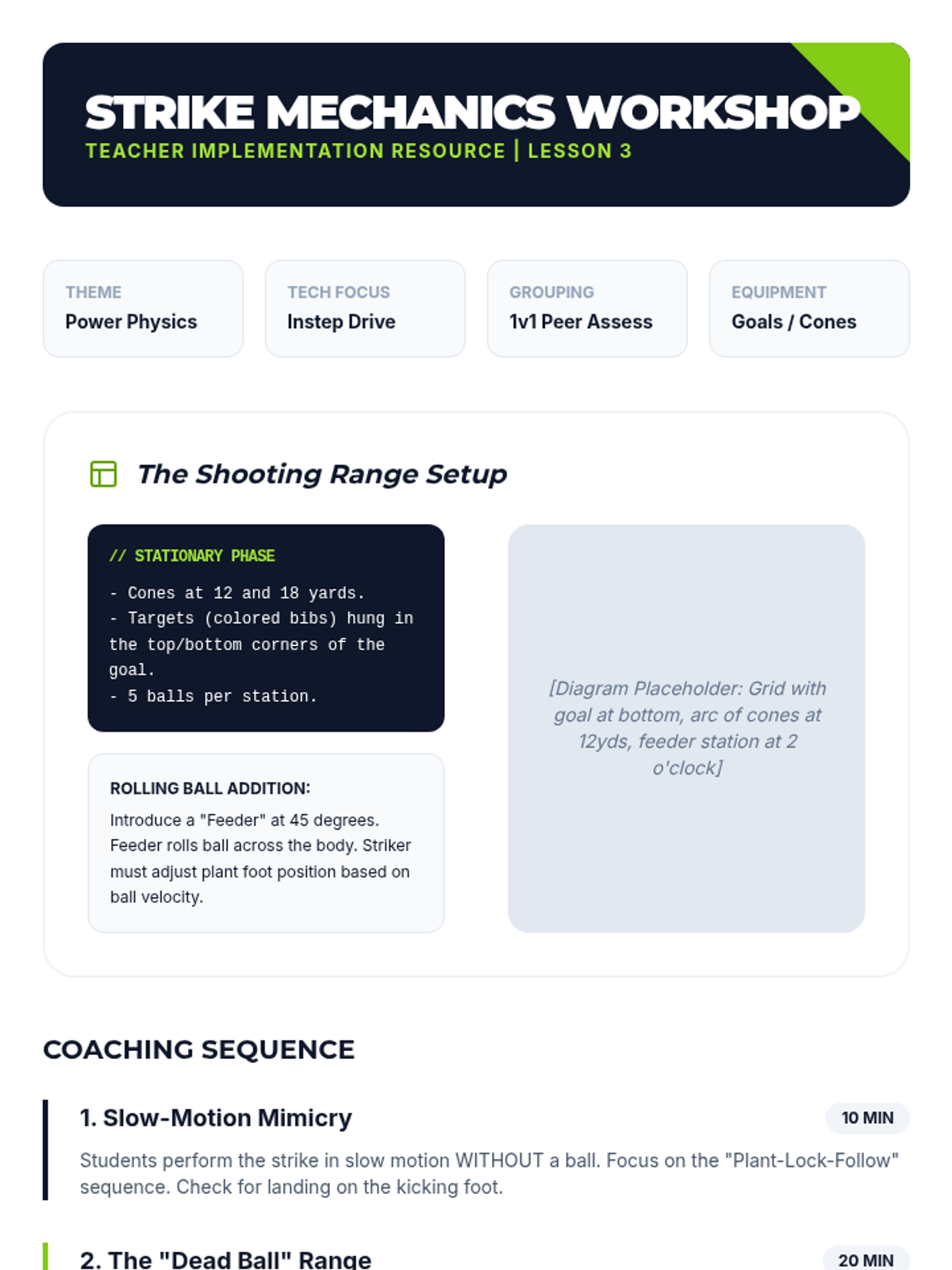
Explores the physics of striking the ball, comparing instep drives for power versus side-foot placement for accuracy.
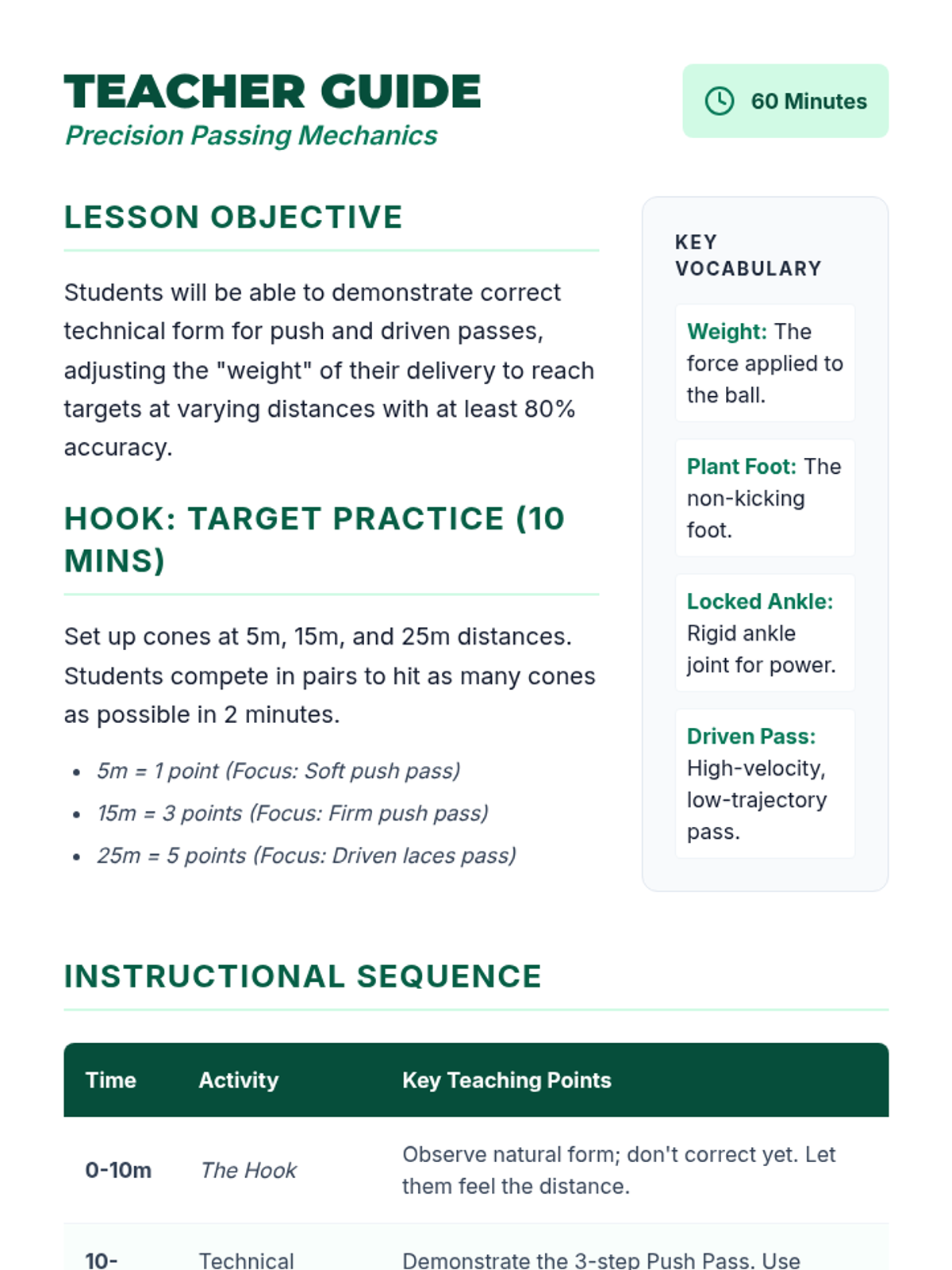
Focuses on the mechanics of the push and driven pass, emphasizing the 'weight' of the pass and the importance of the first touch.
Students refine close-control dribbling and learn to use their body to shield the ball from defenders, focusing on center of gravity and balance.
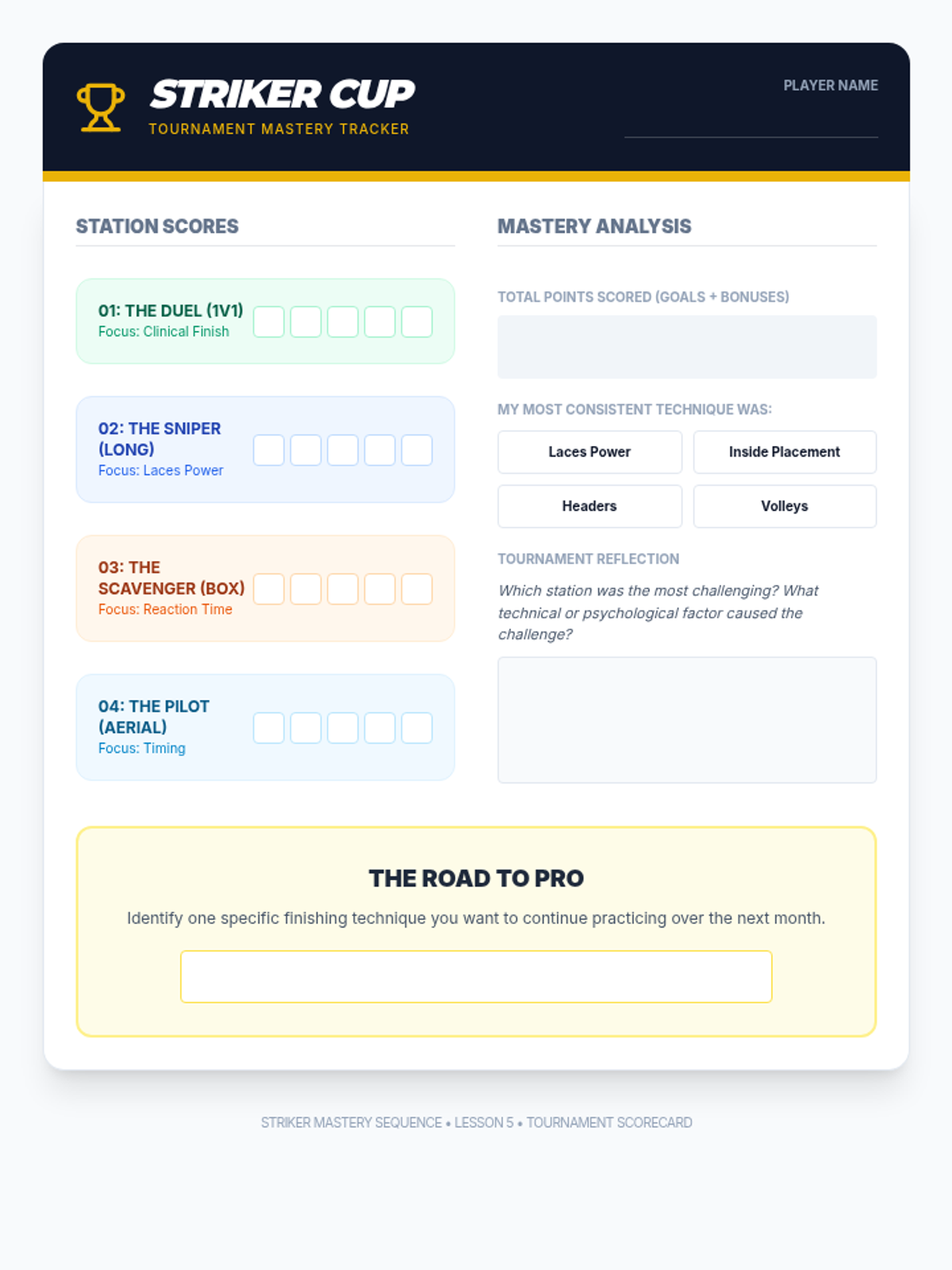
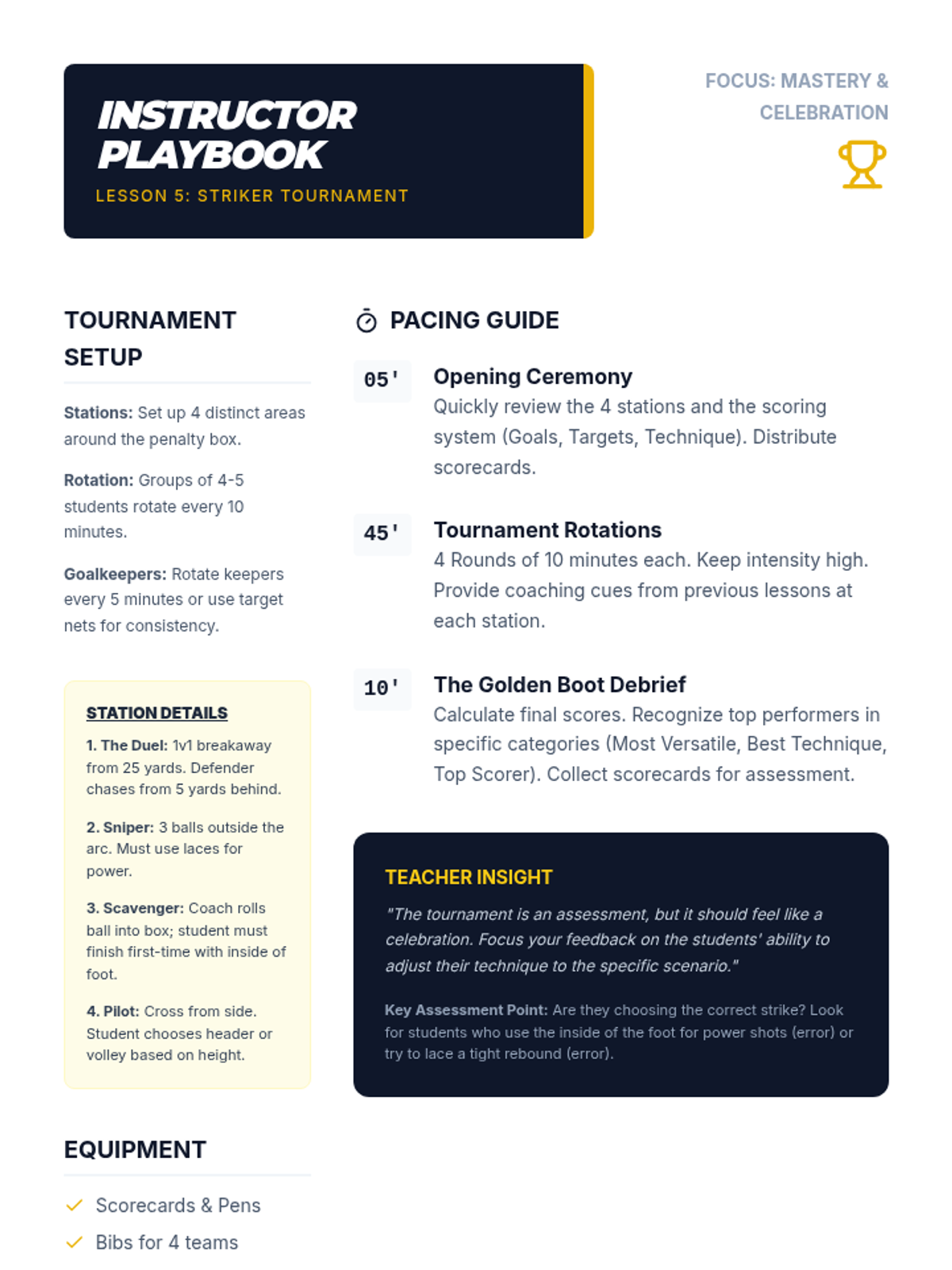
Students rotate through a series of rapid-fire finishing stations (1v1 against goalie, long shots, rebounds) to test their versatility. Scores are tracked to determine proficiency across different types of scoring chances.
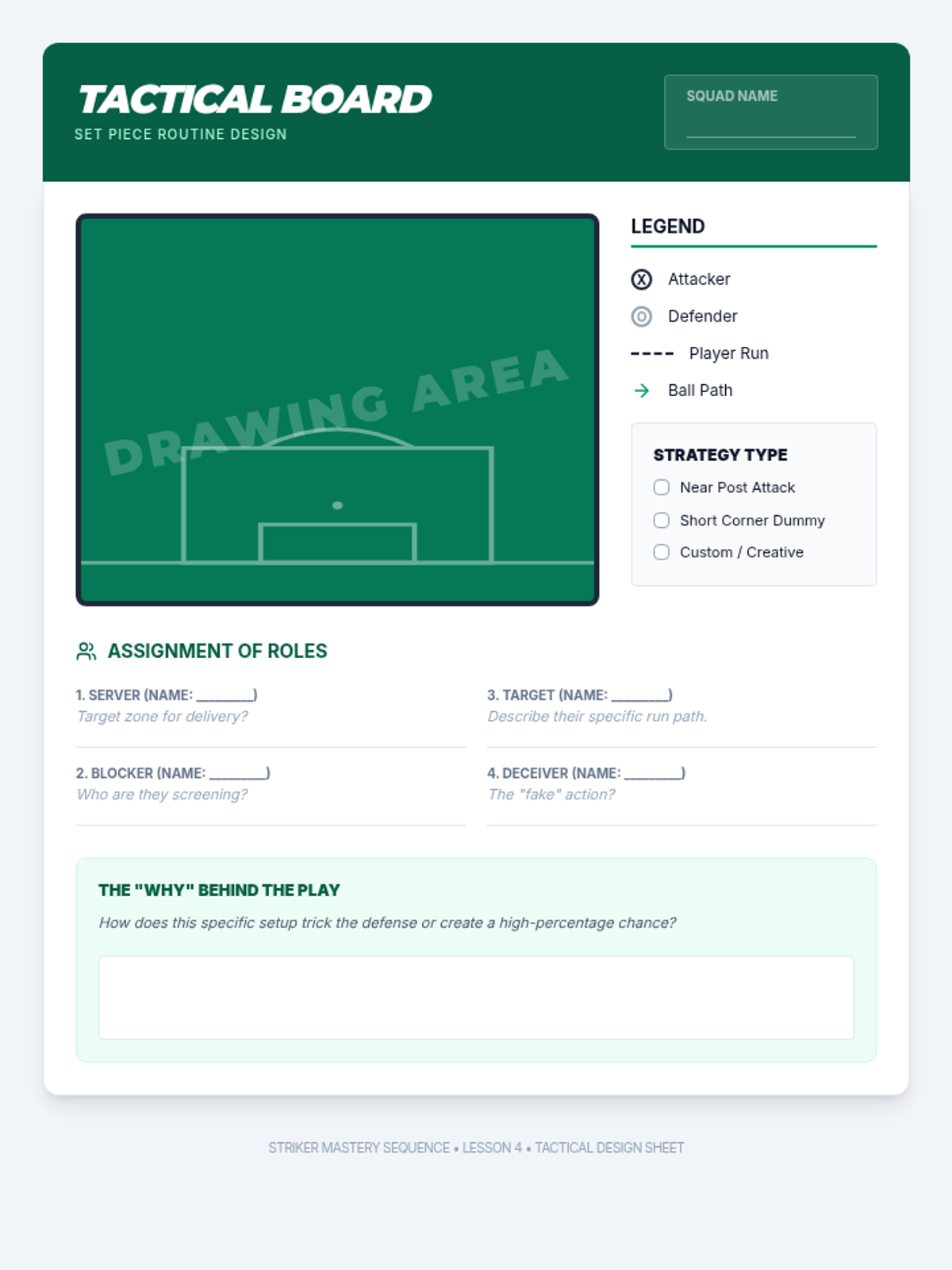
Groups design their own corner kick or free-kick routines, assigning roles and runs. They practice these plays against a defensive wall or structure, analyzing what makes a set piece successful.
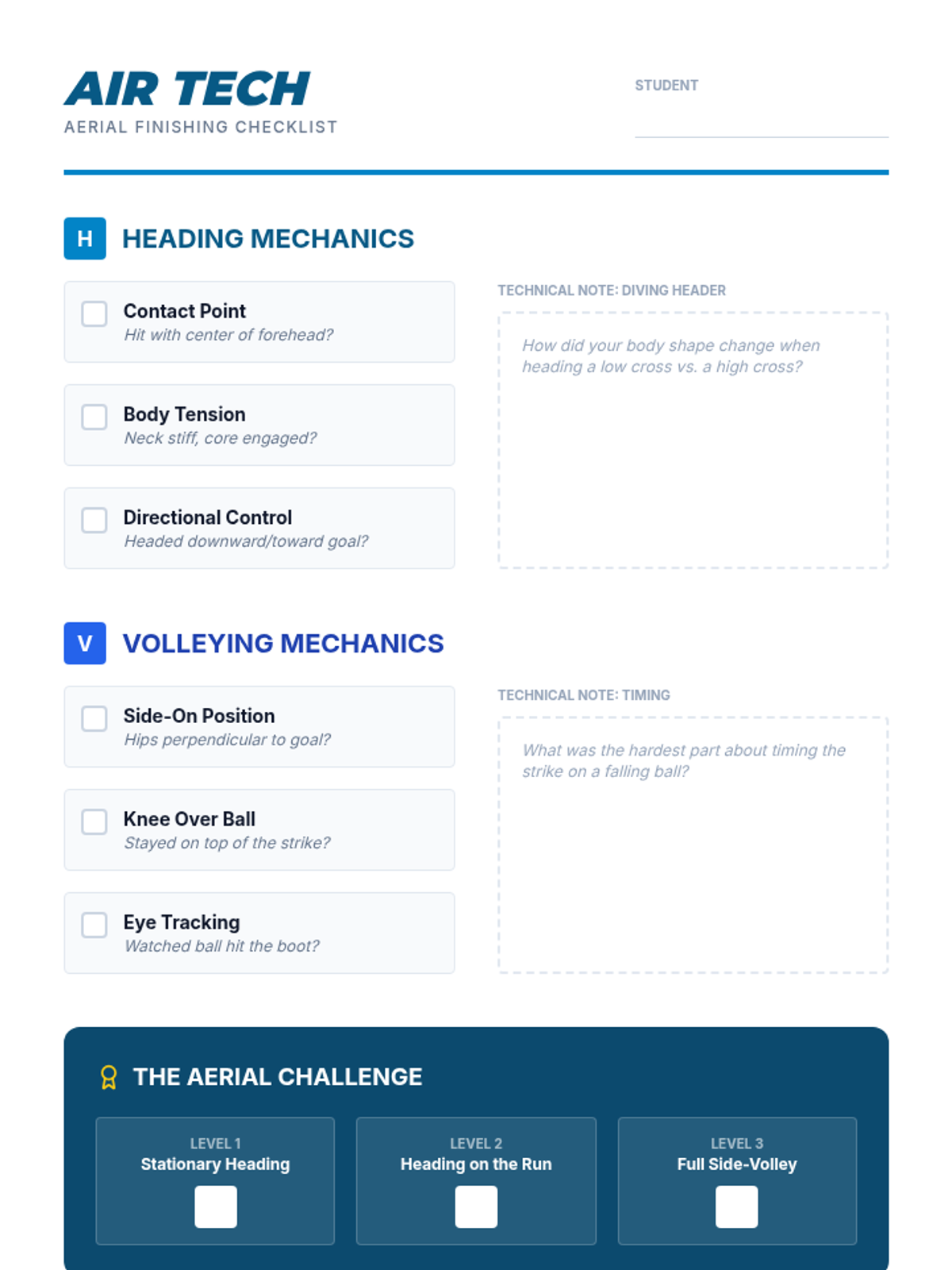
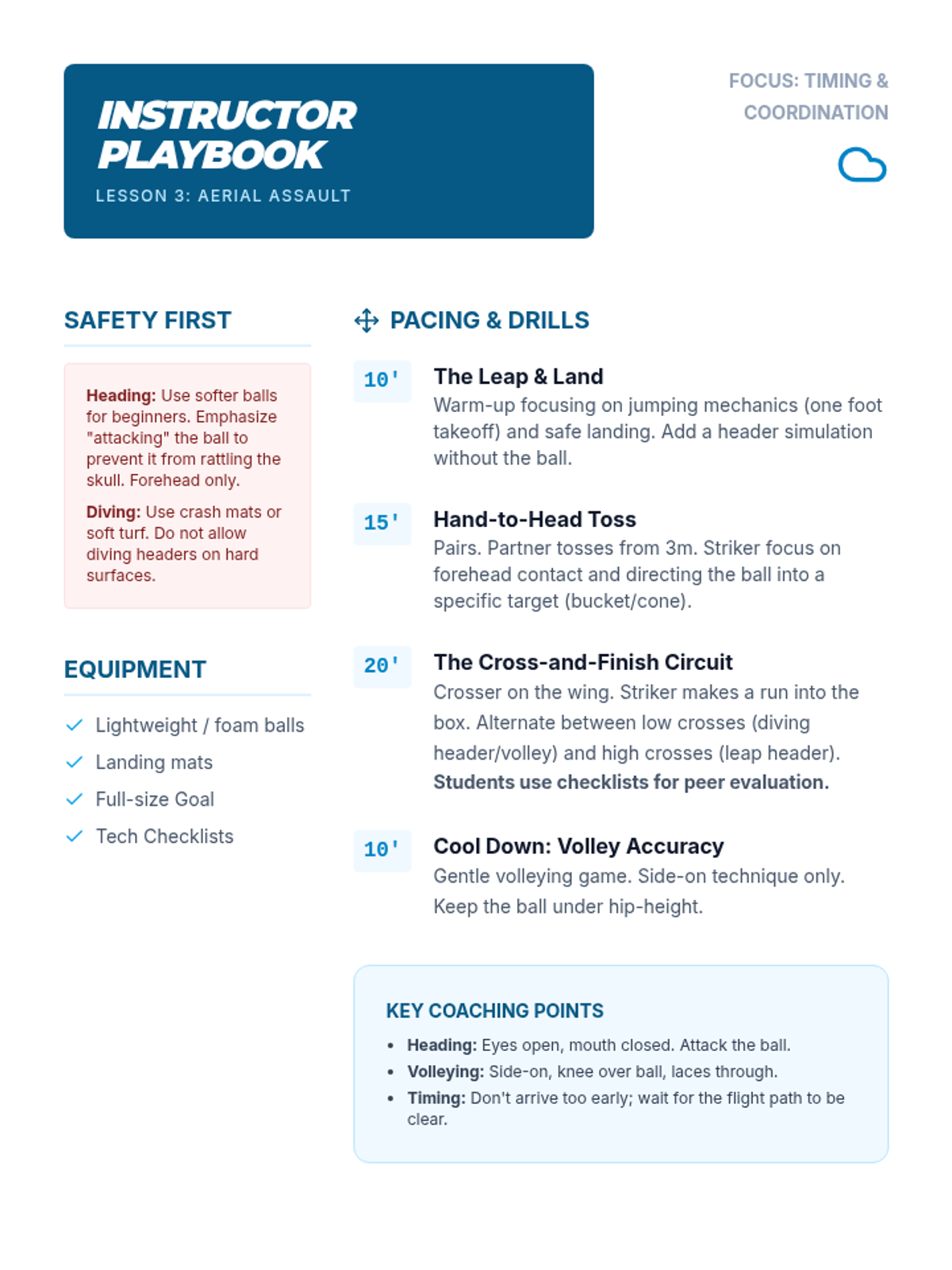
The lesson focuses on connecting with the ball in the air via headers and volleys. Students practice timing their jumps and adjusting their body shape to redirect crosses toward the goal.
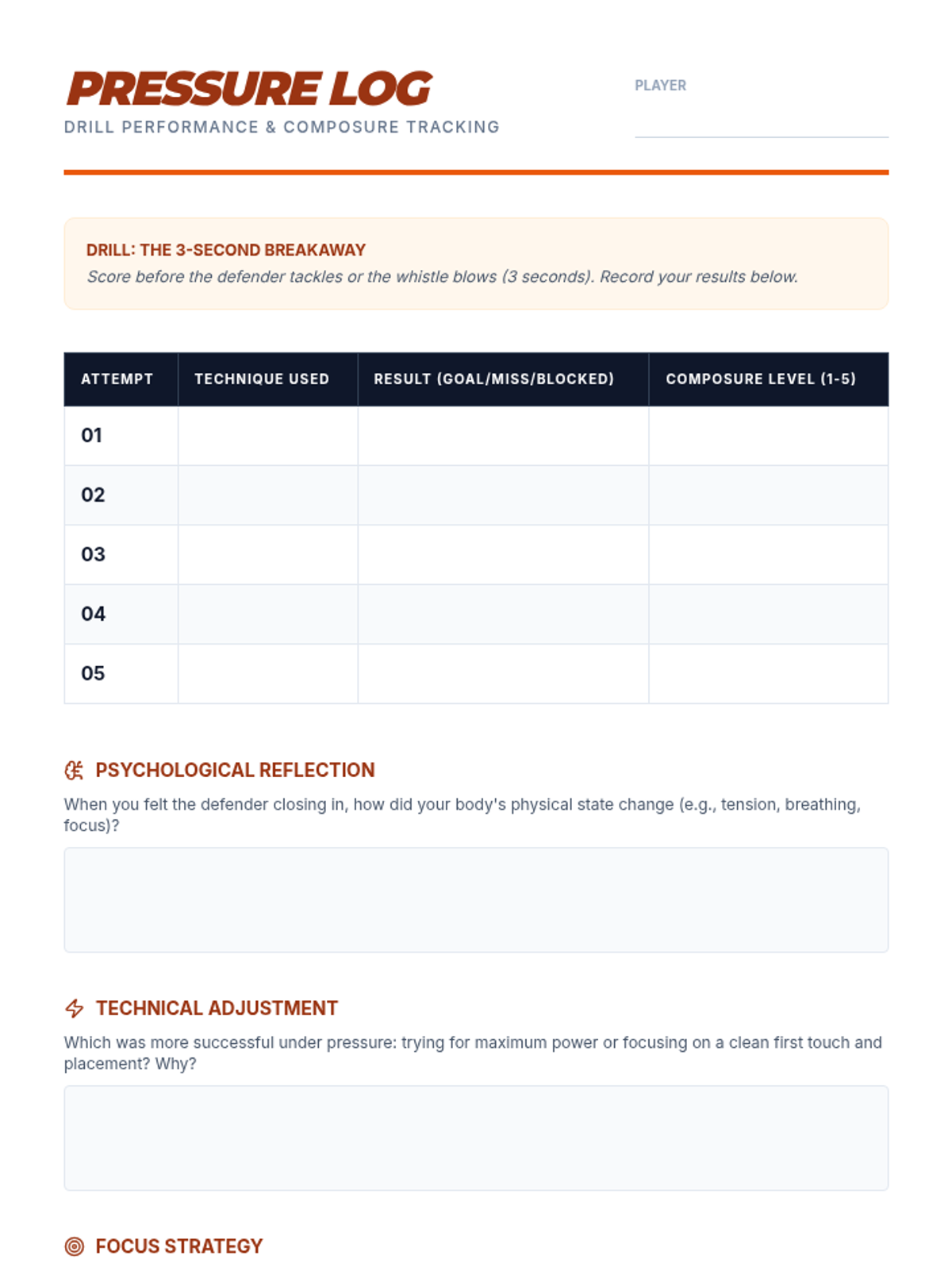
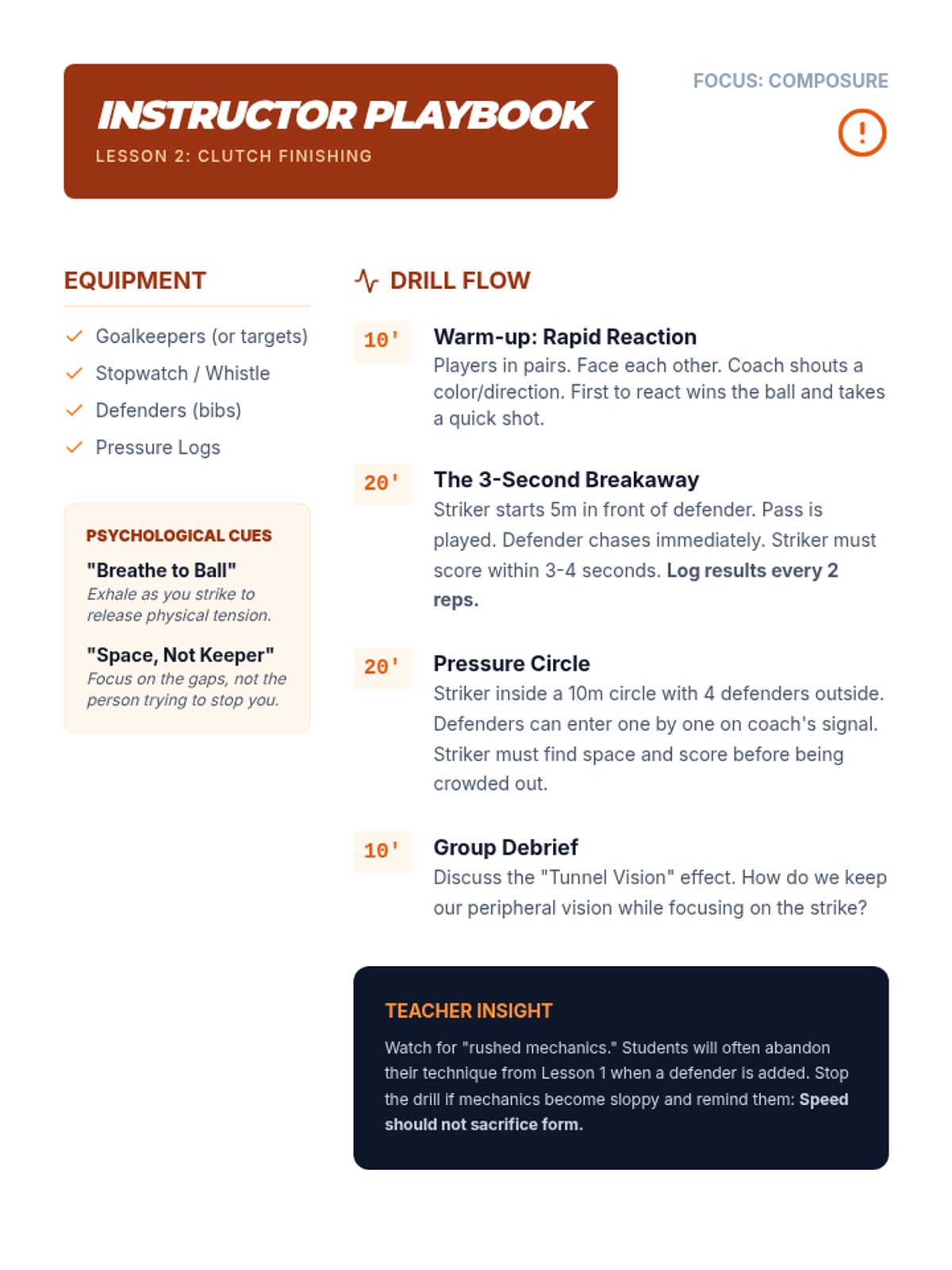
Students practice shooting while being chased or closed down by a defender. This lesson simulates the time constraints of a real match, forcing players to shoot quickly with composure.
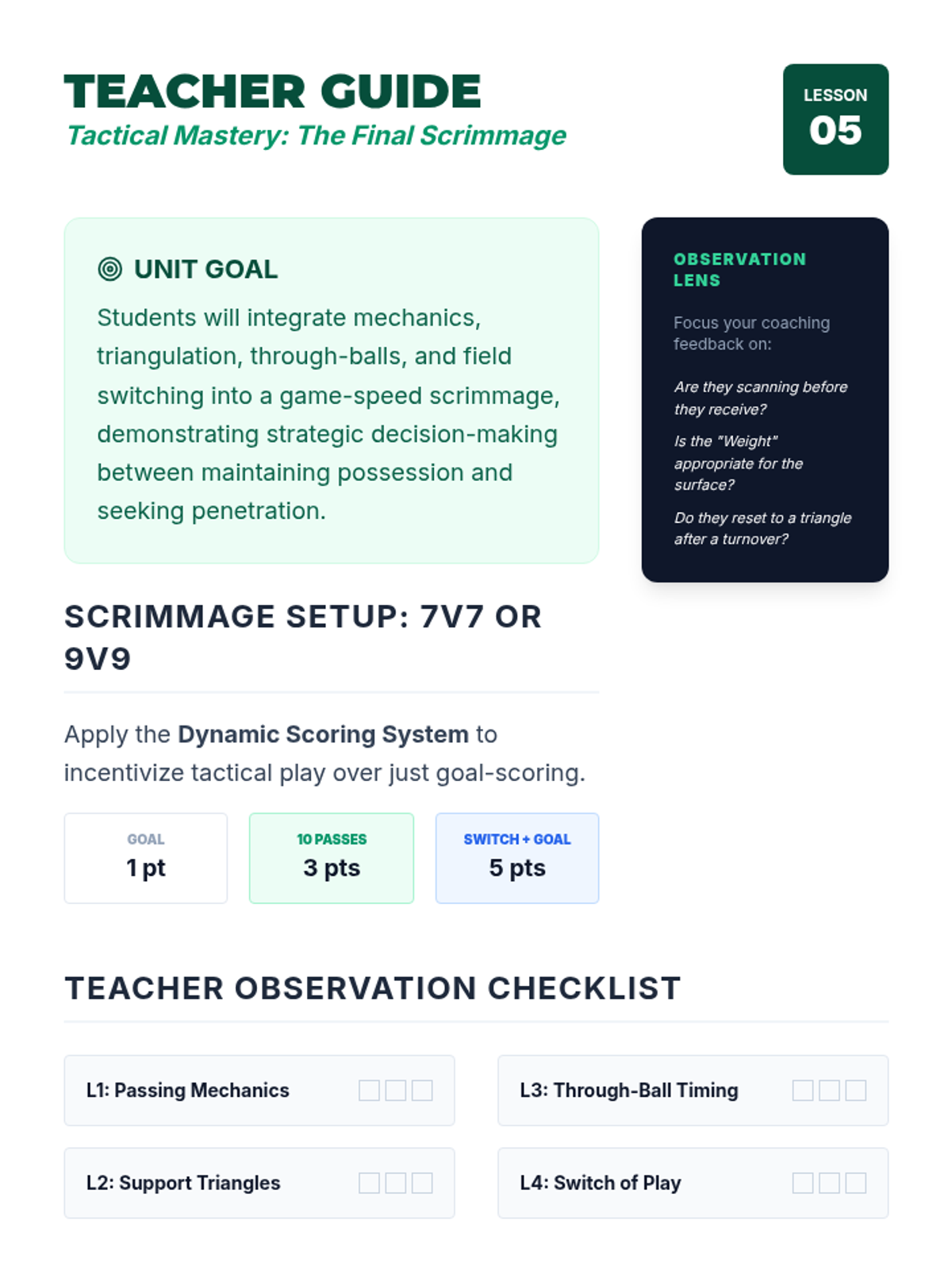
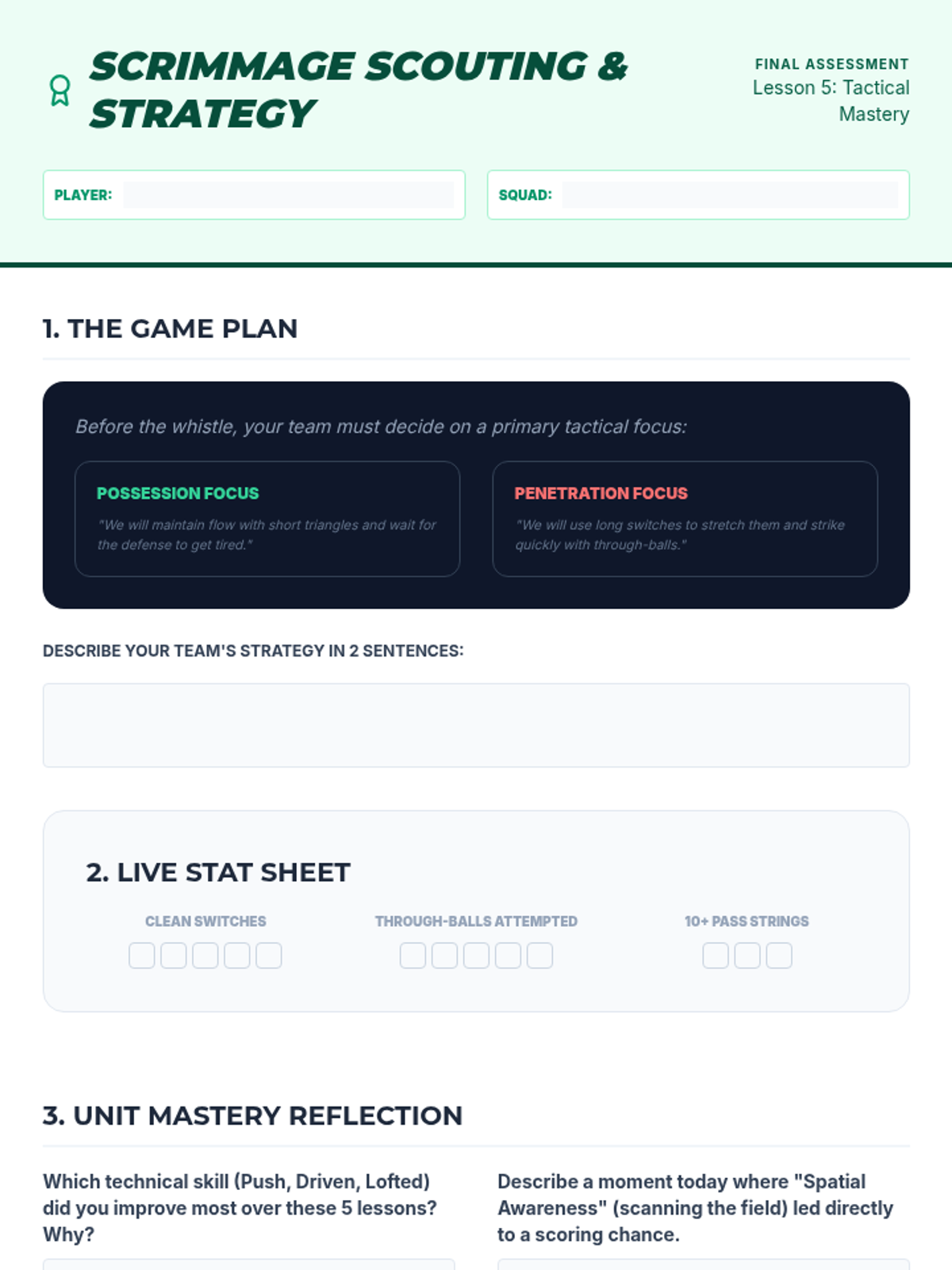
Integrates all skills into a tactical scrimmage where students decide between possession and penetration.
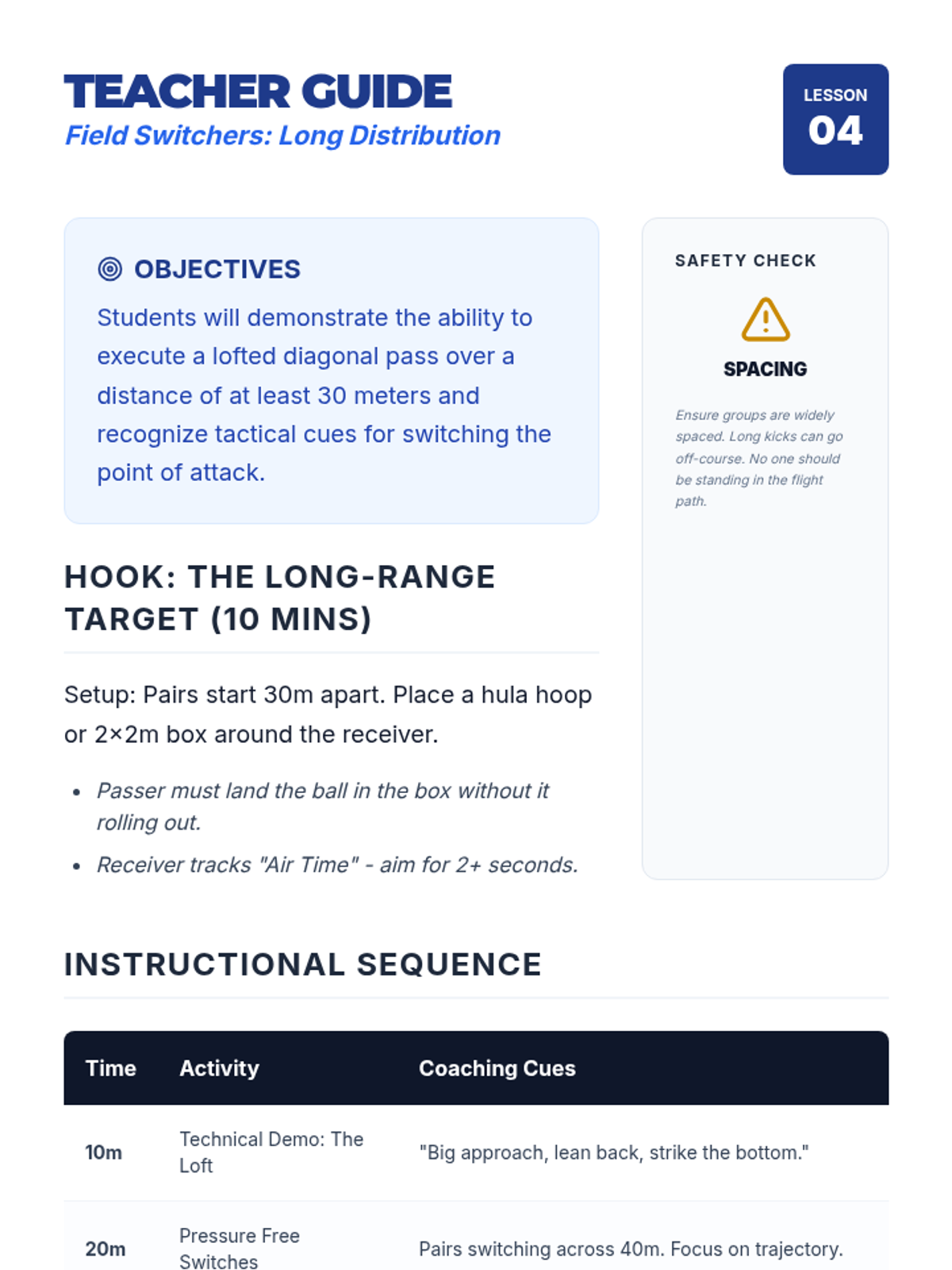
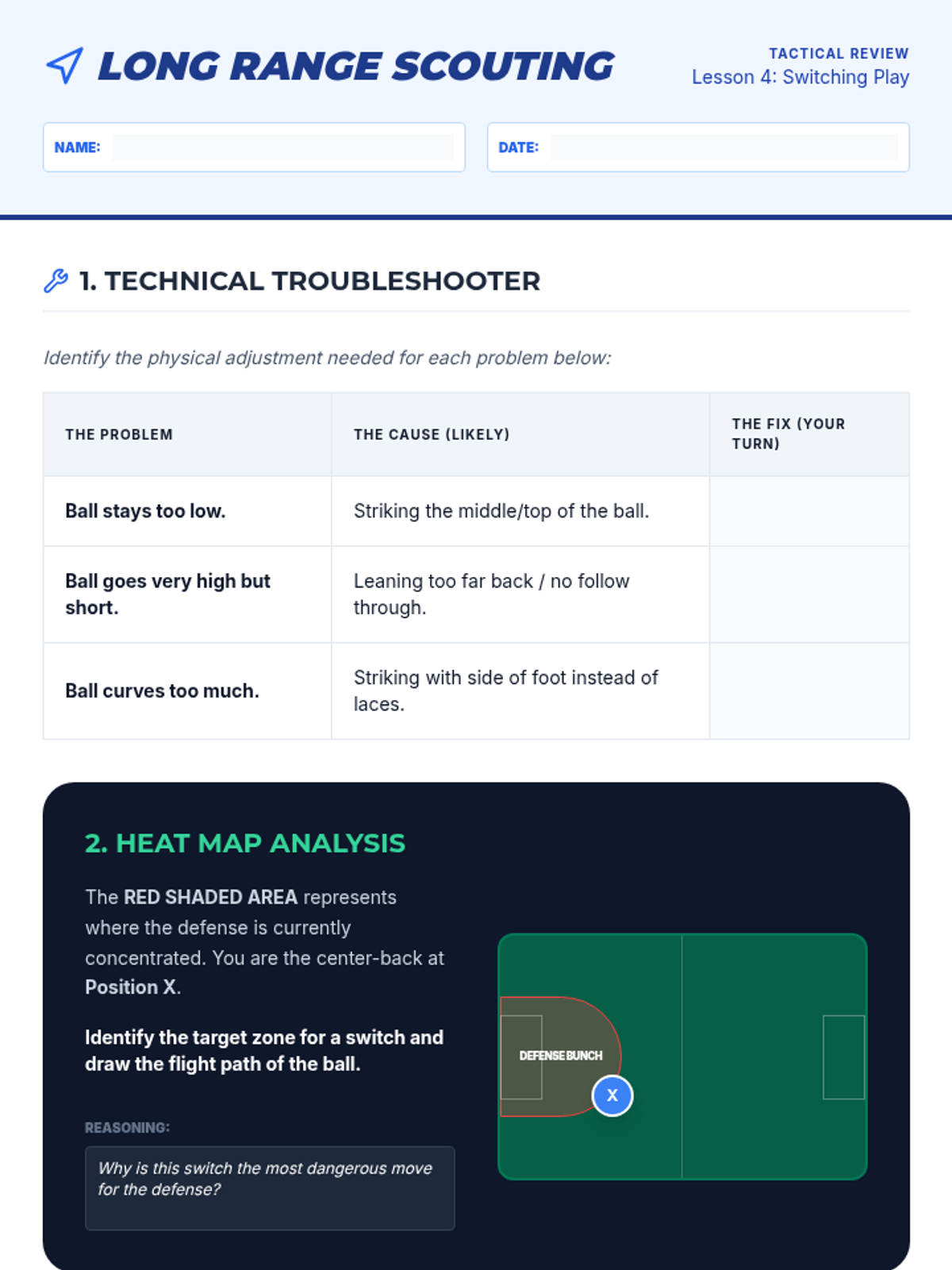
Explores long-range distribution and switching the point of attack to stretch defenses.
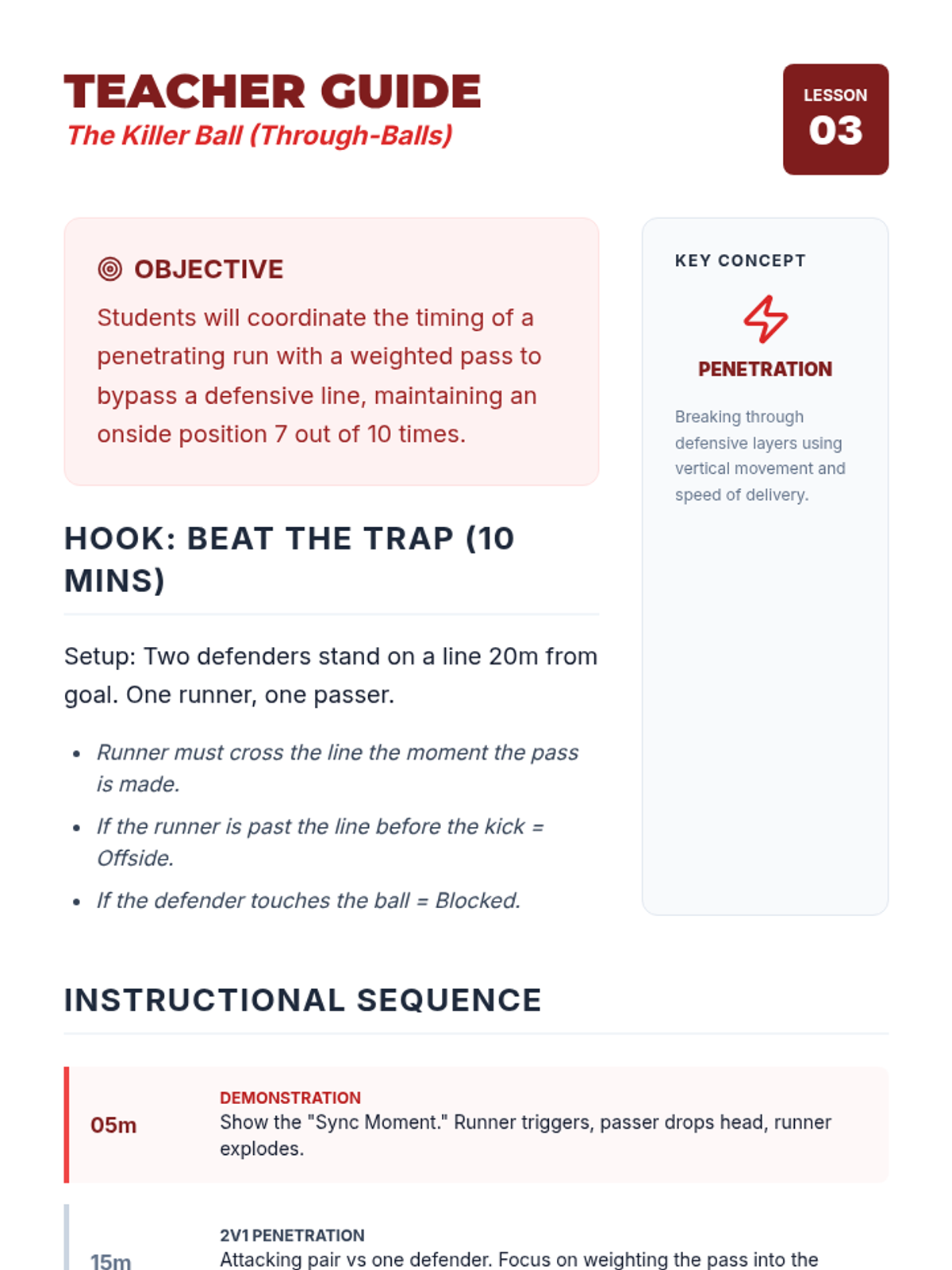
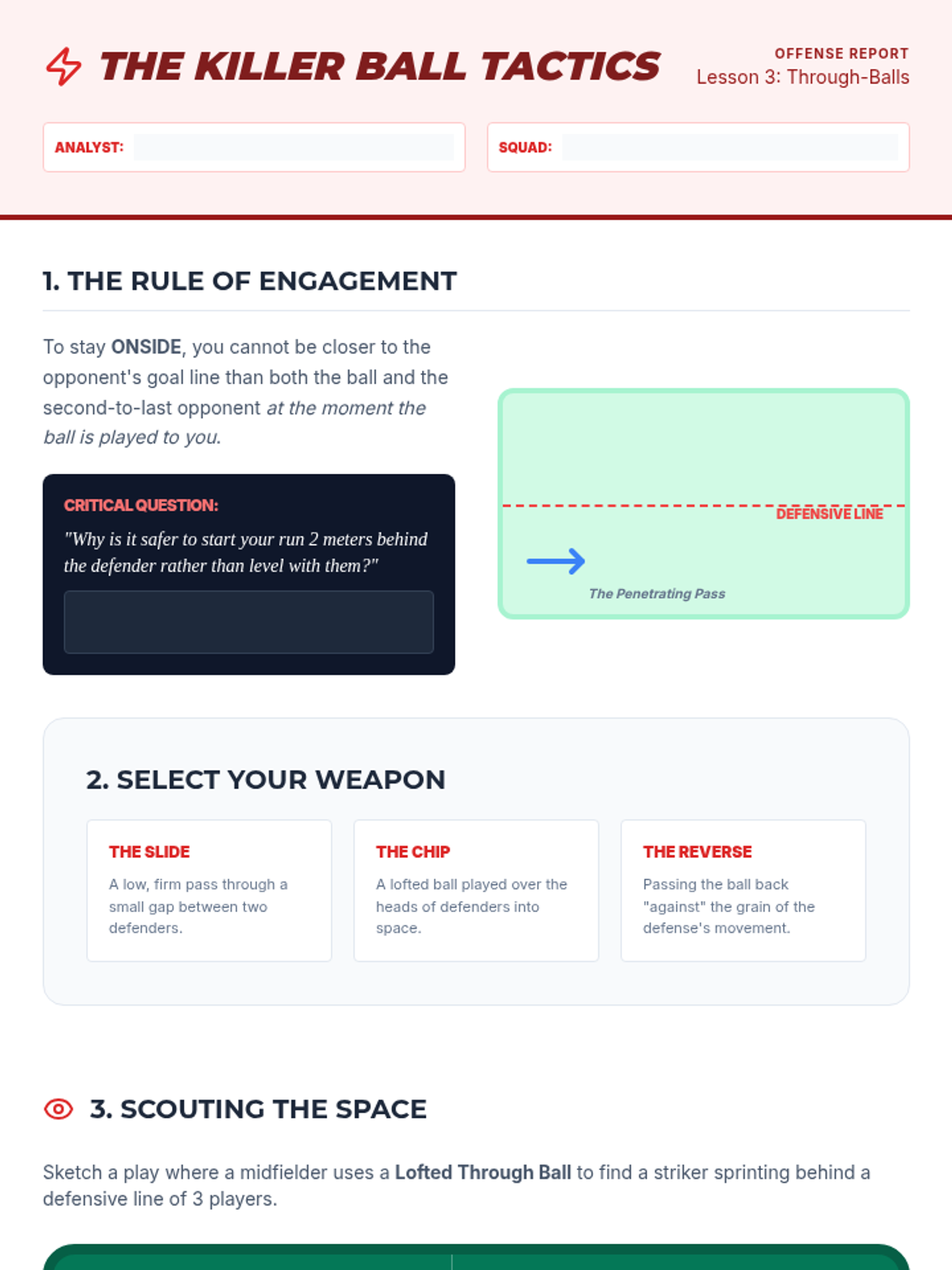
Focuses on penetrating defensive lines with through balls and synchronizing runs with passer vision.
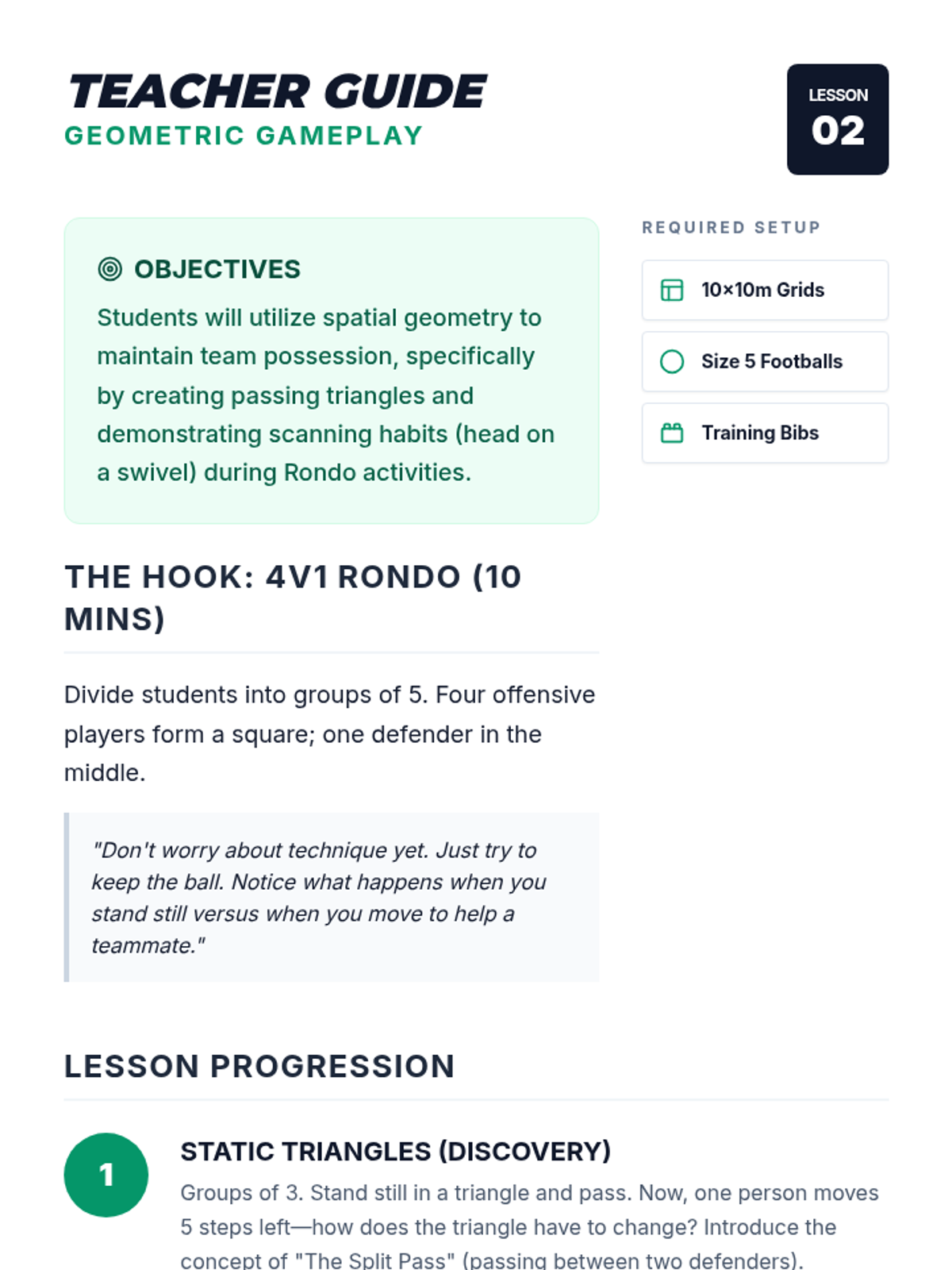
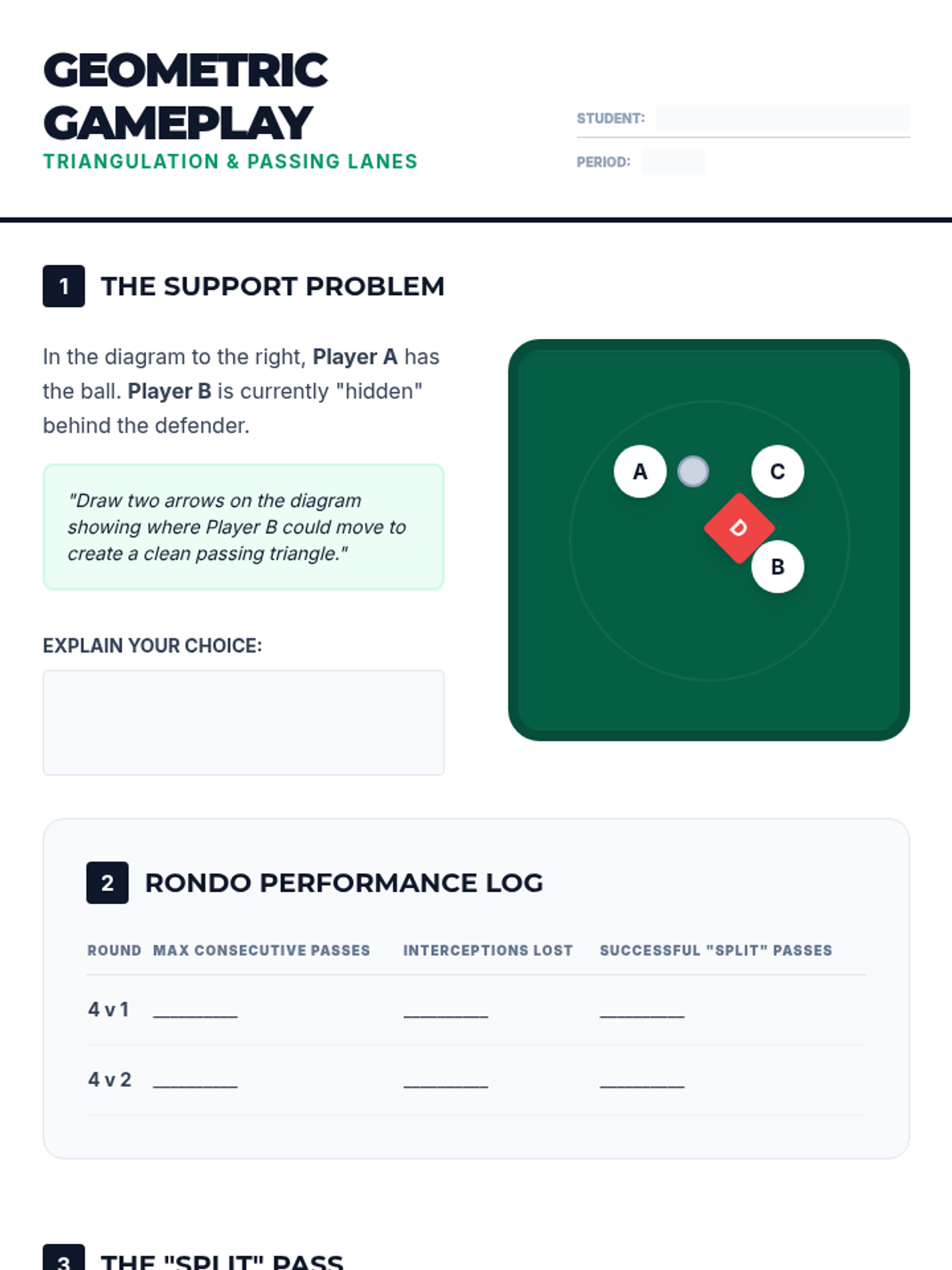
Introduces triangulation and off-ball movement to maintain possession using Rondo games and spatial geometry.
Students refine push and driven passes, focusing on ankle stability and weighting passes for distance and target movement.
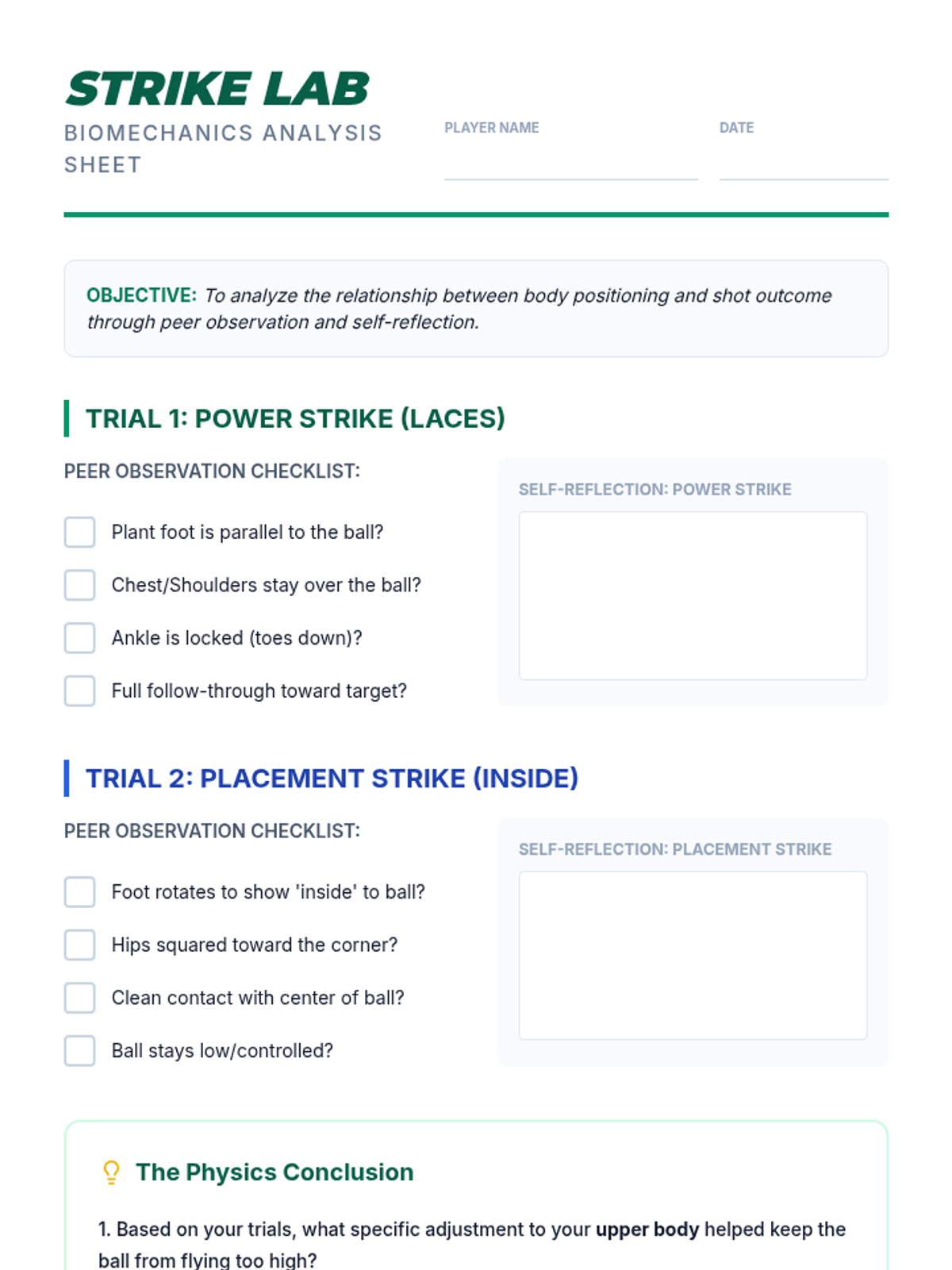
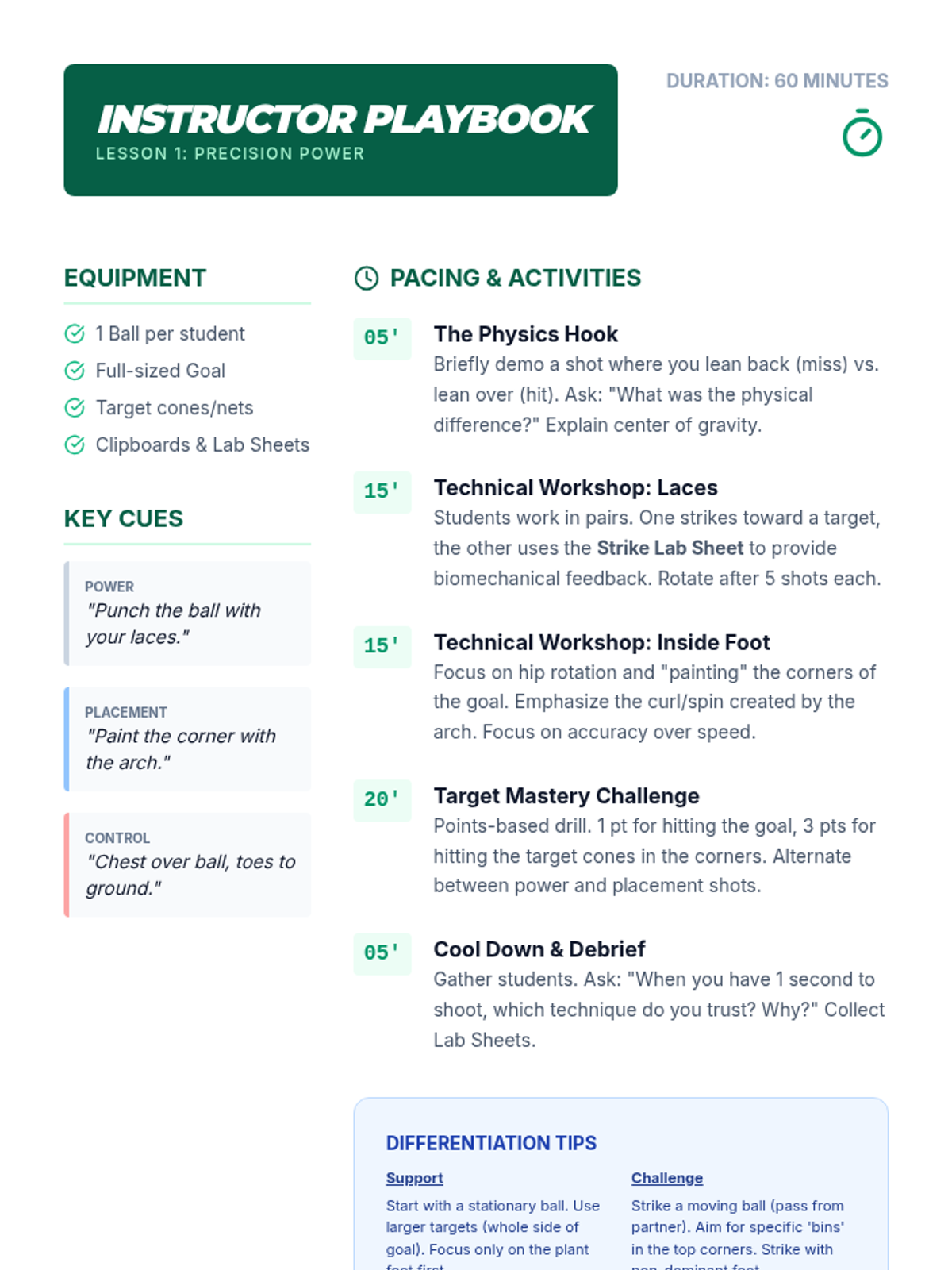
Students investigate the physics and biomechanics of shooting, focusing on the distinction between power (laces) and placement (inside of the foot). Through peer analysis and technical workshops, they refine their striking form.
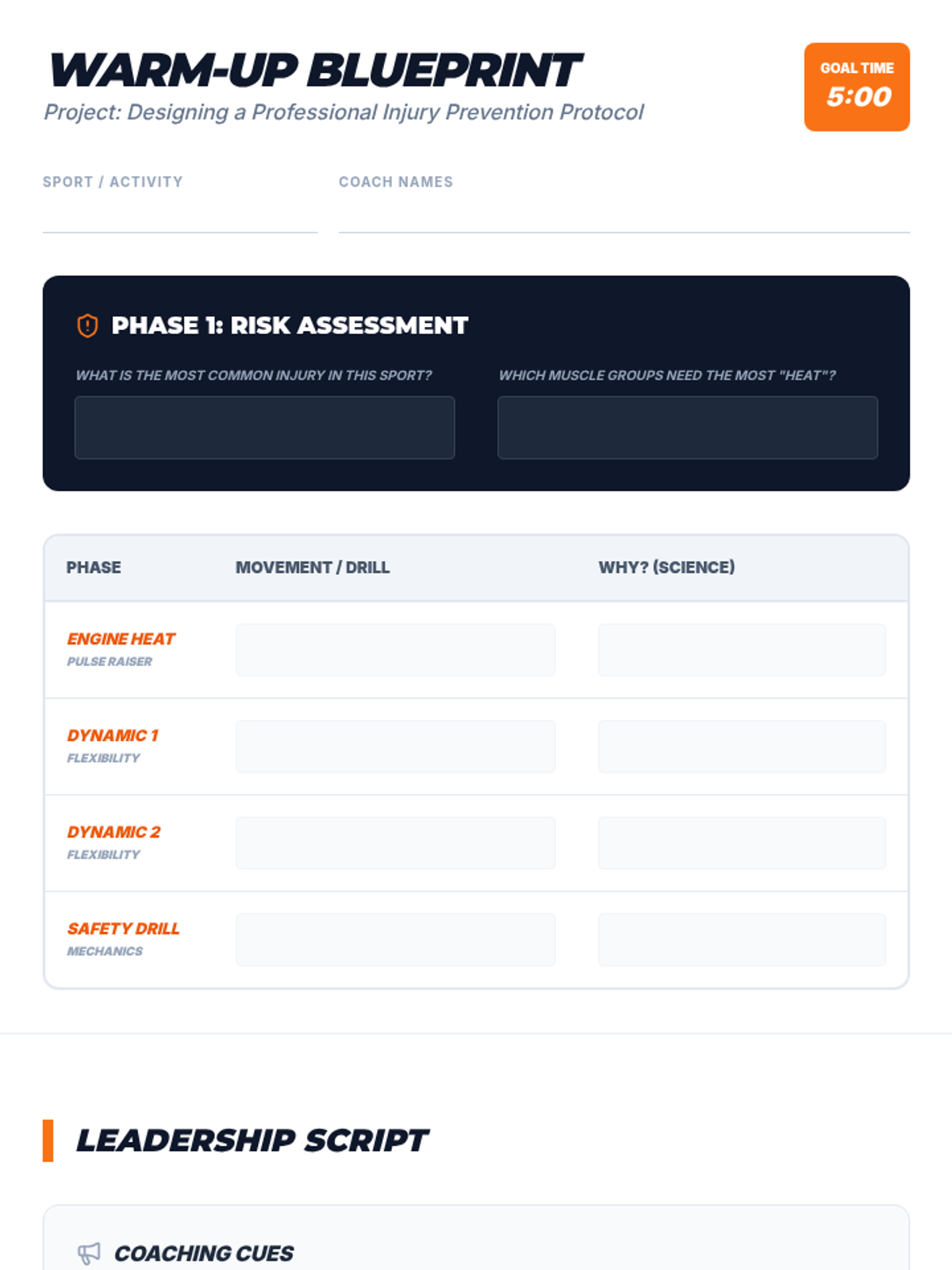
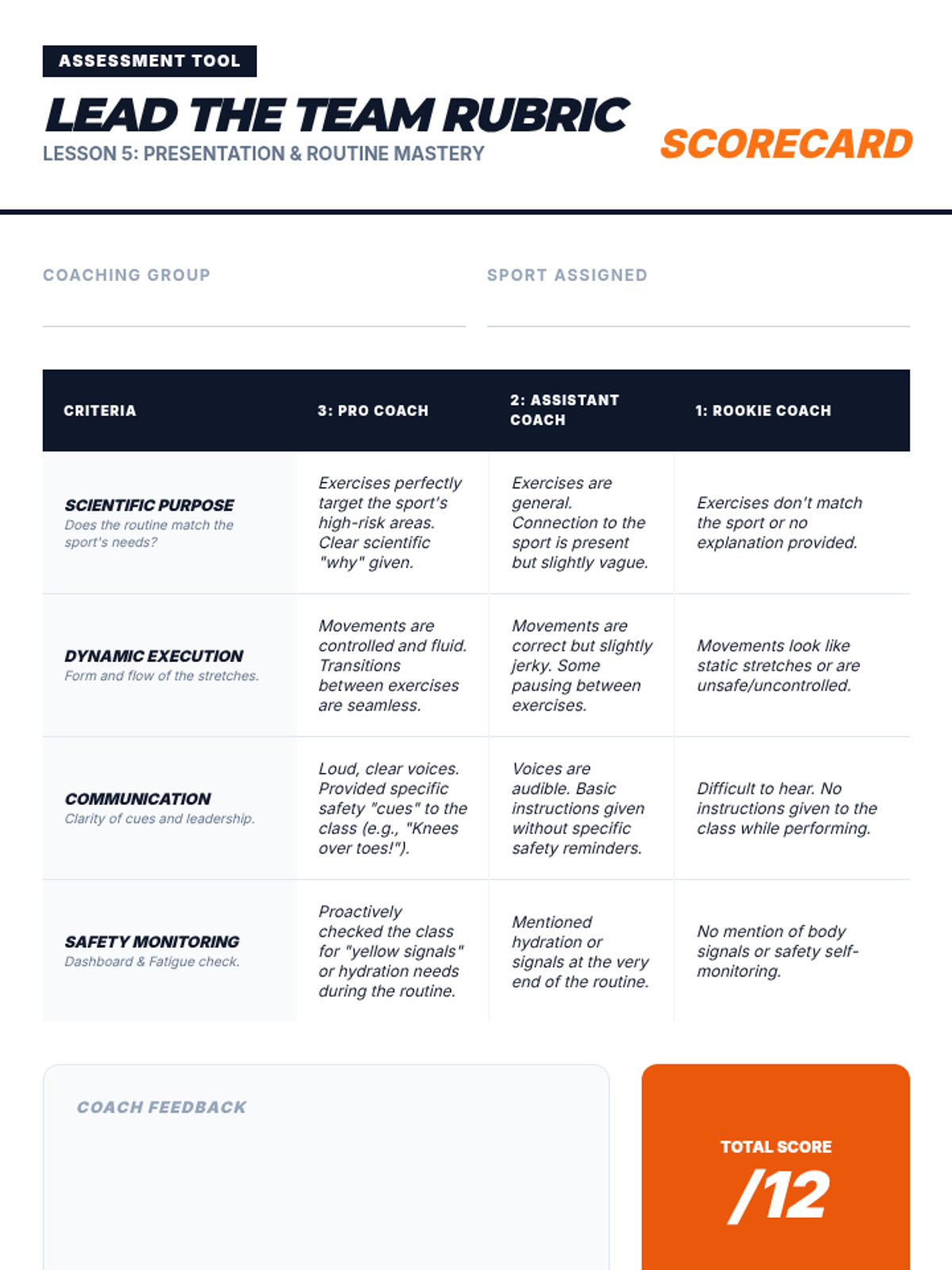
Synthesizing the previous lessons, students work in small groups to create a 5-minute warm-up routine tailored to a specific sport or activity. They present and lead the class through their routine, explaining how each movement prevents injuries common to that sport.
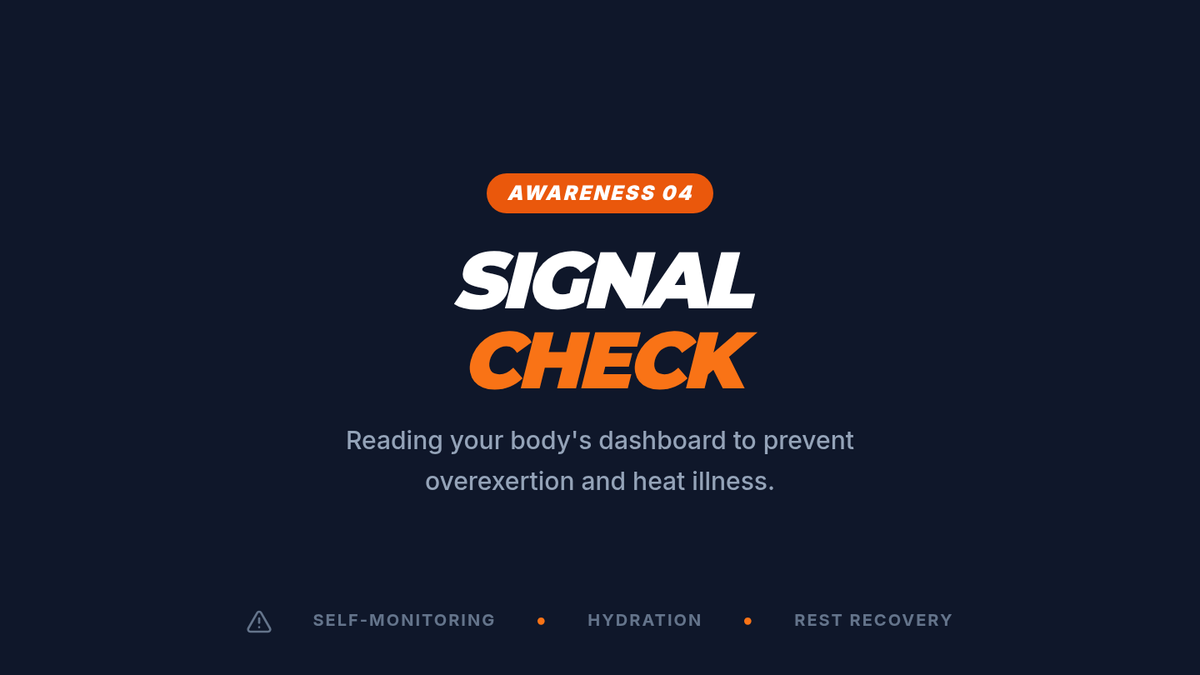
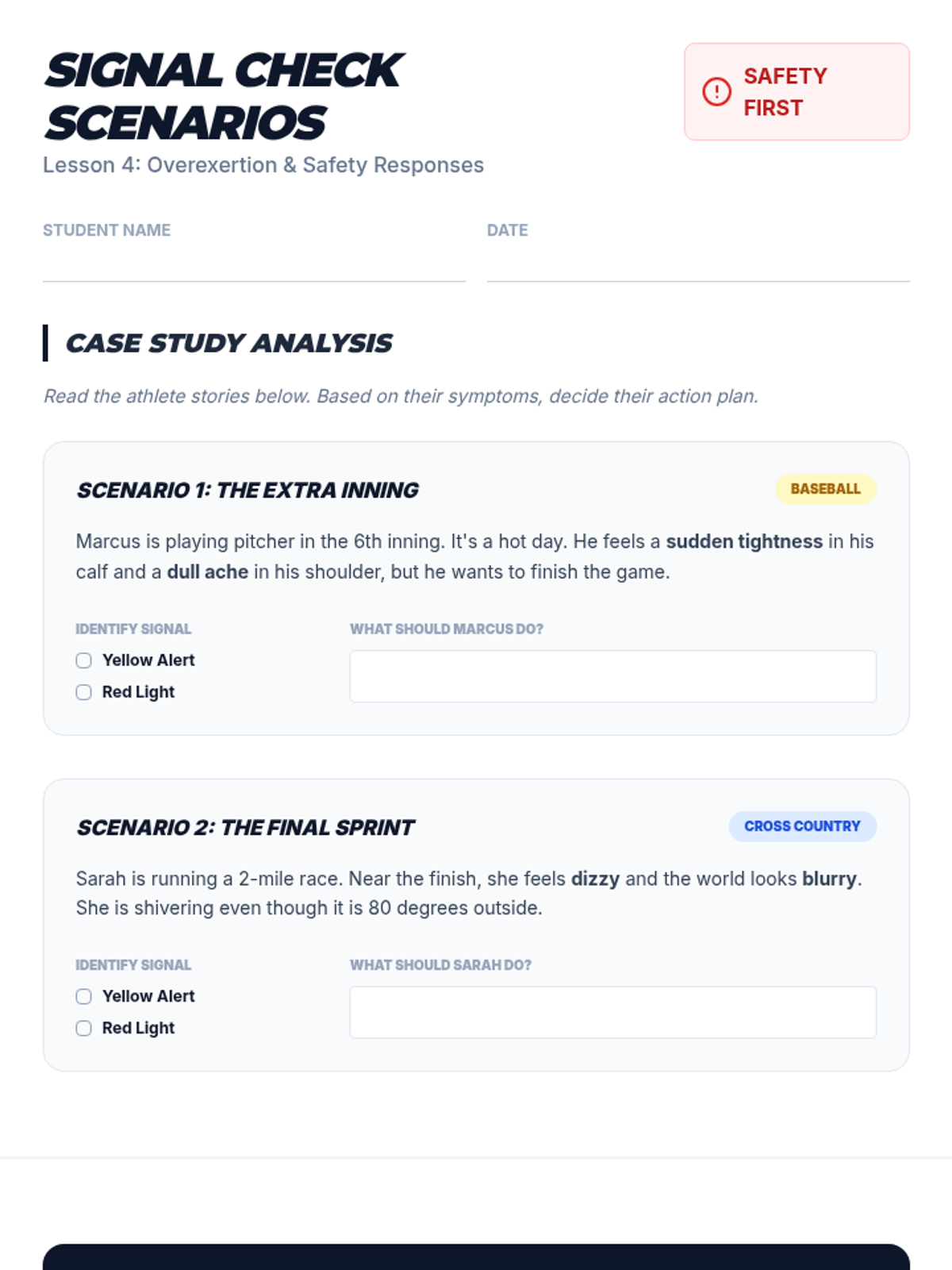
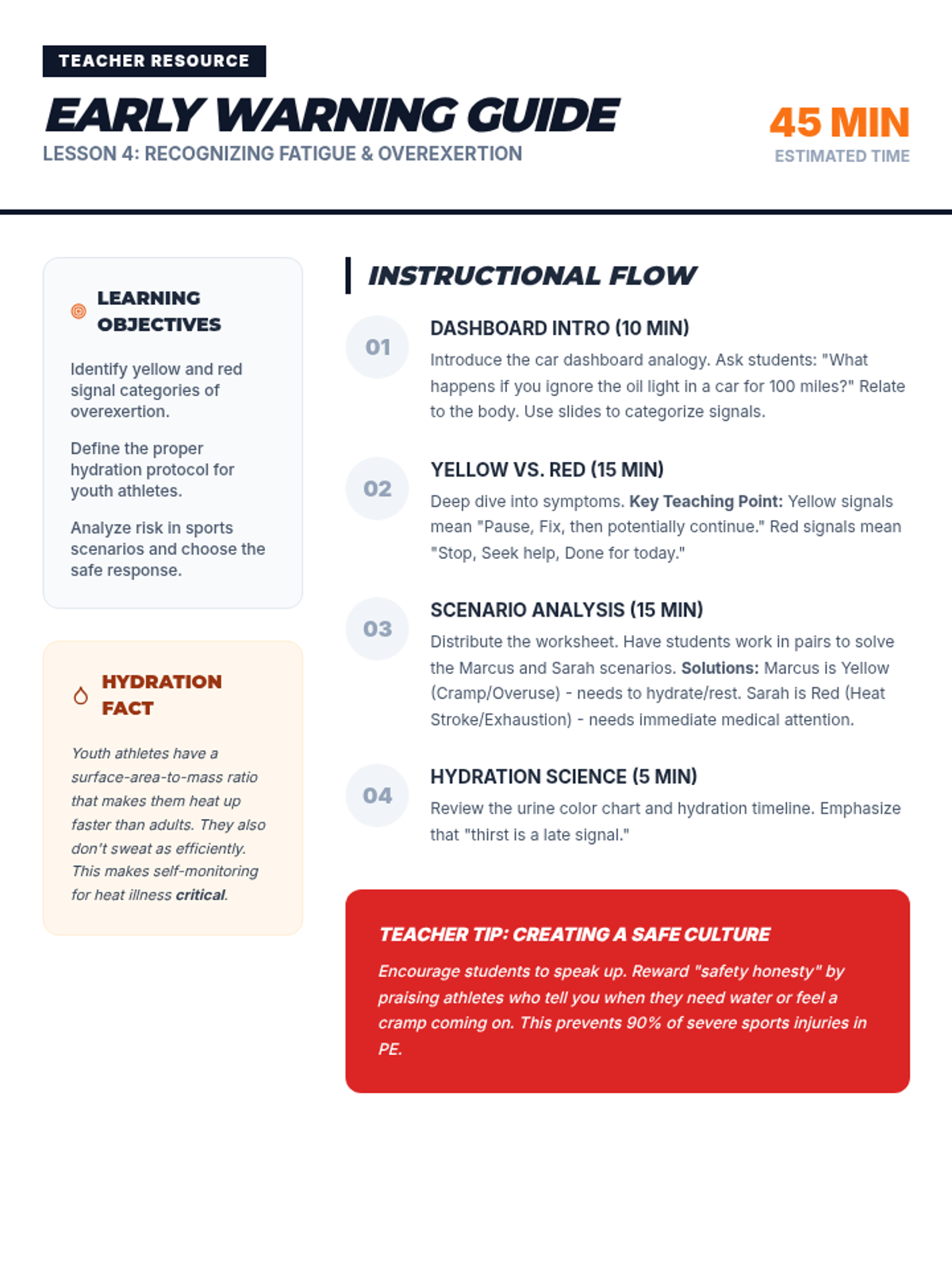
Students learn to identify the body's warning signals, such as cramps, dizziness, or pain, that indicate a need for rest or hydration. Through scenario analysis, they determine the appropriate response to various symptoms to prevent heat illness or overuse injuries.
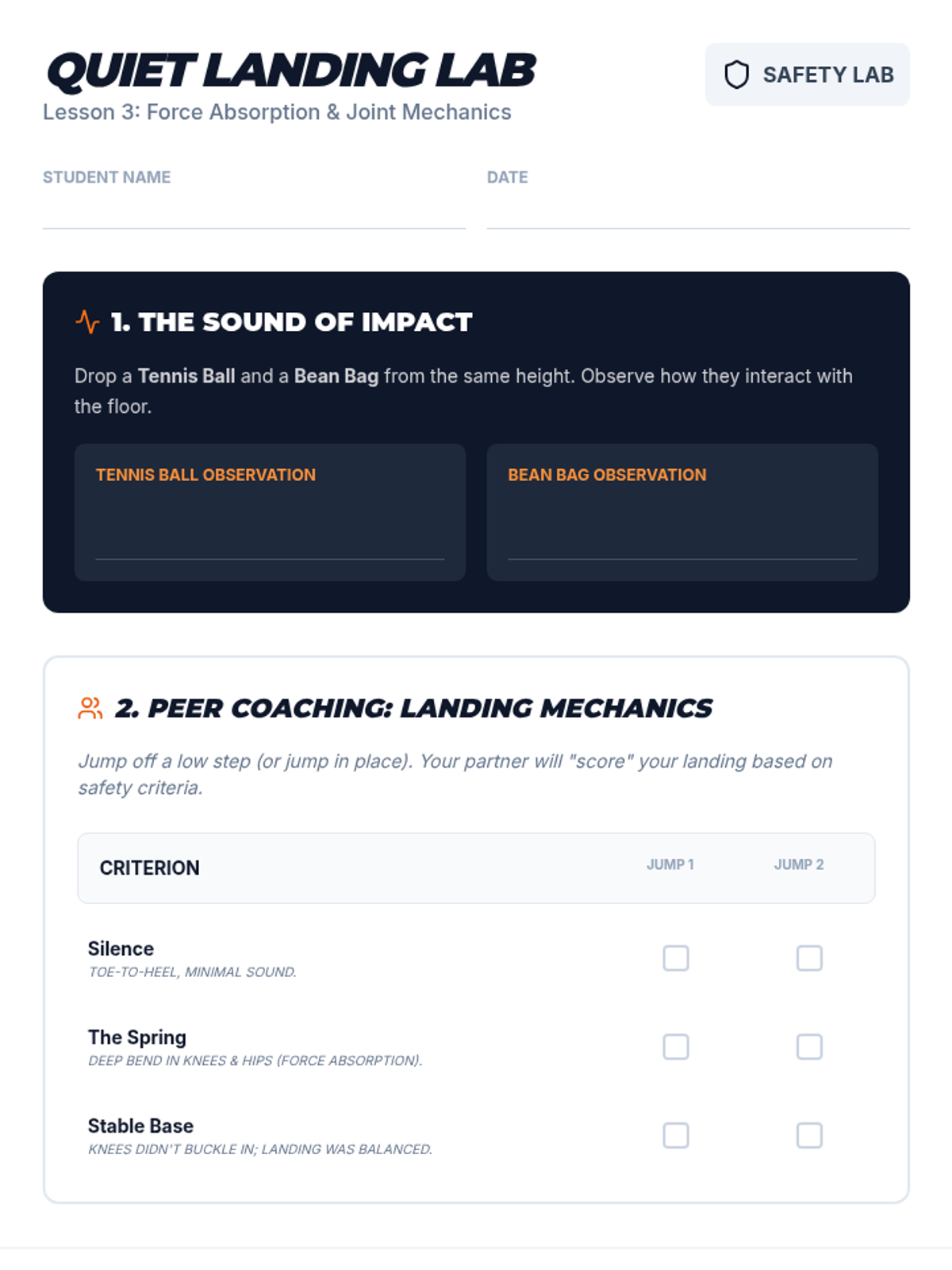
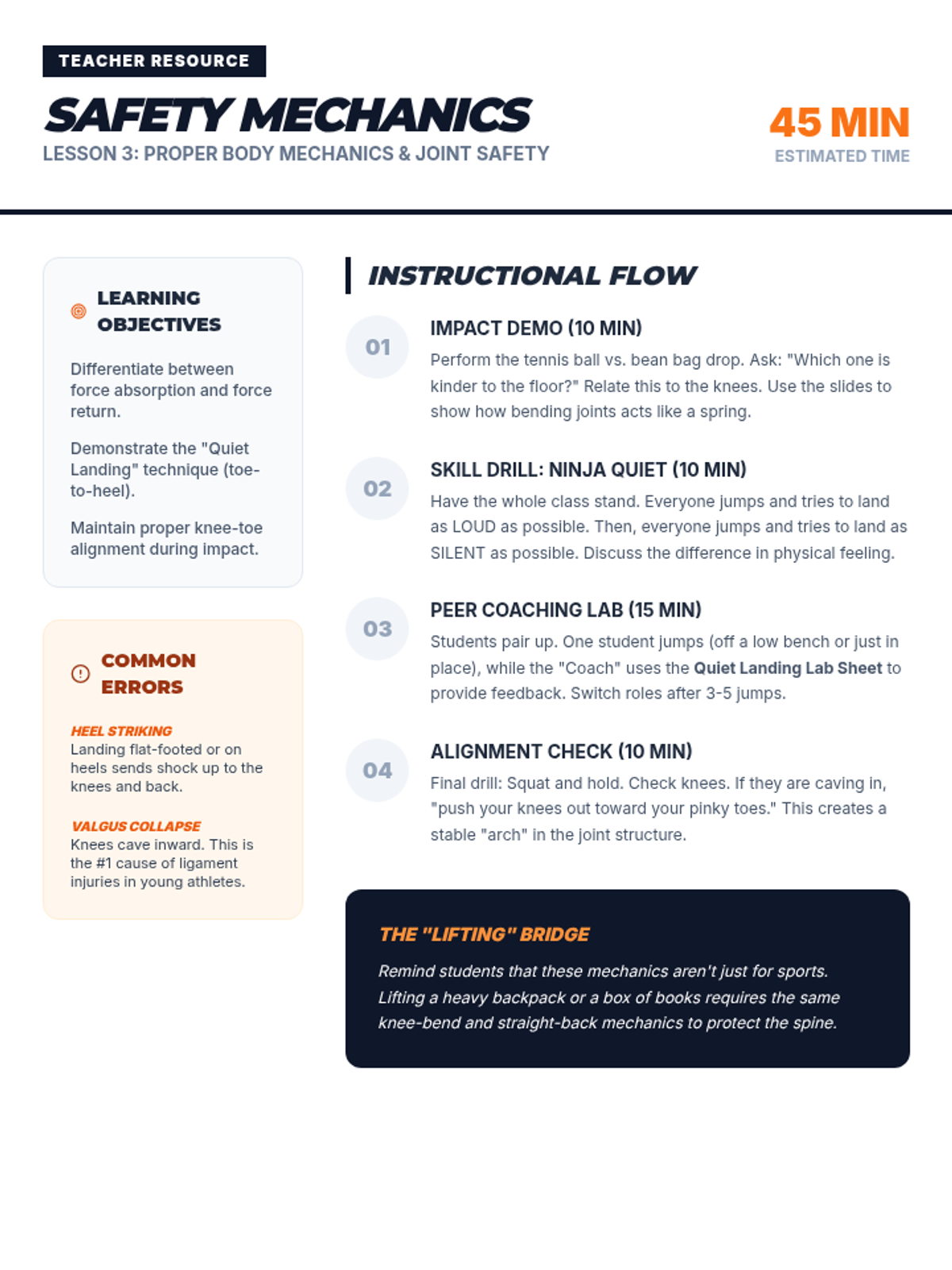
Focusing on joint safety, this lesson covers correct alignment for landing, jumping, and lifting. Students practice 'quiet landings' to reduce impact on knees and ankles, receiving peer feedback on their form to ensure structural safety.
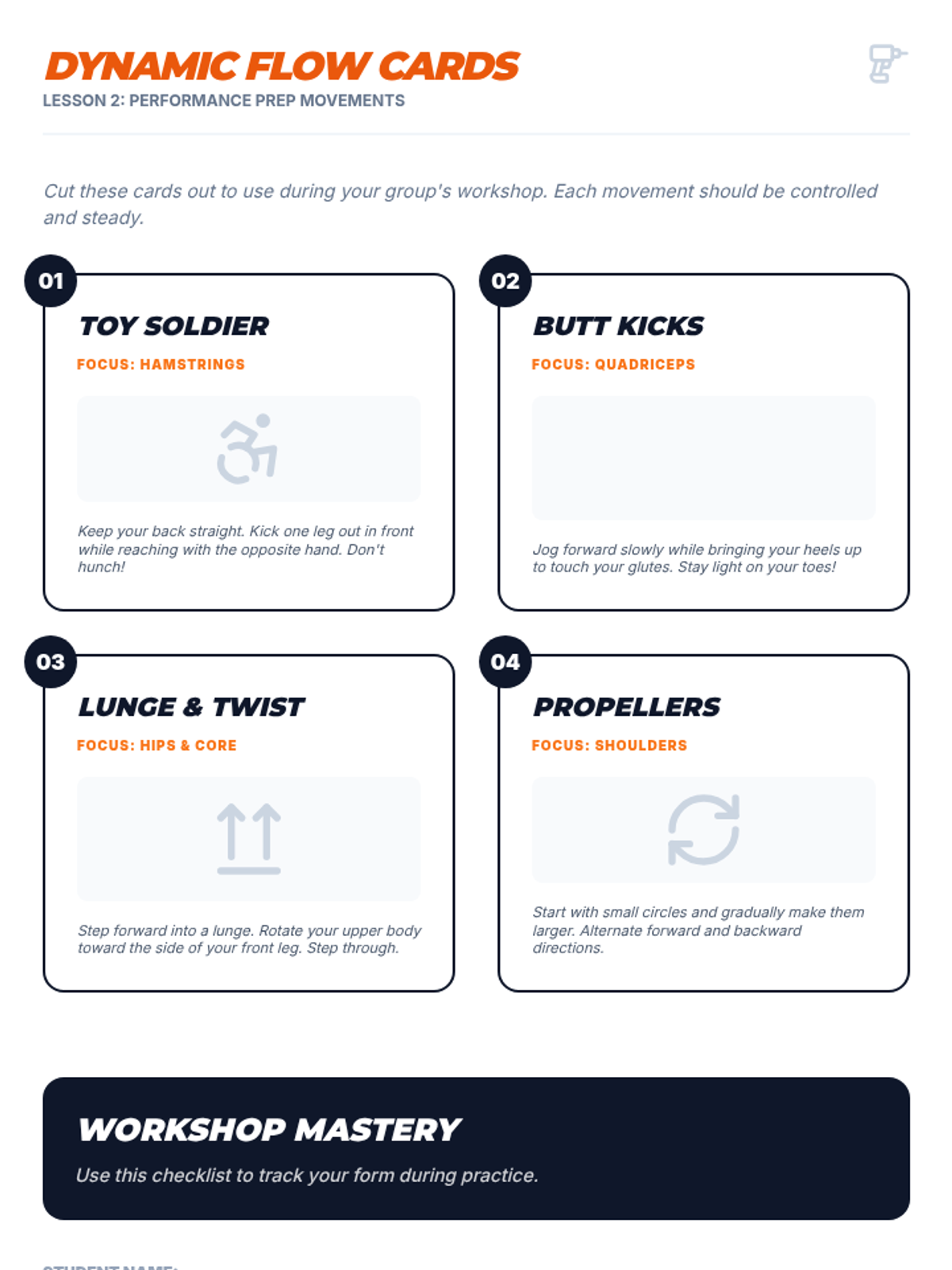
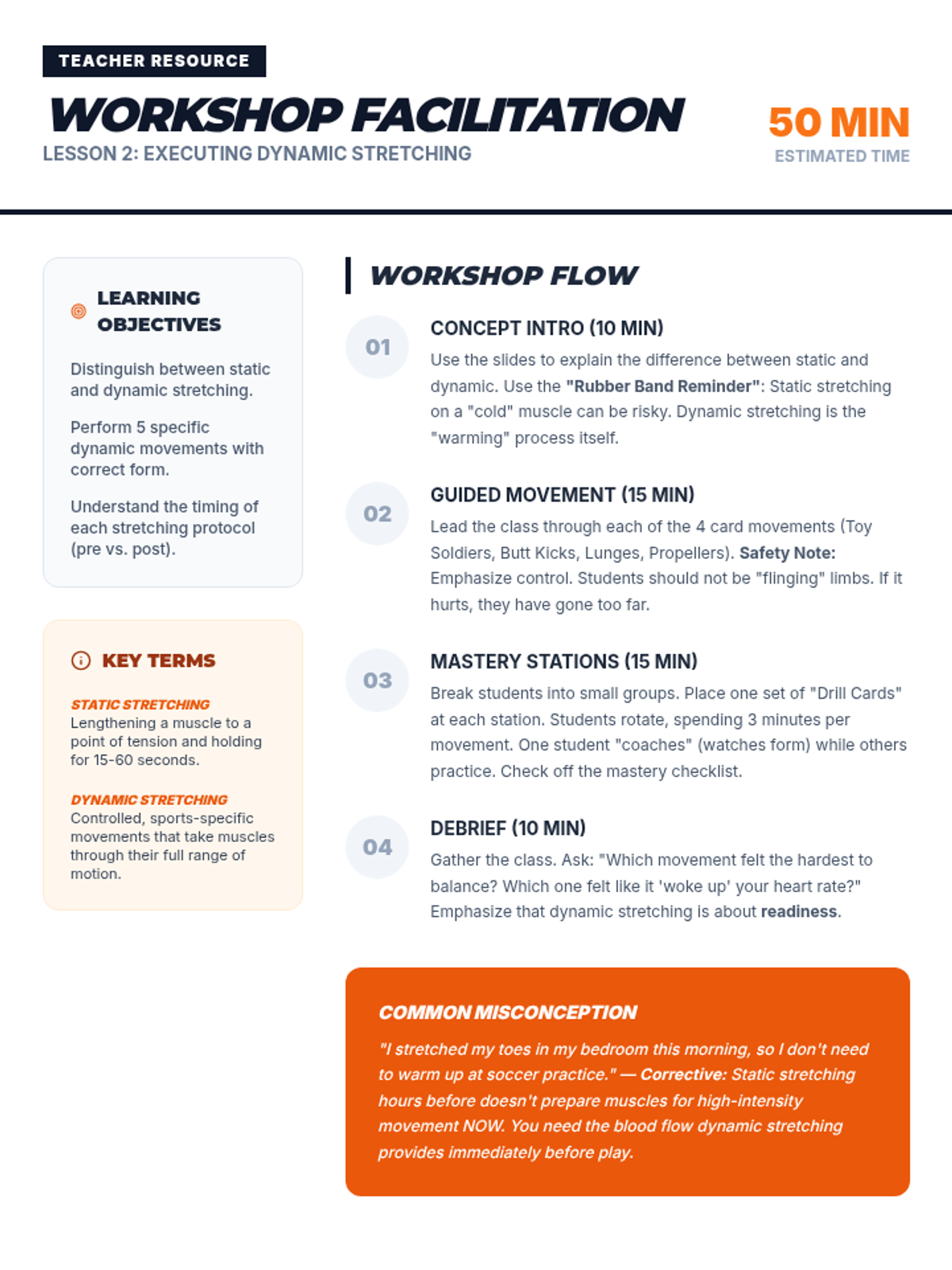
Students participate in a guided workshop to learn and practice dynamic stretching movements suitable for pre-activity preparation. The lesson distinguishes these active movements from static stretching, emphasizing when each type is appropriate to prevent muscle strain.
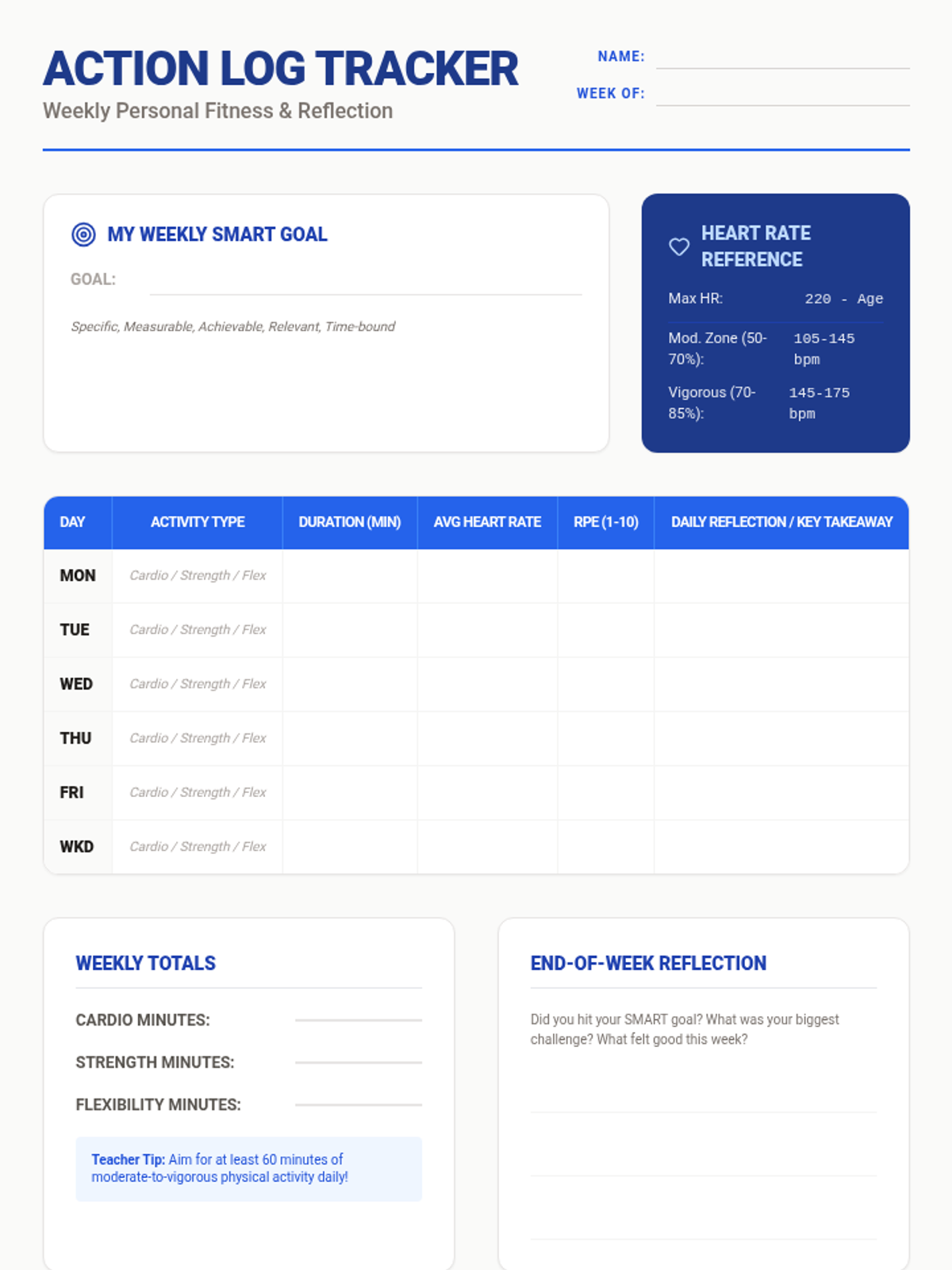
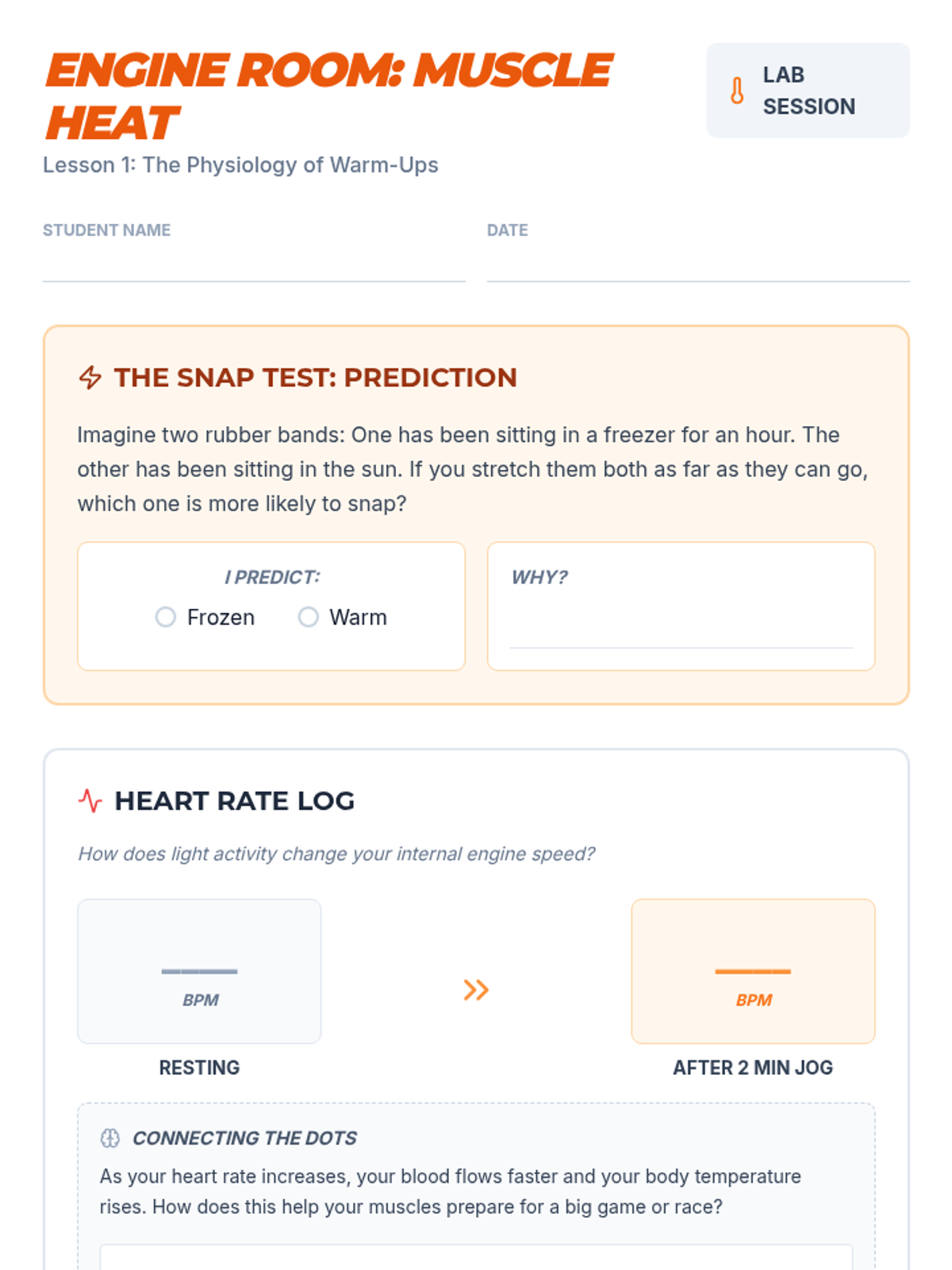
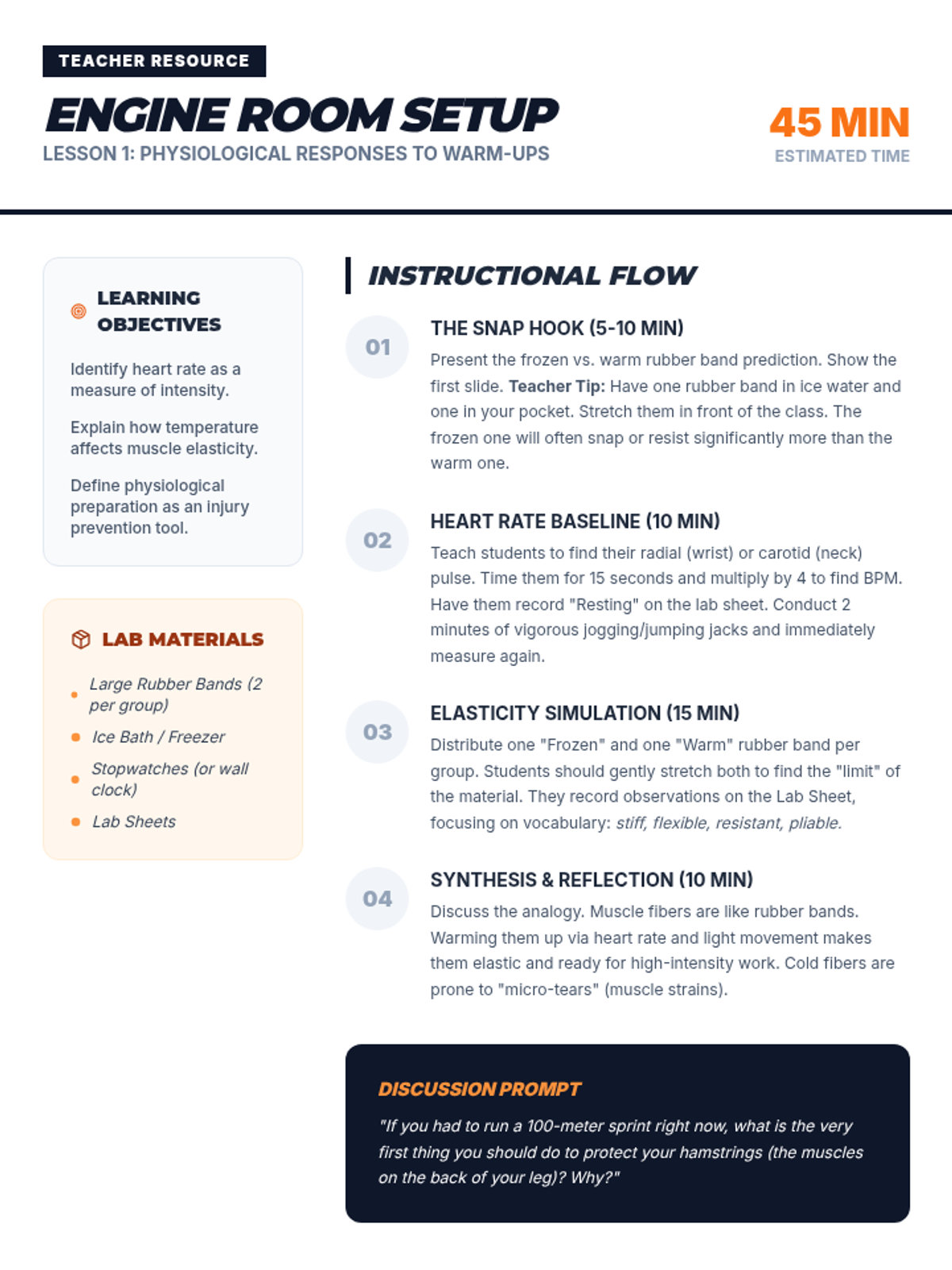
Students investigate the physiology of warm-ups, using a rubber band simulation to understand muscle elasticity and tracking heart rate changes during activity.
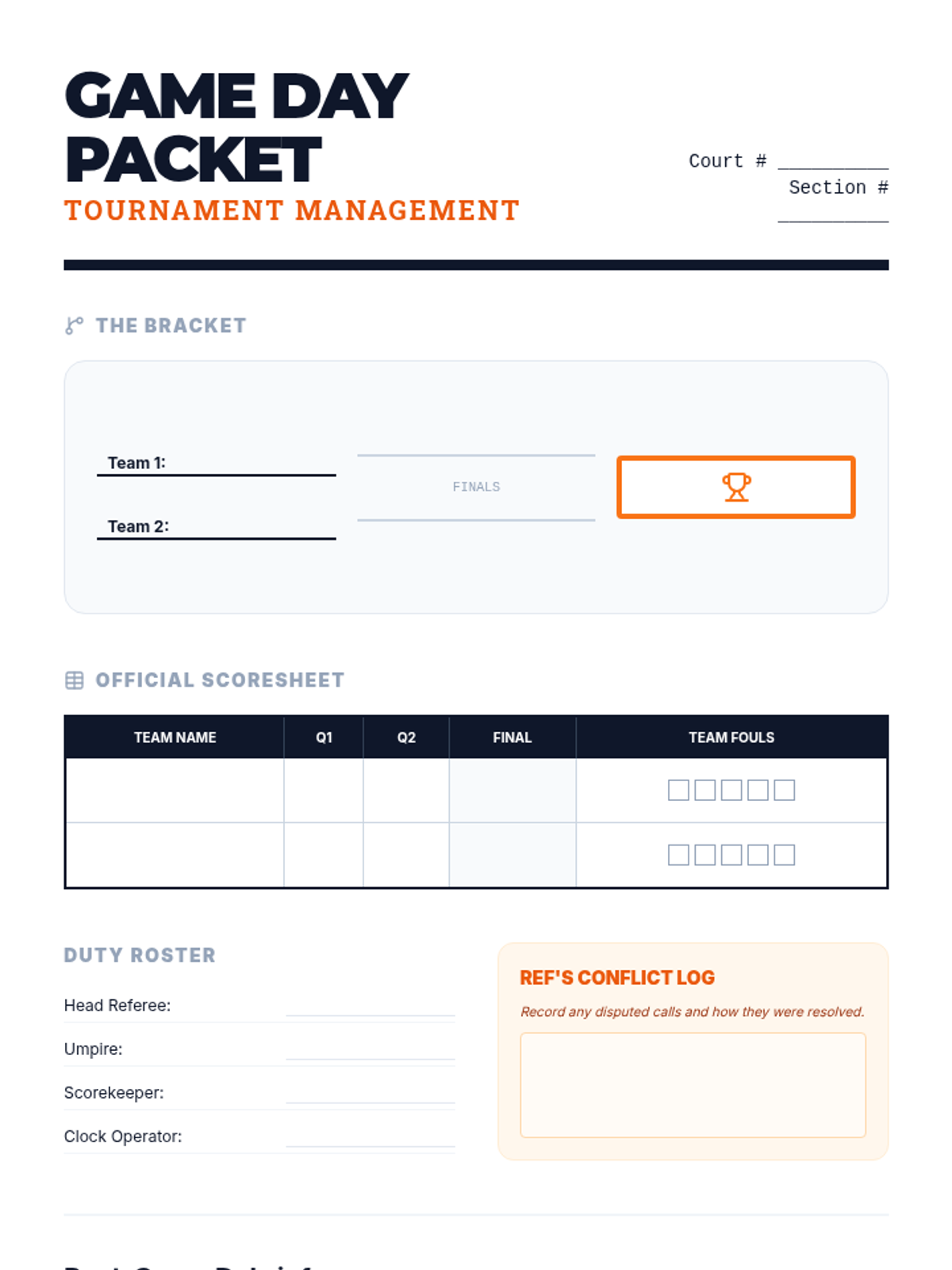
The sequence culminates in a student-managed tournament where participants rotate through playing, coaching, and officiating roles.
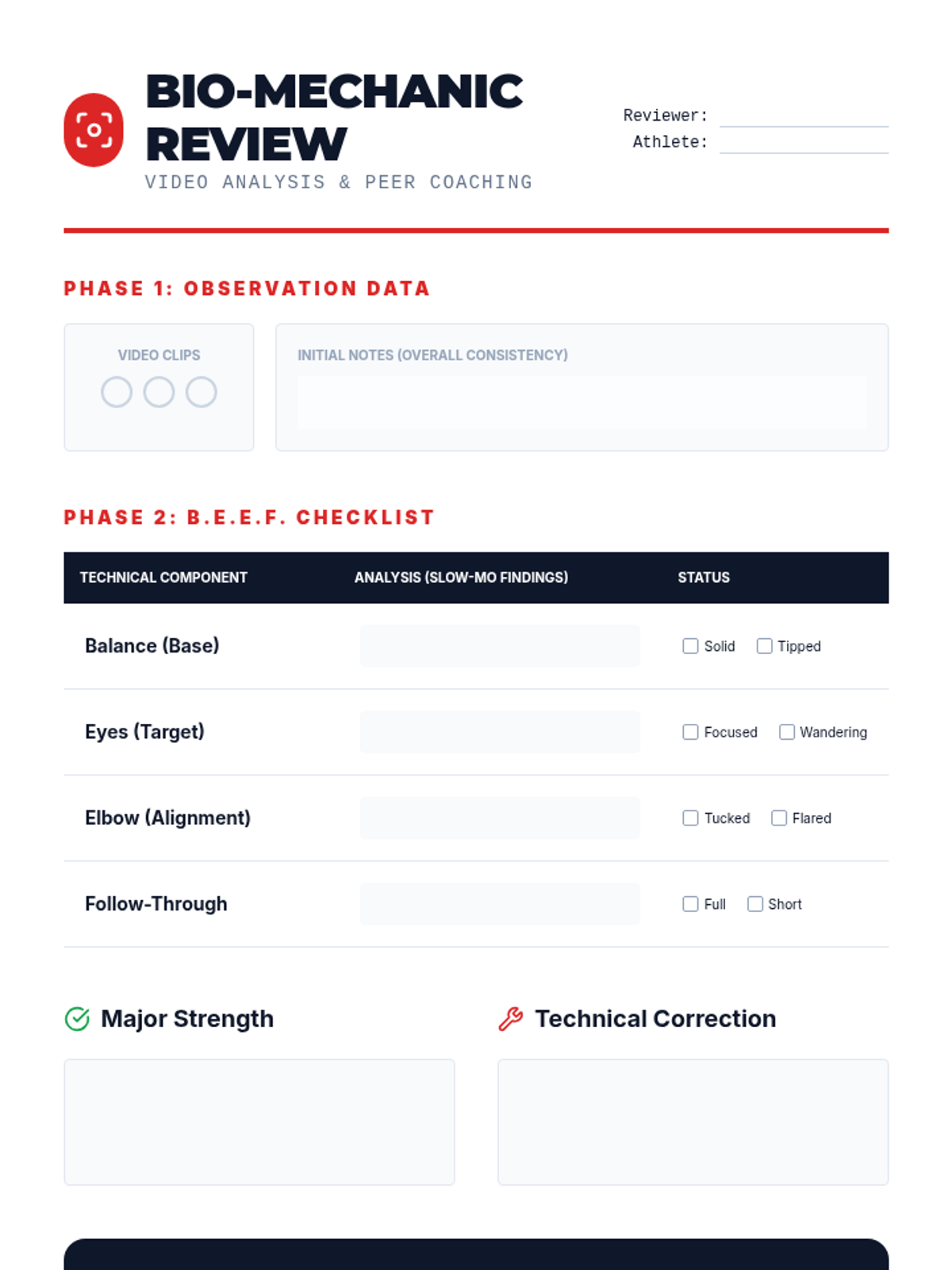
Using video analysis and technical breakdown, students provide constructive feedback on peer performance.
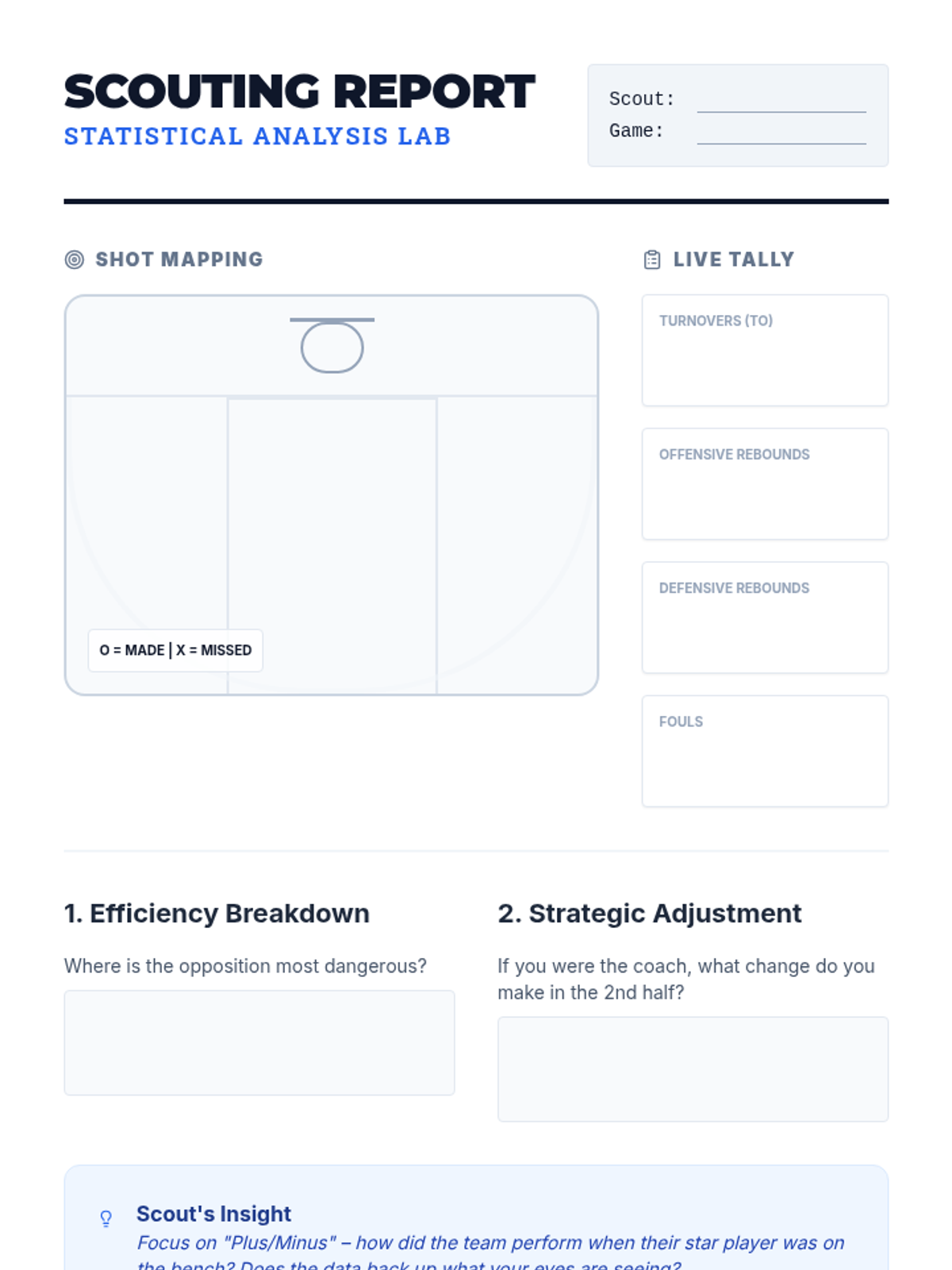
Students collect and analyze live game data to suggest strategic adjustments, acting as scouts and assistant coaches.
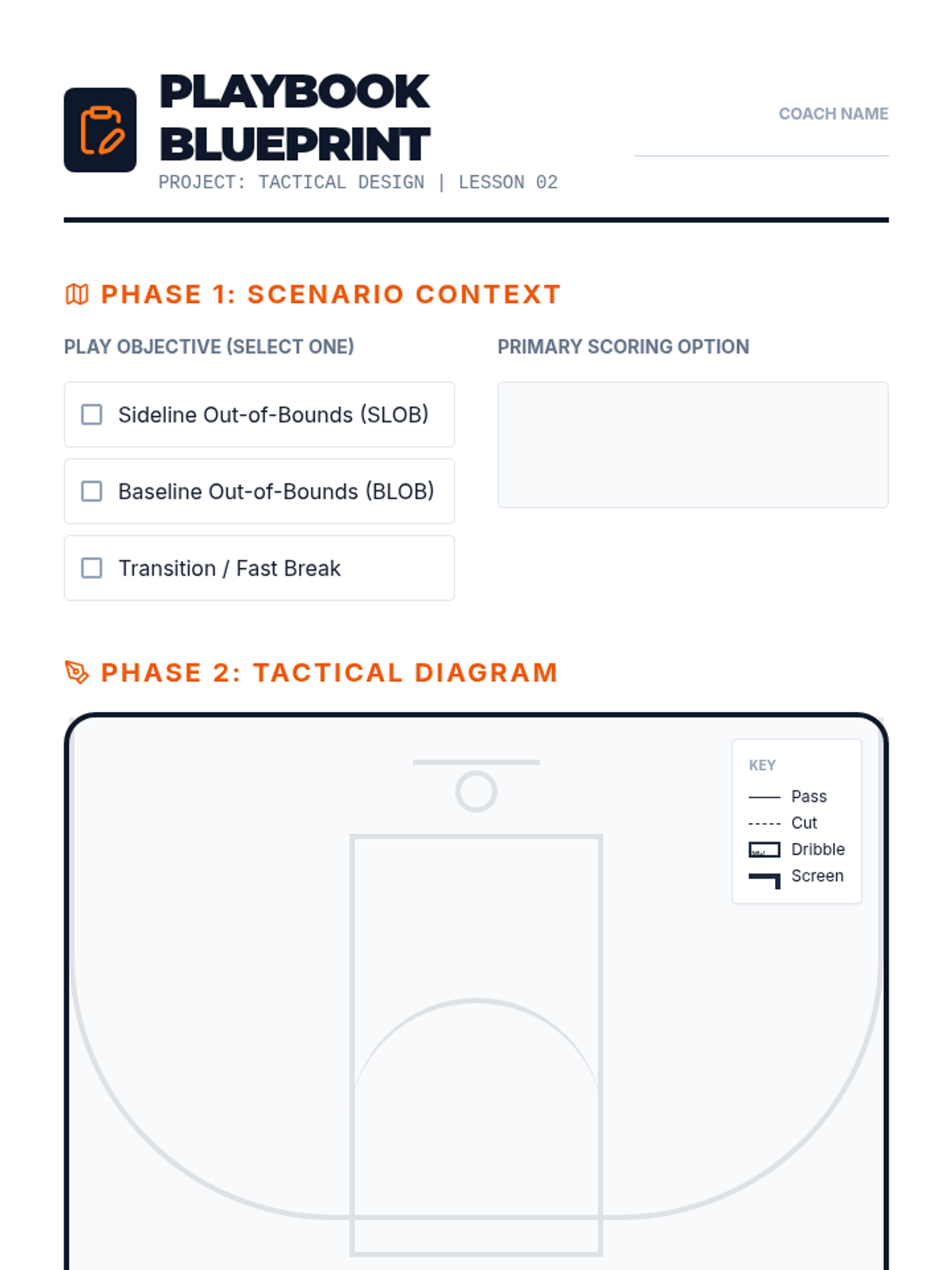
Small groups design and teach original offensive plays, focusing on strategic logic and instructional leadership.
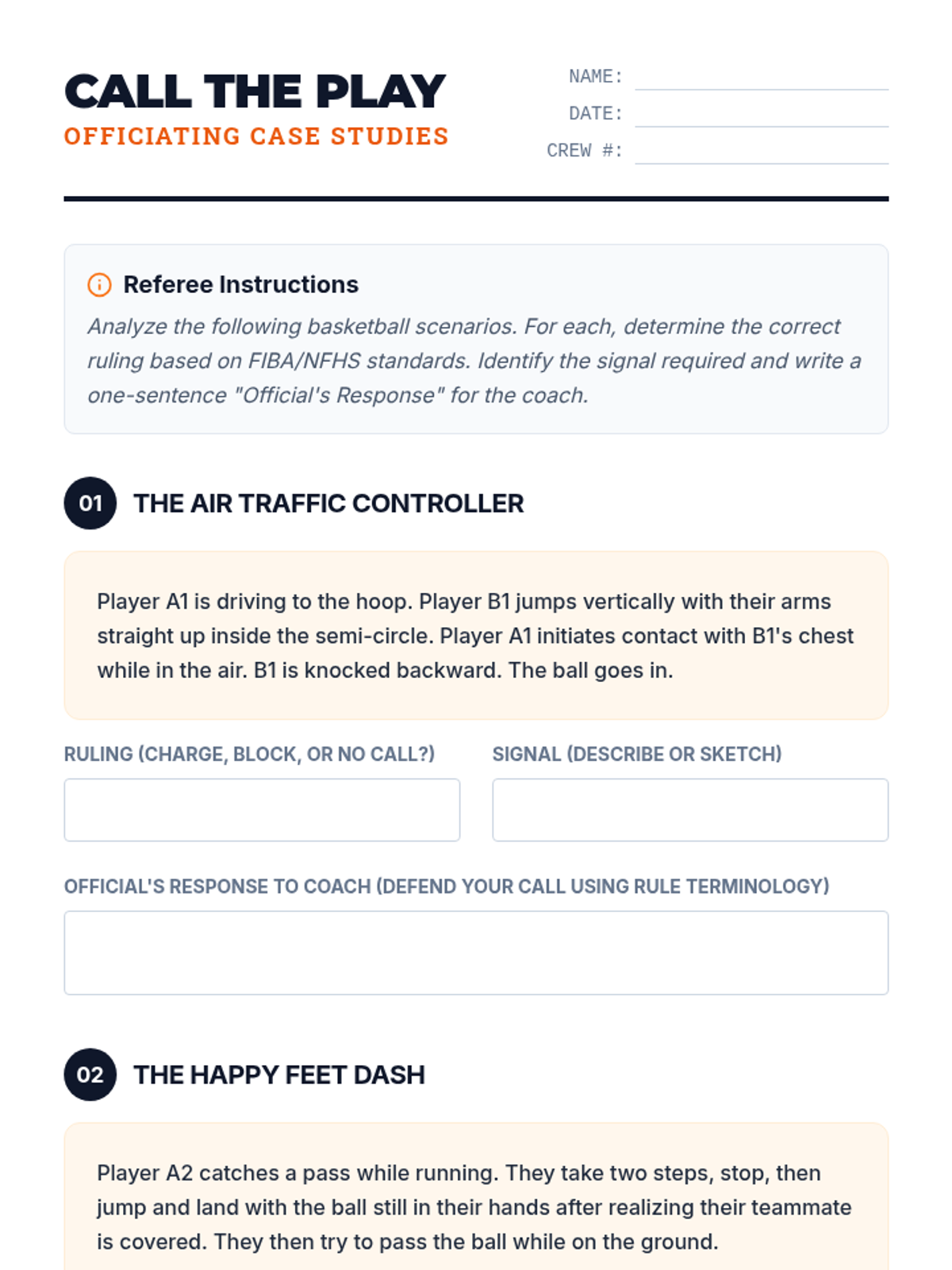
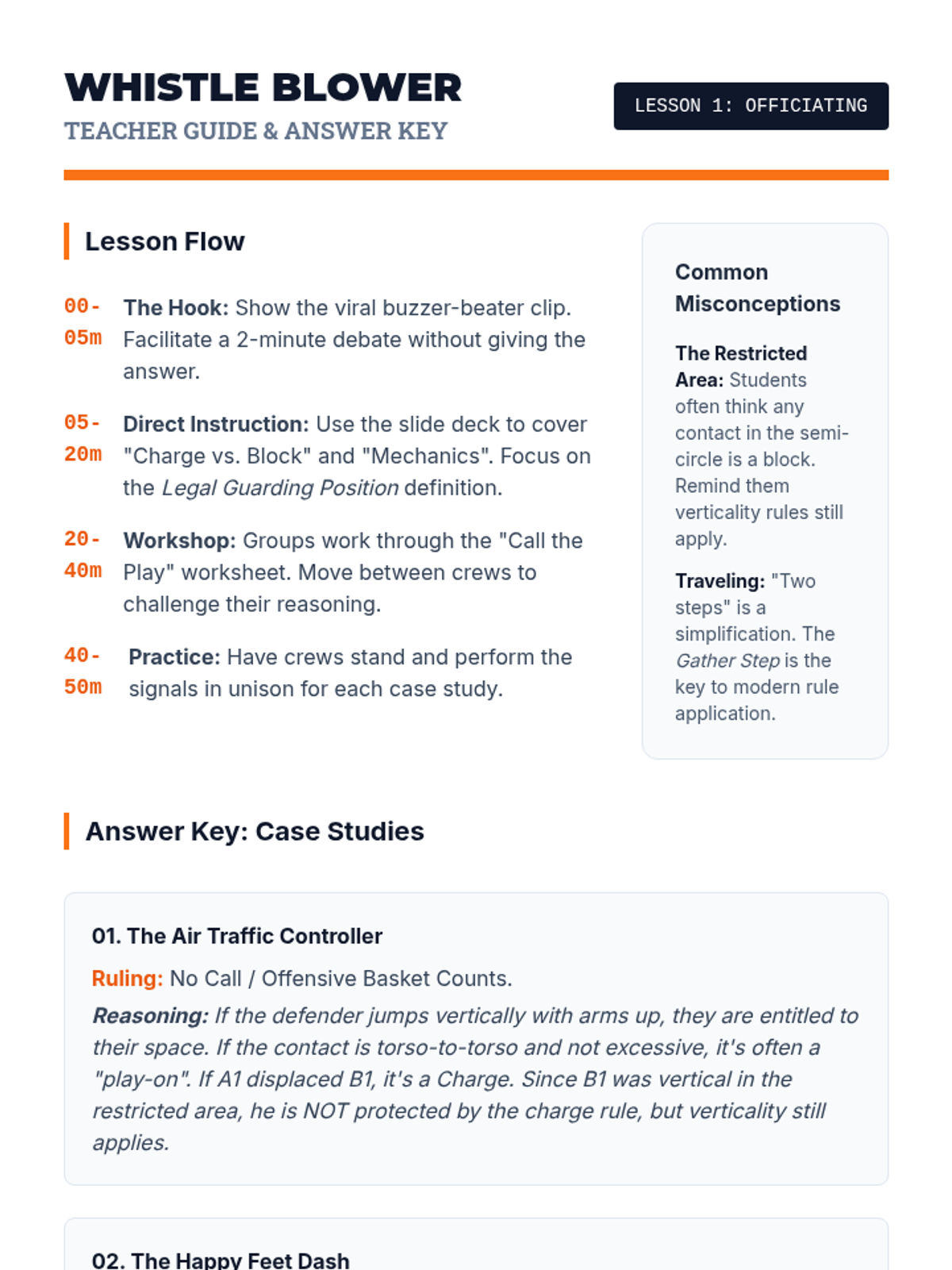
Students analyze complex basketball rules and practice officiating mechanics, focusing on interpretation and confident communication.
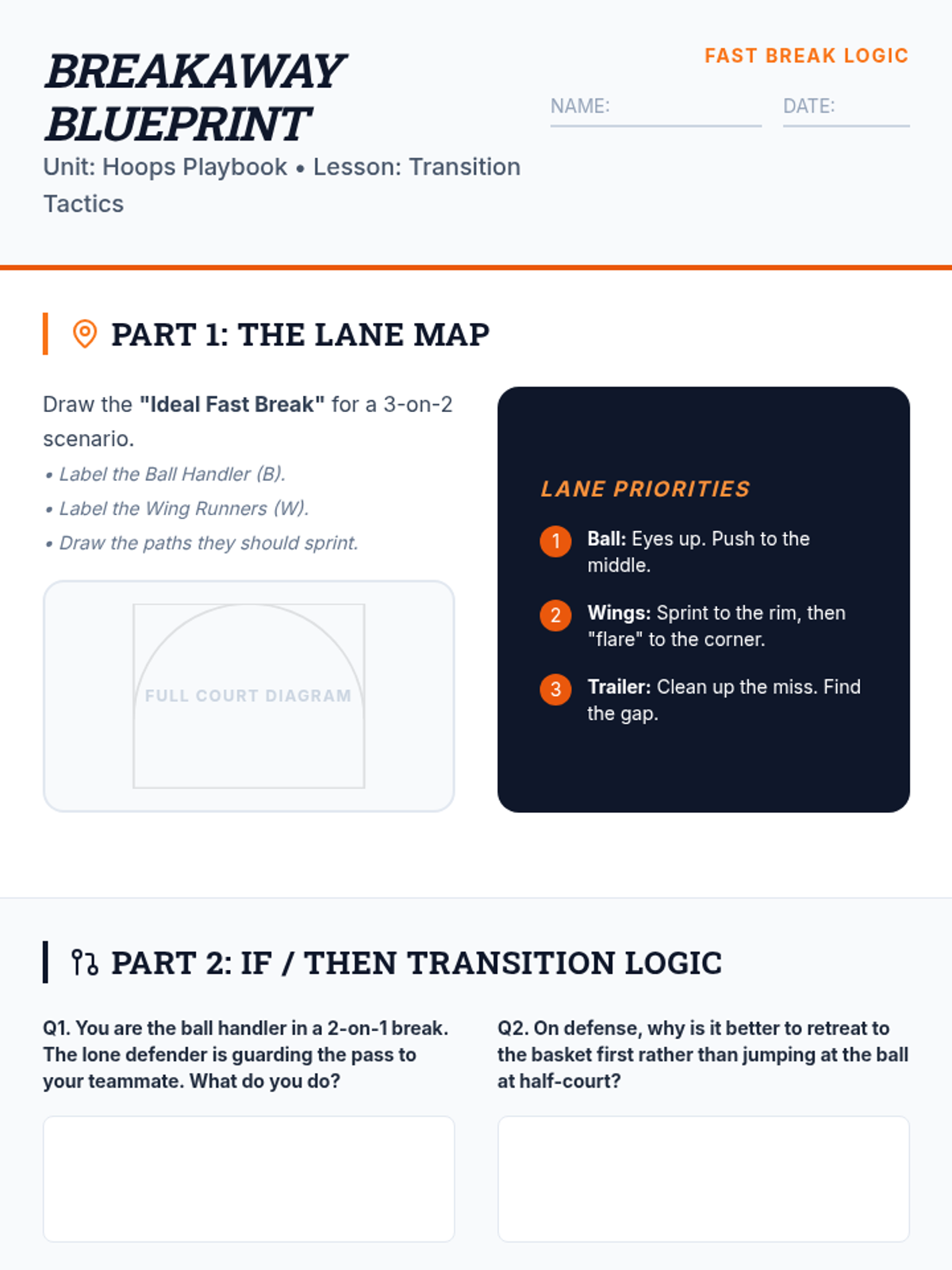
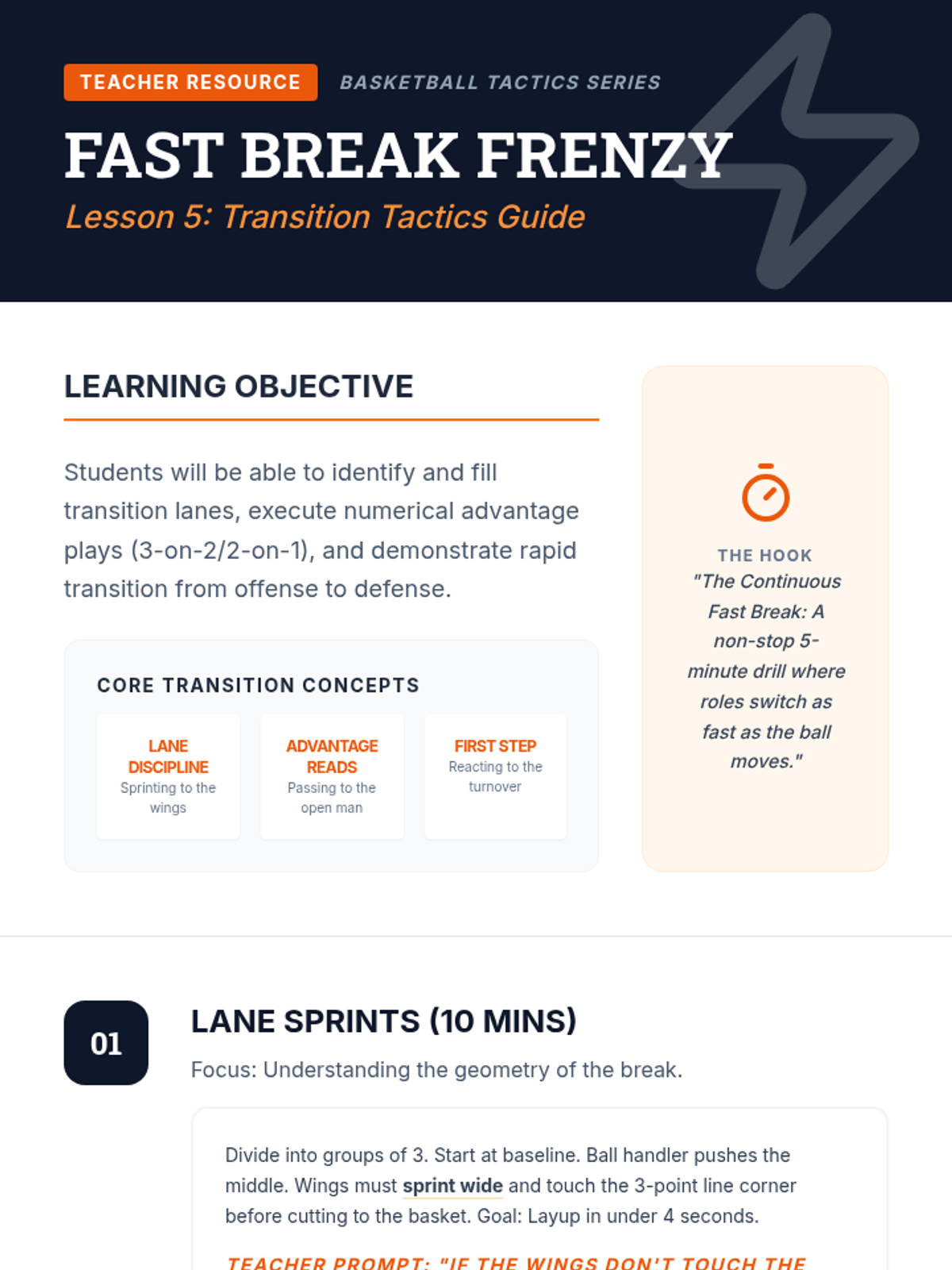
Students practice the chaotic transition phase of the game, moving from defense to offense rapidly. Drills focus on numerical advantages (3-on-2 and 2-on-1 breaks) and the concept of stopping the ball early on defense.
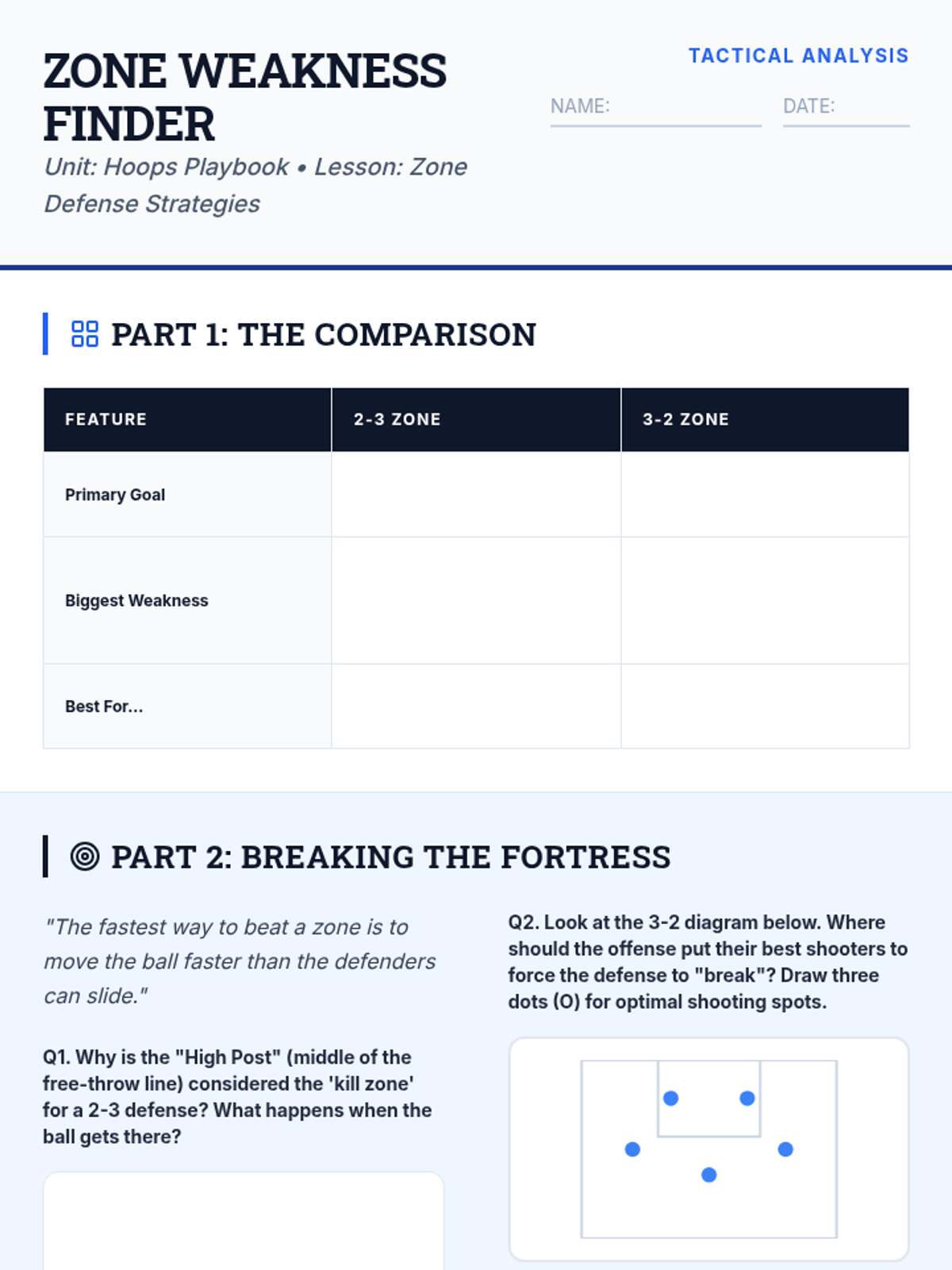
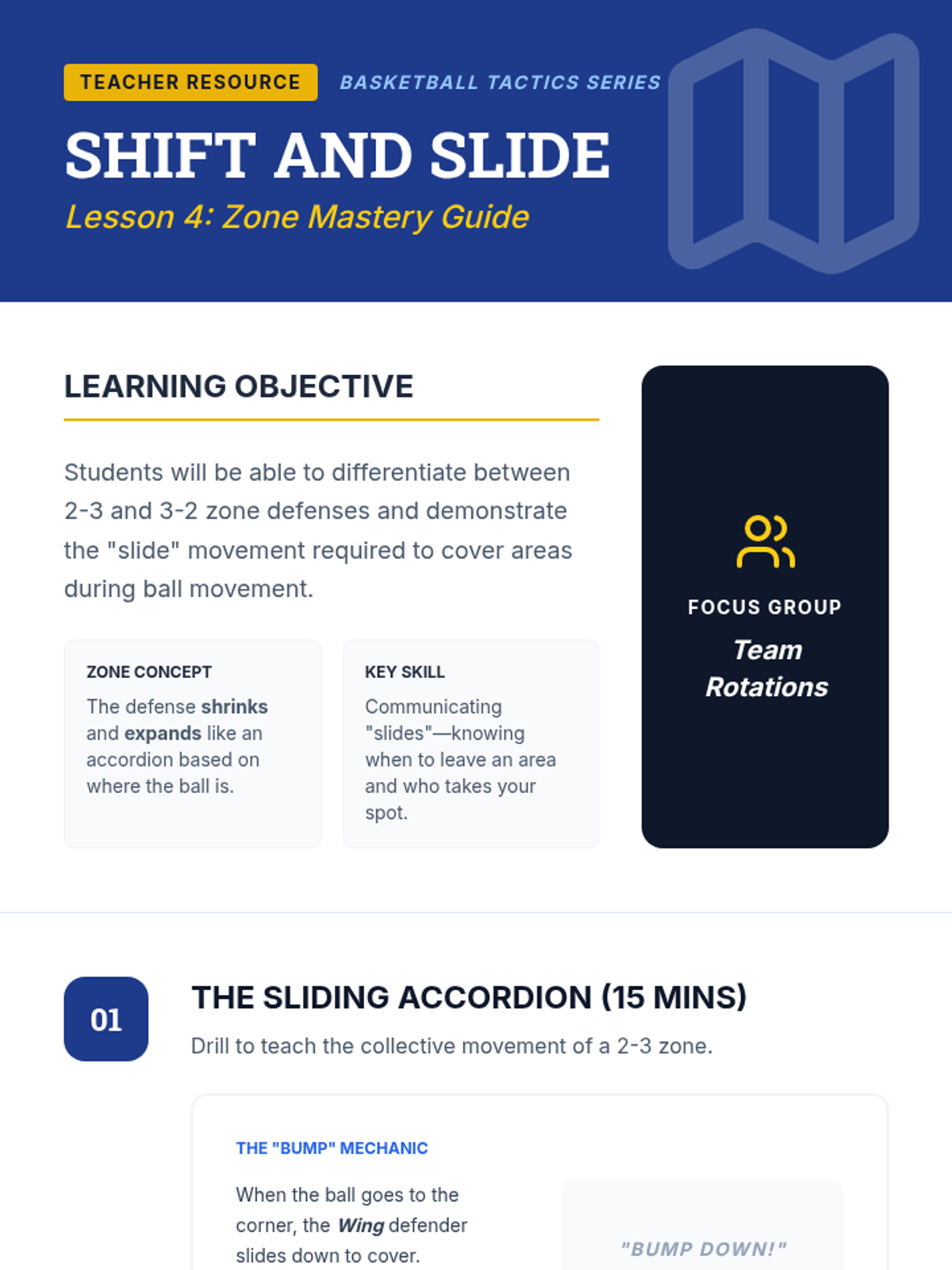
The class compares the 2-3 and 3-2 zone defenses, analyzing the strengths and weaknesses of each. Students play possession games where the defense must shift as a unit to cover areas of the court rather than specific players.
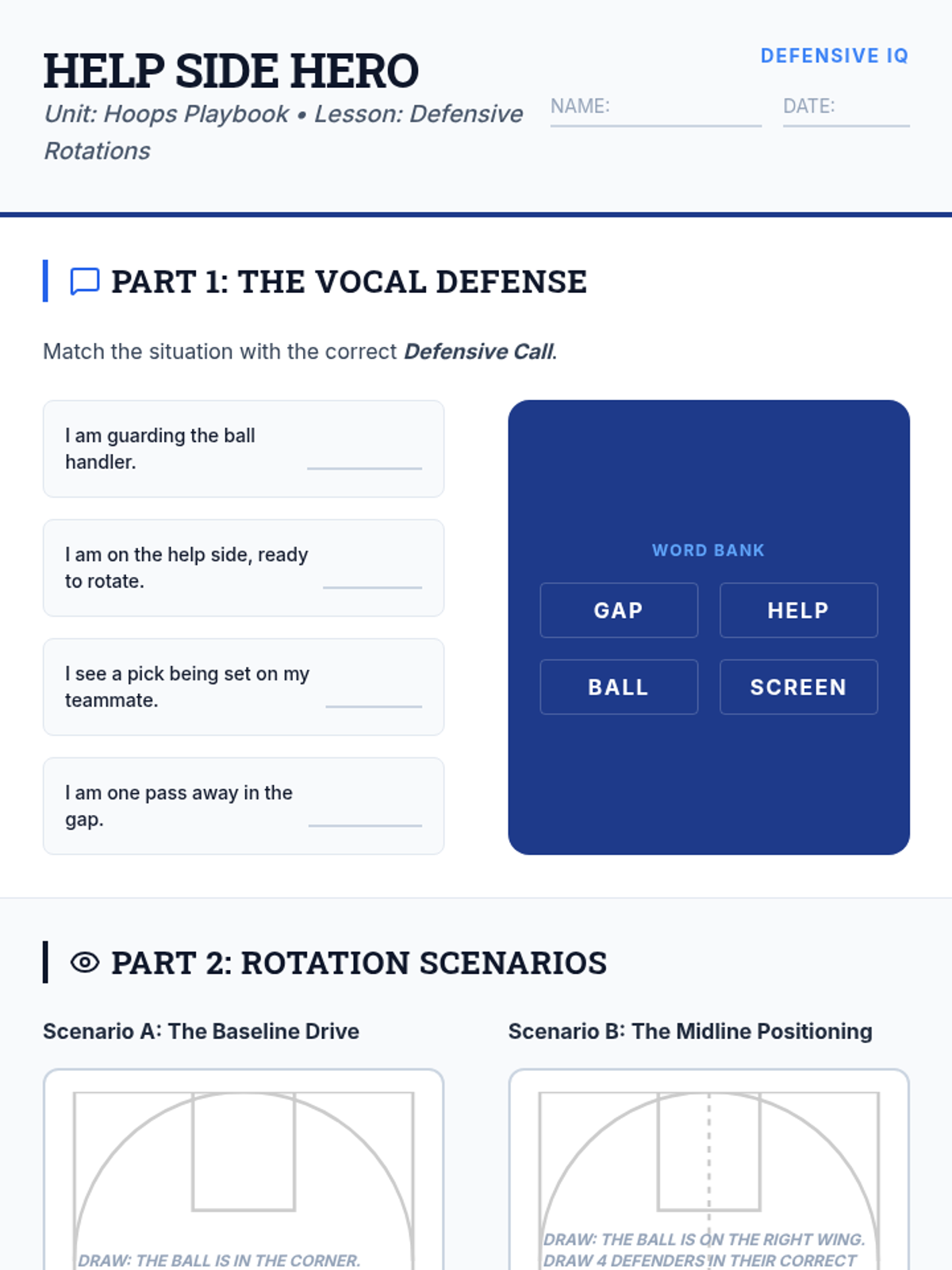
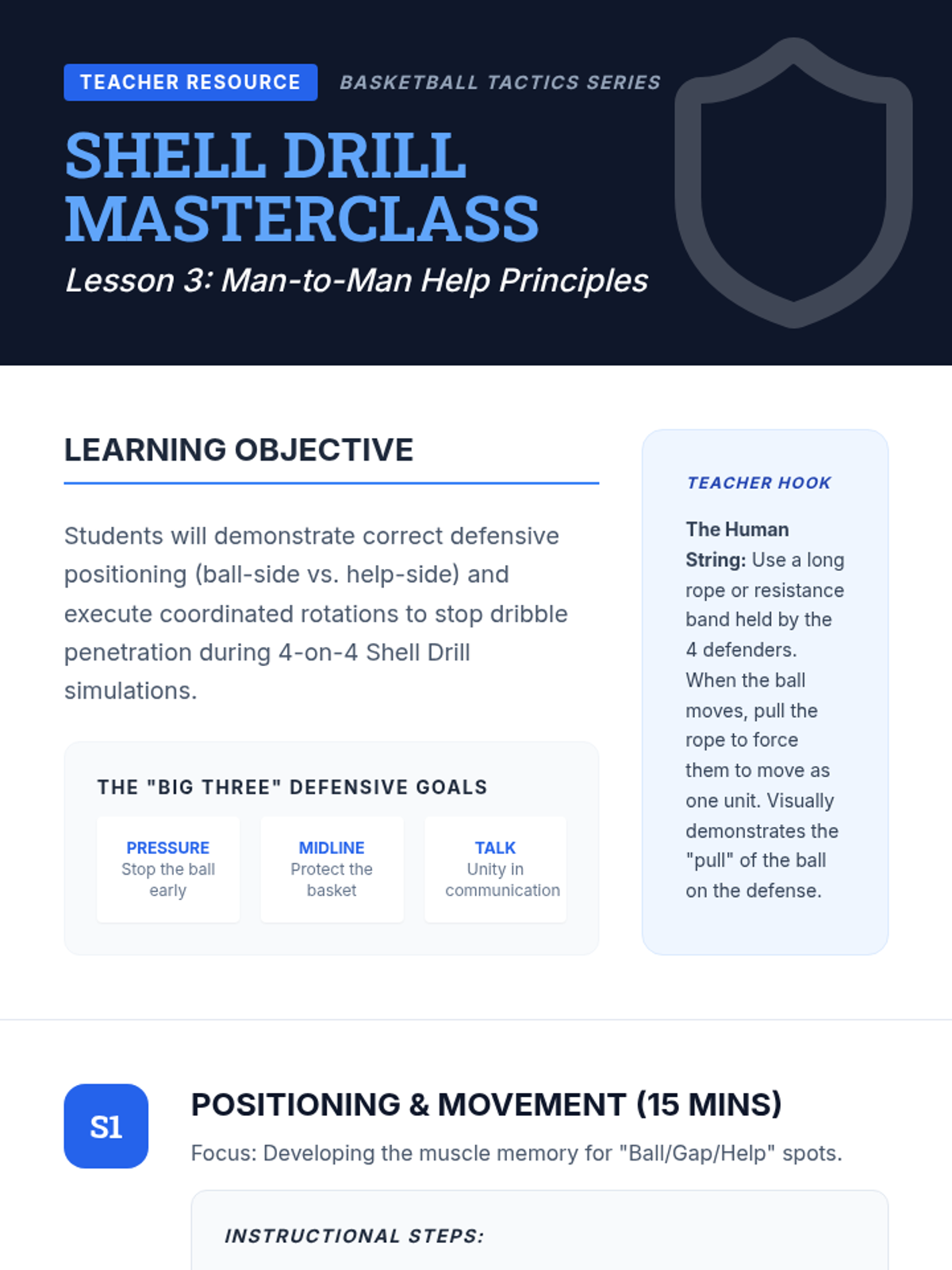
Students are introduced to man-to-man help defense principles using the classic 'Shell Drill.' The focus is on ball-side vs. help-side positioning, communicating screens, and rotating to stop dribble penetration.
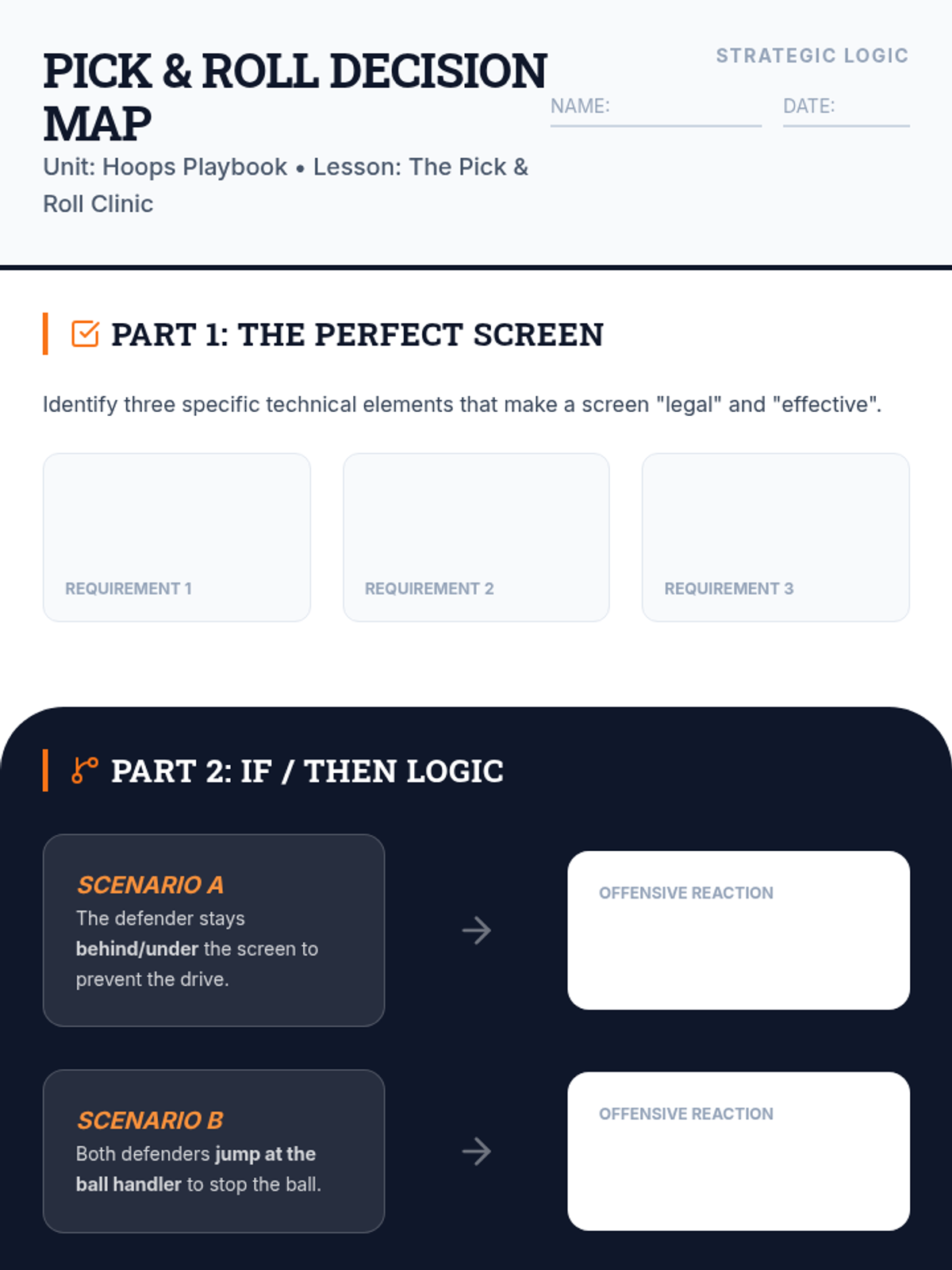
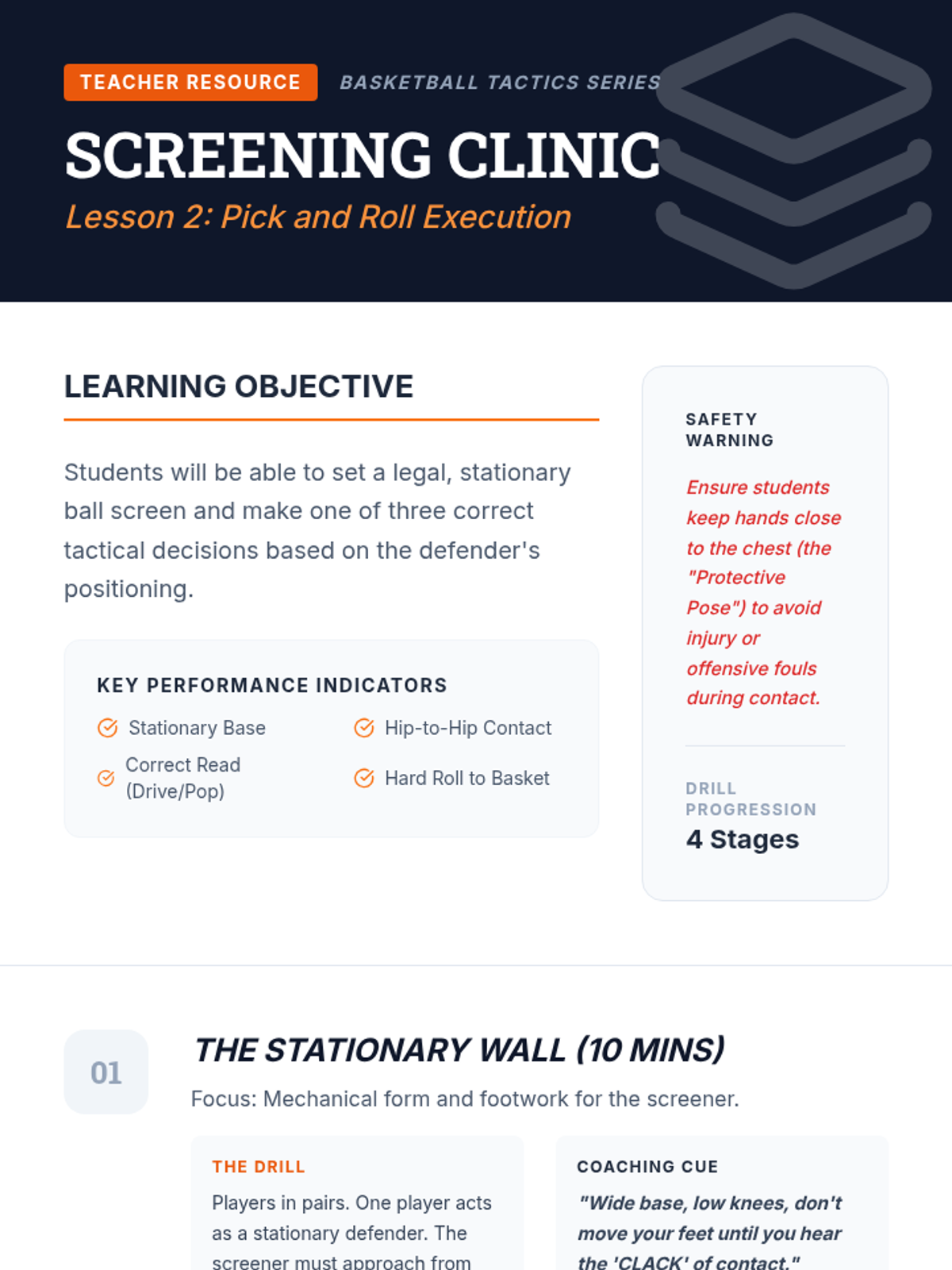
This lesson breaks down the most common play in basketball: the pick and roll. Students practice setting solid screens, rolling to the basket, and the ball-handler's decision-making process based on how the defense reacts.
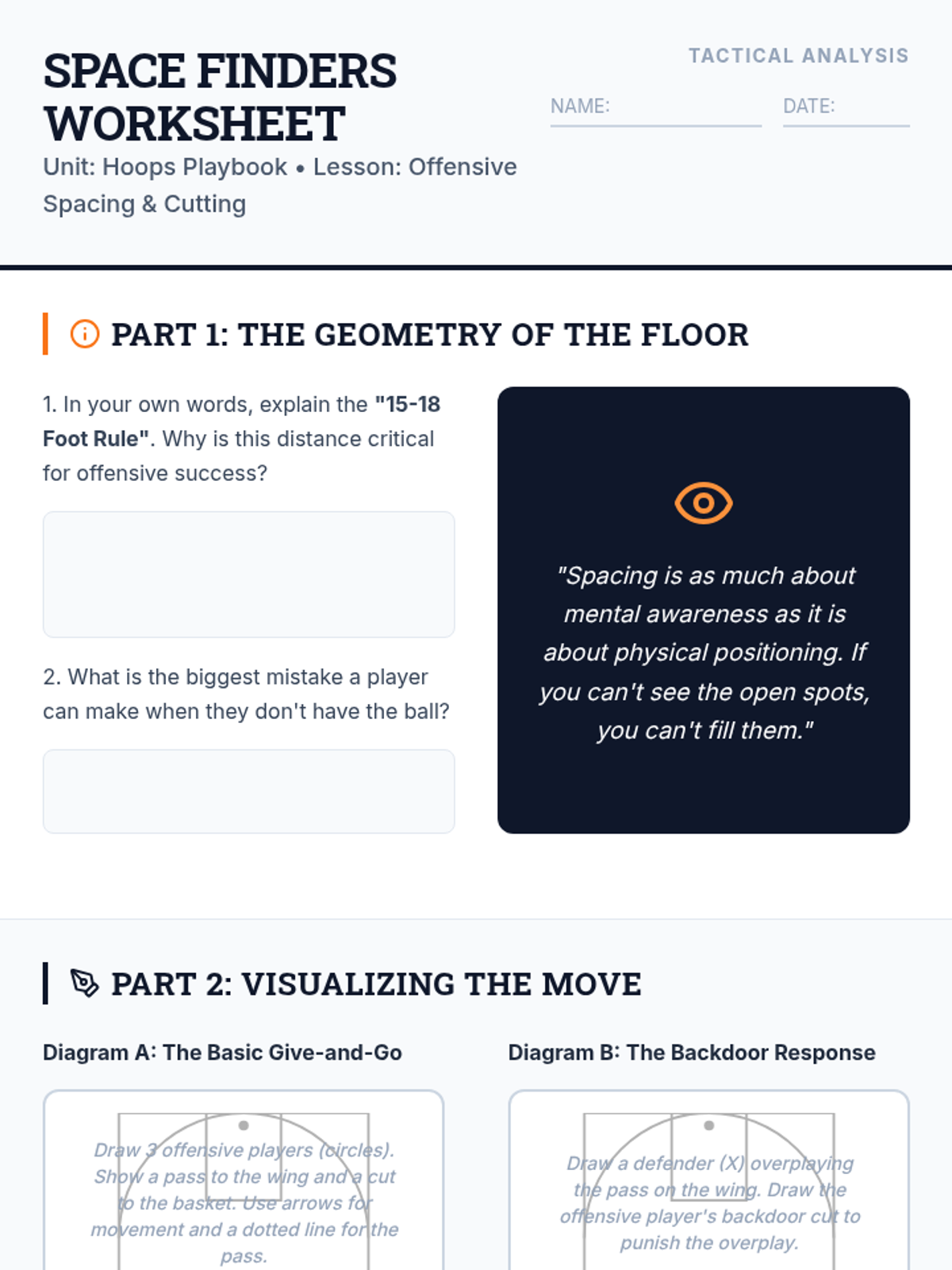
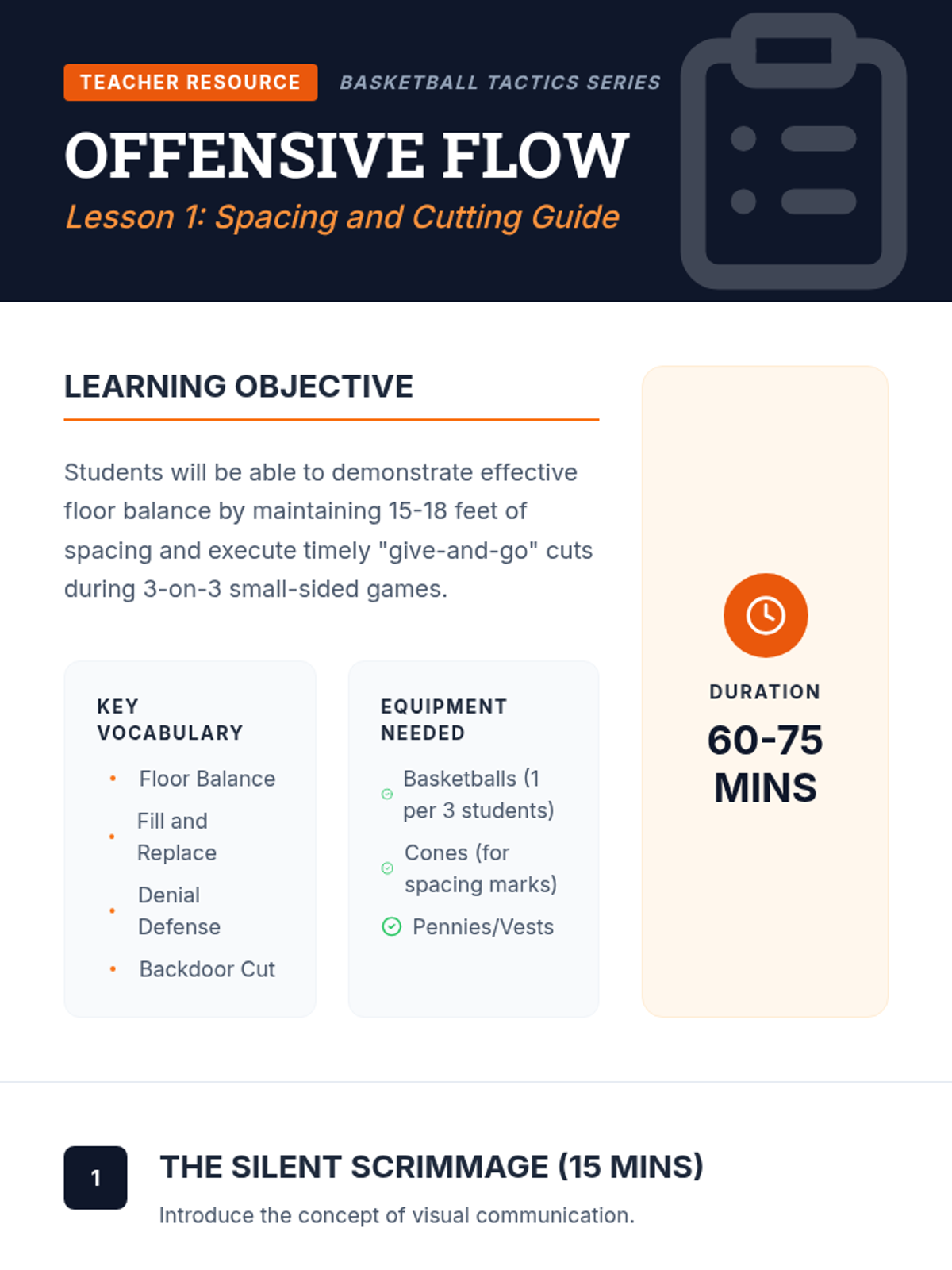
Students learn the principles of maintaining floor balance and using the 'give-and-go' tactic. The lesson utilizes 3-on-3 half-court games to force students to move without the ball and identify open passing lanes.
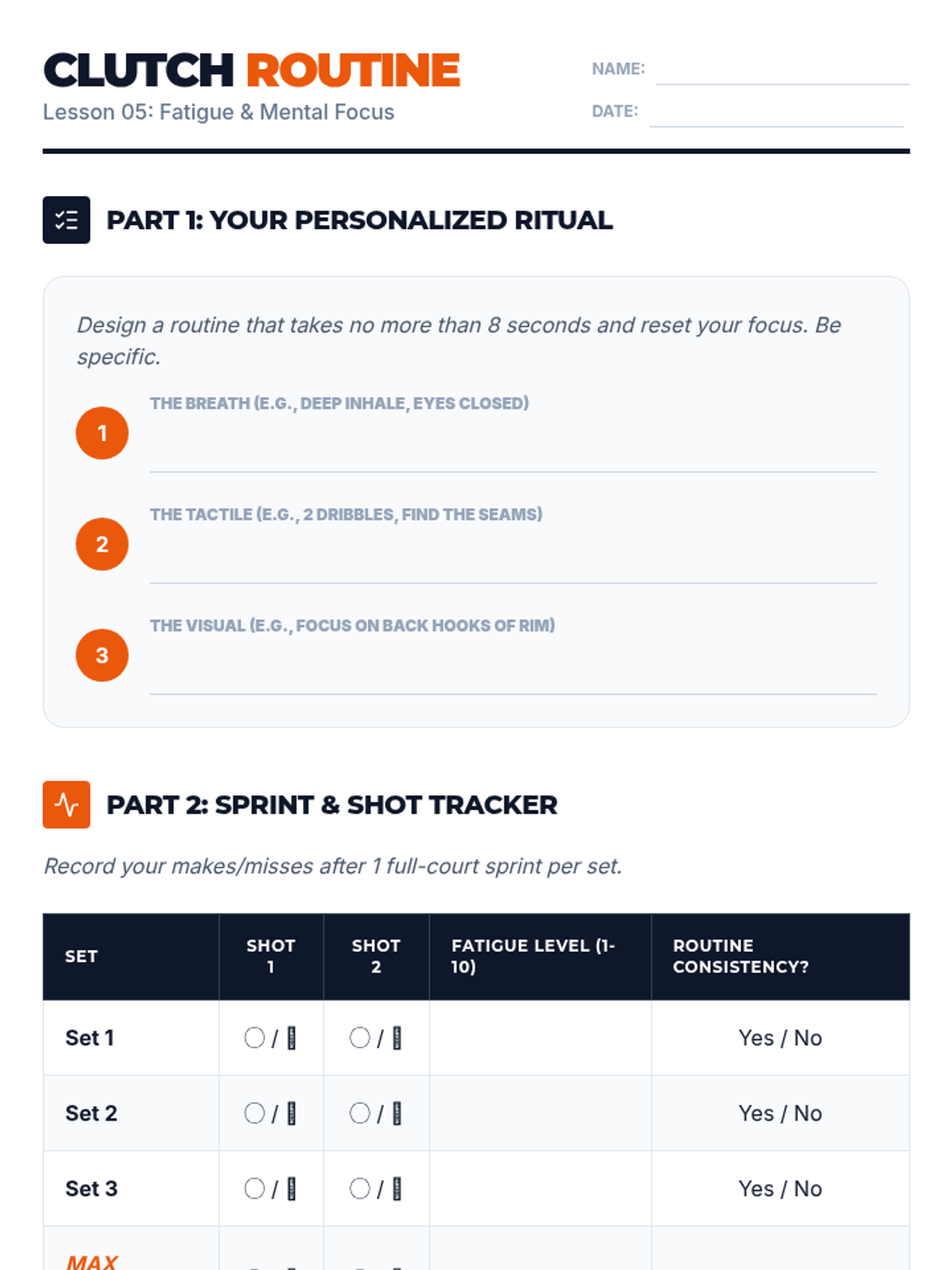
Addresses the mental side of shooting by practicing free throws under physical fatigue. Students develop personalized routines to maintain accuracy when it matters most.
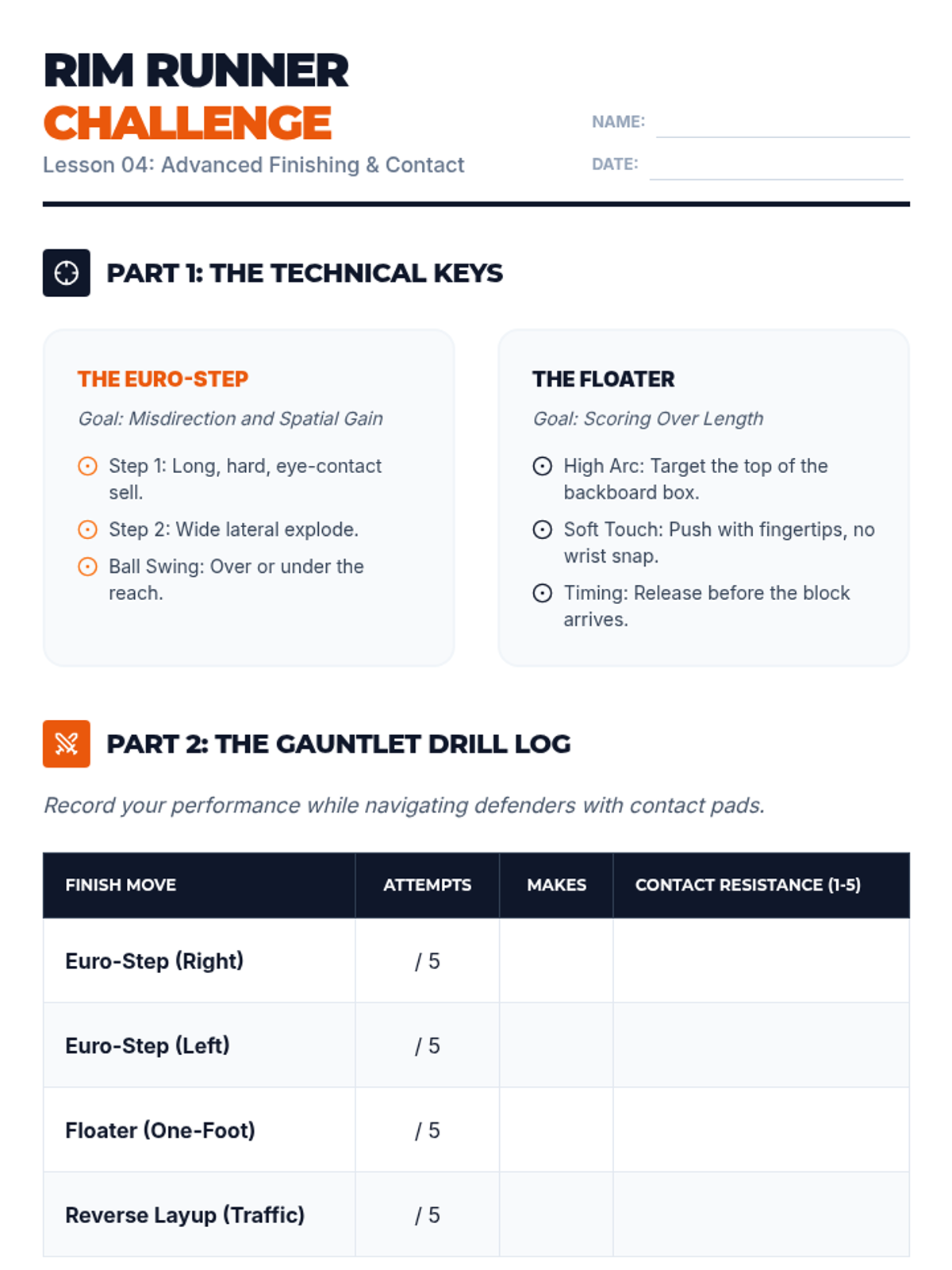
Introduces advanced finishing moves like the Euro-step and floaters. Students practice scoring through contact and avoiding shot-blockers in a simulated high-traffic environment.
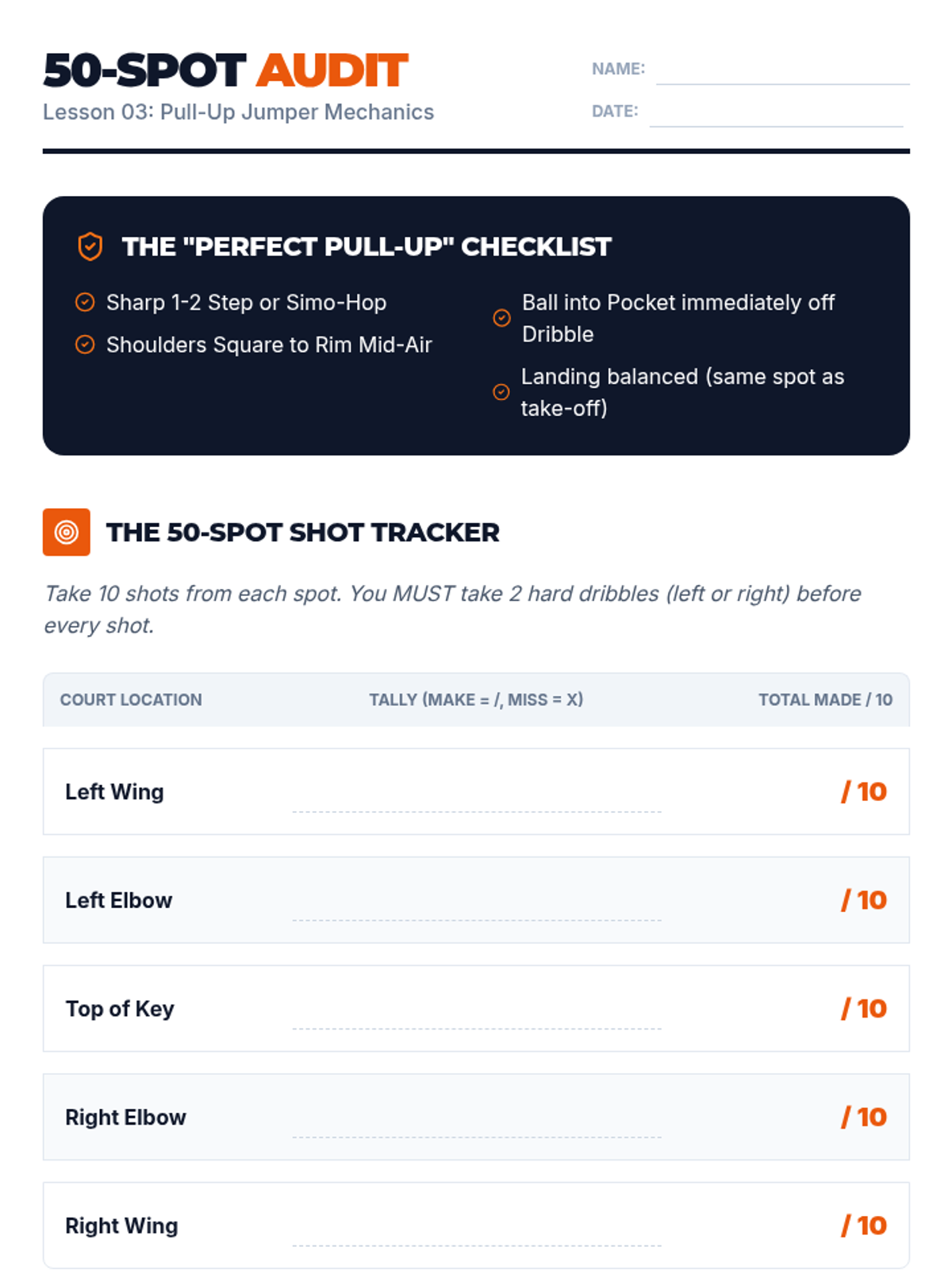
Transitions from stationary shooting to pulling up off the dribble. Students focus on squaring shoulders, balance, and the coordination required for consistent shot-making in motion.
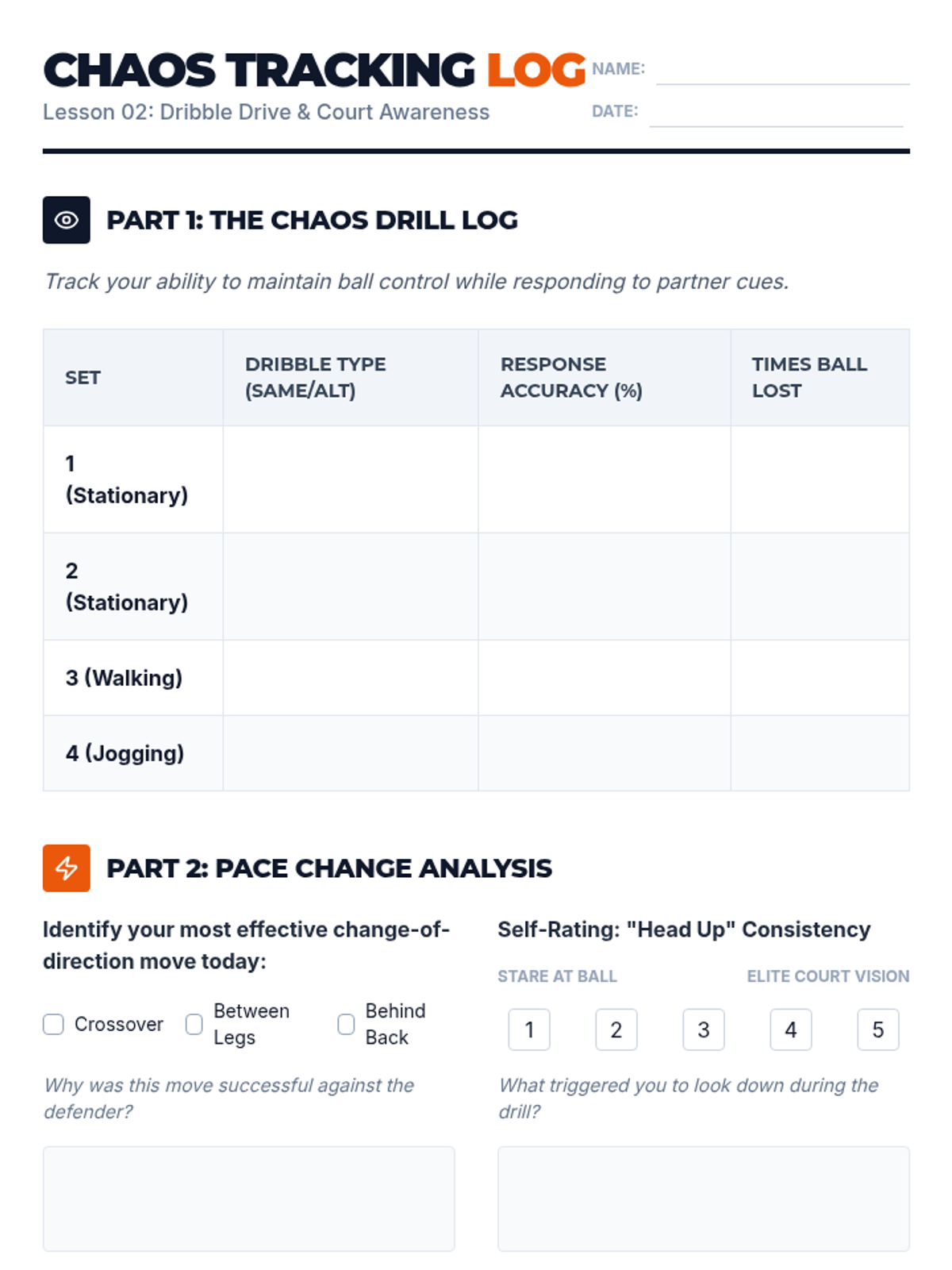
Explores change-of-pace and advanced ball handling to navigate defensive pressure. Students engage in the 'Chaos Drill' to develop spatial awareness and multi-tasking skills with the ball.
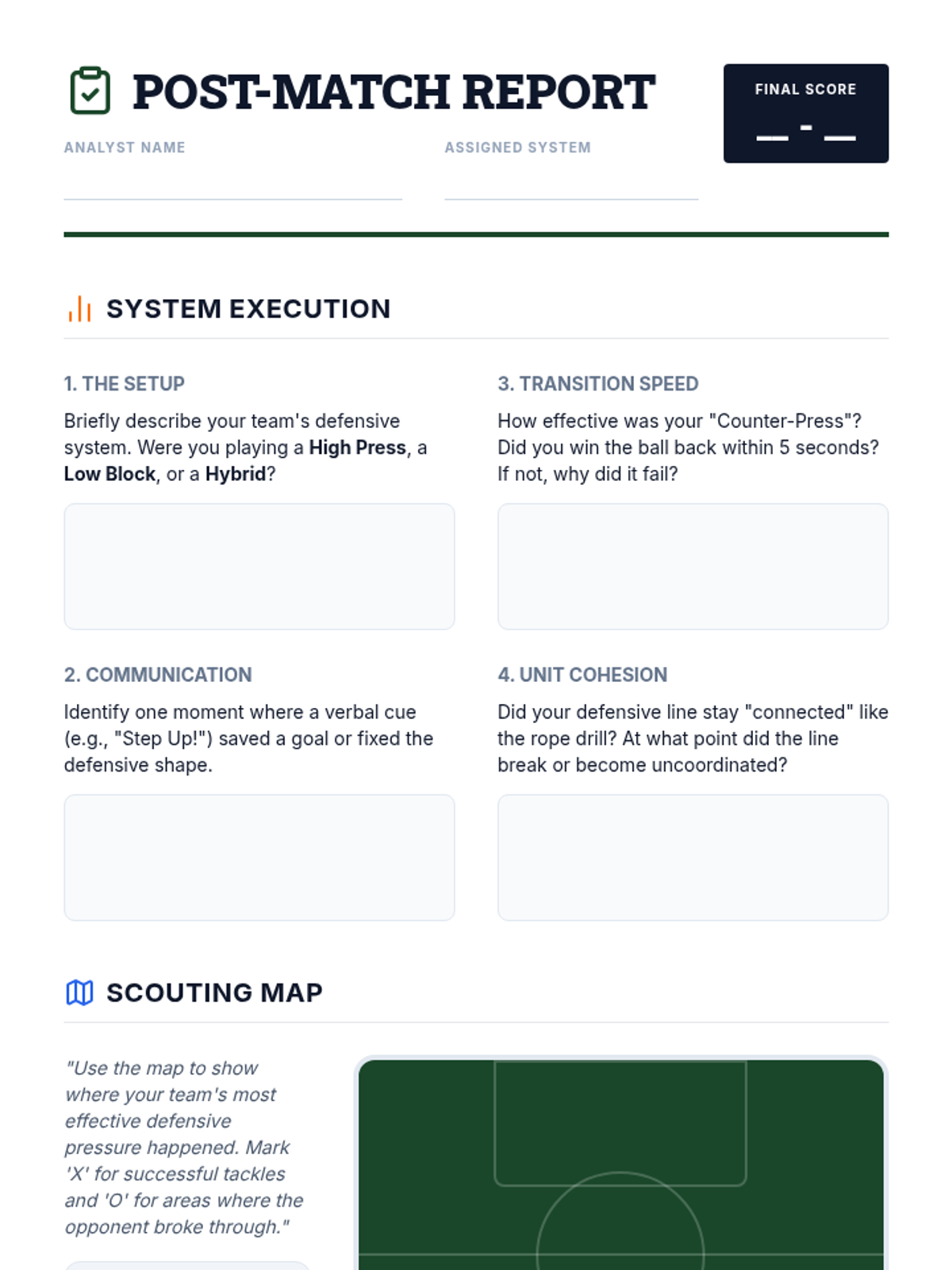
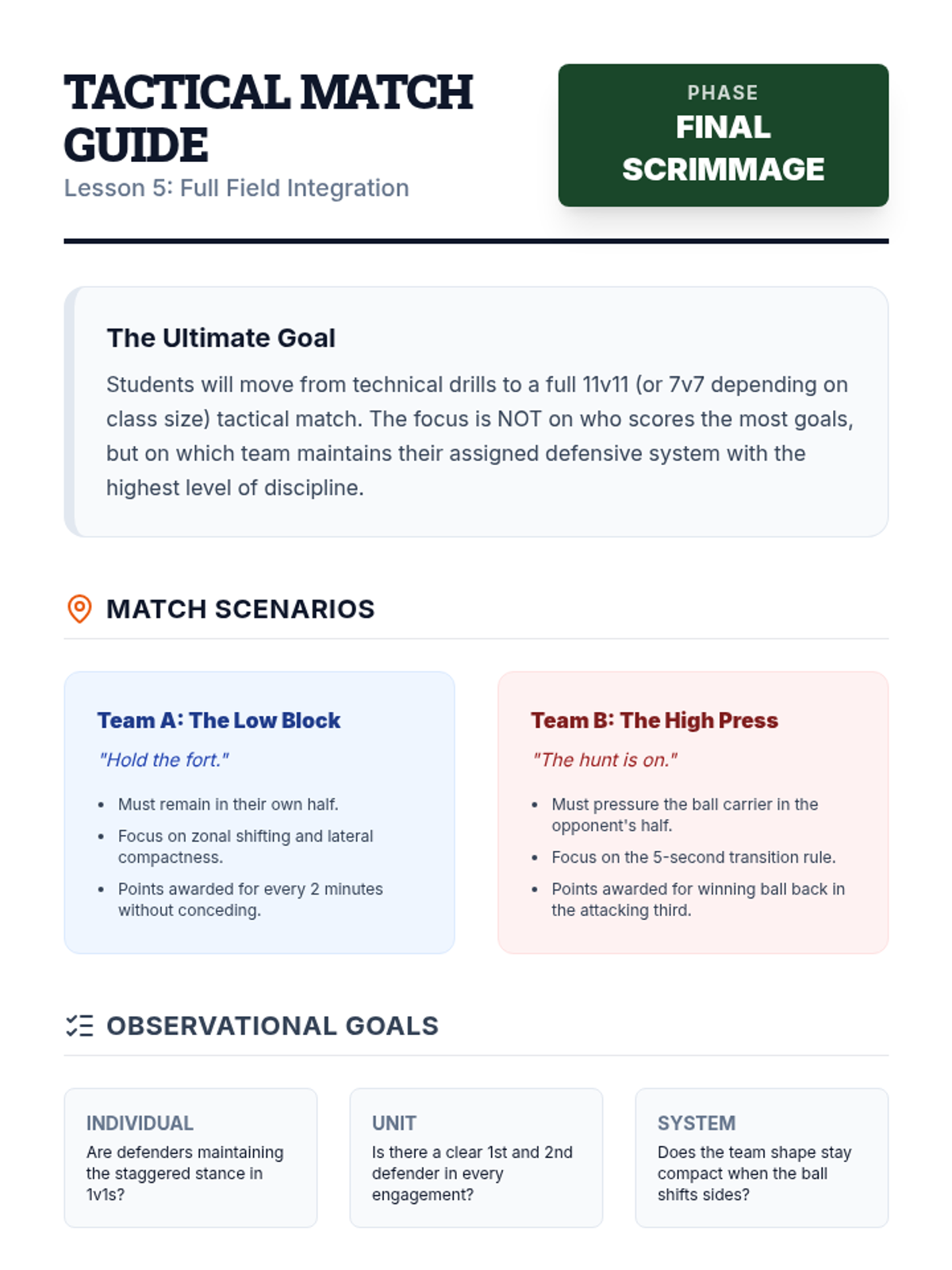
Synthesizes individual and unit skills into a cohesive team defensive strategy for competitive full-field play.
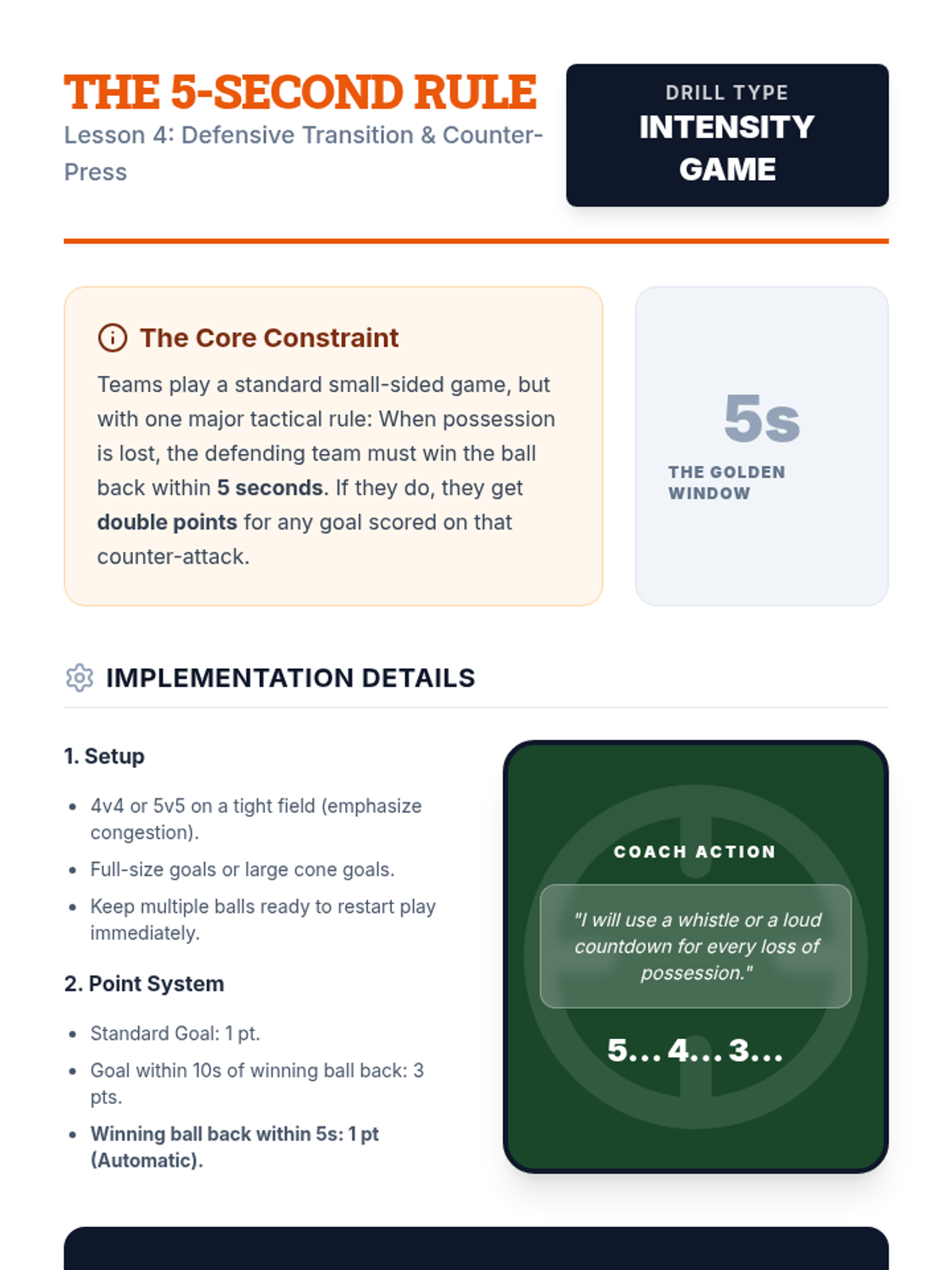
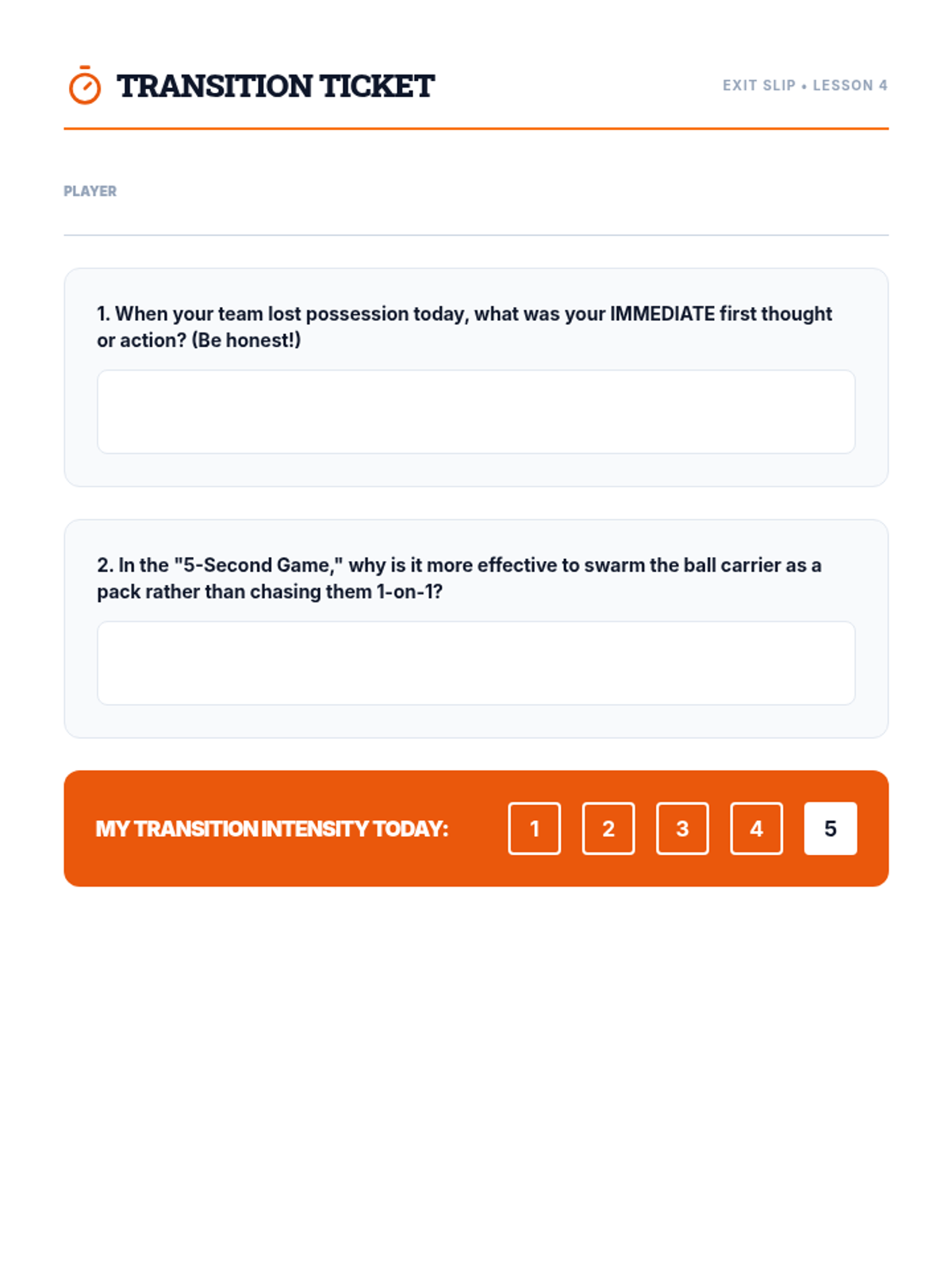
Develops the intensity and reaction speed needed to win the ball back immediately after possession is lost.
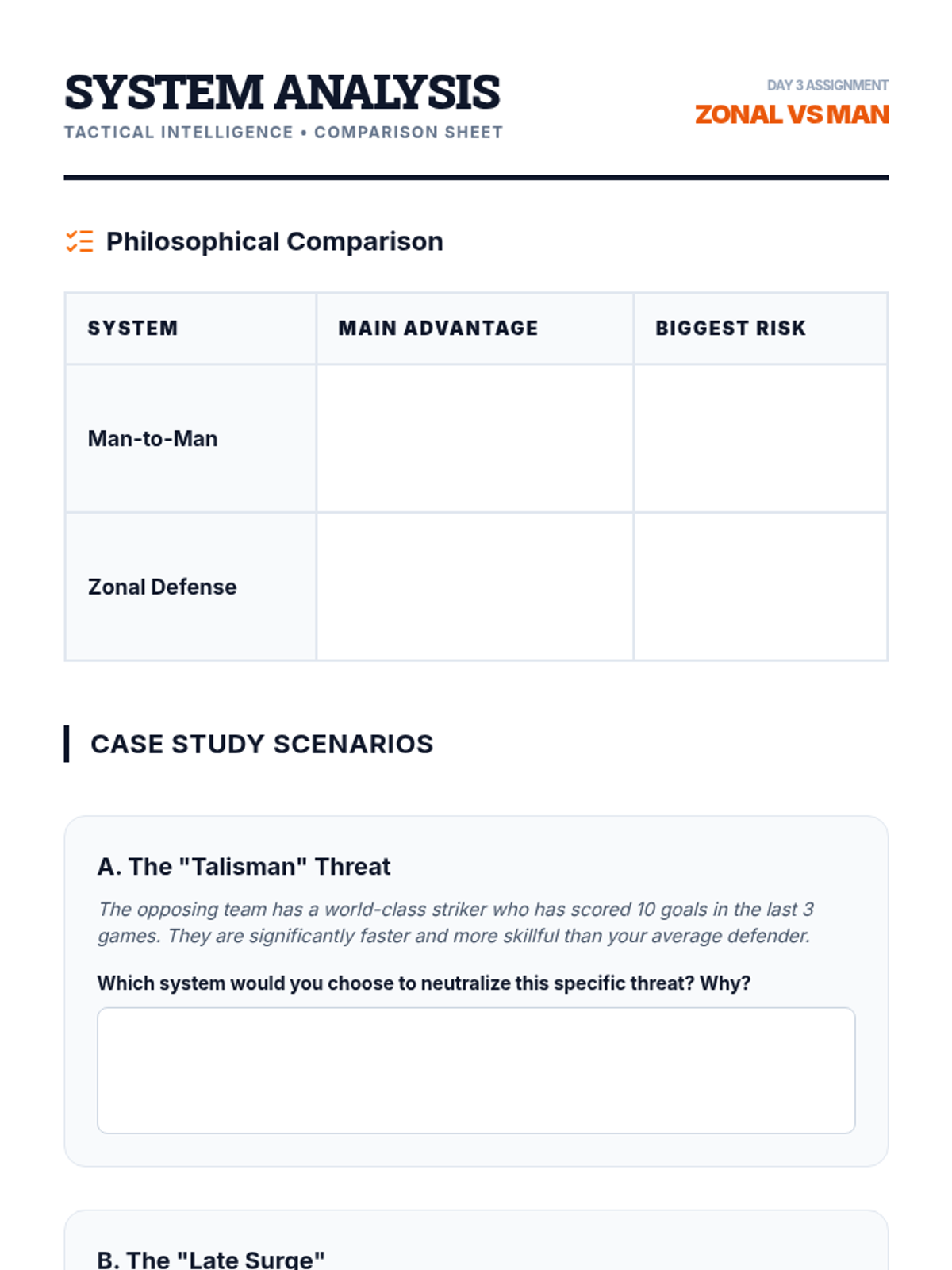
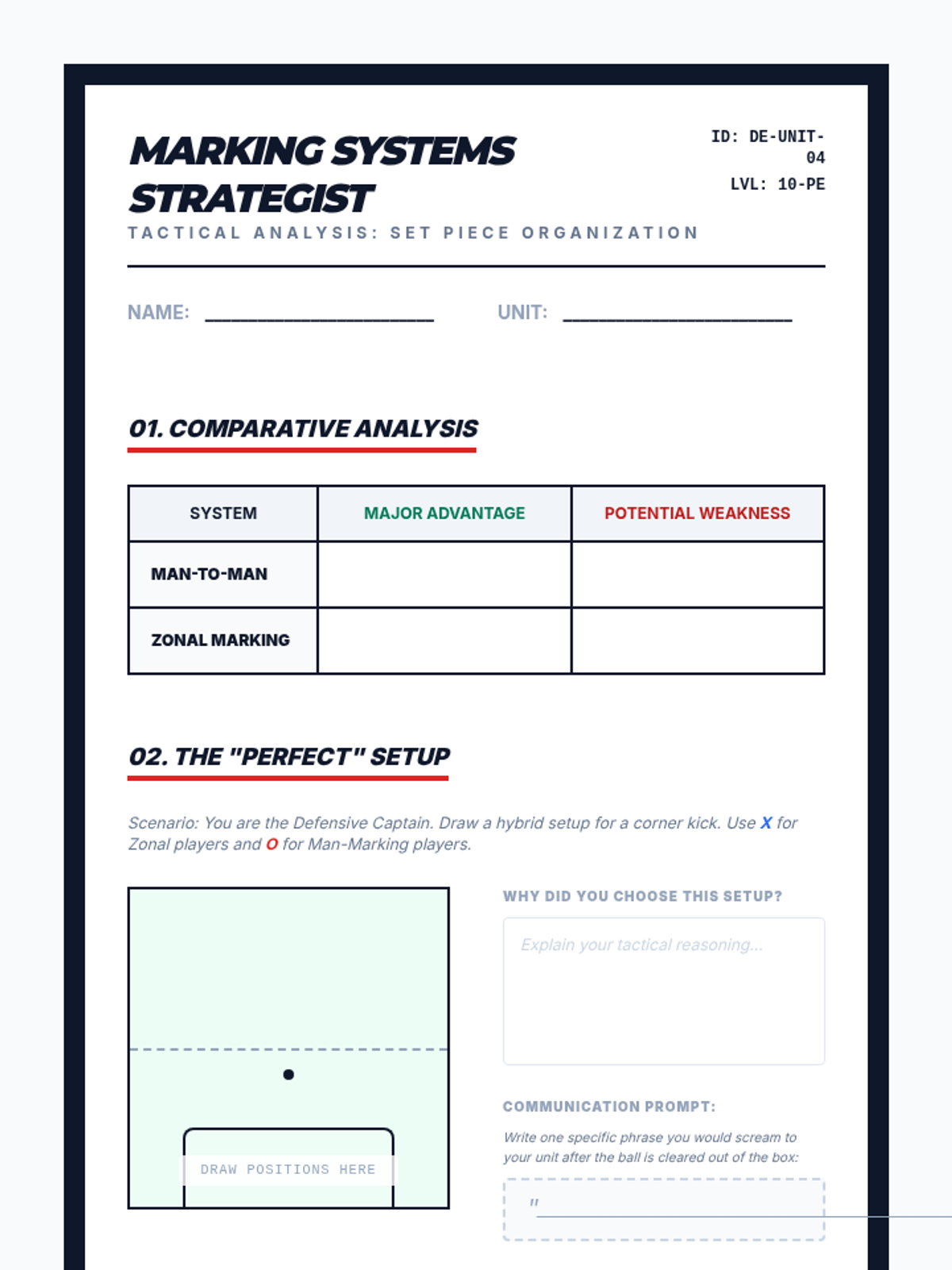
Analyzes the tactical differences between zonal and man-to-man marking systems through simulations and case studies.
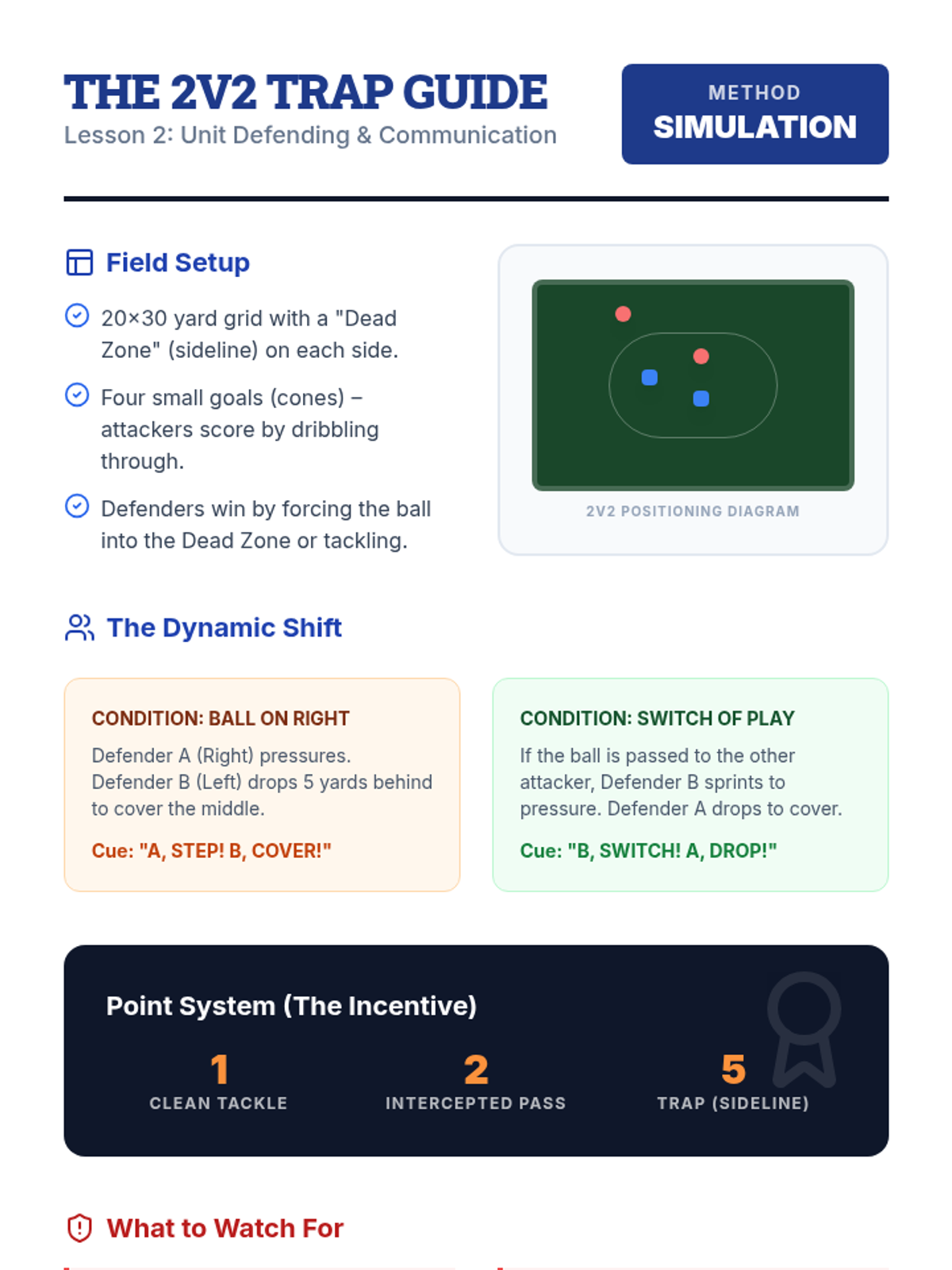
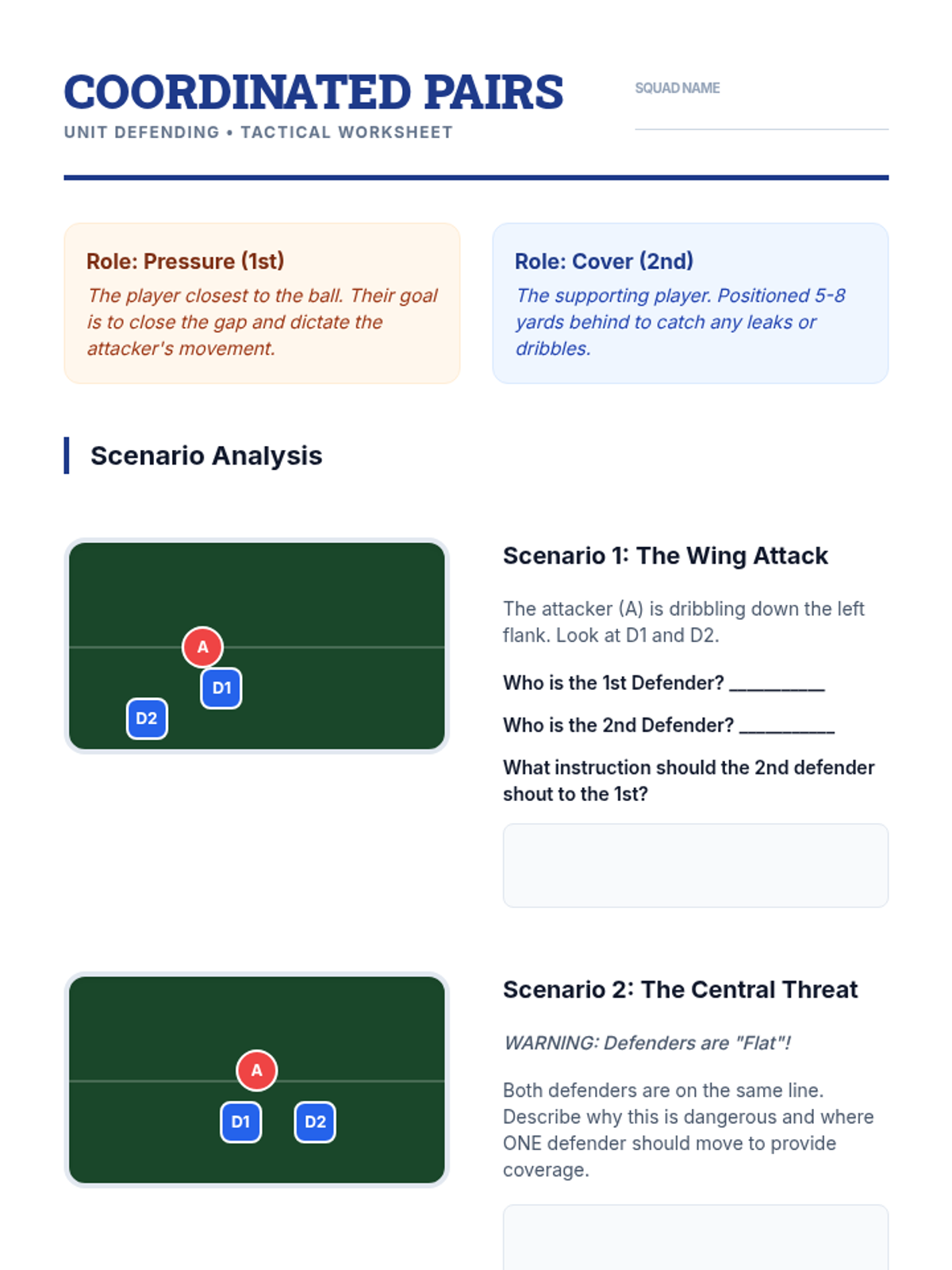
Introduces the 1st and 2nd defender roles, focusing on communication and shifting between pressure and cover.
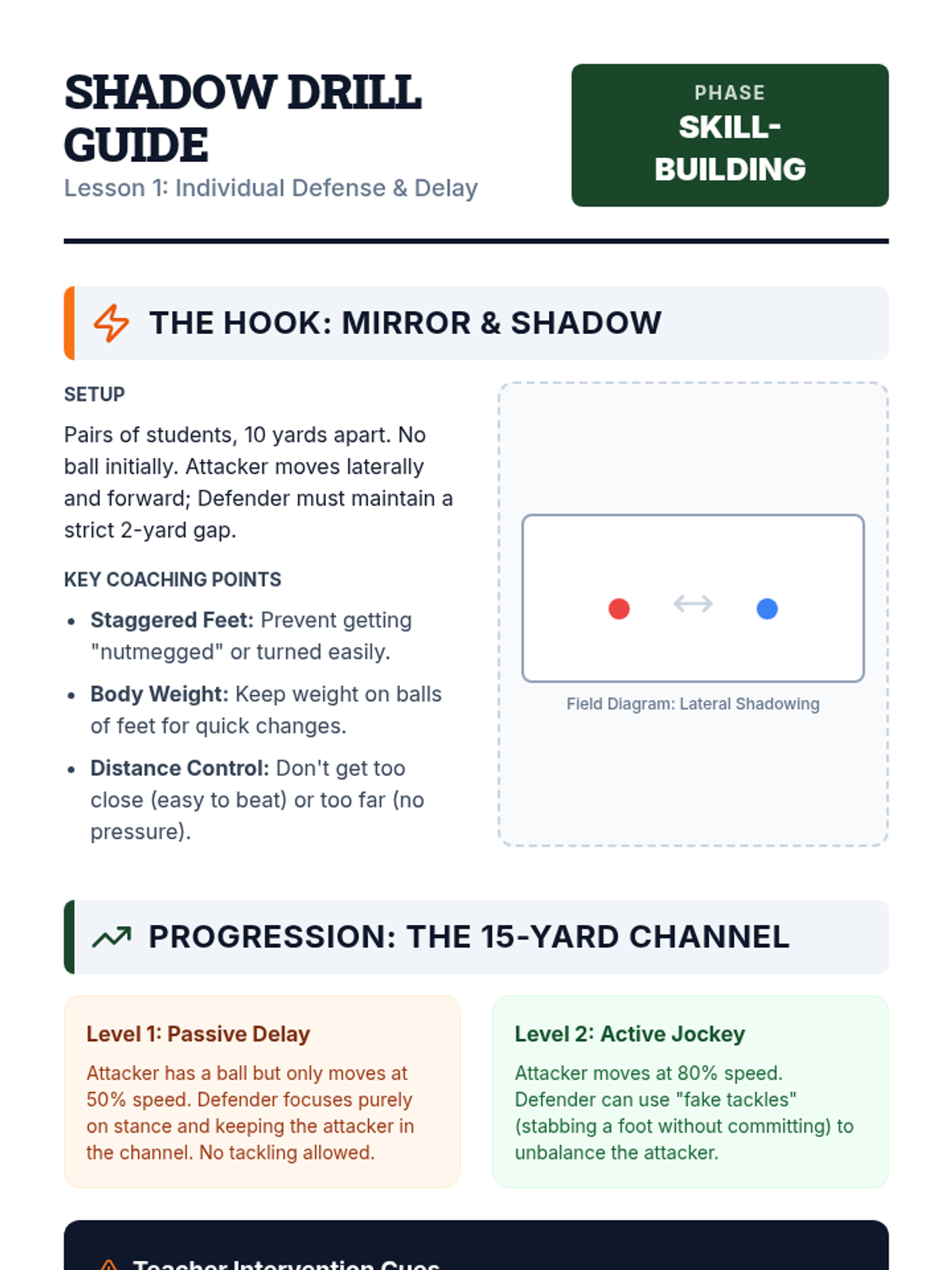
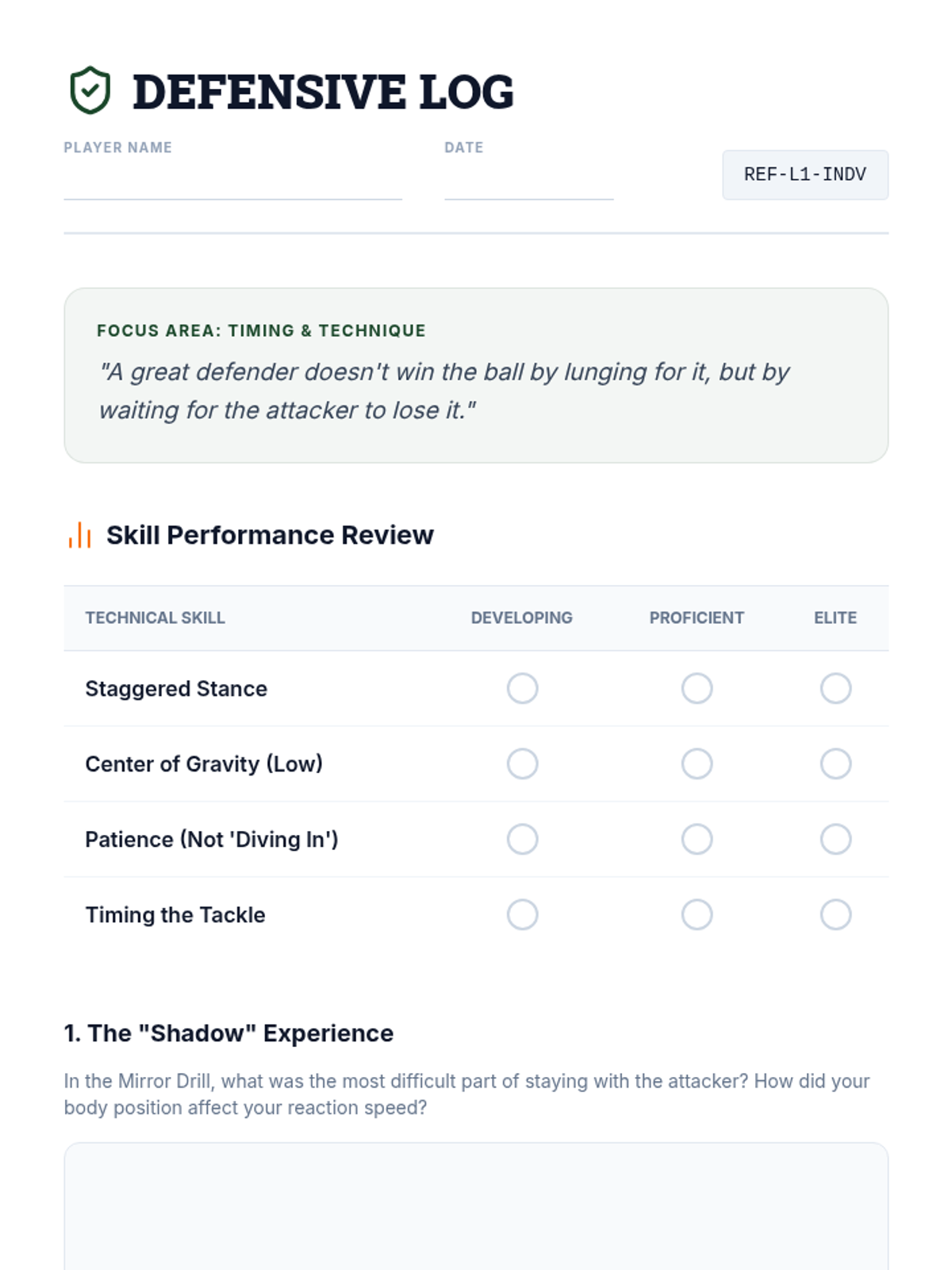
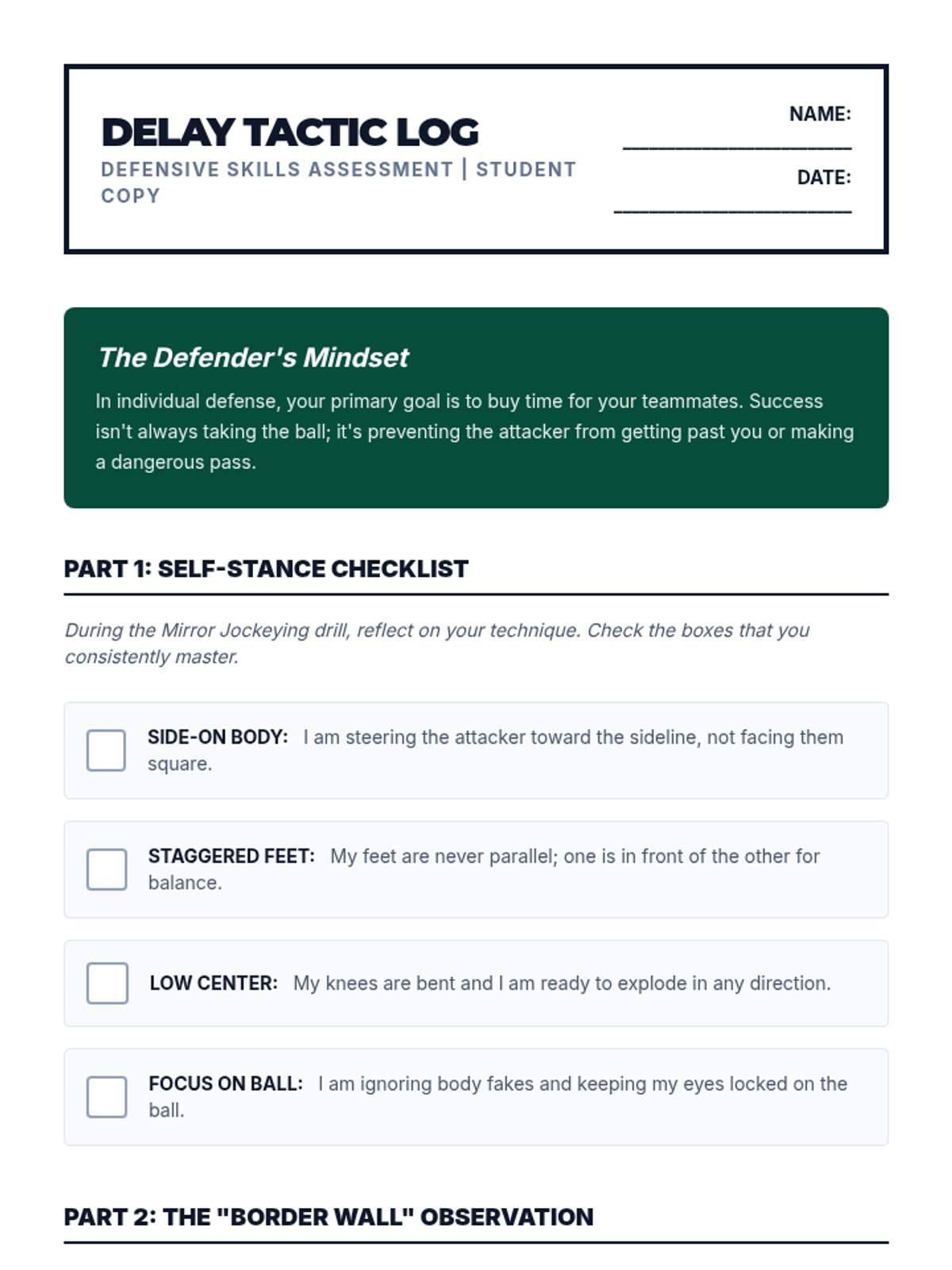
Focuses on the fundamentals of 1v1 defending, including body posture, 'jockeying', and patience to delay attackers.
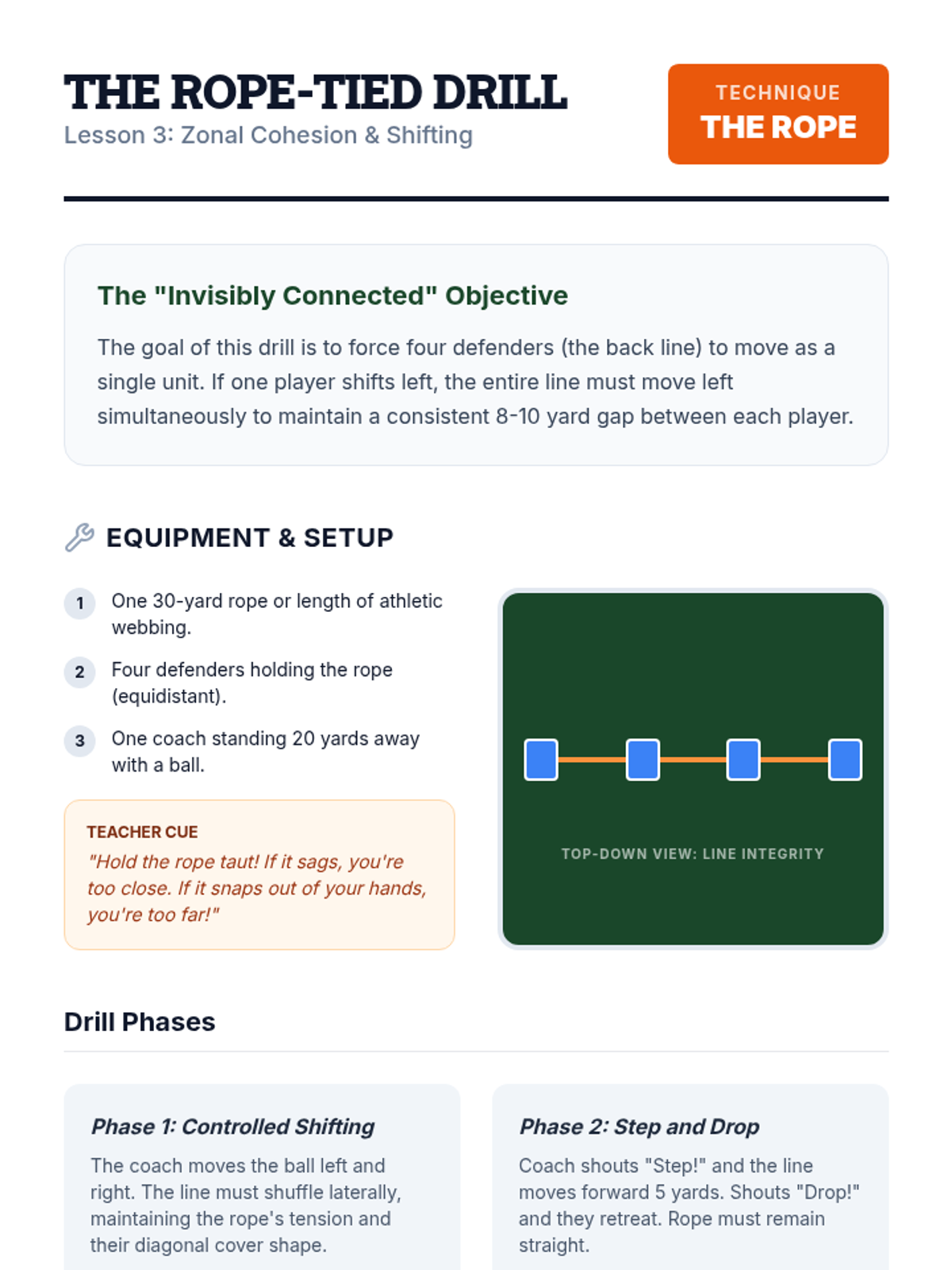
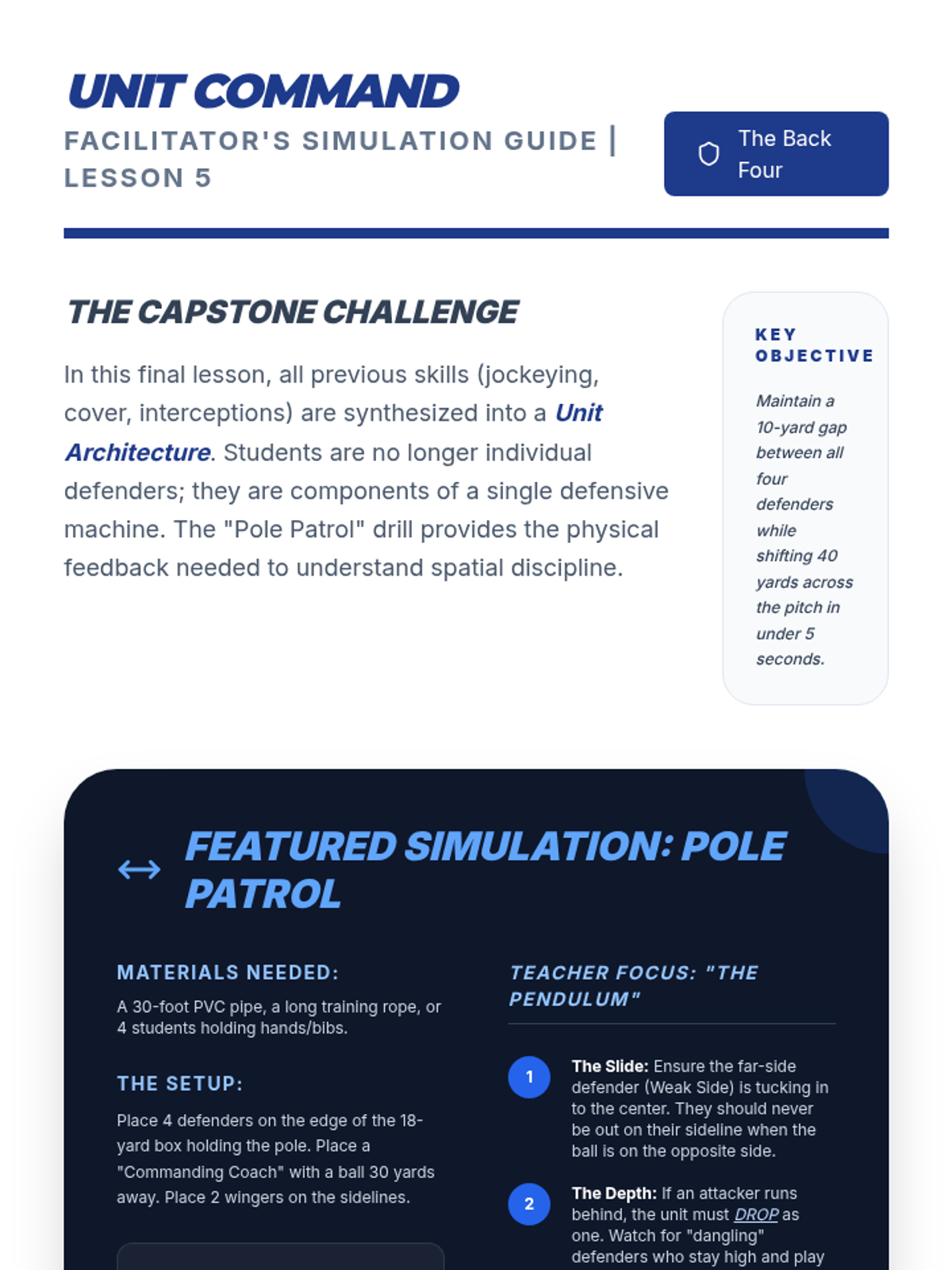
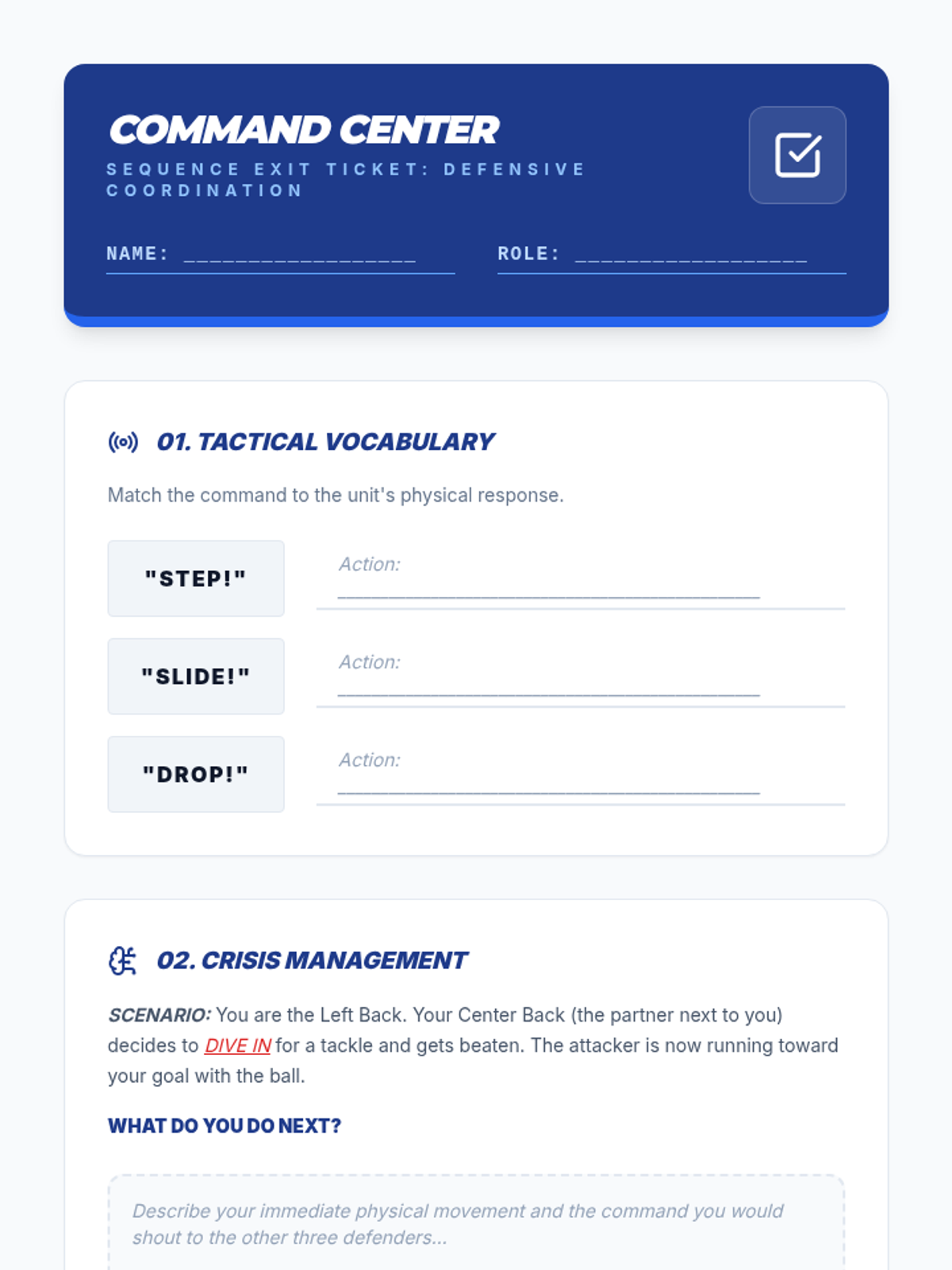
The capstone lesson where students coordinate as a back-four unit, practicing shifting across the field and maintaining vertical and horizontal compactness.
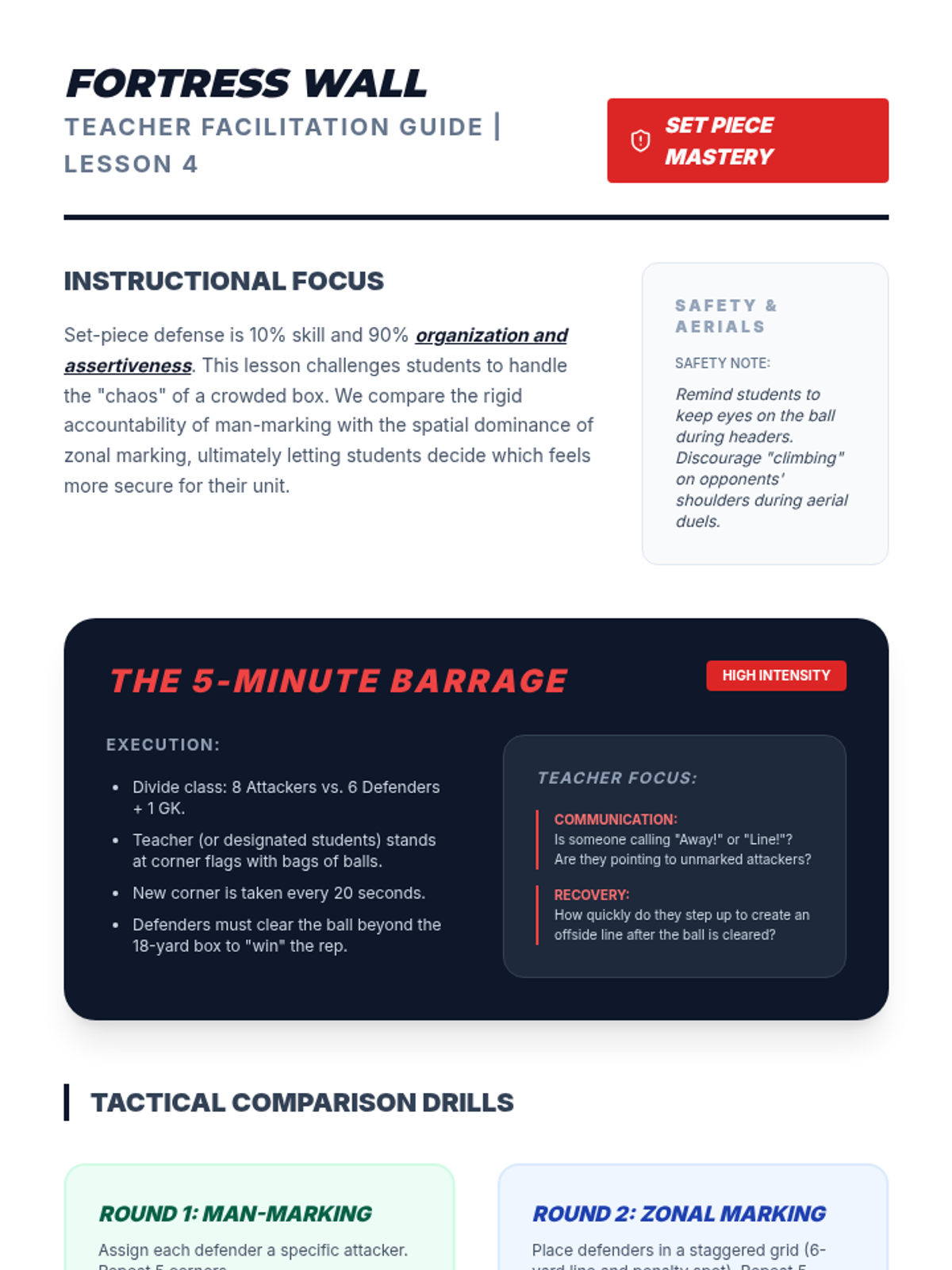
Covers the organizational structures required to defend corners and free kicks, comparing man-marking and zonal marking systems.
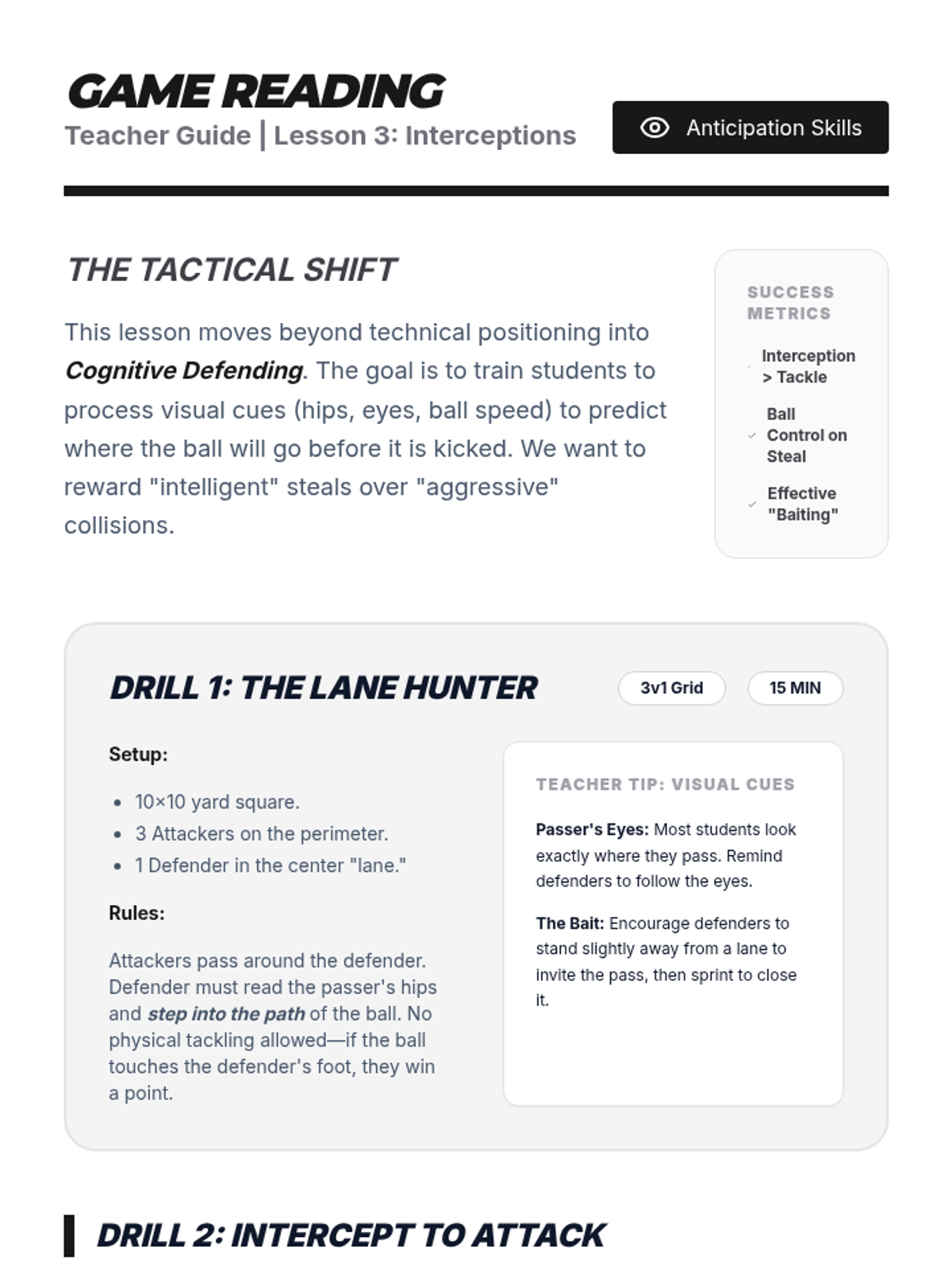
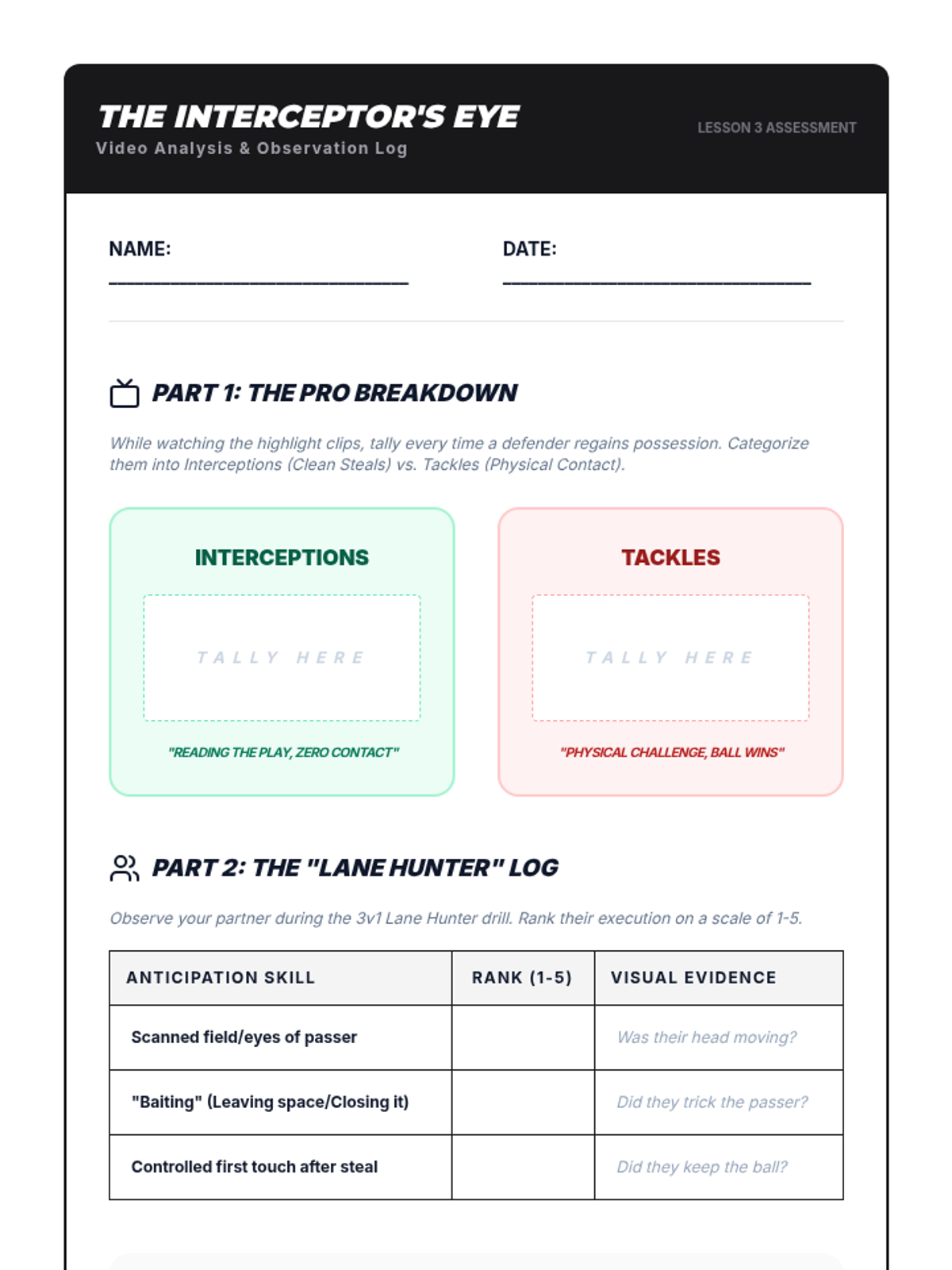
Develops students' ability to anticipate opposition play and use interceptions as a primary tool for regaining possession.
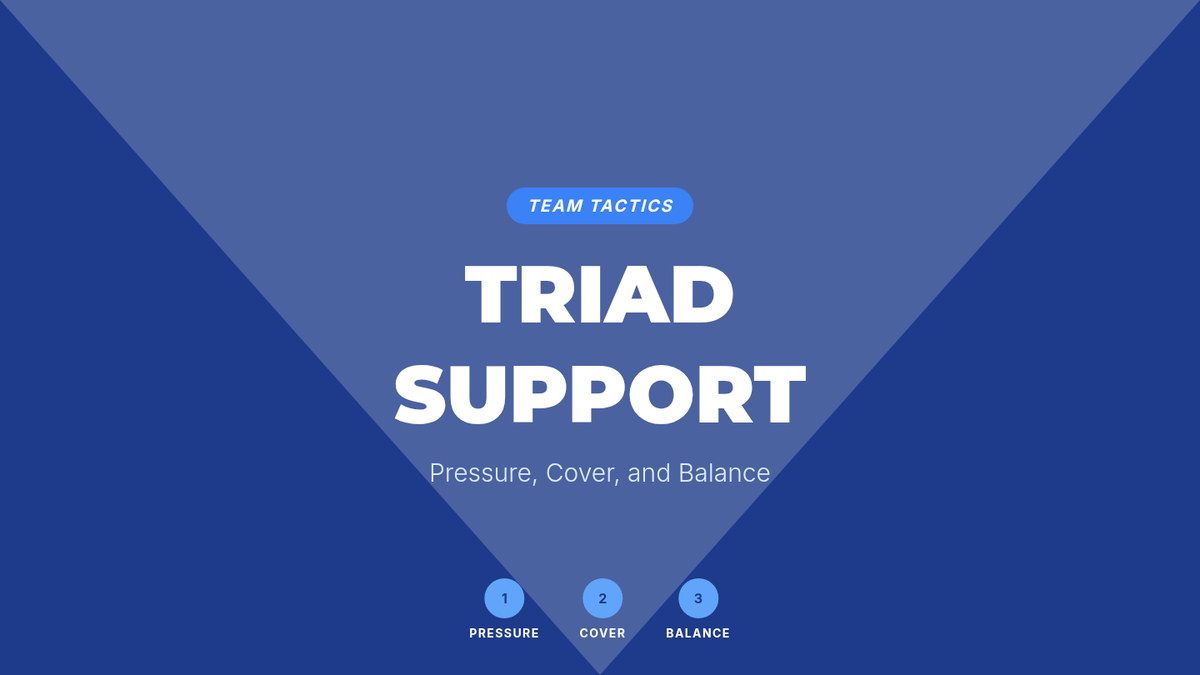
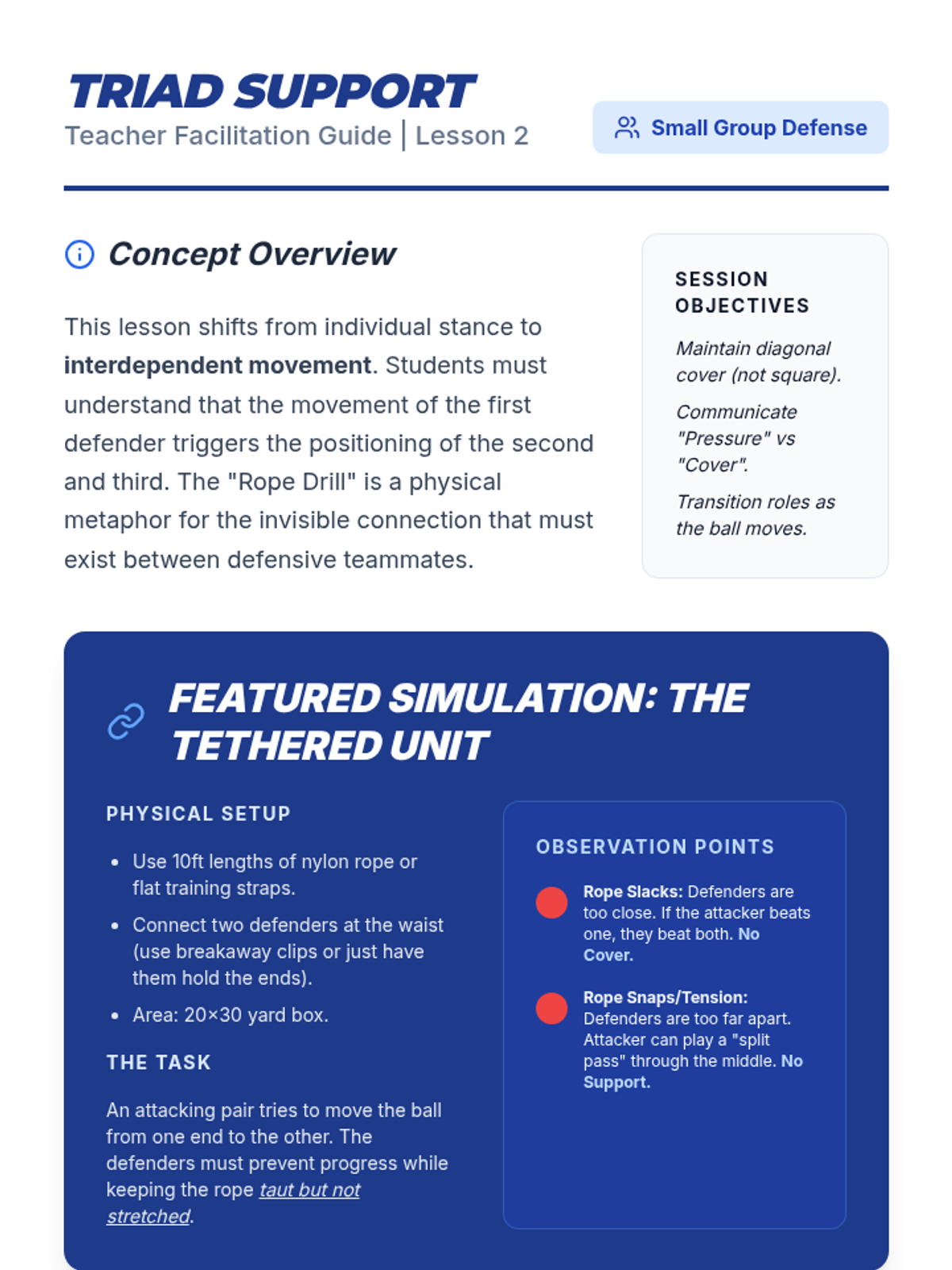
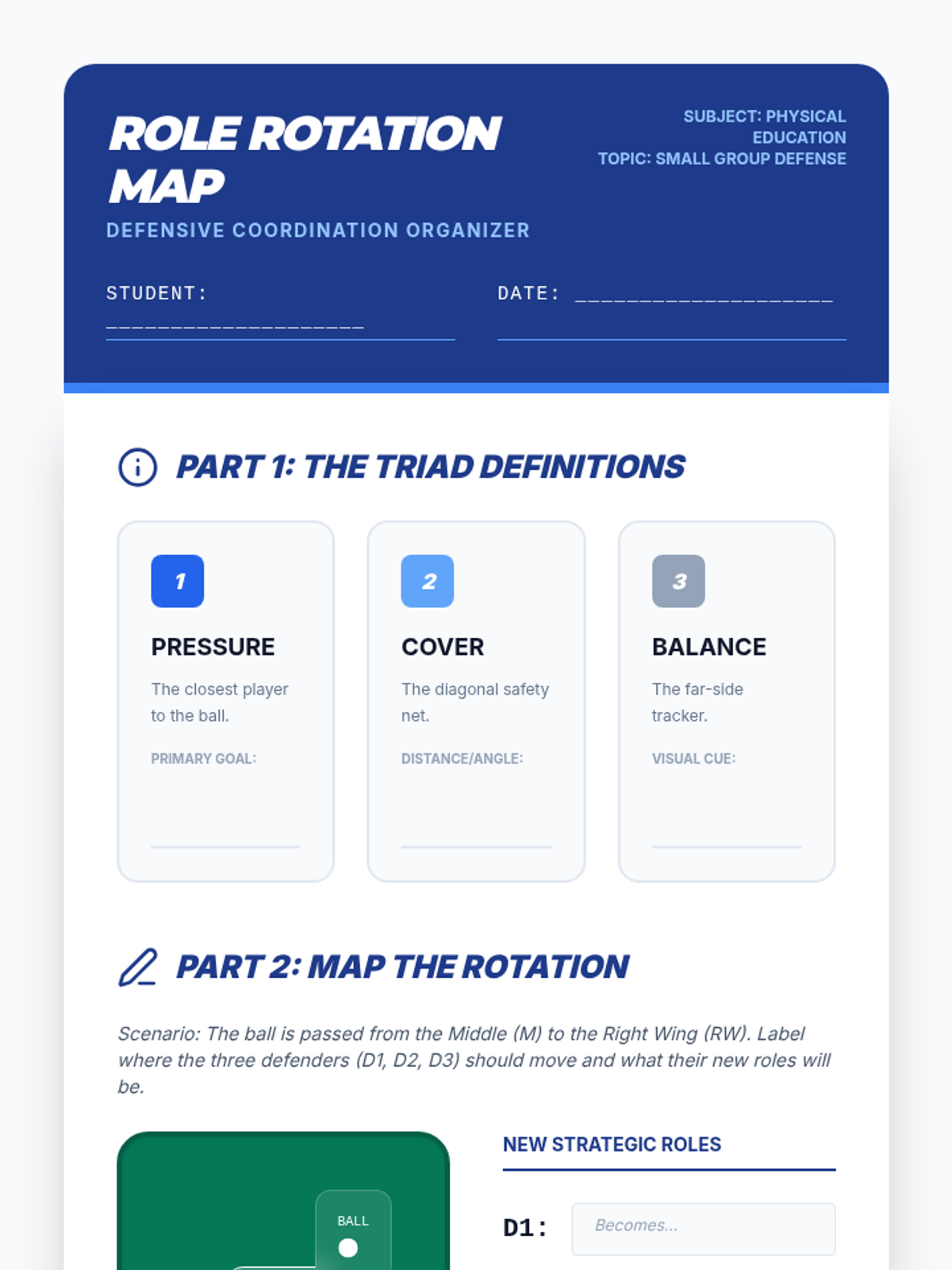
Introduces small-group defensive principles including the roles of the first (pressure), second (cover), and third (balance) defenders.
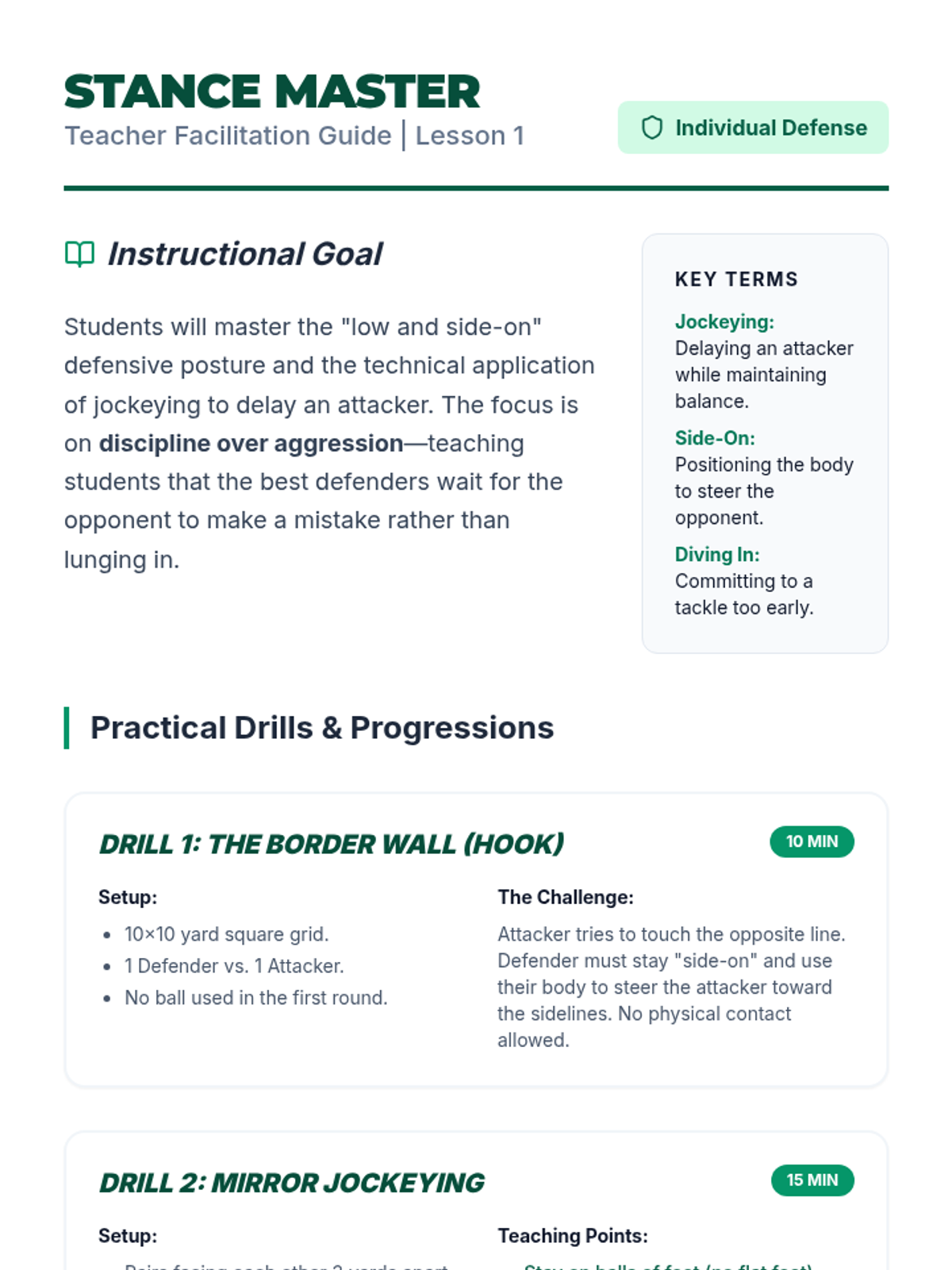
Focuses on the individual technical skill of jockeying, teaching students how to use body positioning to delay and steer attackers without committing to a tackle.
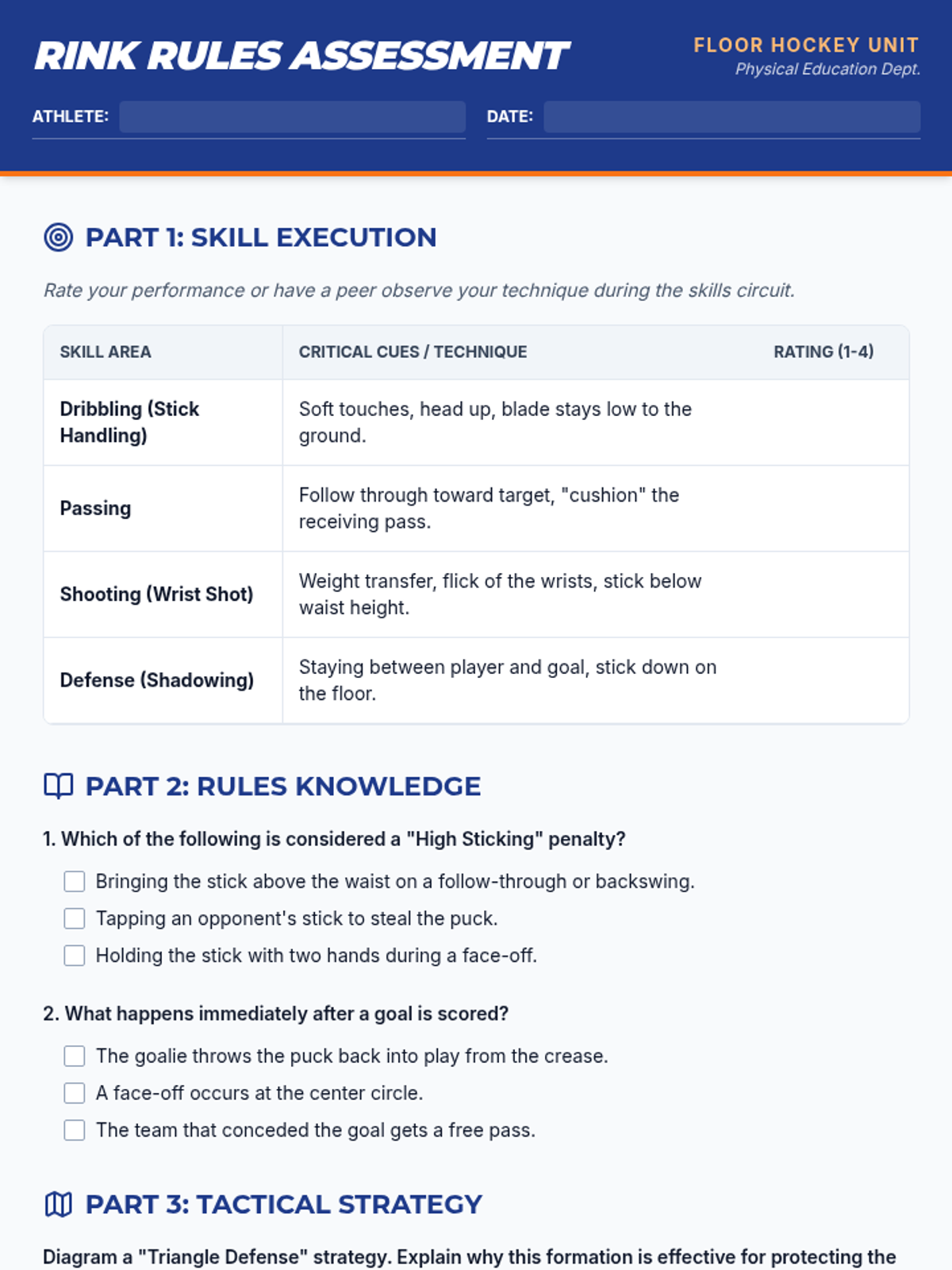
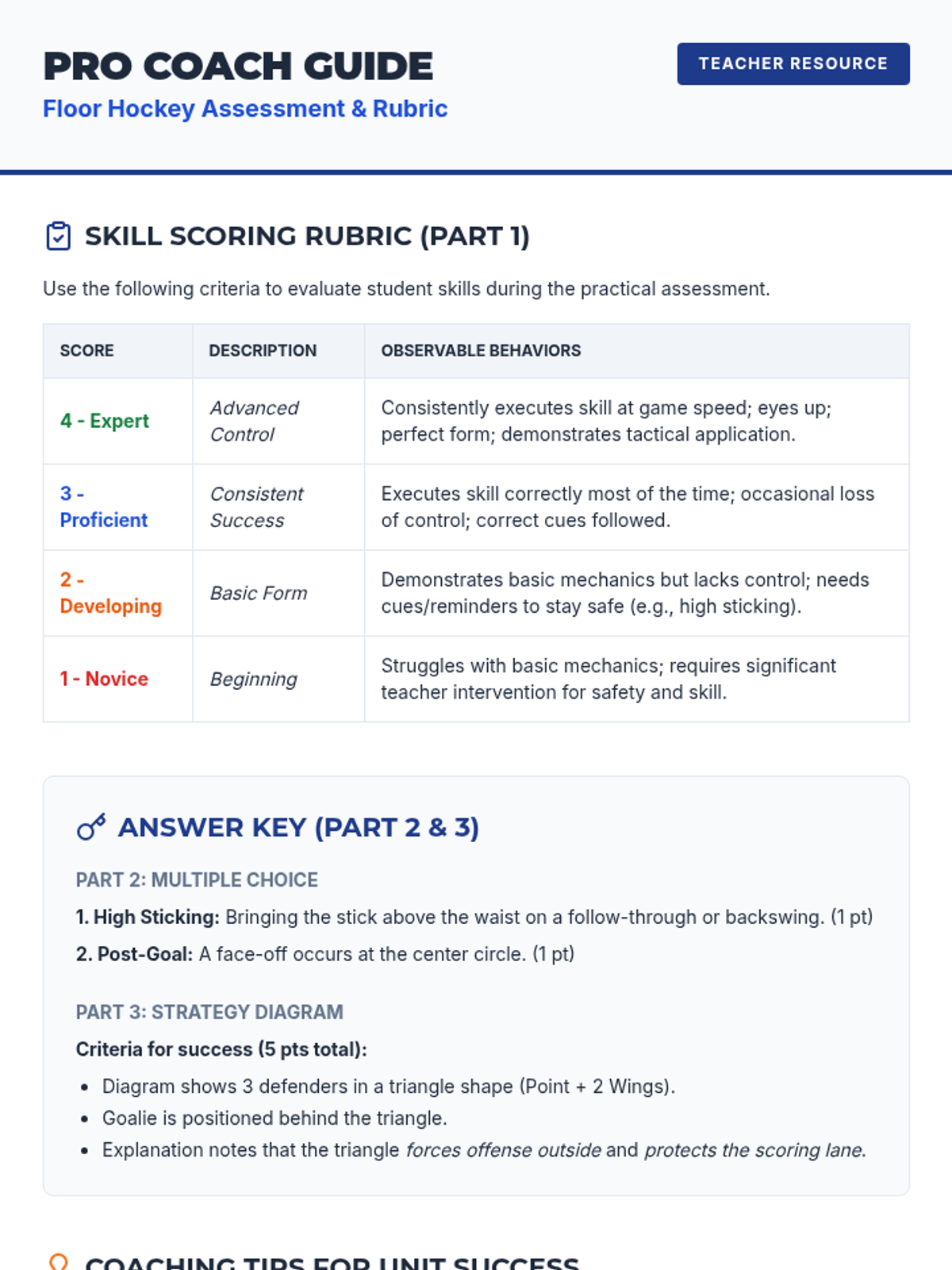
A comprehensive assessment and instructional set for middle school floor hockey, focusing on core skills, game rules, and tactical strategies.
A 10-slide presentation exploring the history, rules, and legendary moments of Team USA hockey in the Winter Olympics.