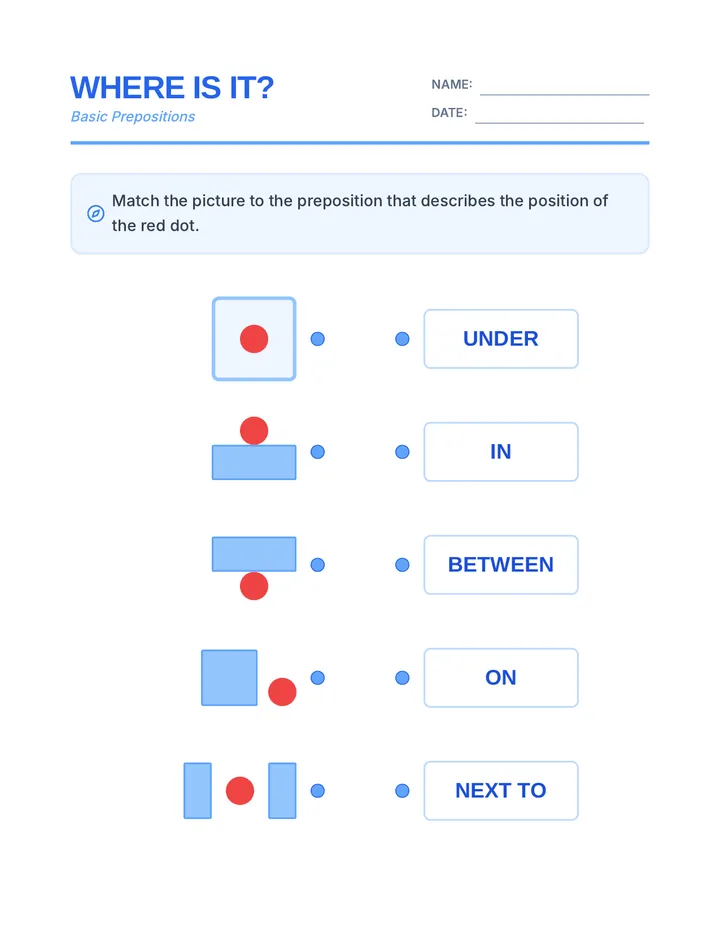
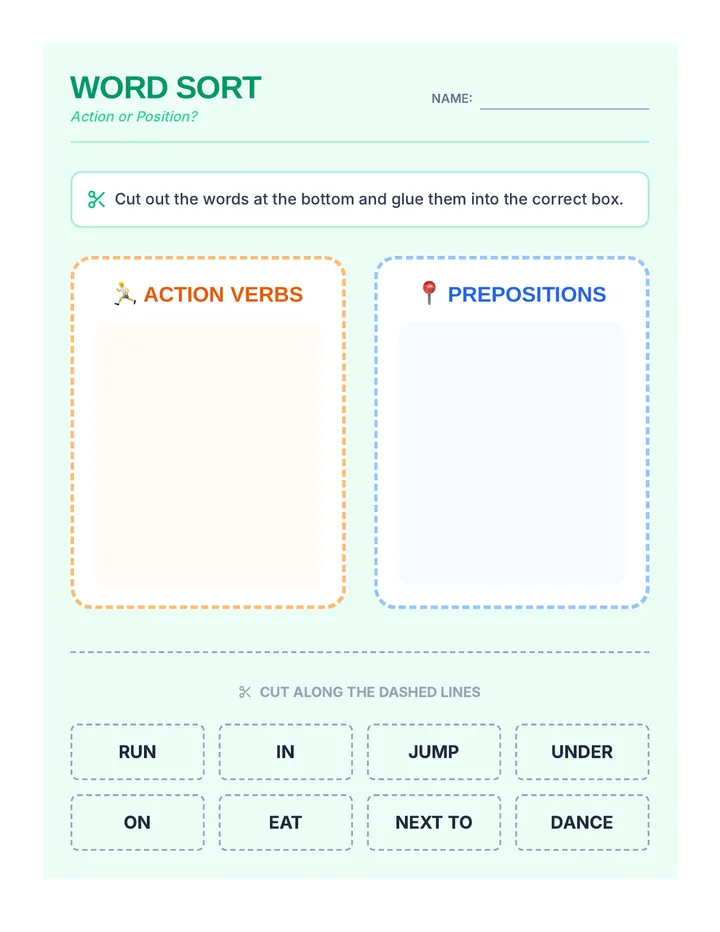
A Kindergarten lesson focused on identifying the sight word 'by' and understanding its positional meaning through a 'Word Detective' theme. Includes a scavenger hunt, video analysis, and hands-on proximity practice.
A fun, movement-based lesson for early elementary ESL students to learn directional opposites (Up/Down, High/Low) using playground equipment and a catchy song. Students will engage in pronunciation practice, video analysis, and a partner dictation activity using character cut-outs.
A foundational ESL lesson focused on numbers 1-10, connecting spoken words, written forms, and quantities through music, video, and movement. Students engage in choral counting, video-based handwriting practice, and a classroom-wide labeling activity.
A Kindergarten/1st Grade ESL lesson focusing on oral language development through comparative and superlative adjectives (long, longer, longest, short, shorter, shortest) using zoo animal comparisons.
A high-energy Kindergarten ESL lesson teaching the sight word 'come' through rhythm, song, and physical movement. Students link the word to movement actions like walking, running, skipping, and hopping.
A dynamic lesson for ESL/ELL students to master subject and object pronouns through physical movement and visual examples from Khan Academy. Students practice the 'switcheroo' by tossing a ball and transforming sentences in real-time.
A beginner ESL lesson focused on prepositions of movement through song, character interaction, and physical role play. Students will learn to describe direction using words like into, out of, through, around, toward, past, up, and down.
A high-energy Kindergarten lesson where students connect letter names to visual symbols through music and movement. Students use pointers to track letters on a classroom chart in time with a reggae-style alphabet song.
An introductory lesson using a visual 'tale of two elephants' to distinguish between specific (the) and general (a/an) nouns.
A mastery-based lesson using 'Lǎoshī shuō' (Simon Says) to integrate all previous commands into complex sequences.
Learning 'Pāi shǒu' (Clap hands) and 'Tiào' (Jump) with rhythm and music to reinforce high-energy action vocabulary.
The sequence concludes with a song 'Wǒ ài wǒ de jiā', combining vocabulary with the verb 'to love' and expressive hand motions.
Focusing on sensory verbs 'Tīng' (Listen) and 'Kàn' (Look) through a detective-themed scavenger hunt.
Introducing 'Zǒu' (Walk) and 'Tíng' (Stop) using a Mandarin version of Red Light, Green Light to build impulse control and verb recognition.
Students learn 'Zhàn qǐ lái' (Stand up) and 'Zuò xià' (Sit down) through rapid-fire reaction games. focus is on gross motor response to auditory cues.
Students practice the sentence structure 'Zhè shì...' to introduce their own family members using photos or drawings.
Introduction to grandparents, Yéye and Nǎinai. Students explore generational structures using a visual family tree and storytelling.
In this synthesis lesson, students participate in a pretend tea party, applying all learned greetings in a social setting.
Exploration of siblings in Mandarin, focusing on older and younger distinctions. Students learn Gēge, Jiějie, Dìdi, and Mèimei through size-based activities.
Introduction to the terms for Mom and Dad in Mandarin. Students use finger puppets to practice Bàba and Māma while associating the words with parental figures.
Students explore empathy and repair by learning 'Duìbuqǐ' (Sorry) and 'Méiguānxi' (It's okay) through gentle role-play.
This lesson introduces 'Xièxie' (Thank you) and 'Bú kèqì' (You're welcome) through a gift-giving simulation.
Learners focus on 'Zàijiàn' (Goodbye) by enacting end-of-day routines and singing a Mandarin goodbye song.
Students learn 'Nǐ hǎo' (Hello) through a hand puppet interaction circle, focusing on eye contact and friendly body language.
In this culminating lesson, students combine the movements and rhythms they have learned. They participate in a structured dance circle, taking turns showing a move for their friends to copy.
Learners are introduced to the instruments of a Mexican Mariachi band, specifically the guitar, trumpet, and violin. They engage in role-play, pretending to play these instruments while marching in a line.
Students travel to the Caribbean to explore salsa rhythms using maracas and egg shakers. They practice shaking to the beat and learn simple hip movements, focusing on looseness and joy.
Focusing on Spain, students learn the basics of 'palmas' (clapping) and vigorous foot stomping associated with Flamenco. They watch a short, vibrant video of a dancer and try to mimic the posture and emotion.
The culminating lesson where students compare Spanish traditions with their own family celebrations. They create a page for a class book and share their favorite ways to celebrate.
Students learn about the gift-giving tradition of Three Kings Day (Día de Reyes). They decorate crowns and explore the custom of leaving out shoes for the visitors.
A gentle introduction to Día de los Muertos, emphasizing the celebration of happy memories. Students create paper marigolds and share stories about people or pets they love.
A lively exploration of Carnival traditions focusing on masks, feathers, and festive movement. Students design their own masks and participate in a classroom parade to rhythmic music.
Students explore the joy of birthday celebrations and festivals through the tradition of the piñata. They learn a traditional song and practice fine motor skills by decorating their own colorful piñata shapes.
A collaborative finale where students review their journey and create a large-scale mural placing all the animals in their correct habitats.
Students learn about the giant tortoises of the Galapagos Islands, focusing on self-regulation and slow movement through simulation.
A musical journey to Puerto Rico to hear the song of the tiny Coquí frog, focusing on vocal mimicry and auditory discrimination.
An exploration of the Amazon rainforest focused on sensory experience, including the sounds of a rainstorm and the stealthy movements of the jaguar.
Students explore the high Andes mountains of South America and meet the fluffy llamas that live there, practicing fine motor skills through yarn weaving and balance on mountain paths.
Students practice social etiquette and table setting while learning the cultural importance of 'la familia' eating together.
Students participate in a mock market stall activity, using their sense of smell to identify common spices used in Spanish and Latin American cooking.
Focusing on Spain, students explore the ingredients of paella and create a paper collage to understand how diverse ingredients come together.
Students learn about the importance of corn (maíz) and practice fine motor skills by simulating the process of making tortillas with playdough.
Students examine real or replica tropical fruits common in Latin America, such as mangoes, papayas, and avocados, while learning Spanish names for colors and fruits.
Students explore the concept of rhythm by clapping and stomping to the beat of traditional Spanish guitar music. They learn to identify fast and slow tempos and practice starting and stopping on cue.
The sequence concludes with high-energy games like 'Red Light, Green Light' adapted for Spanish numbers. Students must take a specific number of steps based on the Spanish command.
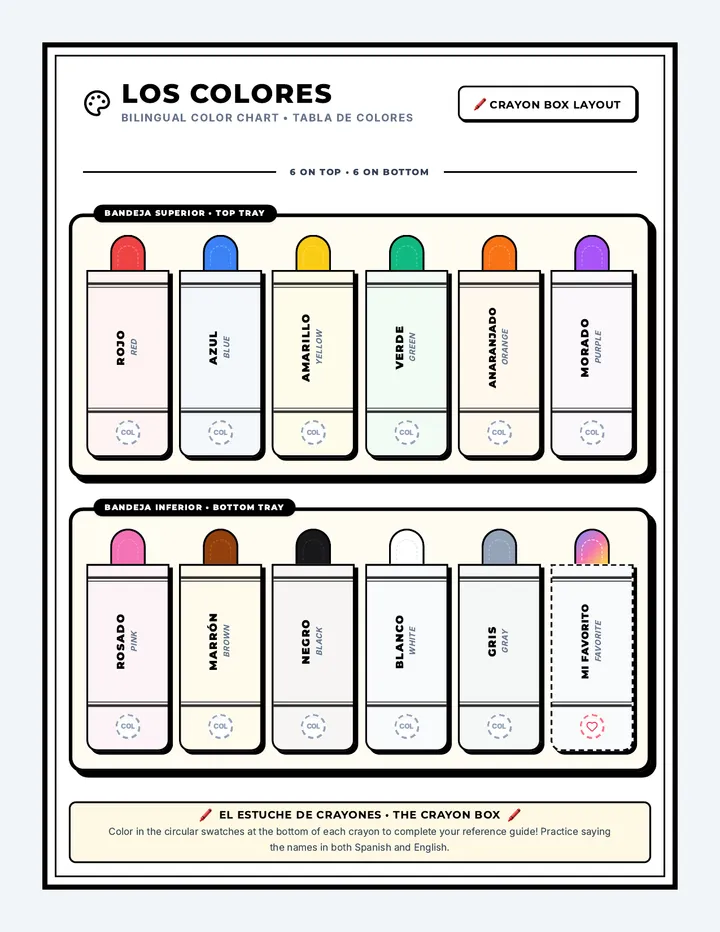
A culminating nature walk (or school walk) where students point out things they see using their color vocabulary. They create a collaborative rainbow mural reviewing all learned colors.
Students synthesize their learning by sequencing the steps to 'cook' a pretend salsa, describing flavors and identifying paper ingredients.
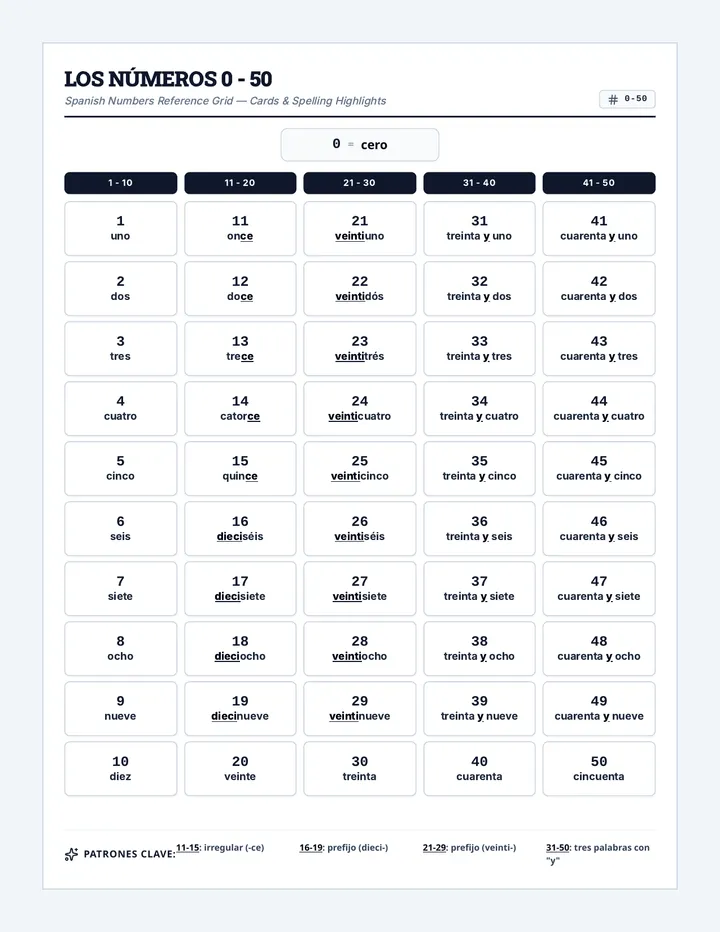
Learners apply their counting skills to real-world classroom items like crayons, chairs, and books. They go on a scavenger hunt to find specific quantities of items requested in Spanish.
Focusing on the social aspect of eating, students learn about family gathering customs and practice setting a table using polite Spanish words.
A culminating gallery walk where students present their crafts and reflect on the values of different celebrations.
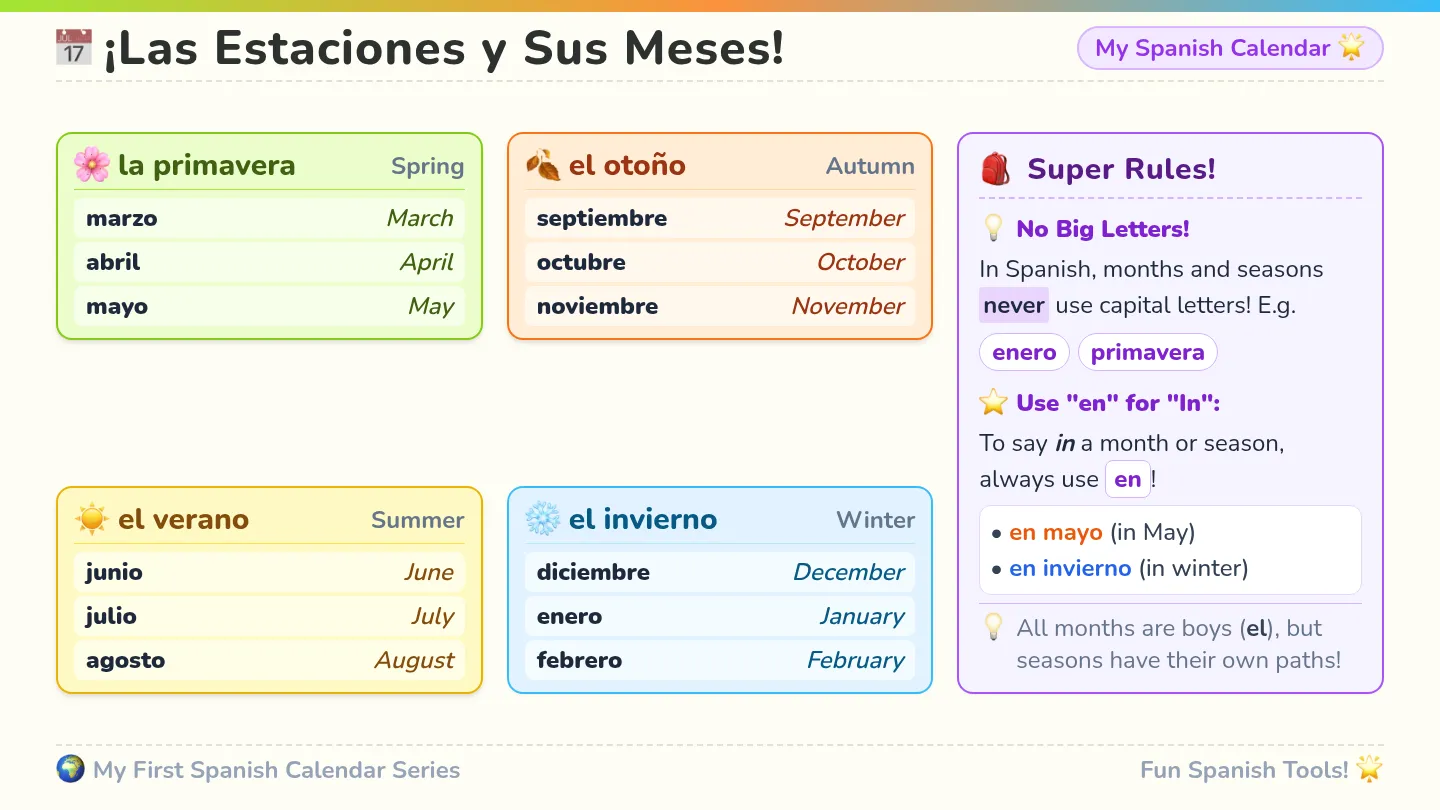
Students identify and practice vocabulary for tropical fruits like mango, papaya, and pineapple through a market role-play focusing on colors and numbers.