Students read comment threads on controversial but simple posts (e.g., best soccer team, best food). They categorize comments as positive, negative, or neutral based on key adjectives and emoji context.
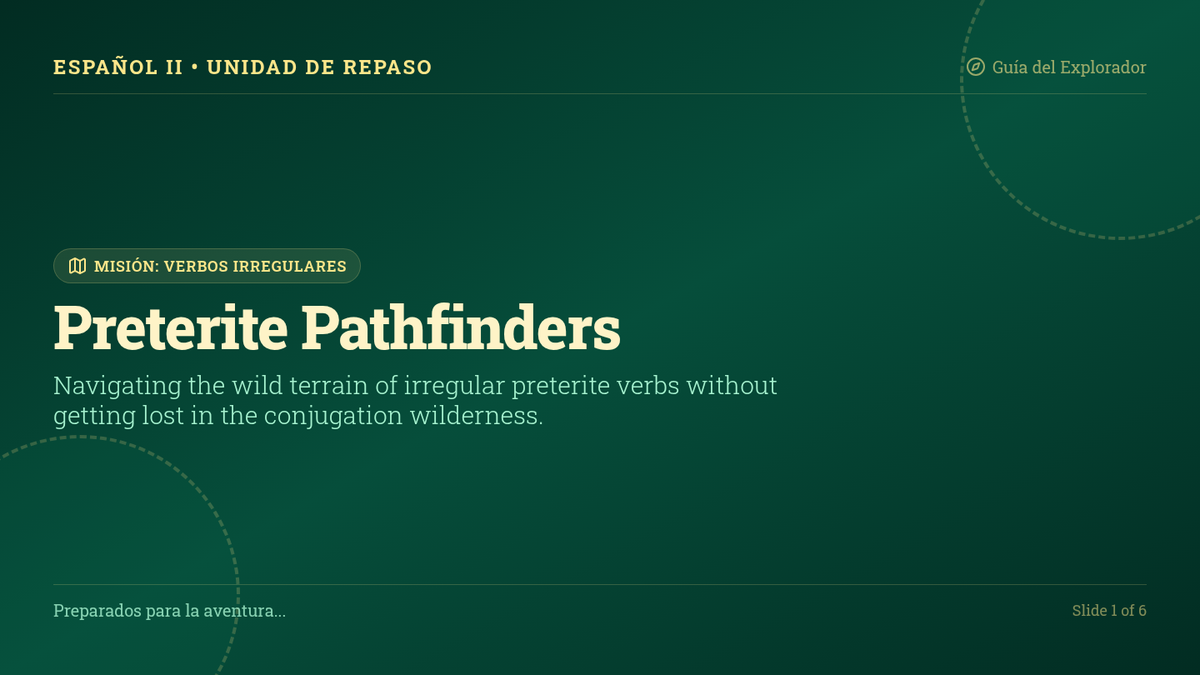
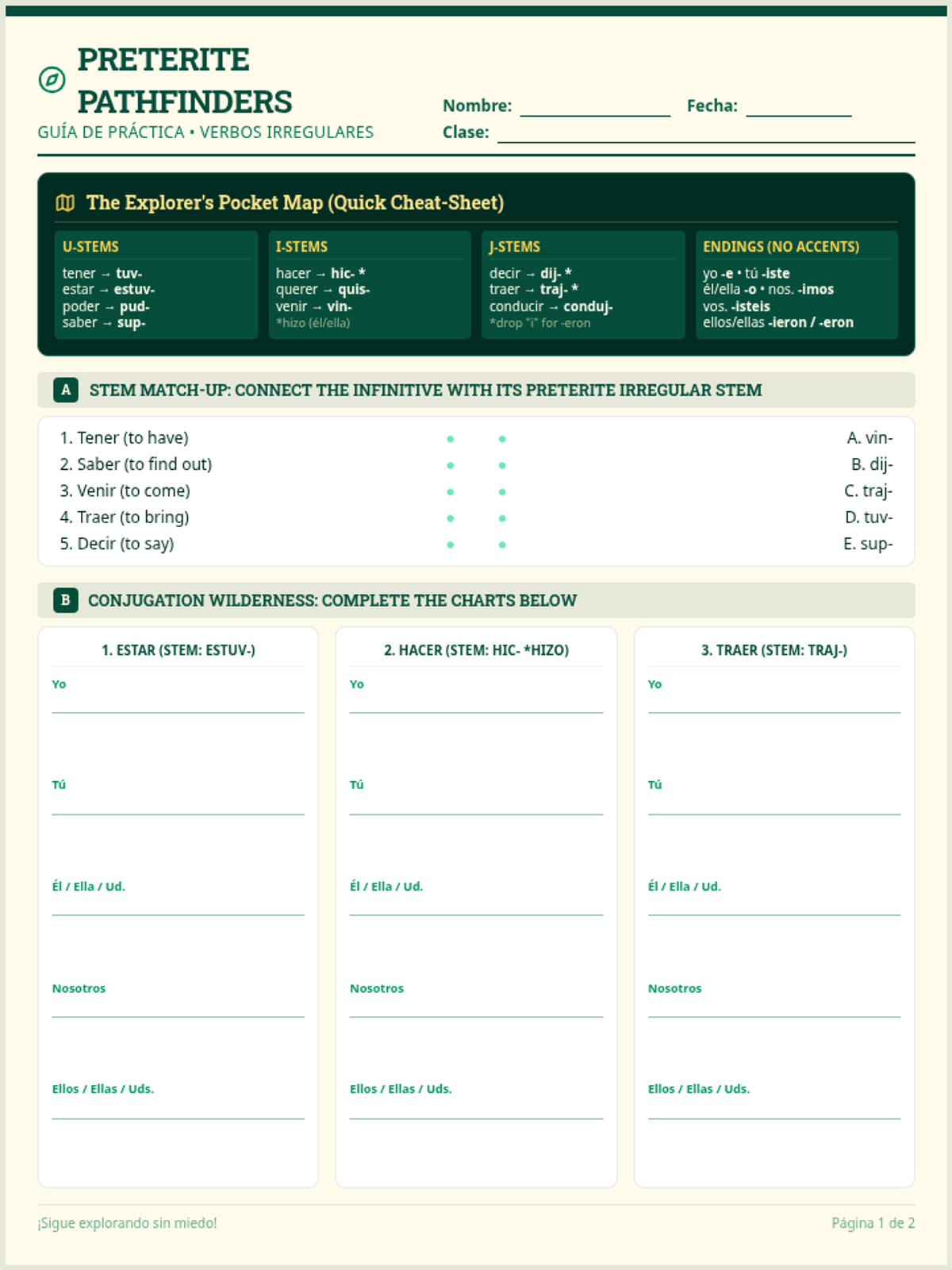
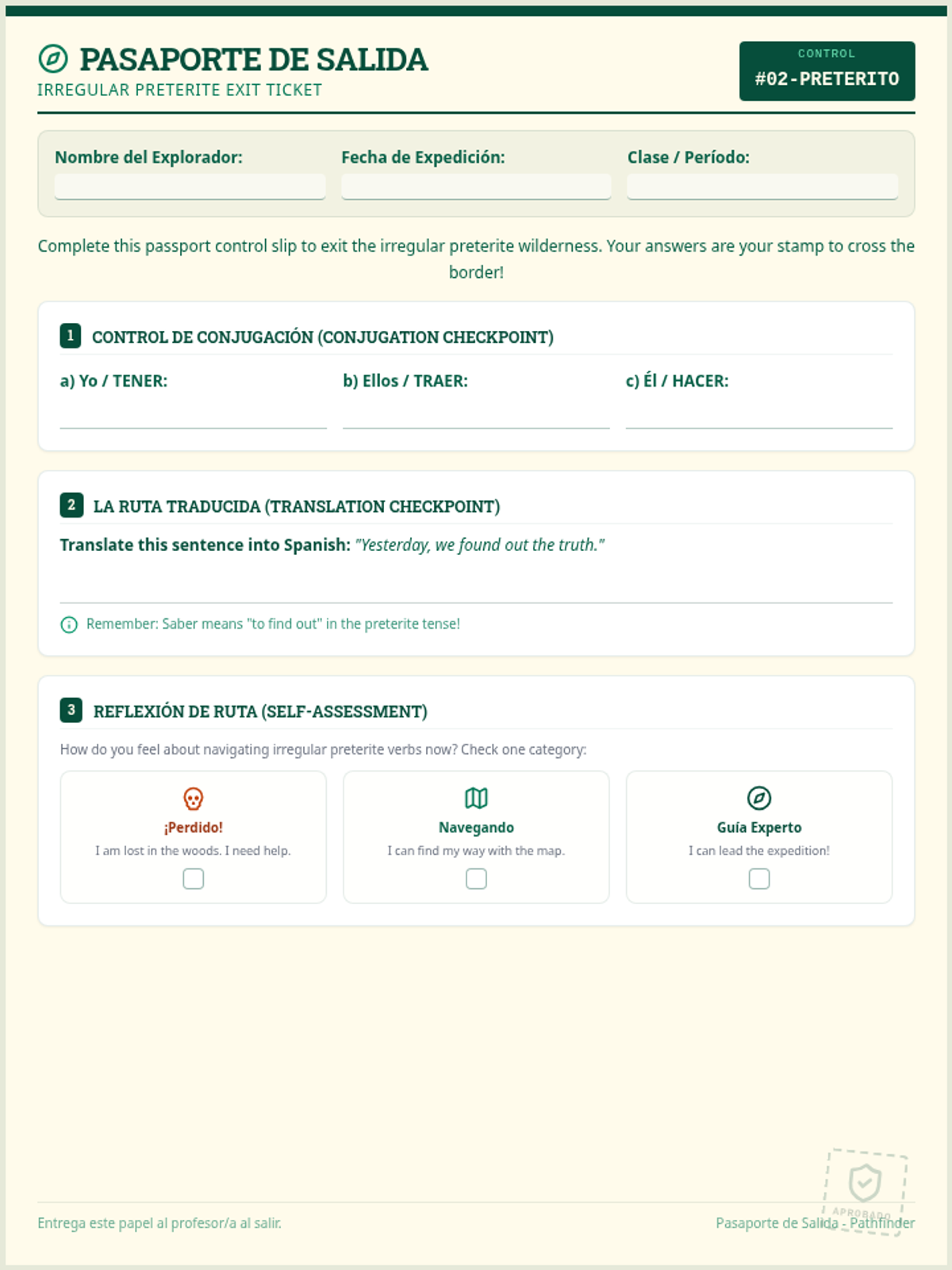
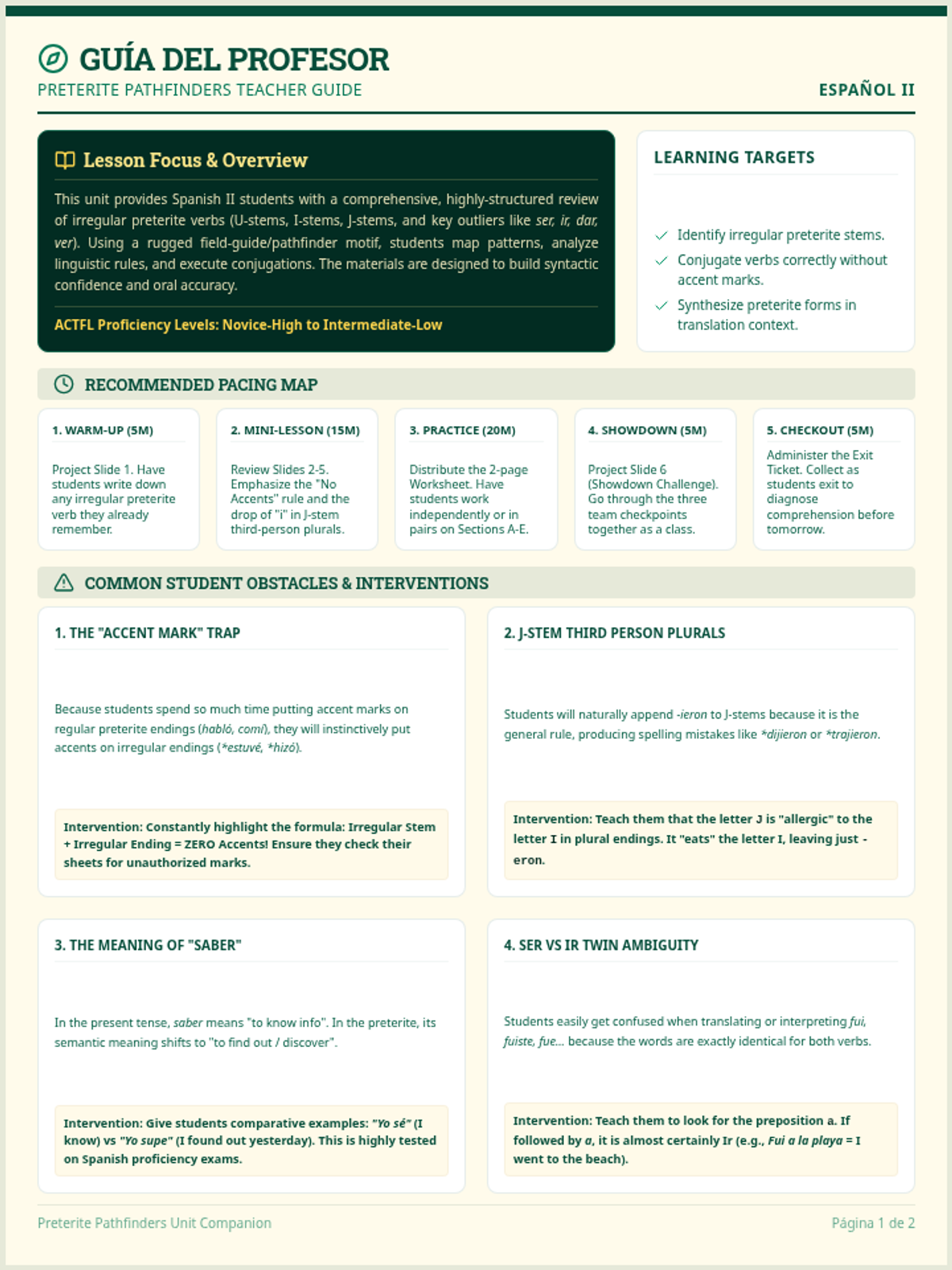
A comprehensive review and practice unit for second-year Spanish students focusing on mixed irregular preterite verbs. Includes instructional review slides, a structured guided practice worksheet, a quick exit ticket, and a teacher guide with answer keys.
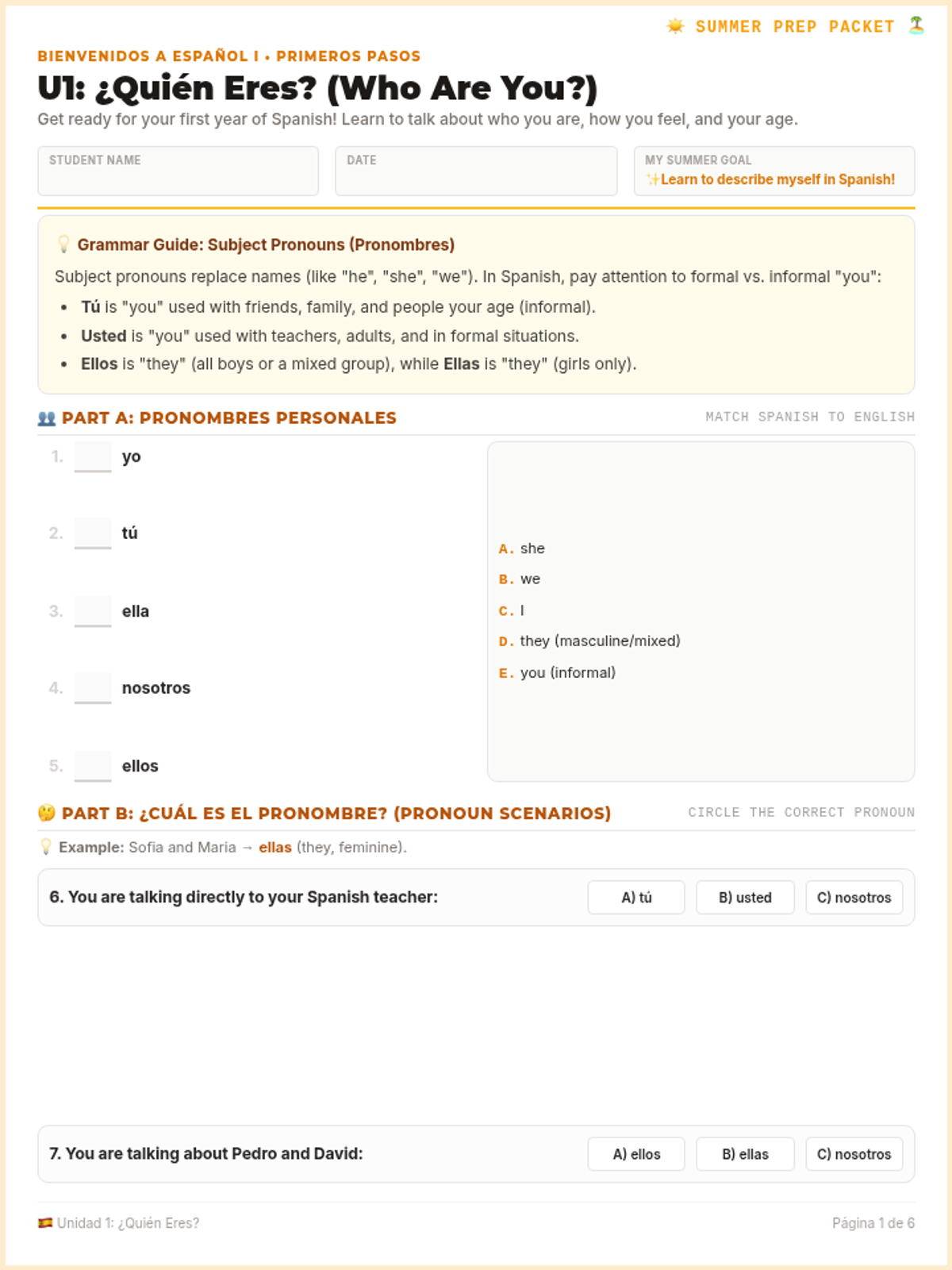
A foundational beginner Spanish lesson focused on personal descriptions, character traits, and feelings. Students learn how to express who they are, how they feel, their age, and where they live using pronouns, ser, estar, and tener.
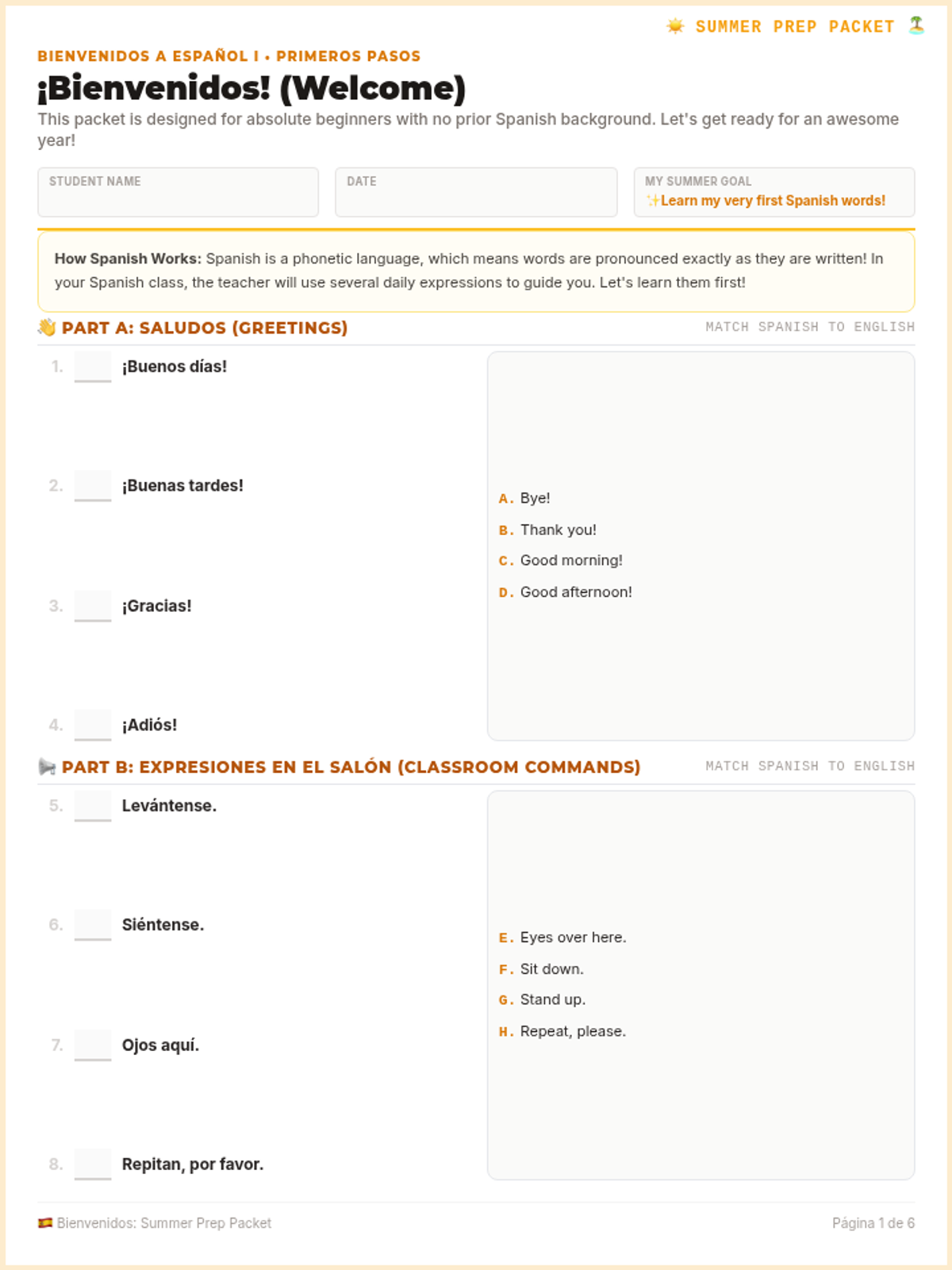
A preparatory summer lesson for complete beginner Spanish students with no prior background. Covers classroom expressions, essential classroom objects, the alphabet, Spanish-speaking geography, and basic numbers.
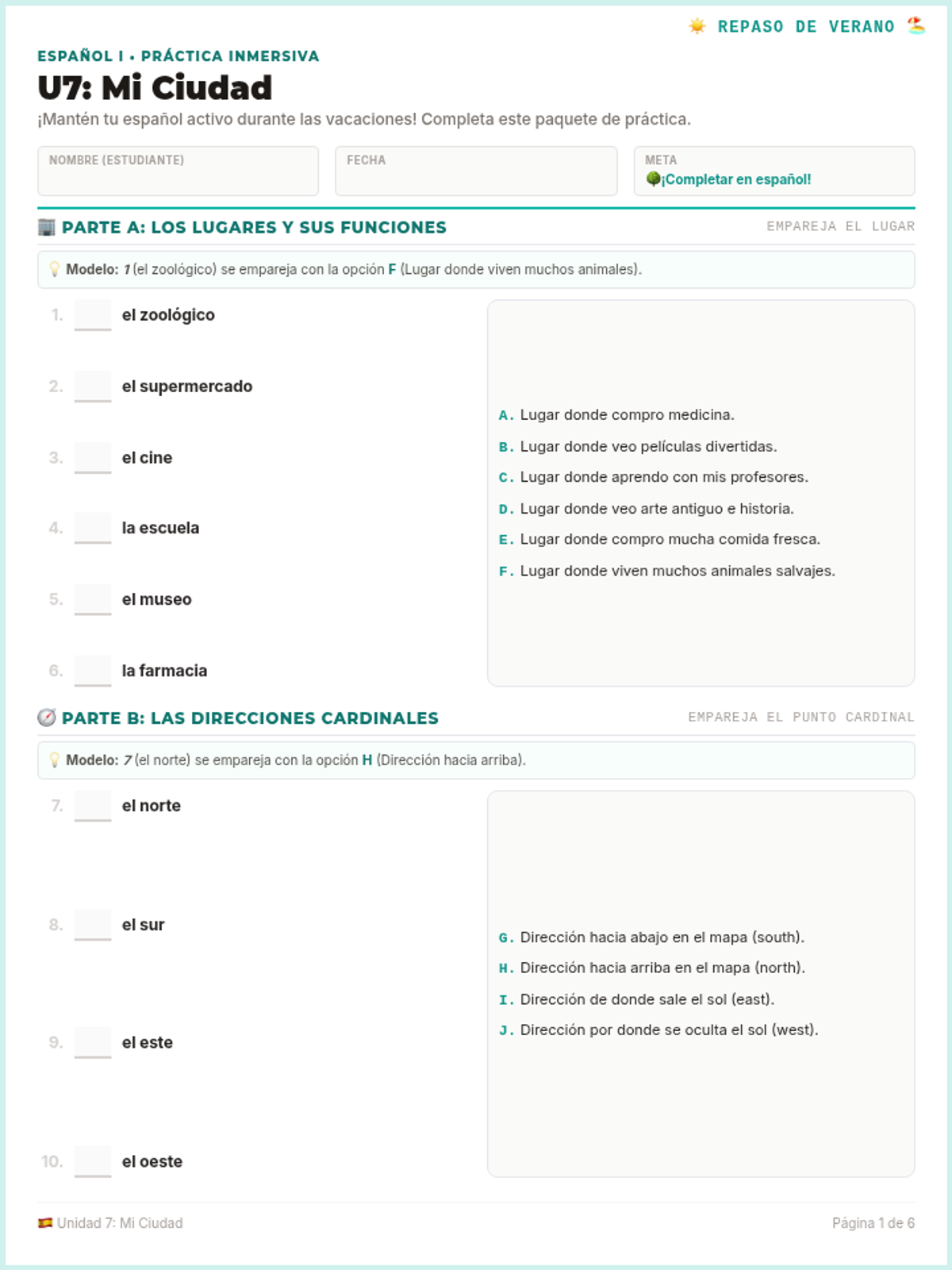
An immersive Spanish lesson centered on places in the city, transportation, and directional vocabulary. Students practice verb conjugations of "ir", prepositions, and simple sentence translations.
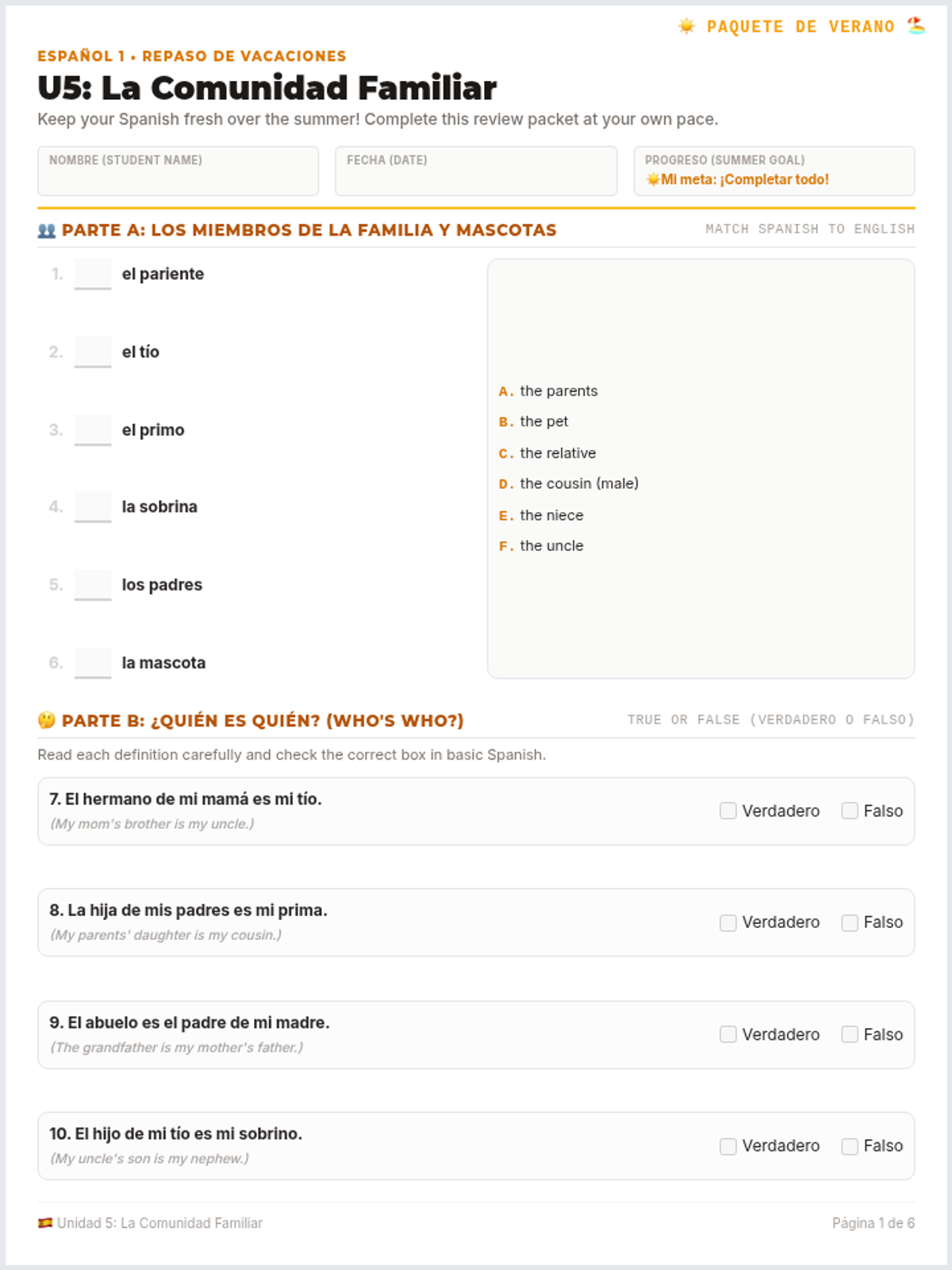
A Spanish lesson focused on family members, pets, household objects, rooms, and descriptions using pronombres and verbs like ser, estar, tener, and vivir.
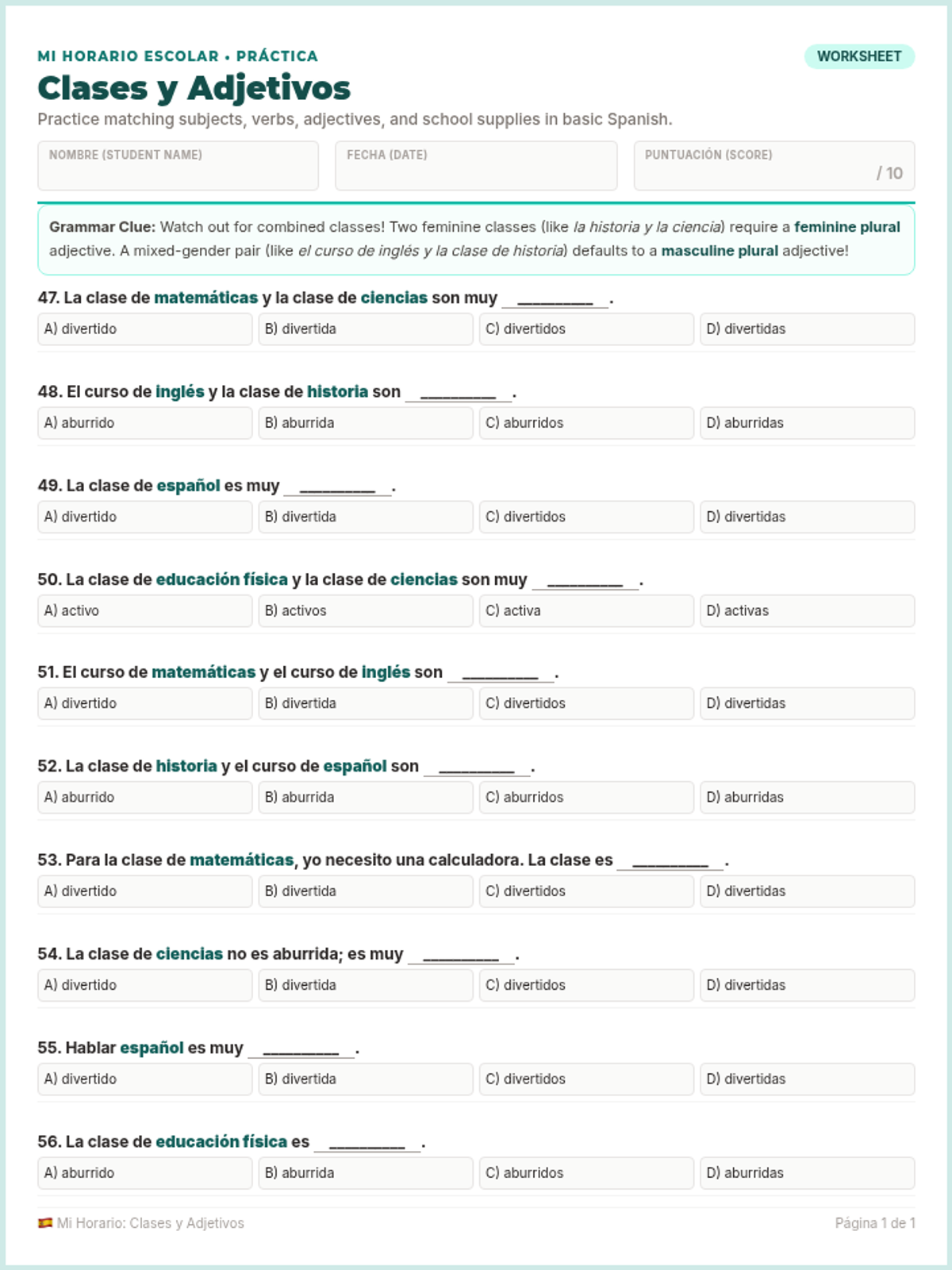
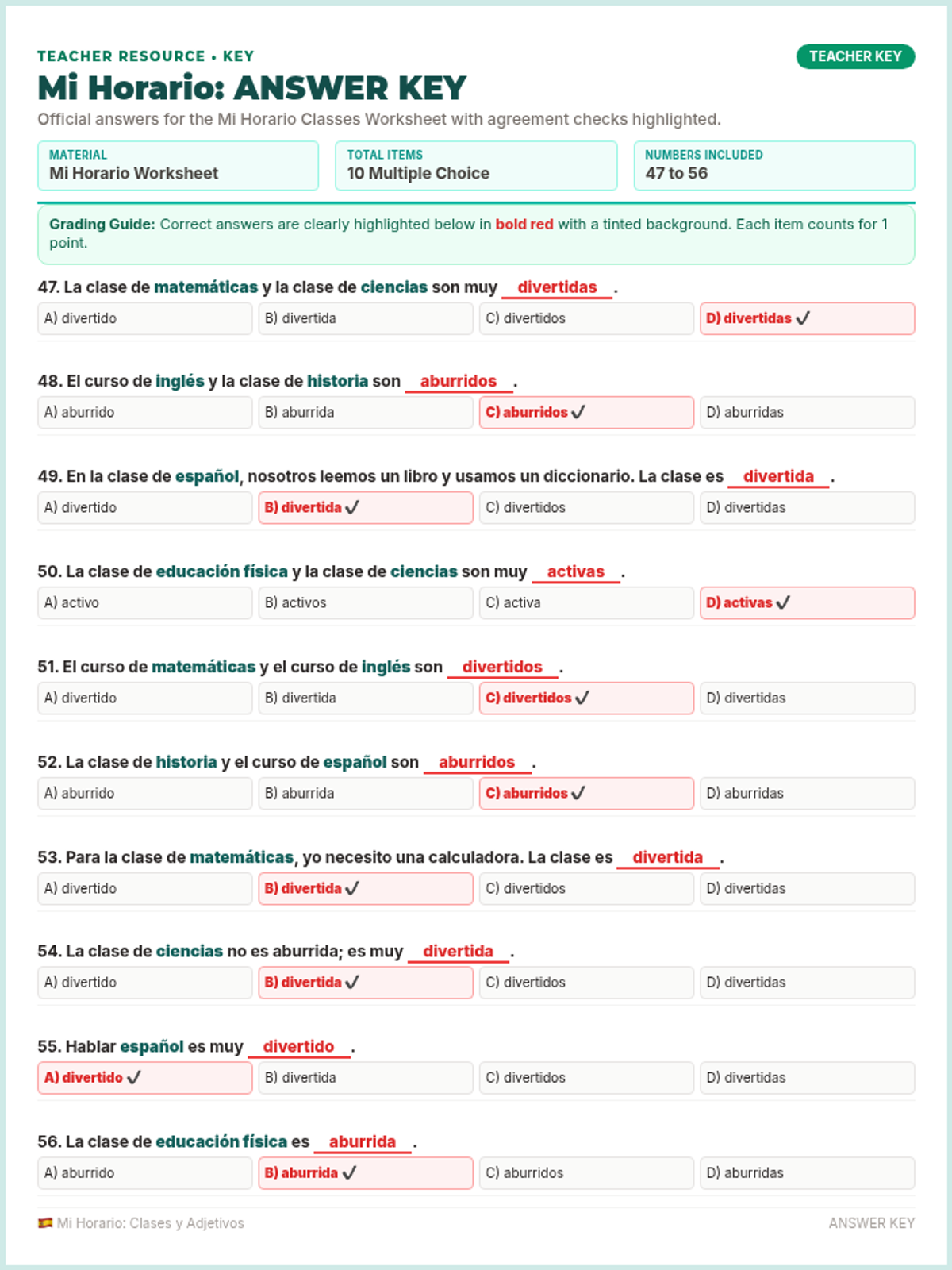
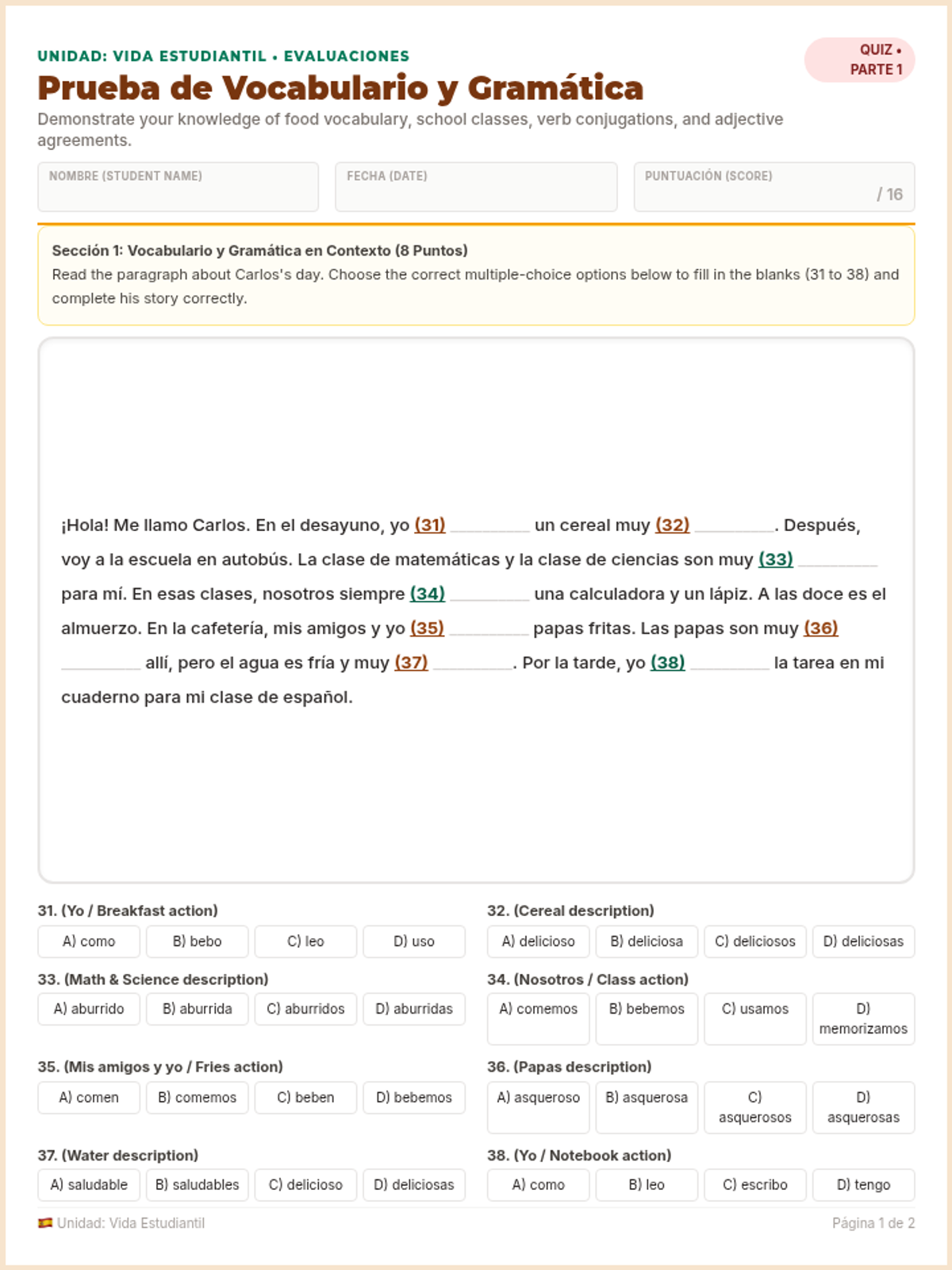
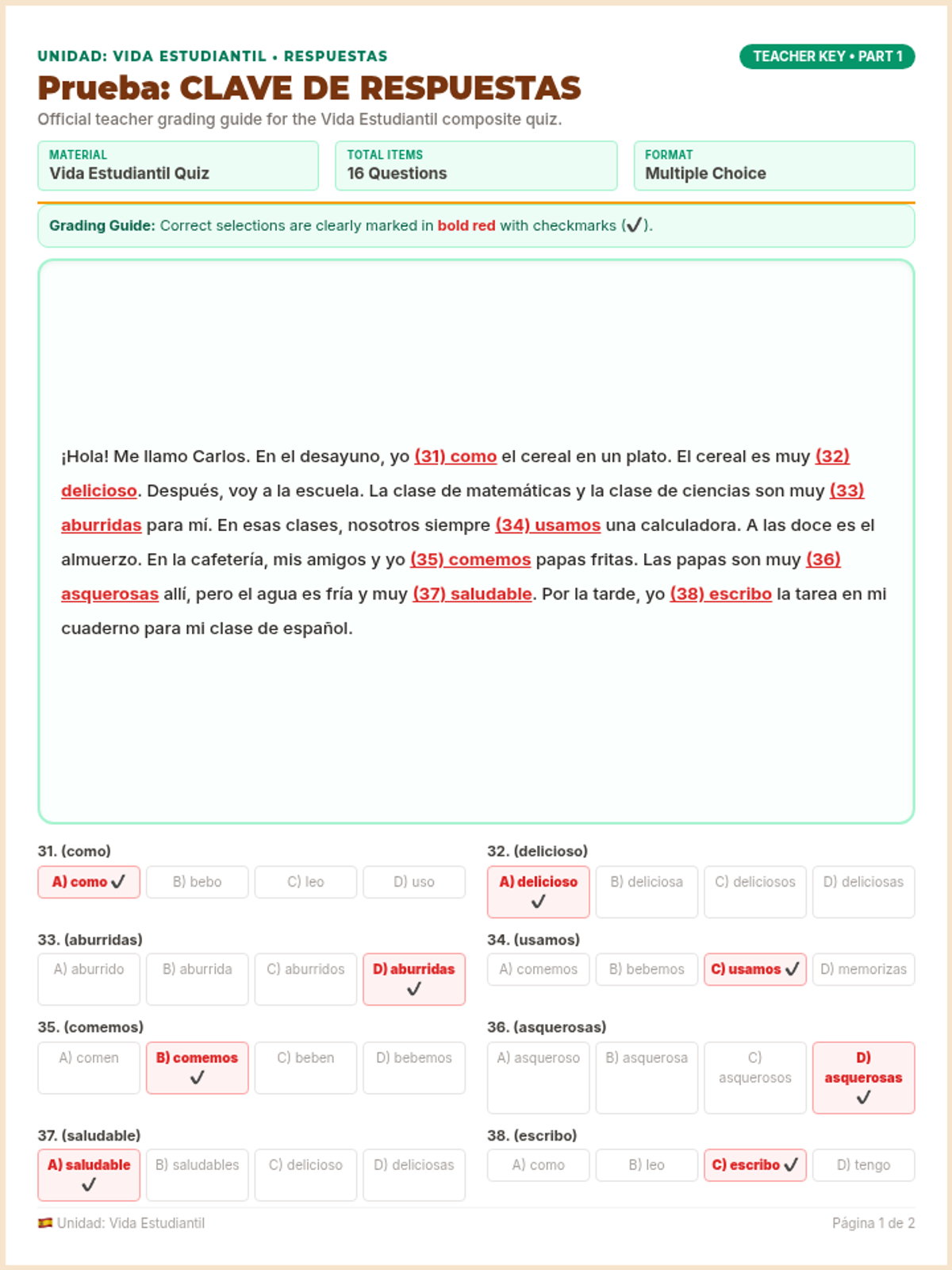
An engaging Spanish lesson covering school subjects (math, science, Spanish, English, history, physical education) and descriptive adjectives. Students practice describing courses, matching nouns with adjectives, and determining supply needs in basic Spanish.
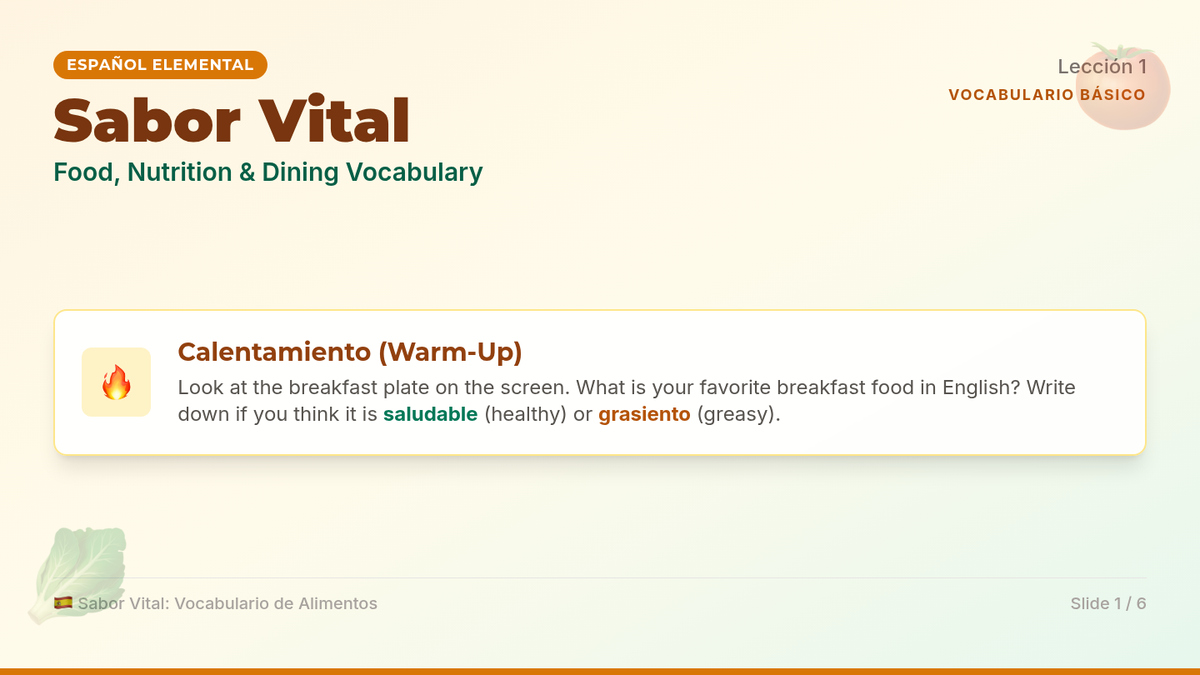
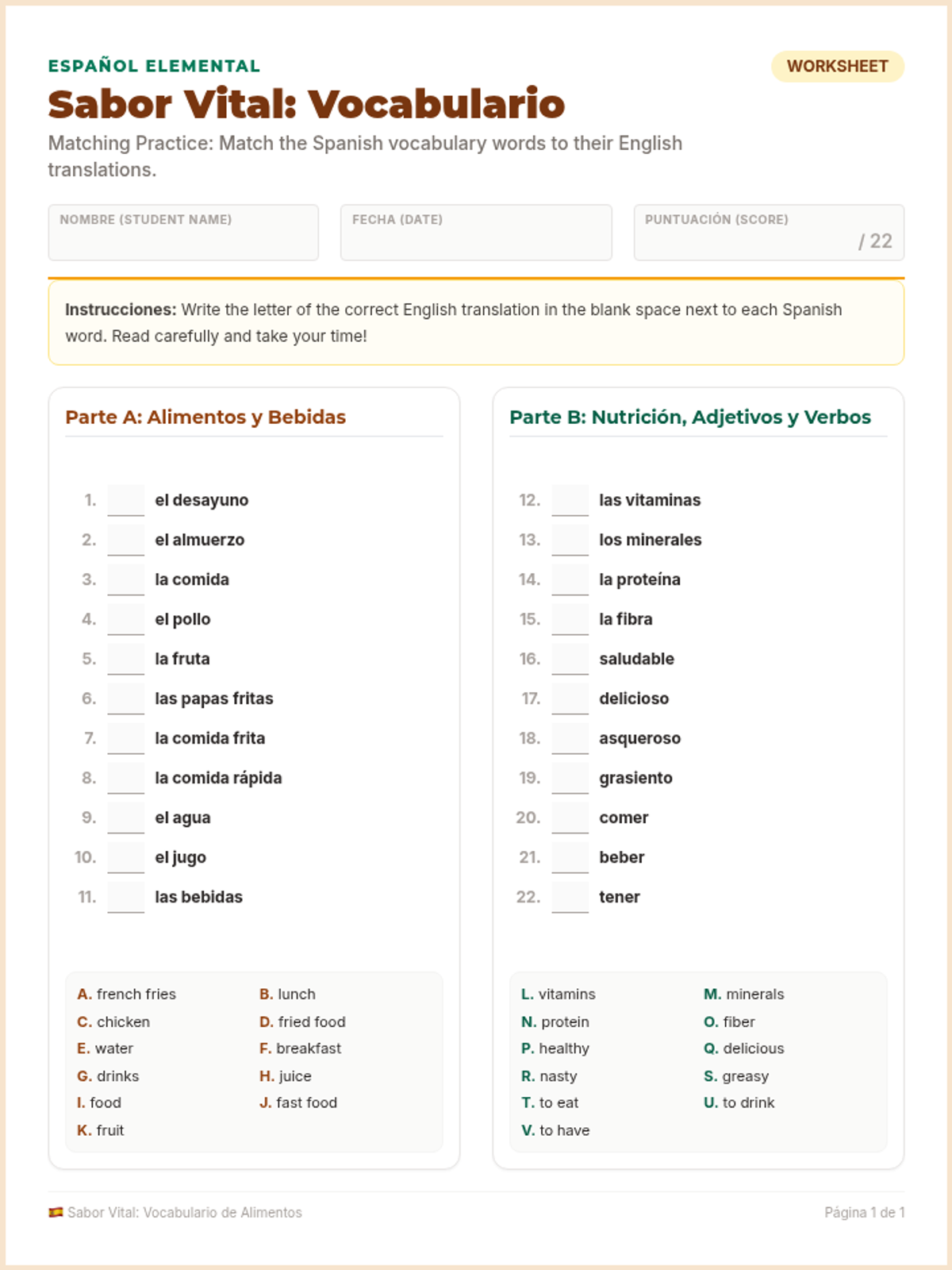
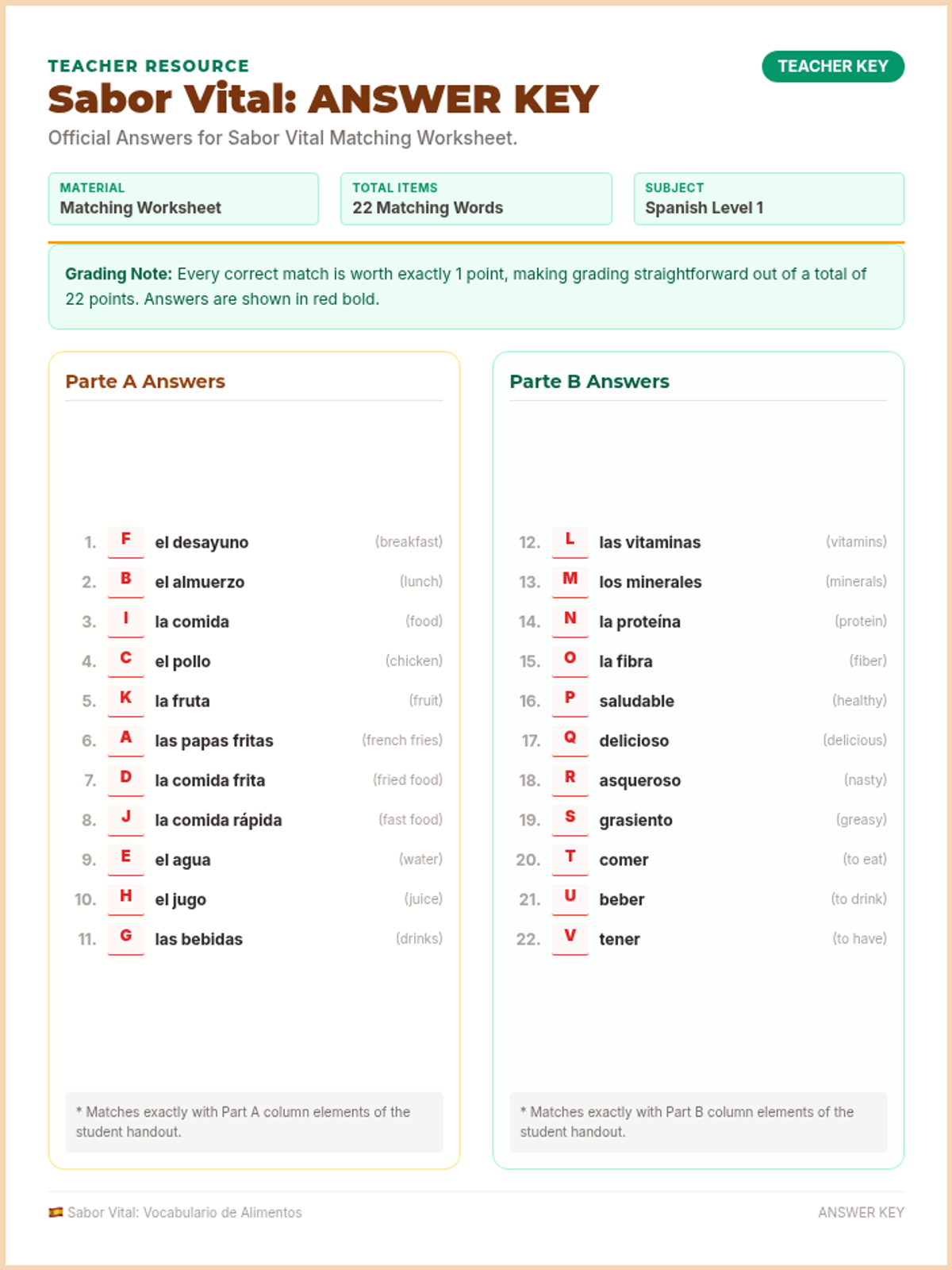
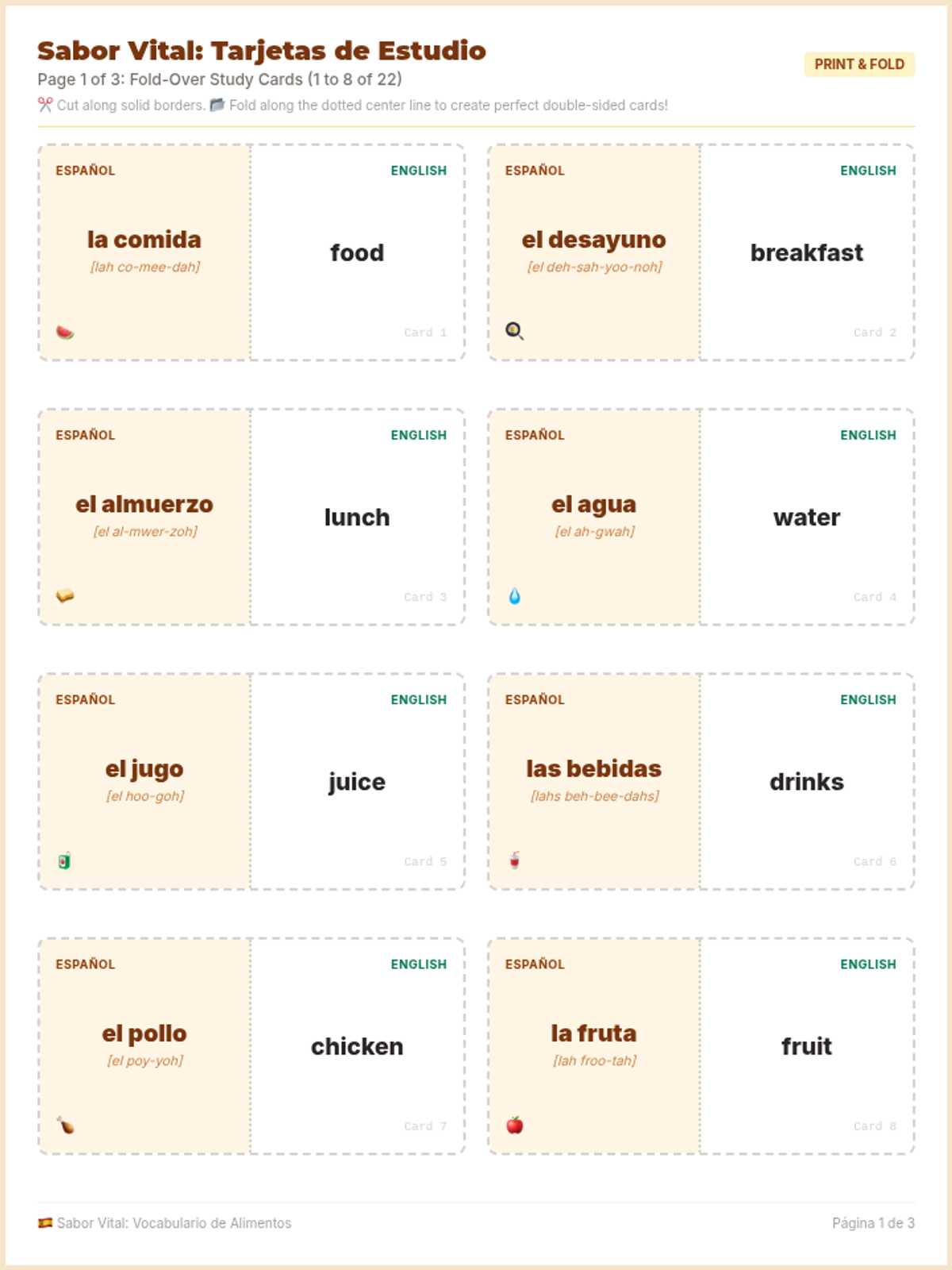
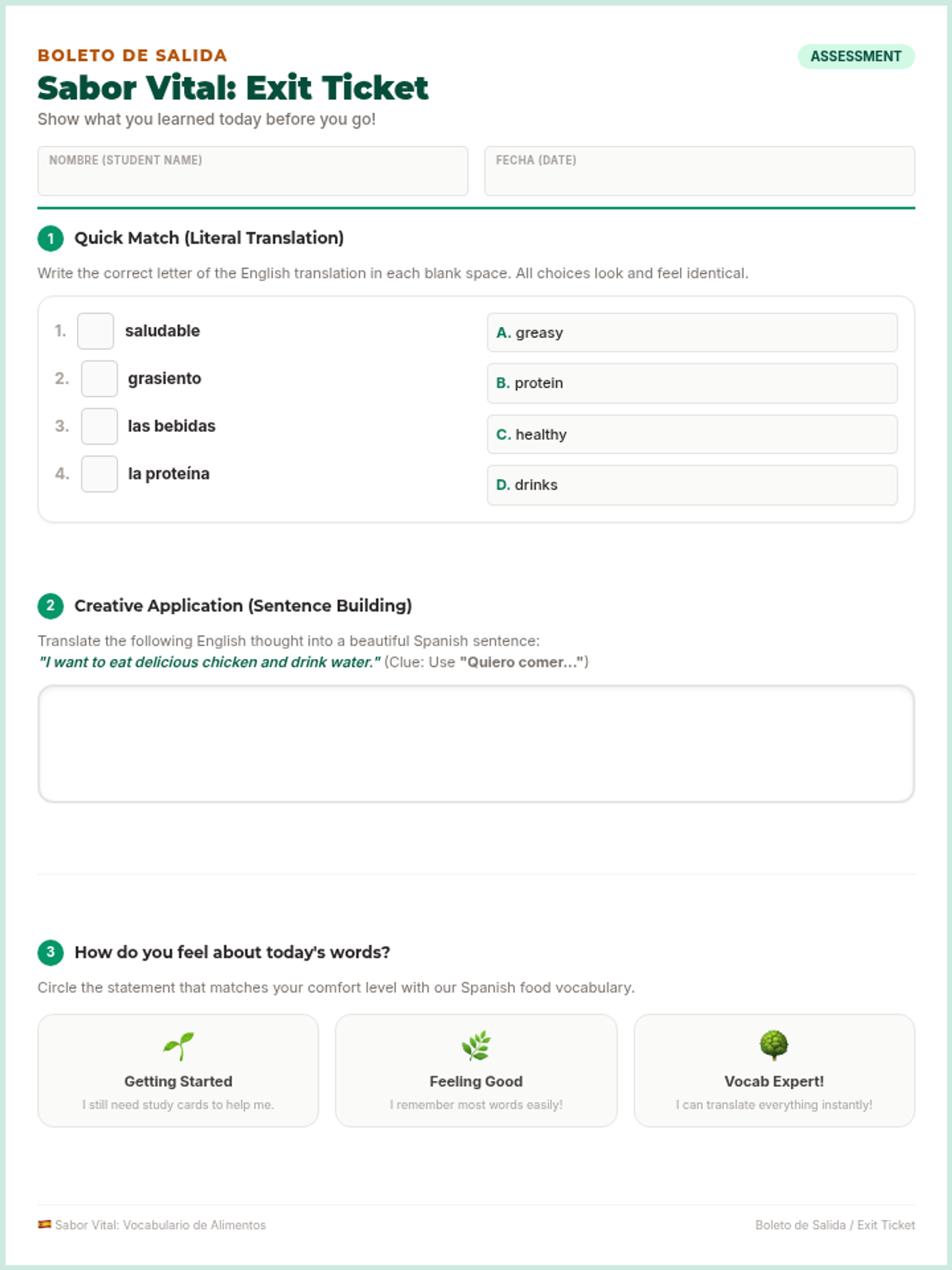
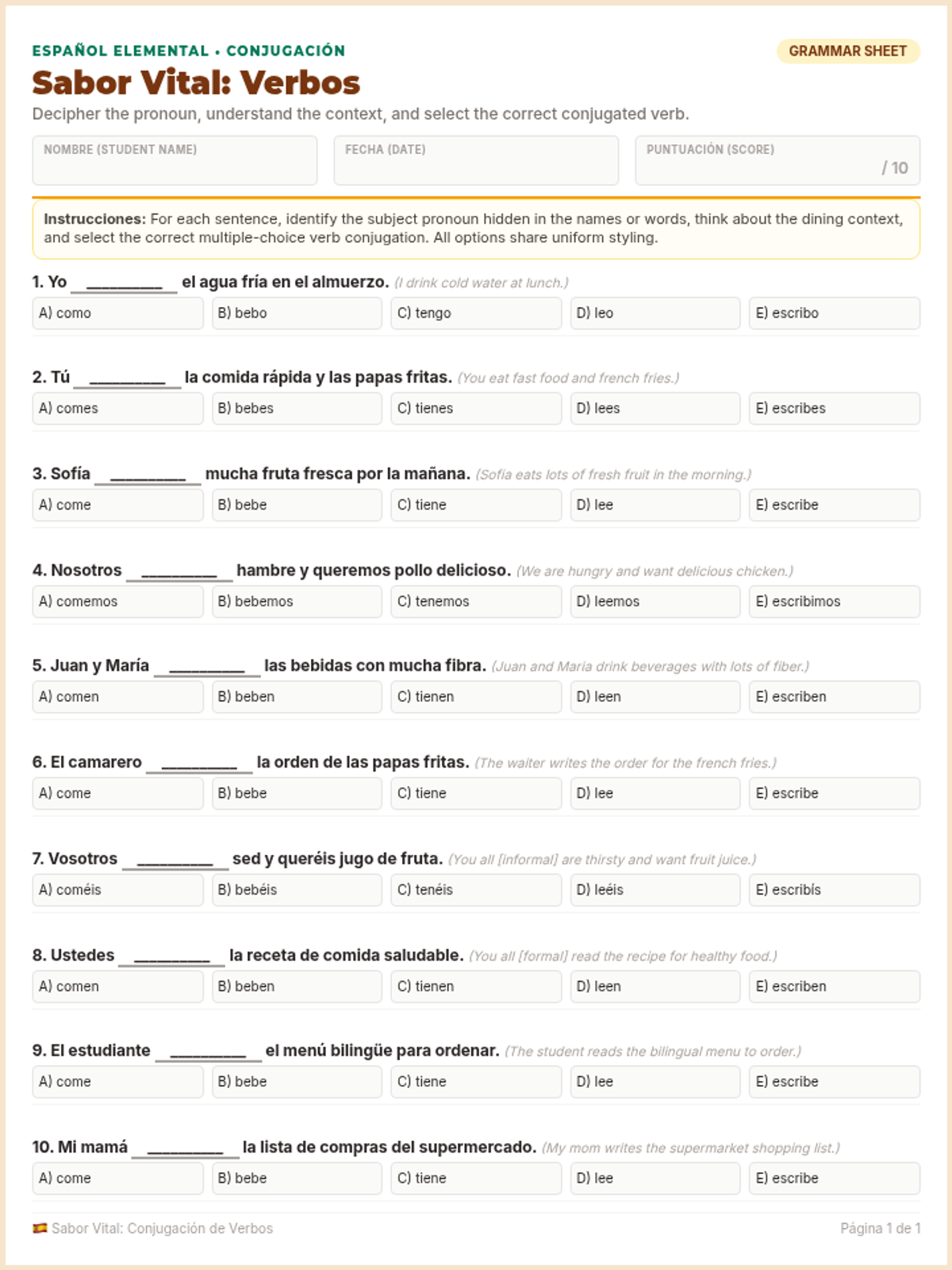
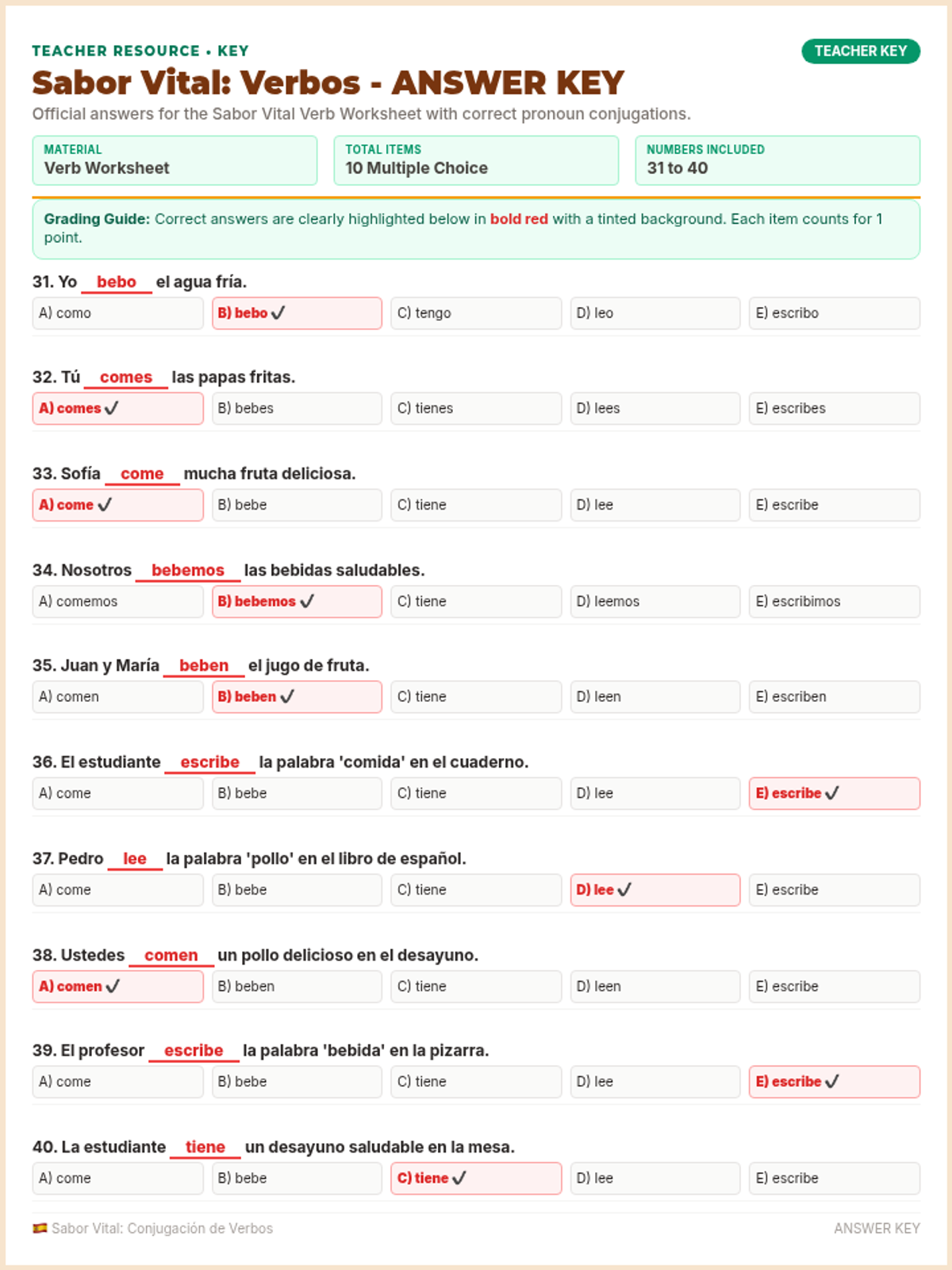
An introductory Spanish lesson centered on essential food, dining, and nutrition vocabulary. This lesson provides an immersive, interactive experience with visual slides, study flashcards, a structured matching worksheet, and a quick exit ticket.
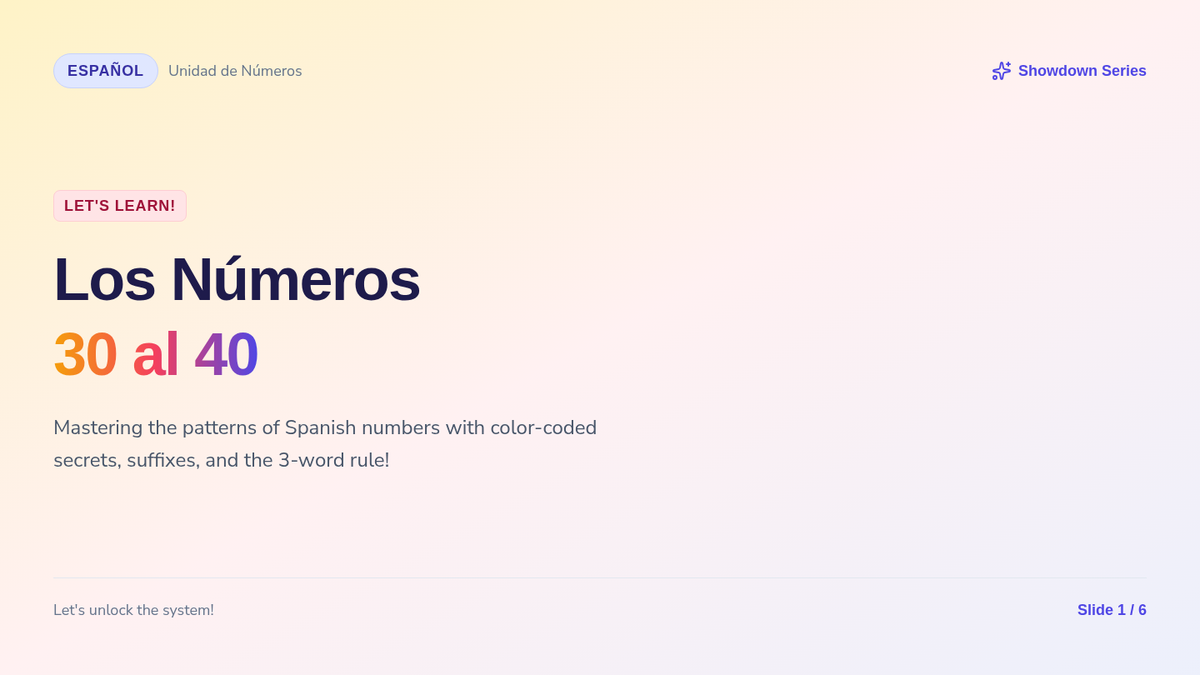
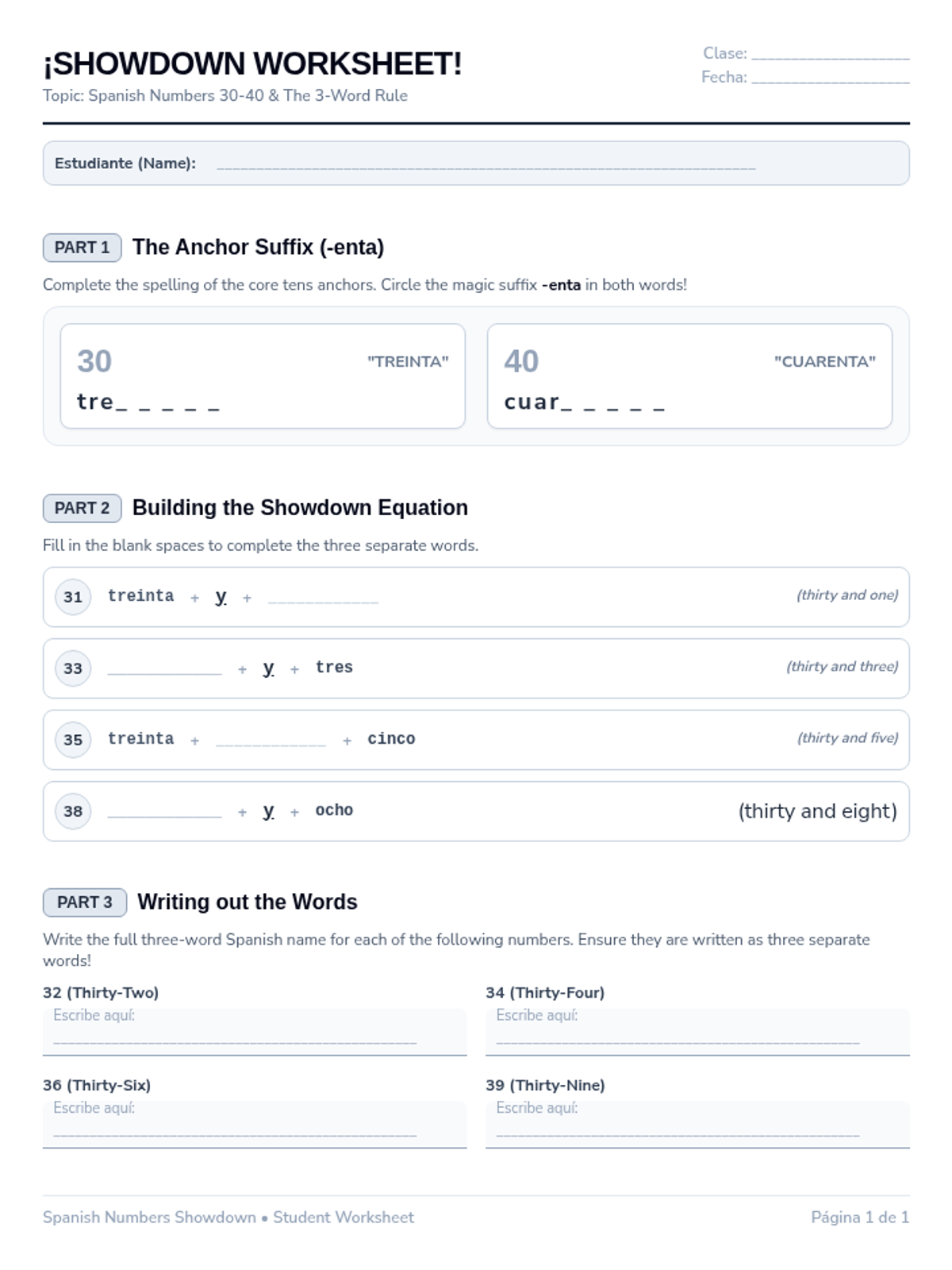
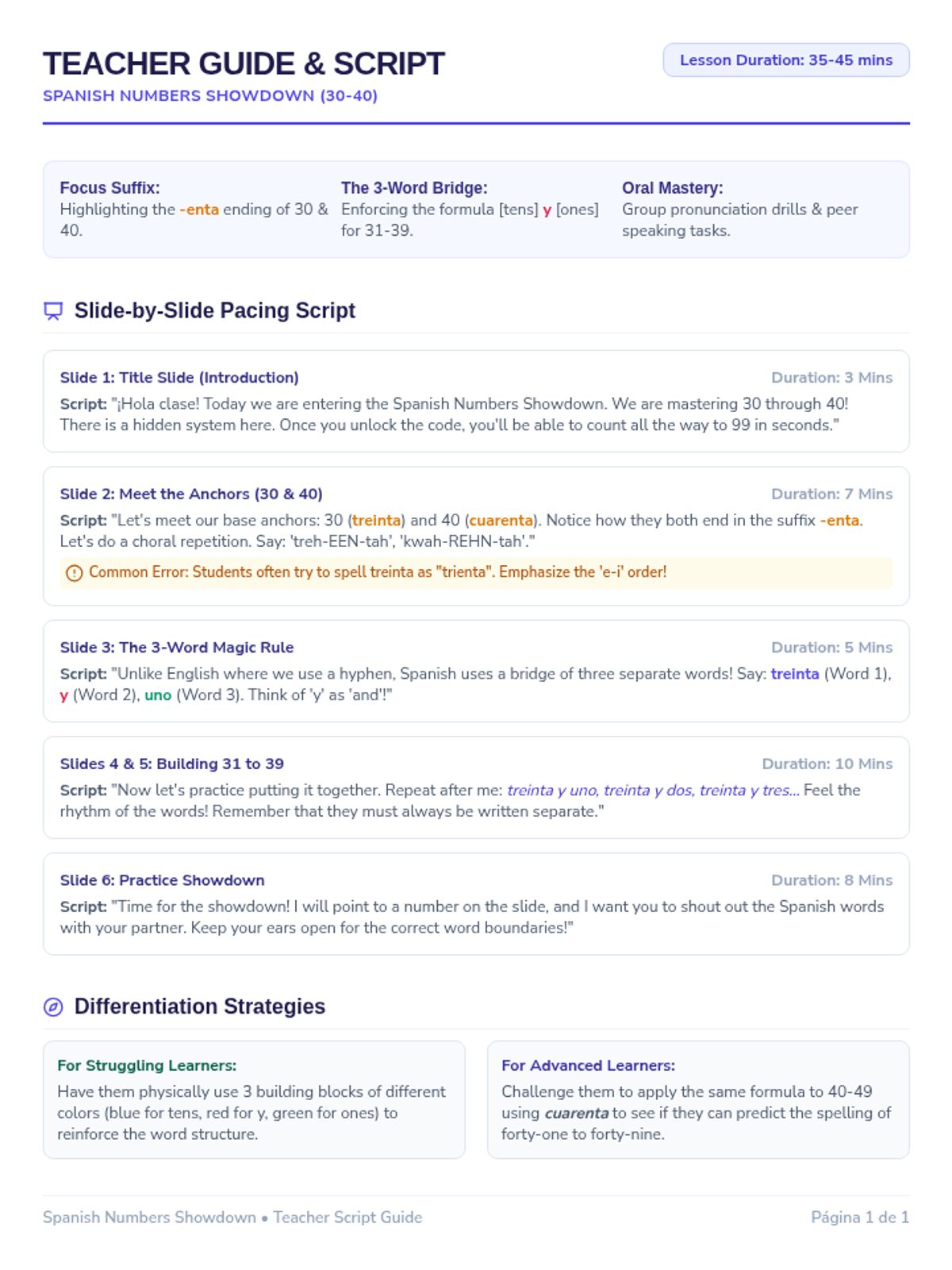
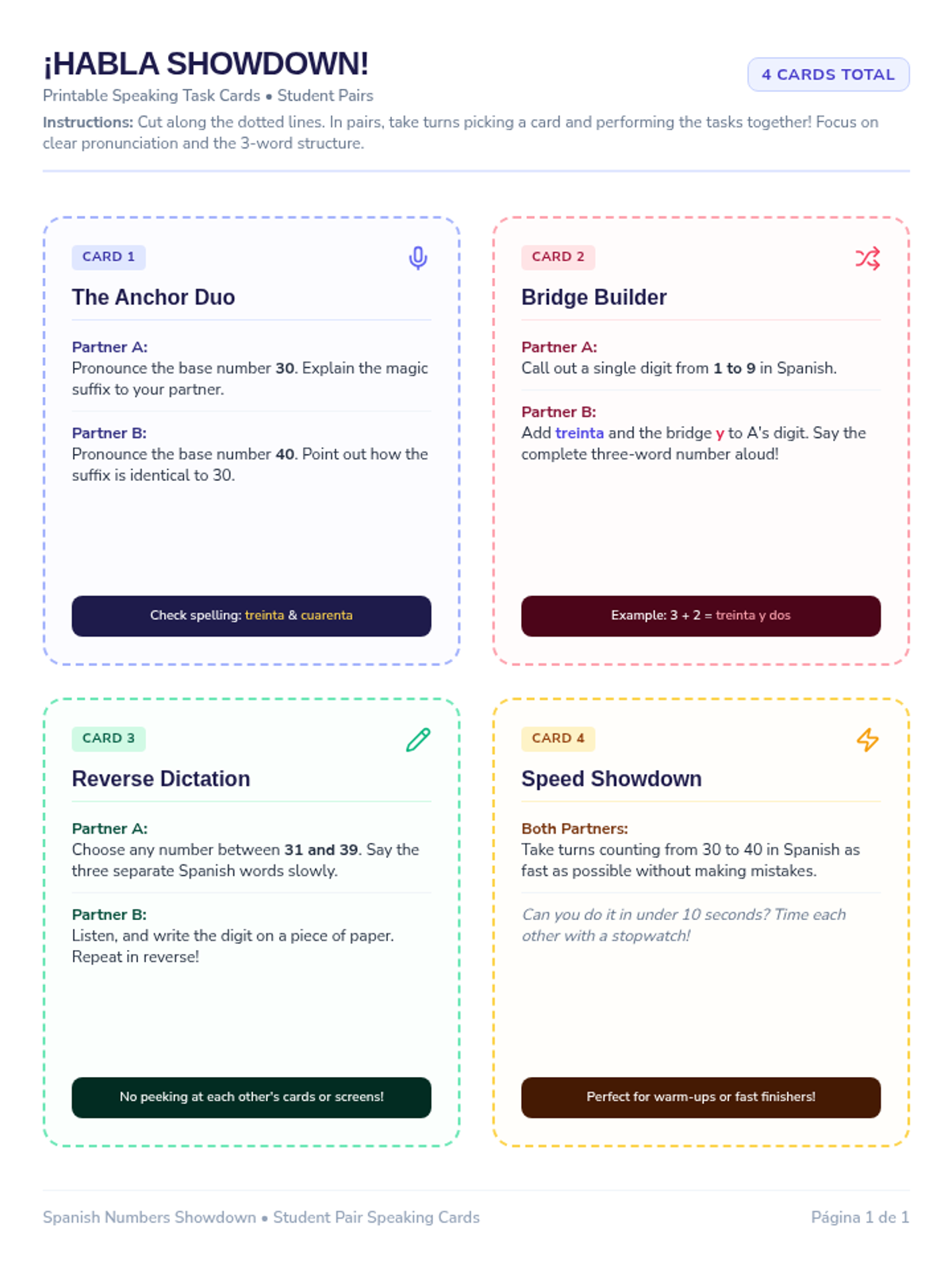
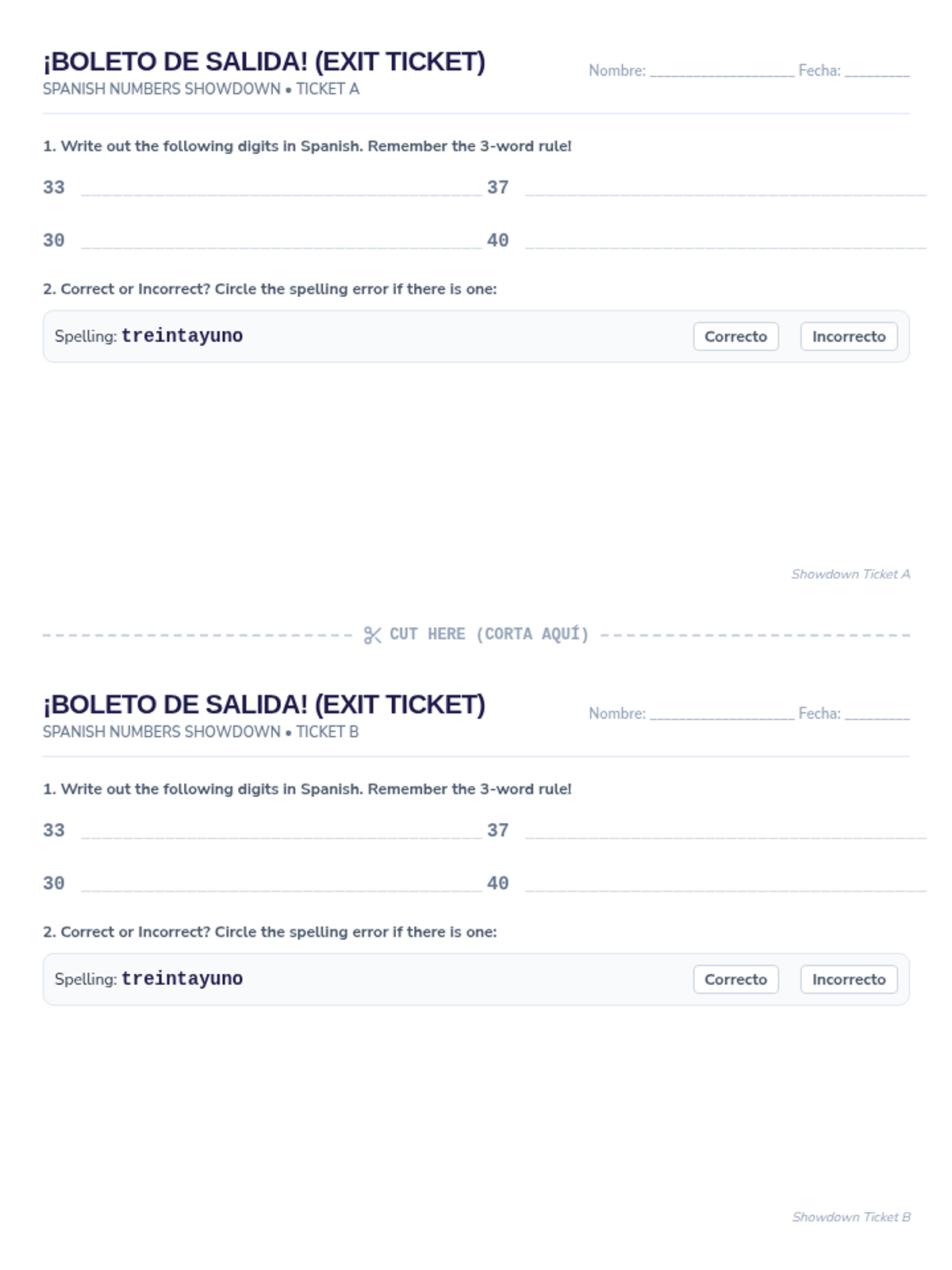
A structured, color-coded lesson introducing Spanish numbers 30 to 40, highlighting key linguistic rules like the "-enta" suffix and the three-word structure of numbers 31-39.