Fundamental principles of supply, demand, and monetary systems alongside micro- and macroeconomic structures. Examines the impact of corporate power, labor market dynamics, and global systems on social mobility and class inequality.
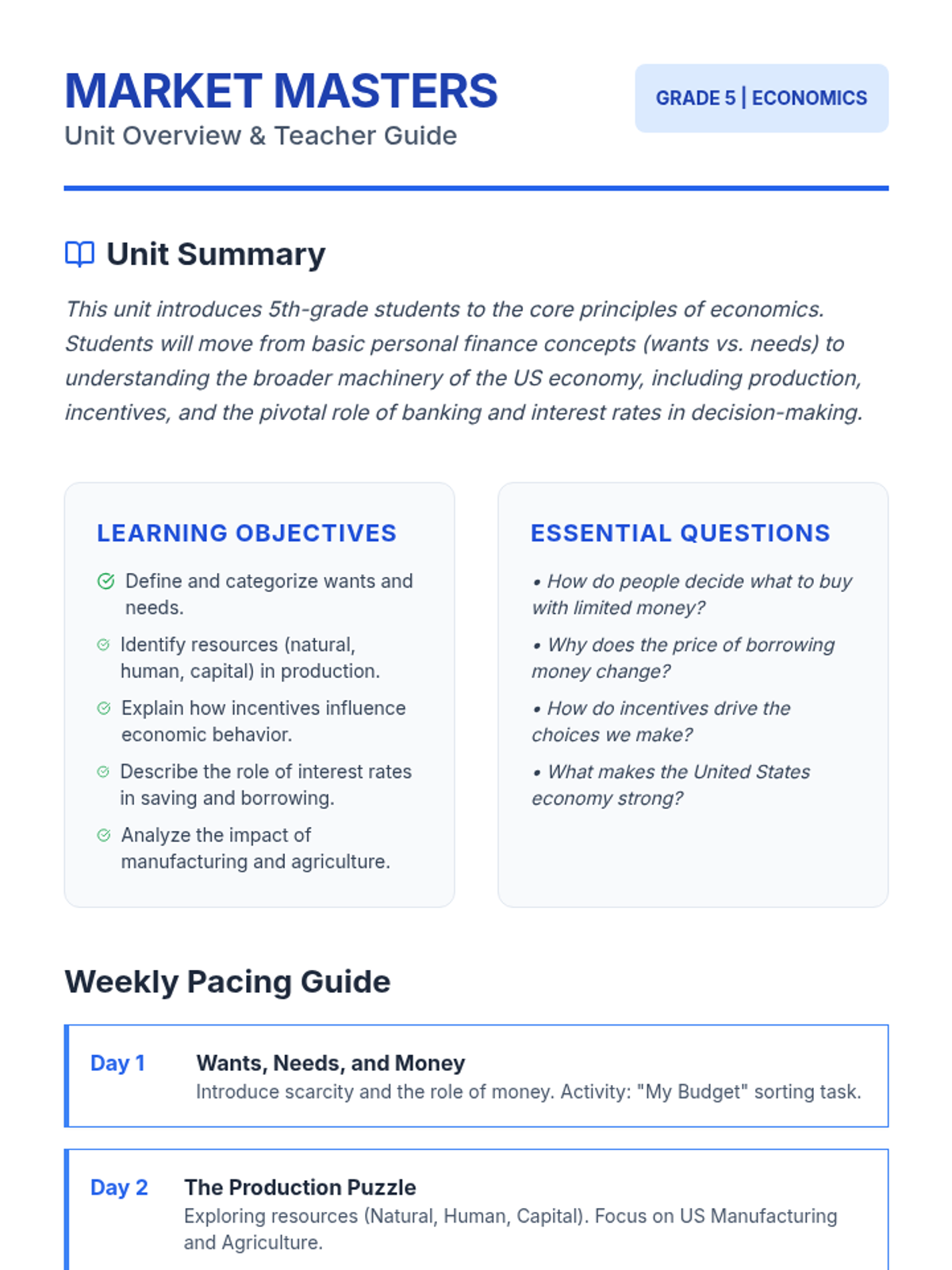
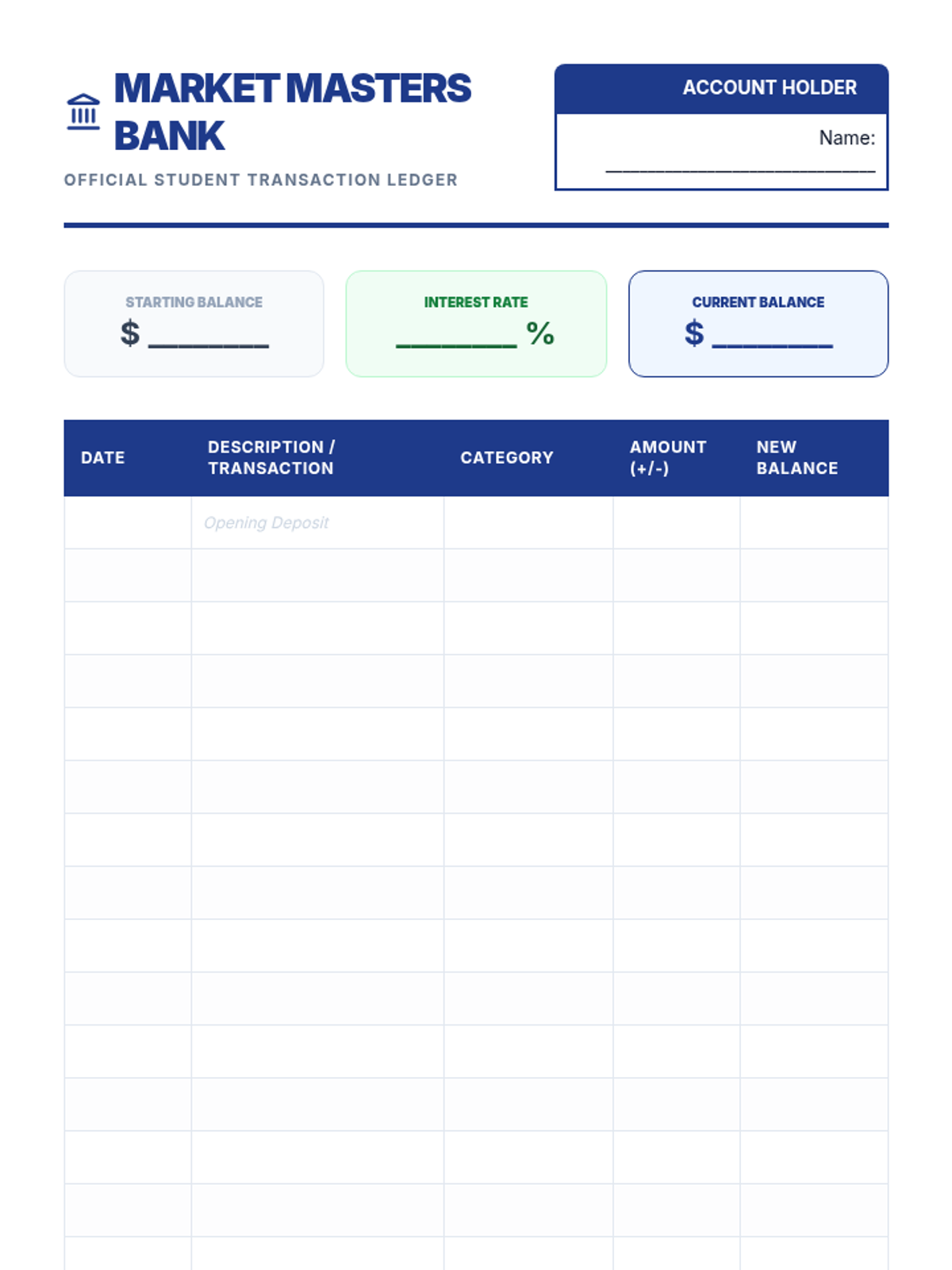
A comprehensive 5th-grade unit exploring the fundamentals of economics, from basic needs to complex banking concepts like interest rates and production chains.
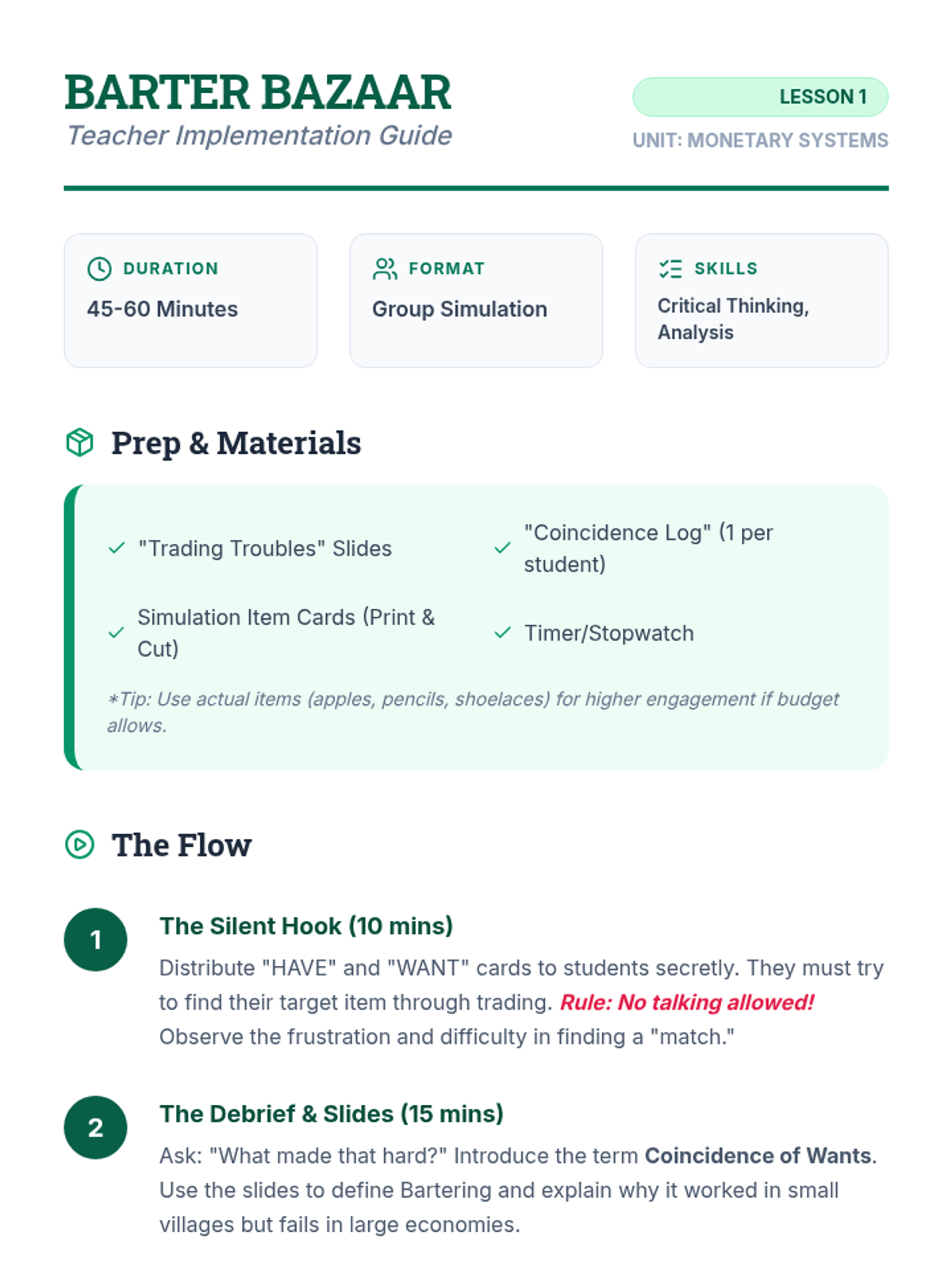
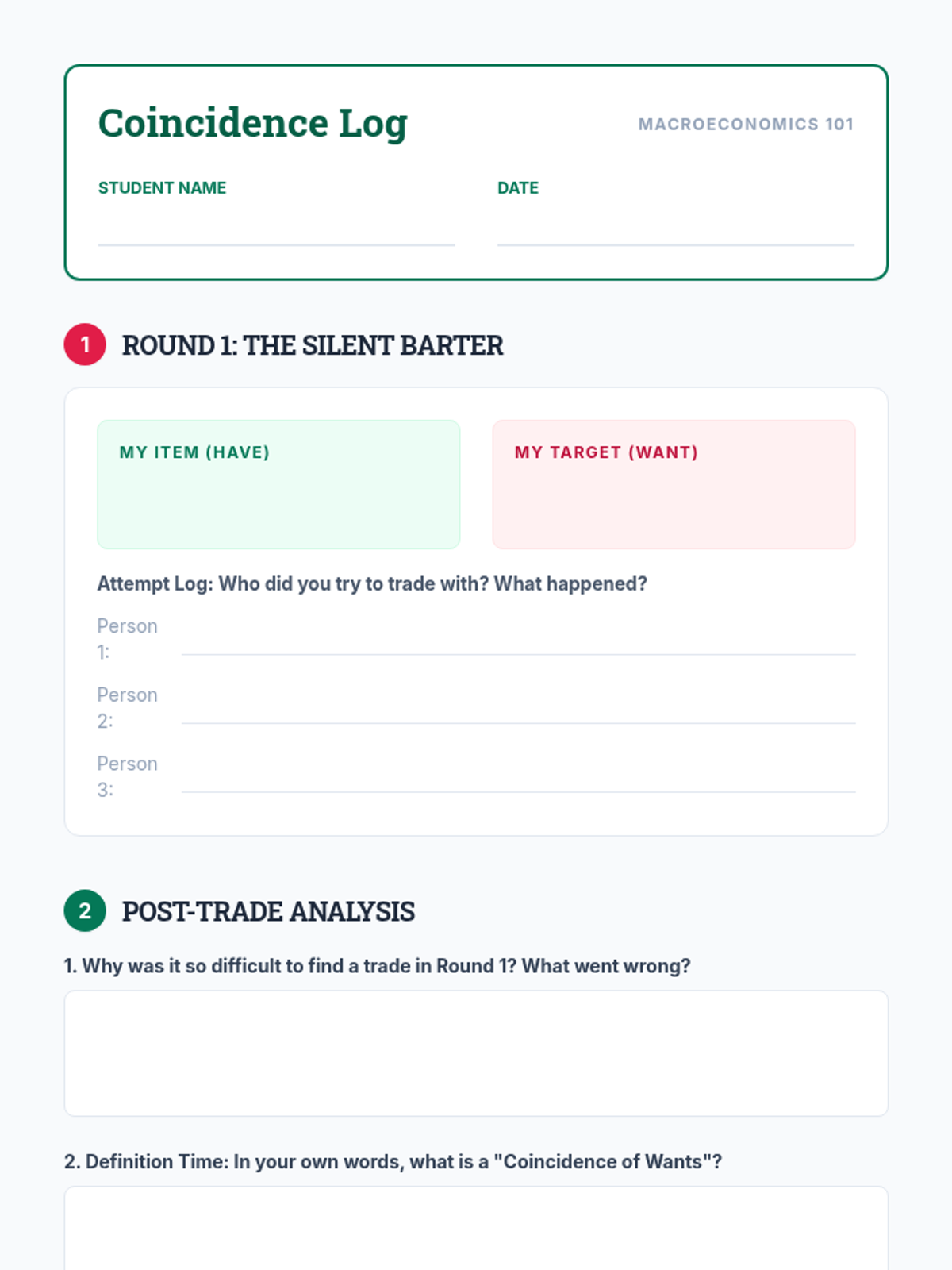
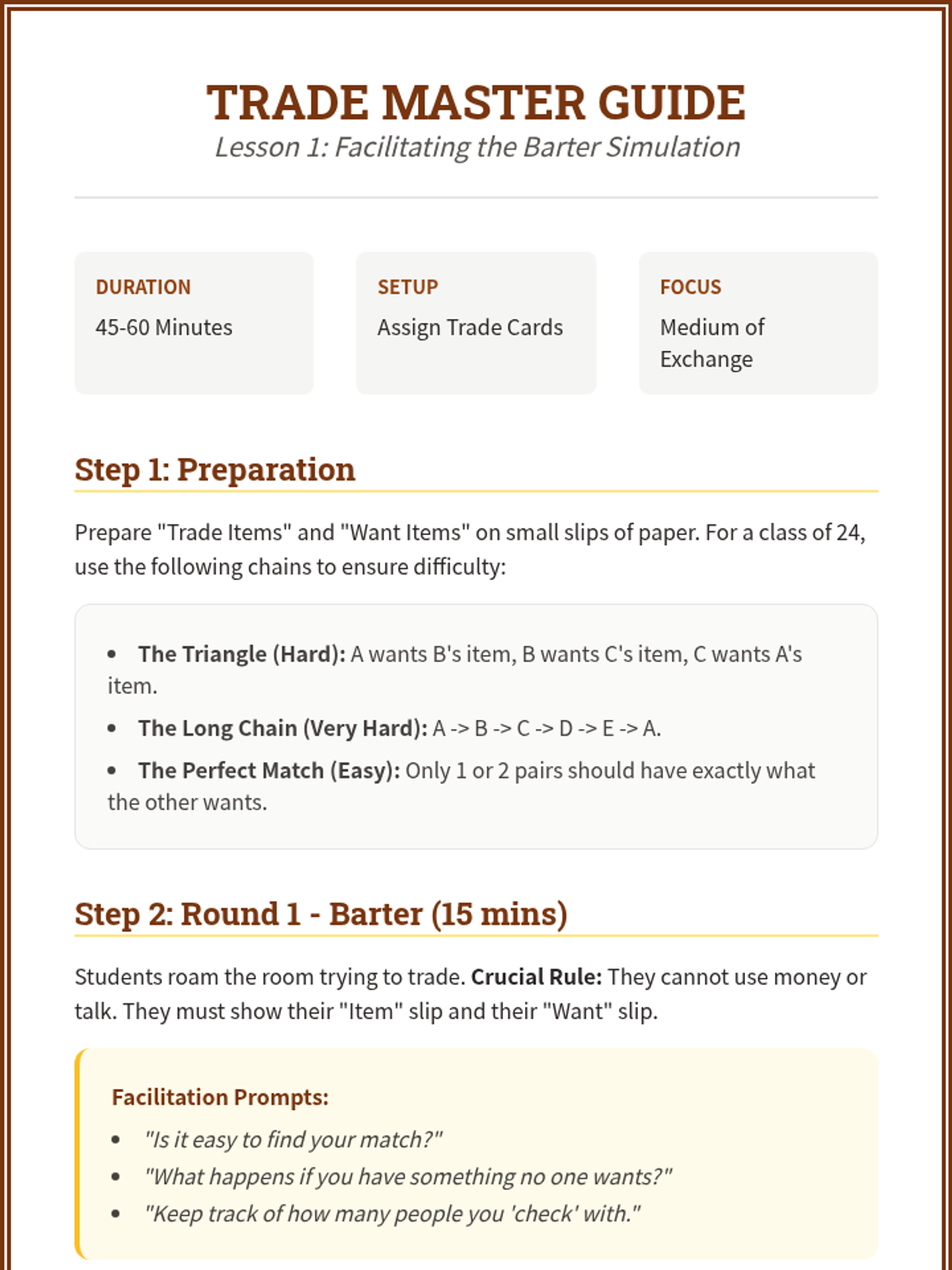
Students explore the evolution of money from the barter system to digital currency, identifying the three primary functions of money: medium of exchange, unit of account, and store of value. through hands-on simulations and creative workshops.
A macroeconomic exploration for 5th graders, covering the transition from barter to currency, the causes of inflation, the role of central banks, and global exchange rates. Students engage in simulations to understand why money has value and how economic stability is maintained.
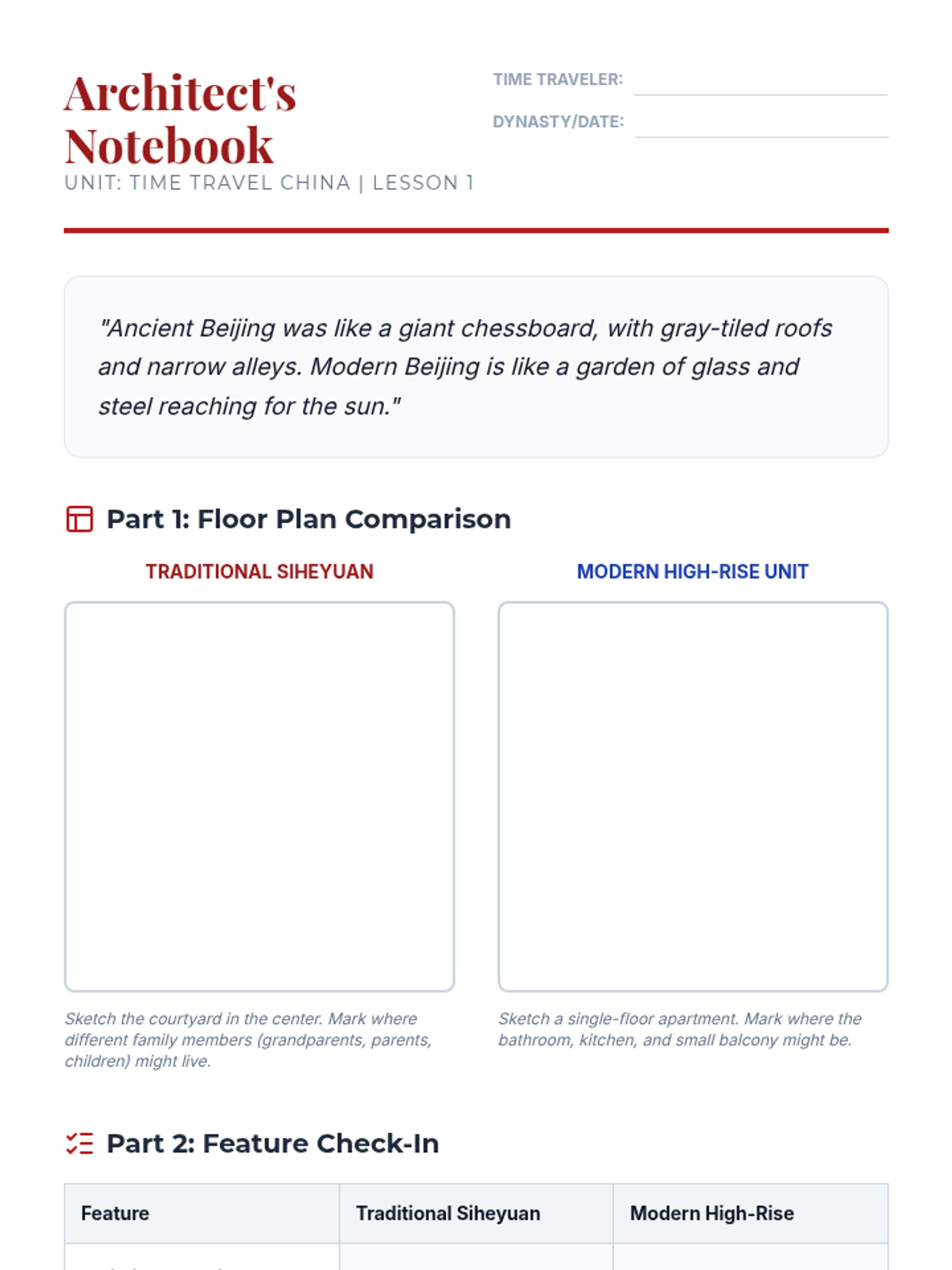
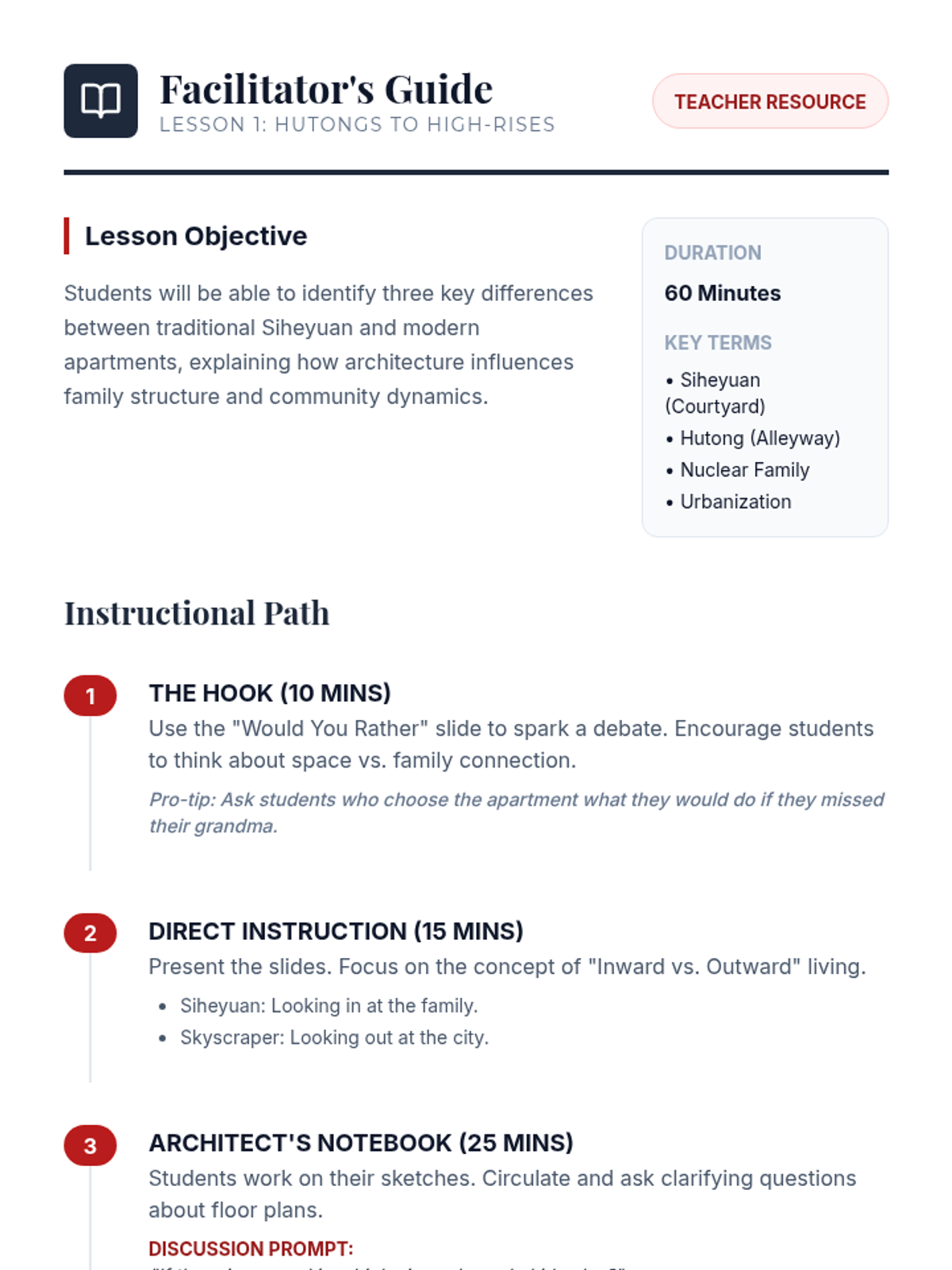
This sequence explores the dynamic intersection of ancient traditions and modern innovations in China. Students analyze changes in housing, transportation, technology, and arts to understand how a society balances its heritage with rapid development through a 'Time Traveler' project-based approach.
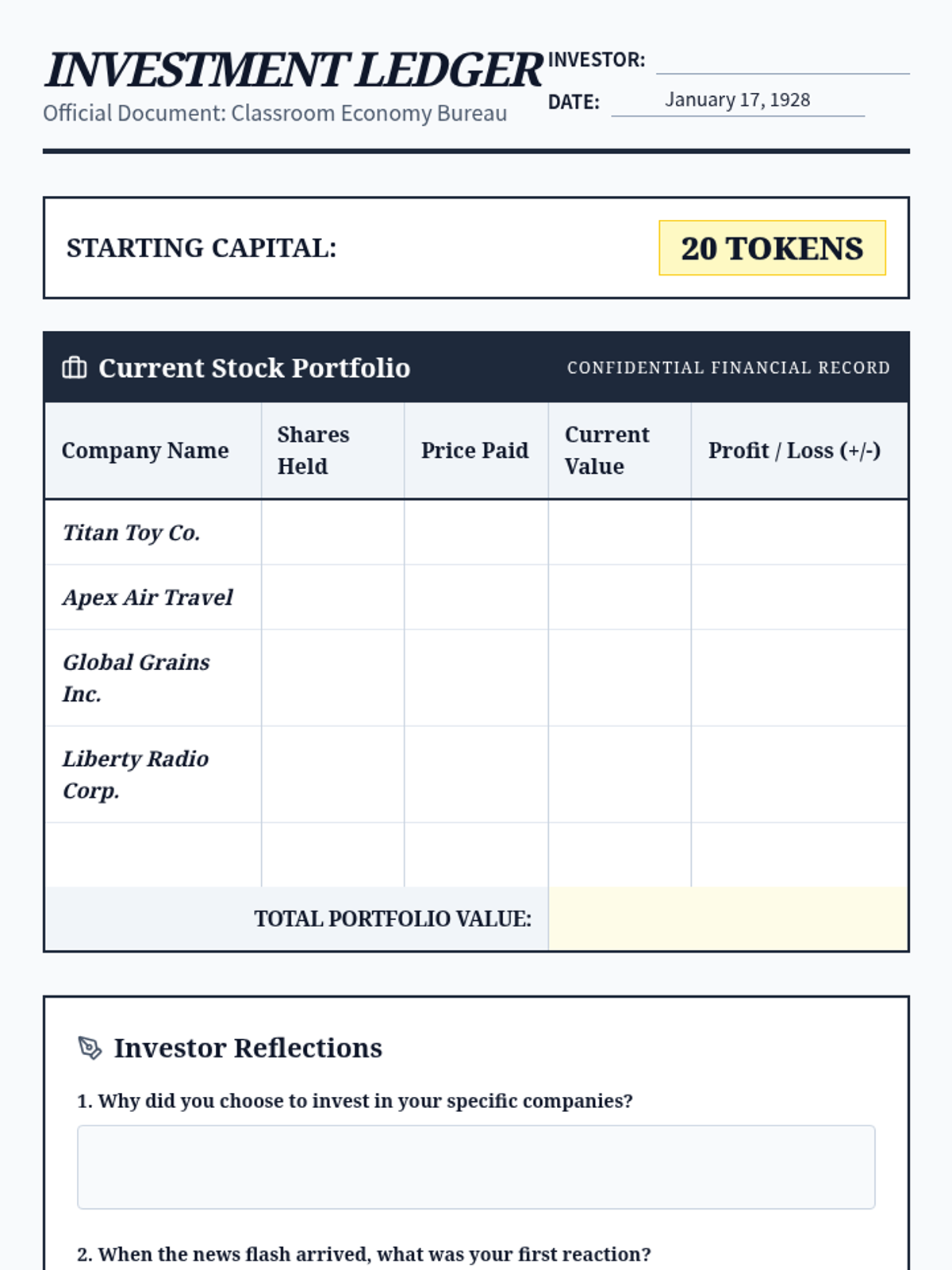
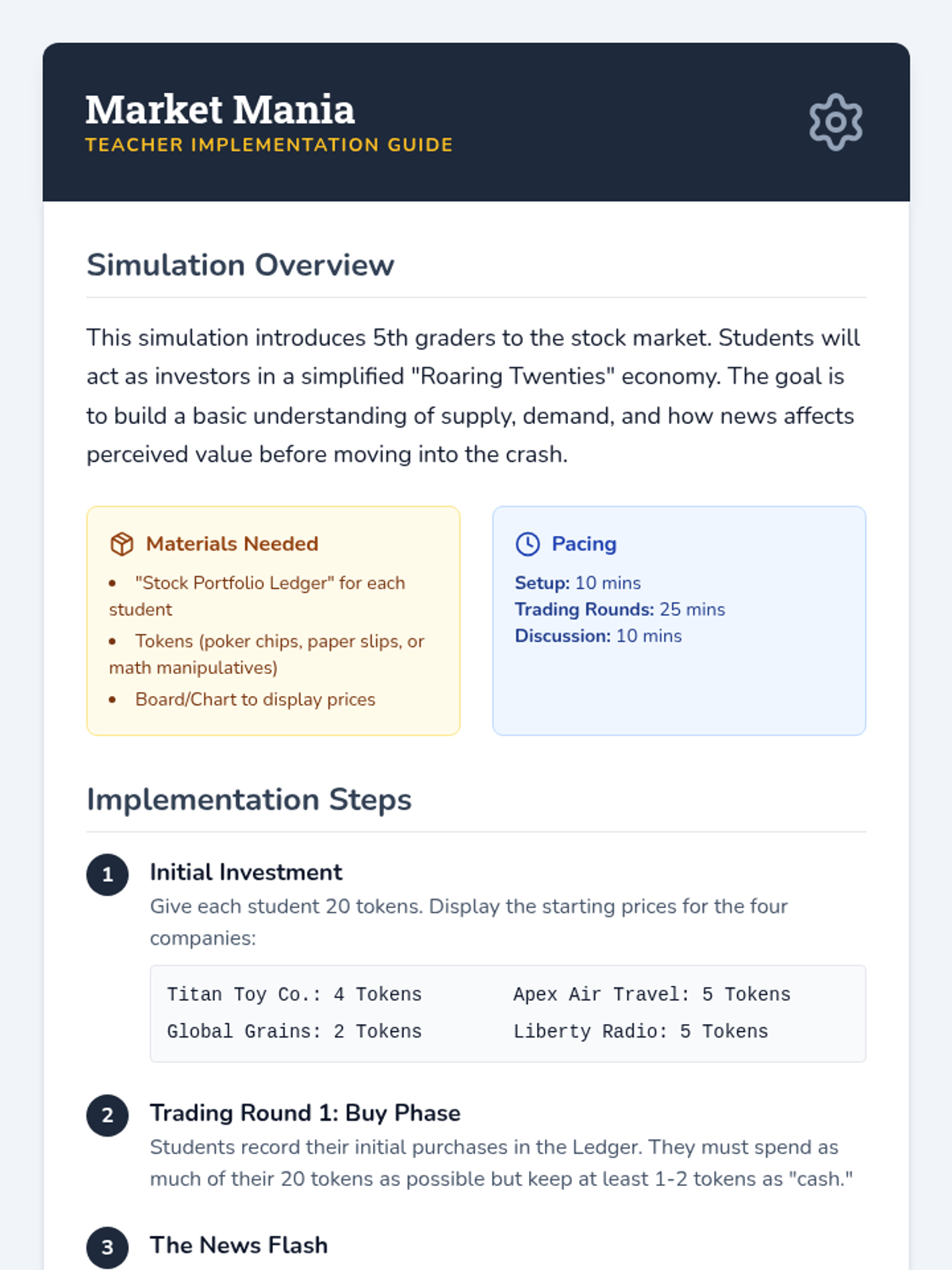
A simulation-heavy sequence for 5th graders that breaks down the complex economic causes of the Great Depression, specifically focusing on the 1929 Stock Market Crash and the subsequent banking crisis.
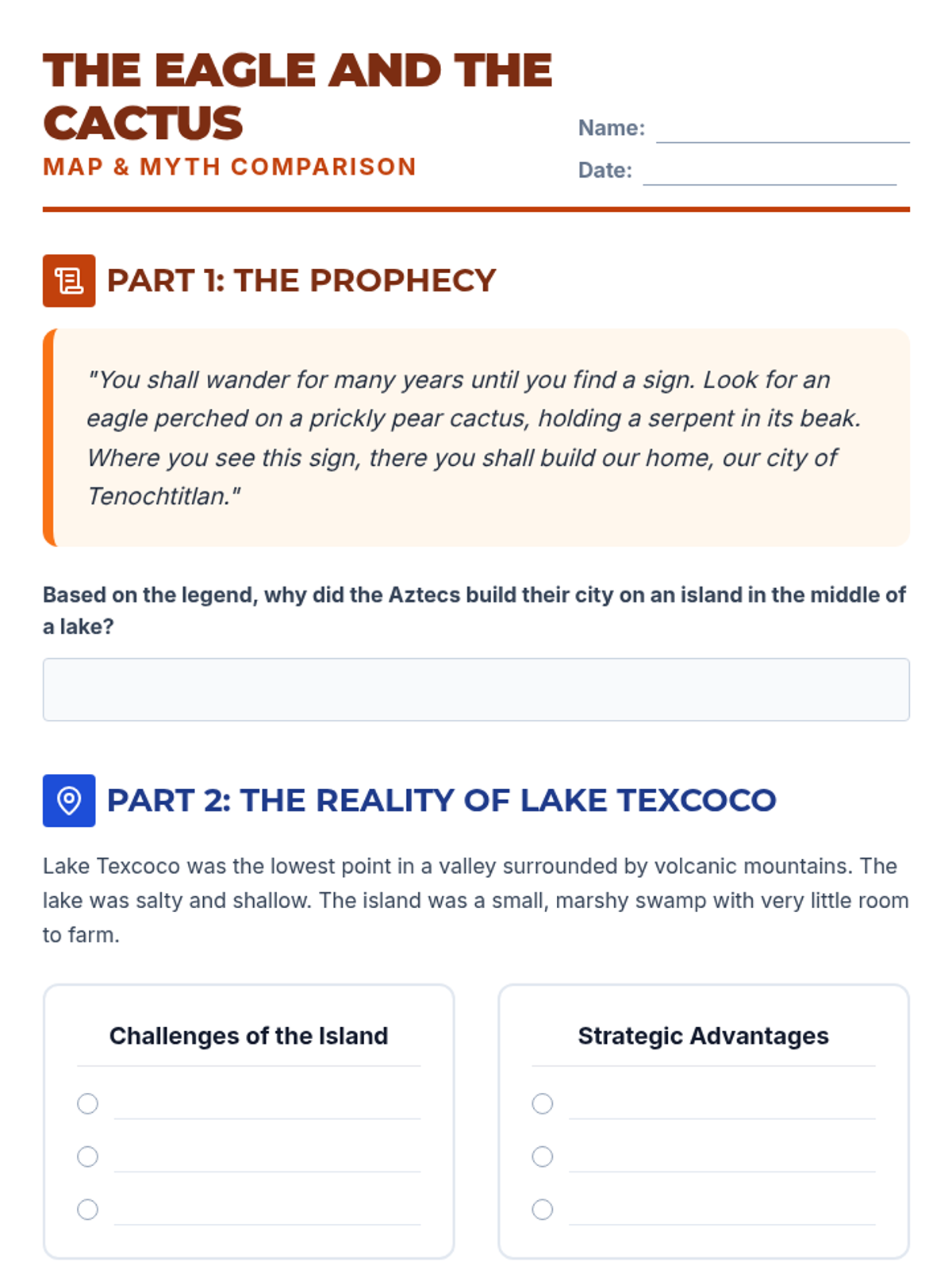
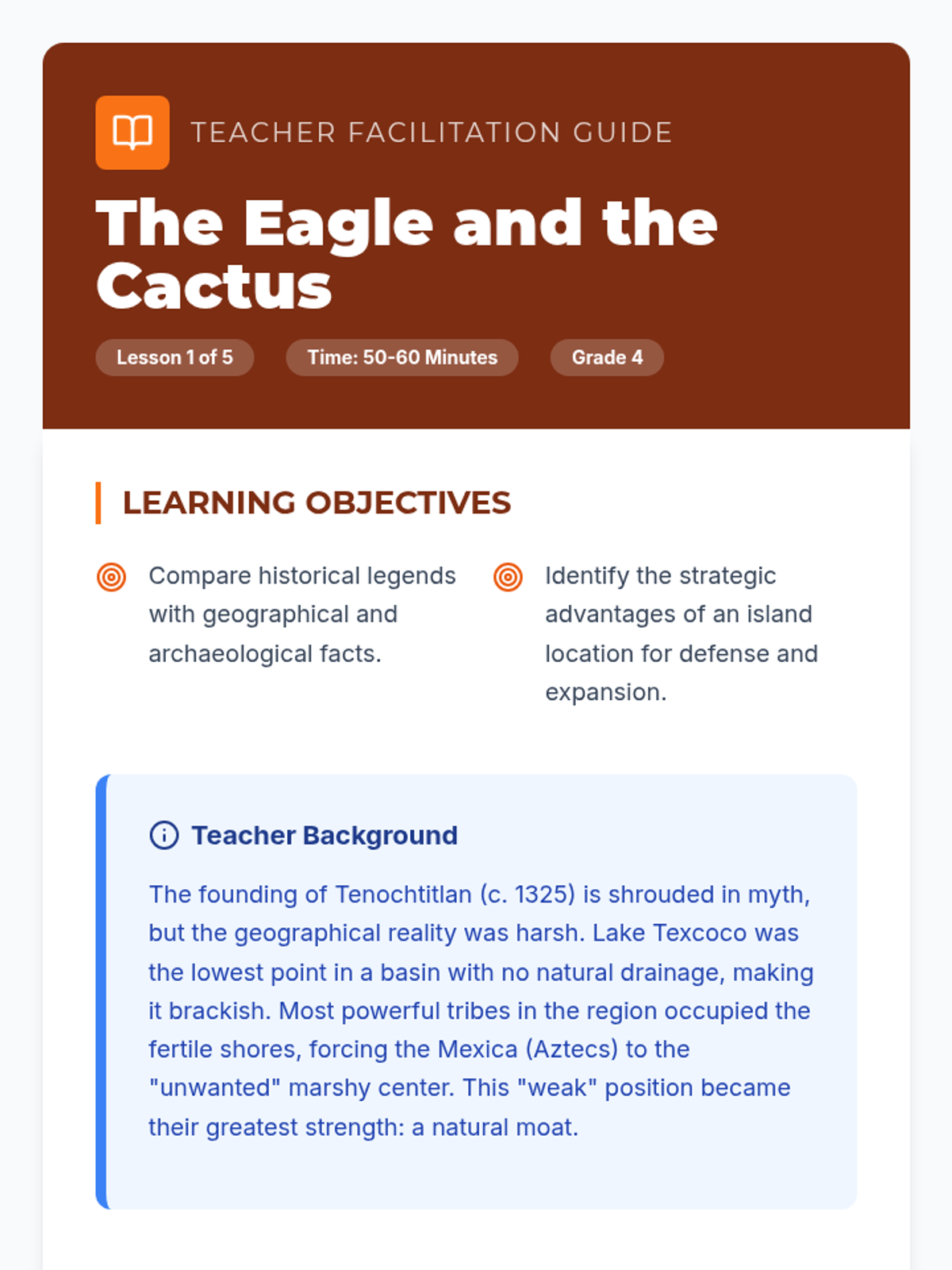
This project-based sequence examines the Aztecs through the lens of urban planning and engineering, specifically focusing on the capital city of Tenochtitlan. Students follow the arc of the city's development from a mythological sign on an island to one of the largest cities in the world at that time.
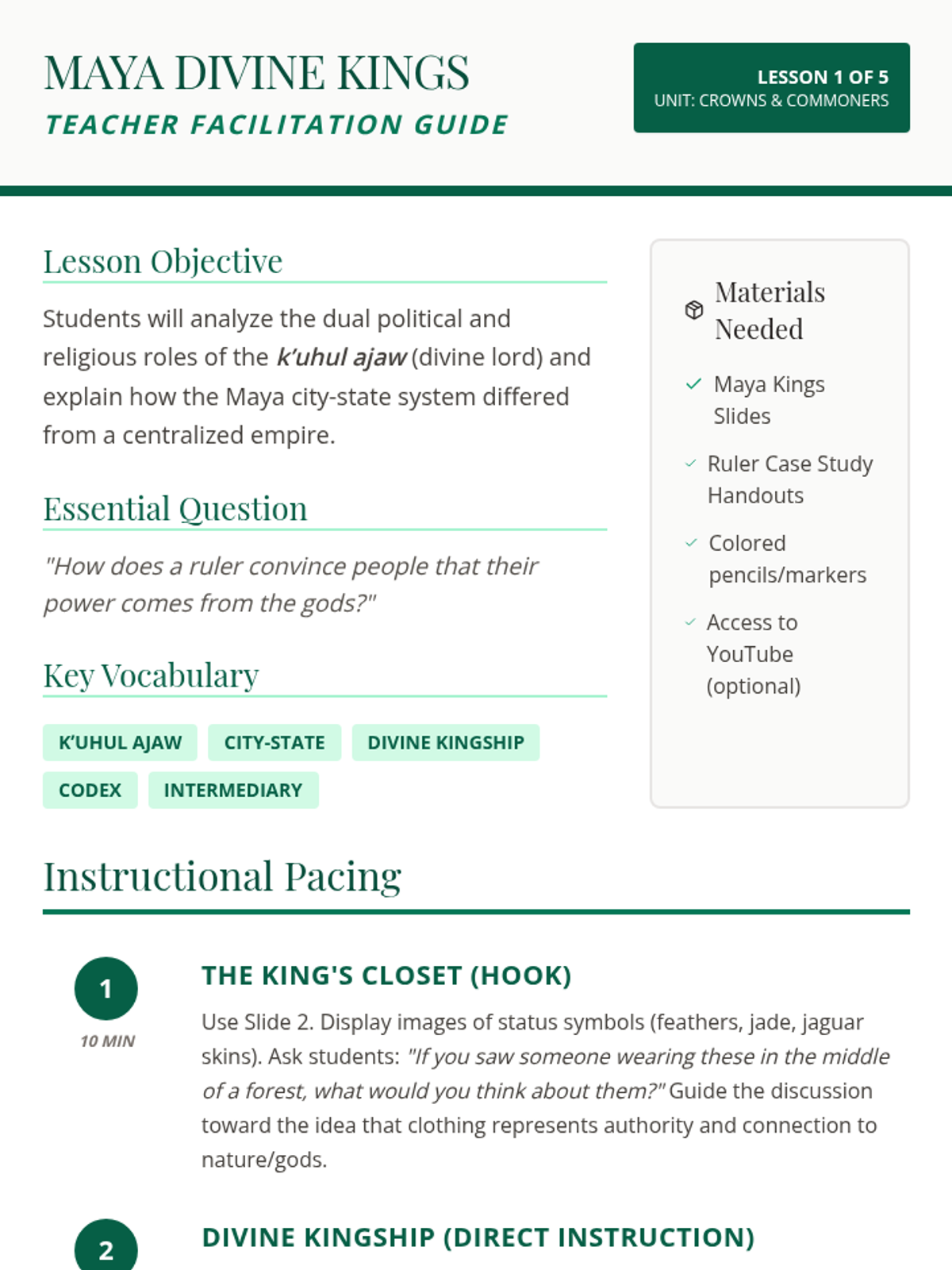
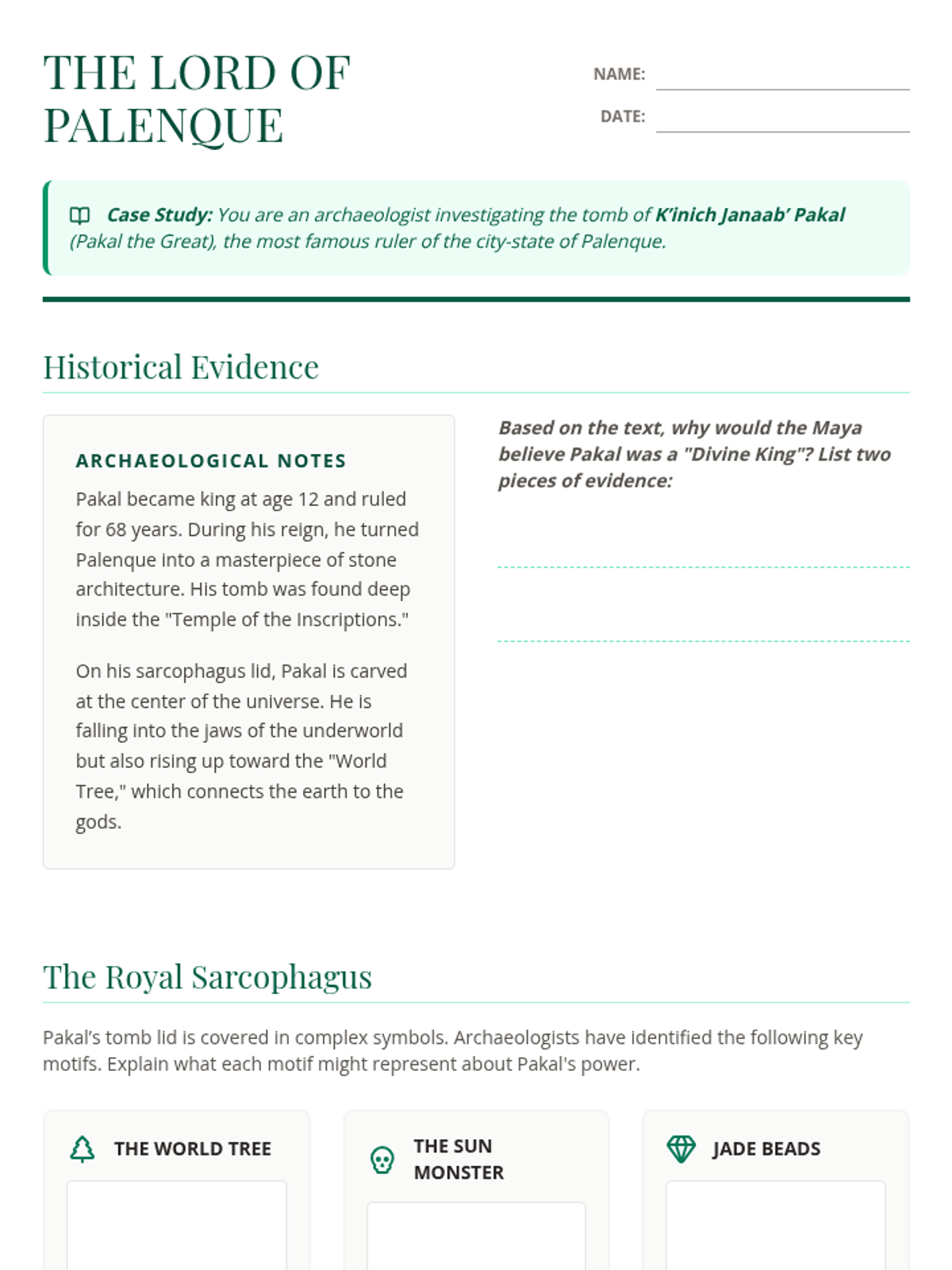
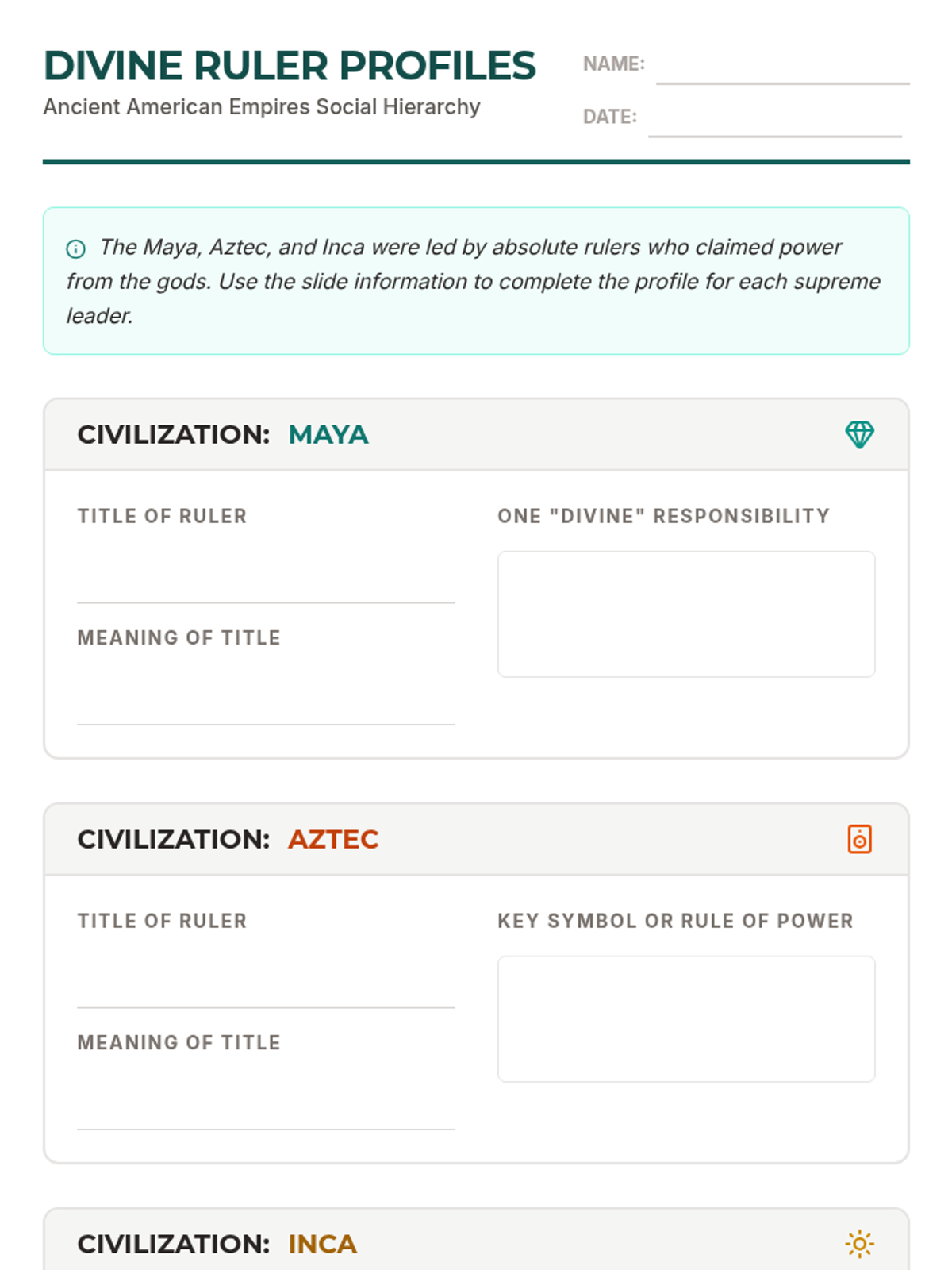
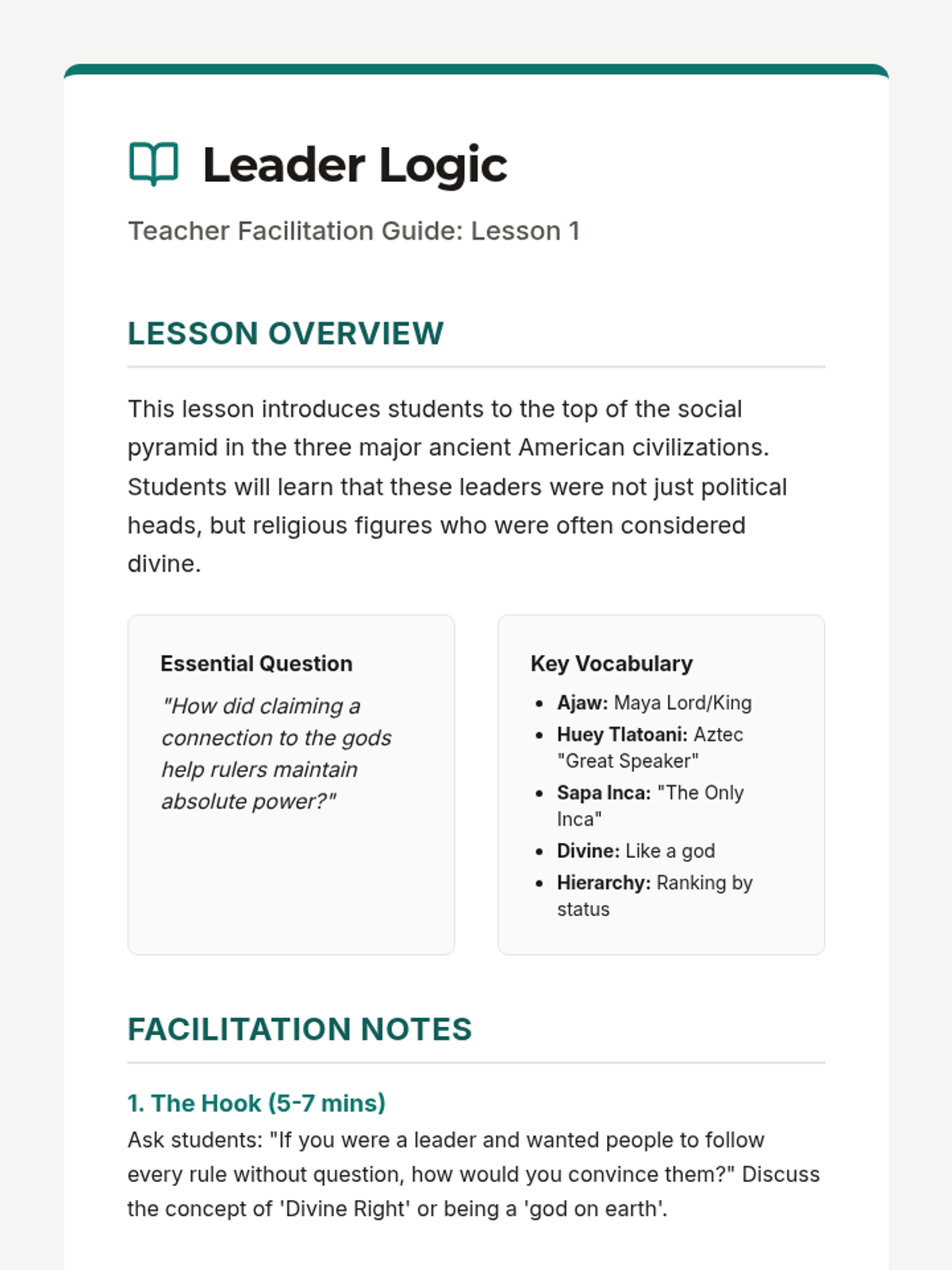
An exploration of the social hierarchies and governance systems of the Maya, Aztec, and Inca civilizations, focusing on divine kingship, tribute, labor taxes, and the daily lives of commoners.
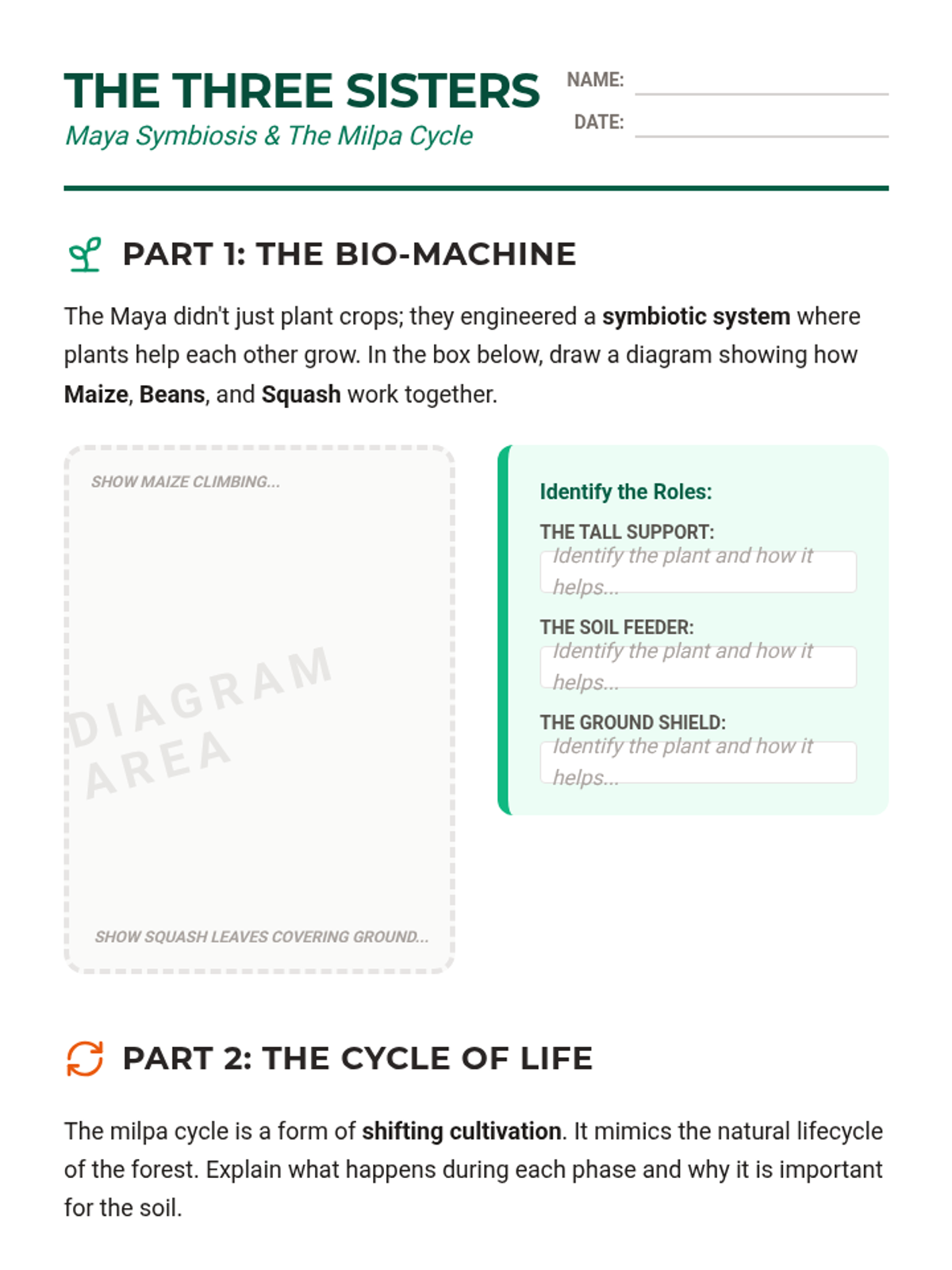
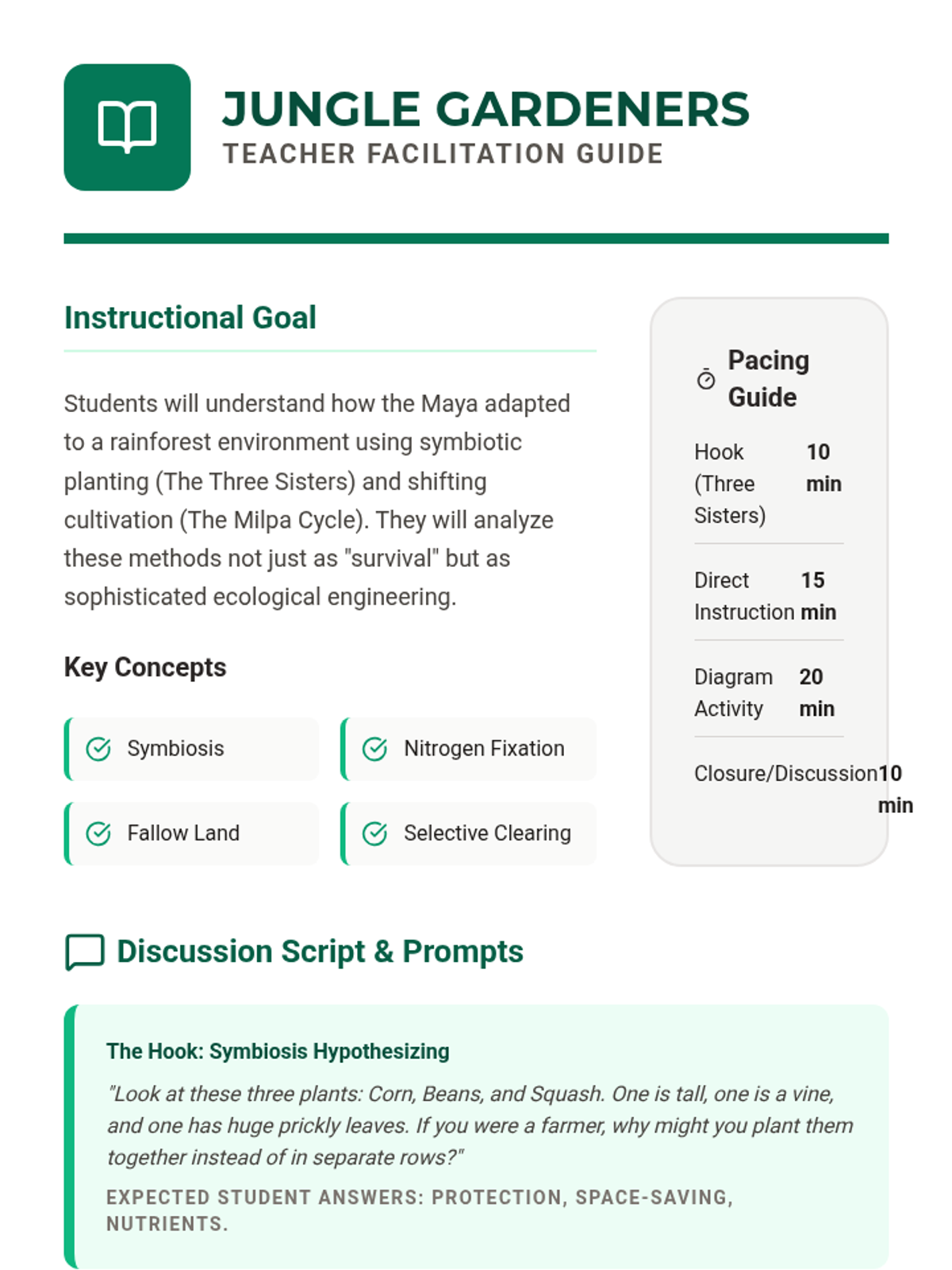
A comparative study of the agricultural innovations of the Maya, Aztec, and Inca civilizations, focusing on how engineering and ecological knowledge allowed these societies to flourish in diverse environments.
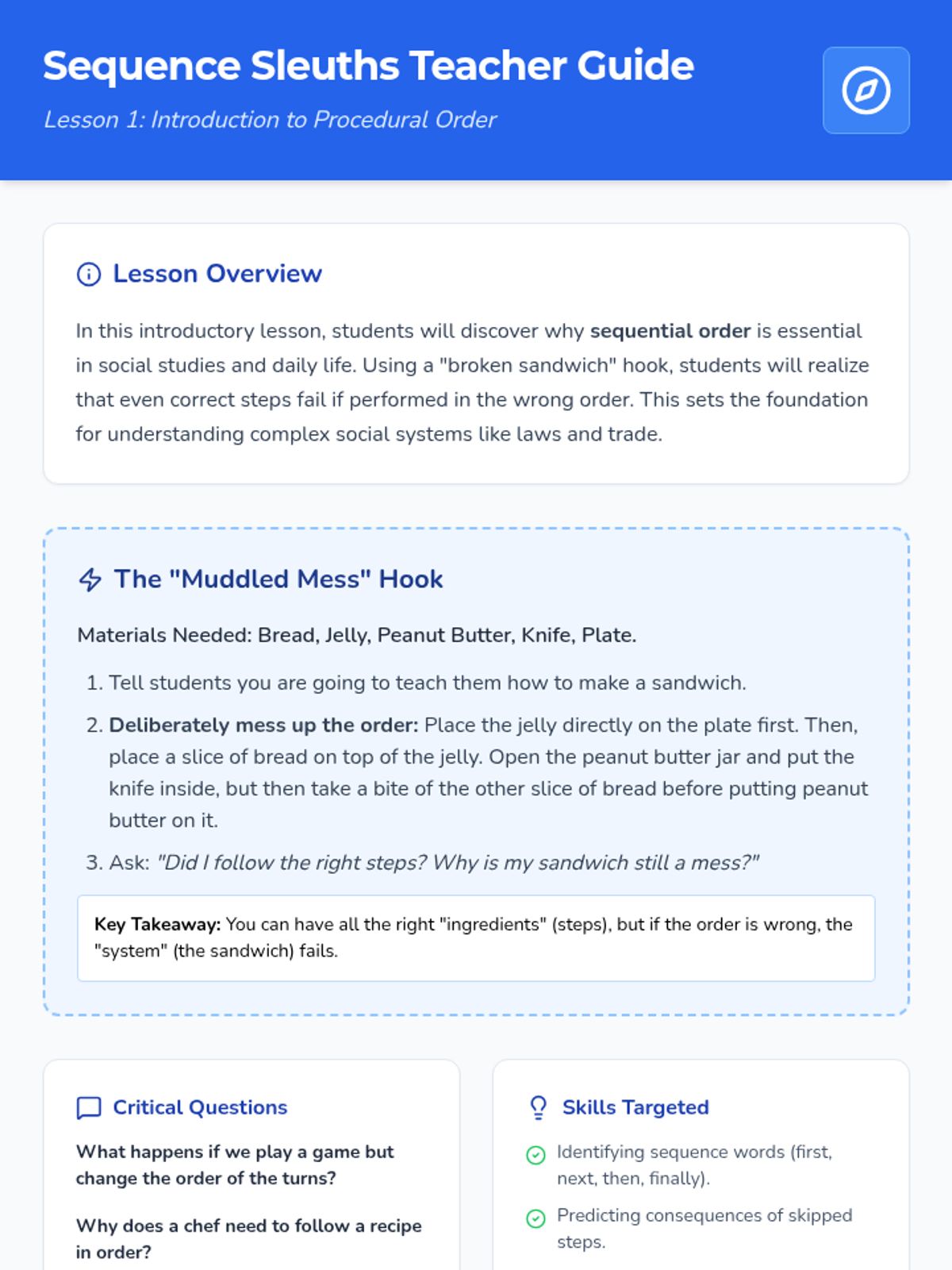
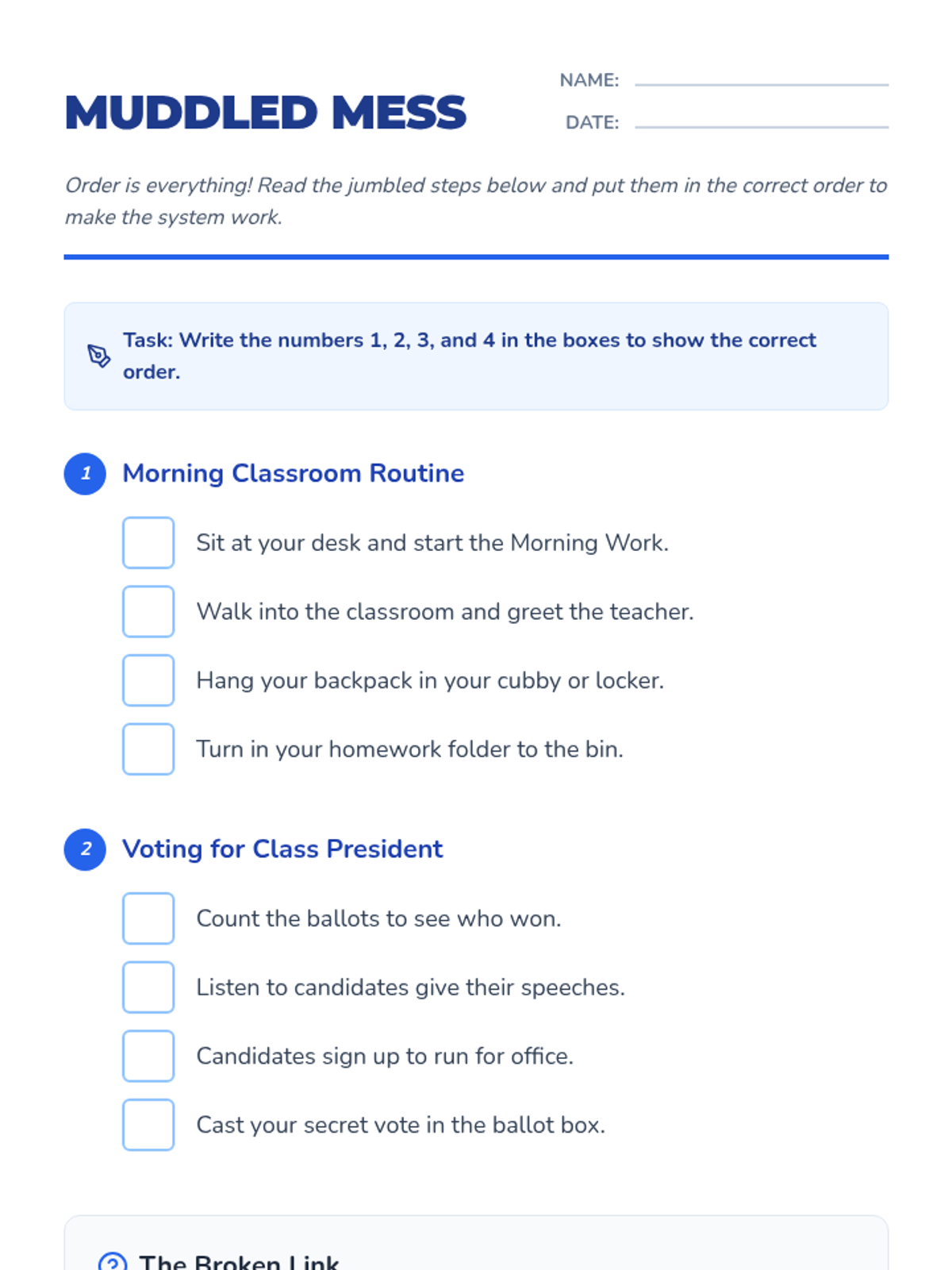
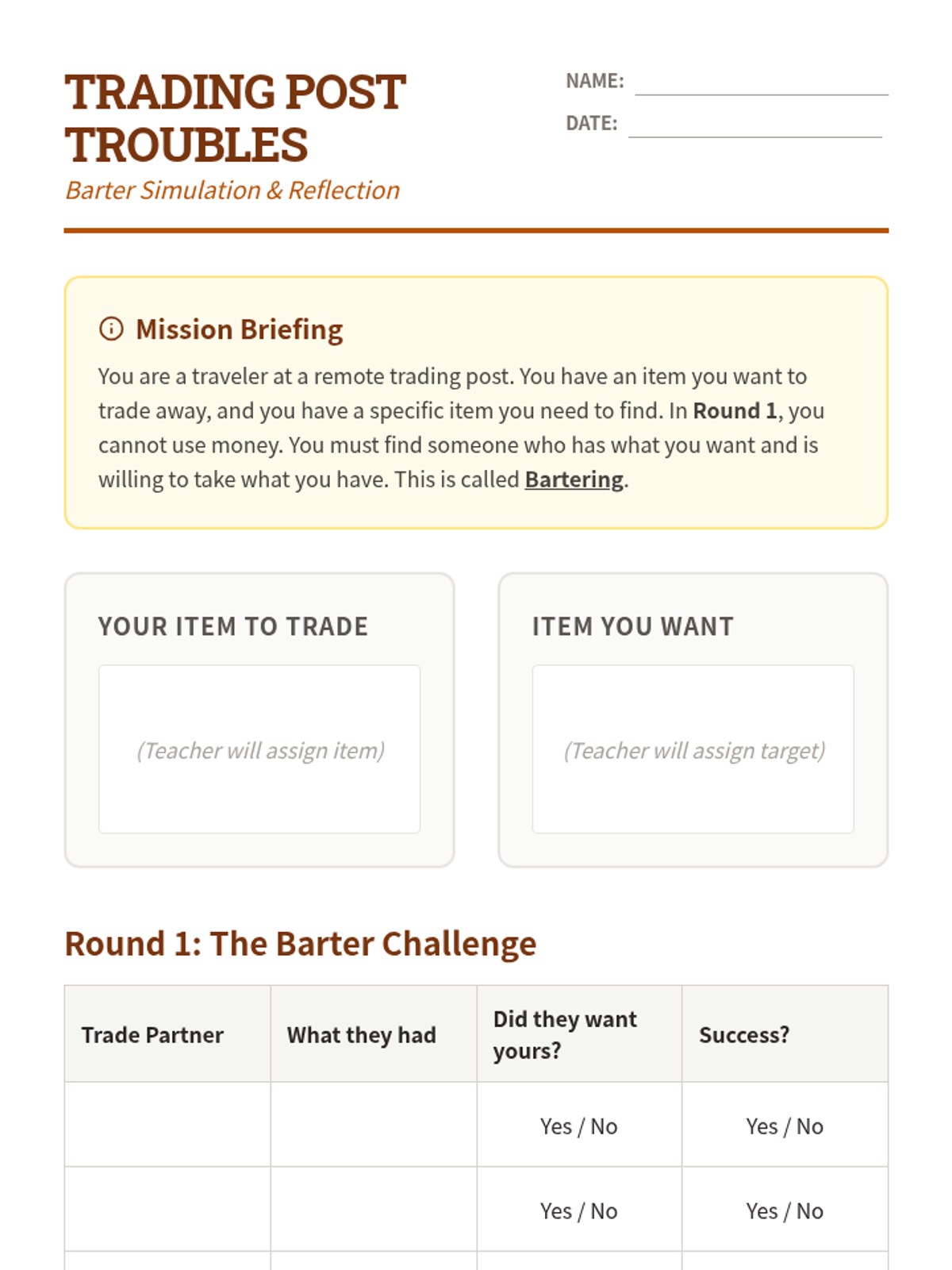
This sequence bridges social studies and procedural thinking, teaching students to analyze and design multi-step processes in government, economics, and daily life. Through simulations and case studies, students learn why the order of events is critical for fair and effective systems.
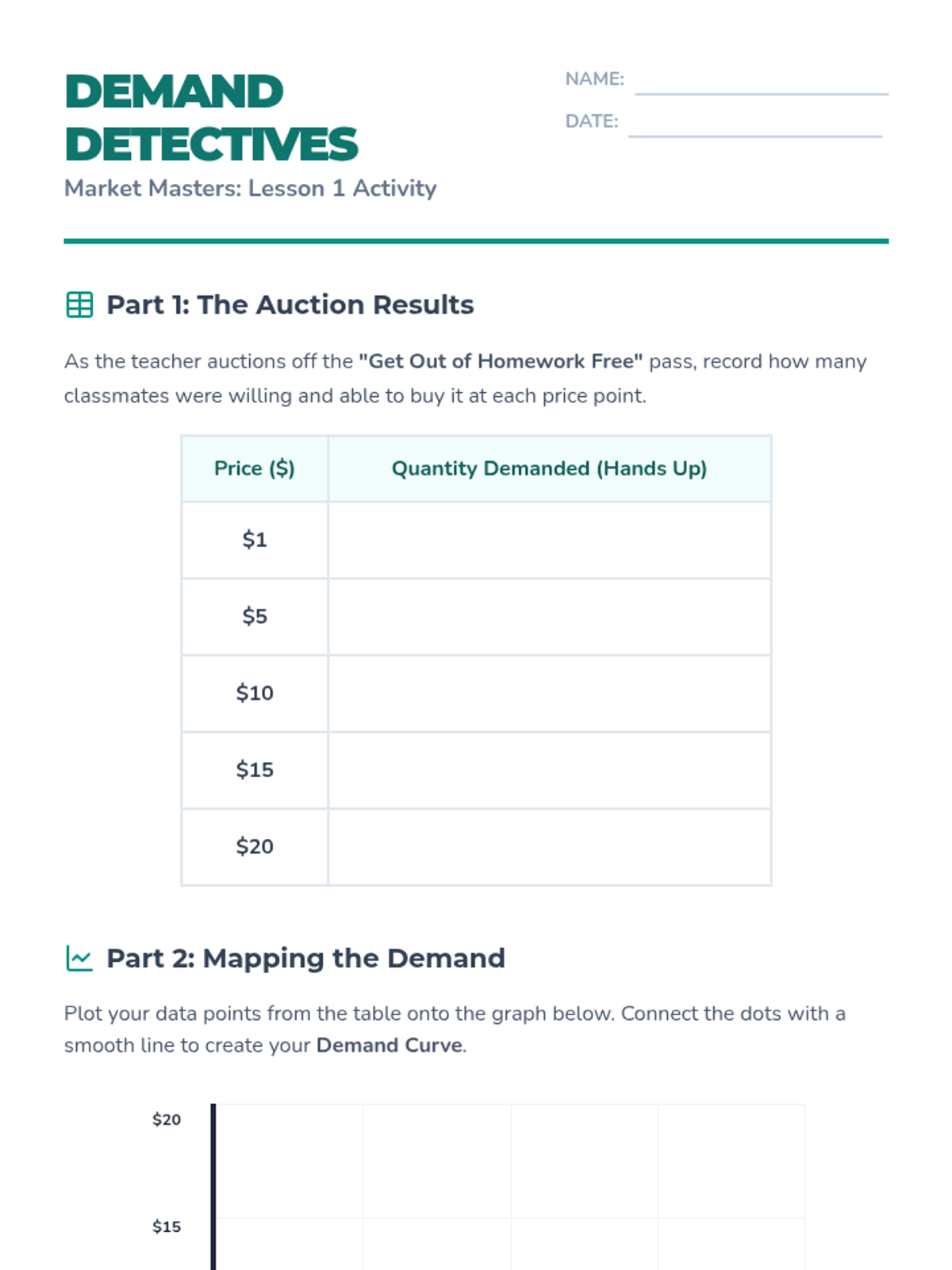
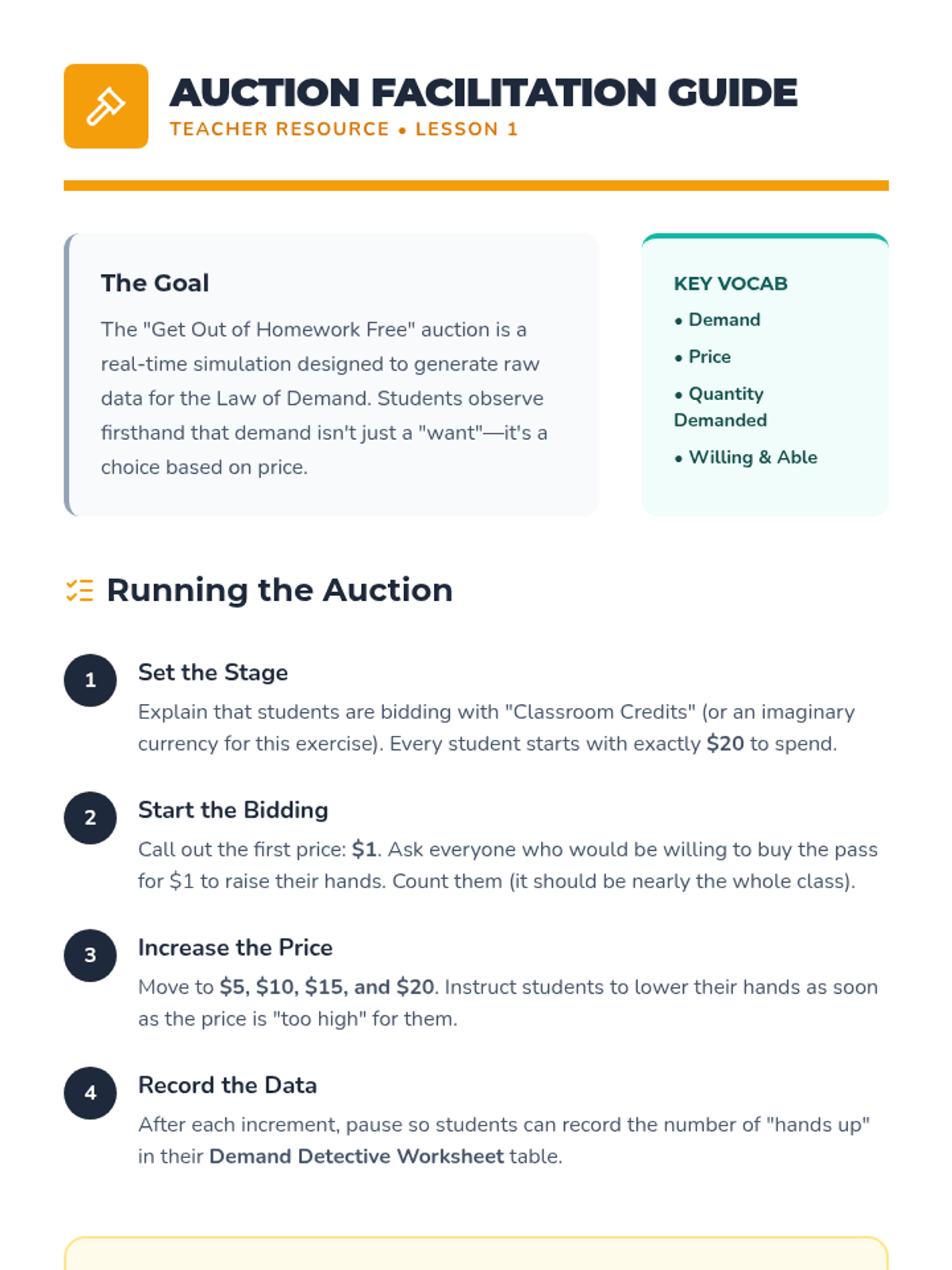
This sequence explores the mechanics of supply and demand through simulations and case studies. Students progress from understanding the limitations of barter to using currency, and finally participate in a full market simulation to see how prices reach equilibrium.
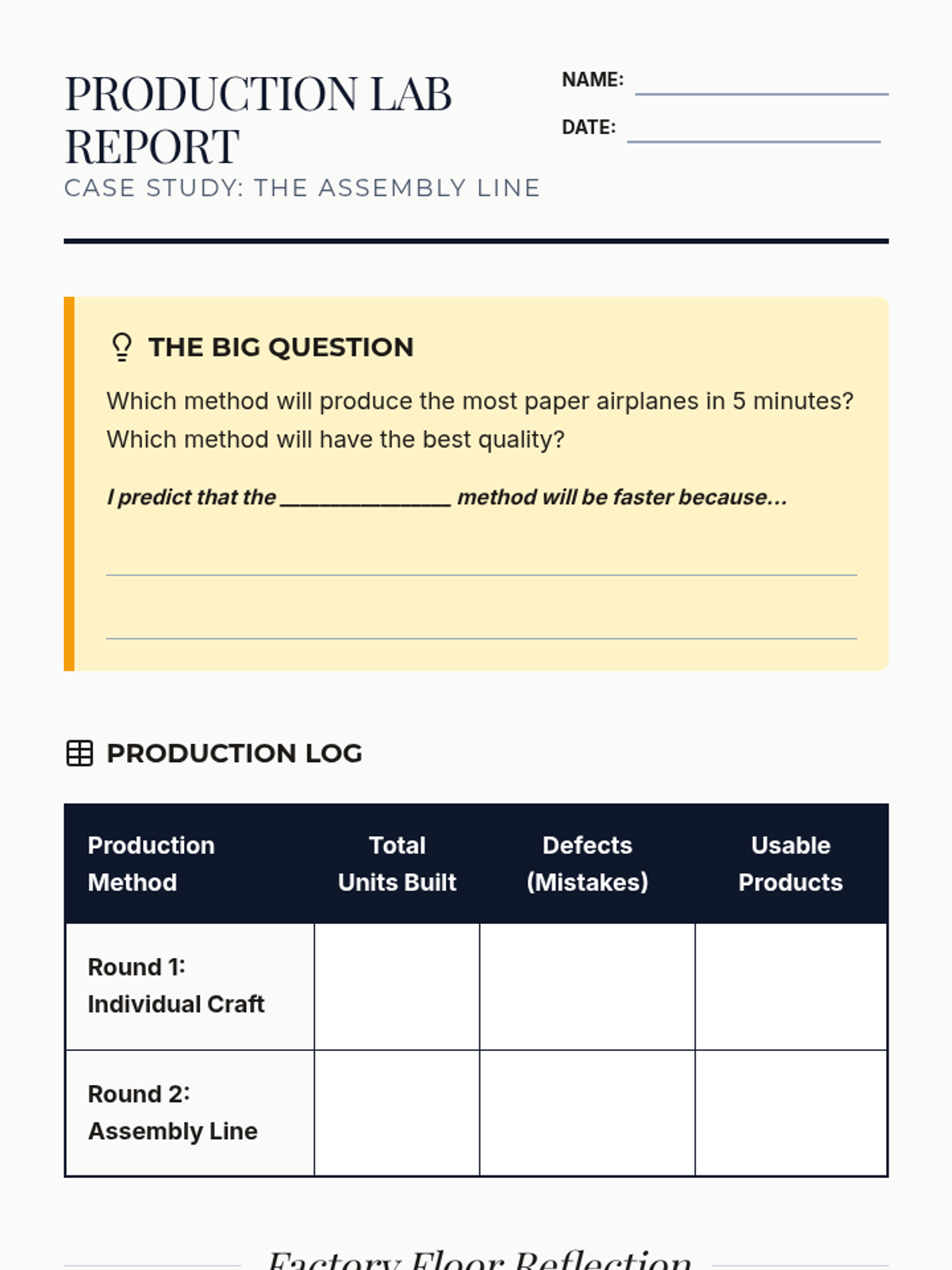
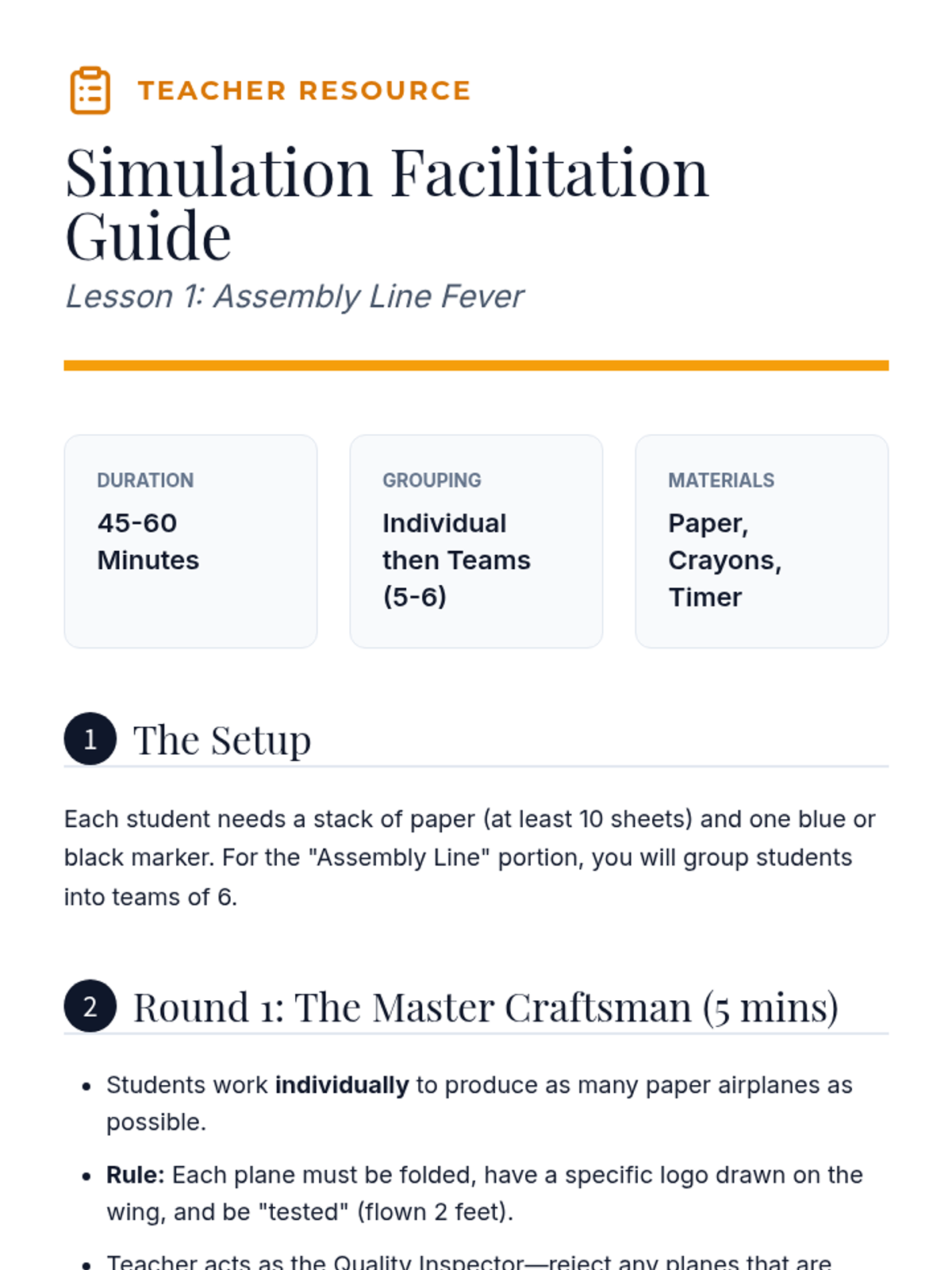
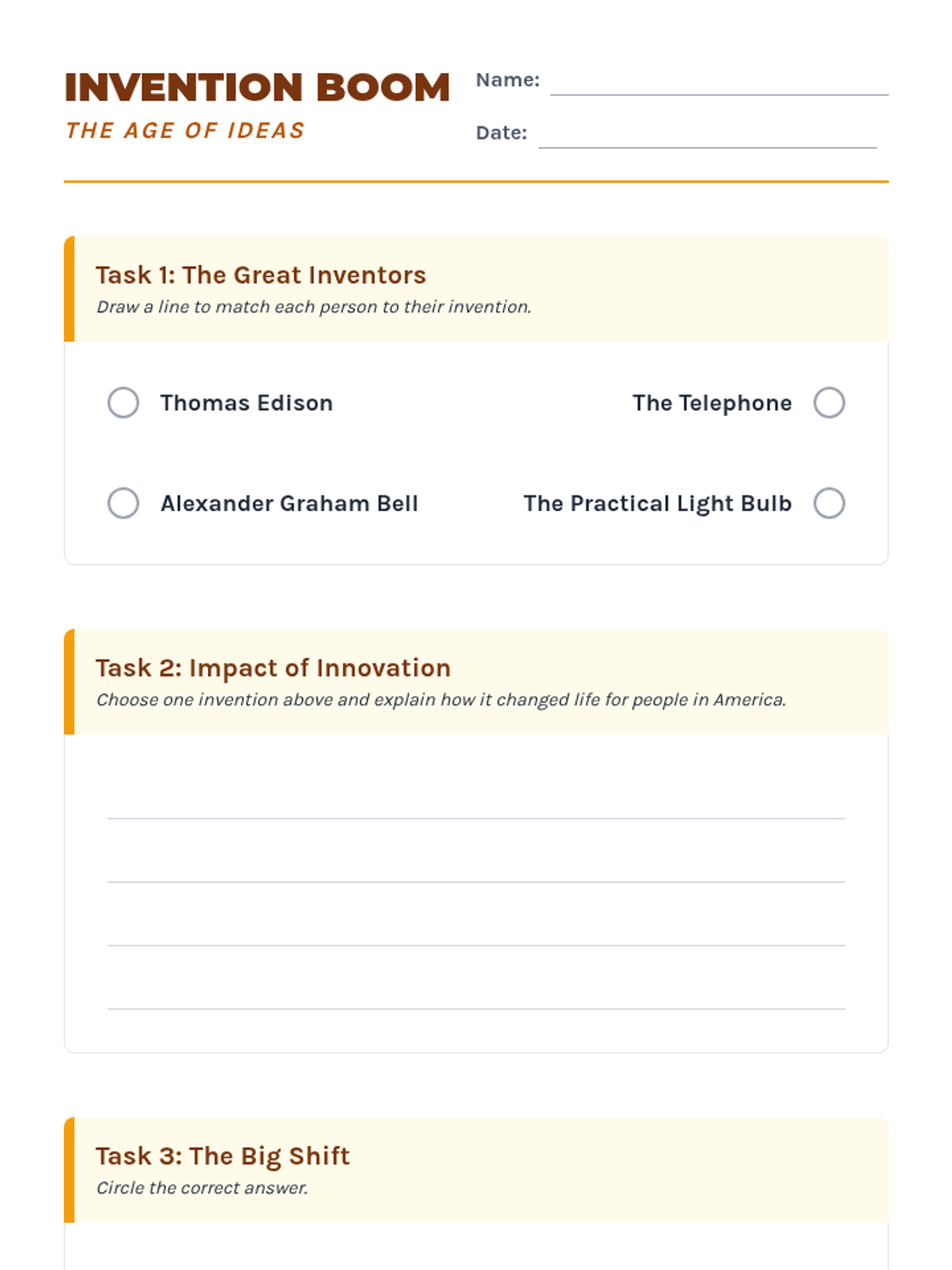
A sequence focused on the economic boom of the 1920s, covering the assembly line, the impact of the automobile, mass media, and the rise of consumer credit. Students analyze how manufacturing and financial shifts transformed American daily life and set the stage for the Great Depression.
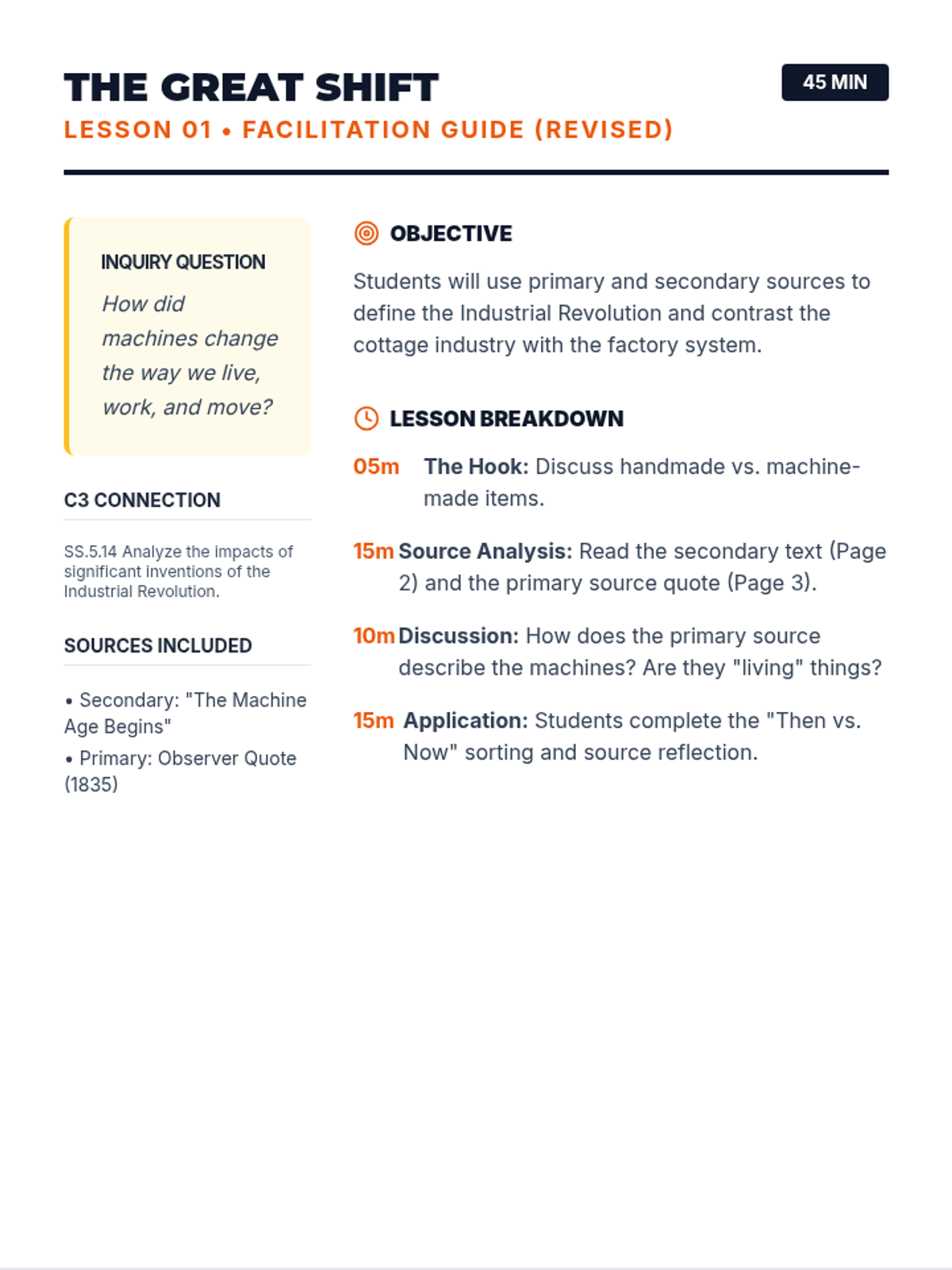
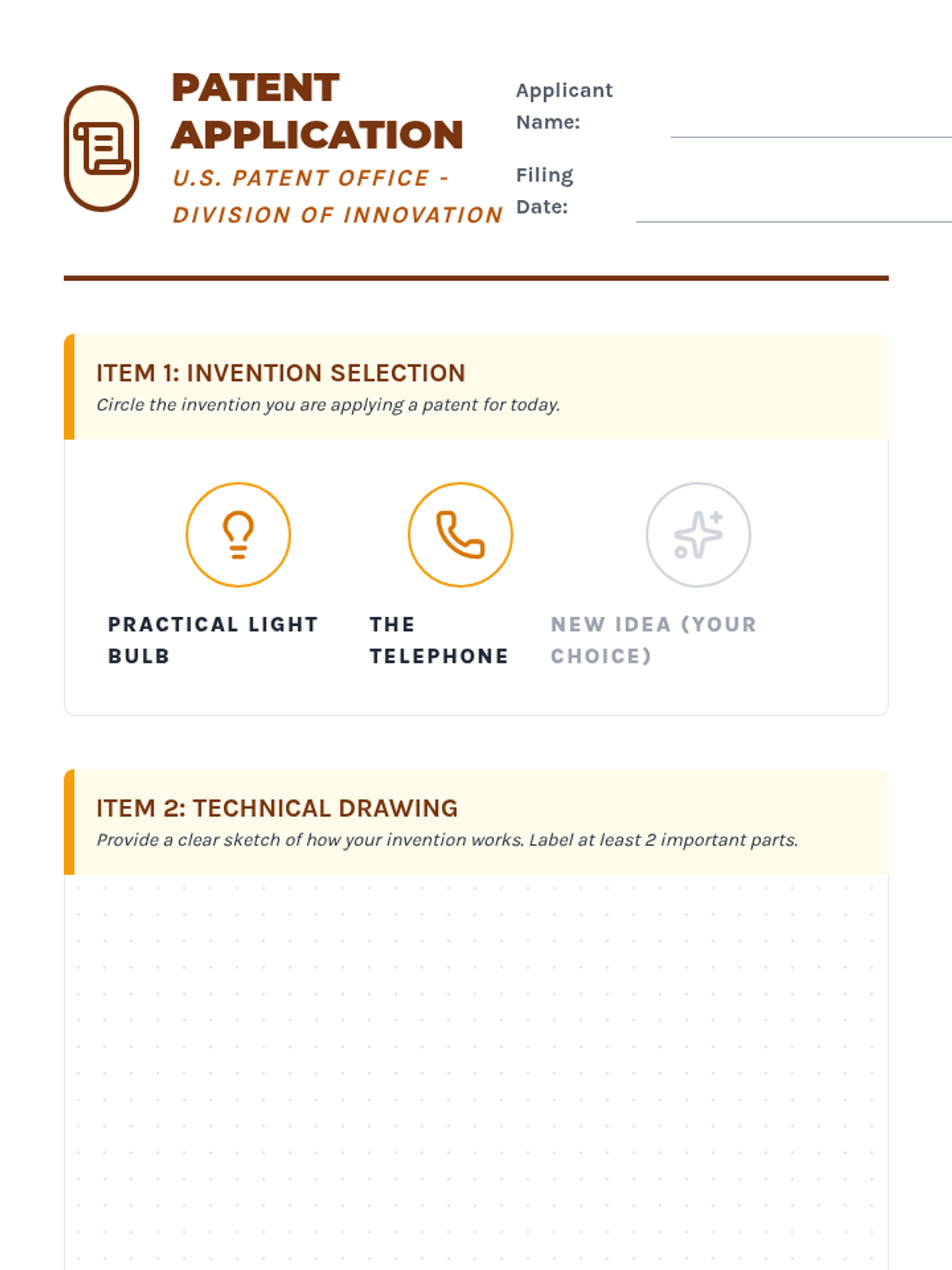
A 20-lesson inquiry unit for 5th grade exploring the Industrial Revolution's impact on innovation, movement, urbanization, and living conditions using the C3 Framework. Students investigate how steam and steel transformed the American landscape and society from 1800 to 1900.
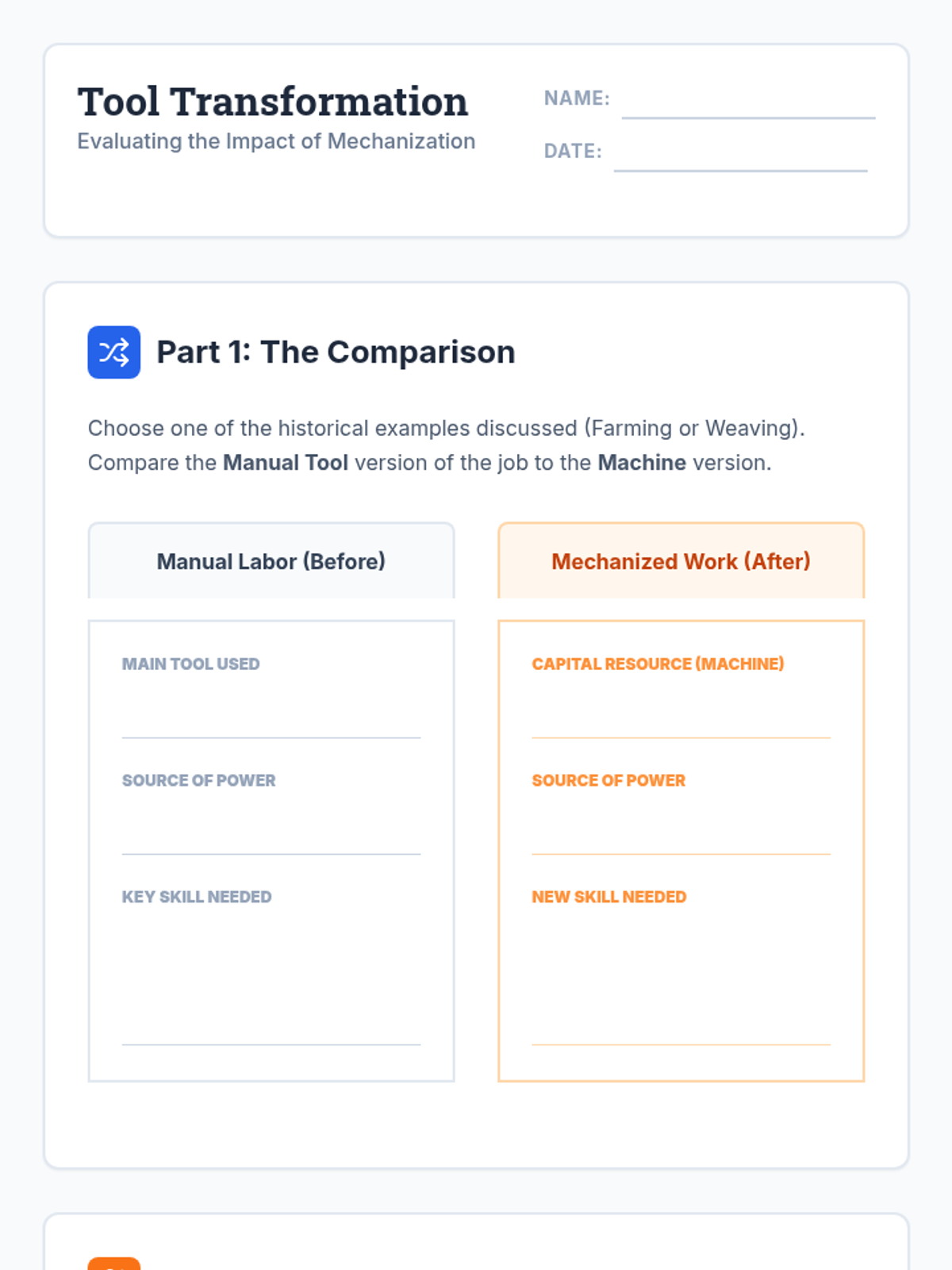
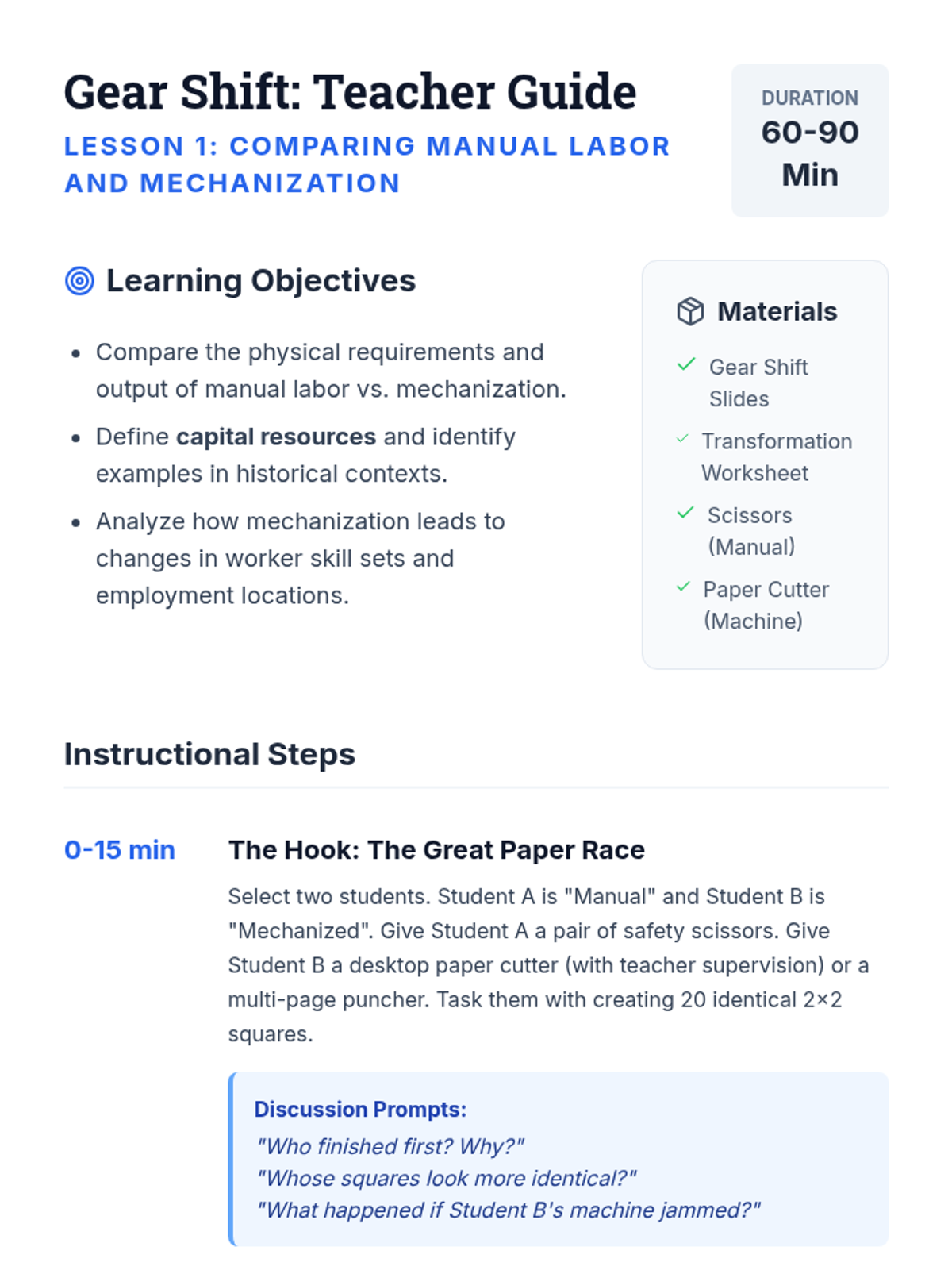
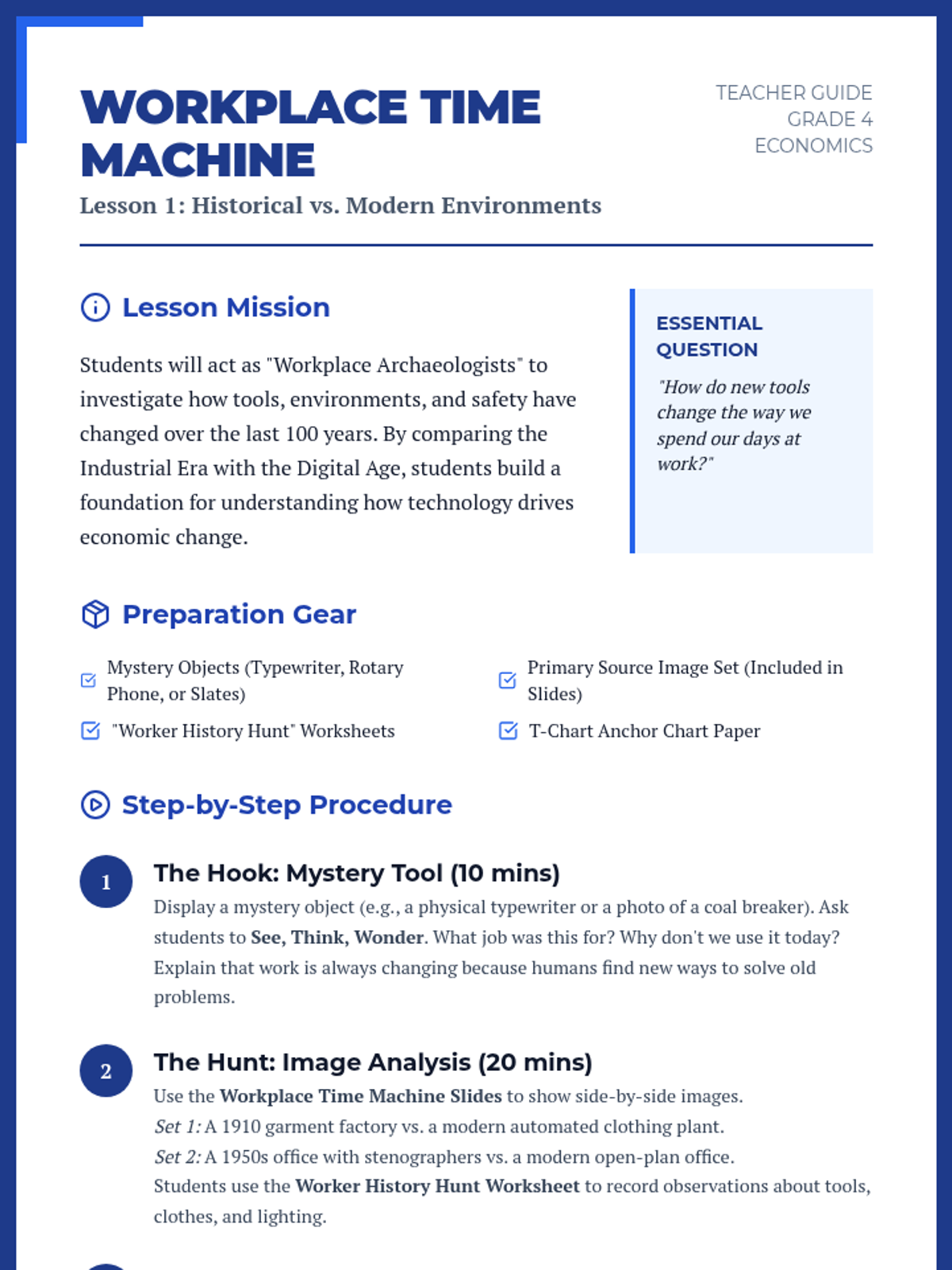
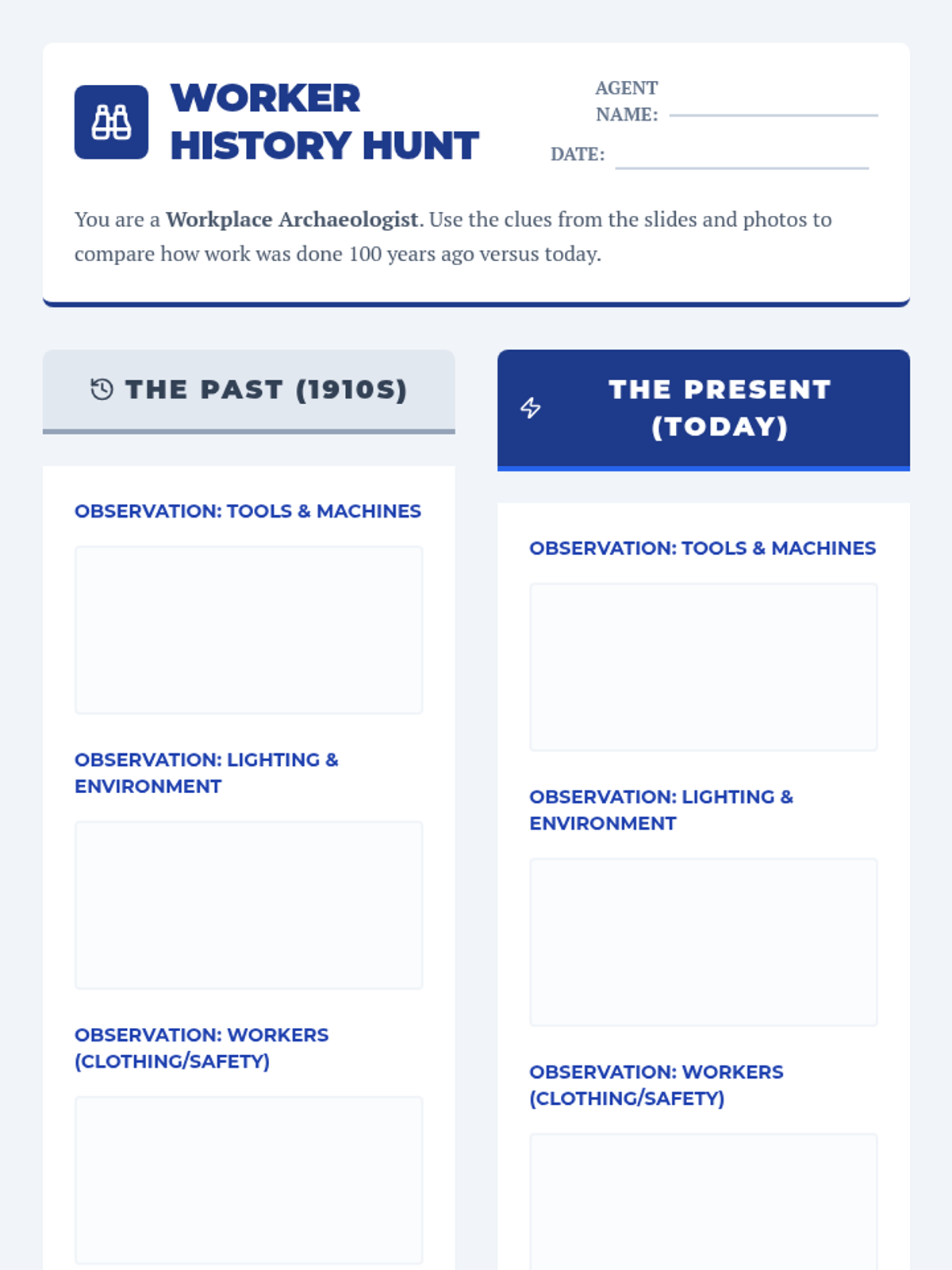
This sequence explores how technology has historically and currently transformed the workplace, focusing on the shift from manual labor to automation and digital environments. Students evaluate the economic impacts of these changes and predict future career trends.
A comprehensive sequence exploring the evolution of work from the Industrial Revolution to the gig economy, focusing on the impact of technology on jobs and skills.
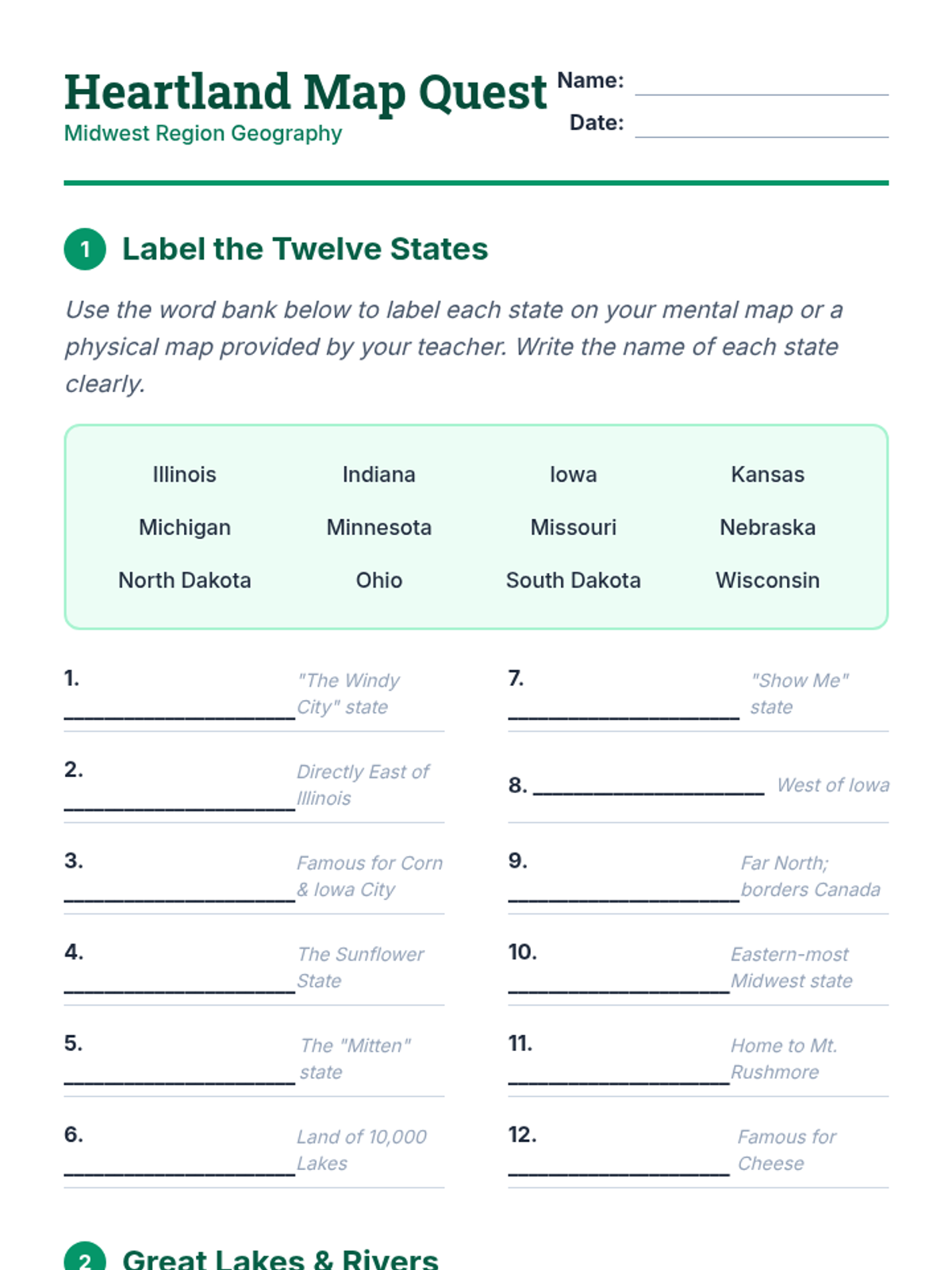
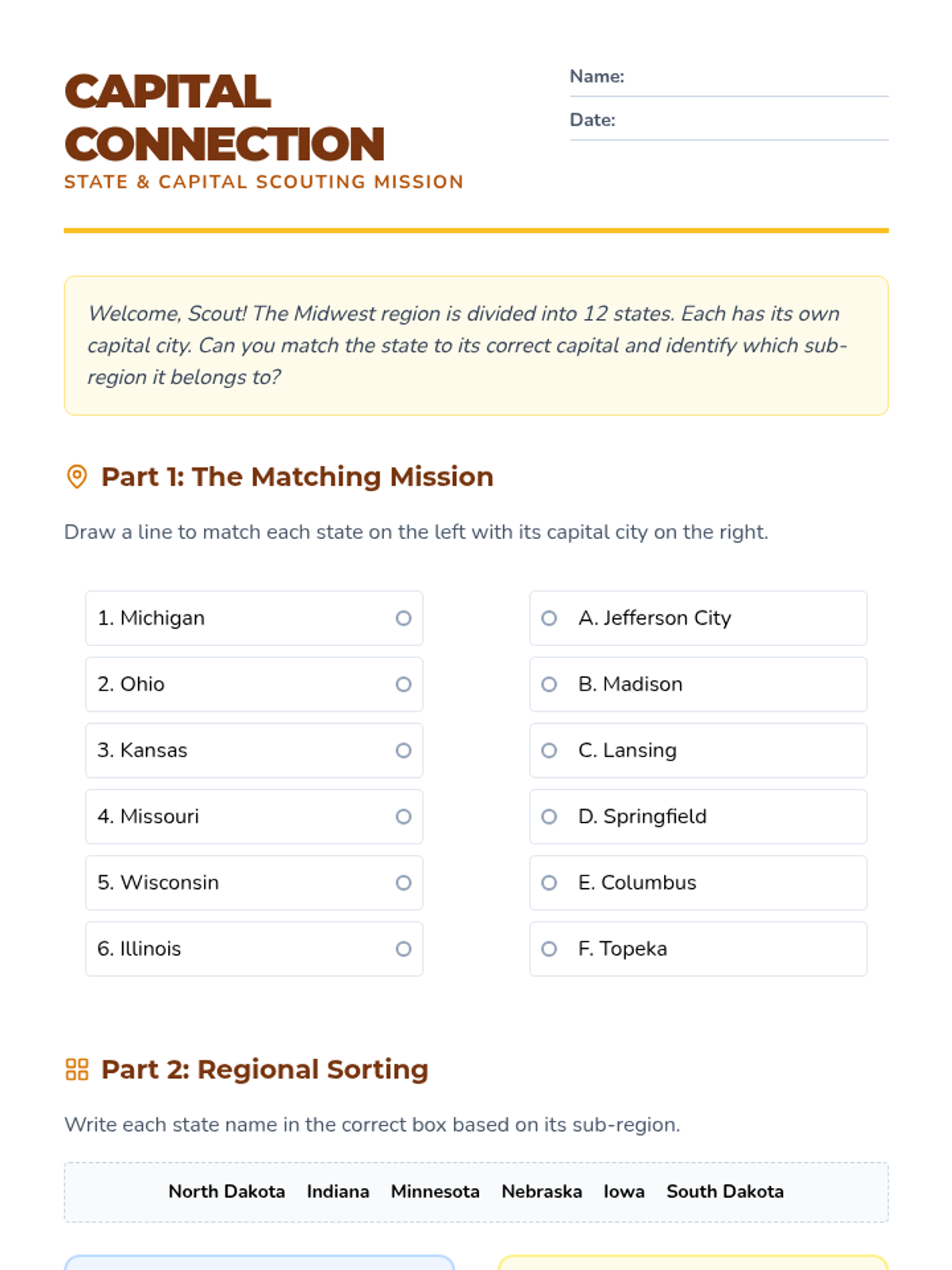
A comprehensive 5-day unit exploring the geography, climate, indigenous history, and modern life of the U.S. Midwest, focusing on the cause-and-effect relationship between environment and industry.
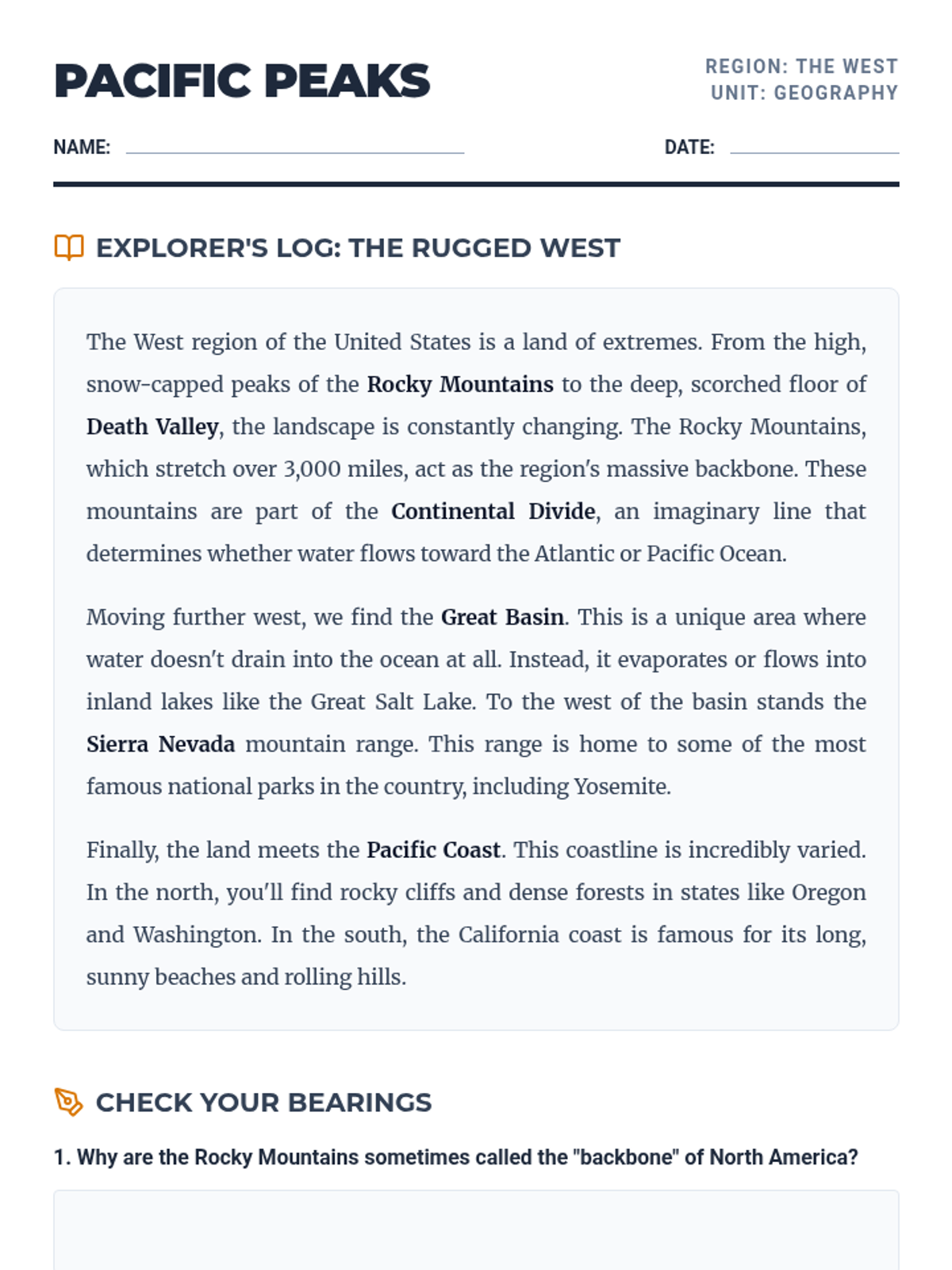
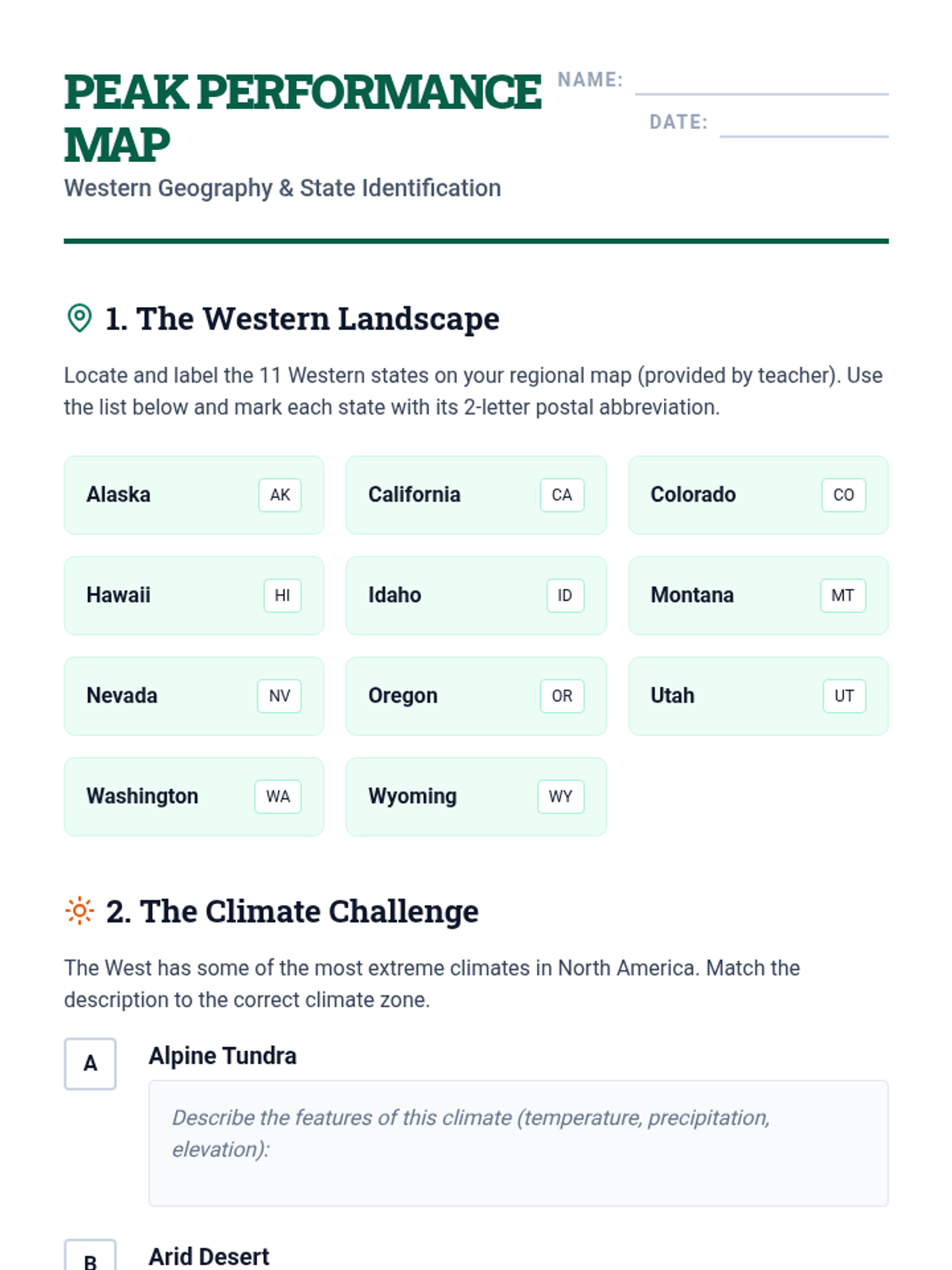
A comprehensive 5-lesson exploration of the West region of the United States, covering geography, climate, resources, culture, and states/capitals through reading passages and interactive activities.
A comprehensive journey through the Midwest region, covering its geography, economy, and culture in bite-sized 20-minute sessions.
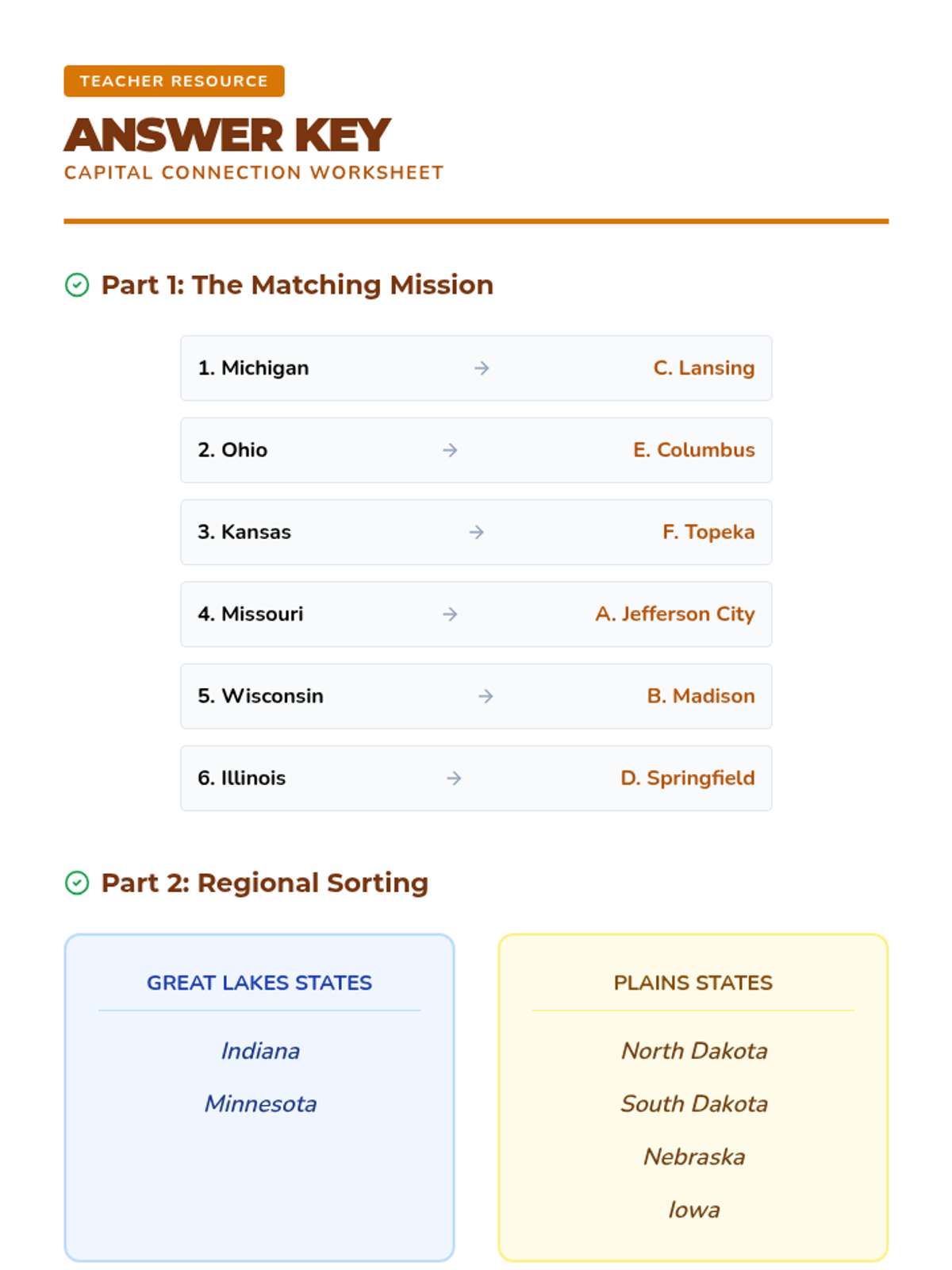
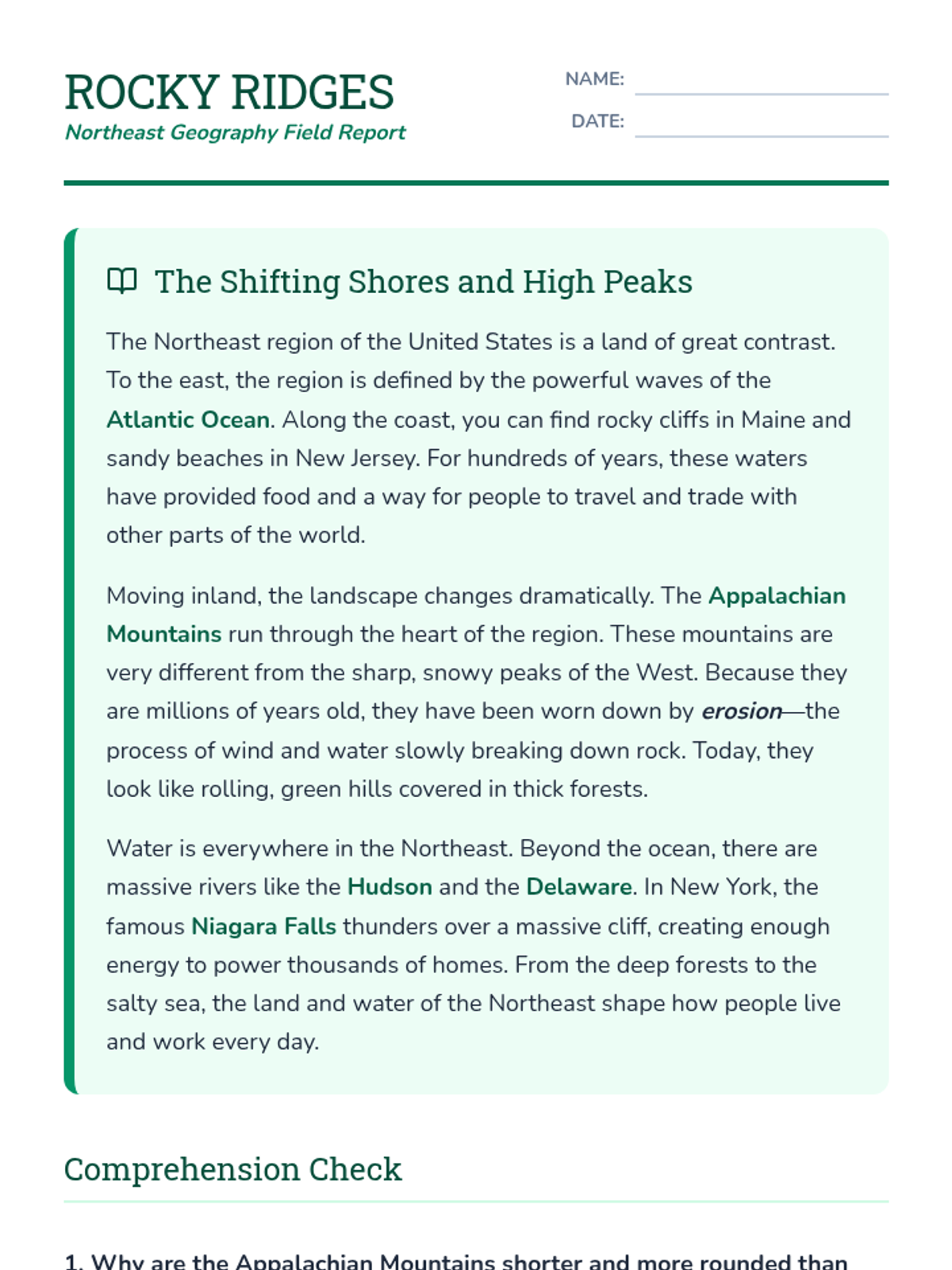
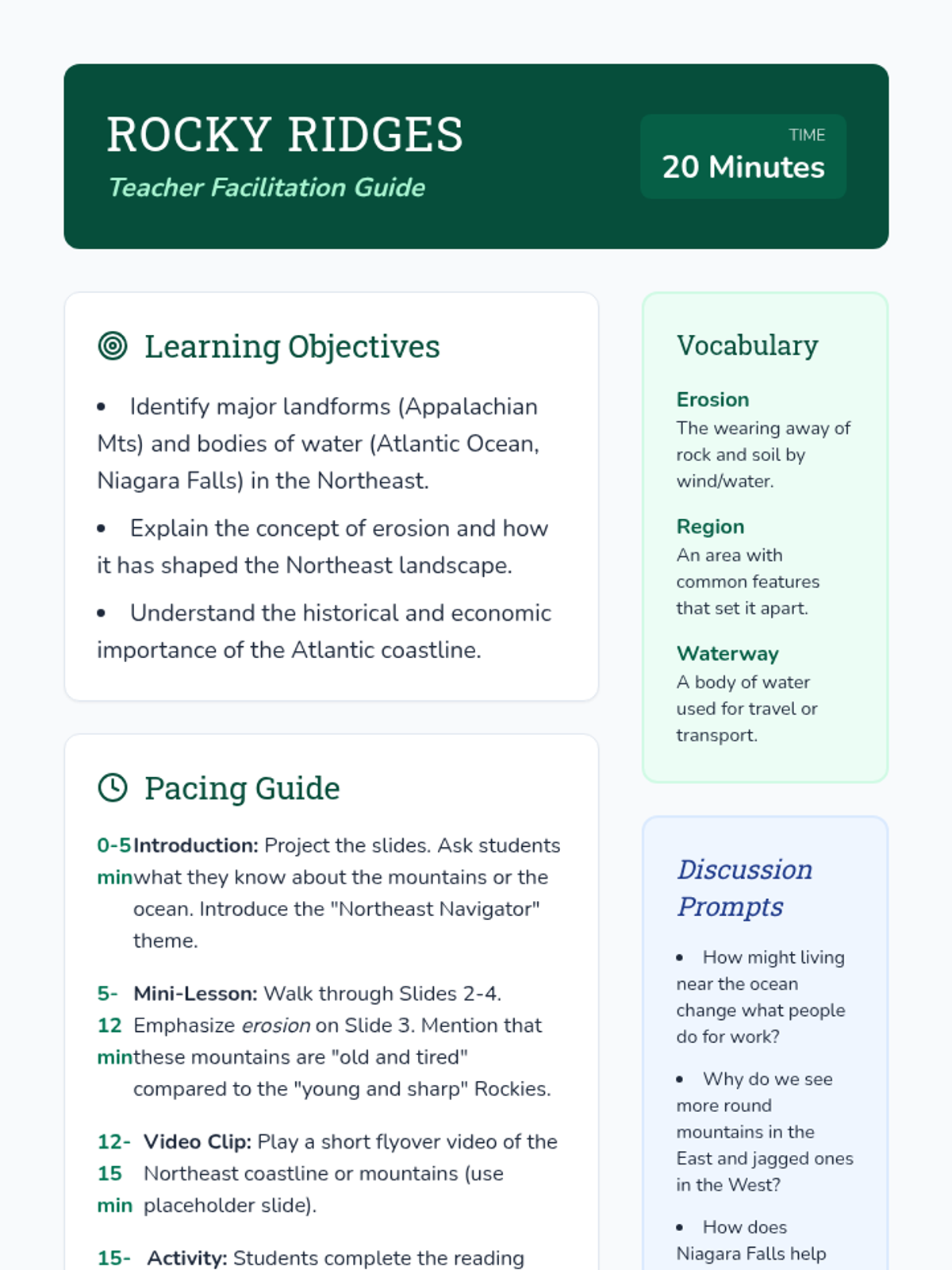
A 5-lesson sequence exploring the geography, climate, resources, culture, and states of the Northeast region of the United States. Students will engage with reading passages, comprehension activities, and a states-and-capitals matching game.
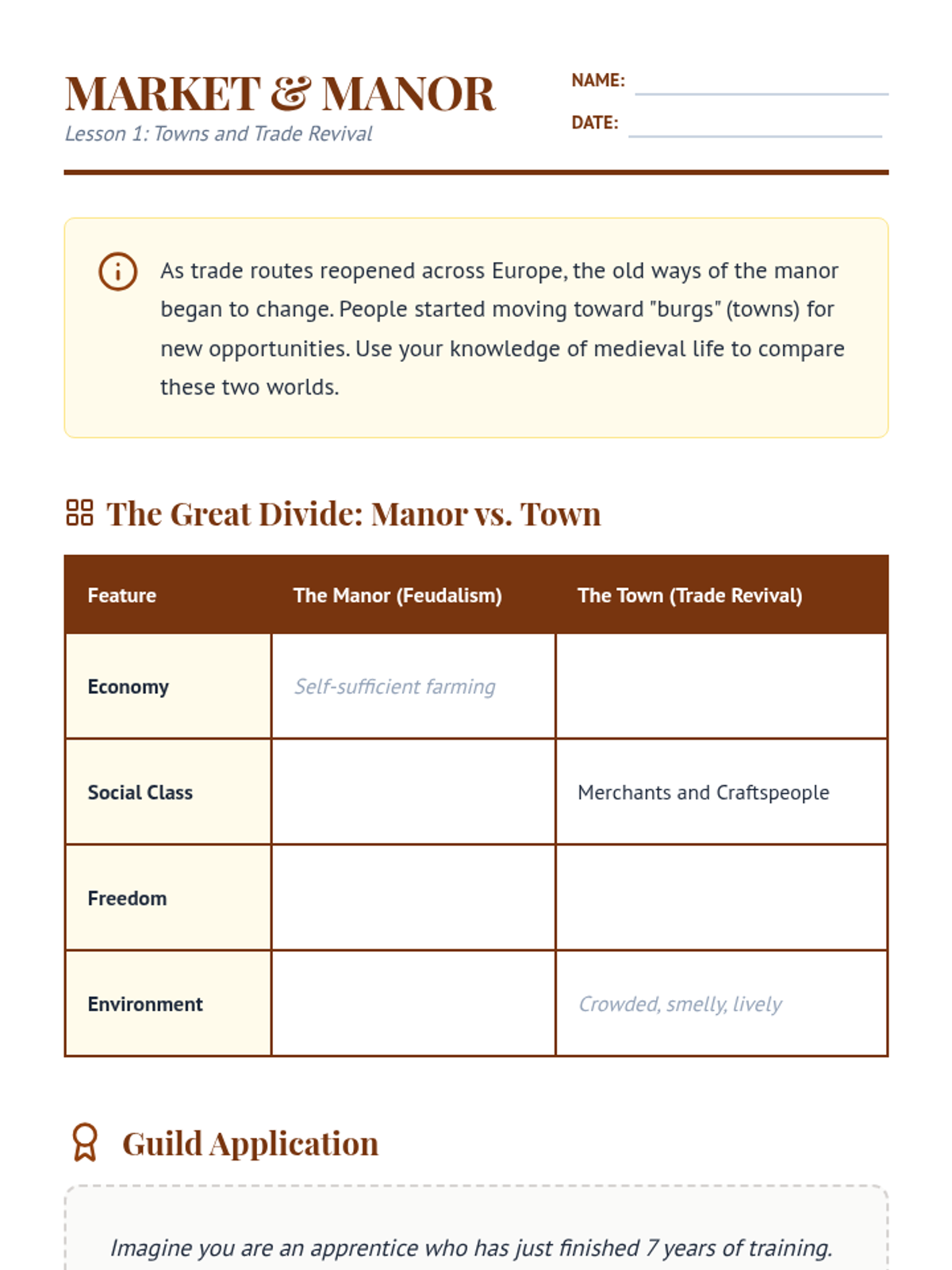
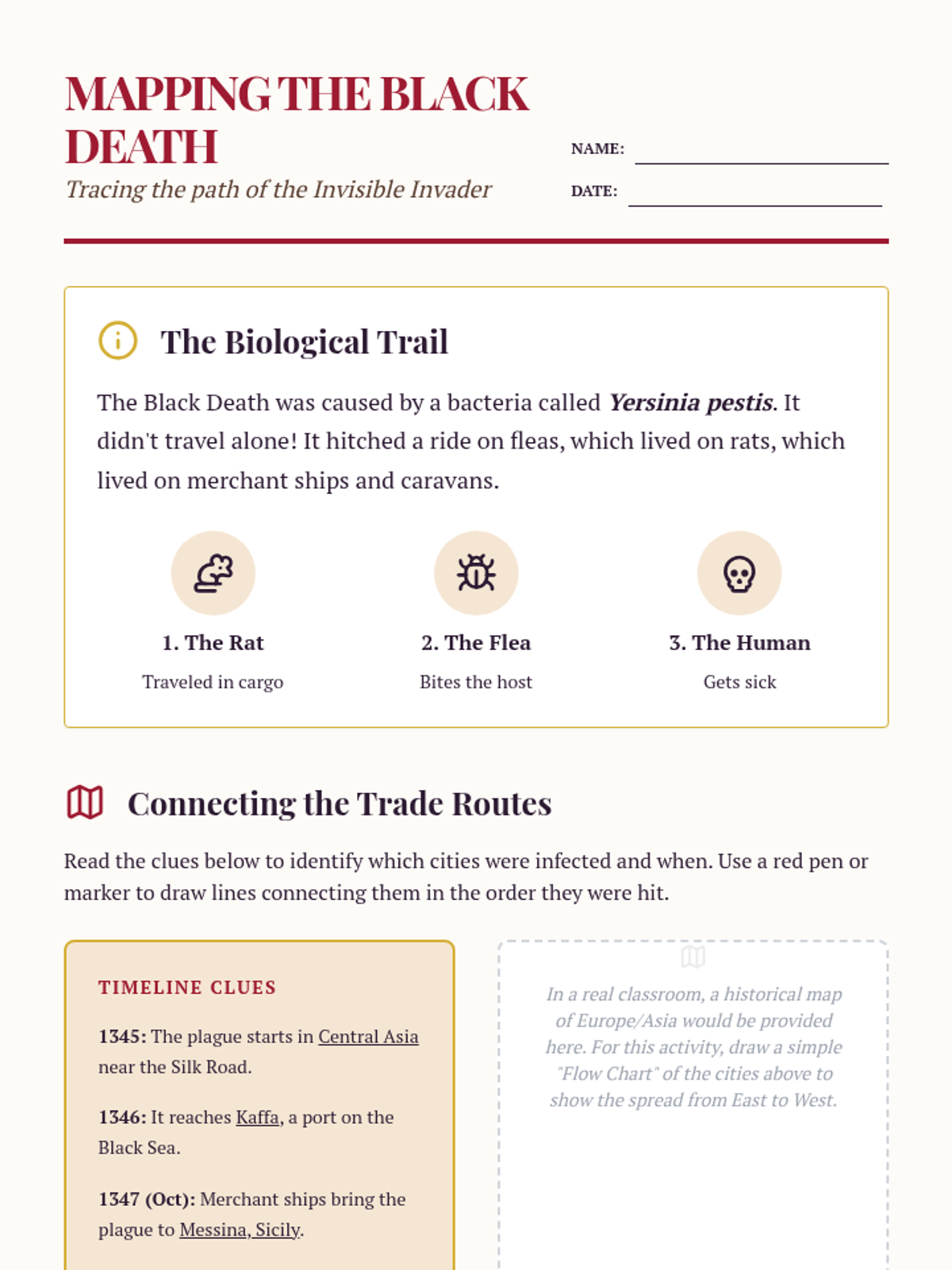
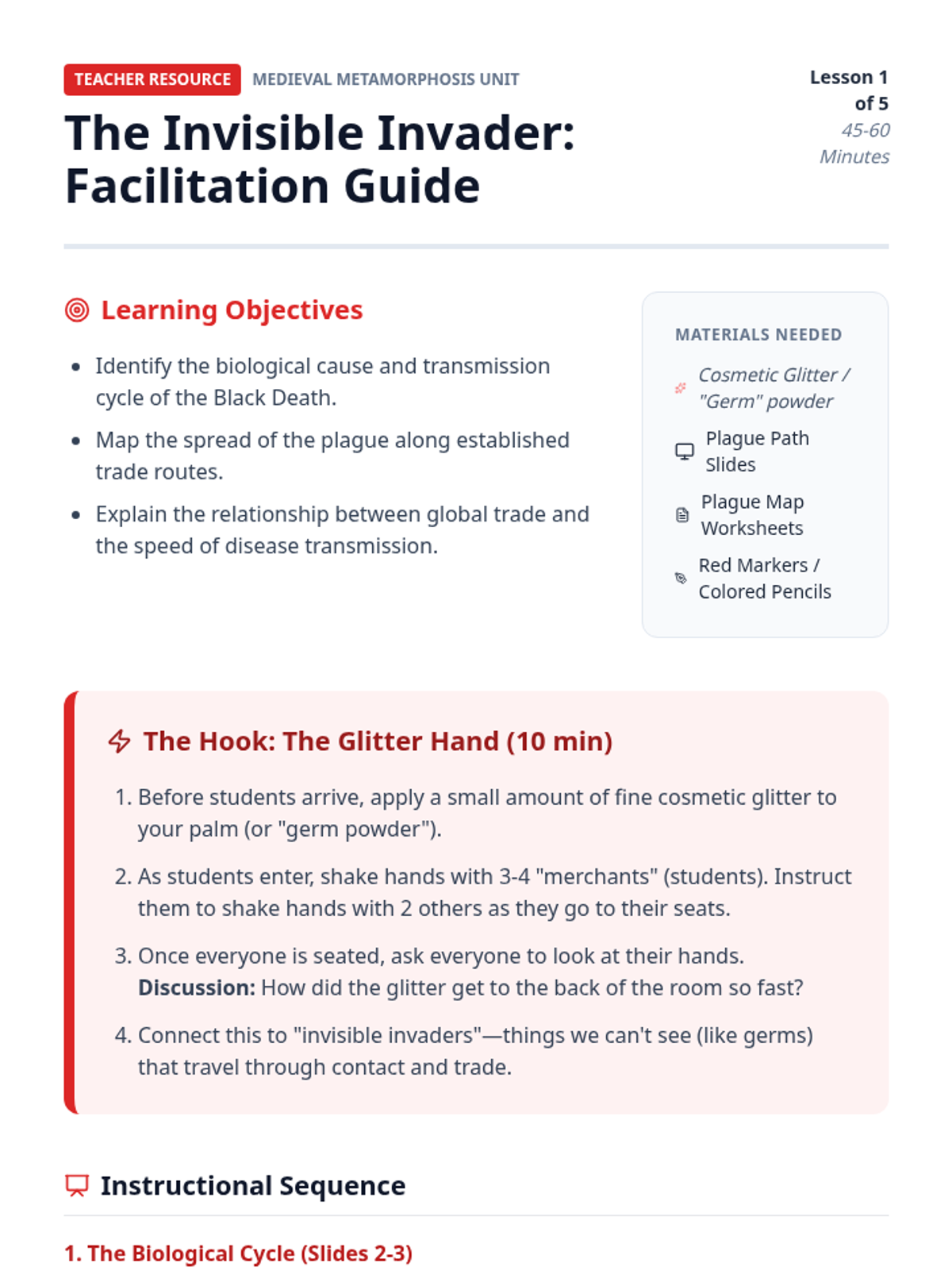
A 5th-grade history sequence exploring the transition from the feudal Middle Ages to the early modern period. Students analyze how the devastation of the Black Death triggered economic shifts, the rise of the merchant class, and the growth of towns, setting the stage for the Renaissance.
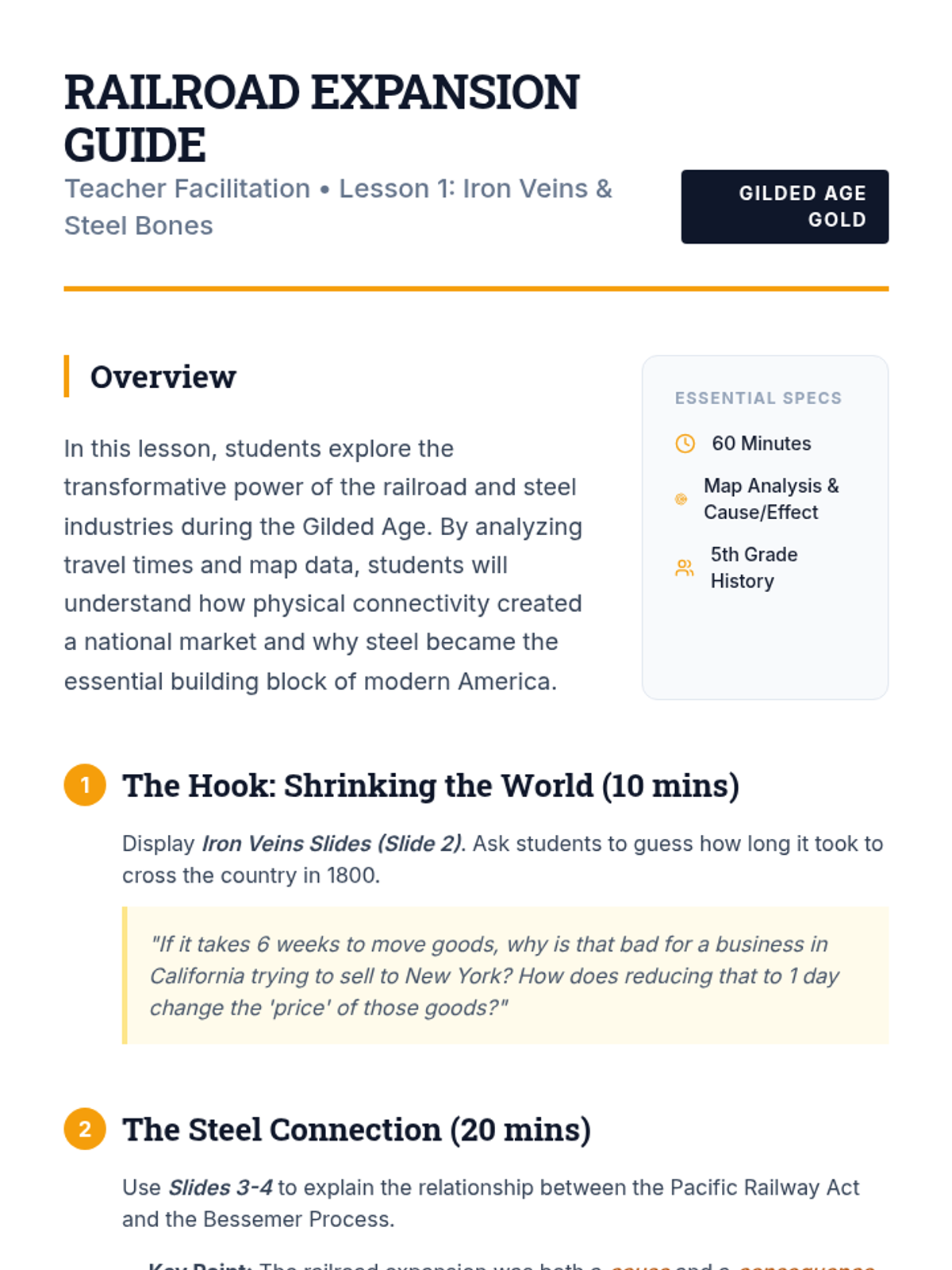
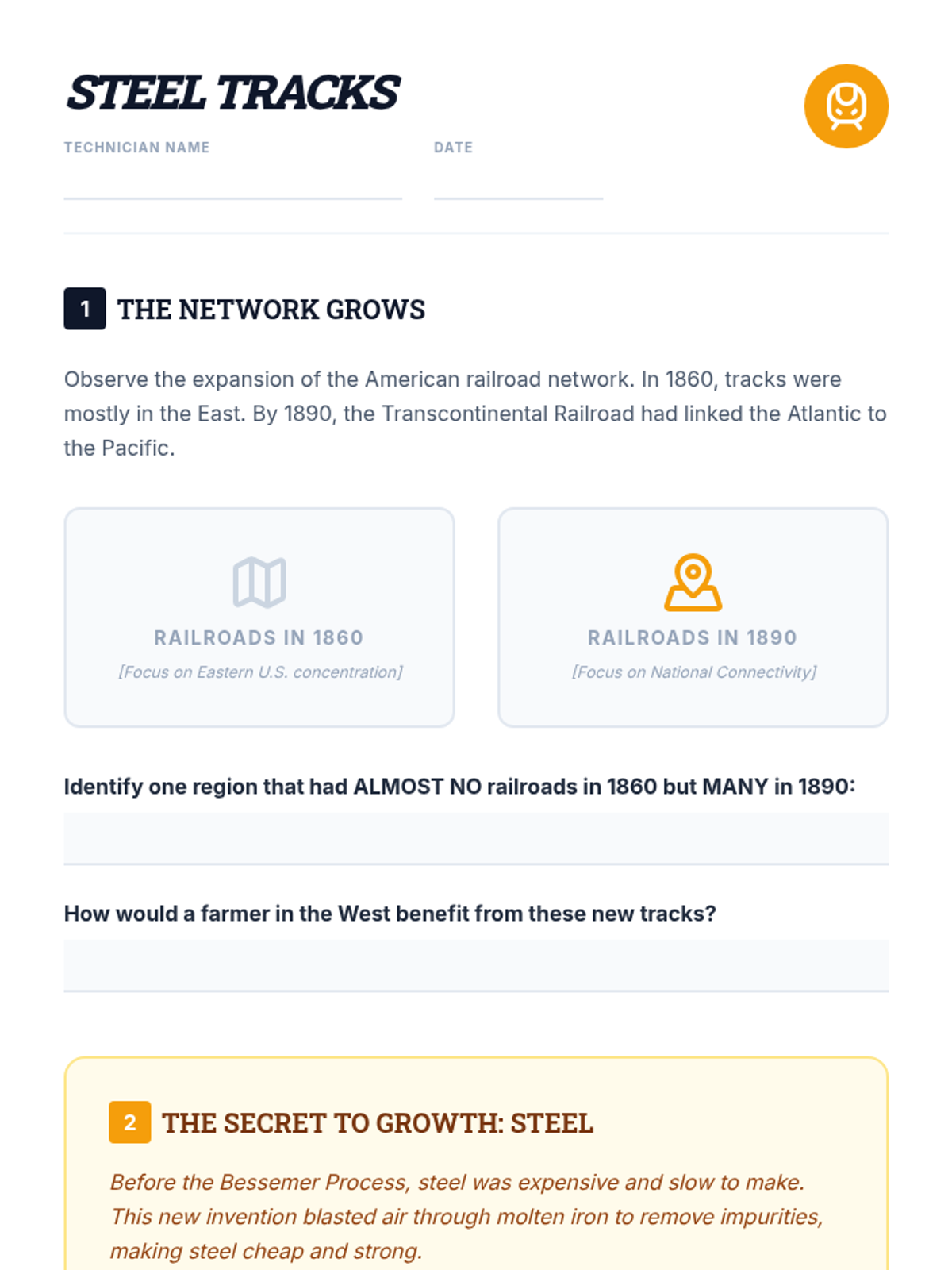
A comprehensive 5th-grade history sequence exploring the rapid industrialization, technological innovations, and urbanization of the American Gilded Age. Students analyze the impact of railroads, steel, and new inventions on daily life and the economy.
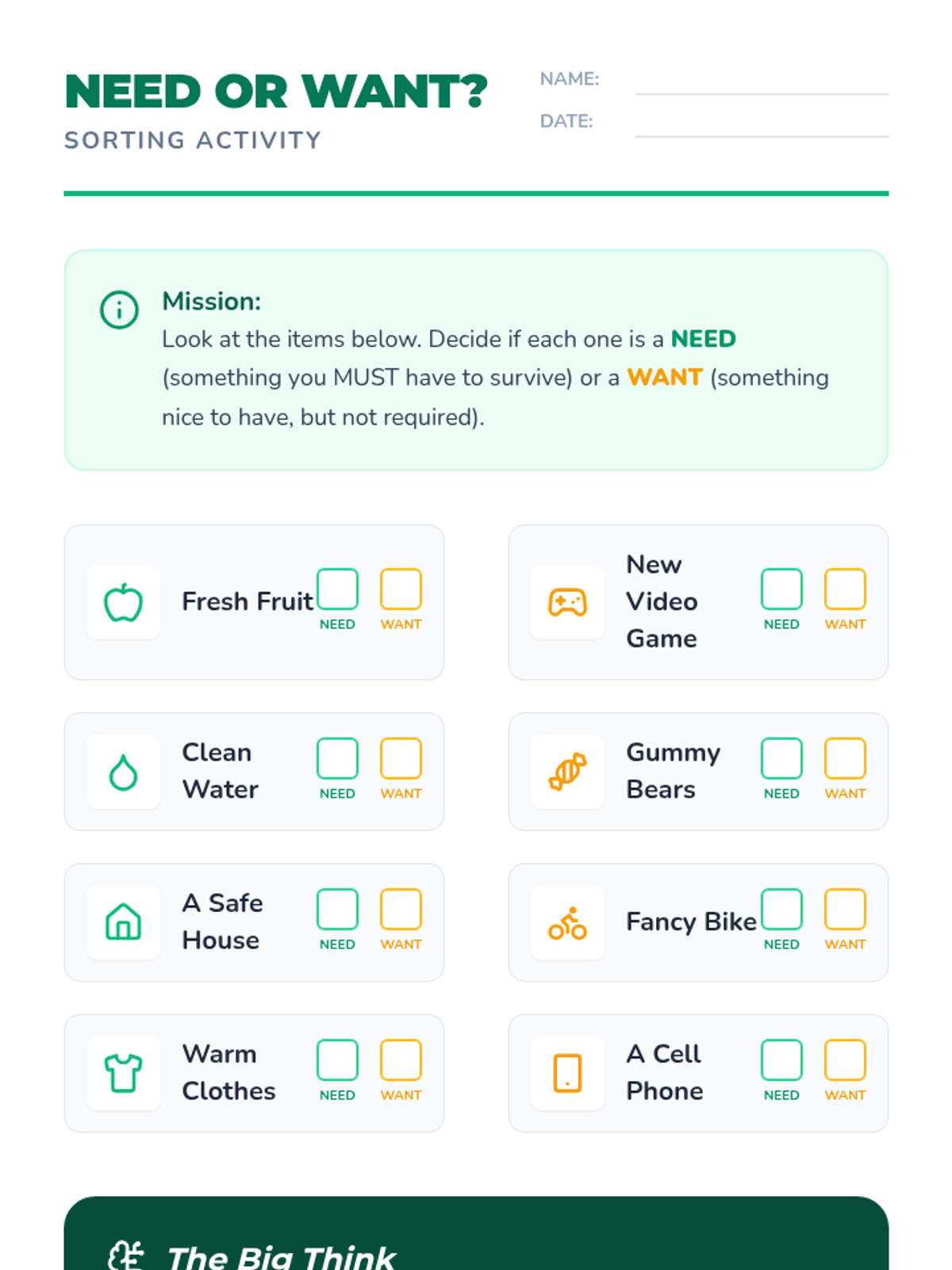
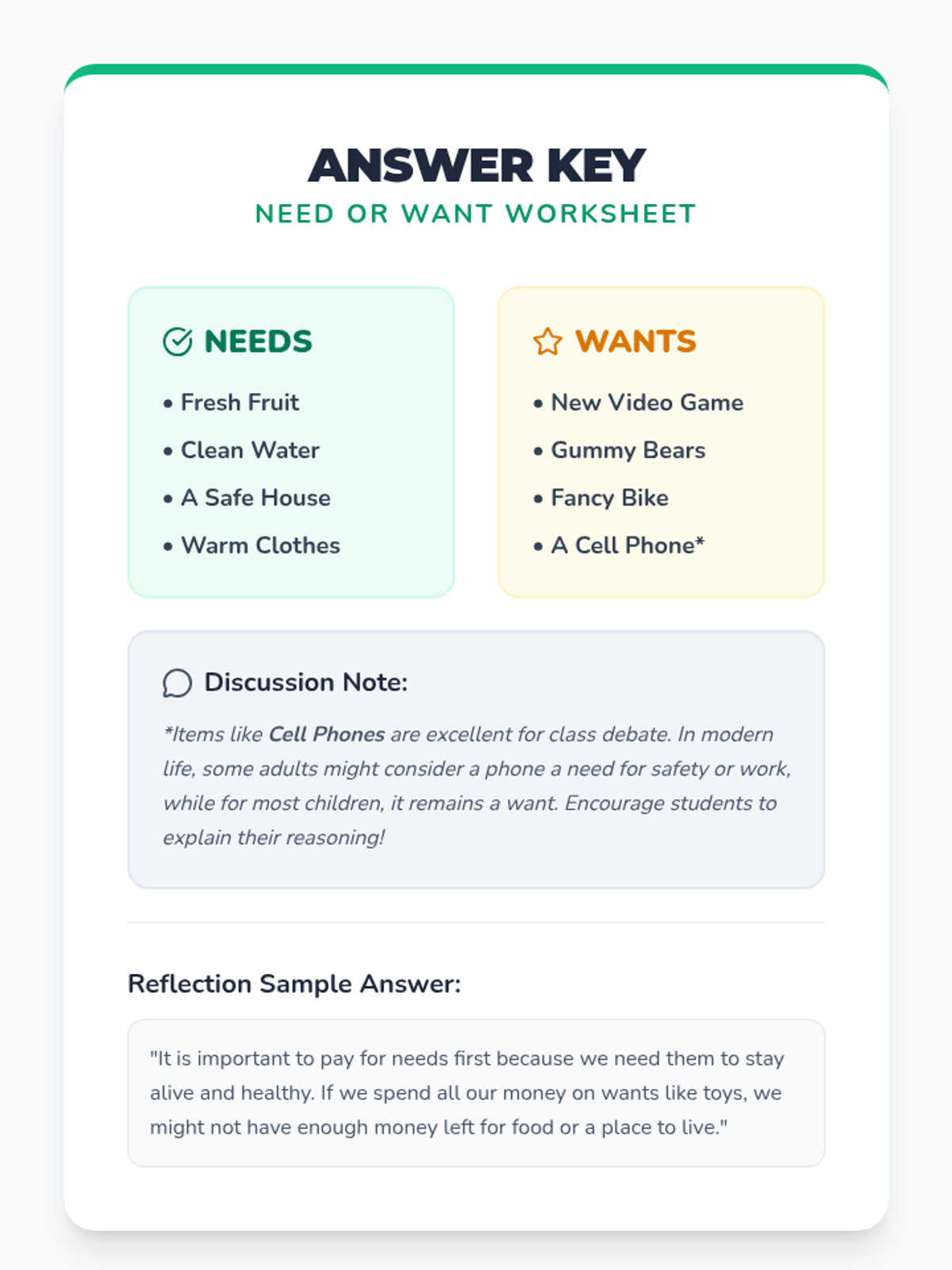
Students navigate a simulated classroom economy to learn budgeting, opportunity cost, and the difference between needs and wants through games and real-world scenarios.
This sequence explores the transformative period from the Black Death to the Renaissance. Students will analyze how a global crisis reshaped European society, leading to the decline of feudalism, the rise of towns and guilds, and the birth of modern art and commerce.
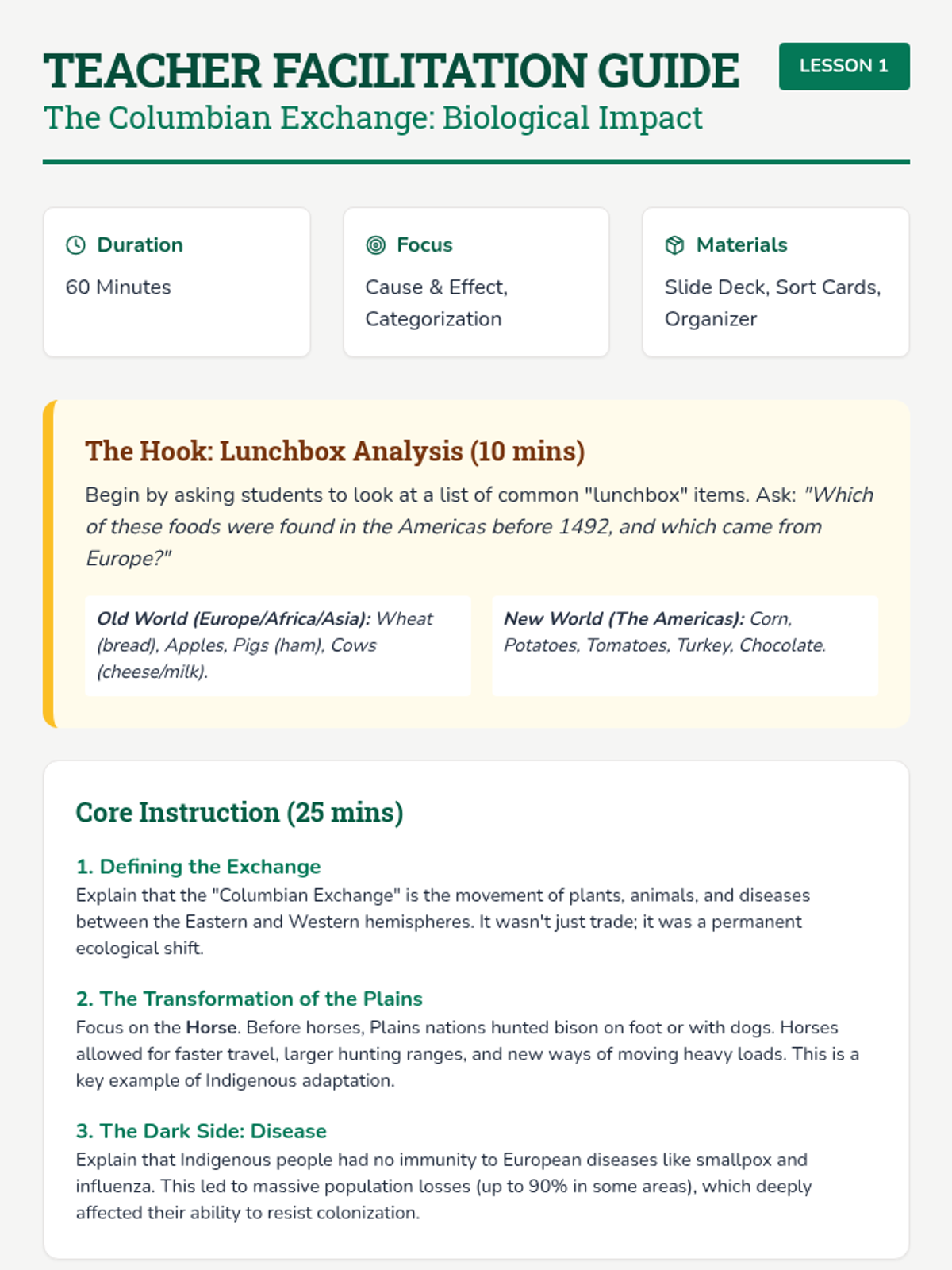
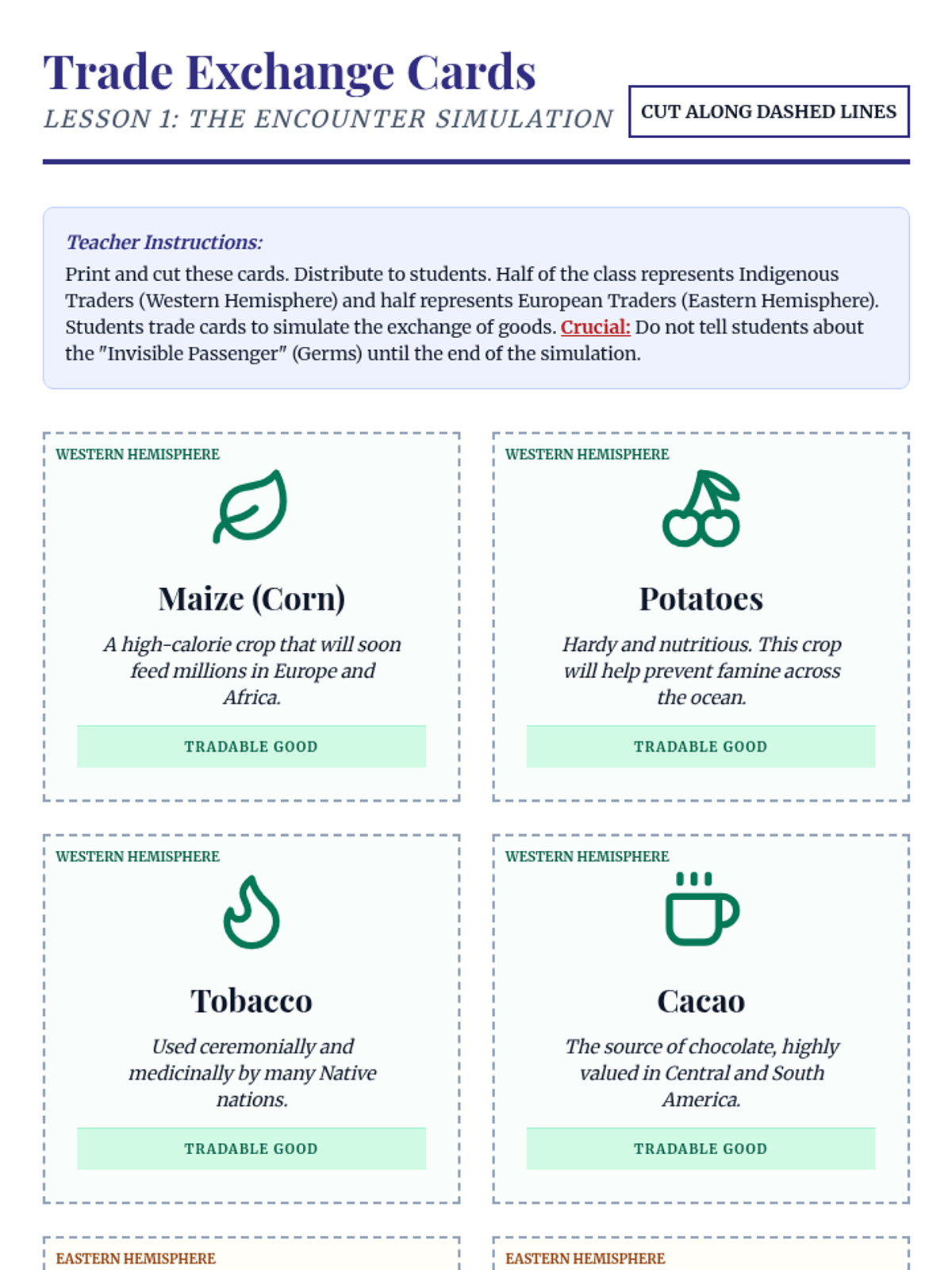
This sequence explores the profound changes during the initial contact between Indigenous nations and European explorers. Students examine the Columbian Exchange, trade economies, conflicting views on land, and political alliances to understand the complexity of this historical encounter.
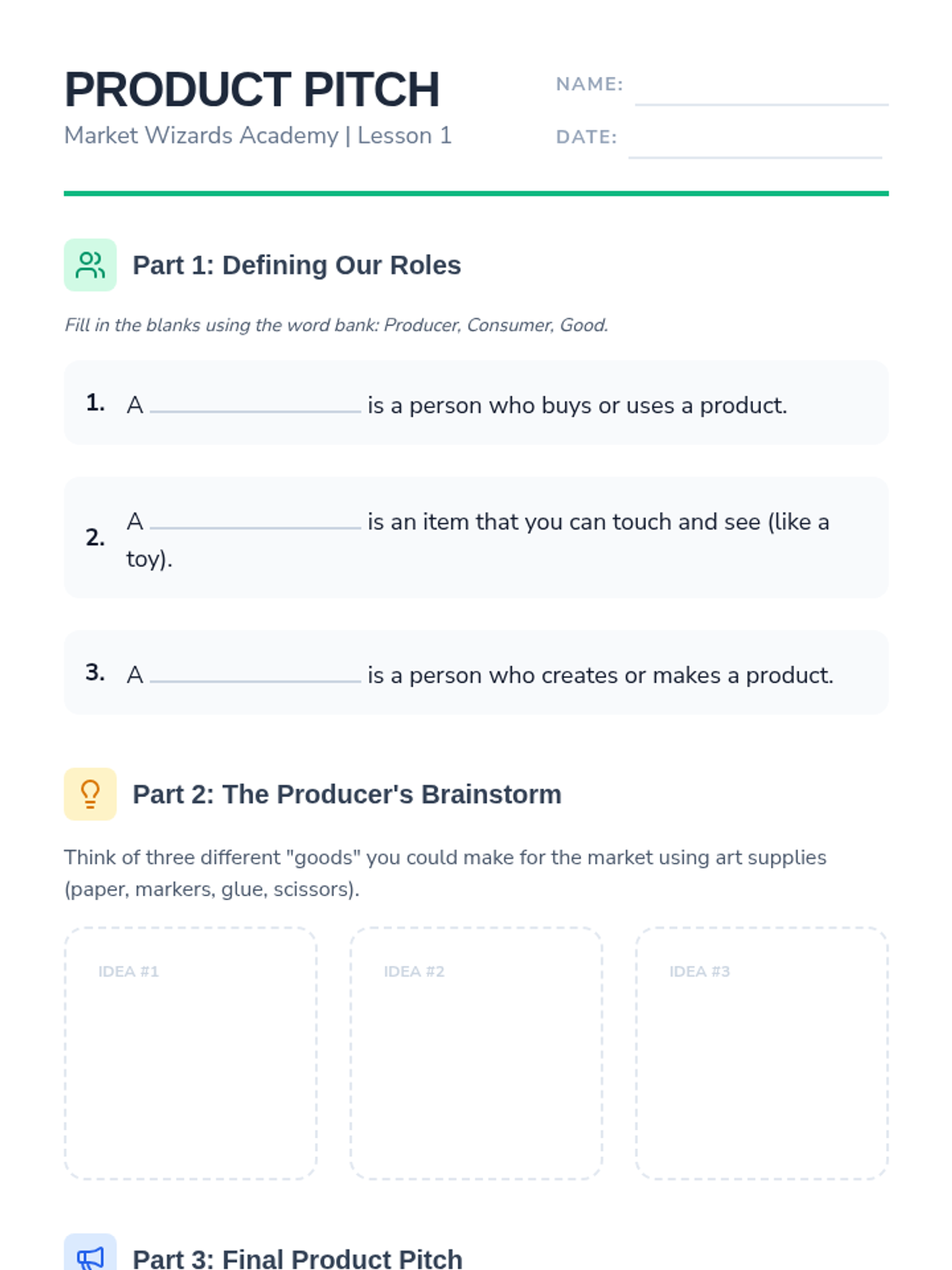
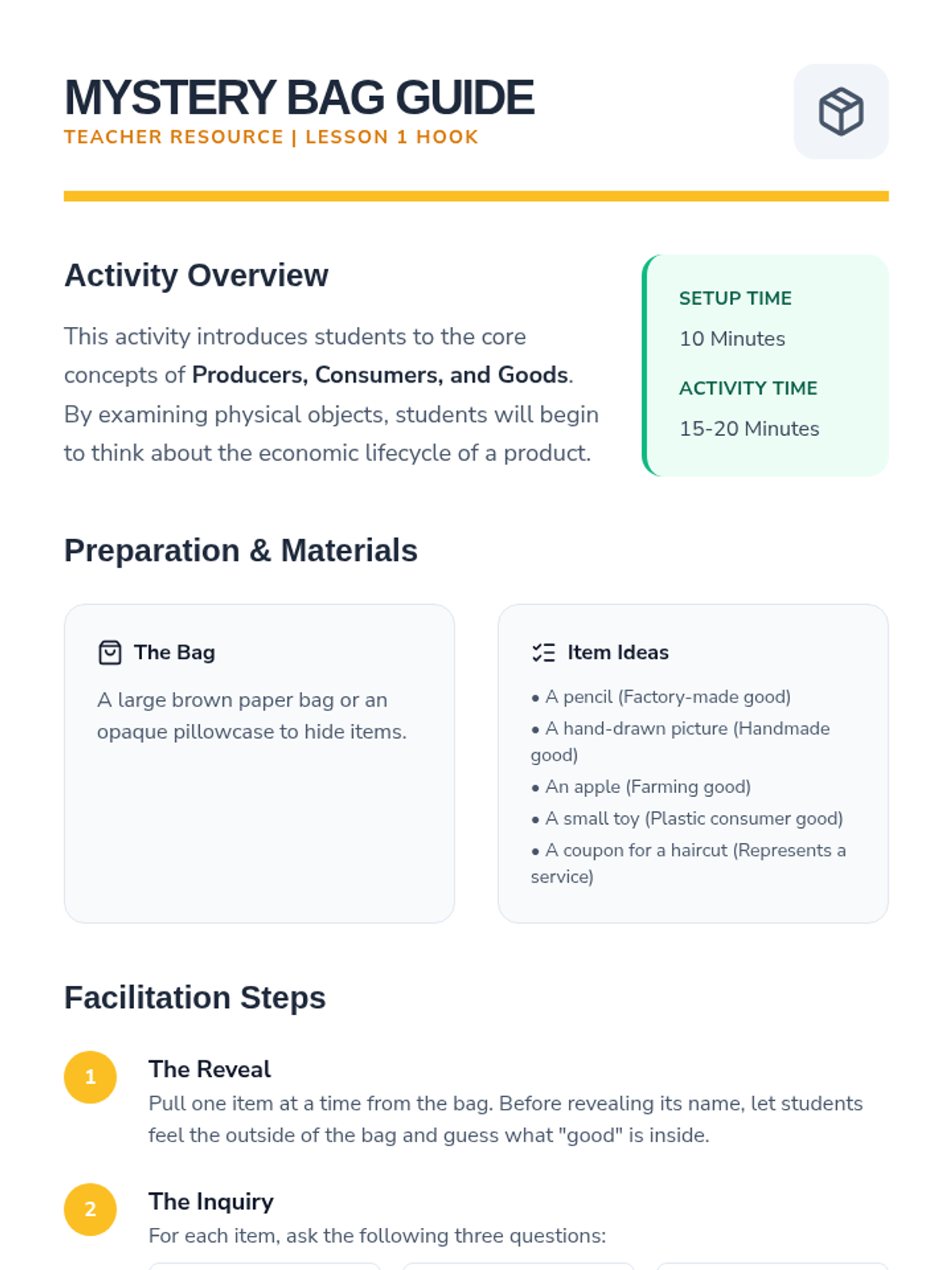
A project-based sequence where students simulate a market economy by creating products, investing capital, and navigating supply and demand during a classroom market day.
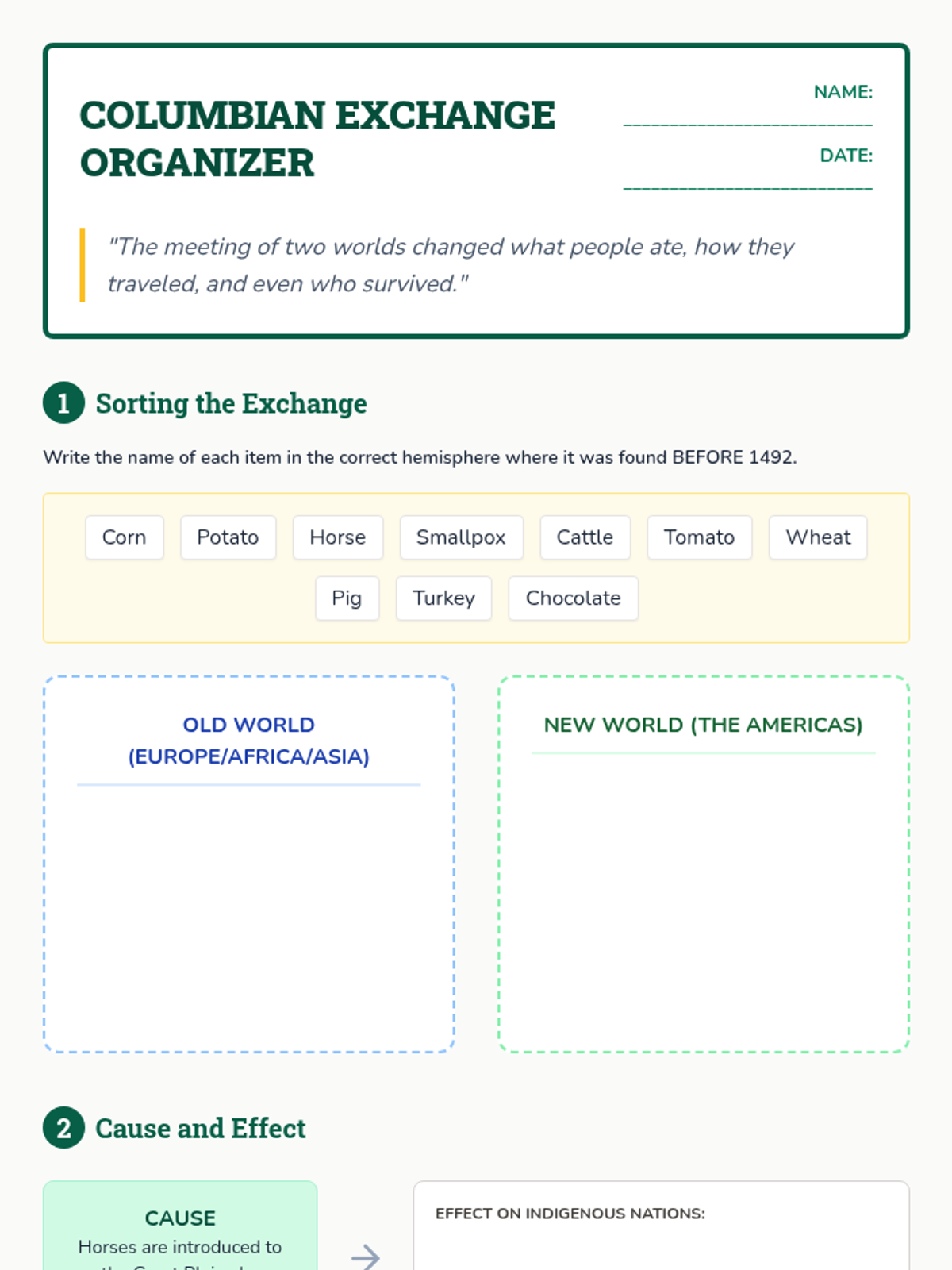
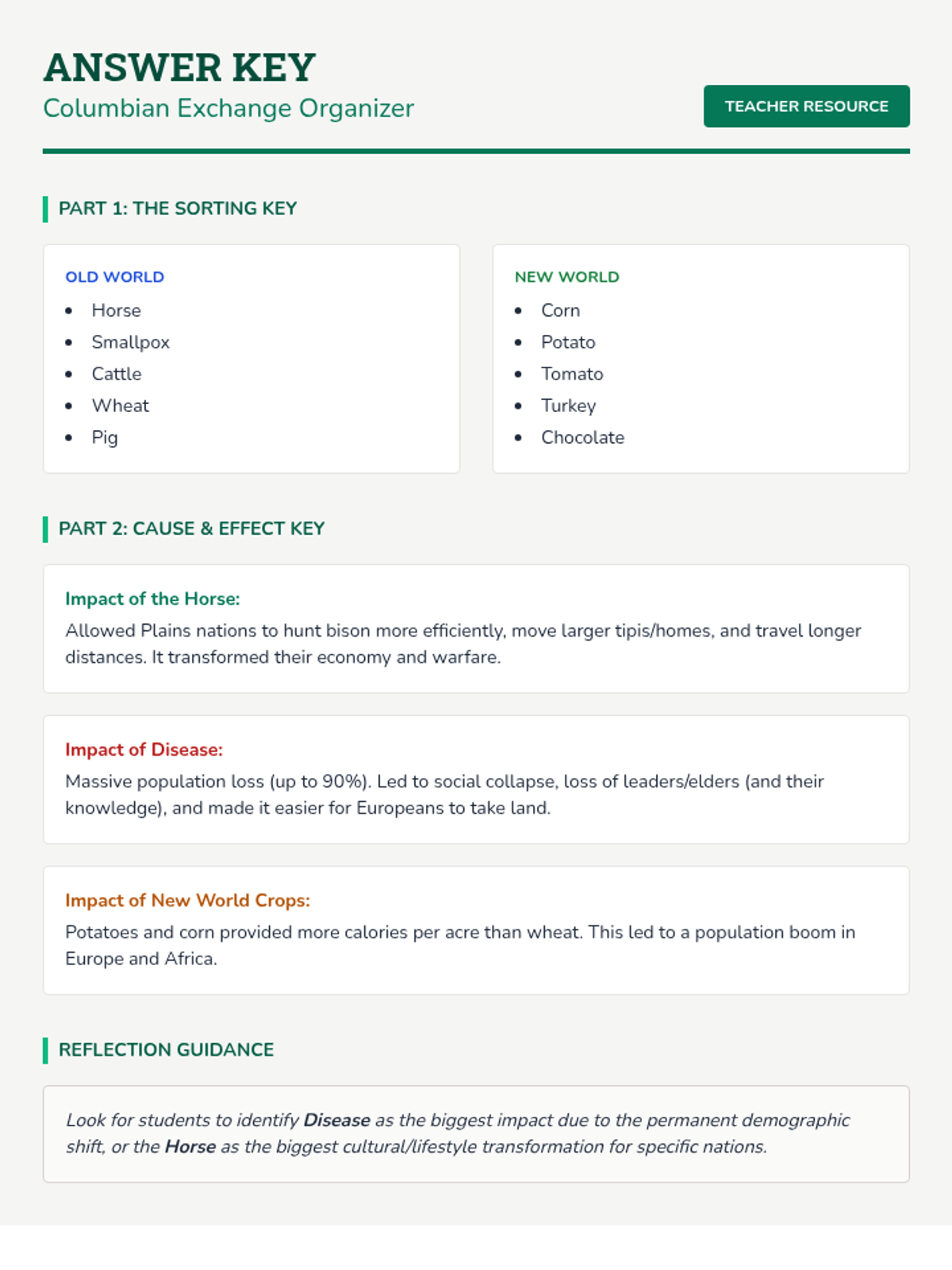
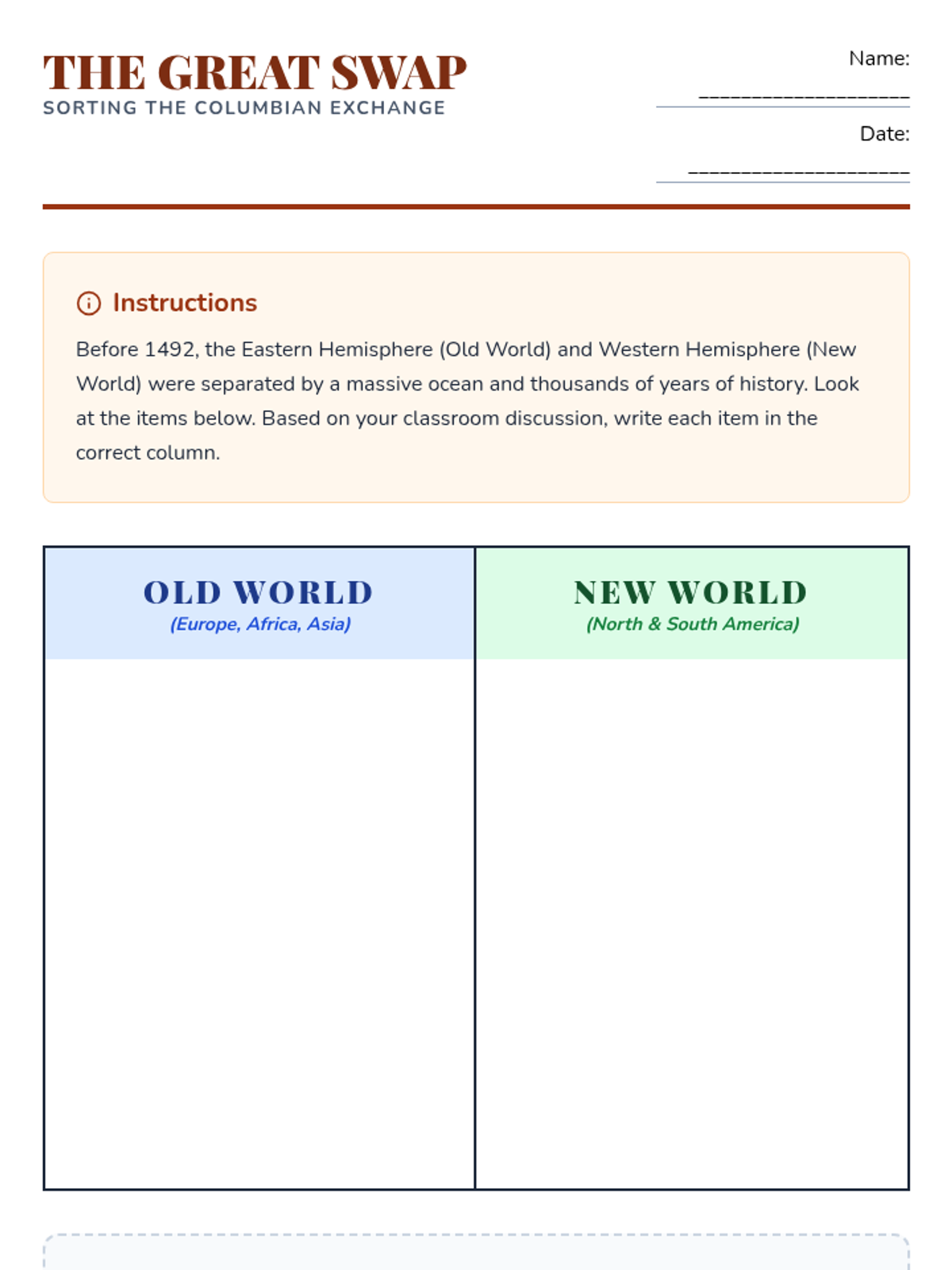
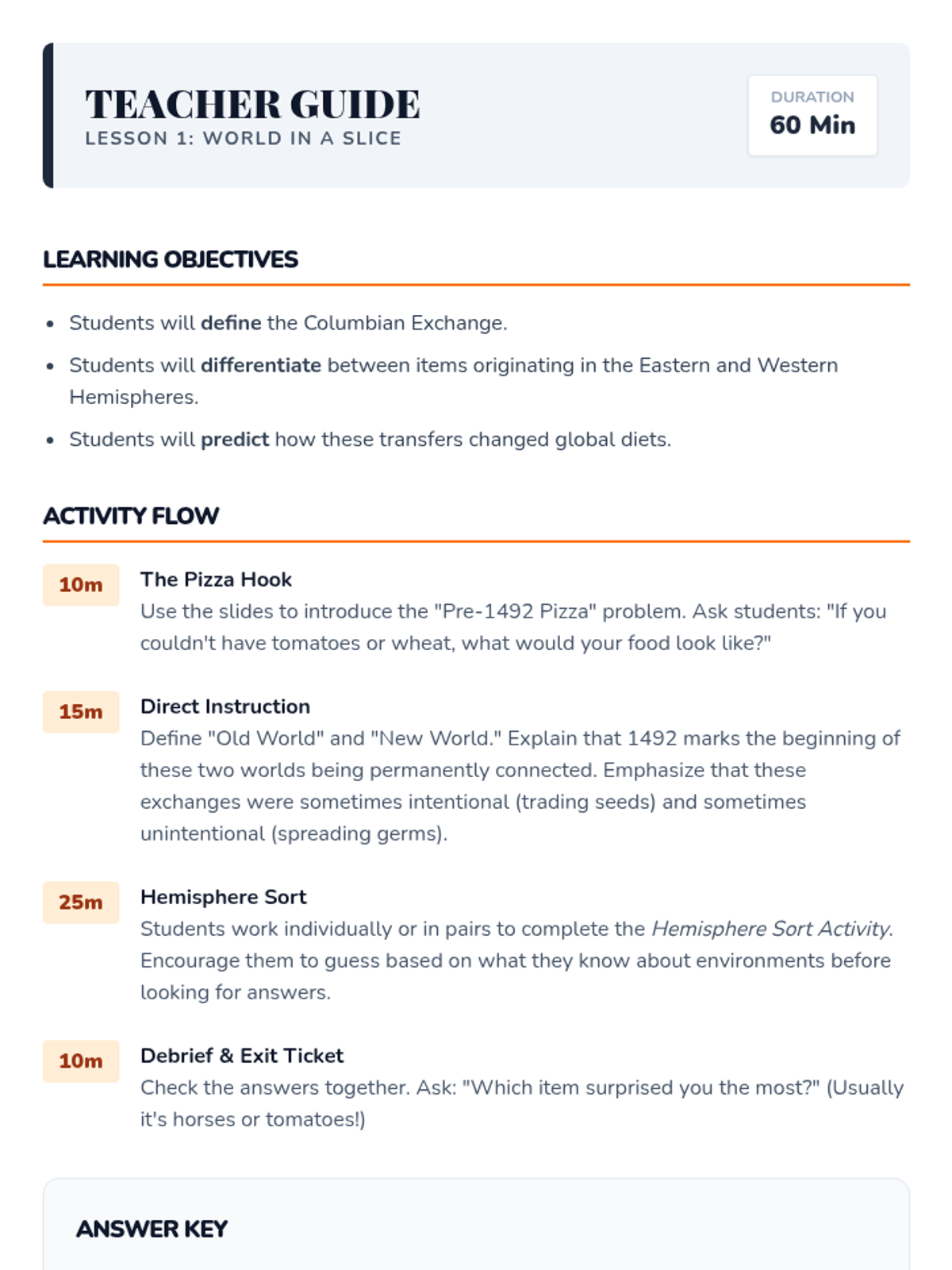
This 5th-grade history sequence explores the Columbian Exchange, focusing on the biological and economic transfers between the Eastern and Western Hemispheres. Students will analyze how the movement of plants, animals, and diseases reshaped global diets, economies, and demographics, culminating in a creative fusion menu project.
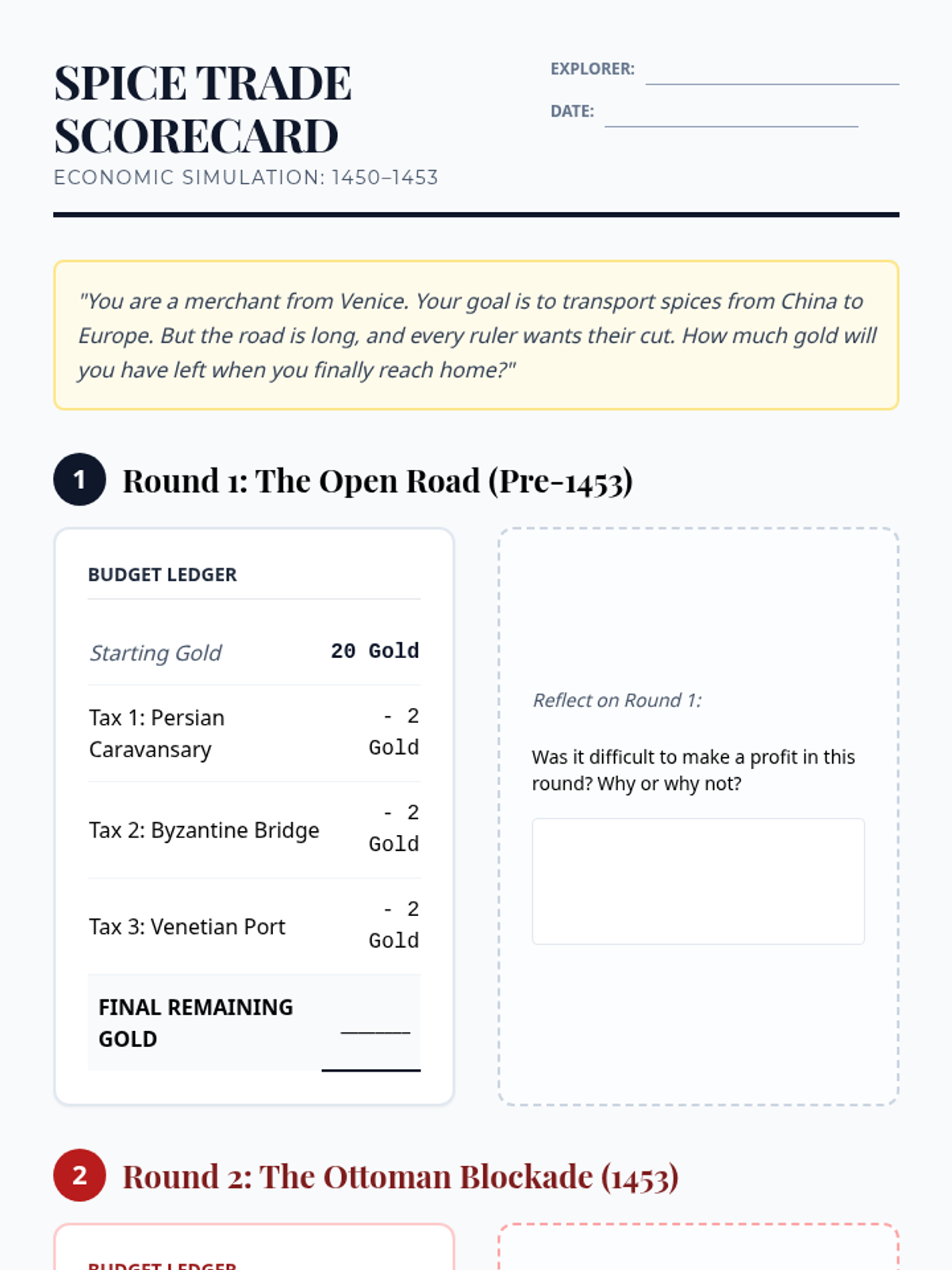
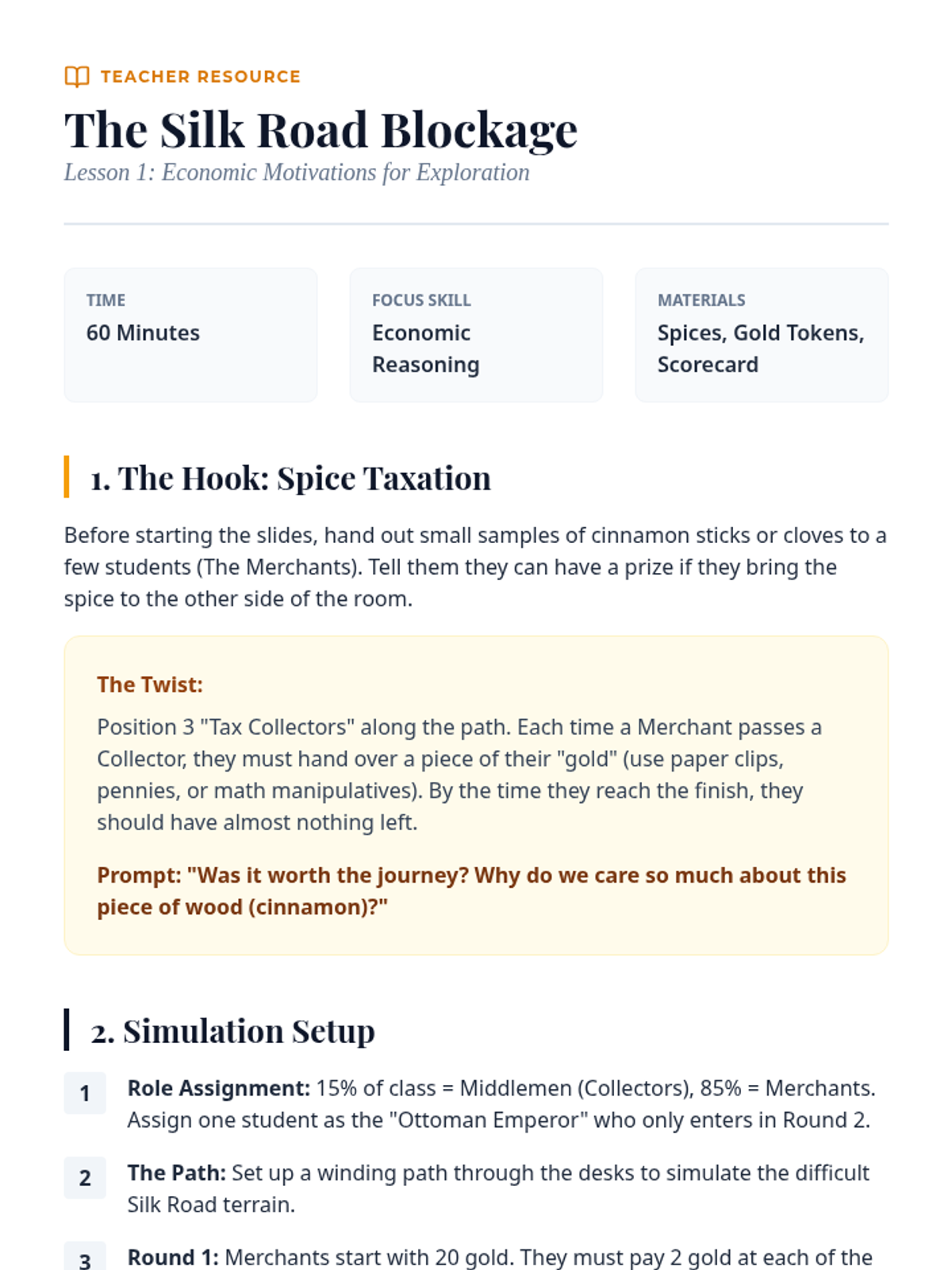
A 5th-grade history sequence exploring the Age of Exploration through a gamified framework, focusing on the motivations of 'God, Gold, and Glory' and the geopolitical competition between European nations.
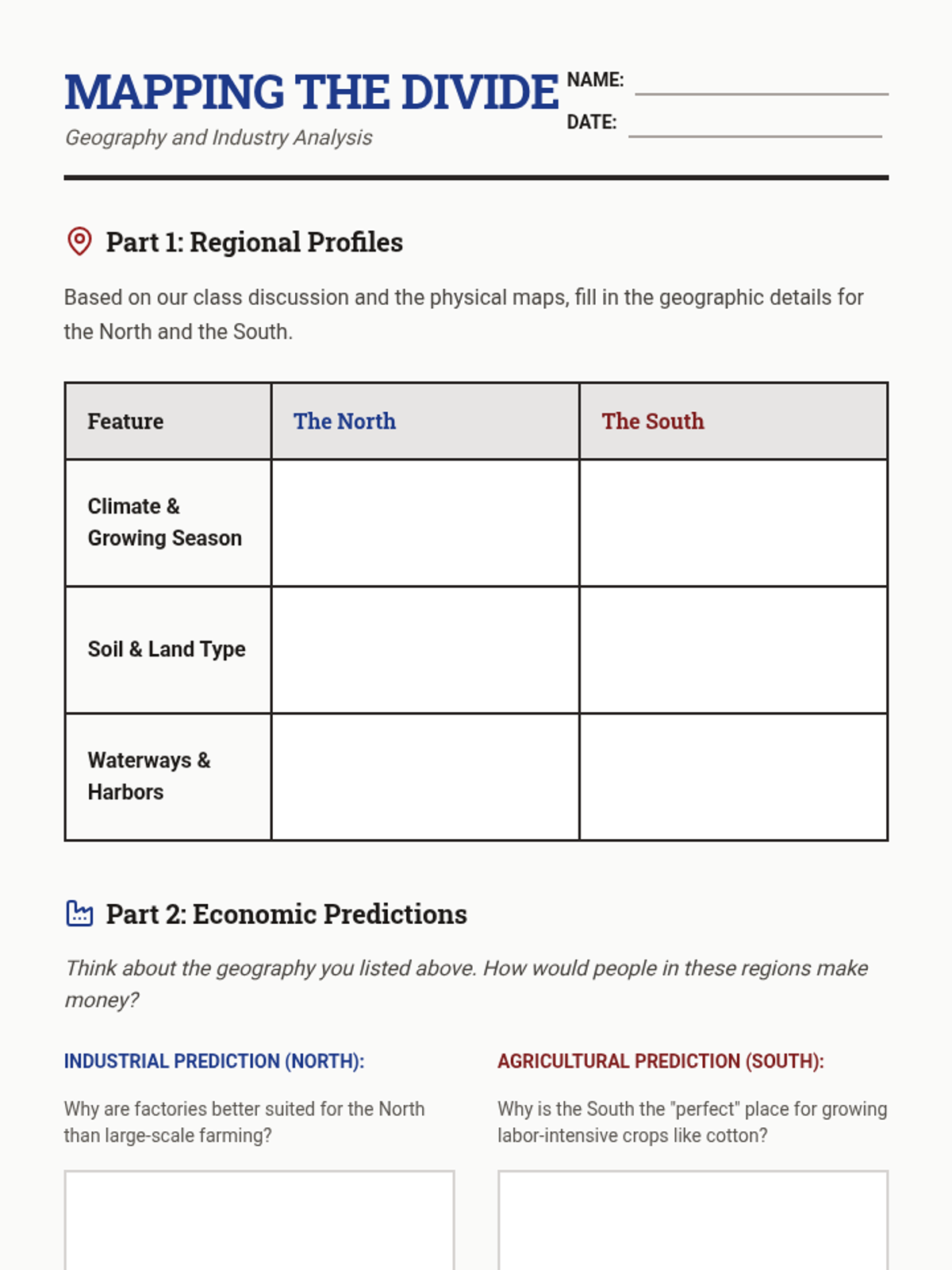
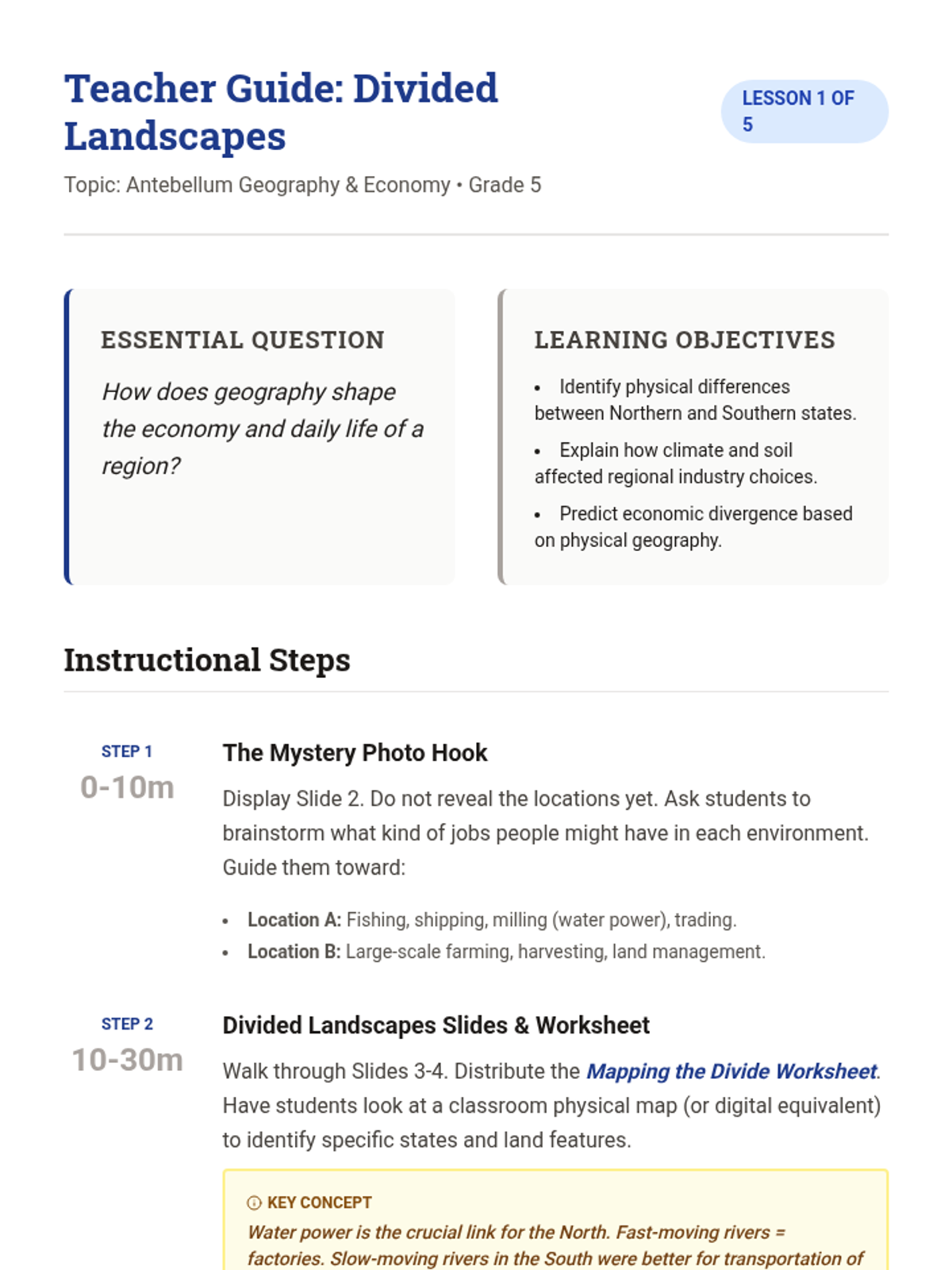
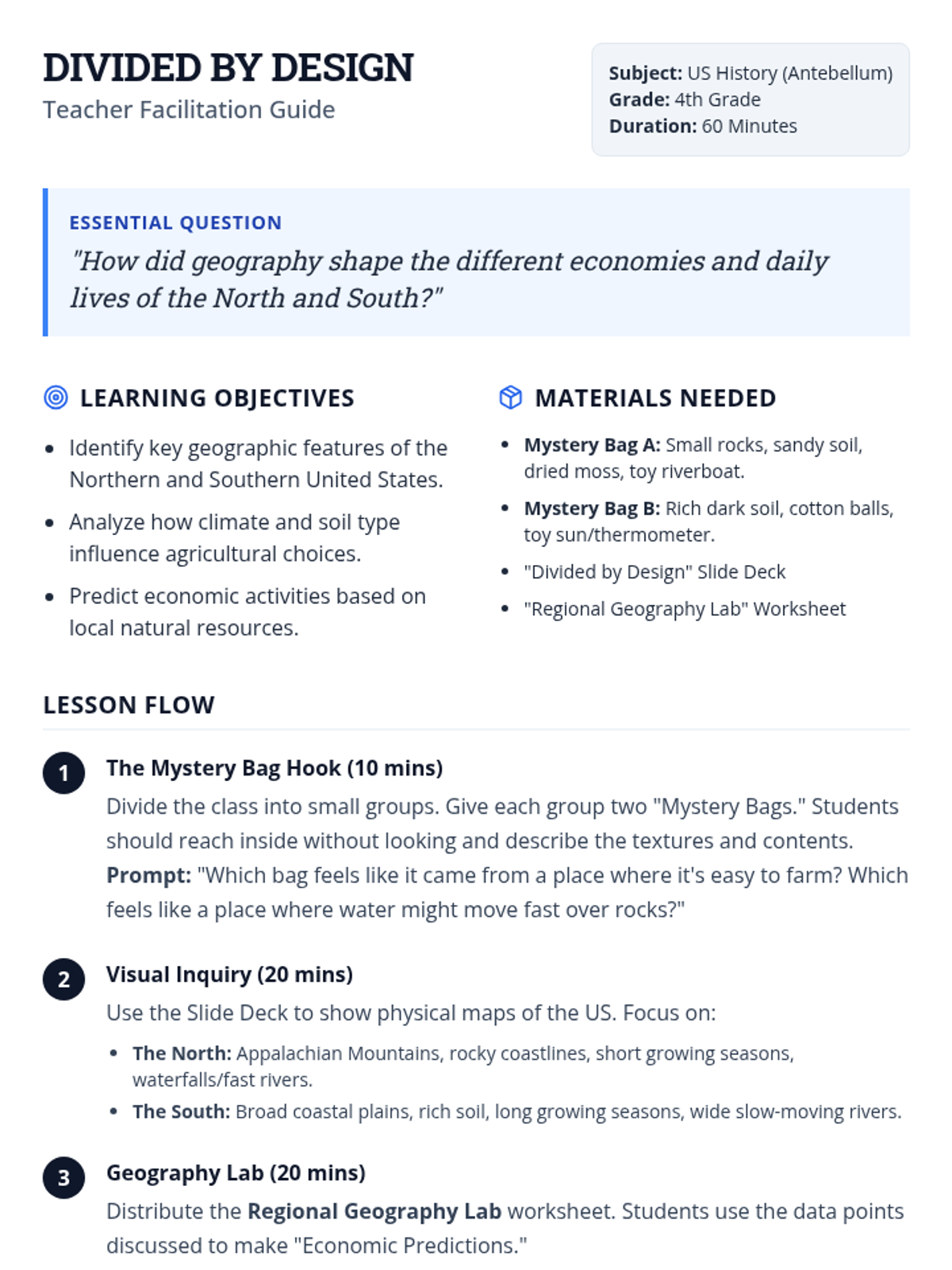
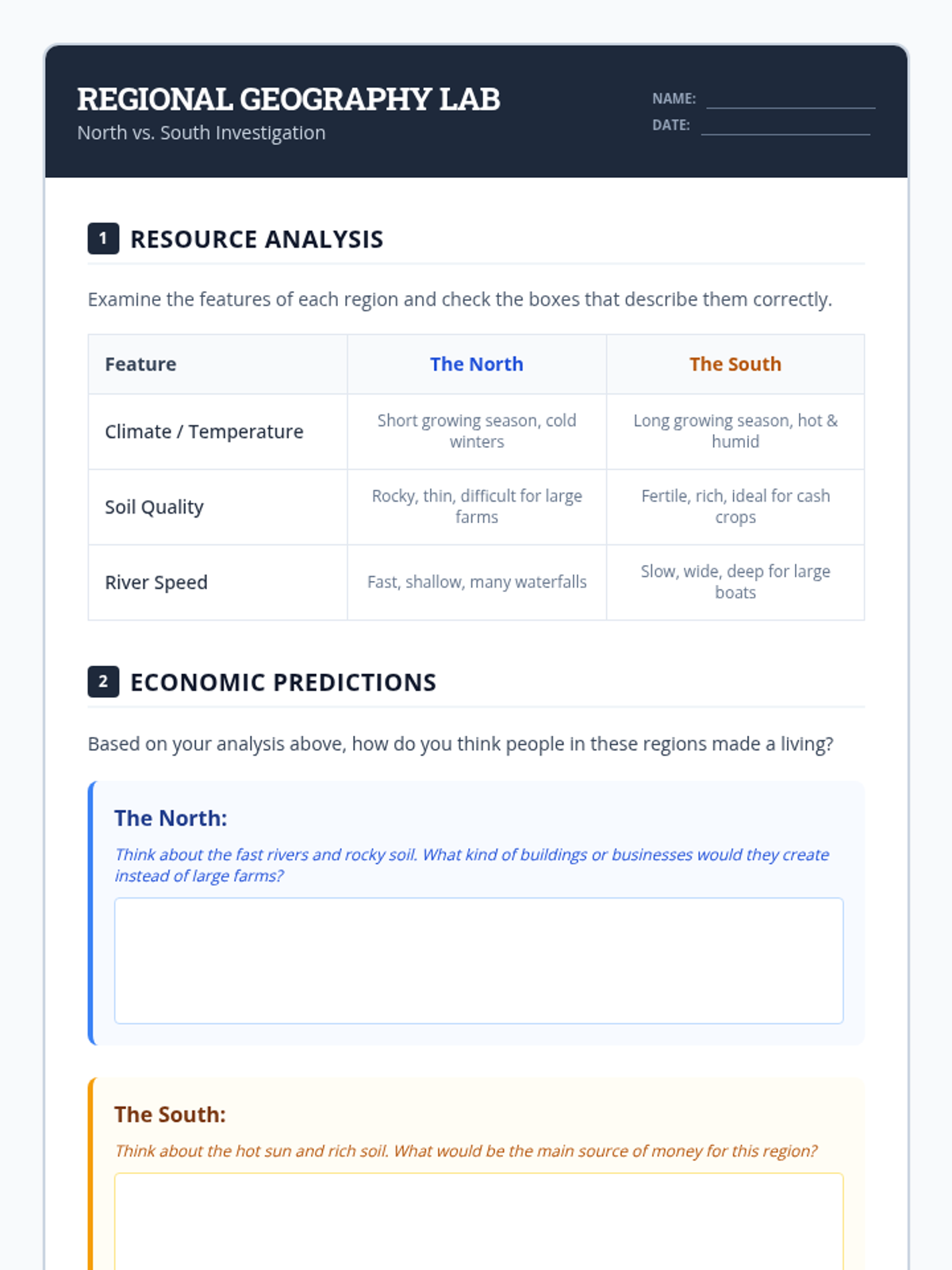
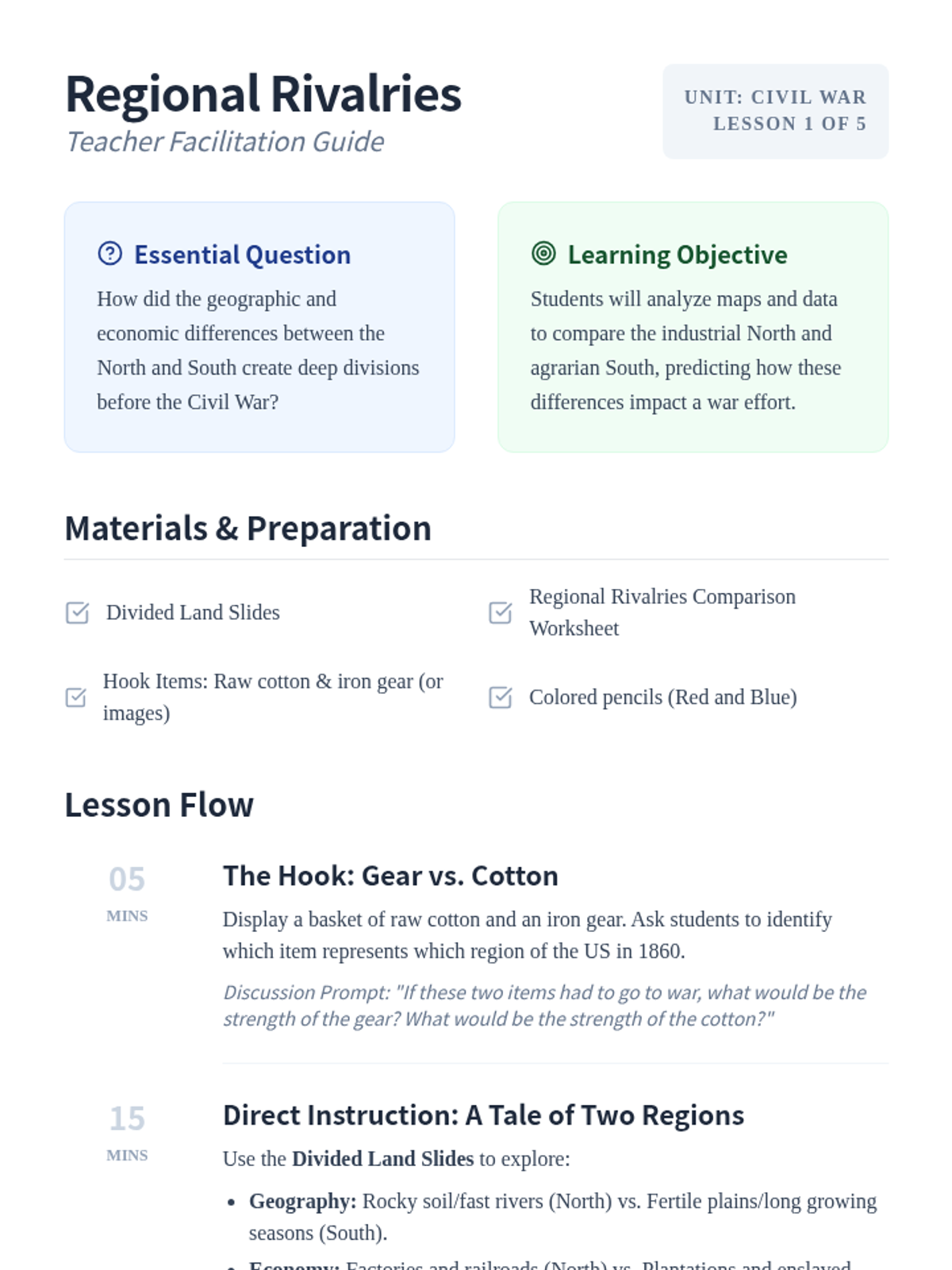
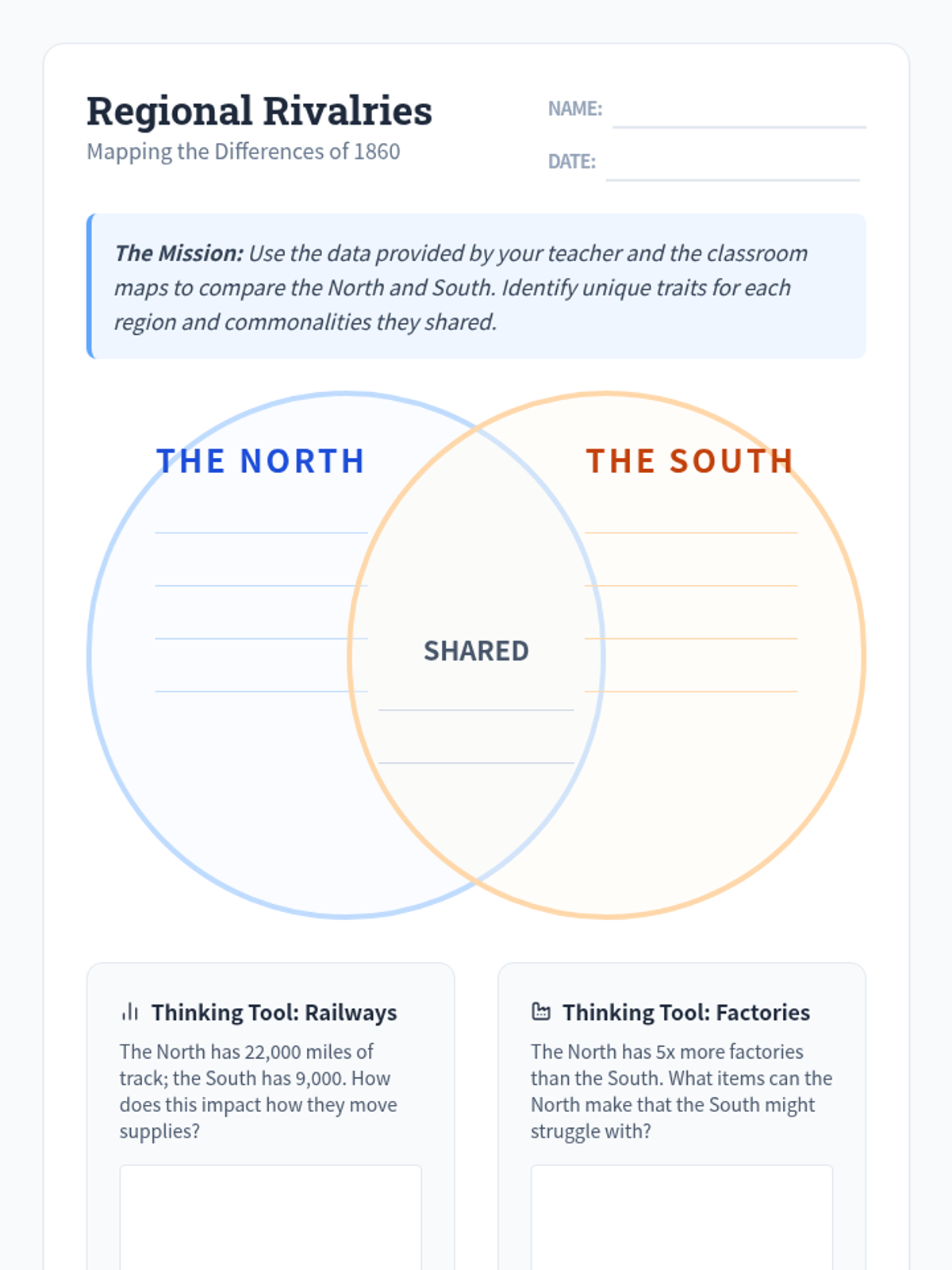
This sequence explores the geographic and economic divergence between the Northern and Southern United States prior to the Civil War, focusing on how different environments led to distinct industrial and agricultural systems. Students will analyze the interdependence and growing tensions between these regions through simulations, data analysis, and role-playing.
A comprehensive 5-lesson sequence for 5th-grade students exploring the fundamentals of market economics, specifically the interaction between supply, demand, competition, and price determination through simulations and workshops.
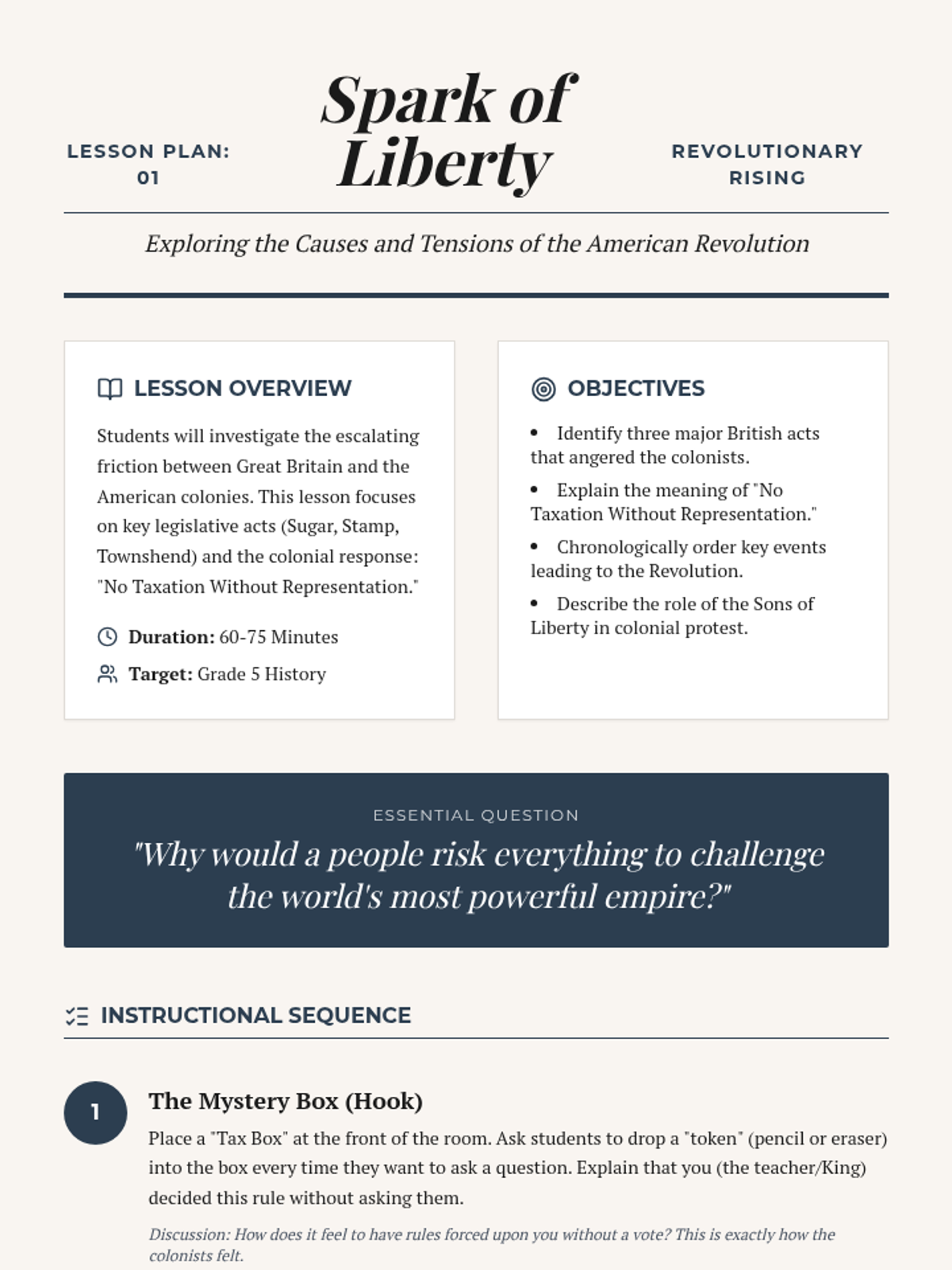
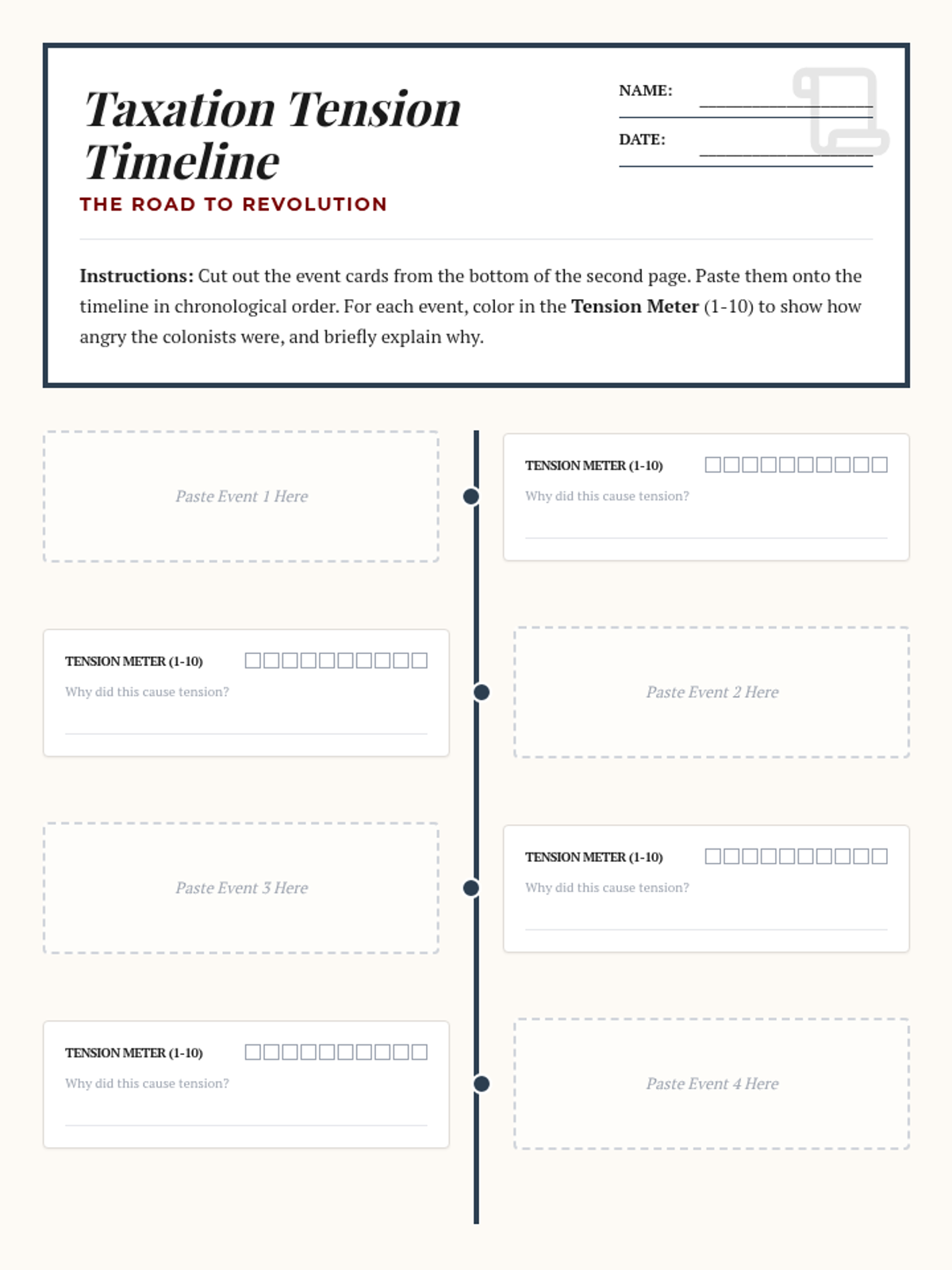
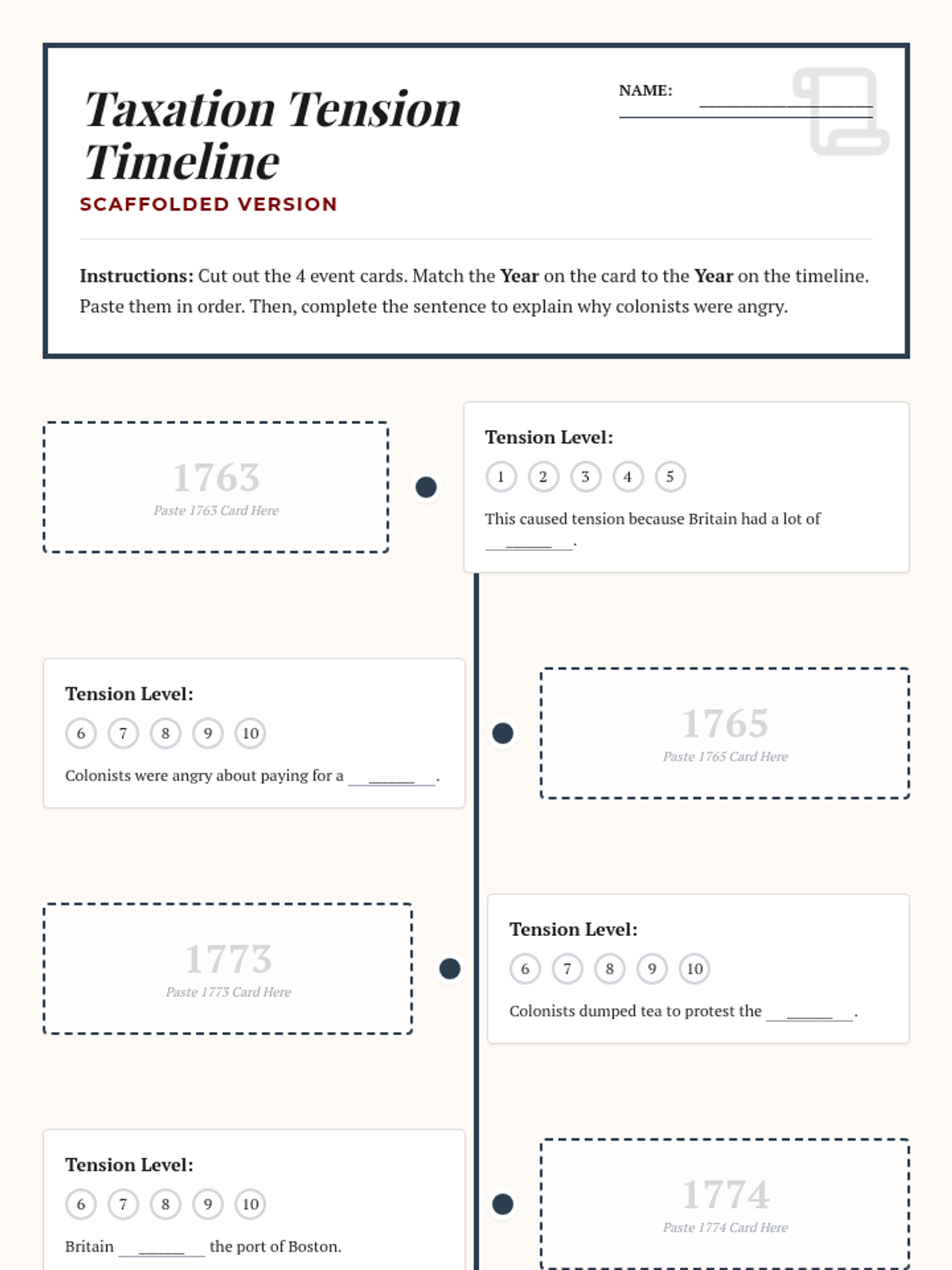
A comprehensive unit on the American Revolution, covering the causes of colonial friction and the strategic military turning points of the war for independence.
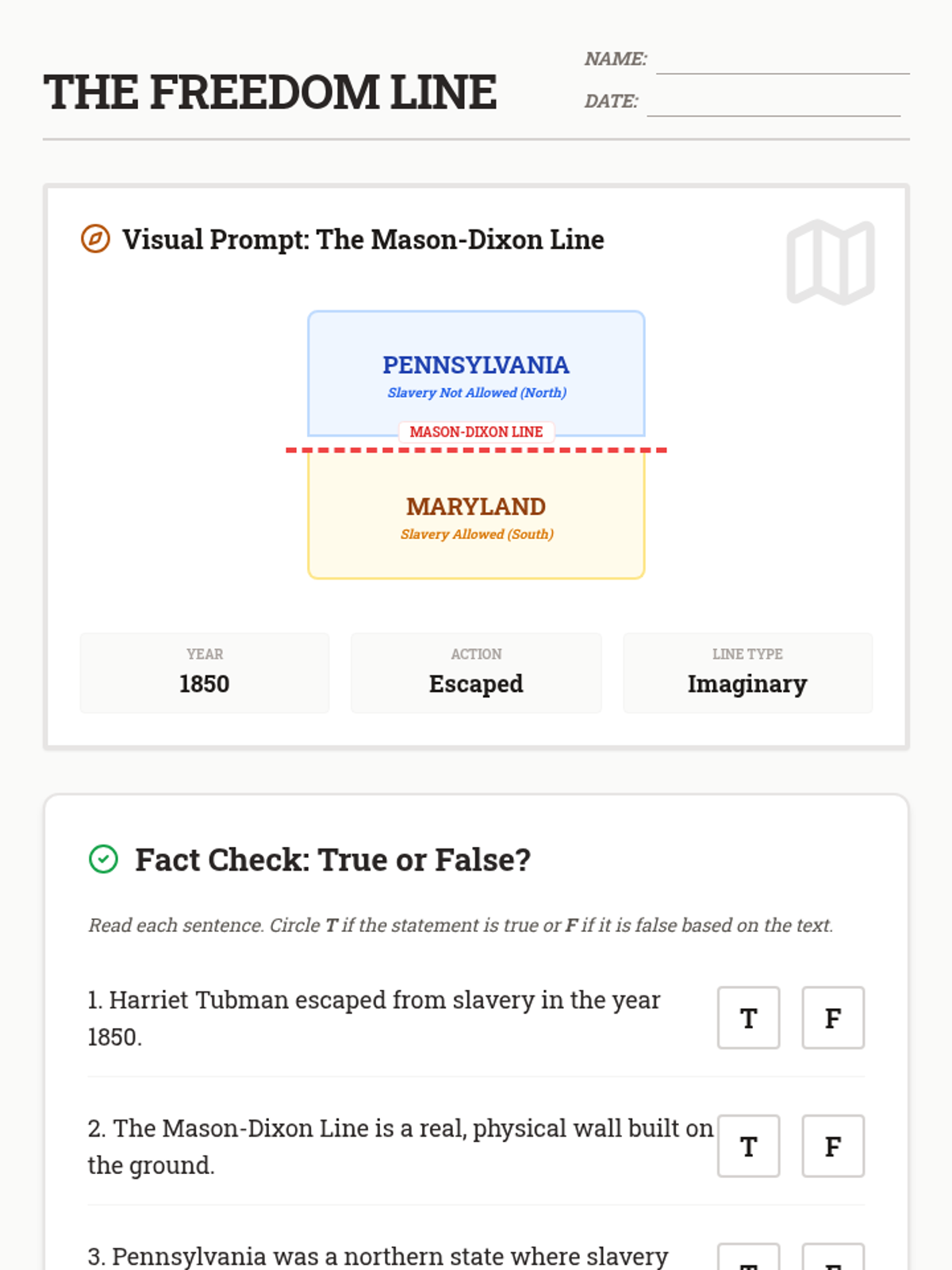
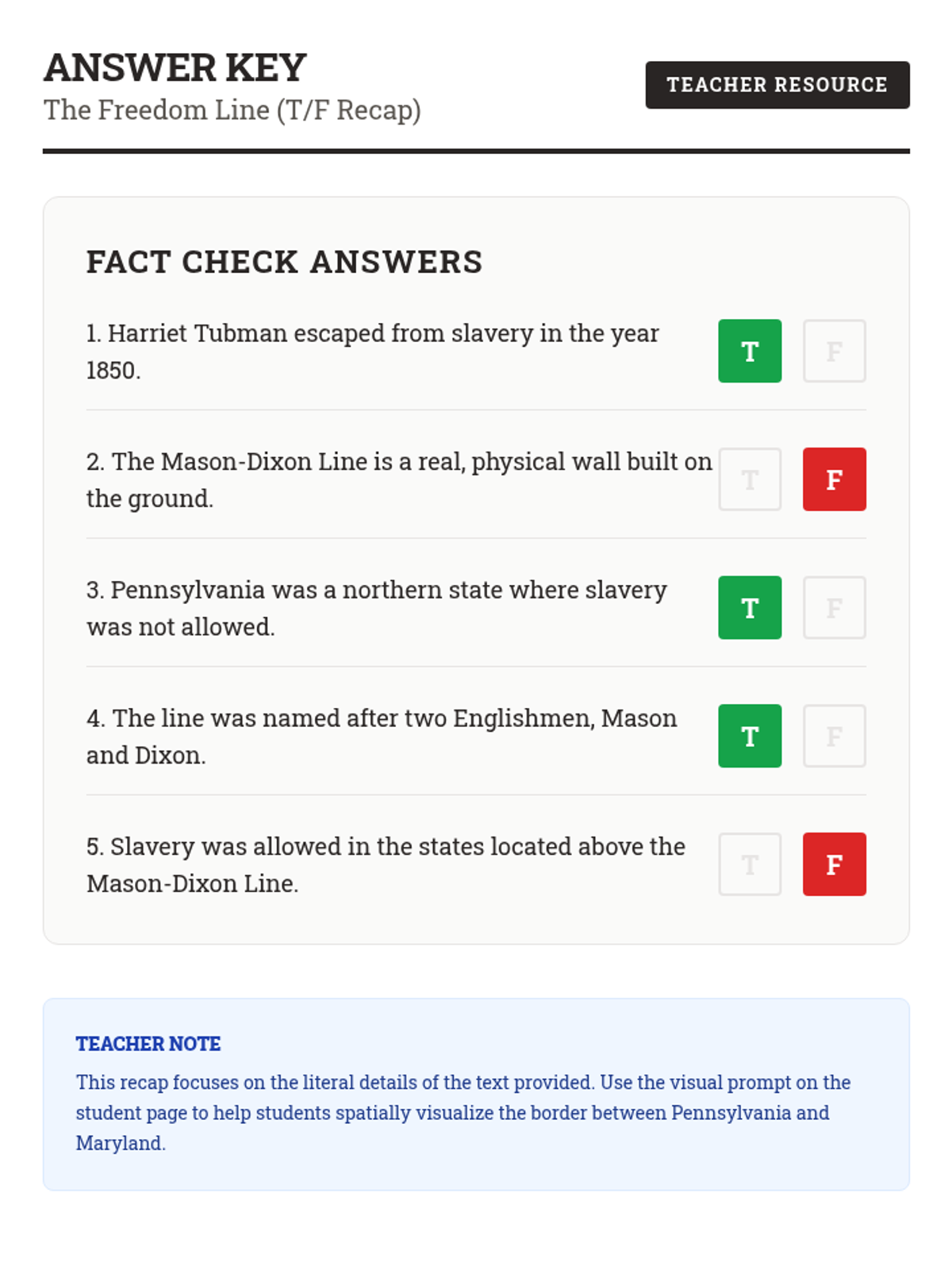
A unit exploring the geographical, economic, and social differences between the North and South in the mid-19th century, centered on the life of Harriet Tubman and the abolitionist movement.
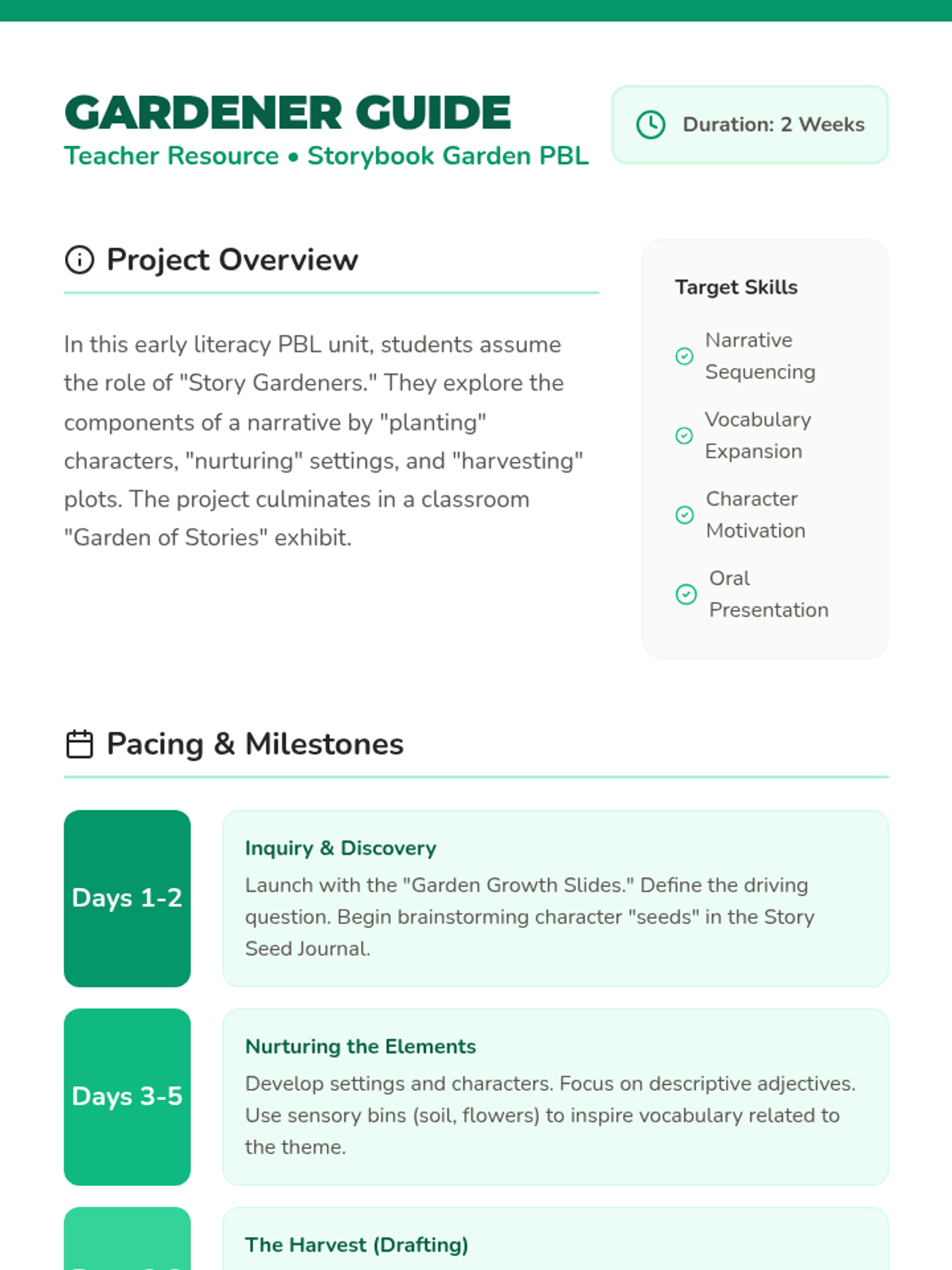
A comprehensive collection of Project-Based Learning (PBL) units spanning early childhood literacy, elementary math and science, and middle school social studies. Each unit guides students through inquiry, creation, and presentation within a themed 'Discovery Files' framework.
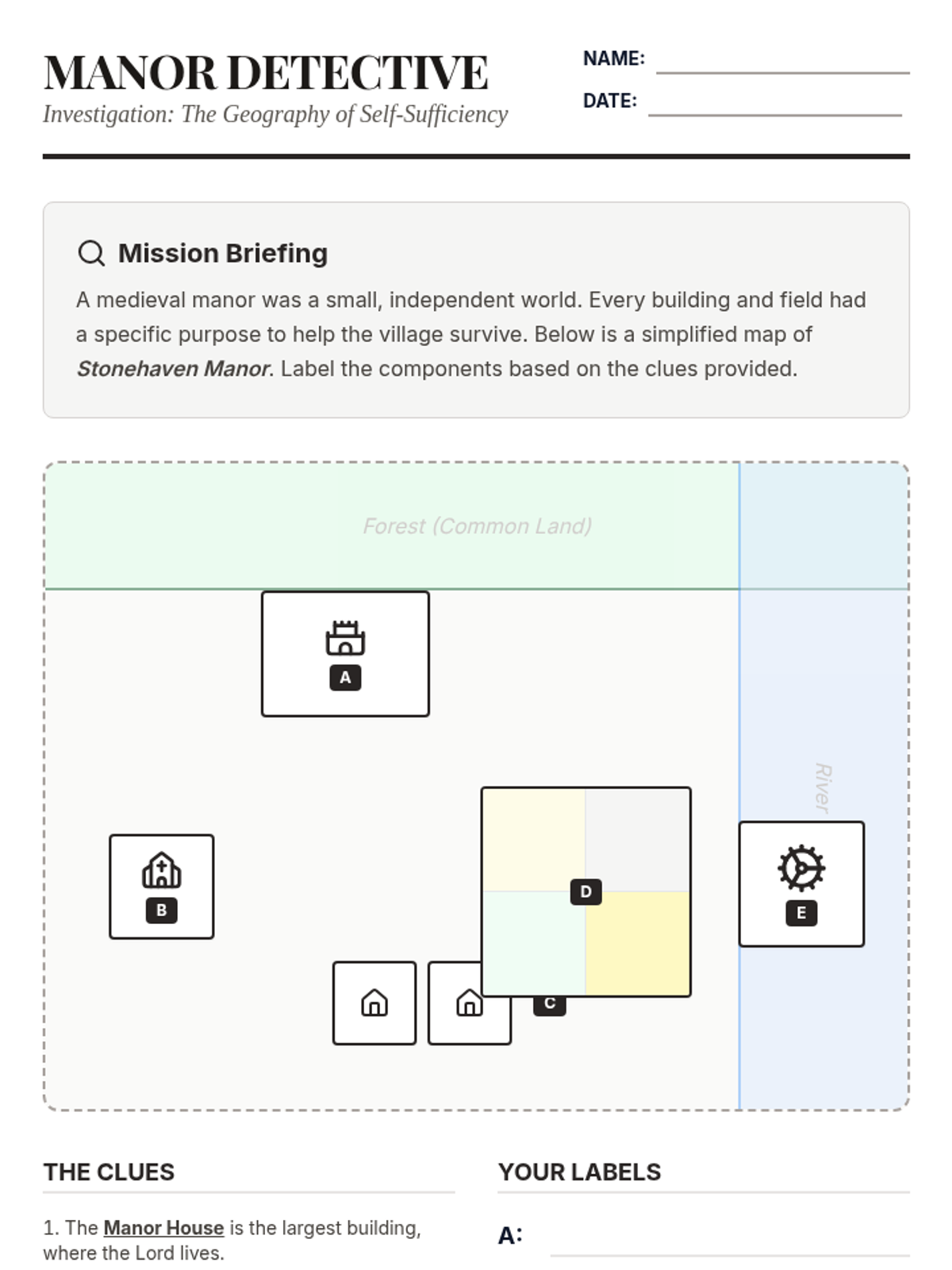
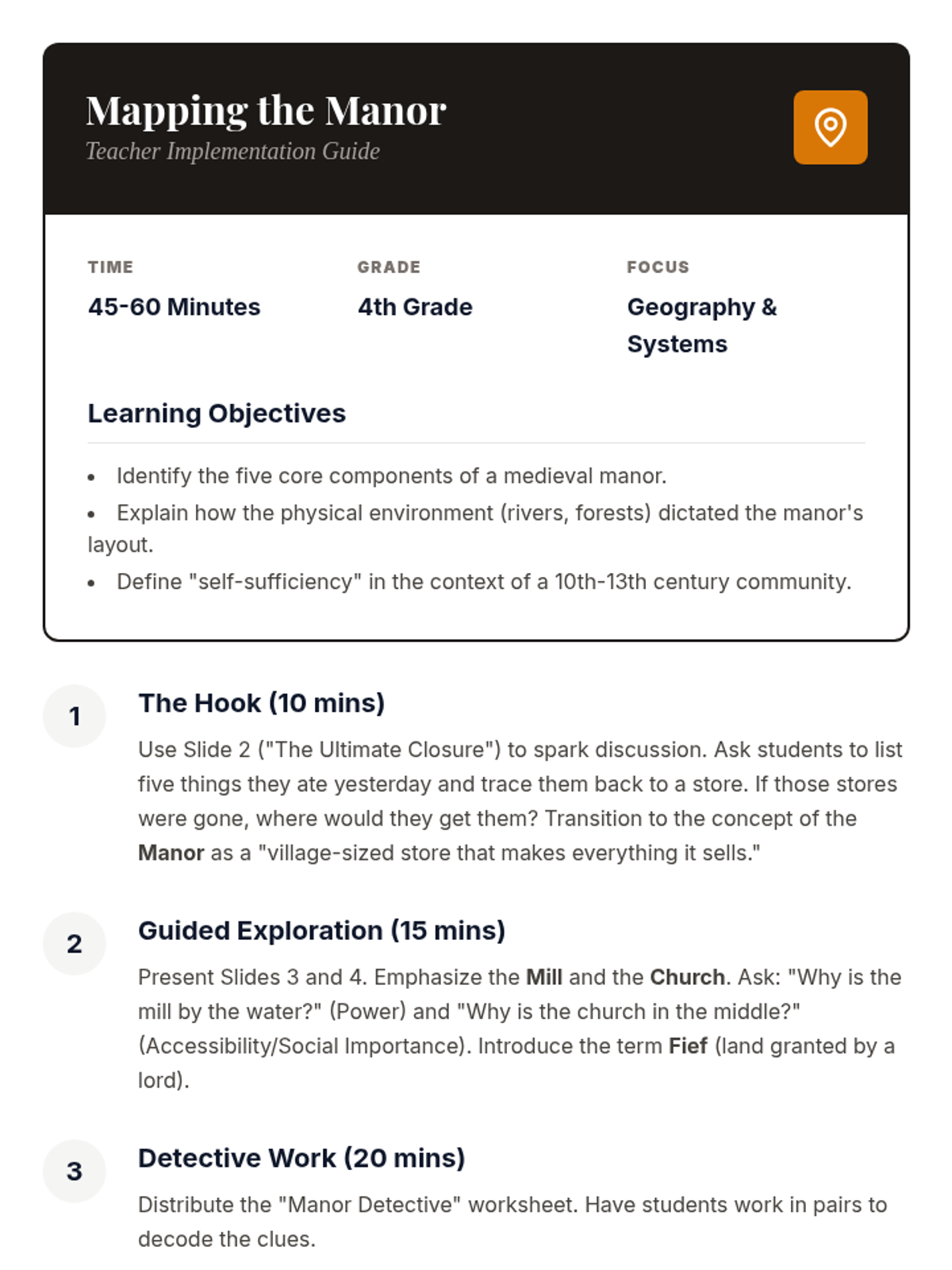
Students investigate the economic foundation of medieval life by exploring the manor system, agricultural innovations, and specialized labor, culminating in the design of their own self-sufficient community.
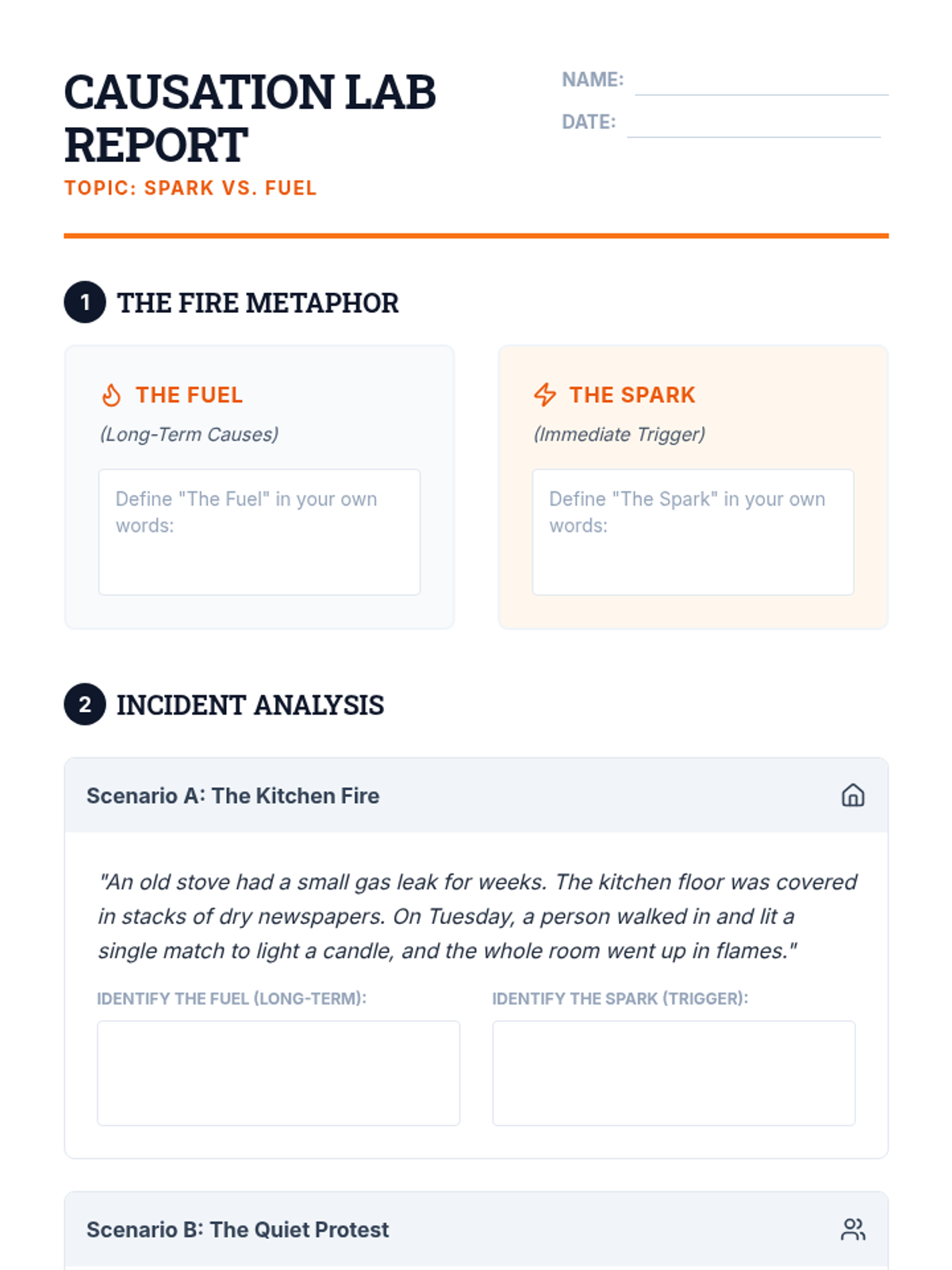
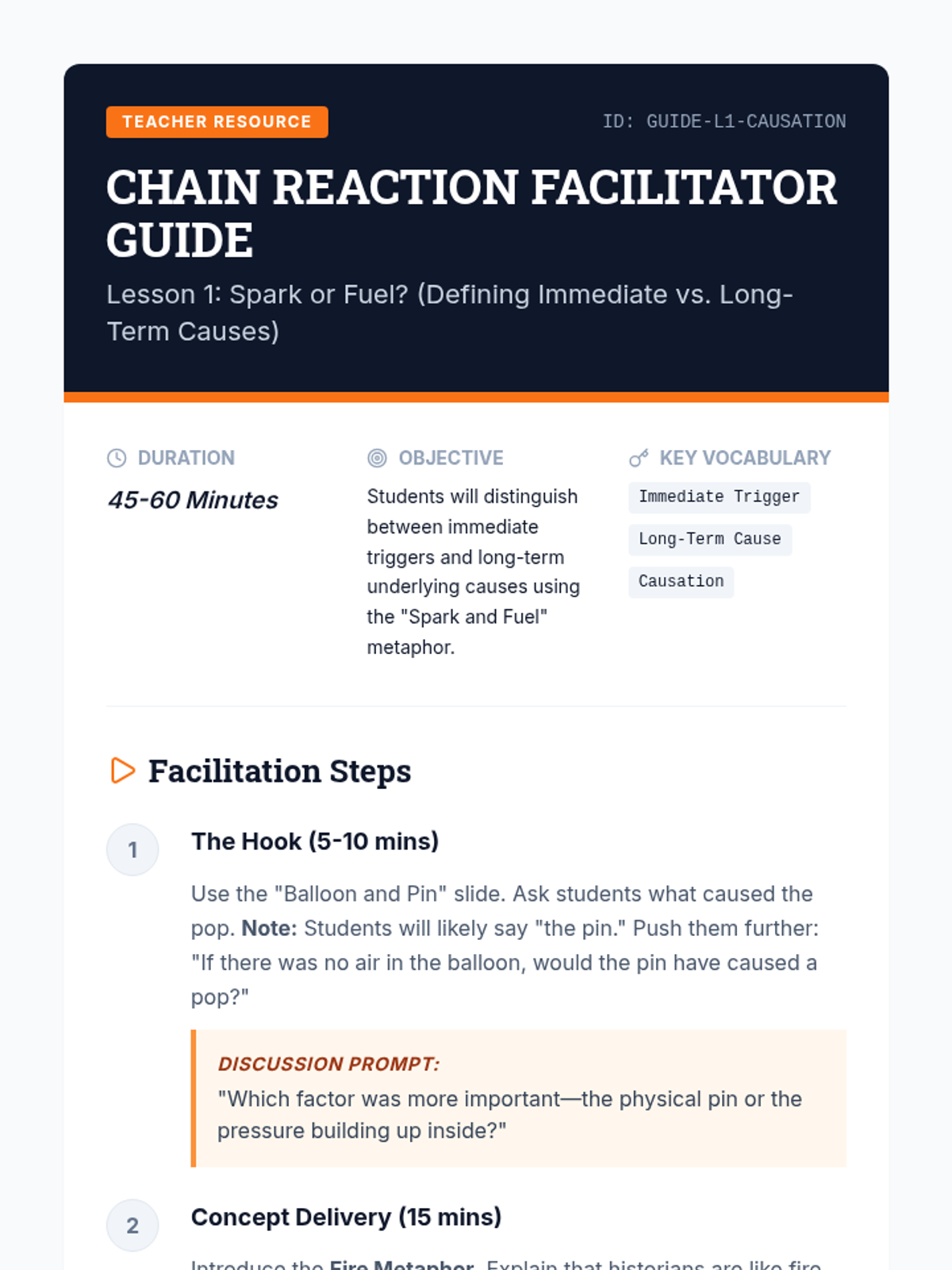
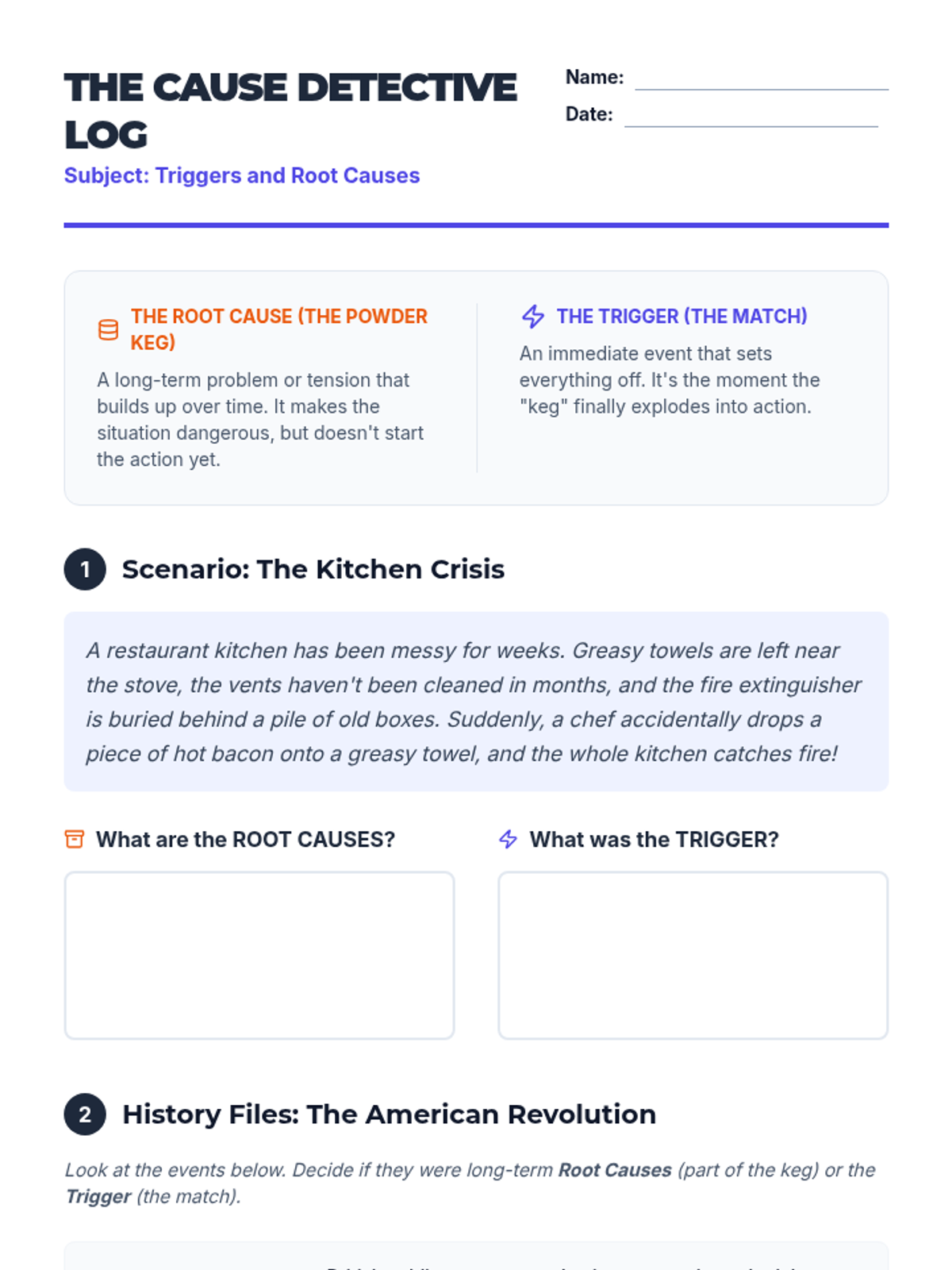
This sequence explores the relationship between long-term background causes (the fuel) and immediate triggers (the spark) in historical events. Students use the SPE (Social, Political, Economic) framework to categorize factors and learn to weigh the relative importance of different causes in driving significant historical change.
A comparative study of the Maya, Aztec, and Inca social structures, focusing on how class hierarchies shaped daily life, responsibilities, and the lasting cultural legacy of these civilizations. Students analyze the roles of rulers, nobles, and commoners while exploring economic systems like tribute and mita.
A comparative inquiry into how geography and climate shaped the distinct industrial economy of the North and the agrarian economy of the South during the Antebellum period, emphasizing their interdependence and growing conflicts.
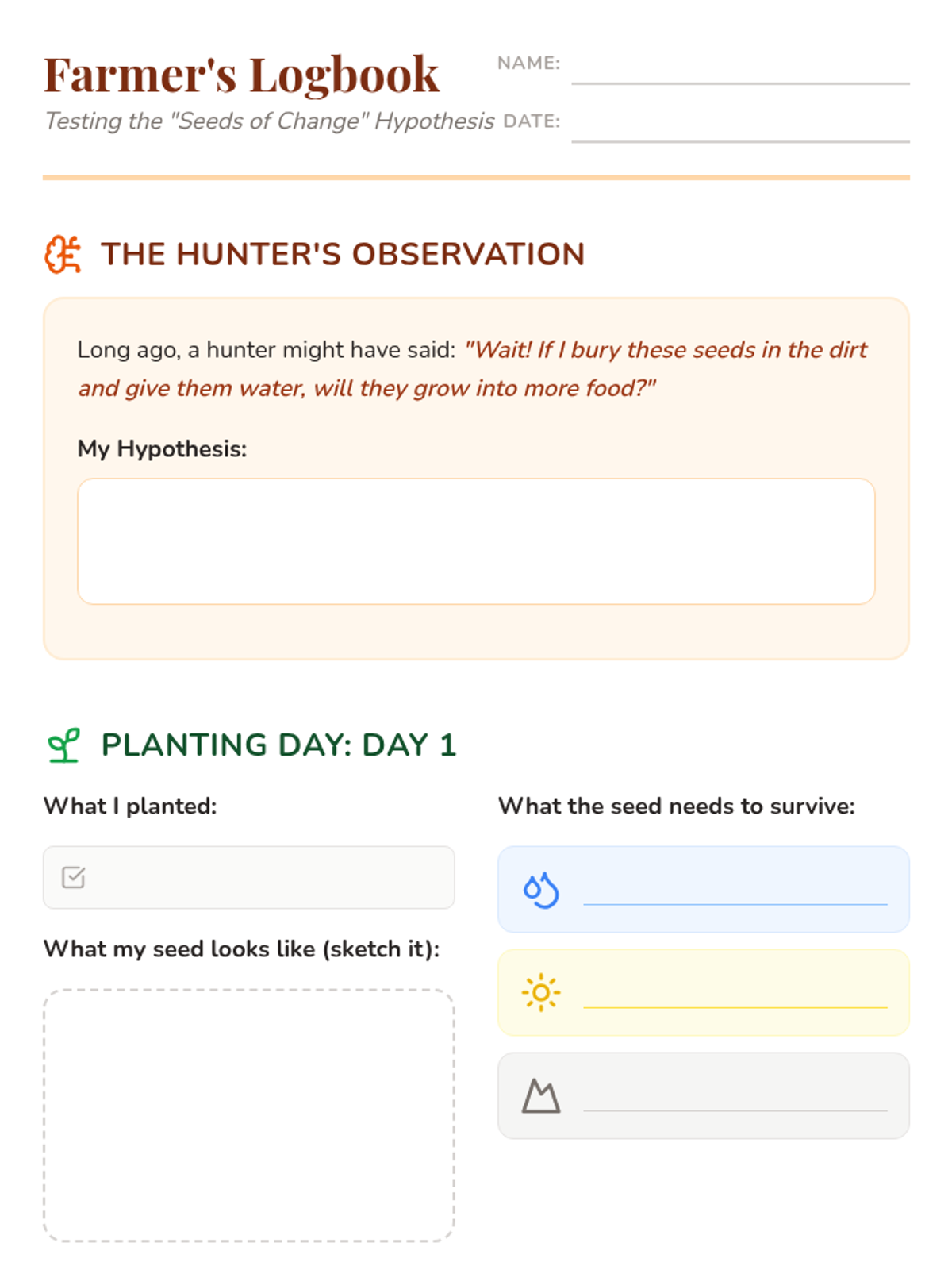
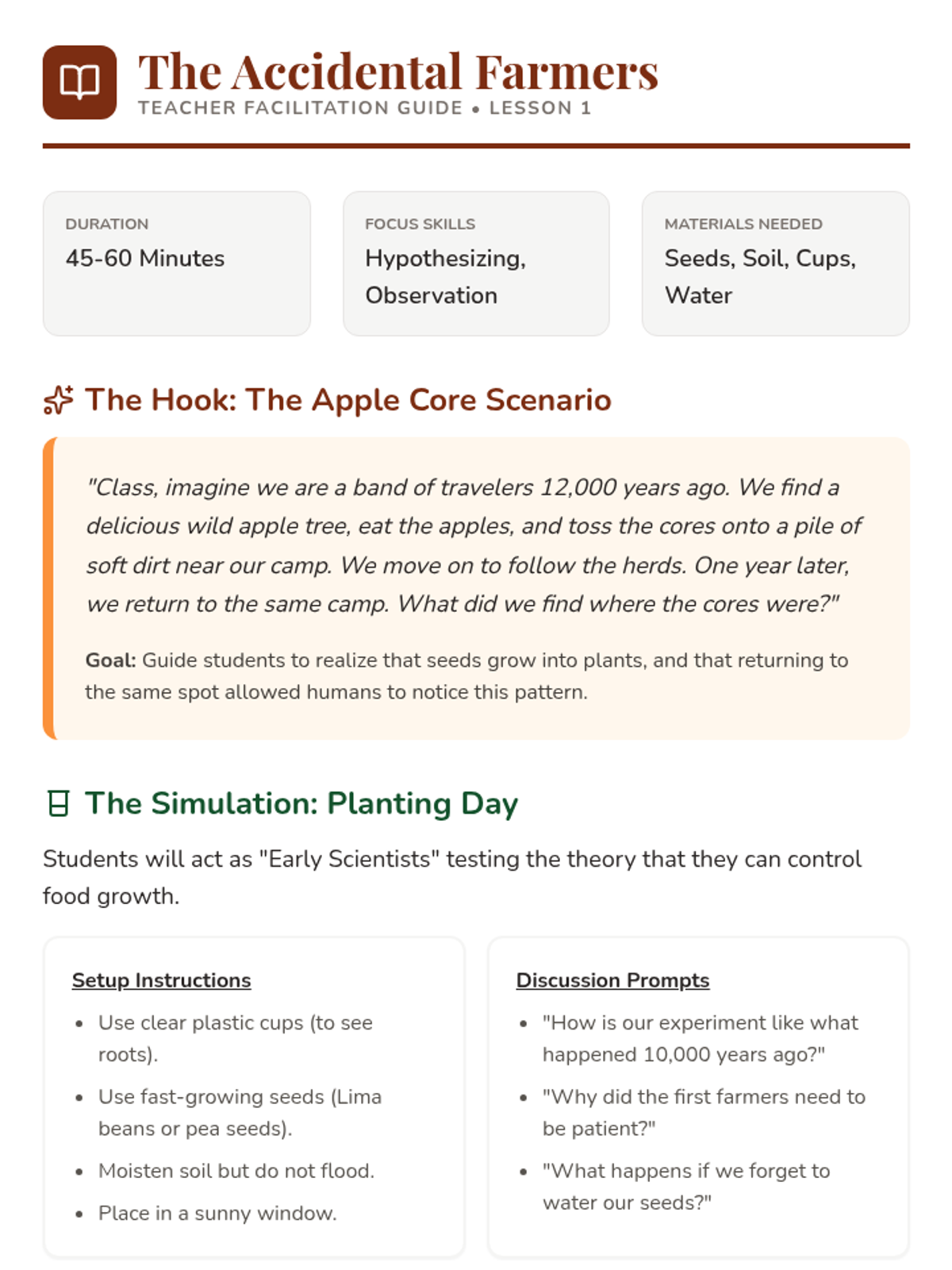
This sequence explores the Neolithic Revolution, tracing the shift from nomadic hunting and gathering to settled agricultural communities. Students investigate the 'accidental' discovery of farming, the process of animal domestication, the architecture of early villages like Catalhoyuk, and the economic shifts brought by food surpluses and job specialization.
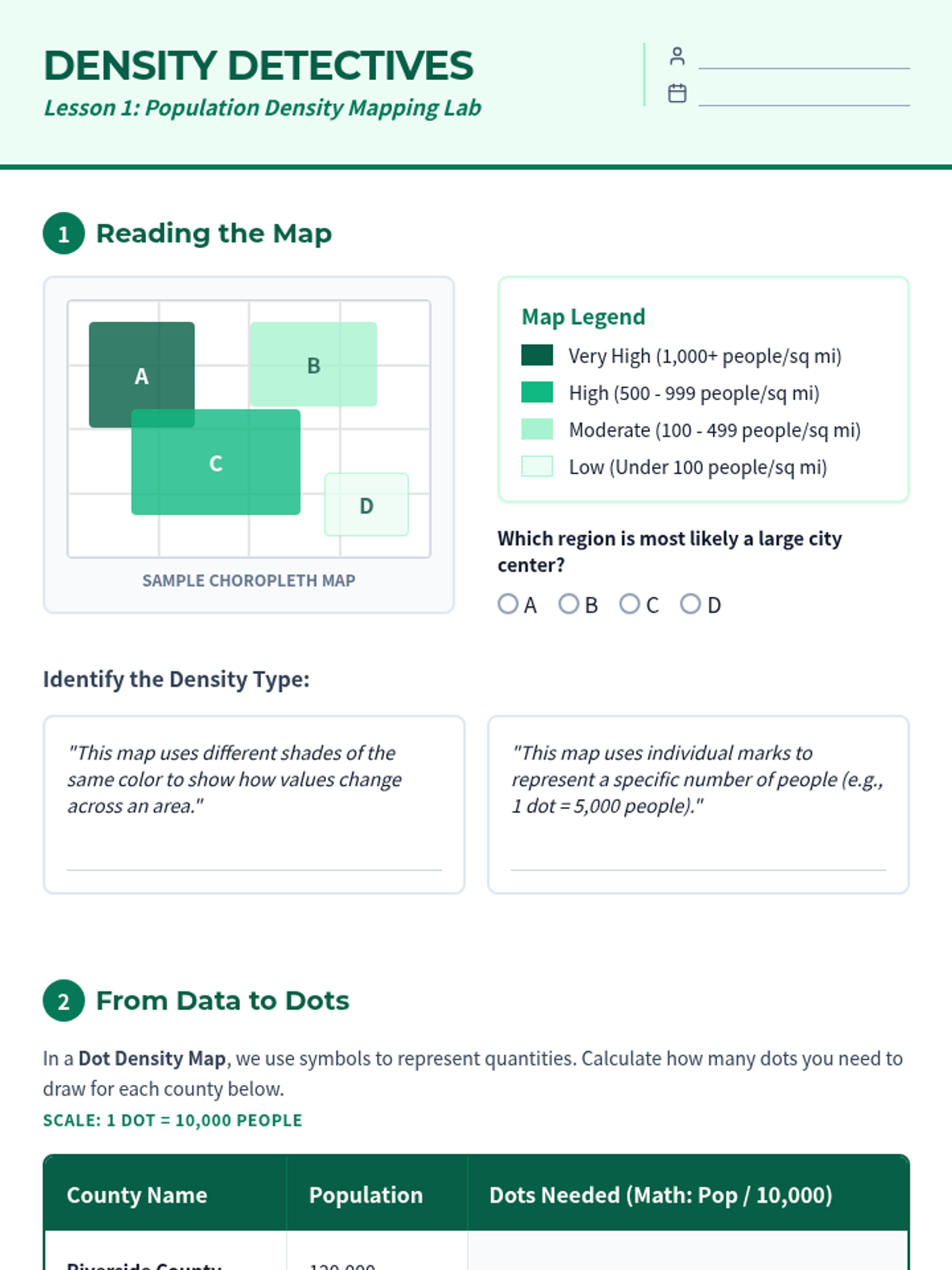
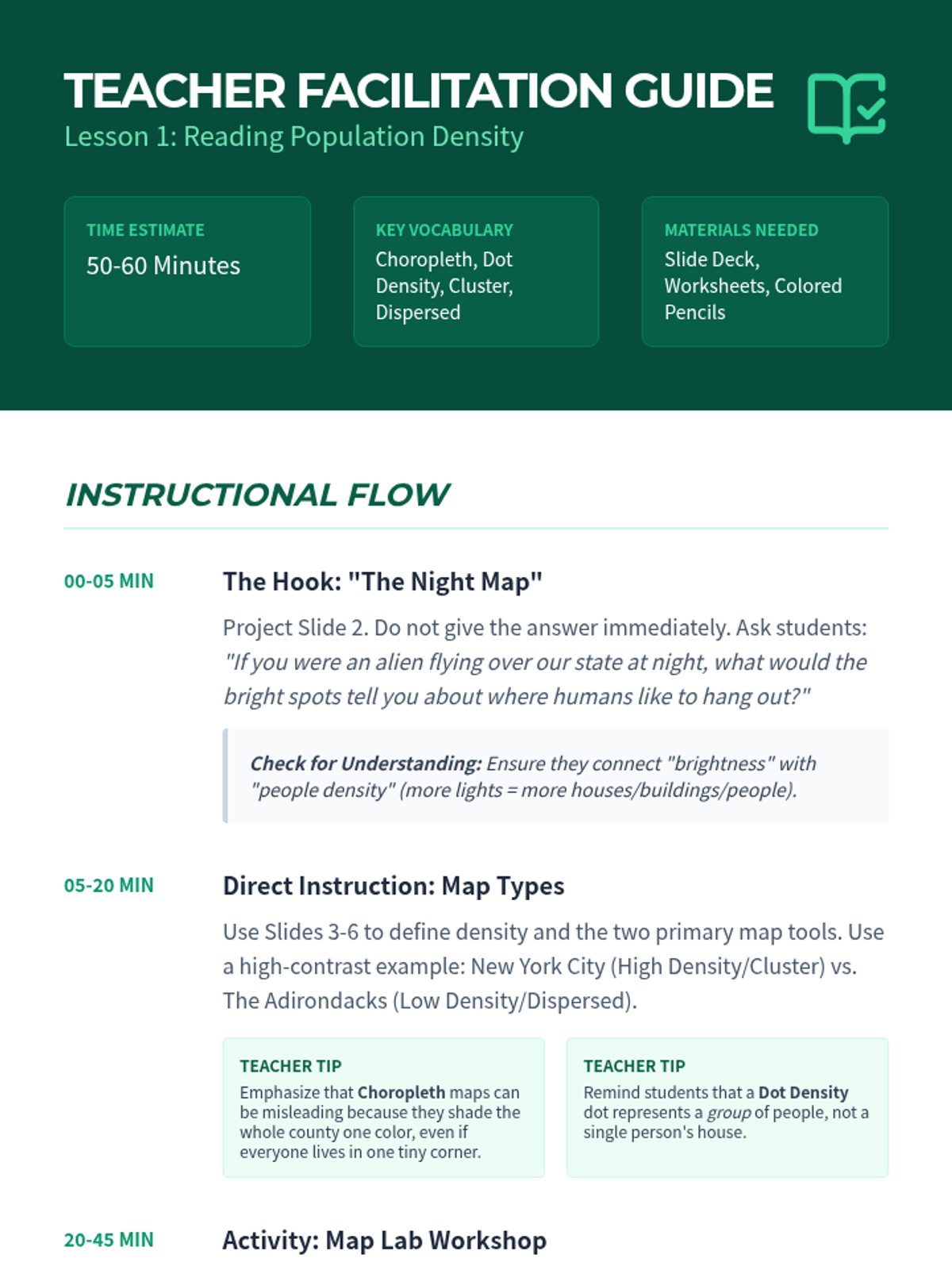
This sequence explores how demographics, population density, and the interaction between humans and the environment shape where people live within states. Students will move from interpreting demographic data to analyzing the push and pull factors that drive migration and urbanization.
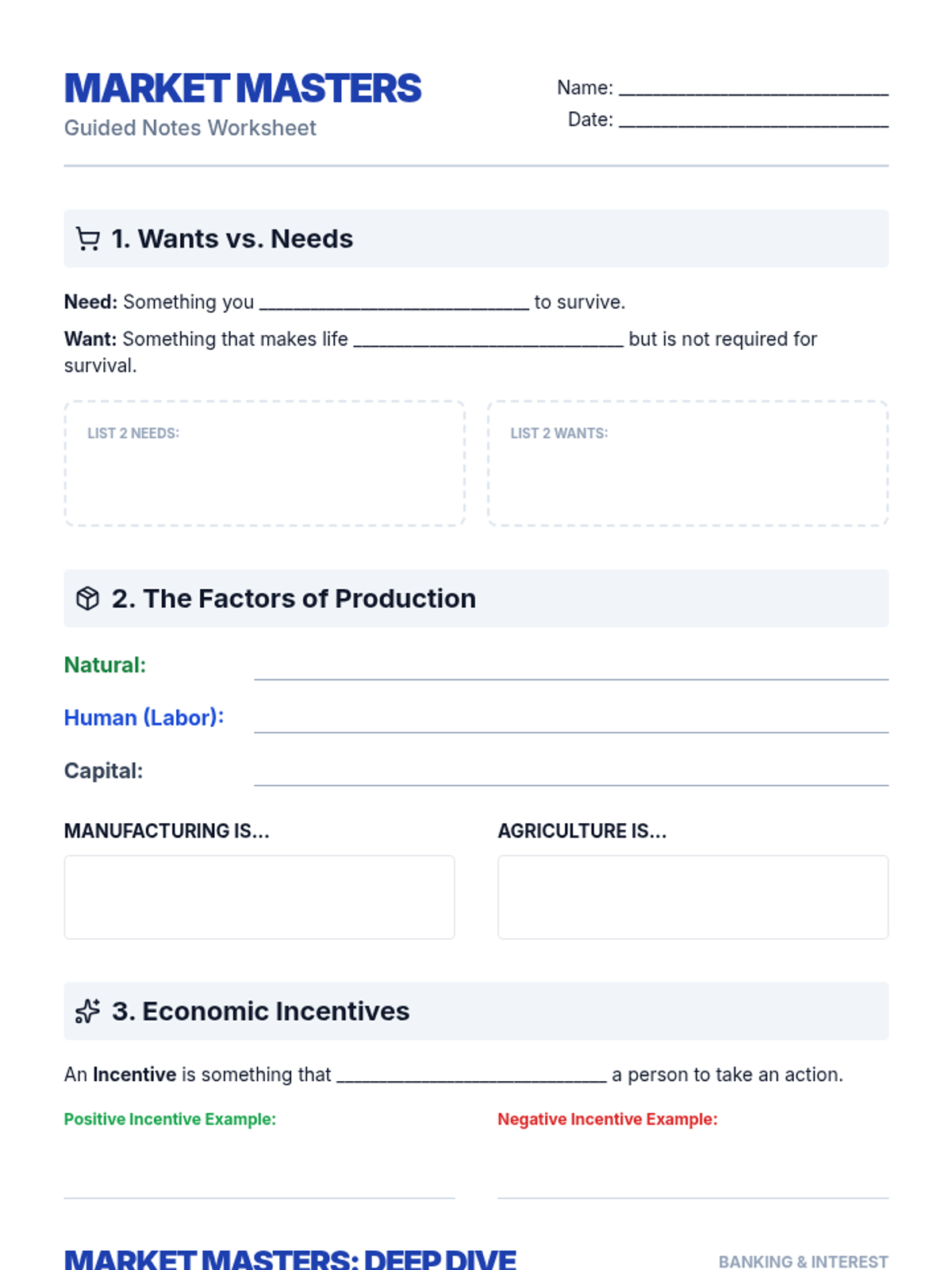
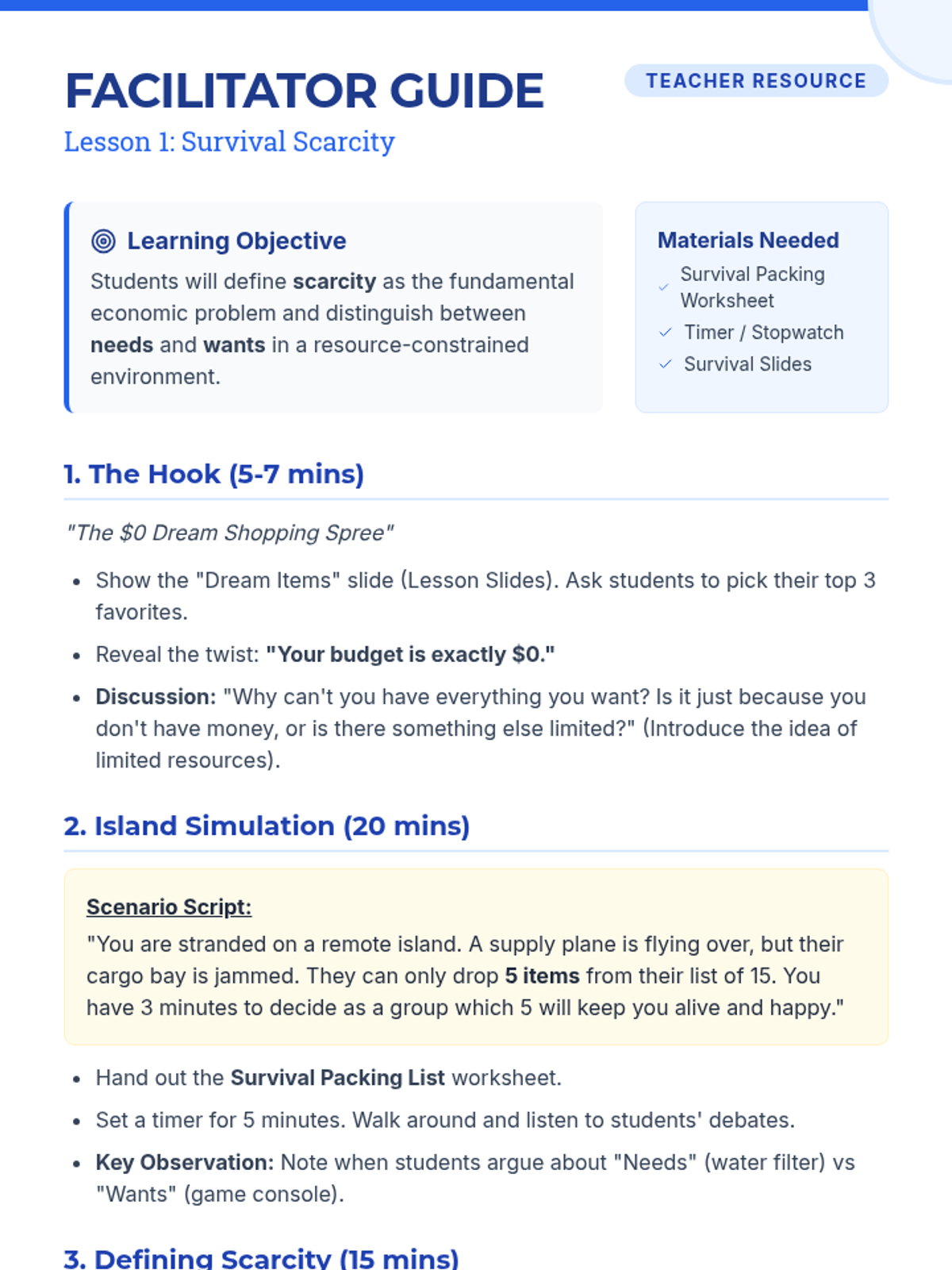
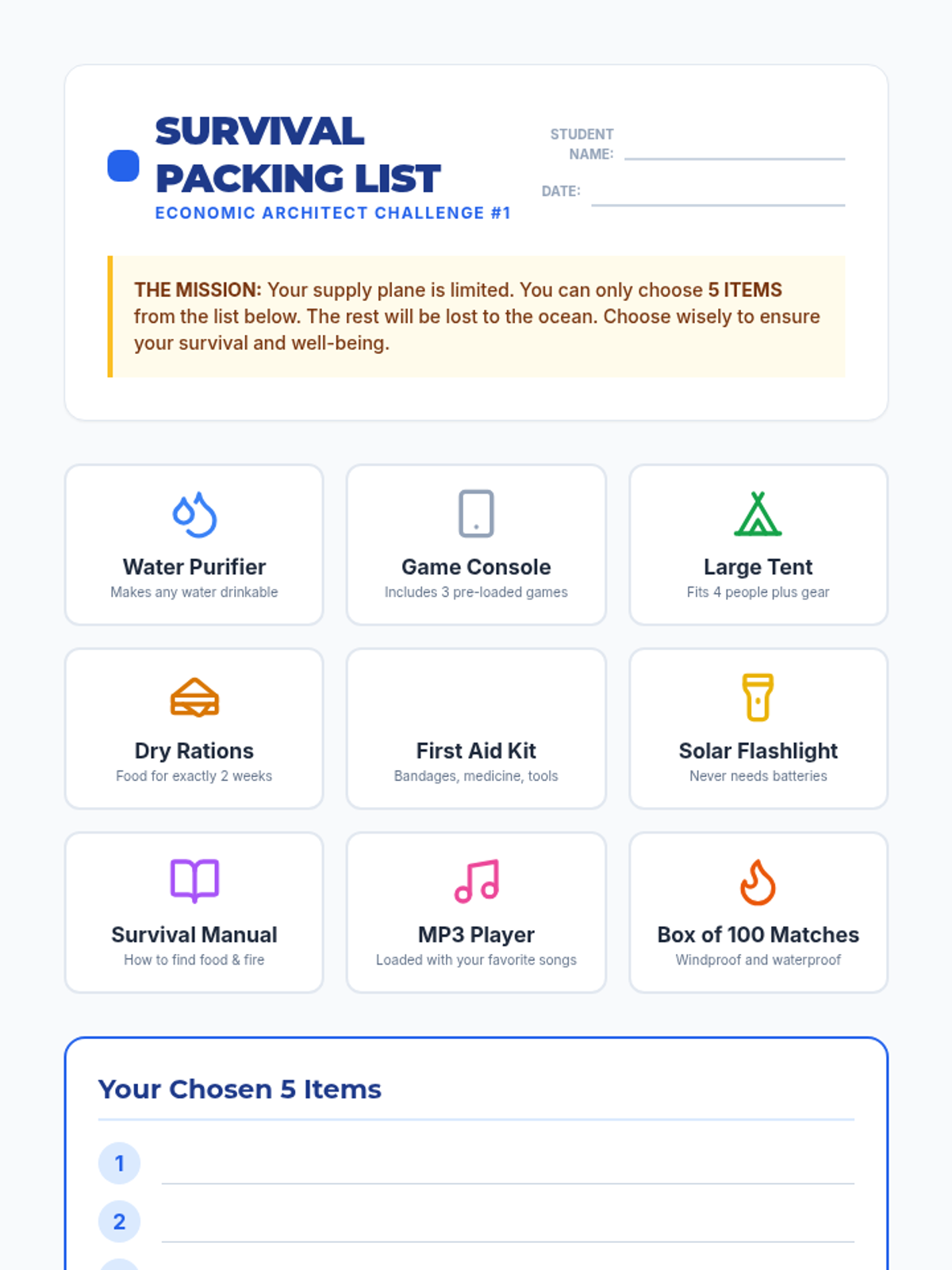
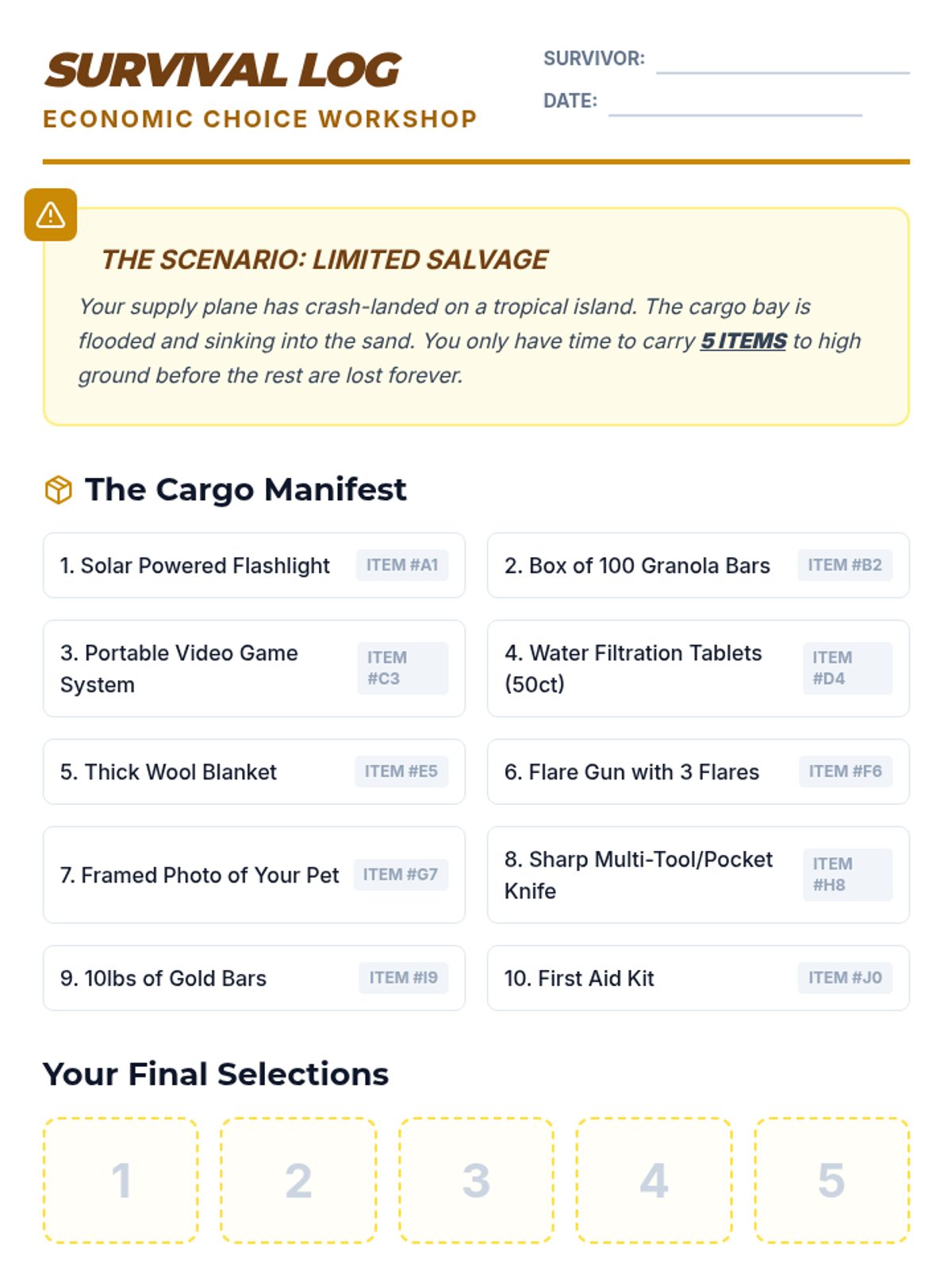
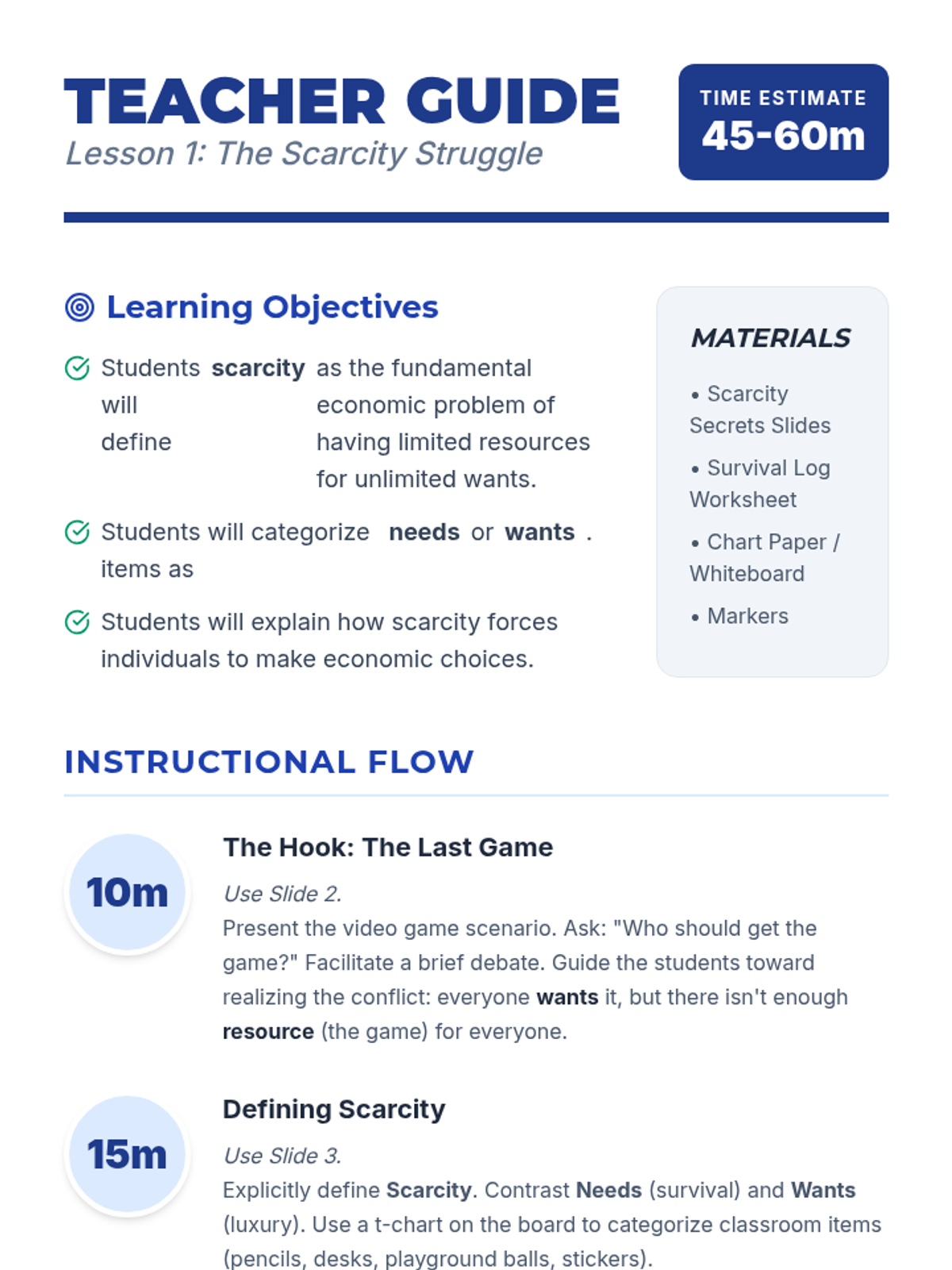
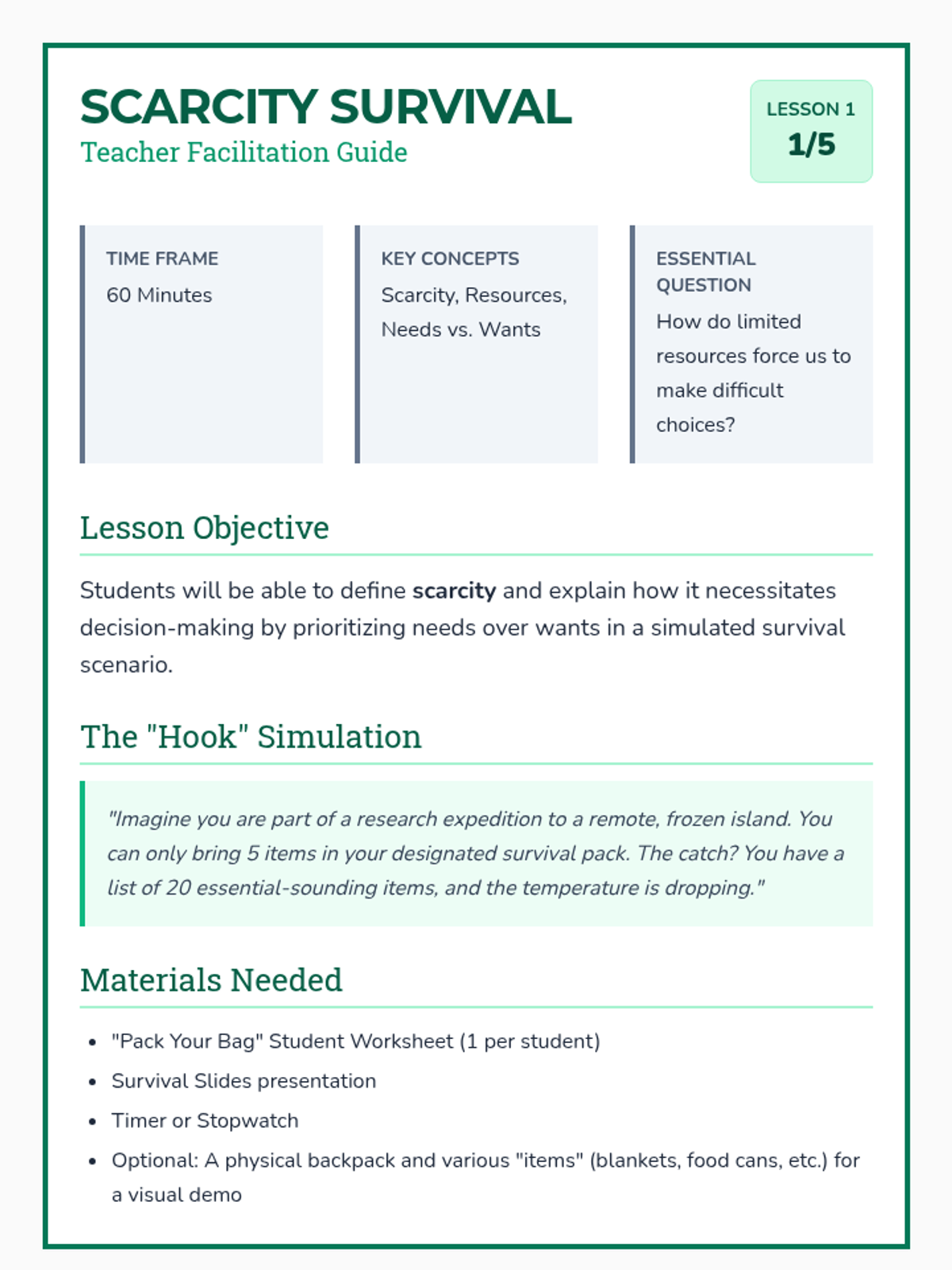
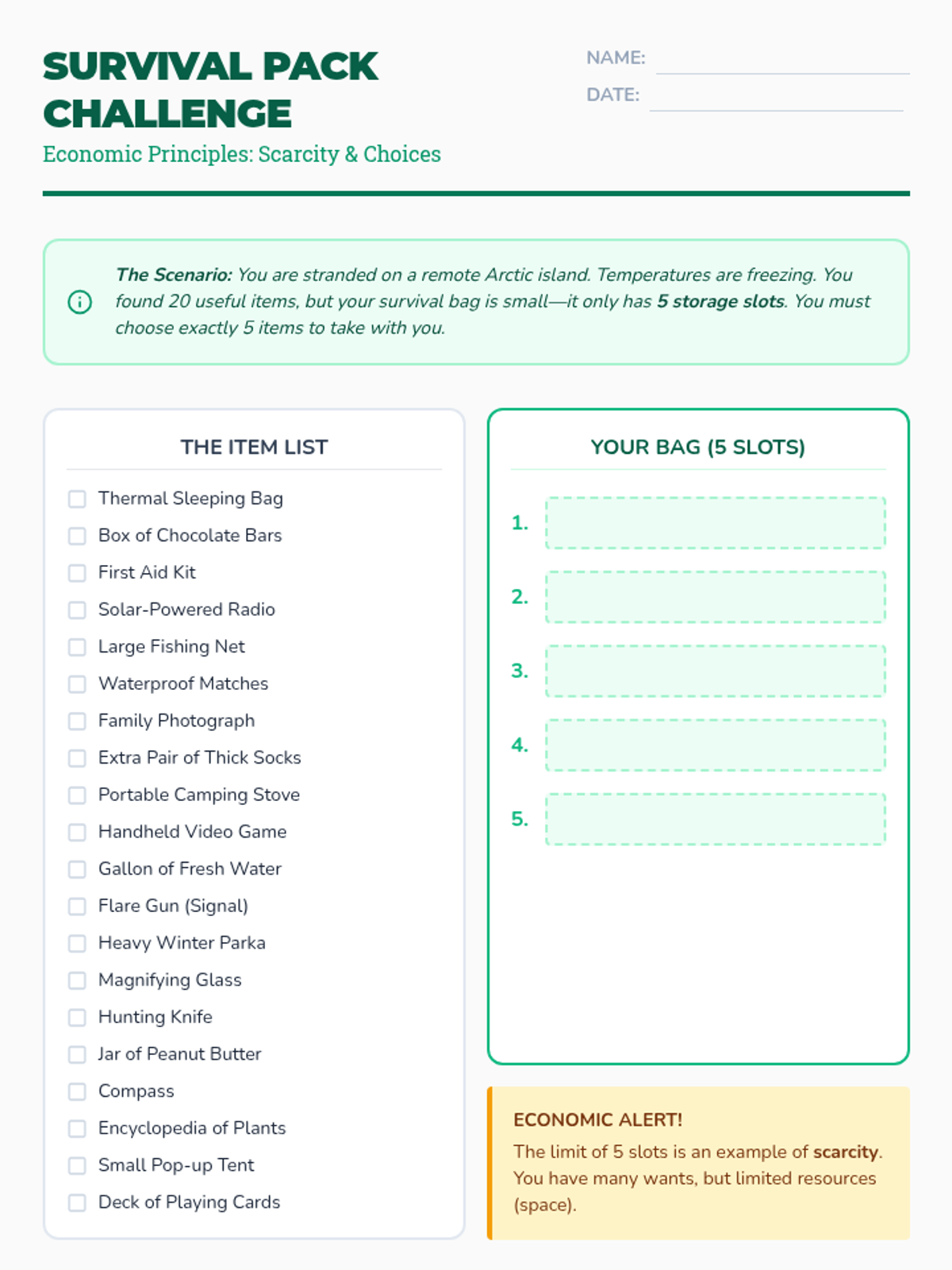
A comprehensive 5th Grade Economics unit that uses simulations and games to teach scarcity, opportunity cost, factors of production, resource allocation, and incentives. Students move from personal survival scenarios to community-wide economic planning.
A comprehensive economics unit where 5th-grade students explore the mechanics of market economies through simulations, graphing, and case studies to understand how supply and demand determine prices.
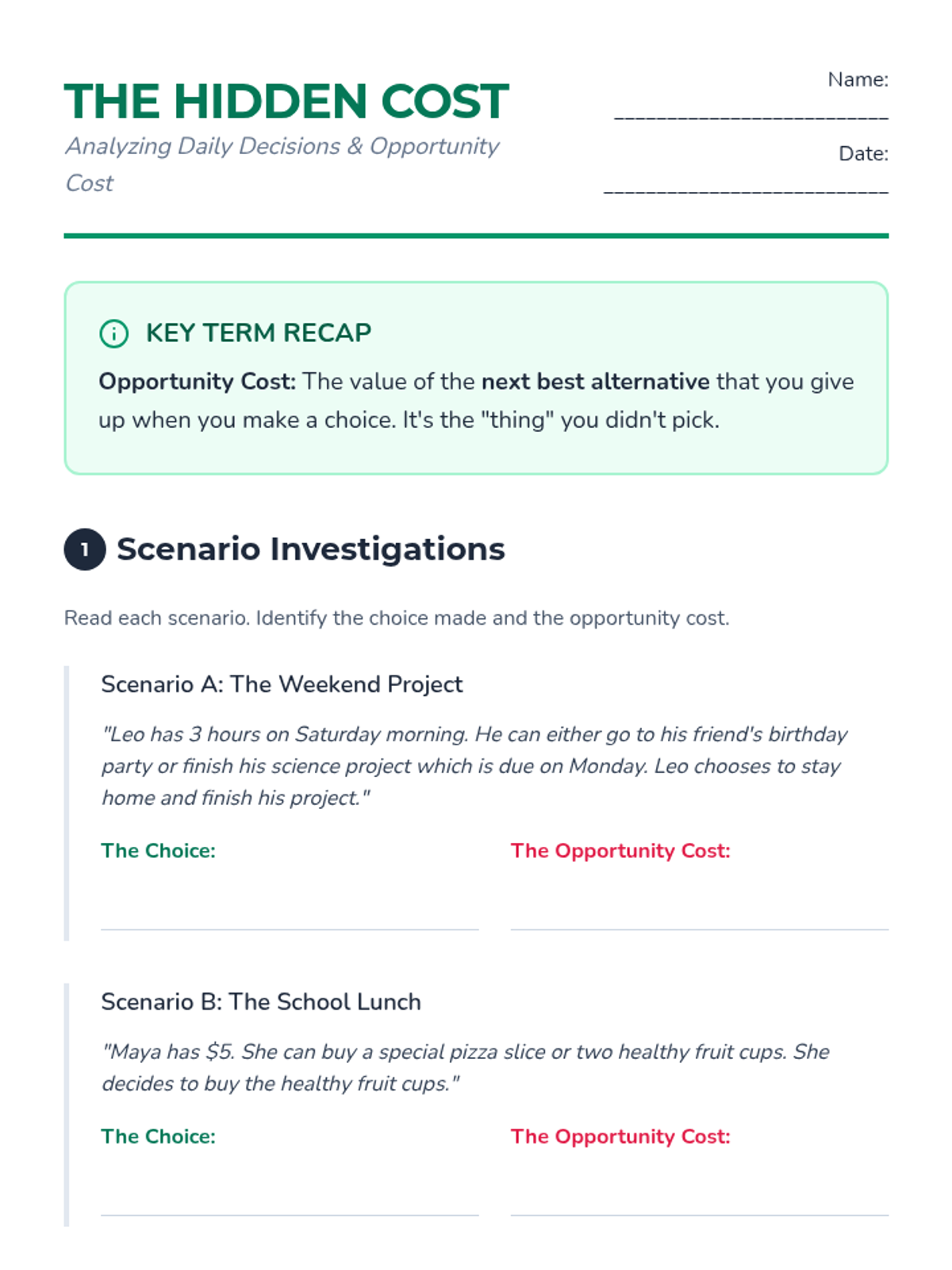
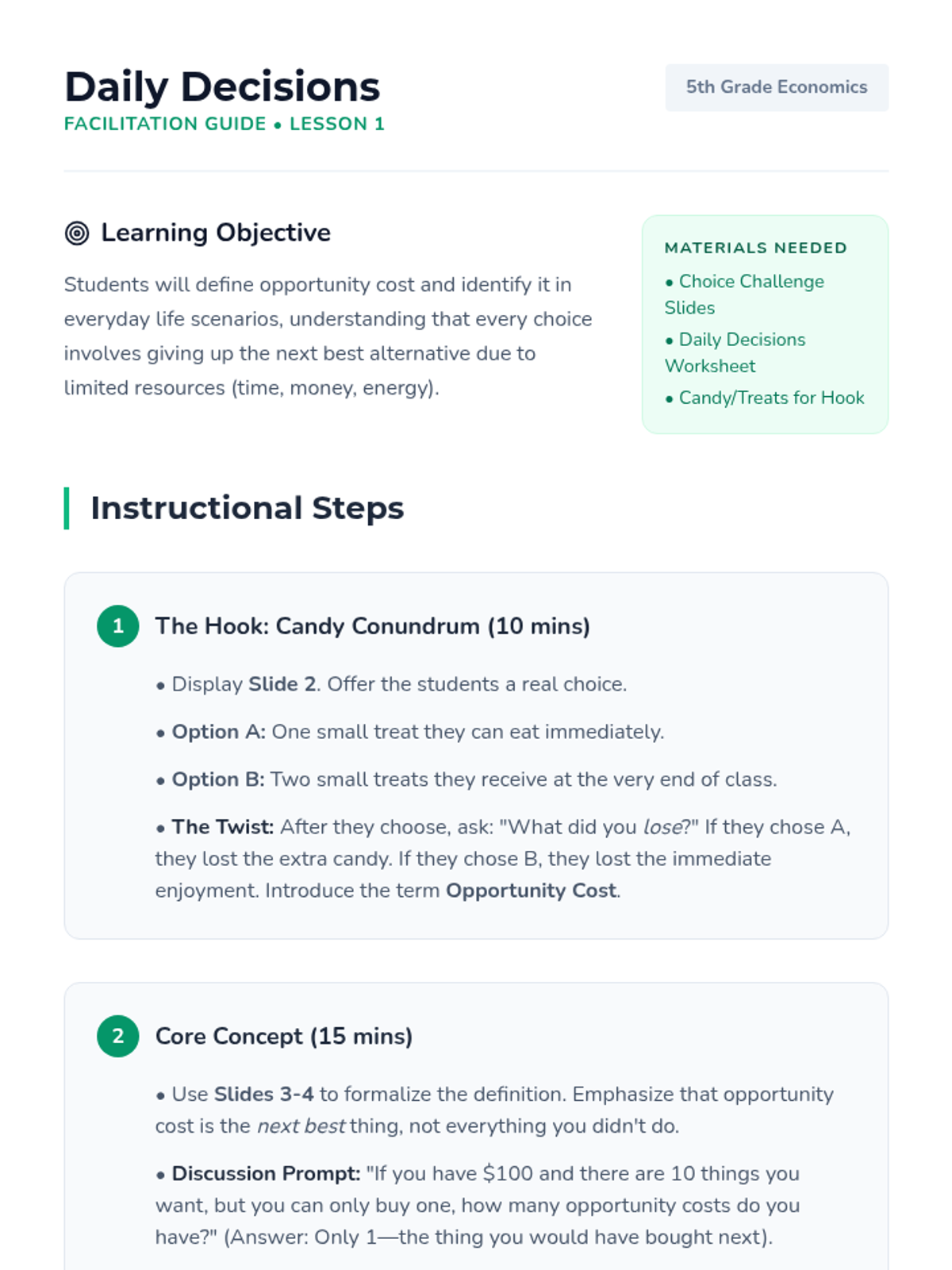
A 5th-grade economics sequence focused on decision-making, opportunity cost, and resource allocation. Students progress from personal choices to complex community planning and specialization simulations.
An immersive 5th-grade sequence that uses a classroom simulation to teach the mechanics of market economies, including scarcity, production costs, supply and demand, and competition. Students move from surviving a resource-limited scenario to becoming producers and consumers in a mock economy, ultimately analyzing data to understand real-world economic principles.
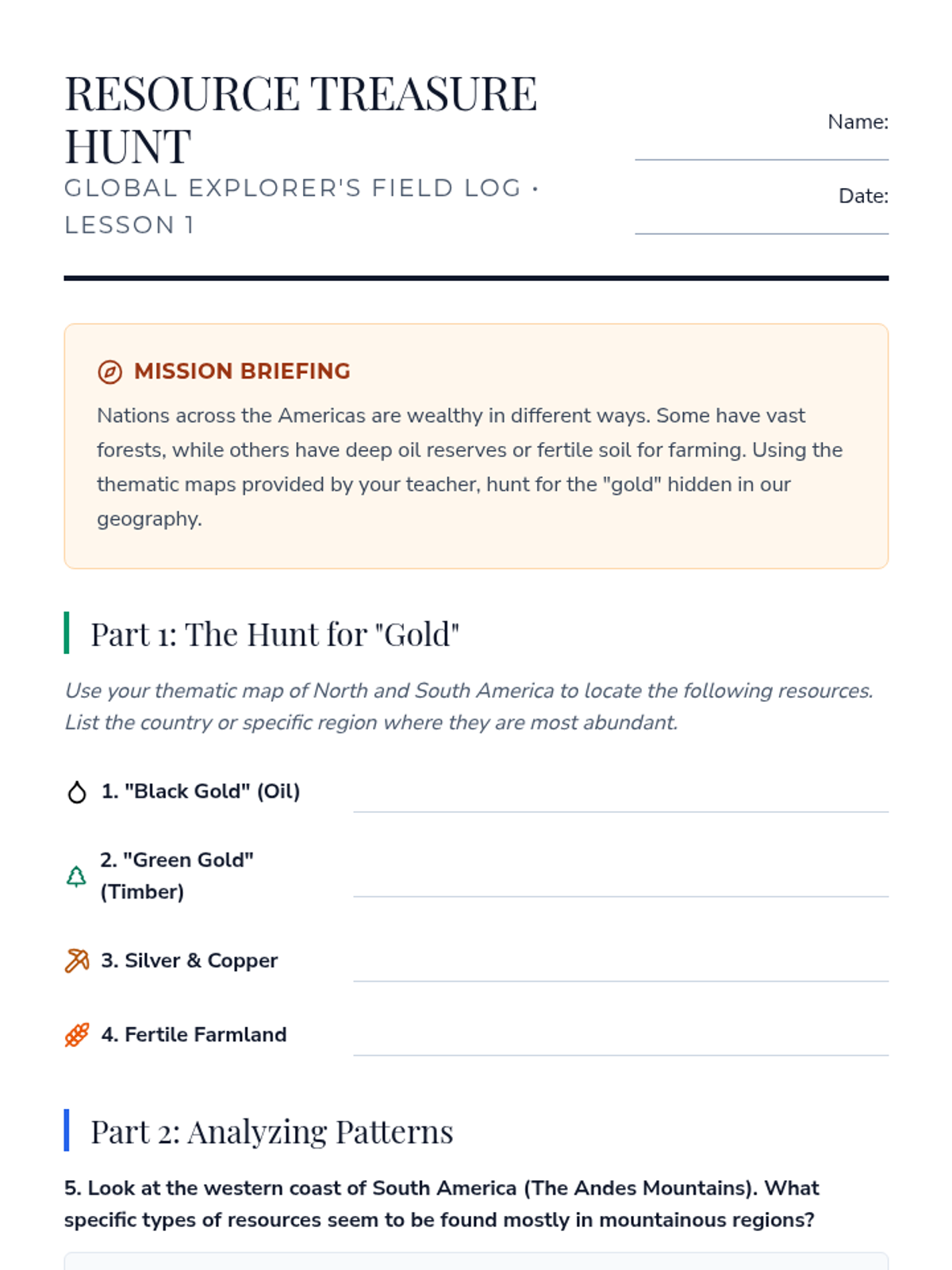
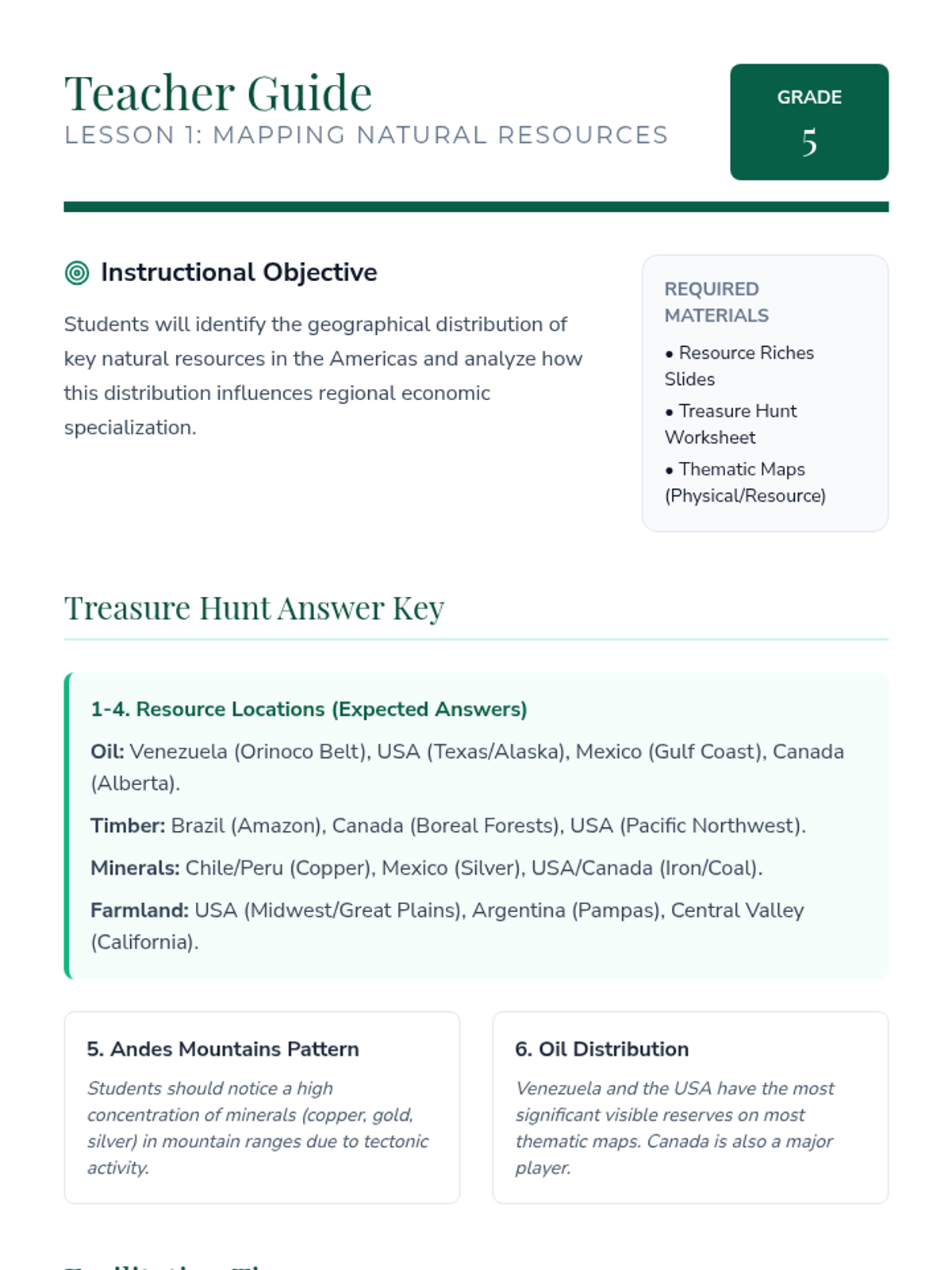
A 5th-grade geography unit exploring the link between natural resource distribution in the Americas and global economic systems, featuring map analysis, trade simulations, and a case study of the Panama Canal.
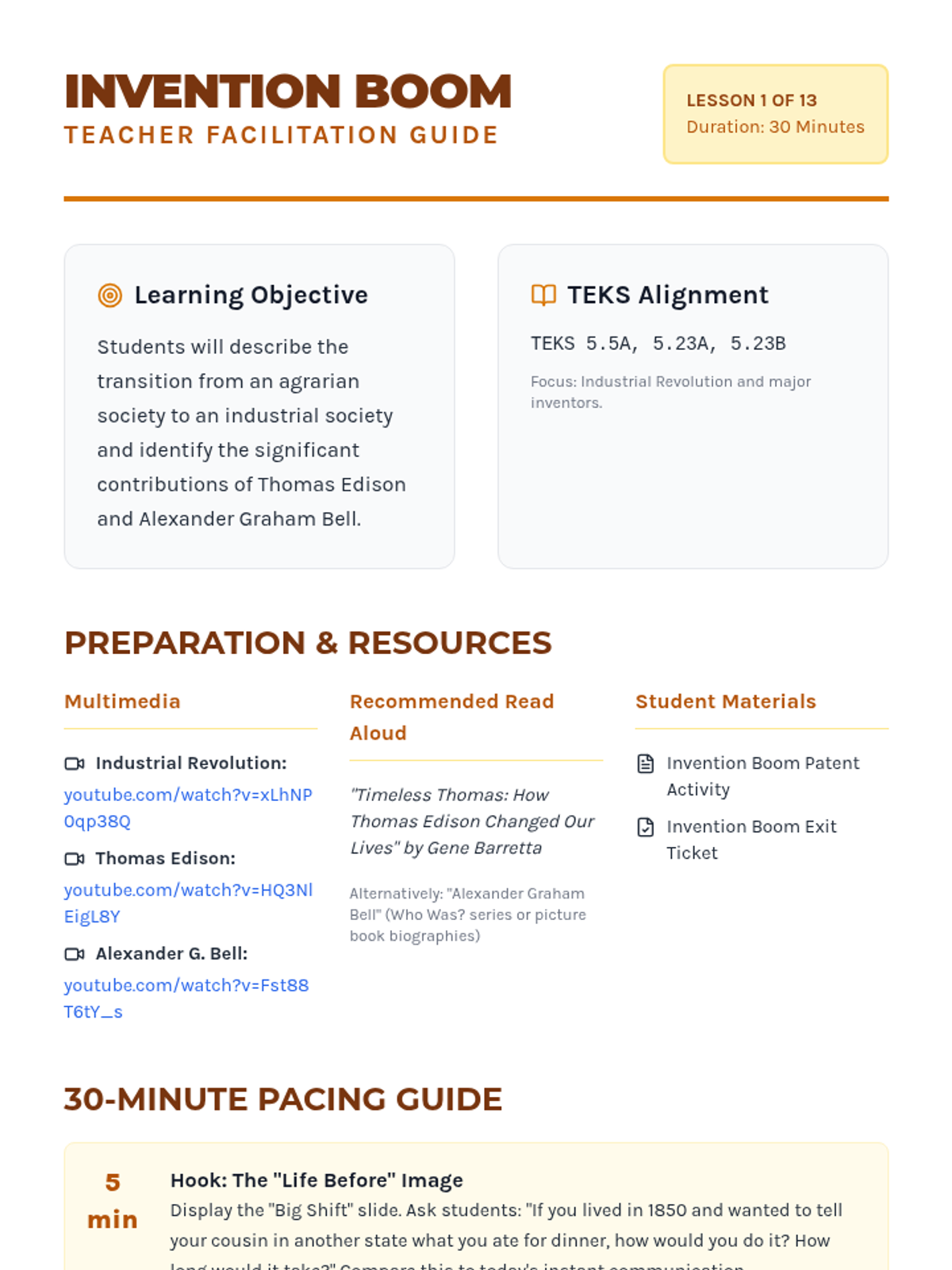
A 13-day journey through modern American history, from the Industrial Revolution to the present day, focusing on key historical figures and major conflicts as outlined in the 5th Grade TEKS. Each lesson is designed for a quick 30-minute block, integrating multimedia and primary source analysis.
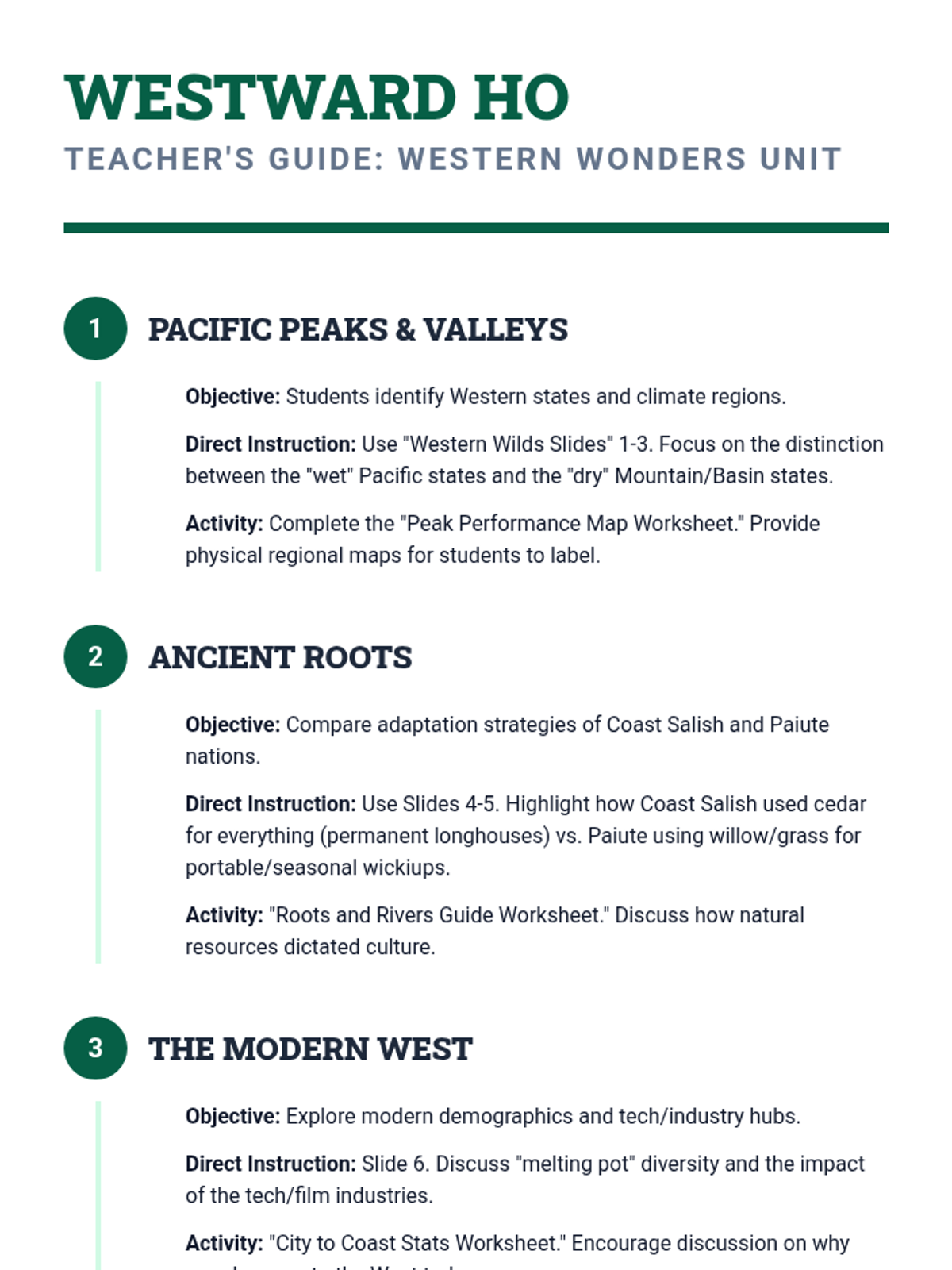
A 5-day unit exploring the geography, climate, indigenous cultures (Paiute and Coast Salish), and modern life of the Western United States, culminating in a travel brochure project.
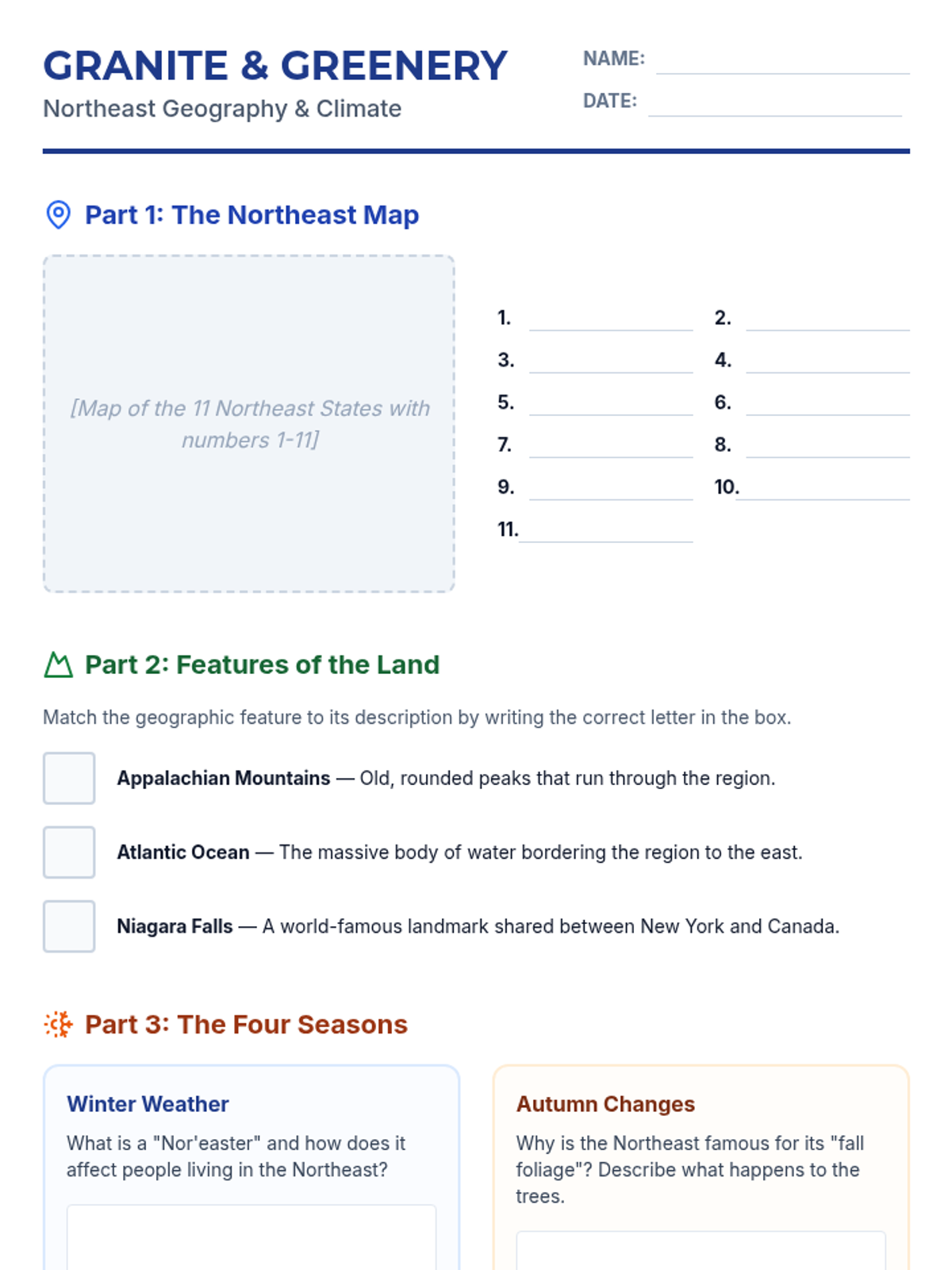
A 5-day unit exploring the Northeastern United States, covering its unique geography and climate, the rich history of the Wampanoag, Abenaki, and Iroquois nations, and the vibrant modern culture of its eleven states.
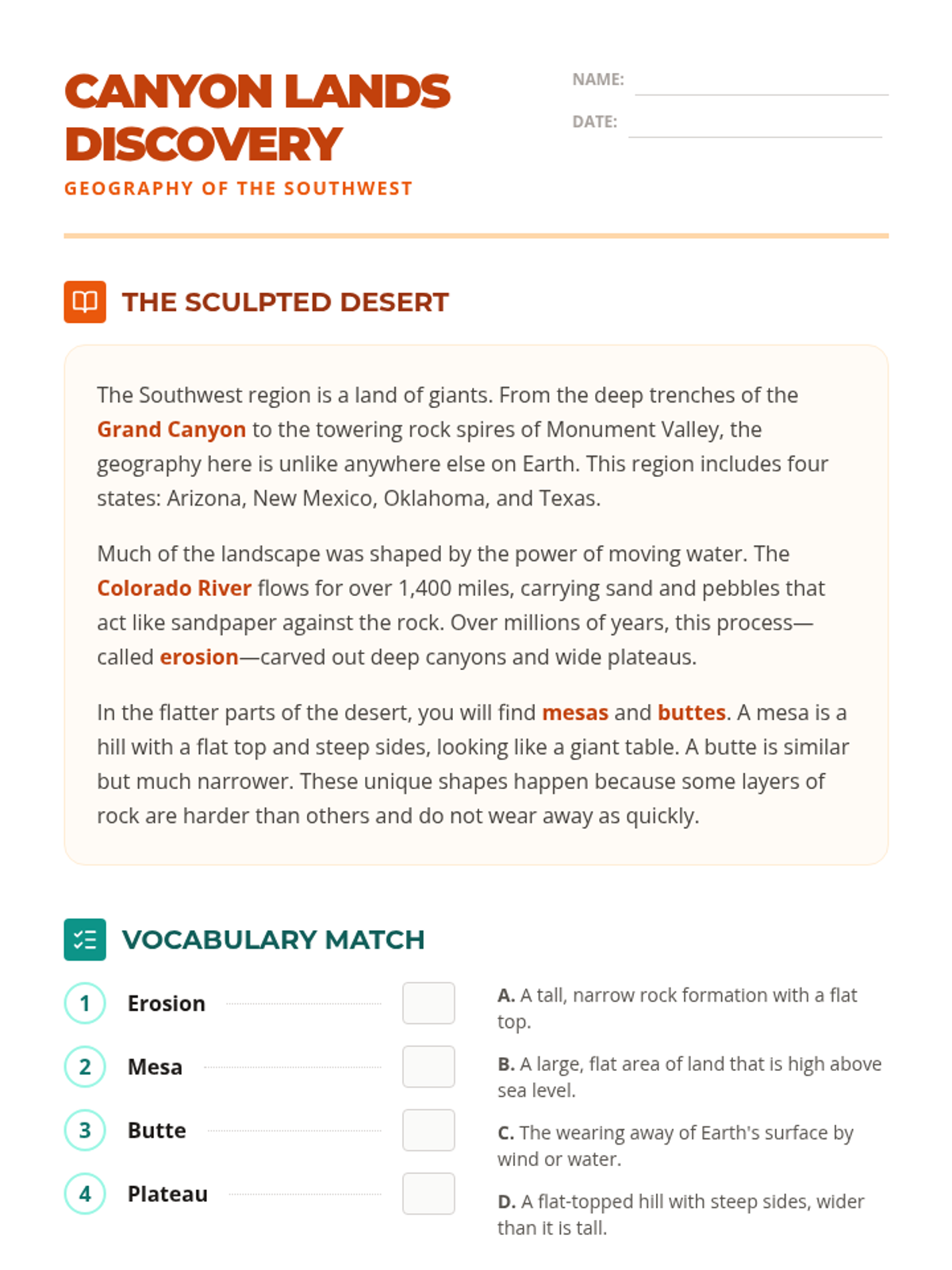
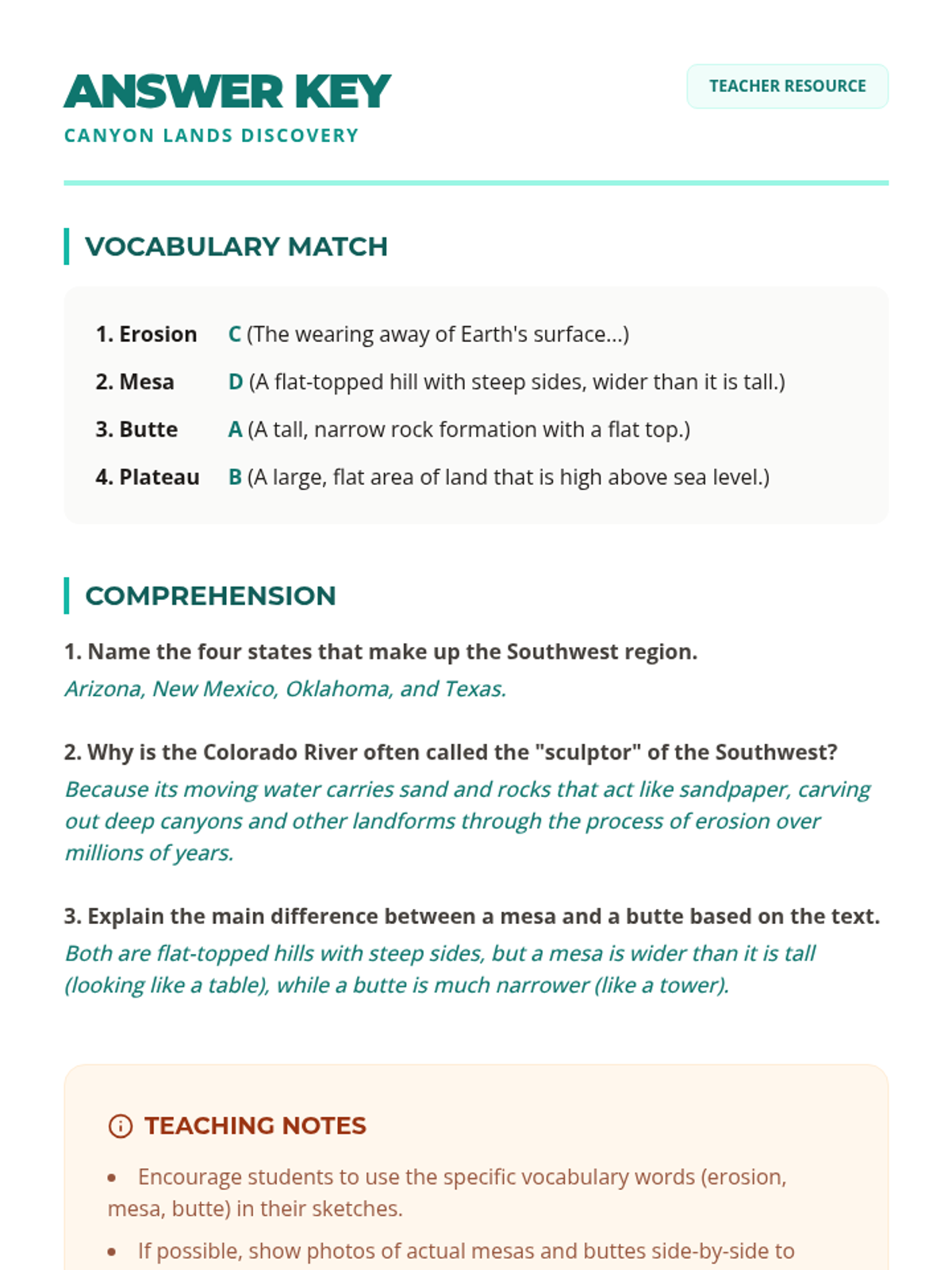
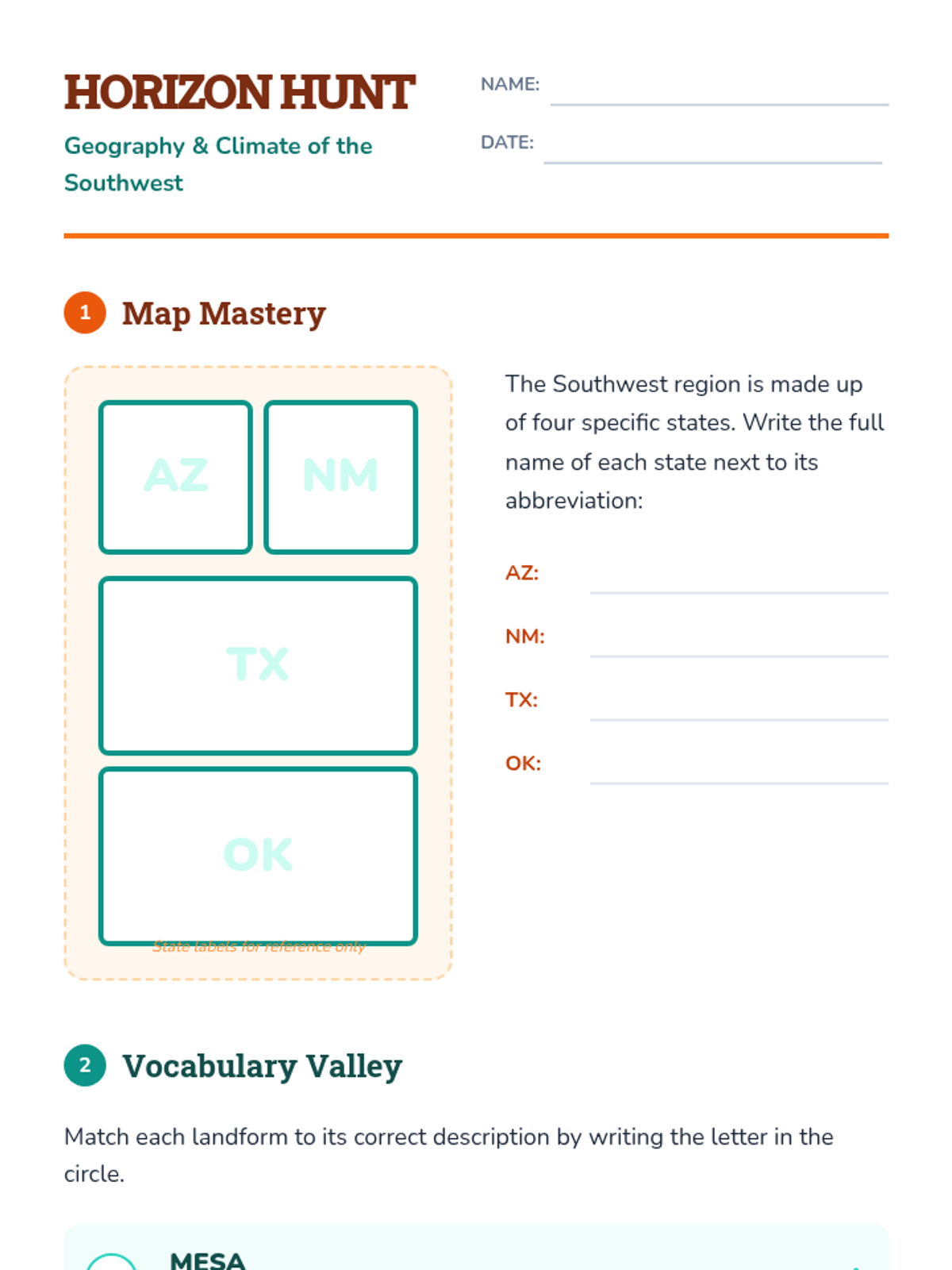
A comprehensive 5-lesson unit exploring the unique geography, climate, natural resources, diverse cultures, and political boundaries of the Southwest region of the United States.
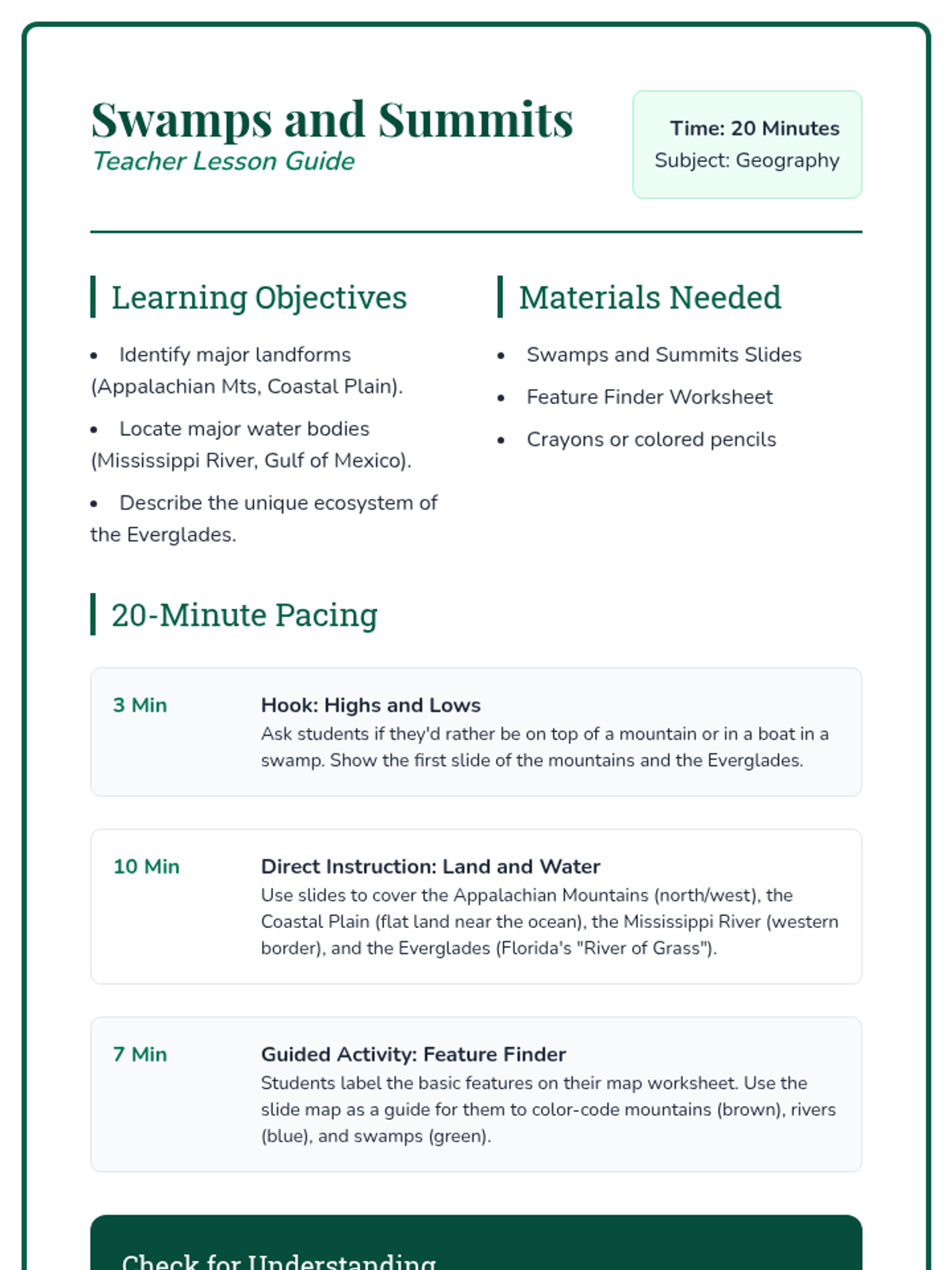
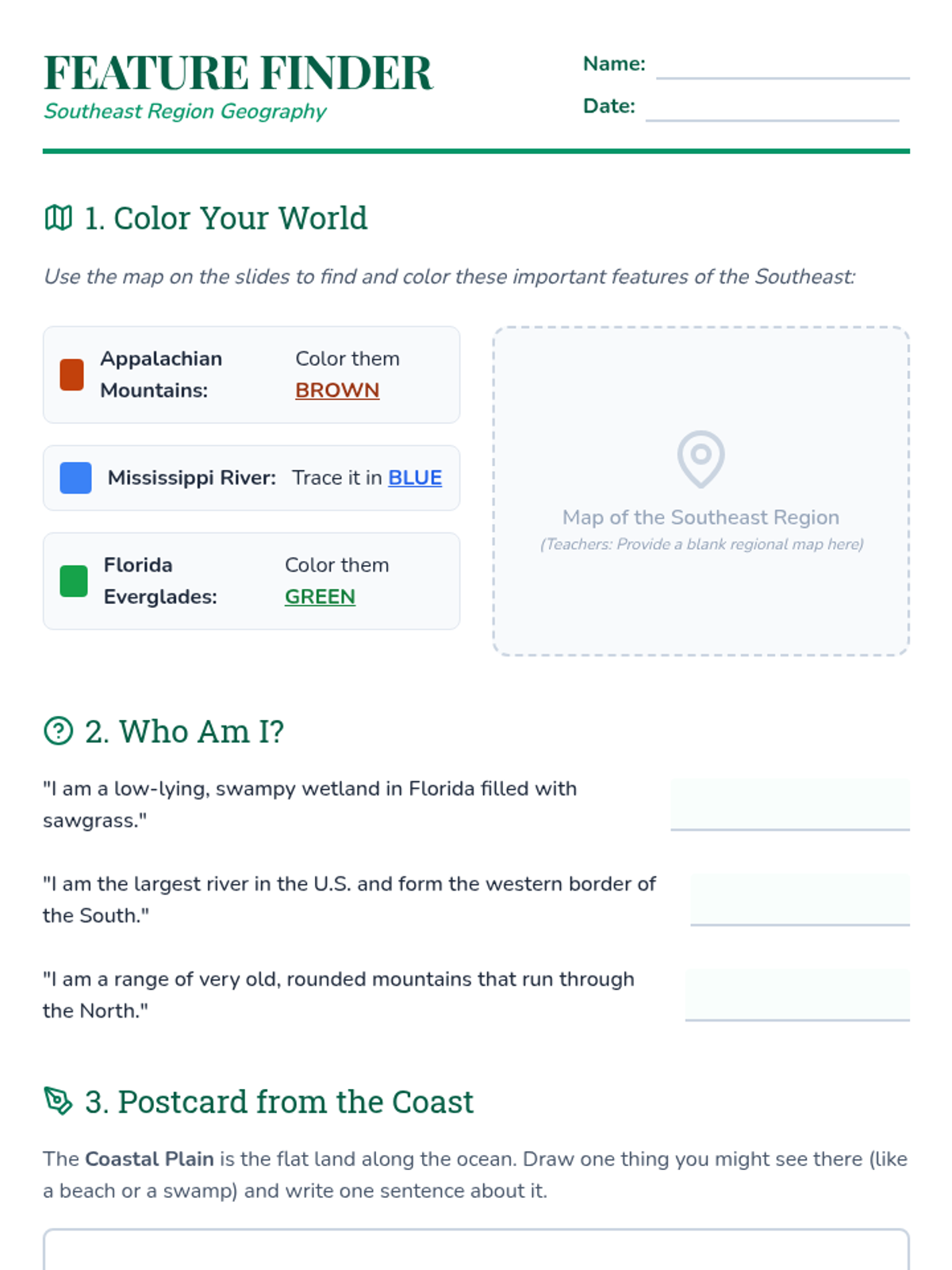
A 5-lesson unit exploring the geography, climate, resources, and culture of the Southeast United States, concluding with a states and capitals challenge.
A 5-lesson sequence exploring the causes, conflicts, and human experiences of the American Civil War, focusing on the differences between the North and South, key turning points, and the final surrender.
A 5-day immersive unit exploring the Southwestern United States, covering geography, climate, indigenous cultures (Pueblo, Navajo, Apache, Comanche), and the transition from historic to modern life in AZ, NM, TX, and OK.
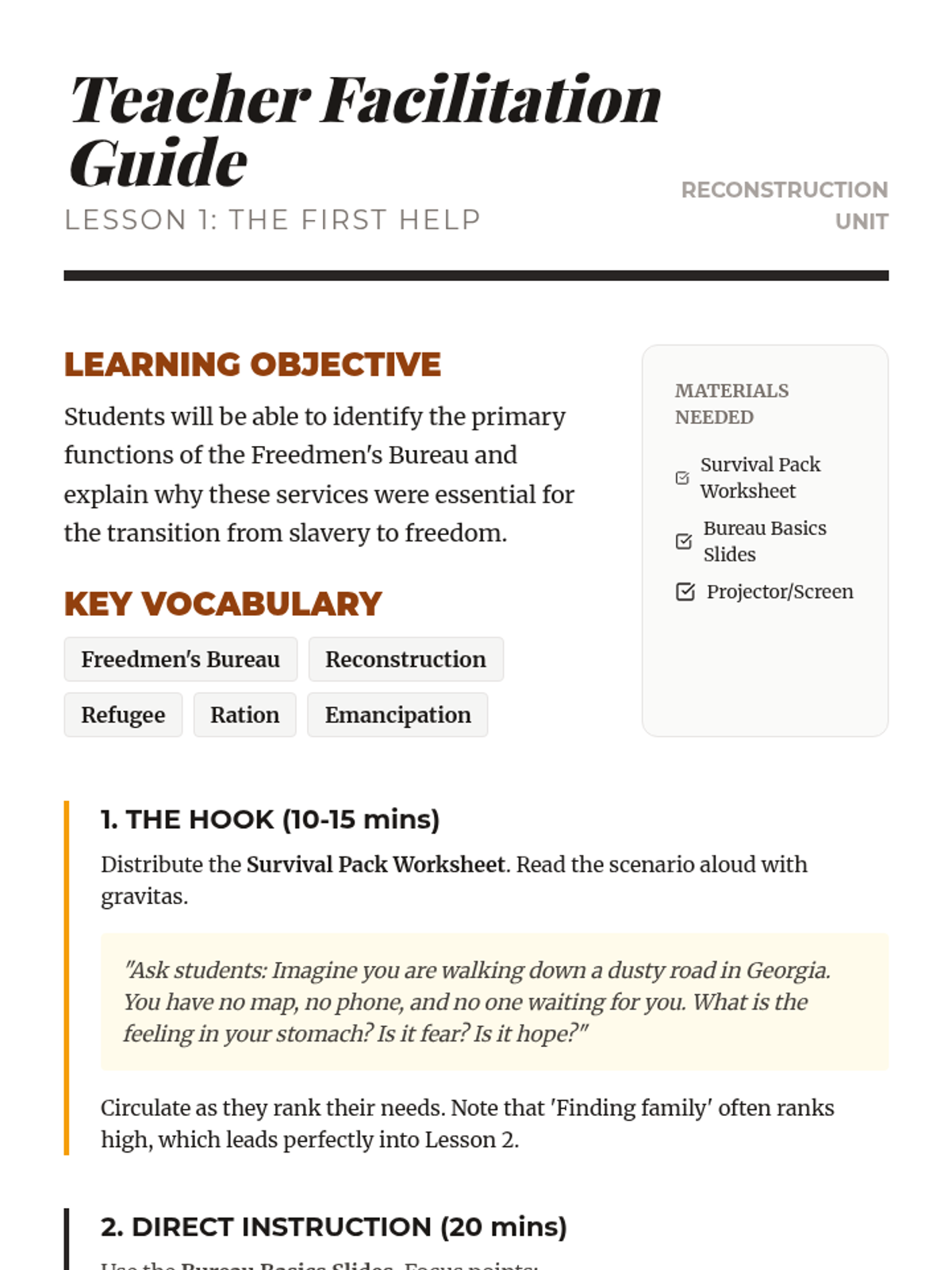
This sequence explores the Reconstruction Era through the lens of the Freedmen's Bureau, focusing on the social and economic challenges faced by newly emancipated people. Students analyze primary sources, engage in simulations about sharecropping and education, and evaluate the effectiveness of federal aid in the post-Civil War South.
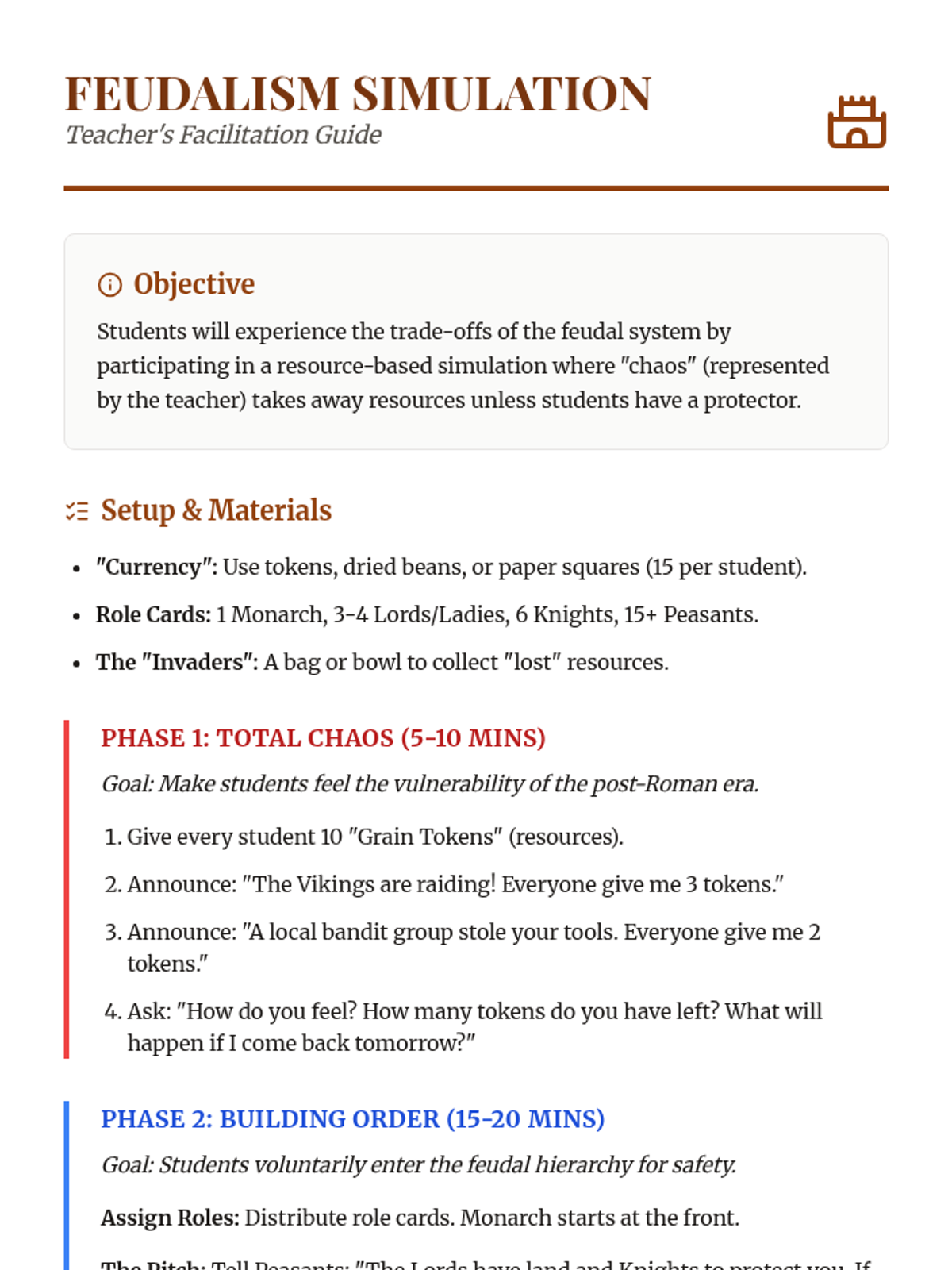
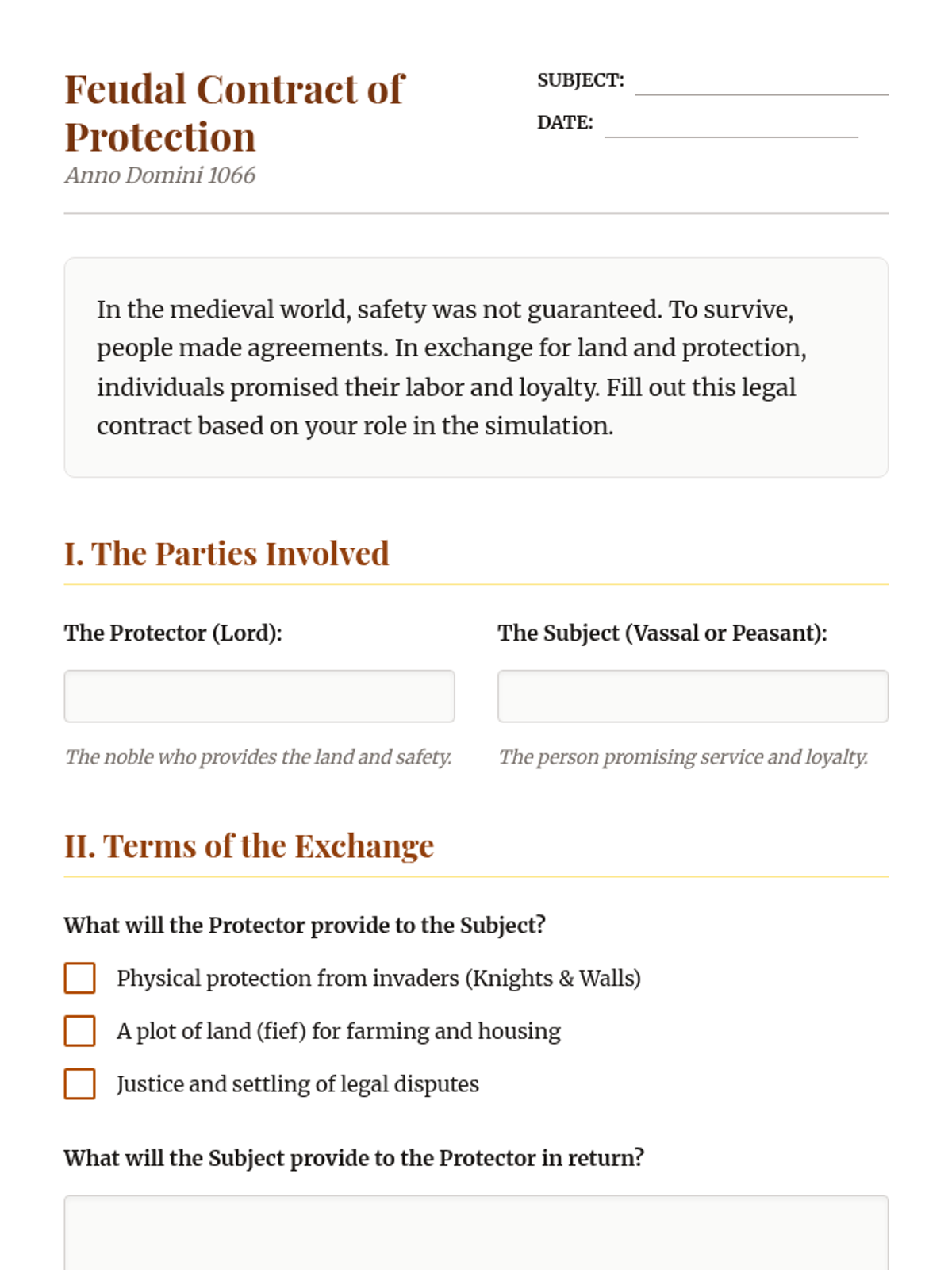
This sequence immerses students in the rigid social structure of medieval Europe through a simulation-based approach. Students explore the mutual obligations between monarchs, lords, knights, and peasants to understand how the feudal system provided order after the fall of Rome.
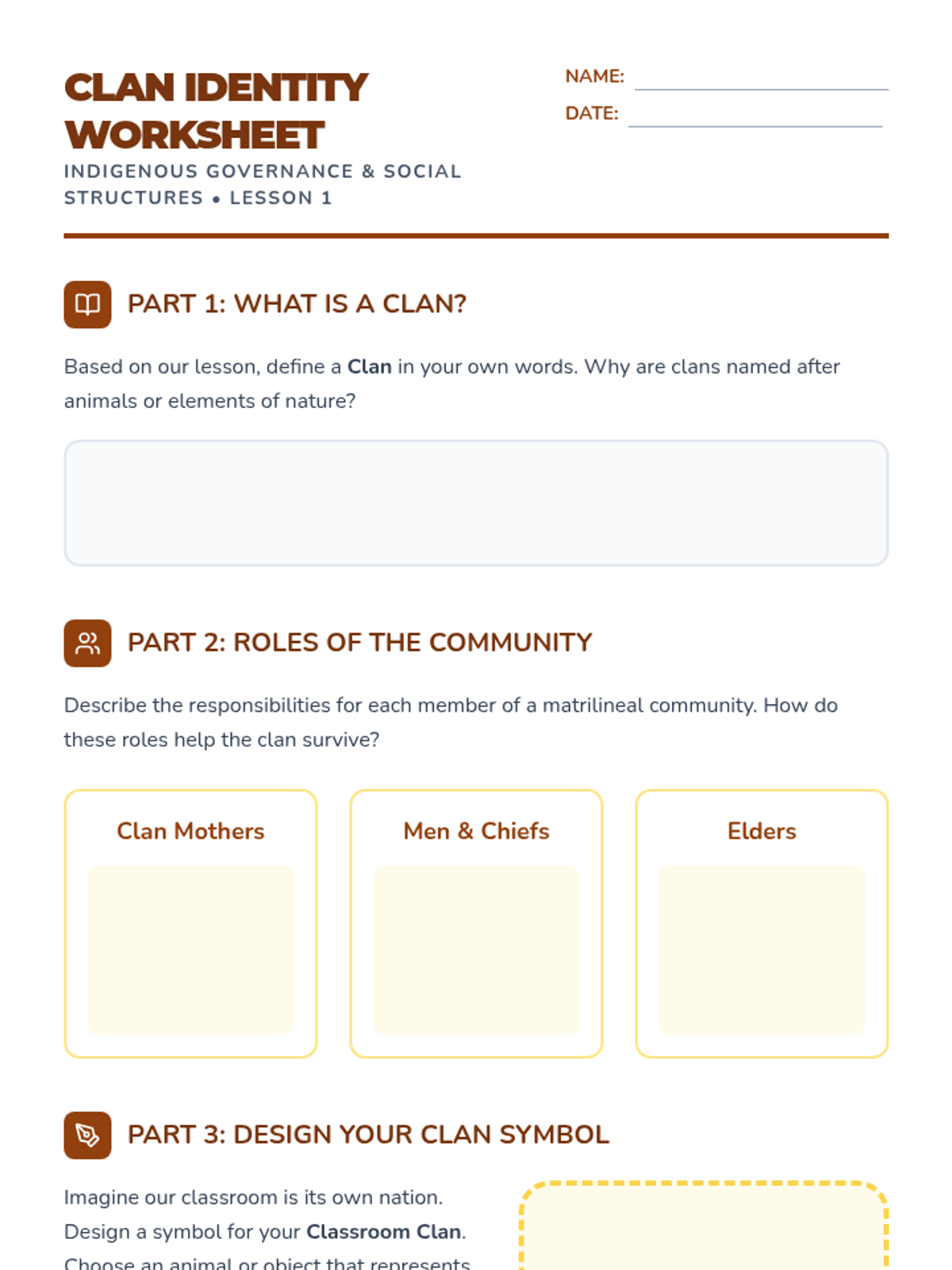
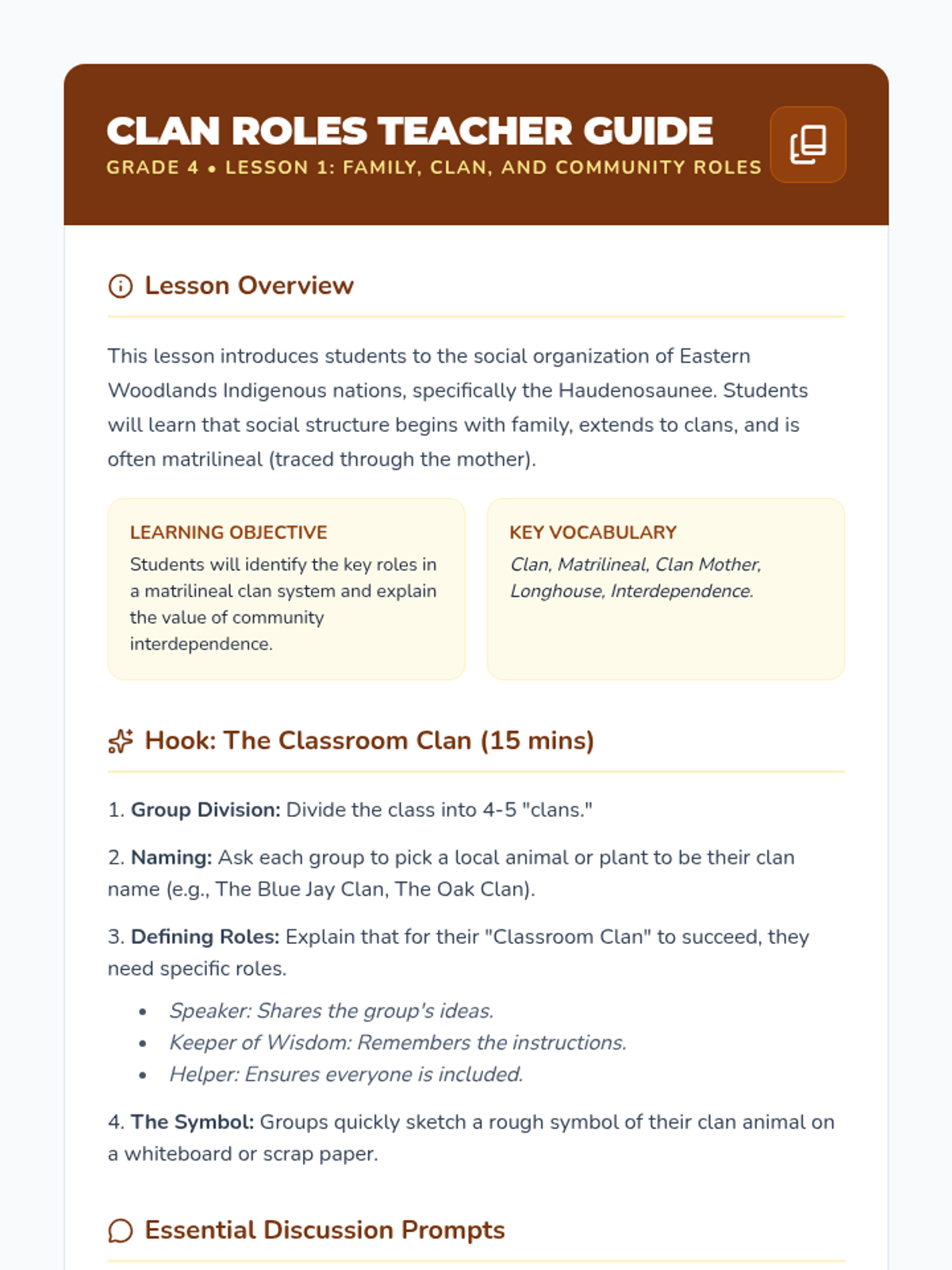
This sequence explores the sophisticated social structures and governance systems of Native American nations, with a focus on the Haudenosaunee Confederacy. Students investigate matrilineal clans, the Great Law of Peace, consensus-building, trade networks, and the Indigenous roots of modern democracy.
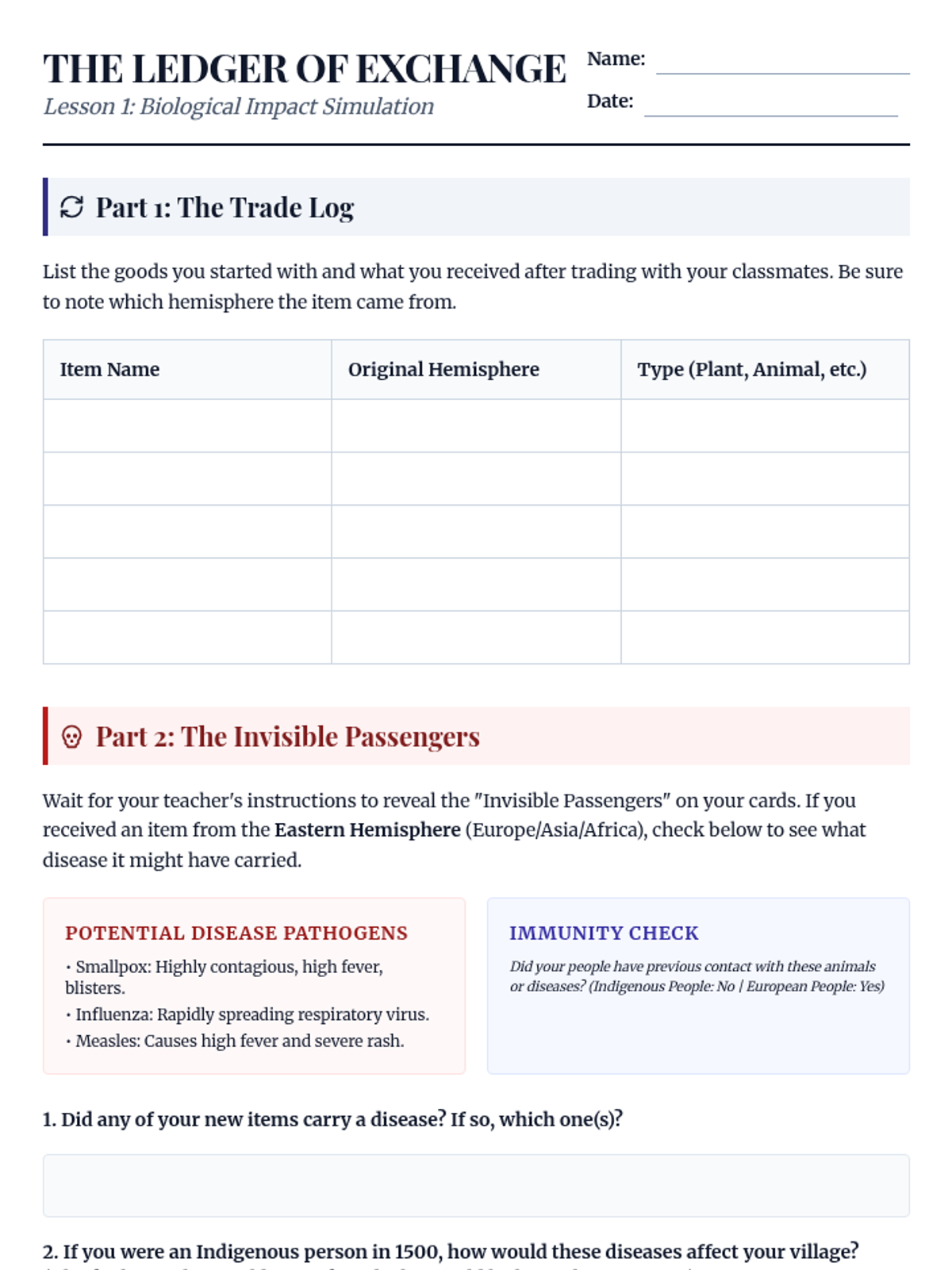
This sequence examines the complex effects of European exploration and colonization on Native Peoples, focusing on biological impacts, economic shifts in the fur trade, conflicting views of land ownership, and Indigenous agency during colonial wars. Students analyze primary sources and participate in simulations to understand the 'encounter' as a period of adaptation, resistance, and survival.
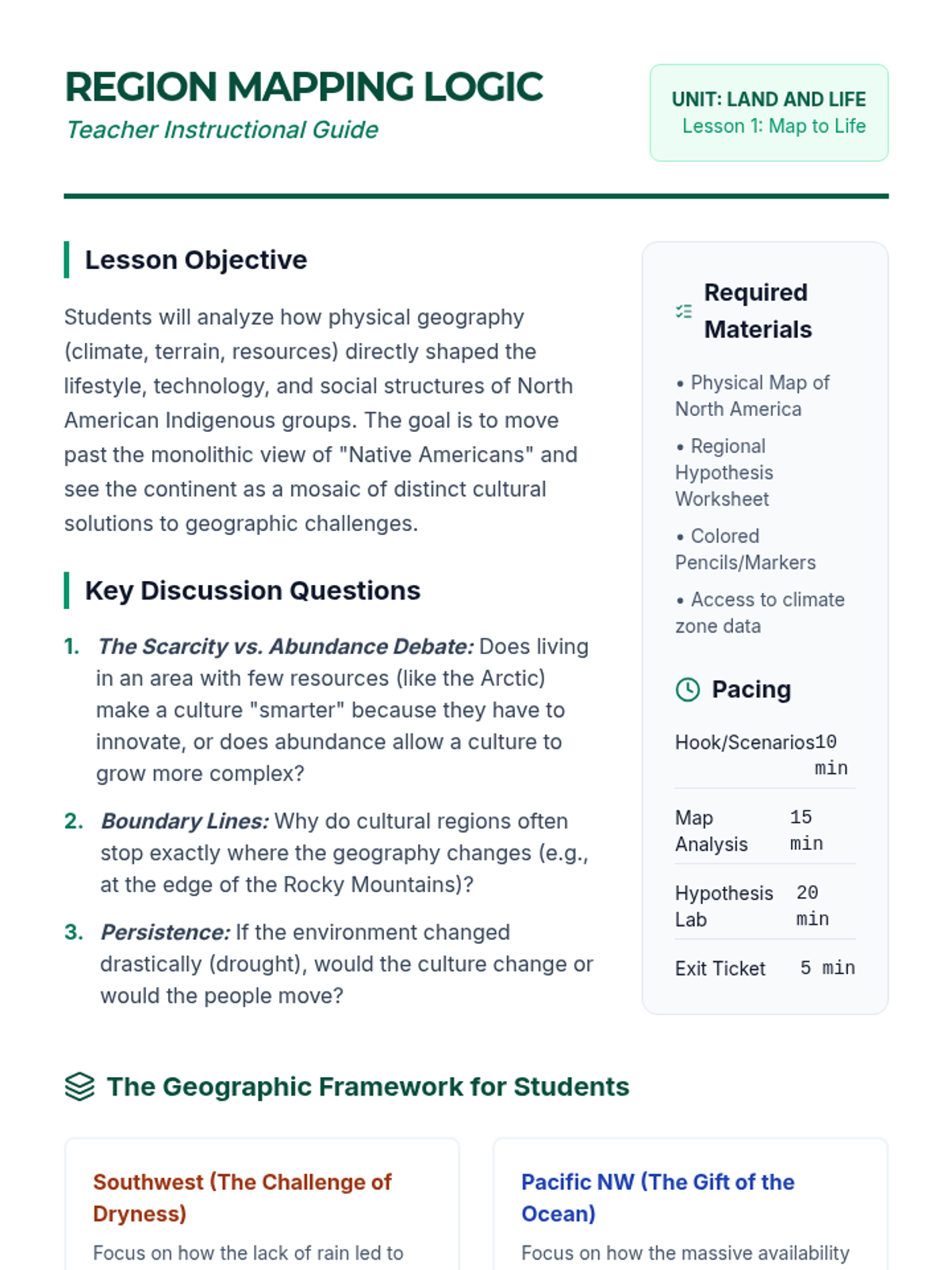
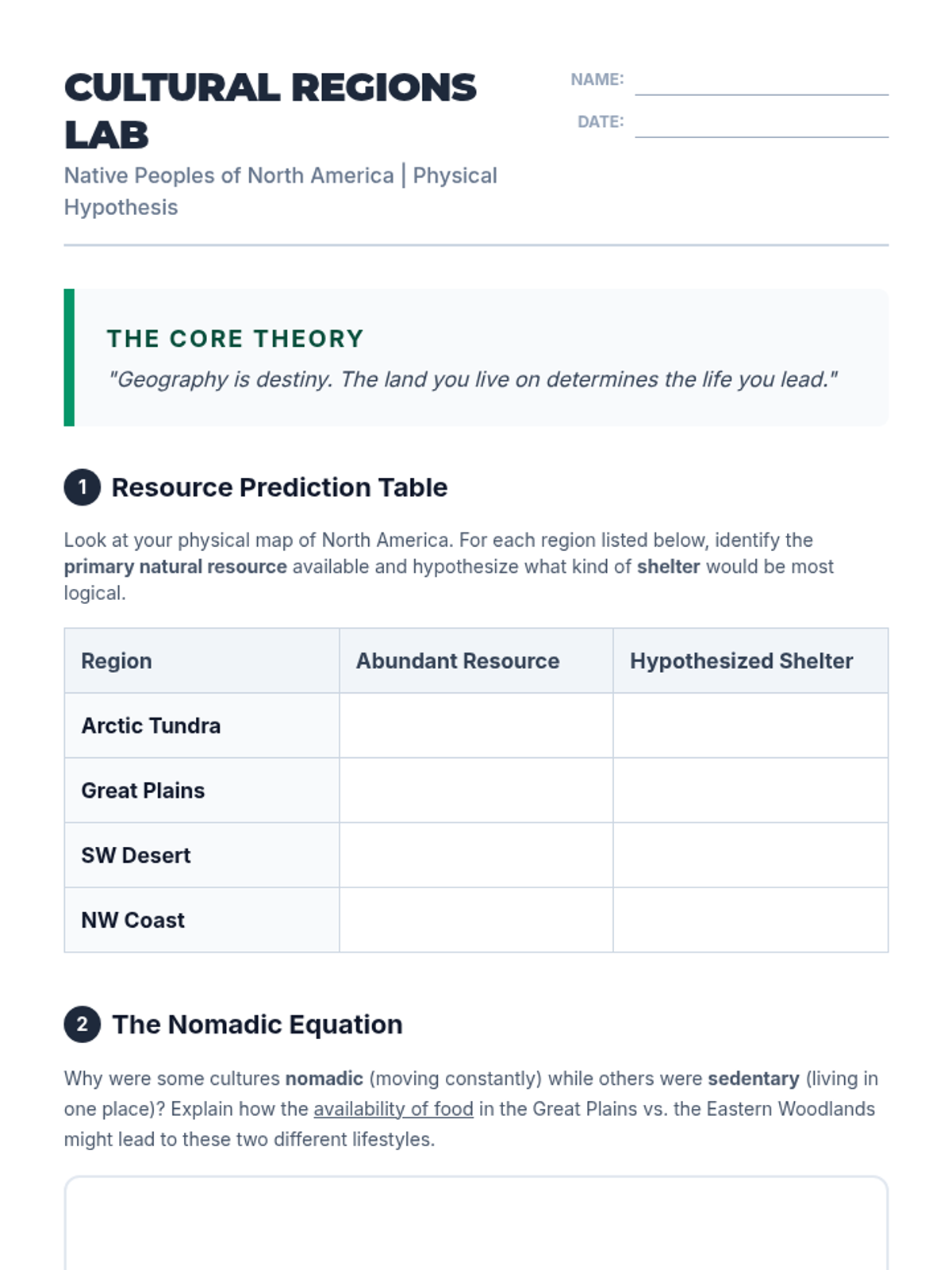
This sequence explores the deep connection between physical geography and the development of diverse Indigenous cultures across North America prior to European contact. Students analyze how environmental features dictated resource availability, shelter, and social structures in regions like the Arctic, Southwest, and Pacific Northwest.
This sequence teaches 5th-grade students the concept of multi-causality in history. Students learn to distinguish between root causes and triggers, categorize factors using the Social, Political, and Economic (SPE) framework, and synthesize these elements into a nuanced historical argument using the American Revolution as a primary case study.
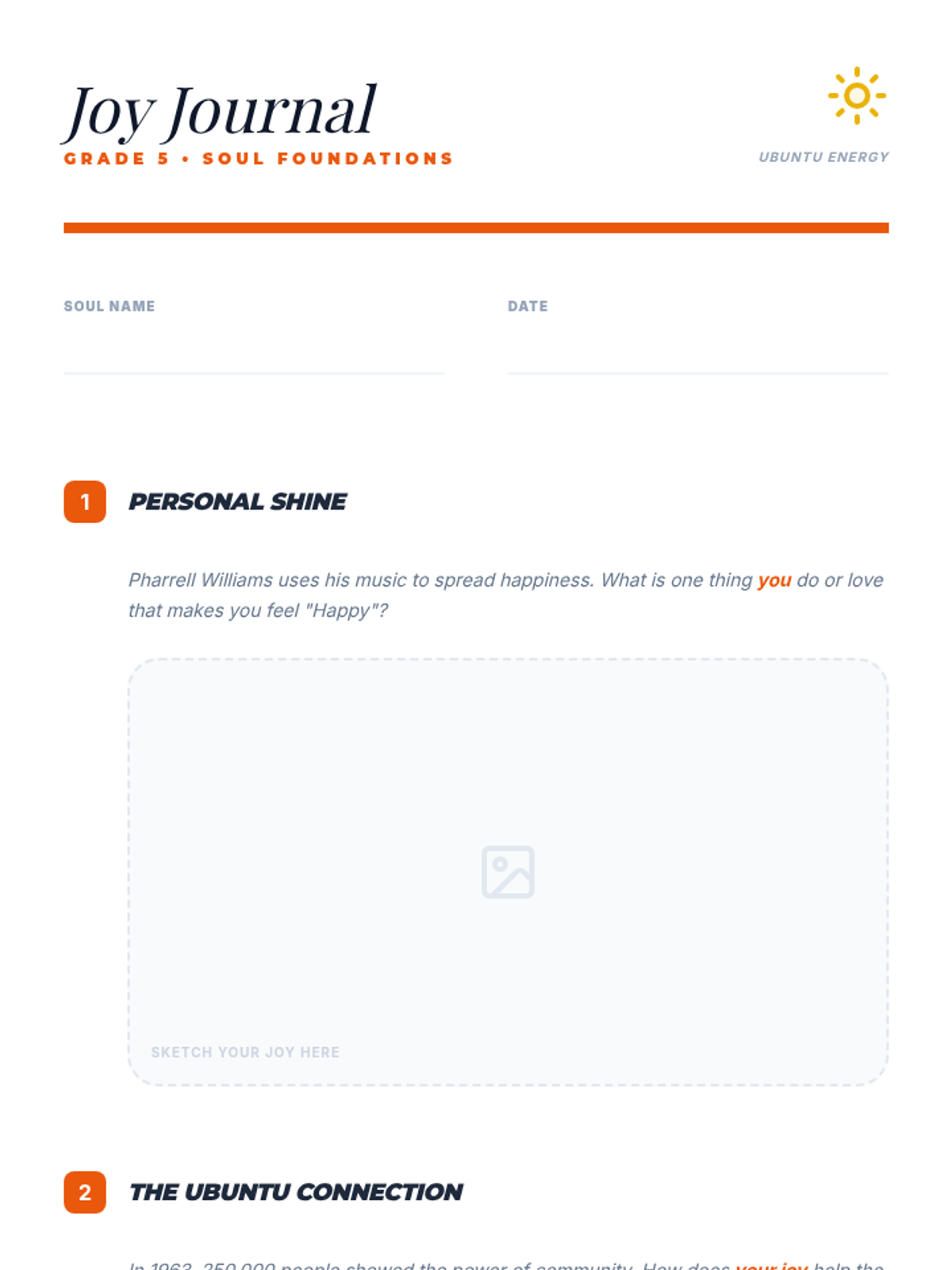
A 6-lesson sequence divided by grade level (5th, 6th, and 7th), celebrating 100 years of Black history through school values. Each grade explores two distinct lessons focusing on community joy, personal excellence, and mental health advocacy.
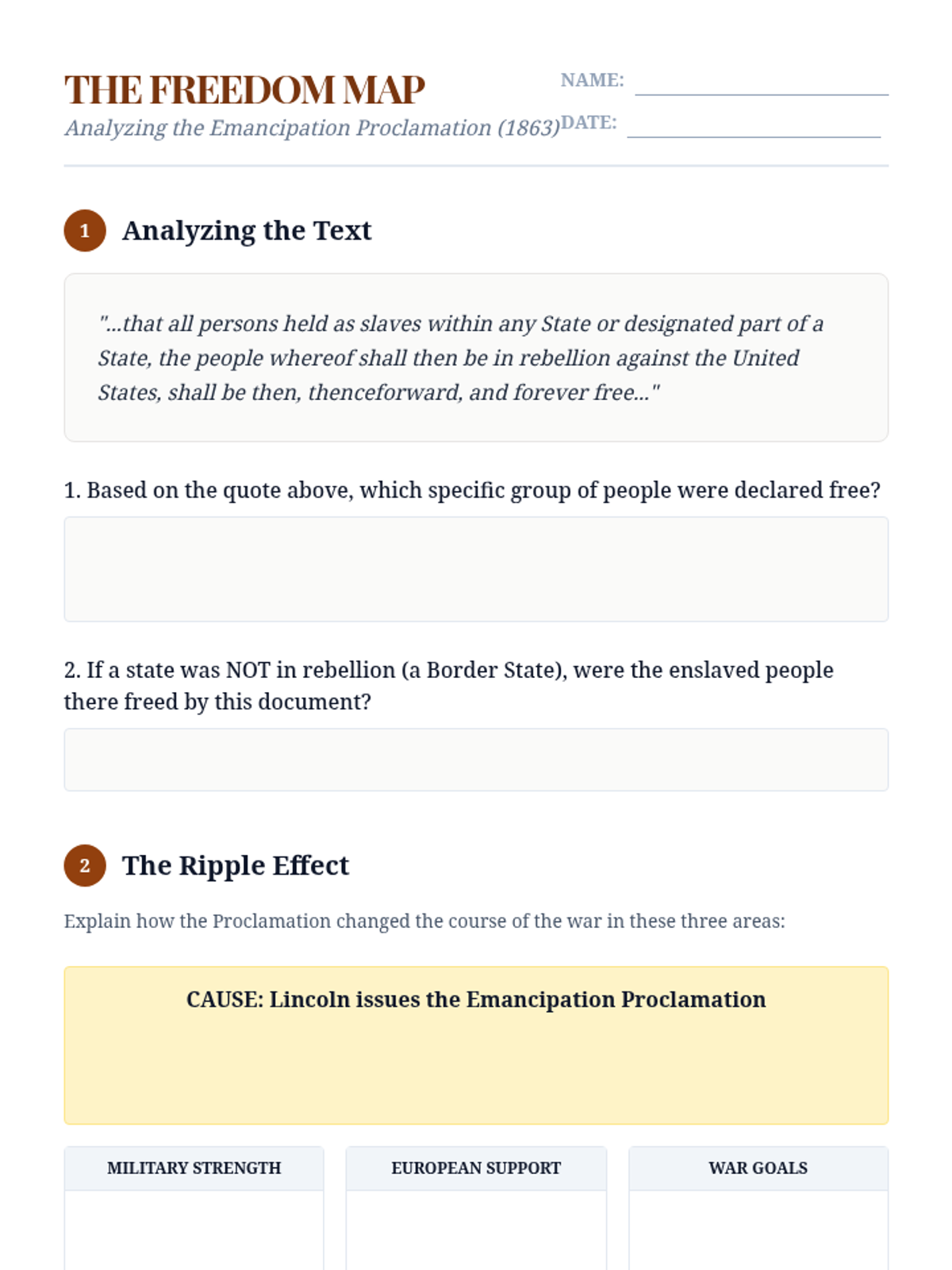
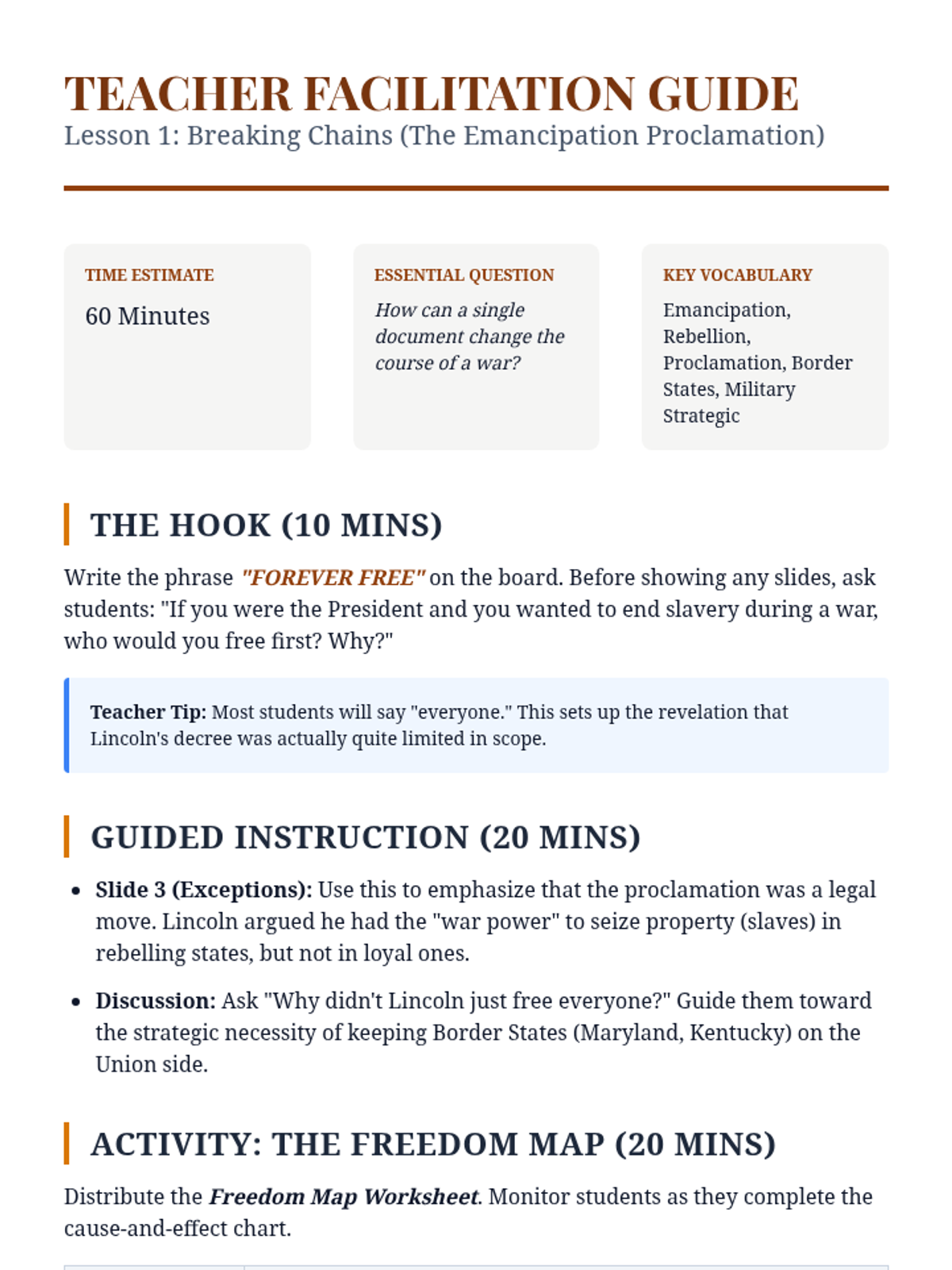
A comprehensive 5th Grade US History unit exploring the strategic and moral impact of the Emancipation Proclamation, the contribution of Black soldiers, and the complex legal and social struggles of the Reconstruction era.
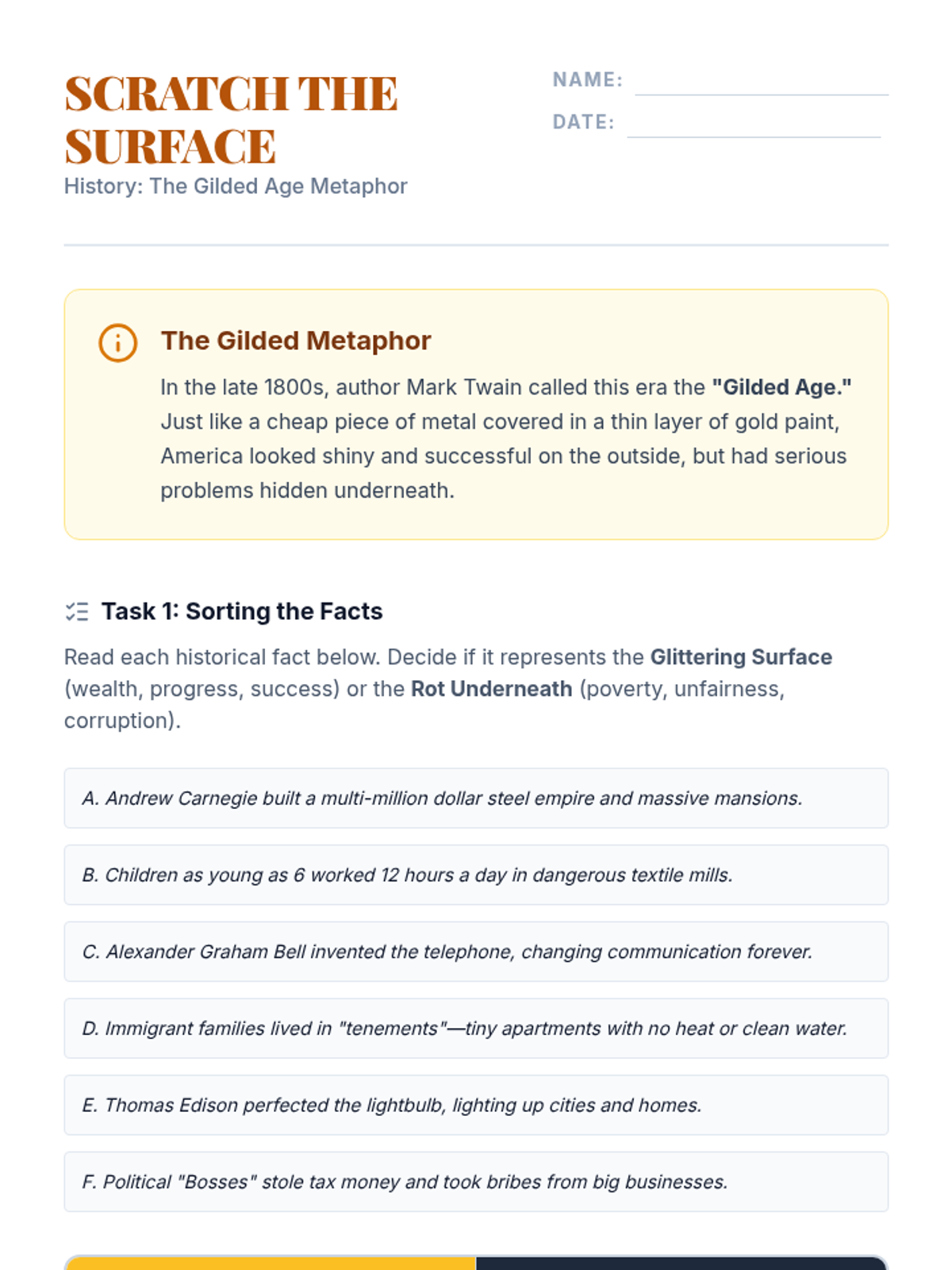
This 5th-grade history sequence explores the stark social contrasts of the Gilded Age. Students investigate the metaphor of gilding, examine life in tenements and factories, and learn how labor unions and reformers fought for social change.
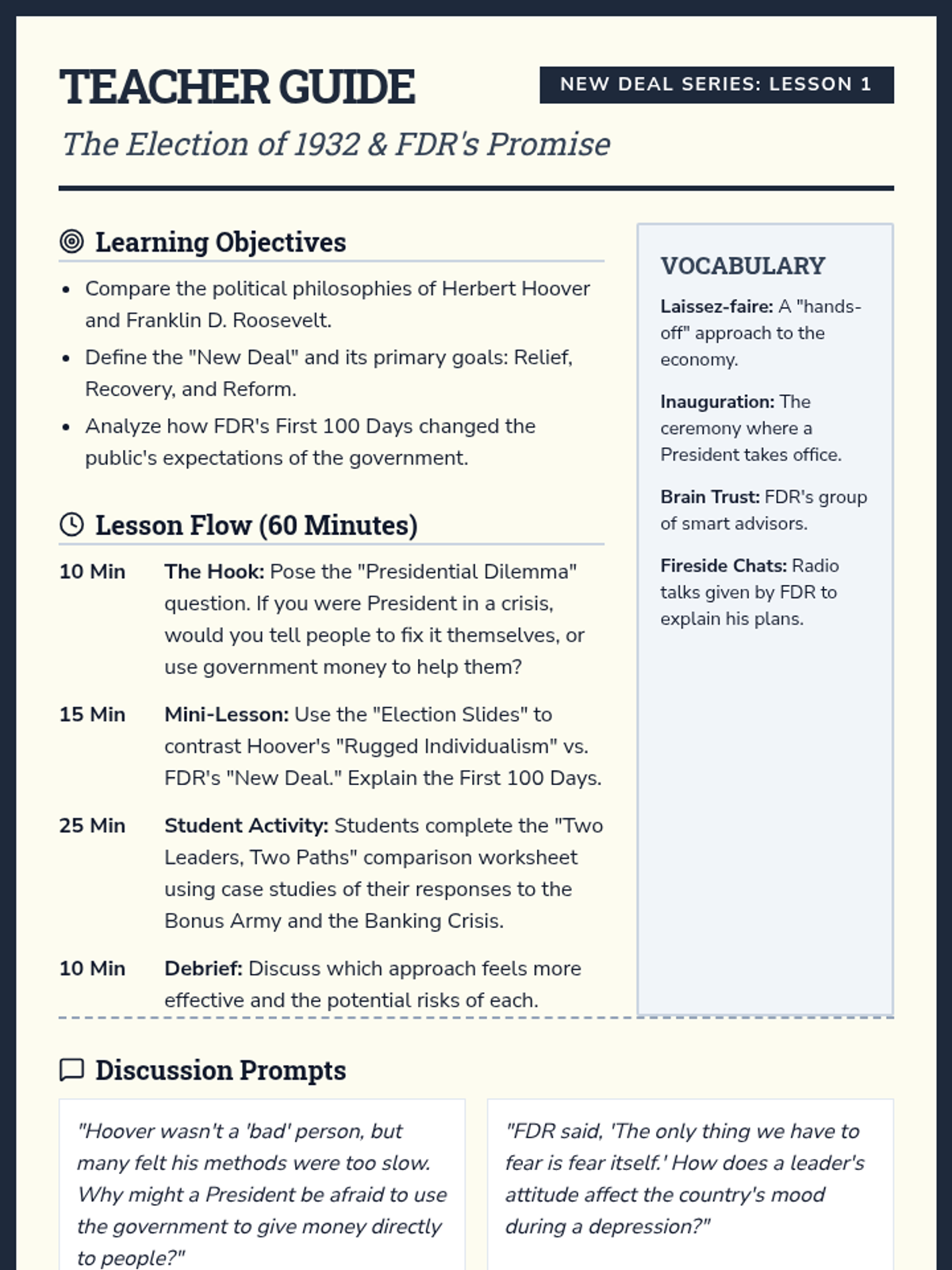
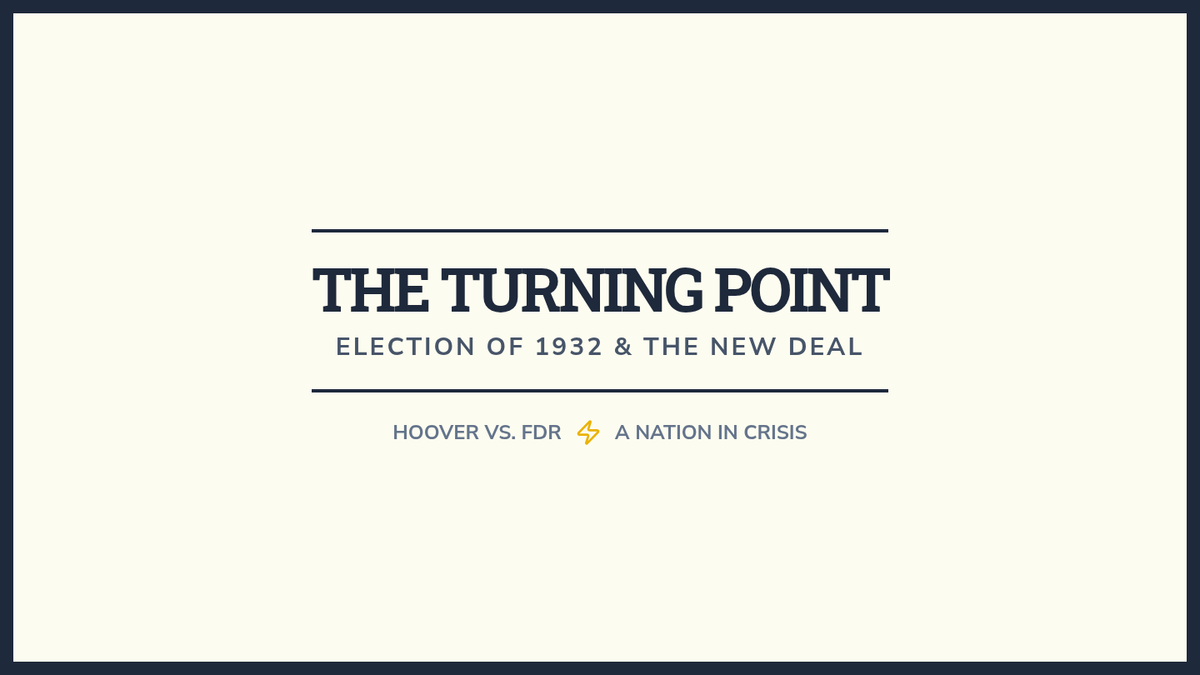
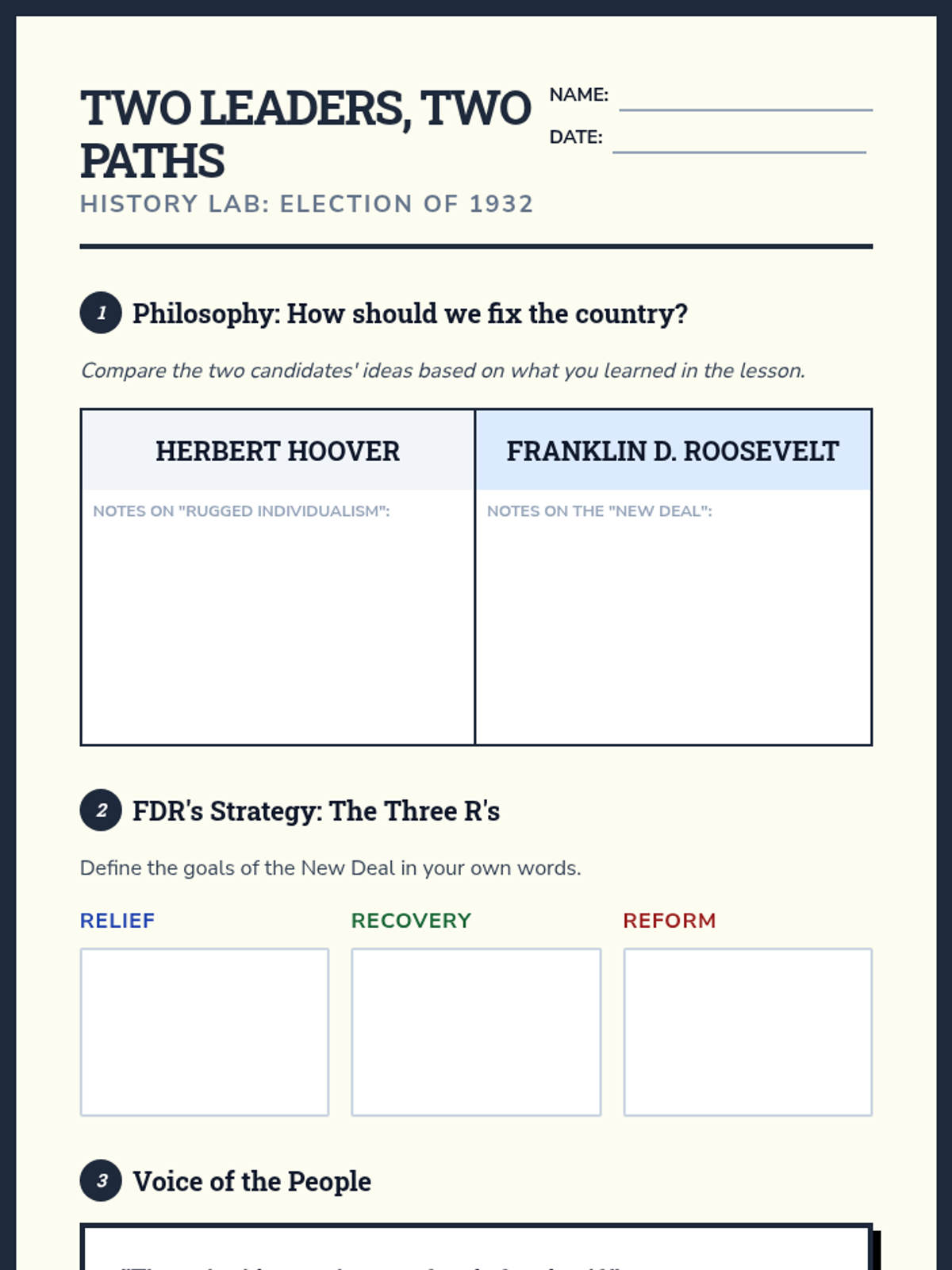
This sequence explores the US government's response to the Great Depression through FDR's New Deal. Students evaluate major programs like the CCC, WPA, and TVA to understand the expanding role of federal intervention and the shift from laissez-faire to public works.
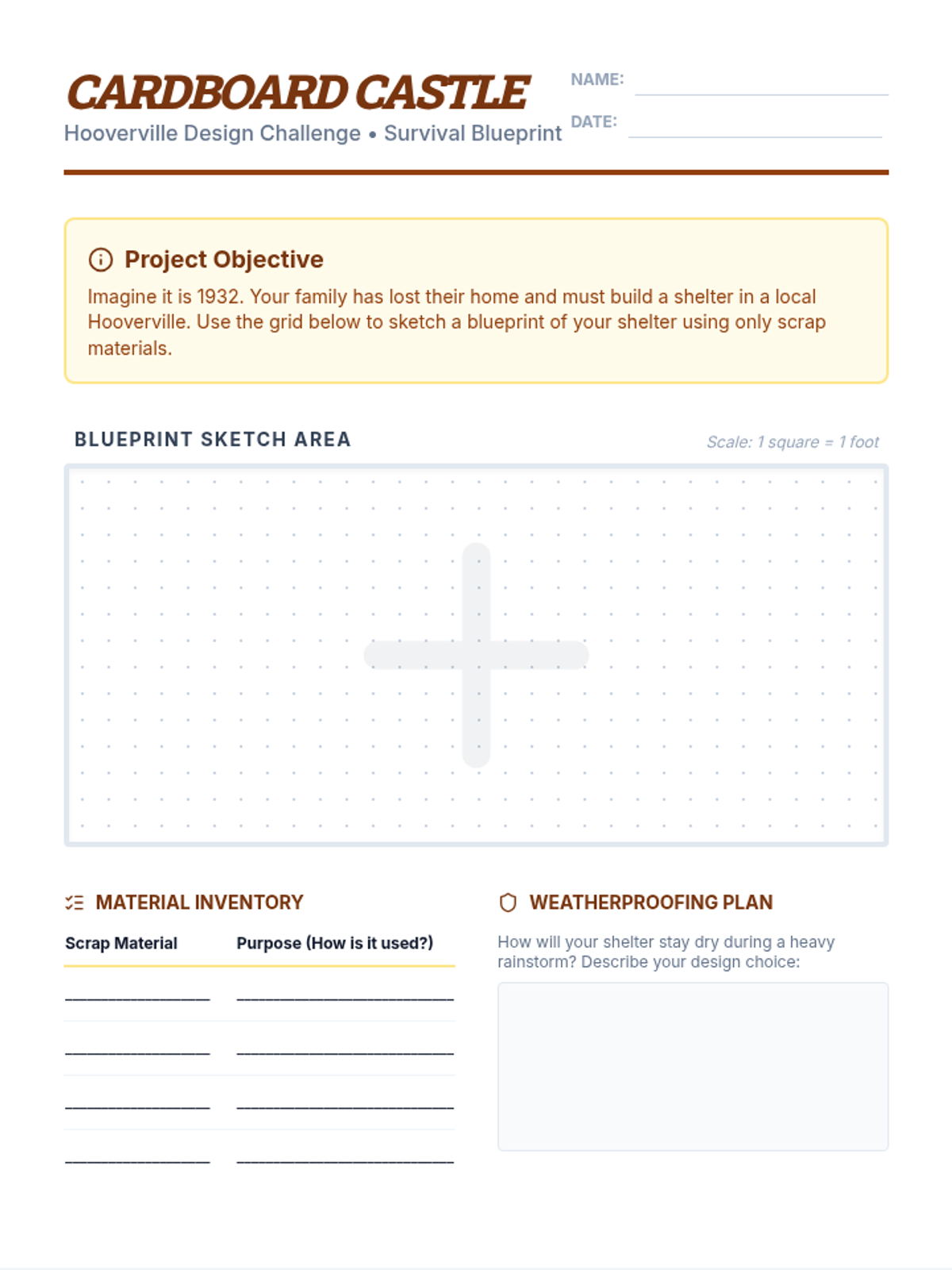
A 5th-grade history sequence exploring the social impact of the Great Depression through the lens of daily survival, community resilience, and the 'Living History' of the 1930s.
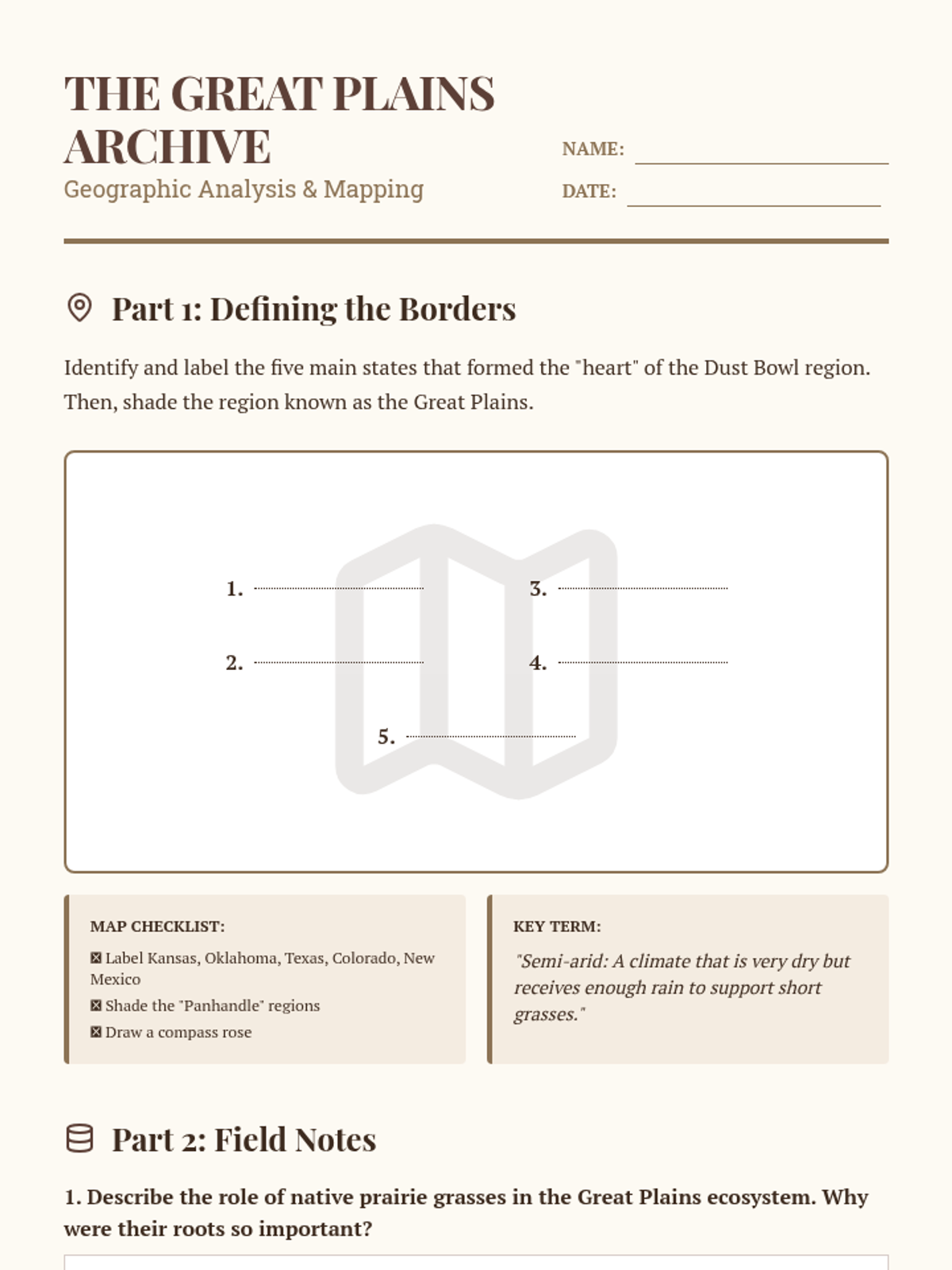
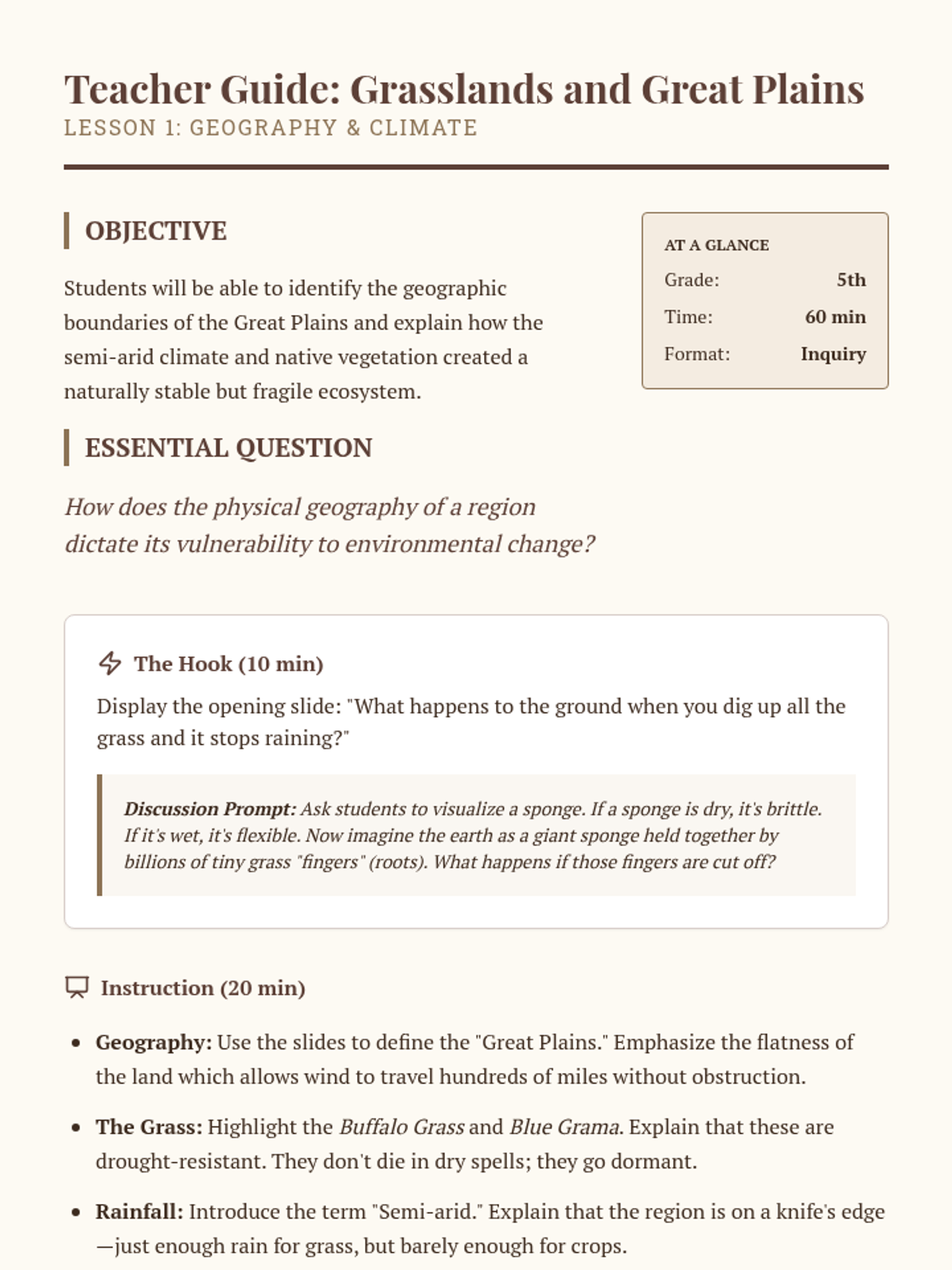
A 5th-grade case study on the environmental and human causes of the Dust Bowl, focusing on the relationship between farming practices and ecological disaster. Students trace the journey from the Great Plains to California through primary source analysis and scientific inquiry.
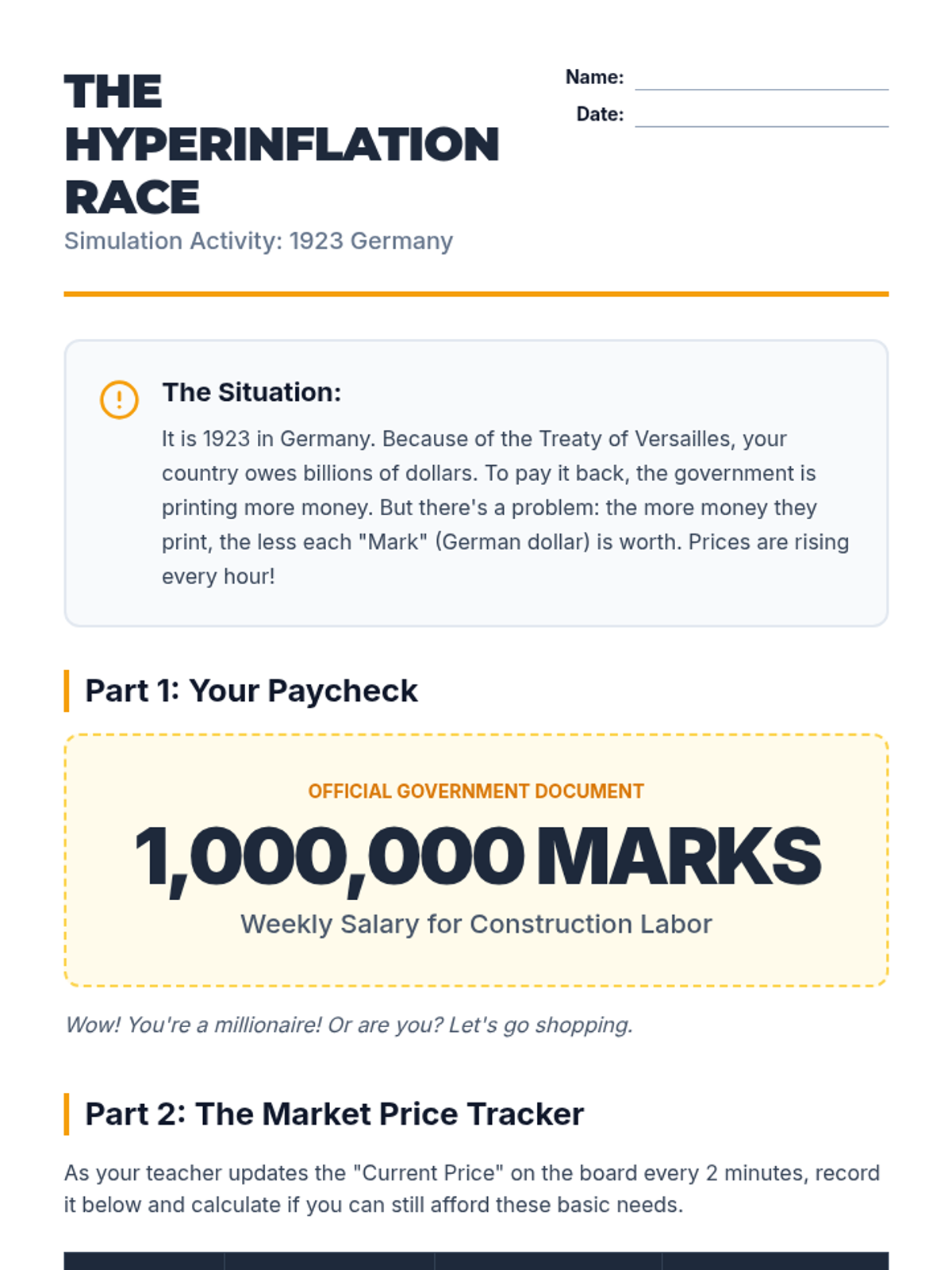
This sequence investigates the political and economic conditions that led to World War II, focusing on the aftermath of World War I and the rise of totalitarian leaders. Students will analyze primary sources, simulate hyperinflation, and evaluate the failure of appeasement to understand the transition from peace to global conflict.
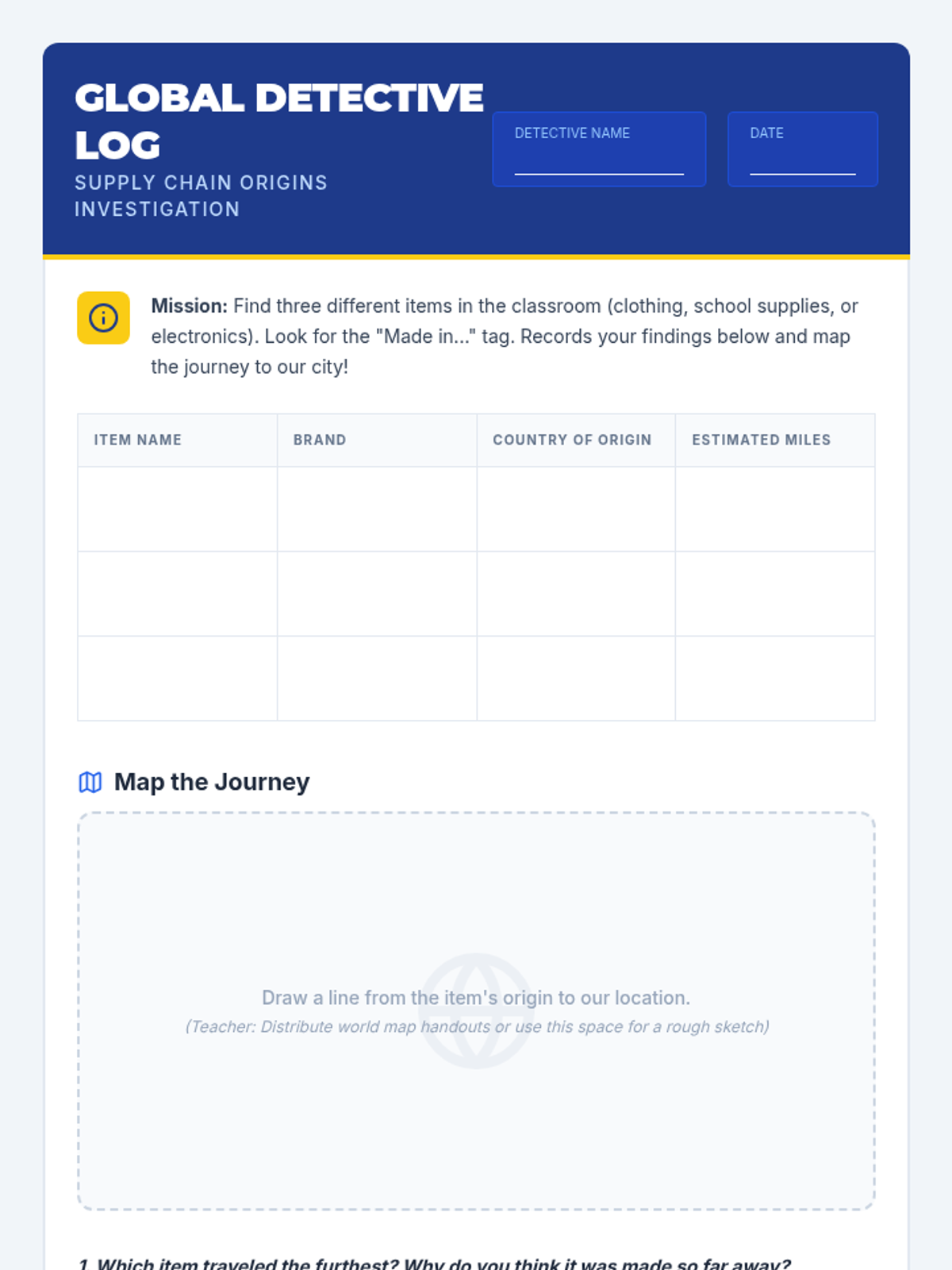
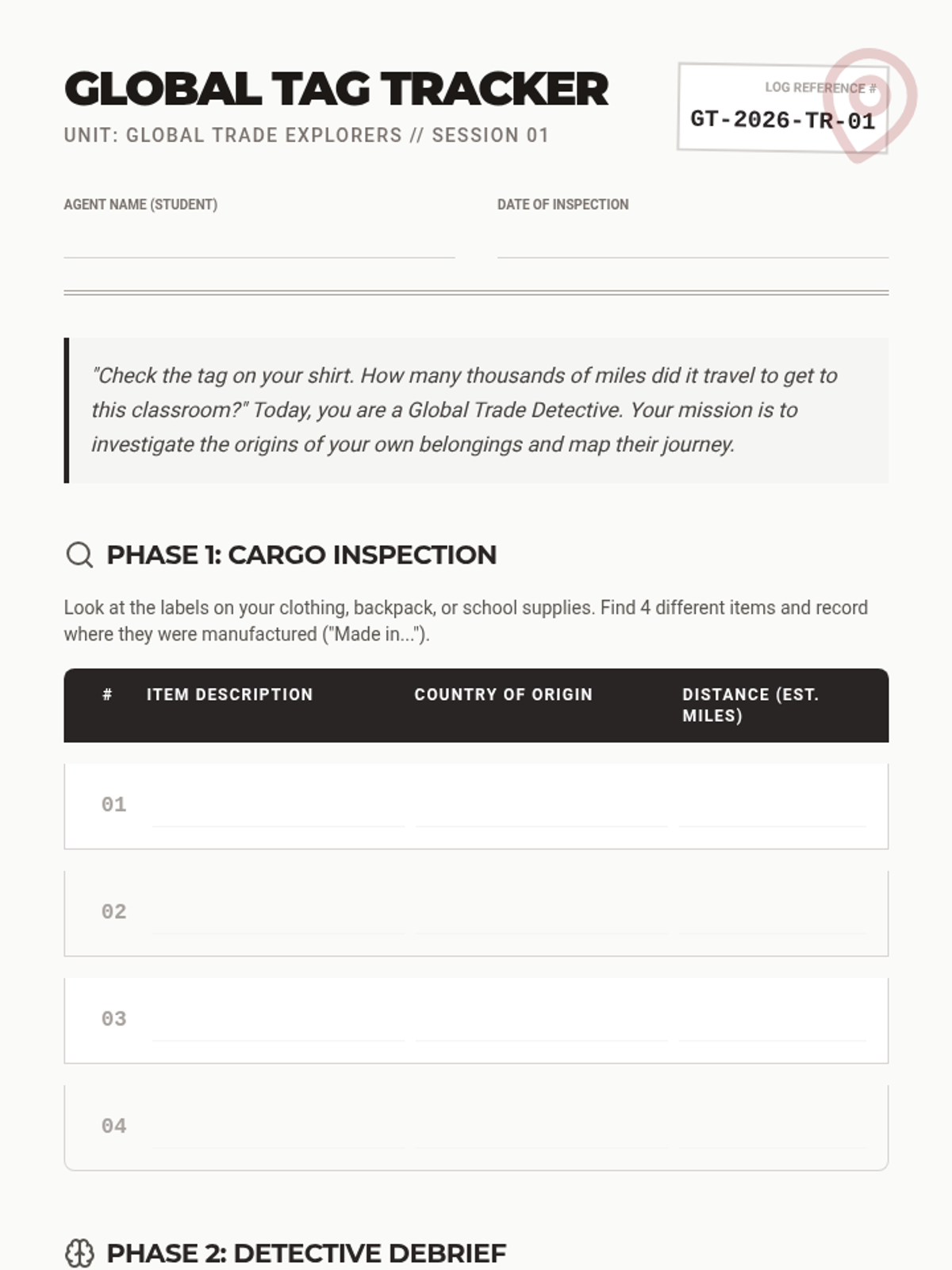
Students explore economic inequality and global trade by tracing the supply chains of everyday objects. They analyze how wealth is distributed among producers, manufacturers, and retailers, culminating in the design of a 'fair trade' product model.
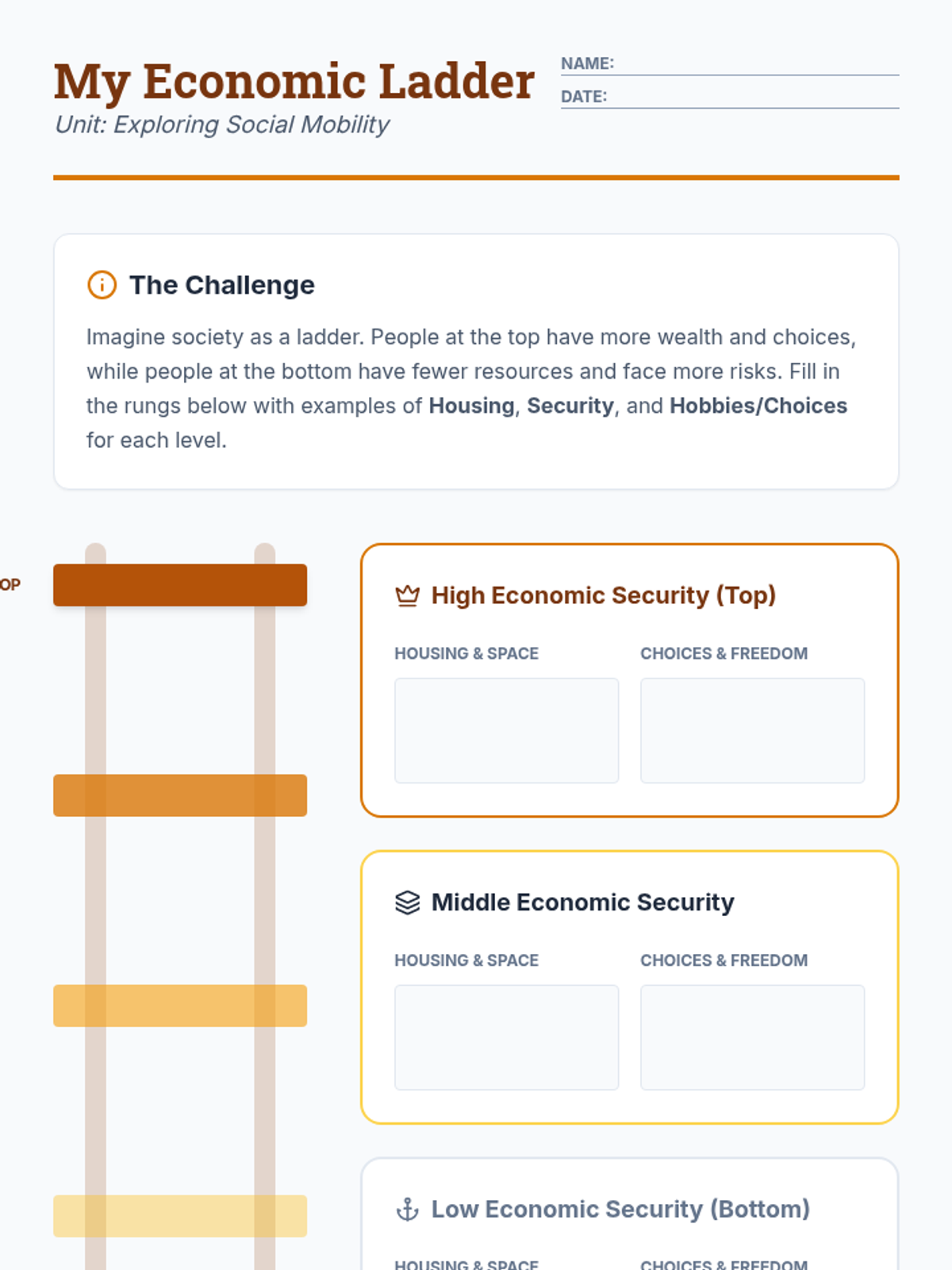
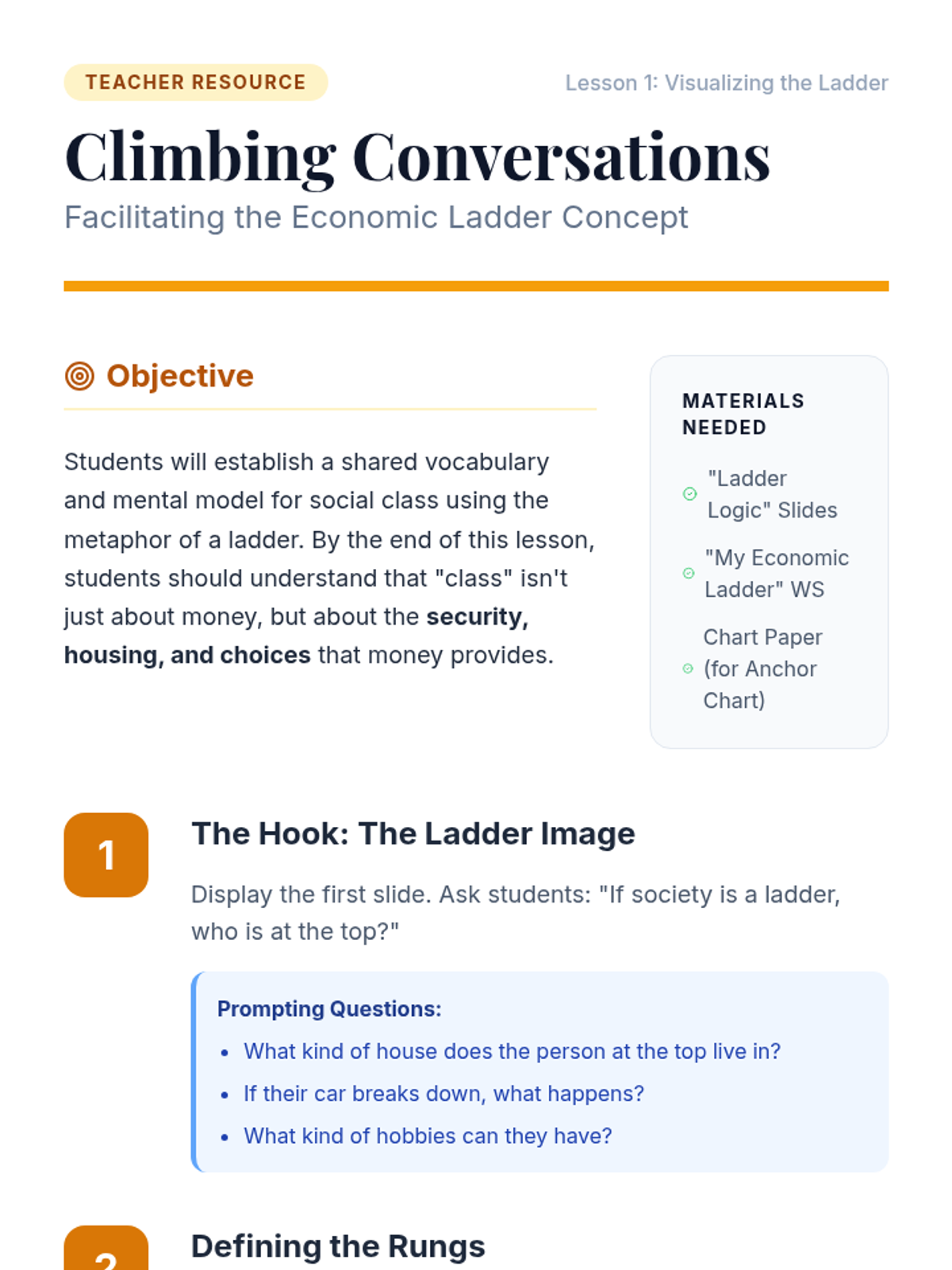
Using literature and historical narratives, this sequence helps students understand social mobility through the 'economic ladder' metaphor. Students analyze the California Gold Rush, fictional stories of hardship, and participate in a privilege simulation to identify both barriers and supports in achieving economic security.
This sequence explores global trade and labor practices, tracing products from origin to consumer. Students analyze wage gaps, learn about producers' lives, understand Fair Trade, and develop conscious consumer habits to address global inequality.
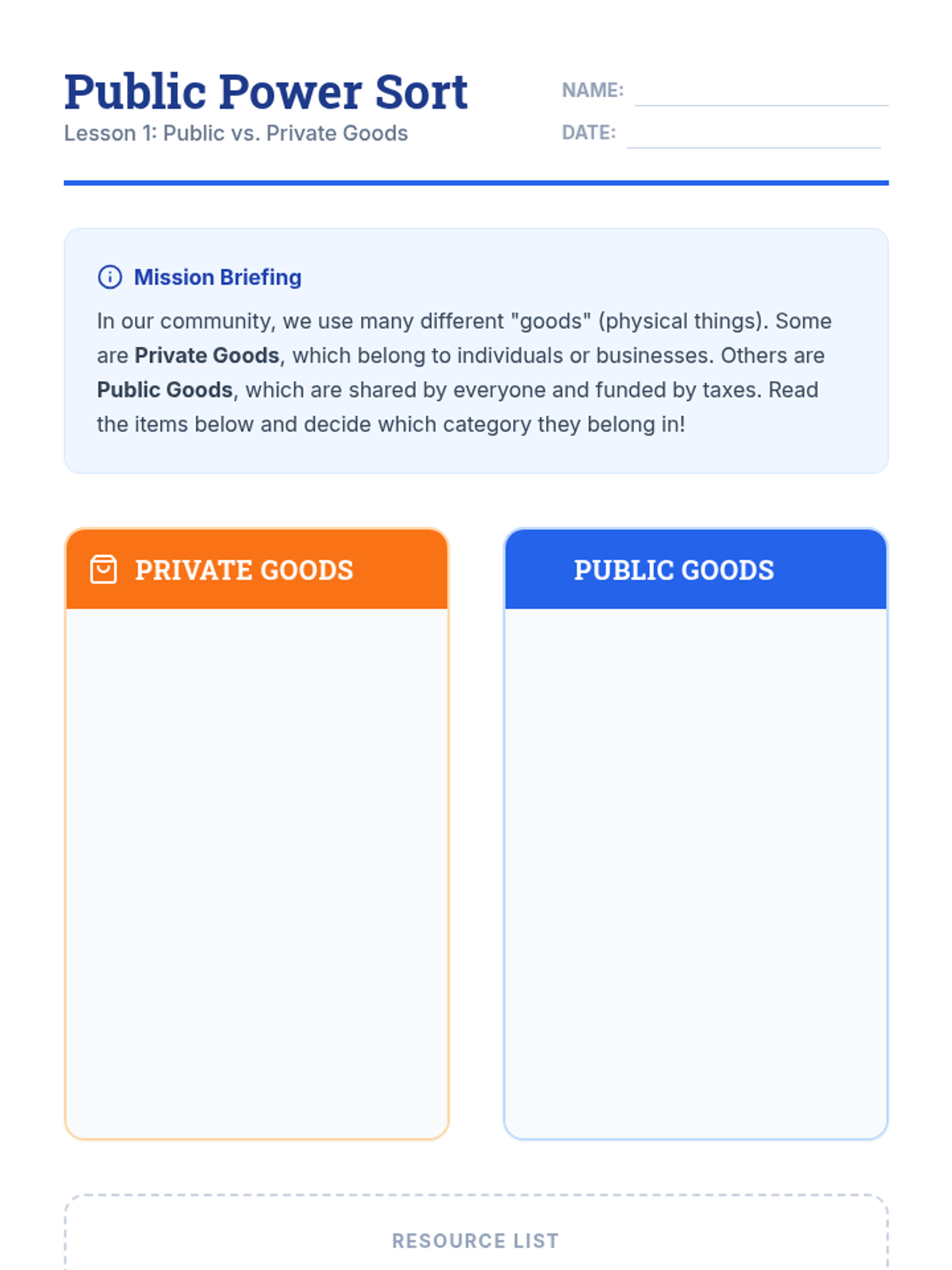
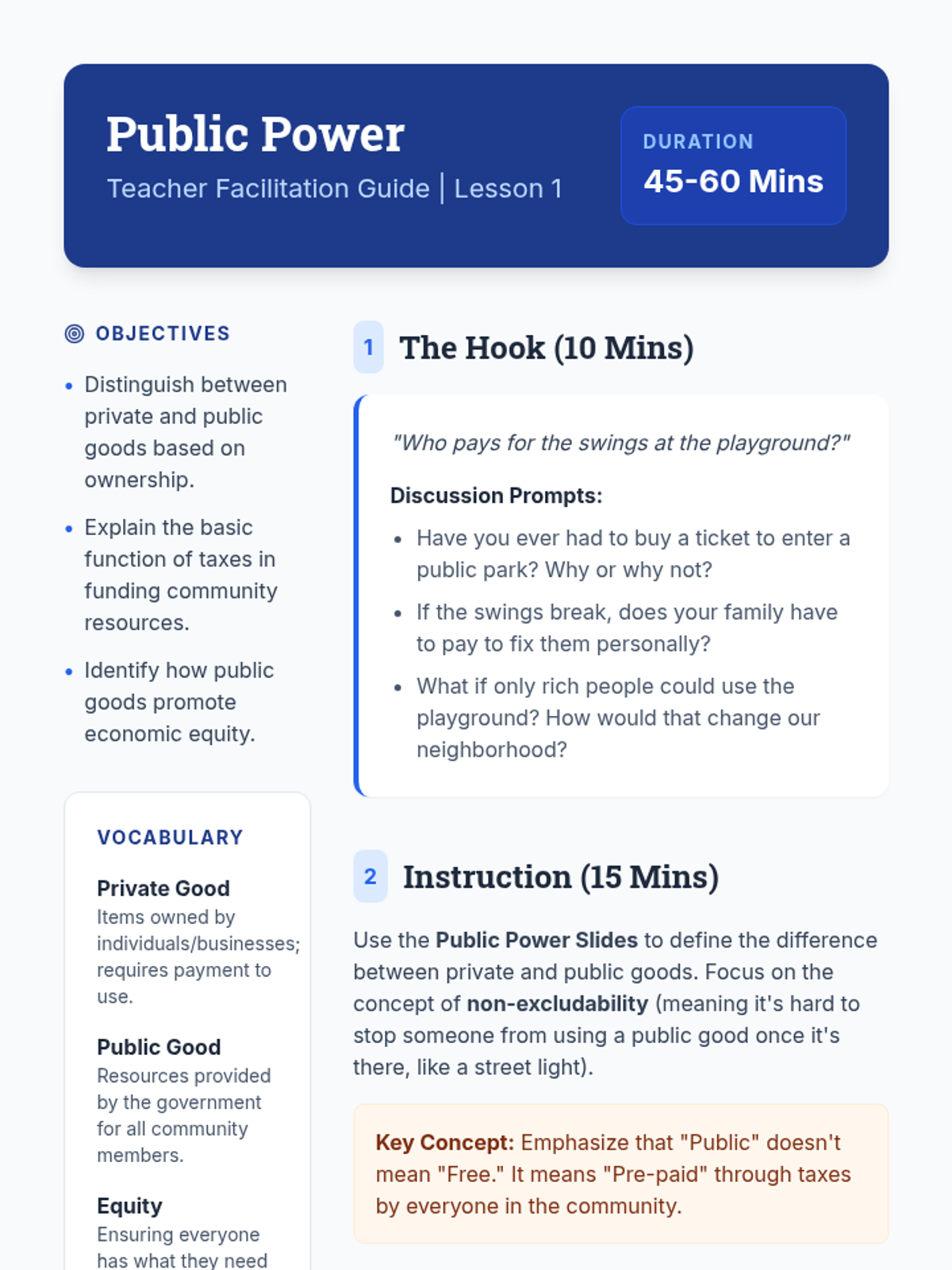
This sequence explores how geographic location and community resources impact economic opportunity. Students investigate public goods, map resource density in neighborhoods, analyze food and transit deserts, and evaluate the effects of school funding differences, culminating in a civic proposal for community equity.
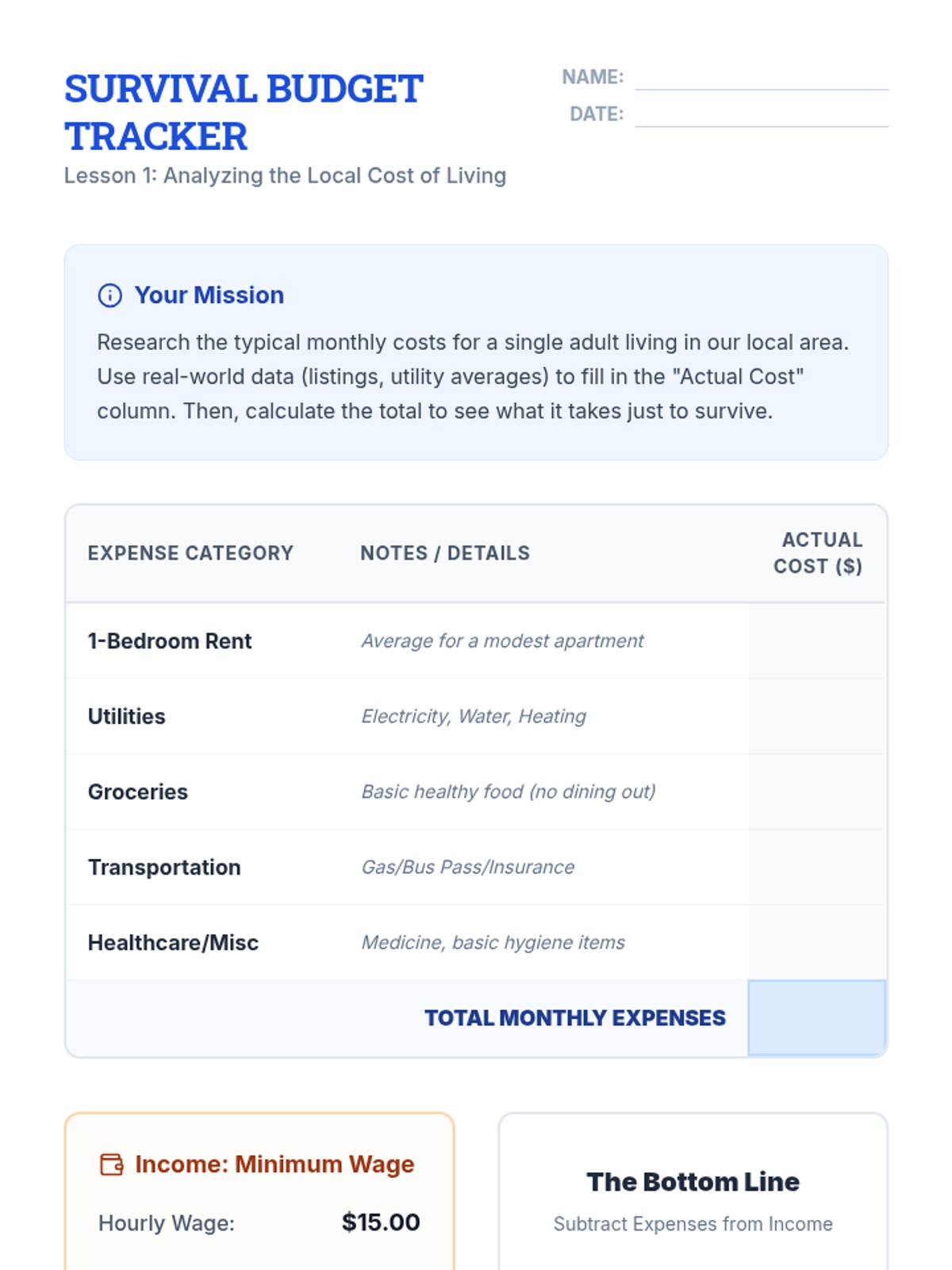
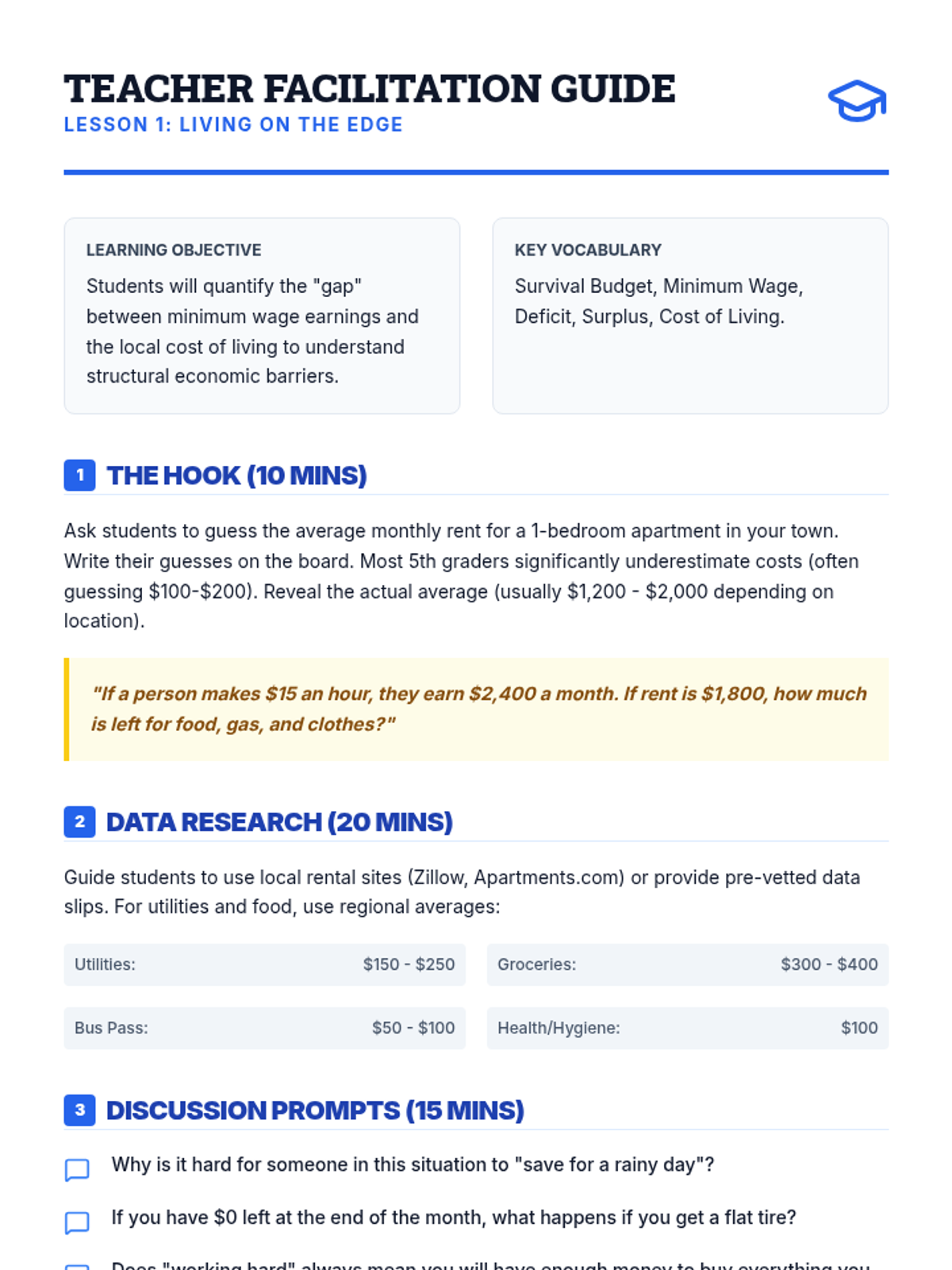
This sequence examines the practical barriers to social mobility through the lens of budgeting and cost-of-living analysis. Students analyze concrete data regarding income, housing, and unexpected expenses to understand the structural challenges of economic inequality.