Fundamental principles of supply, demand, and monetary systems alongside micro- and macroeconomic structures. Examines the impact of corporate power, labor market dynamics, and global systems on social mobility and class inequality.
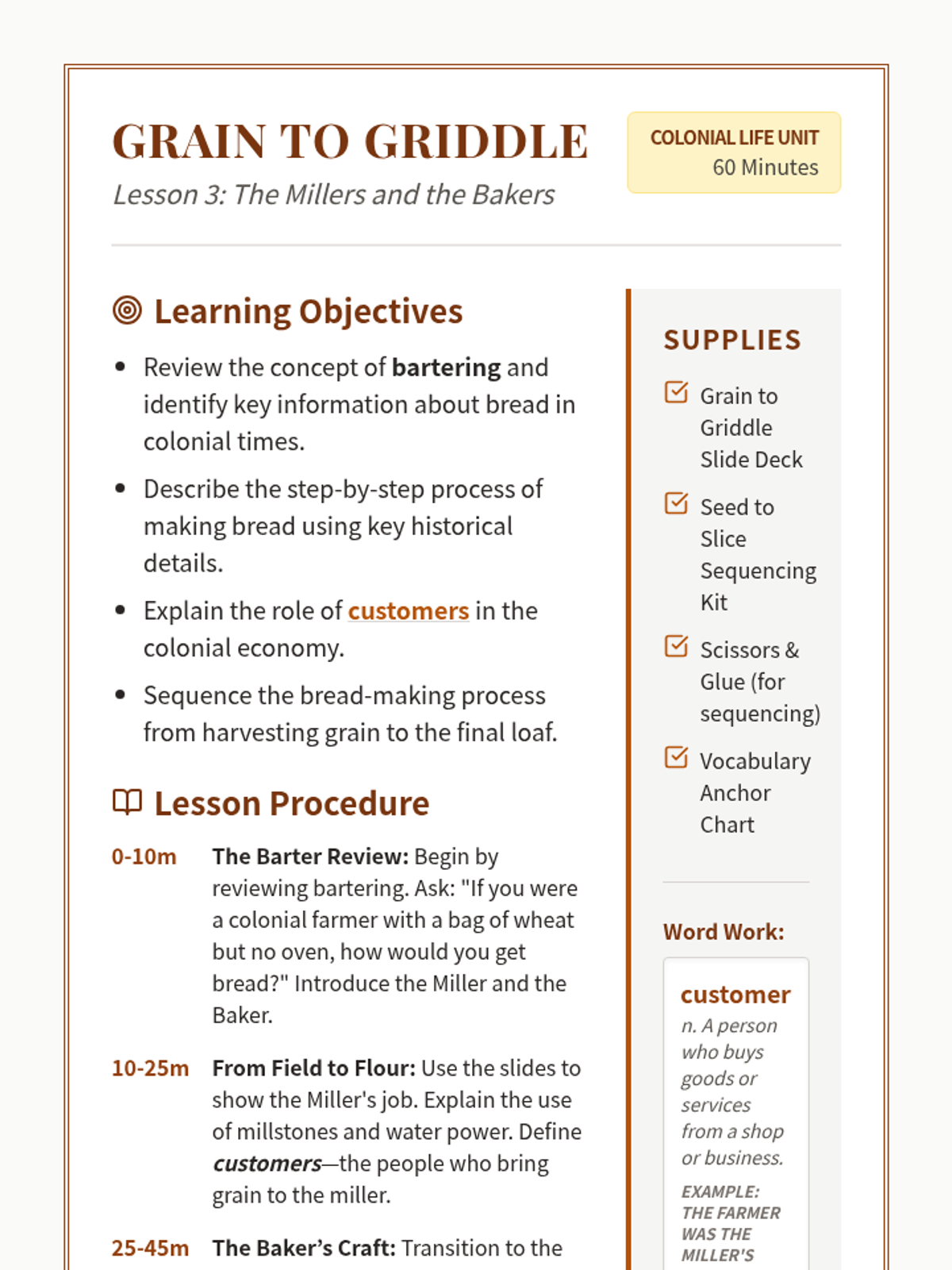
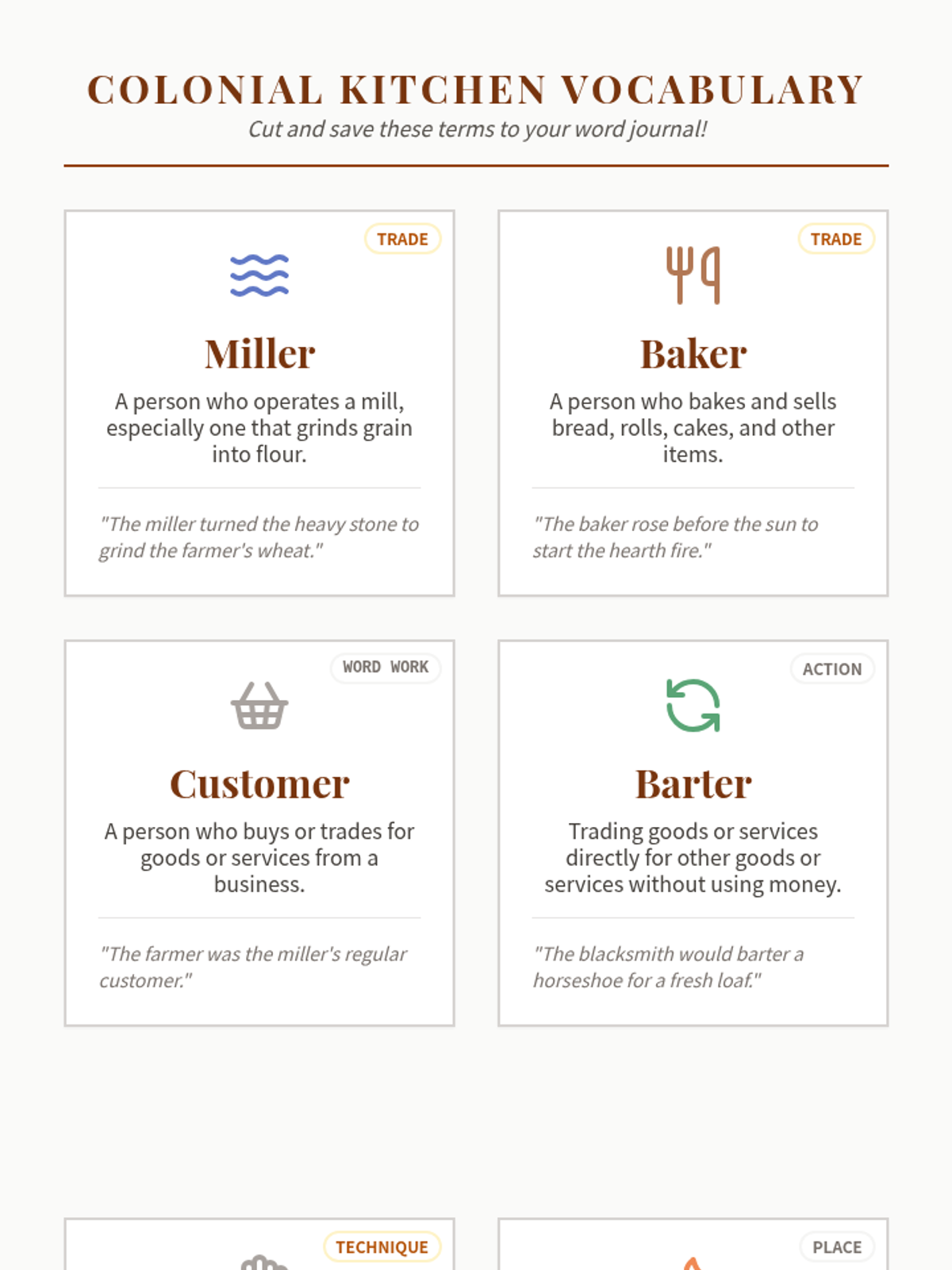
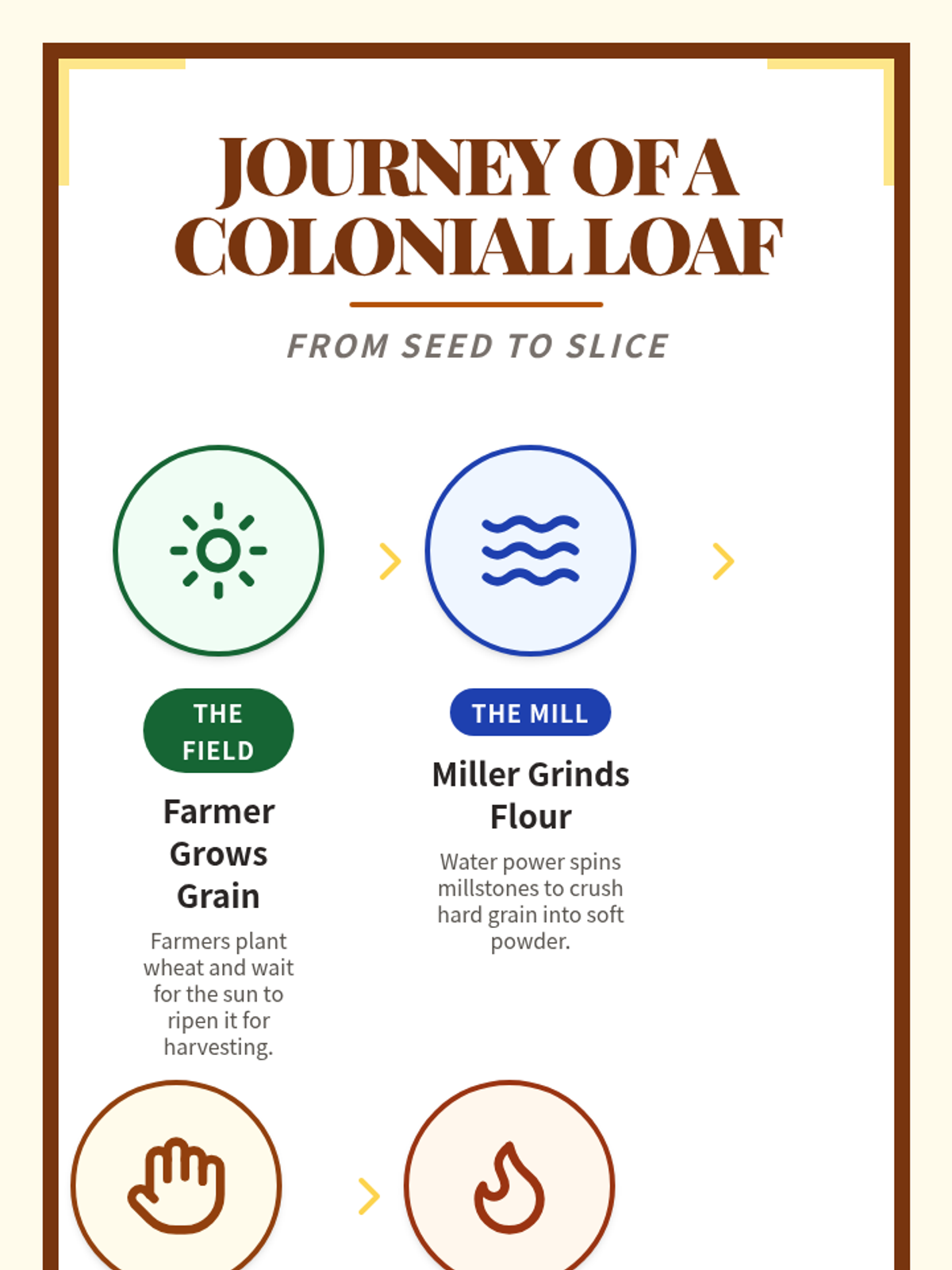
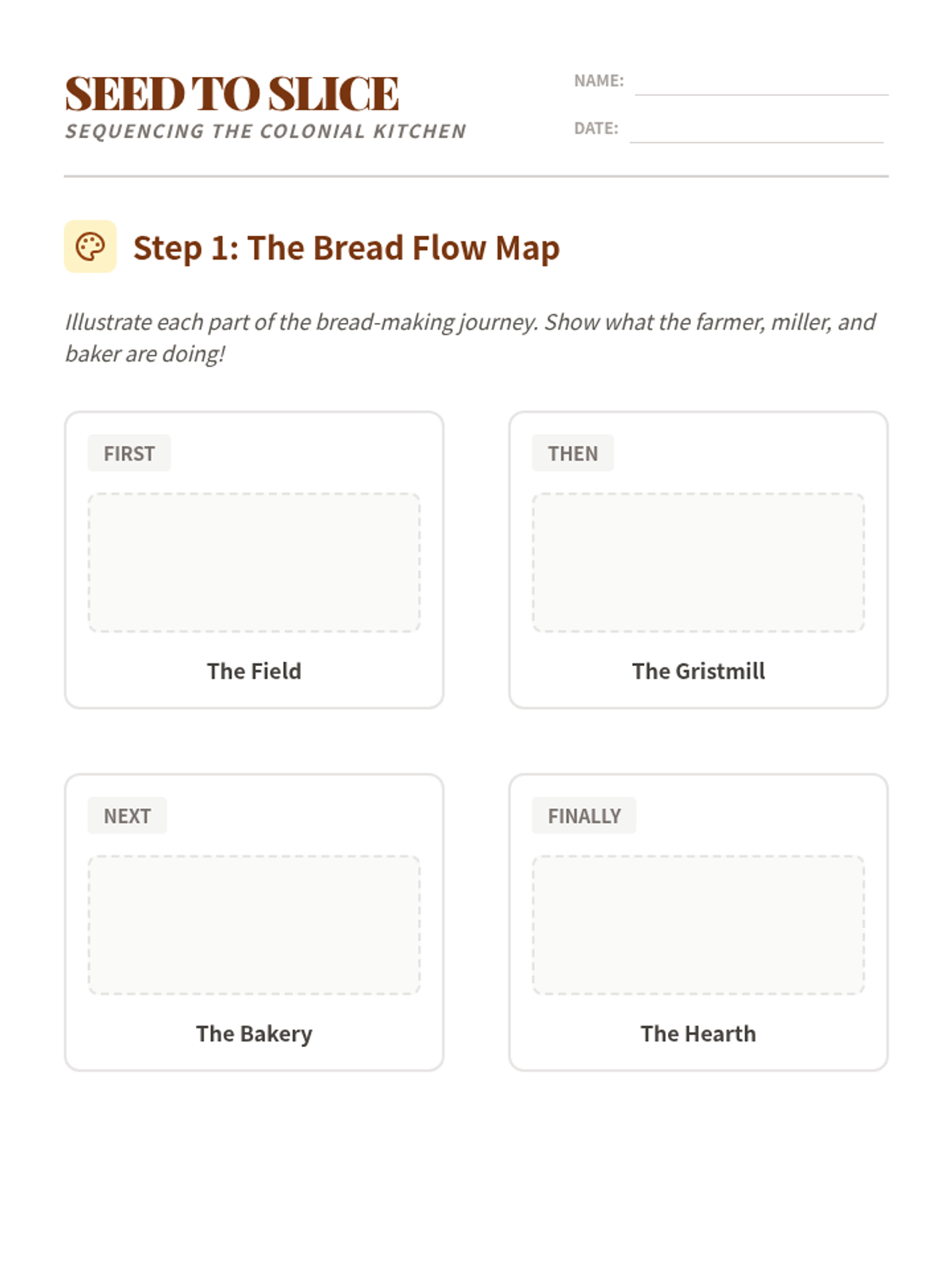
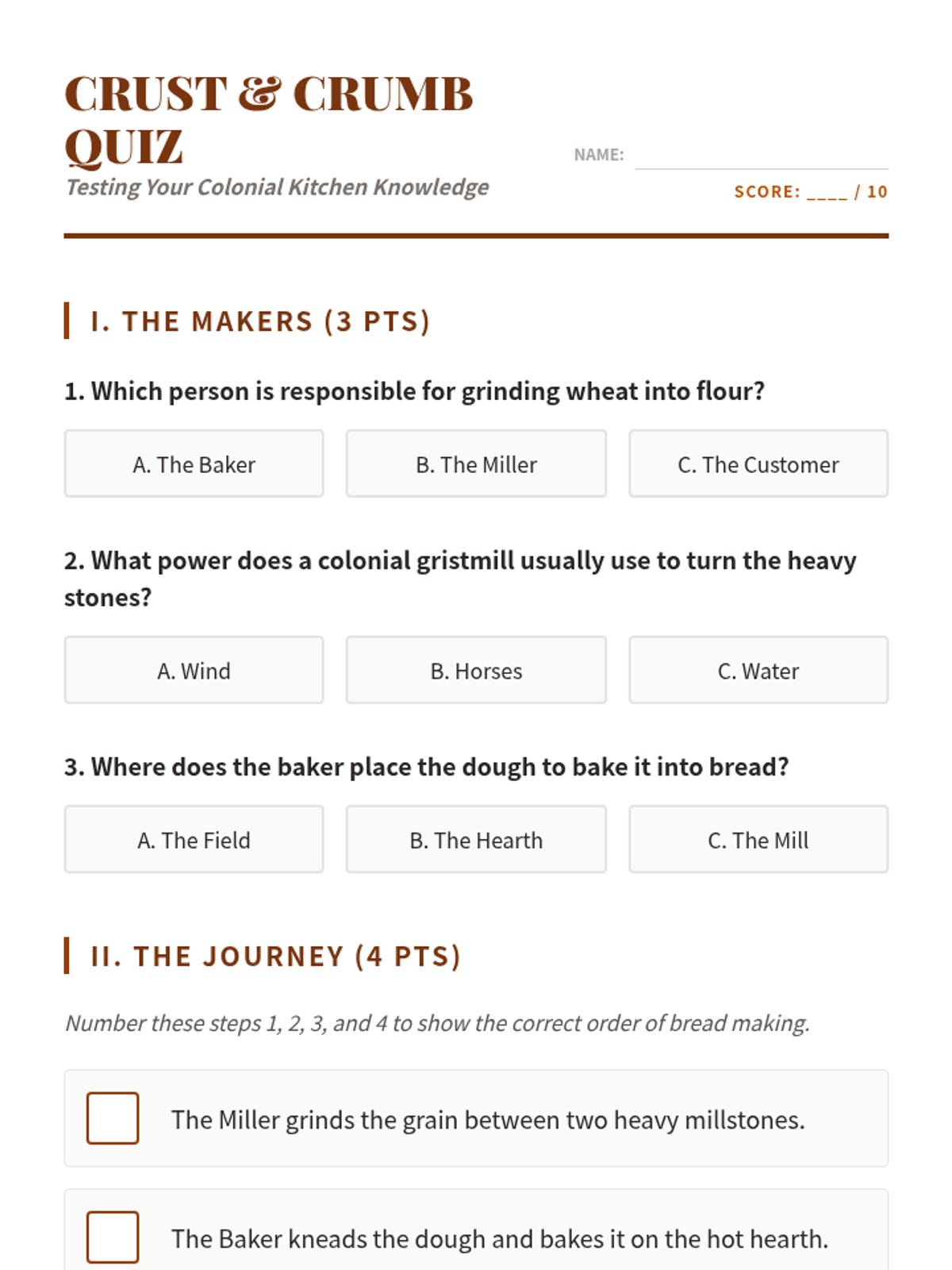
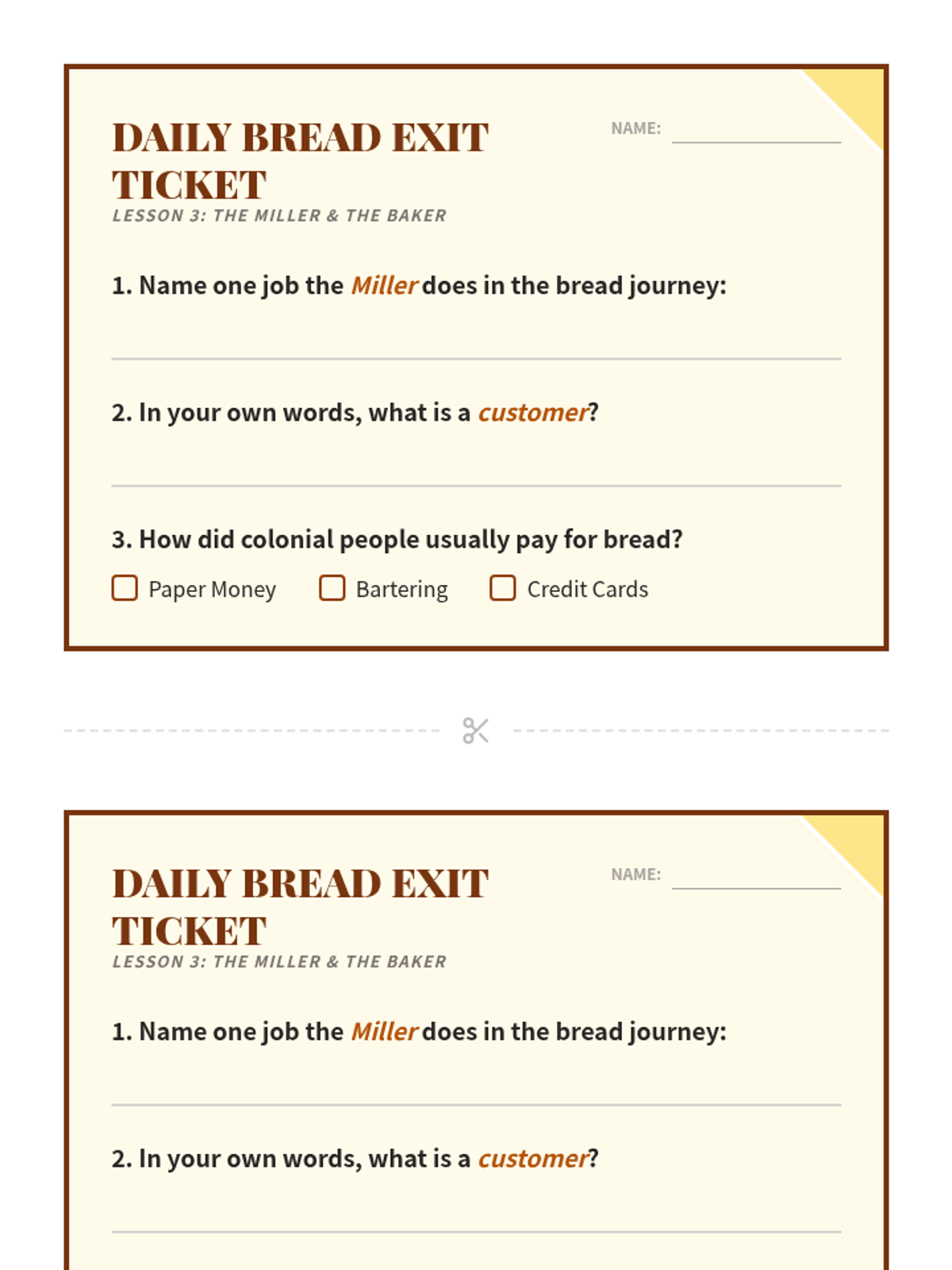
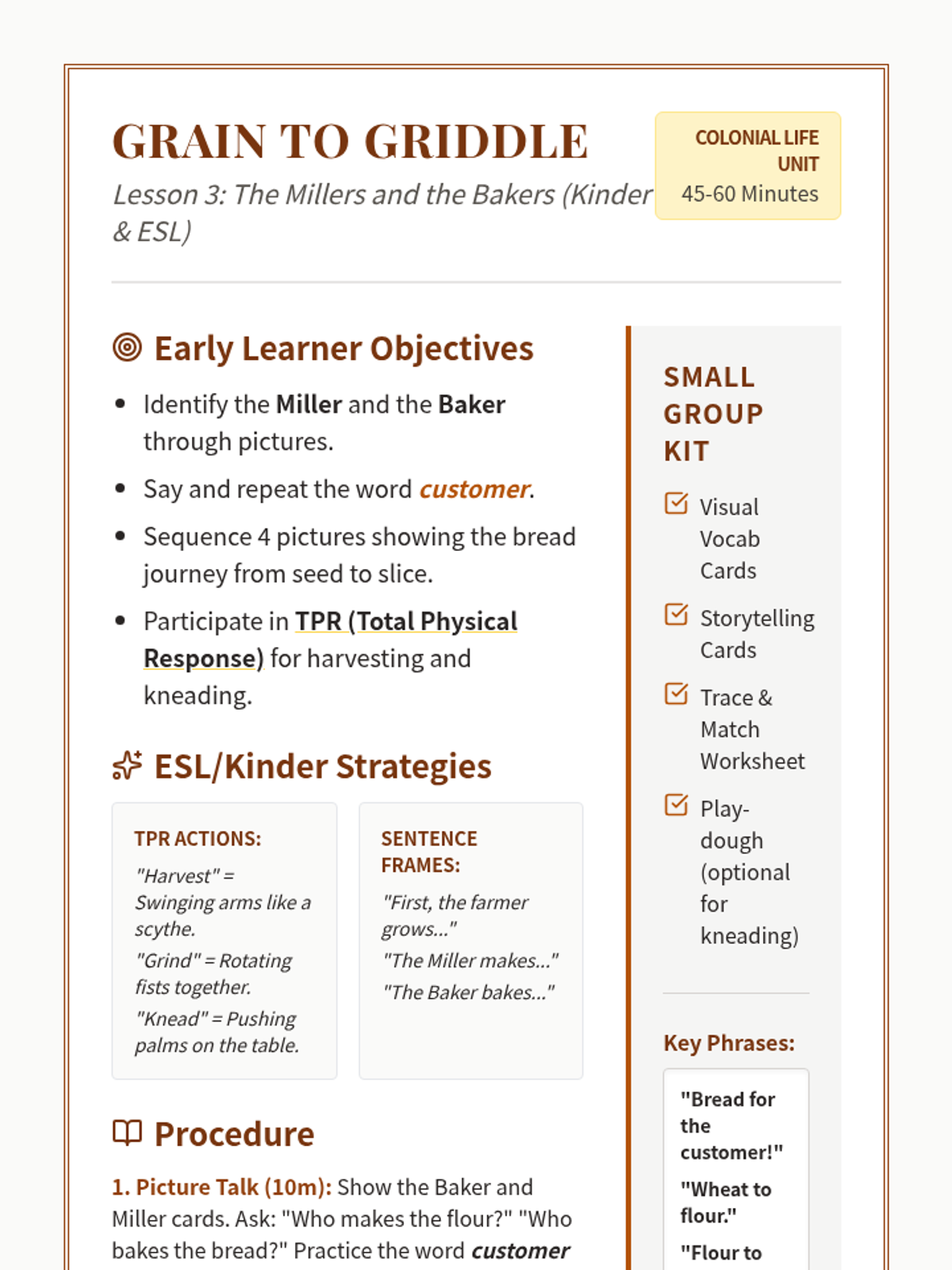
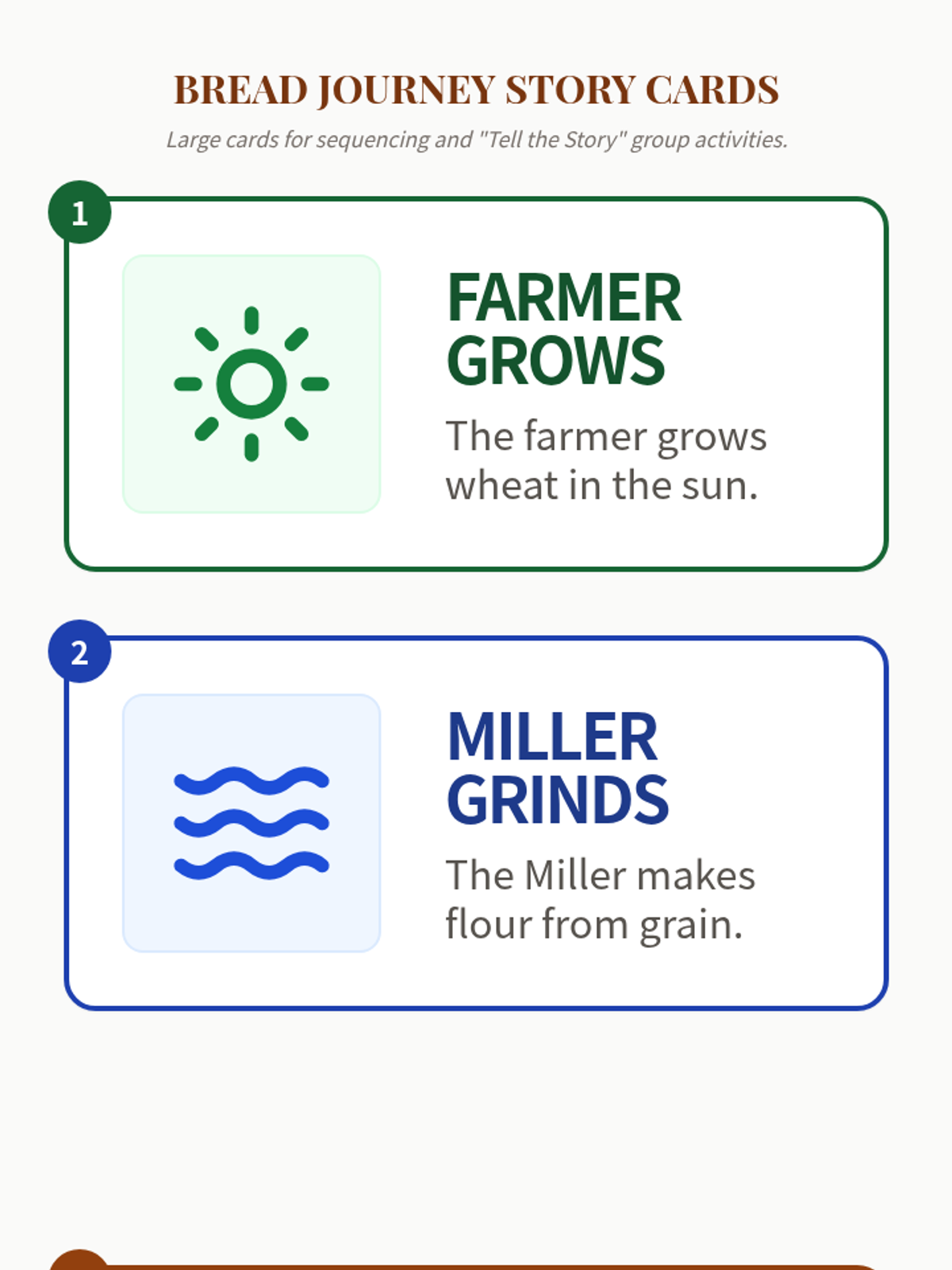
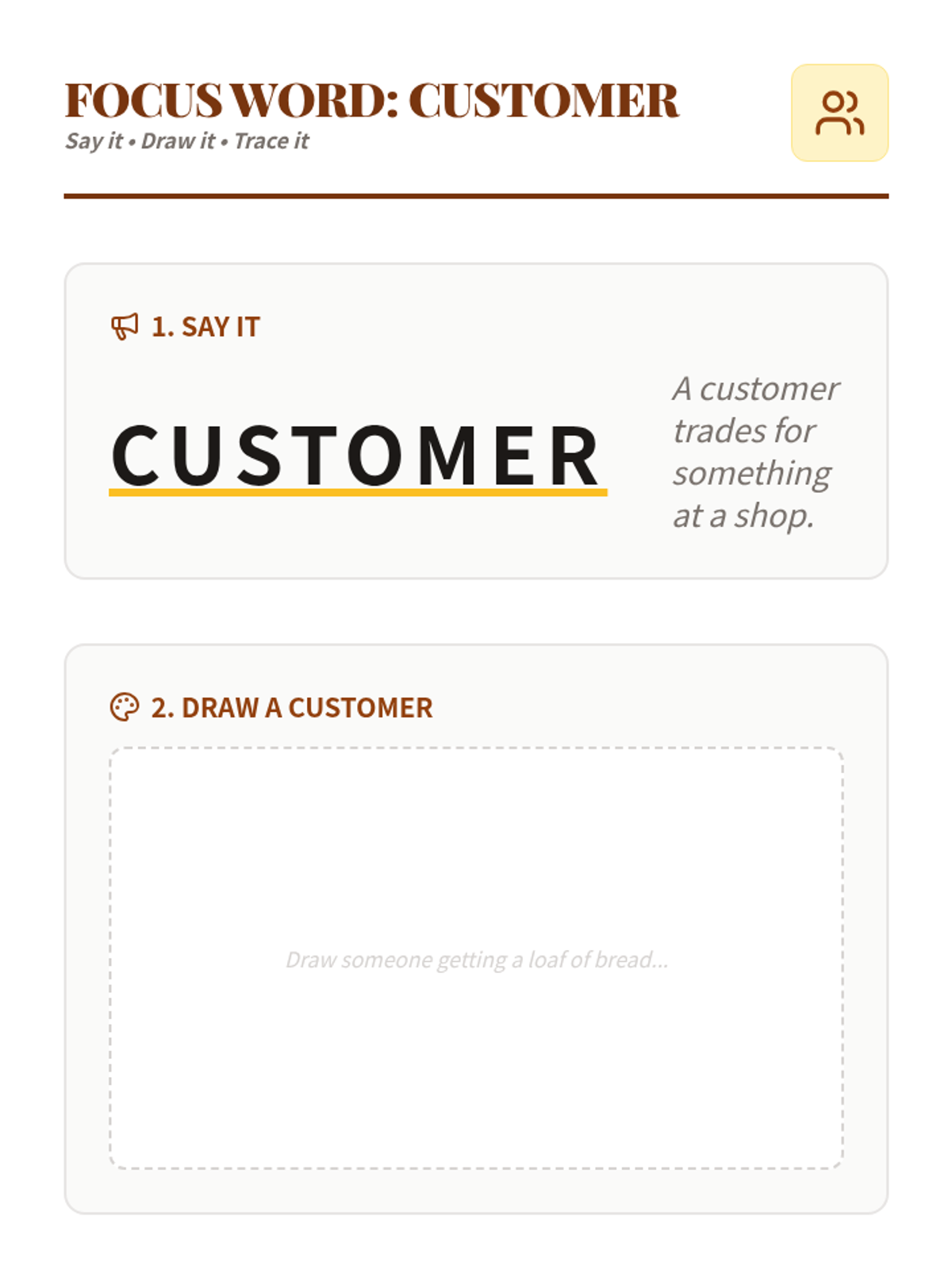
A comprehensive lesson on the colonial bread-making process, featuring the roles of millers and bakers, bartering practices, and sequencing the steps from grain to loaf.
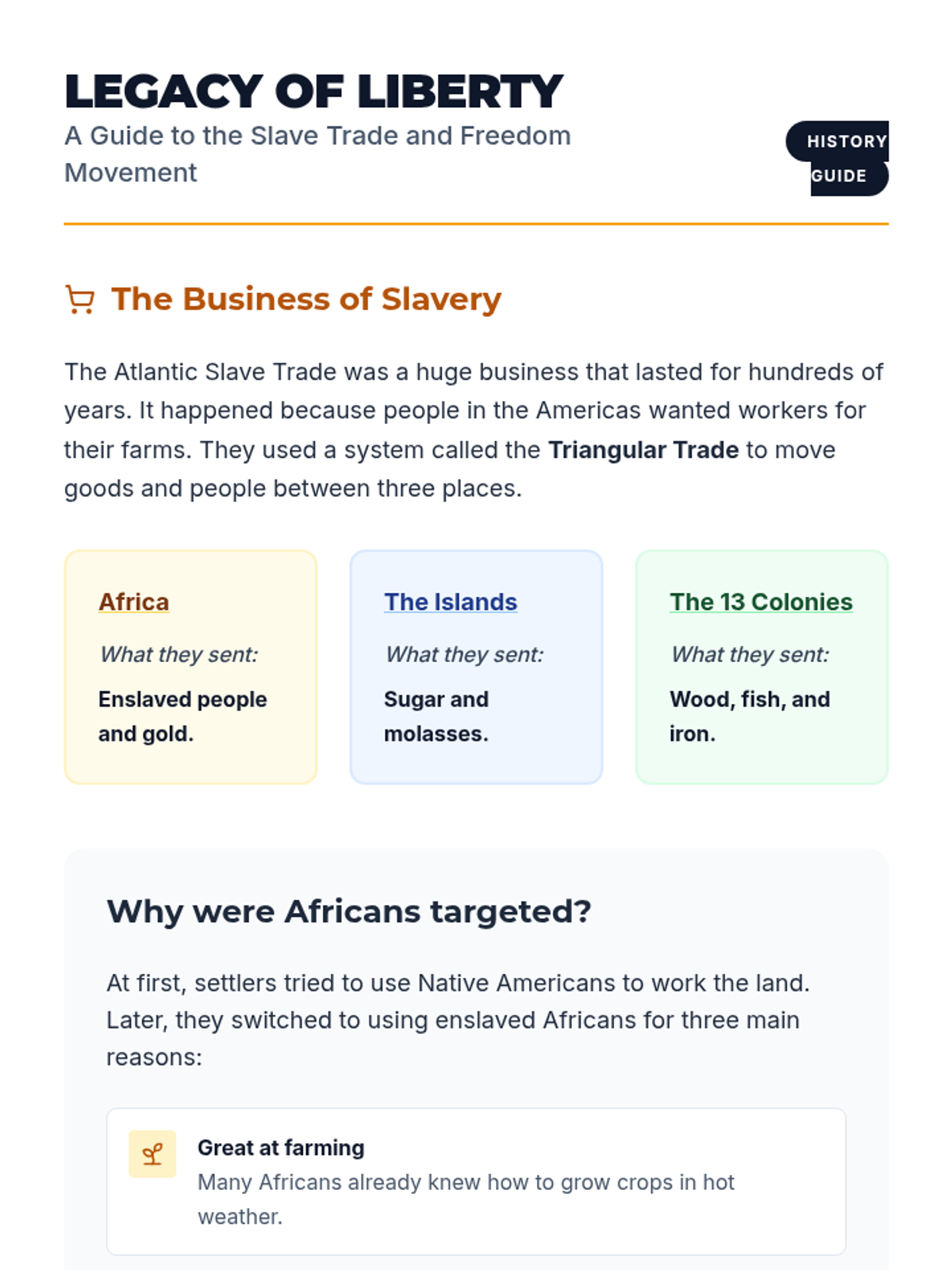
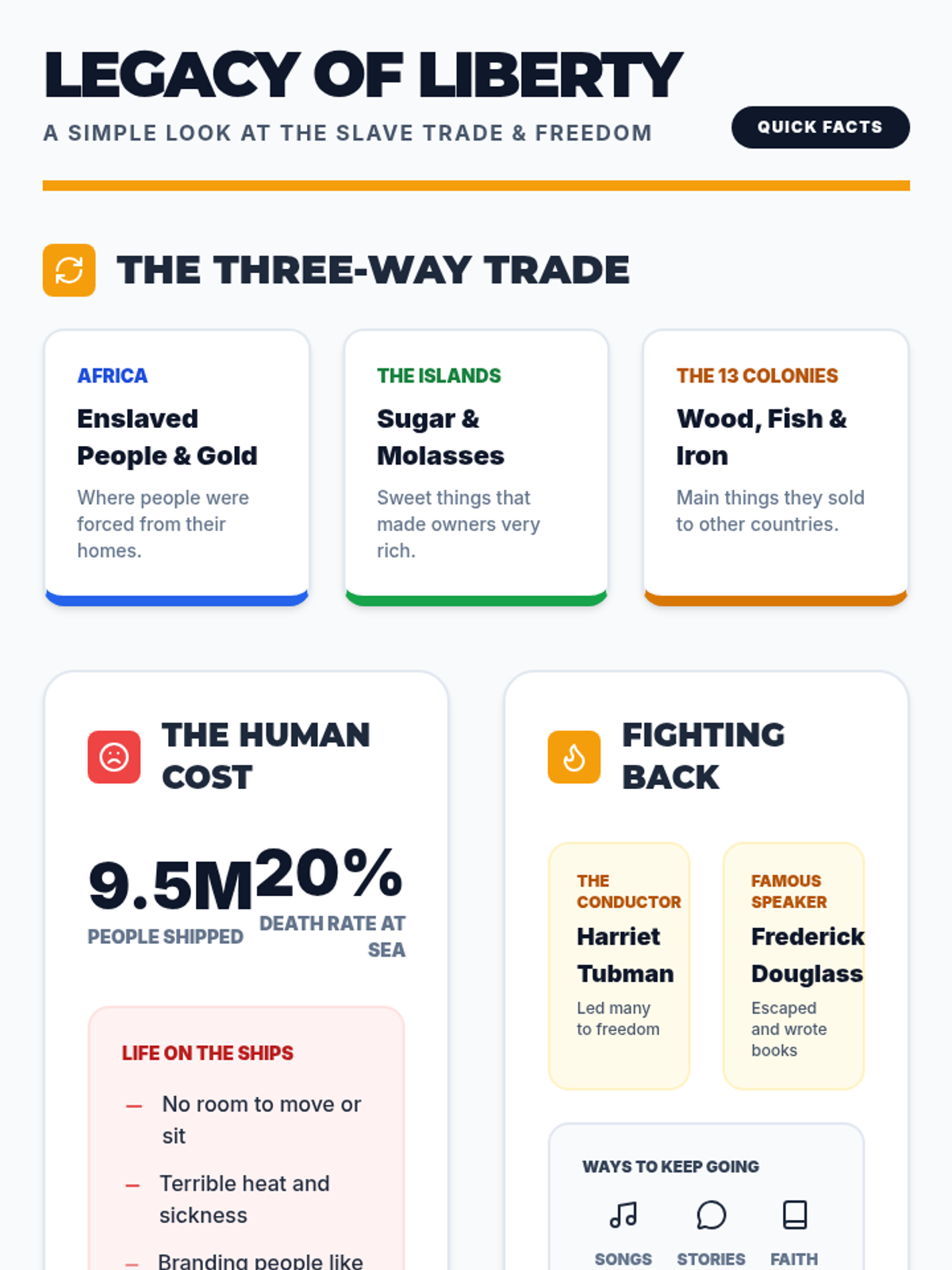
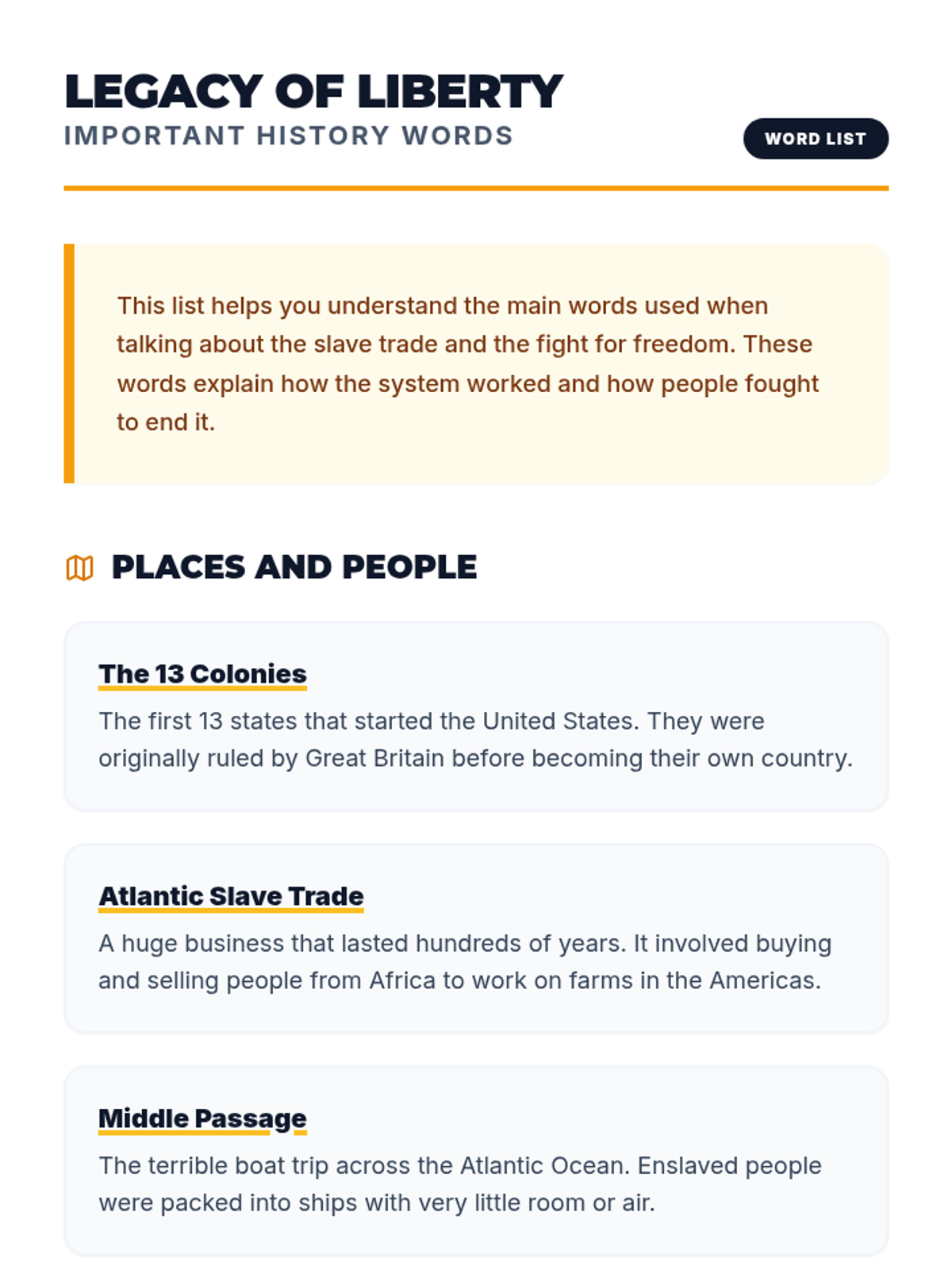
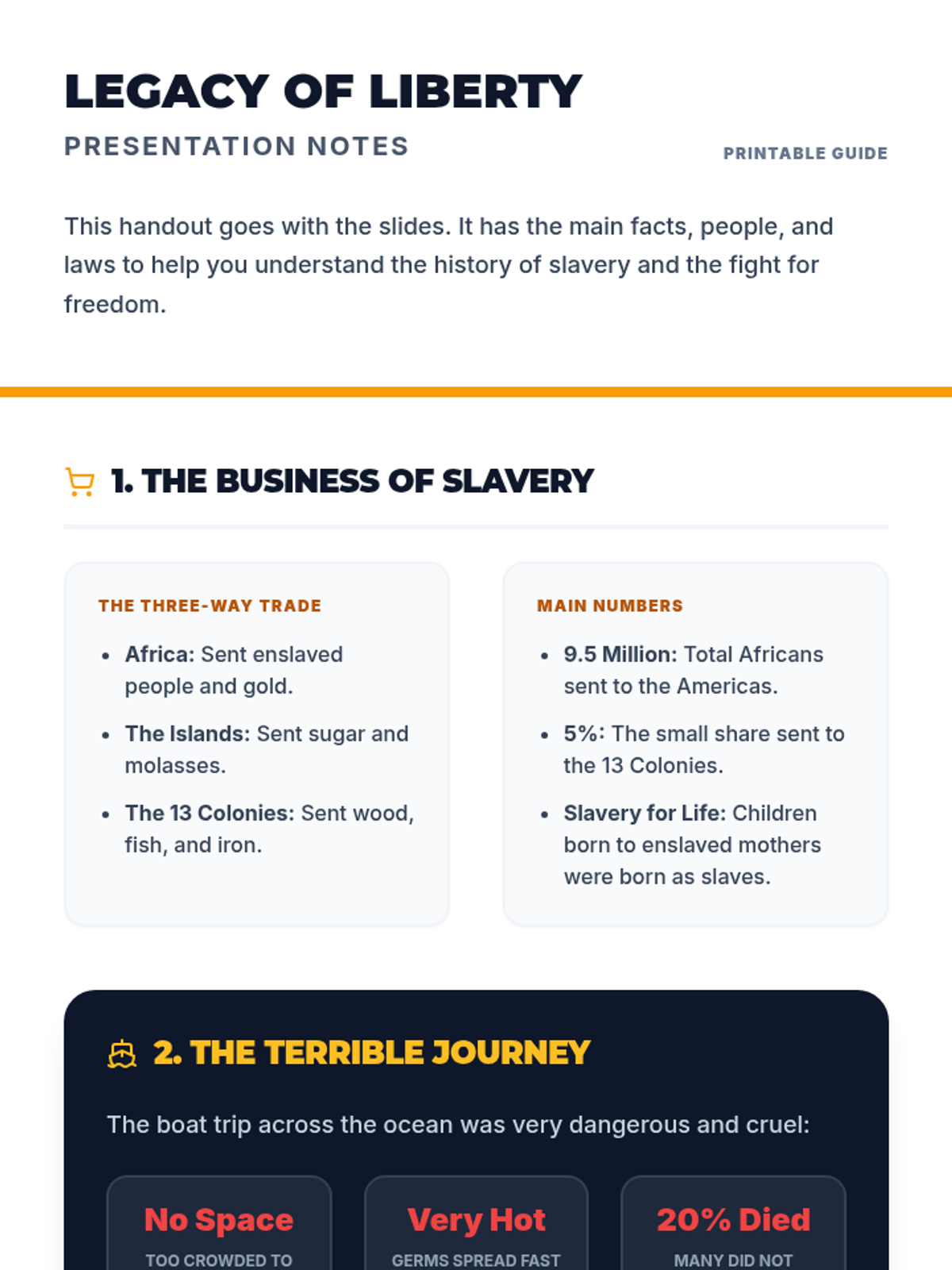
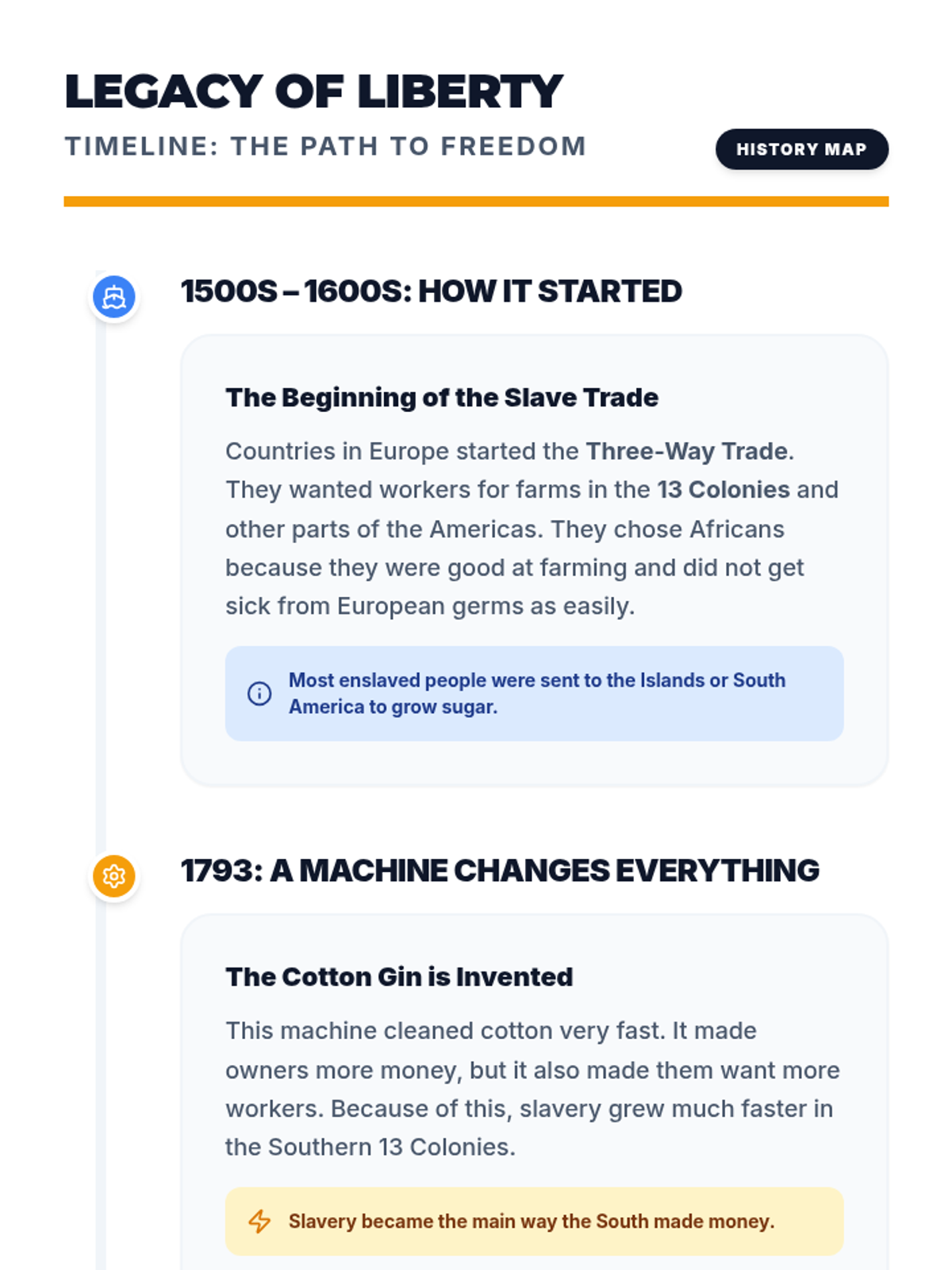
A comprehensive resource bundle for school leaders covering the history of the Atlantic Slave Trade and the Abolitionist Movement, featuring a detailed reference guide and a visual infographic.
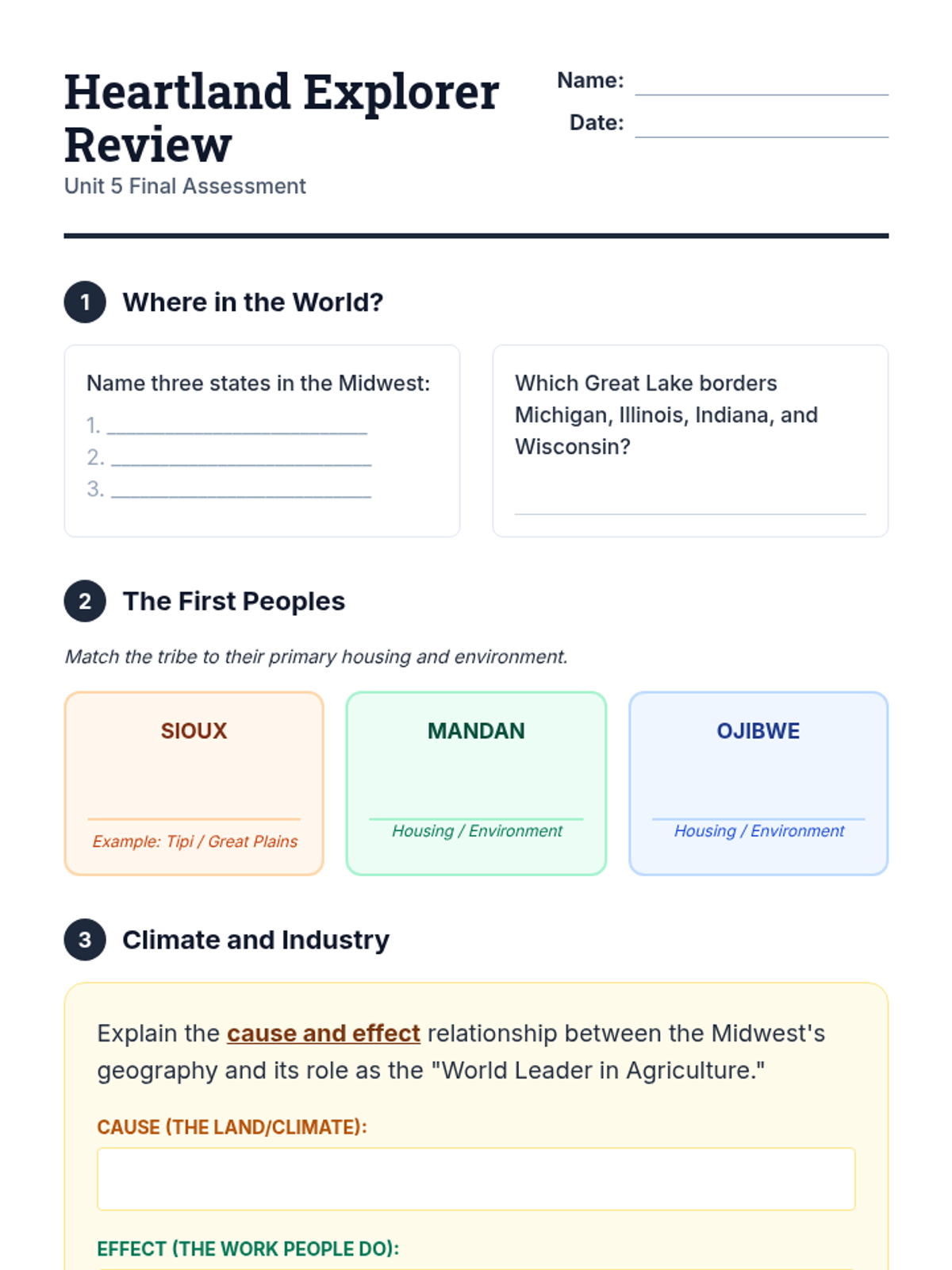
A look at modern life in the Midwest, including major cities, cultural contributions, and a final unit review.
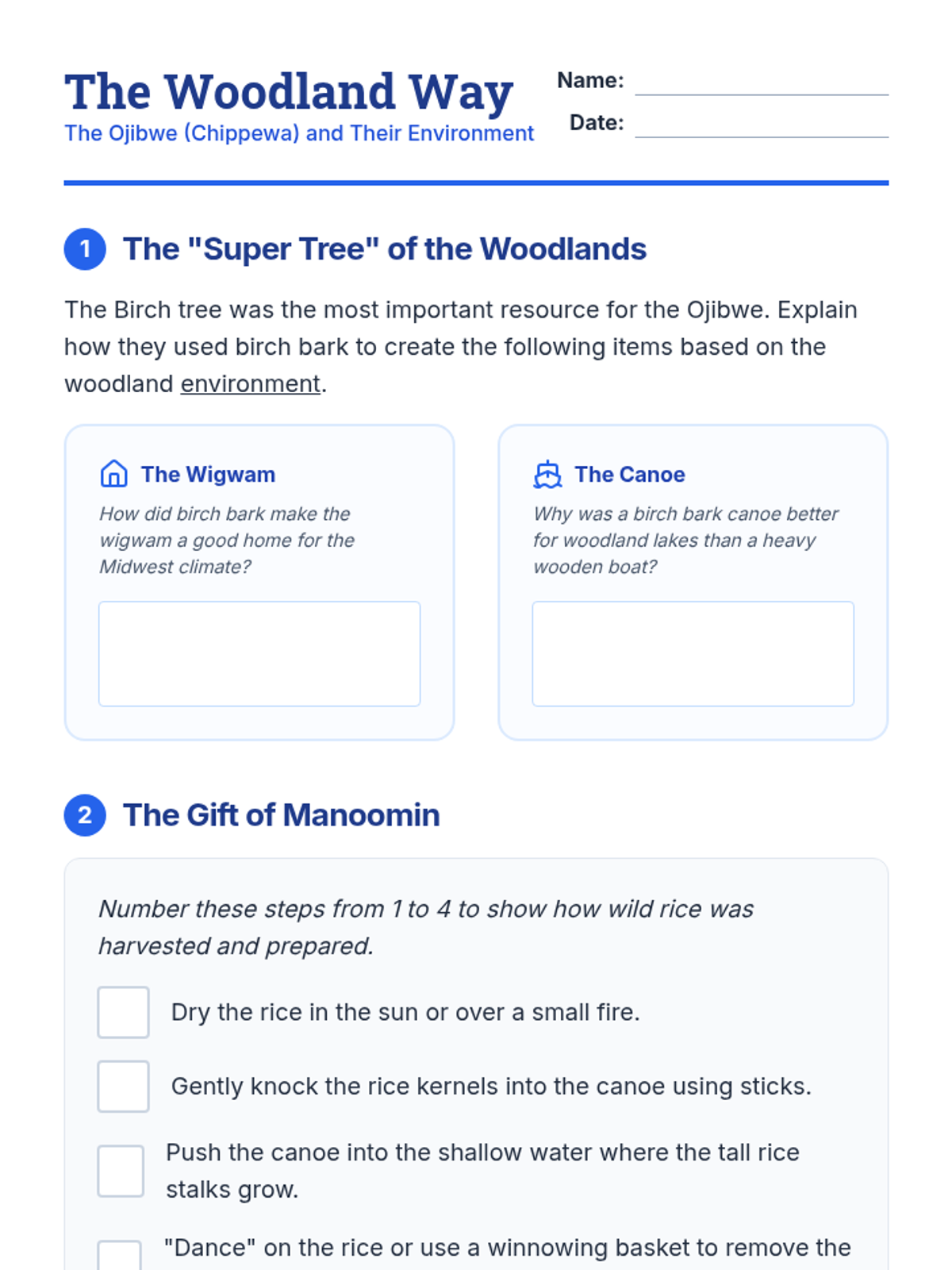
Learning about the Ojibwe (Chippewa) people, their connection to the Great Lakes and woodlands, and their enduring traditions.
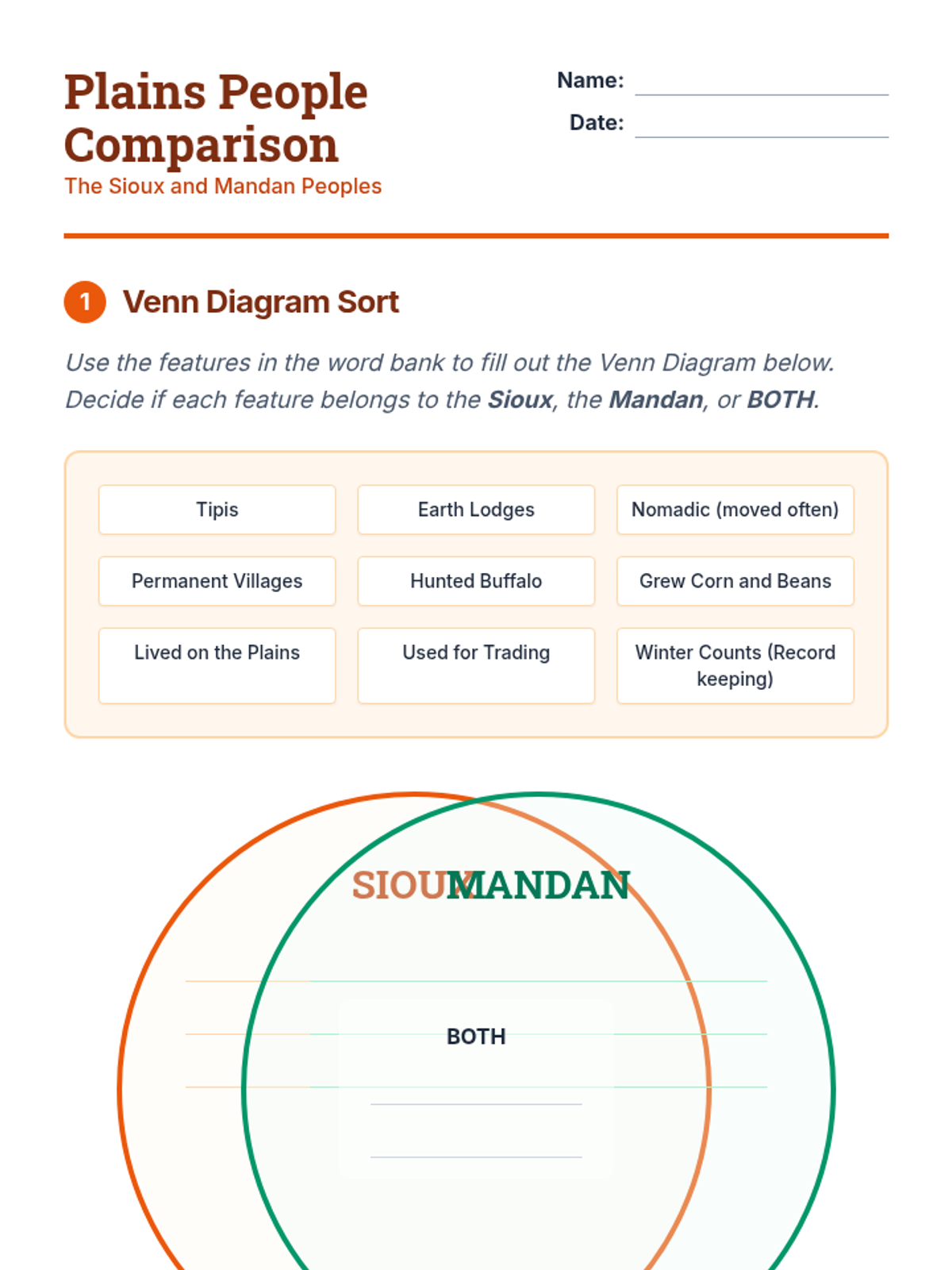
Exploring the history and cultures of the Sioux and Mandan nations, focusing on their adaptation to the Great Plains.
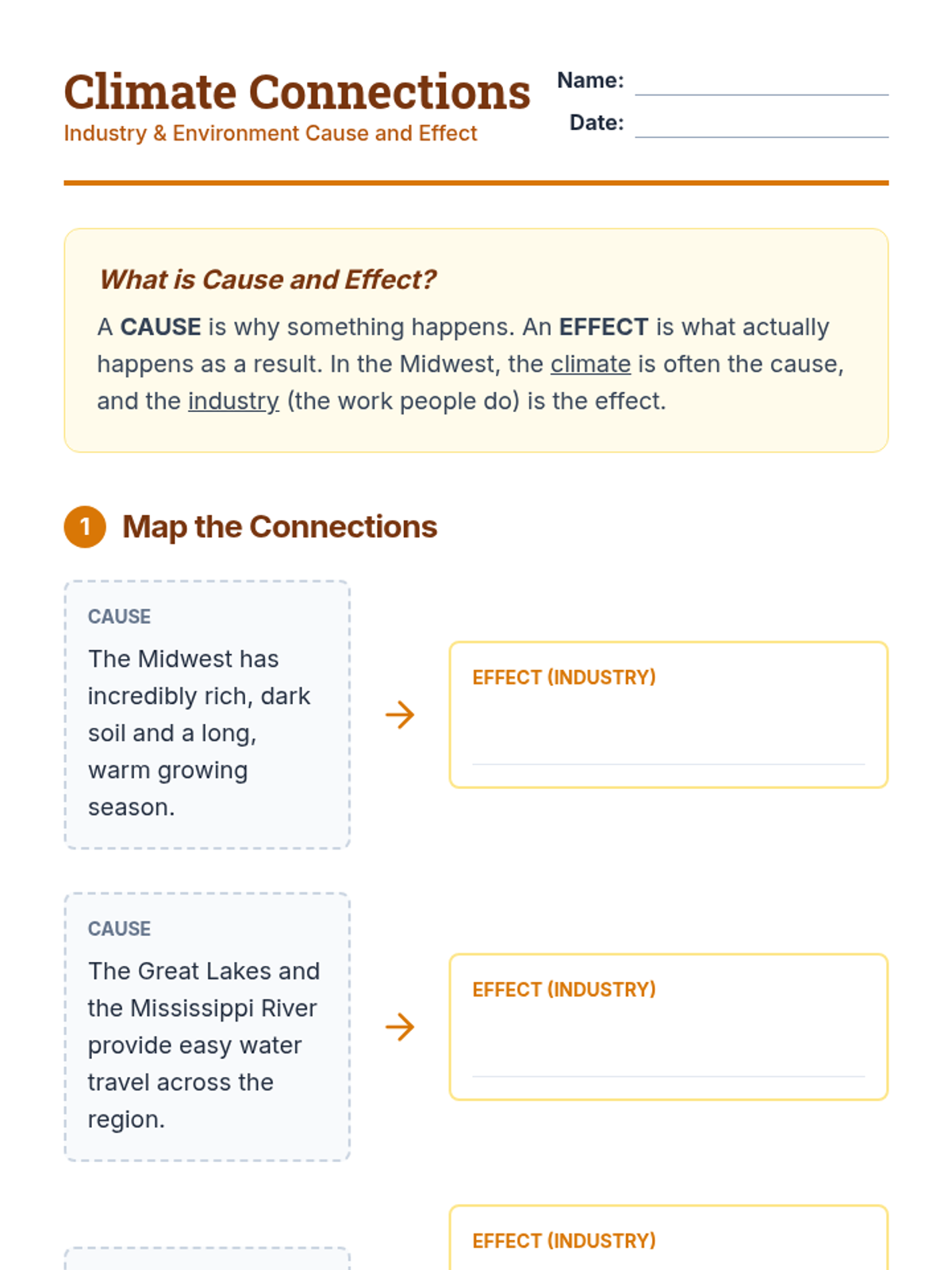
Investigating the climate of the Midwest and how it directly influences major industries like agriculture and manufacturing.
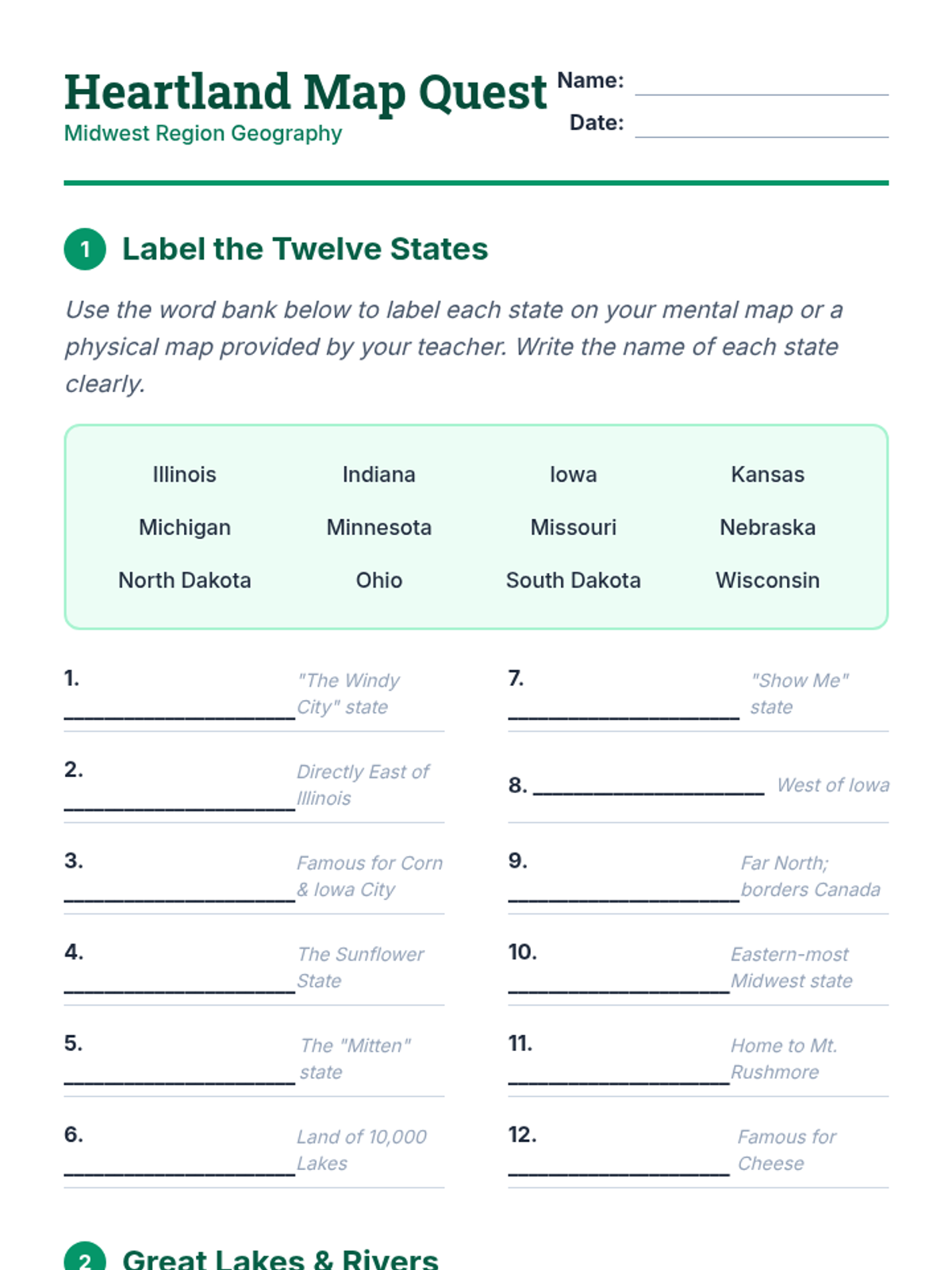
An introduction to the 12 states of the Midwest, their locations, and key geographic features like the Great Lakes and the Great Plains.
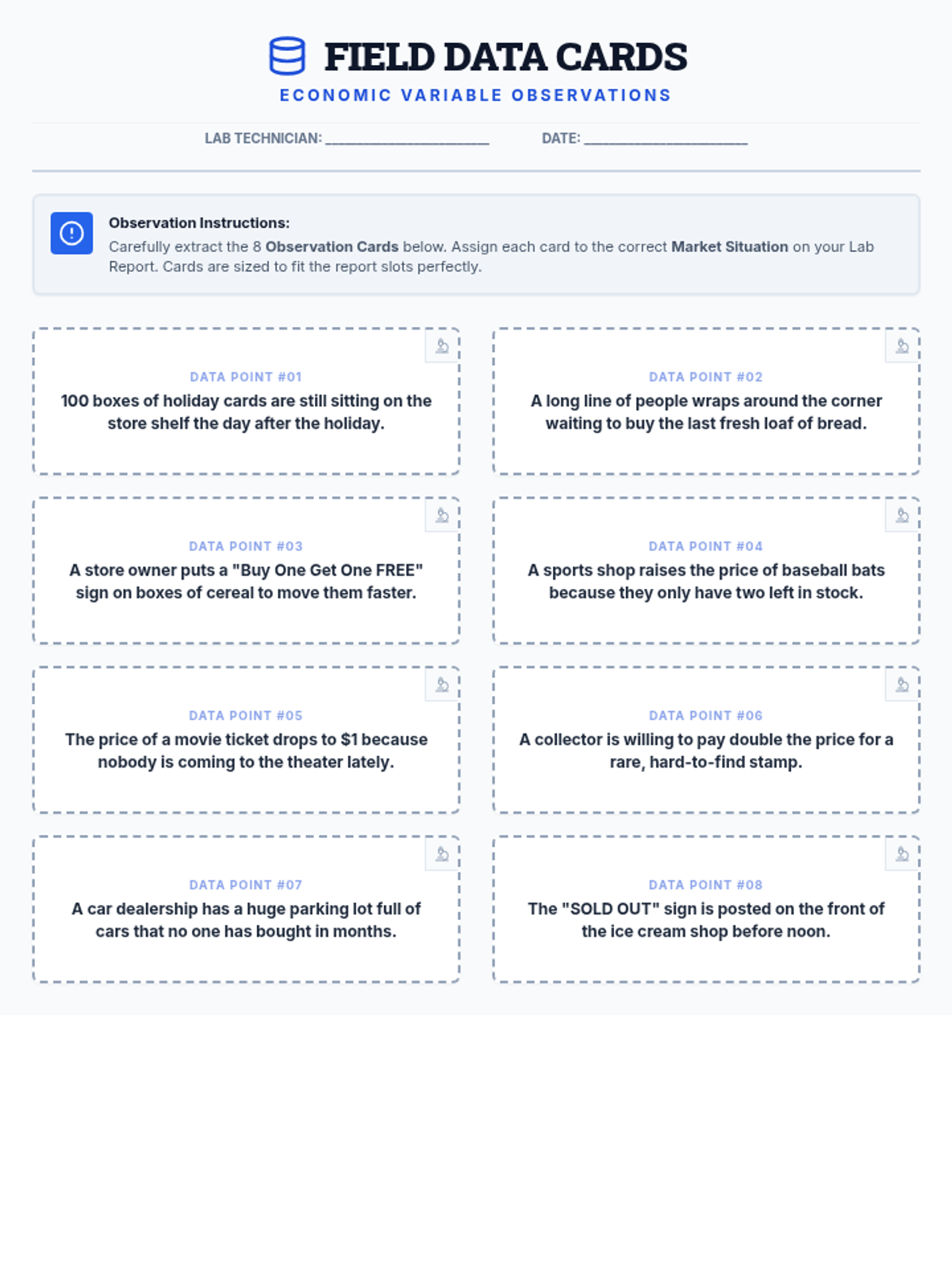
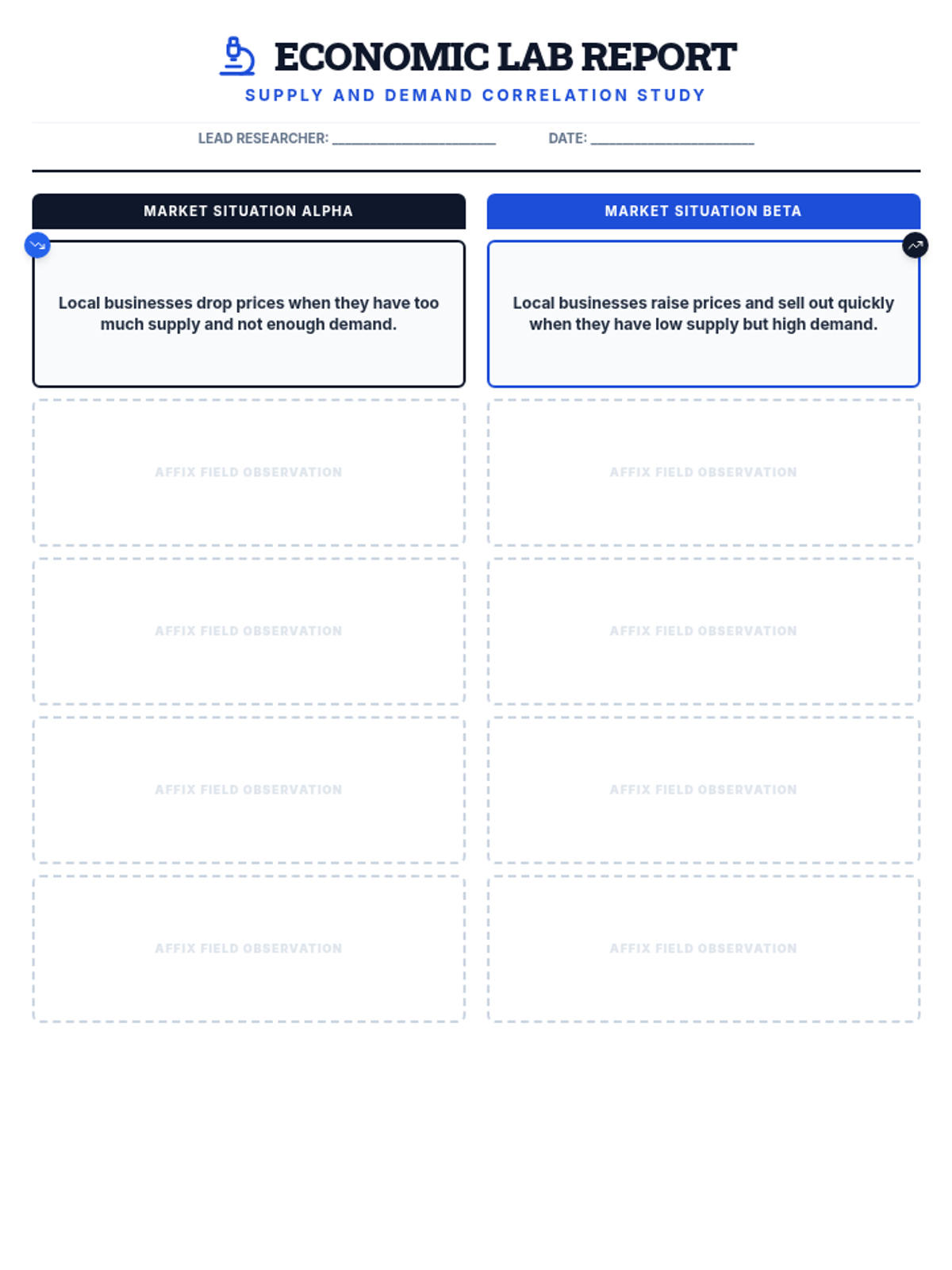
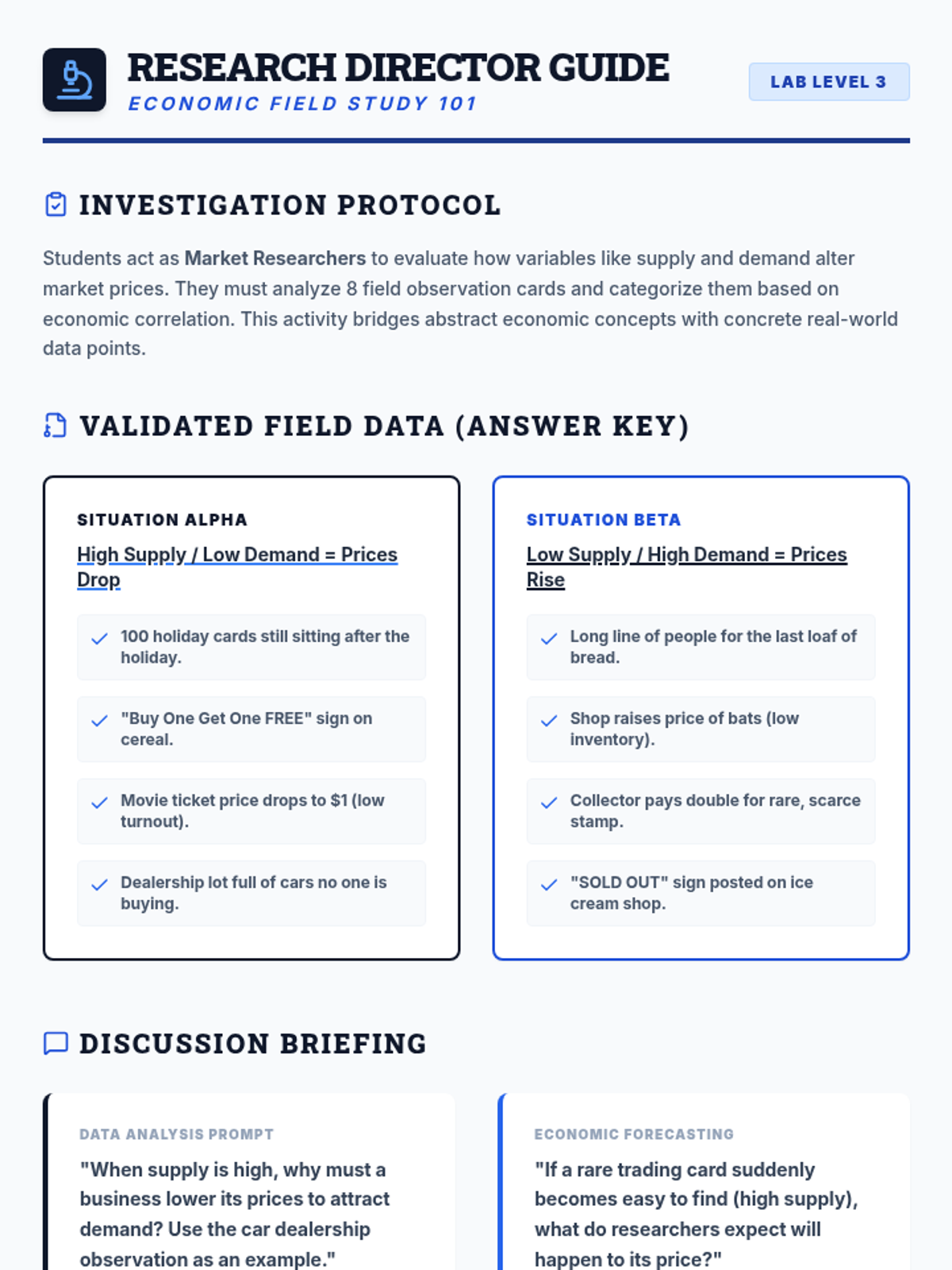
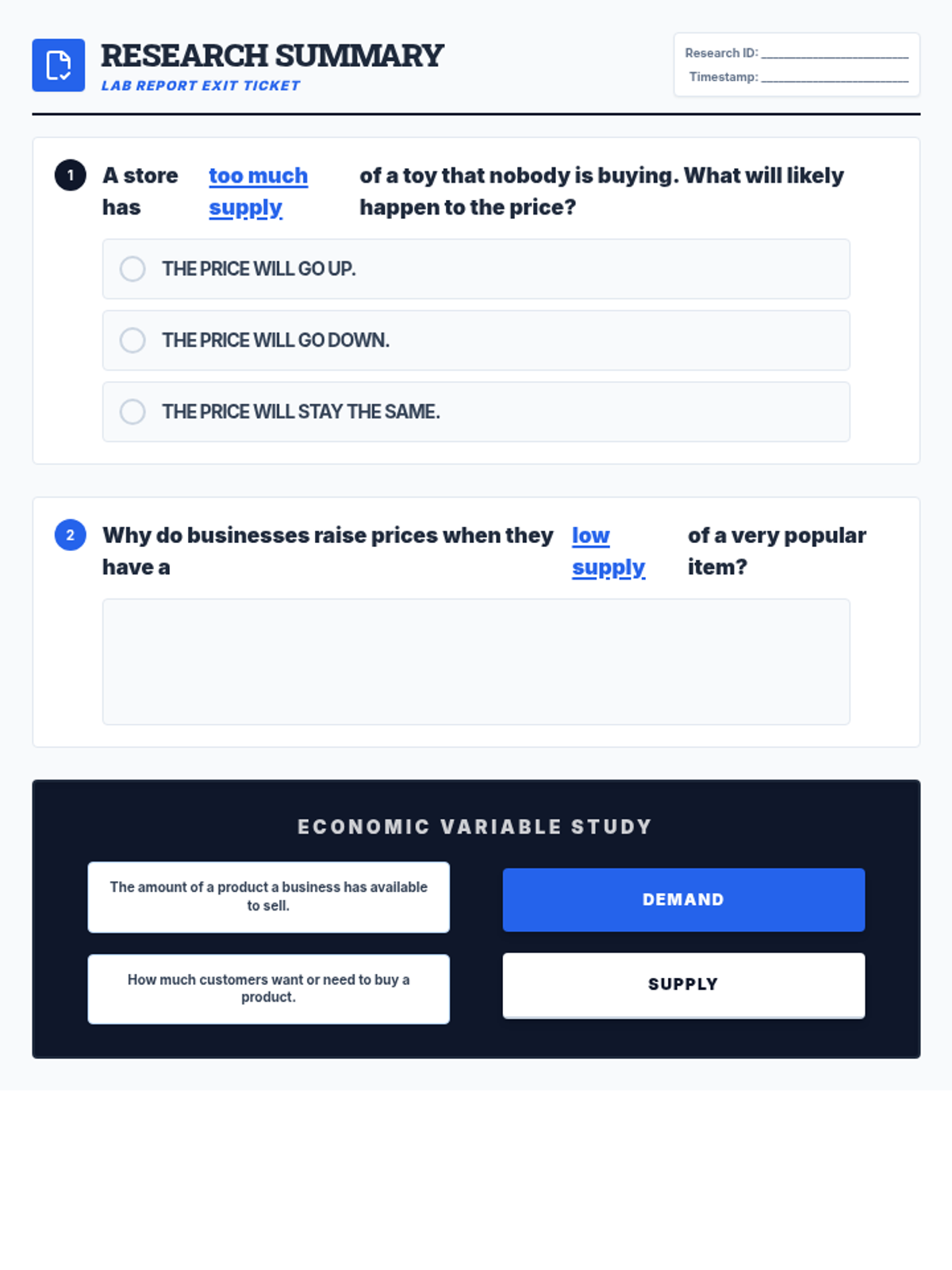
Students act as economic researchers to investigate the relationship between supply, demand, and market prices. They analyze real-world field observations, categorize data, and conclude their research with a summary of market impacts.
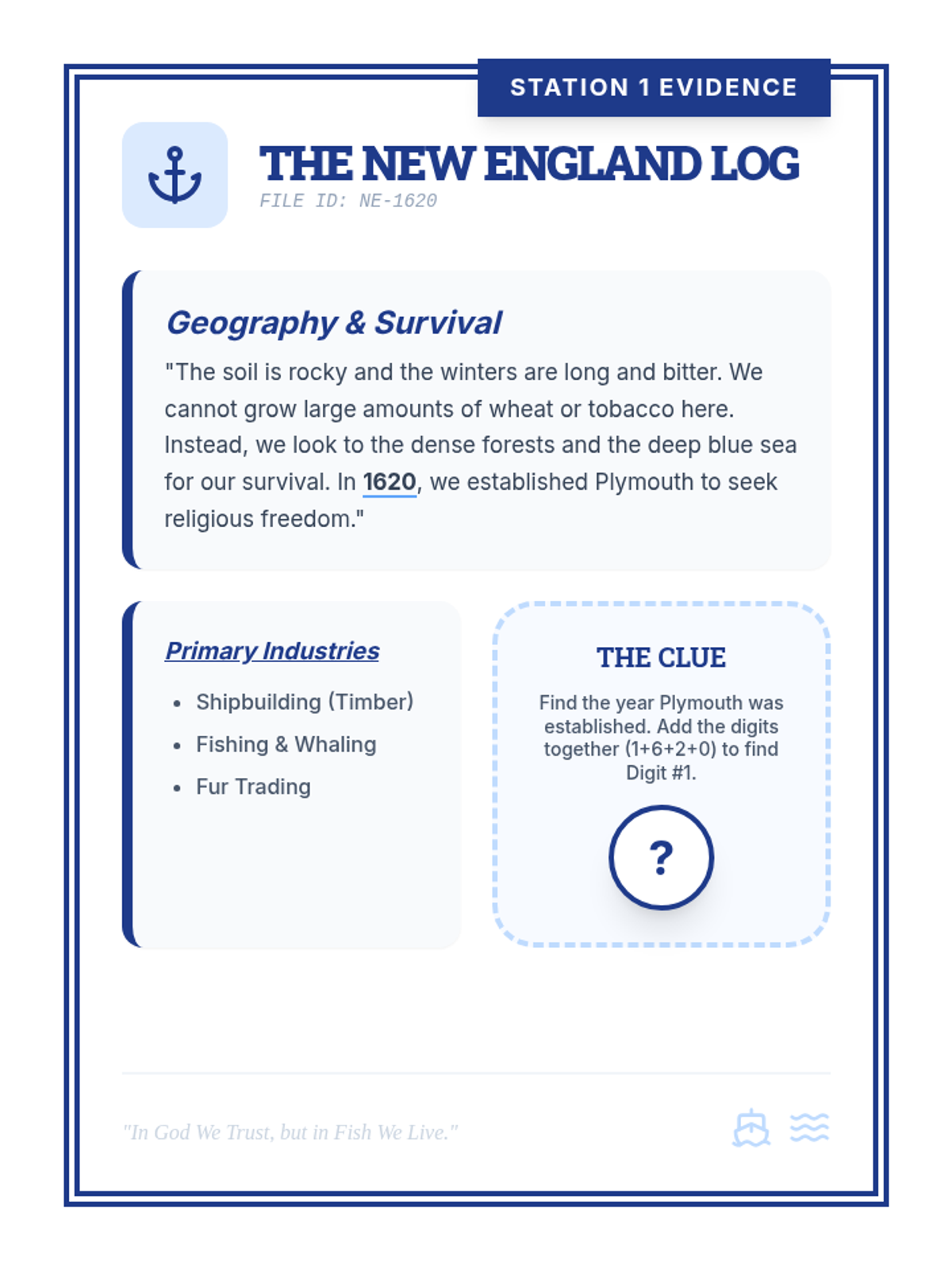
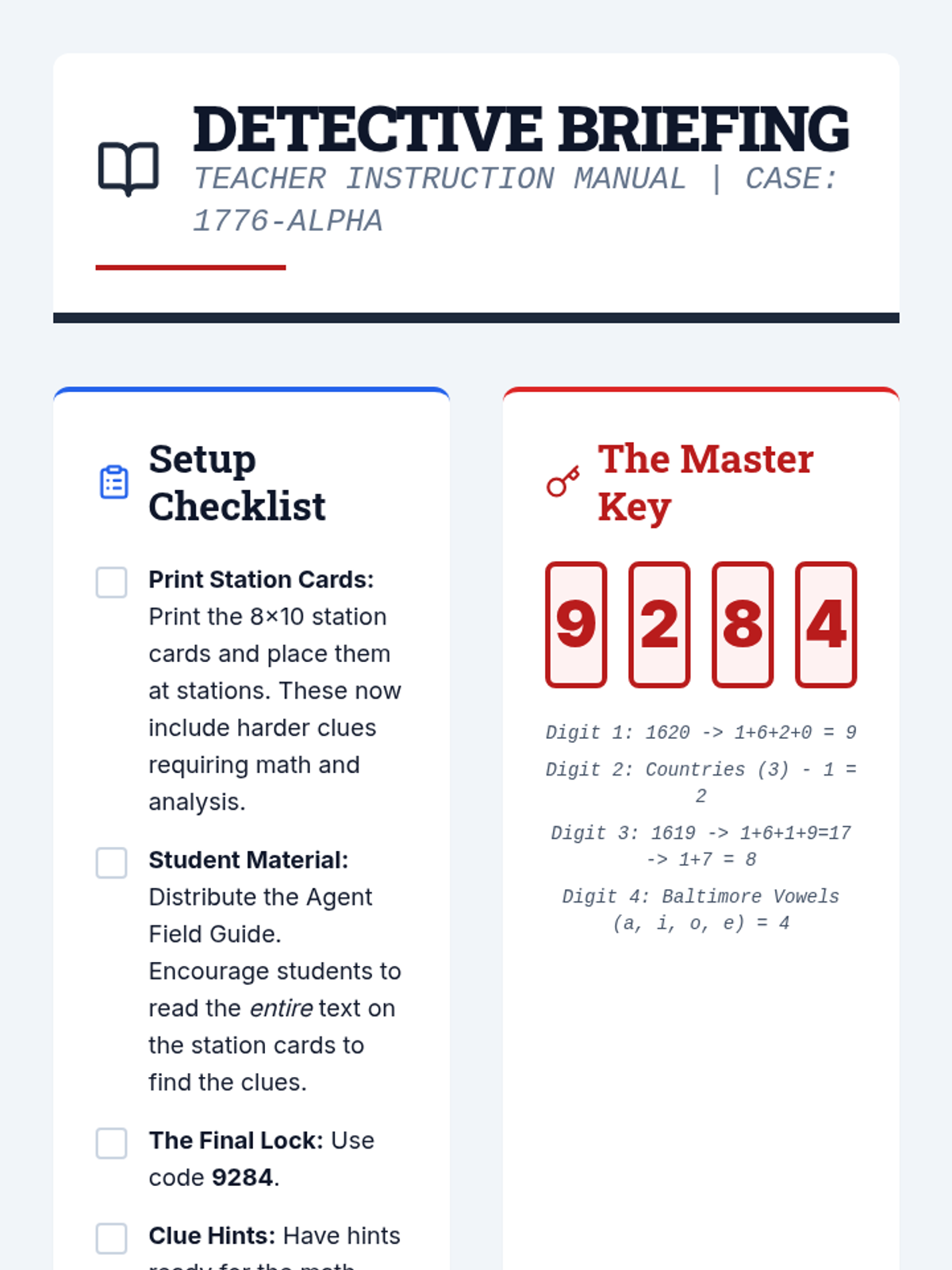
An immersive investigative experience where students solve the 'Case of the Missing Charter' by exploring the regional differences, economy, and daily life of the 13 original colonies.
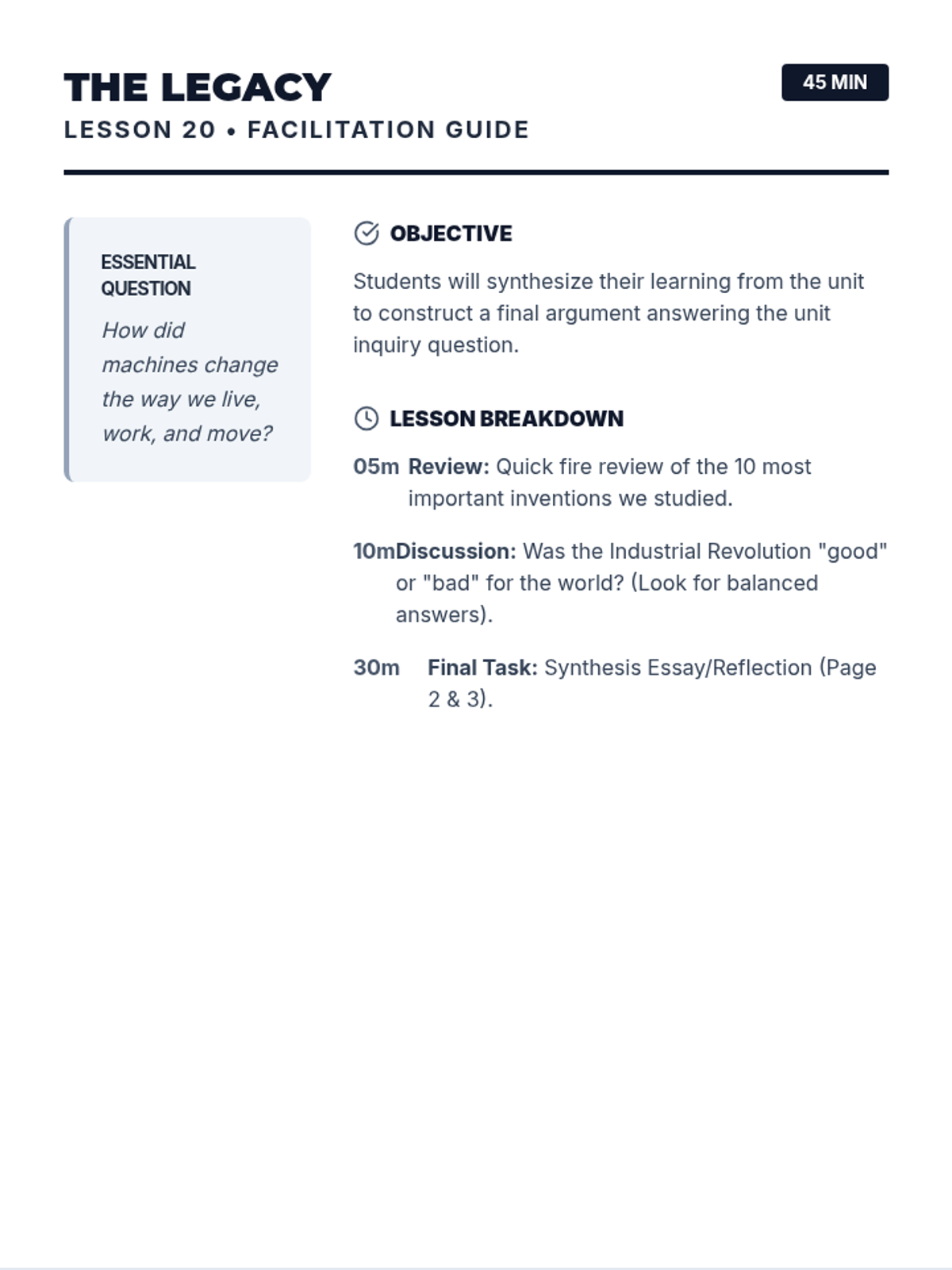
Synthesizes unit learning to answer the compelling question: How did machines change the way we live, work, and move?
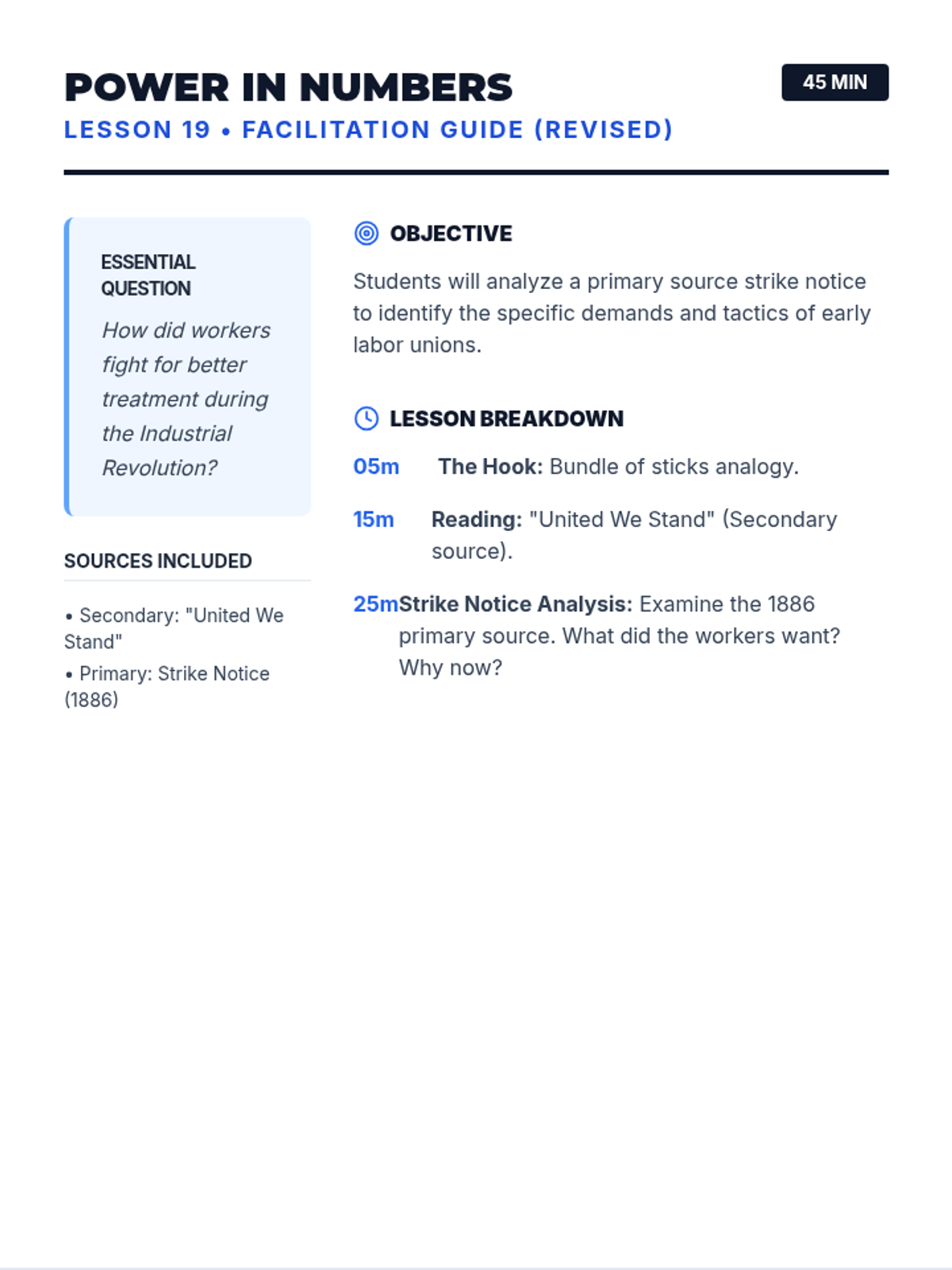
Explores the organization of labor and the emergence of unions as a response to industrial working conditions.
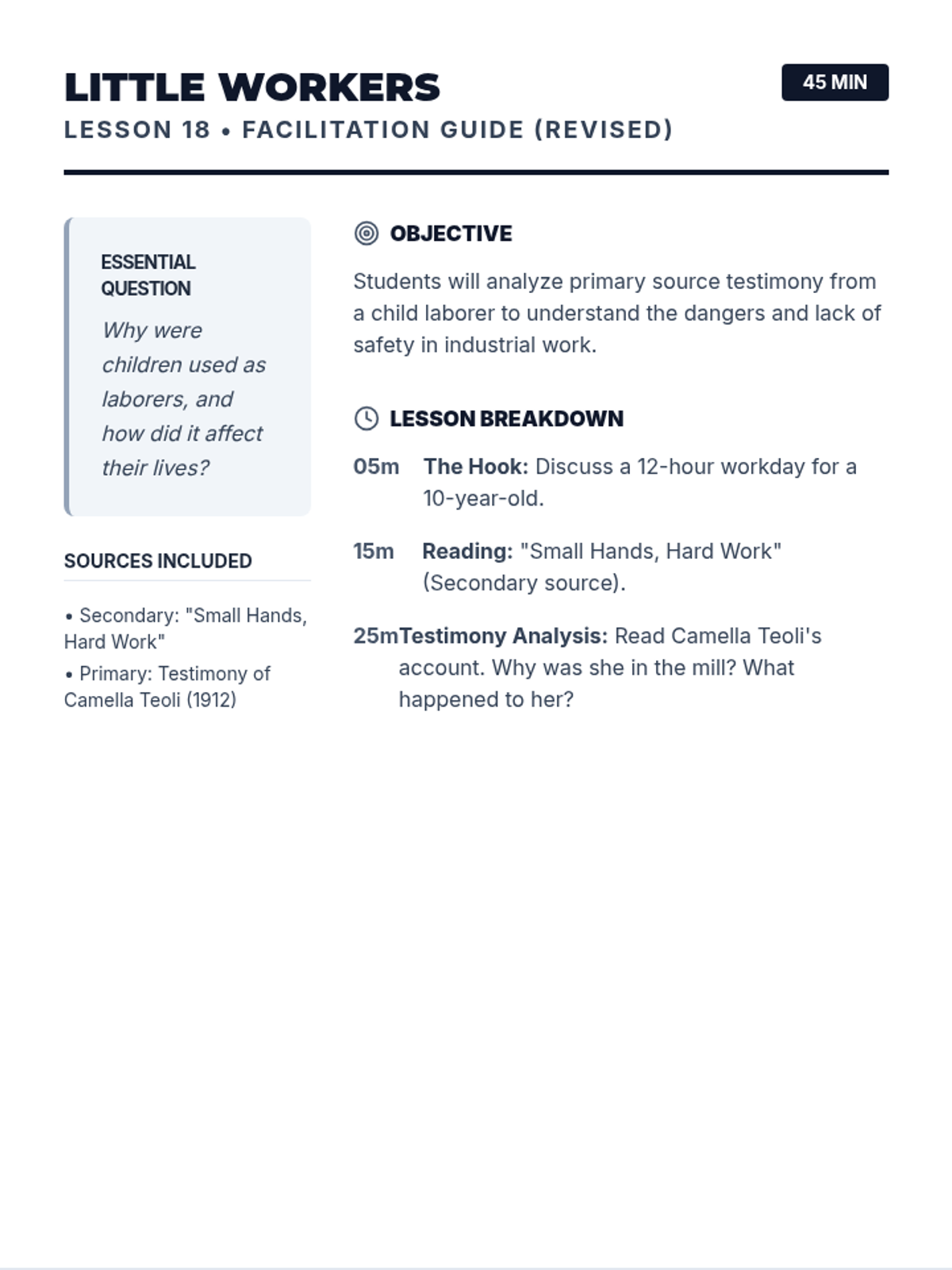
Examines the use of child labor in factories and mines and the early efforts to pass protective laws.
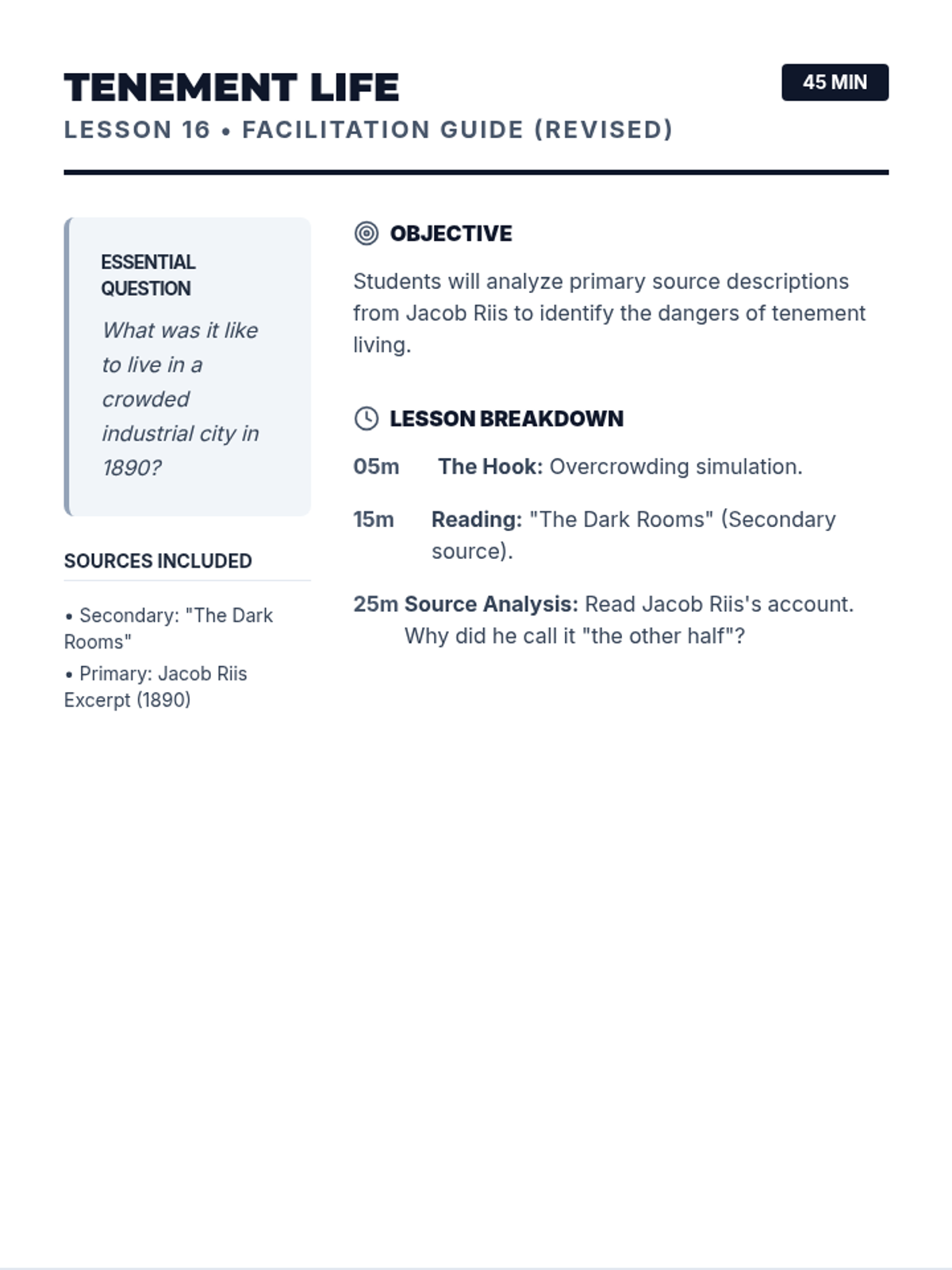
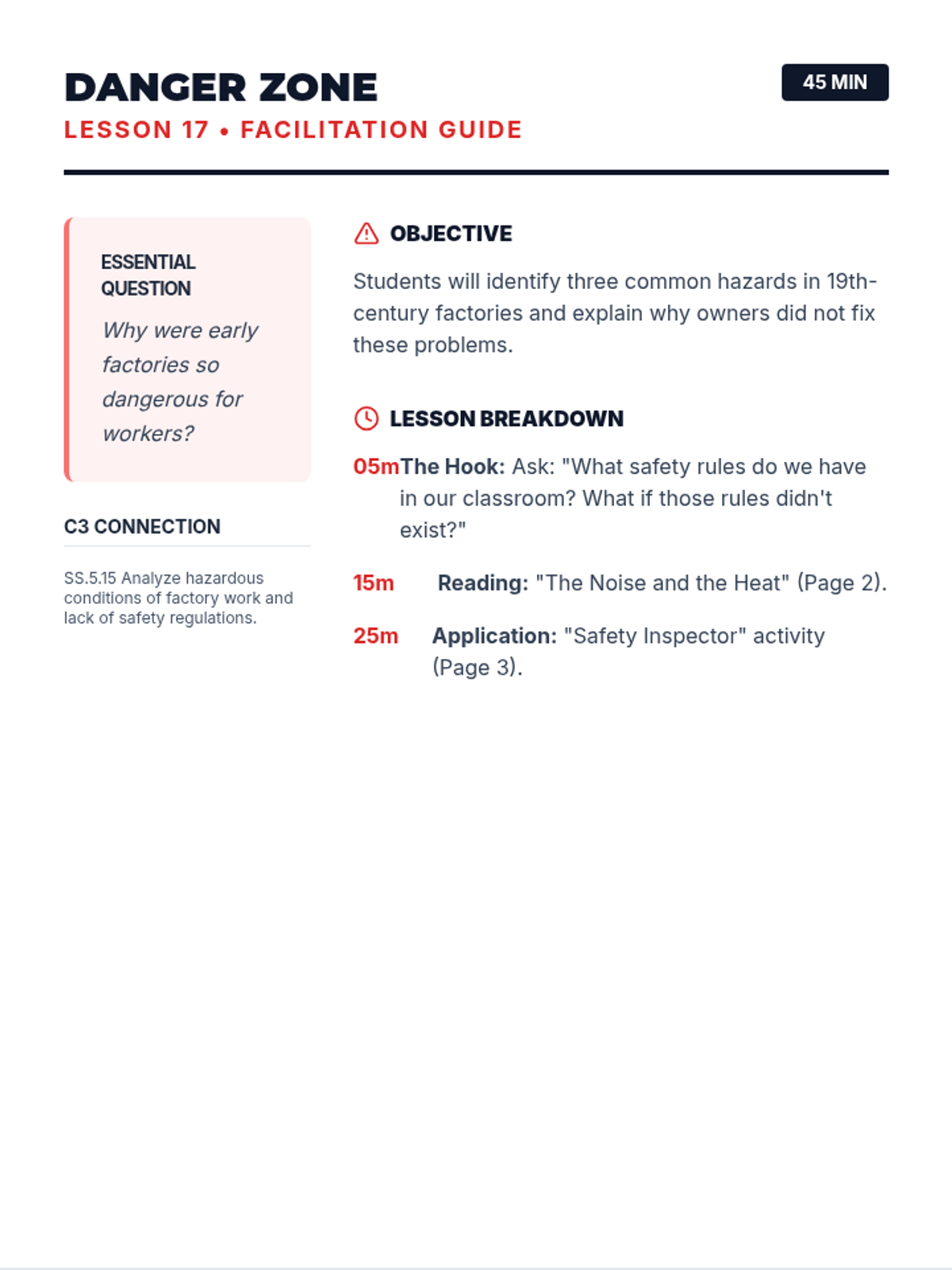
Analyzes the hazardous conditions of factory work and the lack of safety regulations during the 19th century.
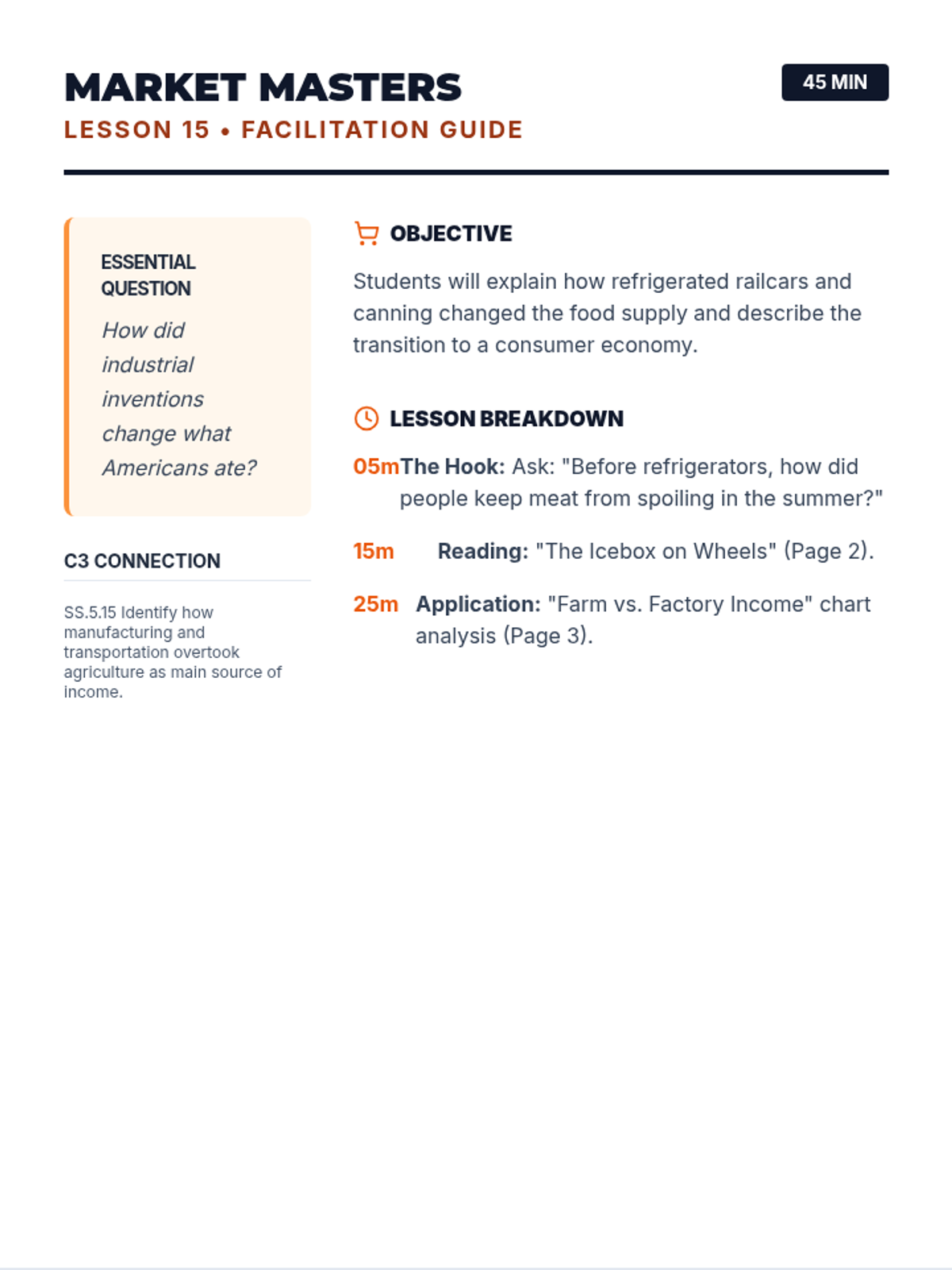
Examines the technological advances in meatpacking and food production that changed how the nation ate.
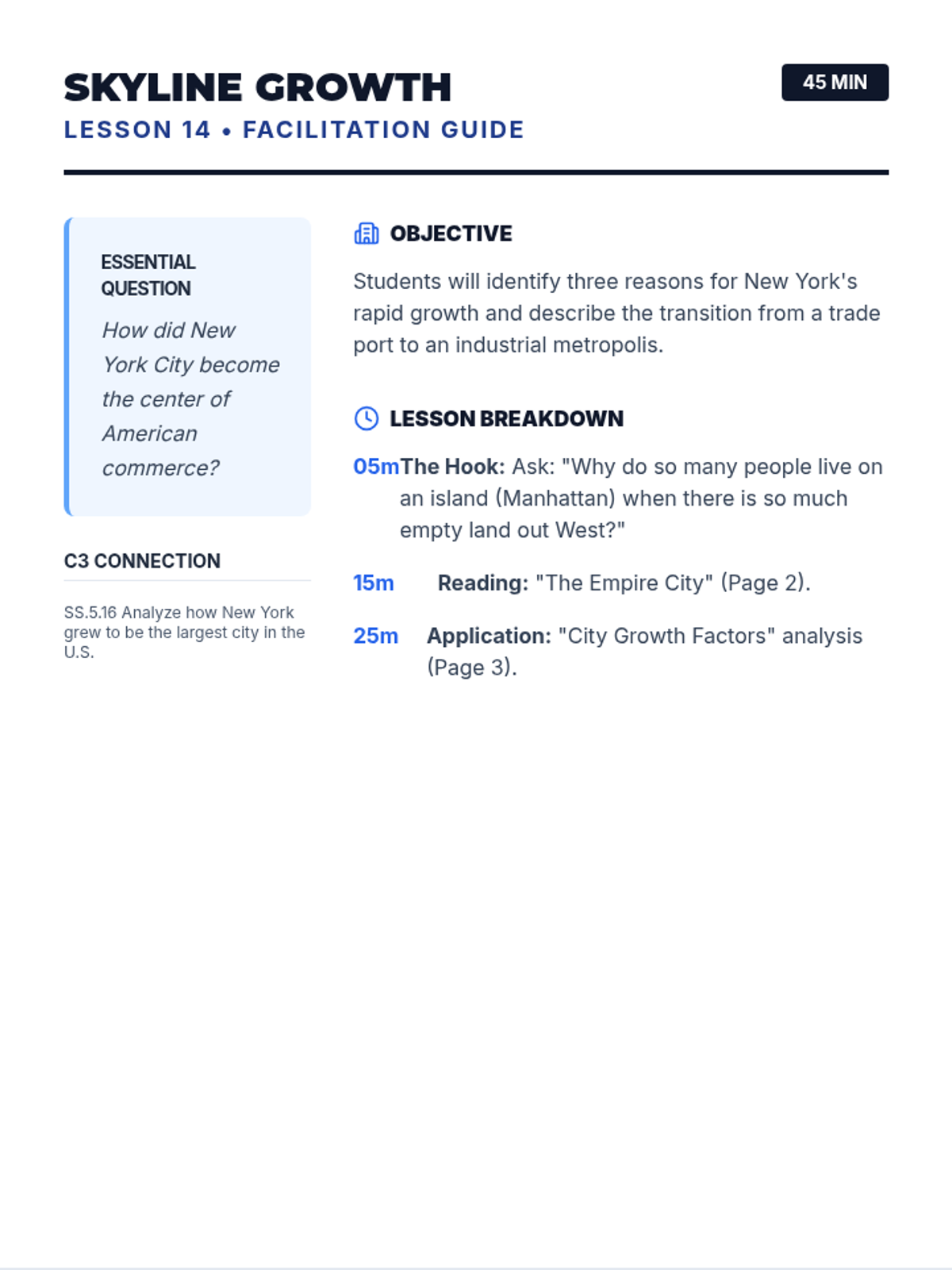
Explores New York's growth into the nation's largest city and the development of the modern metropolis.
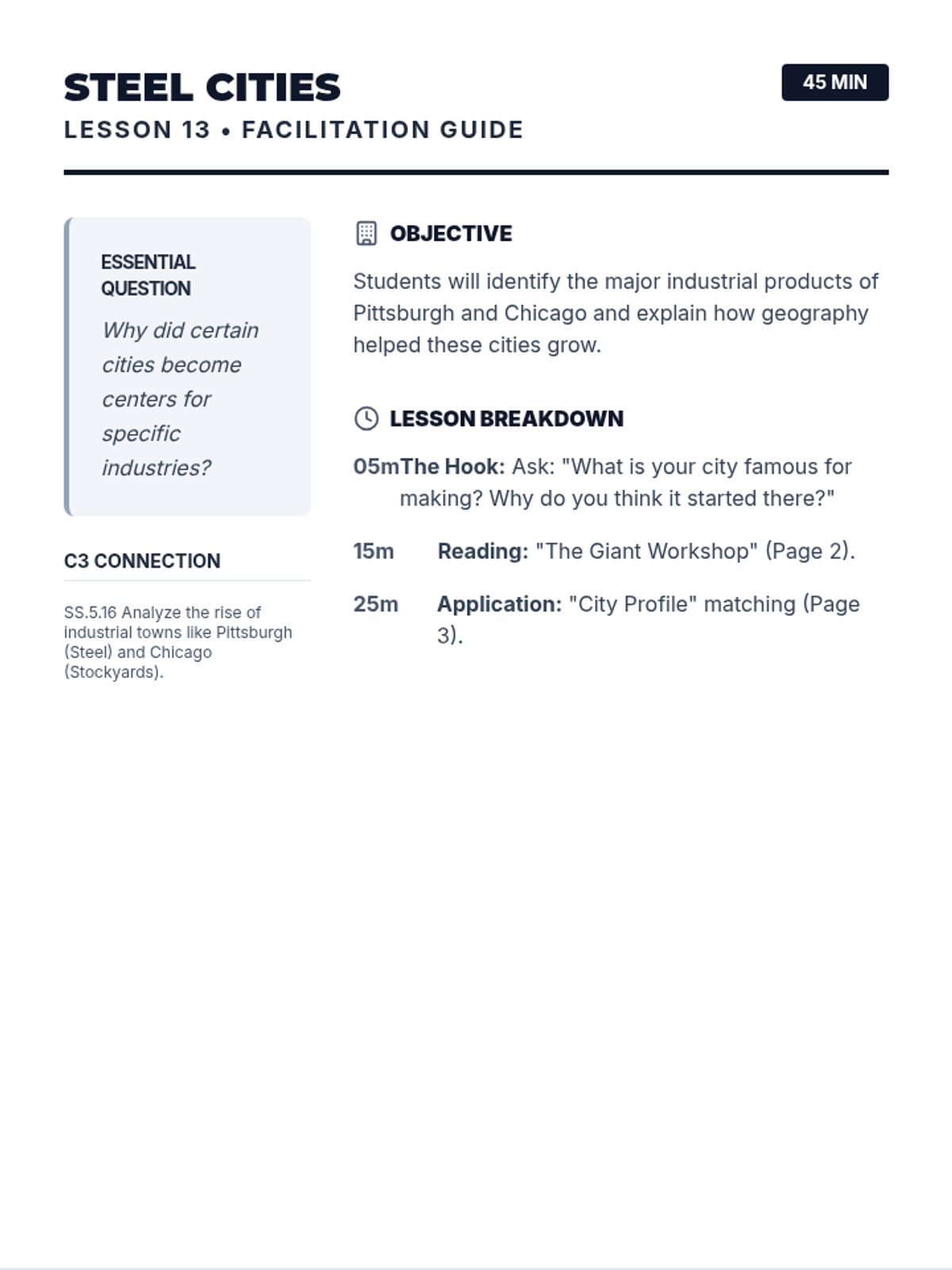
Investigates the rise of specialized industrial cities like Pittsburgh (steel) and Chicago (meatpacking).
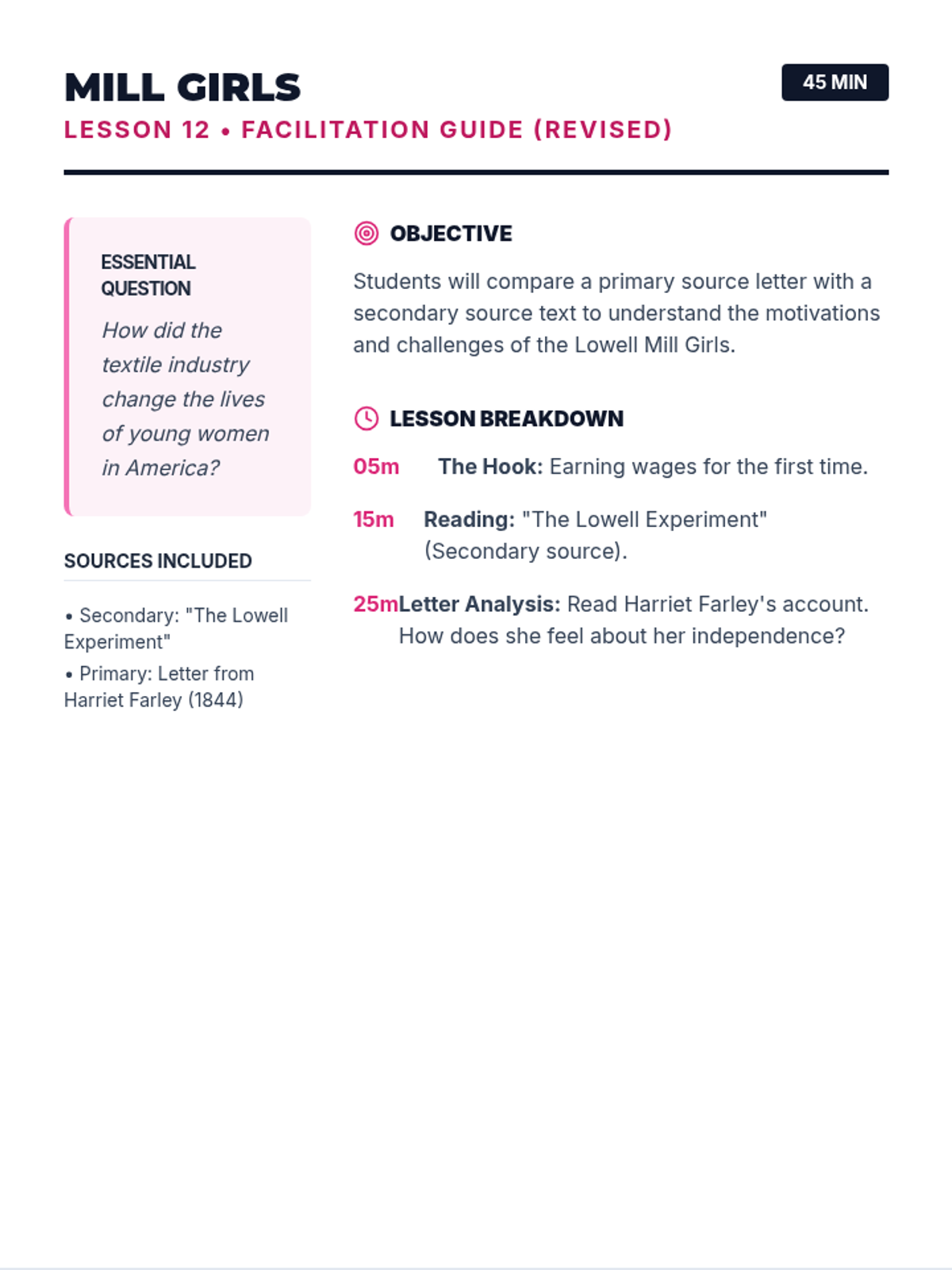
Examines the lives of the Lowell 'Mill Girls' and the entrance of unmarried women into the industrial workforce.
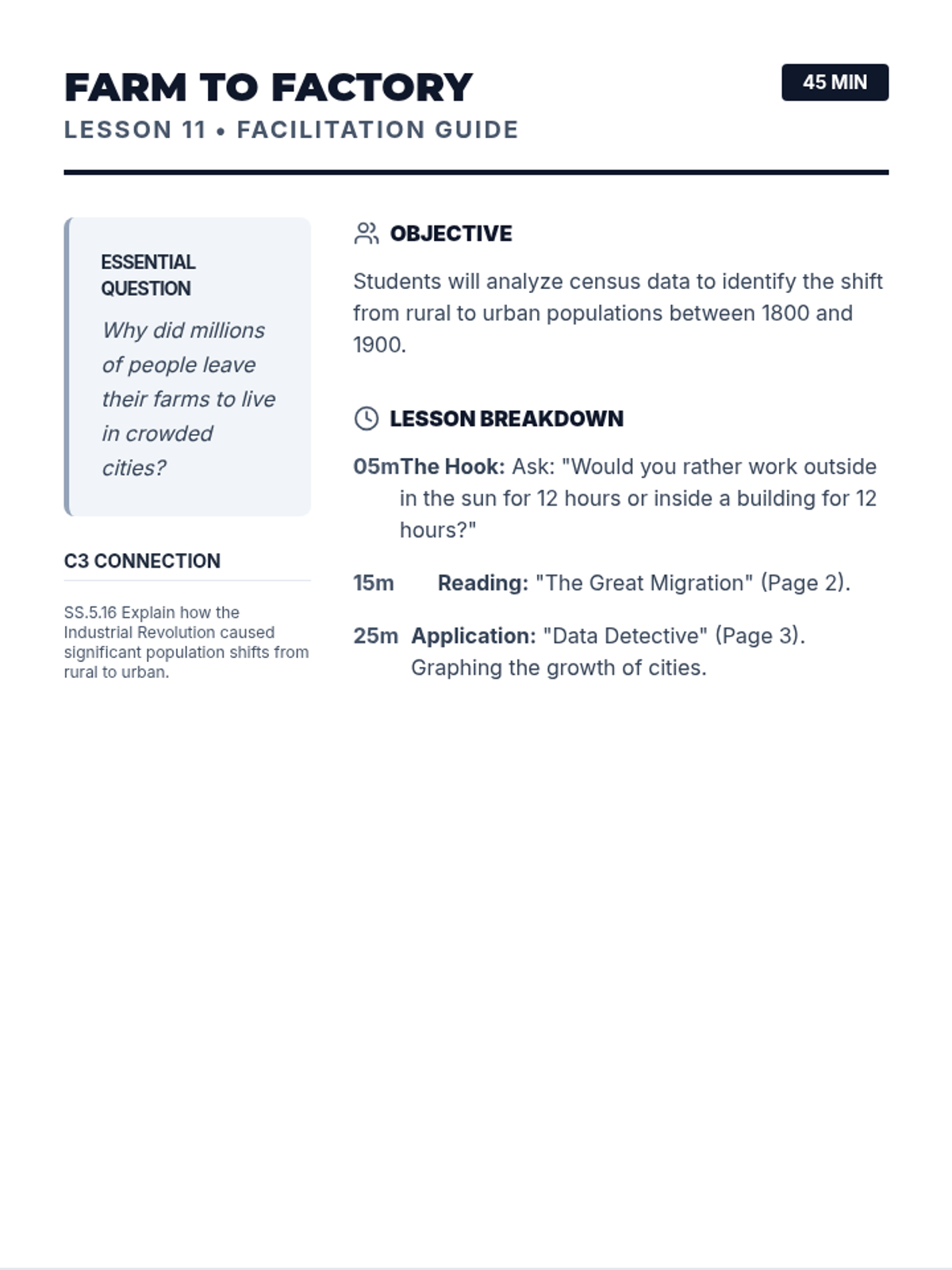
Analyzes the massive population shift from rural agrarian life to growing industrial urban centers.
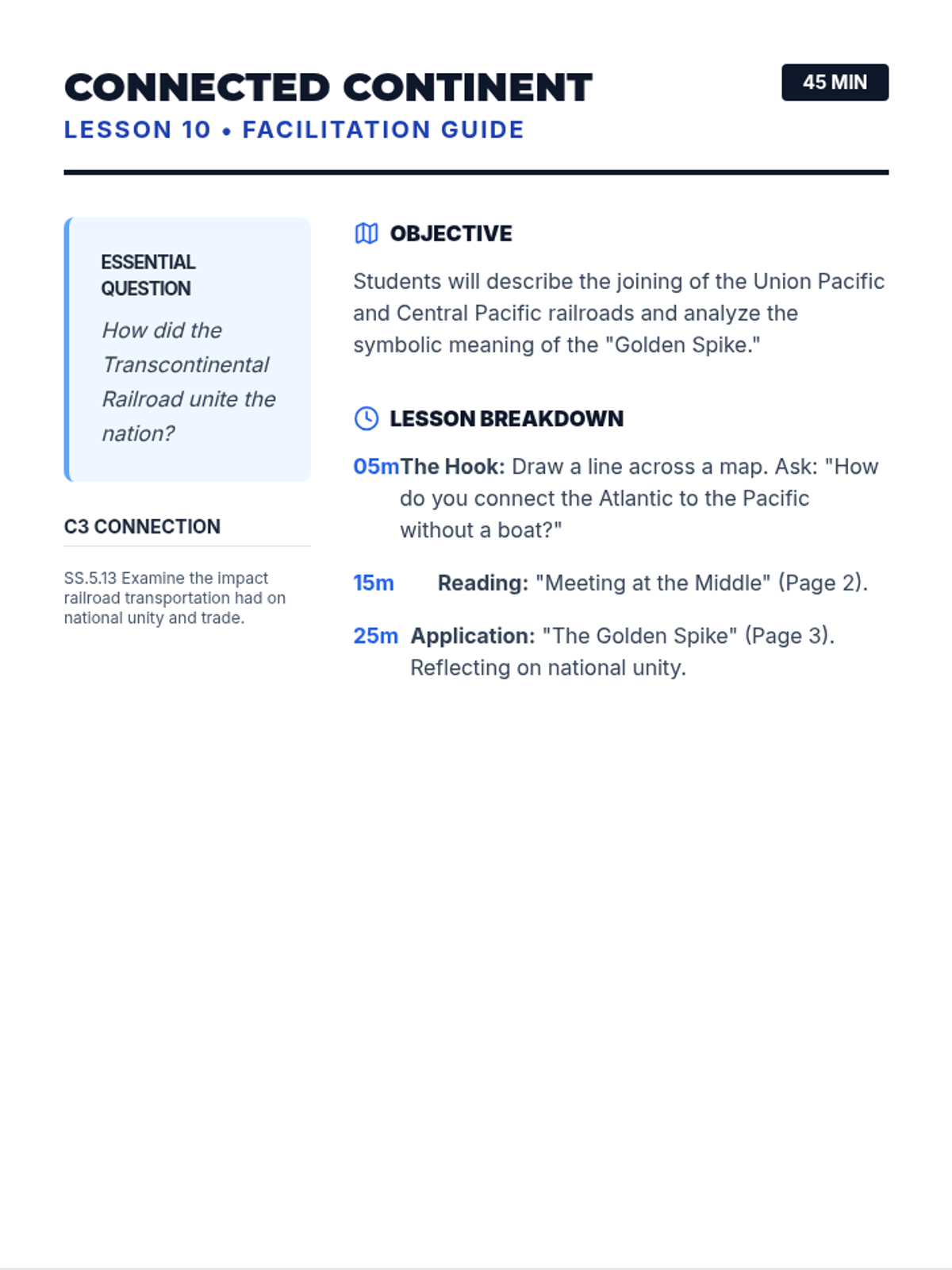
Highlights the completion of the Transcontinental Railroad and its impact on national unity and trade.
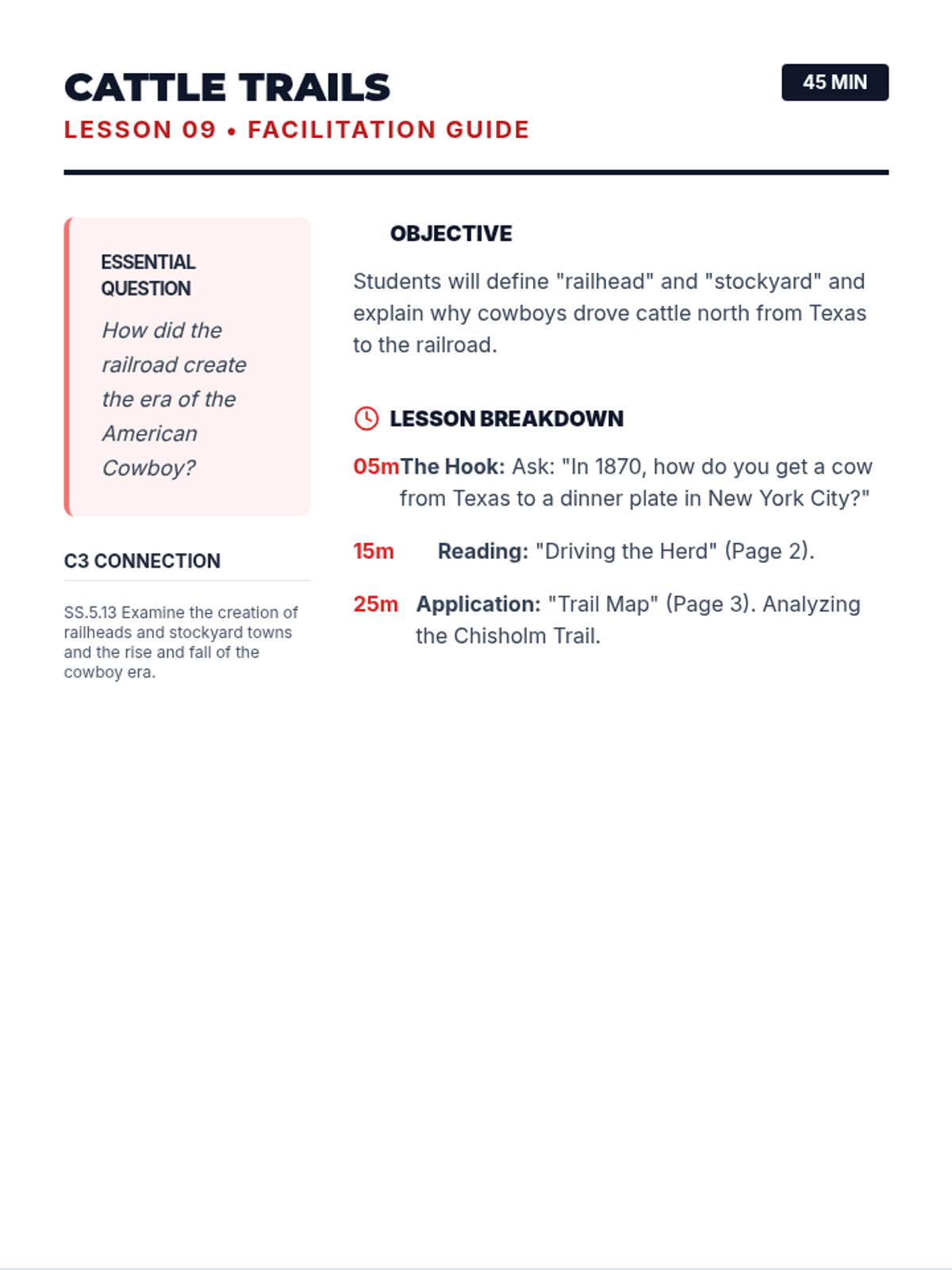
Examines the creation of railheads and stockyards to support the cattle industry and the rise of the cowboy era.
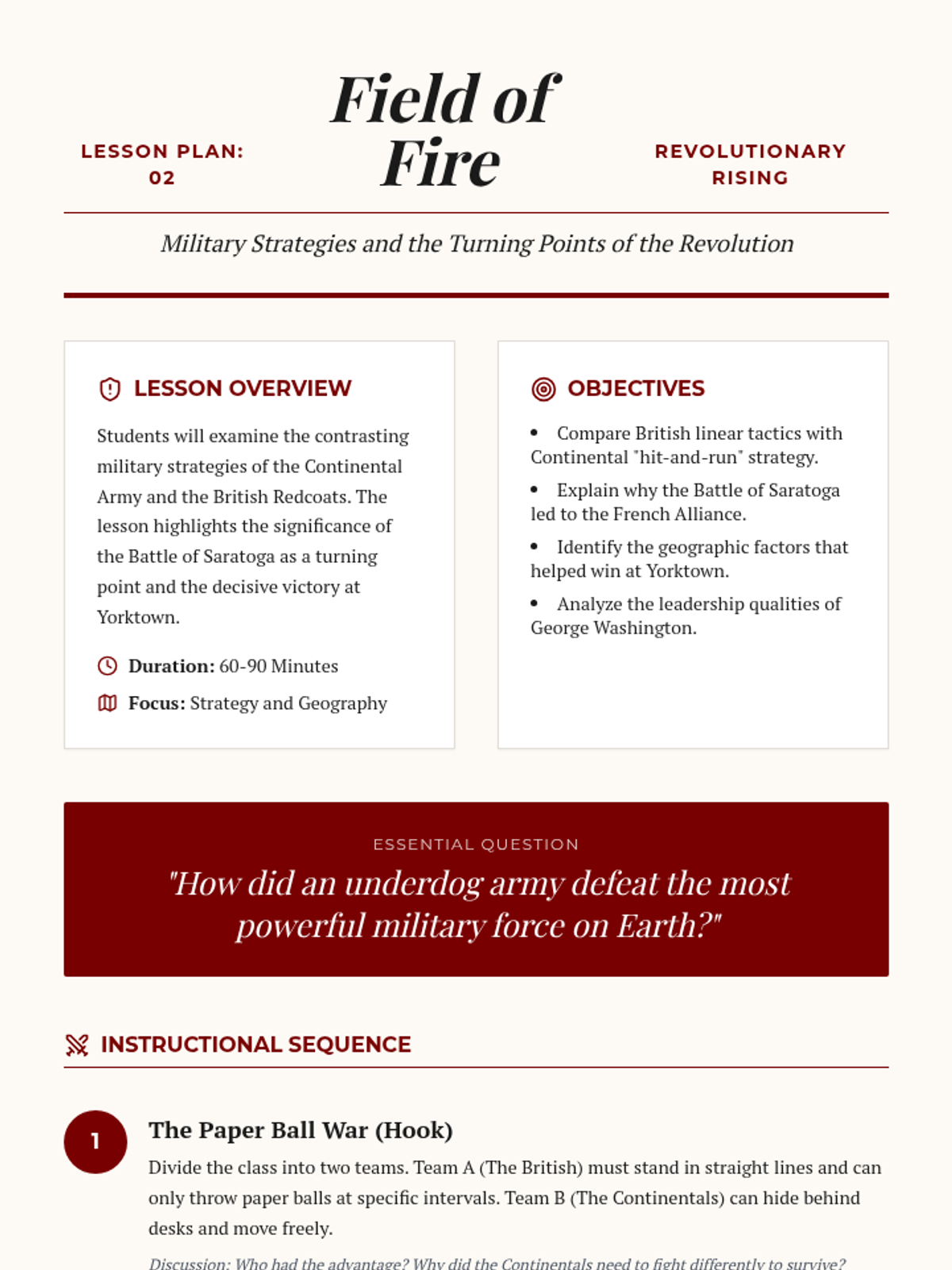
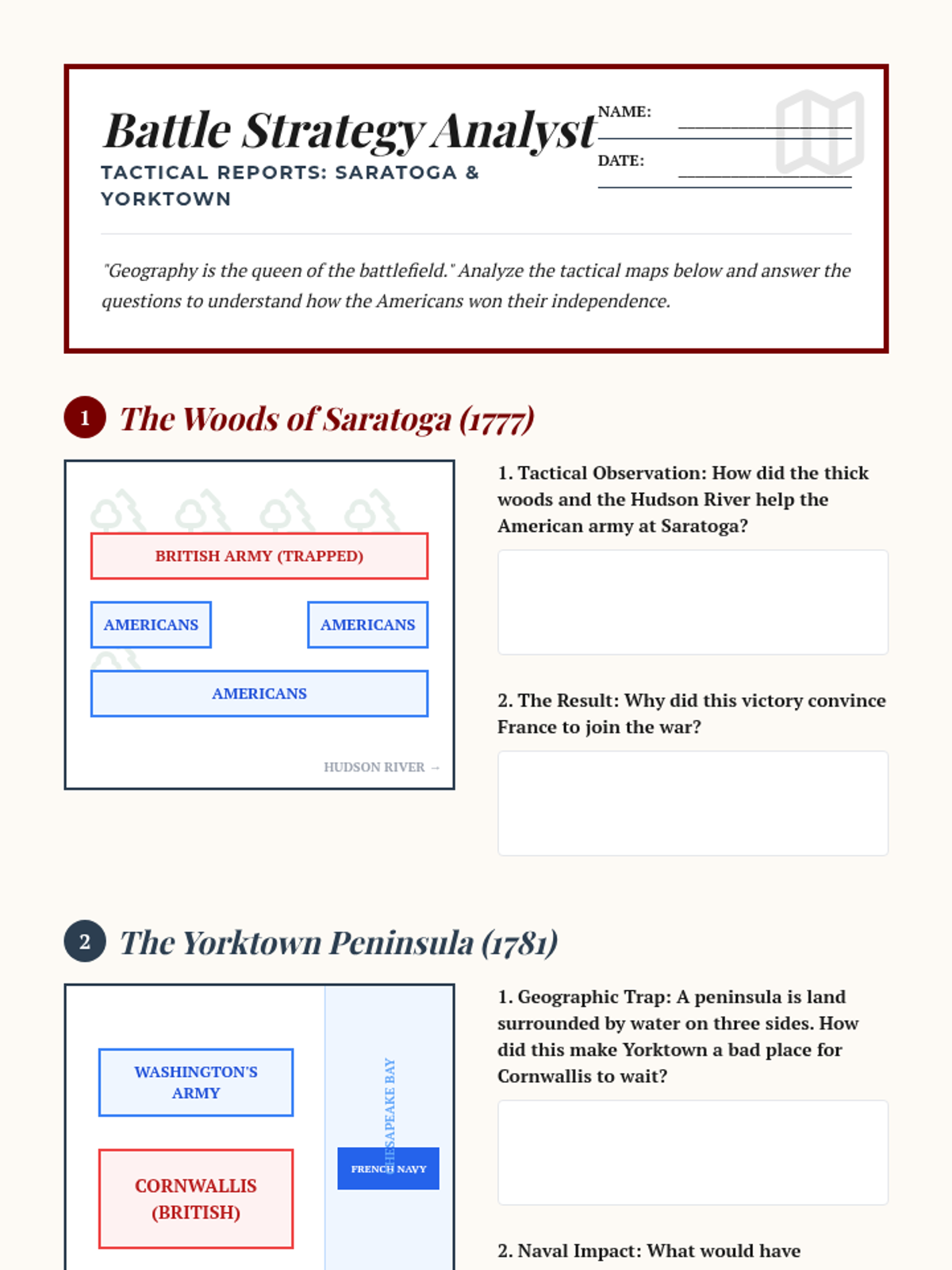
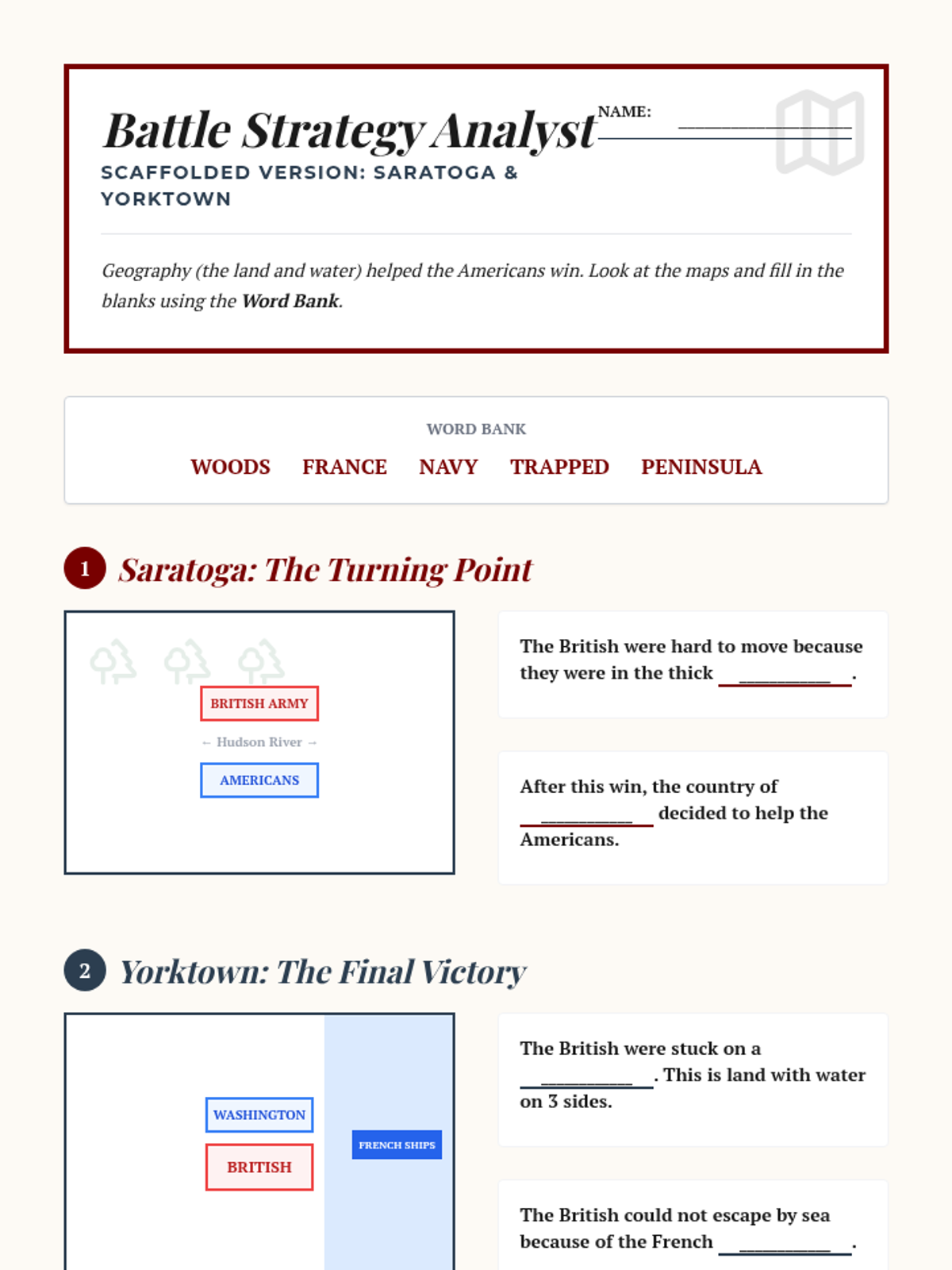
A study of key military strategies, critical battles like Saratoga and Yorktown, and the ultimate victory of the Continental Army.
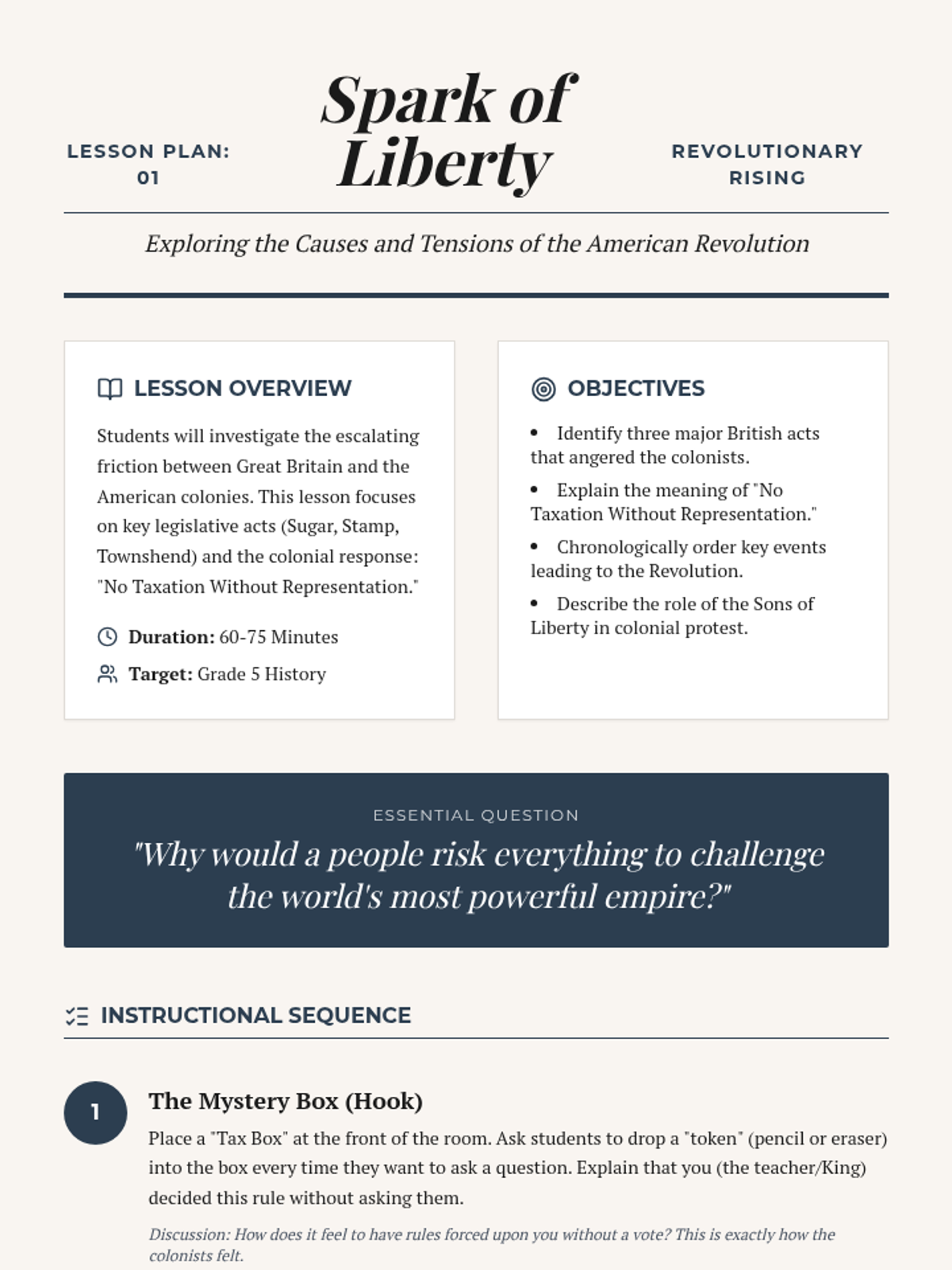
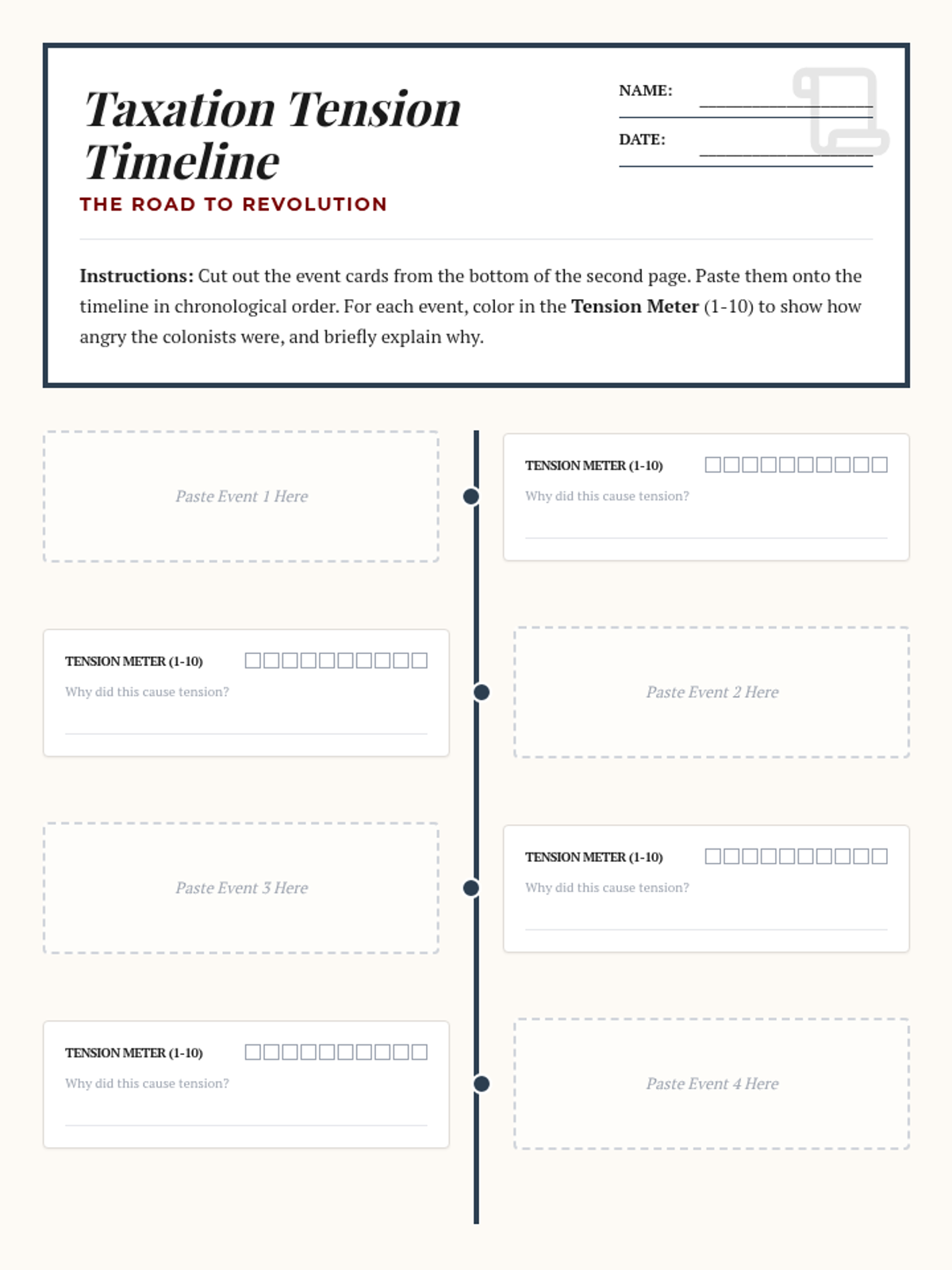
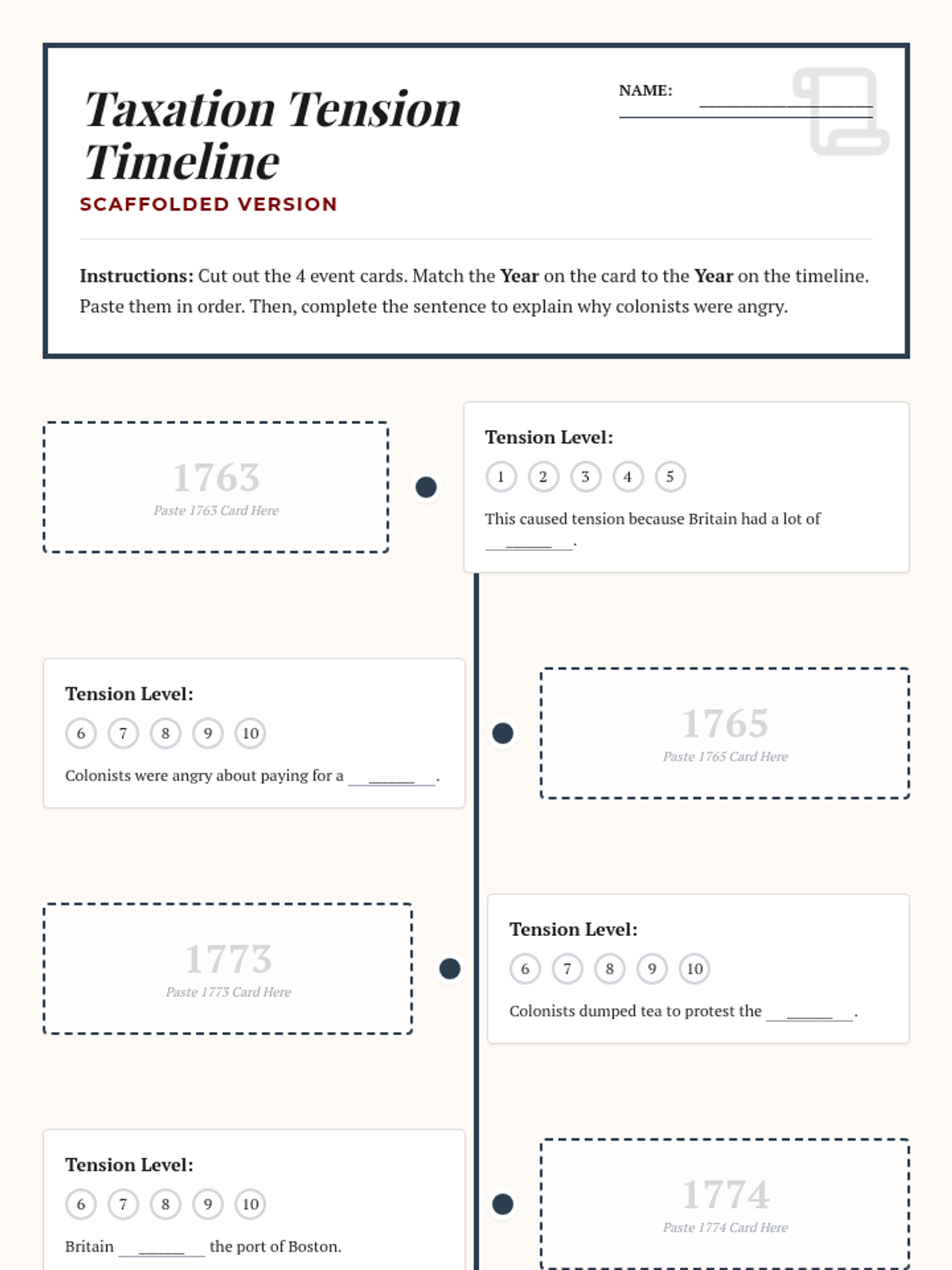
An exploration of the social, political, and economic factors that led to the American Revolution, focusing on the concept of 'No Taxation Without Representation'.
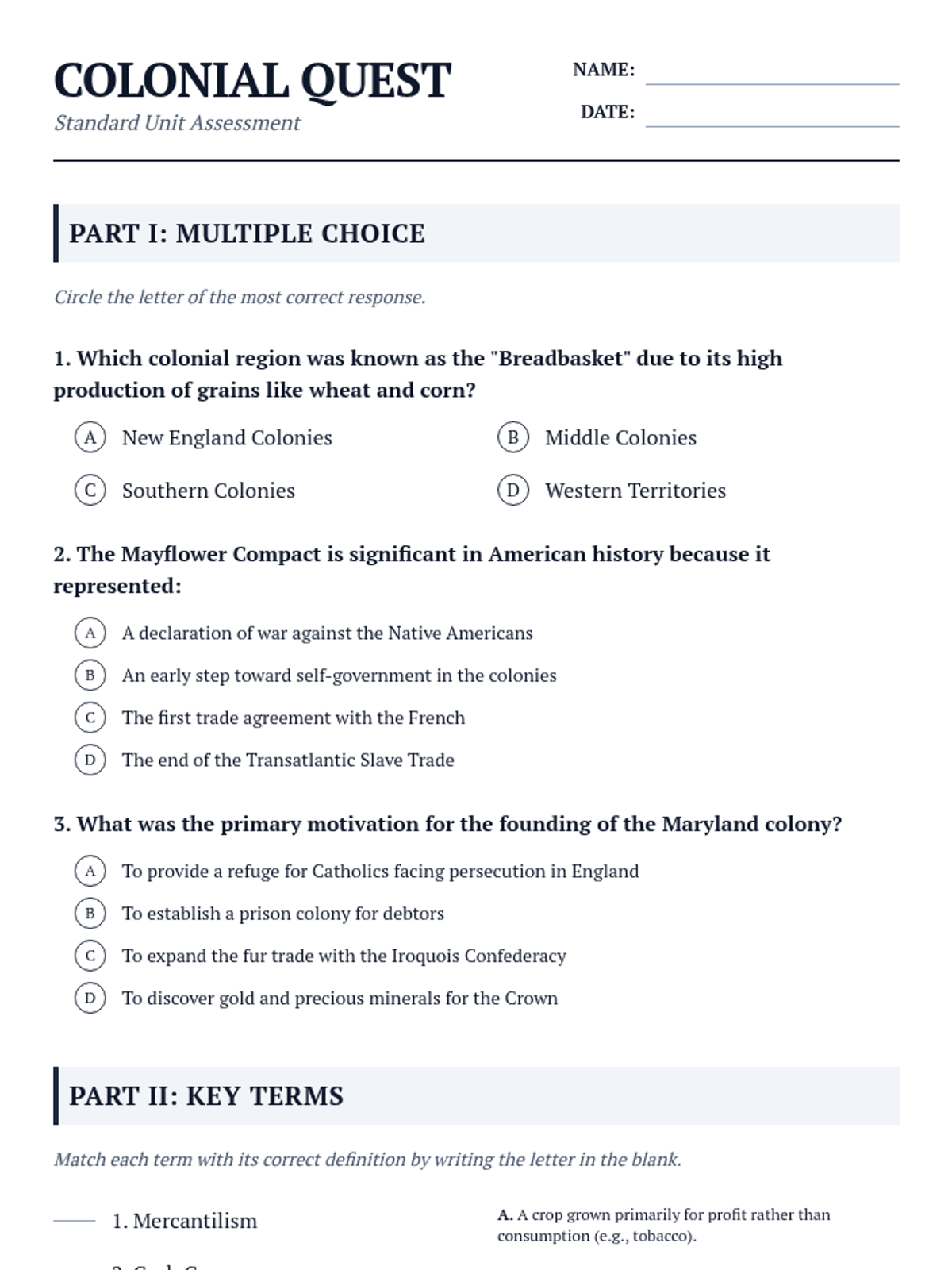
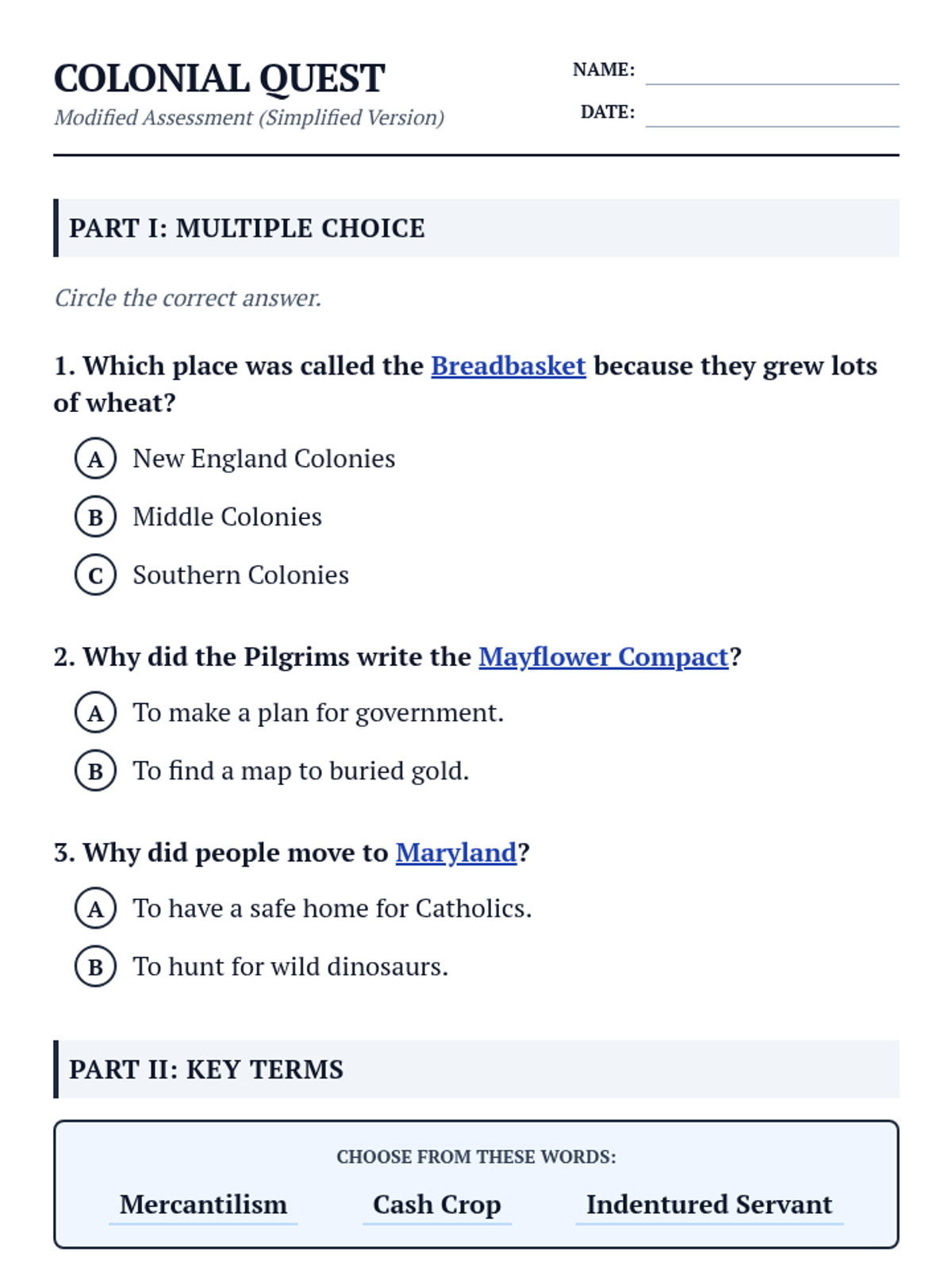
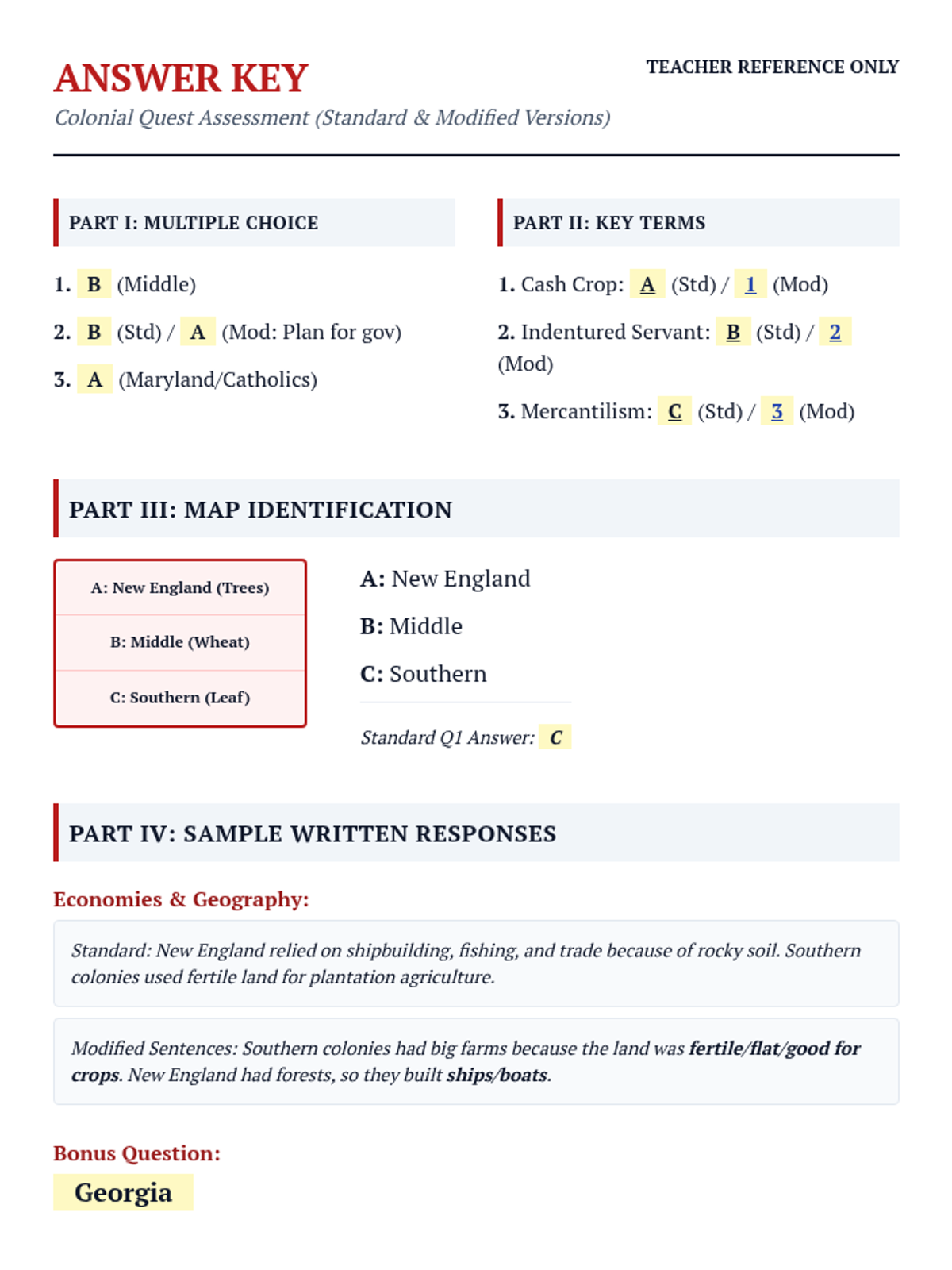
A comprehensive assessment and review for a unit on the Thirteen Colonies, featuring a standard test and a modified version for students with IEP accommodations.
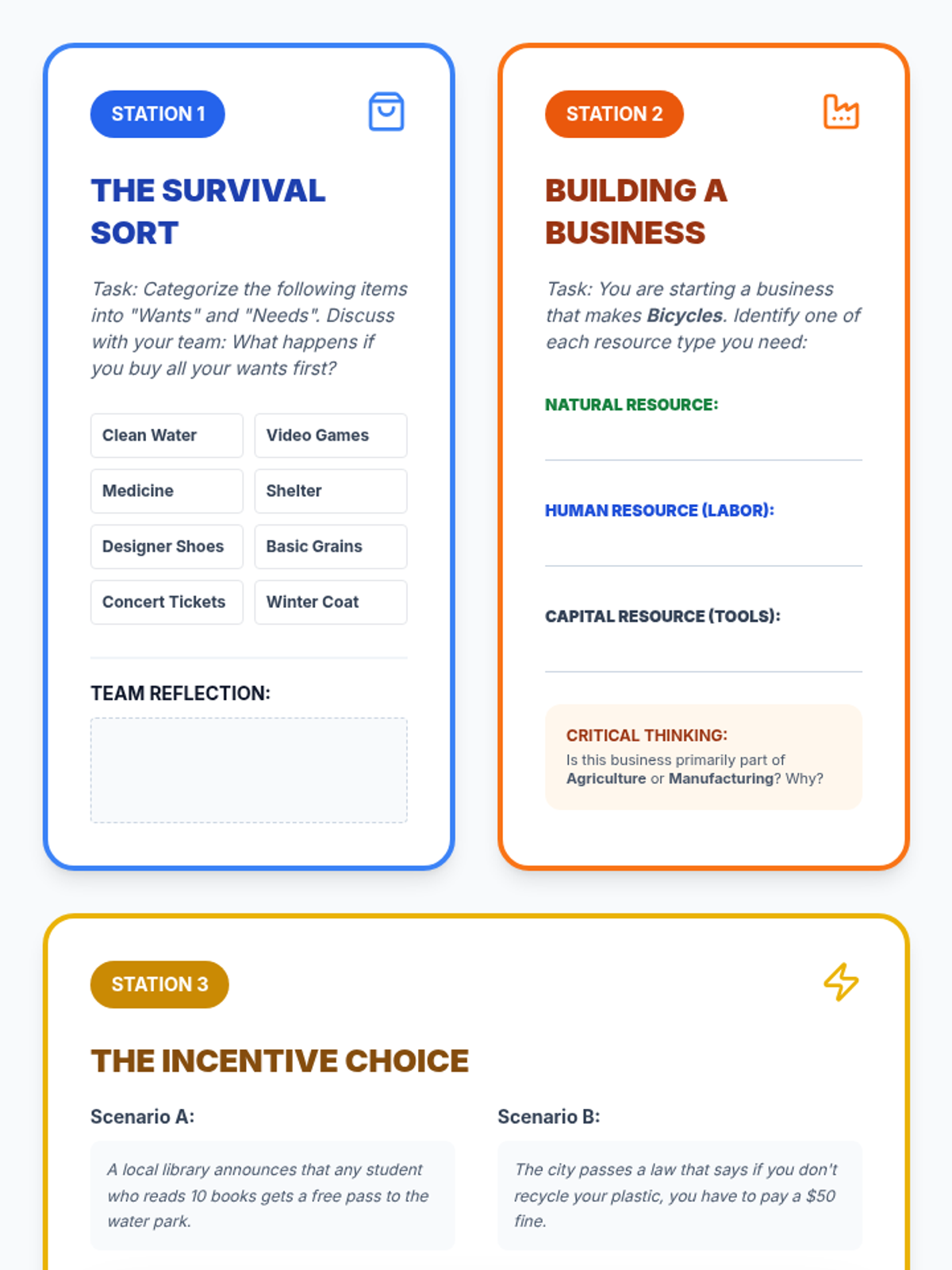
A hands-on review of all unit concepts through a series of interactive station rotations.
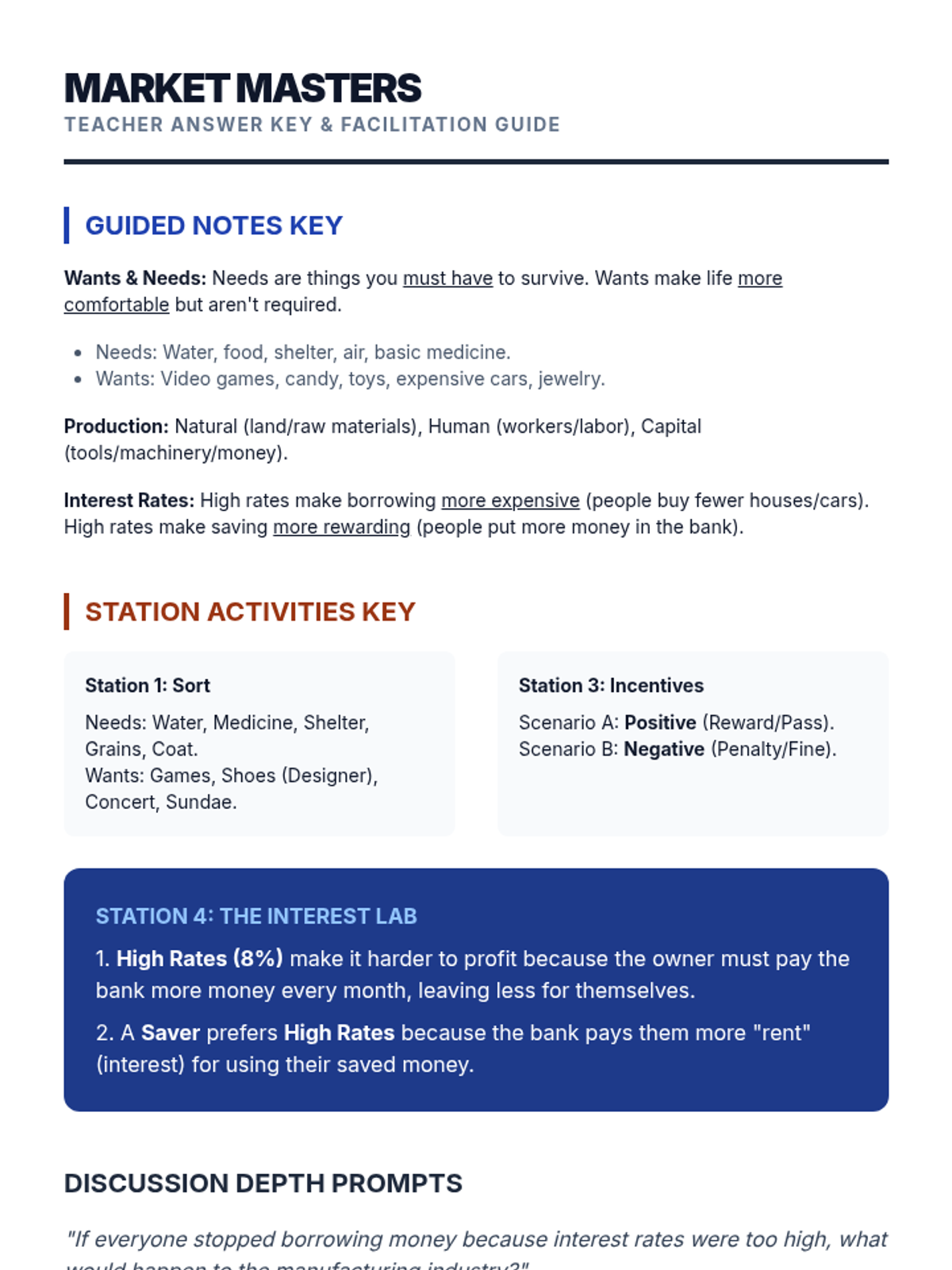
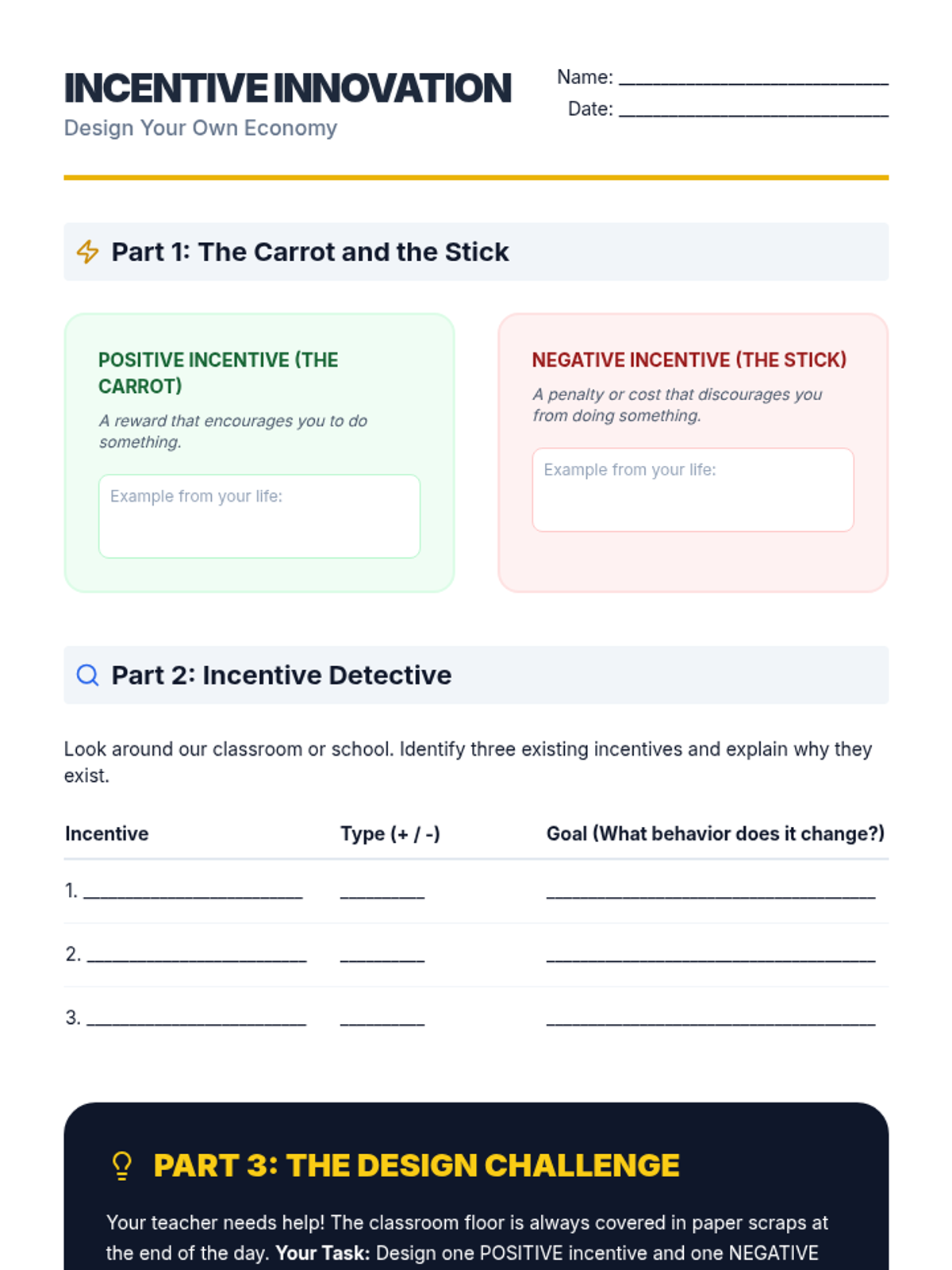
Students analyze how positive and negative incentives drive consumer and producer behavior in the marketplace.
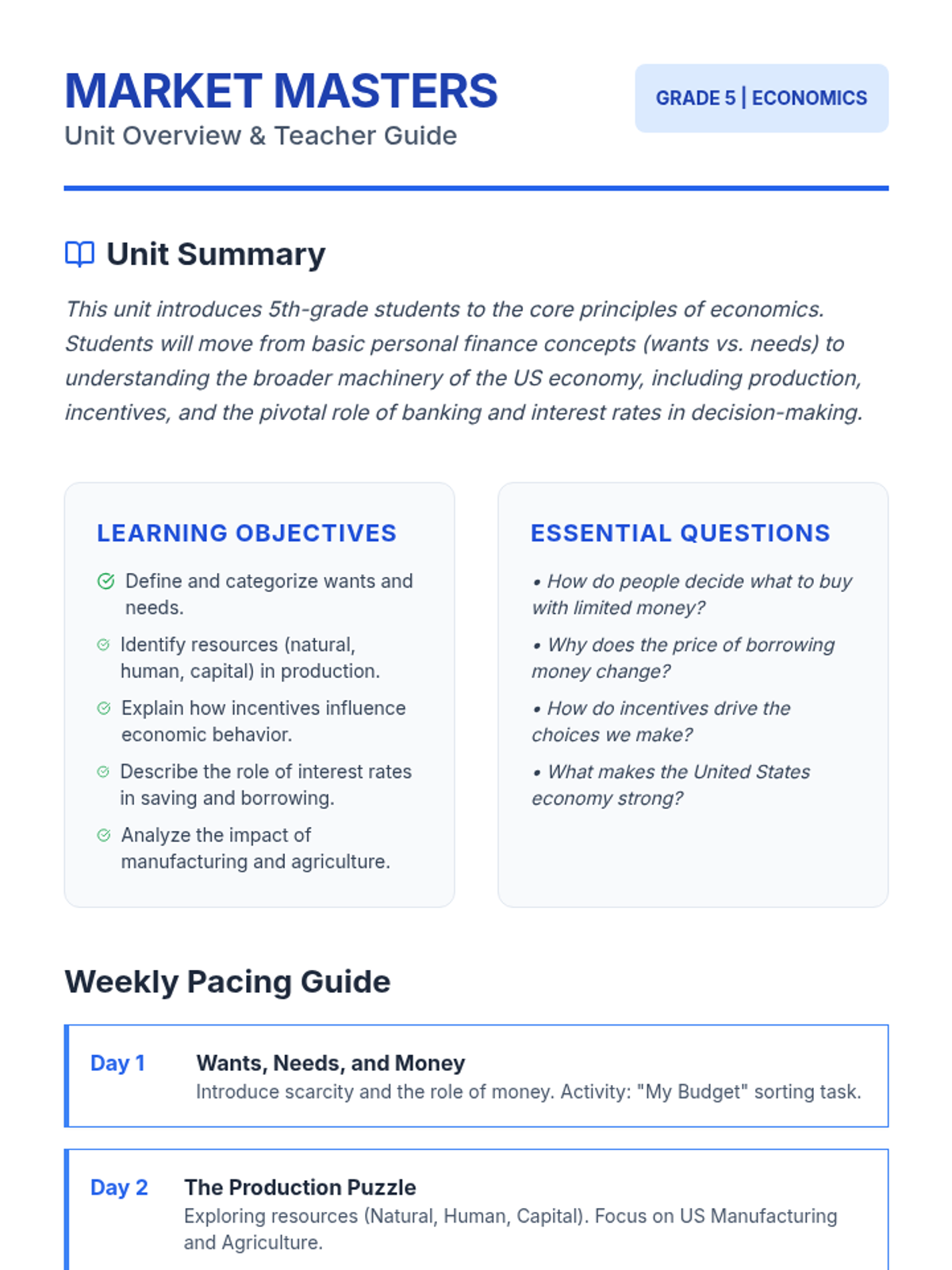
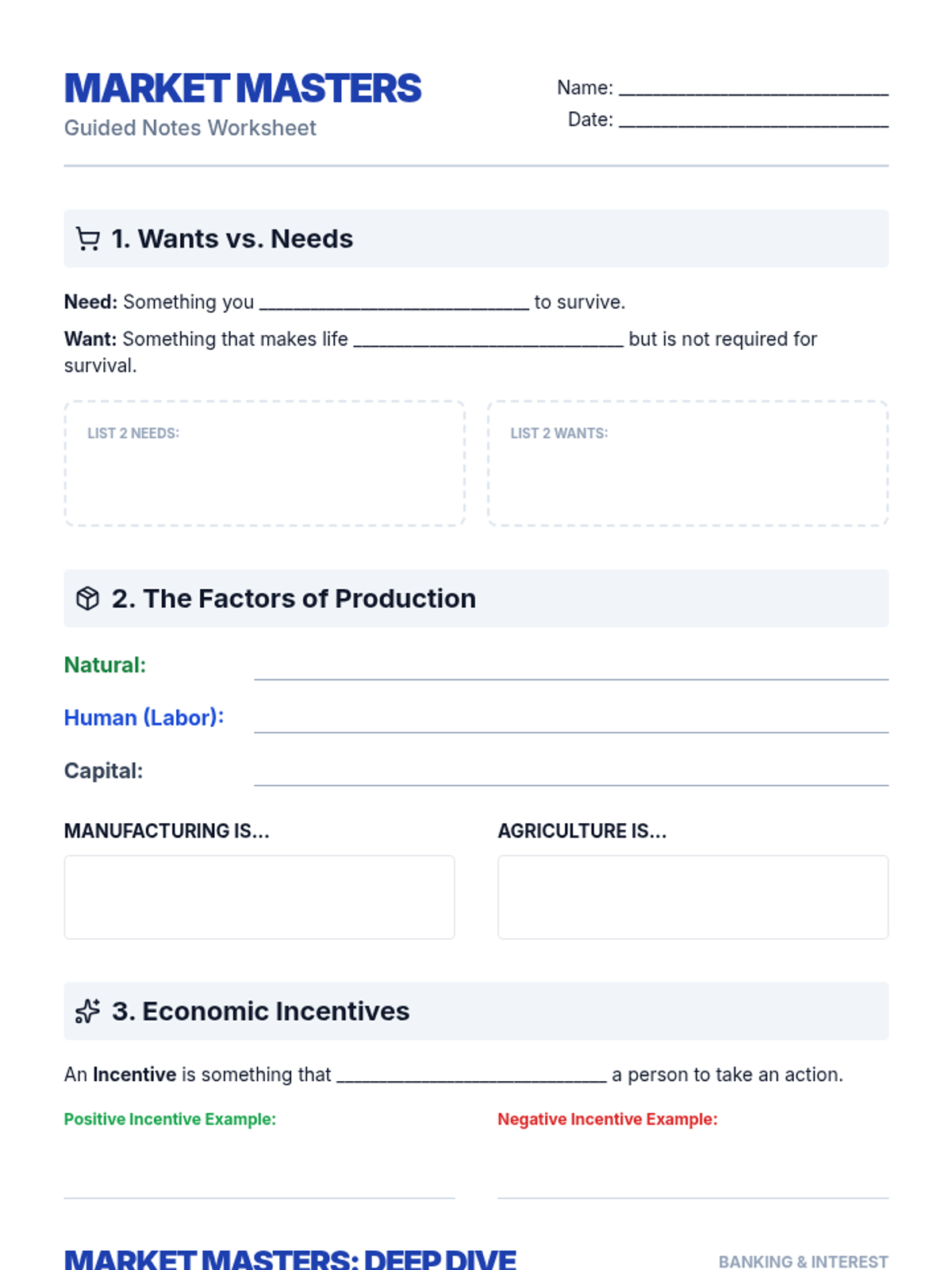
Students differentiate between wants and needs and explore how money facilitates the exchange of goods and services.
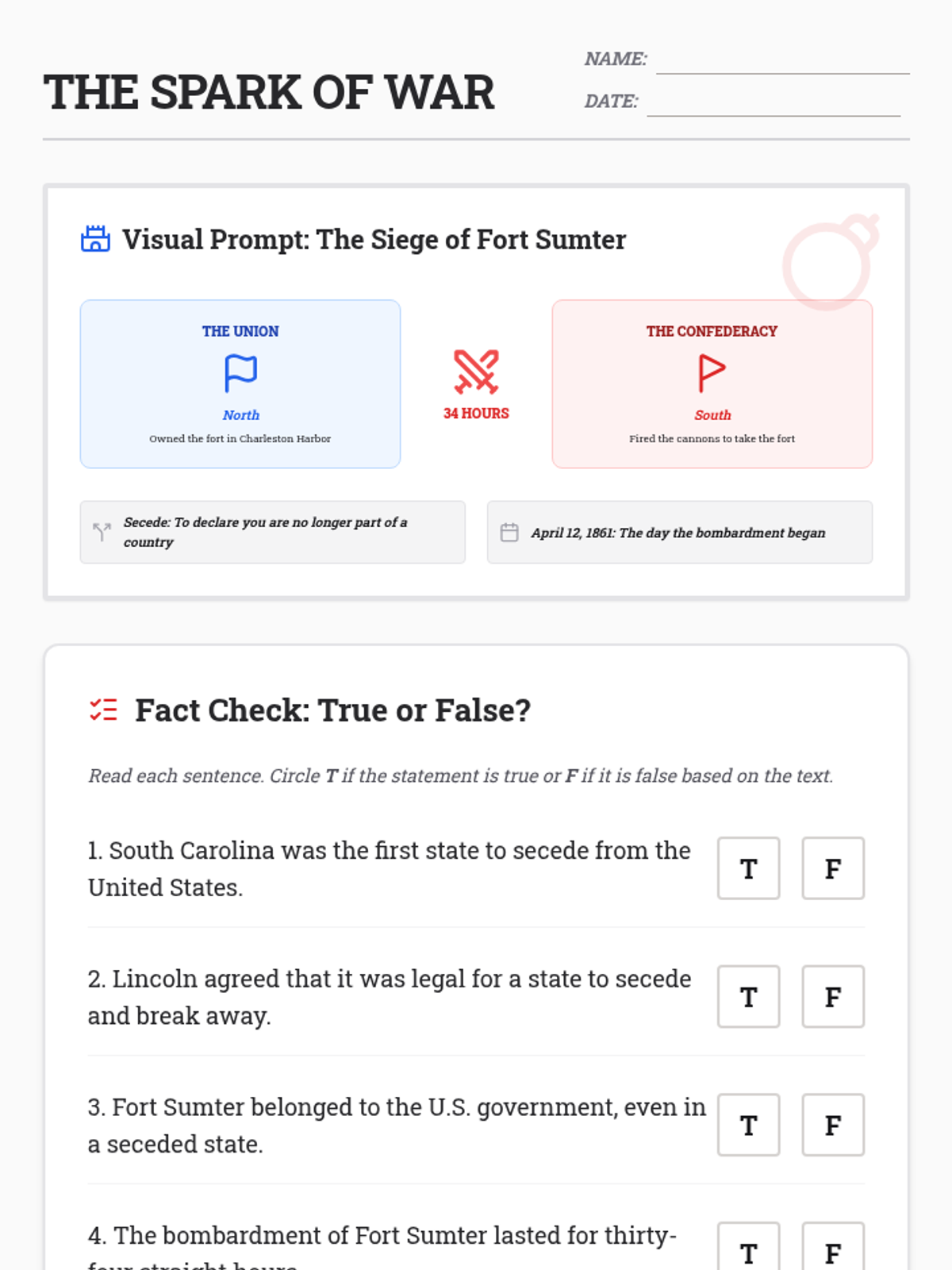
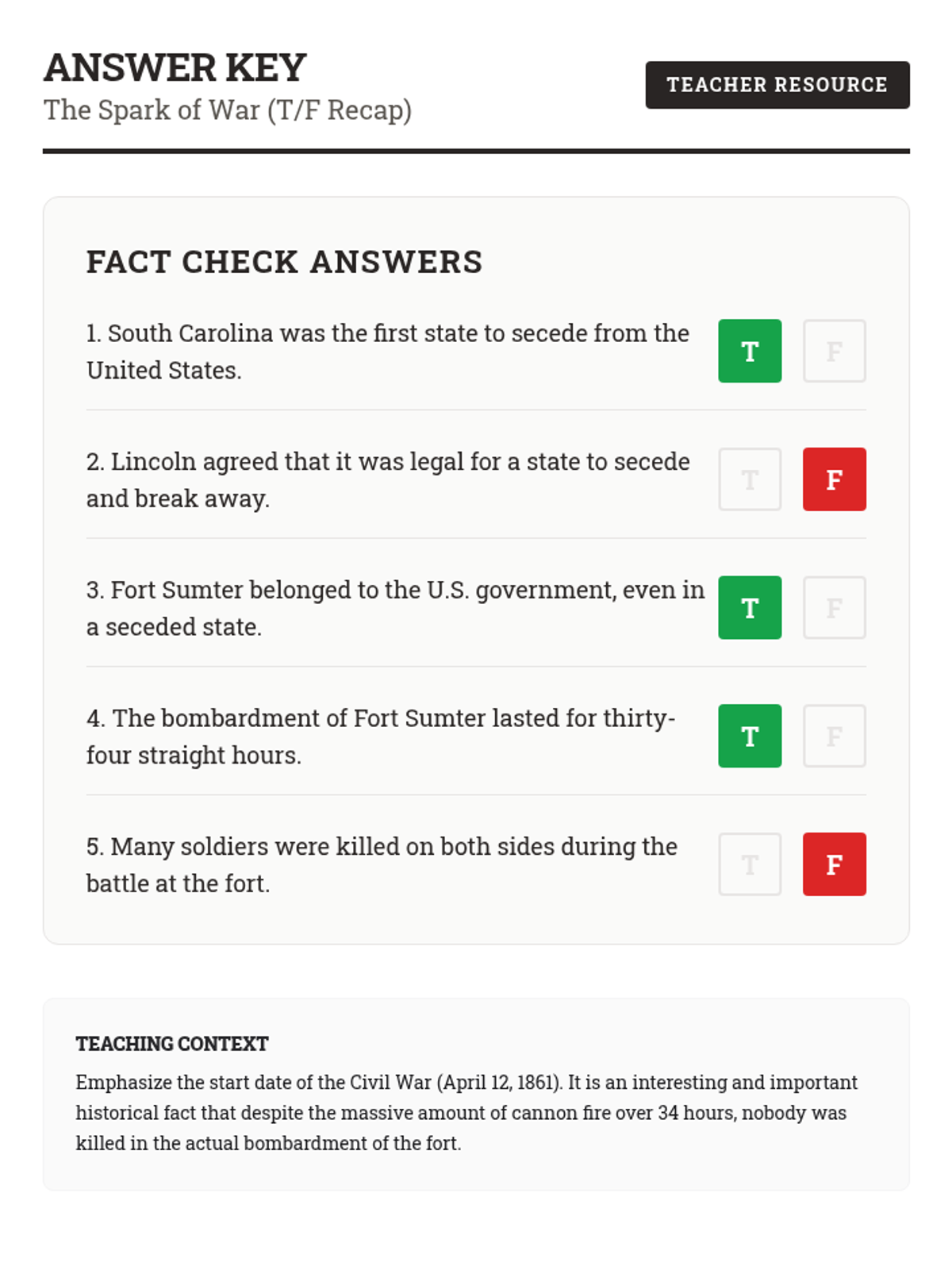
A lesson covering the secession of the Southern states, the formation of the Confederacy, and the opening battle of the Civil War at Fort Sumter. Students will explore the causes of the split and sequence the events that led to the bombardment.
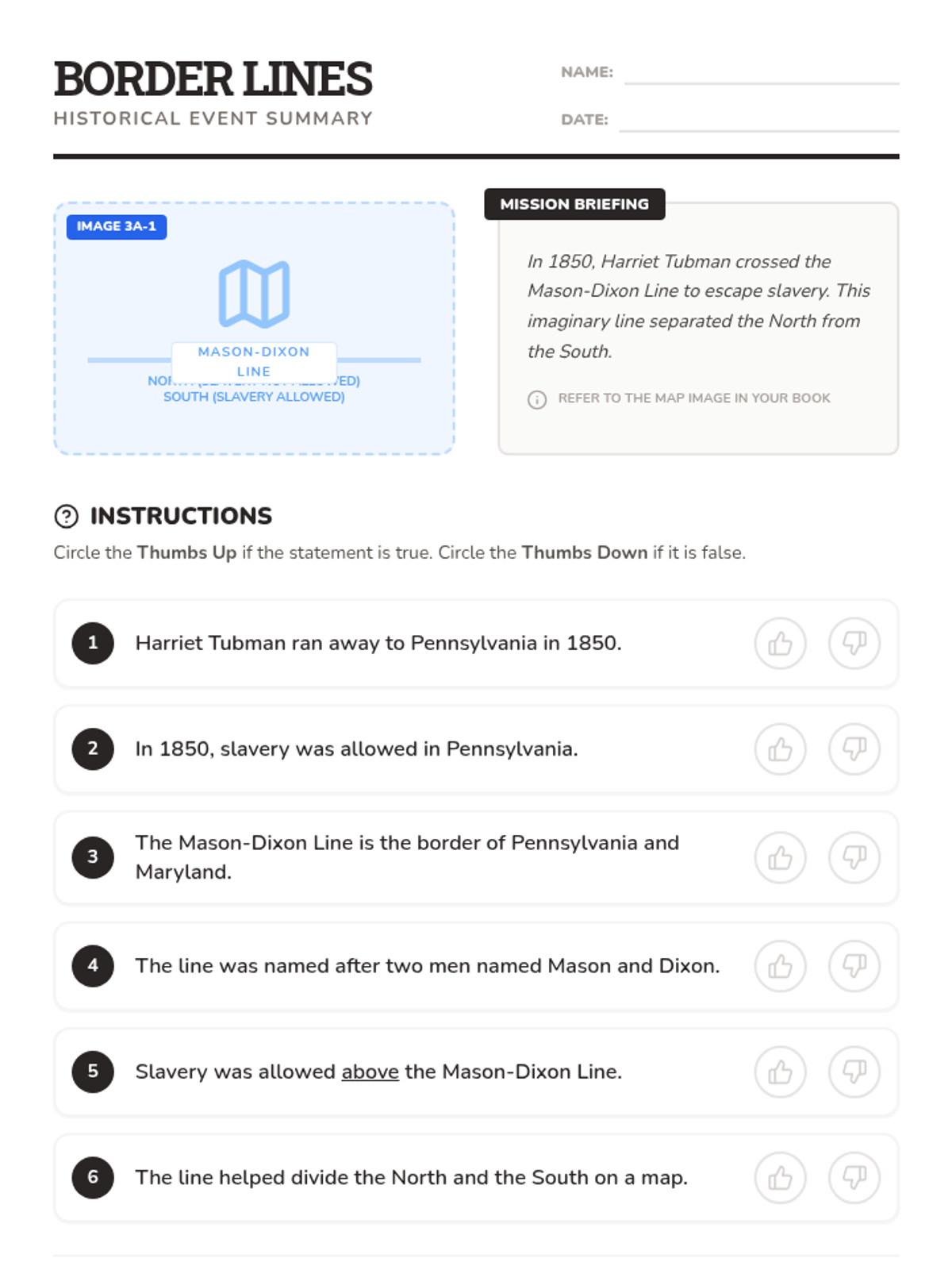
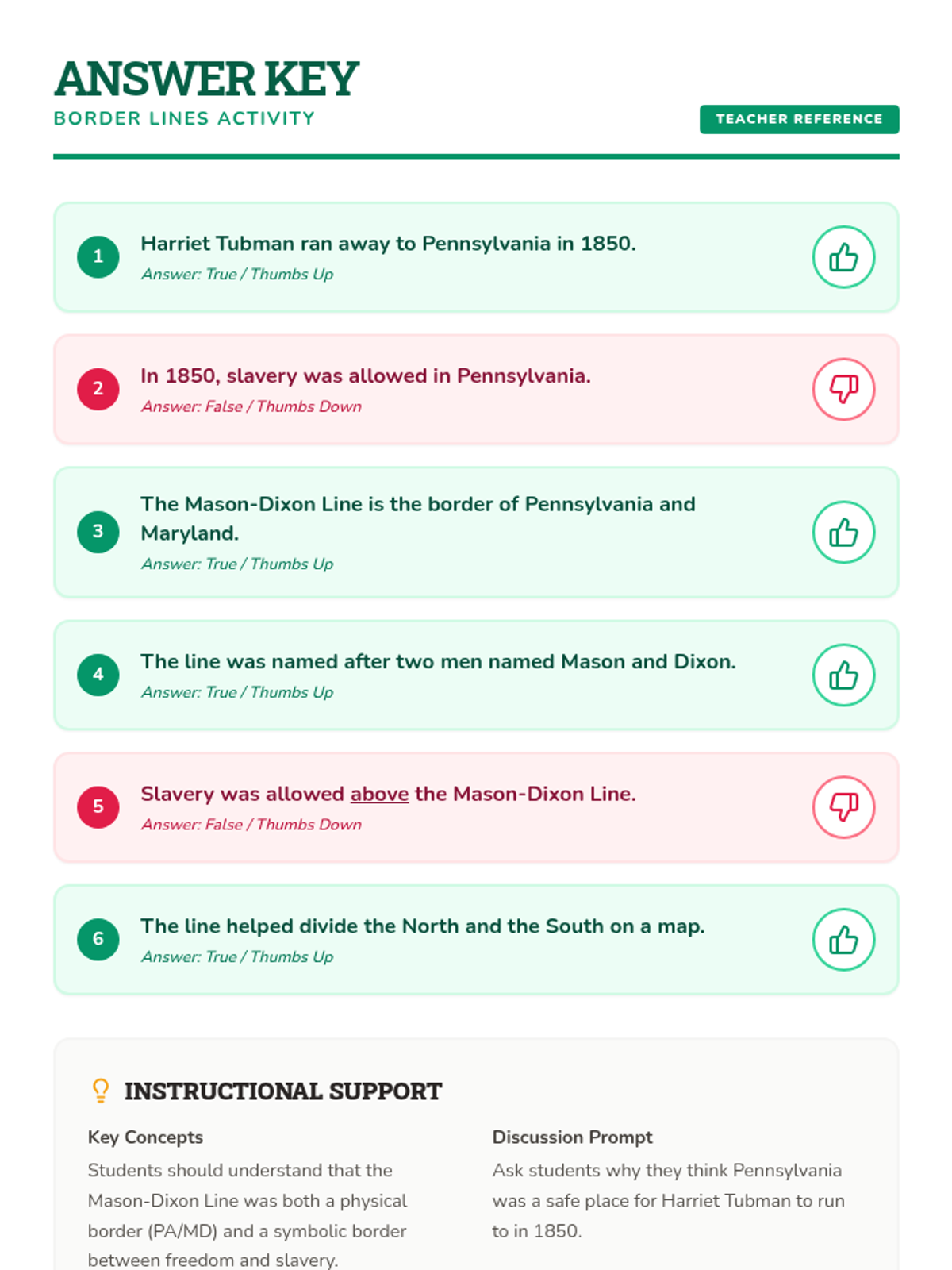
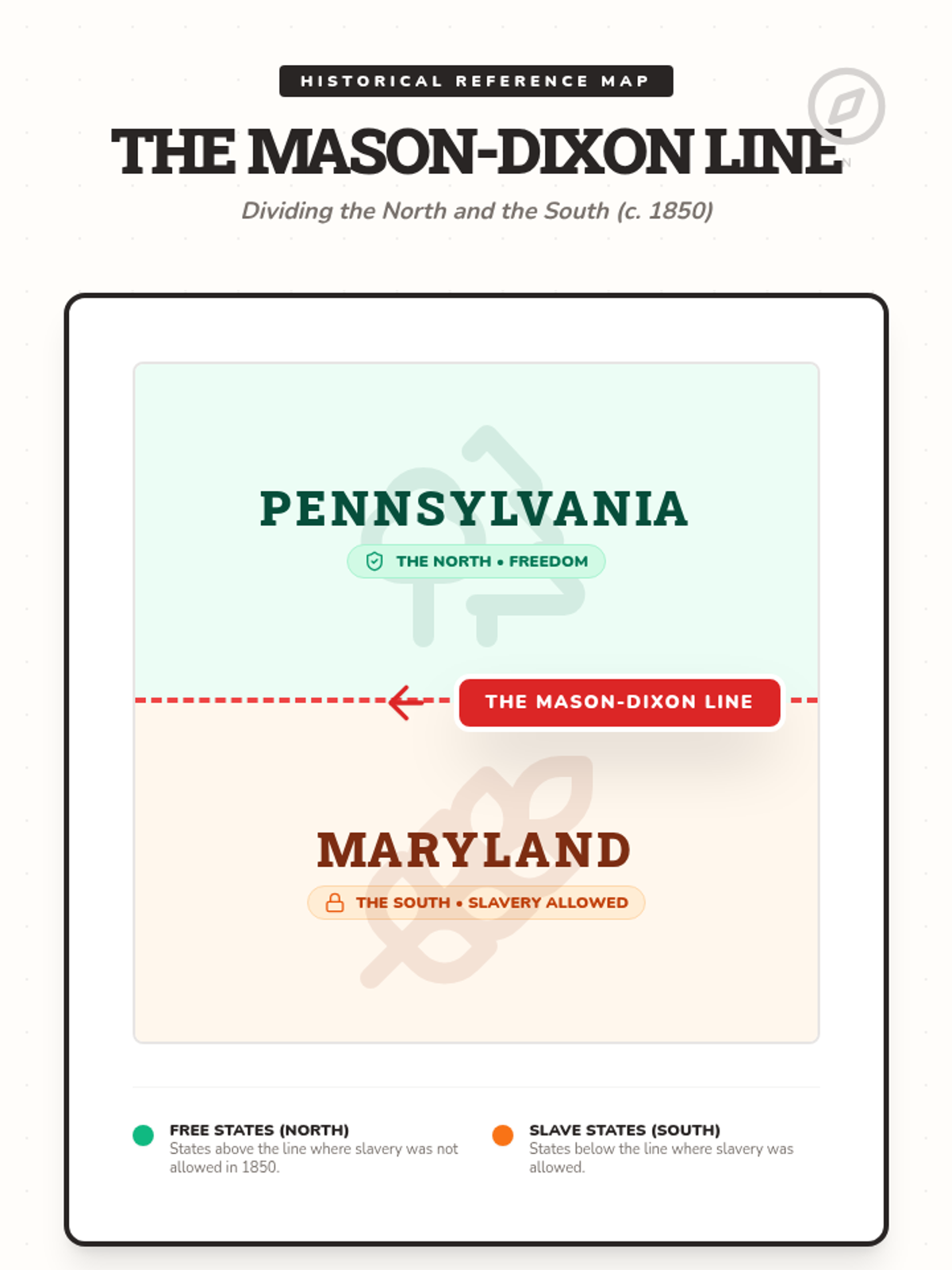
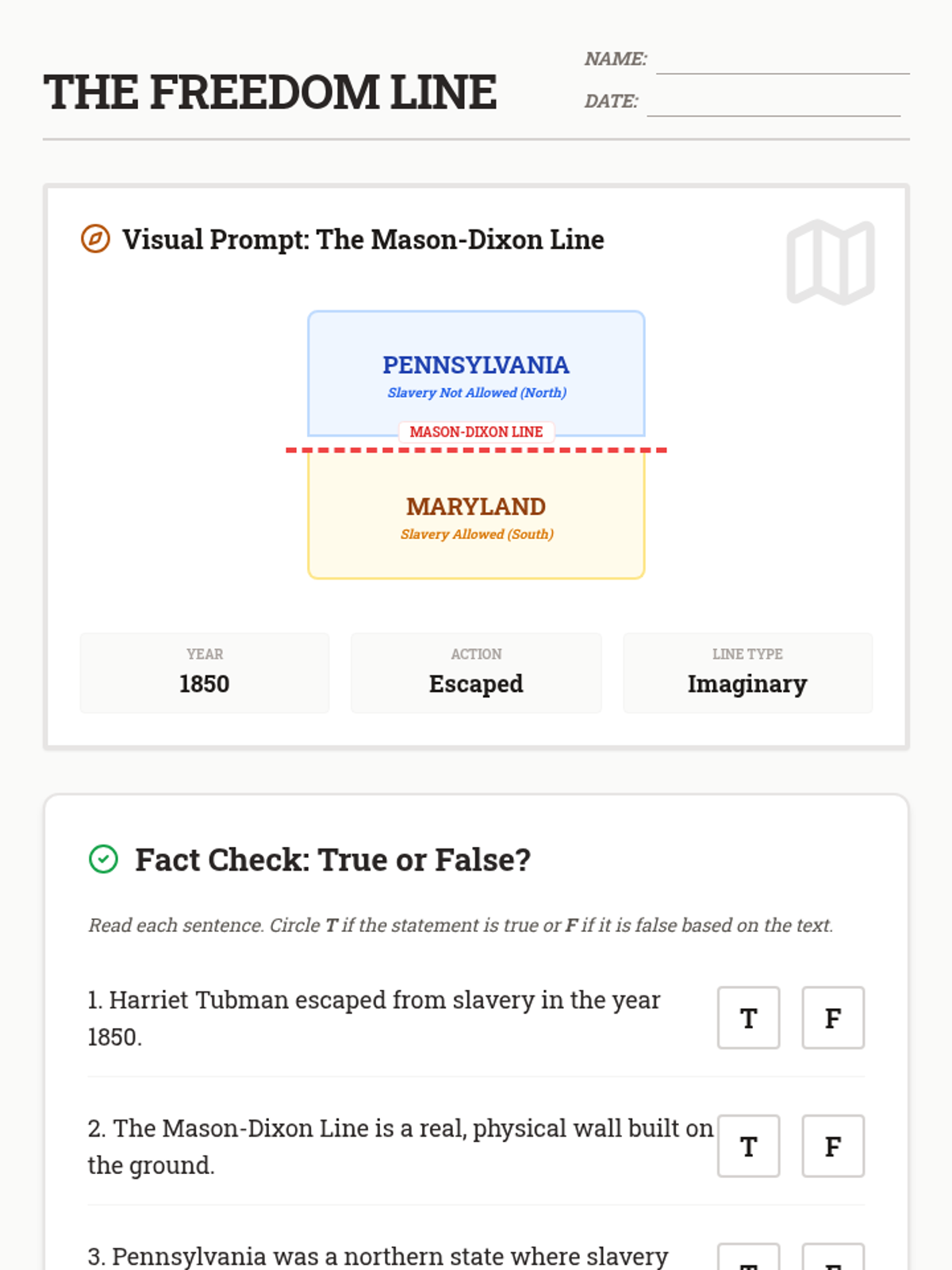
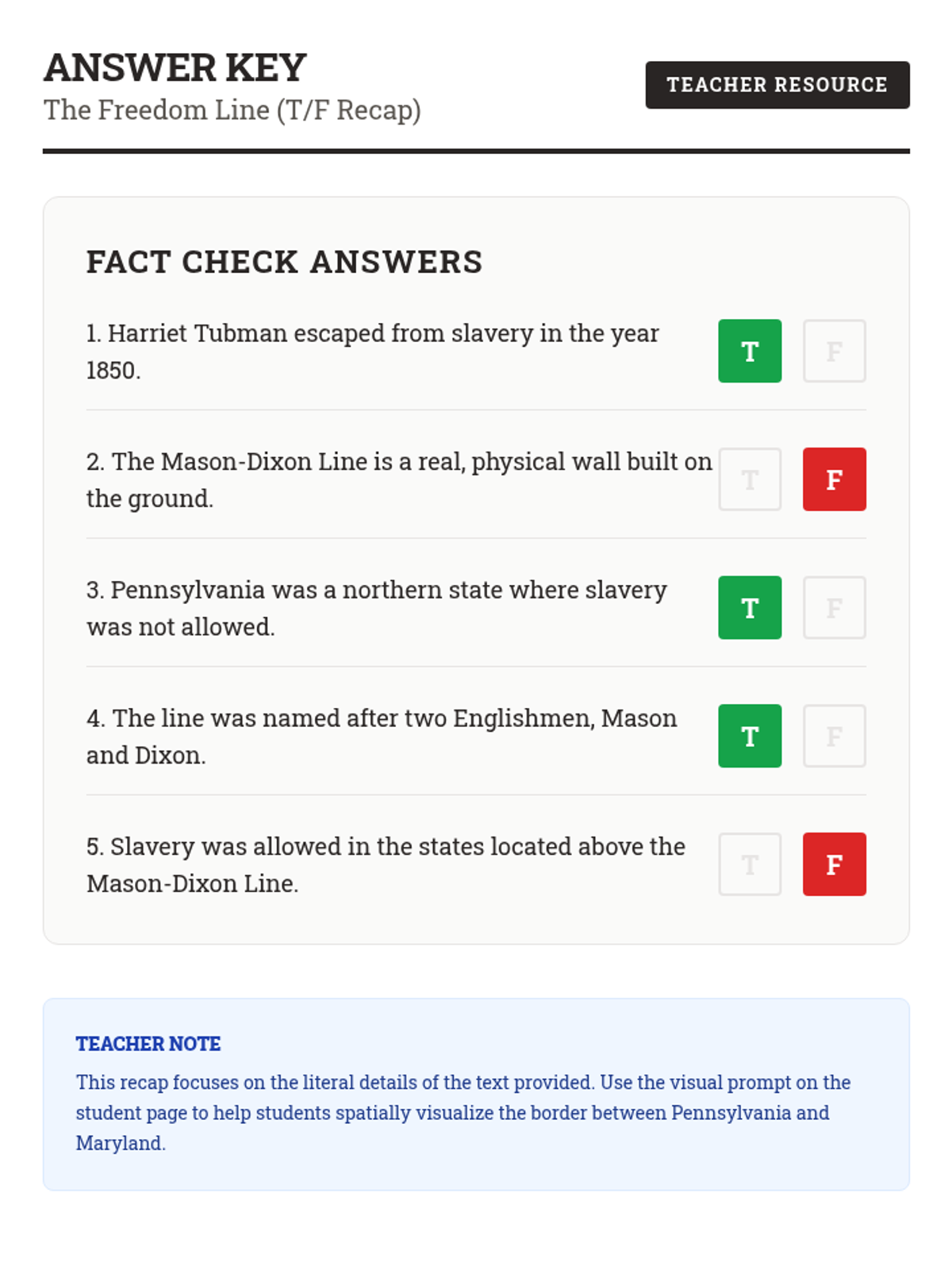
A lesson exploring Harriet Tubman's 1850 escape and the significance of the Mason-Dixon Line as a geographical and legal boundary in the pre-Civil War United States.
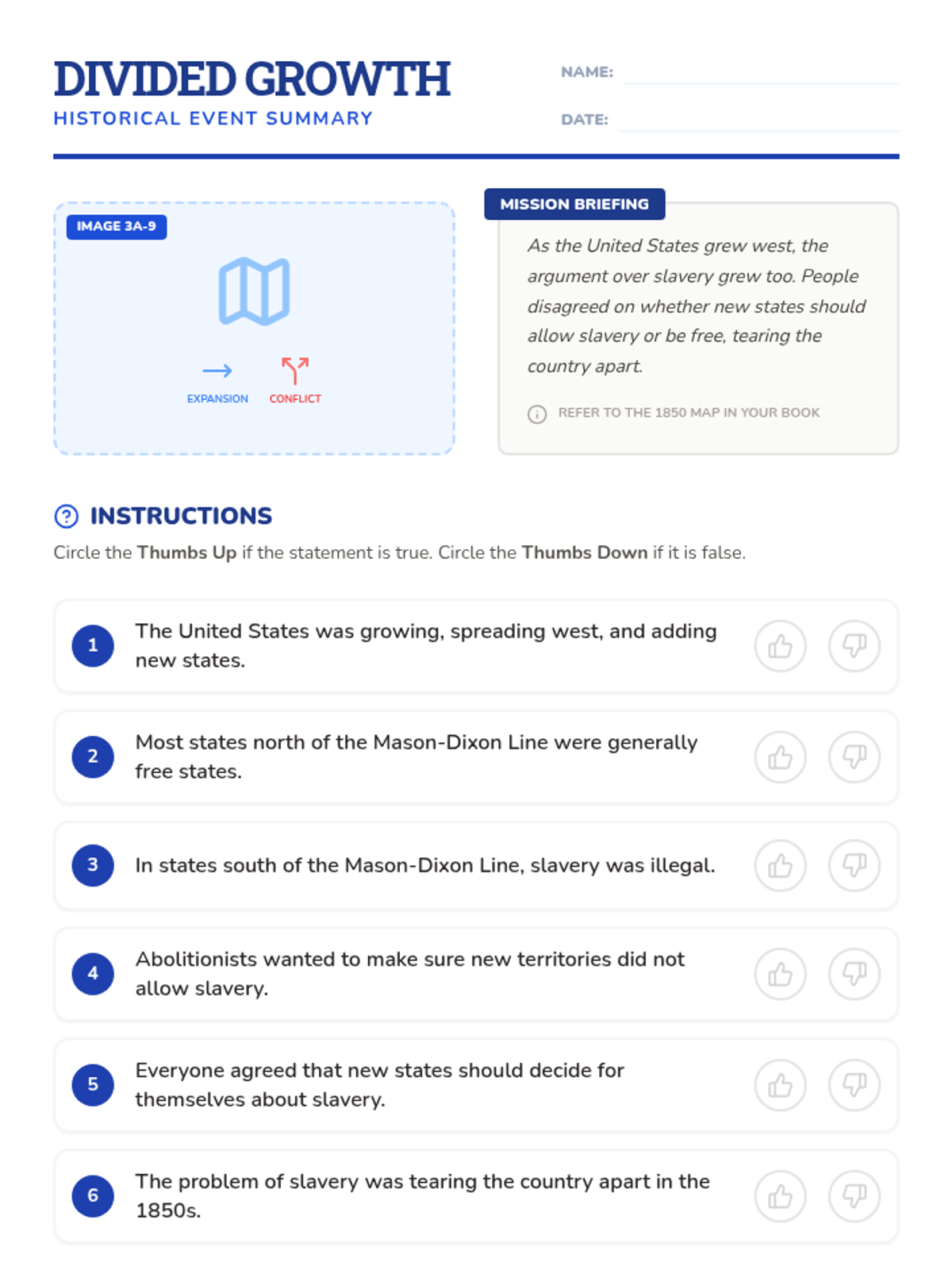
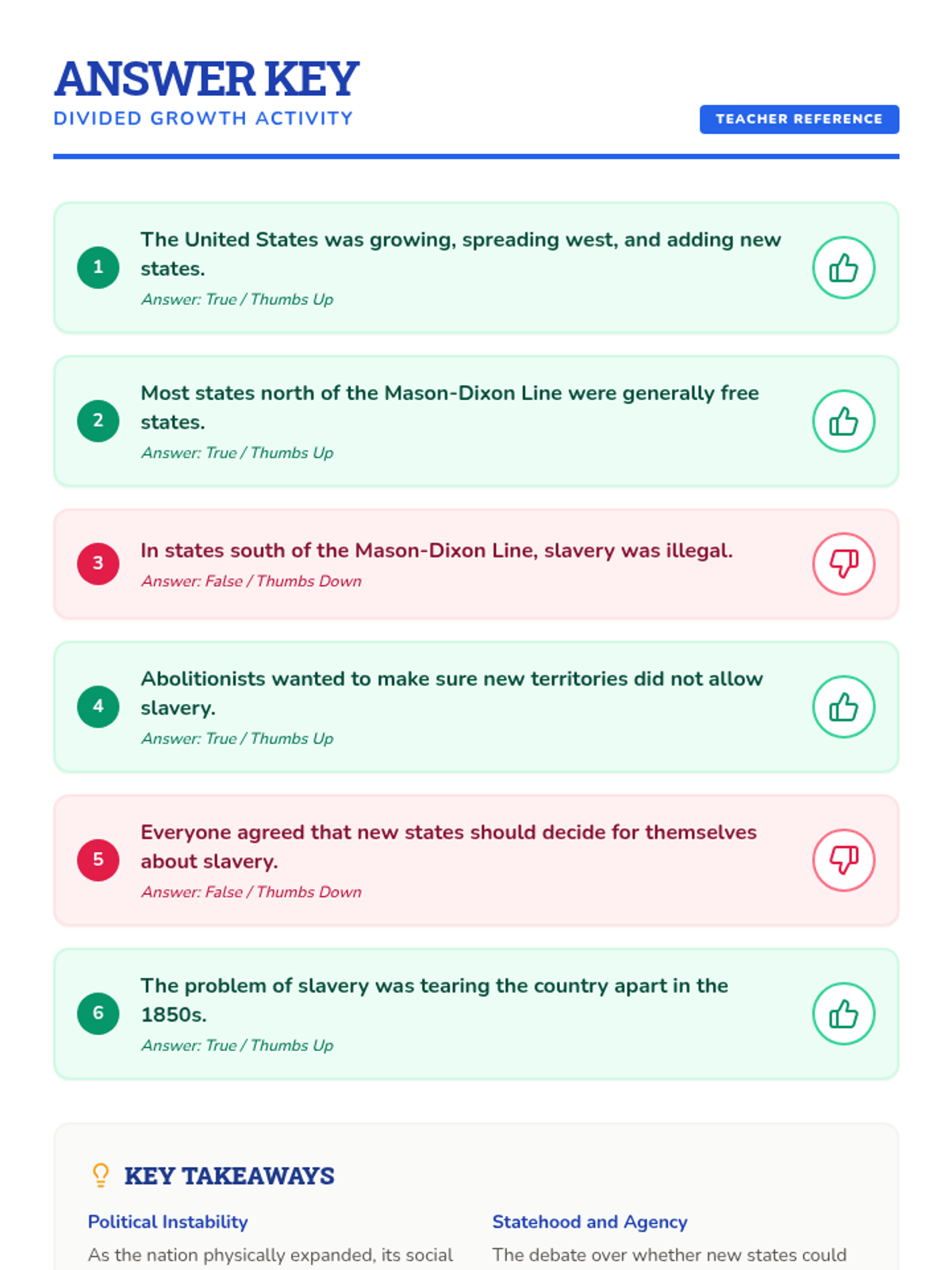
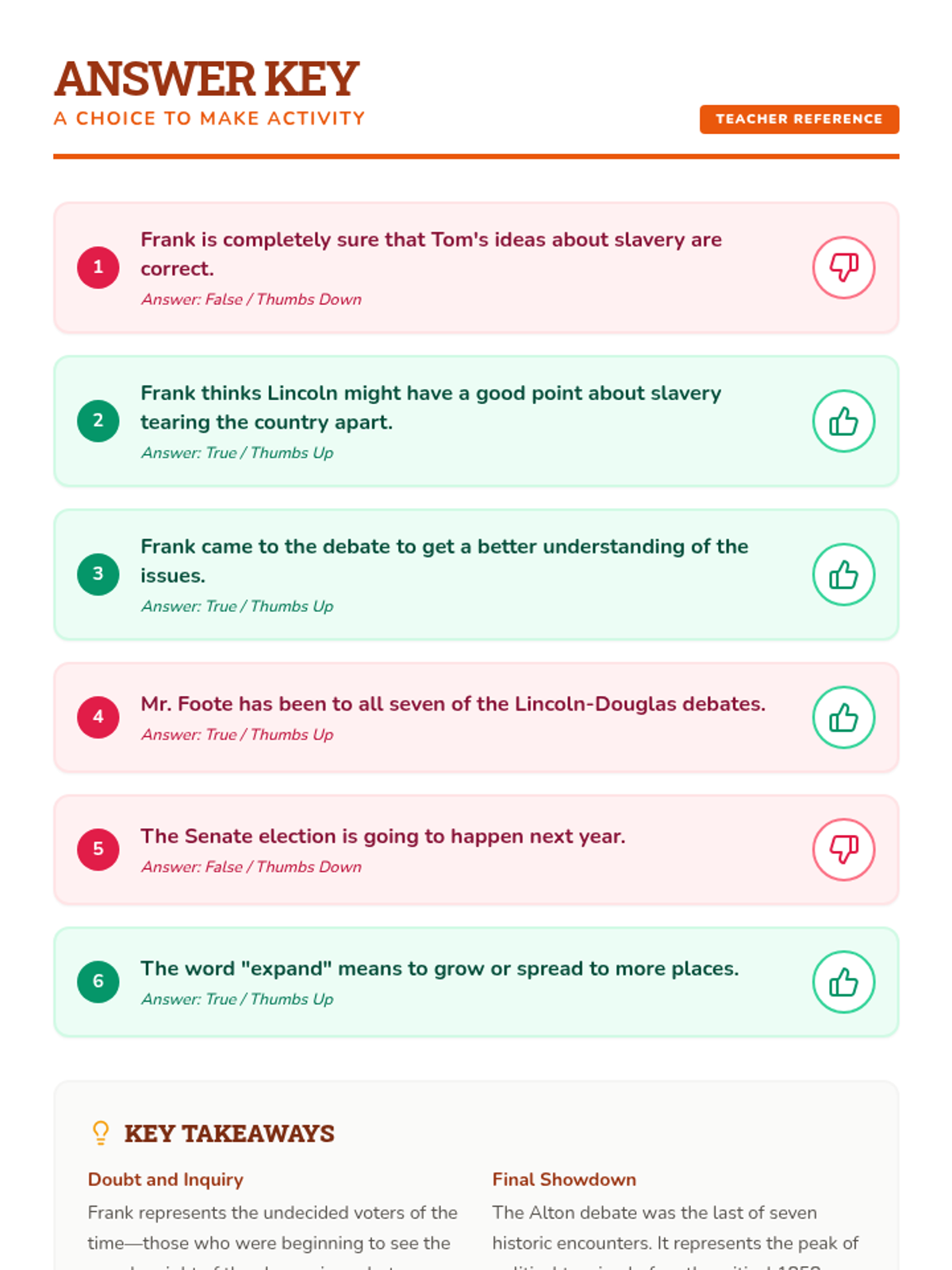
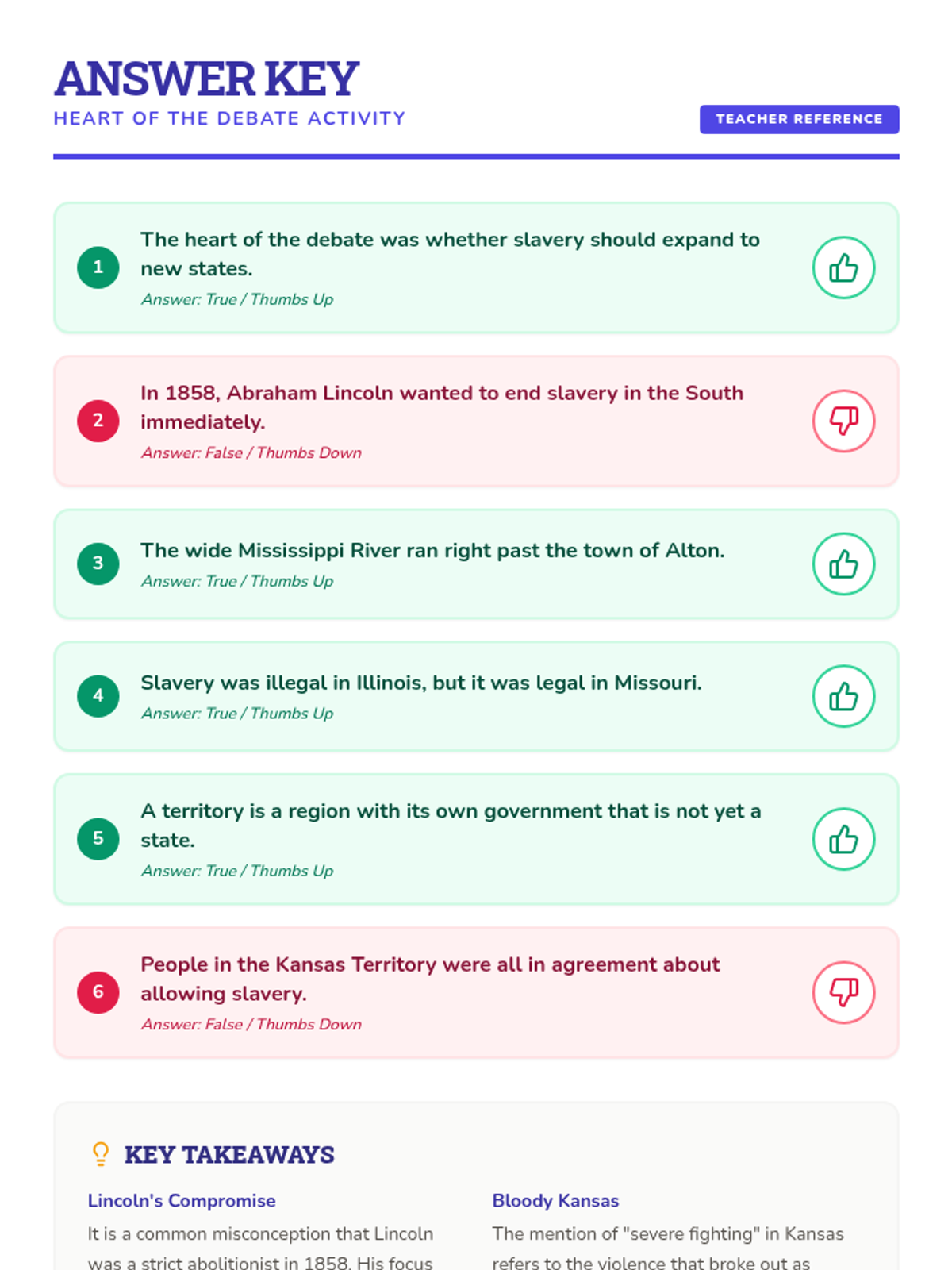
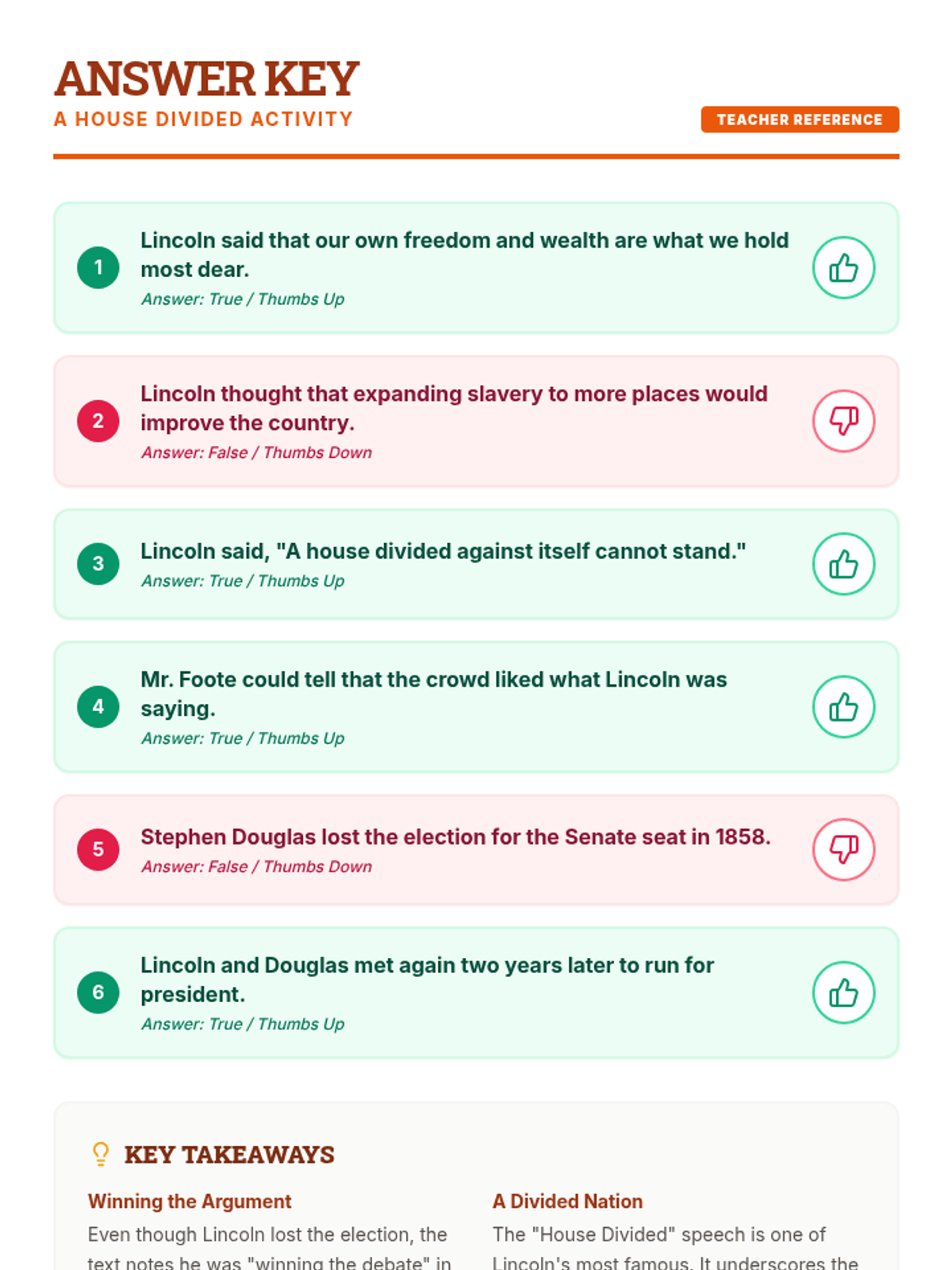
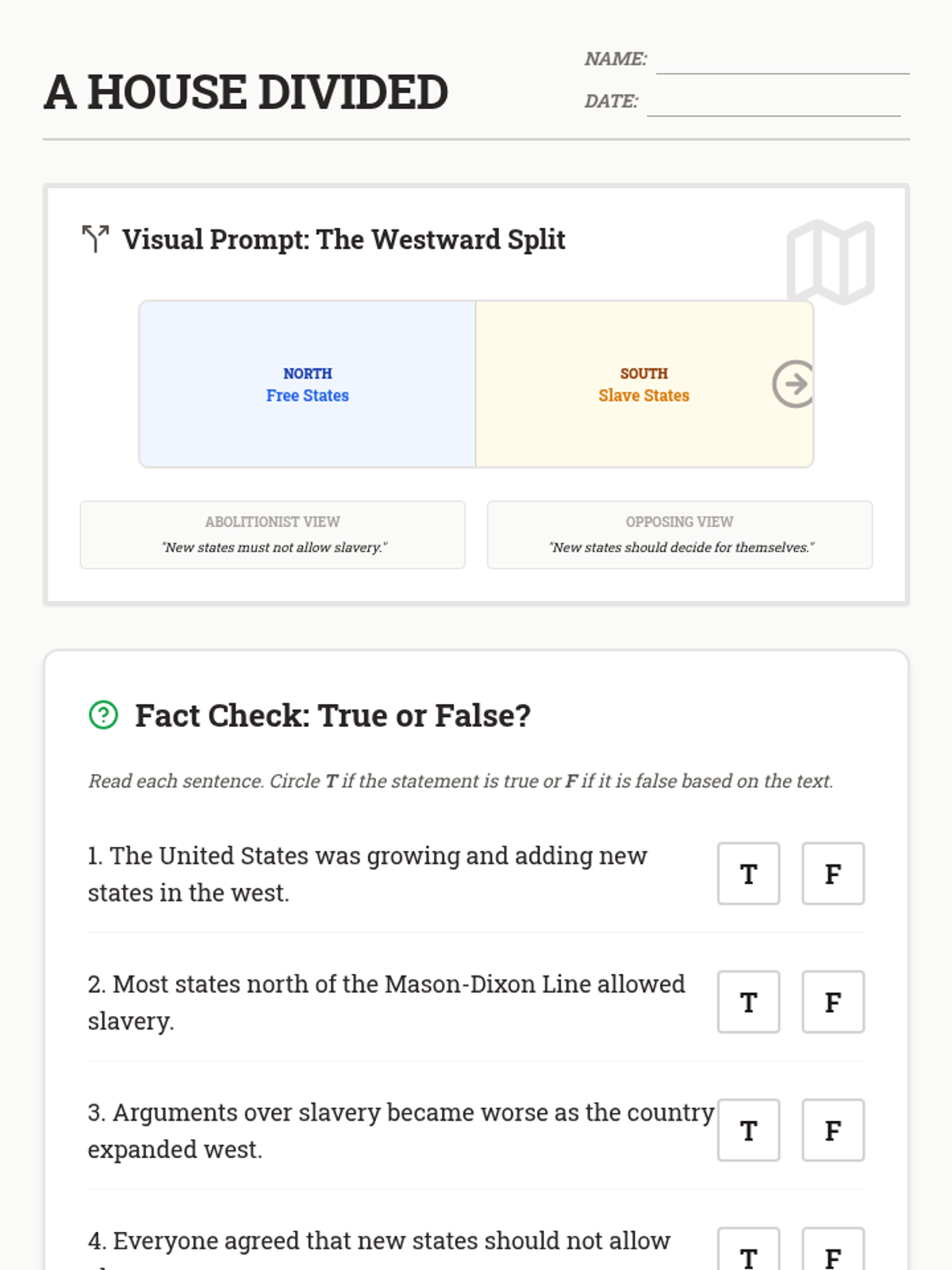
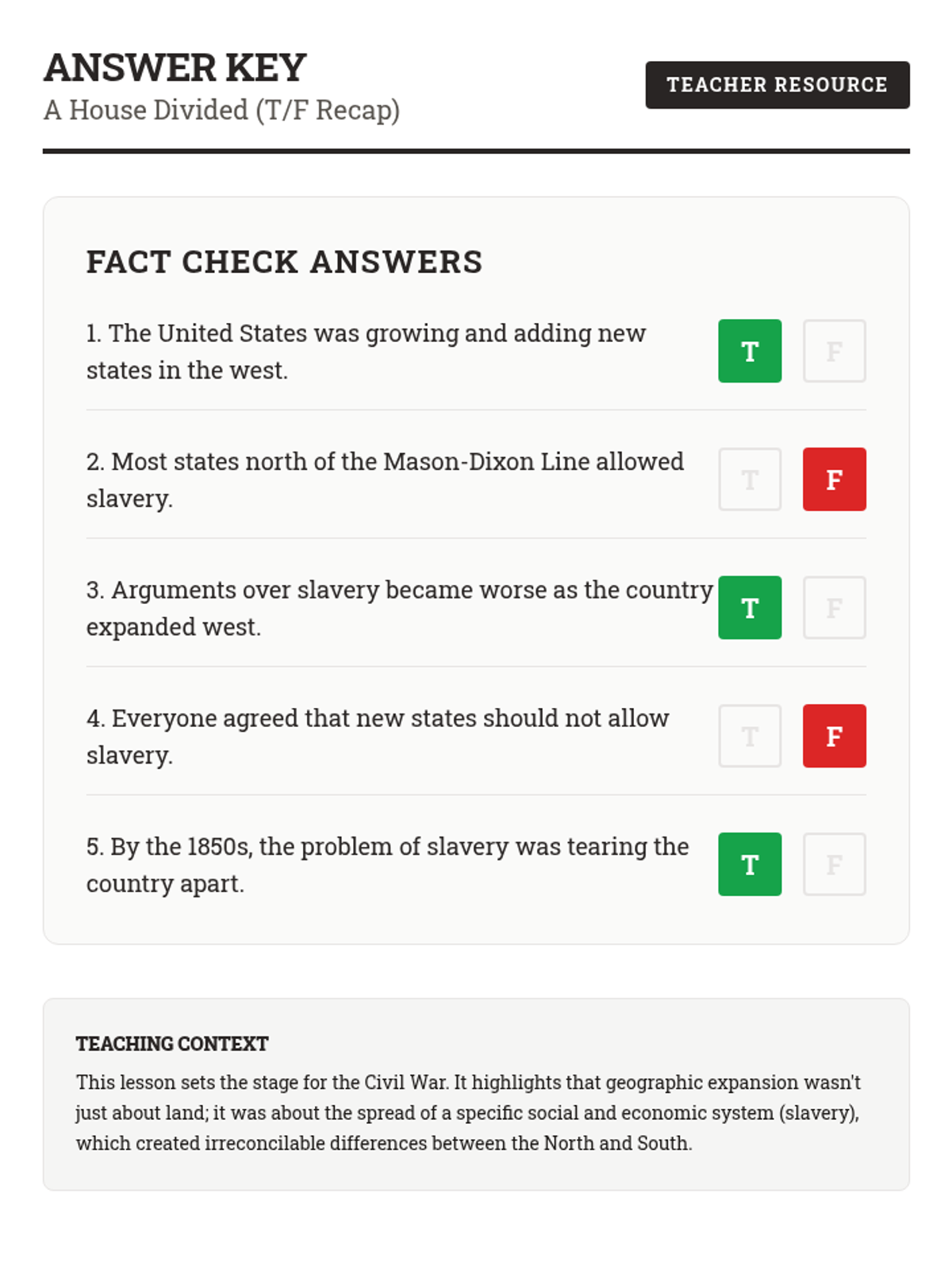
A lesson examining the expansion of the United States in the 1850s and the growing conflict over whether new territories should allow slavery. Students will explore how westward expansion pushed the country toward a breaking point.
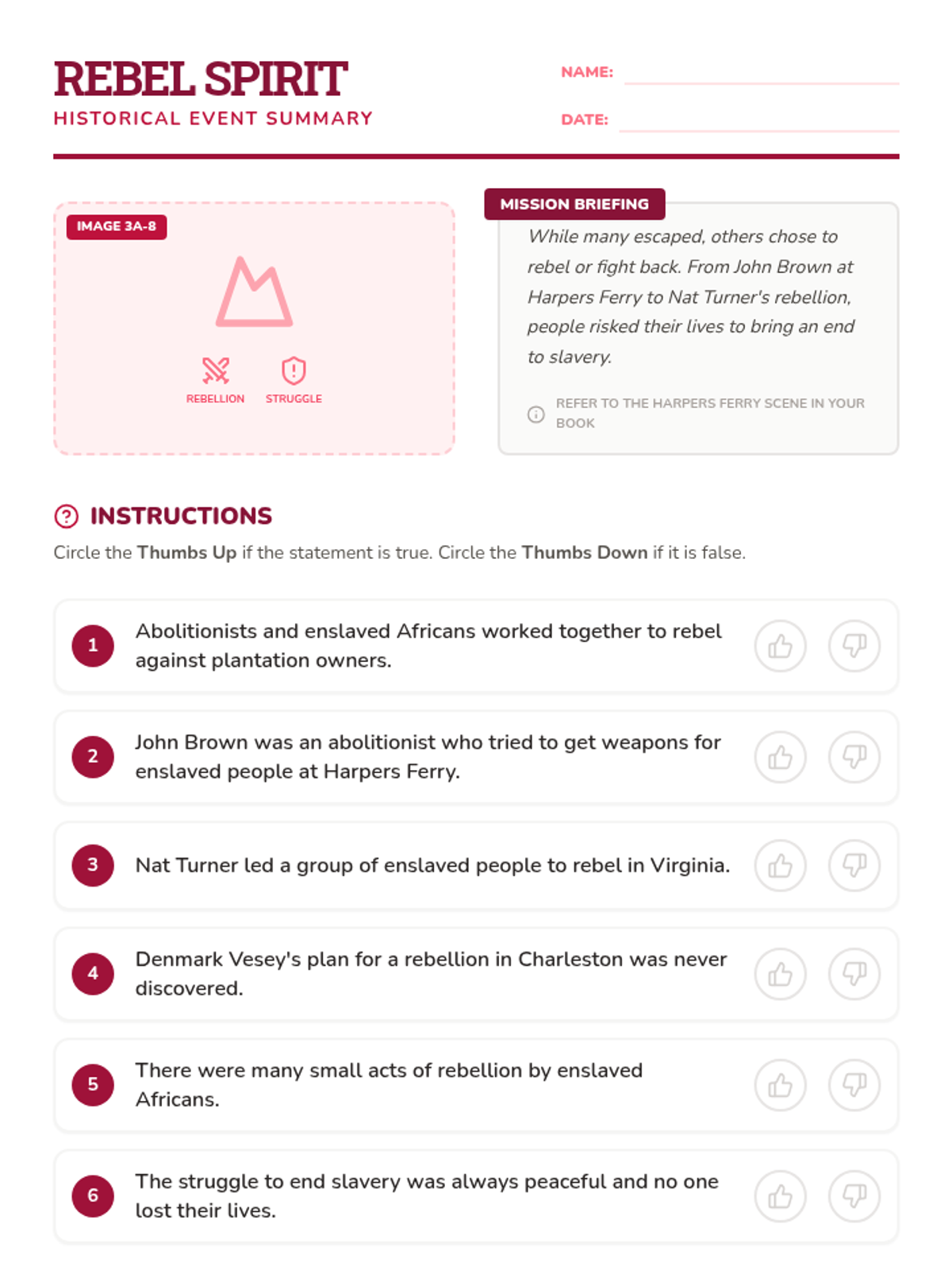
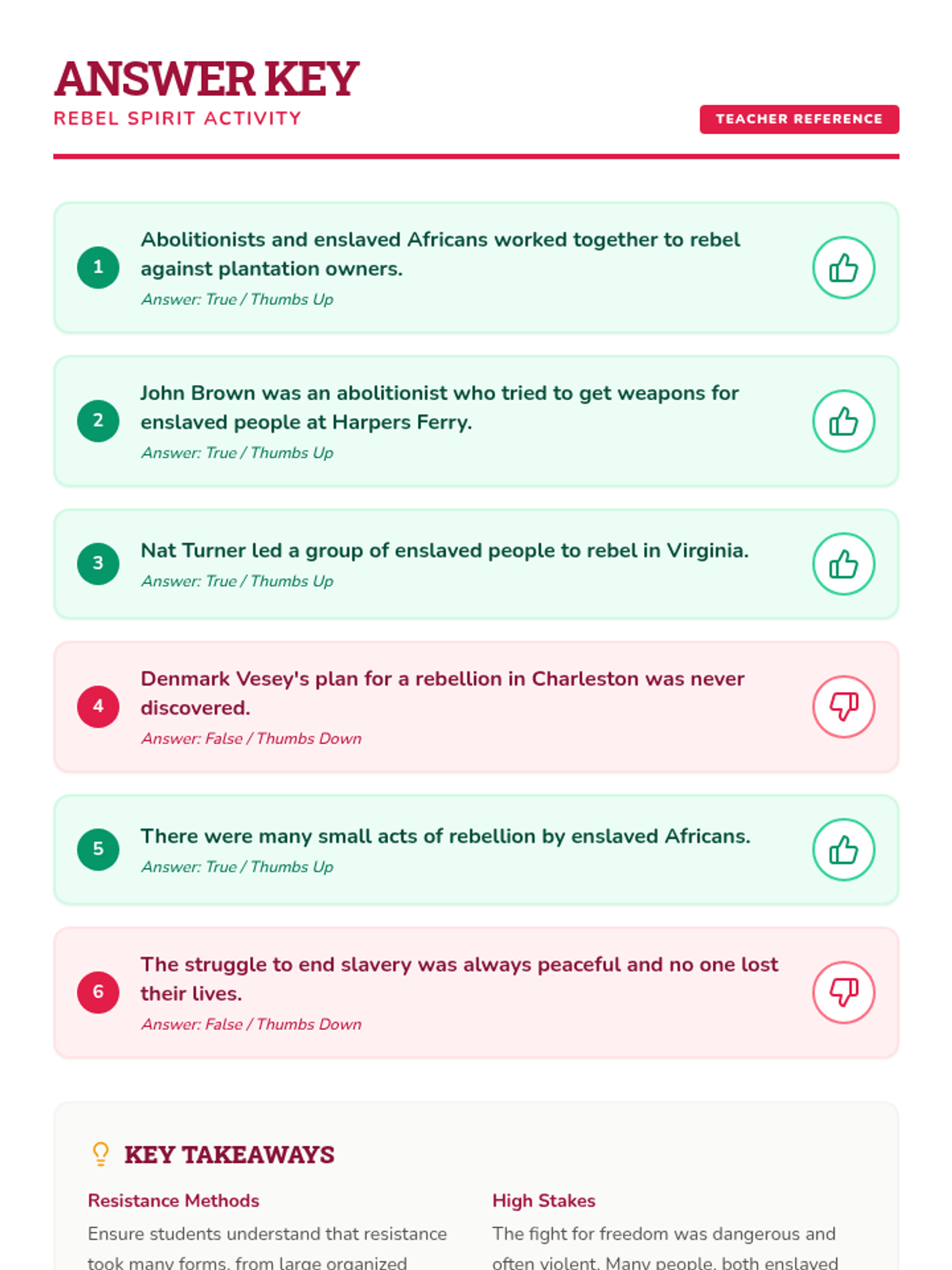
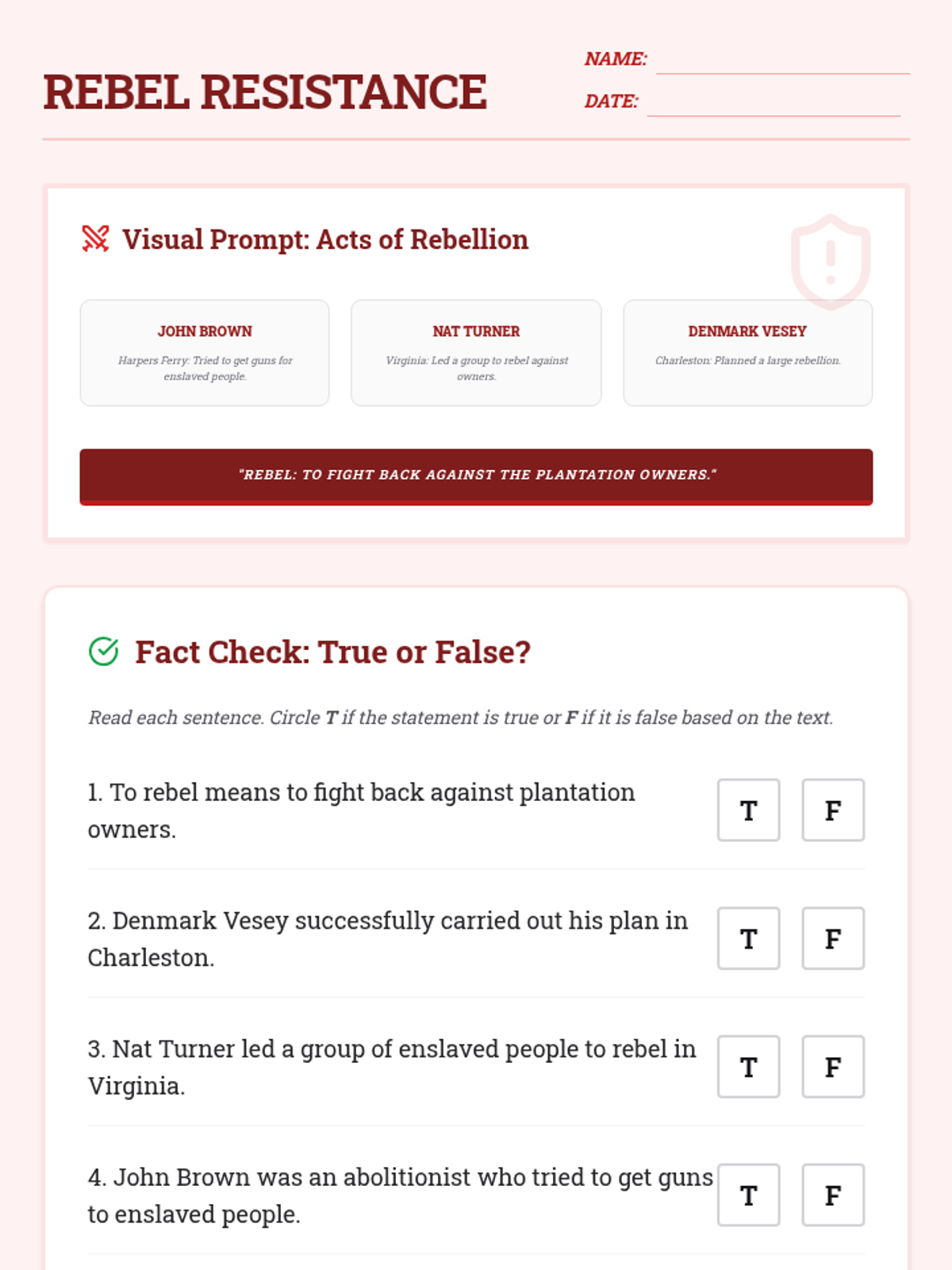
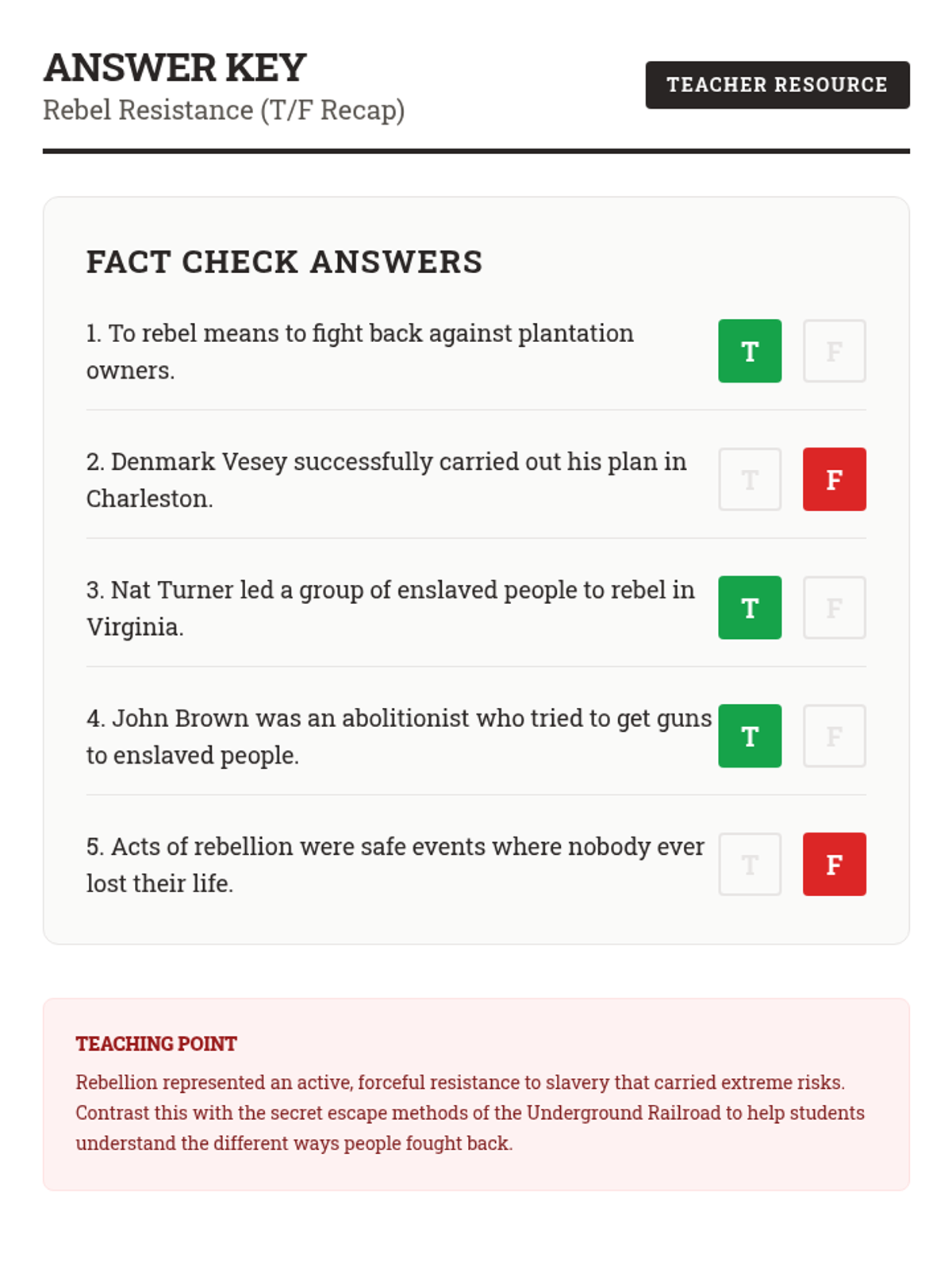
A lesson exploring the various forms of rebellion against slavery, including John Brown's raid at Harpers Ferry, Nat Turner's revolt, and Denmark Vesey's planned uprising. Students will learn about the risks taken by those fighting for freedom and the different ways people fought back against the plantation system.
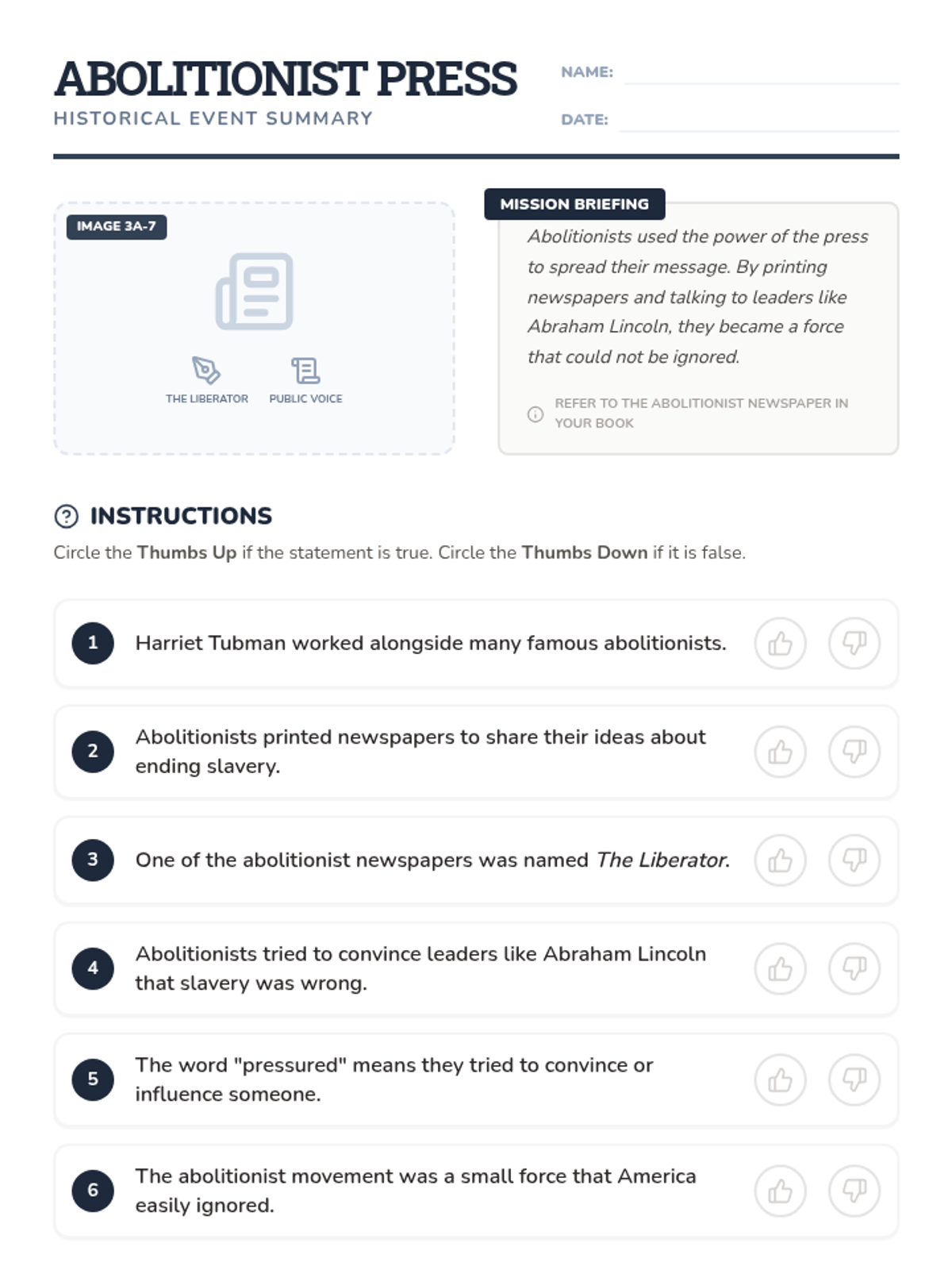
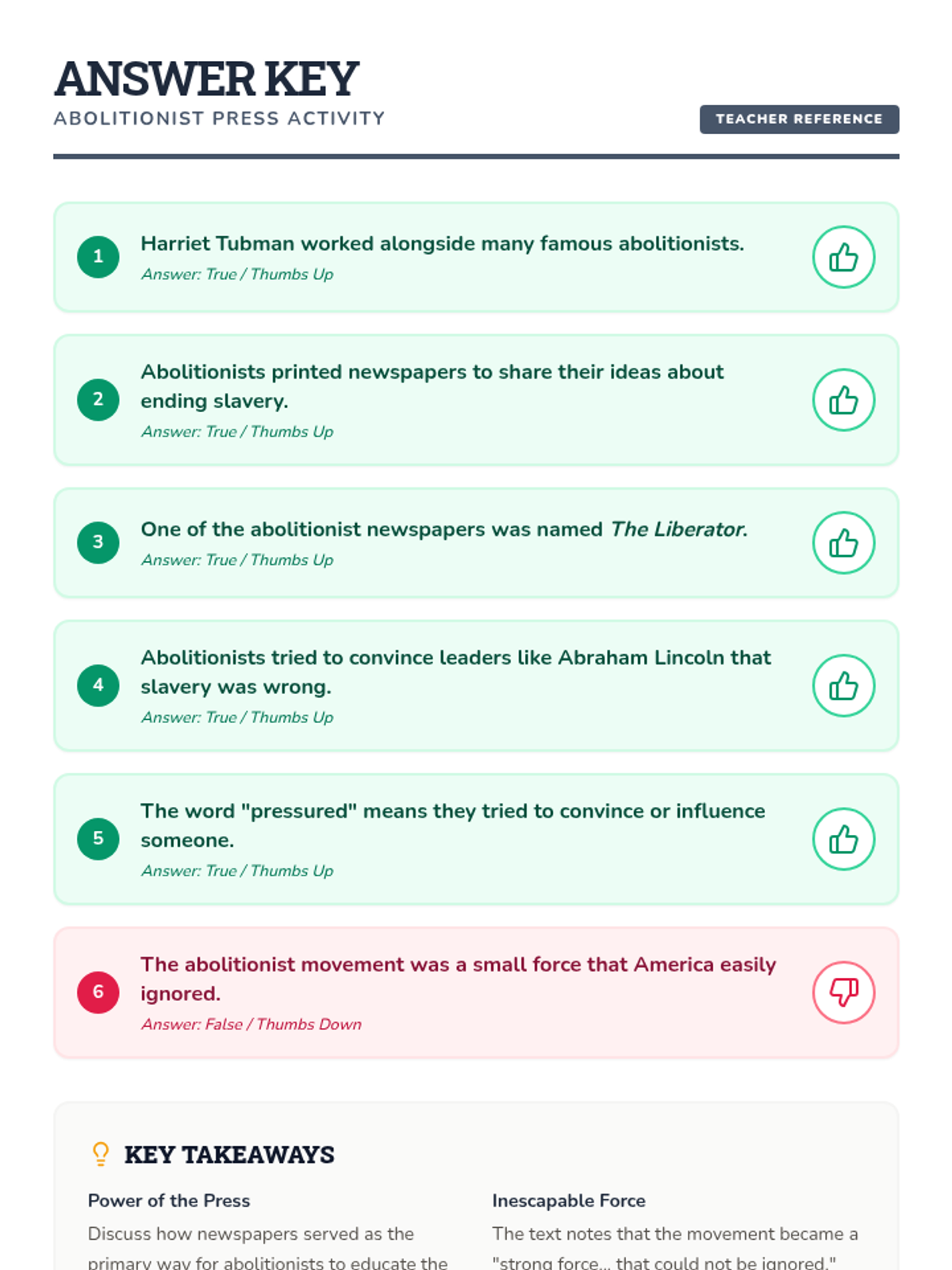
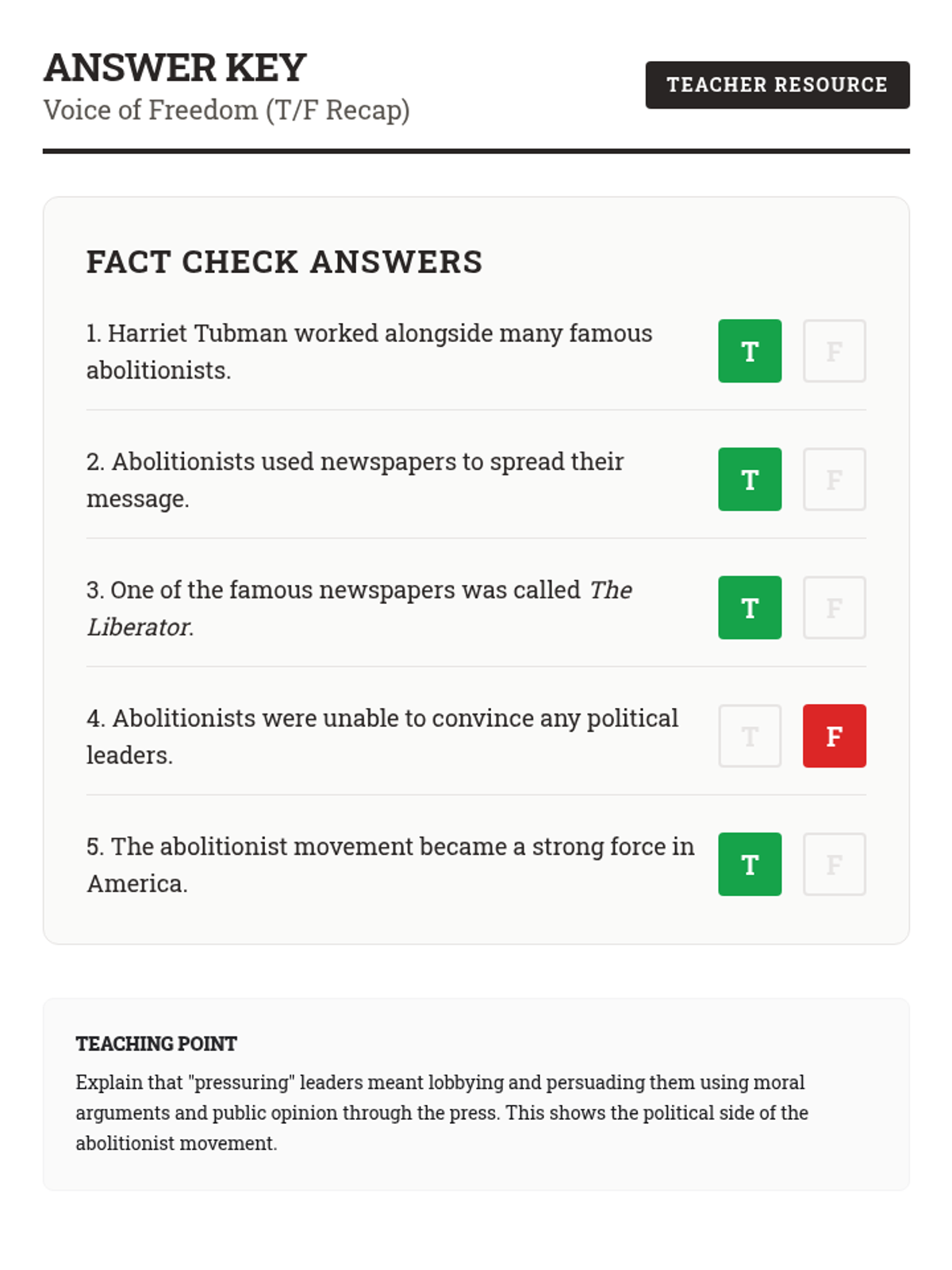
A lesson exploring the influence of the abolitionist press and the movement's political impact. Students will learn about abolitionist newspapers like The Liberator and how the movement pressured leaders like Abraham Lincoln to end slavery.
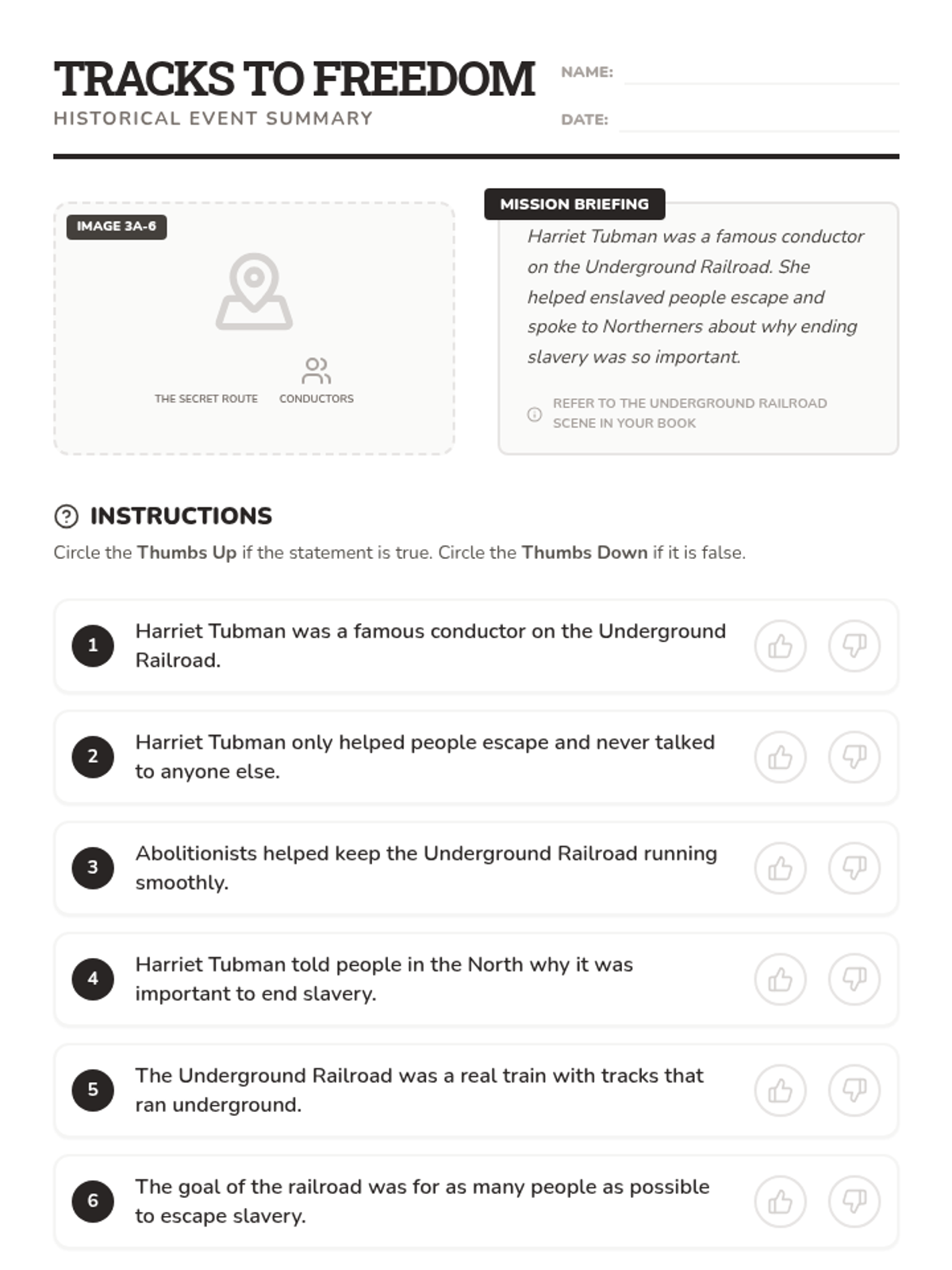
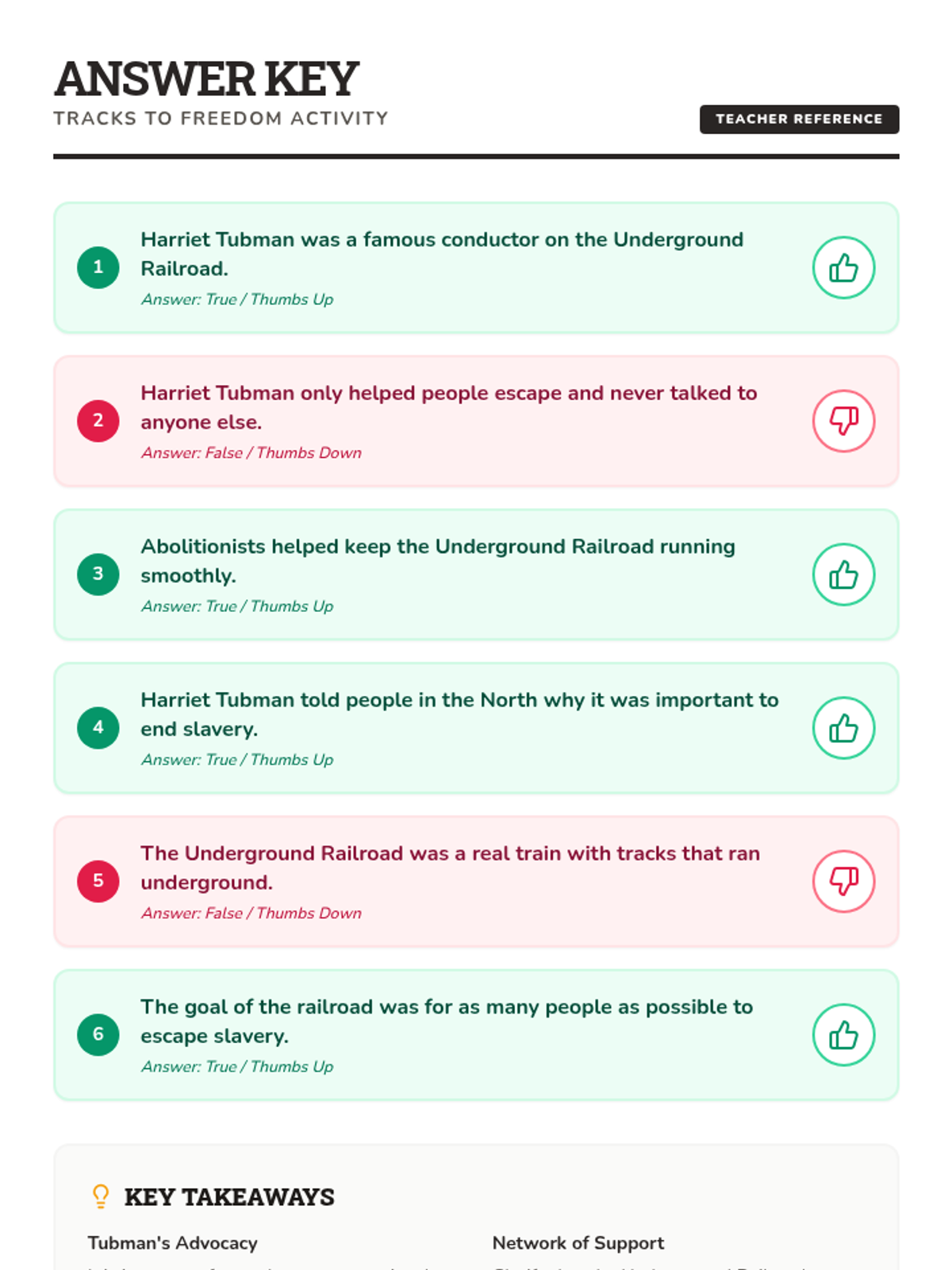
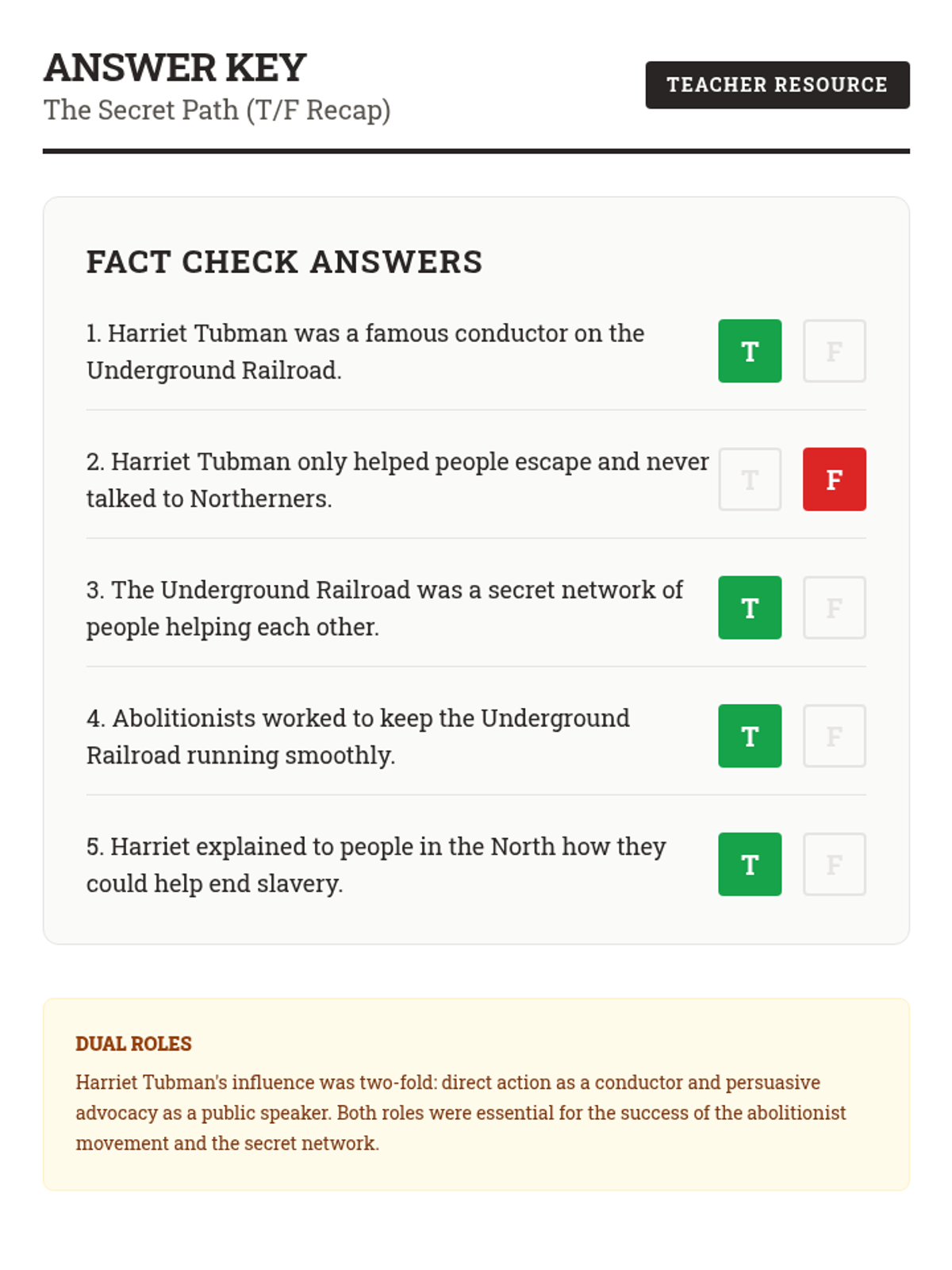
A lesson exploring Harriet Tubman's dual role as an abolitionist speaker and a conductor on the Underground Railroad. Students will learn how abolitionists collaborated to help enslaved people reach freedom.
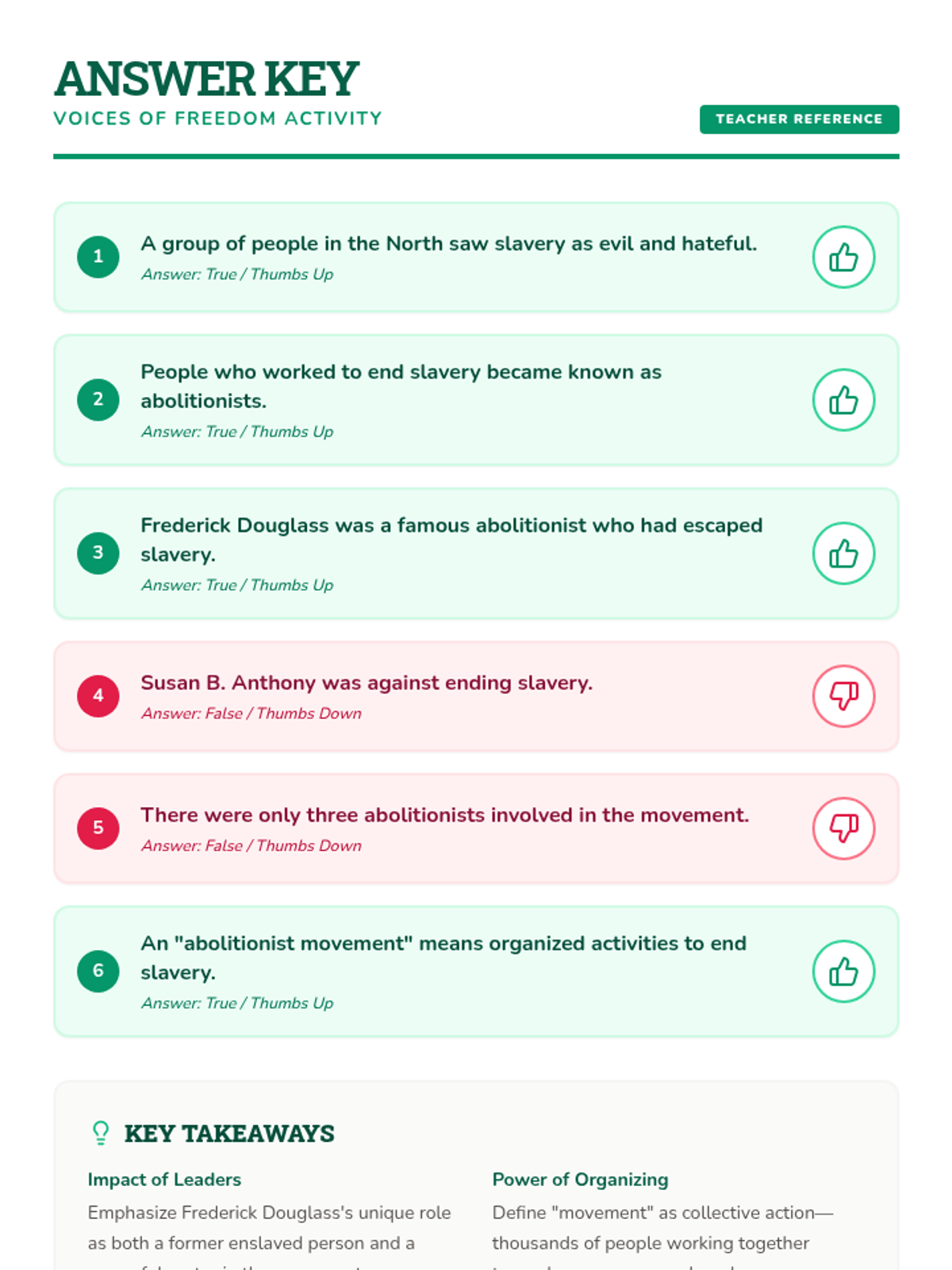
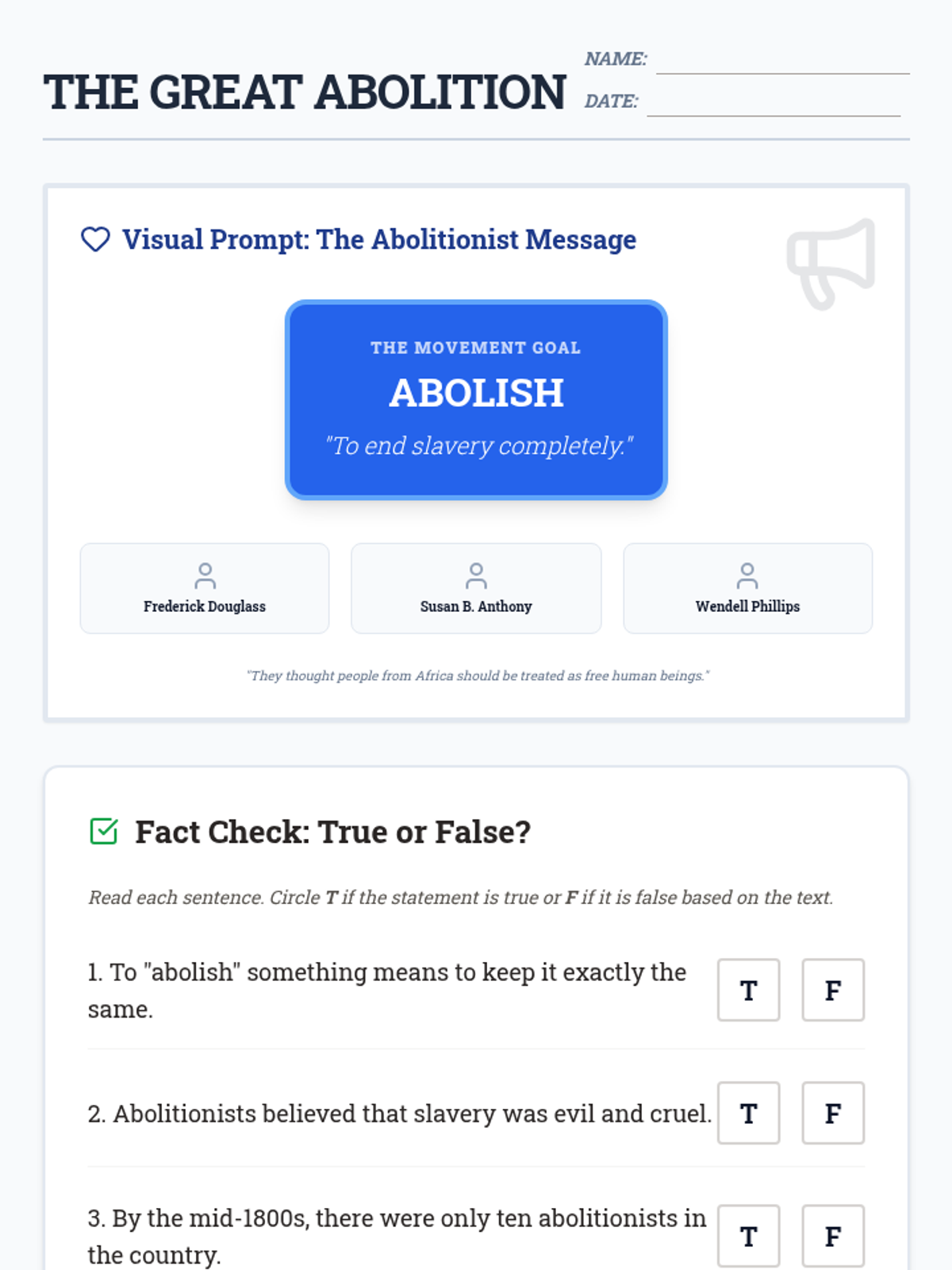
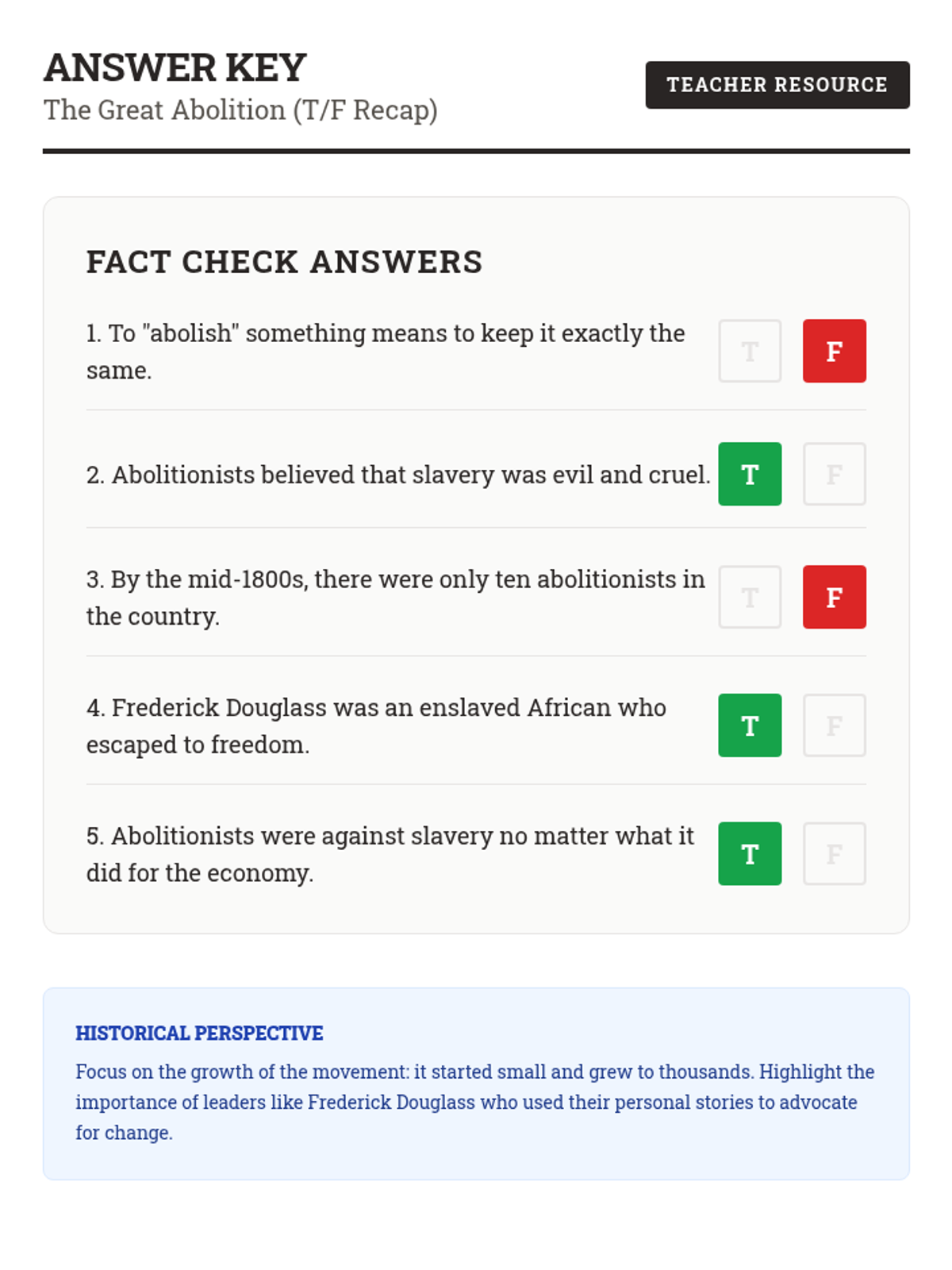
A lesson introducing the abolitionist movement, focusing on the people who worked to end slavery. Students will learn the definition of "abolish," identify key leaders like Frederick Douglass, and explore the moral arguments against the practice of slavery.
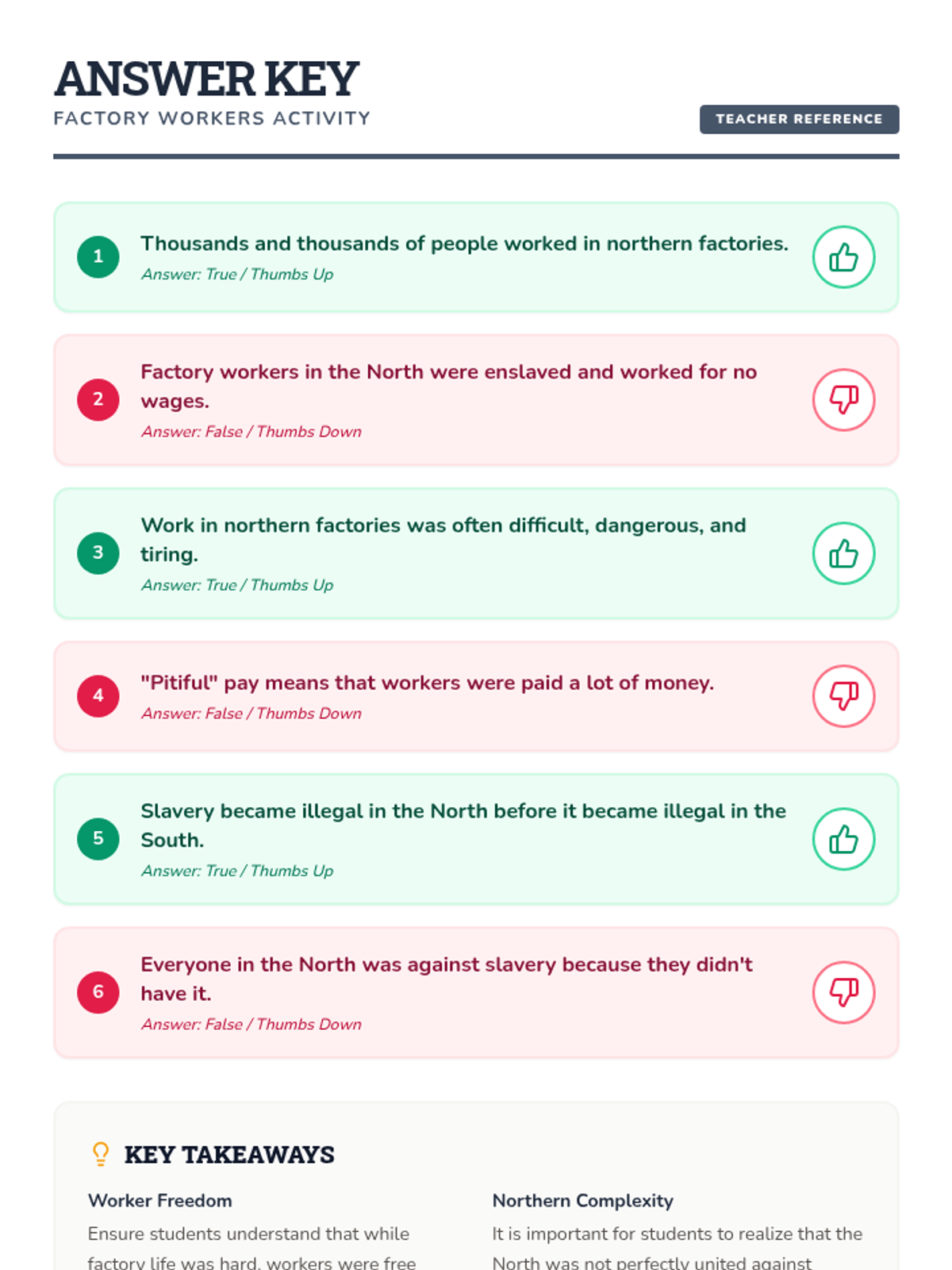
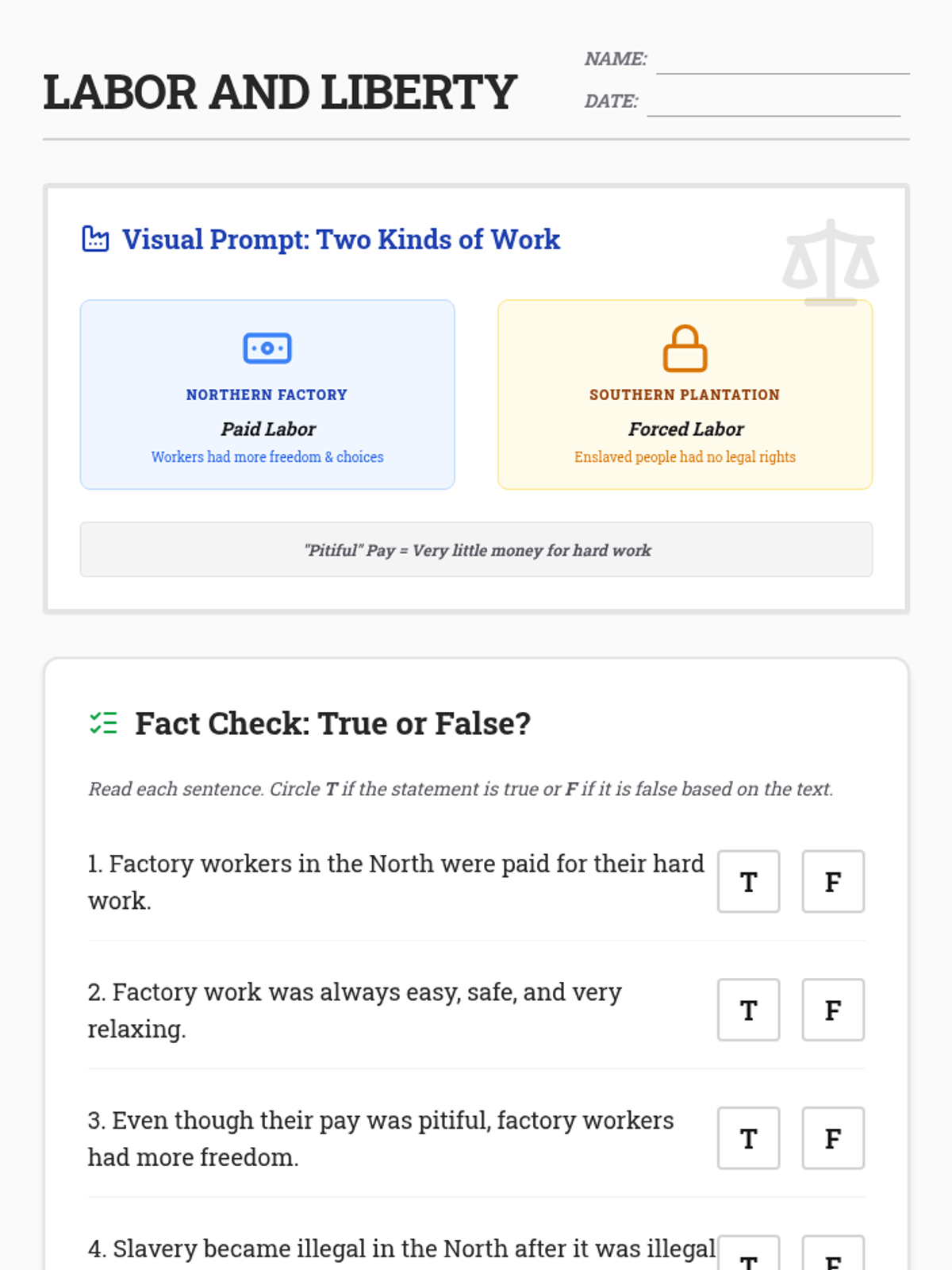
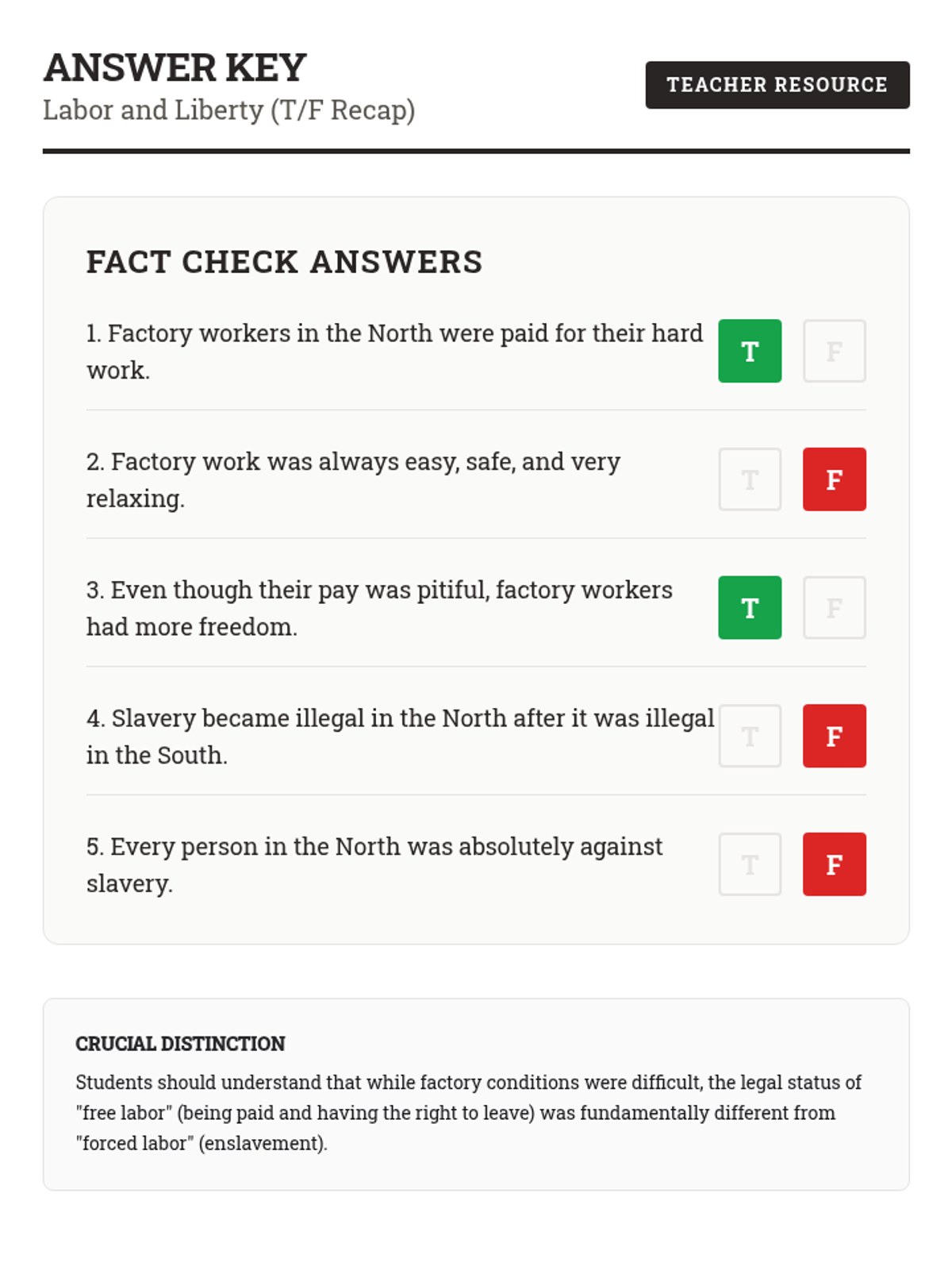
A lesson comparing the lives of Northern factory workers with enslaved people in the South. Students will explore the concepts of paid labor, harsh working conditions, and the fundamental differences between freedom and slavery.
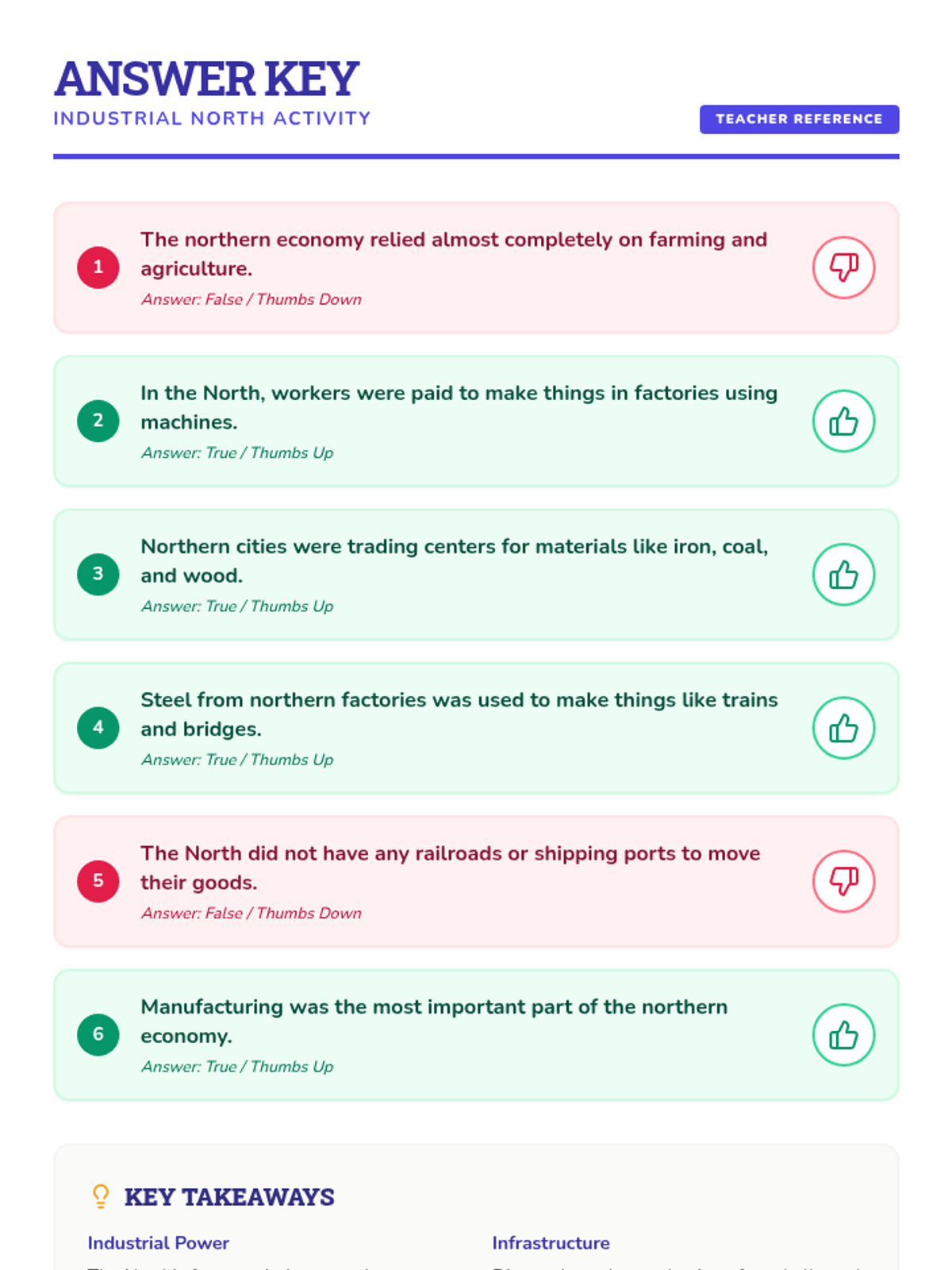
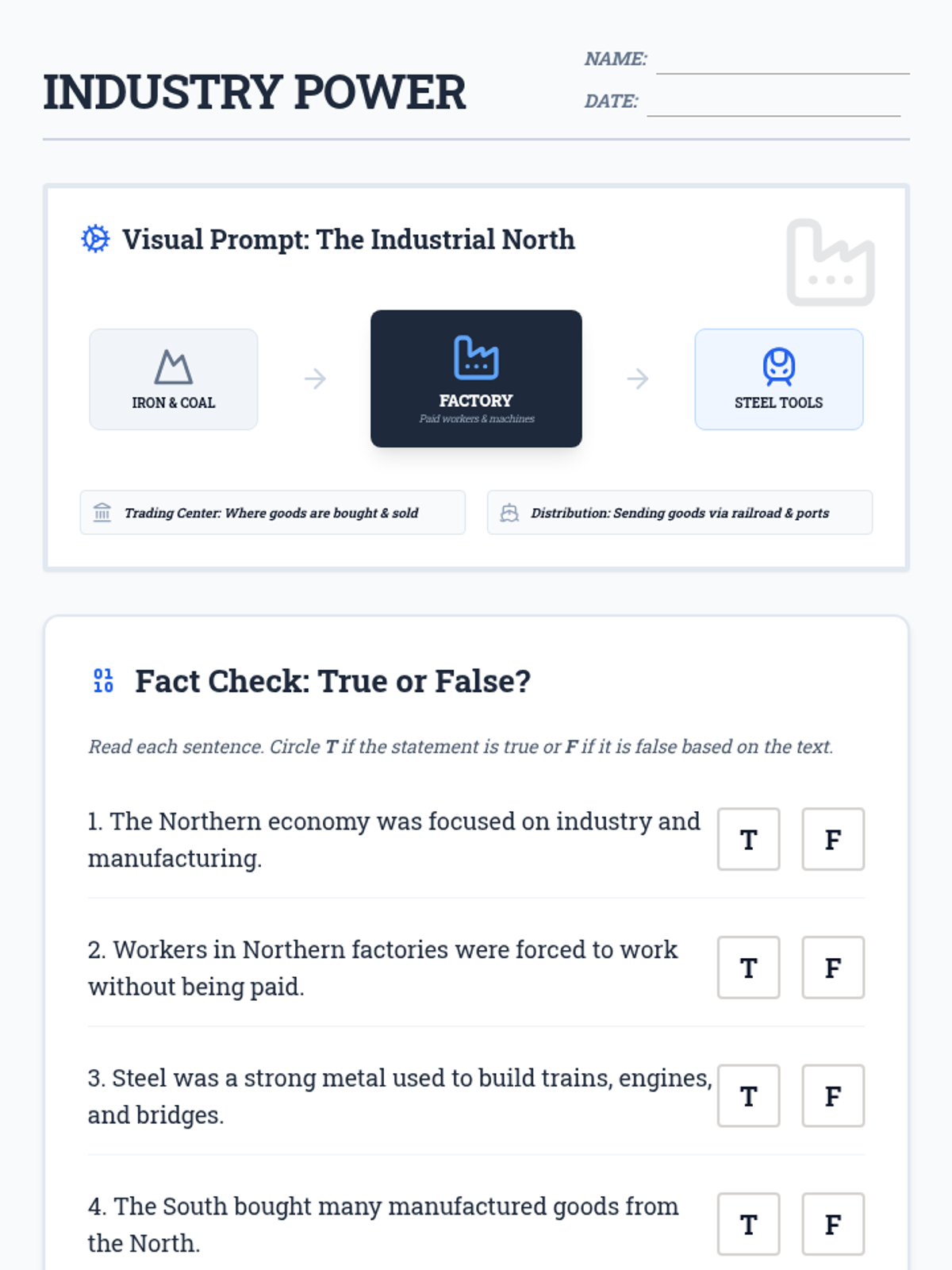
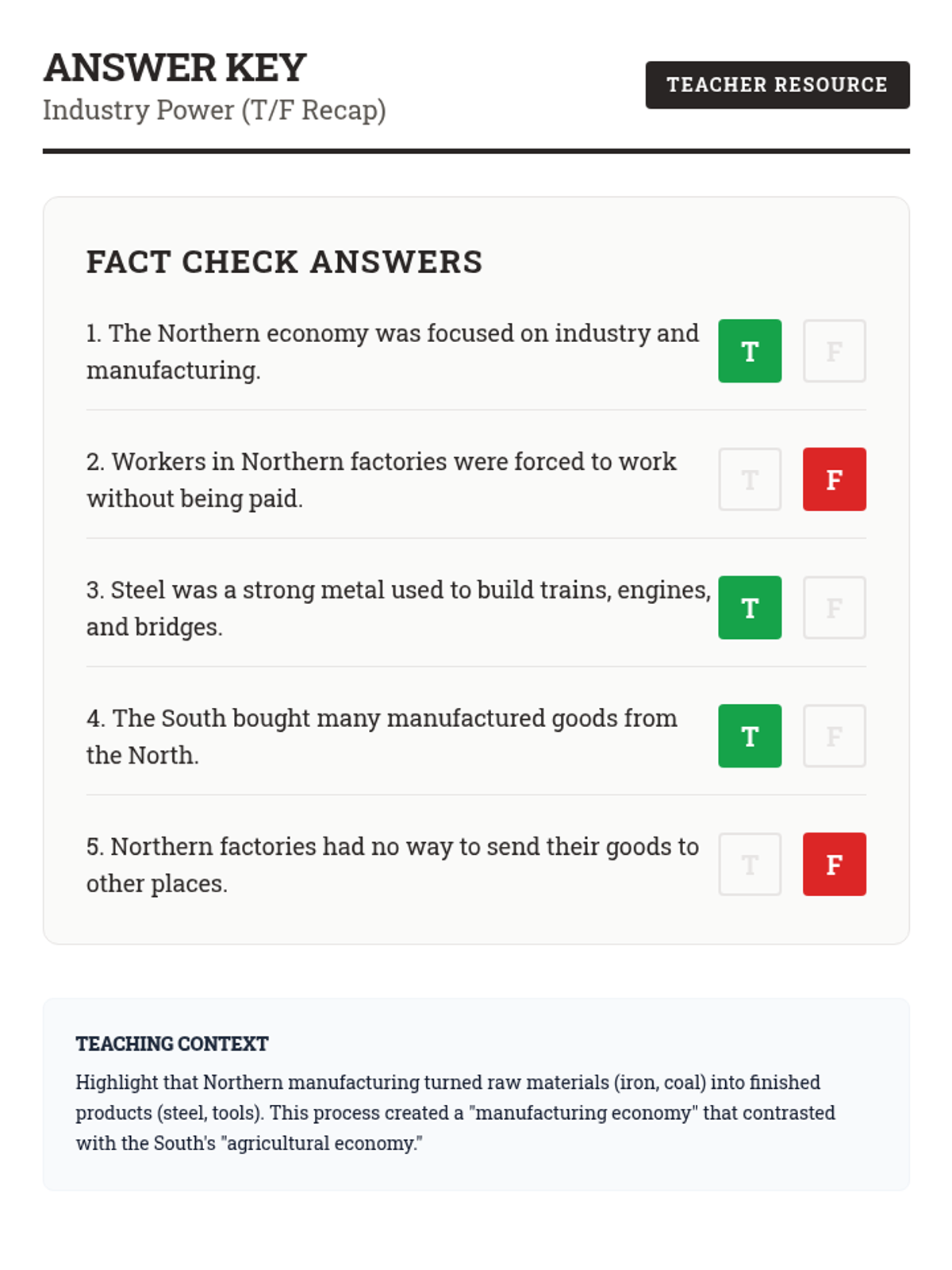
A lesson examining the Northern industrial economy, focusing on manufacturing, the production of steel, and the role of factories and transportation in regional trade. Students will explore how industrialization shaped Northern society and its economic relationship with the South.
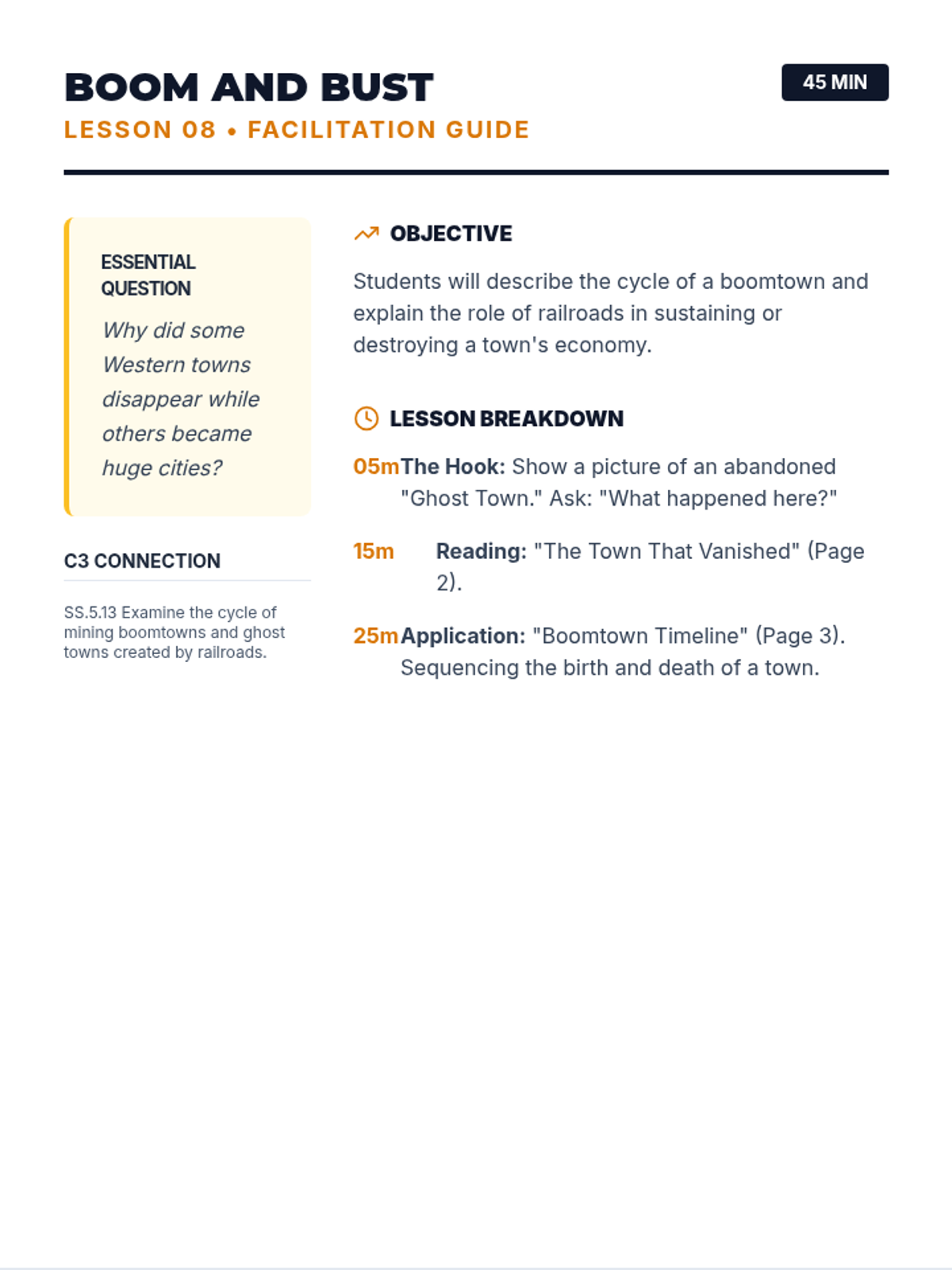
Investigates the cycle of mining boomtowns and ghost towns created by the search for resources and railroad access.
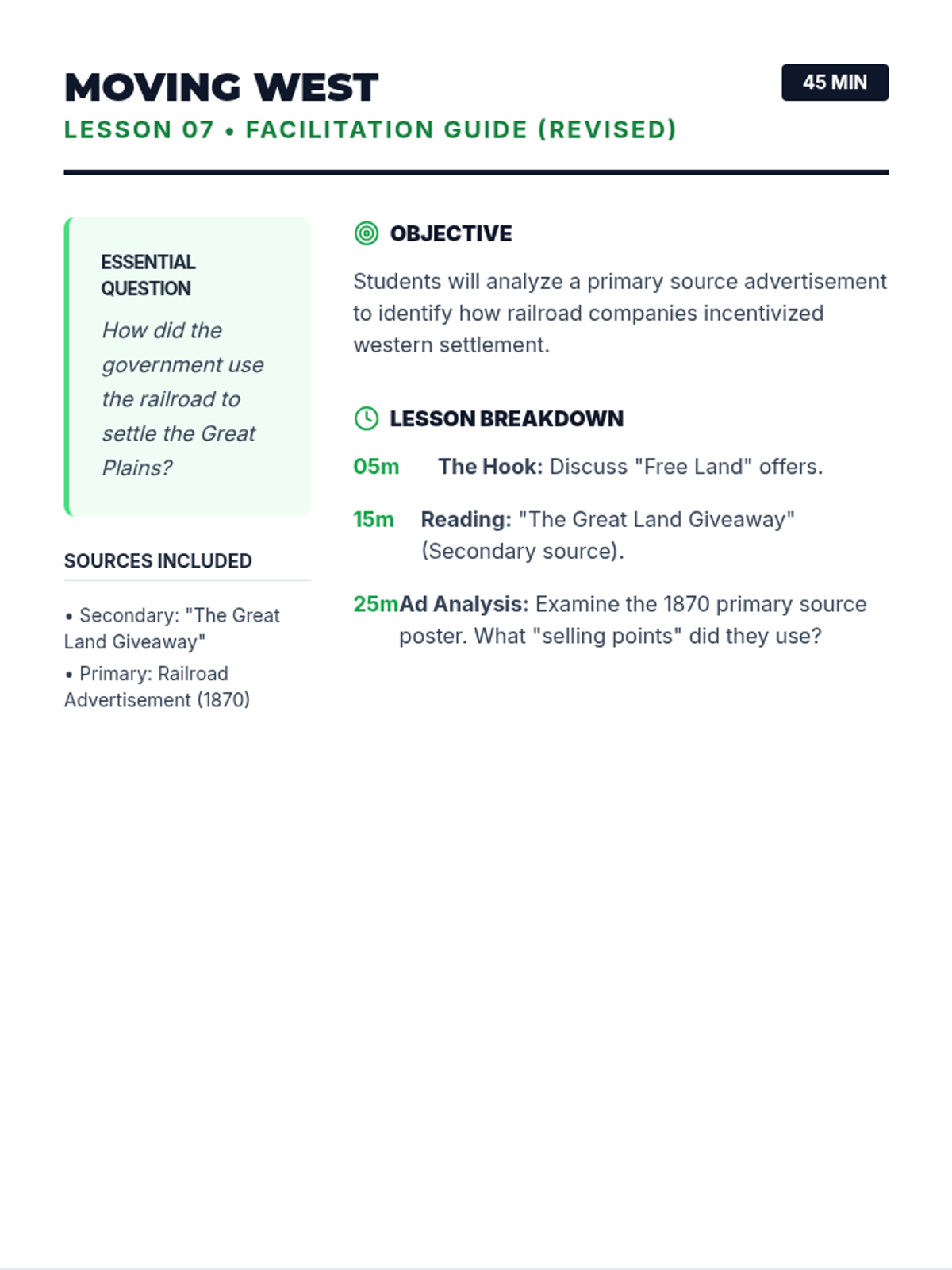
Analyzes the Homestead Act of 1862 and how railroads incentivized and enabled westward expansion.
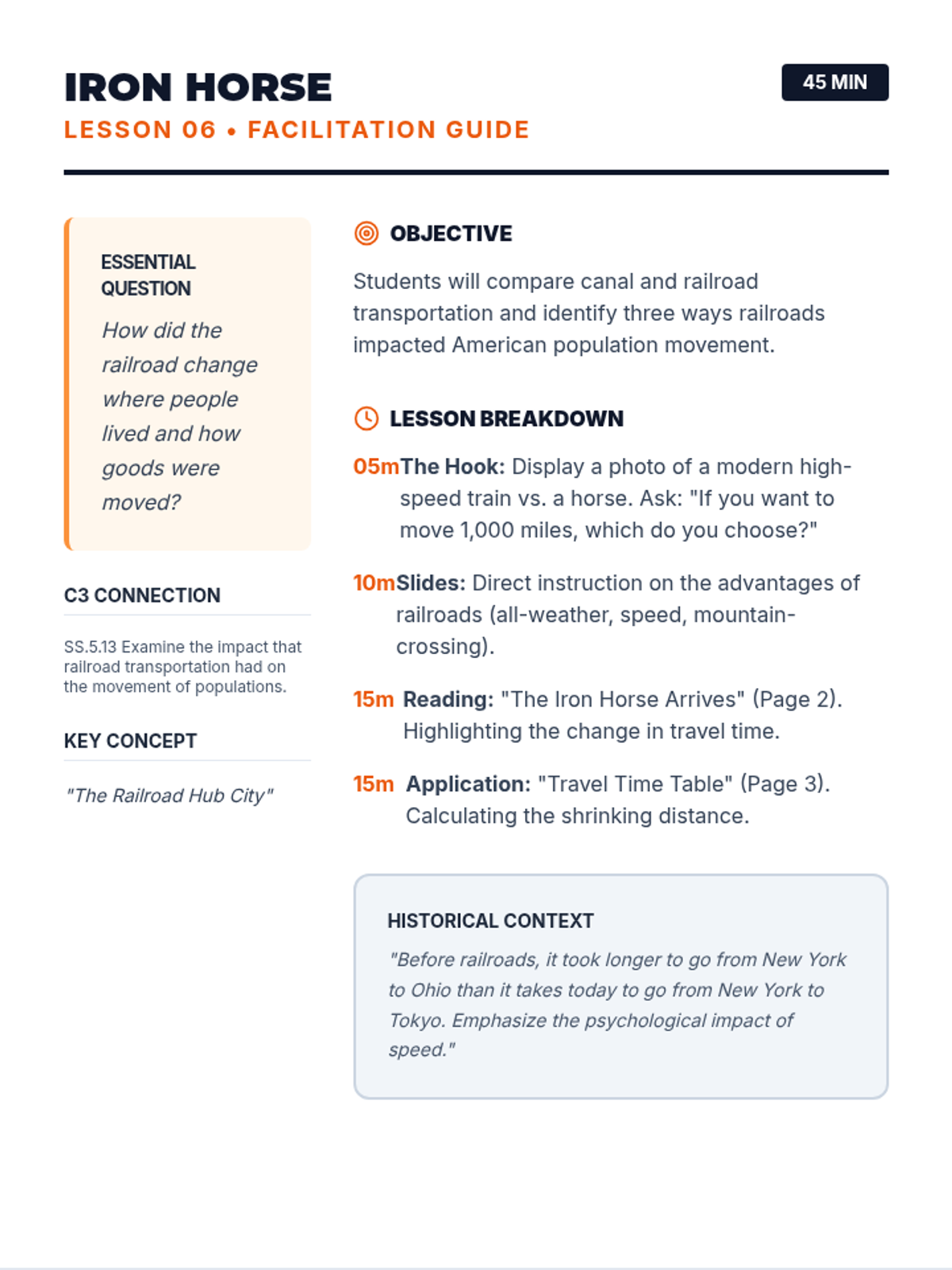
Explores the rapid expansion of railroads and their role as the 'Iron Horse' connecting distant parts of the country.
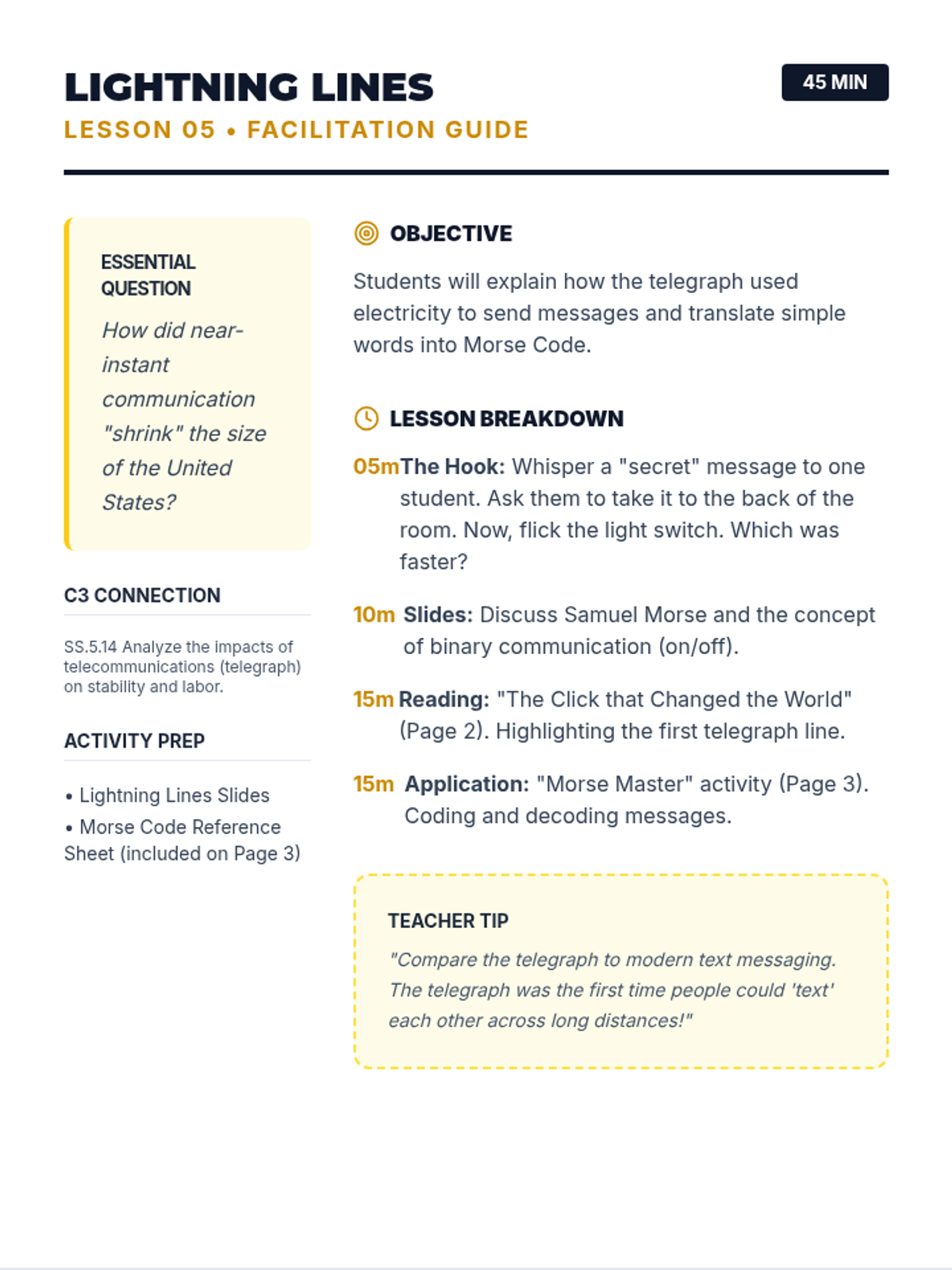
Examines the invention of the telegraph and how near-instant communication shrunk the distance across the nation.
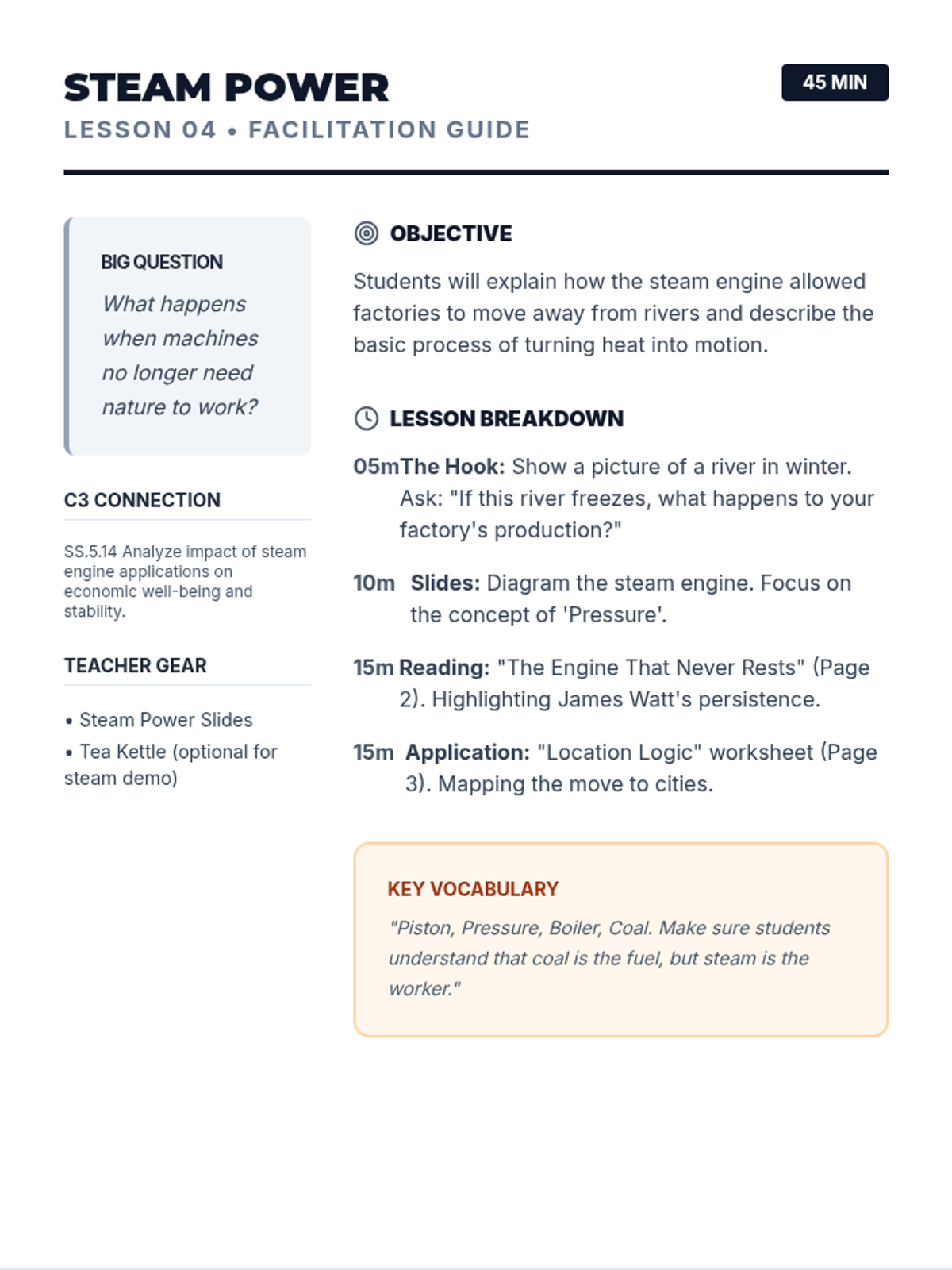
Investigates James Watt's steam engine and its revolutionary application across manufacturing and transportation.
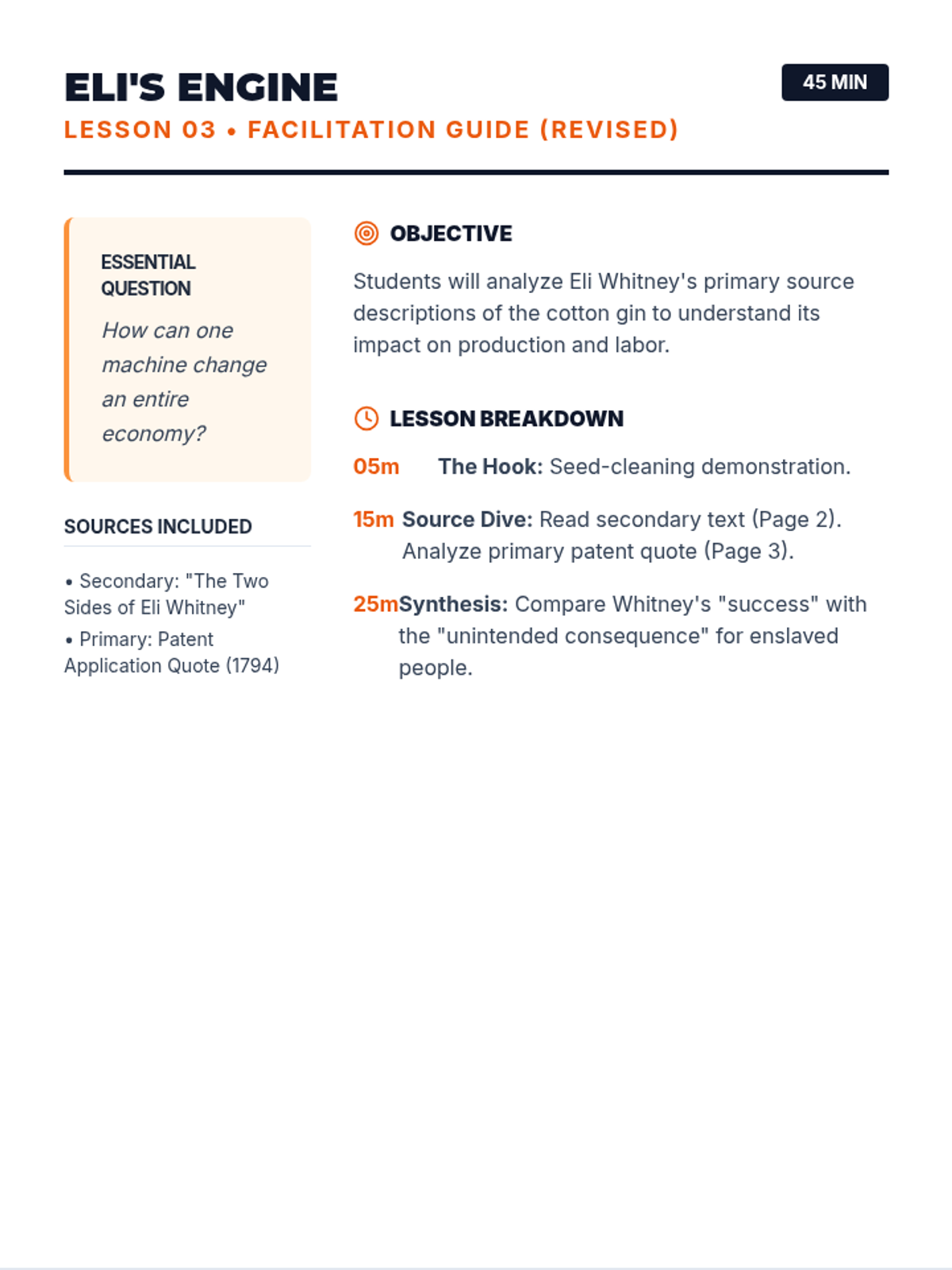
Analyzes the impact of Eli Whitney's inventions, focusing on the cotton gin and the concept of interchangeable parts.
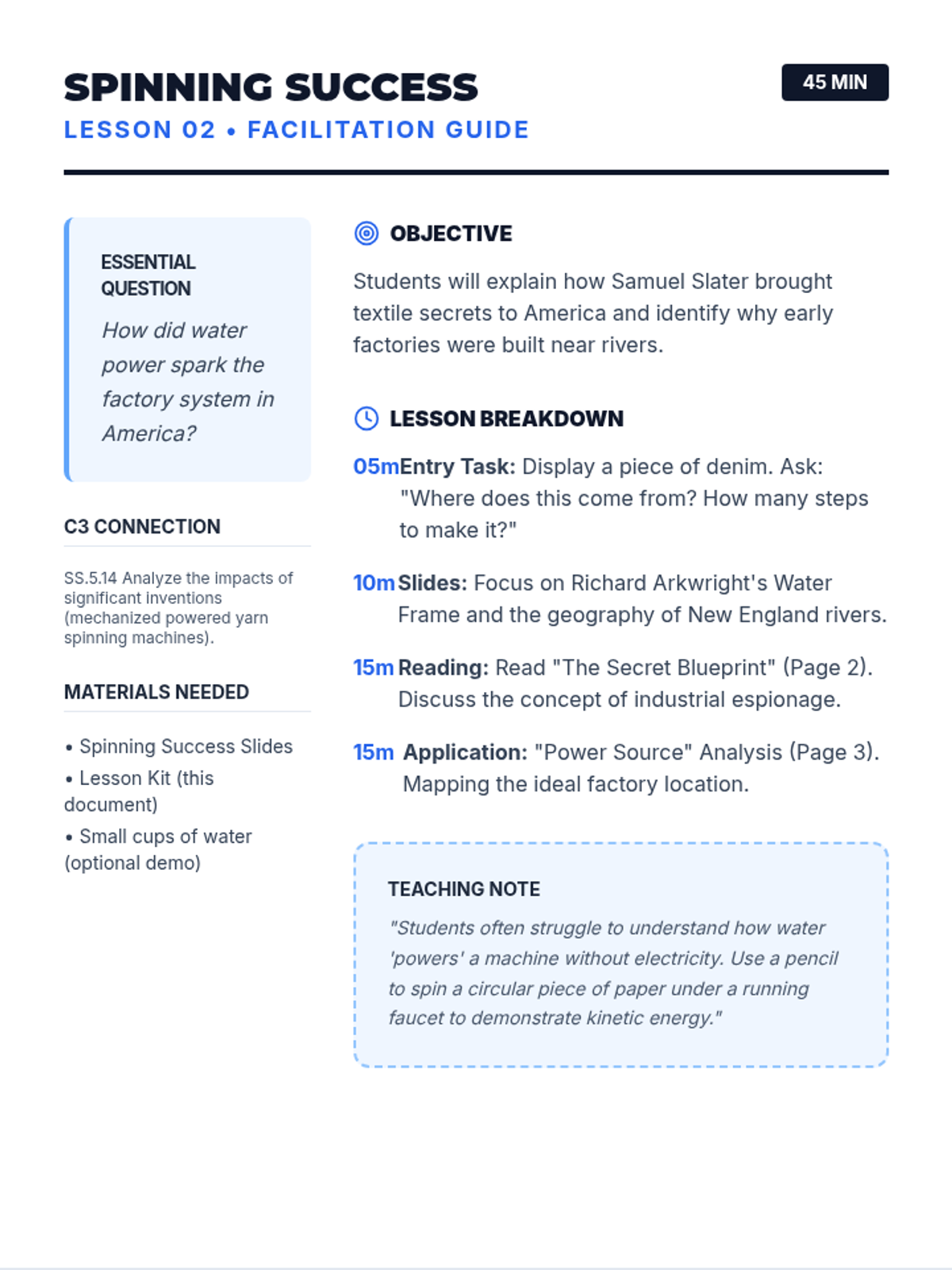
Explores the birth of the factory system and the transition from cottage industries to mechanized textile production.
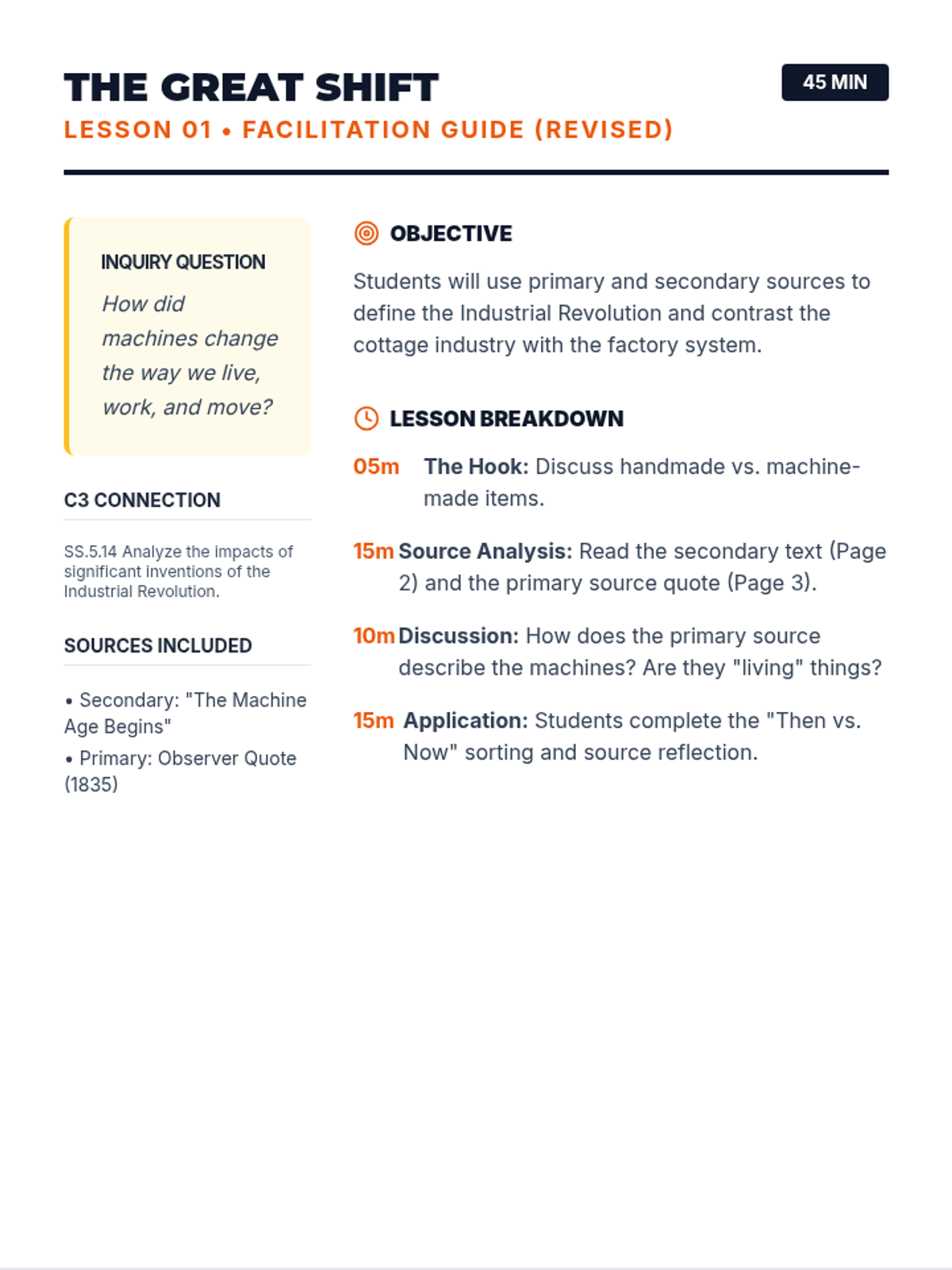
Introduces the Industrial Revolution as a period of rapid change from handmade to machine-made goods, establishing the inquiry question for the unit.
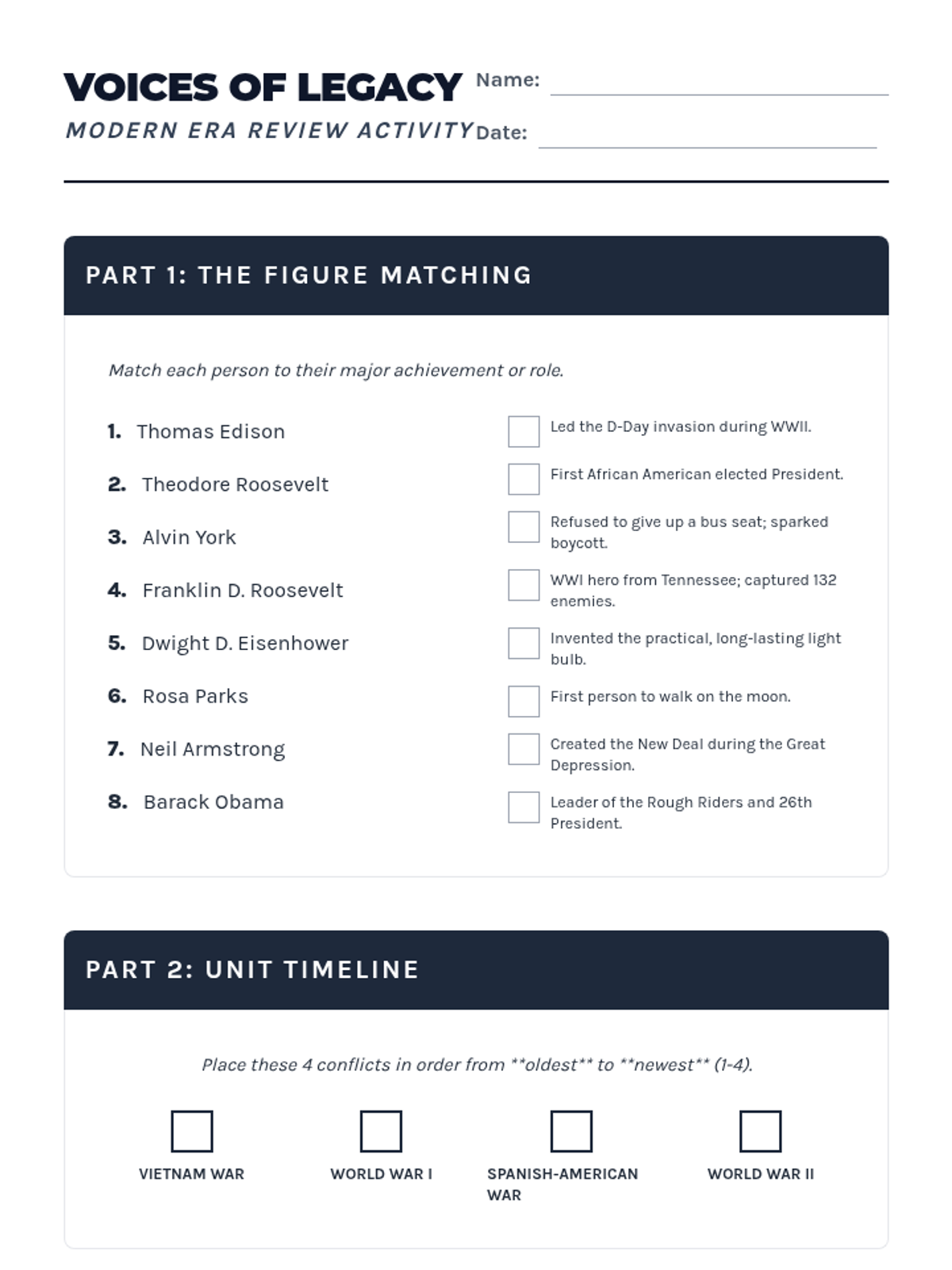
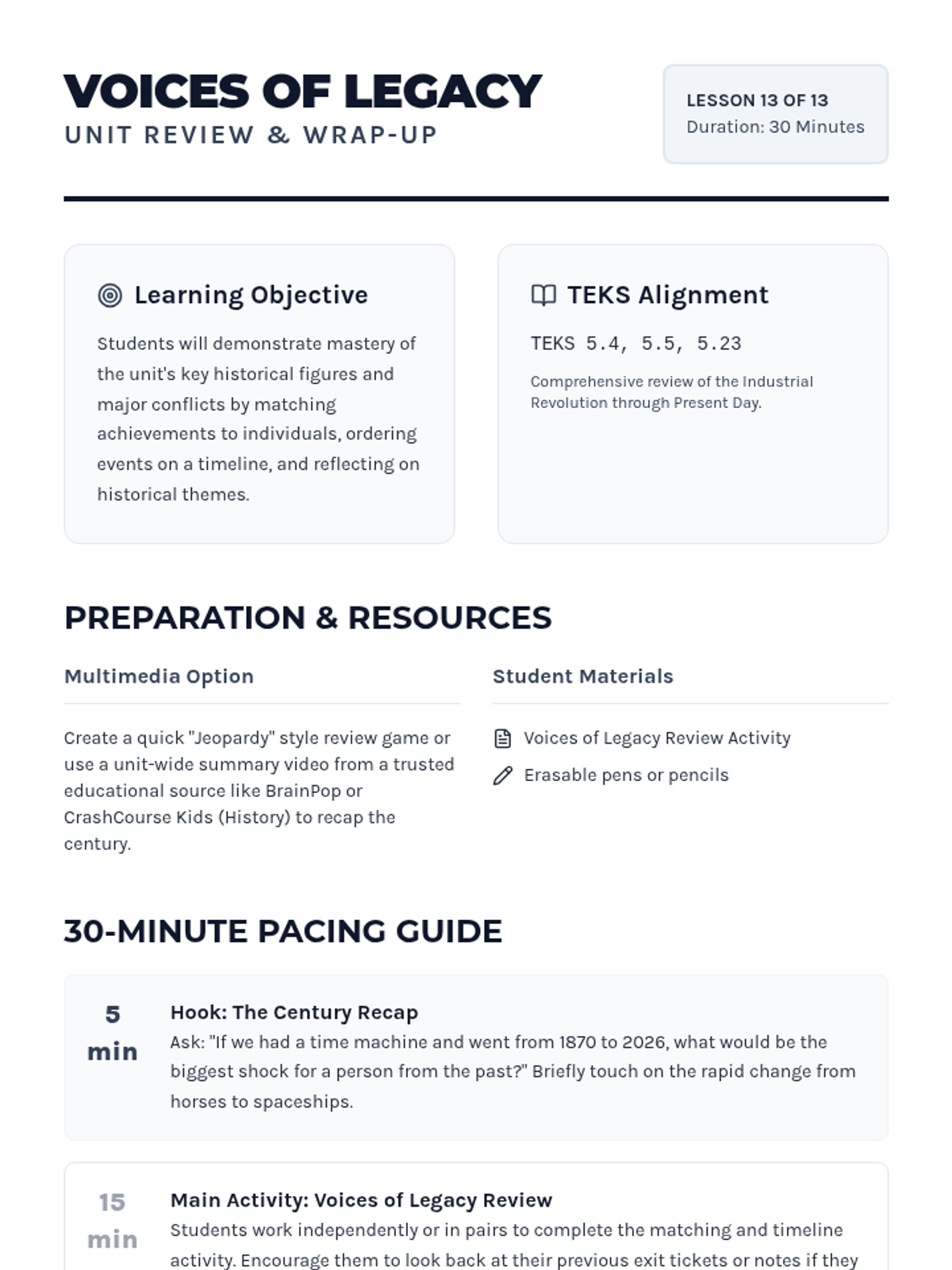
A comprehensive review of the historical figures and conflicts covered in the unit.
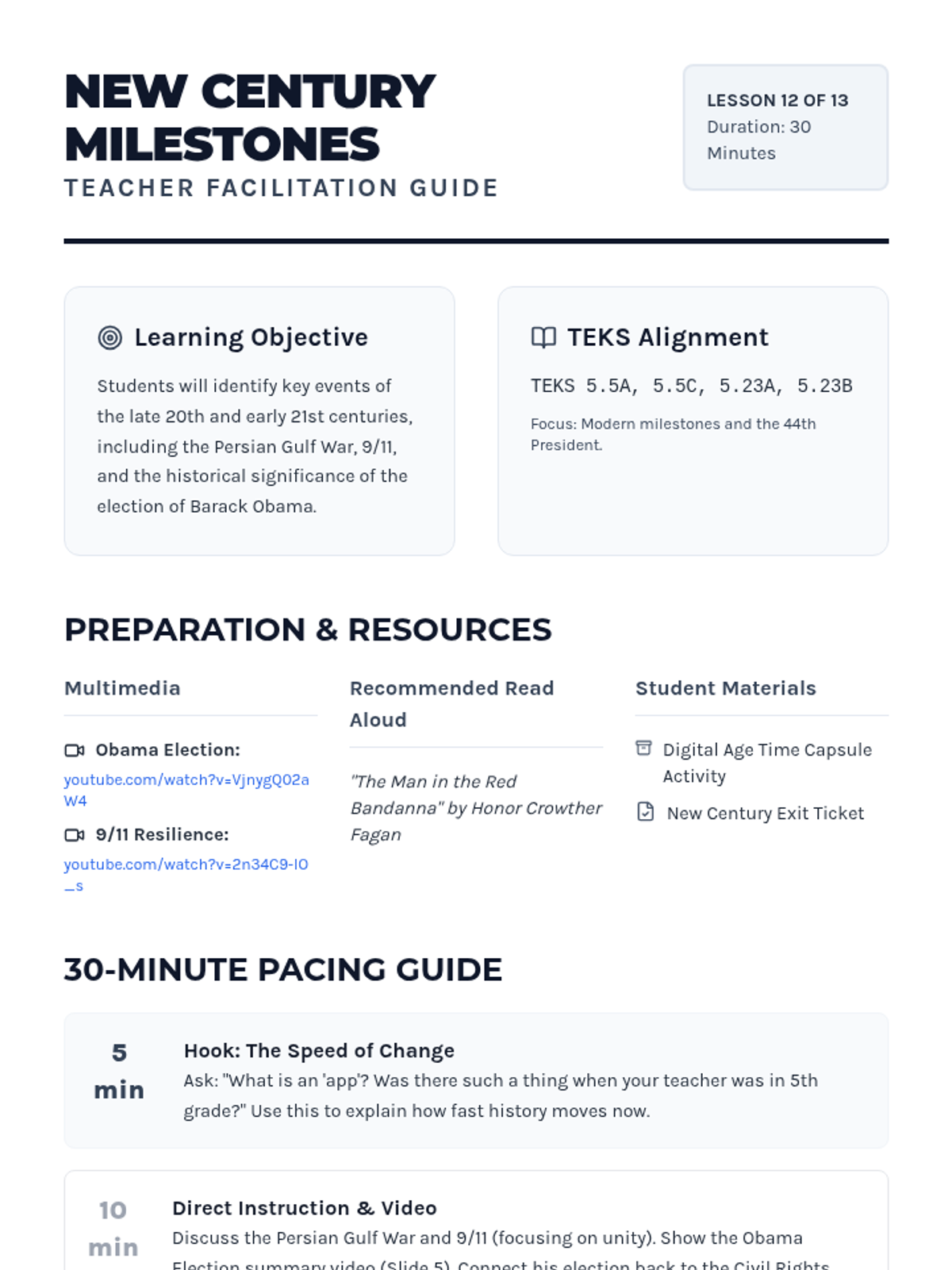
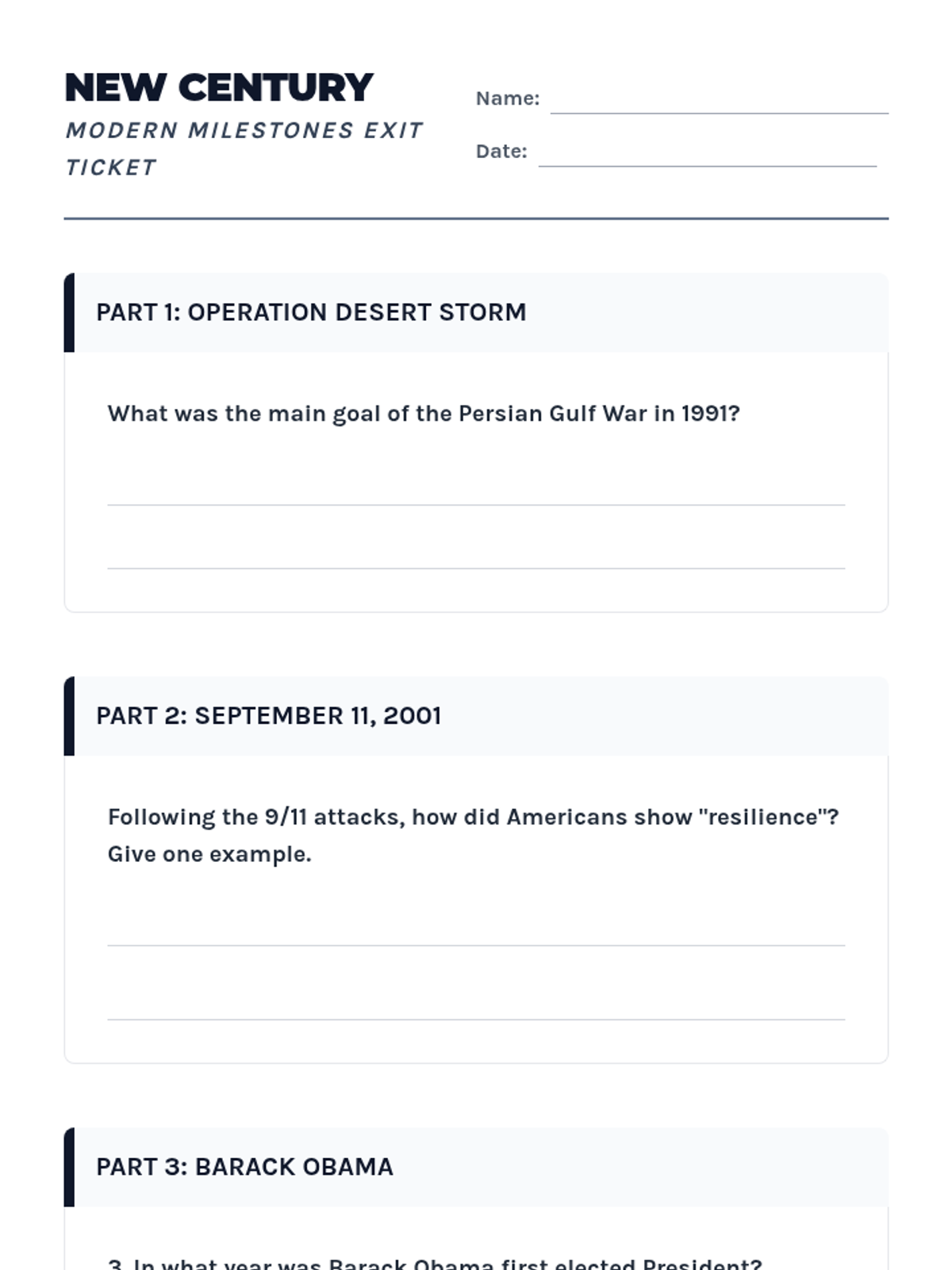
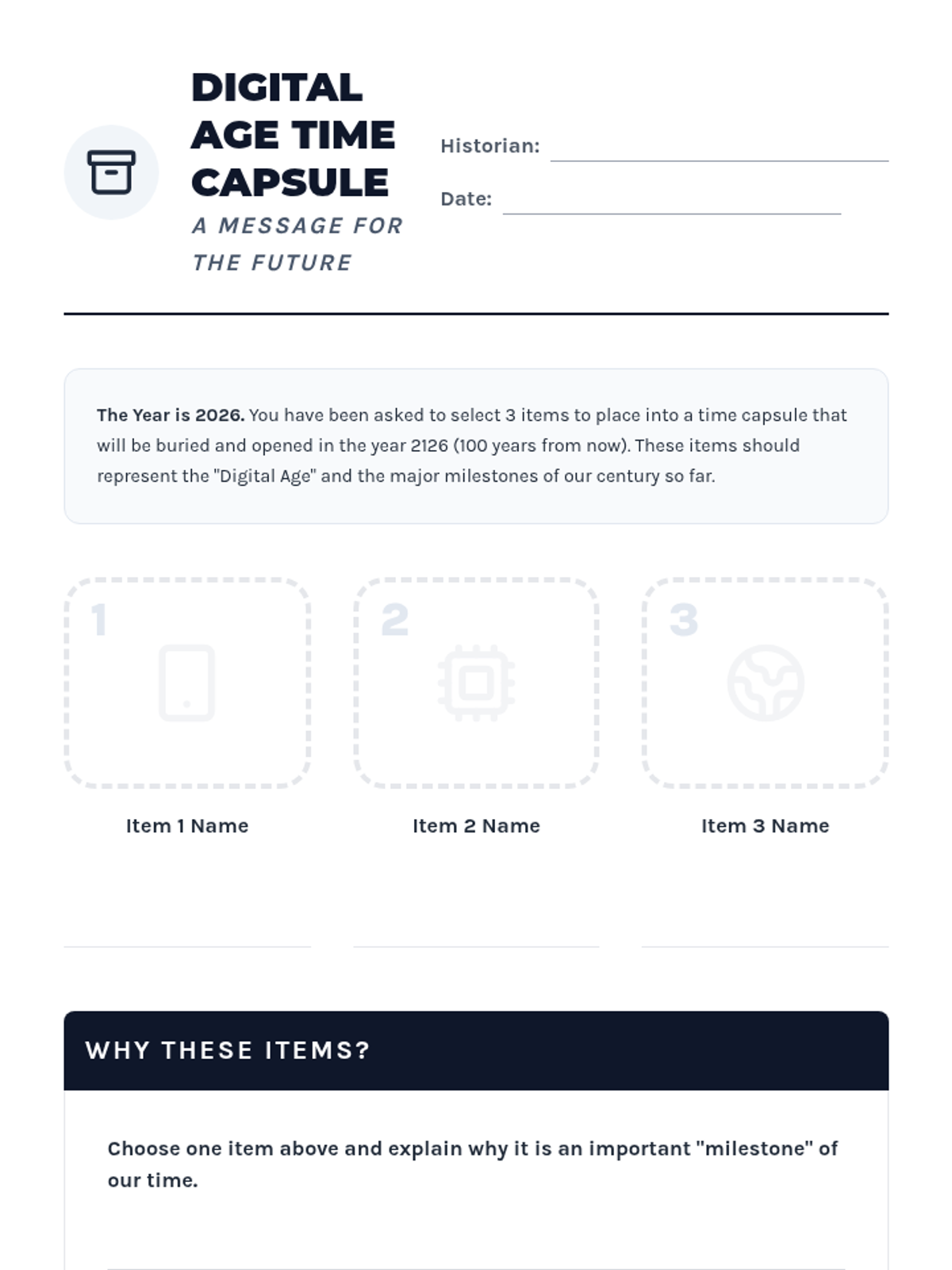
Covers modern milestones including the Persian Gulf War, 9/11, and the election of Barack Obama.
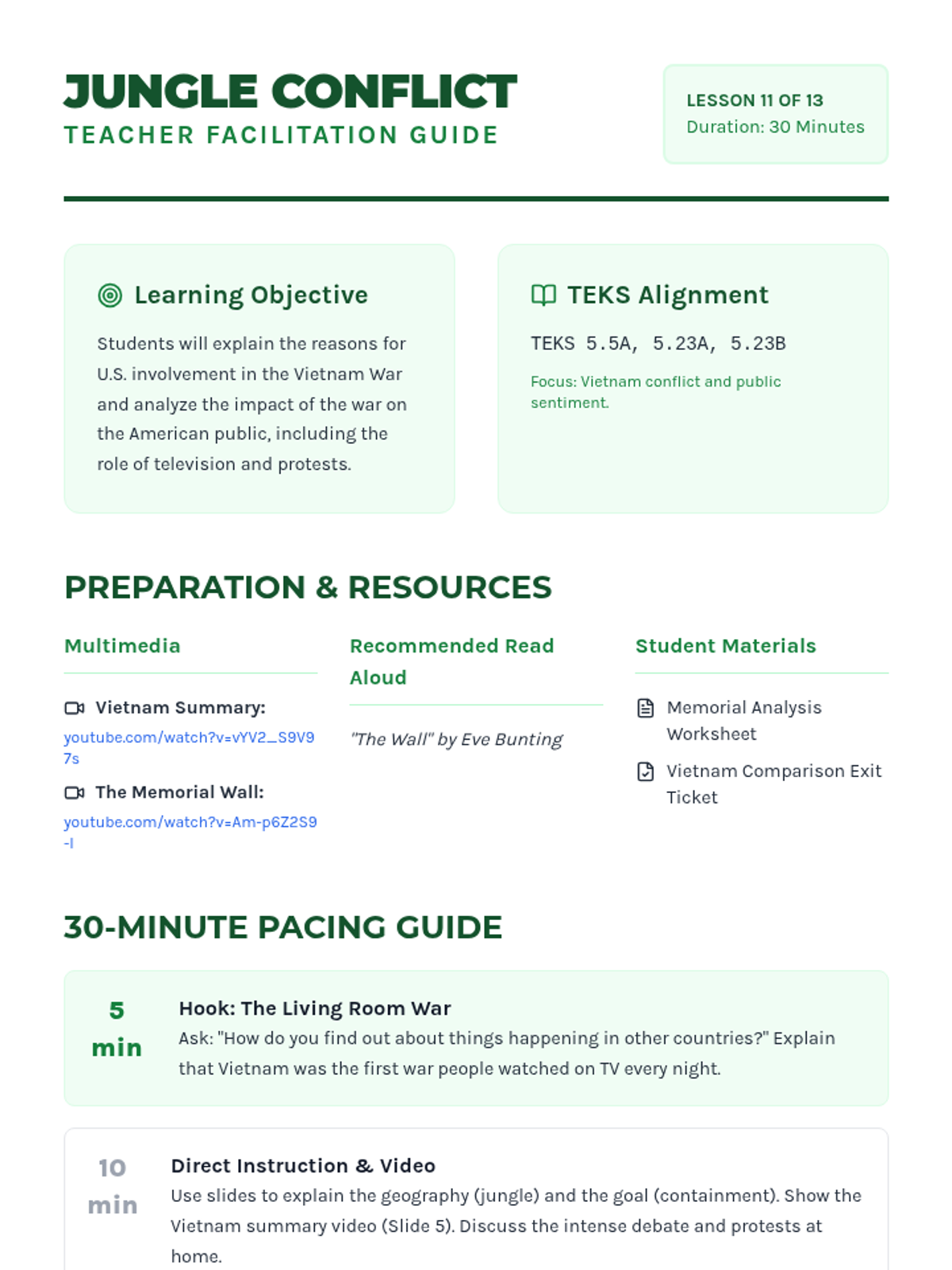
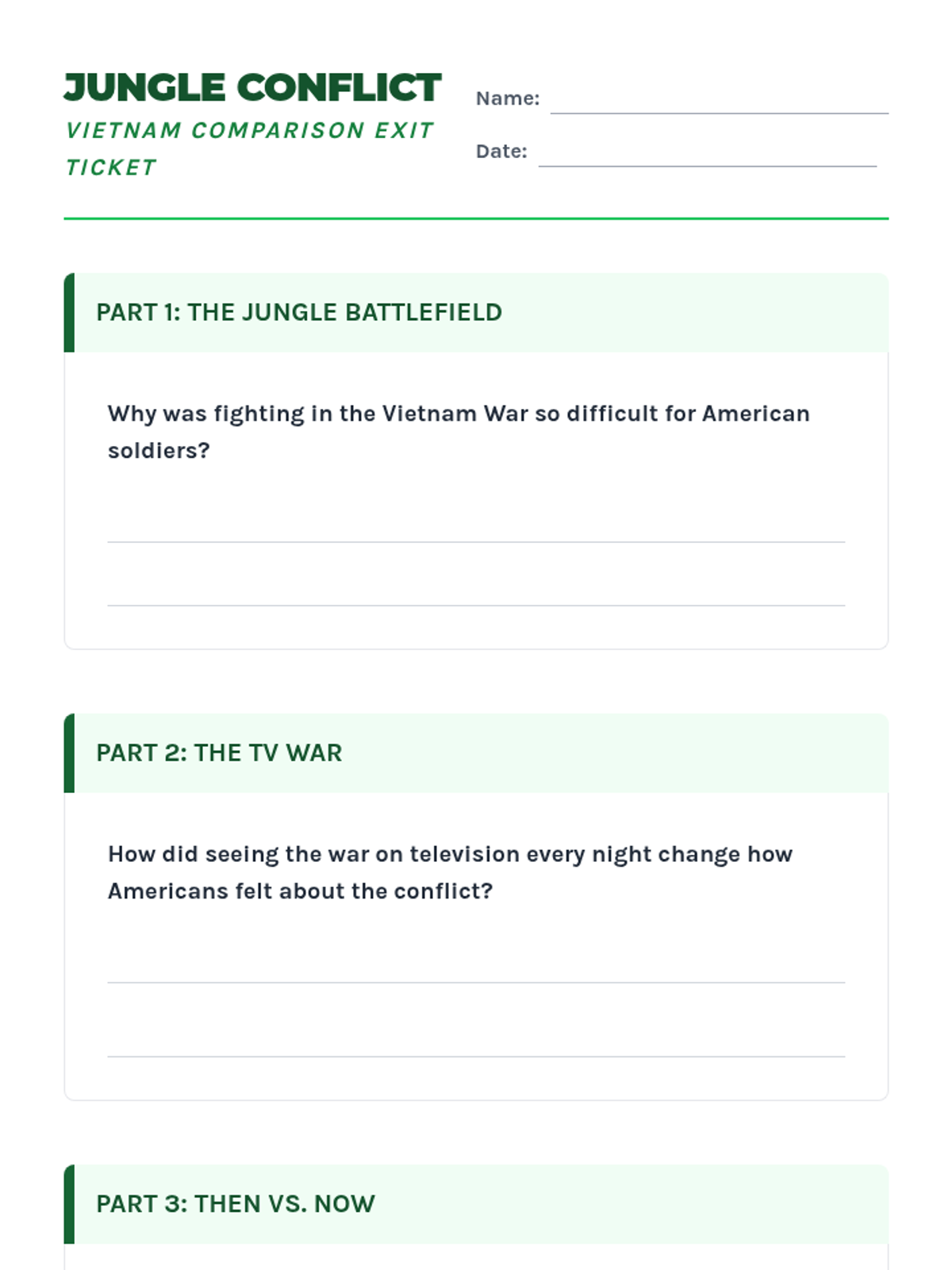
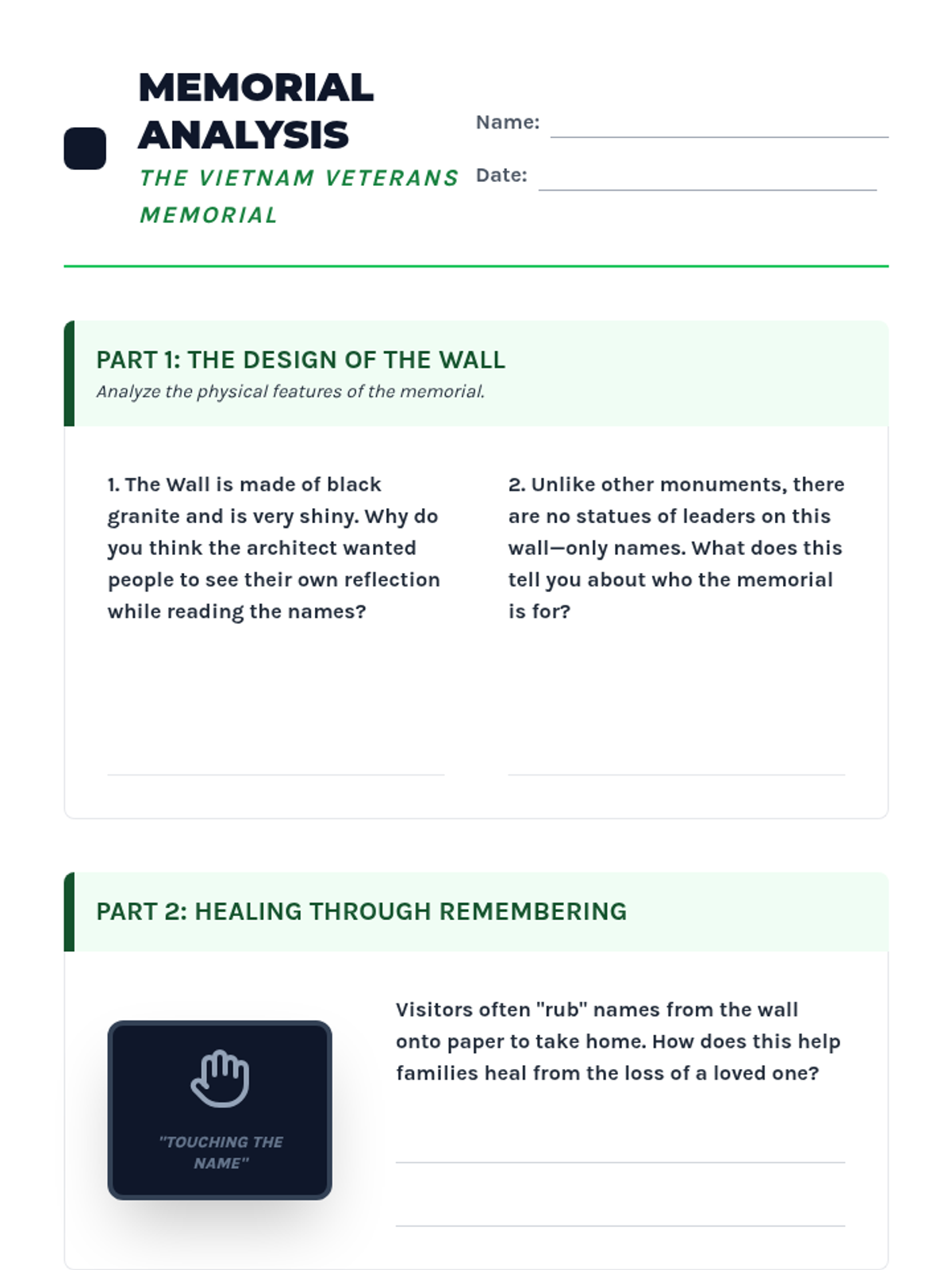
Discussion of the Vietnam War and its impact on the American public.
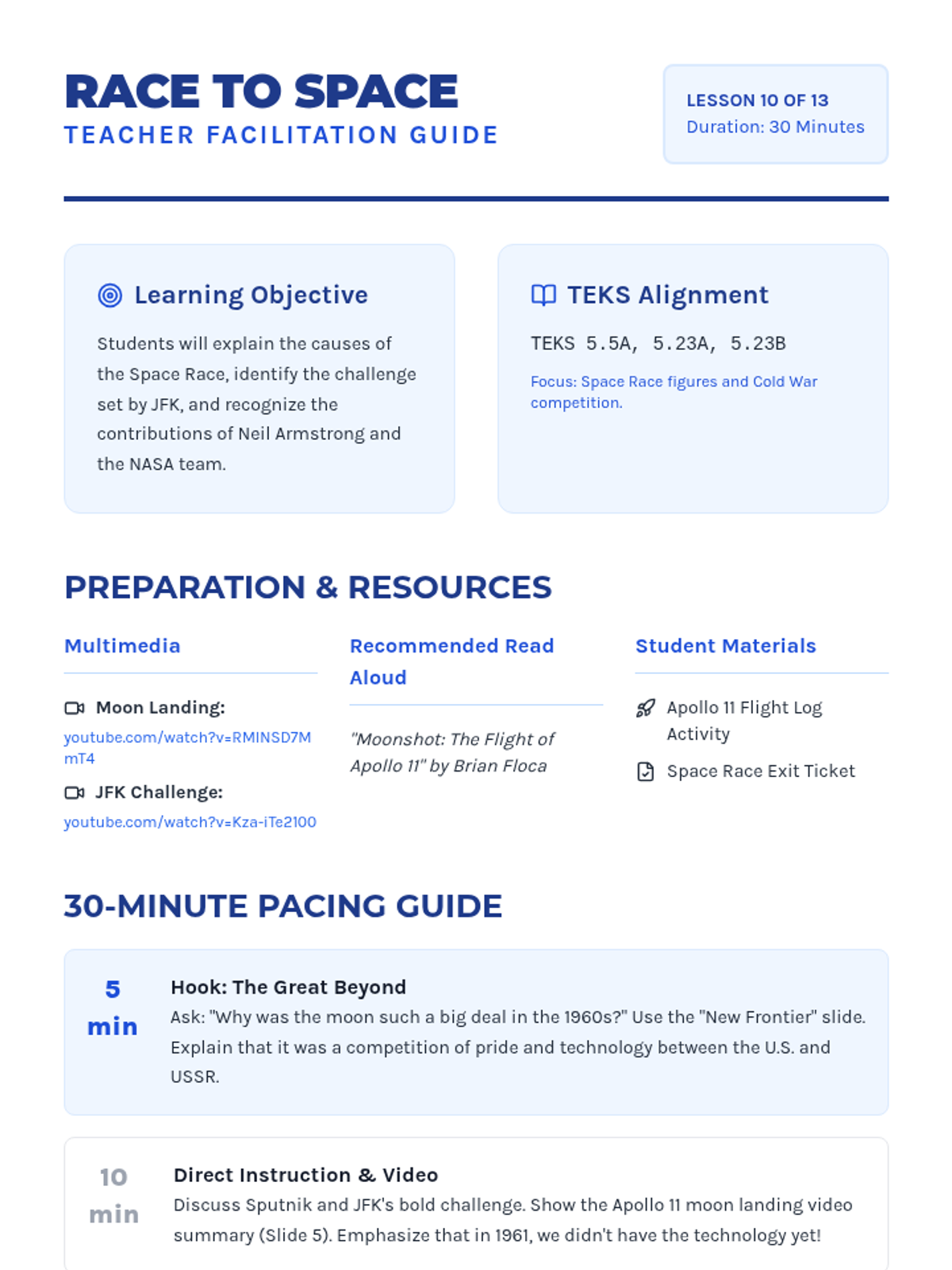
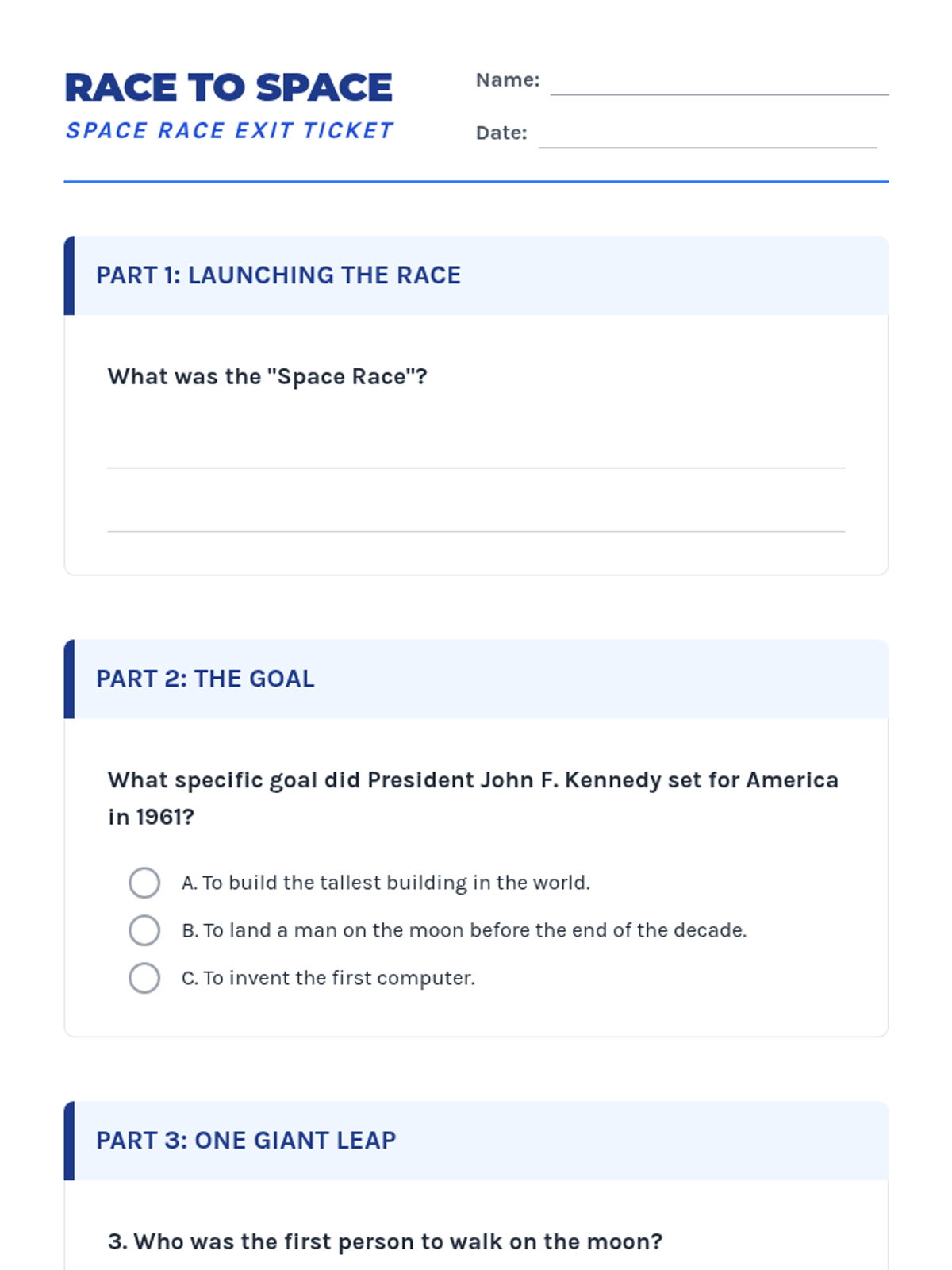
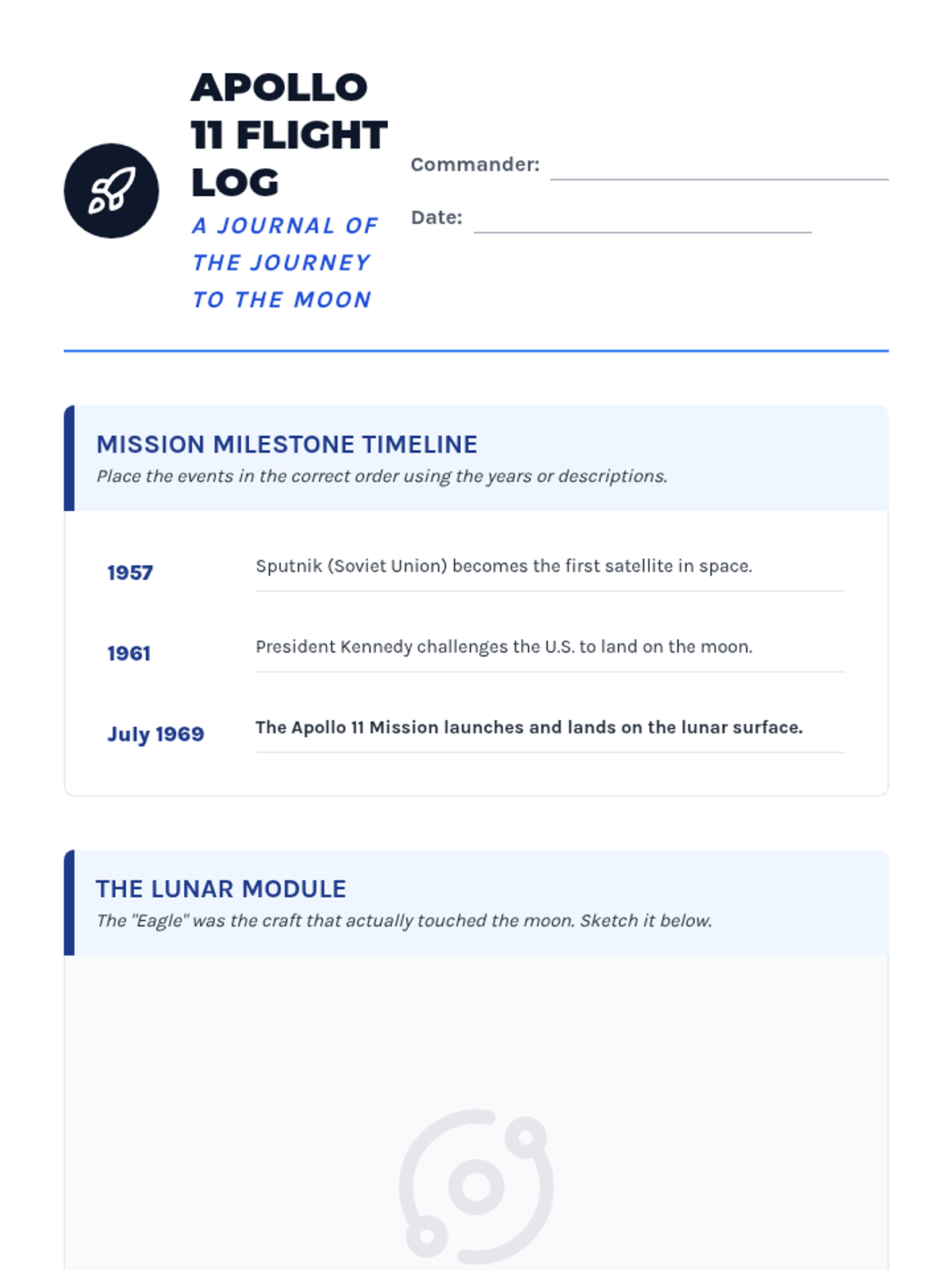
Examines the Space Race, JFK's challenge, and Neil Armstrong's moon landing.
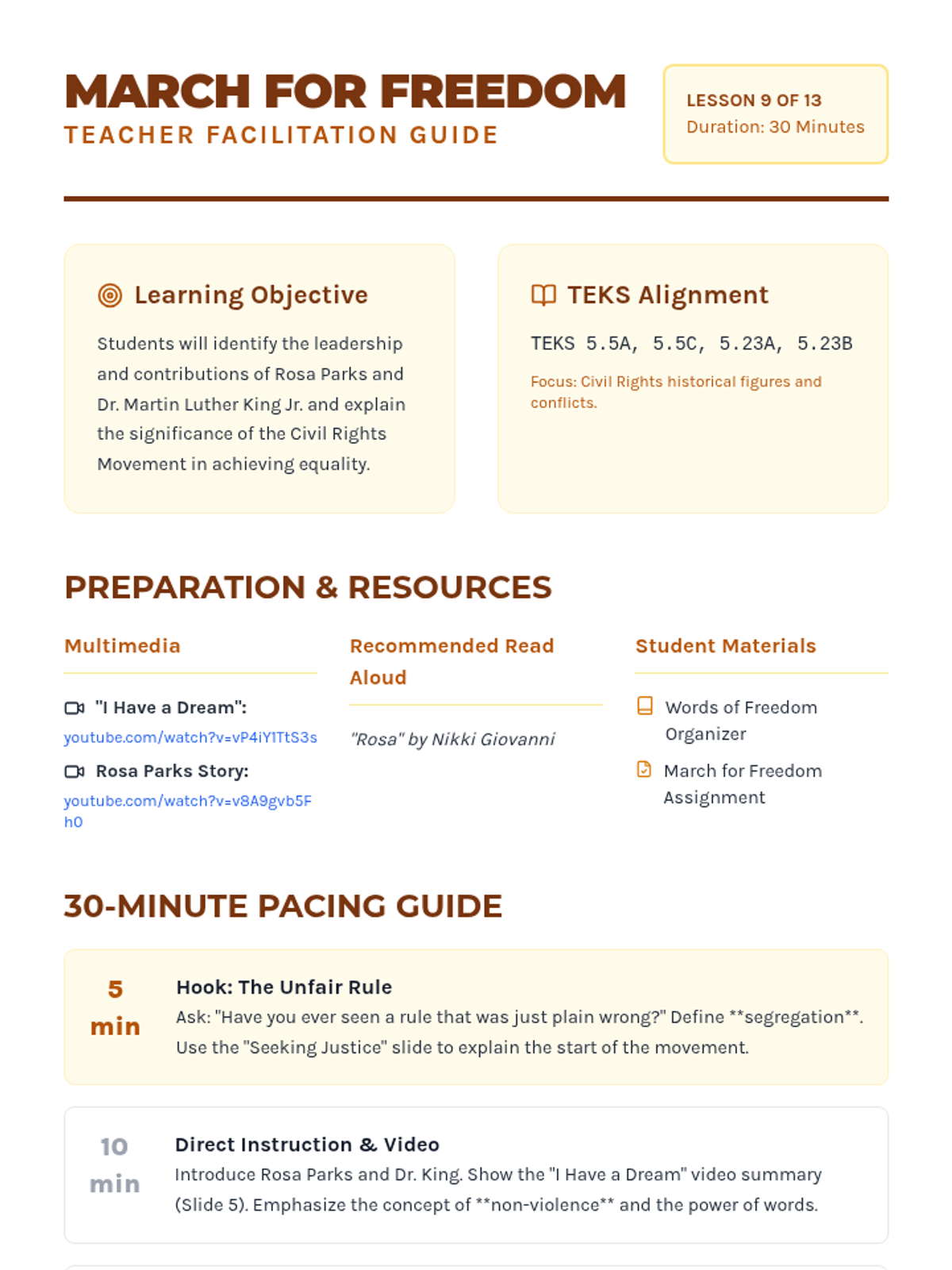
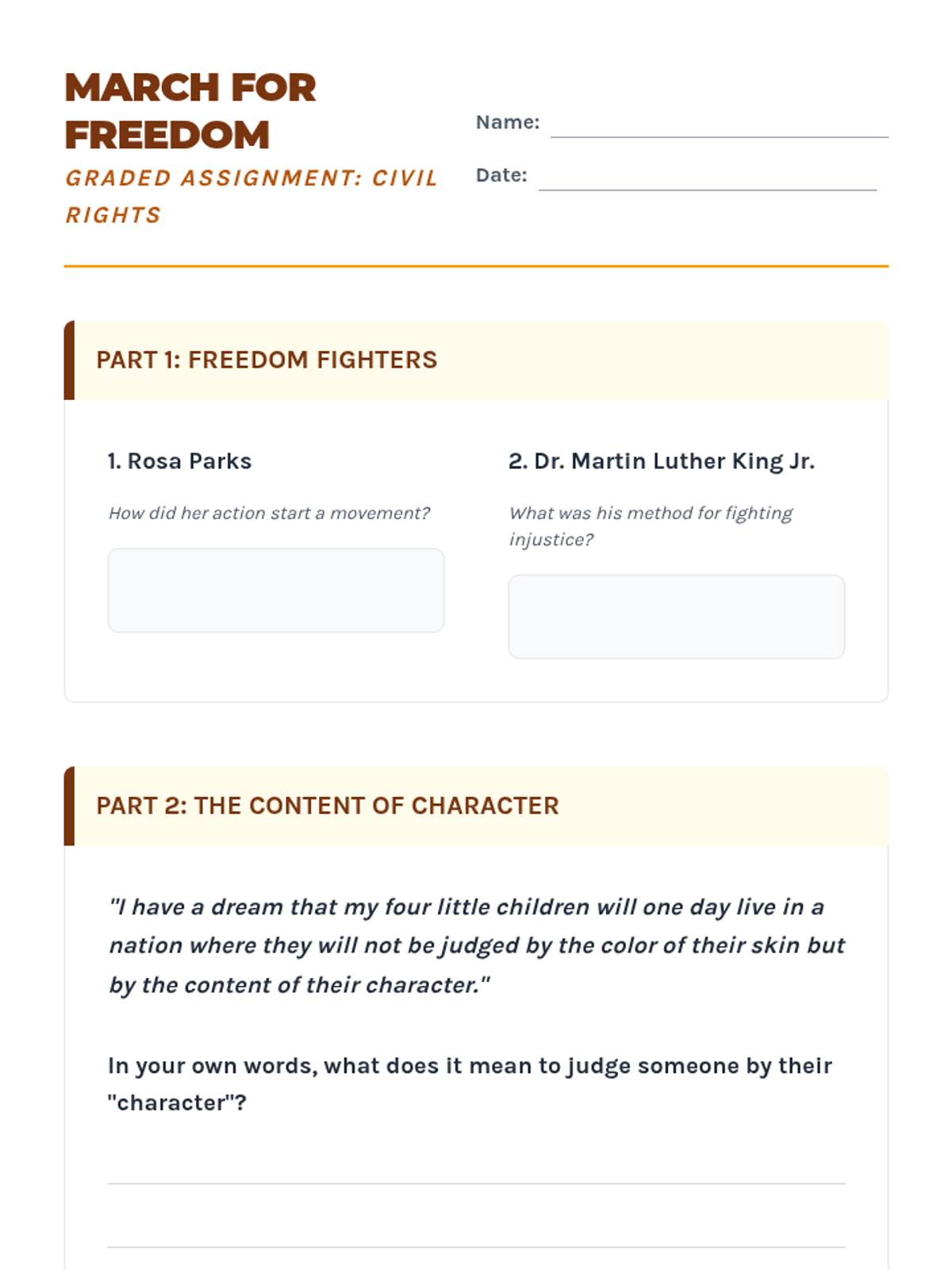
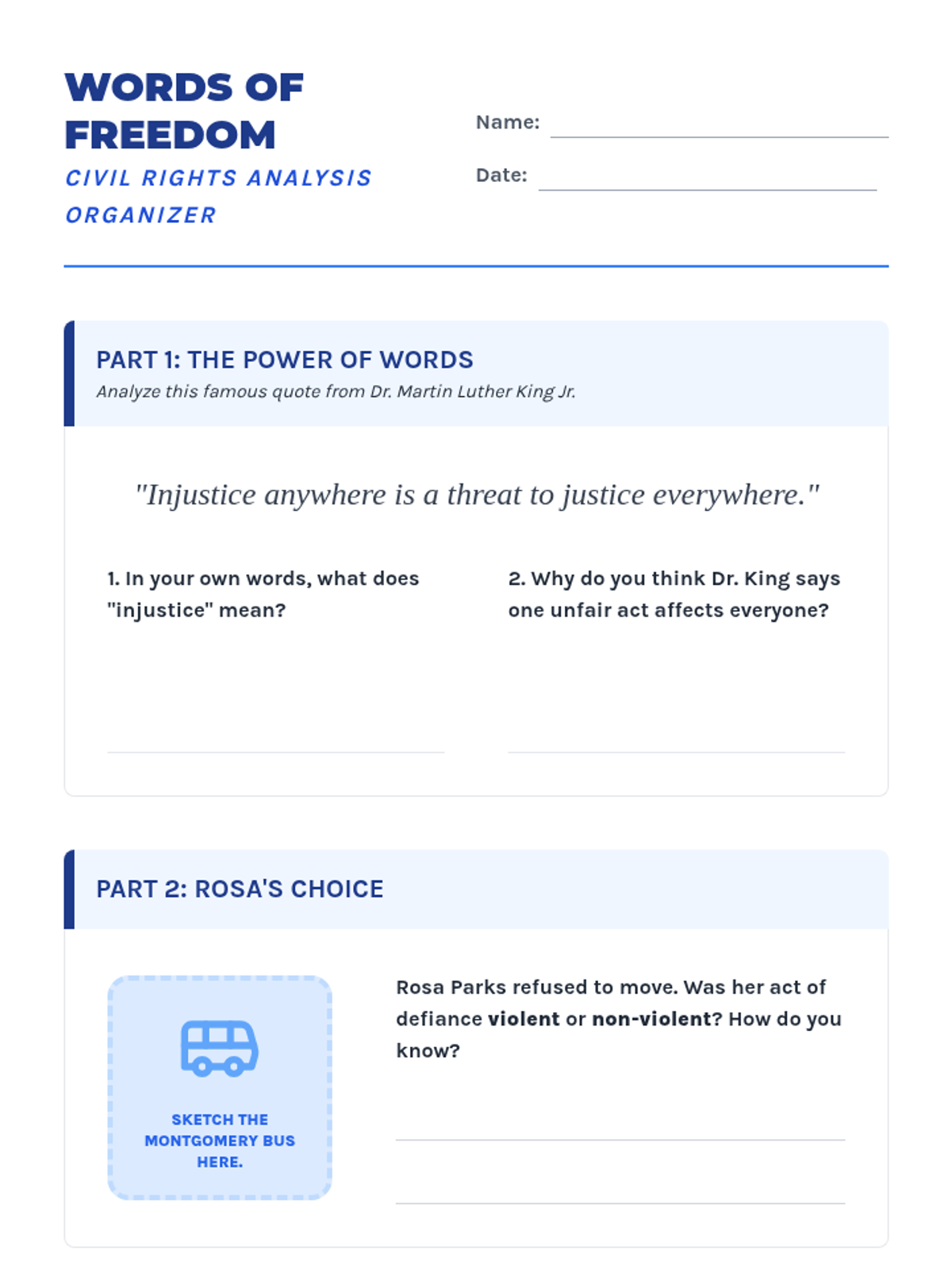
Focuses on the Civil Rights Movement through the leadership of Dr. Martin Luther King Jr. and Rosa Parks.
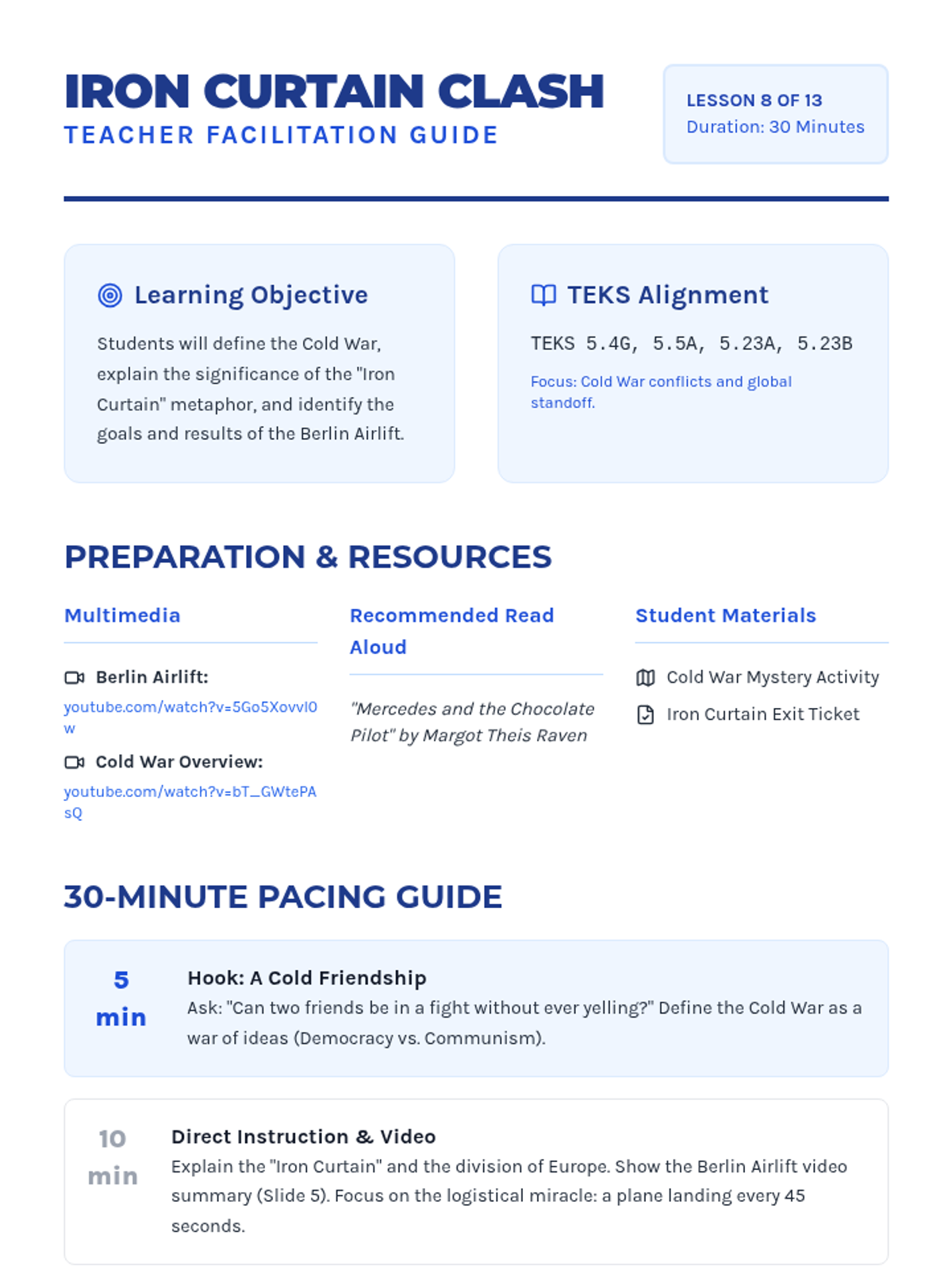
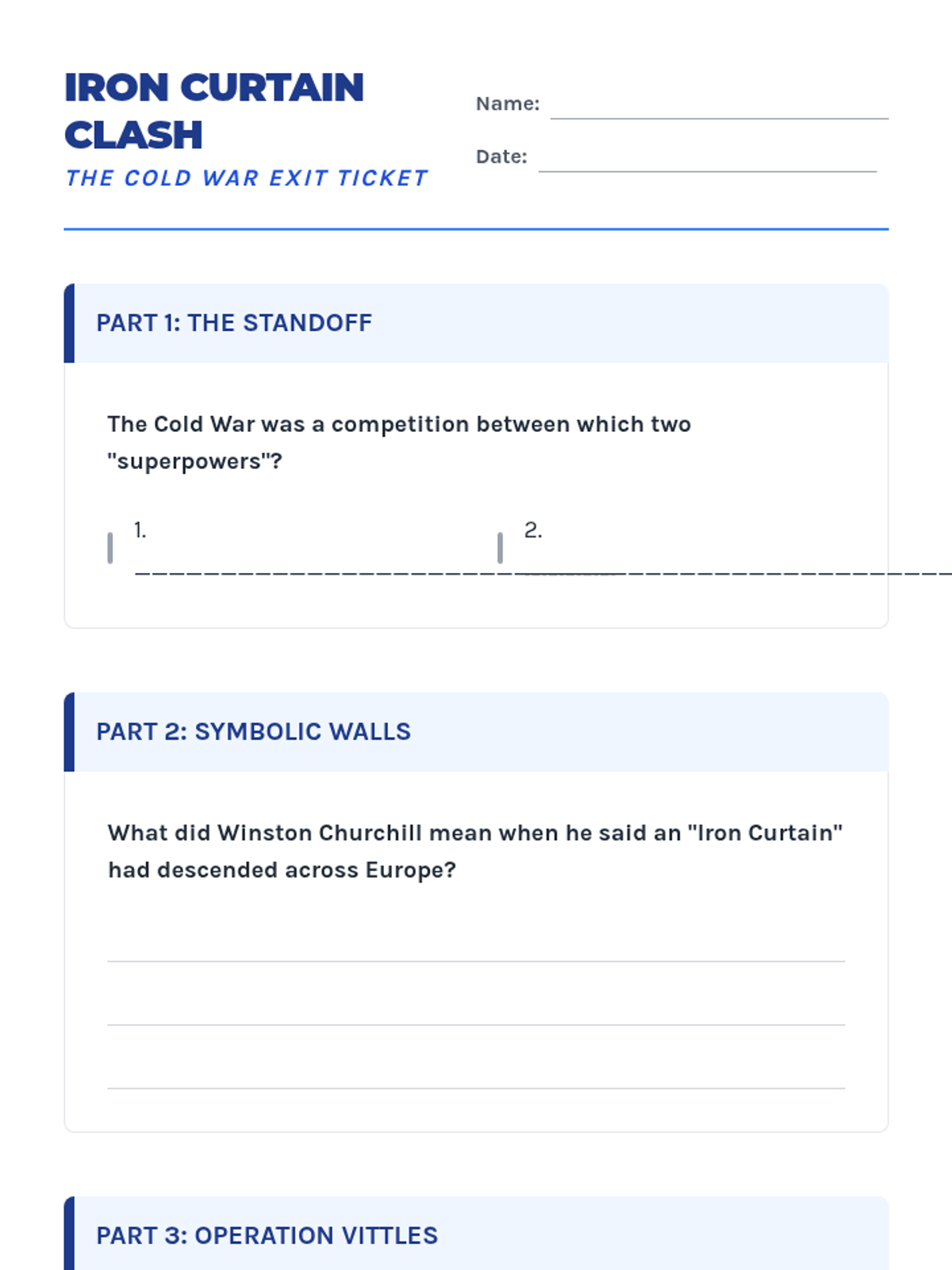
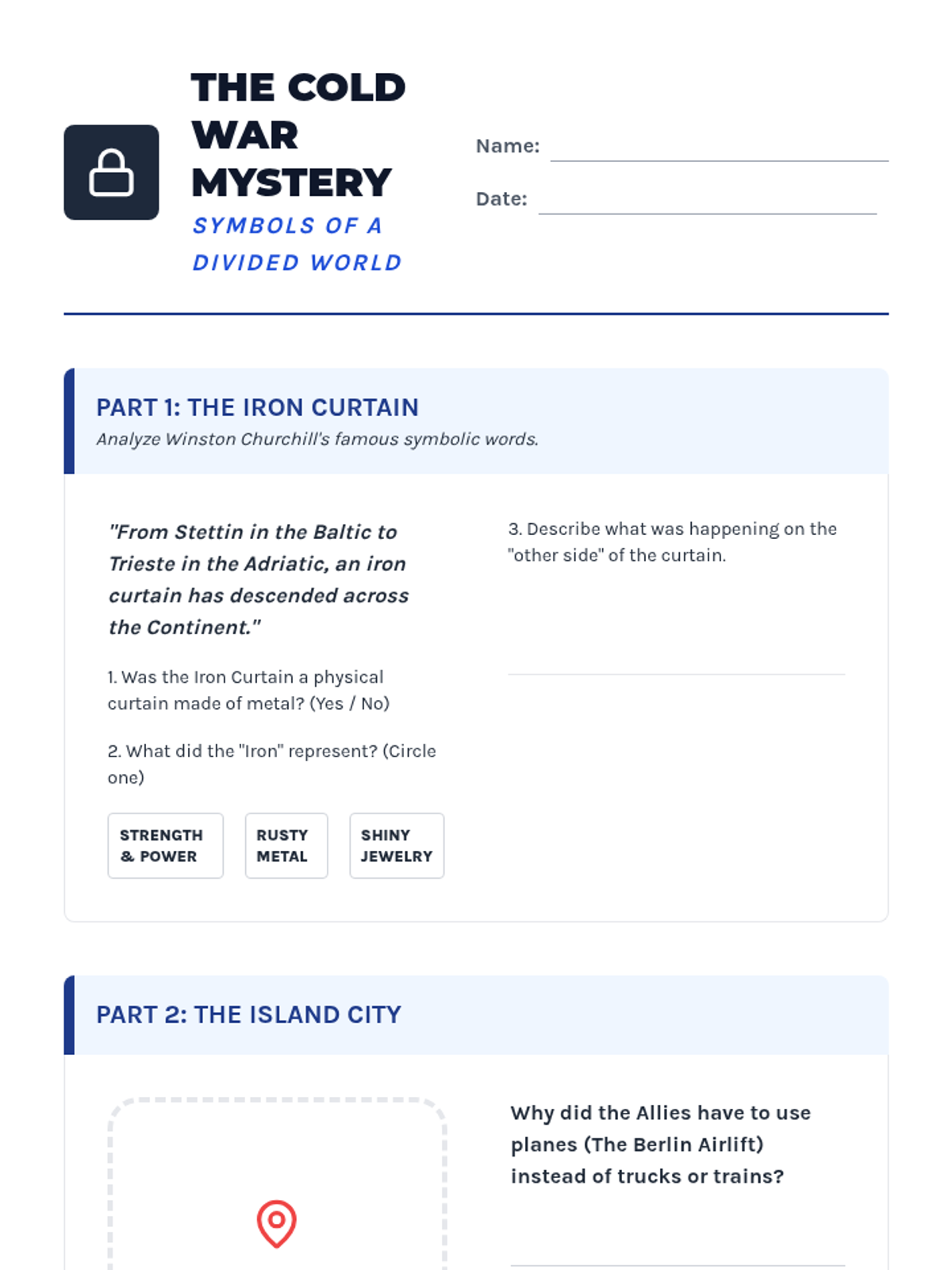
Introduction to the Cold War, the Iron Curtain, and the Berlin Airlift.
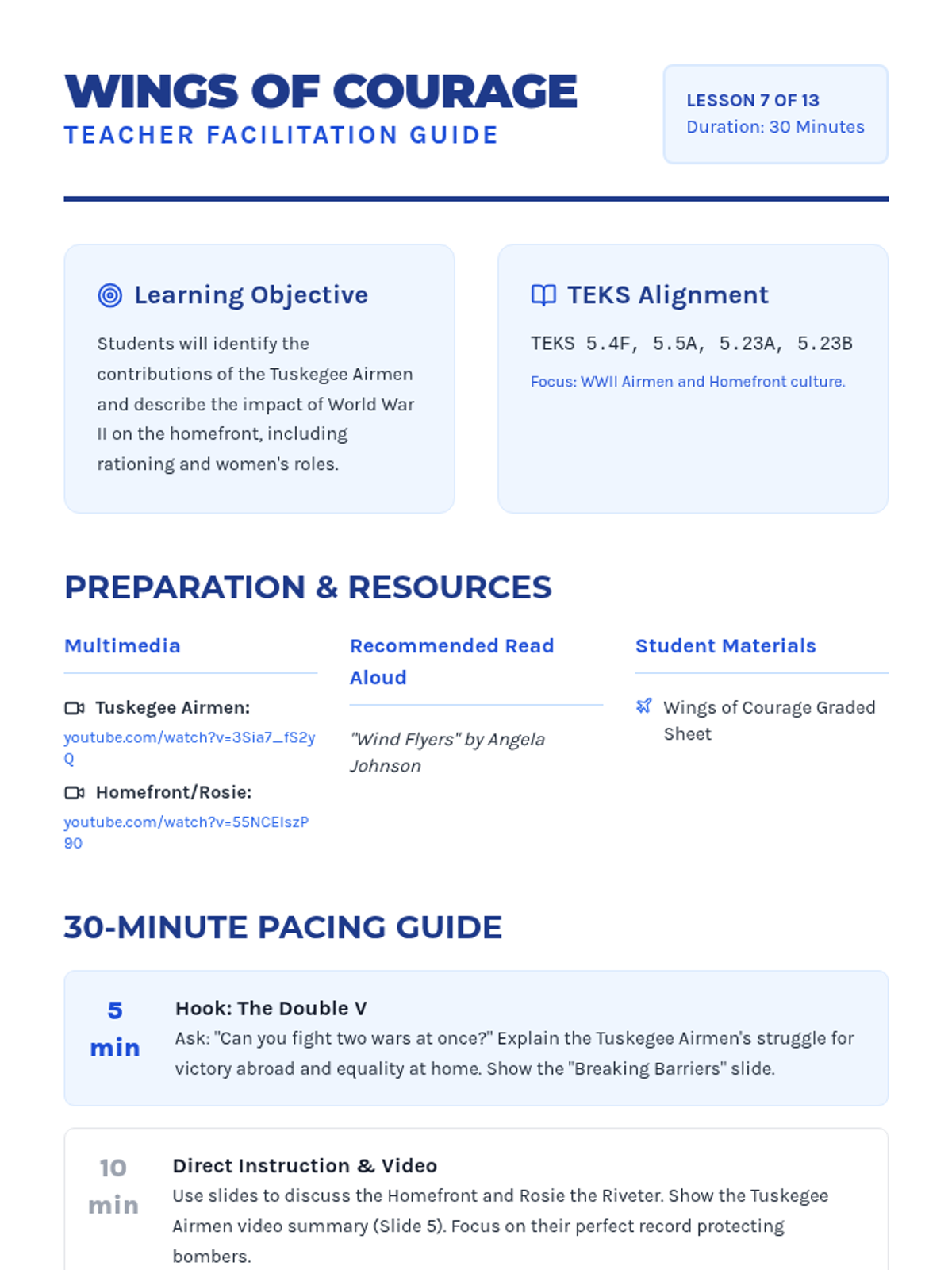
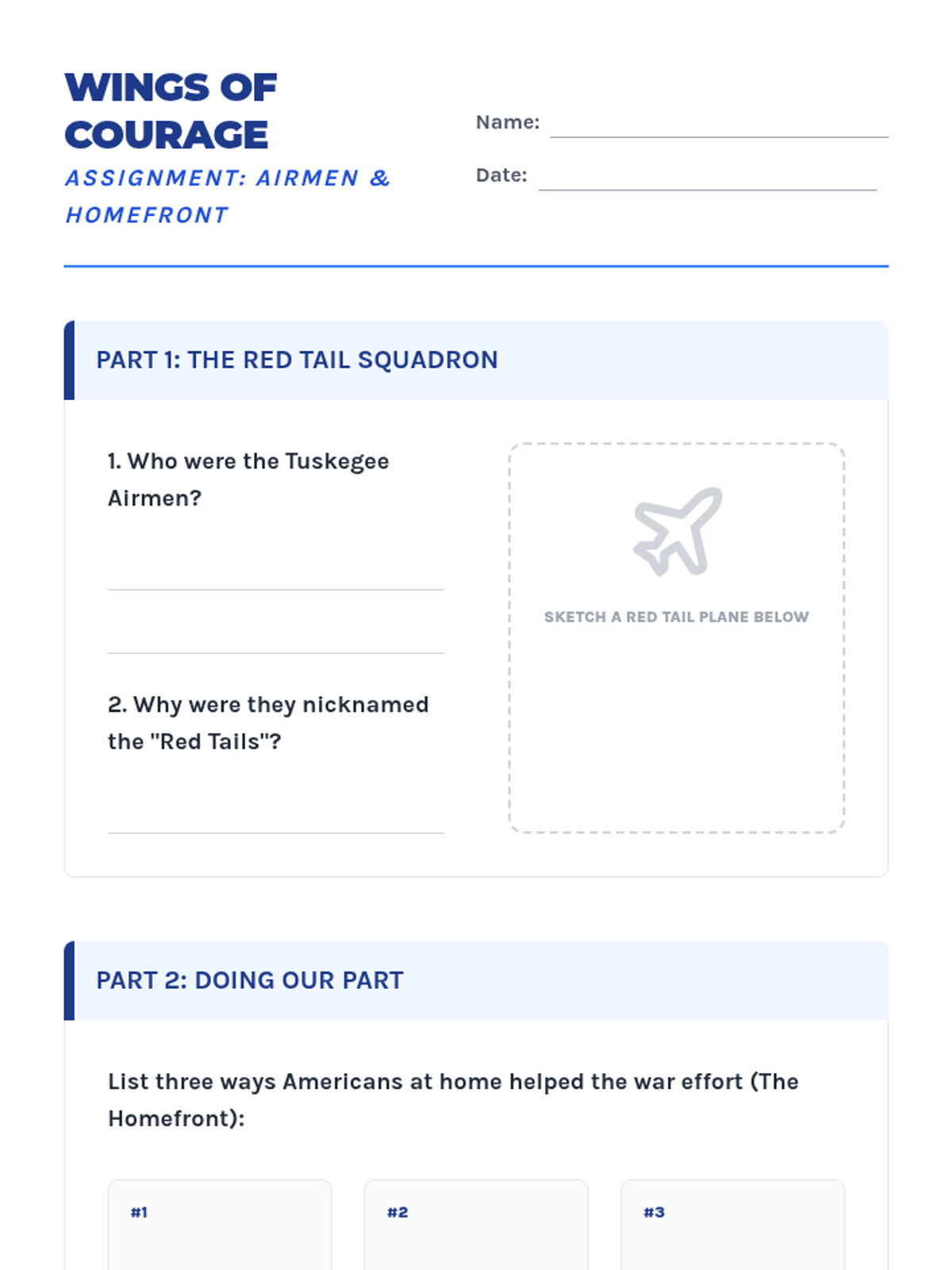
Highlights the contributions of the Tuskegee Airmen and the WWII homefront.
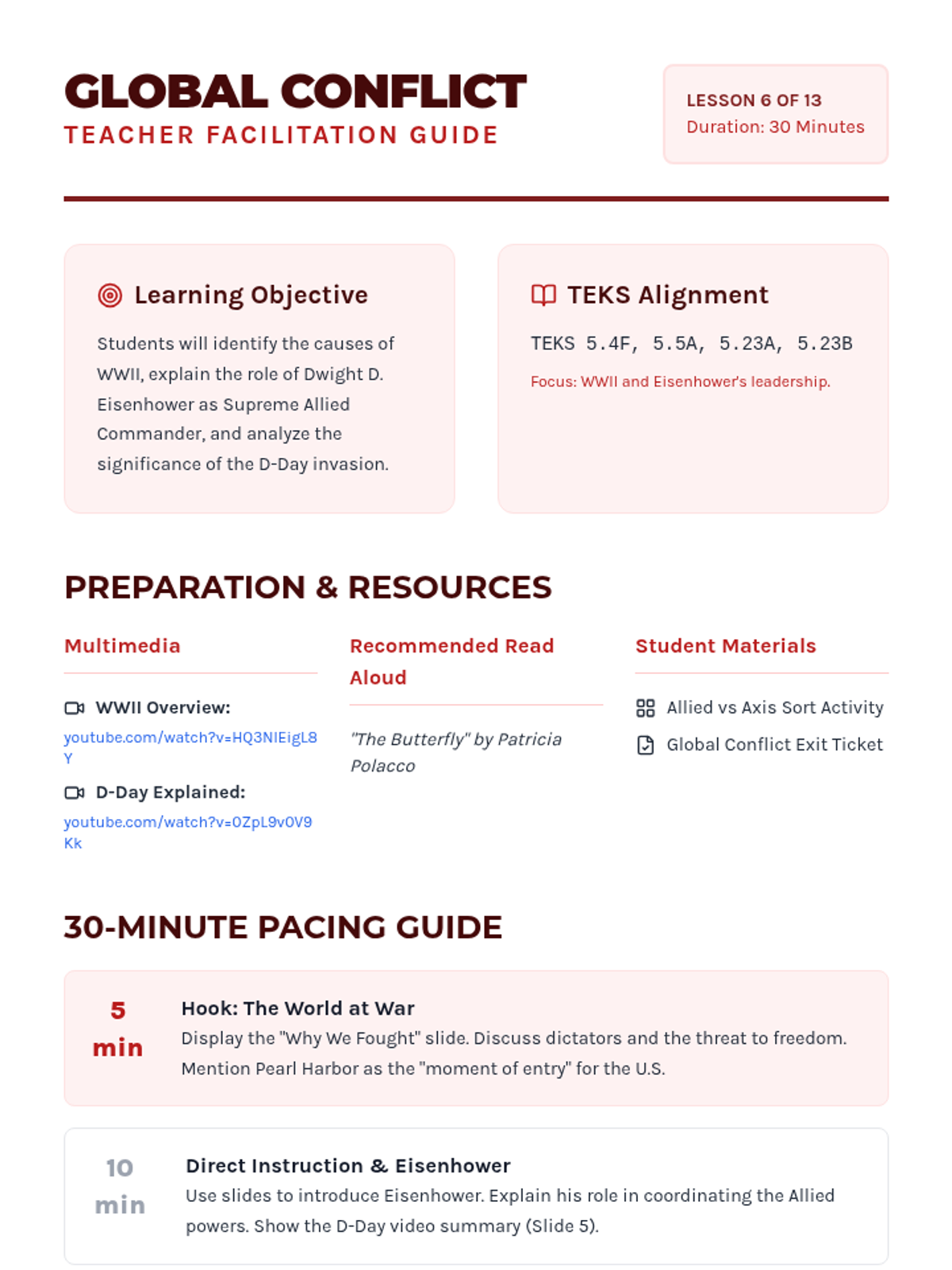
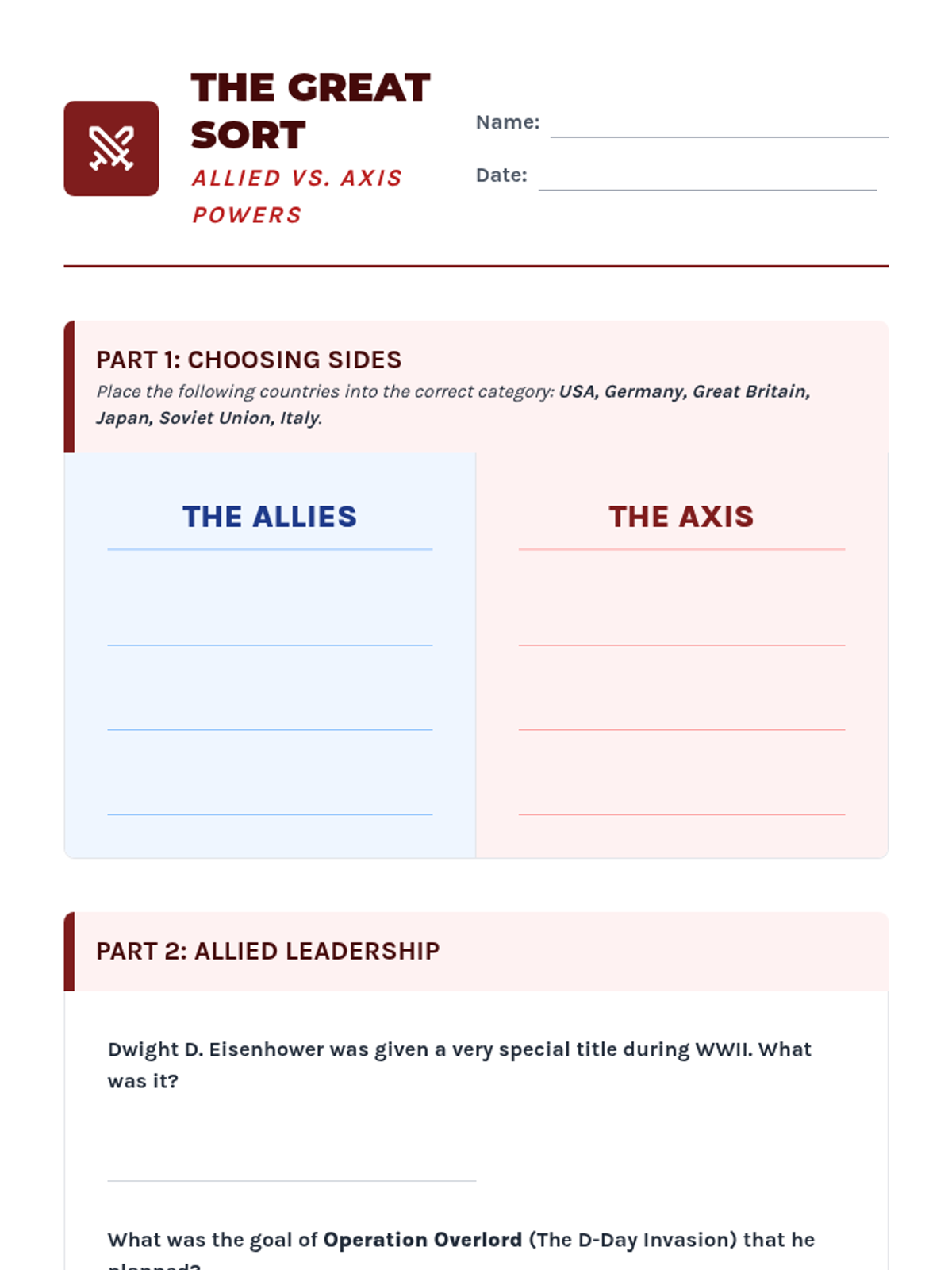
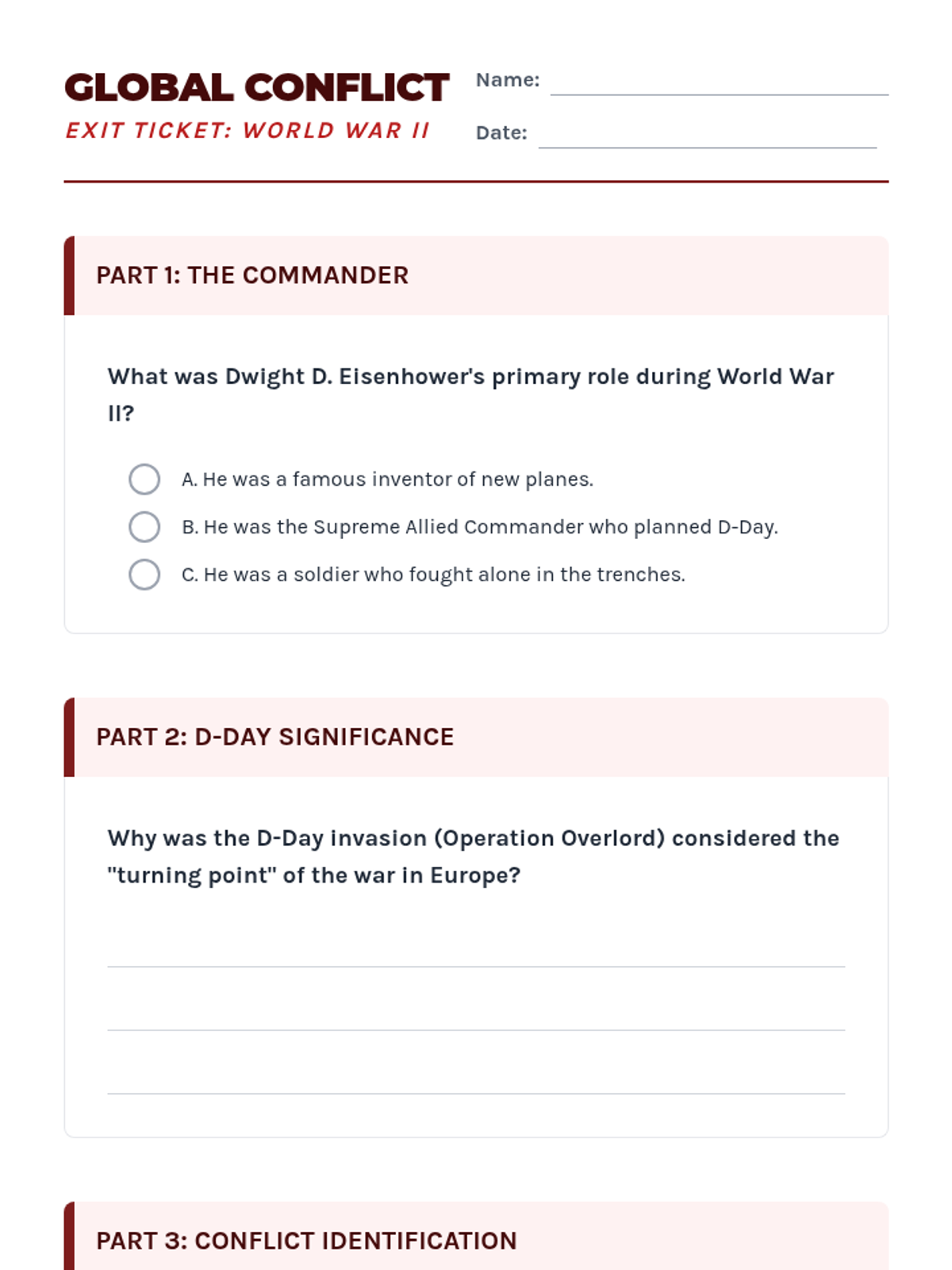
Covers the origins of World War II and the leadership of Dwight D. Eisenhower.
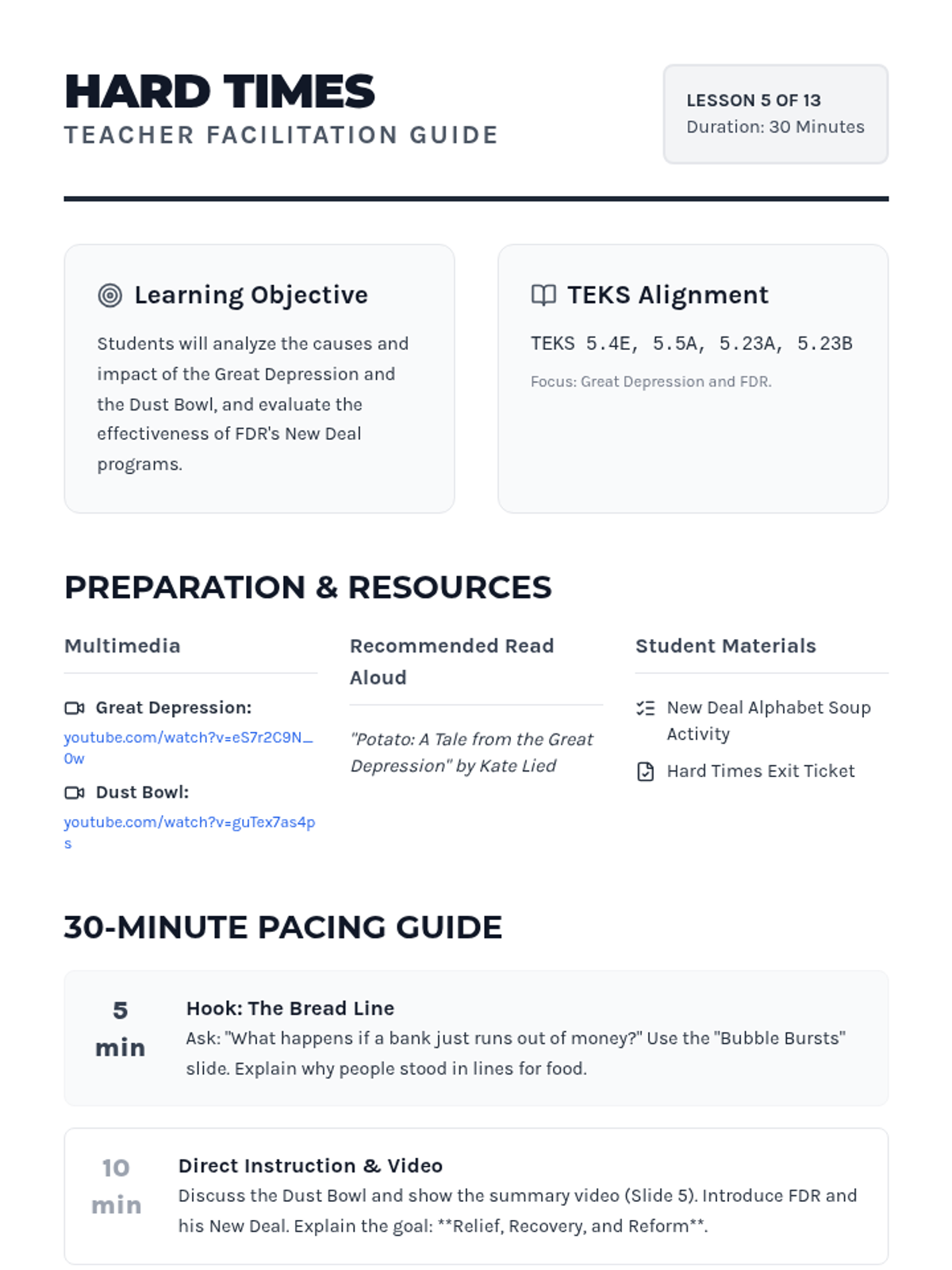
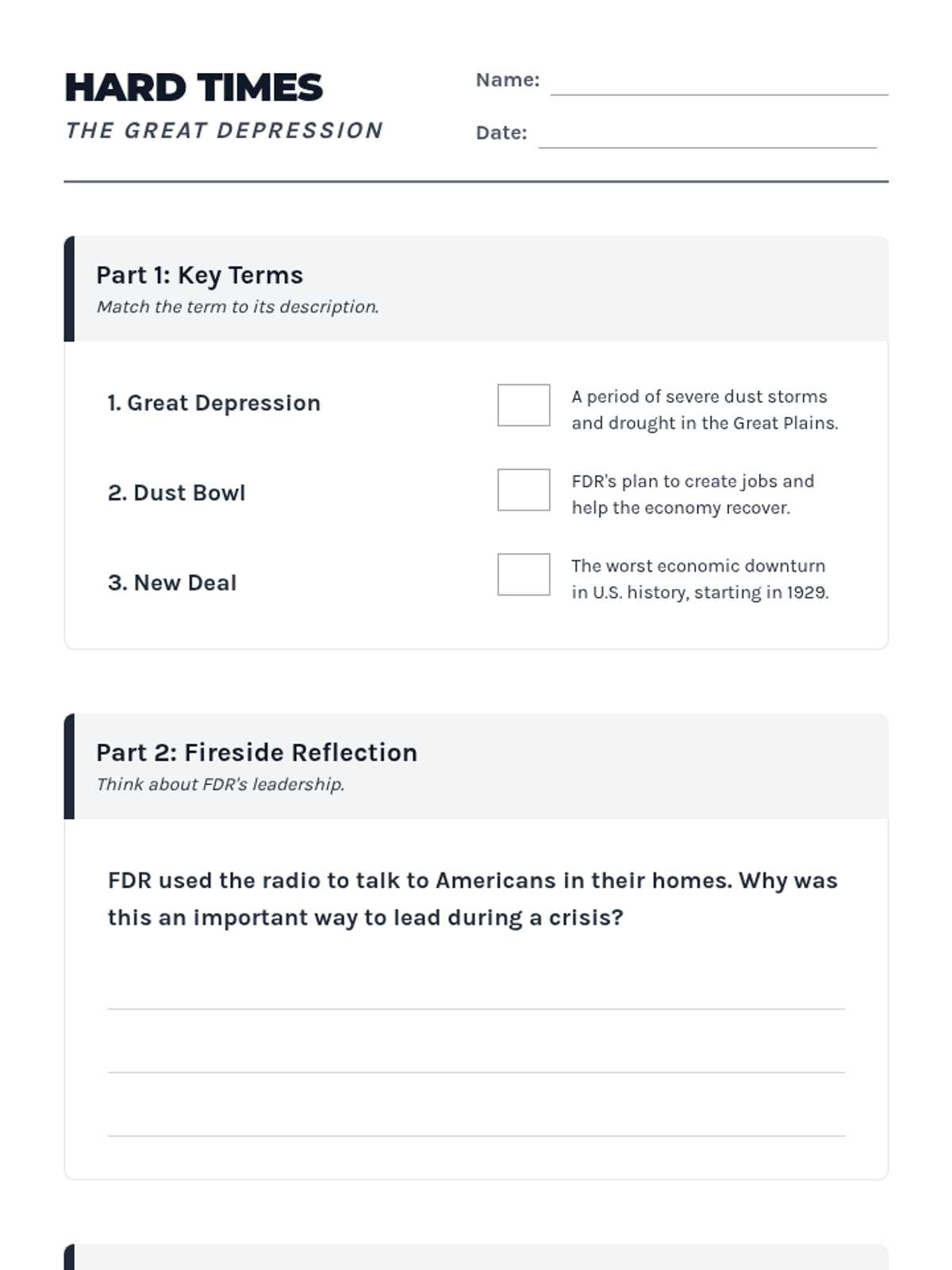
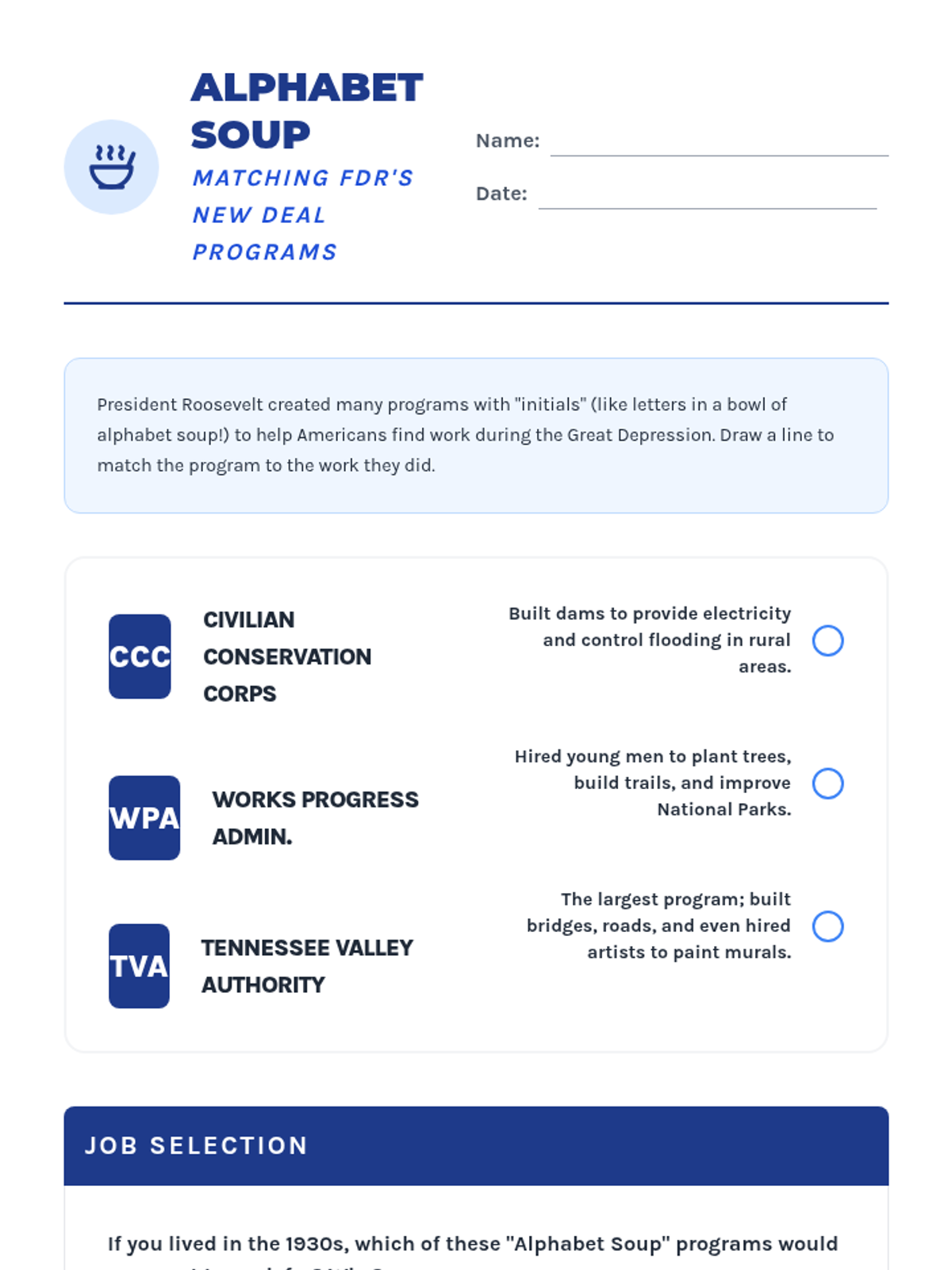
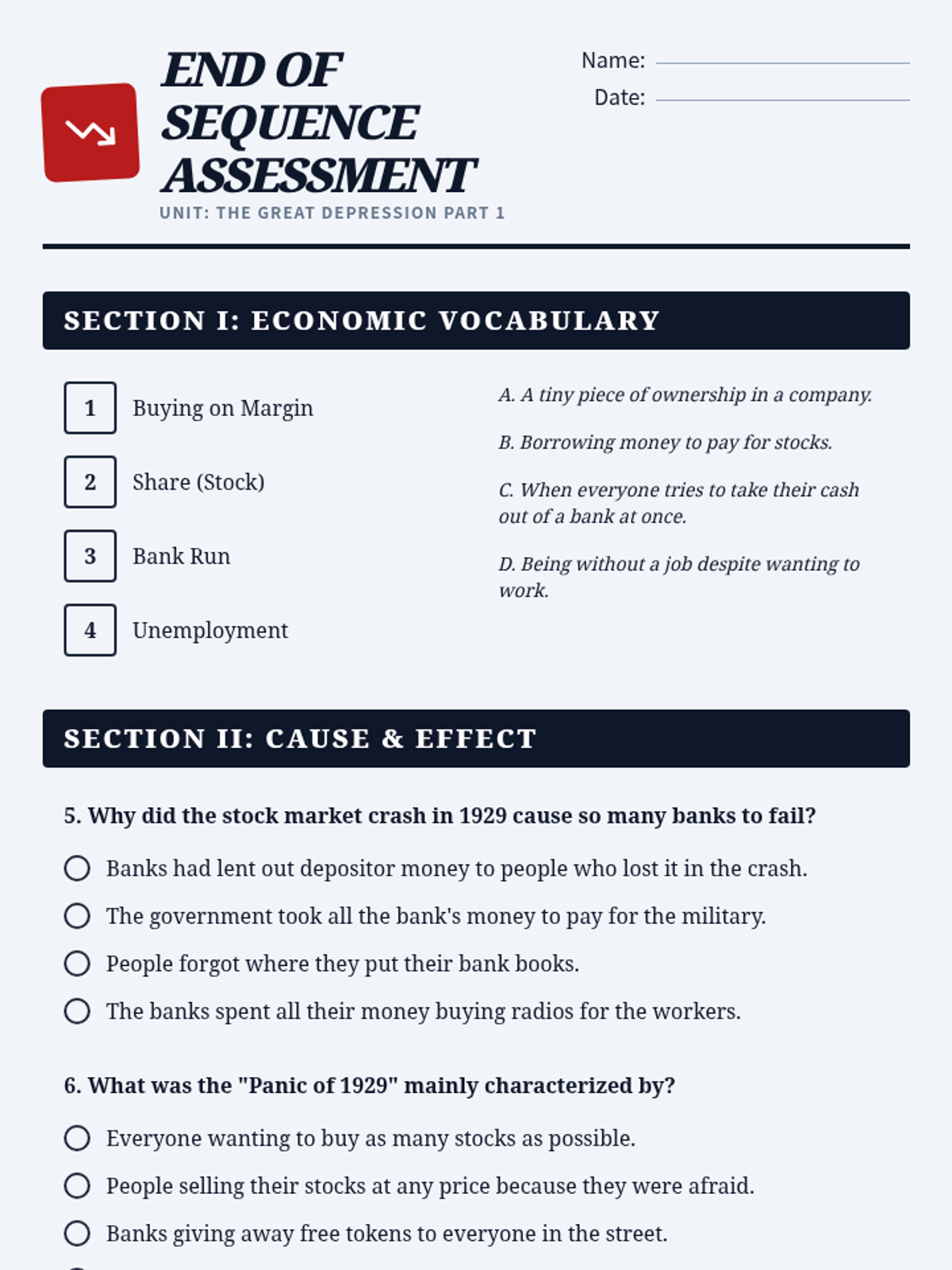
Analysis of the causes and impact of the Great Depression and FDR's New Deal.
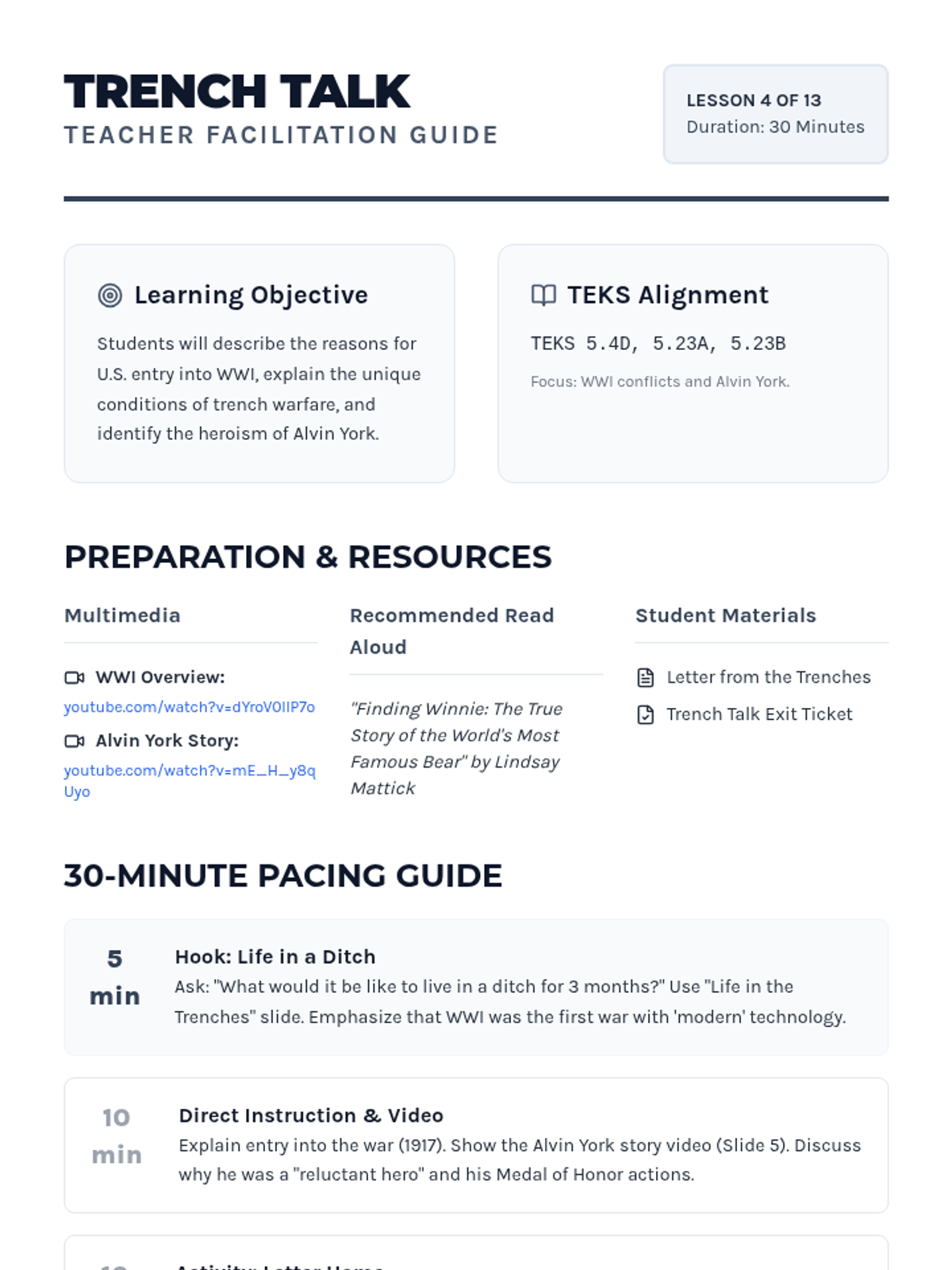
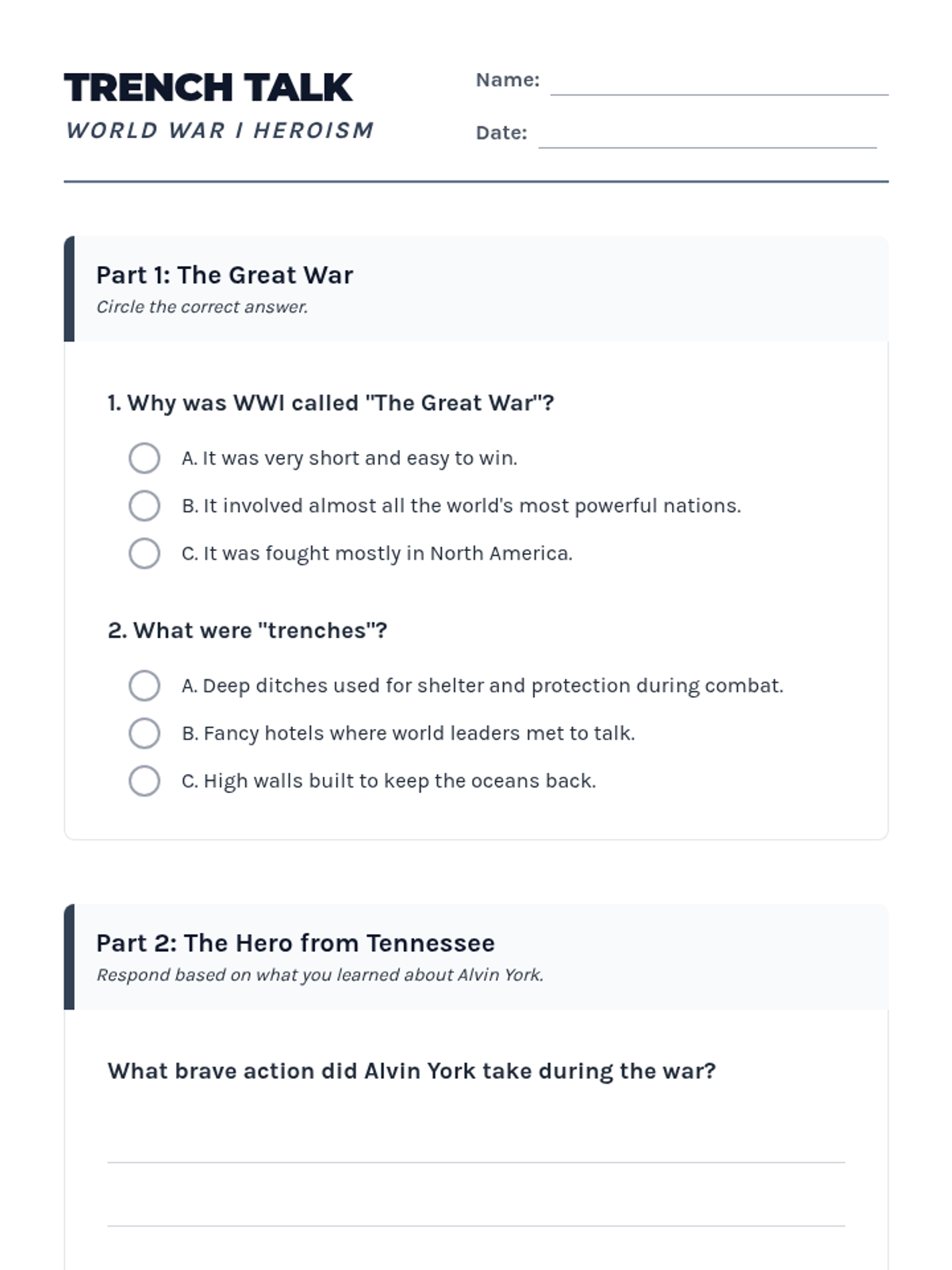
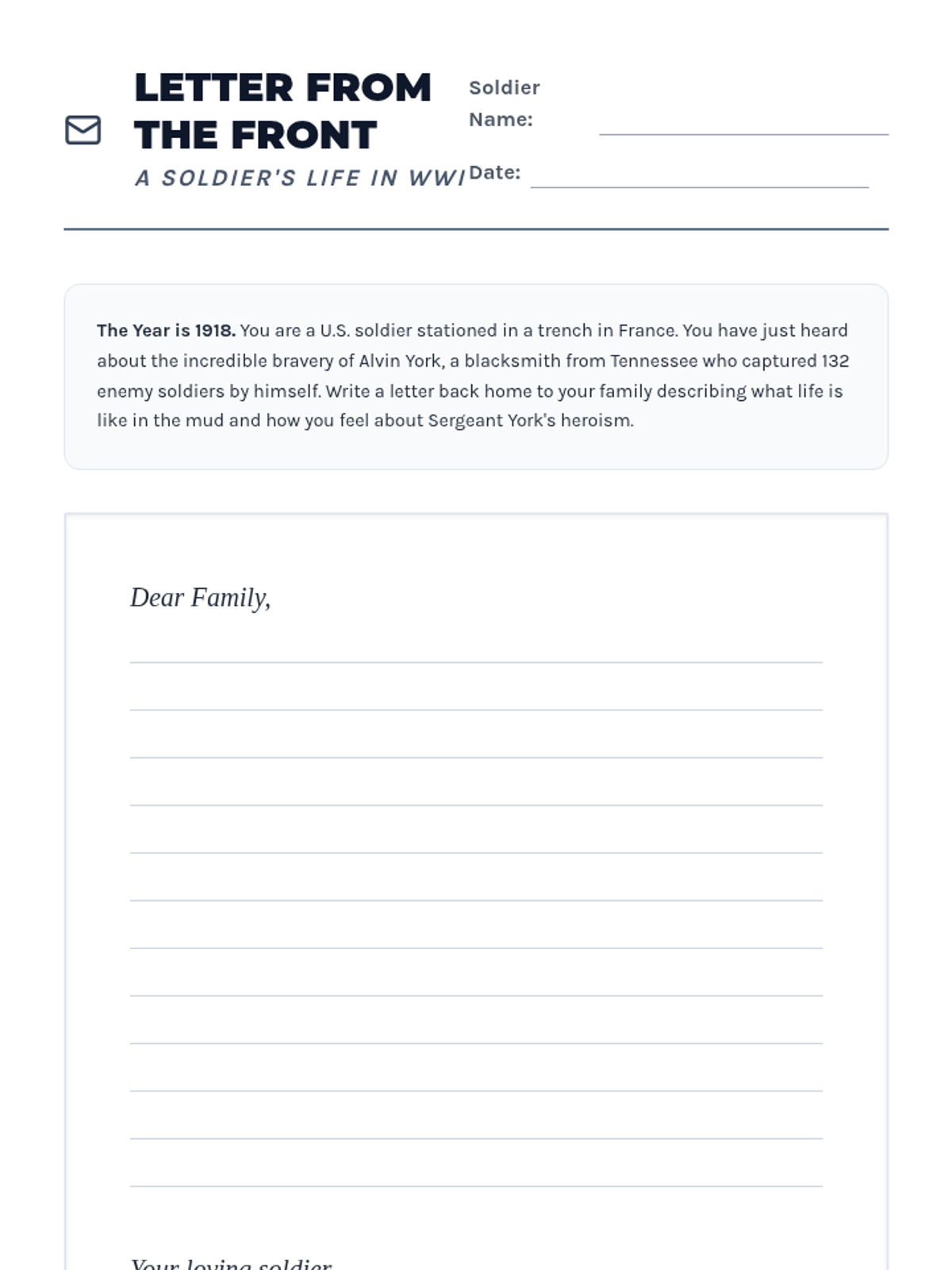
Overview of World War I, trench warfare, and the story of Alvin York.
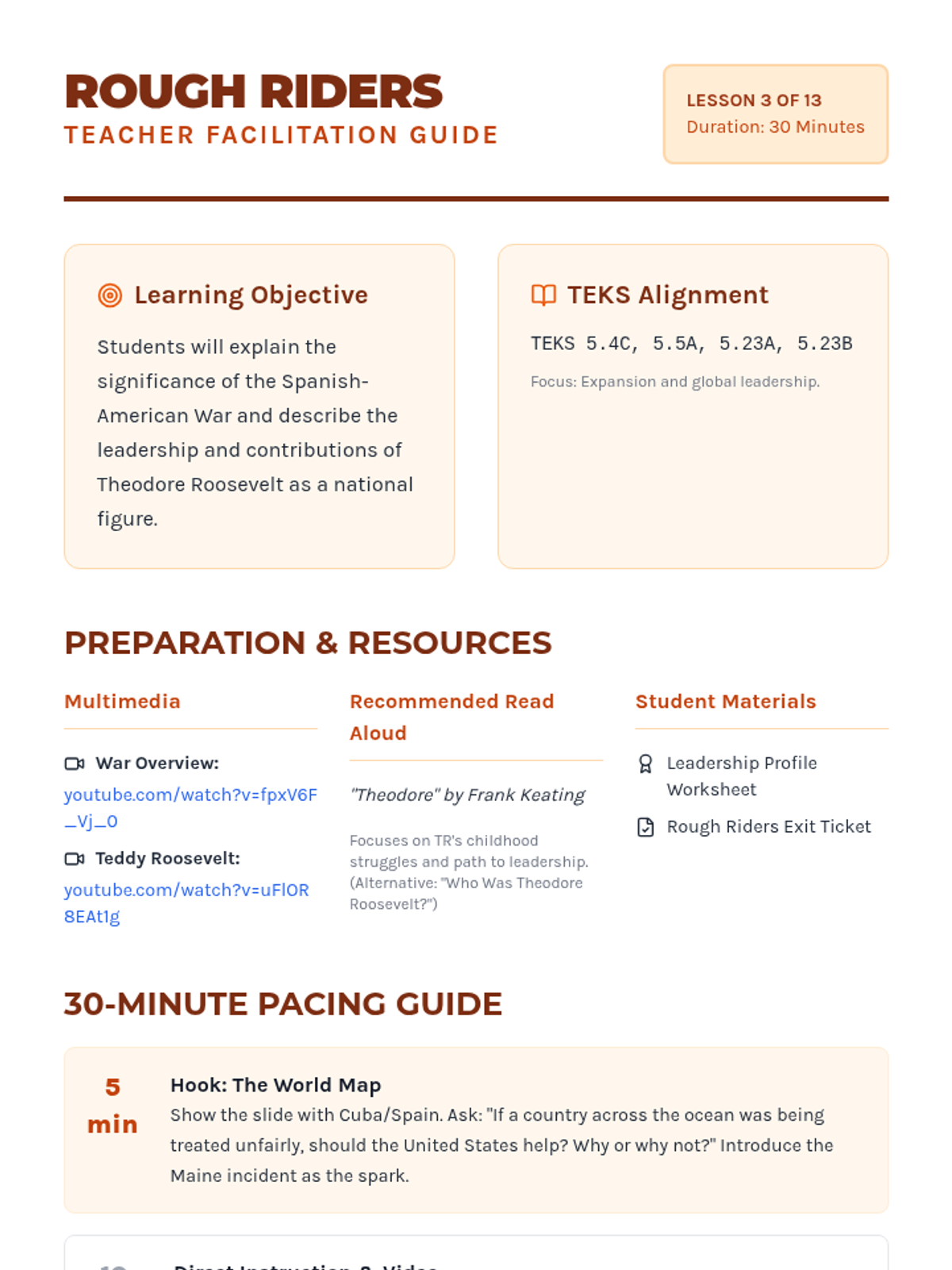
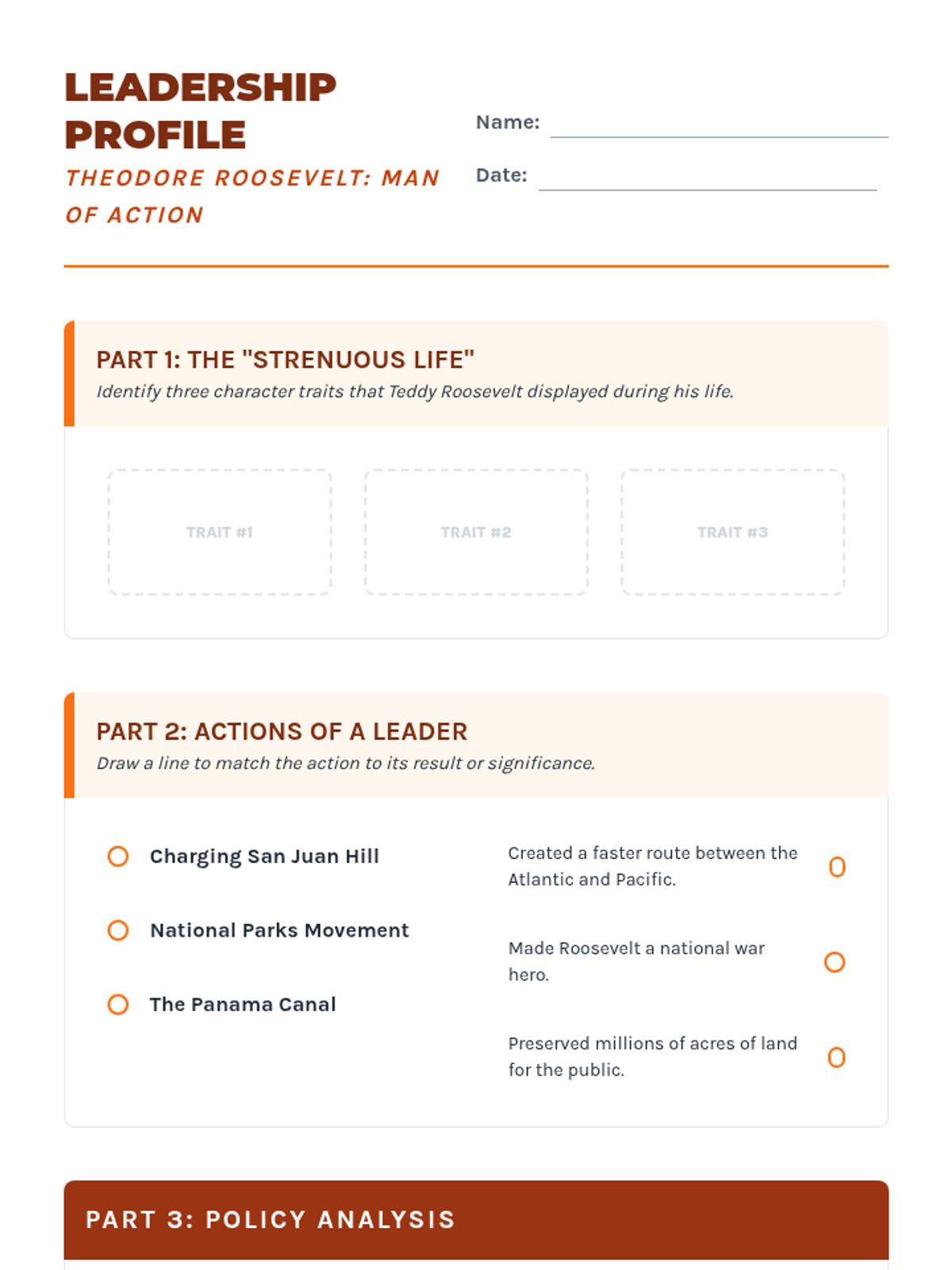
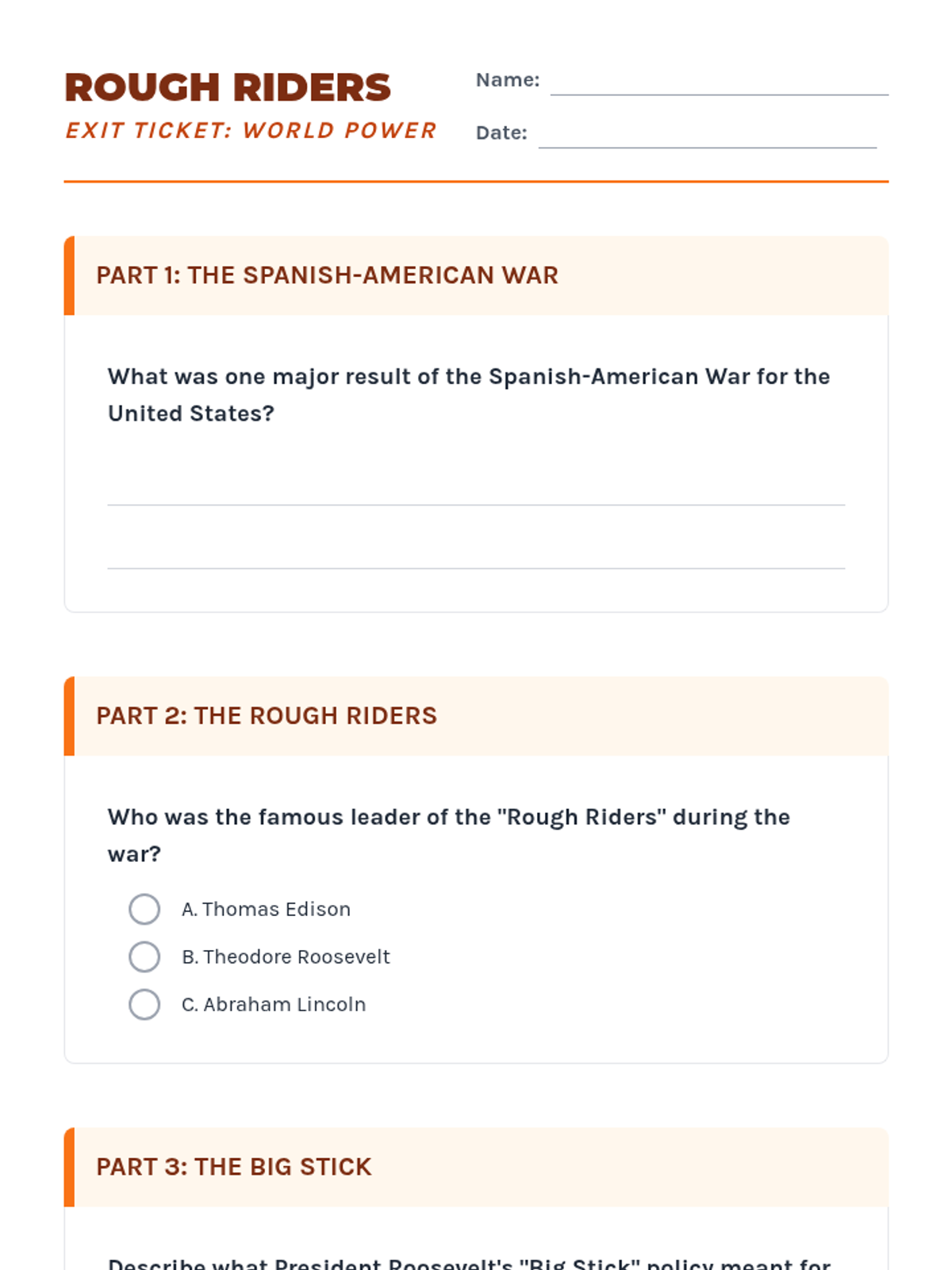
Introduction to the Spanish-American War and the leadership of Theodore Roosevelt.
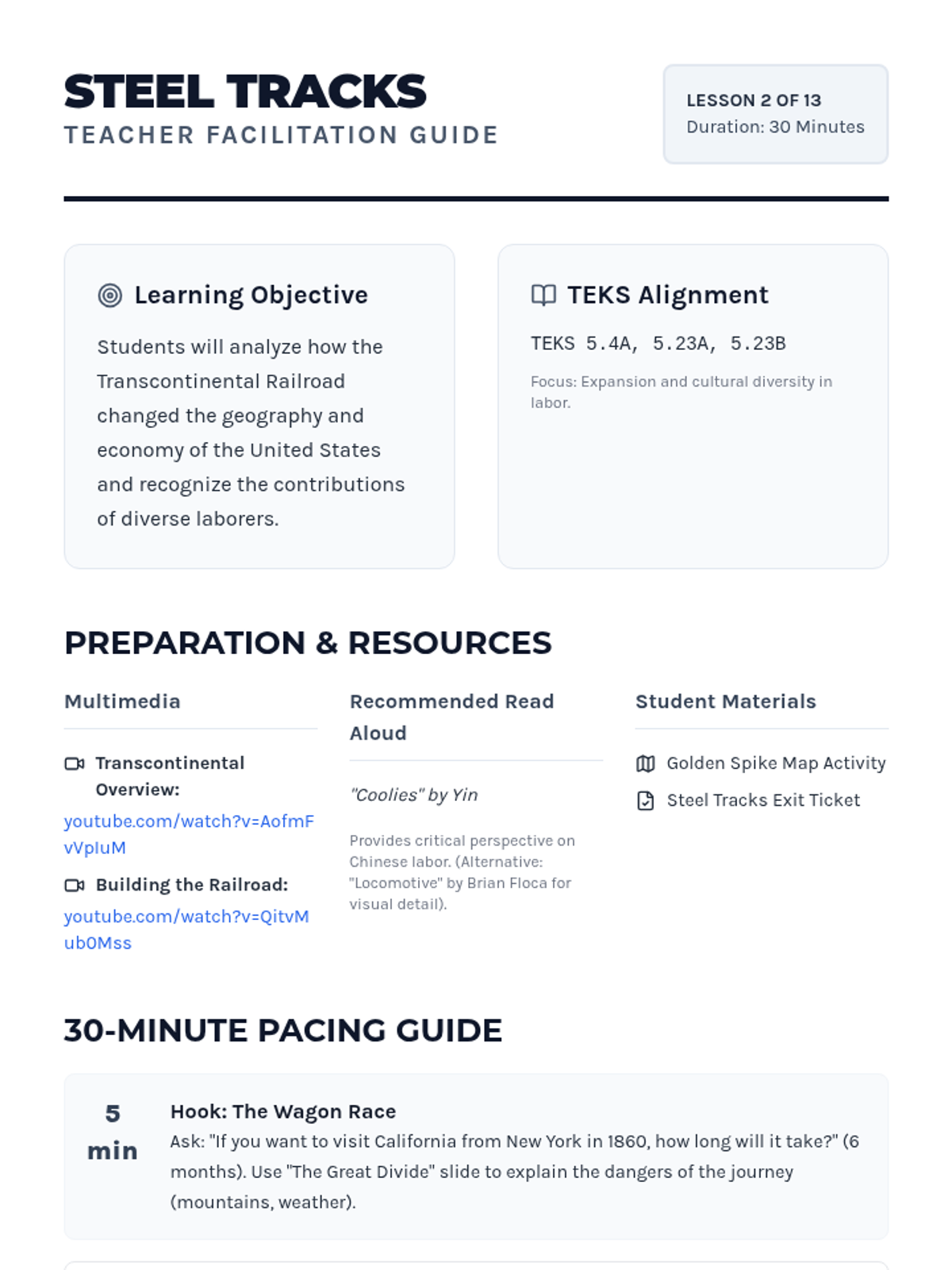
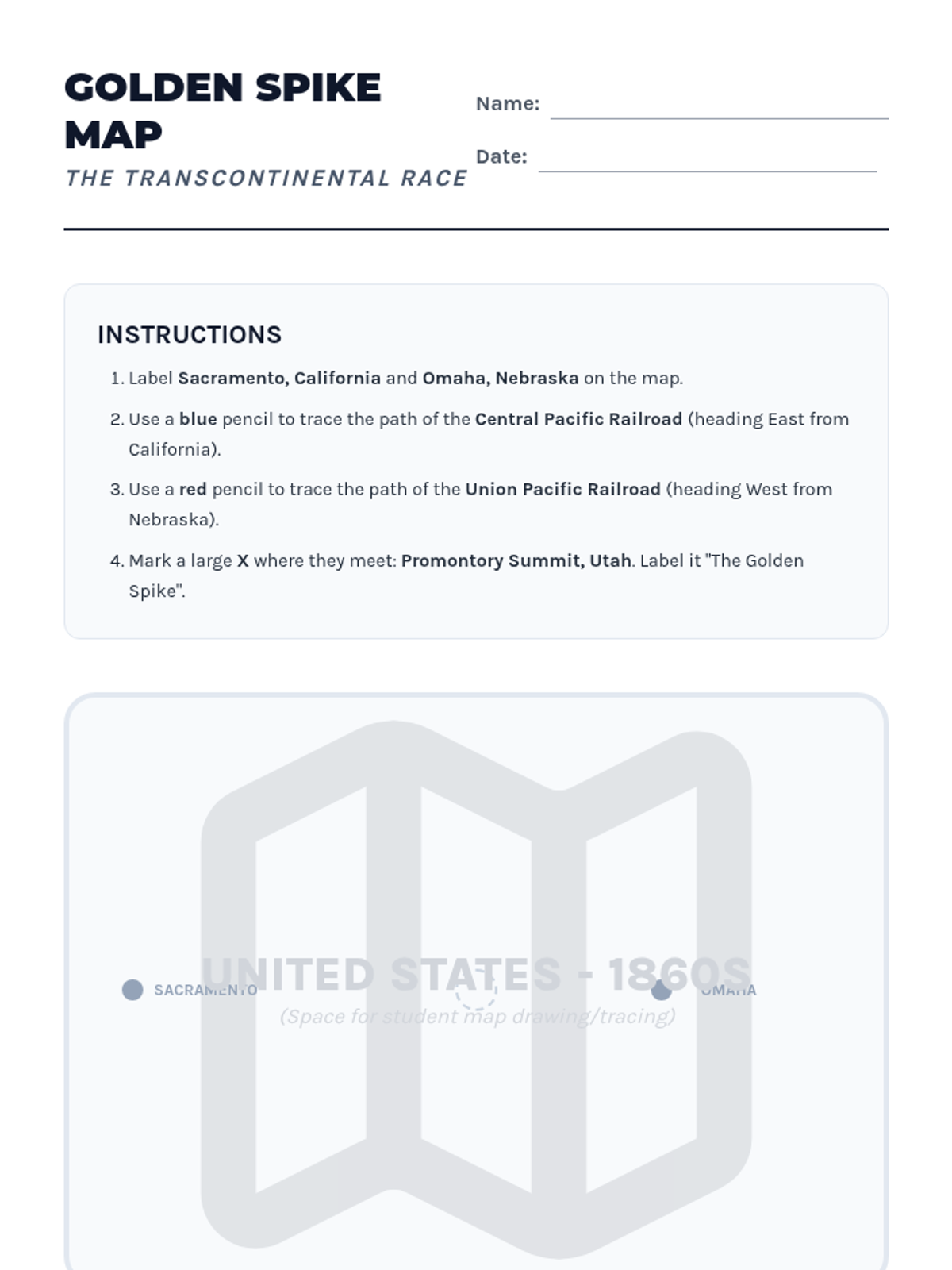
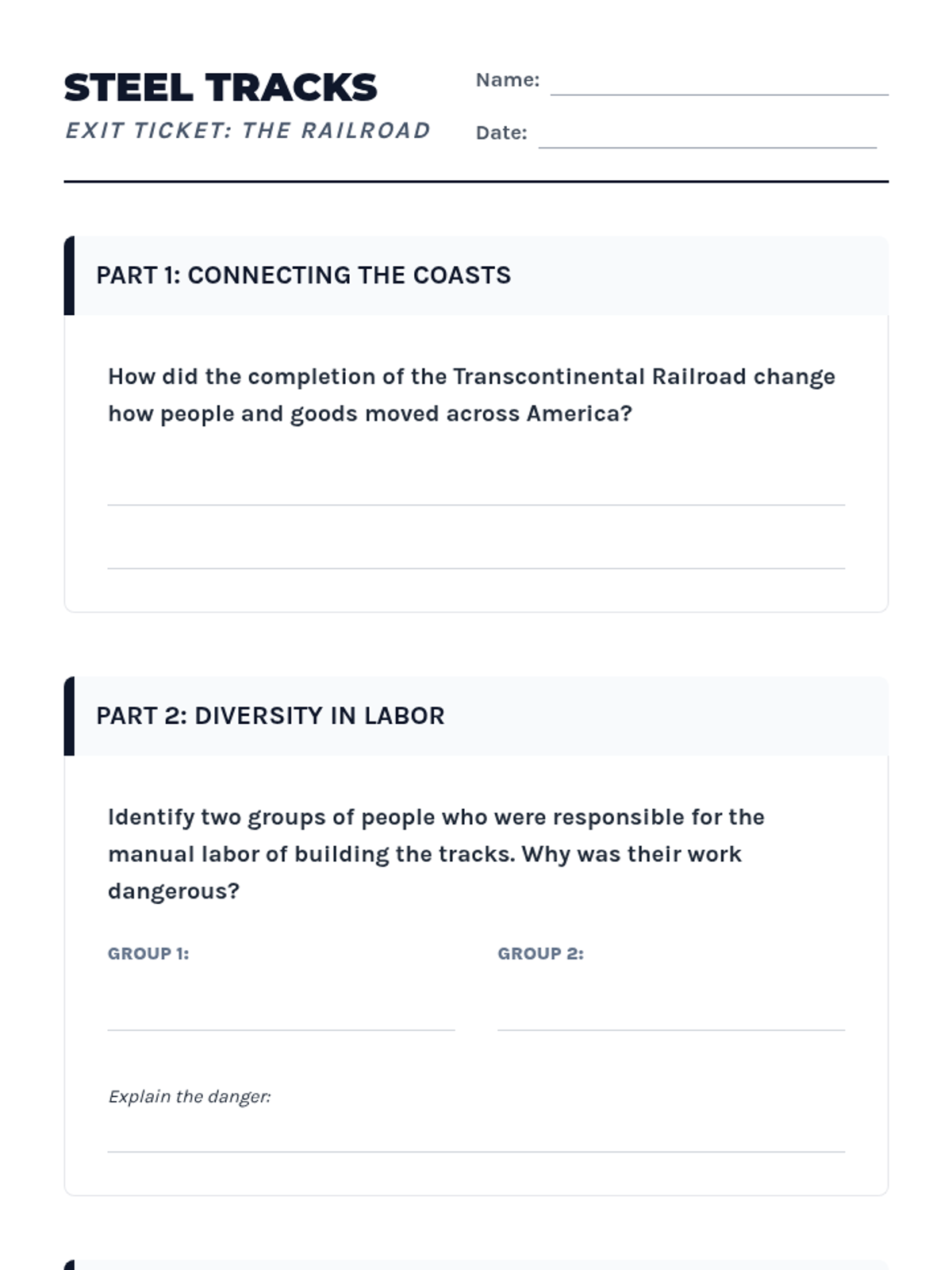
Examines the construction of the Transcontinental Railroad and the diverse groups of people who built it.
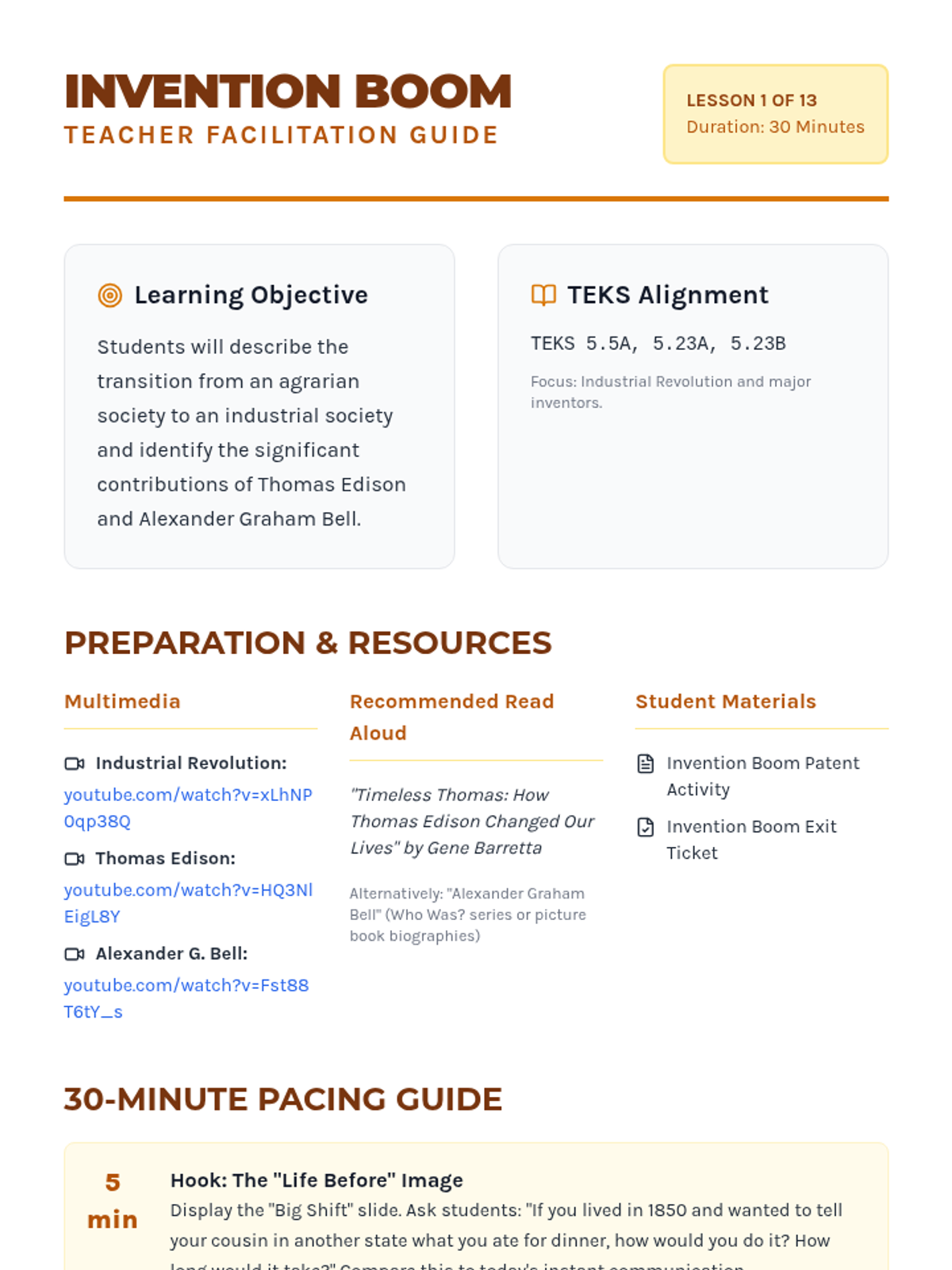
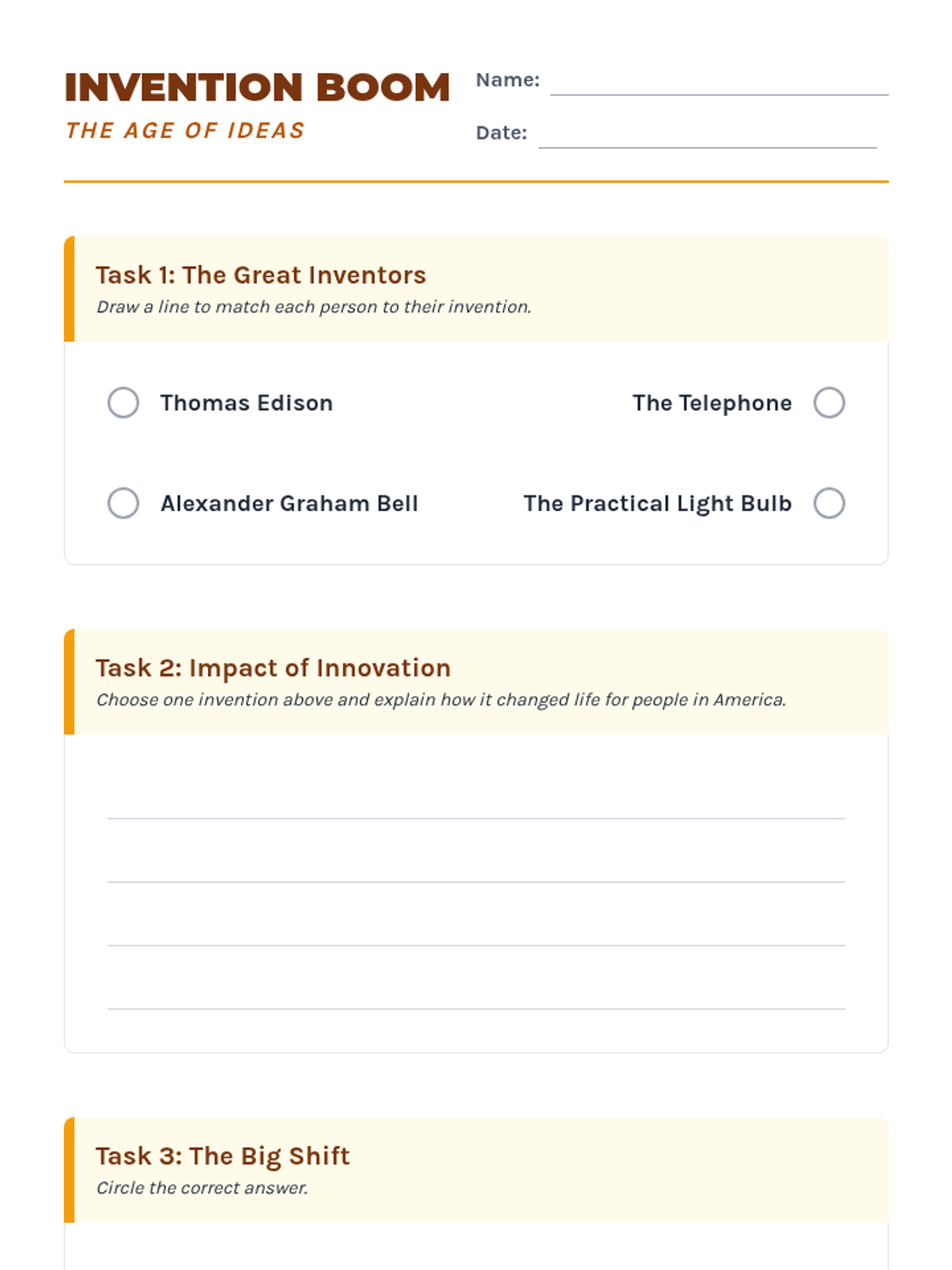
Explores the shift from agrarian life to the Industrial Revolution, focusing on inventors like Thomas Edison and Alexander Graham Bell.
Students explore the diverse geography, cultures, and economies of the Andean nations (Ecuador, Peru, Bolivia, and Chile) through a travel-planning lens. The lesson features a documentary on the region, vertical trade concepts, and a creative travel brochure project.
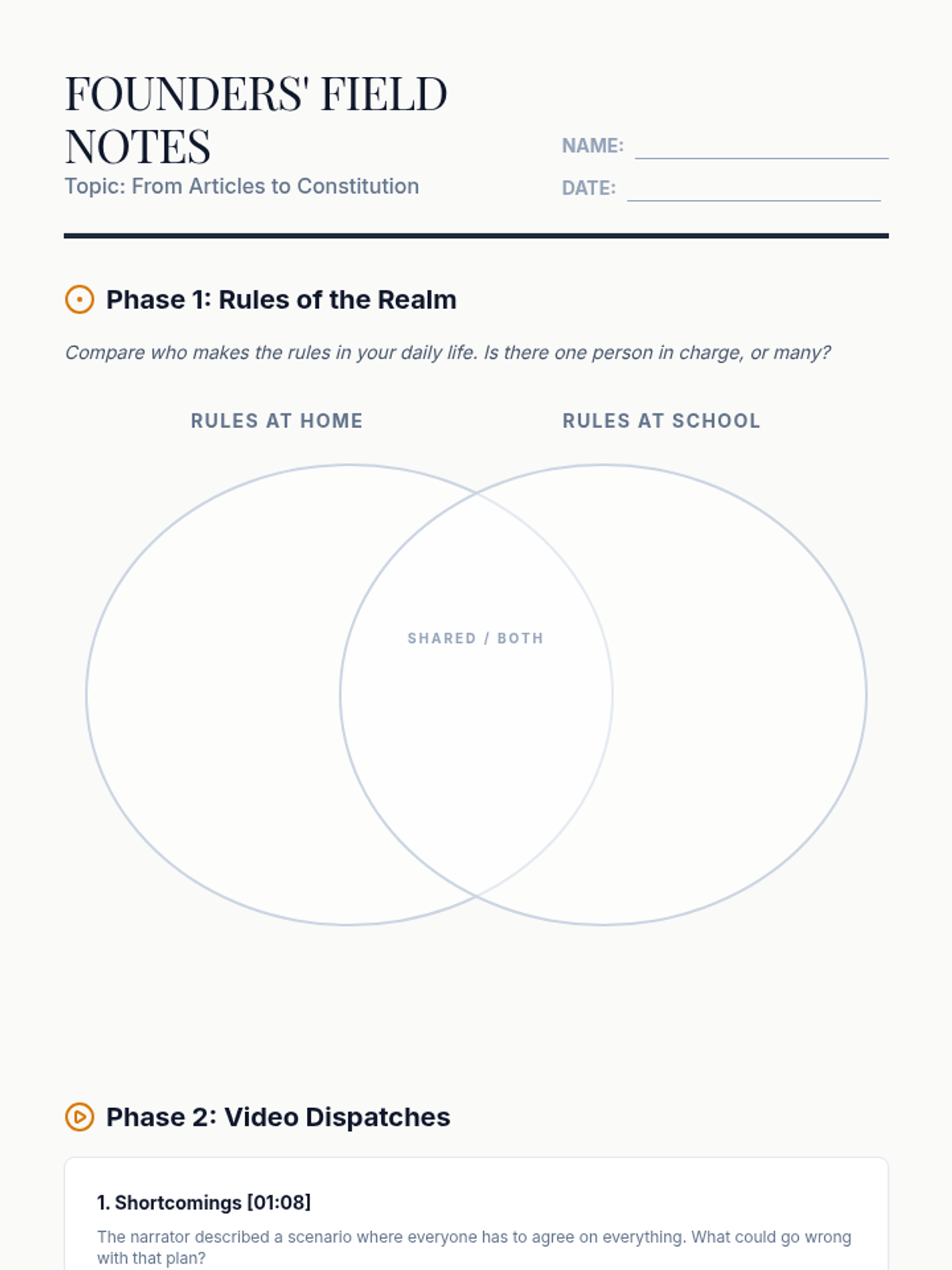
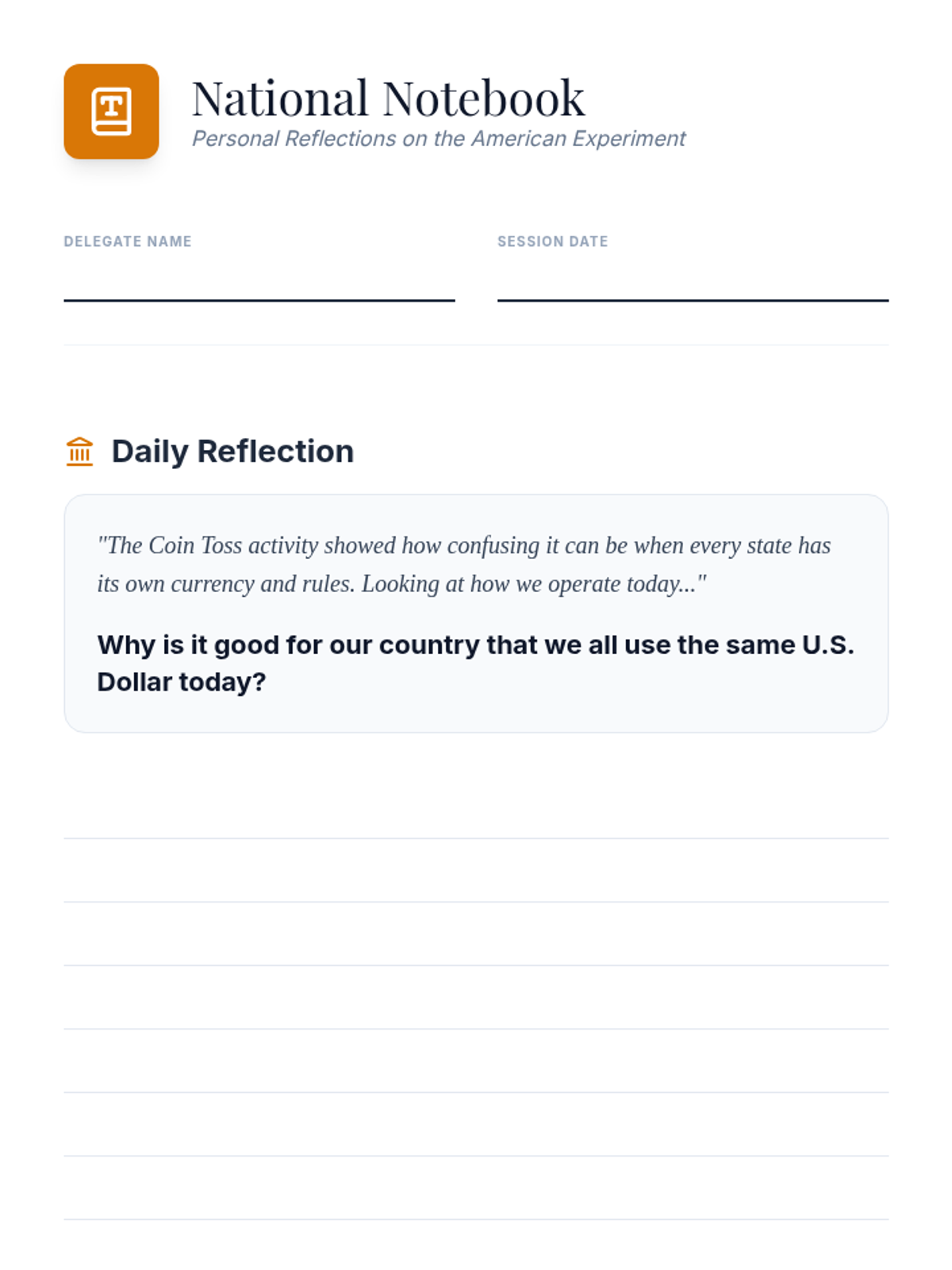
This lesson explores the transition from the Articles of Confederation to the U.S. Constitution, focusing on the challenges of state-led commerce and the need for a unified federal system. Students will watch a guided video, design their own state currencies in a hands-on activity, and reflect on the benefits of a single national economy.
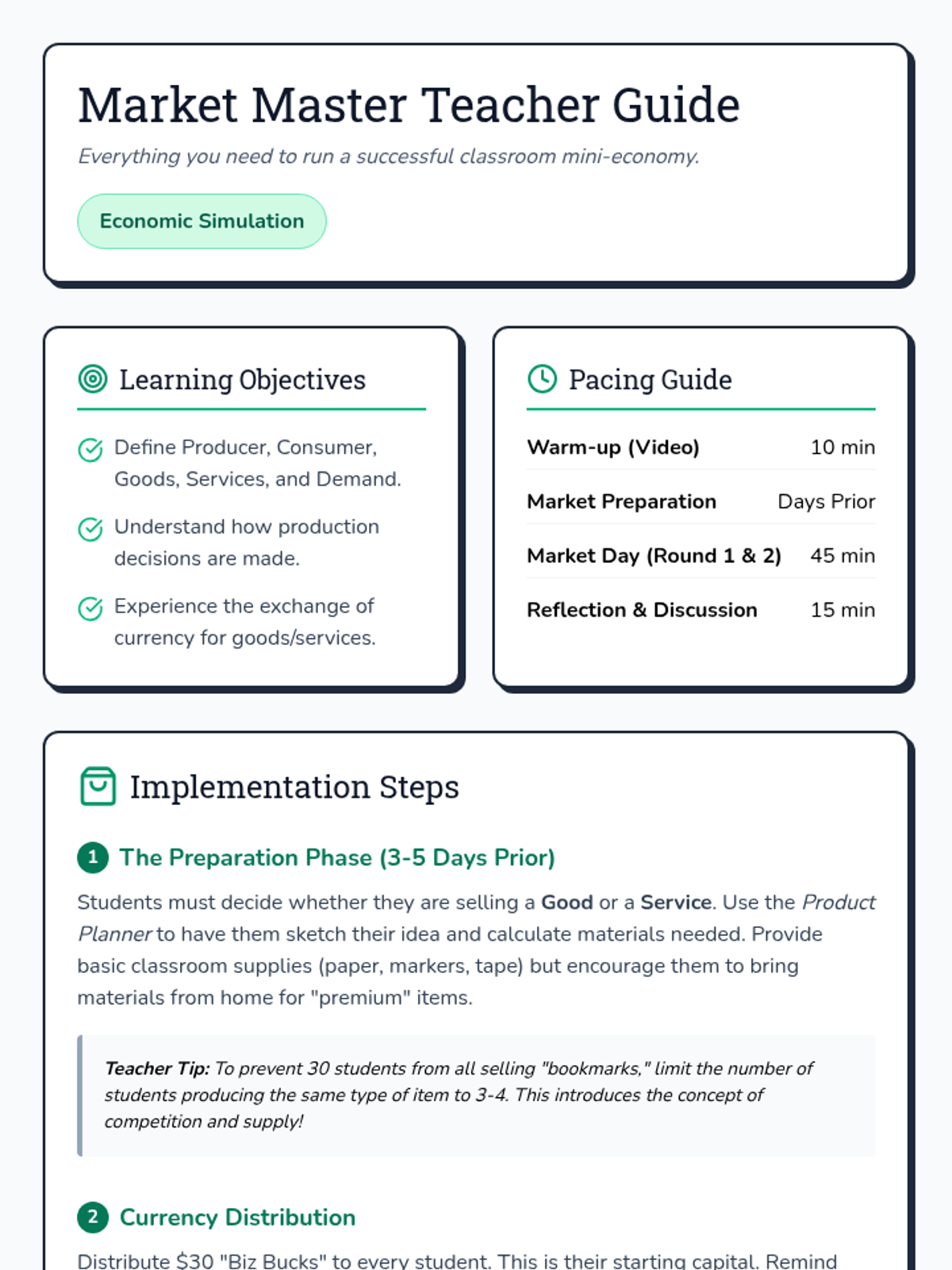
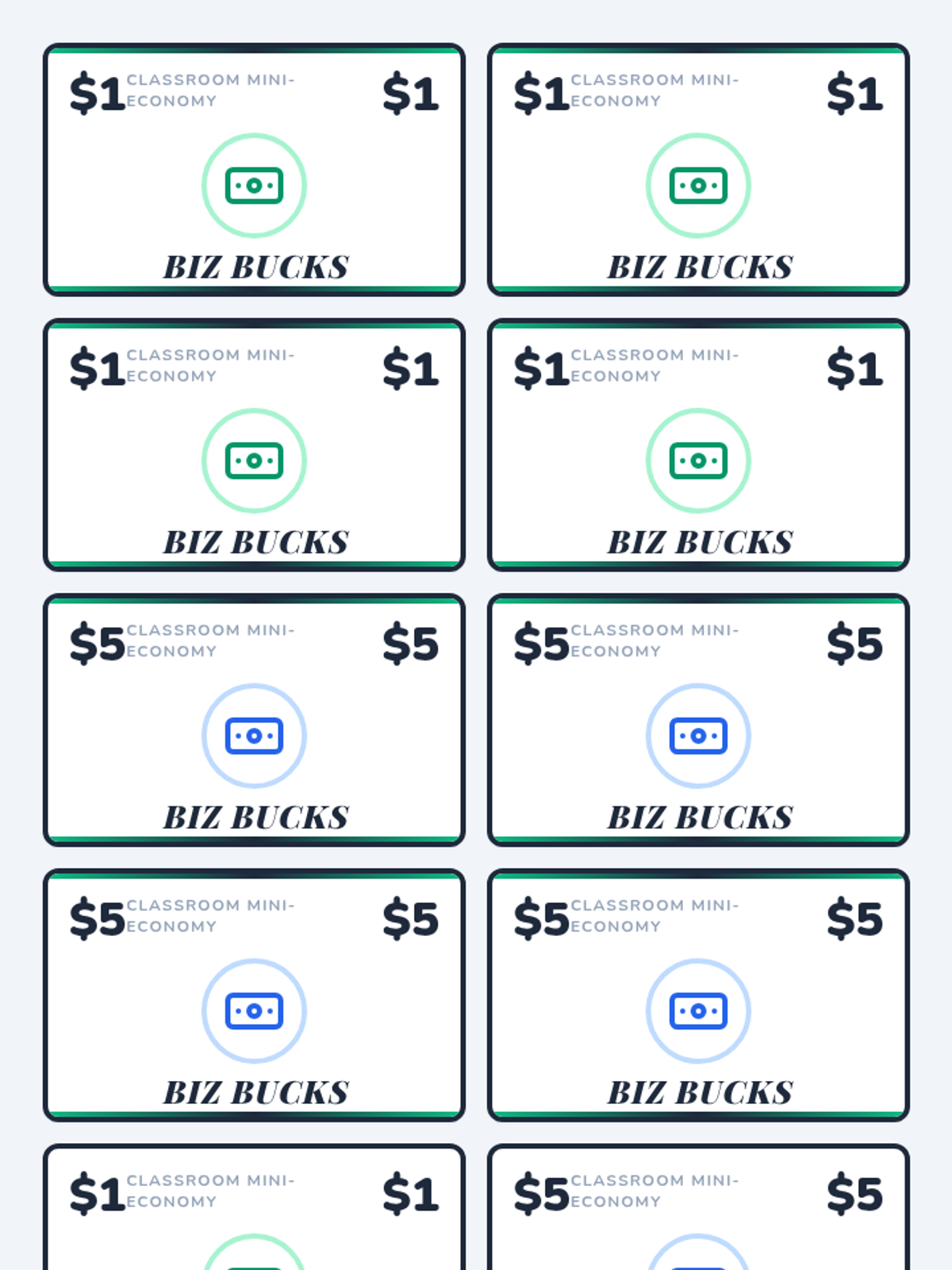
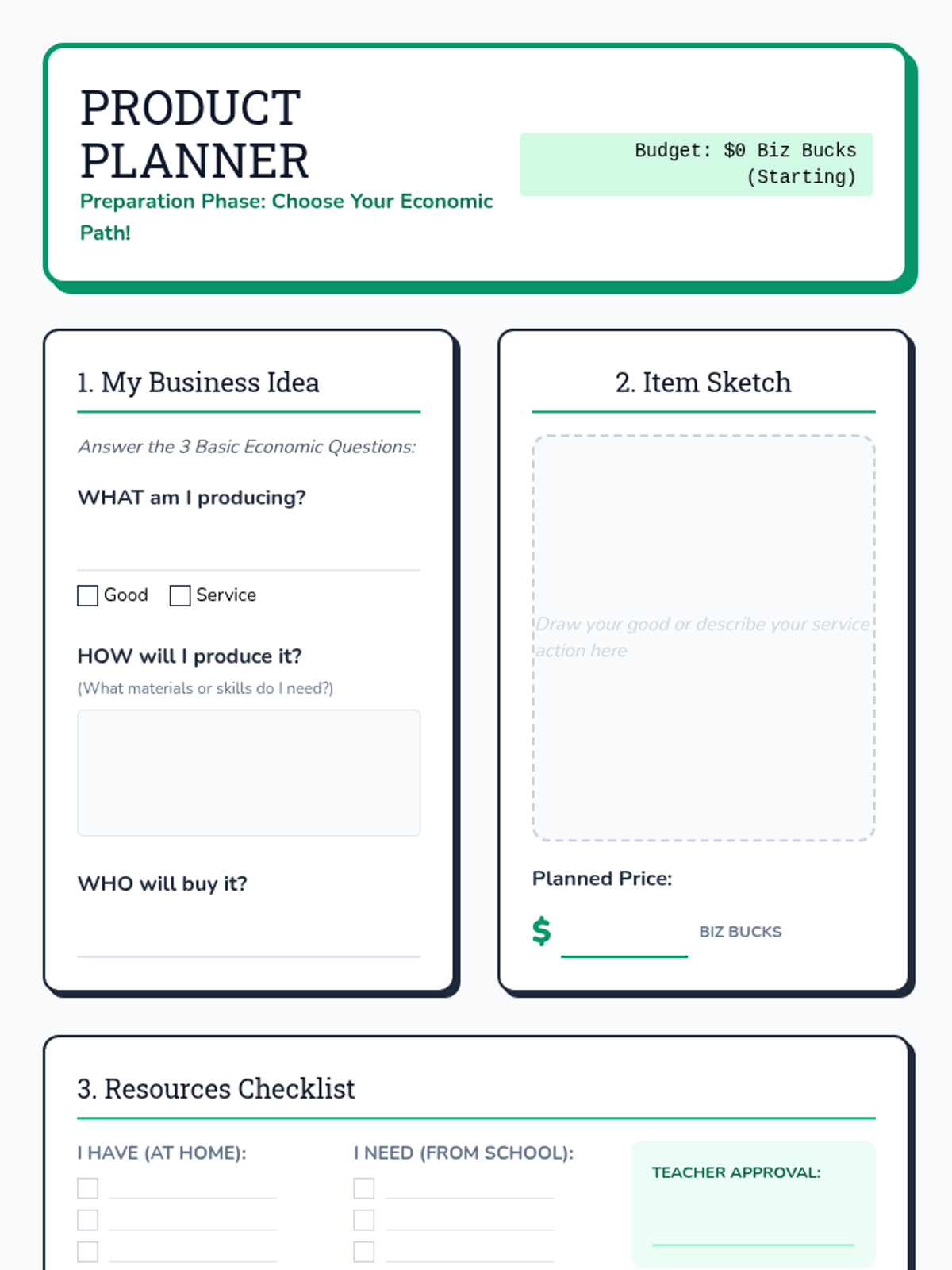
A comprehensive lesson where students learn fundamental economic concepts through the creation and operation of a classroom mini-economy, culminating in a hands-on Market Day event.
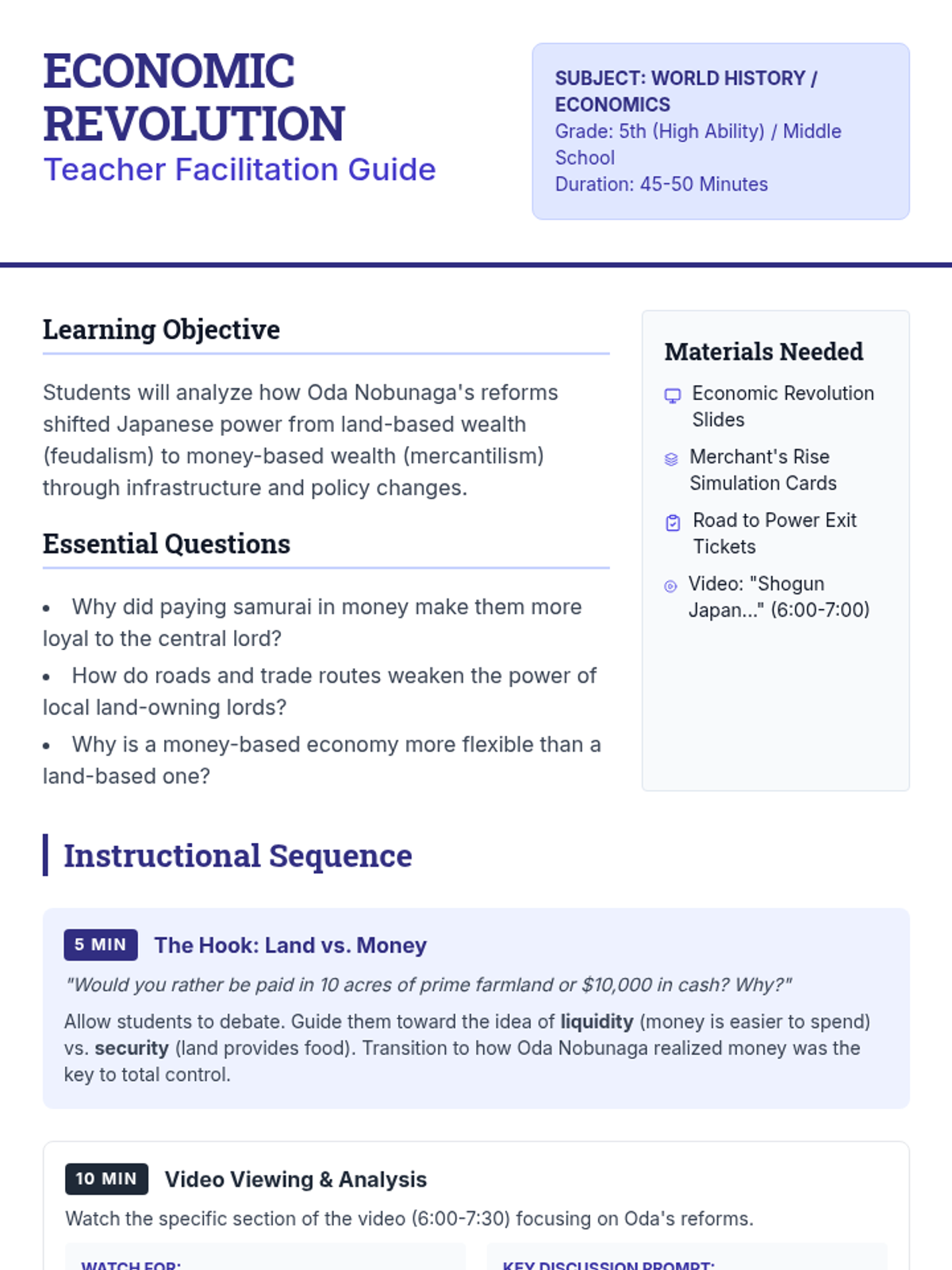
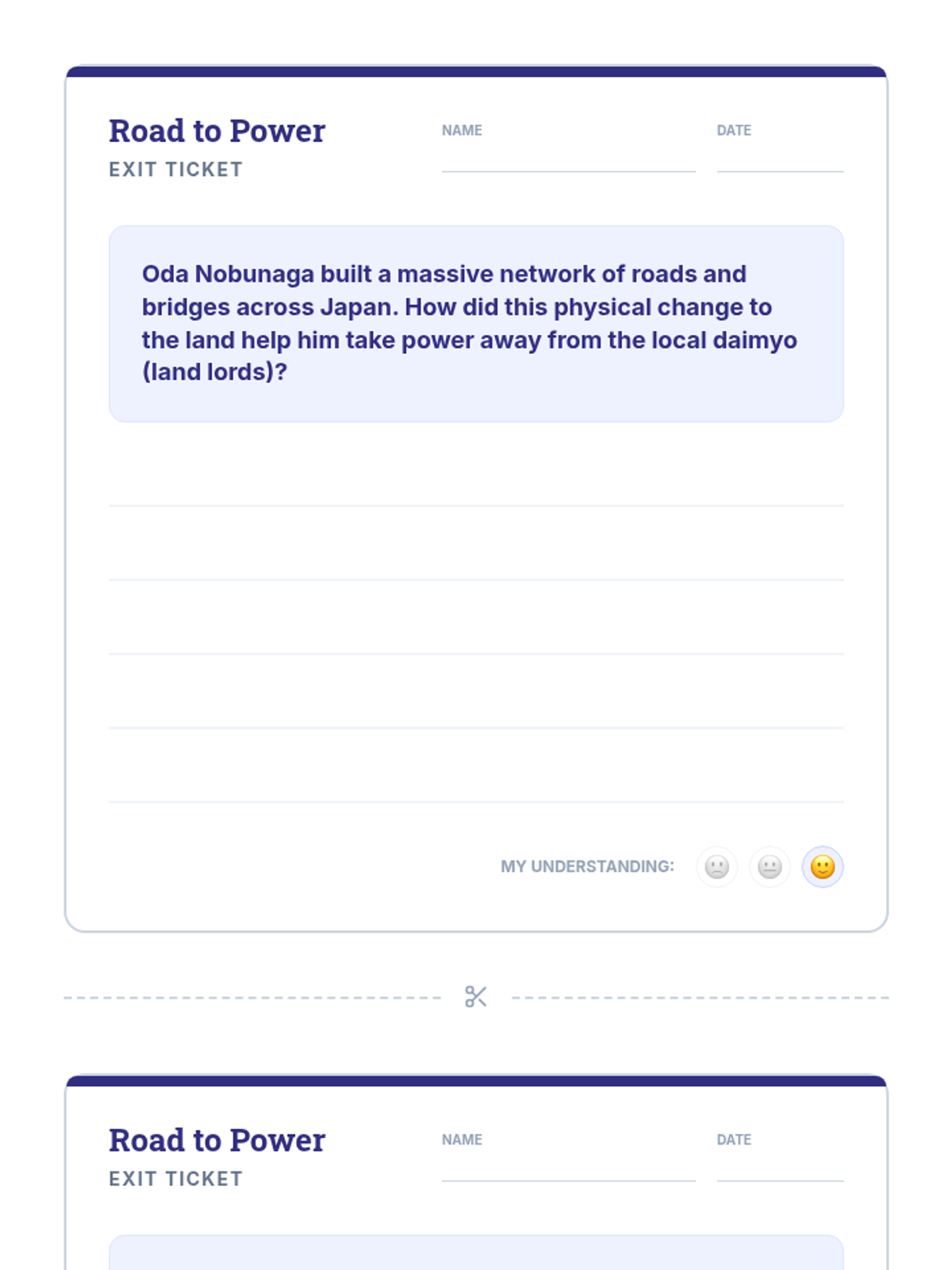
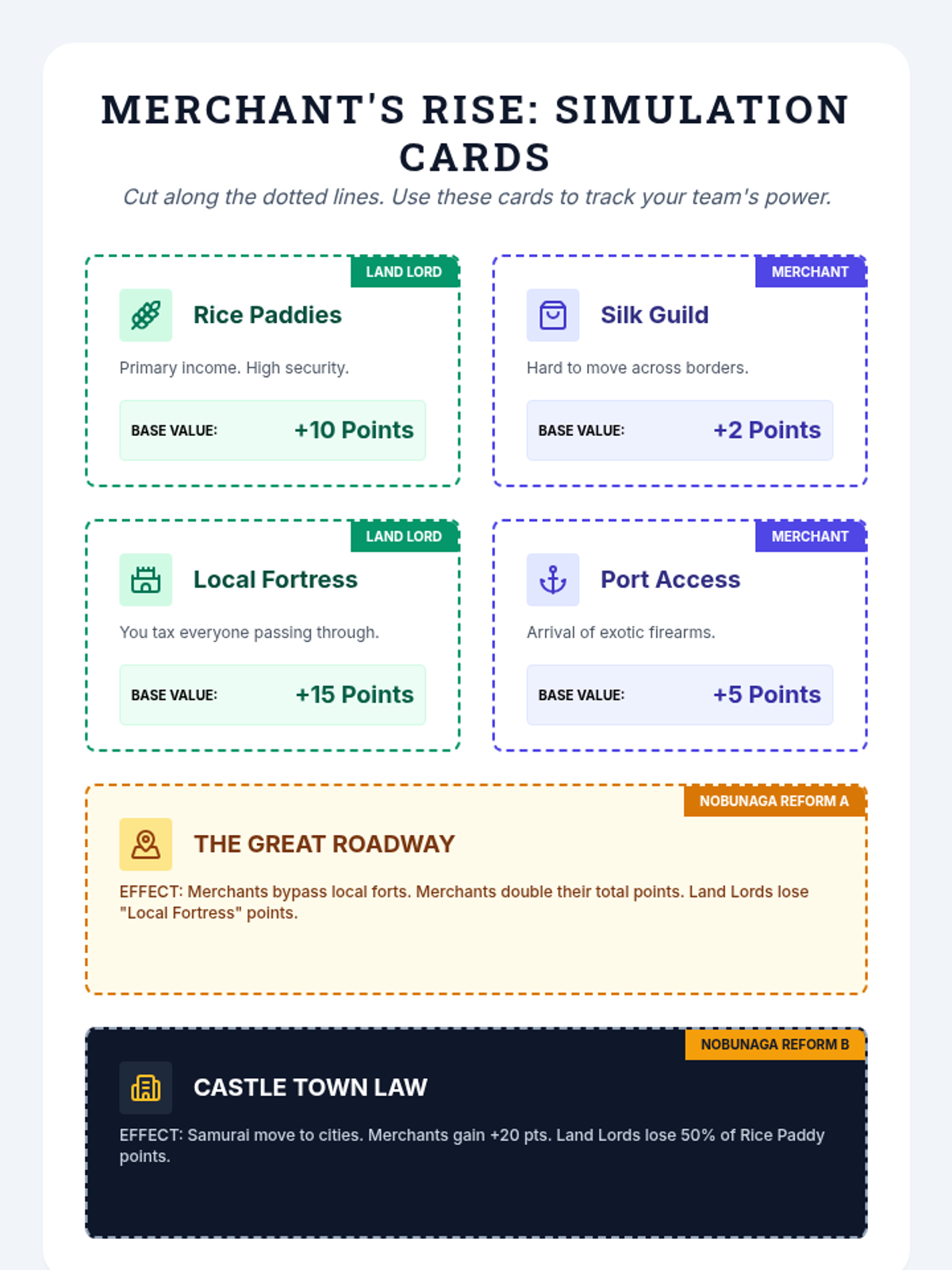
A lesson for high-ability 5th grade or middle school students exploring the economic transition from land-based feudalism to a money-based economy under Oda Nobunaga. Students participate in a simulation game to see how infrastructure and policy changes shift power from traditional lords to the merchant class.
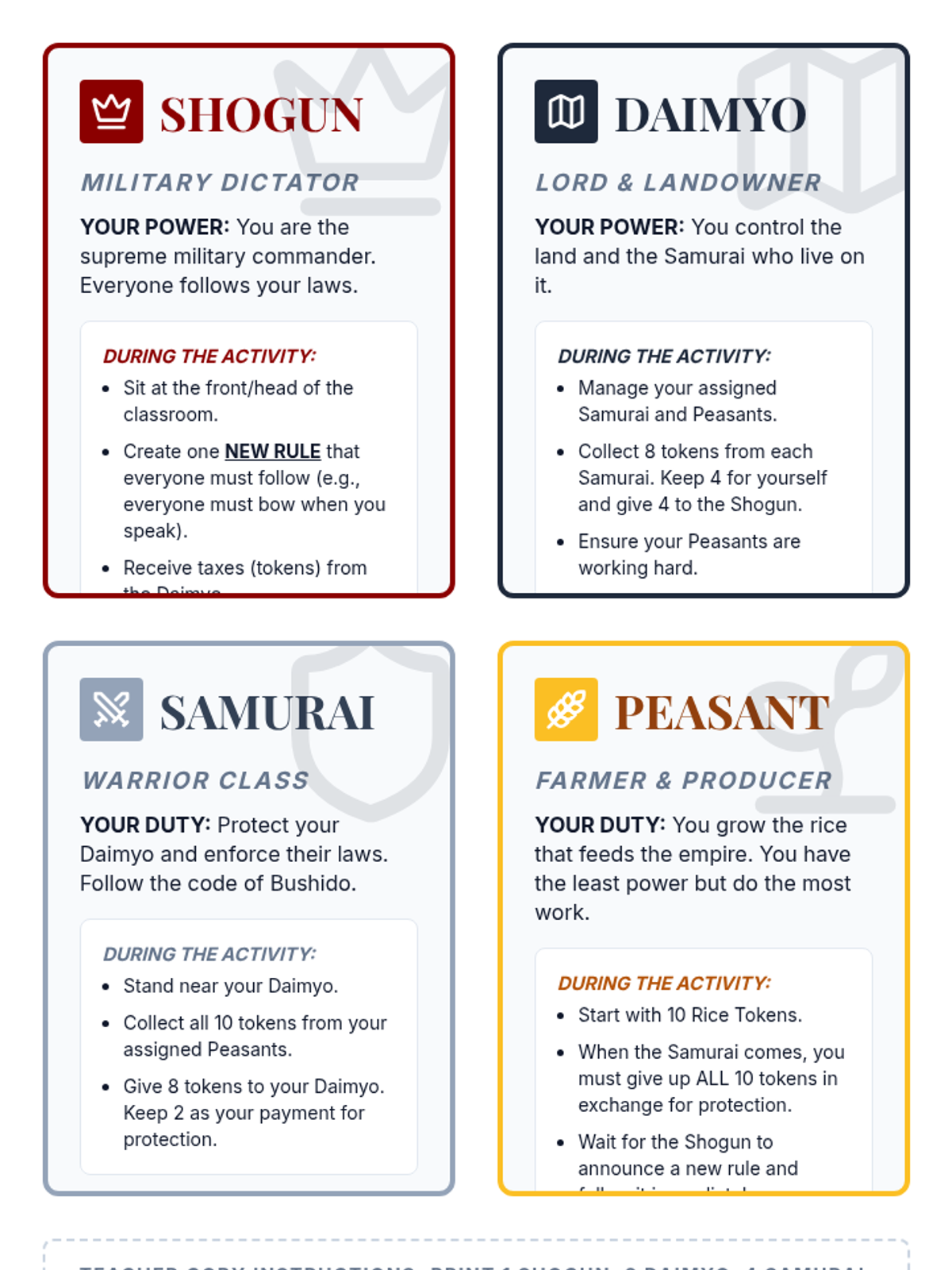
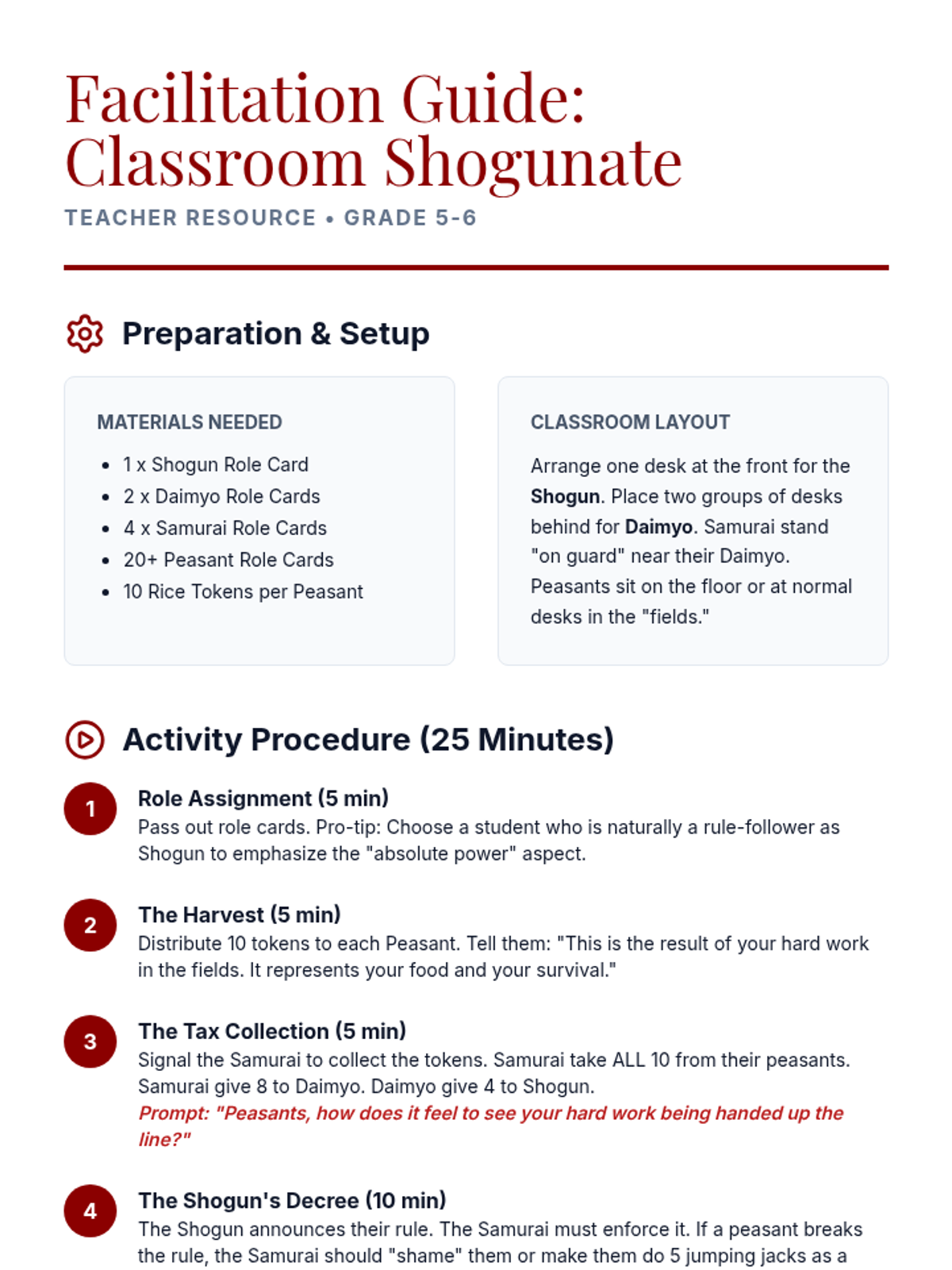
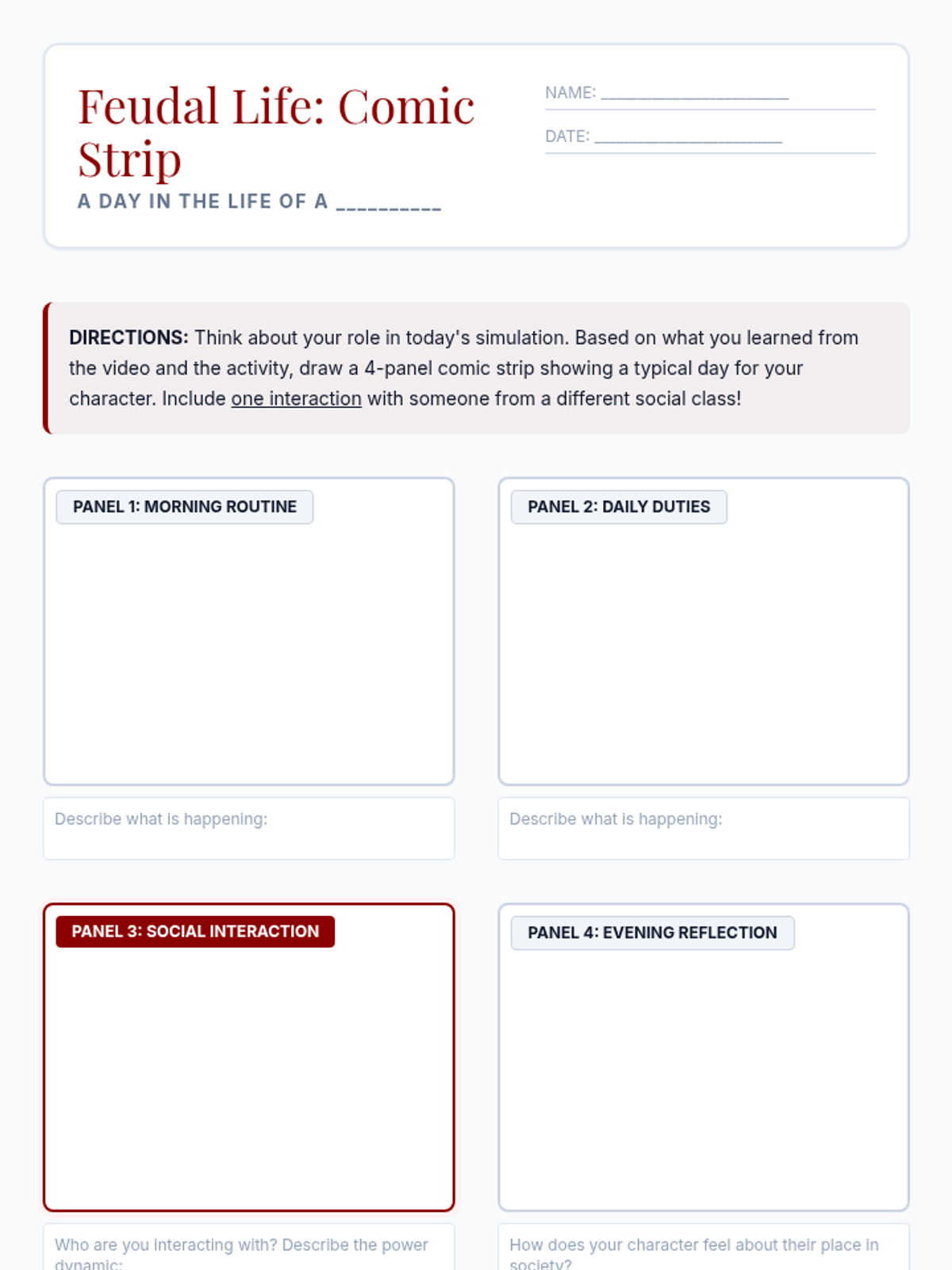
A hands-on exploration of Feudal Japan's social hierarchy, featuring a classroom role-play simulation where students navigate the power dynamics of Shoguns, Daimyo, Samurai, and Peasants.
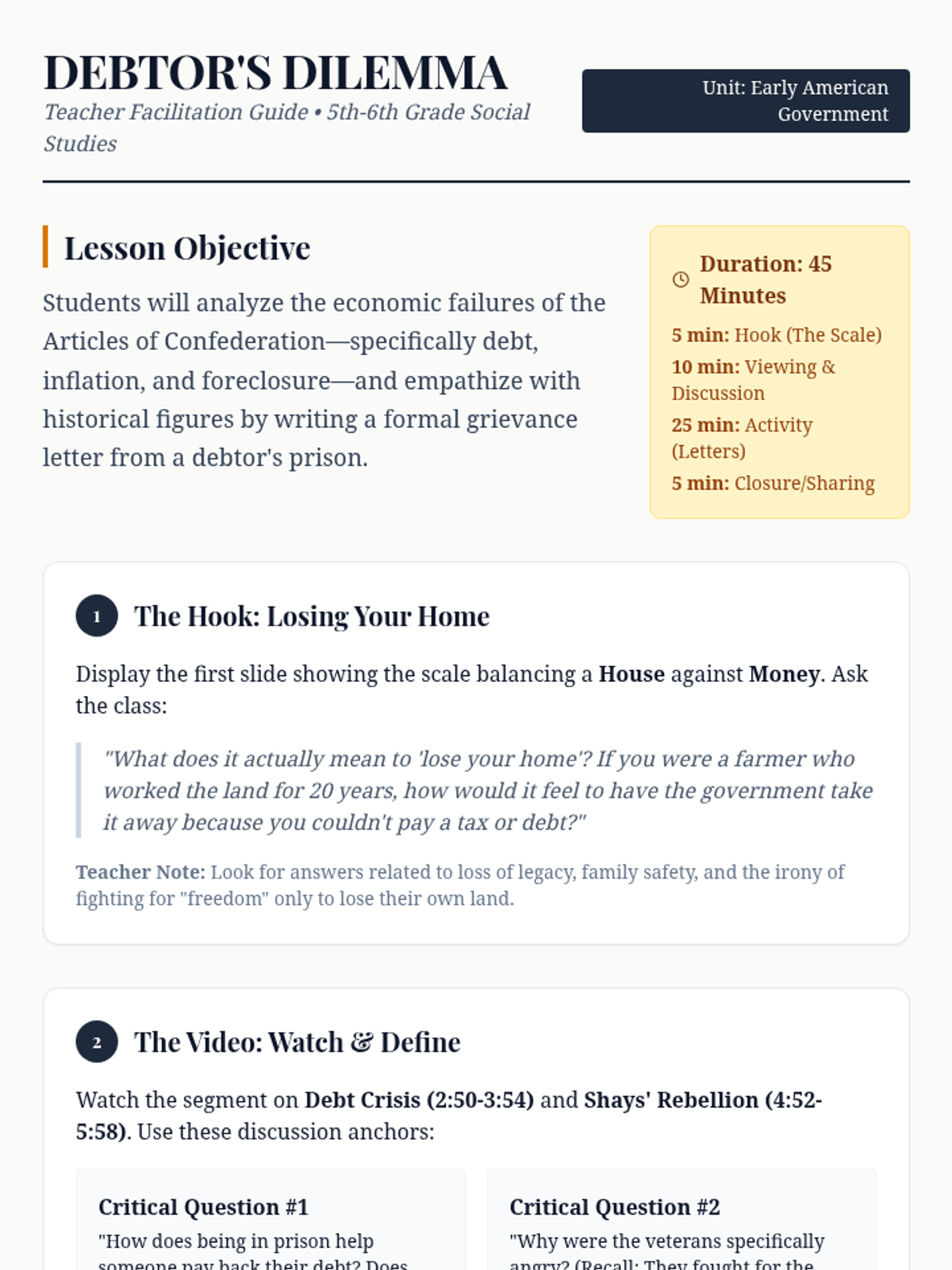
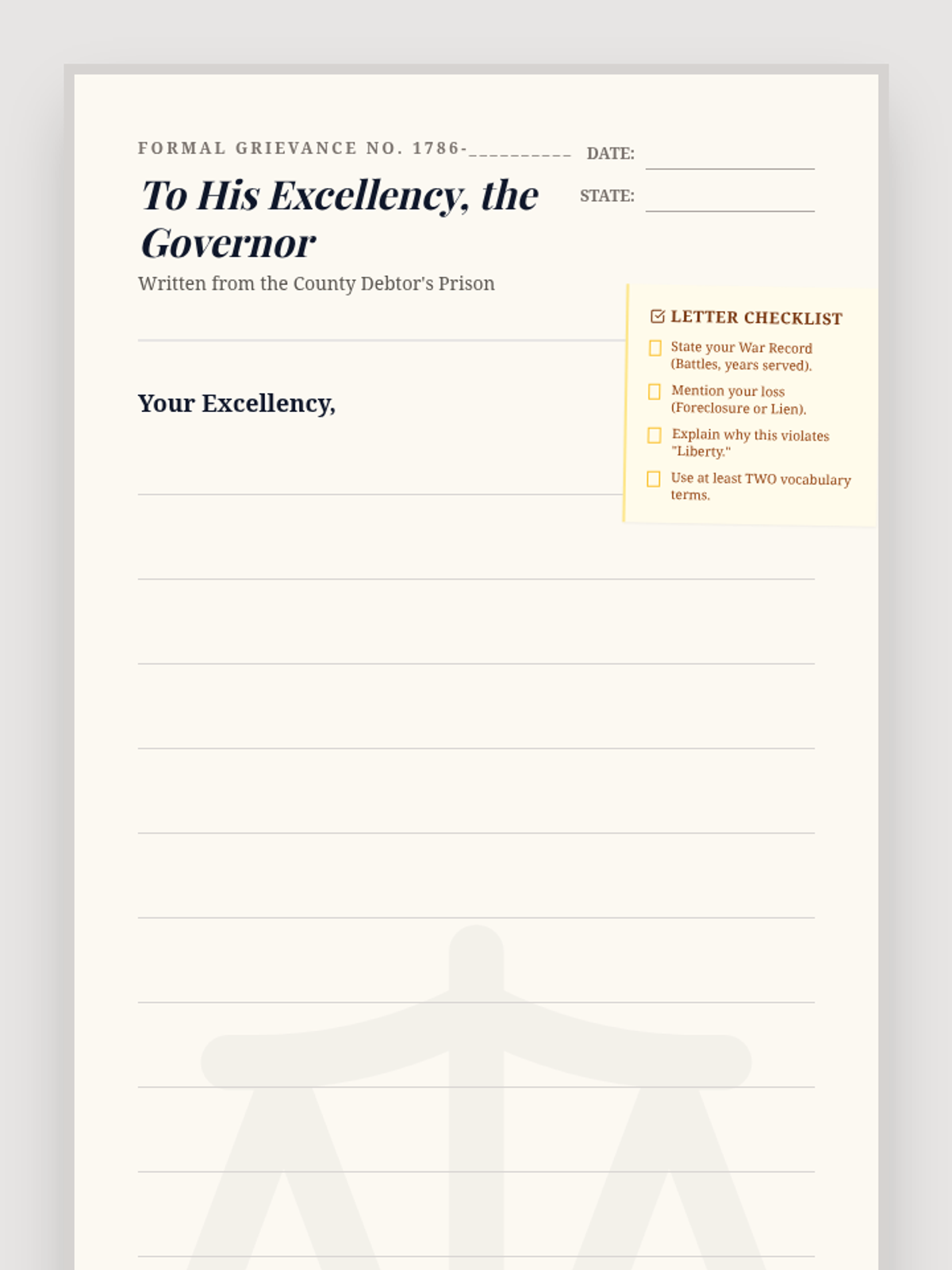
Students explore the economic instability under the Articles of Confederation, specifically focusing on debtor's prisons and Shays' Rebellion, through a creative writing letter-to-the-governor activity.
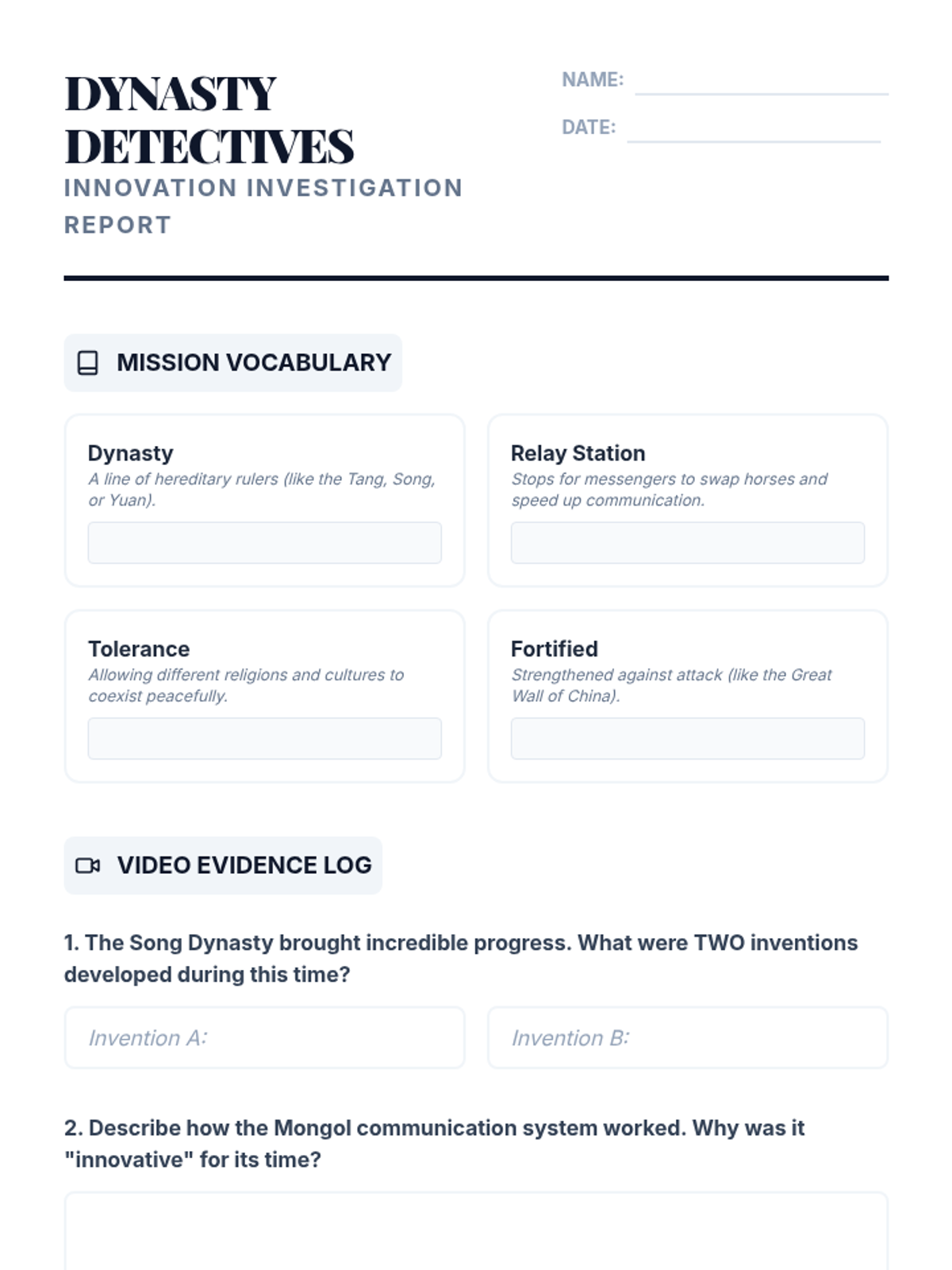
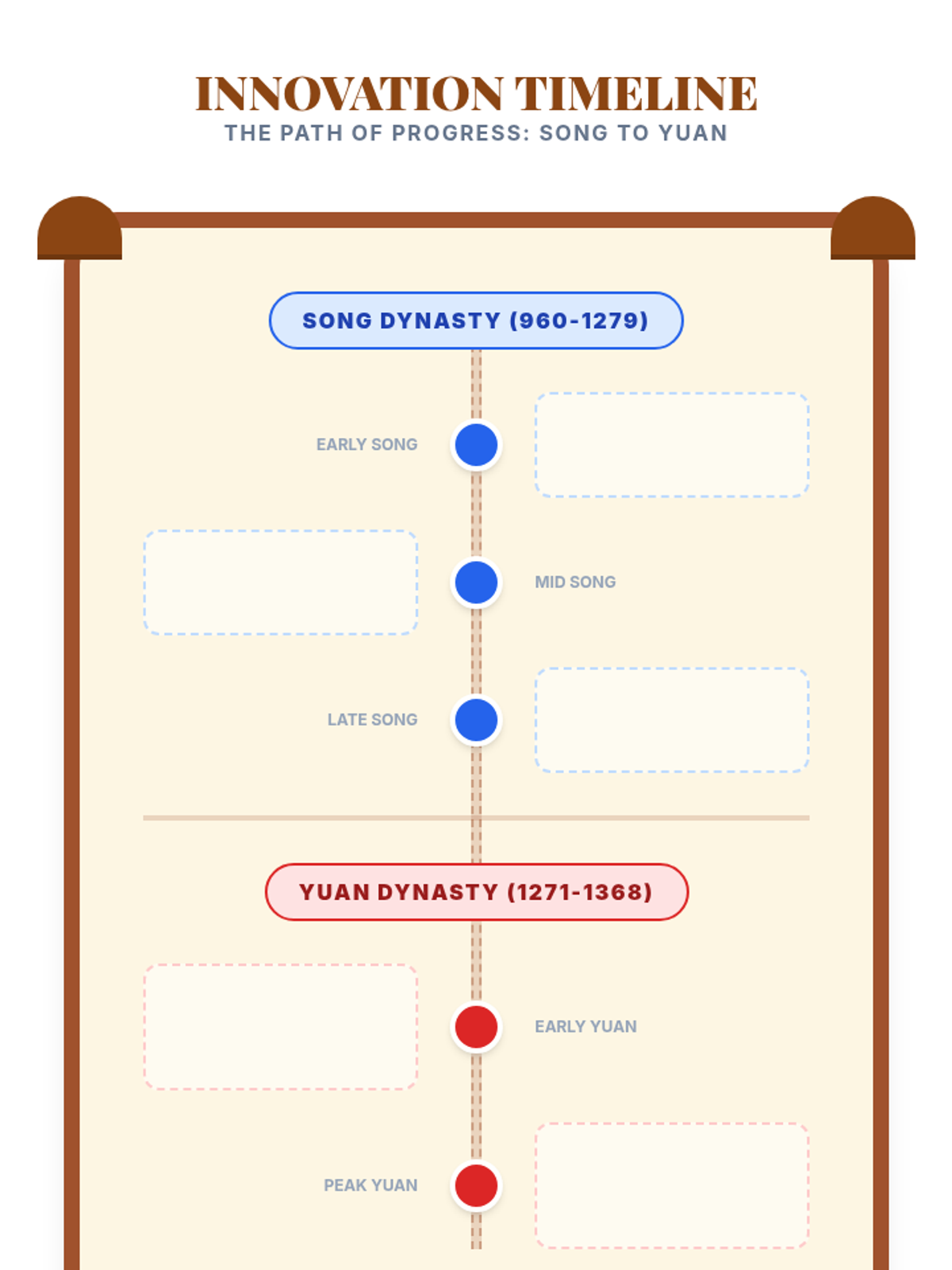
A lesson exploring the technological leaps of the Song and Yuan Dynasties, focusing on inventions like gunpowder, the compass, and the first global communication networks. Students will compare how these innovations shaped China and the world.
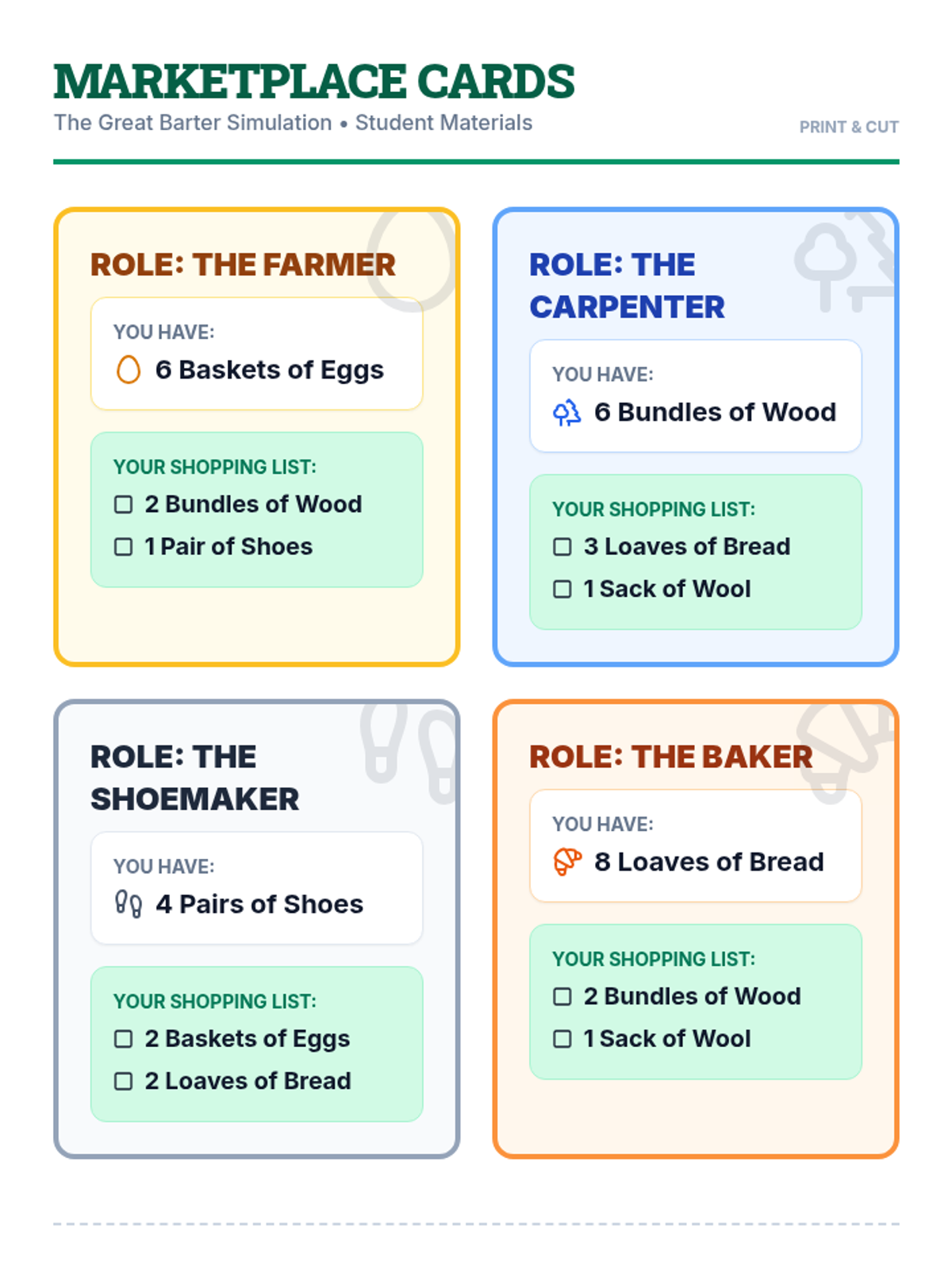
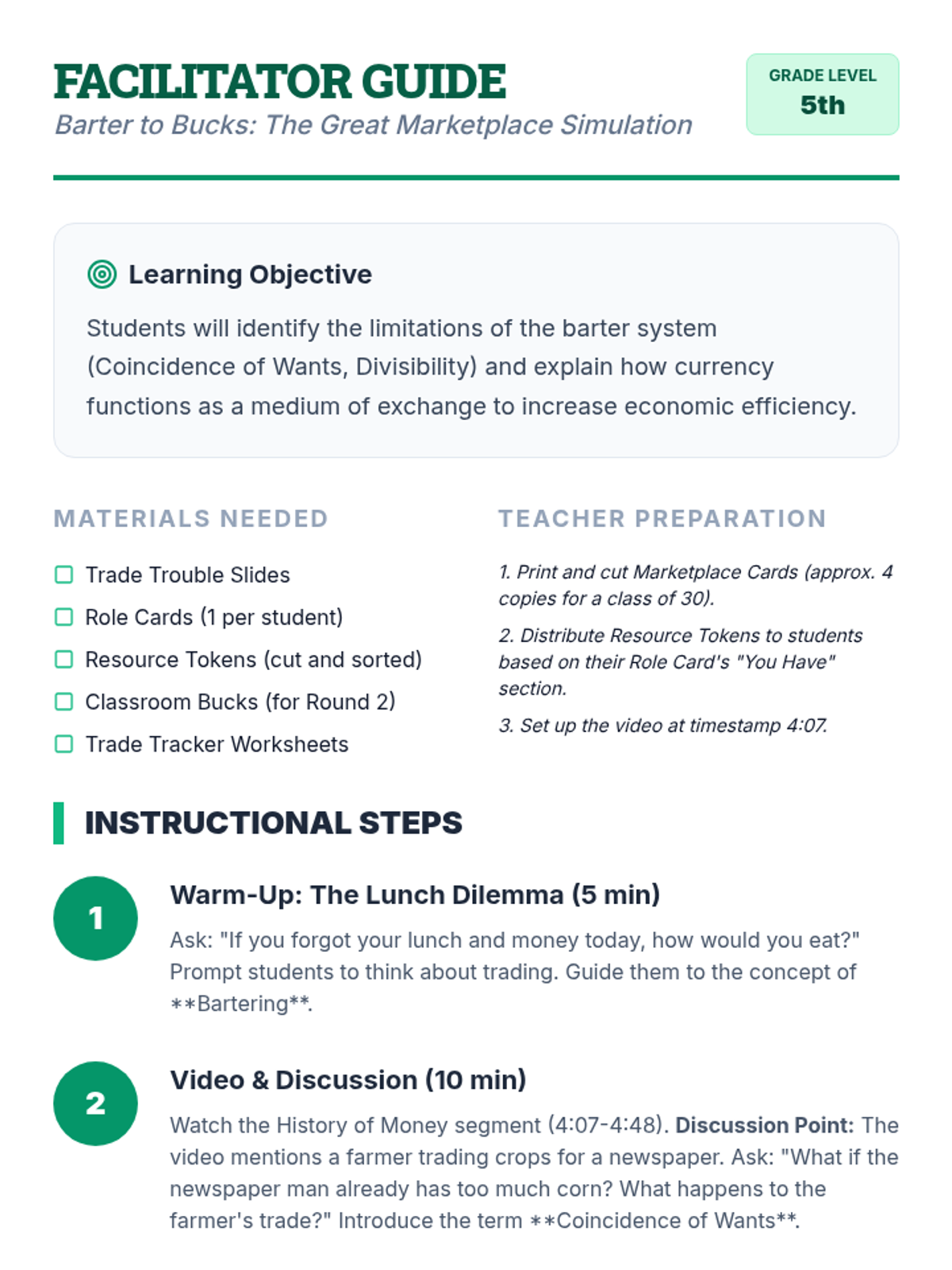
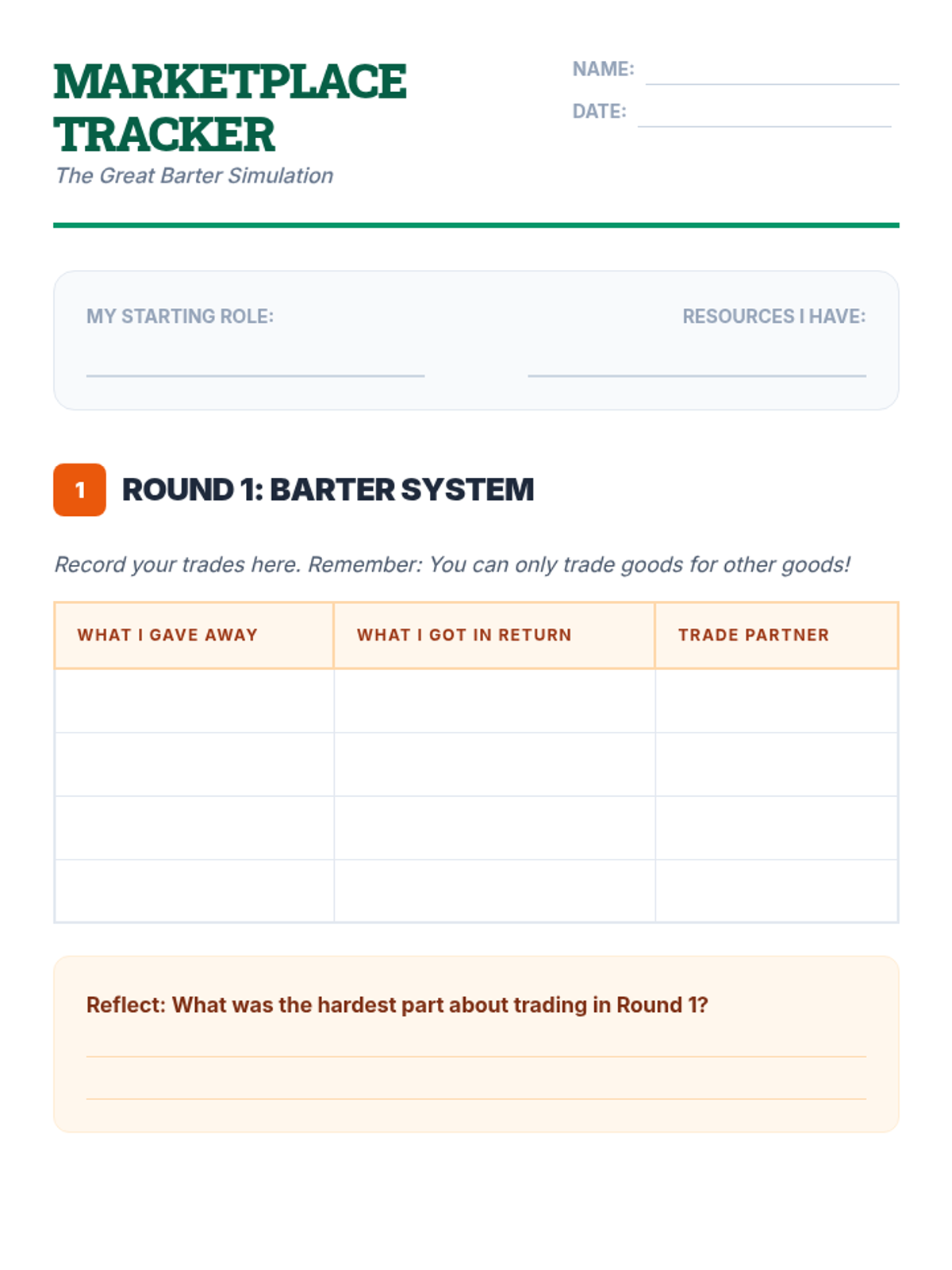
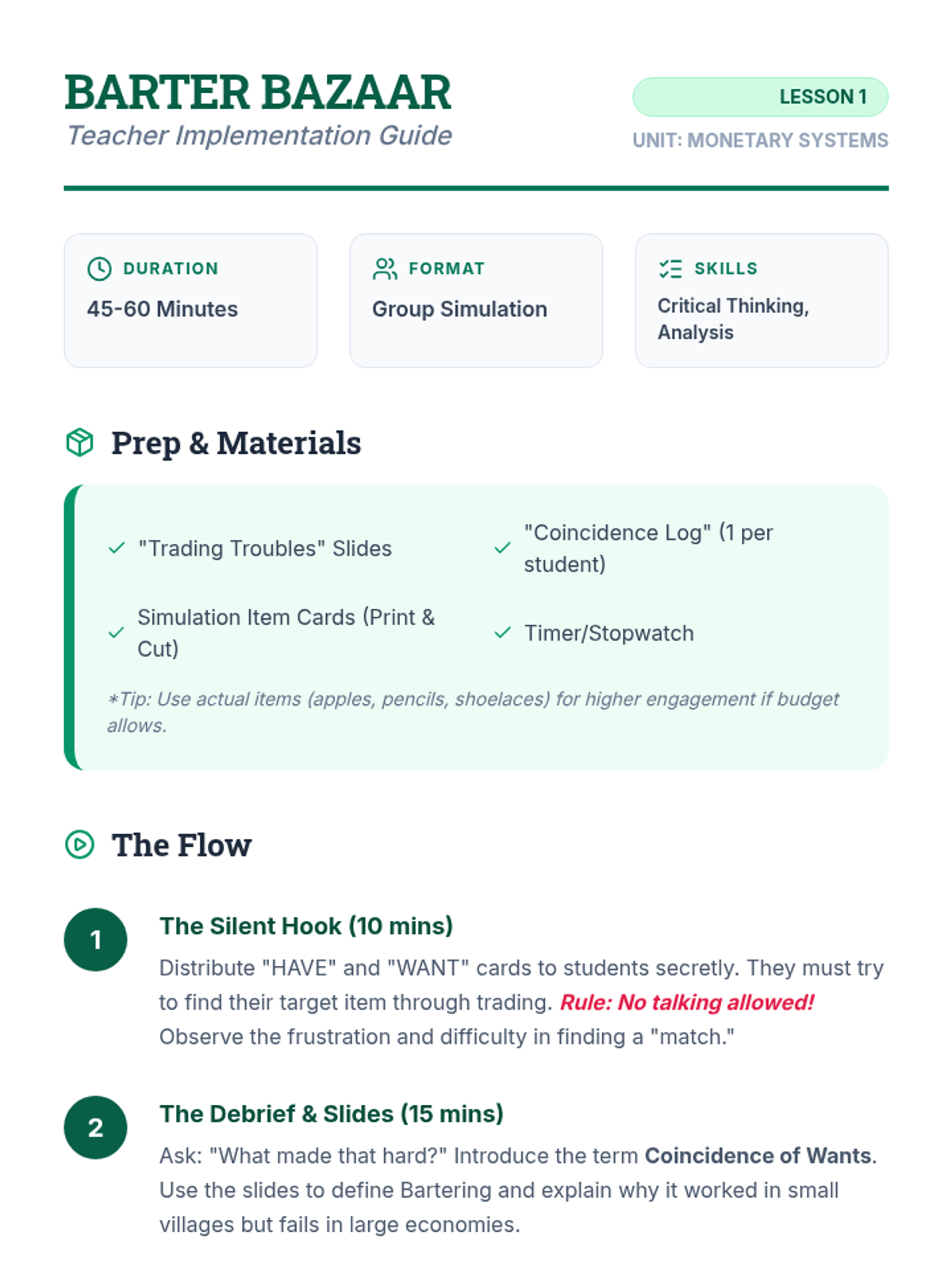
Students explore the limitations of the barter system and the efficiency of currency through a hands-on marketplace simulation and video analysis.
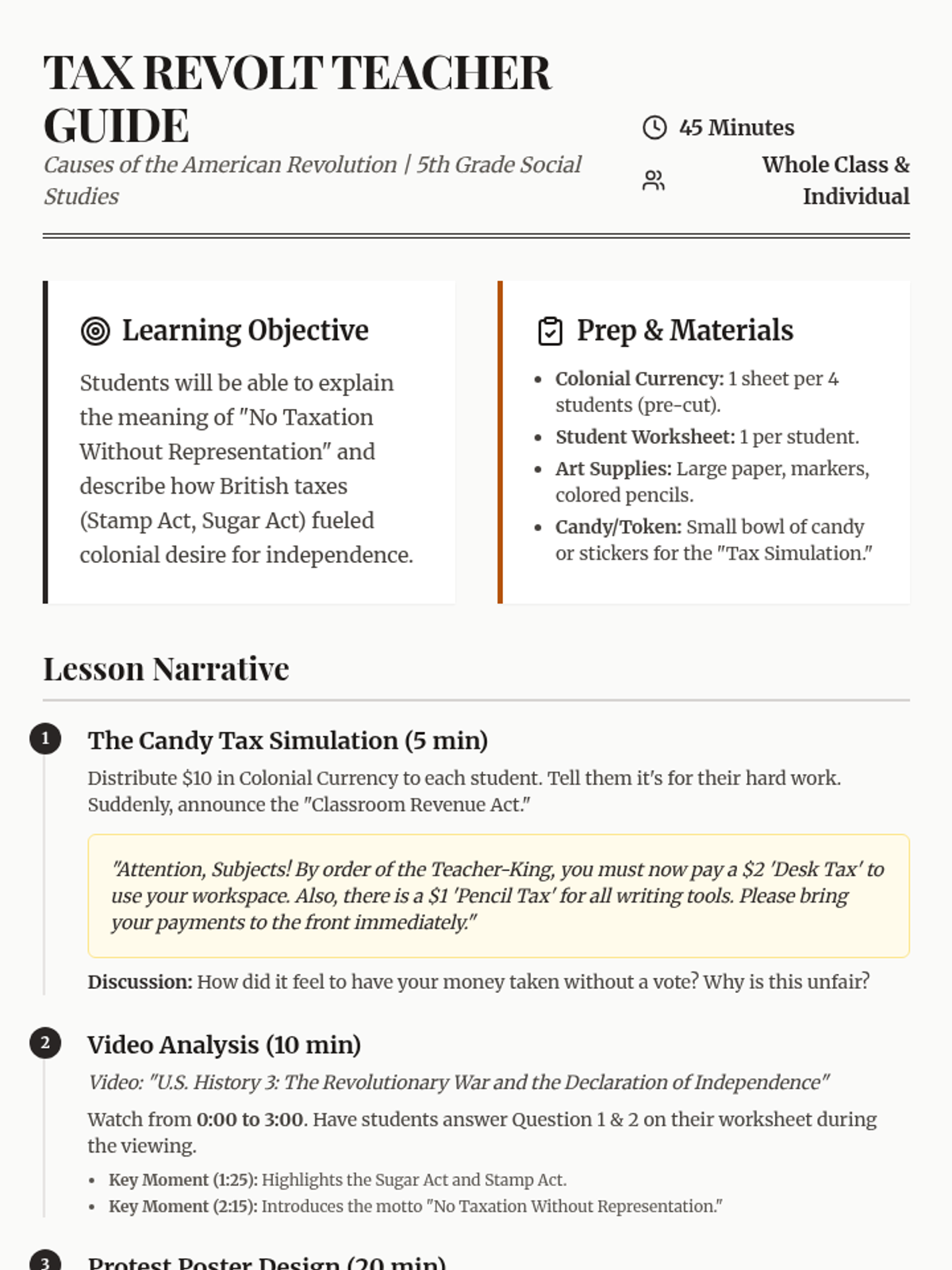
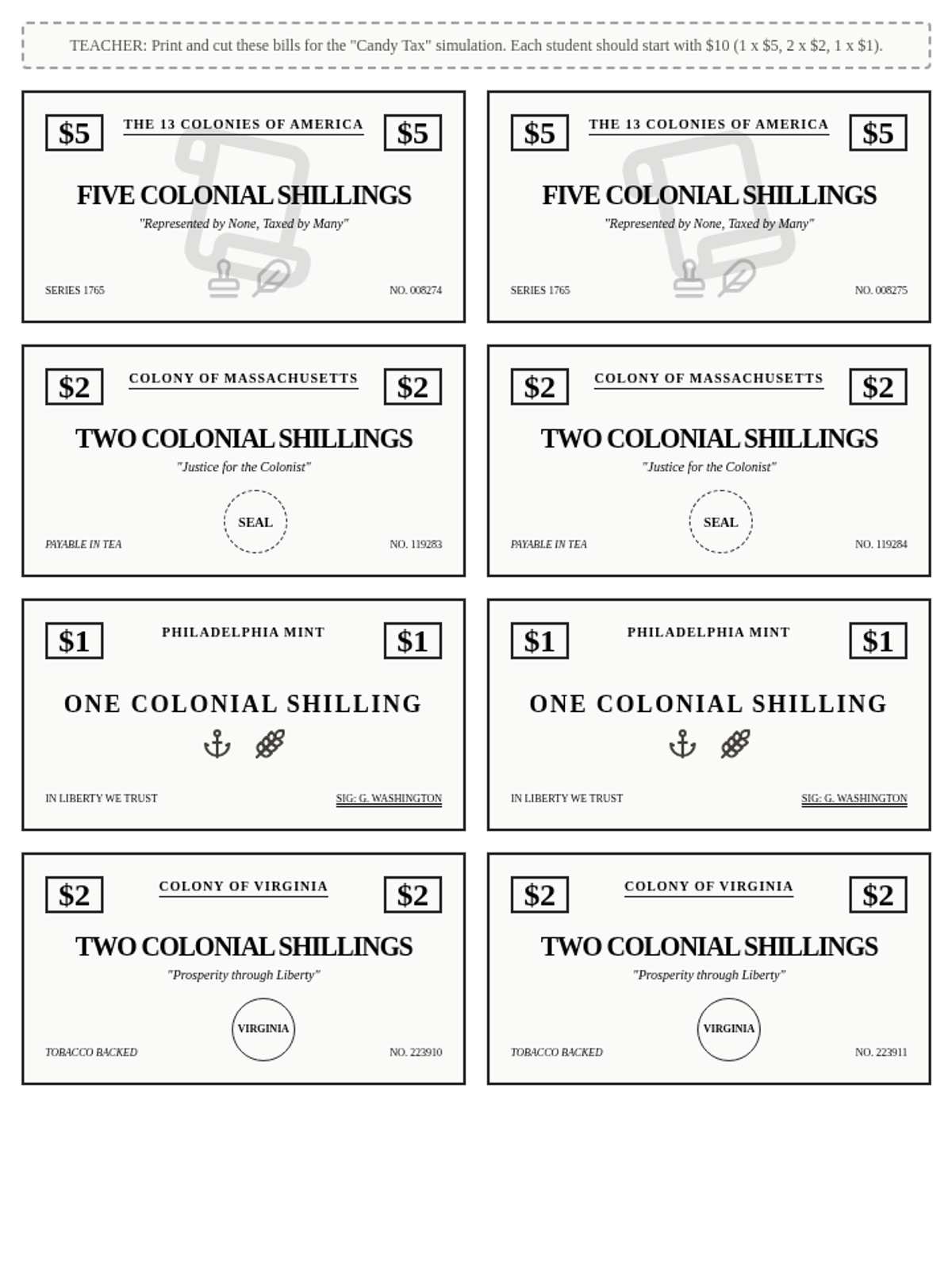
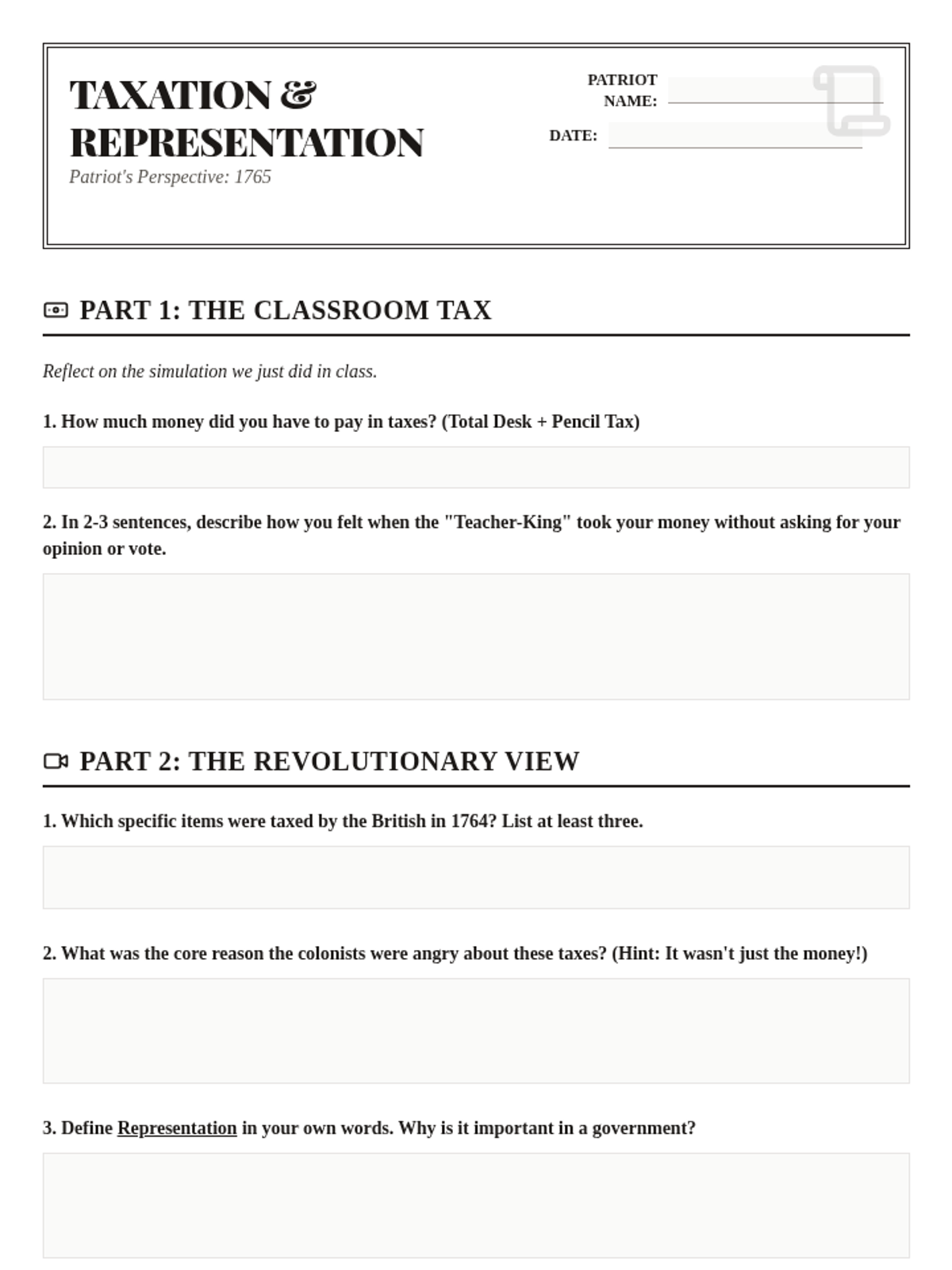
A 5th-grade social studies lesson exploring the causes of the American Revolution, specifically focusing on British taxes and the colonial demand for representation. Students experience a simulation, analyze a video, and create persuasive protest posters.
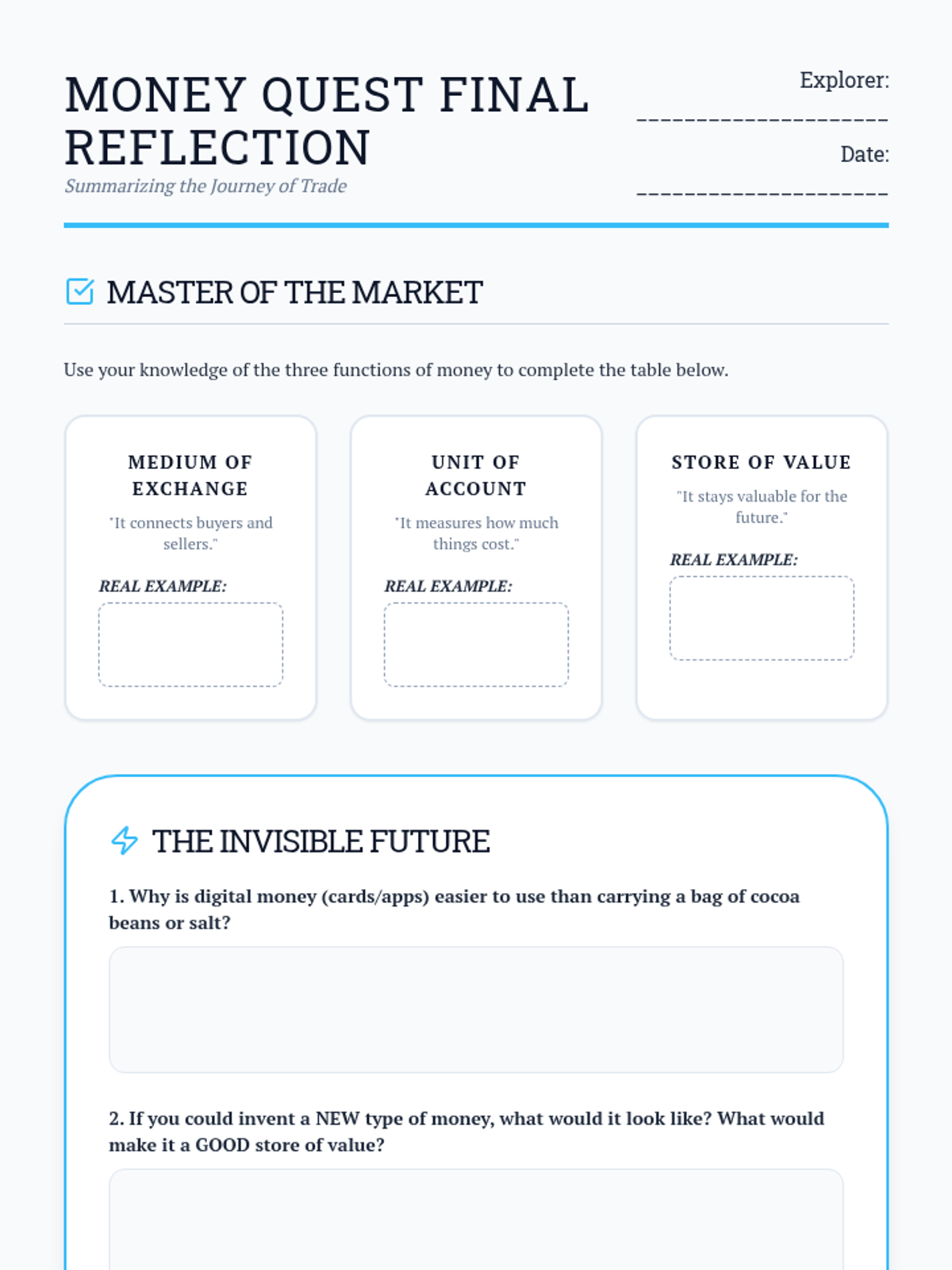
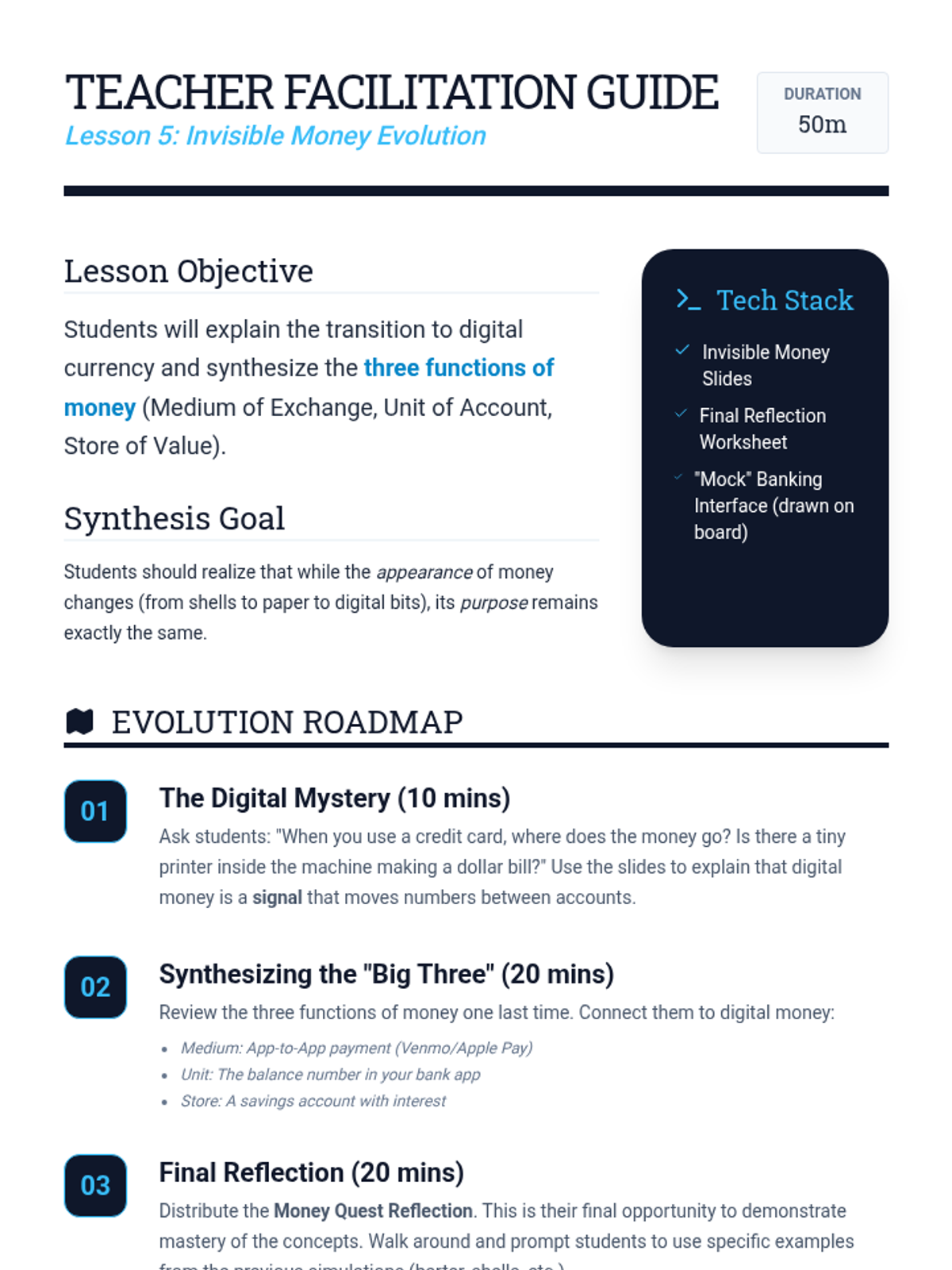
Investigating the shift to digital transactions and synthesizing the three functions of money.
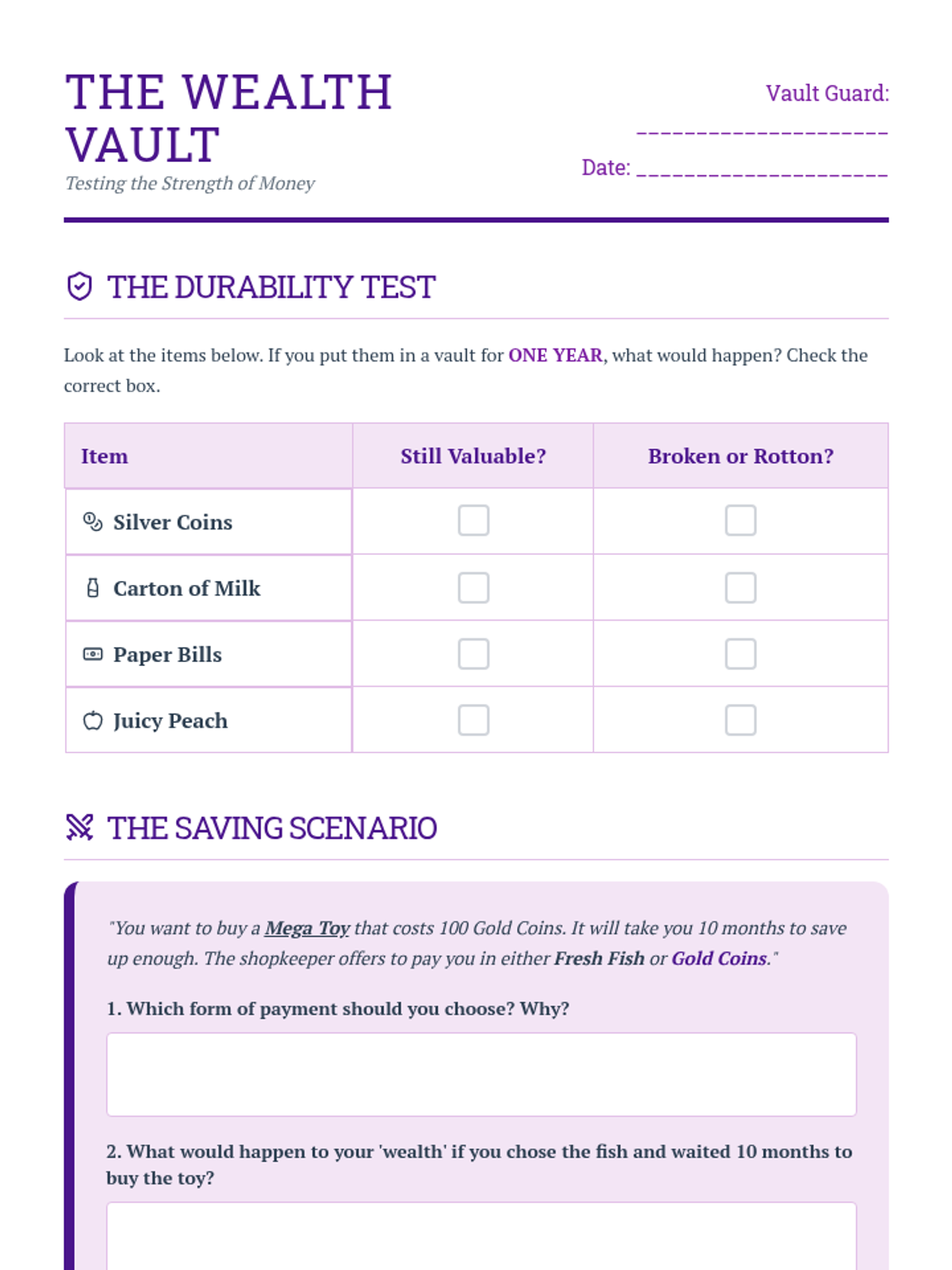
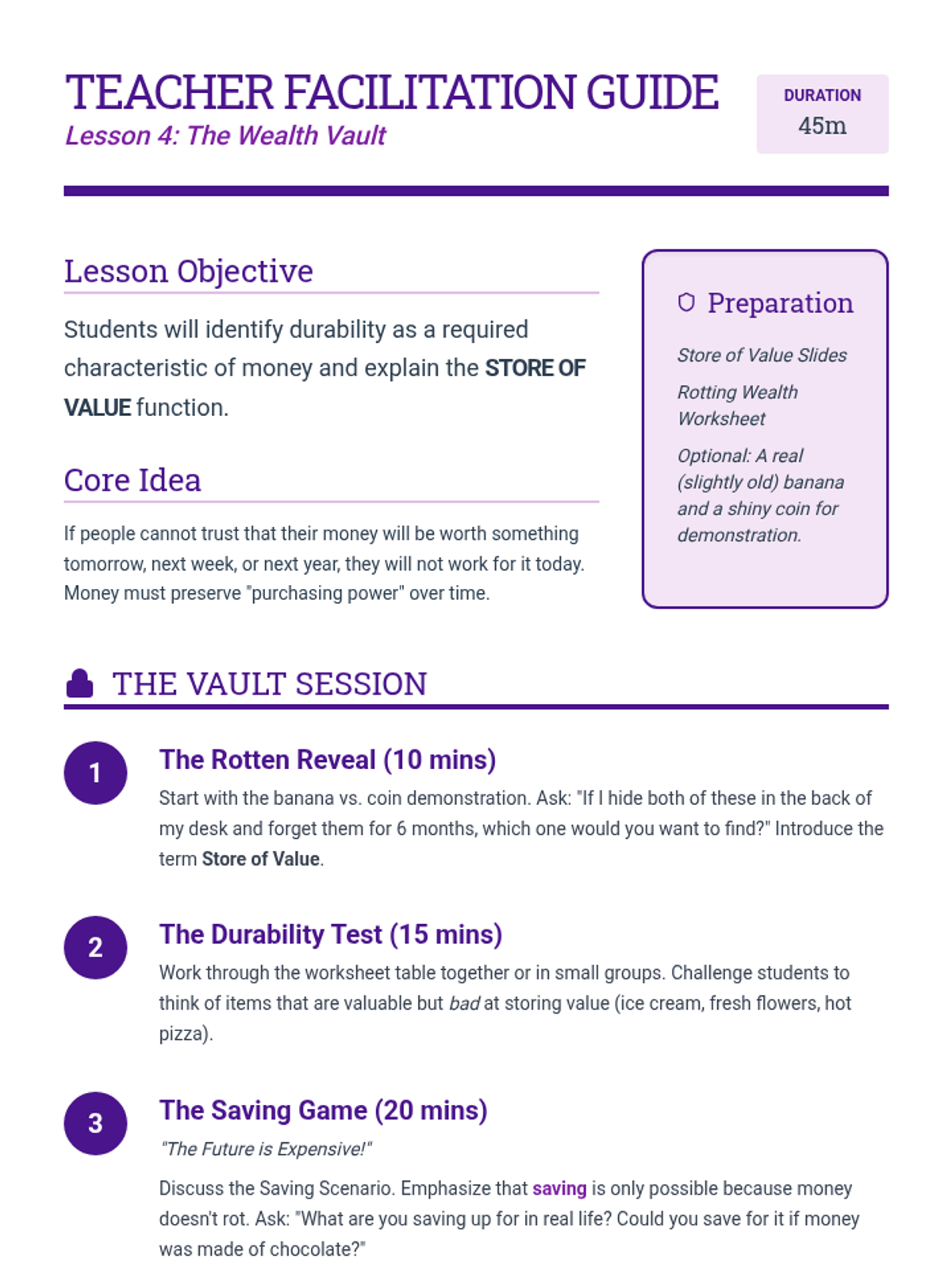
Exploring money as a store of value through a game comparing perishable goods and durable currency.
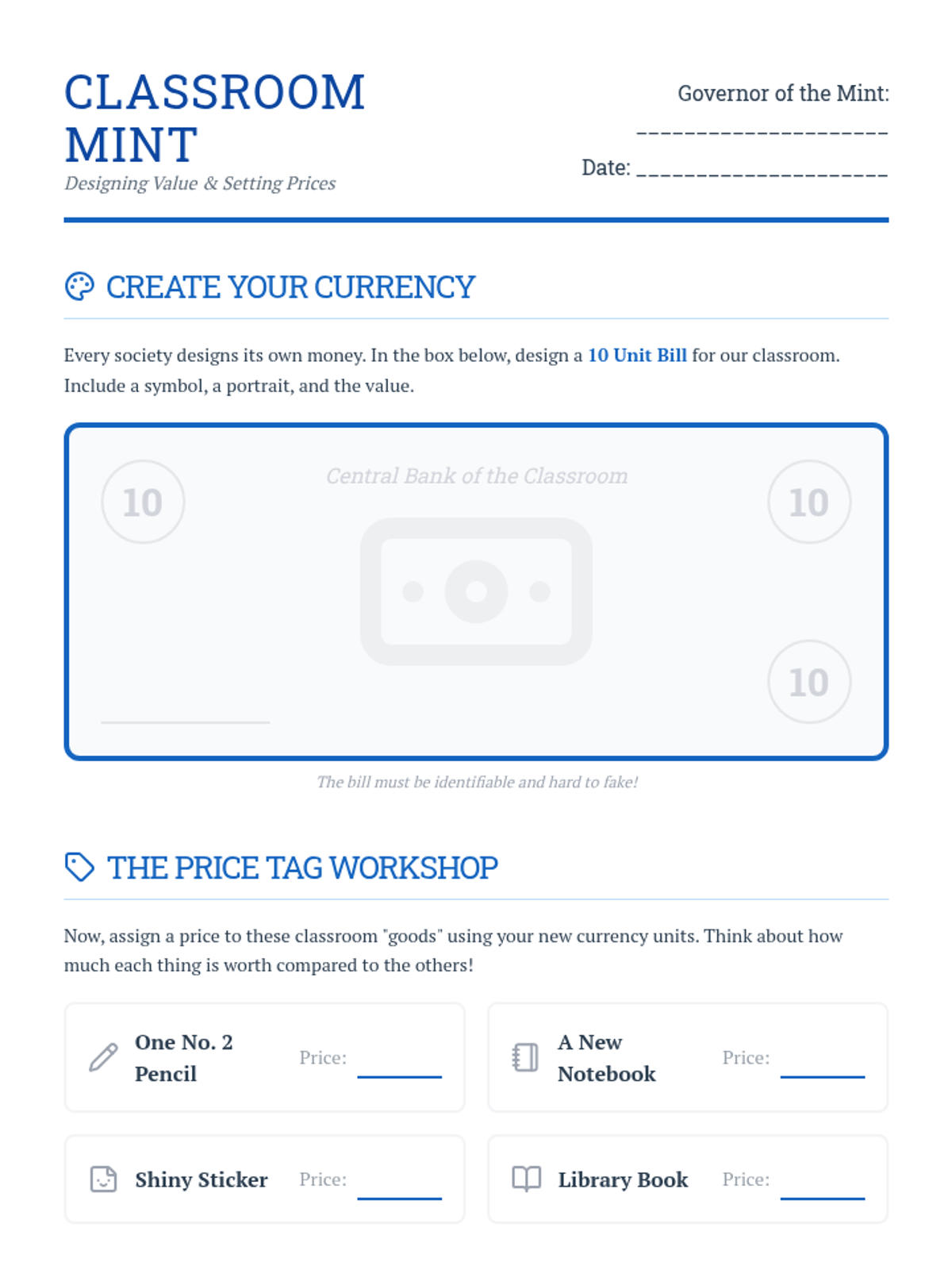
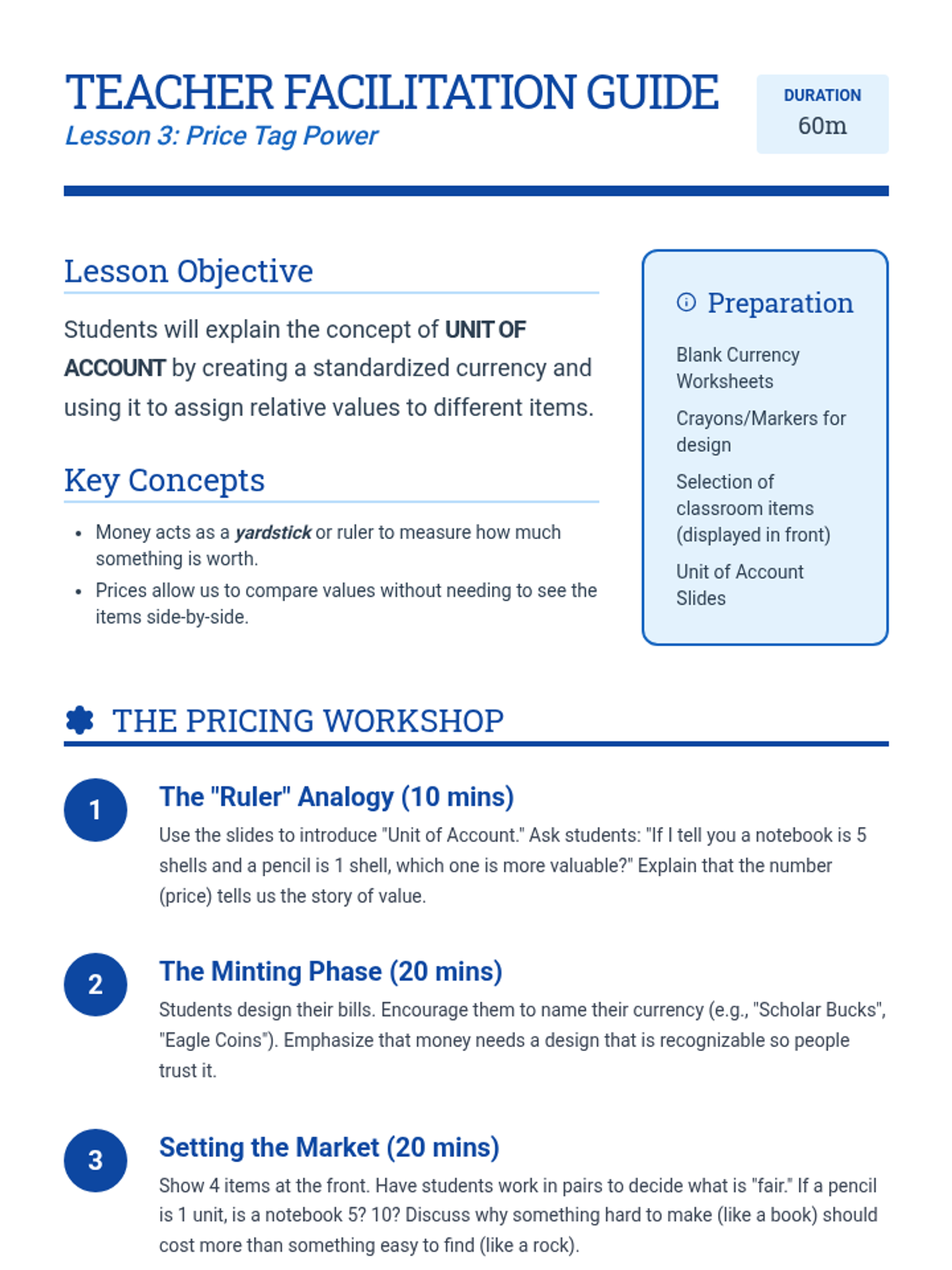
Learning how money acts as a unit of account by assigning prices and designing classroom currency.
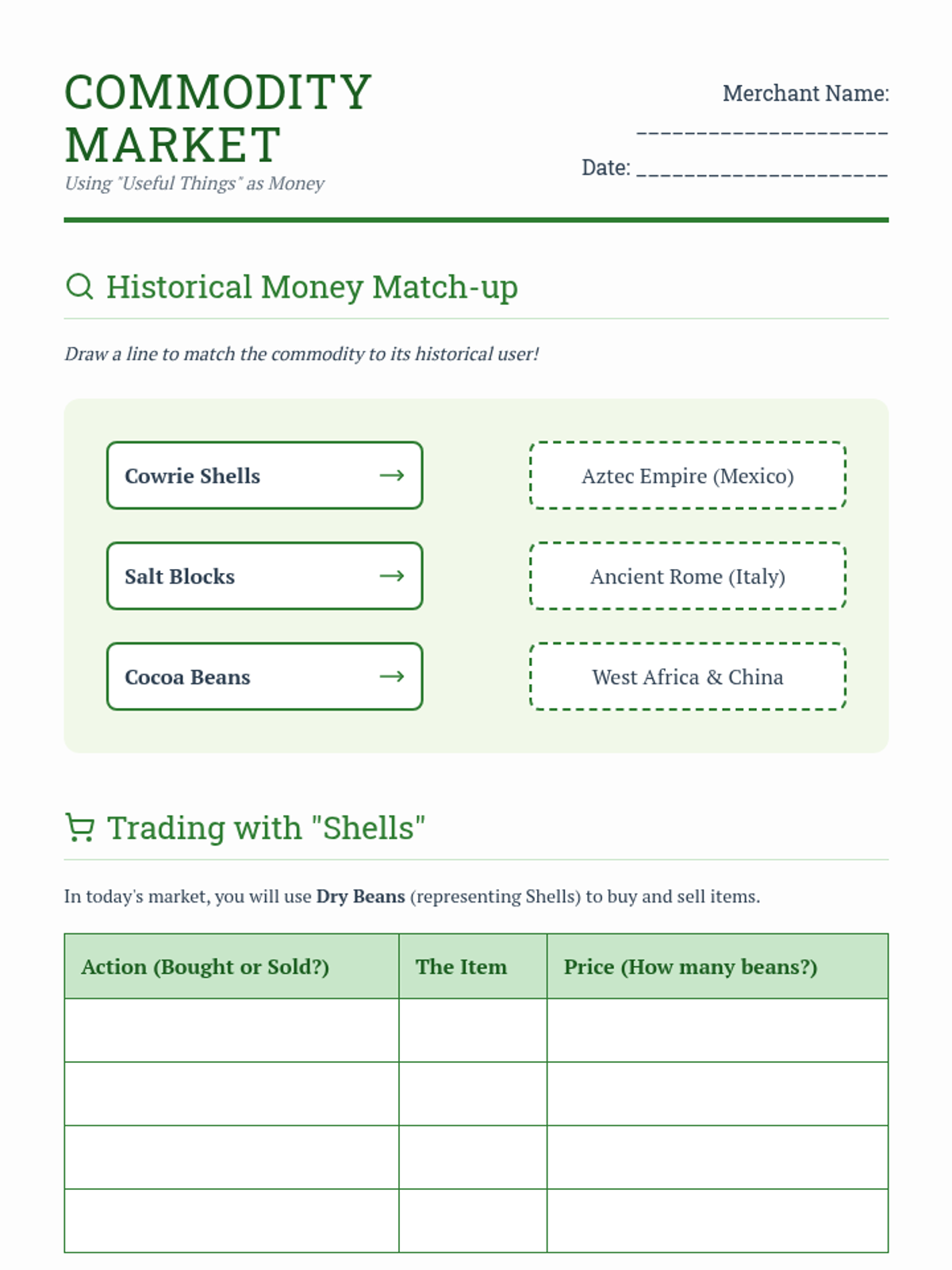
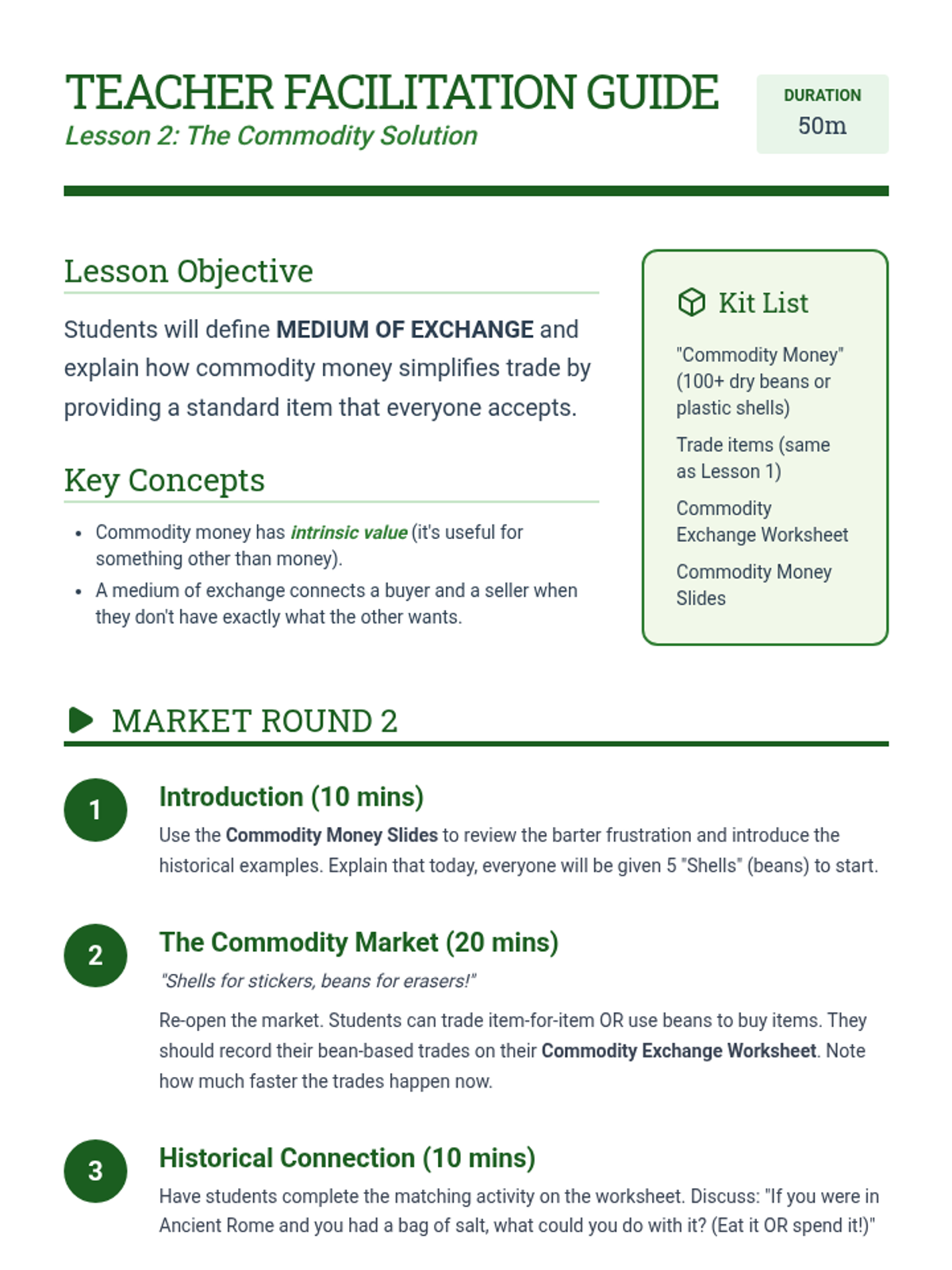
Introducing commodity money to solve the "double coincidence of wants" problem and exploring historical currencies.
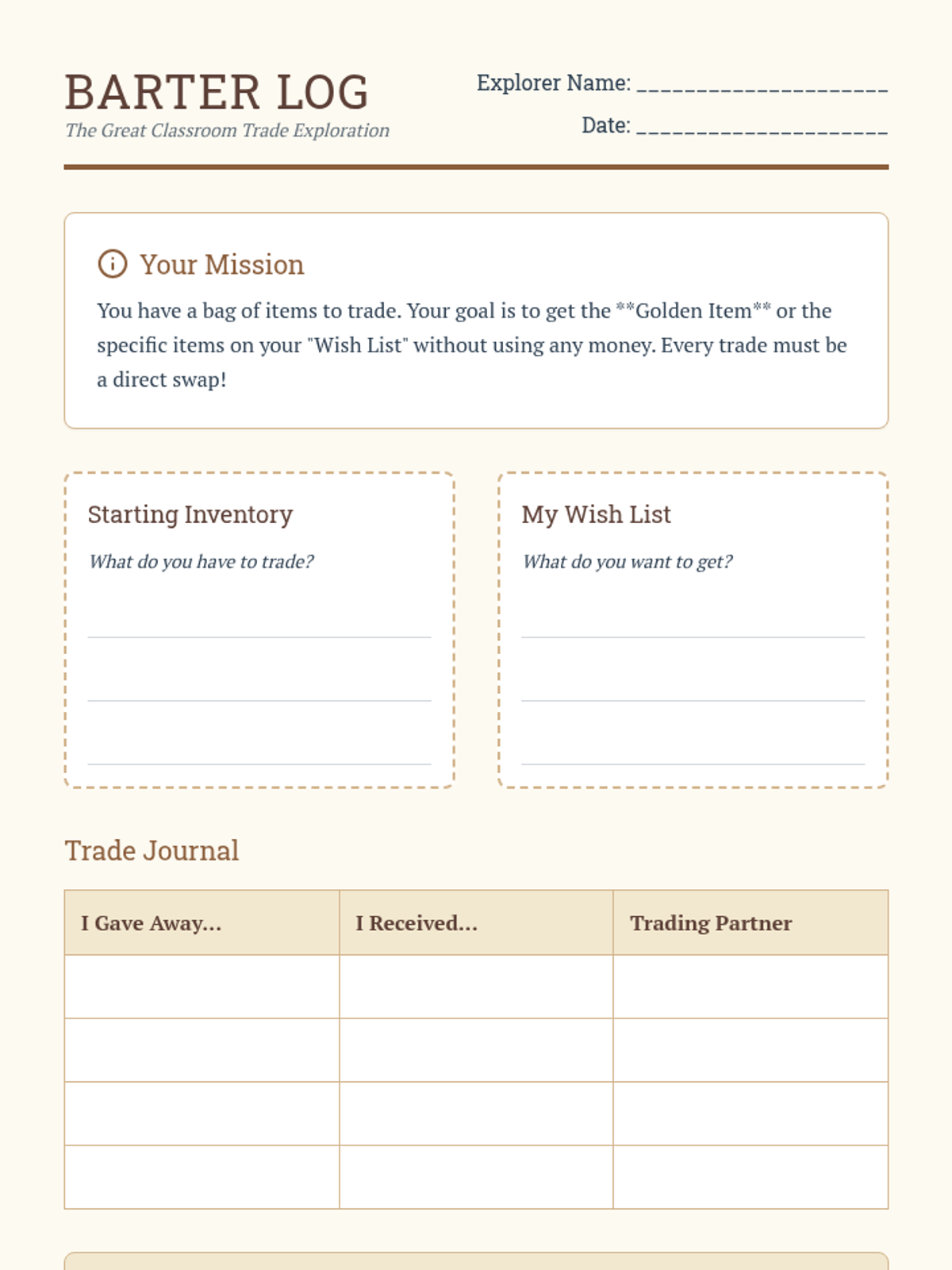
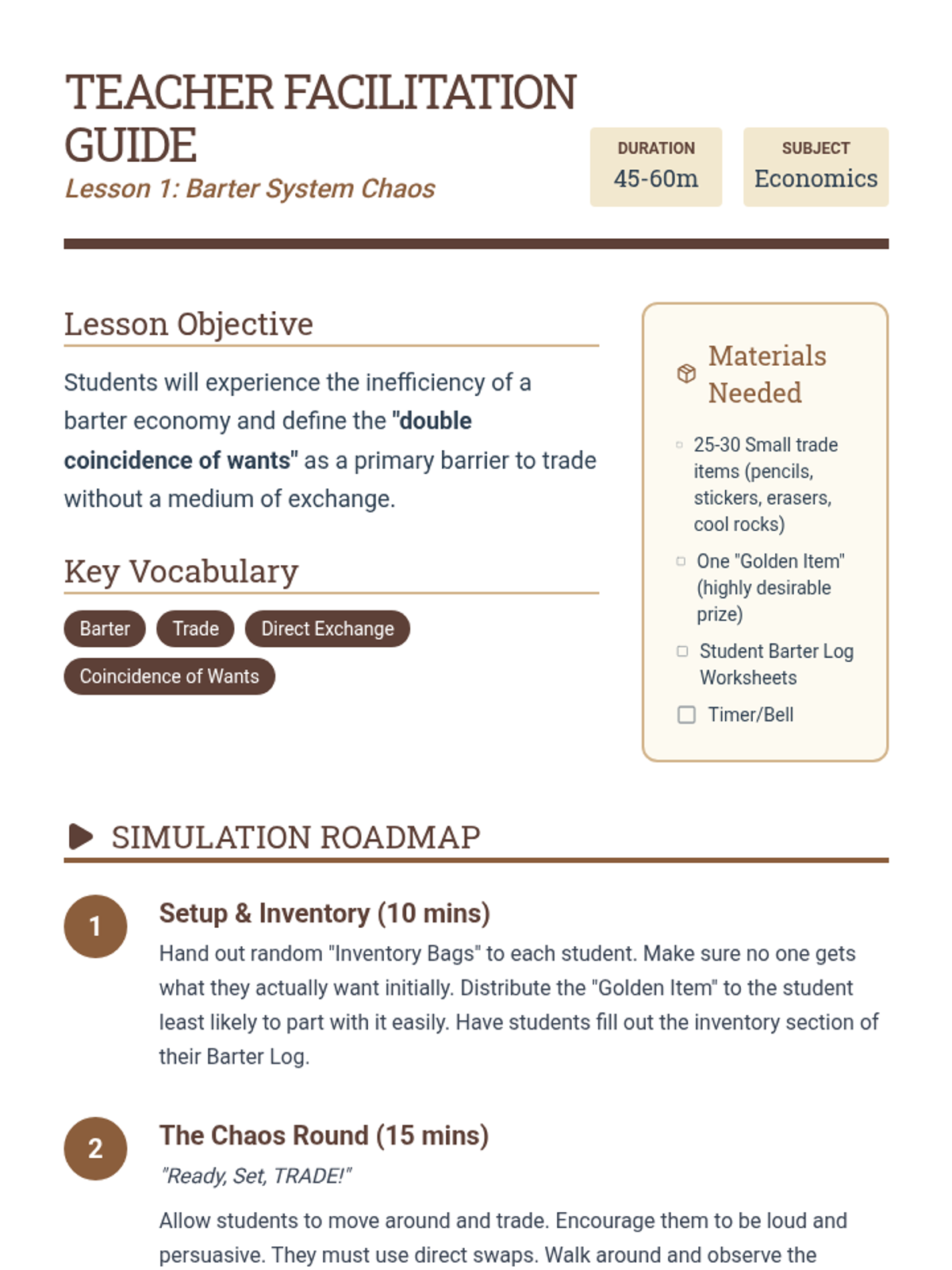
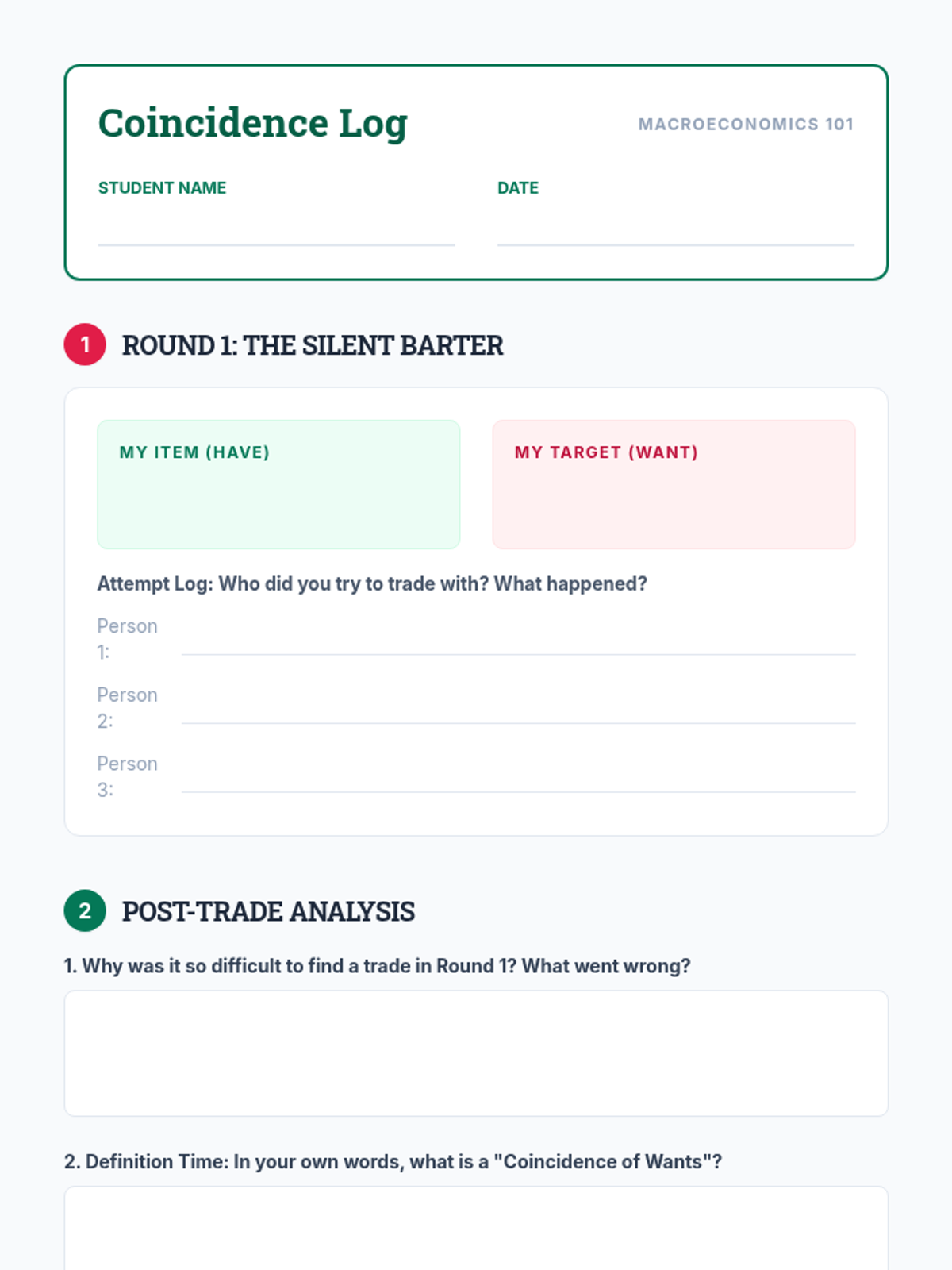
Students experience the difficulties of bartering directly through a classroom simulation to understand the need for a standardized medium of exchange.
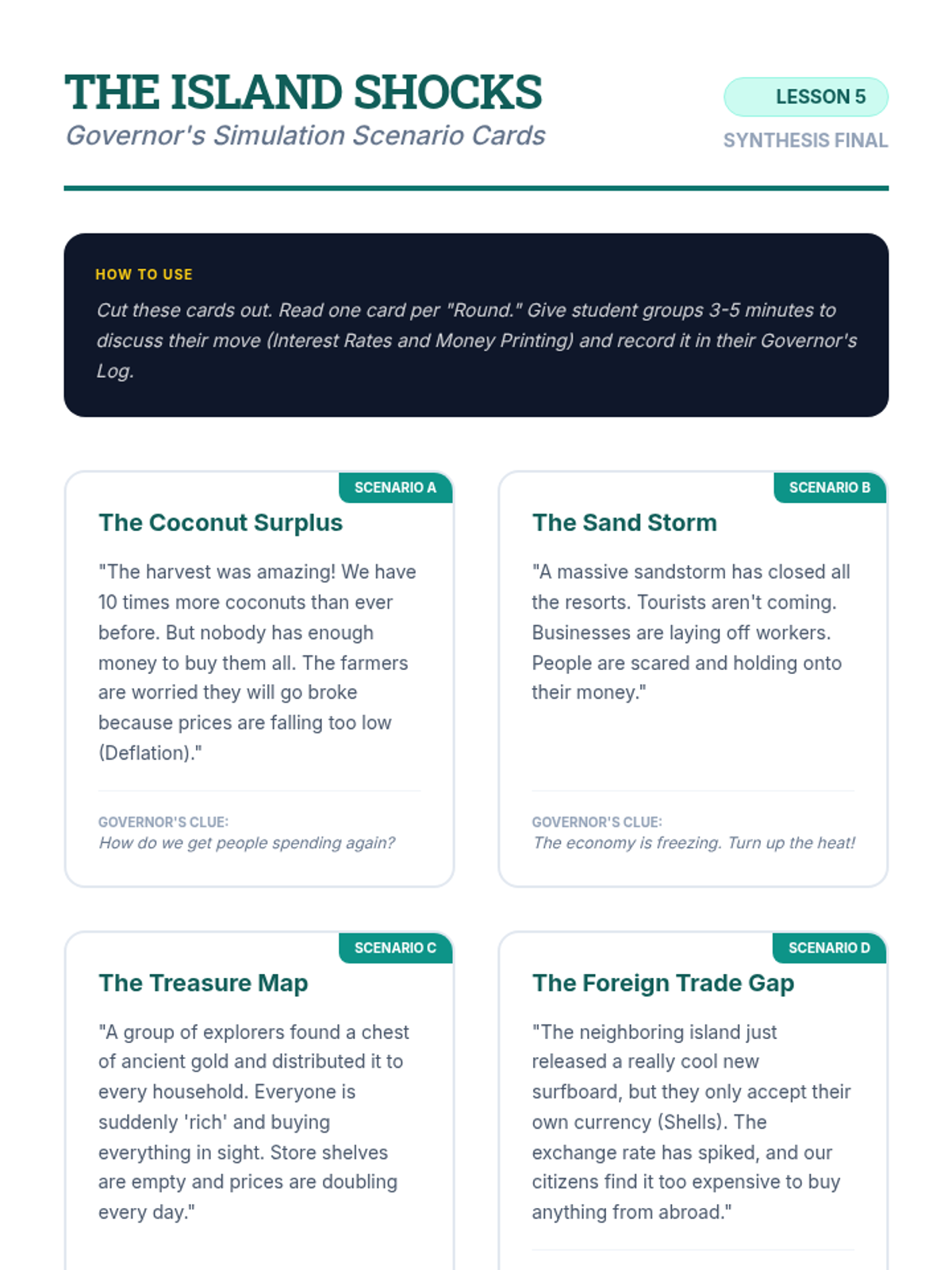
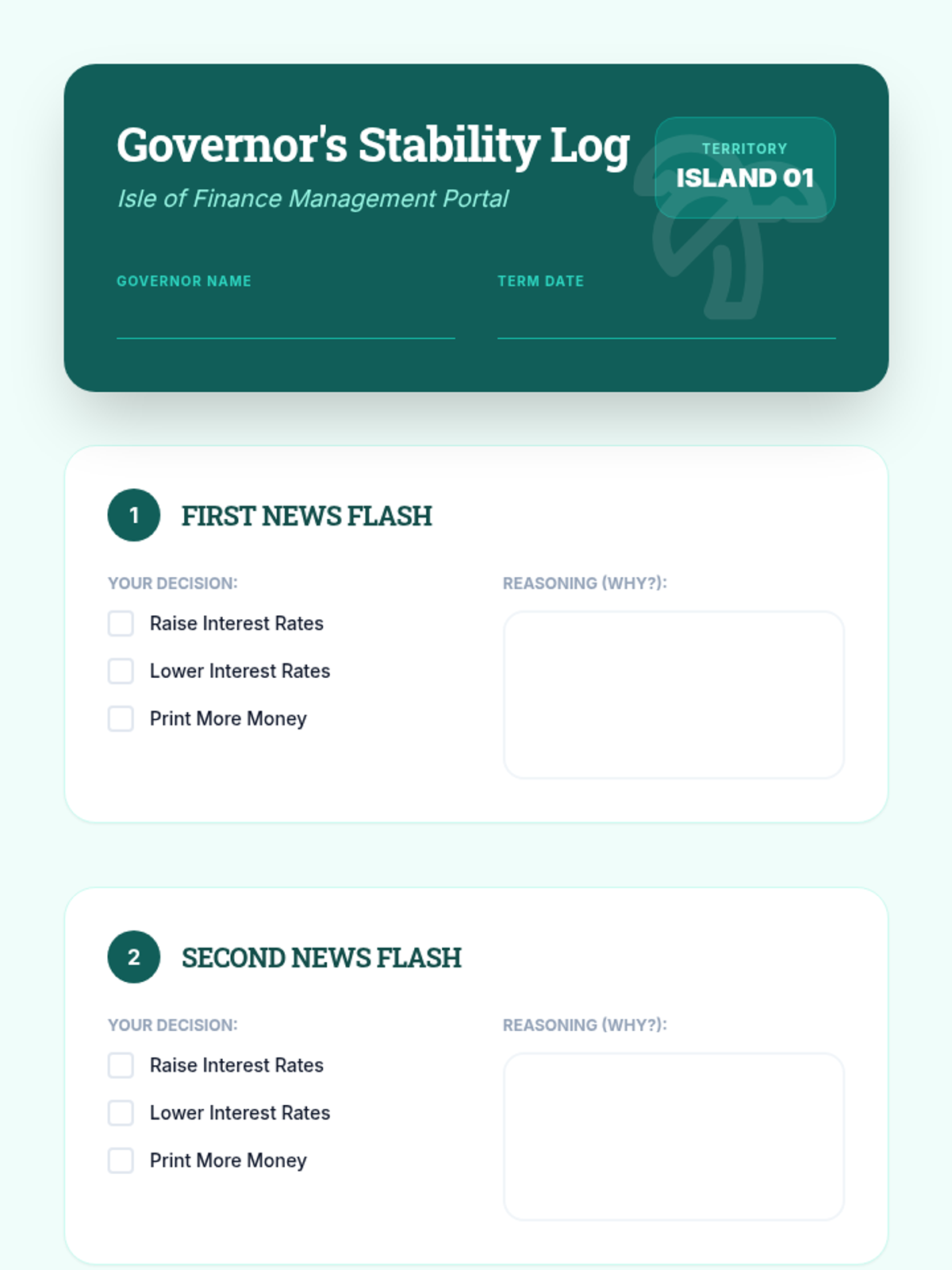
Students work in groups to govern a fictional island economy, making strategic decisions to maintain stability in the face of economic shocks.
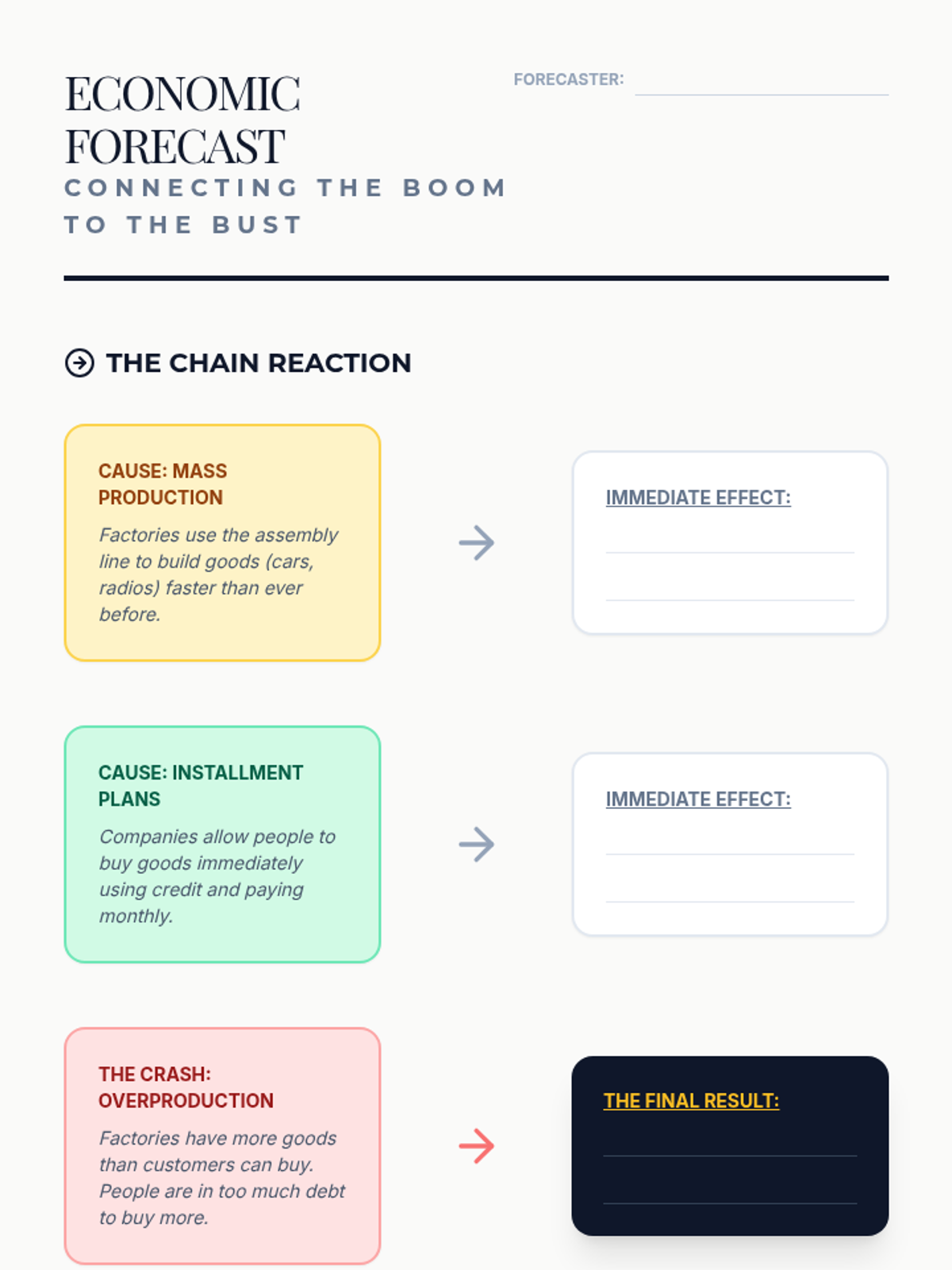
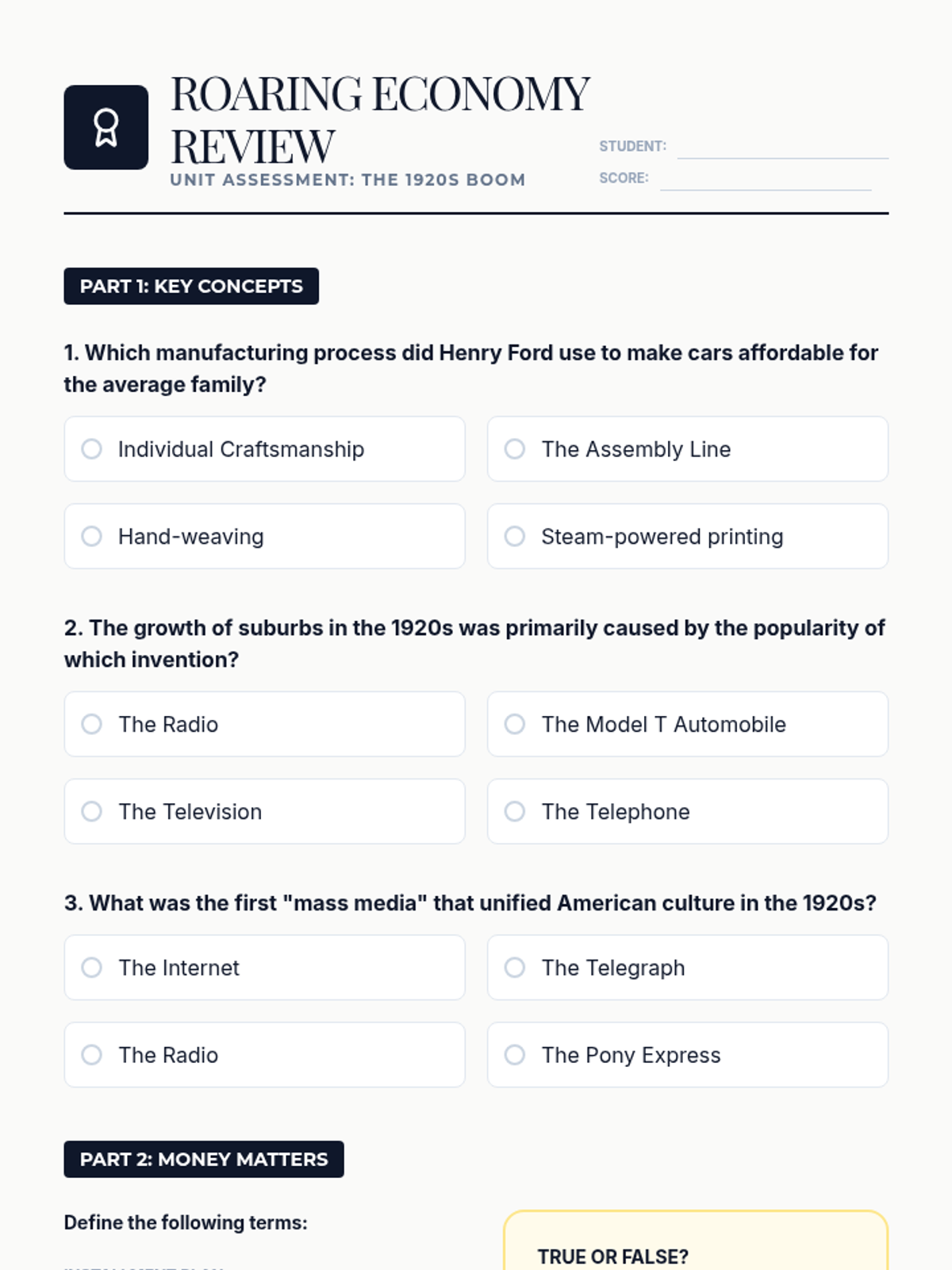
Reviewing the prosperity of the 1920s to identify the warning signs of overproduction and debt that led to the economic shift.
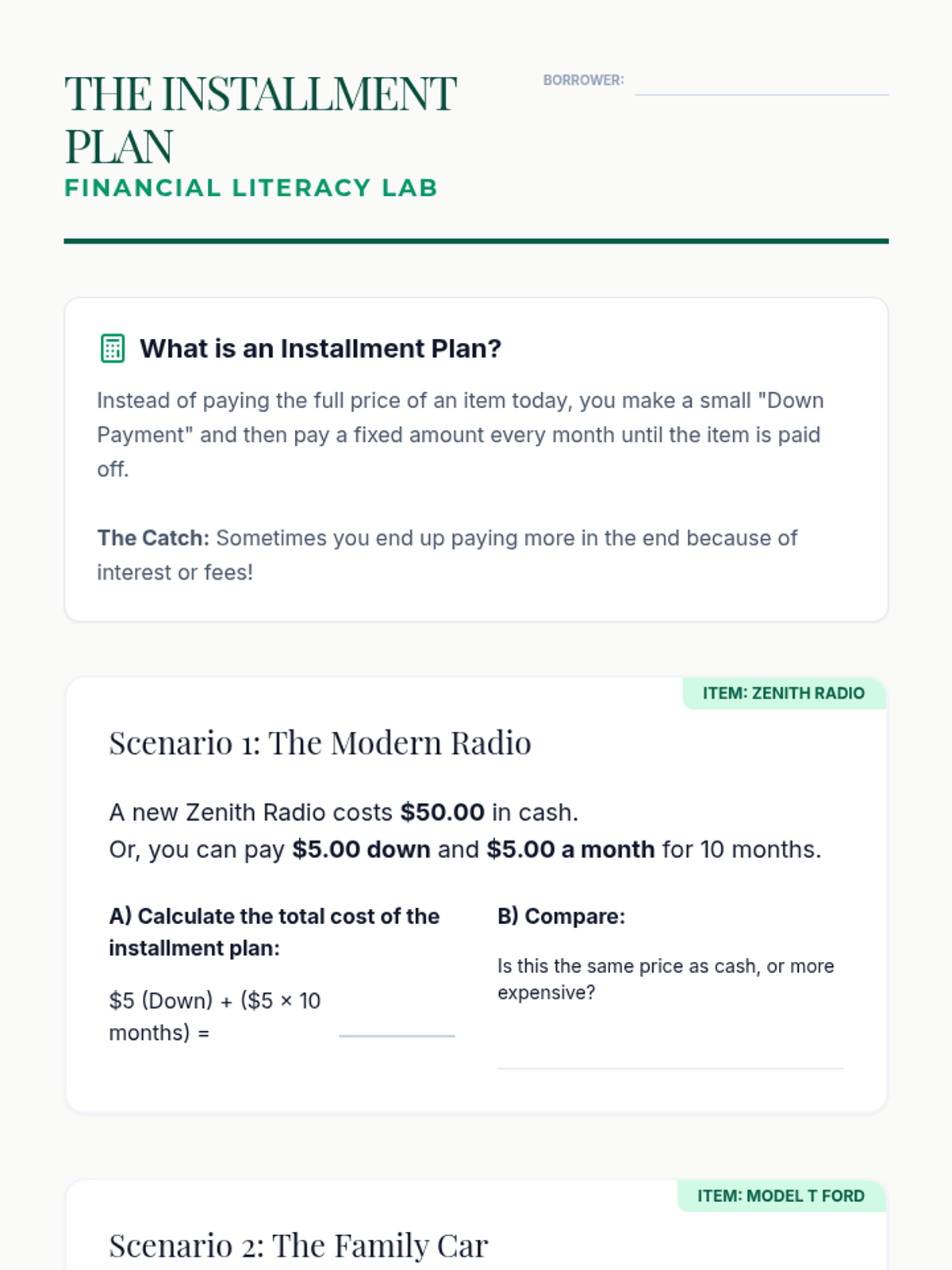
Learning about installment plans, consumerism, and the risks of buying on credit through 1920s advertisements and math problems.
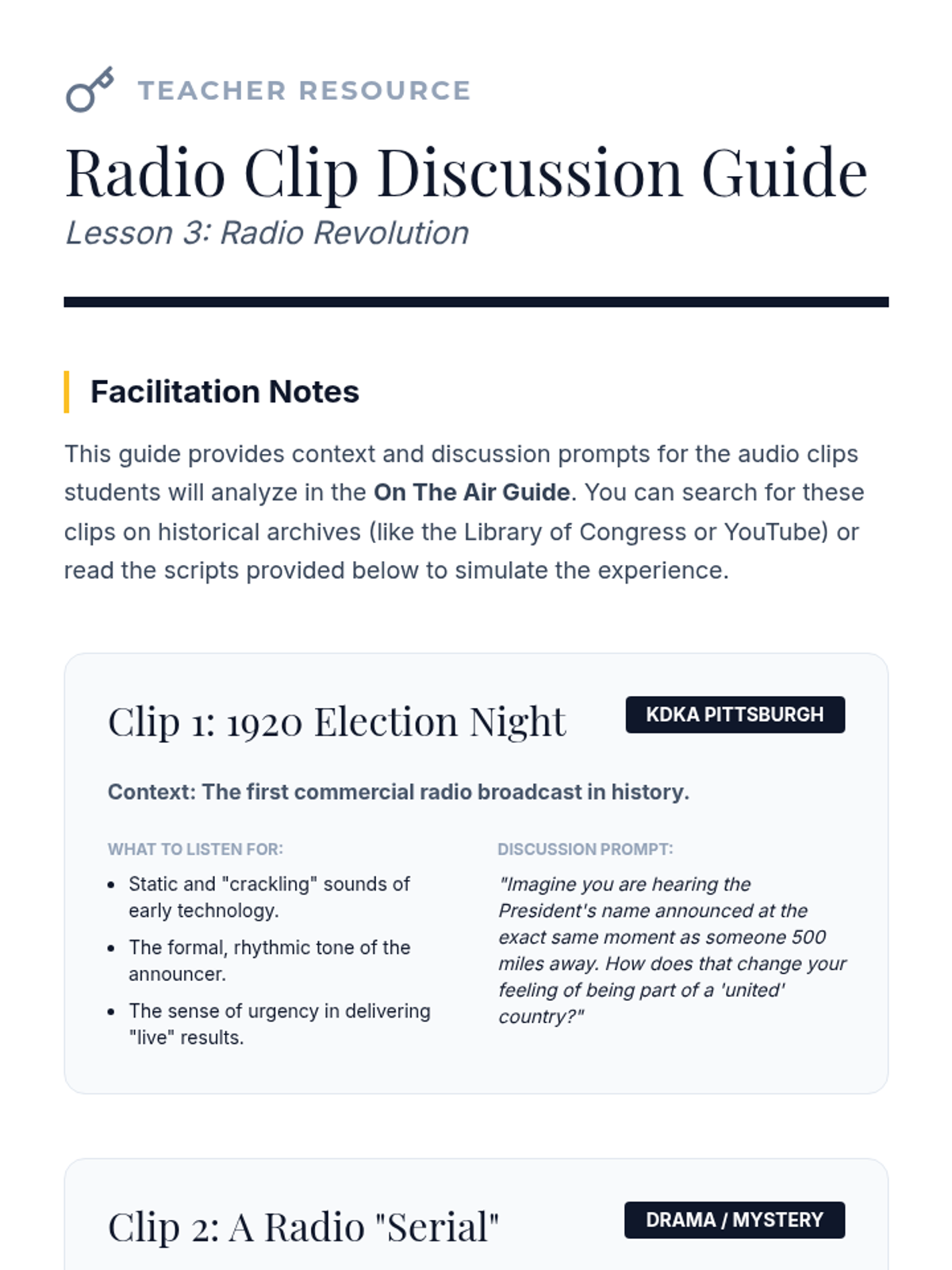
Exploring how the rise of radio and mass media created a unified national culture and changed how Americans consumed information.
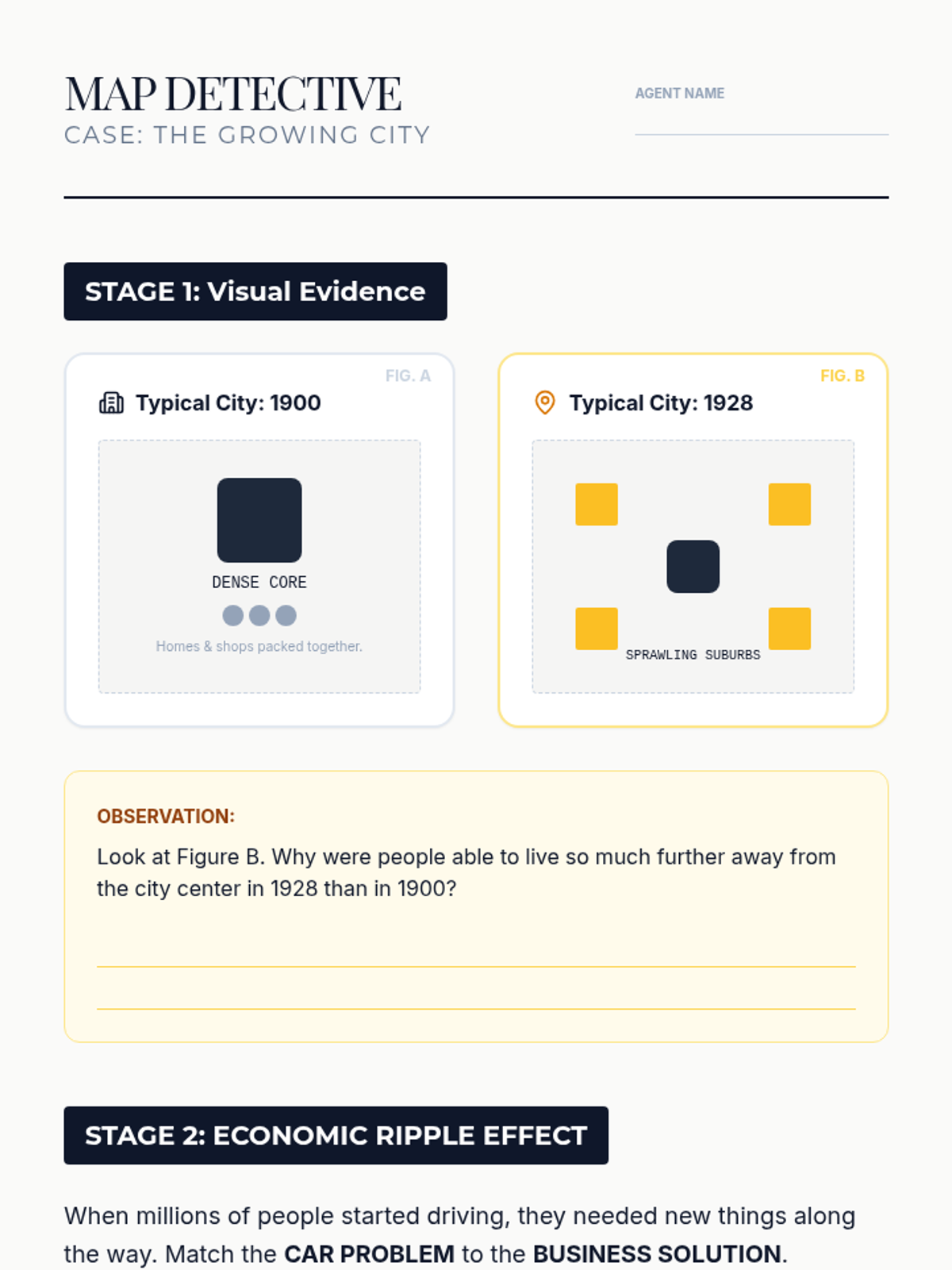
Investigating how the affordable Model T Ford reshaped American geography, led to the growth of suburbs, and changed family life.
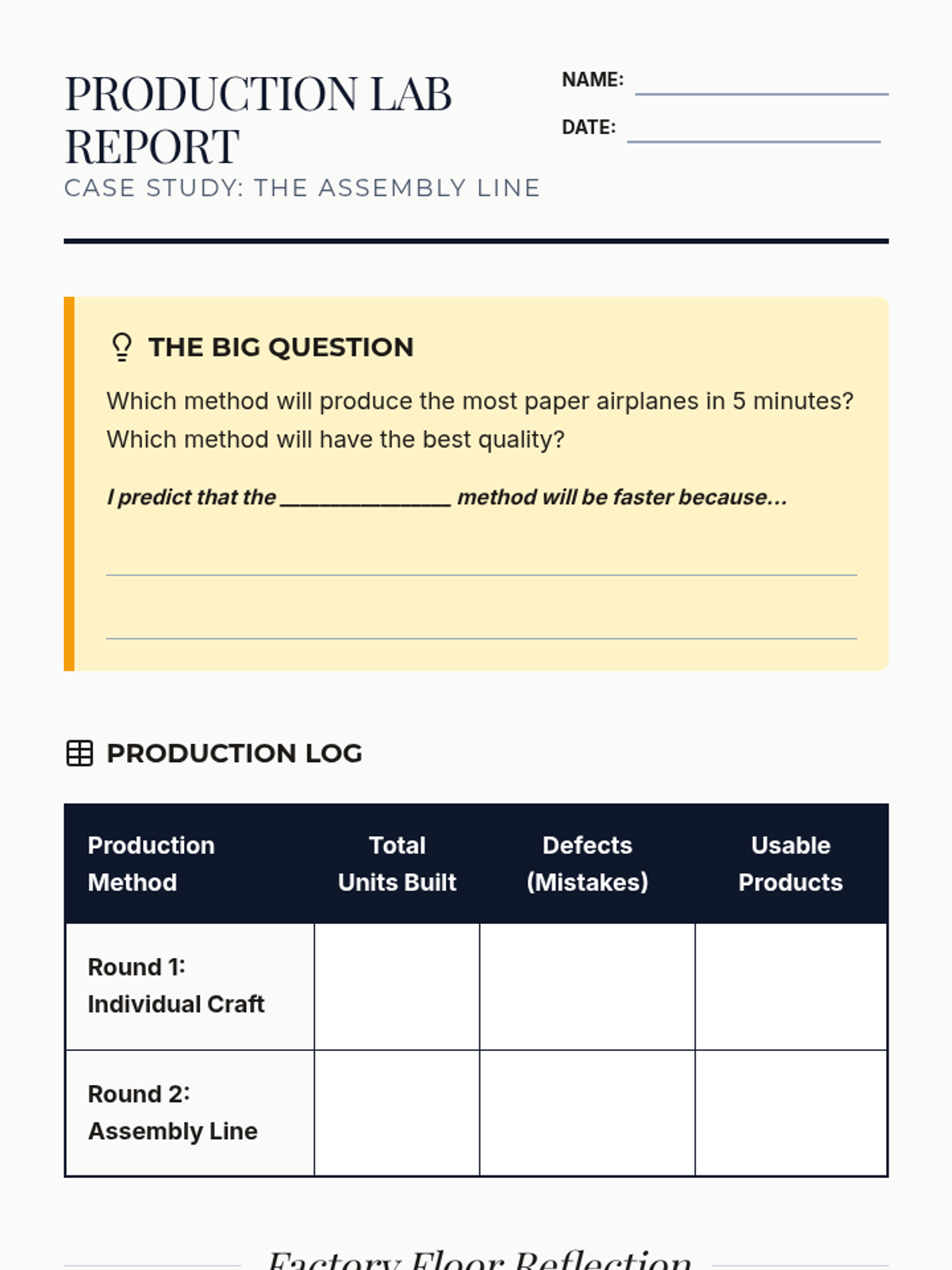
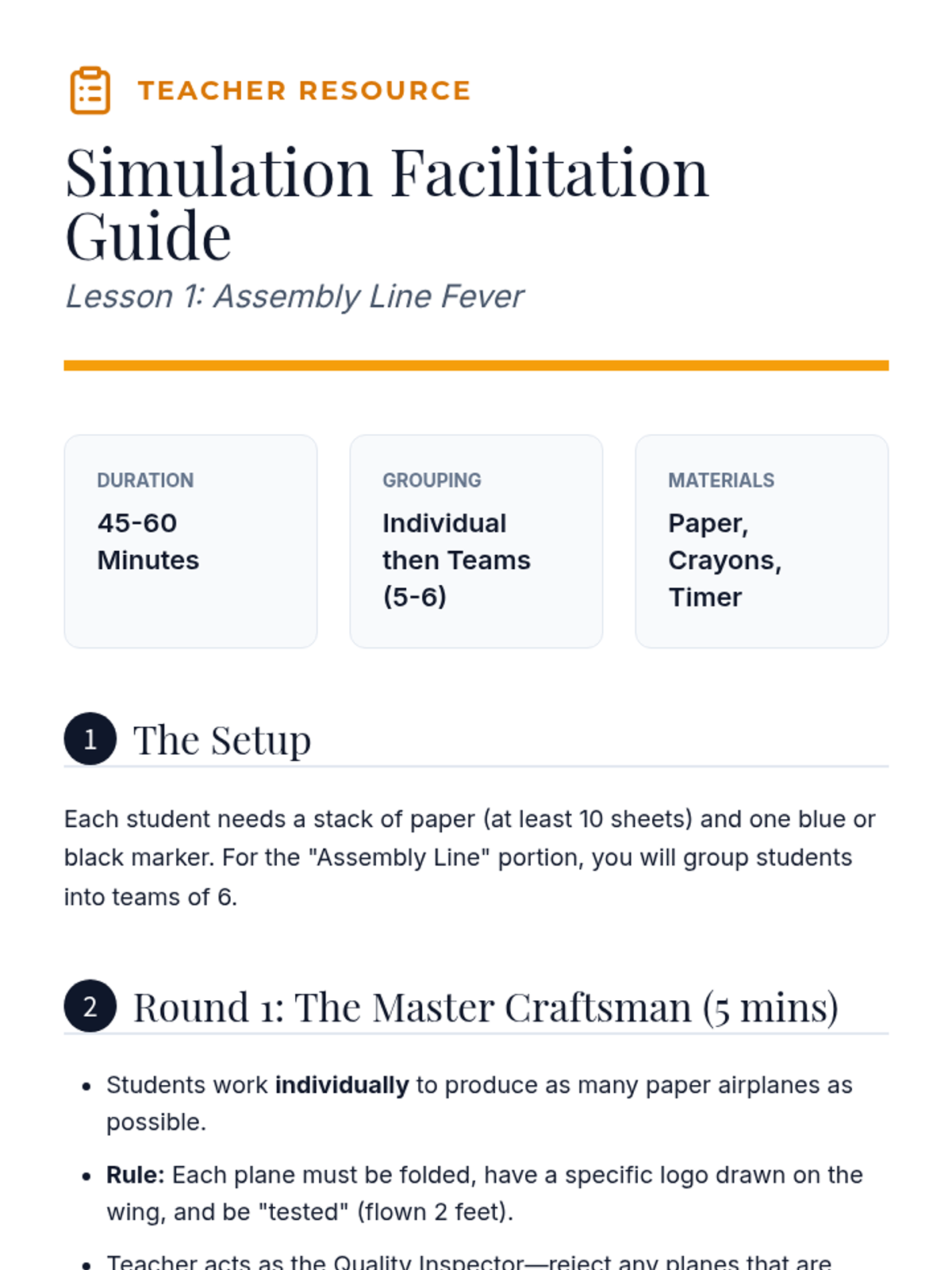
Students participate in a simulation comparing individual craftsmanship to assembly line production to understand Henry Ford's industrial revolution.
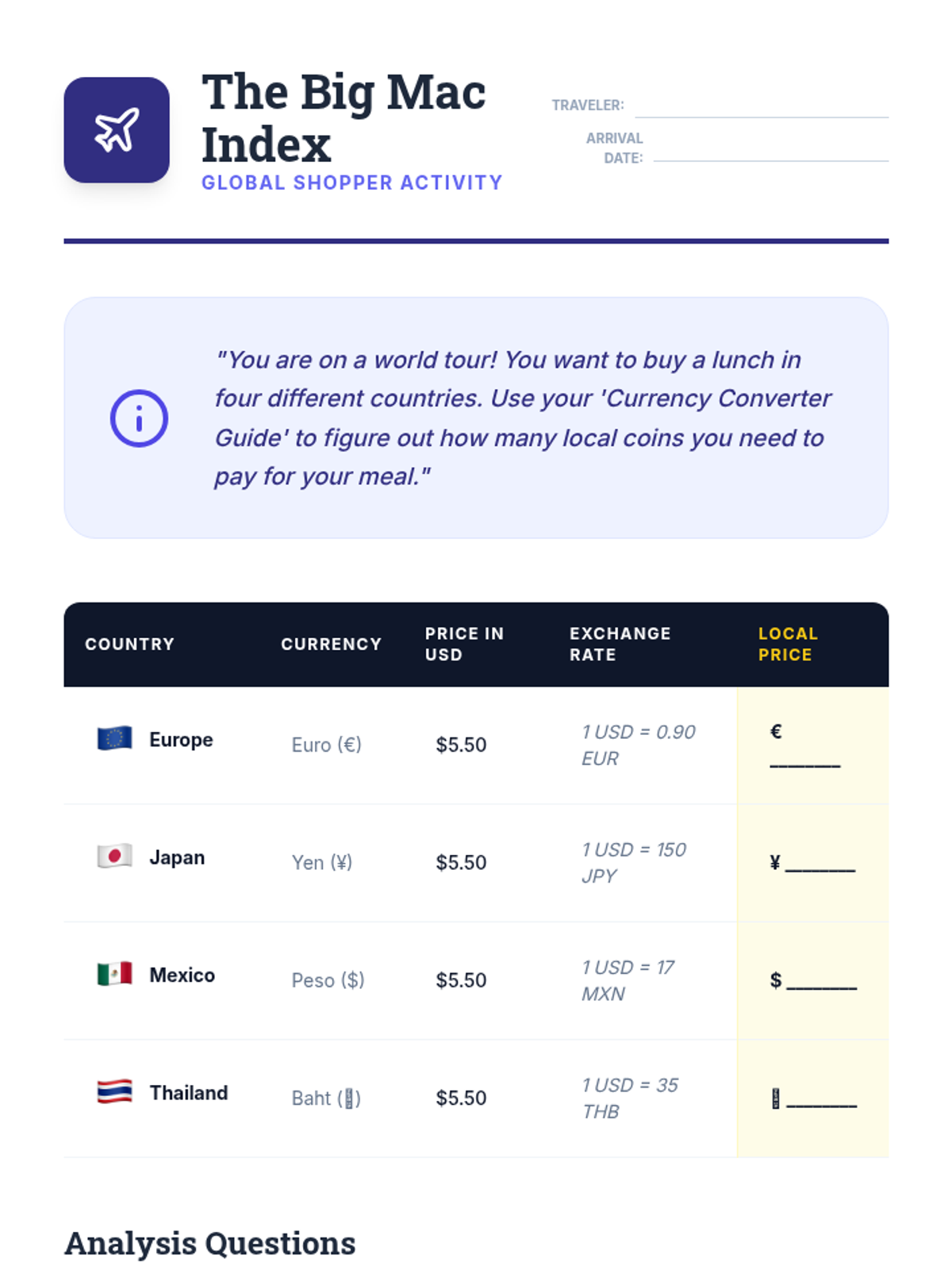
Learners investigate global currencies and exchange rates, exploring how the value of money is relative across different countries.
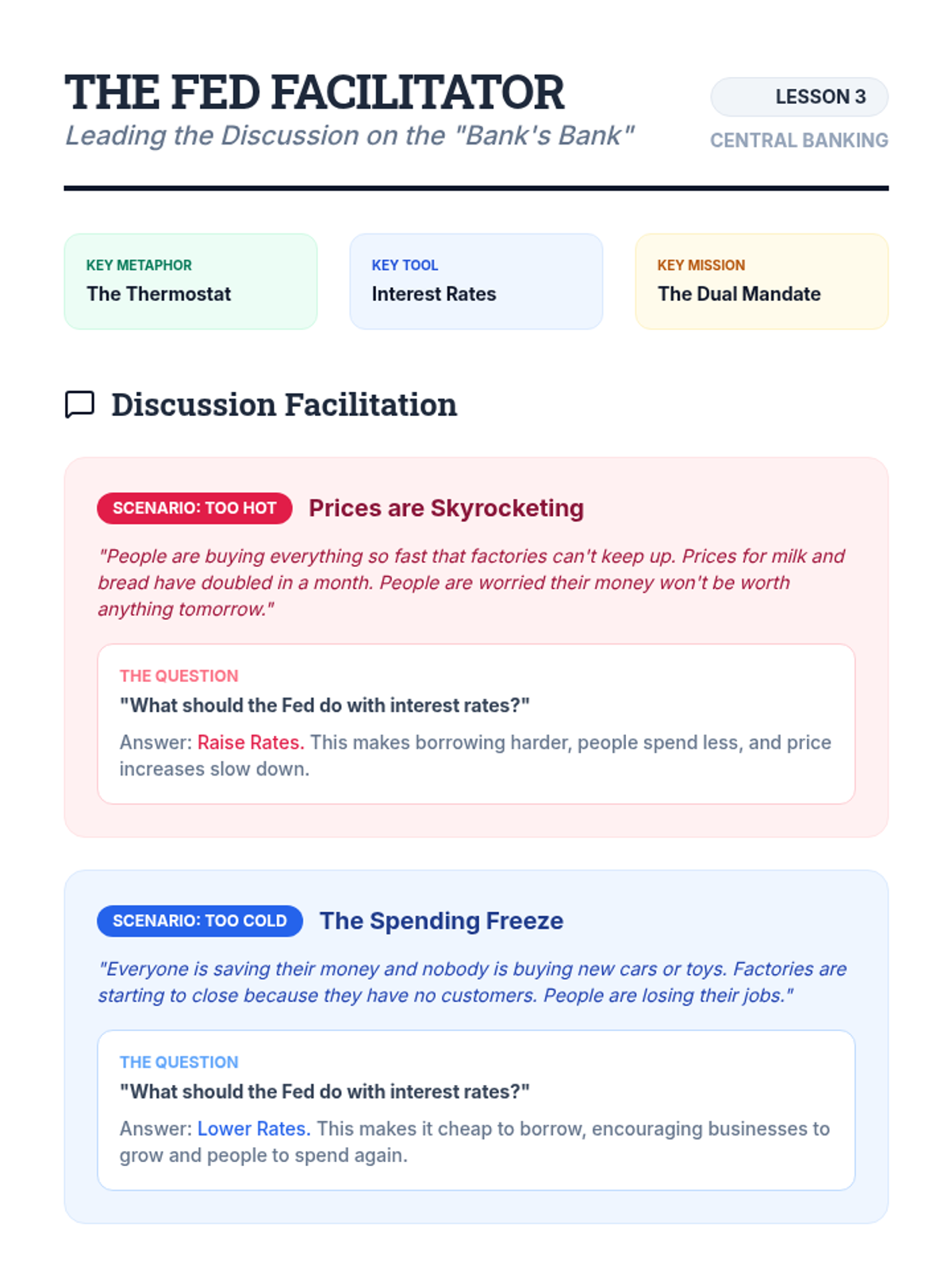
Students explore the Federal Reserve's role as the 'Bank's Bank' using the metaphor of a thermostat to understand how it regulates the economy.
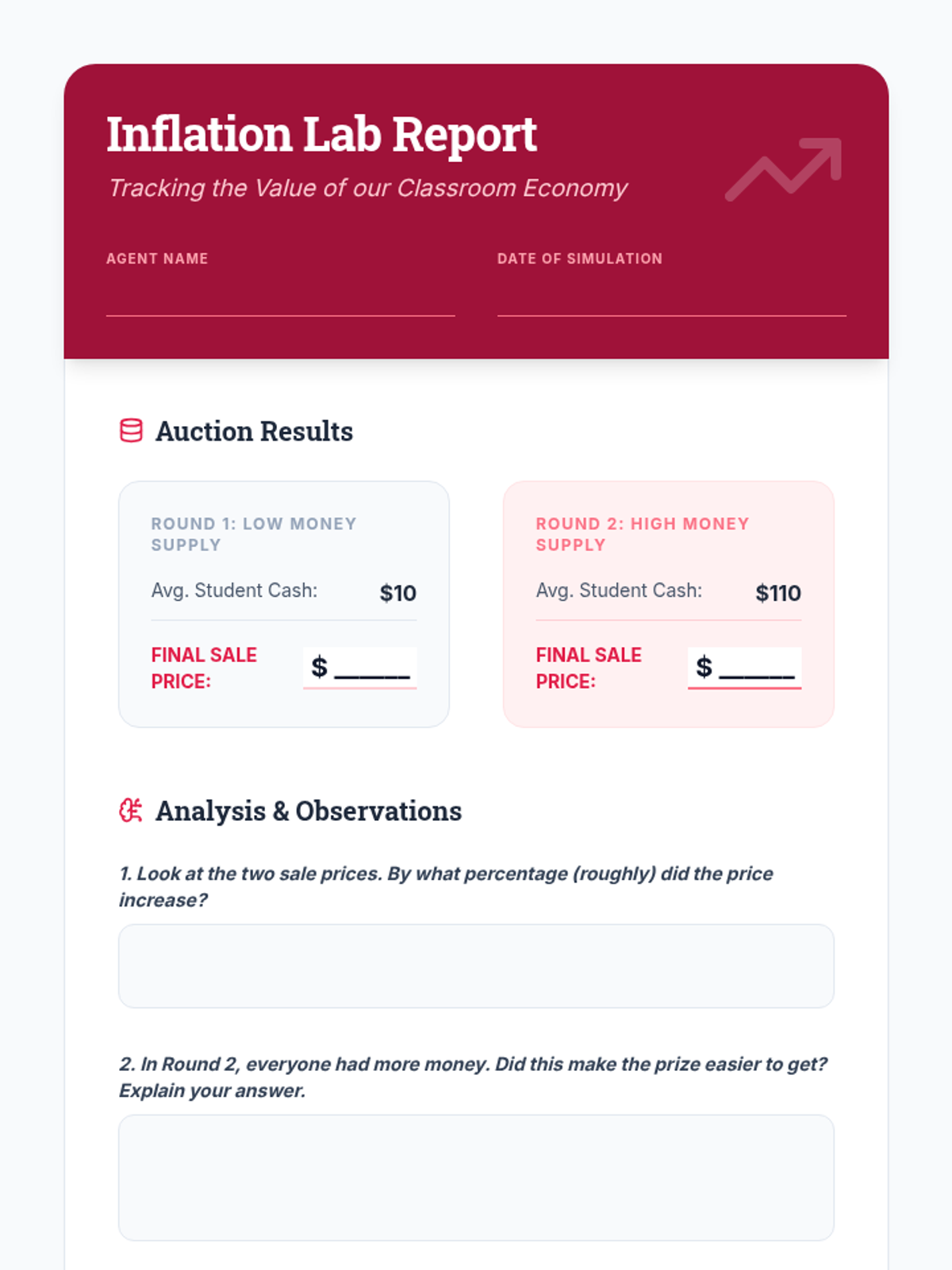
Using a classroom auction, students experience how the amount of money in circulation affects prices and learn the basic mechanics of inflation.
Students simulate a barter economy to discover the problem of 'coincidence of wants' and how currency solves this by acting as a medium of exchange.
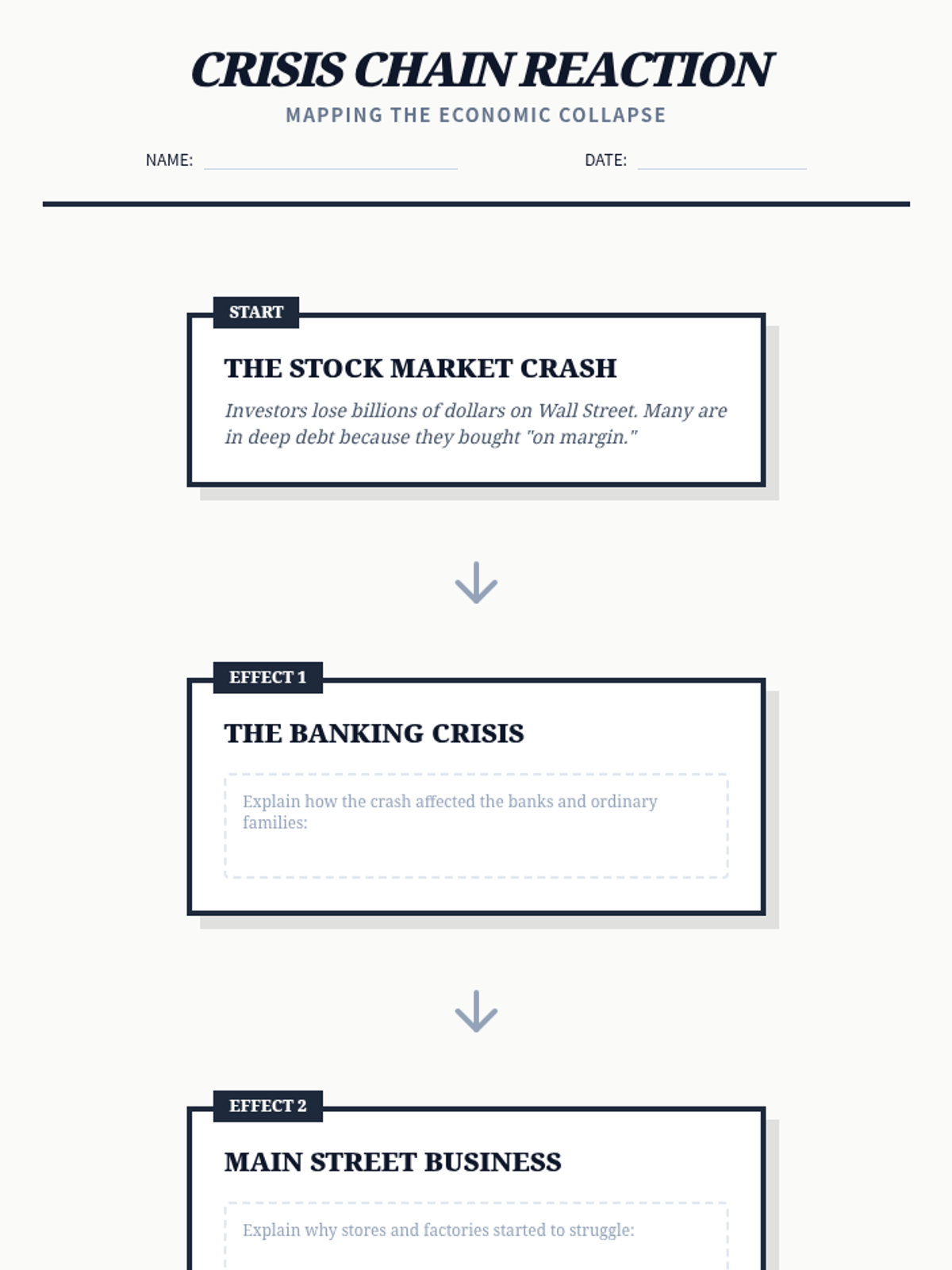
Connects financial failure to everyday life, tracing the path from Wall Street losses to Main Street unemployment.
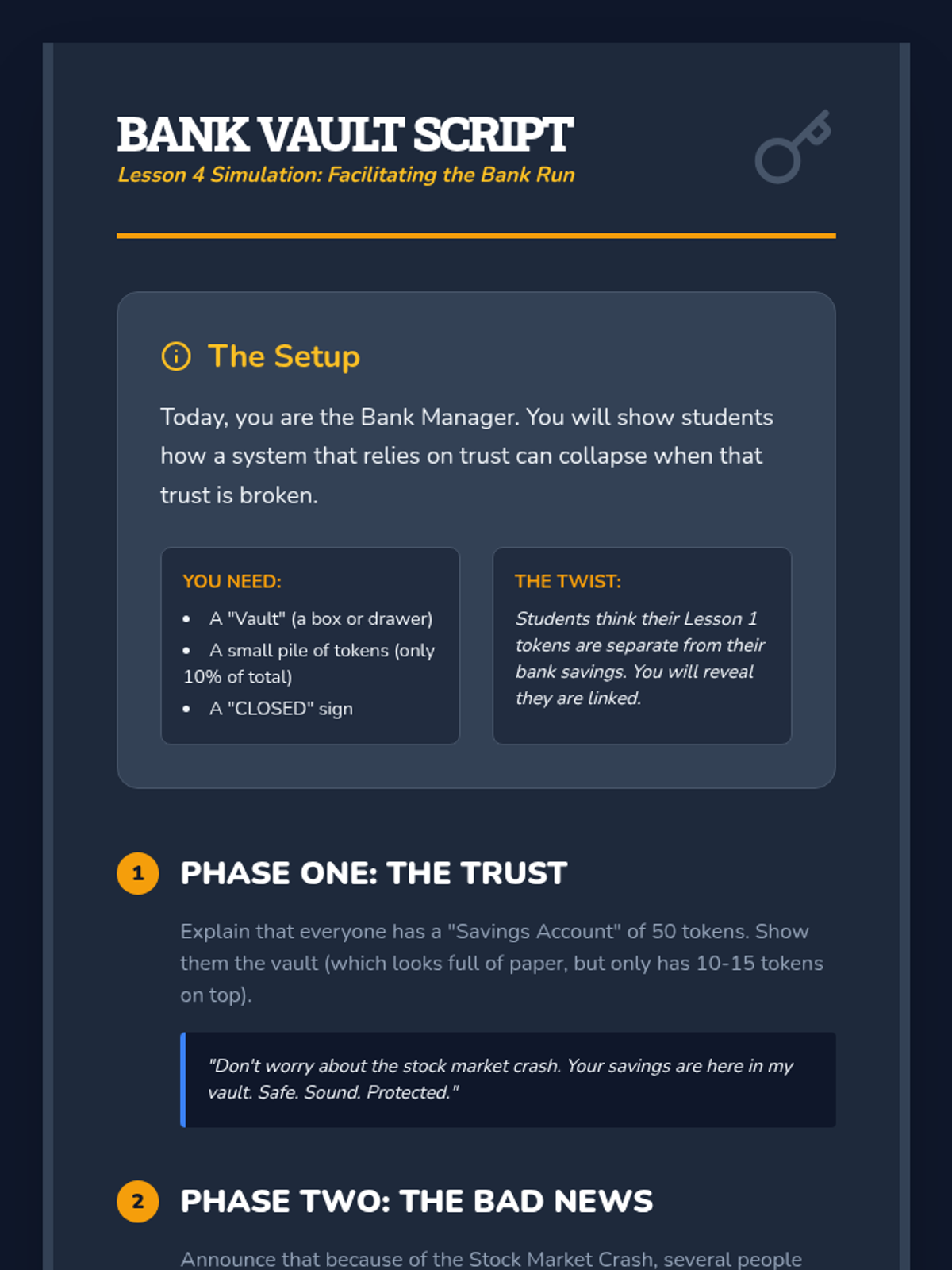
Demystifies the banking crisis by simulating a bank run and explaining how banks use depositor money.
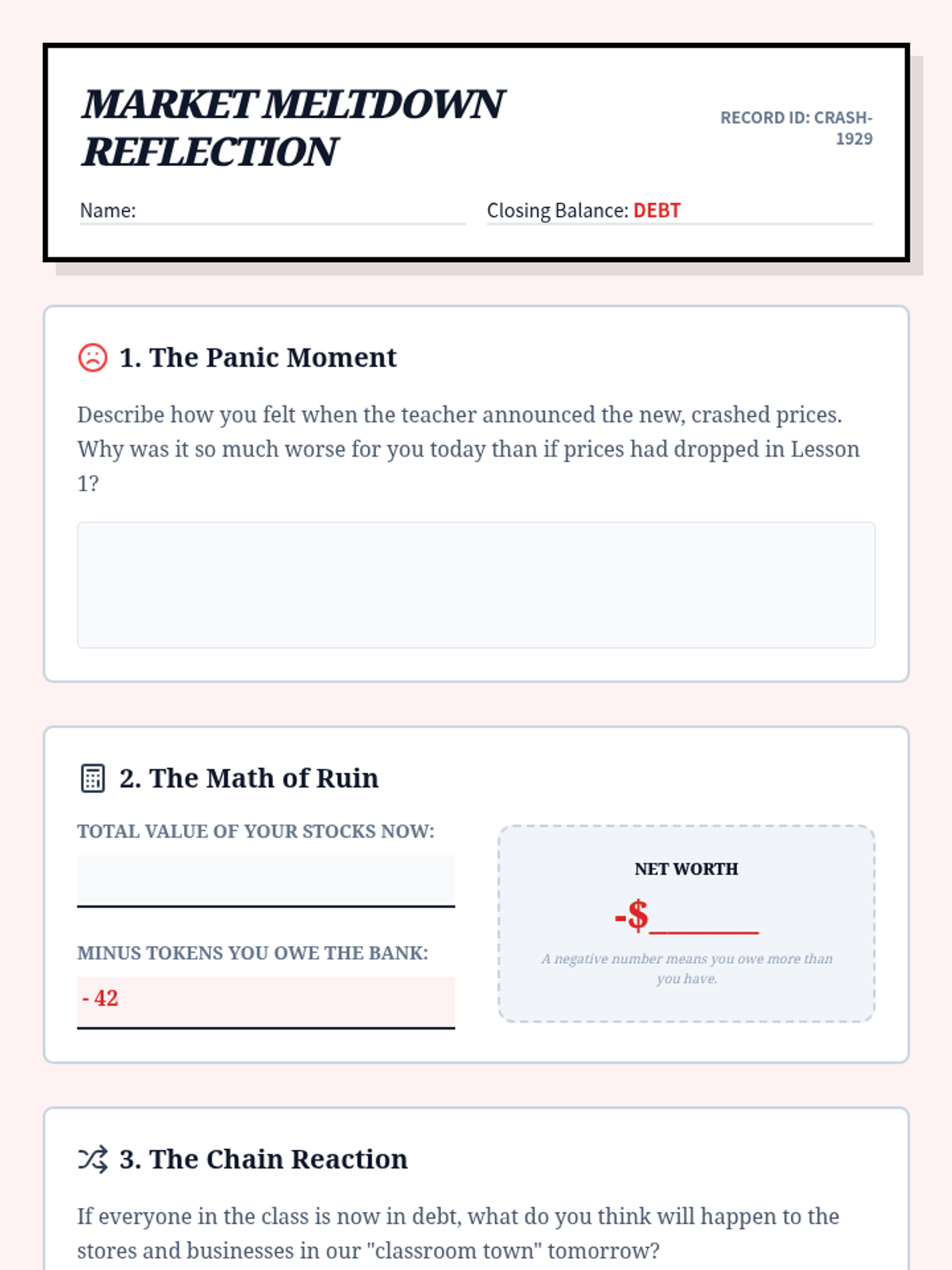
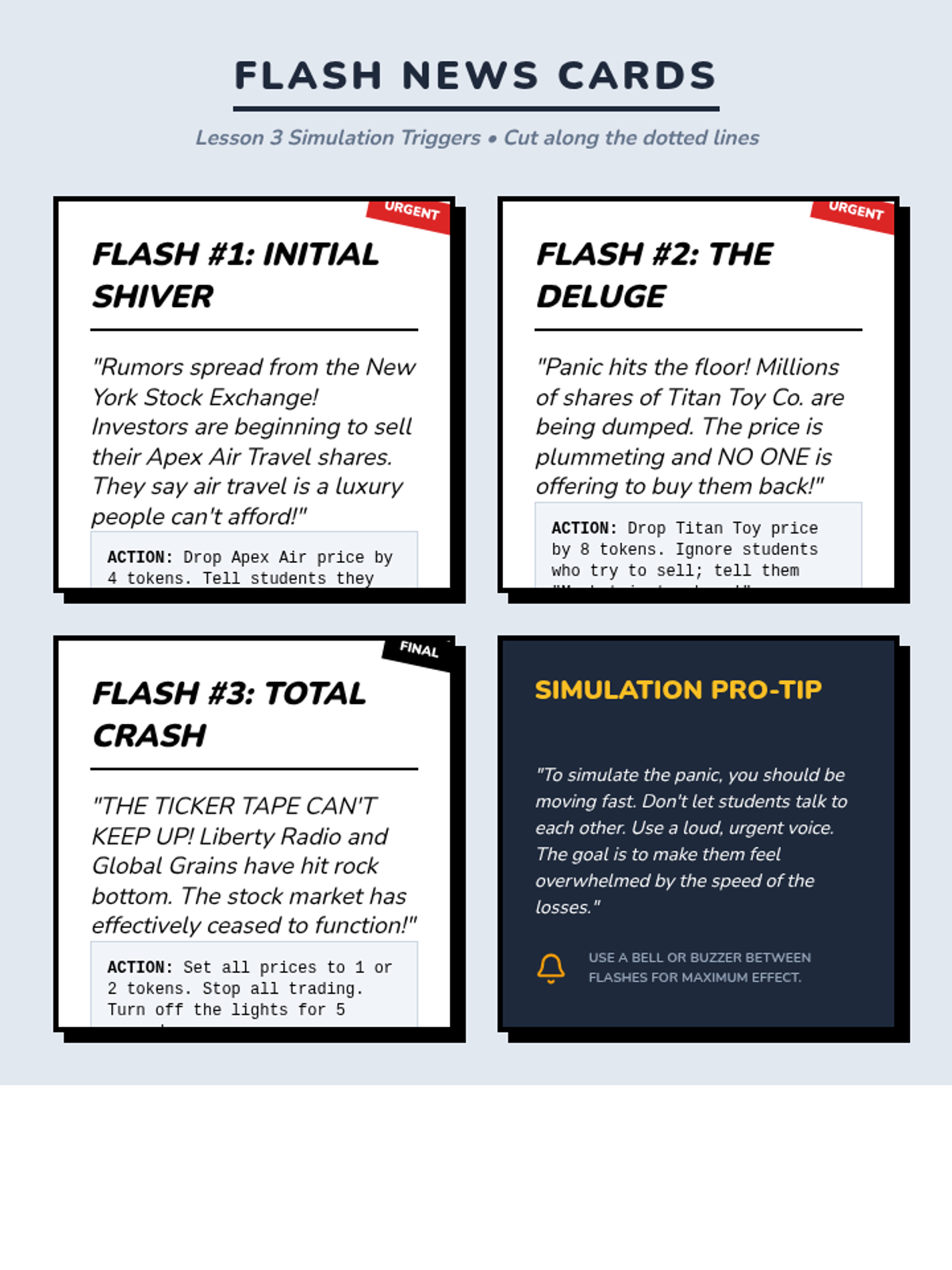
Simulates the chaos of Black Tuesday, focusing on the panic selling and the immediate realization of debt.
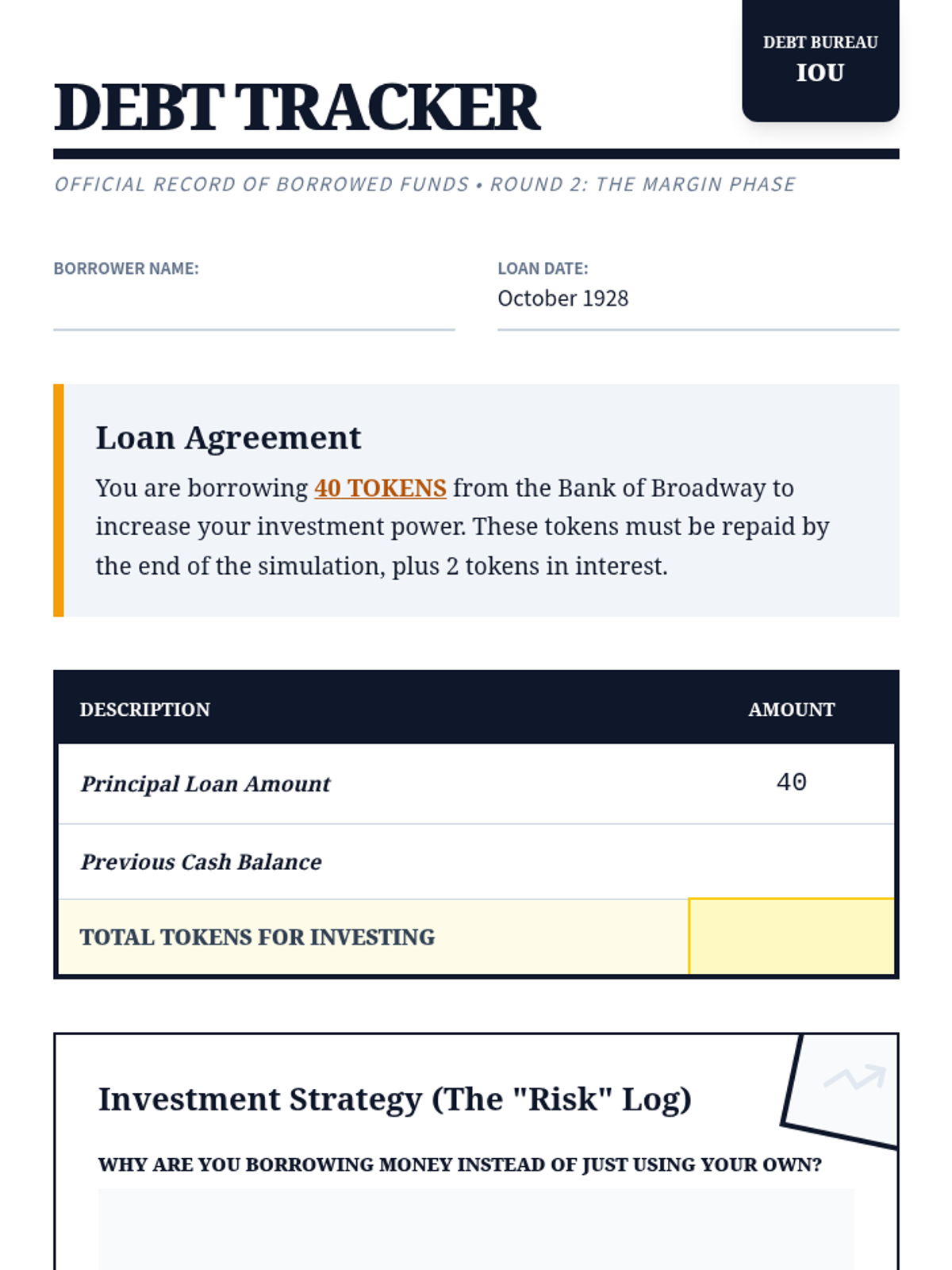
Explores the 'Roaring Twenties' optimism and the risky practice of buying on margin through a borrowing simulation.
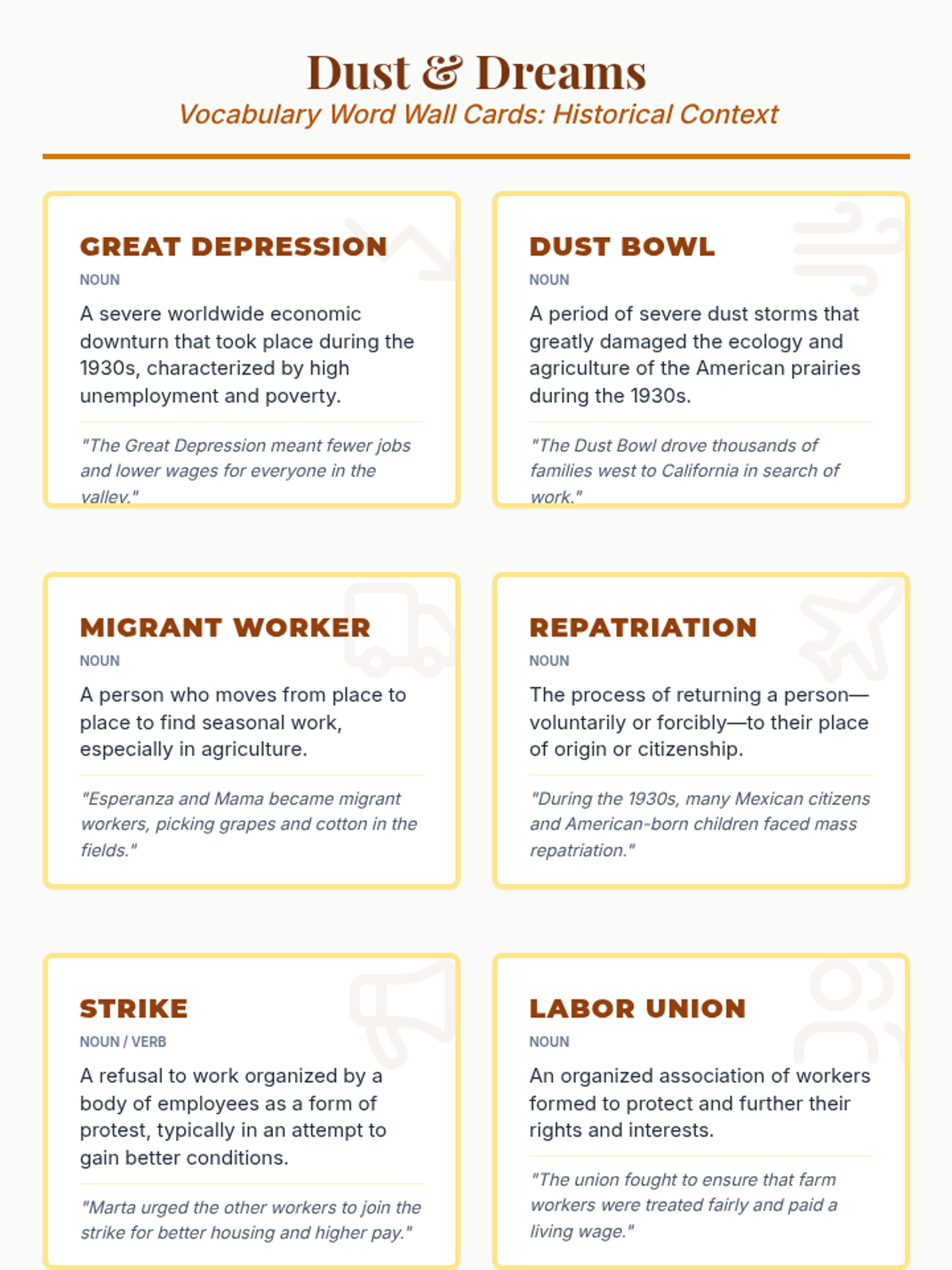
A lesson exploring the historical background of Esperanza Rising, focusing on the Great Depression, the Dust Bowl, and Mexican repatriation.
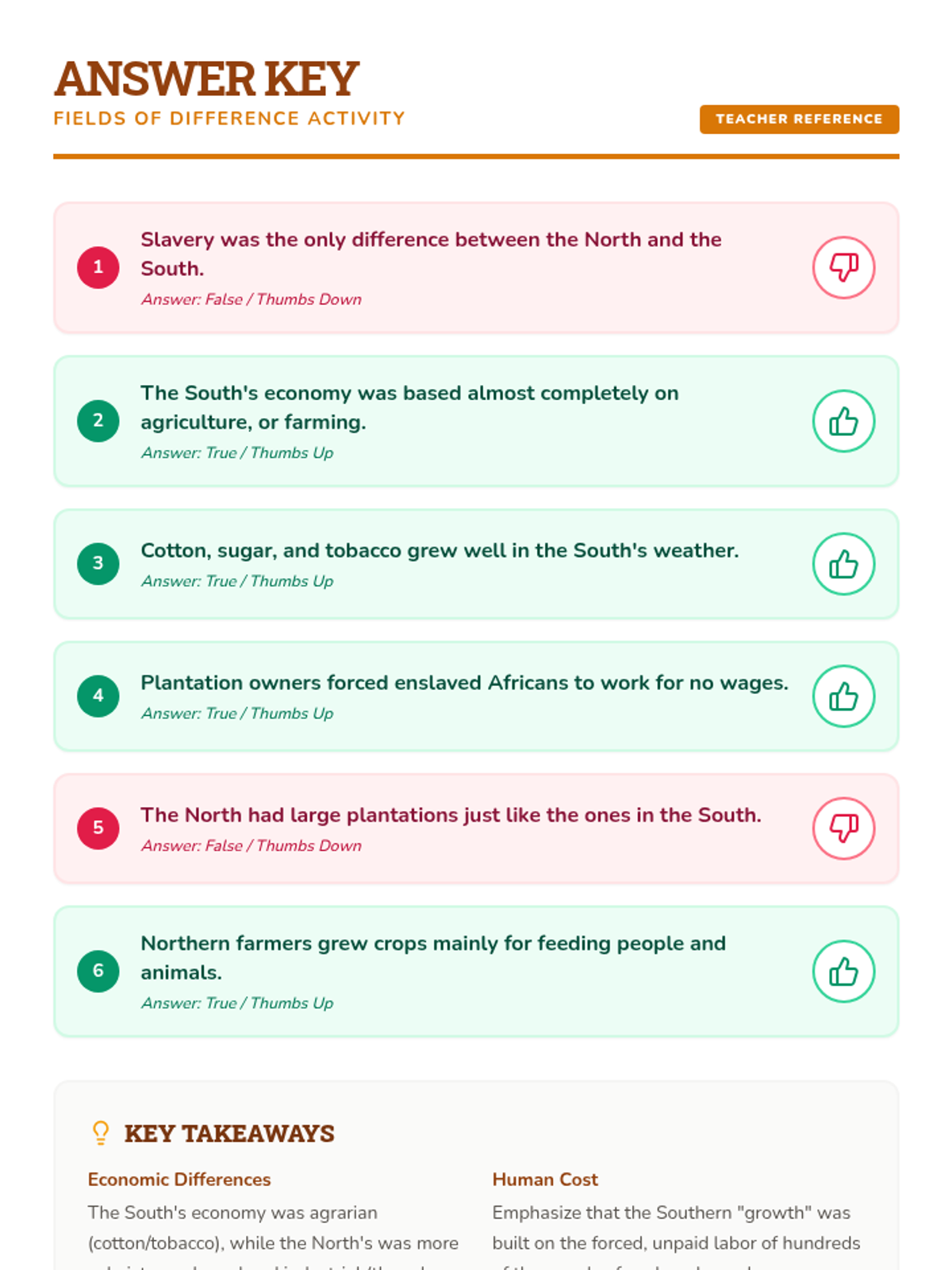
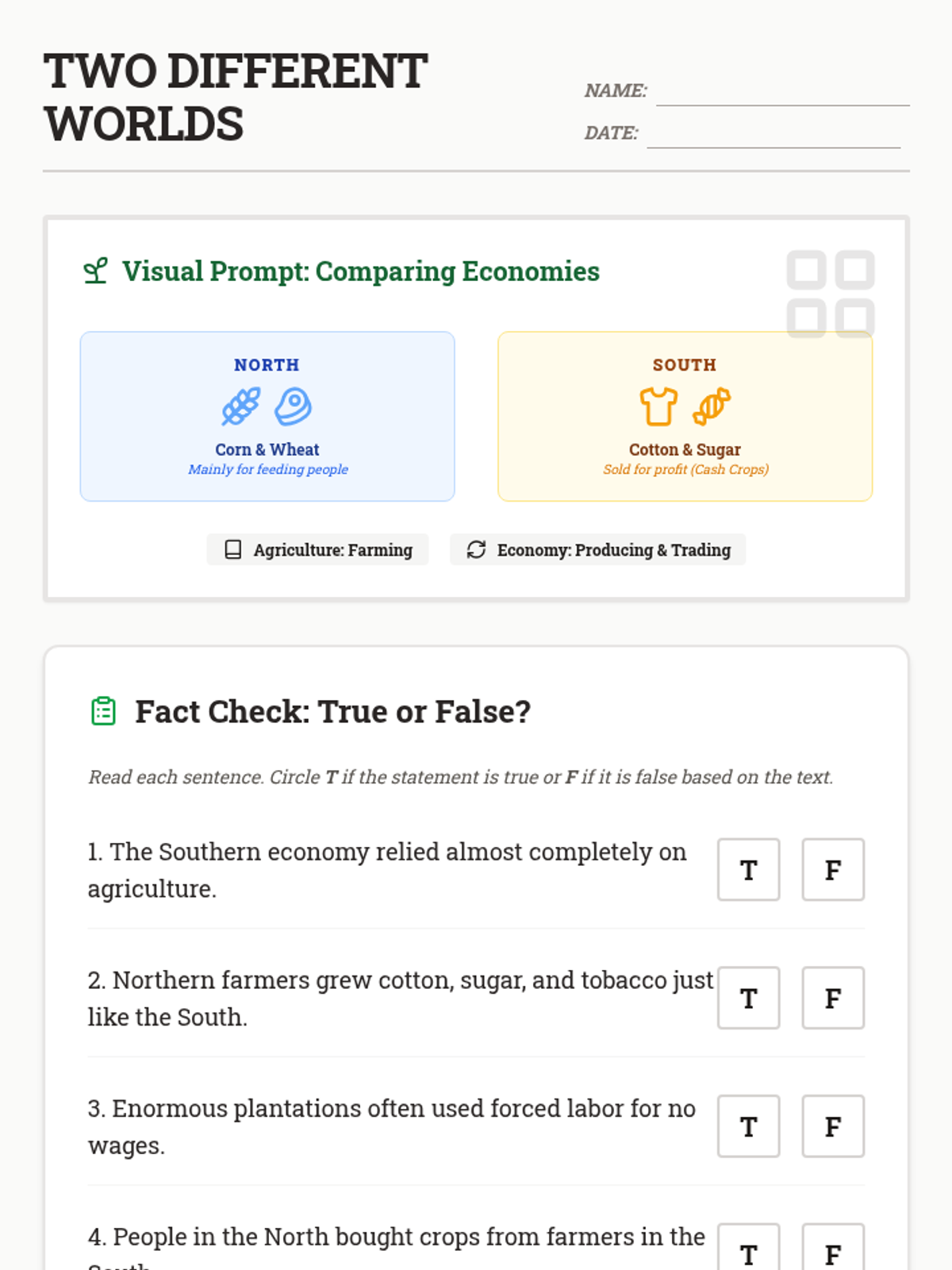
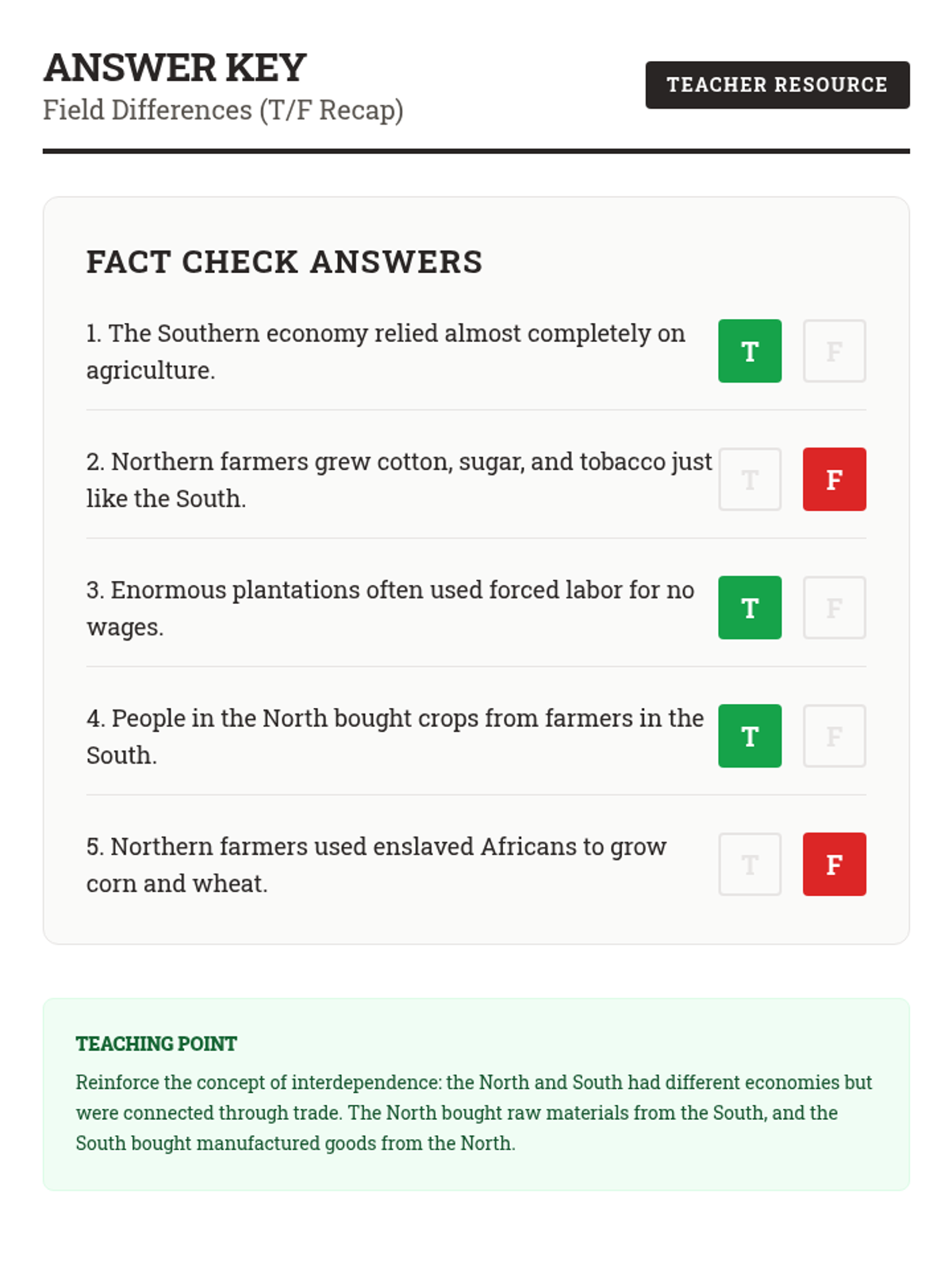
A lesson exploring the economic differences between the North and South, focusing on agriculture, the plantation system, and regional crops. Students will compare and contrast the different types of labor and resources used in each region.
A lesson focusing on Harriet Tubman's escape and the historical significance of the Mason-Dixon Line as a boundary between freedom and slavery. Students will practice sequencing historical events and identifying key geographical markers.