Fundamental techniques for drawing, painting, sculpture, and photography alongside modern digital design principles. Analyzes historical artistic movements while building skills in printmaking and graphic media.
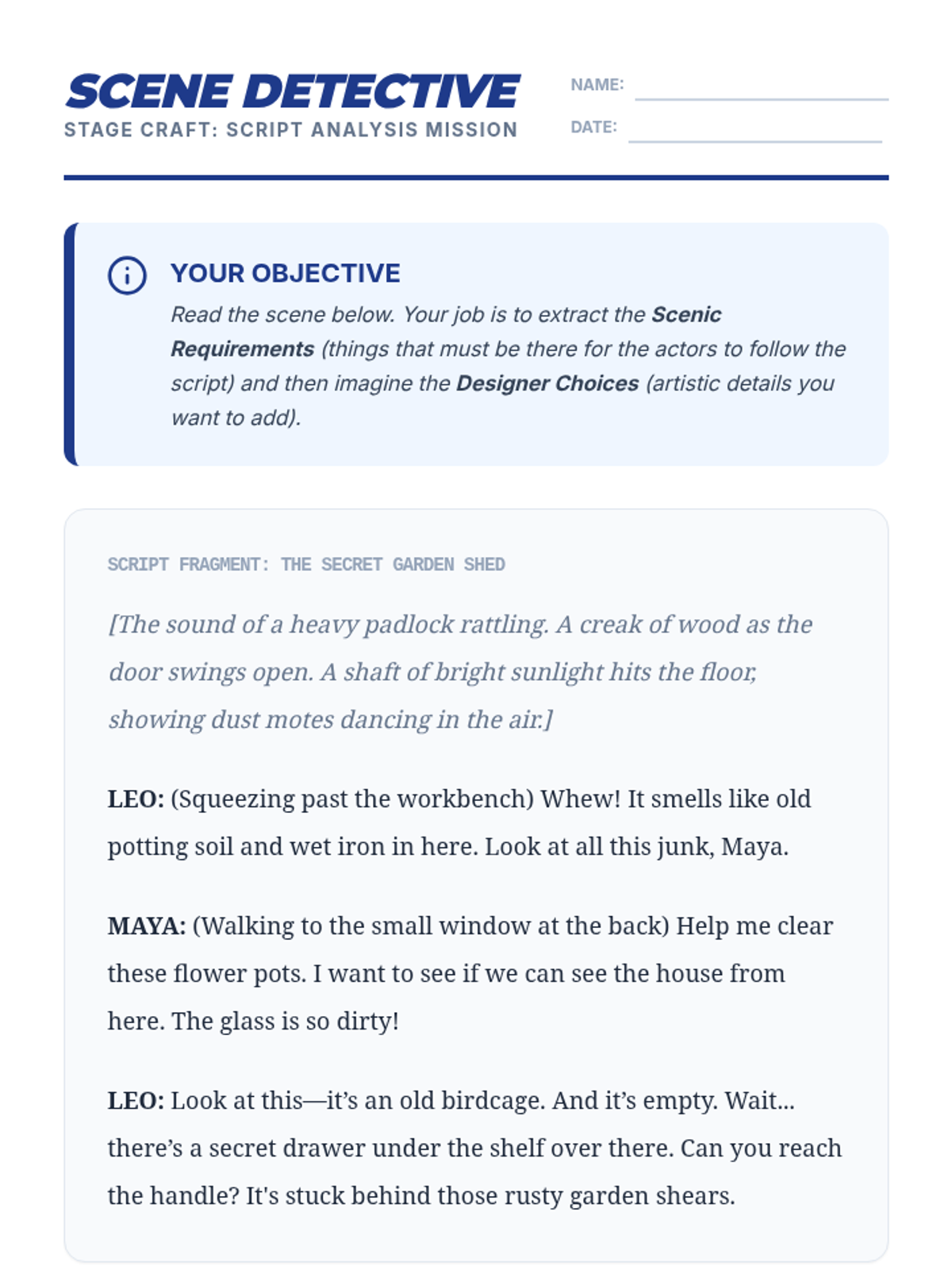
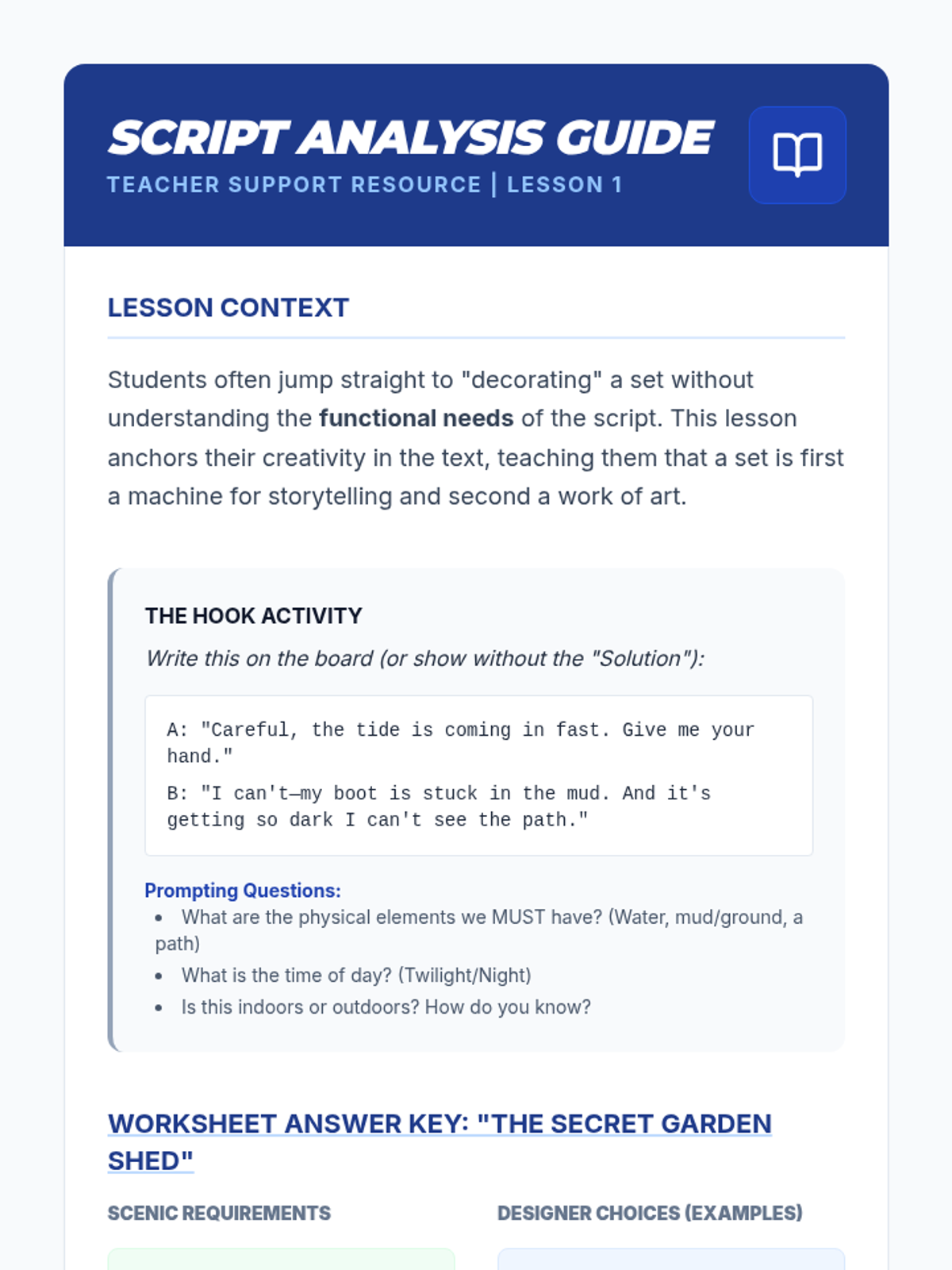
Students step into the shoes of a set designer to transform a written script into a physical world through script analysis, floor planning, mood boards, and 3D model construction. The sequence emphasizes how visual choices in color, texture, and space support the storytelling.
Students investigate how visual arts served as a vehicle for political power, religious messaging, and scientific observation during the Renaissance. This sequence moves beyond simple art appreciation to the analysis of 'visual rhetoric'—how perspective, anatomical realism, and classical allusions were used to convey meaning.
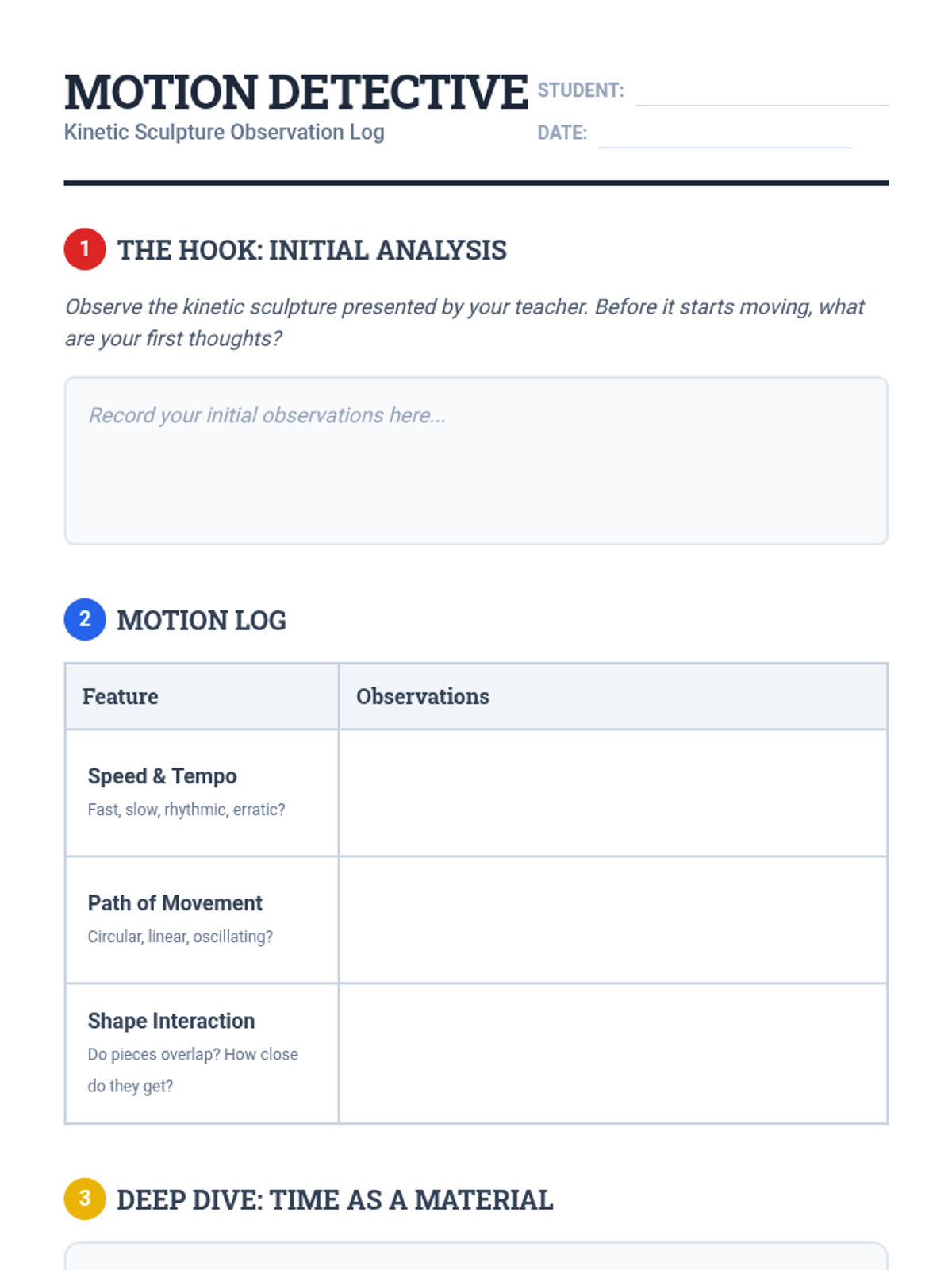
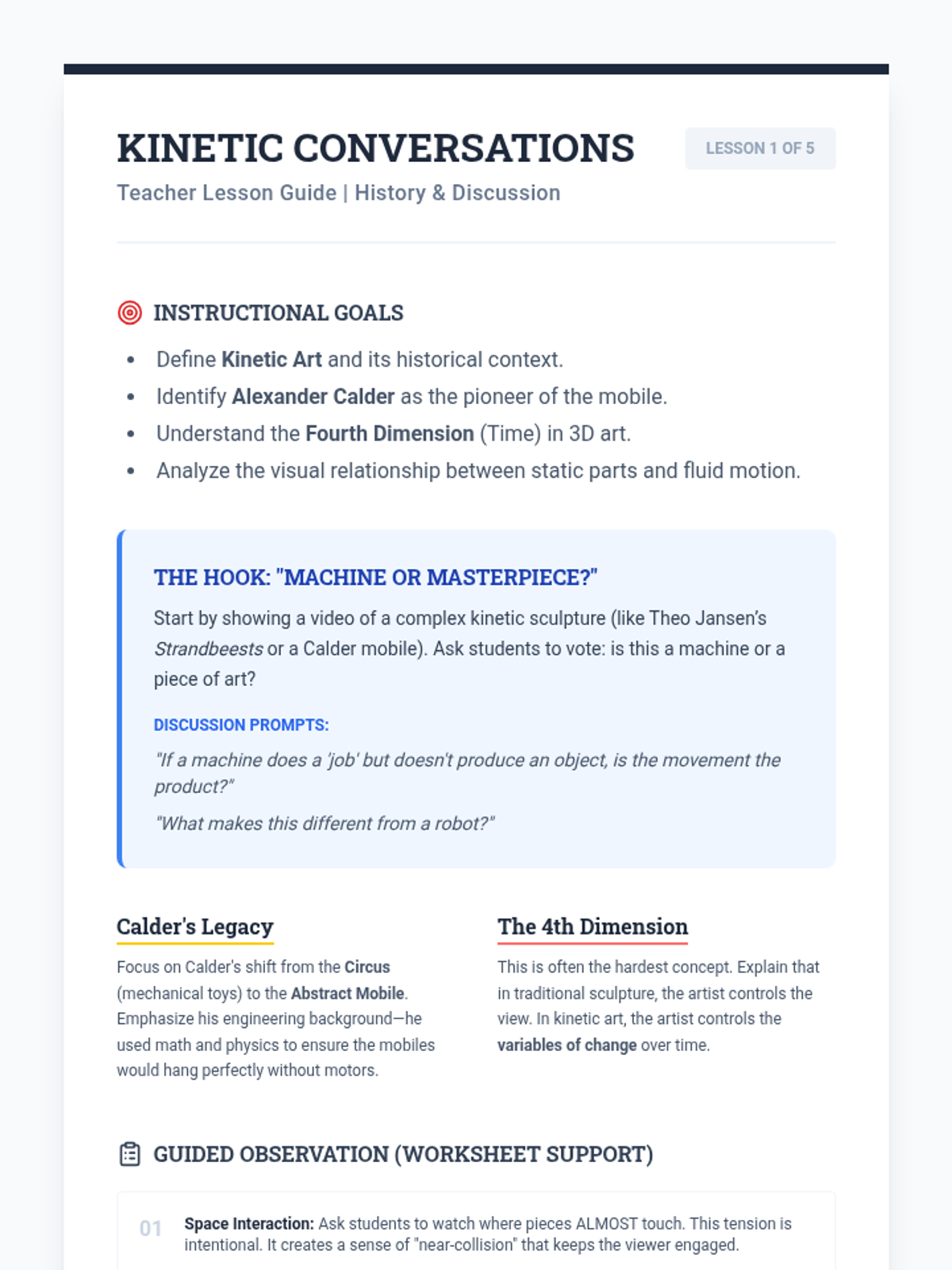
This sequence merges art with basic physics, introducing students to kinetic sculpture and mobiles. Students explore balance, fulcrums, and counterweights to create art that moves, culminating in a mobile inspired by Alexander Calder.
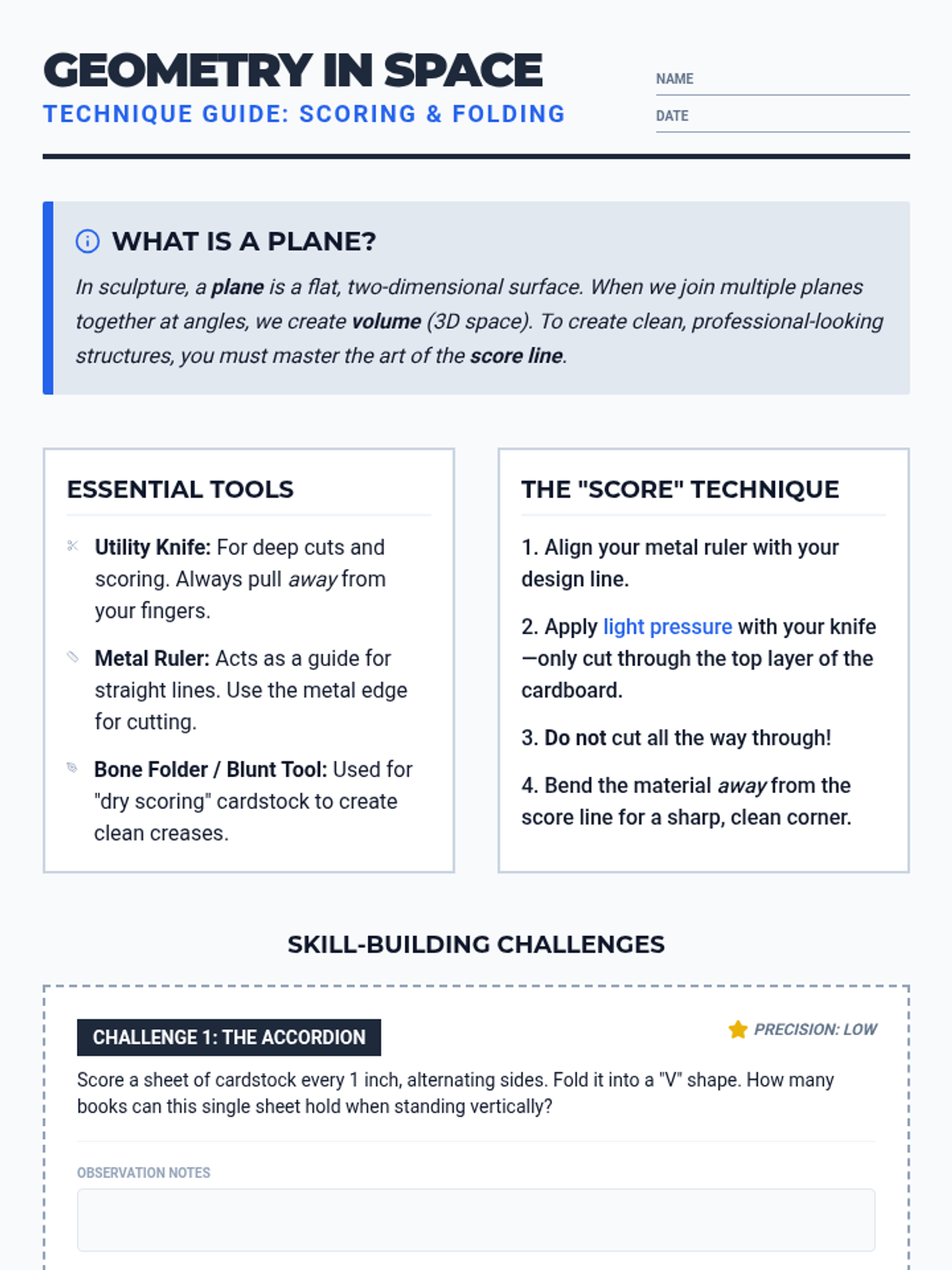
A comprehensive 9th-grade sculpture sequence focusing on planar construction using cardboard. Students transition from 2D geometric shapes to 3D volumes through scoring, folding, and slotting, culminating in a light-and-shadow-focused abstract sculpture.
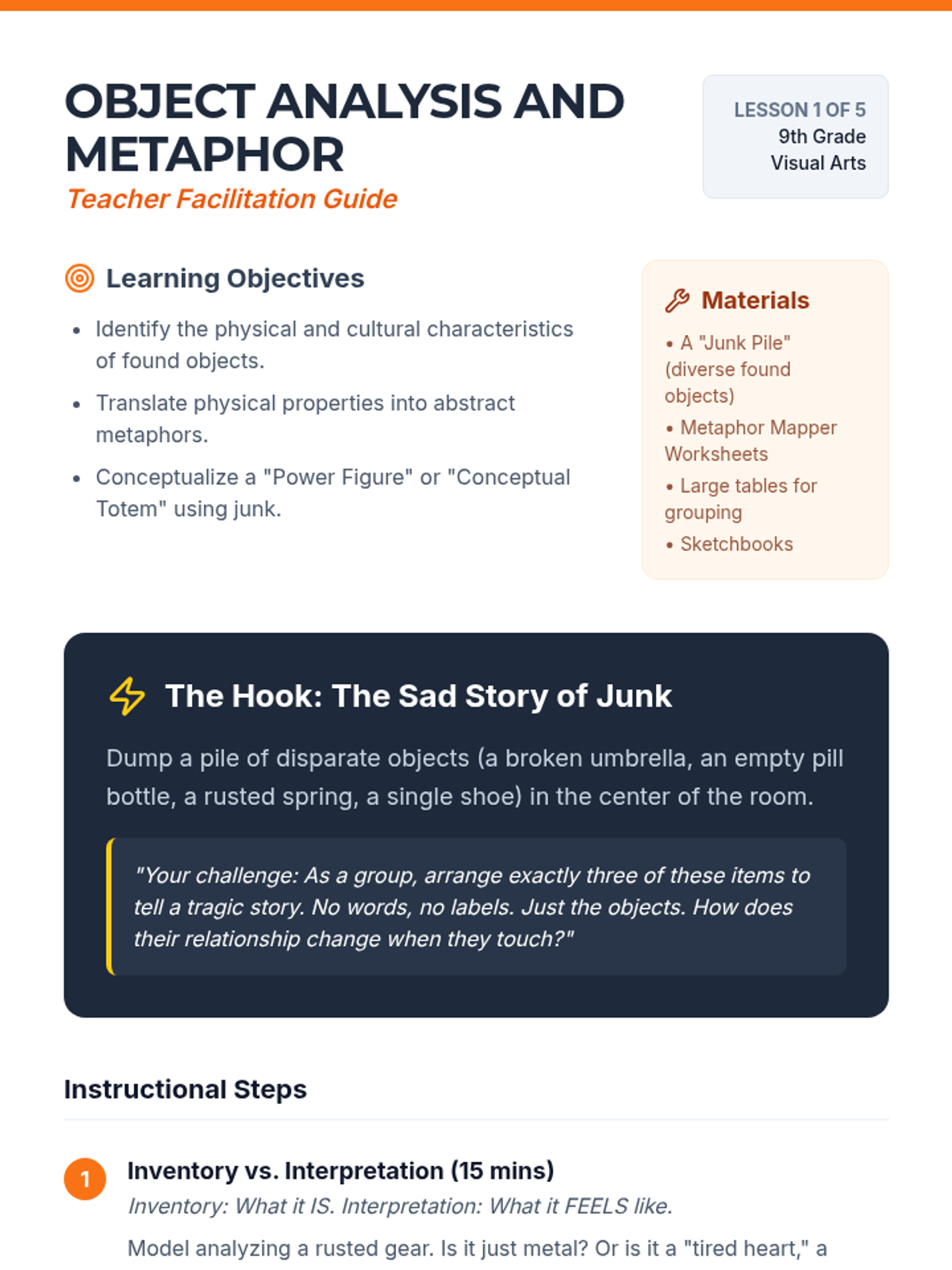
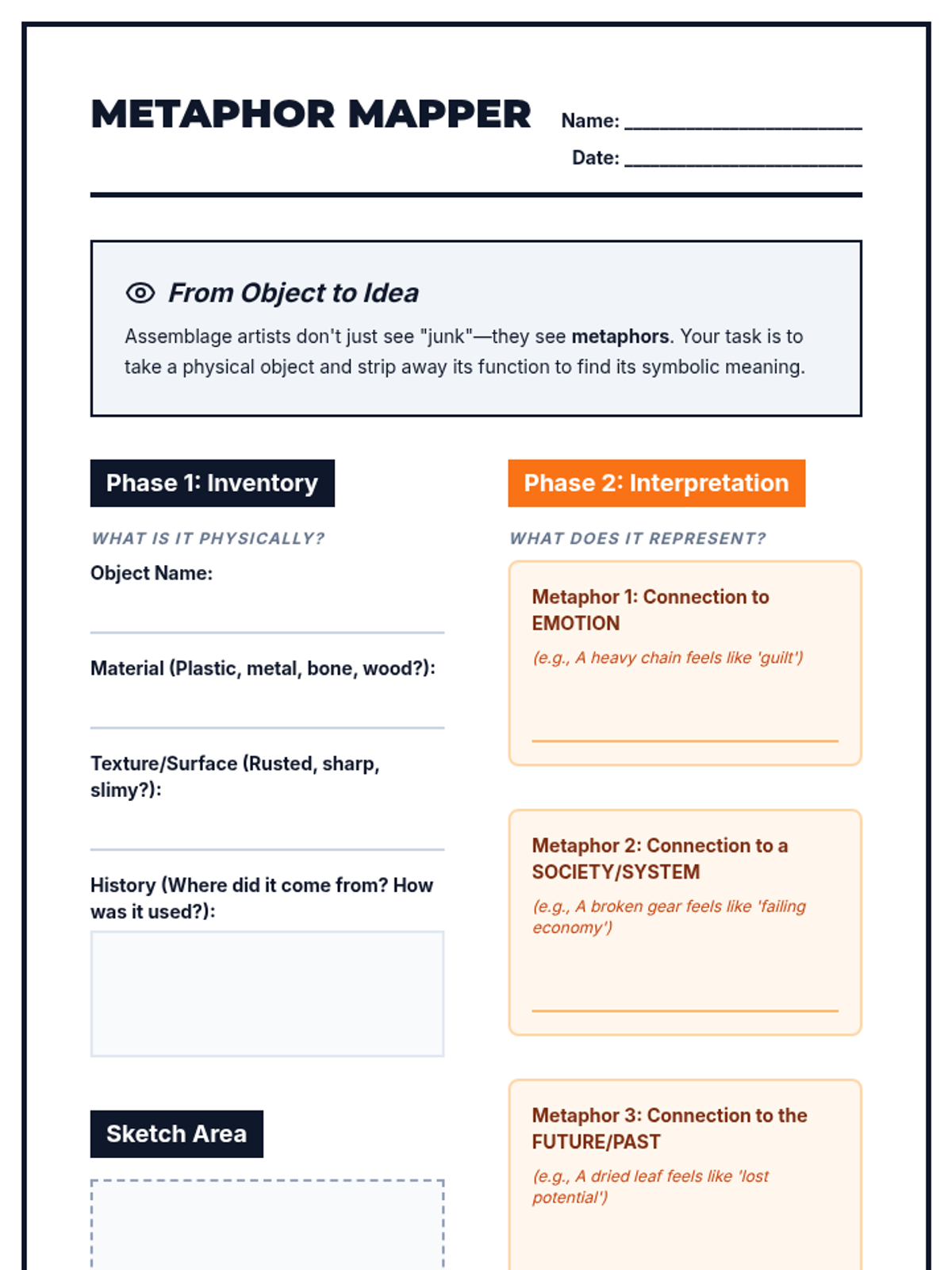
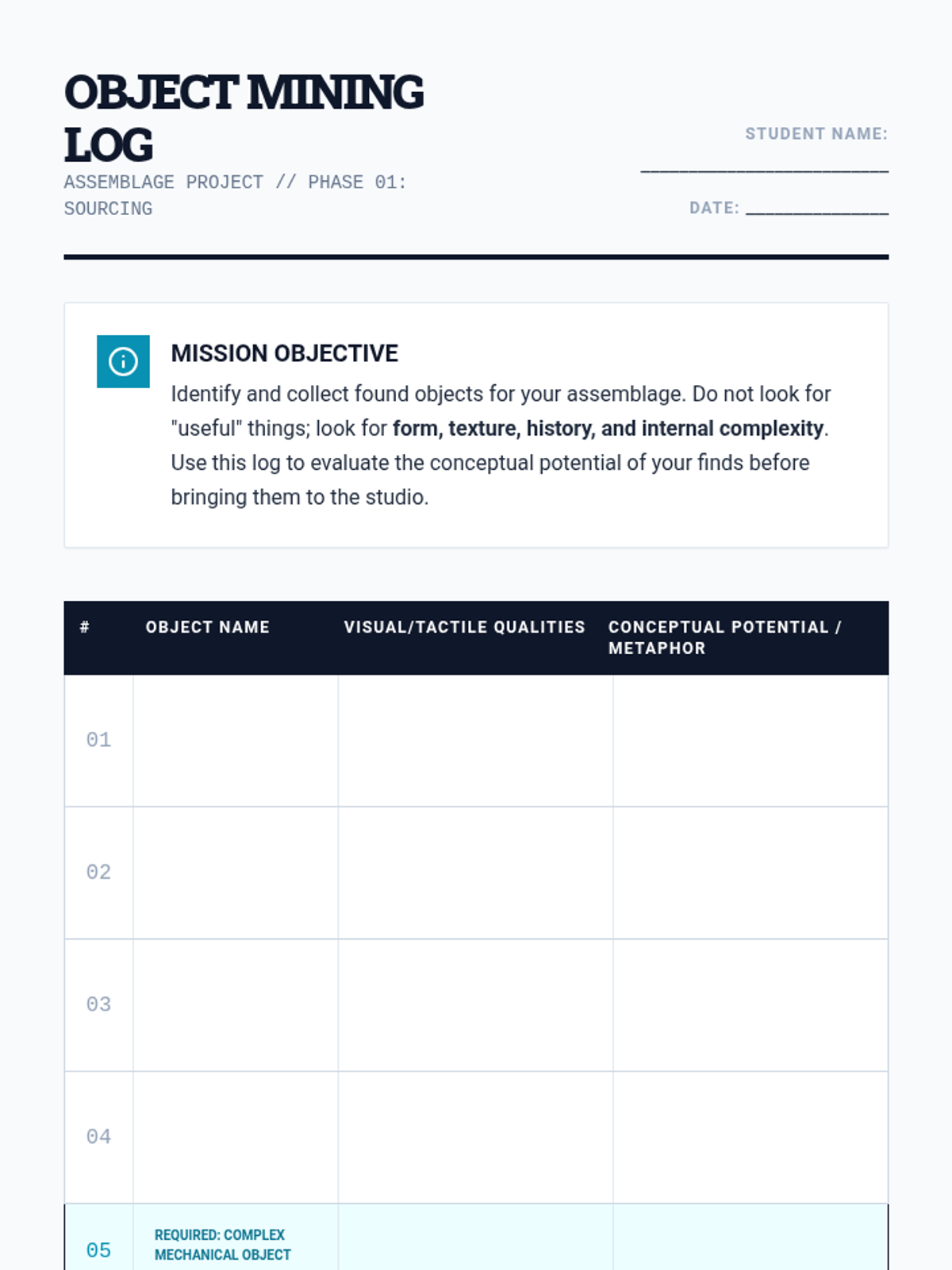
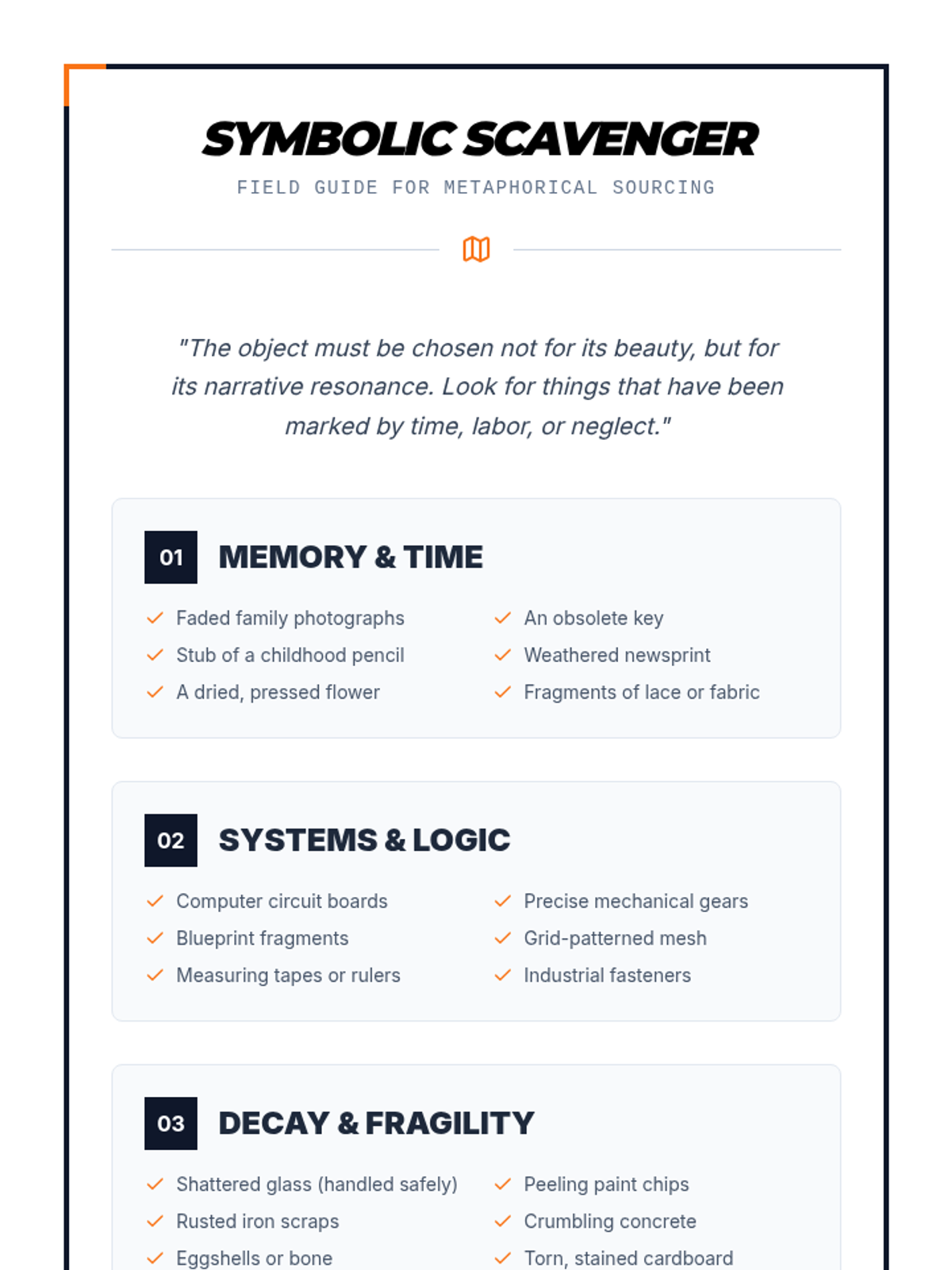
This project-based sequence challenges students to transform ordinary, discarded materials into meaningful art through assemblage. Students learn to analyze the physical and metaphorical properties of found objects, using them to construct a narrative or conceptual sculpture.
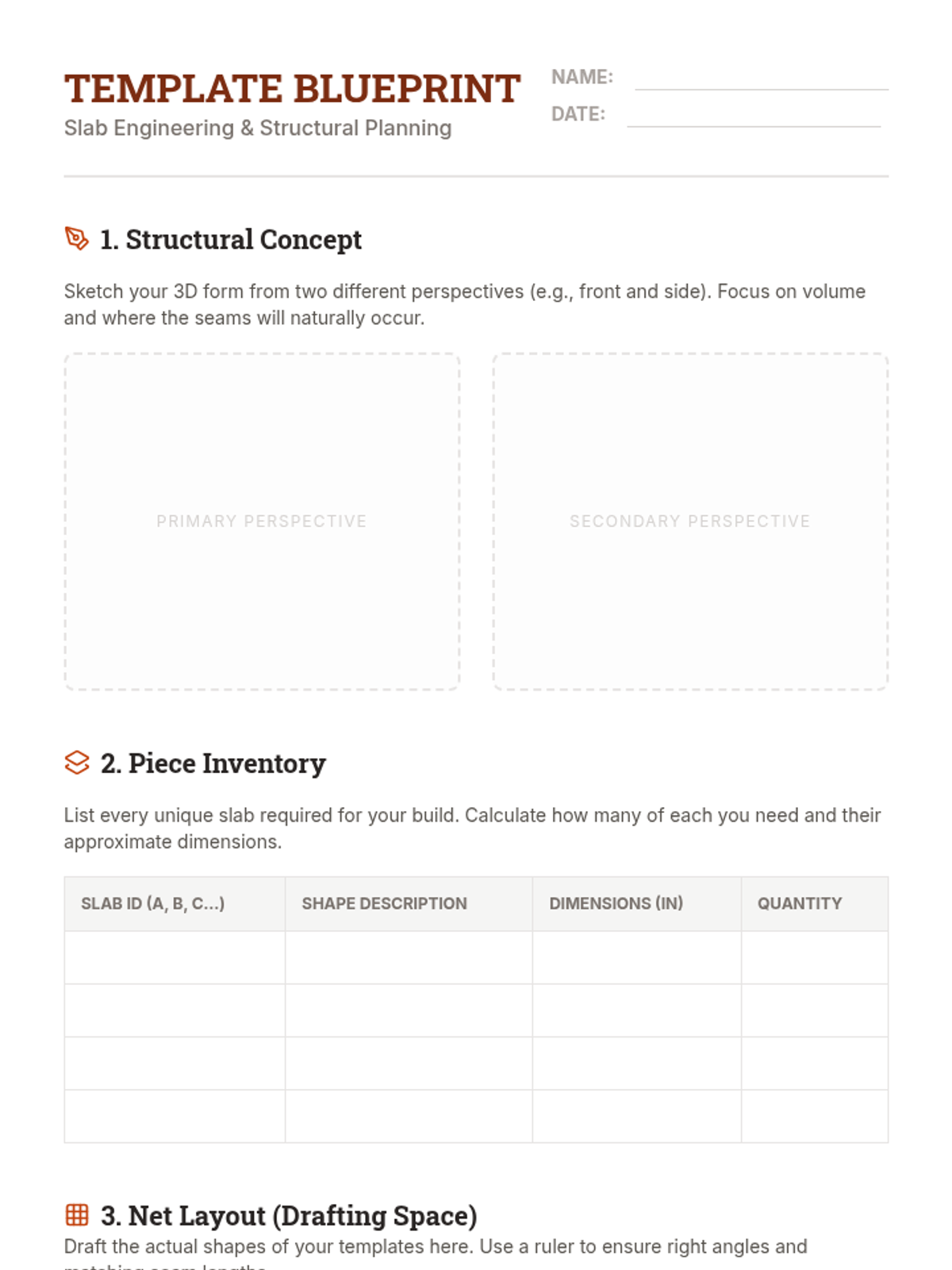
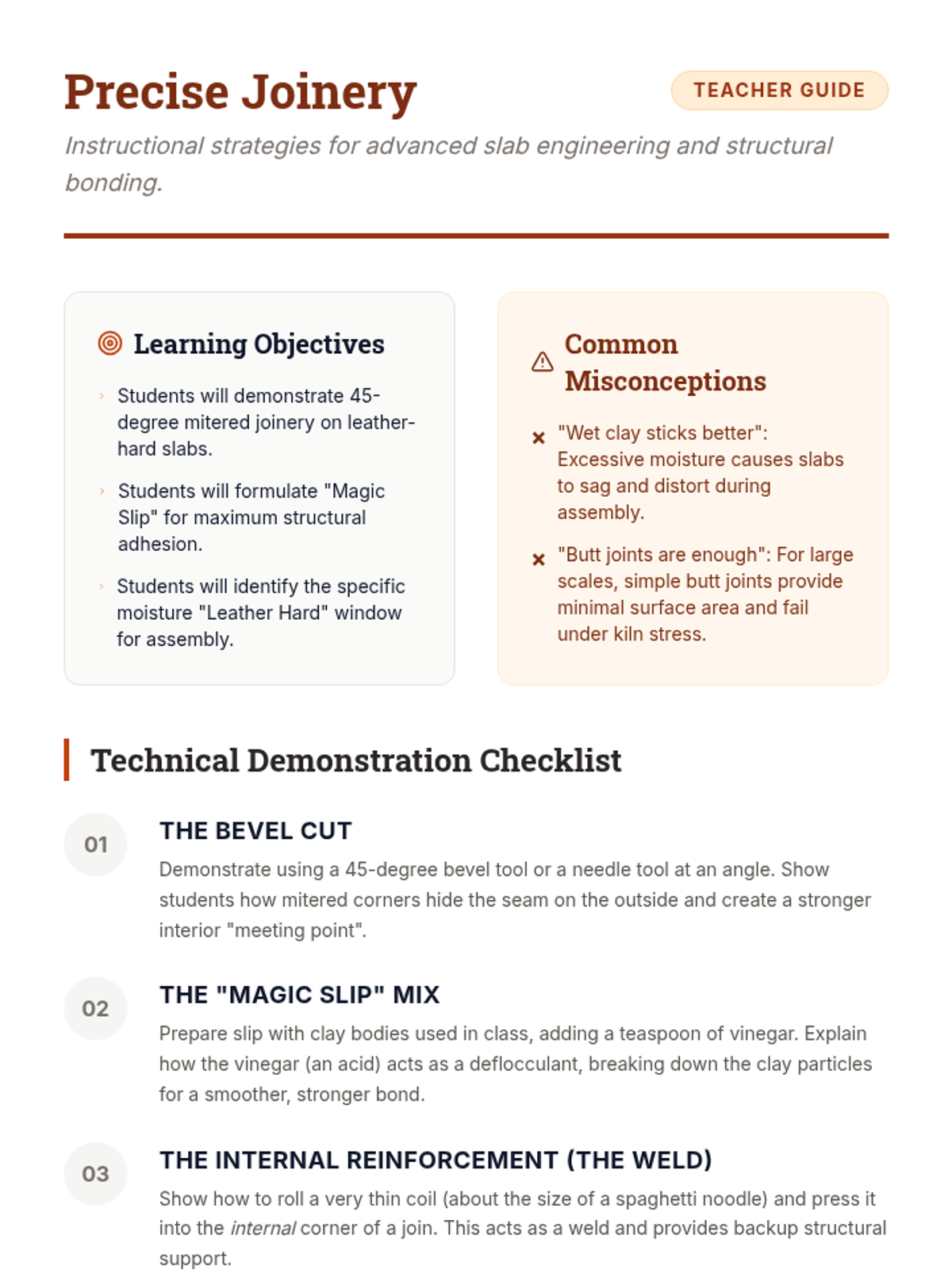
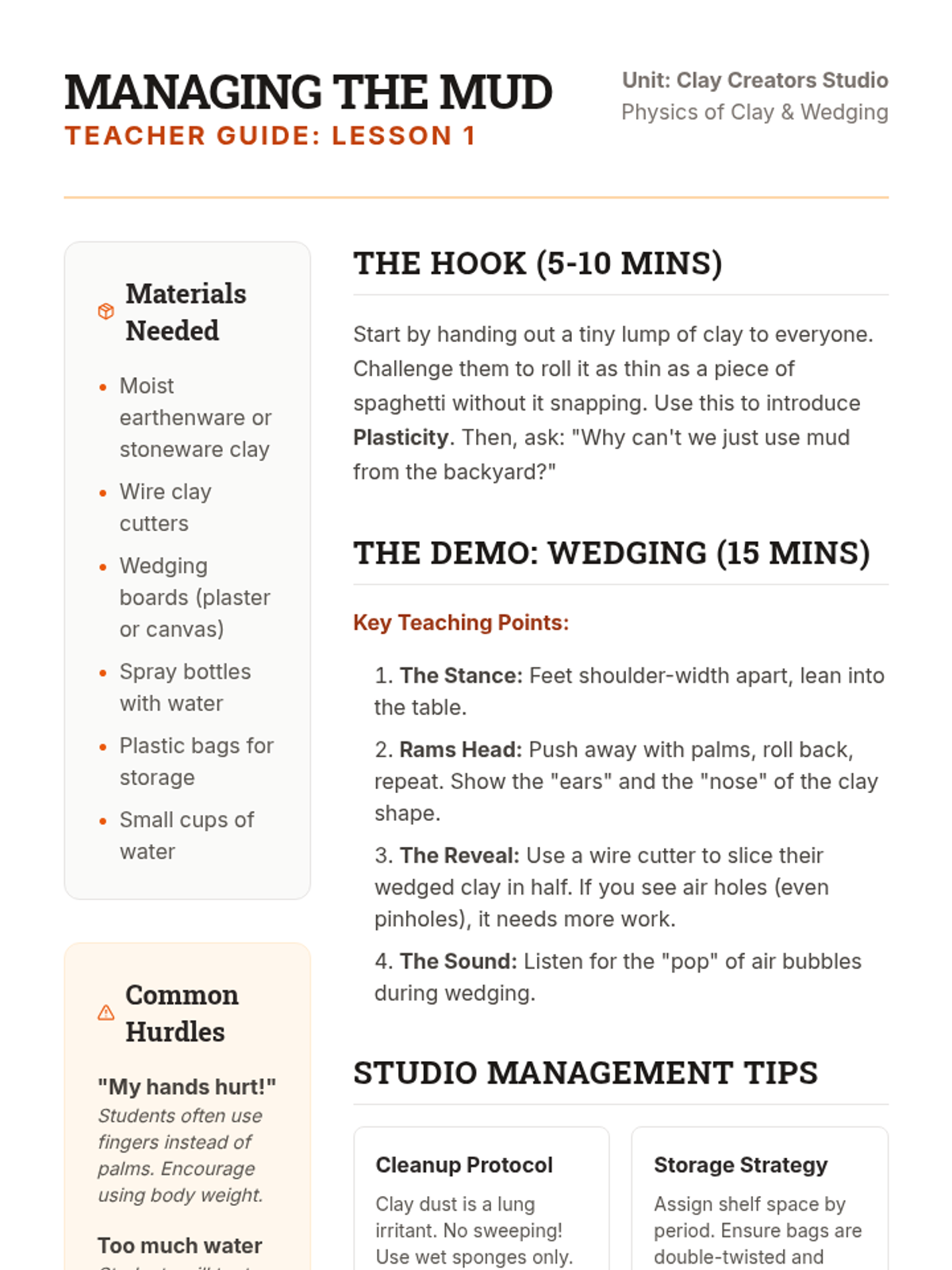
This sequence advances students' ceramic skills into complex hand-building engineering, focusing on large-scale slab construction, internal supports, surface design, and kiln firing. Students will design and build structural forms that defy gravity while mastering the chemical and physical transformations of clay and glaze.
An 11th-grade visual arts sequence exploring the history and practice of Assemblage. Students learn to recontextualize found objects, master cold-connection techniques, and create sculptures that communicate complex metaphors and social commentary.
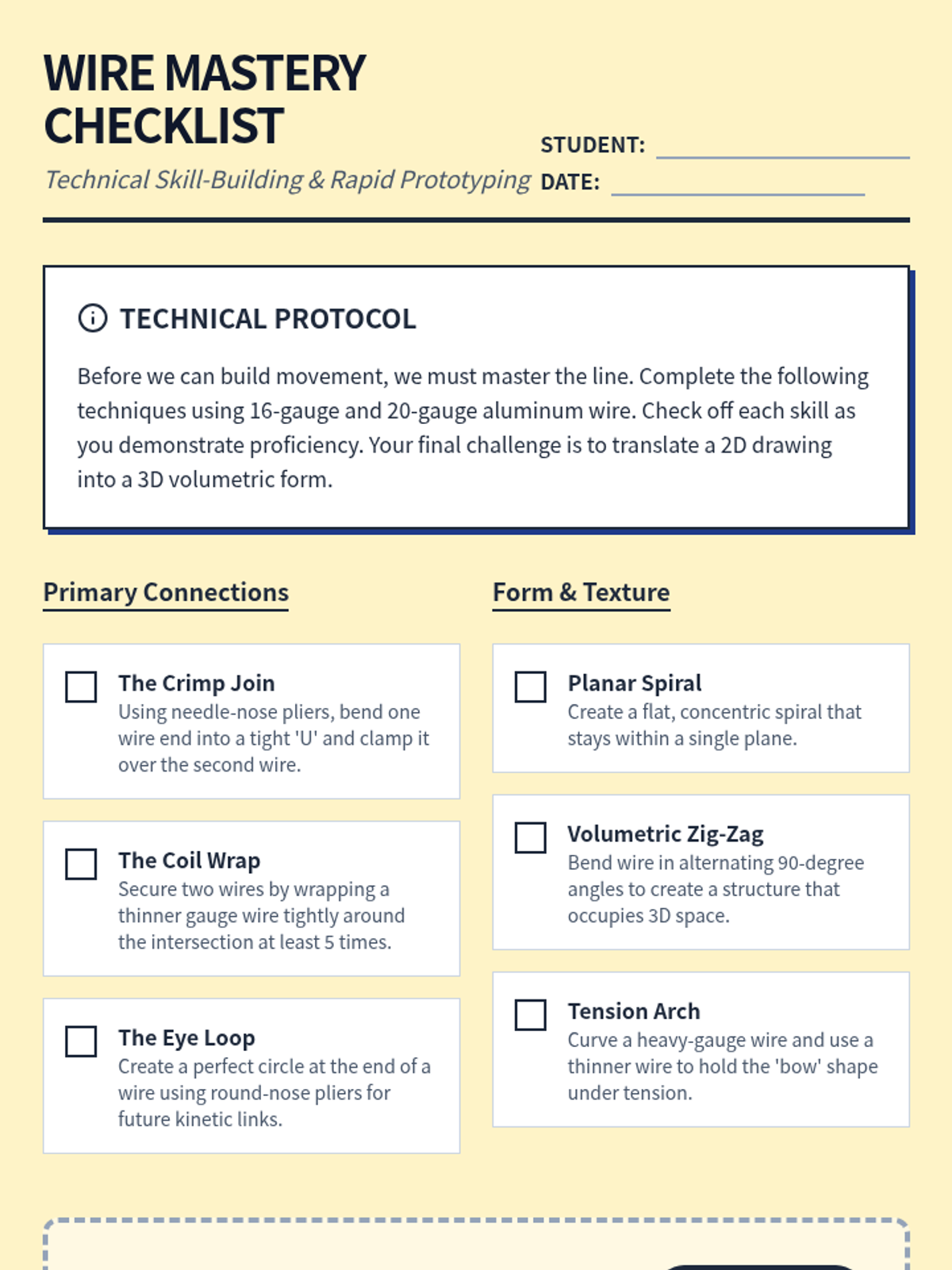
This sequence explores the intersection of engineering and art through the creation of kinetic wire sculptures. Students progress from basic wire manipulation to complex mobile construction, culminating in a lighting installation that showcases movement and shadow.
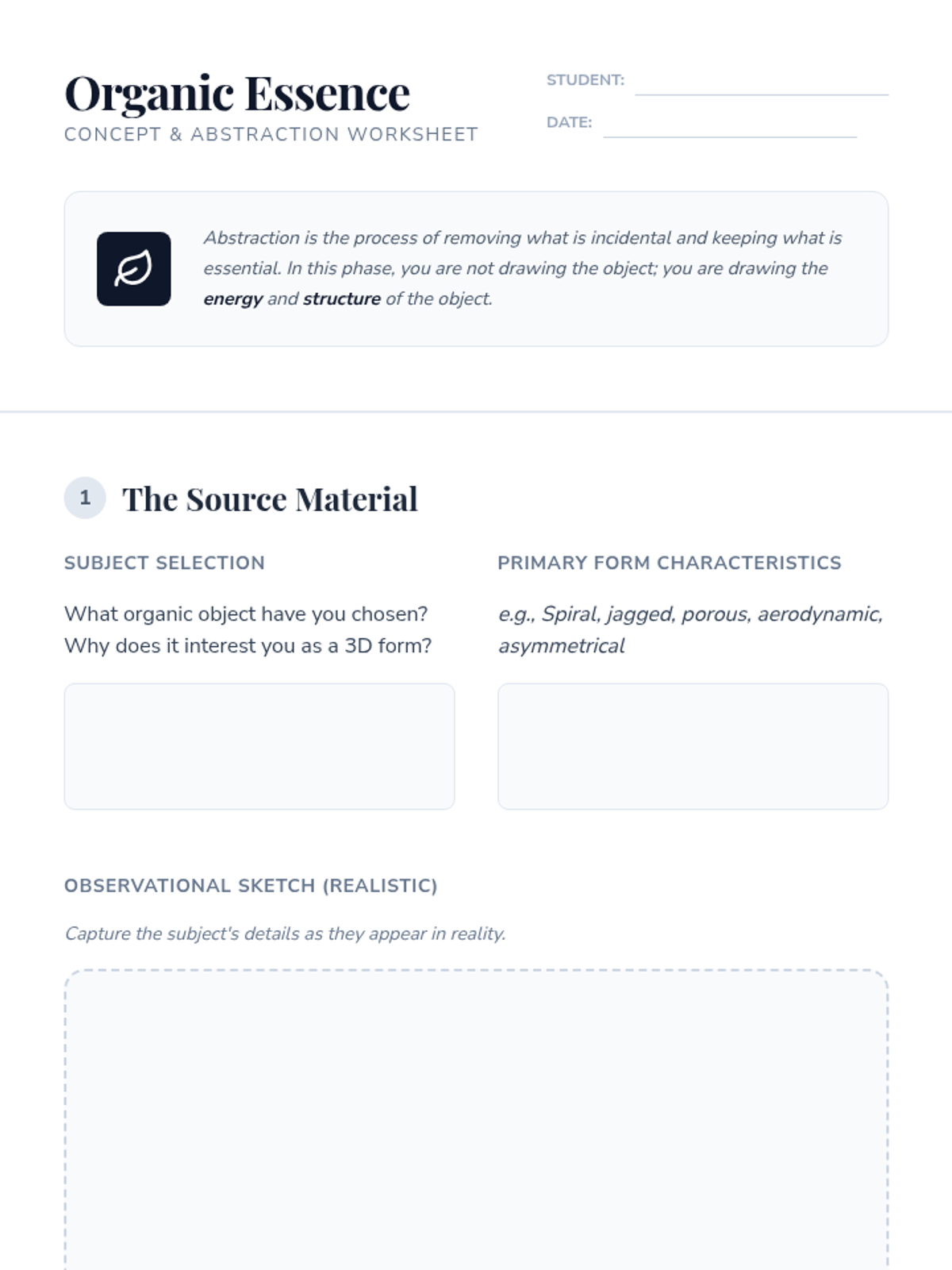
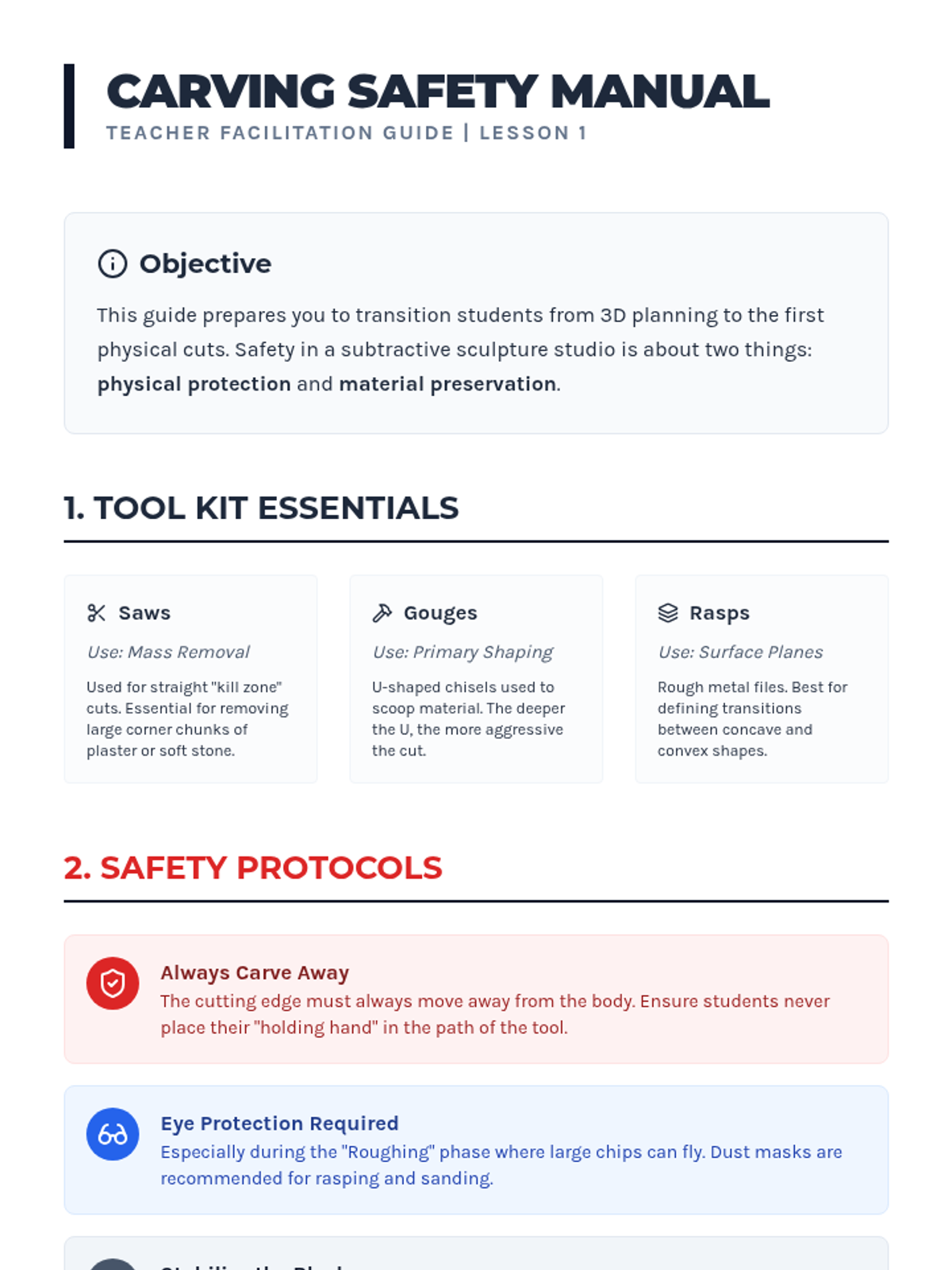
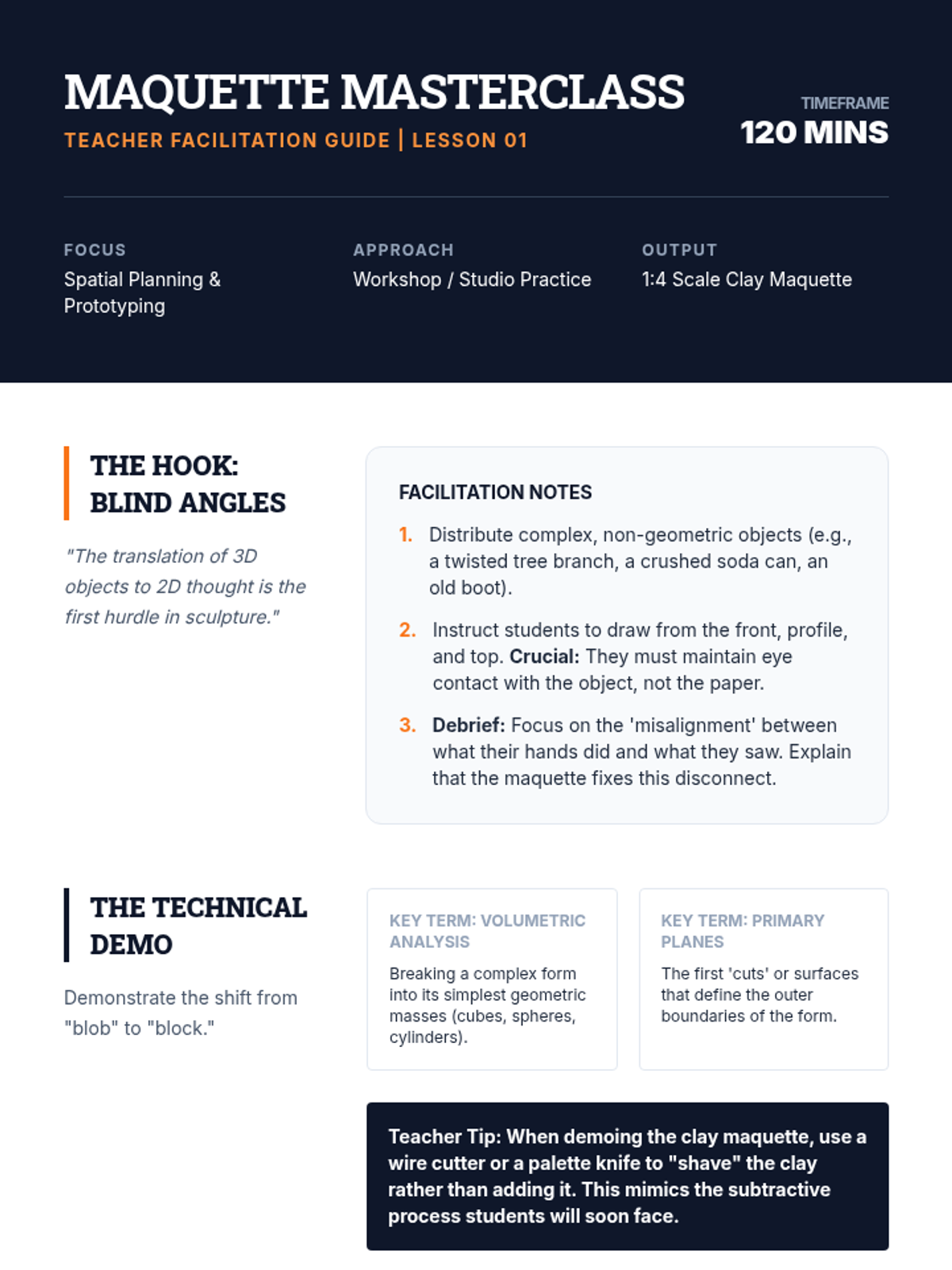
A comprehensive high school sculpture sequence focused on subtractive carving. Students progress from organic inspiration and clay maquettes to carving a final 3D form in a reductive medium, emphasizing abstraction and negative space.
A hands-on sculpture sequence where students learn the art of subtractive carving. From planning maquettes to refining organic forms inspired by Moore and Hepworth, students master tools and spatial reasoning to reveal the 'essence' within a solid mass.
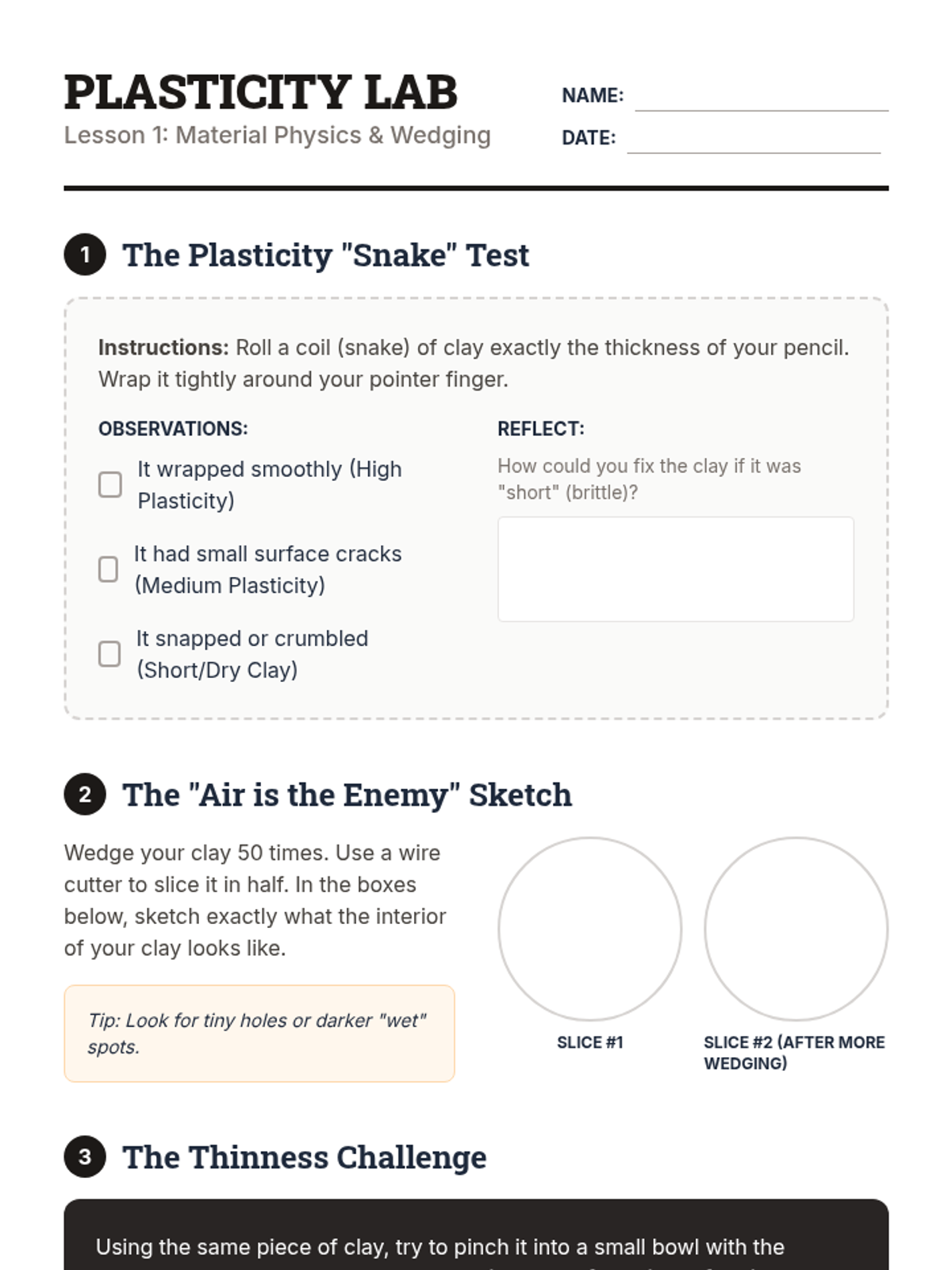
A comprehensive 8th-grade unit on ceramic hand-building, focusing on slab and coil techniques, the physics of clay, and surface texture. Students move from raw clay preparation to finished, glazed pieces while exploring the relationship between form and surface.
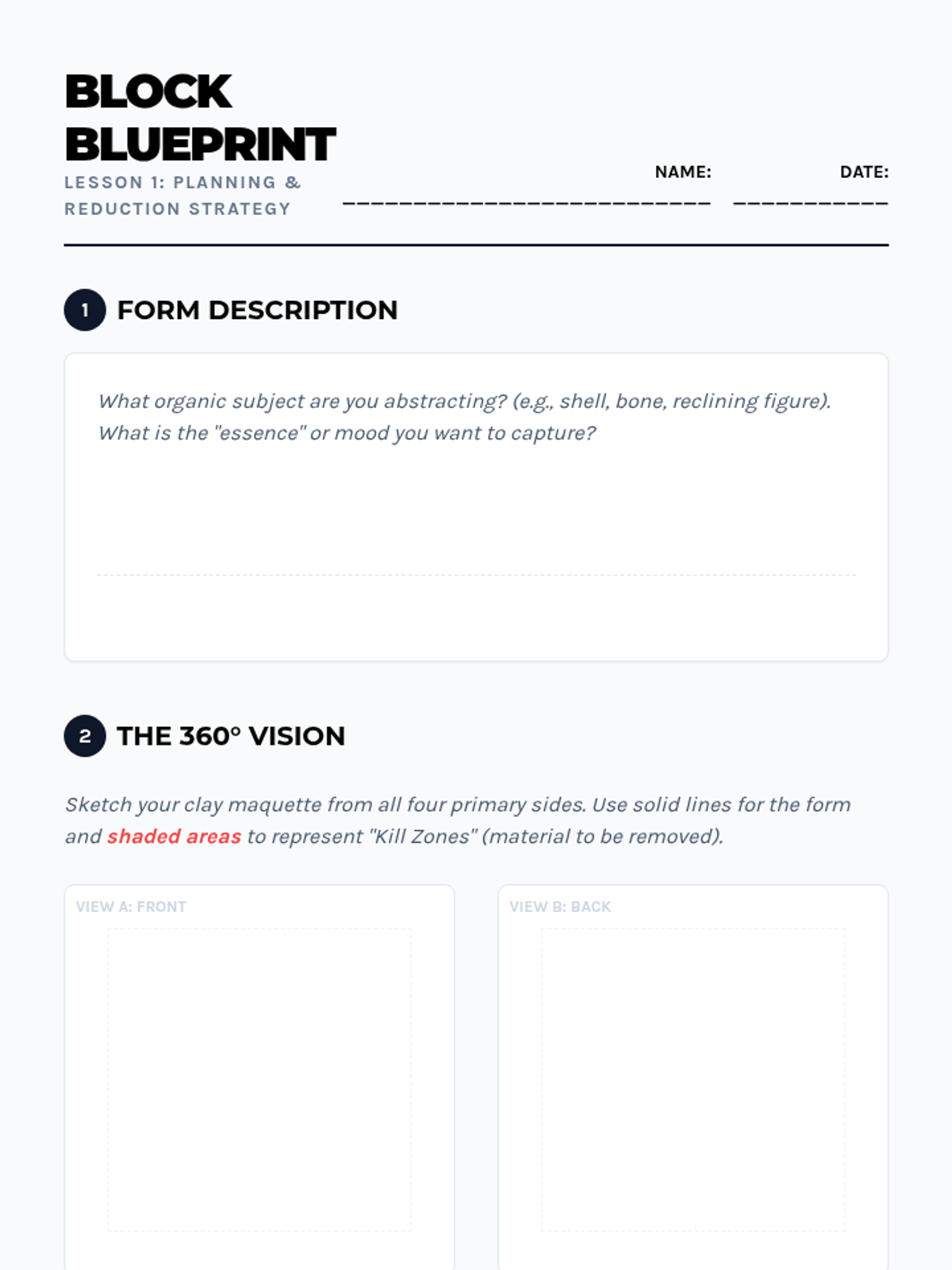
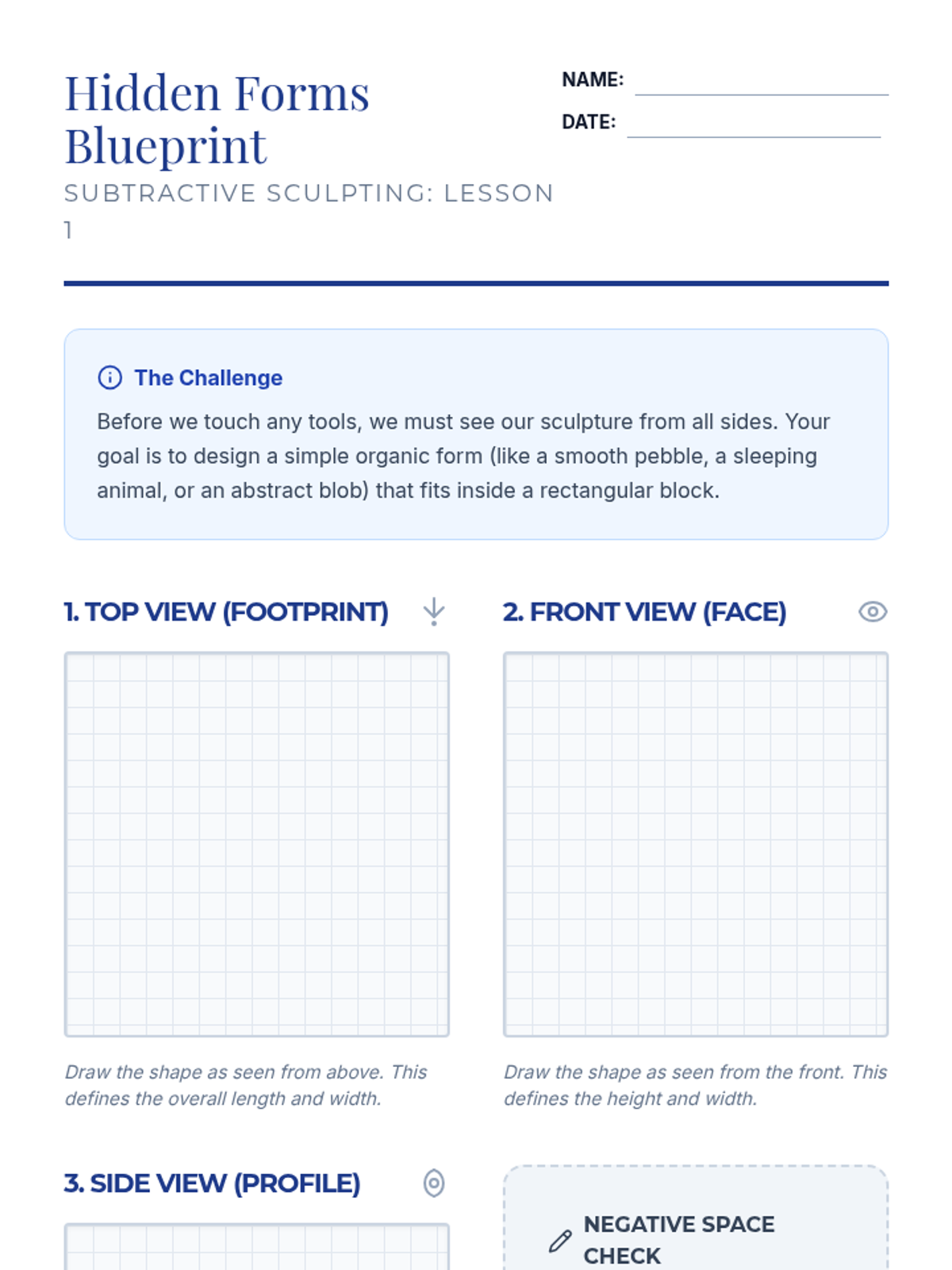
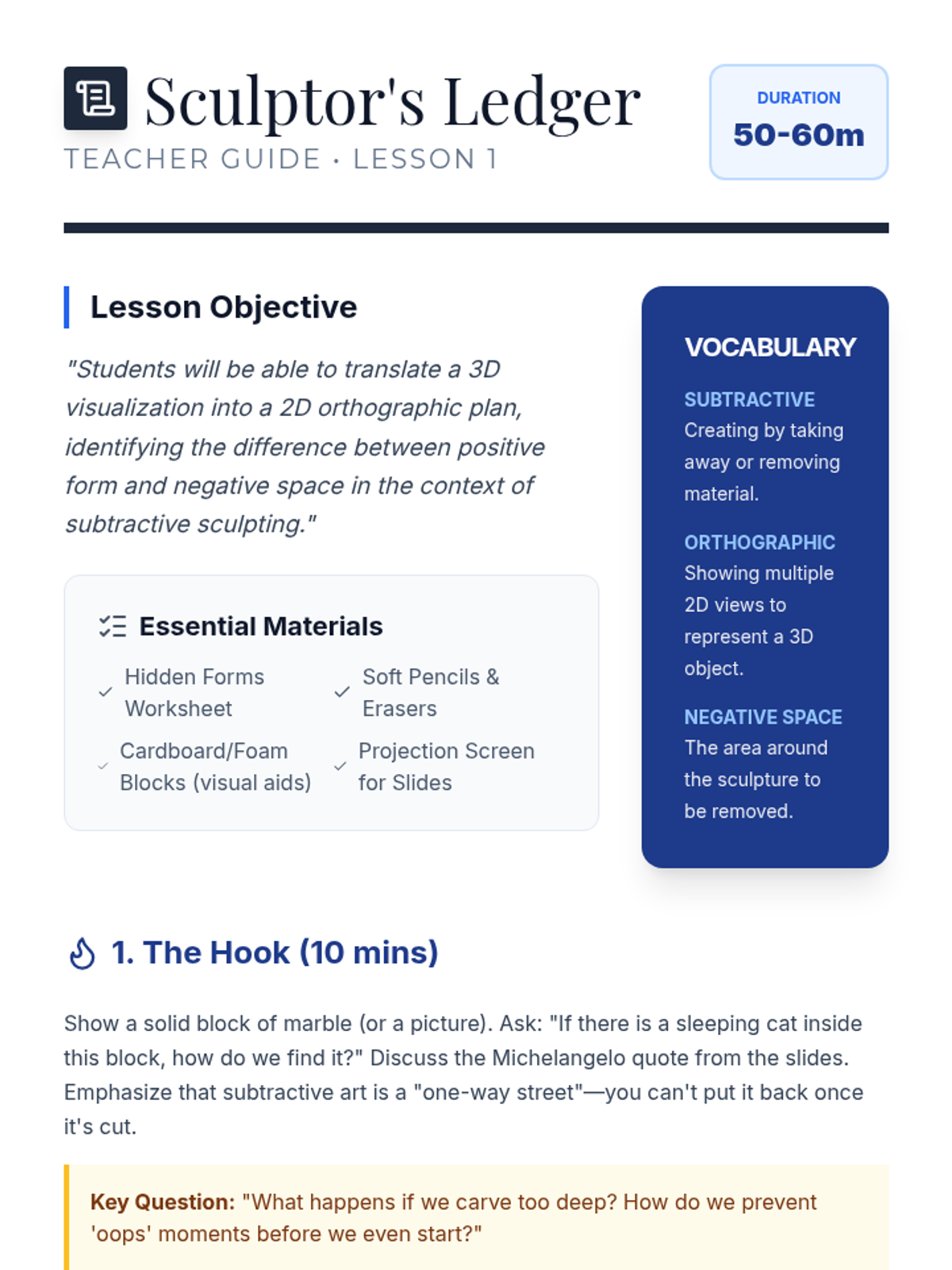
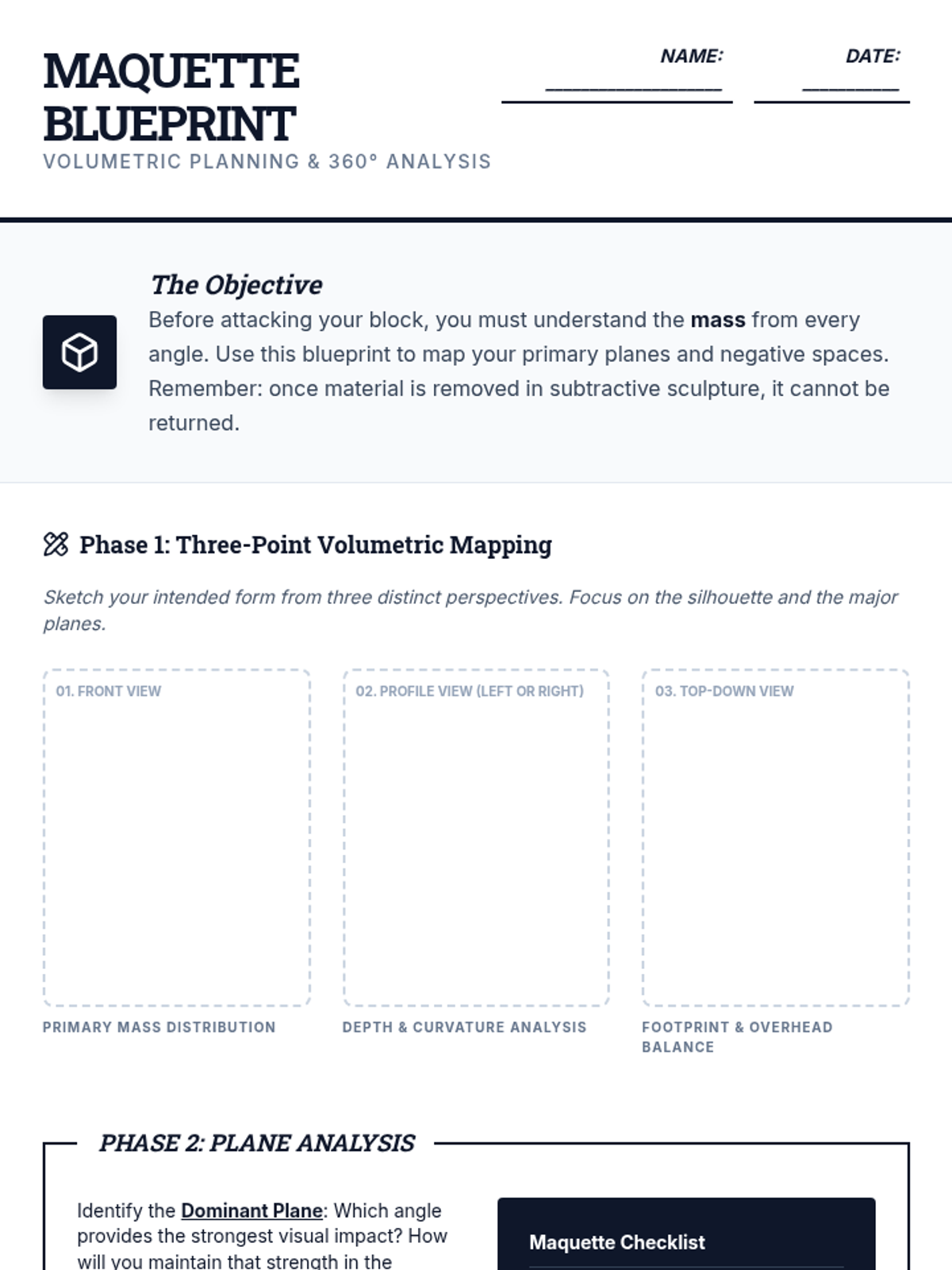
A 5-lesson unit on subtractive sculpting where students learn to 'find the form' within a solid block. They cover visualization, safety, roughing out, refining curves, and final polishing with a focus on negative space and lighting.
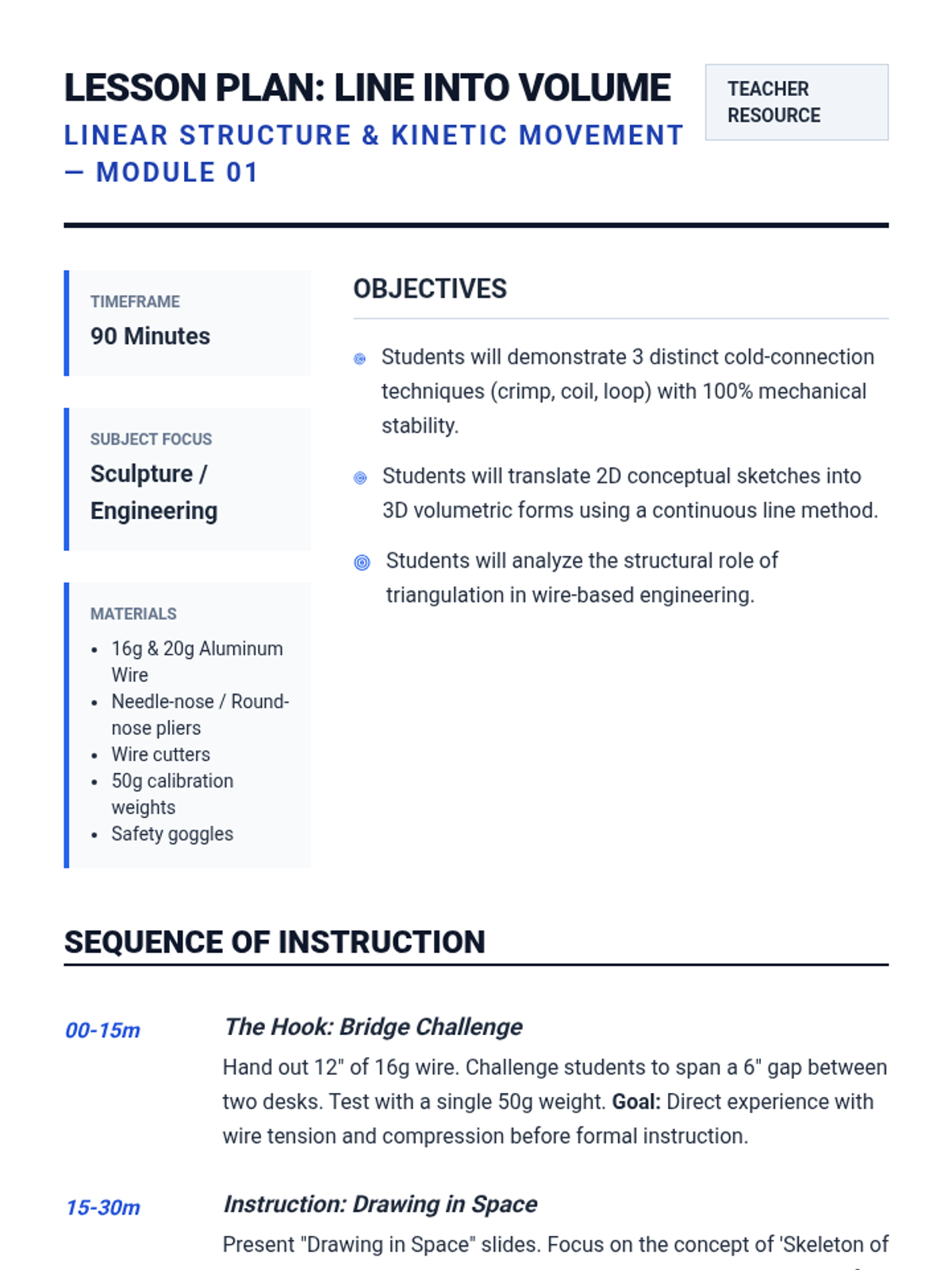
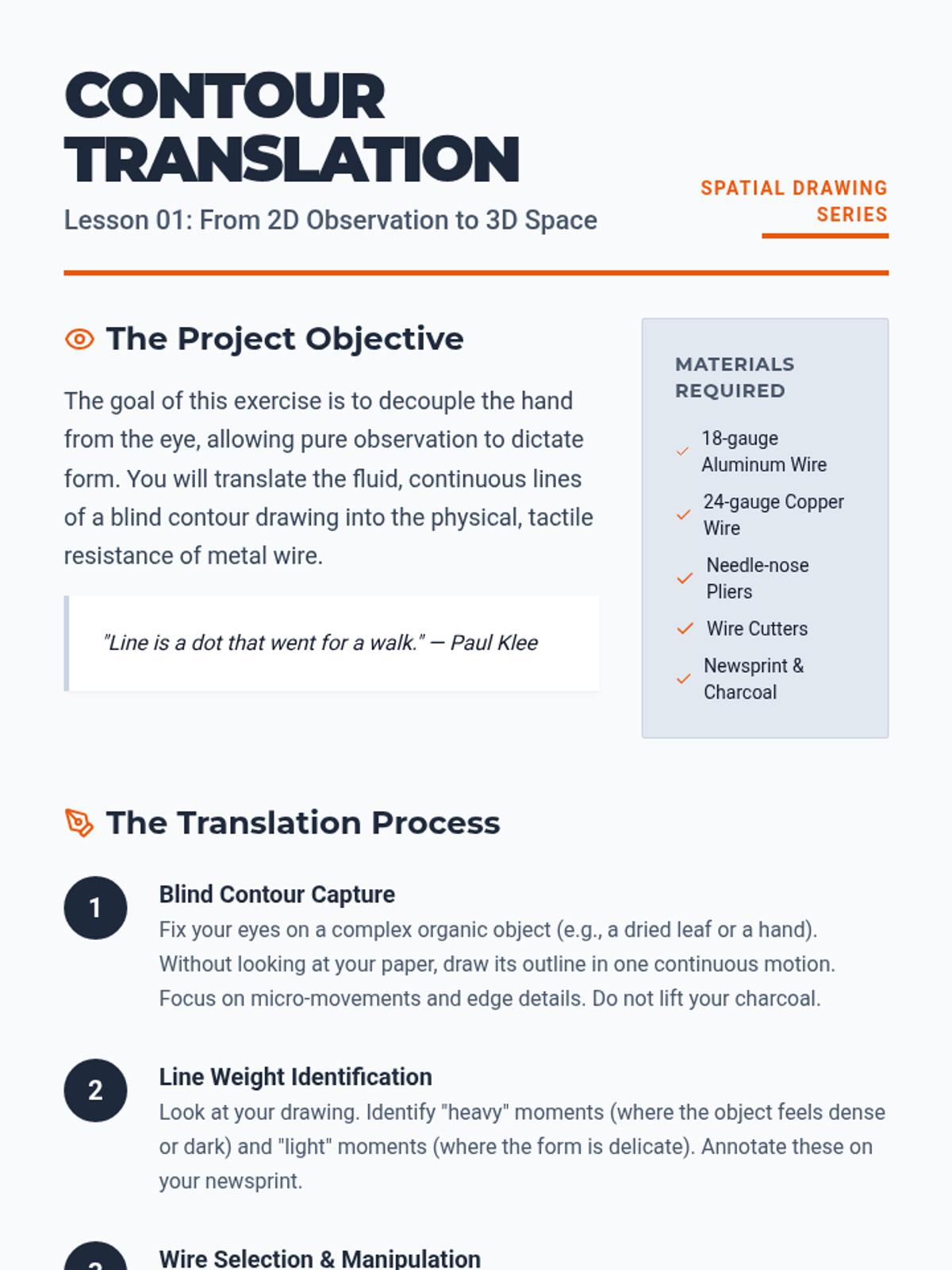
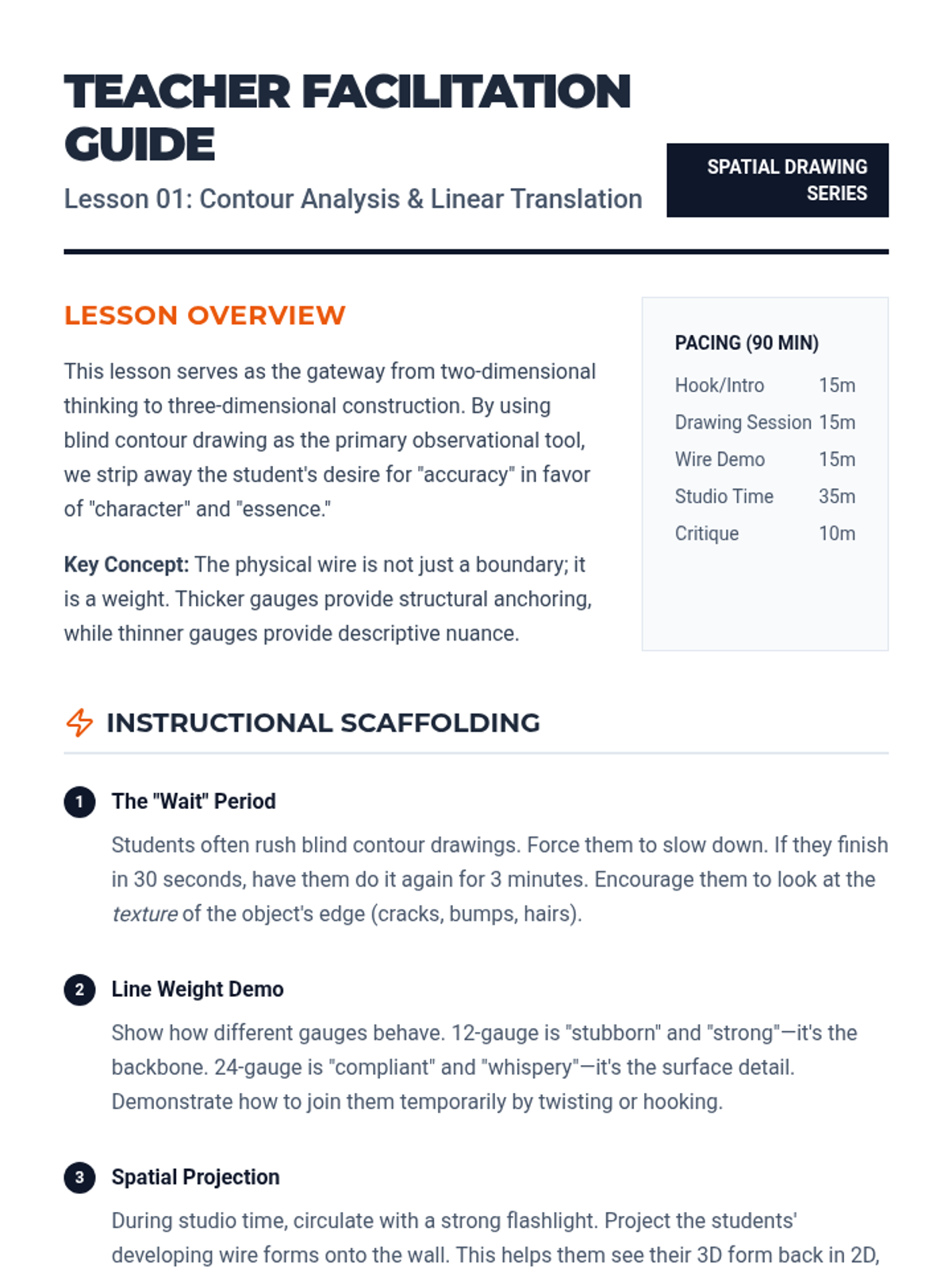
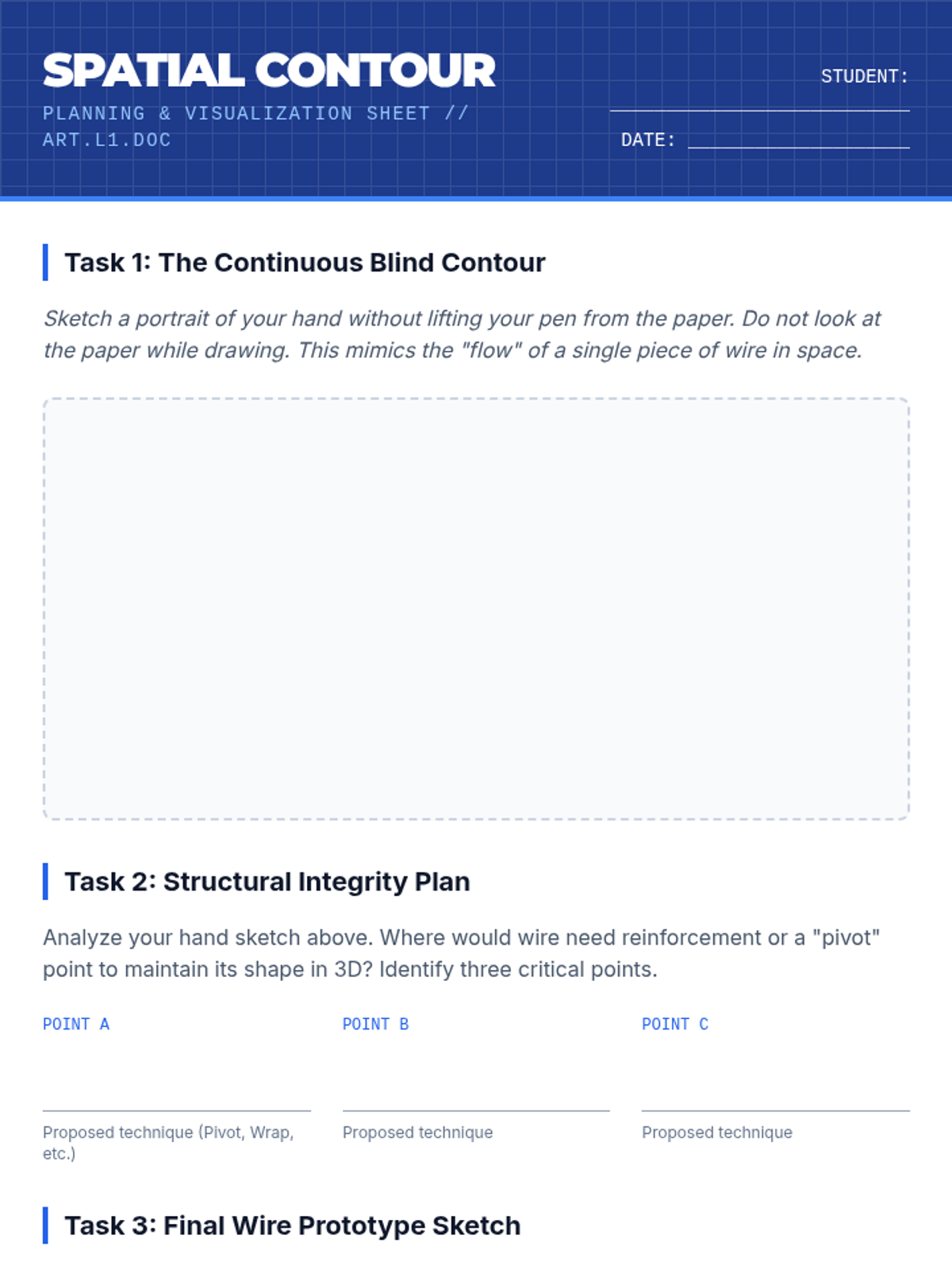
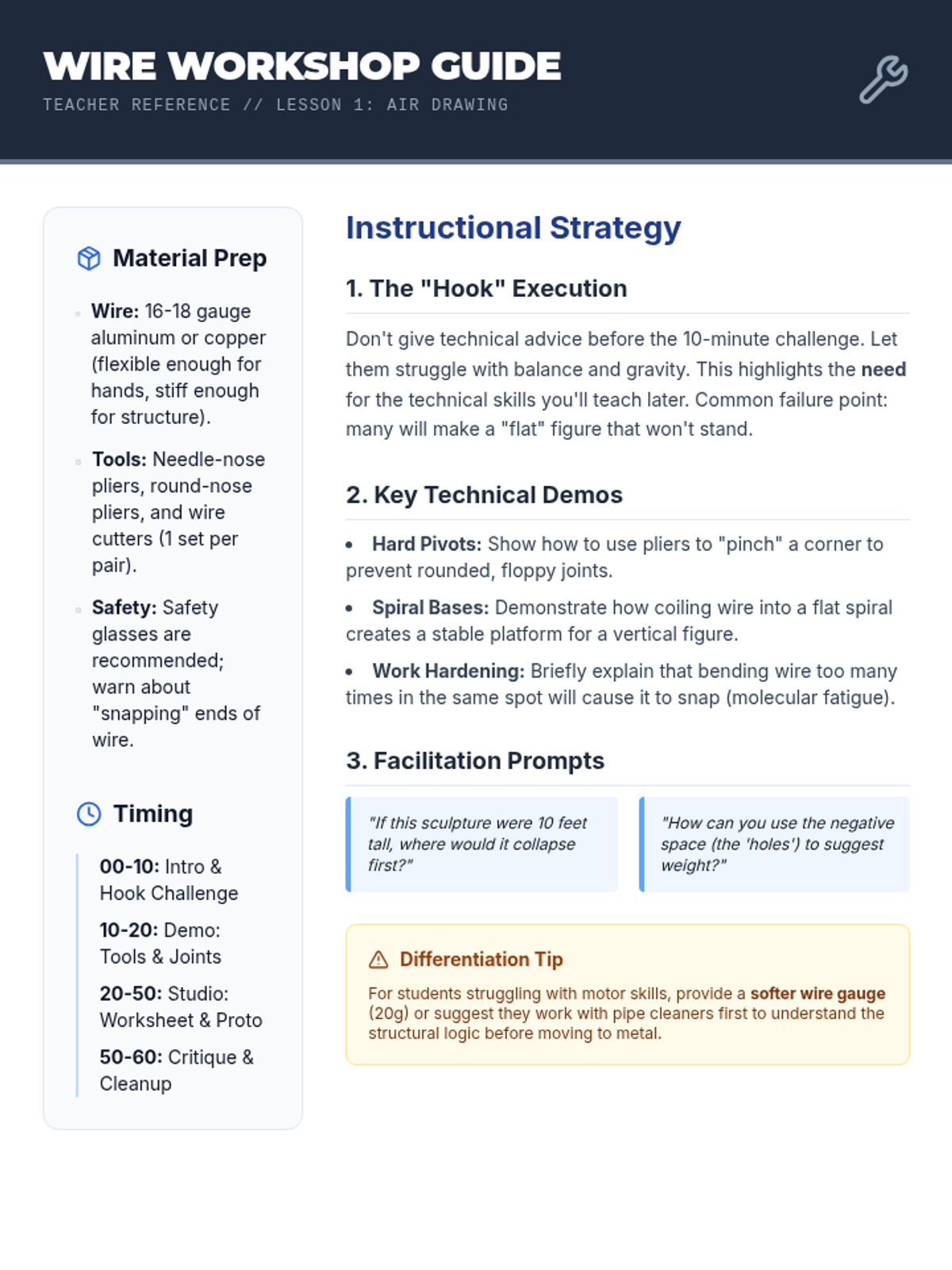
This sequence explores linear media (wire, rod, and tubing) to create 'drawings in space' that define volume without mass. Students learn to translate 2D contour drawings into 3D forms using cold-connection techniques, investigating implied volume, tension, and the interplay between light and shadow.
A comprehensive 12th-grade art sequence exploring the intersection of sculpture and physics. Students transition from wire contour drawing to the creation of complex kinetic mobiles, focusing on balance, equilibrium, and the interplay of light and shadow.
A high-level sculpture sequence for 12th-grade students focusing on the conceptual and technical aspects of contemporary assemblage. Students transition from found objects to semiotic narratives, mastering cold joinery techniques and installation logic.
This advanced 12th-grade sequence guides students through the rigorous process of subtractive sculpture. From conceptual clay maquettes to final surface treatments, students master the relationship between mass and negative space to create portfolio-ready 3D works.
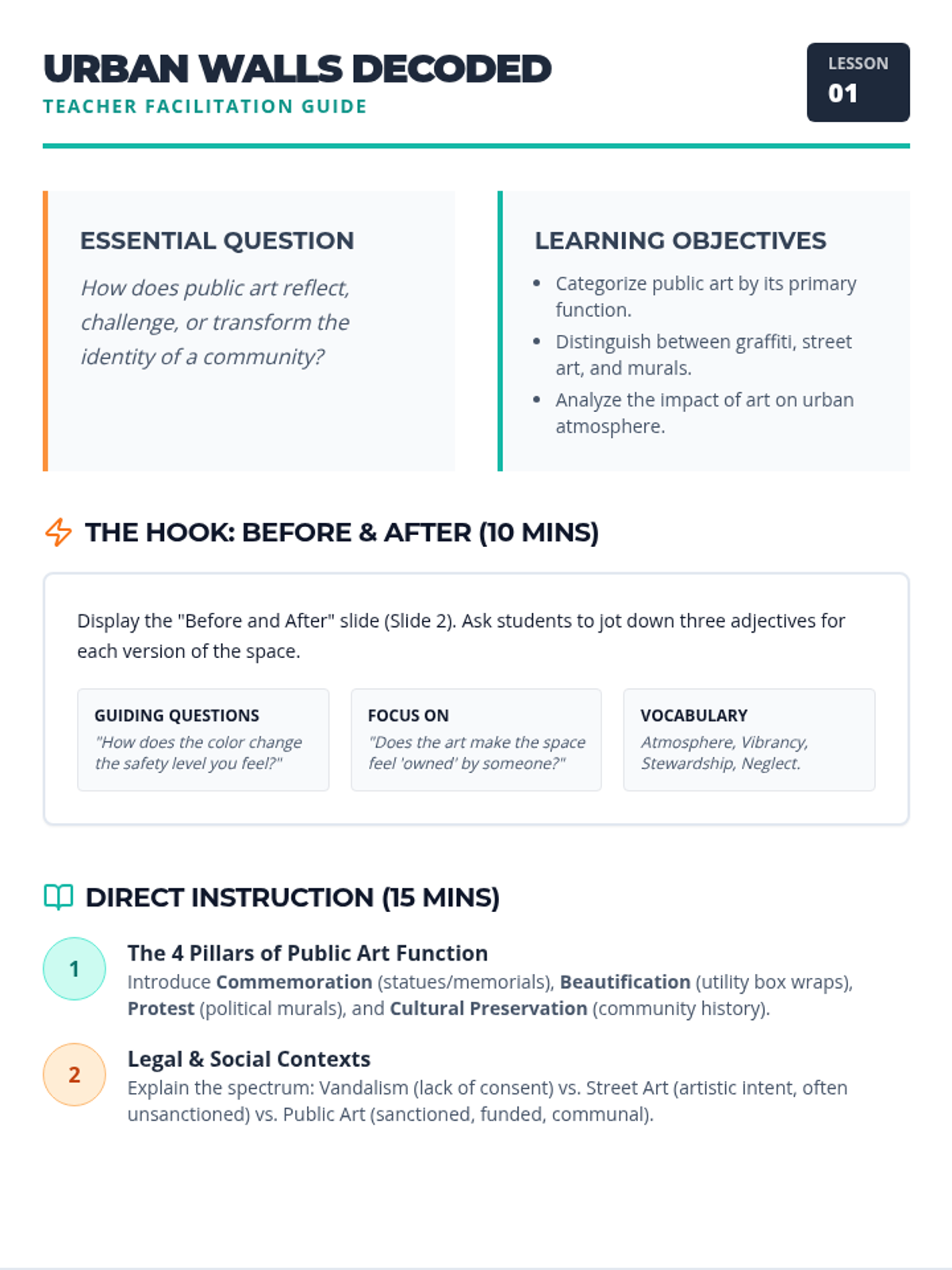
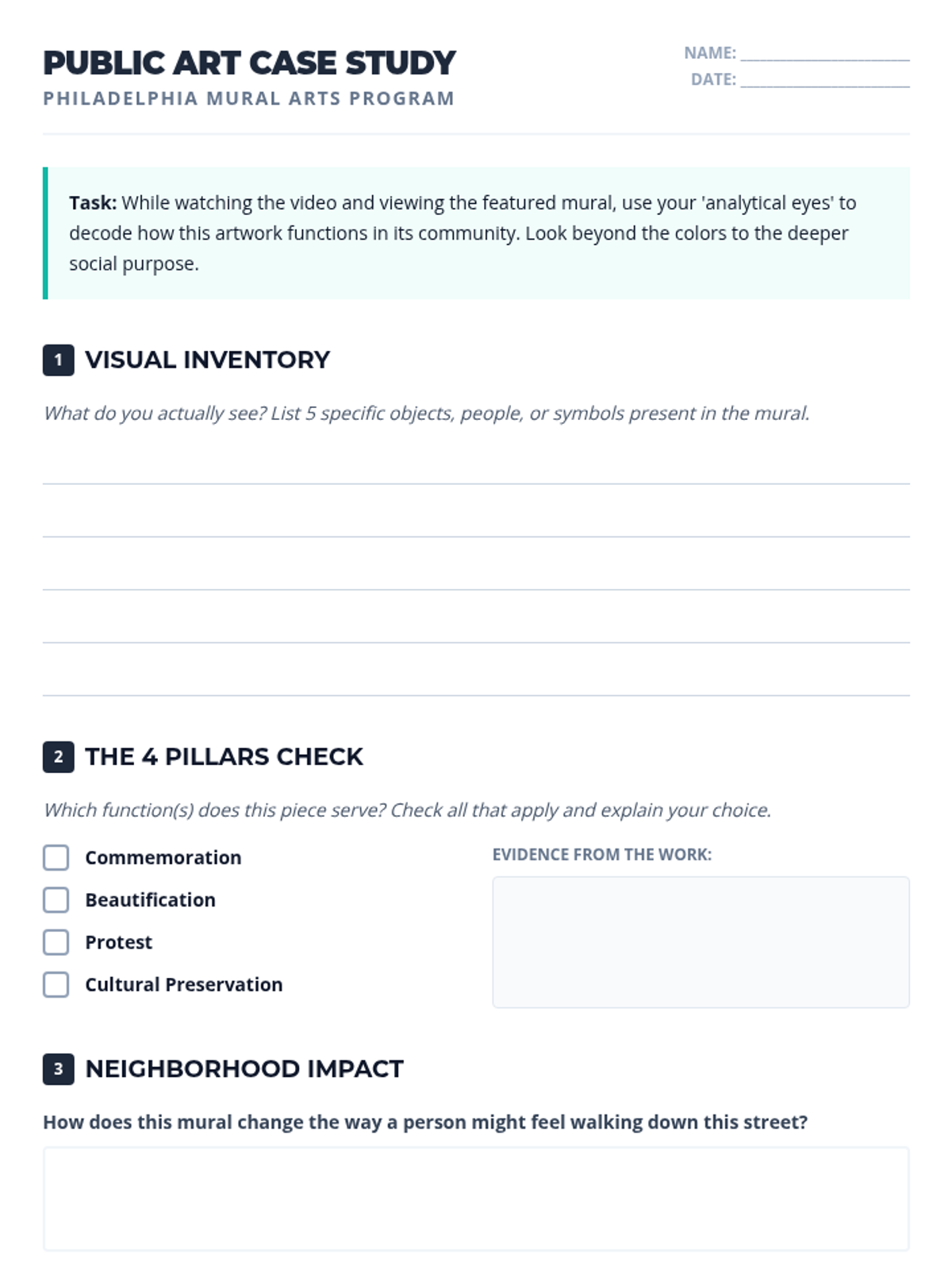
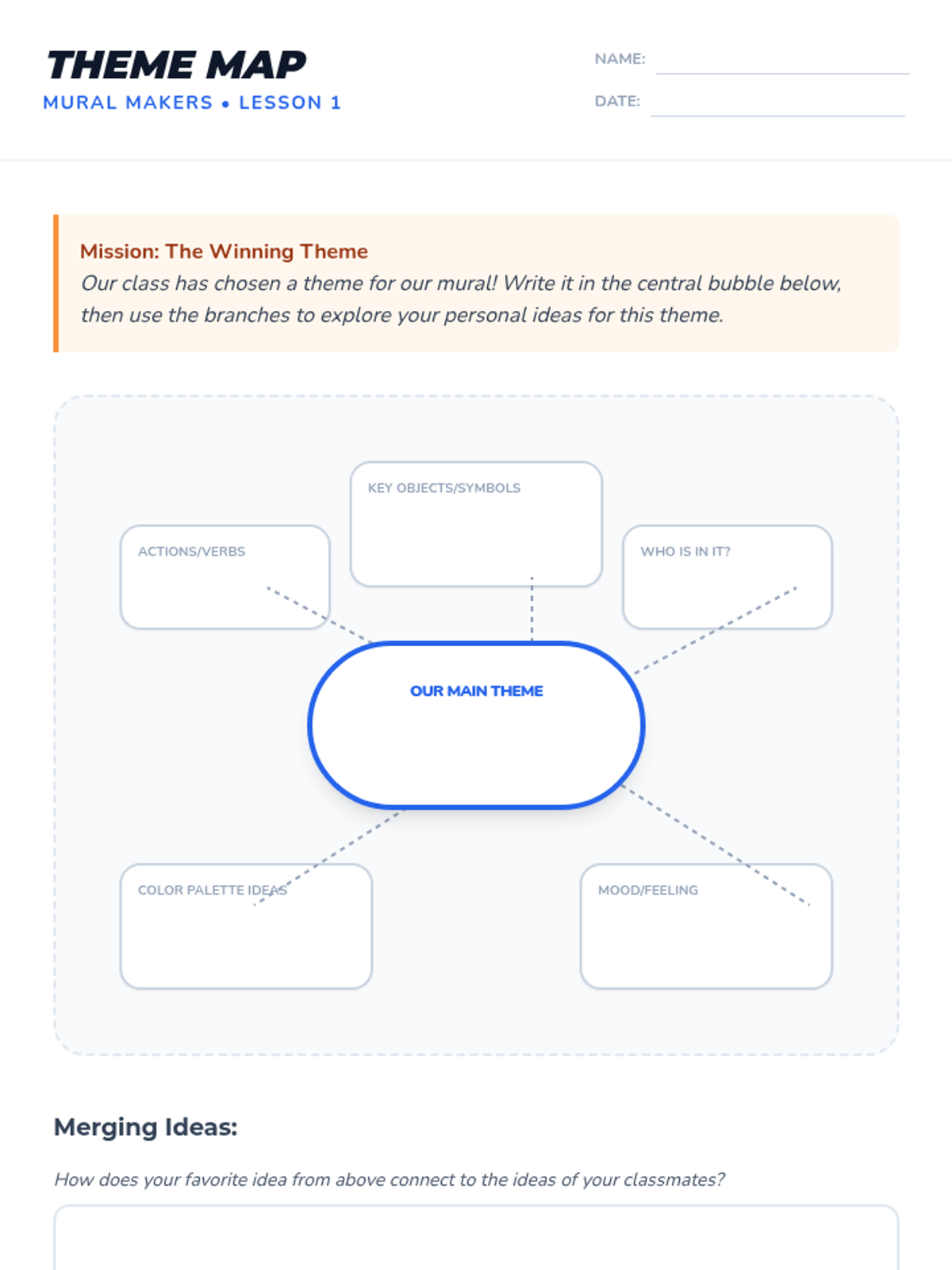
This sequence guides 8th-grade students through the world of public art, from analyzing its functions and cultural symbolism to designing their own scale mural proposals that address community social issues. Students will transition from art critics to civic-minded designers, learning how visual narratives can transform urban spaces.
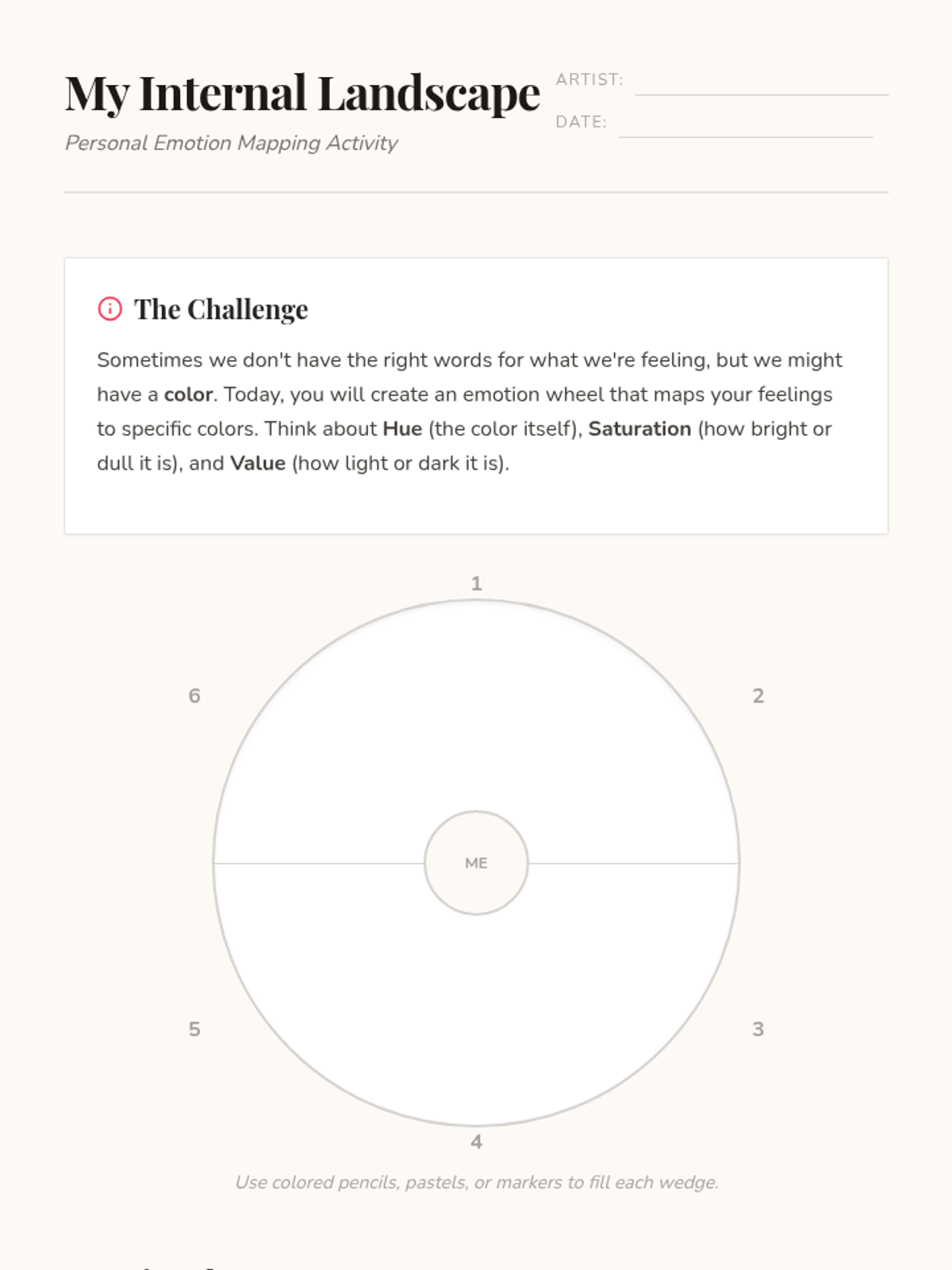
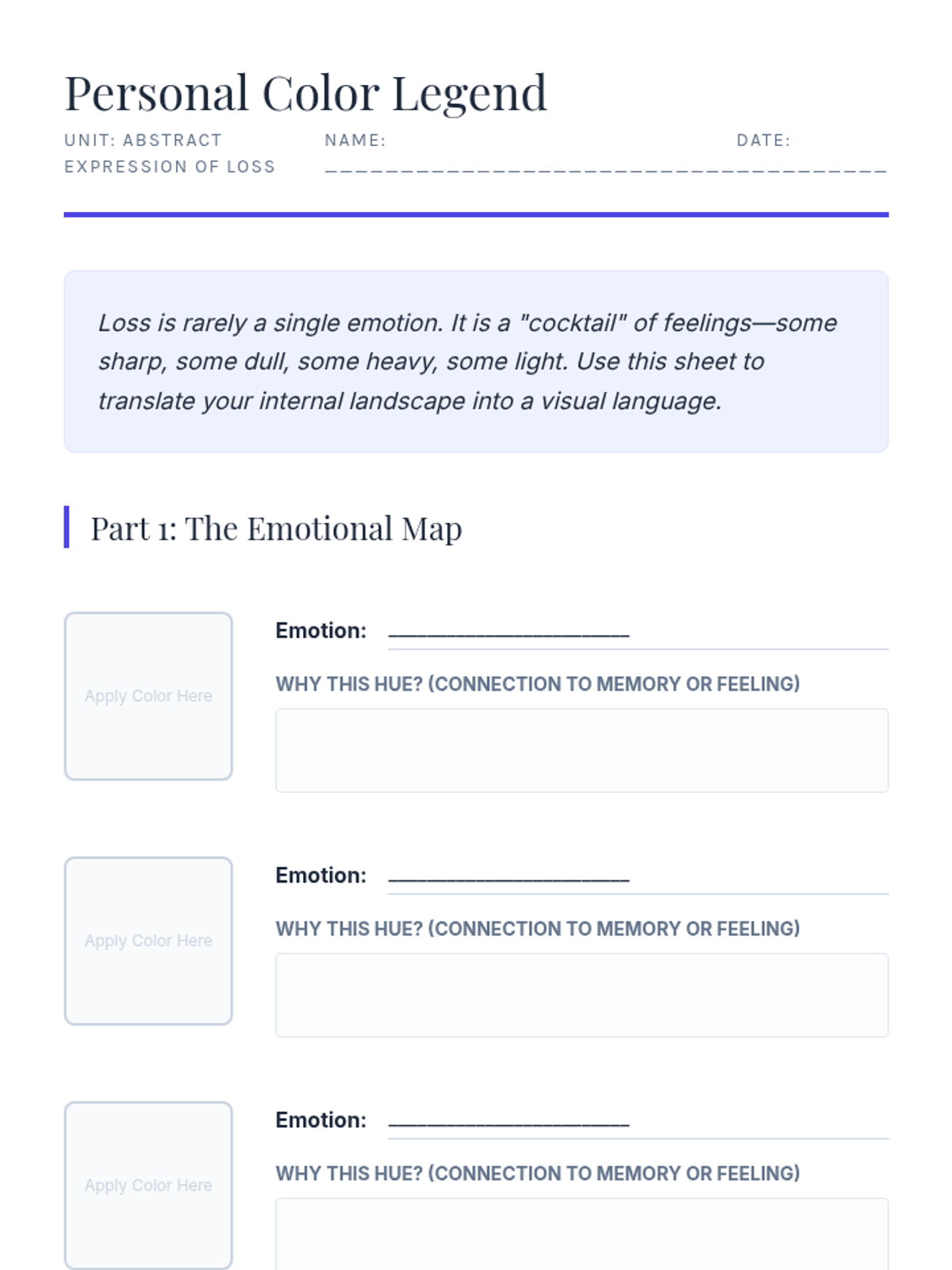
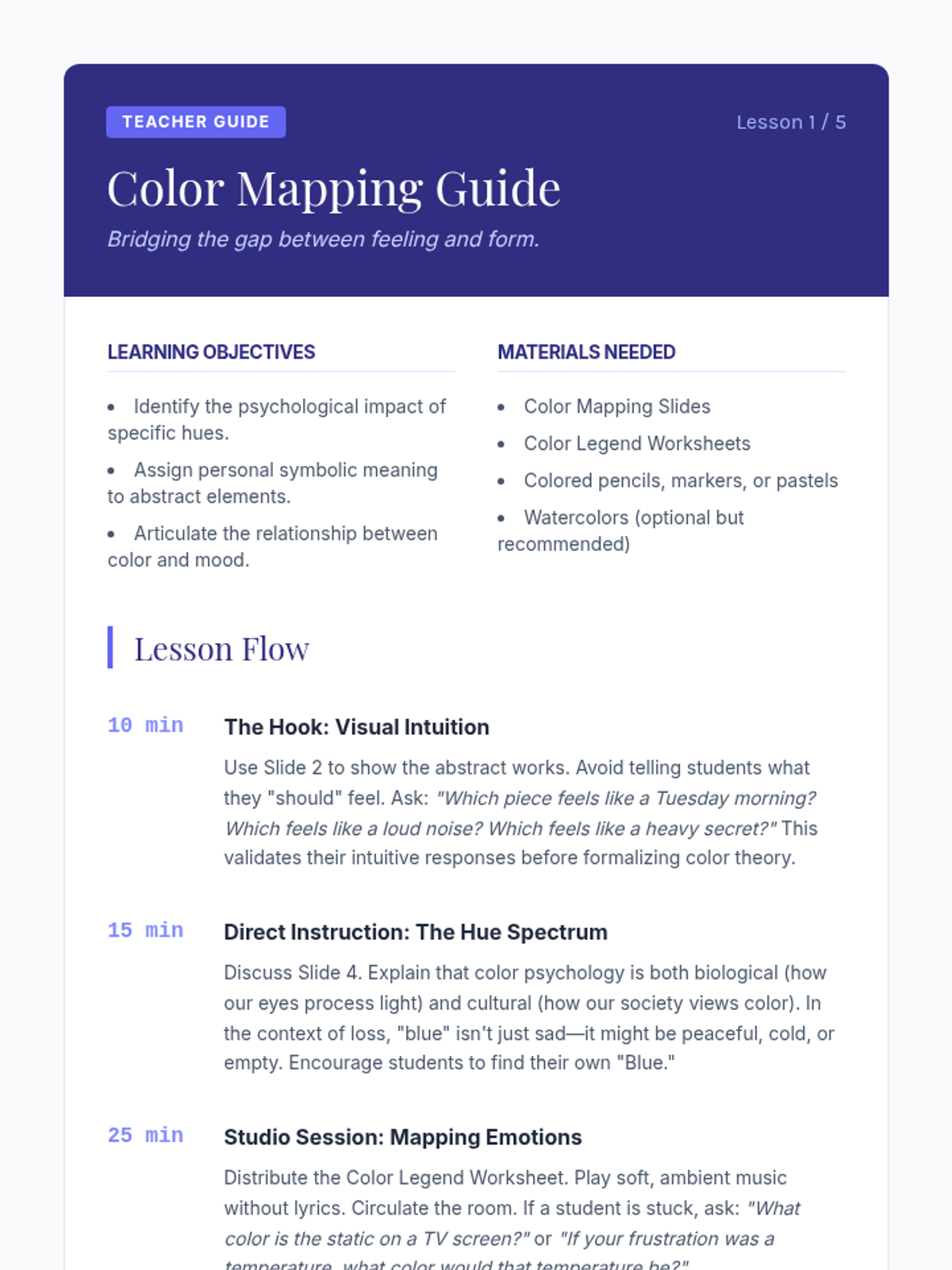
This sequence guides students through using visual arts as a non-verbal language for processing complex emotions associated with loss, focusing on abstract expressionism and color theory.
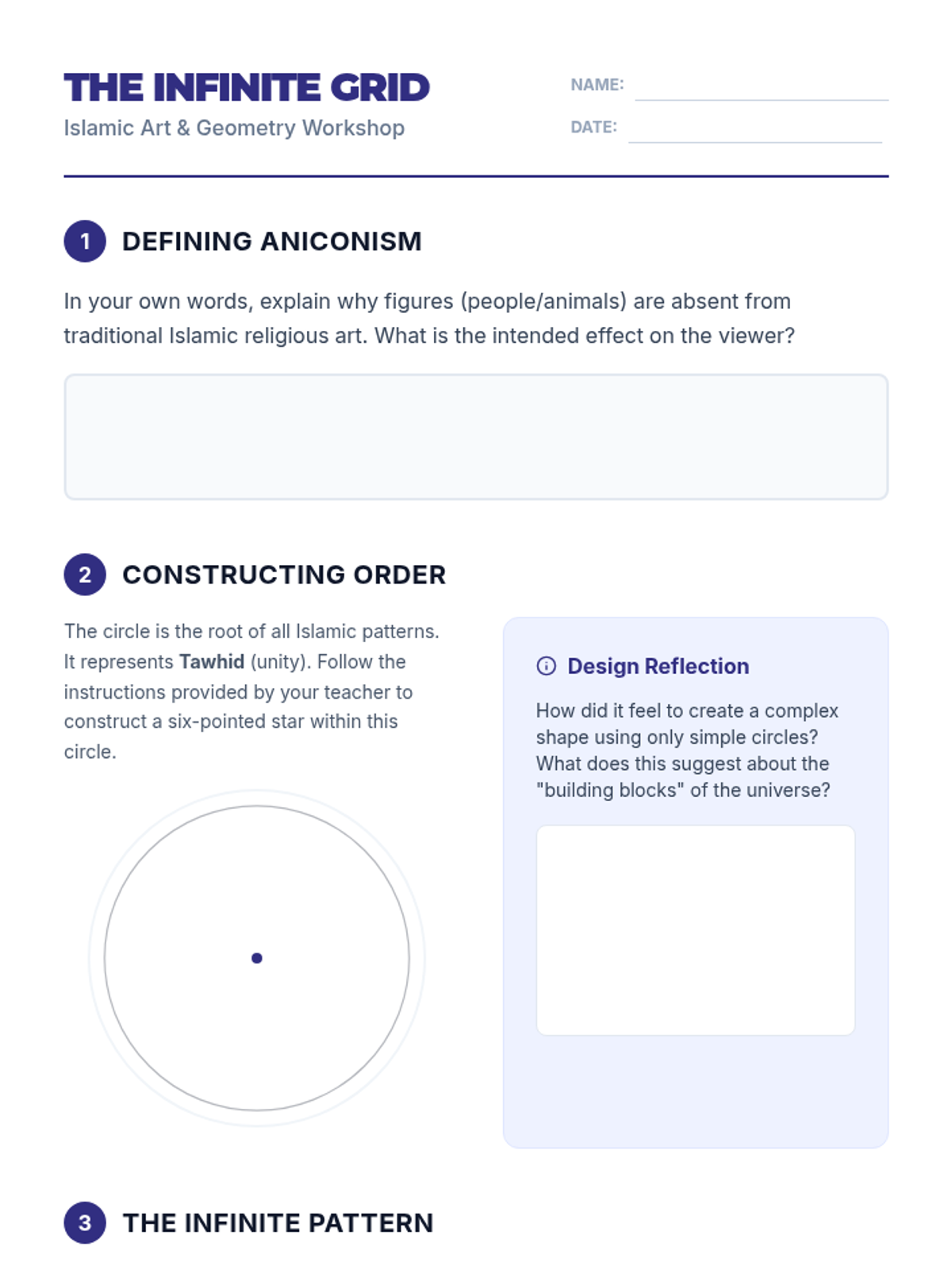
A project-based sequence examining how religious beliefs drive artistic innovation and architectural design across five major world religions. Students analyze sacred spaces and art to decode symbolic meanings and culminate in a design project.
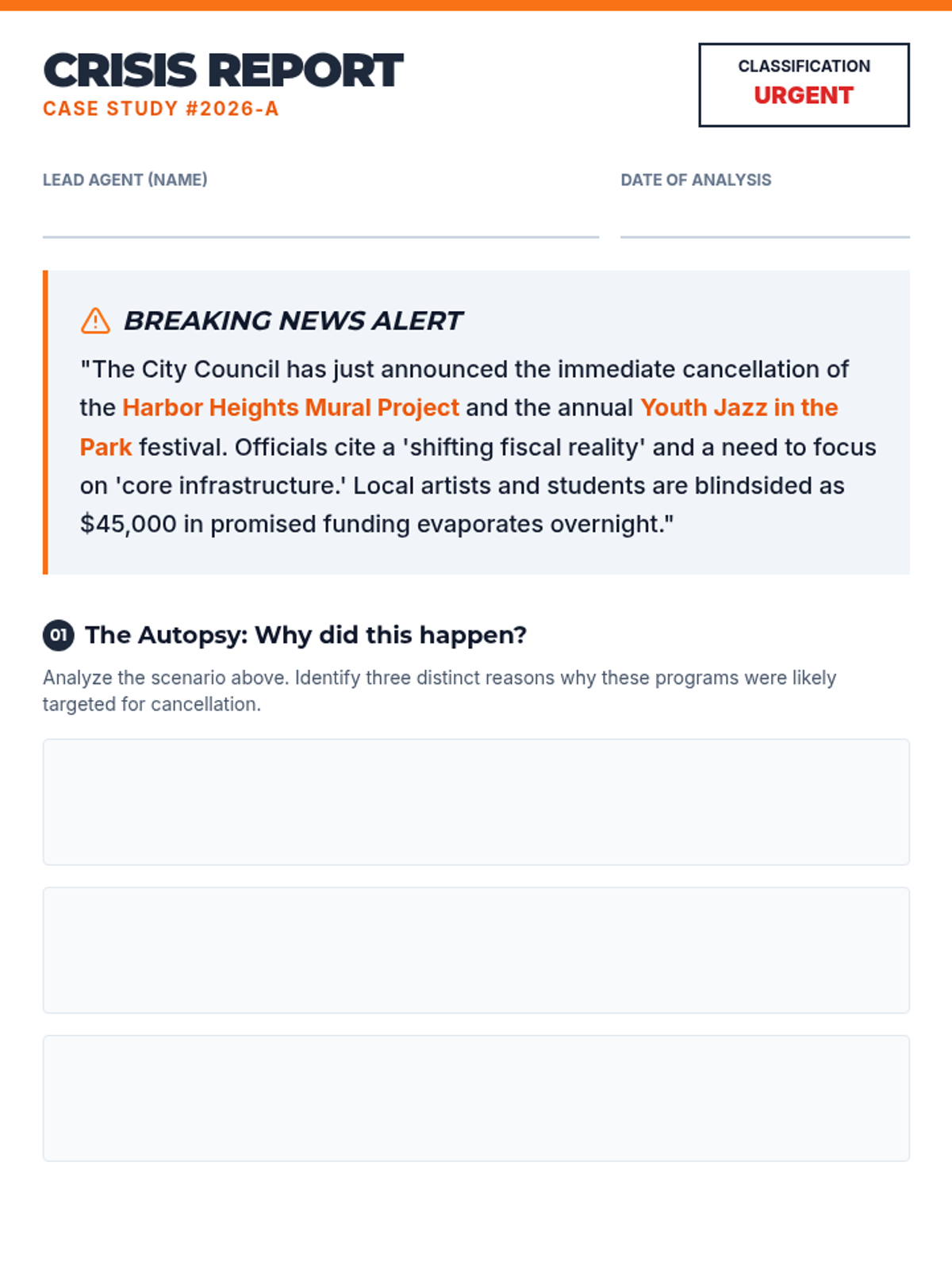
A project-based sequence where 7th-grade students act as community organizers to launch an arts advocacy campaign, moving from needs assessment to a final pitch.
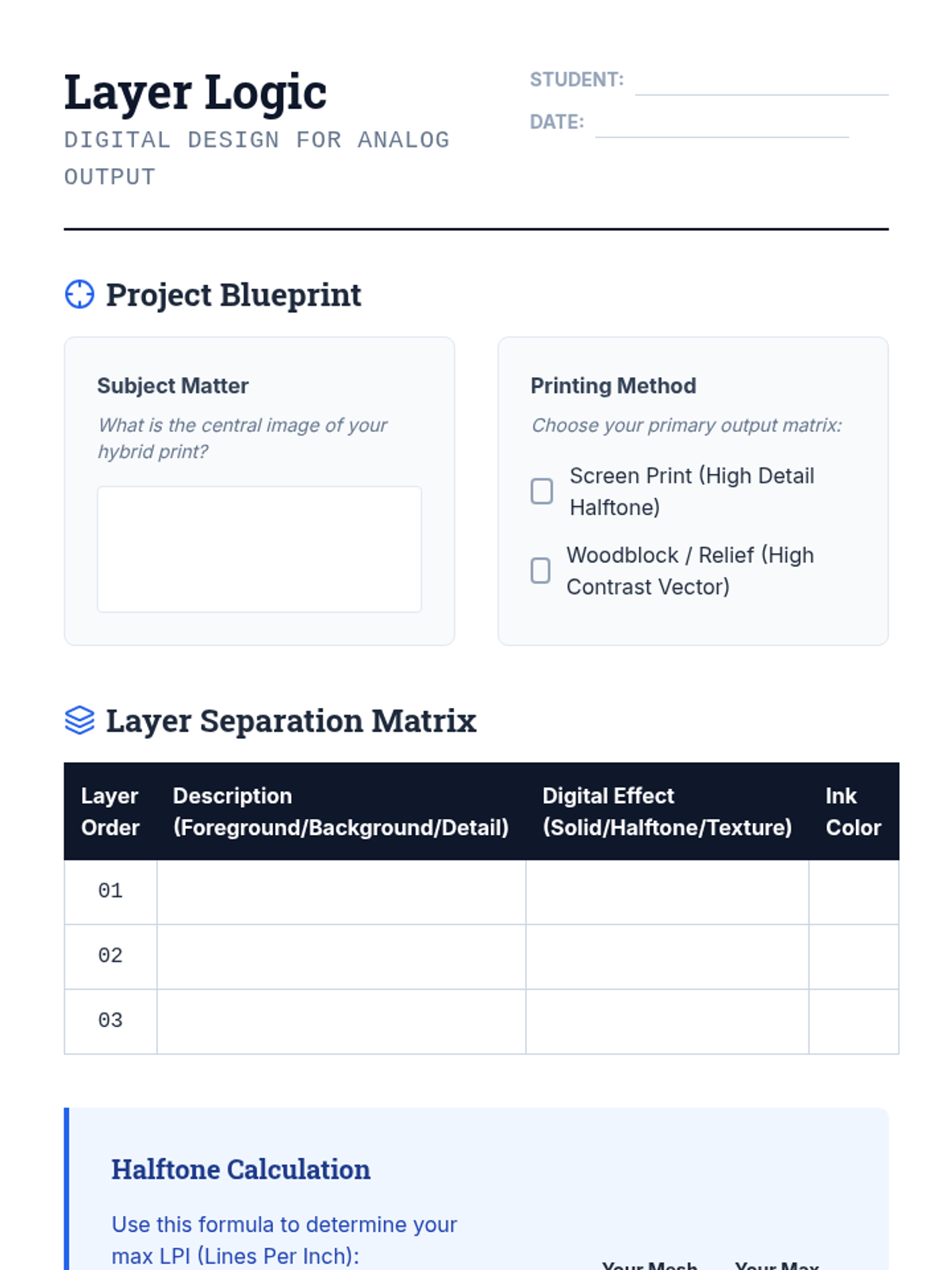
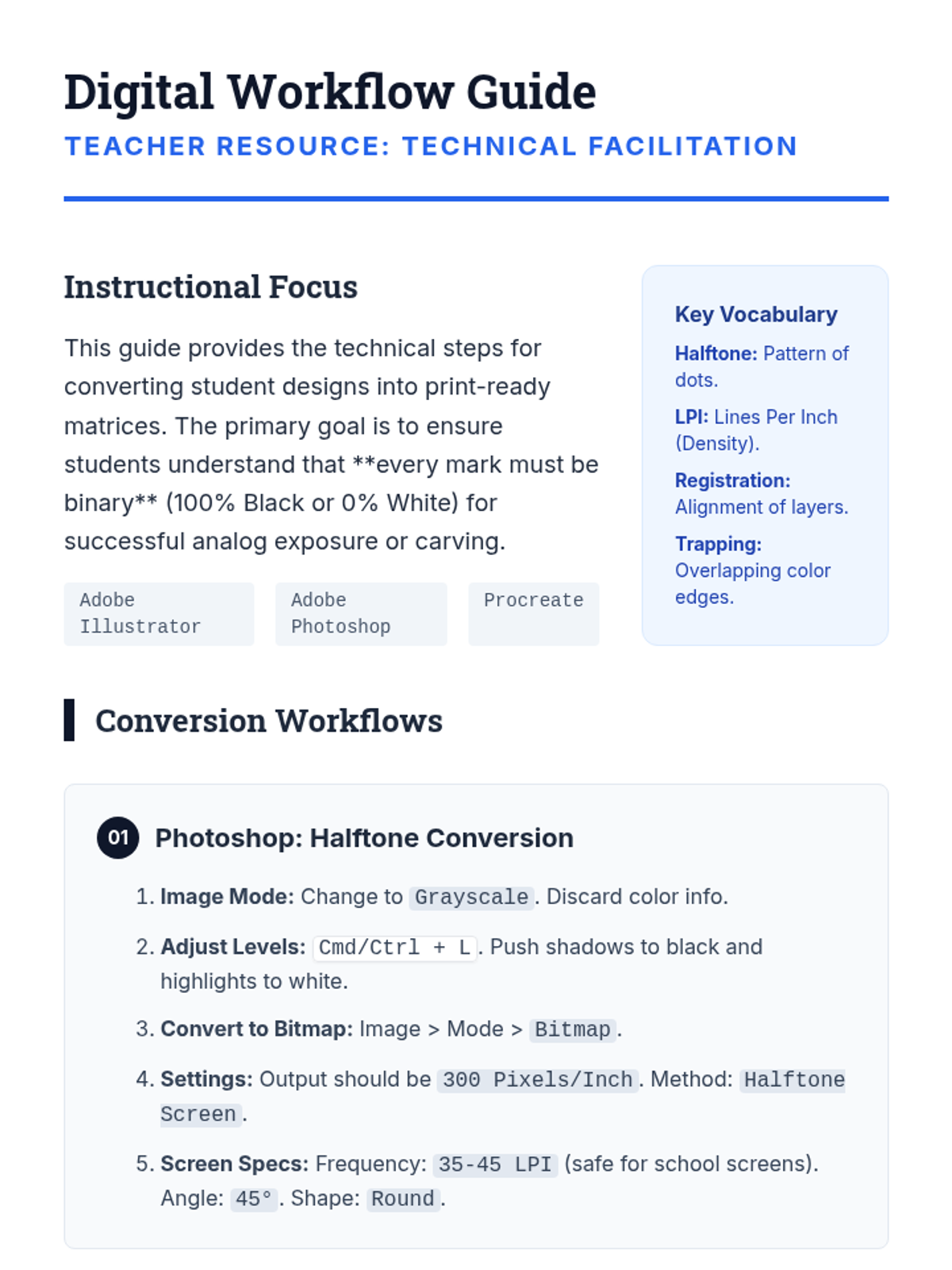
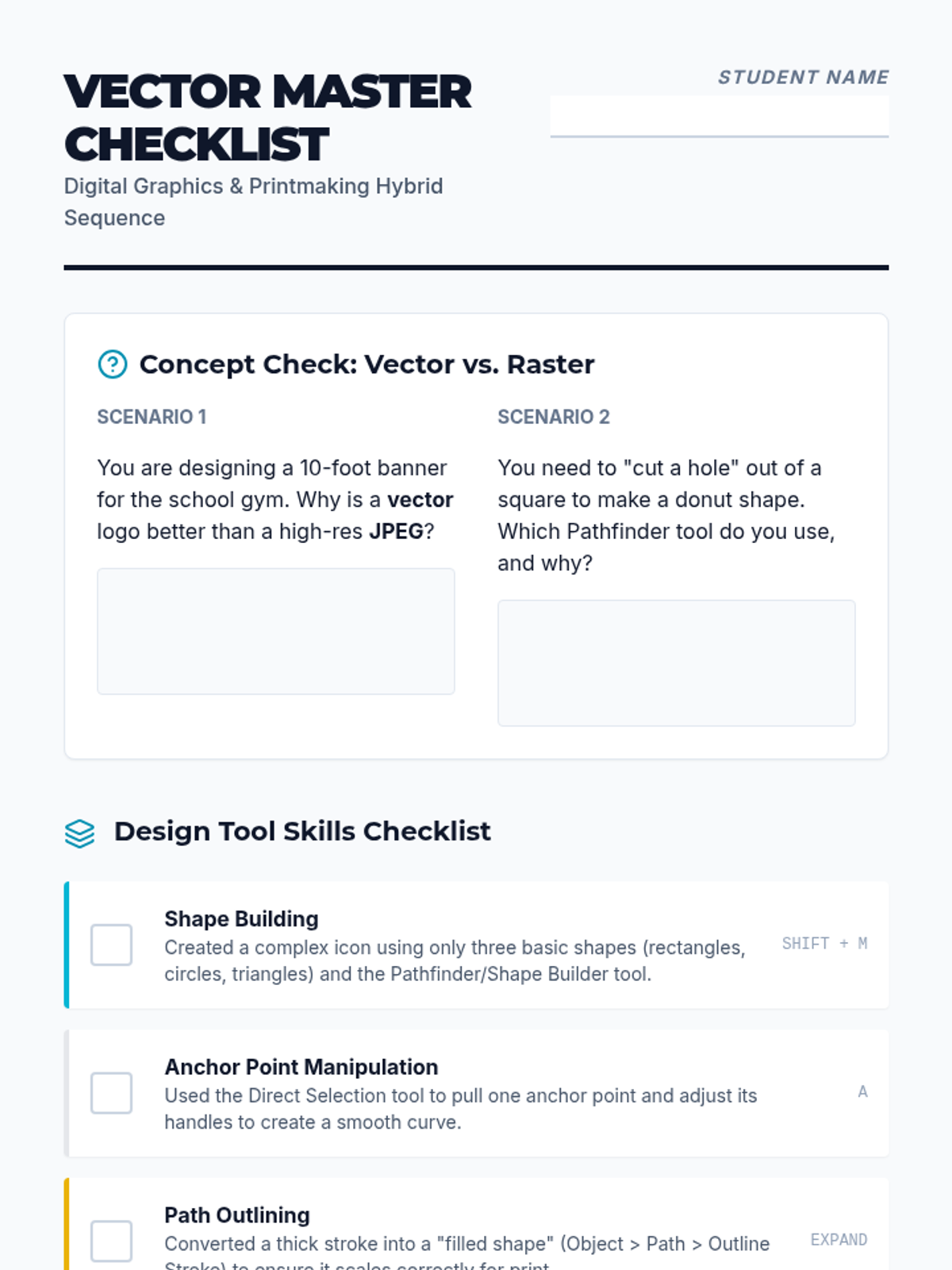
A high school sequence exploring the intersection of digital design and traditional printmaking. Students learn to bridge vector precision with analog texture through zine production and professional practice.
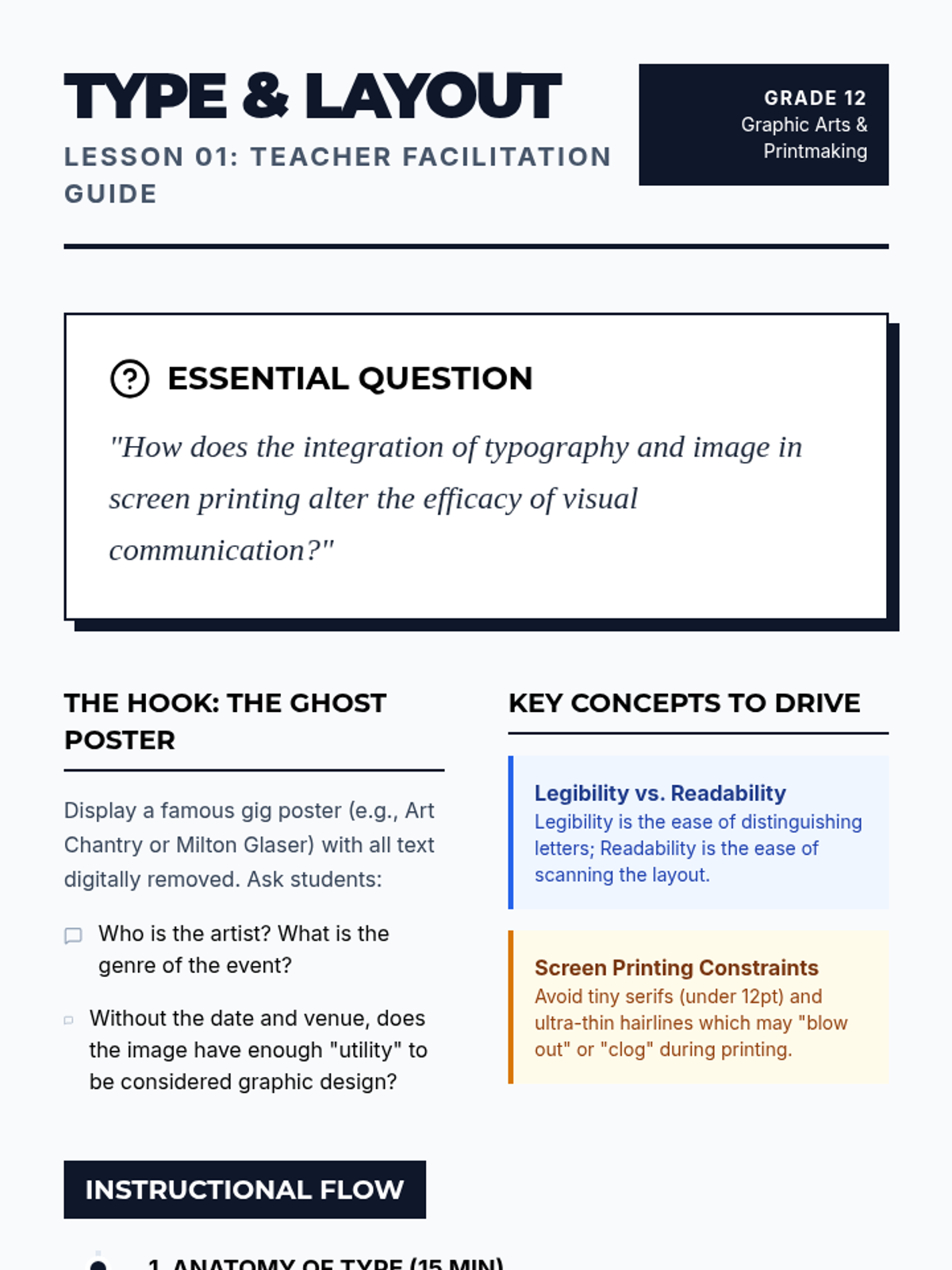
A comprehensive high school sequence exploring the technical and artistic intersection of screen printing and typographic design, from emulsion chemistry to final editioning.
This sequence explores the intersection of digital design and traditional printmaking. Students learn to combine the precision of vector graphics with the tactile, organic qualities of analog transfers and mixed media to create a professional 'hybrid' portfolio.
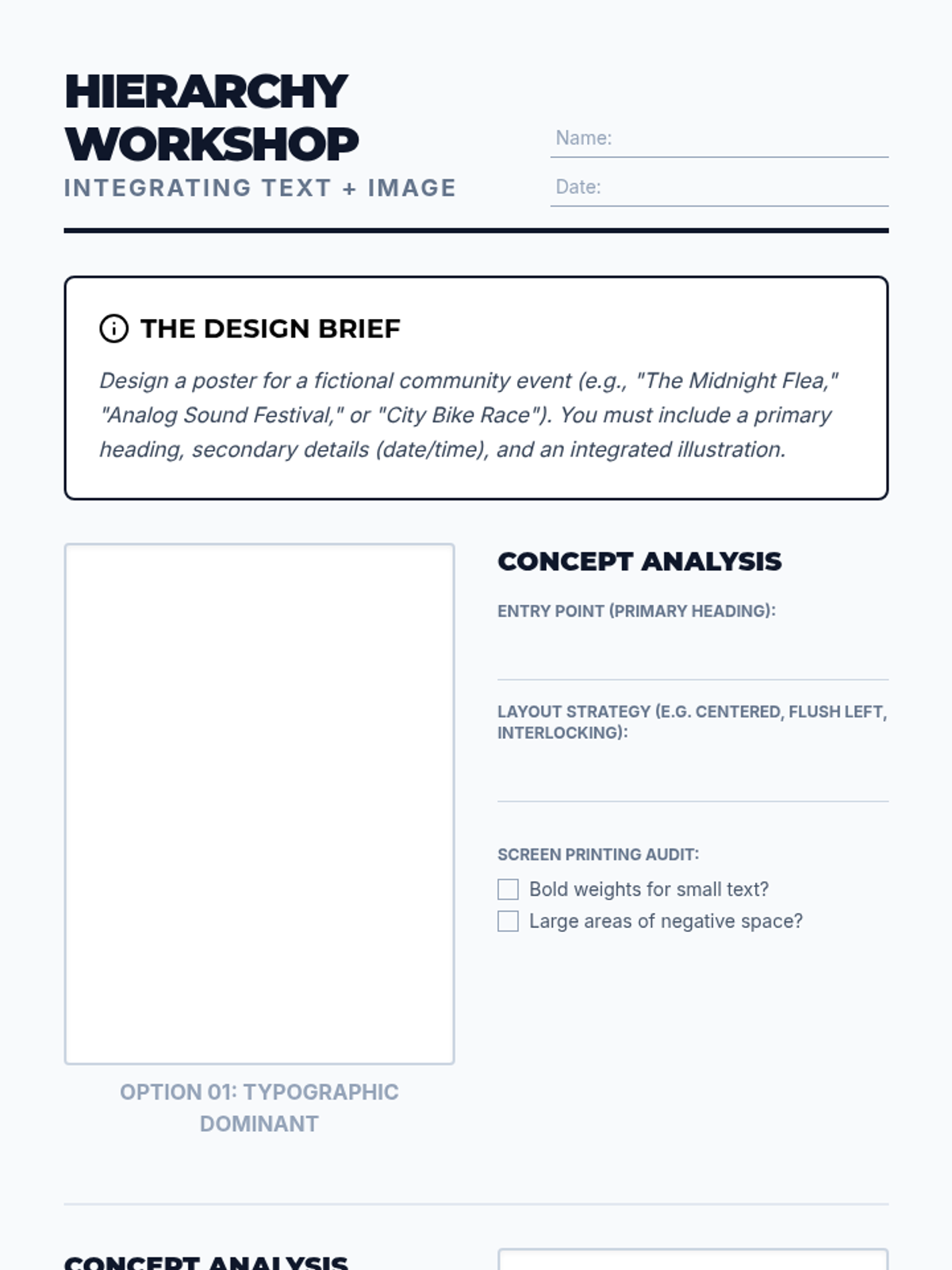
A 5-lesson unit for 9th-grade students exploring the fusion of typography and imagery. Students transition from manual layout techniques and font psychology to digital vector design and the production of a physical 8-page Zine.
A comprehensive 7th-grade unit that integrates graphic design principles with the physical craft of screen printing. Students learn about typography, visual hierarchy, and composition while navigating the technical challenges of stencil-making and screen printing to create a persuasive poster series.
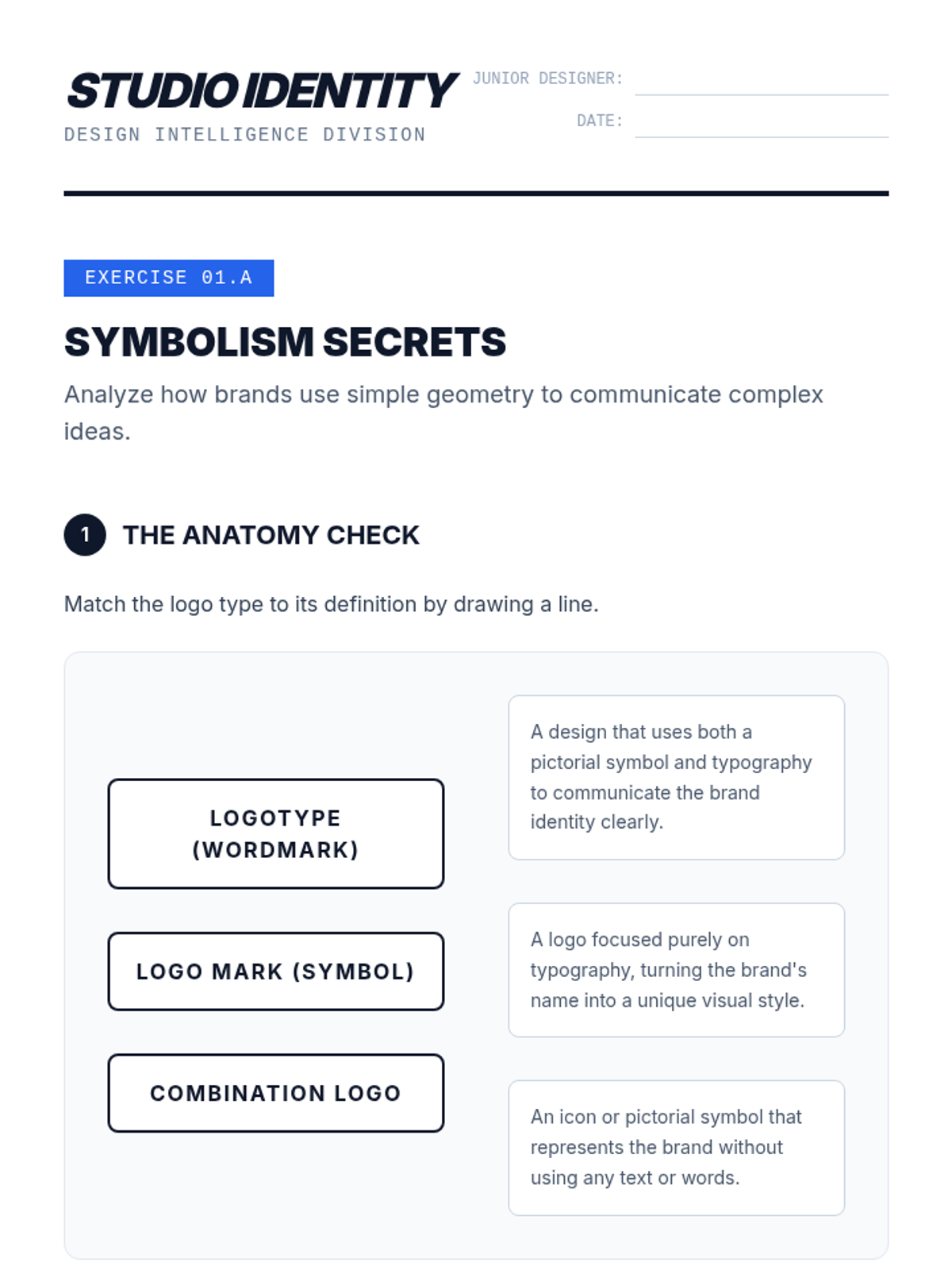
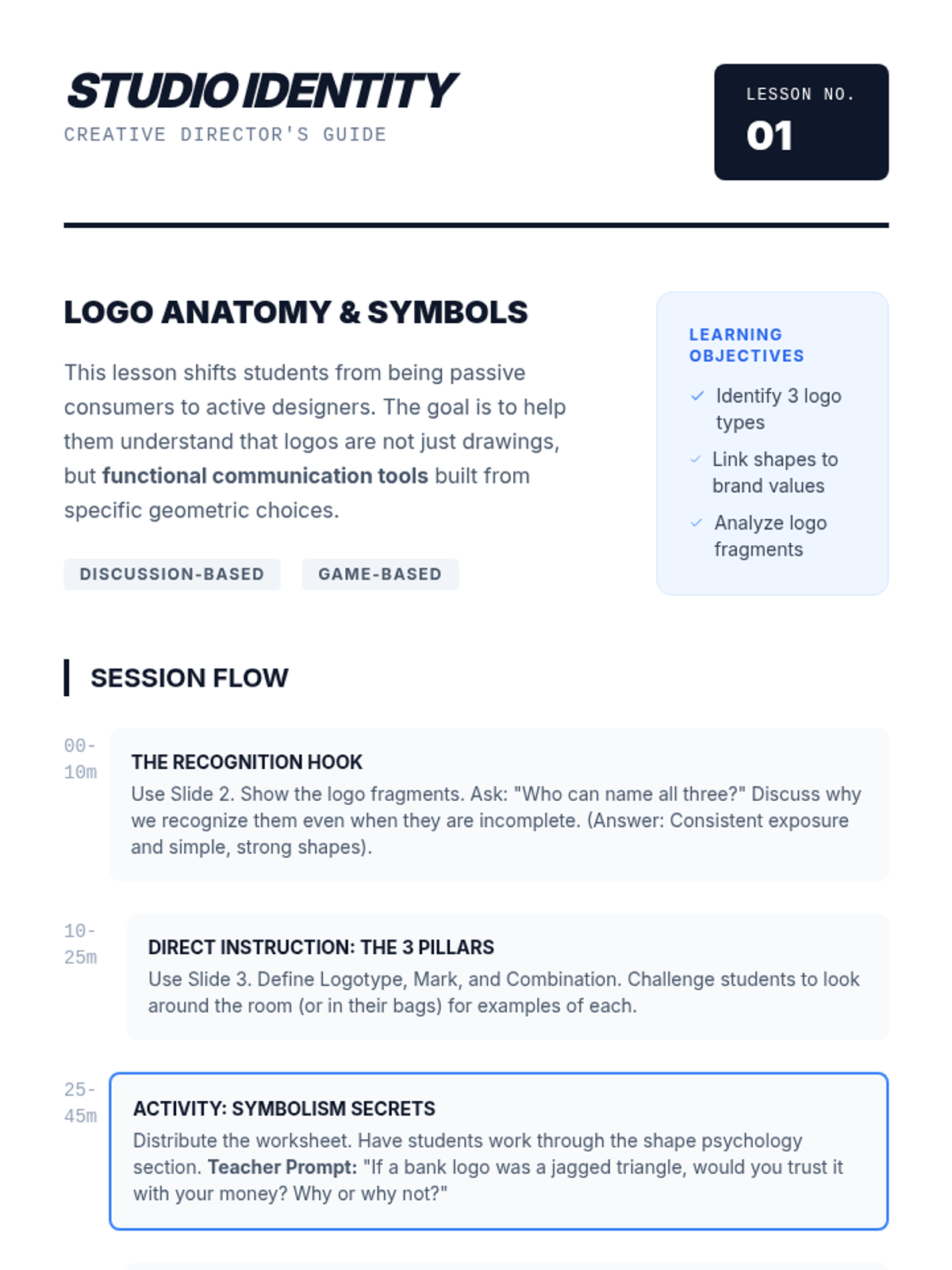
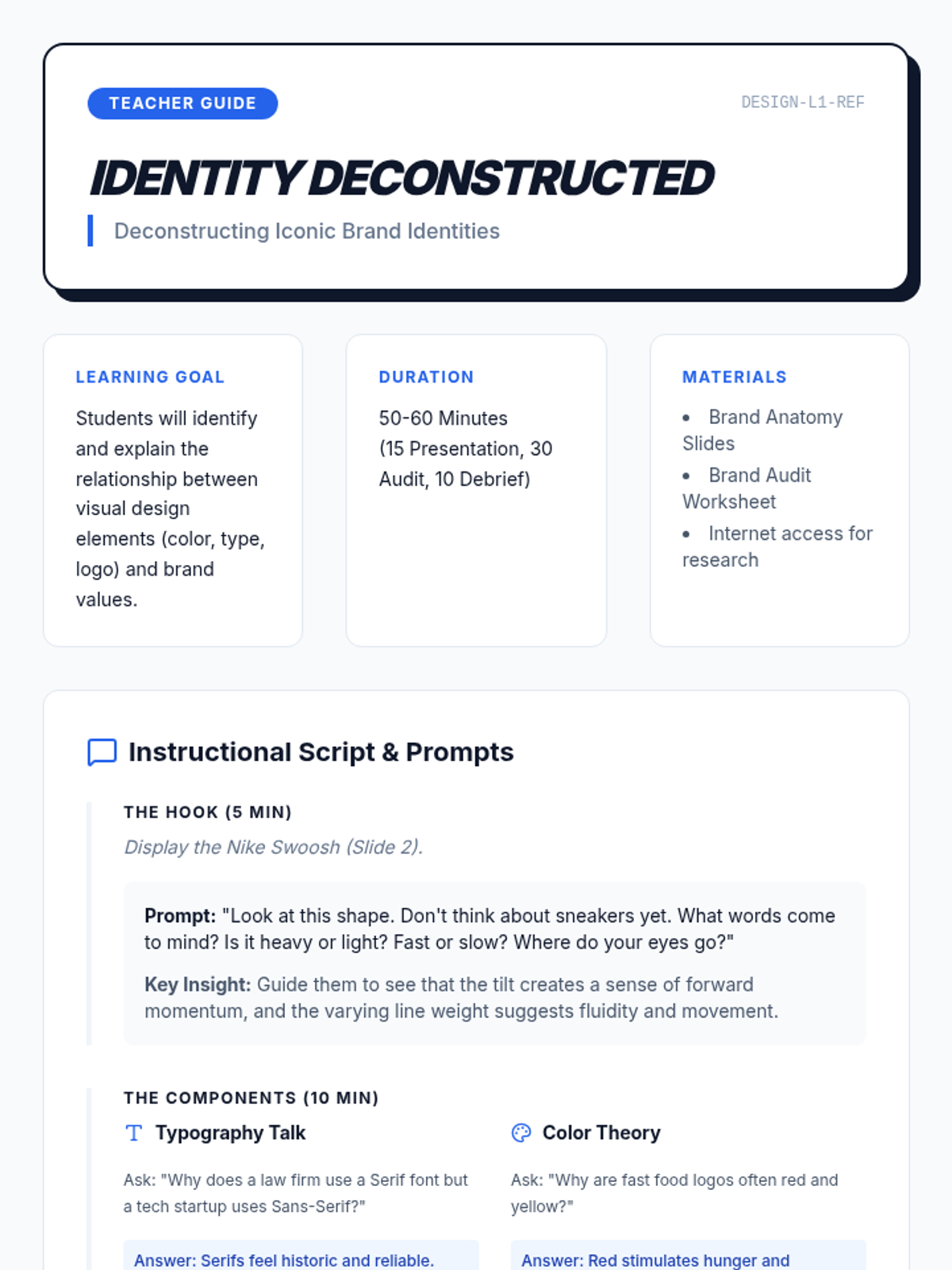
A comprehensive graphic design simulation where students act as a design agency to develop a full brand identity. They progress from analyzing logo symbolism and interpreting client briefs to digital vectorization and presenting a professional brand style guide.
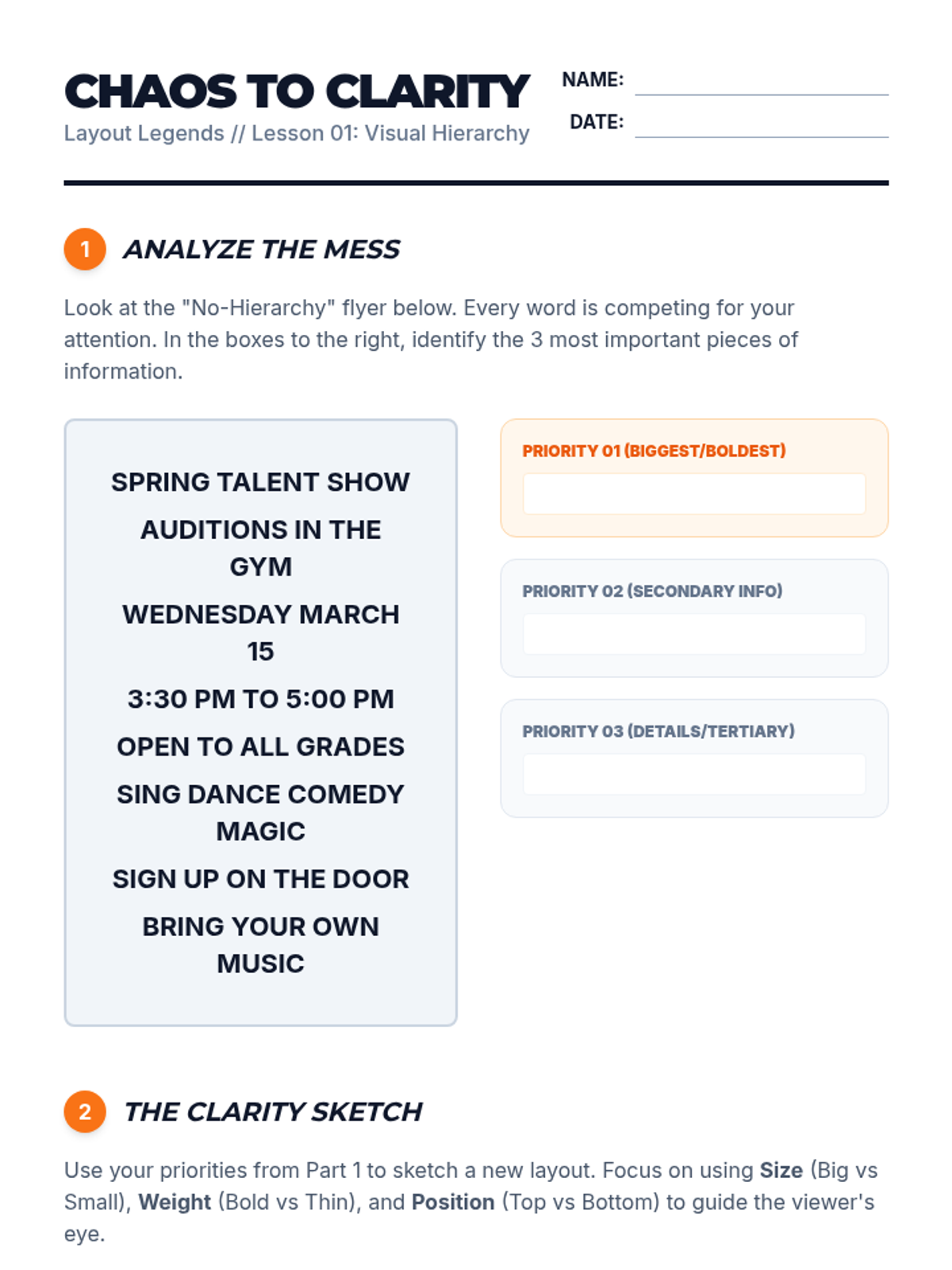
A project-based journey into the world of graphic design layout, focusing on visual hierarchy, grids, balance, and the integration of text and images. Students move from analyzing visual chaos to creating professional-grade compositions.
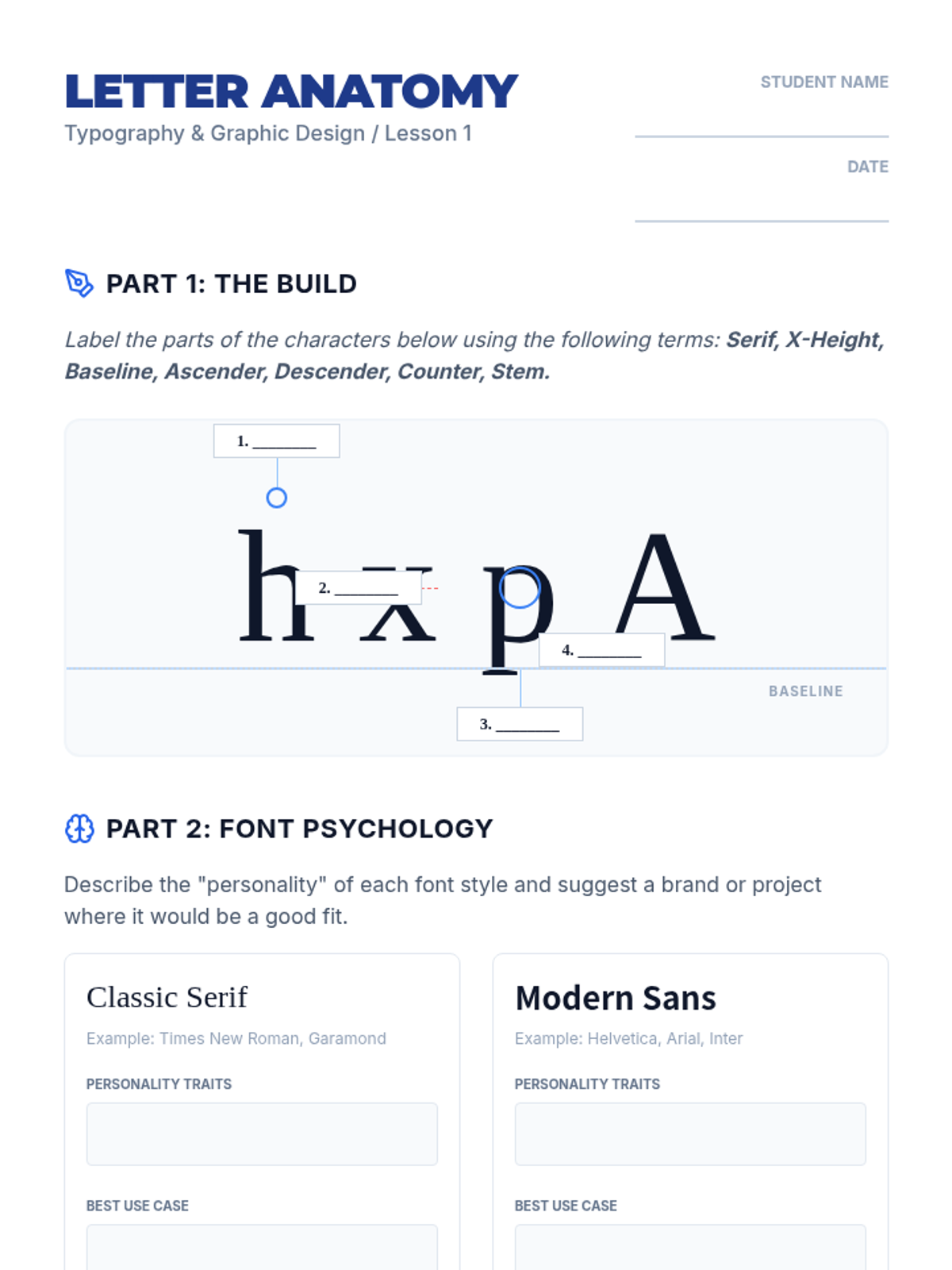
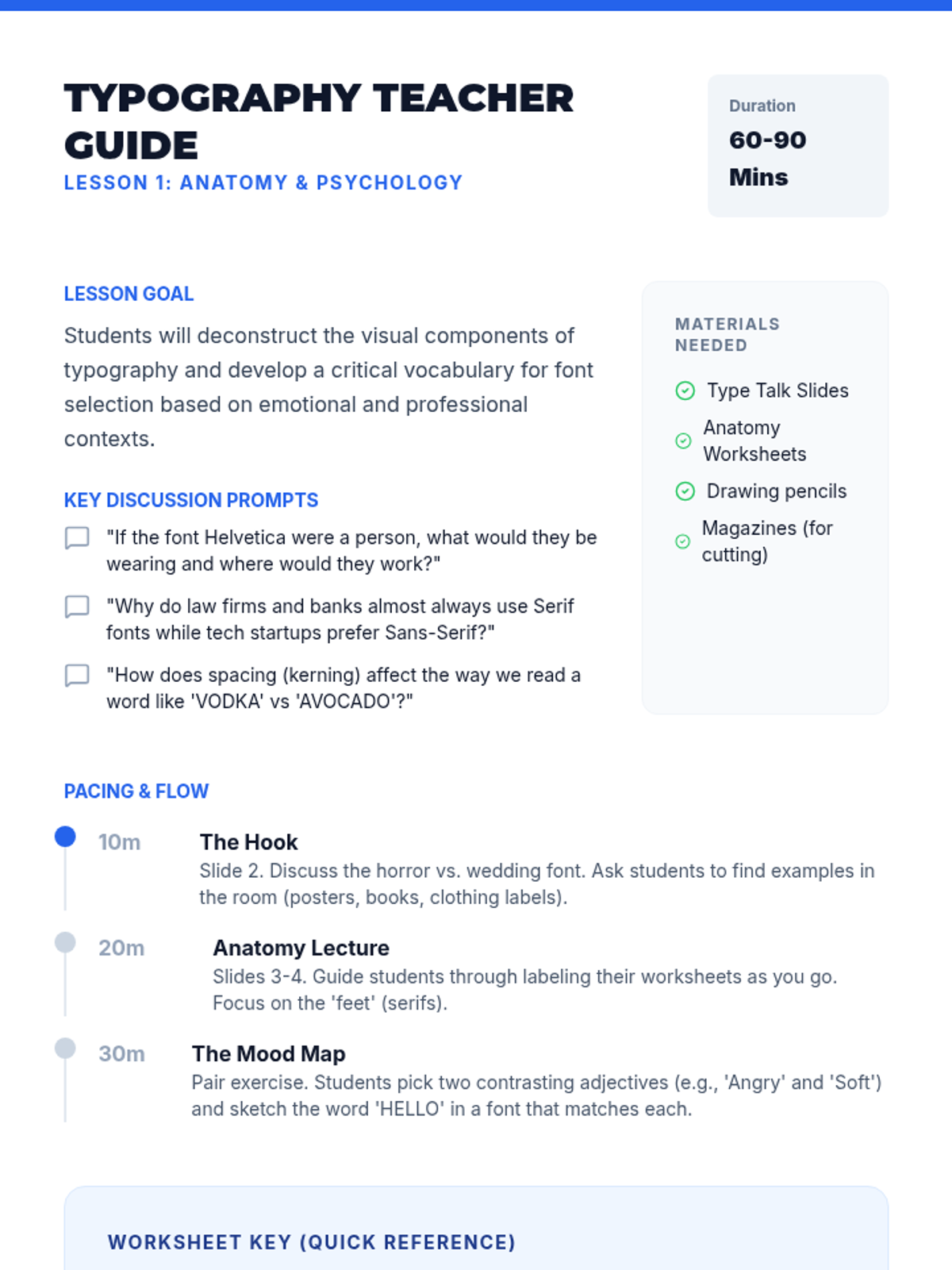
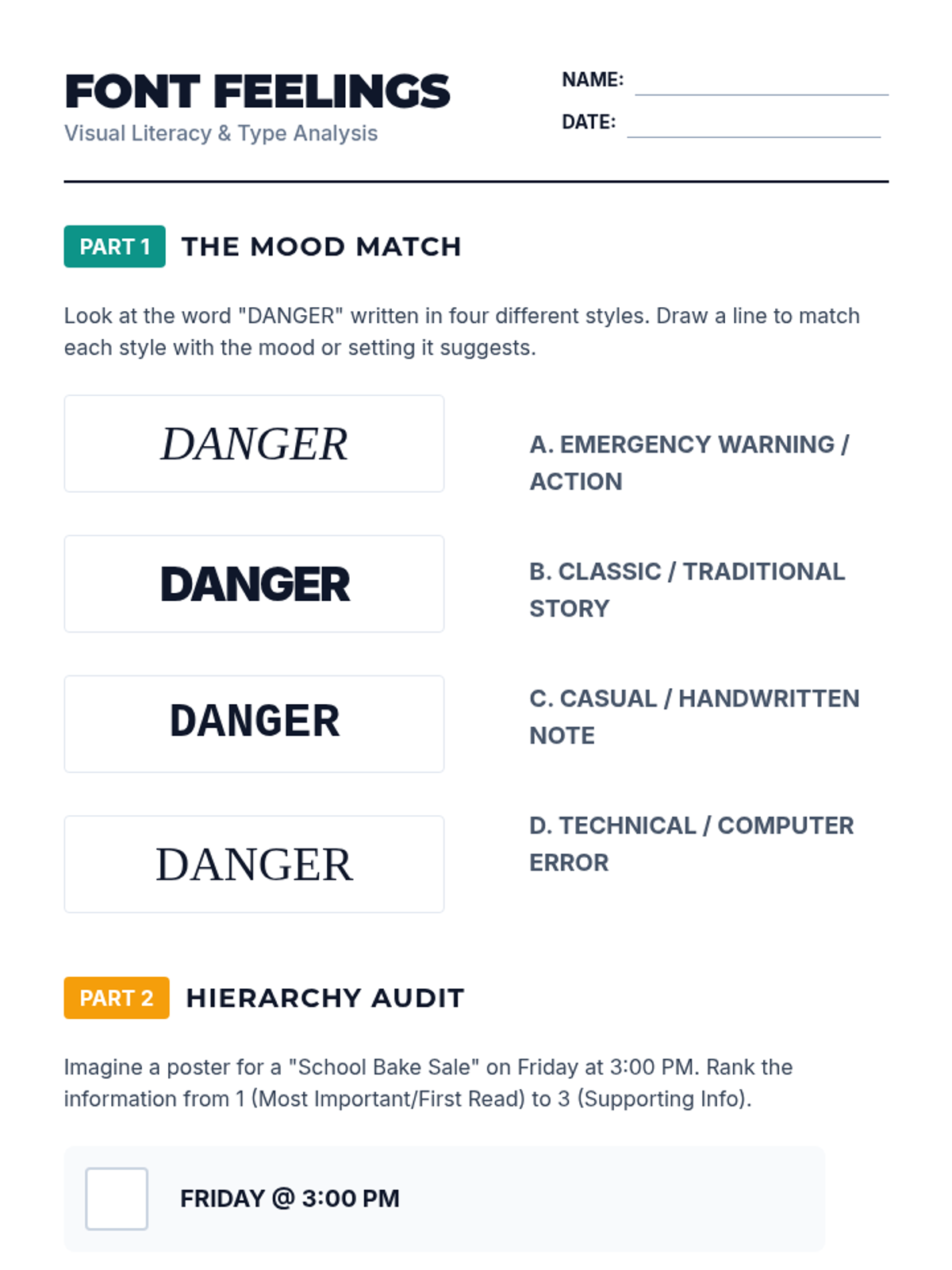
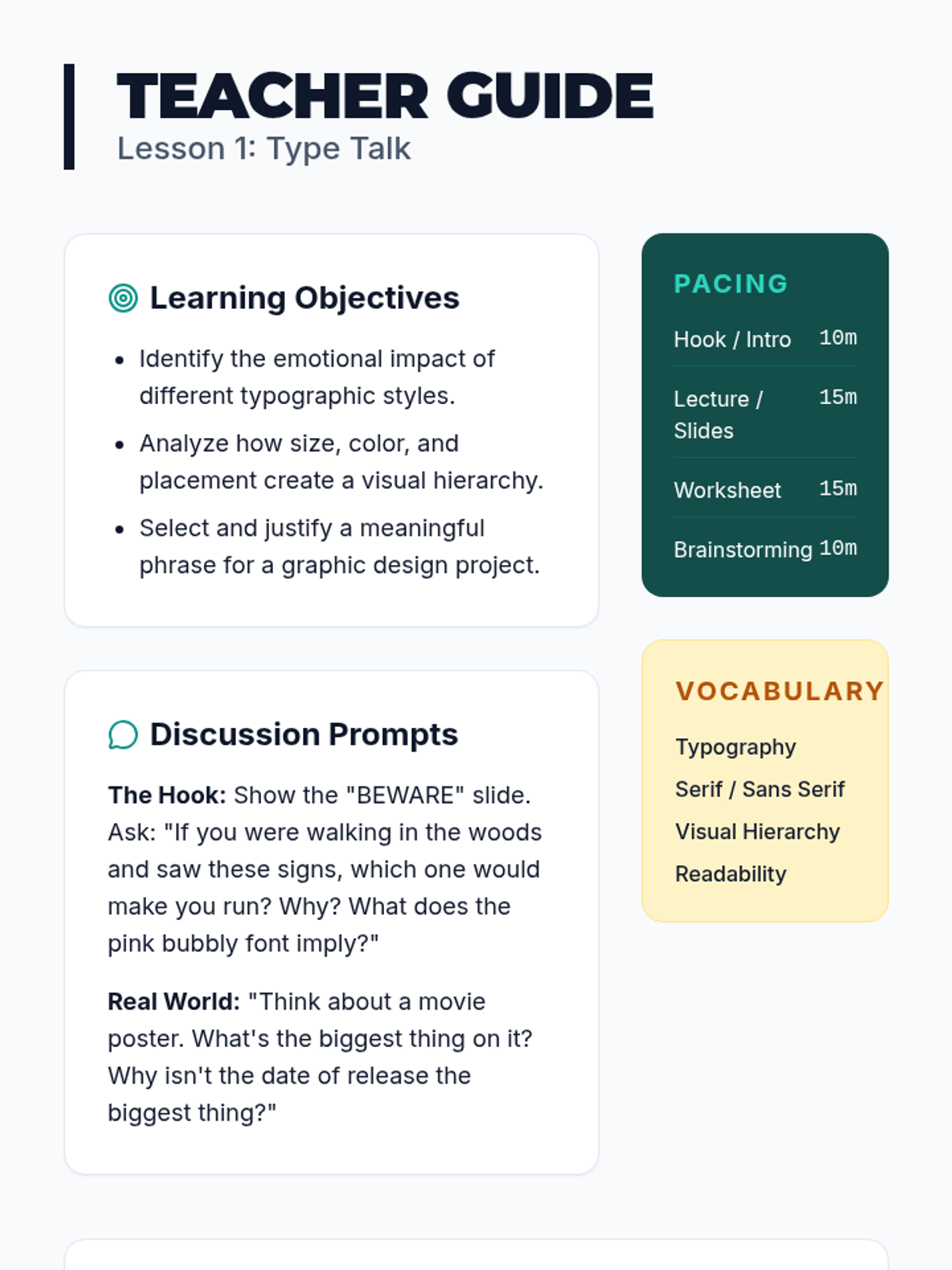
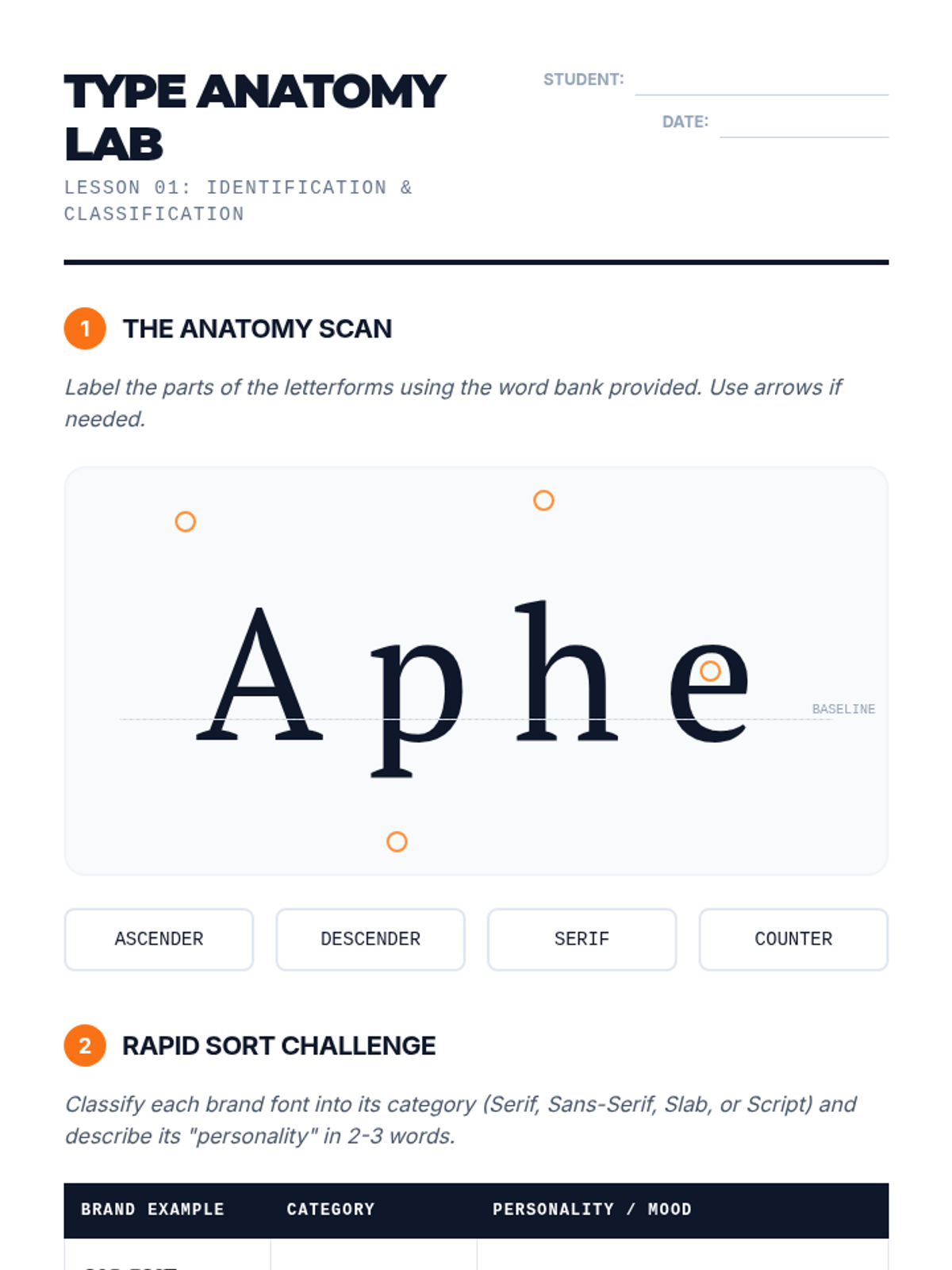
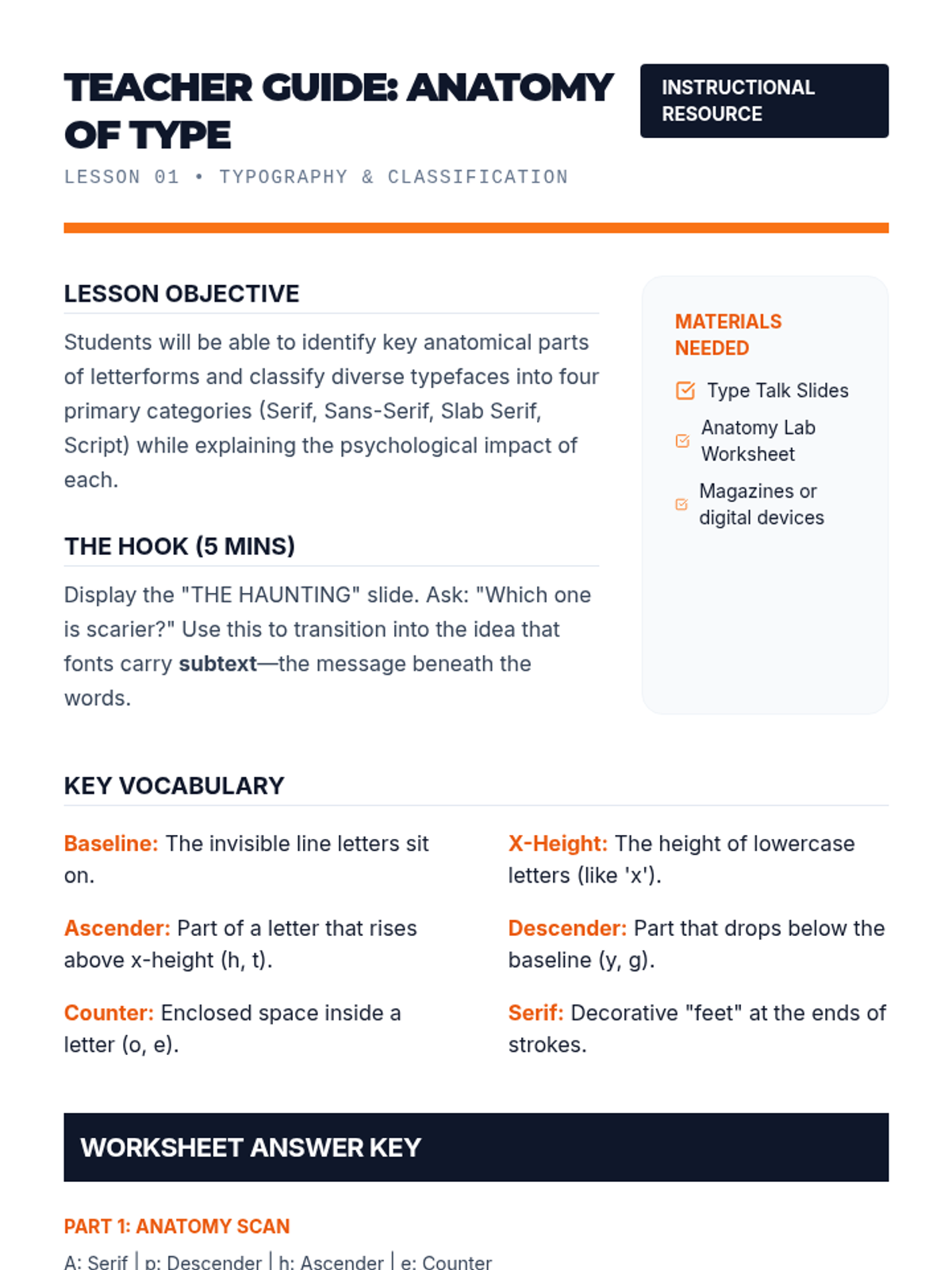
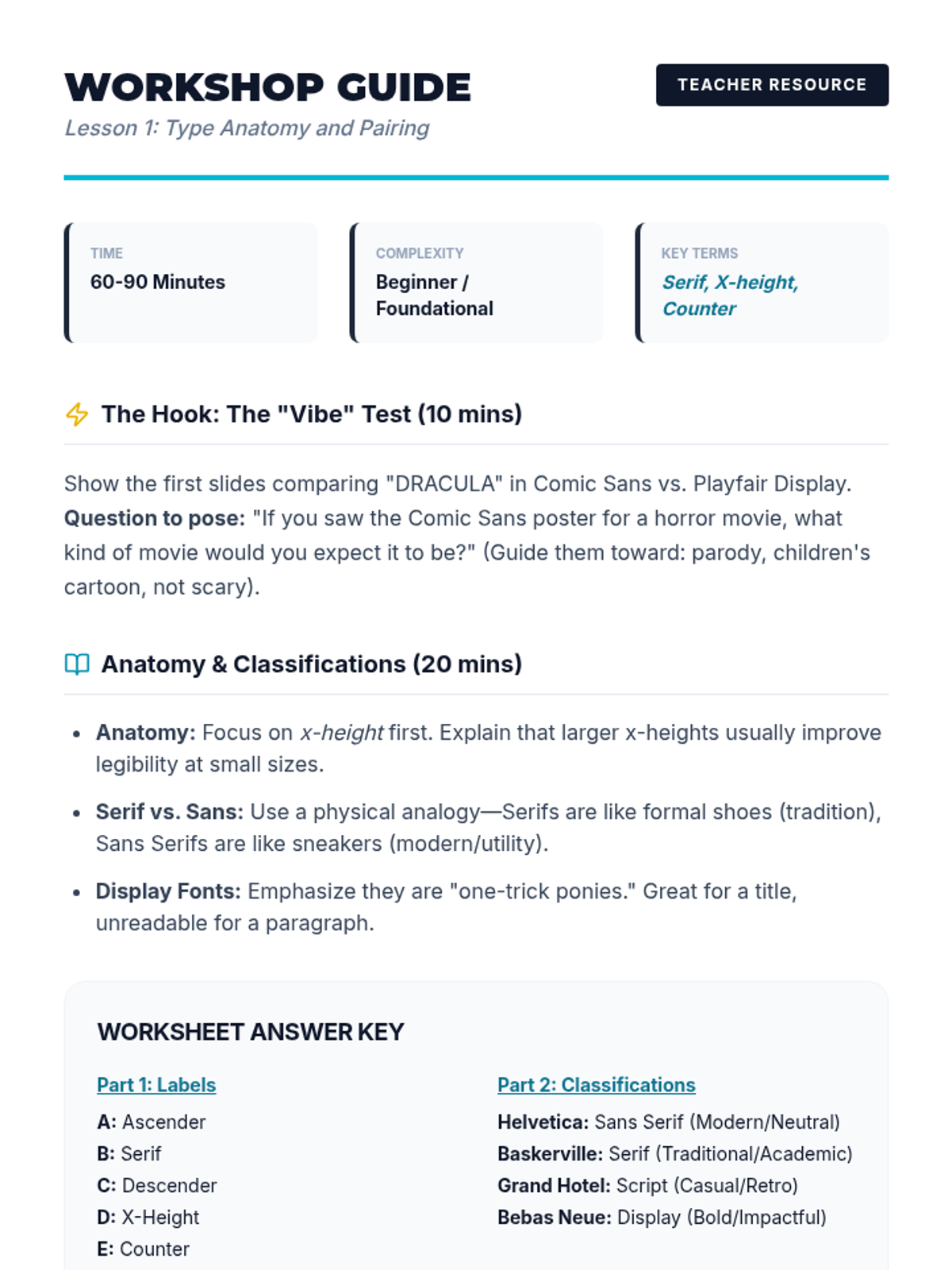
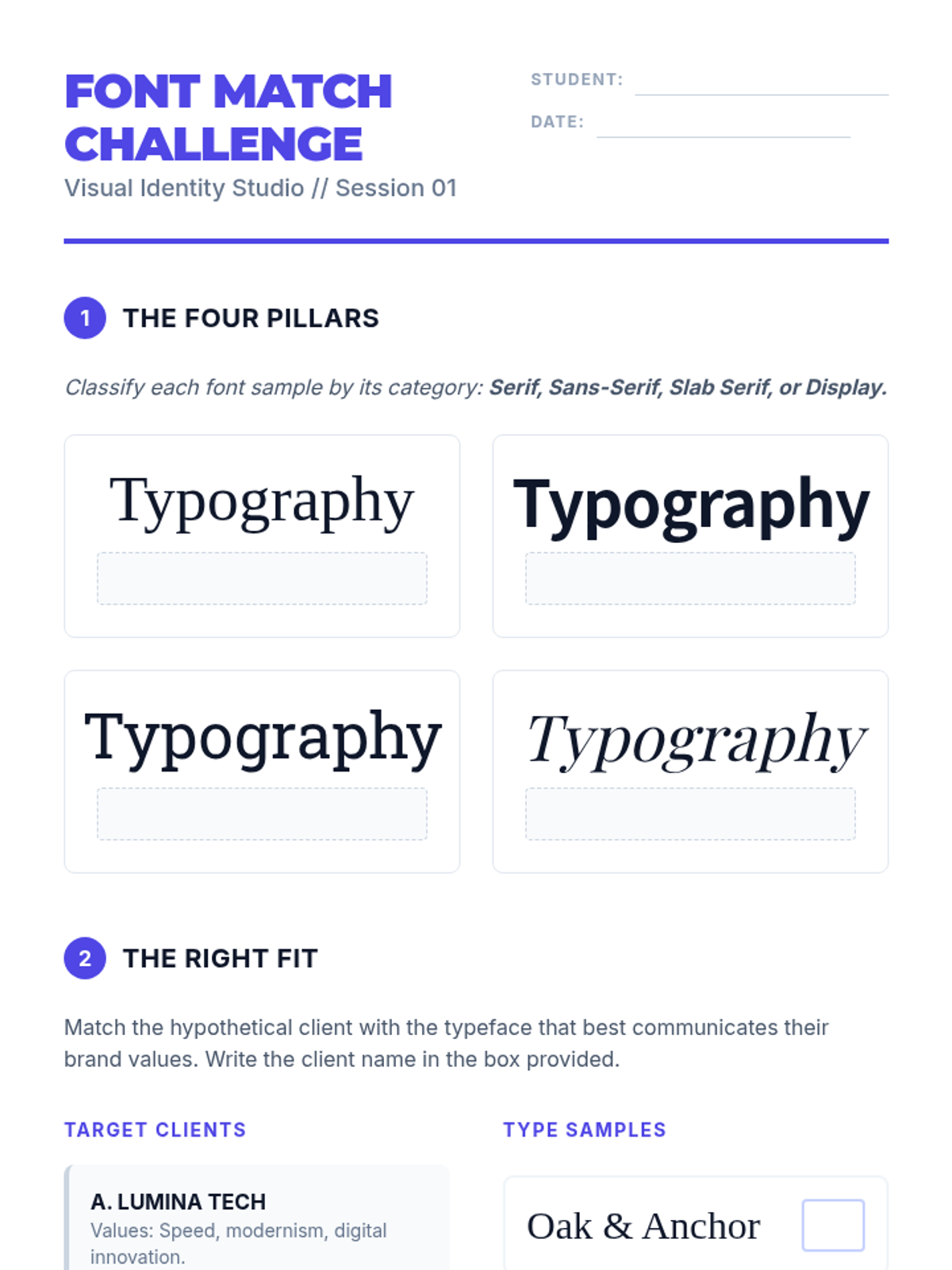
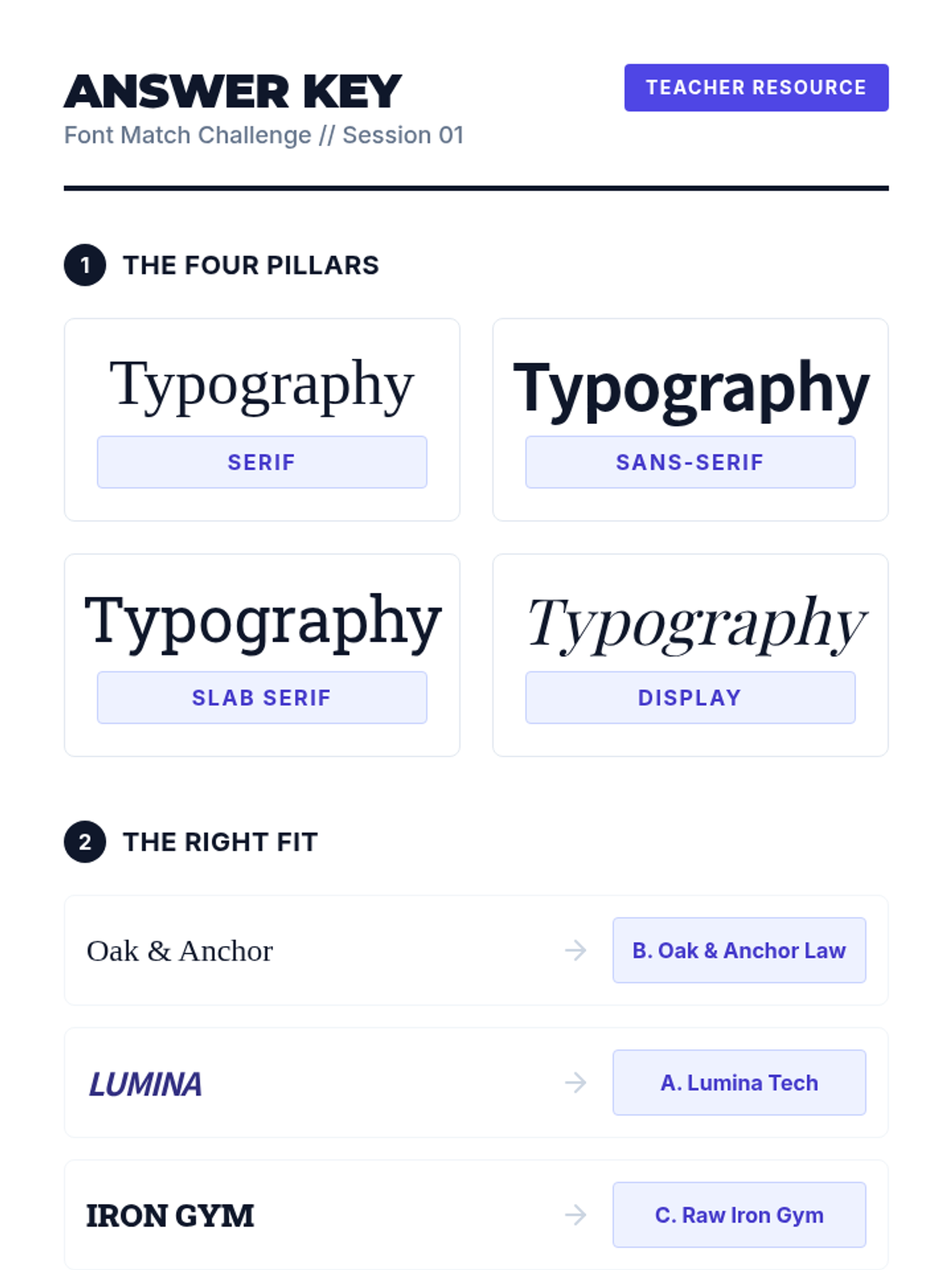
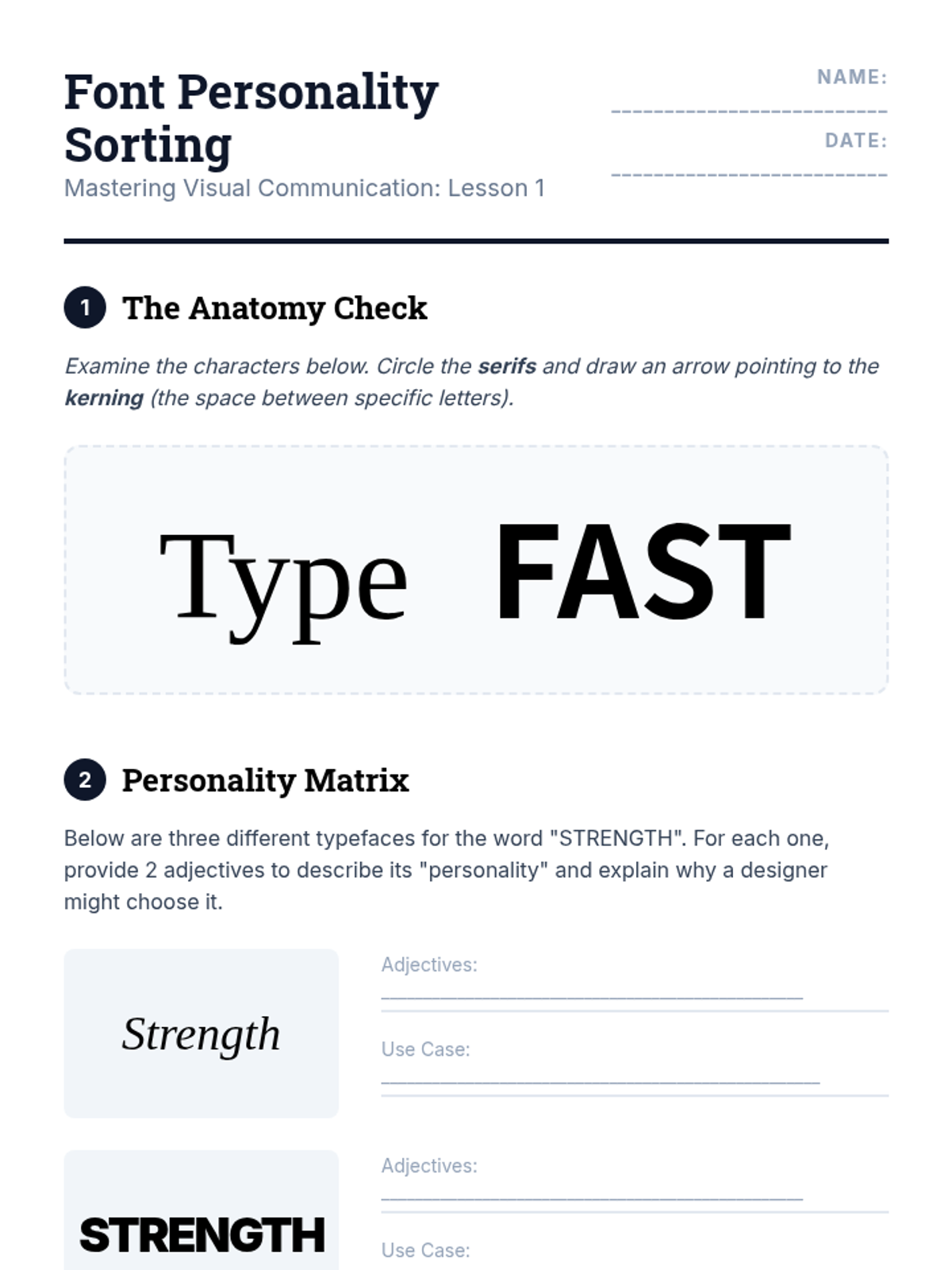
A comprehensive introduction to graphic design fundamentals for 7th-grade students, focusing on the structural anatomy of typography and the scientific application of color theory. Students move from identifying font personalities to creating expressive compositions and harmonic color palettes, culminating in a professional-style typographic poster.
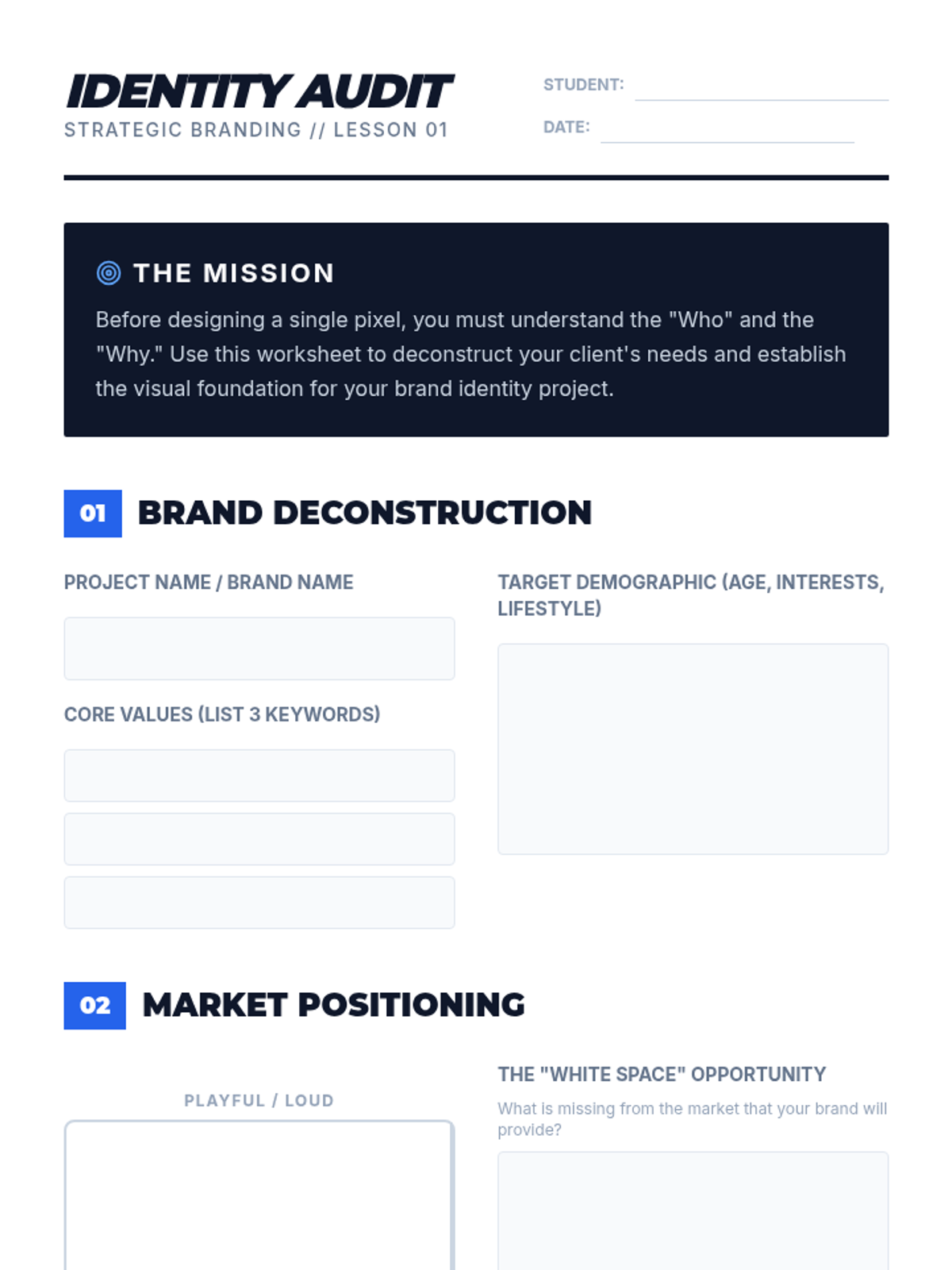
A comprehensive graphic design sequence where 11th-grade students simulate a professional branding agency environment, moving from strategic analysis to a full brand style guide.
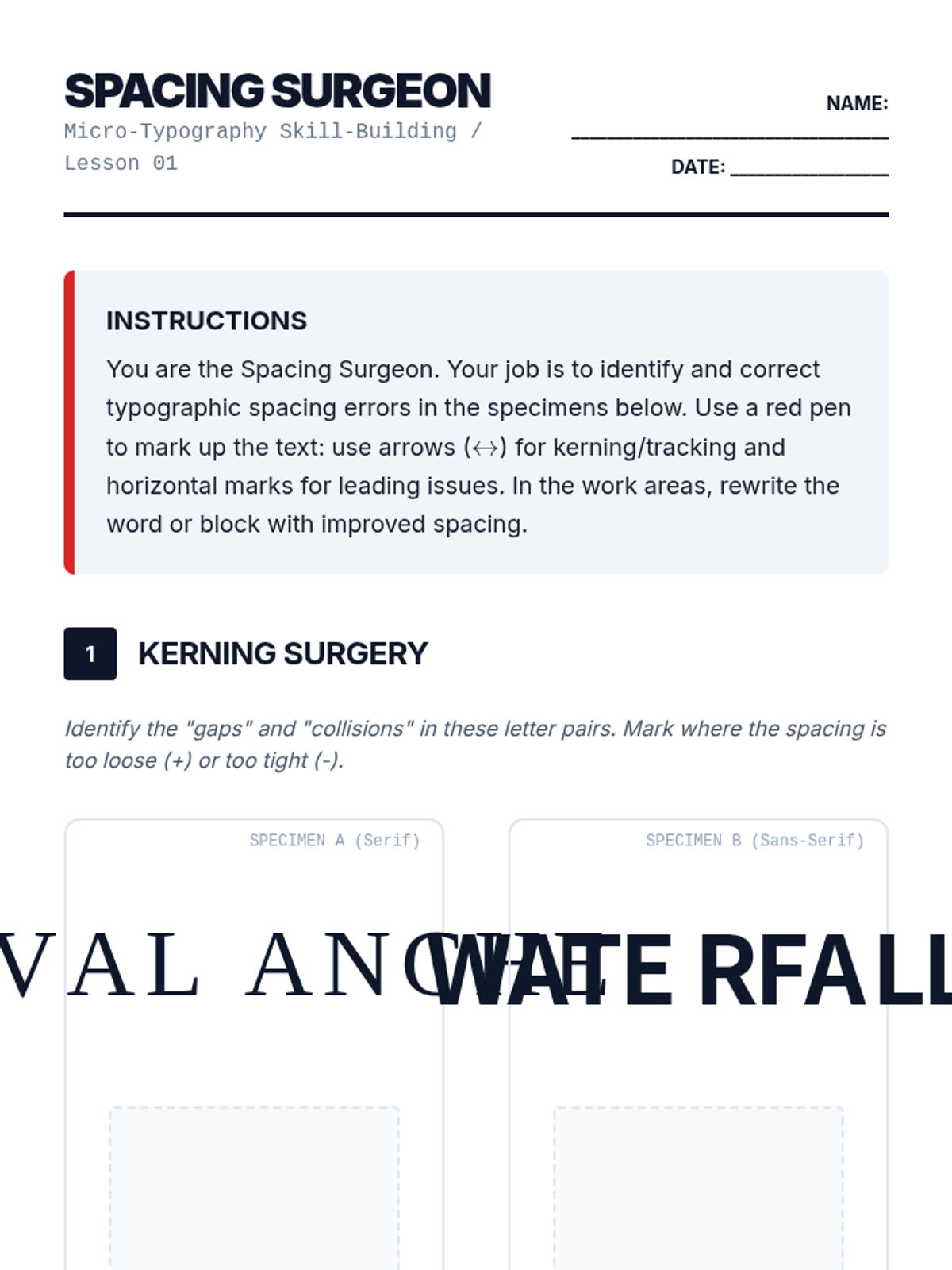
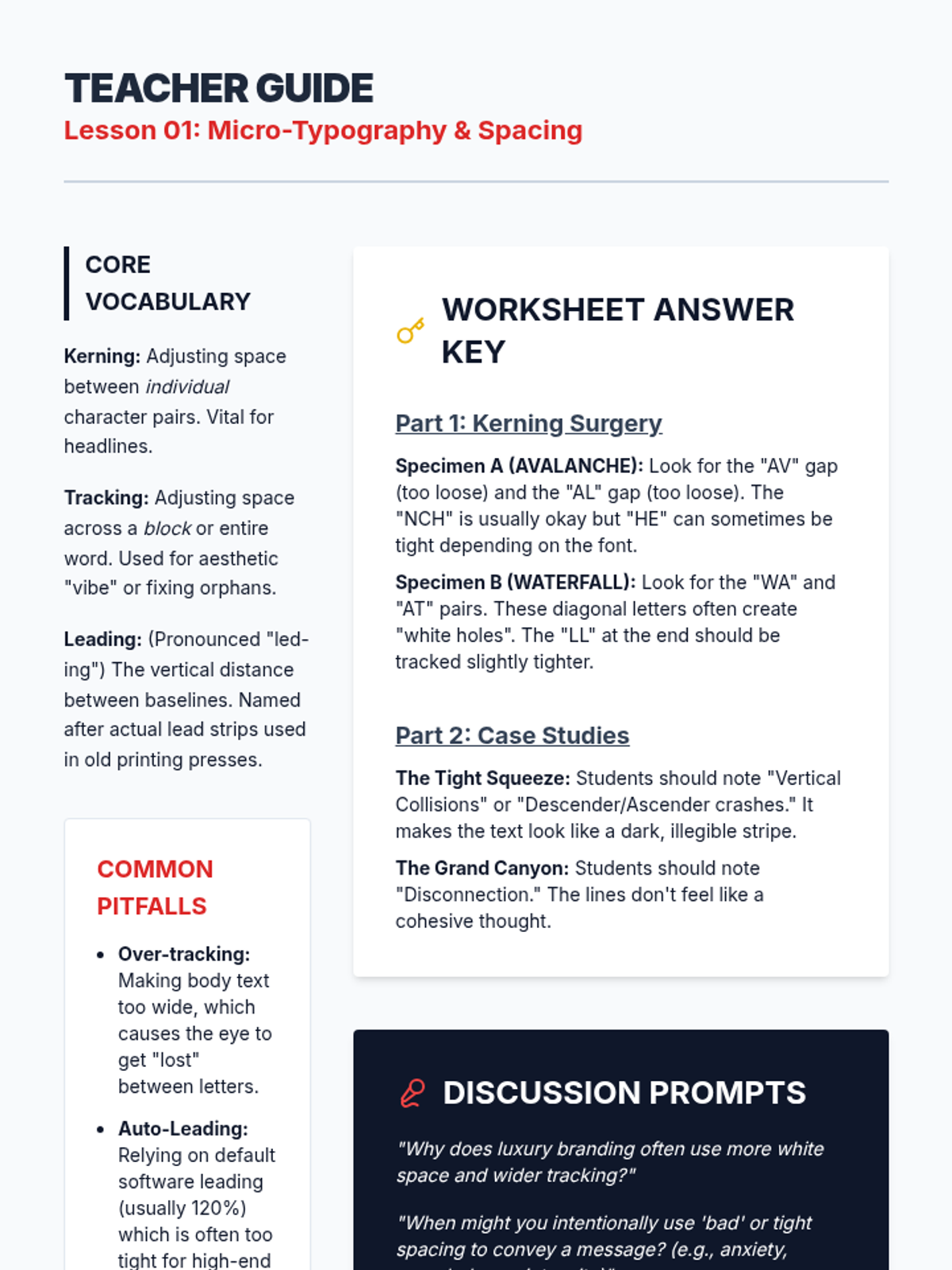
A workshop-intensive sequence for 12th-grade students focused on editorial design, grid systems, micro-typography, and pre-press production. Students learn to master the technical and structural details of layout to influence user experience and information flow.
A comprehensive project-based sequence where students act as creative directors to develop a full brand identity system. From client analysis and sketching to vectorization and style guide creation, students master the professional design workflow.
A comprehensive introduction to the structural foundations of graphic design, focusing on typography and layout. Students progress from learning the anatomy of letters to mastering complex visual hierarchies and grid systems.
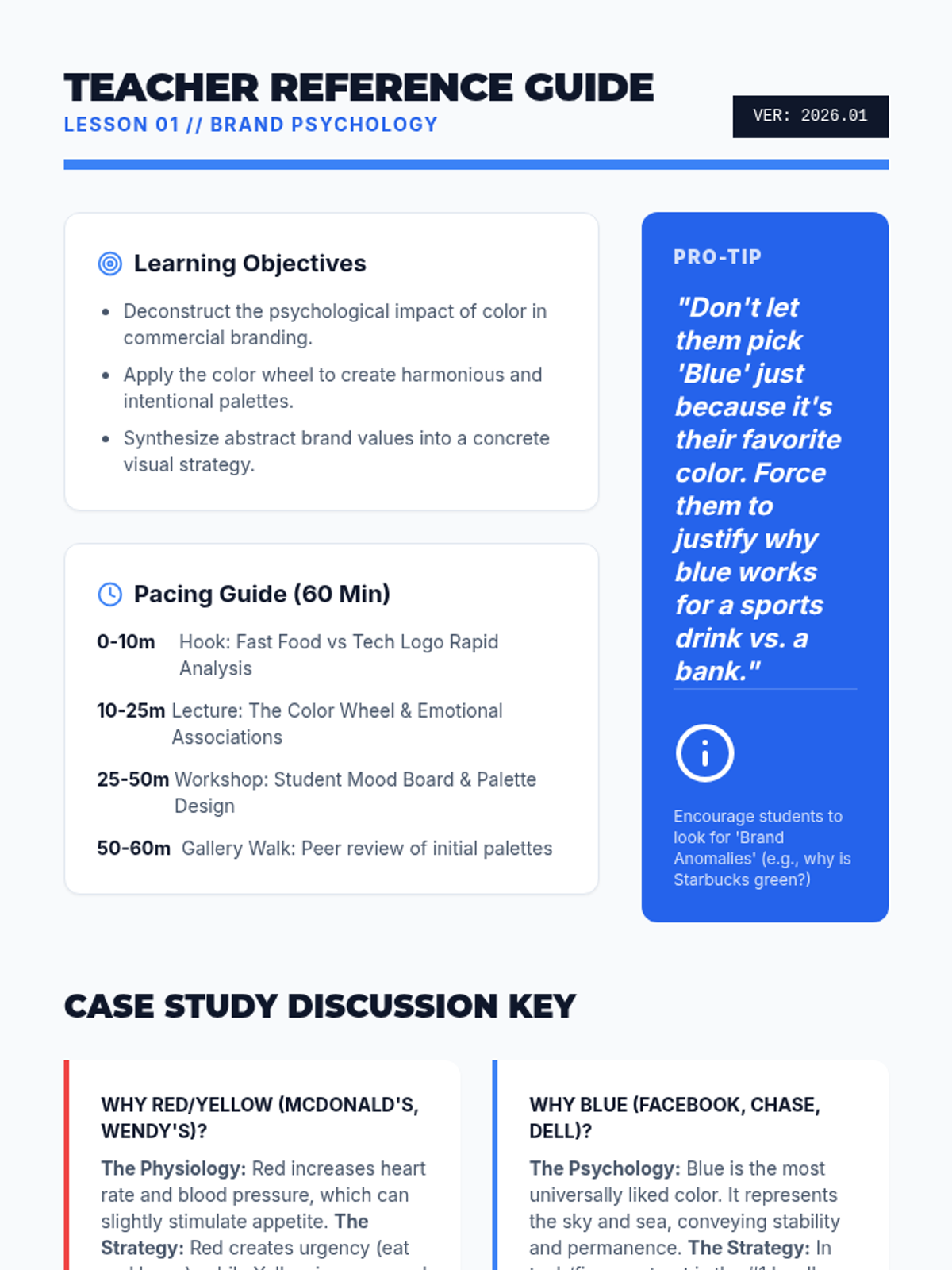
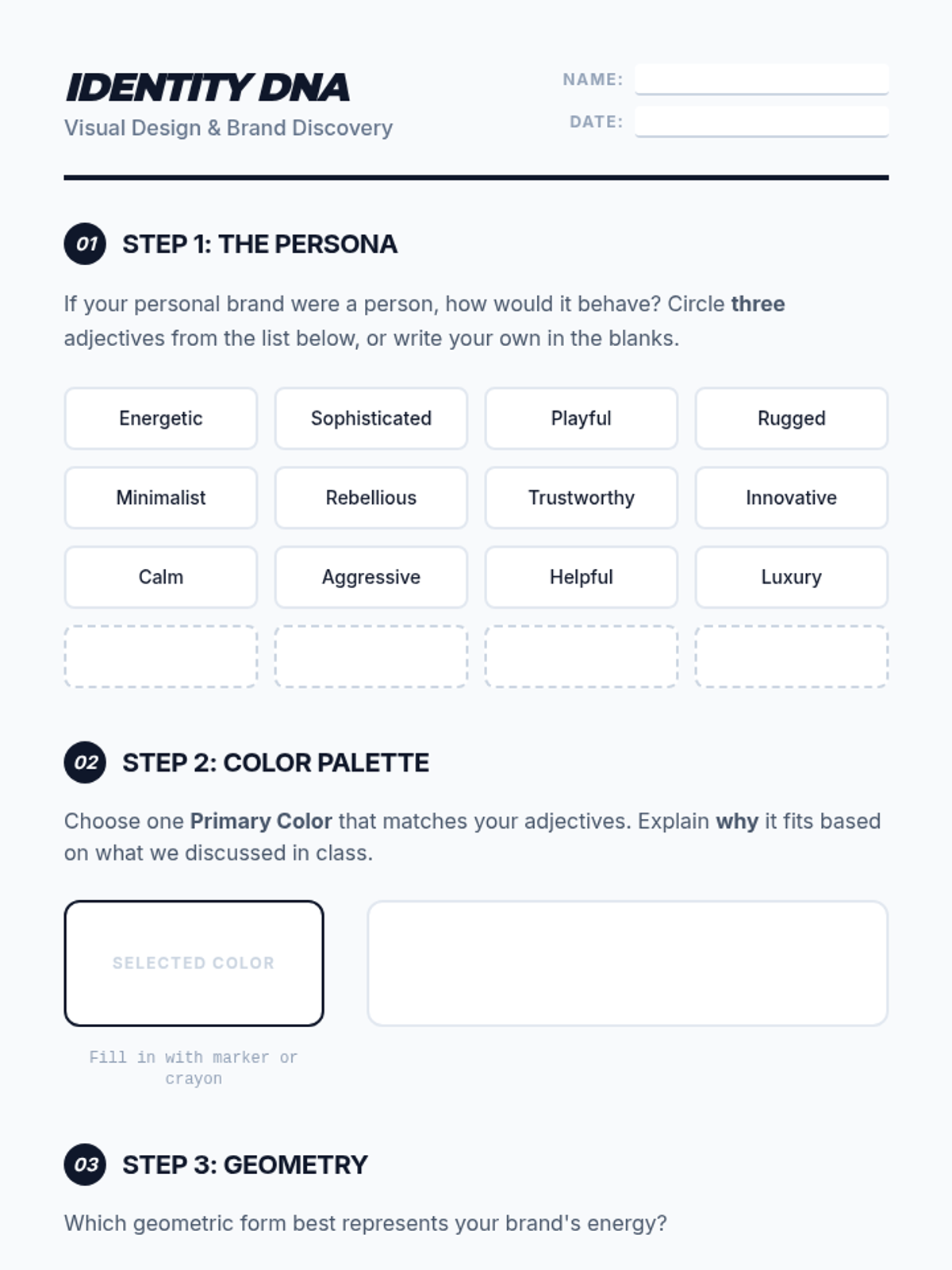
A comprehensive introduction to graphic design where students build a cohesive brand identity from the ground up. Over five lessons, students master color psychology, typography, logo creation, and layout principles, culminating in a professional-style brand pitch.
A comprehensive introduction to graphic design where students explore color psychology, master vector tools, and create a cohesive brand identity through logo design and typography.
This sequence immerses students in the professional workflow of creating a cohesive visual identity, focusing specifically on the interplay between typography, color theory, and layout. Students progress from conceptual sketching and mood boarding to digital rendering and refinement of a logomark and accompanying marketing asset.
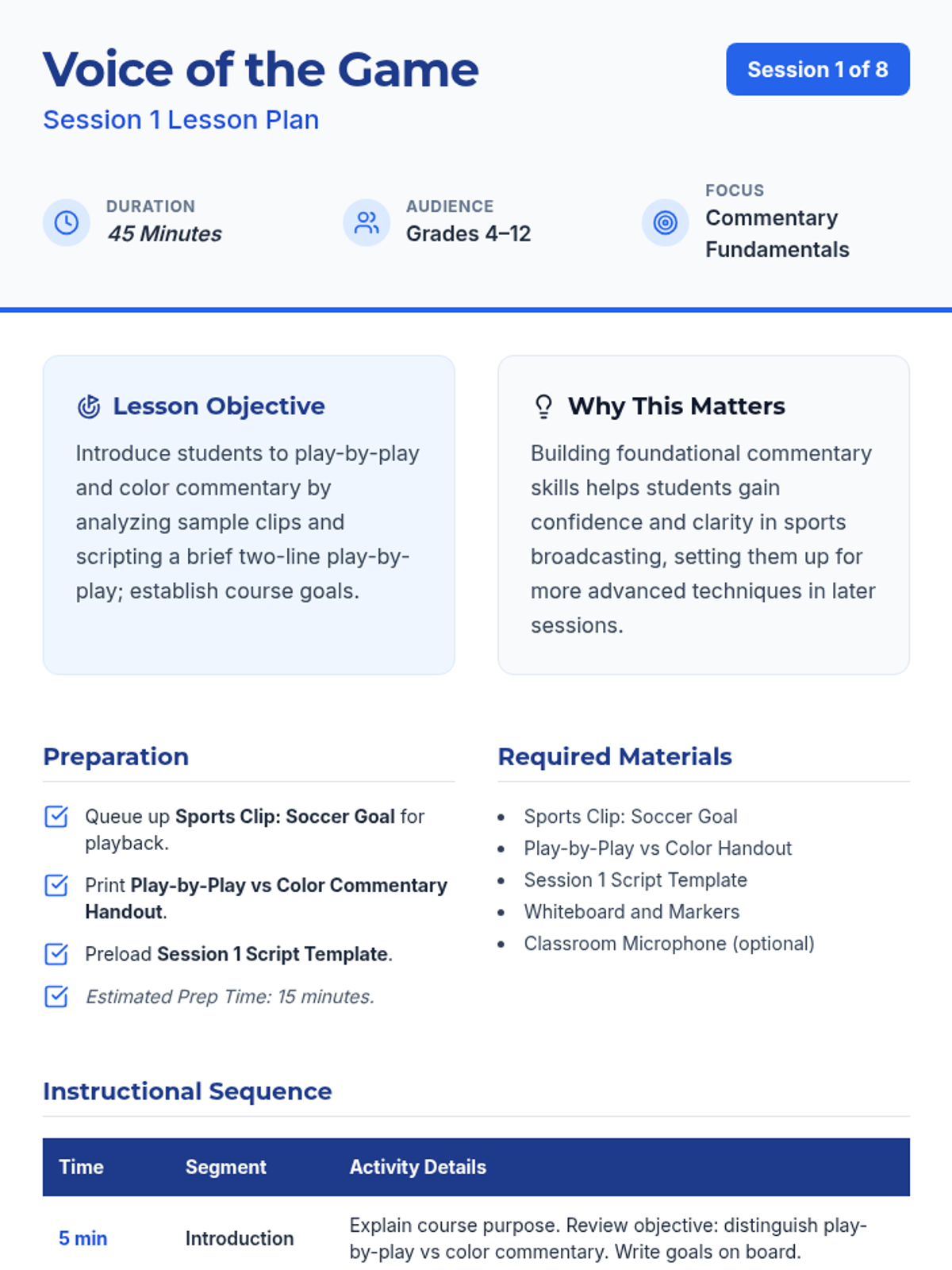
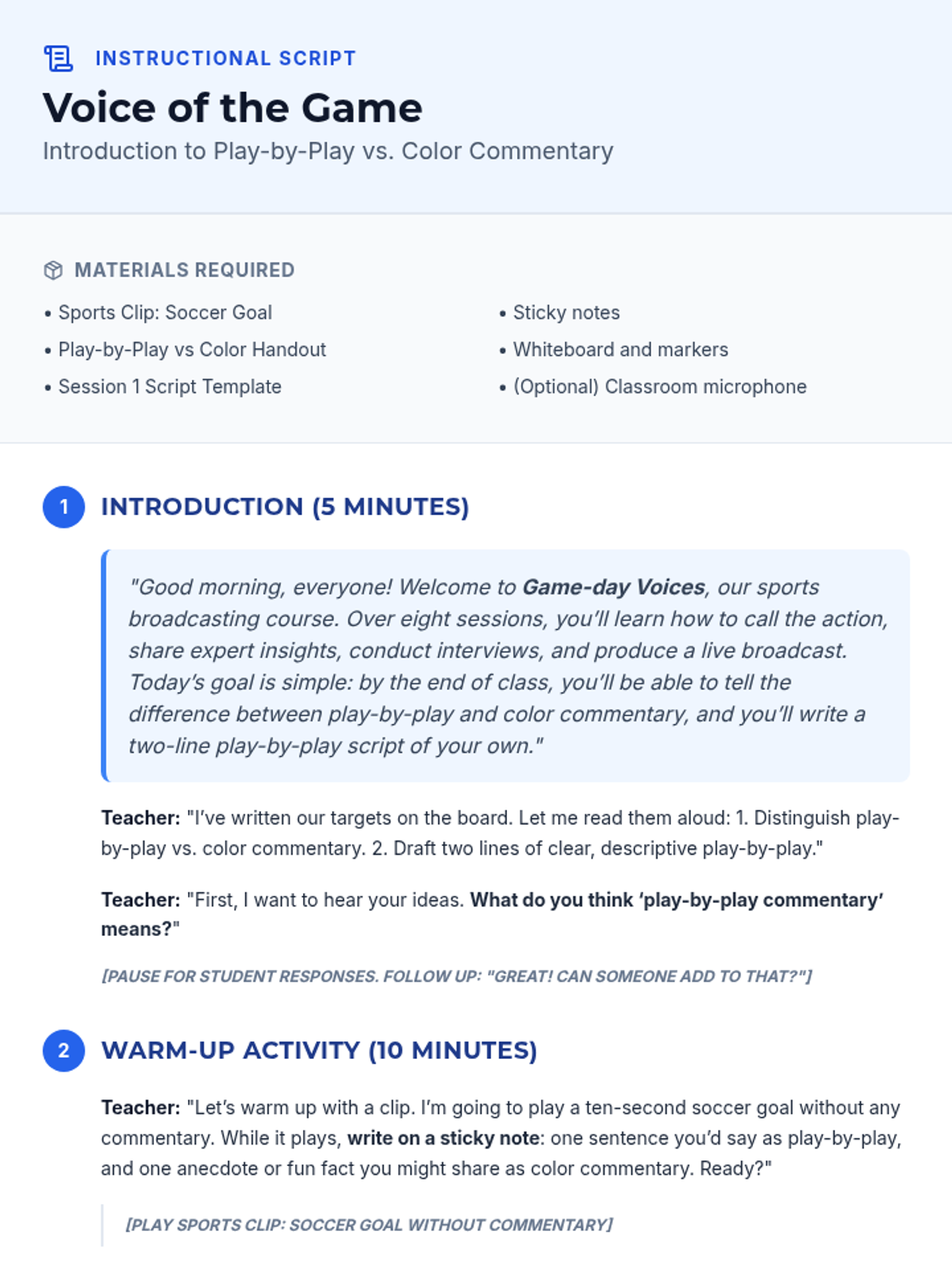
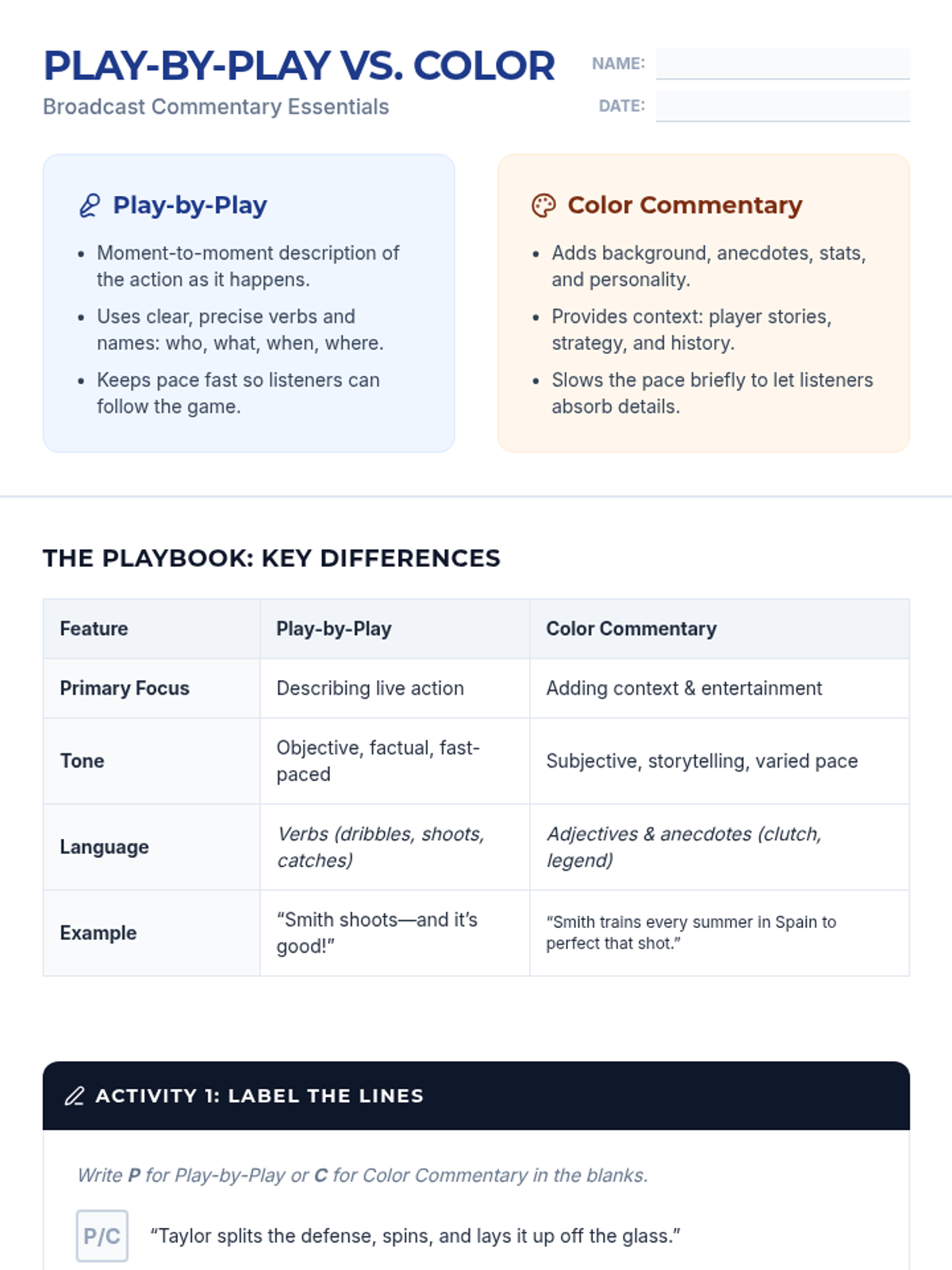
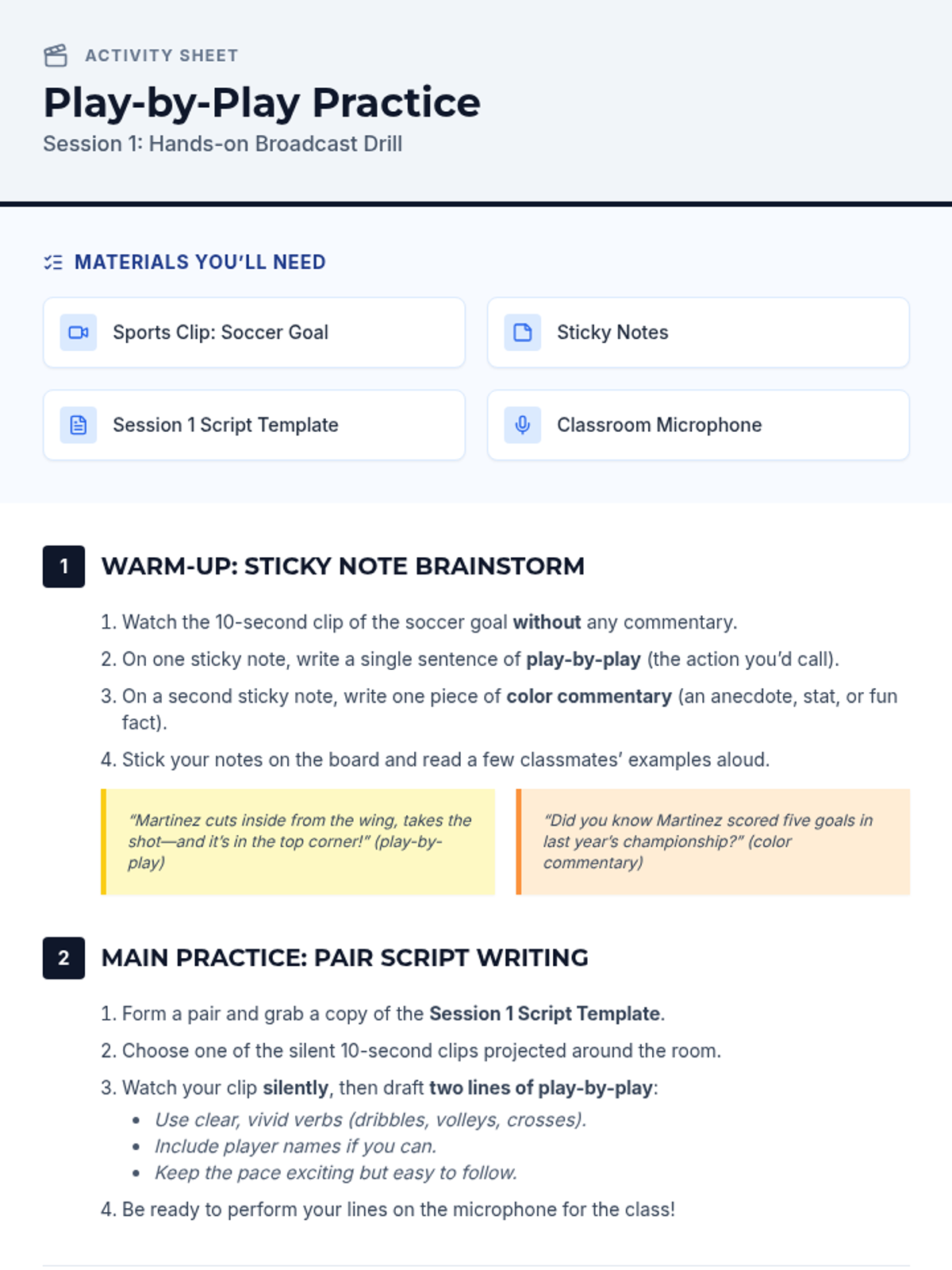
An 8-session sports broadcasting course for grades 4–12, covering play-by-play, color commentary, interviewing, camera work, audio mixing, and live production directing. Students progress from foundational vocal skills to a complete capstone broadcast project.
Students step into the role of a professional graphic designer to develop a comprehensive brand identity for a fictional client. This project-based sequence simulates a real-world design workflow, moving from analyzing client needs to brainstorming, prototyping, and refining a final logo system.
A foundational workshop for 8th-grade students to master the objective rules of typography, color psychology, and layout. Students transition from analyzing visual 'grammar' to creating their own communicative compositions using digital design principles.
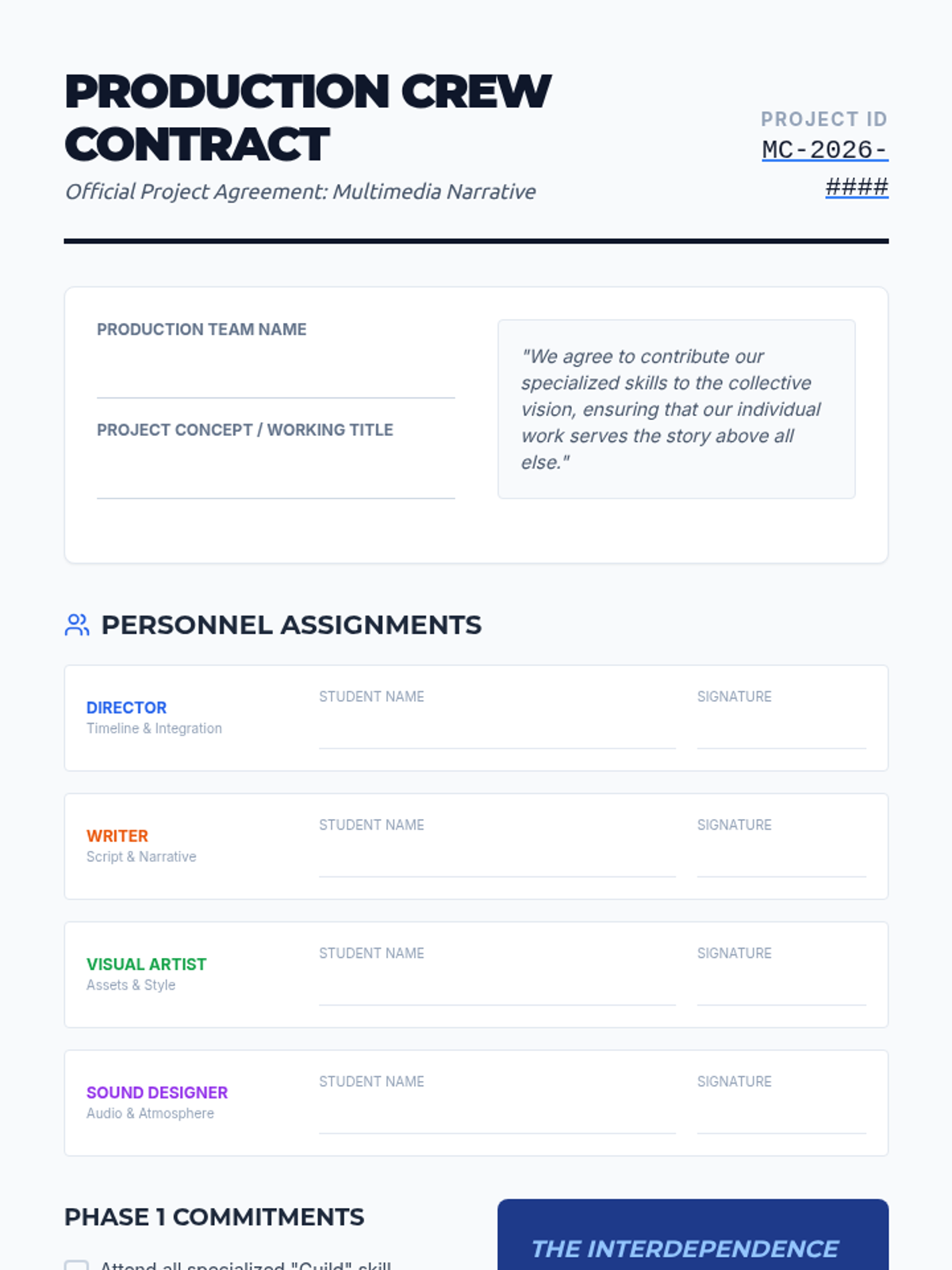
This sequence explores collaboration through the lens of specialized roles within a multimedia project. Students transition from generalists to specialists, learning how interdependence and trust between a Writer, Visual Artist, Sound Designer, and Director are essential for creating a cohesive digital narrative.
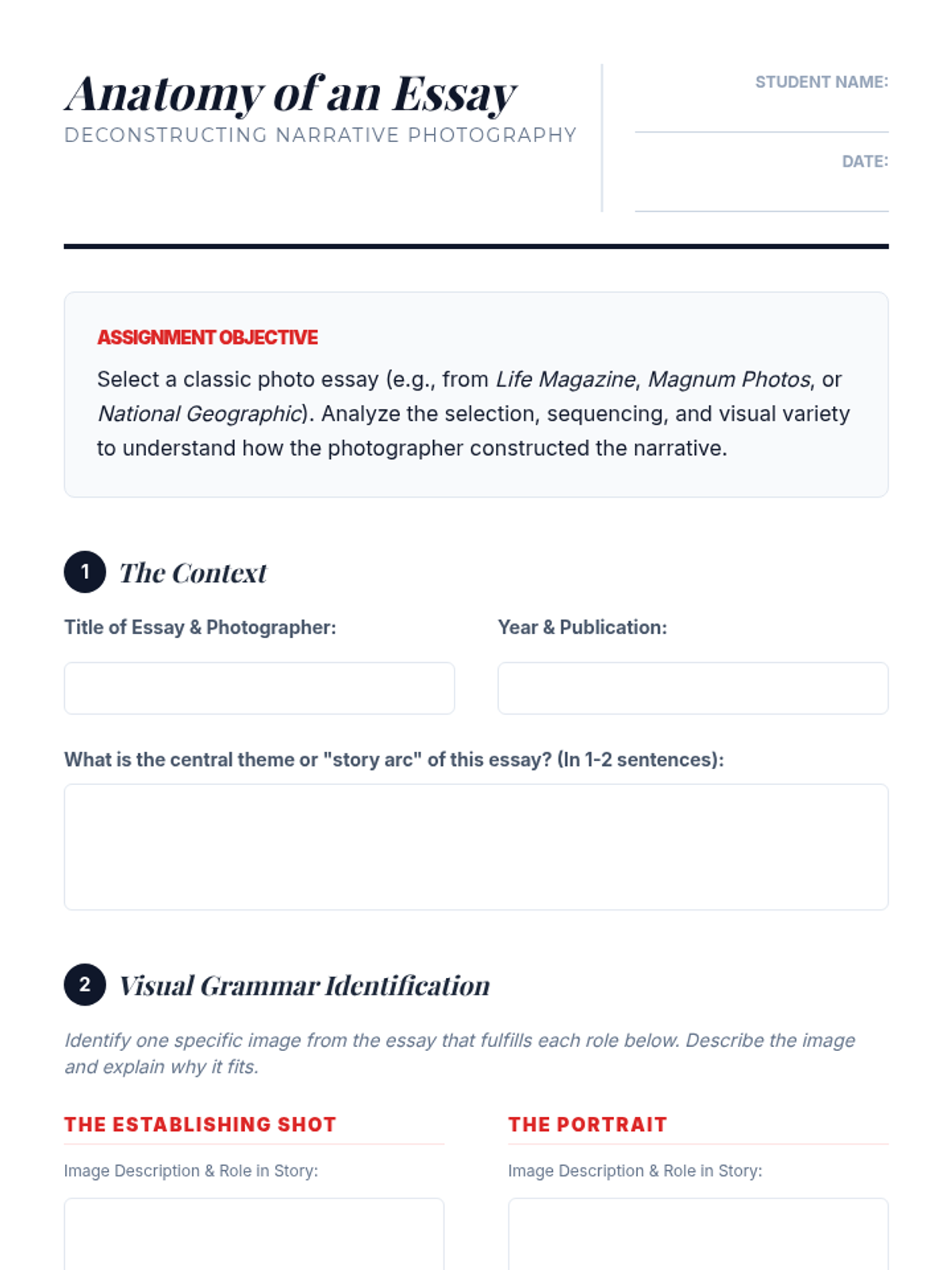
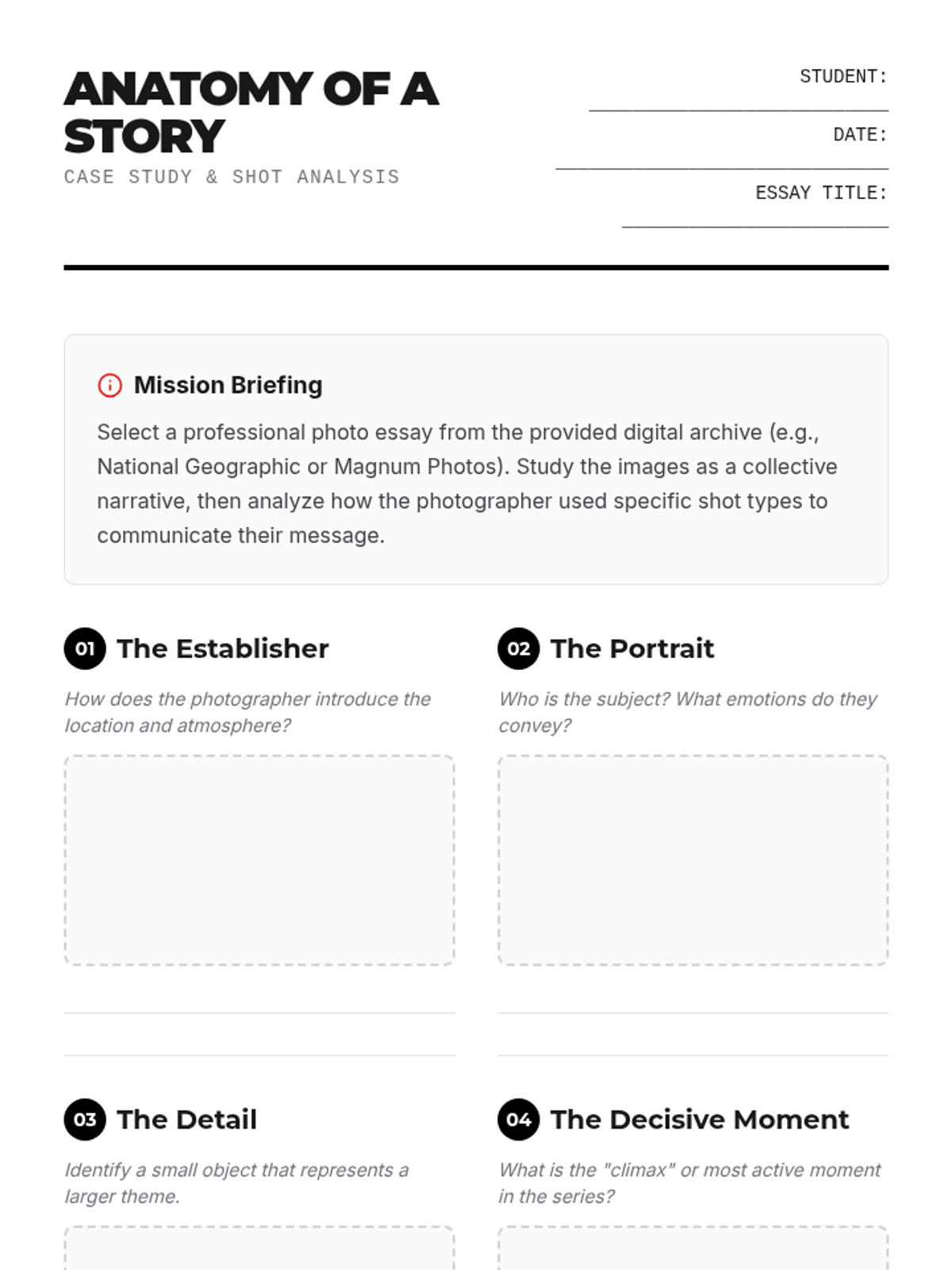
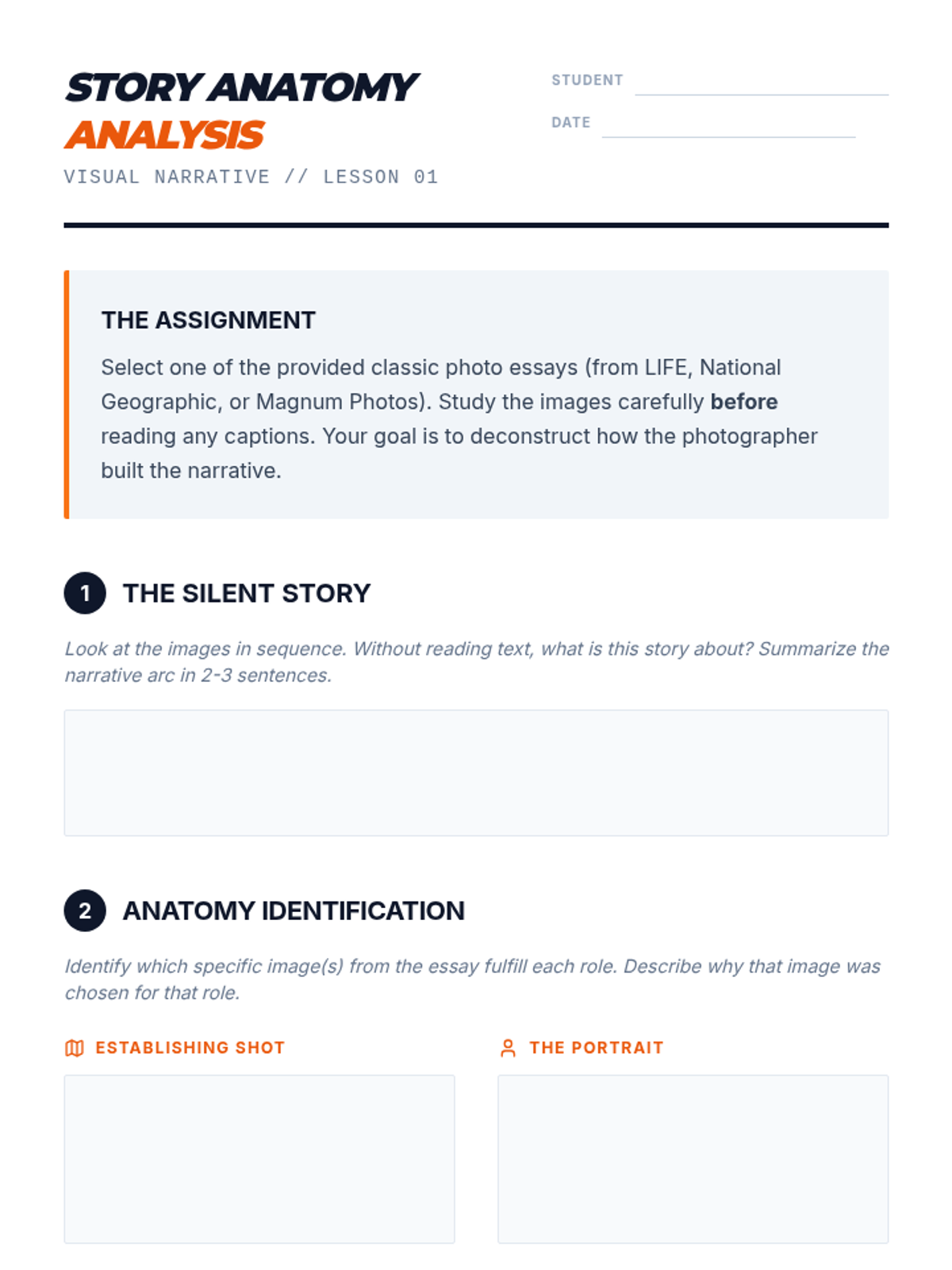
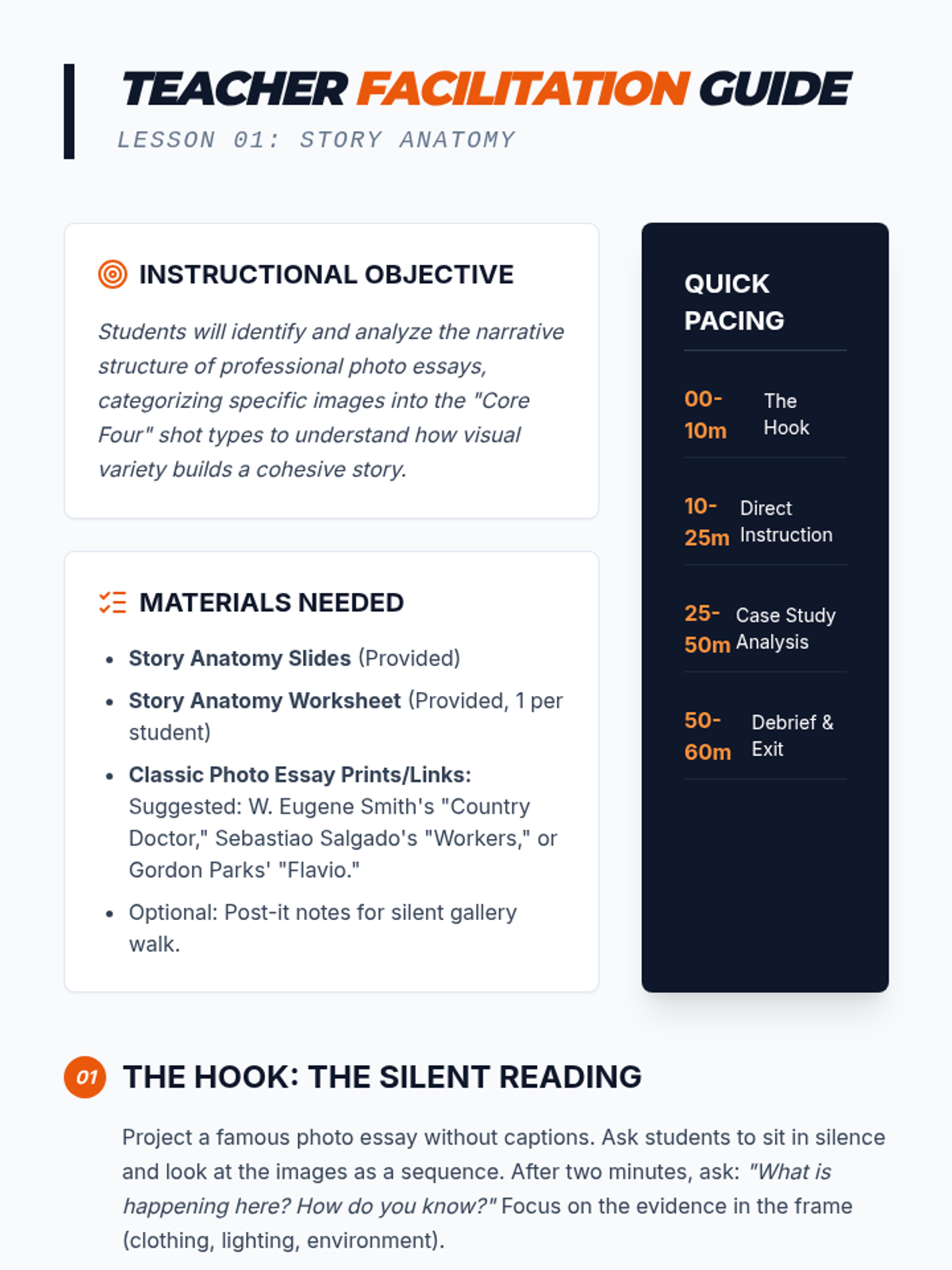
This sequence guides 12th-grade students through the transition from single-image photography to complex visual storytelling. Students will learn to plan, shoot, and curate photo essays, culminating in a professional portfolio presentation that explores narrative arcs and conceptual themes.
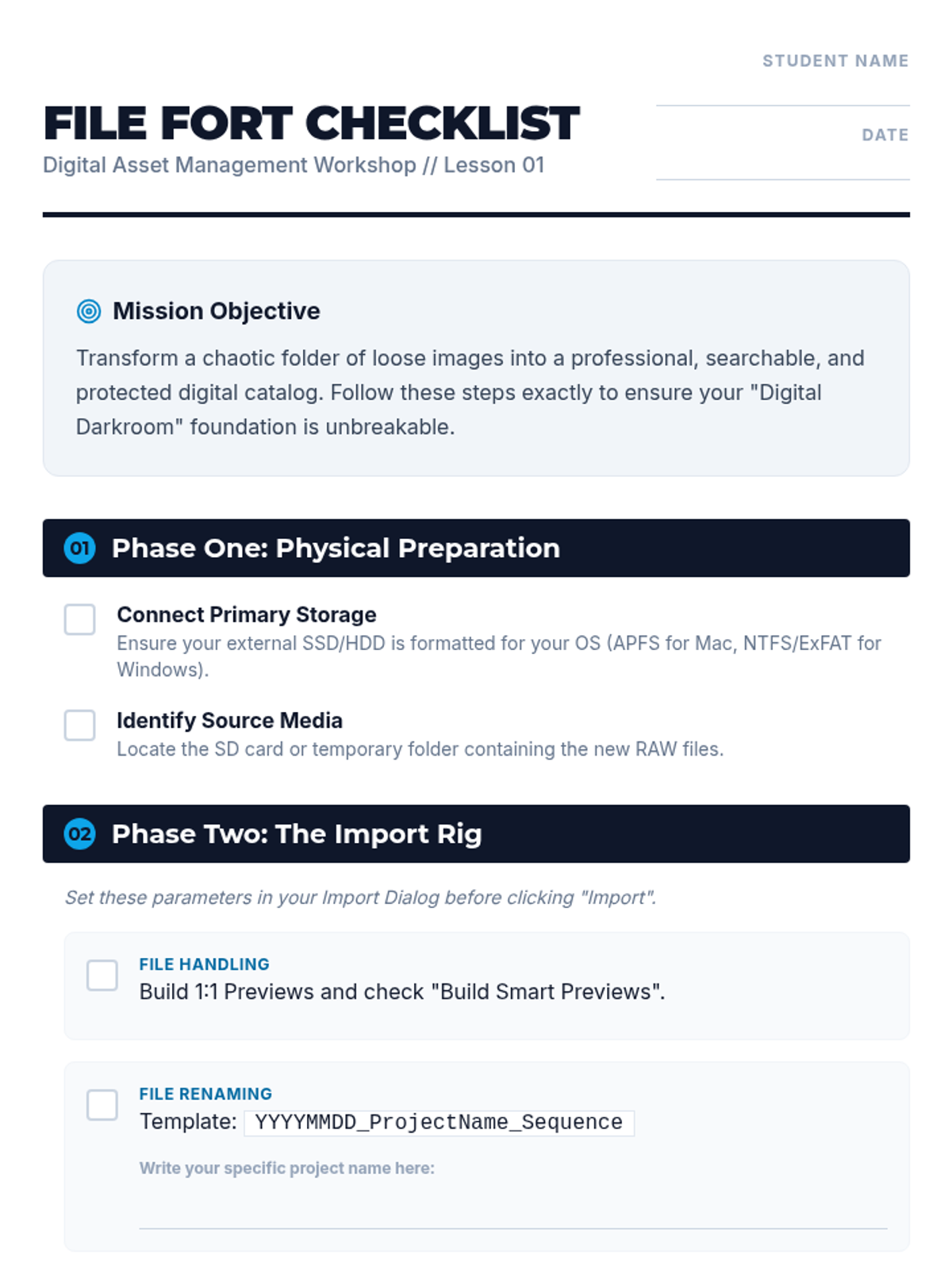
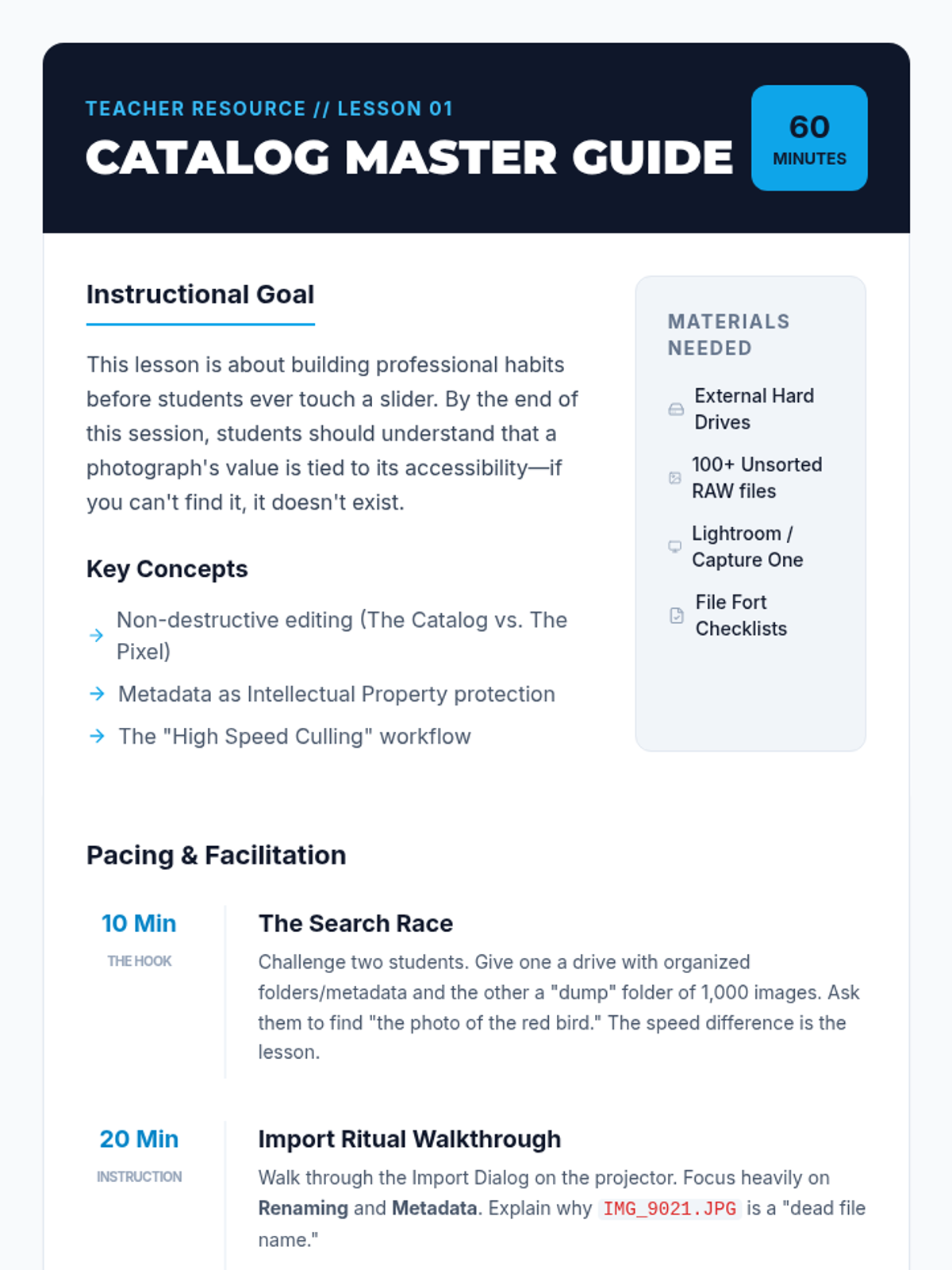
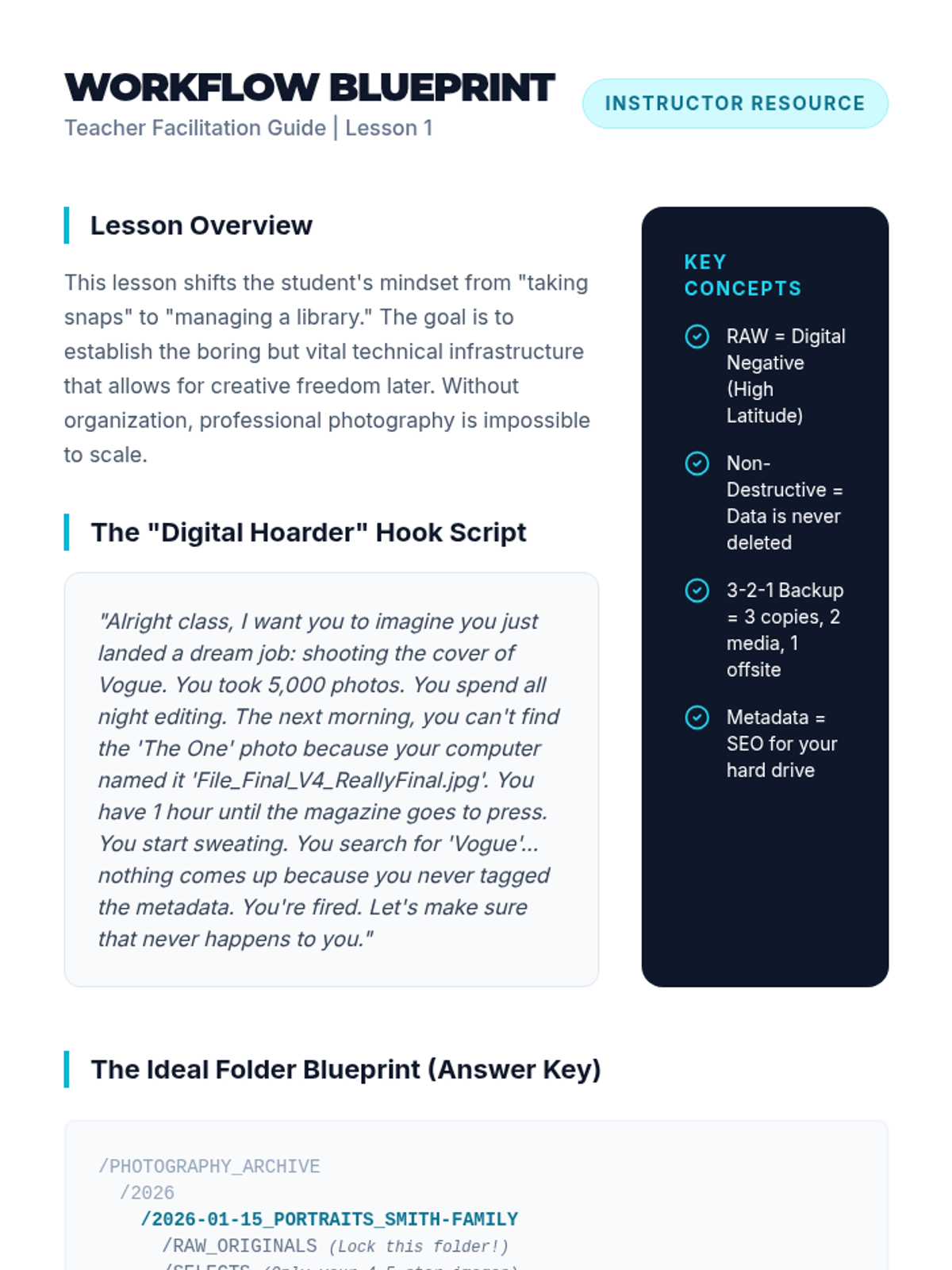
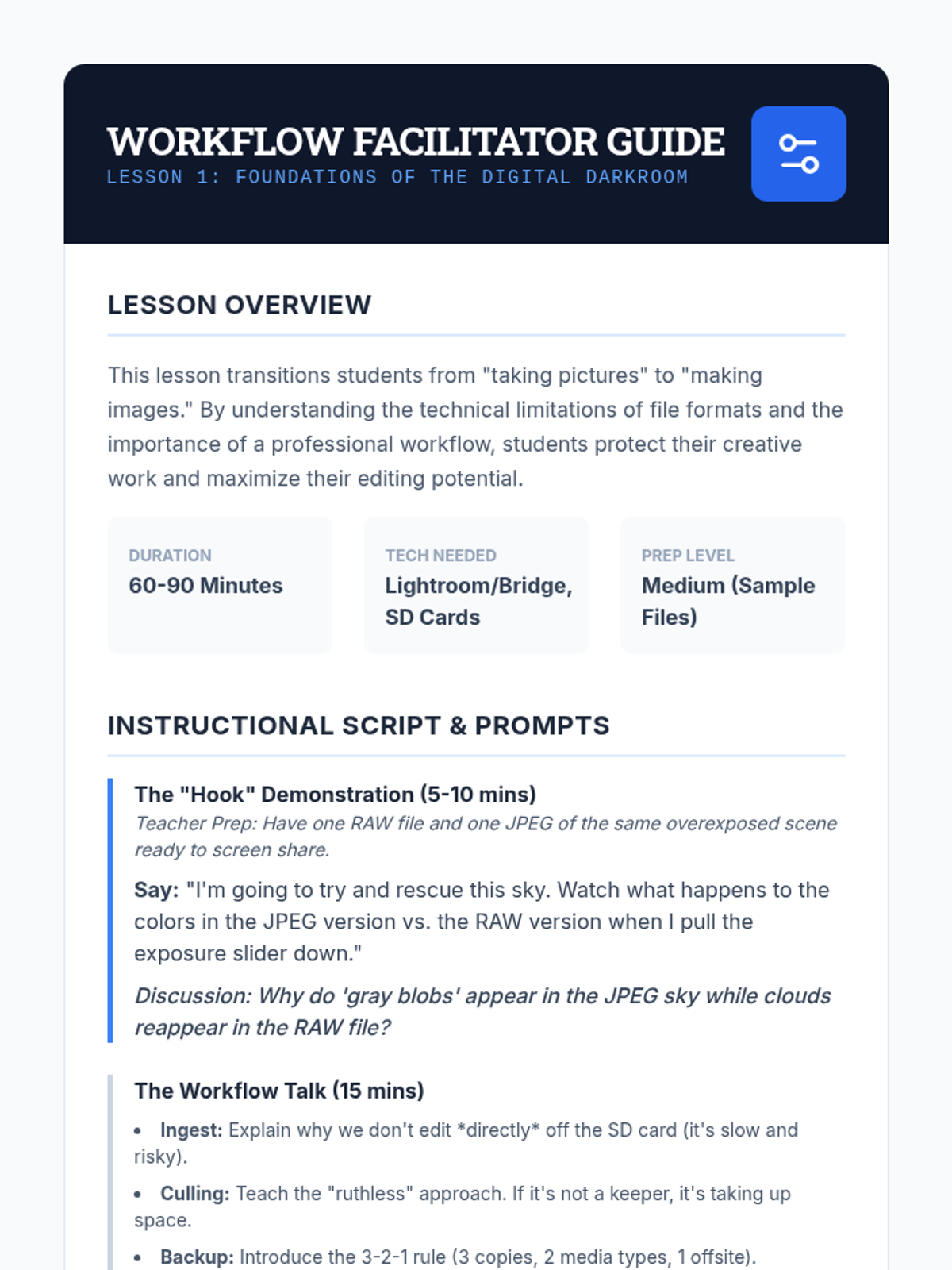
A comprehensive 12th-grade photography sequence focusing on professional digital workflow, non-destructive editing, and the ethics of post-processing. Students progress from basic organization to advanced color grading and retouching while debating the boundaries of photographic truth.
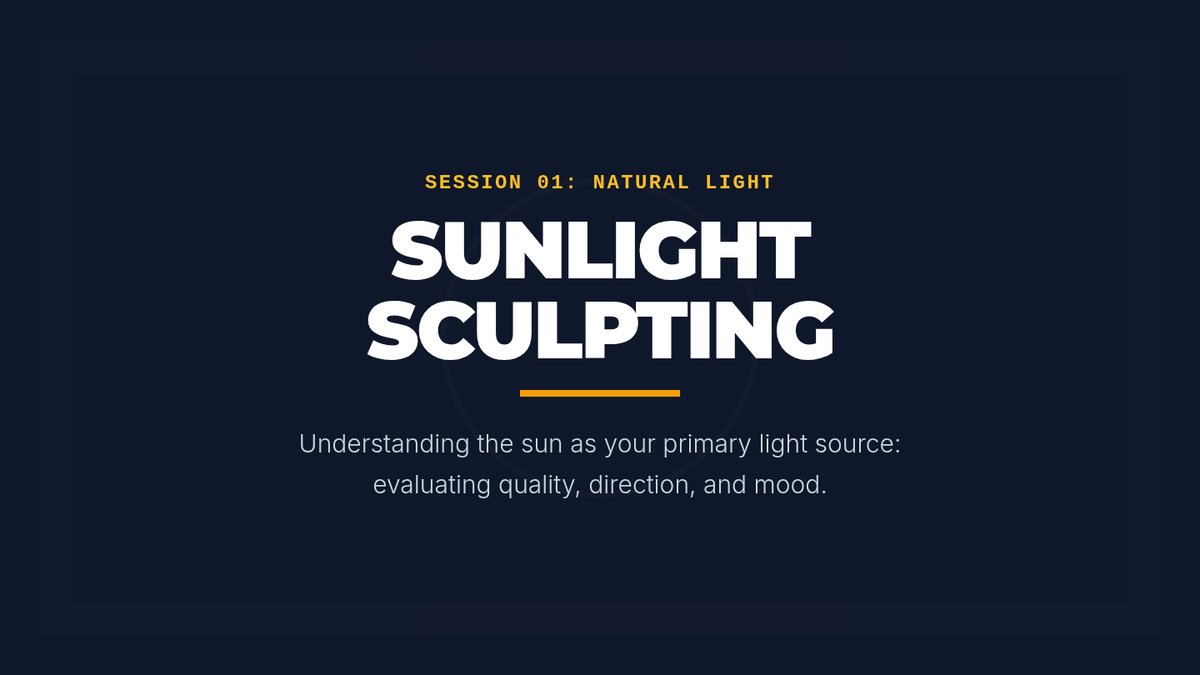
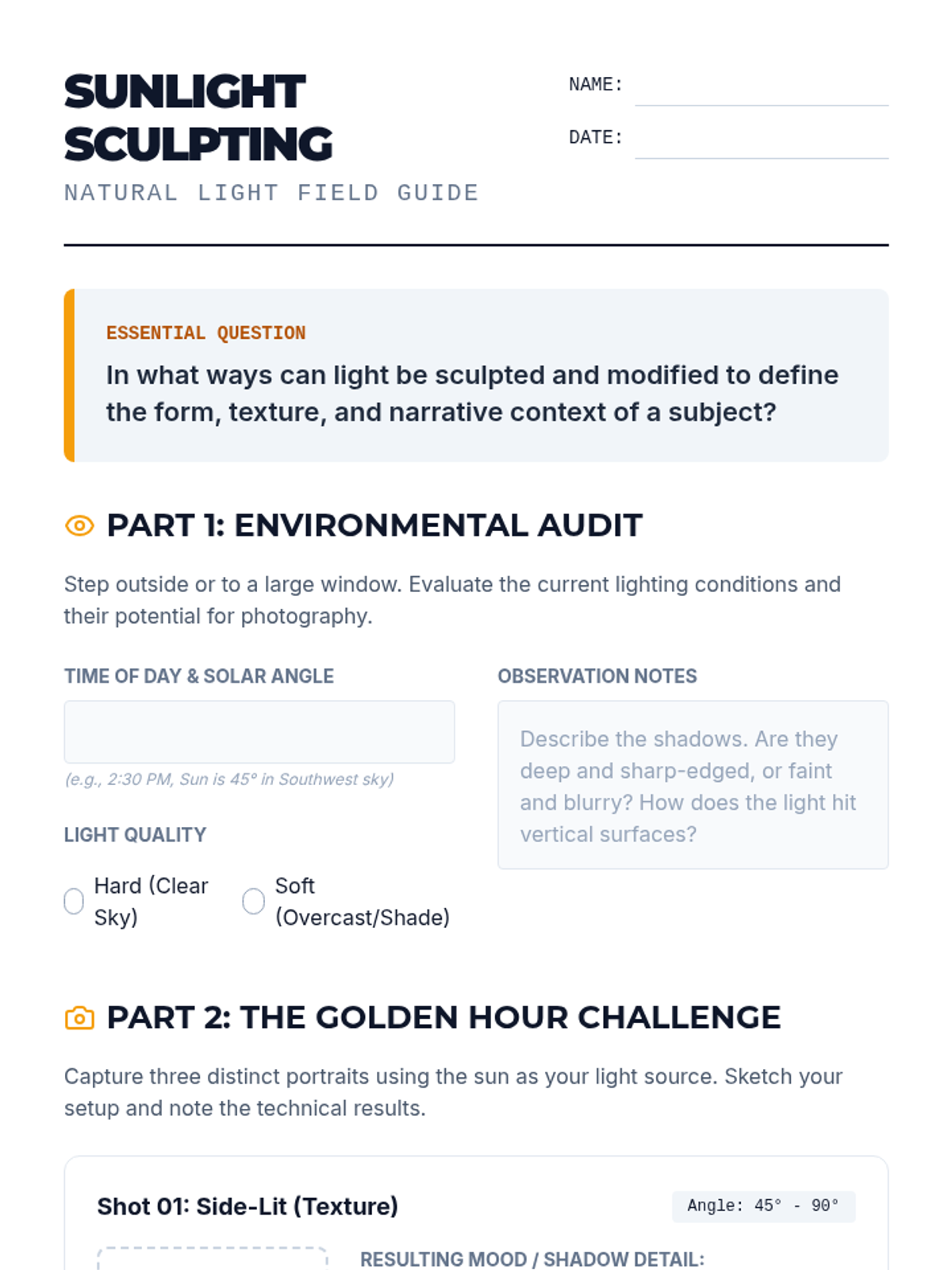
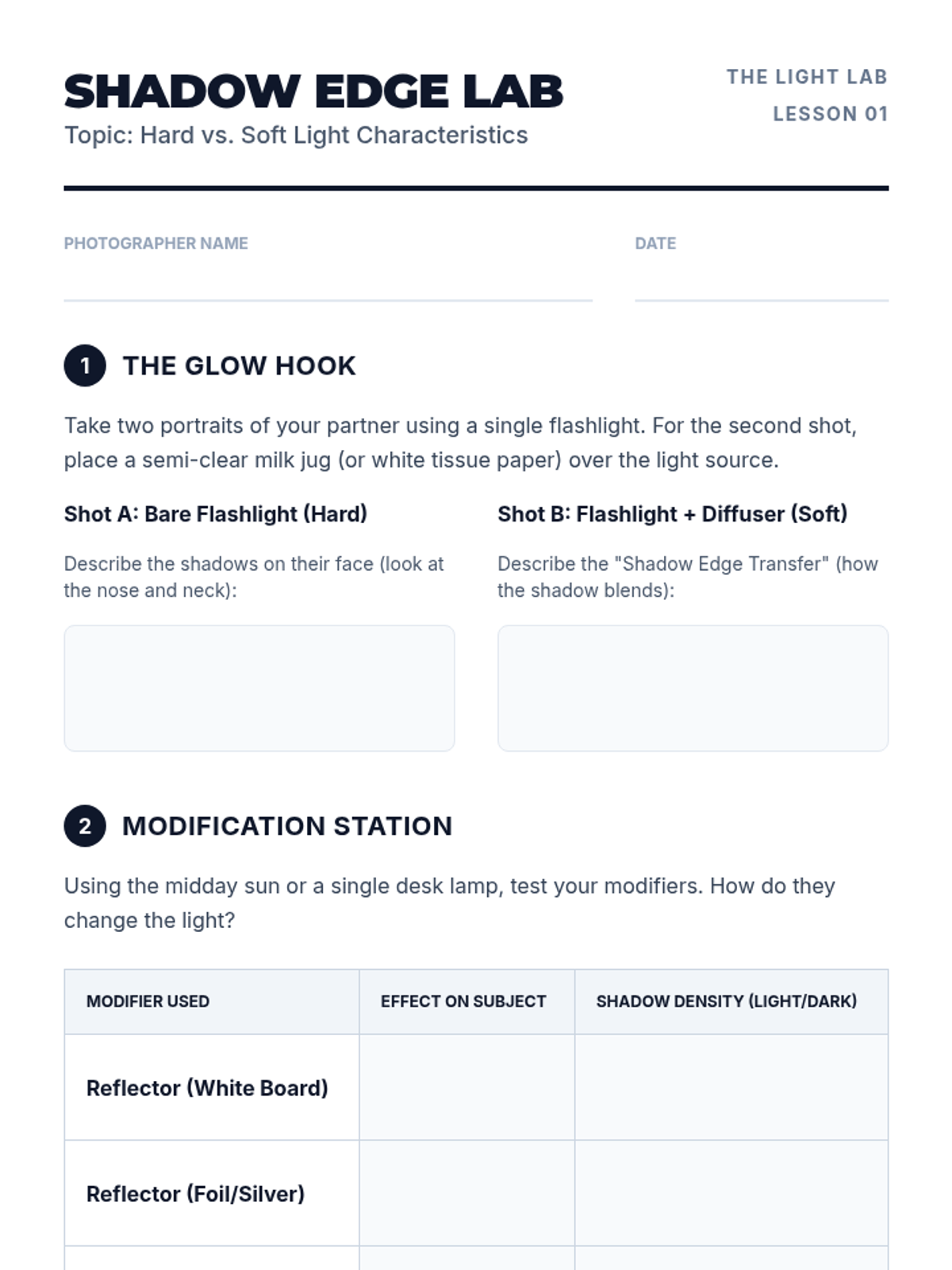
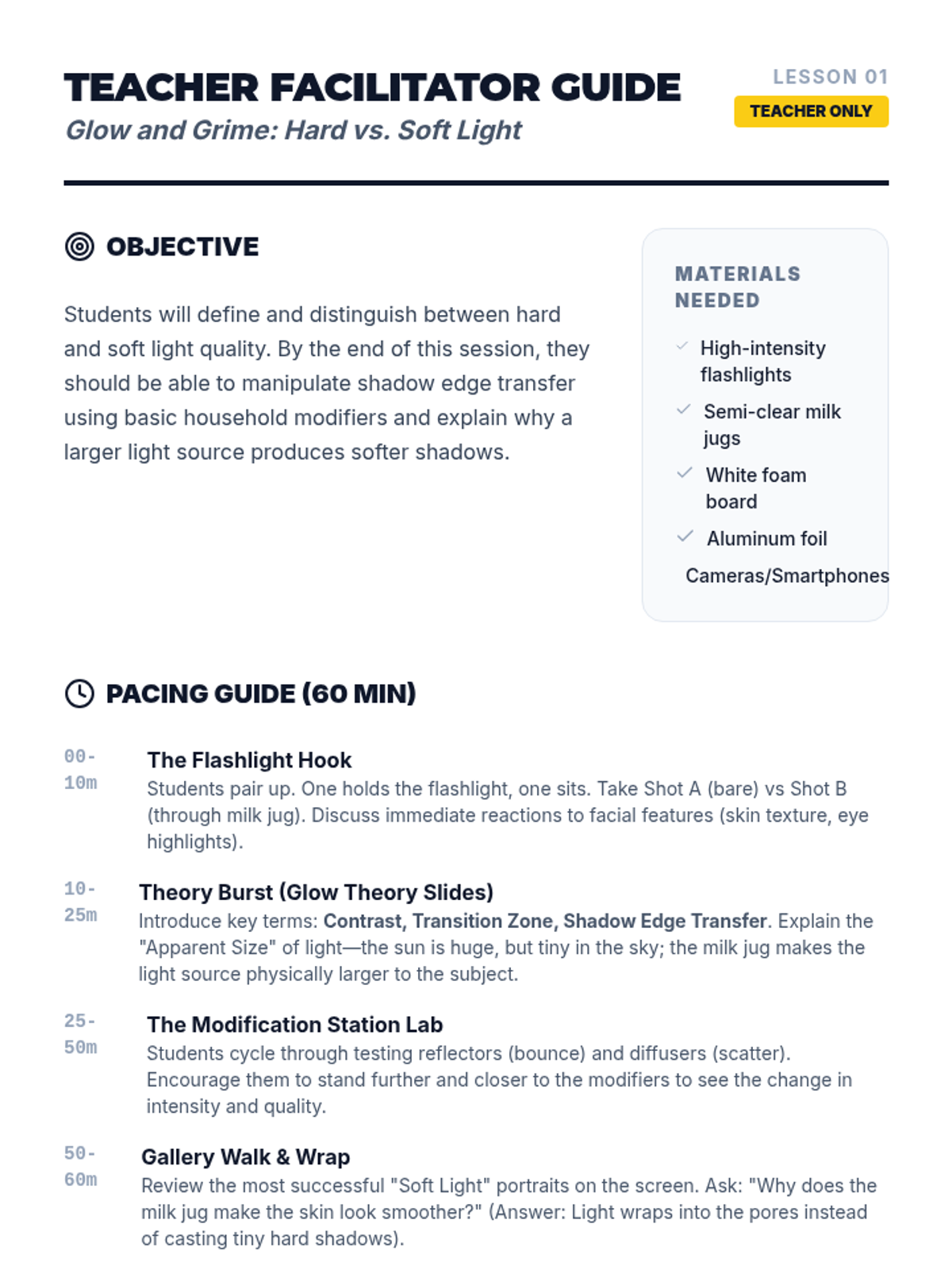
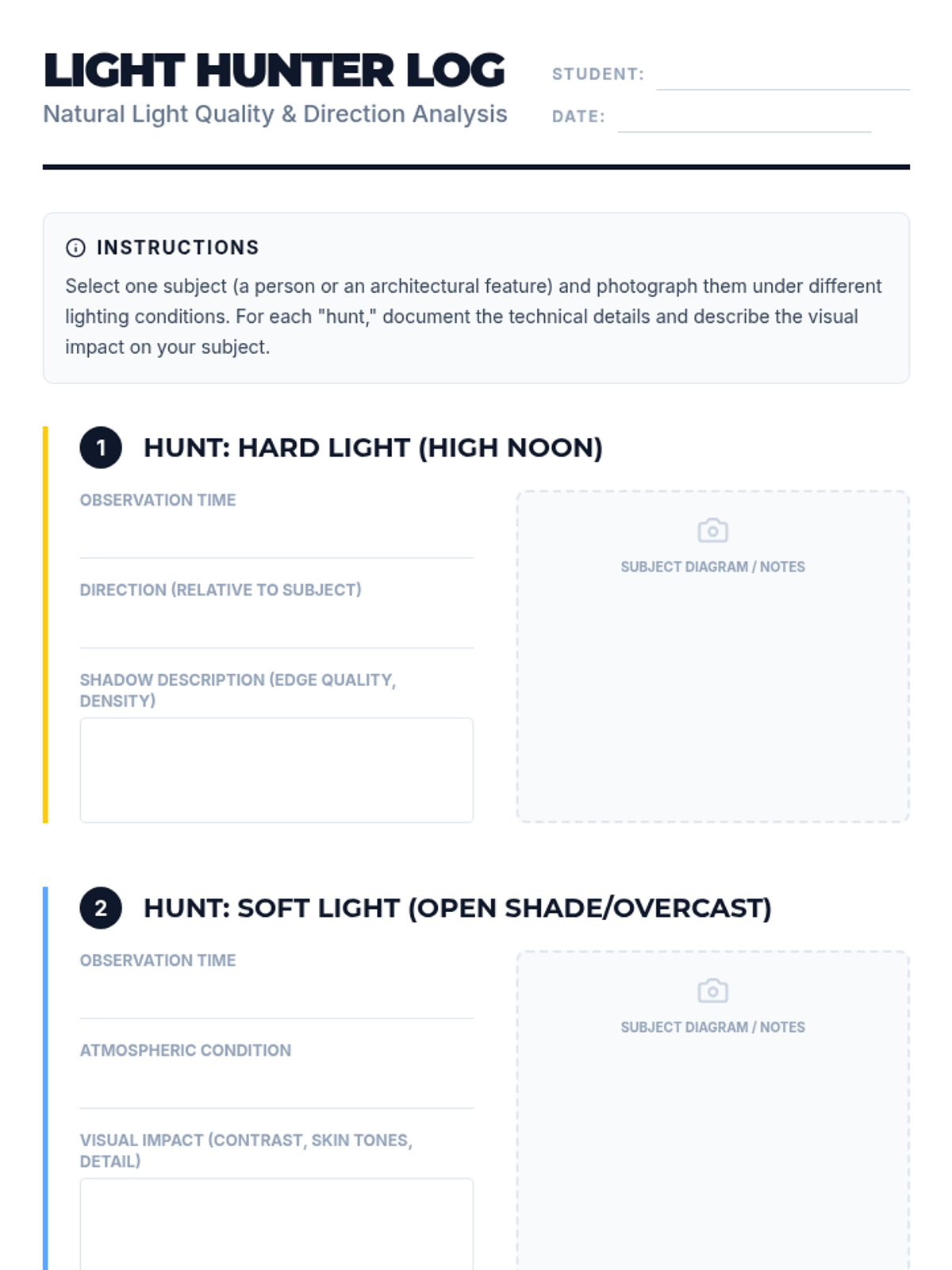
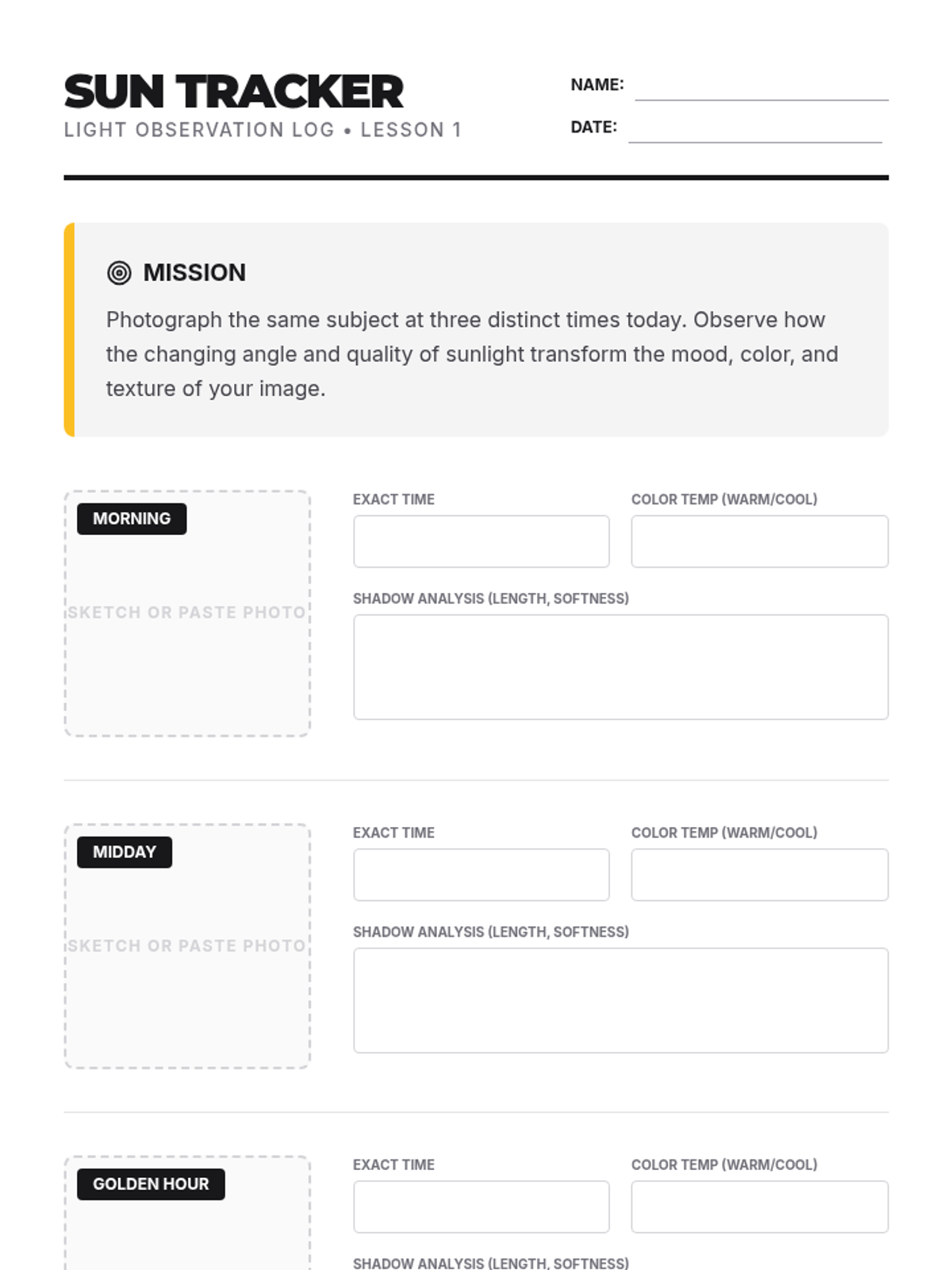
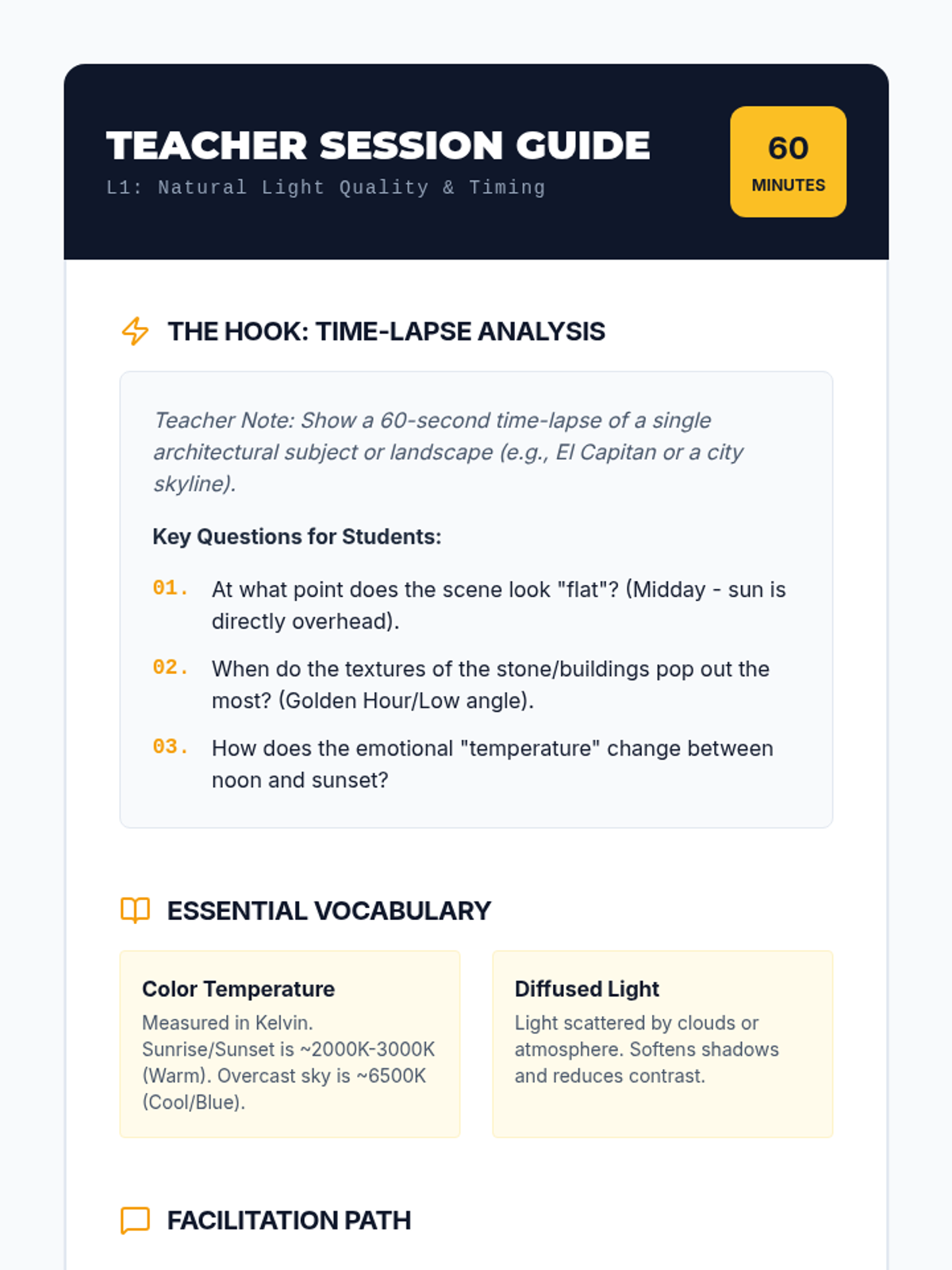
A comprehensive 12th-grade photography sequence exploring the physics and artistry of light, from natural environments to controlled studio setups, focusing on form, texture, and mood.
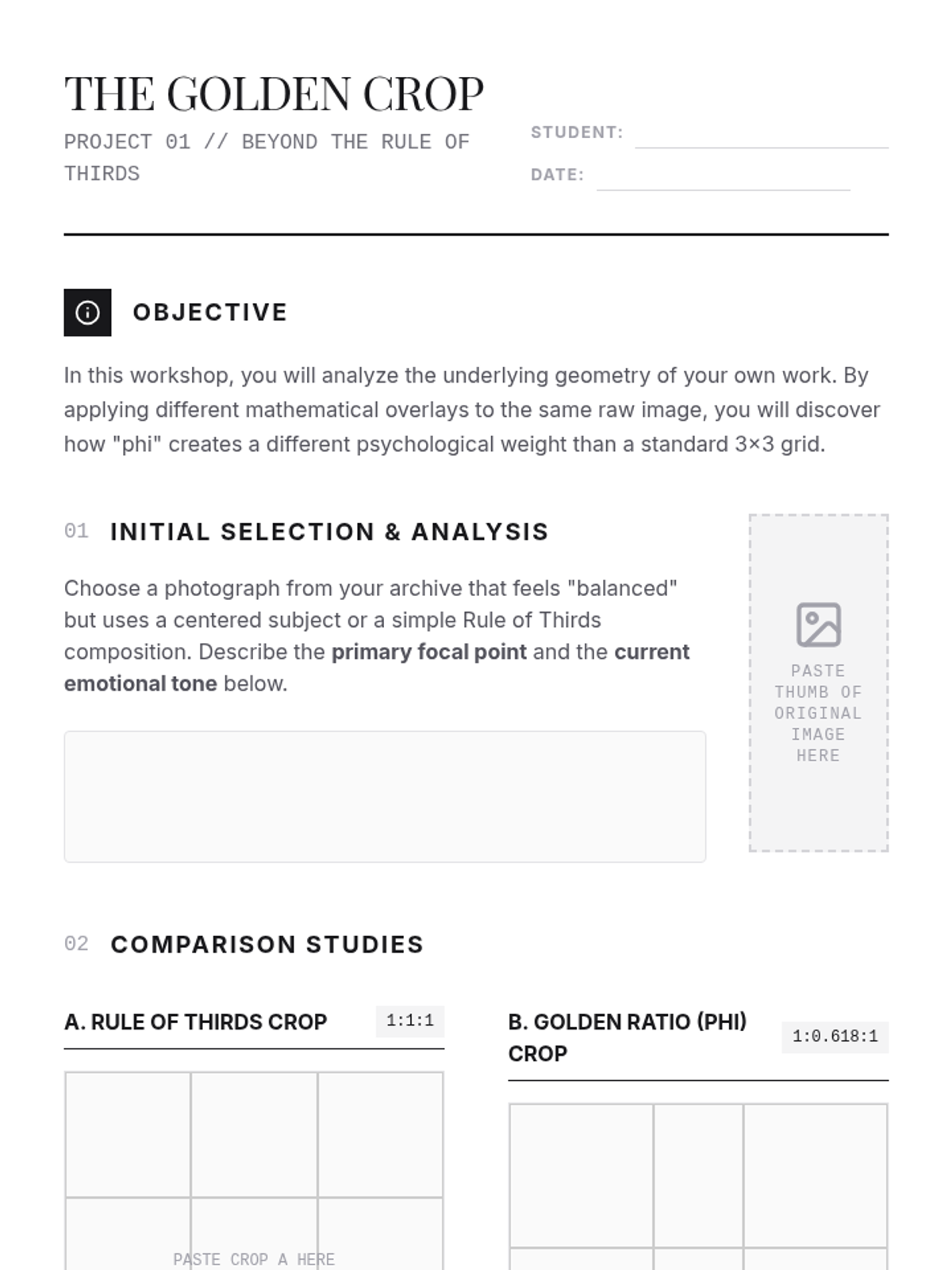
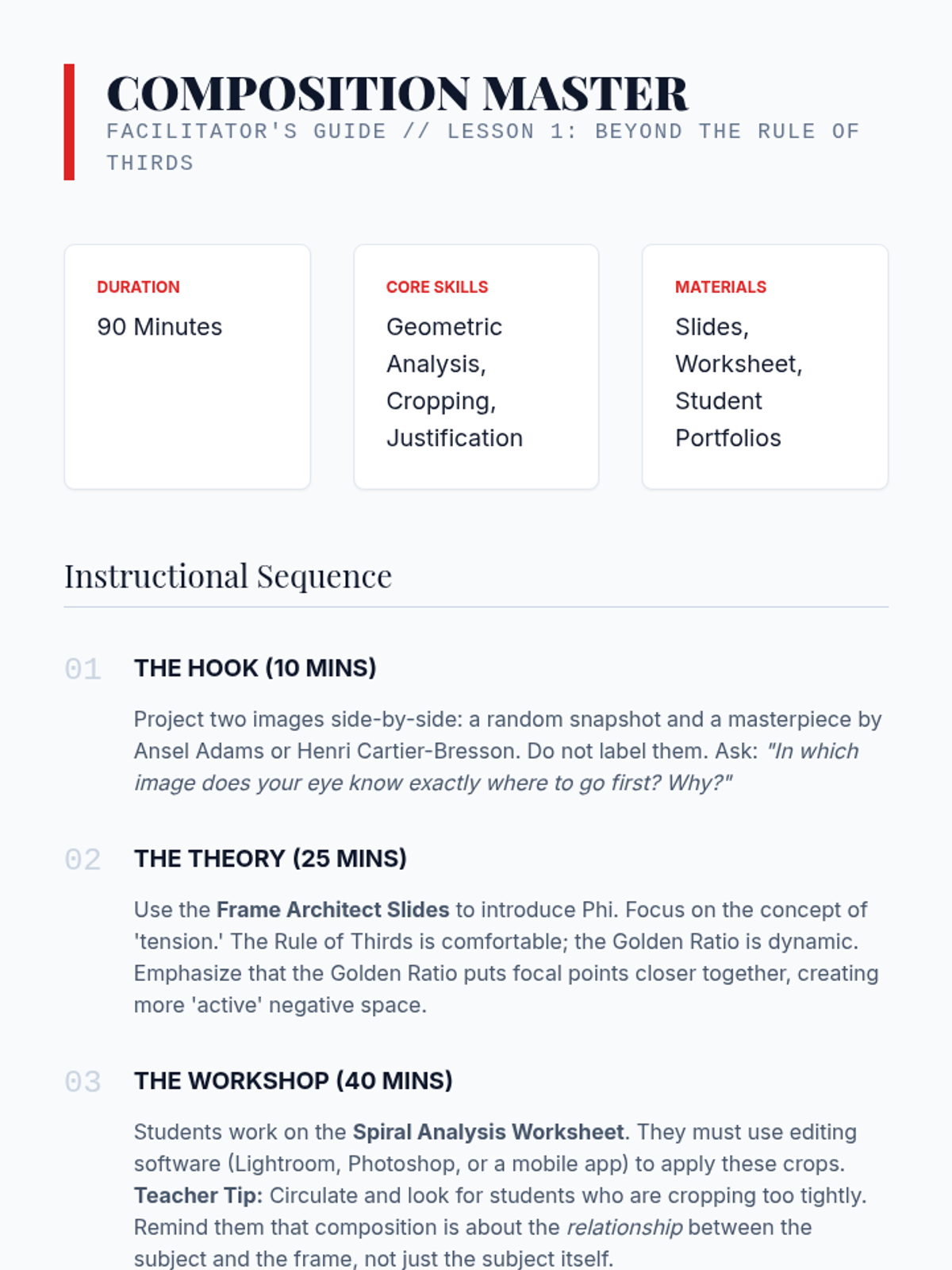
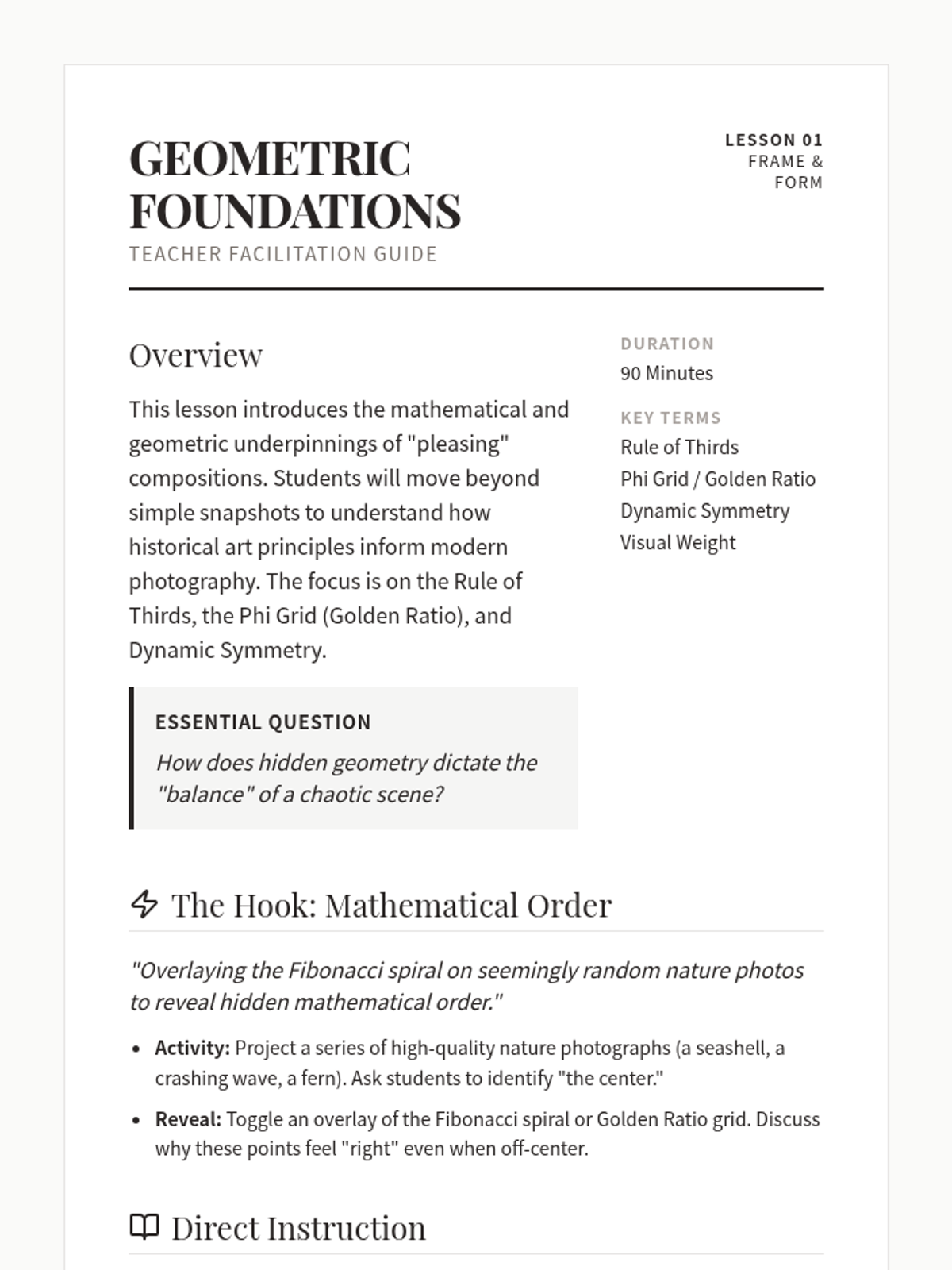
This advanced photography sequence for 12th graders moves beyond basic framing to explore complex compositional structures like the Golden Ratio, negative space, and color psychology. Students learn to use geometry and color to dictate the viewer's psychological experience, ultimately mastering the art of breaking rules intentionally to create visual tension.
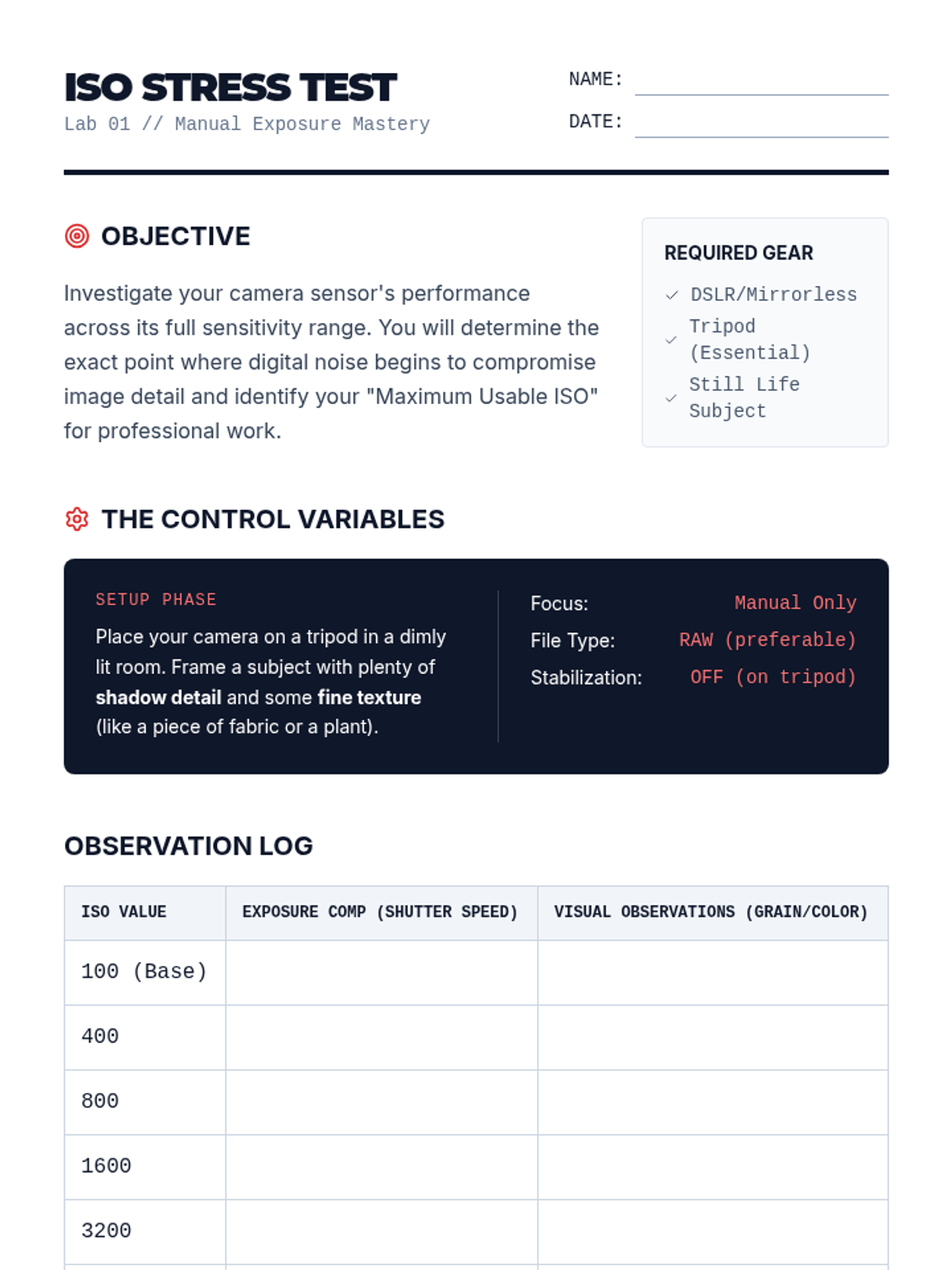
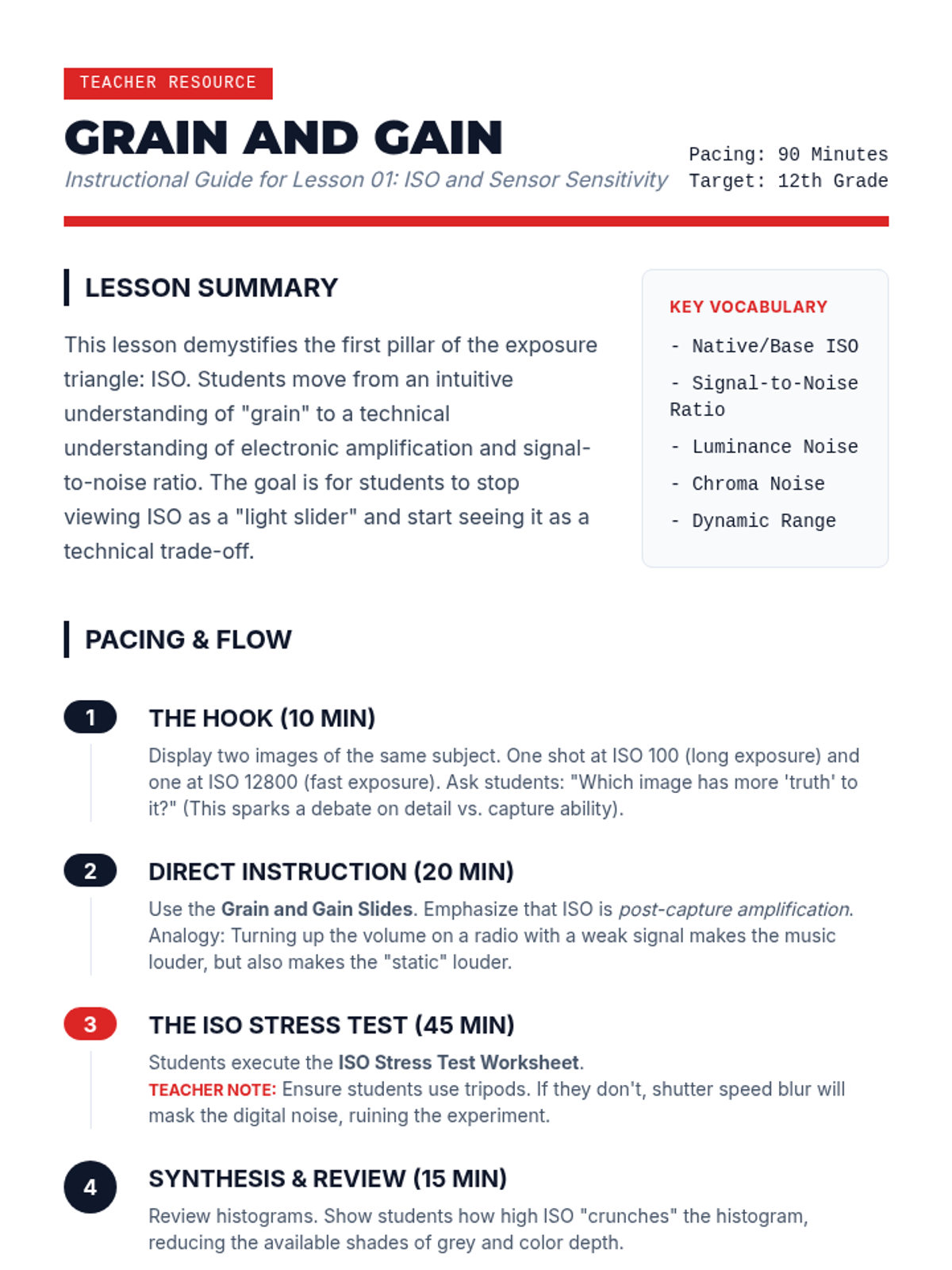
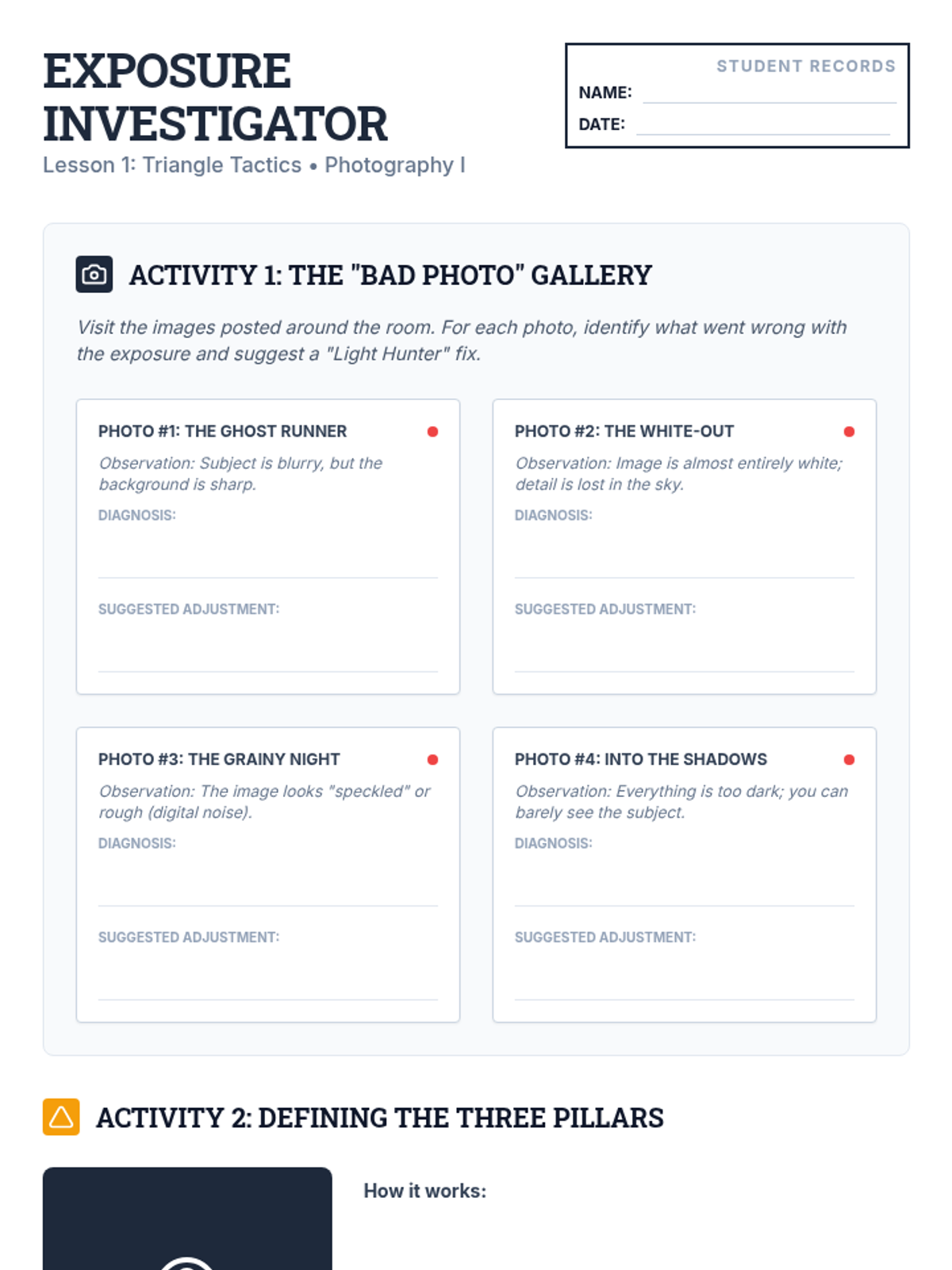
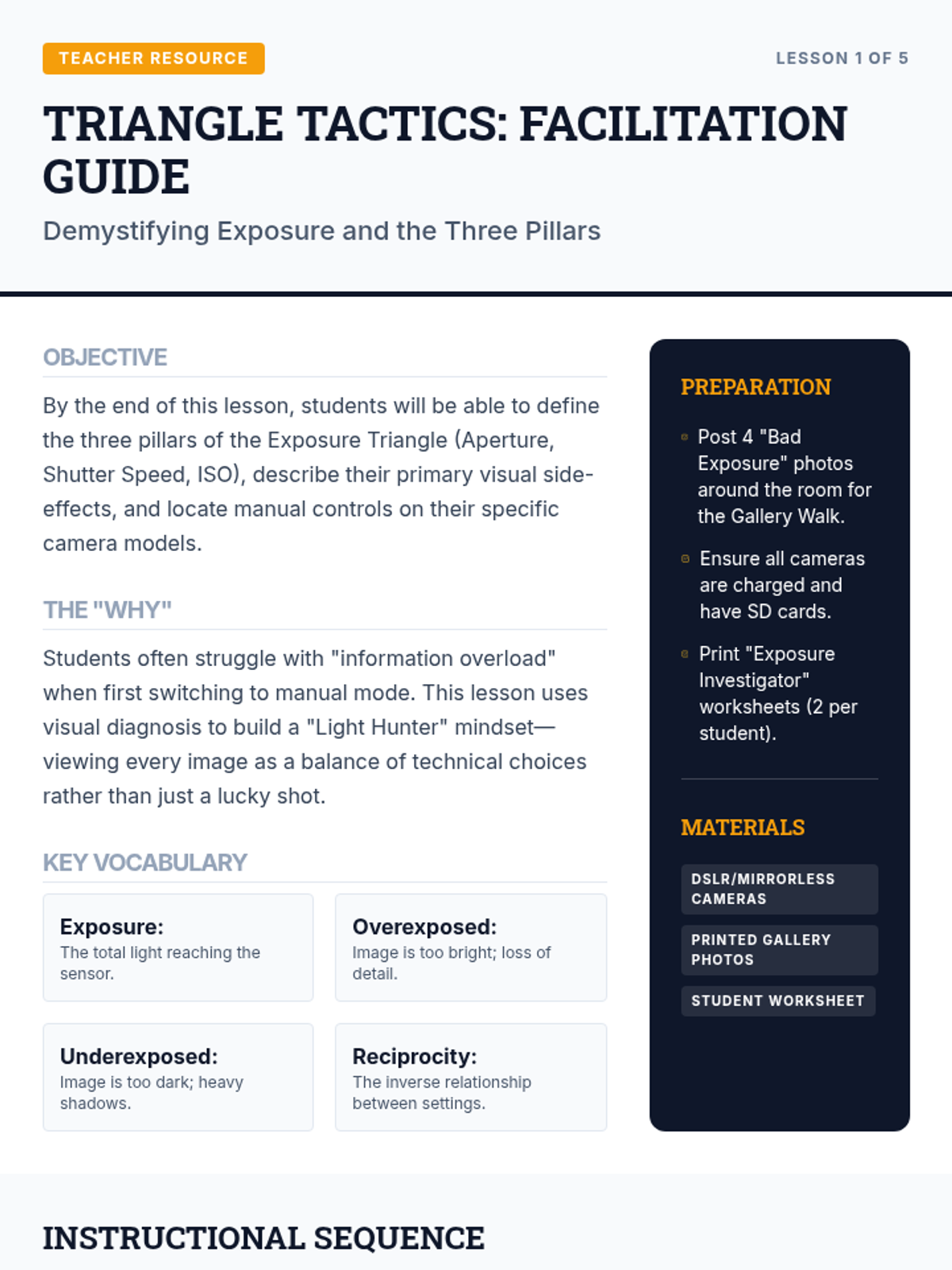
A technical and creative exploration of manual camera controls for 12th-grade photography students, focusing on the exposure triangle (ISO, Aperture, Shutter Speed) and digital file formats.
This 8th-grade photography sequence explores how the quality, direction, and color of light influence mood and dimensionality. Students progress from basic light quality to professional portrait patterns and conceptual lighting design.
A comprehensive capstone sequence for 11th-grade photography students focused on the power of visual narrative. Students move from analyzing professional photojournalism to planning, executing, and curating their own thematic photo essays, culminating in a formal gallery critique.
This sequence explores the critical role of light as the primary medium of photography, guiding students from natural light observation to advanced studio manipulation. Students learn to shape light to create specific moods and flatter subjects through direction, color, and quality.
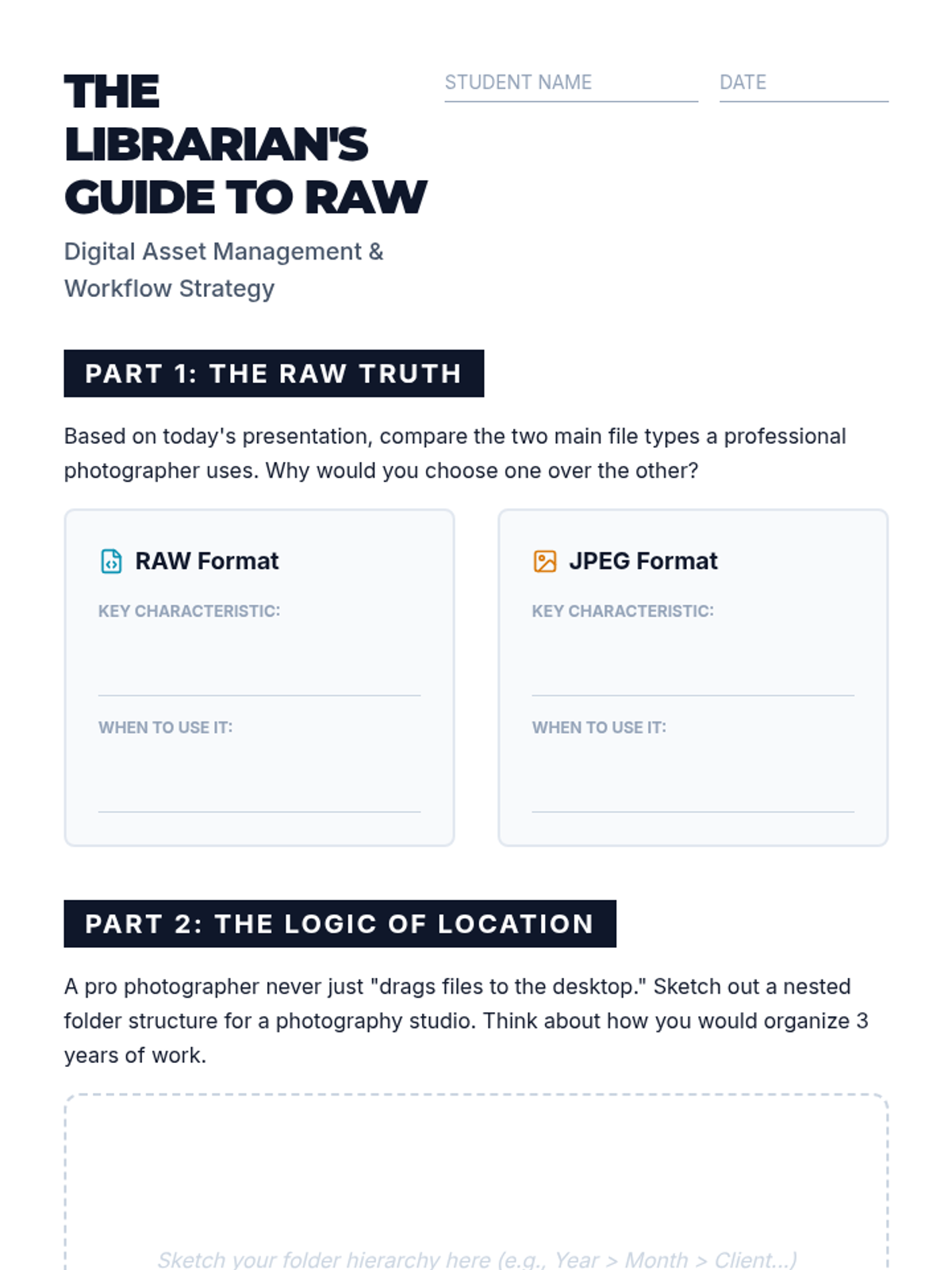
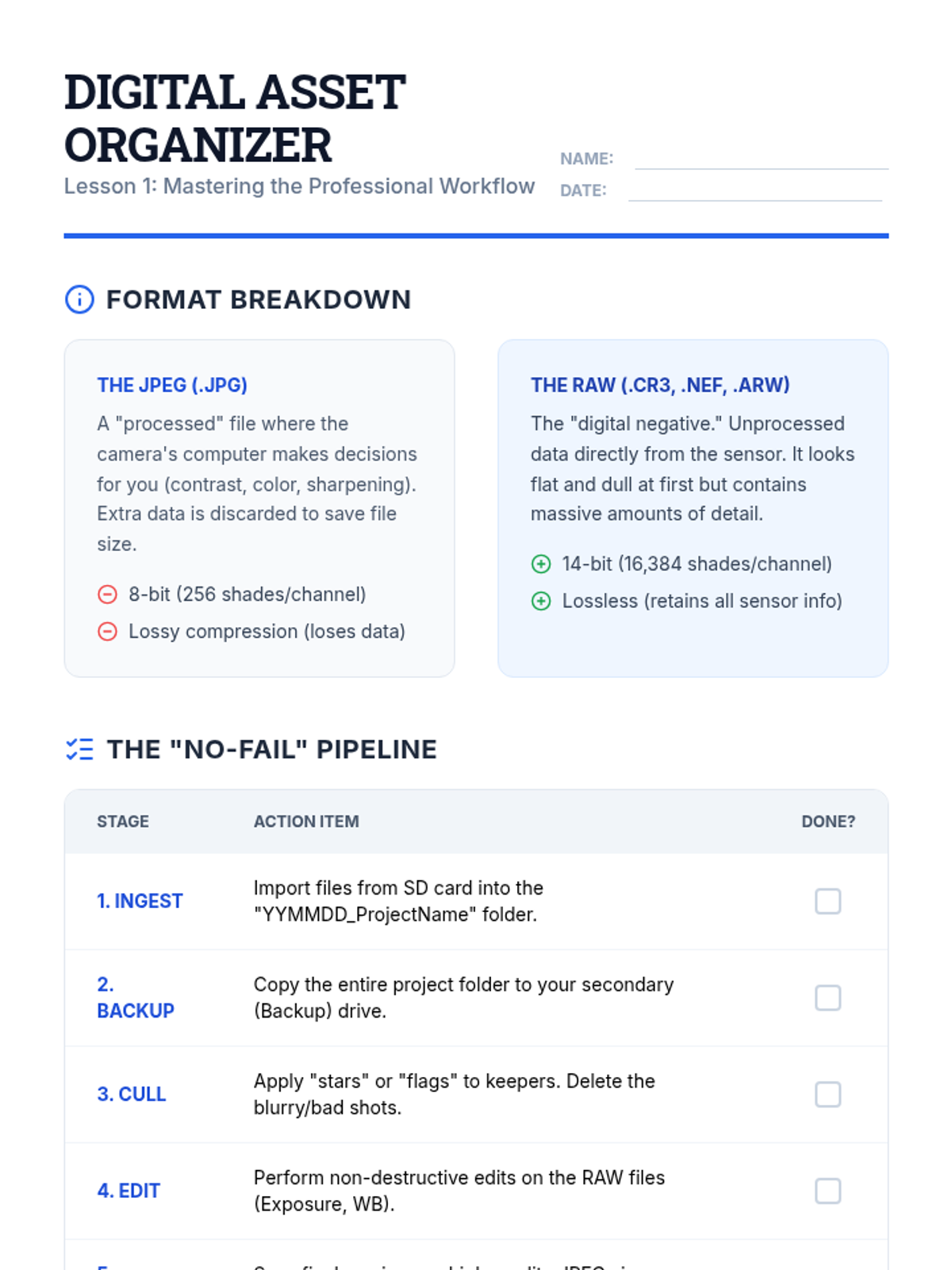
A comprehensive 9th-grade photography sequence focusing on the 'digital darkroom.' Students master file organization, RAW processing, exposure correction via histograms, local retouching, and color grading while critically examining the ethics of digital manipulation.
This photography sequence guides students through the physics and art of light, covering natural cycles, directional manipulation, modifiers like reflectors, and classic portrait lighting patterns.
A comprehensive 9th-grade photography sequence that demystifies the Exposure Triangle: Aperture, Shutter Speed, and ISO. Students progress from diagnosing exposure errors to mastering manual control through hands-on experiments and artistic challenges.
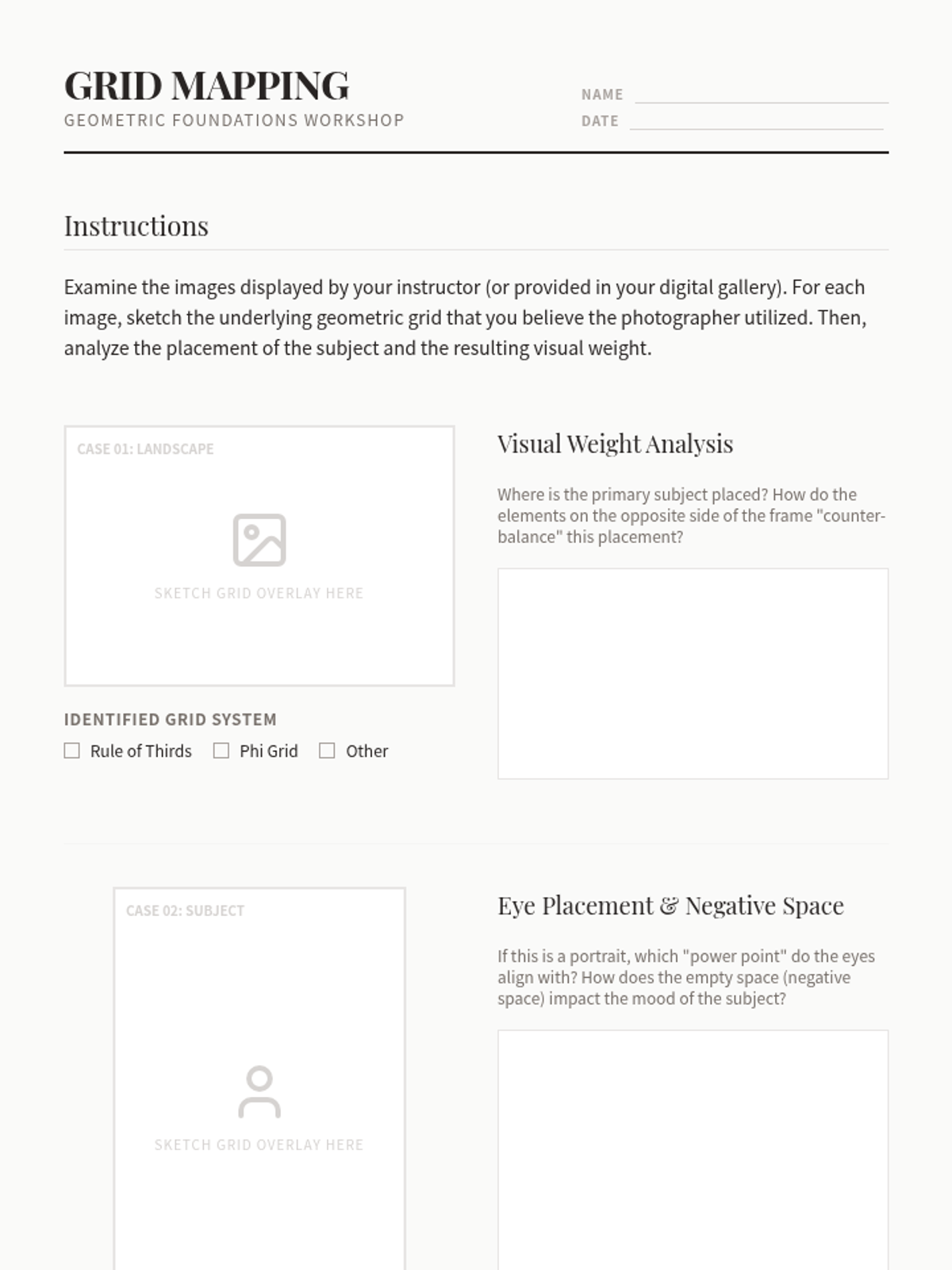
A comprehensive exploration of visual language in photography, moving from classical geometric principles to intentional rule-breaking. Students will master the 'grammar' of the frame through analysis, field practice, and critical critique.
This sequence explores the 'digital darkroom,' covering professional workflows from RAW file management to advanced color grading and the ethics of image manipulation. Students develop technical skills while critically analyzing the boundary between artistic enhancement and ethical representation.
A comprehensive high school photography unit focused on visual storytelling and the creation of photo essays. Students transition from single images to intentional series, learning to storyboard, curate, and present a cohesive narrative body of work.
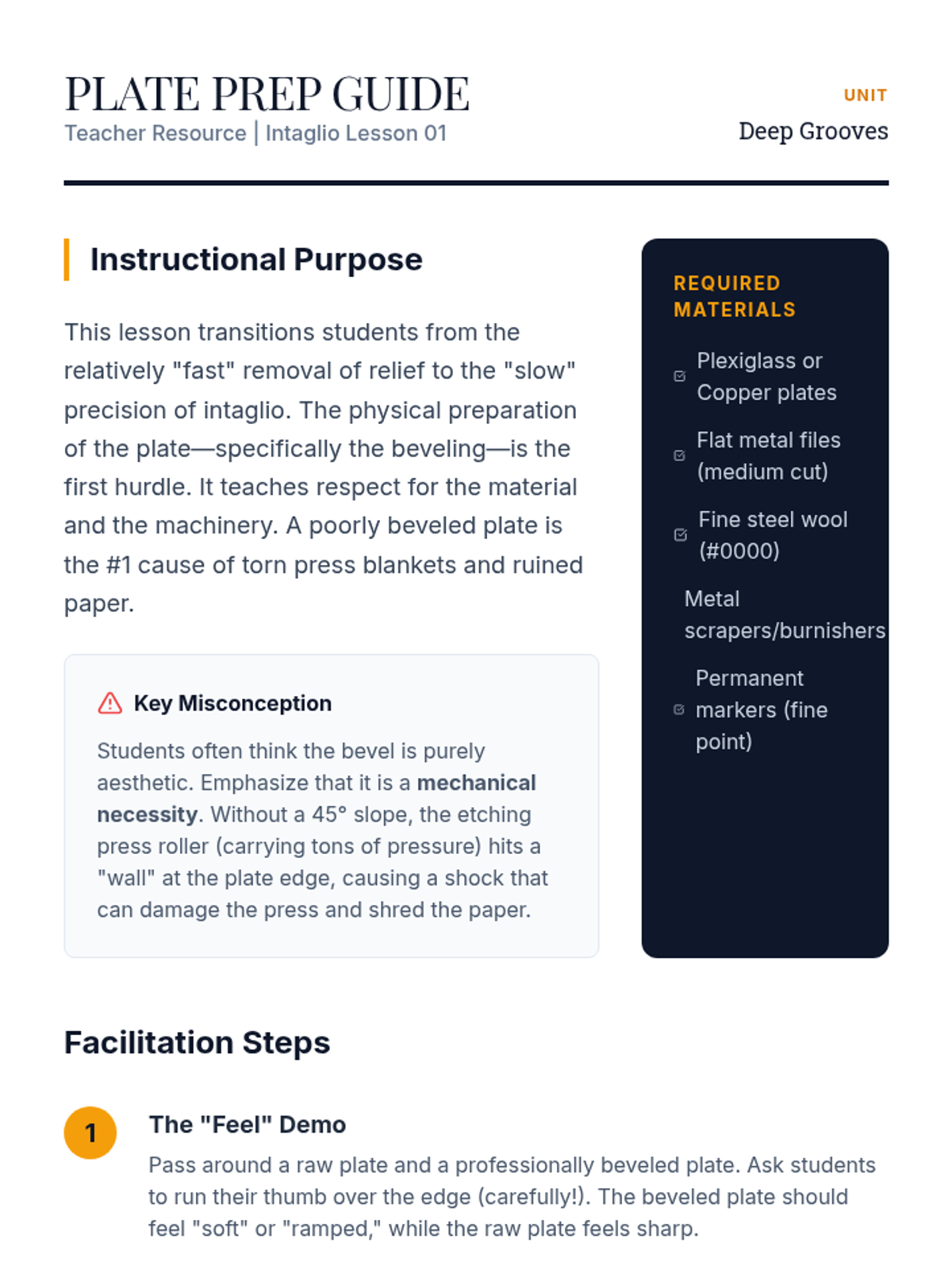
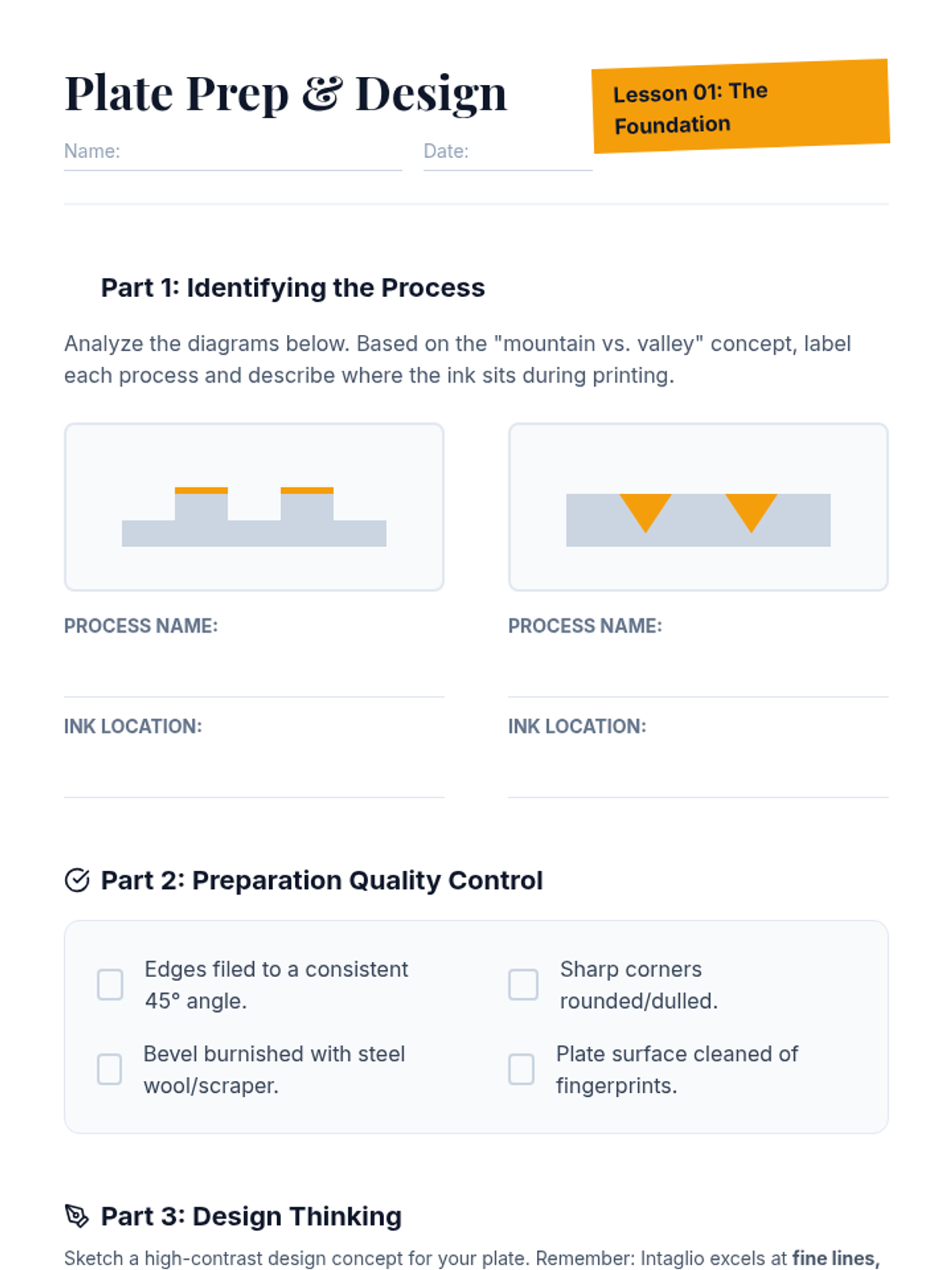
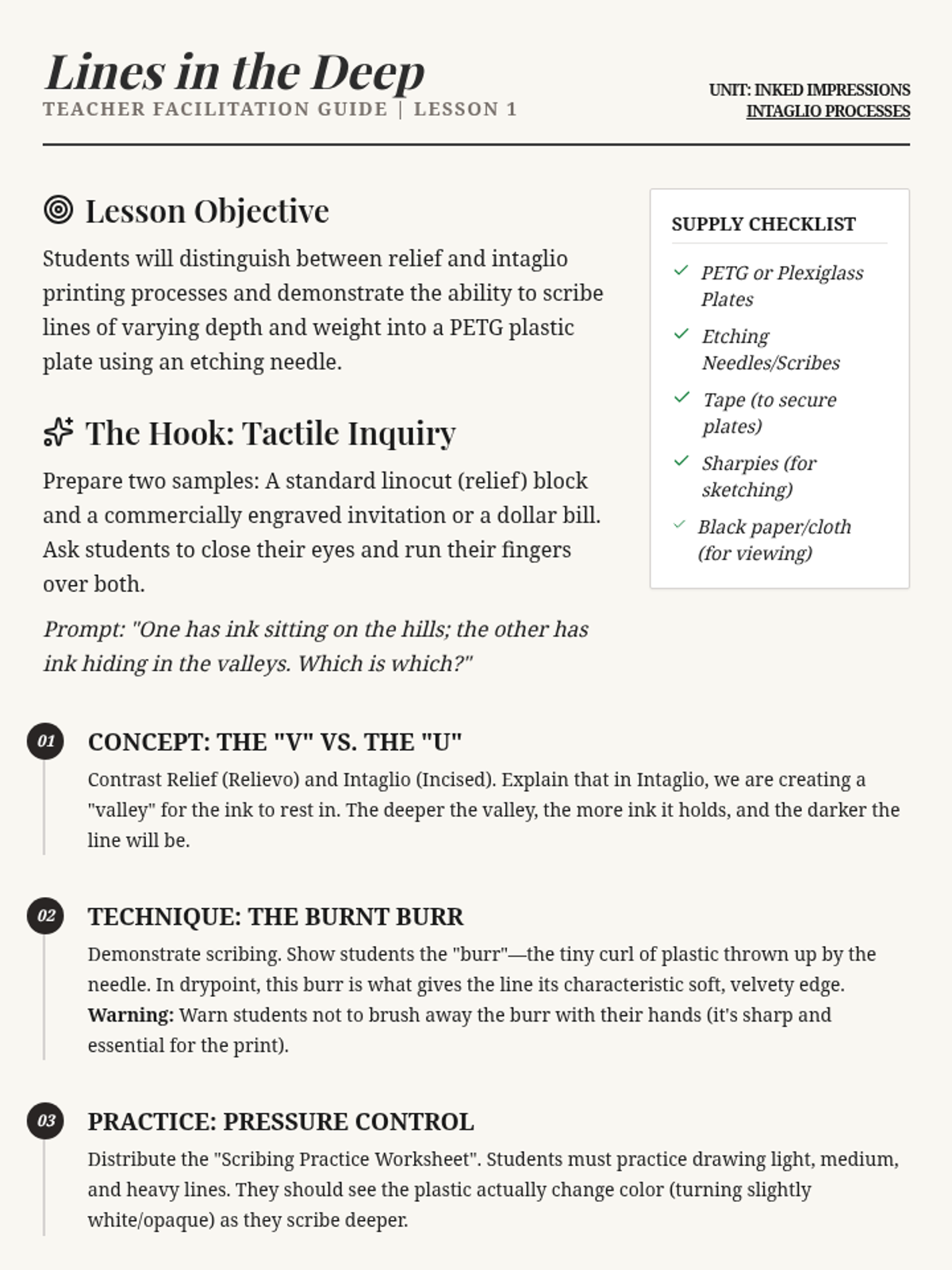
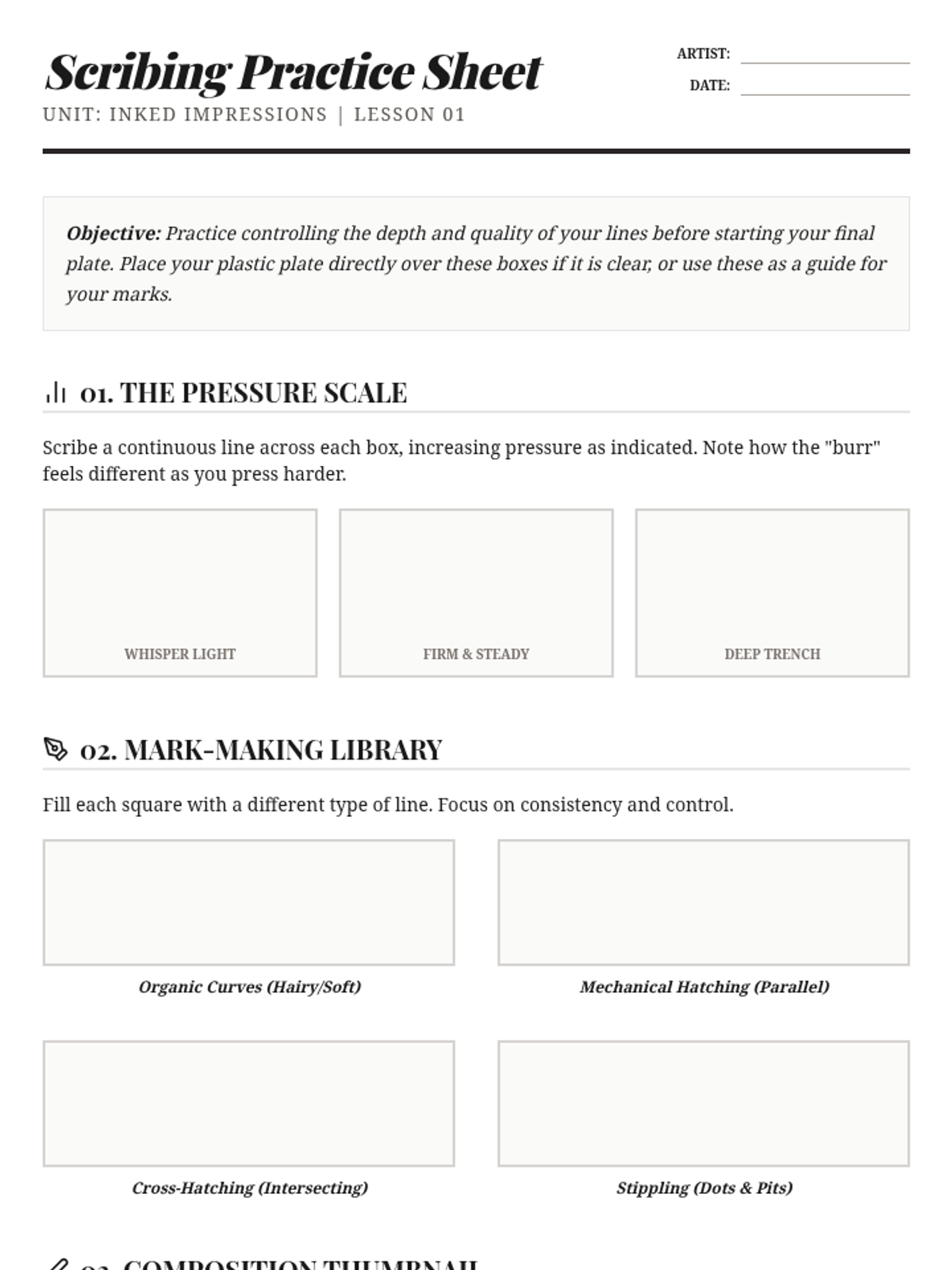
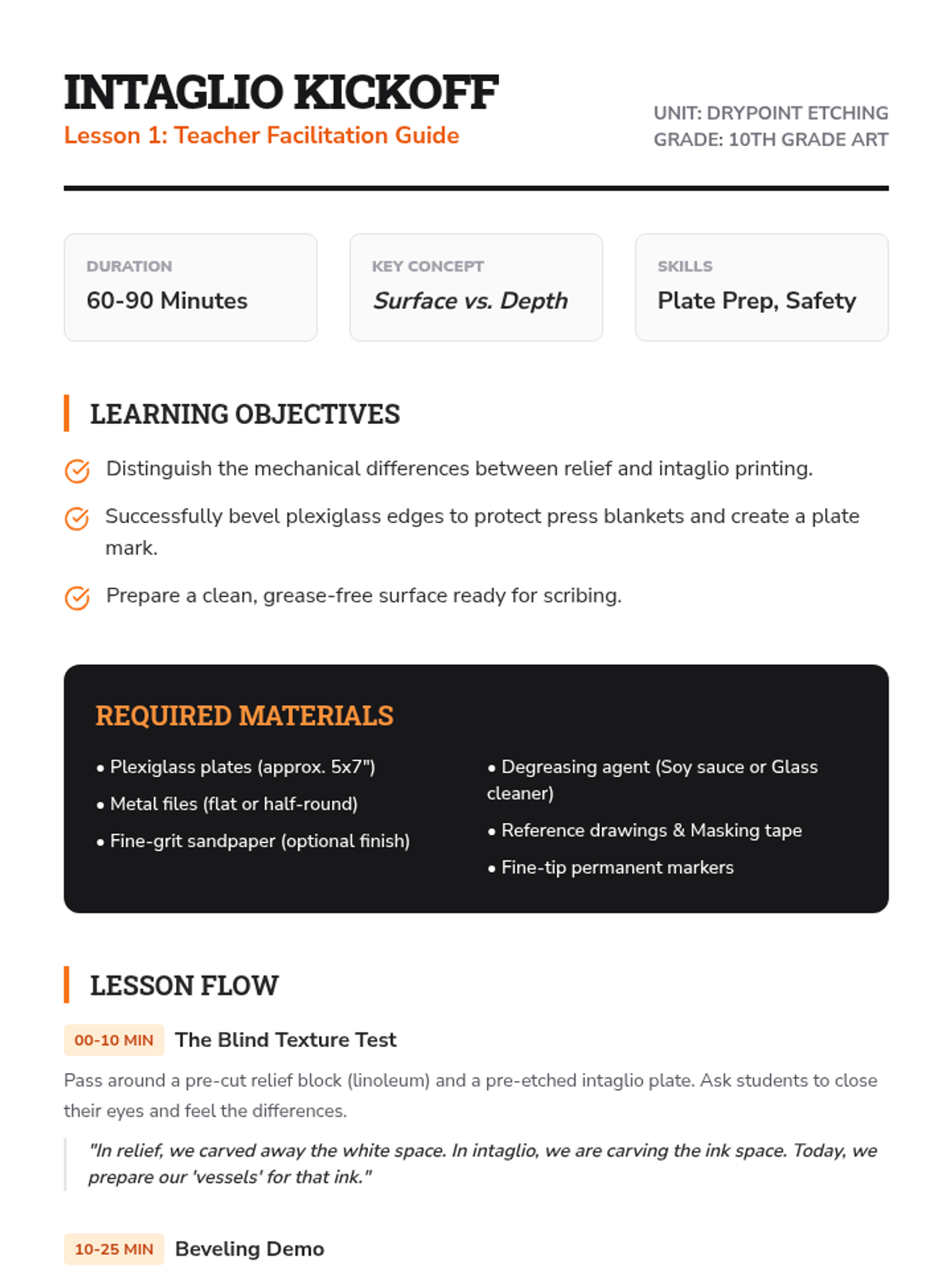
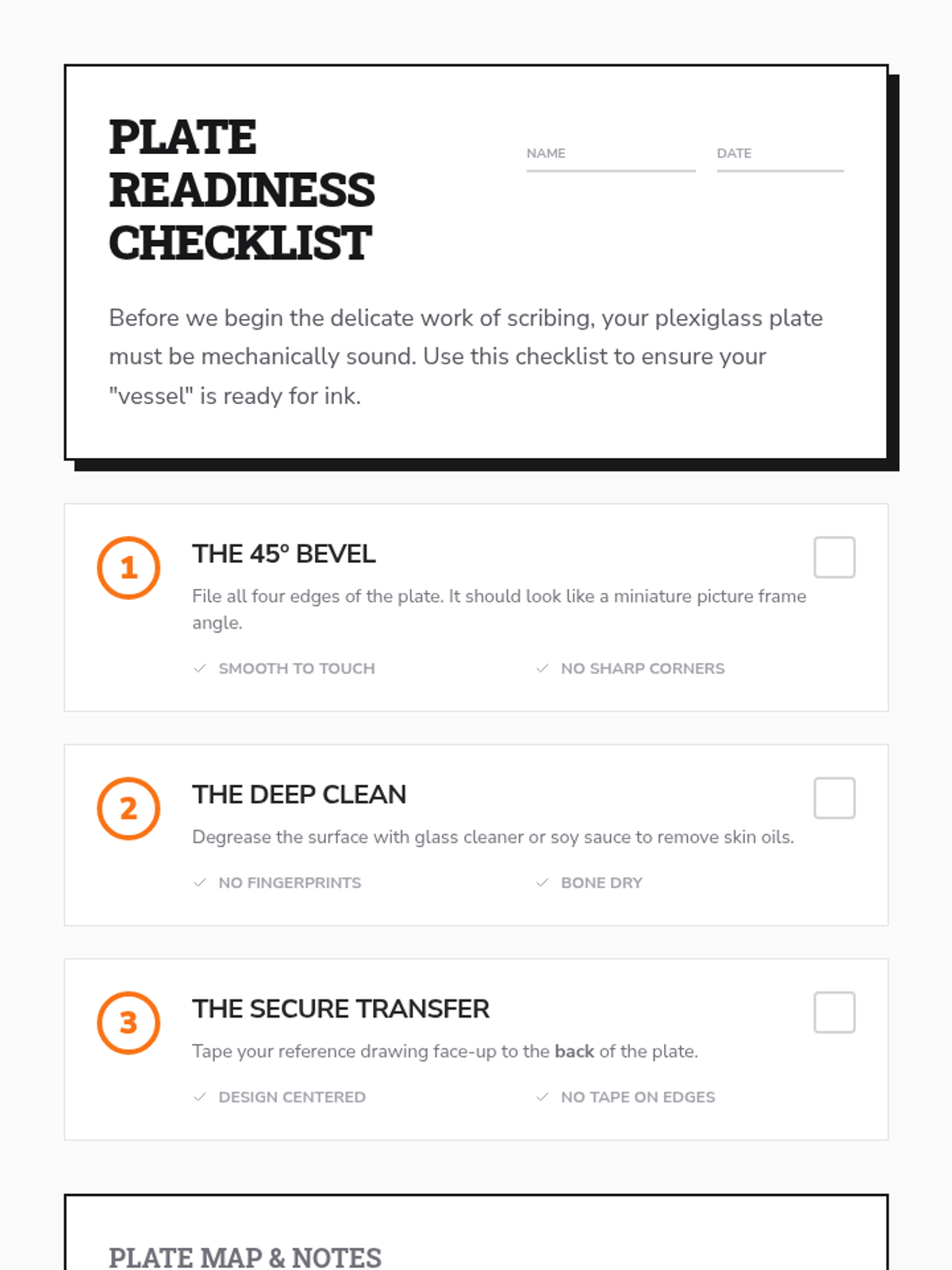
A comprehensive 12th-grade unit on intaglio drypoint printing, covering historical context, plate preparation, incising techniques, inking/wiping, press operation, and chine-collé integration. Students move from raw plate preparation to pulling professional-grade prints.
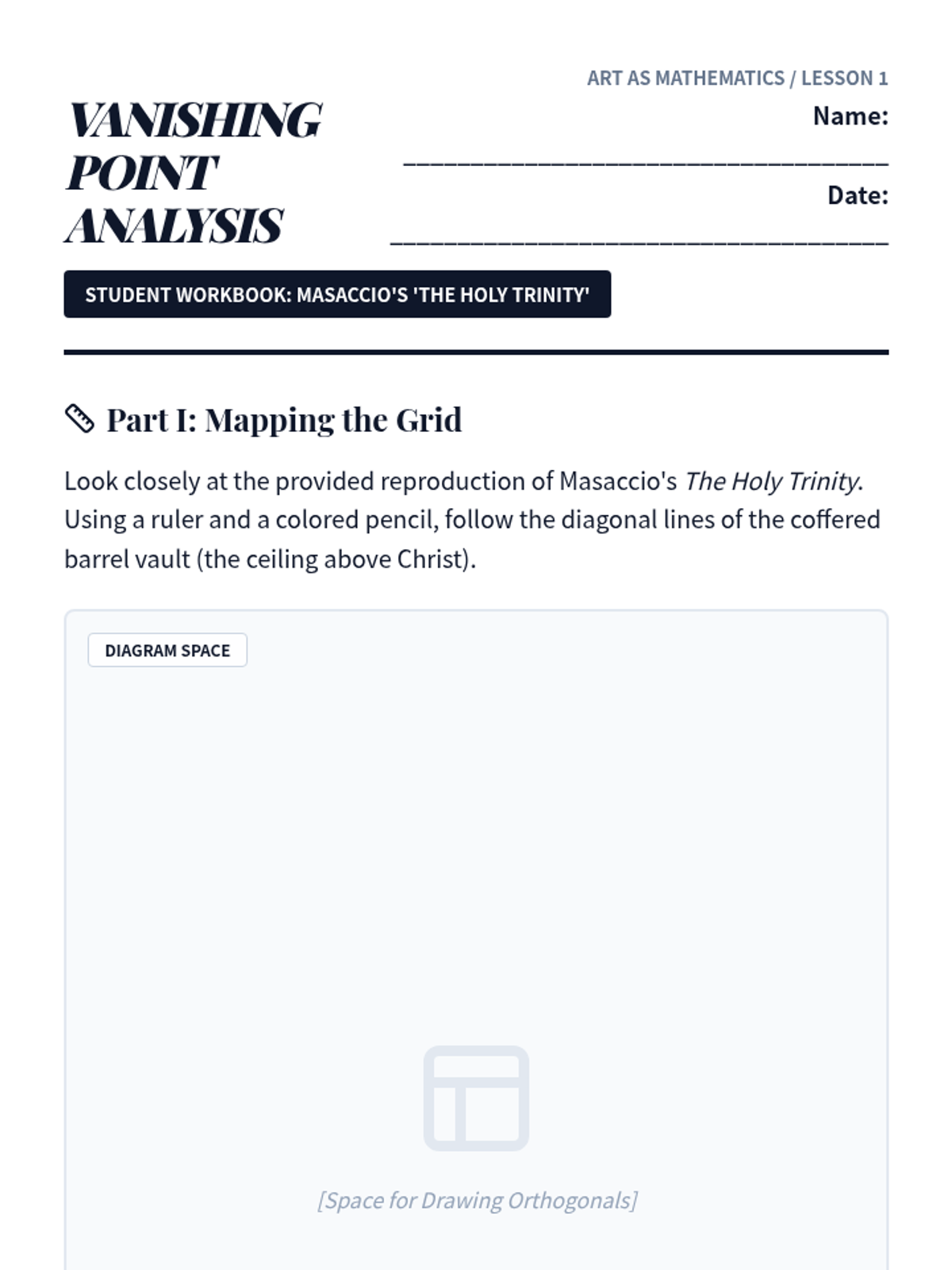
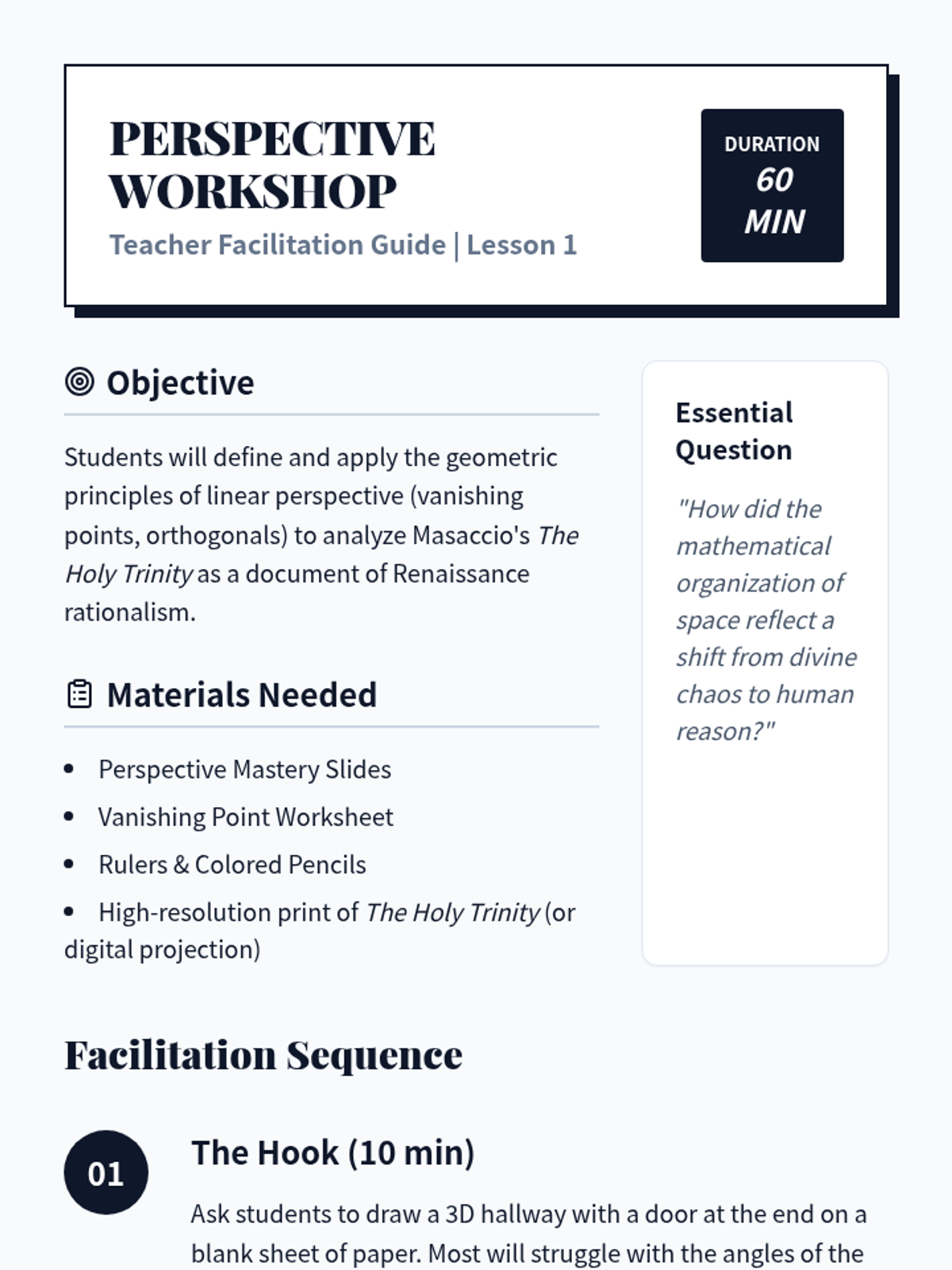
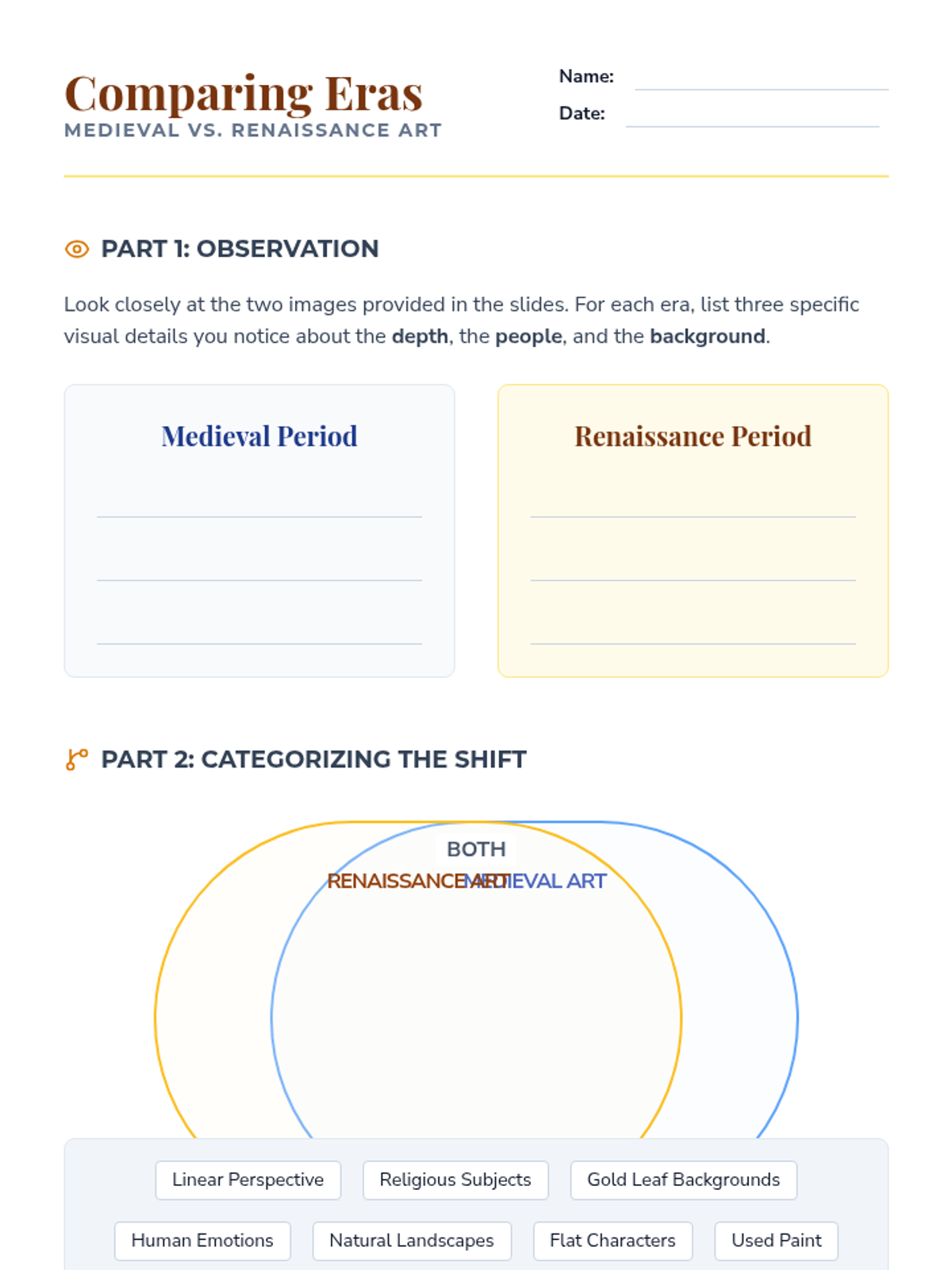
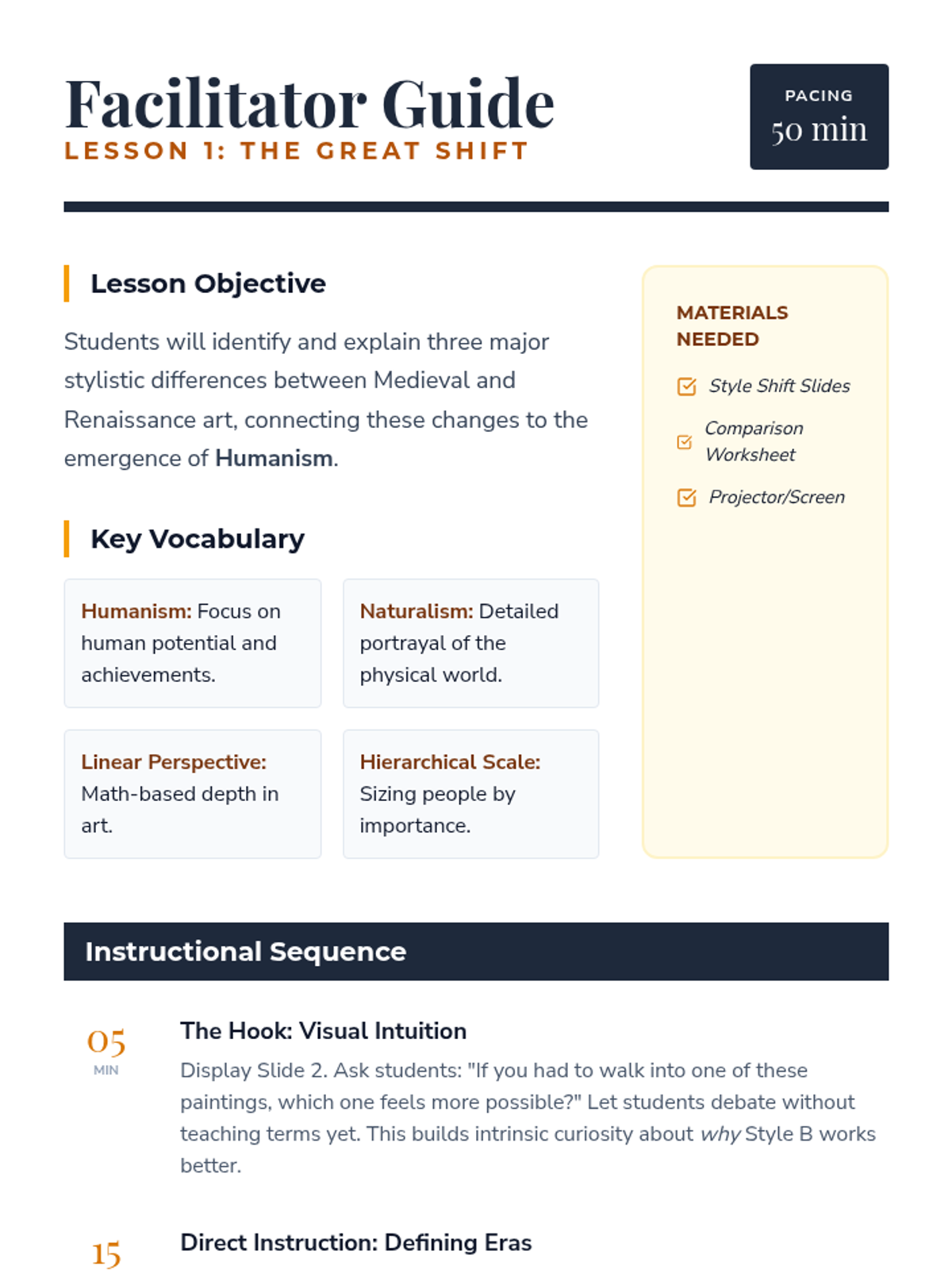
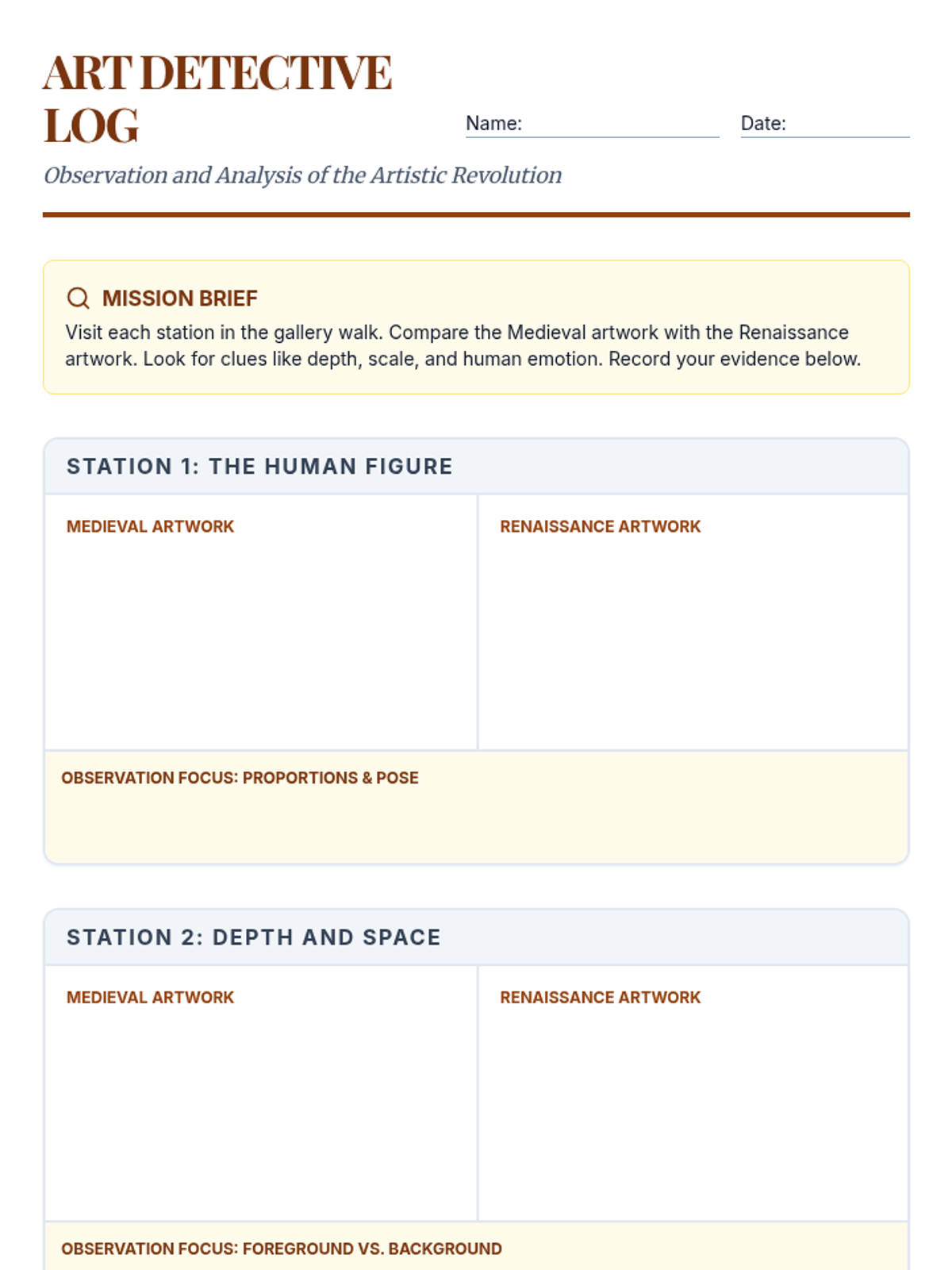
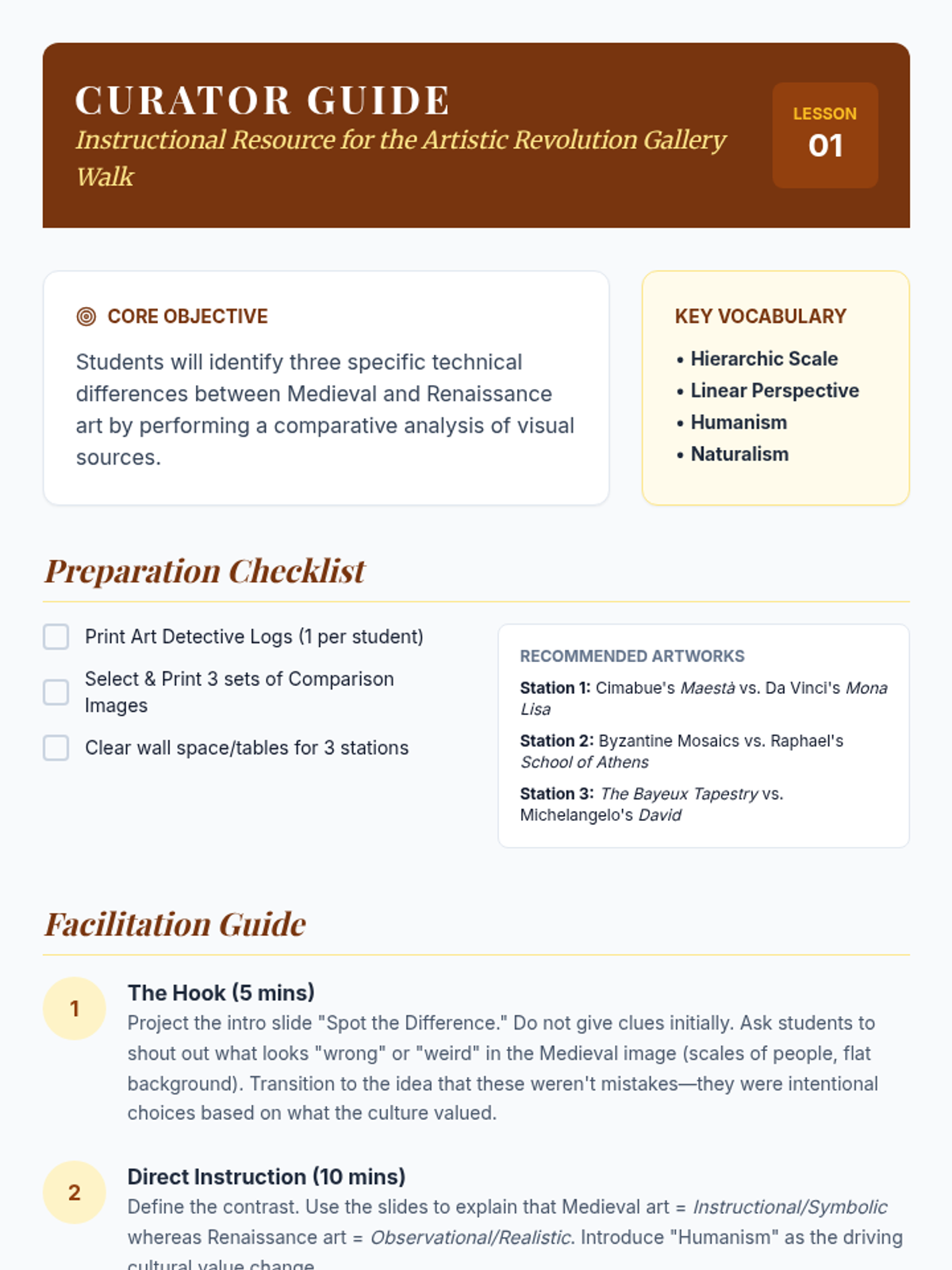
This sequence explores the transition from Medieval to Renaissance art, focusing on the development of linear perspective, human anatomy in art, and the cultural shift toward Humanism. Students will analyze masterpieces like 'The School of Athens' and apply mathematical principles to create their own realistic artworks.
This sequence explores the artistic revolution of the Renaissance, focusing on the shift from Medieval symbolism to Renaissance realism through the lens of mathematics and anatomy. Students will analyze historical works and apply technical skills like linear perspective to understand how art reflects cultural values.
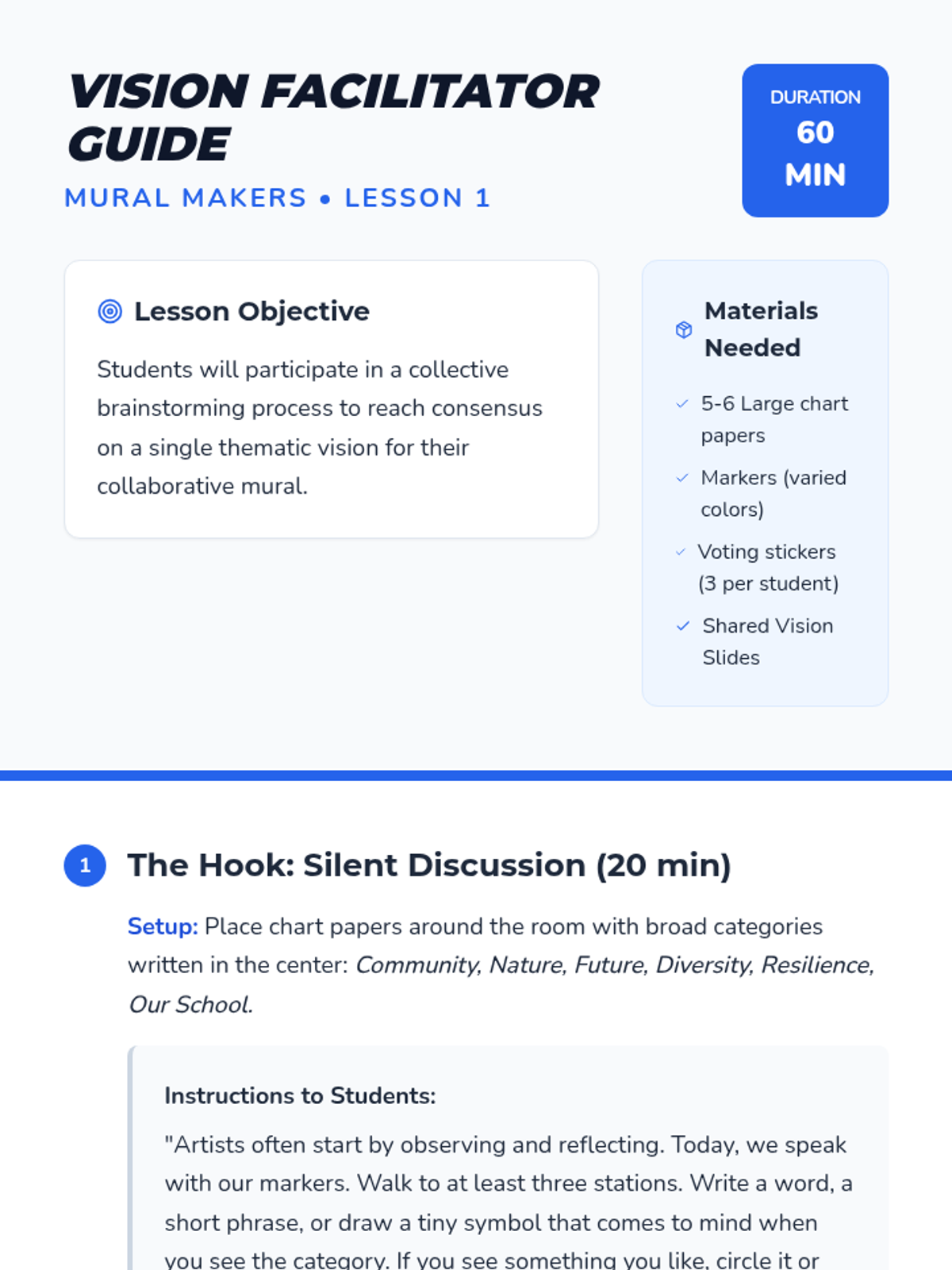
A 5-lesson sequence where students learn the art of collaboration by designing and executing a large-scale mural, moving from individual brainstorming to collective creation.
A visual arts sequence for 11th-grade students exploring grief and loss through abstraction, color psychology, and mixed media. Students learn to bypass verbal limitations to express complex internal states, culminating in a silent gallery exhibition.
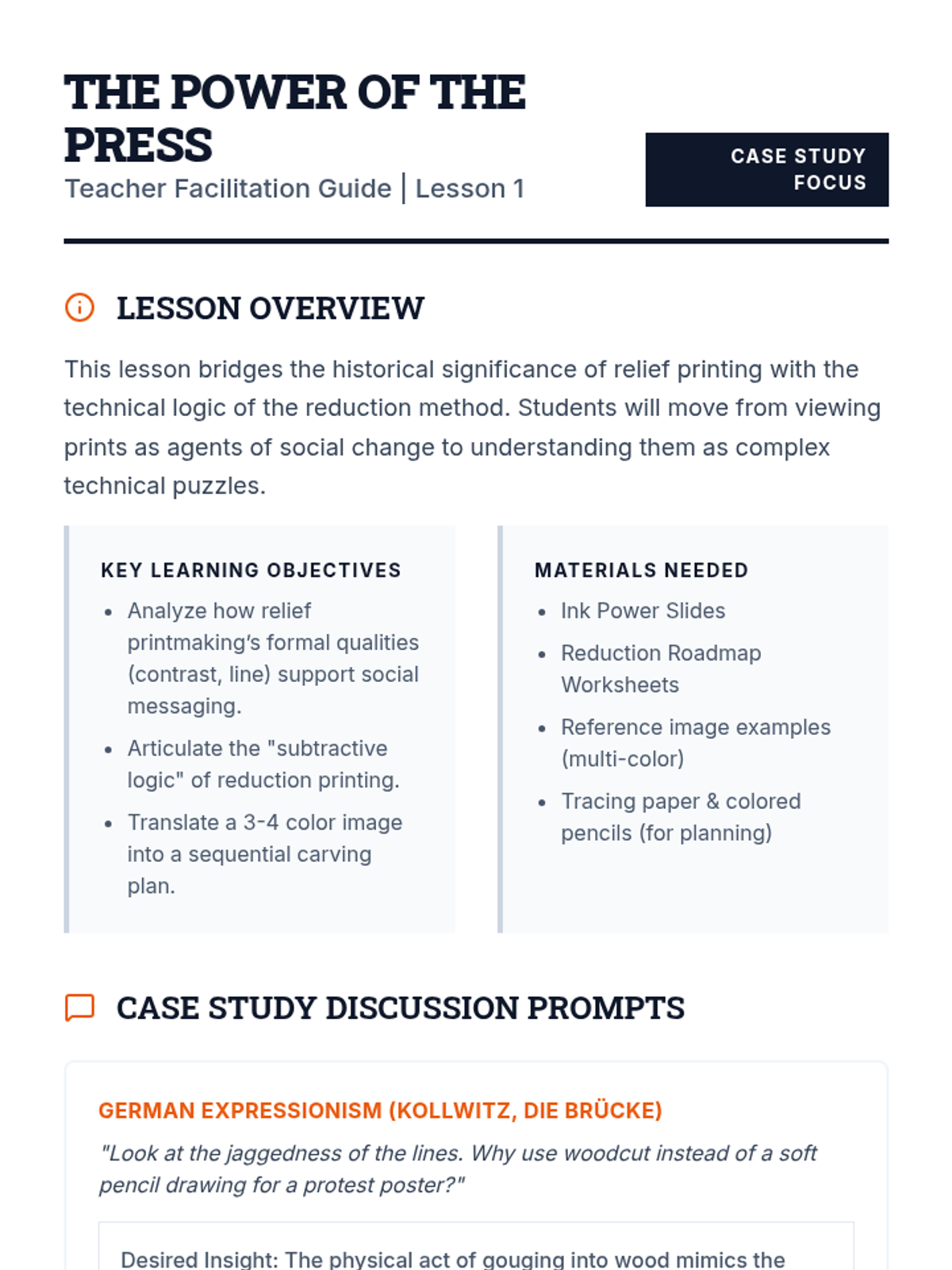
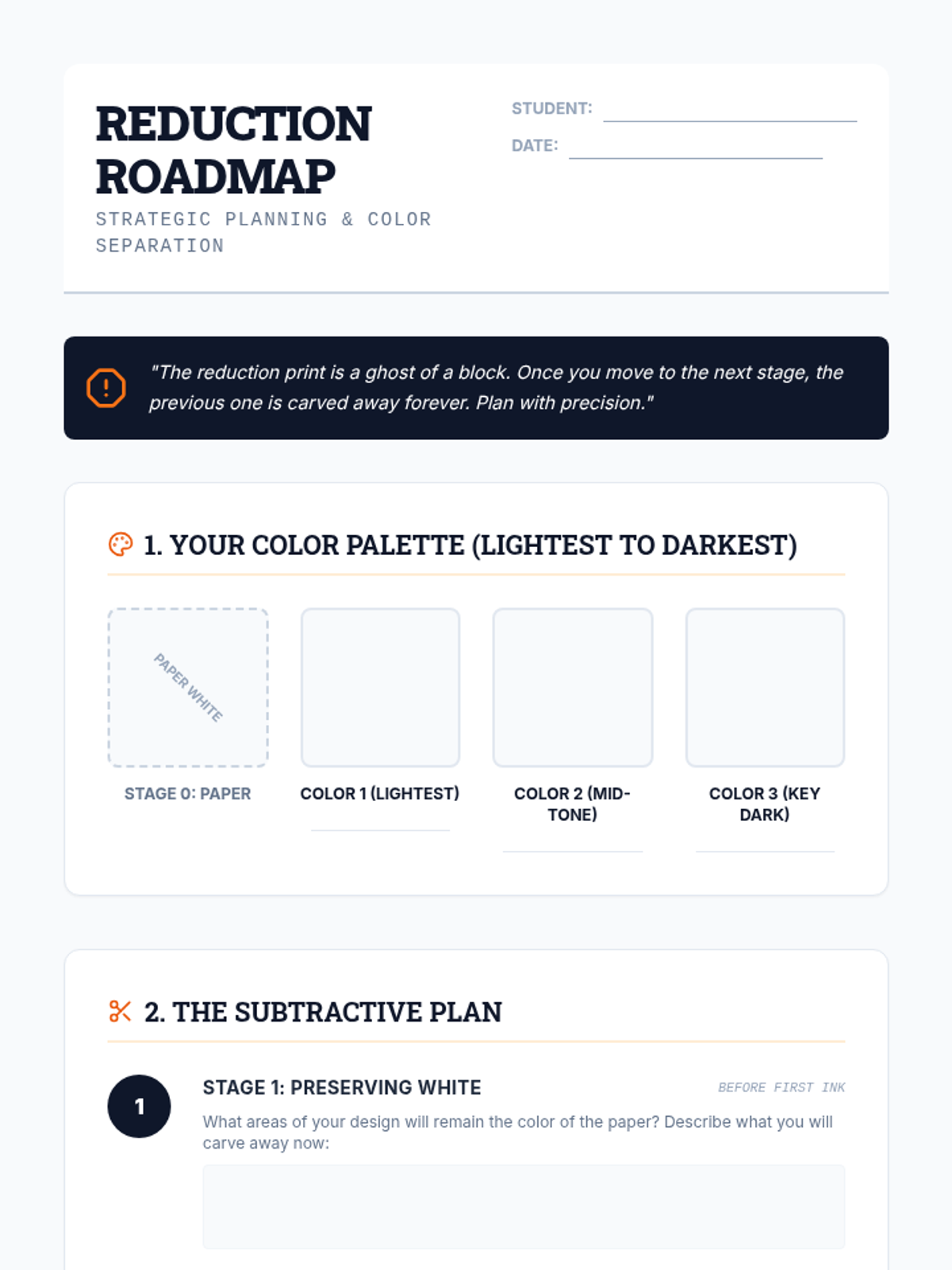
An advanced printmaking sequence focusing on the reduction lino-cut method. Students explore historical context, strategic planning, technical carving, and the precise mechanics of registration and editioning to create multi-colored prints from a single, evolving block.
An introduction to the intaglio printmaking family through drypoint etching on plastic plates. Students explore line weight, tonal variation, wiping techniques, and mixed media additions like chine-collé.
Students transition from relief printing to intaglio, mastering drypoint etching on plexiglass. The sequence covers plate preparation, scribing for texture and value, inking/wiping techniques, press operation, and advanced chine-collé methods.
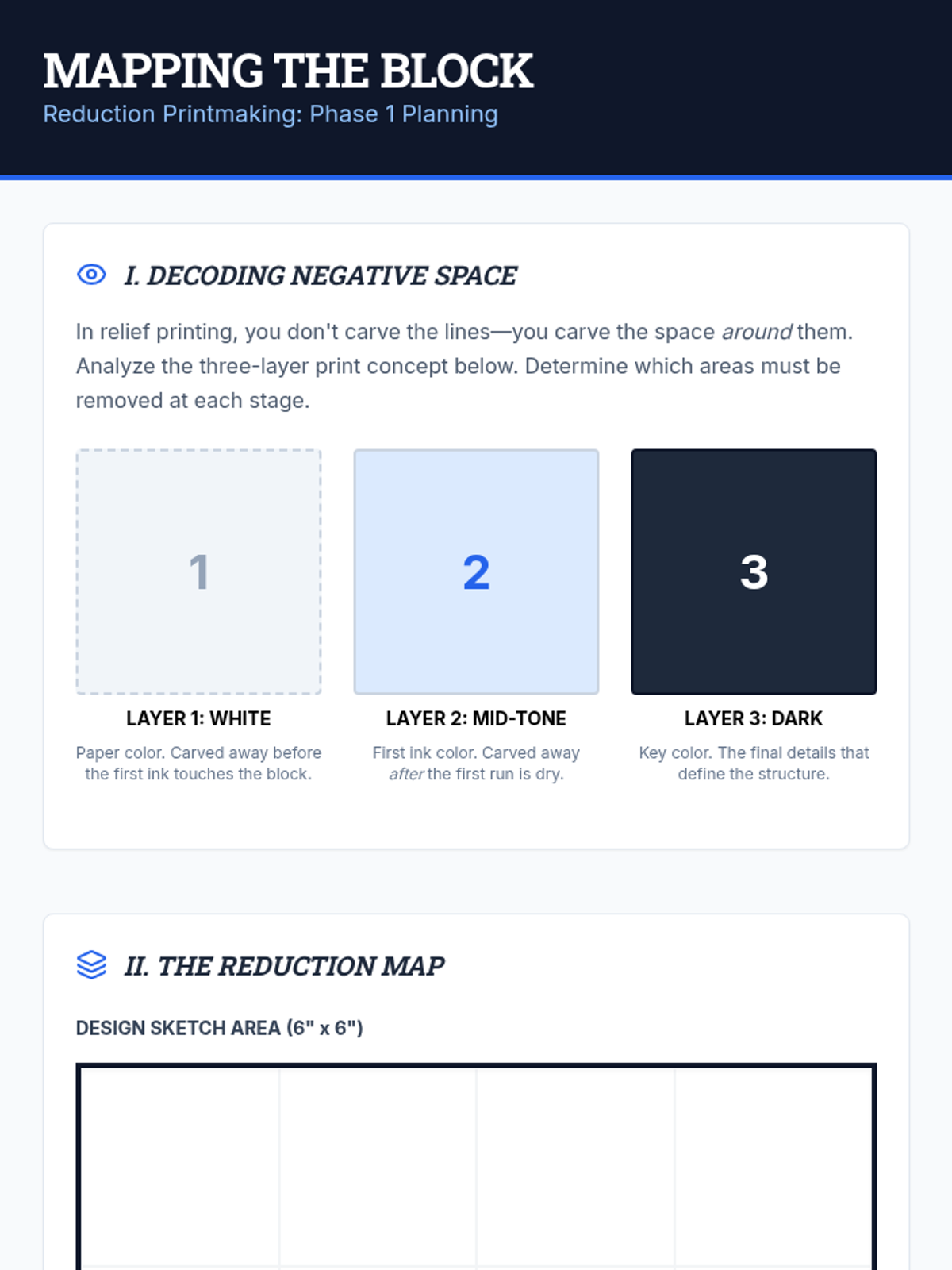
A comprehensive workshop sequence on reduction linocut printing. Students master the art of the 'suicide block' through negative space analysis, tool safety, registration systems, and multi-layer ink application.
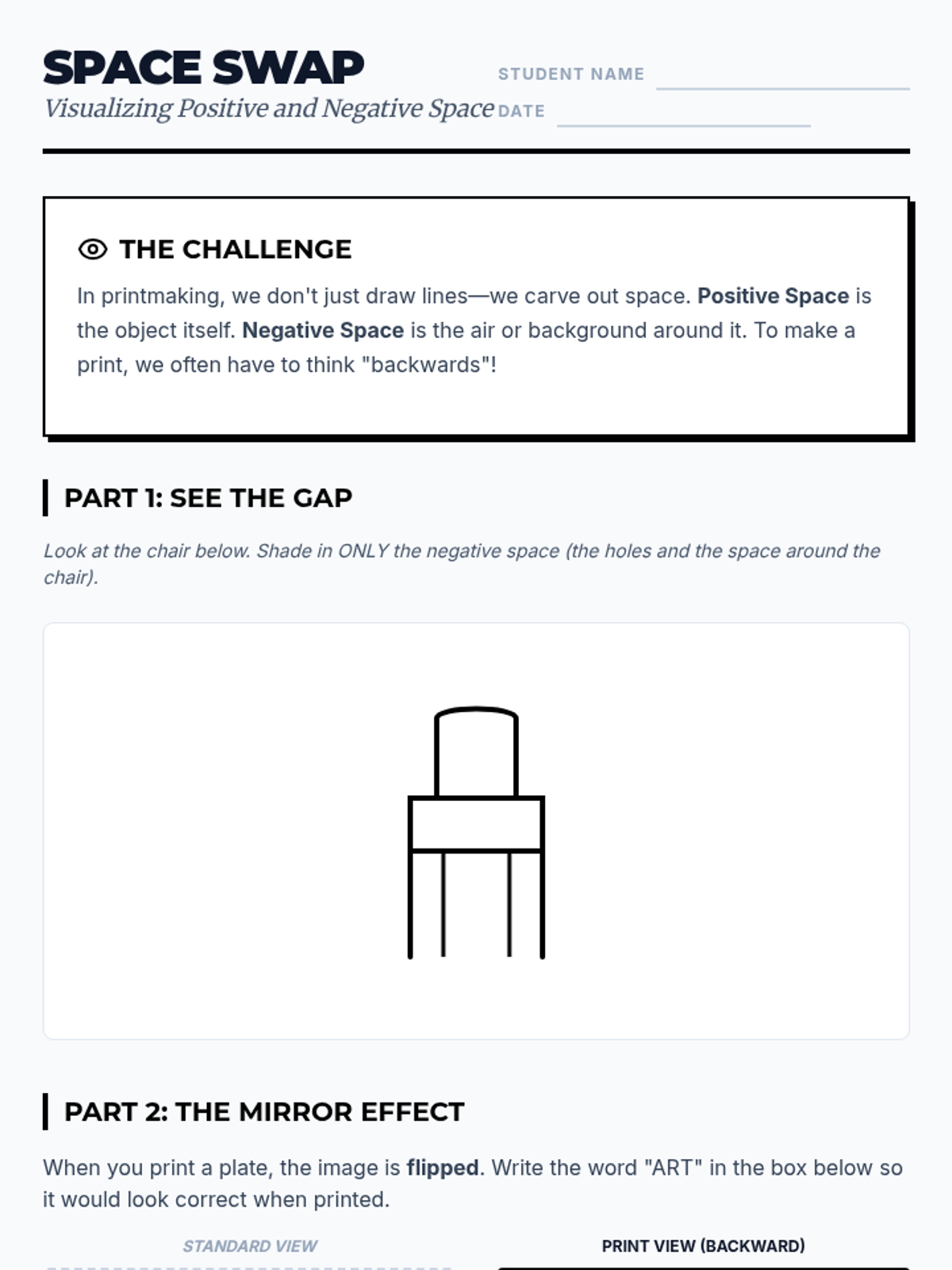
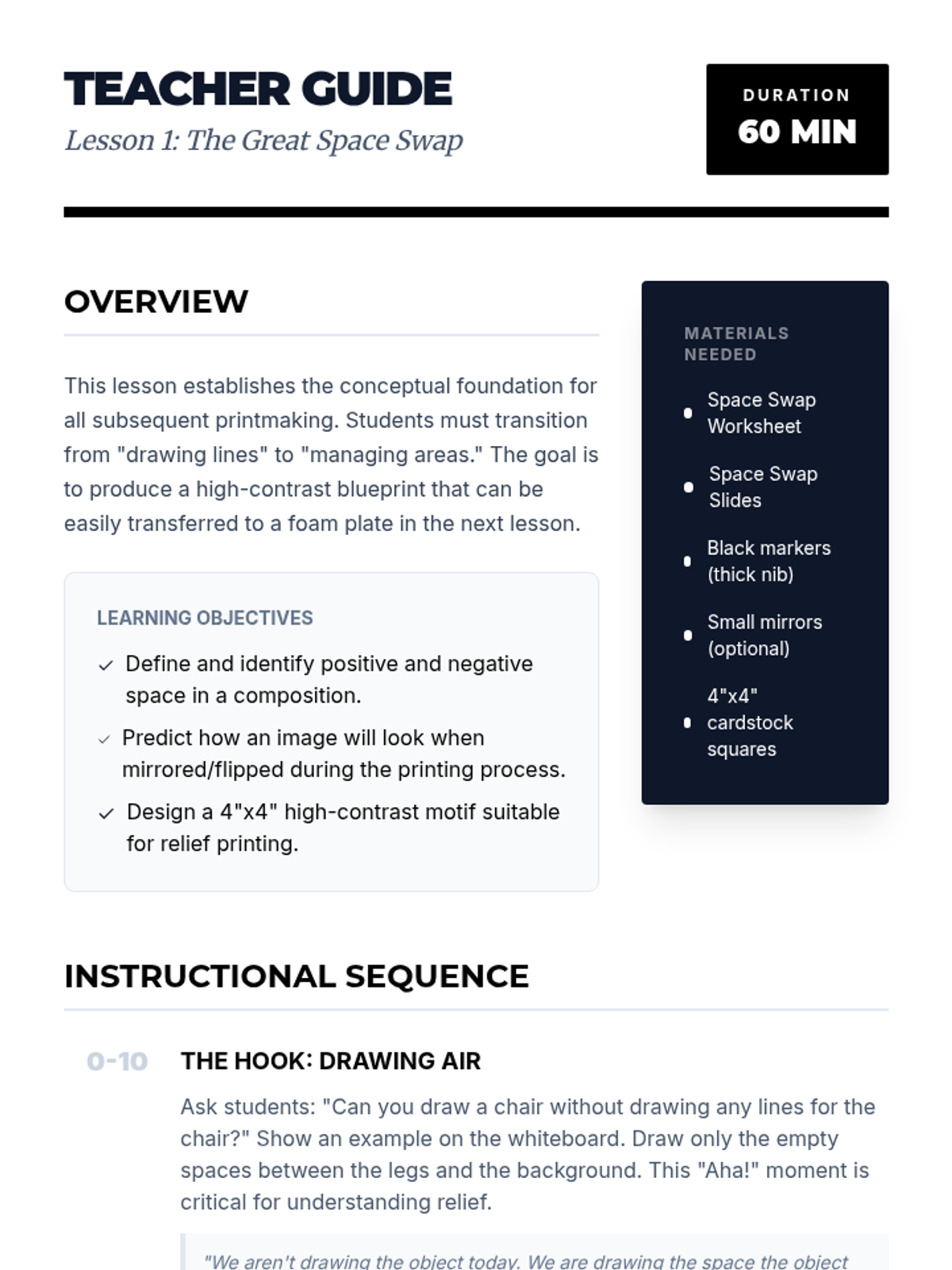
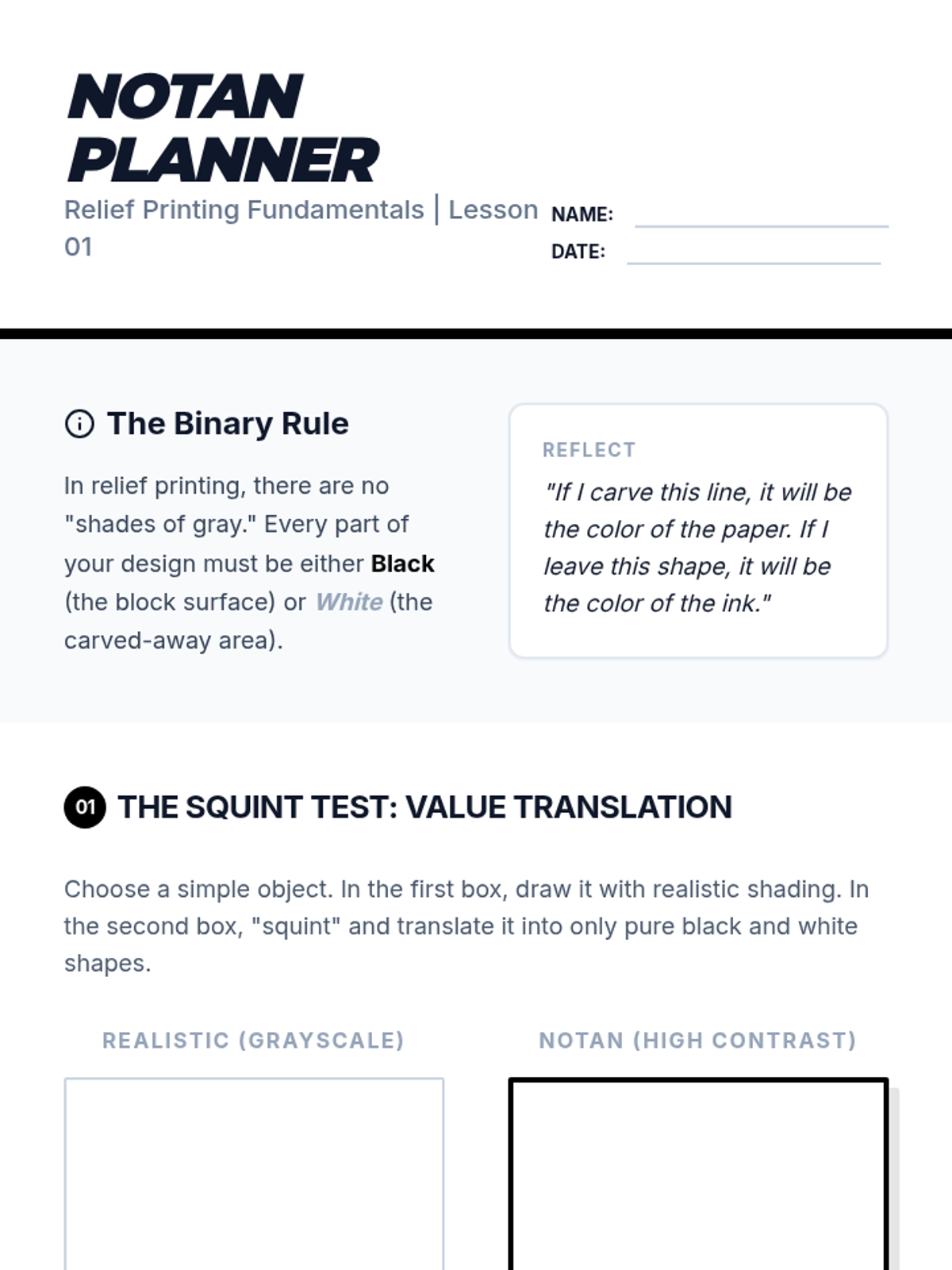
Students explore relief printing using soft foam plates, focusing on positive and negative space, inking techniques, and pattern creation. The sequence culminates in a professional-style edition of prints and a gallery walk critique.
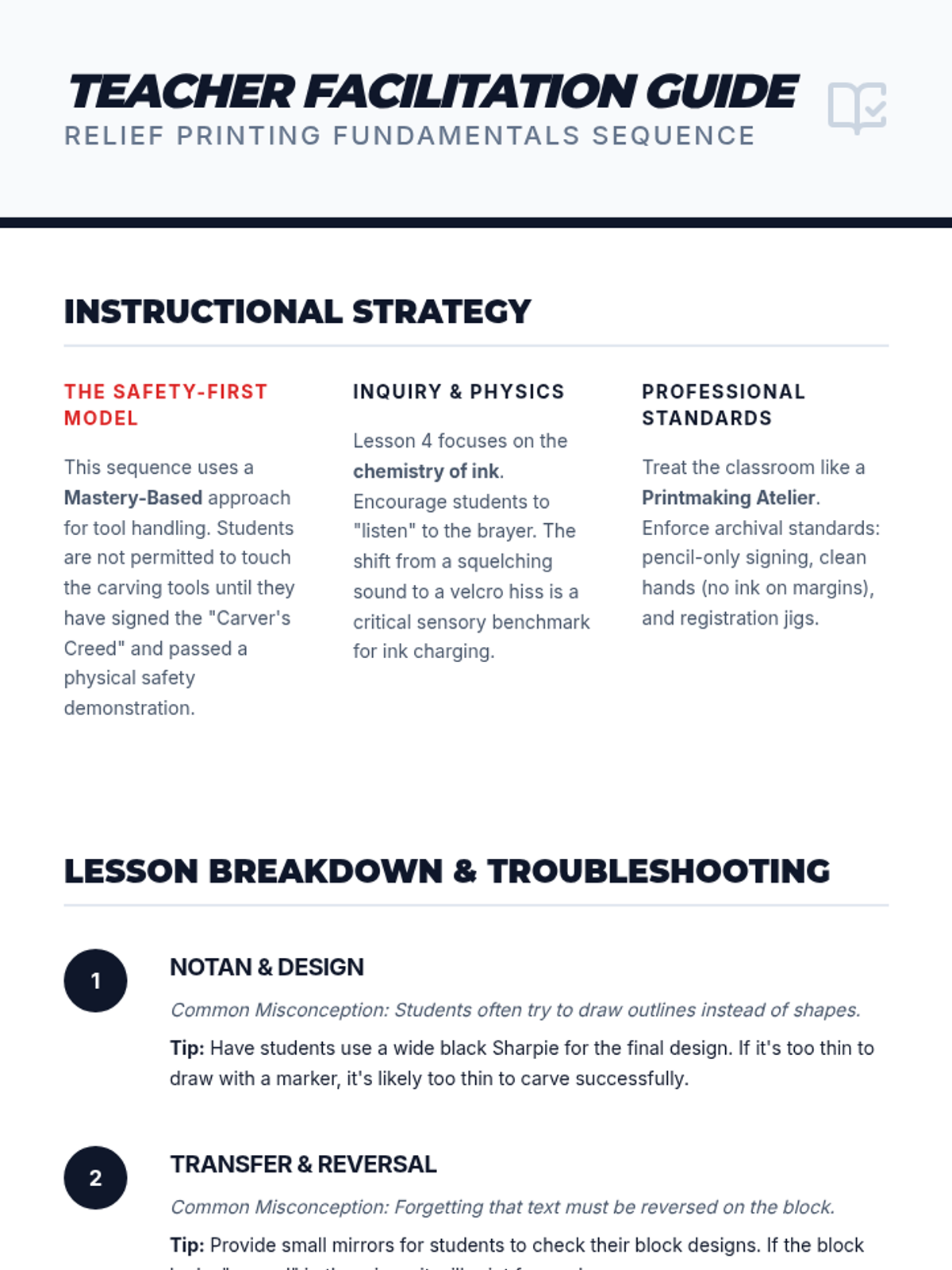
A comprehensive introduction to relief printing, focusing on the conceptual and technical skills of linocut design. Students master high-contrast visualization, carving safety, inking techniques, and professional editioning.
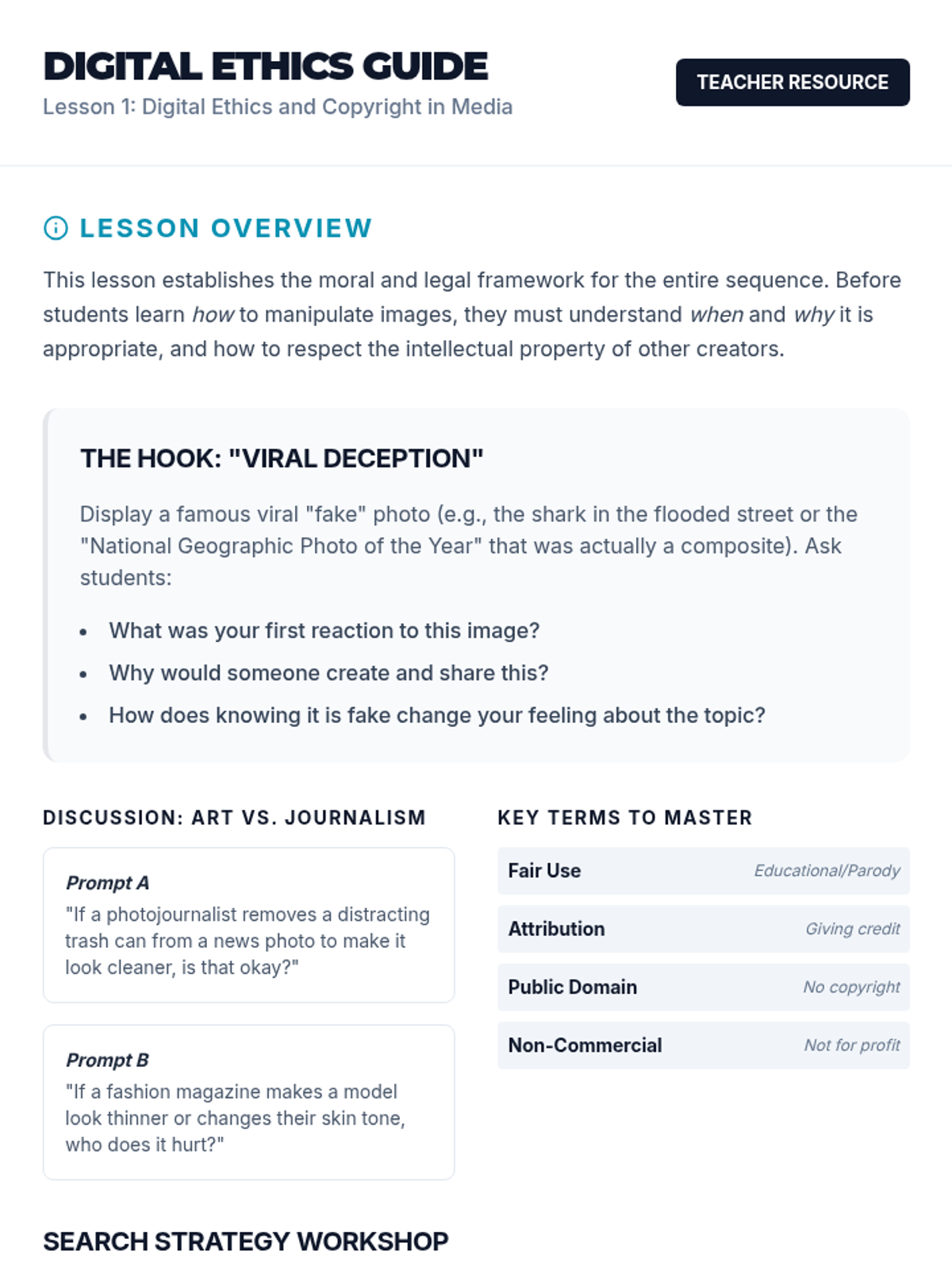
Students explore the ethical and creative possibilities of photo manipulation, learning professional workflows in raster editing to create a surrealist composite. The sequence covers digital citizenship, non-destructive editing, perspective matching, and color grading.