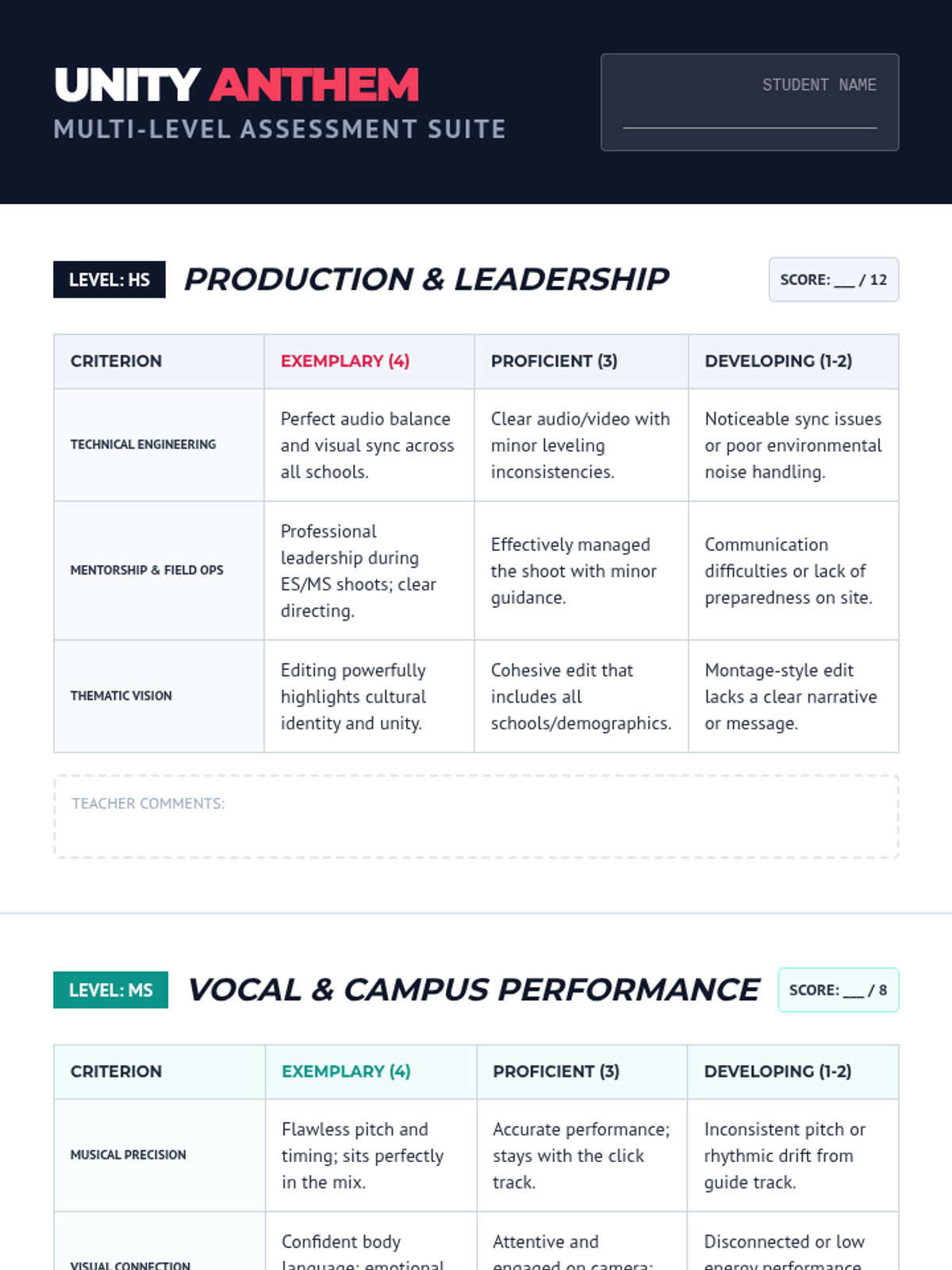
Fundamental notation, instrumental proficiency, and vocal techniques across various genres. Connects historical analysis with original composition and creative performance skills.
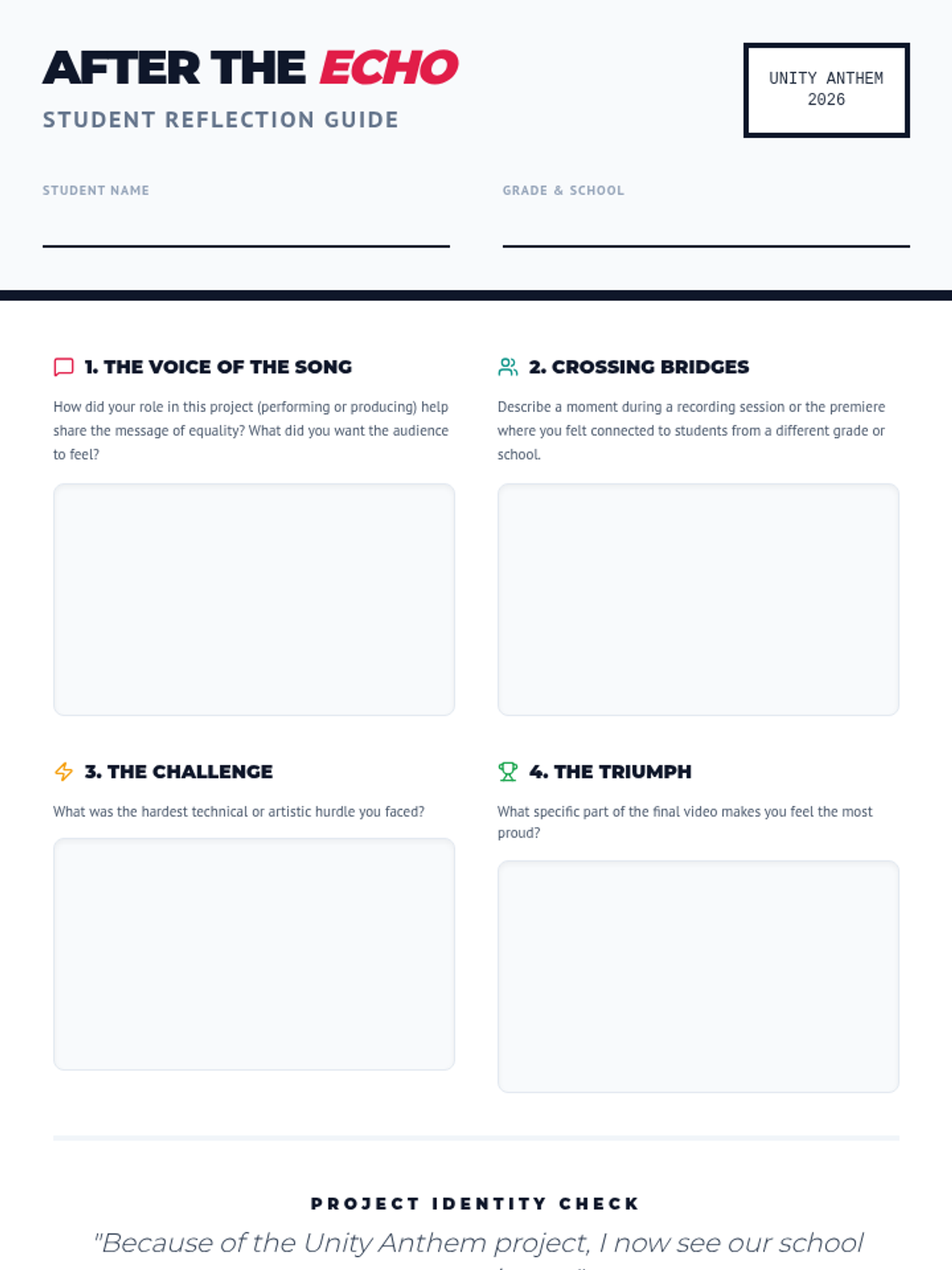
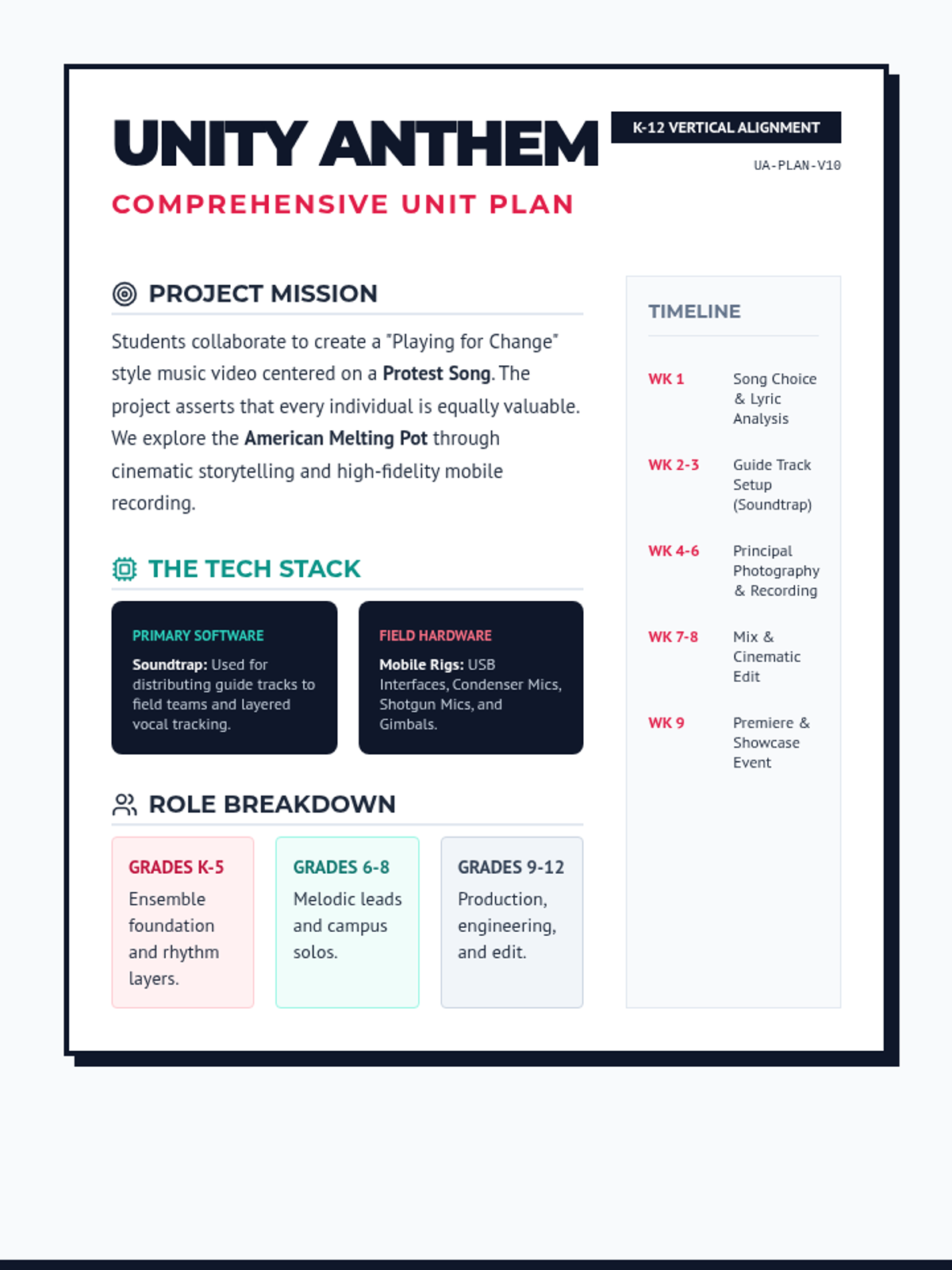
The final premiere of the music video at the All-town Music Tech Showcase, followed by a live performance and student reflection on the collaborative process.
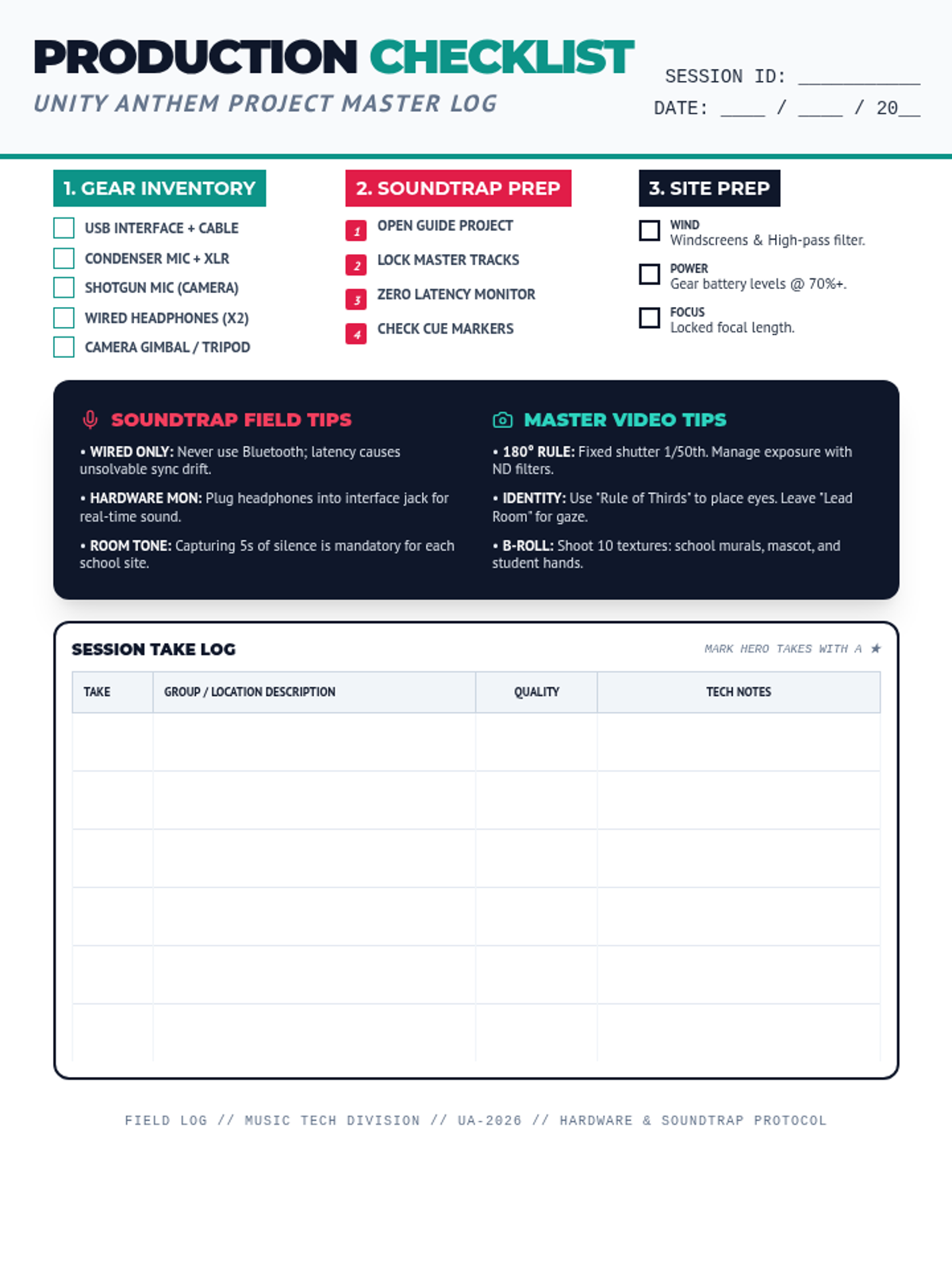
The technical phase involving on-location recordings at elementary and middle schools, followed by high school student-led mixing and video production.
Introduction to the 'Playing for Change' concept, exploring the themes of the chosen protest song, and laying the groundwork for the K-12 collaboration.
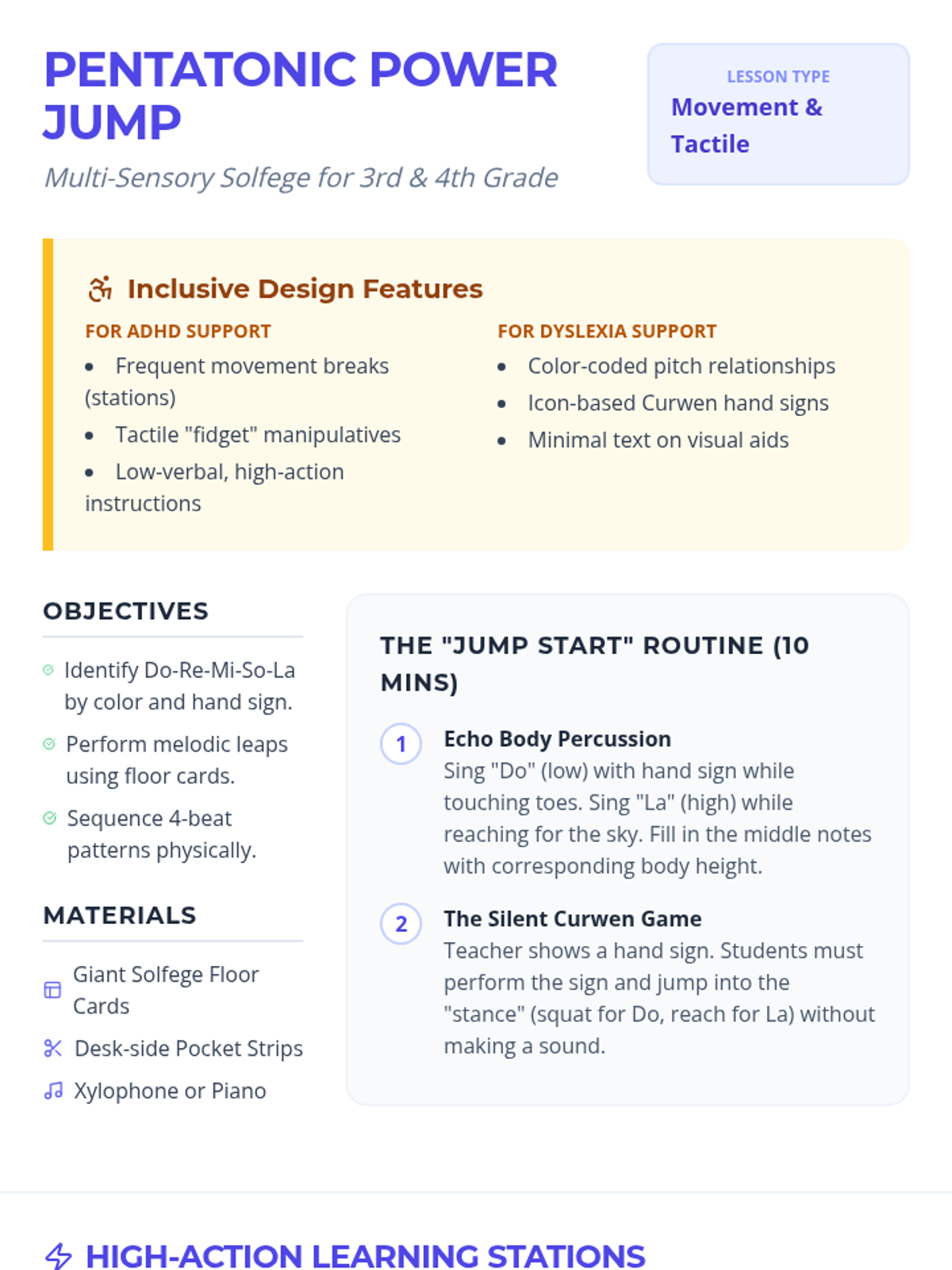
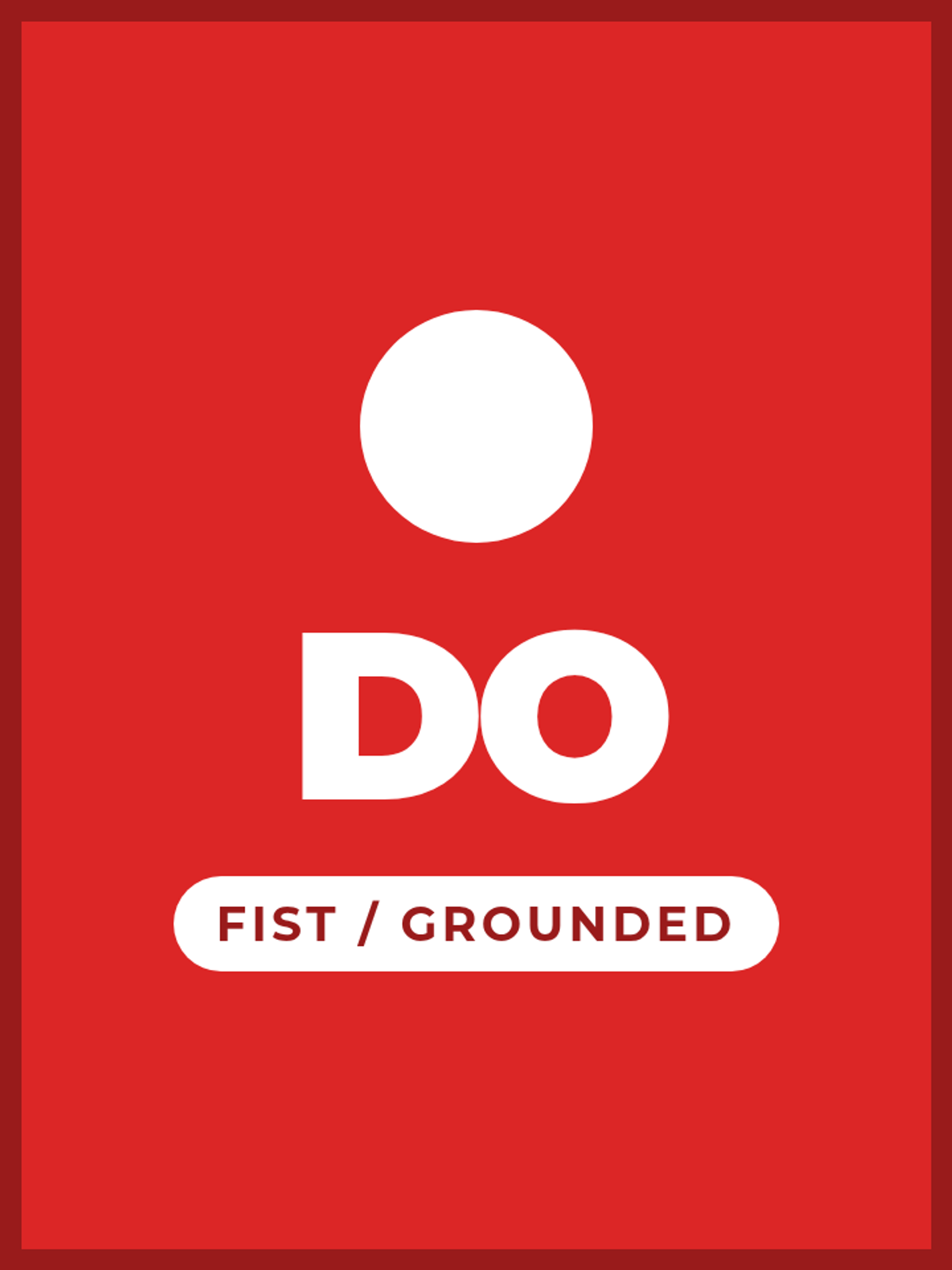
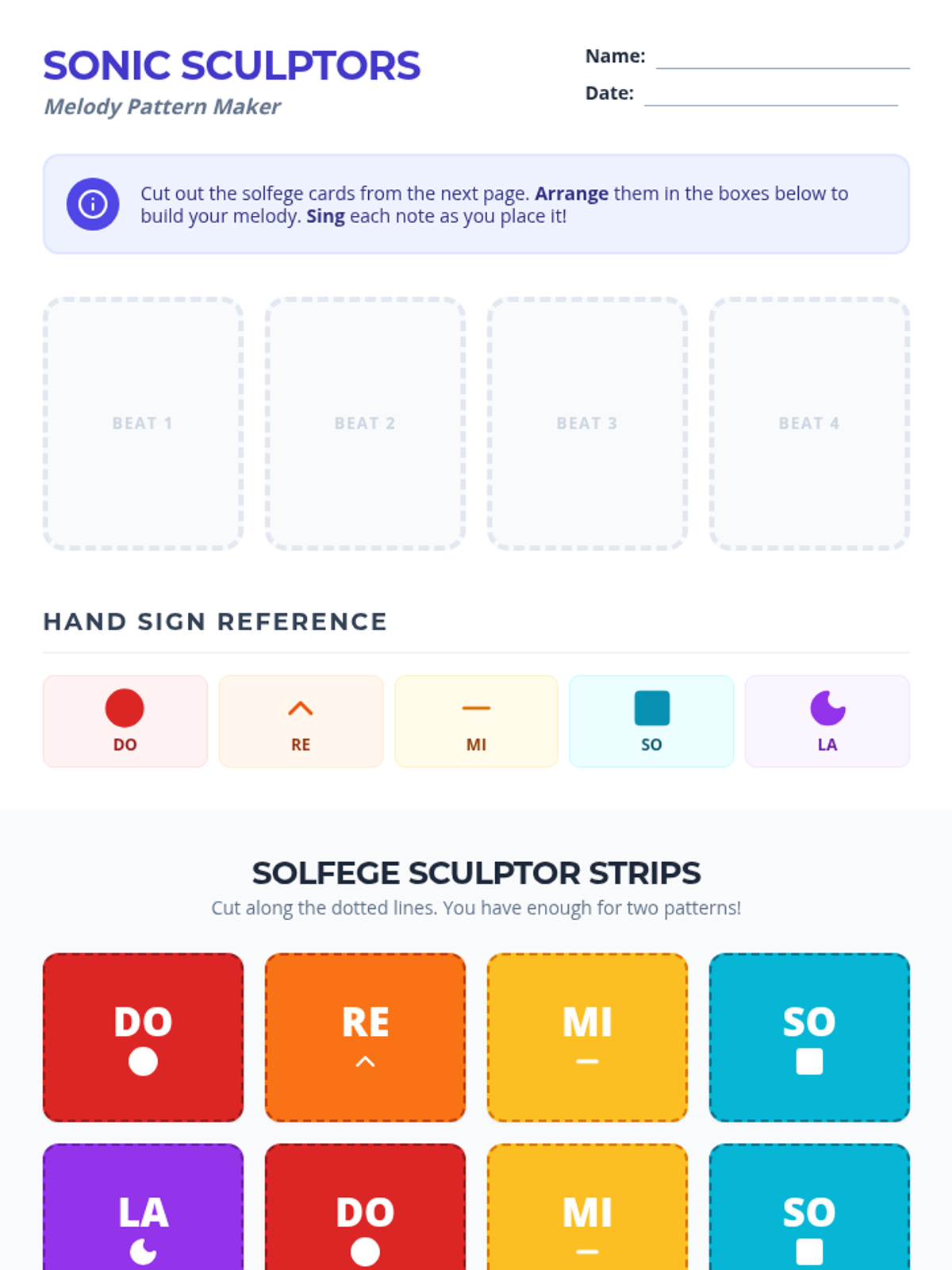
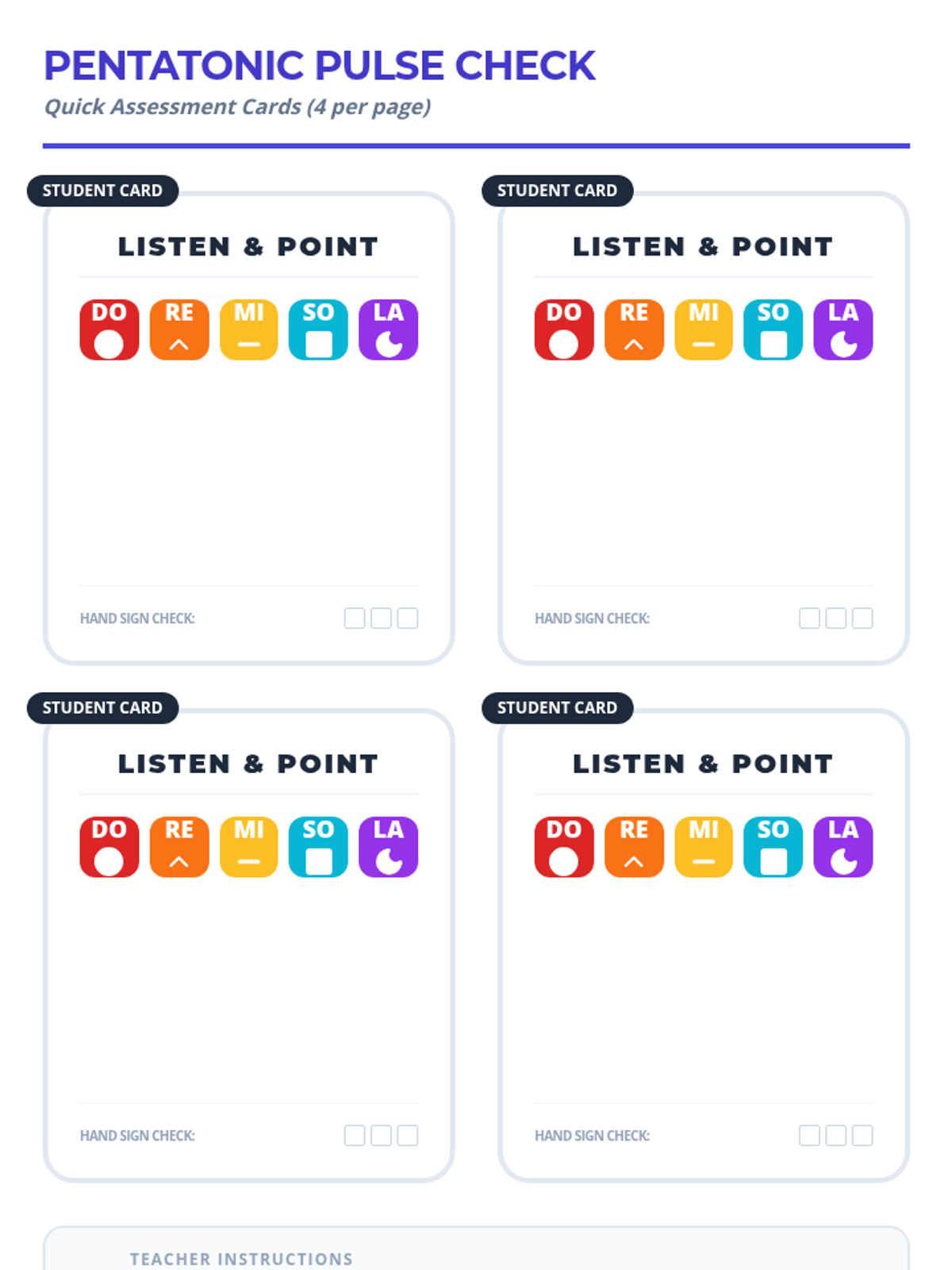
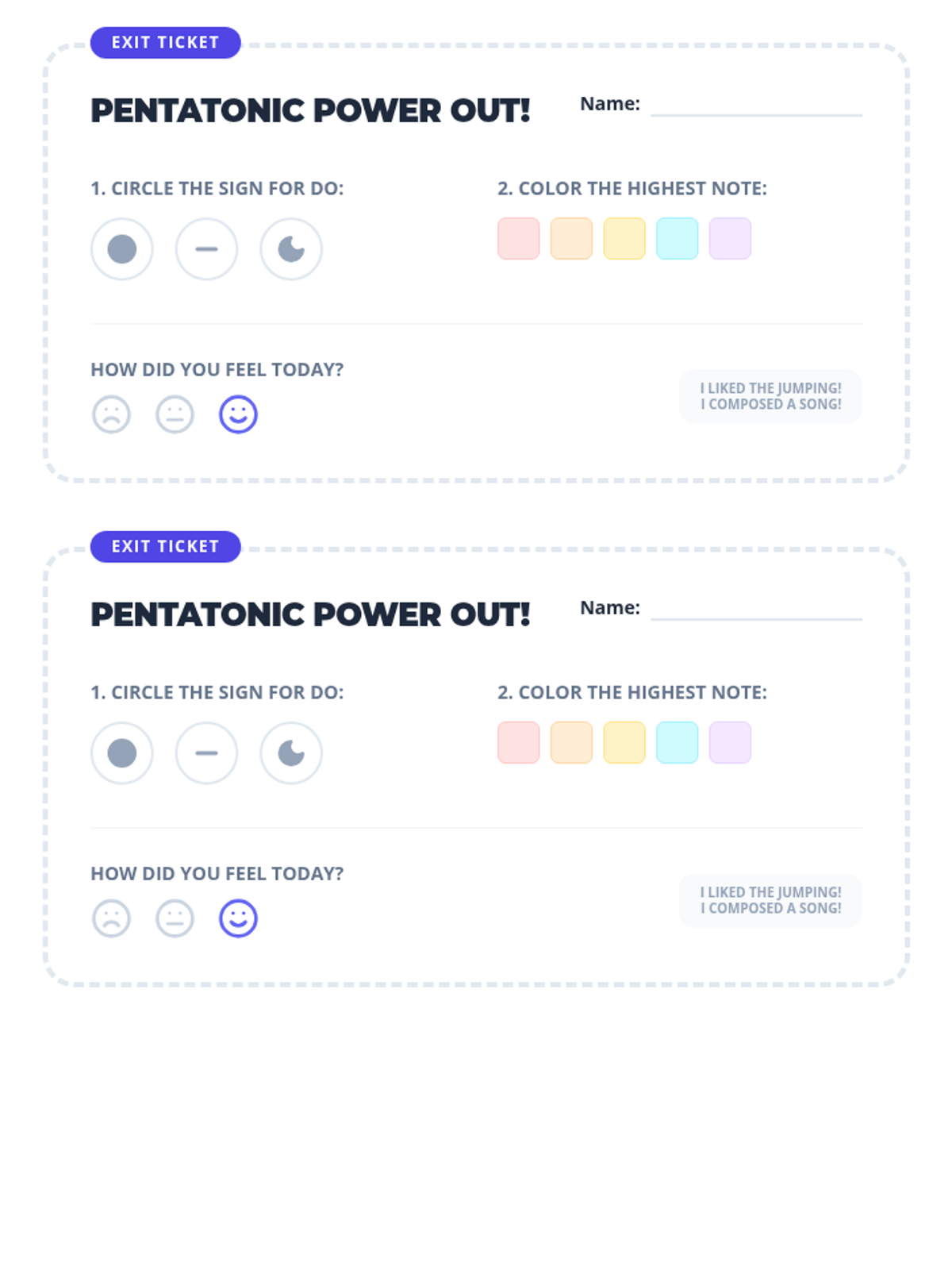
A high-energy, multi-sensory lesson for 3rd and 4th graders focusing on the pentatonic scale through movement and tactile manipulatives. This lesson is specifically designed to support students with dyslexia and ADHD.
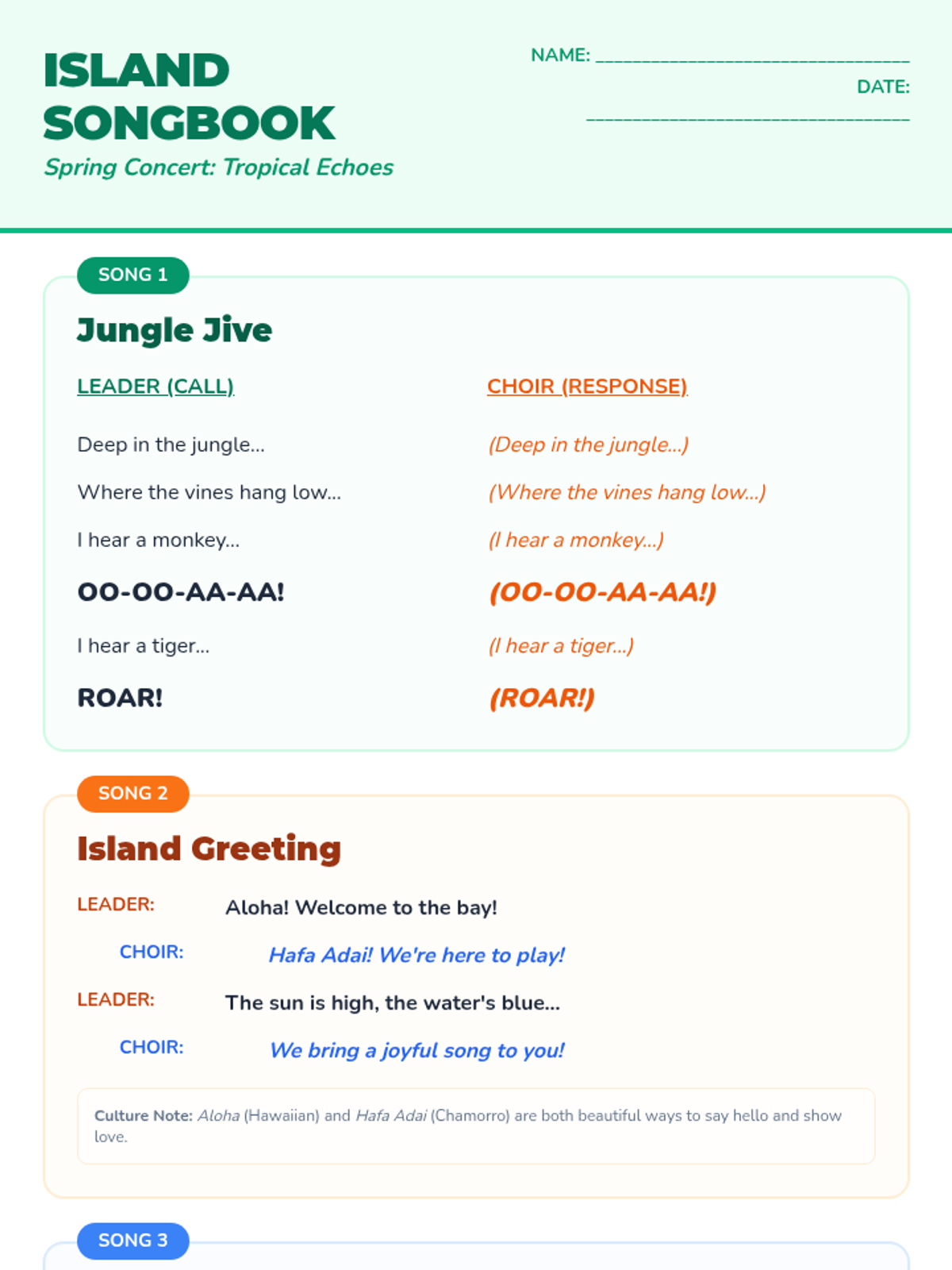
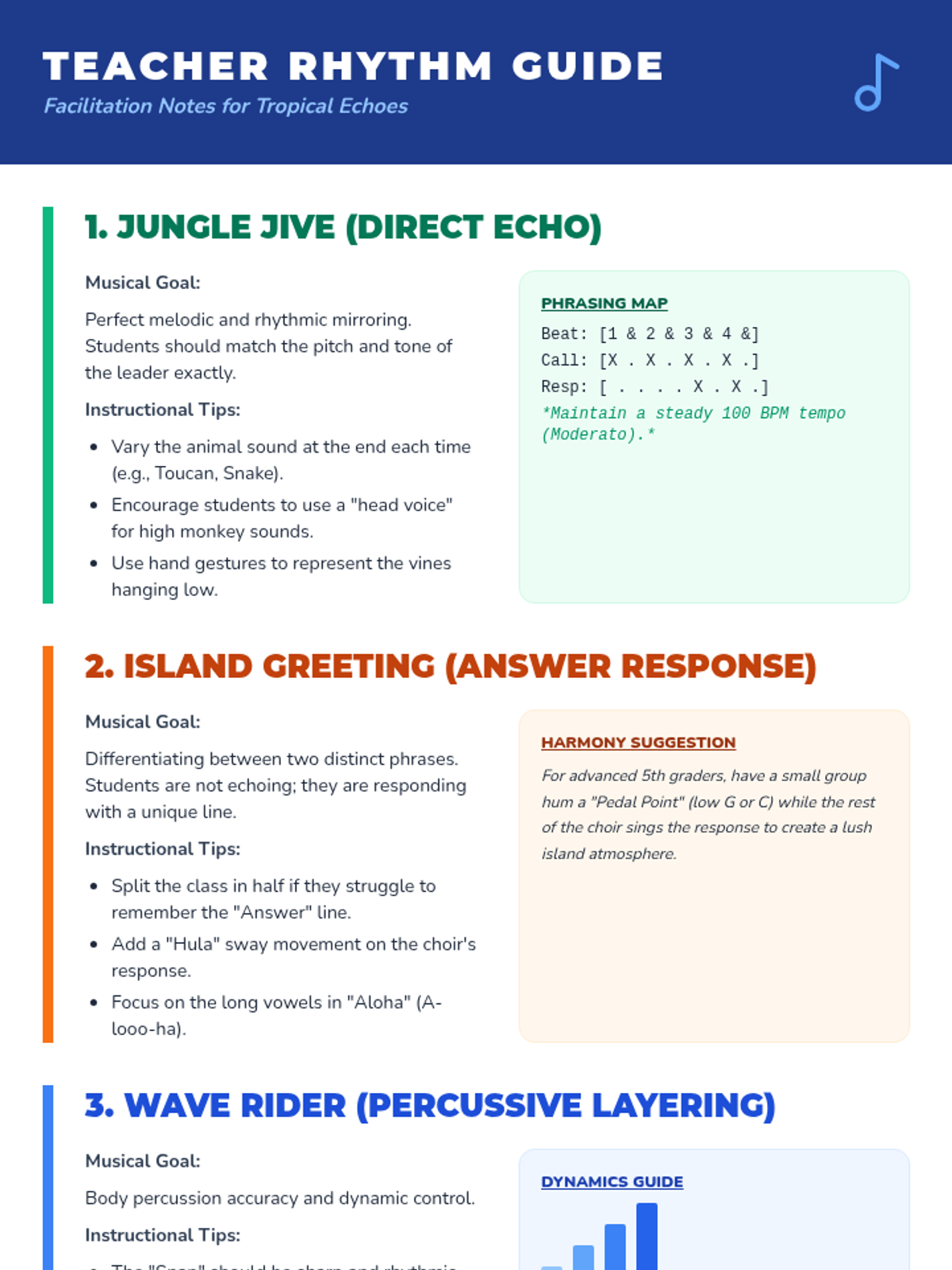
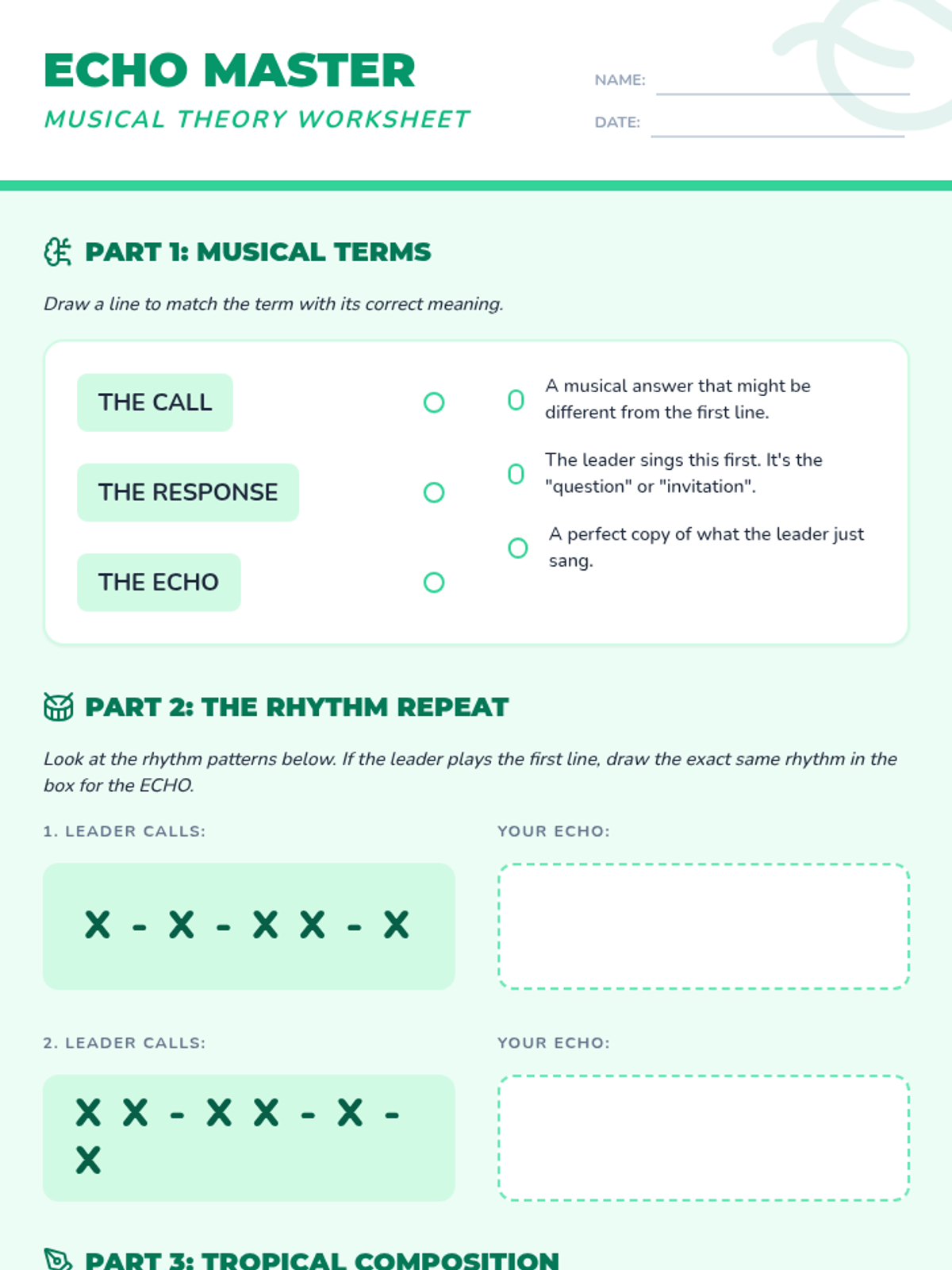
A musical unit focusing on tropical-themed call and response songs for grades 3-5, designed for spring concert preparation and vocal skill development.
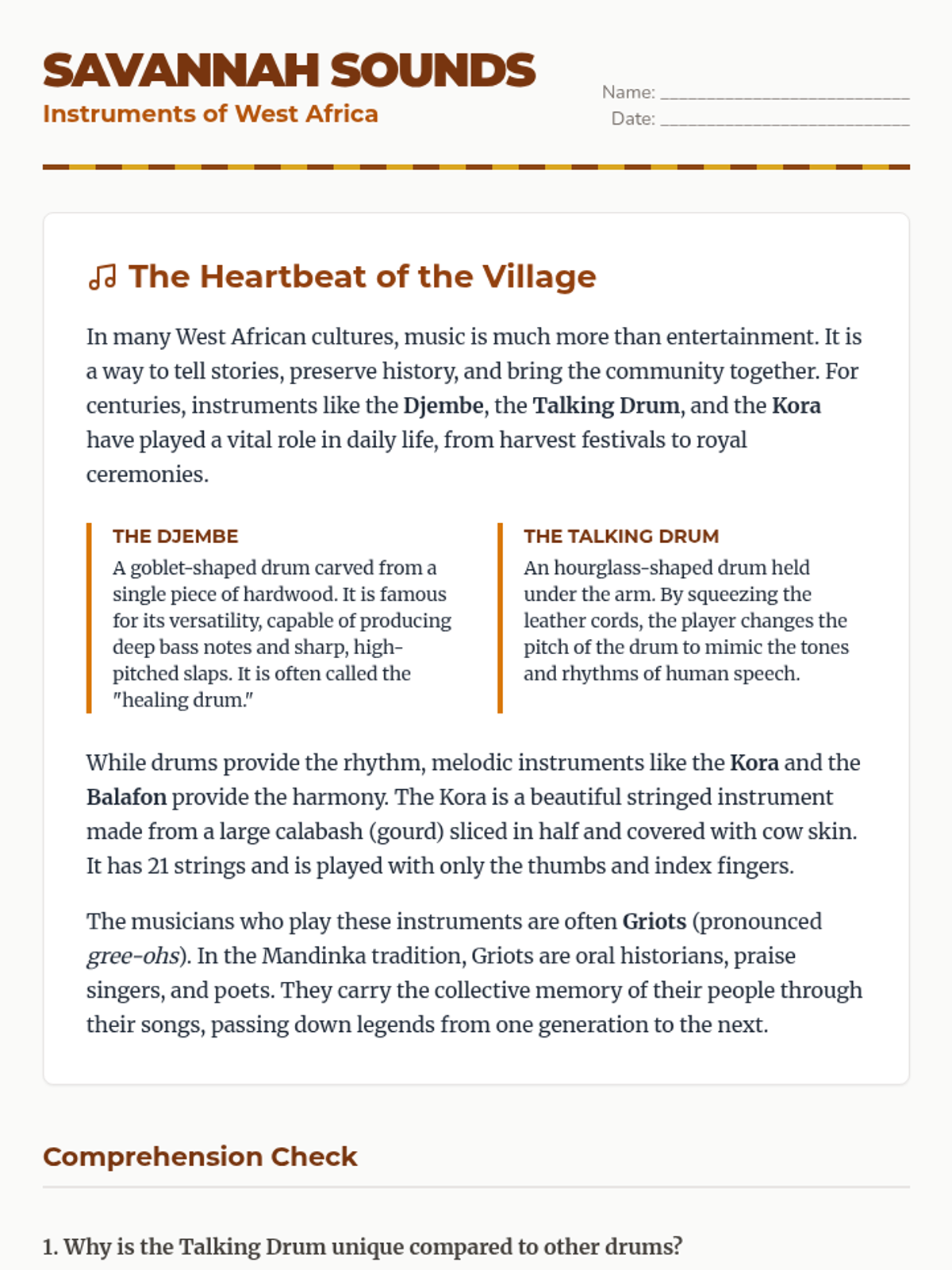
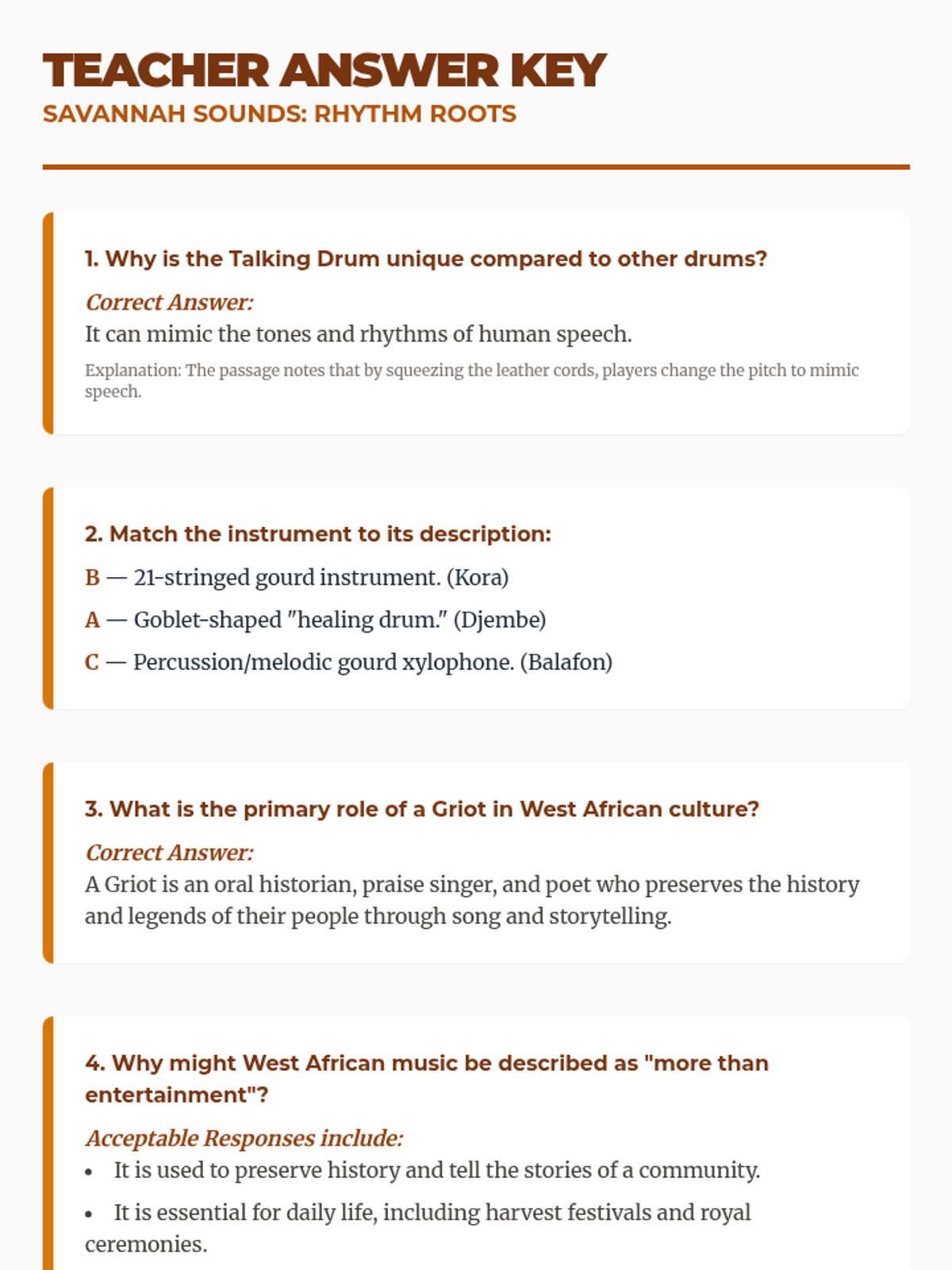
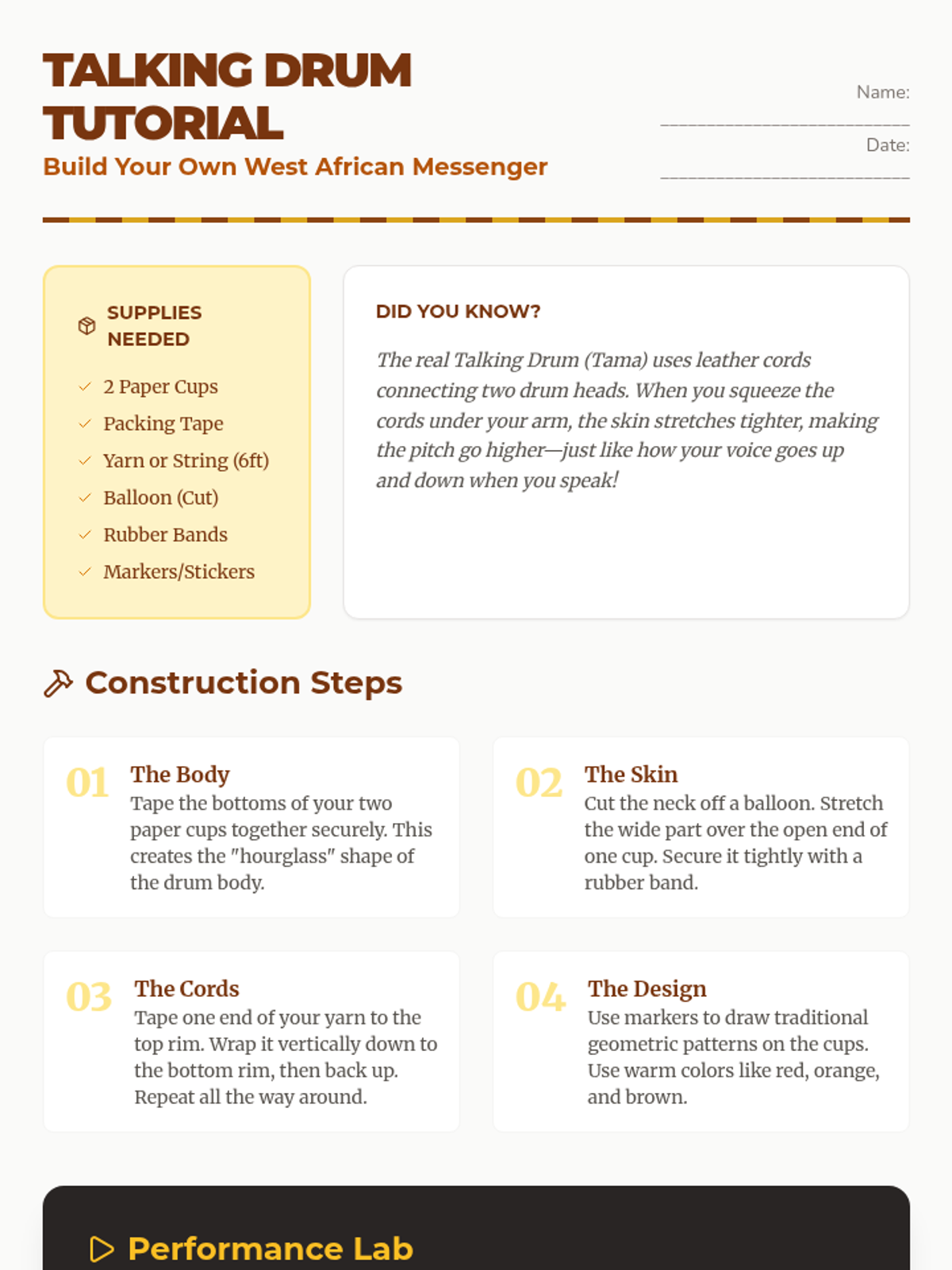
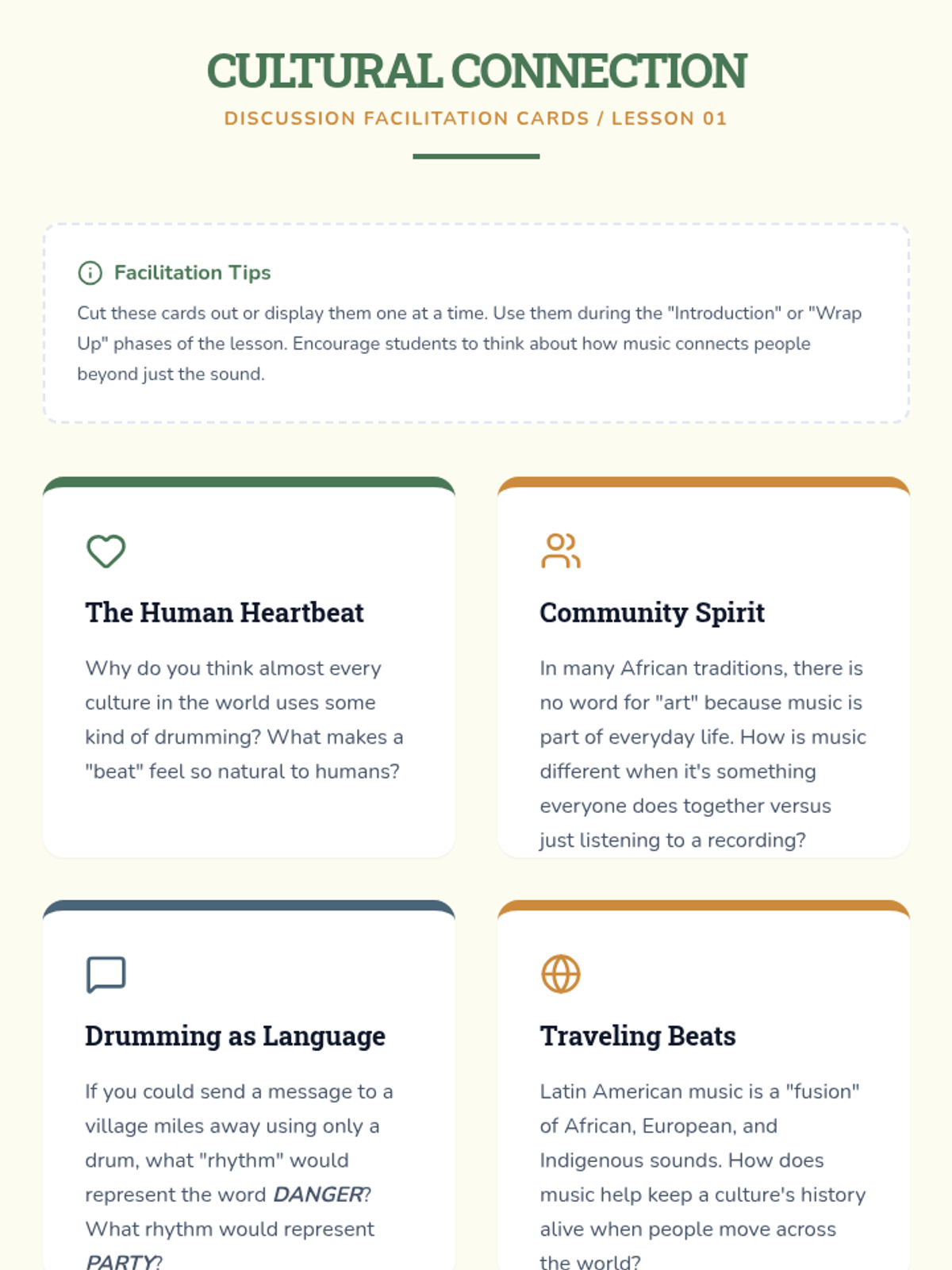
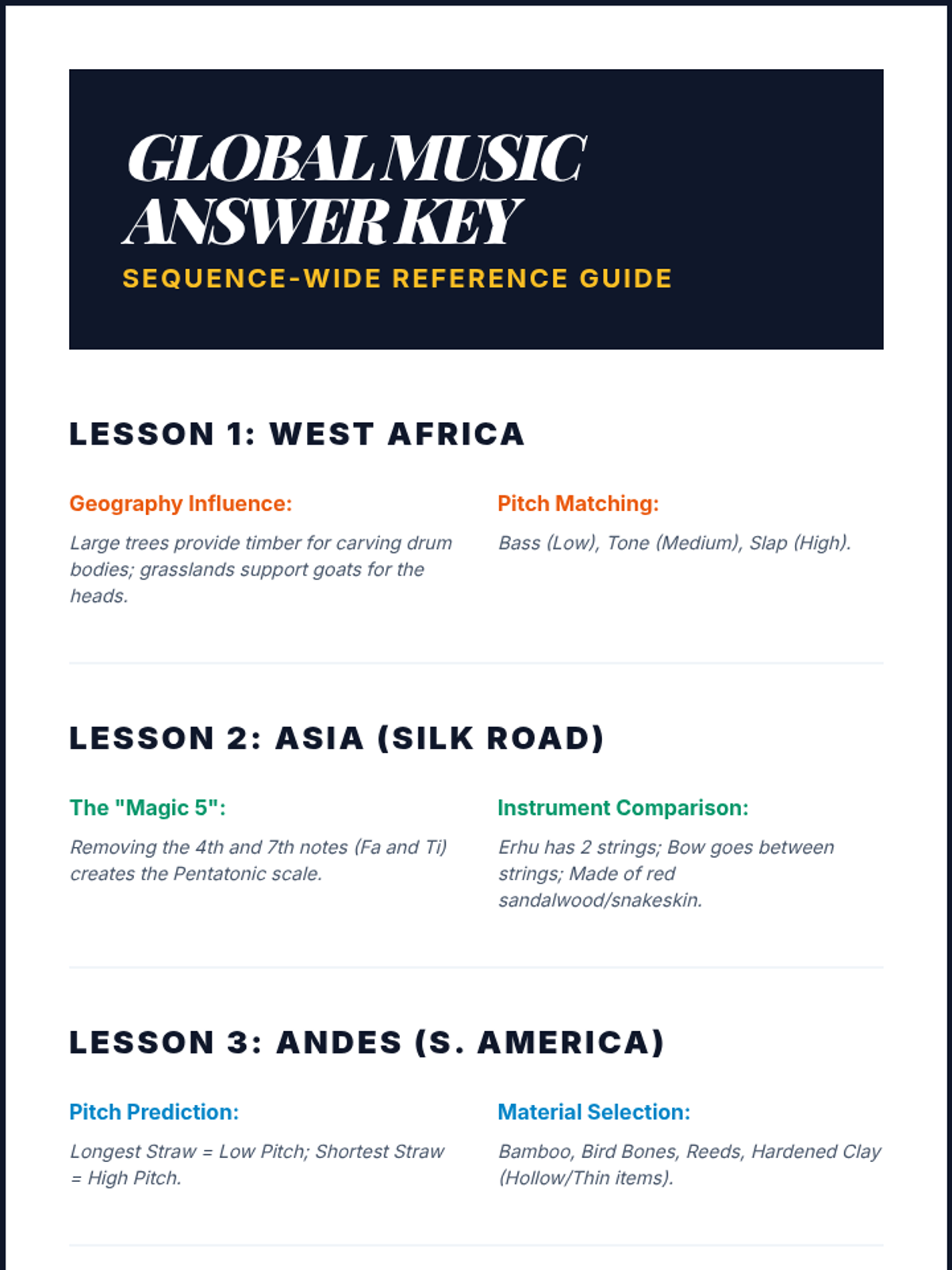
An introduction to the vibrant musical traditions of West Africa, focusing on iconic percussion and melodic instruments like the djembe, kora, and talking drum.
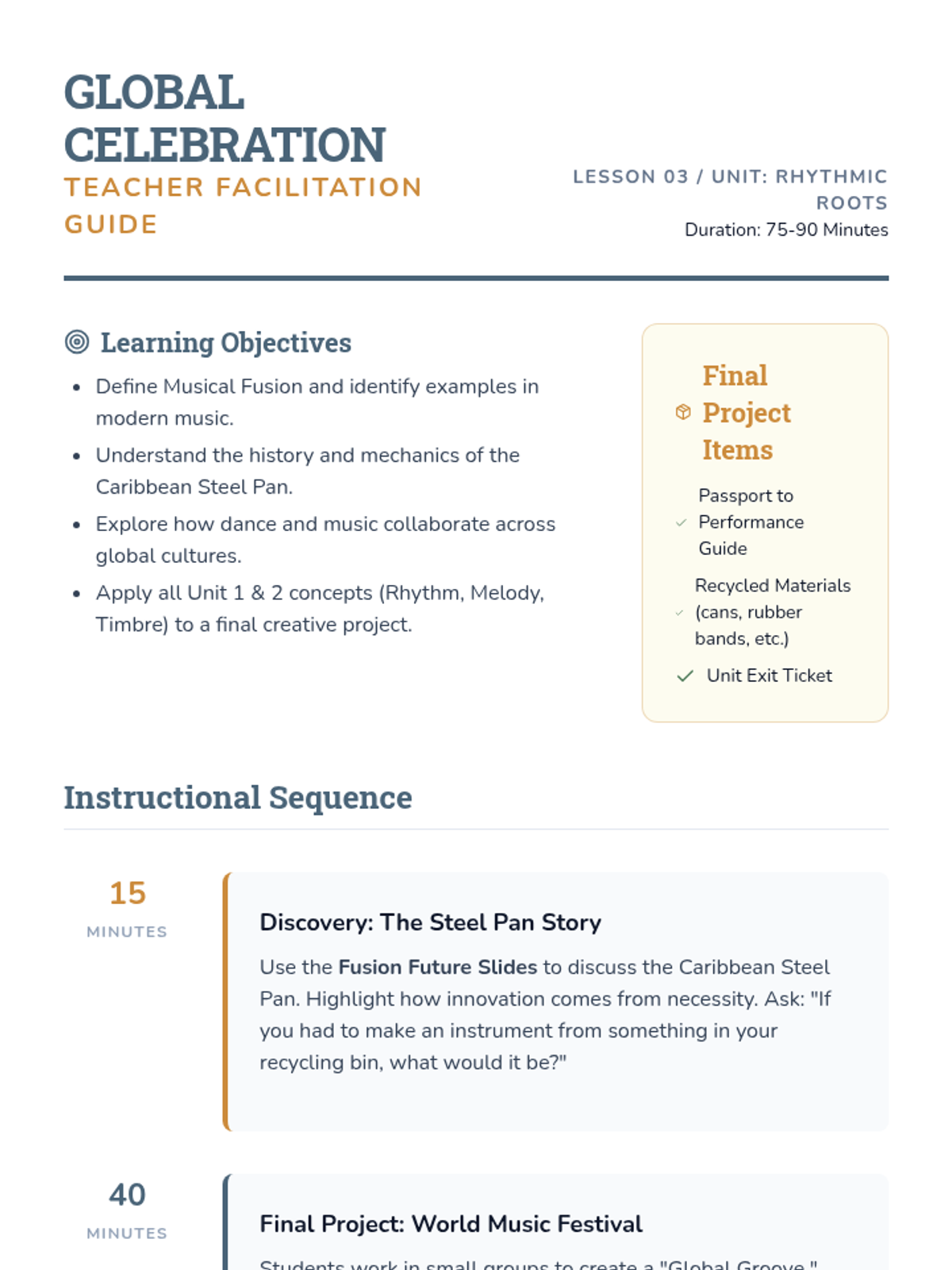
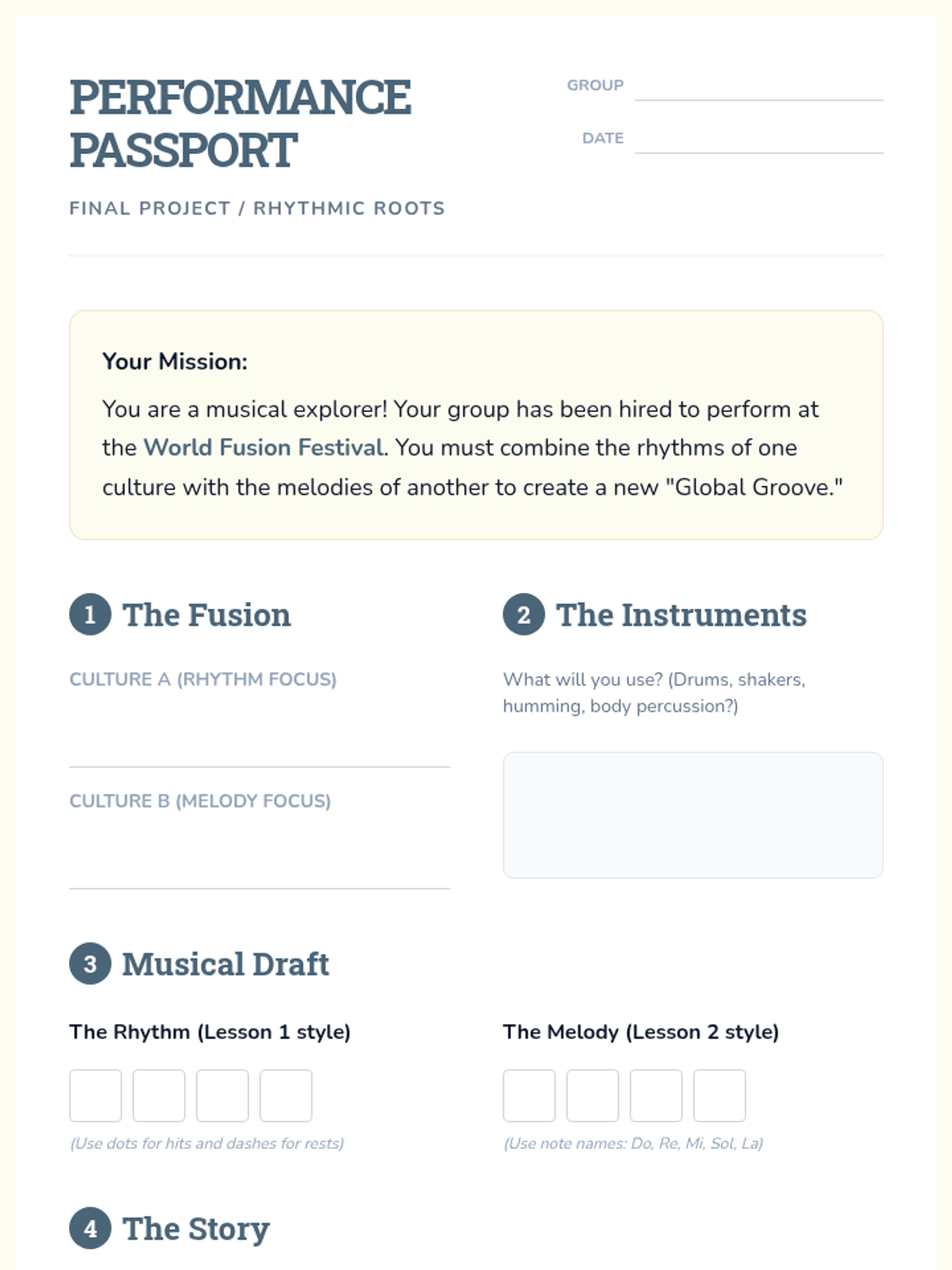
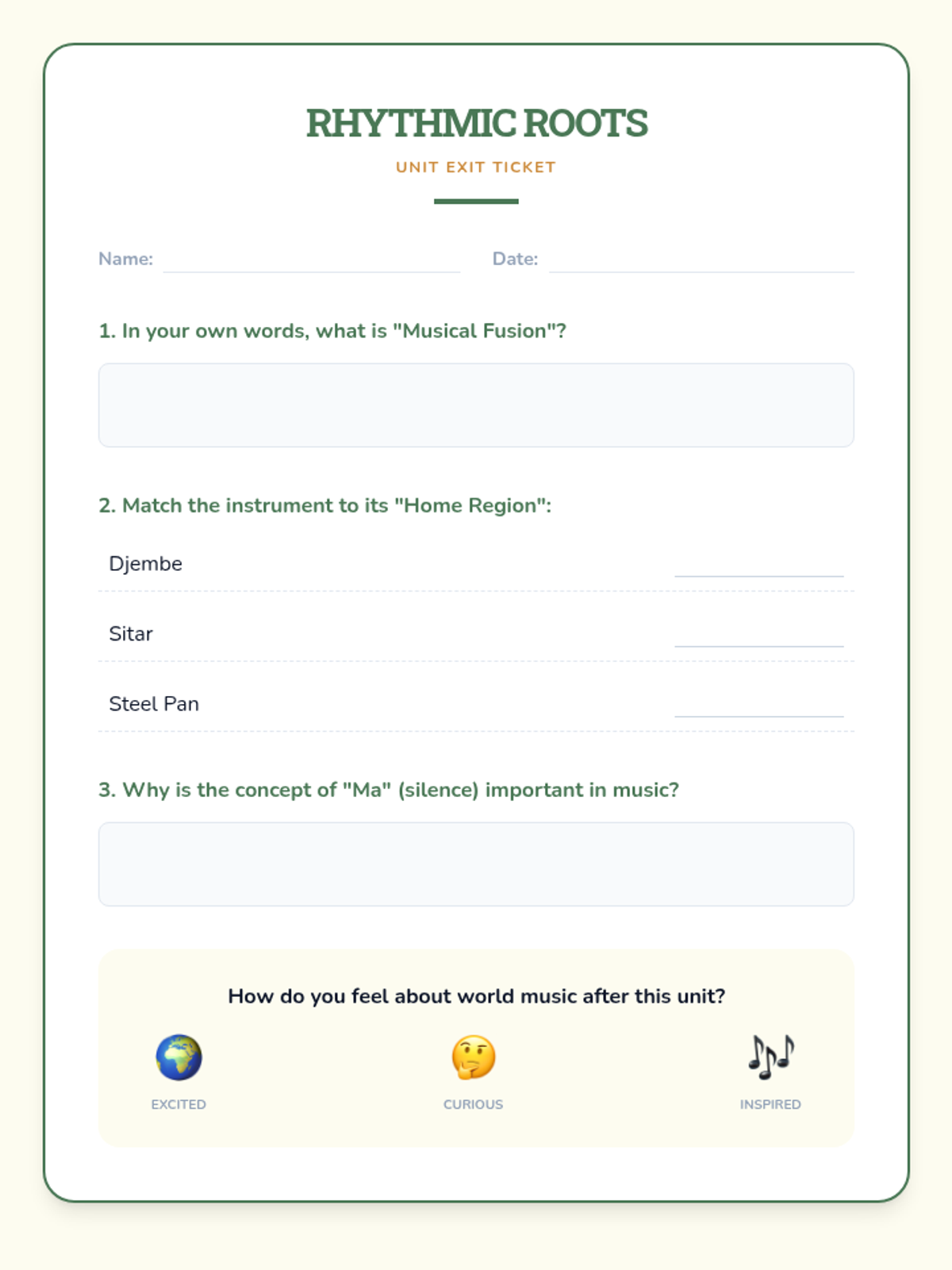
Synthesize learning through the study of global fusion and the creation of a collaborative world music project.
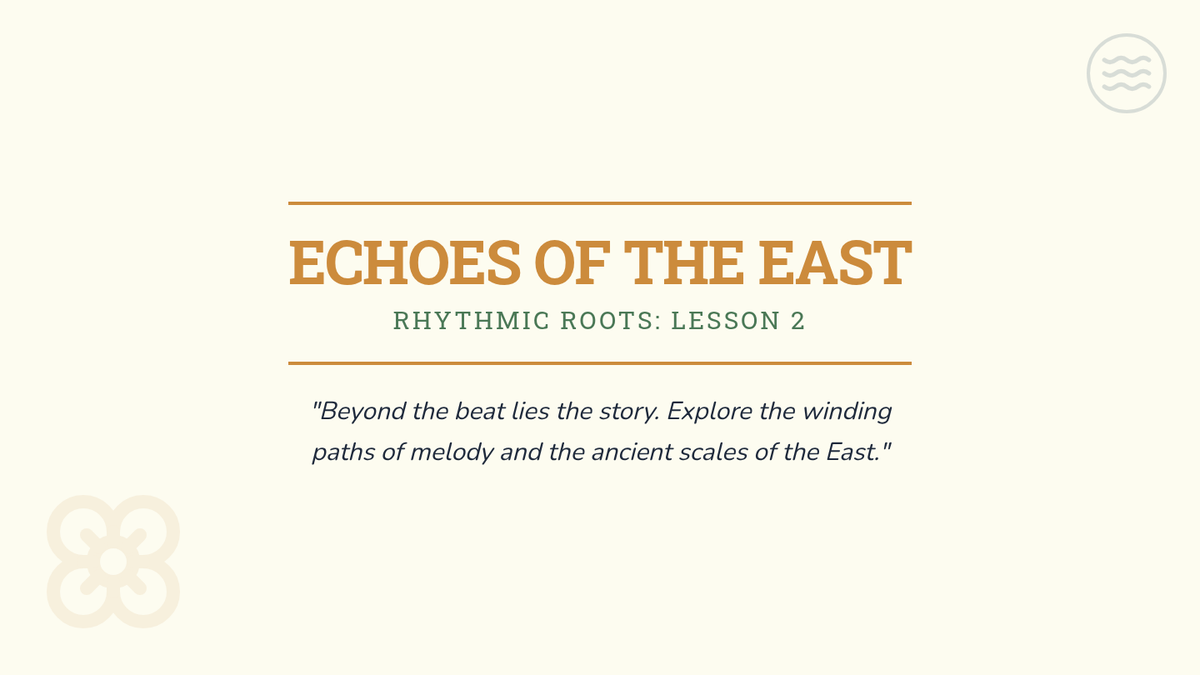
Discover the unique melodic structures, scales, and storytelling traditions of Asian and Middle Eastern music.
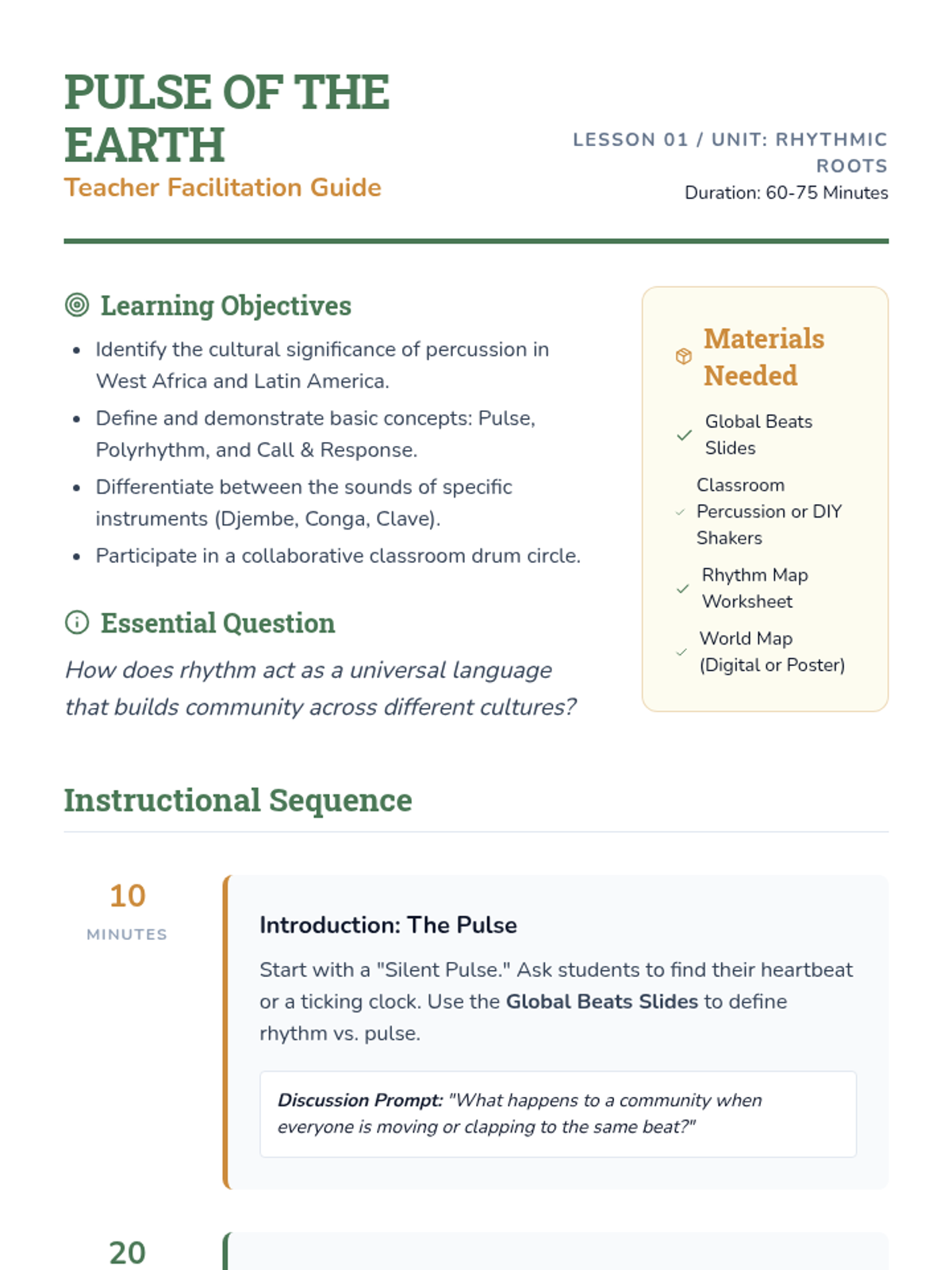
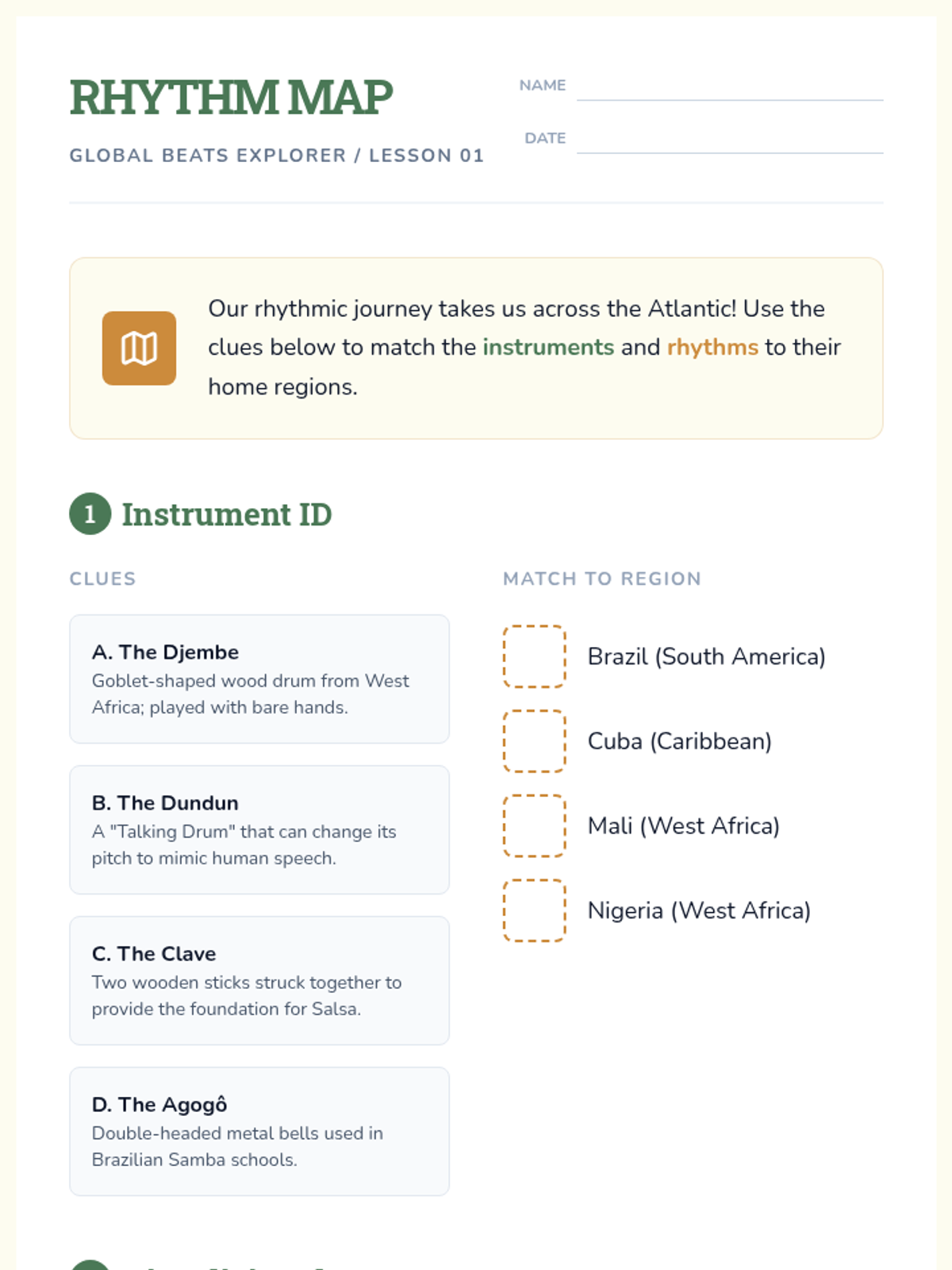
Explore the foundational role of percussion and polyrhythms in West African and Latin American musical traditions.
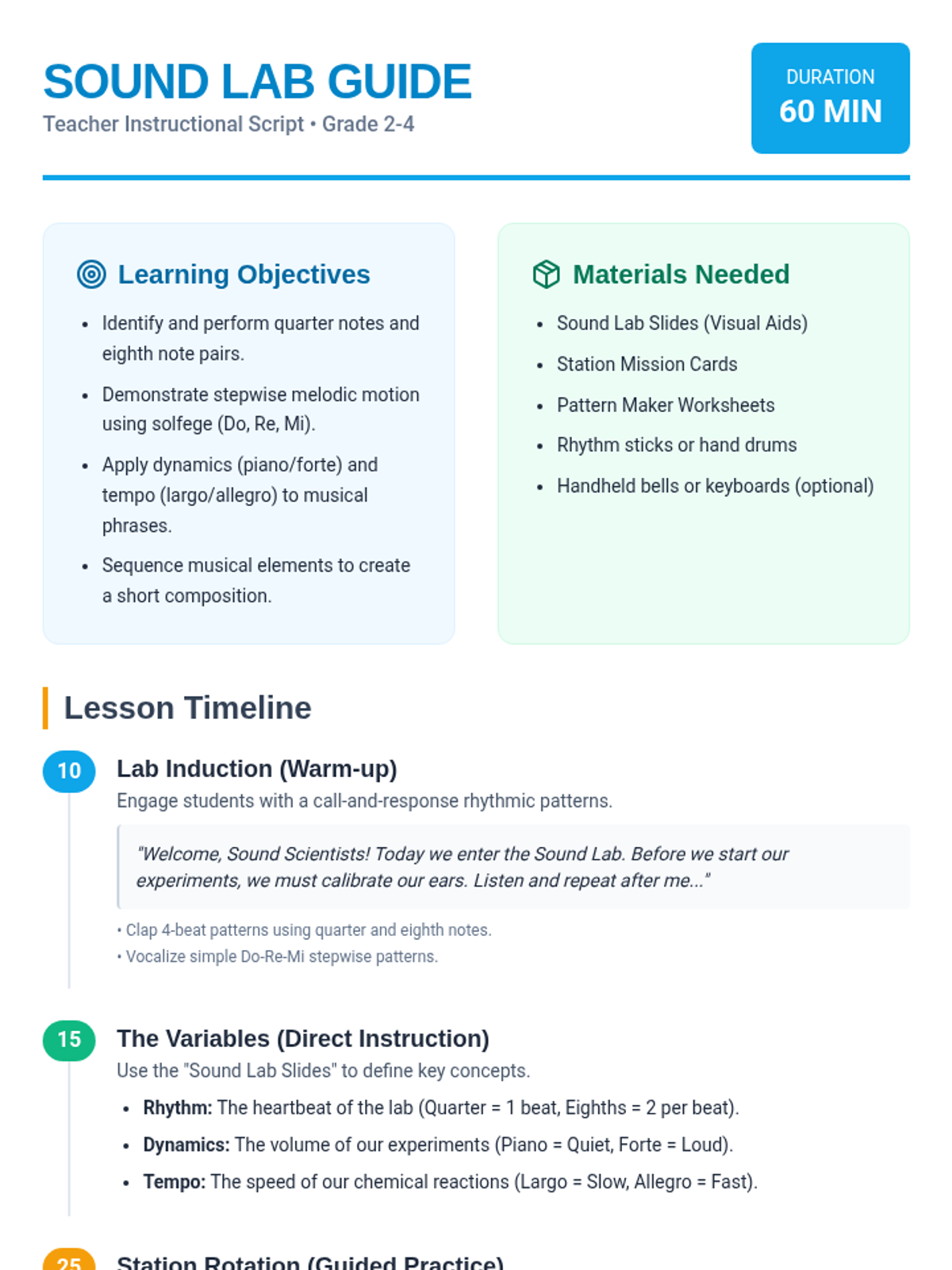
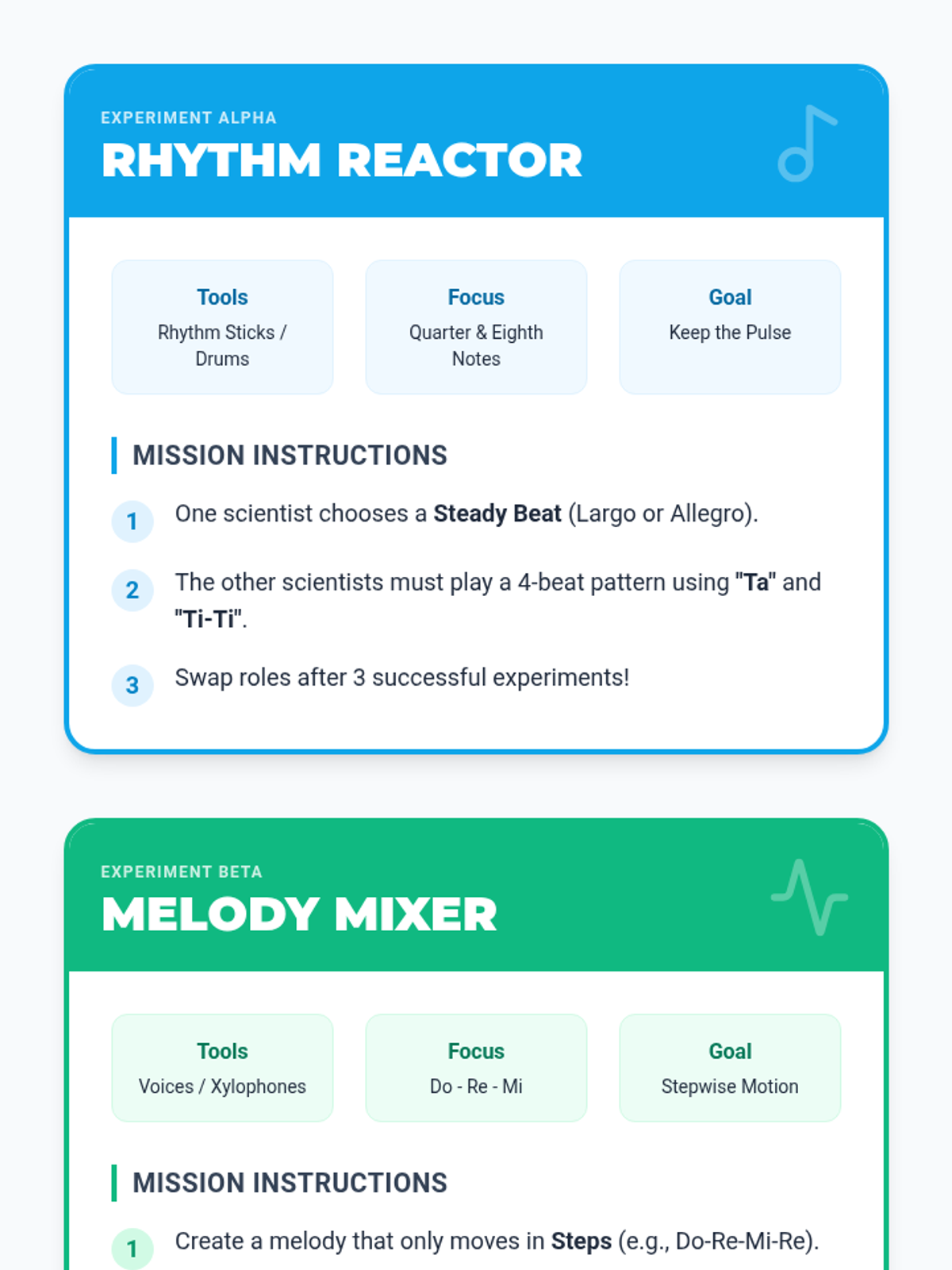
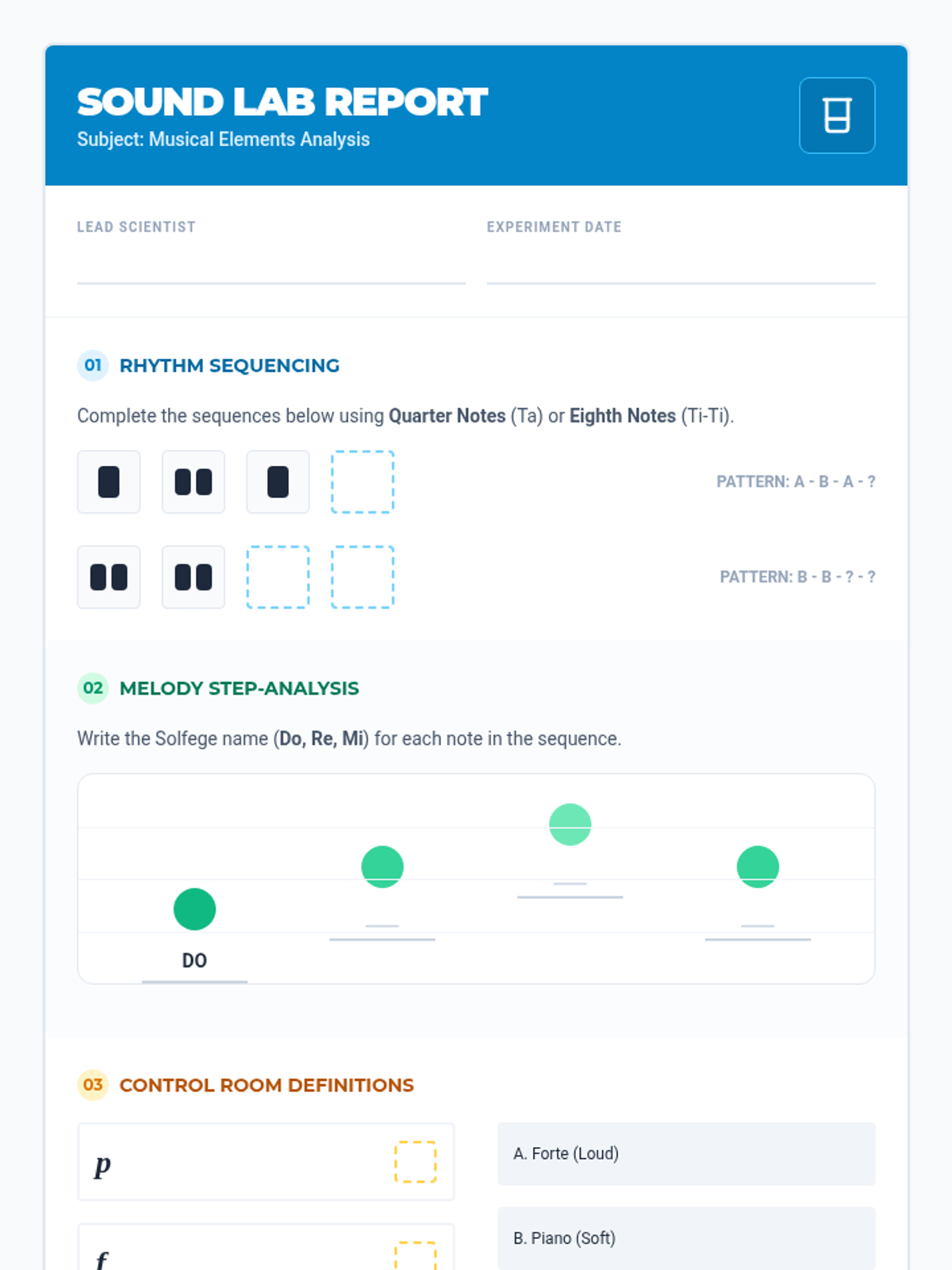
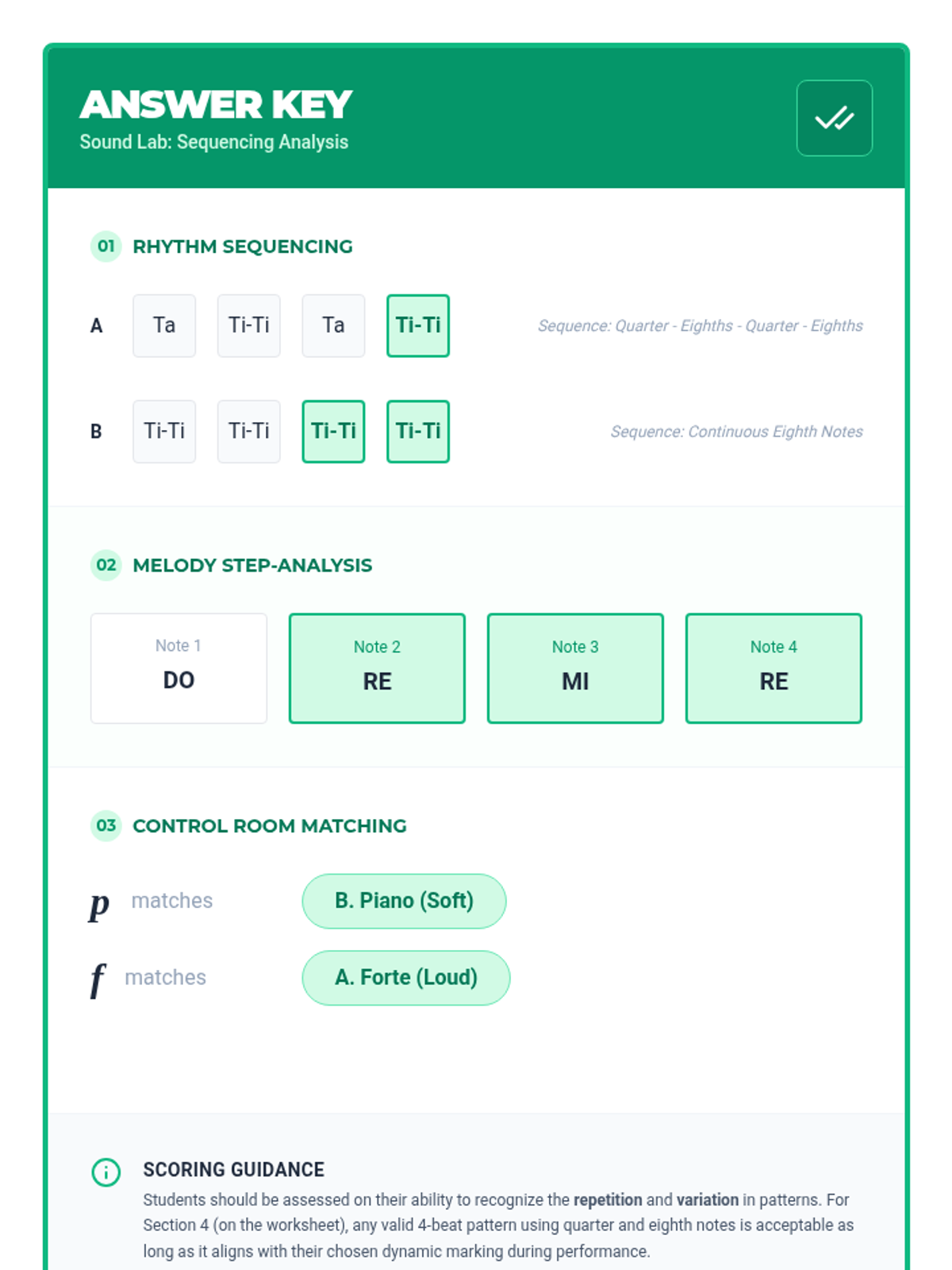
A comprehensive 60-minute introductory music lesson exploring rhythm, melody, dynamics, and tempo through the lens of a 'Sound Lab'. Students act as scientists to experiment with musical elements.
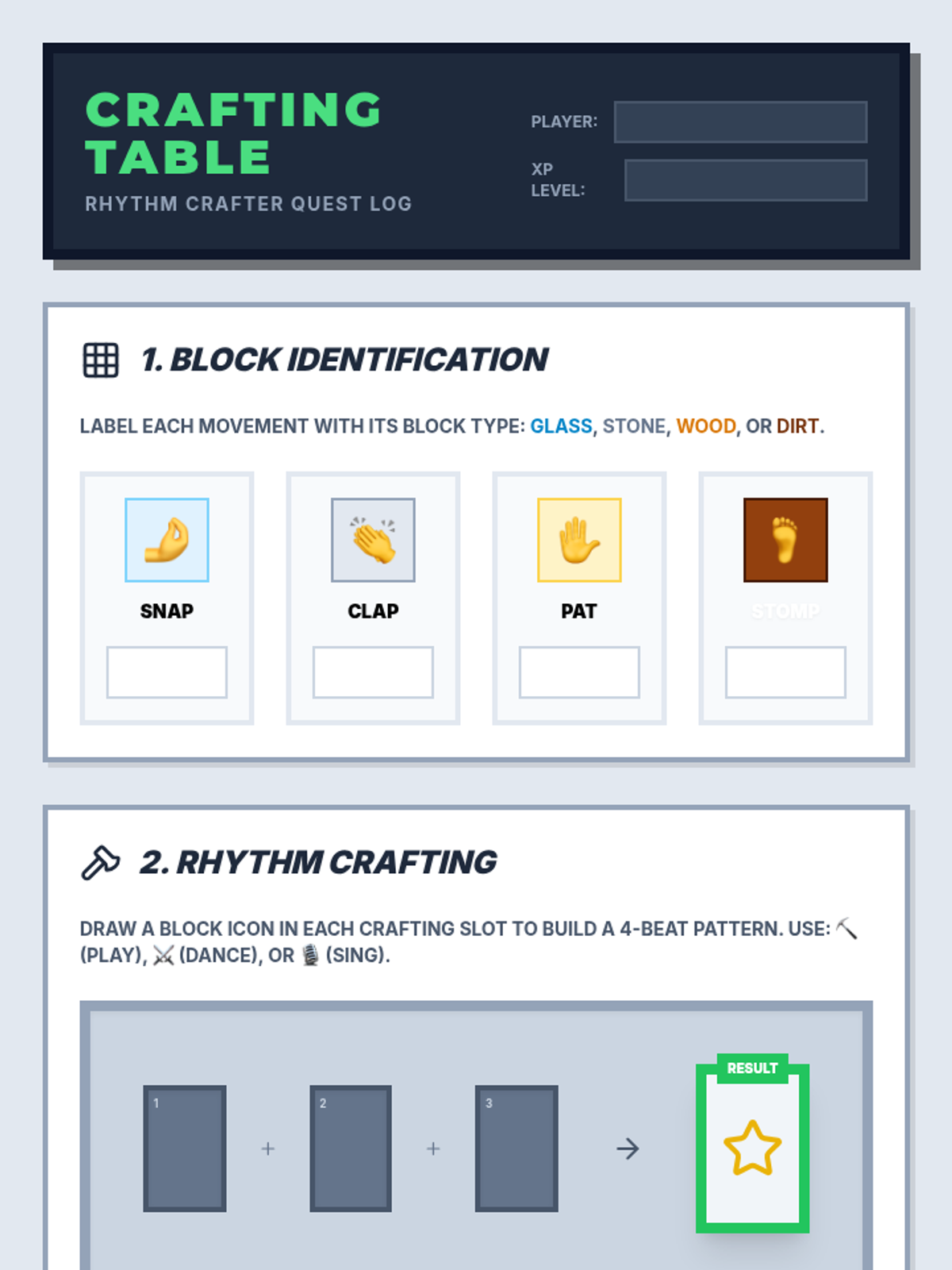
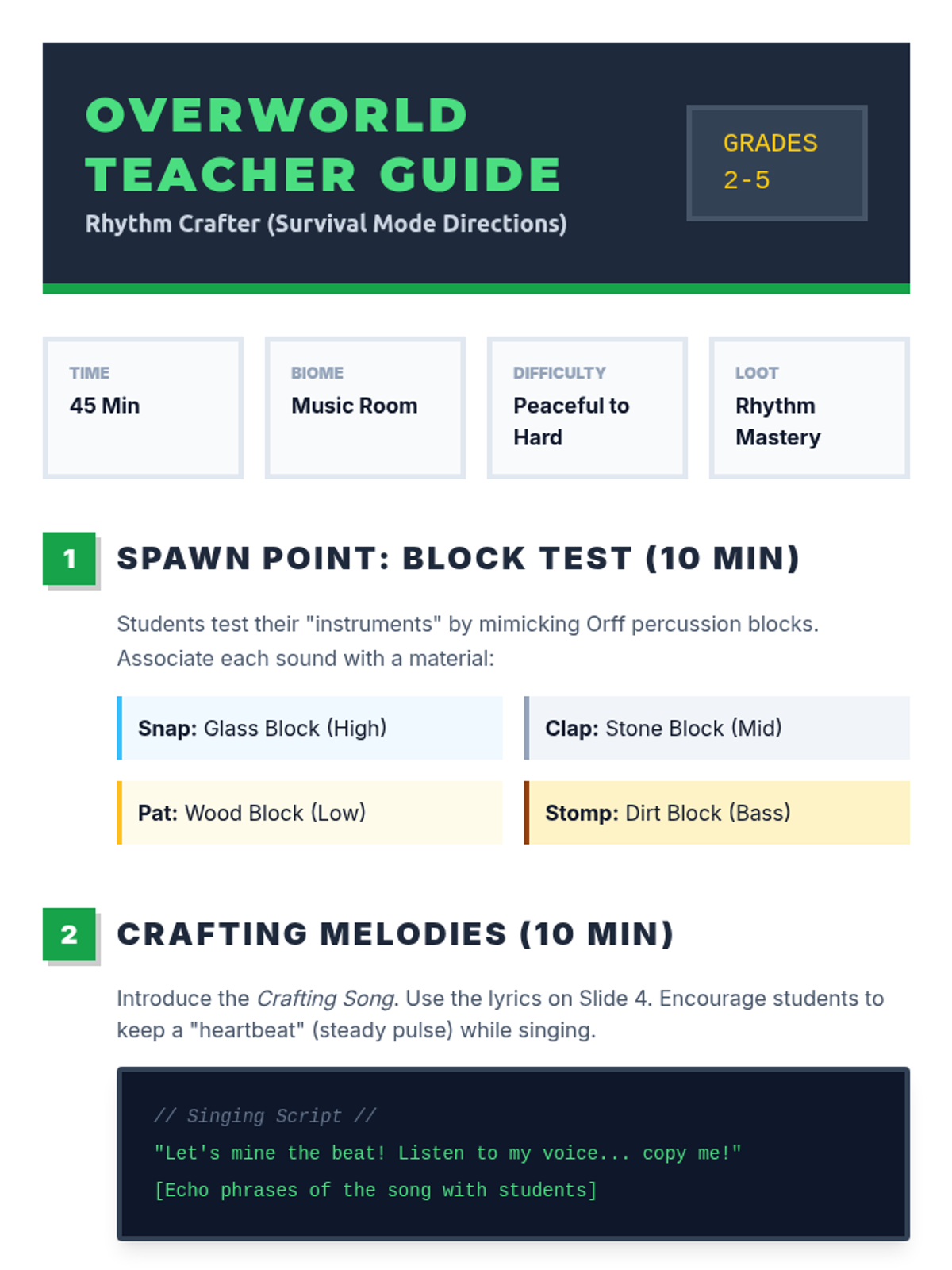
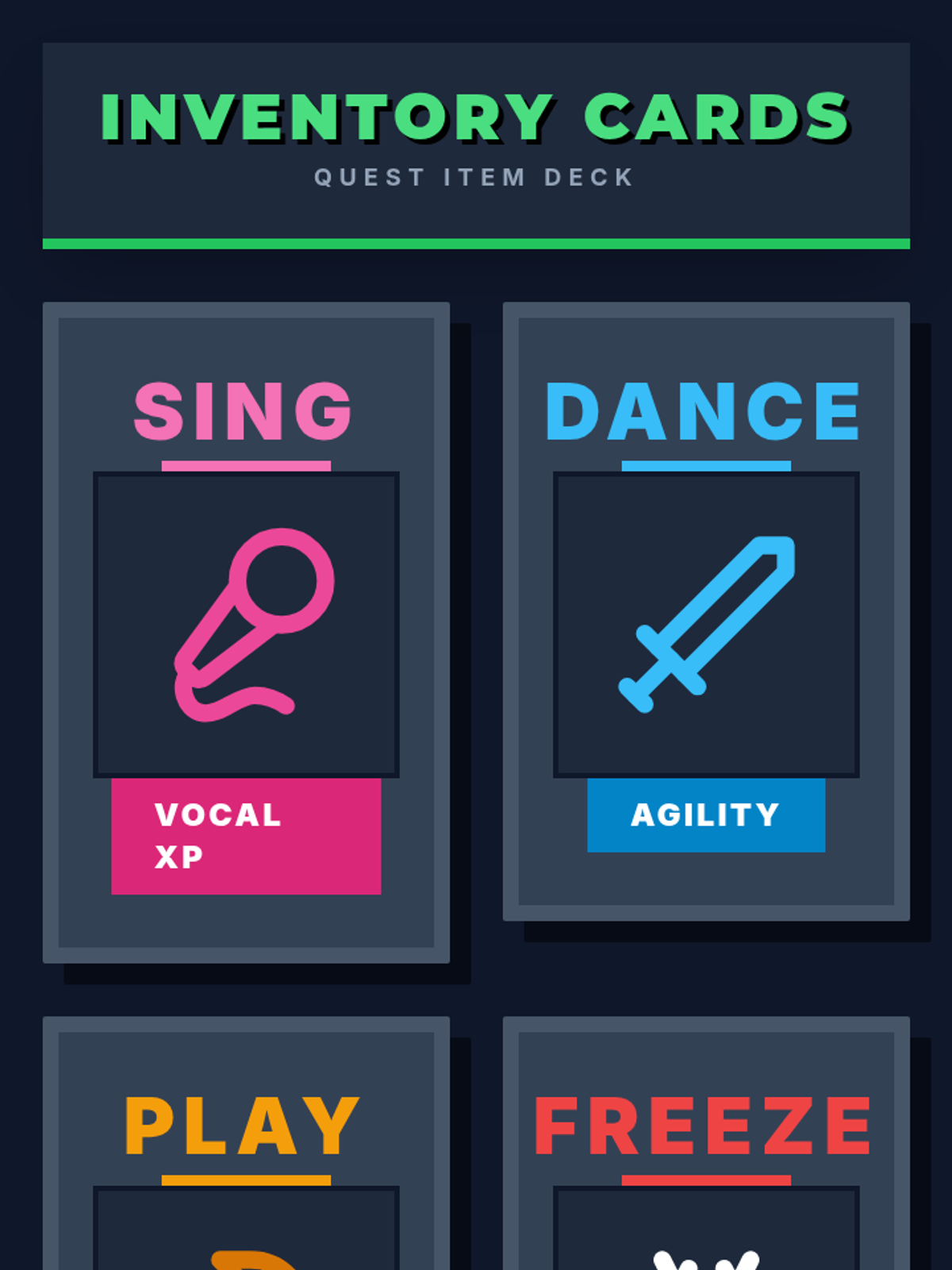
A block-building music lesson where students 'craft' rhythms, 'survive' rapid direction changes, and explore Orff percussion through a pixelated world theme. Includes singing, dancing, and body percussion activities.
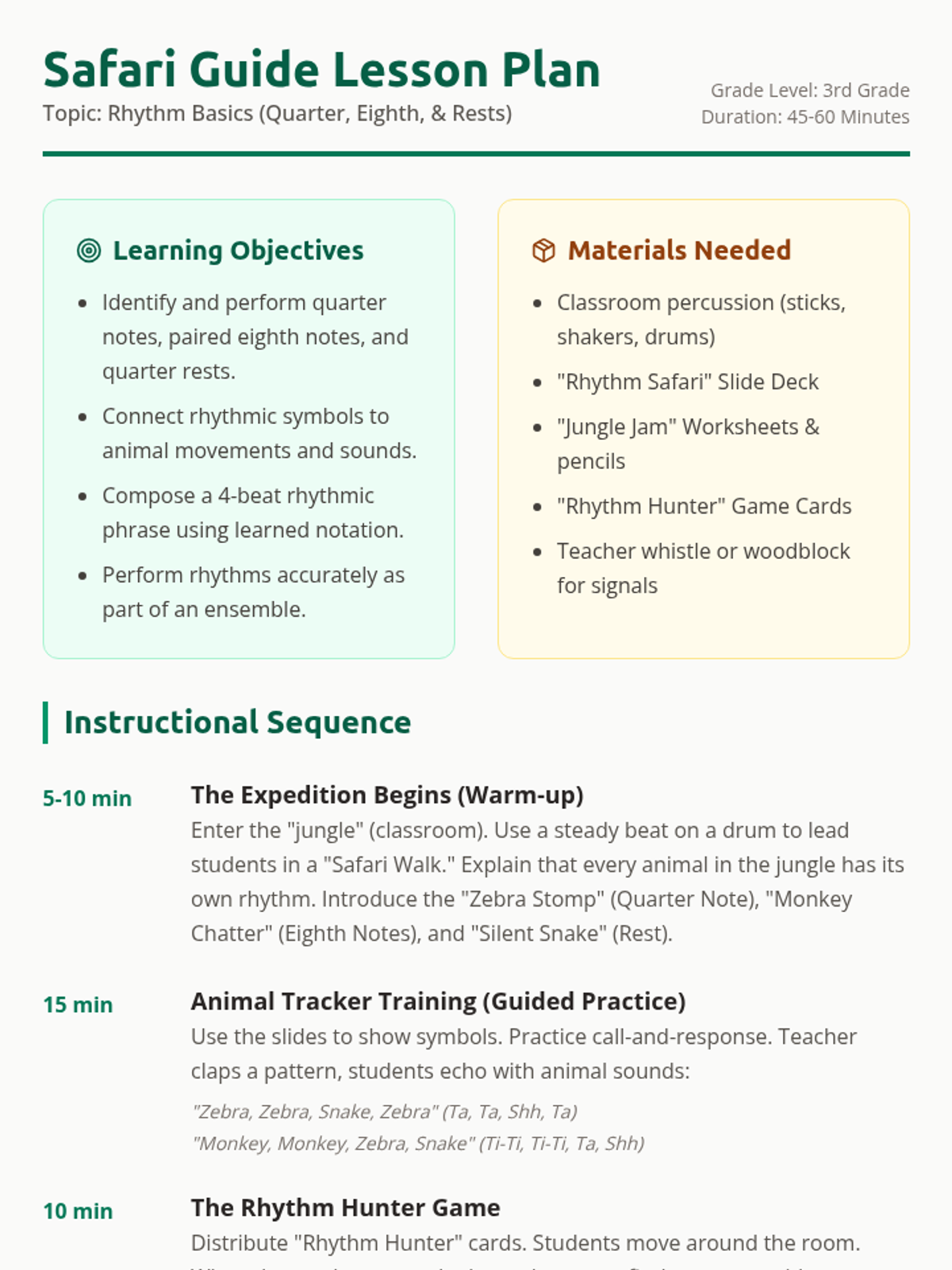
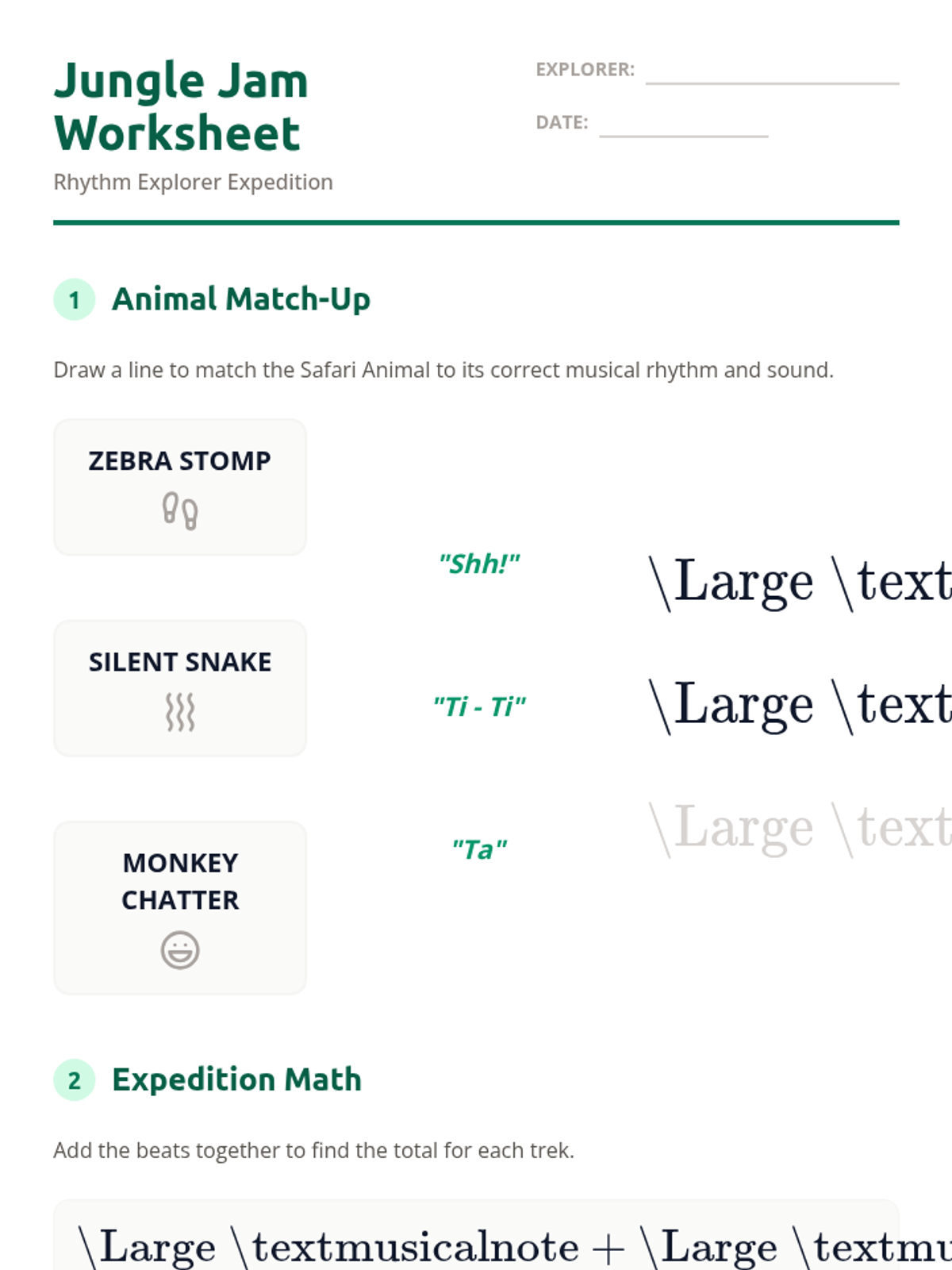
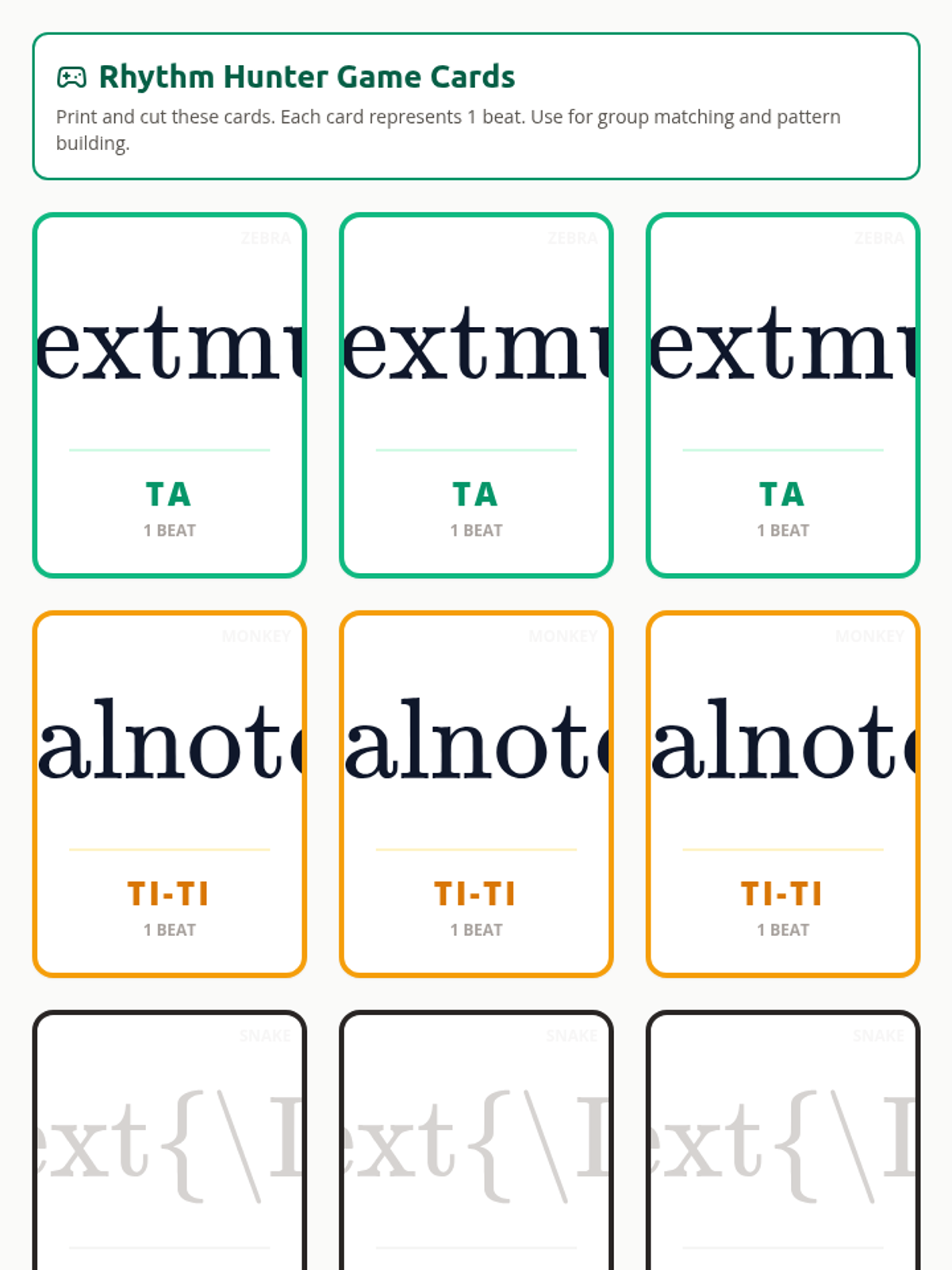
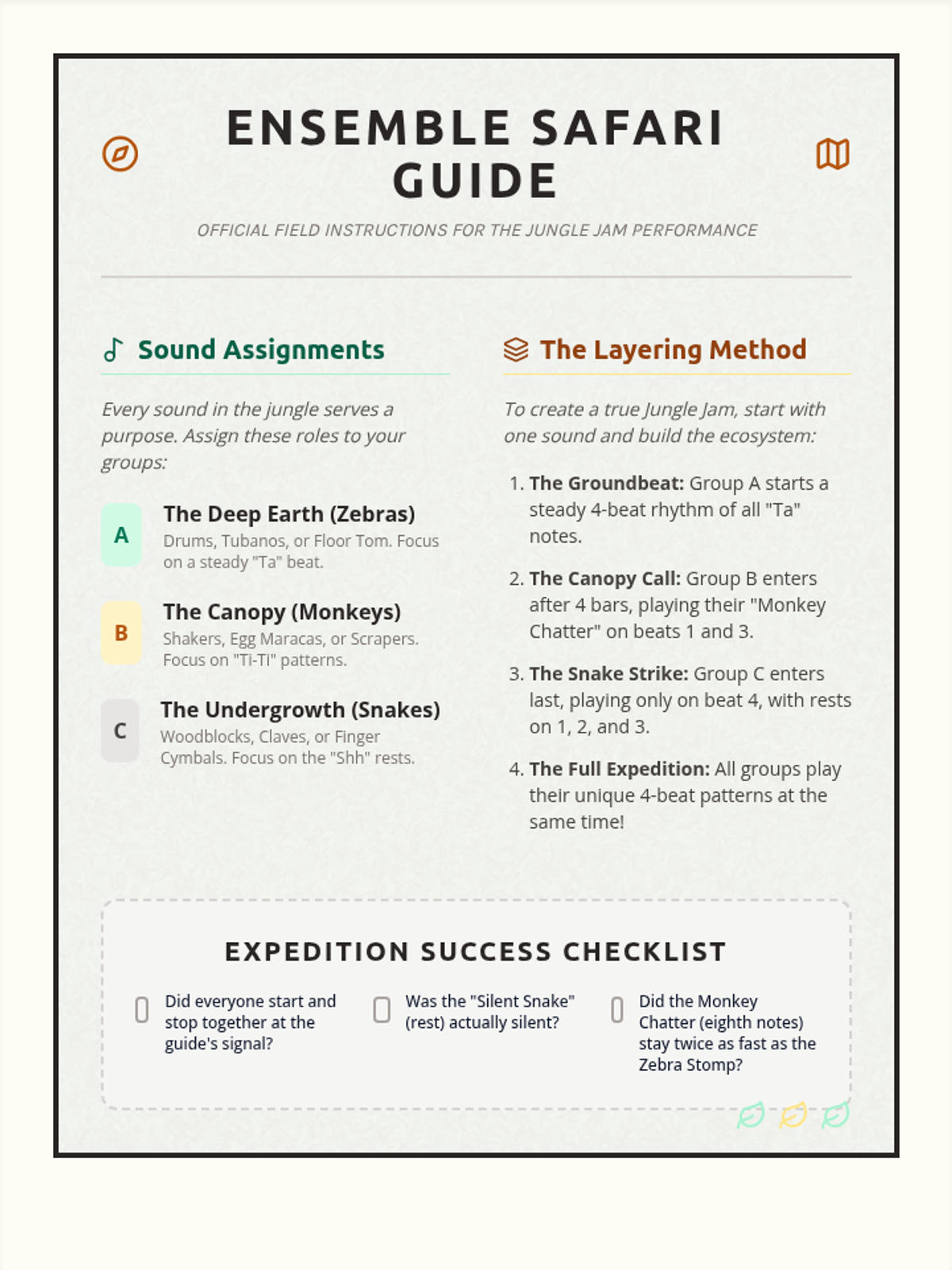
A high-energy rhythm lesson for 3rd graders exploring quarter notes, eighth notes, and rests through a jungle safari theme. Students learn to read, perform, and compose rhythms using animal-inspired movements and percussion.
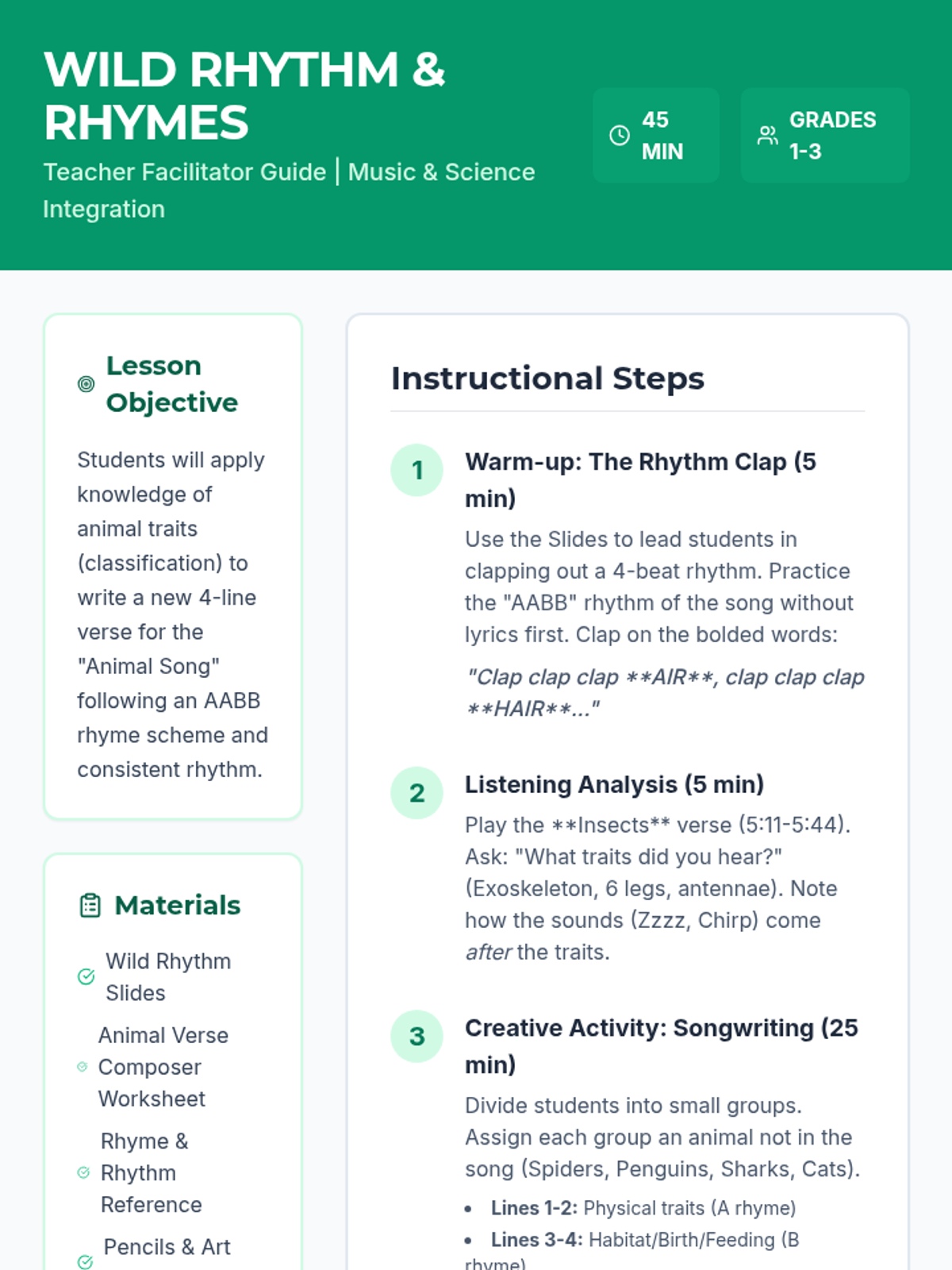
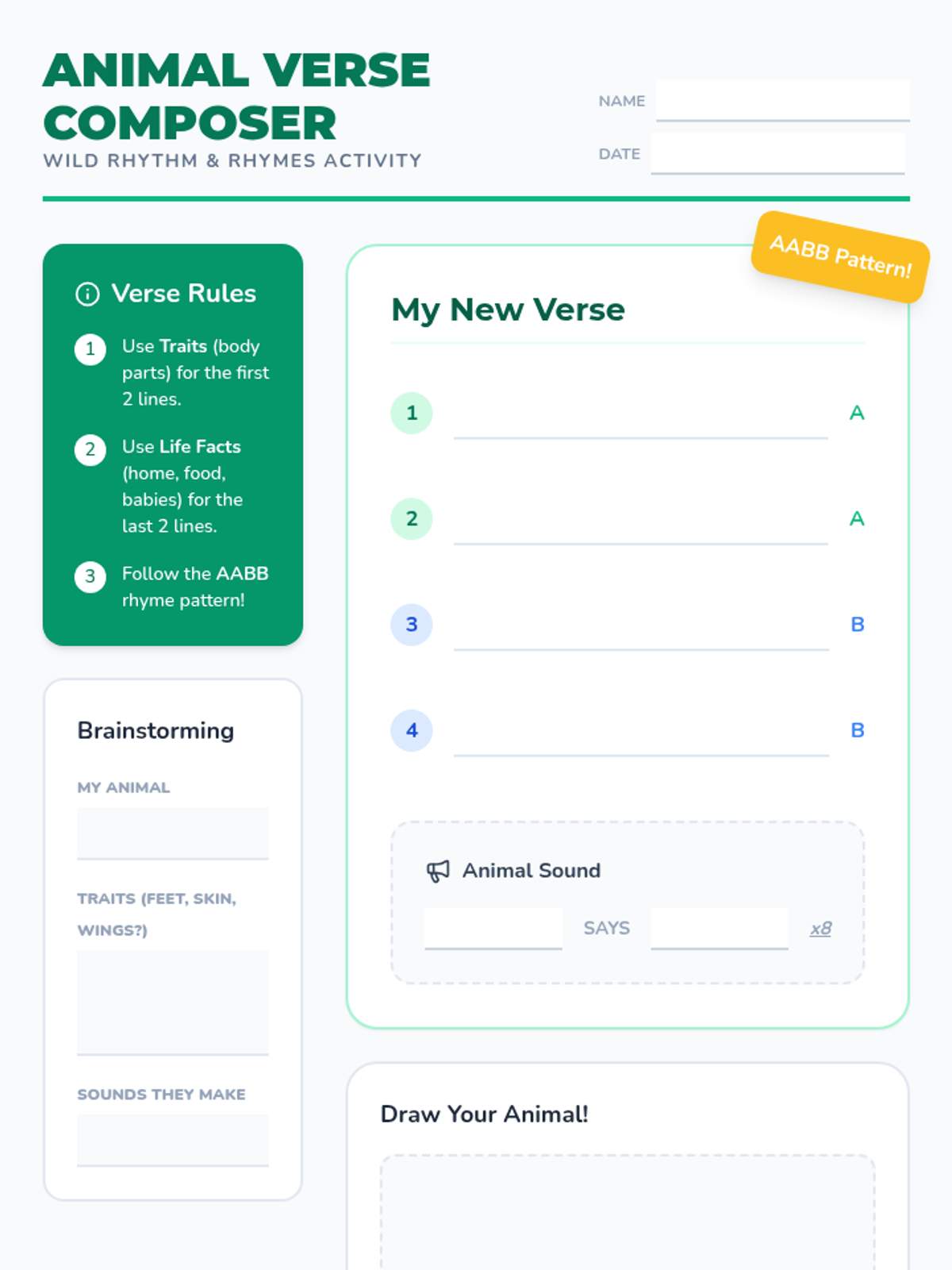
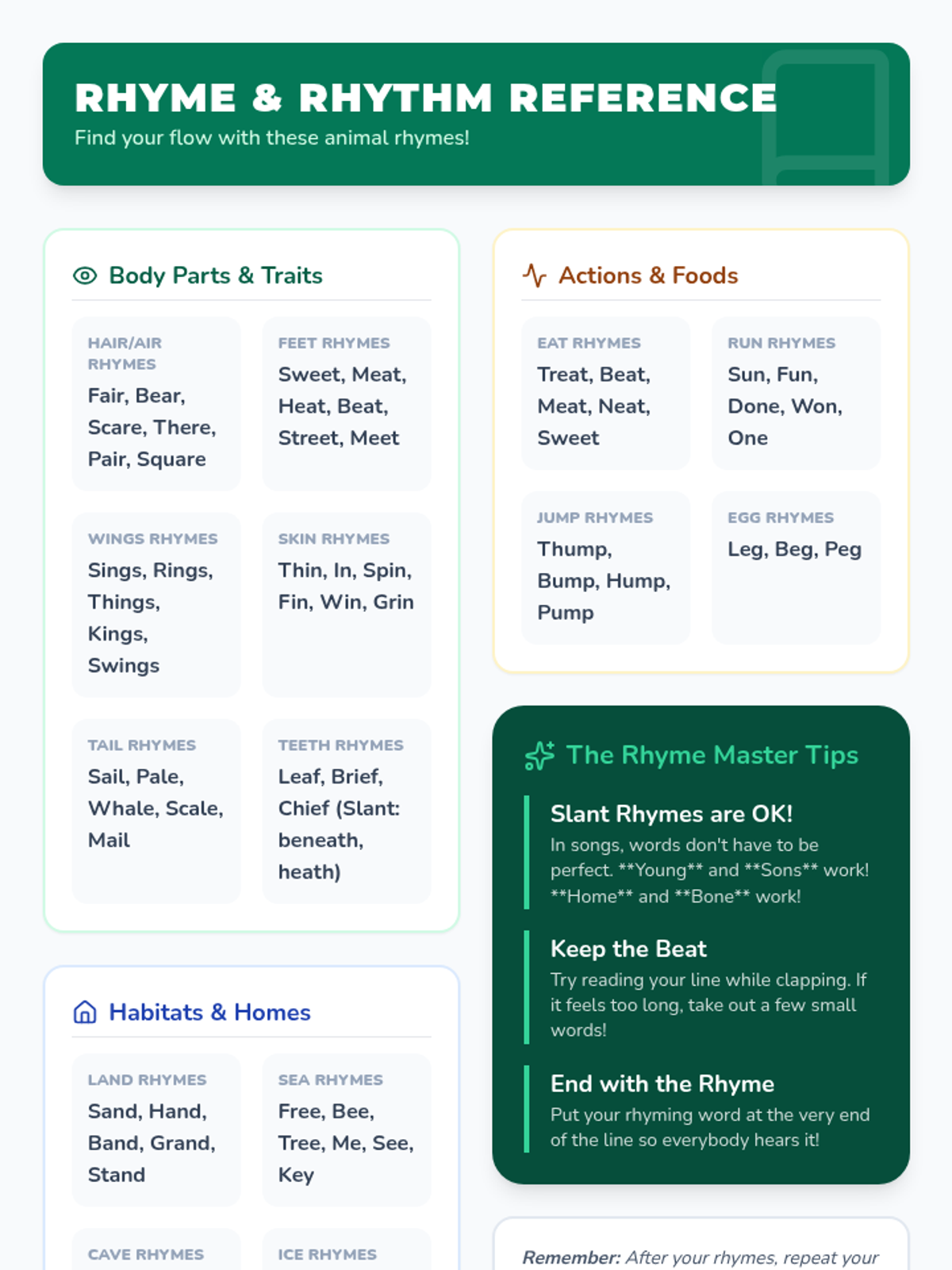
A music and science integration lesson where students analyze animal classifications and write their own verses for the 'Animal Song' using AABB rhyme schemes.
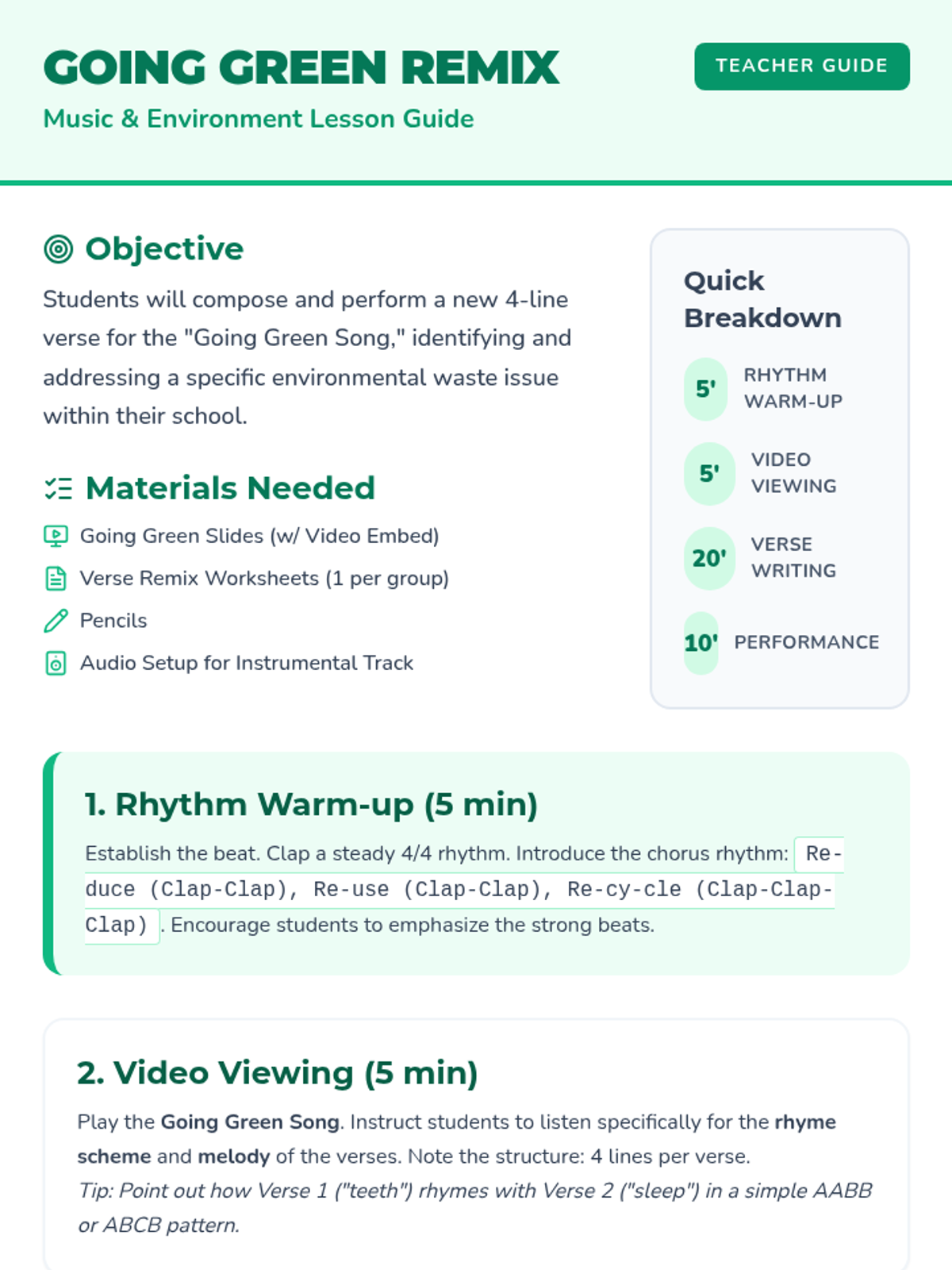
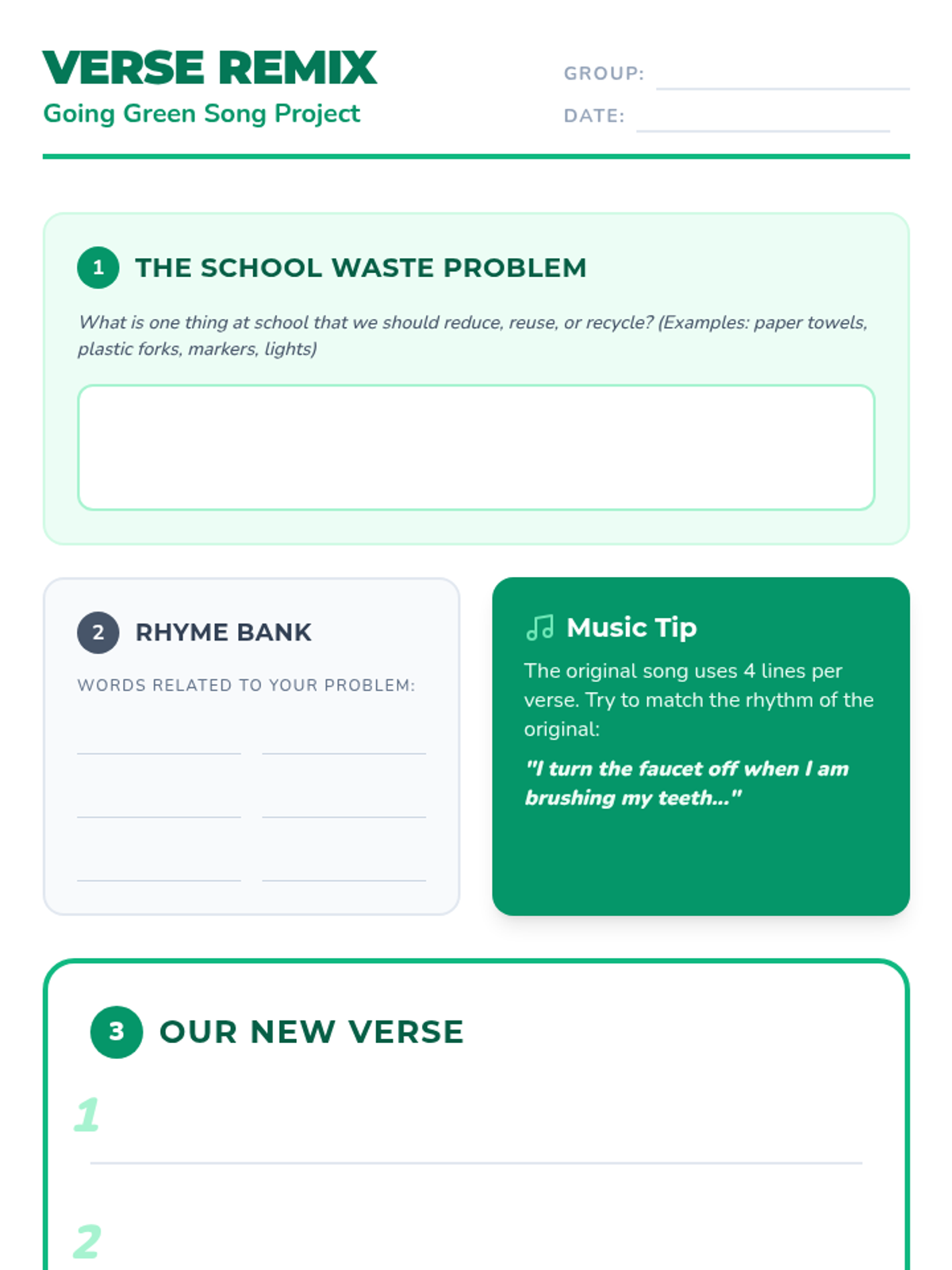
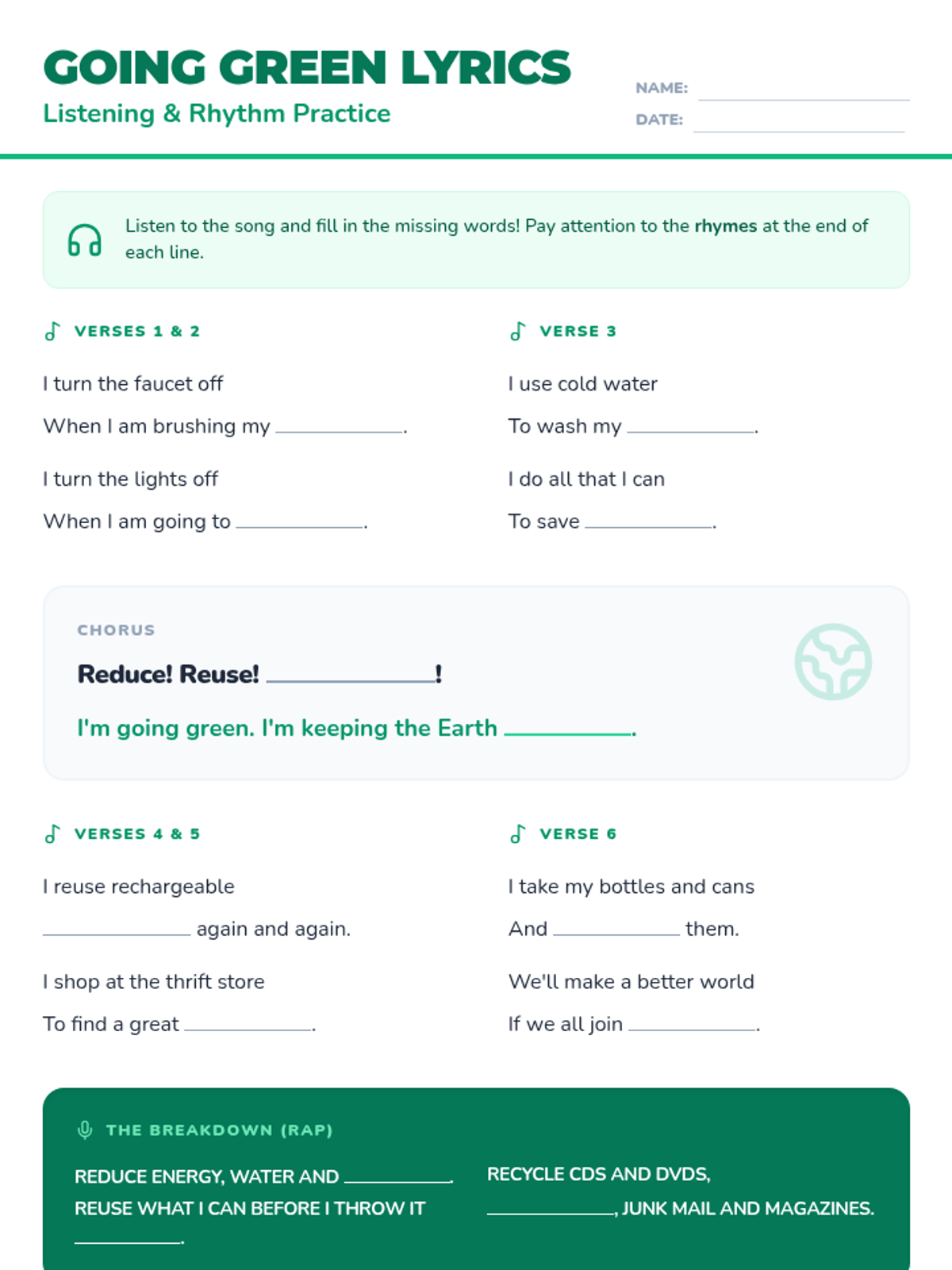
A music lesson where students compose and perform a new verse for 'Going Green Song' about environmental issues in their own school.
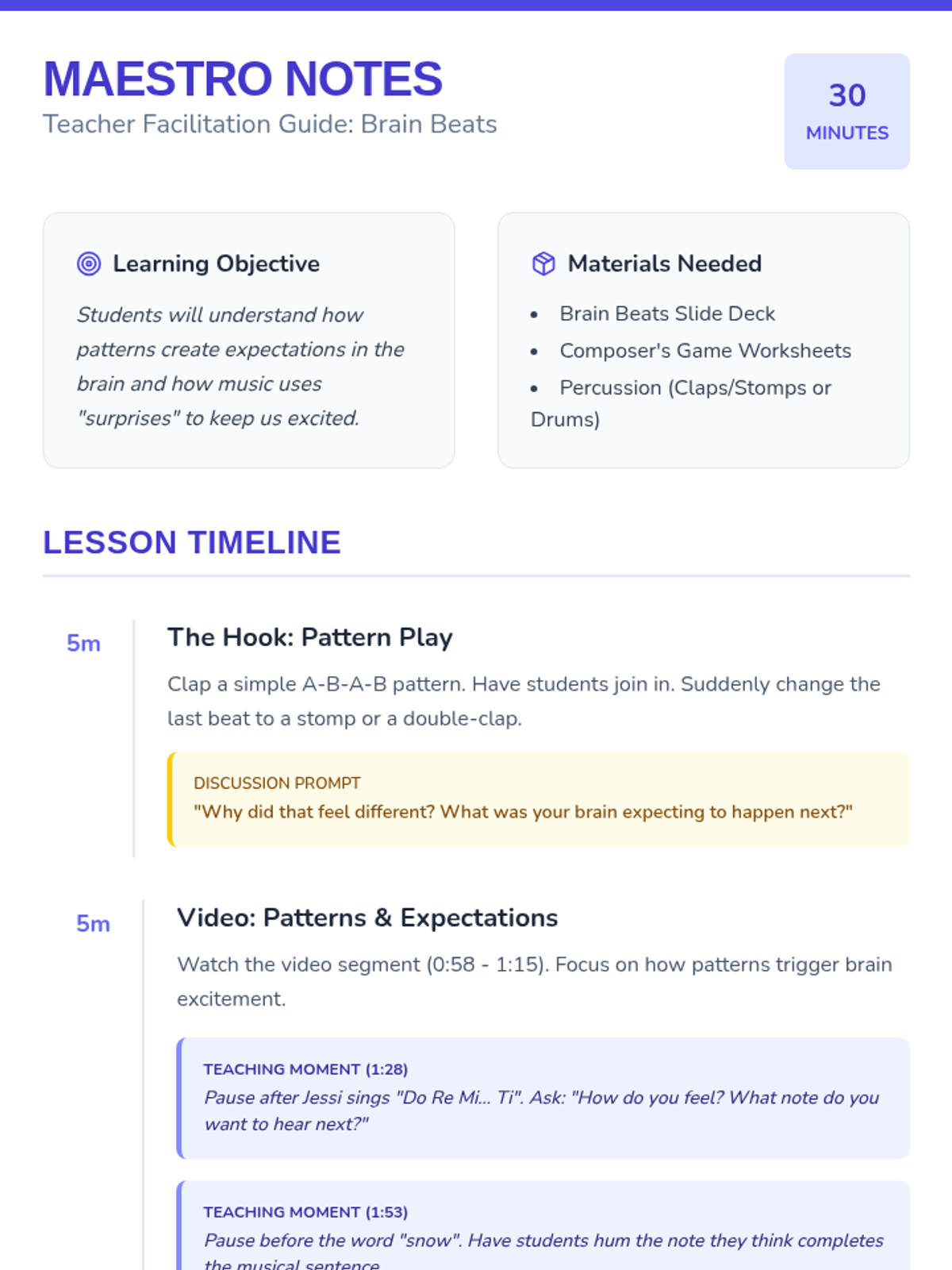
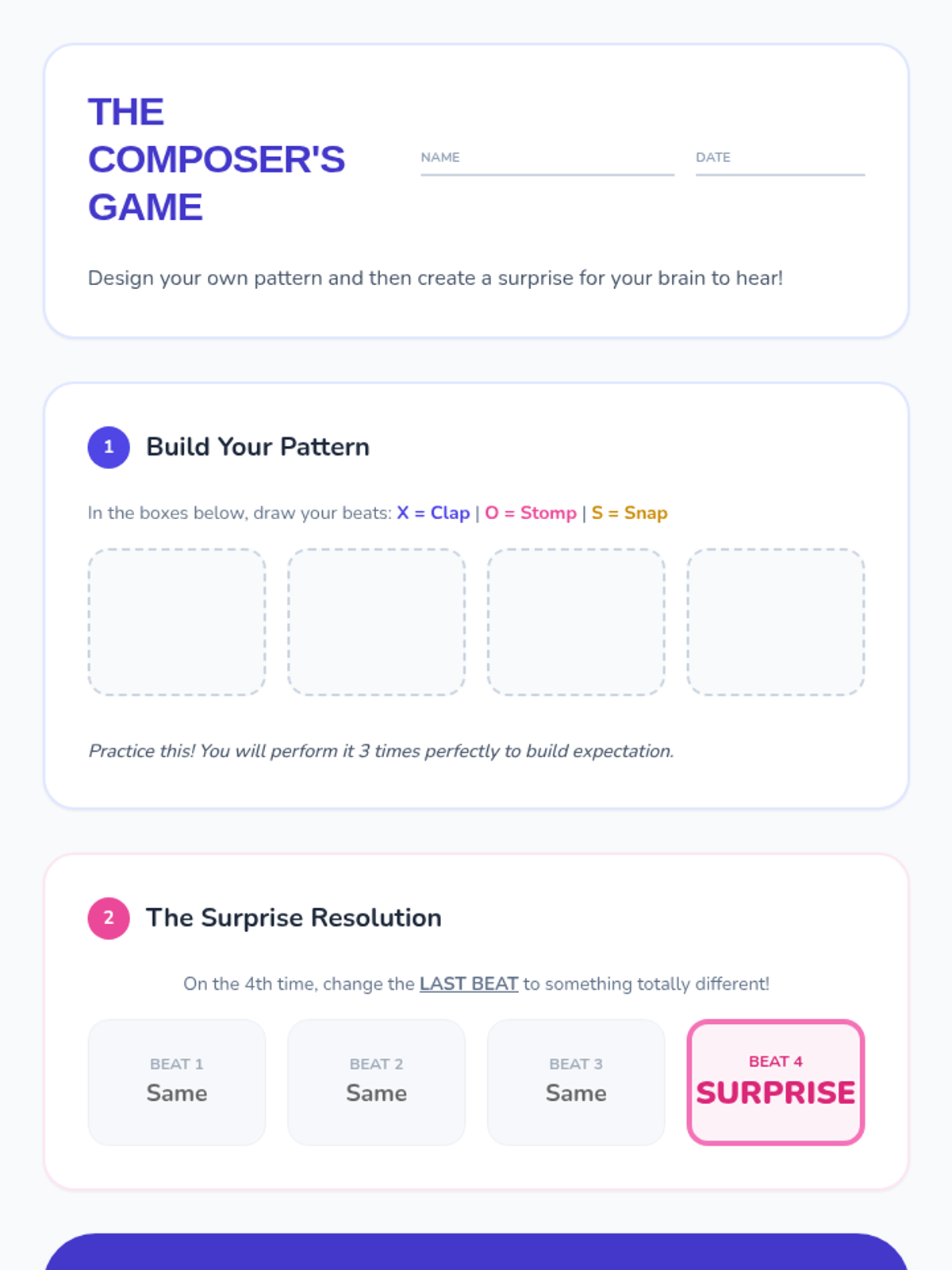
Students explore how the brain uses patterns and expectations to process music, learning about the 'tonic' and 'resolution' through a rhythmic composition game.
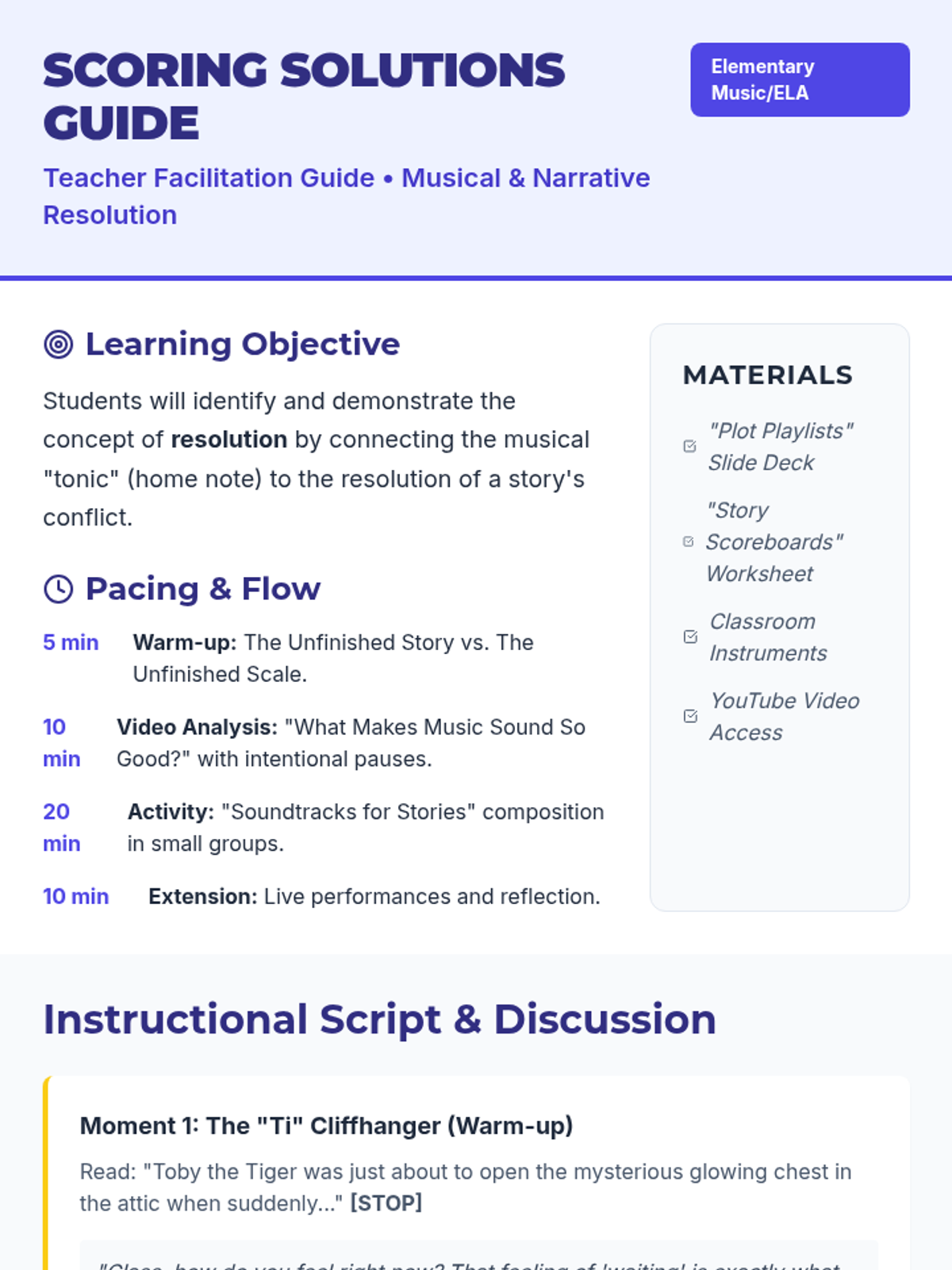
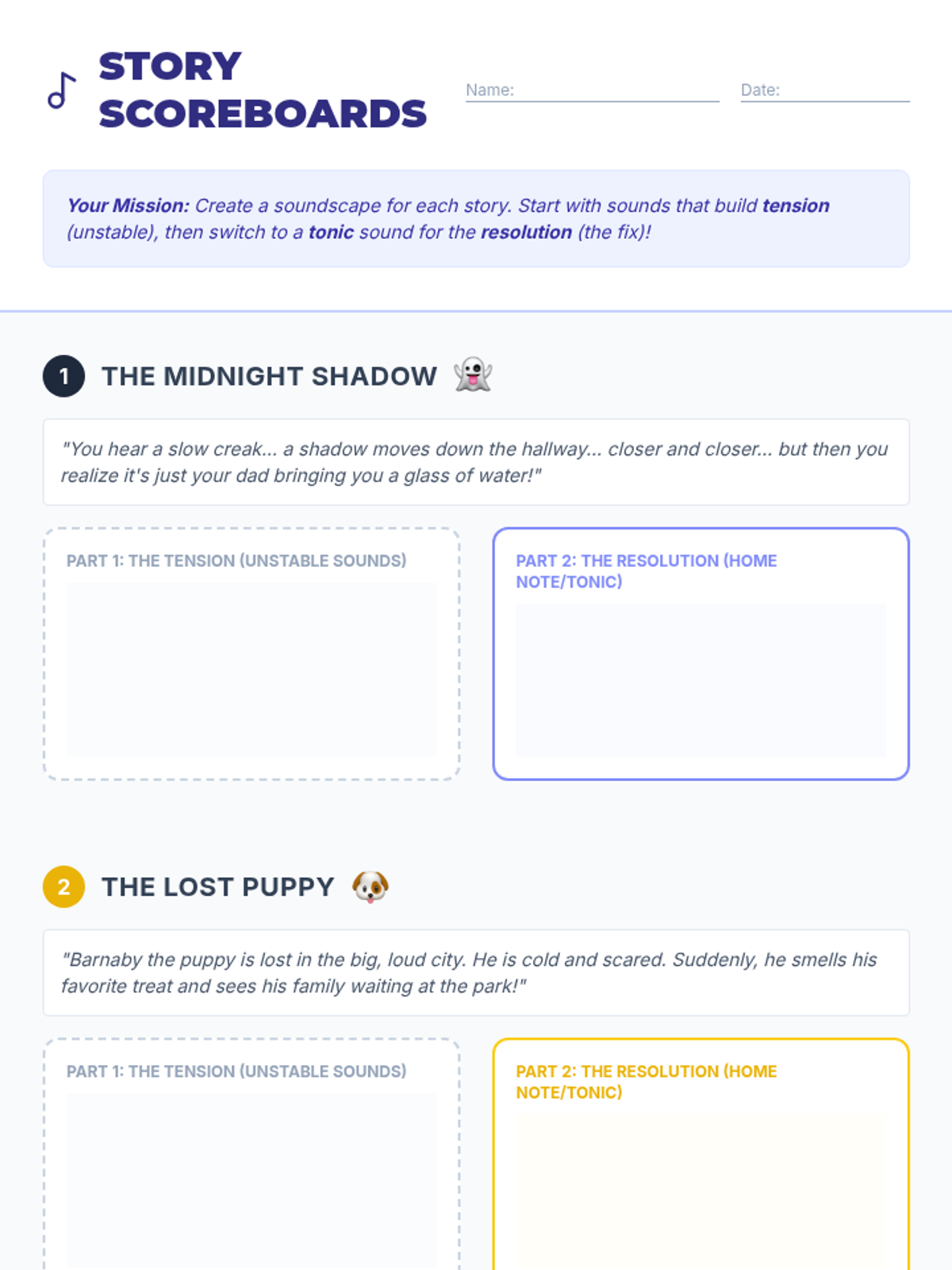
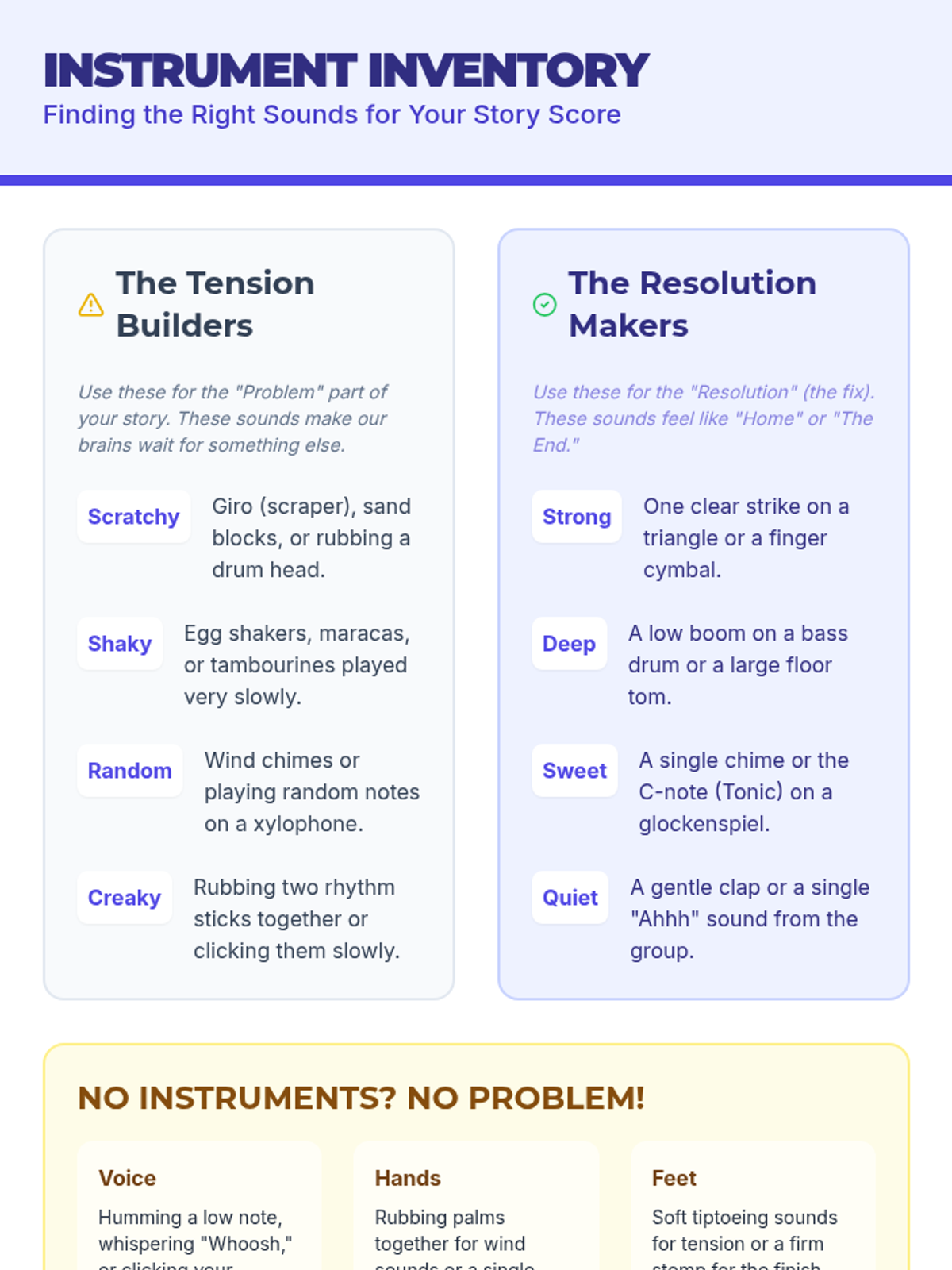
A music and literacy lesson where elementary students learn about musical resolution by connecting it to narrative arcs in stories. Students will use the concept of the 'tonic' note to create soundscapes for specific story prompts.
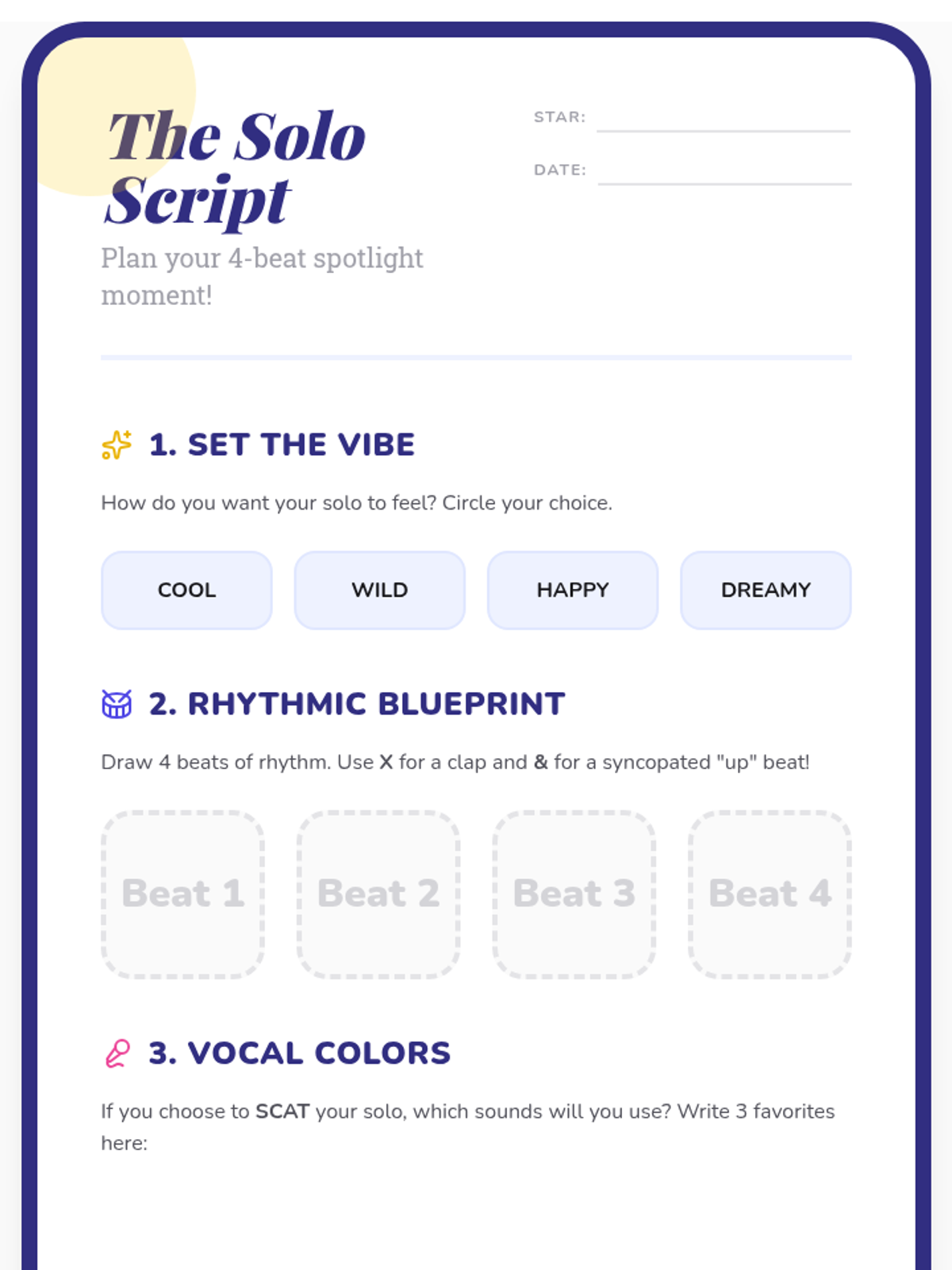
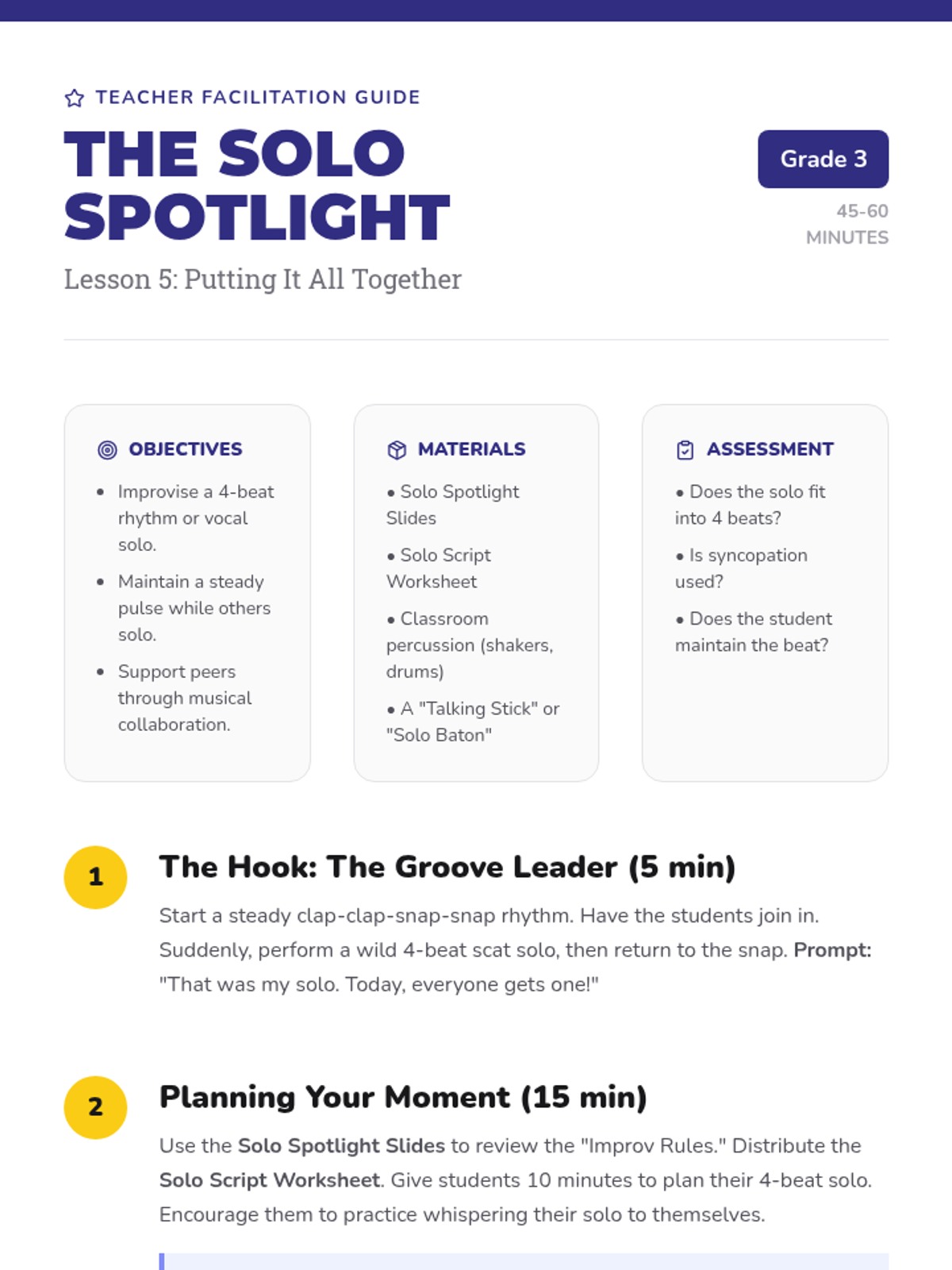
Students apply what they've learned by creating a classroom percussion circle where individuals take turns 'soloing' over a steady beat, applying the concept of improvisation.
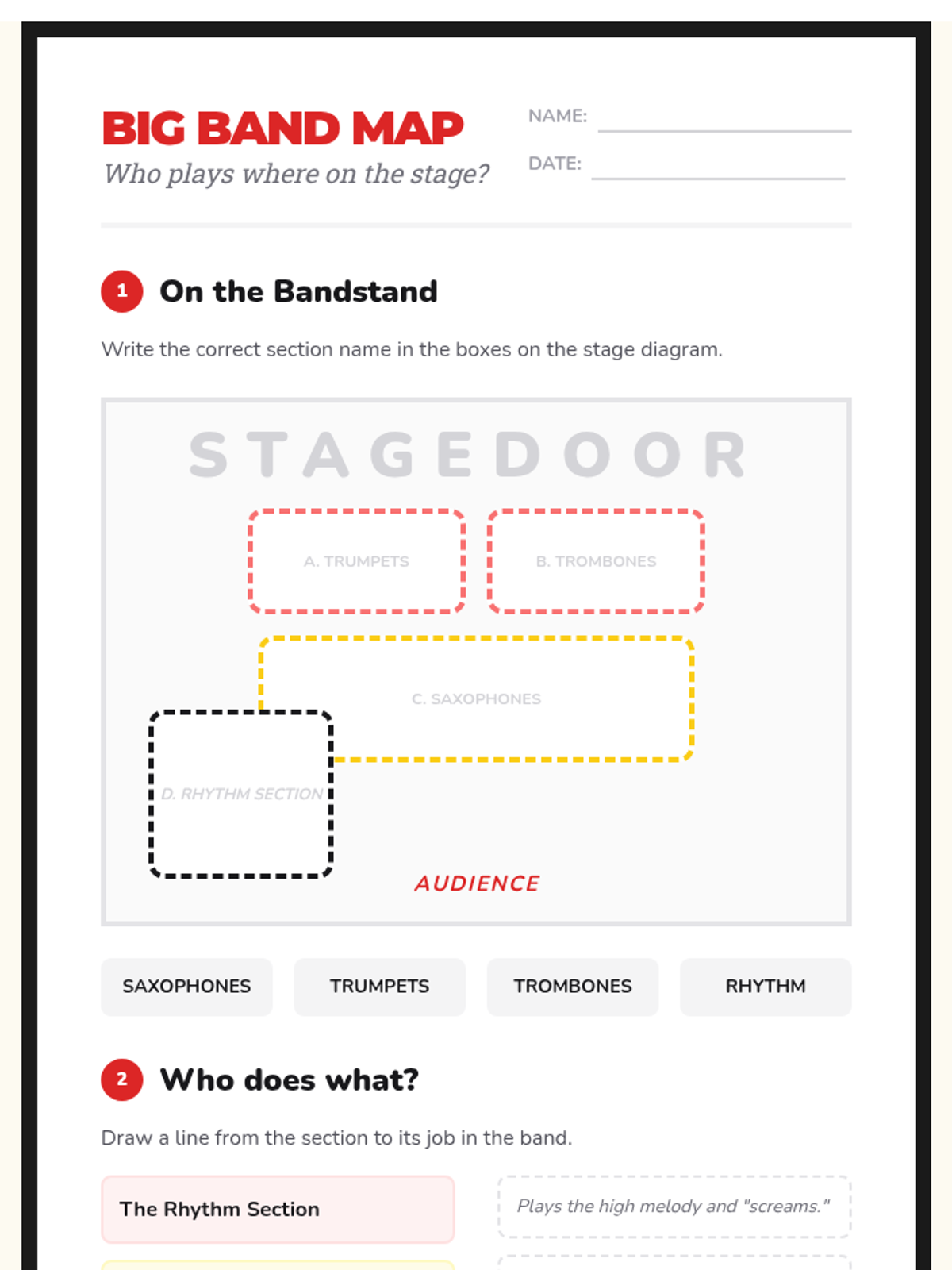
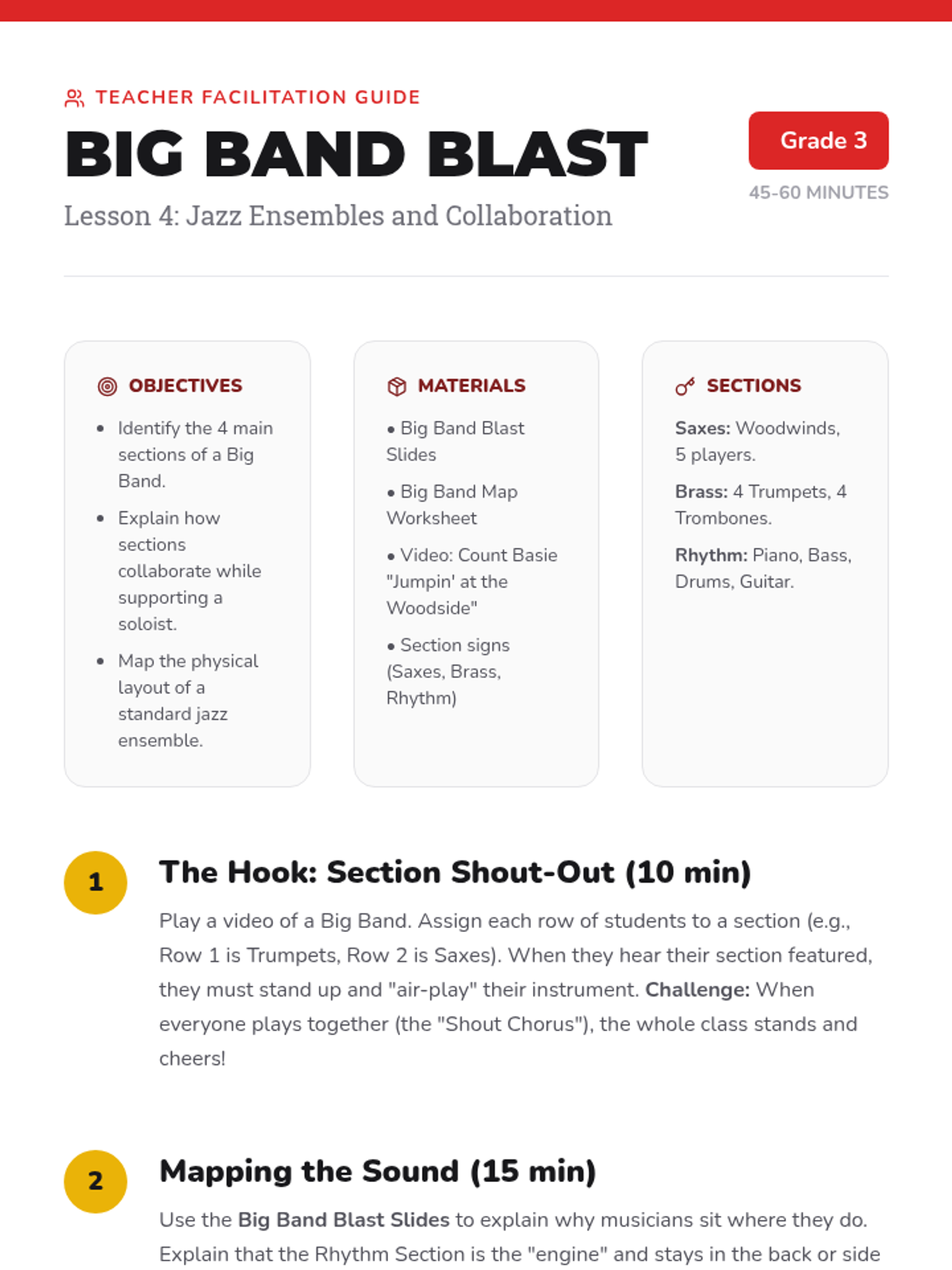
Students look at larger jazz ensembles, identifying the sections (saxophones, trumpets, trombones, rhythm). They learn how many musicians play together while still allowing for solos.
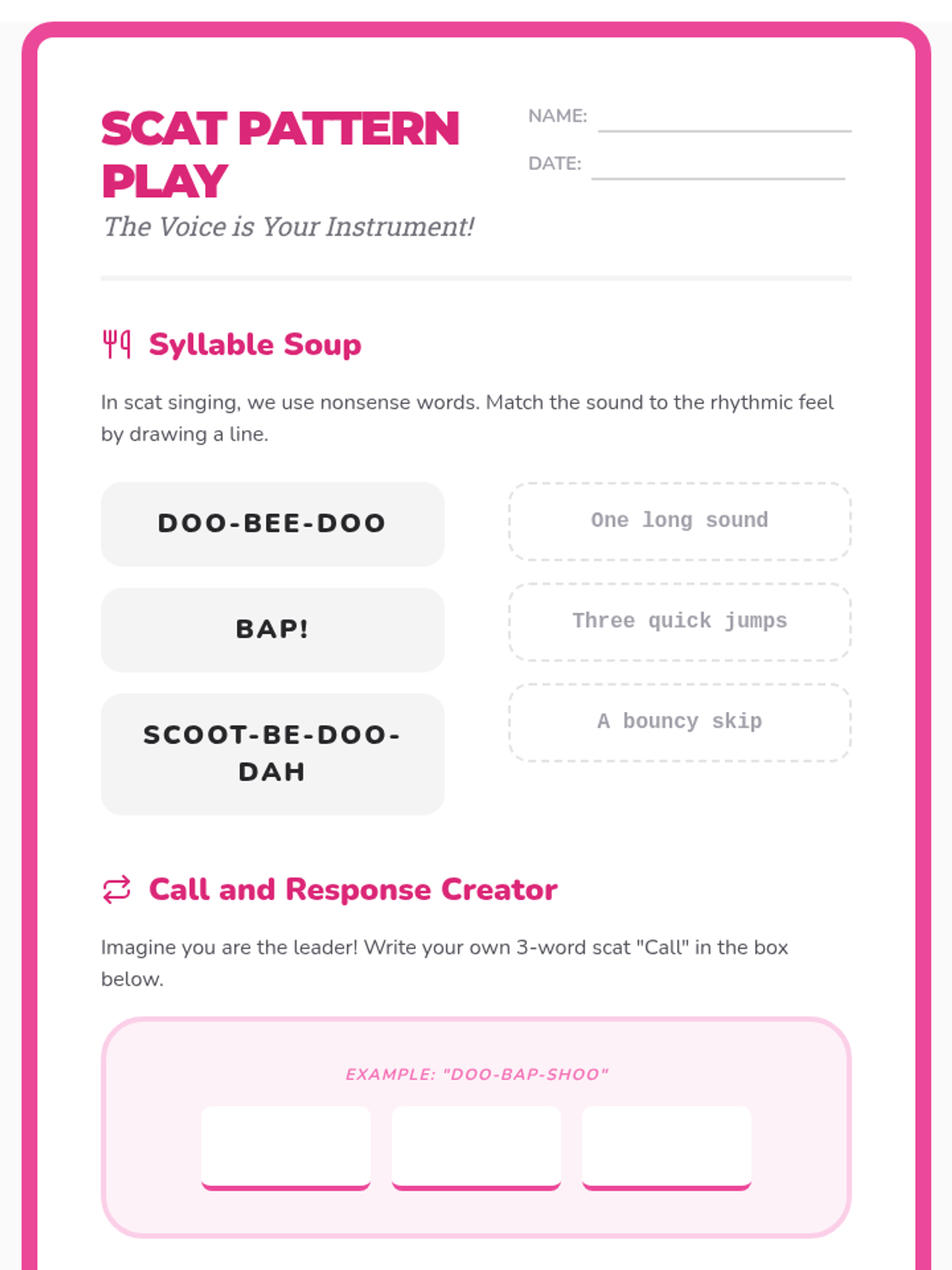
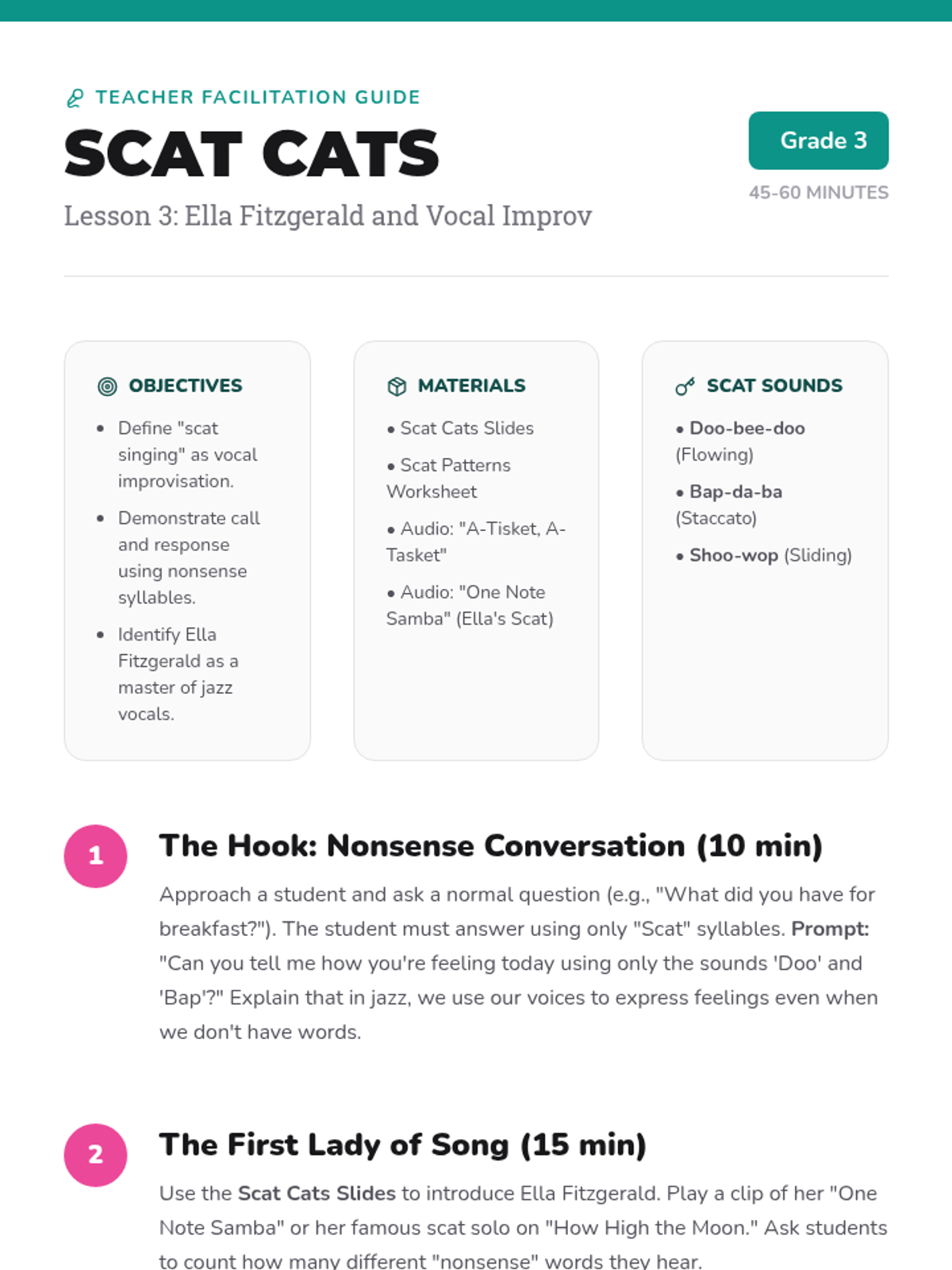
Students explore vocal improvisation through scat singing—using the voice as an instrument with nonsense syllables. They practice call-and-response scat patterns.
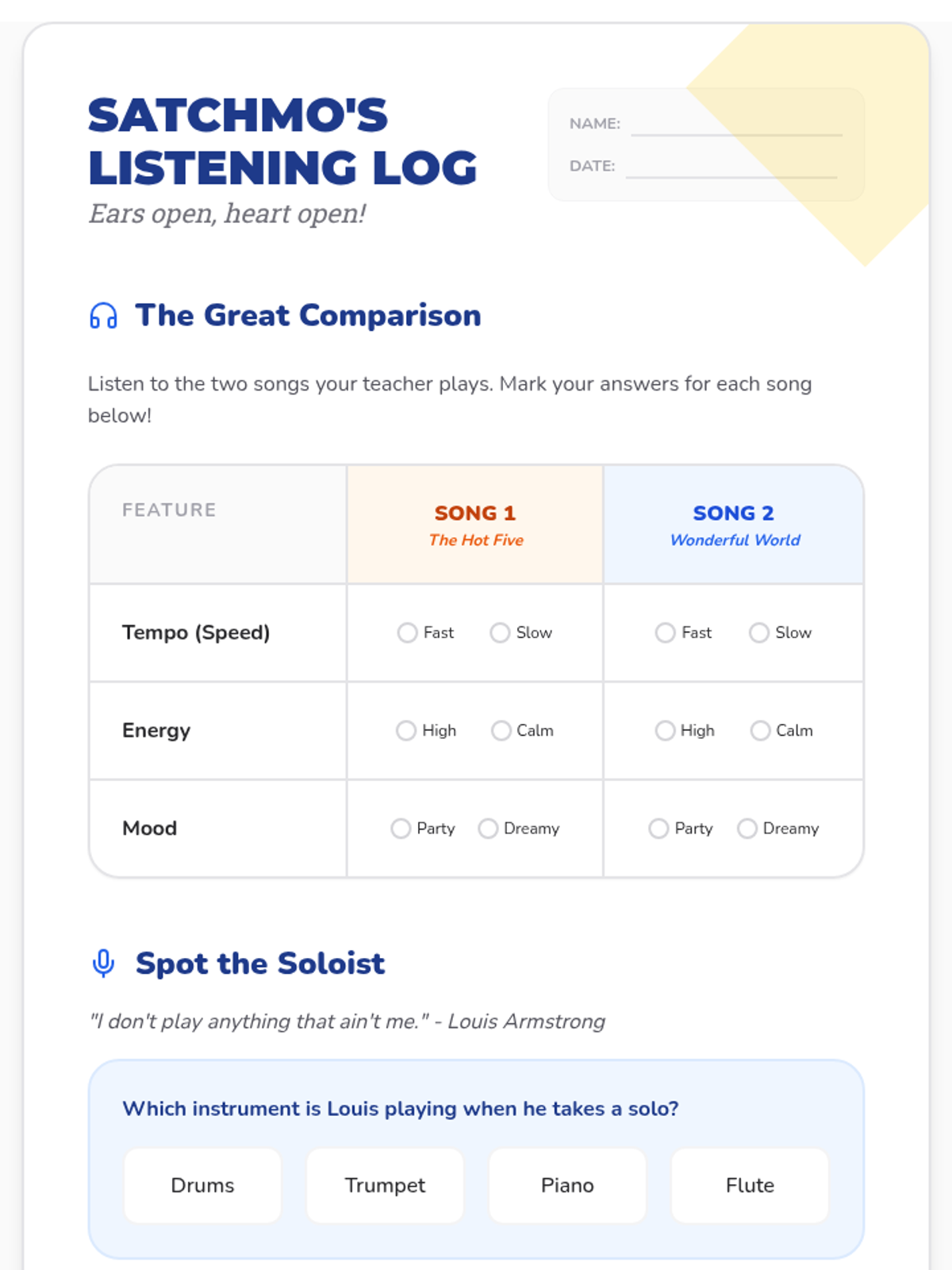
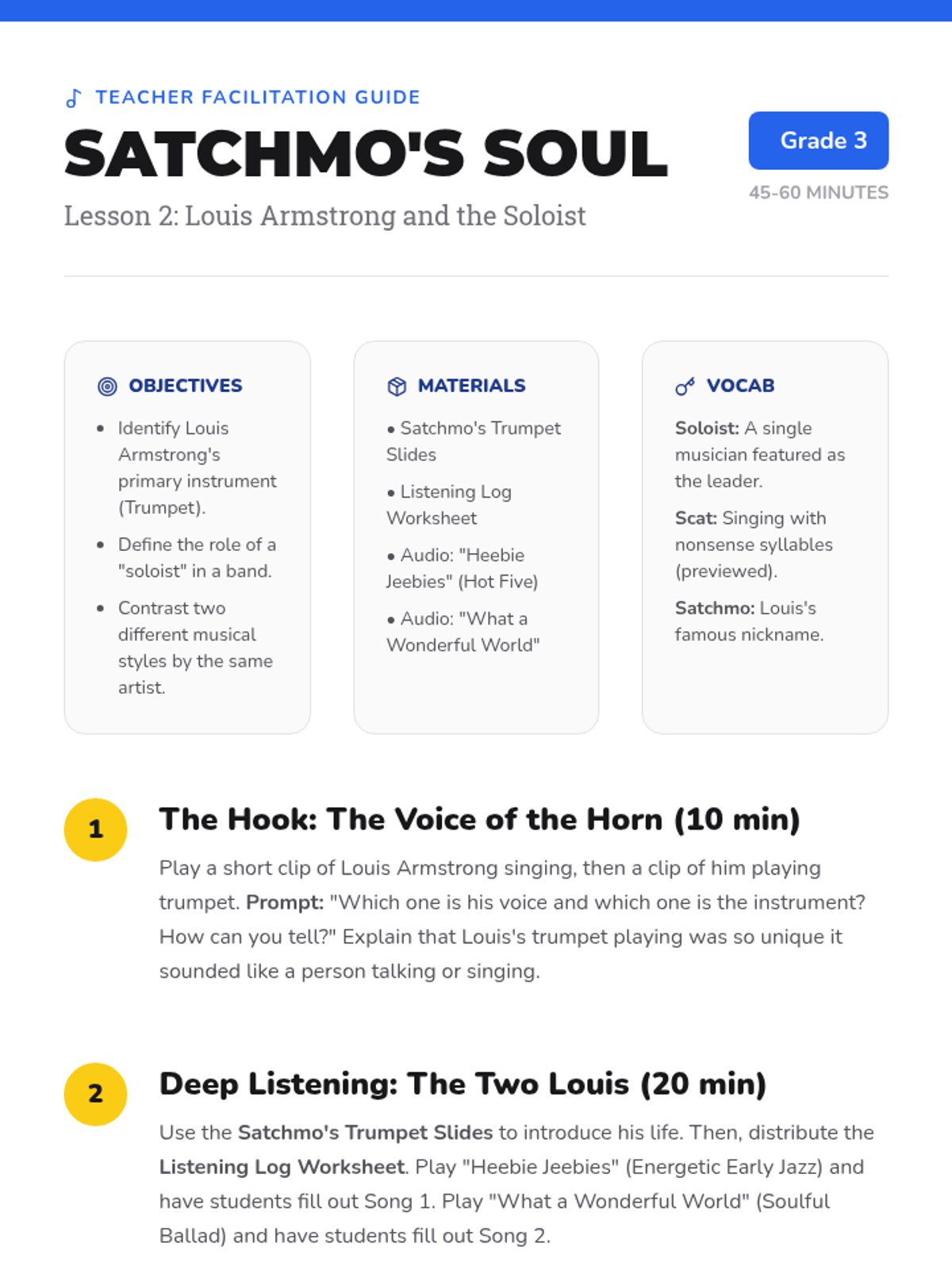
A focus on Louis Armstrong as a vocalist and trumpeter. Students learn about the role of the soloist in jazz and how personality shines through instrumental music.
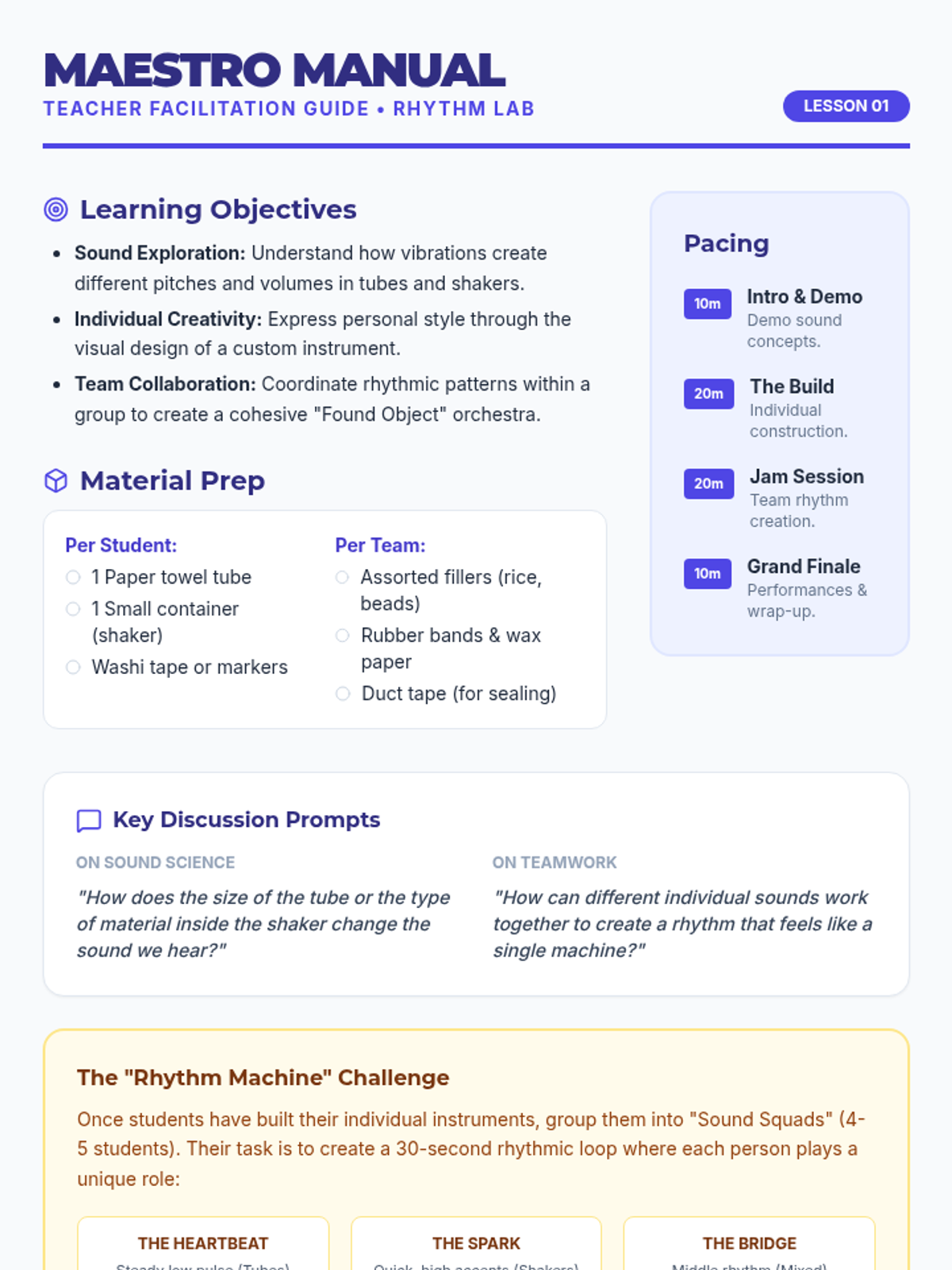
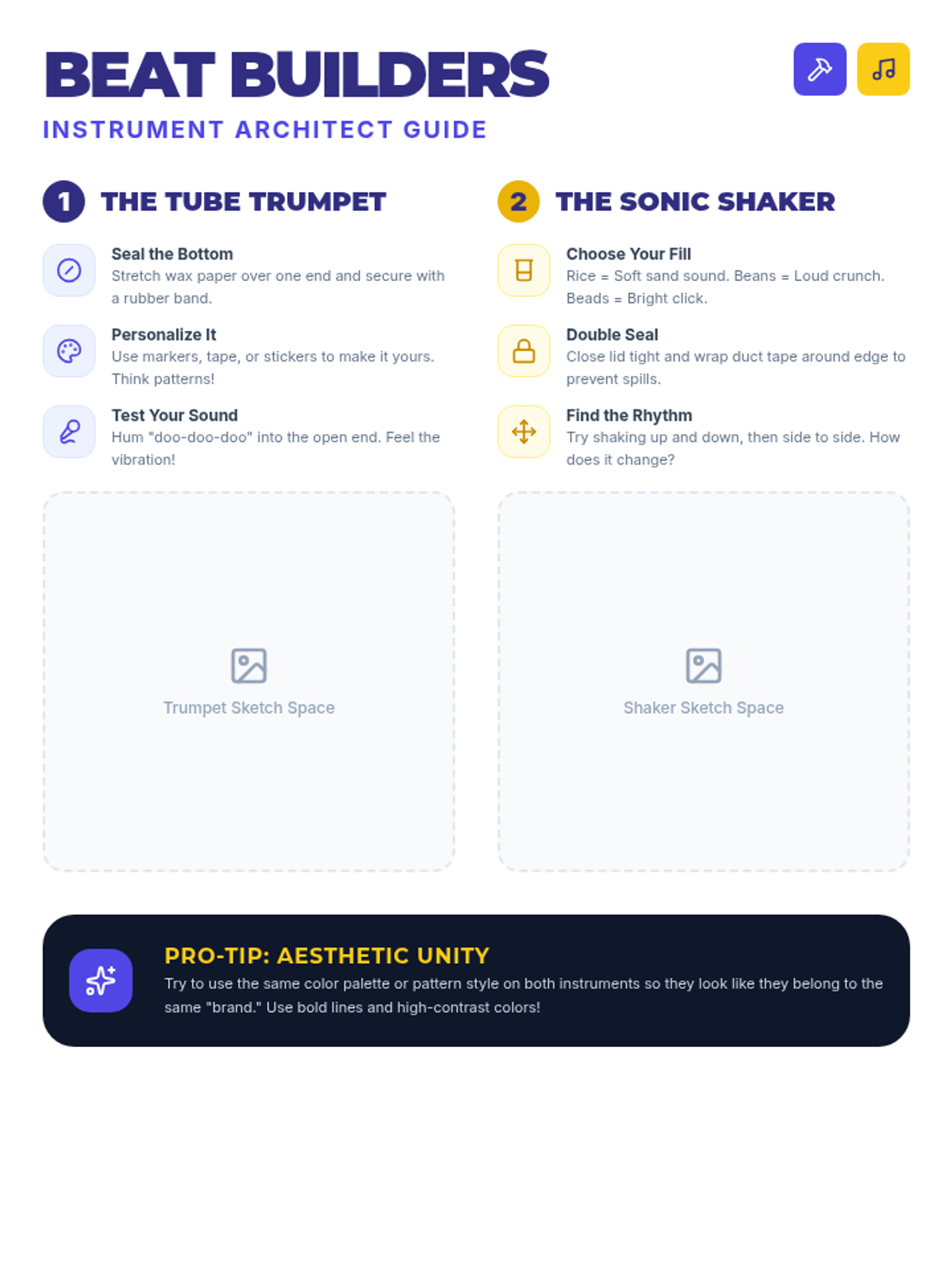
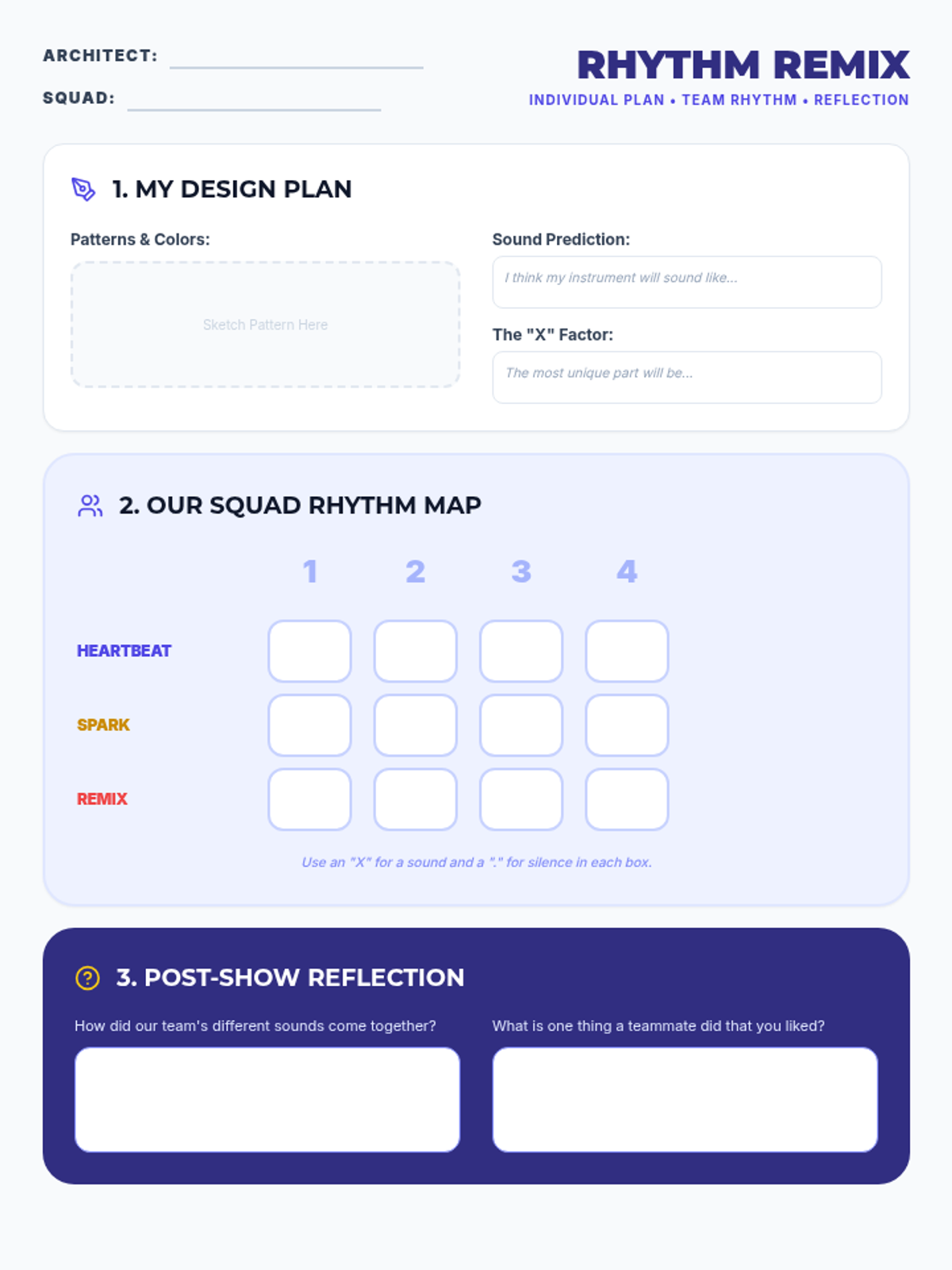
Students explore the science and art of sound by constructing DIY instruments from recycled materials. The lesson emphasizes individual creative design followed by a collaborative team performance.
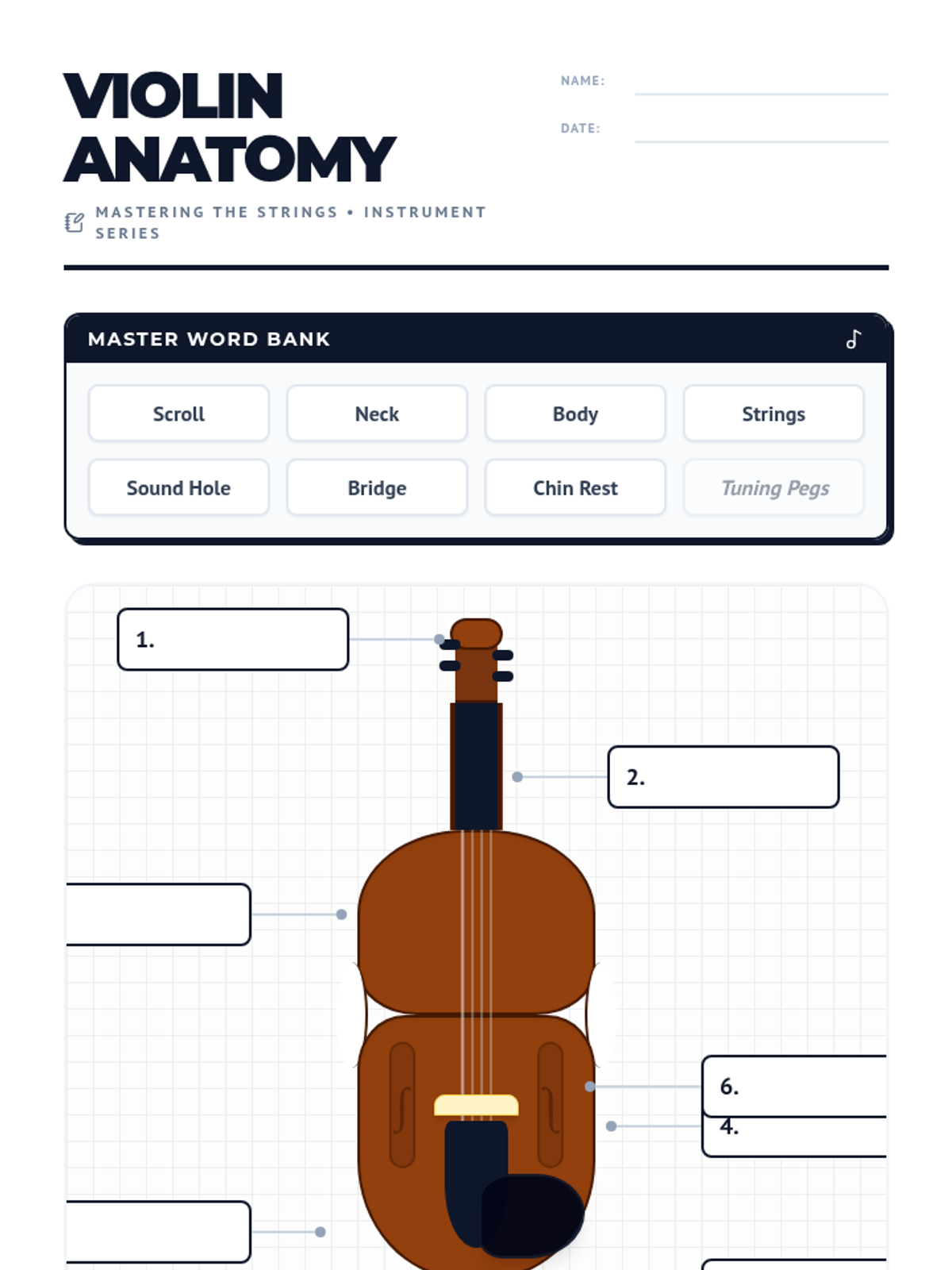
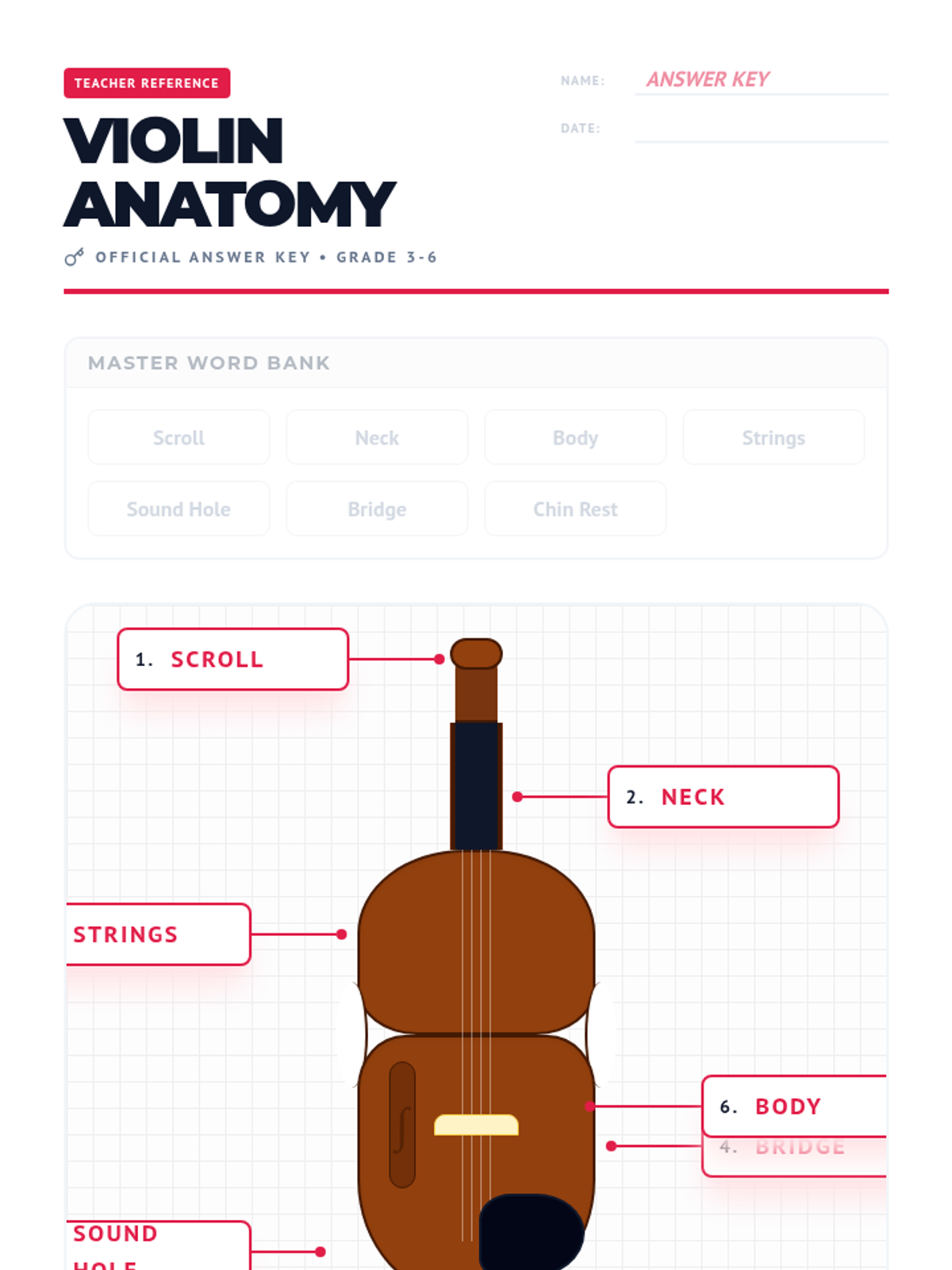
An introductory lesson on the anatomy and mechanics of the violin, including labeling parts and understanding their functions.
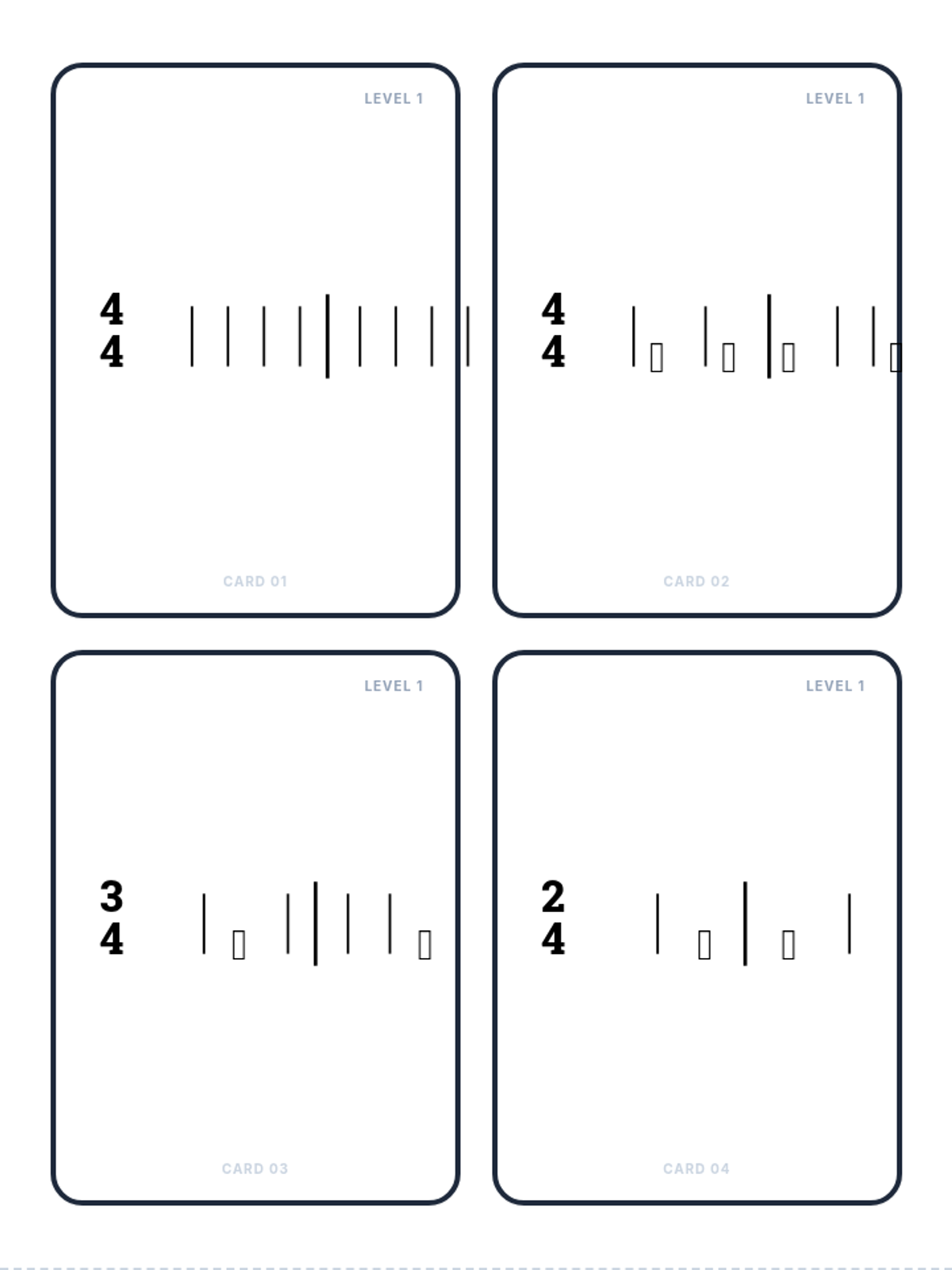
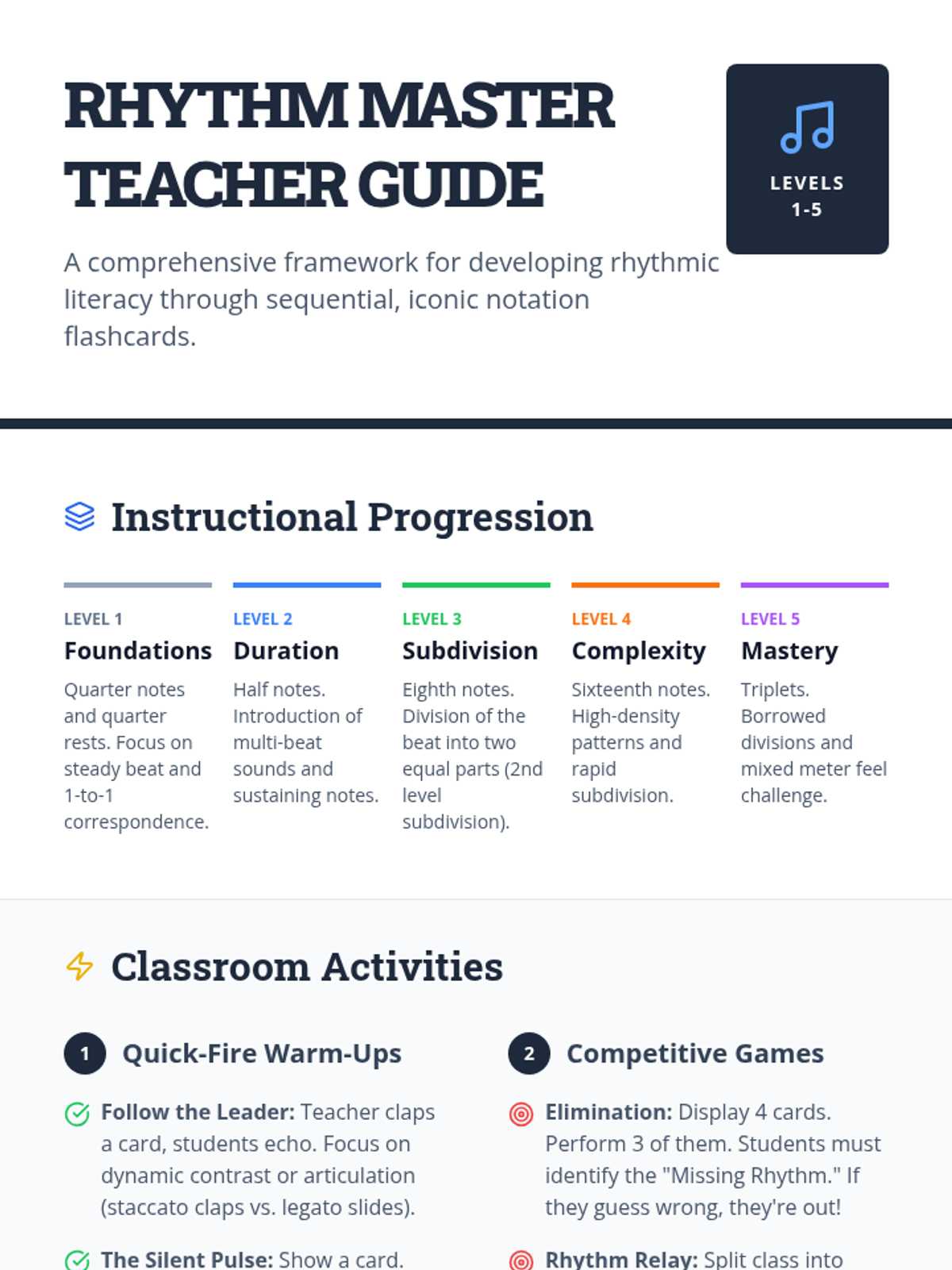
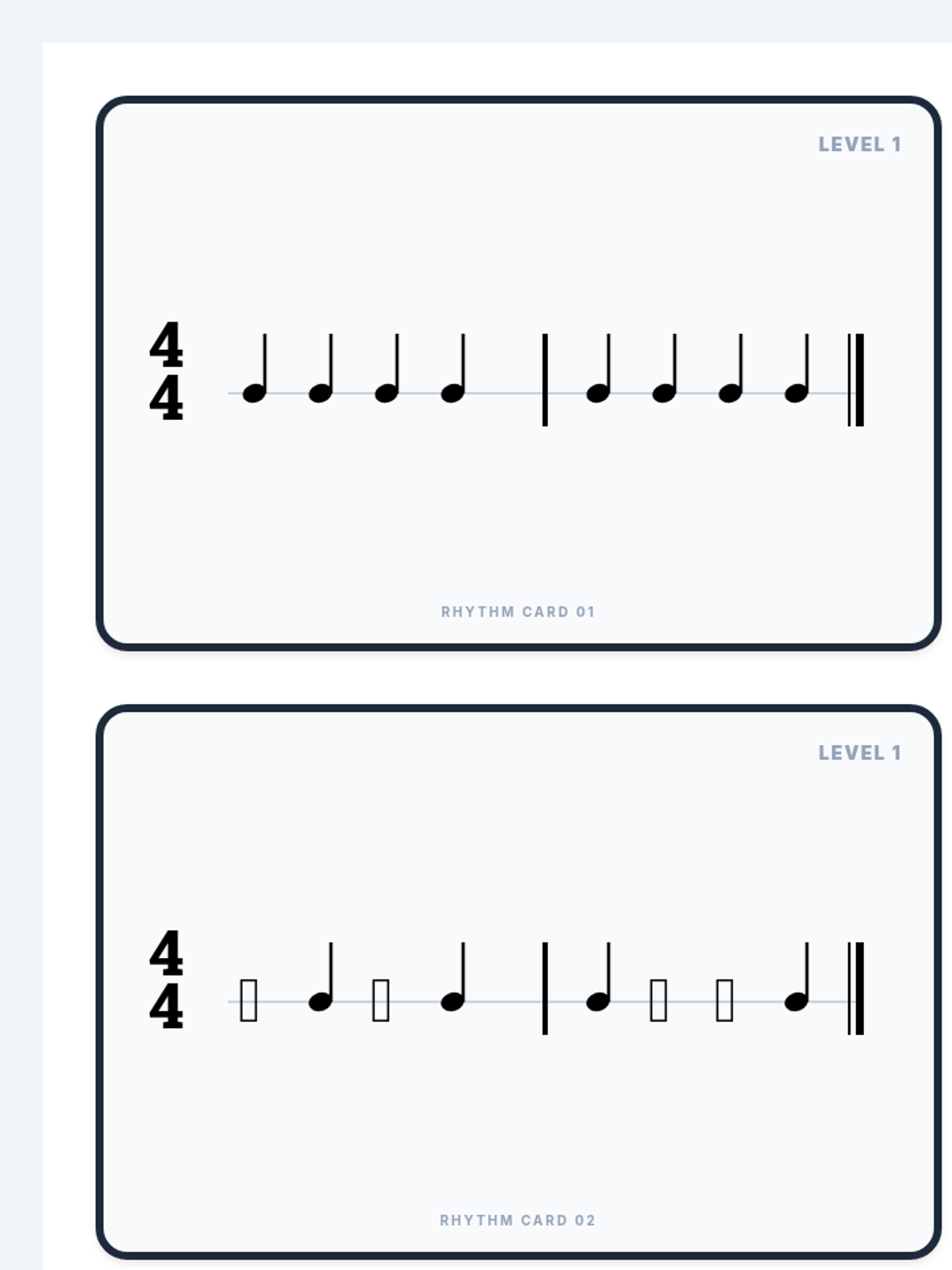
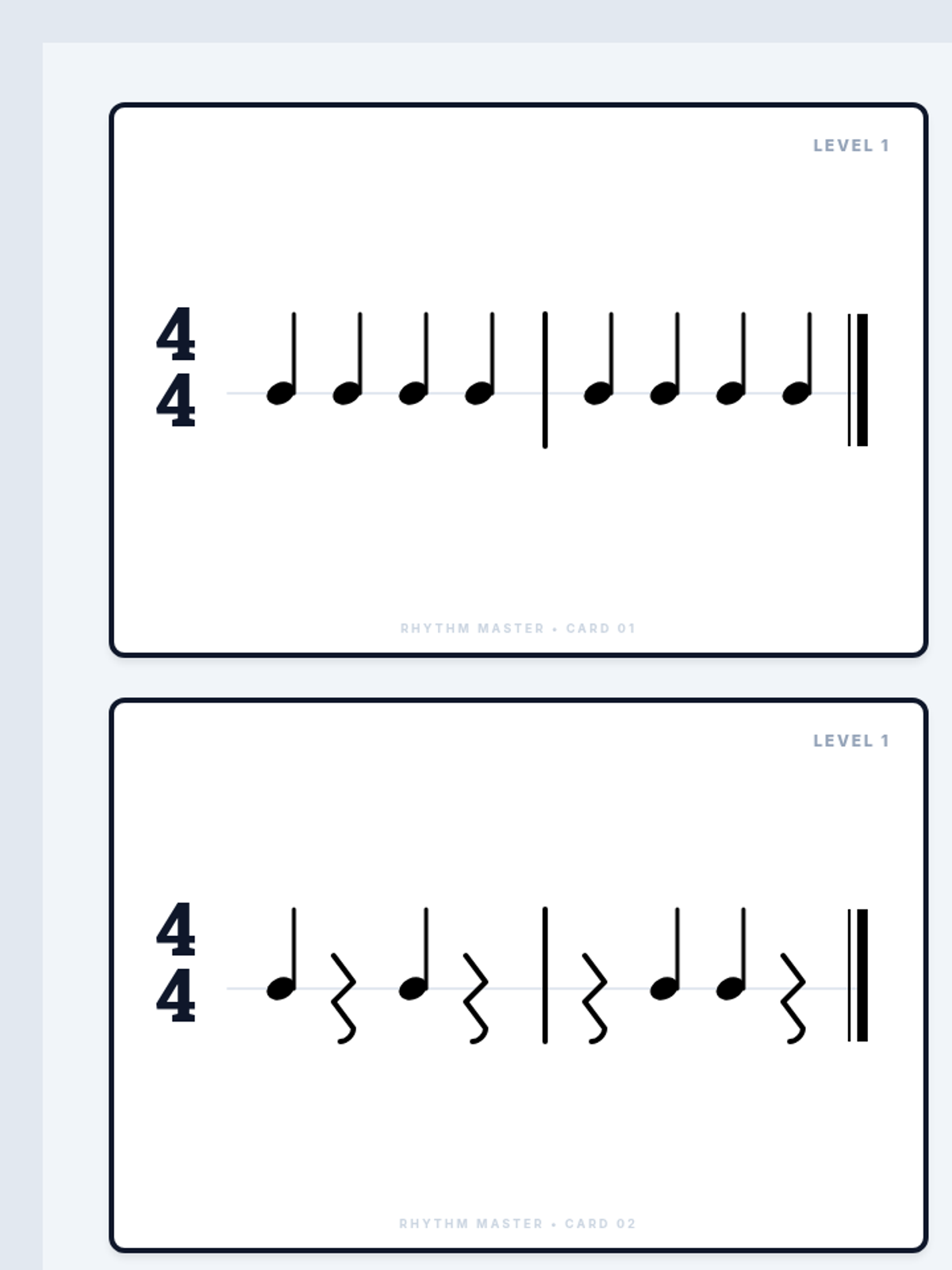
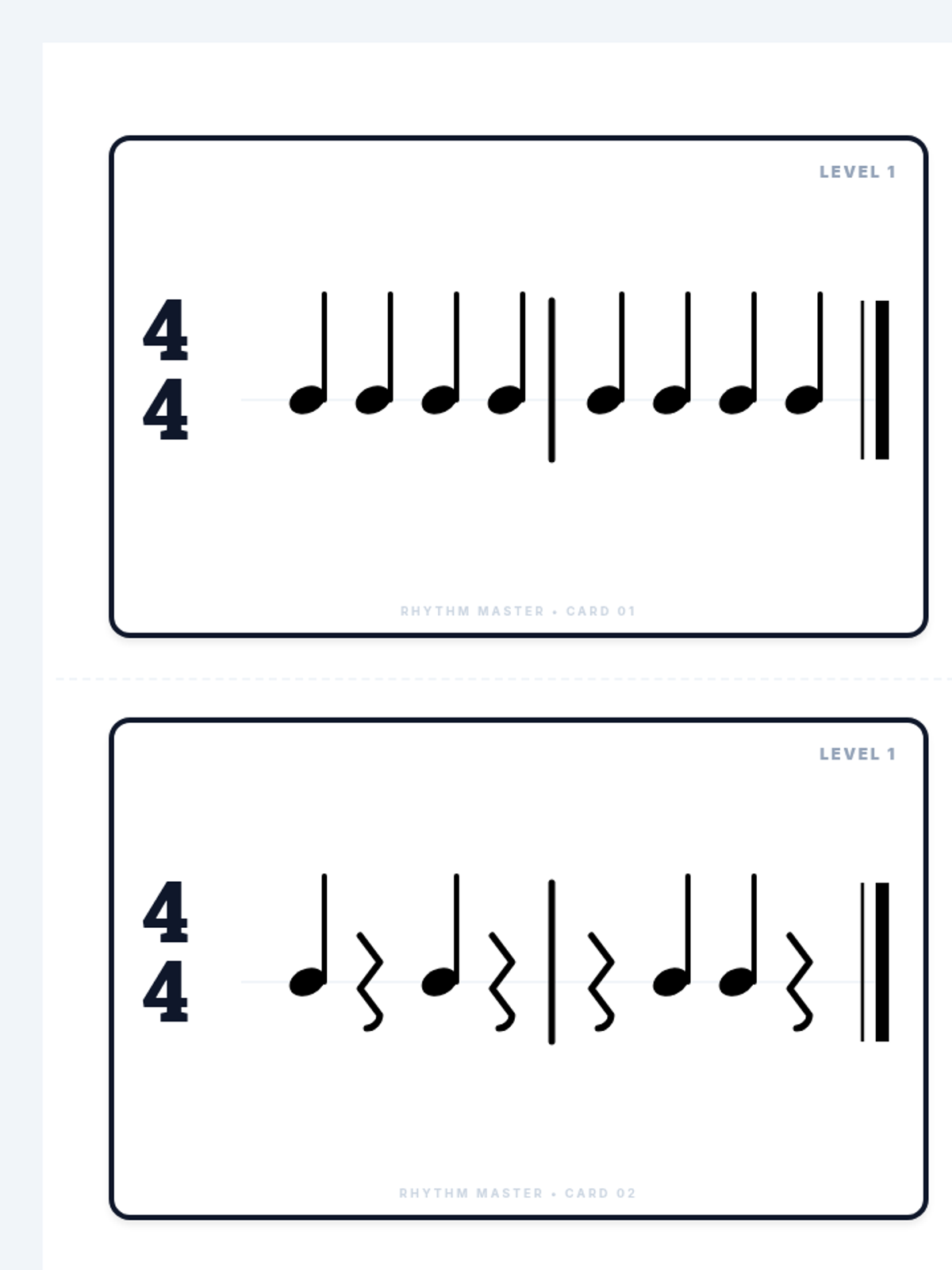
A series of rhythm reading flashcards and a teacher's guide covering basic to advanced rhythmic patterns. Activities progress from quarter notes and rests to complex sixteenth notes and triplets across multiple time signatures.
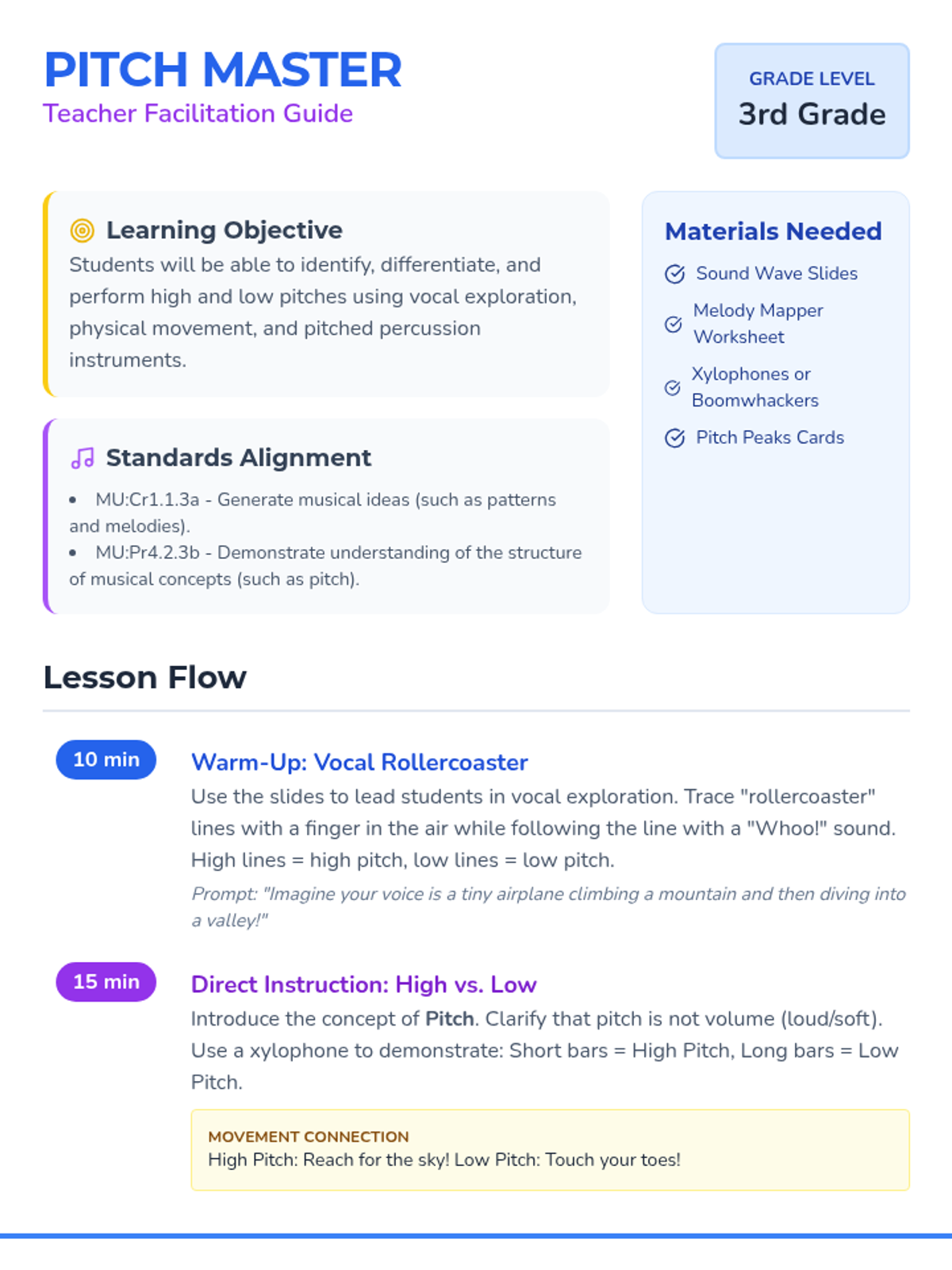
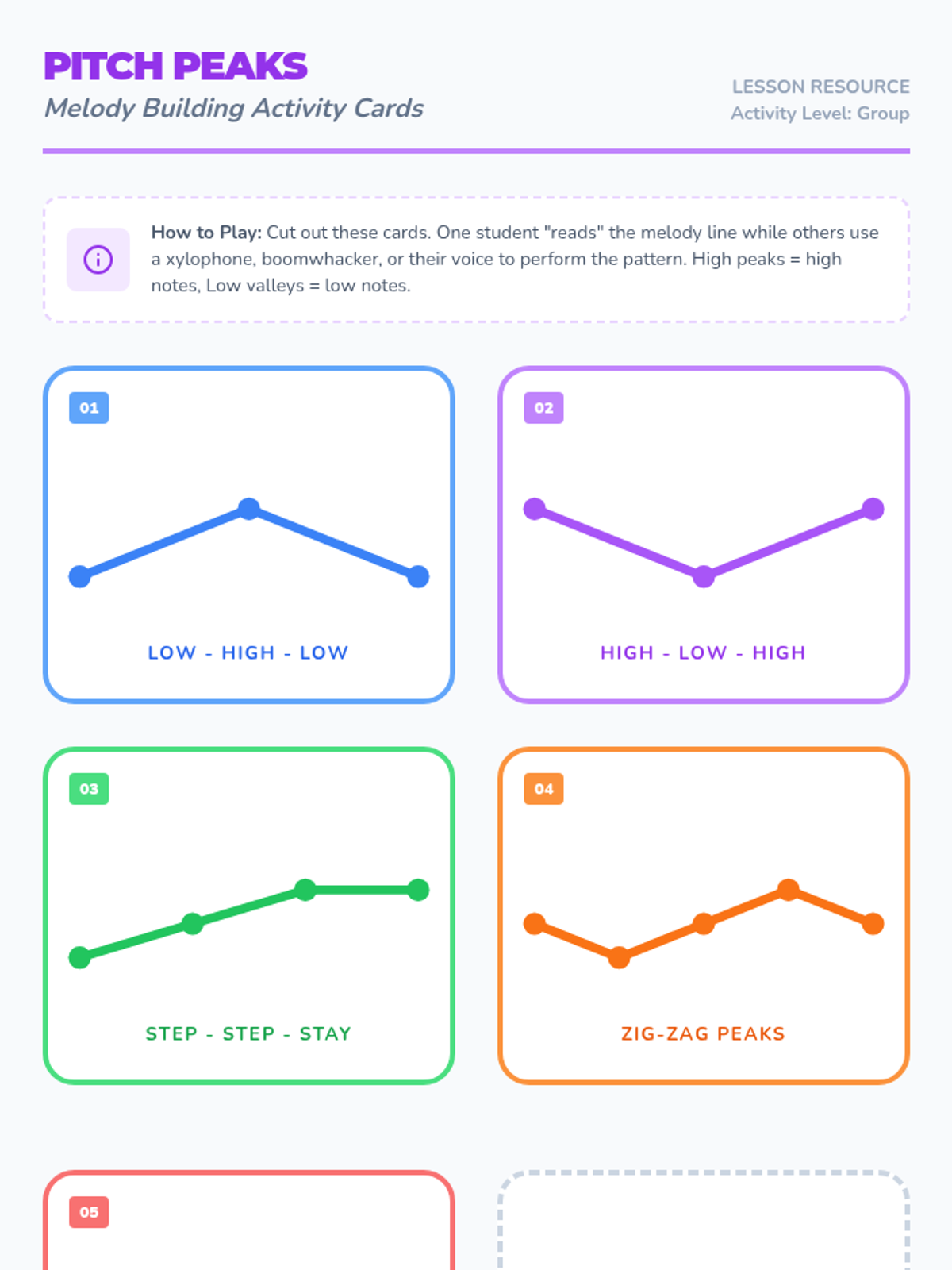
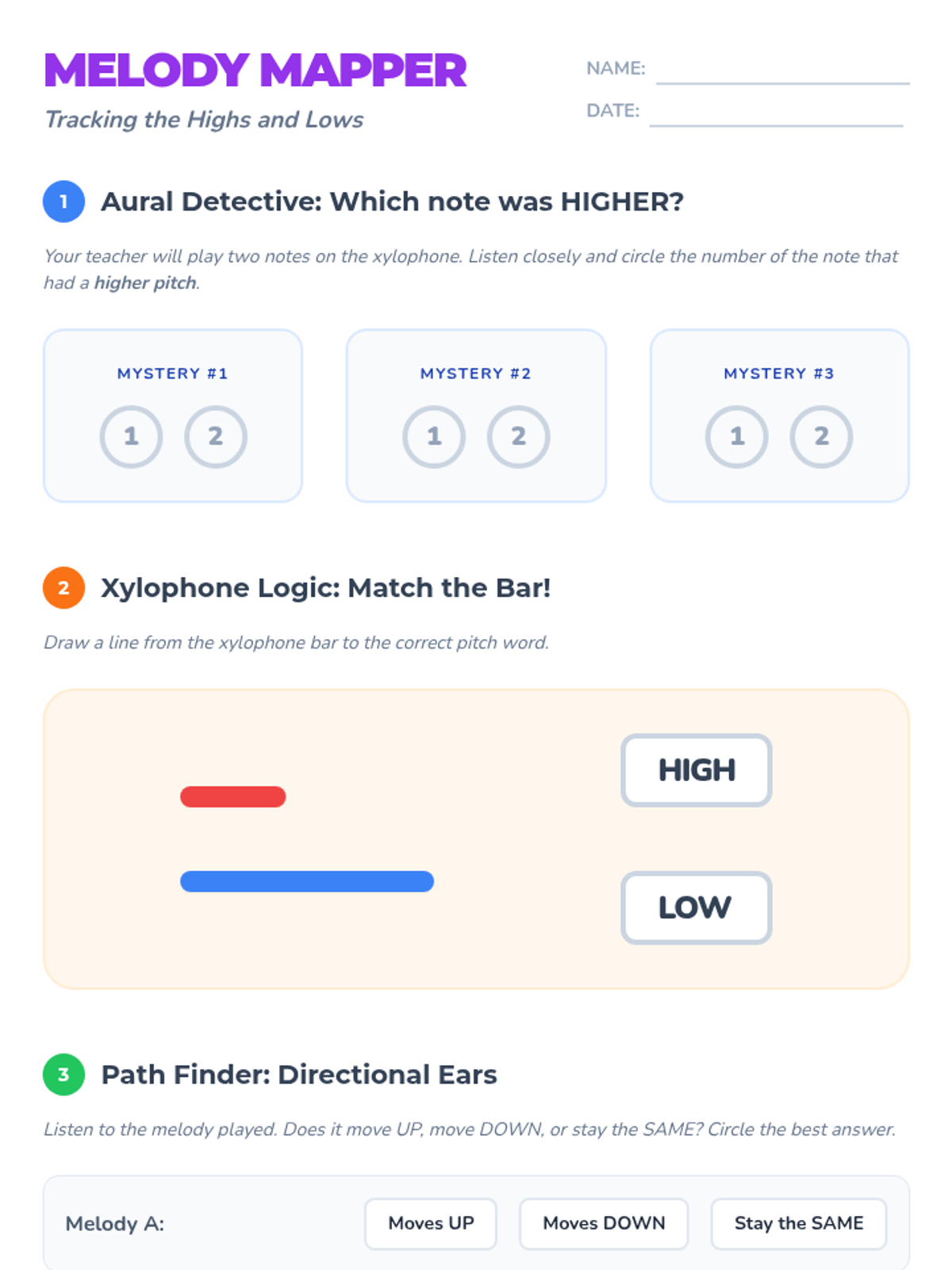
Students will identify and demonstrate high and low pitches using their voices, bodies, and instruments. They will practice translating visual pitch representations into sound and vice versa.
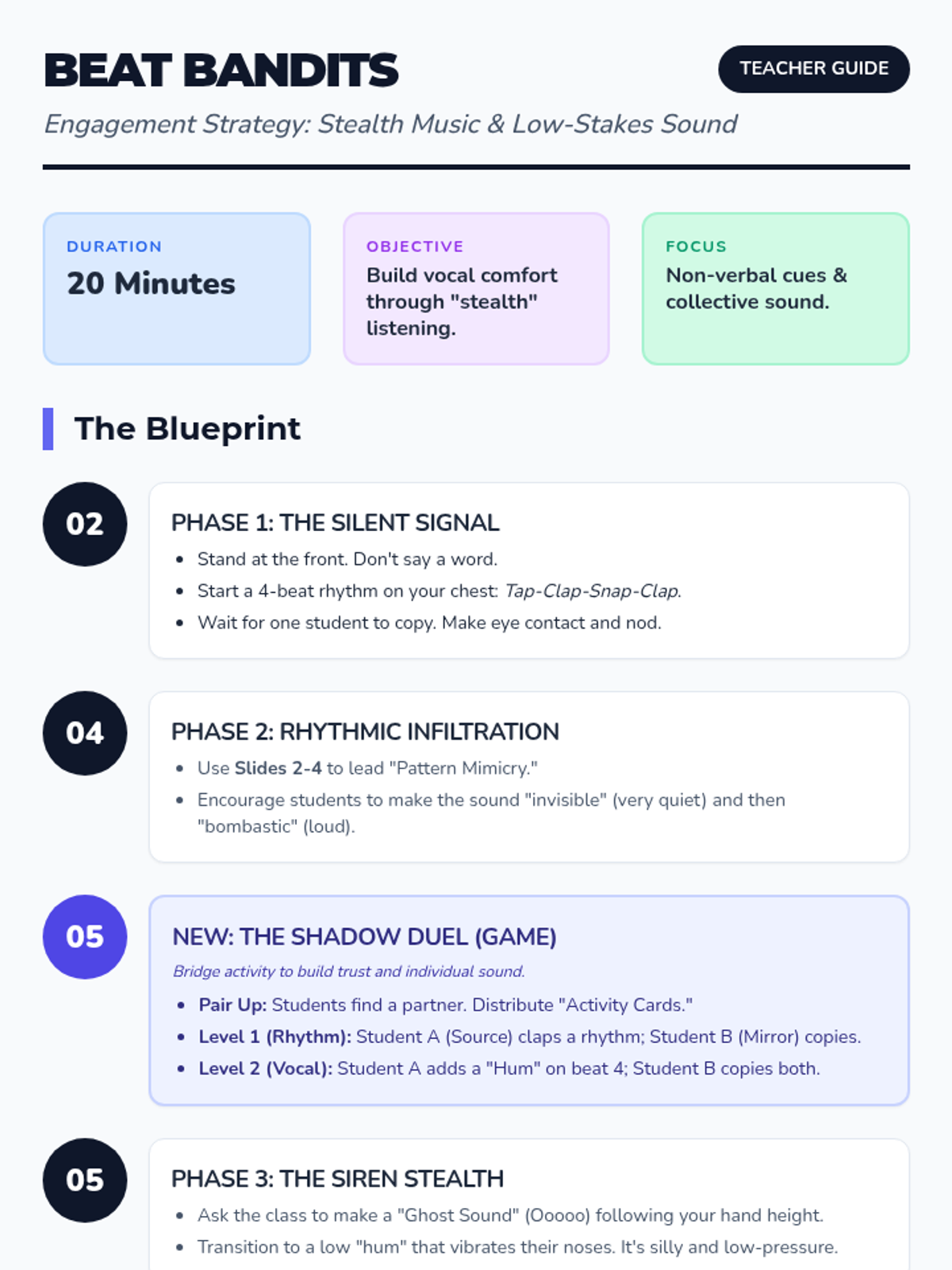
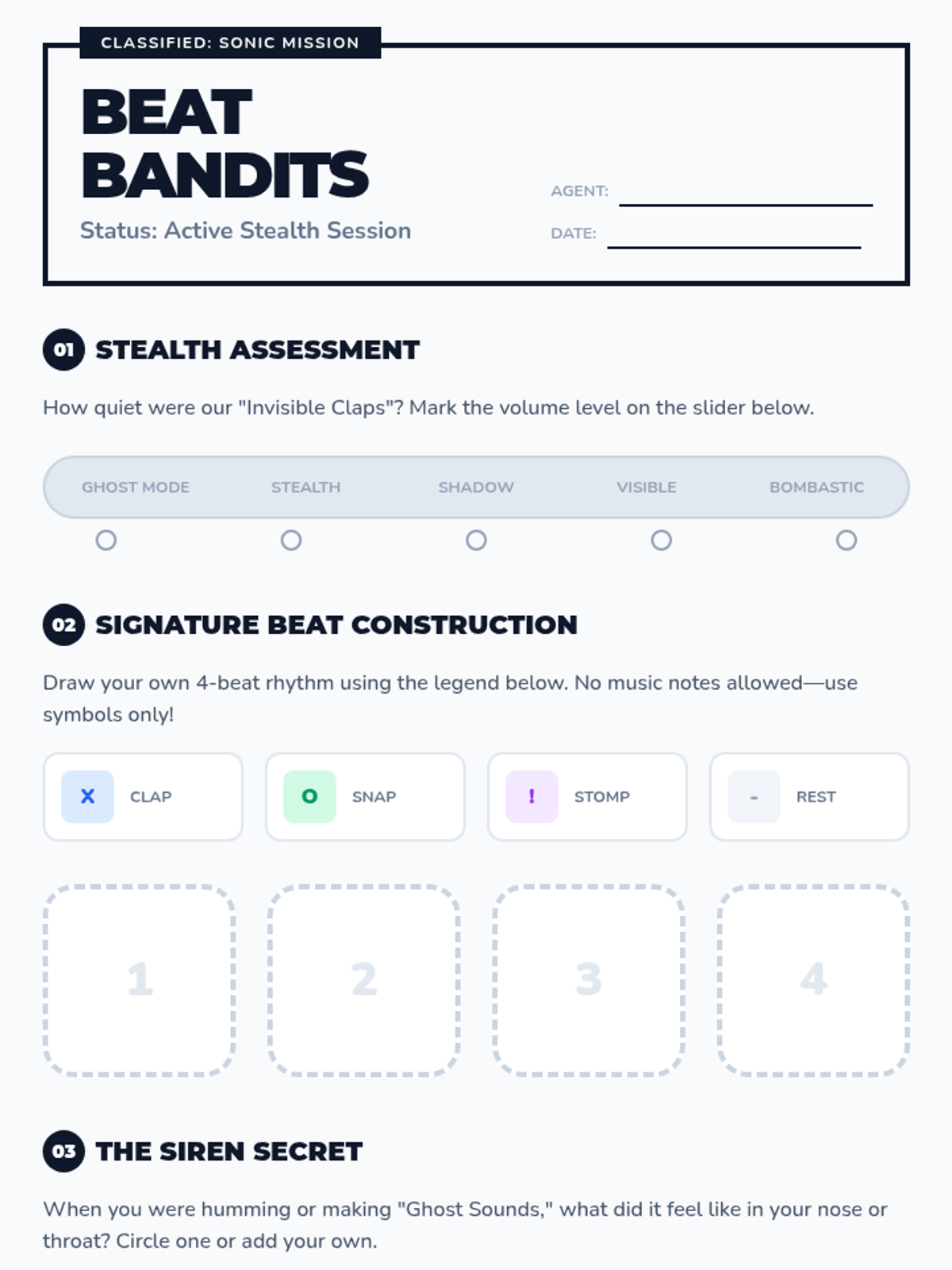
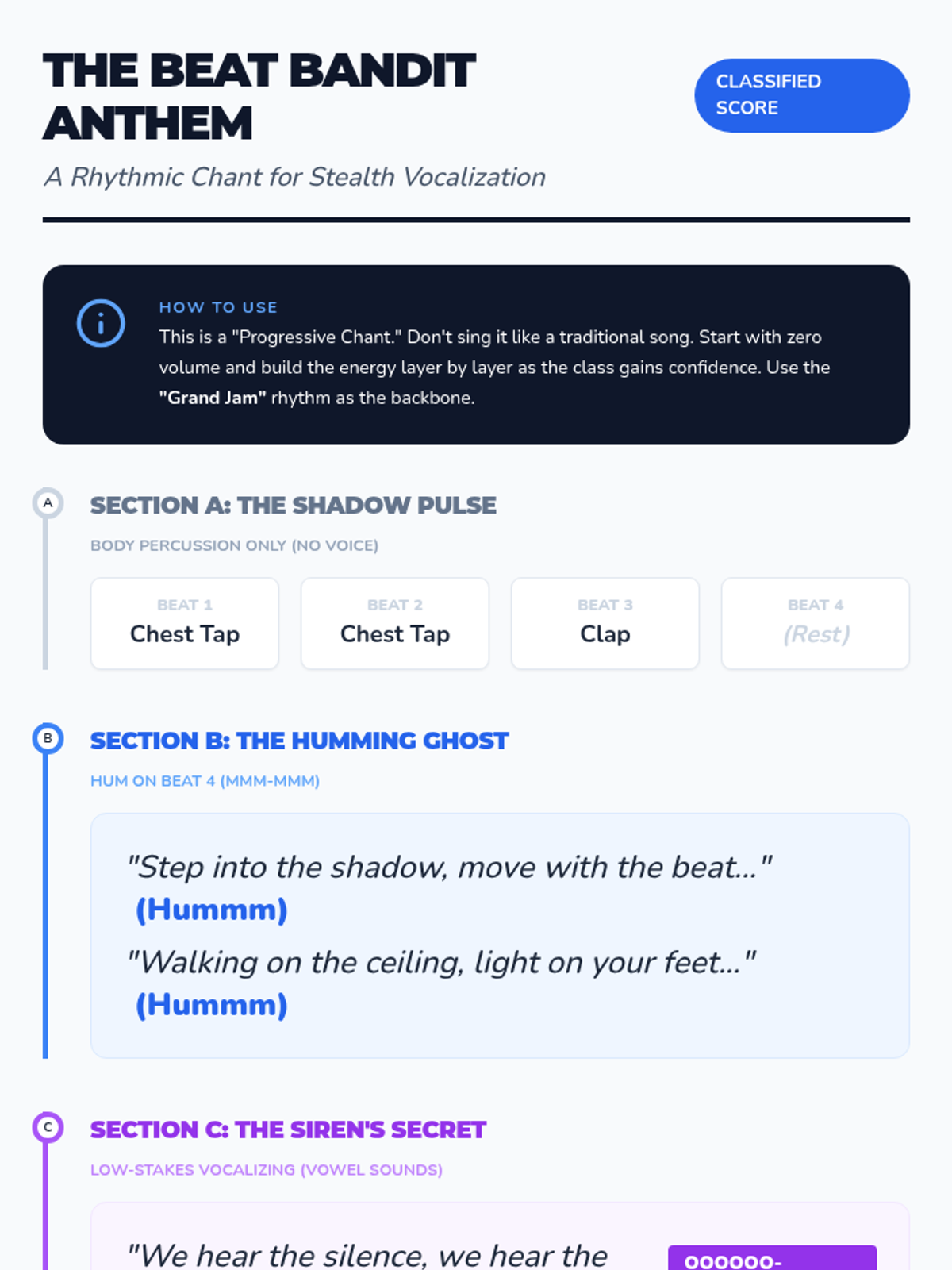
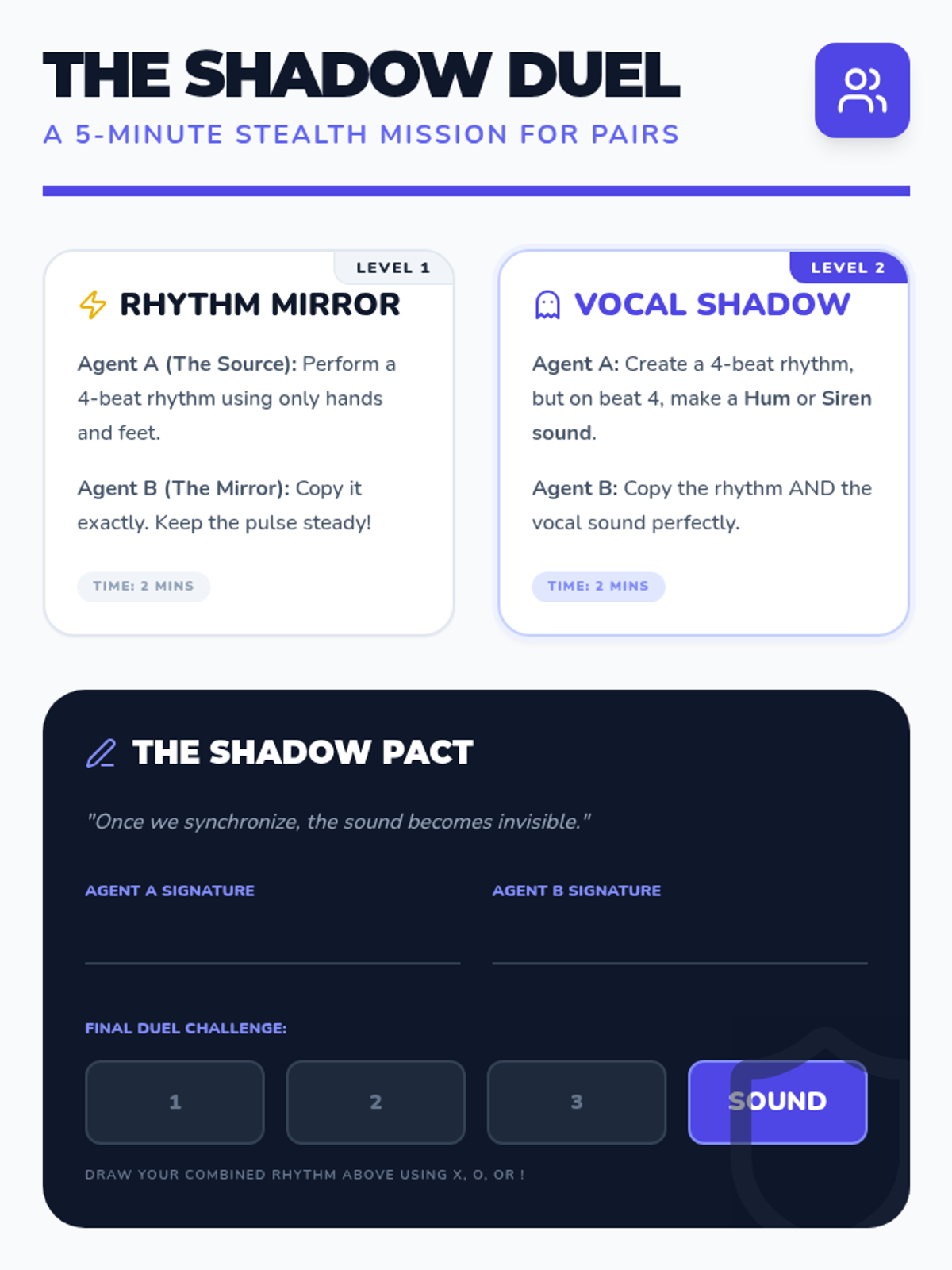
A high-energy, low-pressure 15-minute music lesson designed to engage disengaged students and build vocal confidence through rhythm and stealth games. This lesson moves from non-verbal rhythmic games to collective vocalizing to bypass the fear of singing.
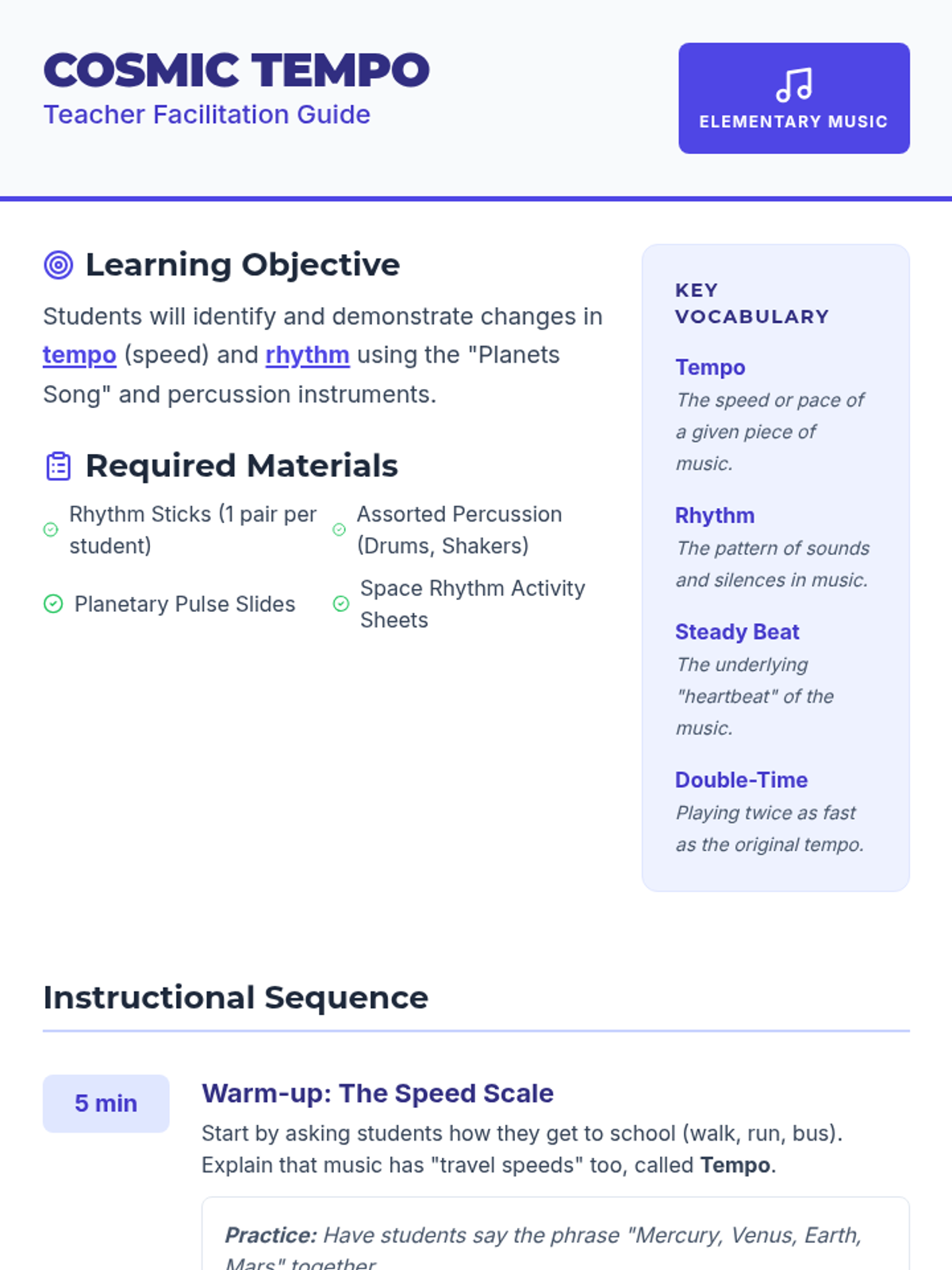
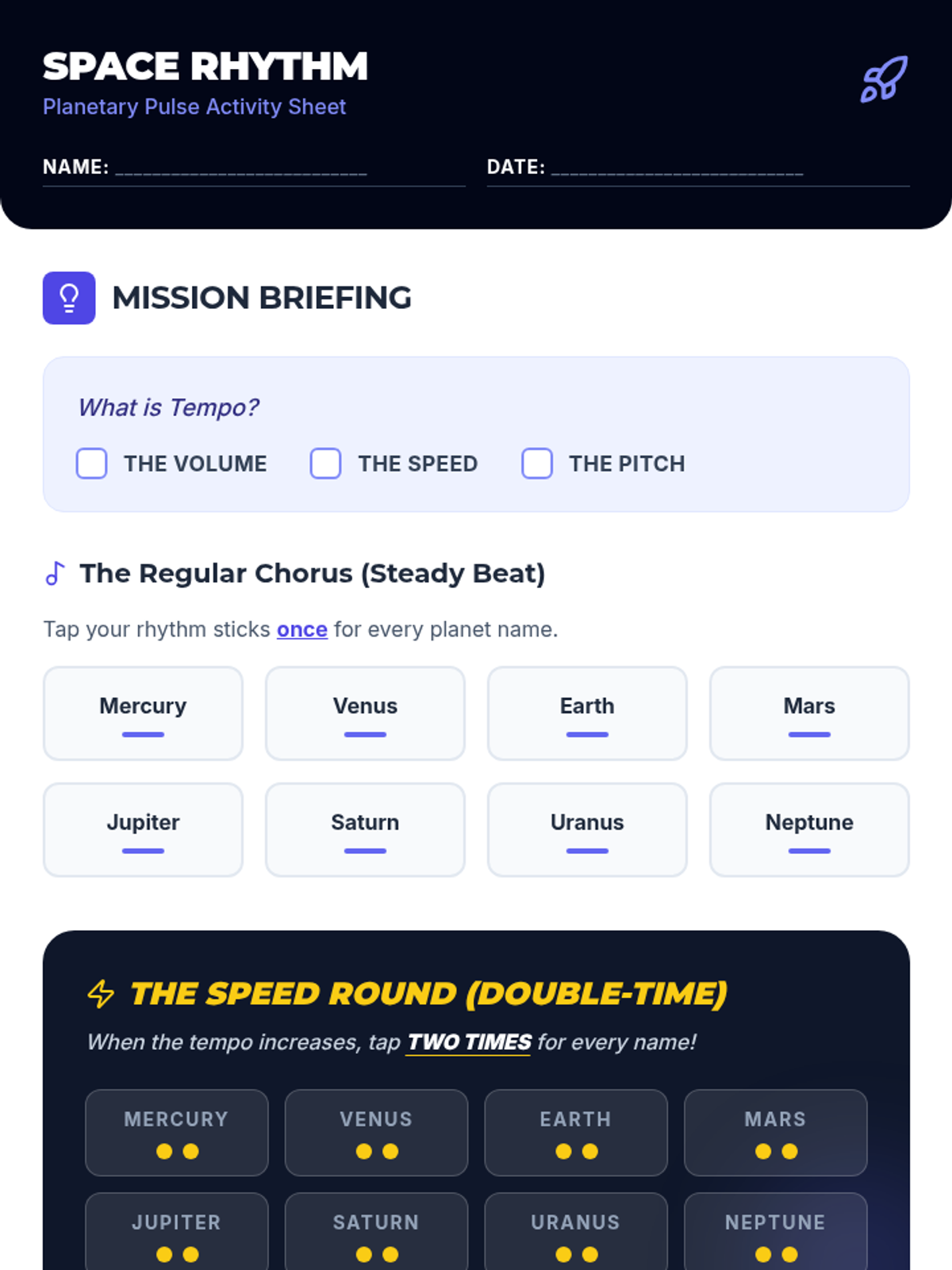
Students explore the concept of tempo and rhythm through a catchy song about the solar system, using rhythm sticks to match shifting speeds.
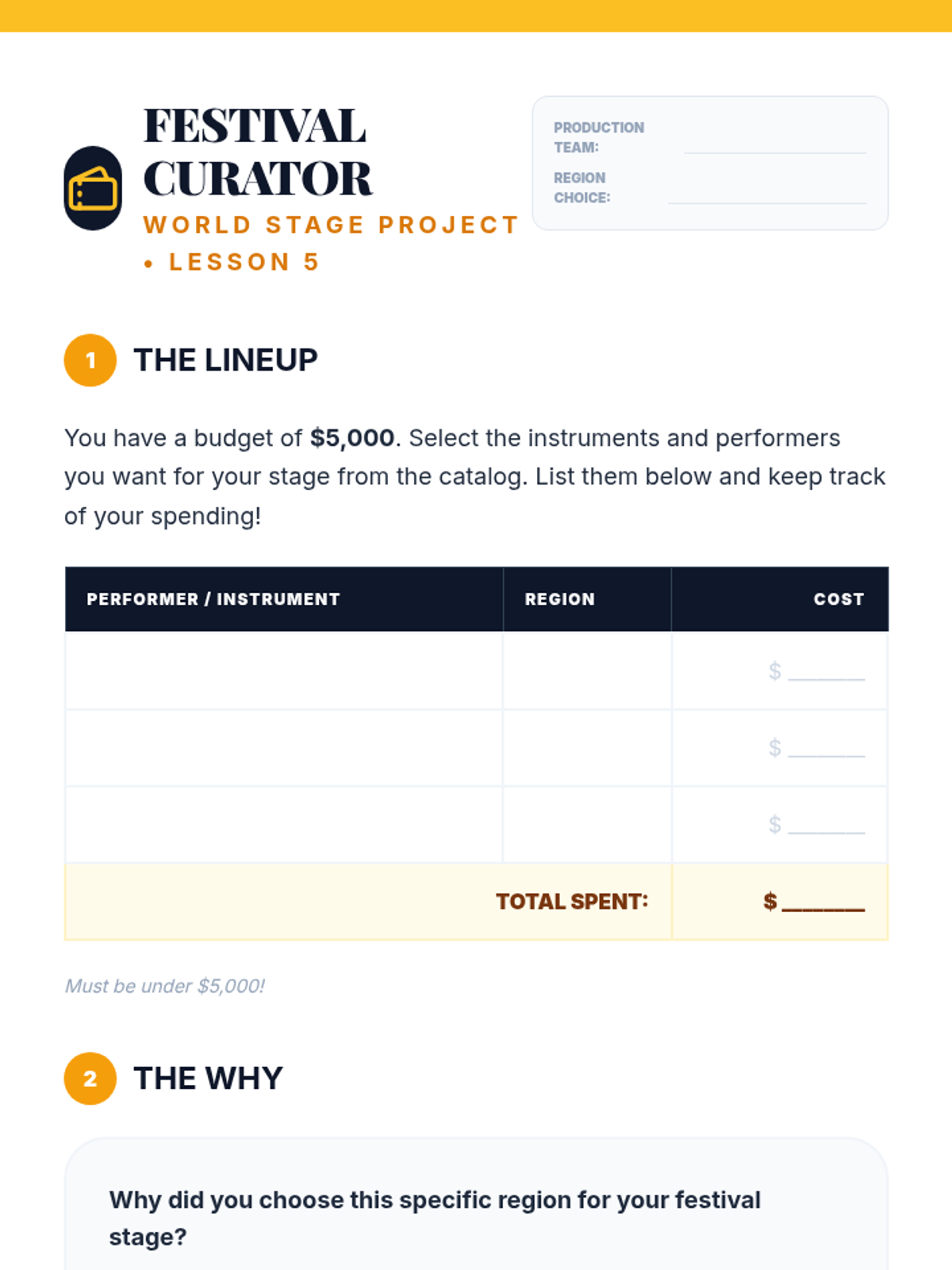
Students work in small groups to 'curate' a stage for a world music festival. They select a region, choose instruments to feature, and explain why that music is unique.
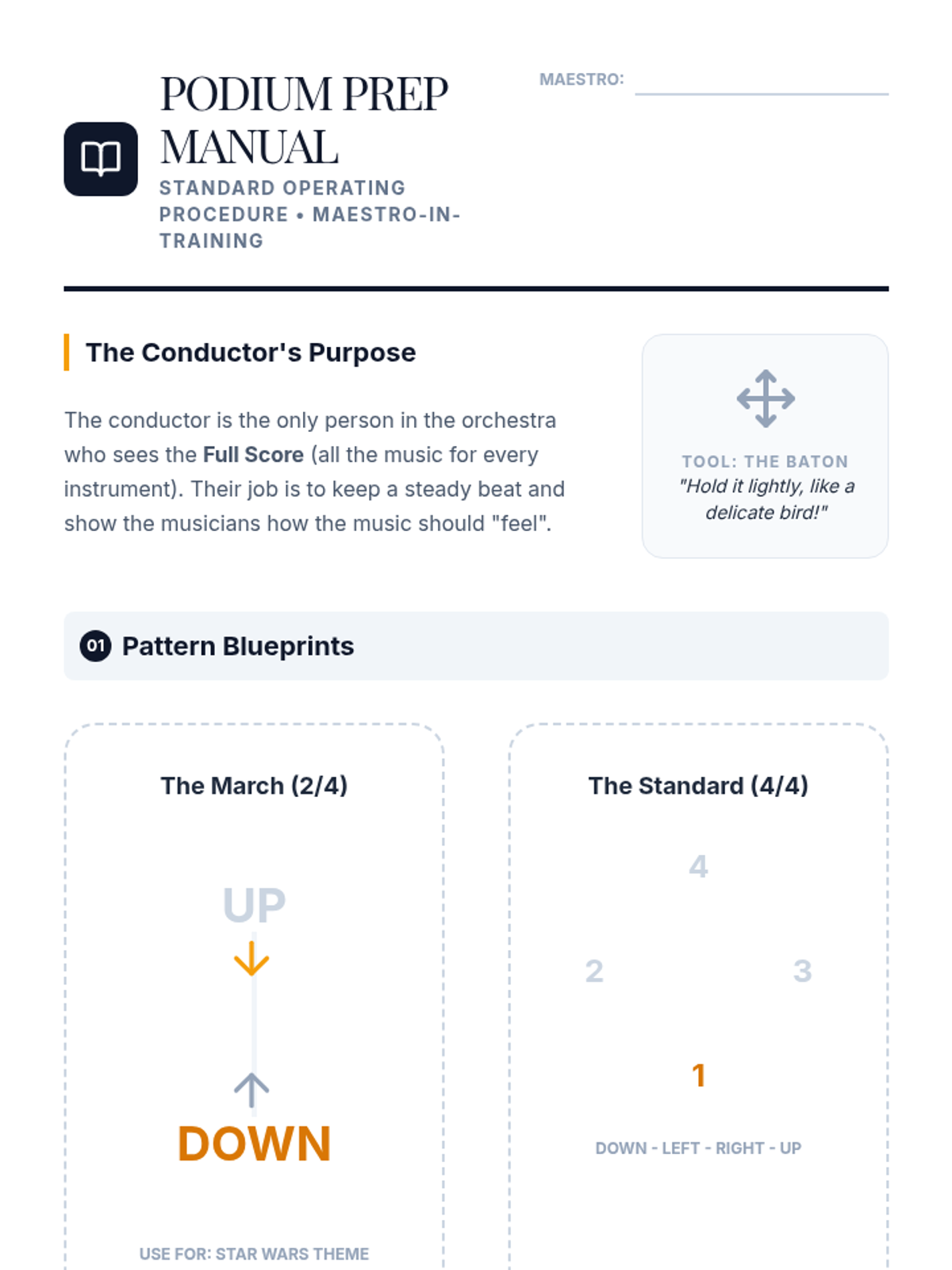
In this culminating lesson, students learn what a conductor does to unify the orchestra. They practice basic conducting patterns and understand how tempo and expression are communicated without words.
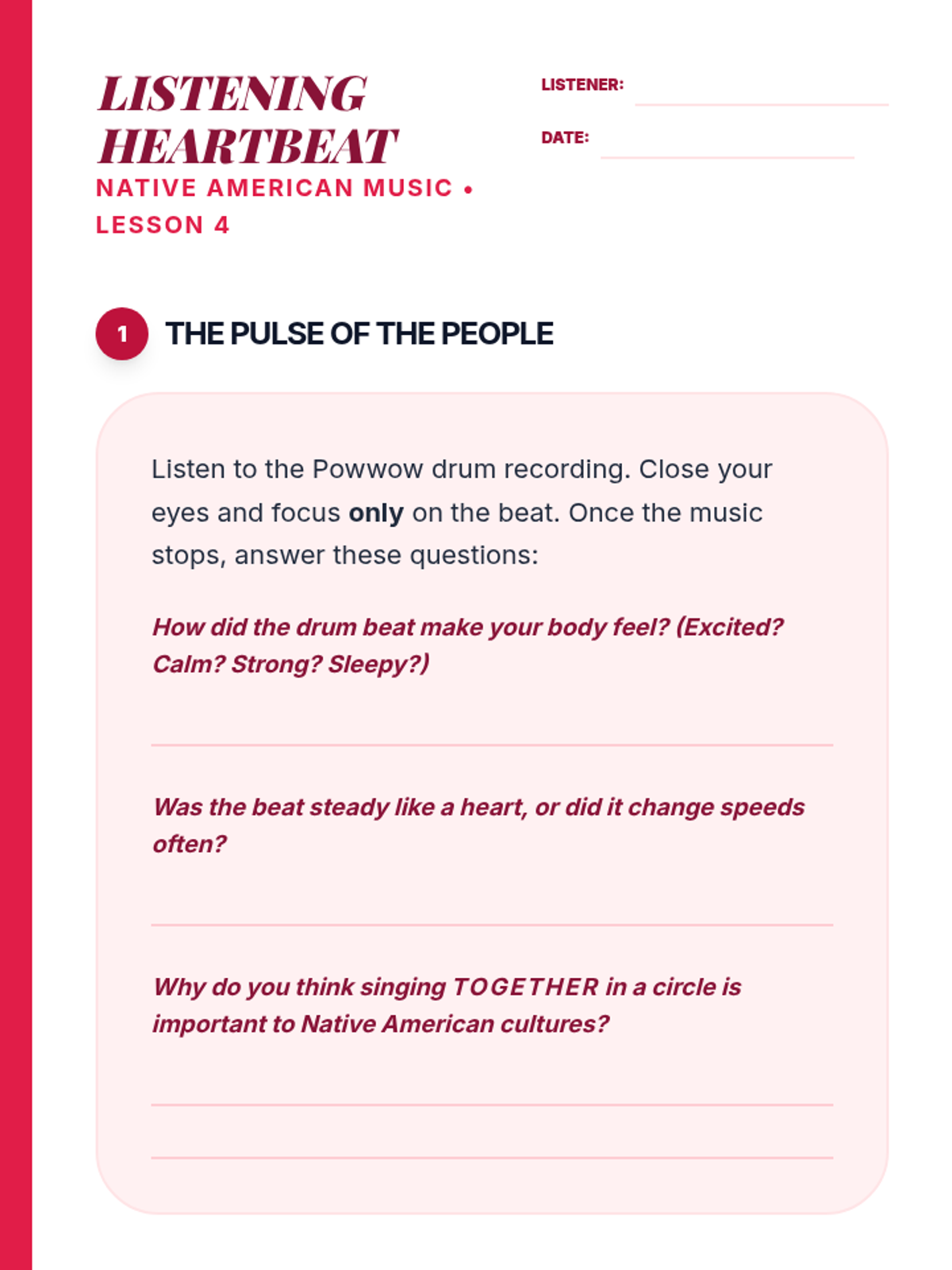
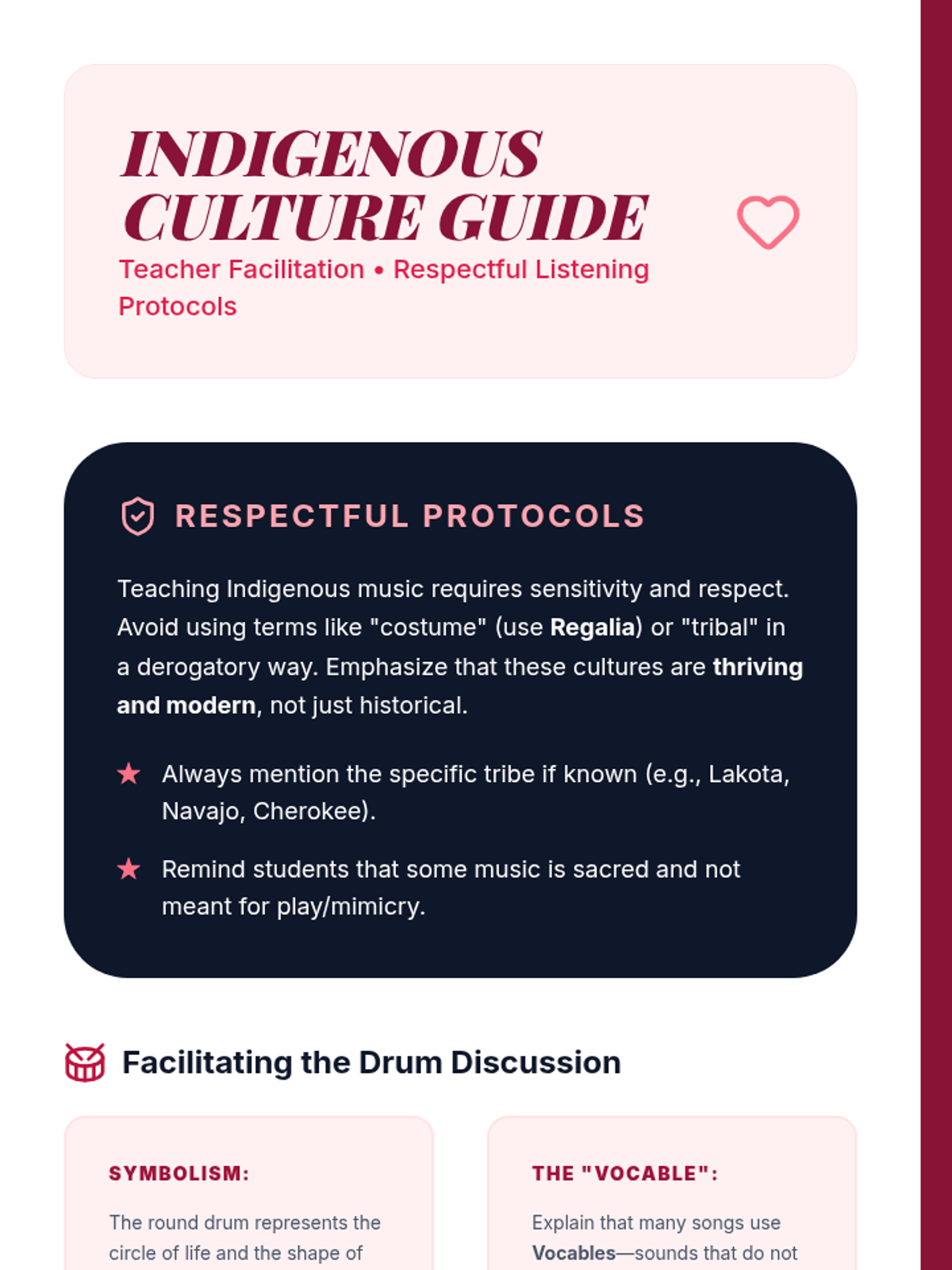
Students listen to the drumming and singing styles of Native American tribes. They discuss the importance of the drum as the 'heartbeat' and the preservation of culture through powwow music.
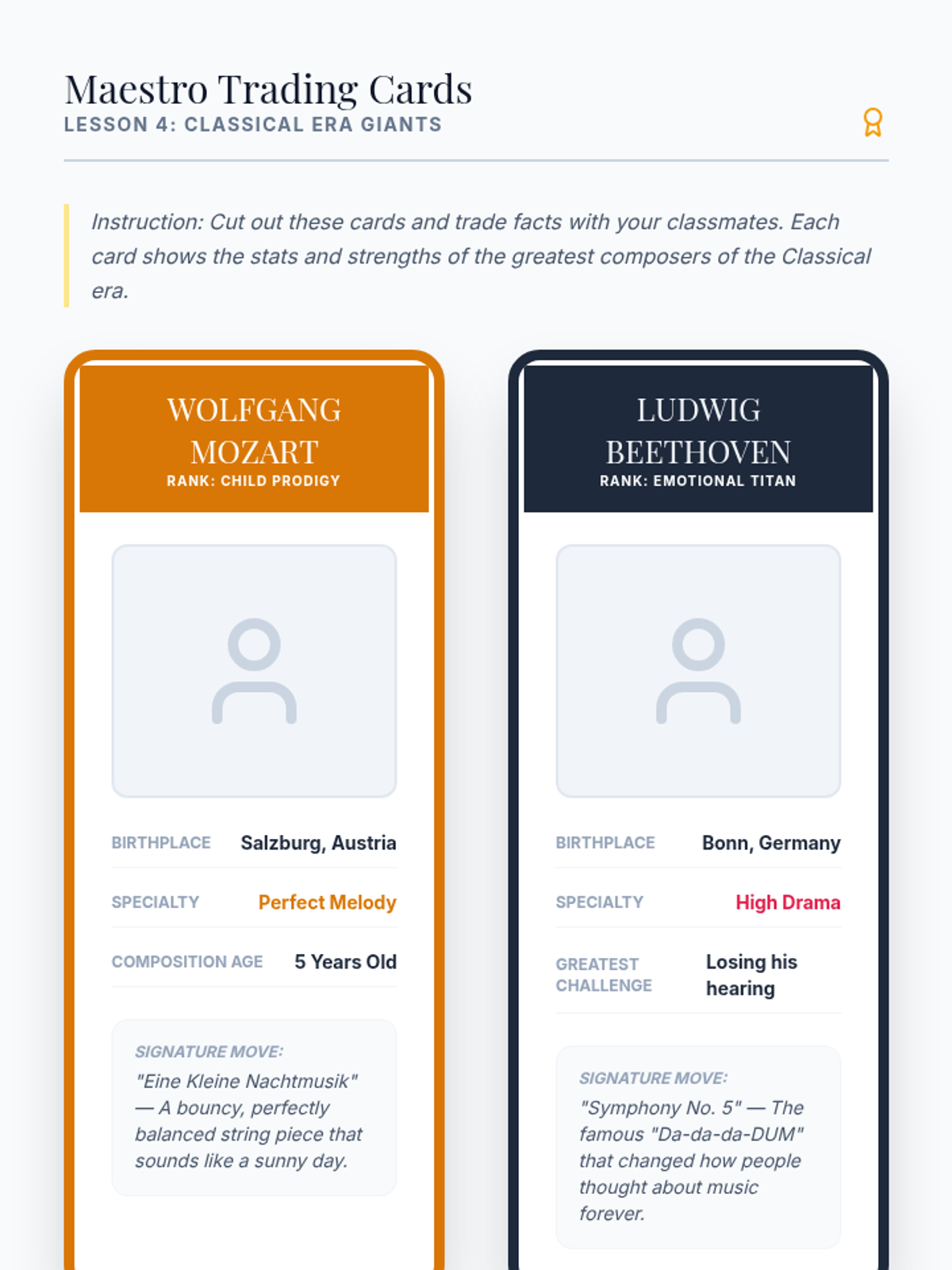
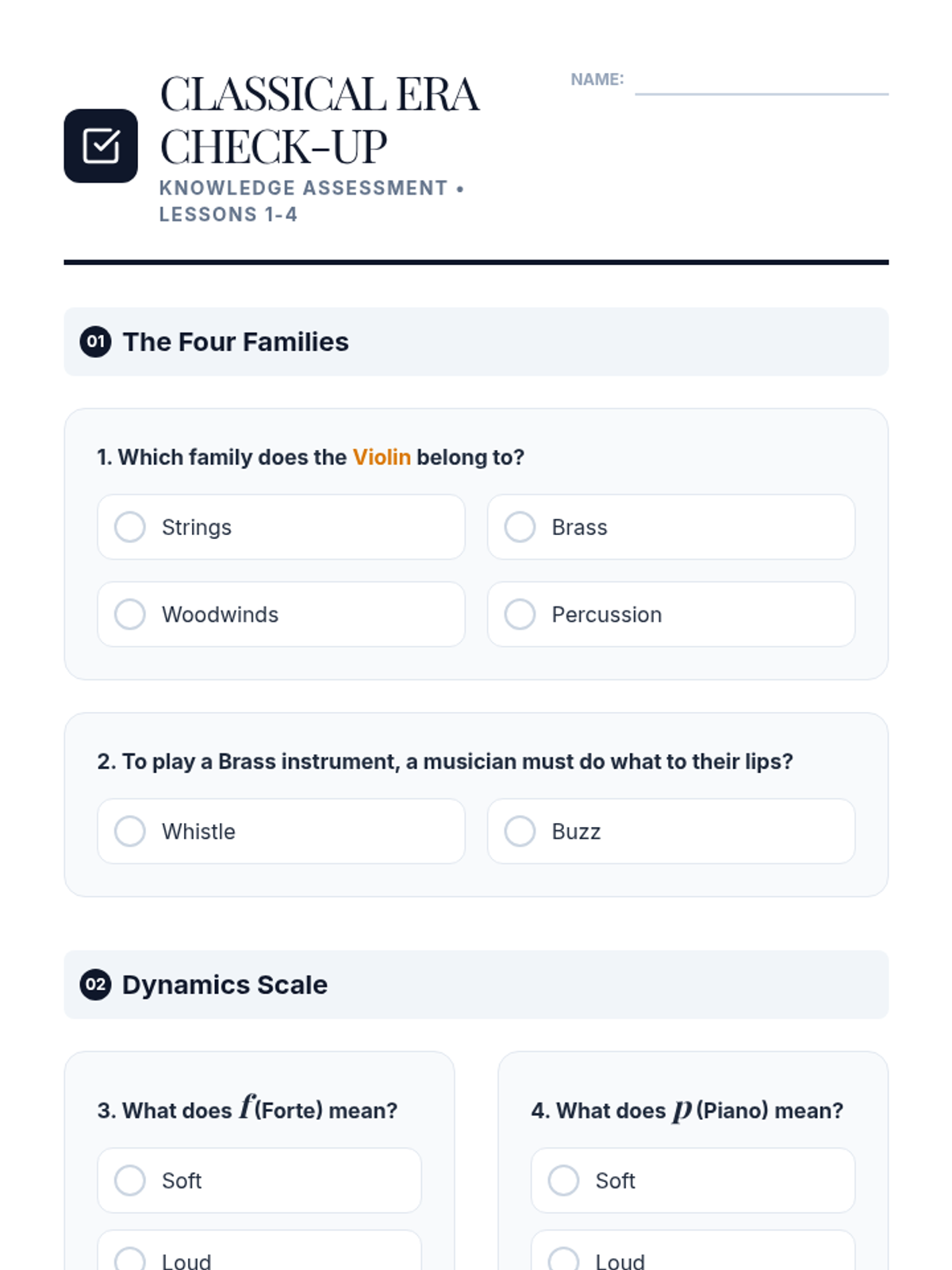
Students study the lives and music of Mozart and Beethoven. They compare the light, structured sounds of the Classical period with the dramatic emotional shifts of the early Romantic period.
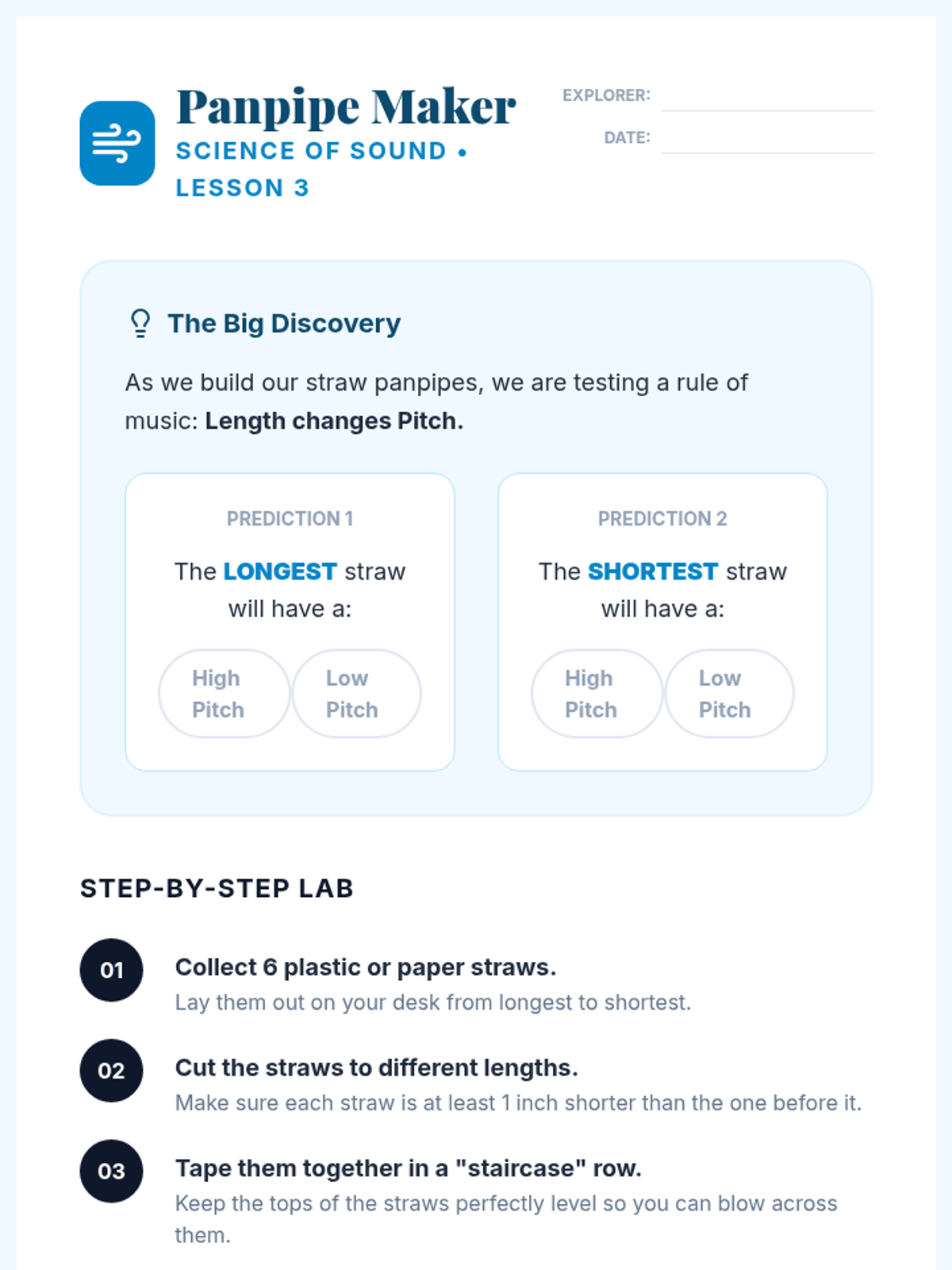
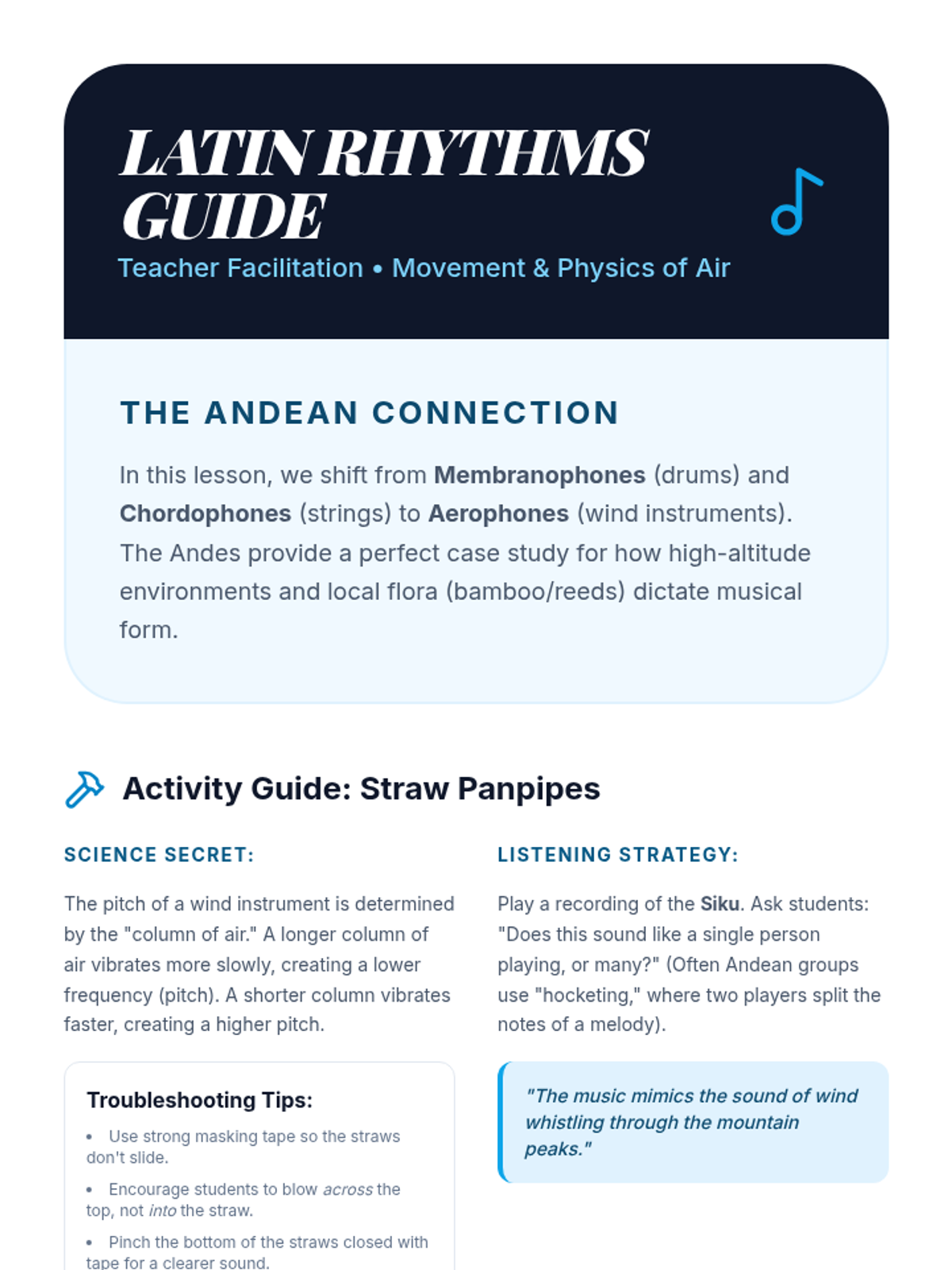
Students investigate the wind and percussion instruments of South America, such as panpipes and maracas, and explore the connection between music and dance in Latin American cultures.
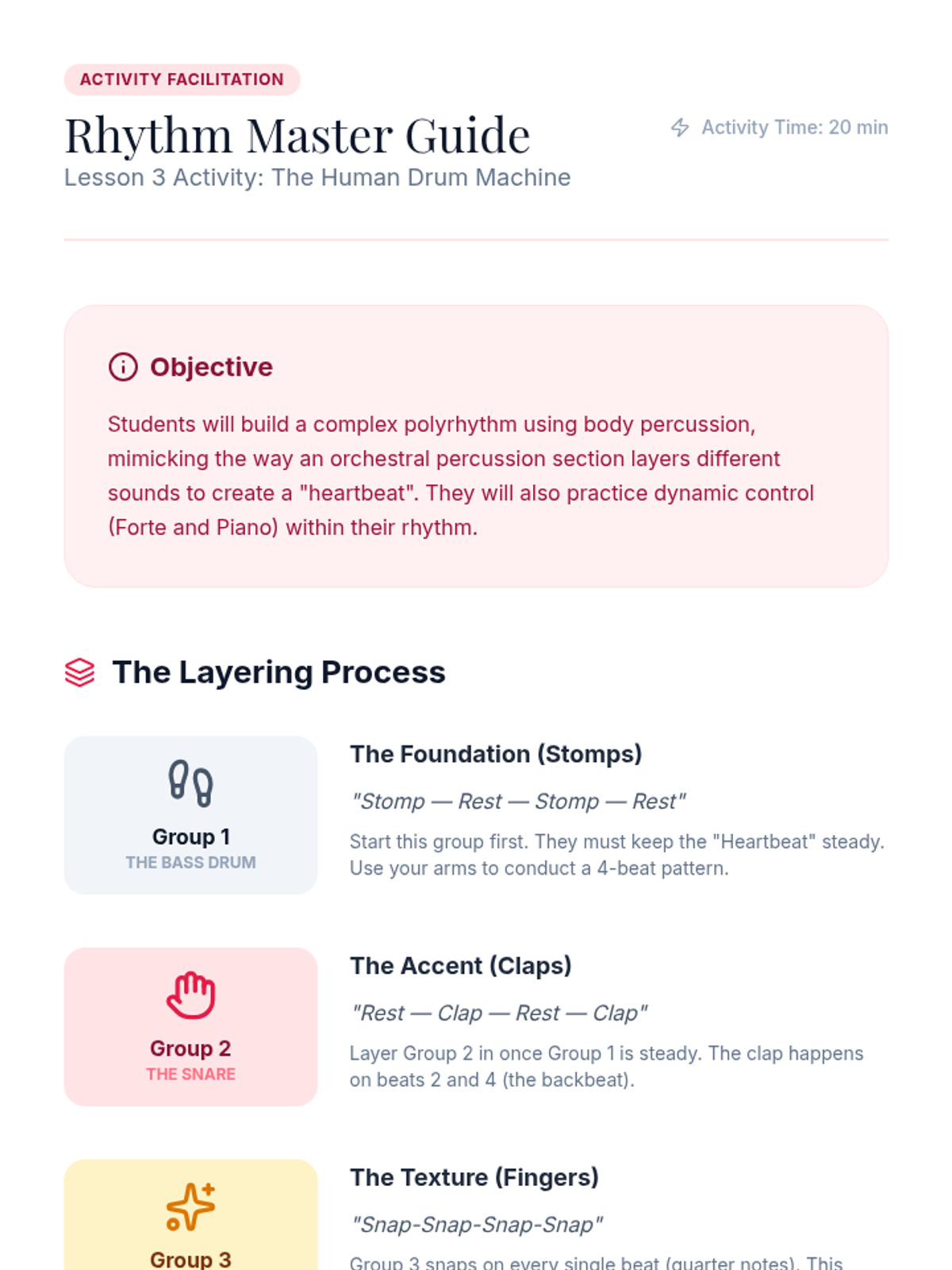
Students explore the power and rhythm of the brass and percussion sections. The lesson focuses on dynamics (loud/soft) and the role of percussion in keeping the heartbeat of the orchestra.
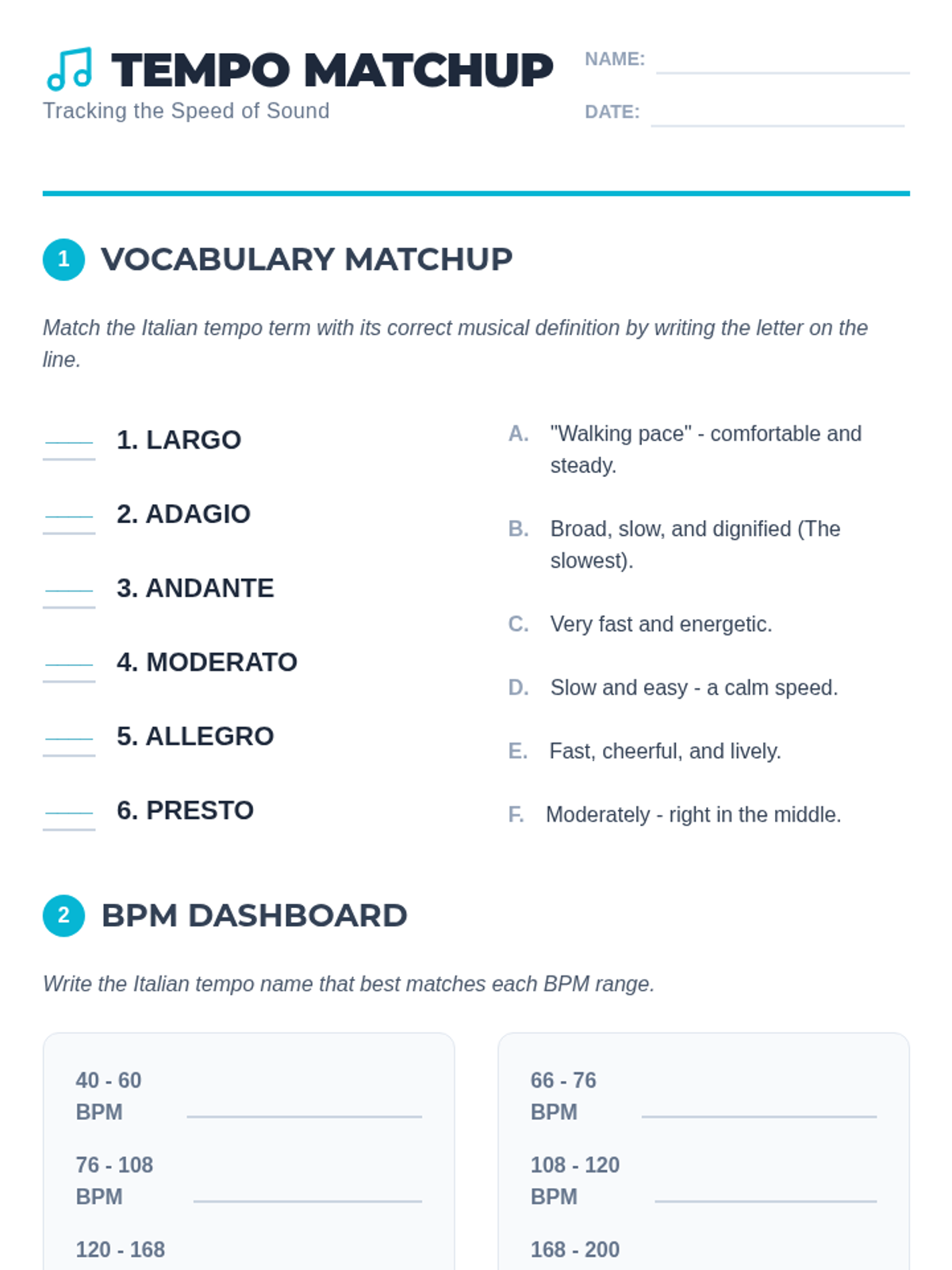
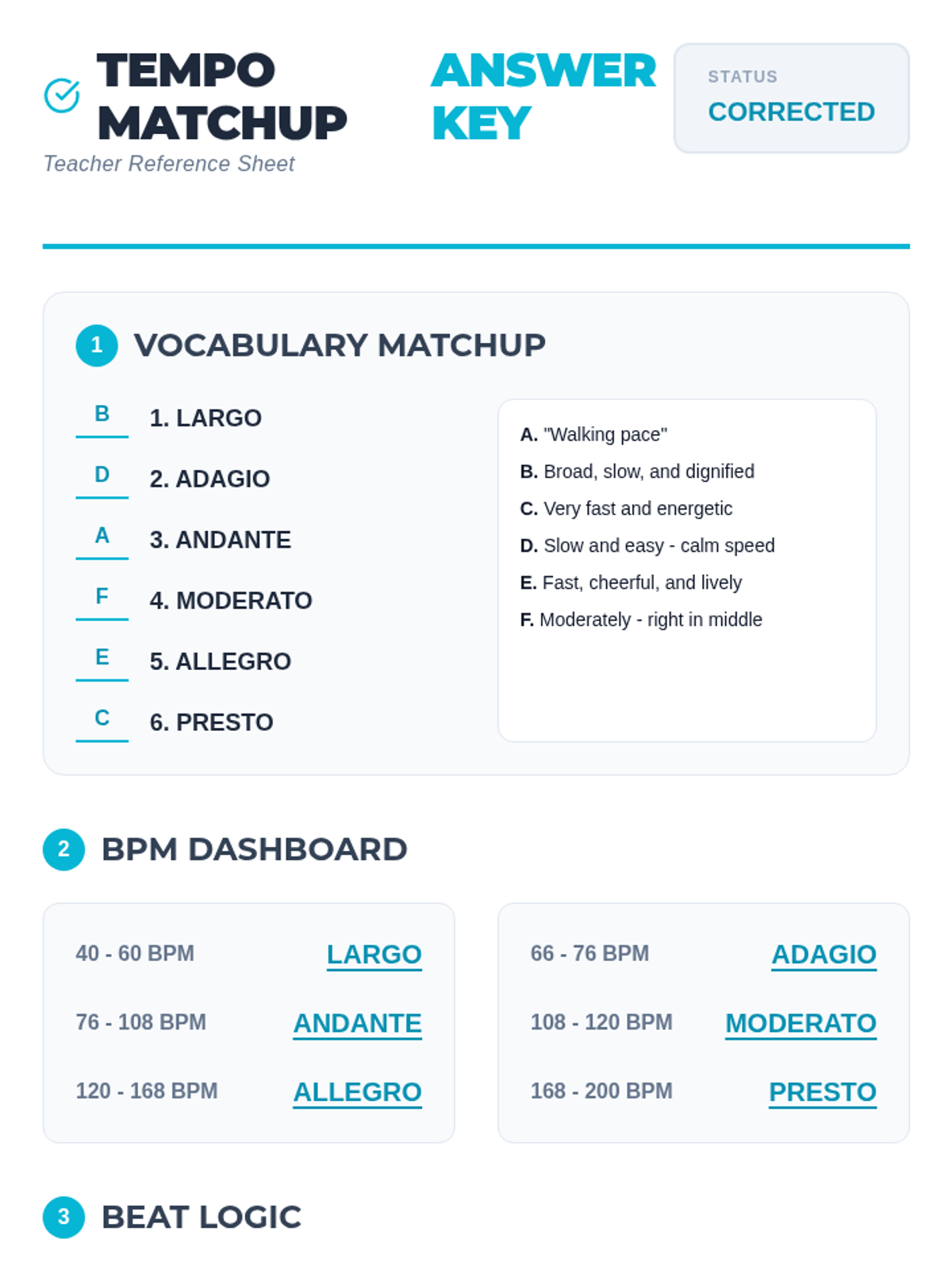
A lesson exploring the speed of music through Italian tempo markings, the use of metronomes, and understanding Beats Per Minute (BPM).
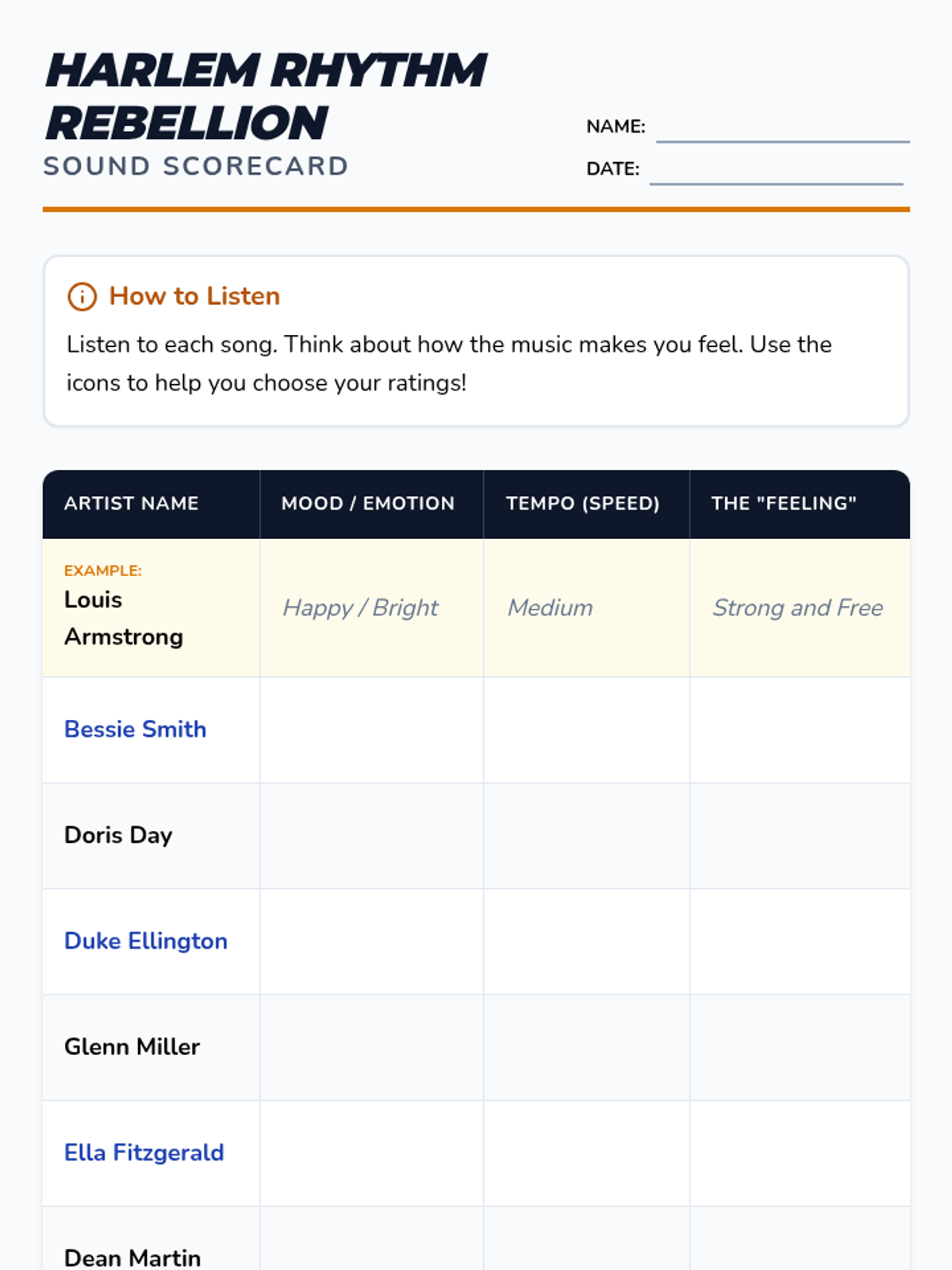
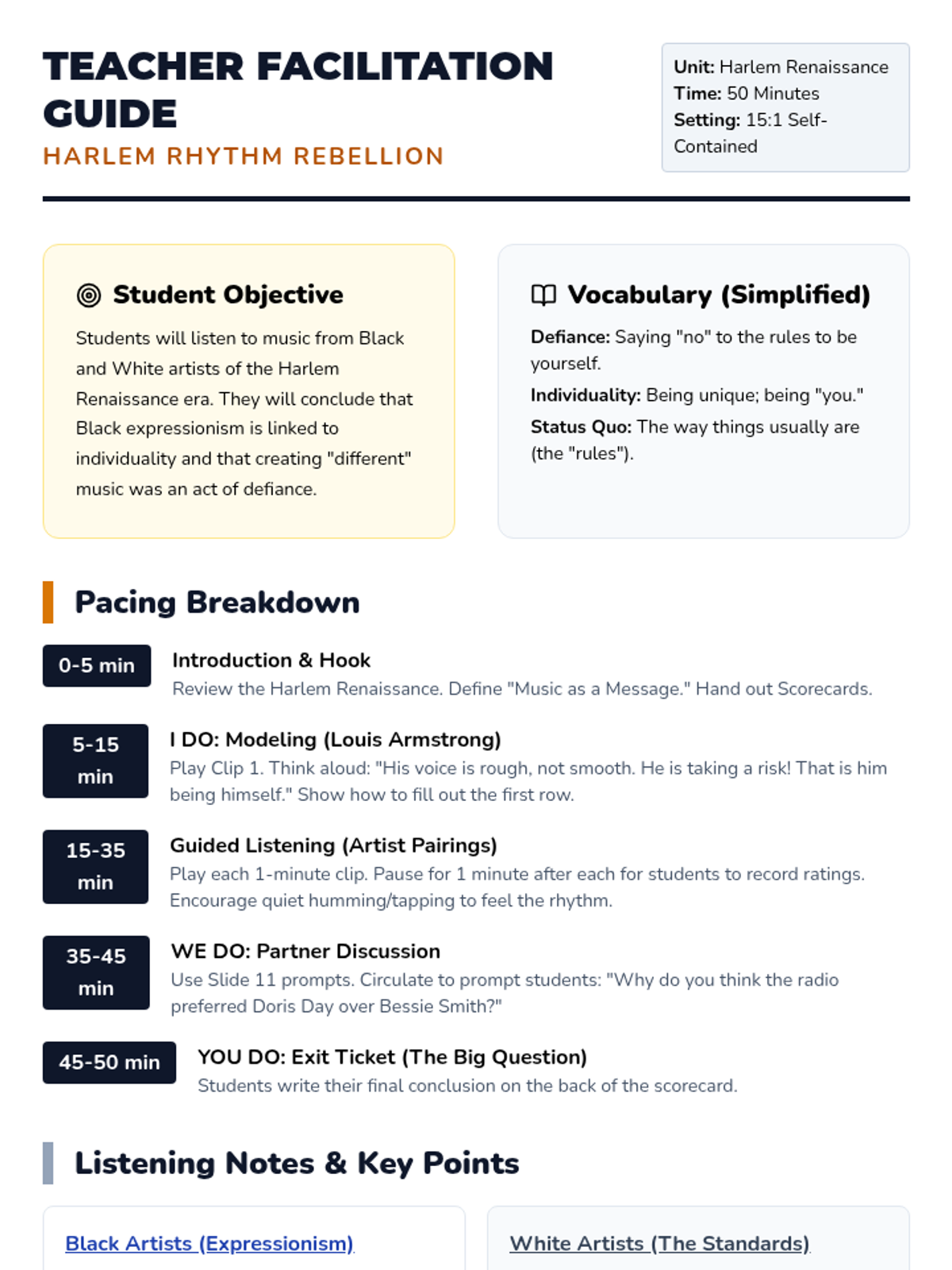
A 50-minute lesson exploring the connection between Jazz music, Black expressionism, and the Harlem Renaissance through music comparison and artist biopics. Students will analyze the differences between Black and White artists of the era to understand music as an act of defiance and cultural identity.
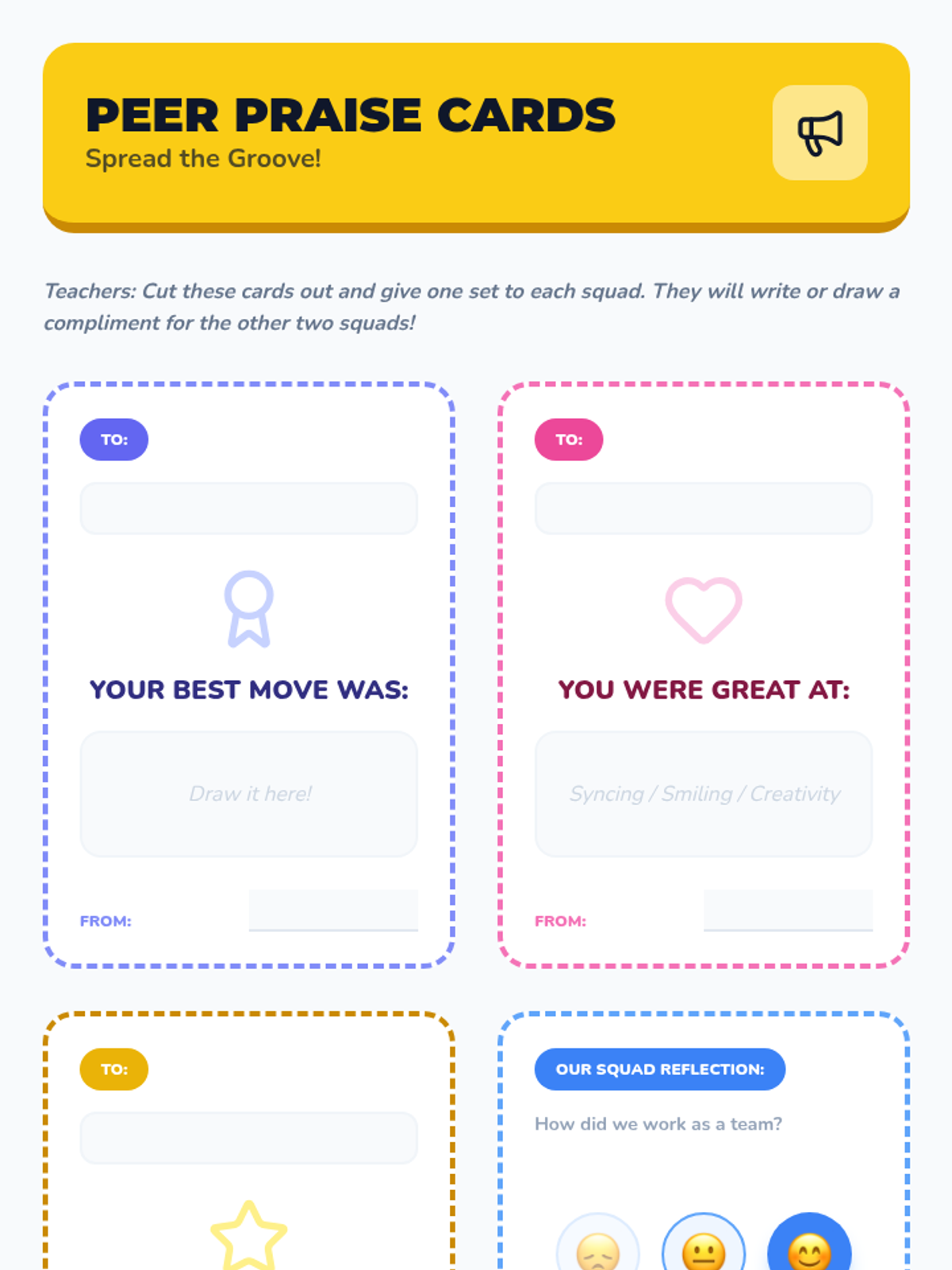
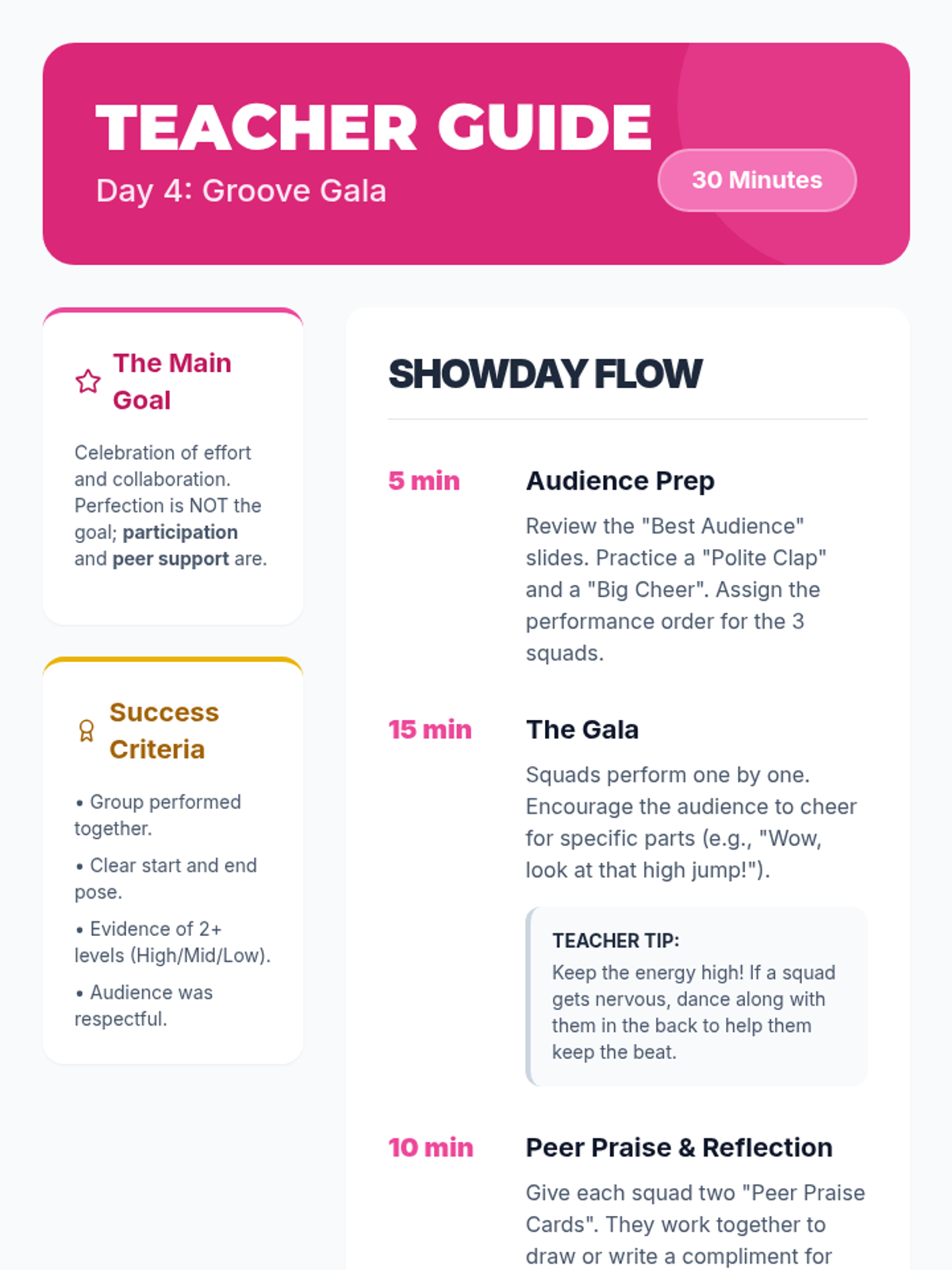
The final performance day where groups showcase their choreography and celebrate each other's creativity.
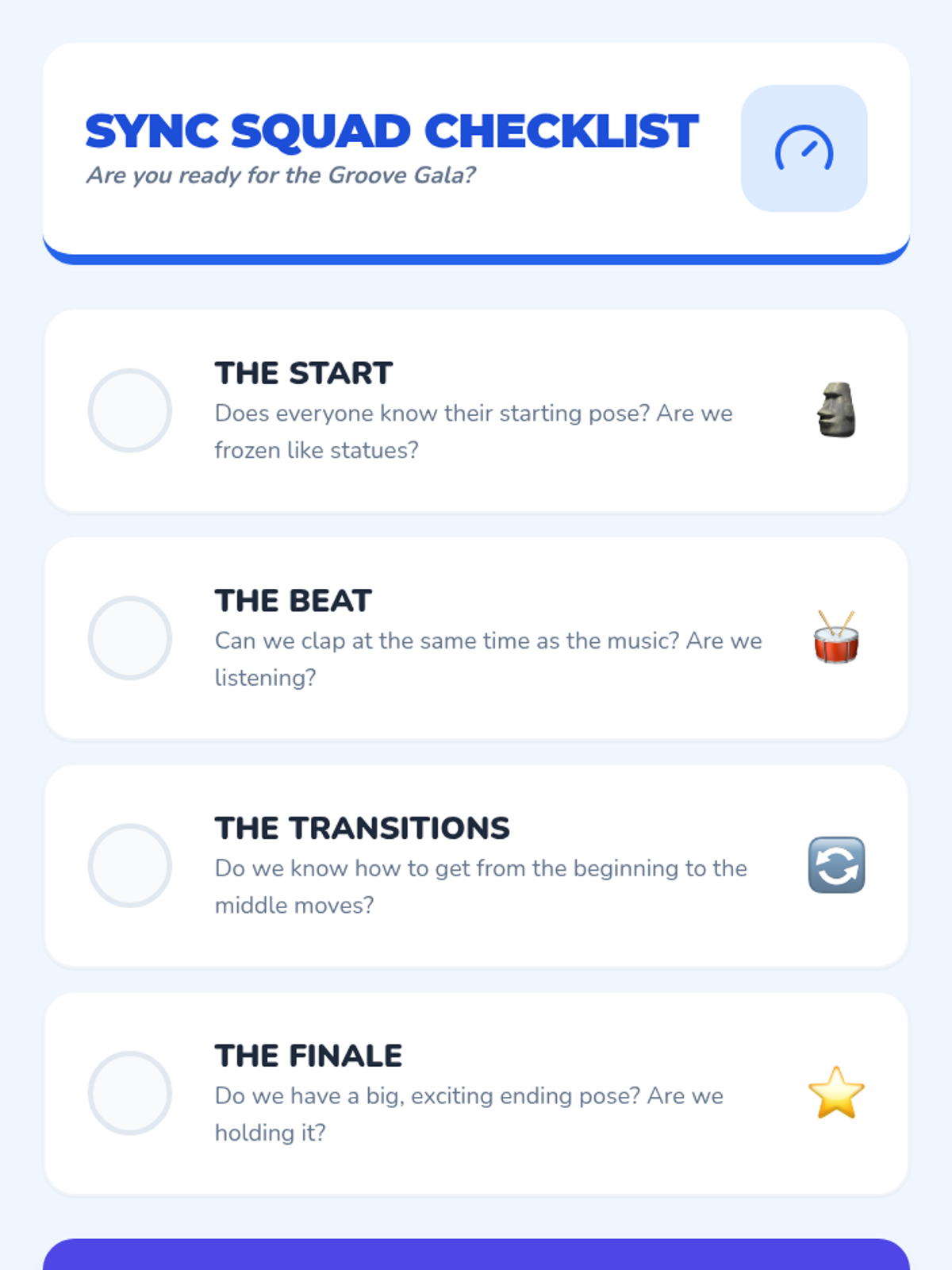
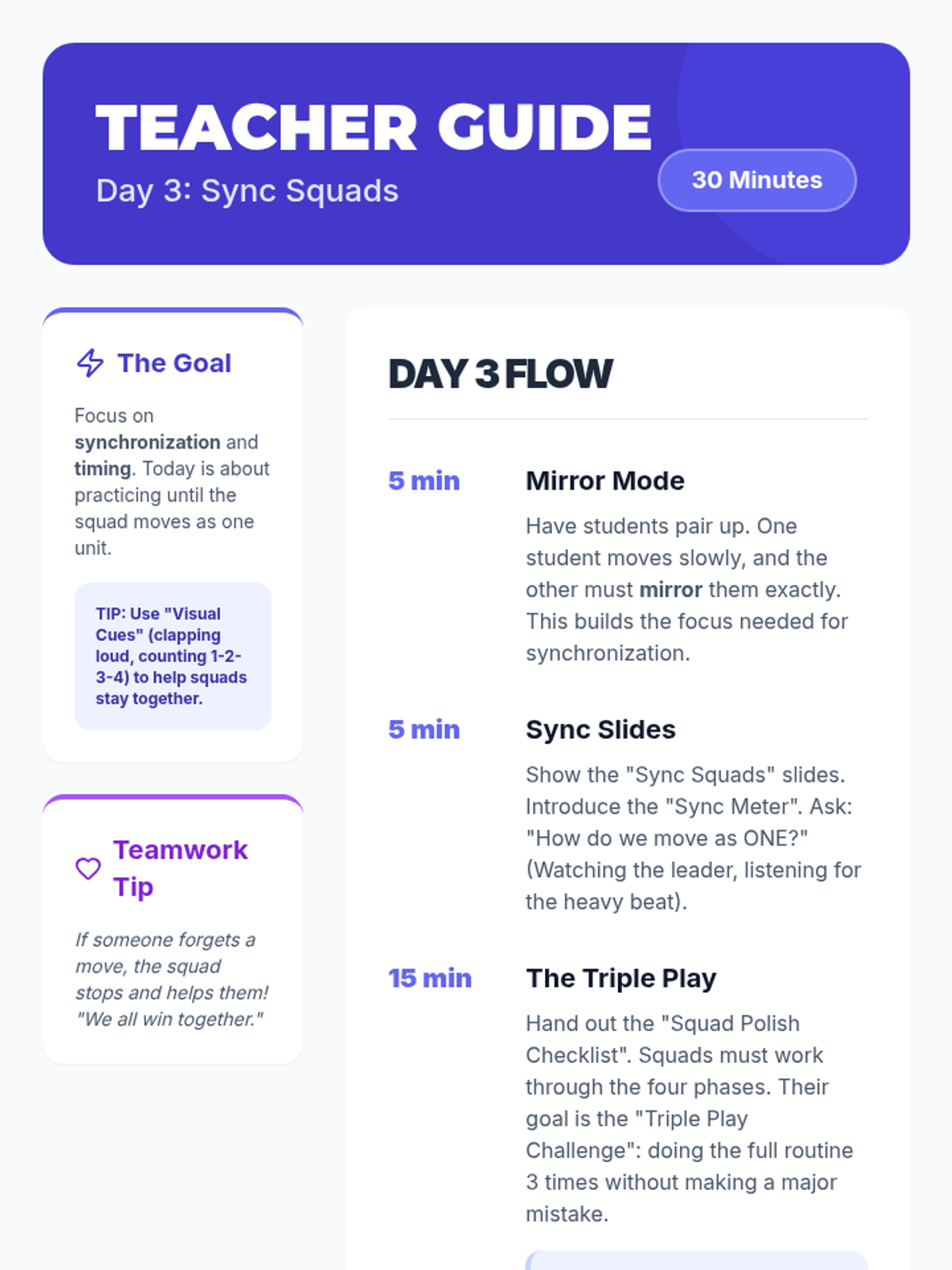
Squads practice their full routine, adding transitions and ensuring every member is in sync.
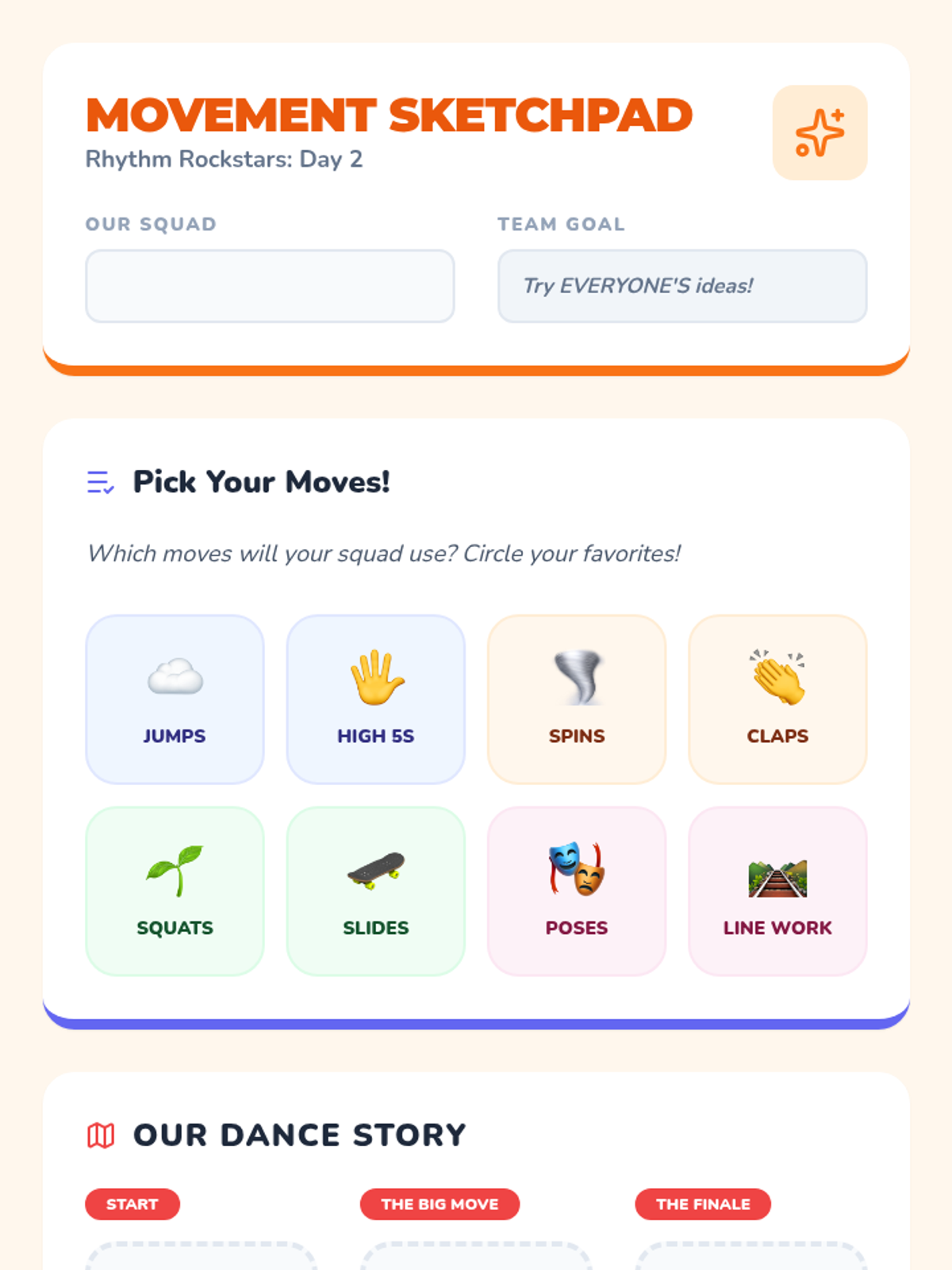
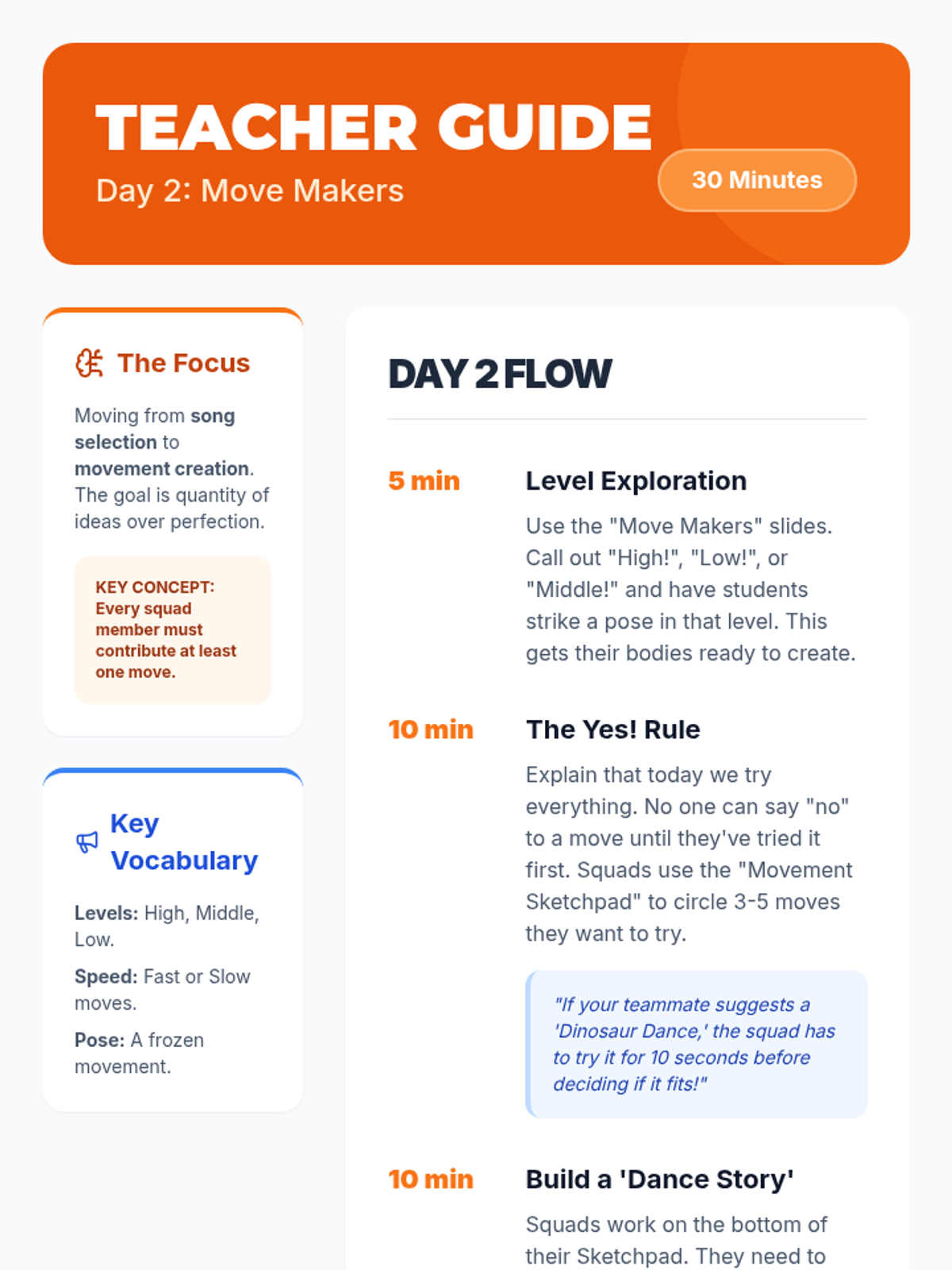
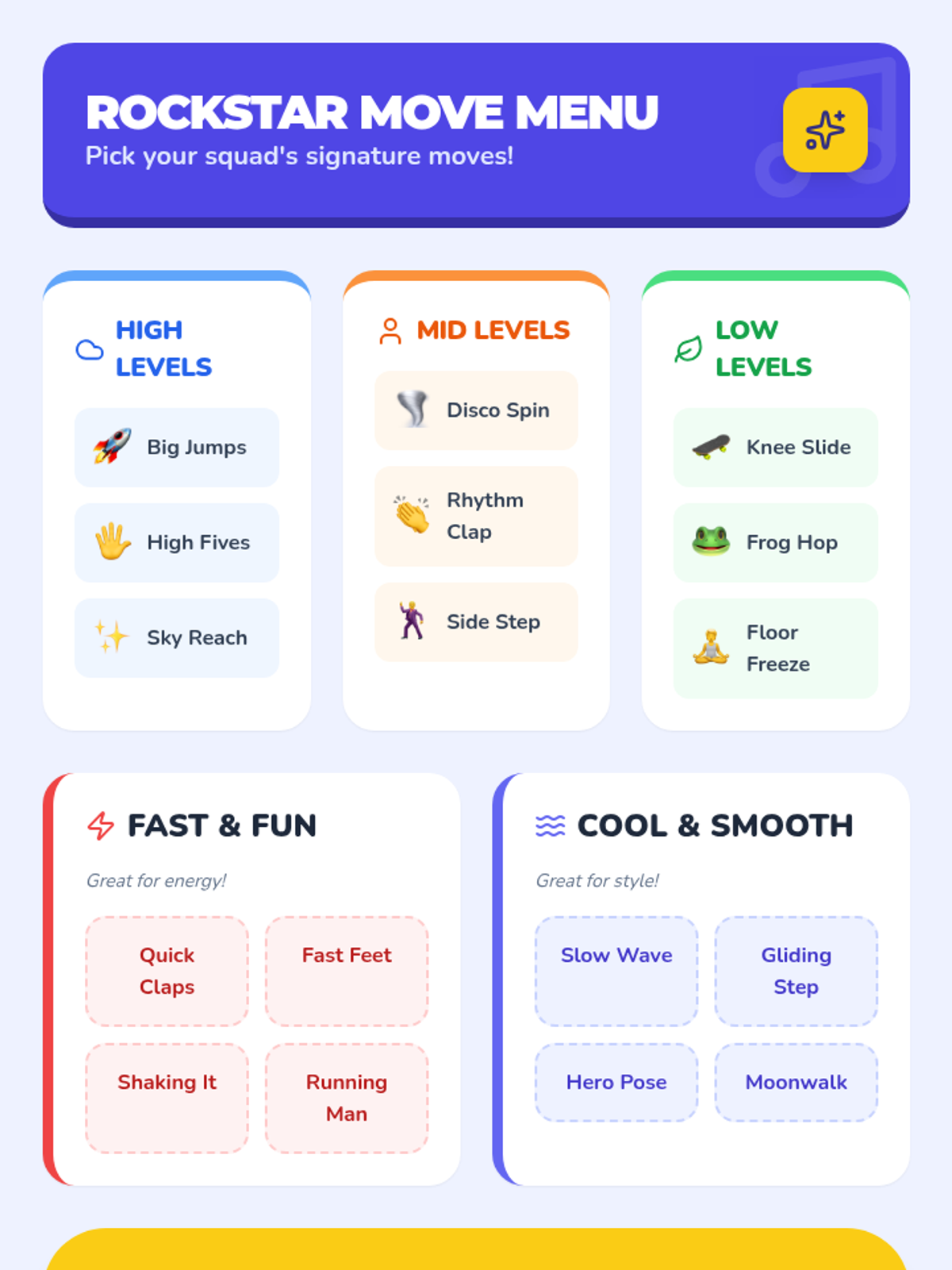
Groups brainstorm dance moves using different levels and speeds, focusing on including everyone's ideas.
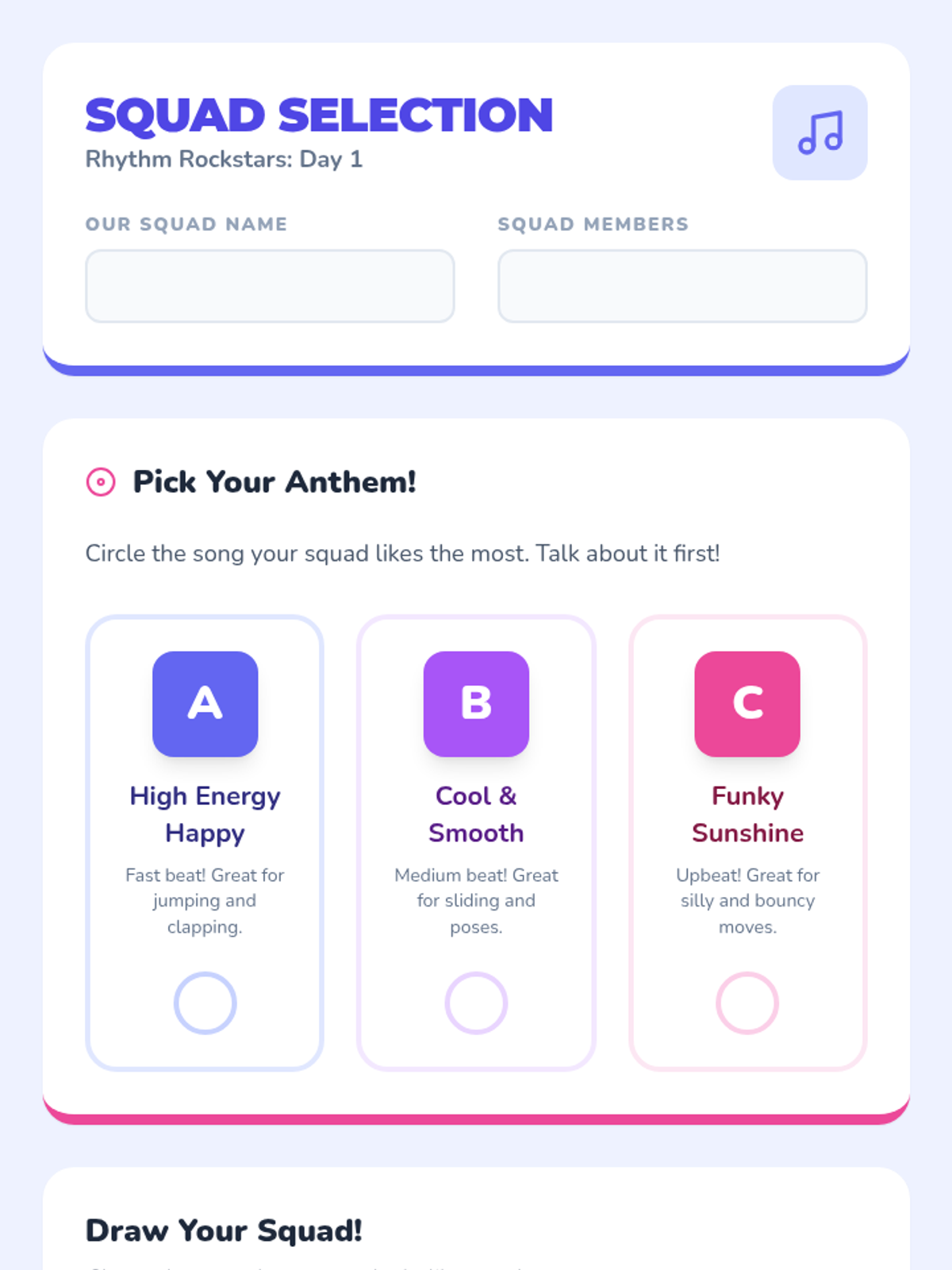
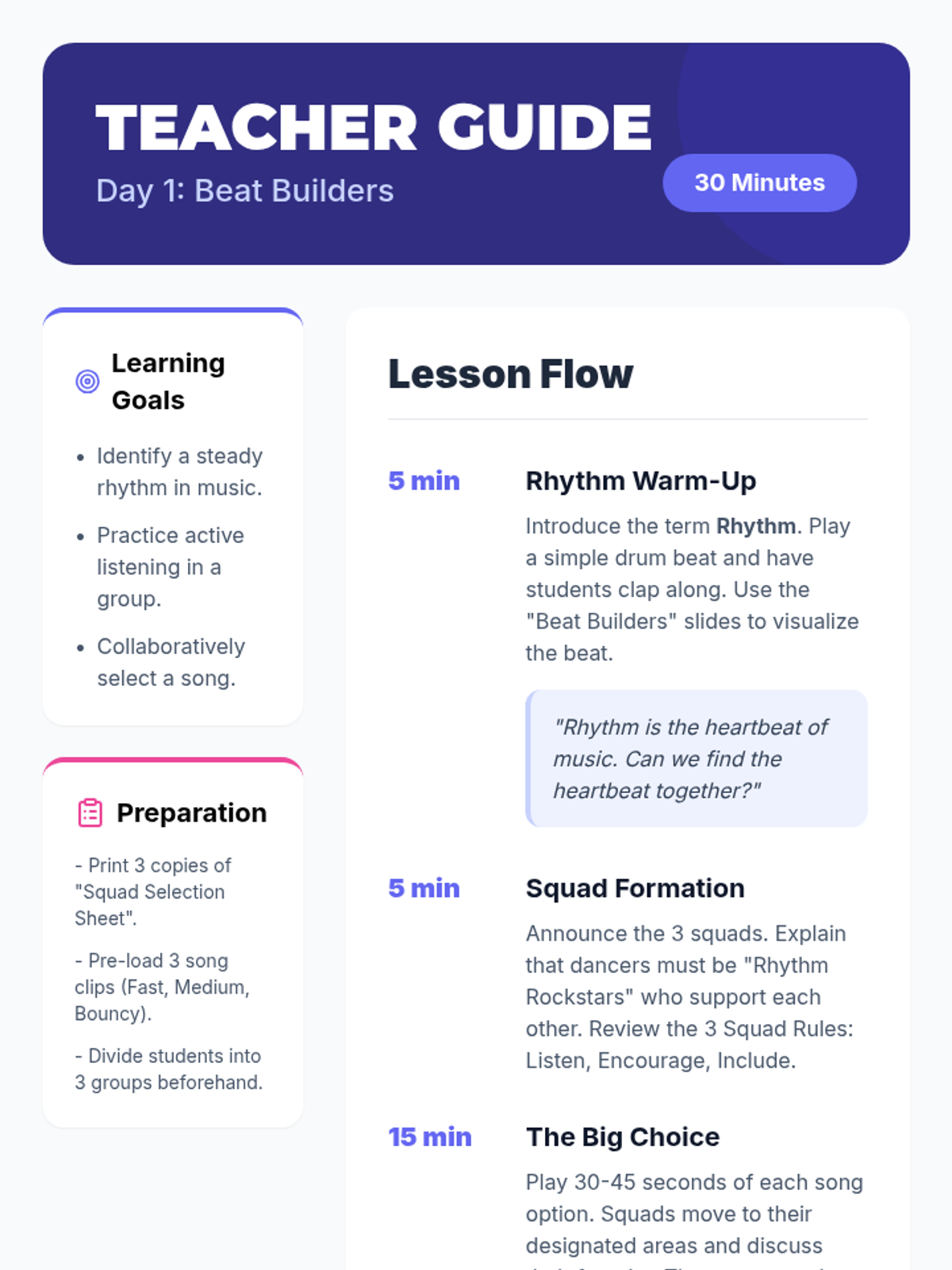
Students explore rhythm and tempo, form their dance squads, and select their group's performance song.
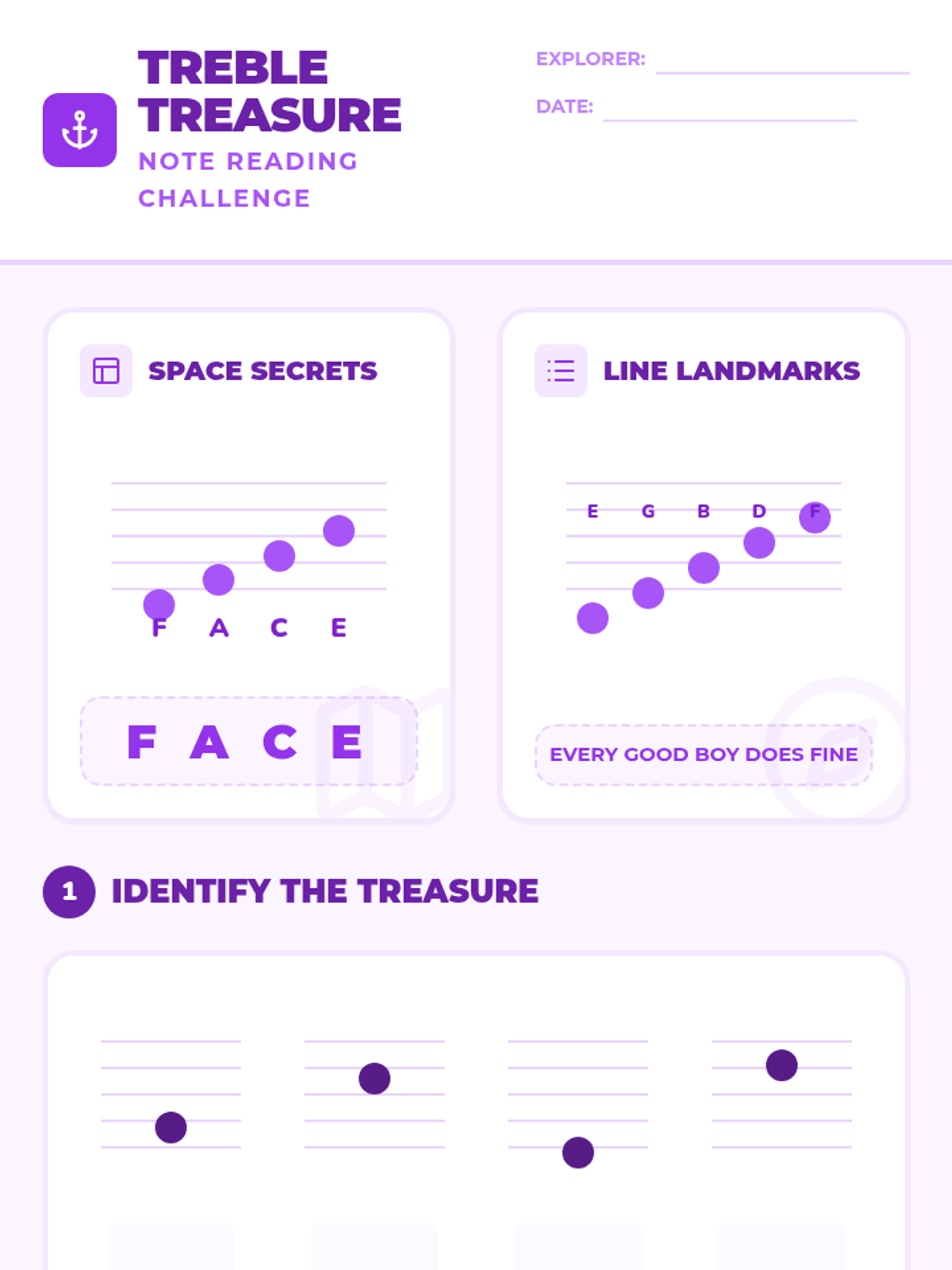
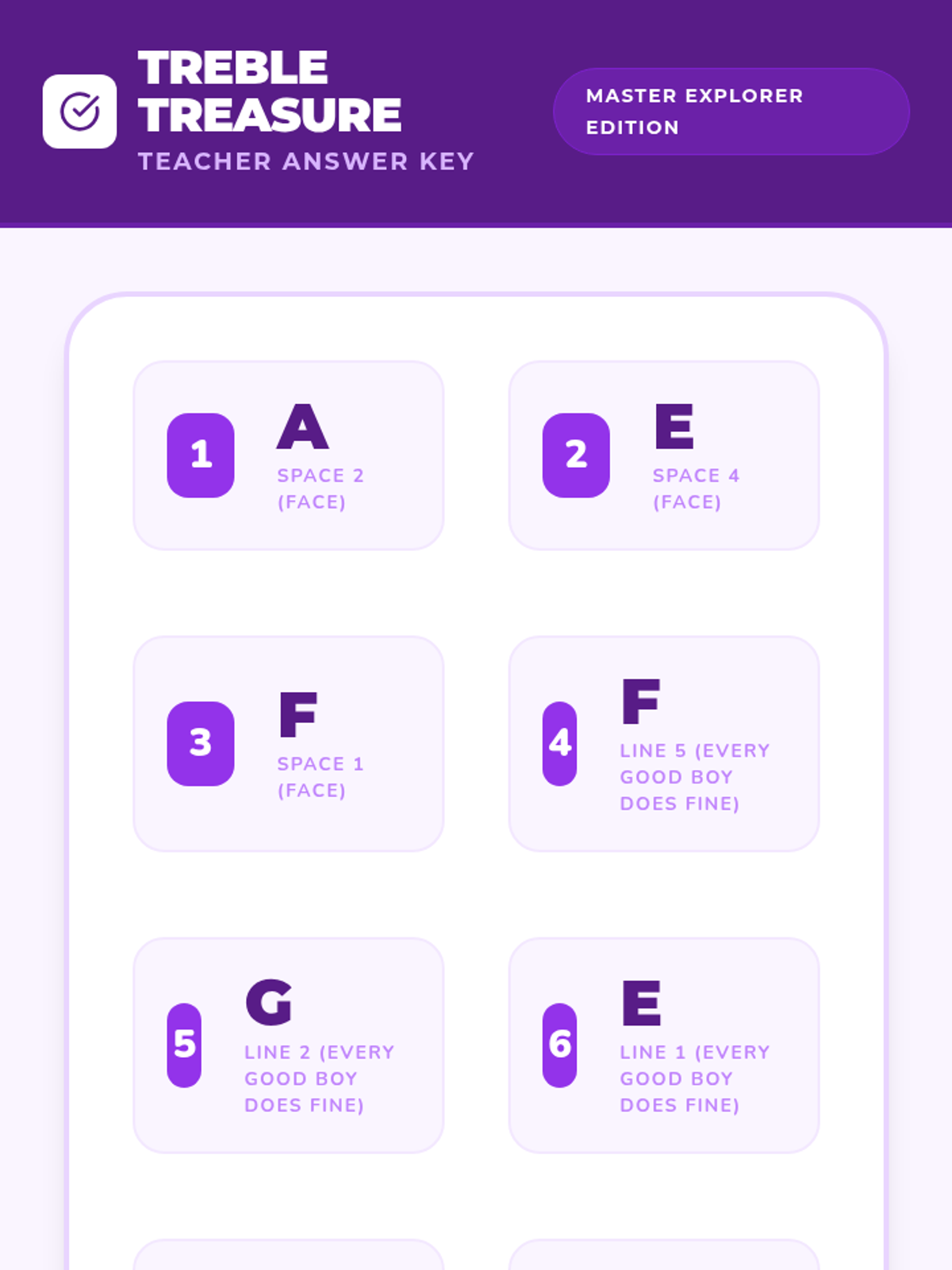
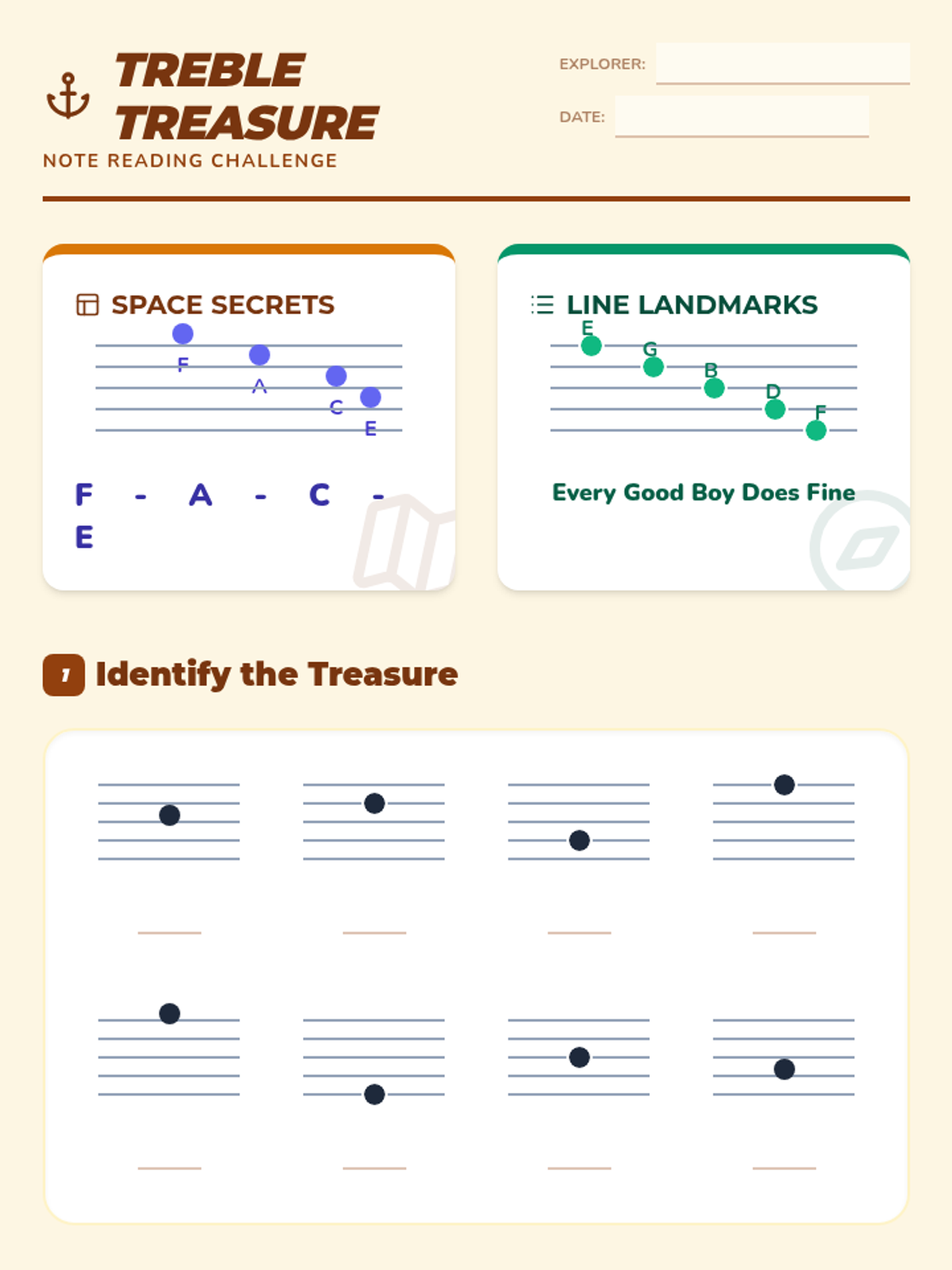
An introductory lesson on reading treble clef notes using the FACE and 'Every Good Boy Does Fine' mnemonics, redesigned with a purple treasure hunt theme.
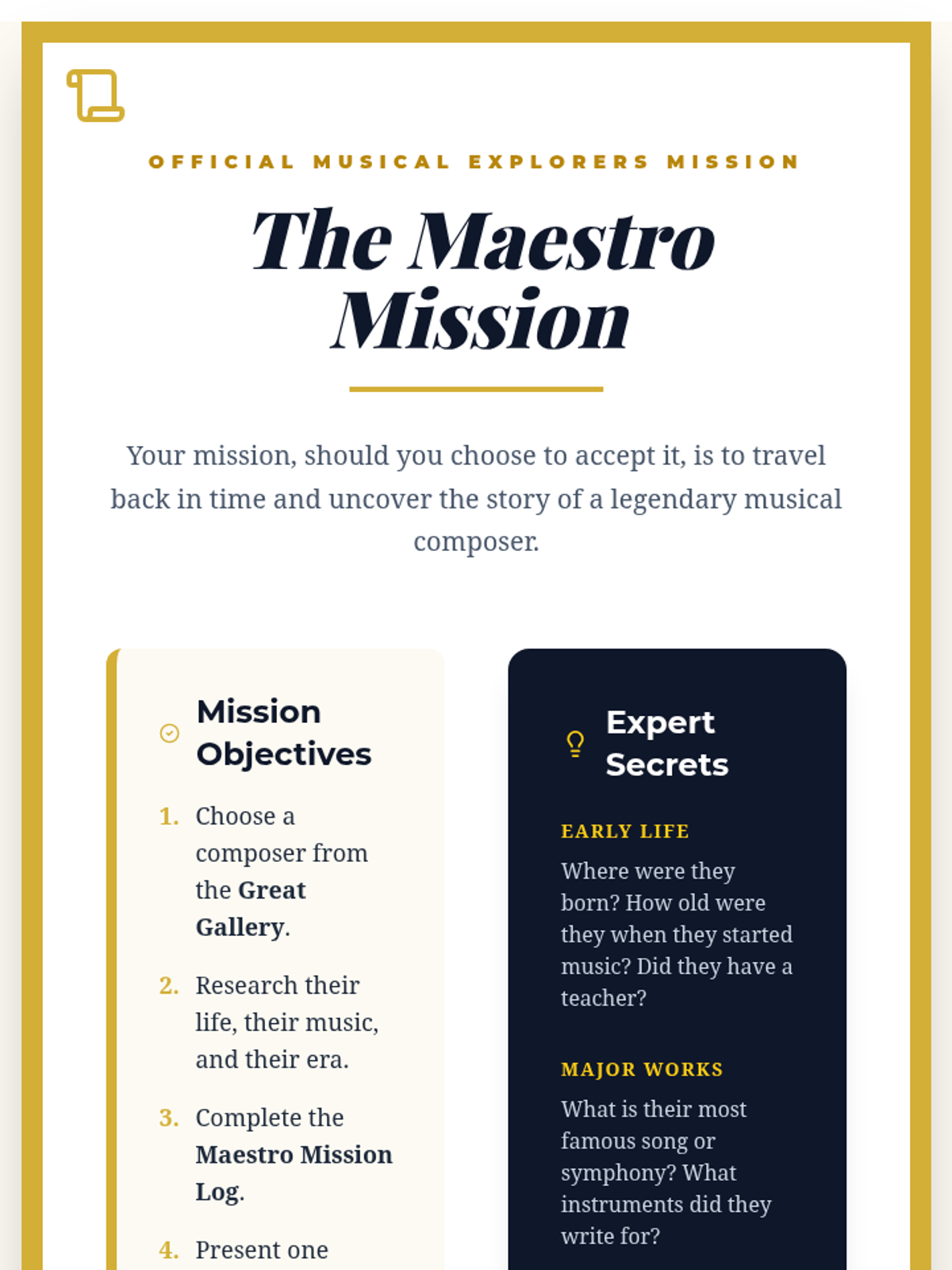
Guides students through researching and presenting a biography of a famous composer.
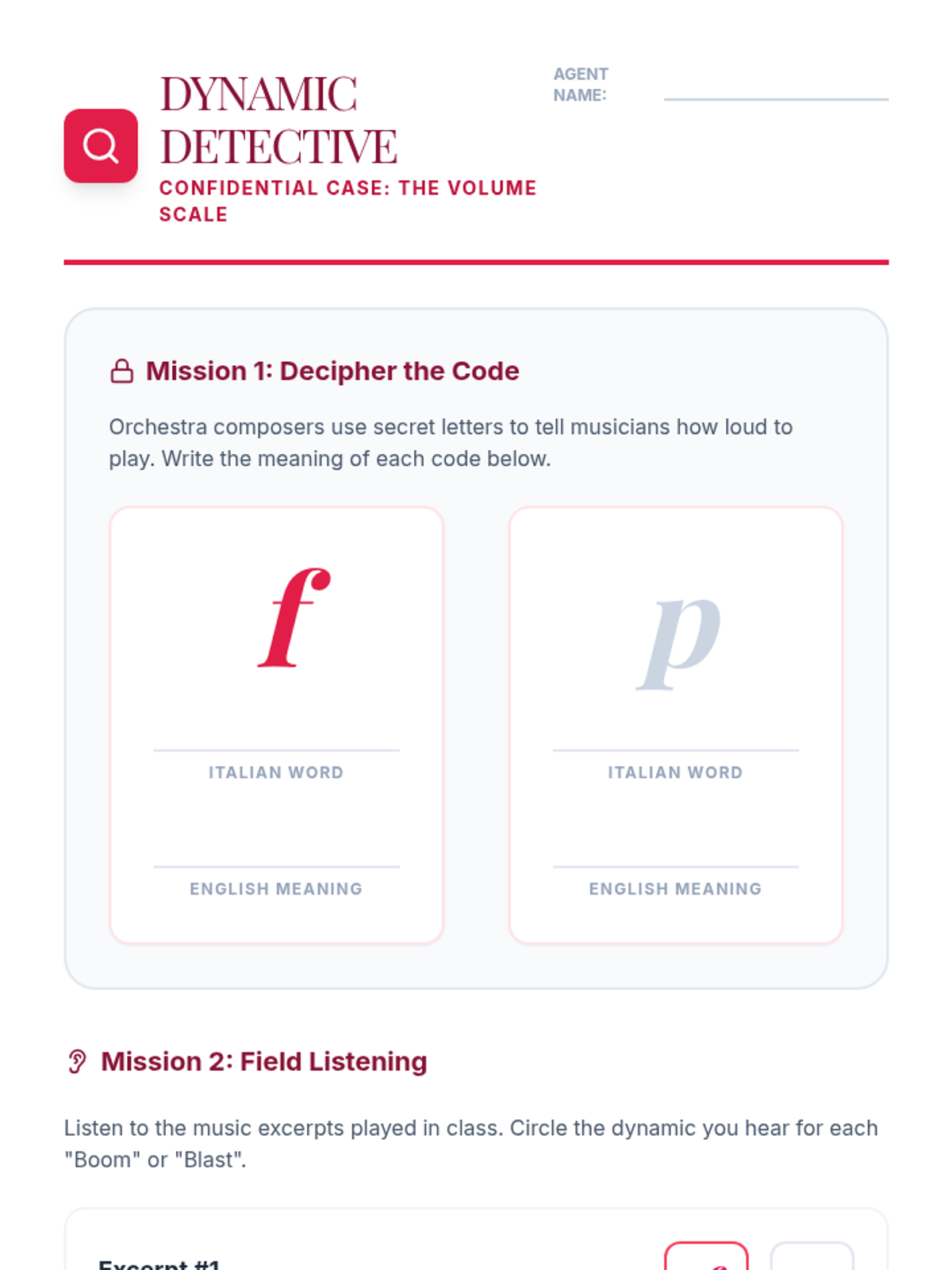
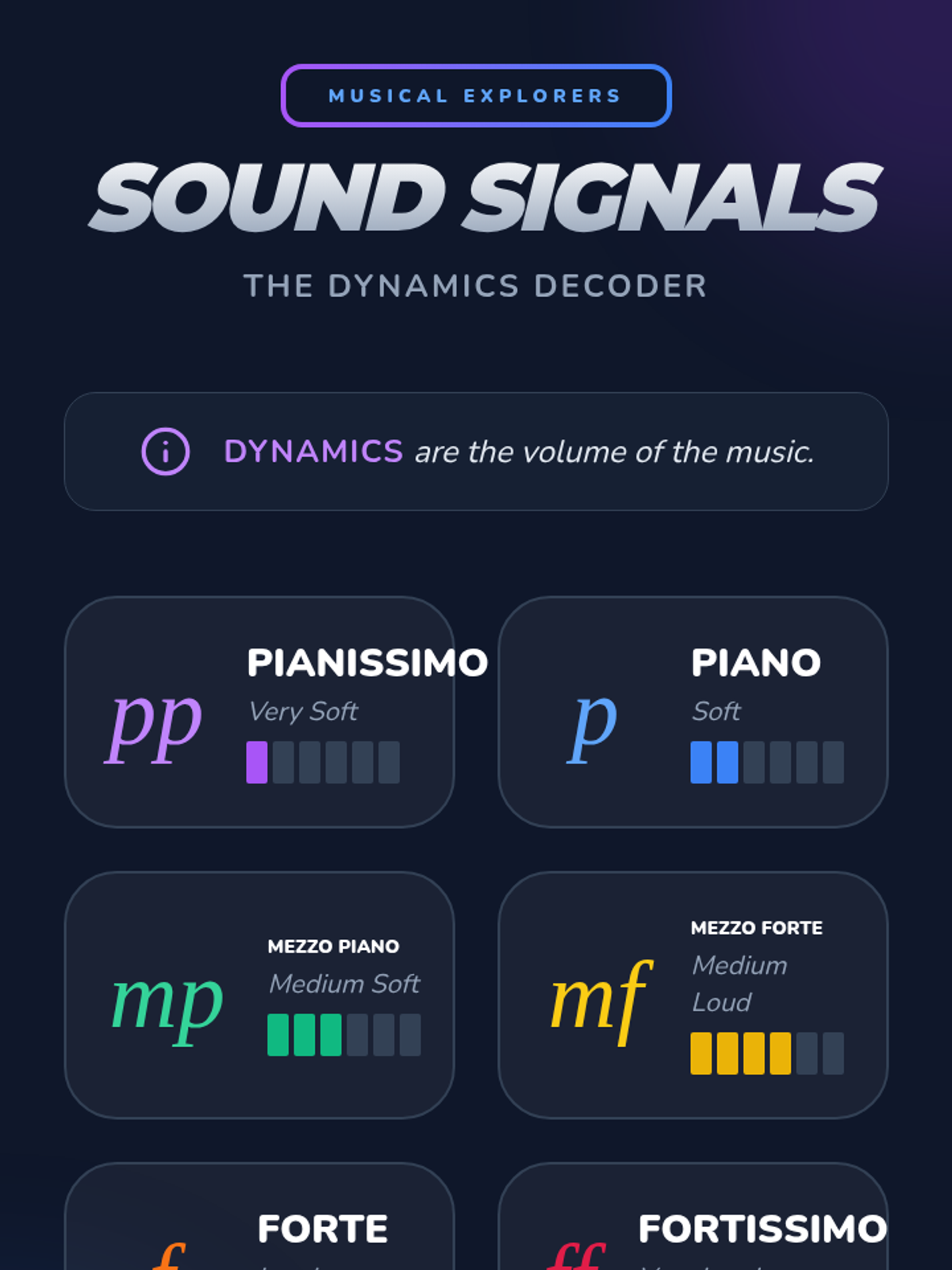
Explores the concept of dynamics through vocabulary and visual aids.
Introduces the treble clef and provides practice for identifying notes on the staff.
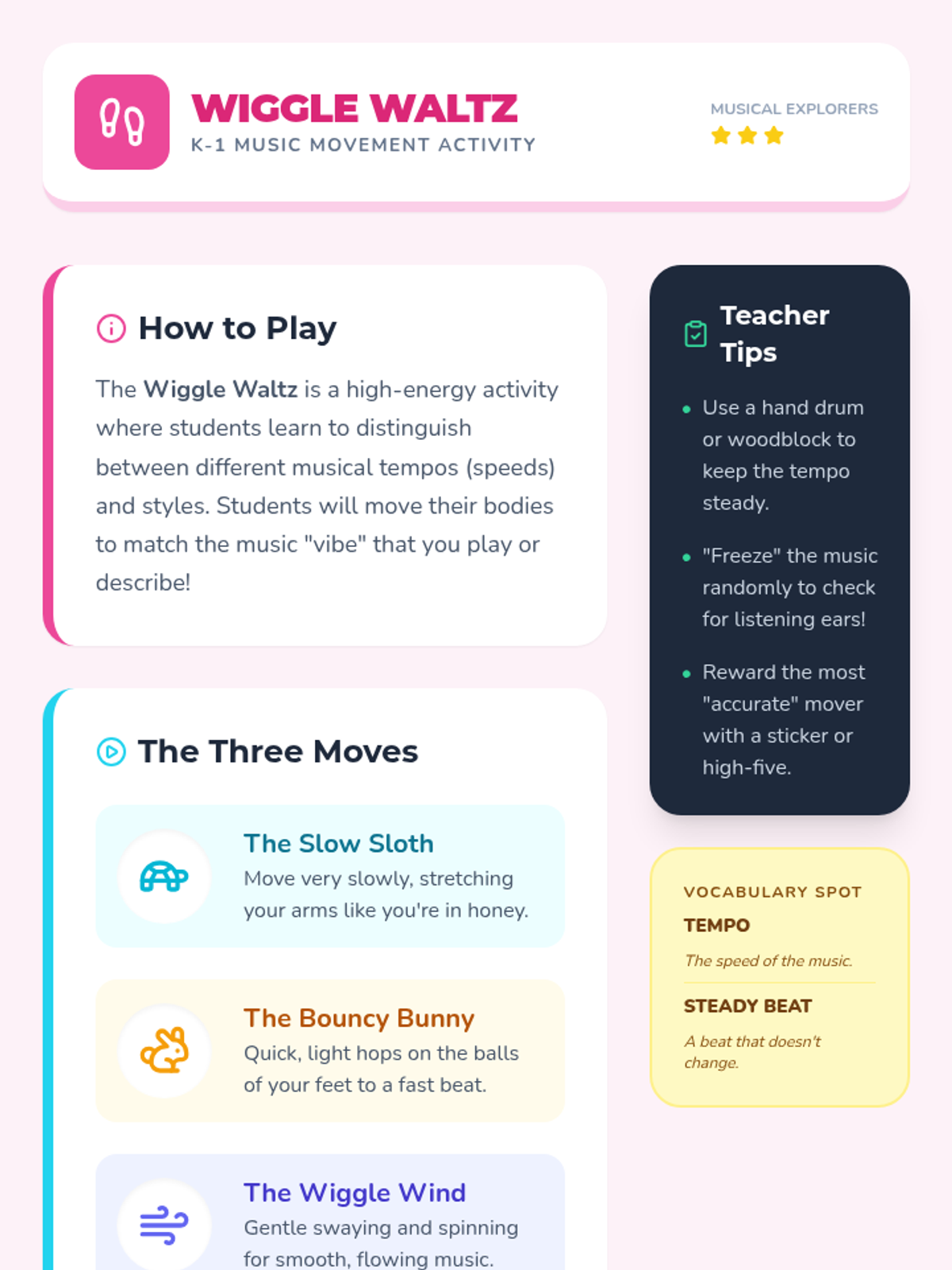
Focuses on the fundamentals of rhythm for 2nd graders and incorporates active movement activities suitable for Kindergarteners.
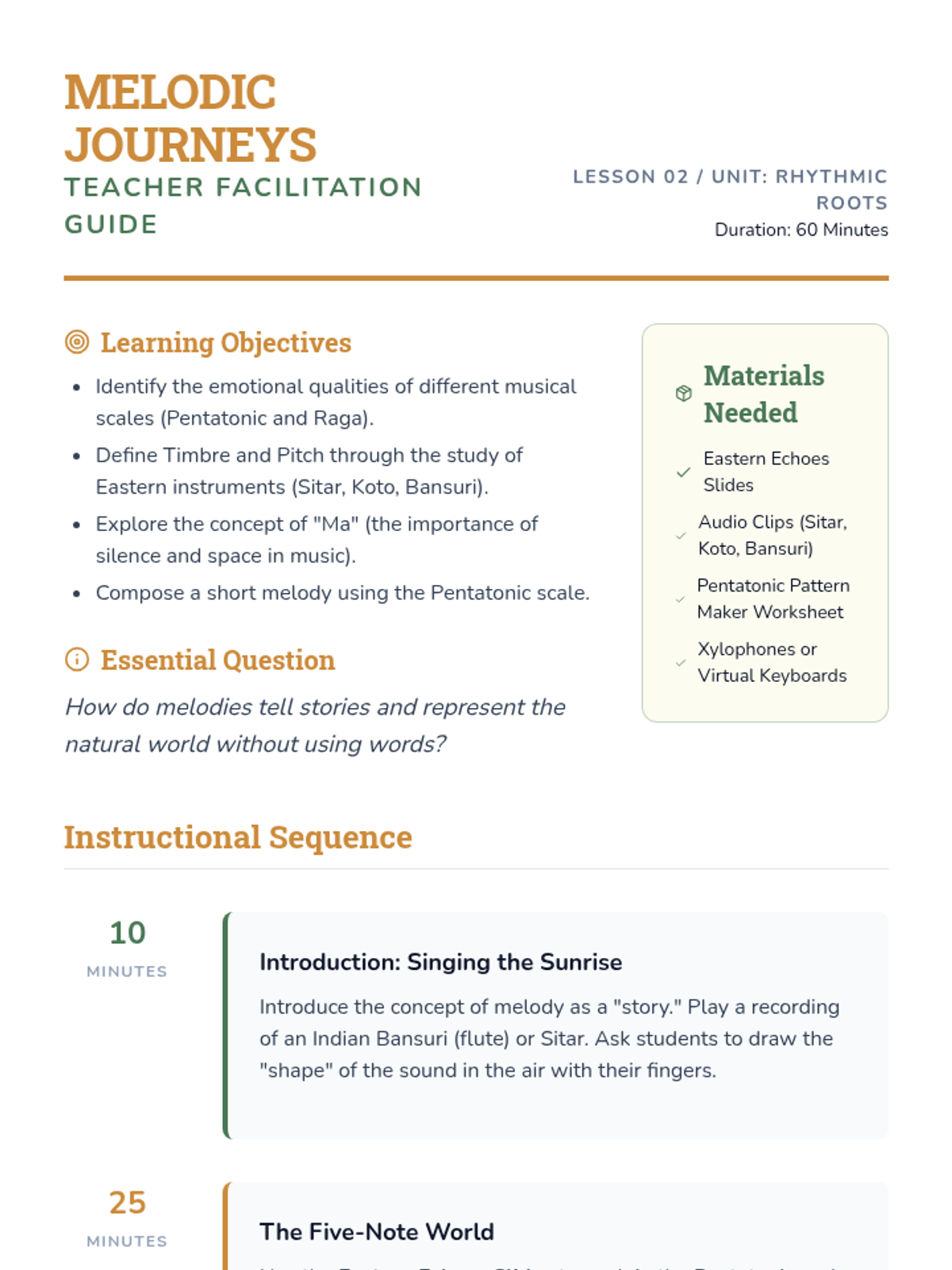
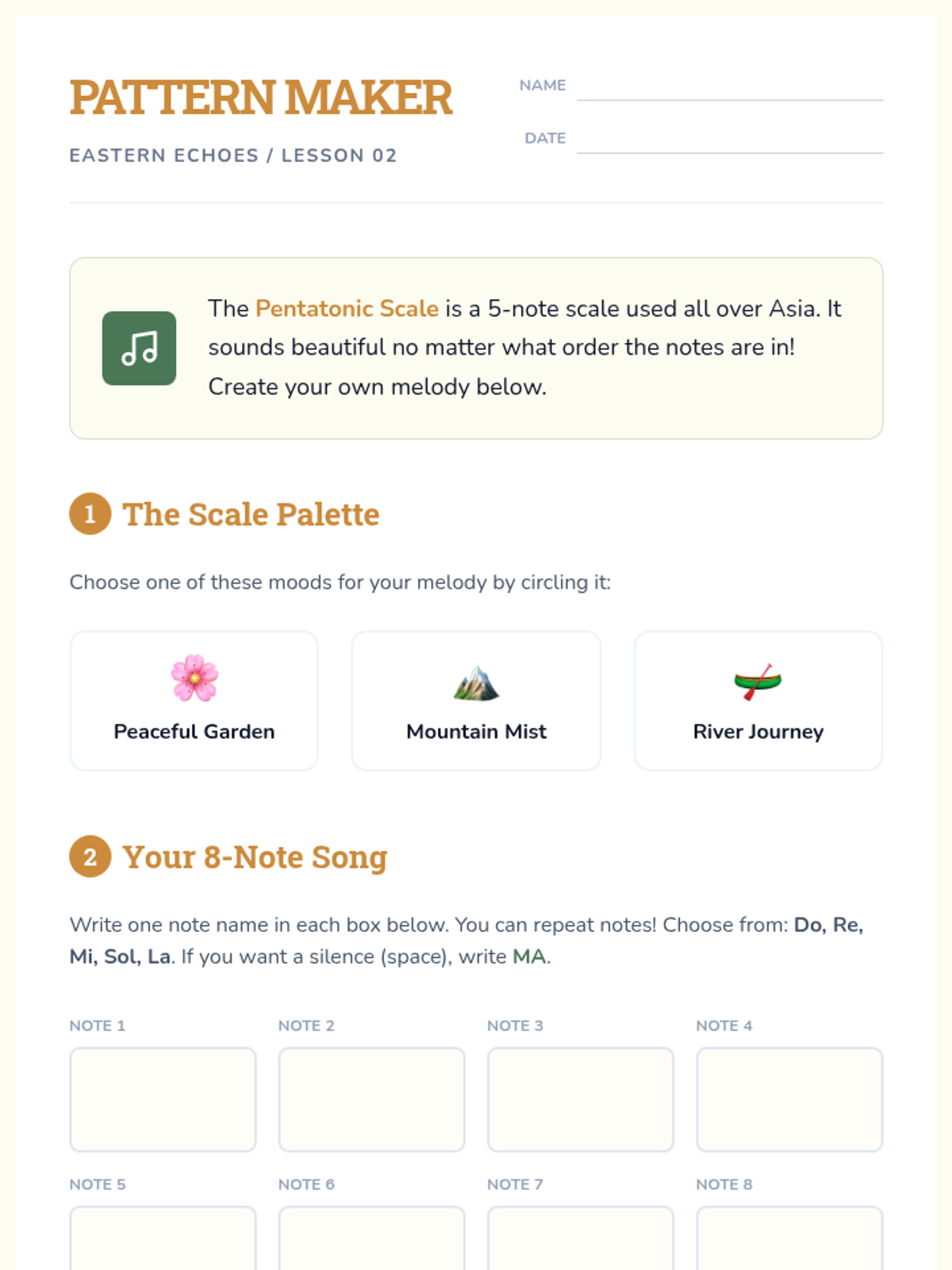
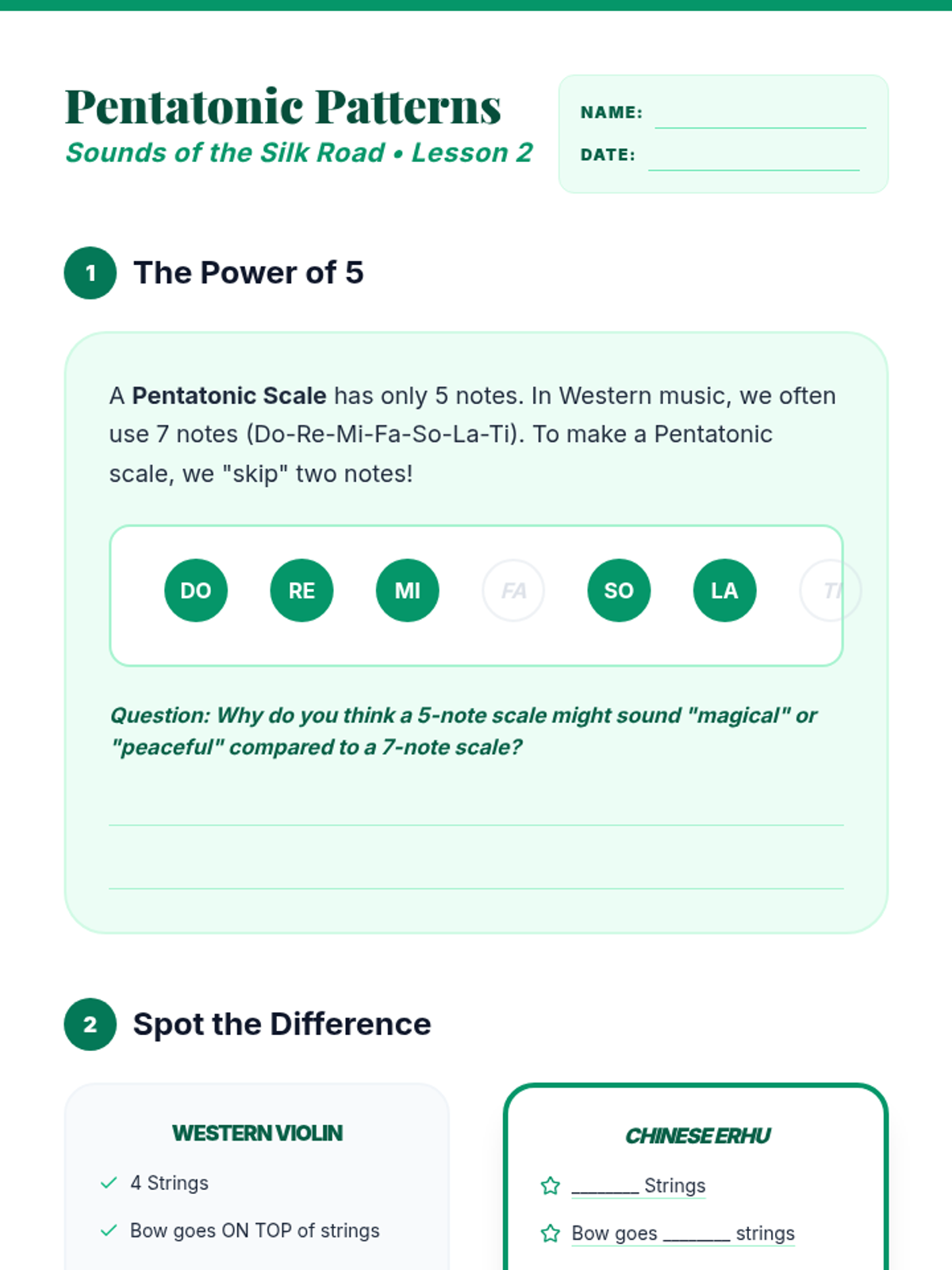
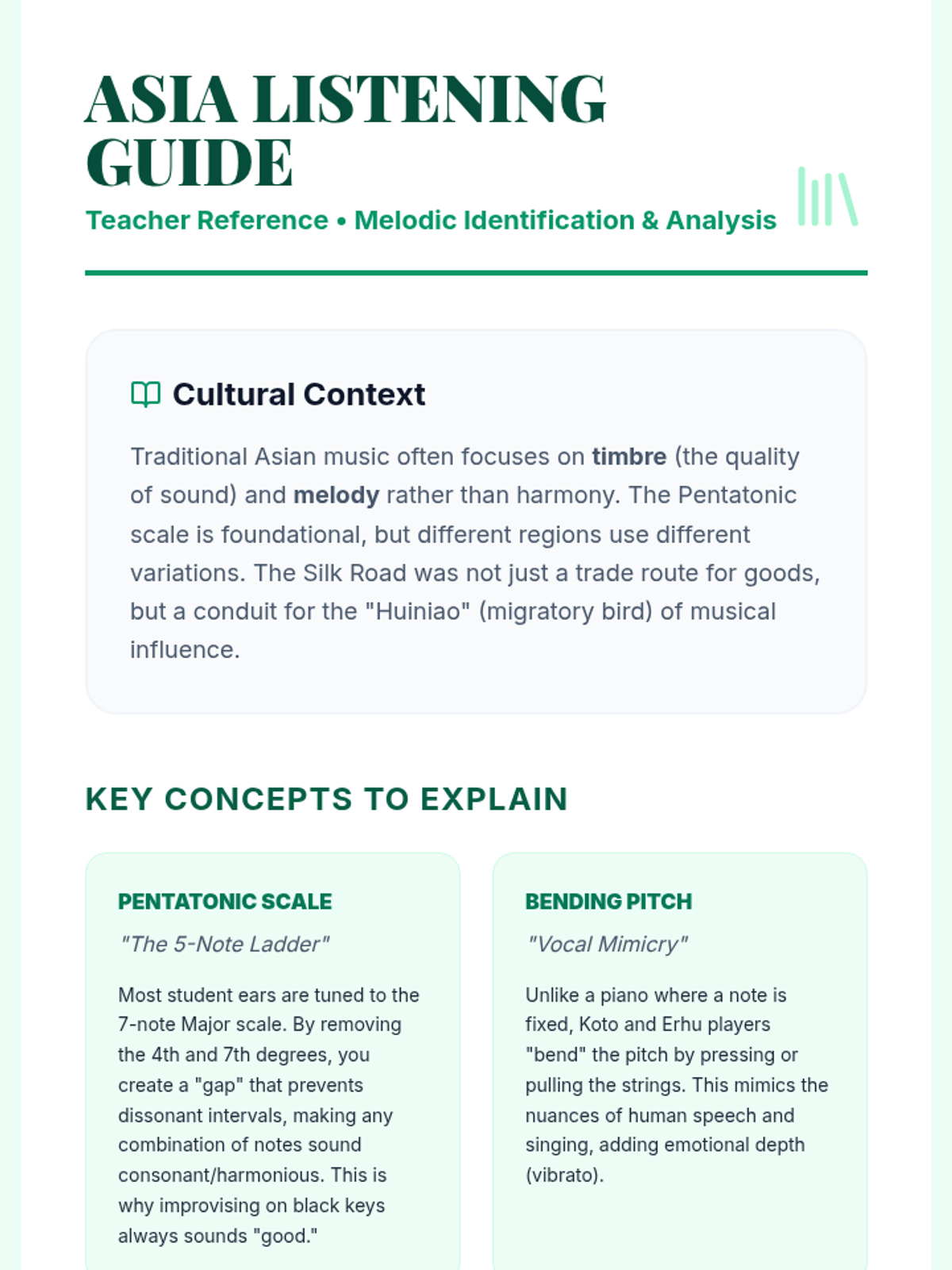
This lesson introduces the Pentatonic scale (5-note scale) common in traditional Chinese and Japanese music. Students listen to string instruments like the Koto or Erhu and compare them to the violin.
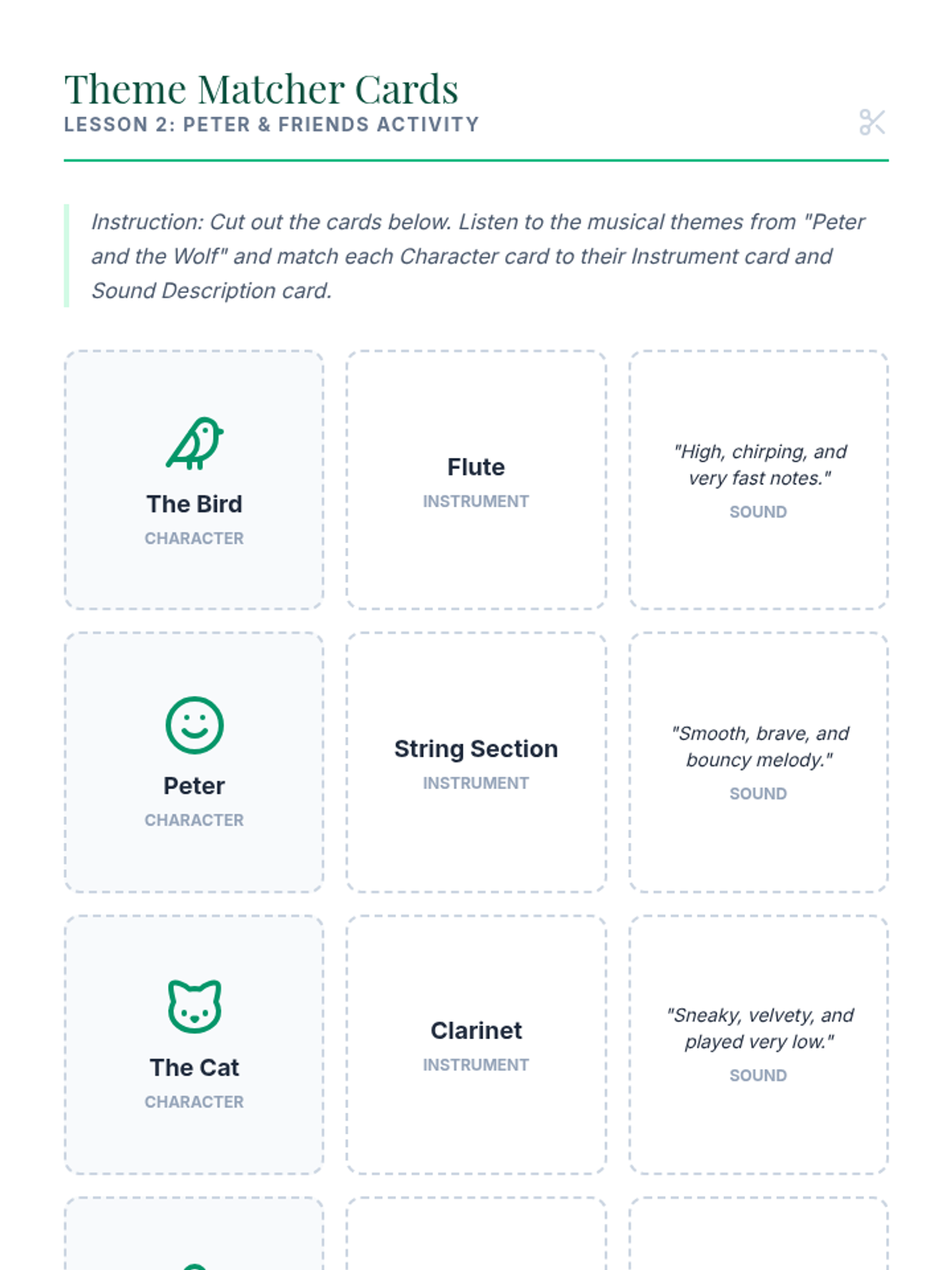
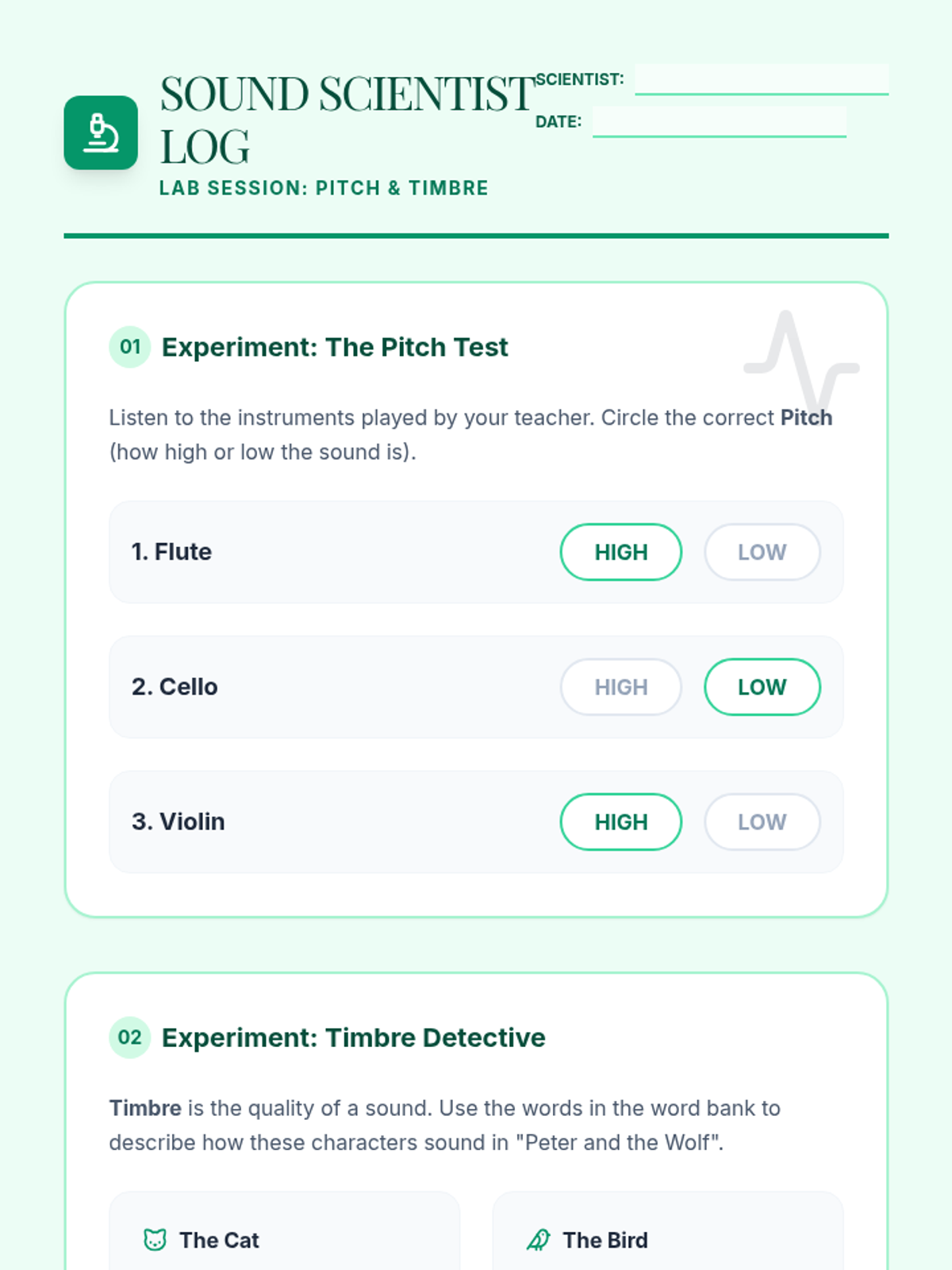
Focusing specifically on strings and woodwinds, students examine the variation in pitch and timbre within these families. They listen to 'Peter and the Wolf' to hear how specific instruments represent characters.
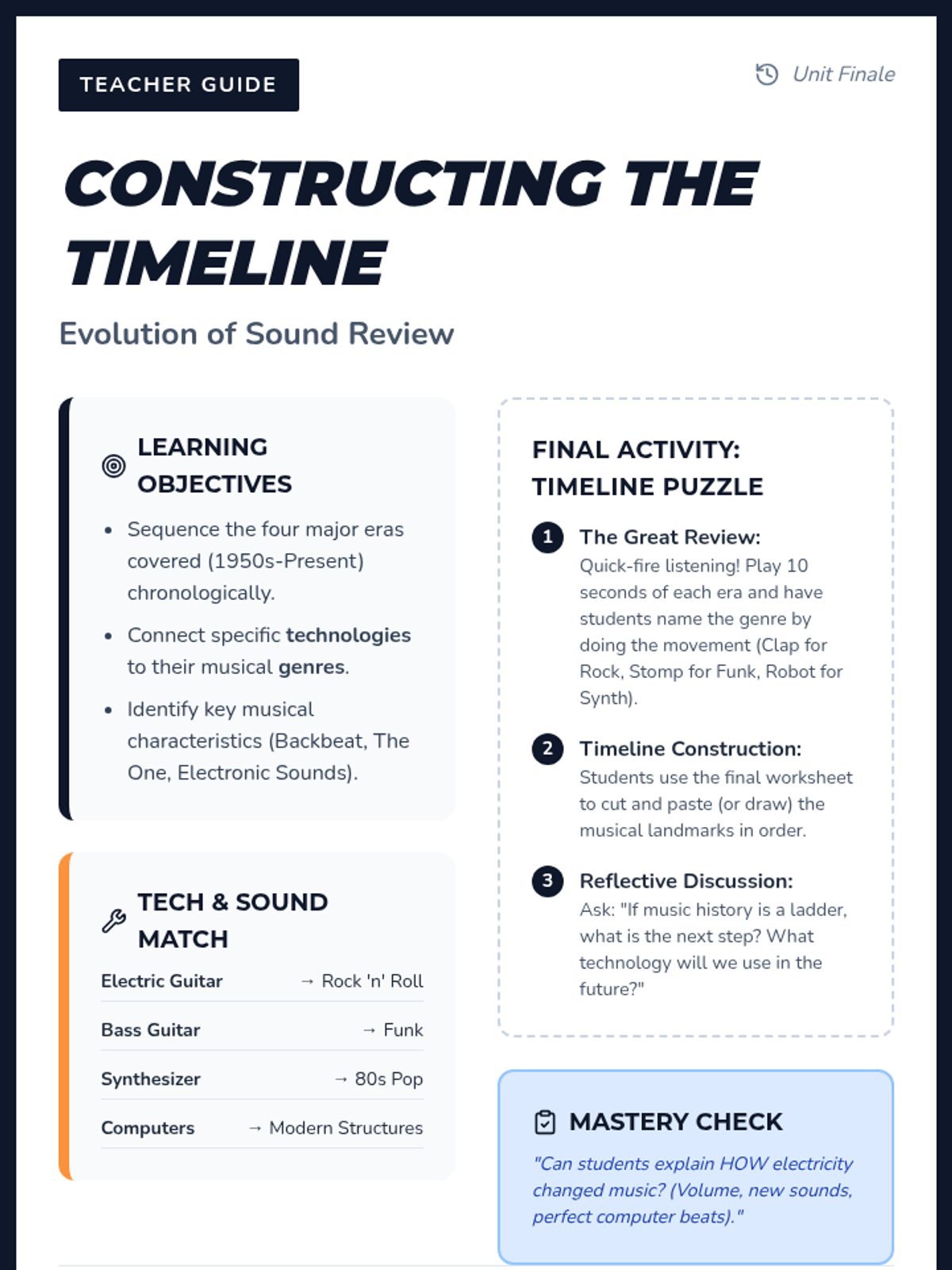
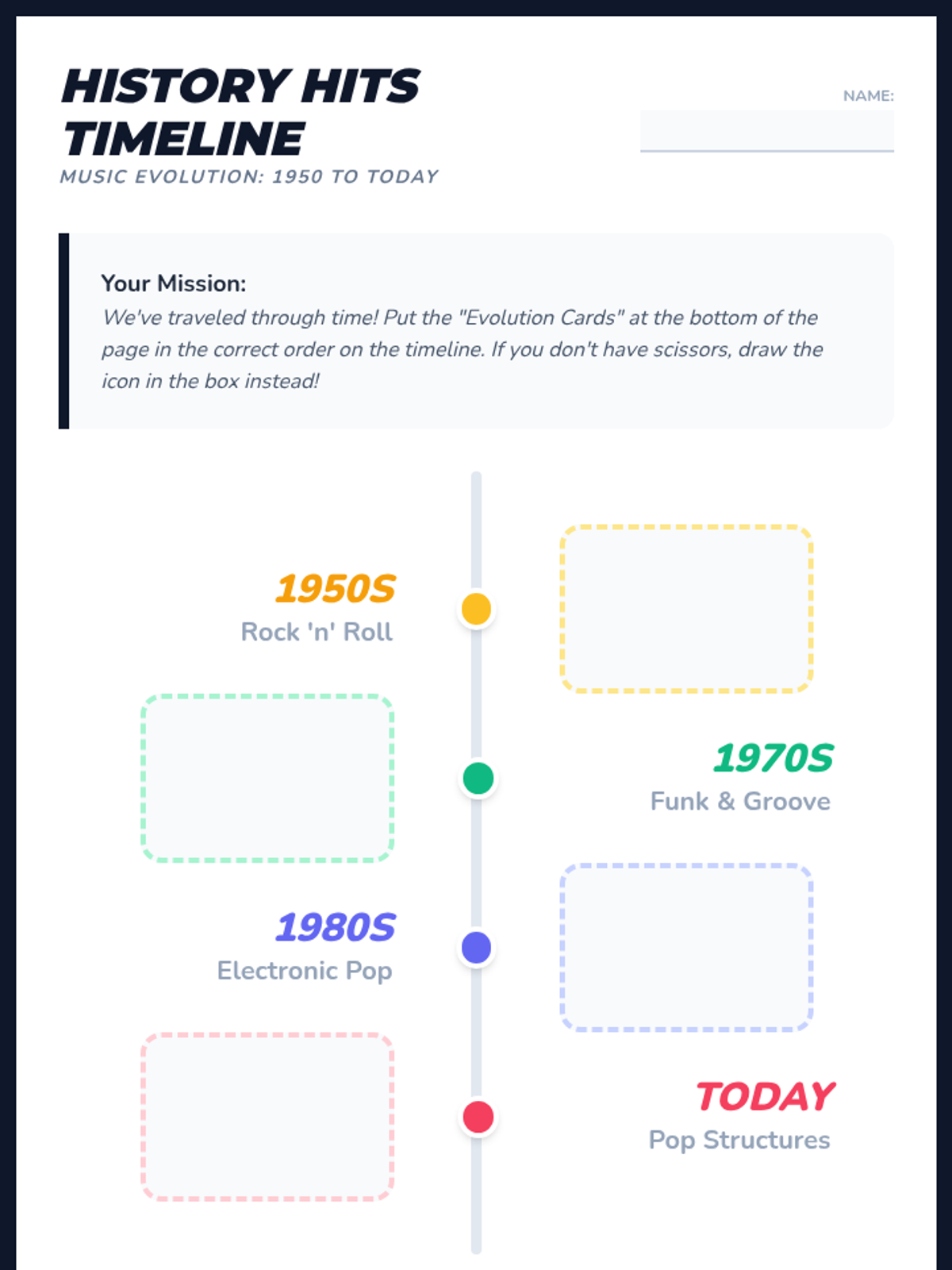
A cumulative review where students synthesize their knowledge to build a complete timeline of music history. They categorize genres by their technological and musical characteristics.
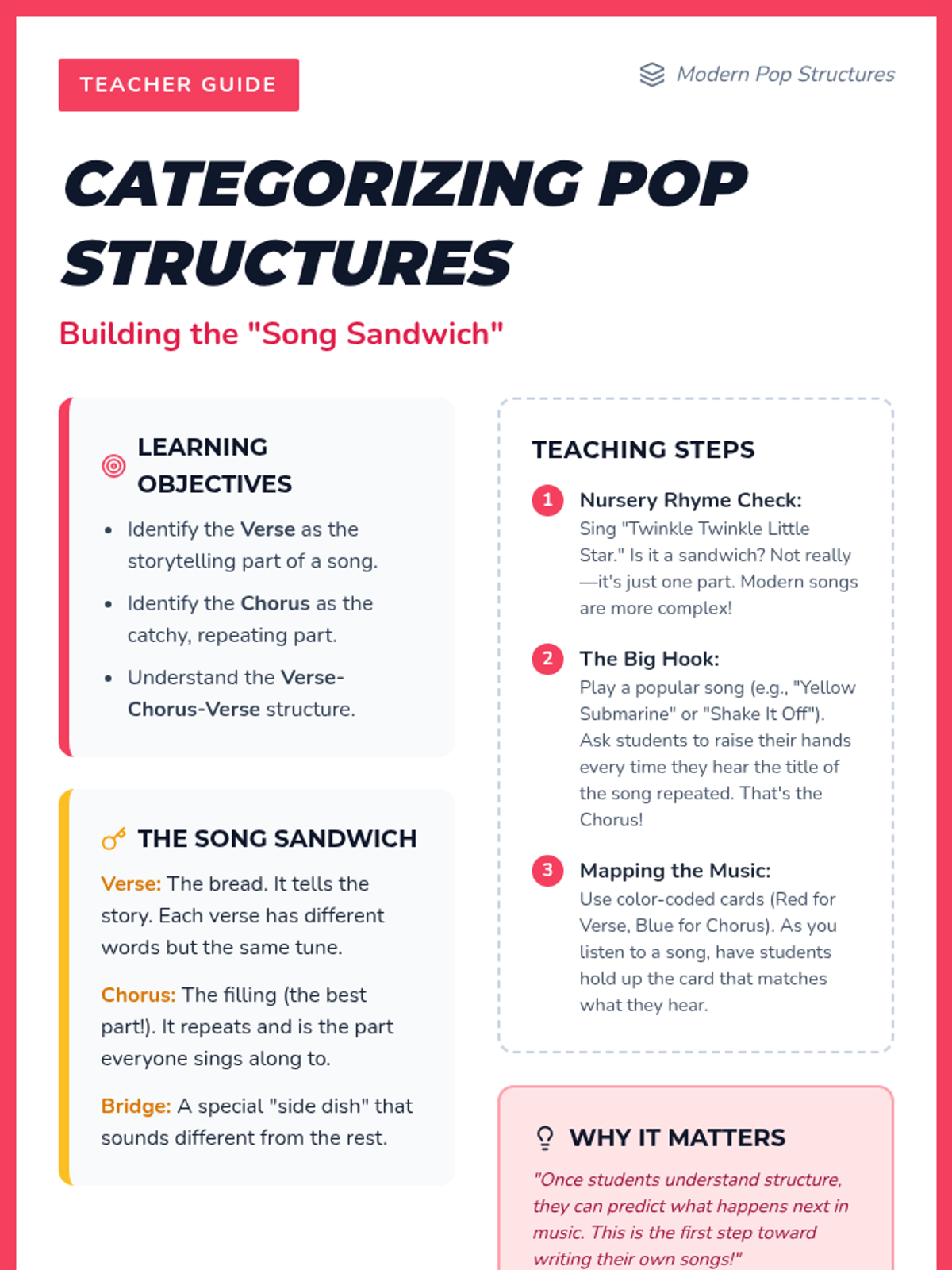
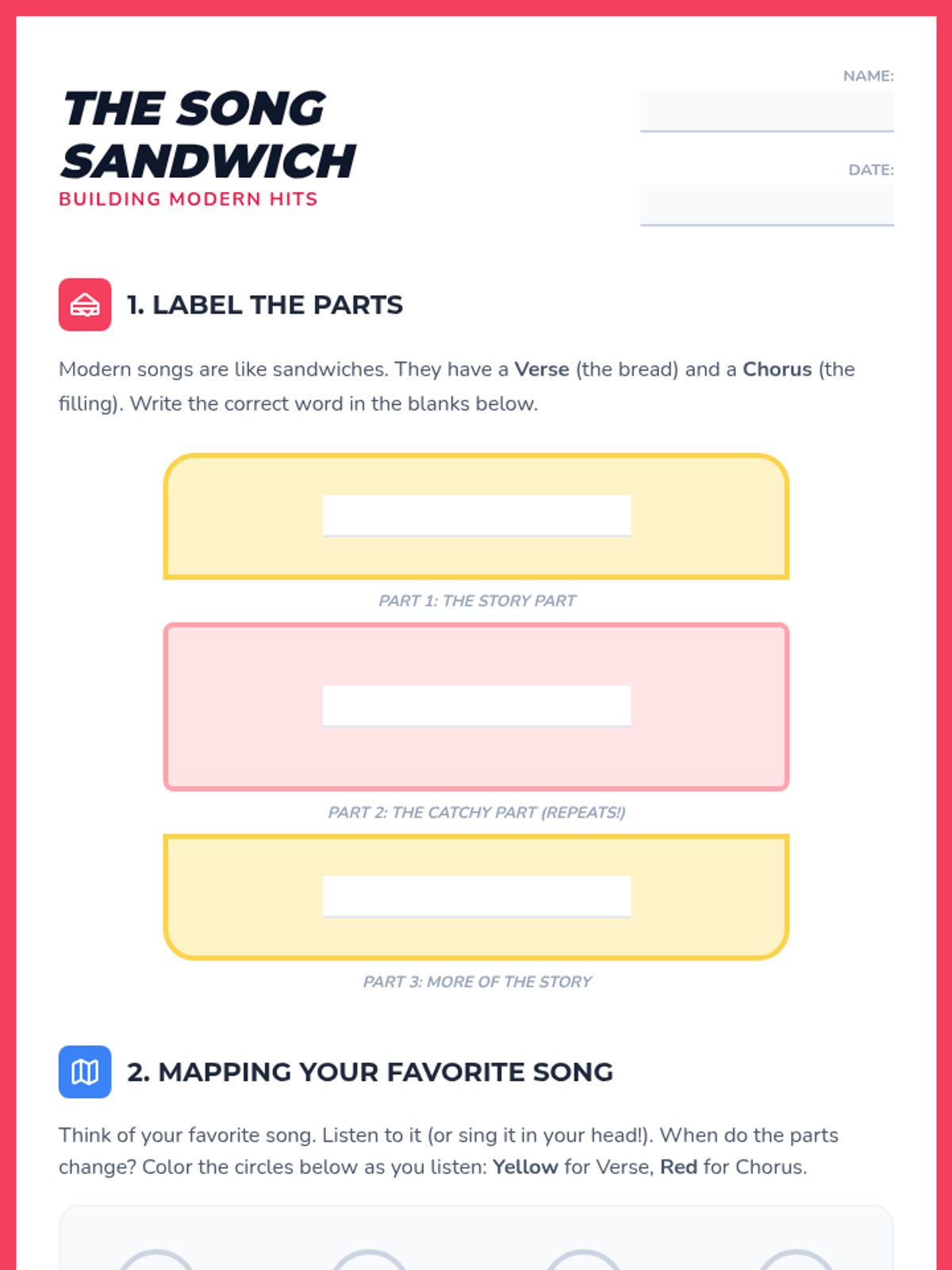
Students deconstruct modern pop songs to find the 'Verse-Chorus' pattern. They use a 'Song Sandwich' analogy to understand how most modern music is structured.
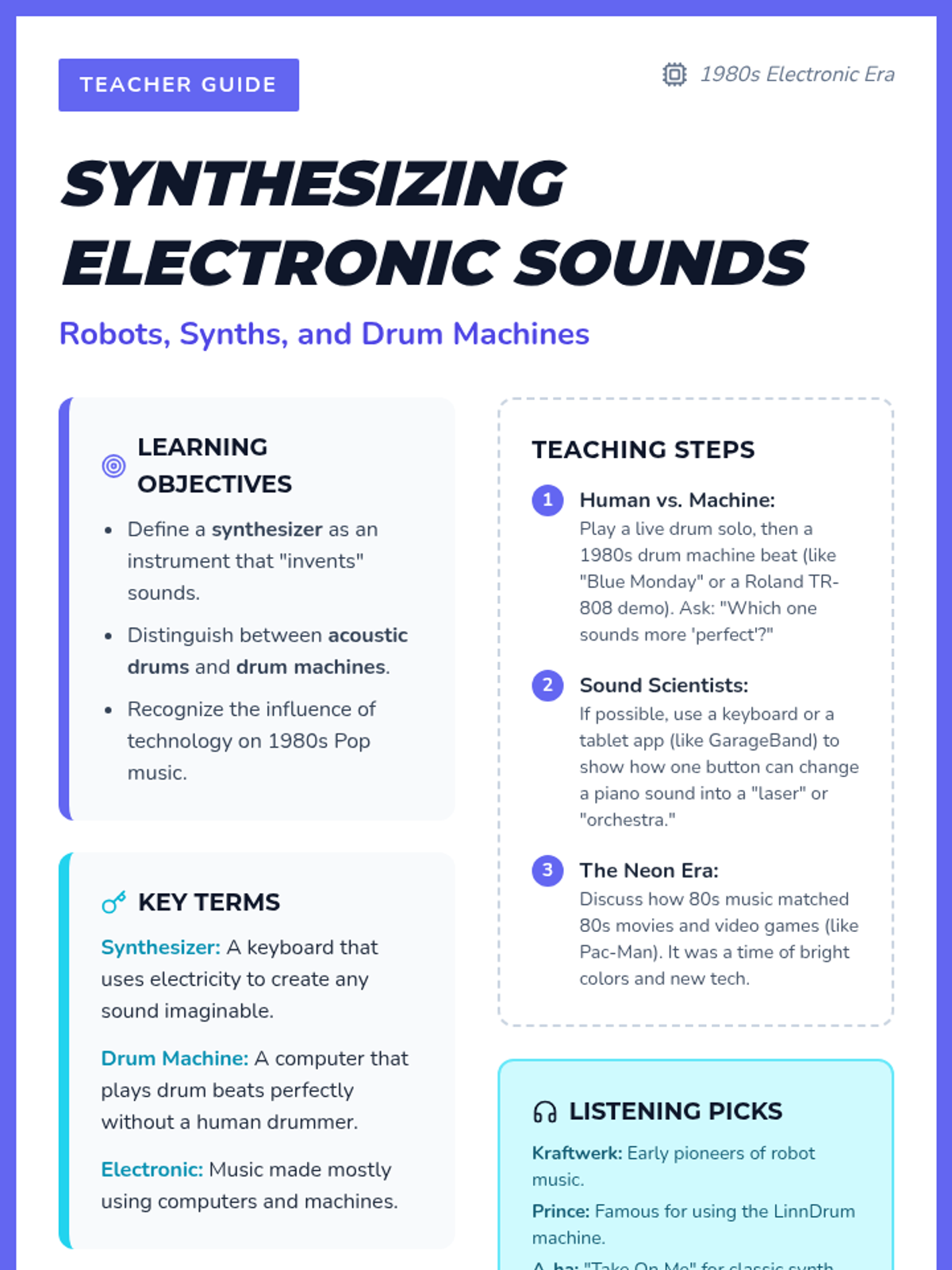
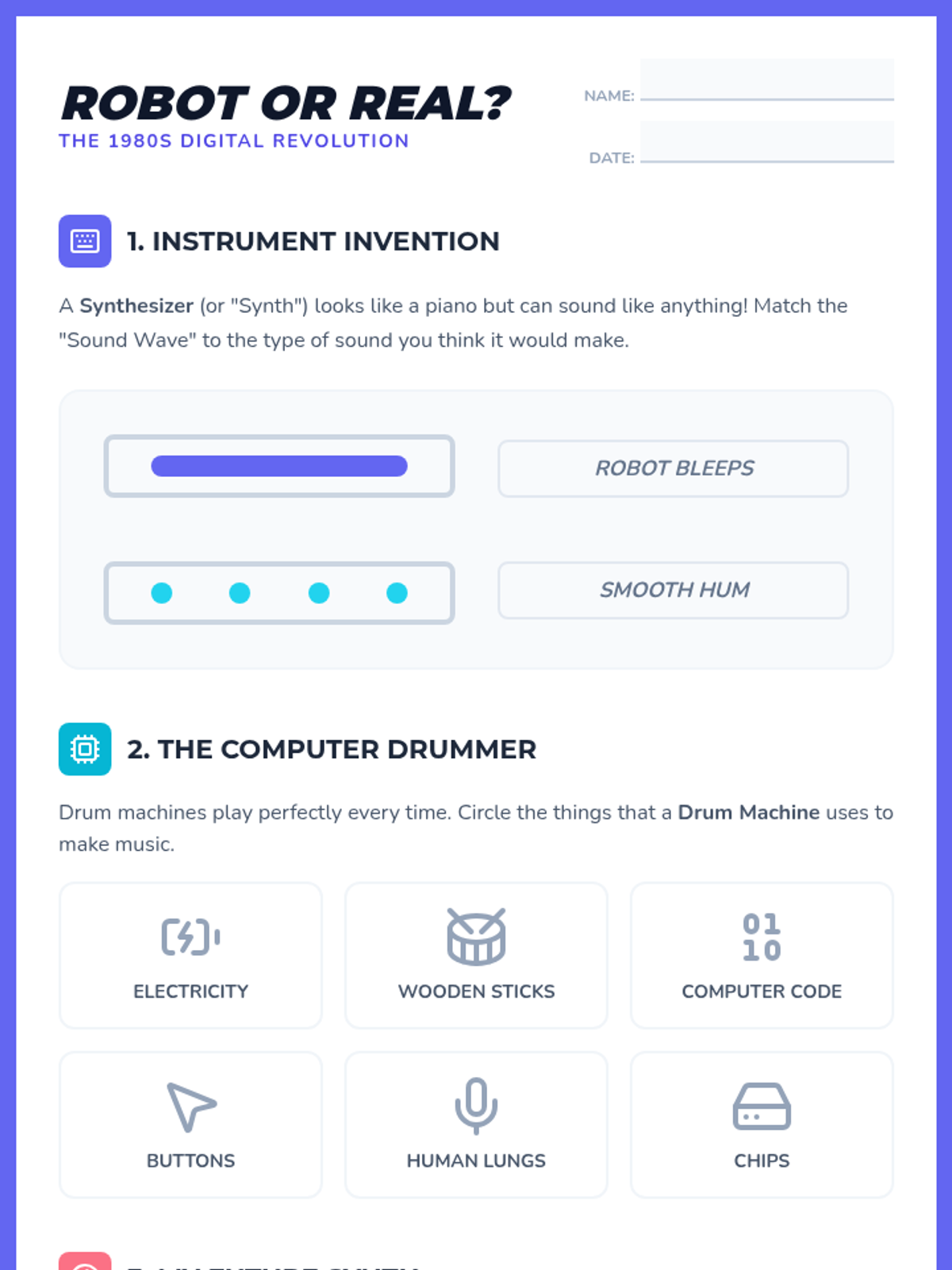
An introduction to the digital age of music, where students explore synthesizers and drum machines from the 1980s. They compare electronic sounds with traditional acoustic instruments.
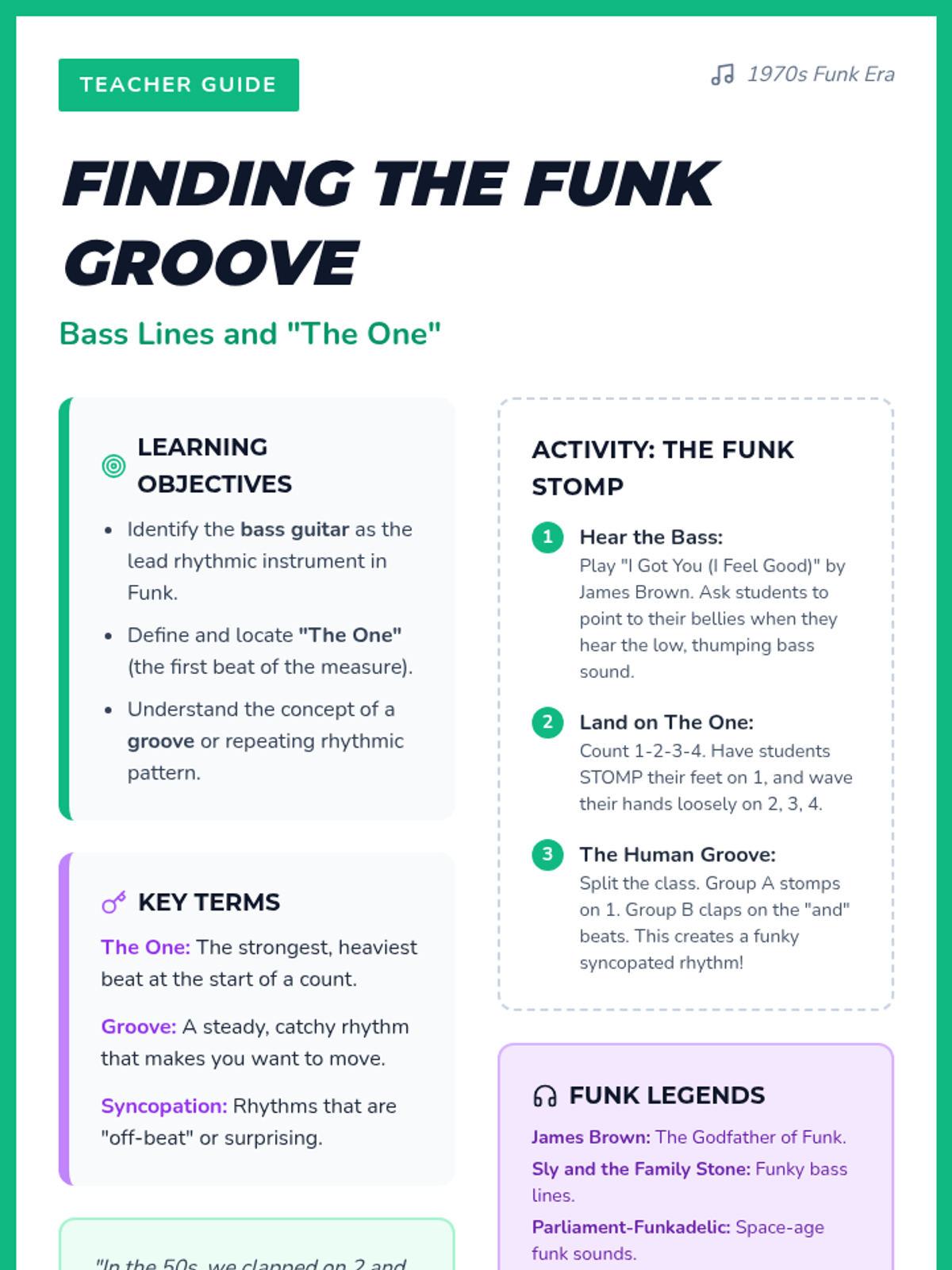
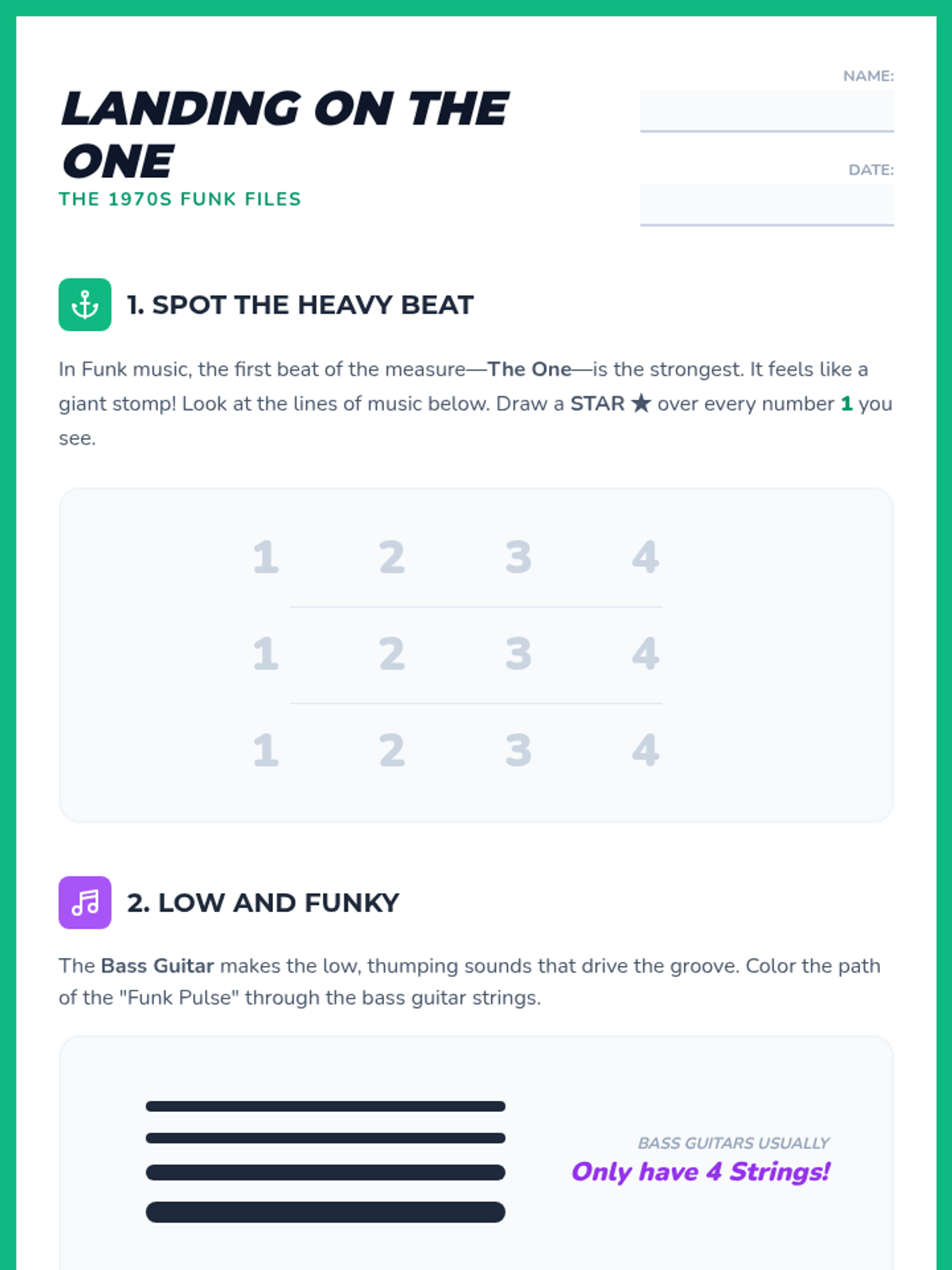
Learners dive into the 1970s Funk era, focusing on the bass guitar and the importance of 'The One.' They practice rhythmic grounding through movement and listening exercises.
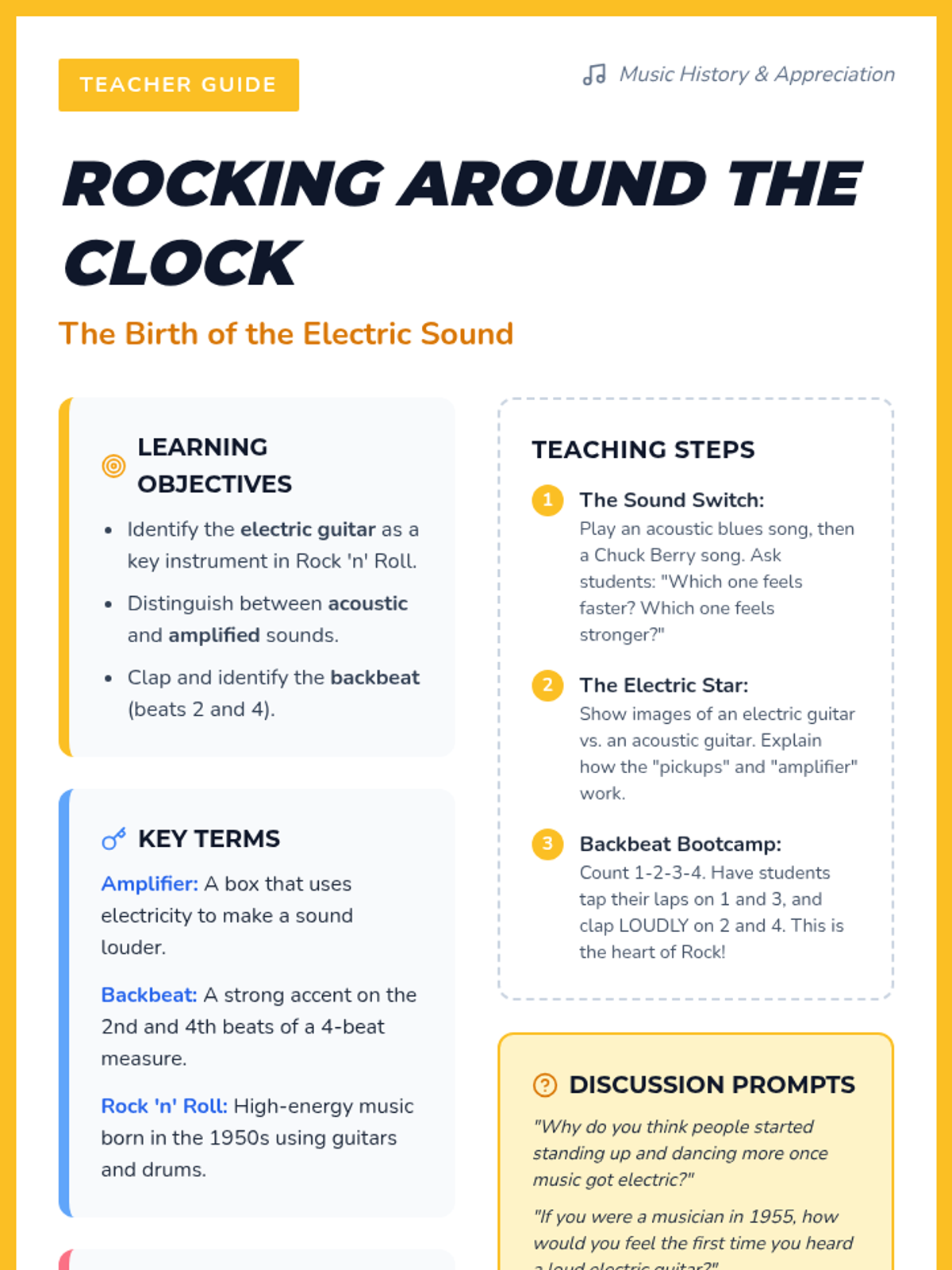
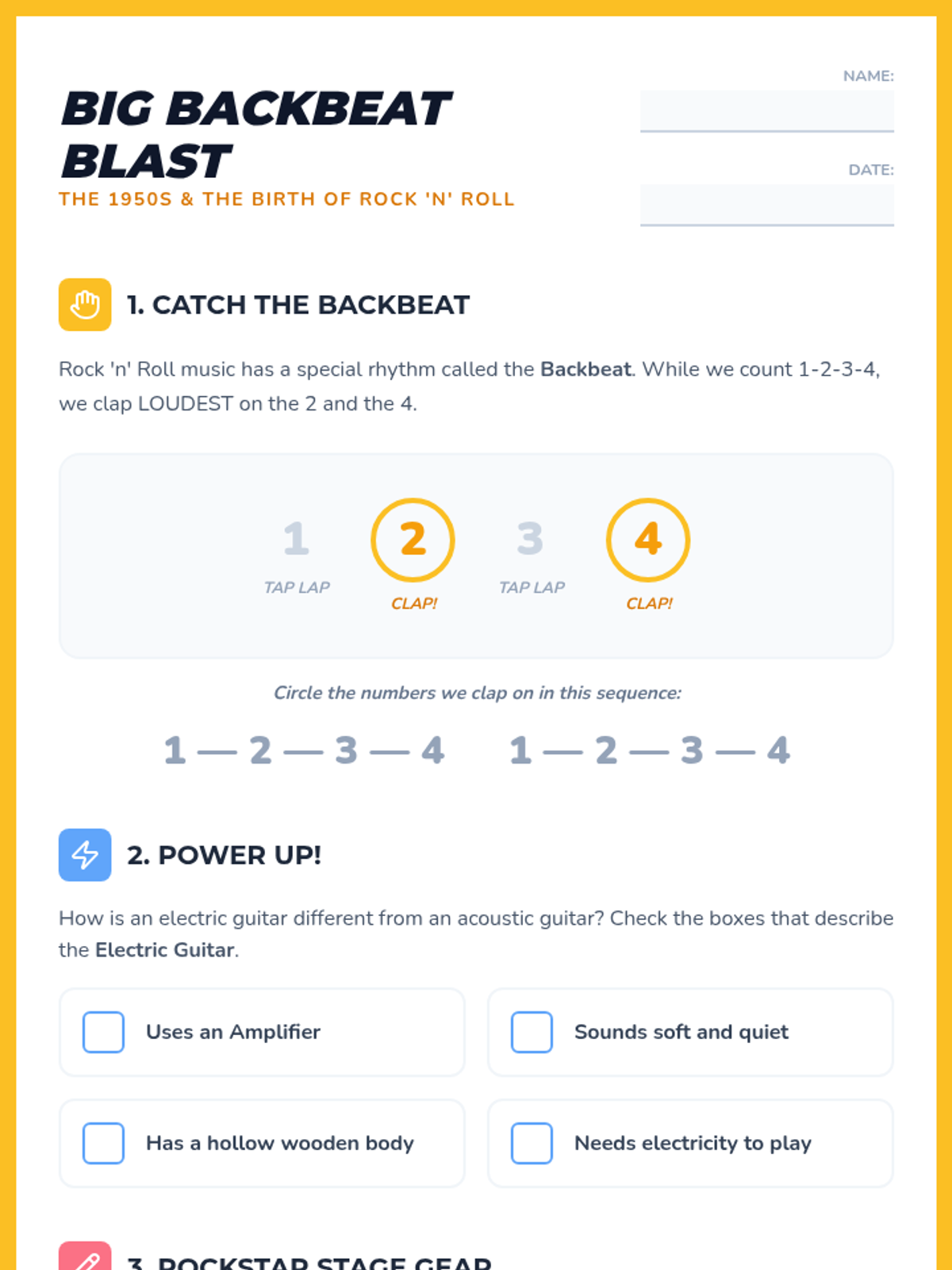
Students explore the birth of Rock 'n' Roll, focusing on the electric guitar and the shift from acoustic to amplified sound. They learn to identify the backbeat and understand how electricity changed the energy of music.
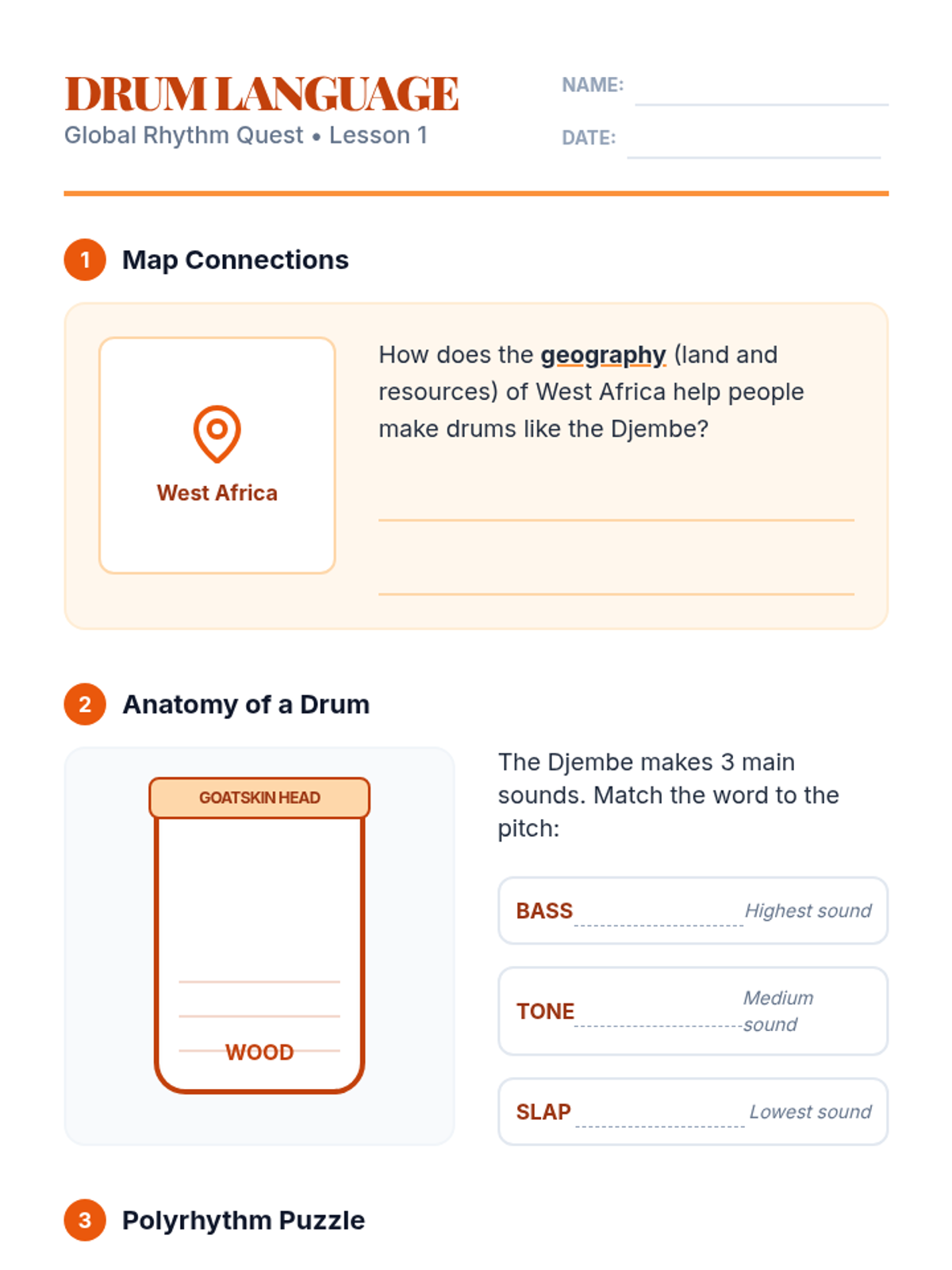
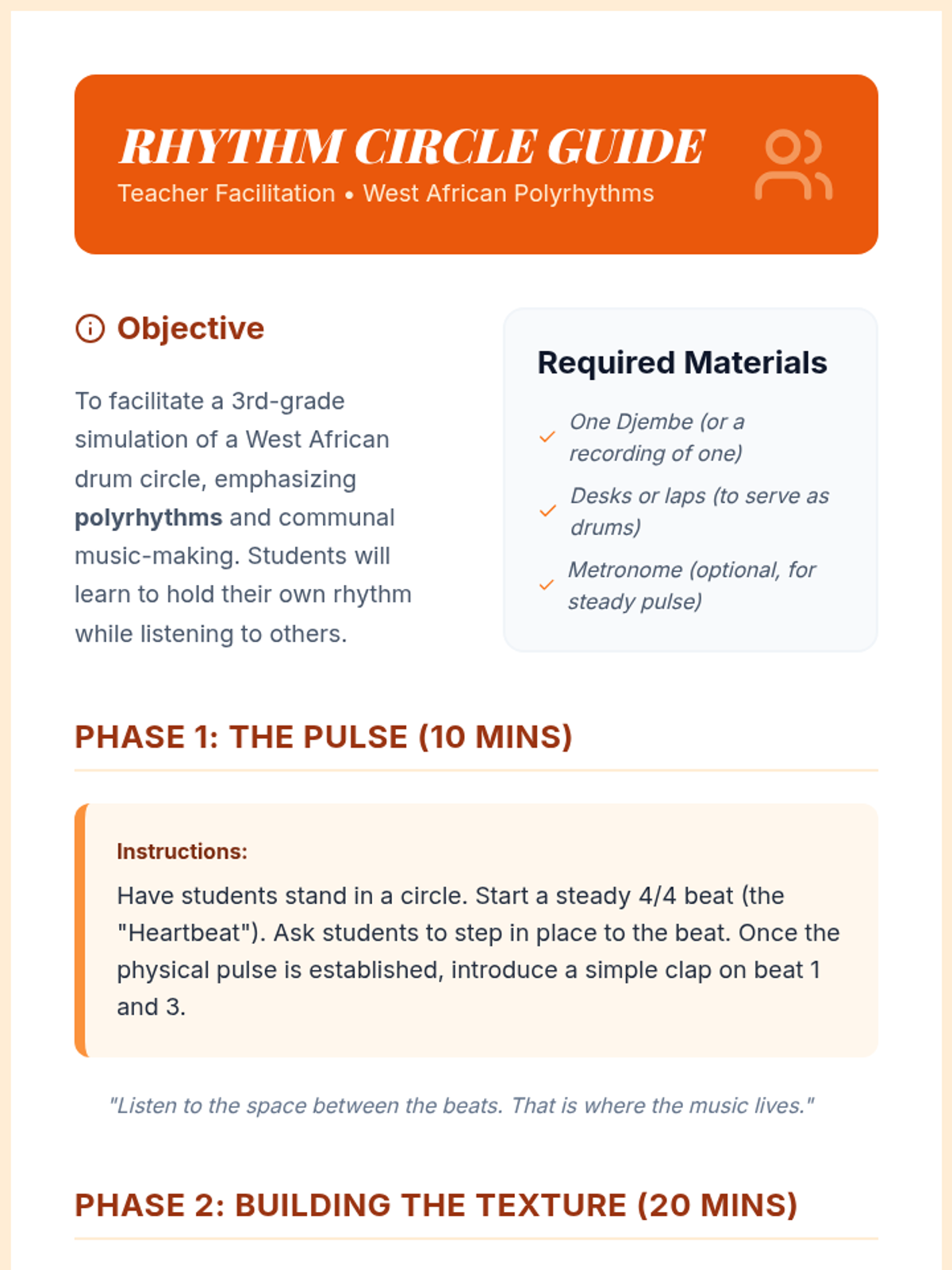
Students explore polyrhythms and the role of the Djembe drum in West African culture, learning how rhythm serves as a form of communication and community celebration.
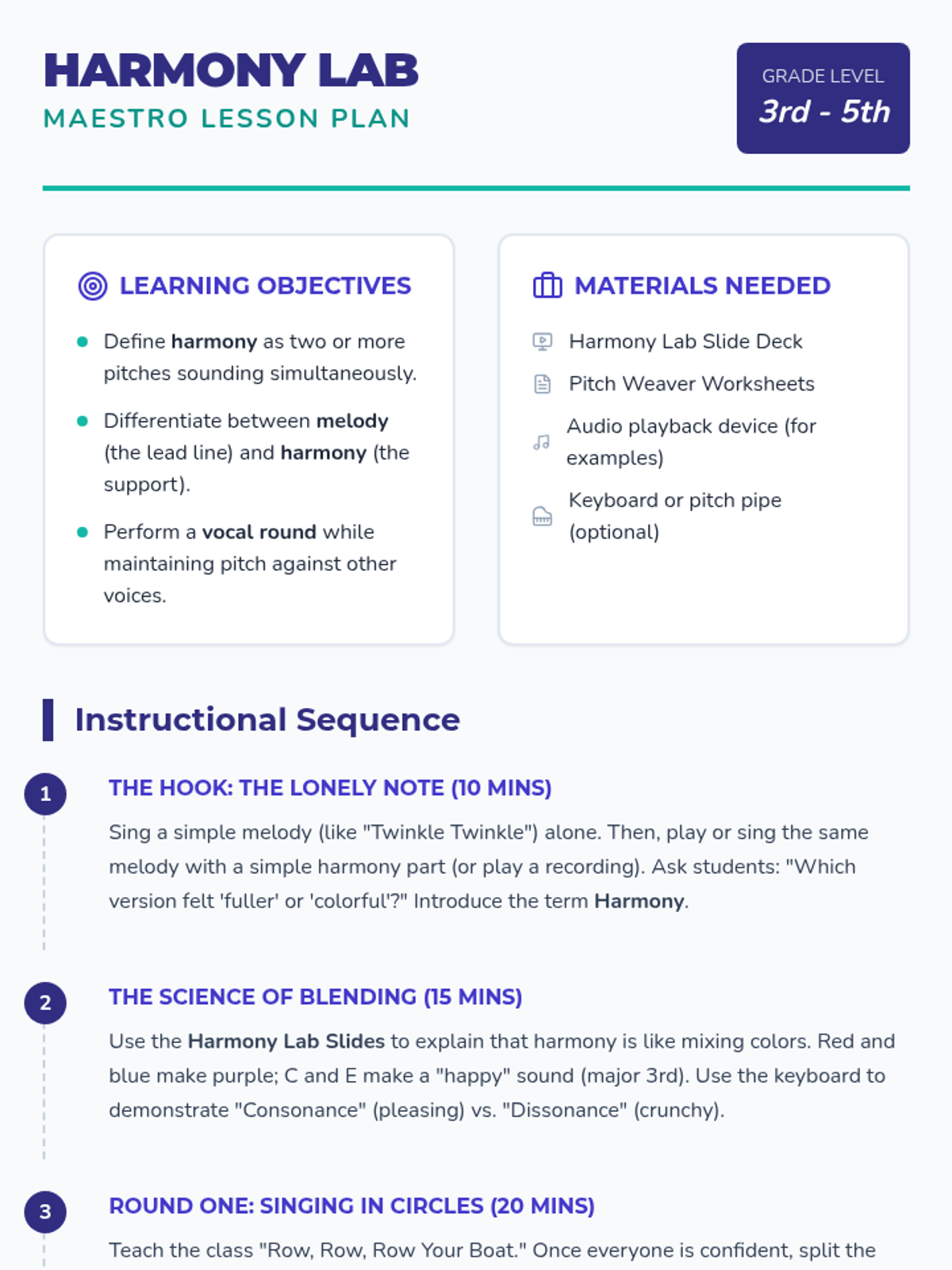
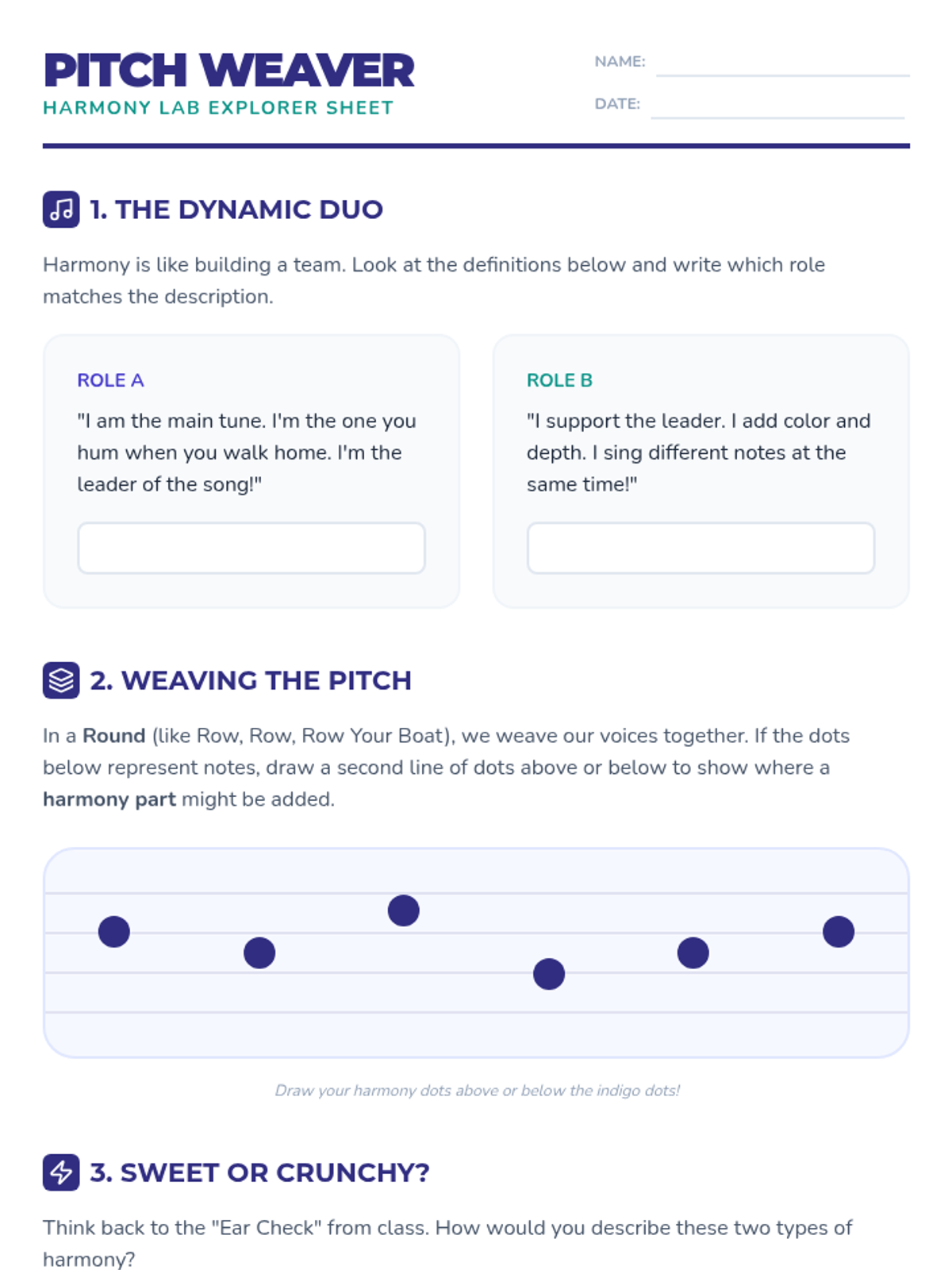
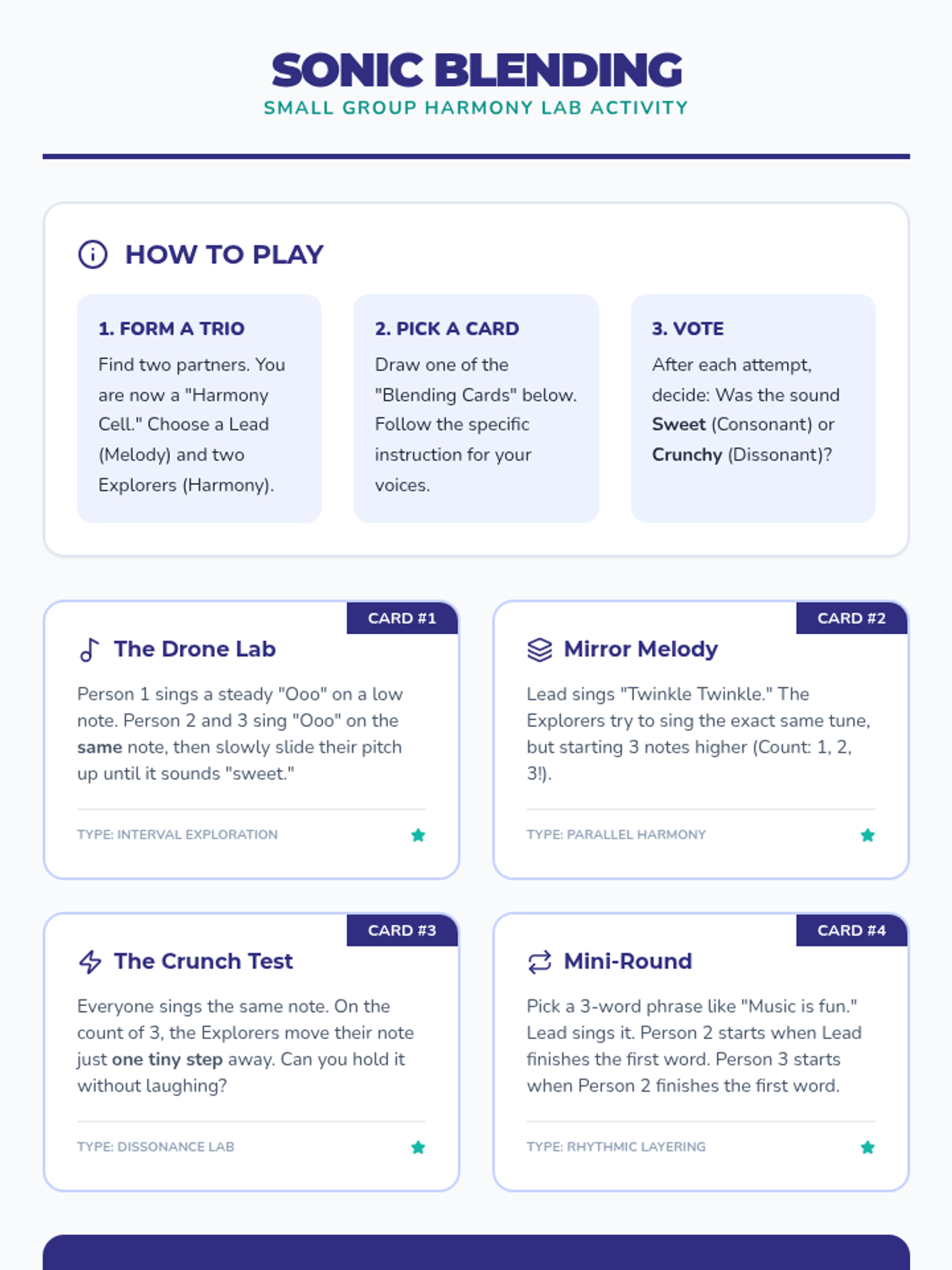
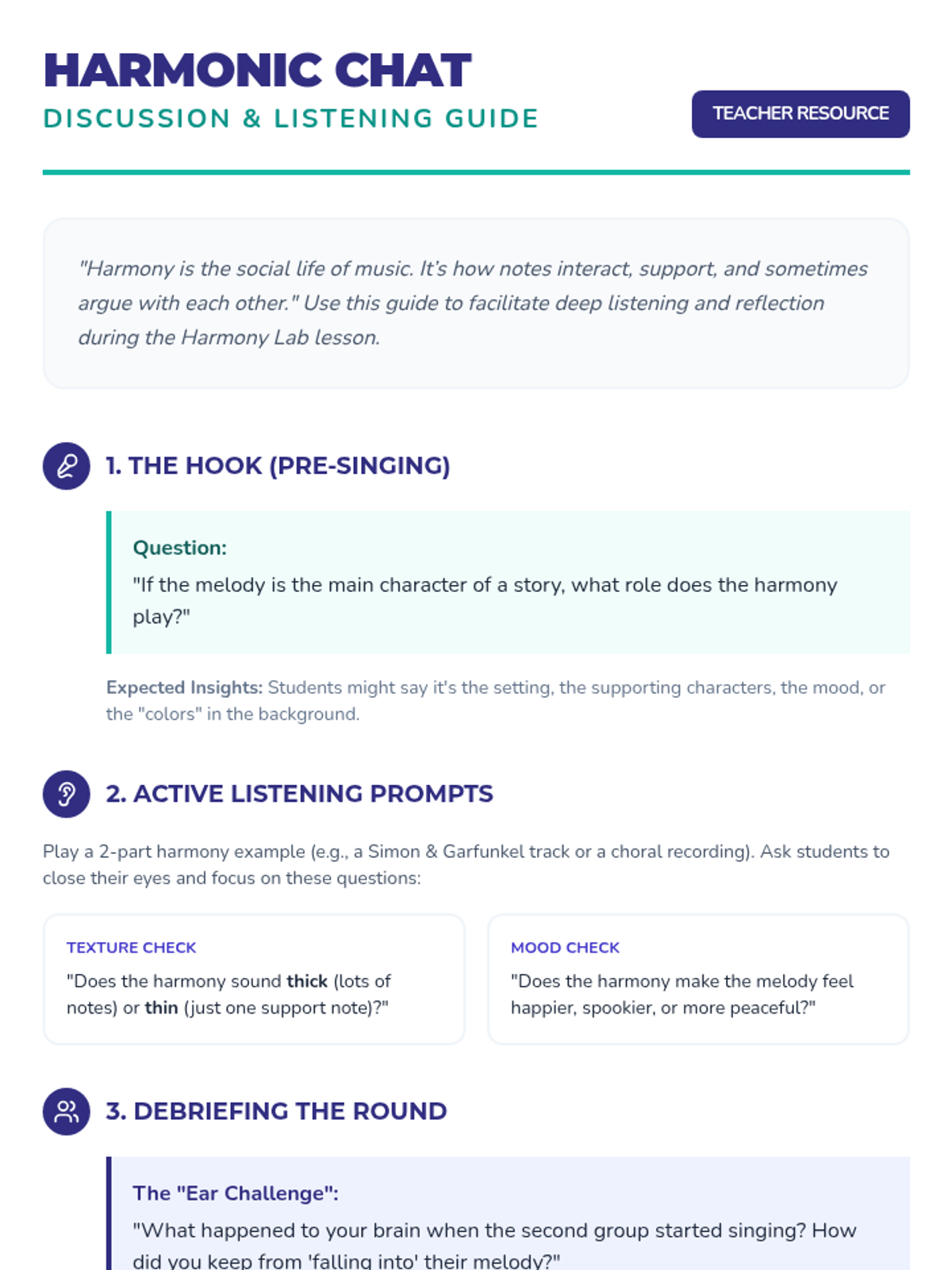
Students explore the concept of musical harmony through interactive singing exercises, listening tasks, and collaborative blending activities. They will learn to distinguish between melody and harmony and participate in multi-part vocal performances.
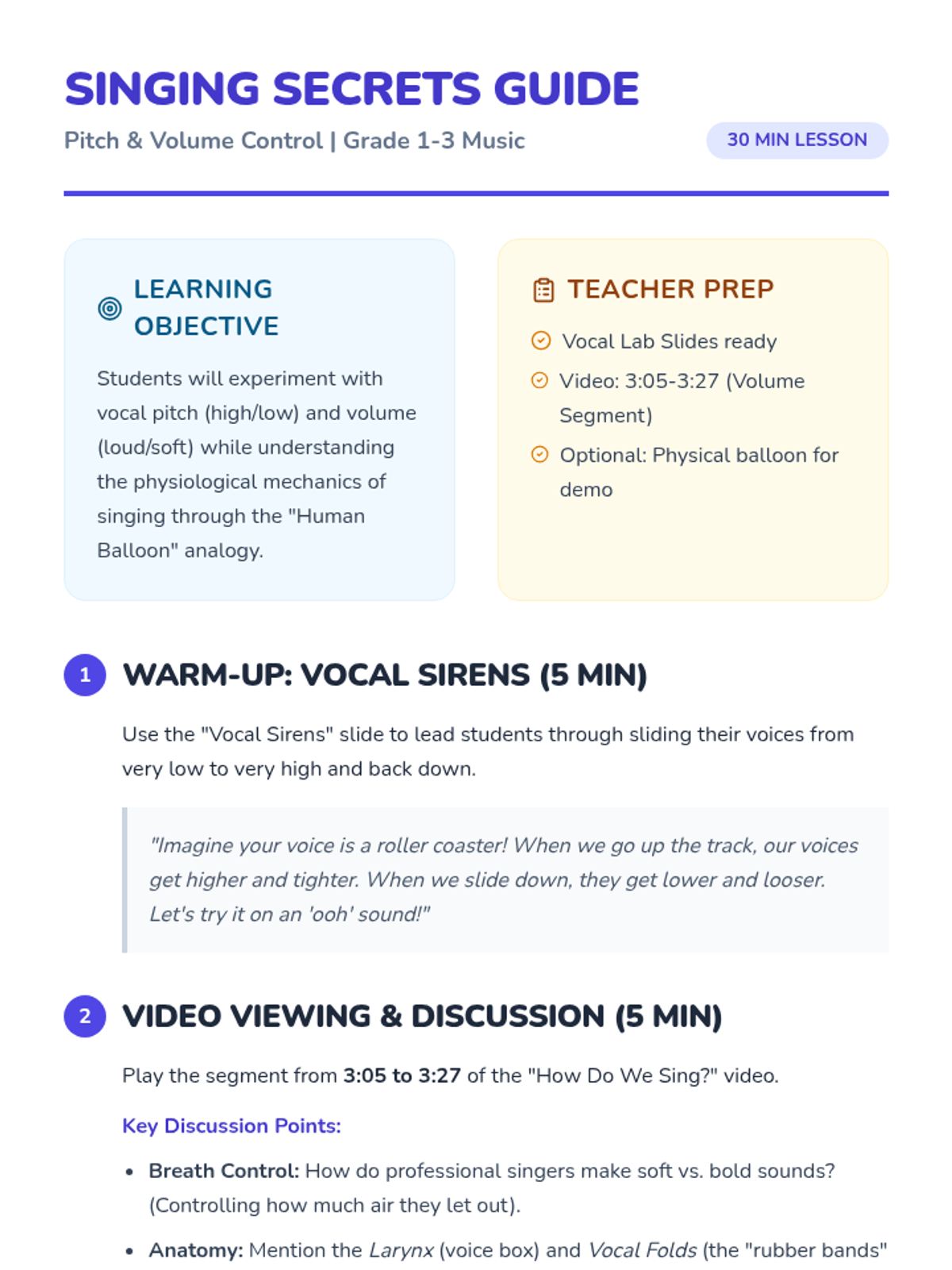
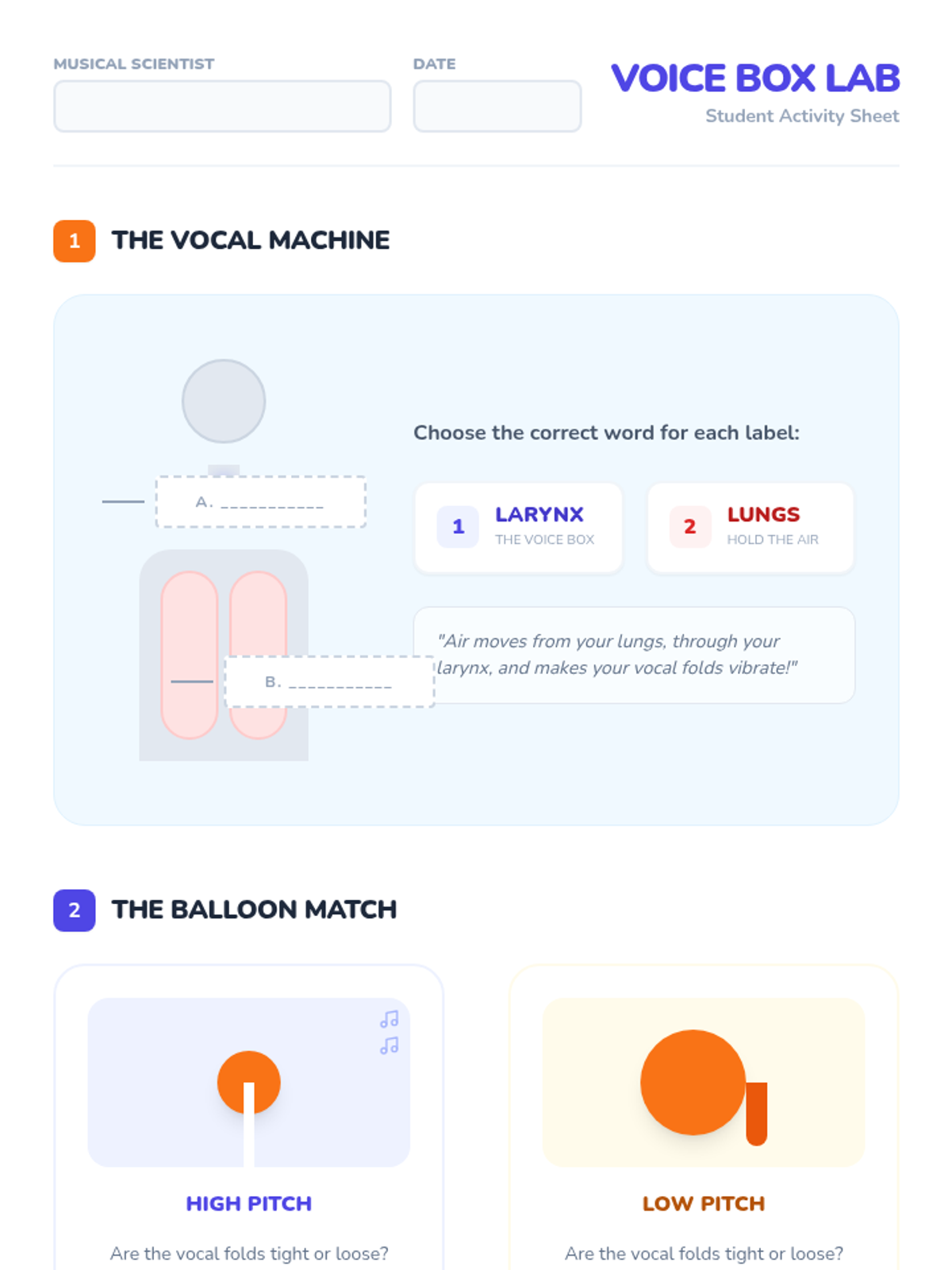
A fun, interactive music lesson where students use a balloon analogy to understand how vocal folds create different pitches and how breath control changes volume. Includes a slide presentation, a comprehensive teacher guide, and a student activity sheet.
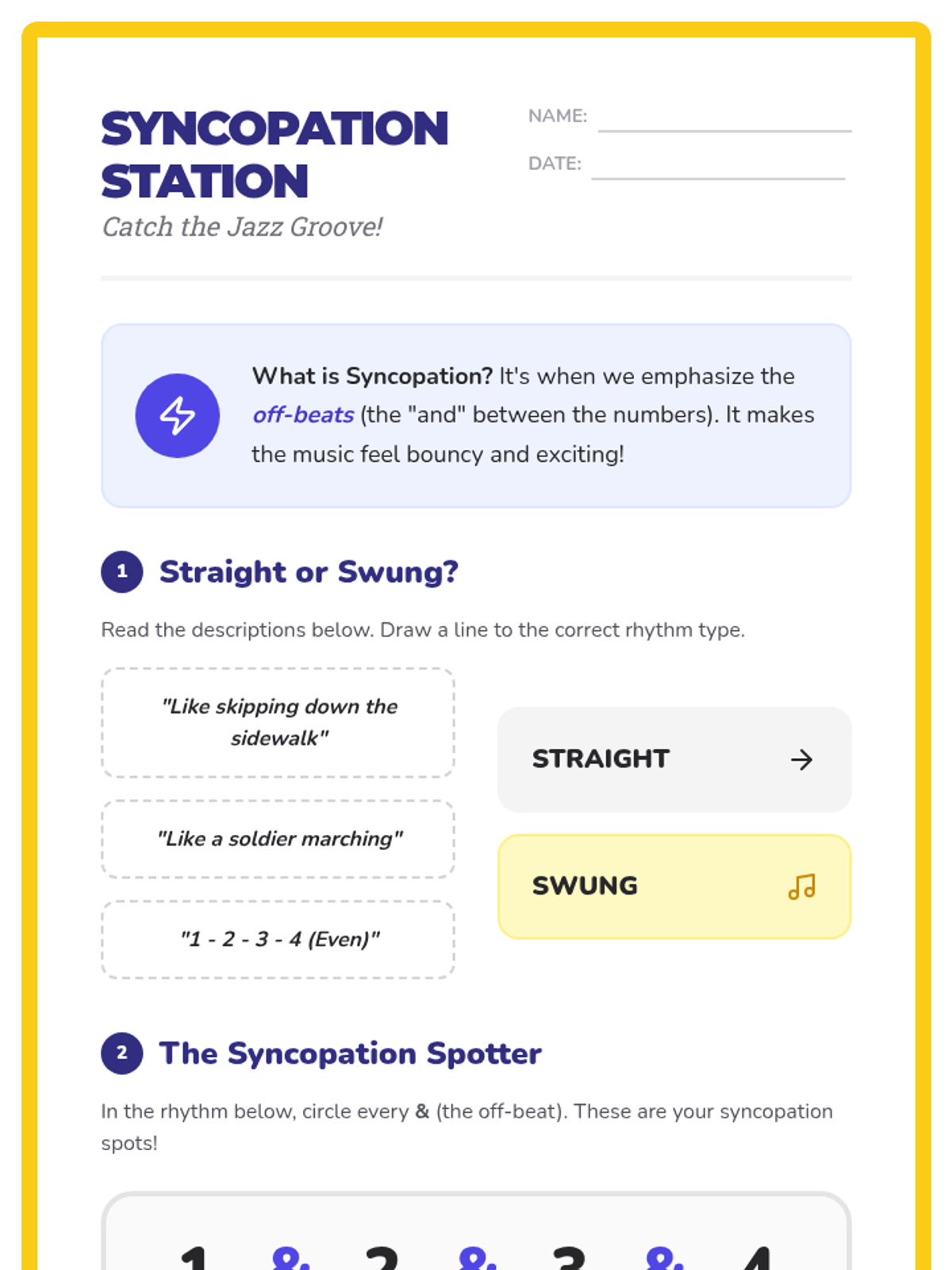
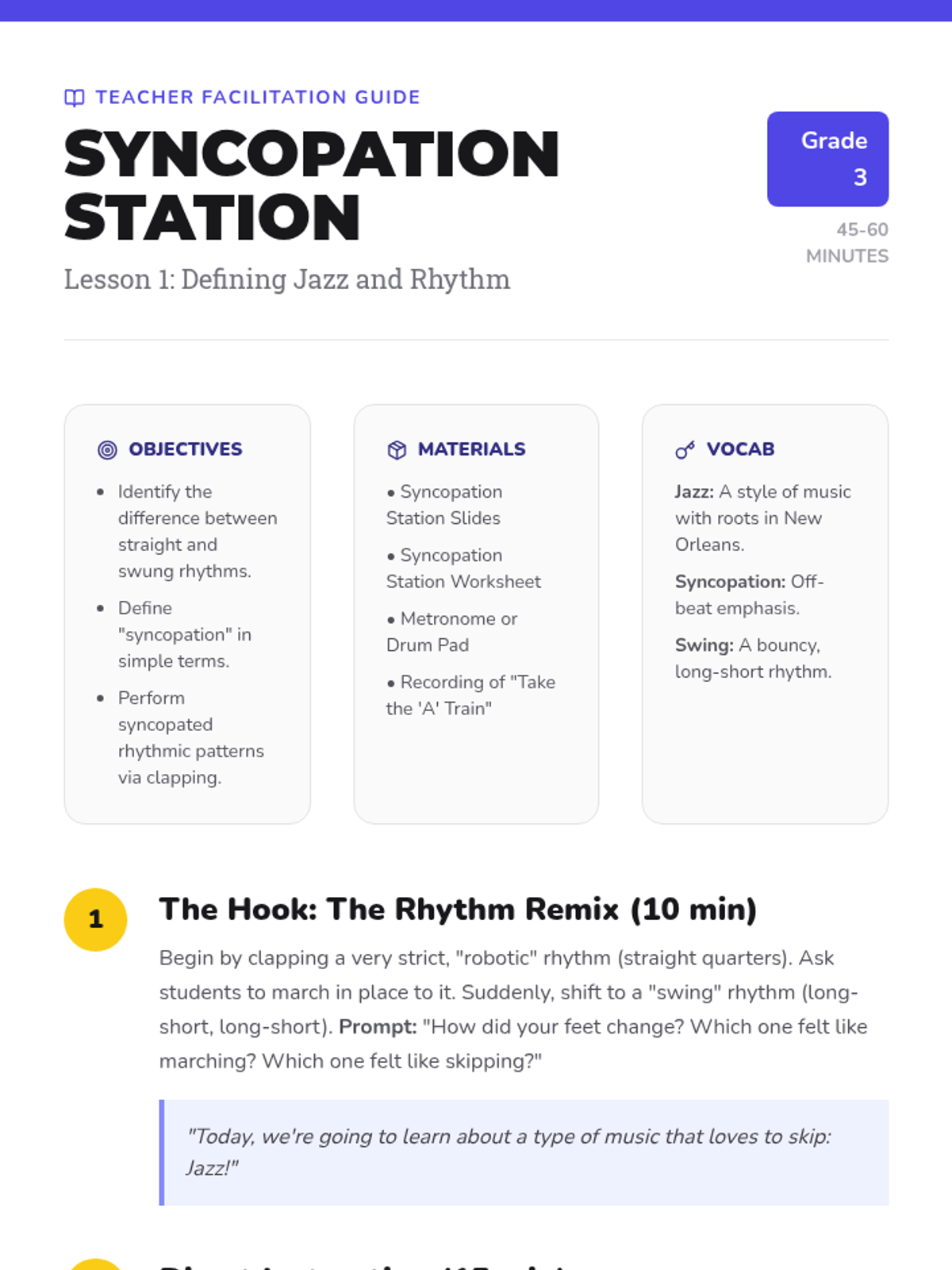
Students learn the difference between 'straight' and 'swung' rhythms and practice syncopated clapping patterns to understand the jazz 'groove'.
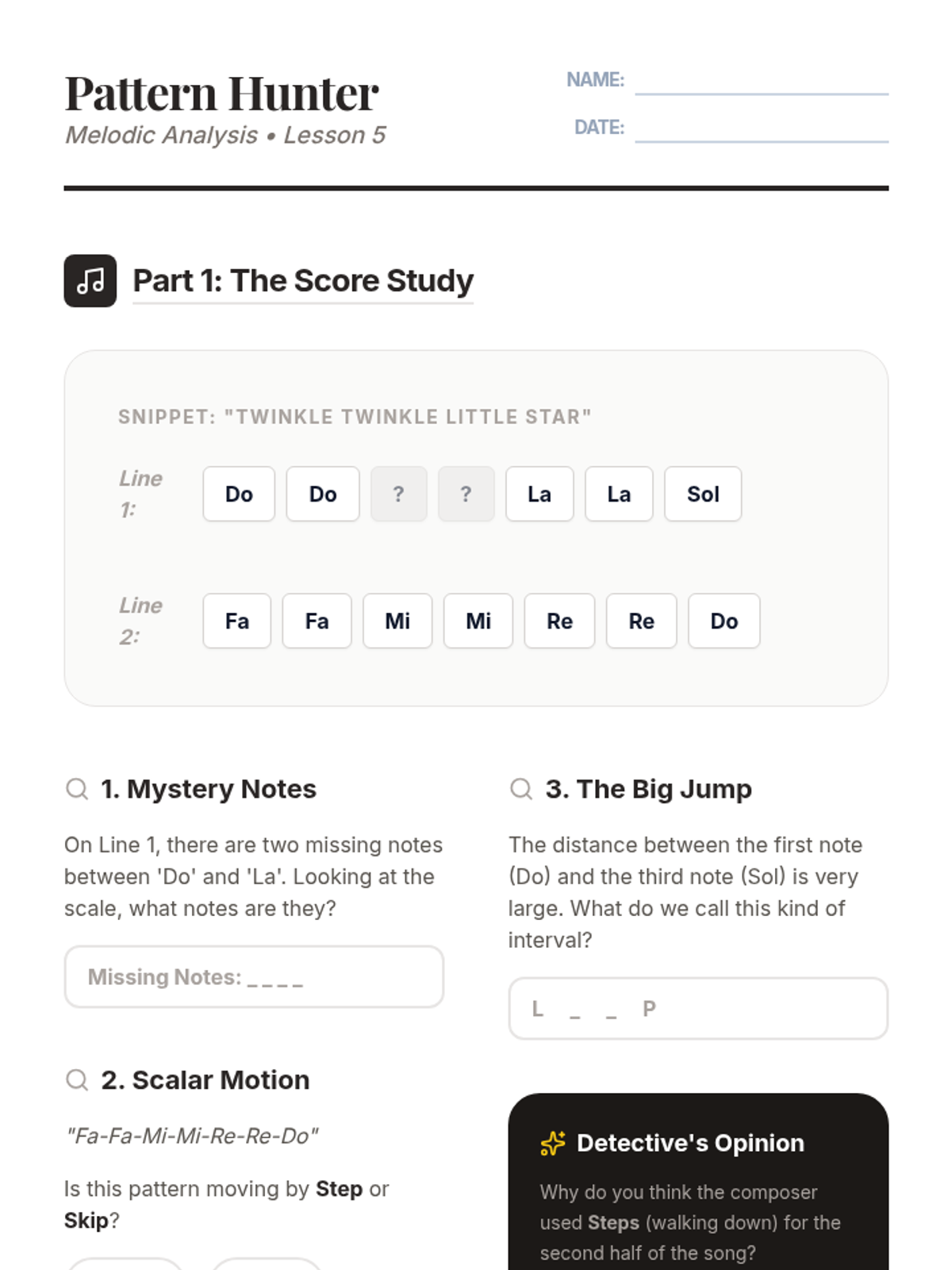
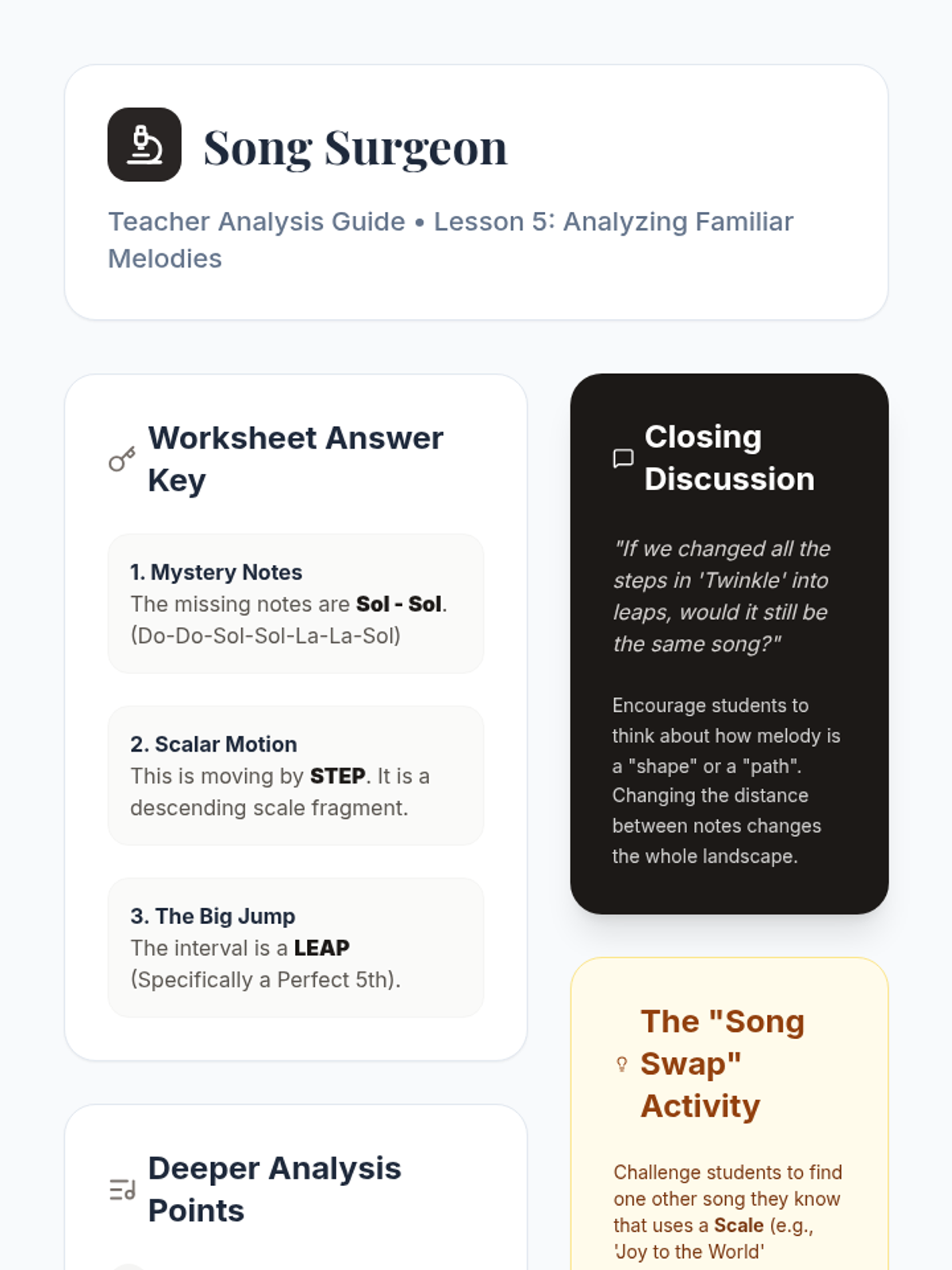
Applying knowledge of intervals and scales to analyze simple, familiar melodies like 'Twinkle Twinkle Little Star'.
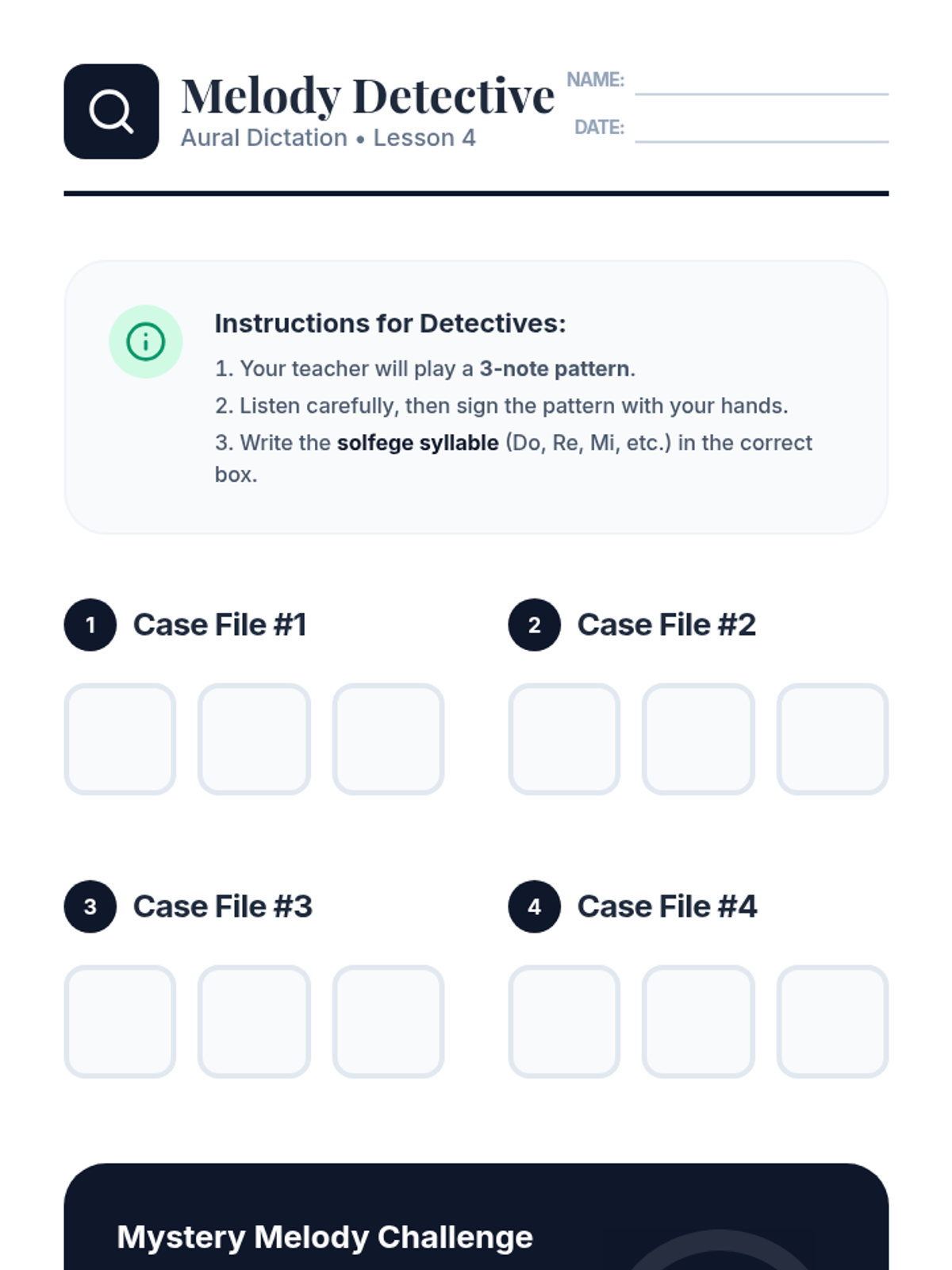
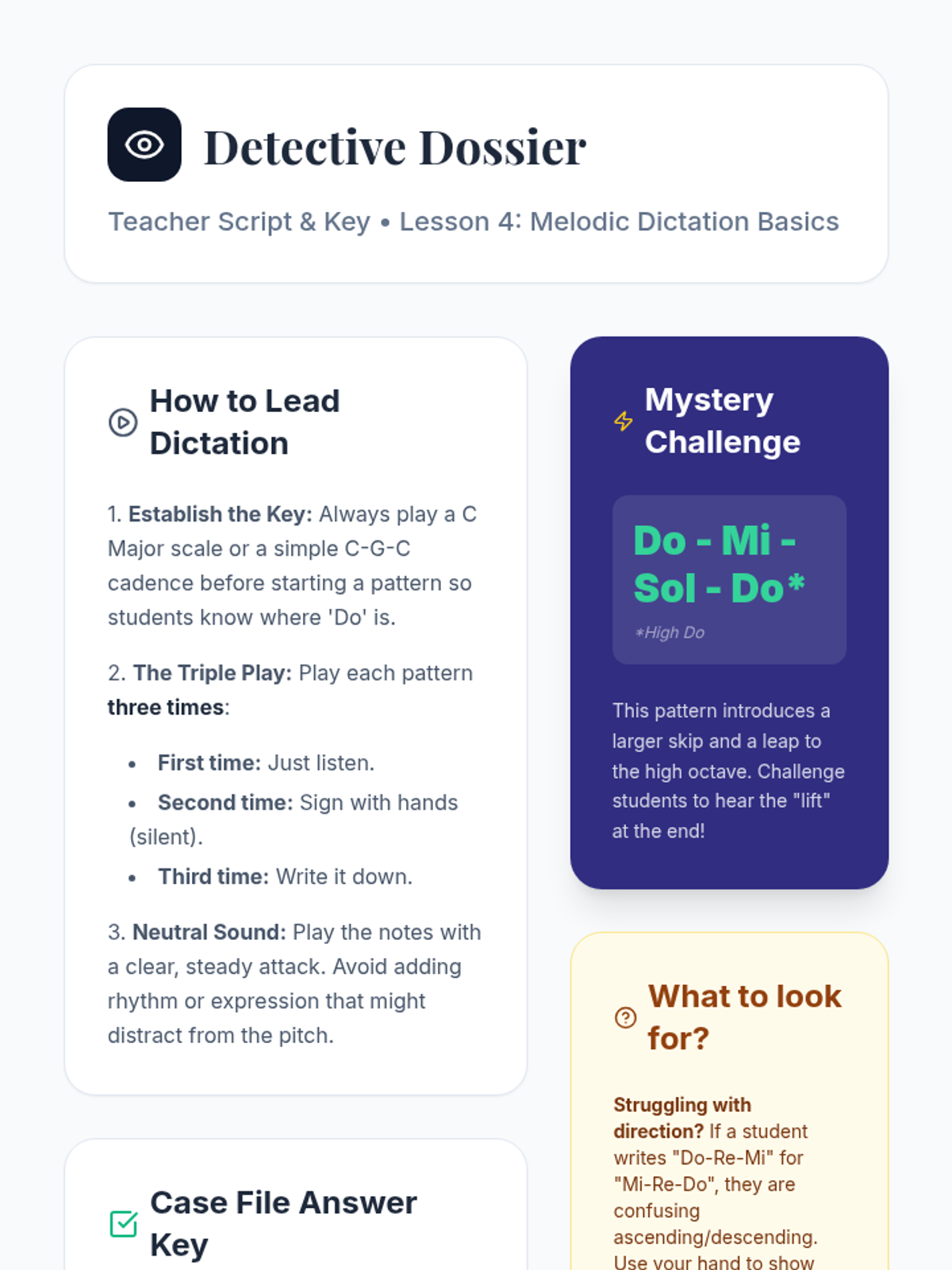
Translating short musical patterns heard by ear into basic notation or symbols.
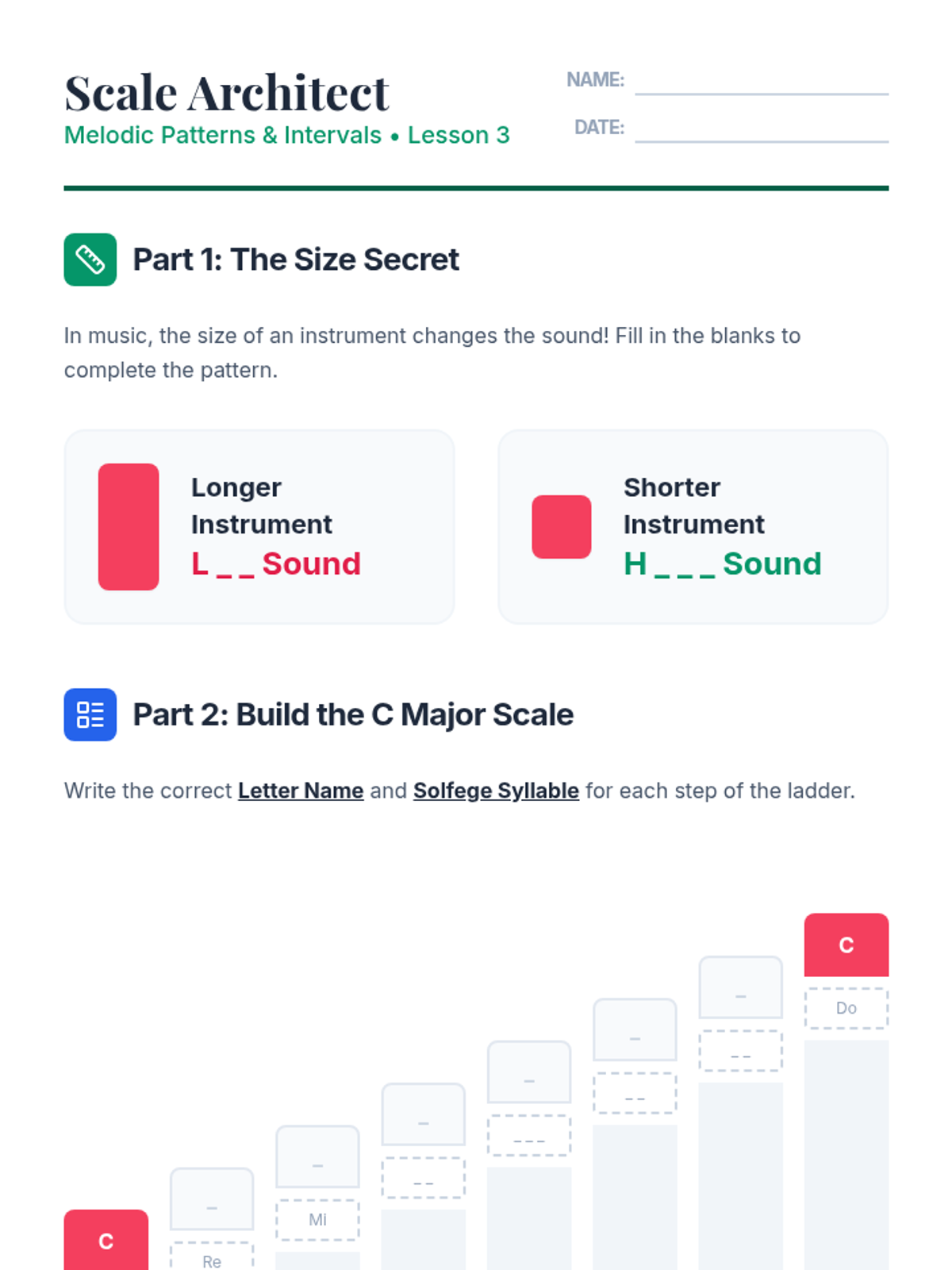
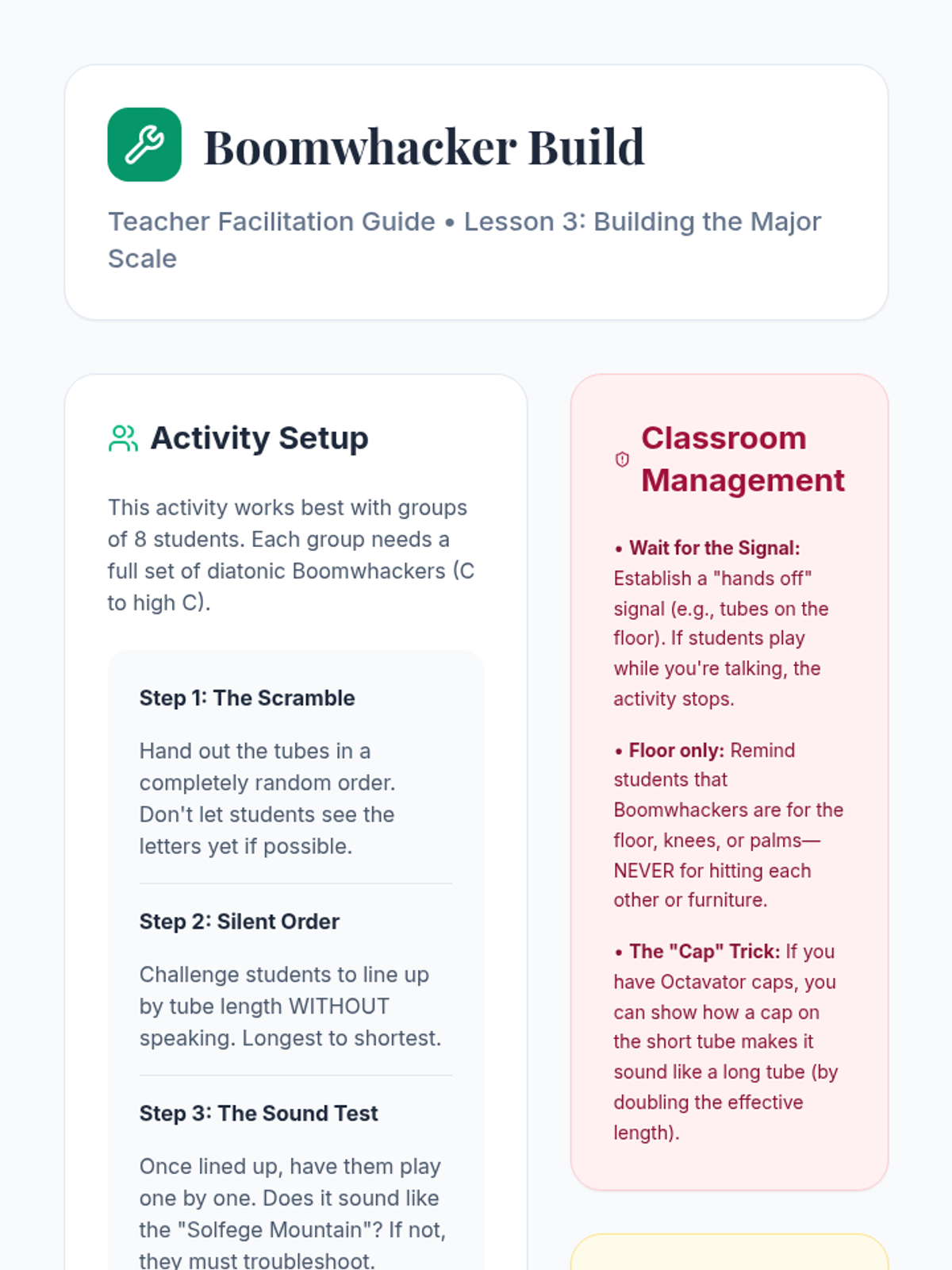
Students organize notes into the C Major scale 'ladder' using hands-on instruments like boomwhackers.