Develops technical proficiency and creative movement skills across various styles. Examines choreographic principles alongside the historical and cultural origins of diverse global dance forms.
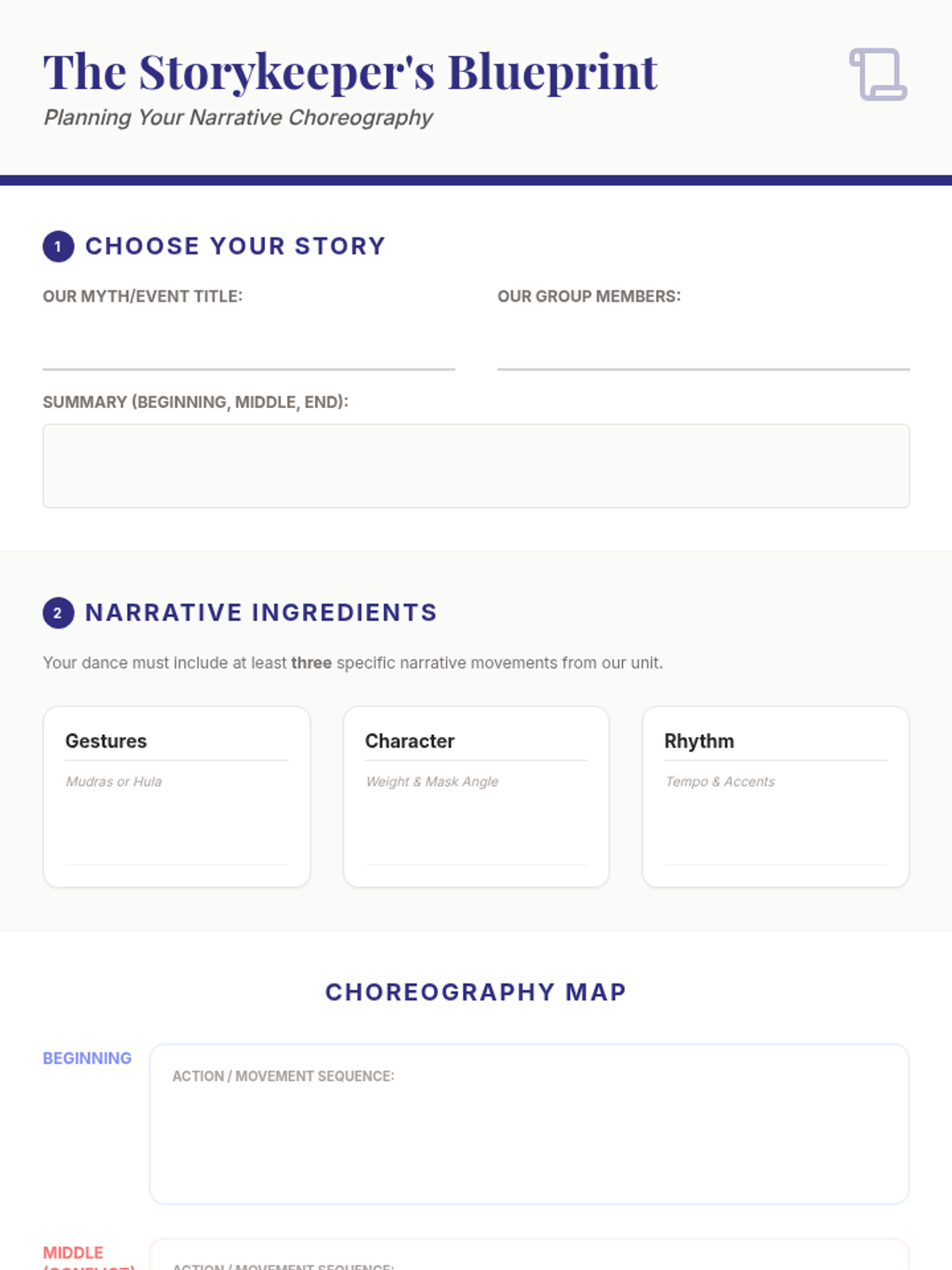
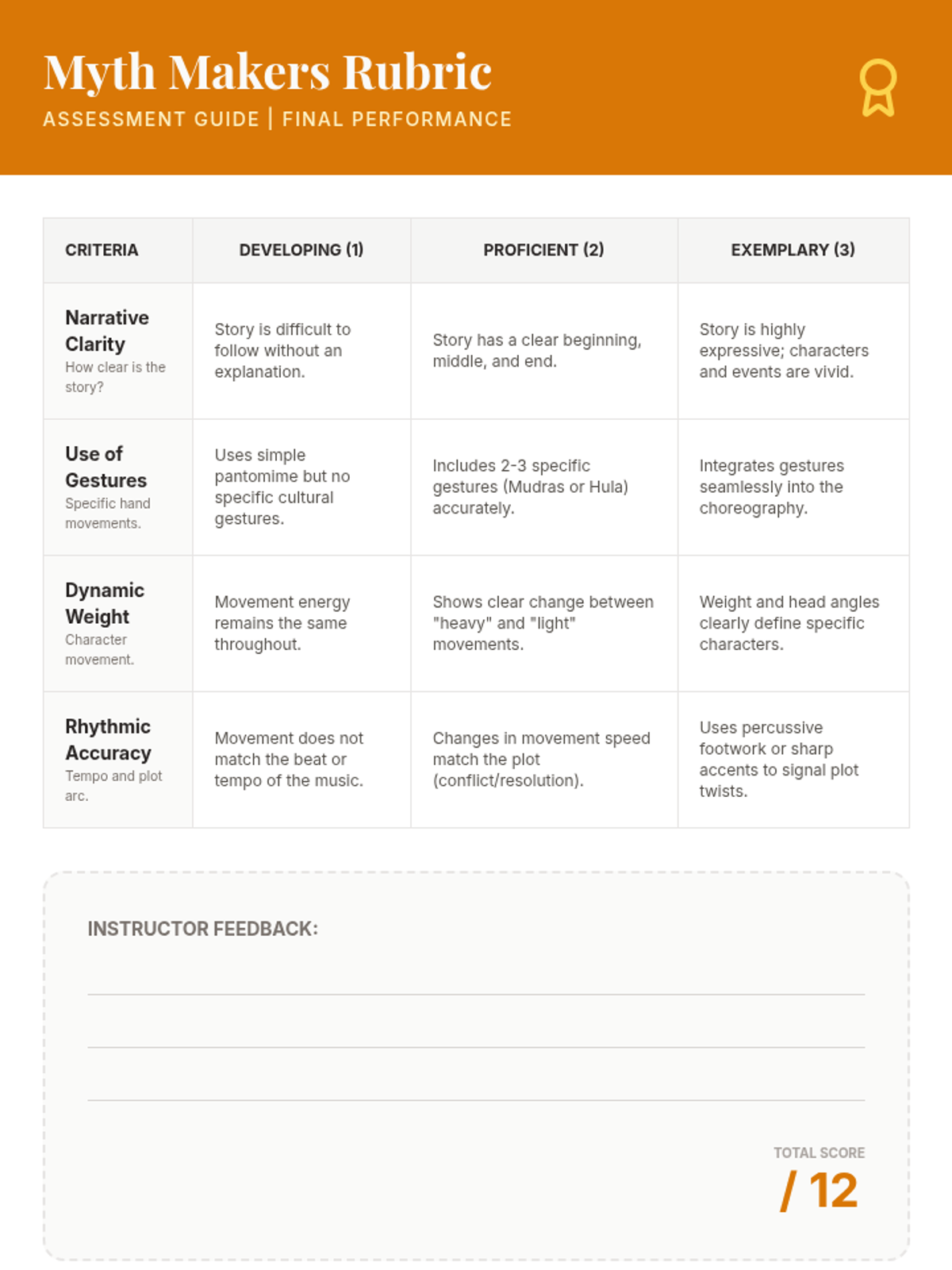
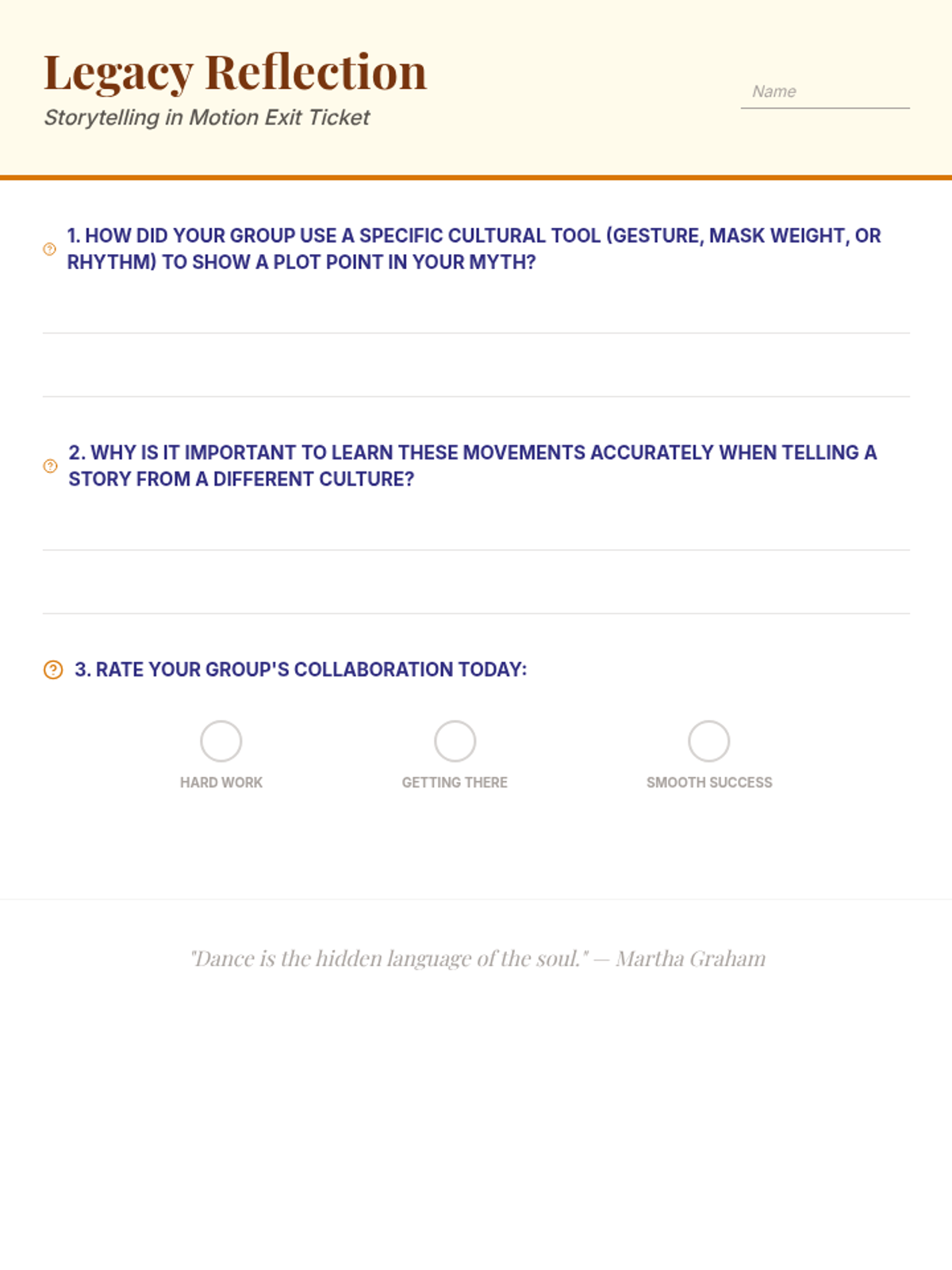
Working in small groups, students choreograph a short dance piece based on a myth or historical event using the gestures and rhythmic tools learned throughout the unit.
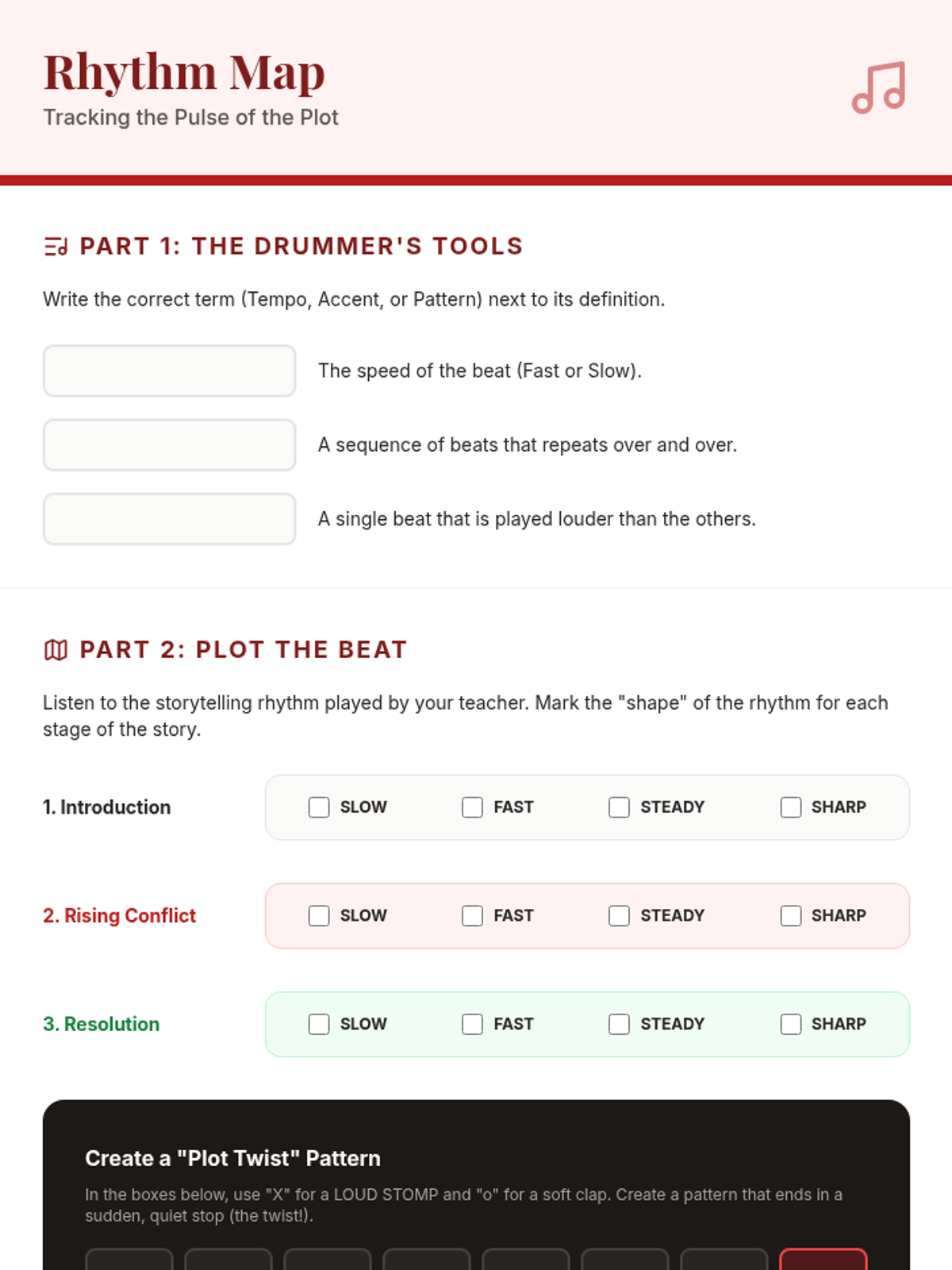
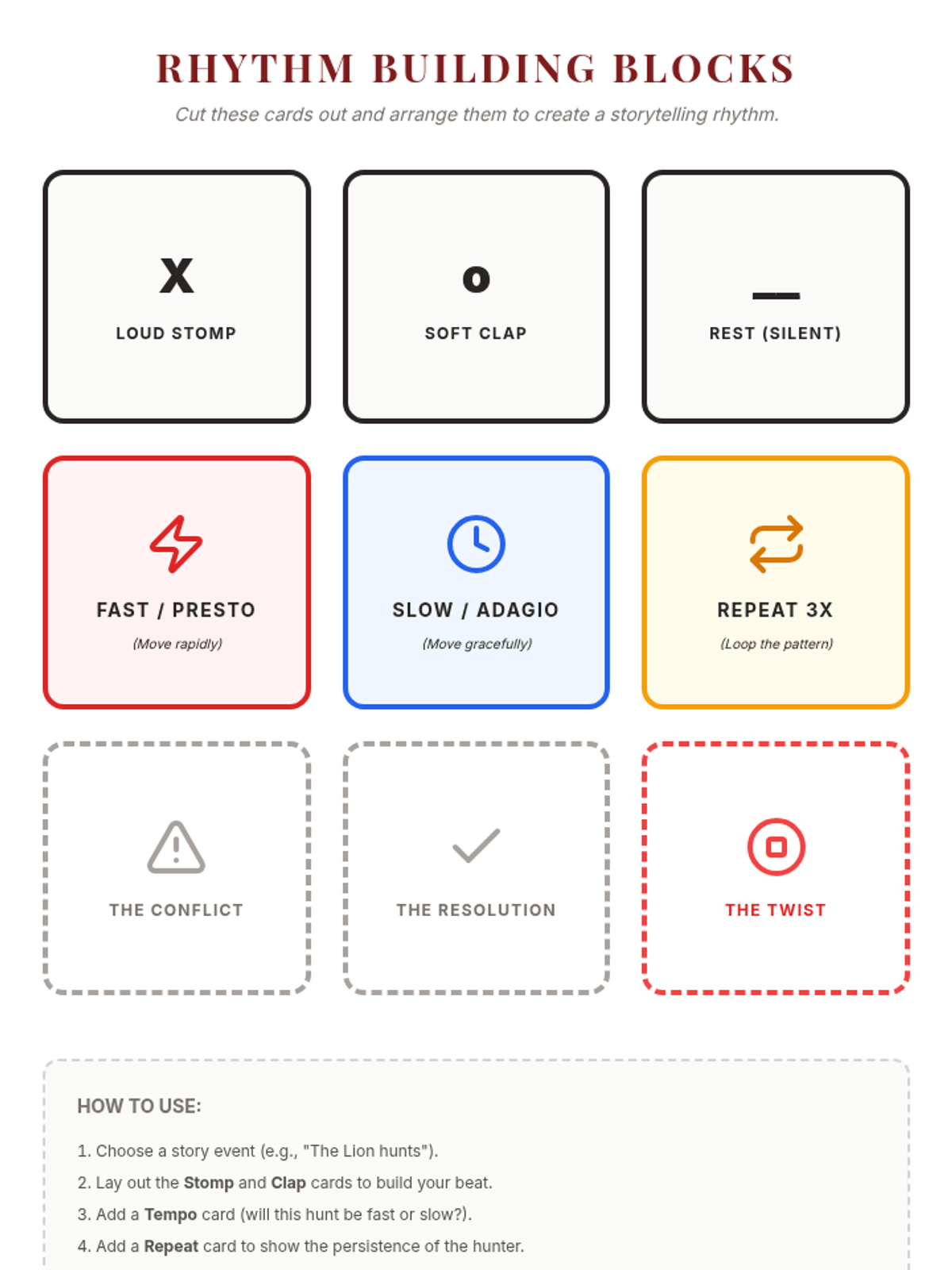
Students explore the relationship between rhythmic patterns, tempo, and dramatic arcs, mapping how drum beats signal conflict and resolution in dance.
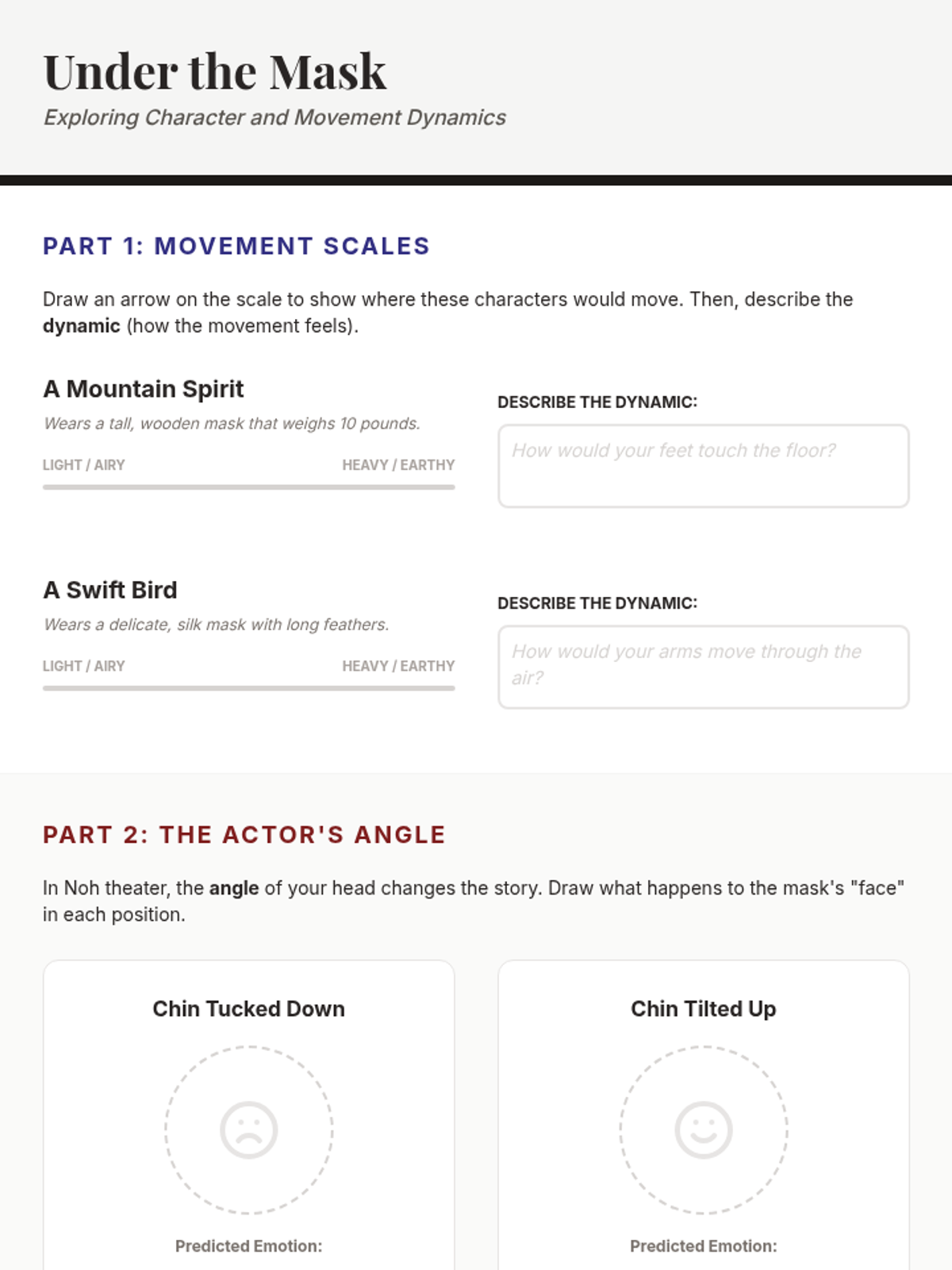
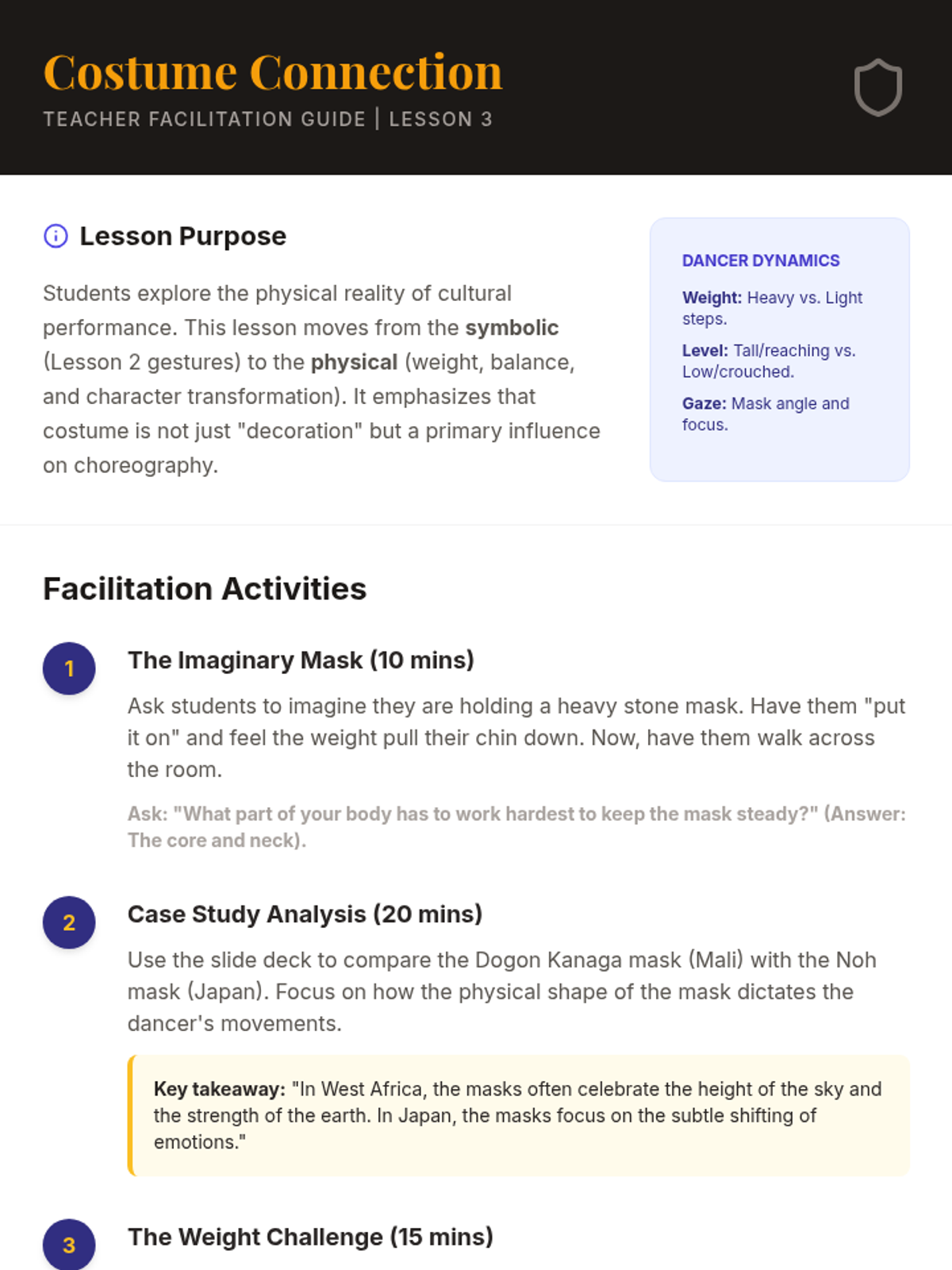
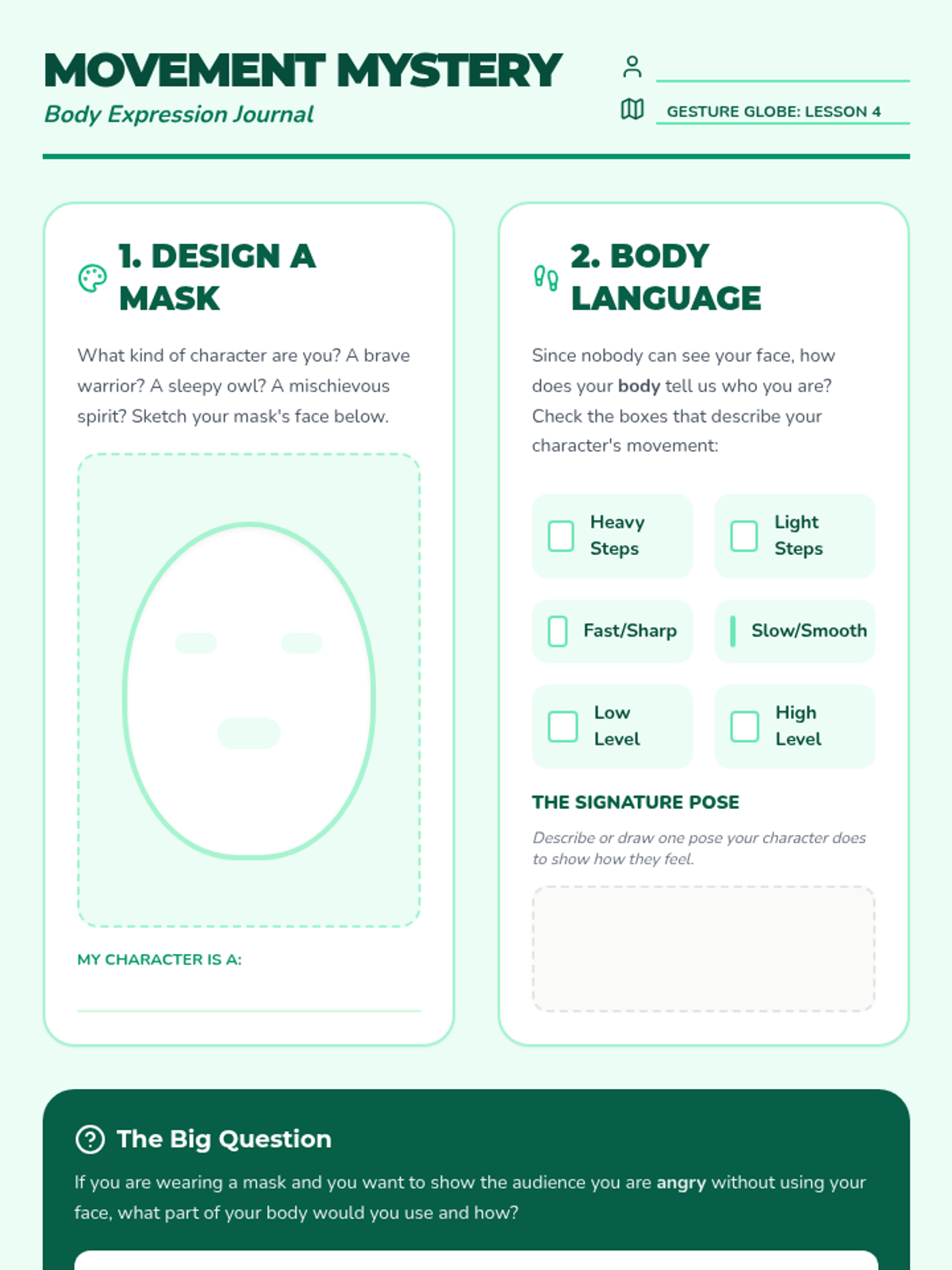
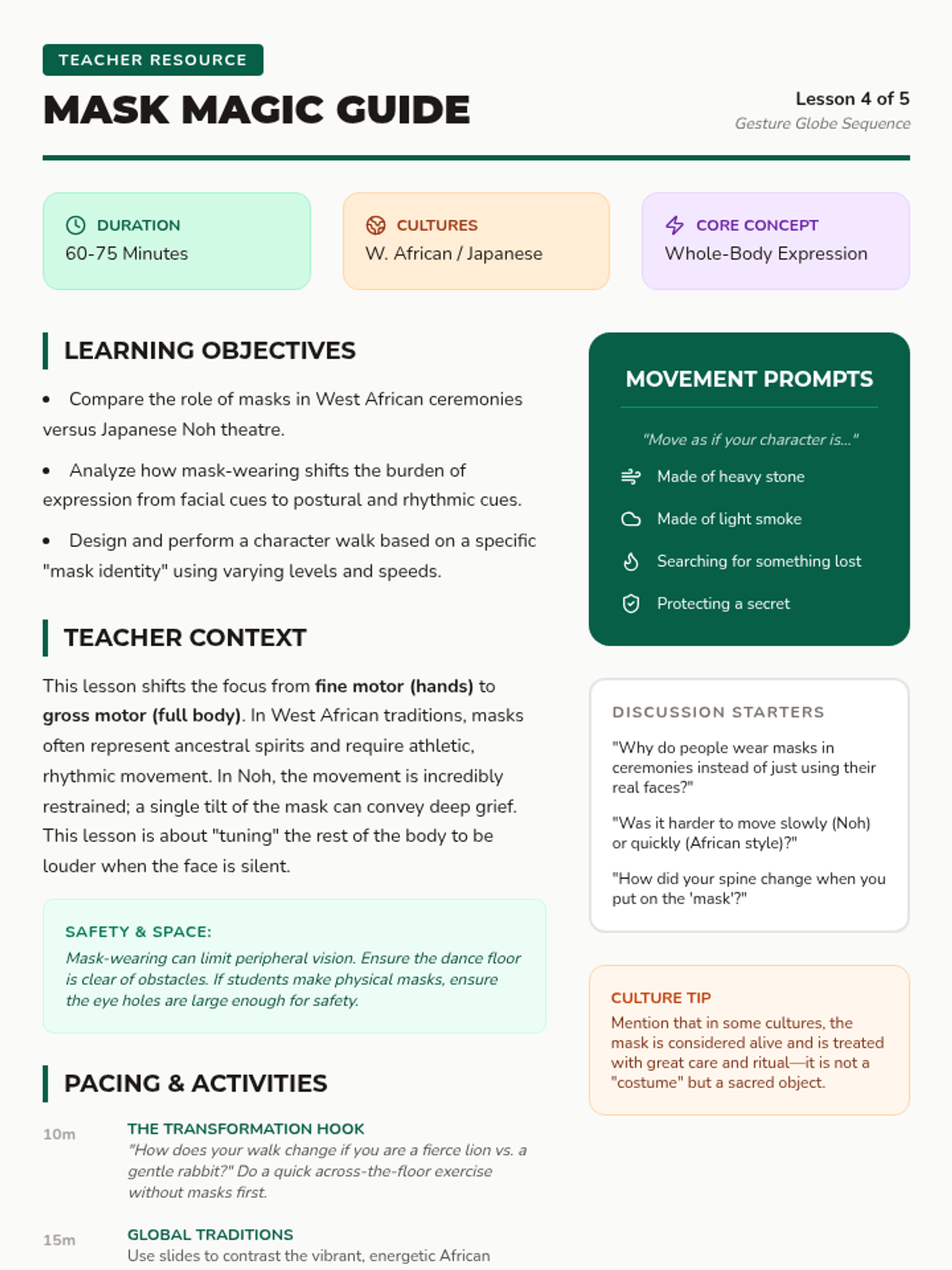
Students analyze how masks and heavy costumes in West African and Asian traditions influence character portrayal and movement dynamics.
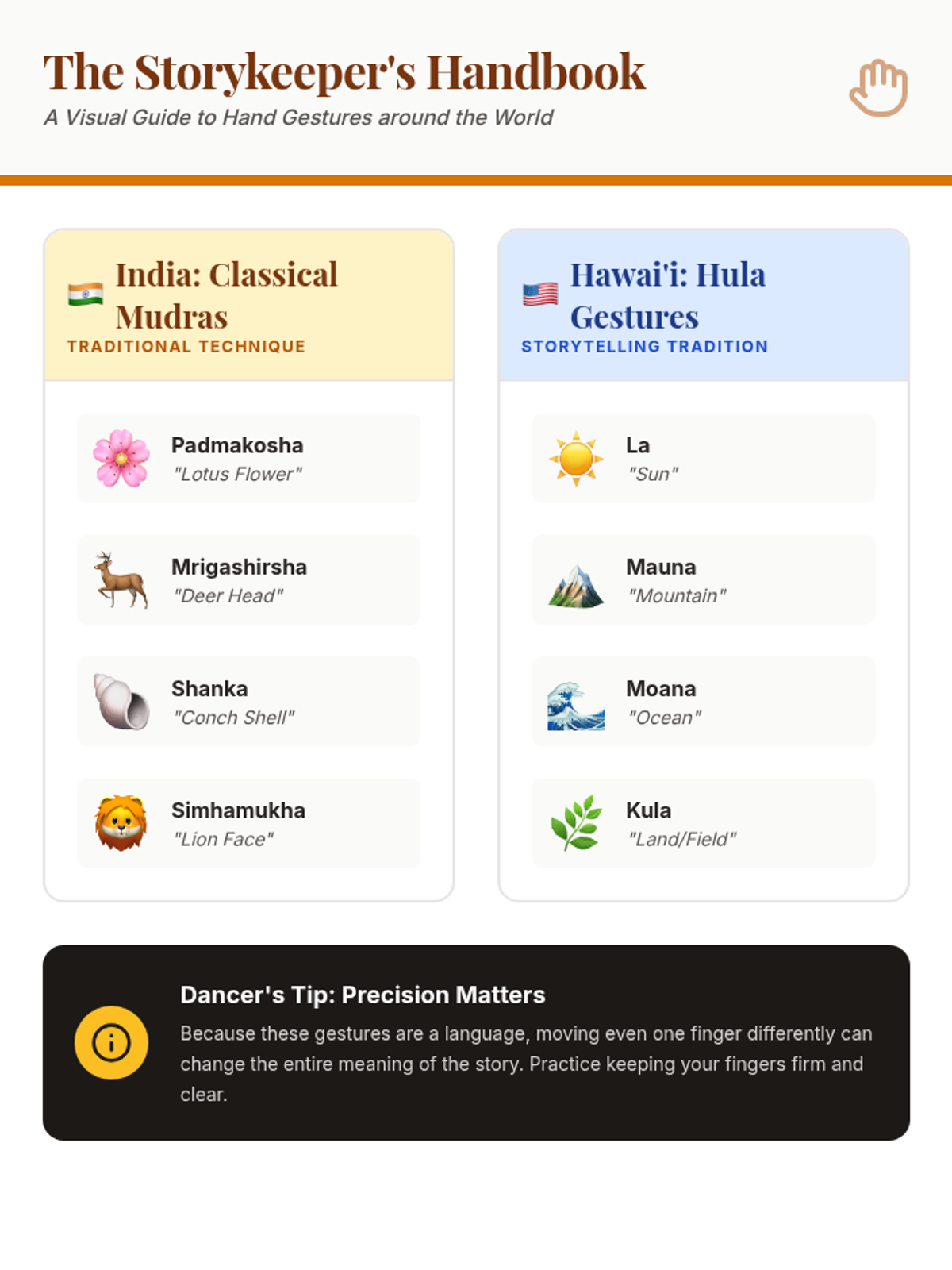
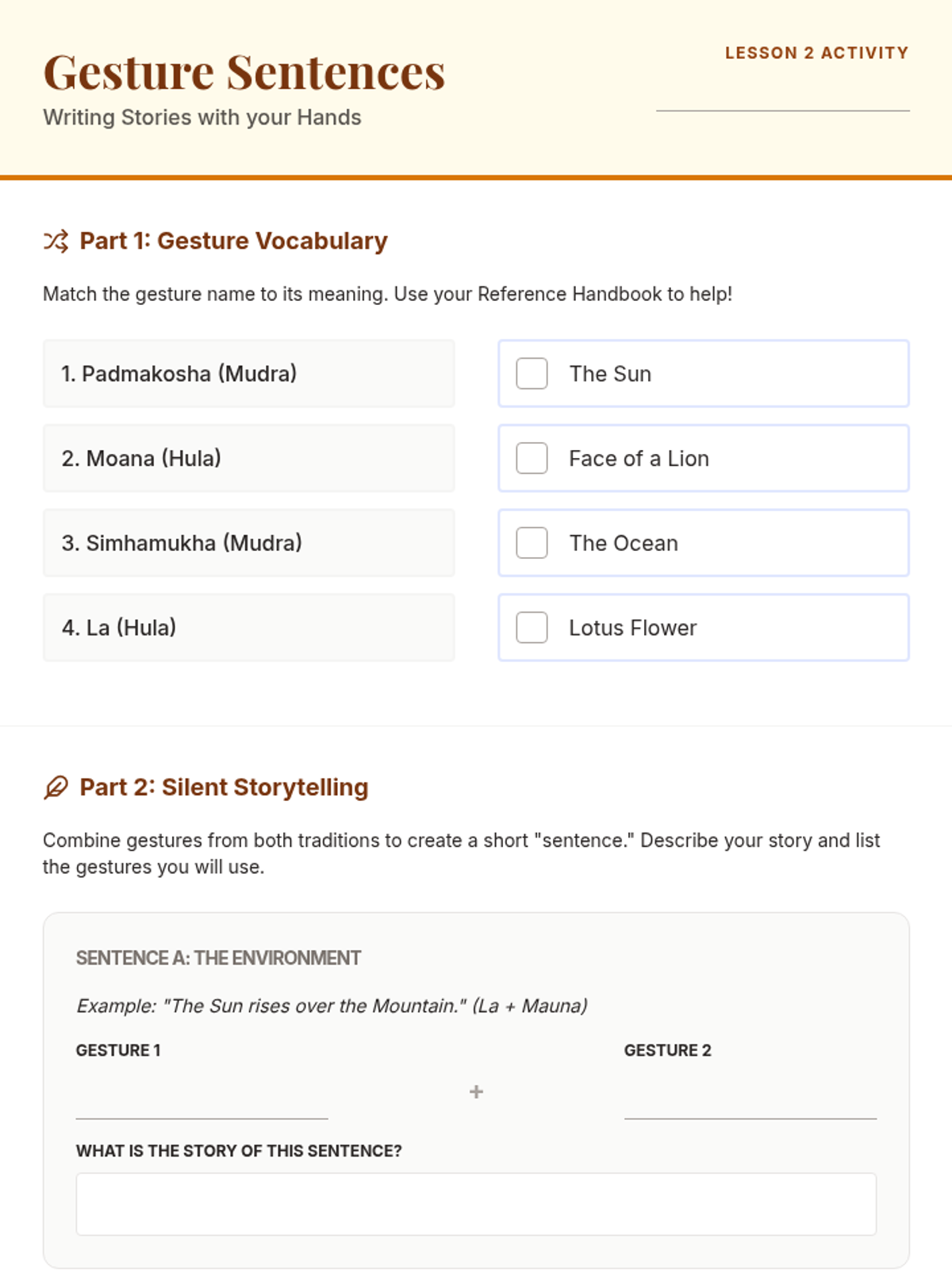
Students learn specific hand gestures from traditions like Classical Indian Mudras and Hawaiian Hula, exploring how these 'secret languages' preserve cultural narratives.
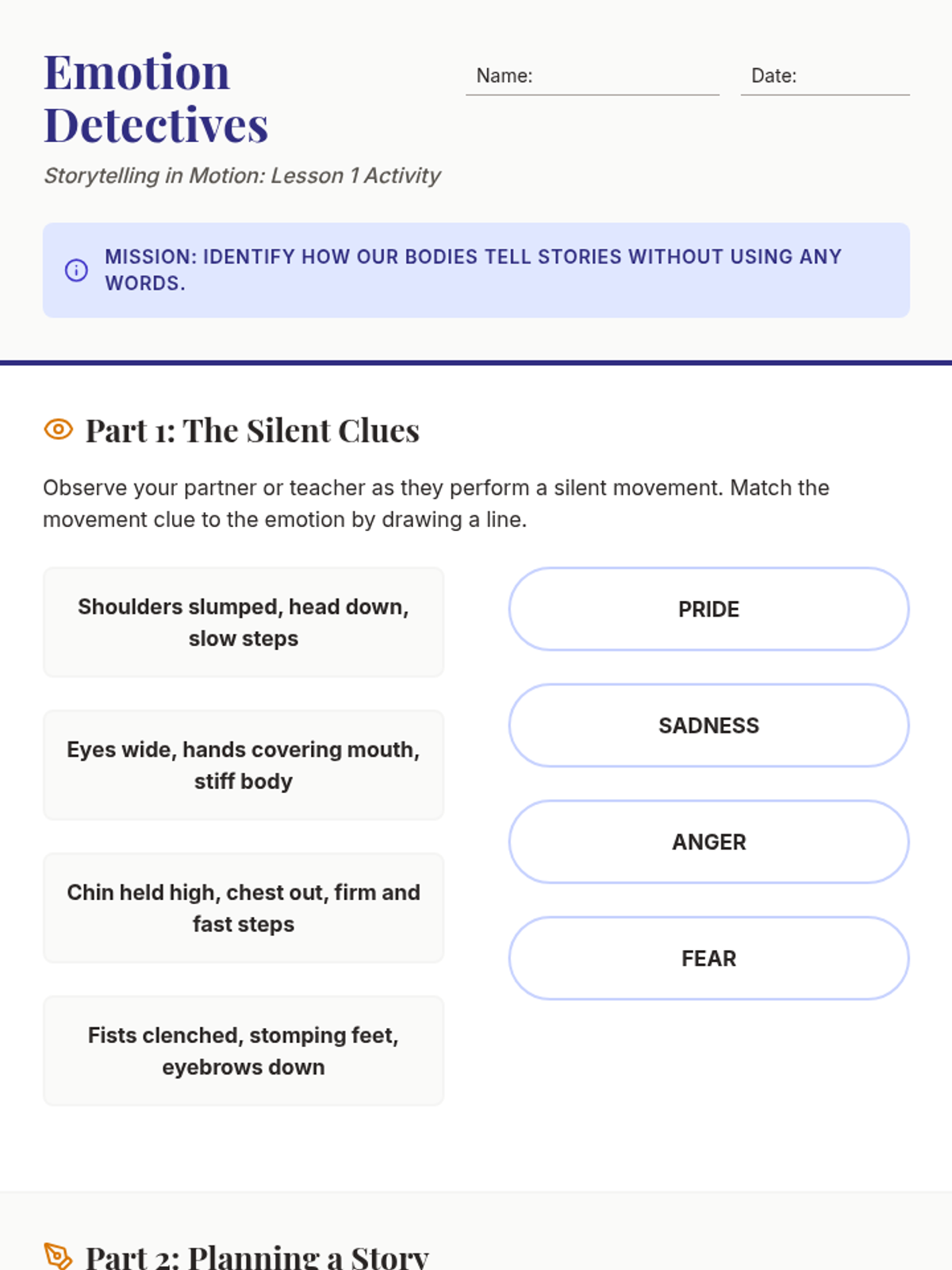
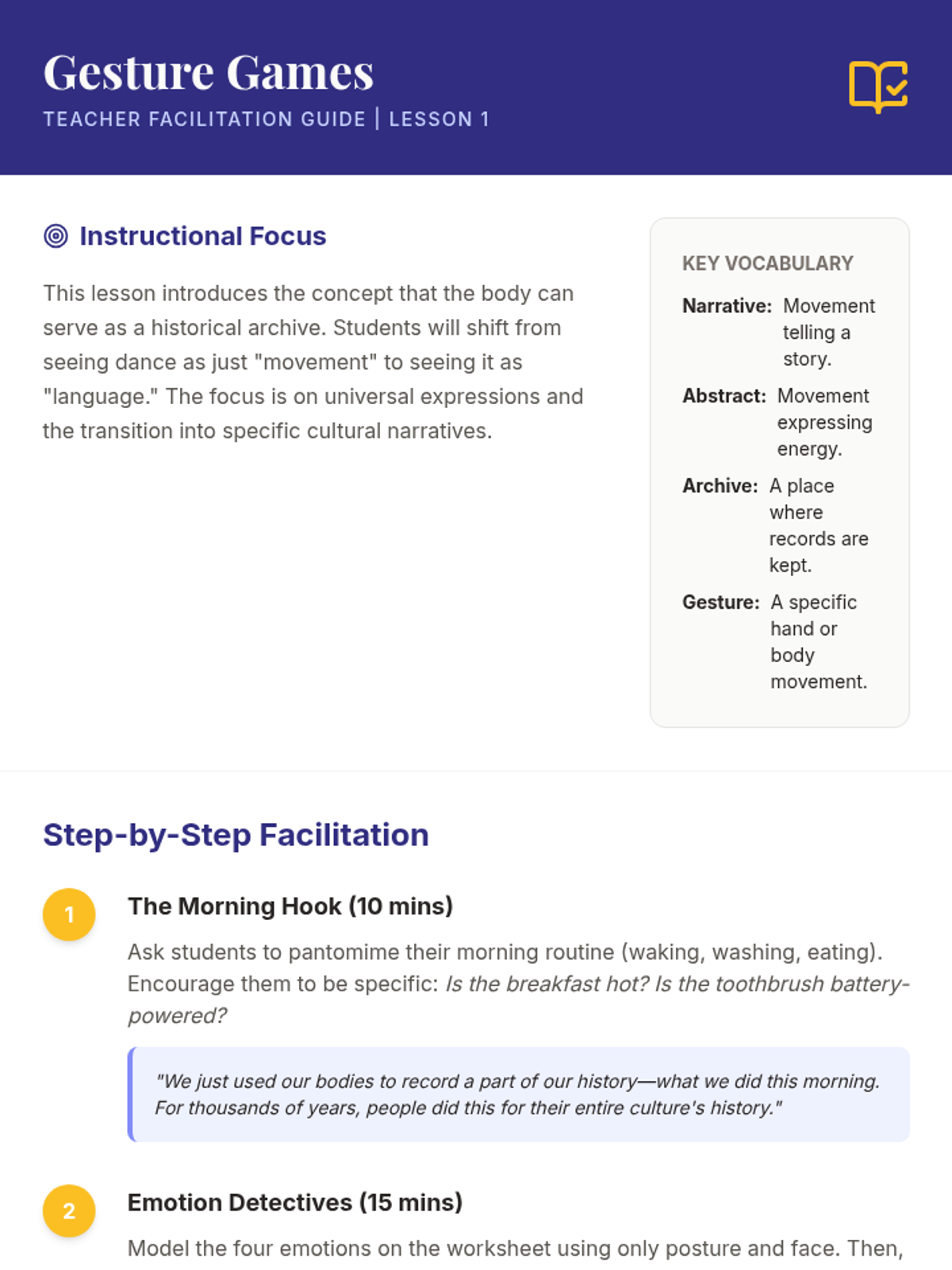
Students investigate the concept of pantomime and gestural language used in ancient cultures, identifying how universal emotions are communicated through posture and facial expression.
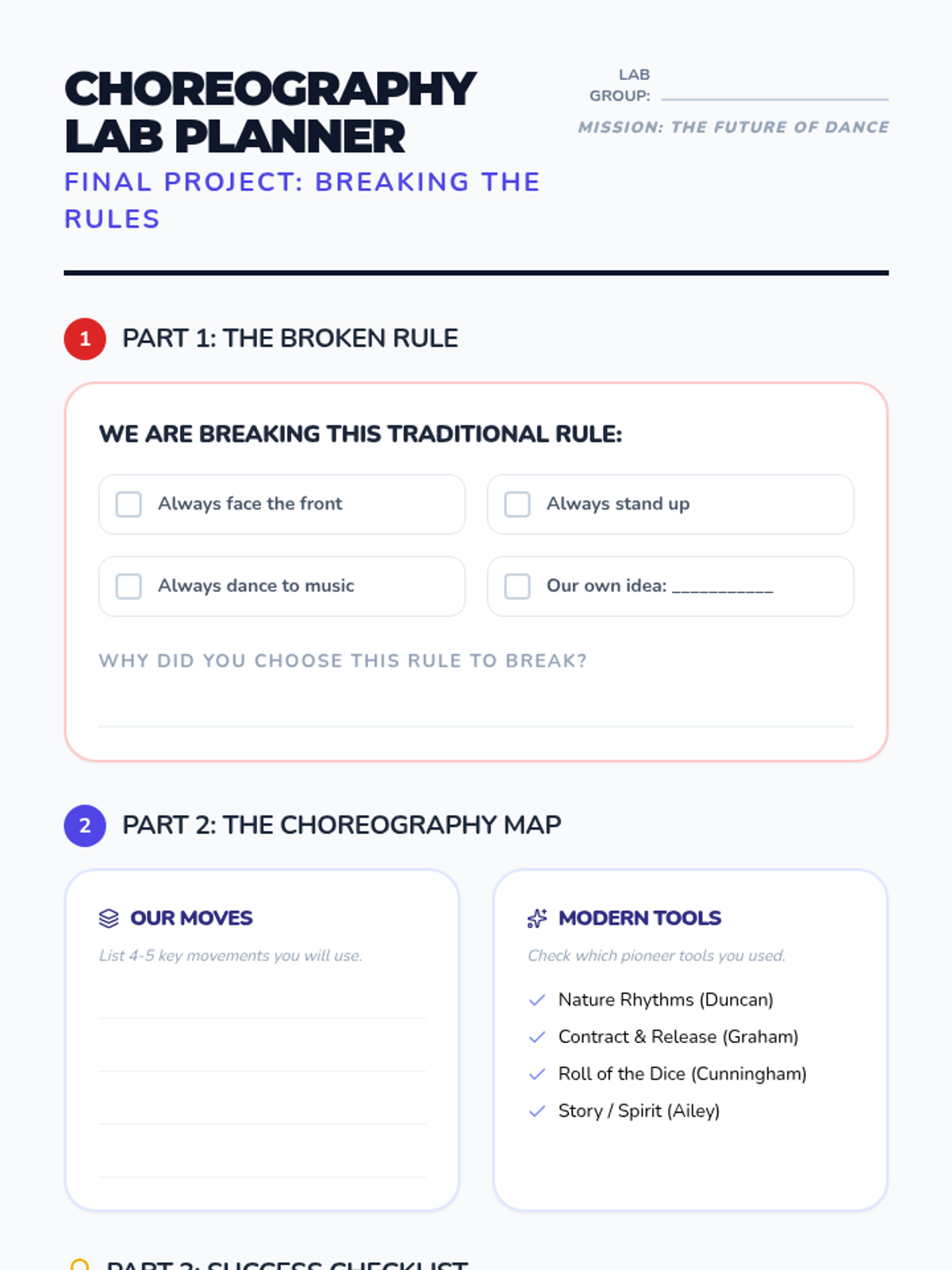
In this final project, students work in groups to create their own 'Modern Dance' piece by intentionally breaking a traditional rule and performing for their peers.
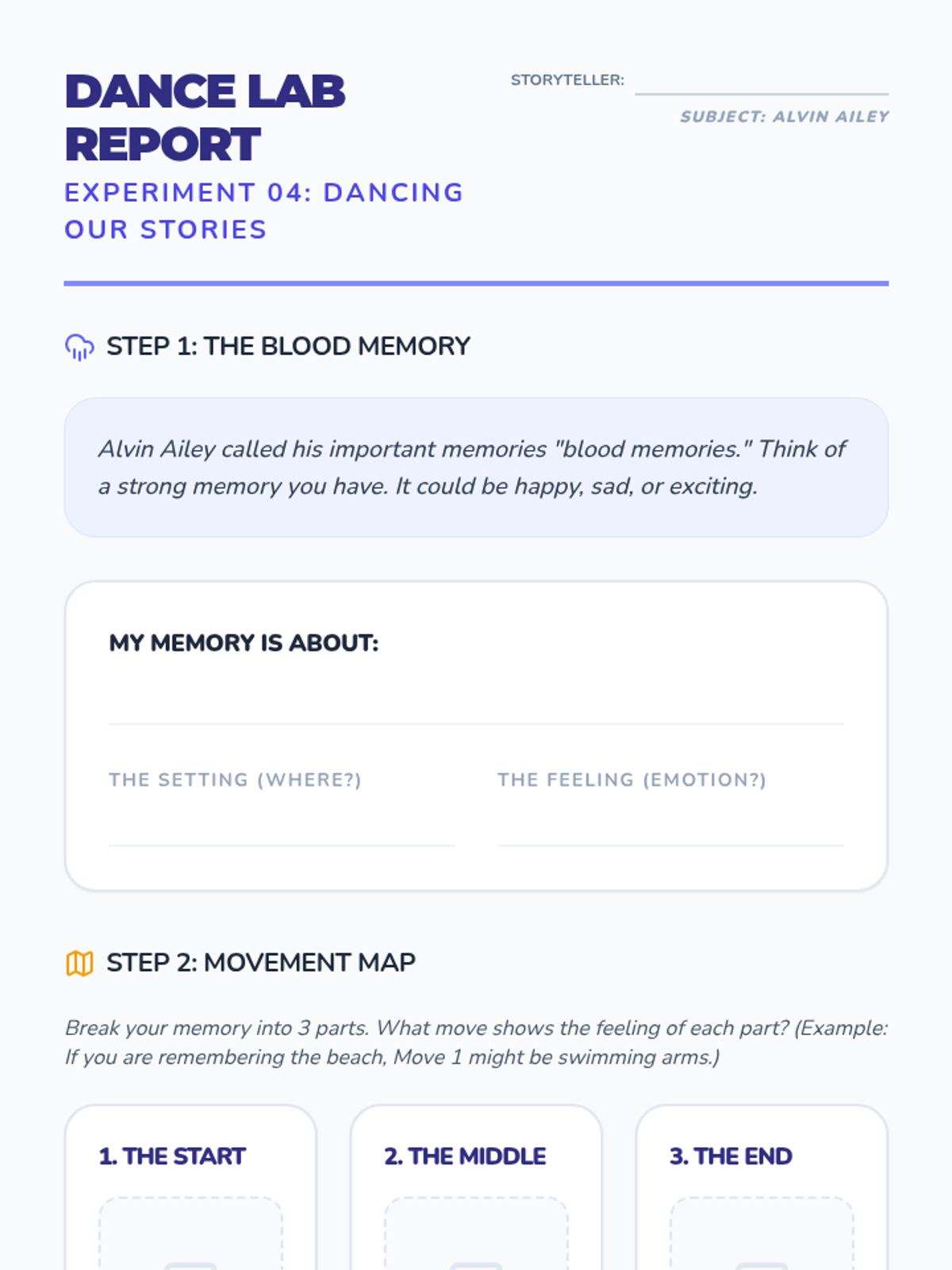
Students examine Alvin Ailey's work, focusing on how personal memories and cultural spirit can be transformed into expressive choreography.
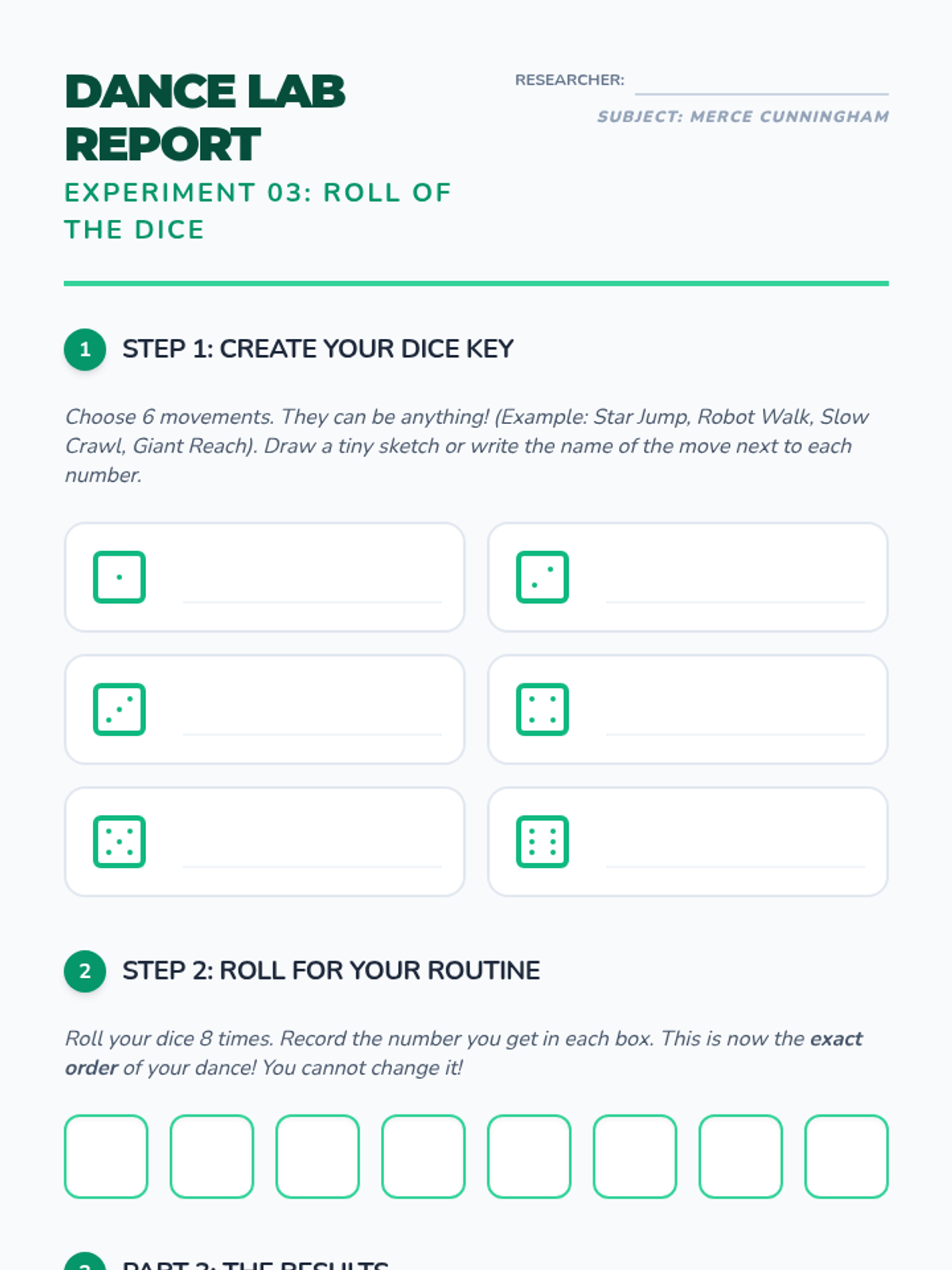
Students learn about Merce Cunningham's abstract approach to dance, using dice and chance to determine the sequence of movements.
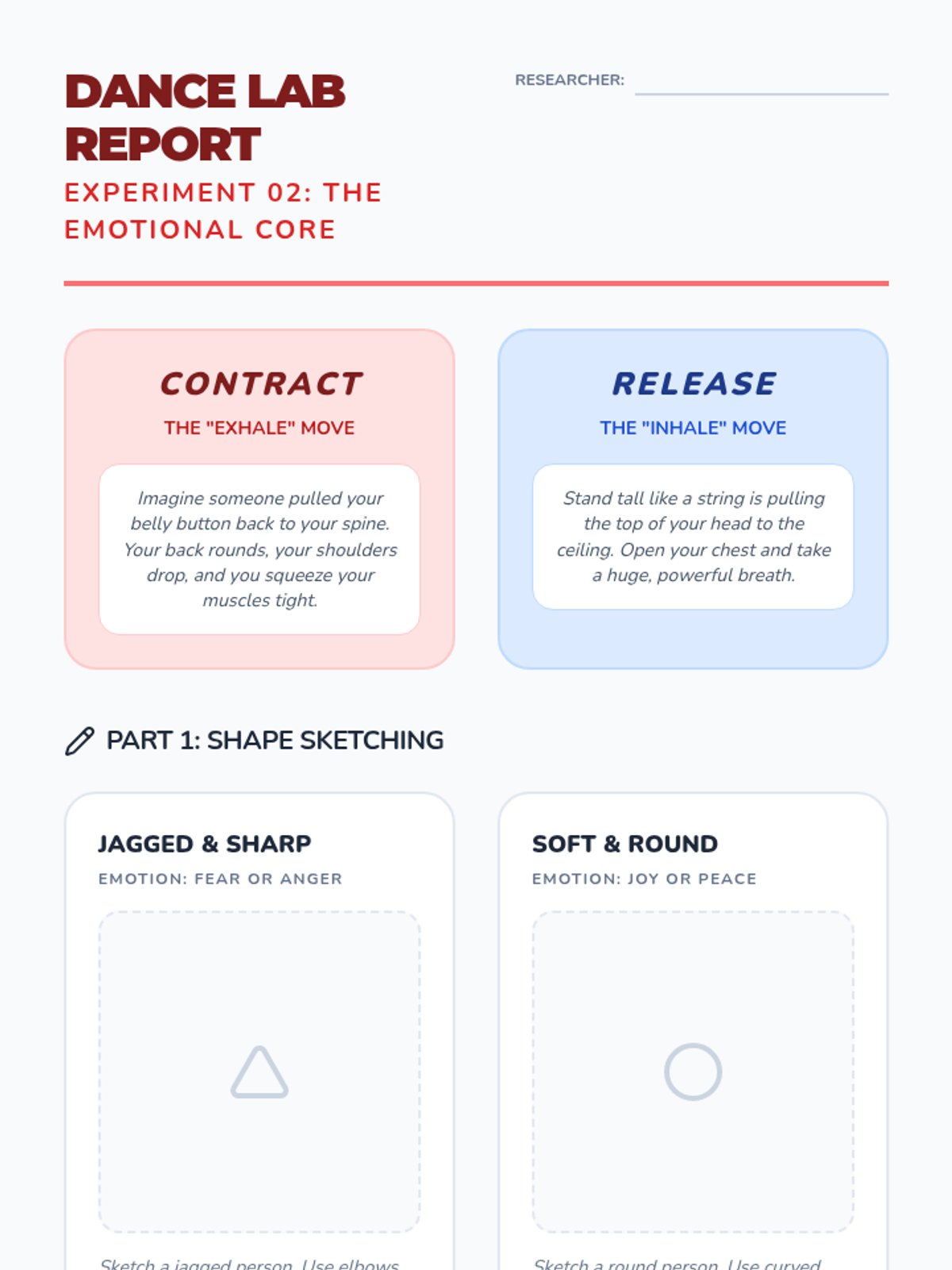
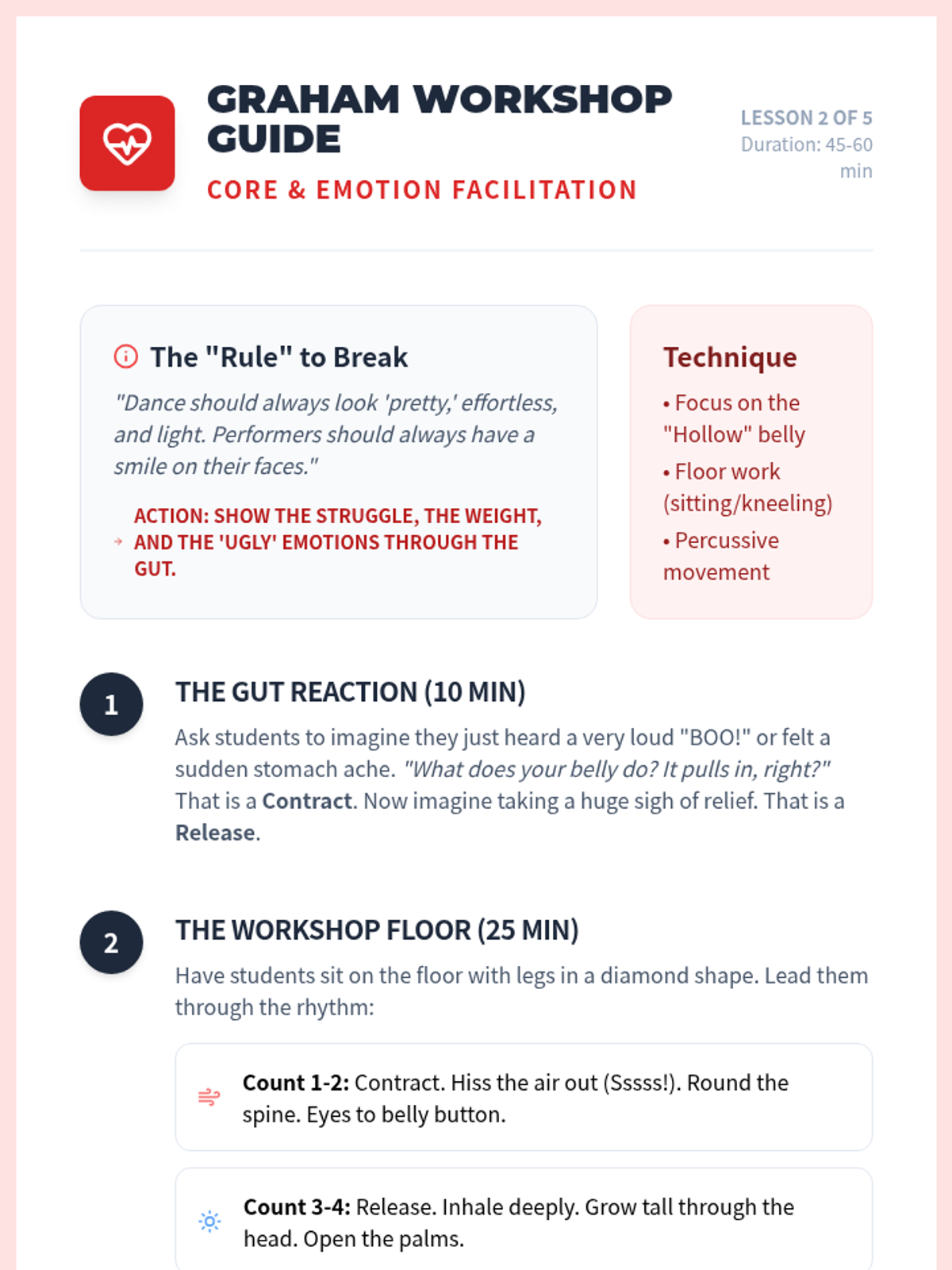
Students explore Martha Graham's technique of 'contract and release' to express powerful emotions. They focus on the body's core and creating sharp vs. soft shapes.
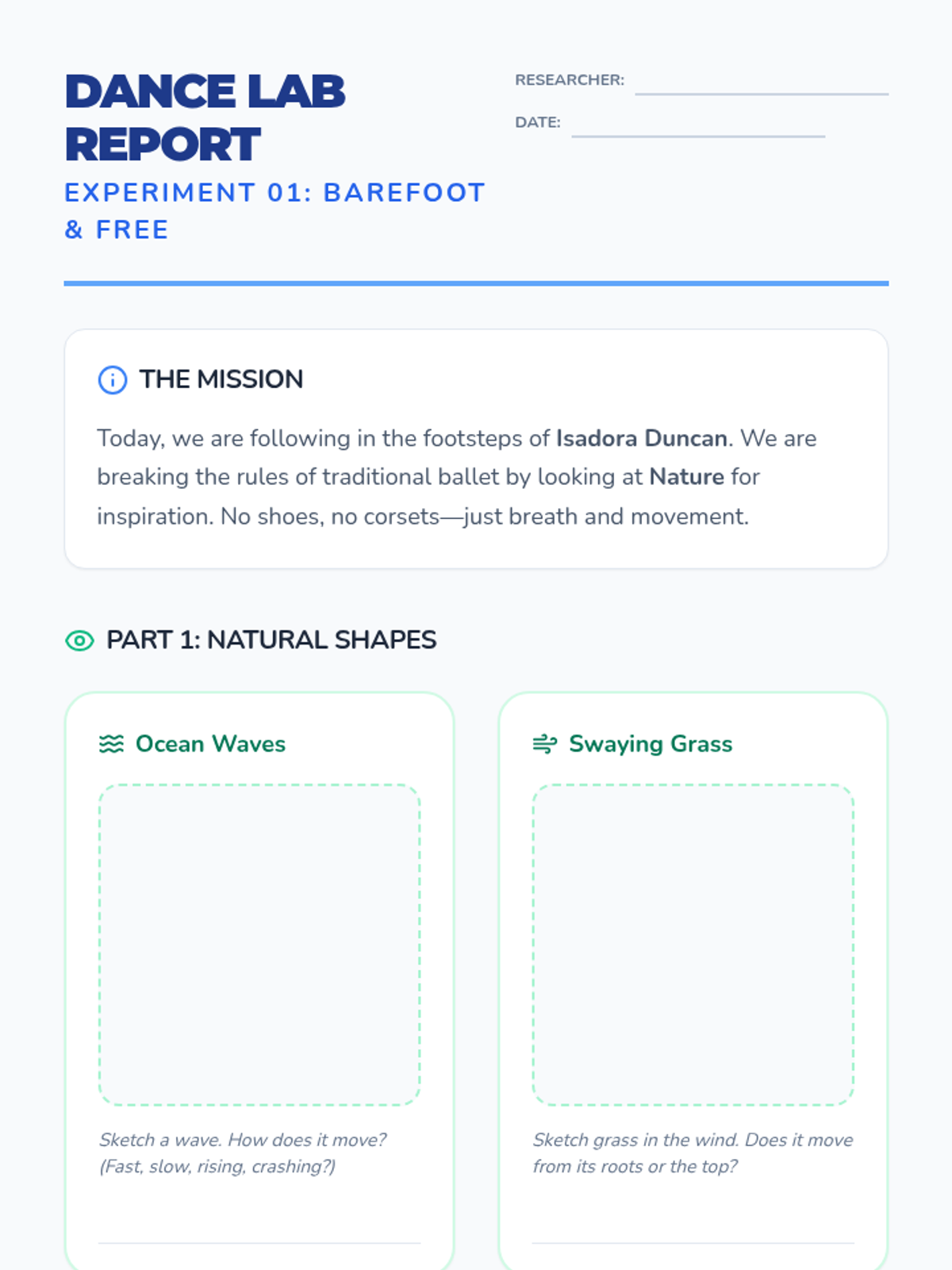
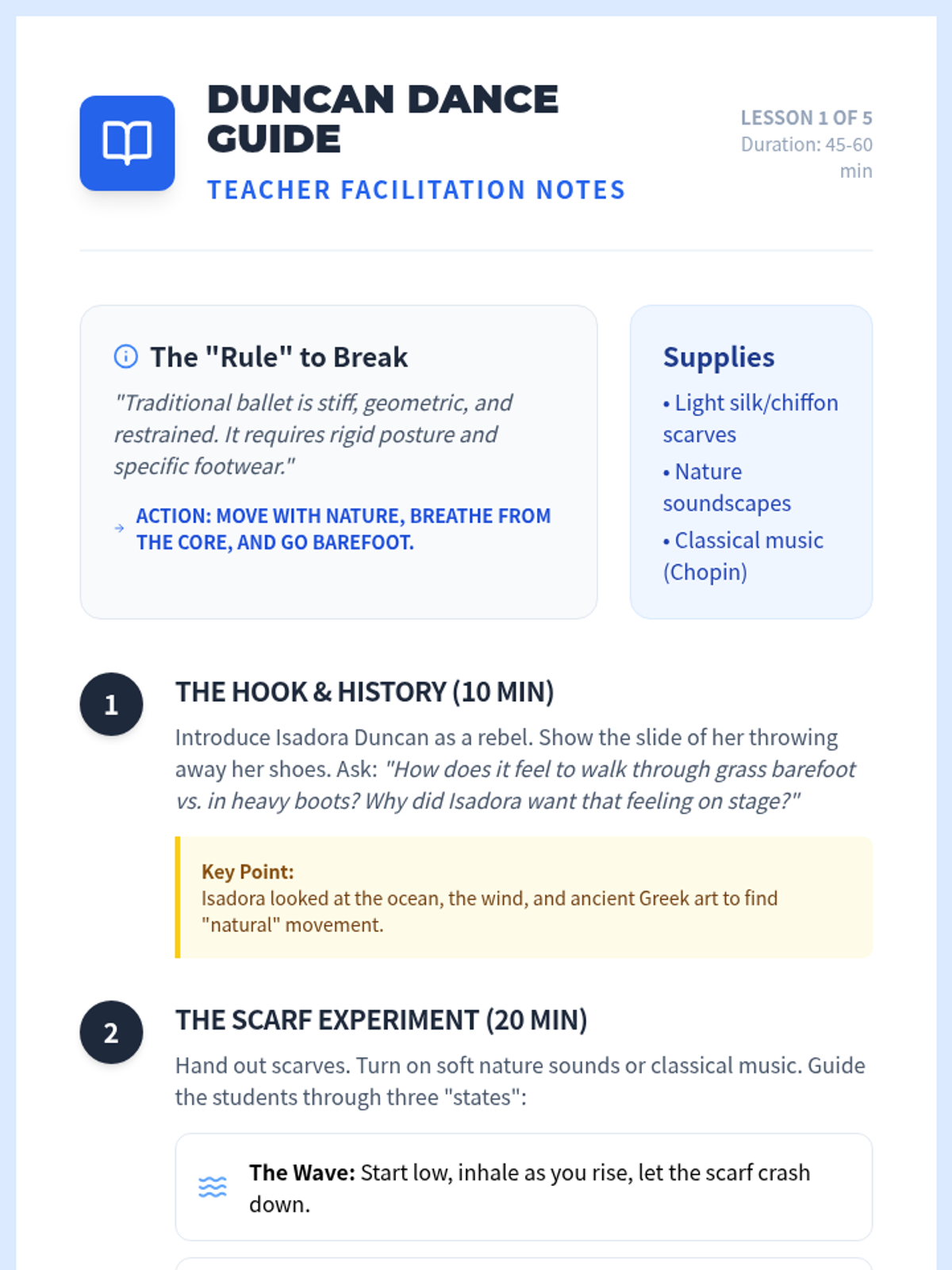
Students discover Isadora Duncan's natural movement style and her rejection of ballet traditions. They explore breath-based movement and use scarves to mimic natural rhythms.
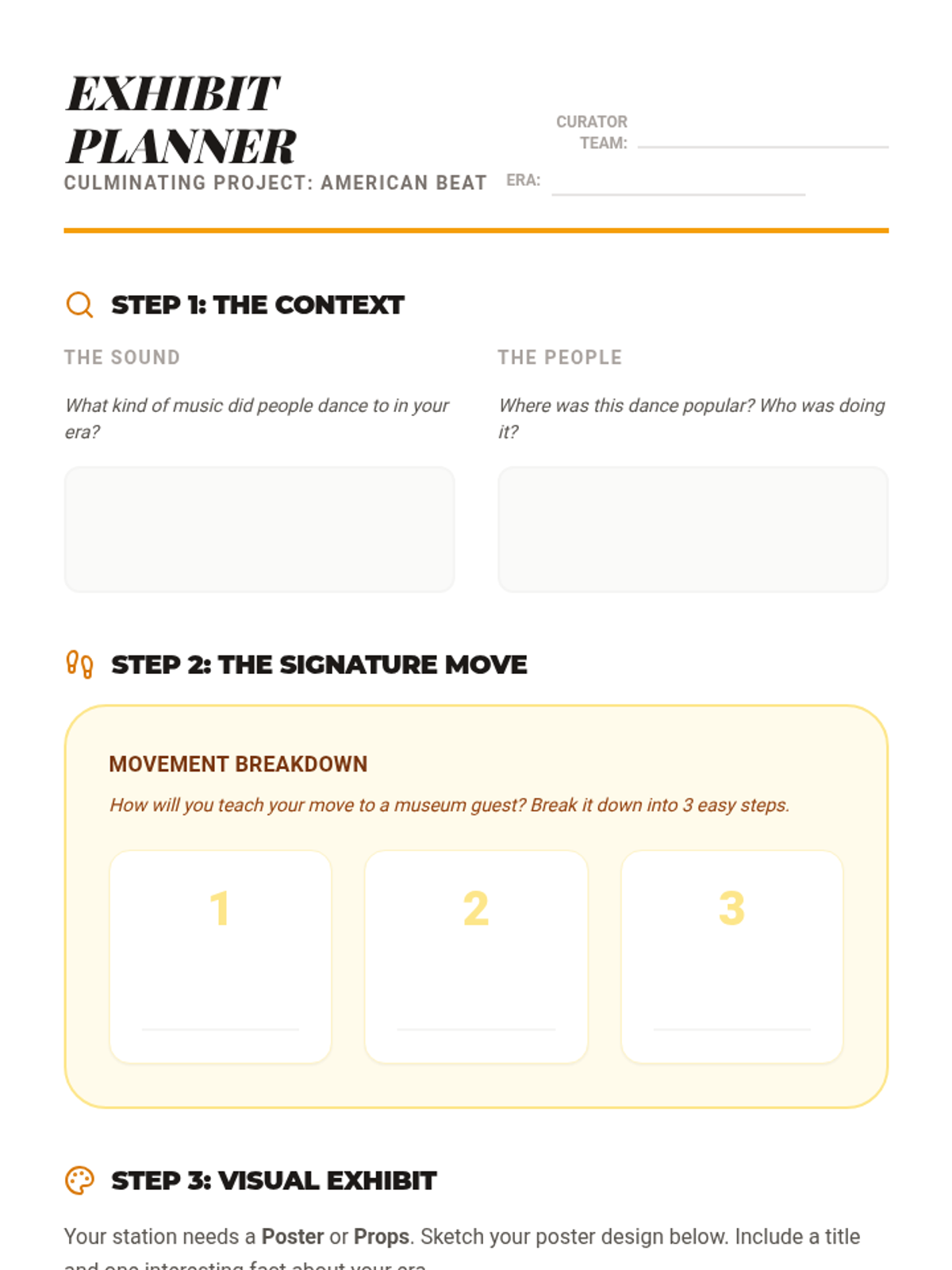
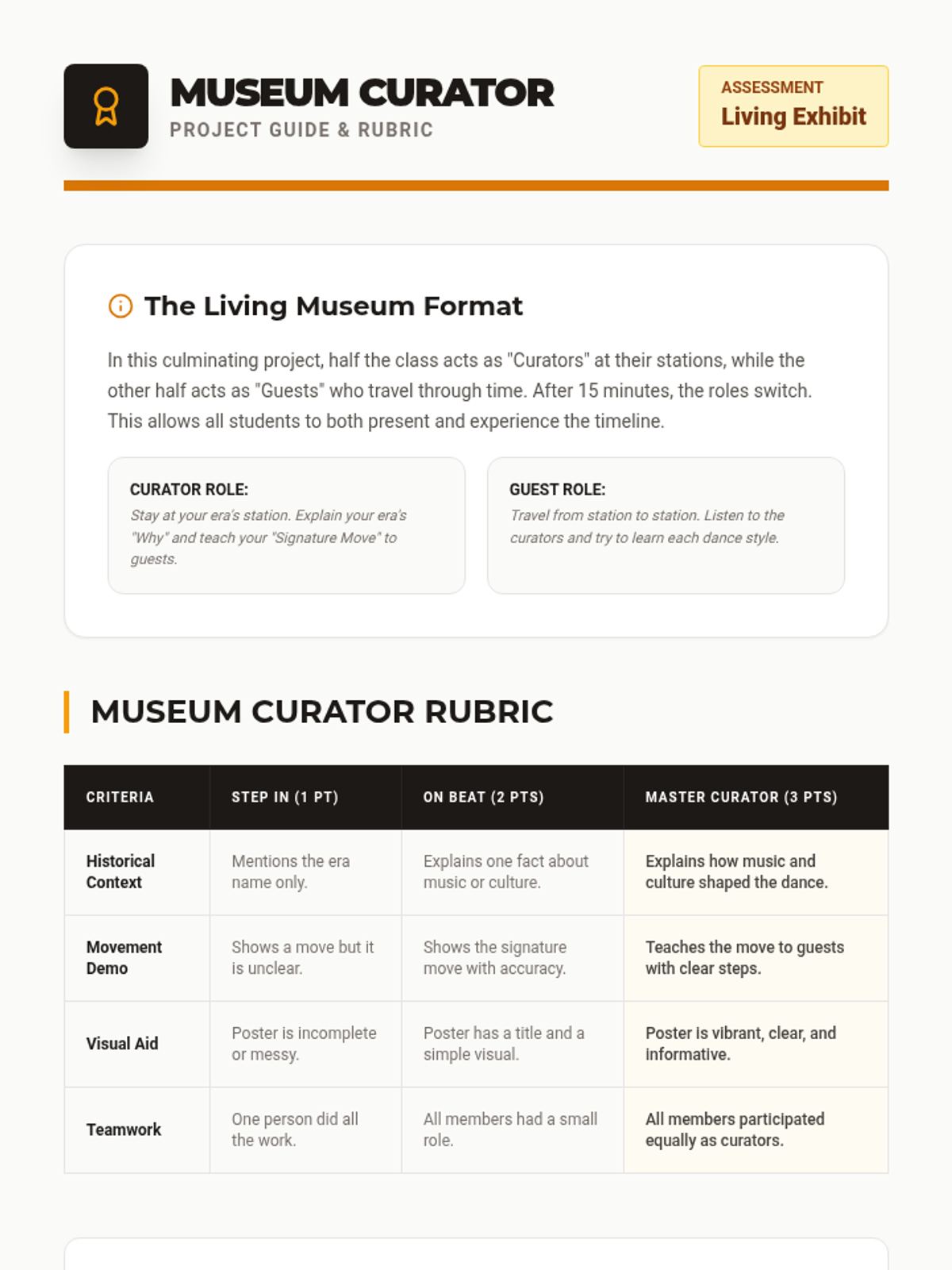
A culminating project where students curate a living museum exhibit of American dance styles, demonstrating moves and explaining cultural context.
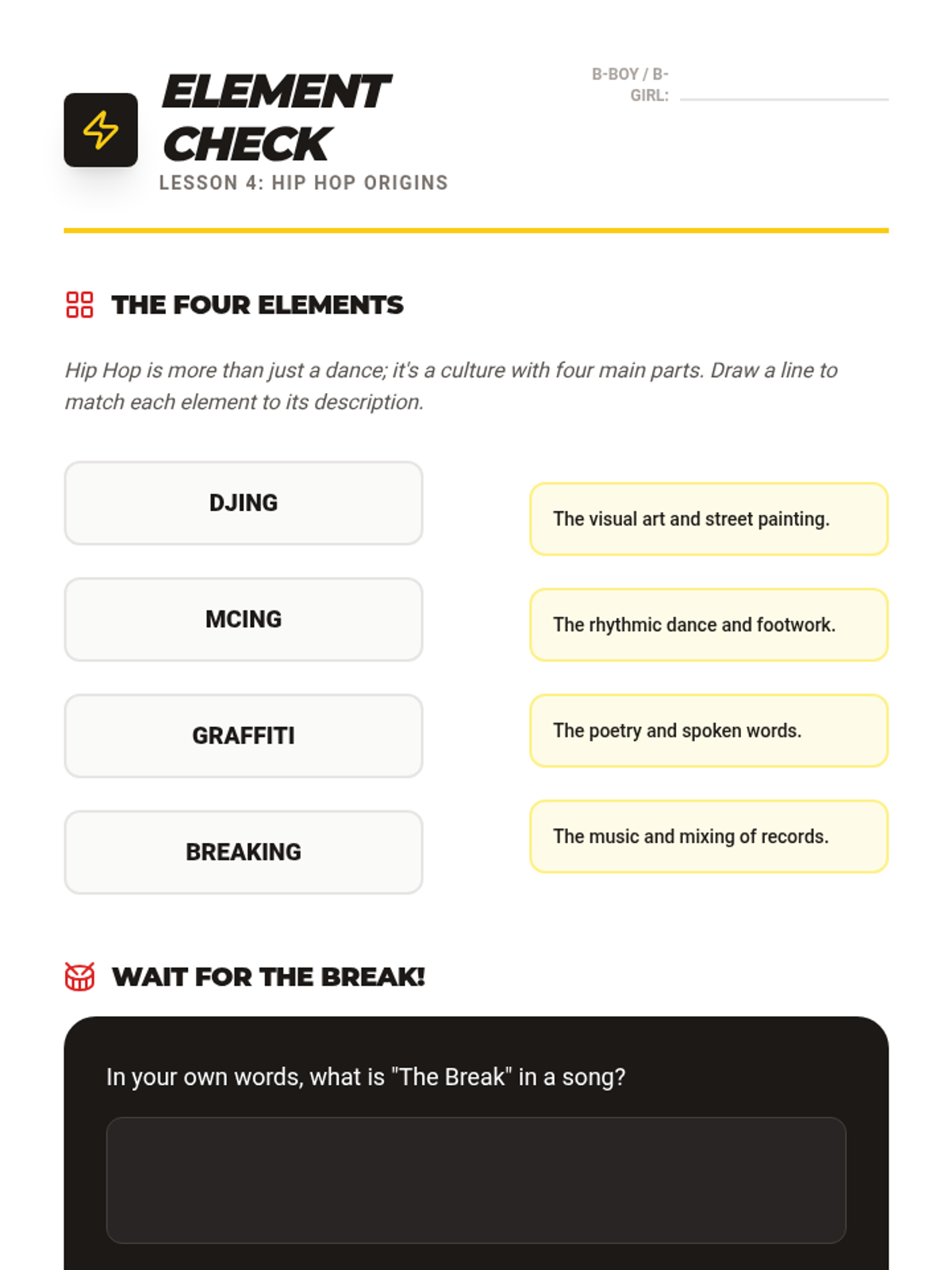
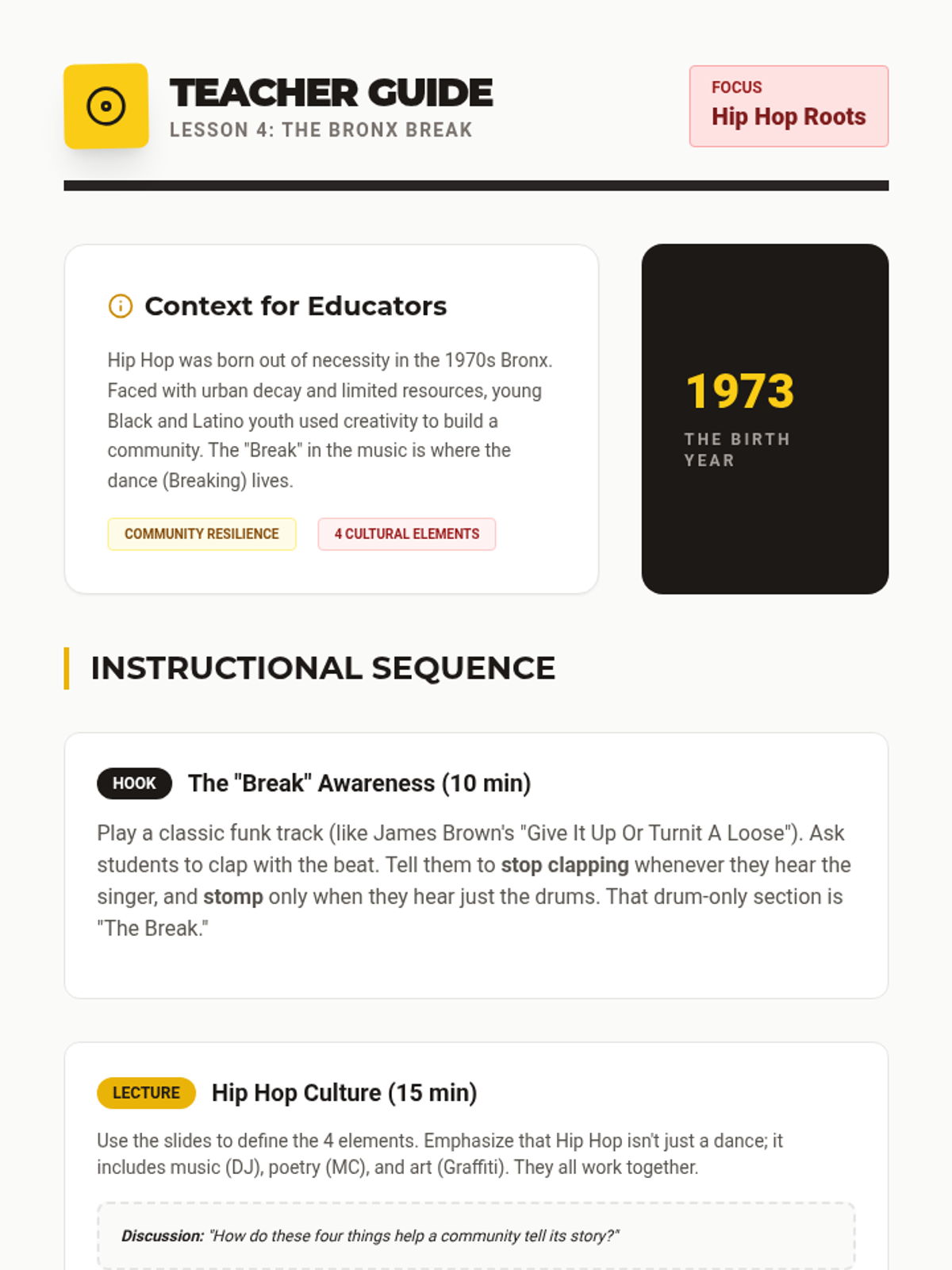
Investigation of the 1970s Bronx origins of Hip Hop, focusing on the 'break', b-boying/b-girling, and the four cultural elements.
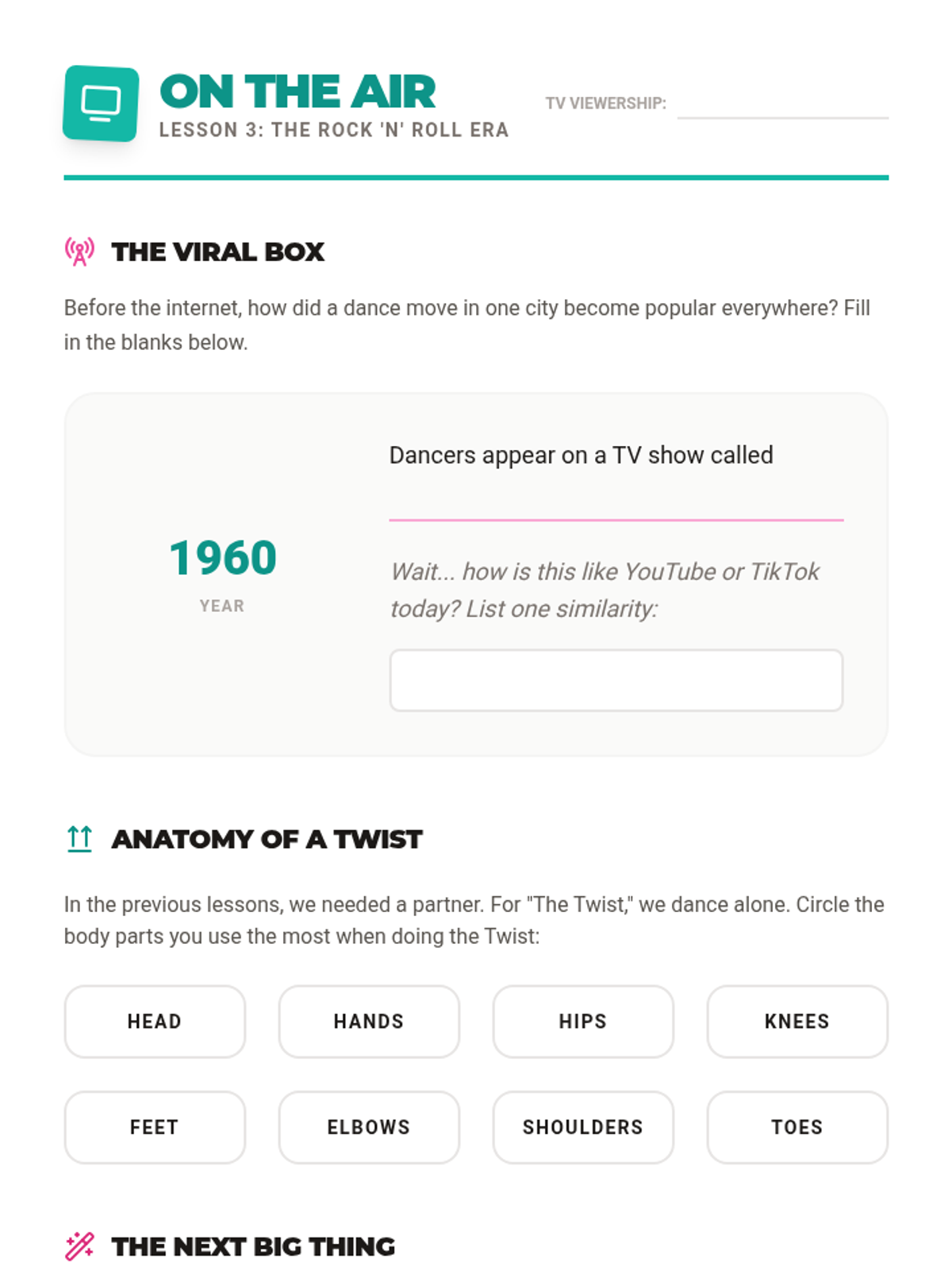
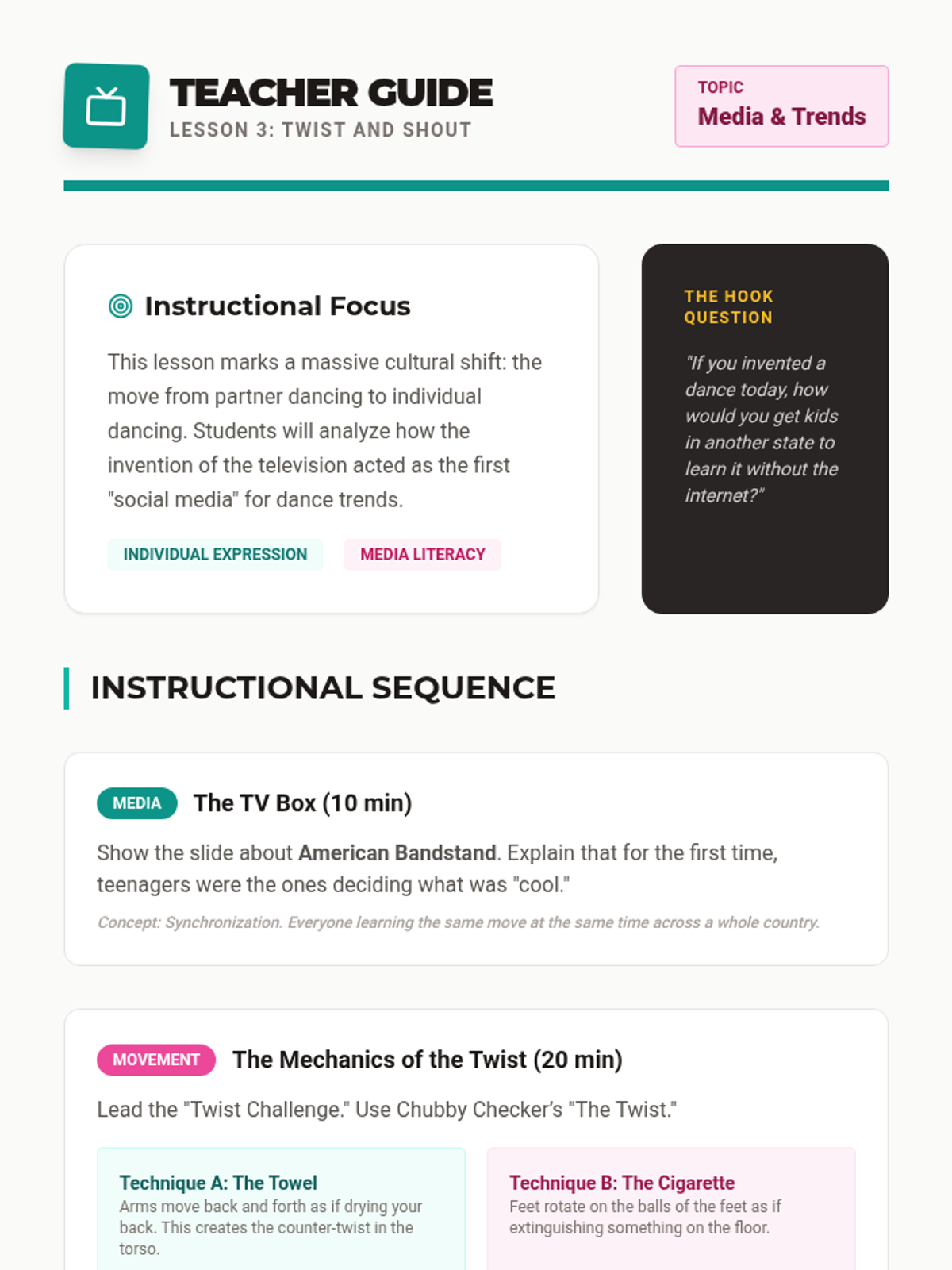
Students explore the 1950s and 60s shift from partner dancing to individual expression with 'The Twist' and discuss how television spread dance trends.
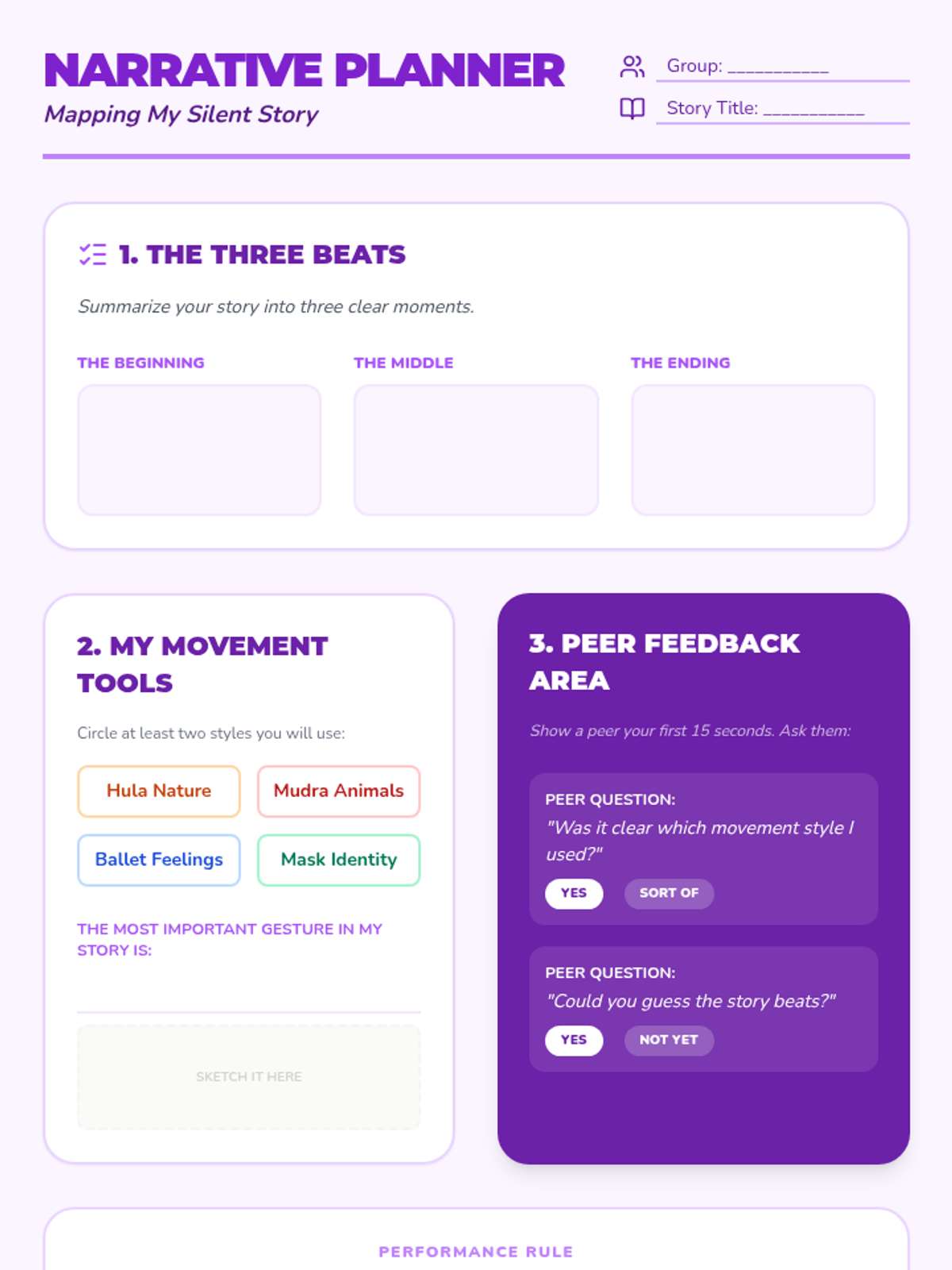
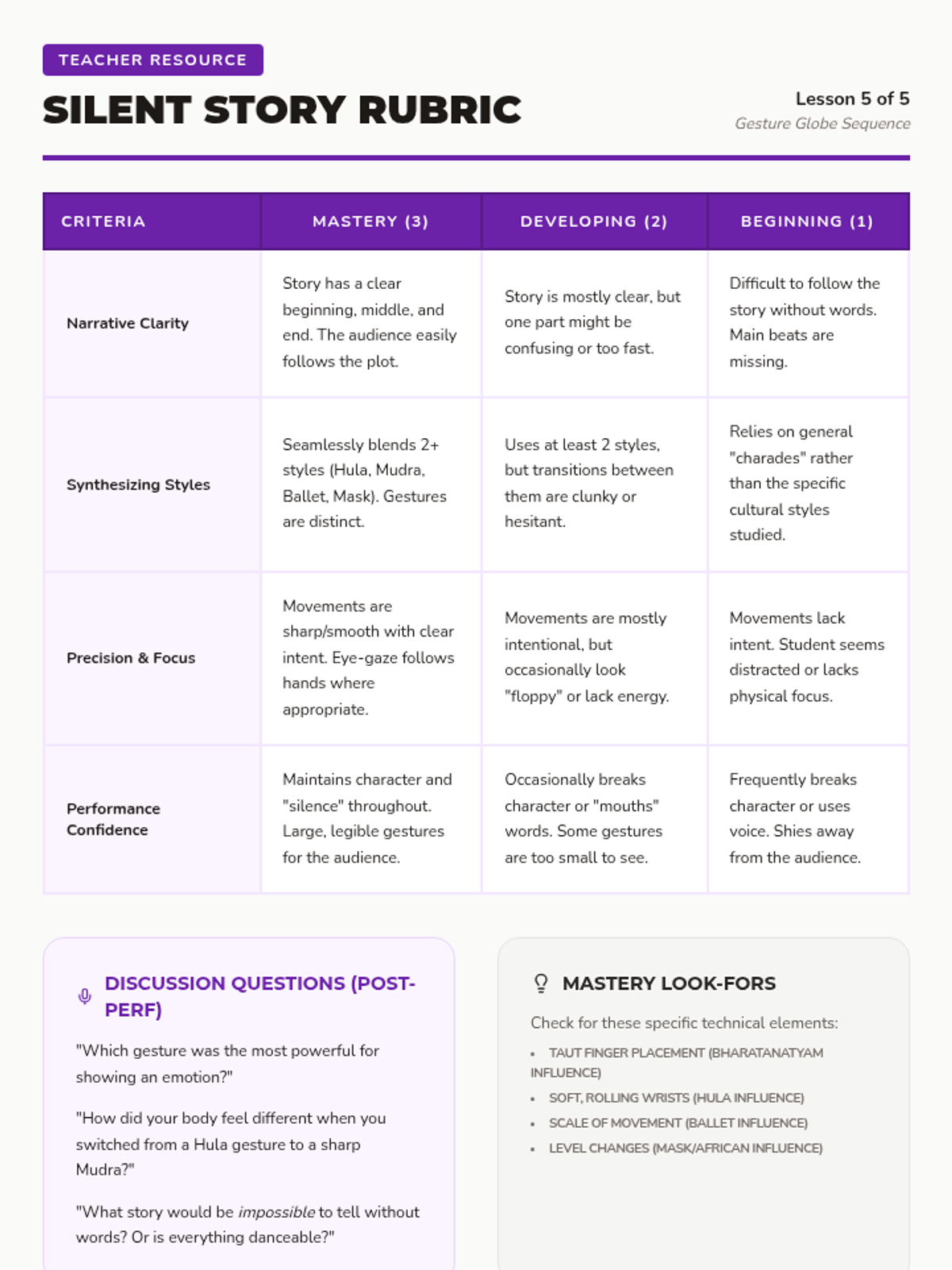
Synthesize learning by adapting a story into a movement narrative using a blend of gestures and styles studied throughout the sequence.
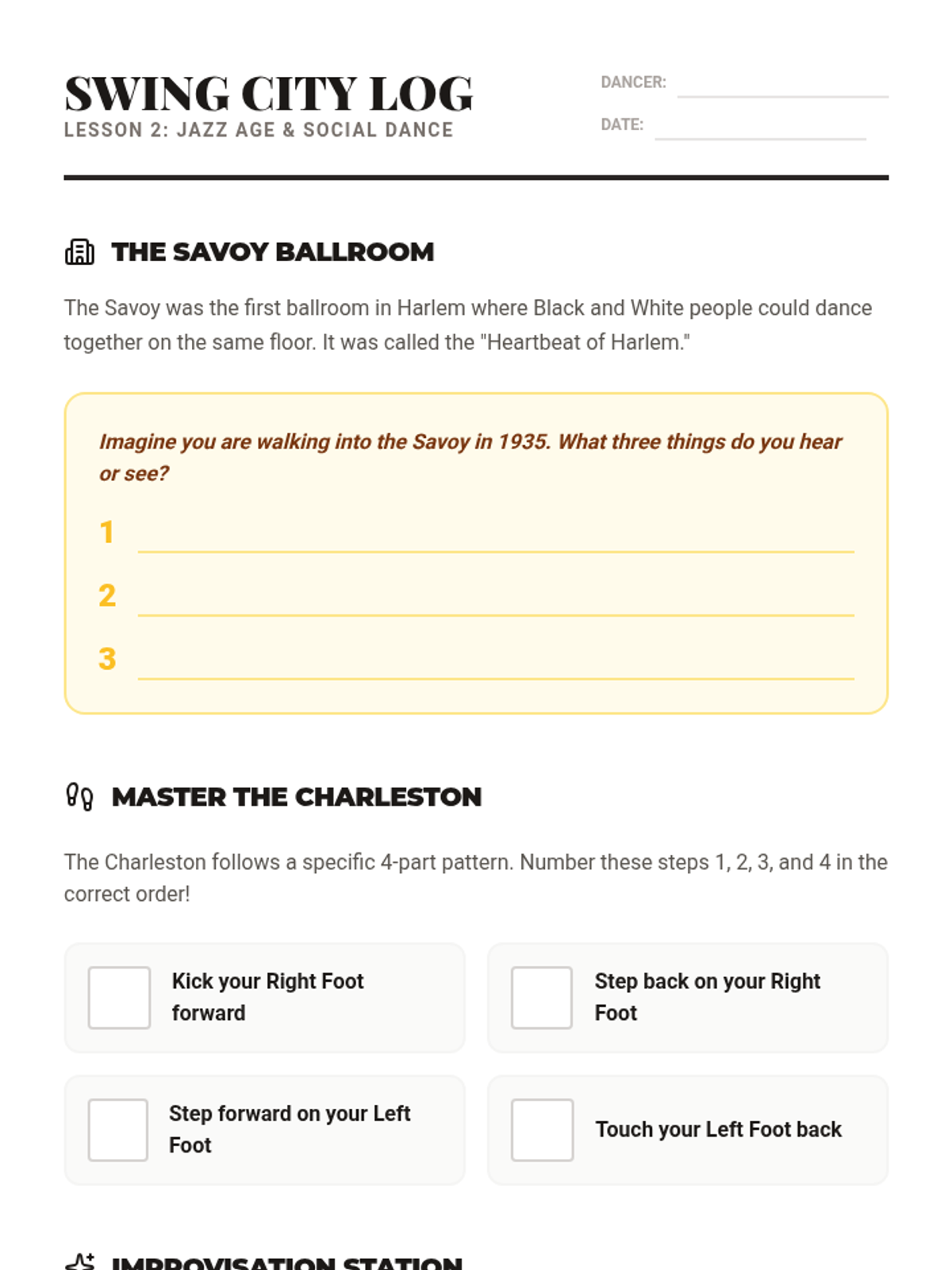
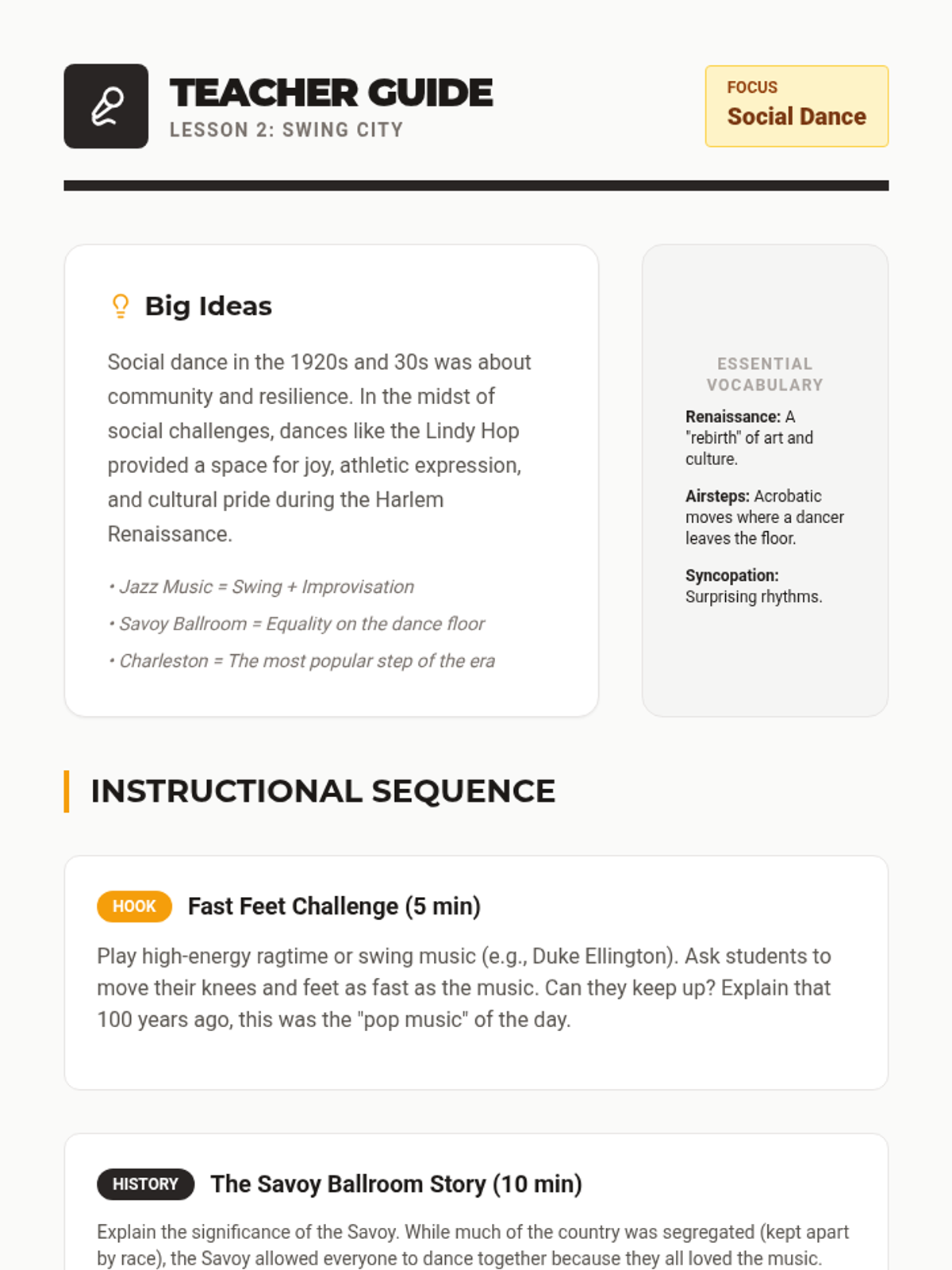
Focusing on the 1920s and 30s Harlem Renaissance, students learn about the Lindy Hop and the influence of Jazz music on social dance and improvisation.
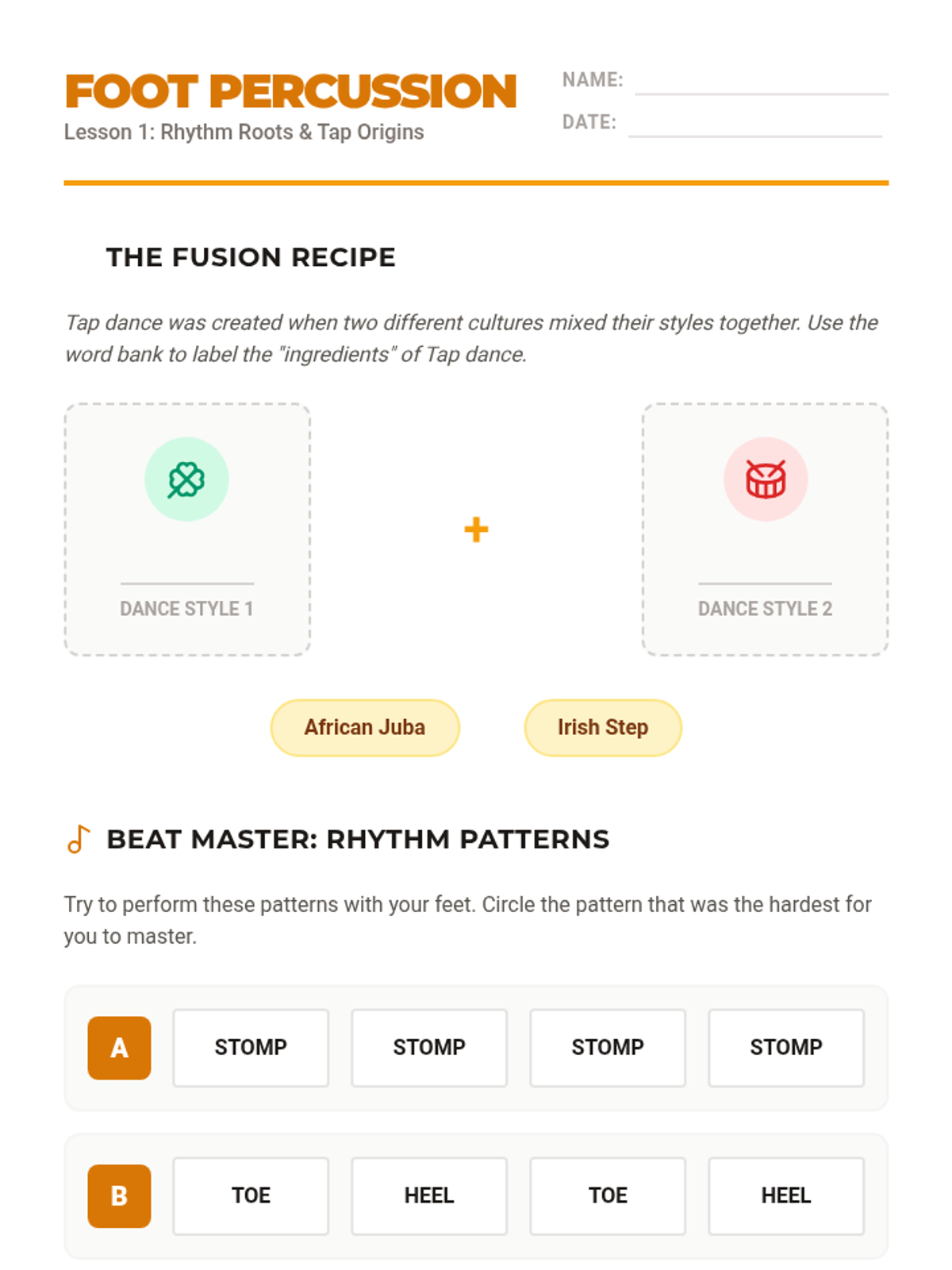
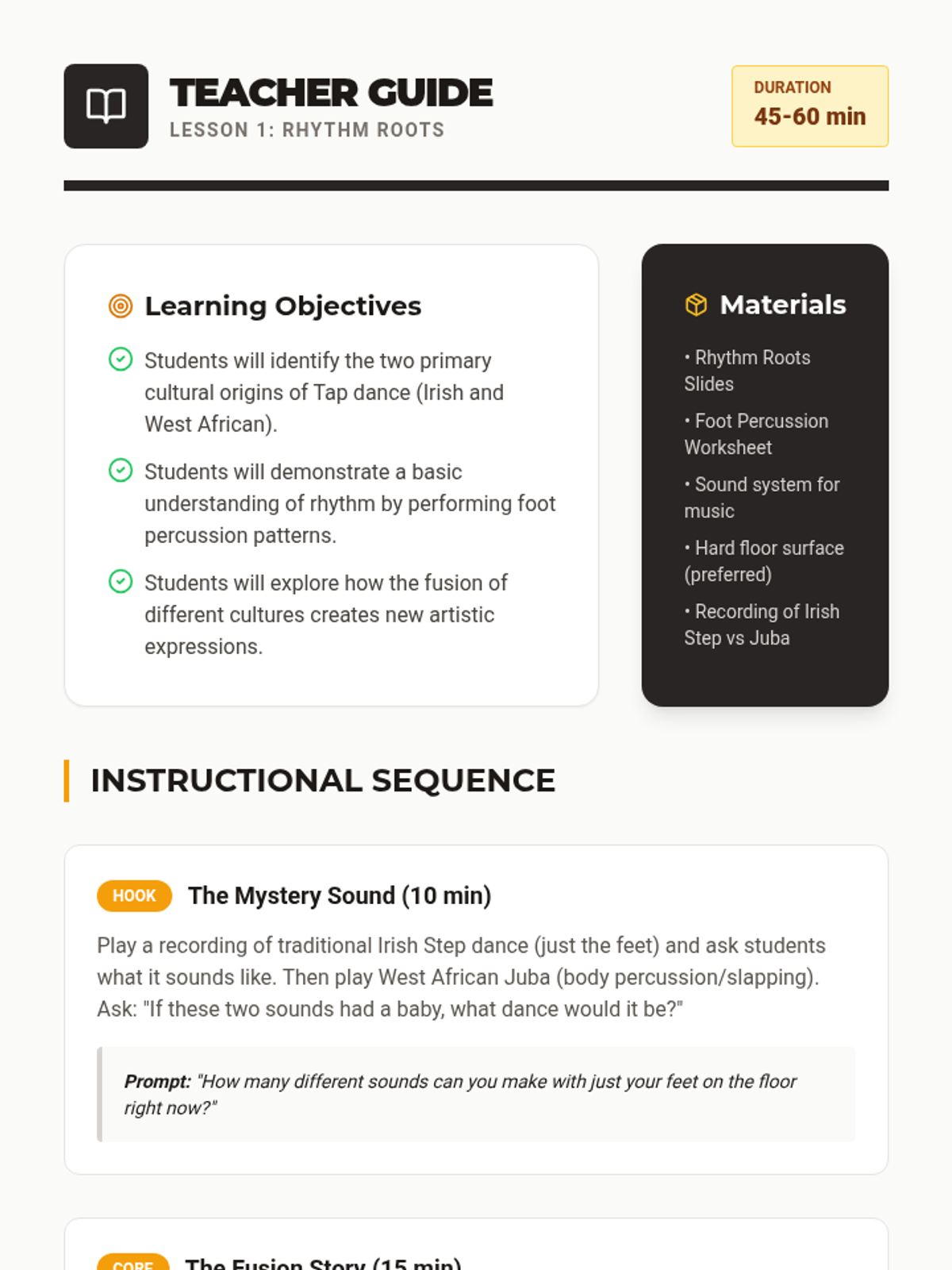
Students discover the origins of Tap dance by examining the fusion of Irish step dancing and West African Juba dance. The lesson focuses on rhythm and the body as a percussion instrument.
Examine how masks in West African and Japanese dance traditions transform movement and require the body to communicate more expressively.
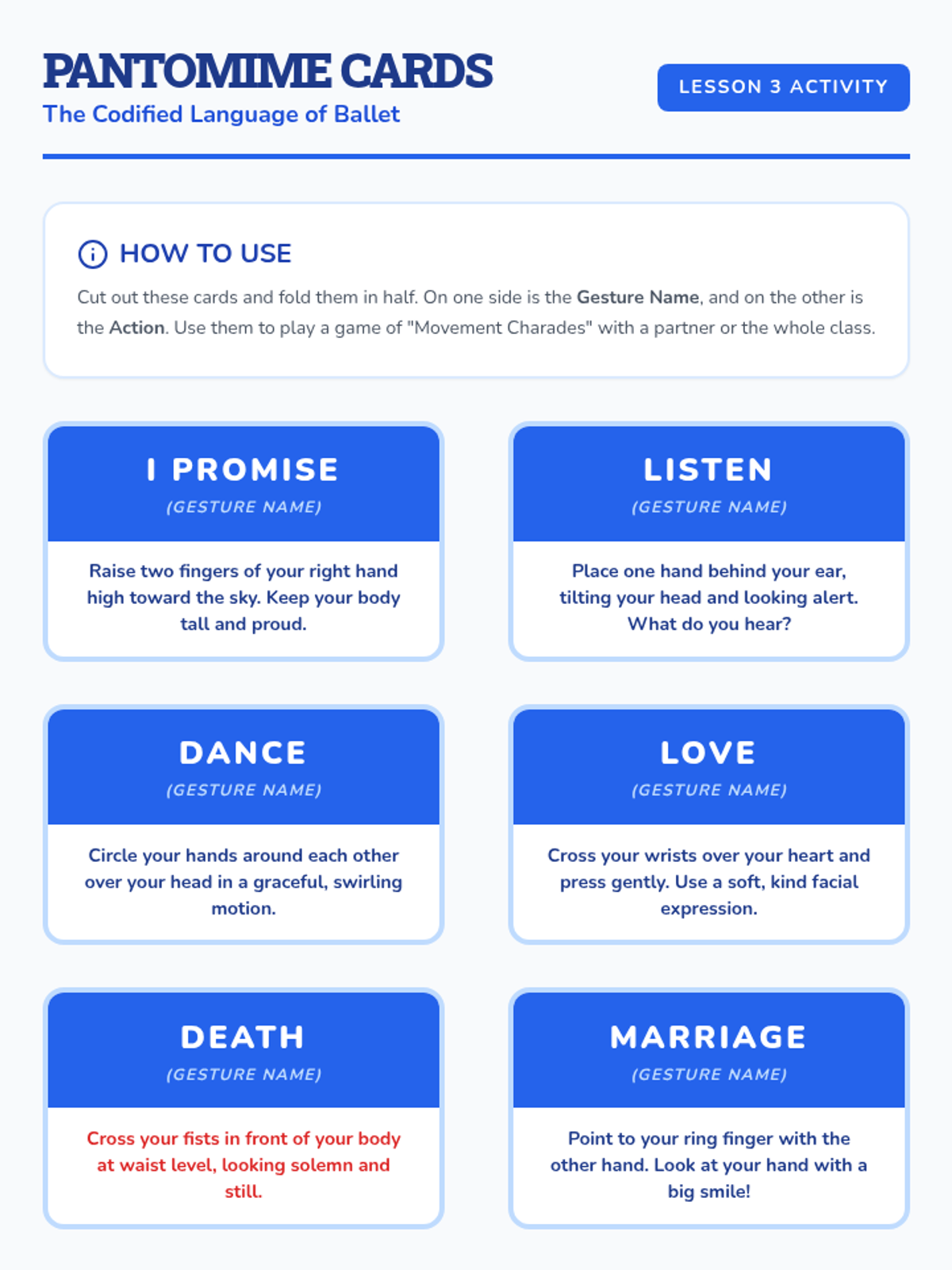
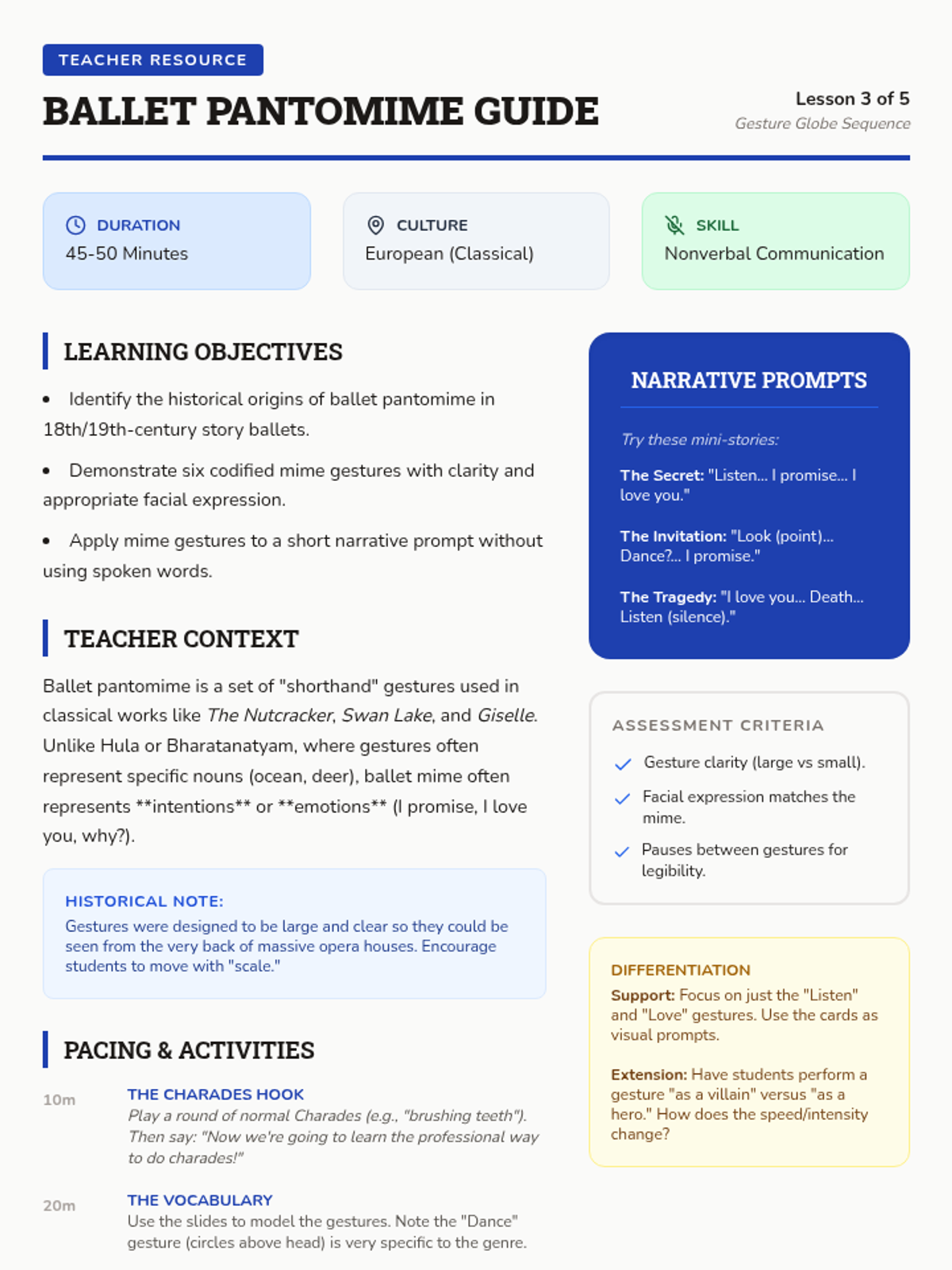
Investigate the codified system of pantomime in European Ballet, learning how dancers communicate complex emotions and actions without words.
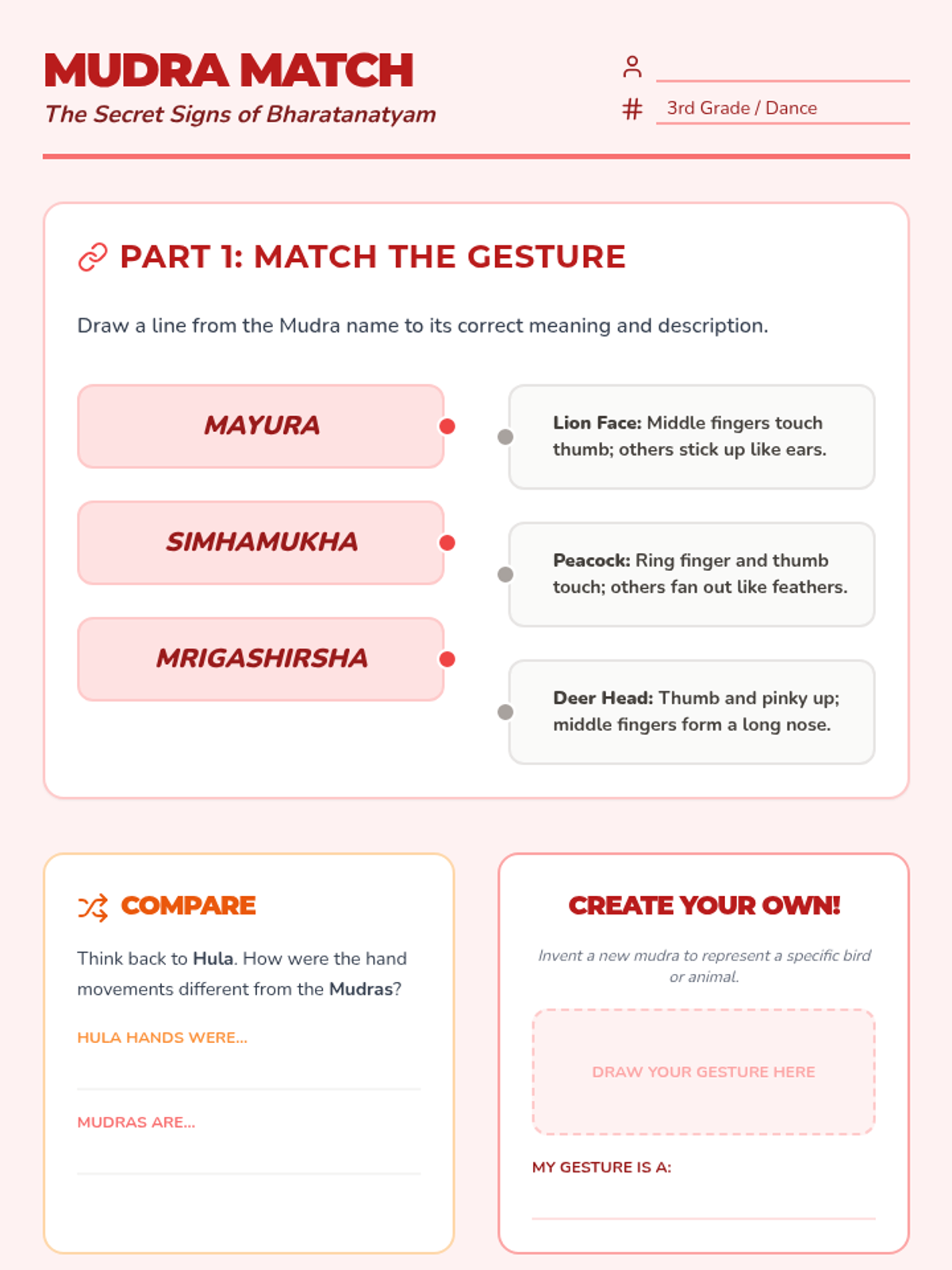
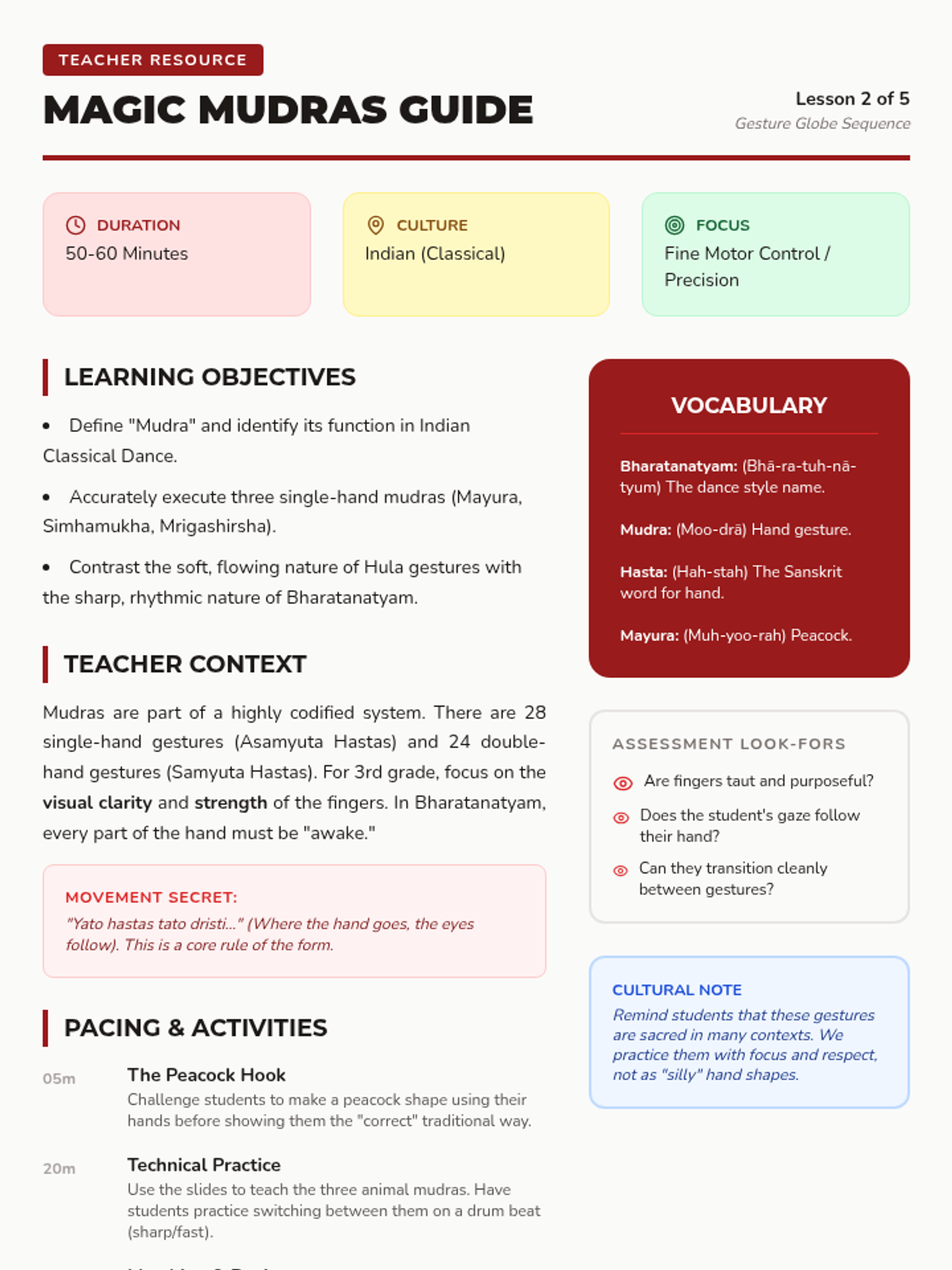
Discover the precise hand gestures (mudras) of Classical Indian dance (Bharatanatyam) and how they represent animals, gods, and concepts.
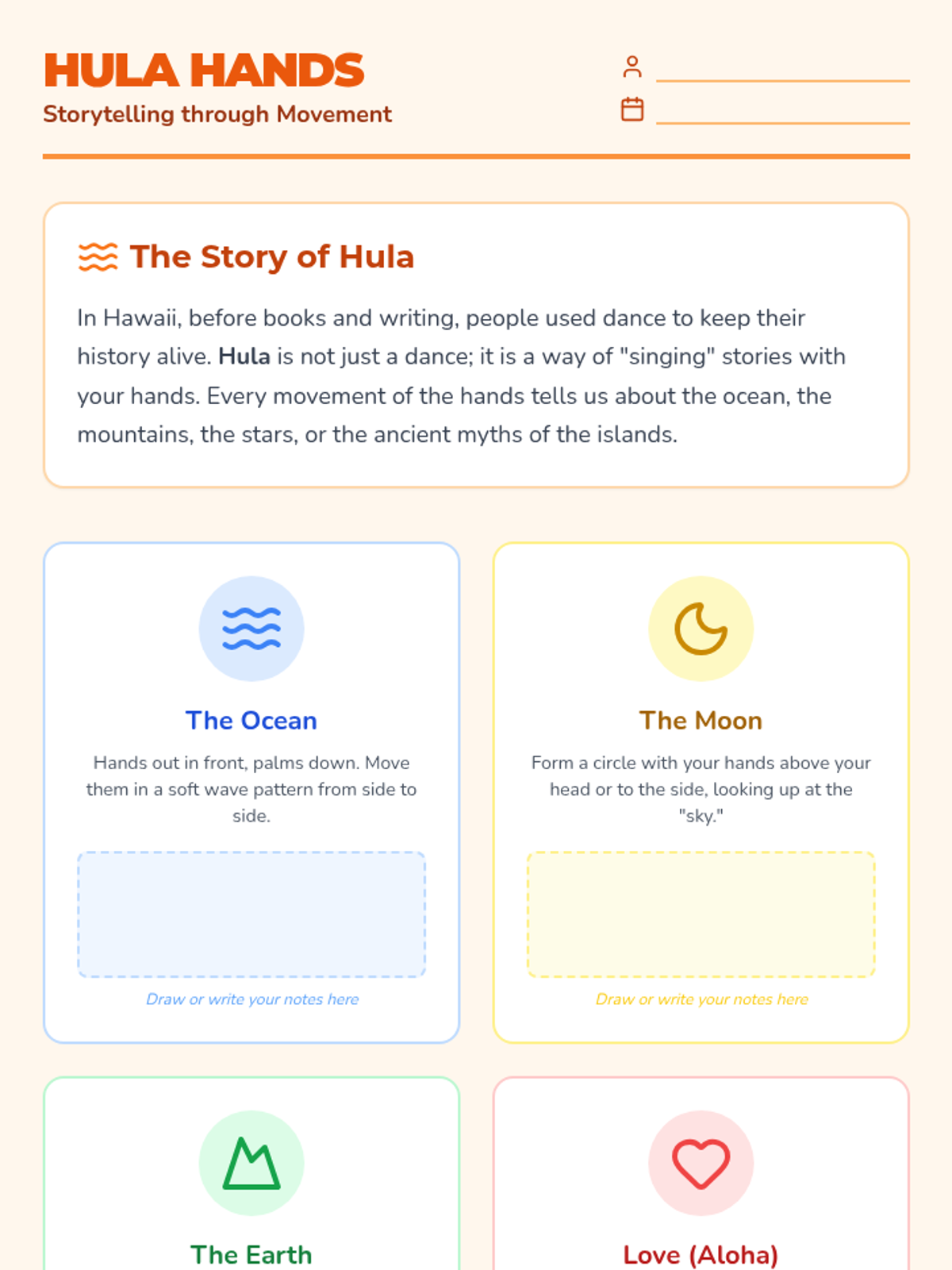
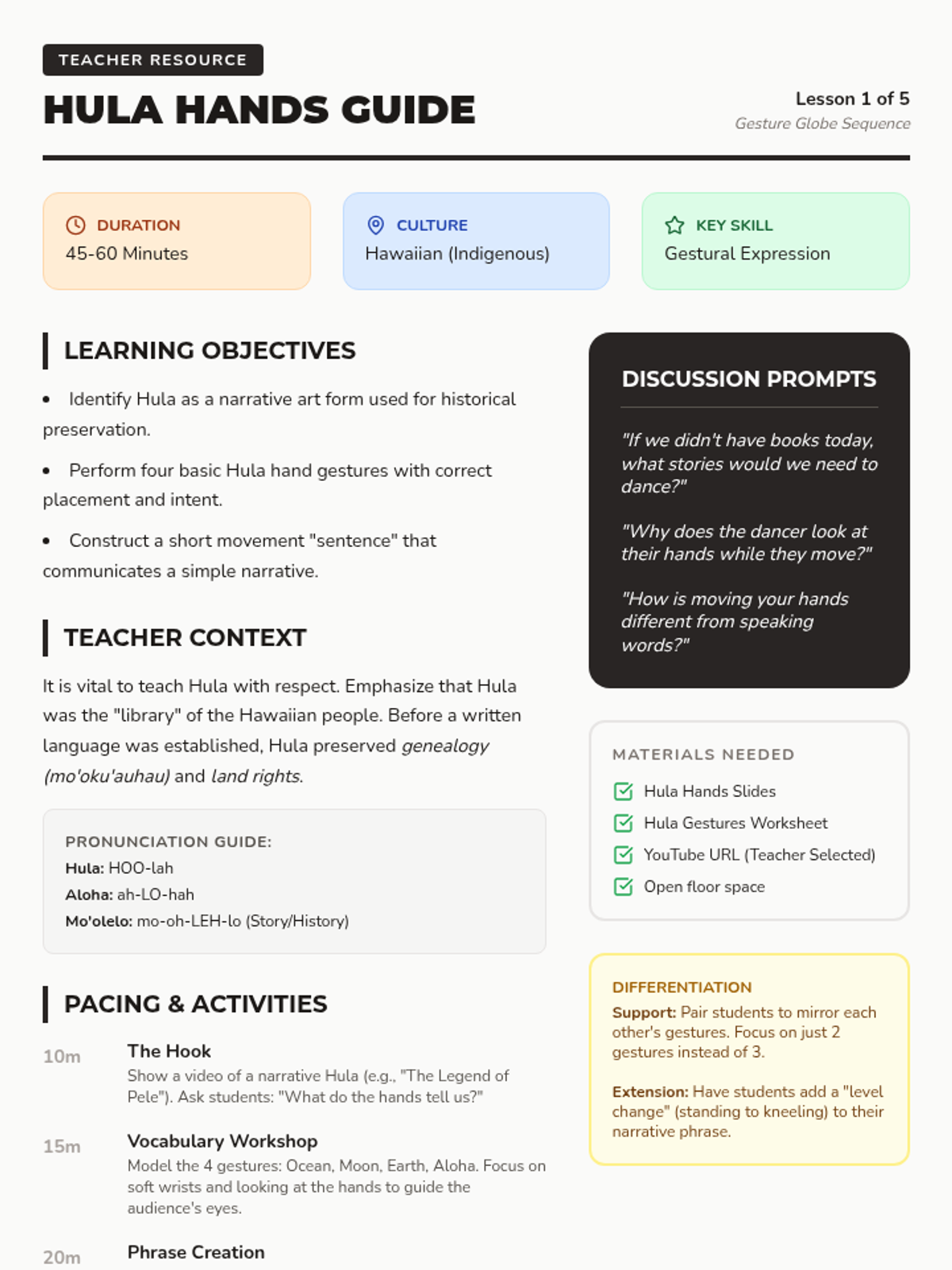
Explore the history of Hawaiian Hula as a narrative tool for preserving myths and genealogy, focusing on specific hand gestures for nature and storytelling.
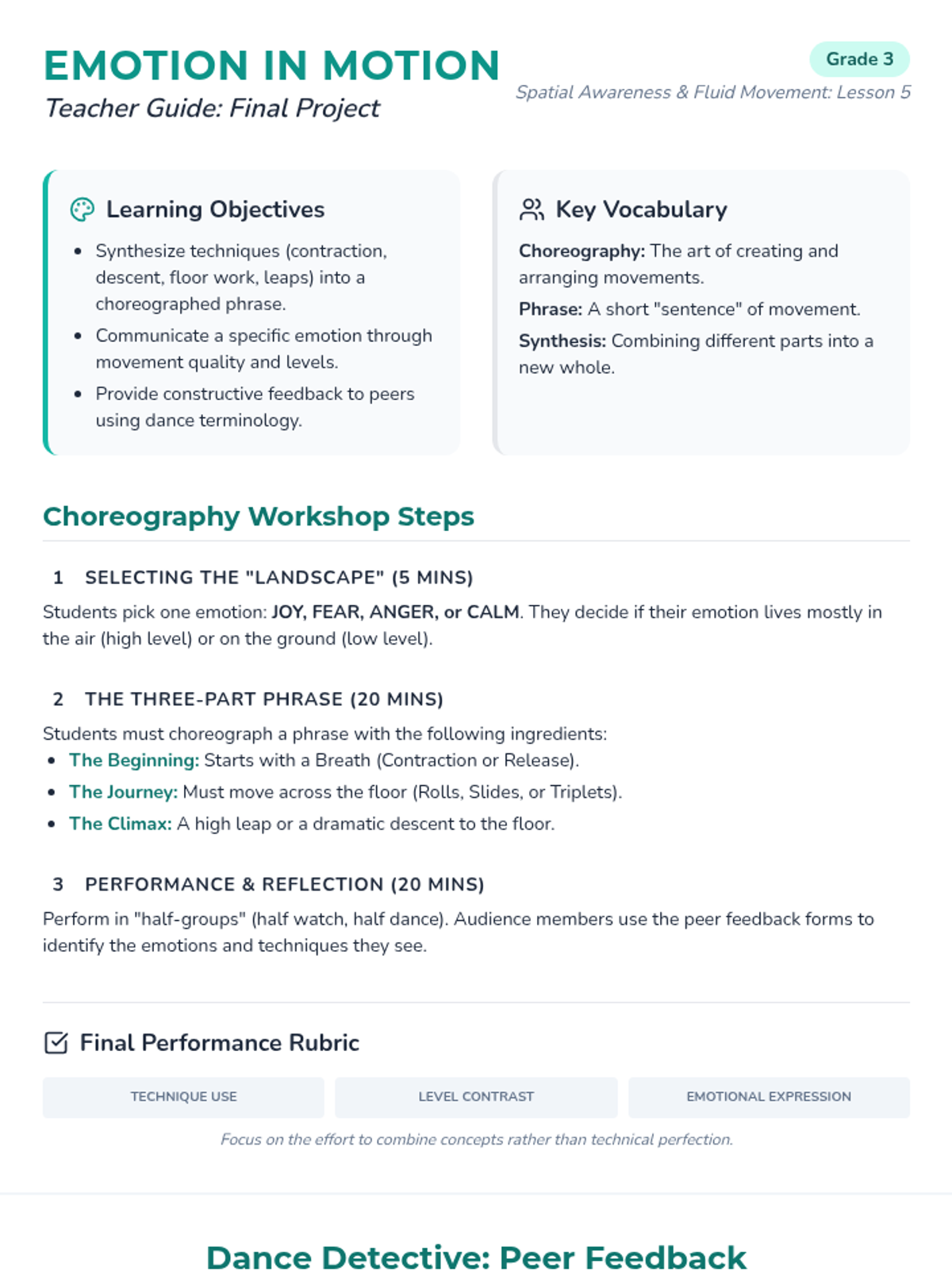
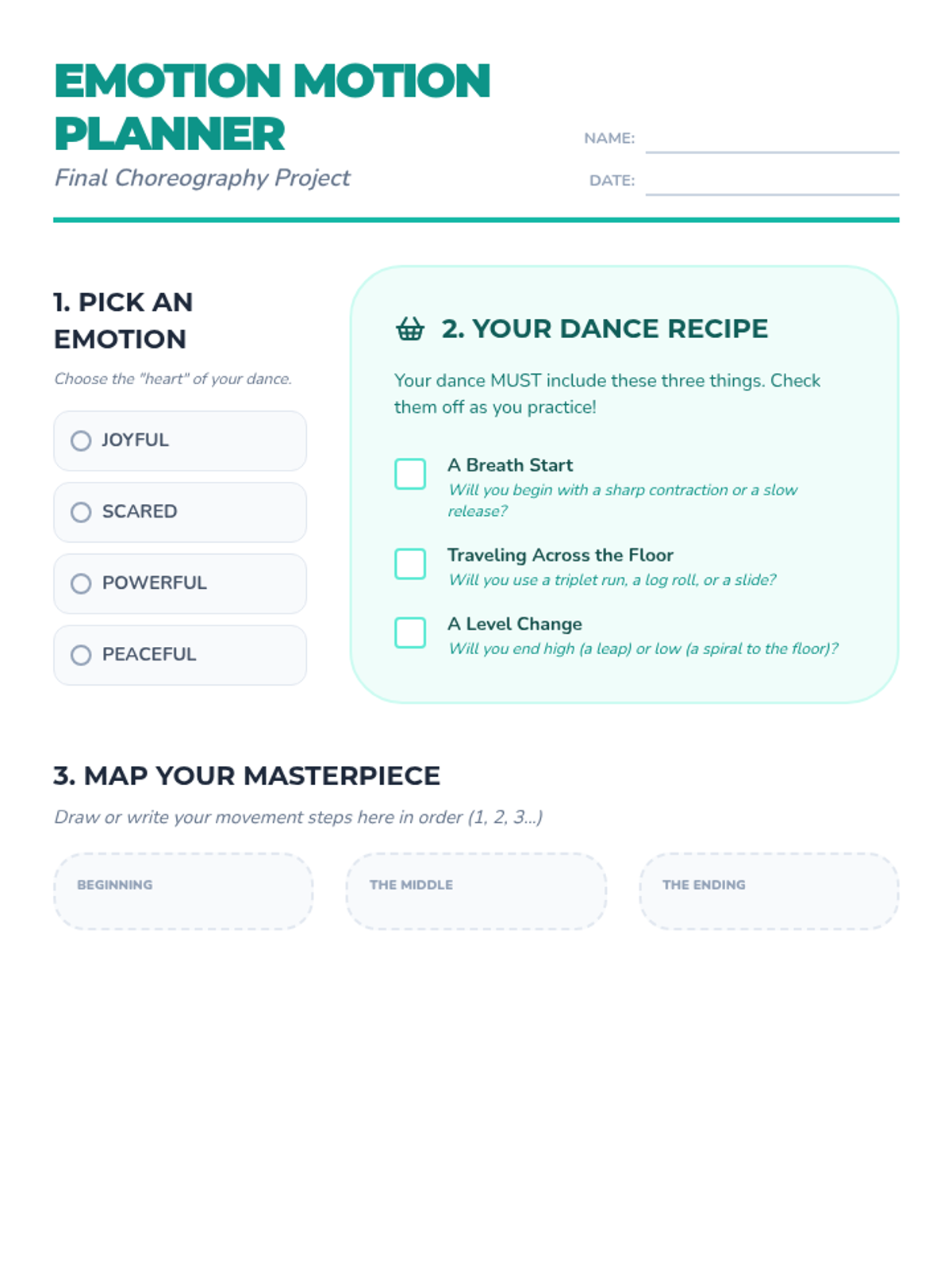
Students synthesize learned techniques to create a short group dance based on specific emotions, utilizing various levels.
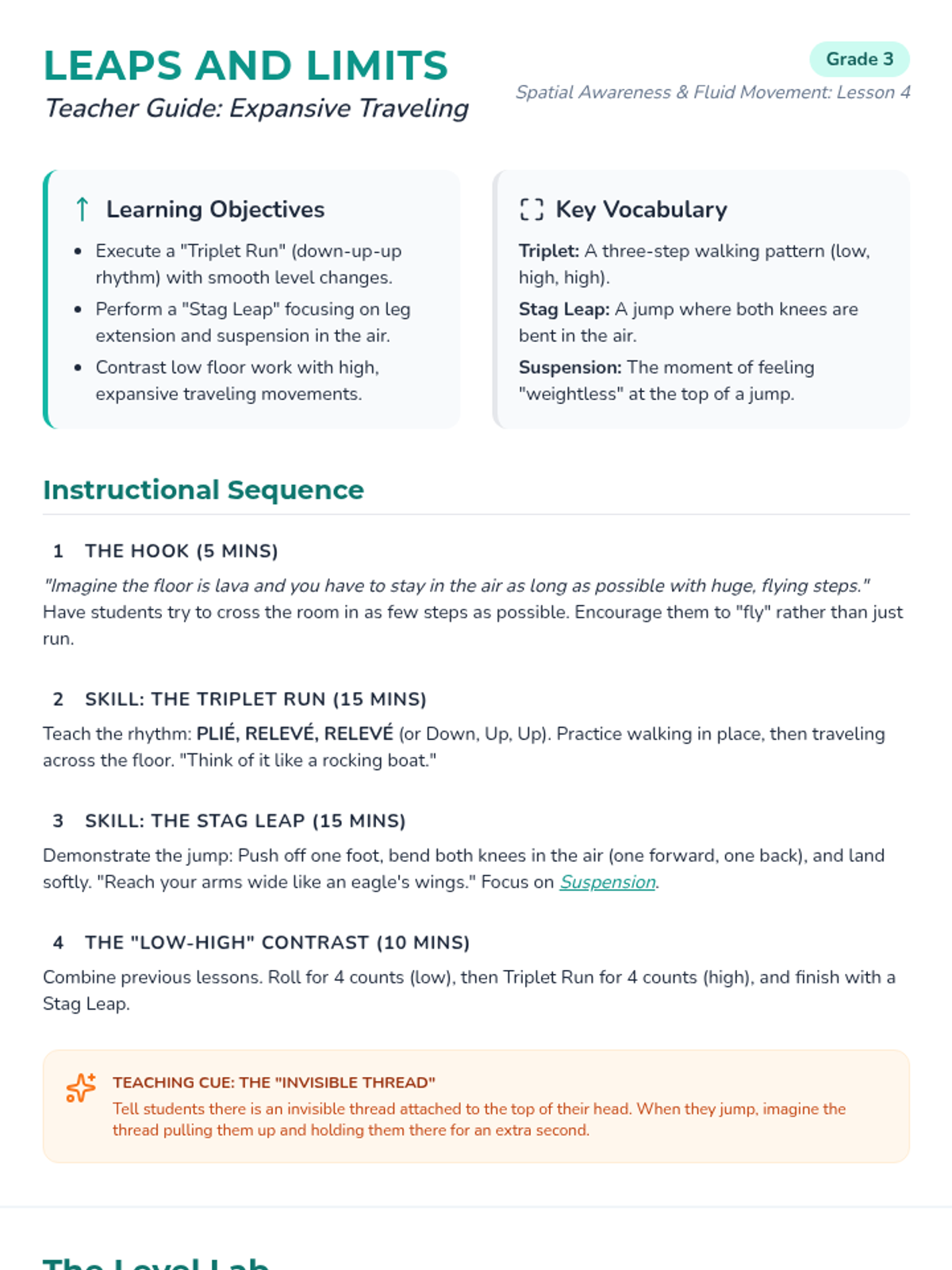
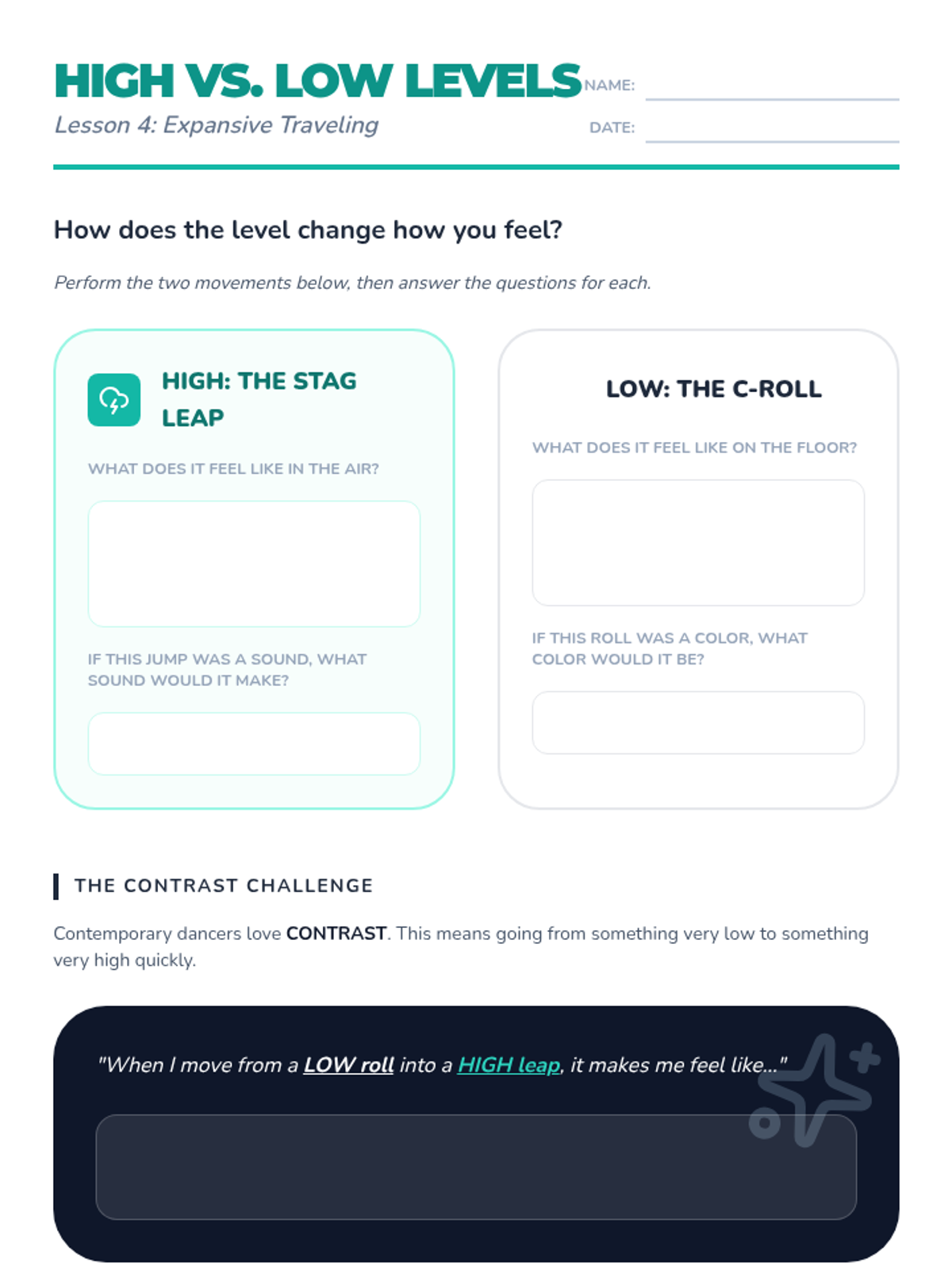
Contrasts floor work with high, expansive movements like triplet runs and stag leaps, focusing on elevation and extension.
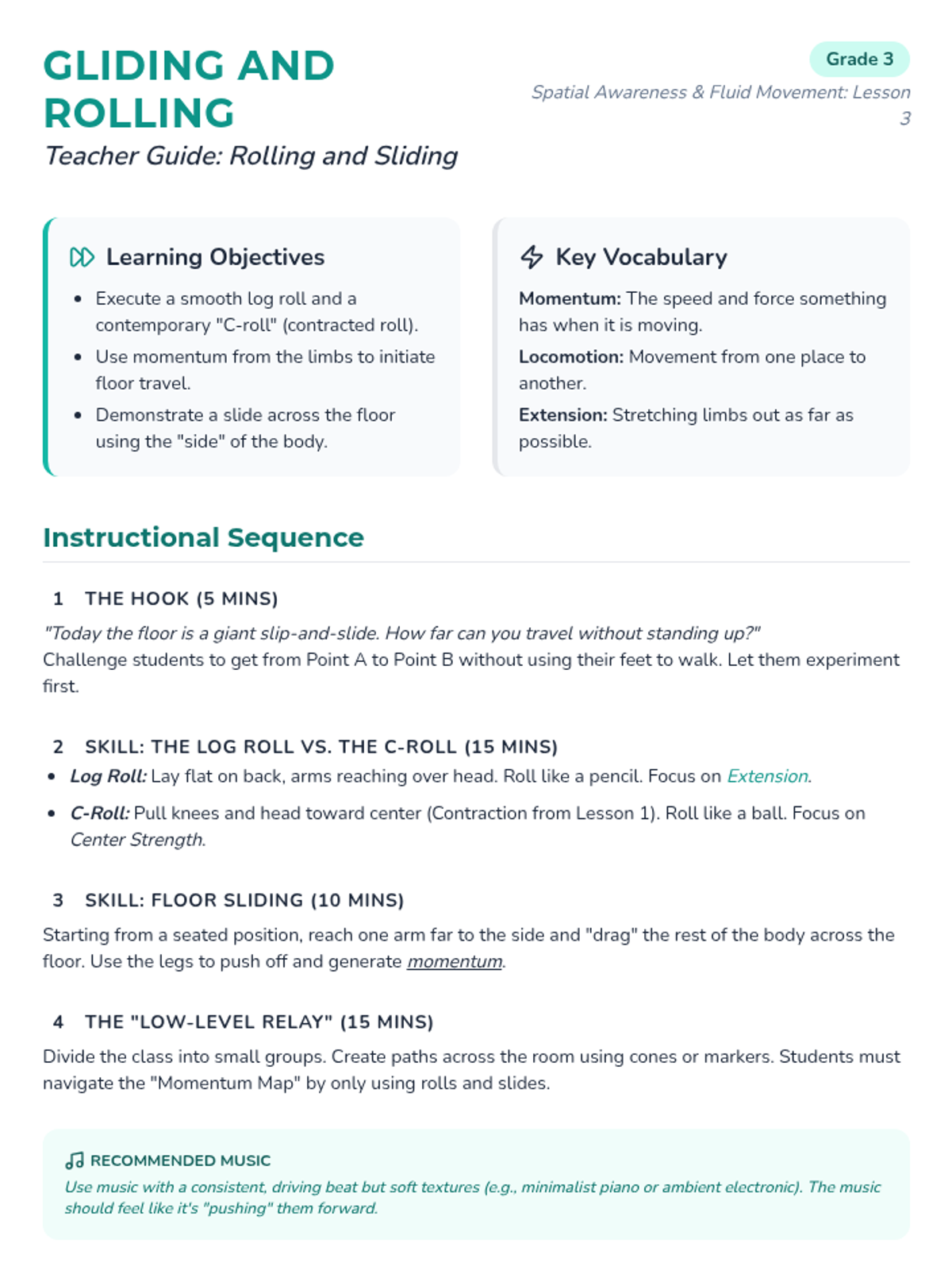
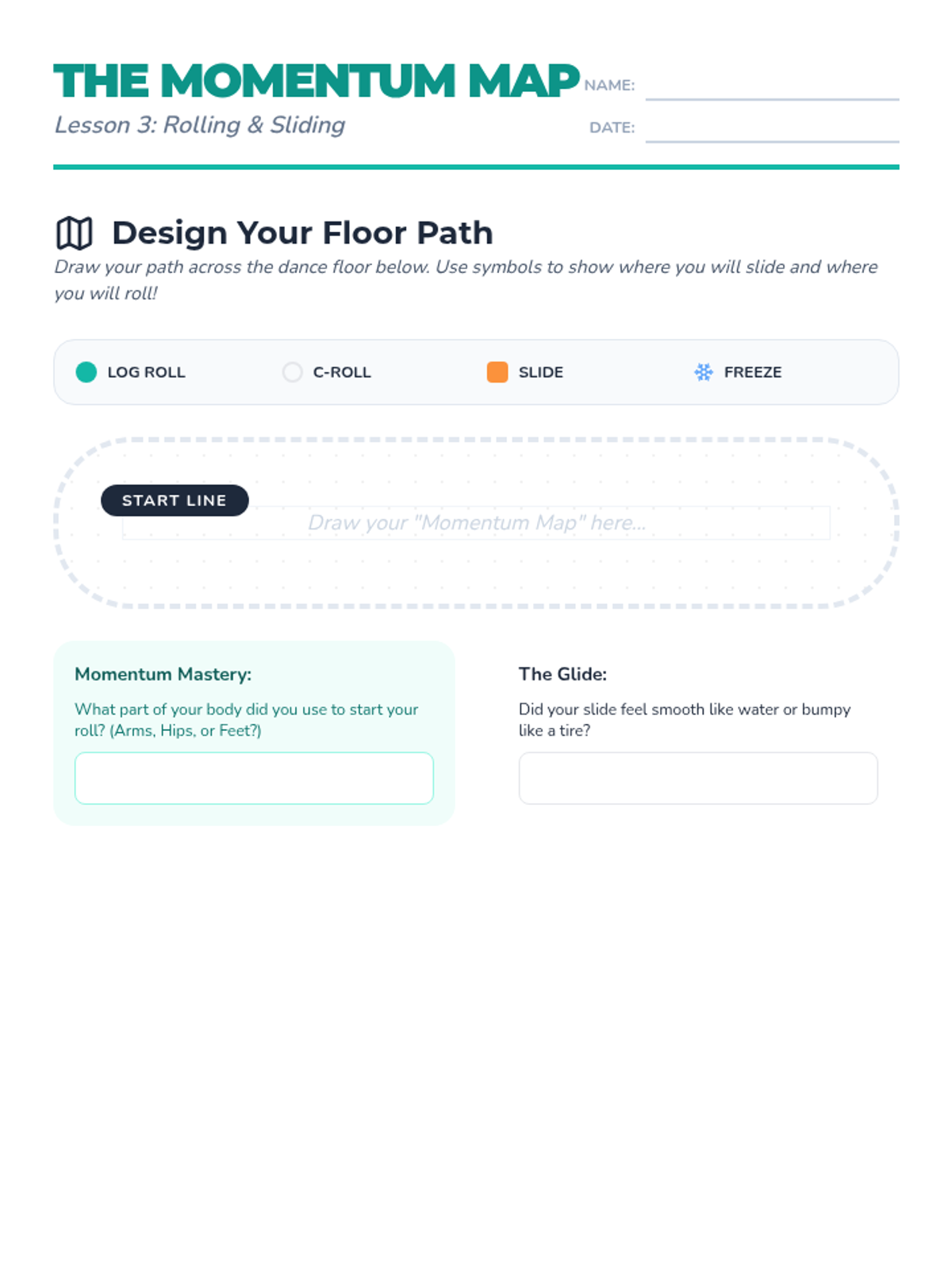
Students learn floor locomotion techniques like log rolls and body slides, investigating momentum and low-level travel.
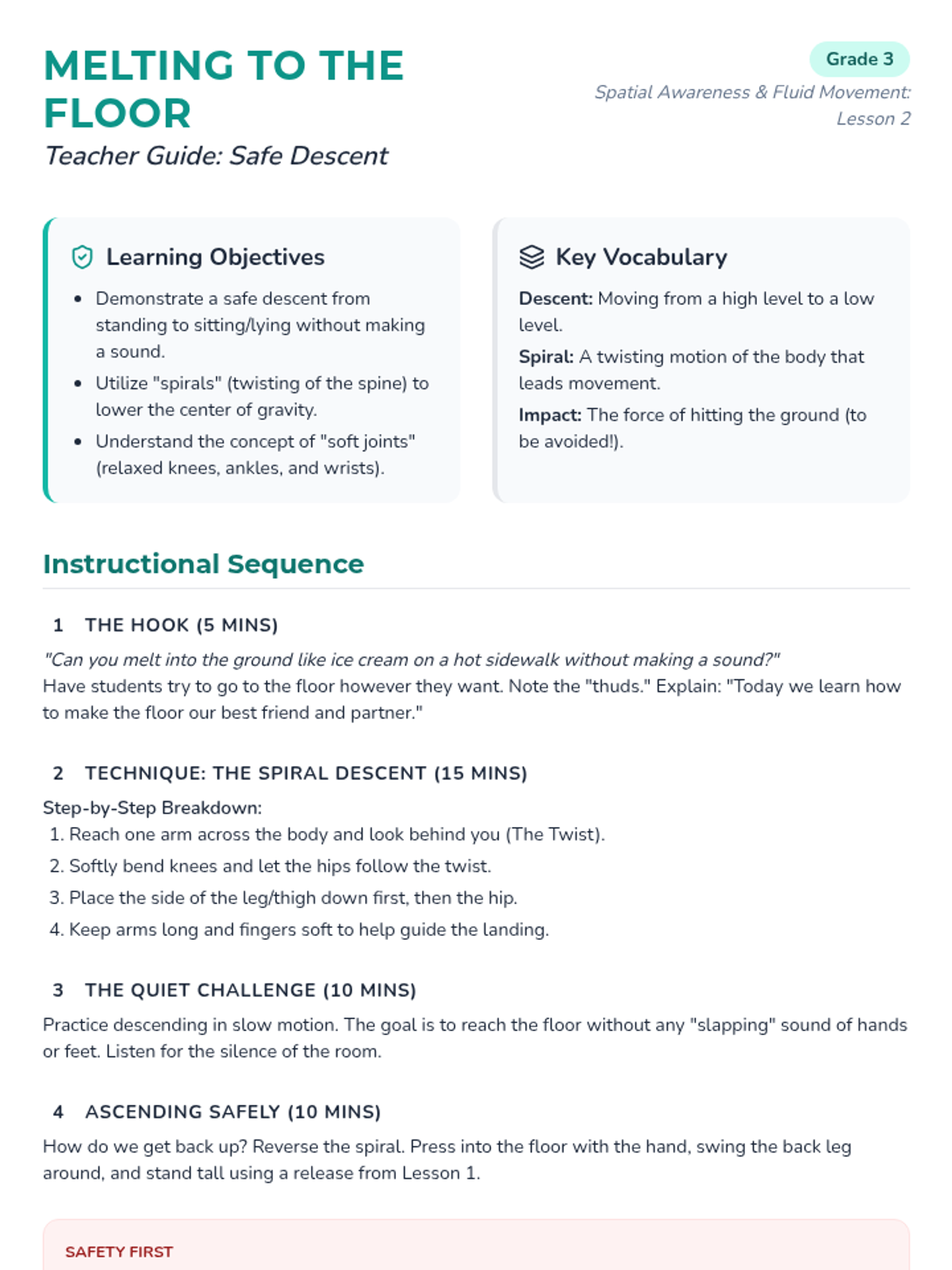
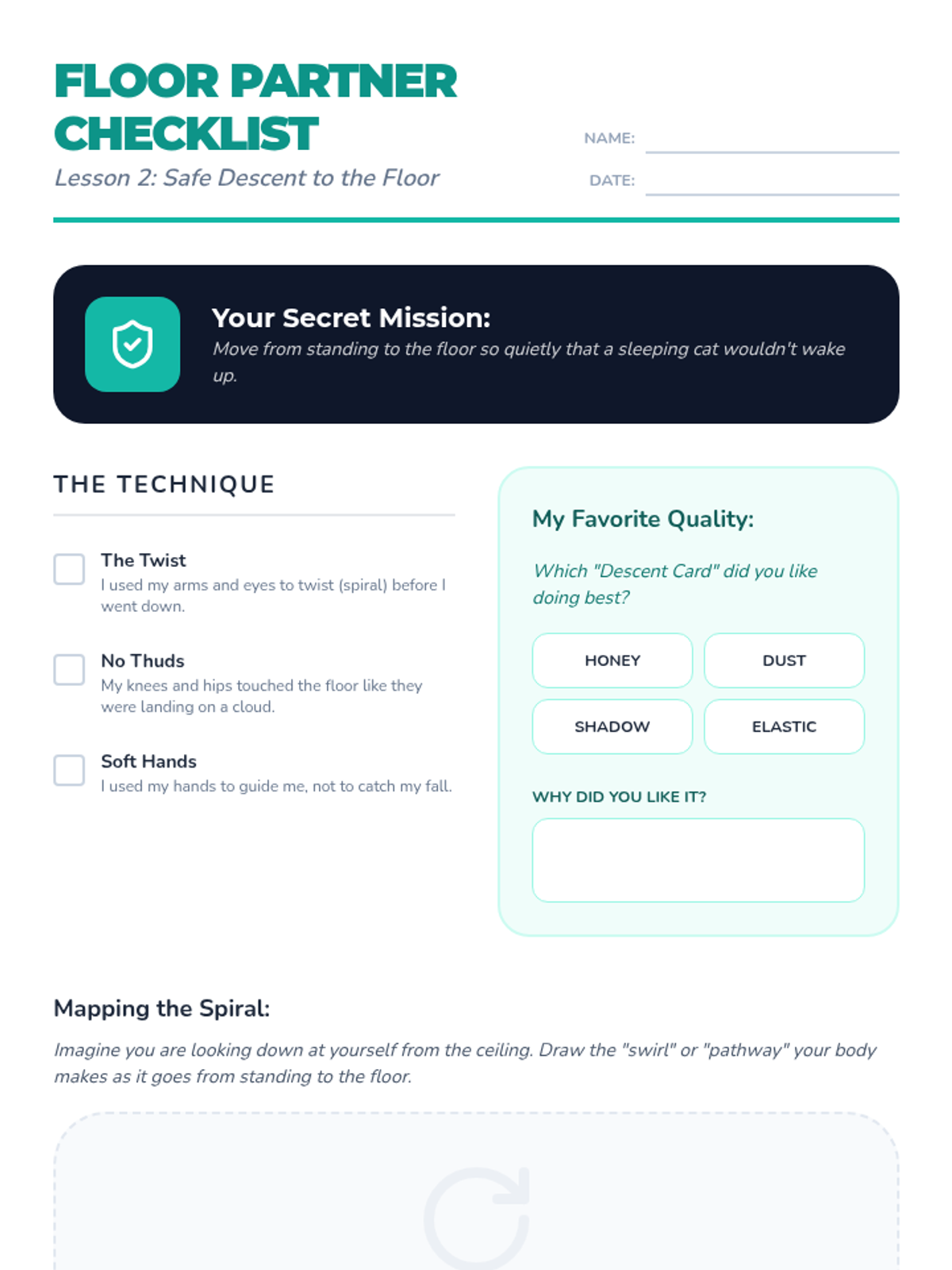
Focuses on the technical mechanics of moving from standing to the floor safely using spirals and soft joints.
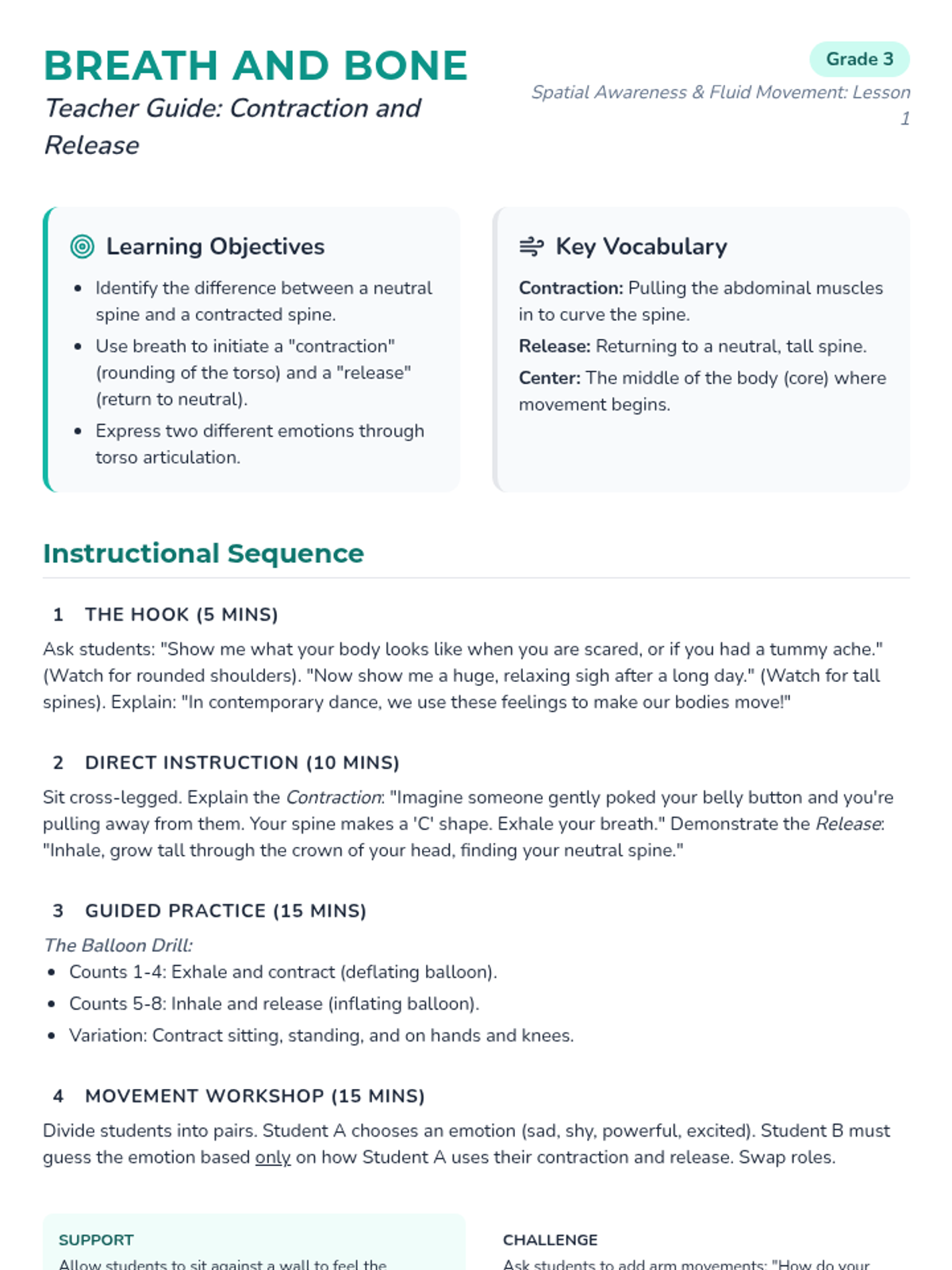
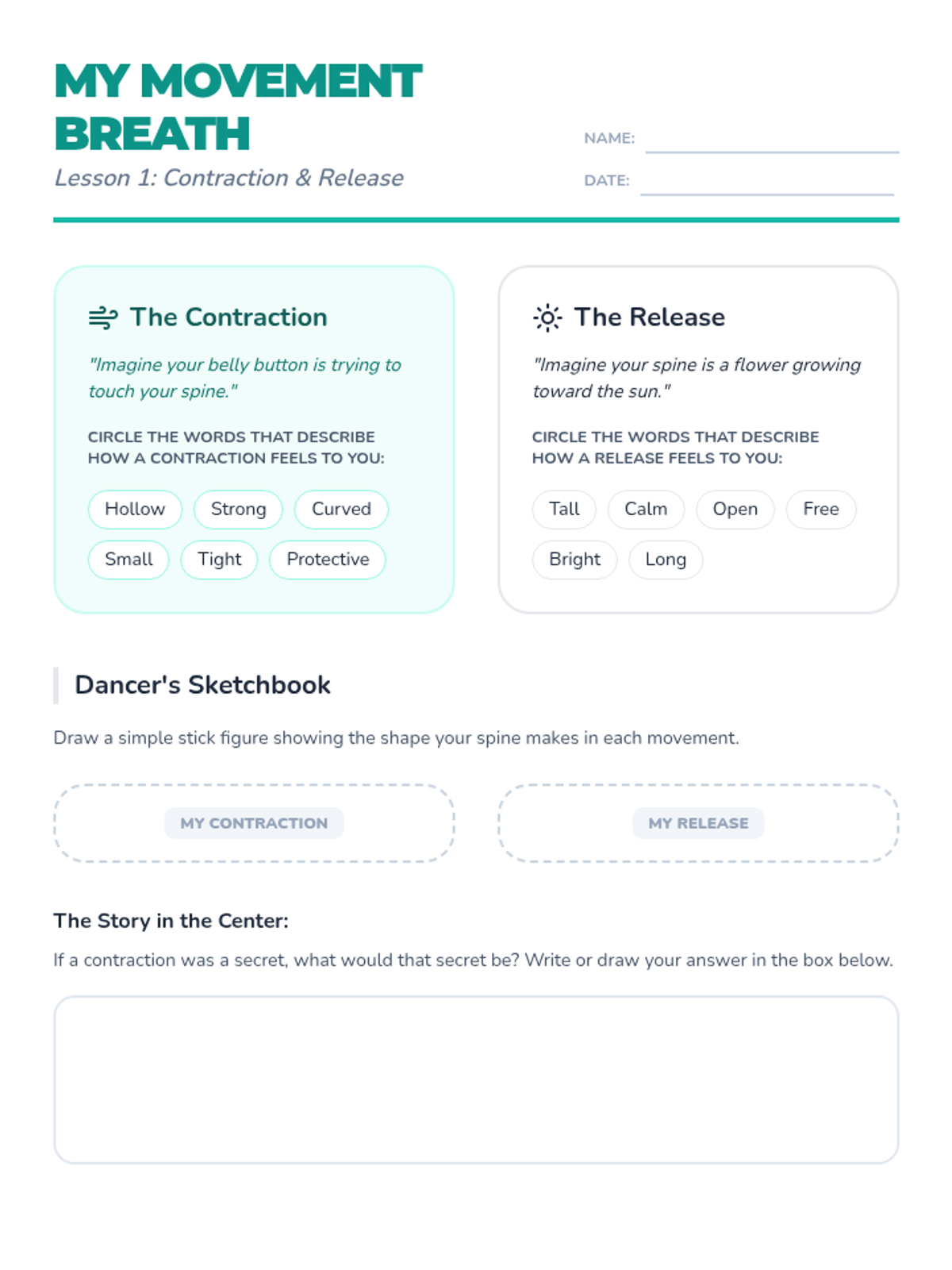
Students explore the concept of tension and relaxation in the body using Graham-inspired contraction and release to generate movement from the center.
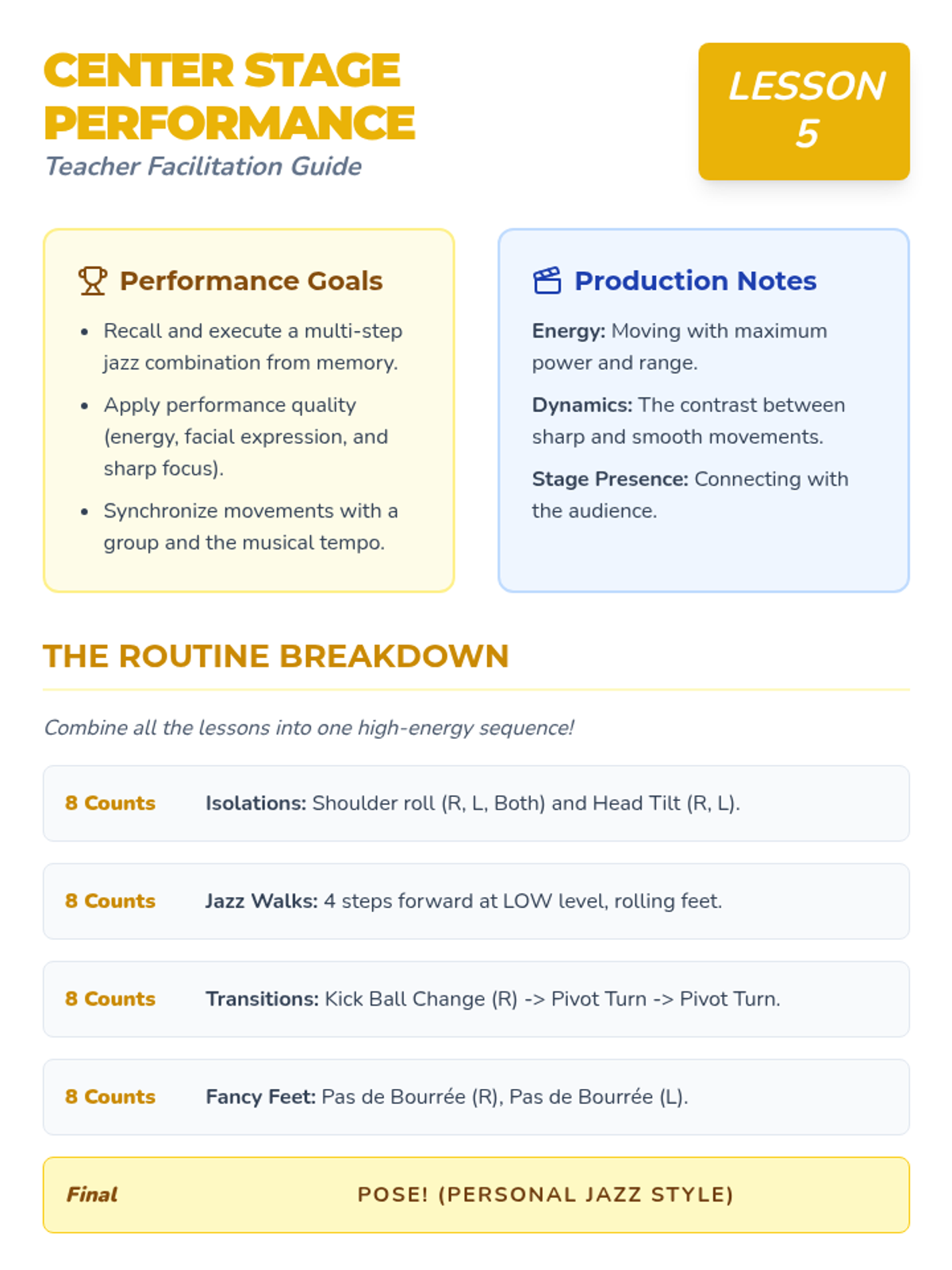
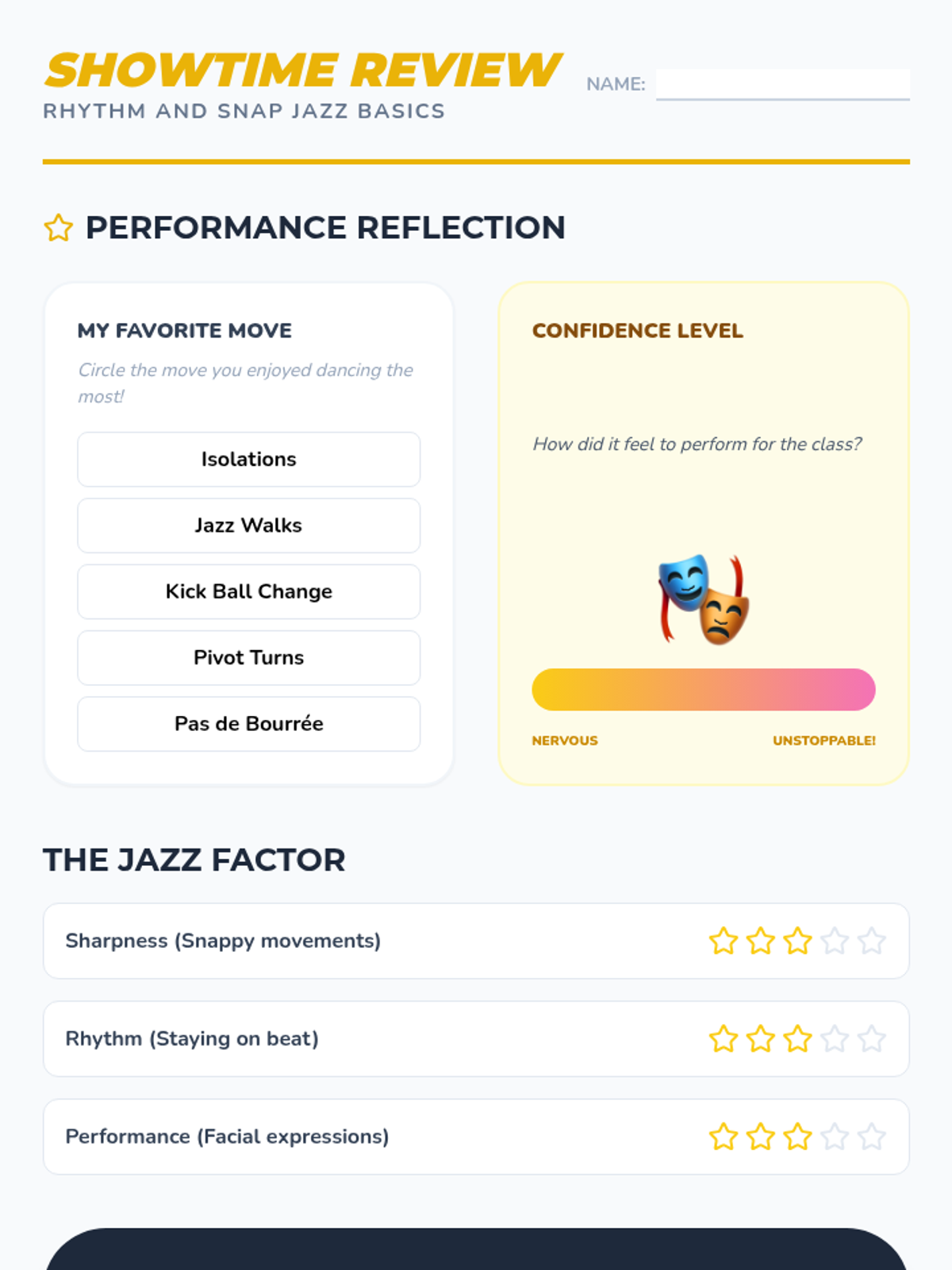
Students combine all learned elements into a choreographed jazz routine, focusing on performance quality, energy, and sharp dynamics.
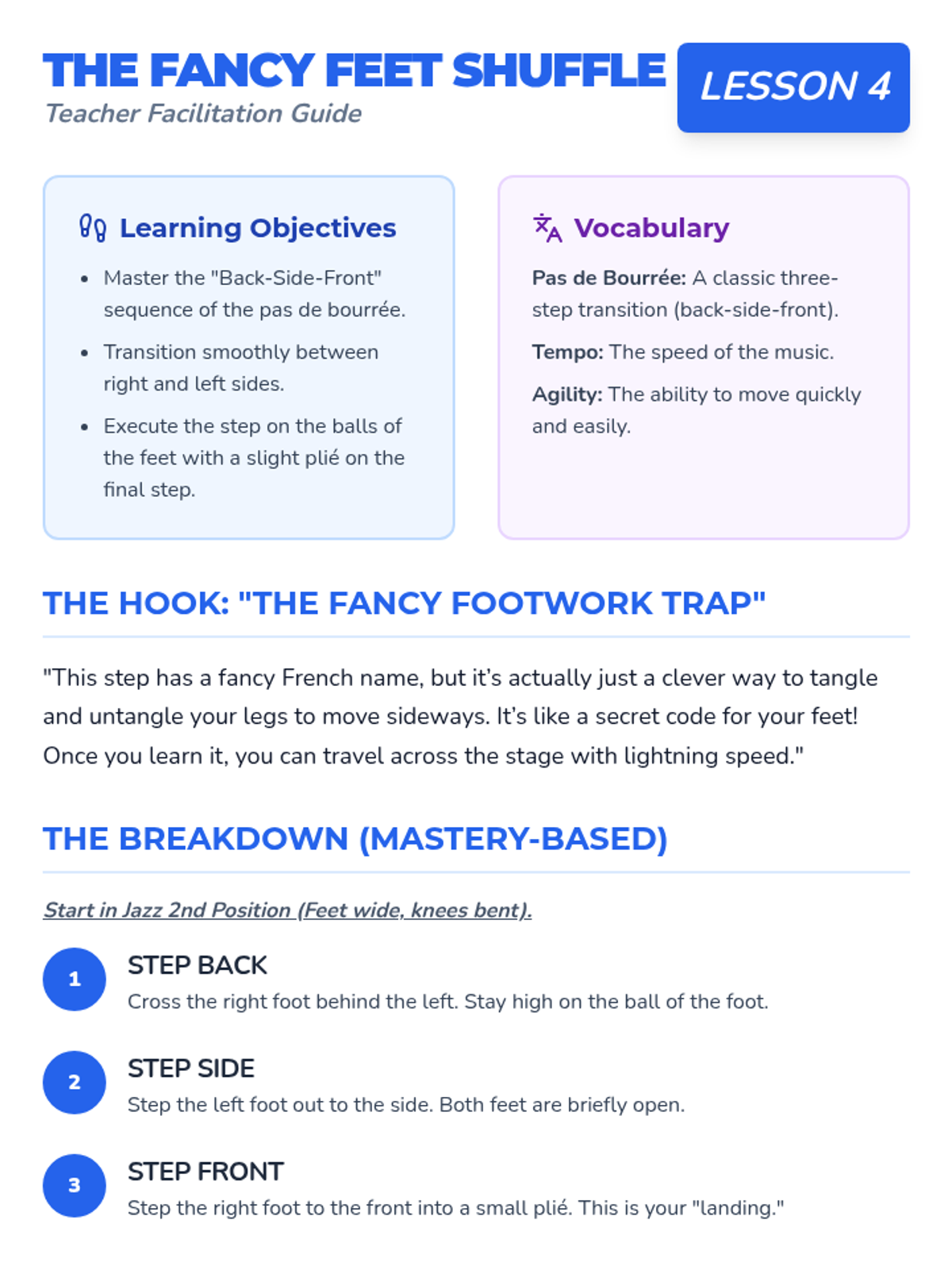
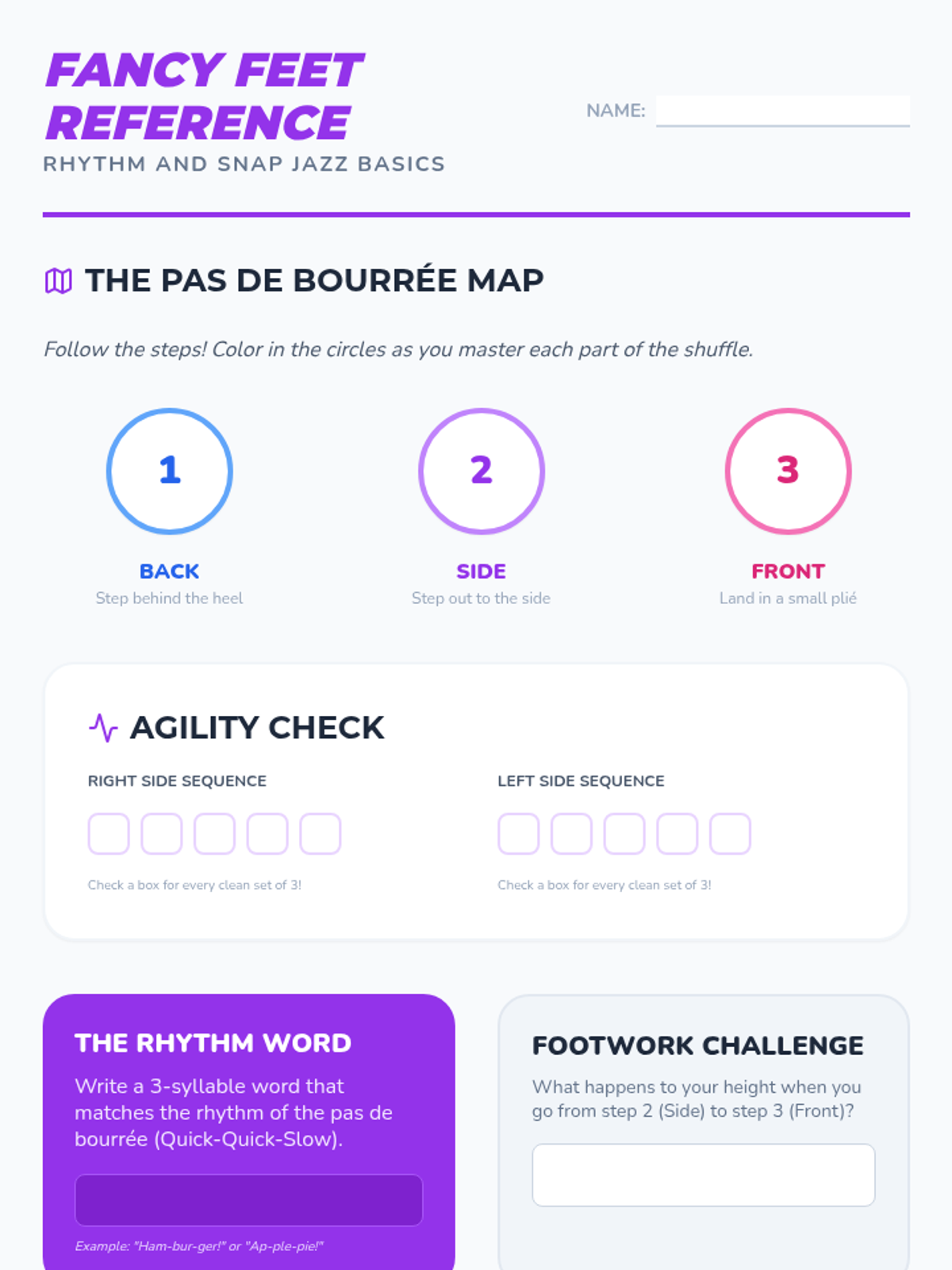
Students master the 'back-side-front' three-step pattern of the pas de bourrée, moving from a slow breakdown to dancing at tempo with agility.
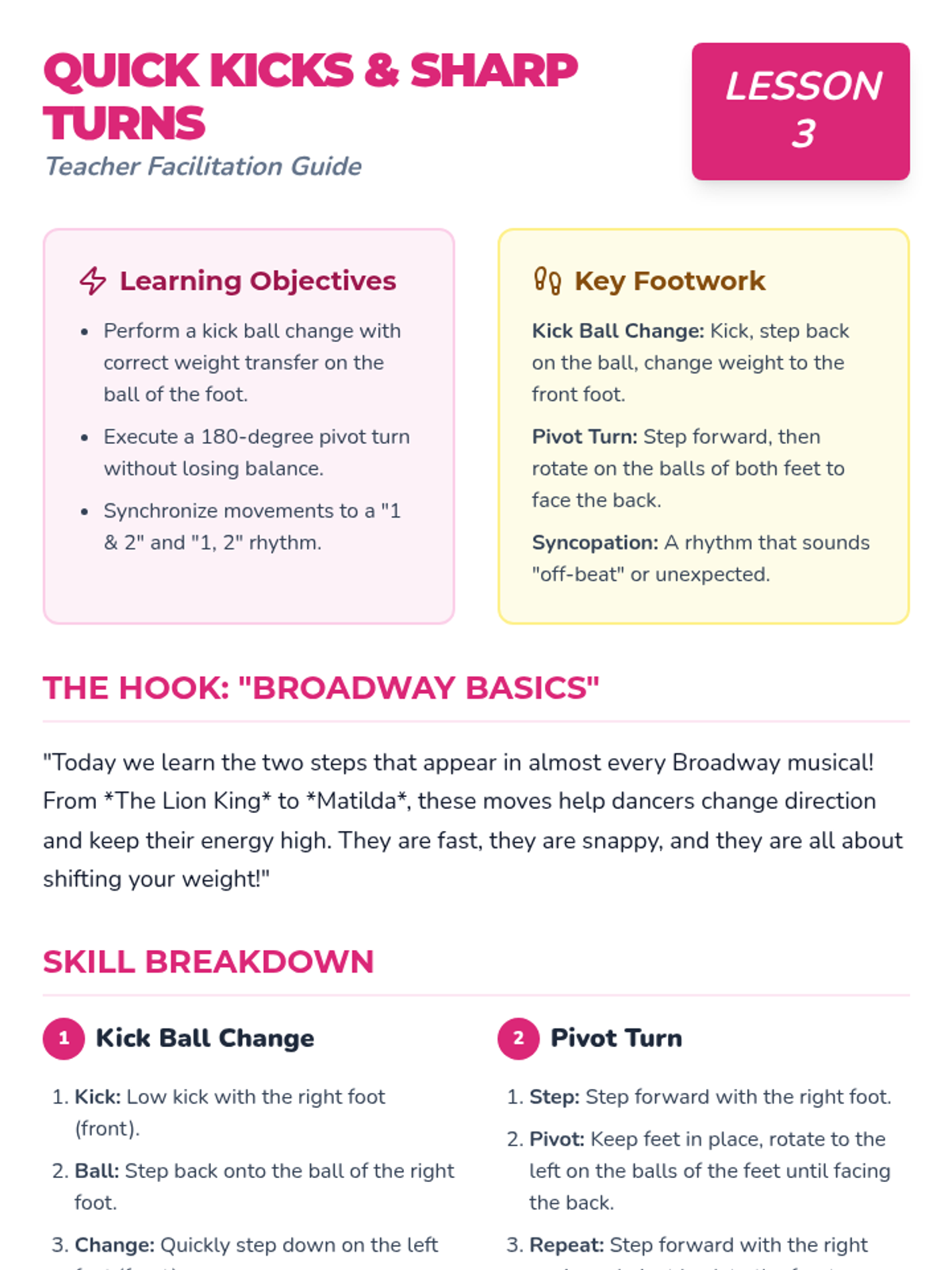
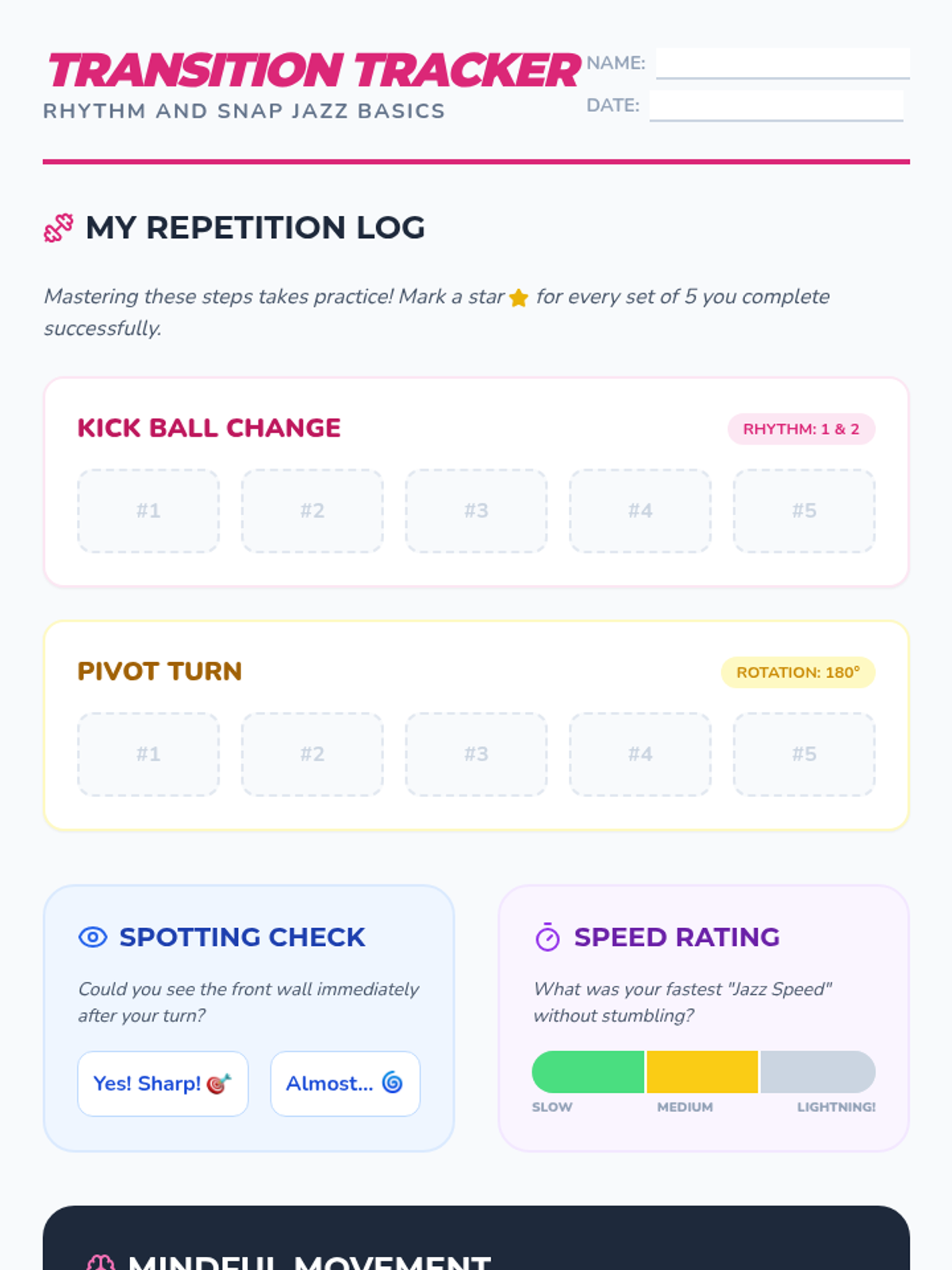
Students break down the kick ball change and pivot turn, focusing on weight transfer and directional changes to build muscle memory and speed.
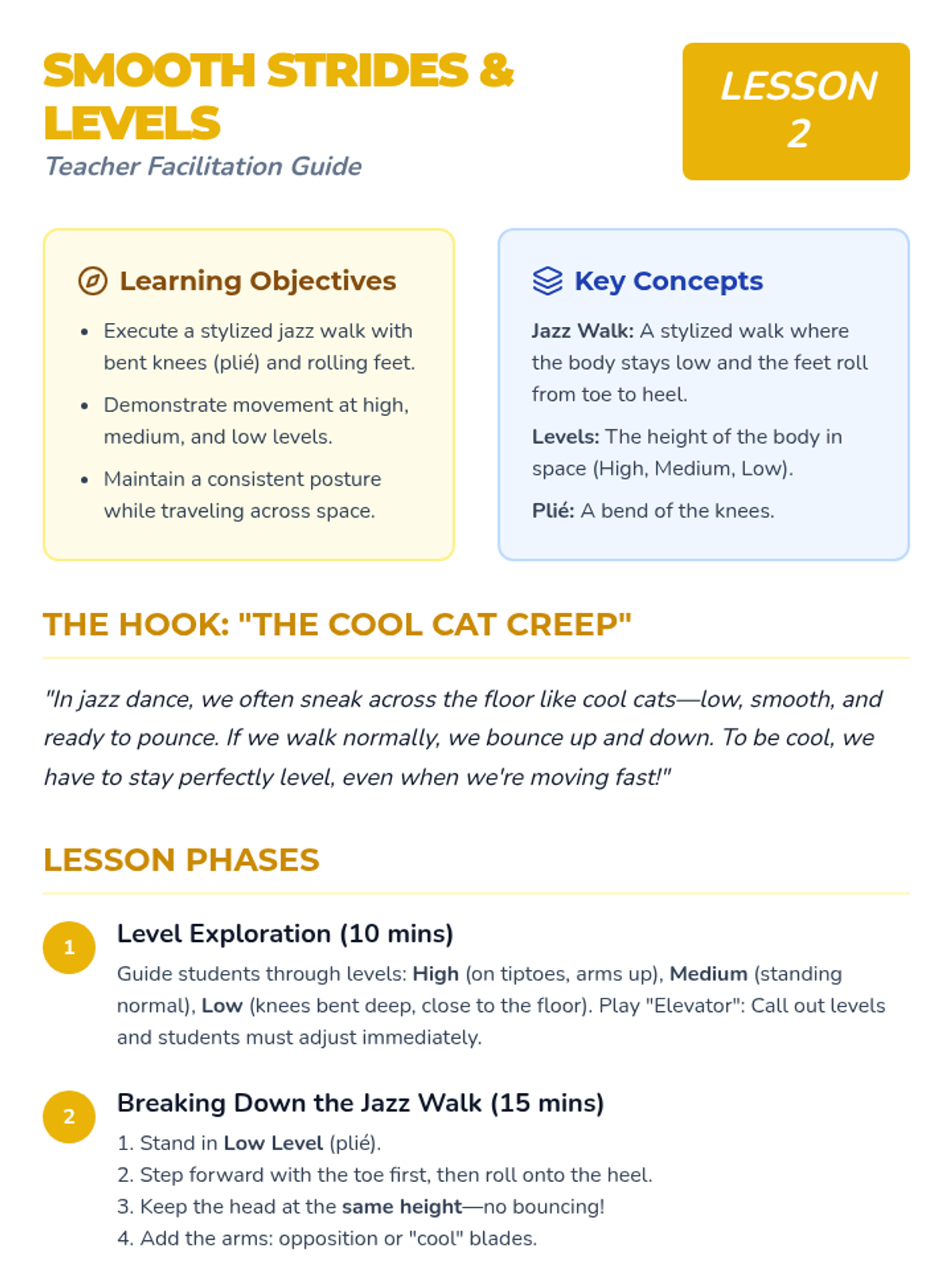
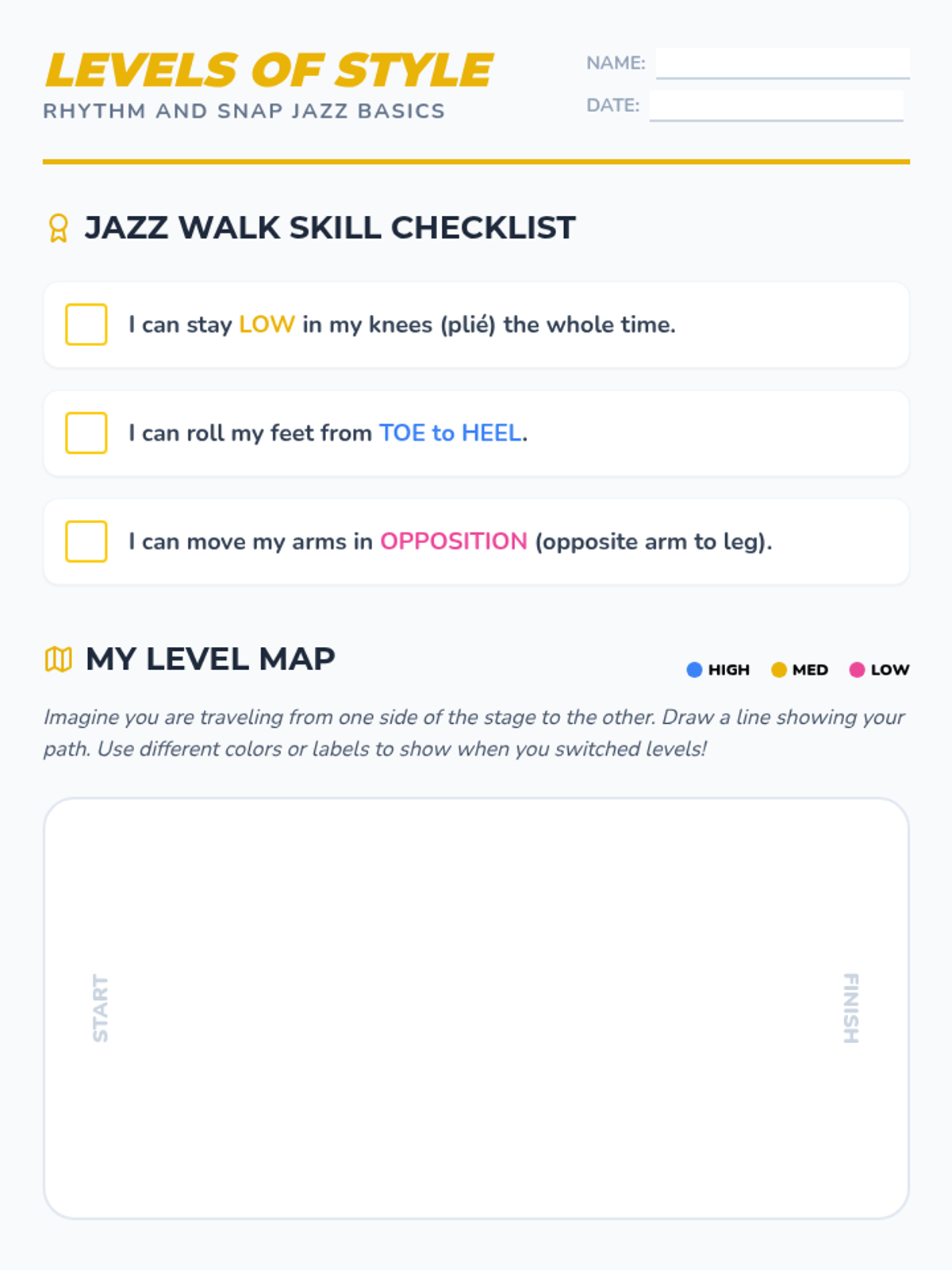
This lesson introduces the stylized jazz walk, focusing on staying low with bent knees and exploring movement through high, medium, and low levels.
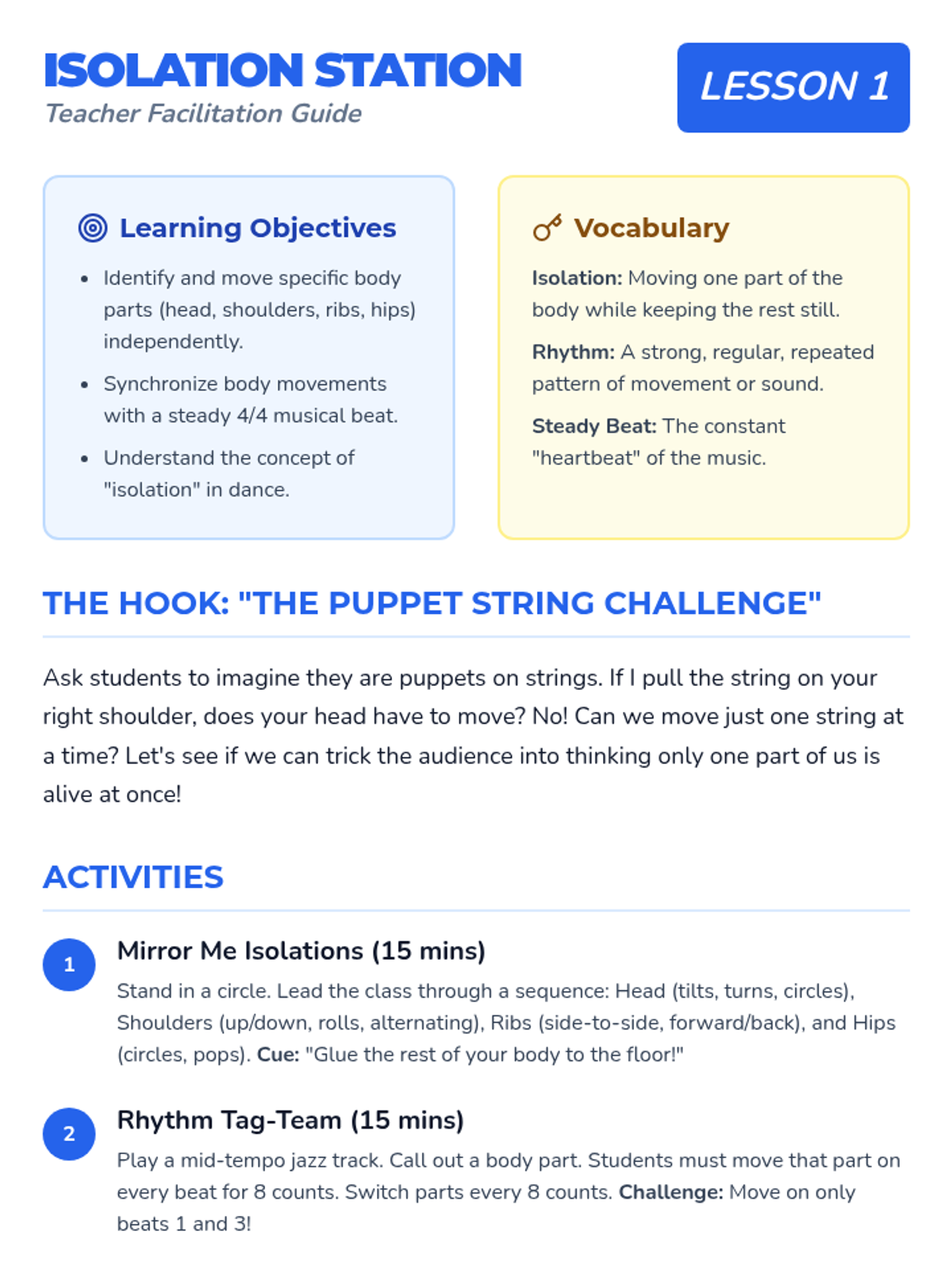
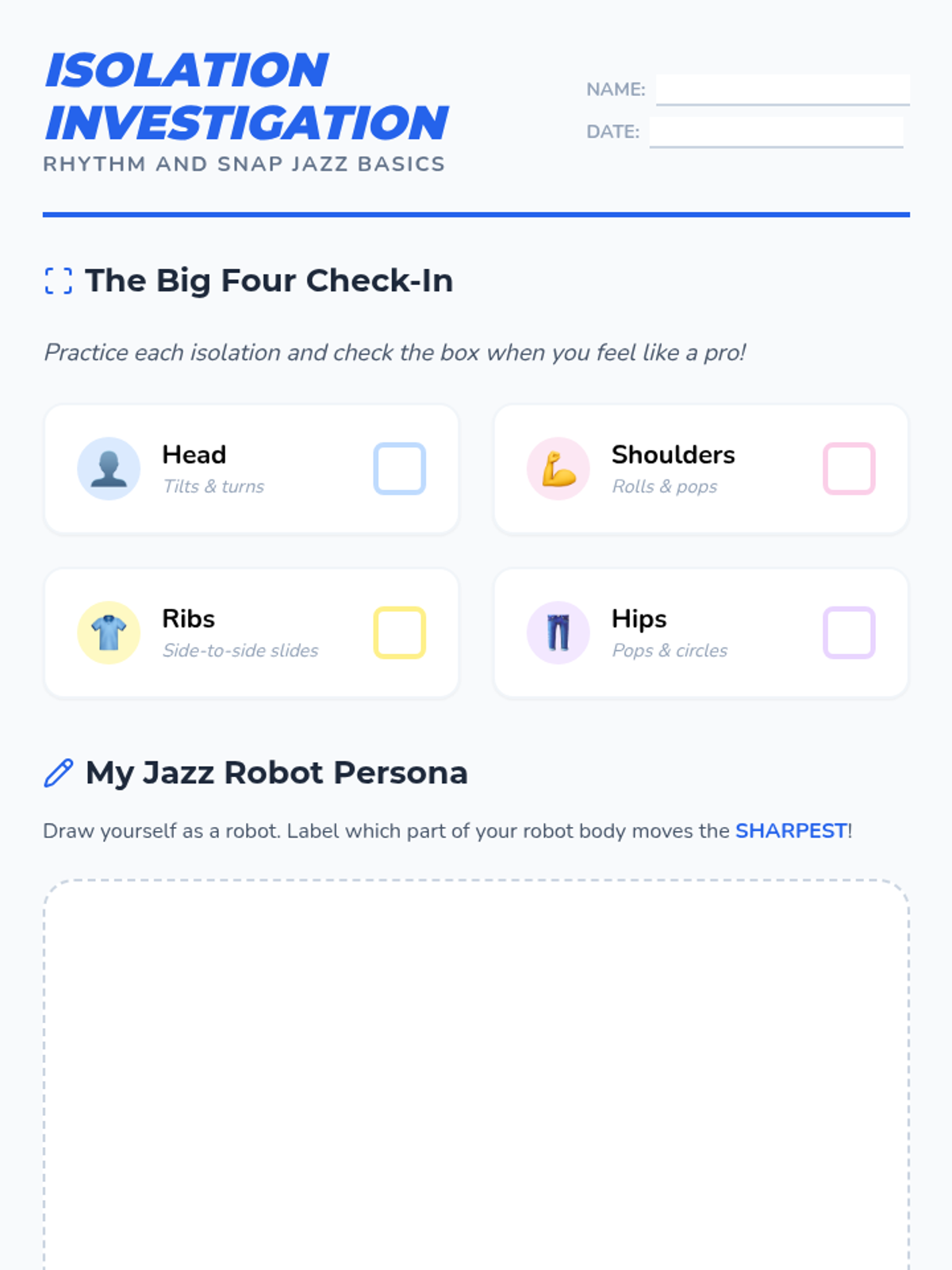
Students learn to move one body part at a time (head, shoulders, ribs, hips) independent of the rest of the body, practicing to a steady beat to develop coordination.
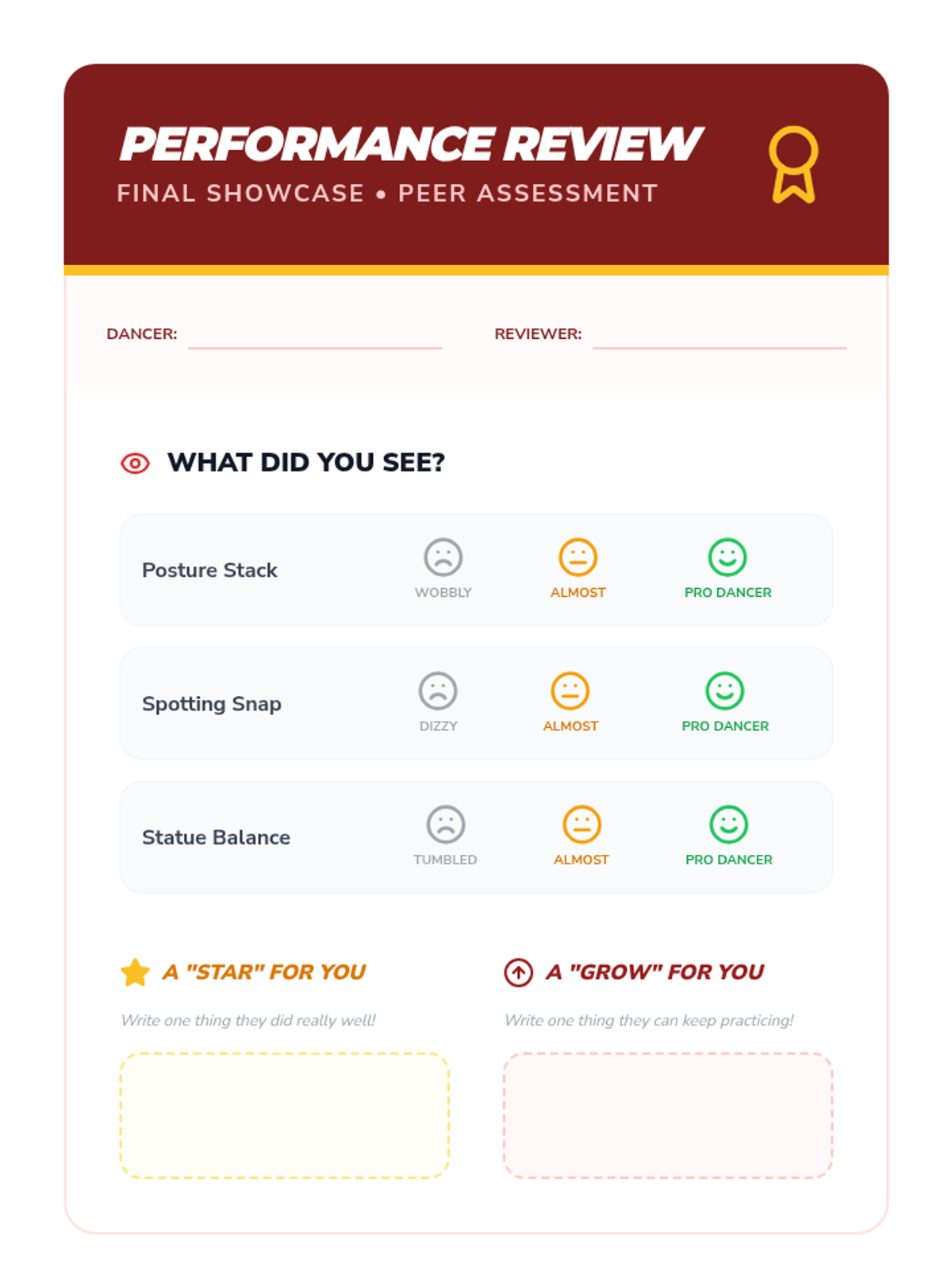
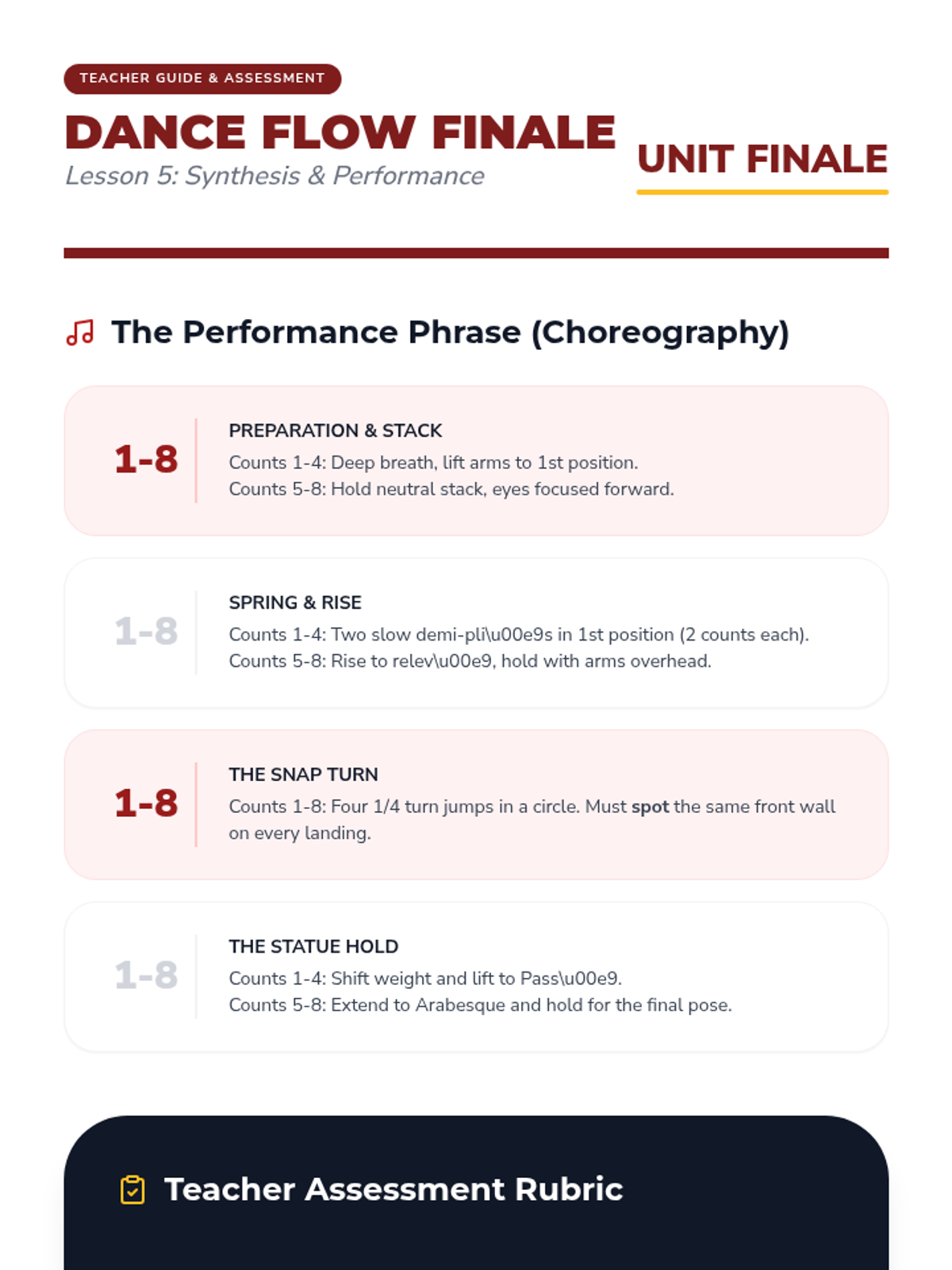
Culminating lesson where students combine techniques into a short phrase and perform peer reviews of alignment during transitions.
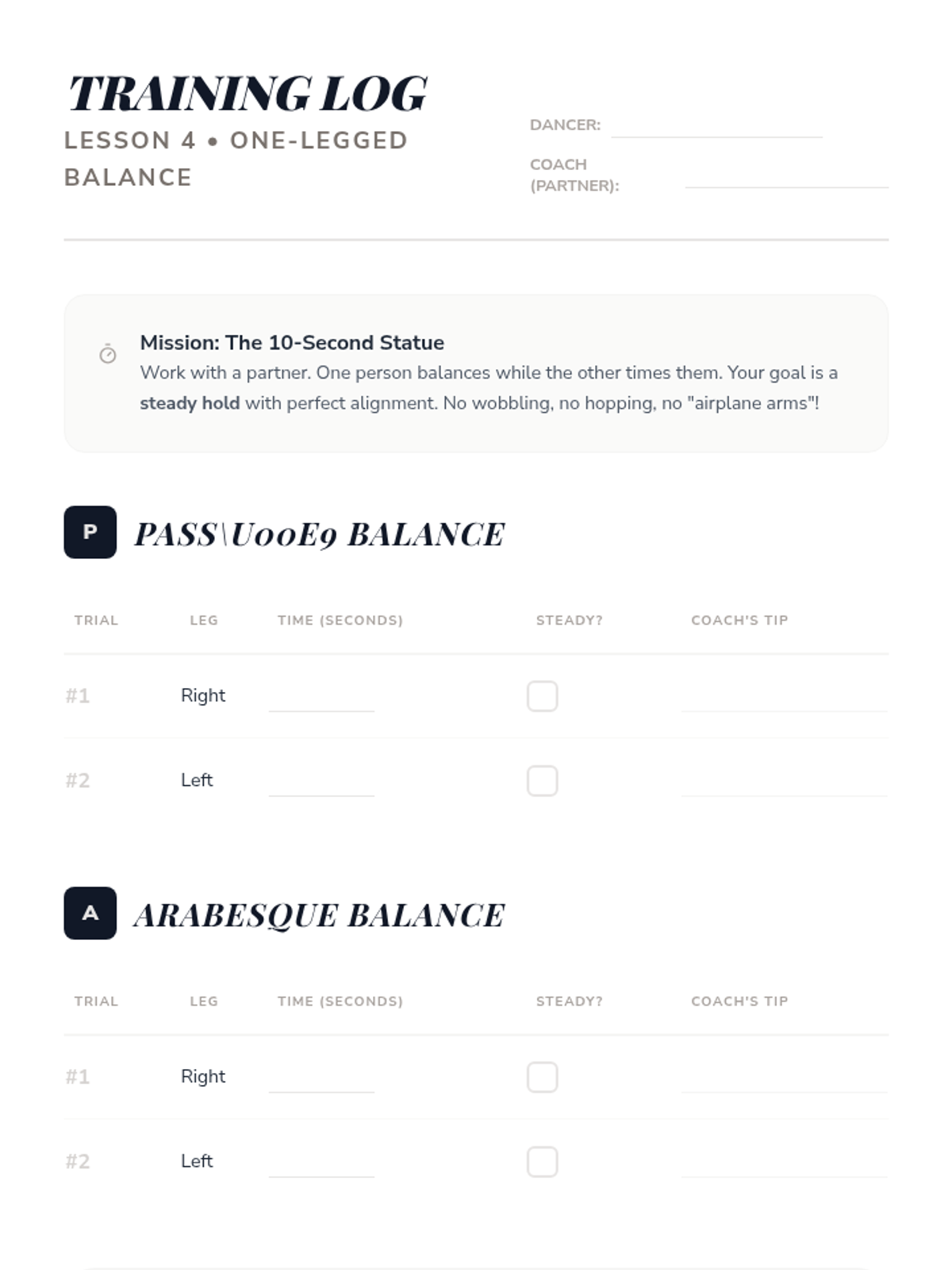
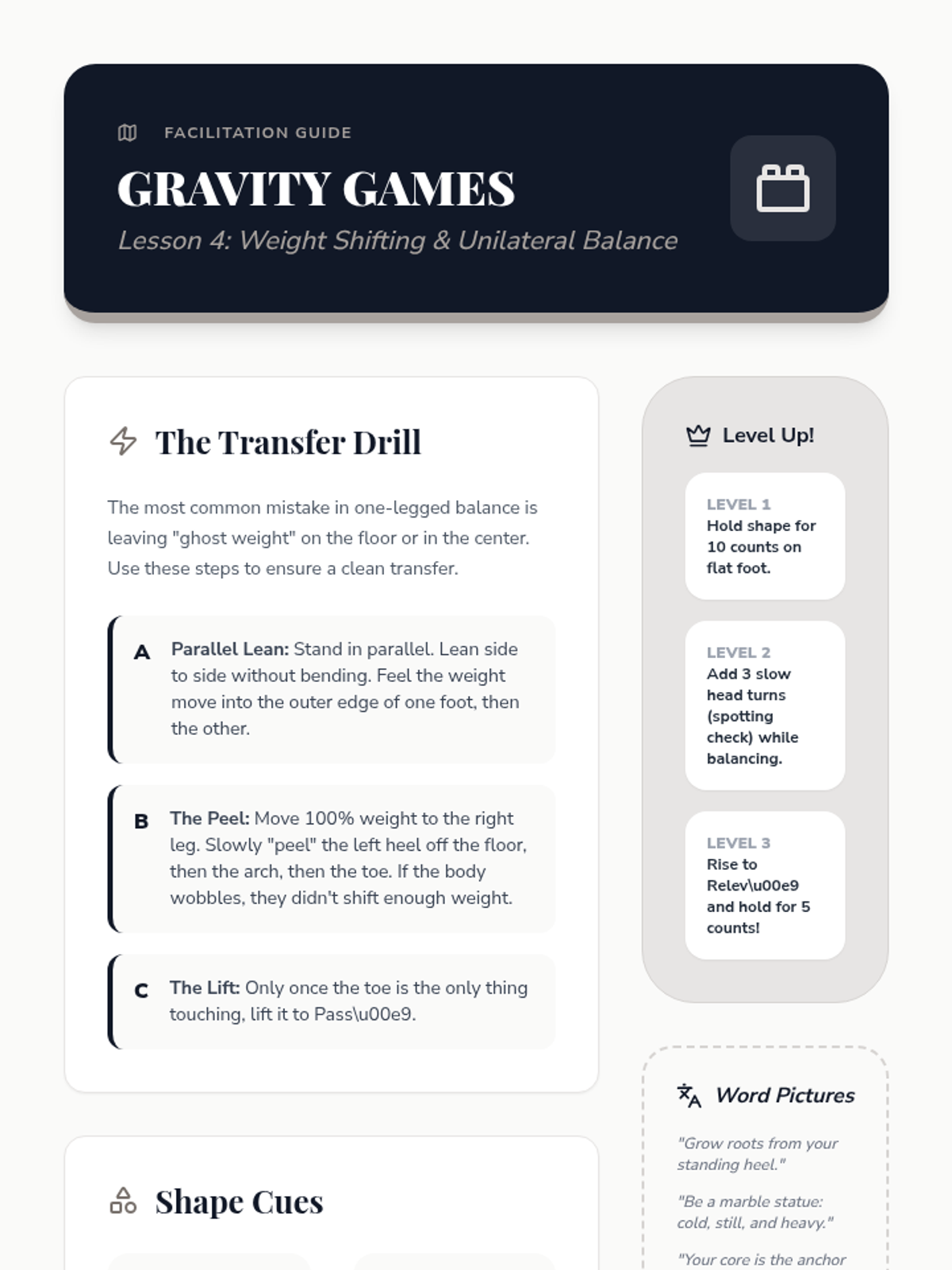
Focuses on one-legged balances in pass\u00e9 and arabesque shapes, emphasizing complete weight shifting over the standing leg.
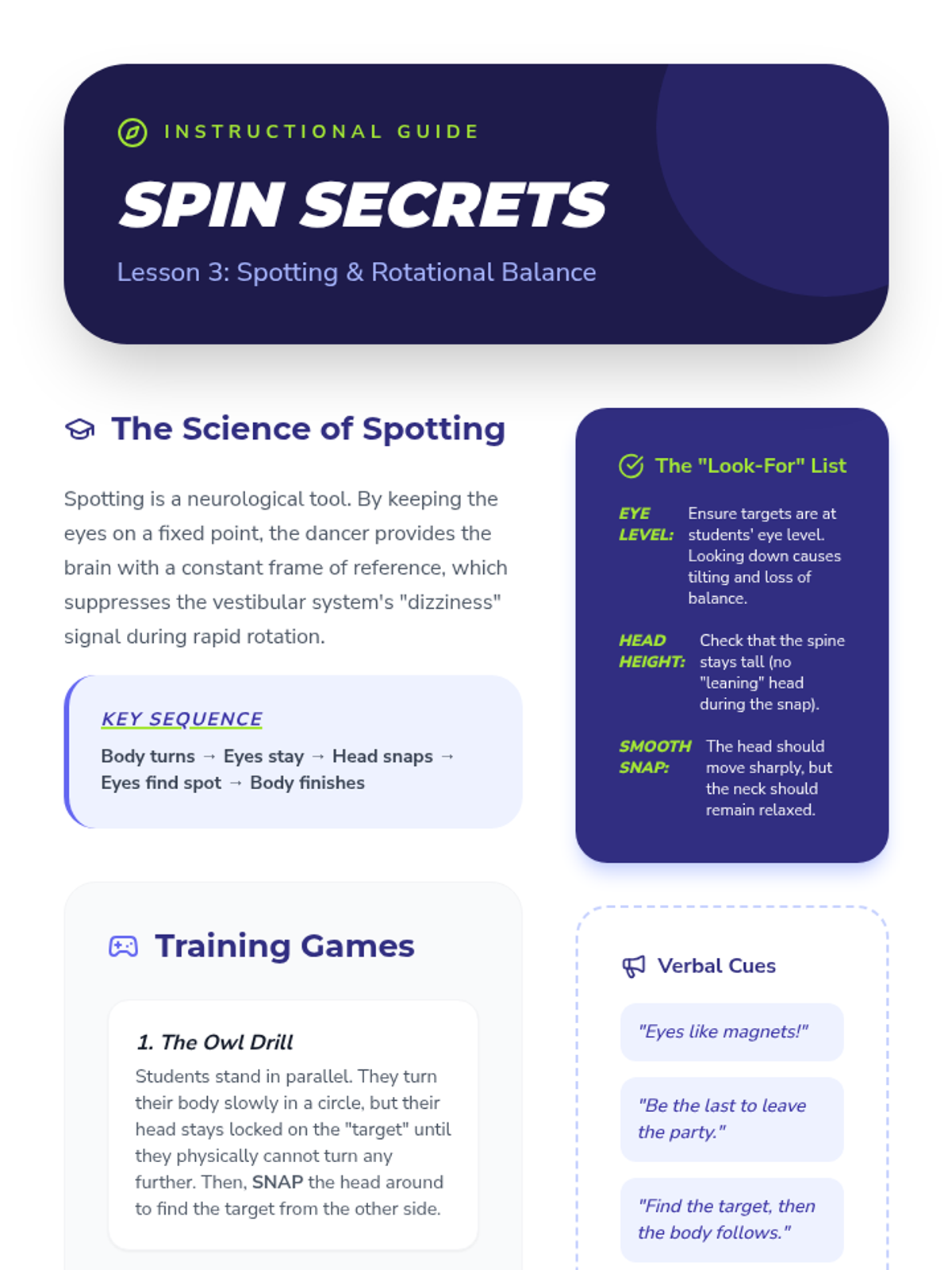
Teaches 'spotting' technique to prevent dizziness and maintain balance during rotations using slow quarter and half turns.
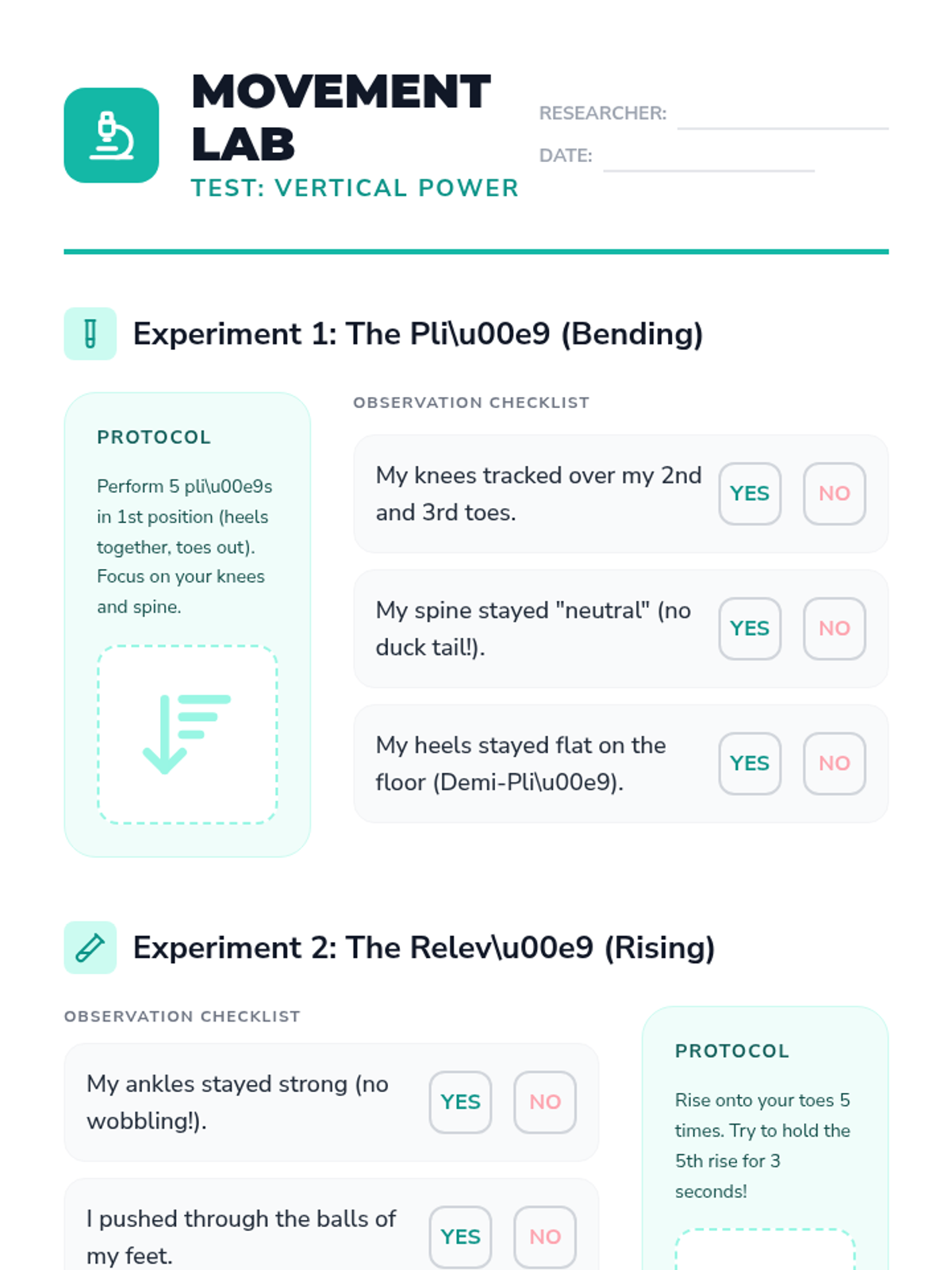
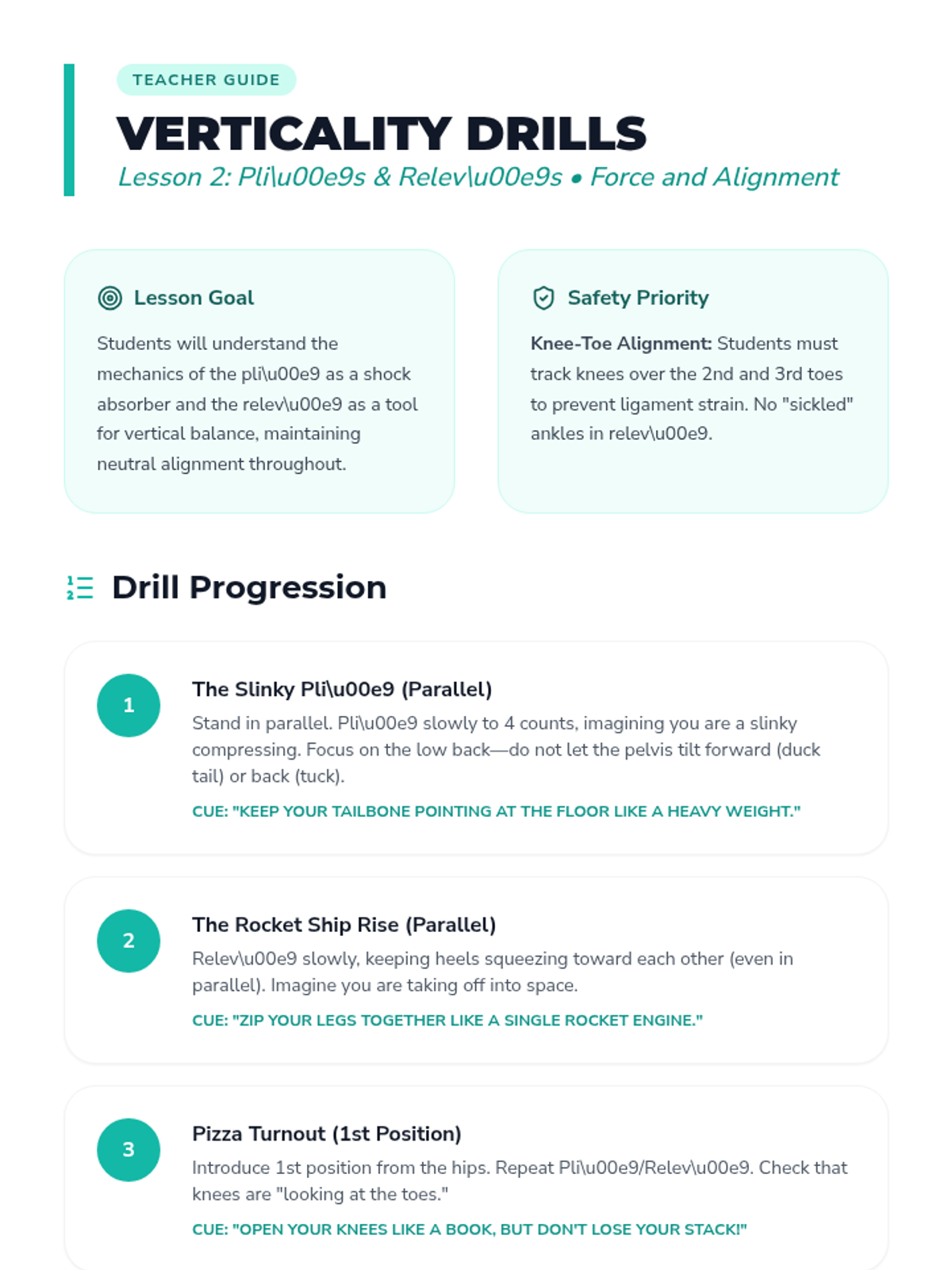
Introduces pli\u00e9 and relev\u00e9 as tools for force and safety, practicing in parallel and turned-out positions with proper knee alignment.
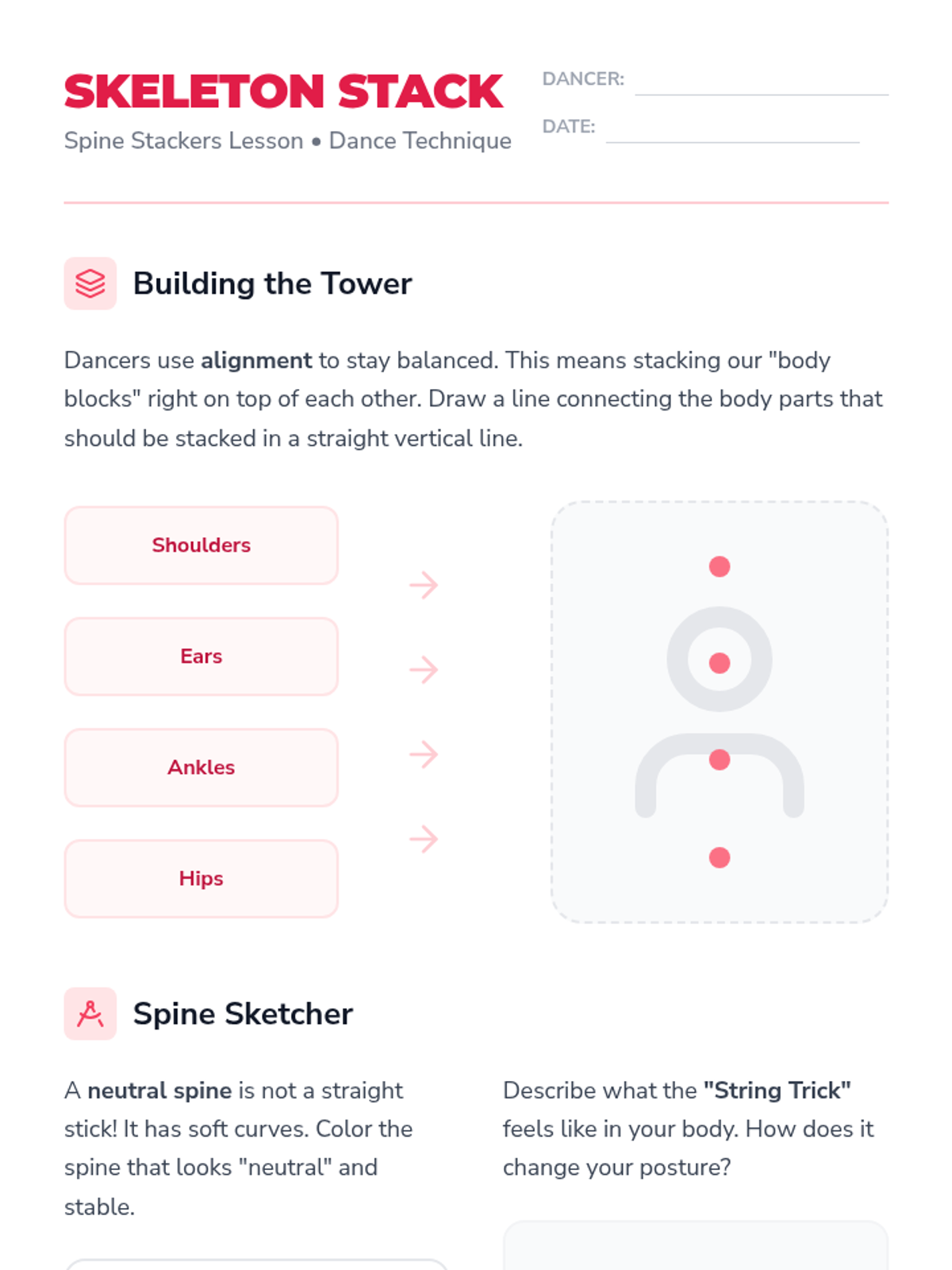
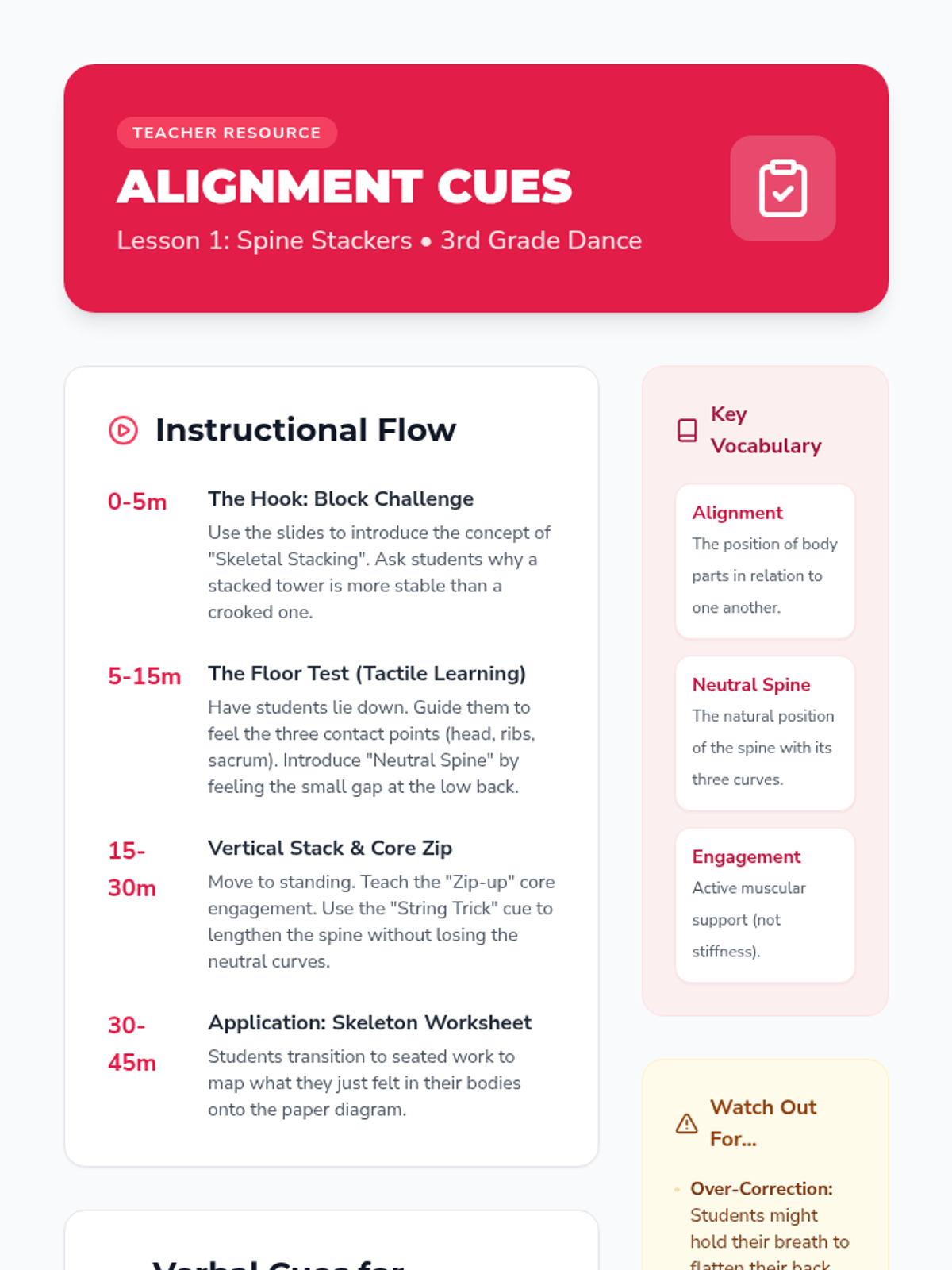
Students explore the concept of a 'neutral spine' through floor and standing exercises, learning to stack their skeletal structure for maximum stability.
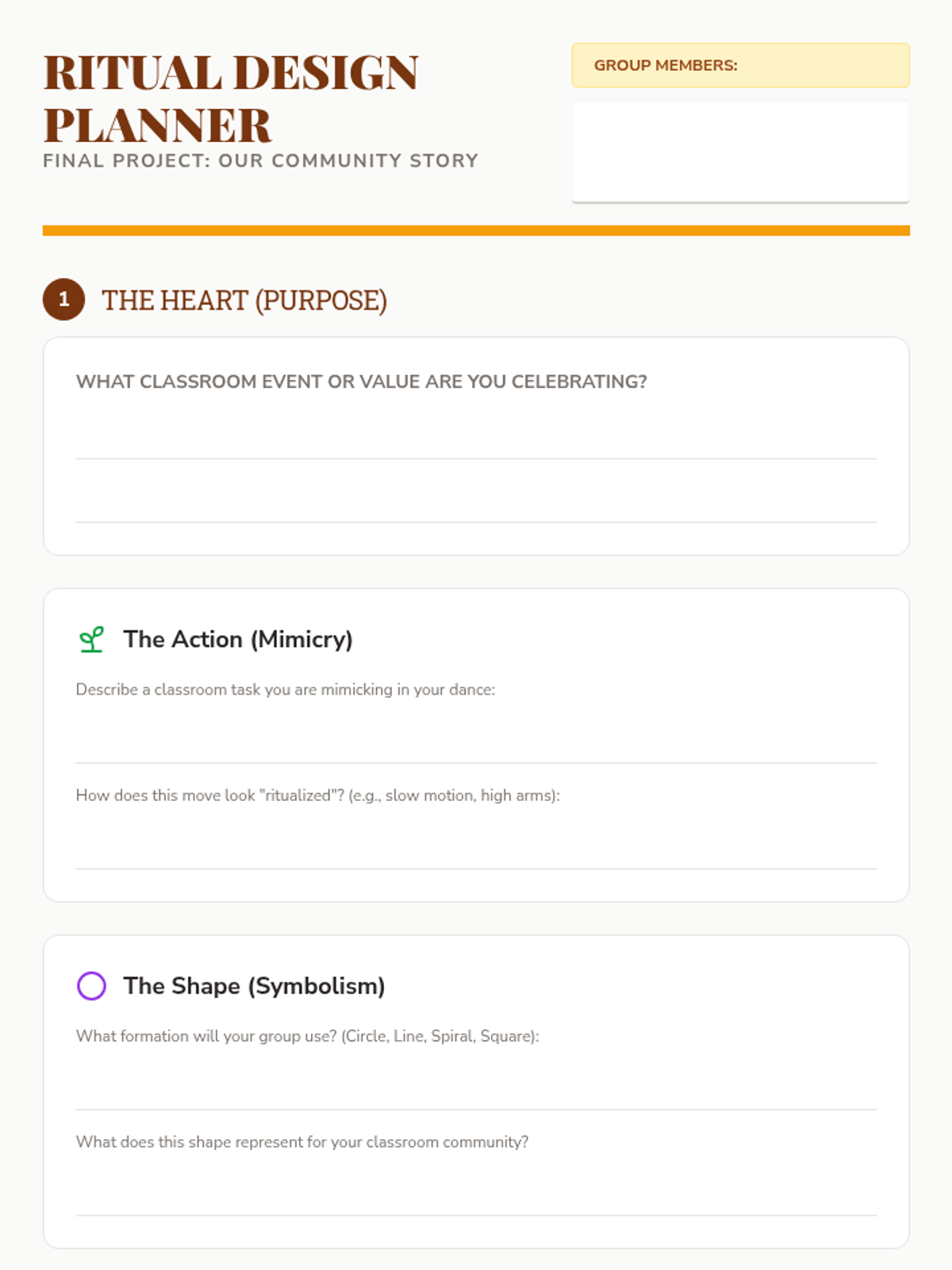
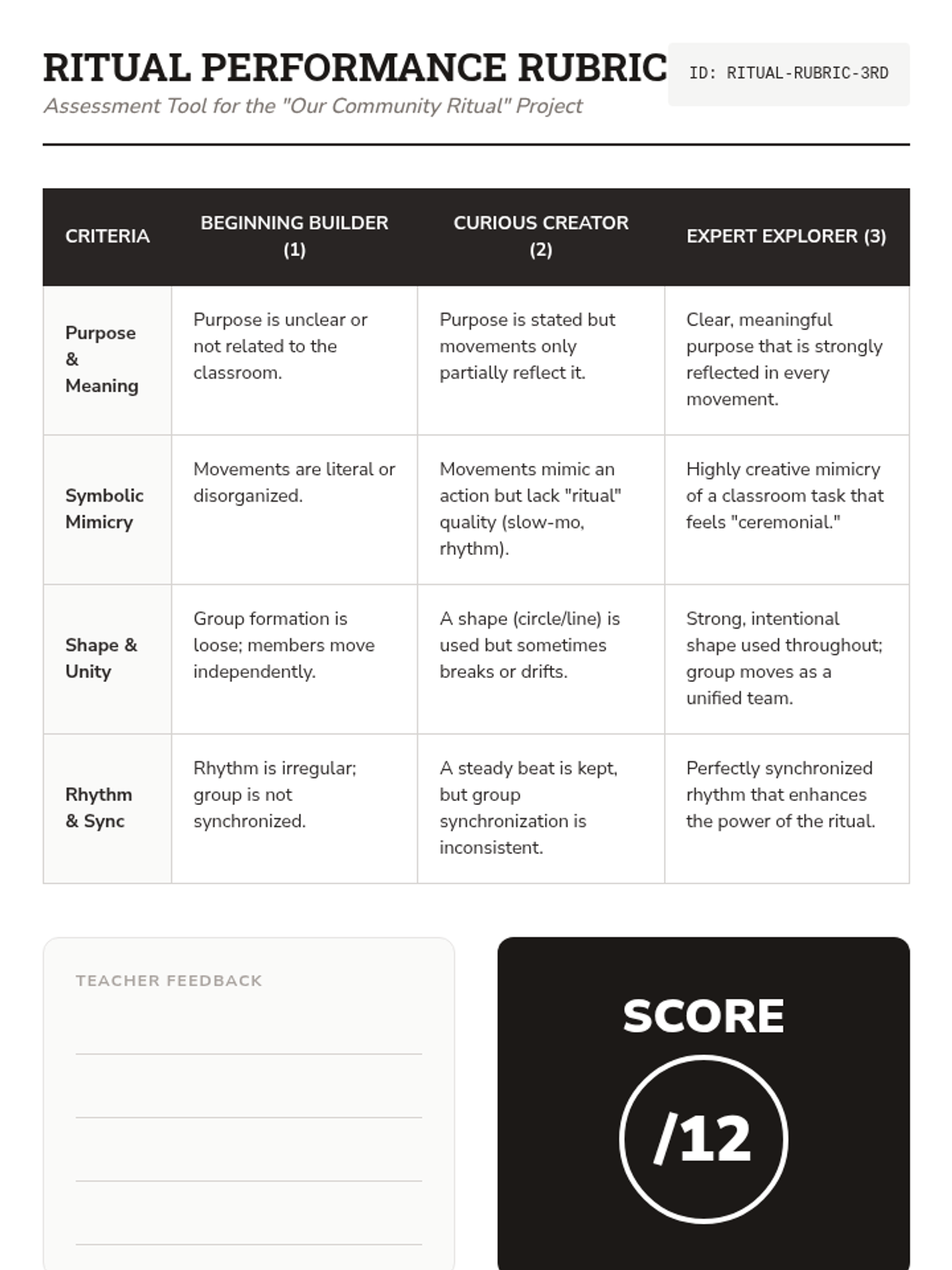
Small groups synthesize their learning to choreograph a classroom ritual that celebrates a shared value or daily milestone.
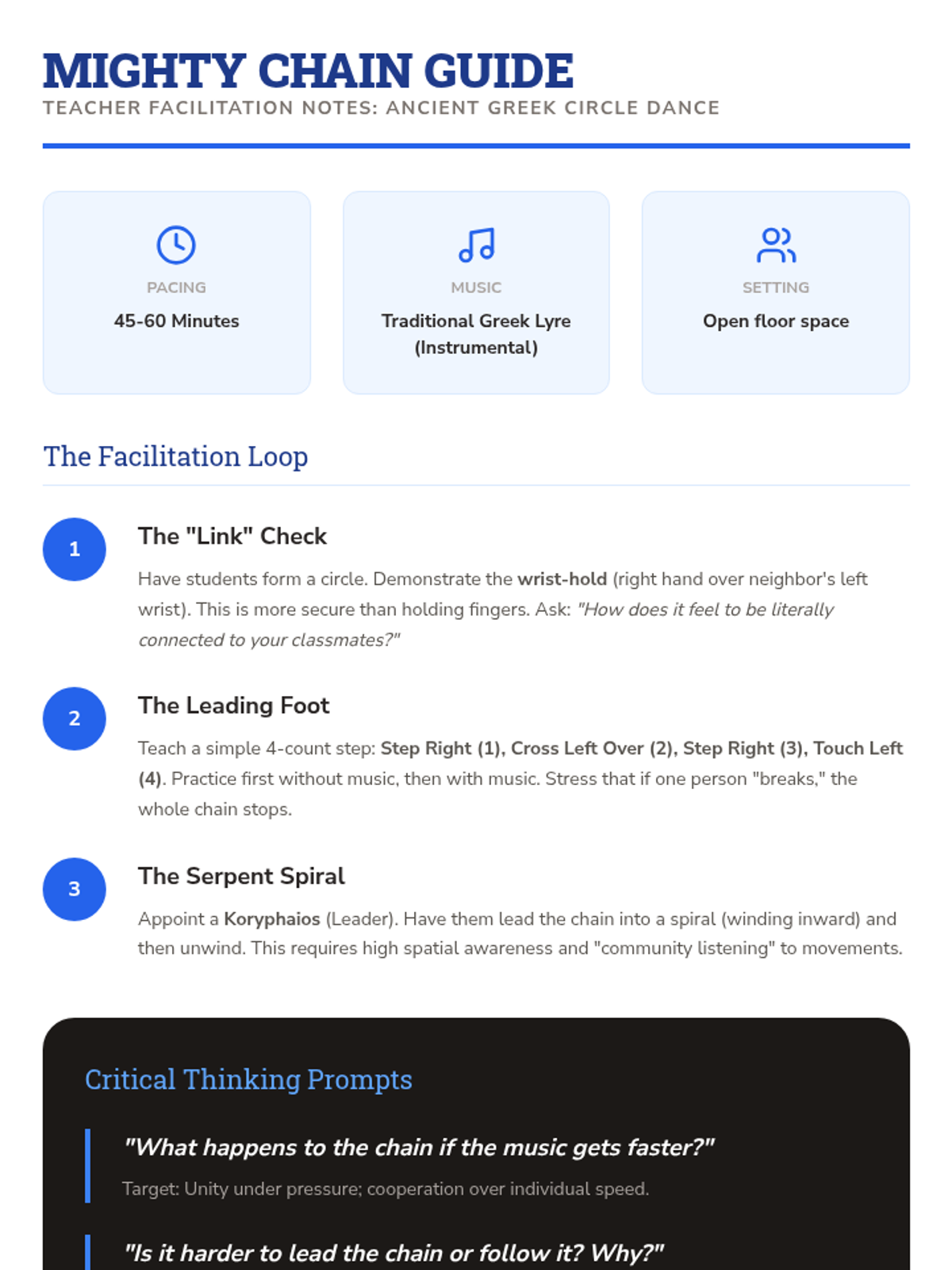
Learners examine the Ancient Greek 'Choros' to understand how circle dances foster community unity and synchronized movement.
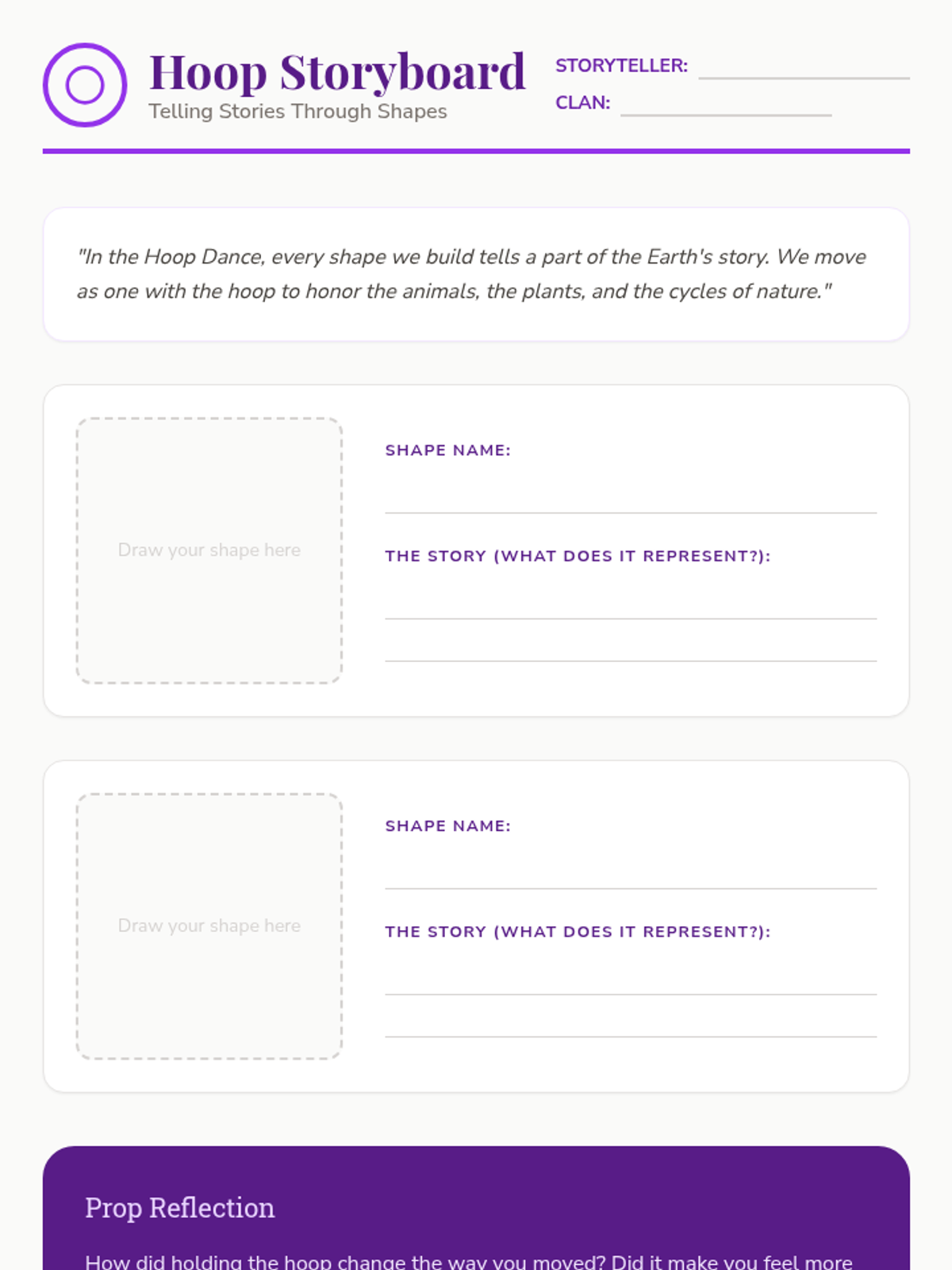
Students explore the symbolism and history of the Native American Hoop Dance, practicing prop manipulation to tell stories through nature-inspired shapes.
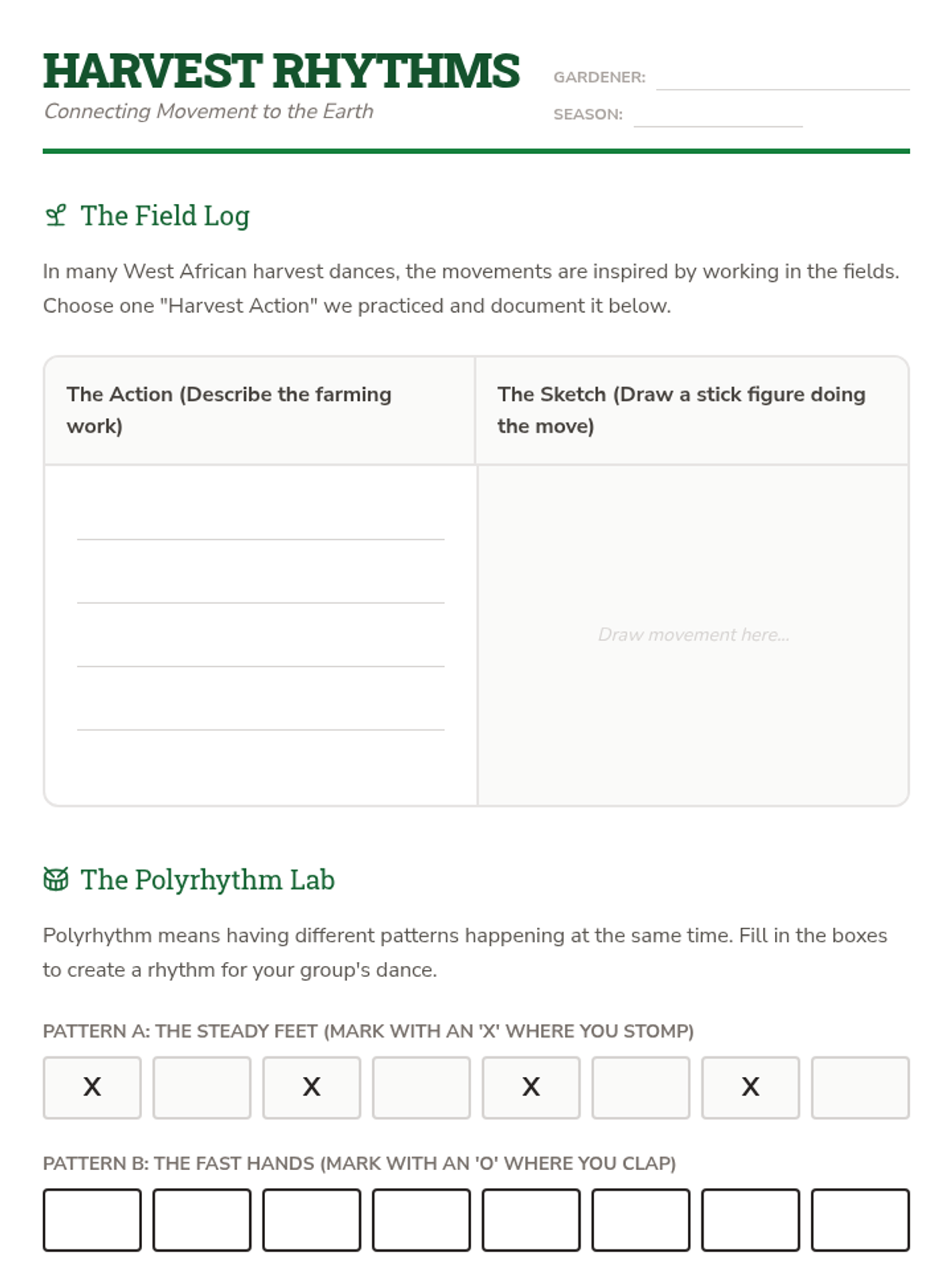
Focusing on West African traditions, students learn how agricultural societies used rhythmic movement to connect with the earth and celebrate the harvest.
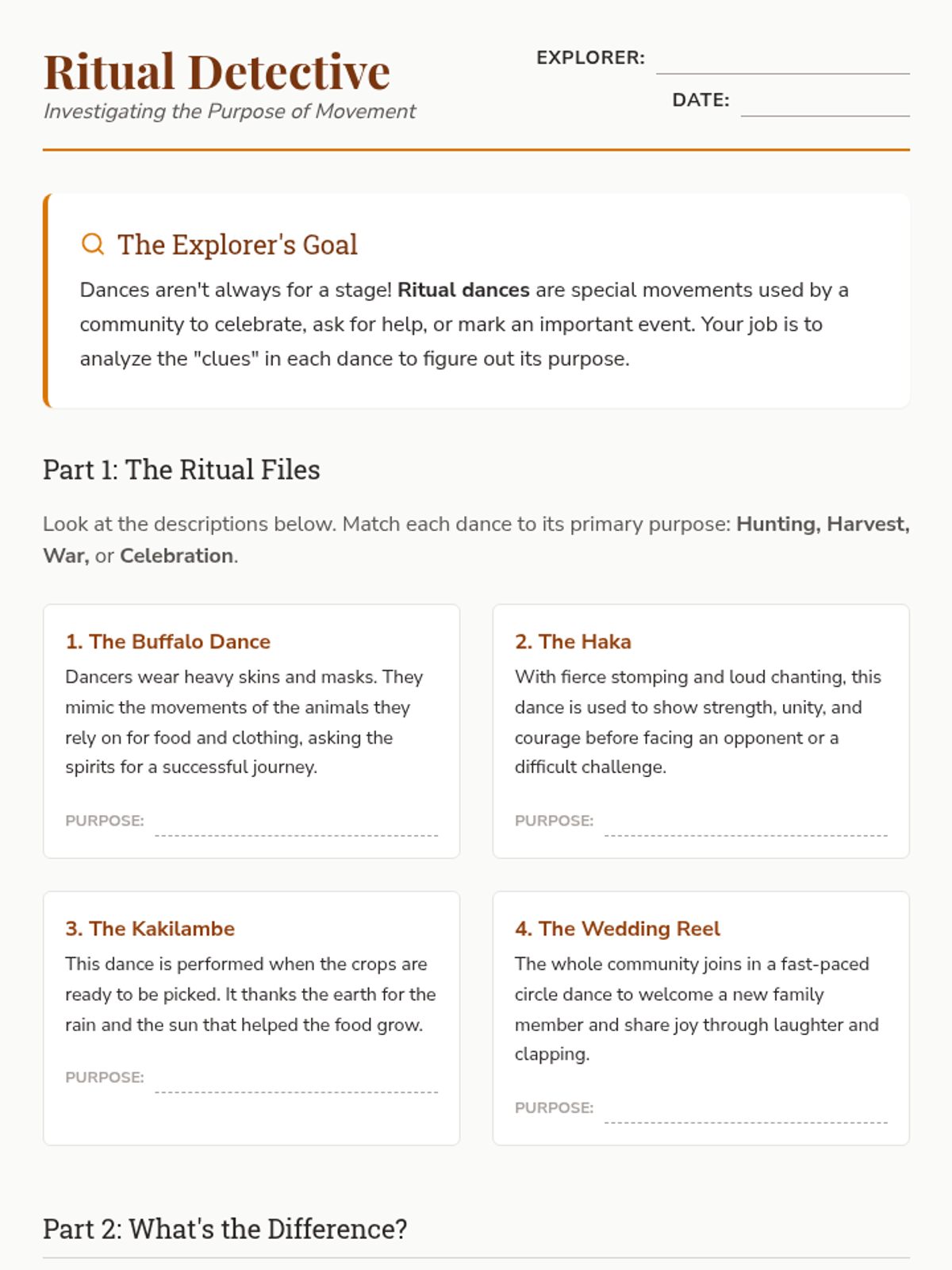
Students define 'ritual' versus 'performance' by analyzing the purposes of dance (hunting, harvest, war, celebration) across different cultures.
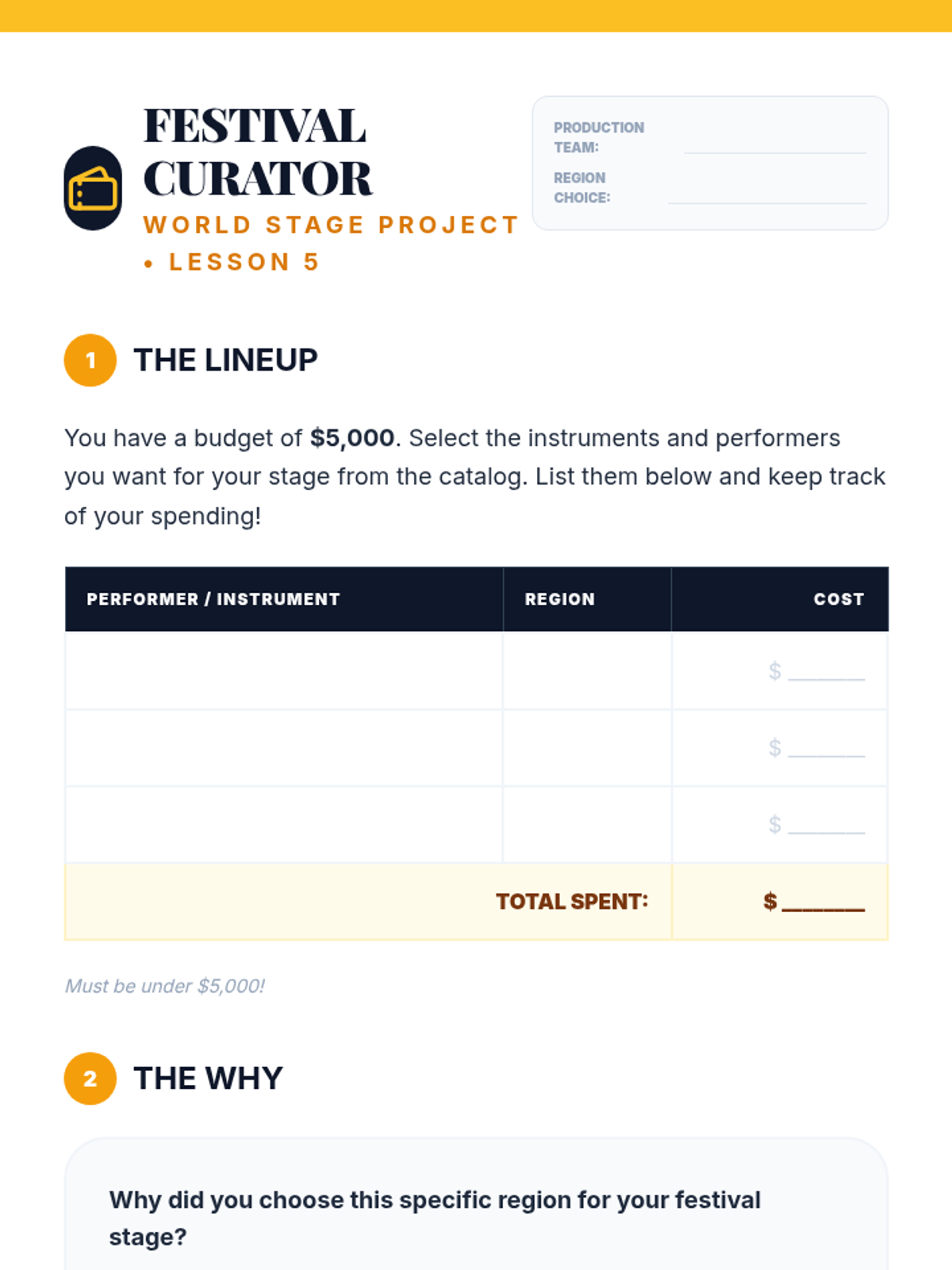
Students work in small groups to 'curate' a stage for a world music festival. They select a region, choose instruments to feature, and explain why that music is unique.
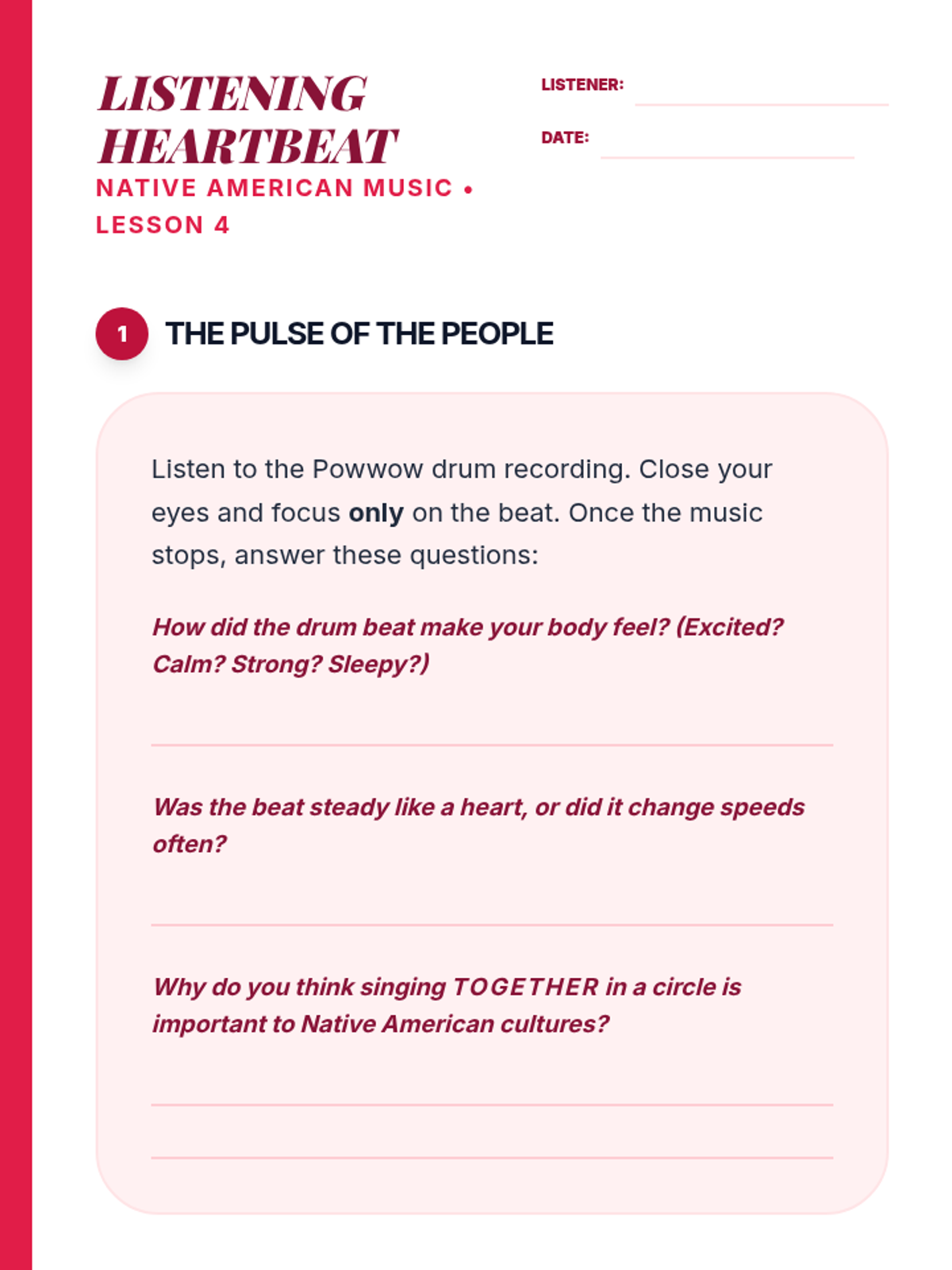
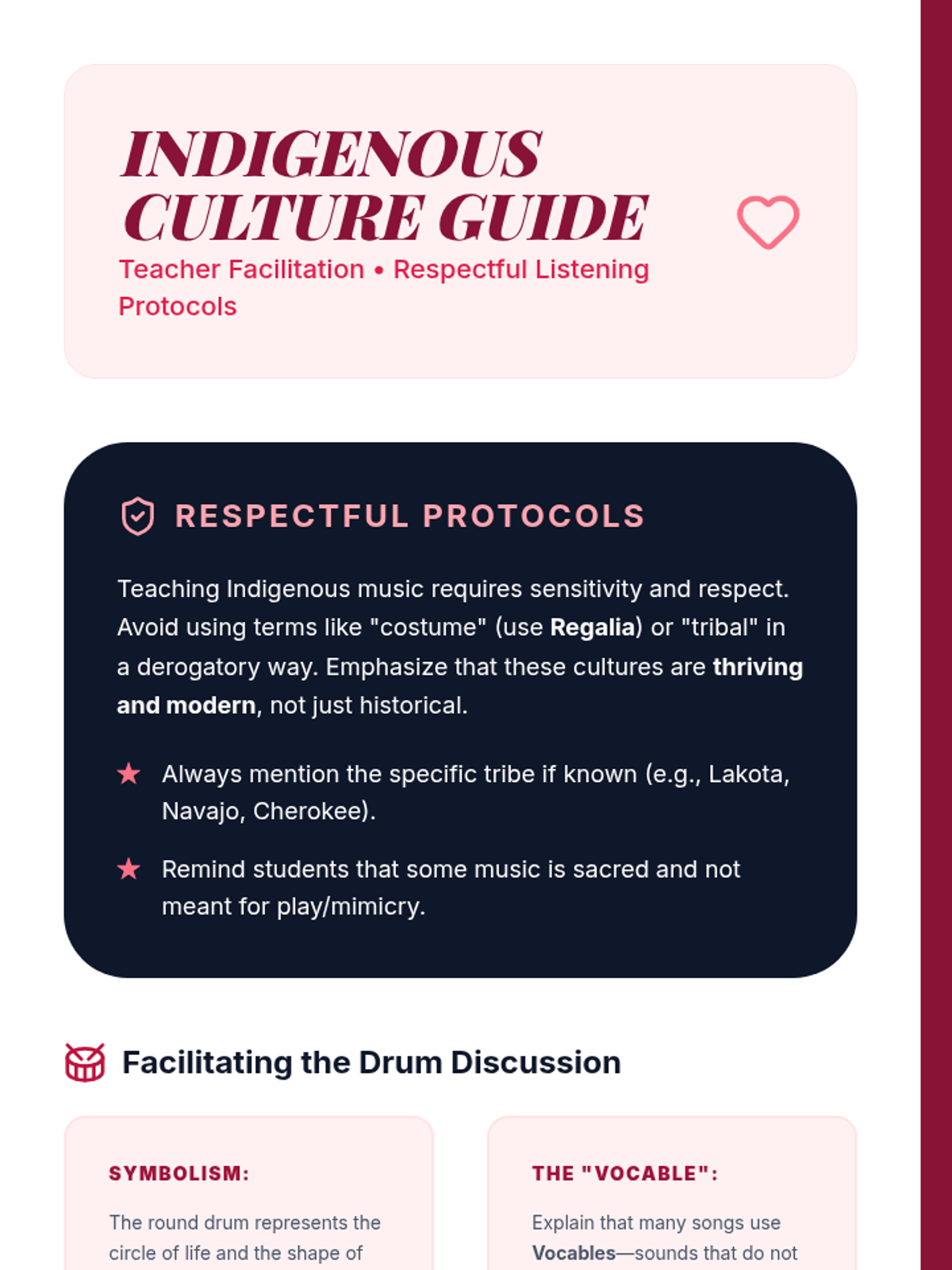
Students listen to the drumming and singing styles of Native American tribes. They discuss the importance of the drum as the 'heartbeat' and the preservation of culture through powwow music.
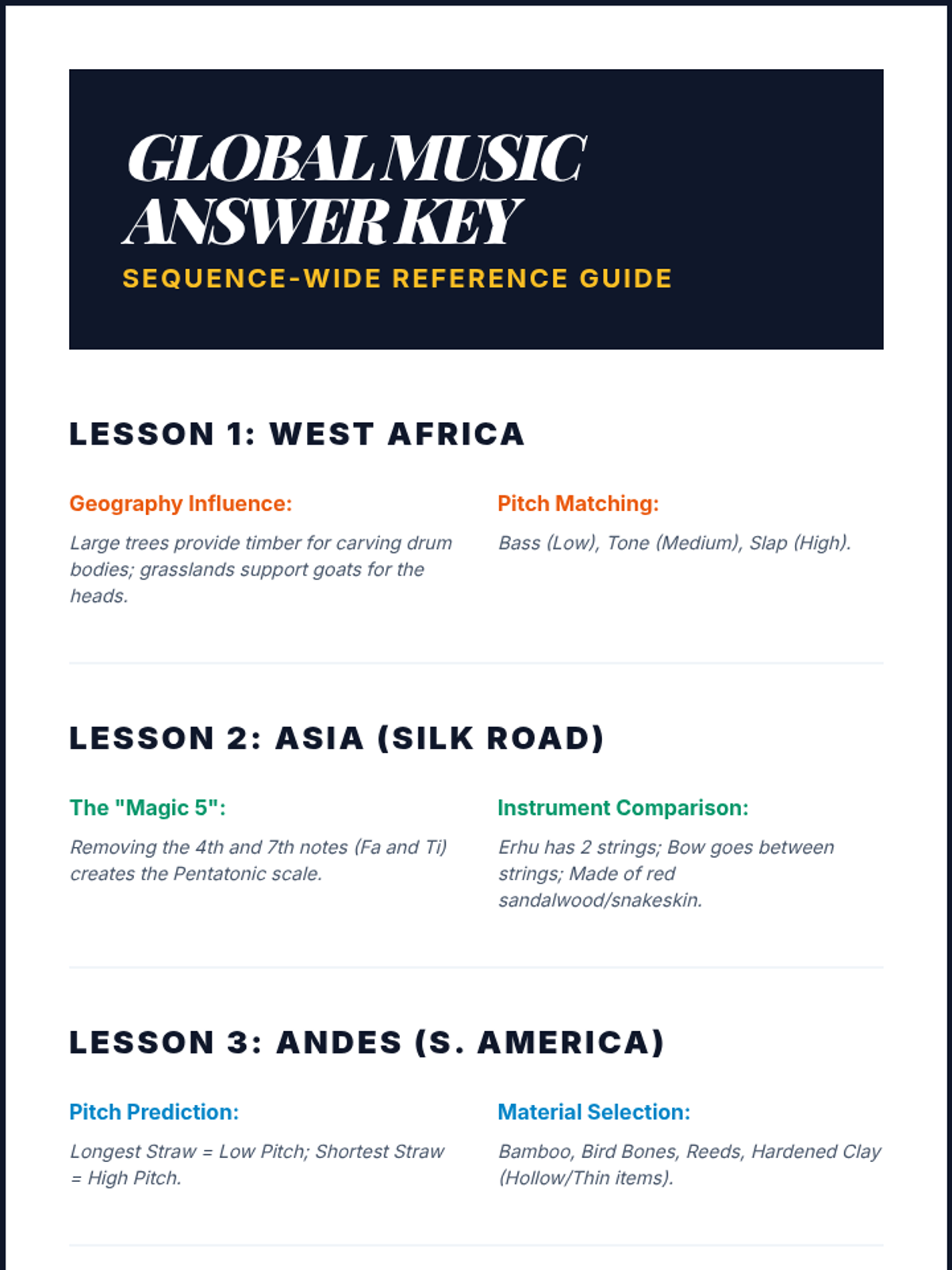
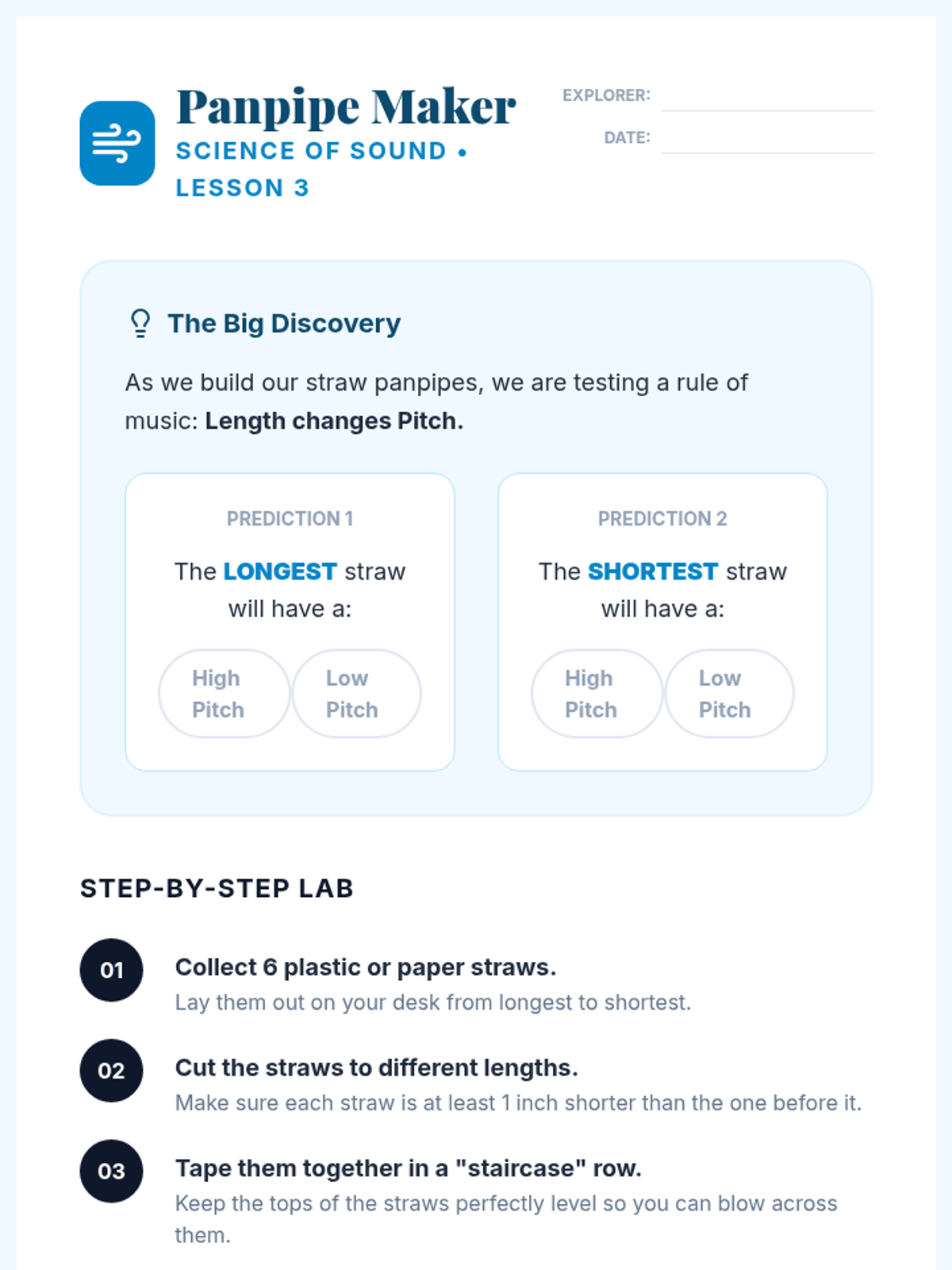
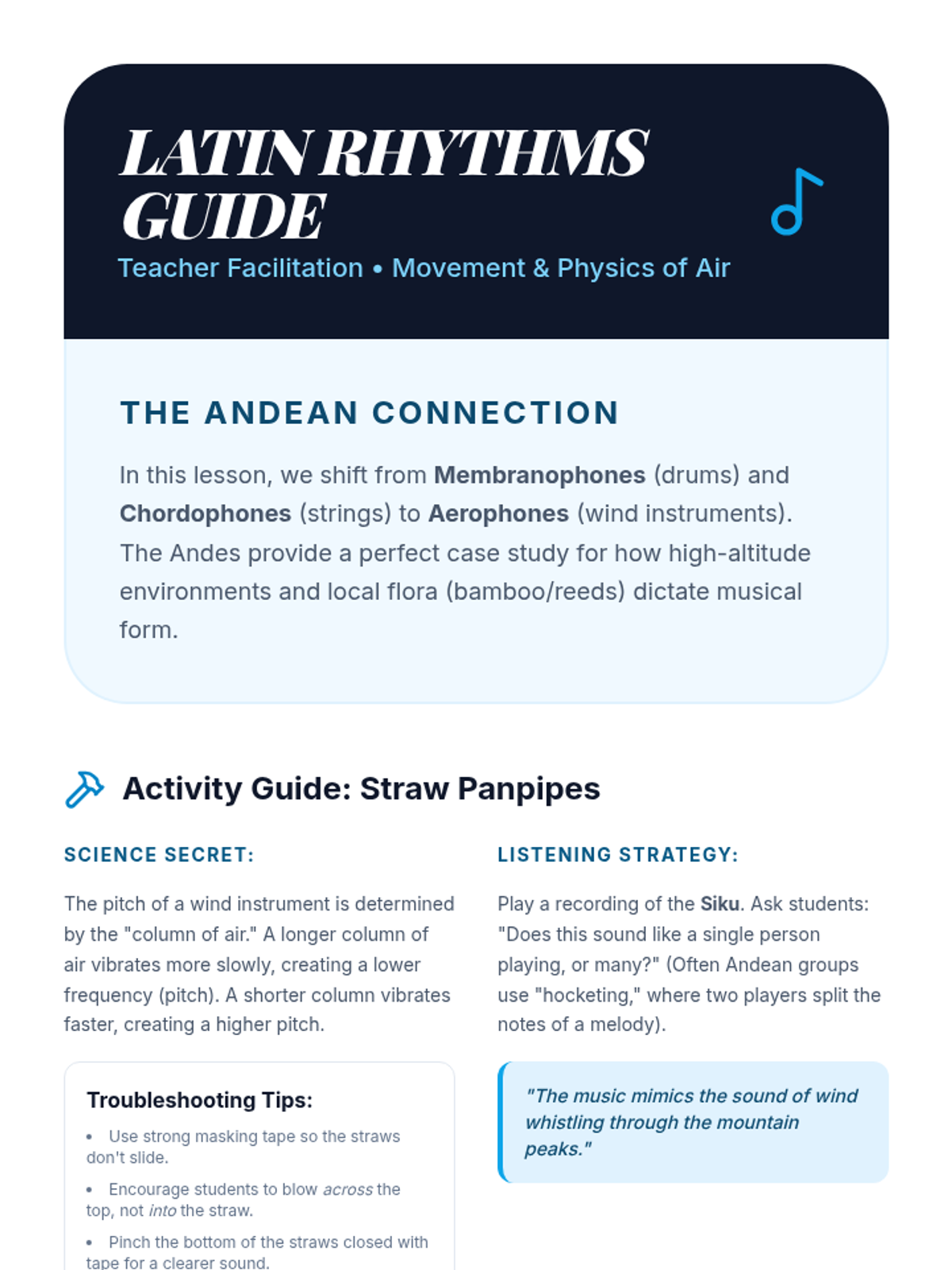
Students investigate the wind and percussion instruments of South America, such as panpipes and maracas, and explore the connection between music and dance in Latin American cultures.
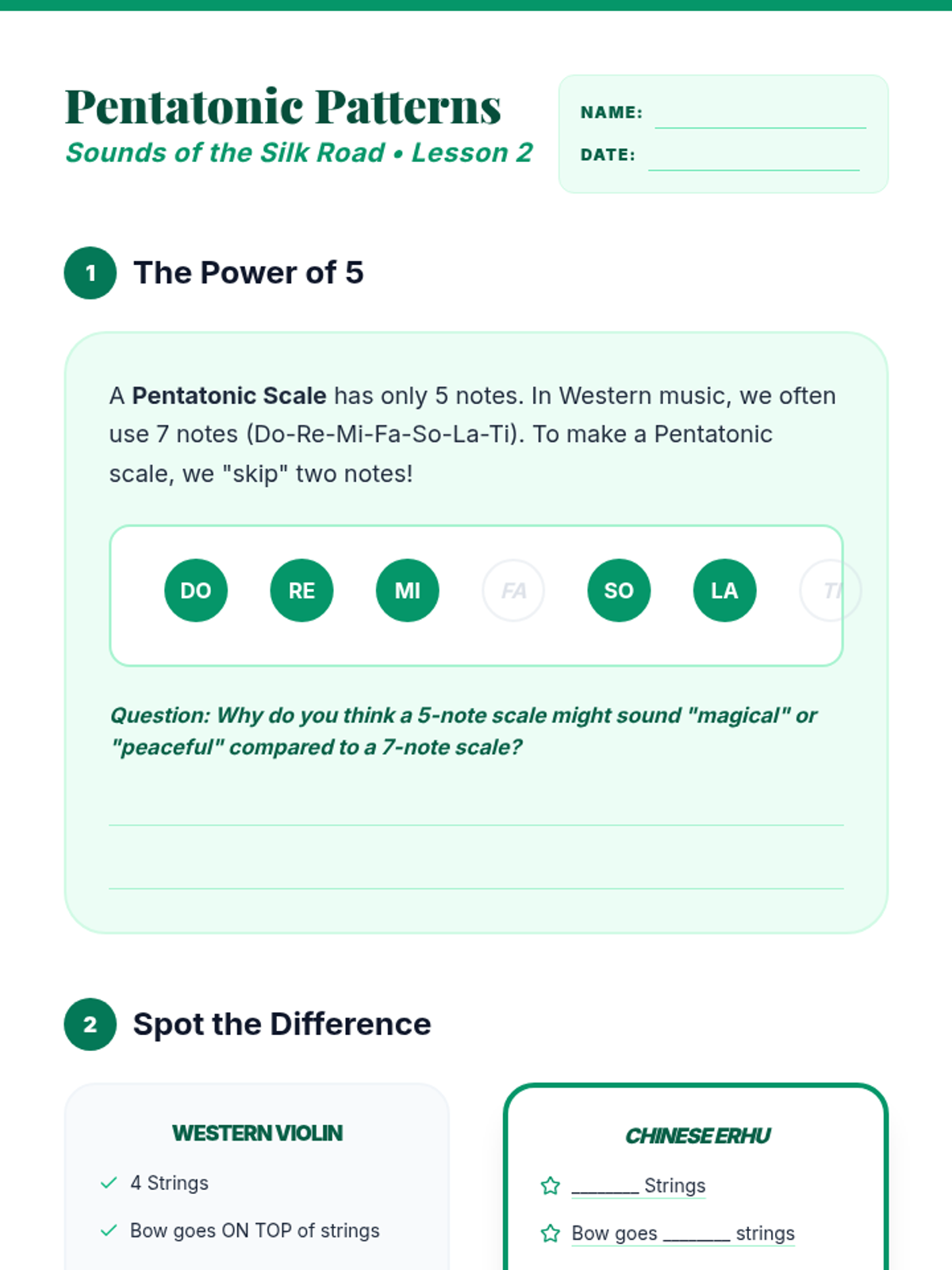
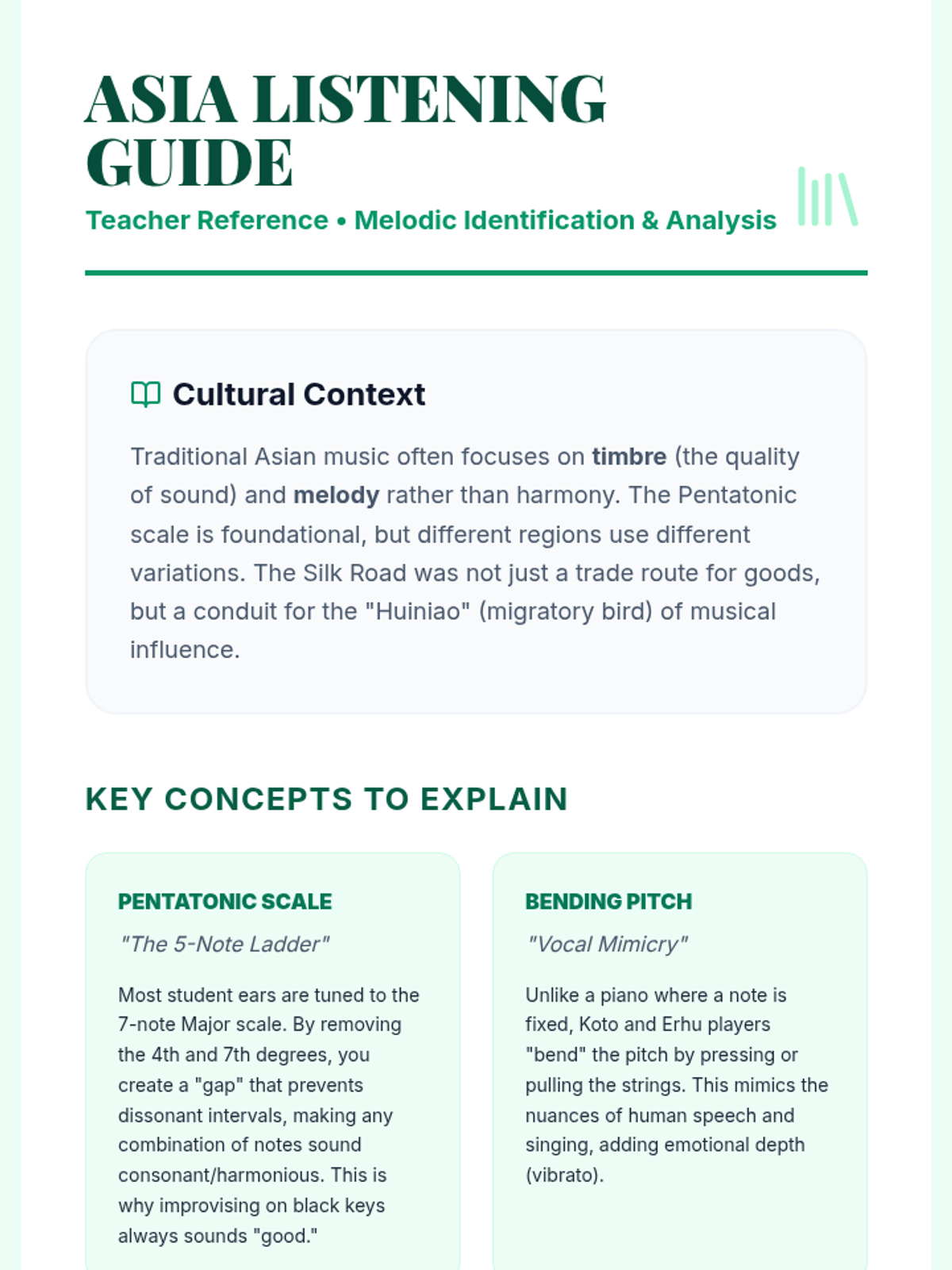
This lesson introduces the Pentatonic scale (5-note scale) common in traditional Chinese and Japanese music. Students listen to string instruments like the Koto or Erhu and compare them to the violin.
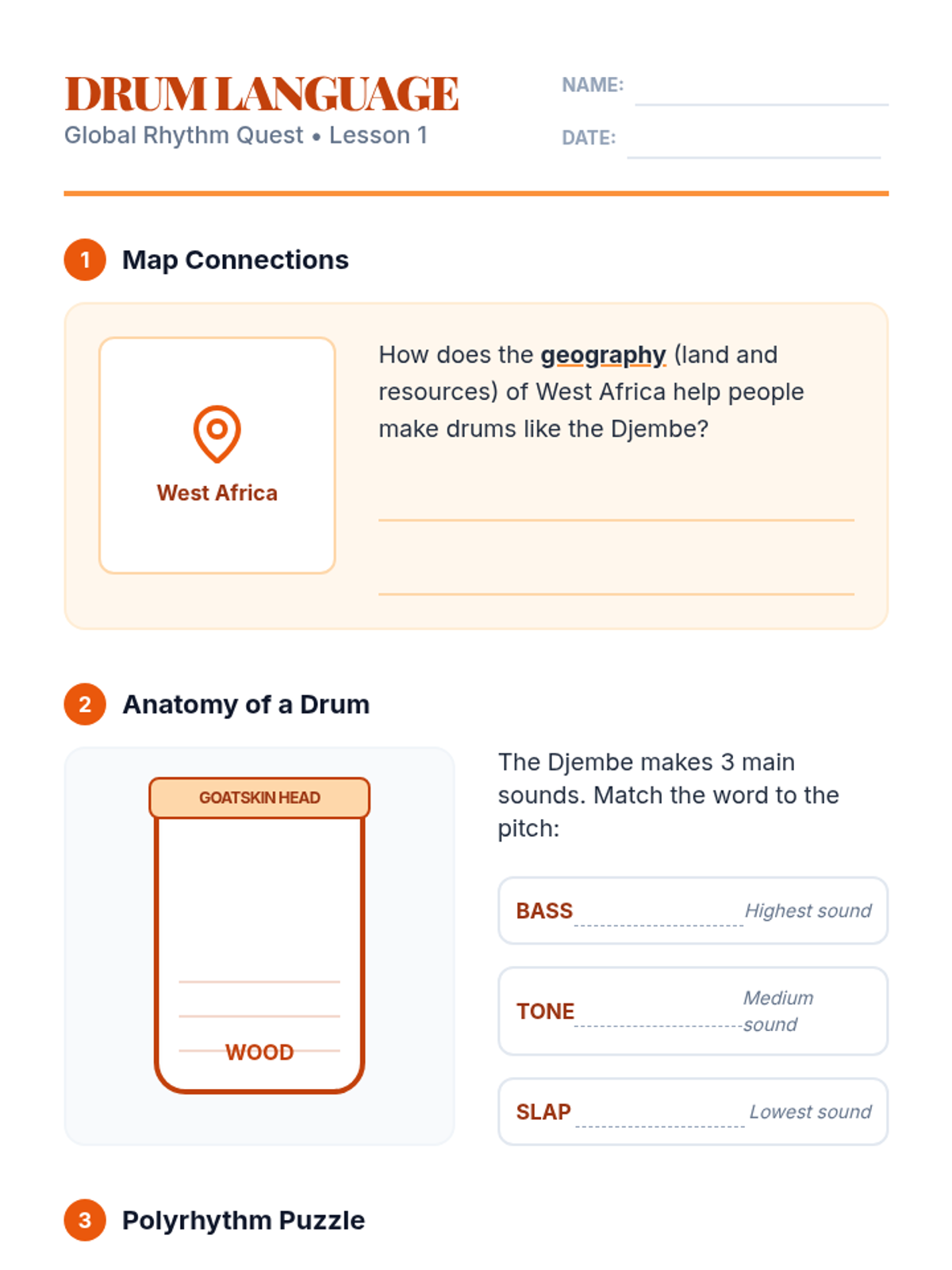
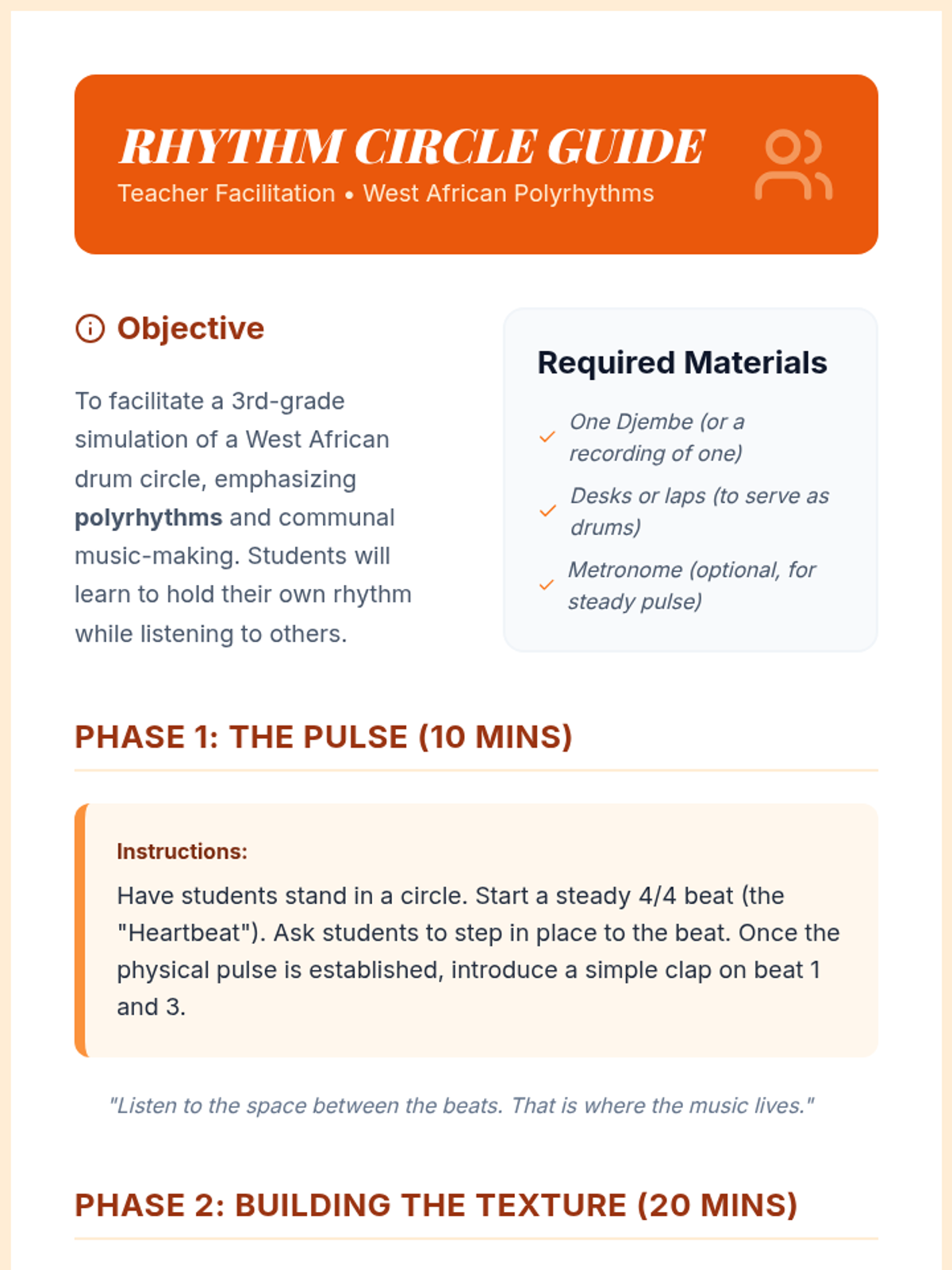
Students explore polyrhythms and the role of the Djembe drum in West African culture, learning how rhythm serves as a form of communication and community celebration.