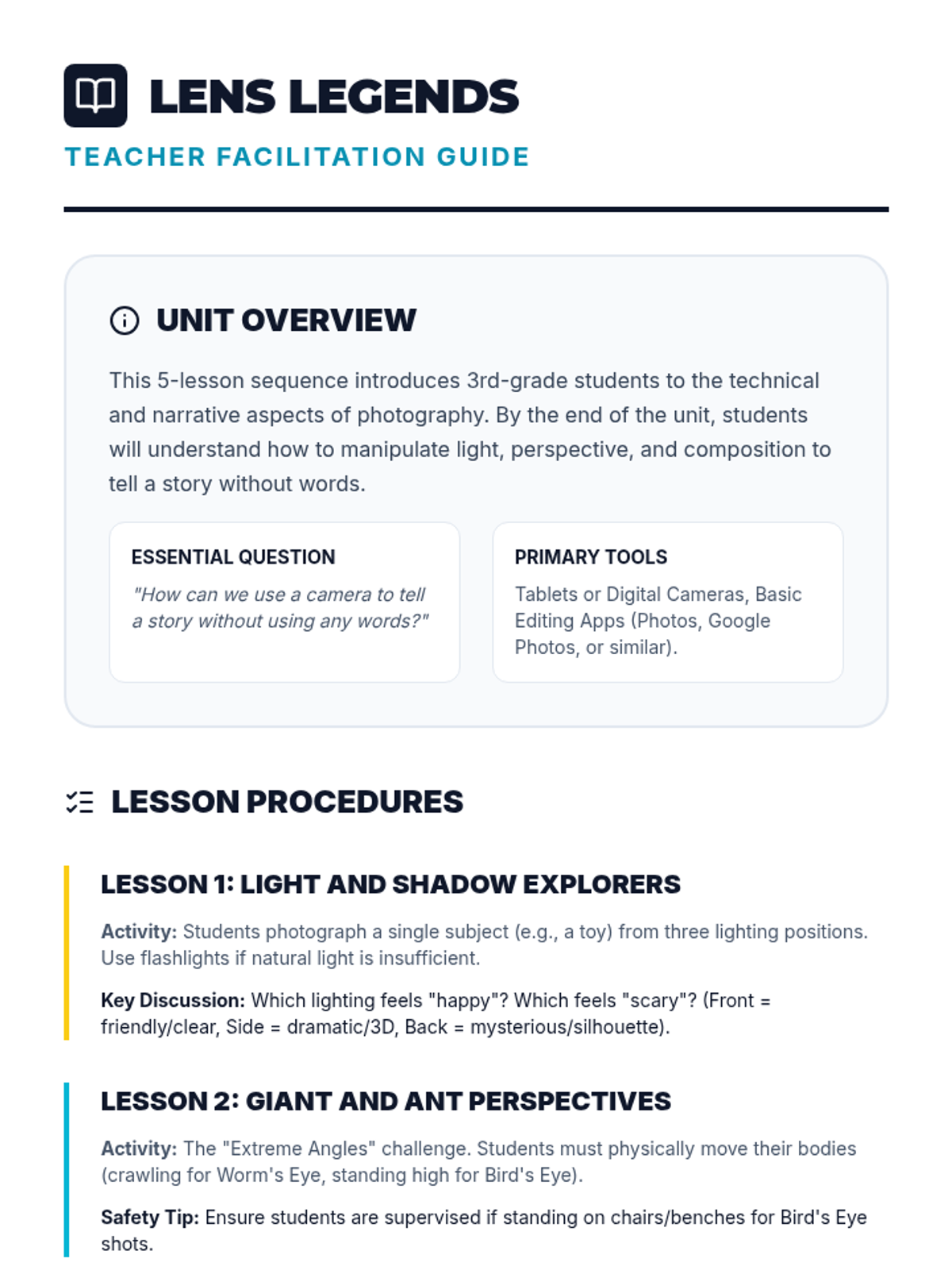
Fundamental techniques for drawing, painting, sculpture, and photography alongside modern digital design principles. Analyzes historical artistic movements while building skills in printmaking and graphic media.
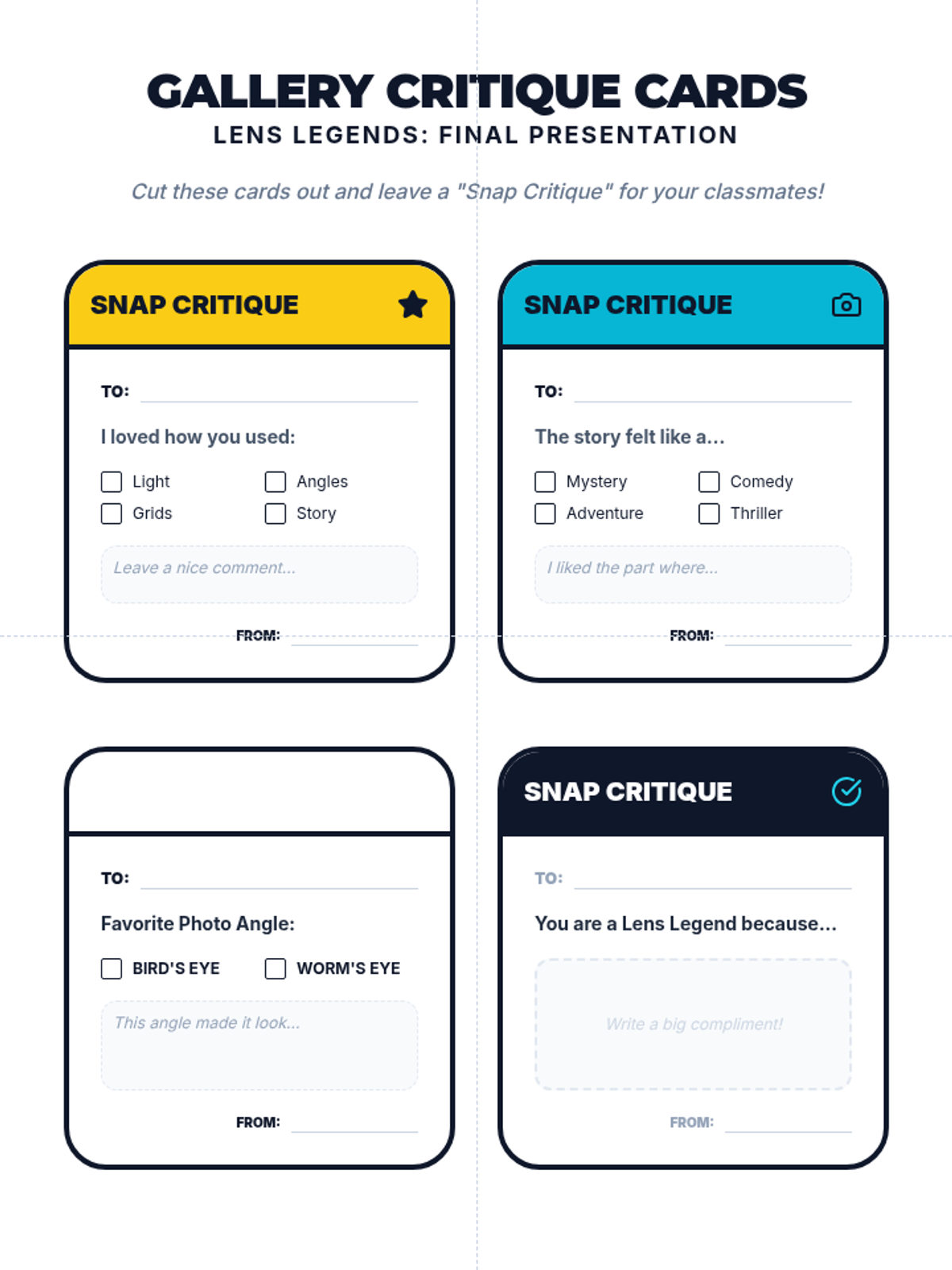
Students select their best work, perform basic digital edits like cropping, and present their photo essays in a final gallery walk.
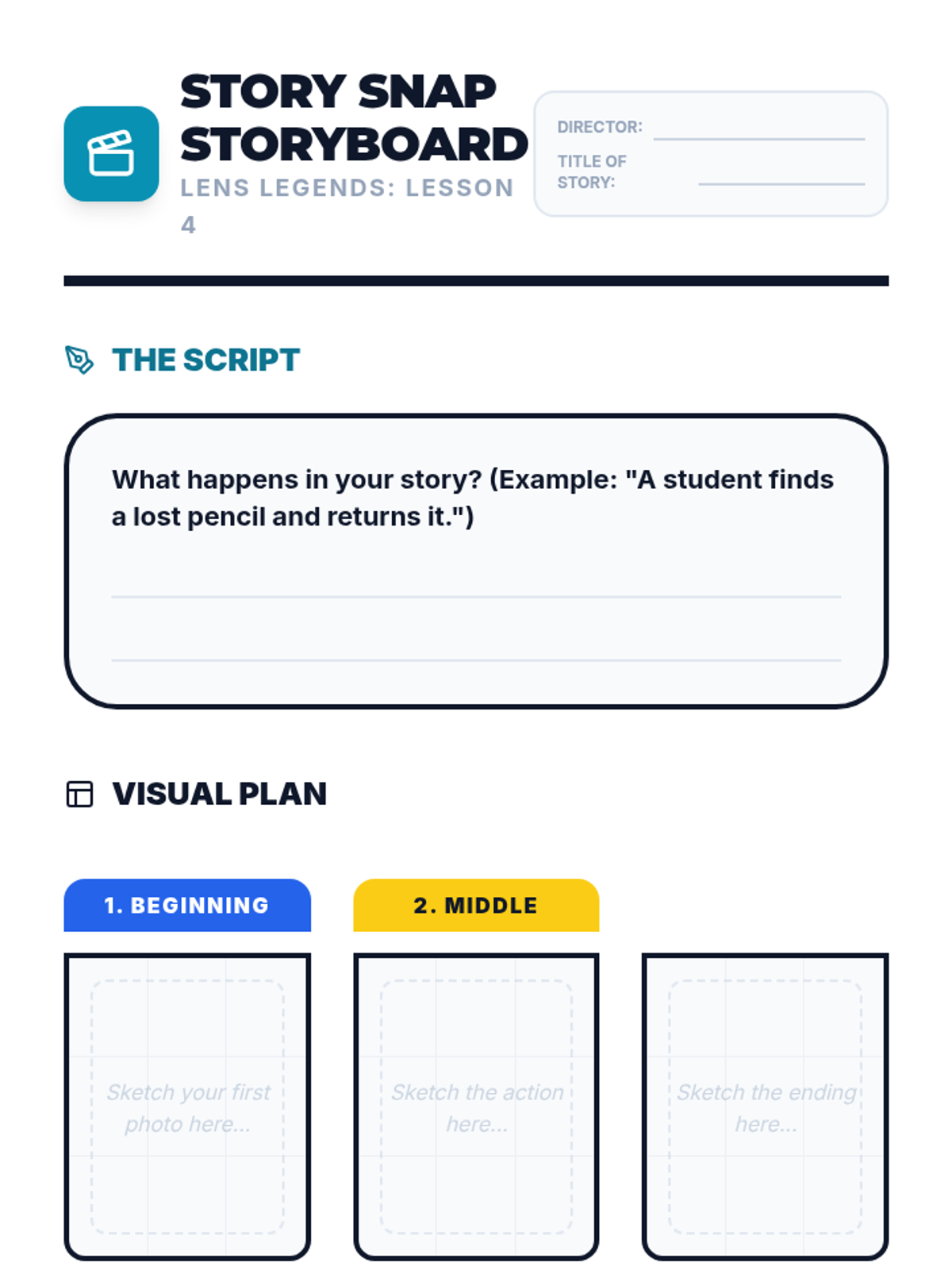
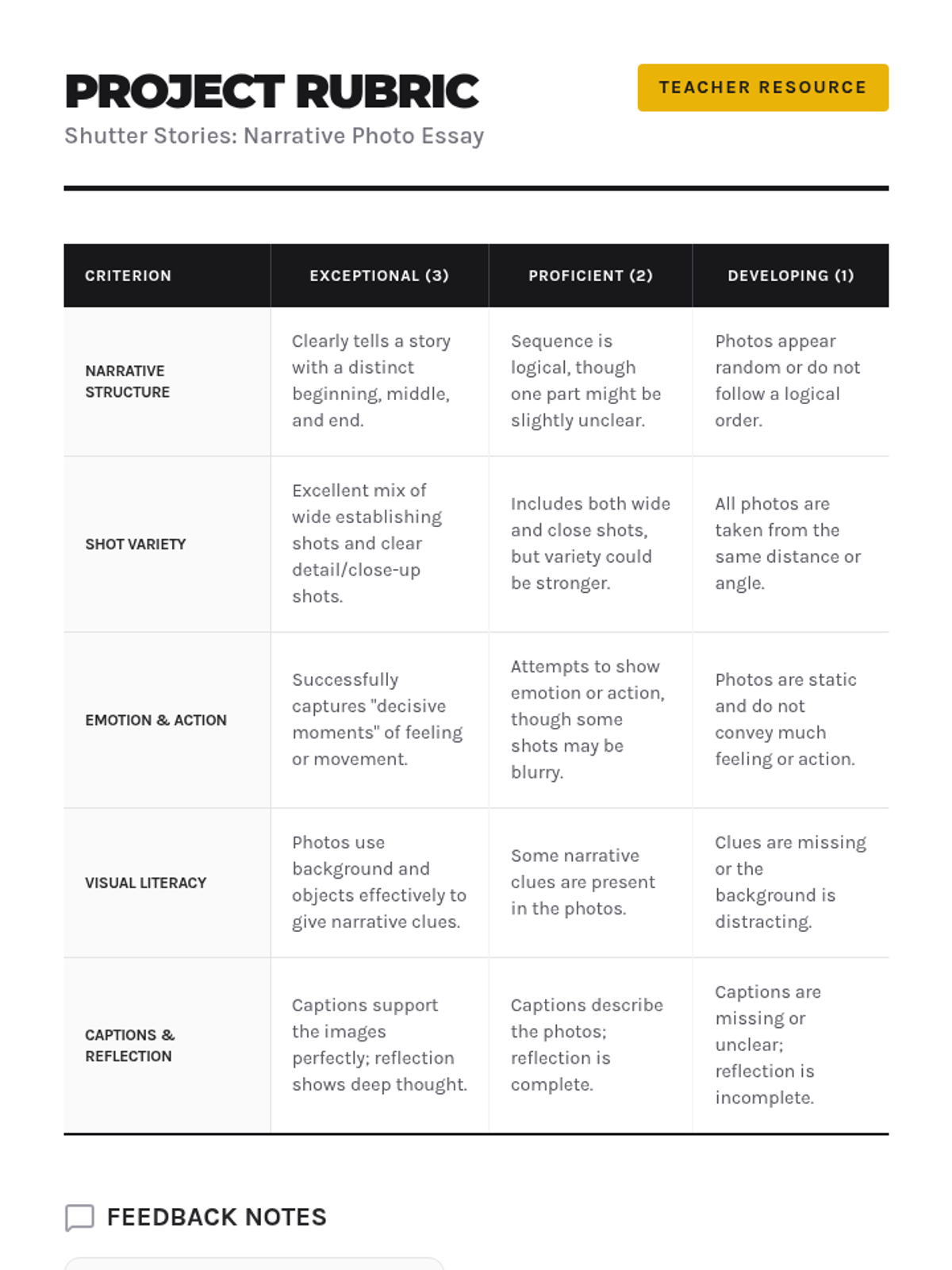
Students learn to capture a three-part narrative (Beginning, Middle, End) through a sequence of photos without using words.
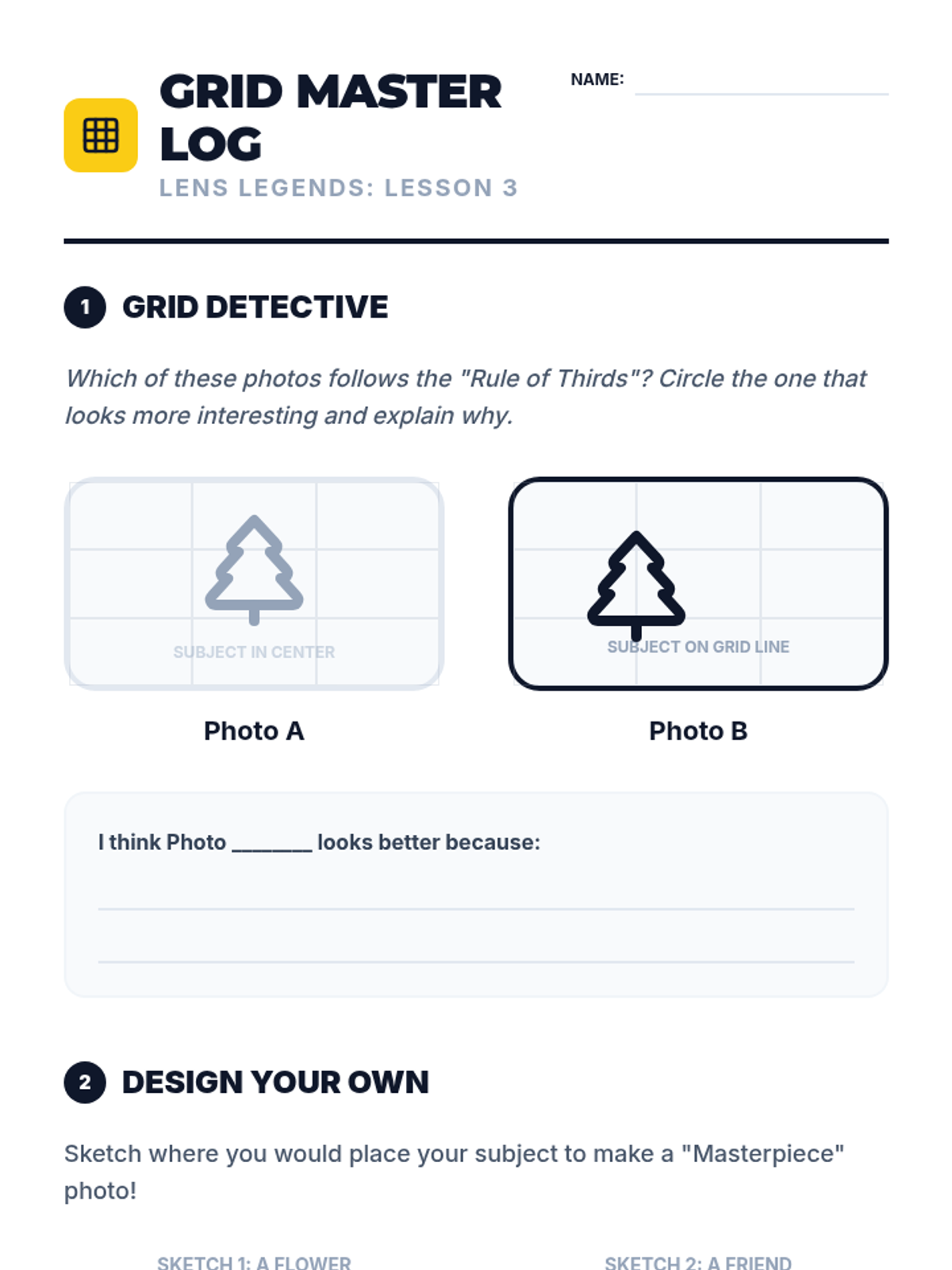
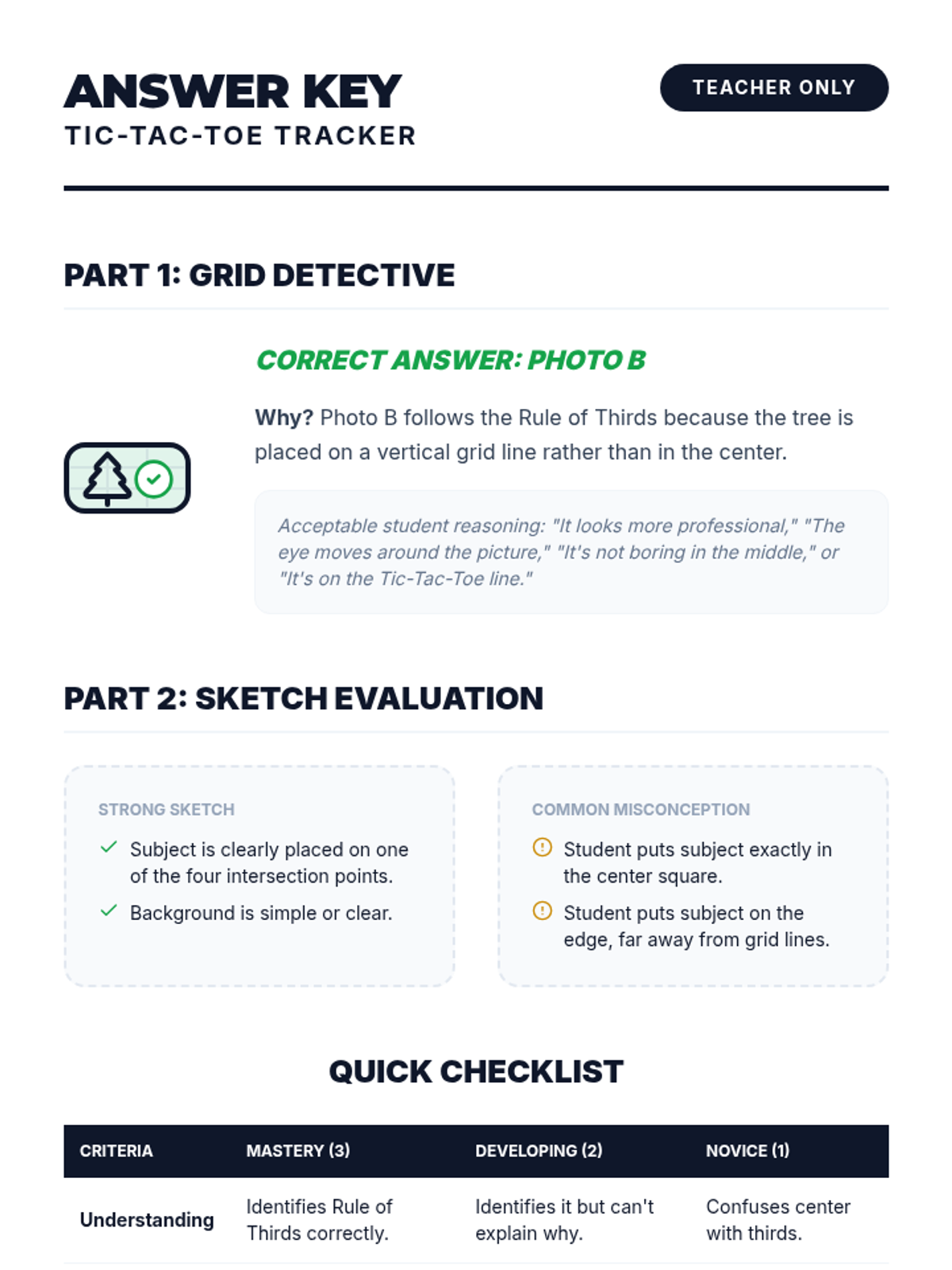
Students learn to use camera grids and the 'Tic-Tac-Toe' rule to place subjects off-center for more engaging compositions.
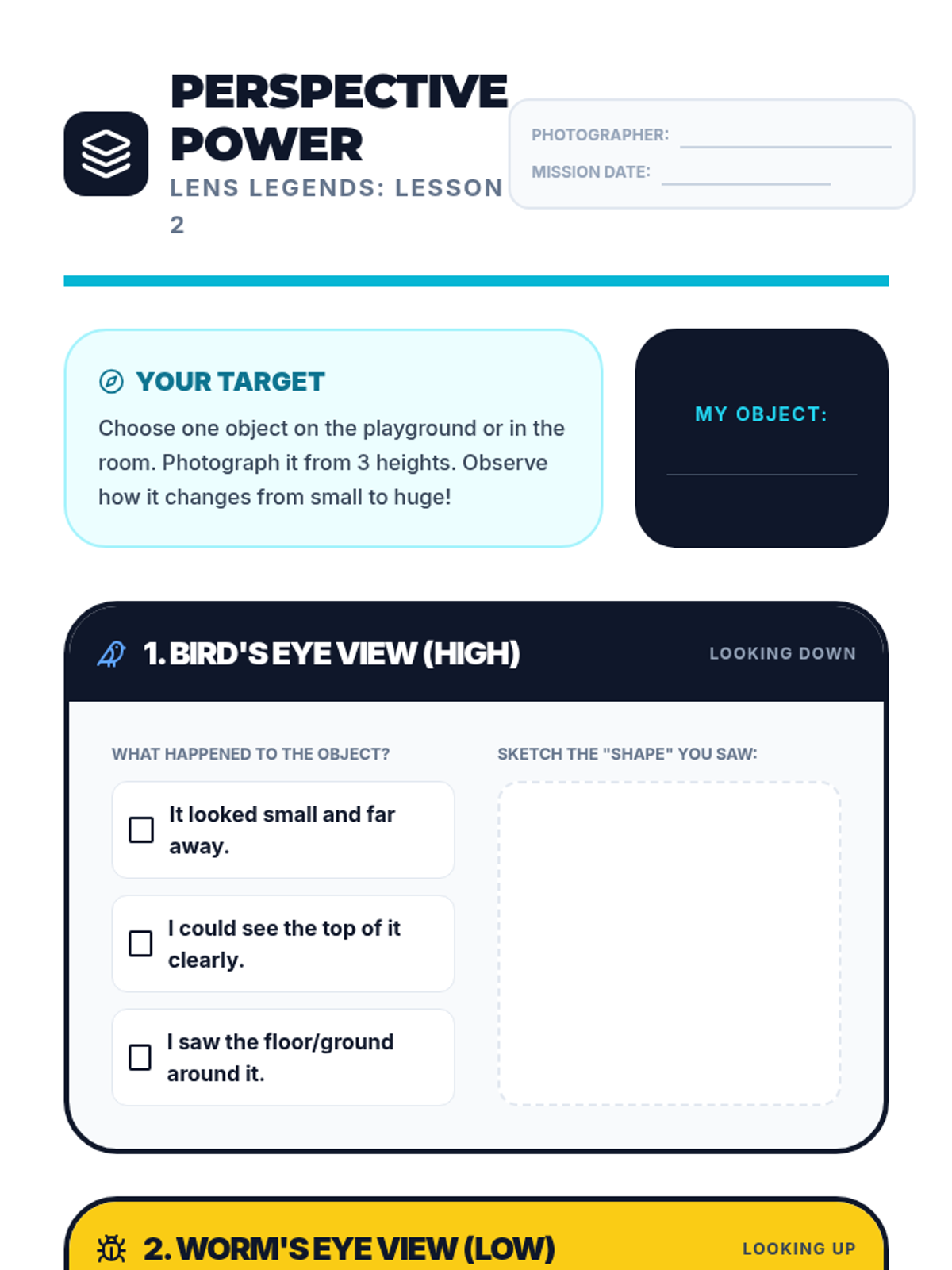
Students explore Bird's Eye and Worm's Eye views to understand how physical perspective changes the mood and size of subjects in a photo.
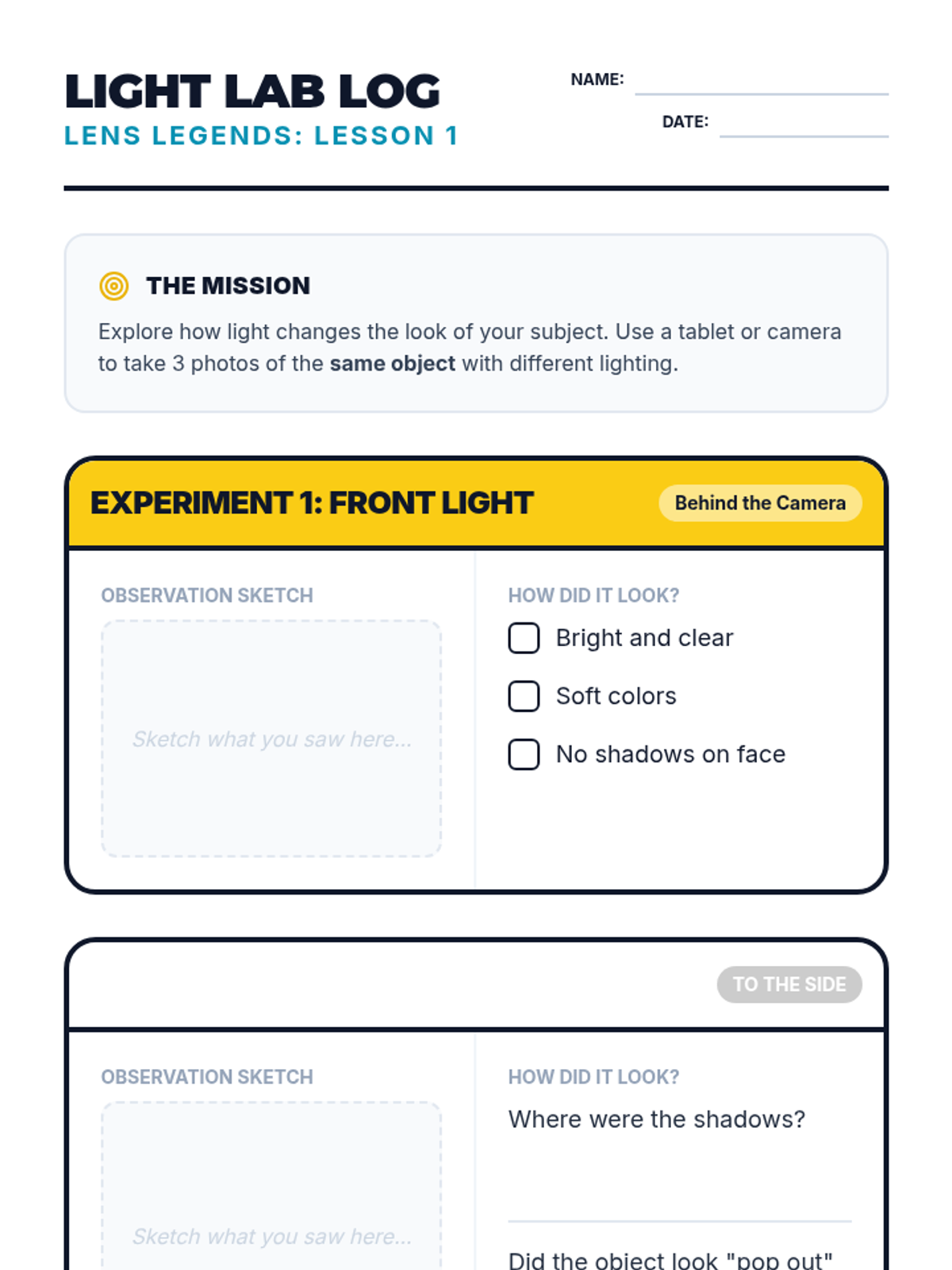
Students investigate how light sources change the appearance of an object by photographing a subject with different lighting setups and participating in a 'light hunt'.
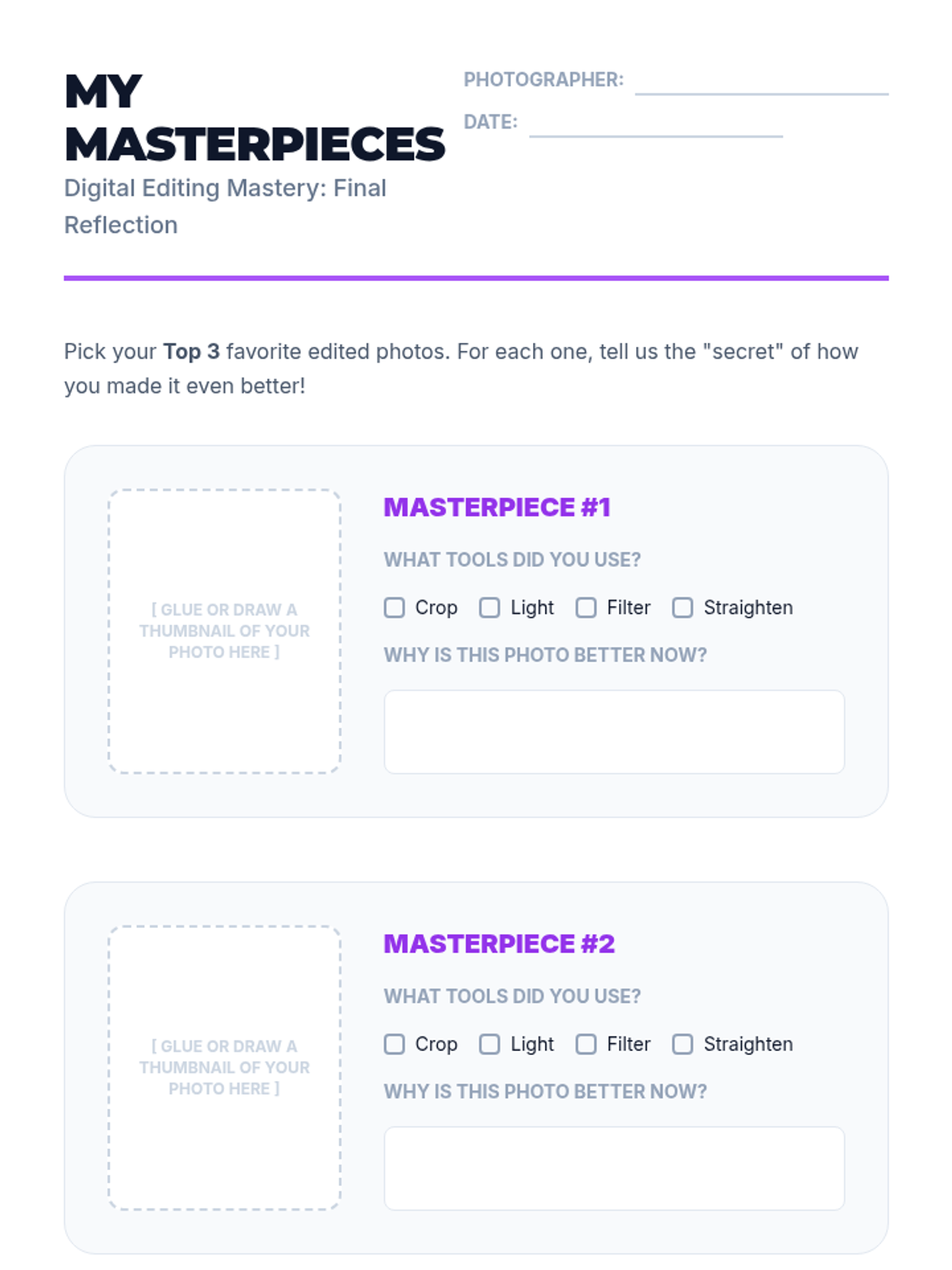
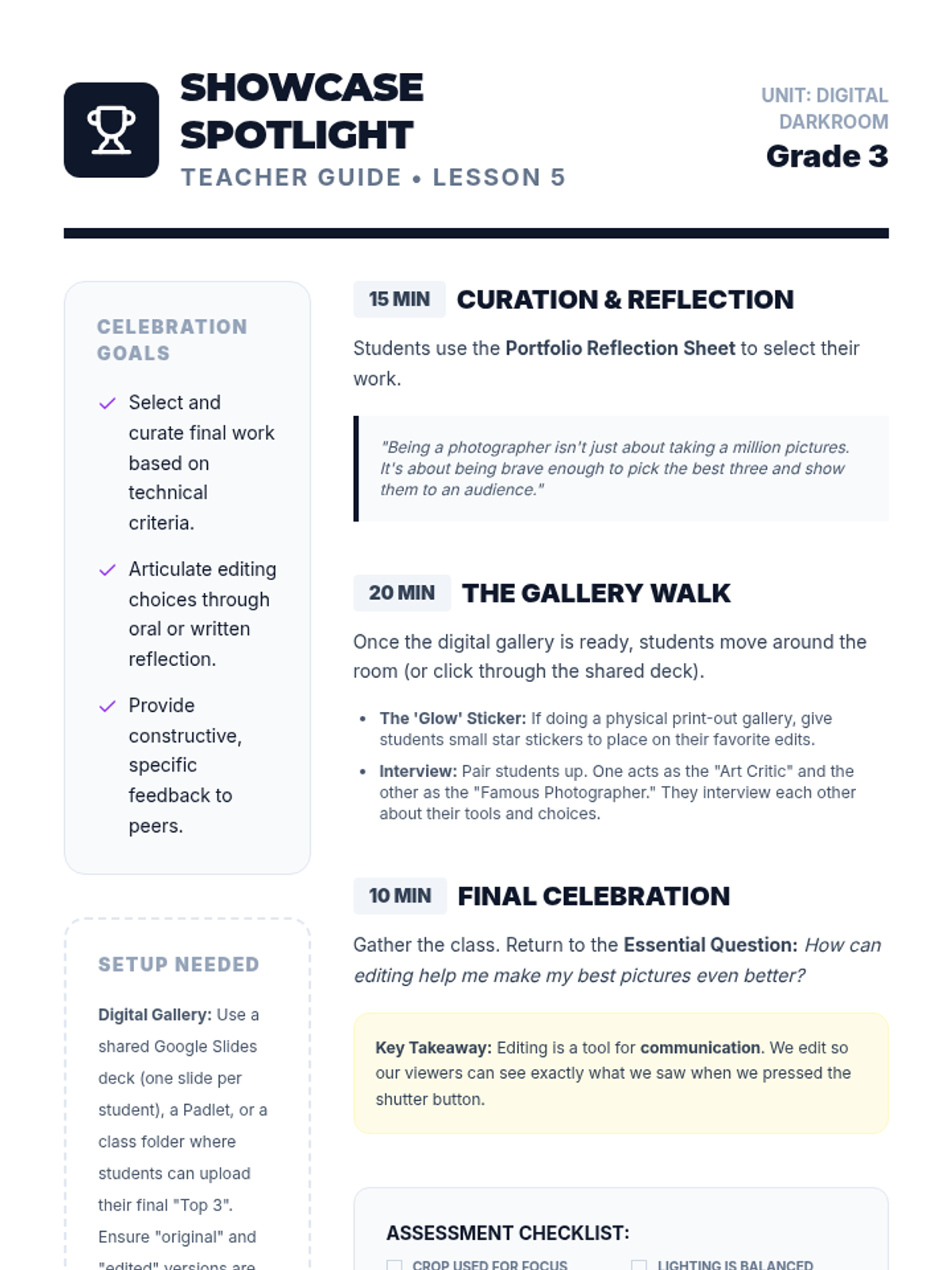
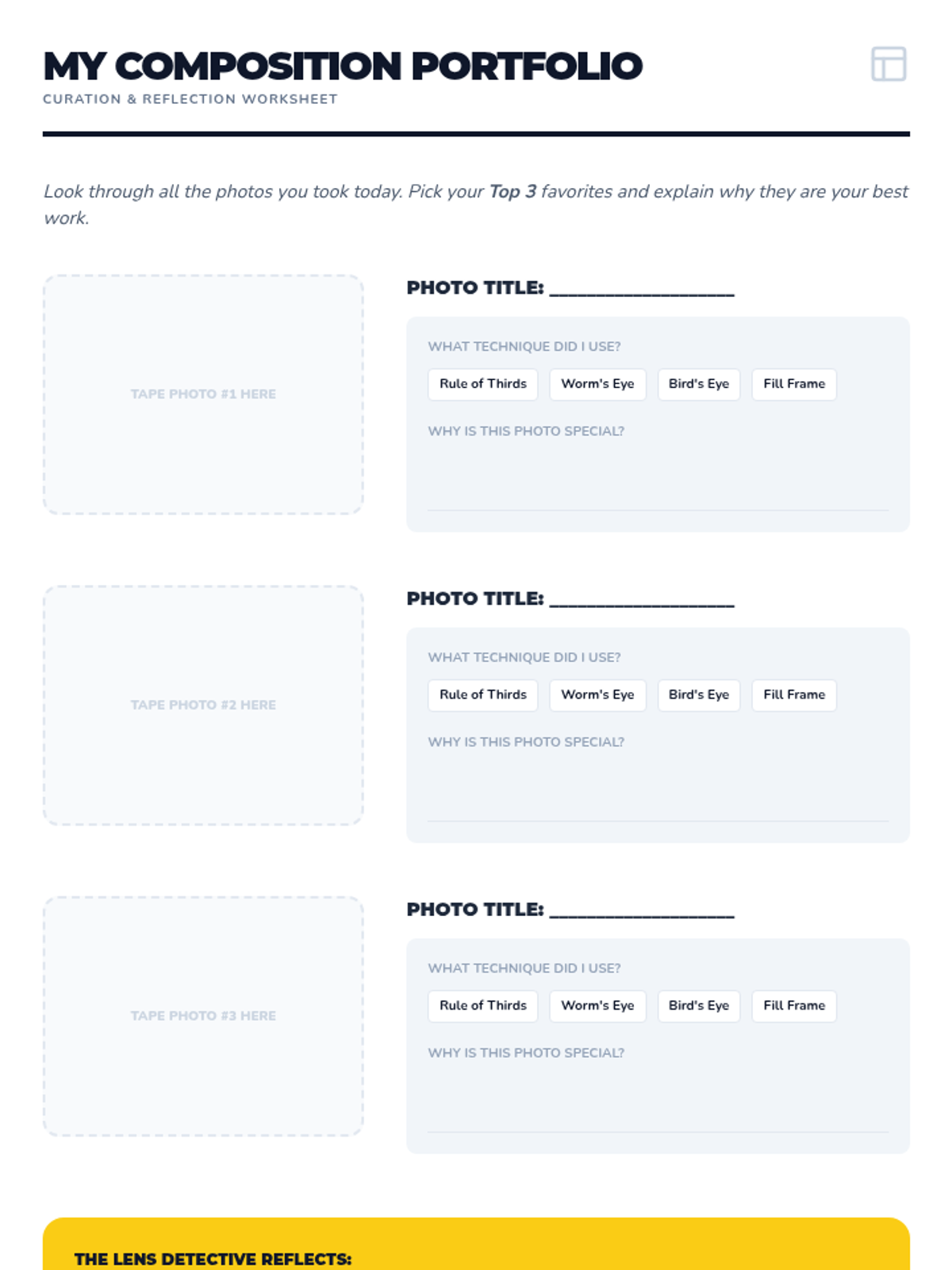
Students select their top 3 edited images for a final digital portfolio, reflecting on their changes and celebrating their work in a class showcase.
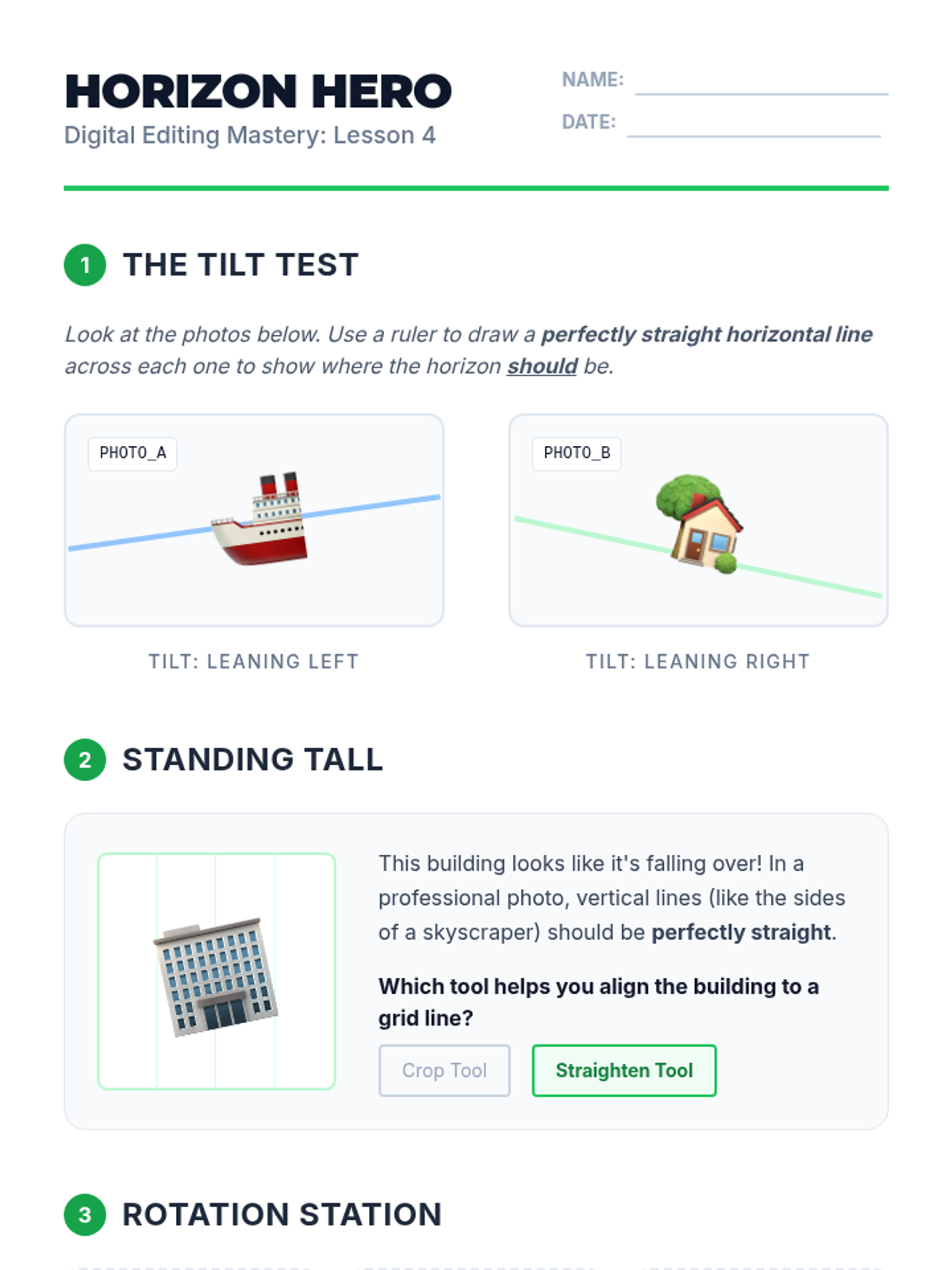
Learners practice straightening crooked horizon lines and rotating images, understanding how geometric alignment creates a professional look.
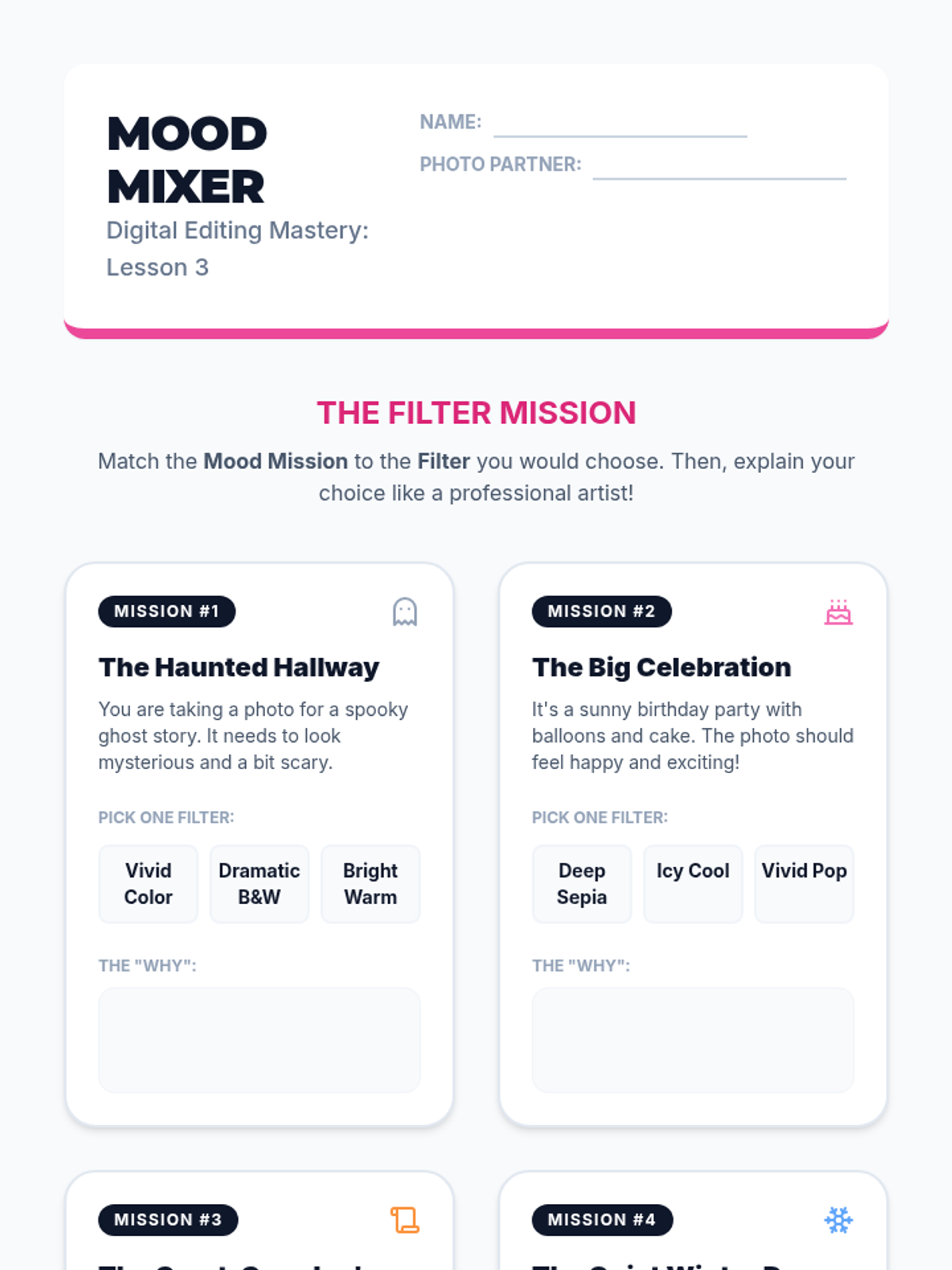
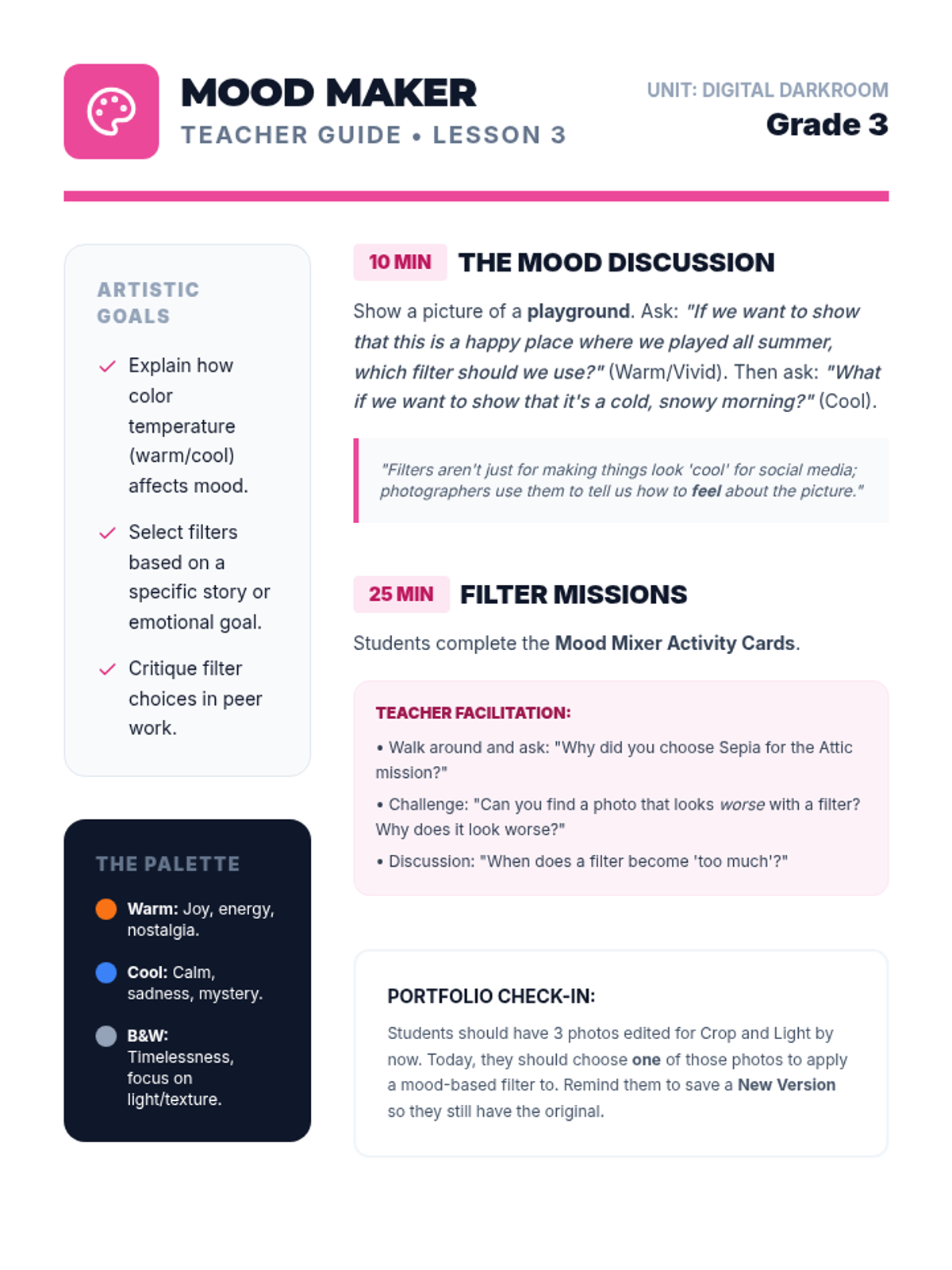
Students explore how color filters (B&W, sepia, cool/warm tones) change the feeling of a photo and discuss the artistic choices behind them.
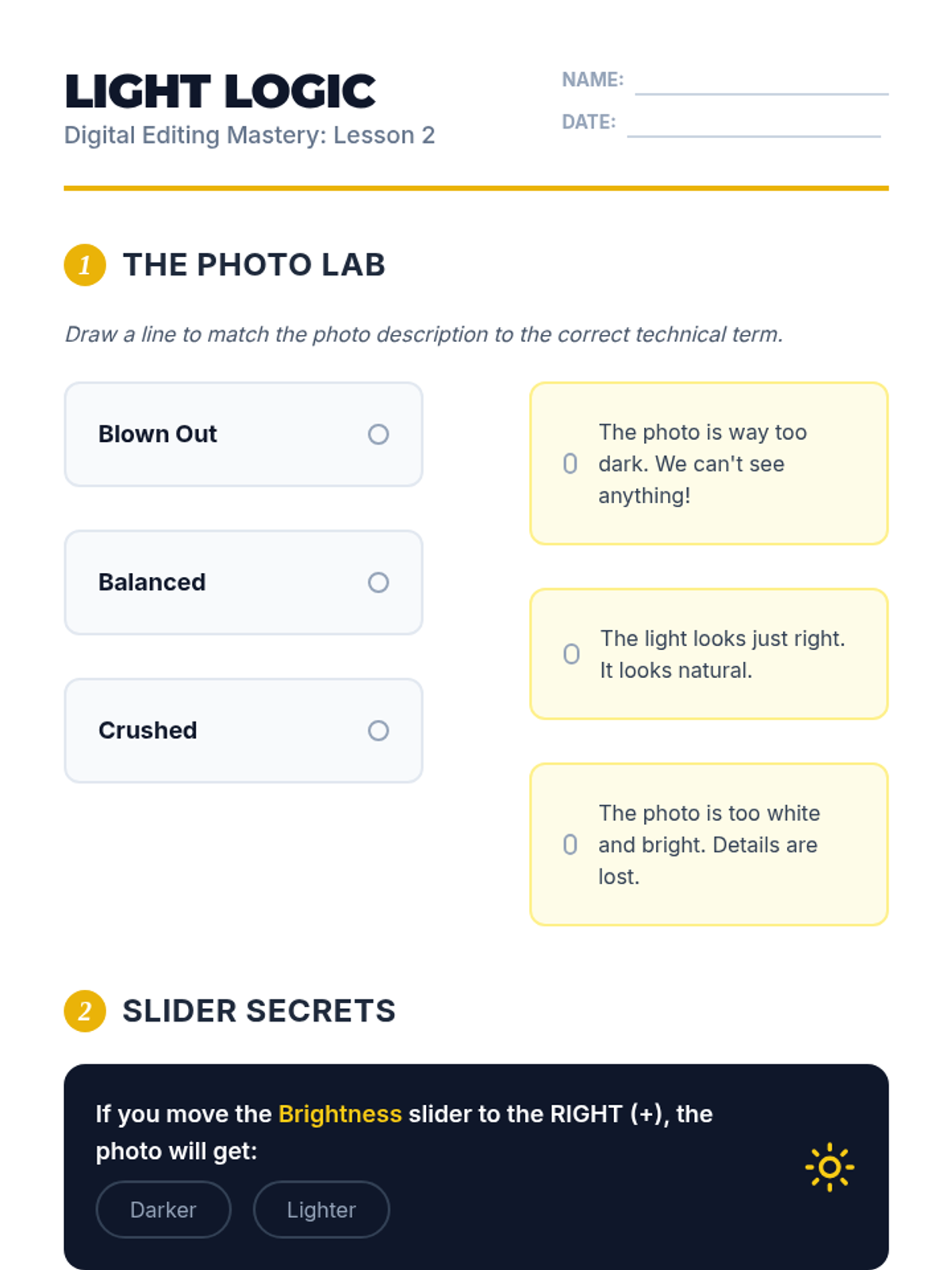
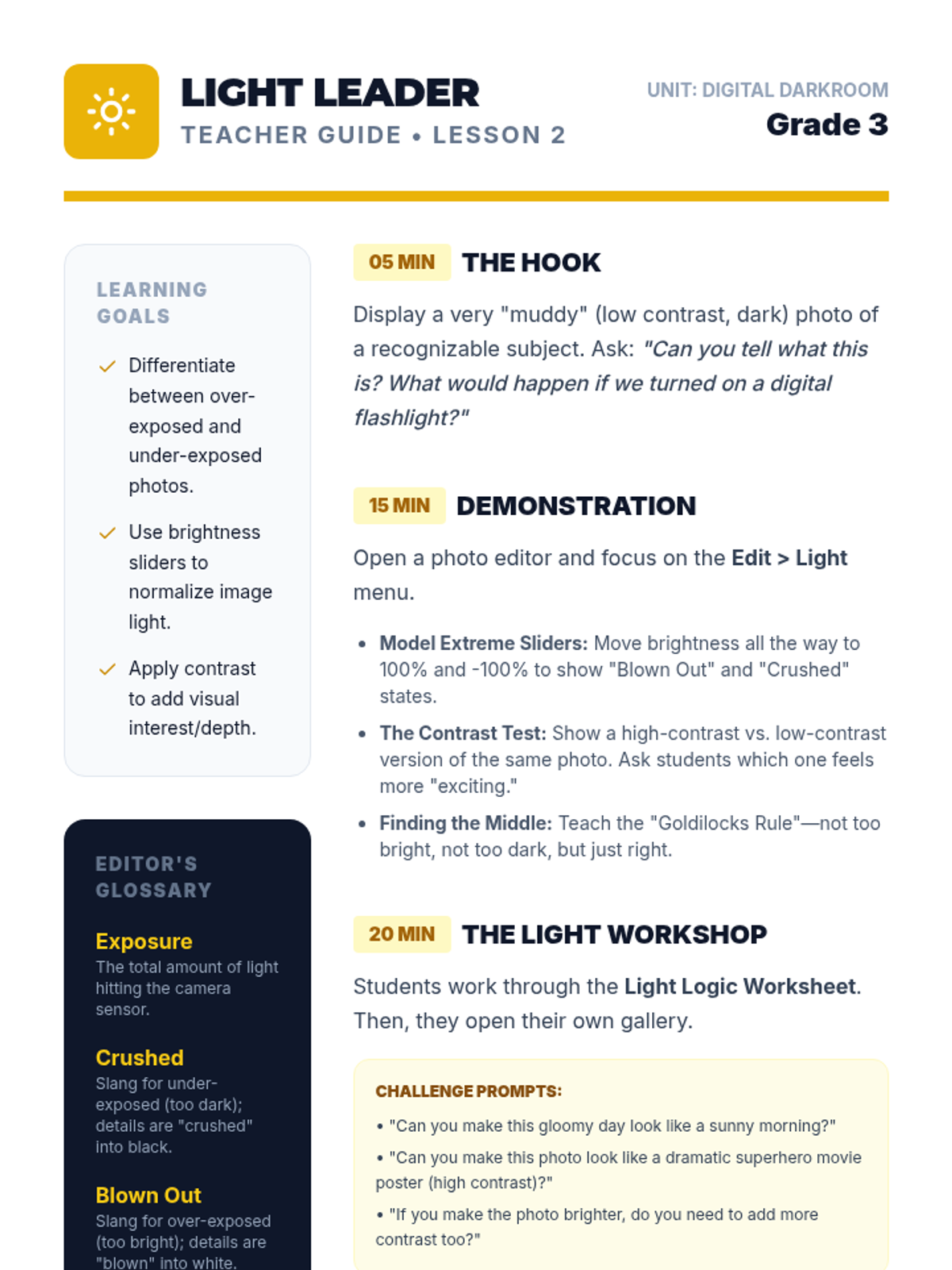
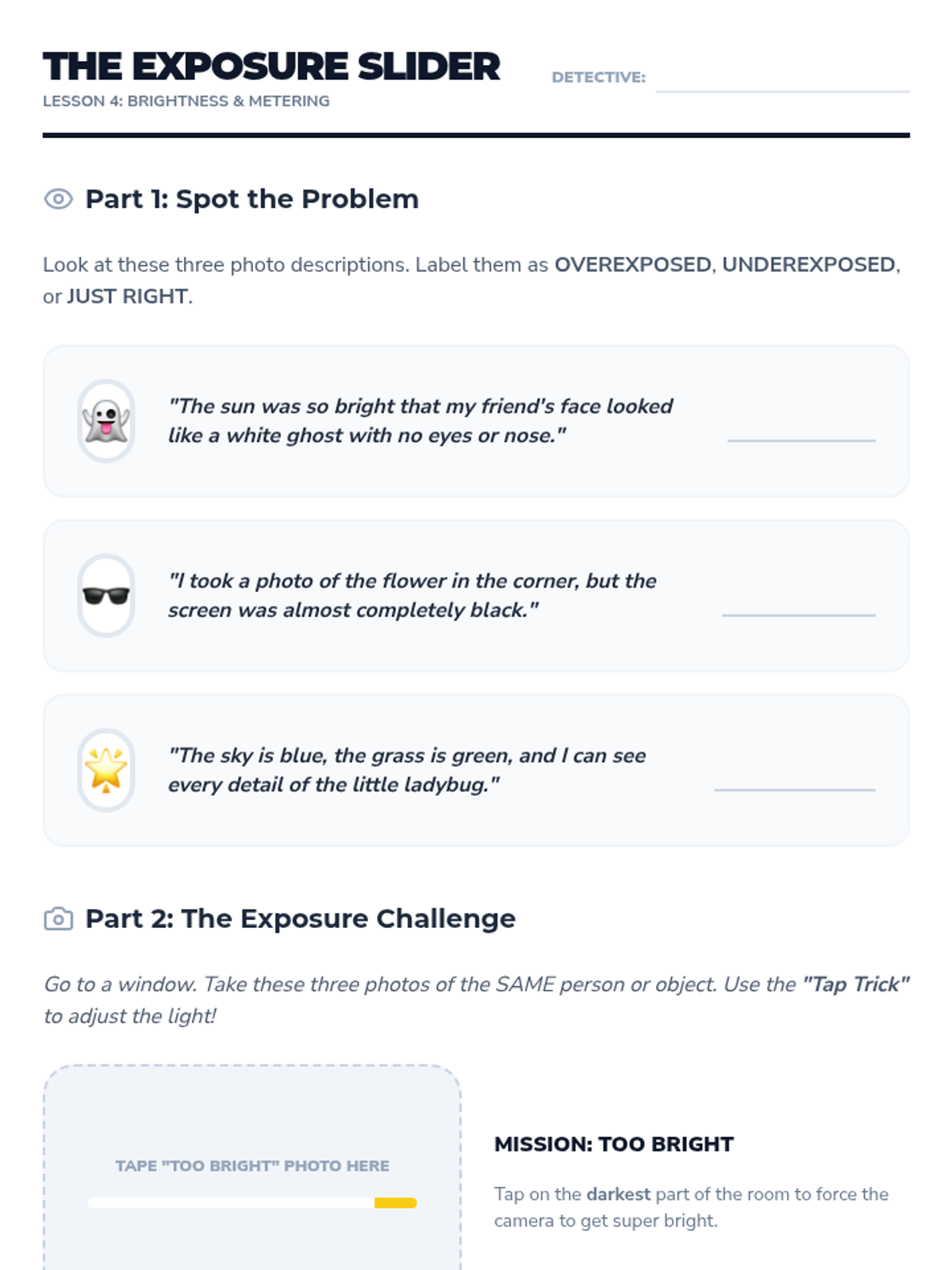
Using simple sliders, students adjust brightness and contrast to balance exposure, learning to identify 'blown out' or 'crushed' images.
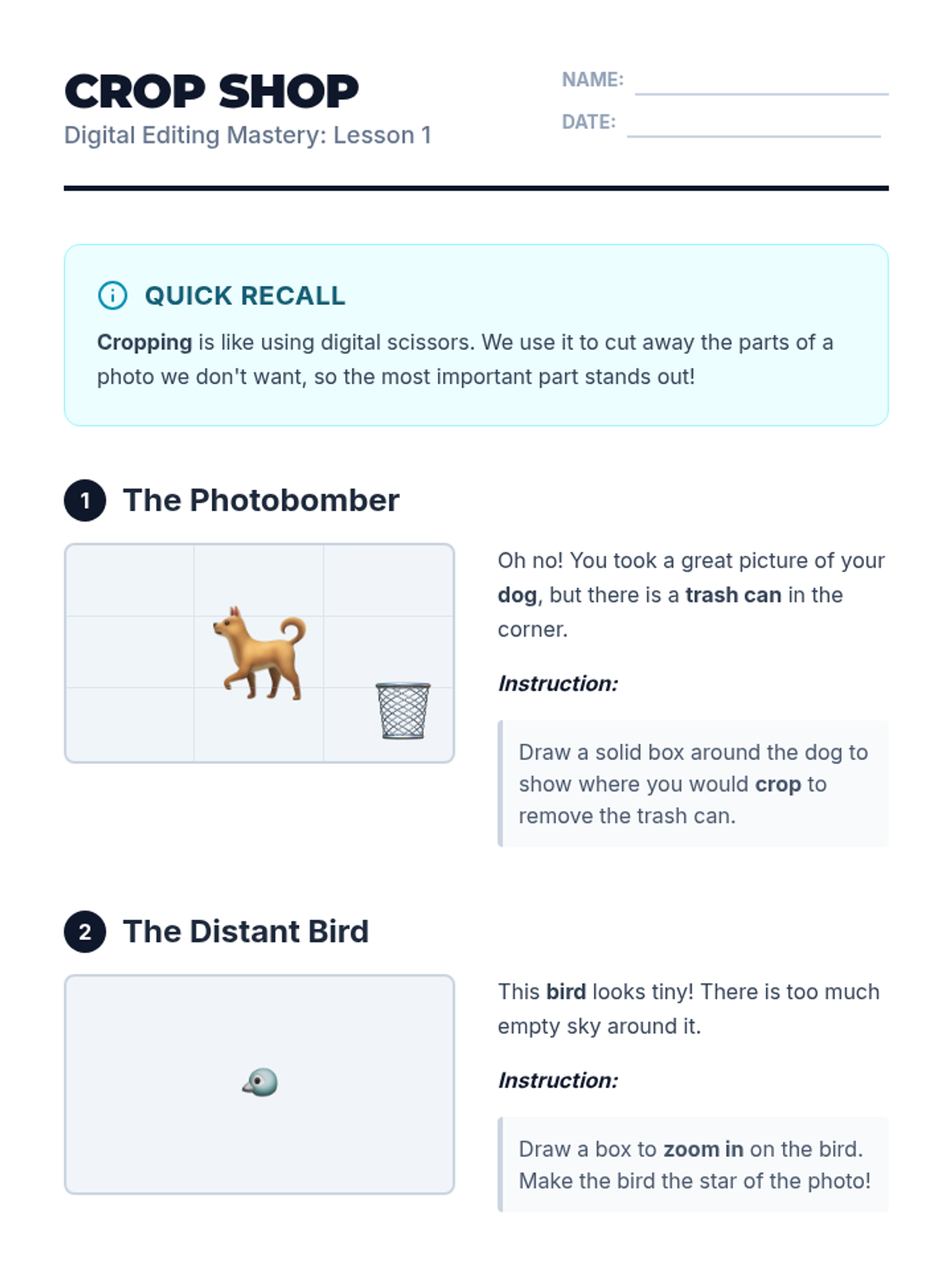
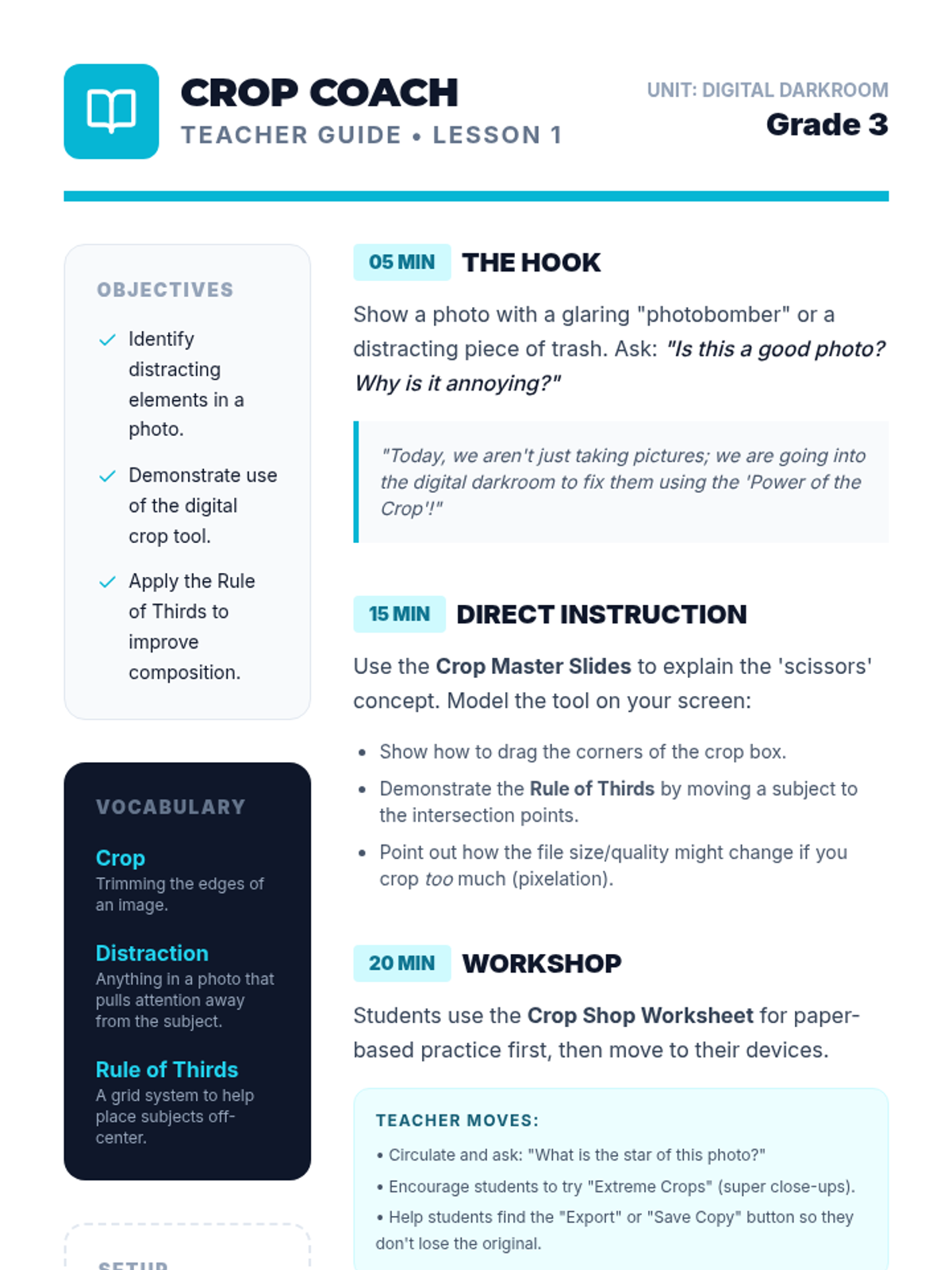
Students learn to use the crop tool to remove distracting background elements or improve the framing of a photo, comparing 'before' and 'after' results.
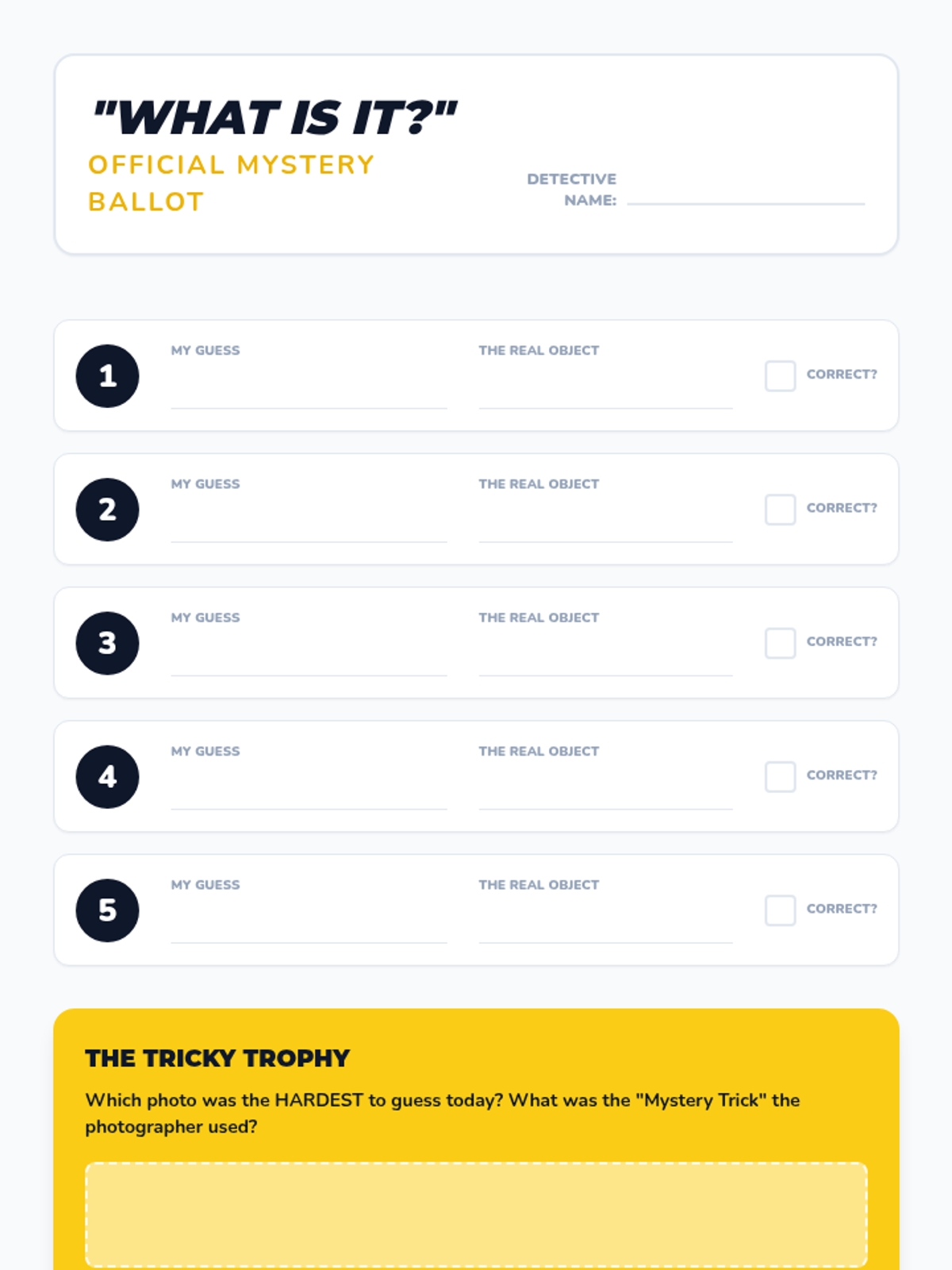
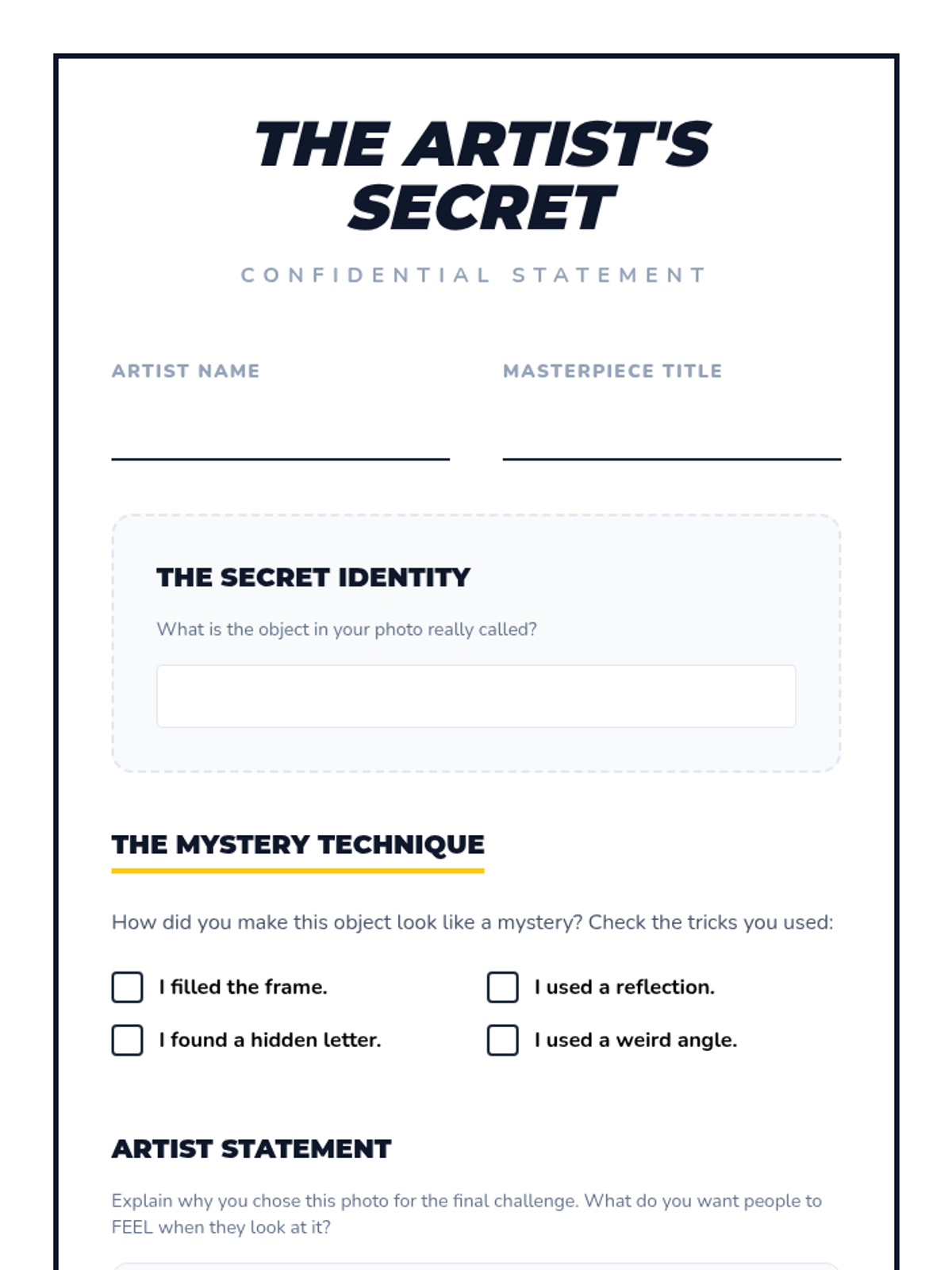
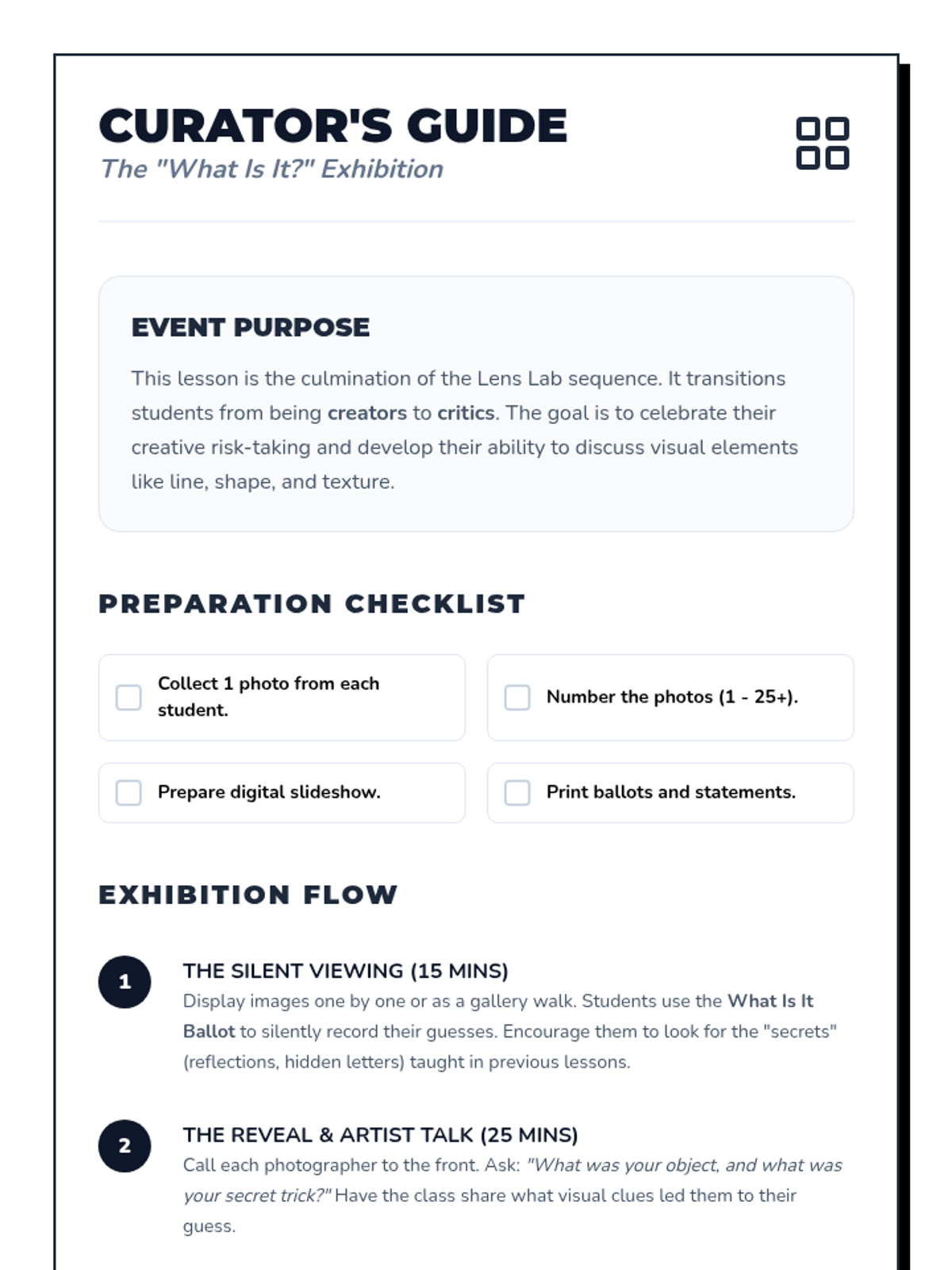
Students curate their abstract photos and participate in a class guessing game to discuss visual cues and abstract thinking.
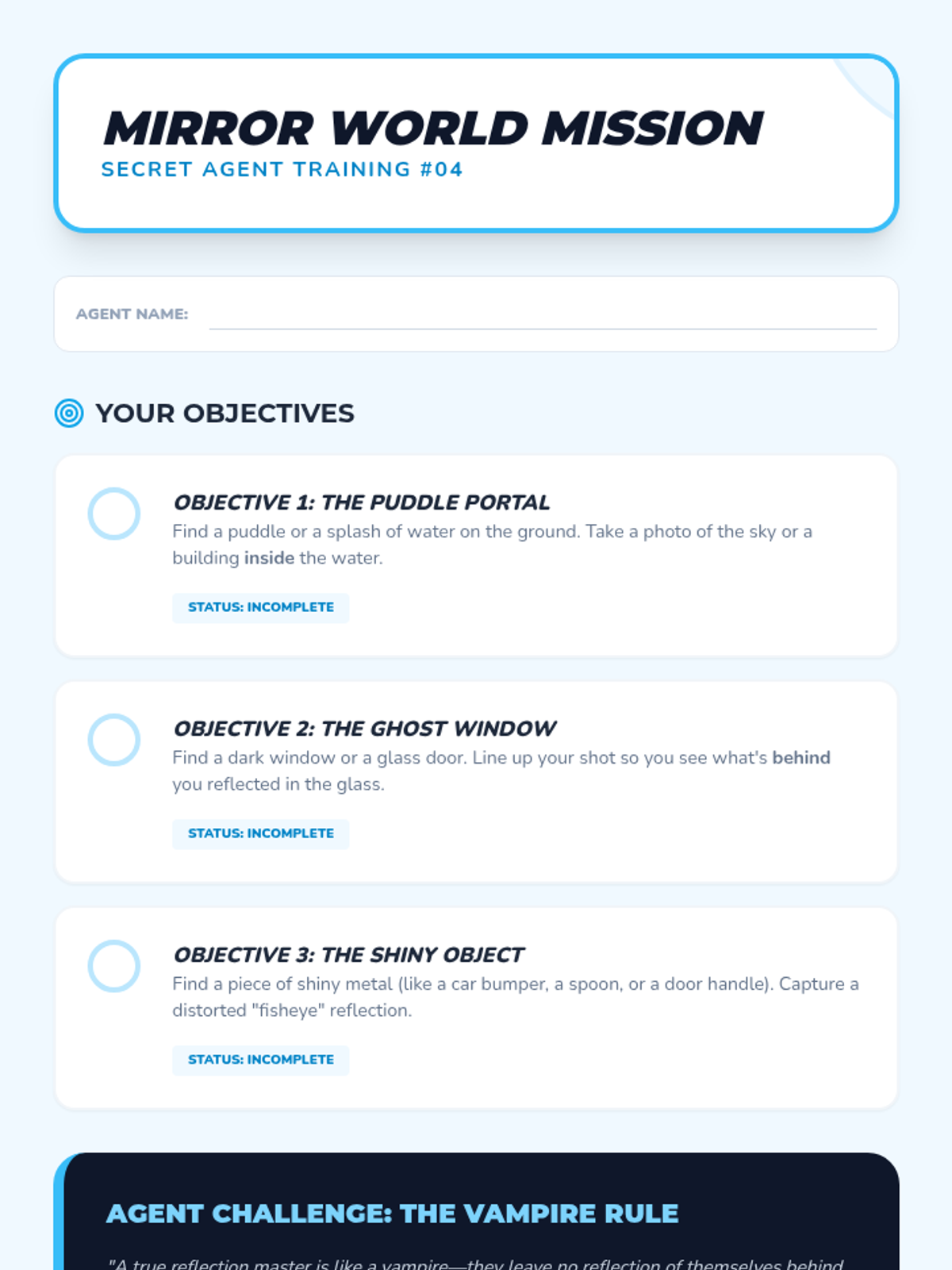
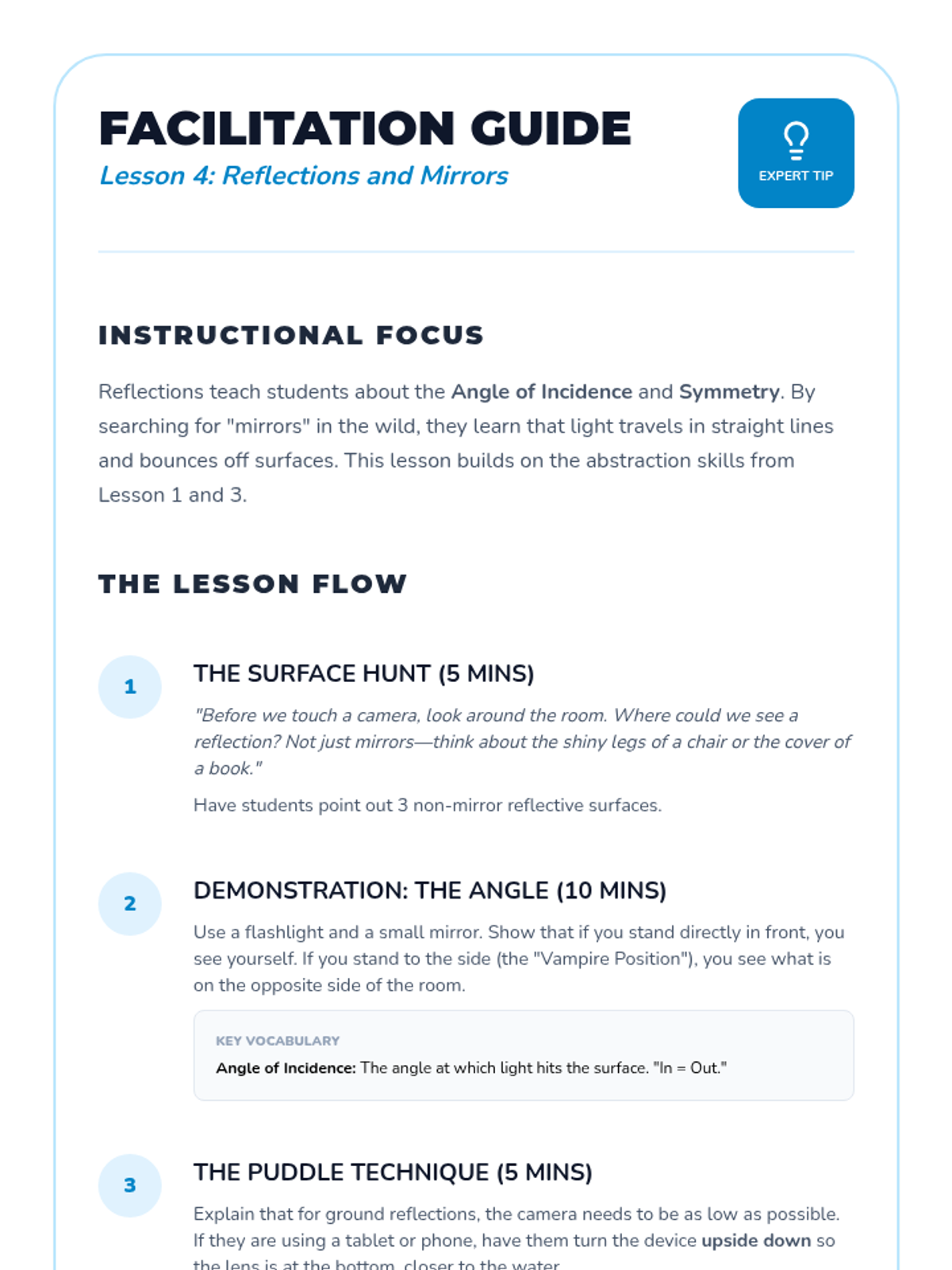
The class explores reflective surfaces like puddles and windows to practice creative composition and understand the angle of incidence.
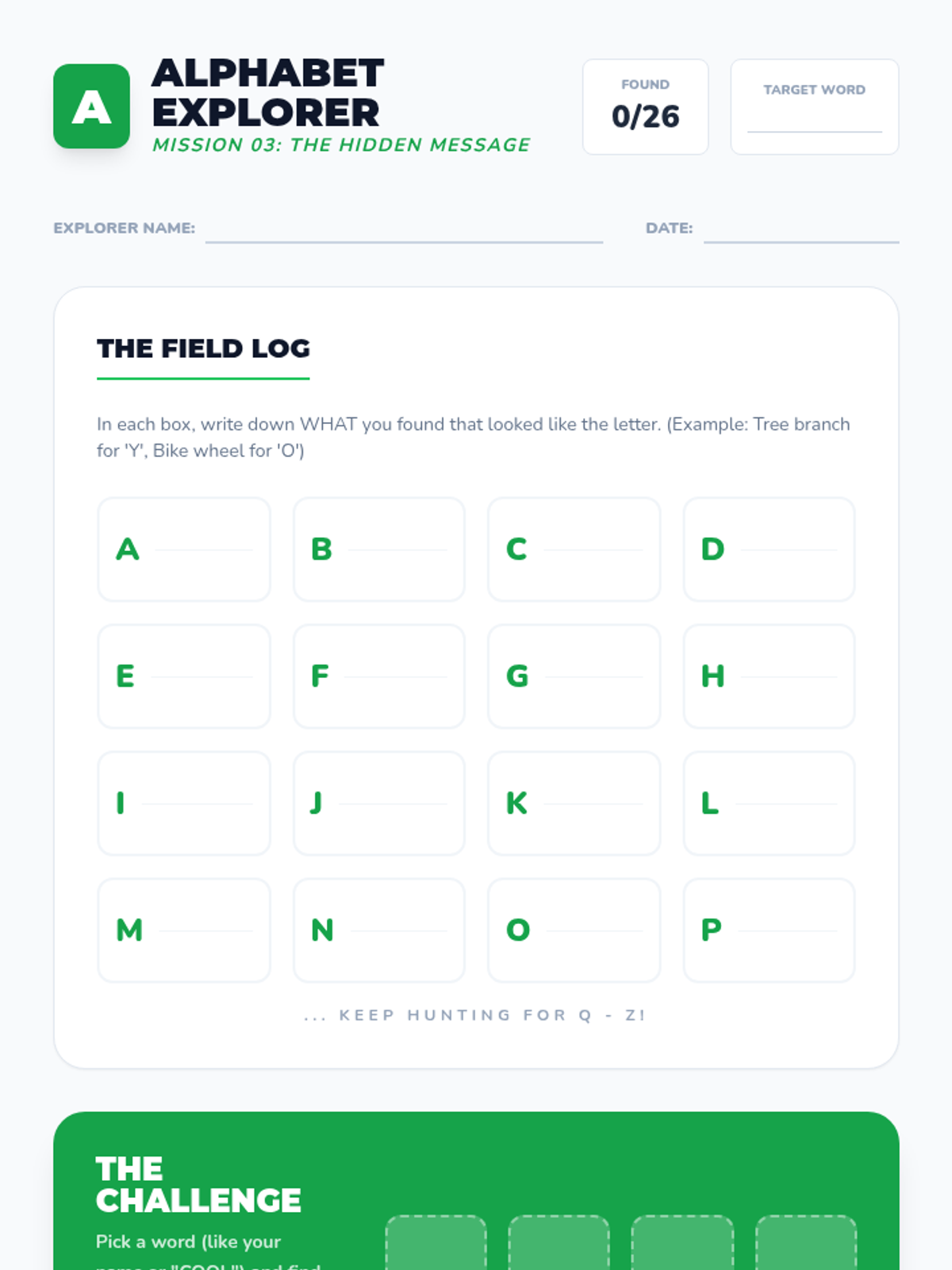
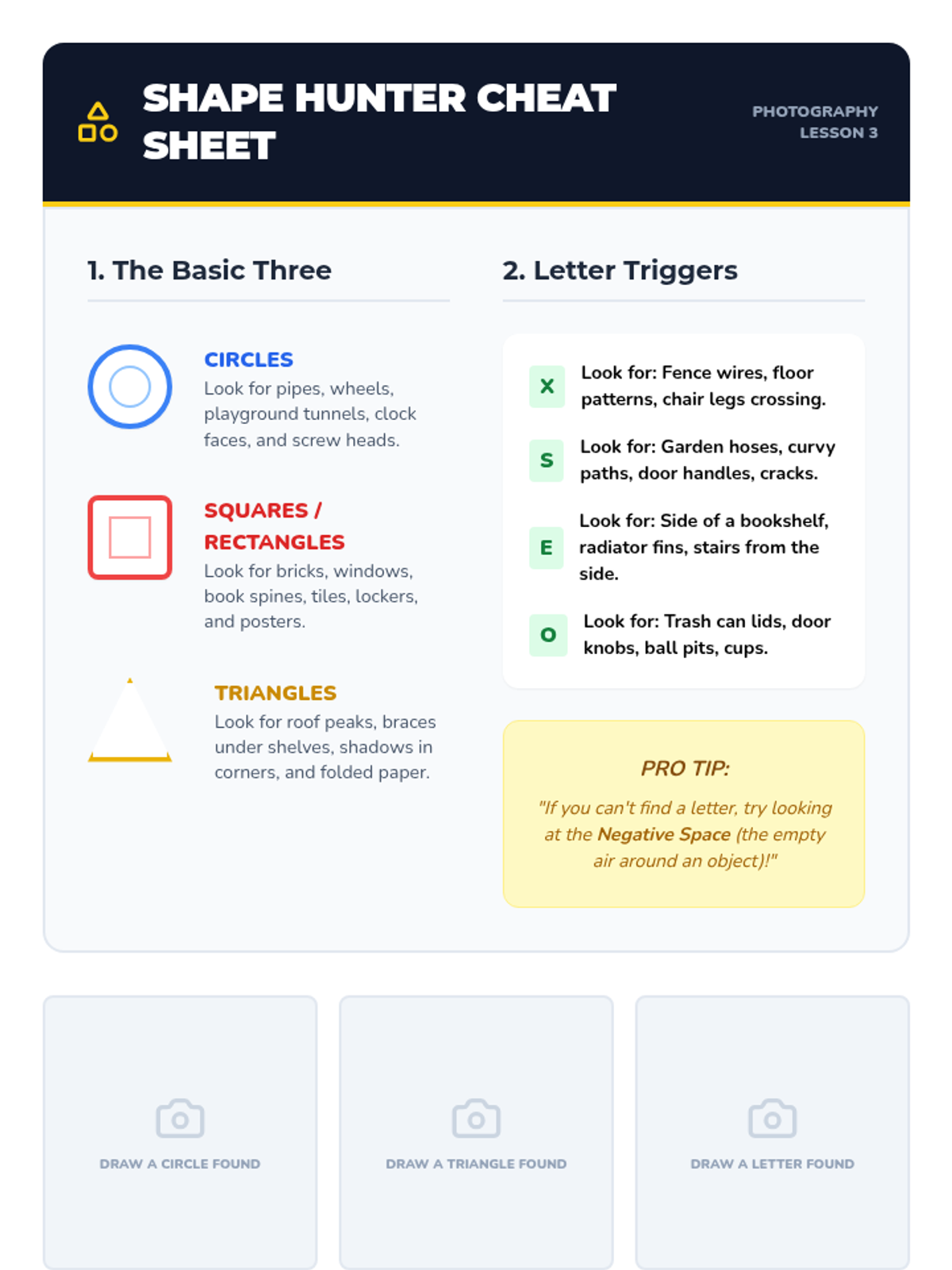
Students search for accidental alphabets and geometric shapes in their surroundings to improve framing and compositional awareness.
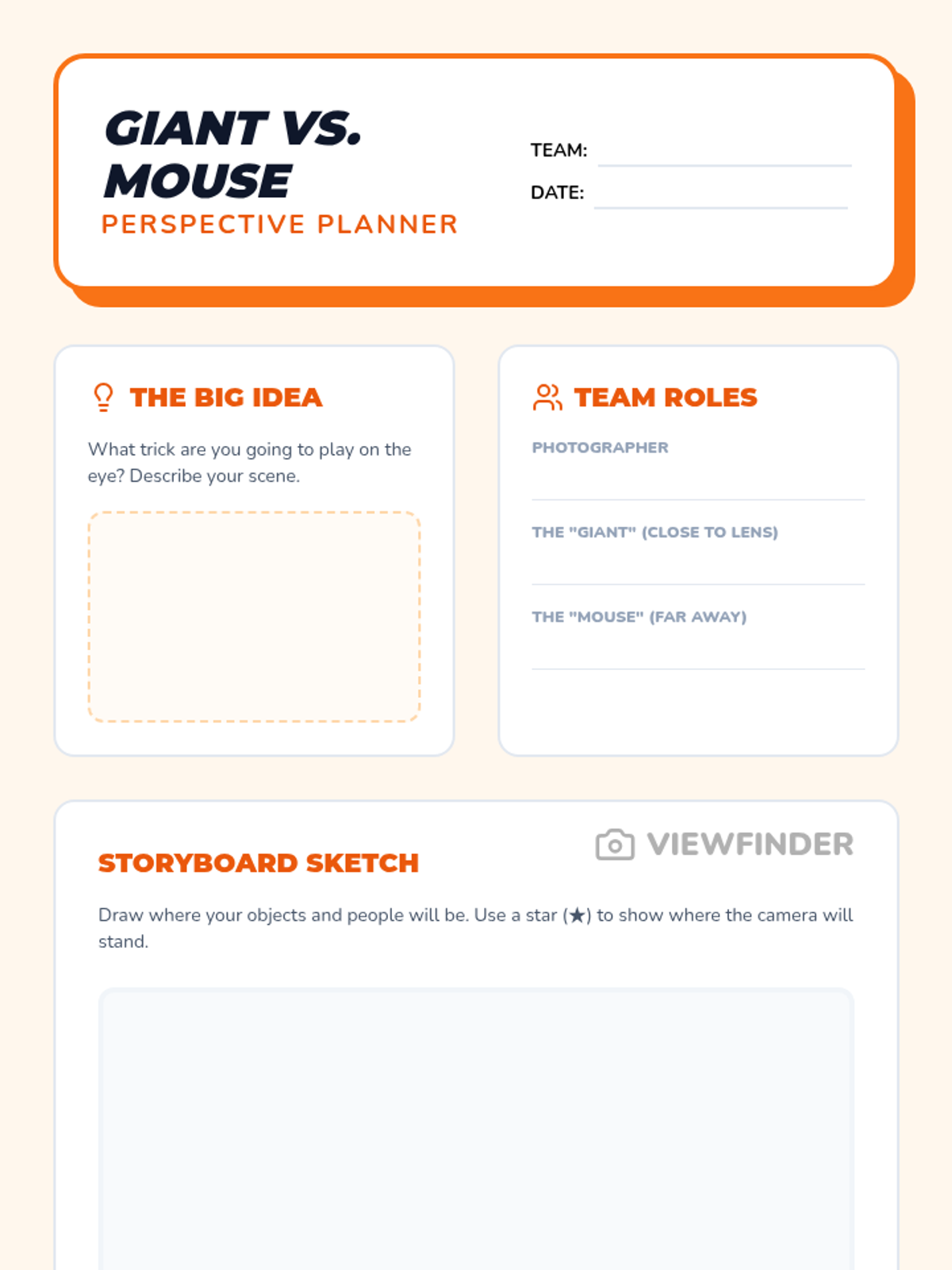
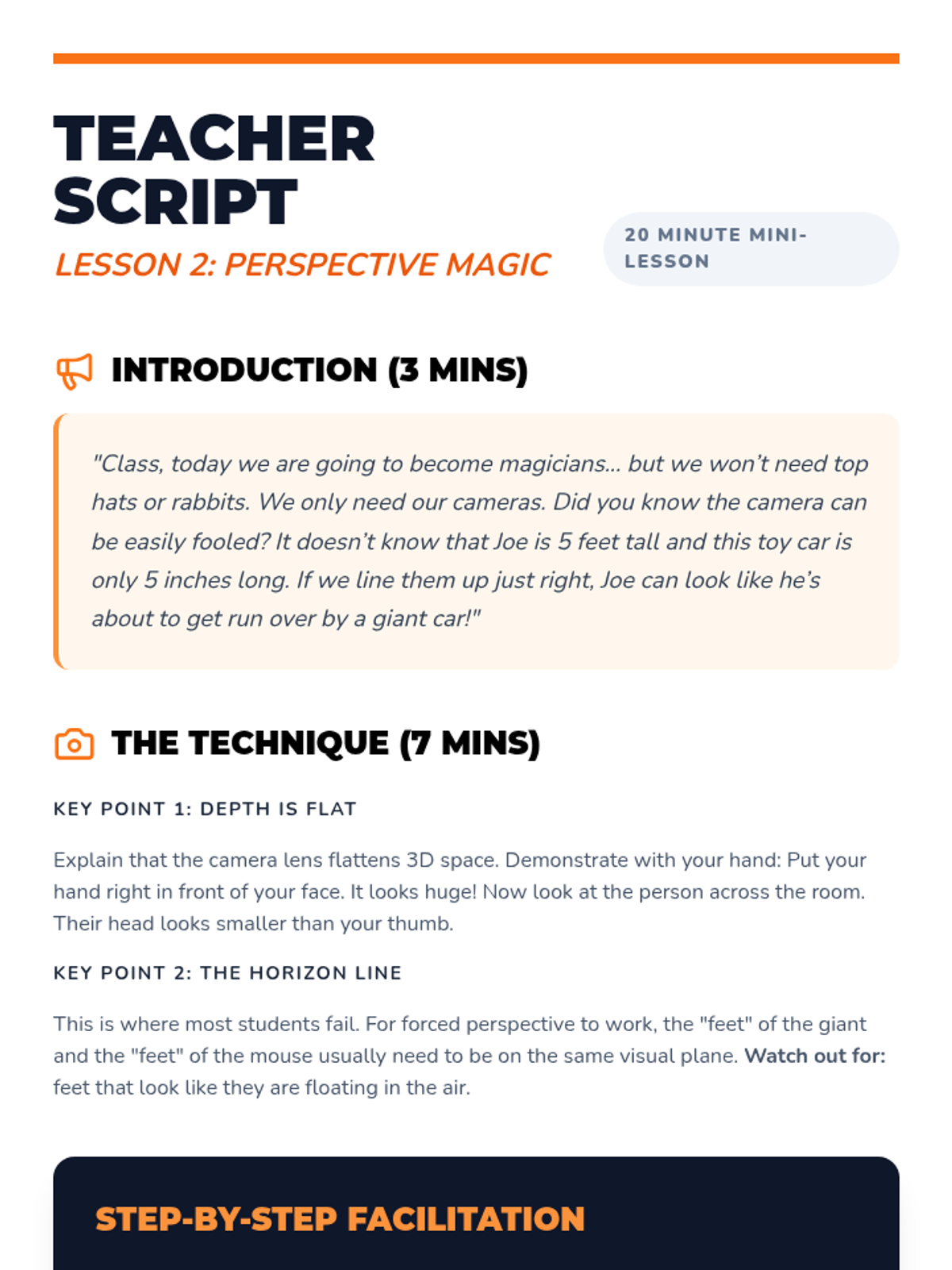
Learners discover optical illusions and experiment with distance to create forced perspective photographs where scale is distorted.
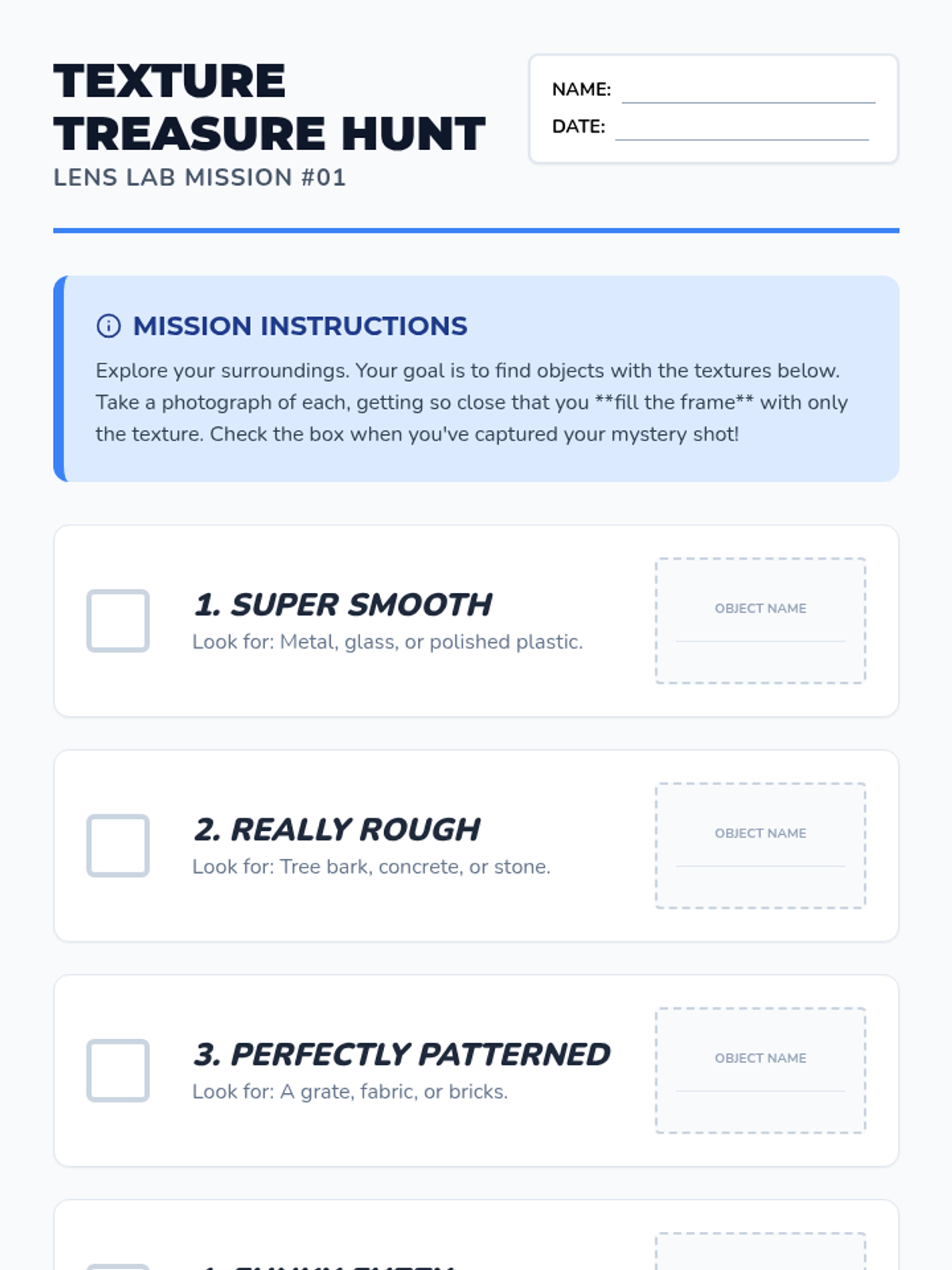
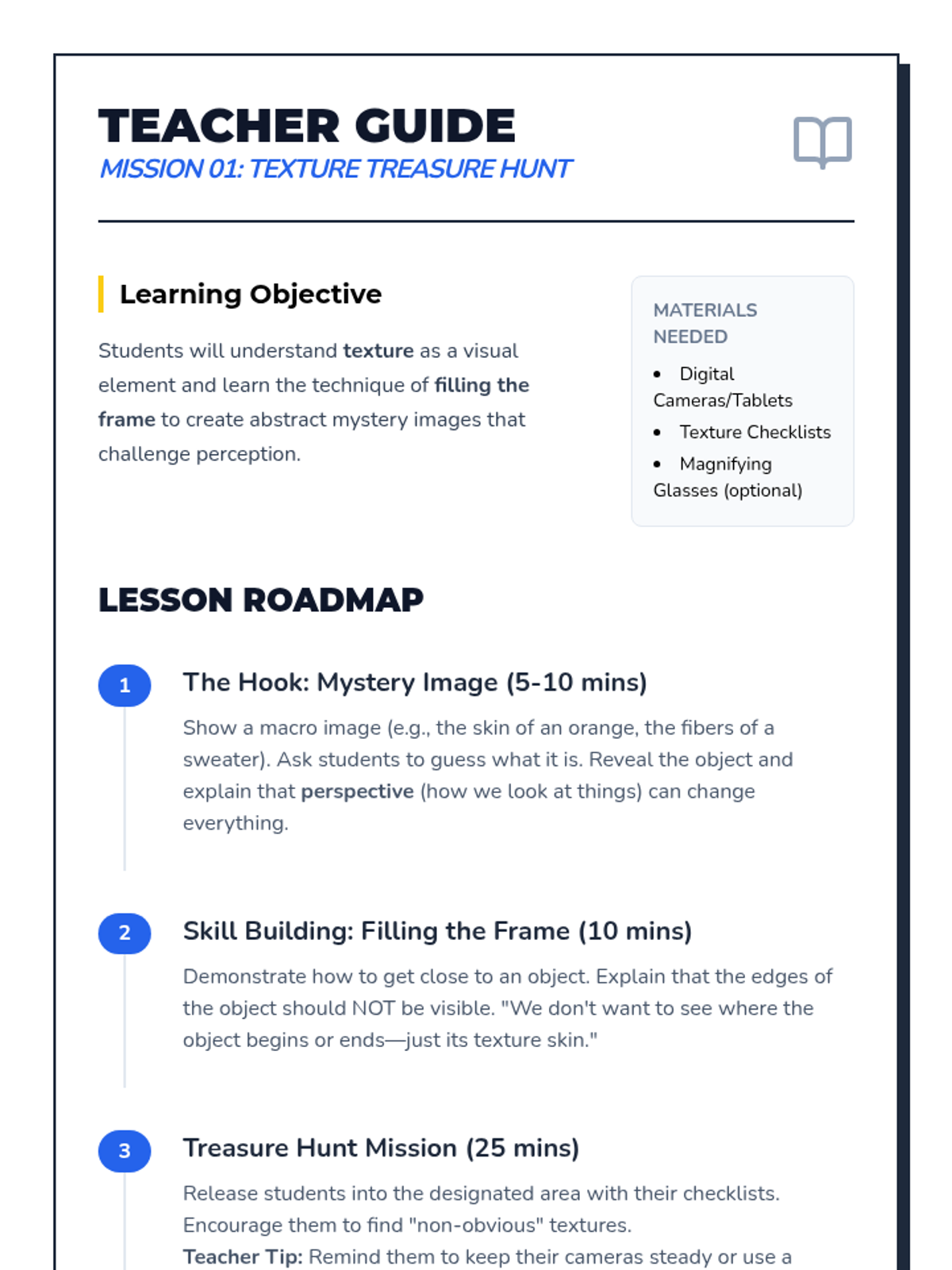
Students explore the school environment to photograph close-ups of different textures, learning to fill the frame to create abstract images.
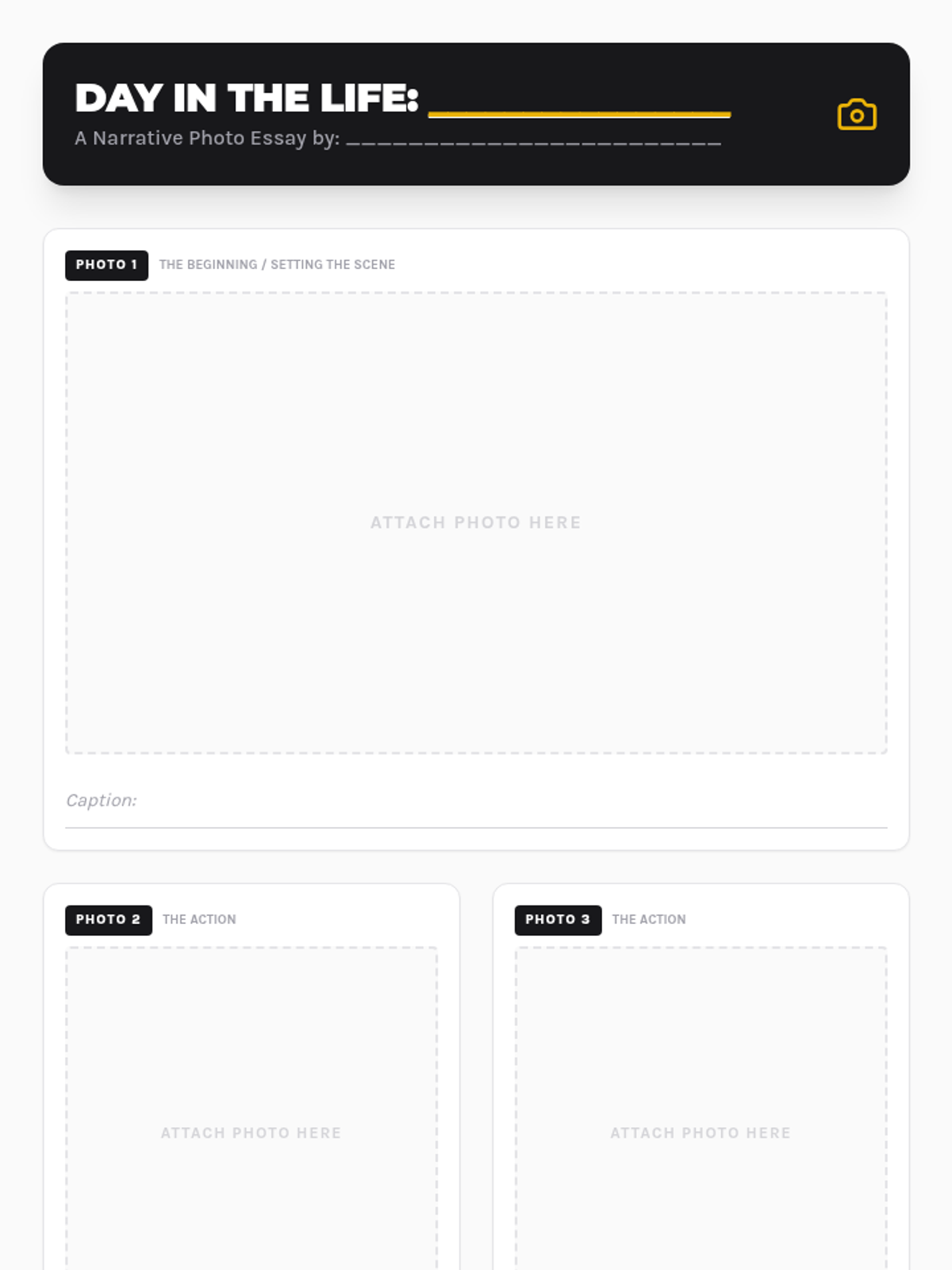
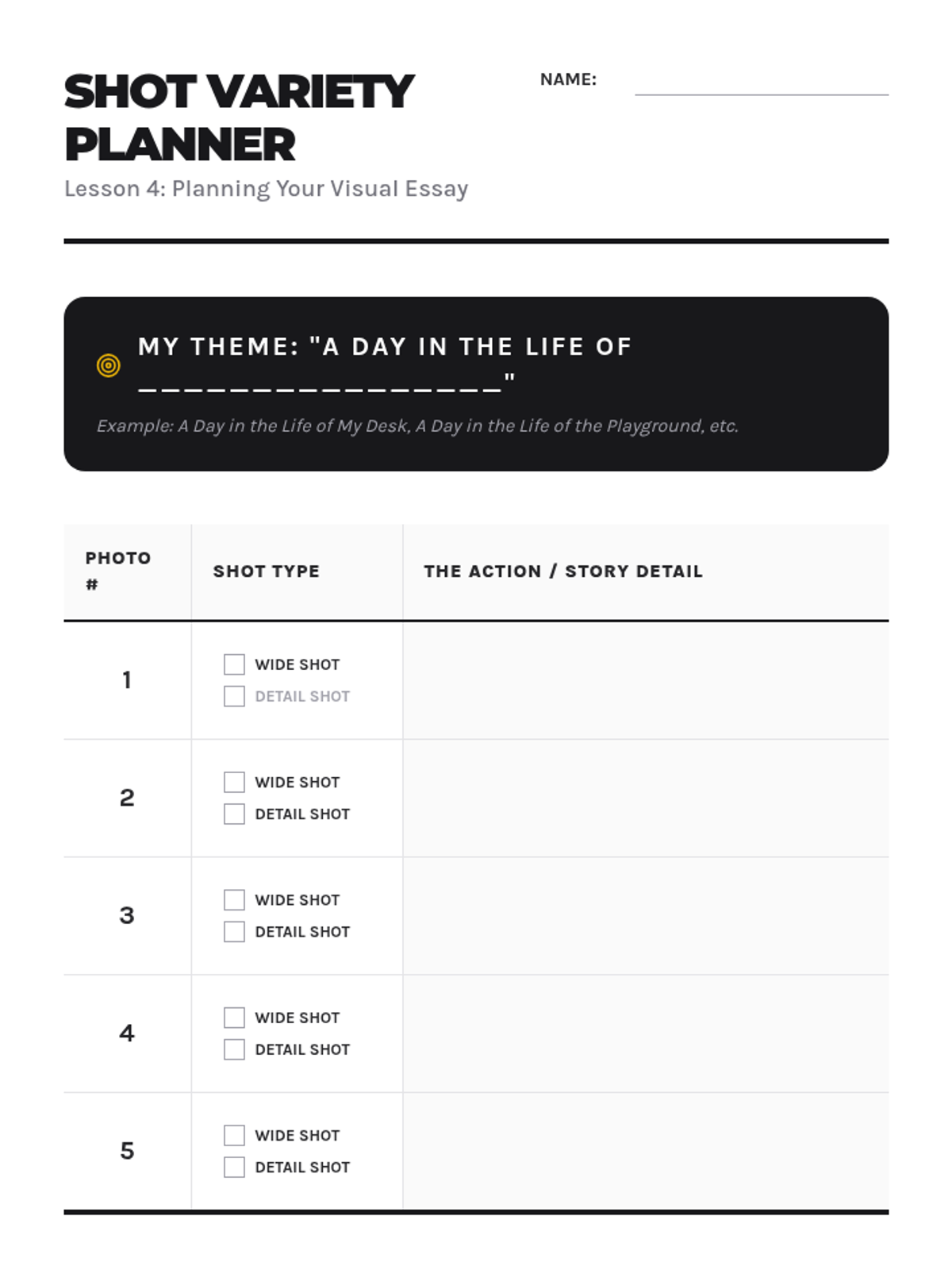
Students select, arrange, and caption their final five photos to present a coherent 'Day in the Life' essay.
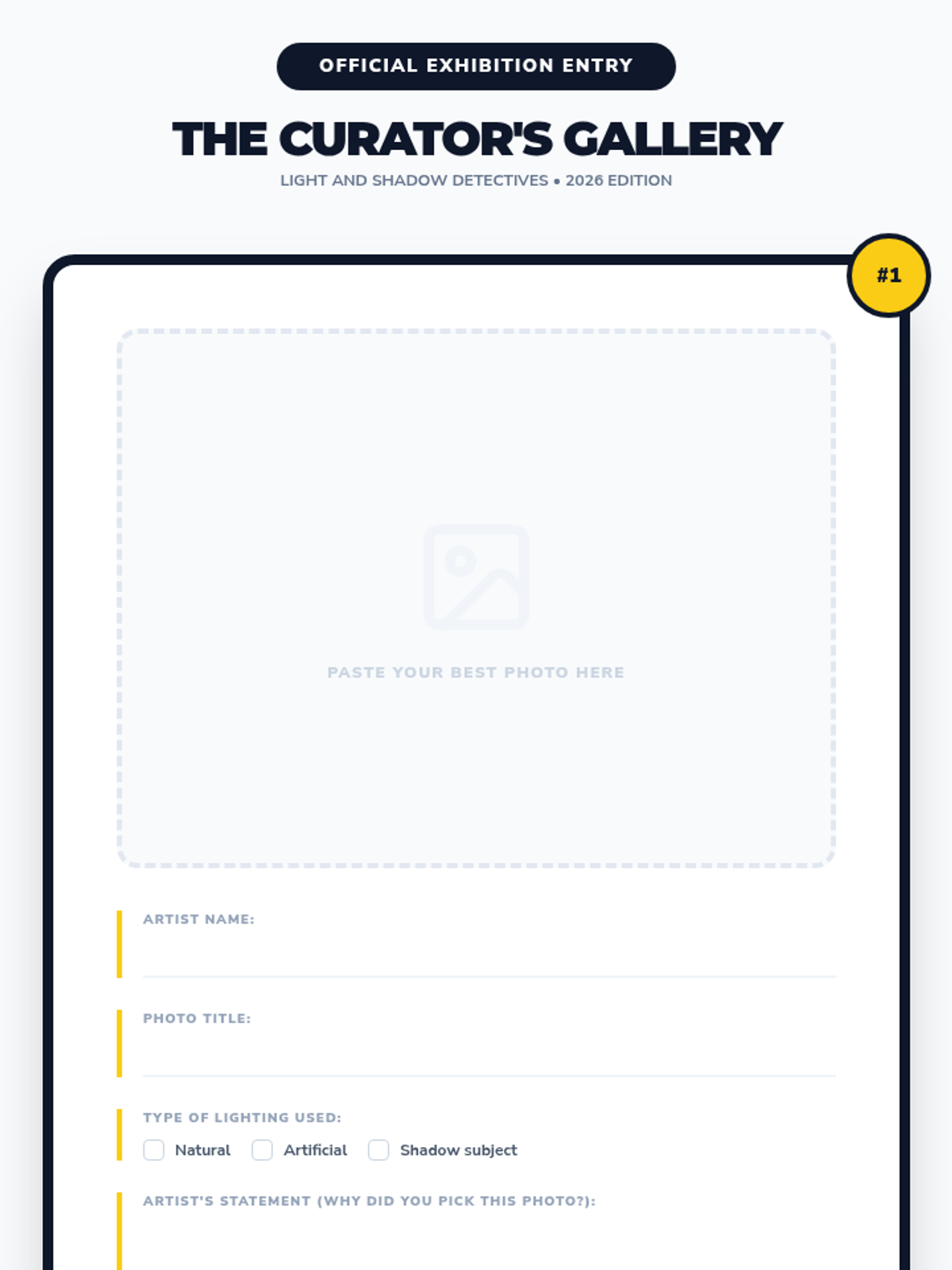
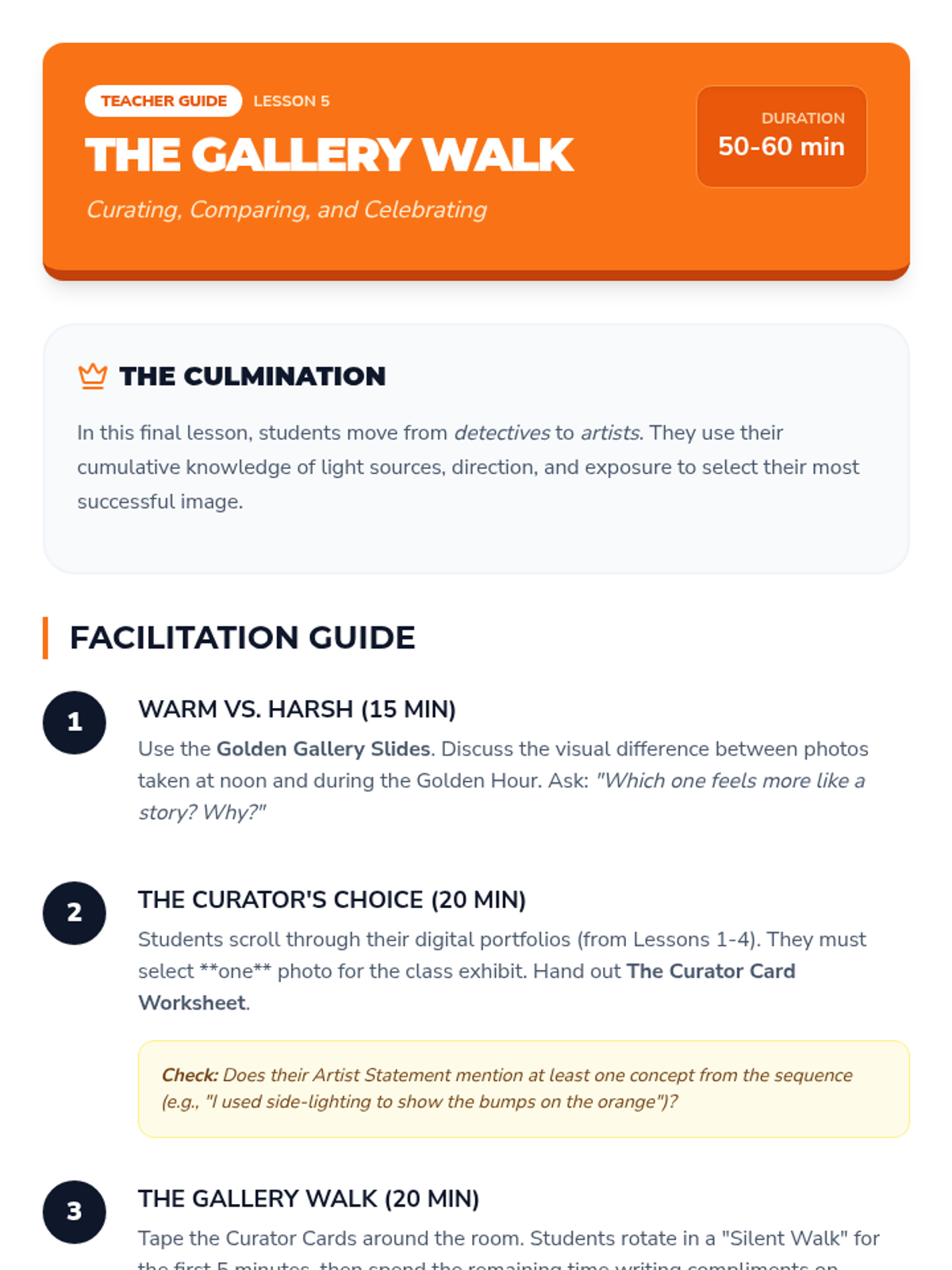
Students compare the quality of light at different times of day and curate their best work for a 'Light and Shadow' gallery walk.
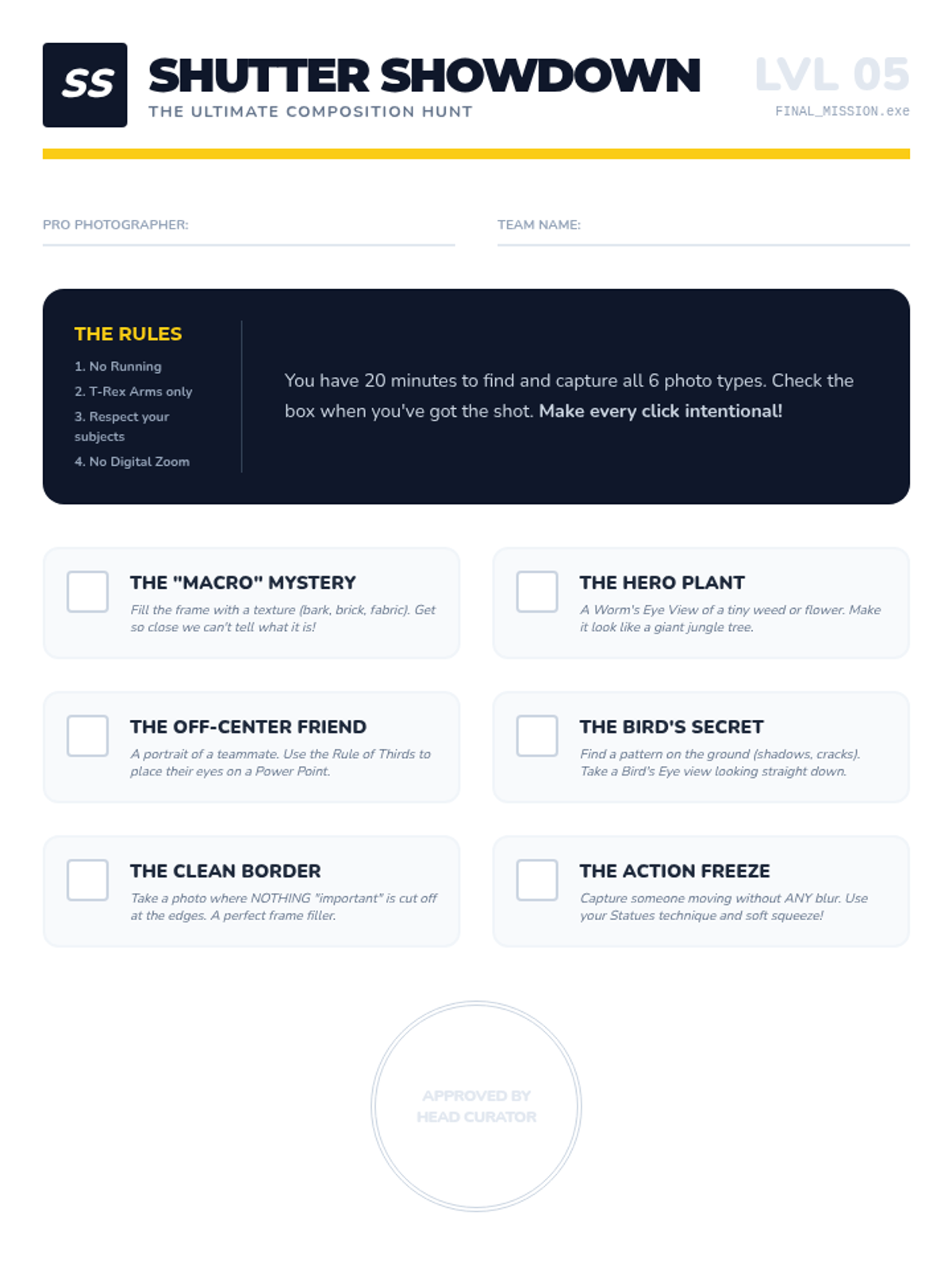
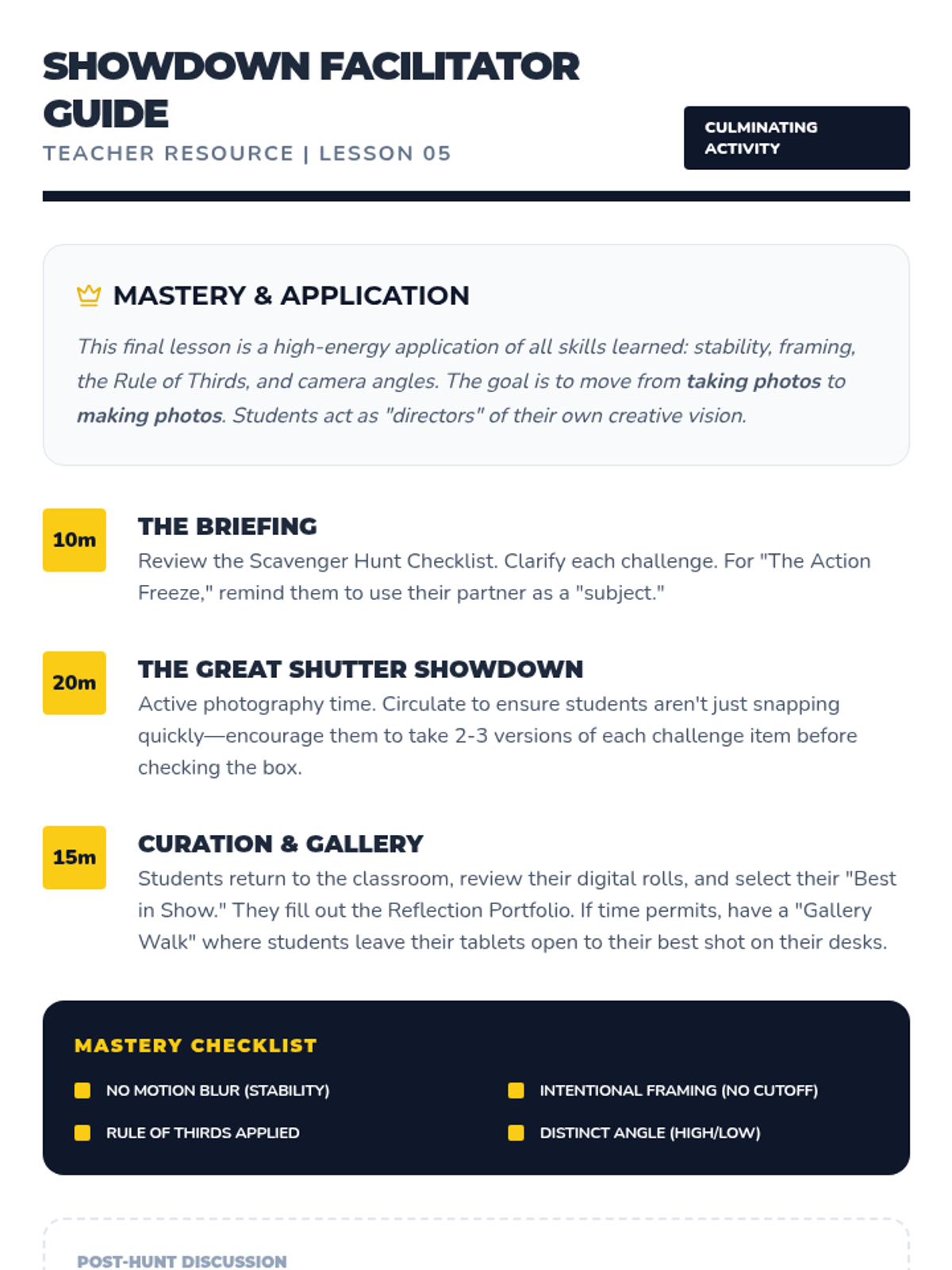
A culminating activity where students apply all learned composition techniques in a structured scavenger hunt and select their best work for a portfolio.
Students learn to use wide shots for context and detail shots for specific information to add variety to their stories.
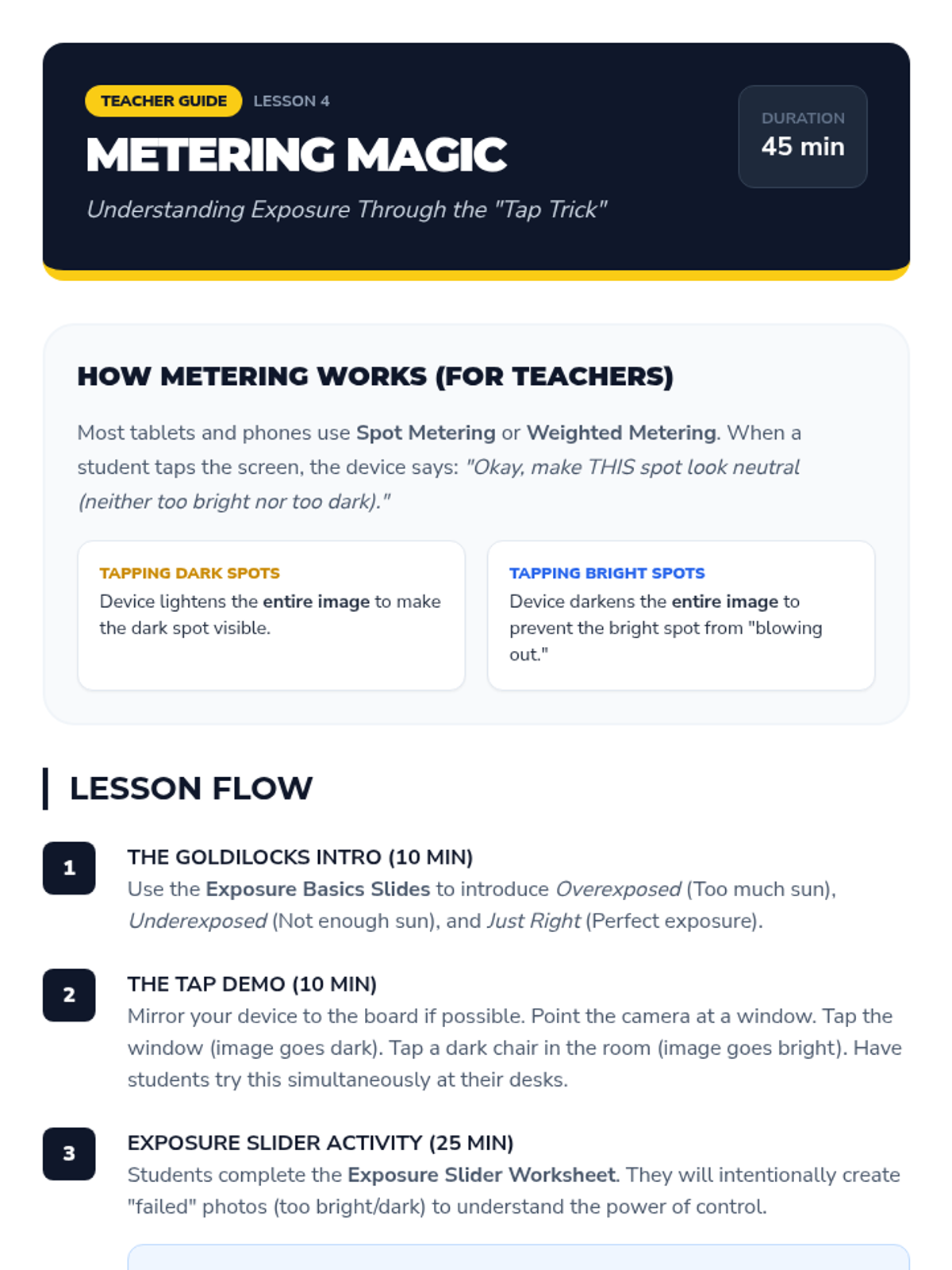
A simplified introduction to exposure, teaching students to identify overexposed and underexposed images and how to adjust brightness on their devices.
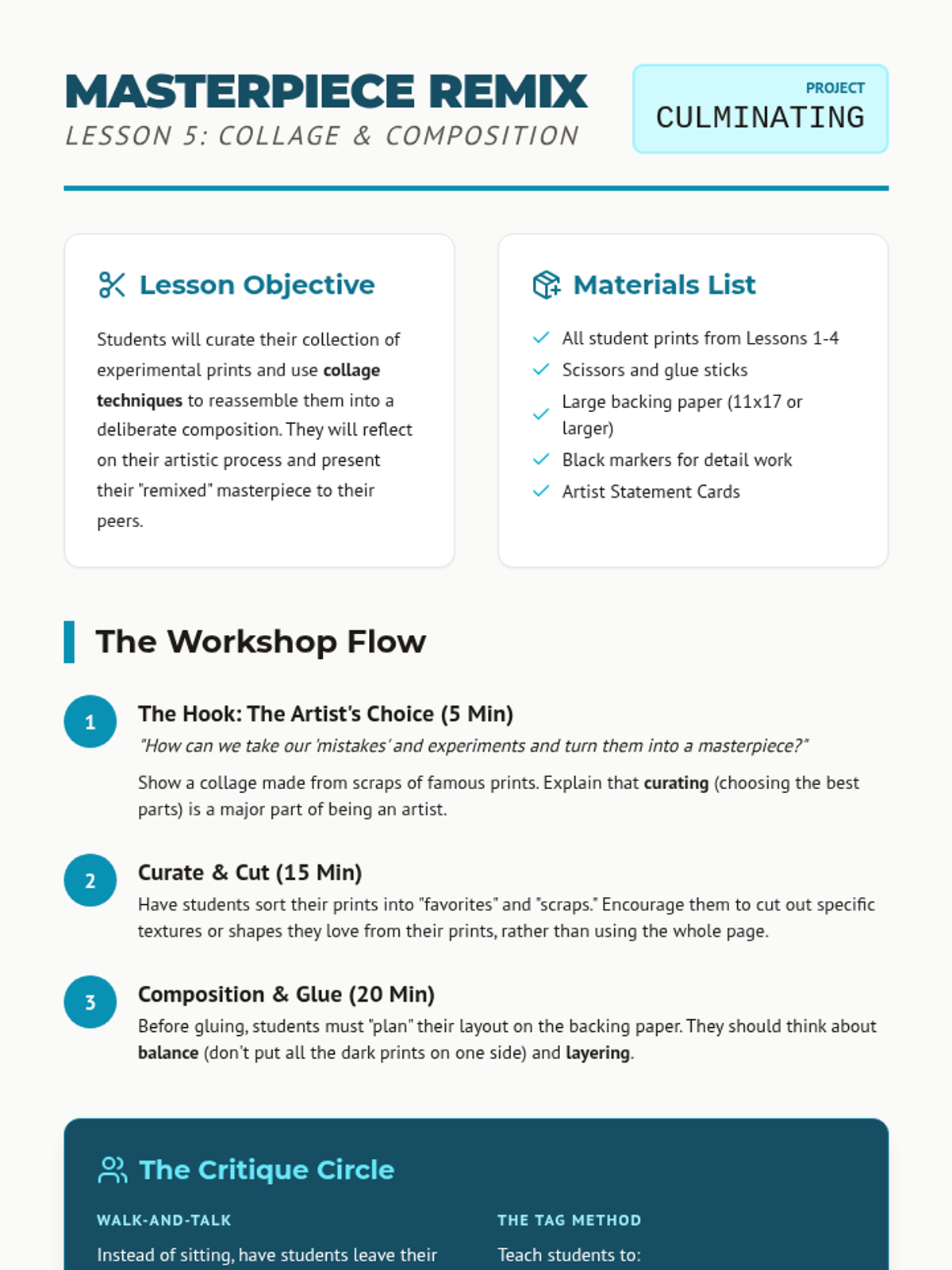
Students review their experimental prints and use collage techniques to reassemble them into a final, deliberate composition.
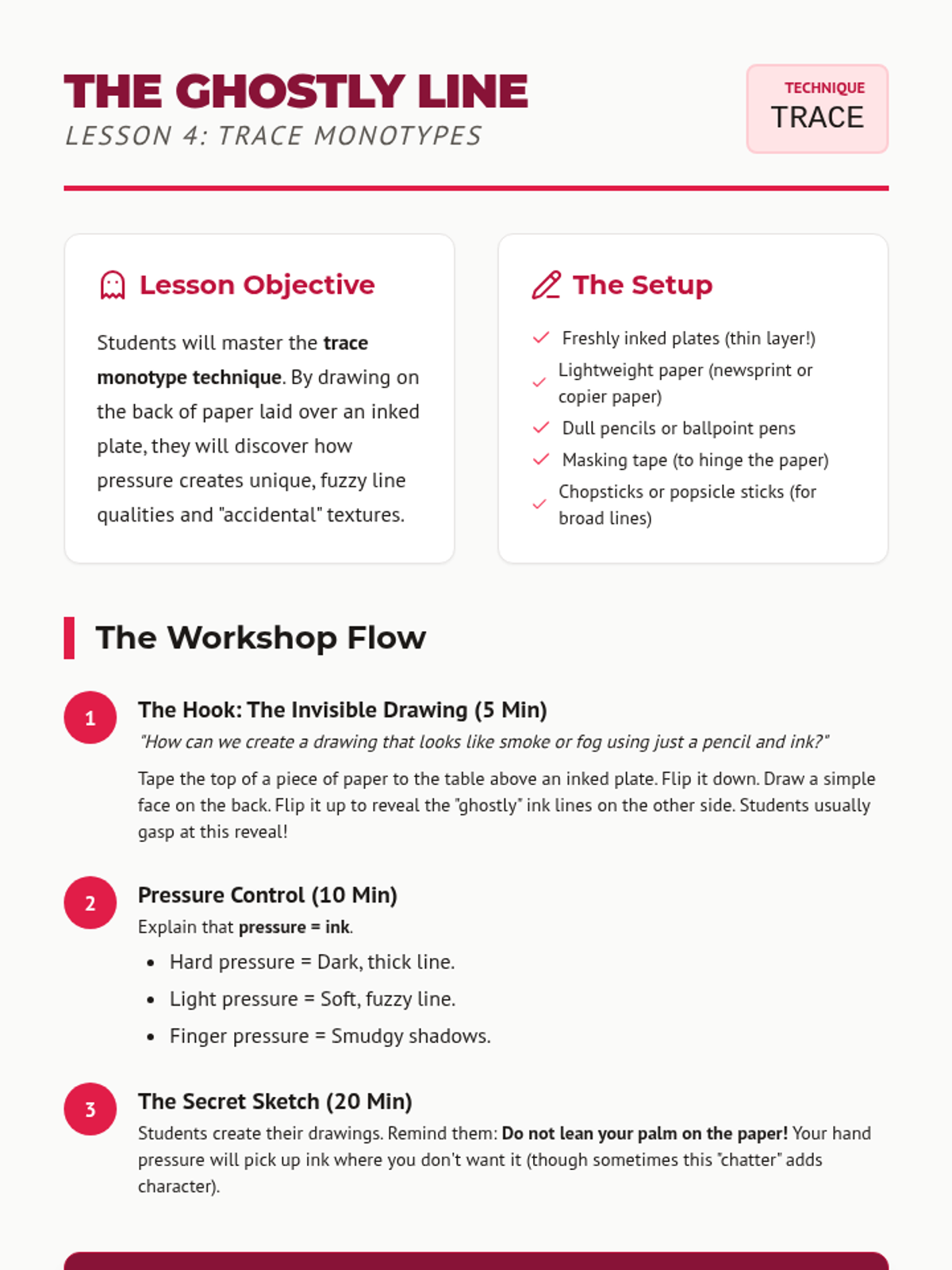
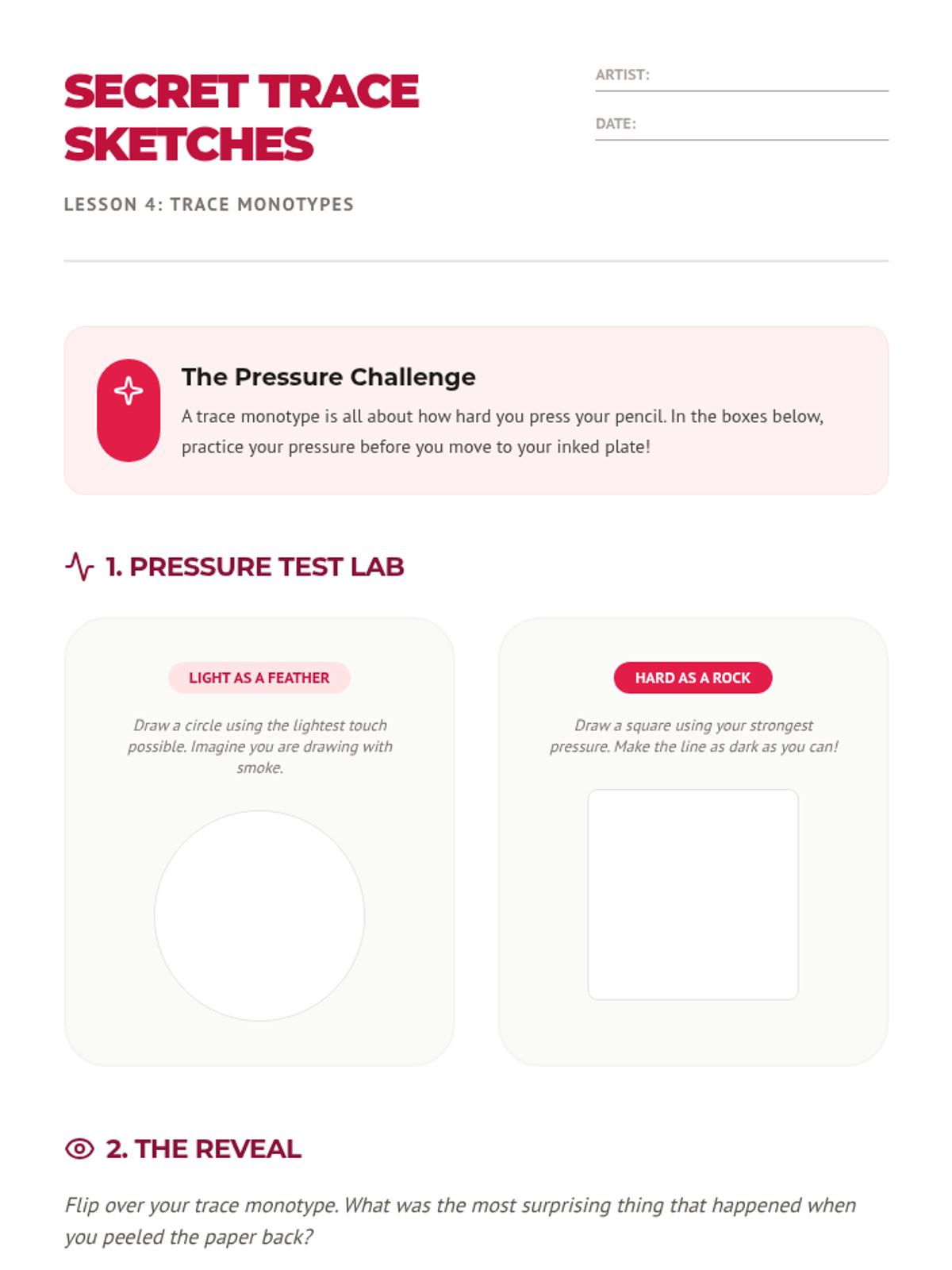
Students practice the trace monotype technique, creating soft, fuzzy line drawings by applying pressure to the back of paper laid over an inked plate.
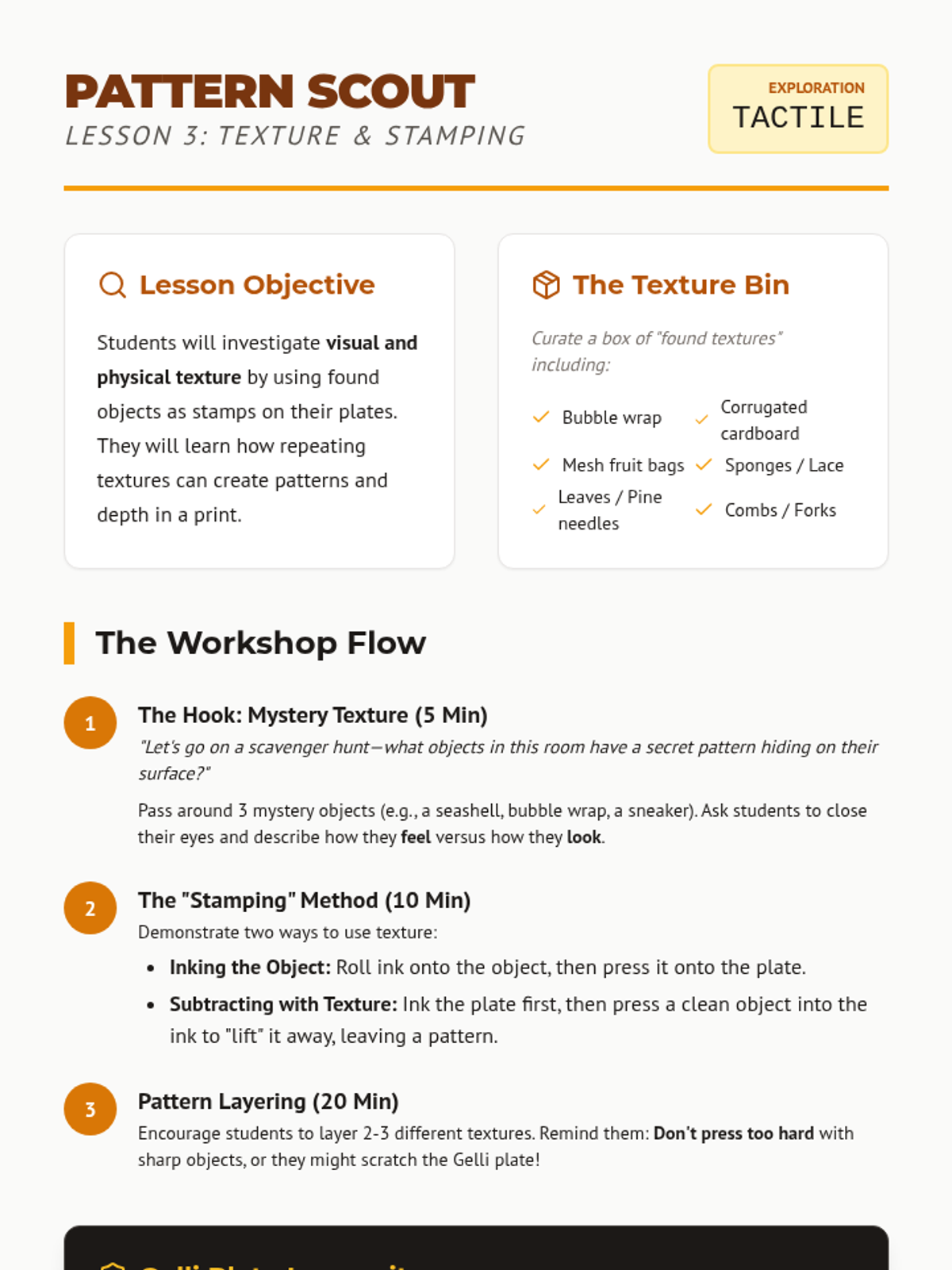
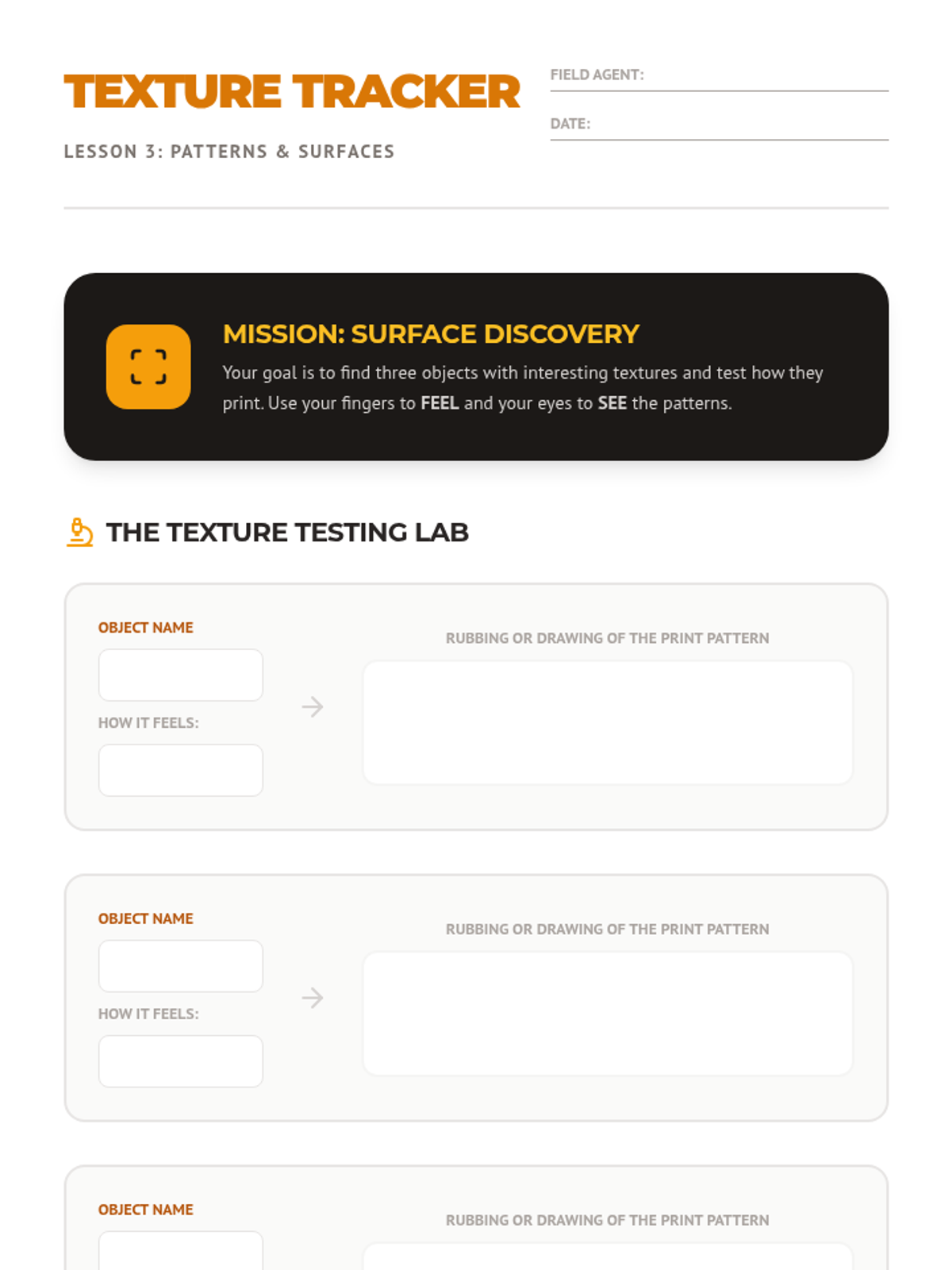
Students investigate environmental textures and use found objects to stamp and create patterns on their printmaking plates.
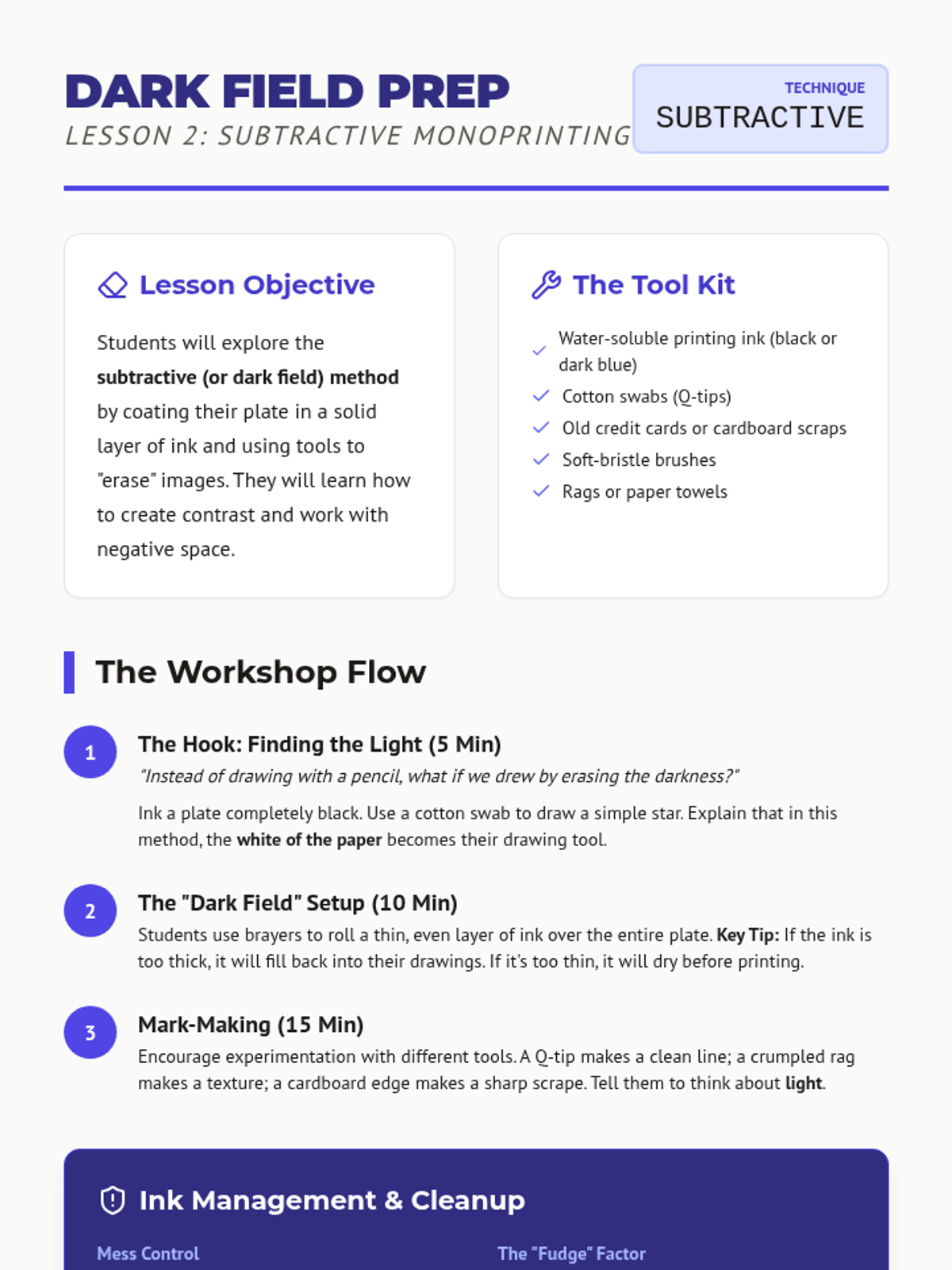
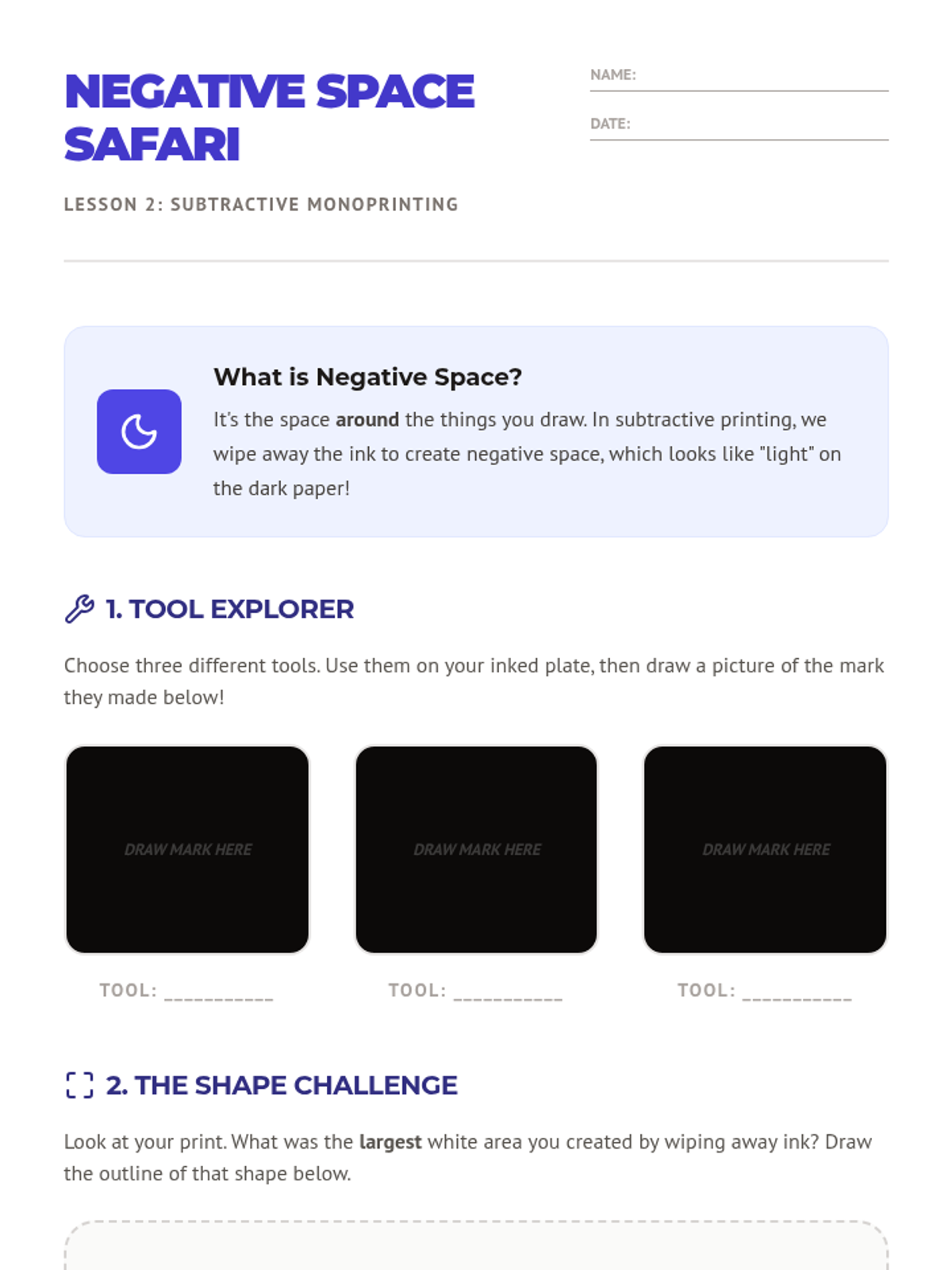
Students learn the subtractive method of printmaking by inking a whole plate and 'erasing' the ink to create high-contrast images.
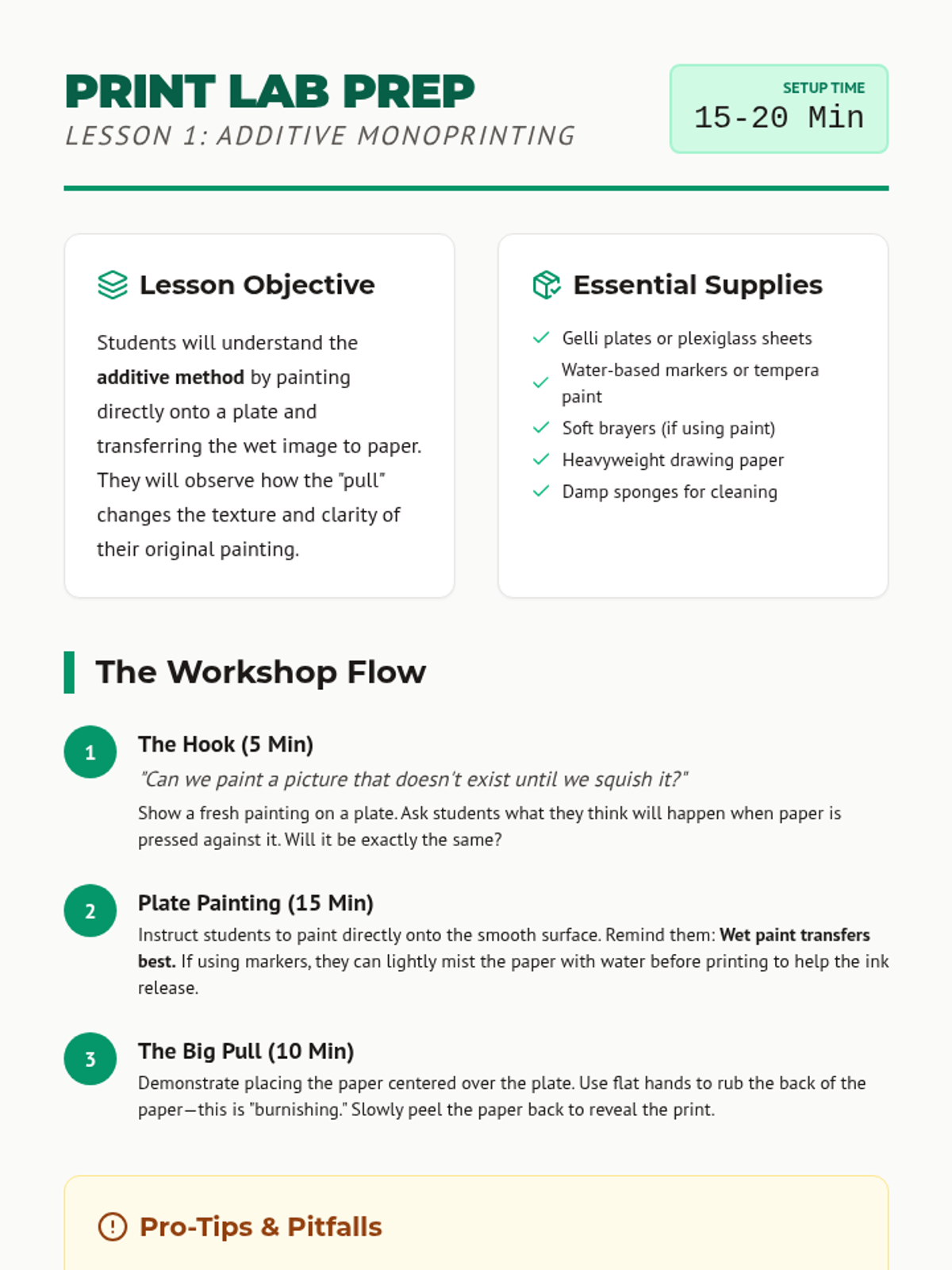
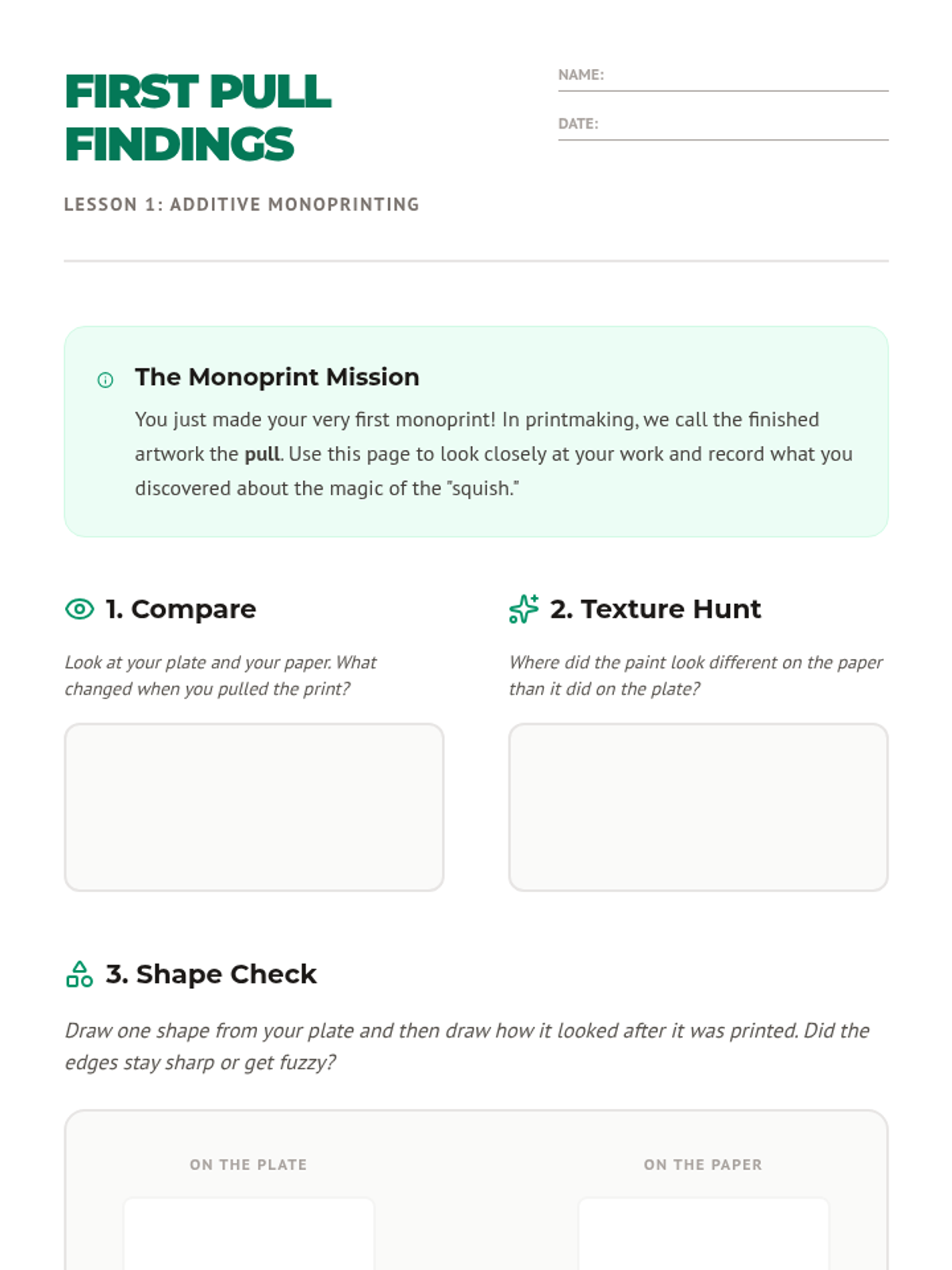
Students explore the additive method of monoprinting by painting directly onto a plate and pulling a unique print, discovering how the image transfers and transforms.
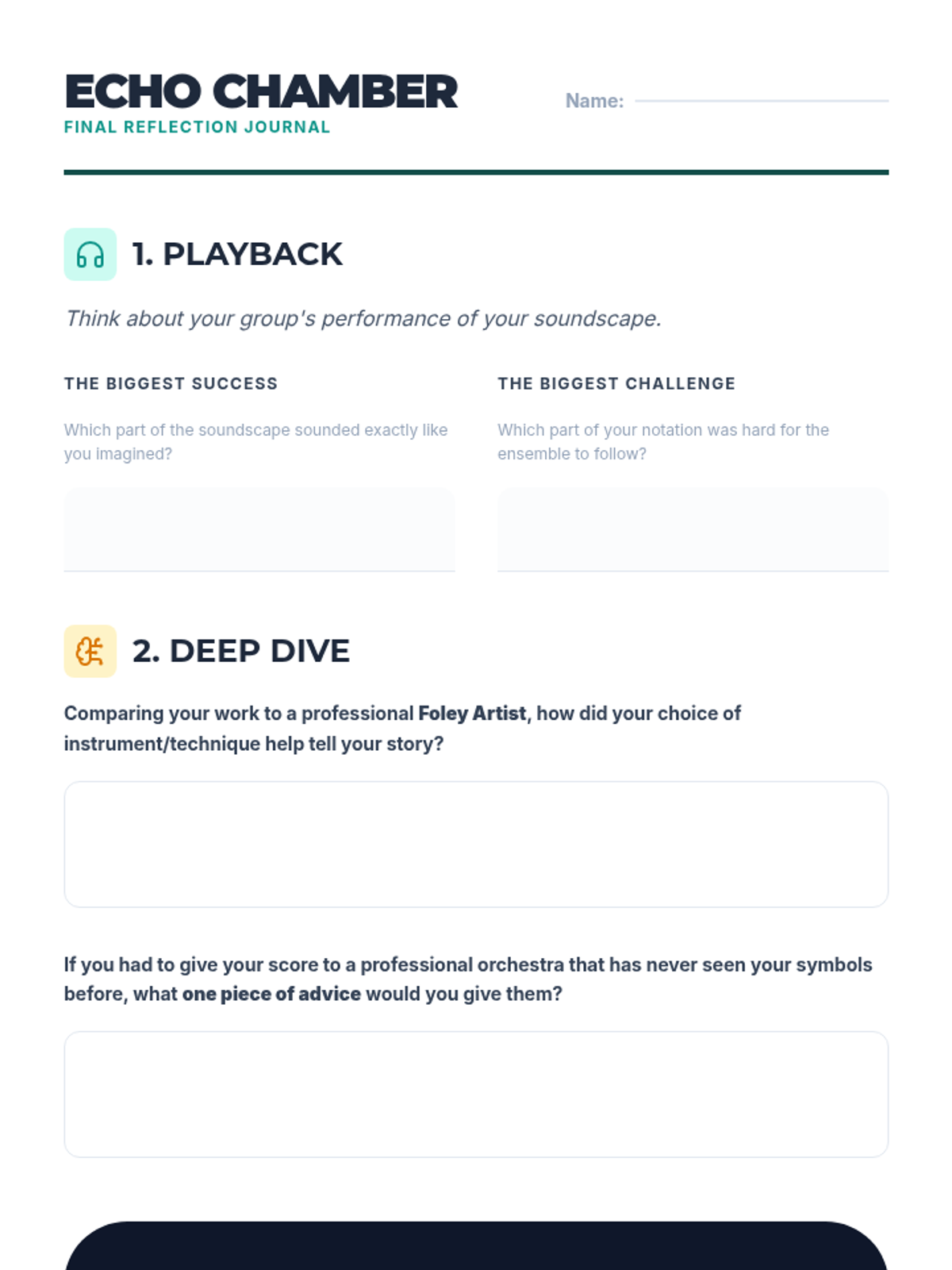
Students reflect on their compositions and performances, comparing their work to professional Foley artists.
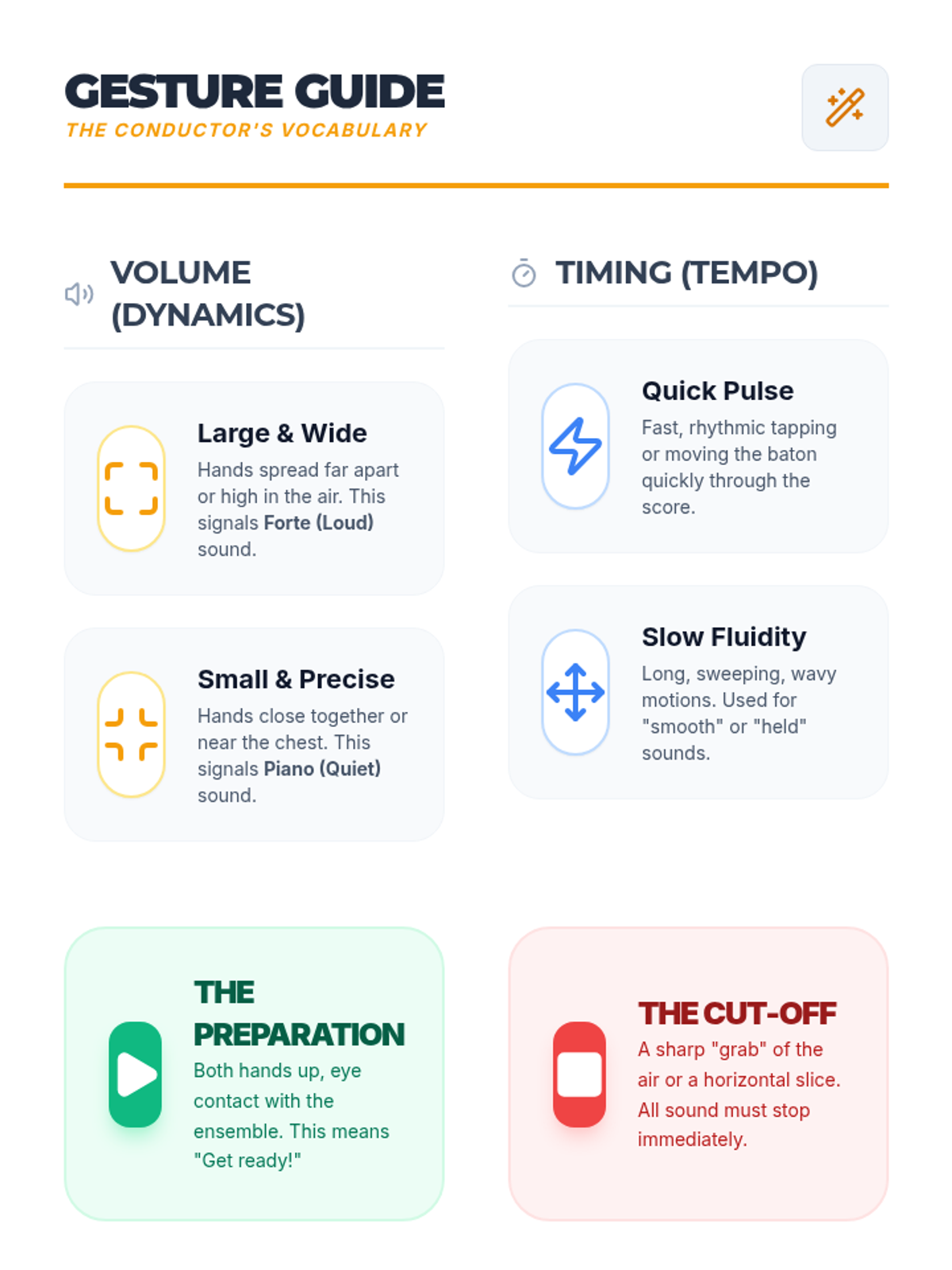
Young composers practice conducting their scores, using gestures to lead their peers through the visual music.
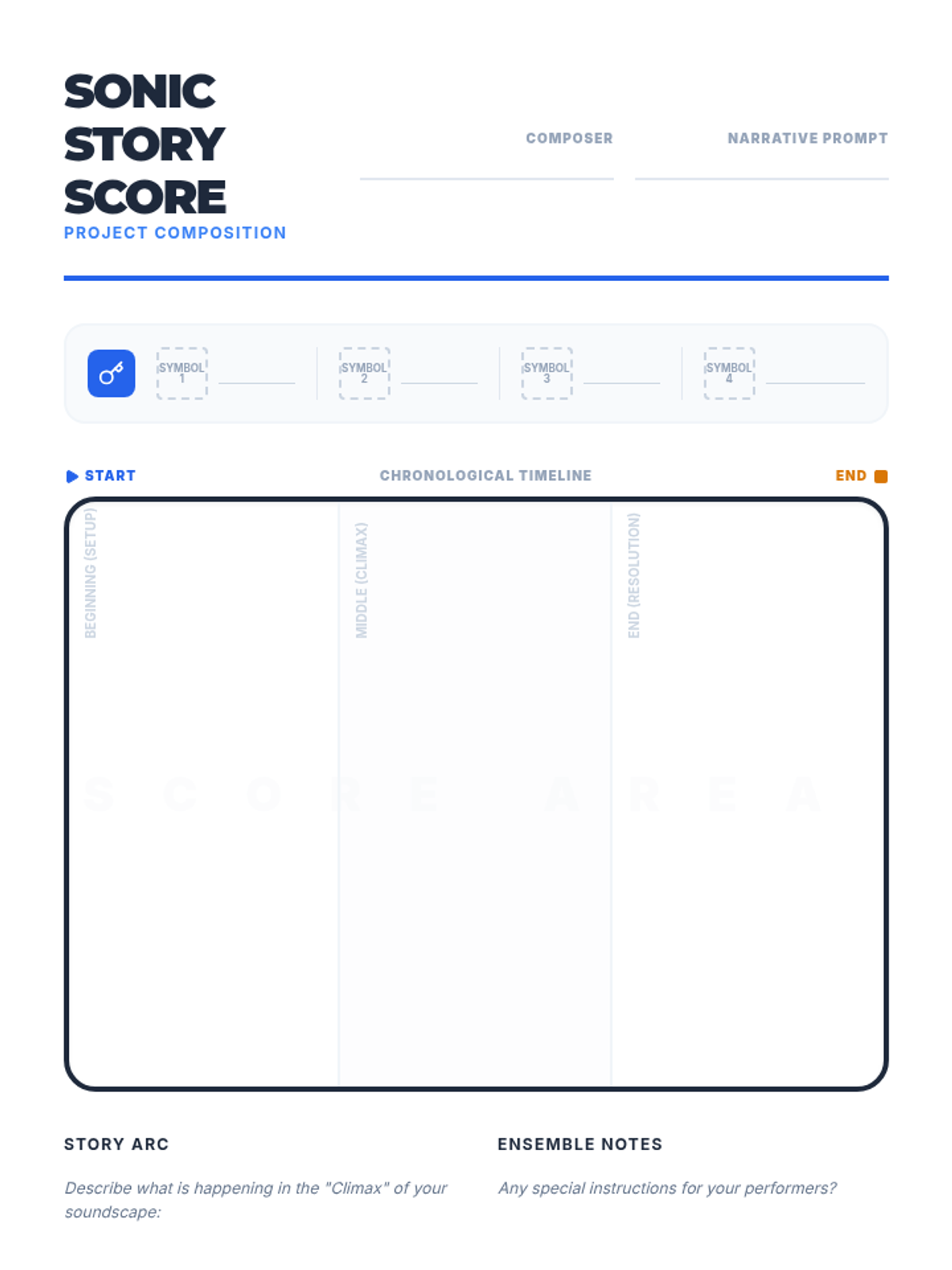
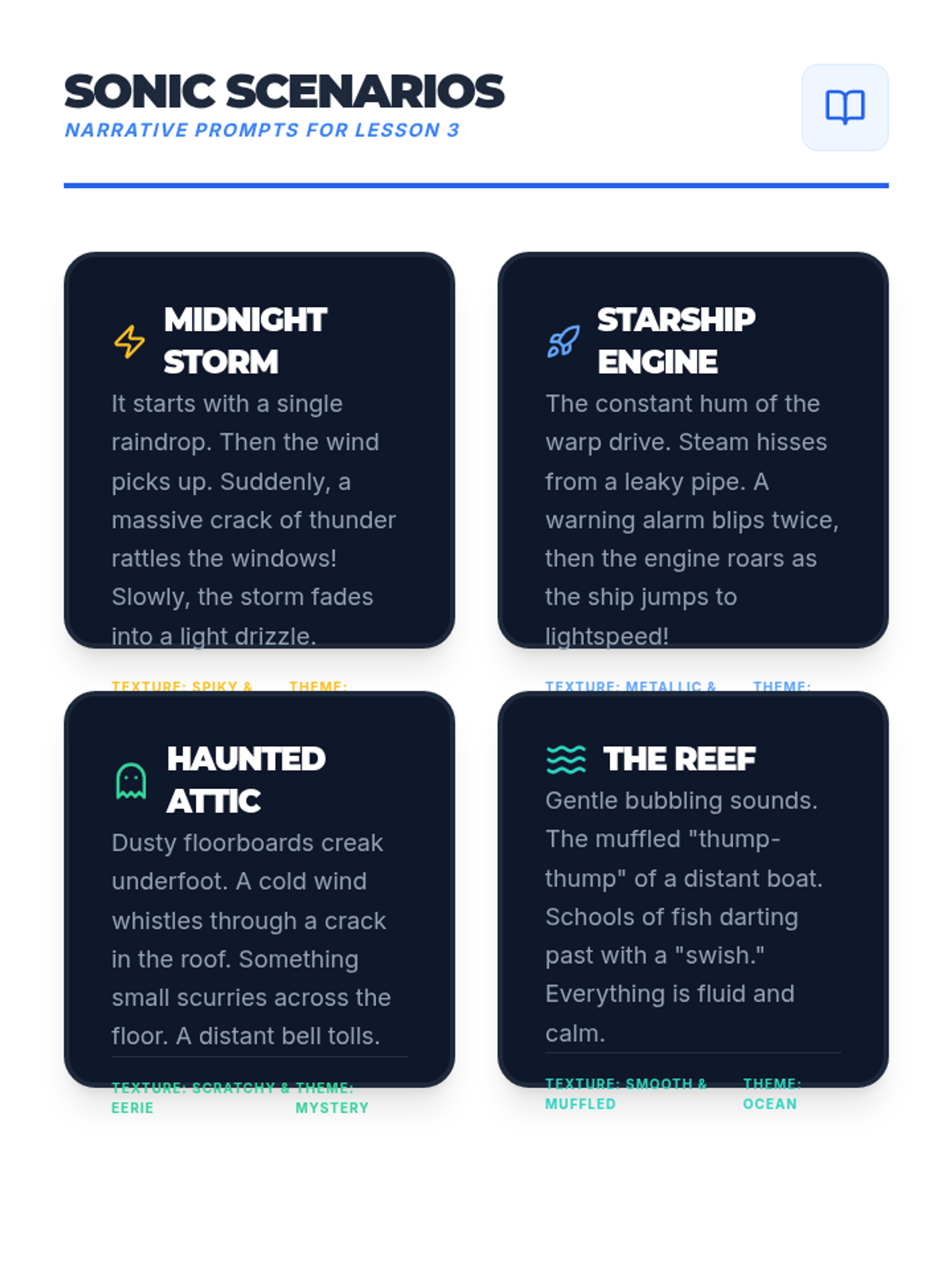
Students compose a narrative-driven graphic score that uses their symbols to tell a sonic story.
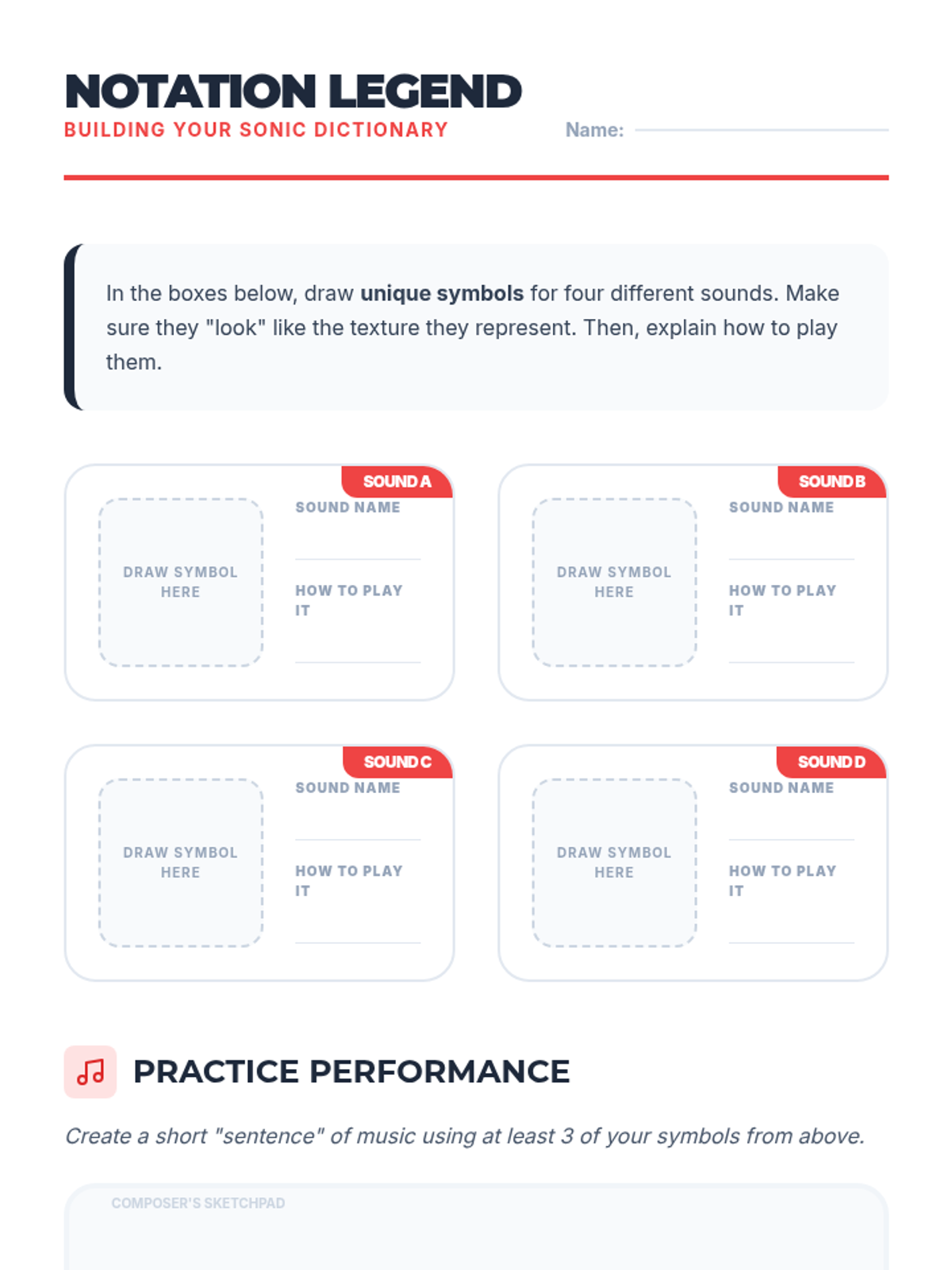
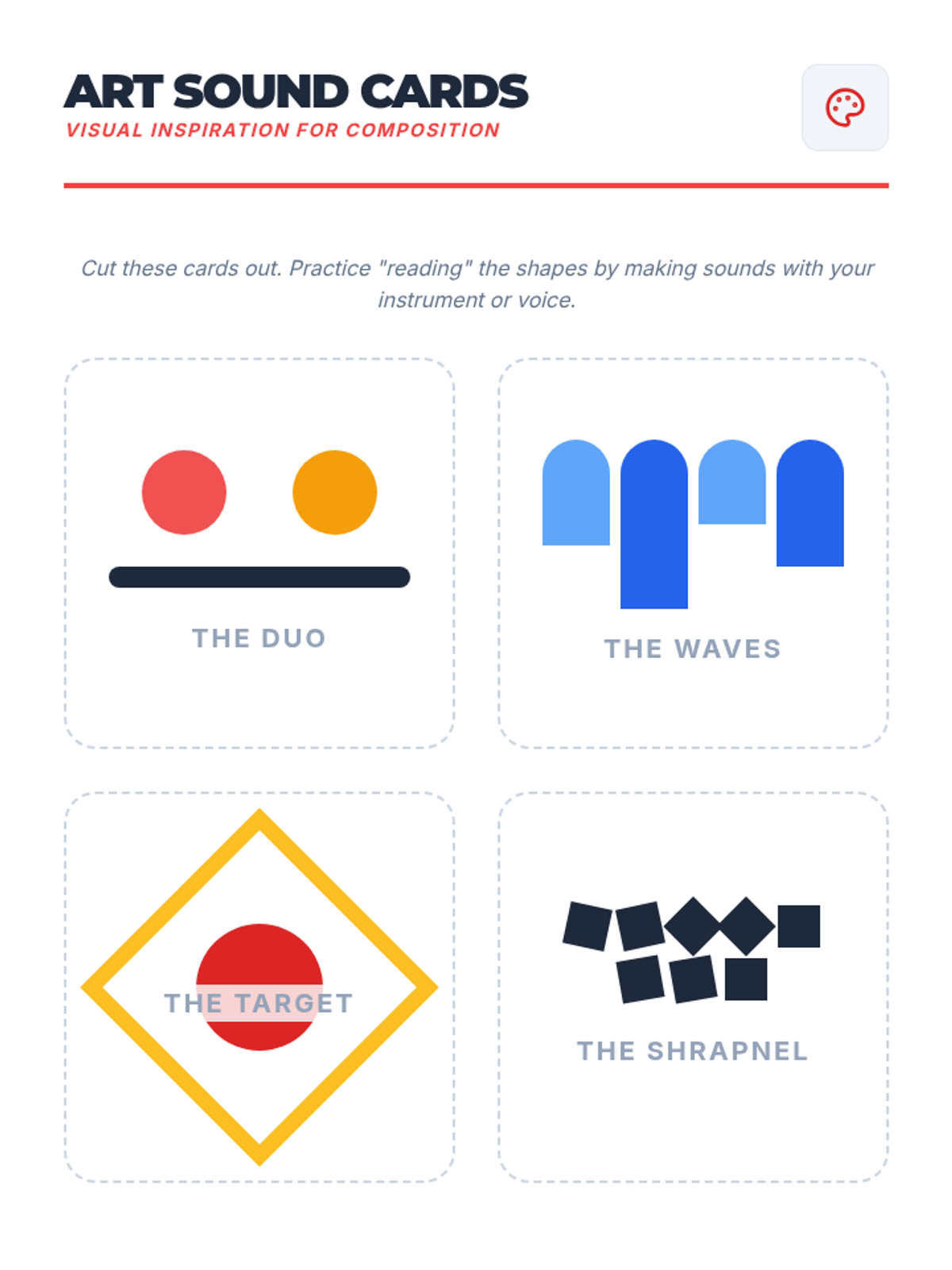
Learners translate sounds into visual symbols, creating a legend that maps shapes and colors to specific audio qualities.
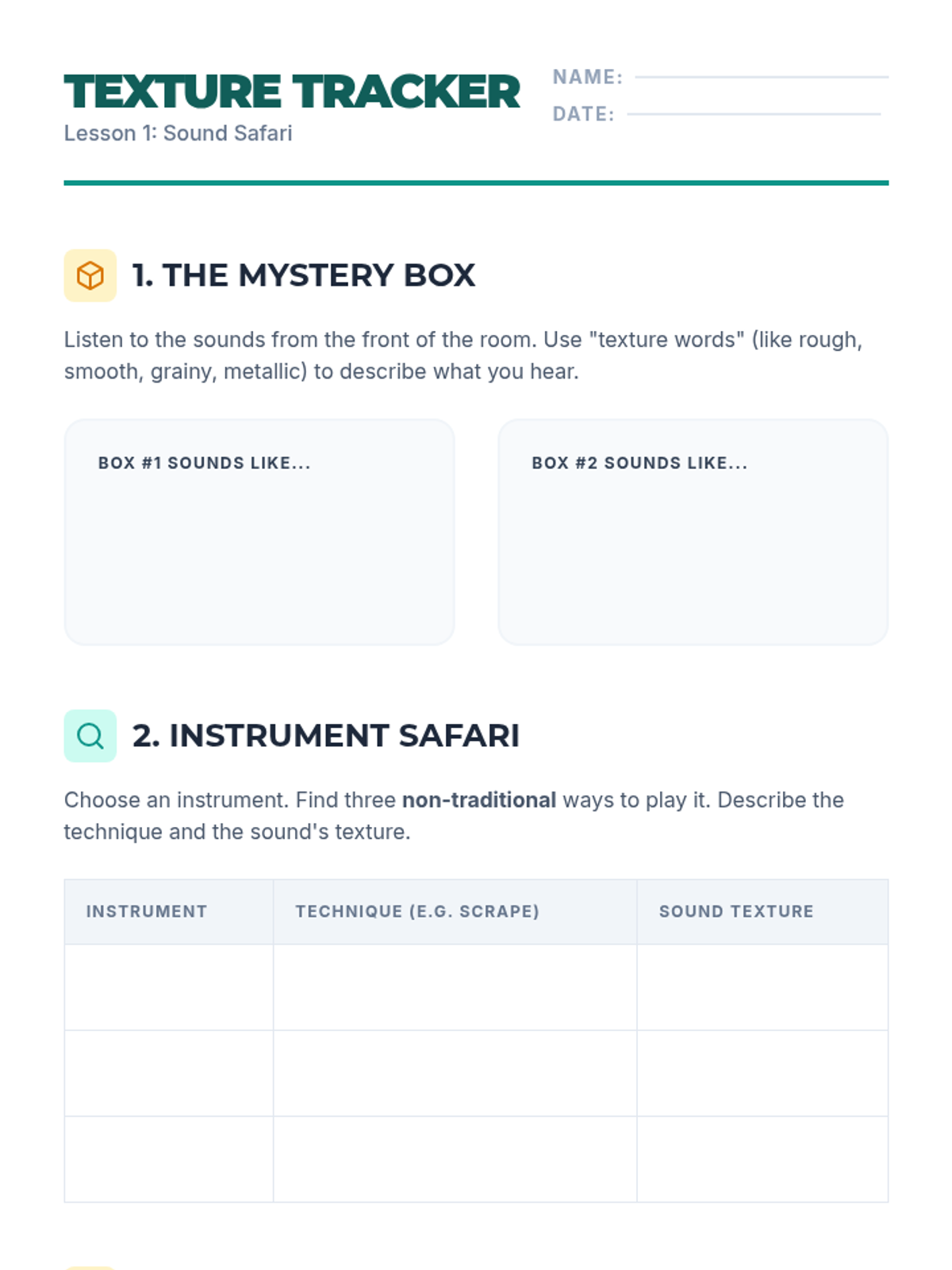
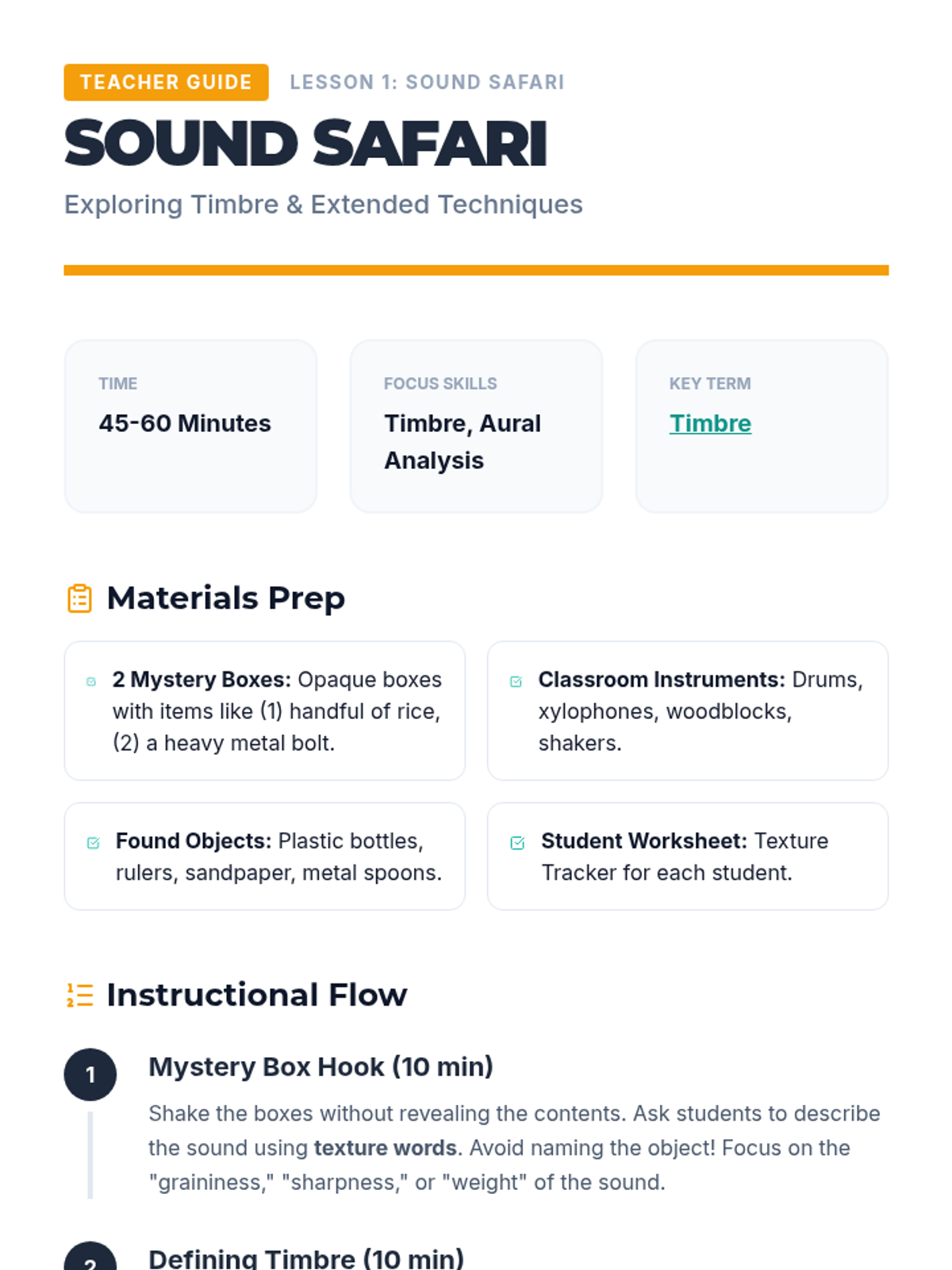
Students explore non-traditional sounds using classroom instruments and found objects, categorizing them by texture.
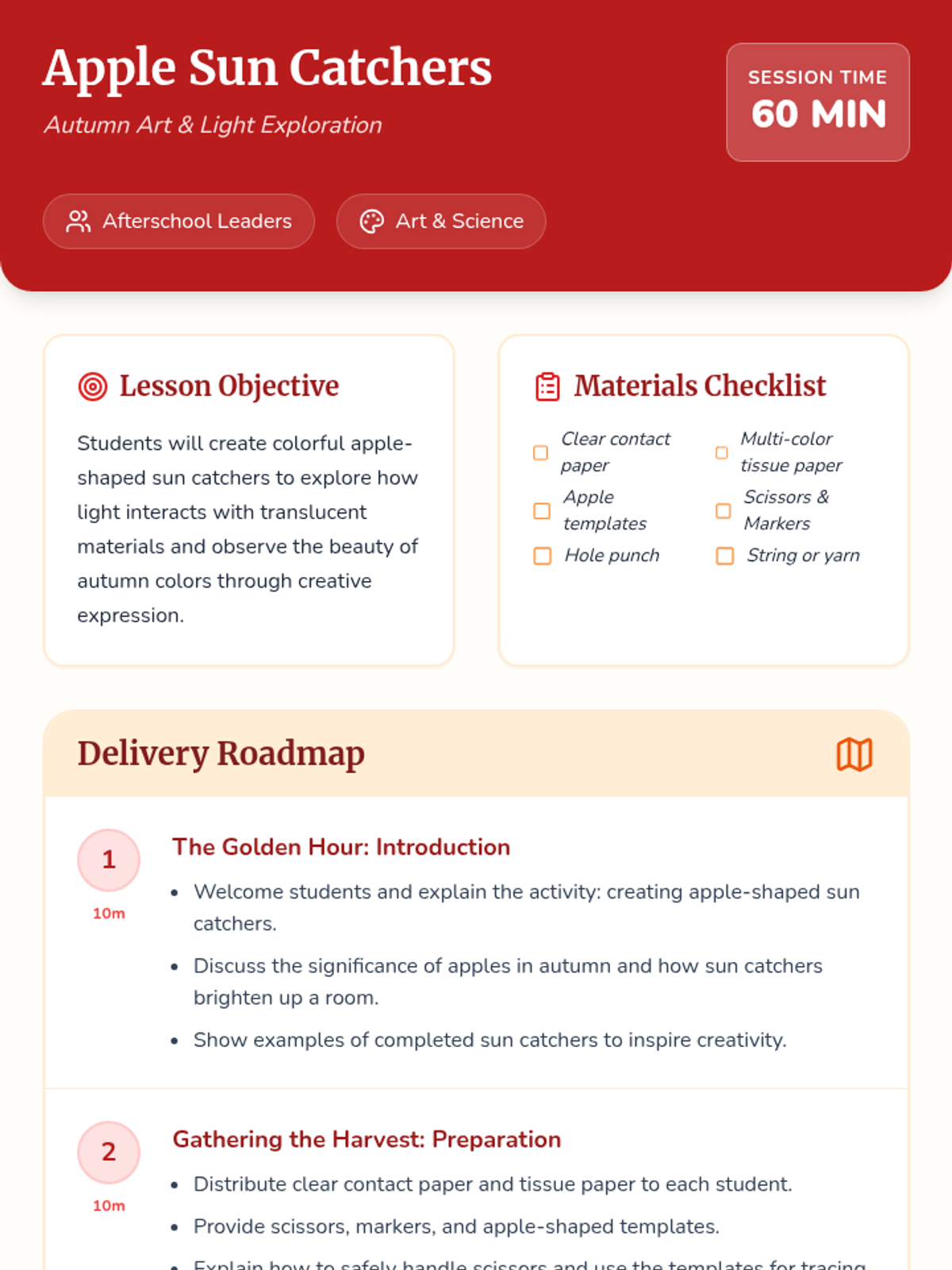
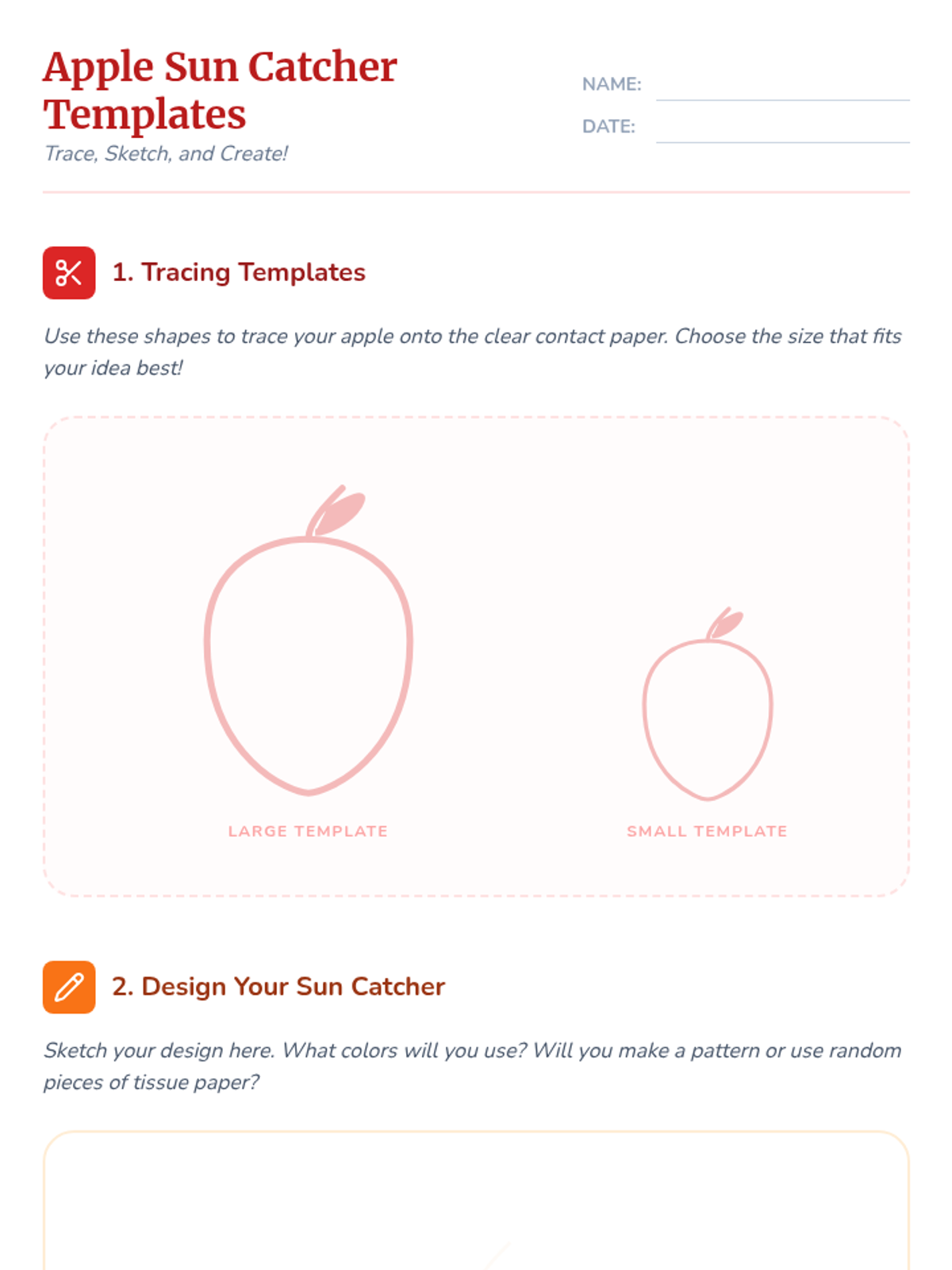
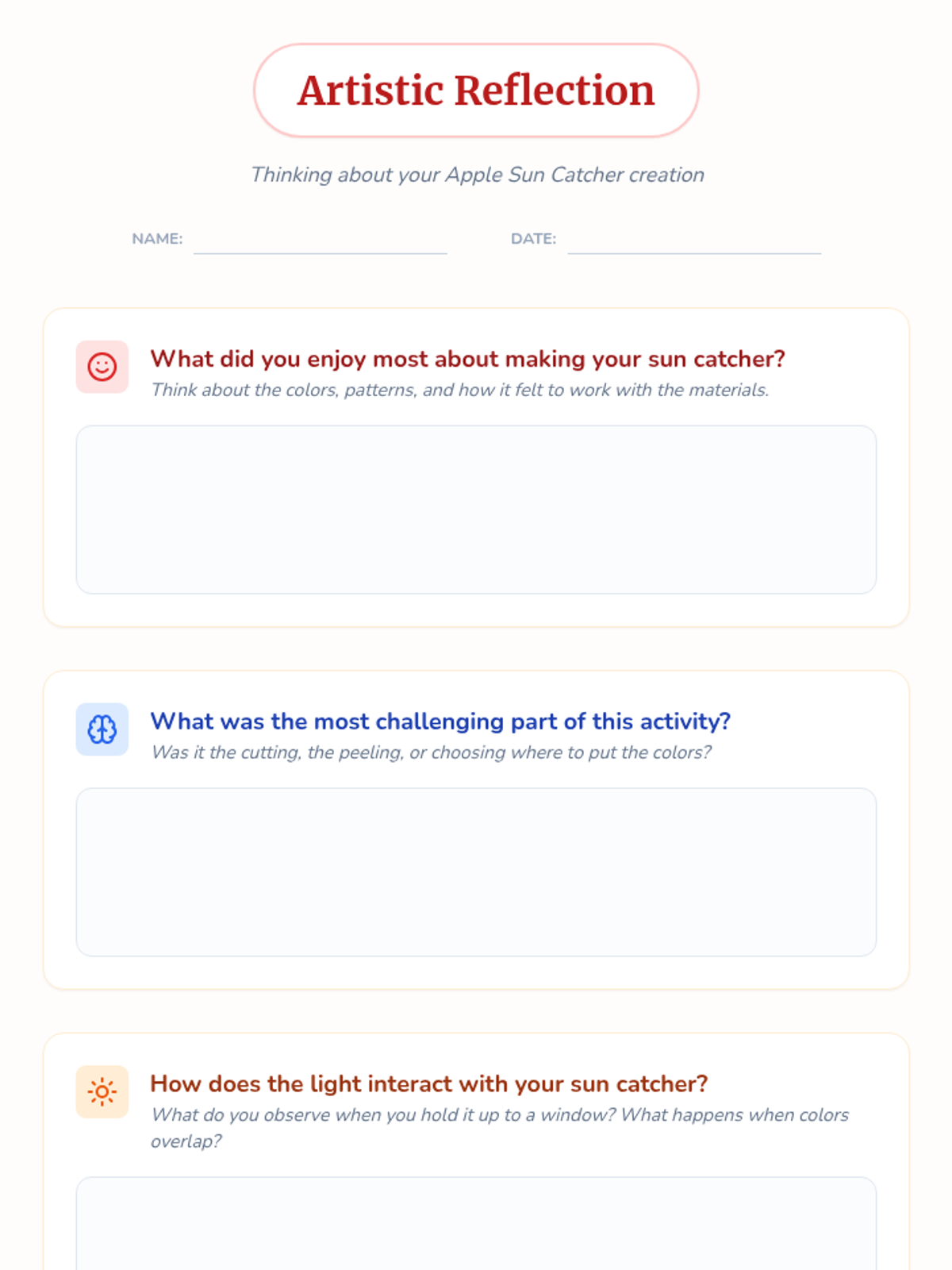
A hands-on autumn art lesson where students create apple-shaped sun catchers using tissue paper and contact paper to explore color and light.
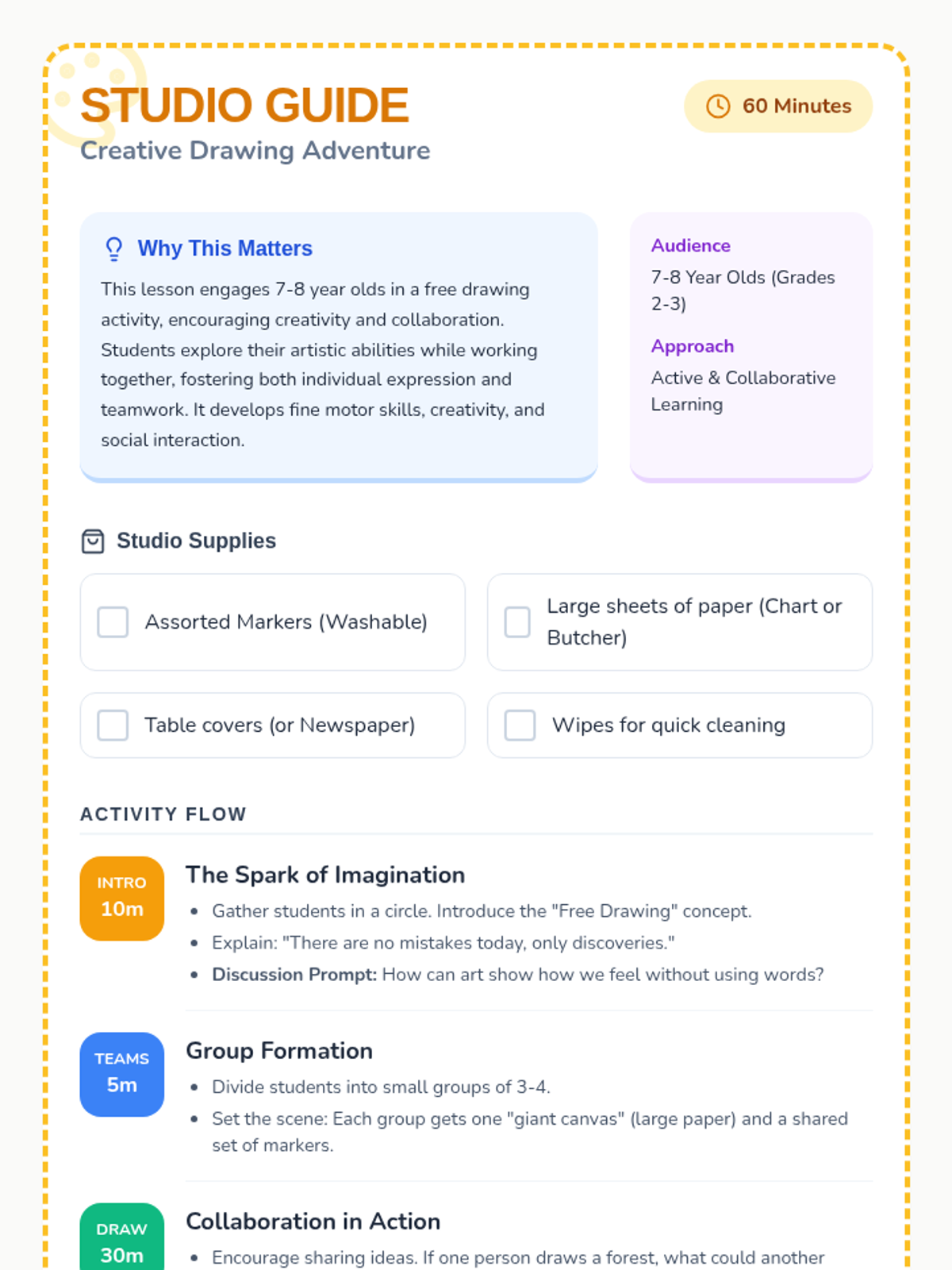
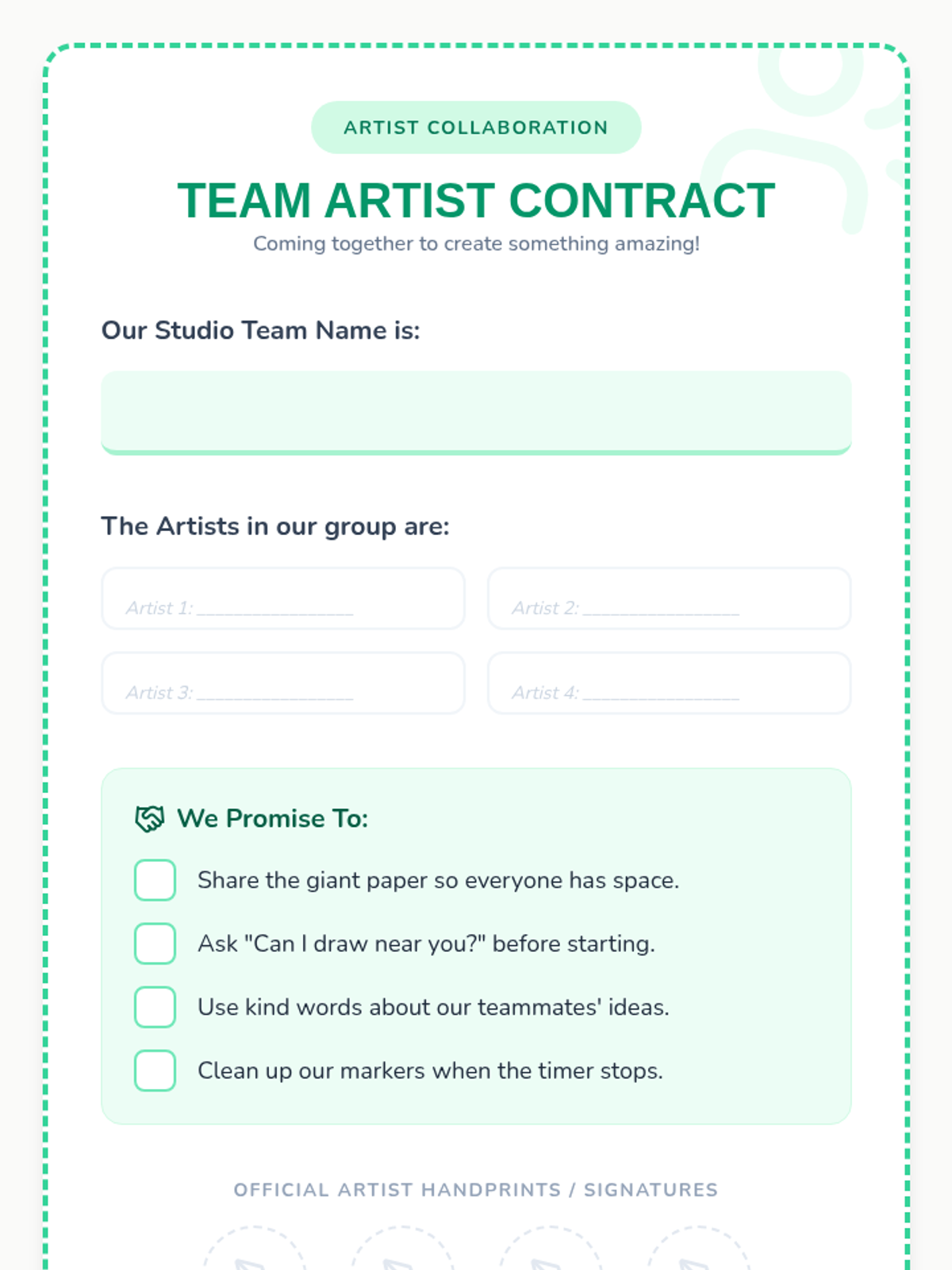
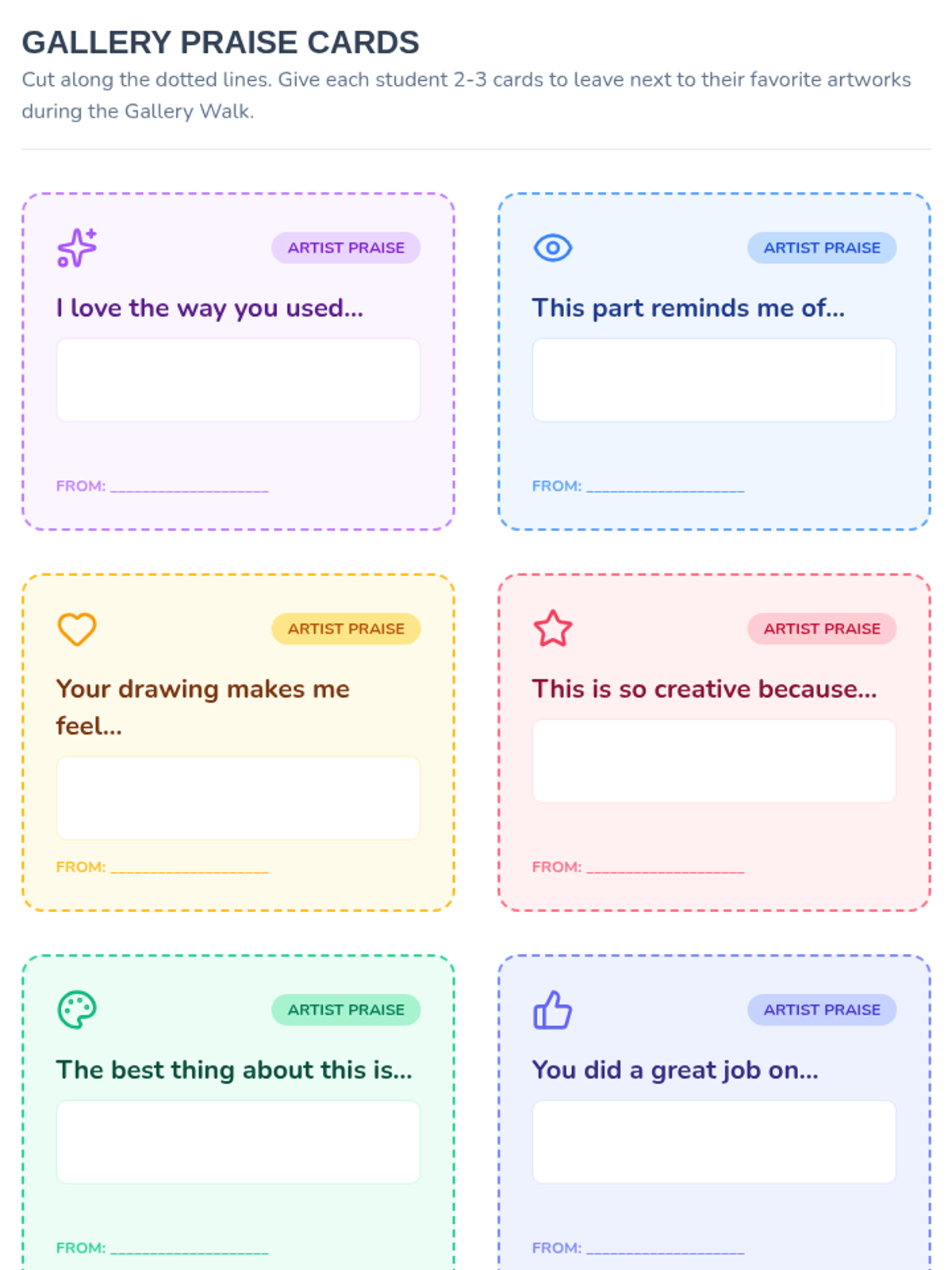
A 1-hour active learning lesson where 7-8 year olds engage in collaborative free drawing to boost creativity and teamwork skills. Students work in small groups on large-scale art, concluding with a gallery walk to share and appreciate each others' work.
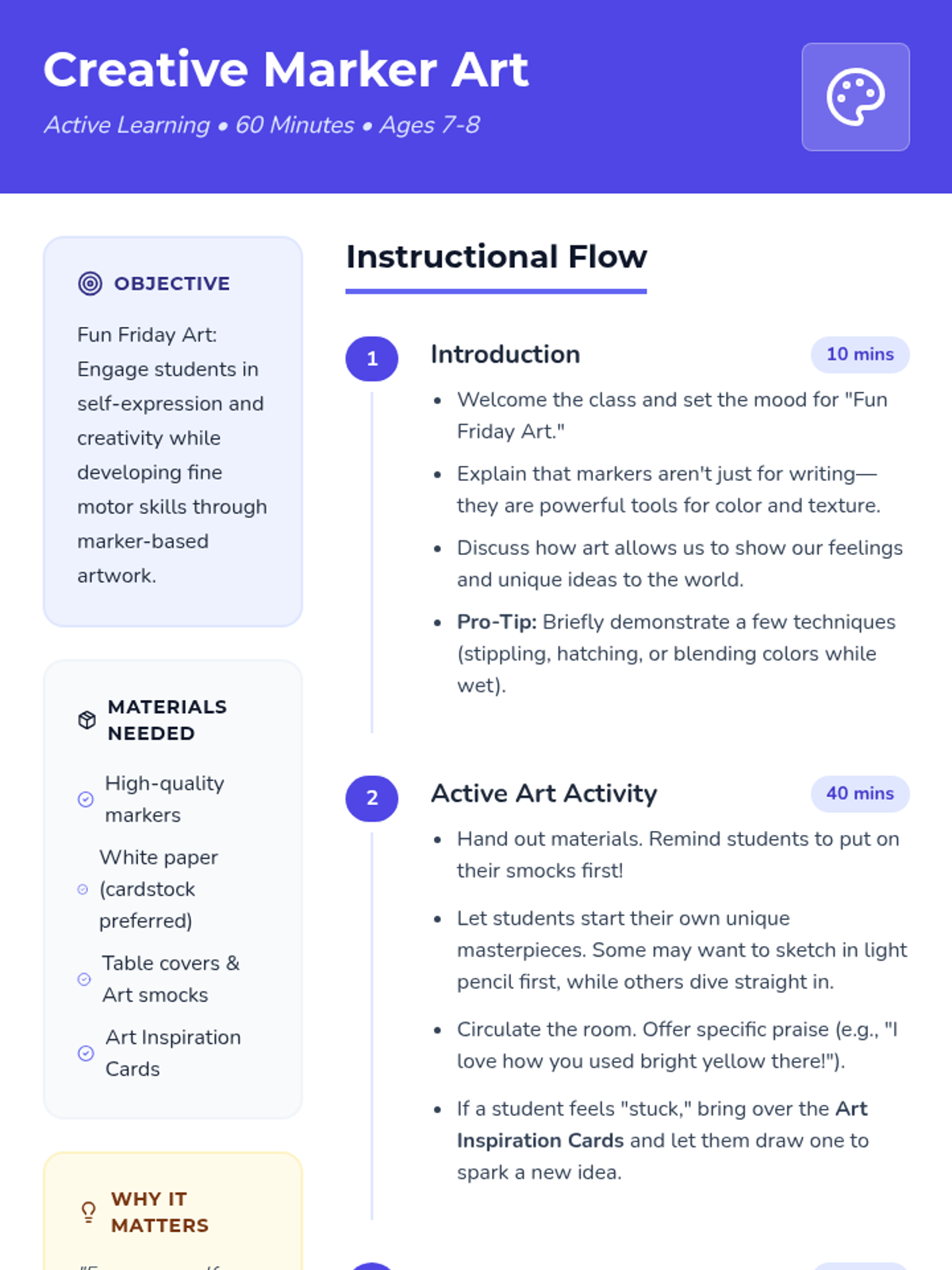
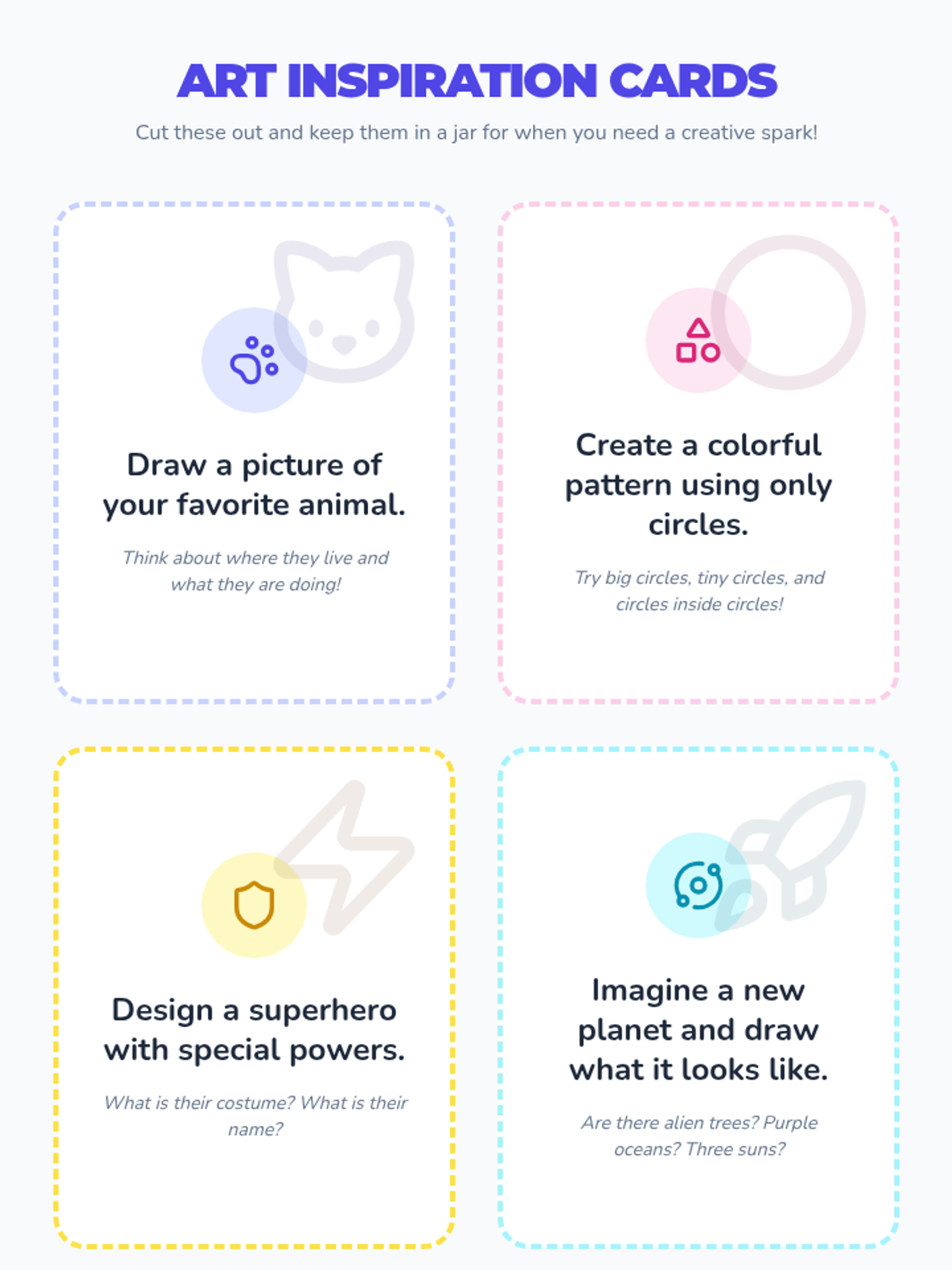
A vibrant 60-minute art lesson for 7-8 year olds focusing on self-expression and fine motor skills through marker art. Students explore creativity using inspiration cards and active guided practice.
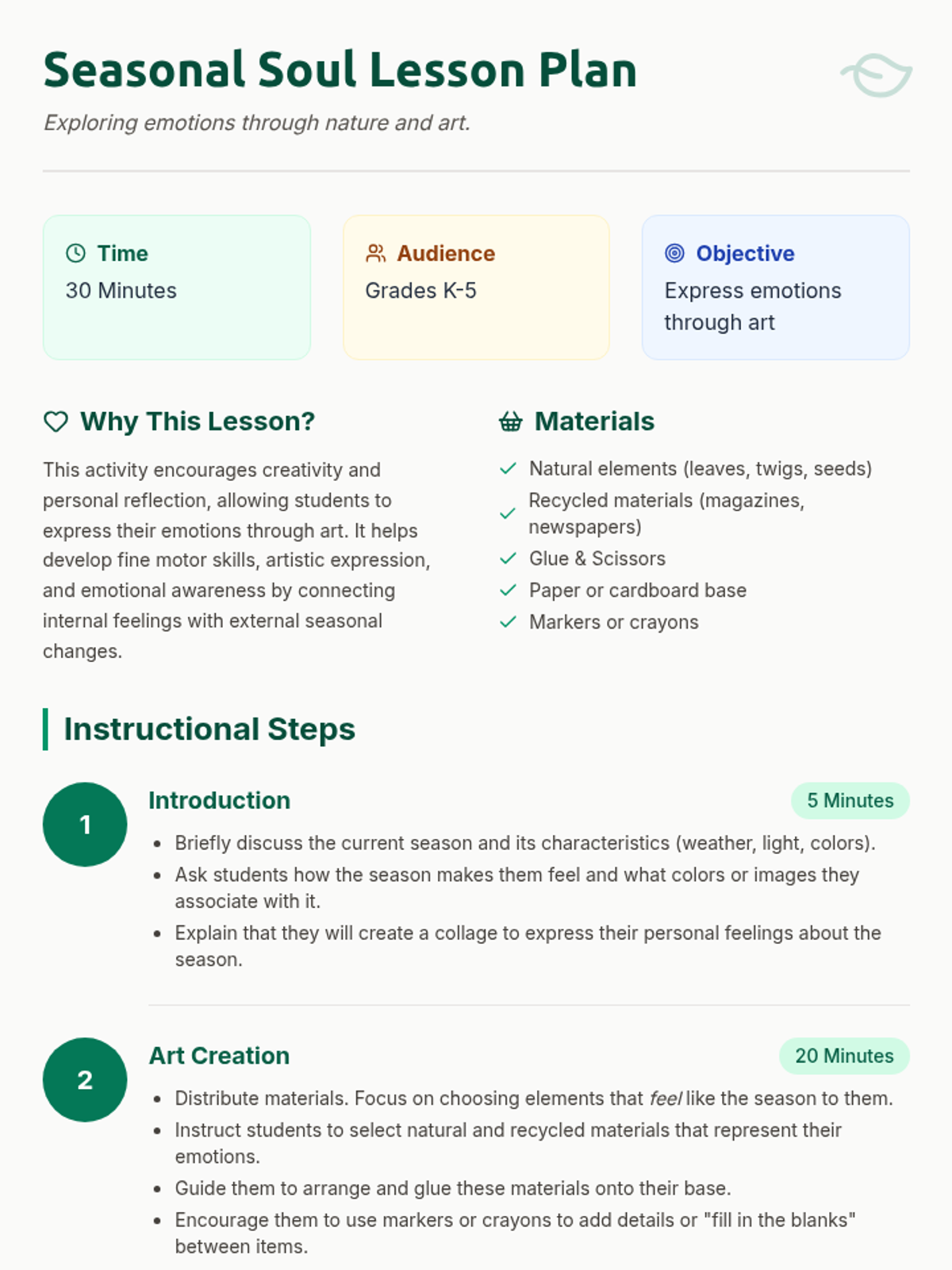
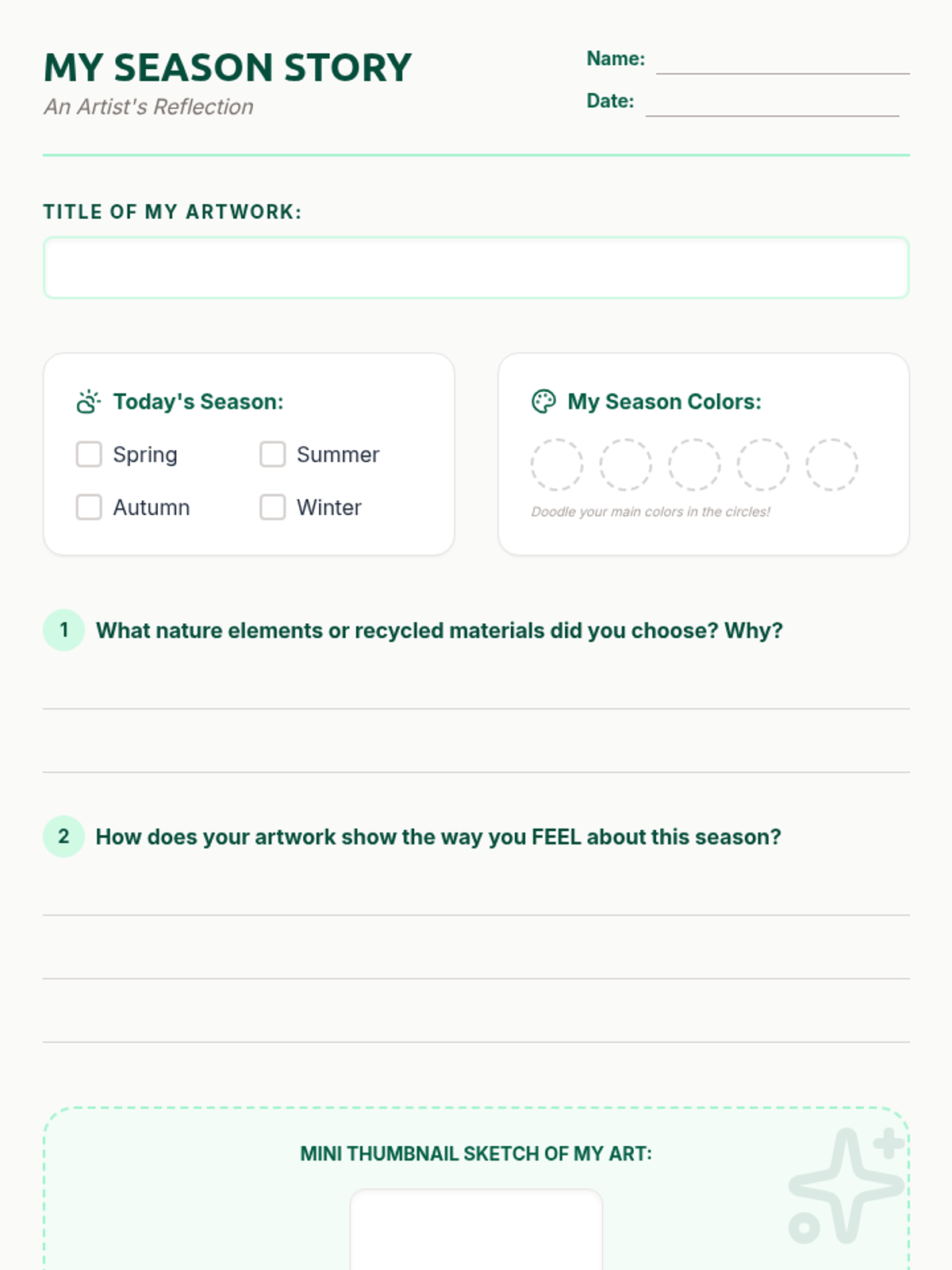
In this lesson, students will create collage artworks that represent their feelings about the current season using elements from nature and recycled materials. This activity encourages creativity and personal reflection, allowing students to express their emotions through art. It helps develop fine motor skills, artistic expression, and emotional awareness.
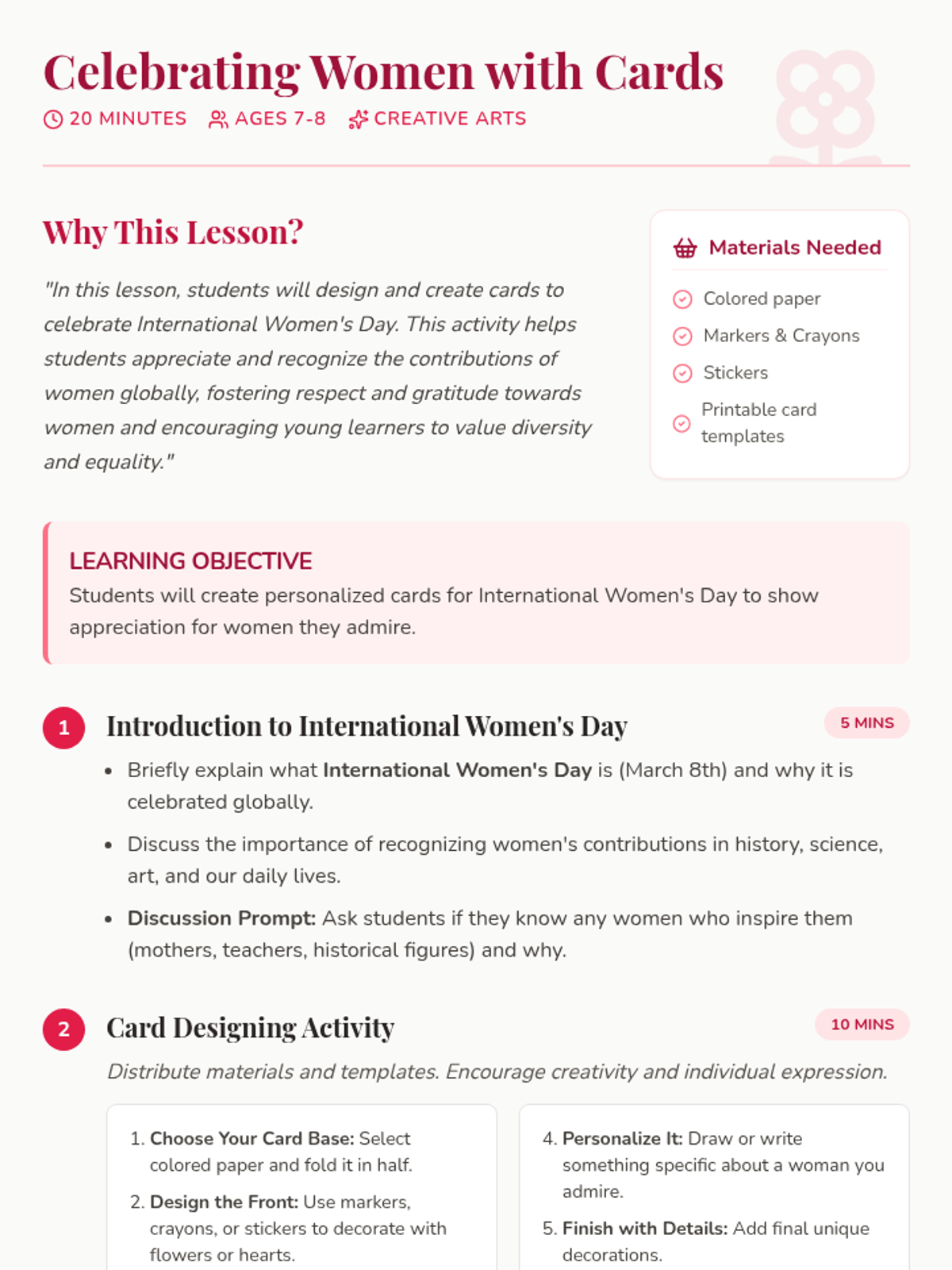
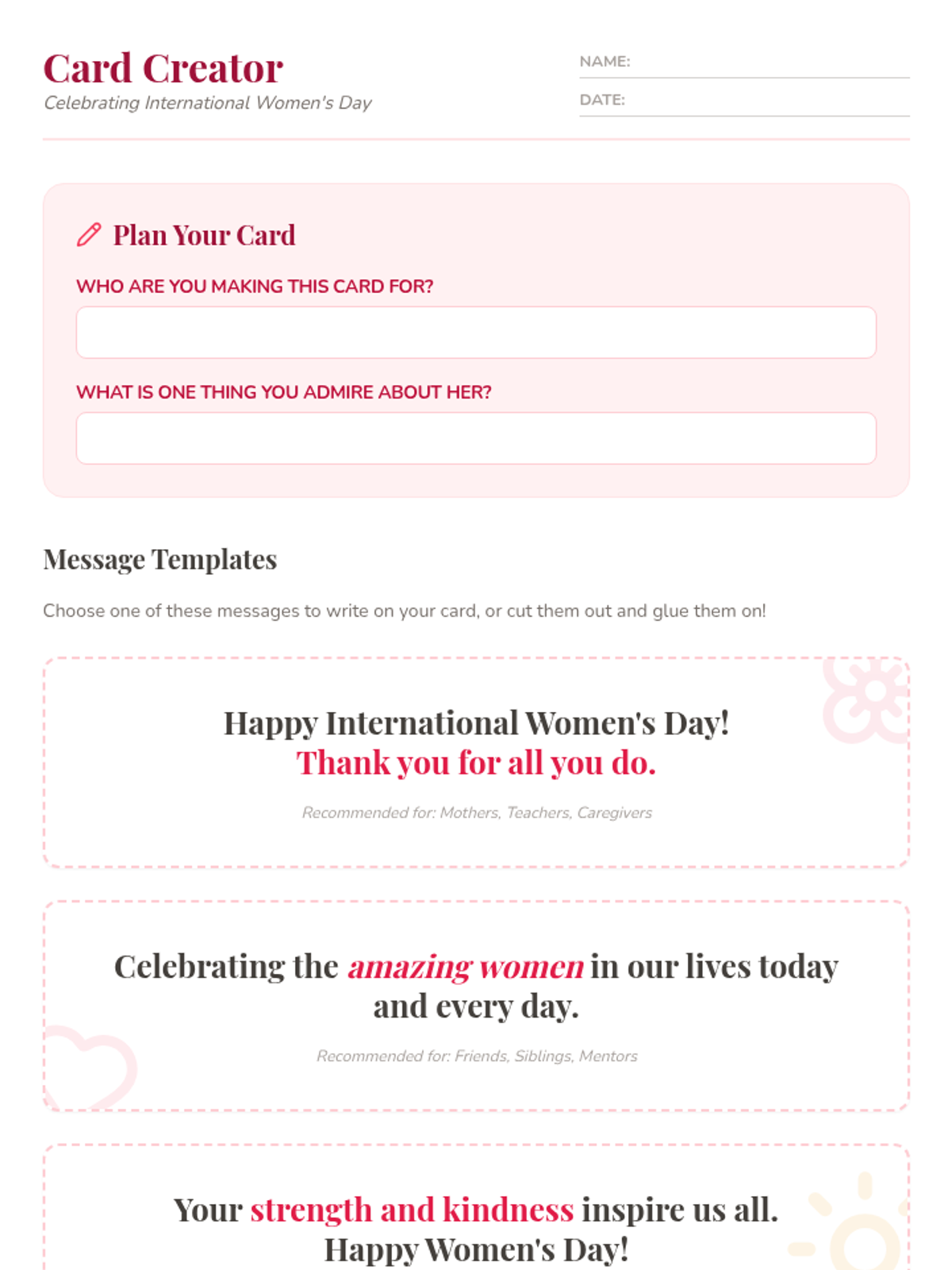
A lesson where students design and create cards to celebrate International Women's Day, fostering respect and gratitude towards women's contributions globally.
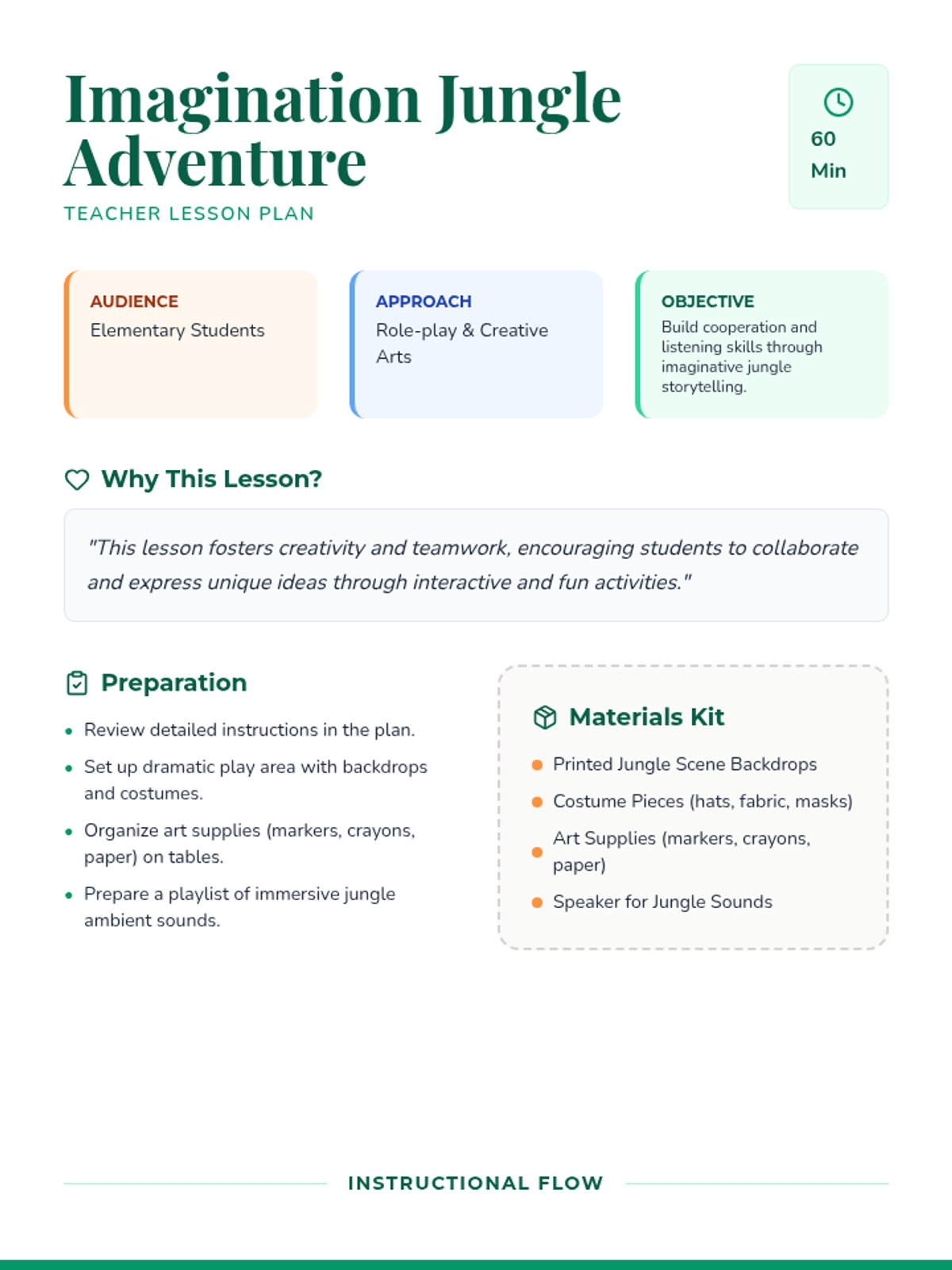
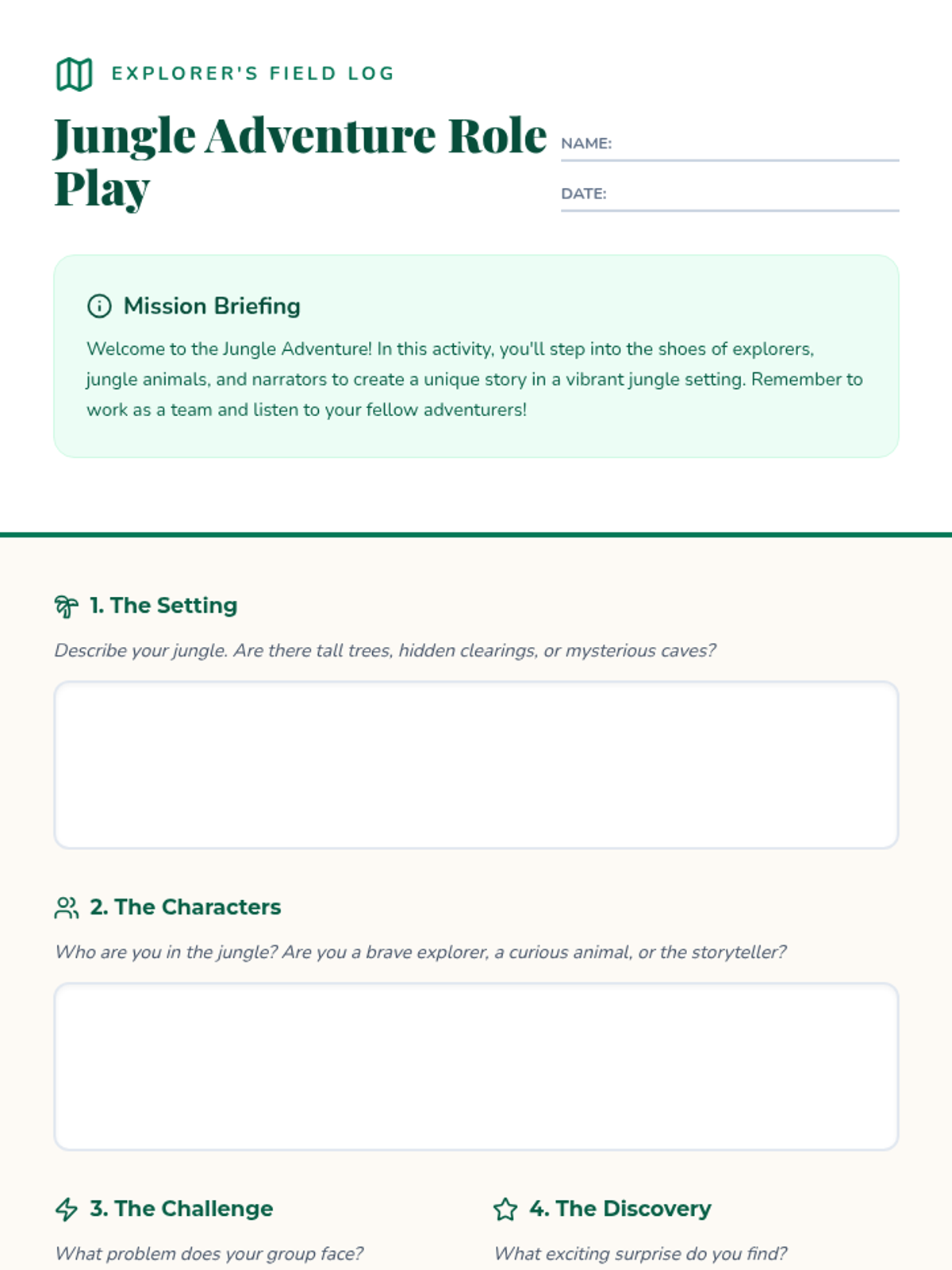
An interactive elementary lesson where students explore a vibrant jungle through dramatic play and creative arts, fostering teamwork and imaginative storytelling.
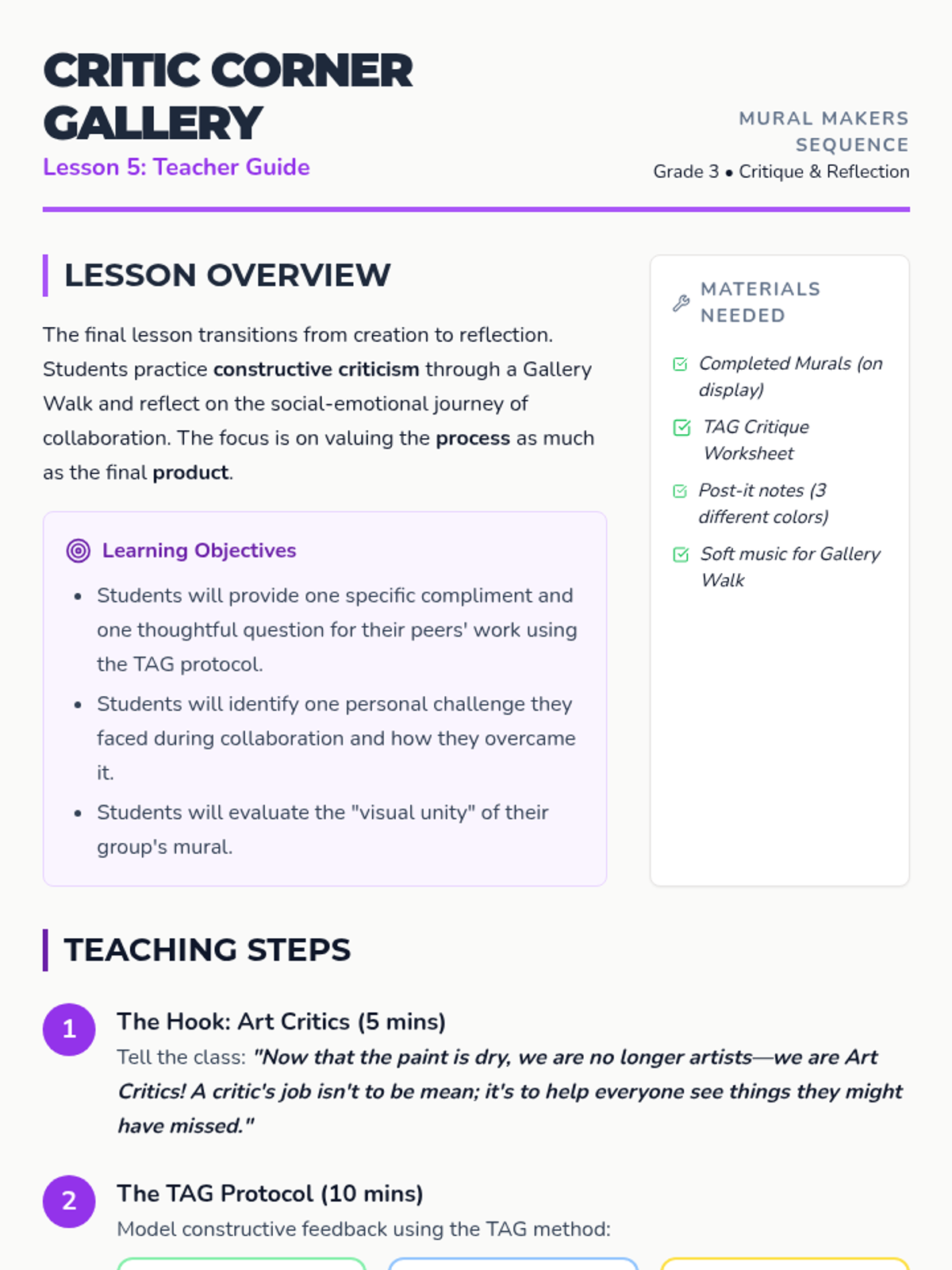
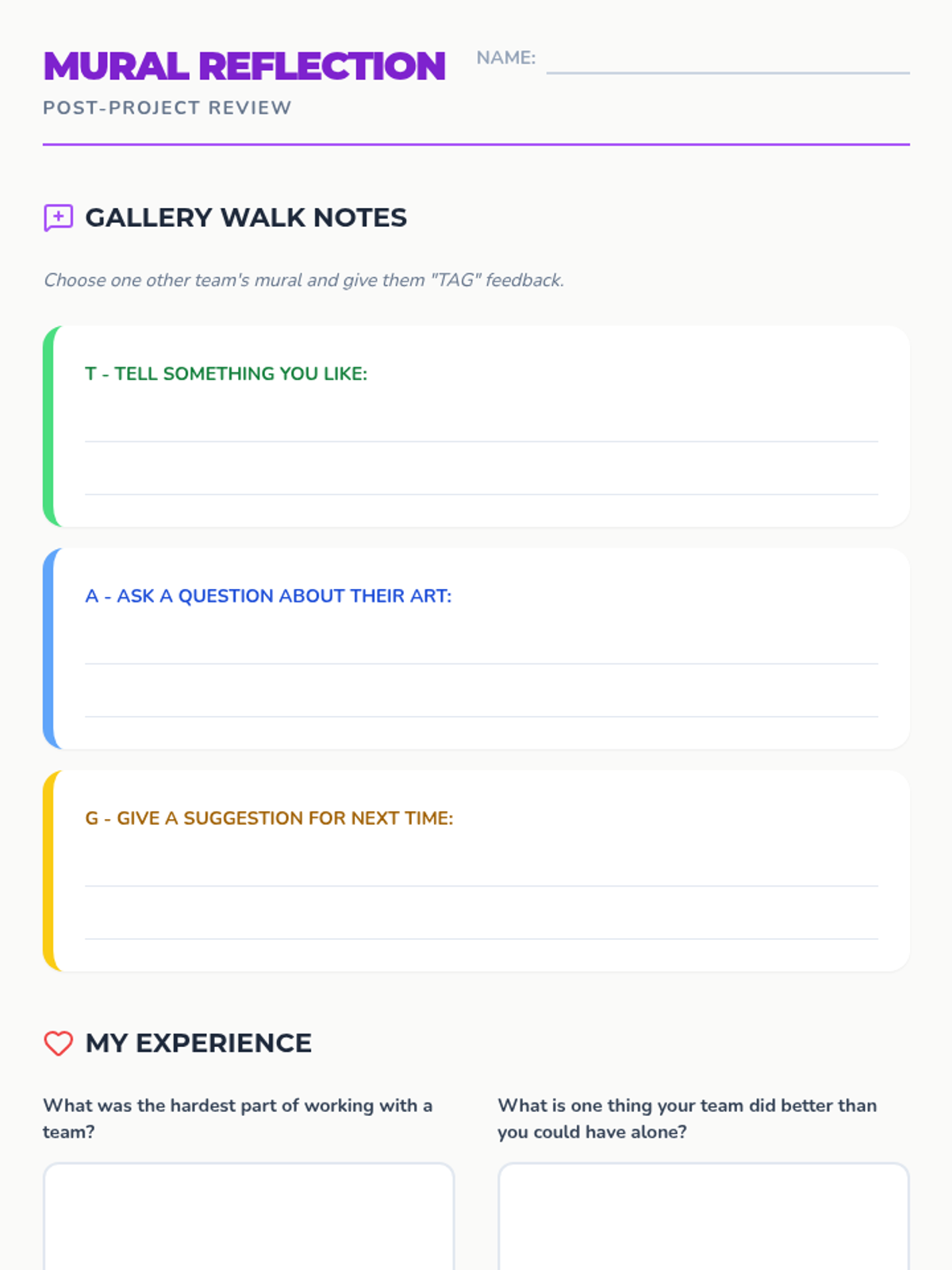
Students reflect on their collaborative process and participate in a gallery walk to provide constructive feedback on their peers' work.
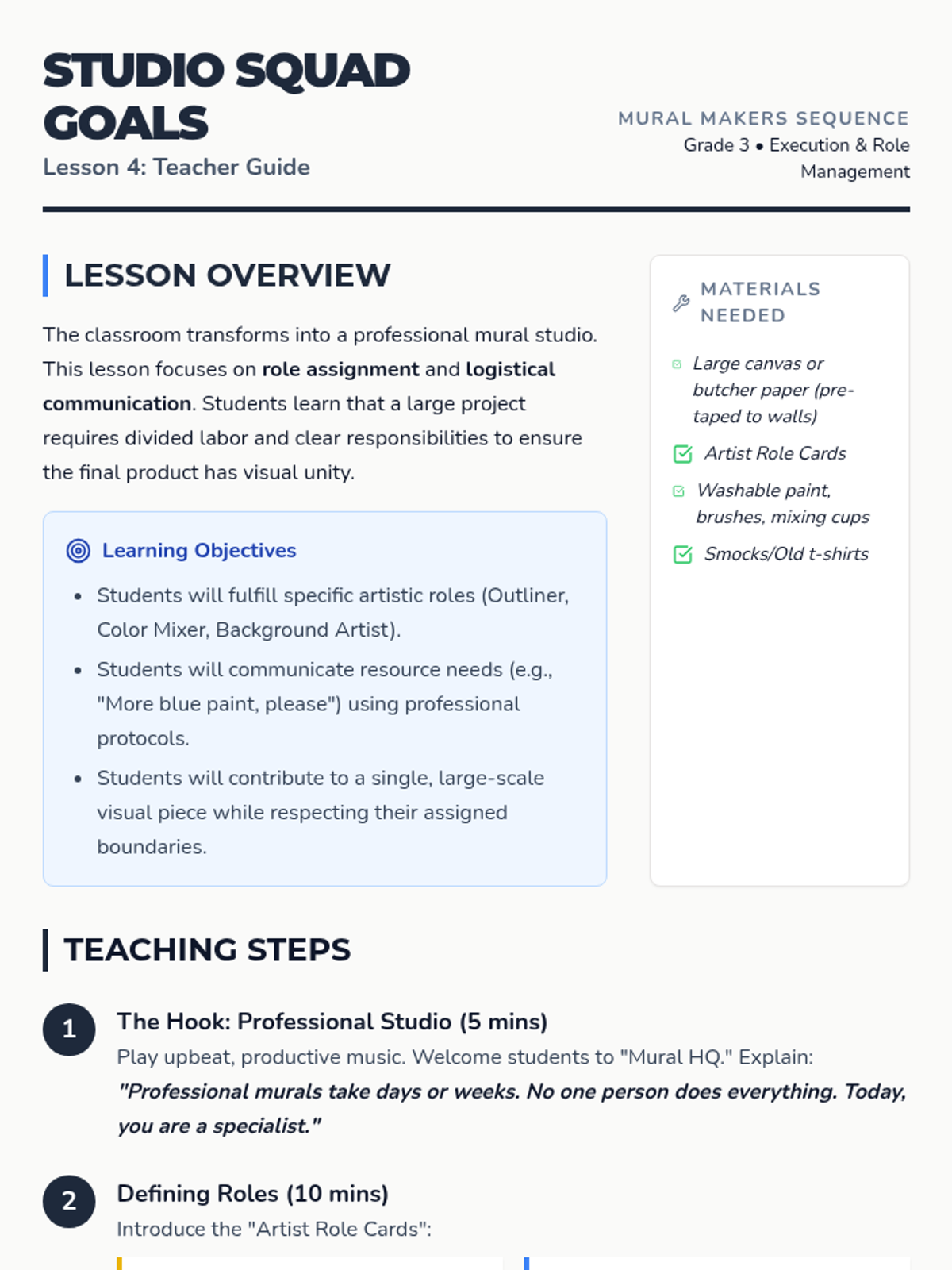
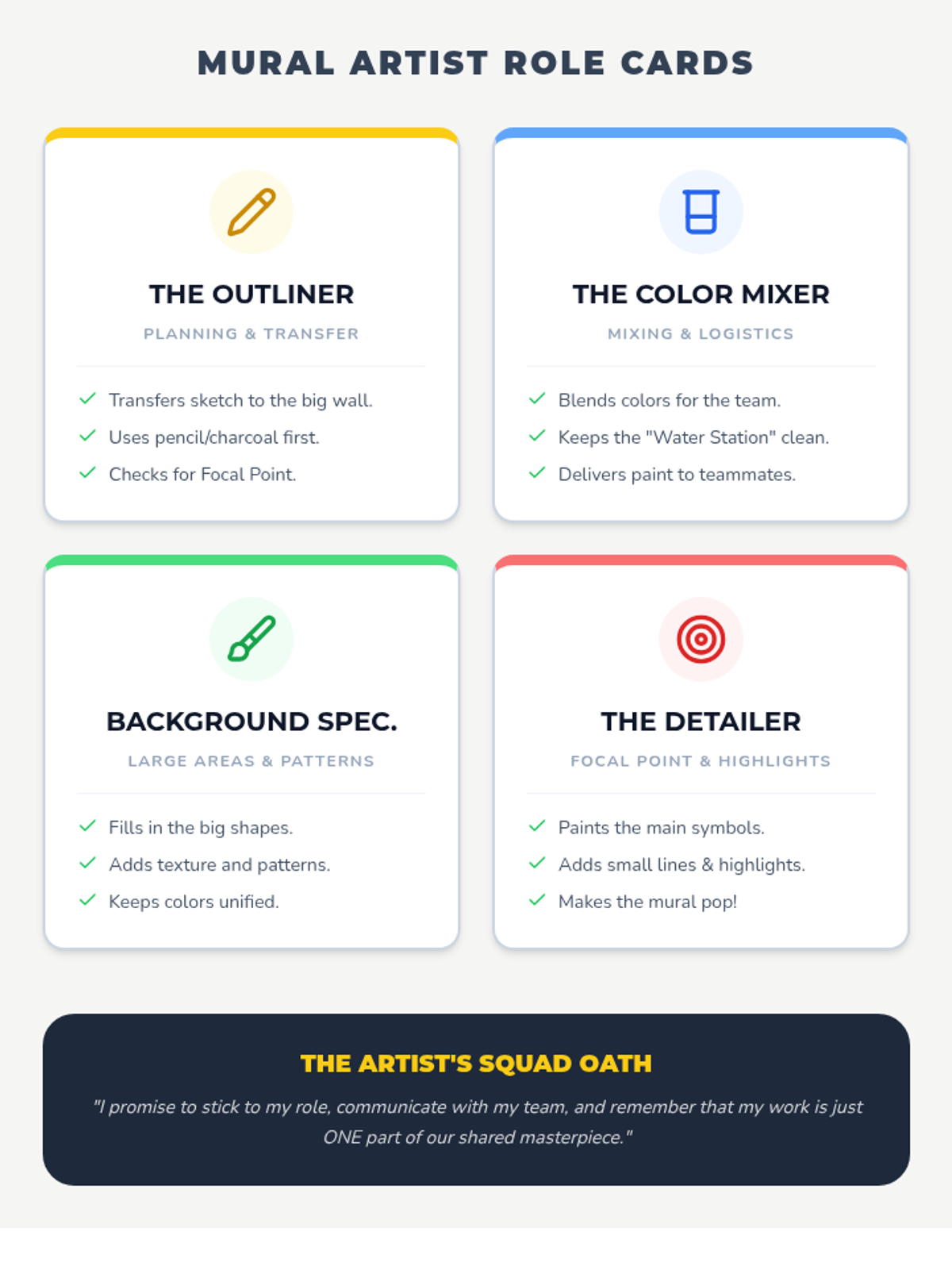
The classroom transforms into an art studio where students take on specific roles to execute their large-scale collaborative artwork.
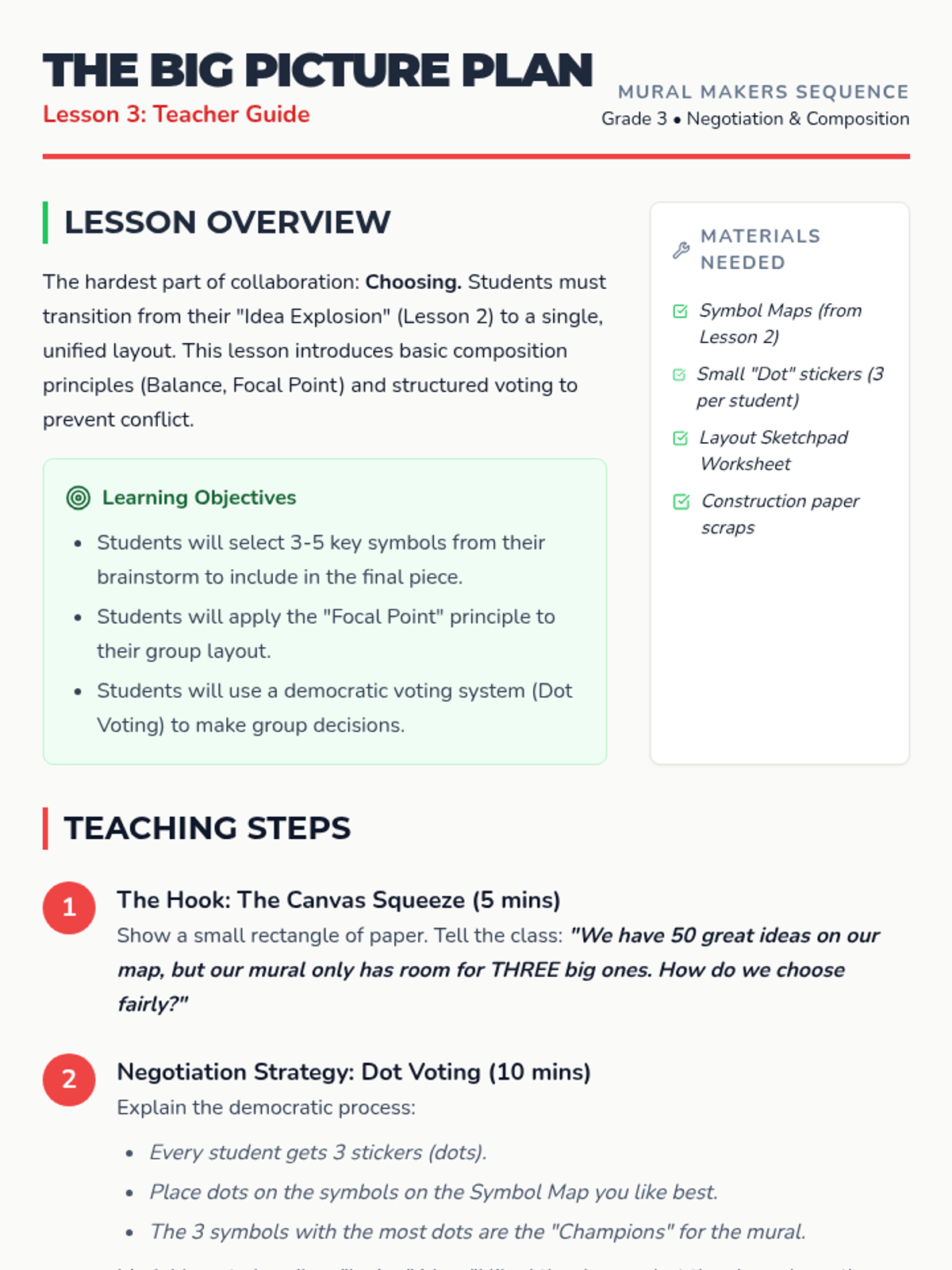
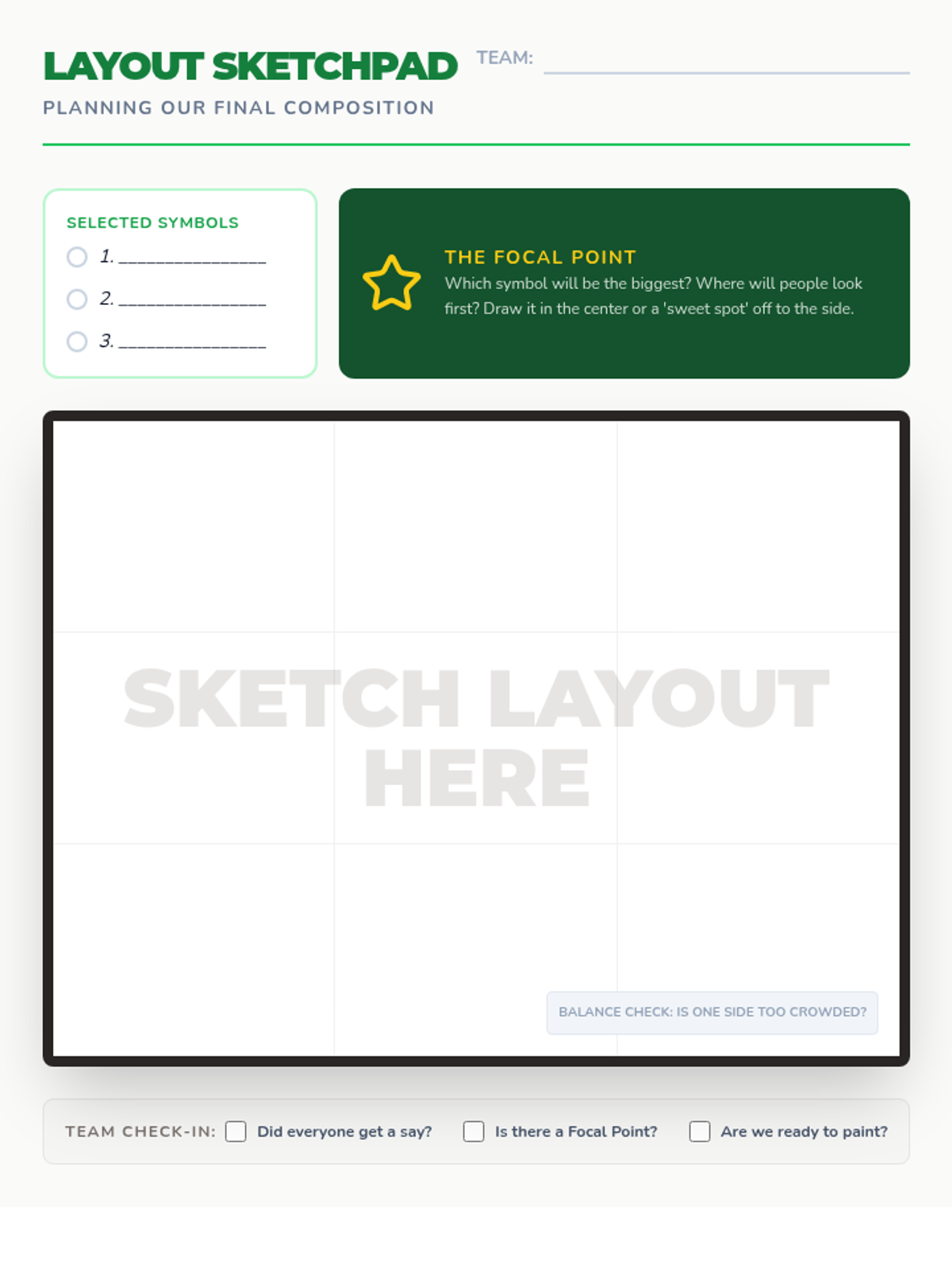
Students learn to negotiate and compromise as they select the best ideas from their brainstorming session to create a unified composition layout.
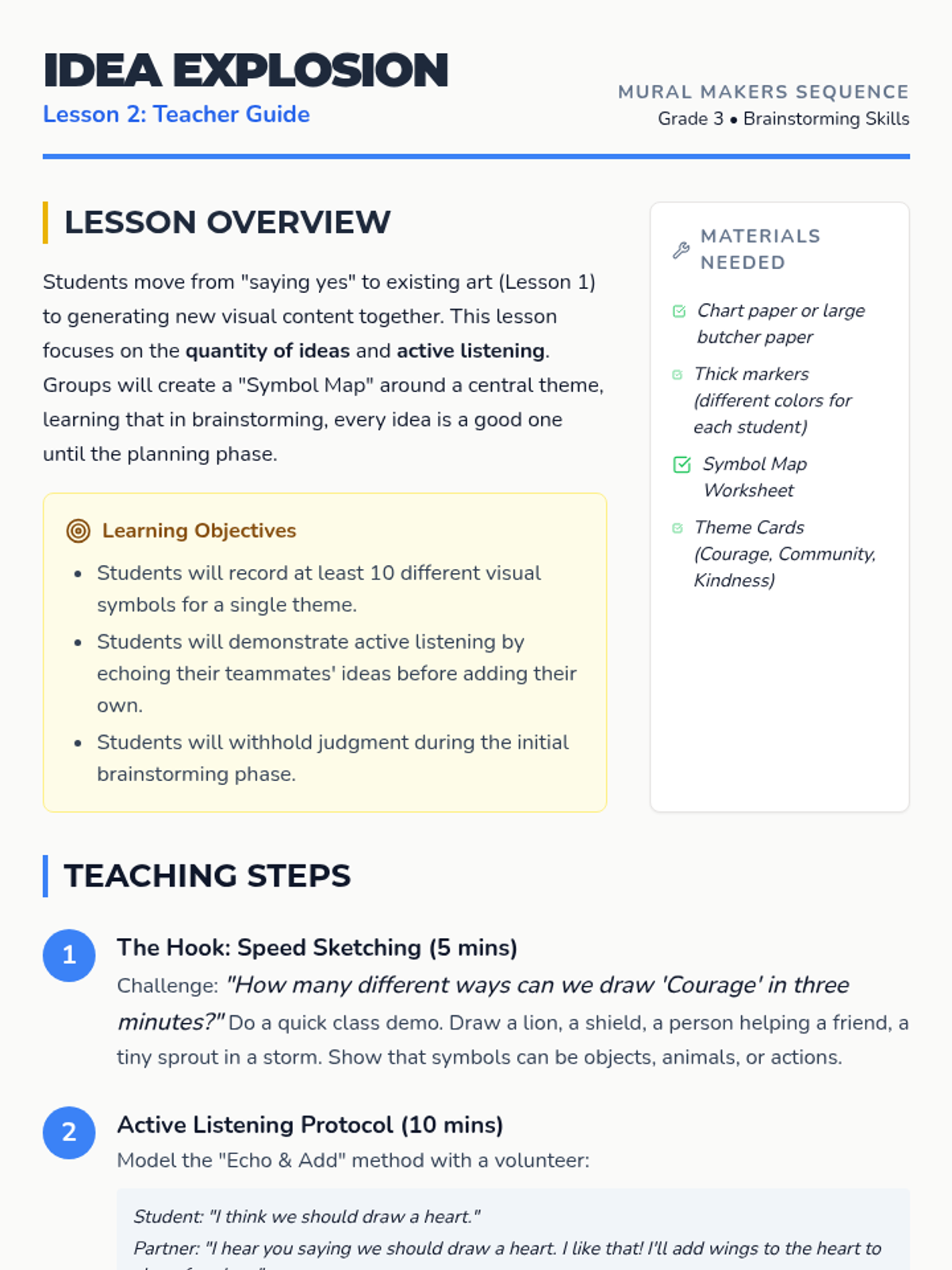
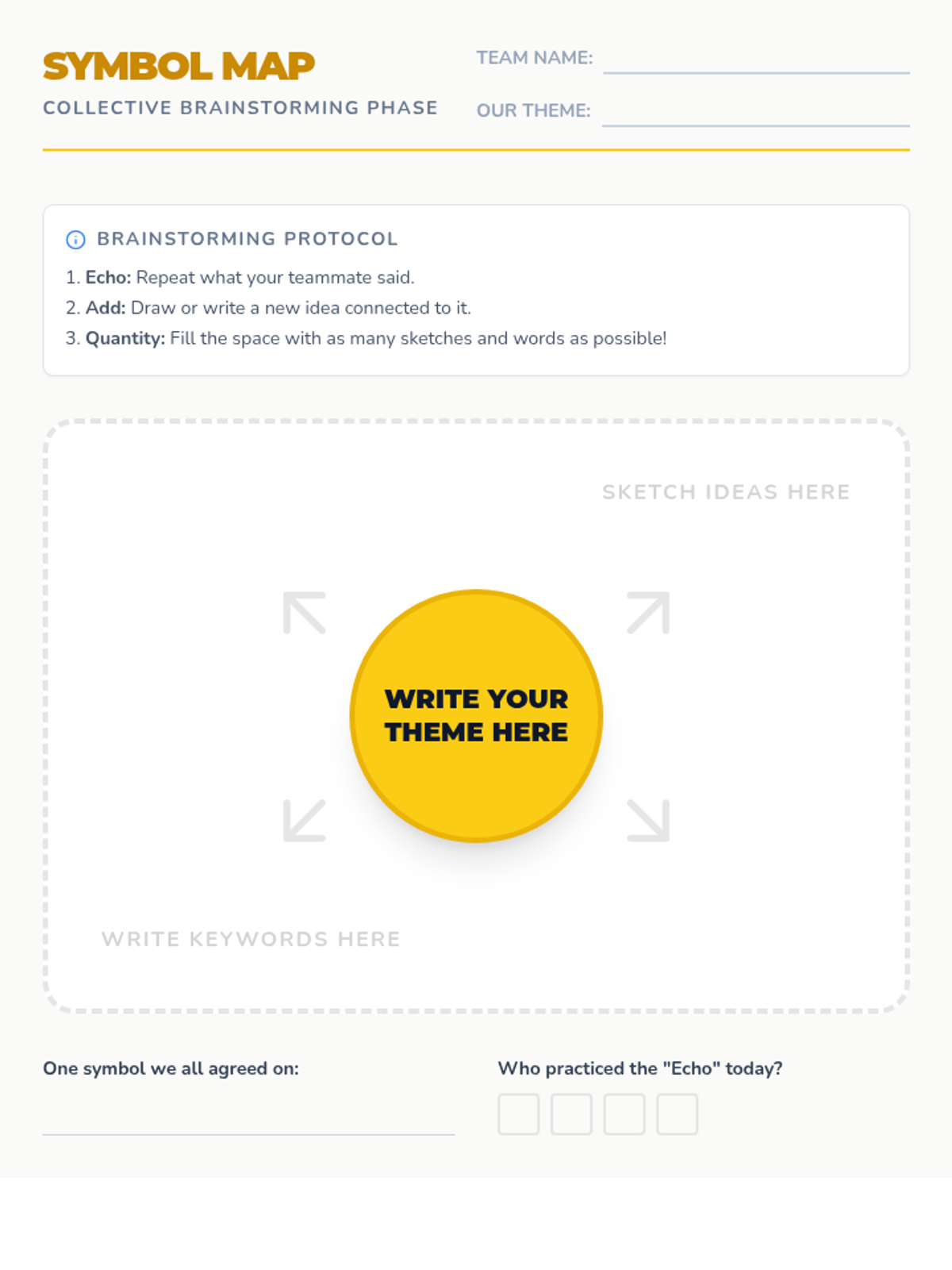
Small groups practice brainstorming and mind mapping visual symbols for a theme, focusing on active listening and generating a high volume of ideas.
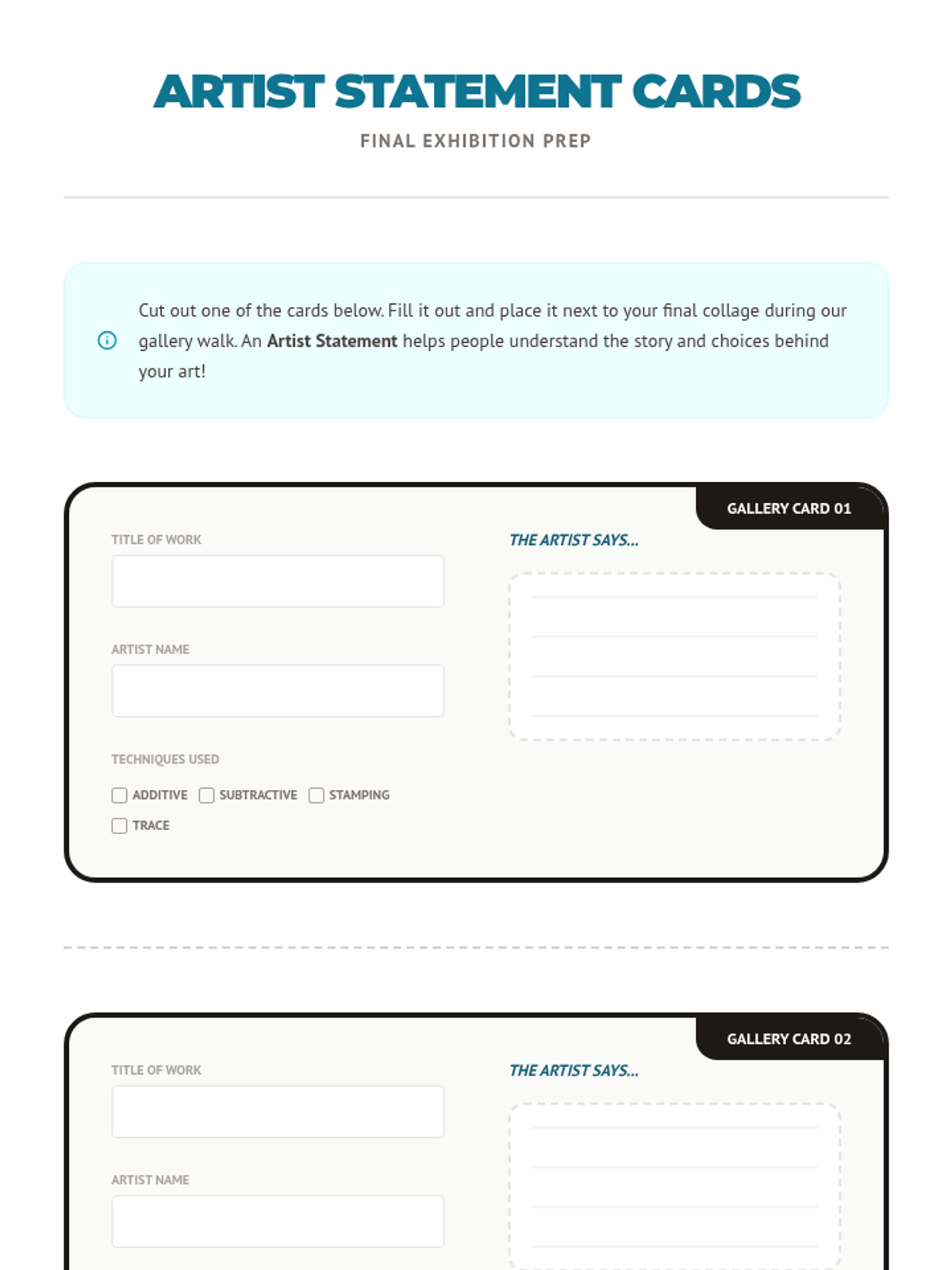
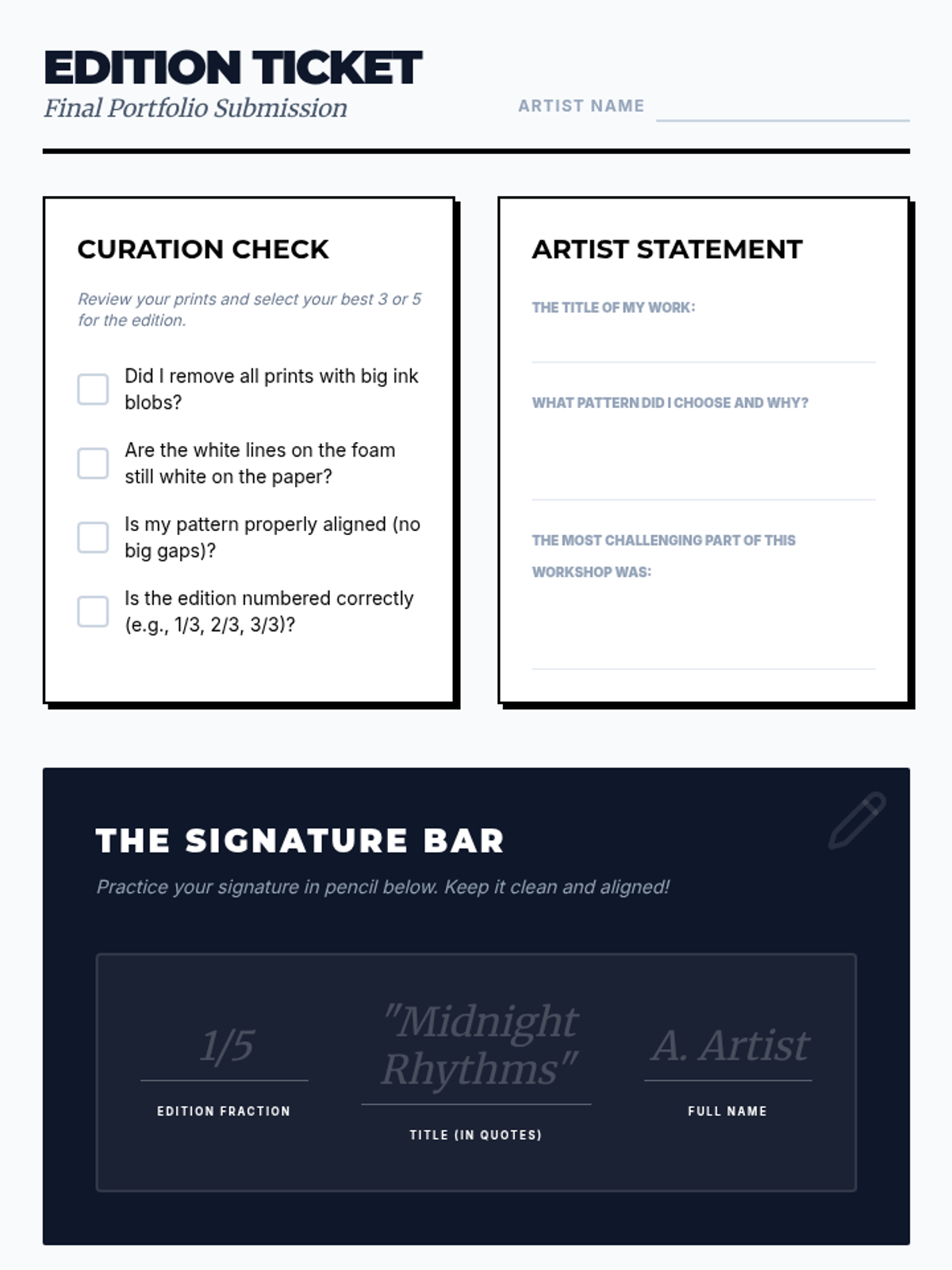
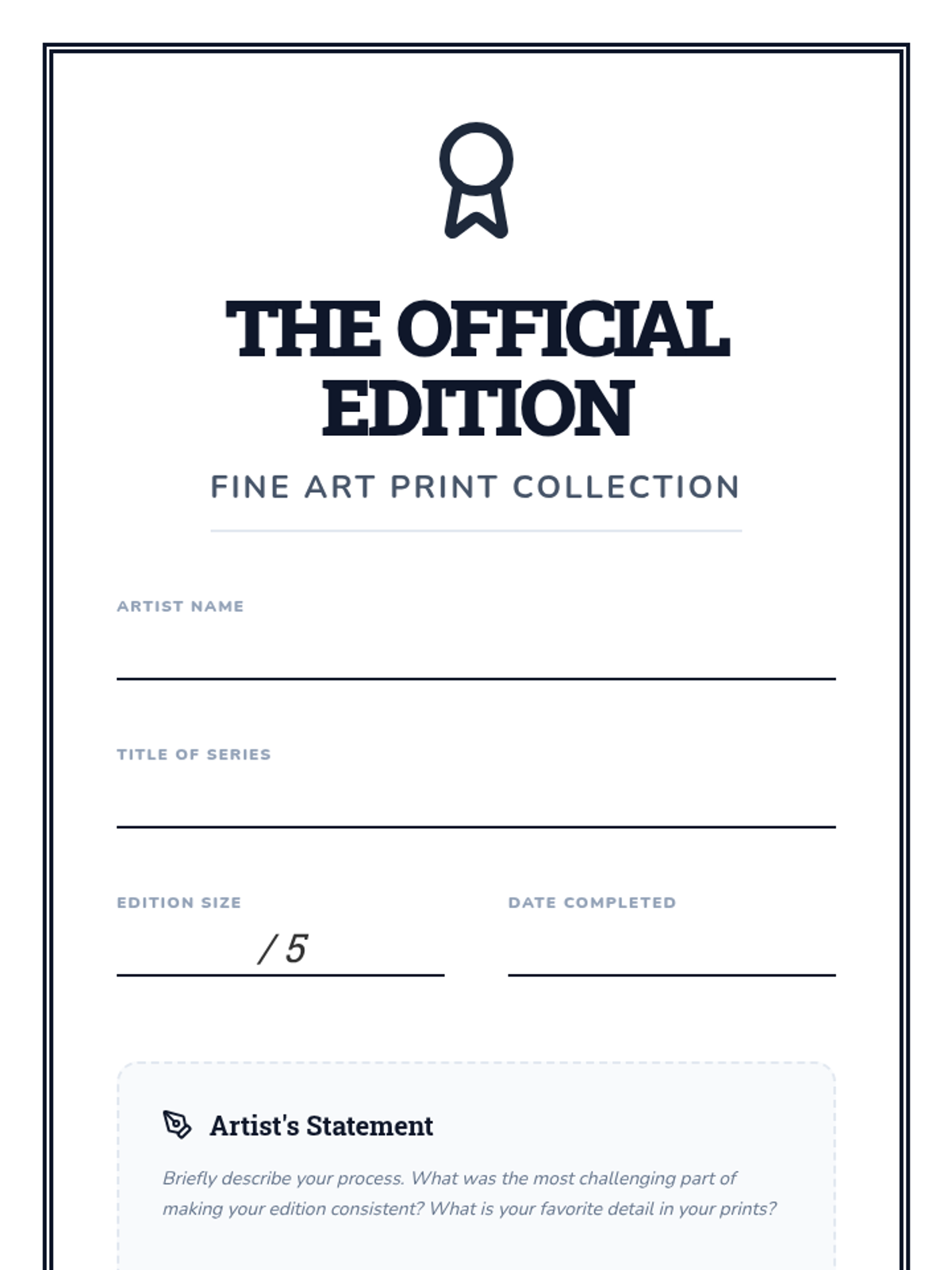
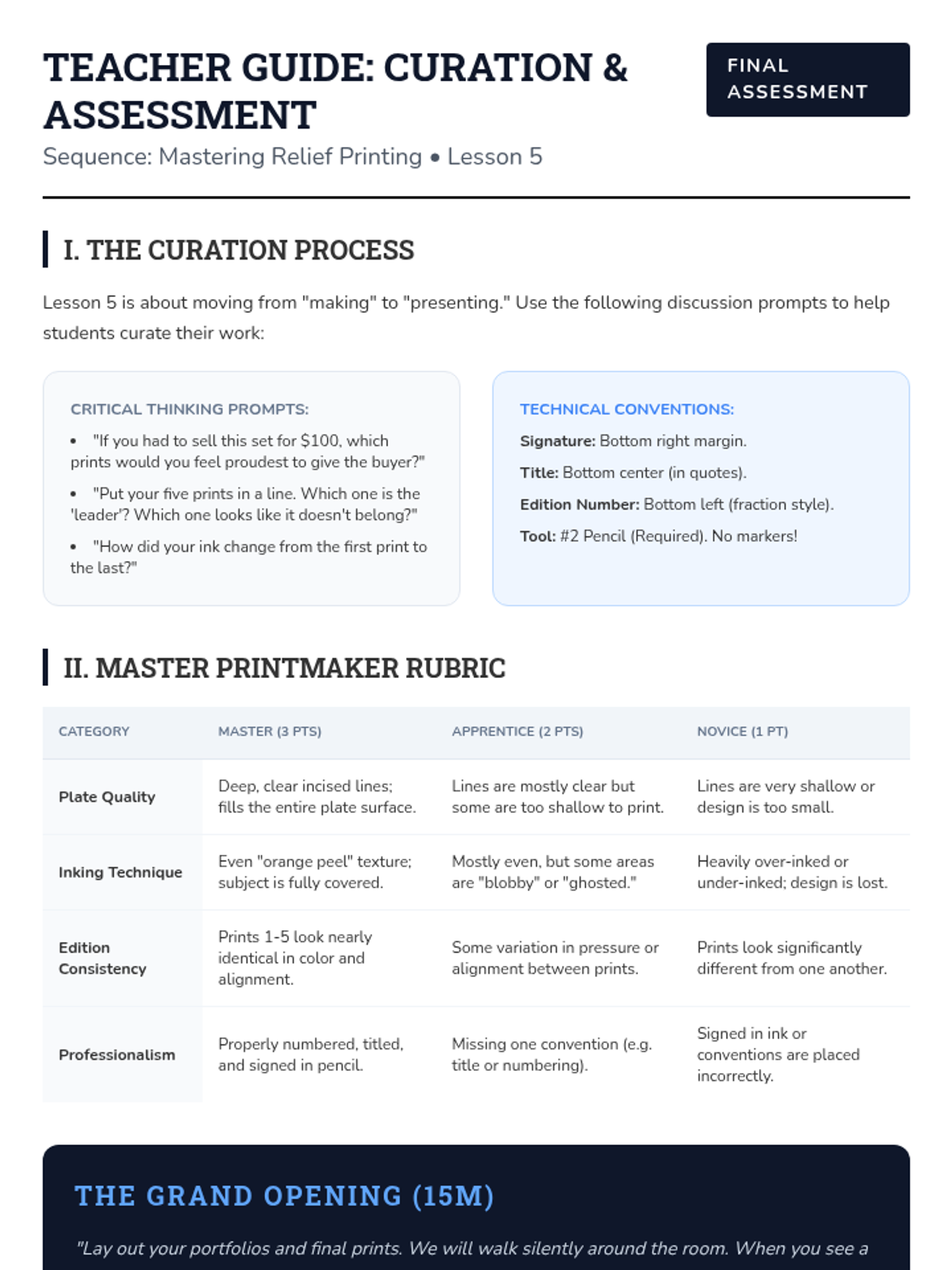
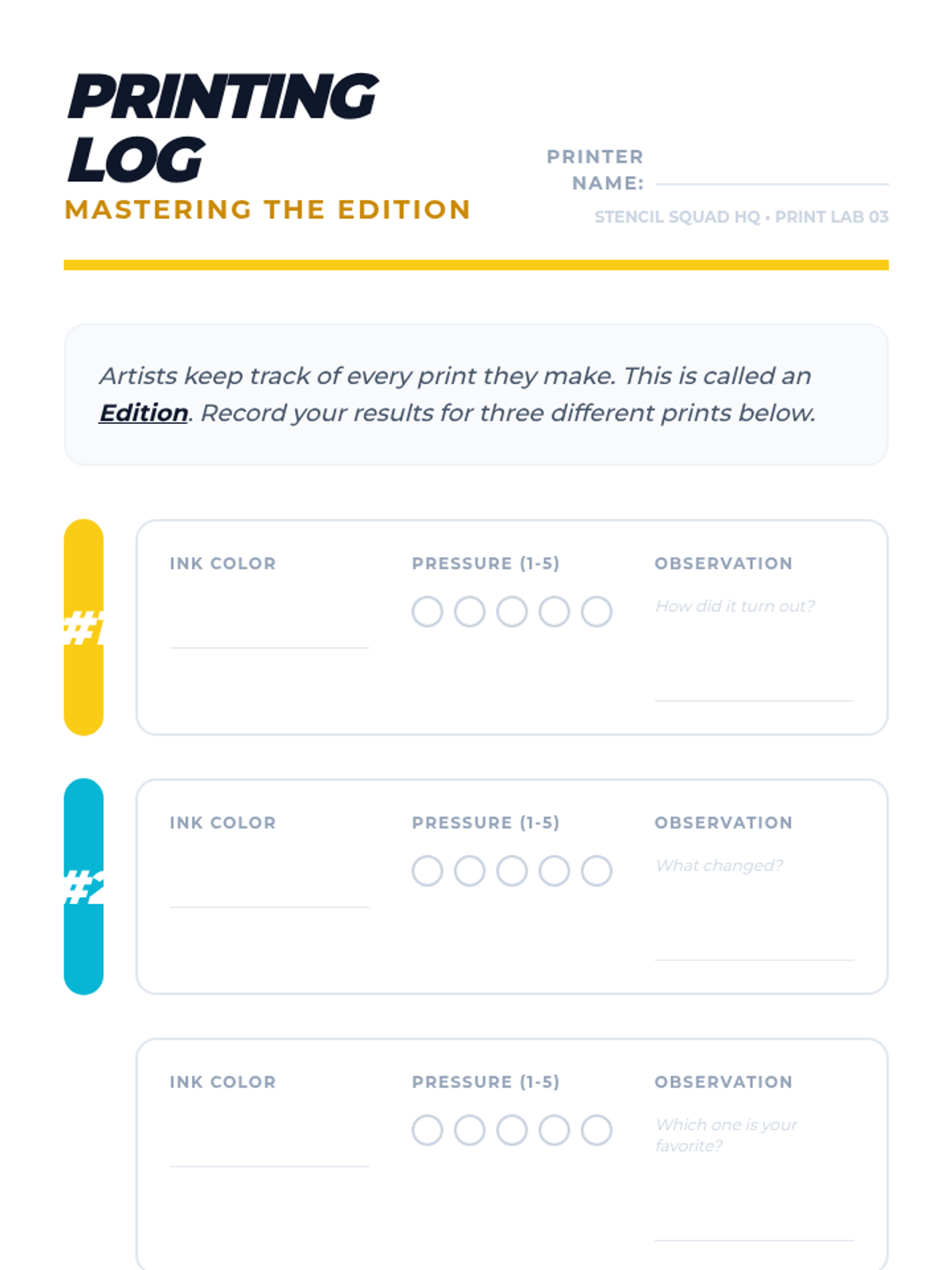
Students sign, number, and curate their final print editions followed by a peer gallery walk.
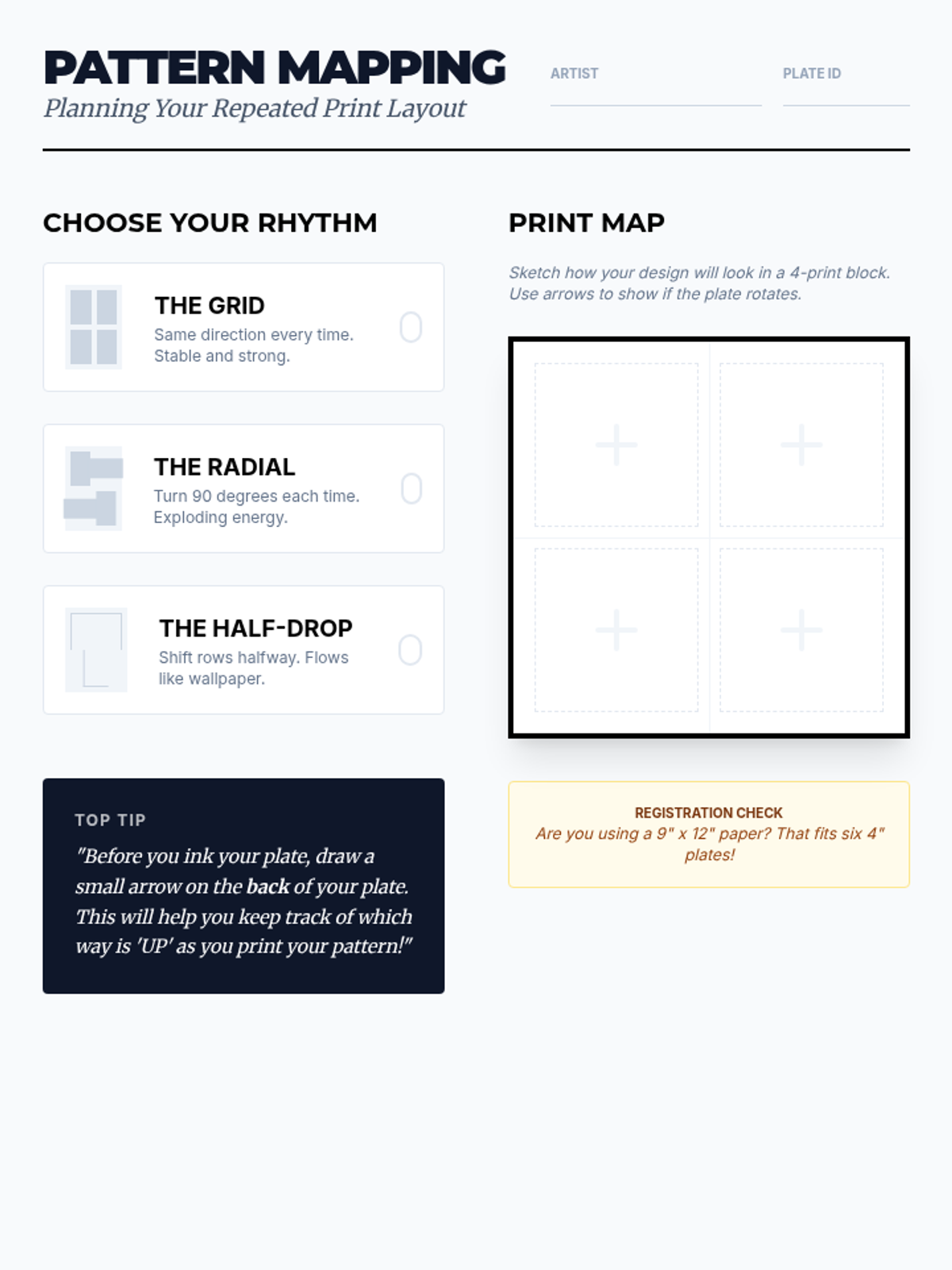
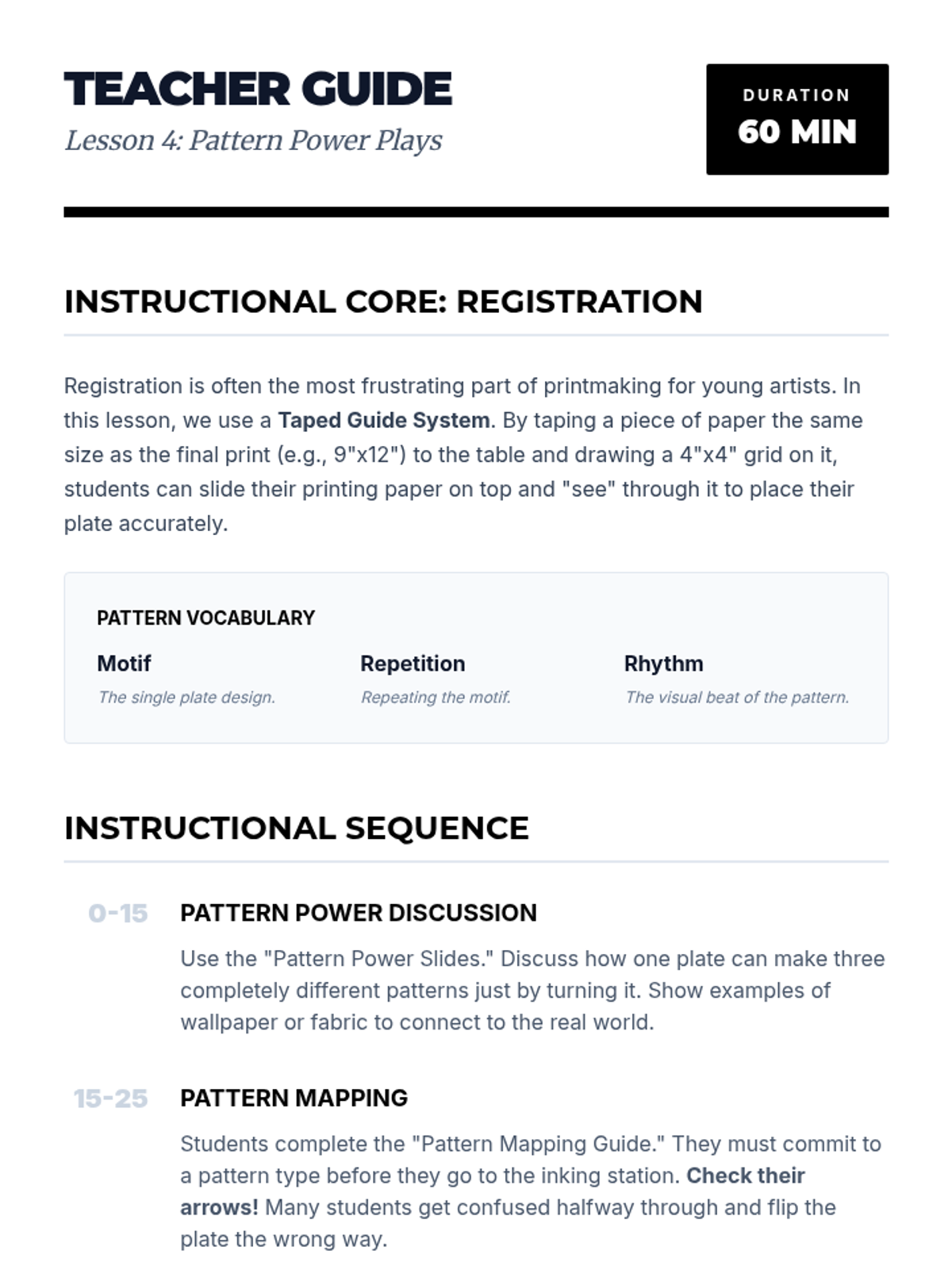
Students create complex patterns by repeating their prints using registration techniques for alignment.
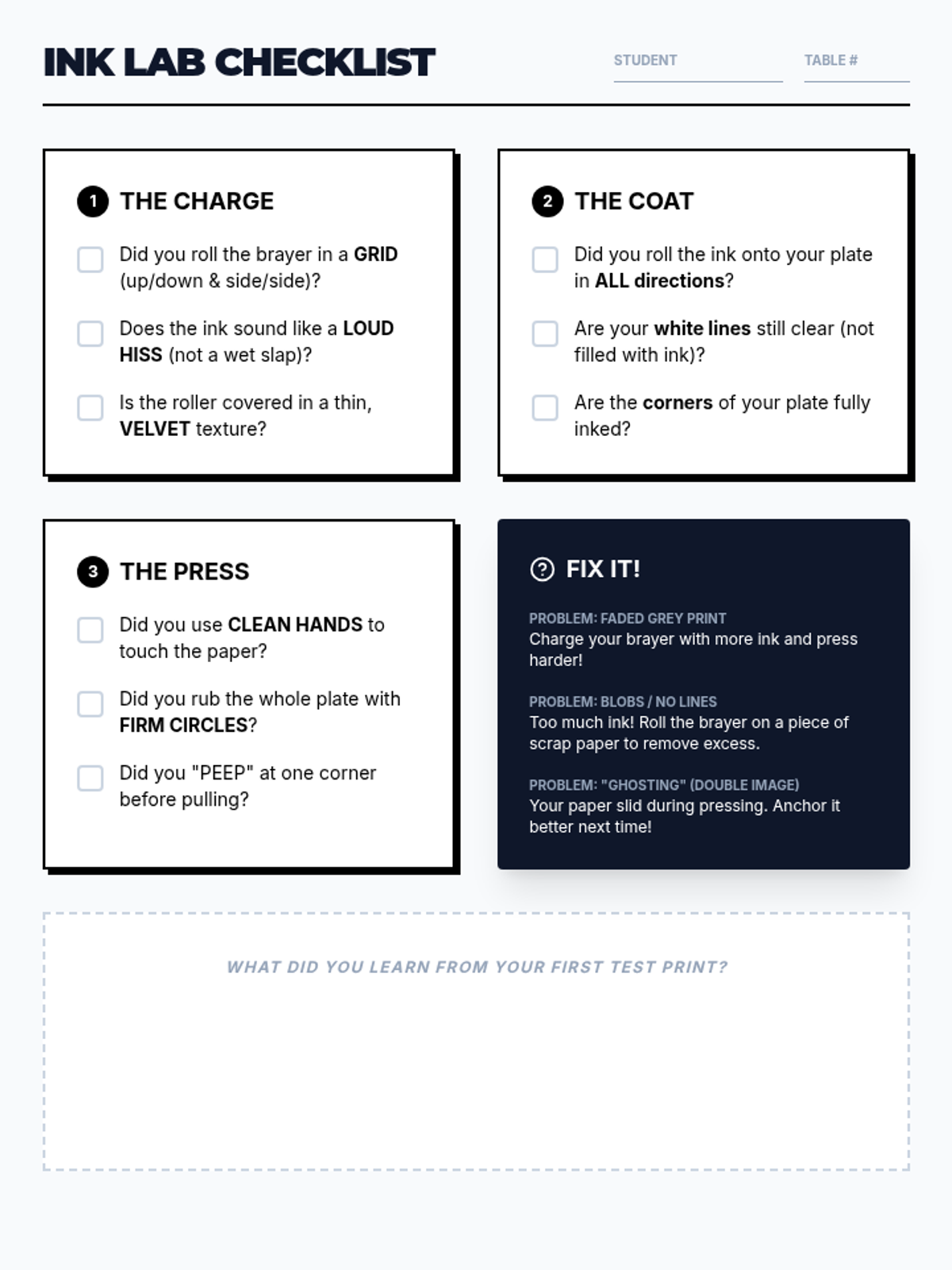
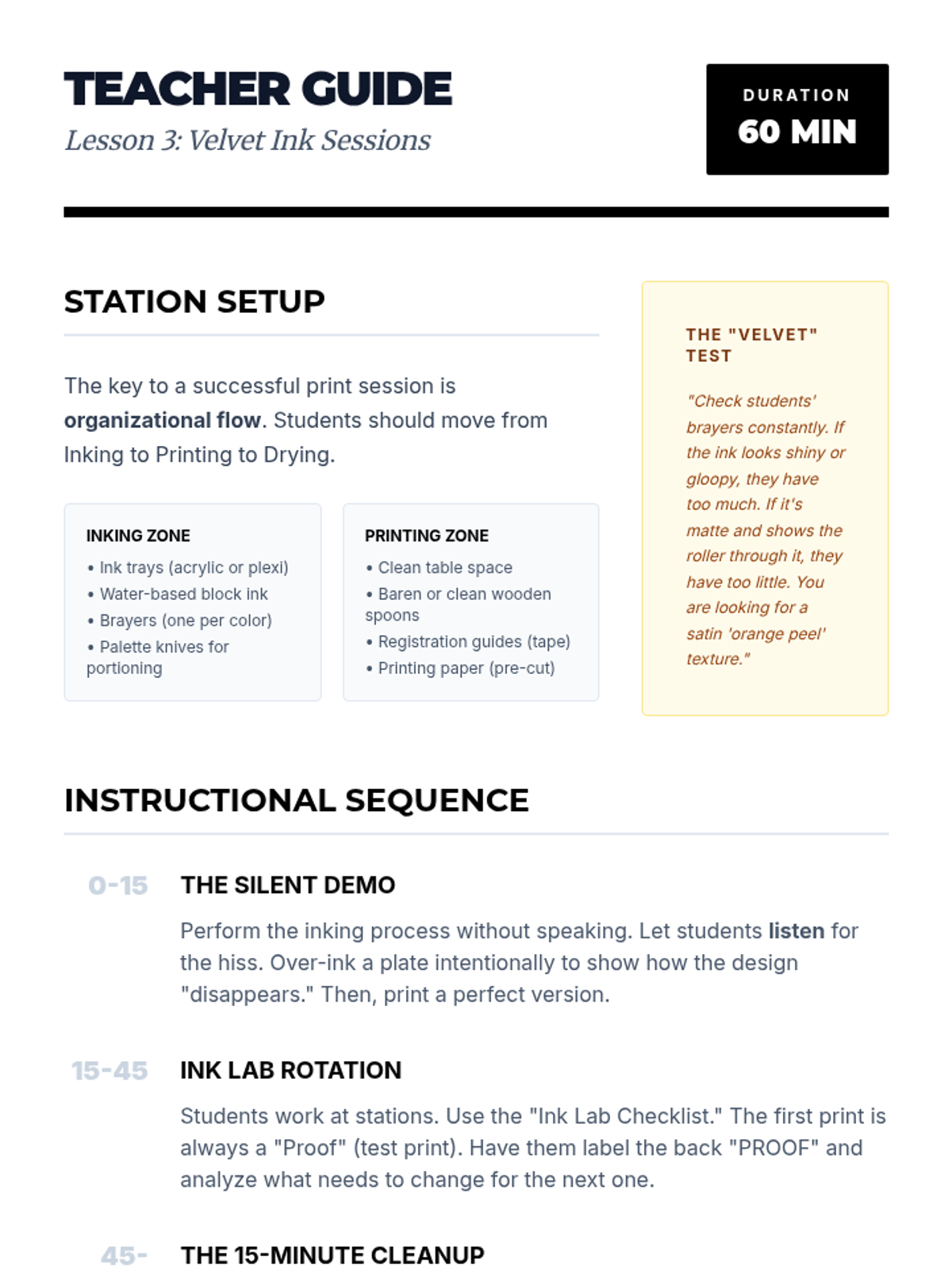
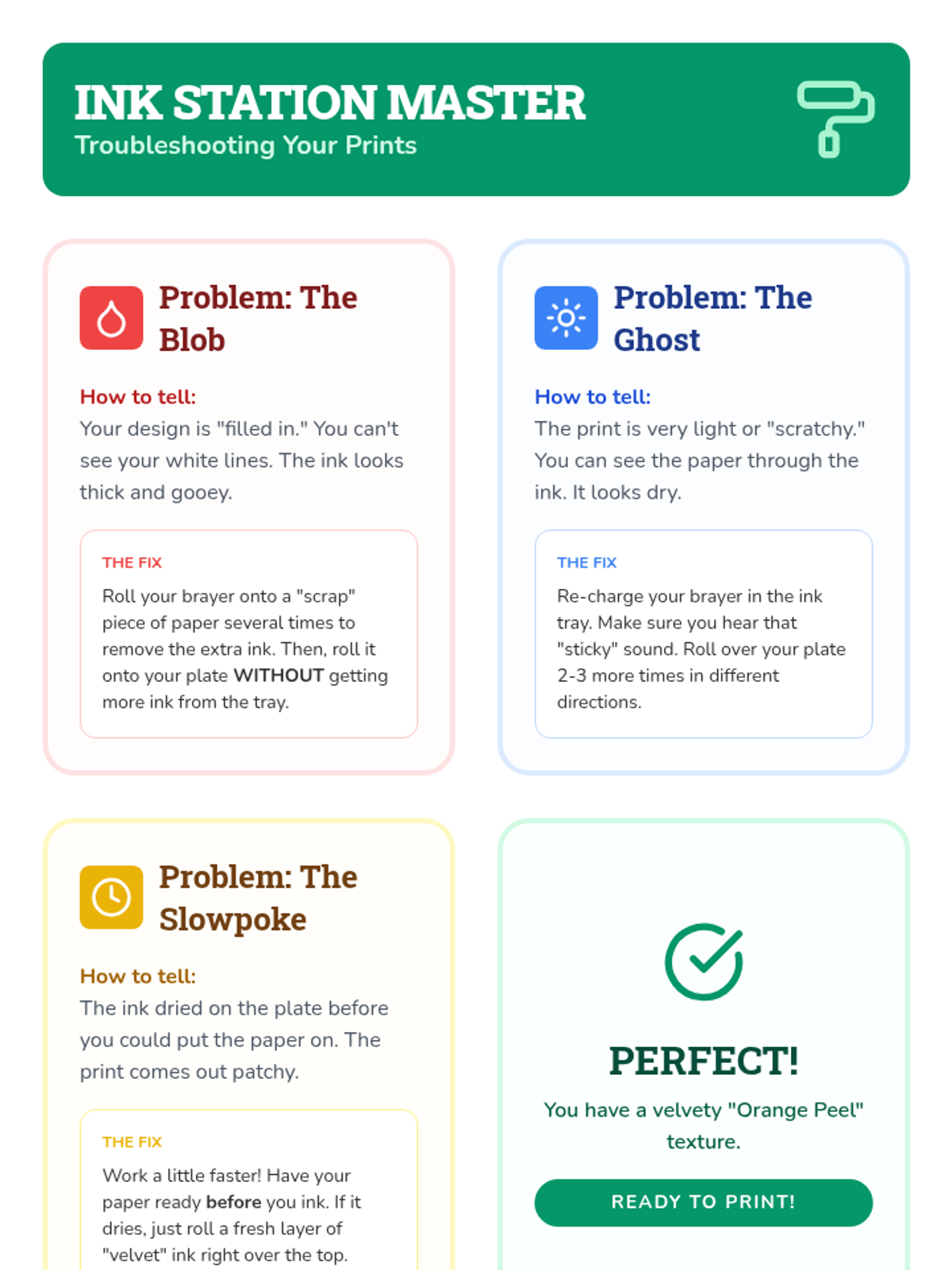
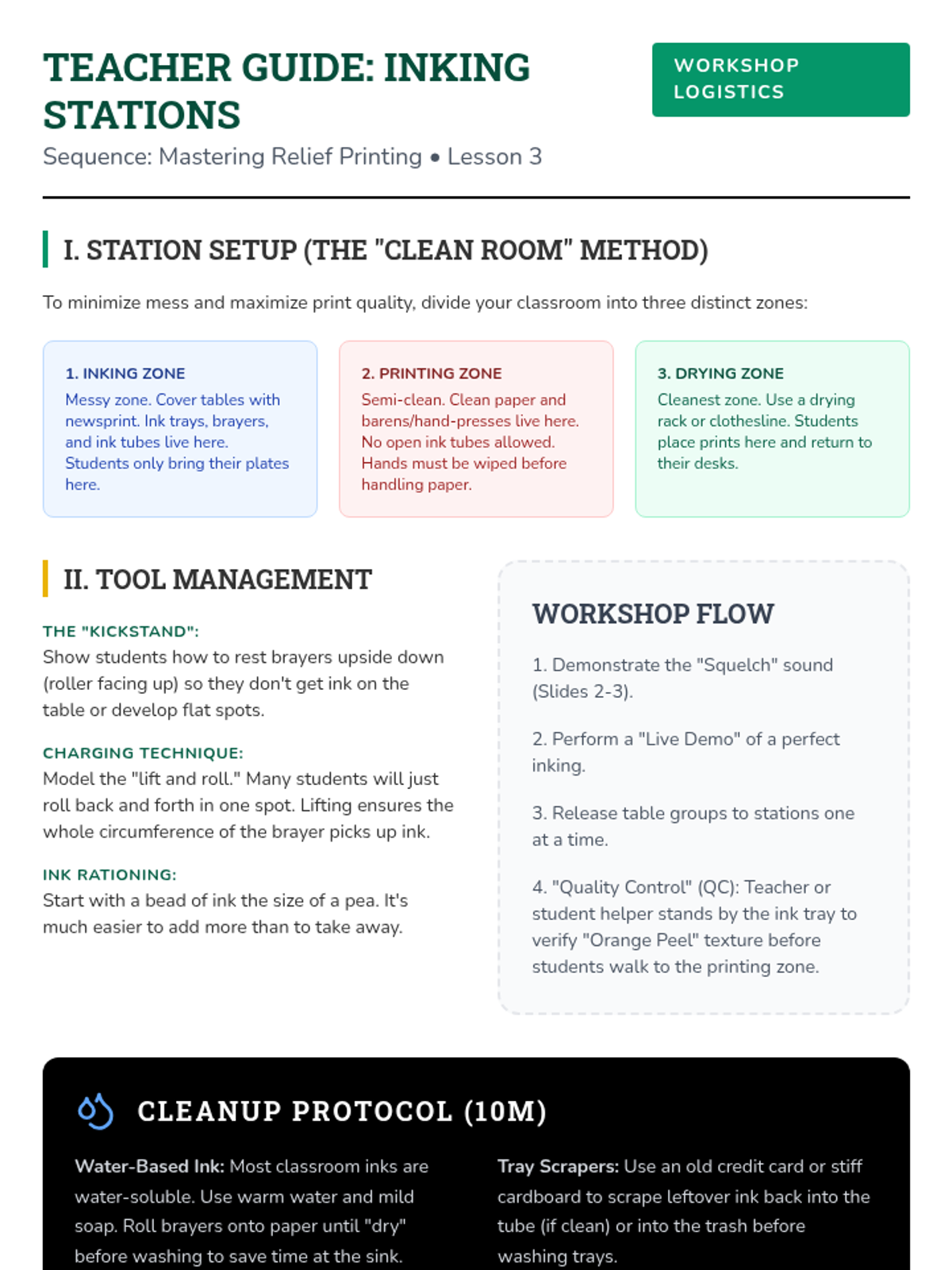
Focuses on the technical aspects of rolling ink, achieving the perfect 'velvet' texture, and charging the plate.
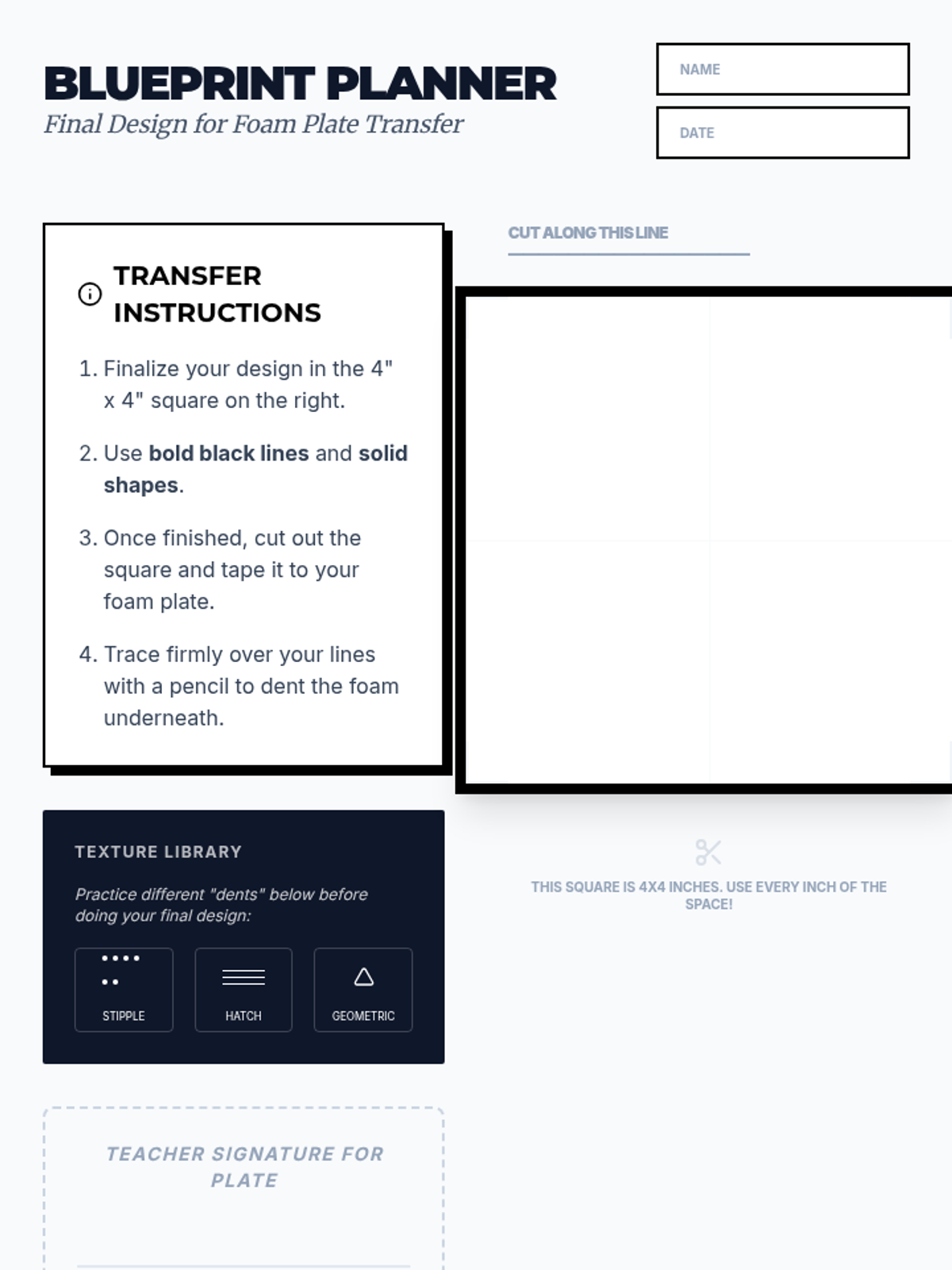
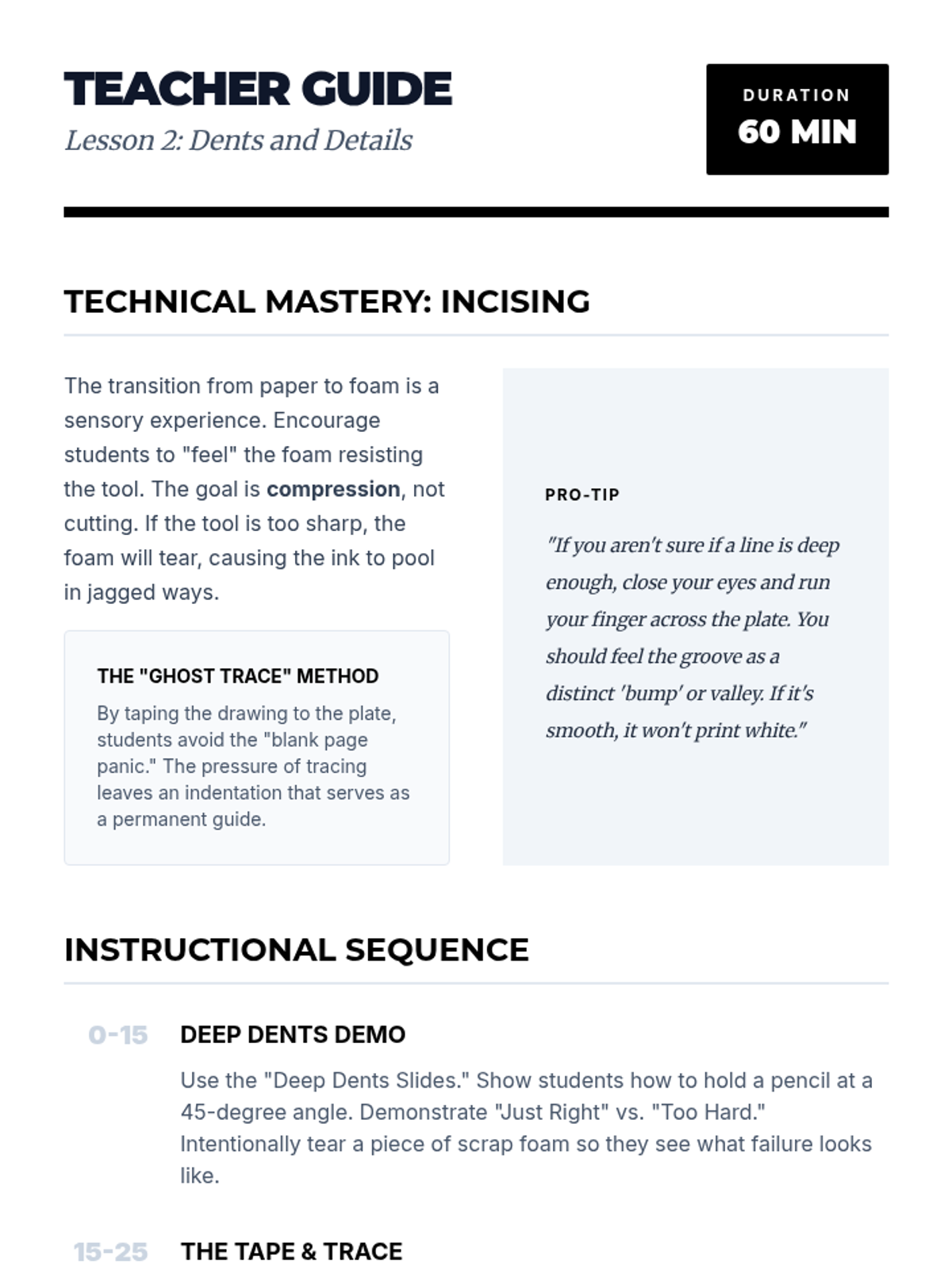
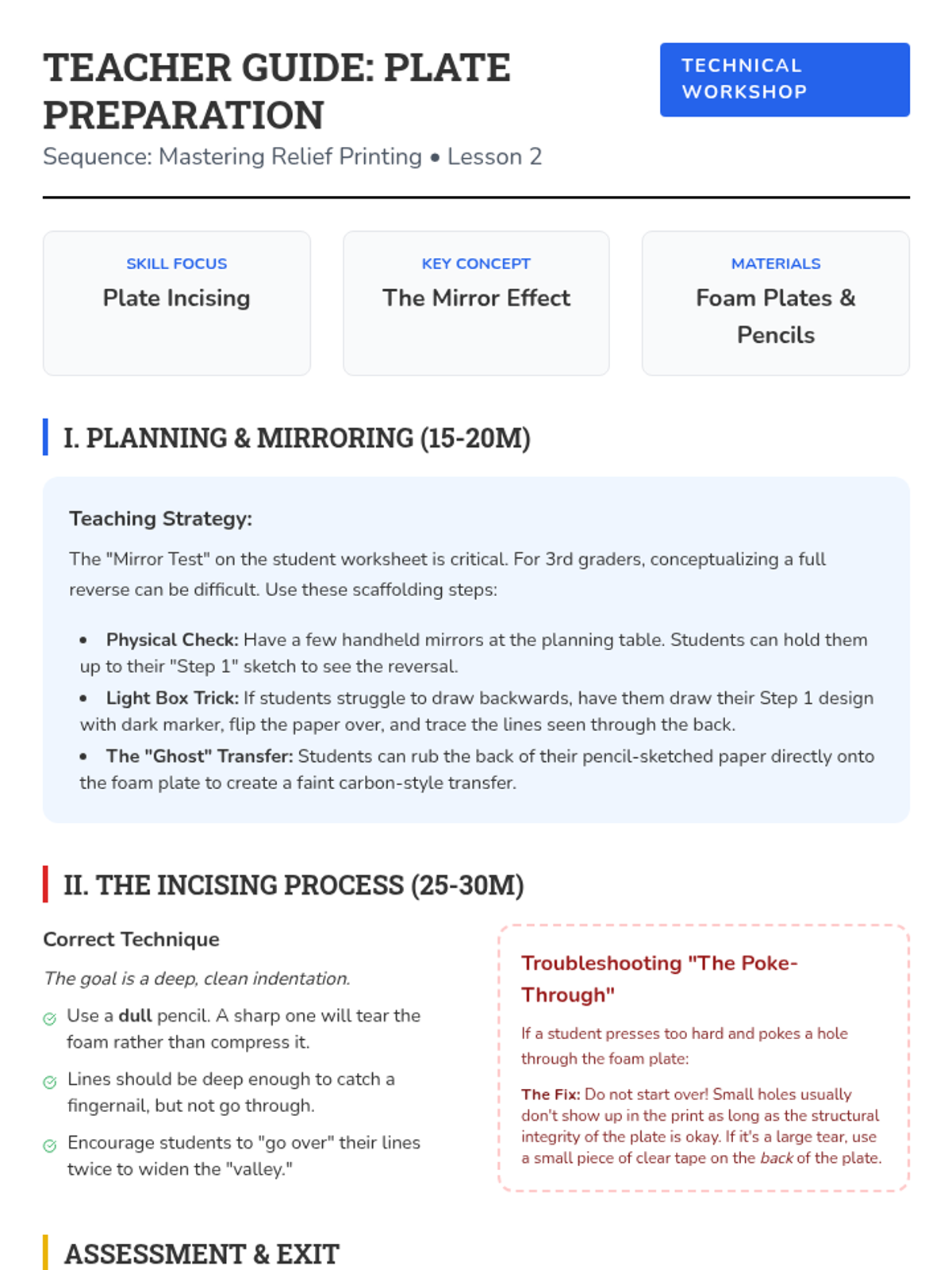
Students transfer designs to foam plates and experiment with line weight and texture using incising tools.
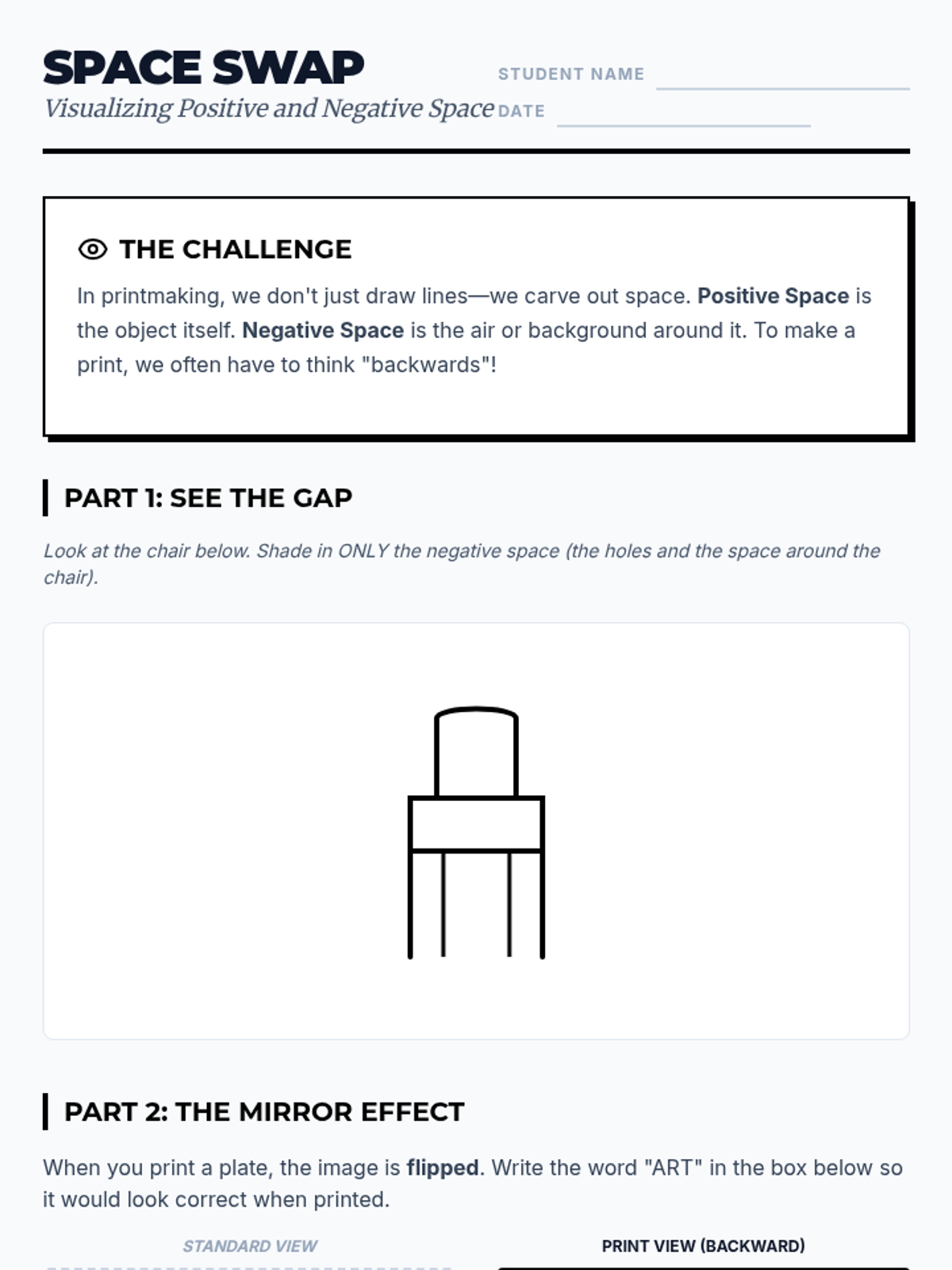
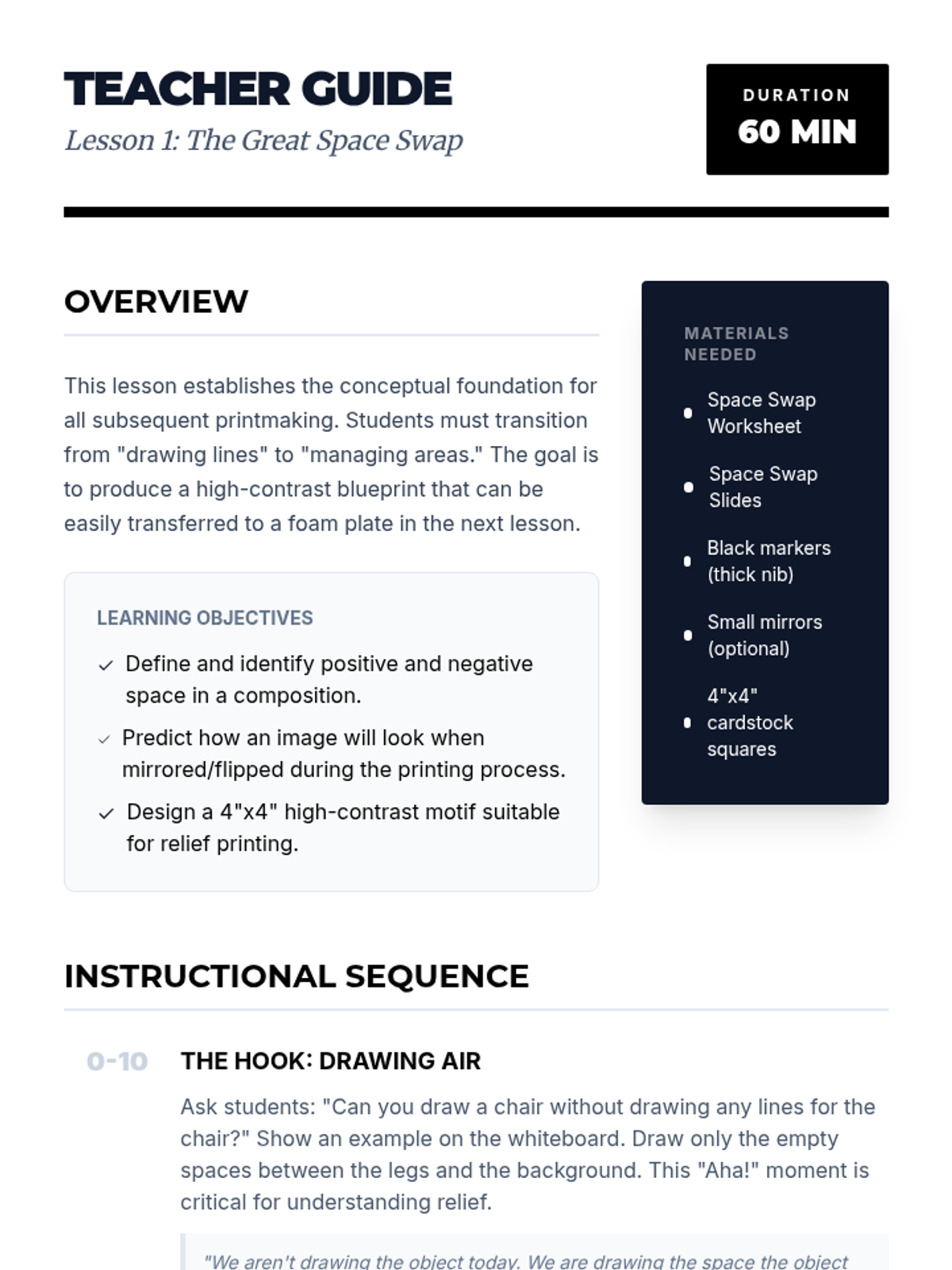
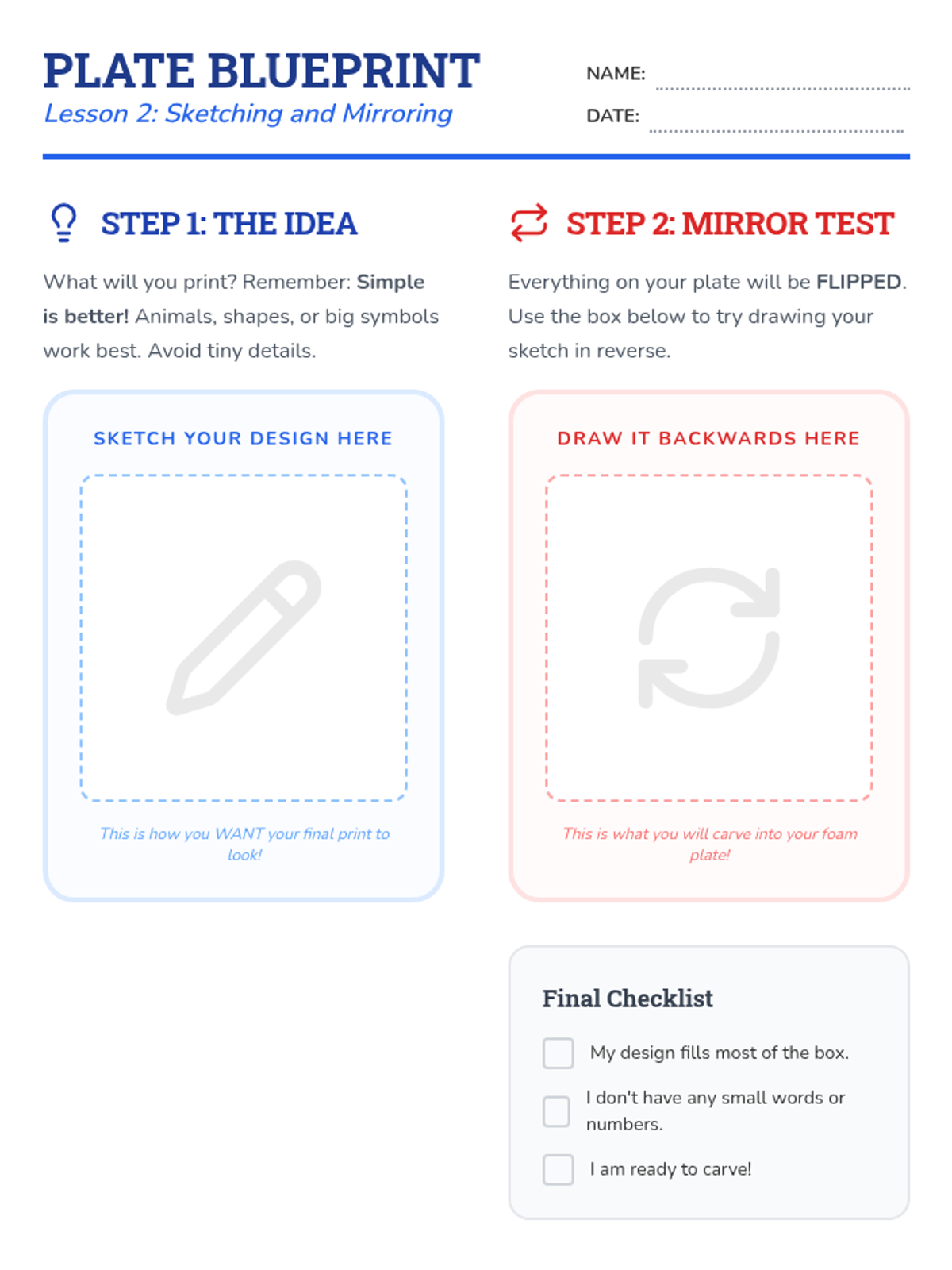
Students investigate positive and negative space through high-contrast drawing and learn how images mirror when printed.
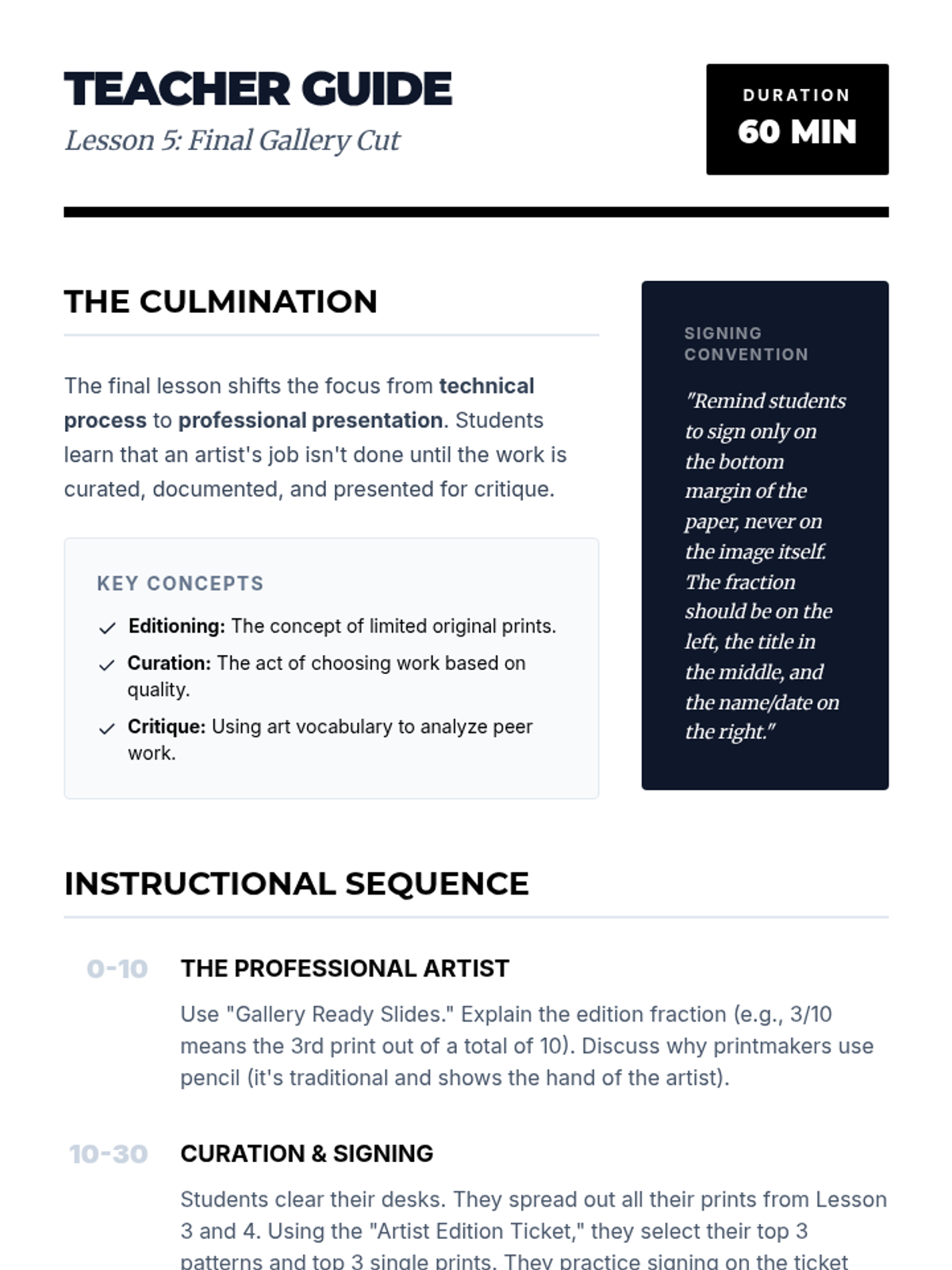
Students select their best prints, learn professional signing and numbering conventions, and curate their final series.
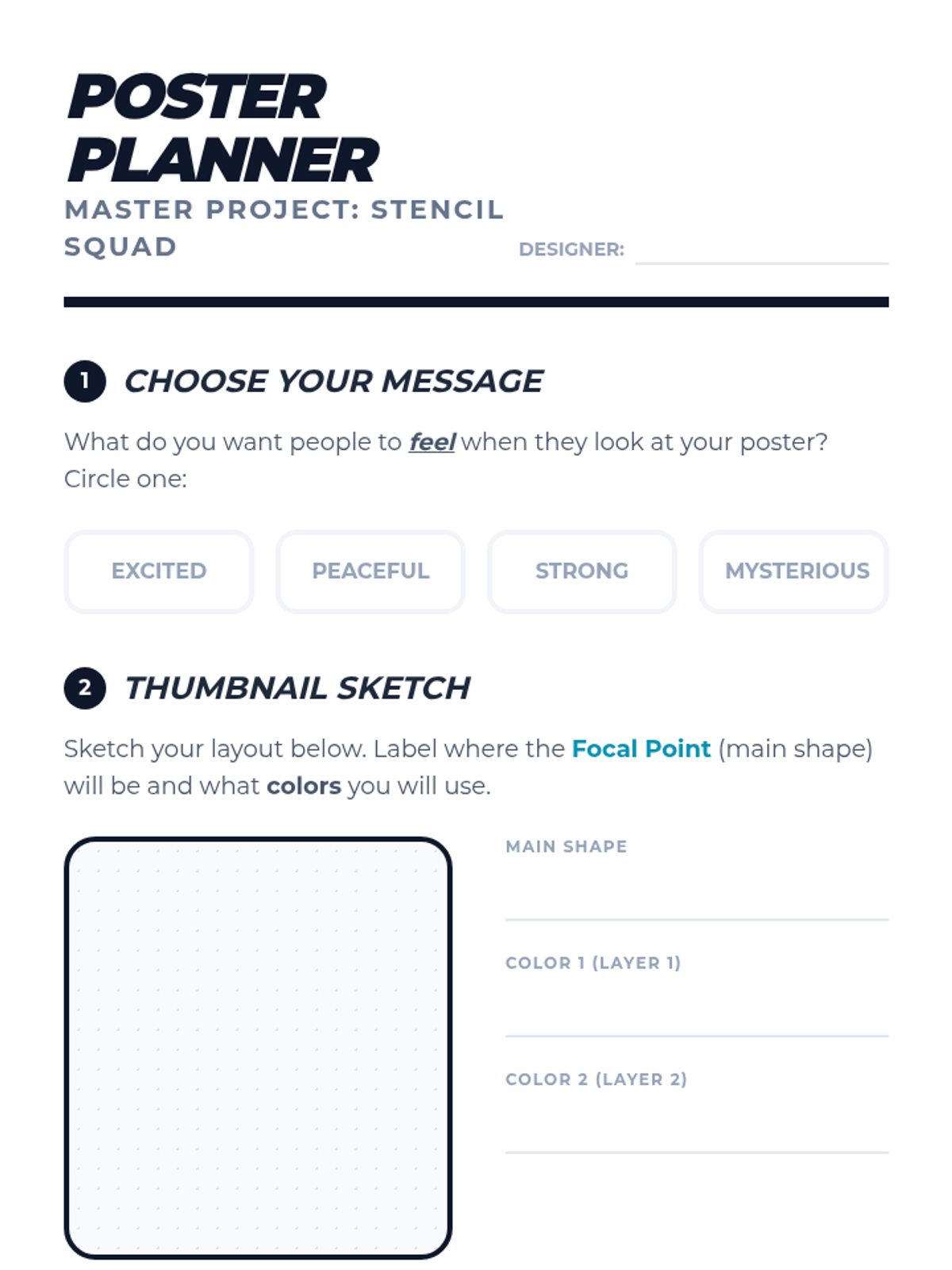
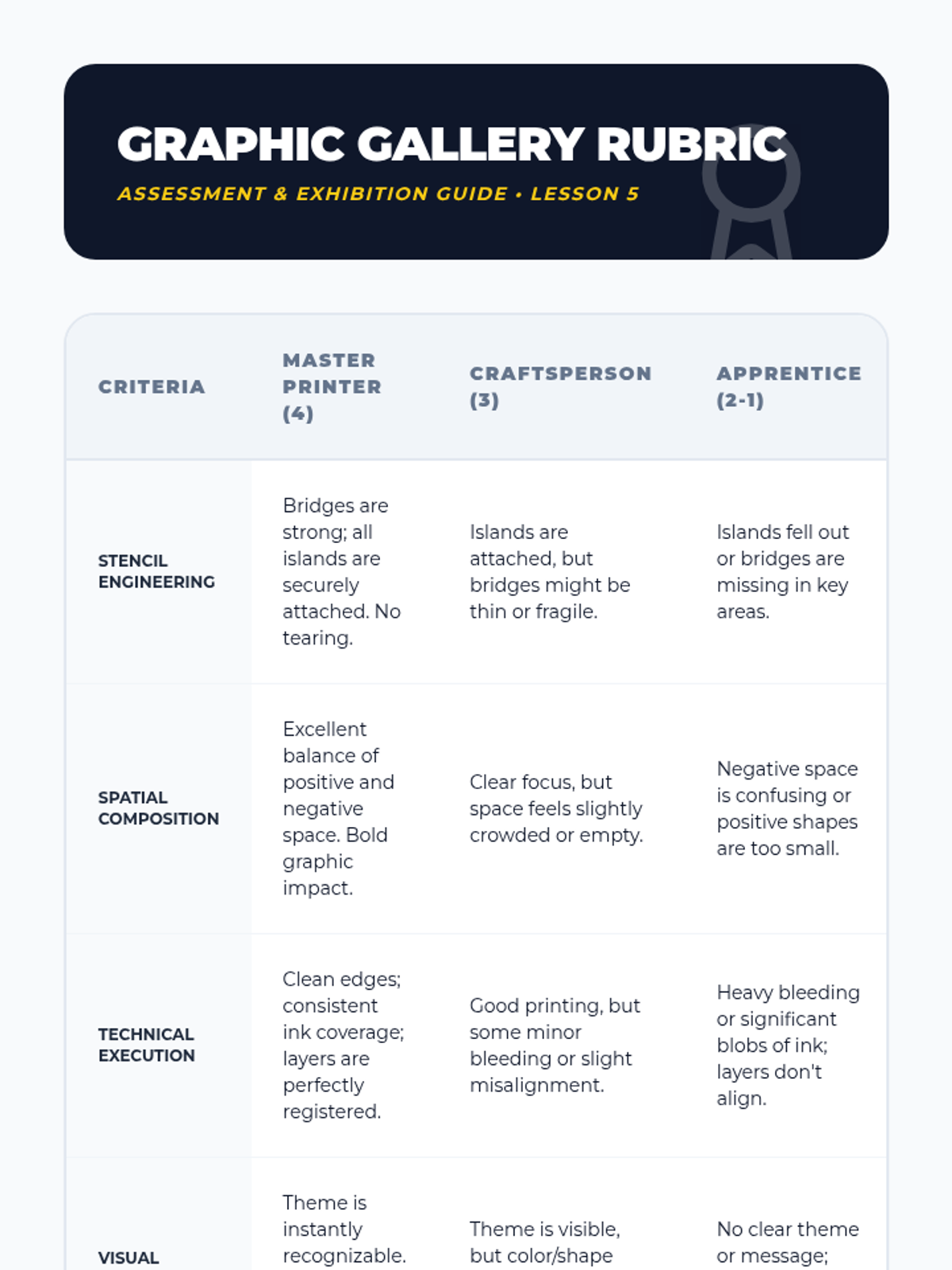
In the final project, students apply their knowledge of space, bridges, and layering to create a bold graphic poster with a clear message and strong composition.
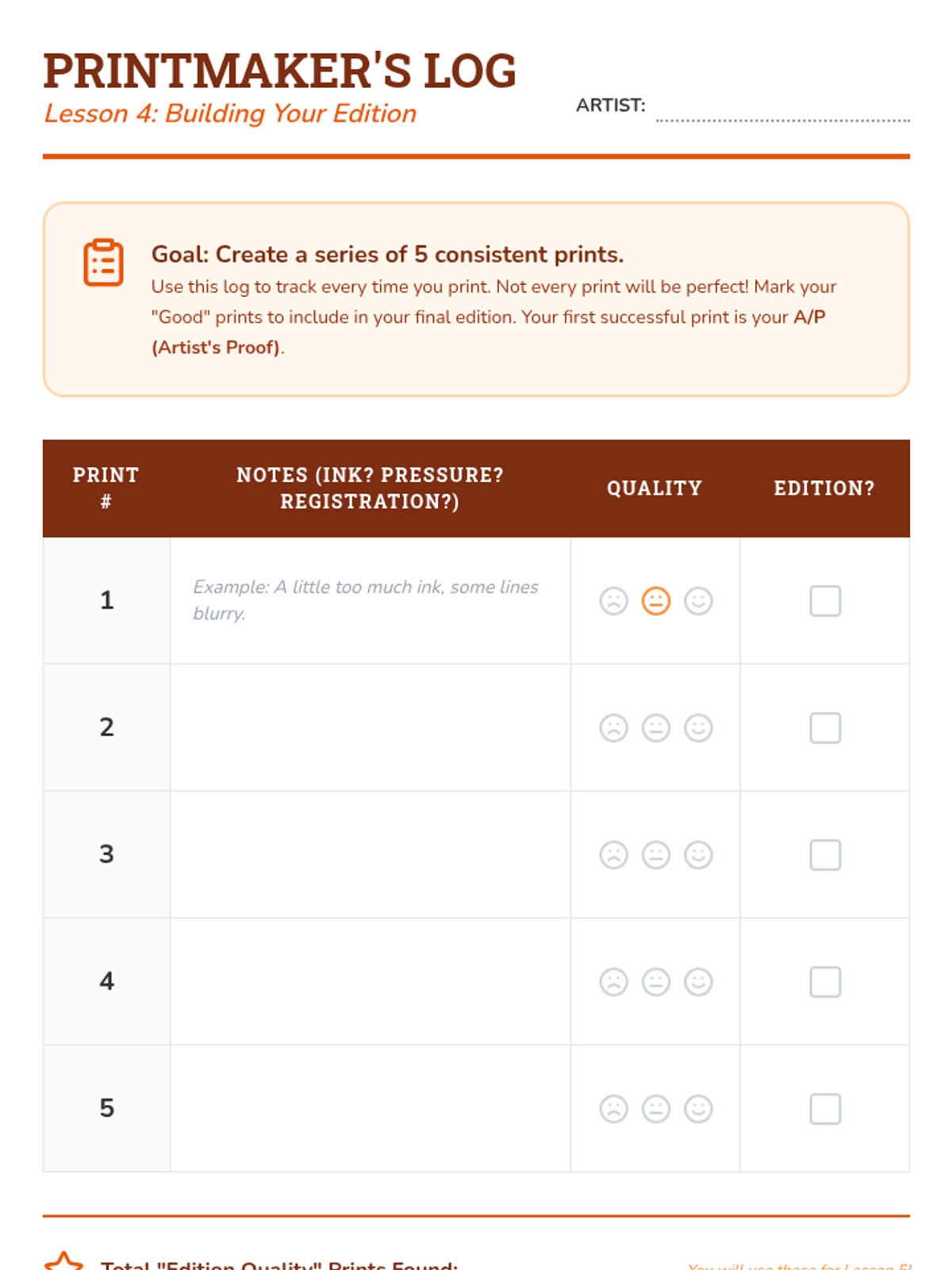
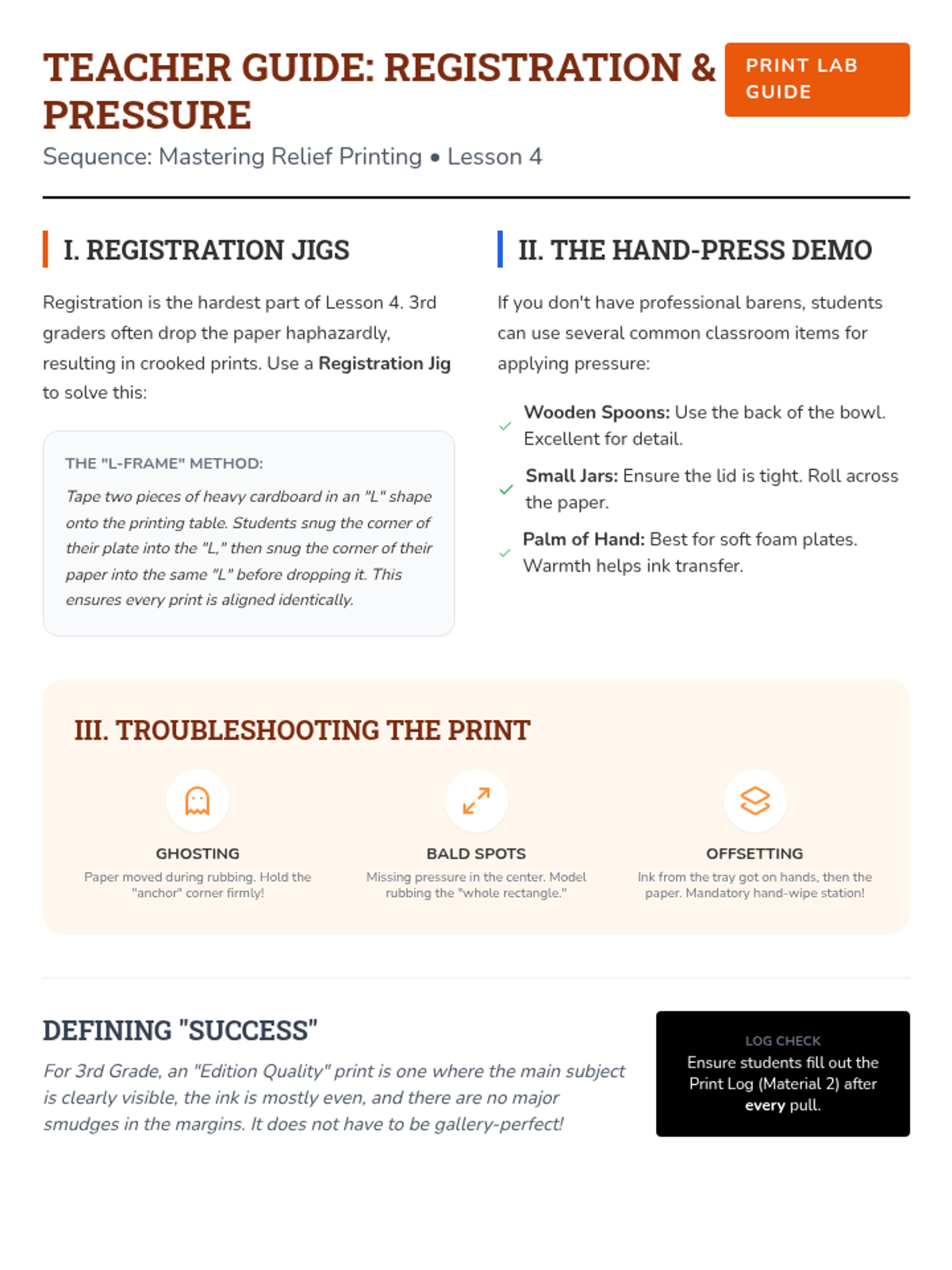
Students print their inked plates multiple times to create an edition, focusing on consistent pressure and paper registration.
Students practice charging a brayer with ink to create a velvety 'orange peel' texture and applying it evenly to their plates.
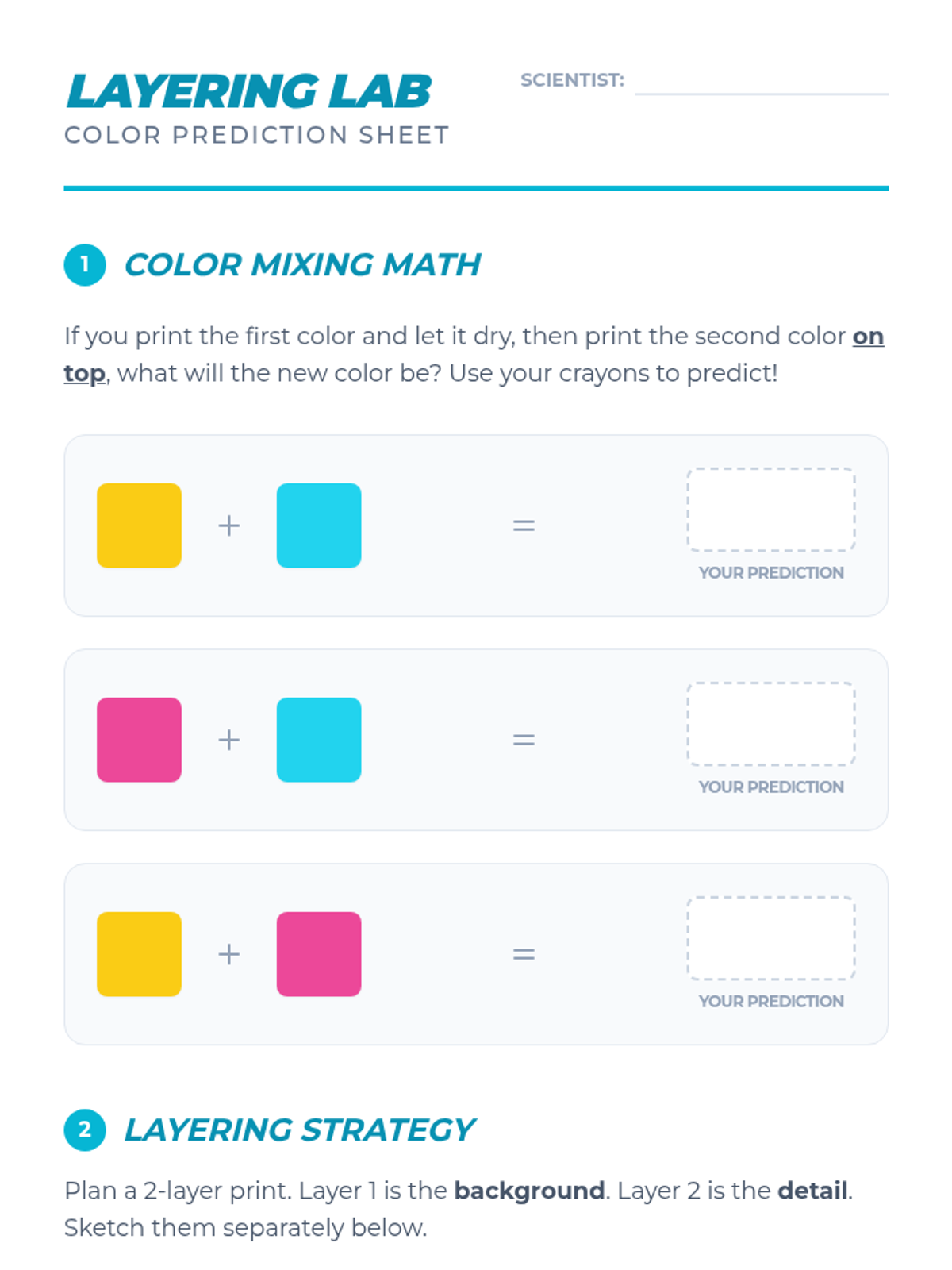
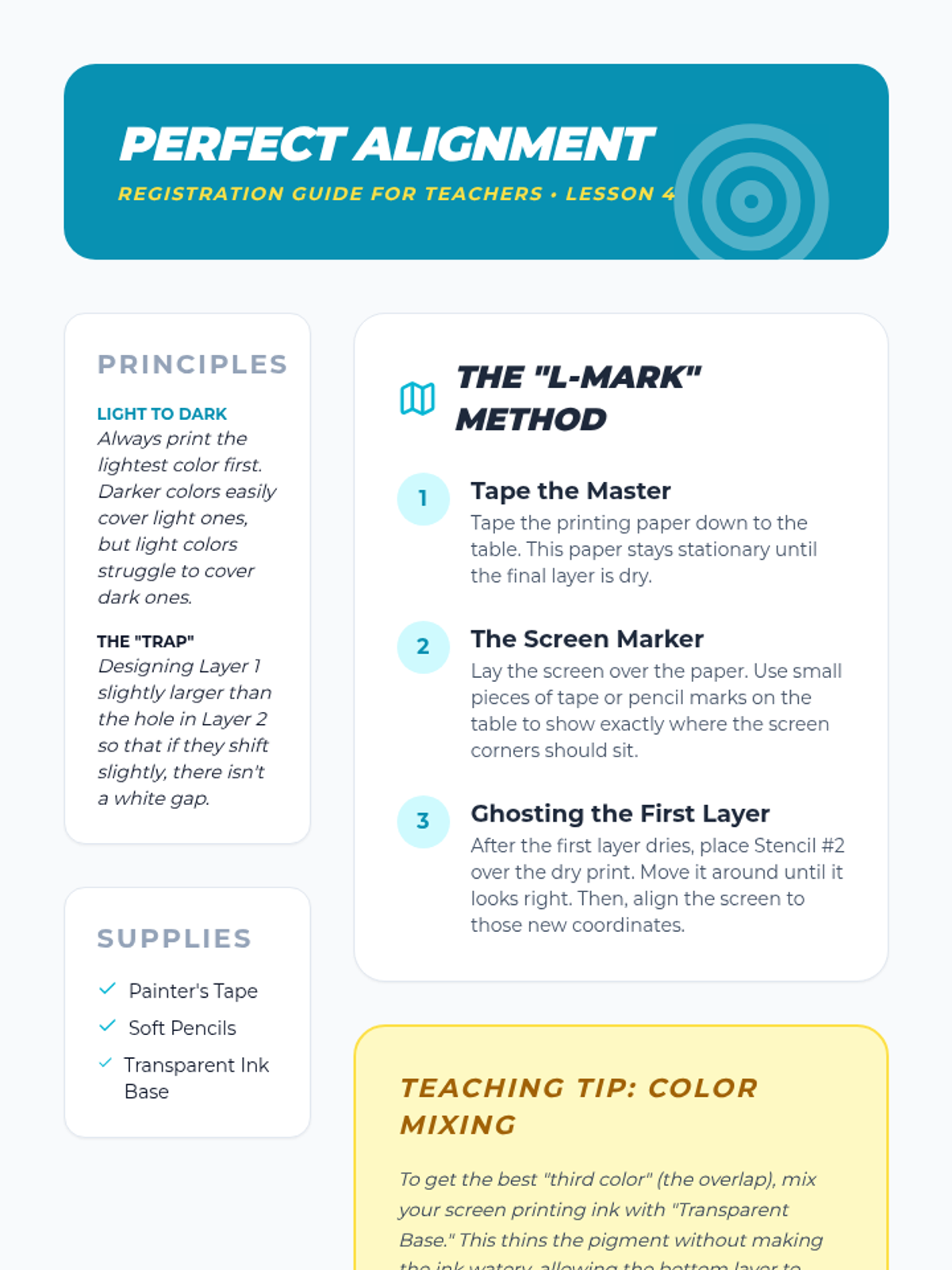
Students explore color theory and depth by layering multiple stencils and colors. They observe how overlapping shapes and transparent inks create new visual possibilities.
Students transfer a sketch onto a soft foam plate by incising lines, learning that indented areas will remain white while raised surfaces hold the ink.
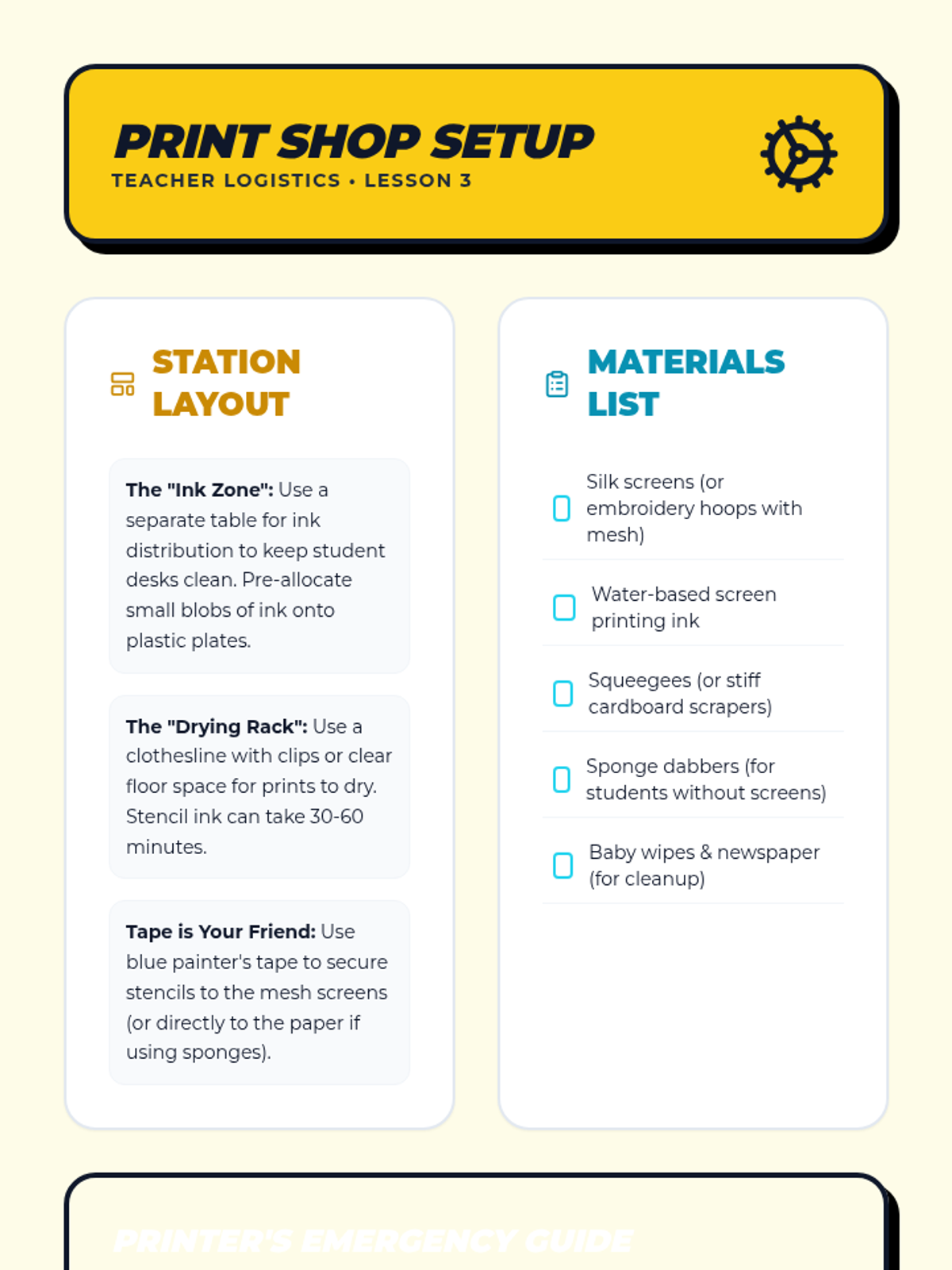
Students transition from paper cutouts to printing tools. They learn the mechanics of pushing ink through a mesh or using sponge dabbers to transfer their stencil design onto paper multiple times.
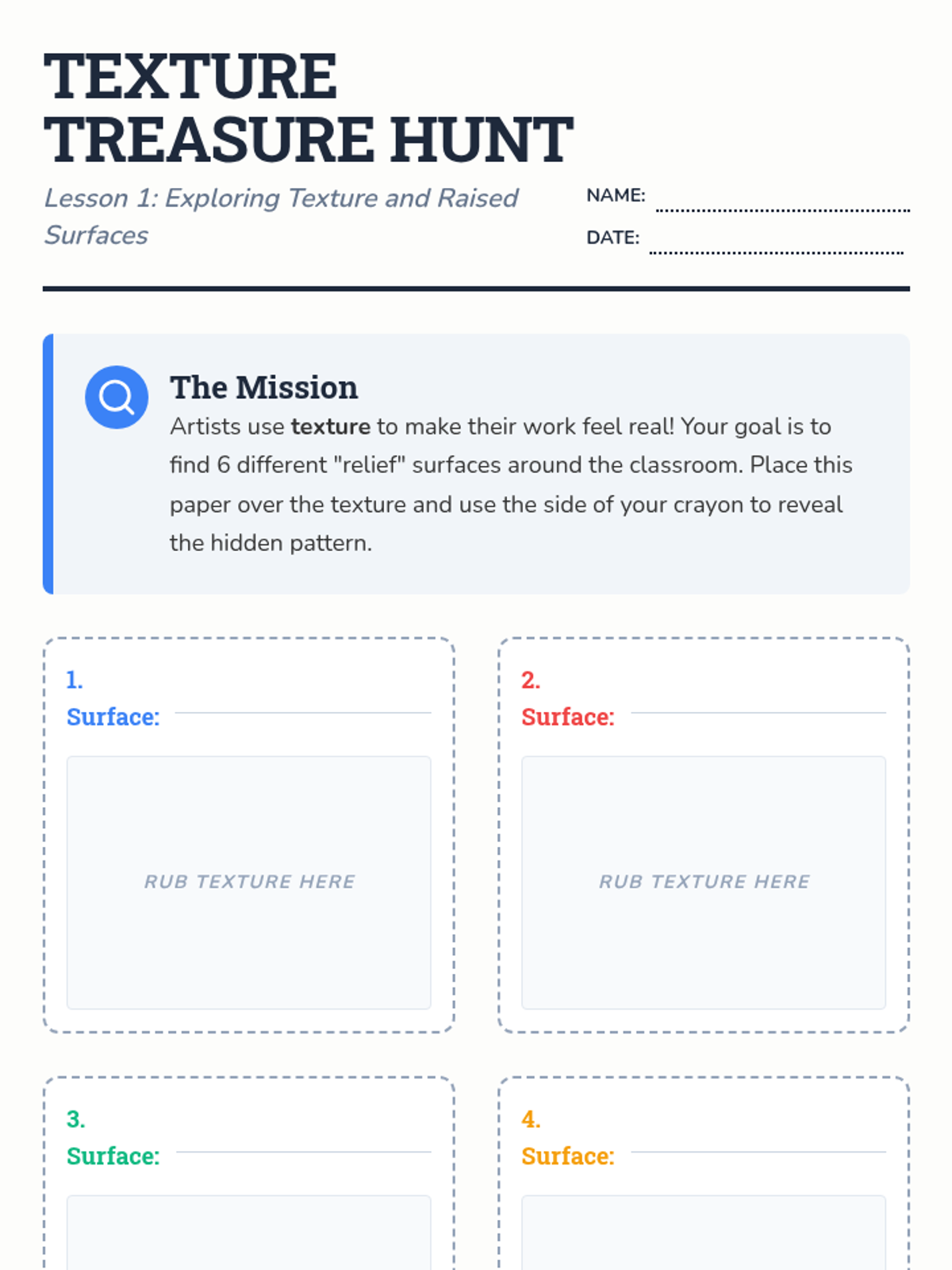
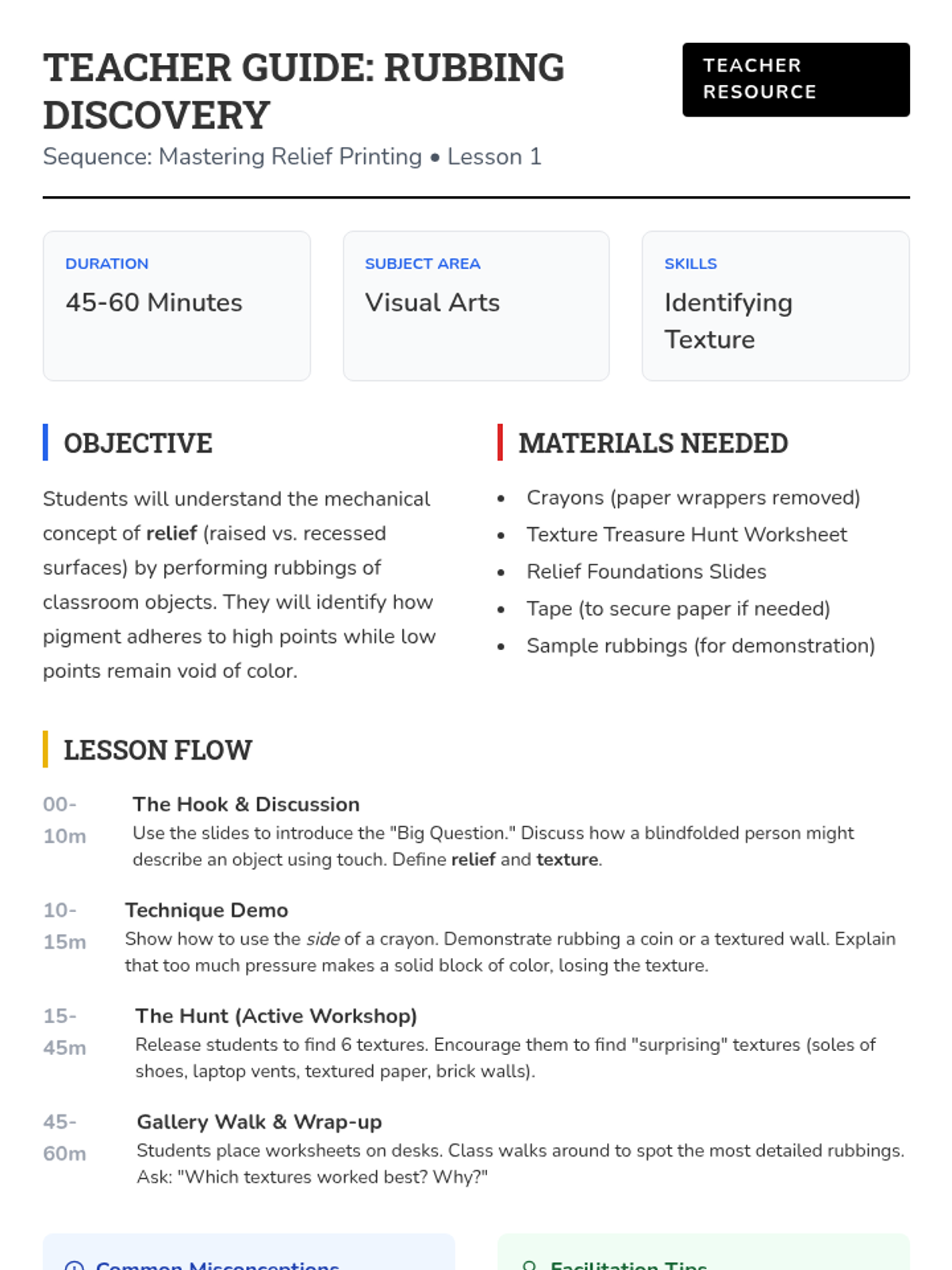
Students explore the concept of relief by creating rubbings of various textured surfaces in the classroom, analyzing how high points catch the crayon while low points remain white.
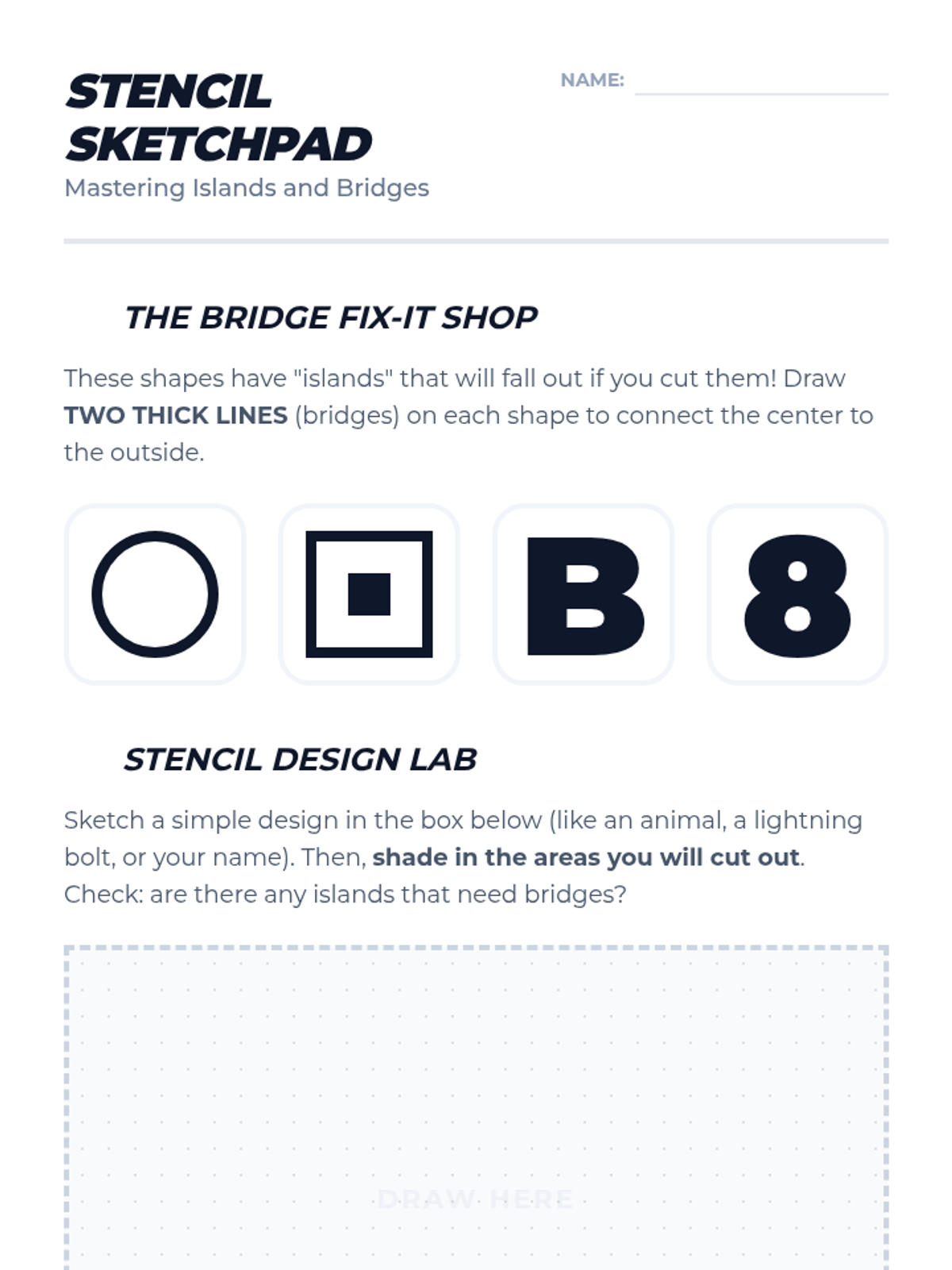
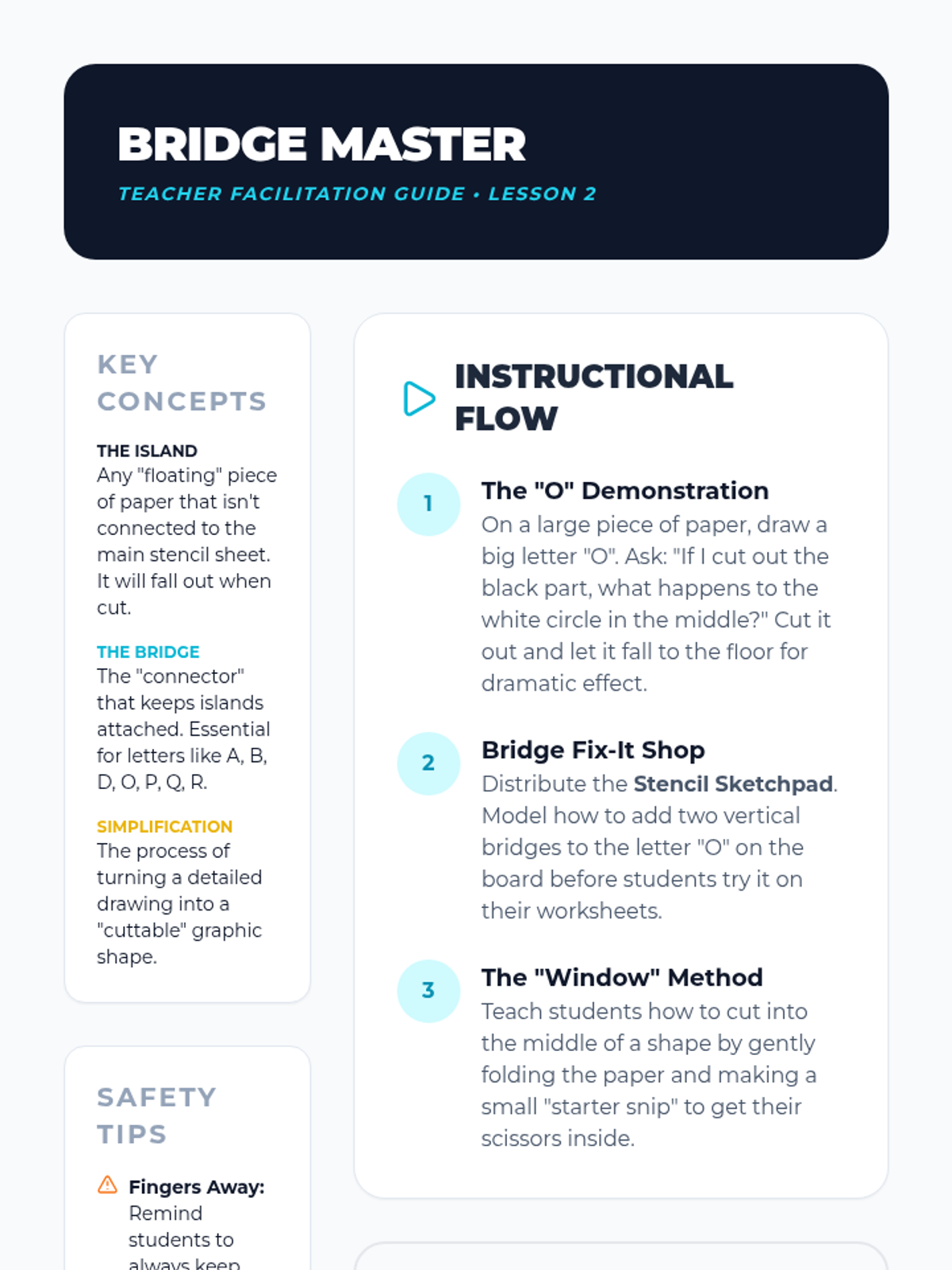
Students learn the technical side of stencil design, specifically how to create 'bridges' to keep 'islands' attached to the main stencil matrix. They practice simplifying complex drawings into cuttable shapes.
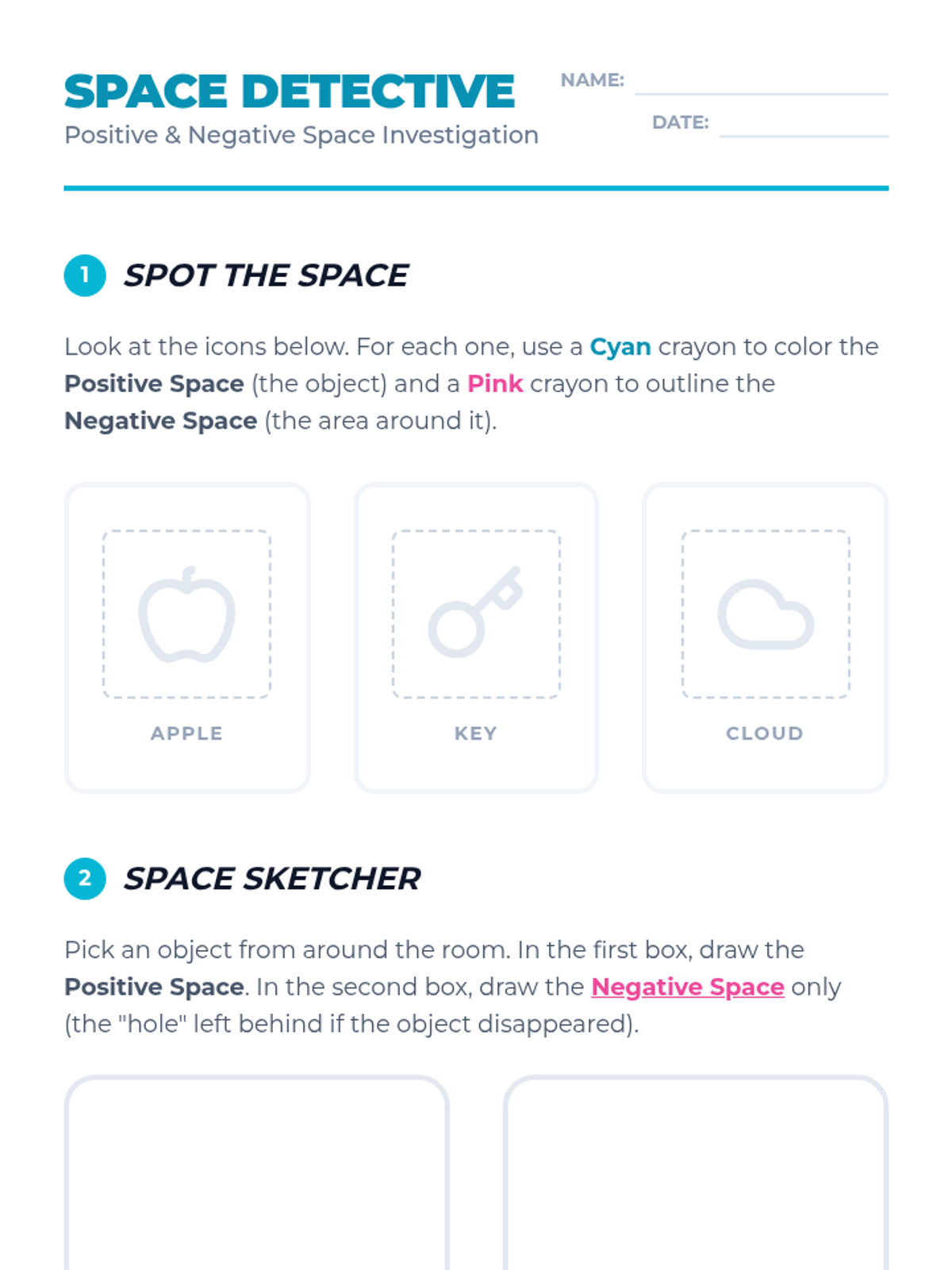
Students investigate the relationship between positive and negative space by cutting shapes out of paper and arranging both parts on a contrasting background. This builds the foundational mental model for understanding how stencils work.
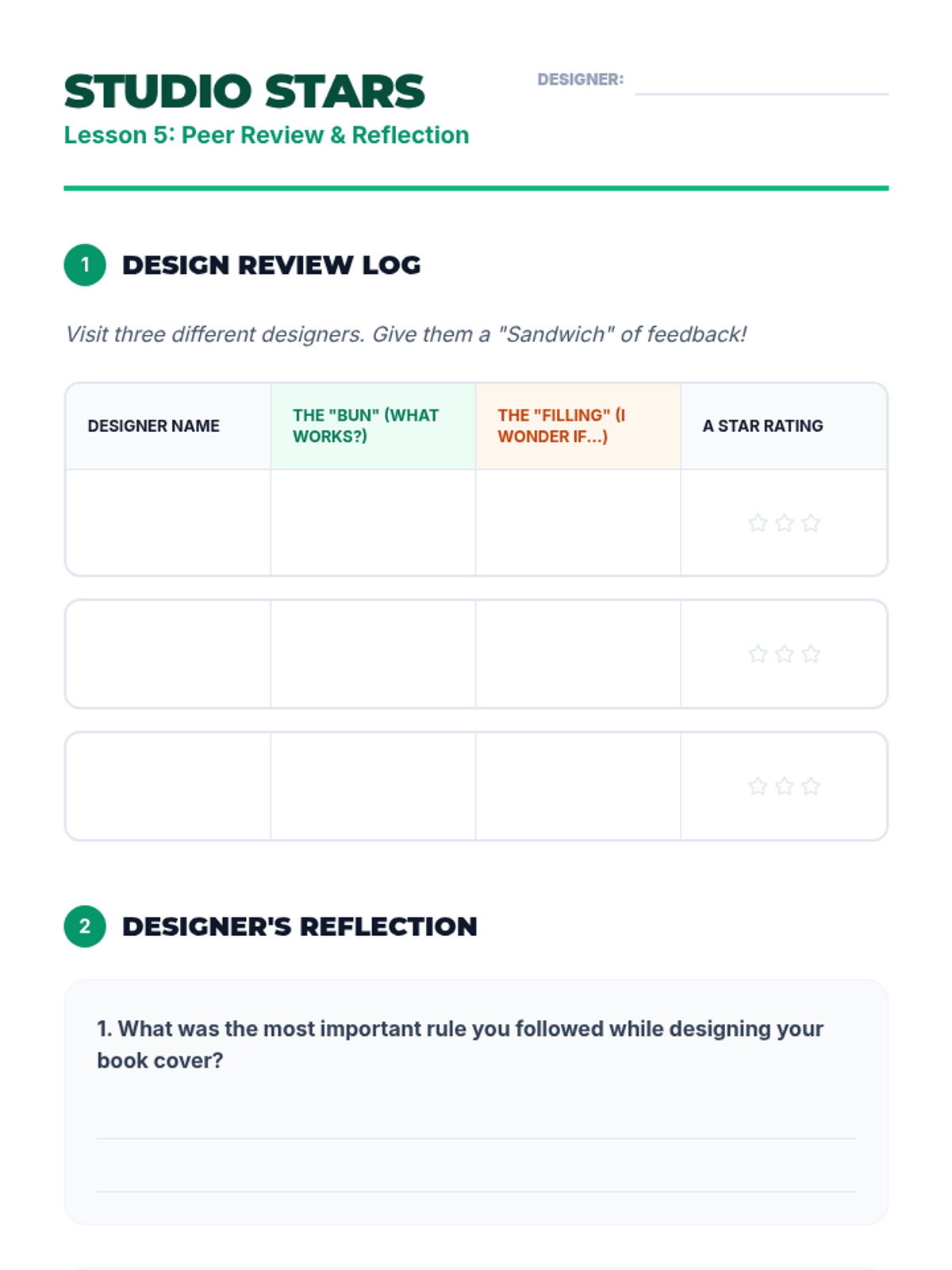
Students display their designs and participate in a 'client review' simulation. They discuss which designs clearly communicate the intended message and suggest small tweaks for improvement.
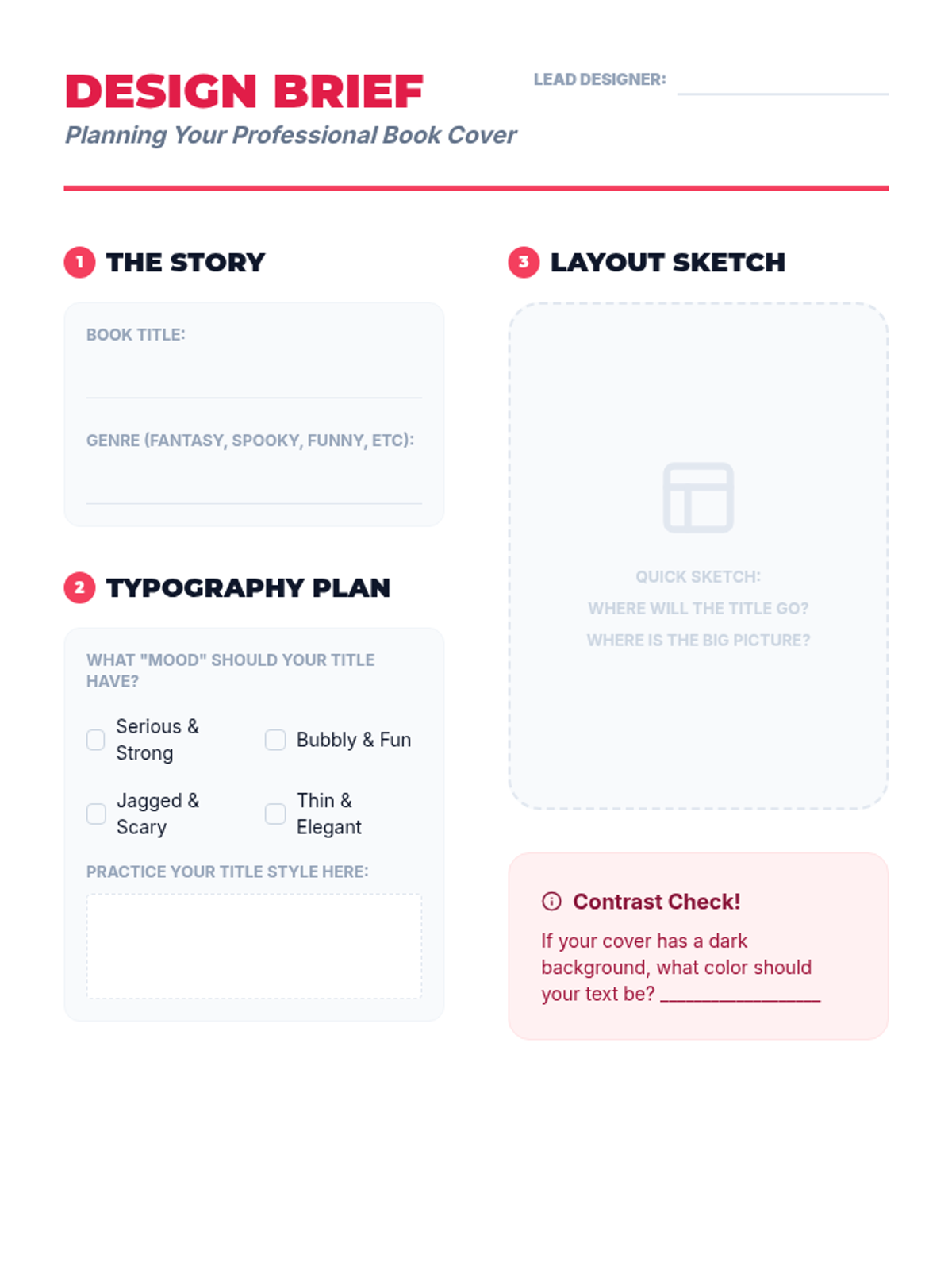
Students act as graphic designers to create a cover for a favorite story. They must choose a font style and an illustration style that matches the genre of the book.
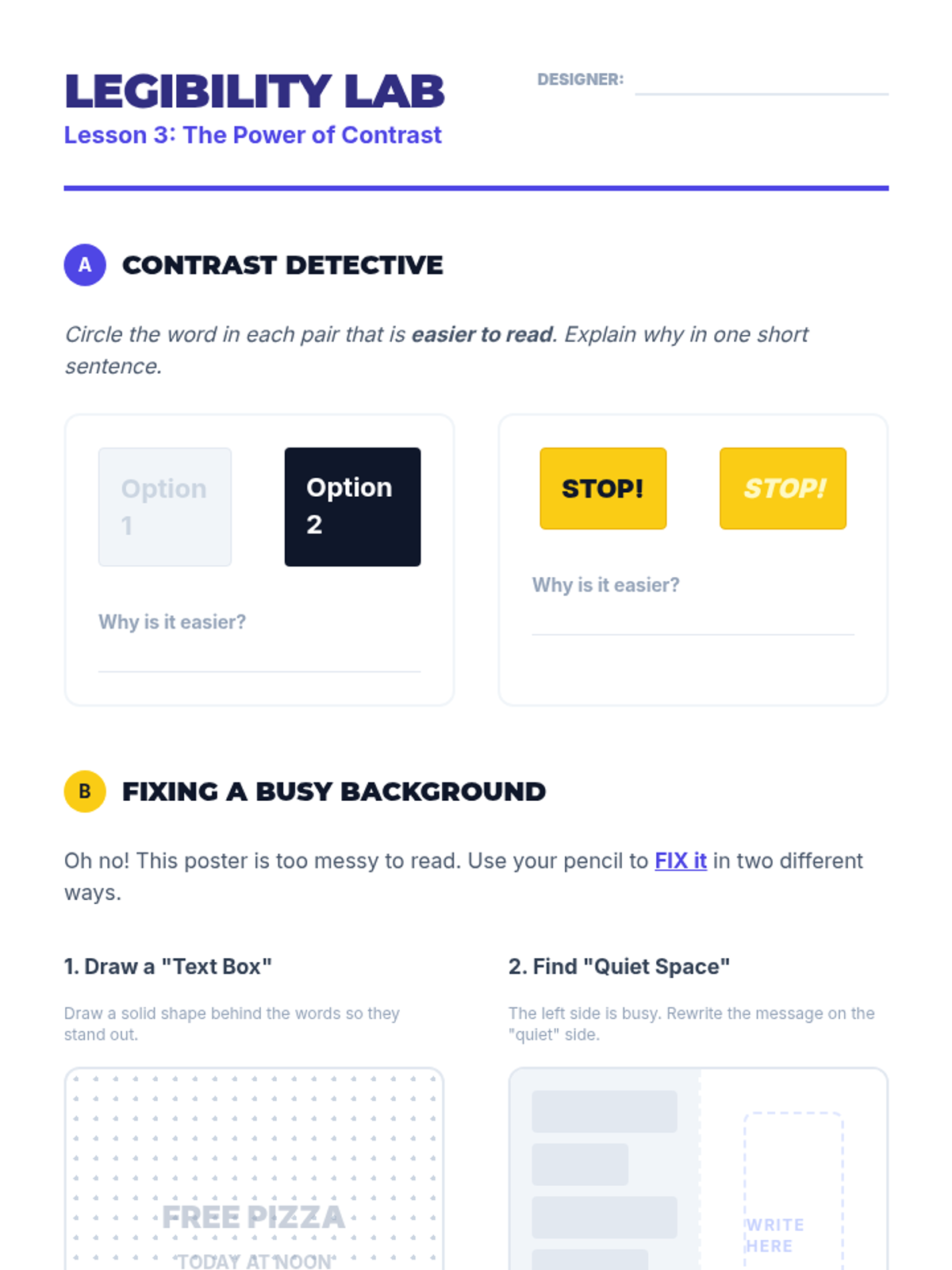
Students explore how to place text inside, around, or over images without making it hard to read. They learn about contrast and background noise when placing lettering.
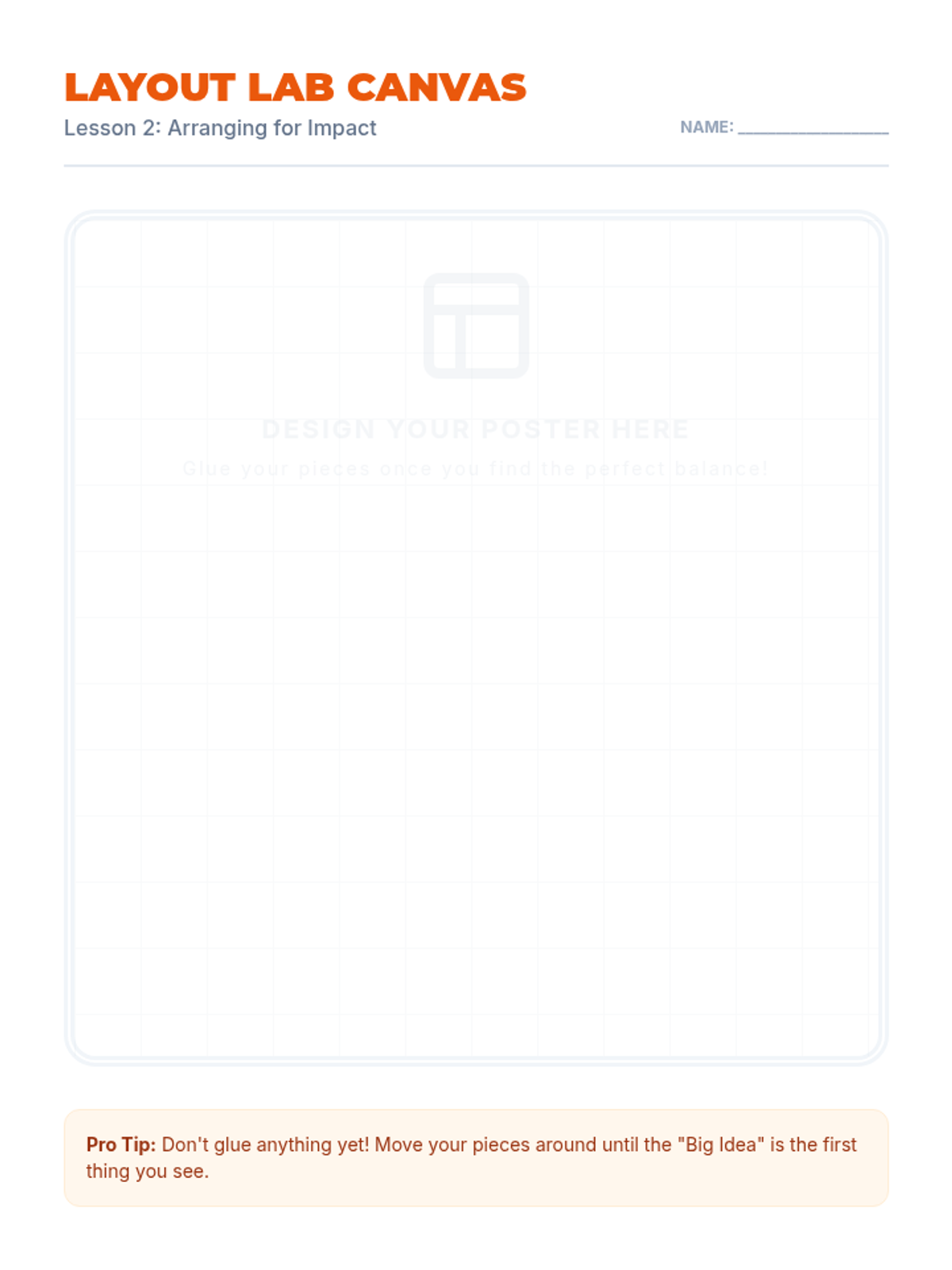
Students are given pre-cut text blocks and images to arrange on a page. They experiment with different layouts to see how moving elements changes the balance and where the eye looks first.
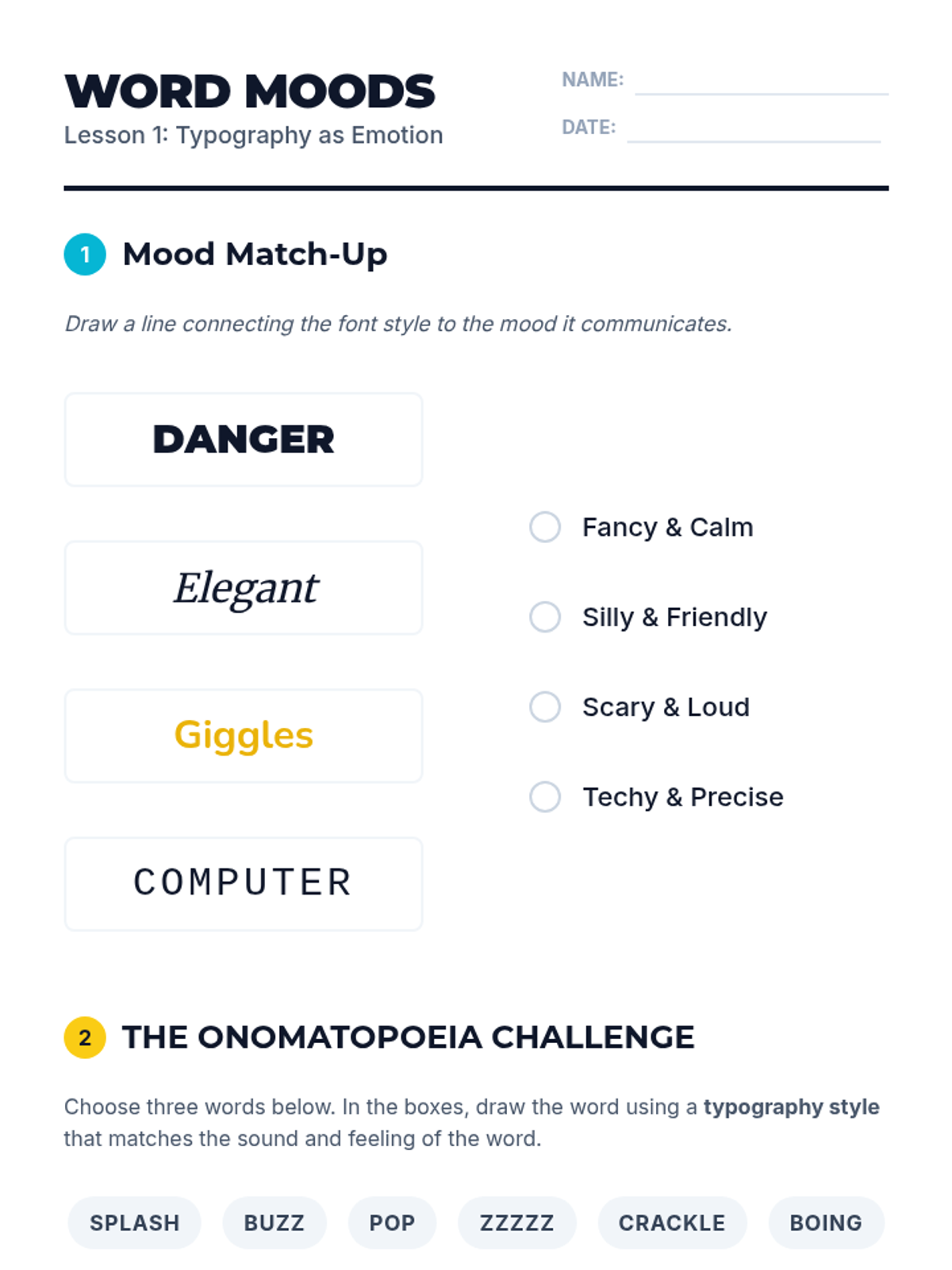
Students examine various fonts and hand-lettering styles to determine if they look 'happy,' 'scary,' 'loud,' or 'serious.' They practice drawing a single word in a way that visually represents its meaning.
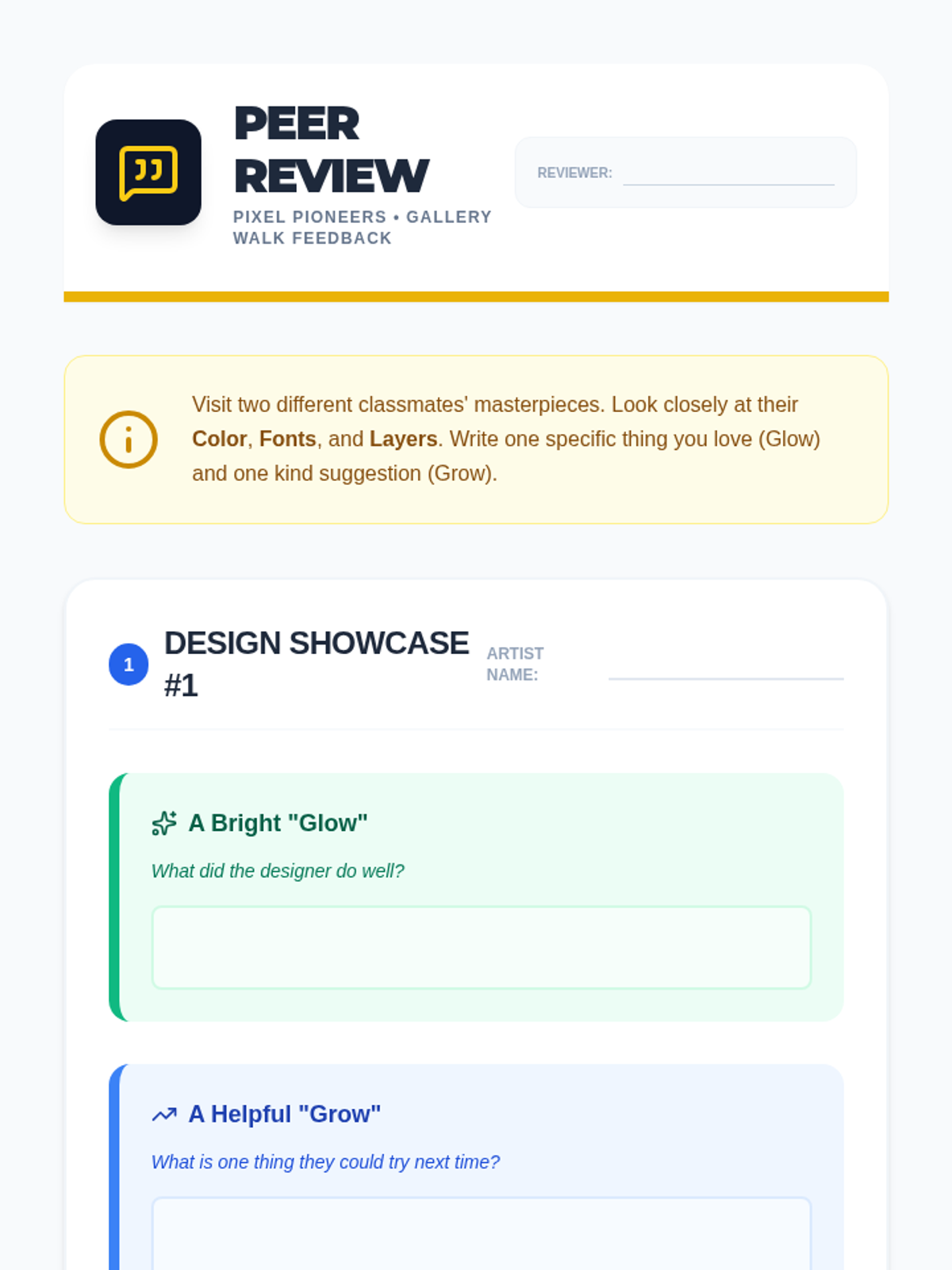
Students finalize their digital projects and participate in a structured gallery walk to offer and receive peer feedback.
Students learn the concept of digital layers to arrange background images, main characters, and text without destroying elements underneath.
This lesson introduces typography, teaching students that the style of letters contributes to the message of their design.
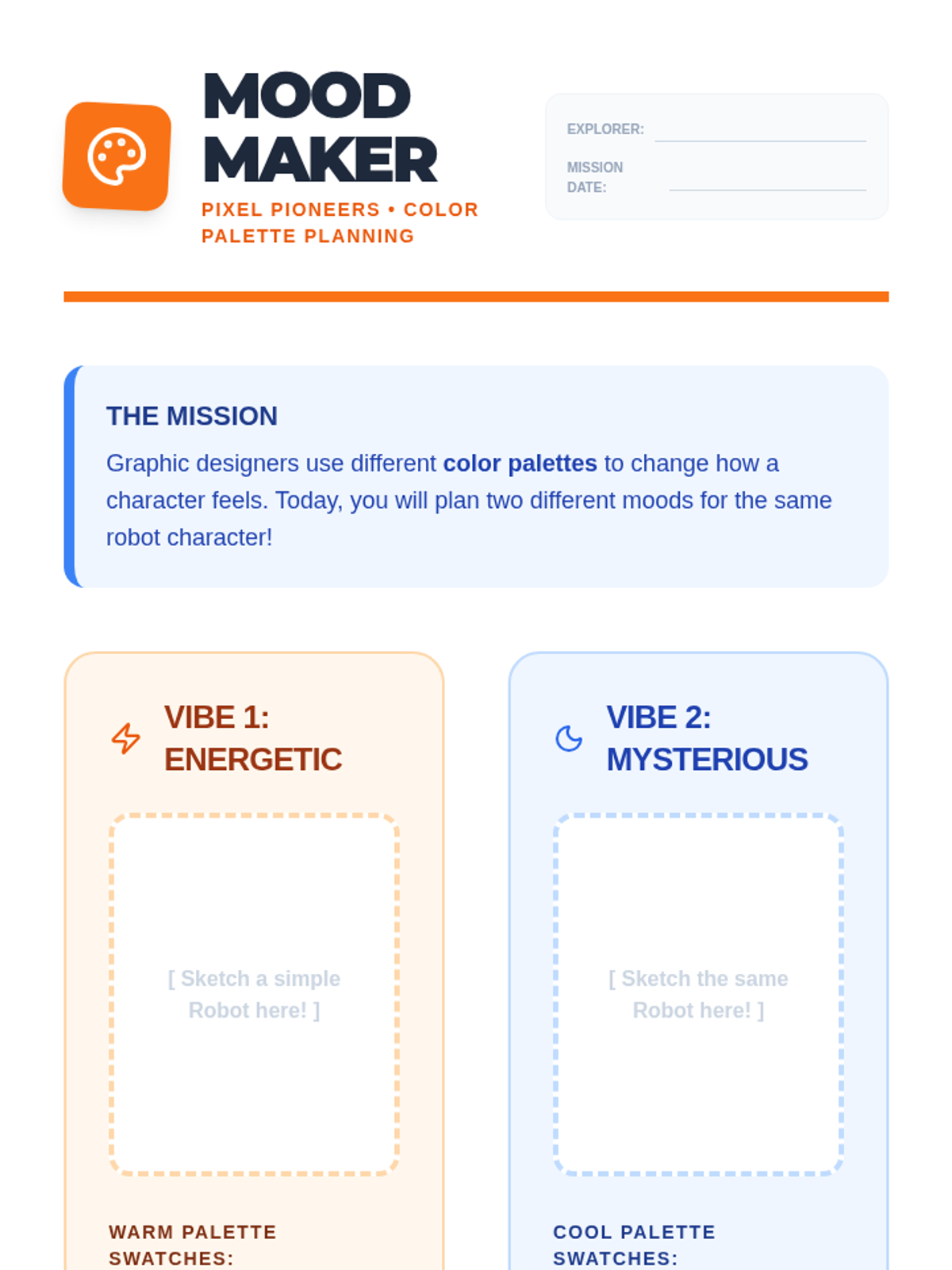
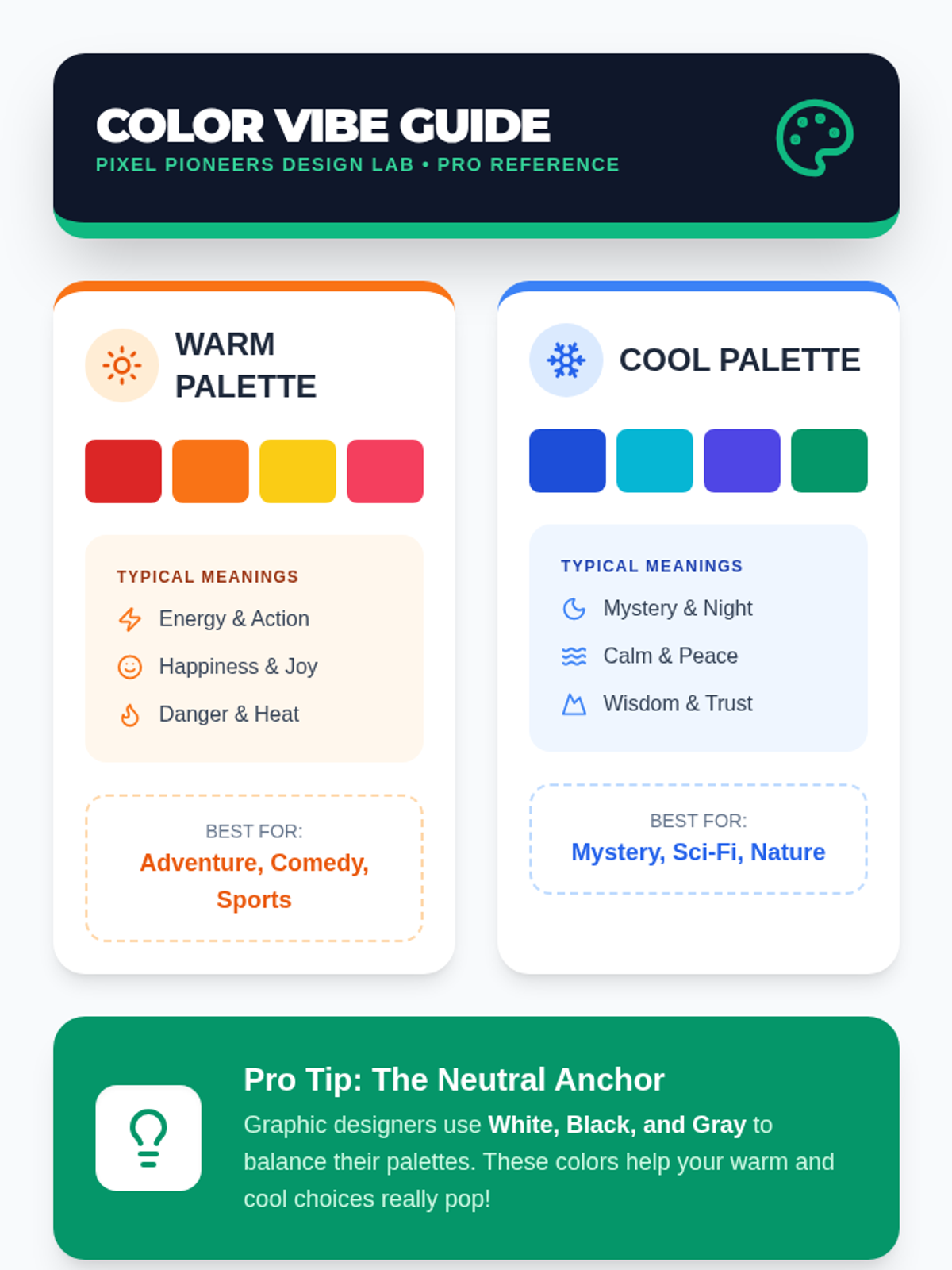
Students investigate color theory by applying different color palettes to digital art to observe how feelings and moods change.
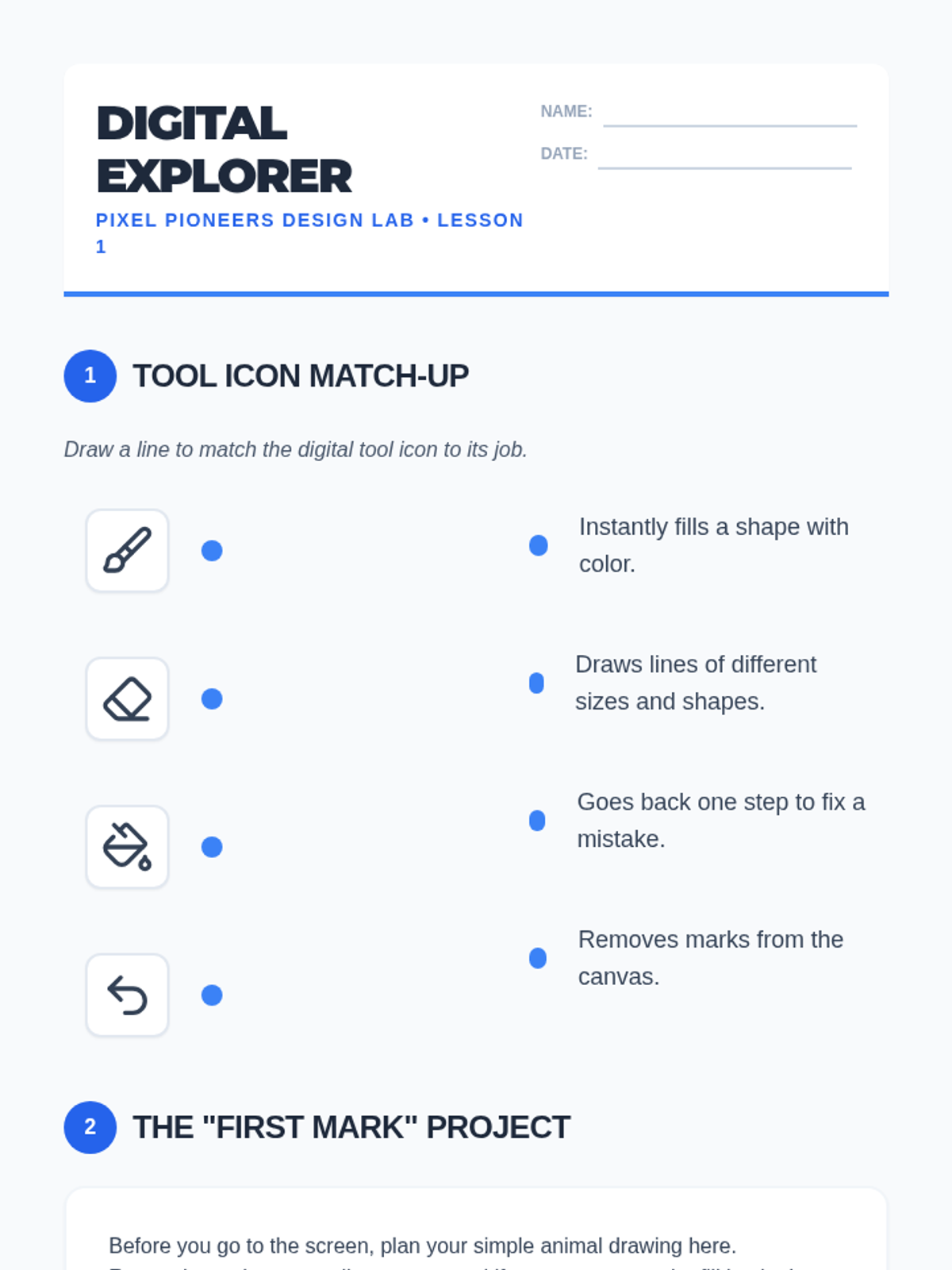
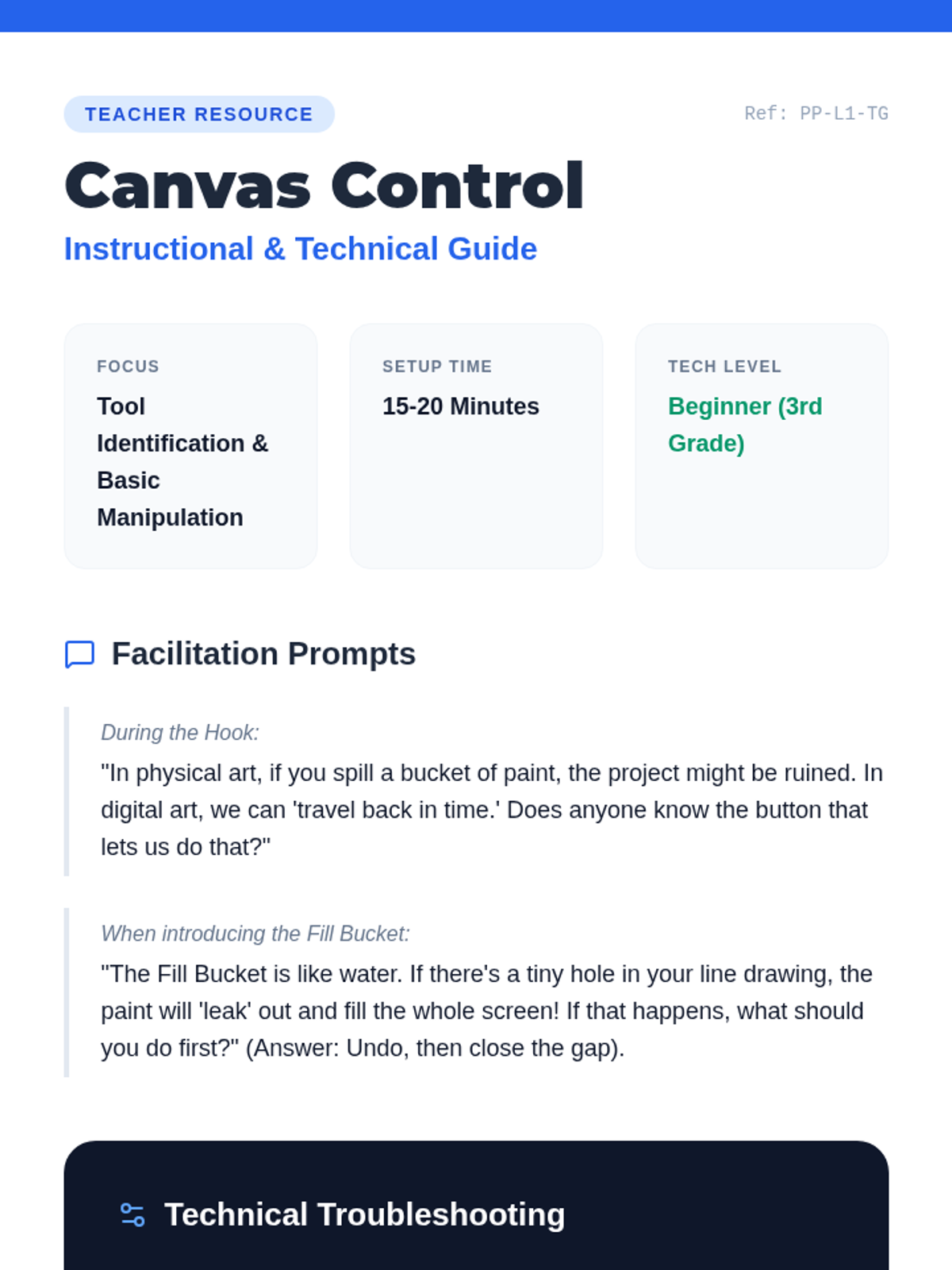
Students explore the basic interface of a digital art application, learning to identify and use core tools such as the brush, eraser, and fill bucket.
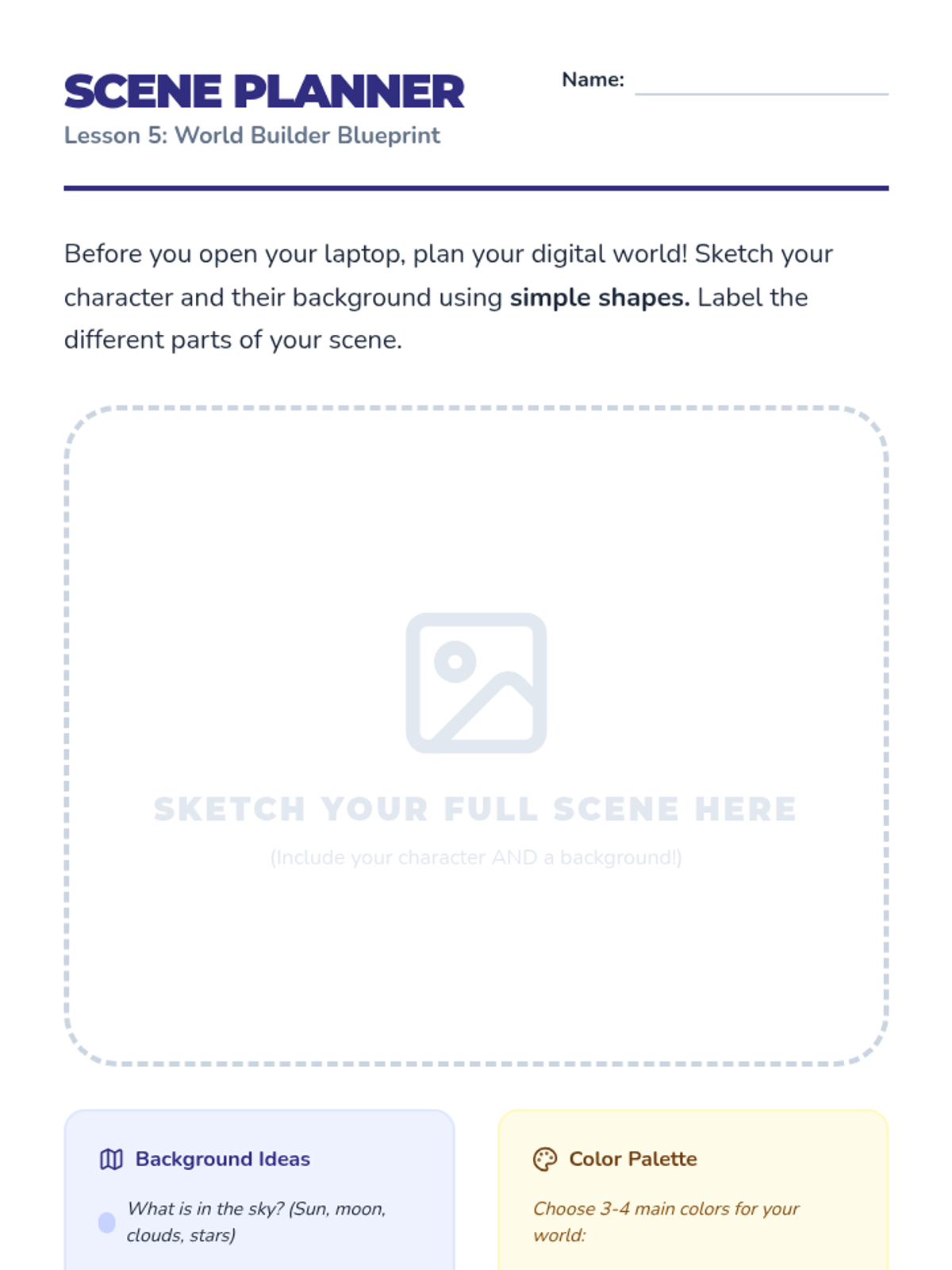
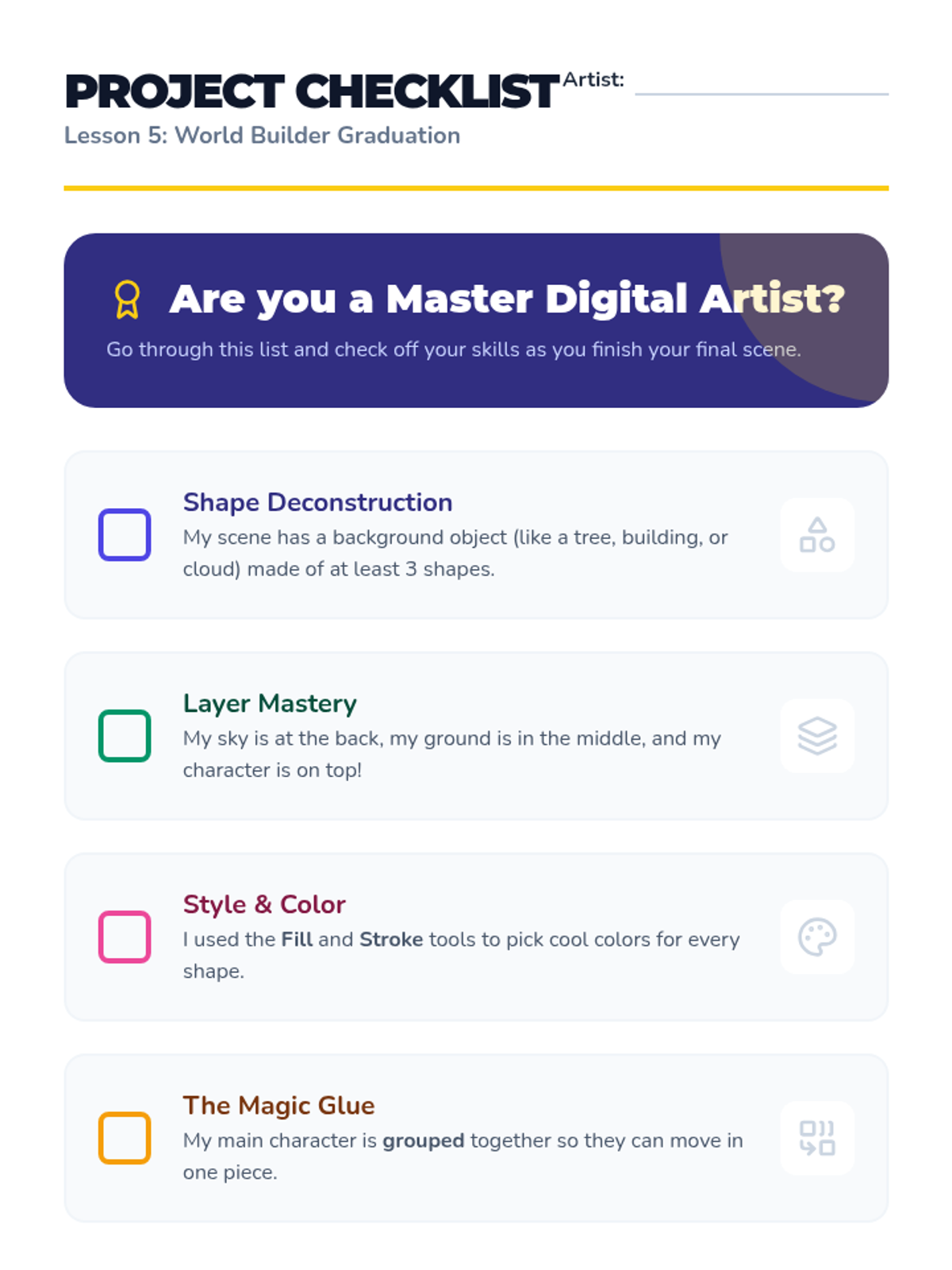
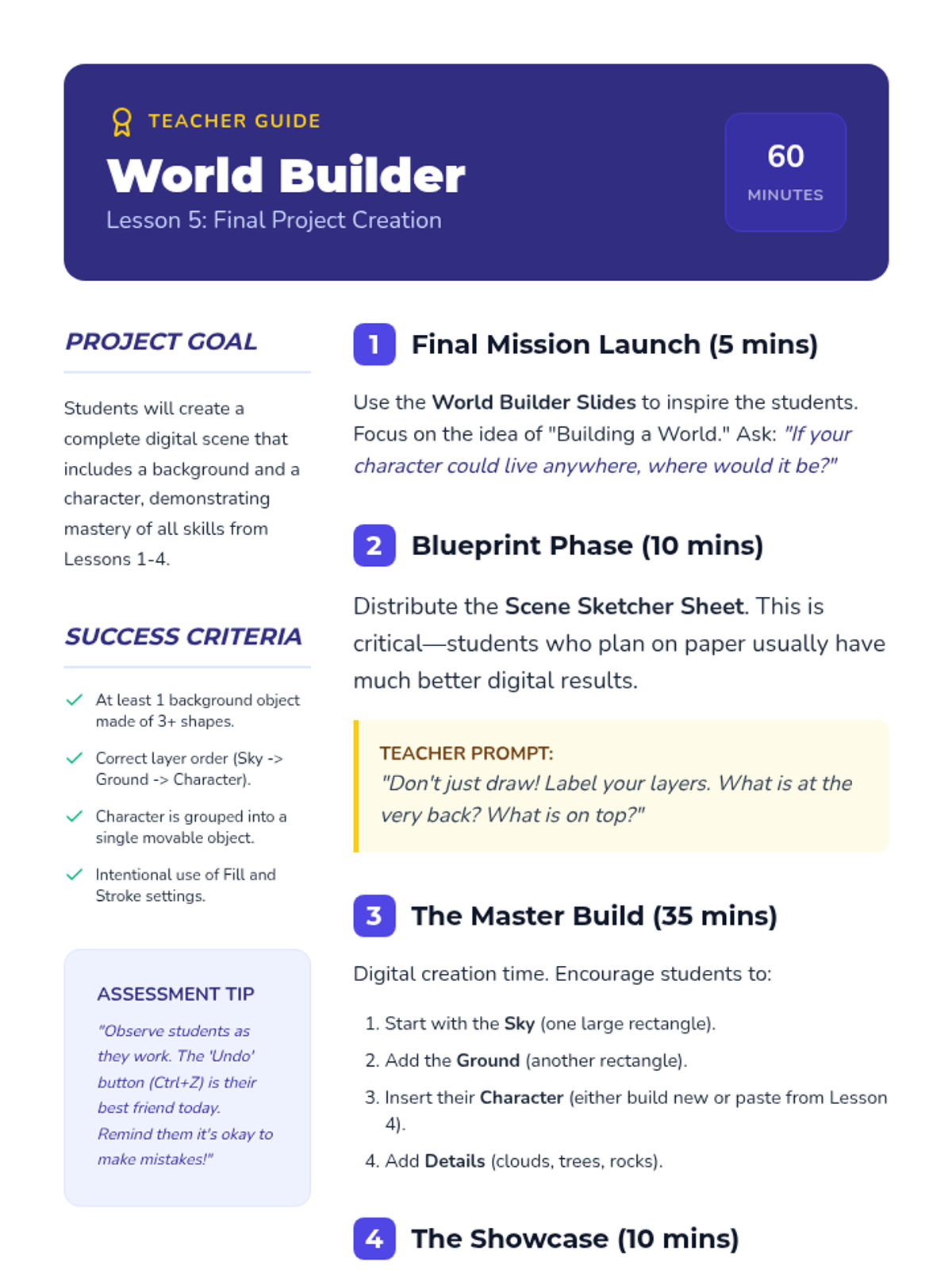
Students apply all learned skills to create a final digital scene featuring their character in a detailed environment.
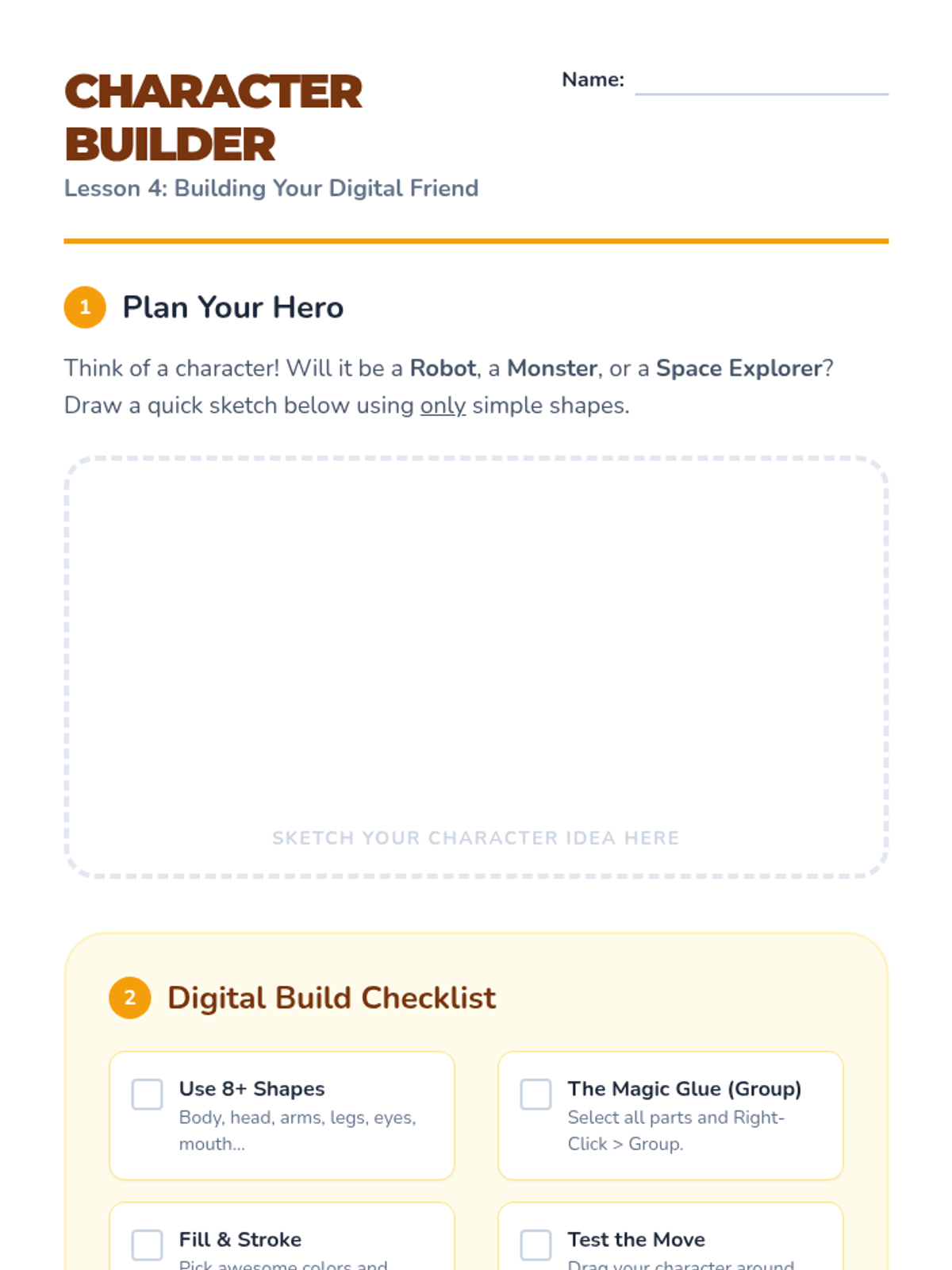
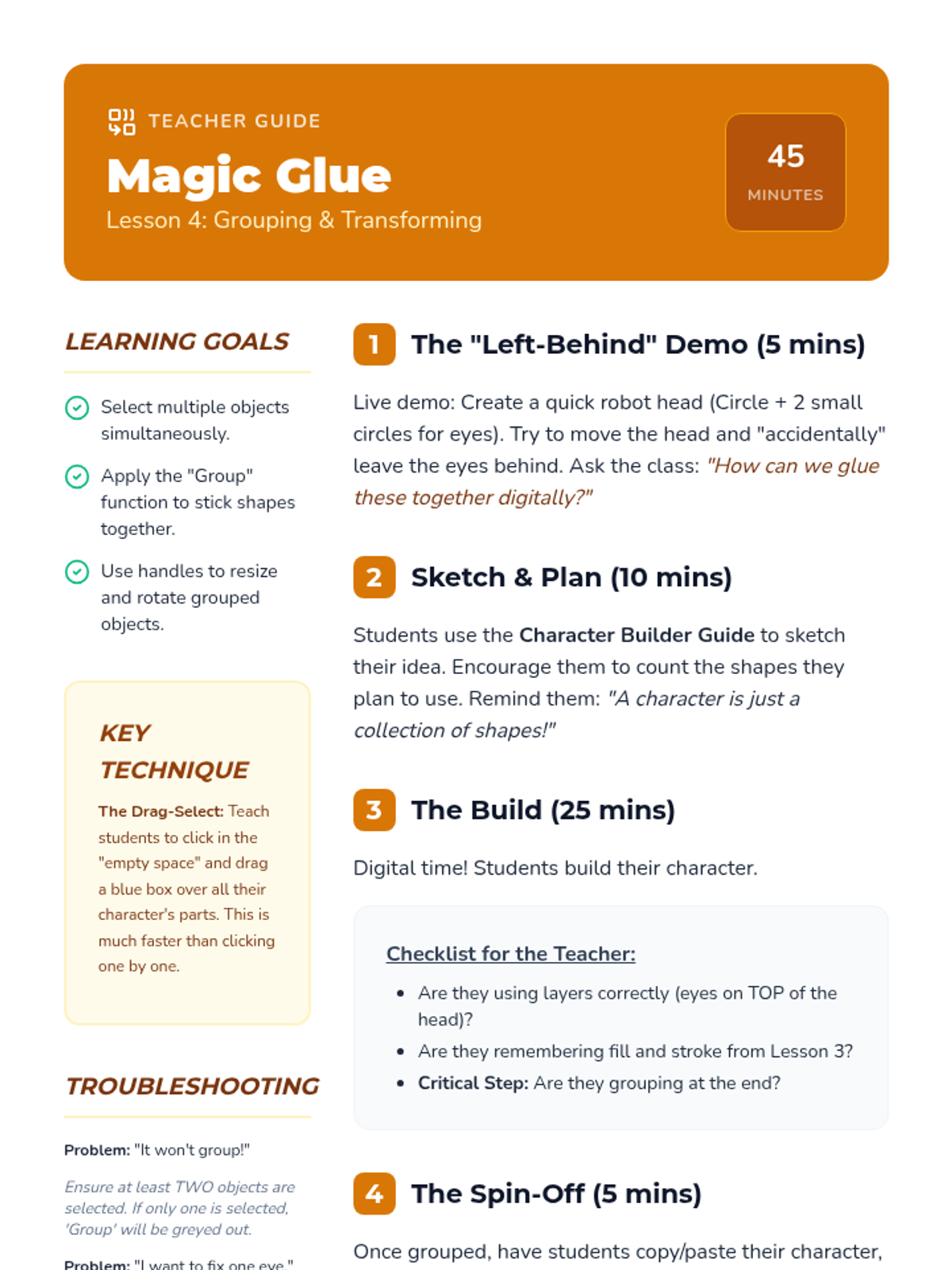
Students learn the 'group' function to combine shapes into a single movable character and practice resizing and rotating.
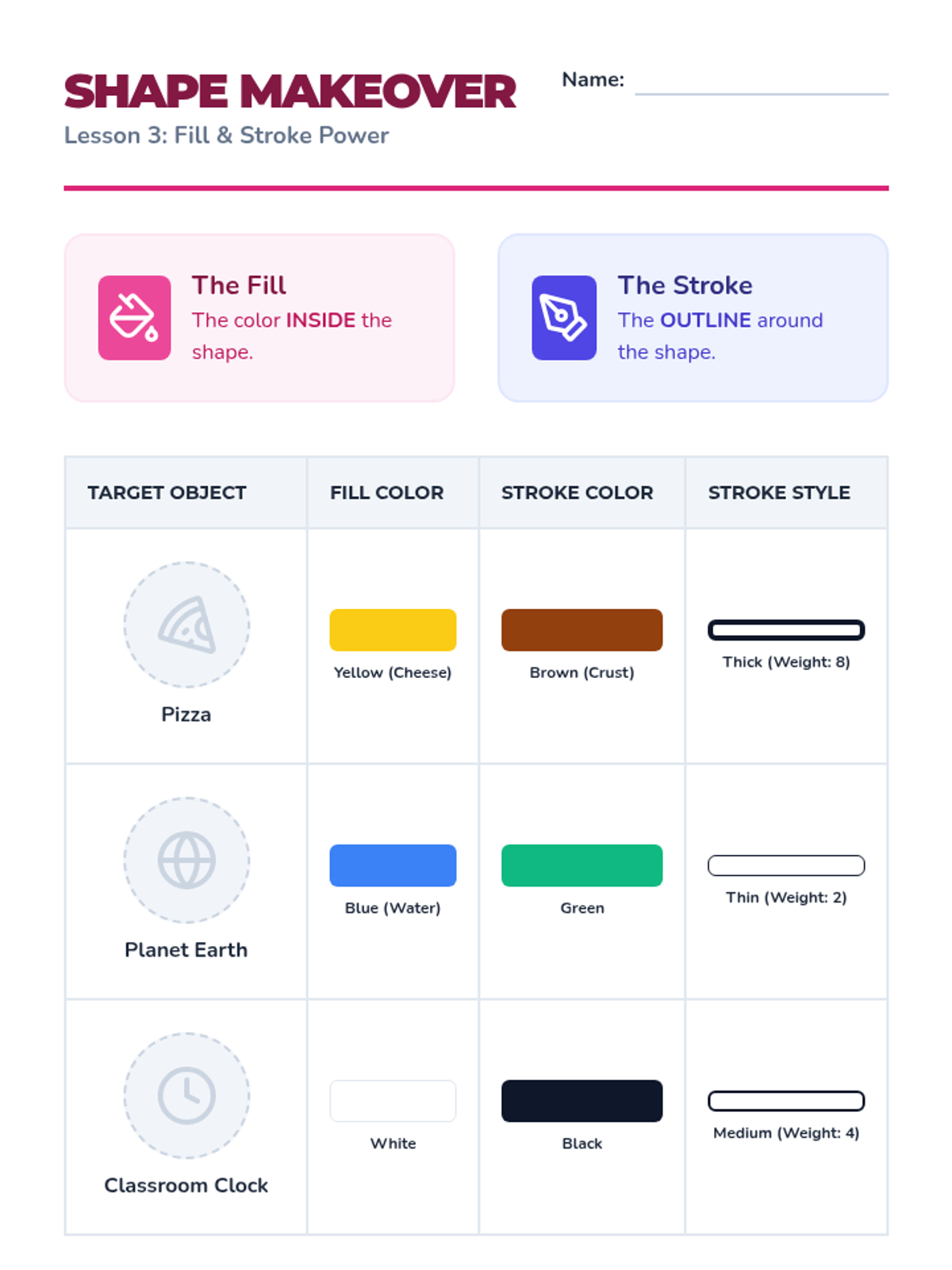
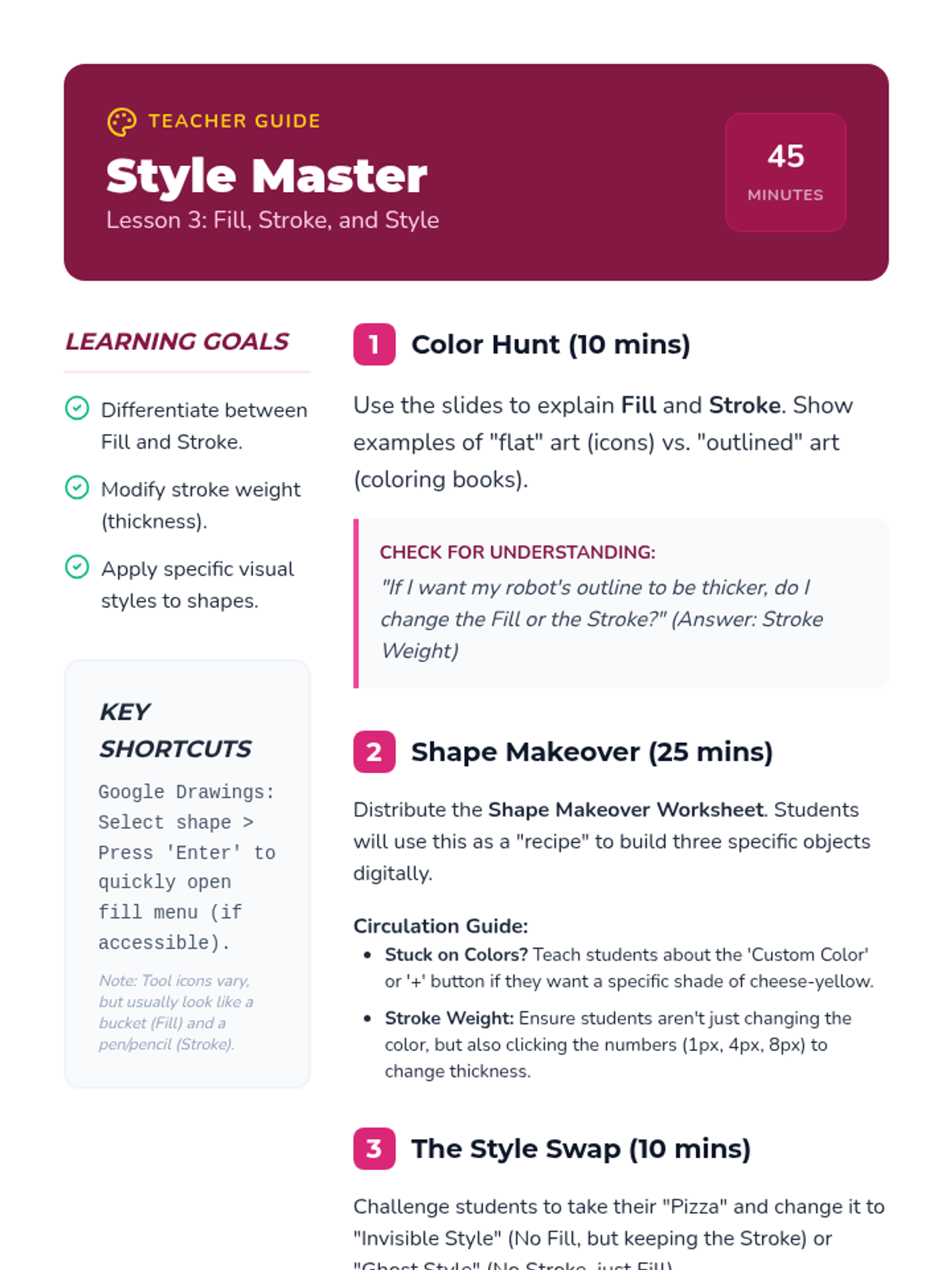
Students learn to customize shapes using fill (inside color) and stroke (outline) settings to create different styles.
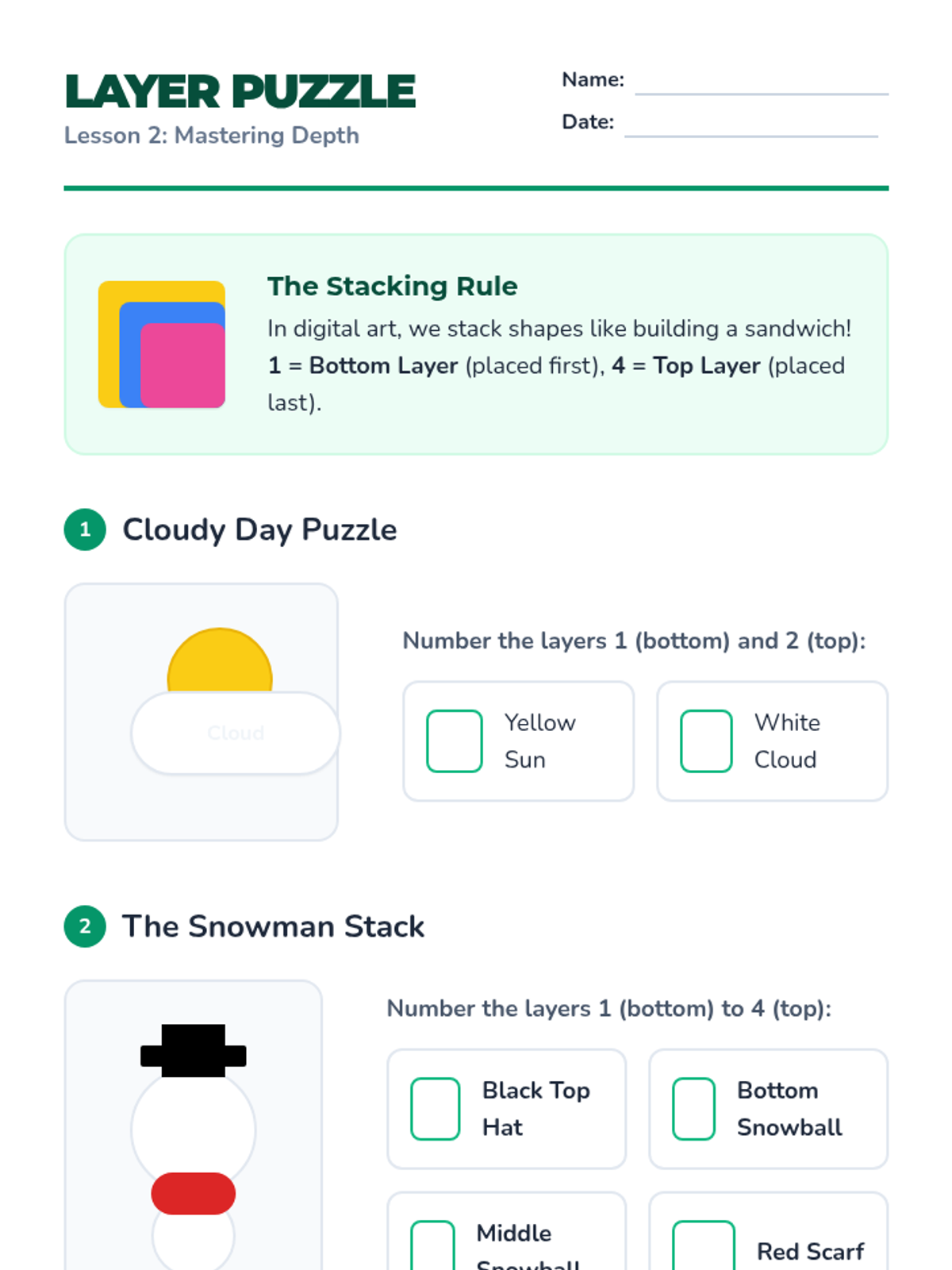
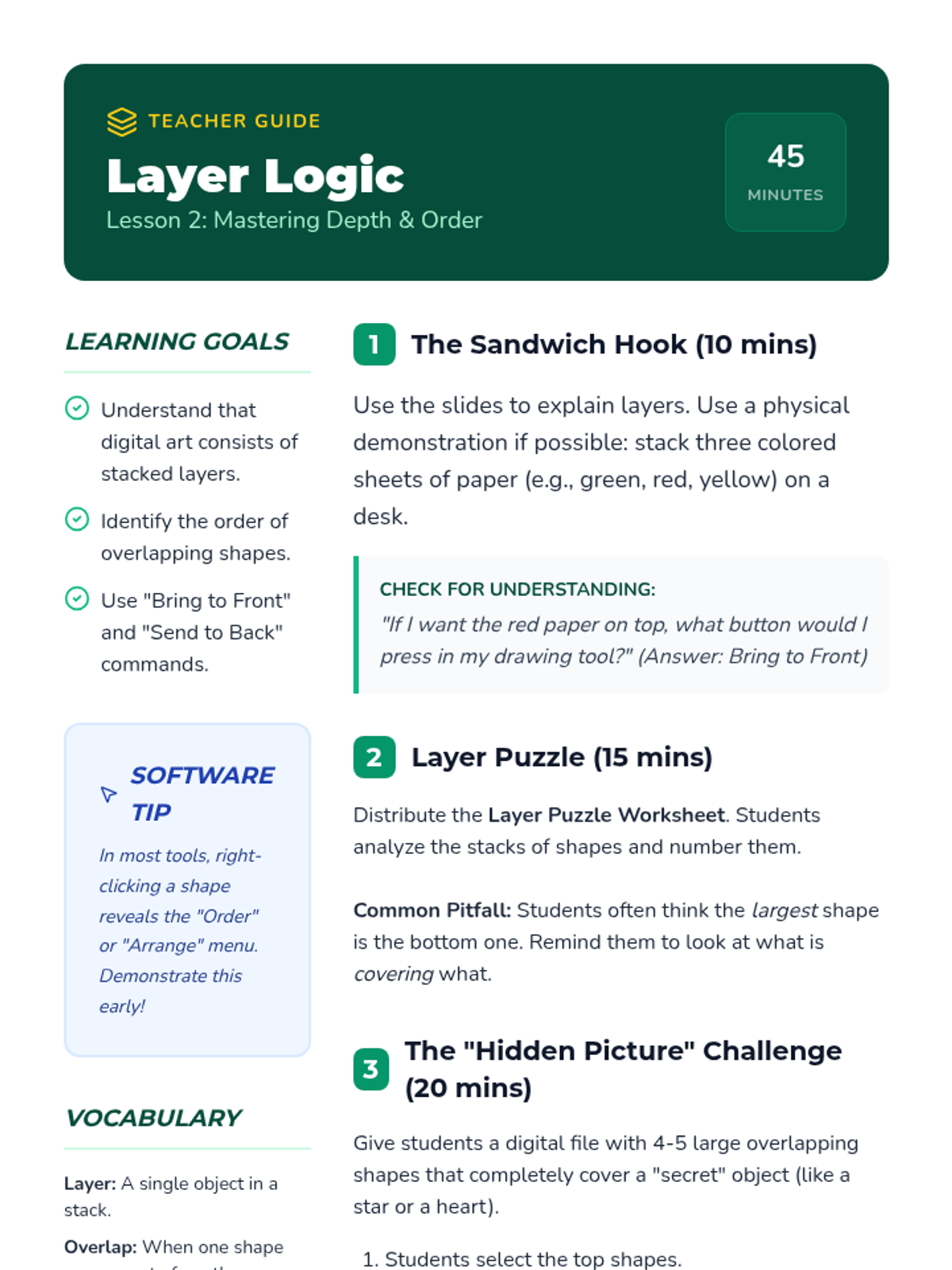
Students explore digital depth by learning to order shapes with 'bring to front' and 'send to back' commands.
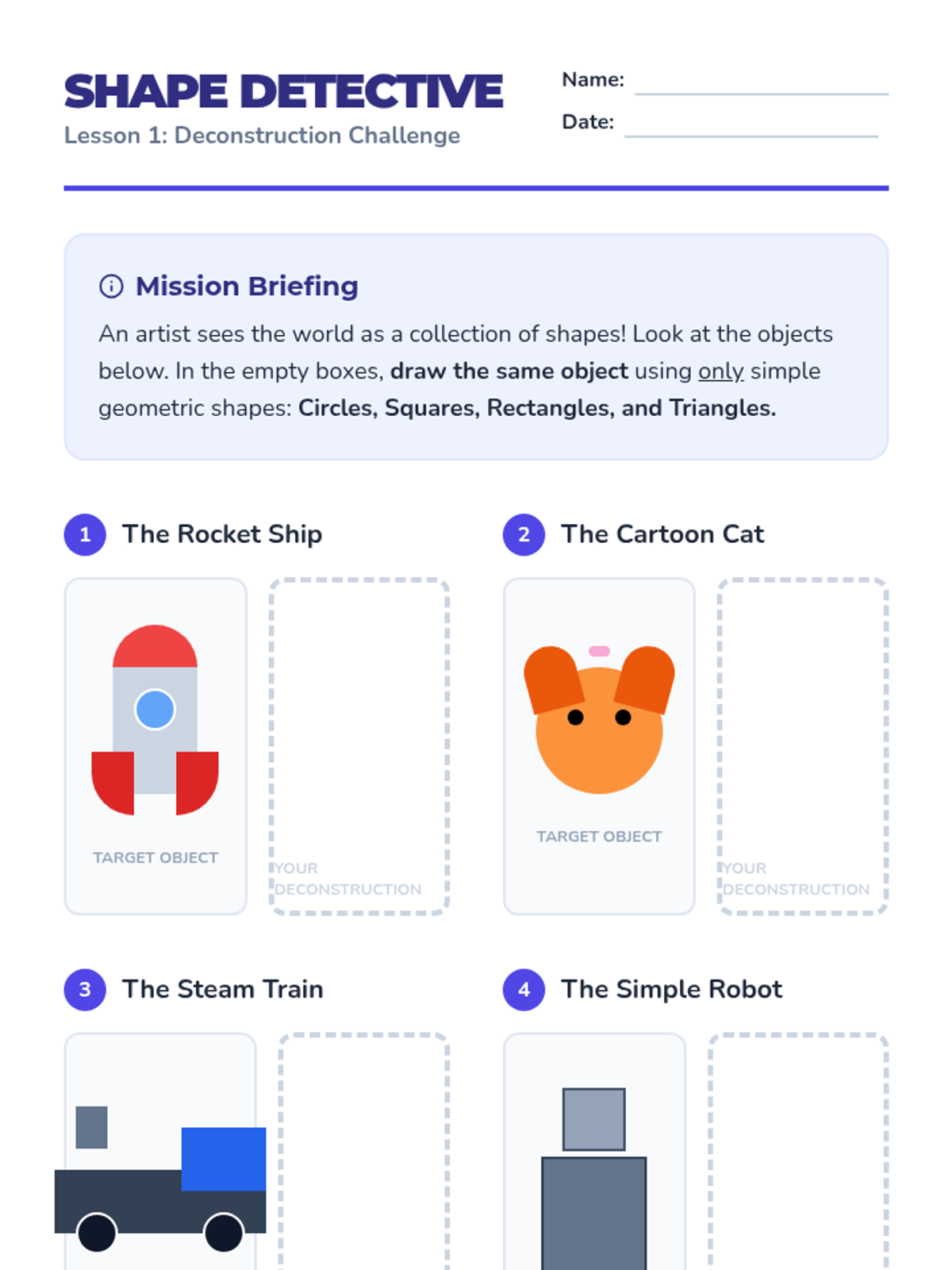
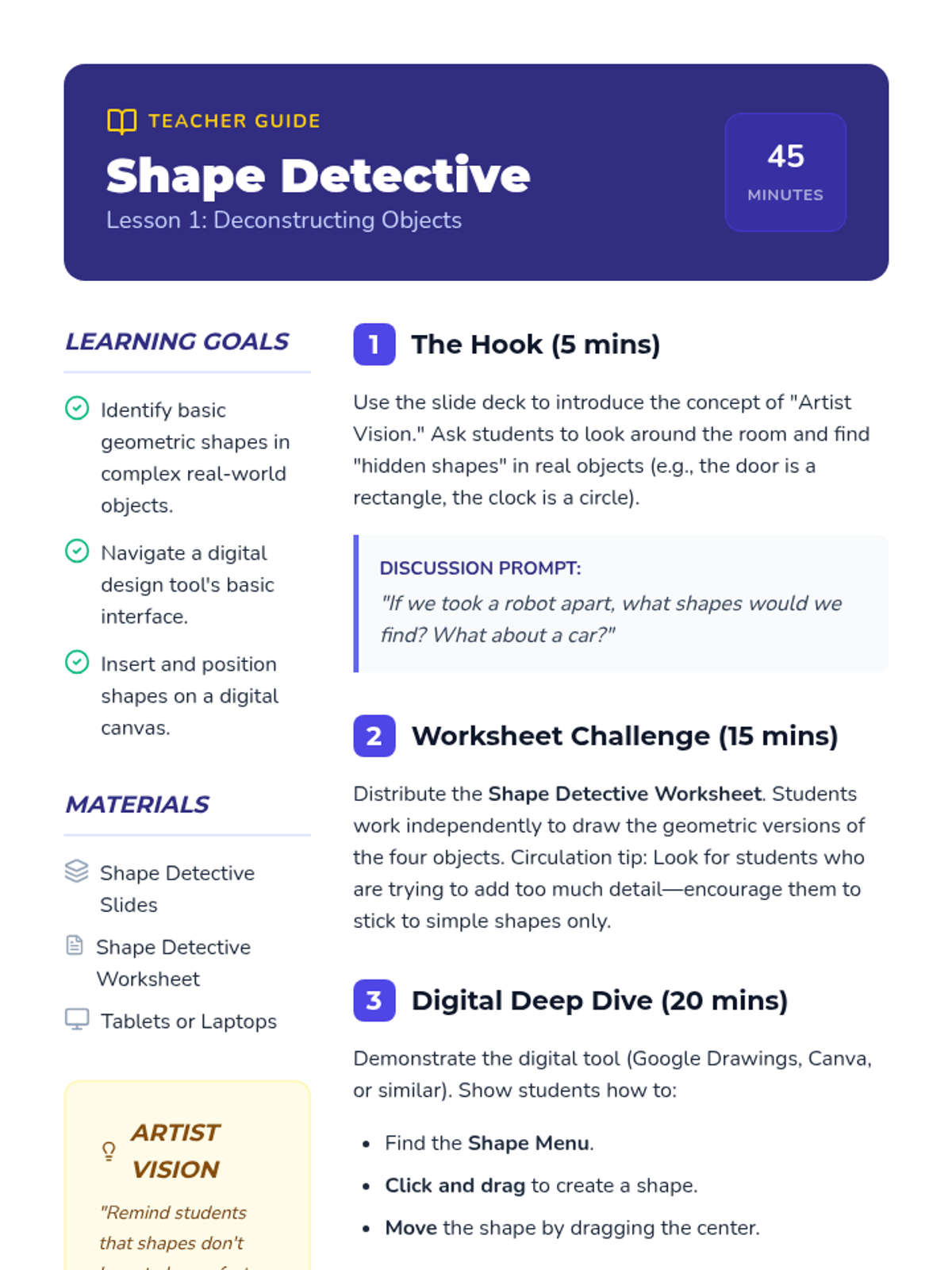
Students practice 'artist vision' by breaking down complex images into basic shapes and replicating them using digital shape tools.
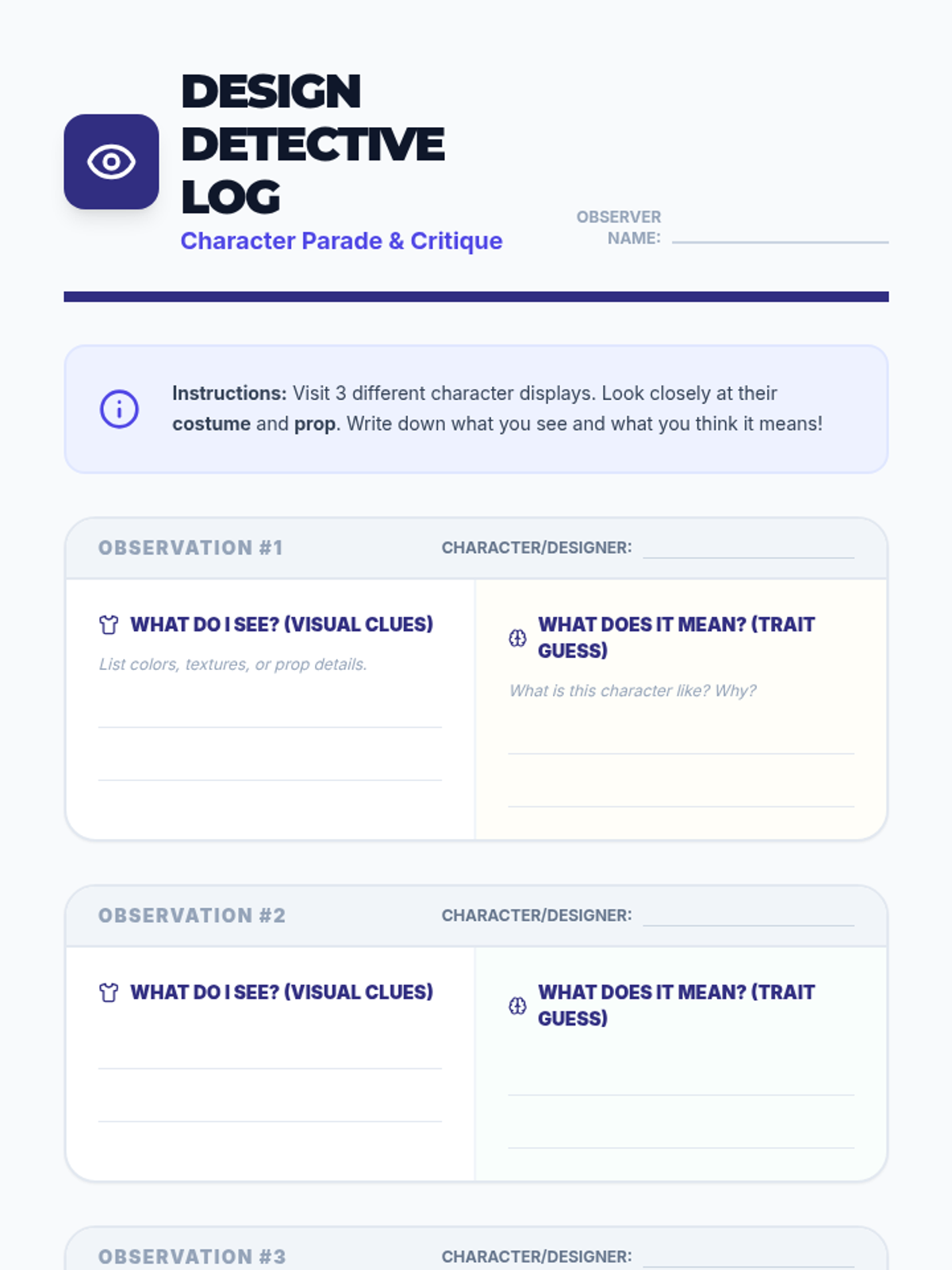
Students dress up and display their prop. The class observes the visual choices and guesses the character's traits based solely on the visual evidence.
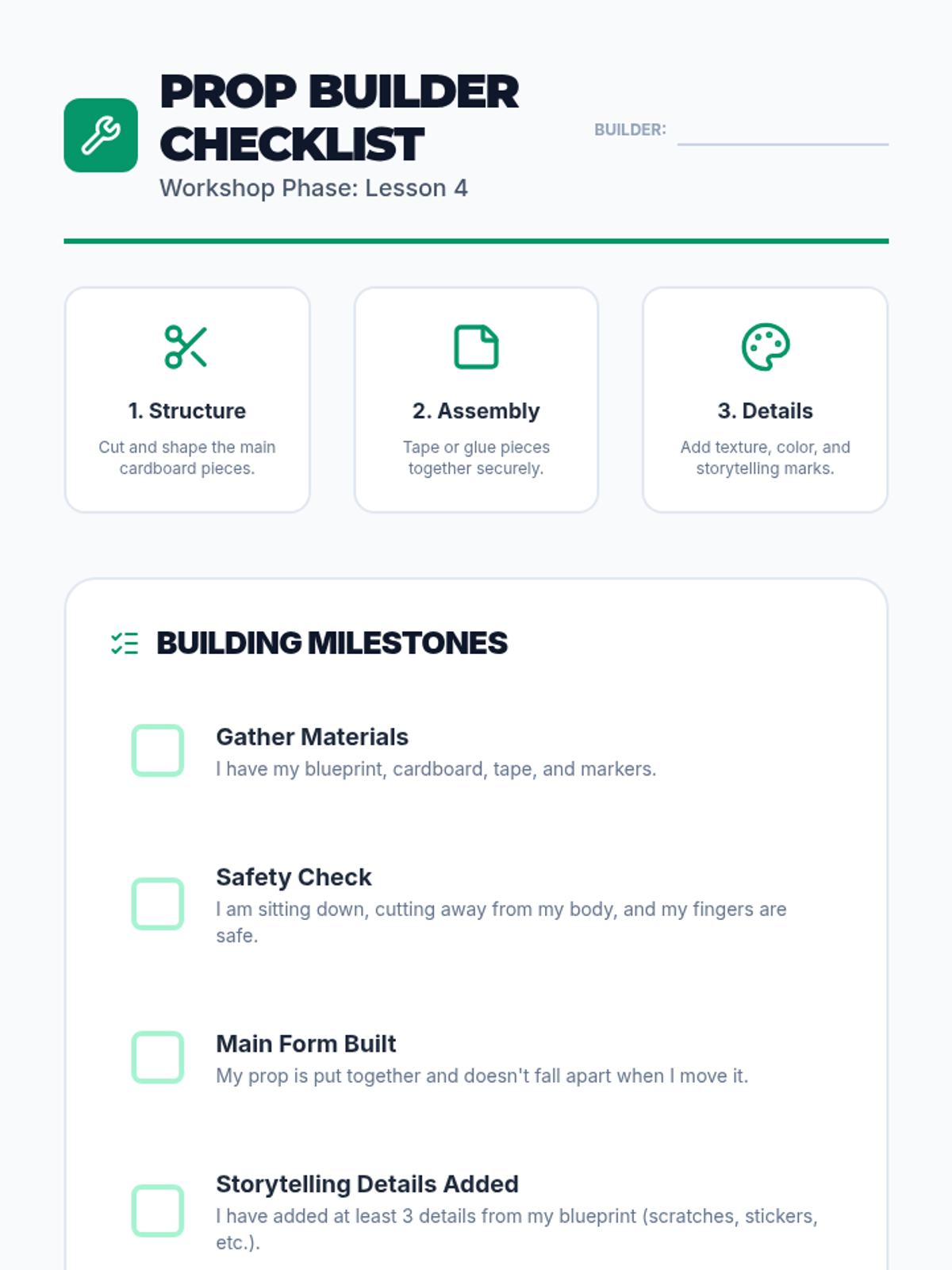
Students build their designed prop using cardboard, tape, and markers. The lesson emphasizes safety with scissors and creative use of materials to represent real objects.
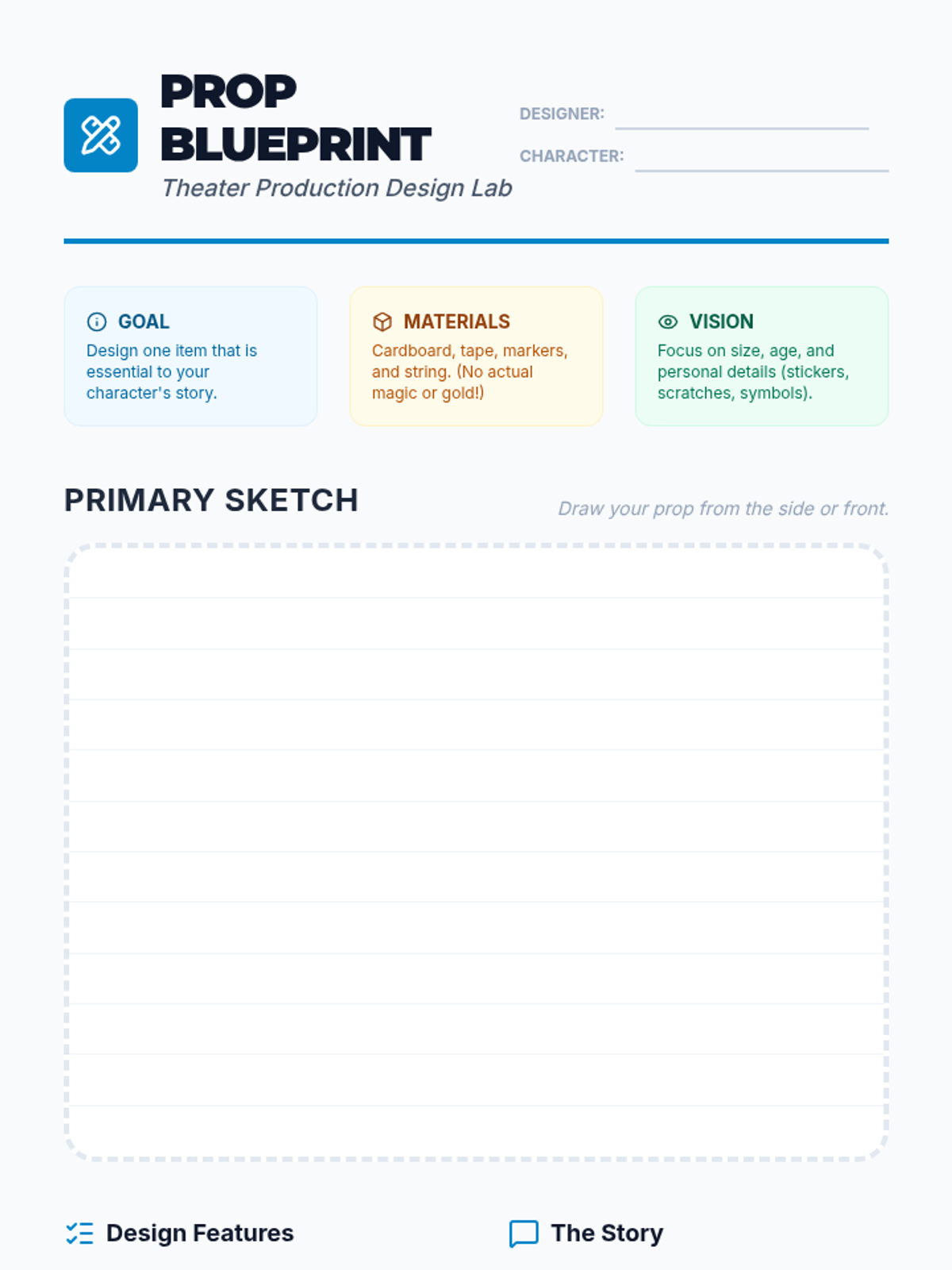
Students identify one 'essential prop' that their character would carry. They sketch the object, focusing on details that make it unique to that character.
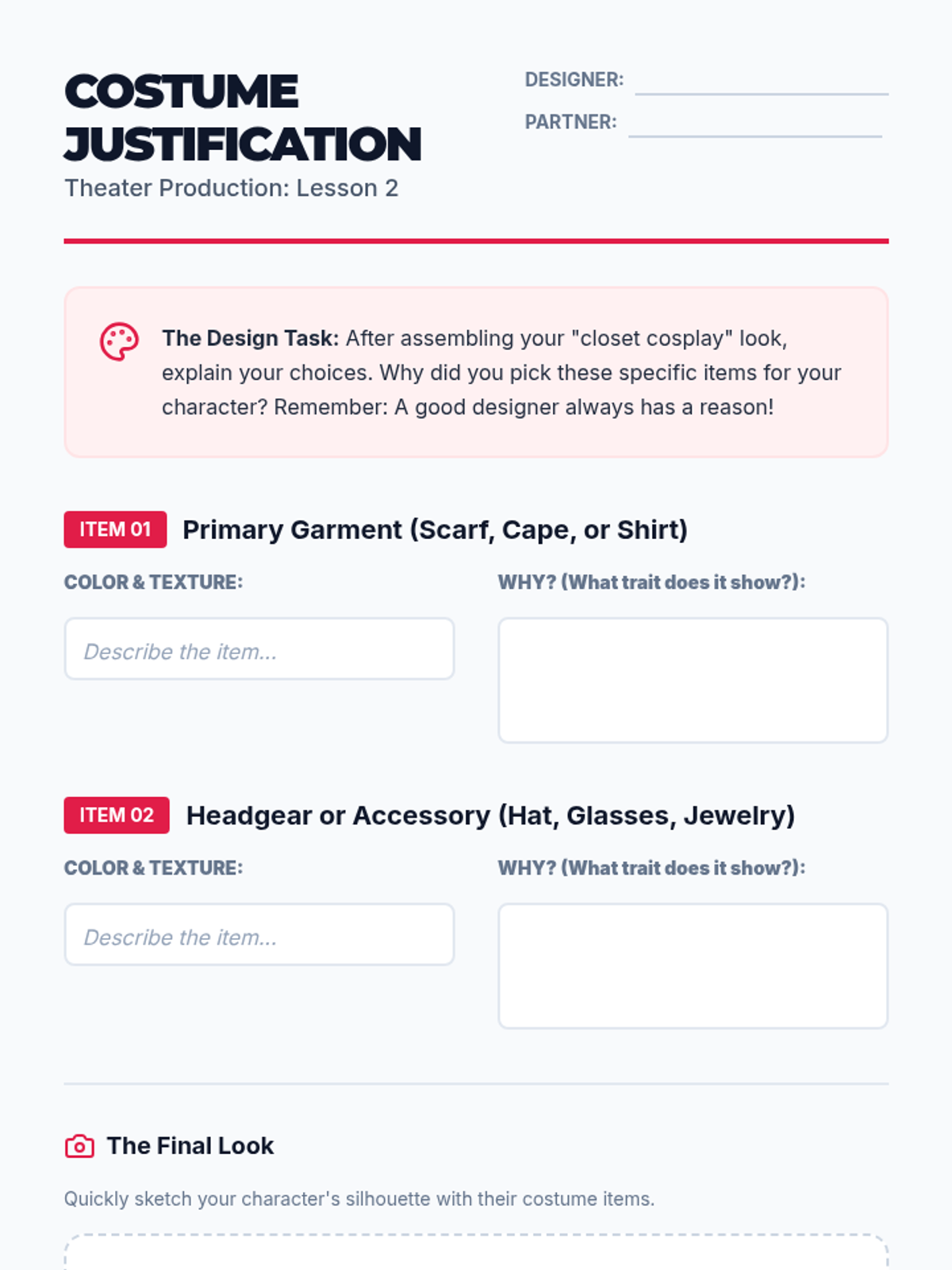
Using a collection of hats, scarves, and fabric swatches, students assemble a 'look' for a specific character. They practice justifying why a specific color or texture fits the character's personality.
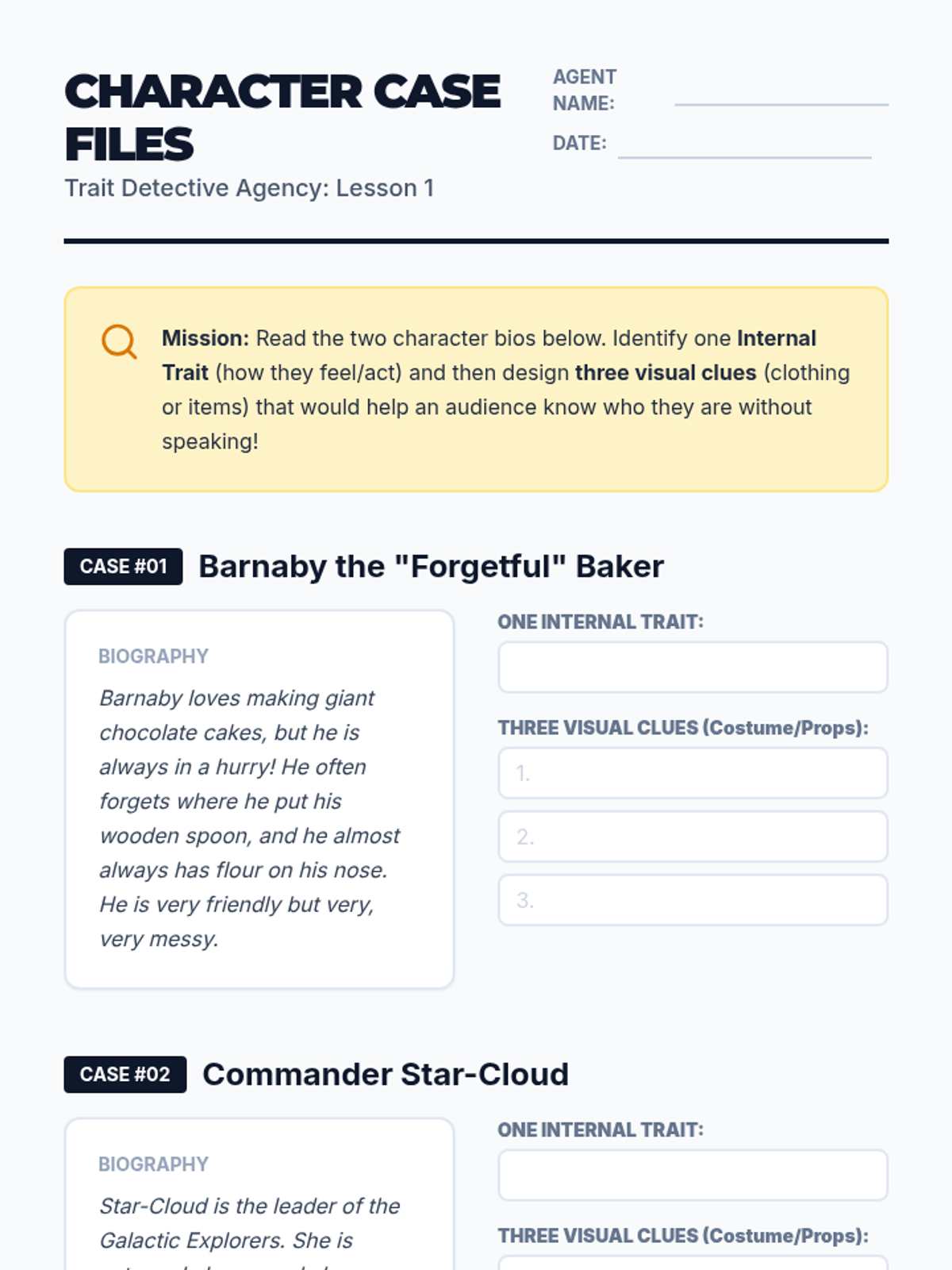
Students read brief character biographies and identify key personality traits. They discuss what visual clues might represent those traits through clothing and accessories.
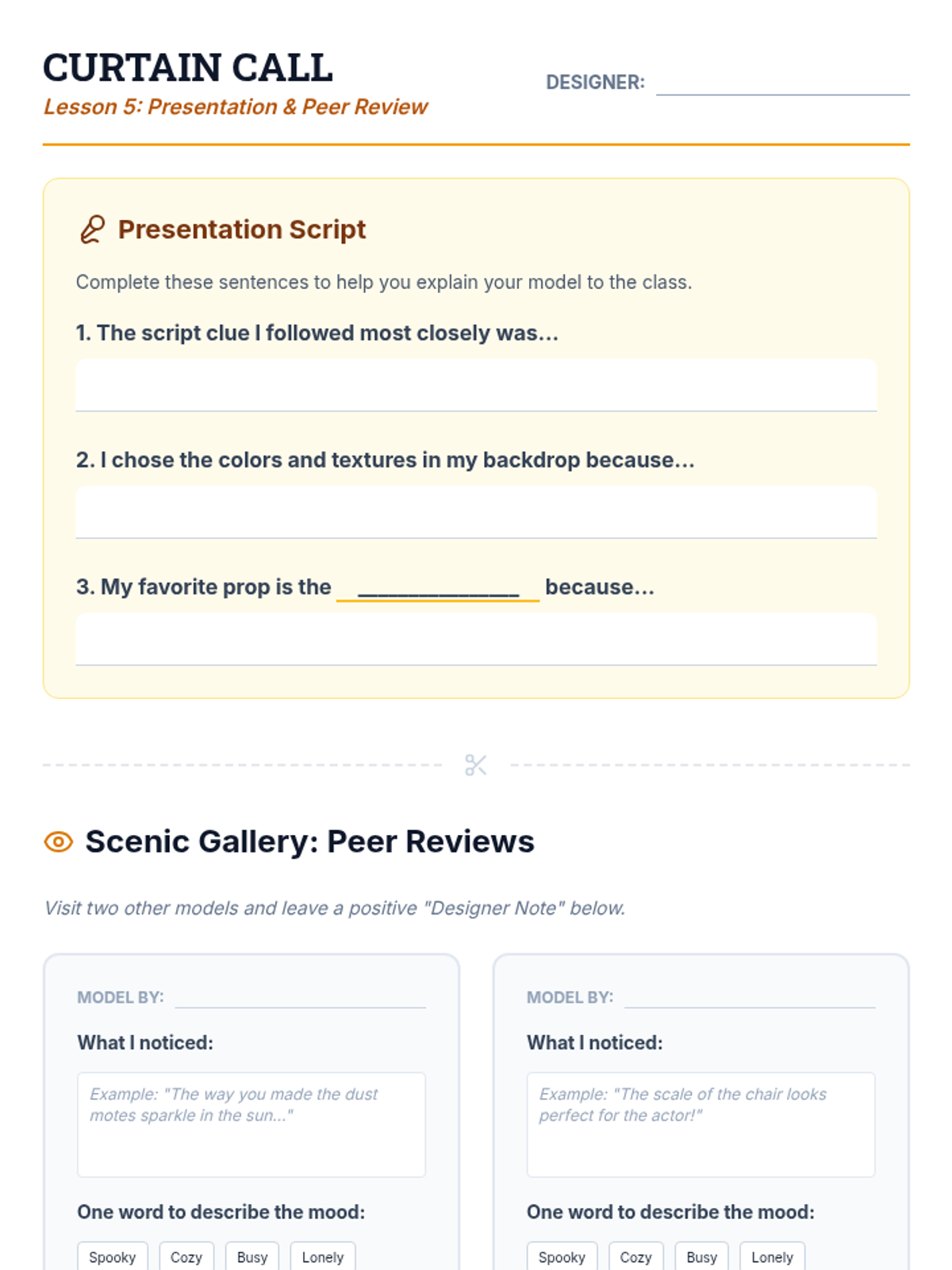
Students present their completed scale models, justifying their design choices and explaining how their sets support the story.
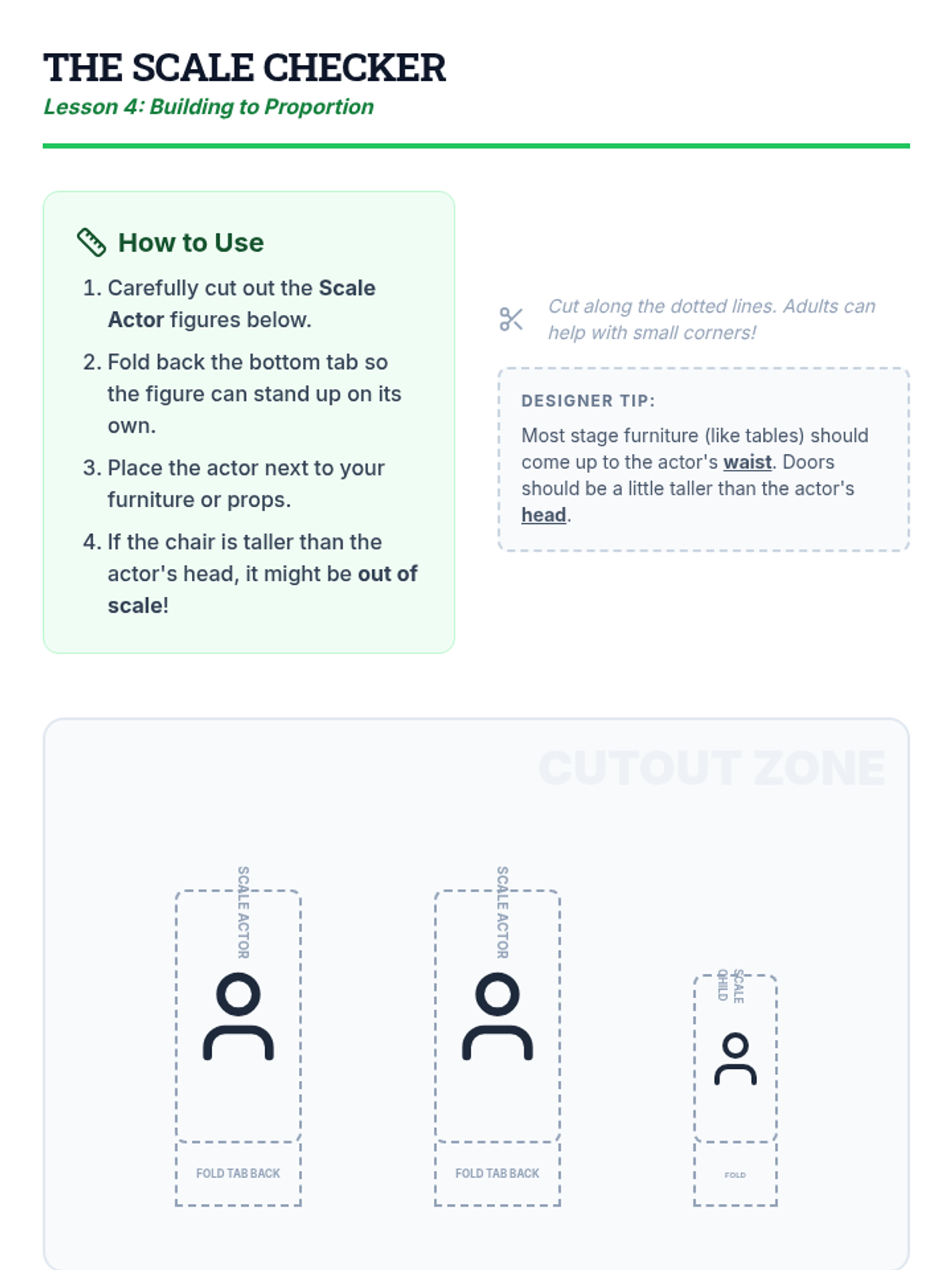
Students design and build 3D set pieces and props using various materials, focusing on scale and proportion relative to the stage space.
Students begin their physical model construction by selecting colors and textures to create a backdrop that reflects the story's mood.
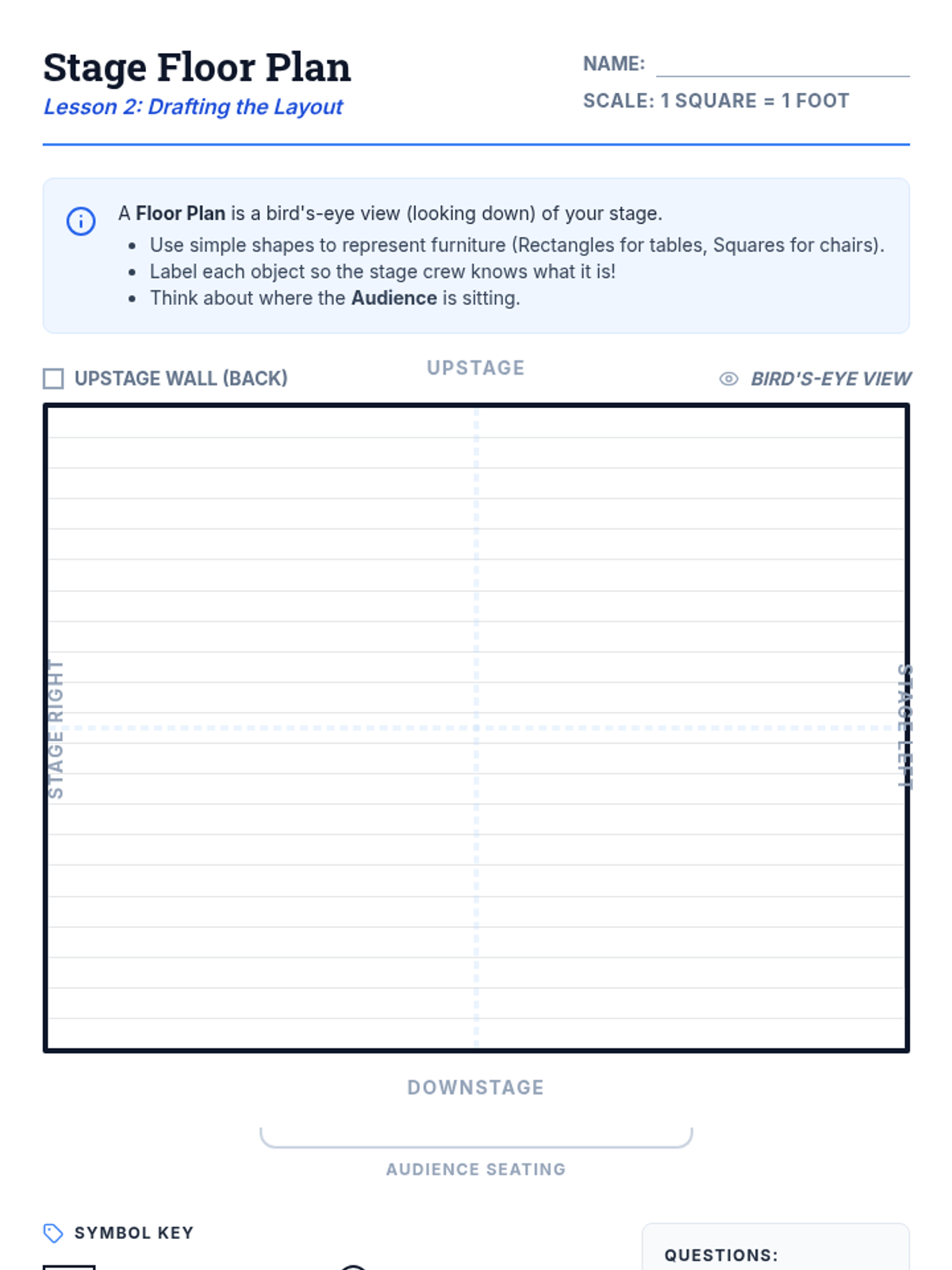
Students learn stage geography (upstage/downstage) and draft both a floor plan and a front view of their proposed set.
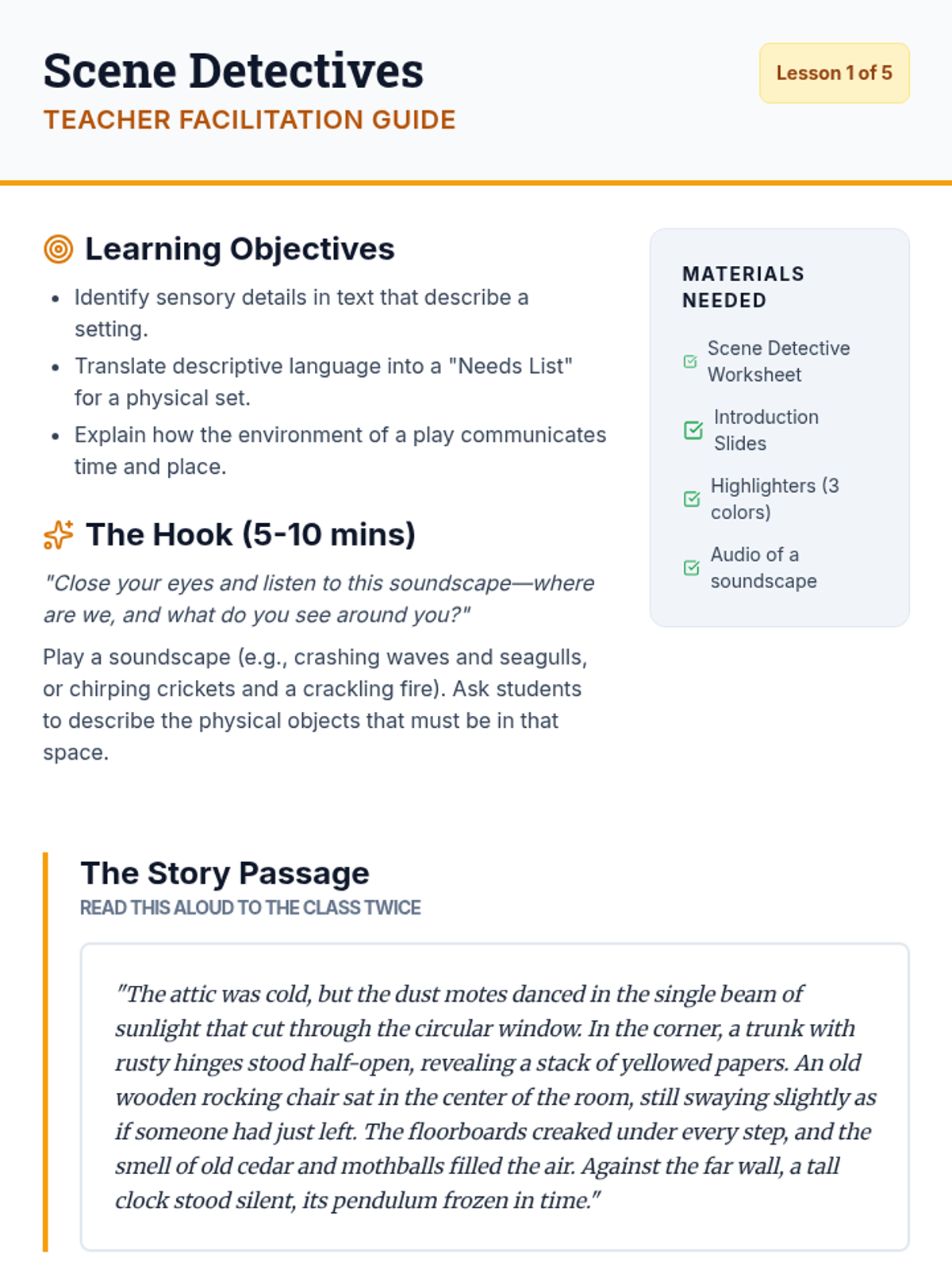
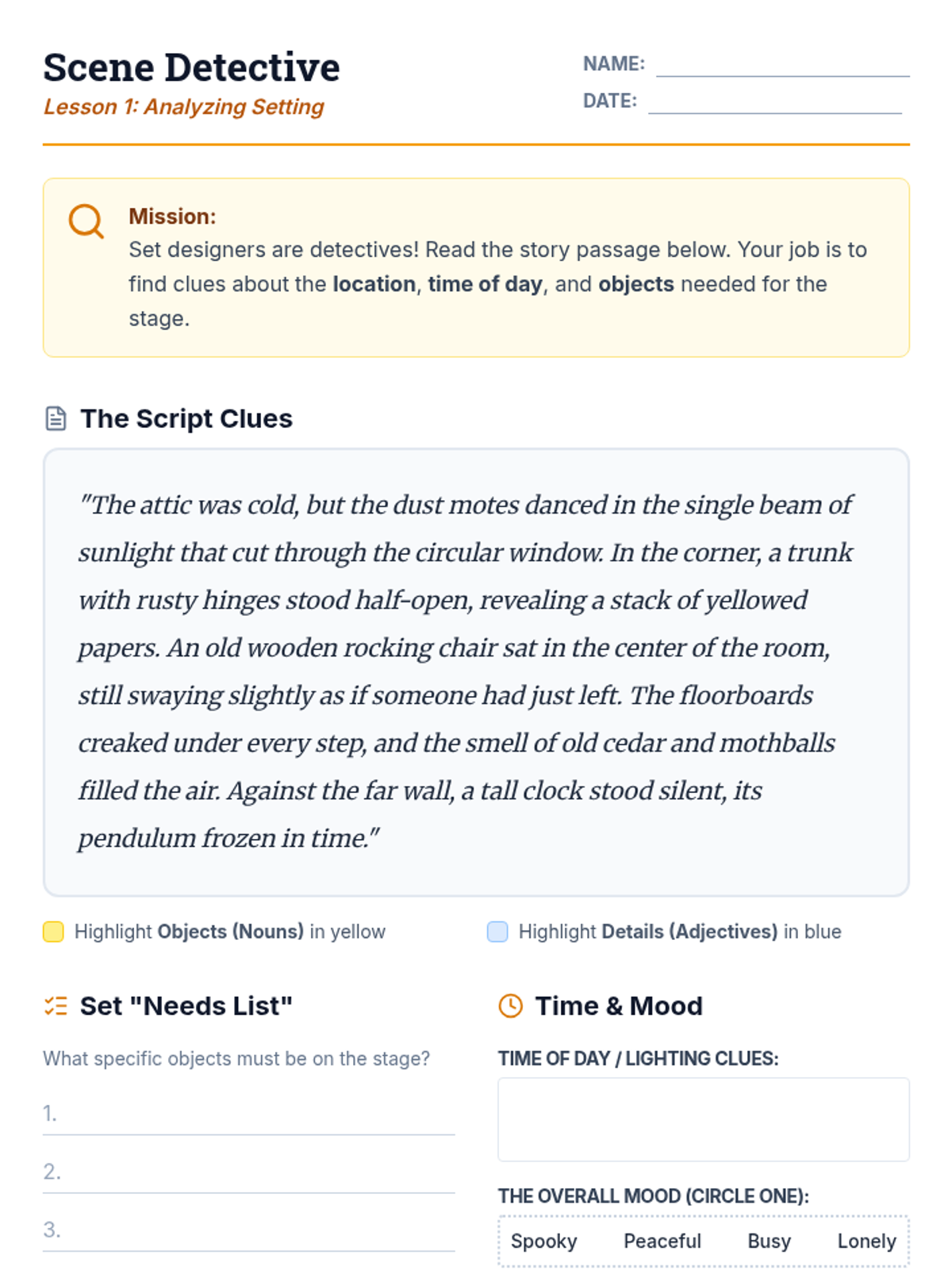
Students analyze a story passage to identify environmental clues and list physical set requirements, bridging the gap between text and visual design.
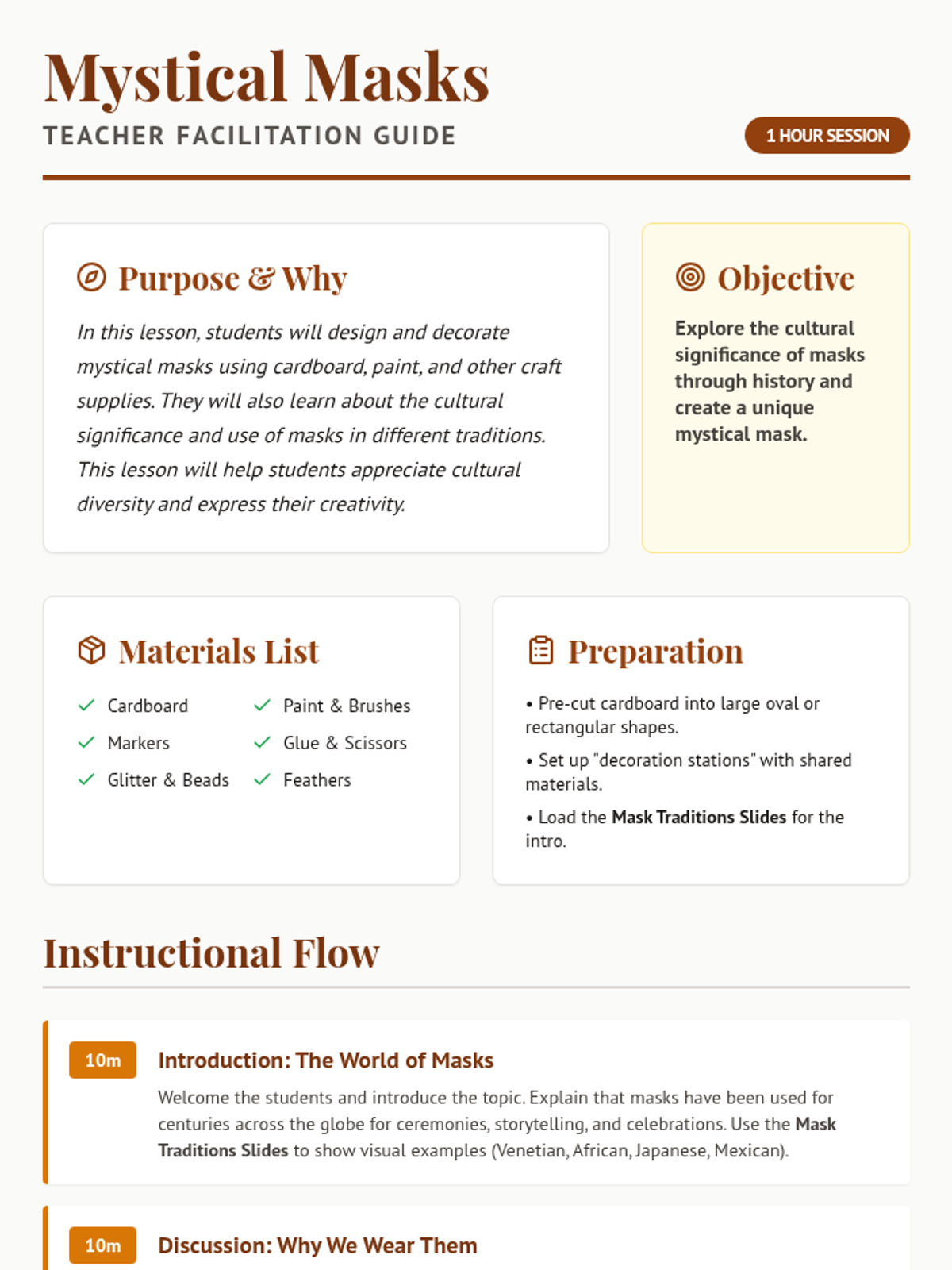
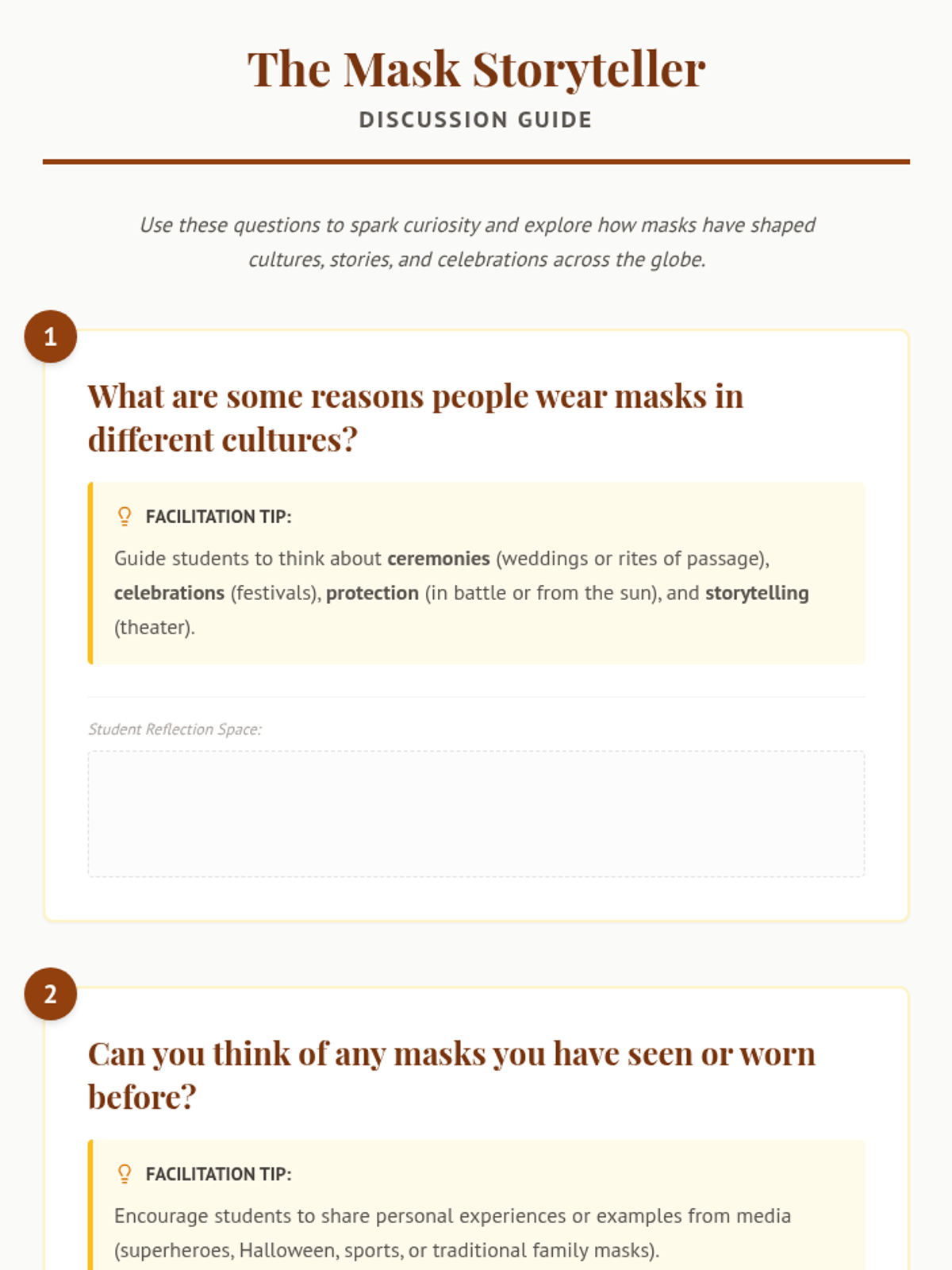
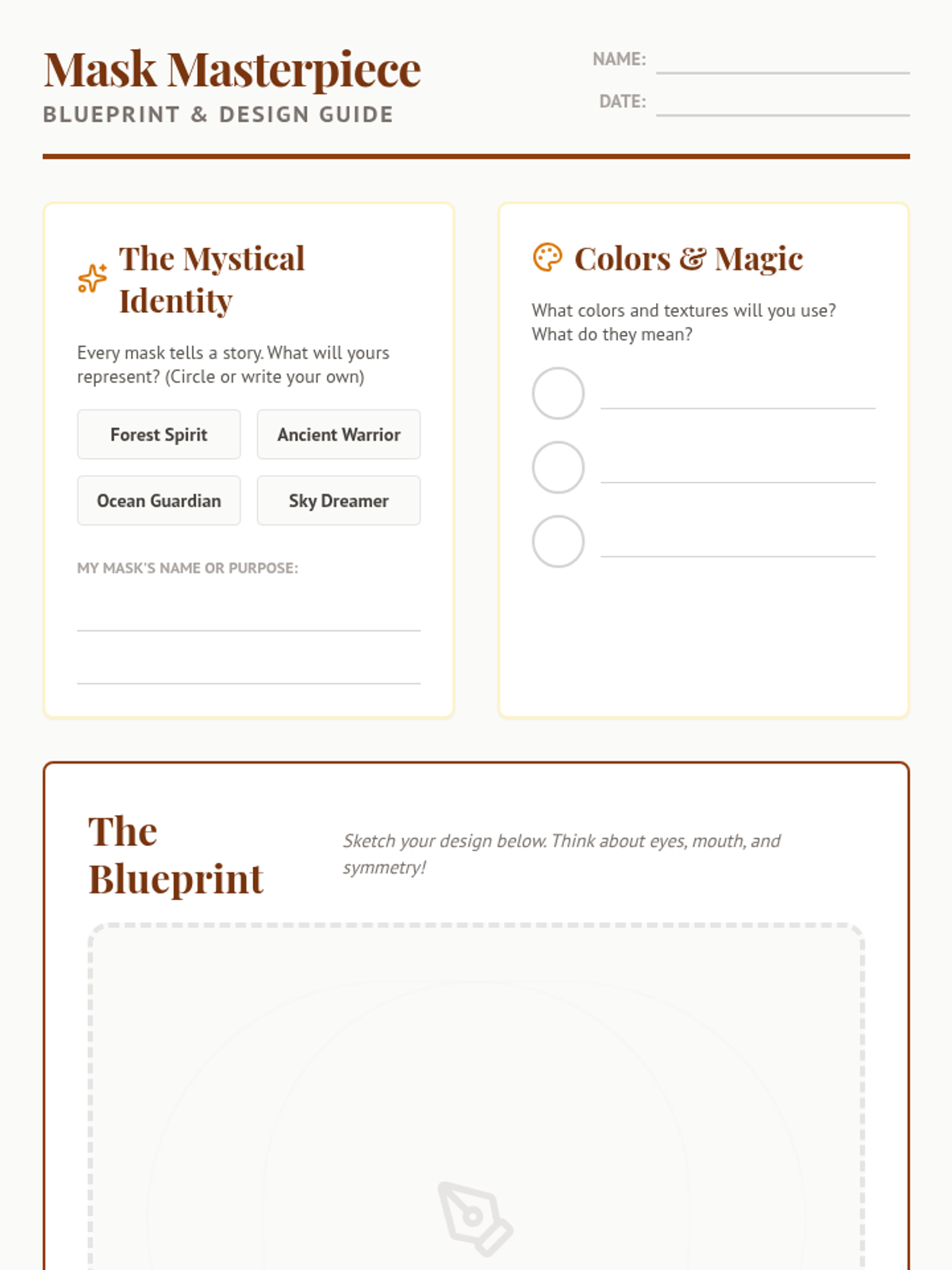
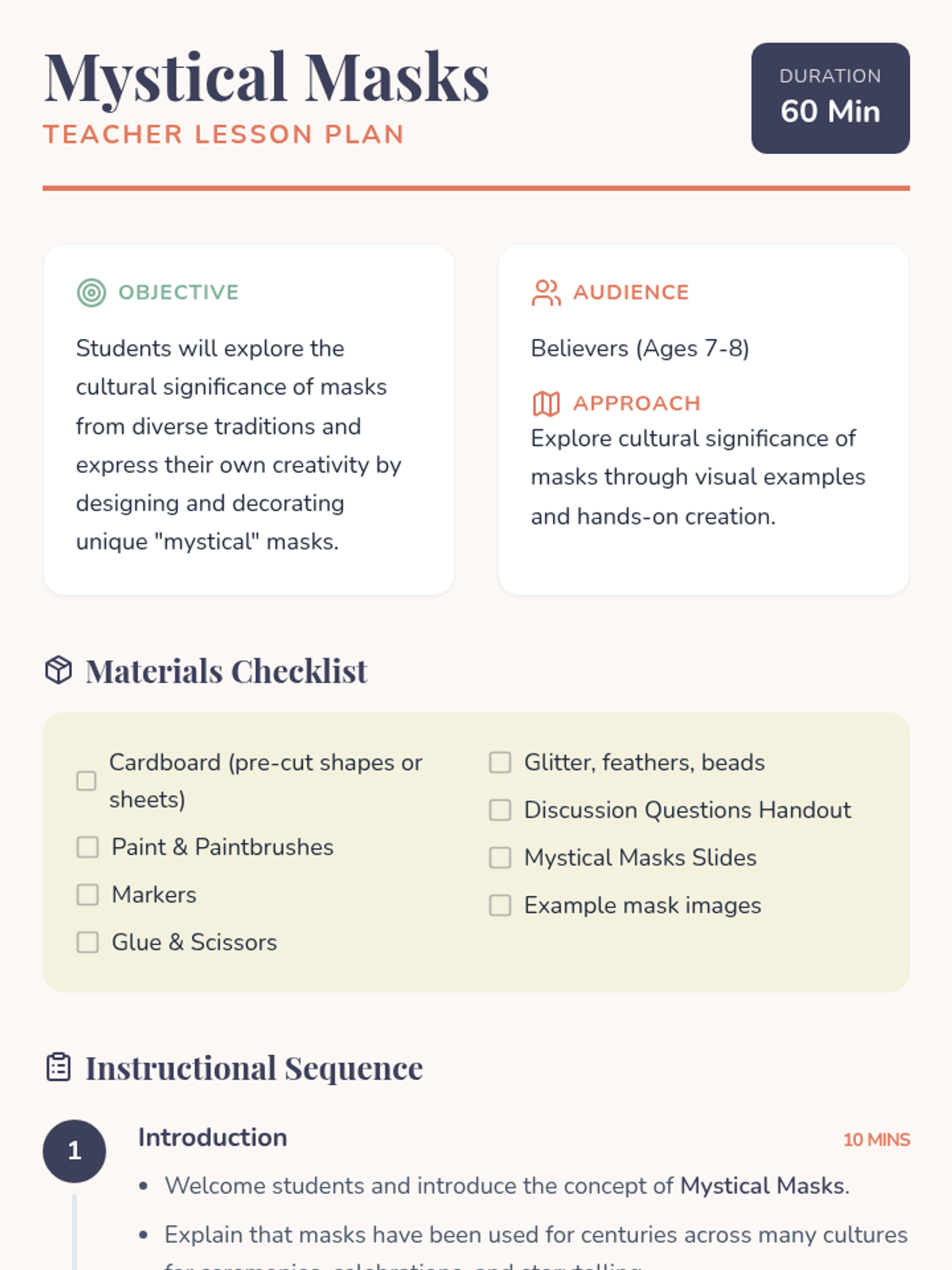
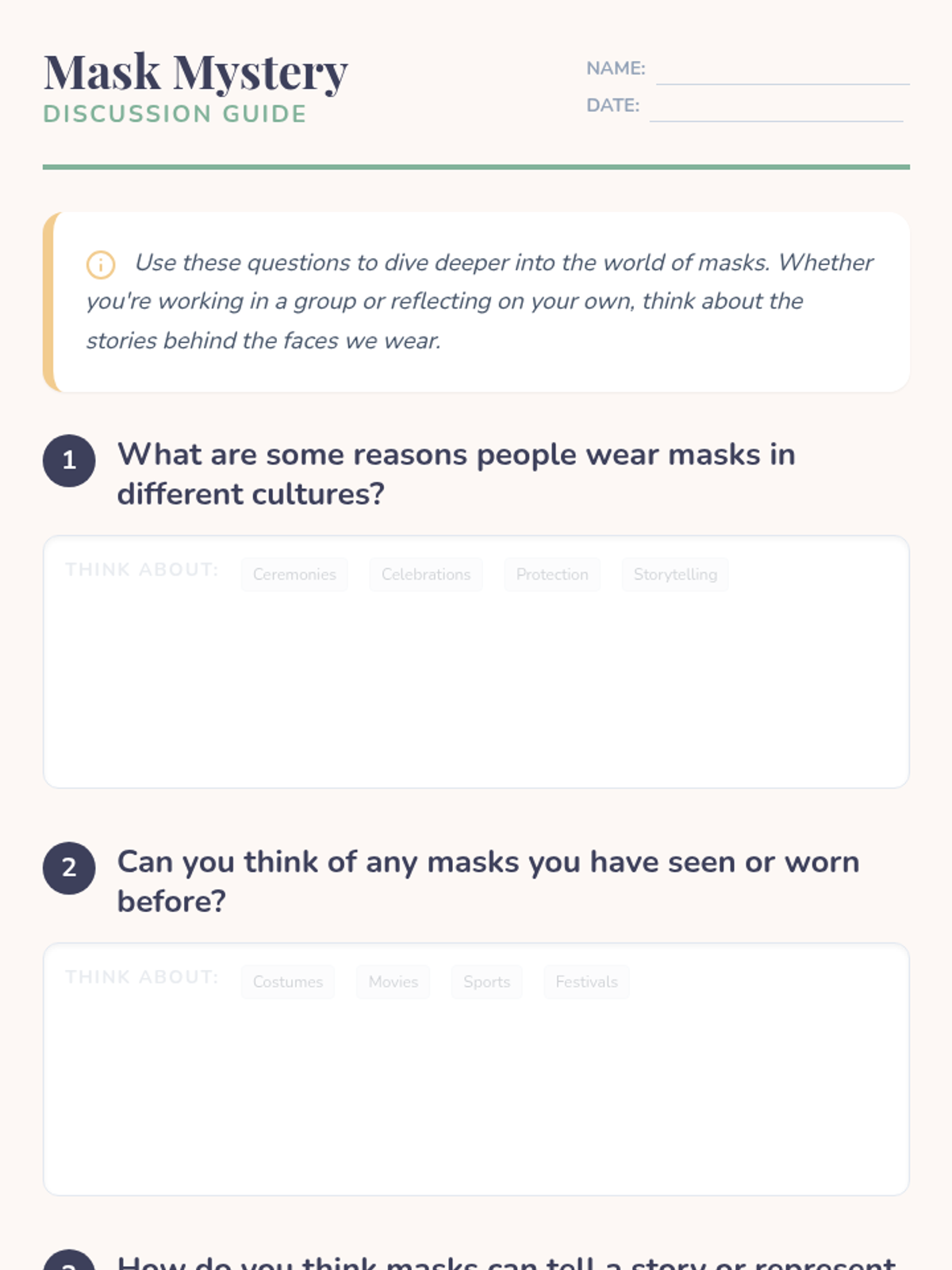
Students explore the cultural significance of masks from around the world and design their own mystical masks using cardboard and craft supplies.
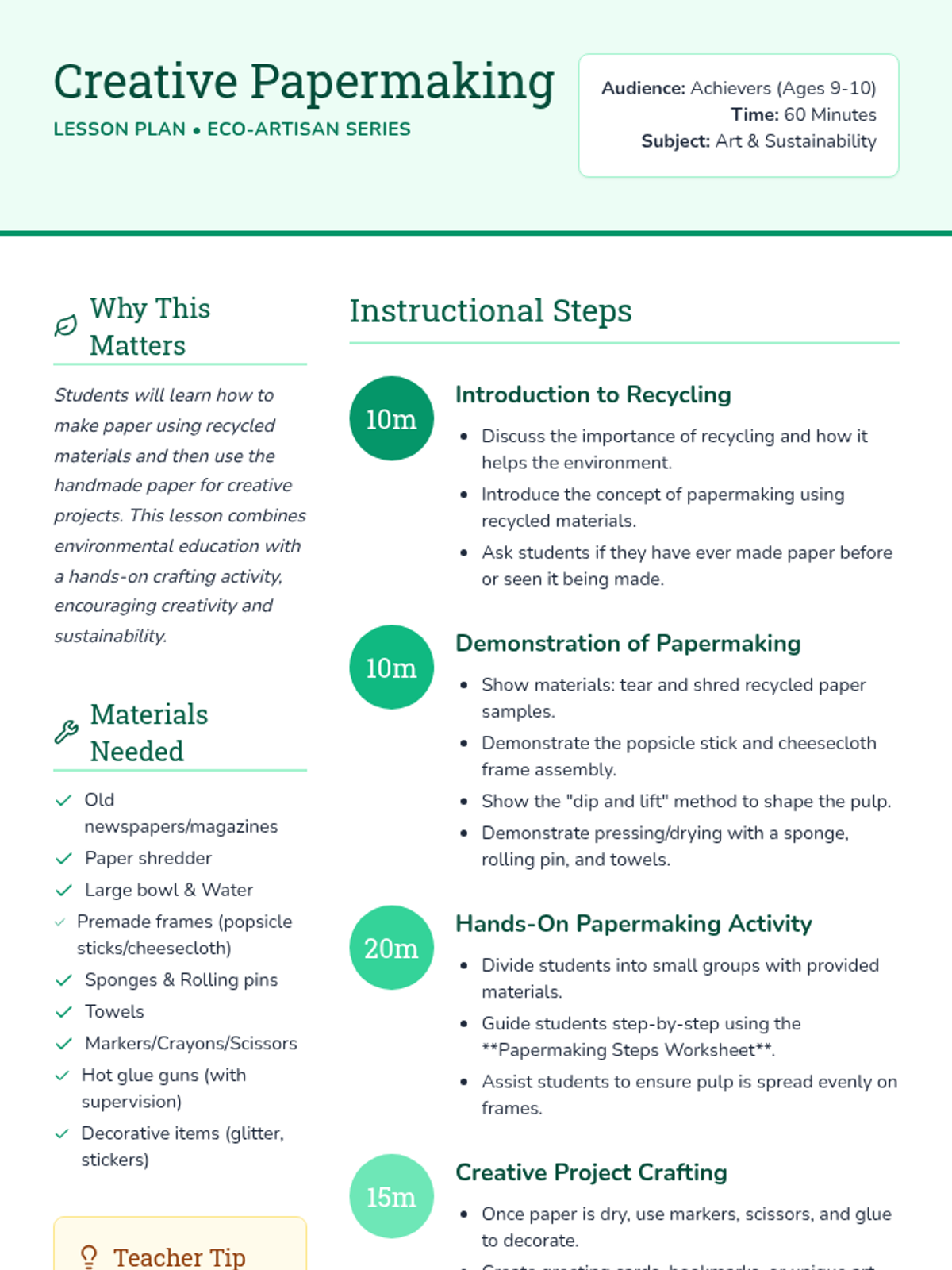
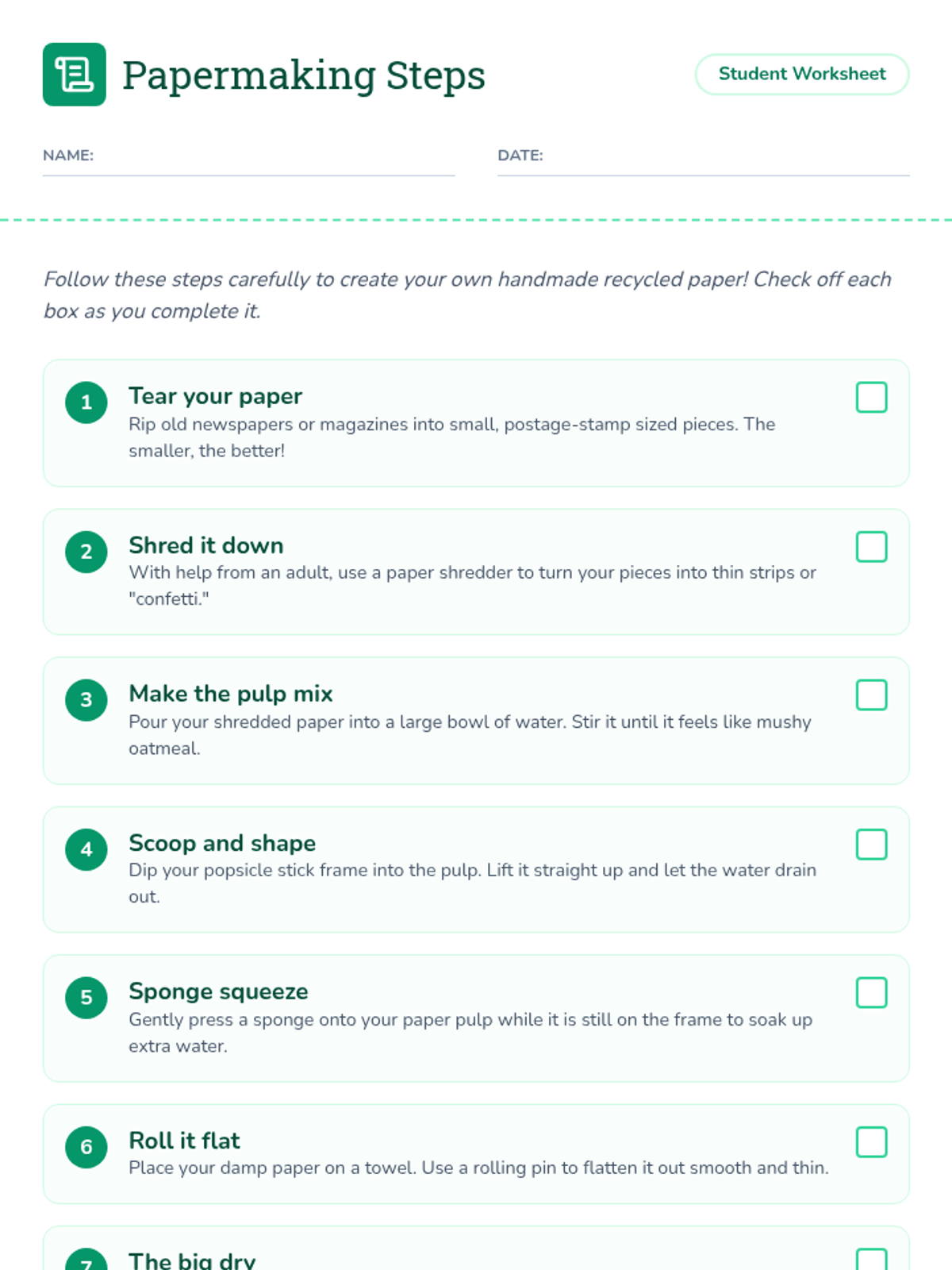
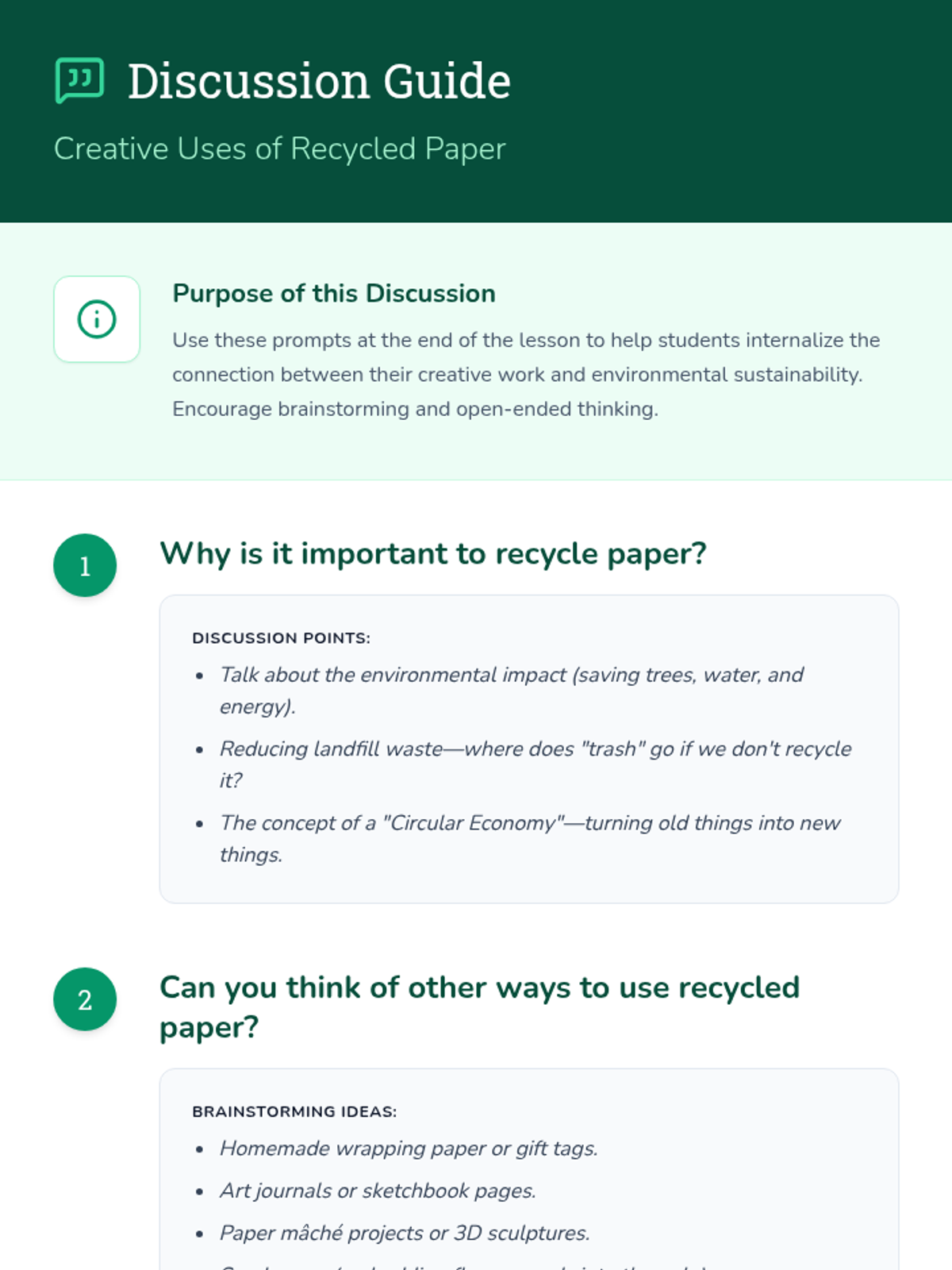
A hands-on lesson where students learn the art of papermaking using recycled materials, combining environmental science with creative crafting.
Students explore the cultural significance of masks from around the world and design their own mystical masks using cardboard and craft supplies. This lesson encourages creative expression and appreciation for global traditions.
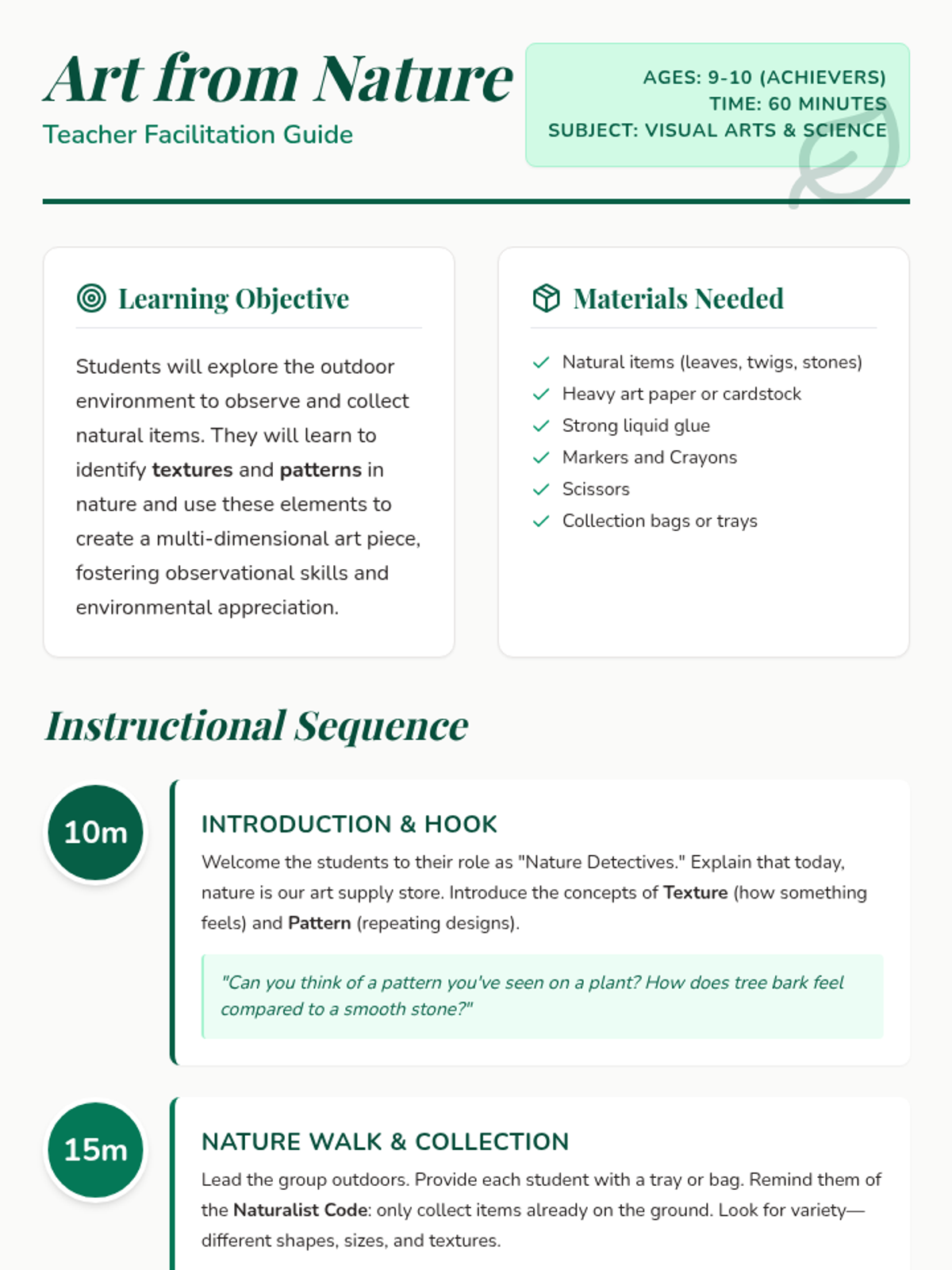
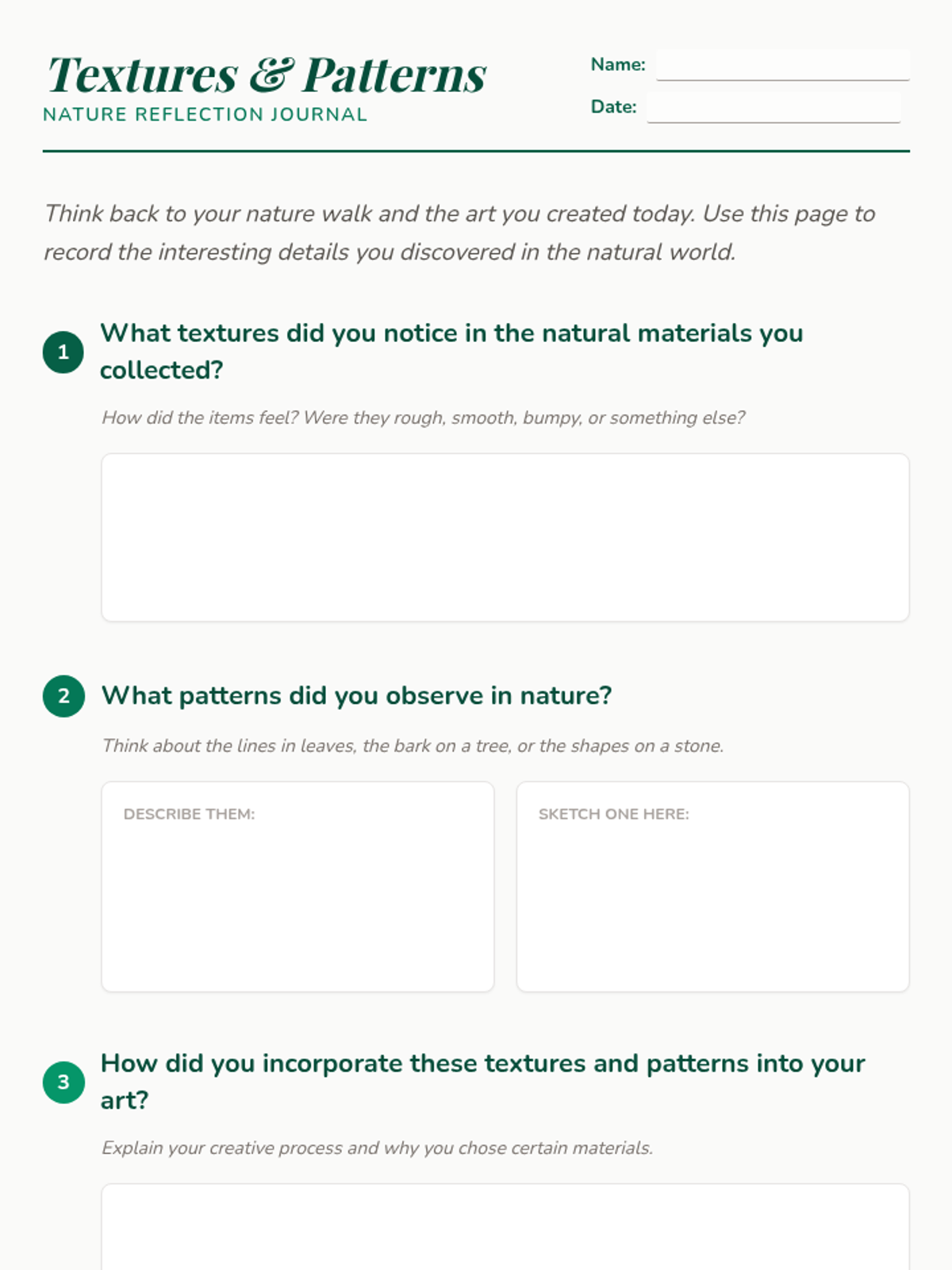
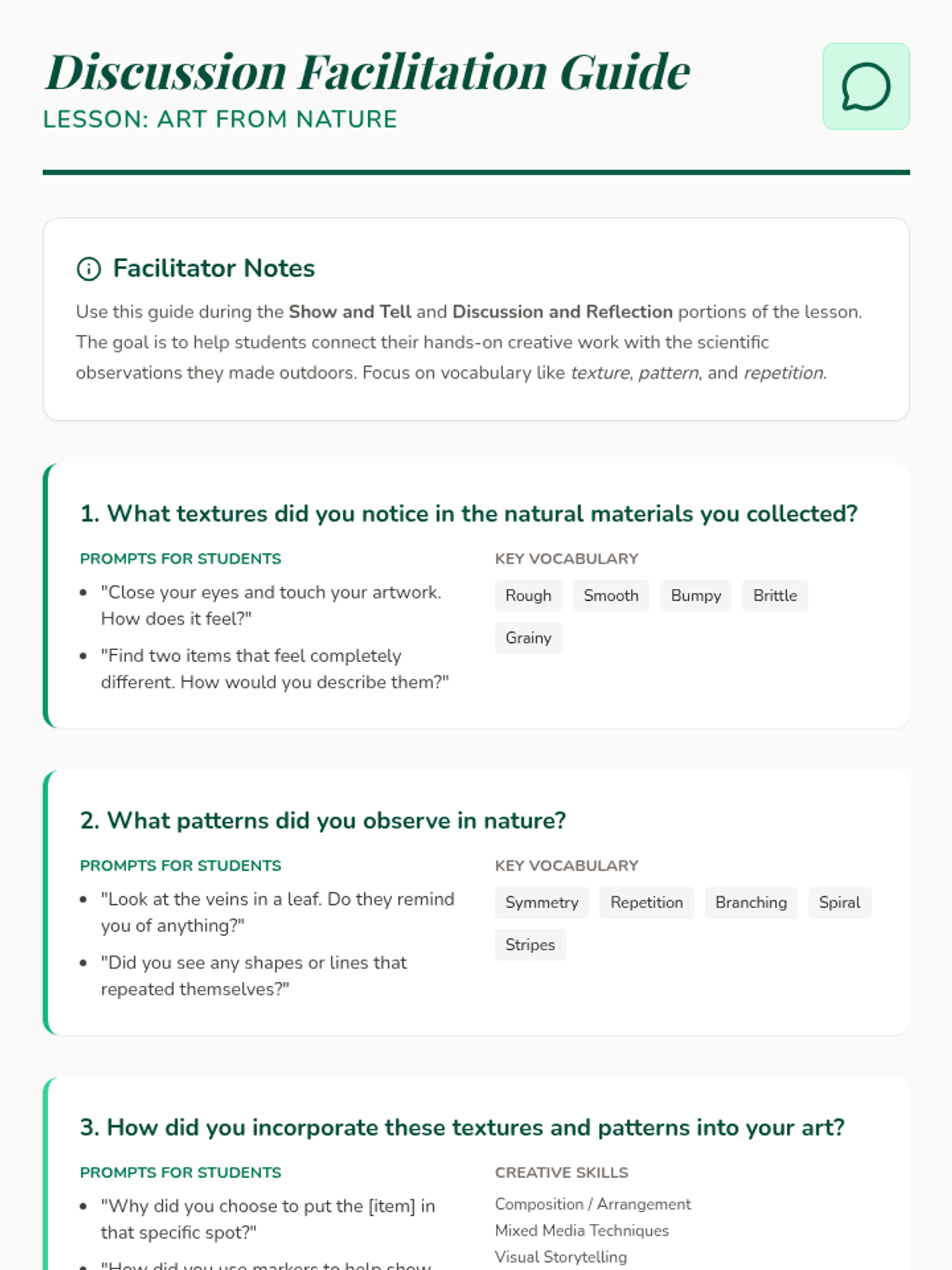
Students will use natural materials to create unique art pieces, learning about textures and patterns found in nature. This lesson helps students appreciate the beauty of nature and develop their creativity and observational skills.
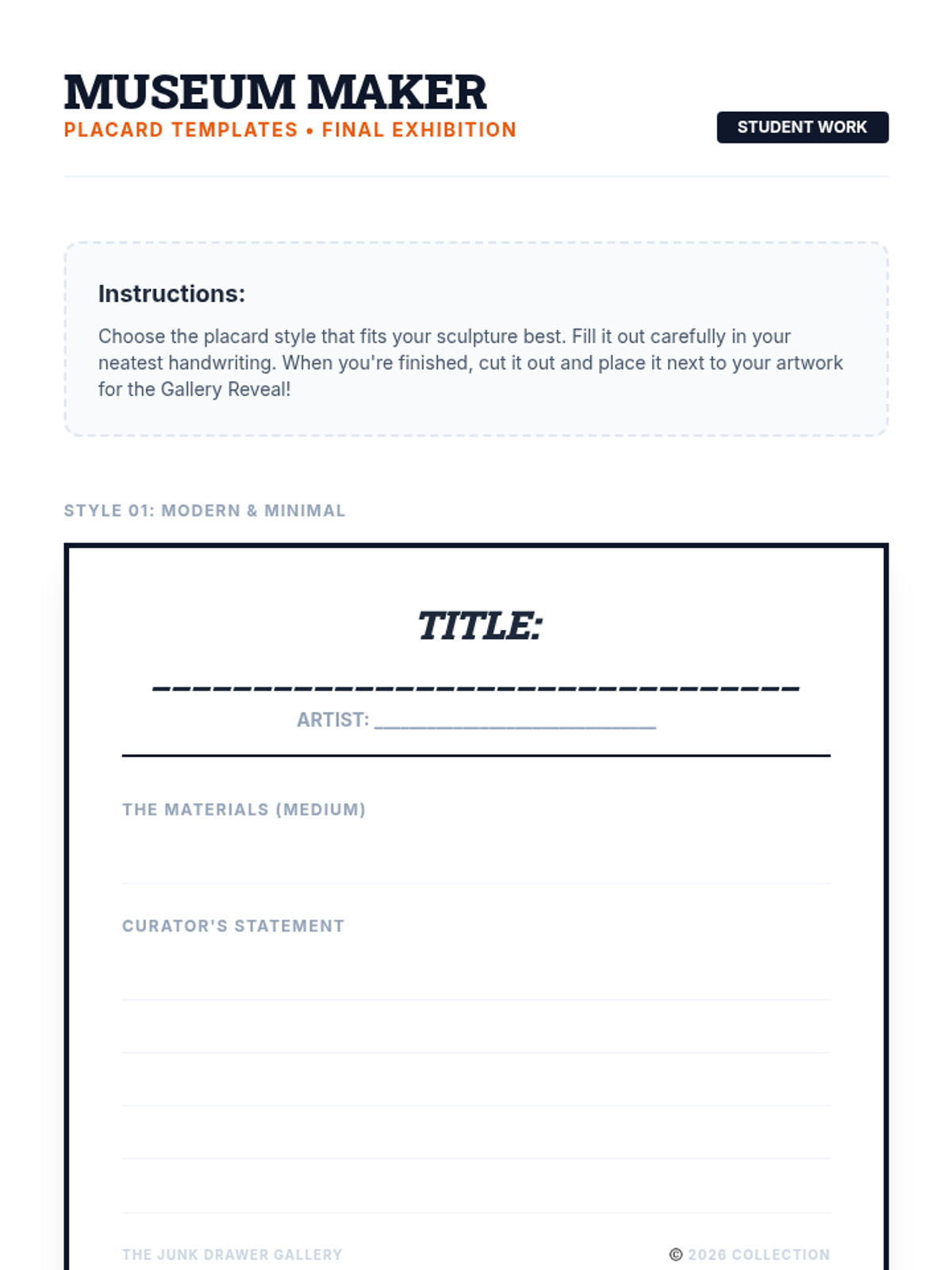
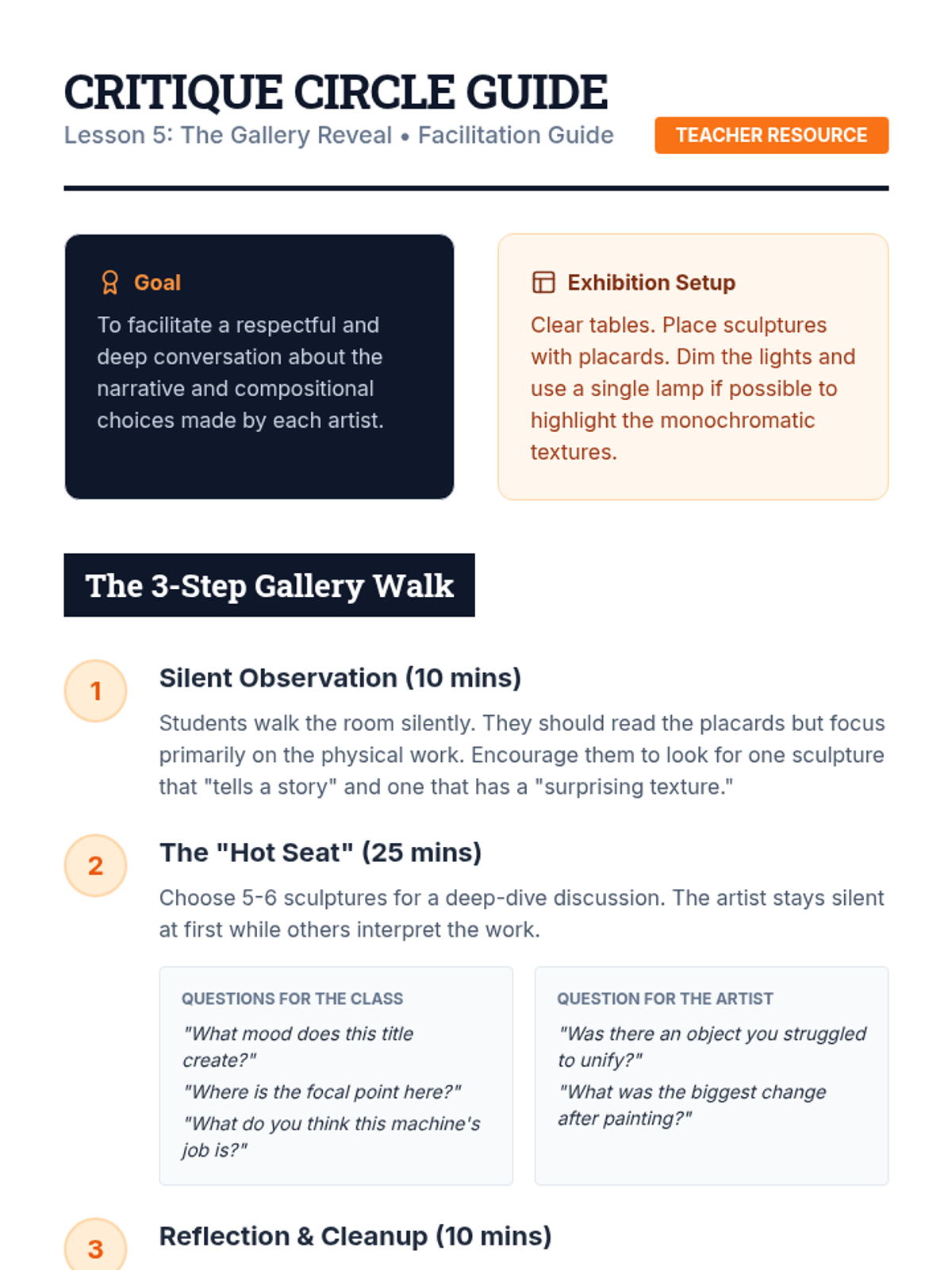
Students write a museum placard for their work and participate in a class critique to interpret the hidden stories in each other's work.
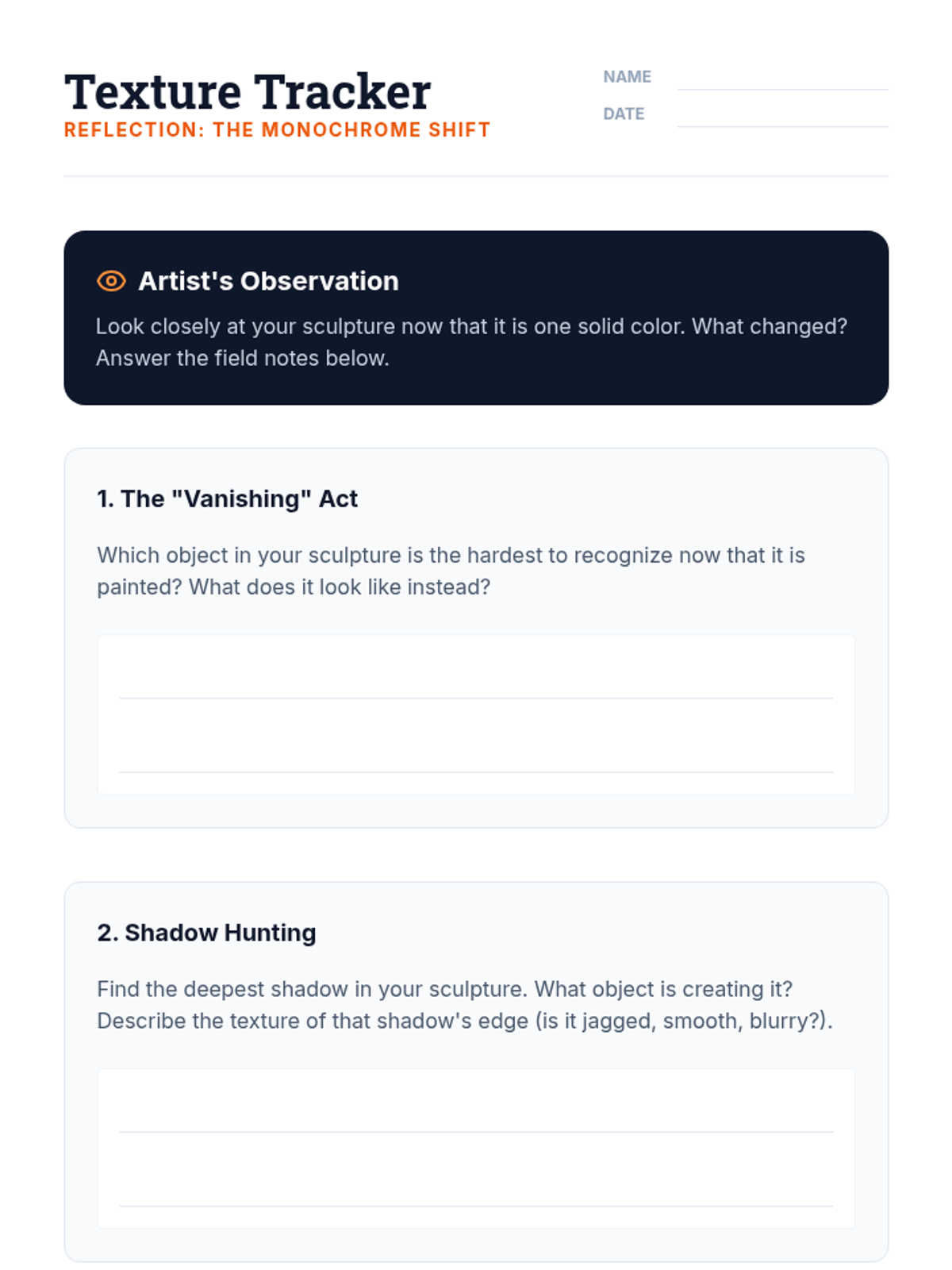
Students learn the concept of unity by applying a single color to their multi-colored assemblage. This transforms the collection of trash into a cohesive sculptural relief.
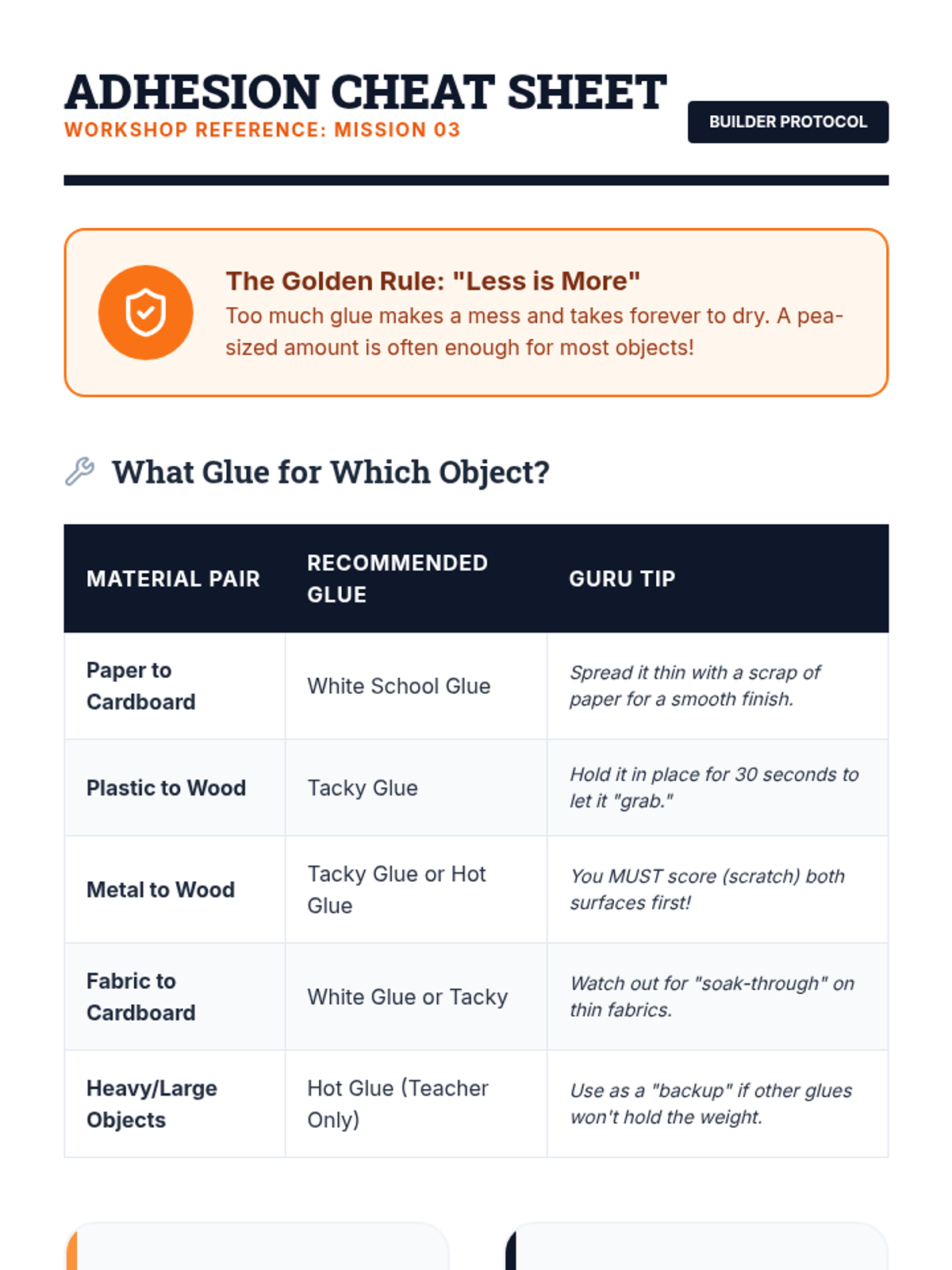
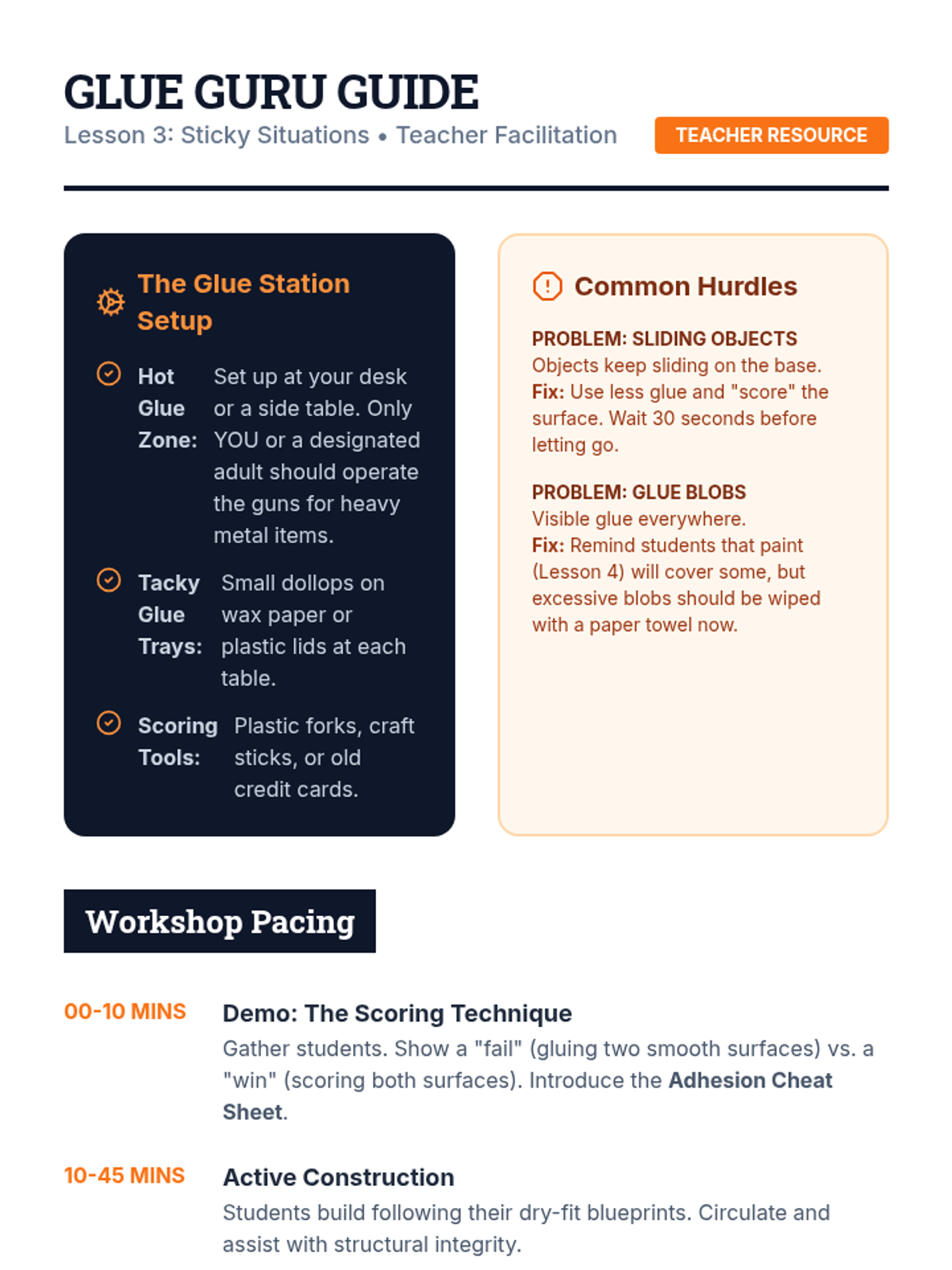
A focused workshop on how to glue different materials together effectively. Students construct their assemblage, considering layers and depth to create a relief map of objects.
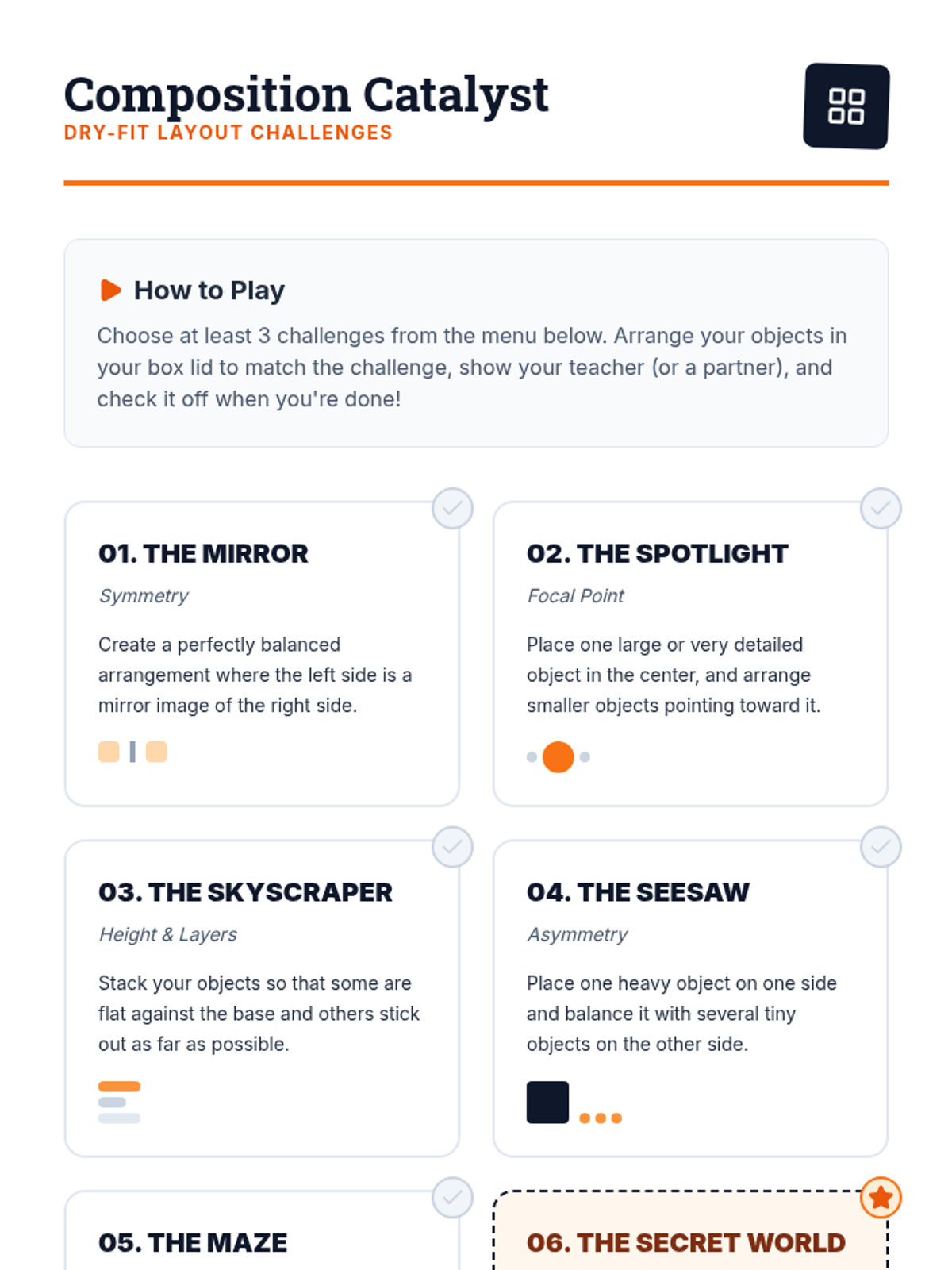
Students sort their collected materials by size, shape, and texture. They begin laying out potential compositions in a box lid or on a board, experimenting with symmetry, asymmetry, and focal points without gluing anything yet.
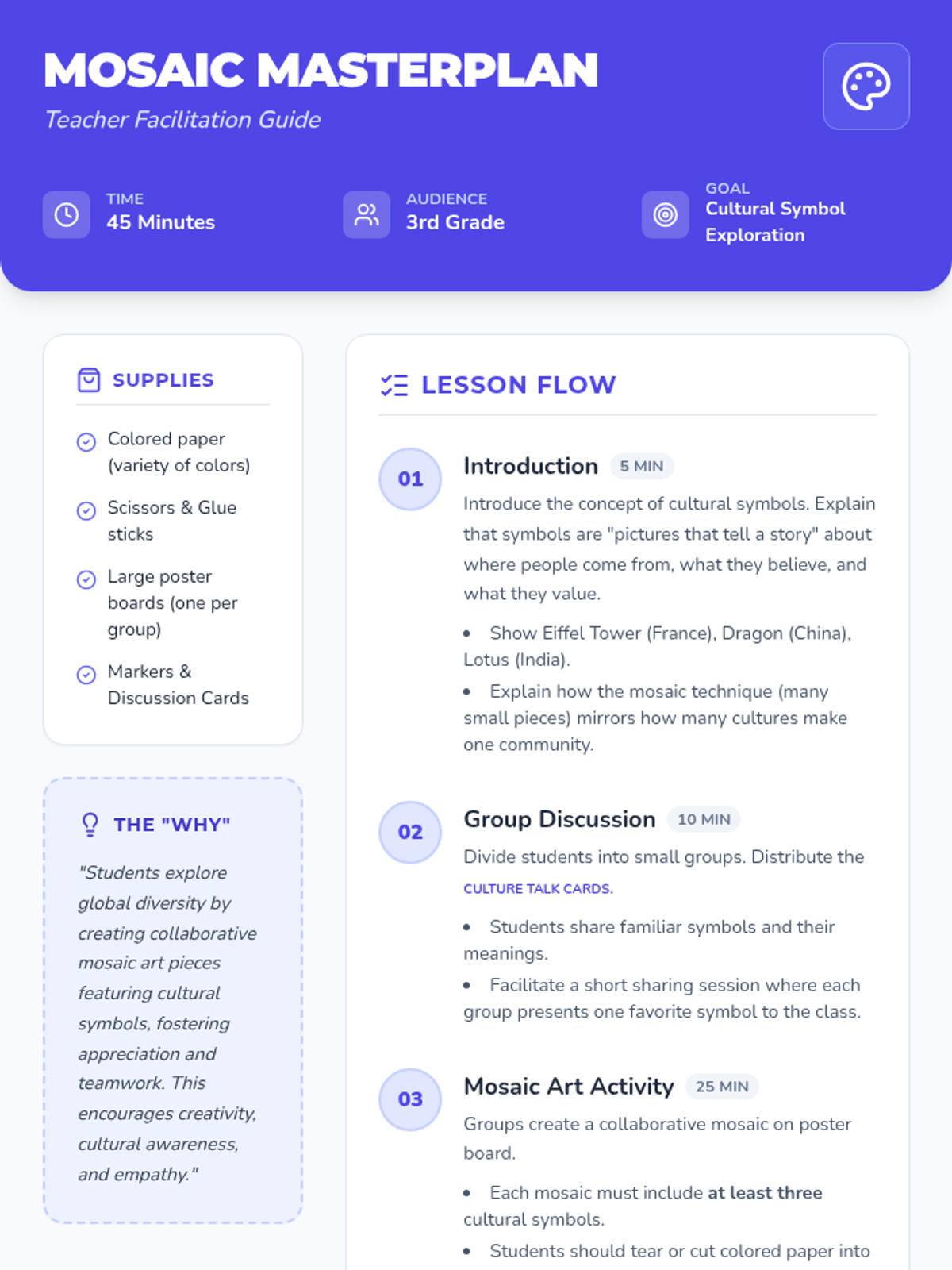
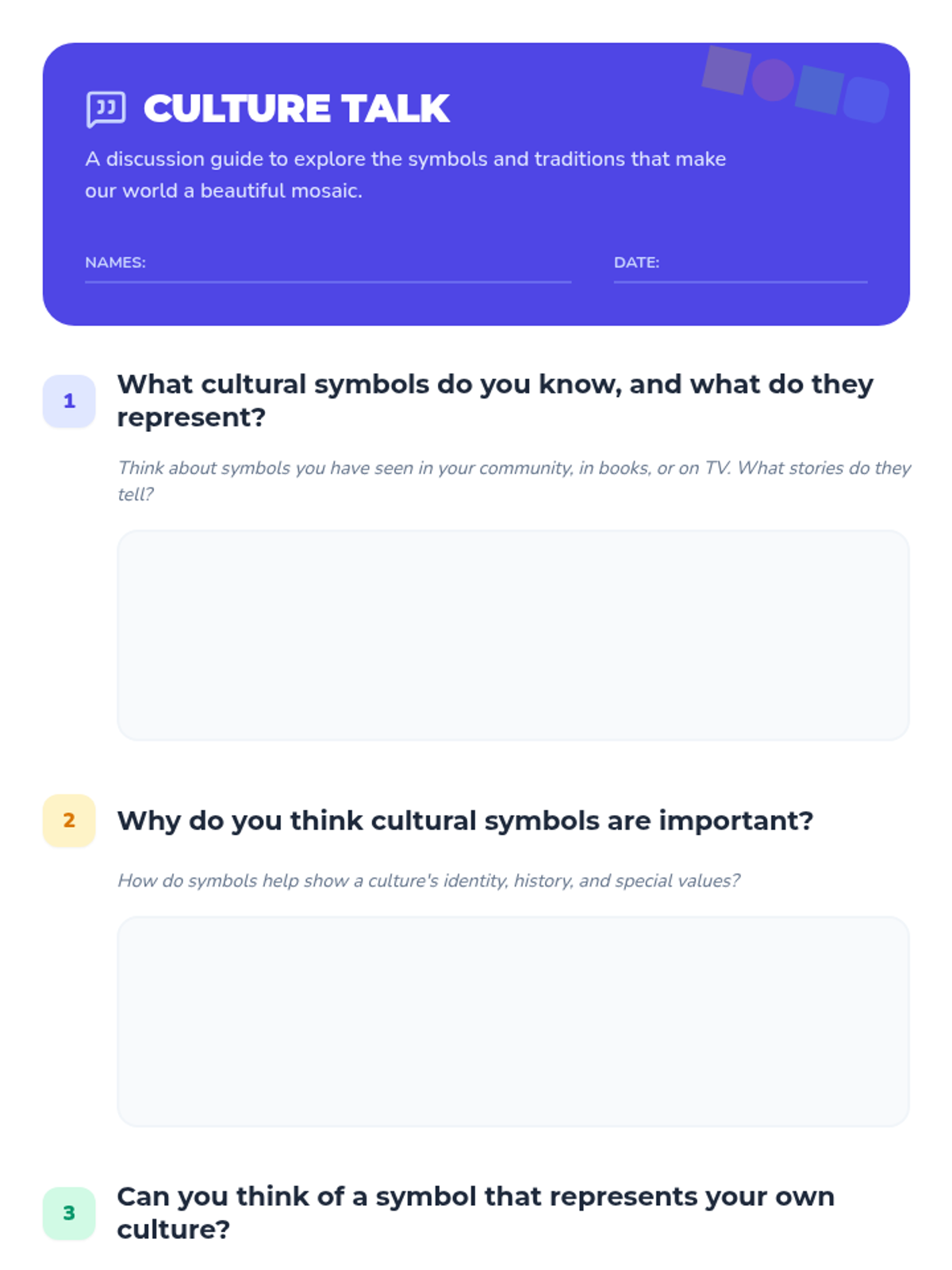
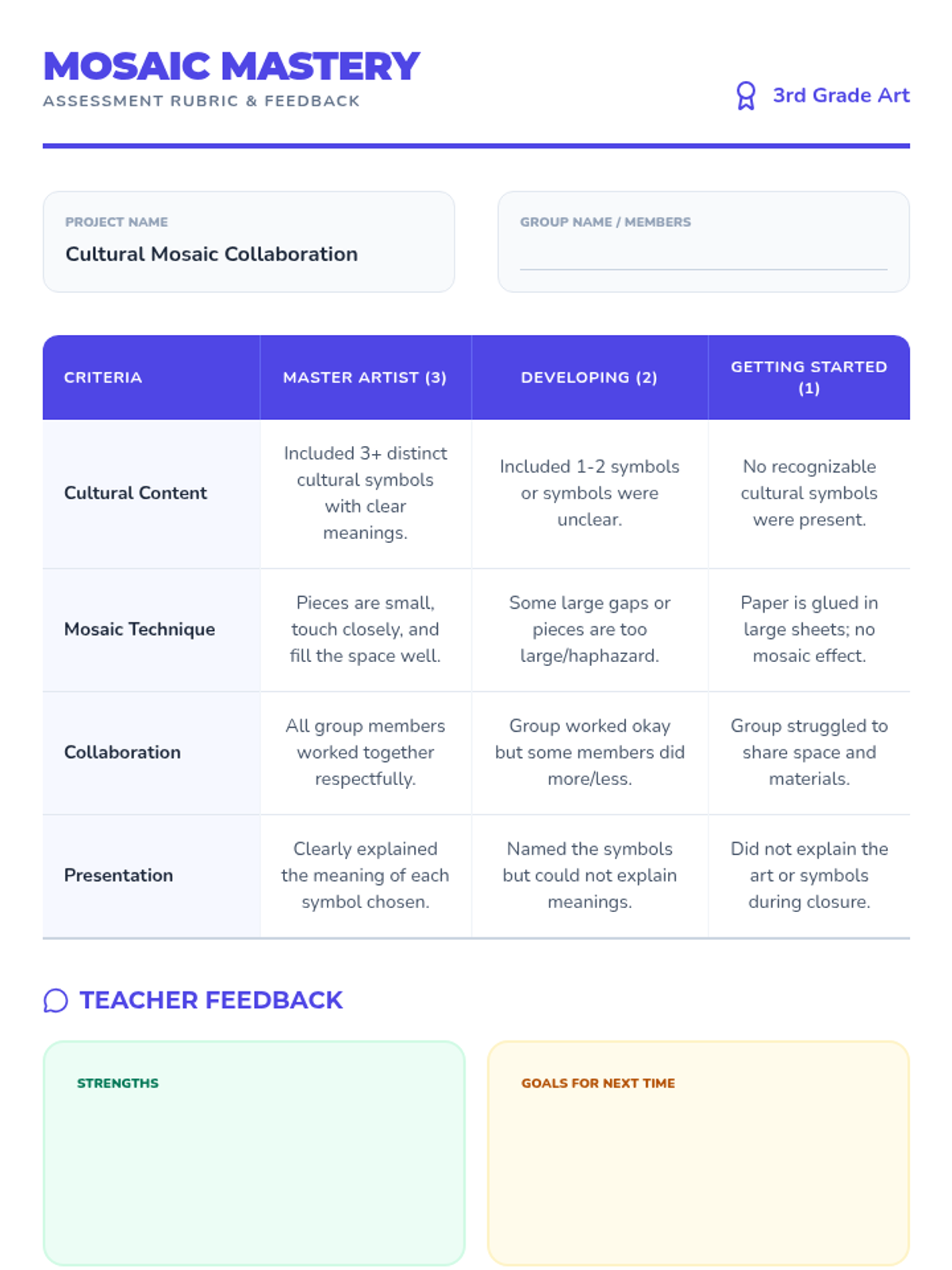
Students explore global diversity by creating collaborative mosaic art pieces featuring cultural symbols, fostering appreciation and teamwork.
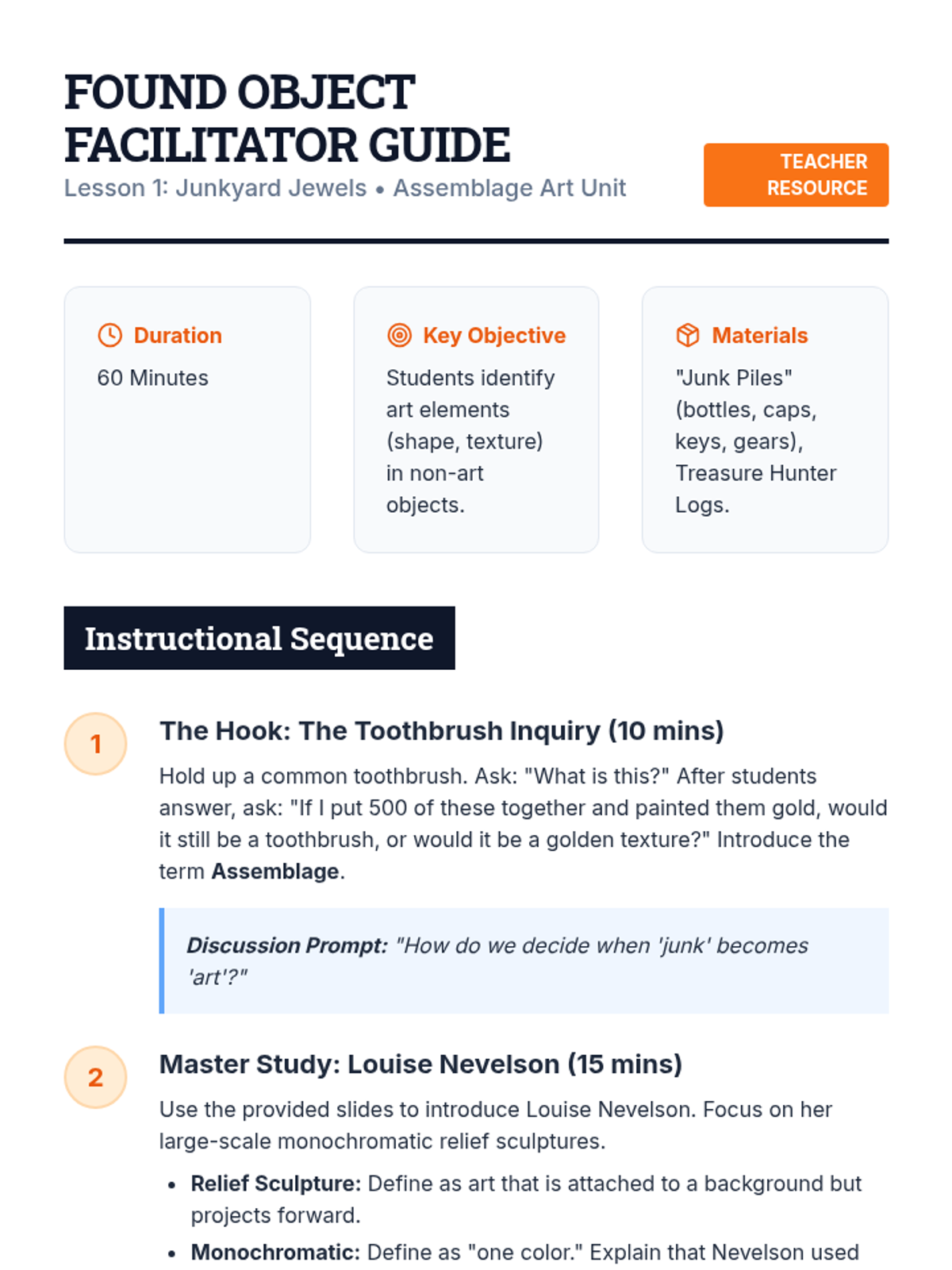
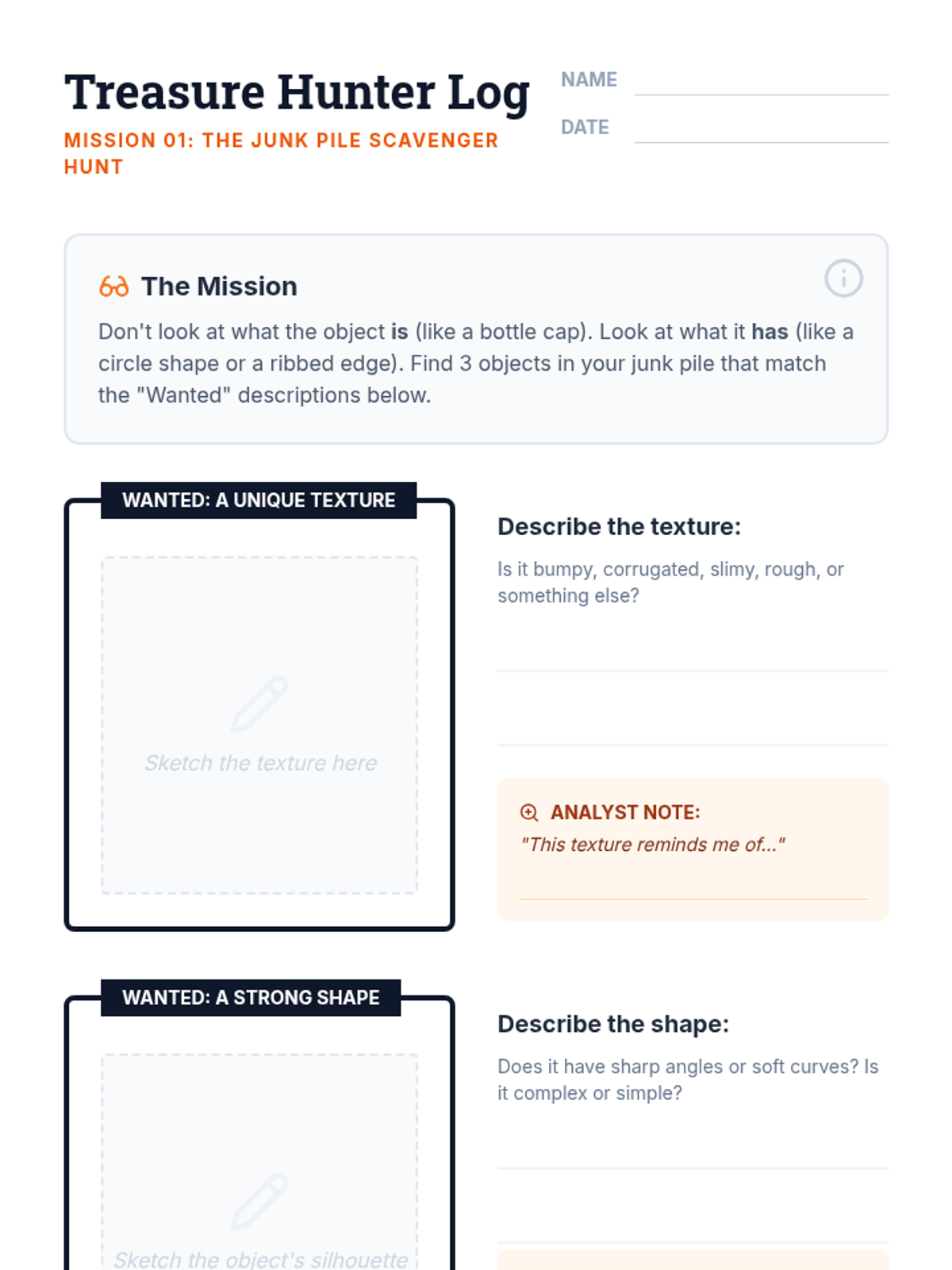
Students examine the work of assemblage artists to identify how everyday objects are used as art materials. They participate in a 'scavenger hunt' analysis to find shapes and textures within a pile of random items.