Historical evolution of performance, technical stagecraft, and core acting techniques. Develops playwriting skills and fosters imaginative expression through script development and production management.
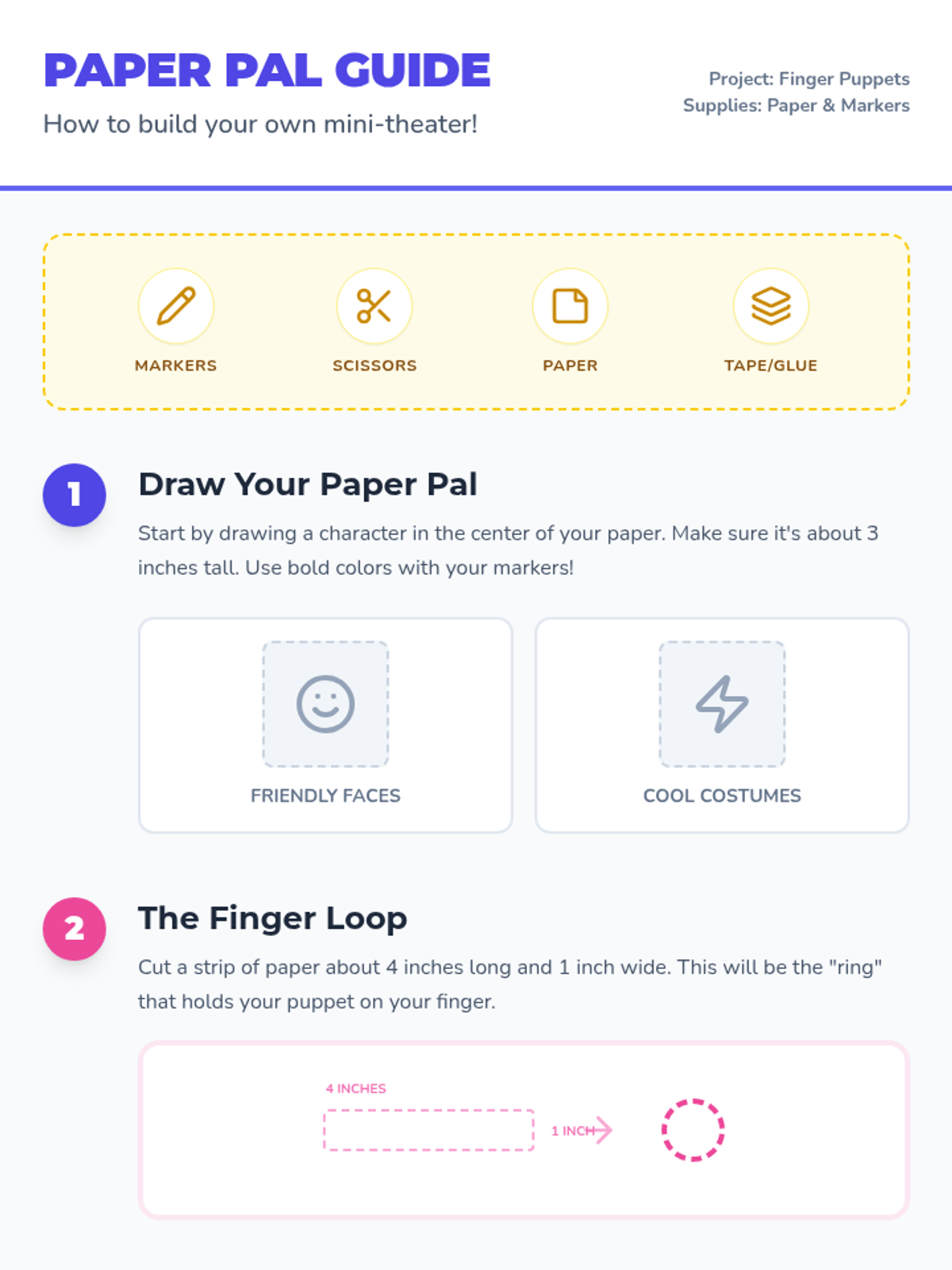
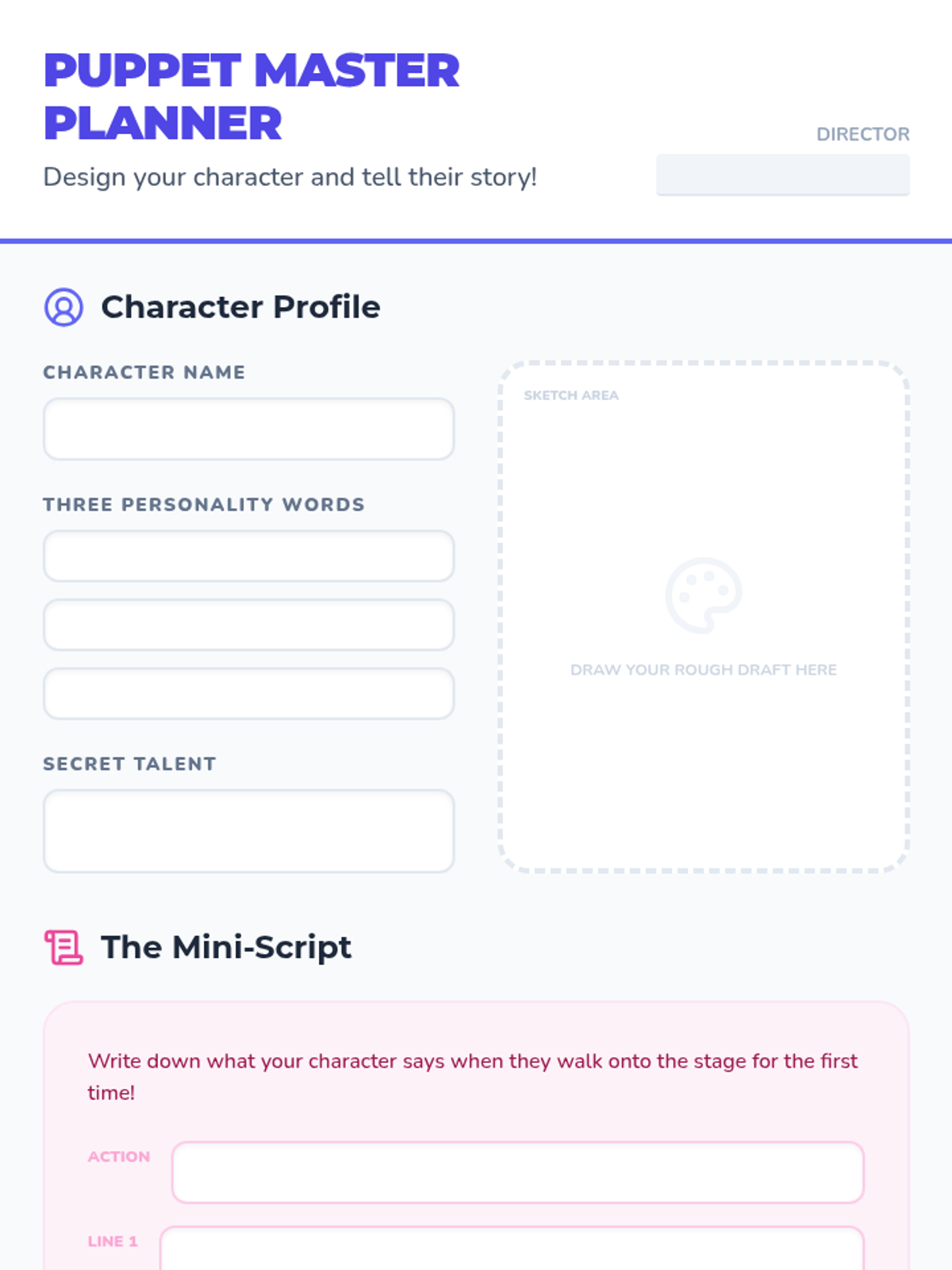
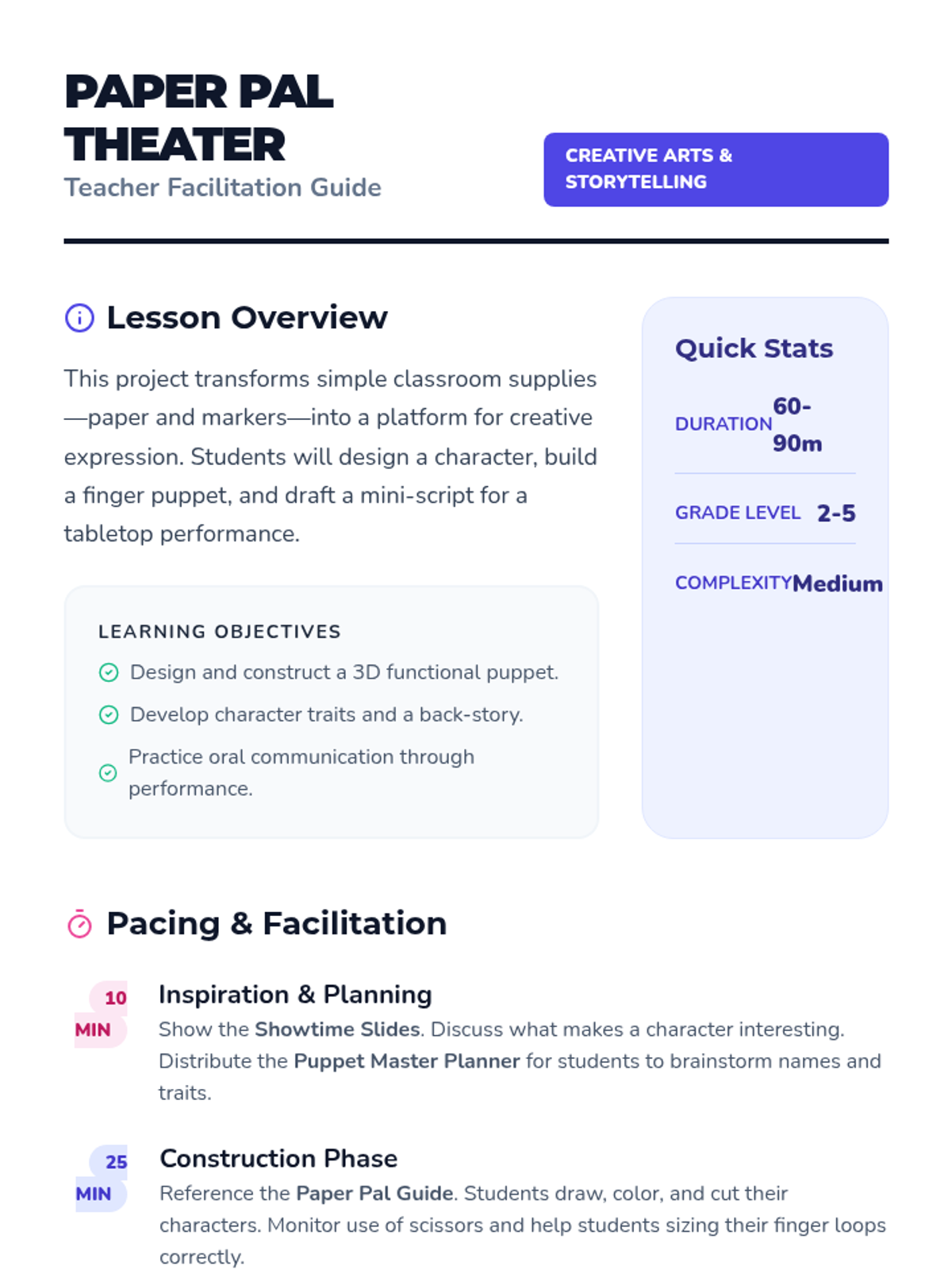
Students design and build their own paper finger puppets and a tabletop stage using markers and paper. This project combines visual arts with storytelling and performance.
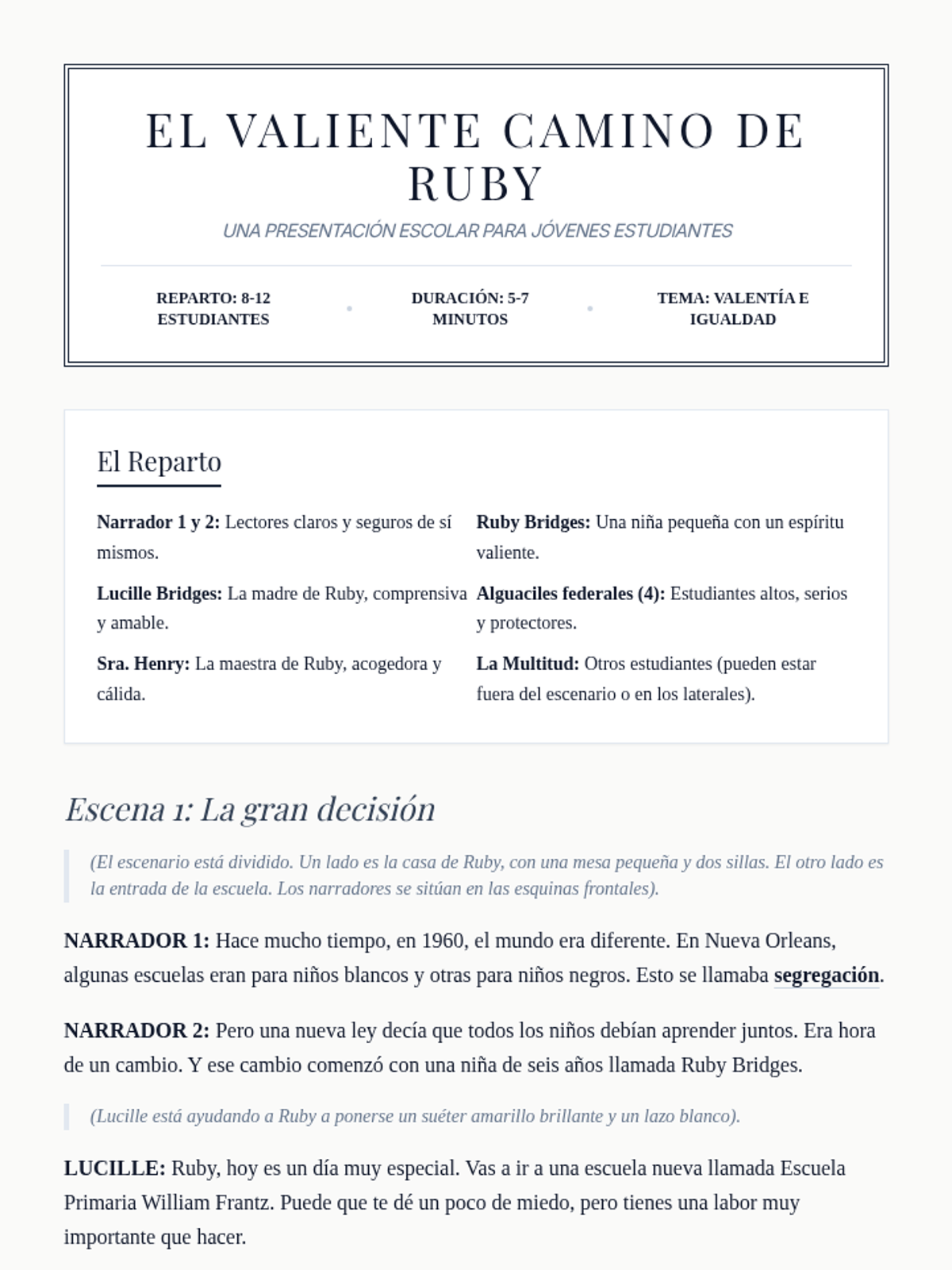
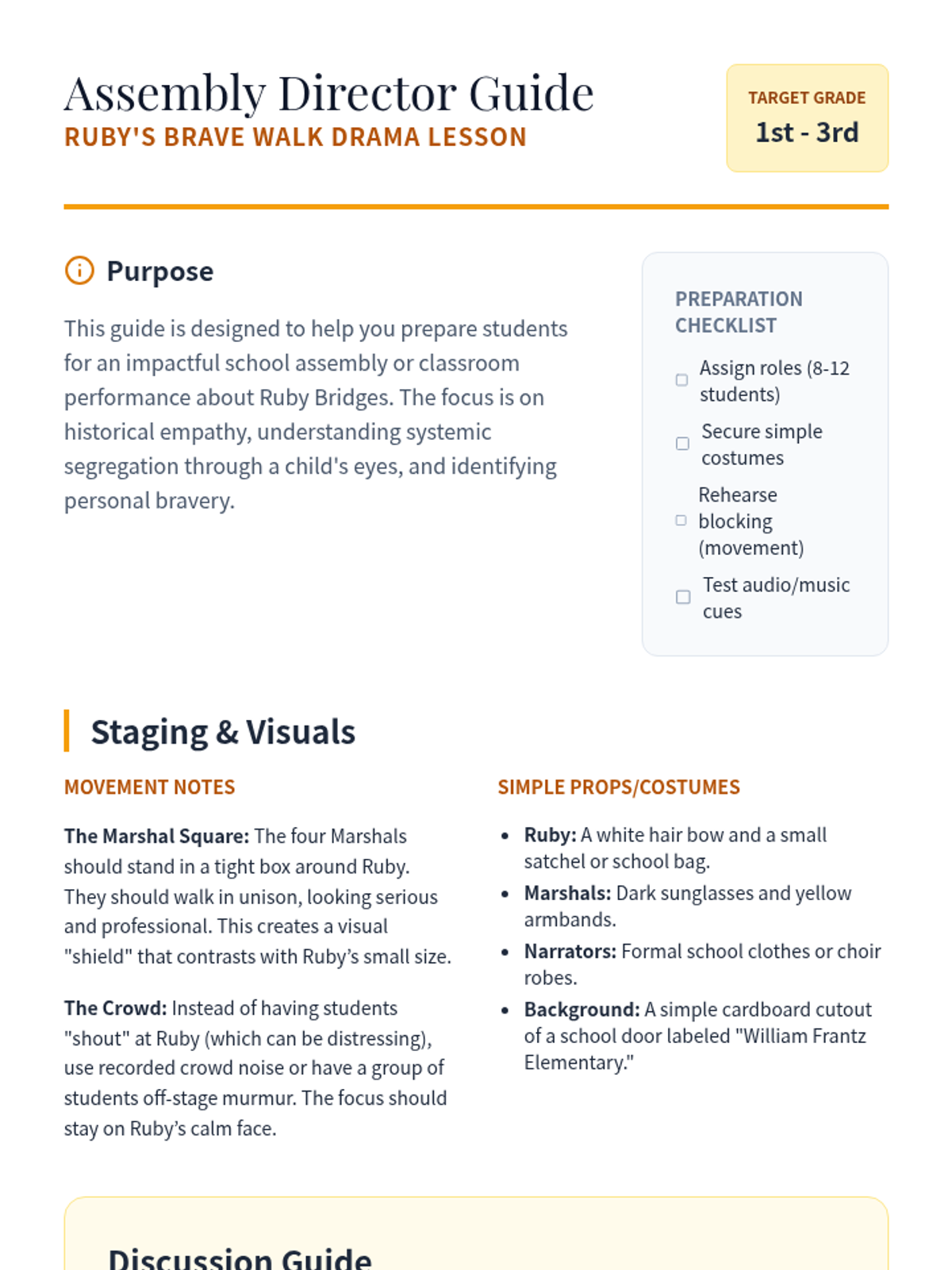
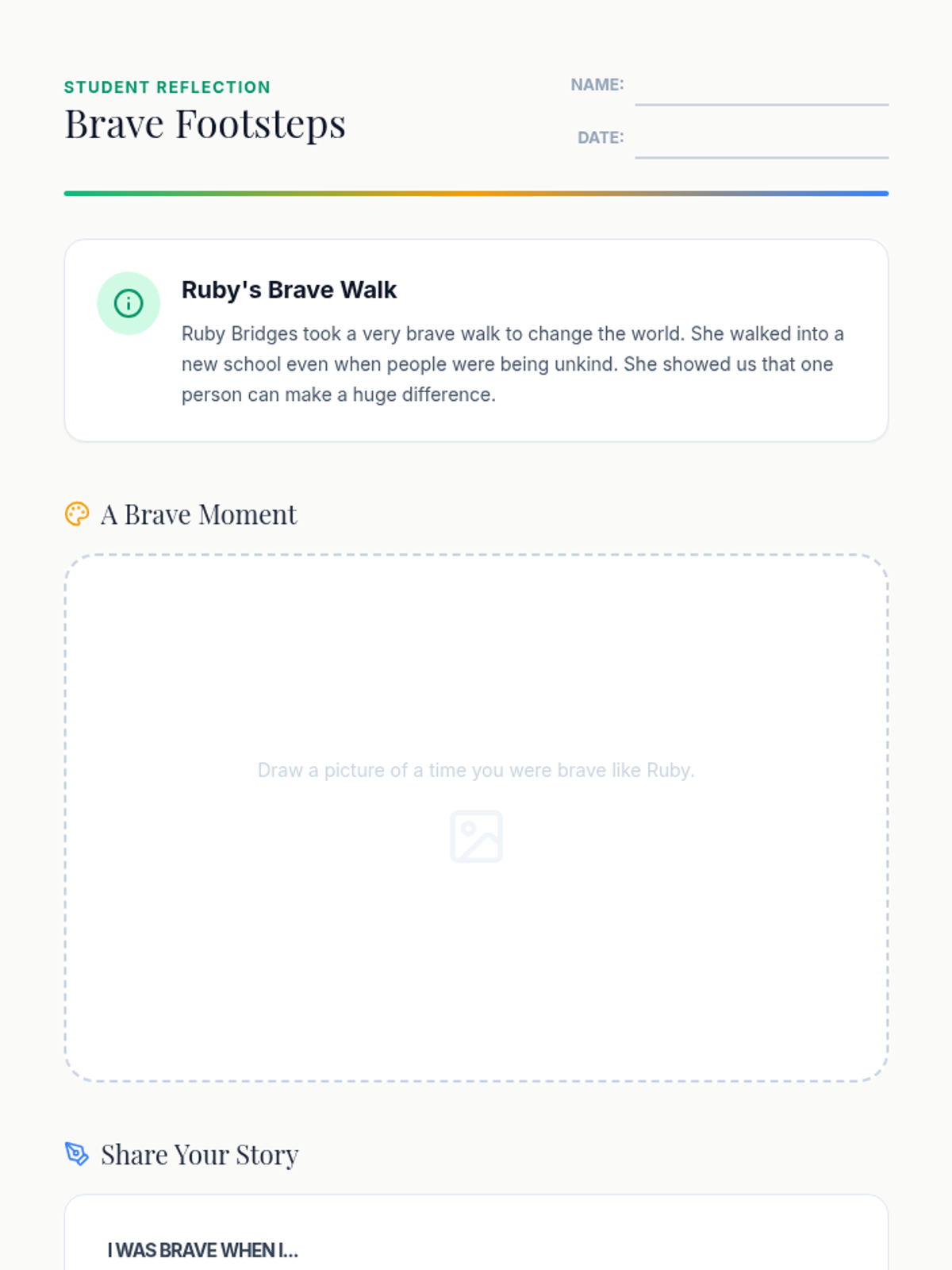
A short, impactful drama lesson centered around a school assembly script about Ruby Bridges. Students explore themes of bravery and segregation through performance, visual storytelling, and personal reflection.
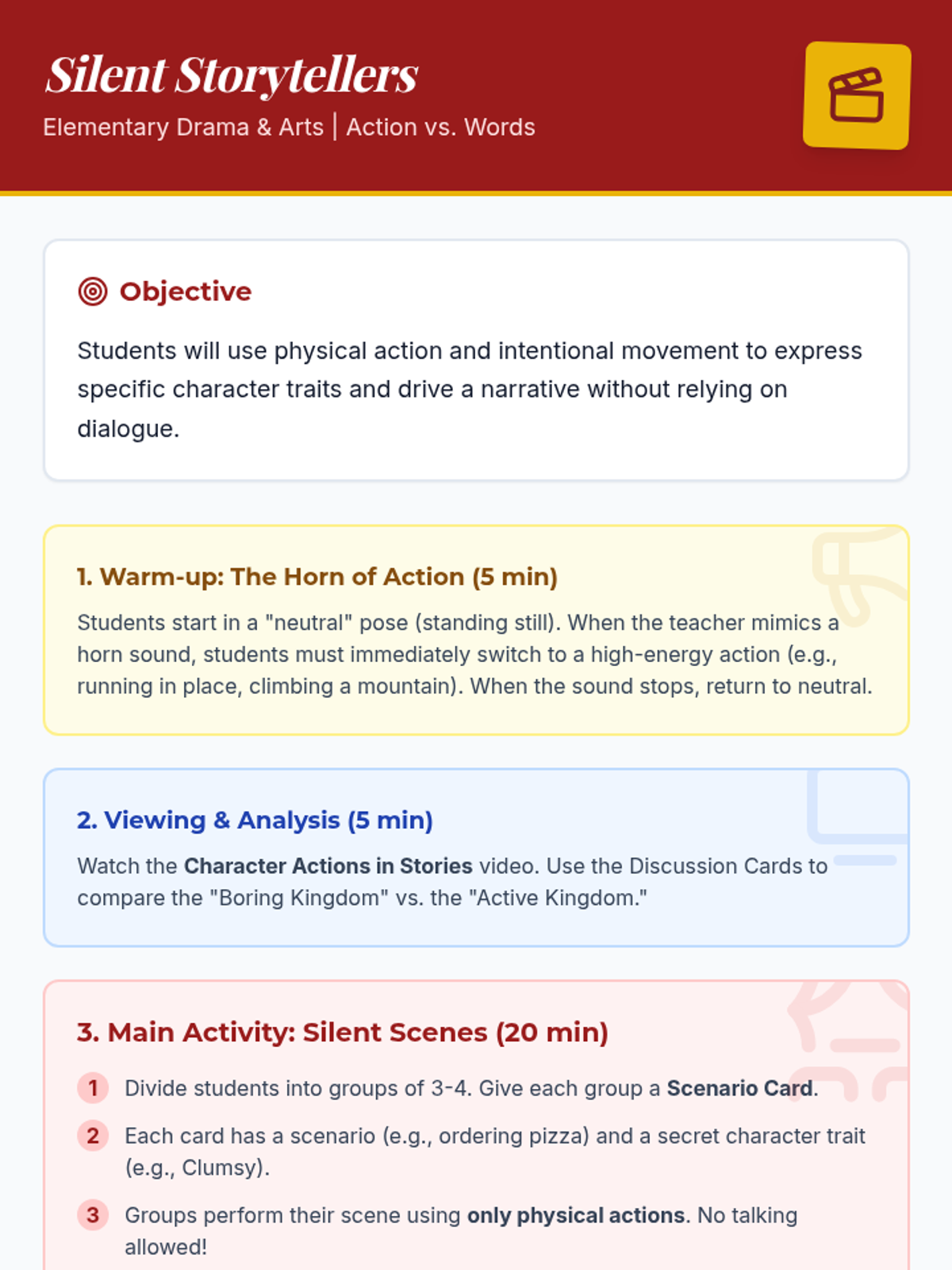
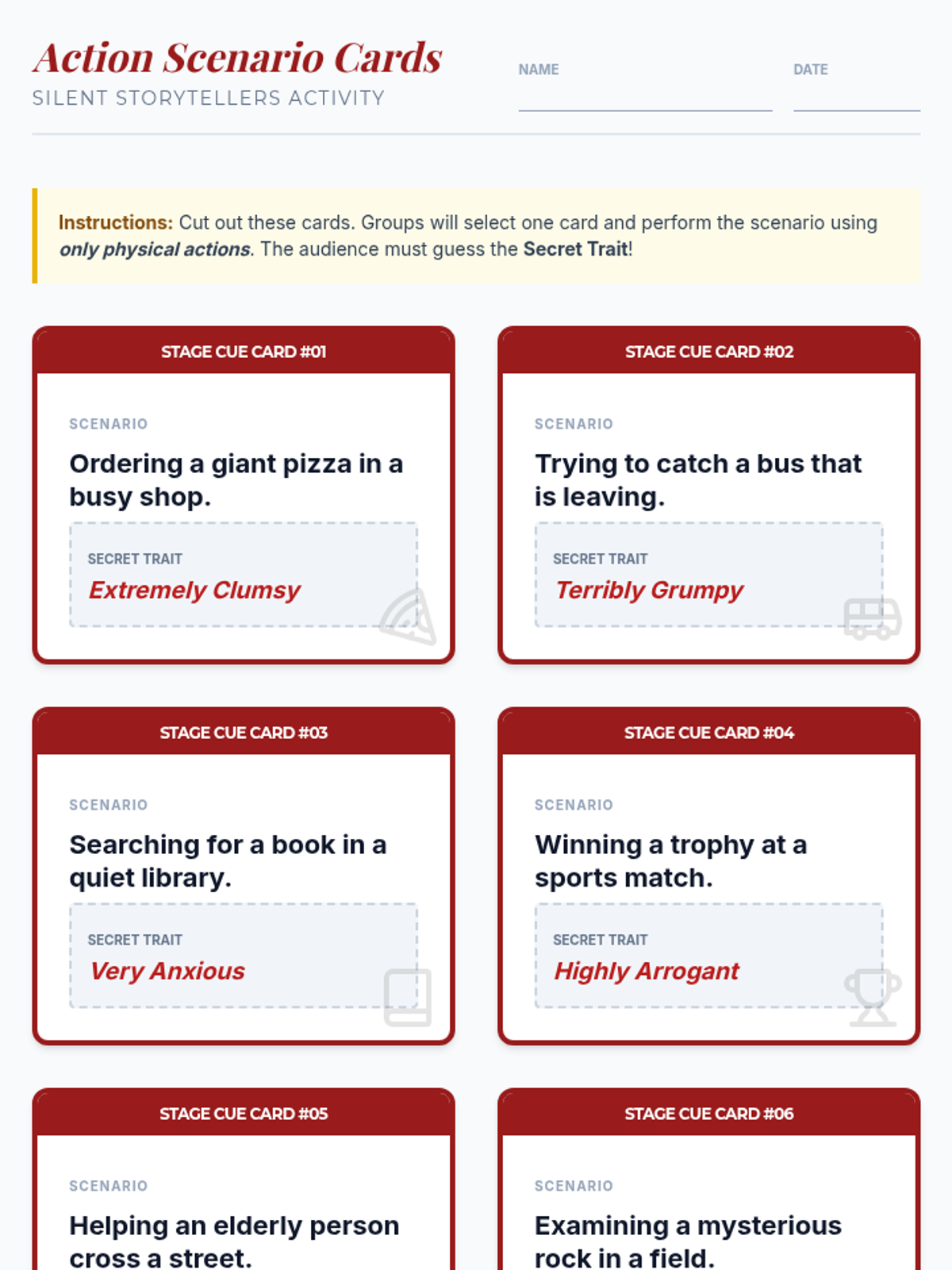
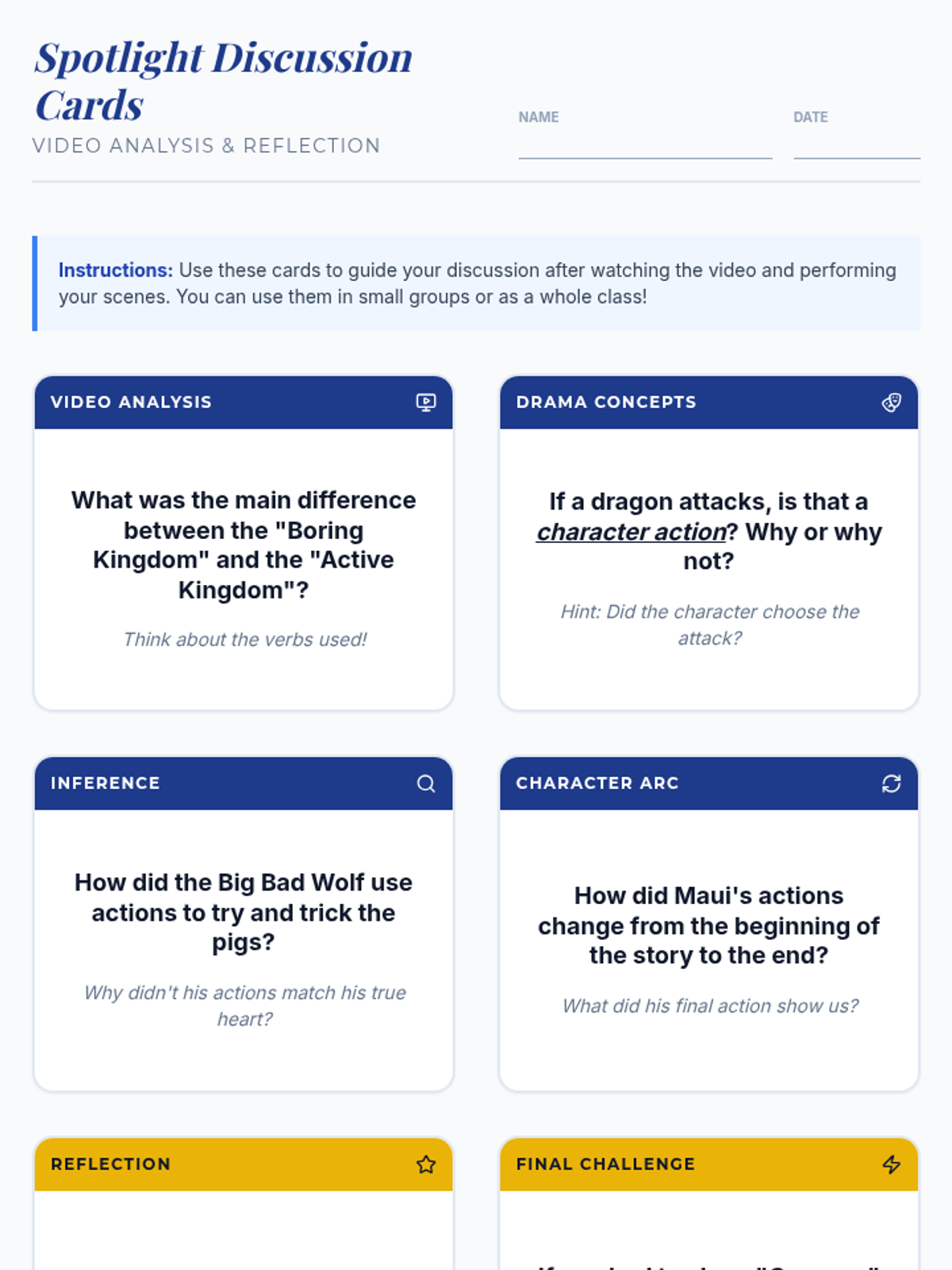
Students explore how physical action and decisions drive story and reveal character traits without using words, featuring a 'Silent Scenes' activity and a video analysis.
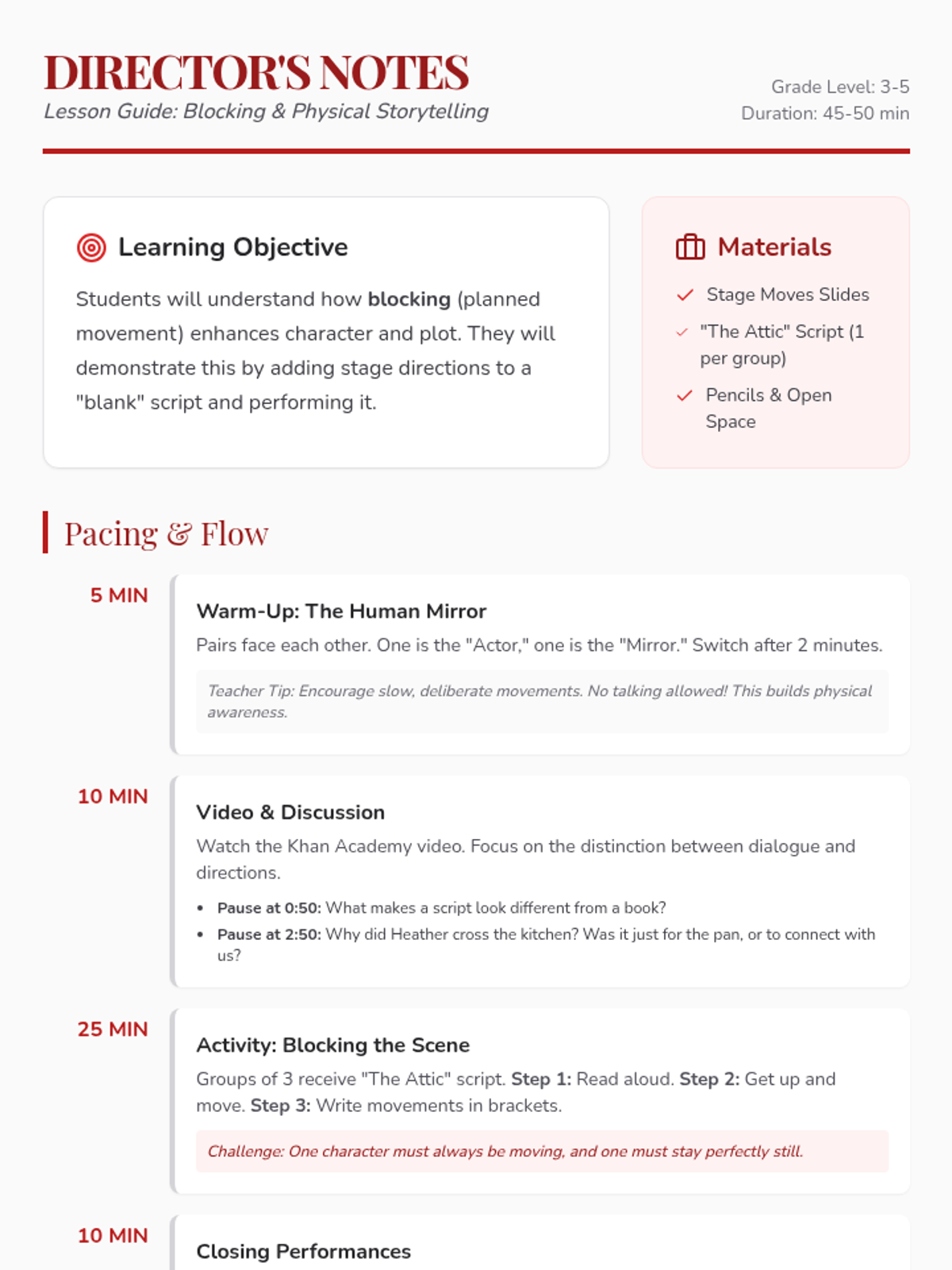
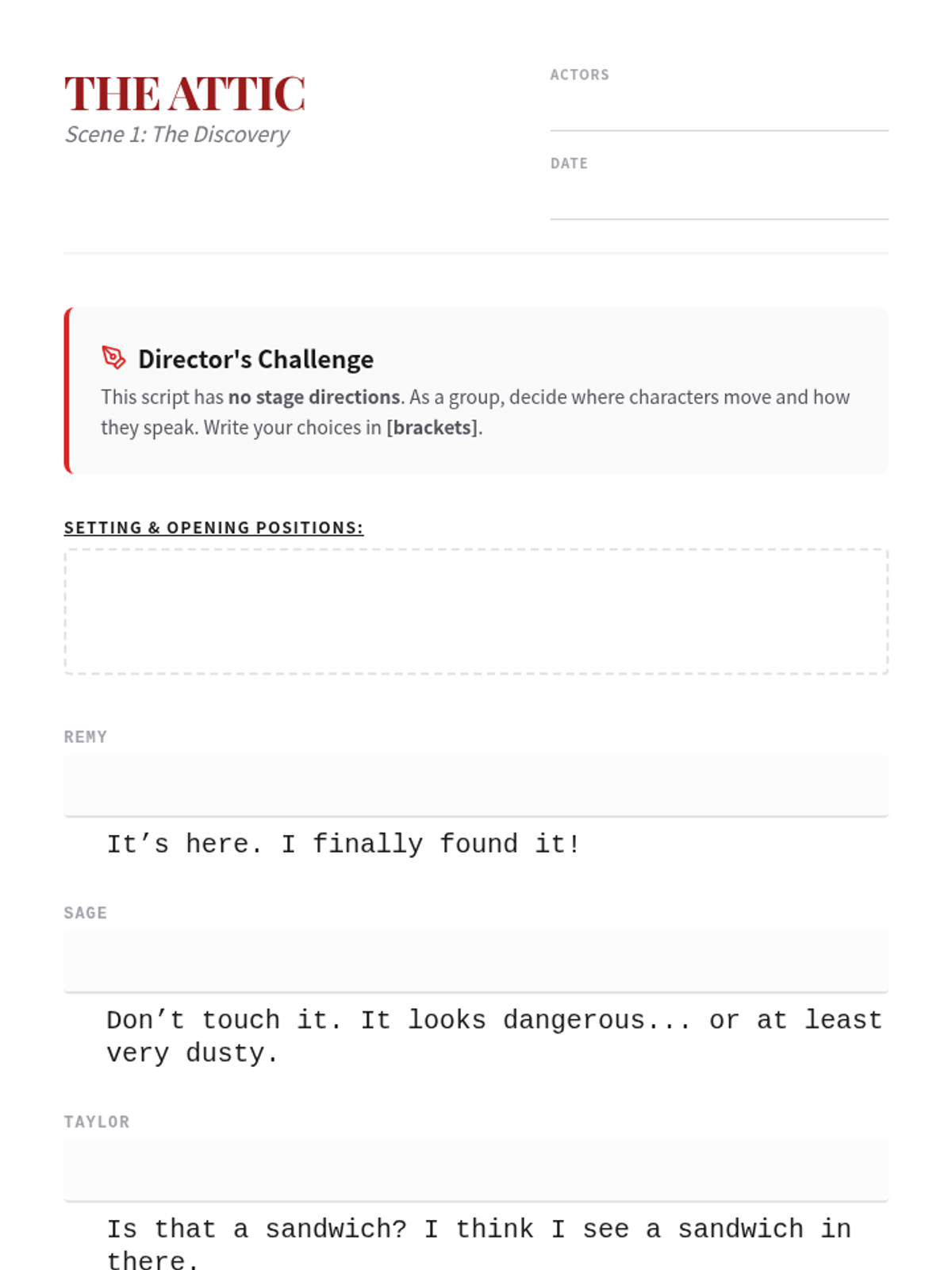
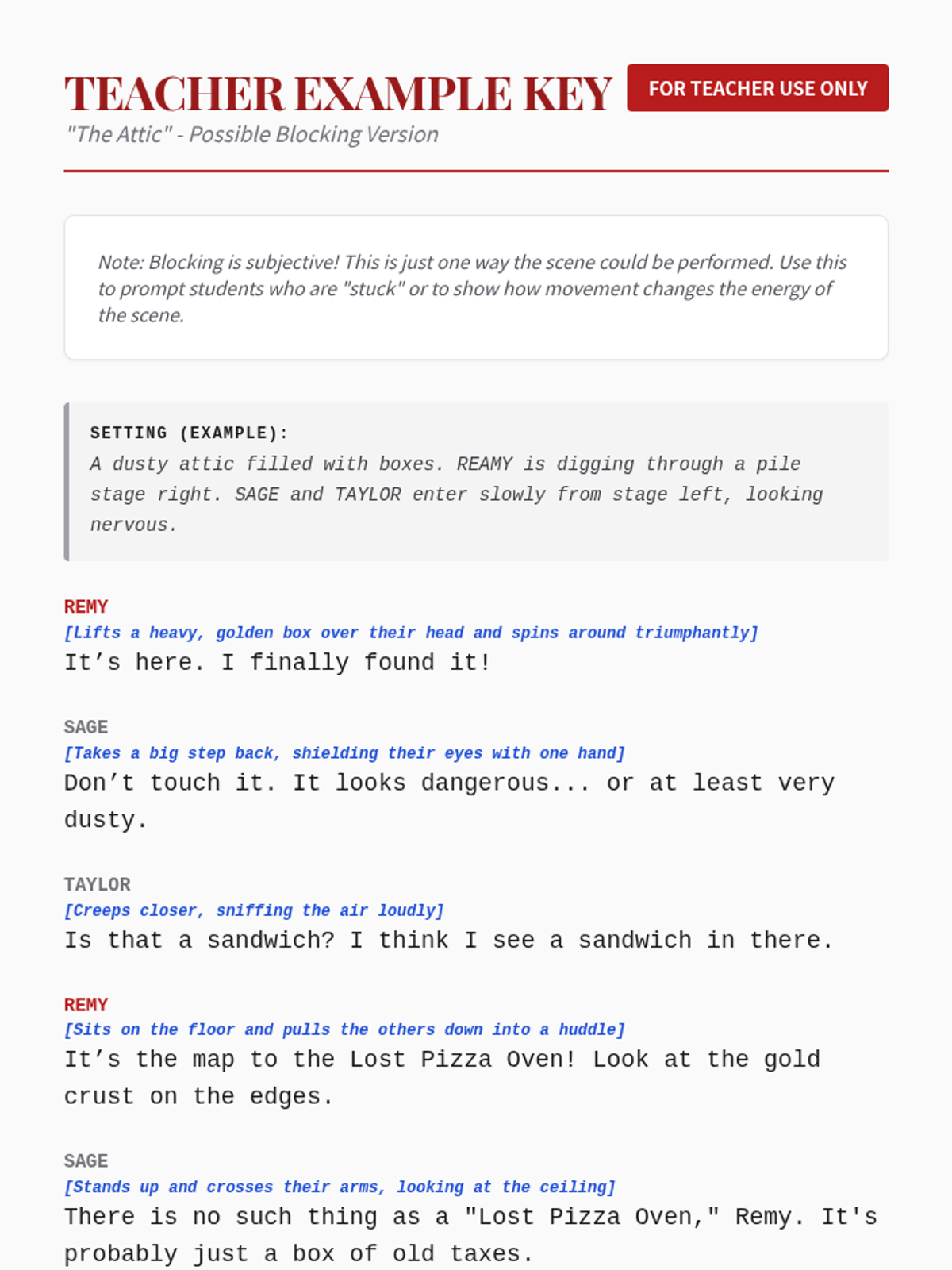
A drama lesson for upper elementary students focused on blocking and physical storytelling, featuring a Khan Academy video and a collaborative script-writing activity.
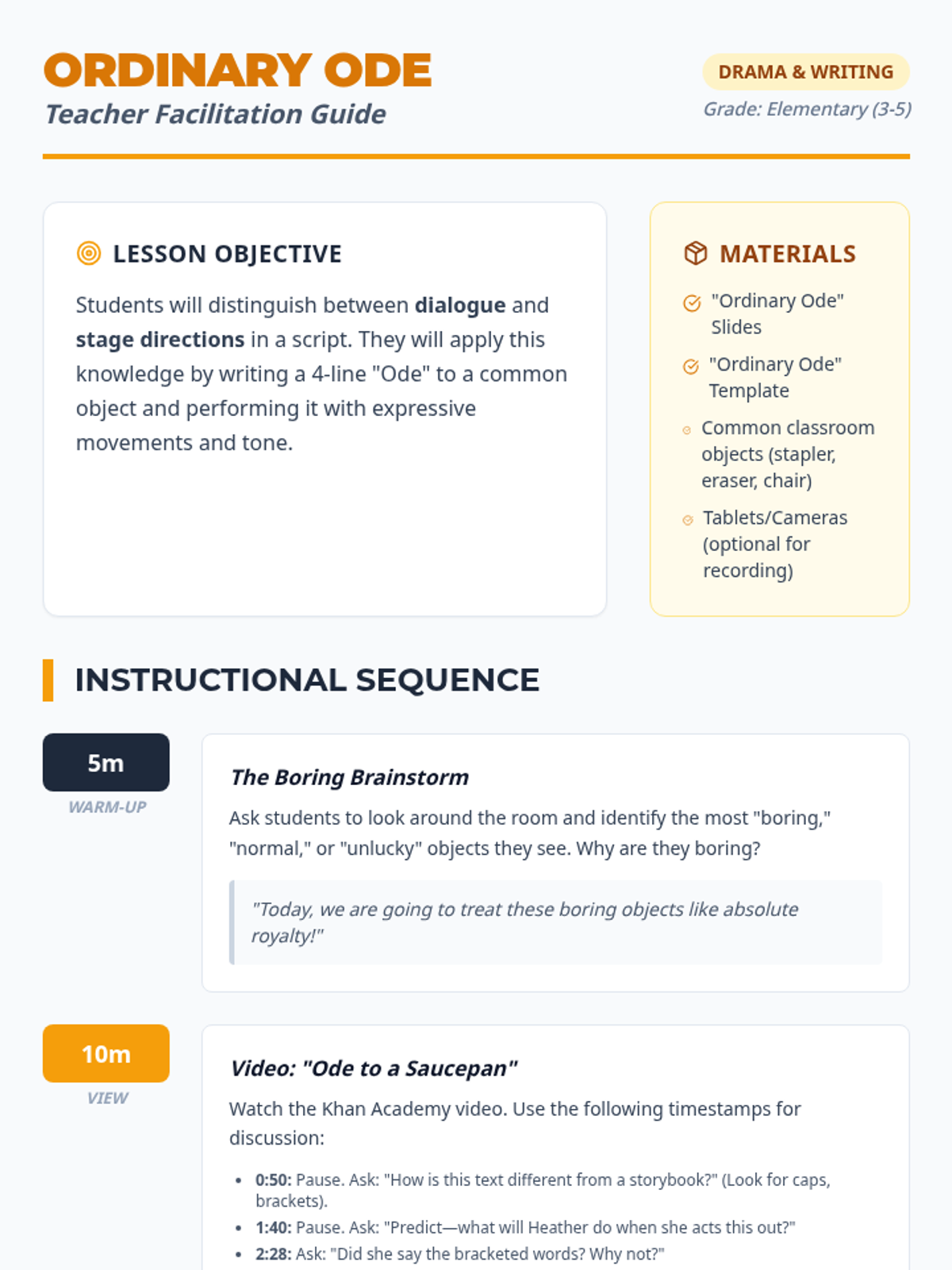
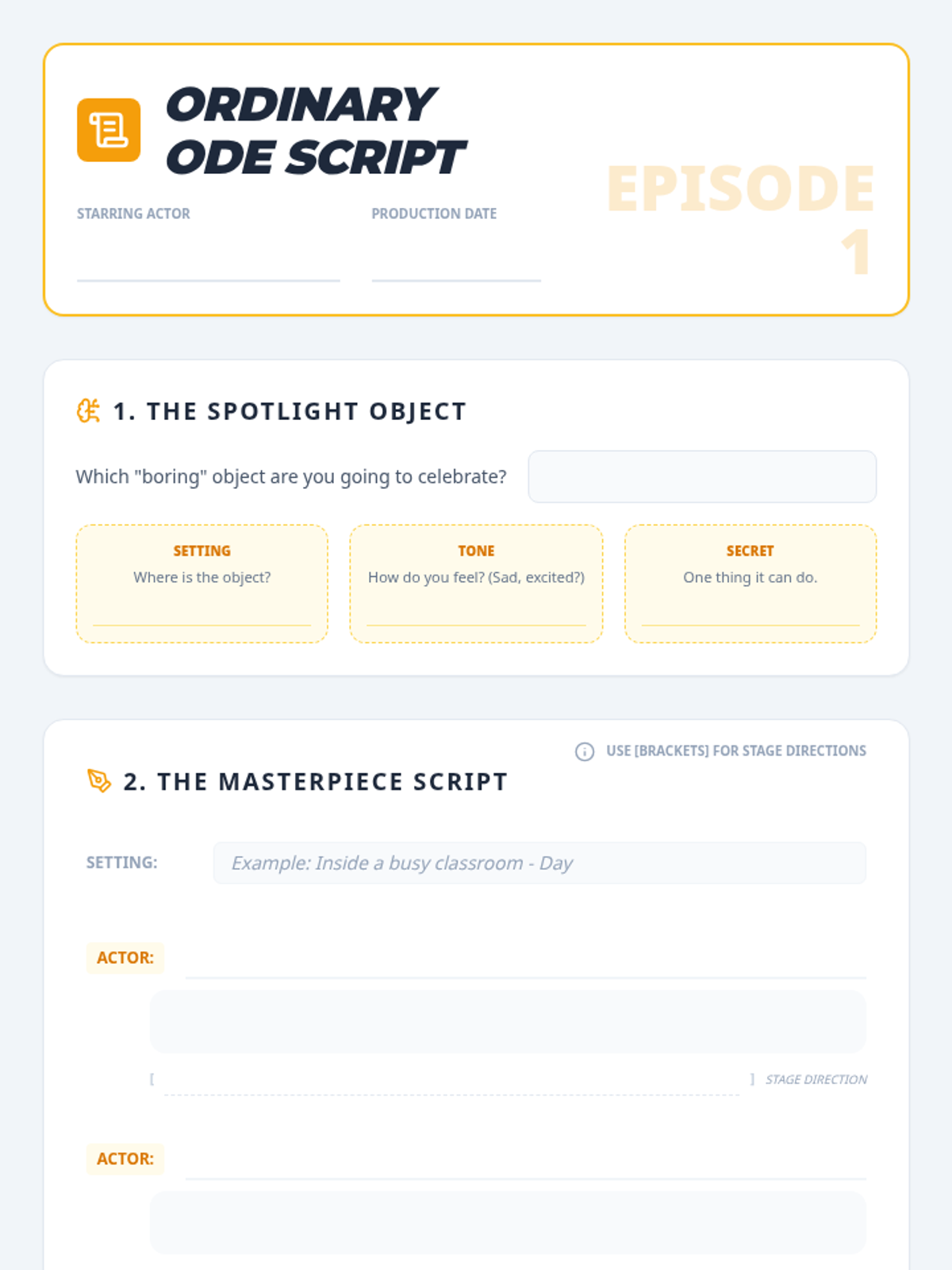
Students will learn to distinguish between dialogue and stage directions by watching a humorous 'Ode to a Saucepan' and then writing and performing their own multimedia 'Ode' to a common classroom object.
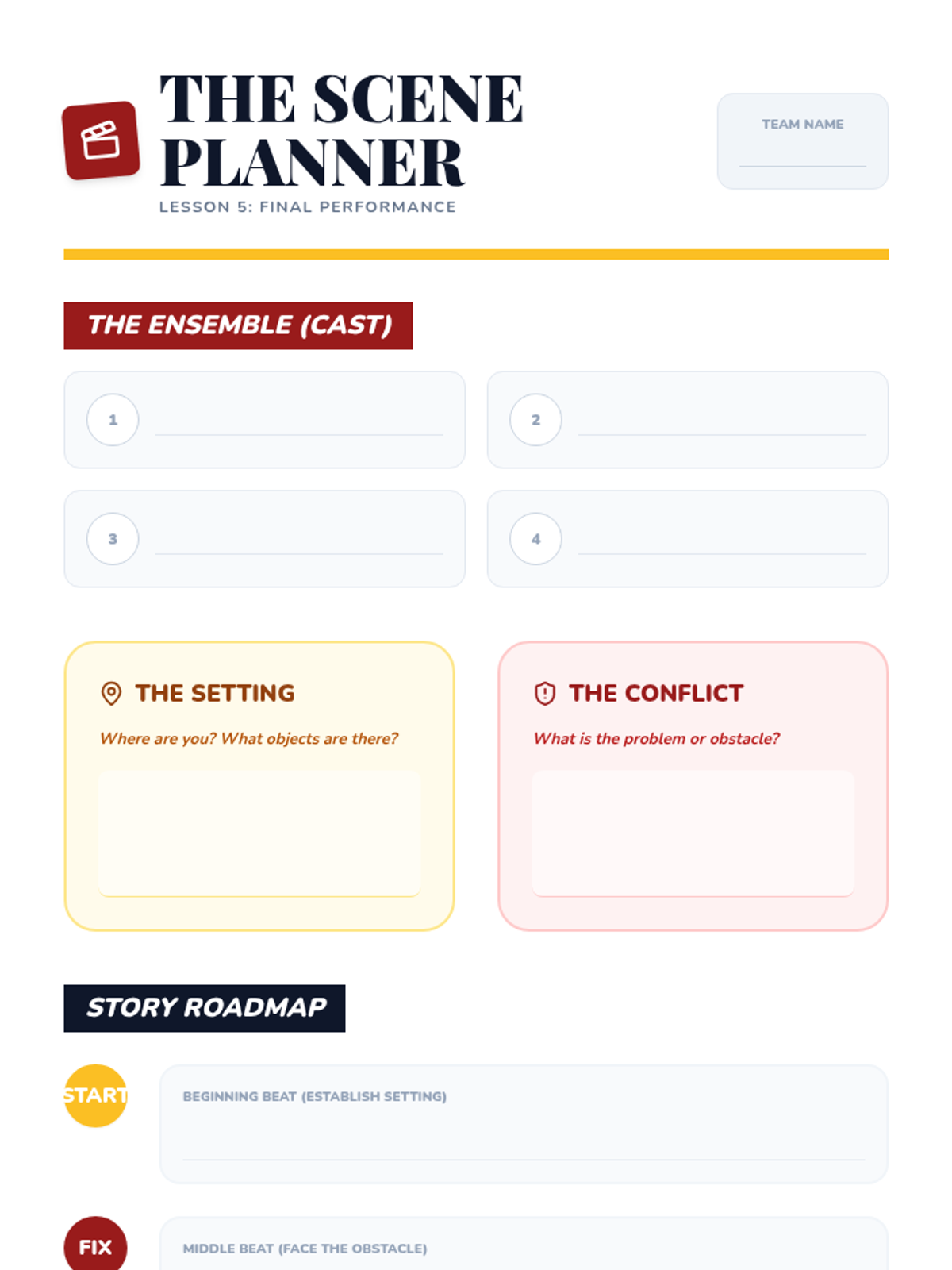
Small groups synthesize their skills to perform short, improvised scenes with clear narrative structures.
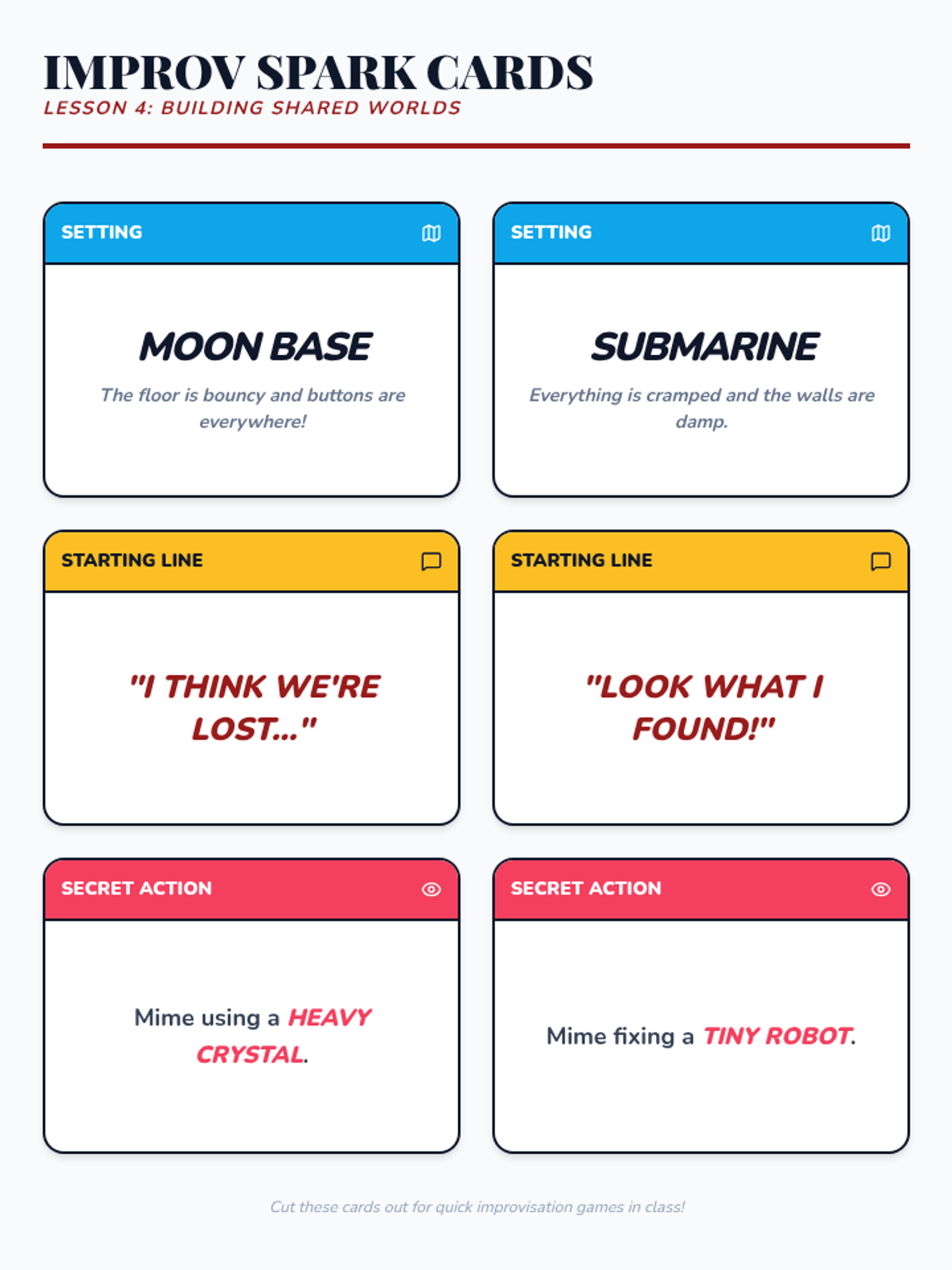
Students practice building shared invisible worlds through mime and the 'Yes, And' rule of improvisation.
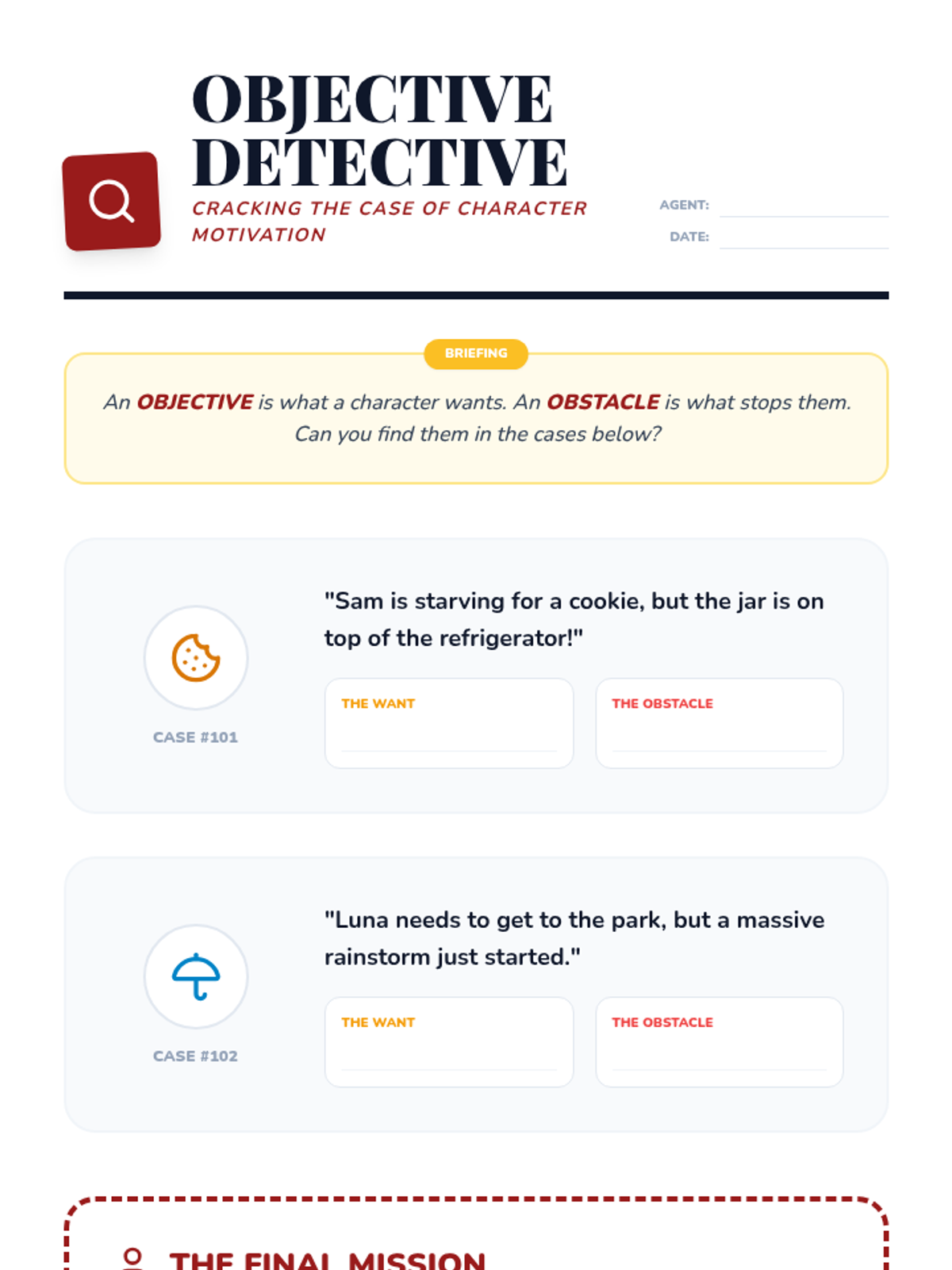
Students explore character motivation by identifying 'wants' and 'obstacles' in dramatic scenarios.
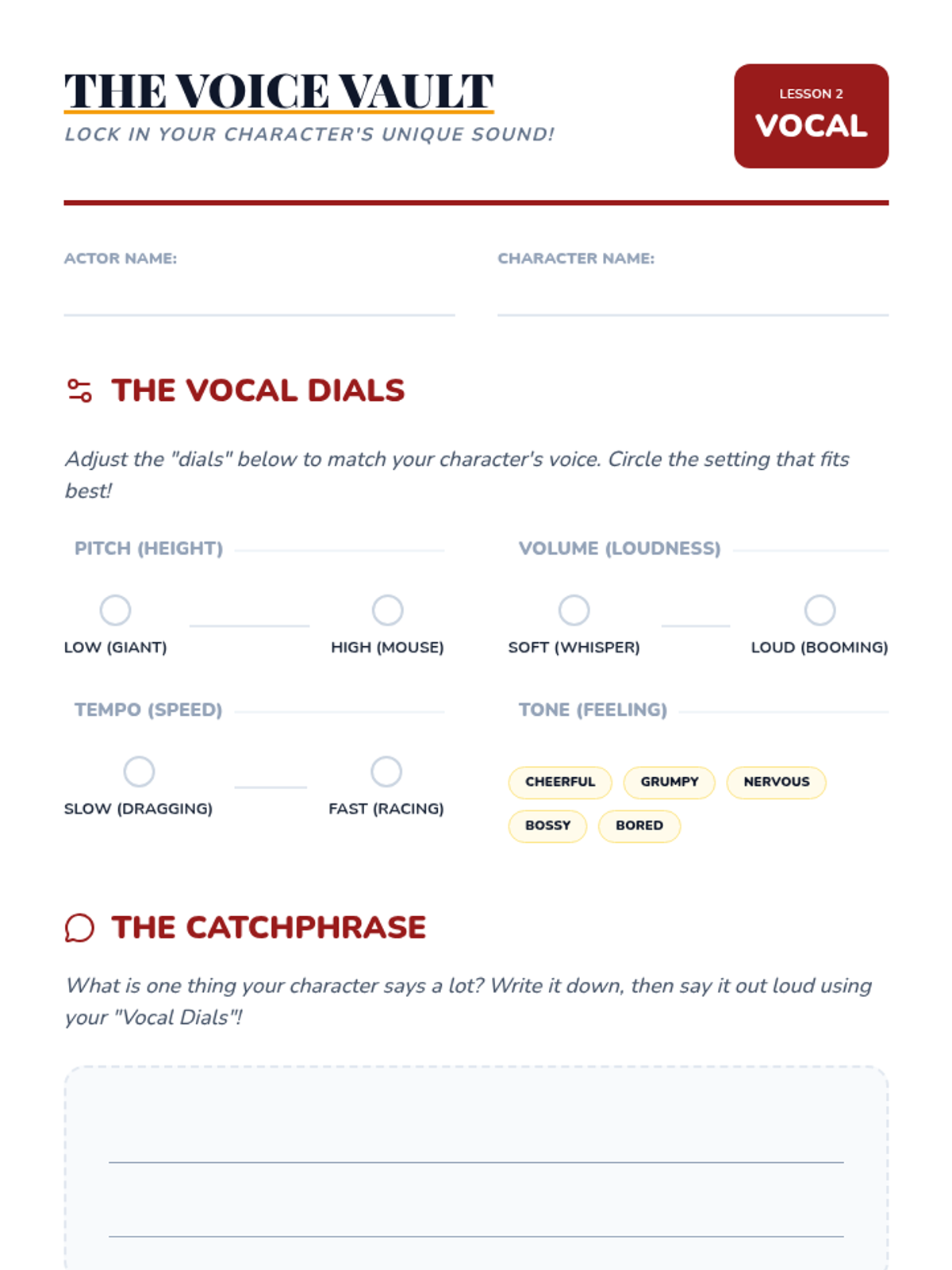
Students experiment with pitch, volume, tempo, and tone to create distinct character voices.
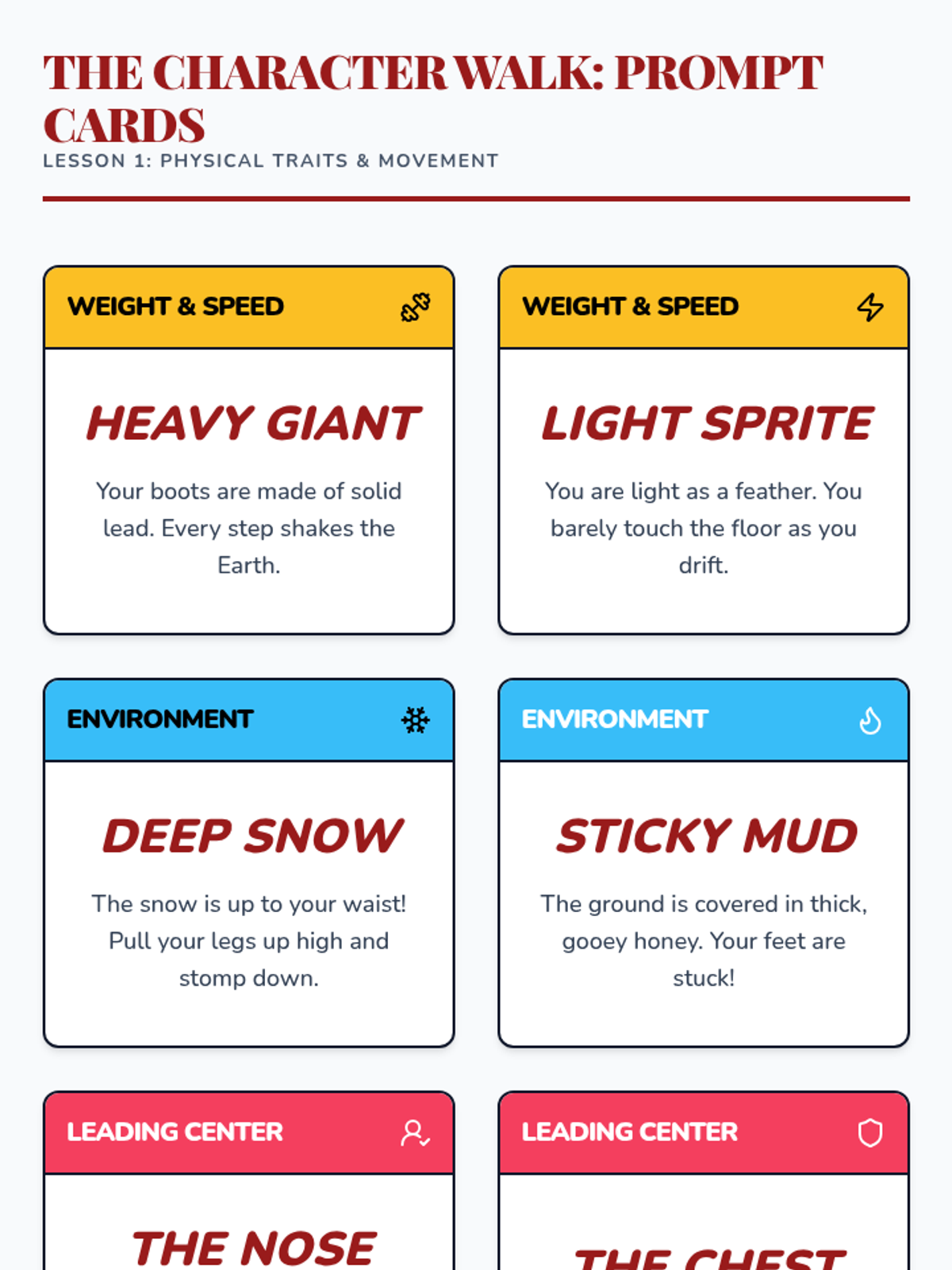
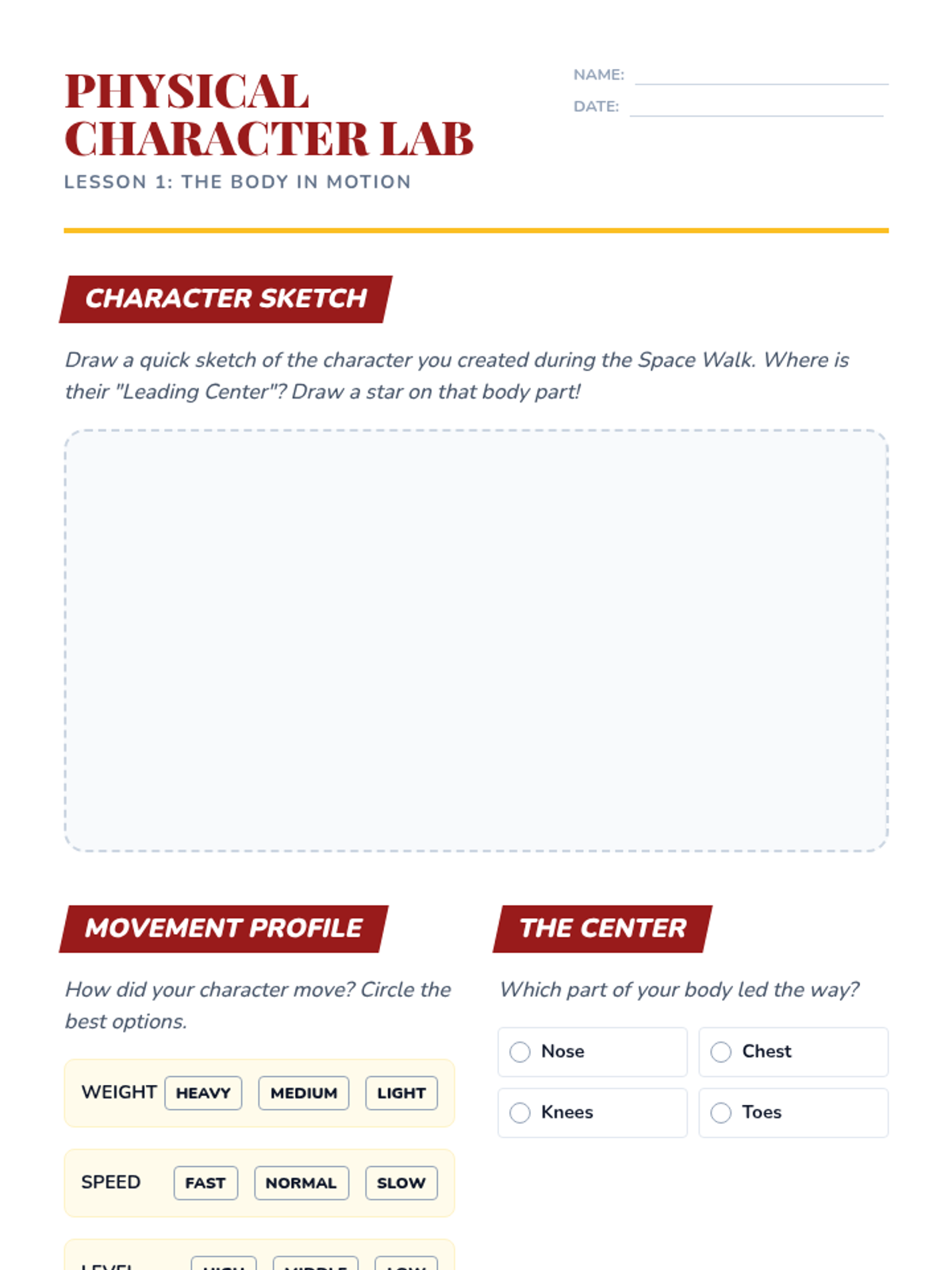
Students investigate how body language, posture, and leading centers communicate character traits through a 'Space Walk' activity.
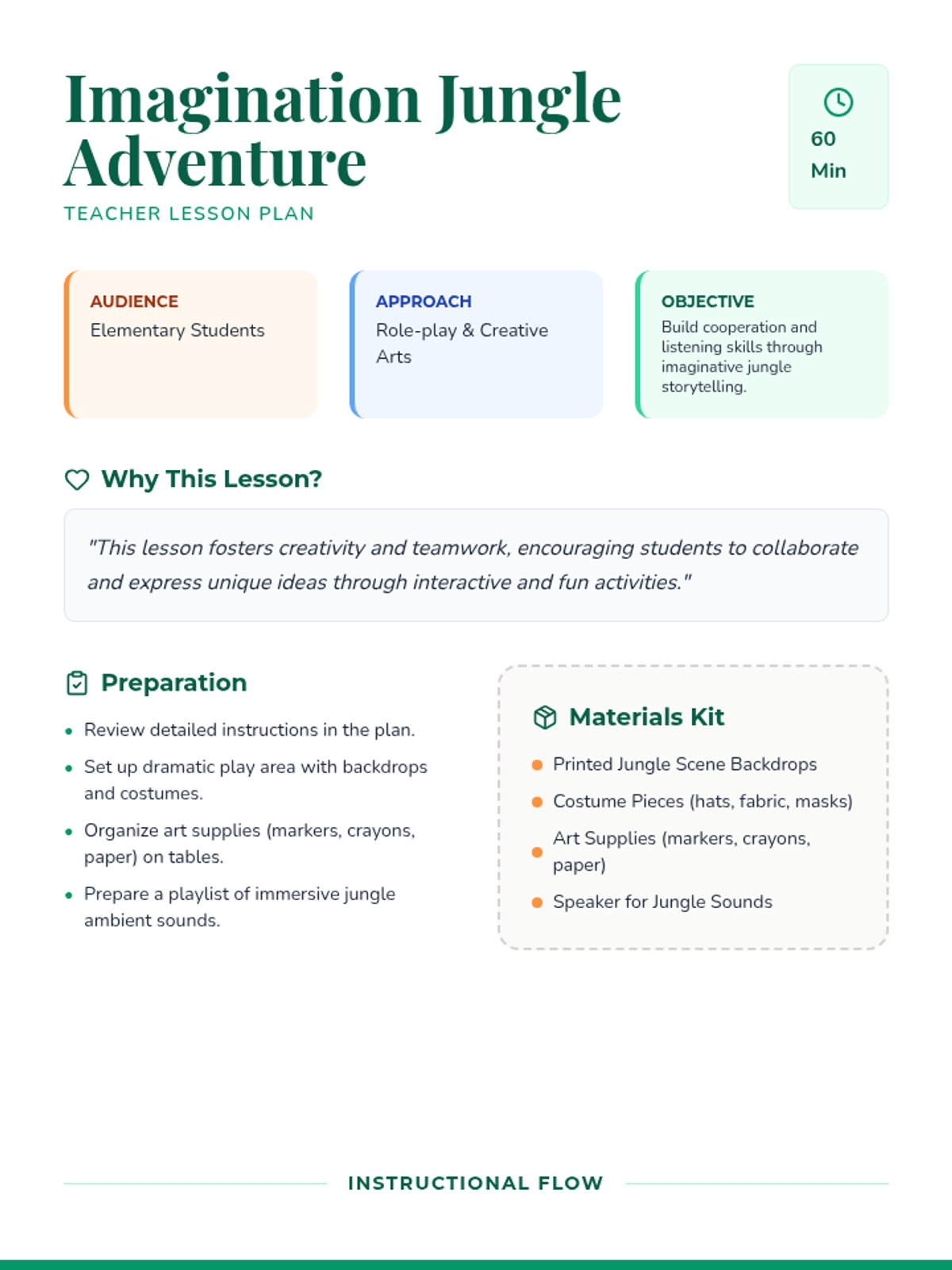
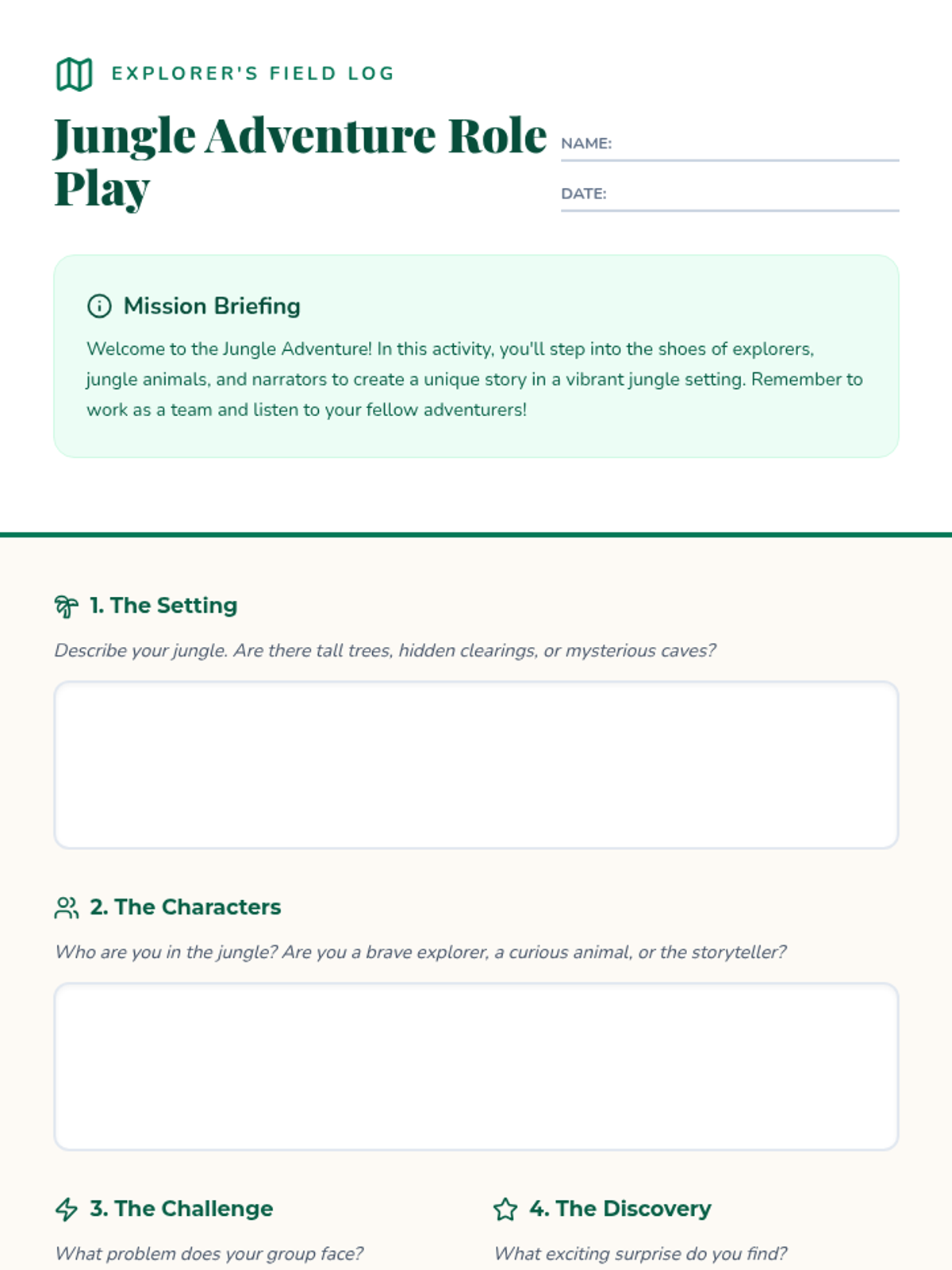
An interactive elementary lesson where students explore a vibrant jungle through dramatic play and creative arts, fostering teamwork and imaginative storytelling.
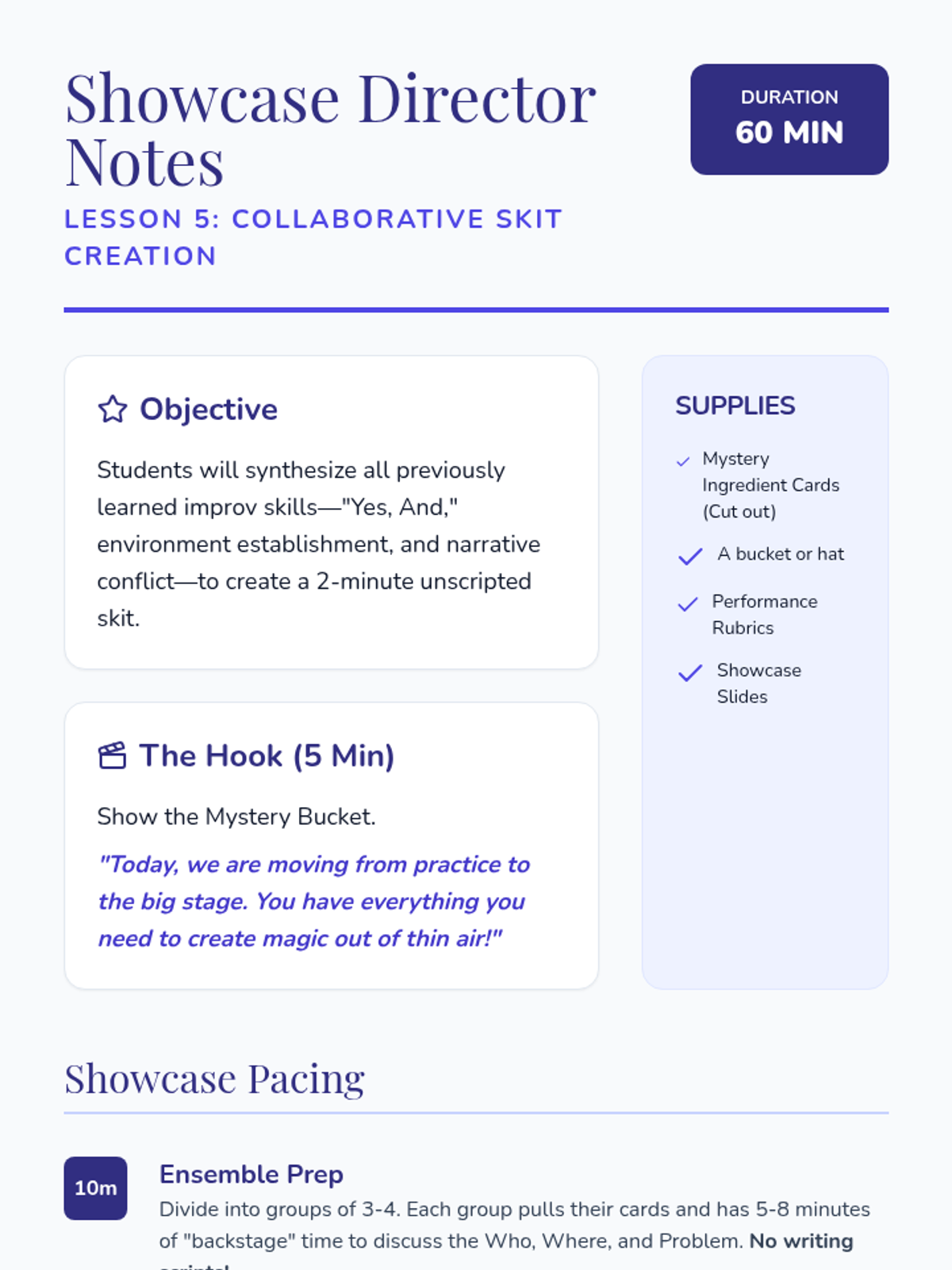
In small groups, students use a random prompt to improvise a short skit. They apply all previous skills: listening, 'Yes, And', and structure, concluding with a showcase performance.
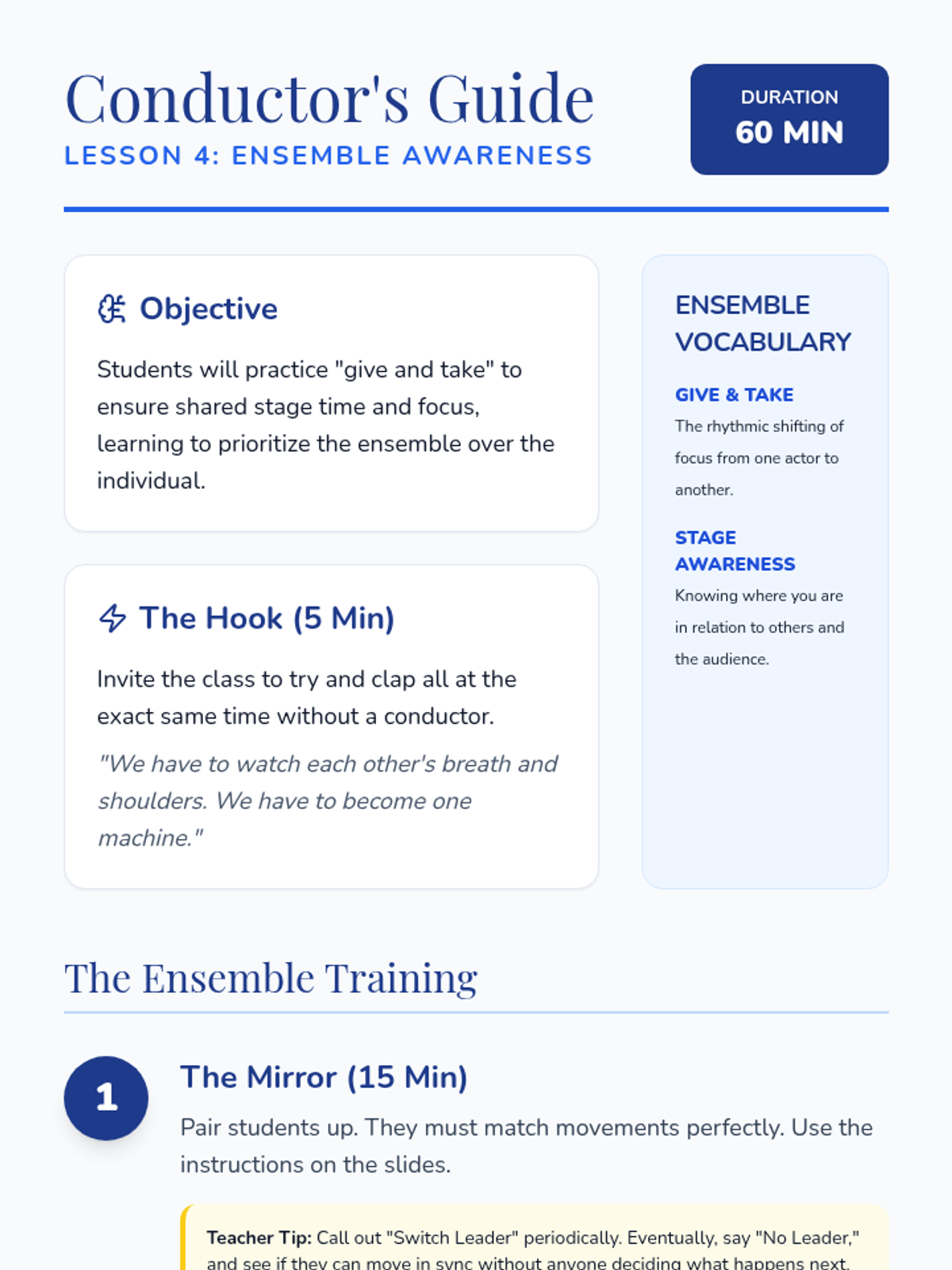
The class focuses on 'give and take' and stage awareness, ensuring students don't talk over one another or hog the spotlight. Activities involve group storytelling and mirroring exercises.
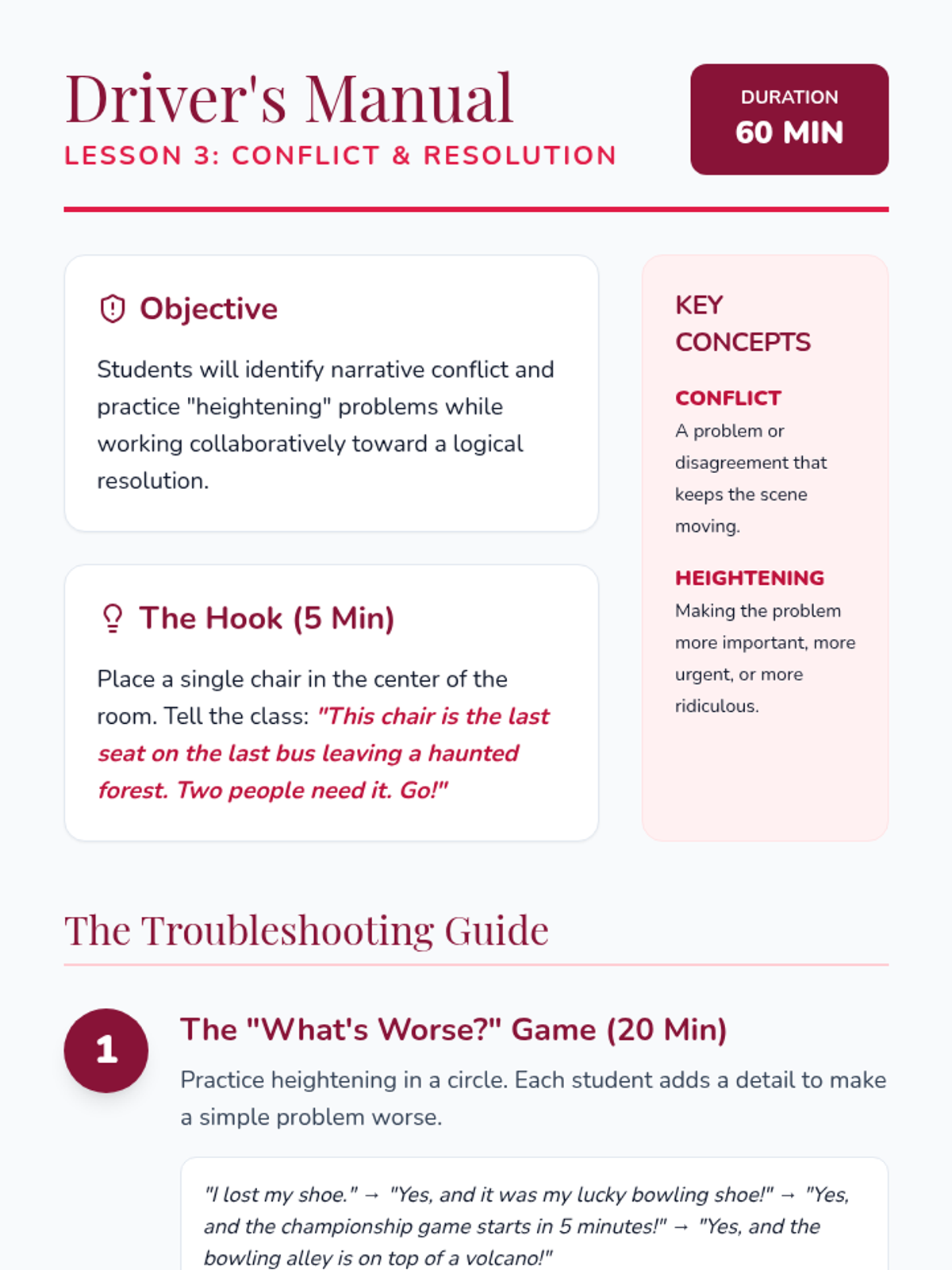
Students explore narrative structure within improv by identifying a problem and working toward a solution. They play games designed to heighten conflict safely and encourage cooperative problem-solving.
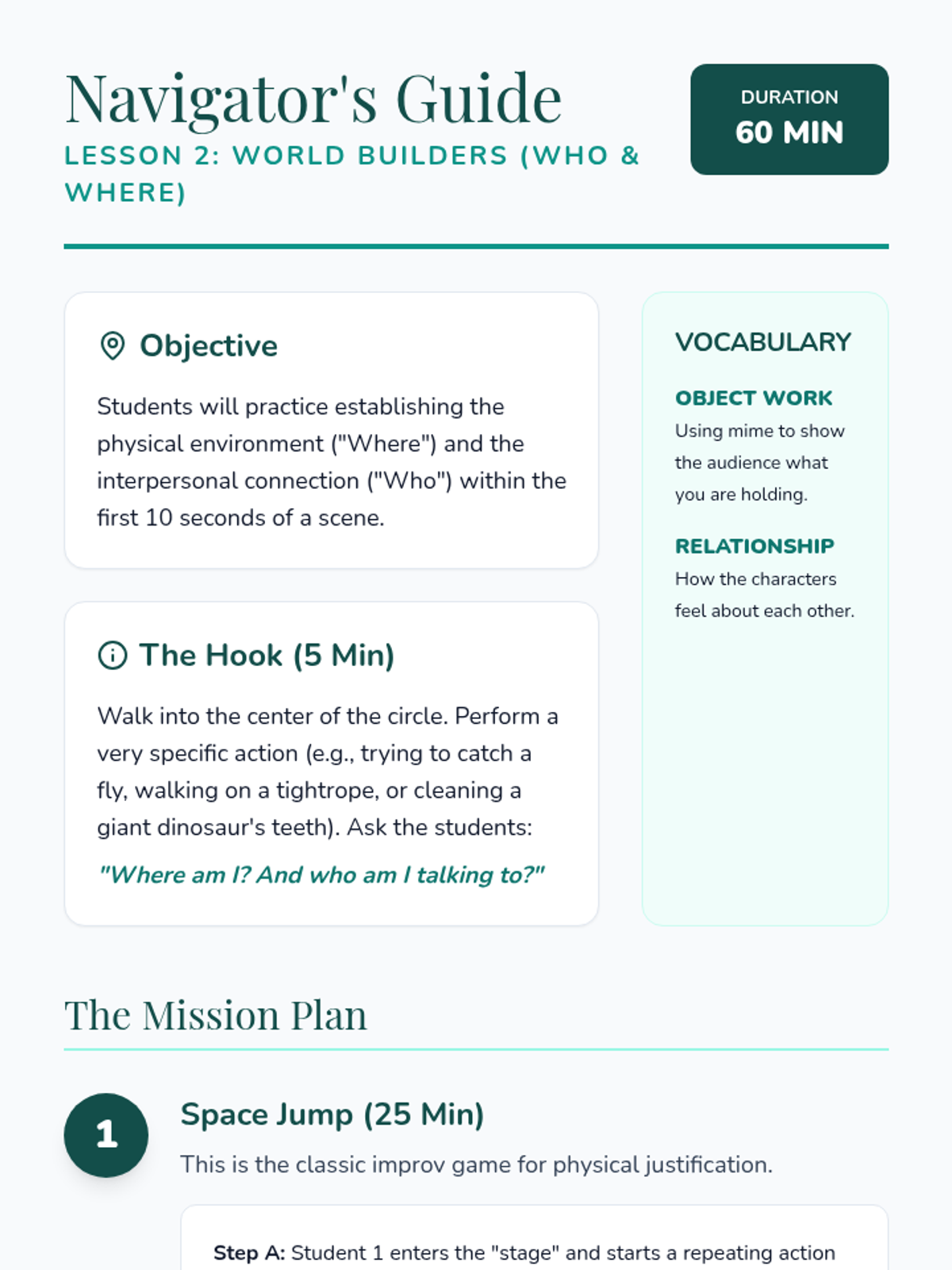
Learners practice establishing the 'Who' (relationship) and 'Where' (location) at the start of an improvised scene. They participate in exercises where they must instantly justify their physical position and define the setting.
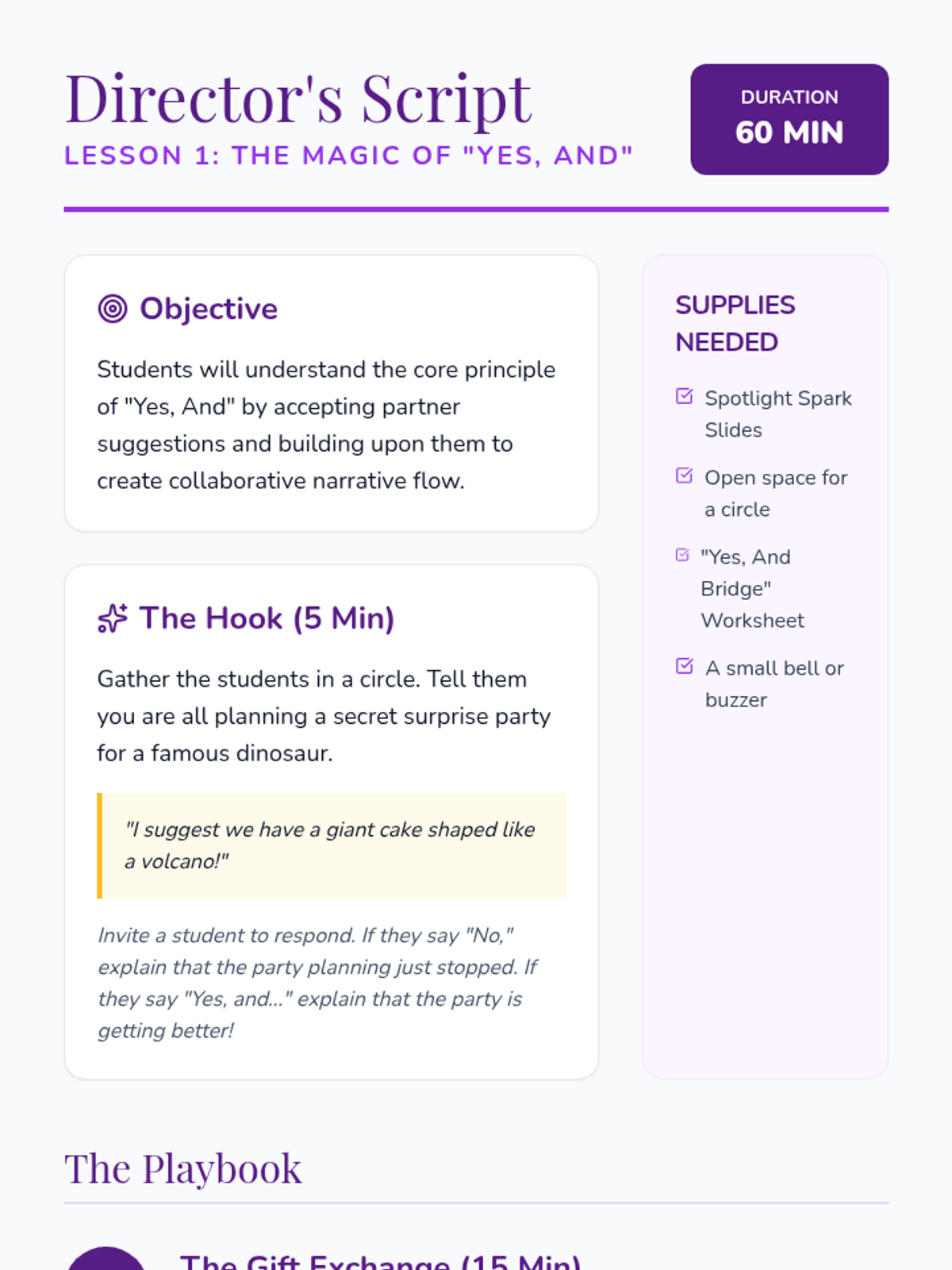
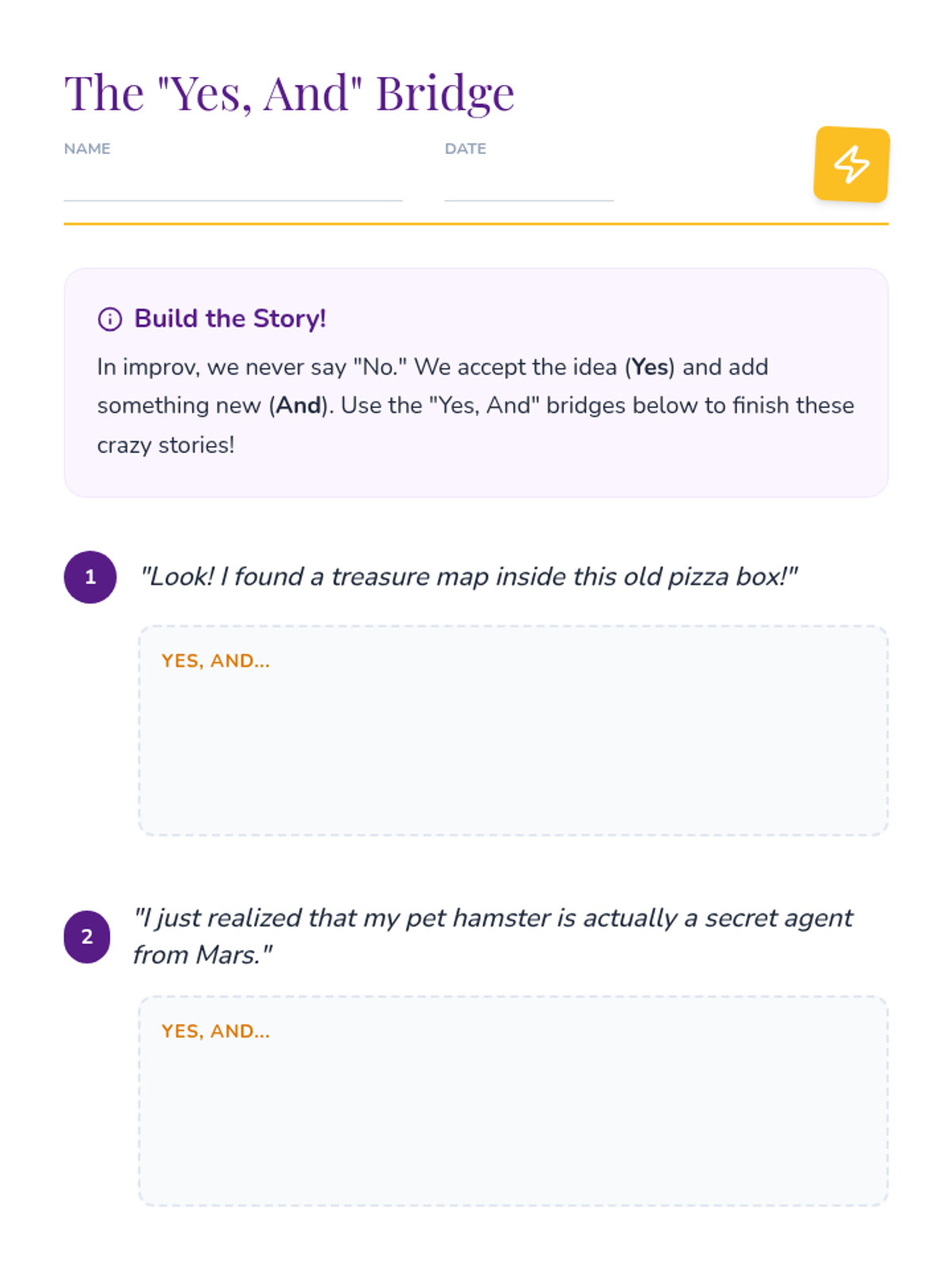
Students are introduced to the golden rule of improv: 'Yes, And.' Through circle games and pair activities, they practice accepting a partner's idea (Yes) and adding new information to it (And).
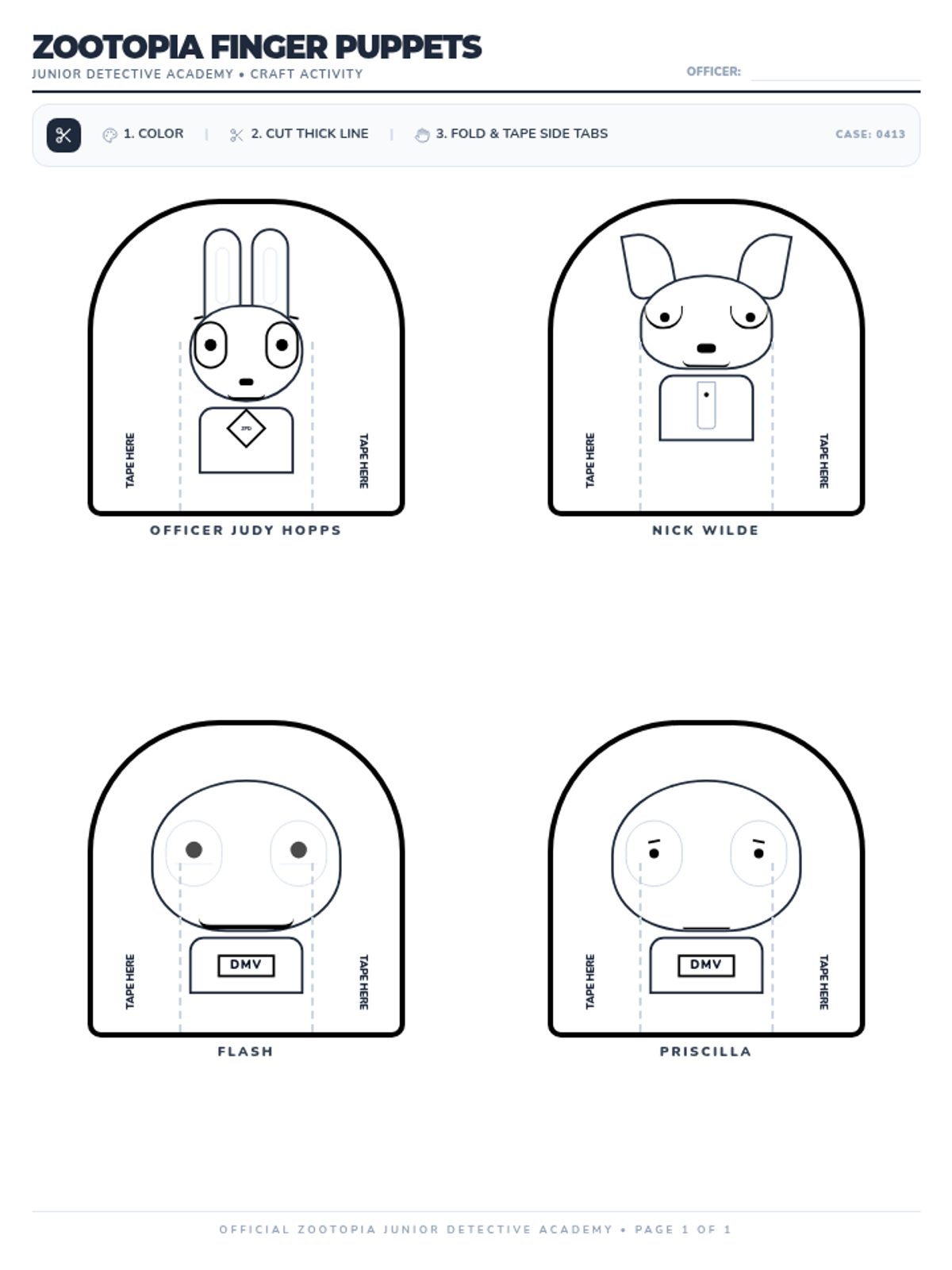
A creative craft lesson where students color and create their own finger puppets of favorite Zootopia characters to practice storytelling and role-playing.
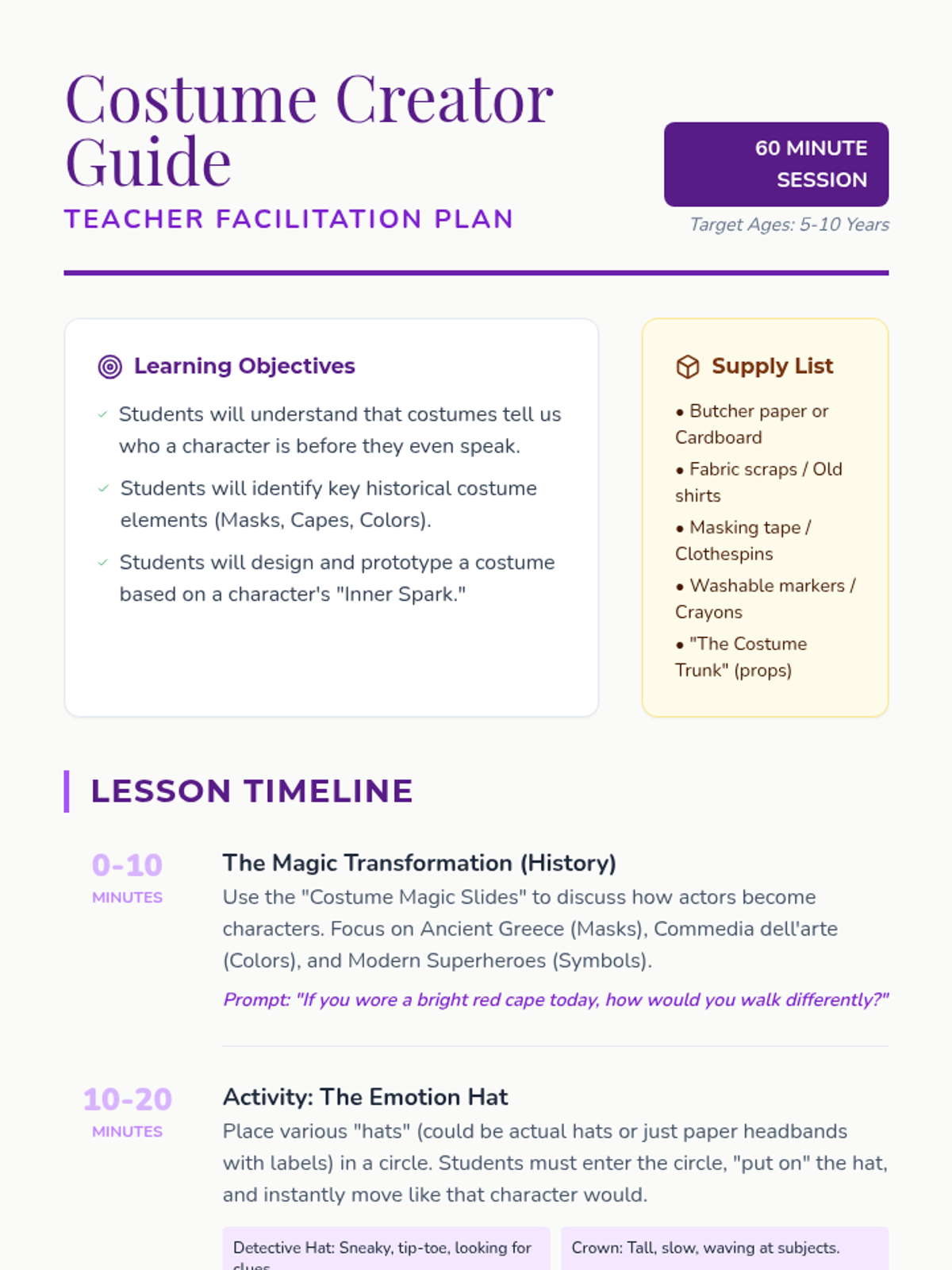
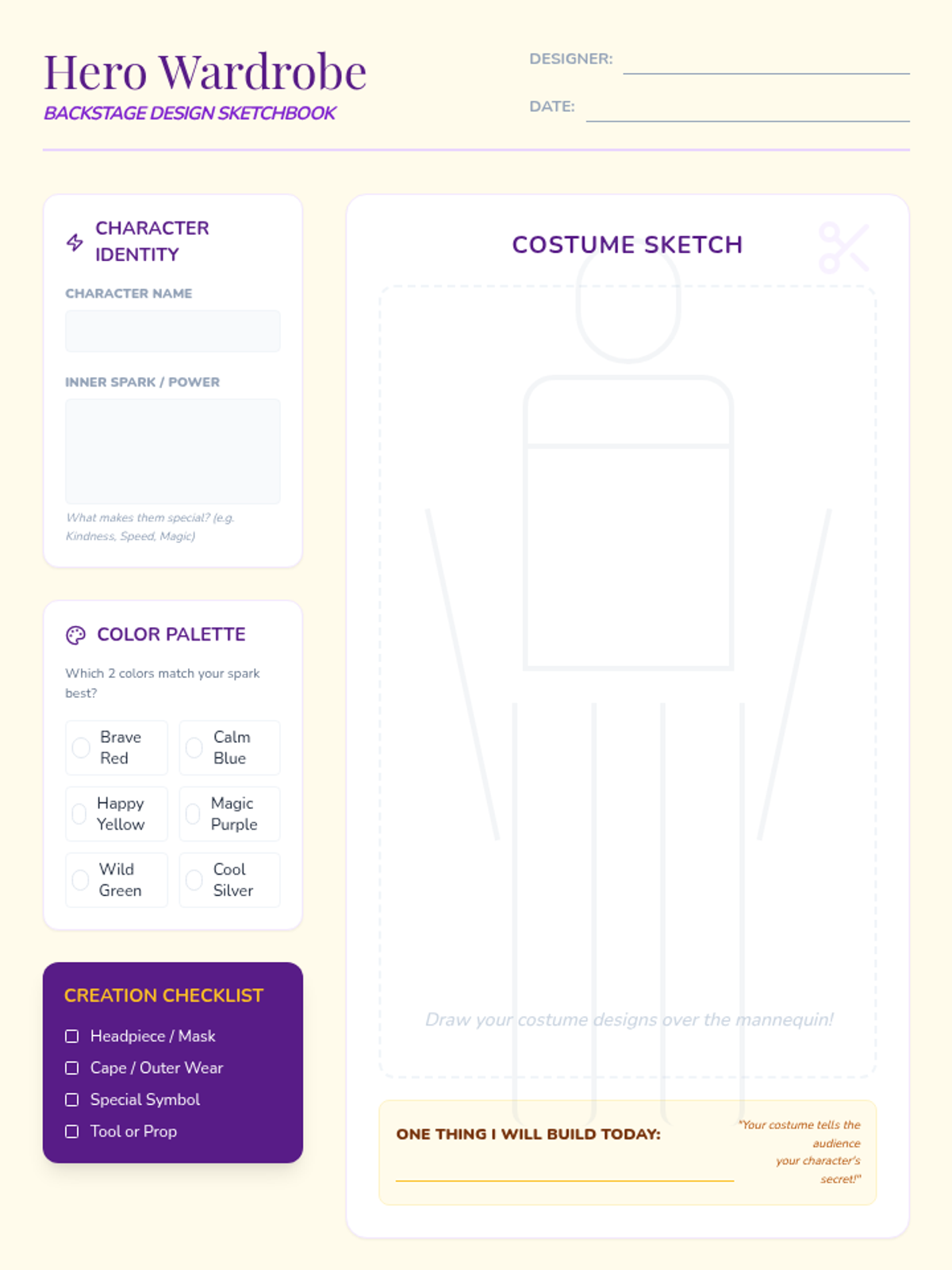
A 60-minute exploration into the world of theatrical costume design, featuring a simplified history of stage attire, interactive character-building games, and a hands-on design workshop for young creators.
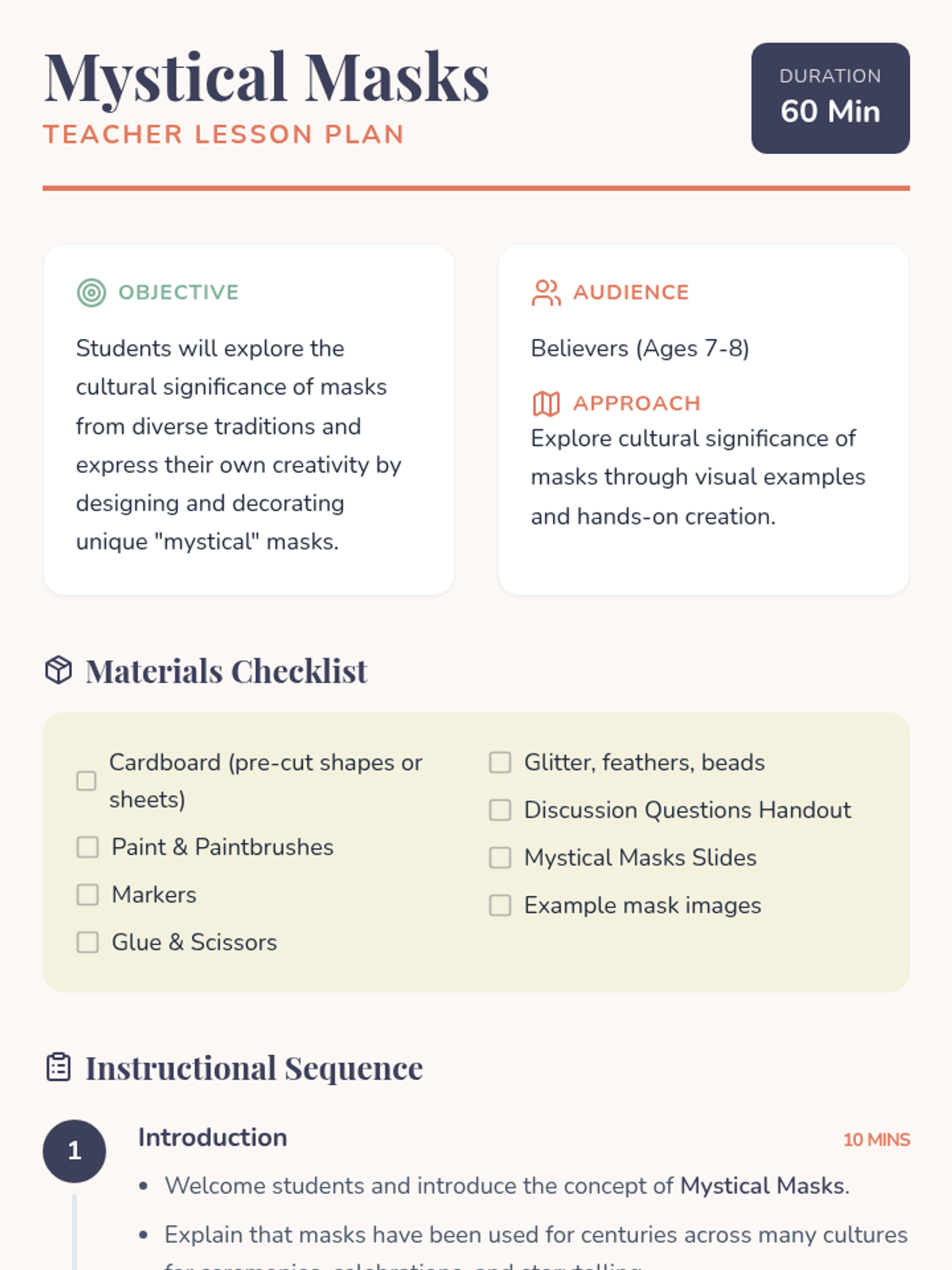
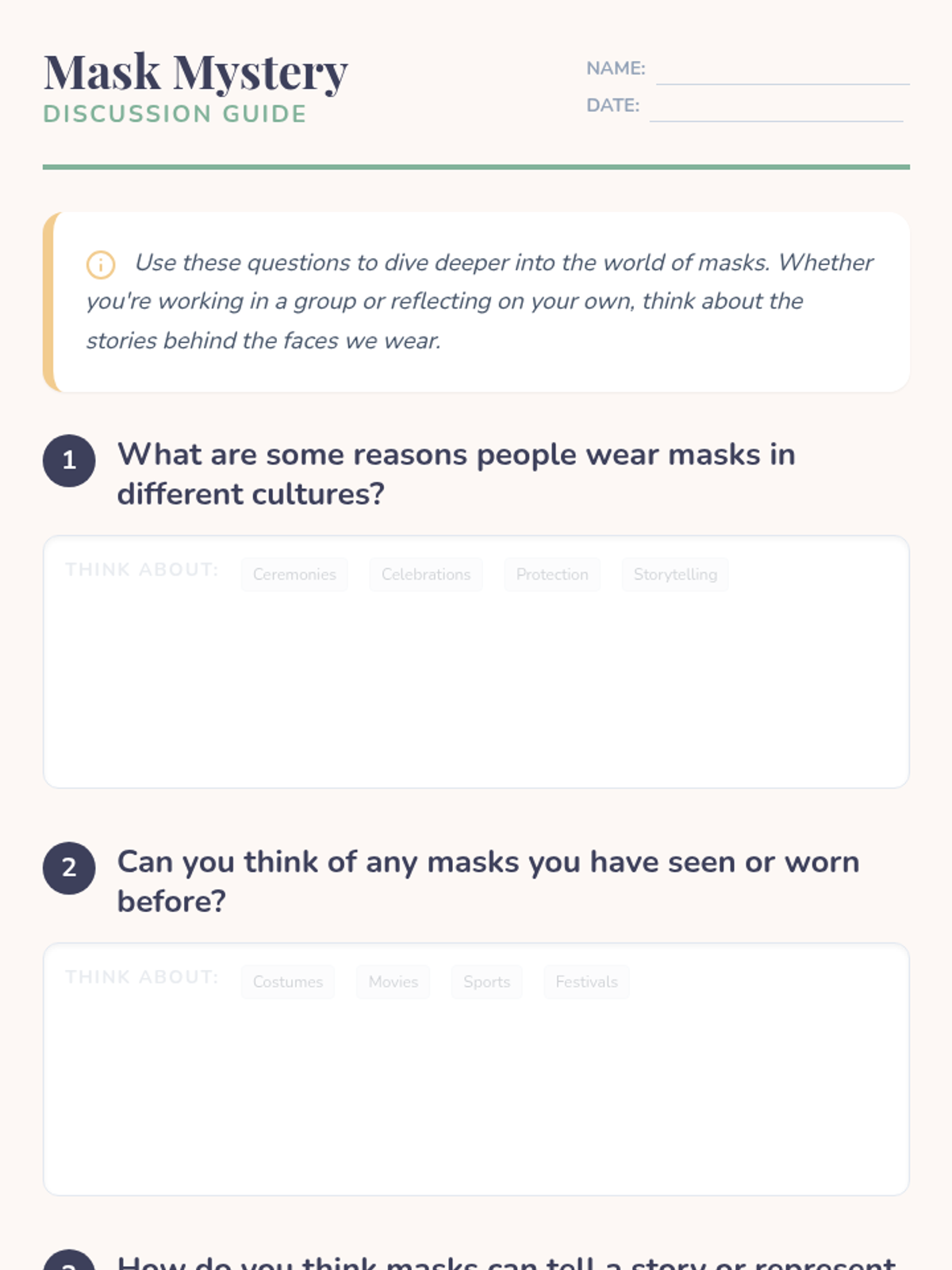
Students explore the cultural significance of masks from around the world and design their own mystical masks using cardboard and craft supplies. This lesson encourages creative expression and appreciation for global traditions.
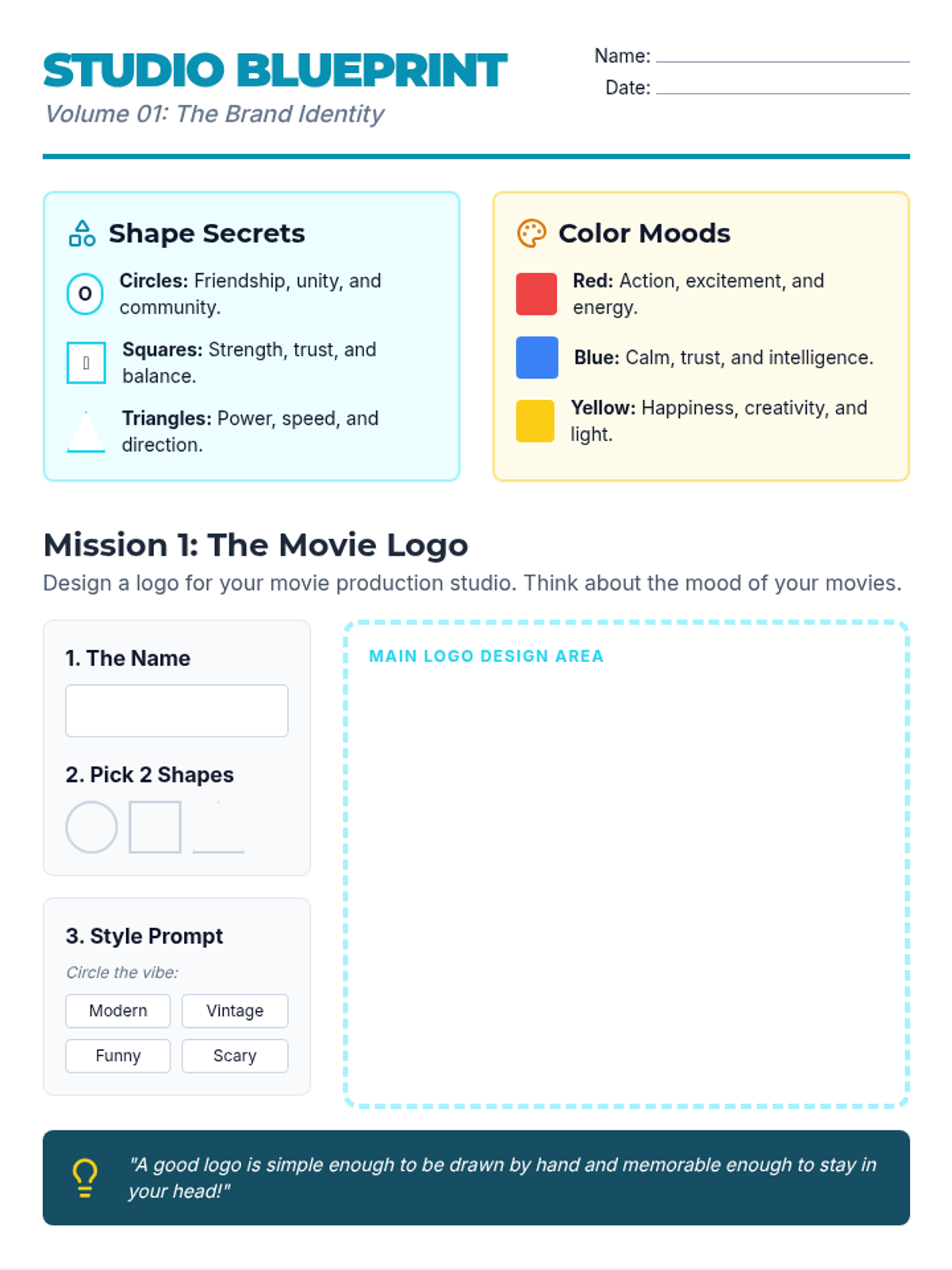
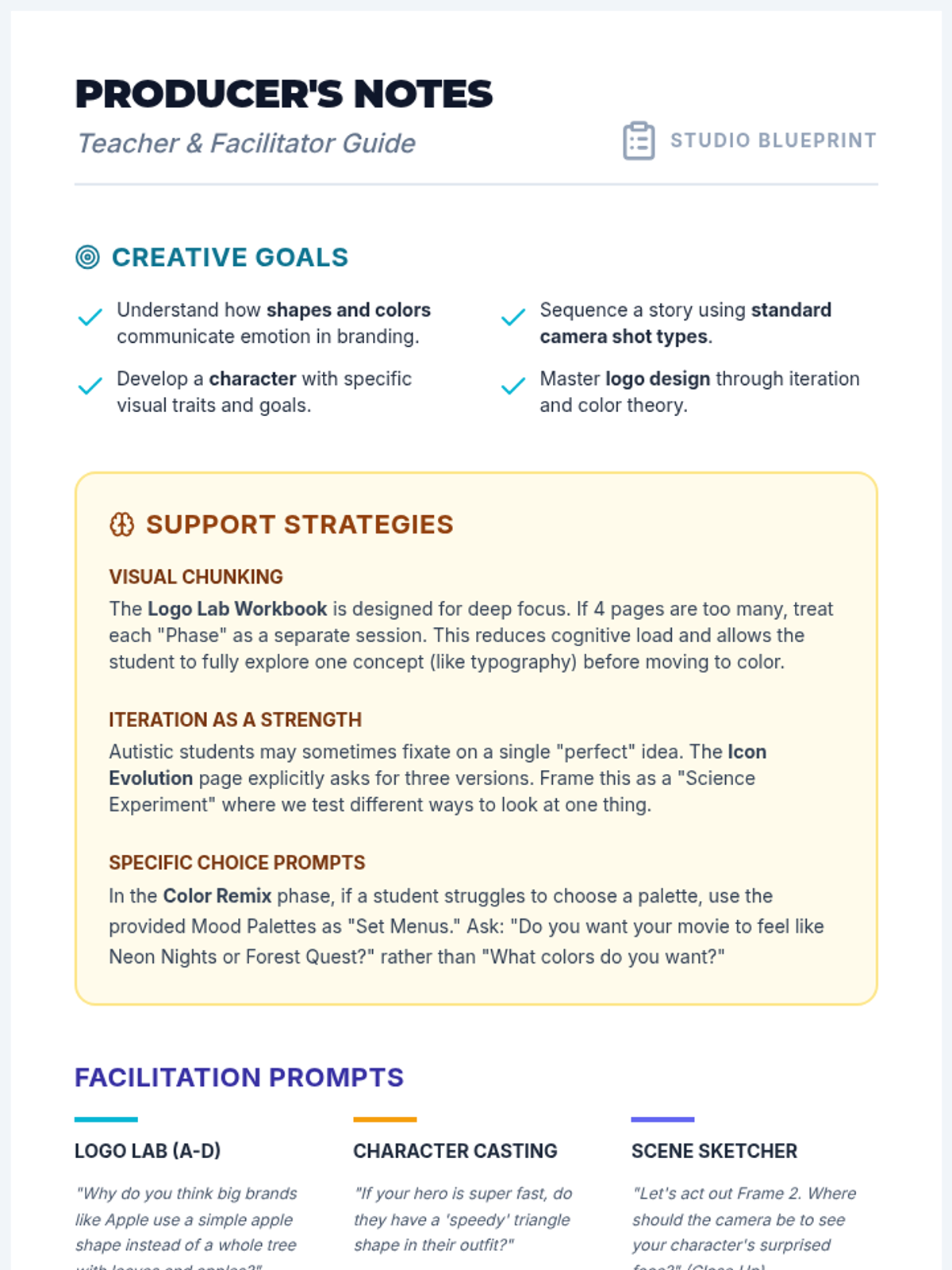
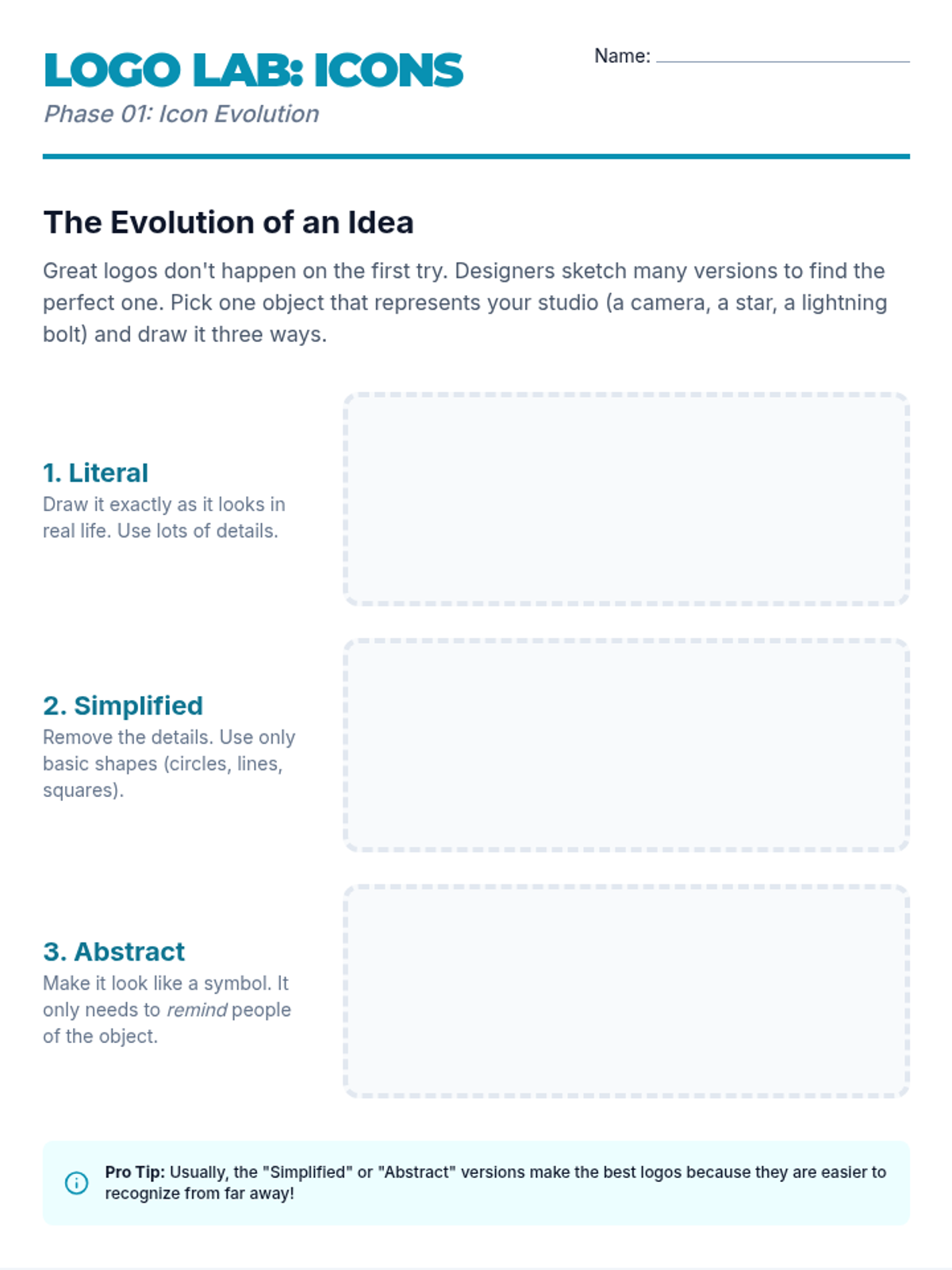
A creative, structured guide for students to explore the intersection of graphic design and filmmaking, focusing on branding, character design, and visual storytelling.
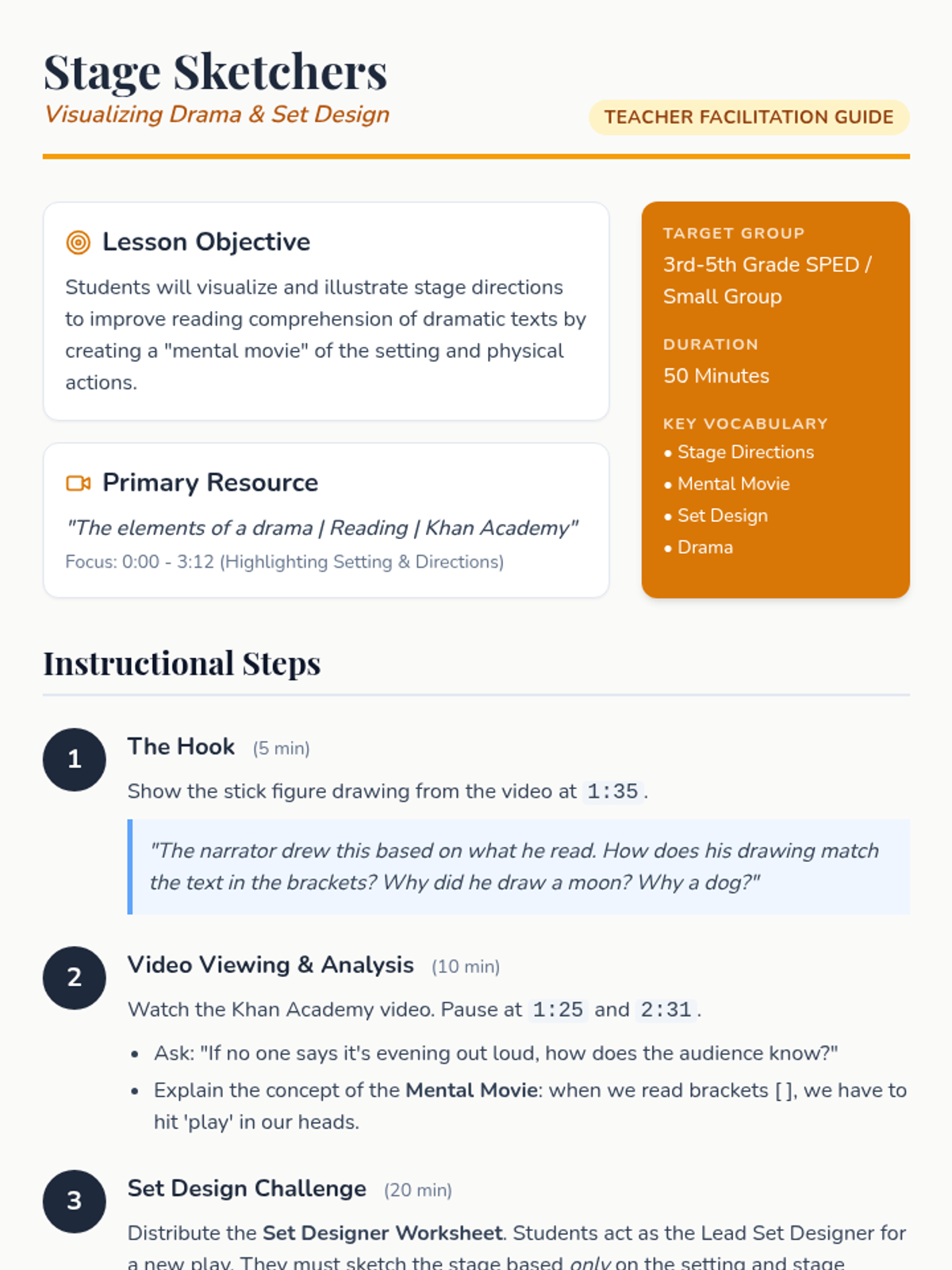
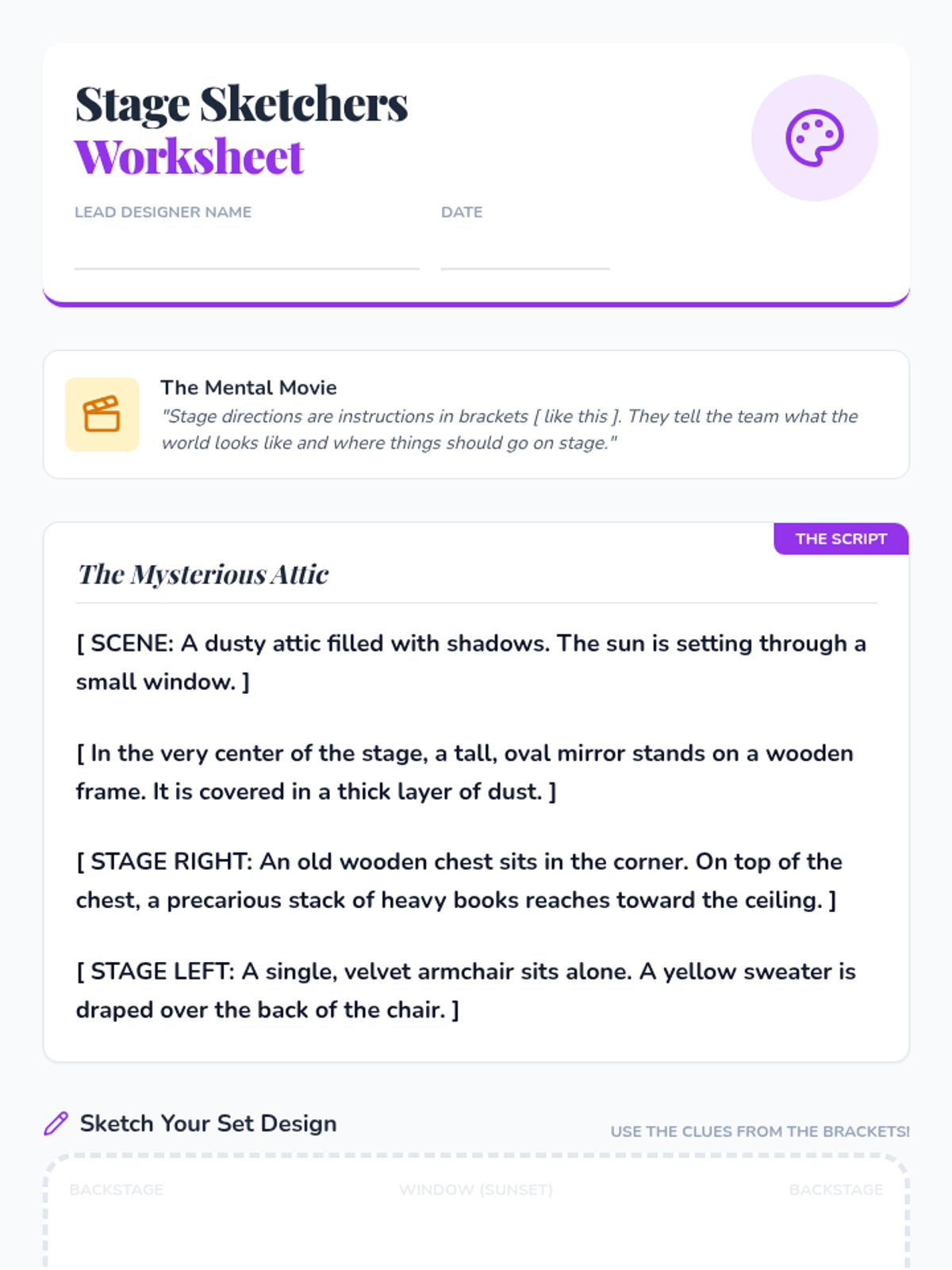
A lesson designed for small group instruction focused on helping students visualize stage directions to build a 'mental movie' of the setting and action. Includes a video-based hook and a hands-on set design activity.
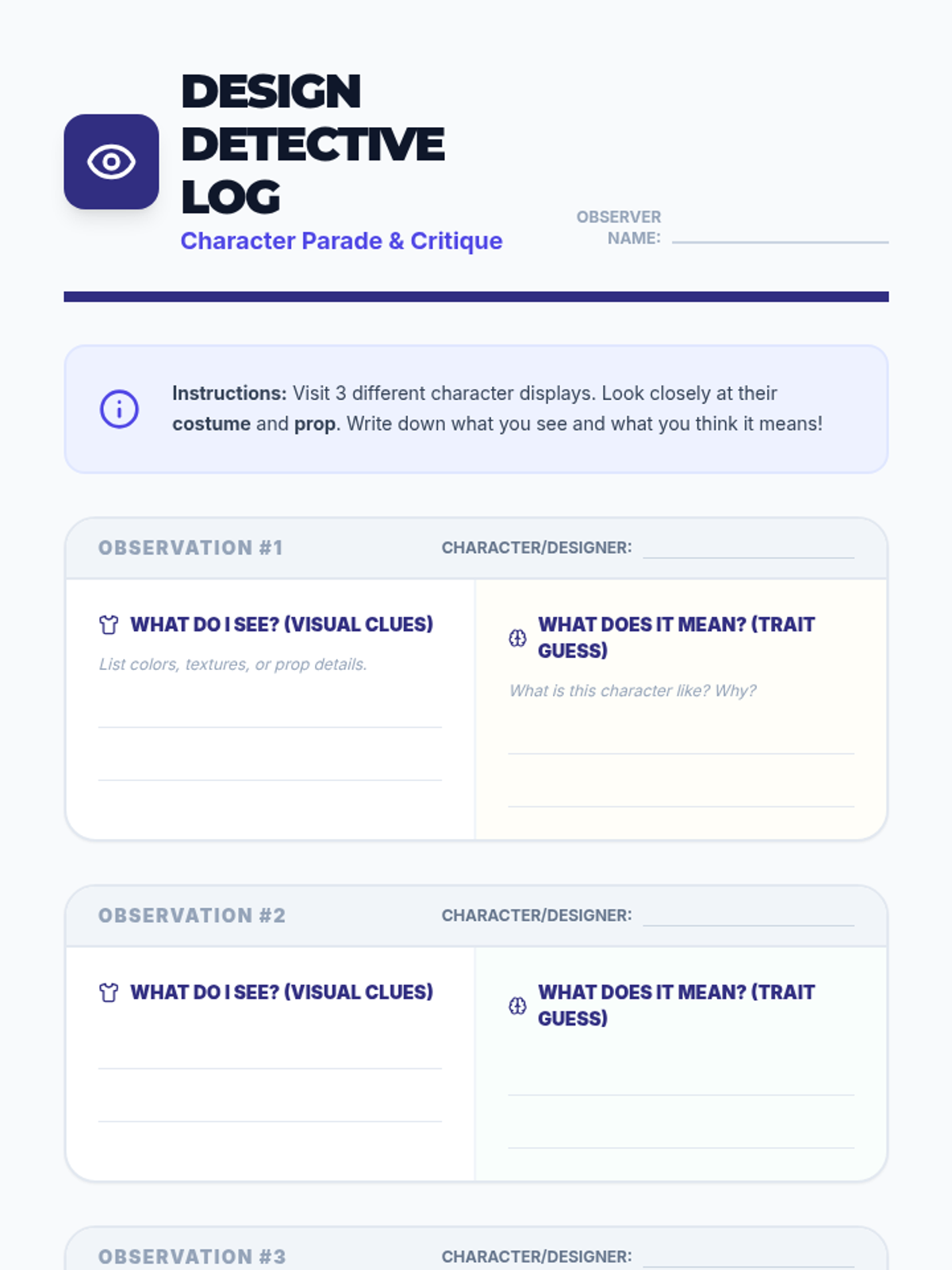
Students dress up and display their prop. The class observes the visual choices and guesses the character's traits based solely on the visual evidence.
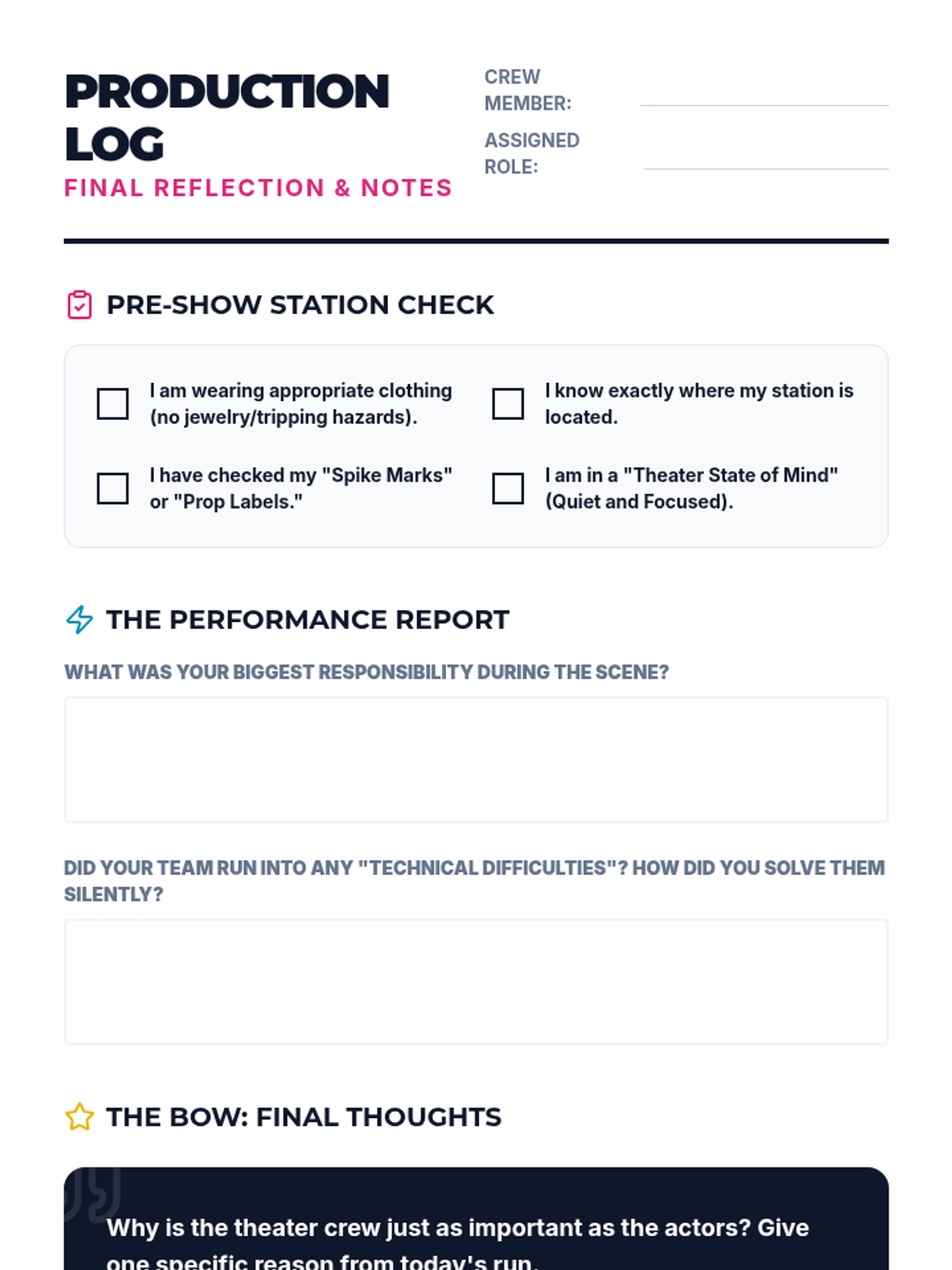
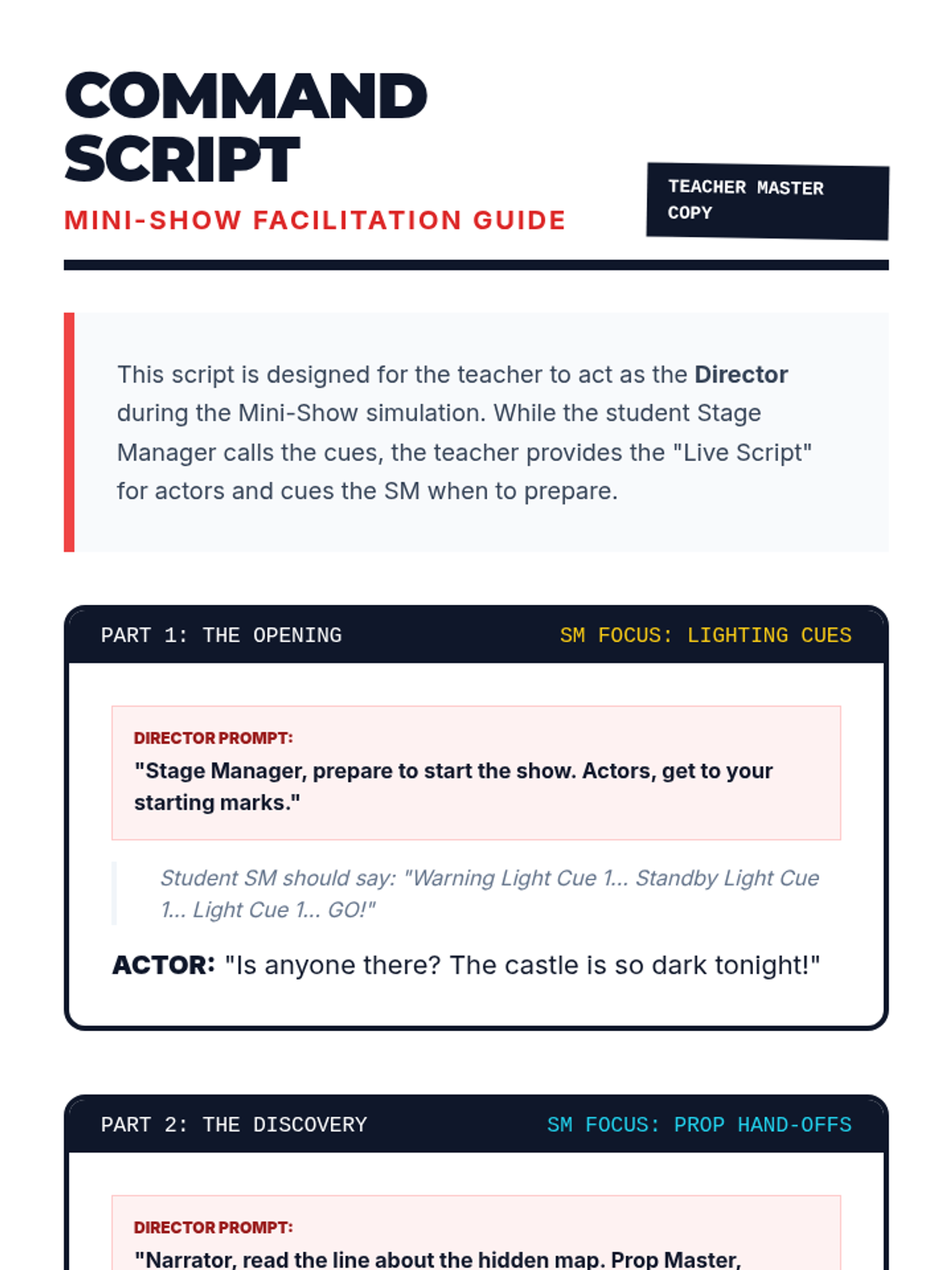
A culminating simulation where students run a short tech rehearsal, applying all learned backstage skills.
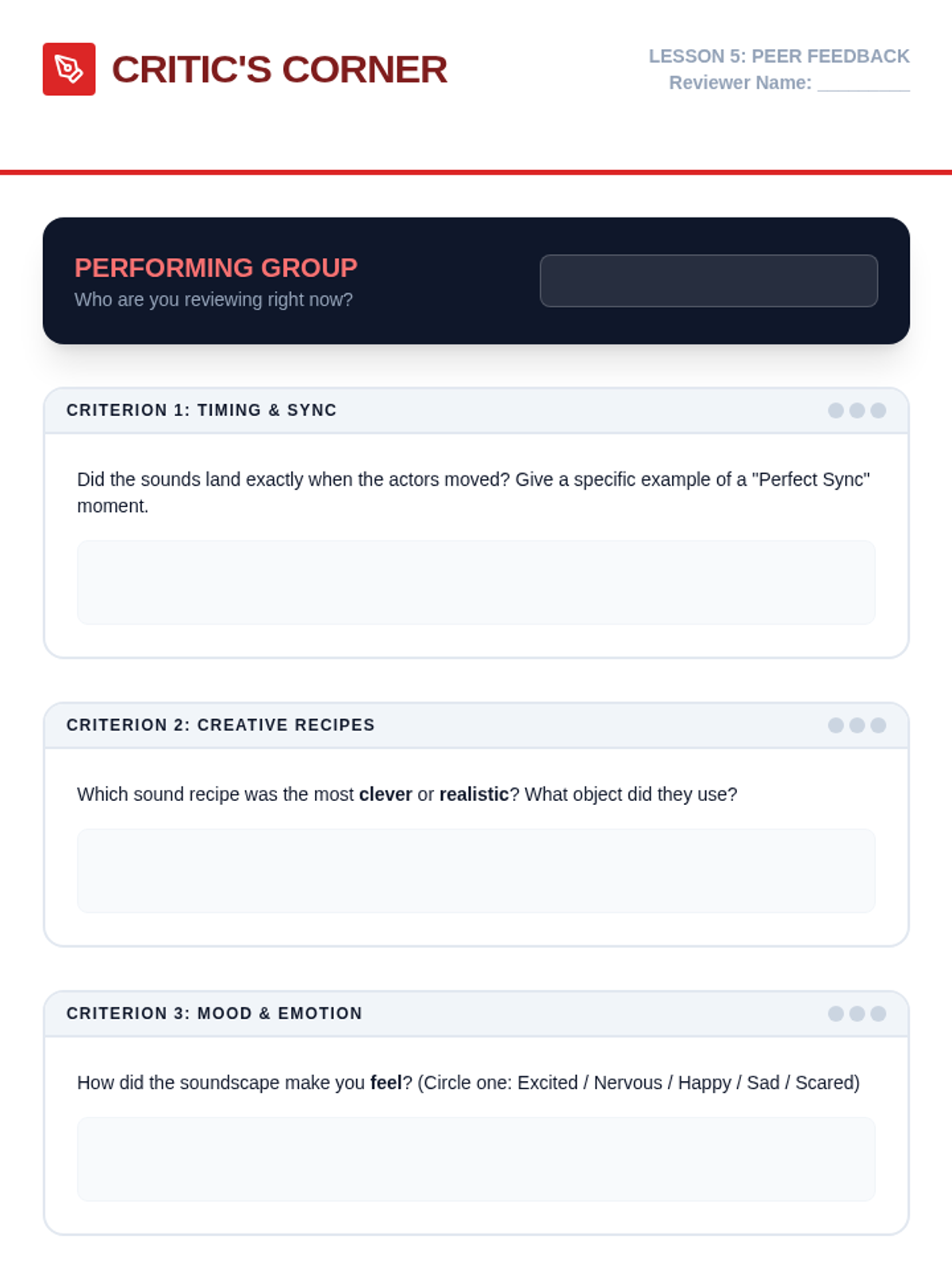
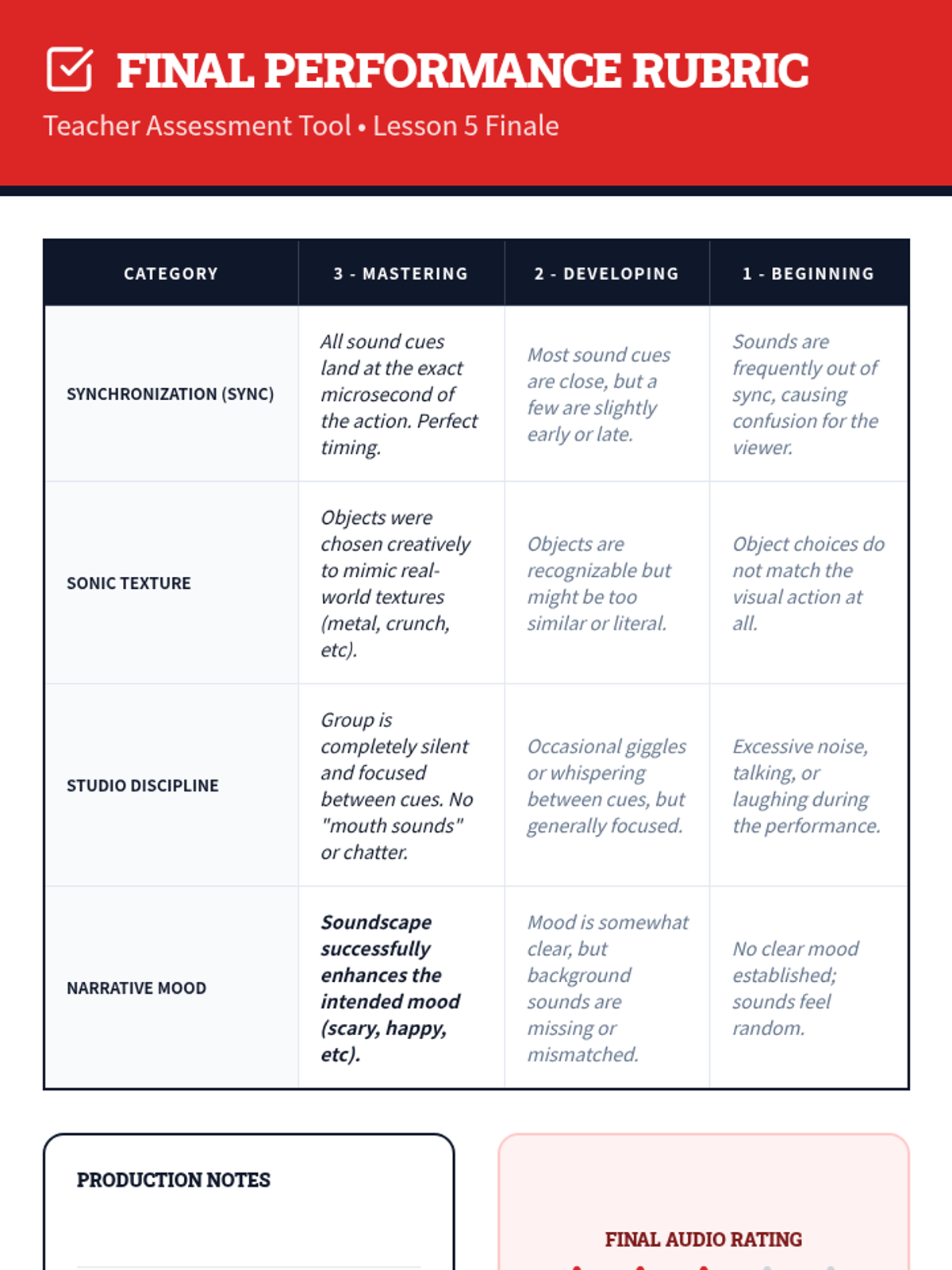
The final performance where groups provide a live soundscape for a silent scene followed by a peer critique session focusing on timing and stylistic choices.
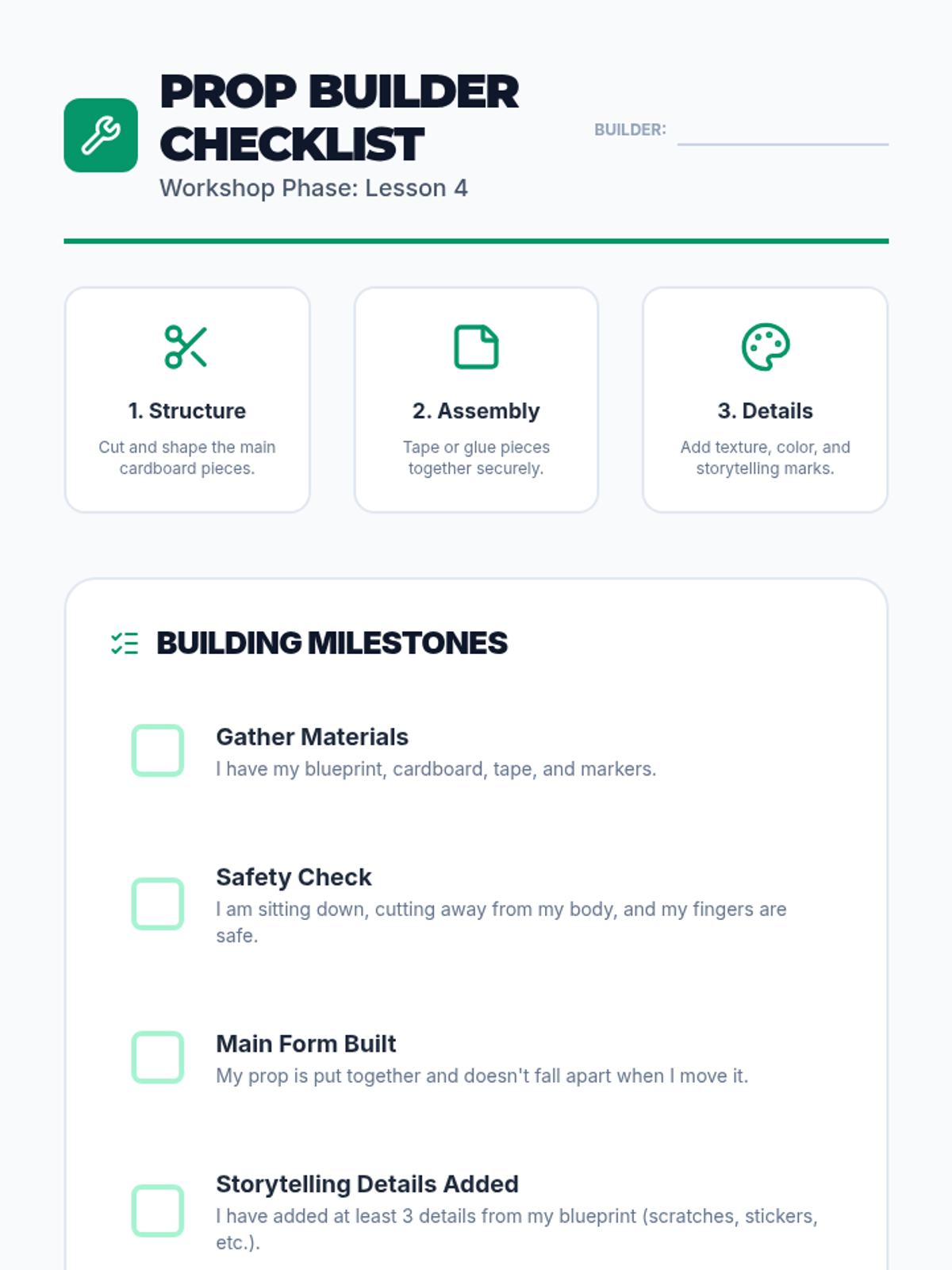
Students build their designed prop using cardboard, tape, and markers. The lesson emphasizes safety with scissors and creative use of materials to represent real objects.
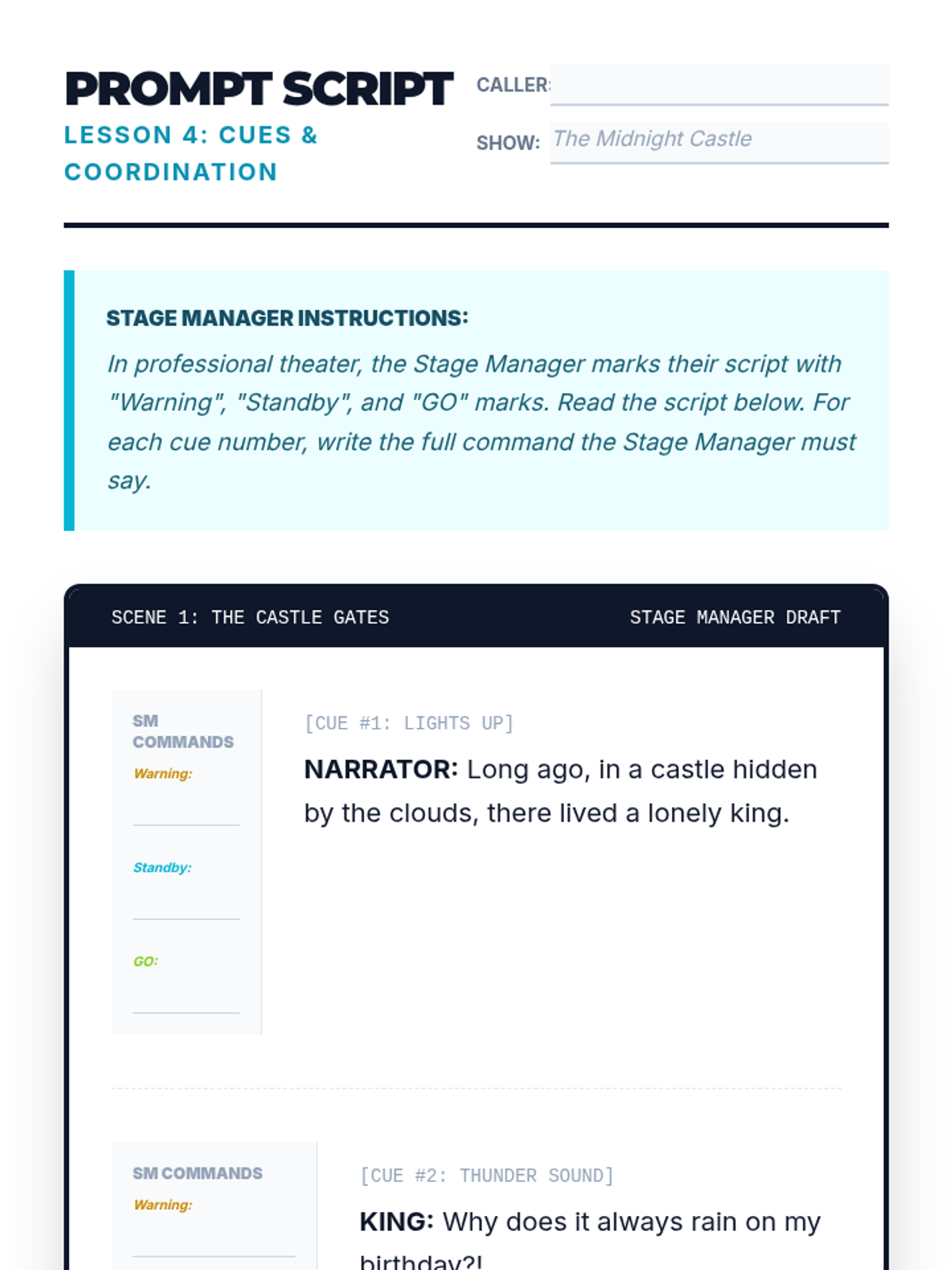
Students master the 'Warning, Standby, Go' cueing system used in professional theater.
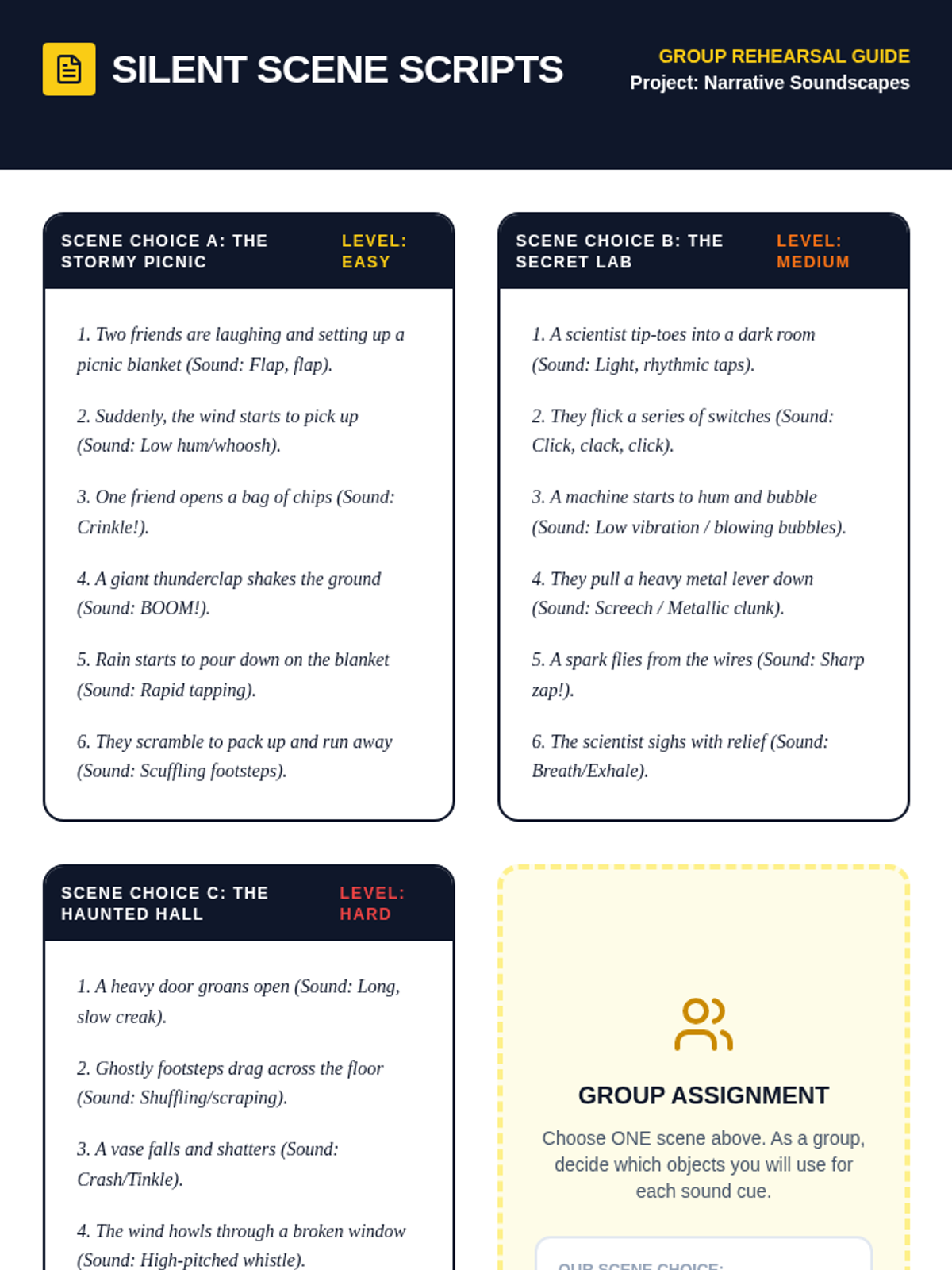
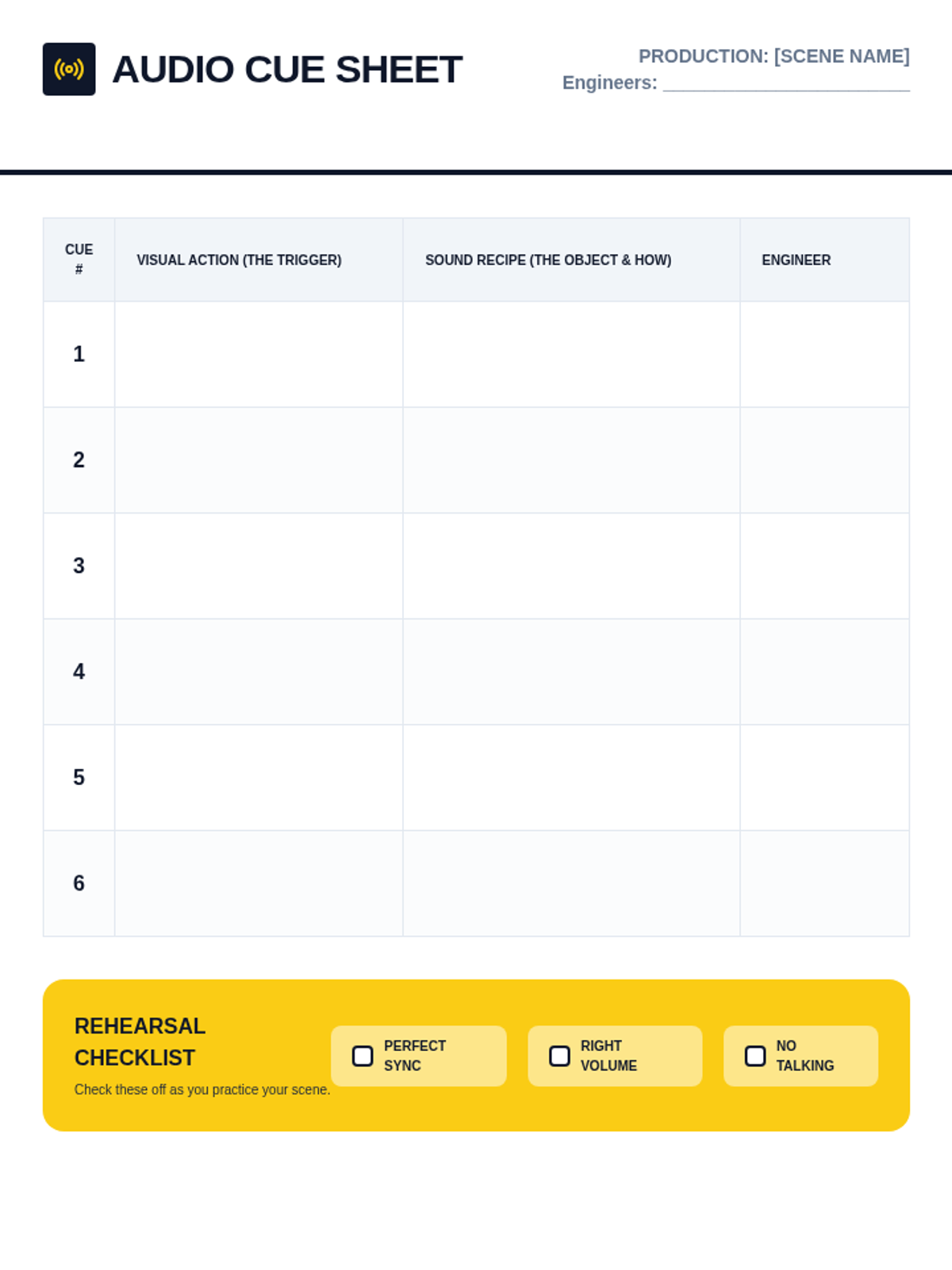
Small groups collaborate to analyze a silent script and map out specific audio cues, rehearsing the timing and synchronization of their Foley effects.
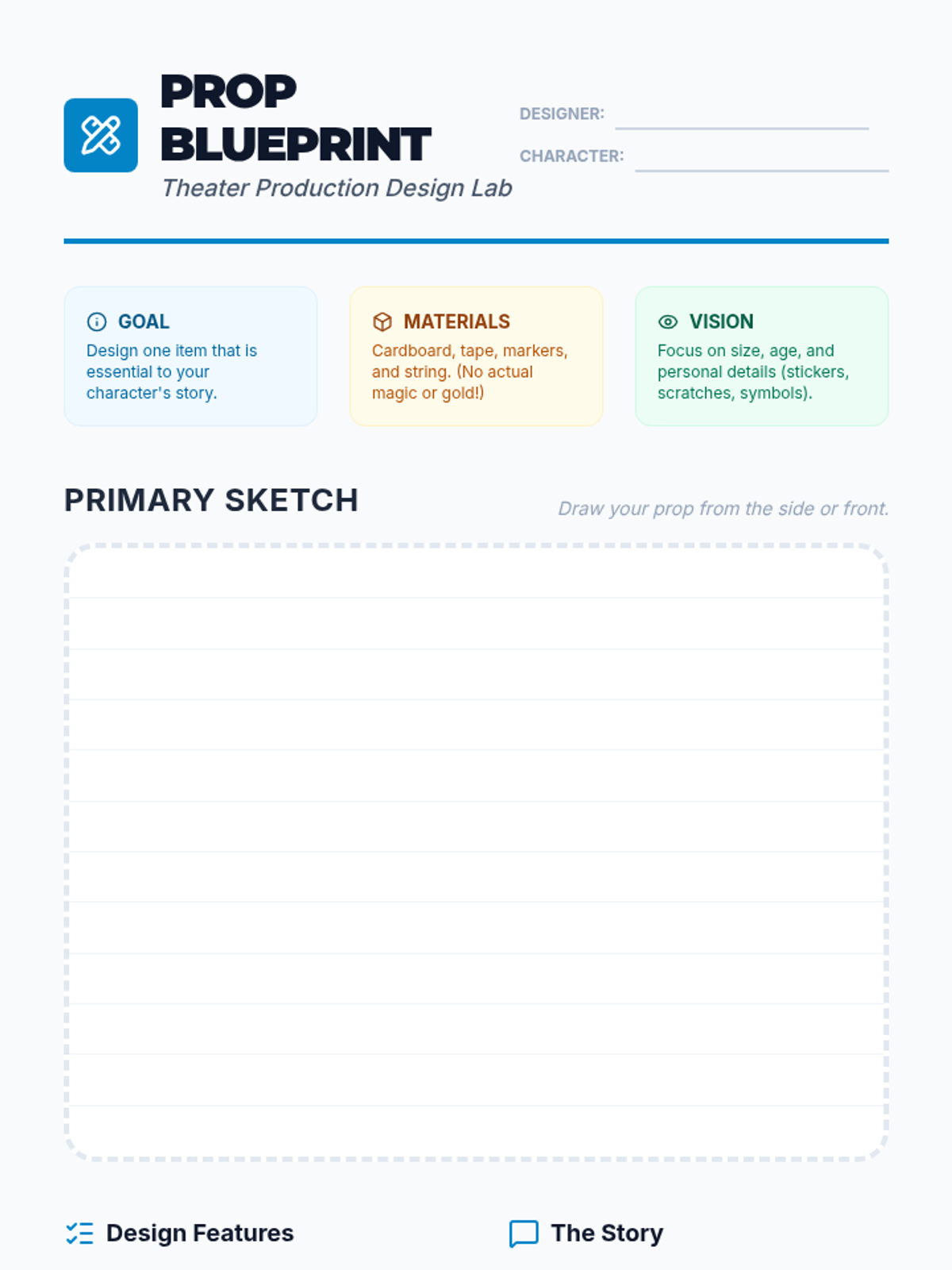
Students identify one 'essential prop' that their character would carry. They sketch the object, focusing on details that make it unique to that character.
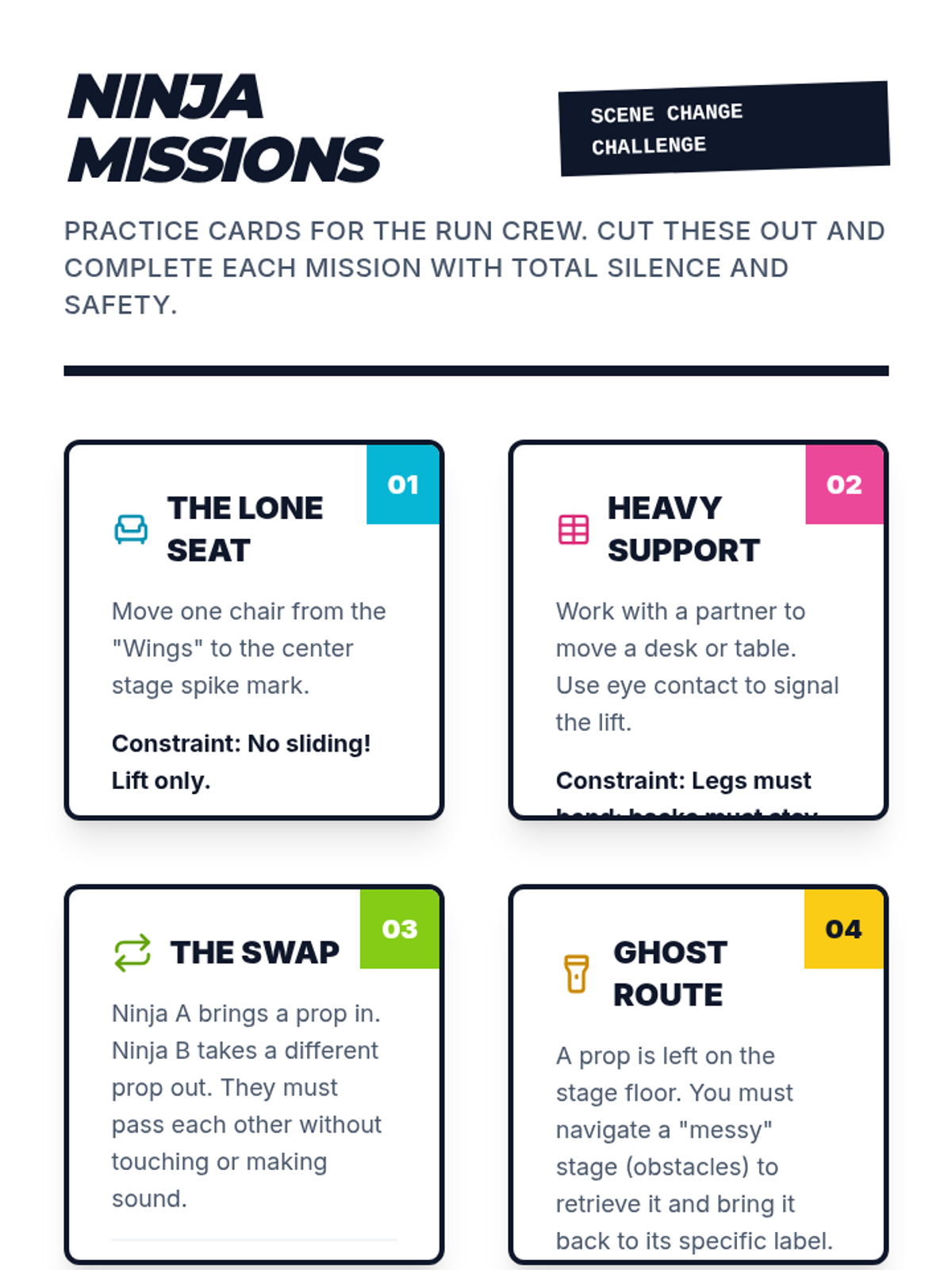
Focuses on non-verbal communication and physical coordination for quiet, efficient scene transitions.
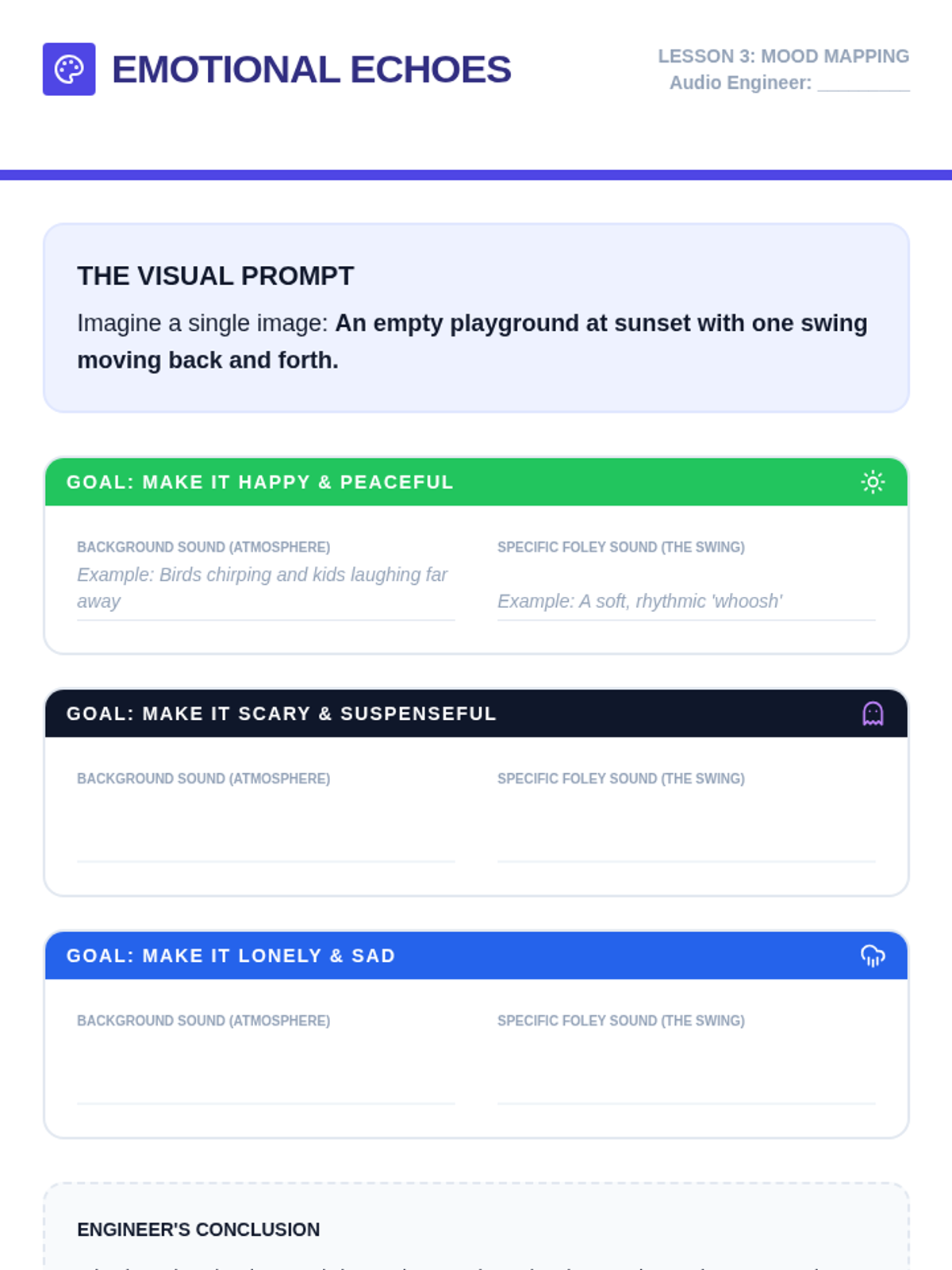
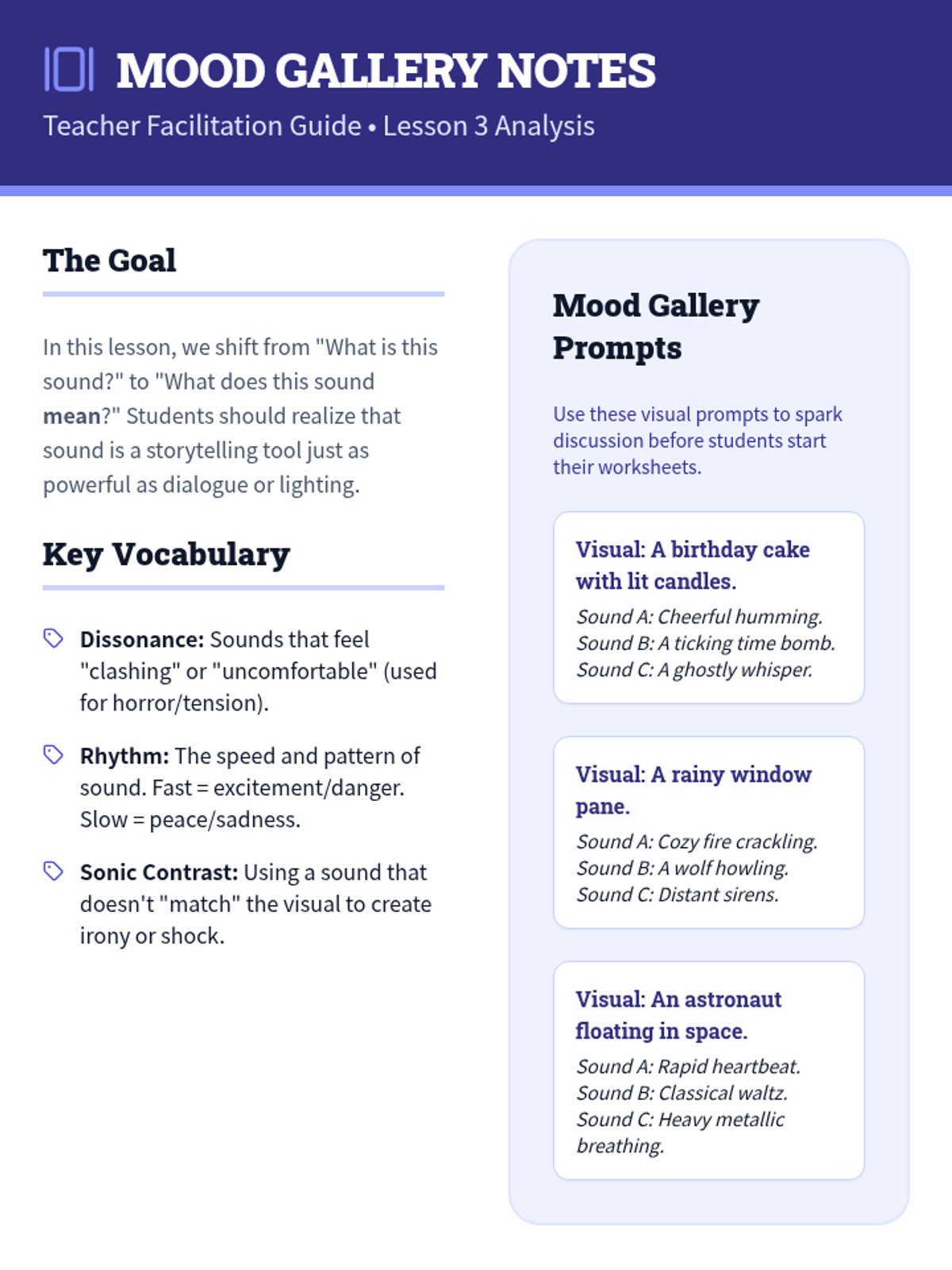
Students explore the psychological impact of sound by choosing different audio textures to shift the mood of a single visual image from happy to scary or sad.
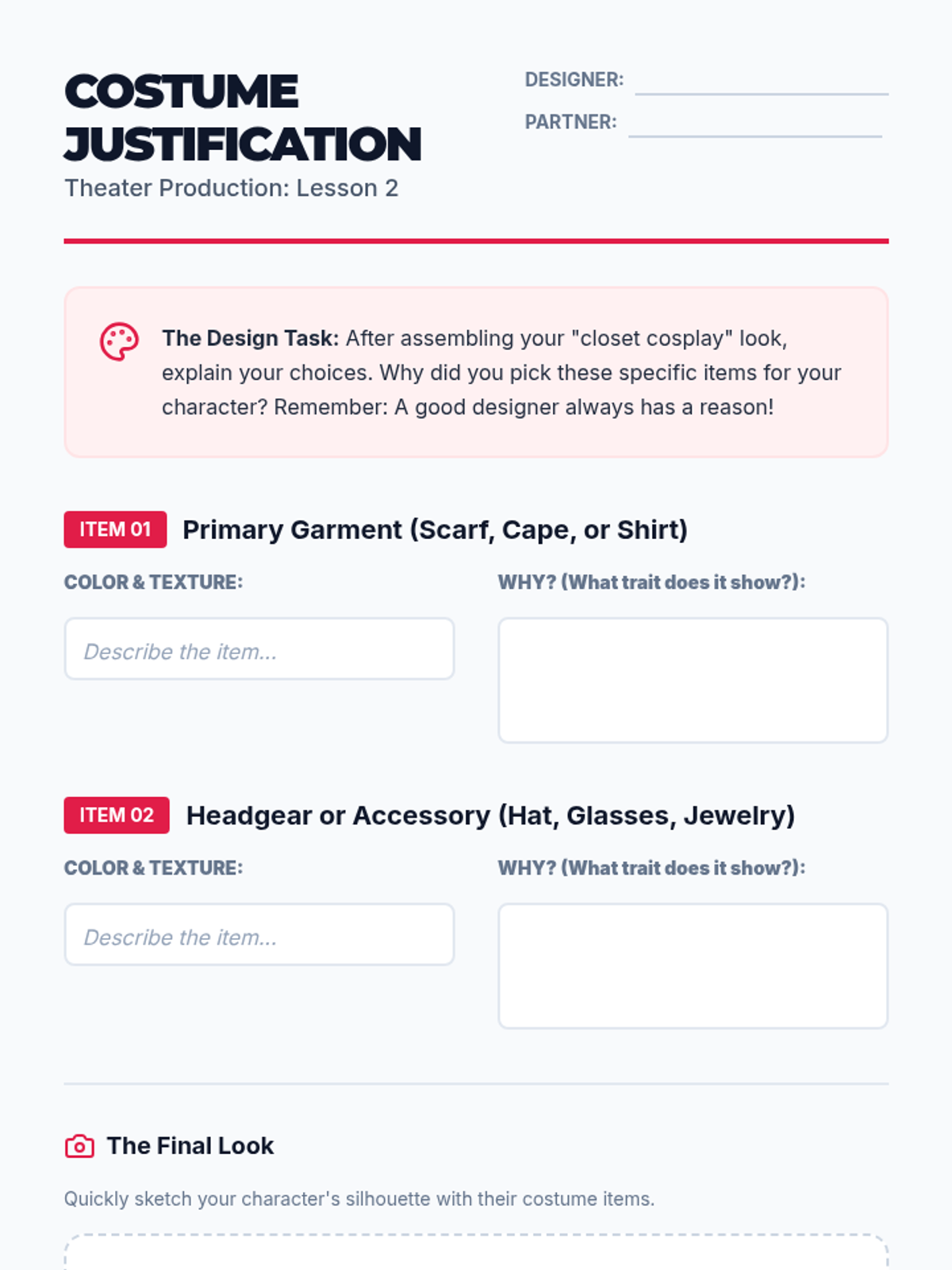
Using a collection of hats, scarves, and fabric swatches, students assemble a 'look' for a specific character. They practice justifying why a specific color or texture fits the character's personality.
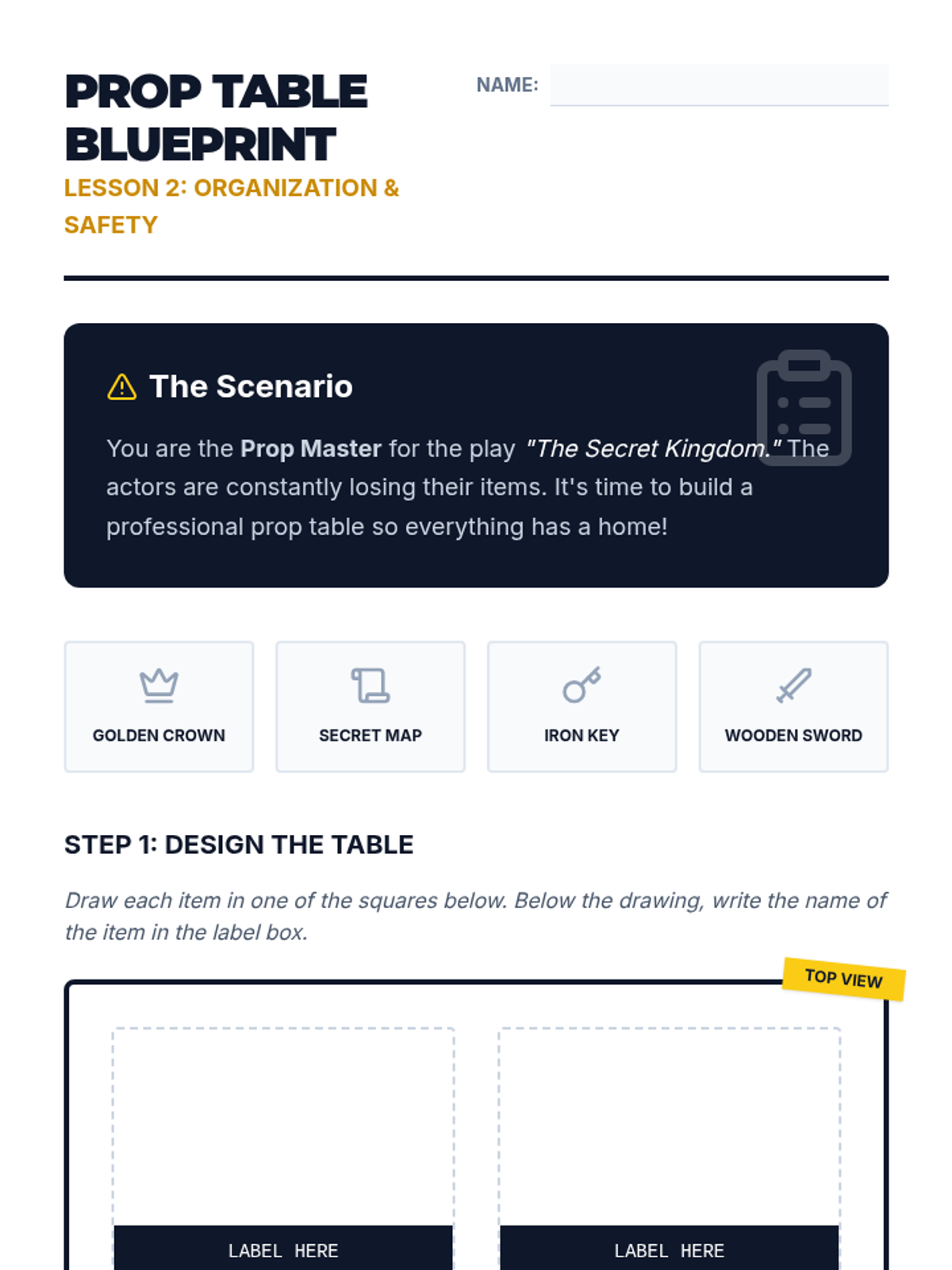
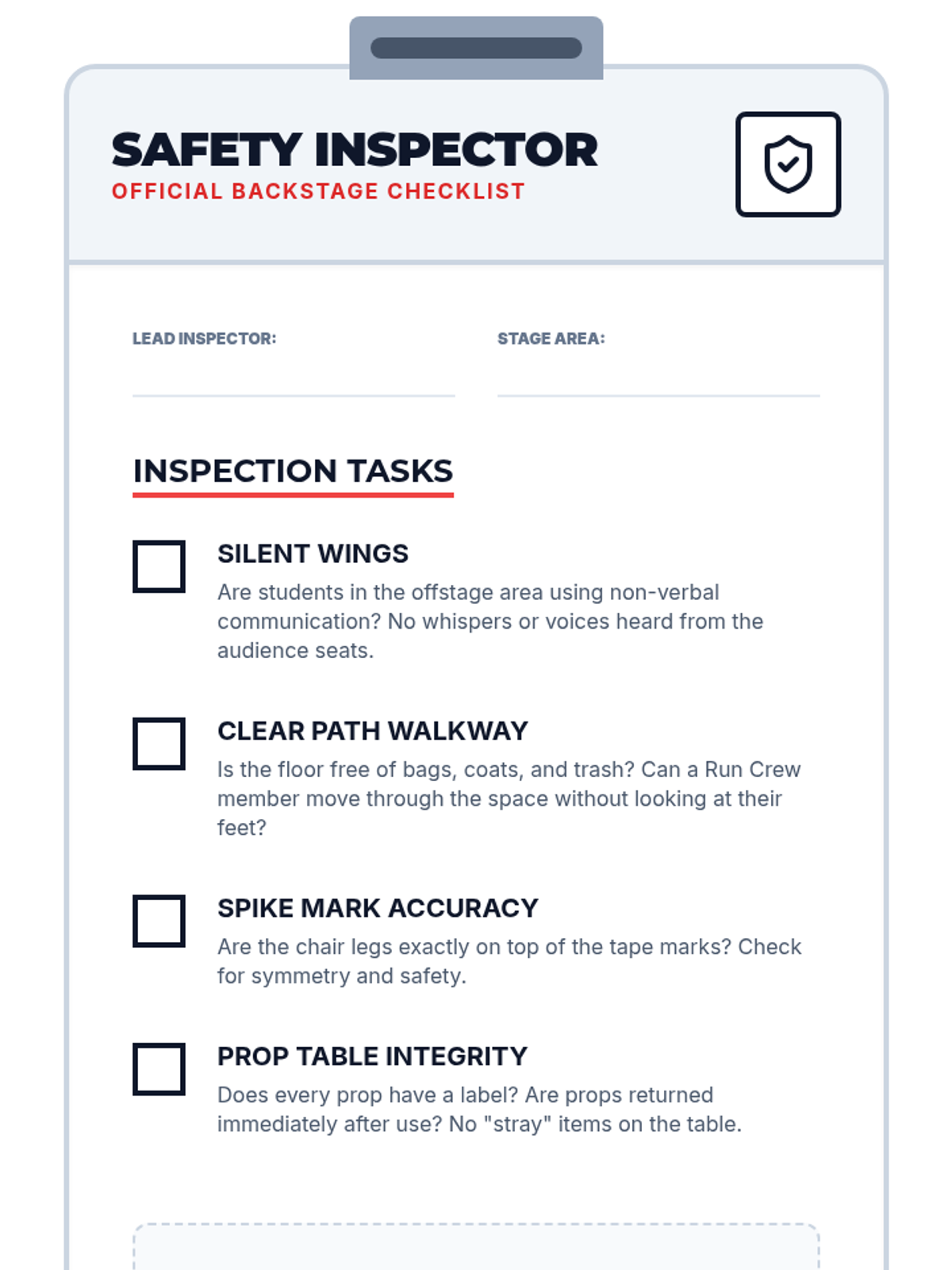
Students explore stage organization techniques like spike tape and prop tables to maintain a safe environment.
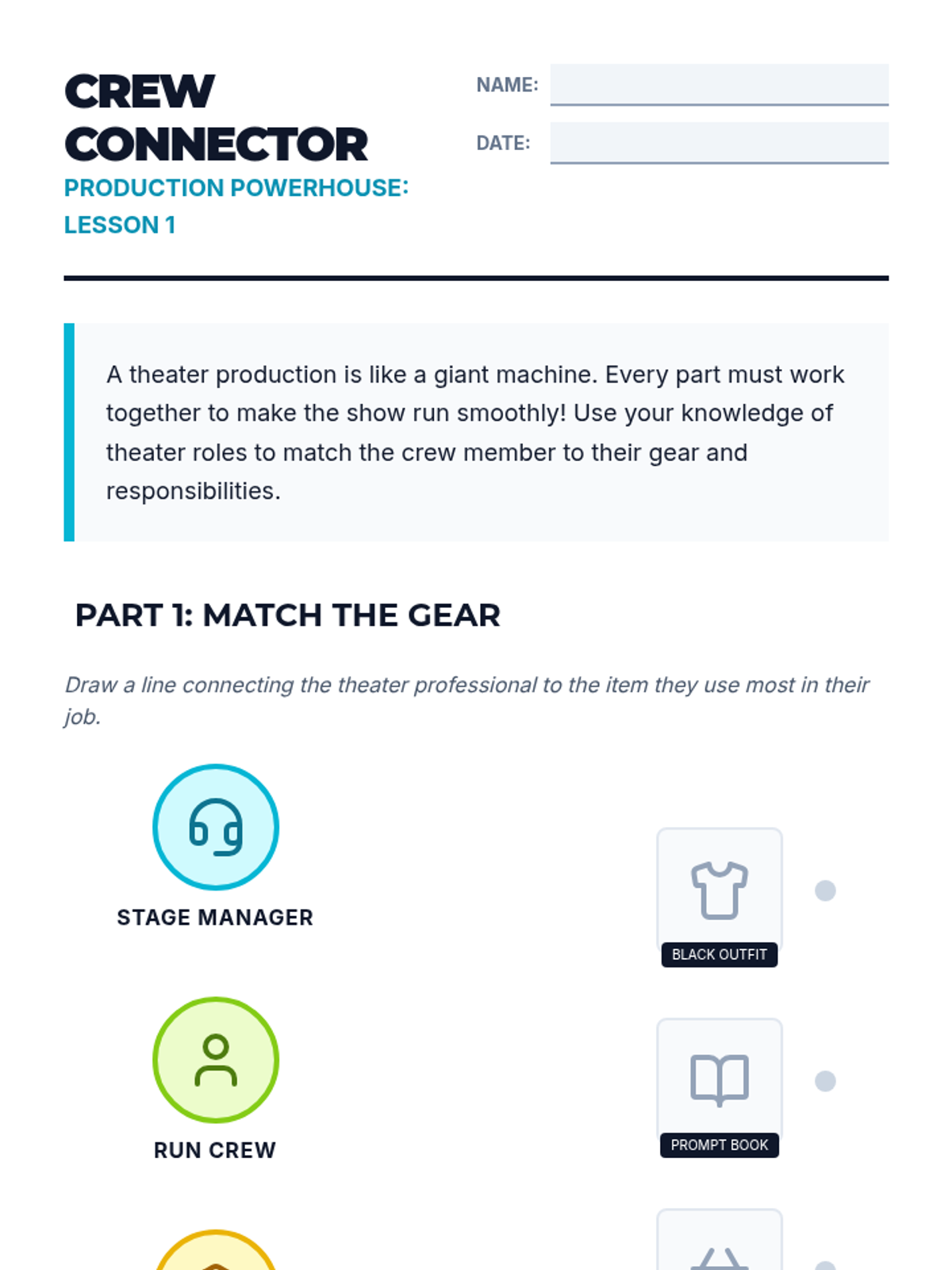
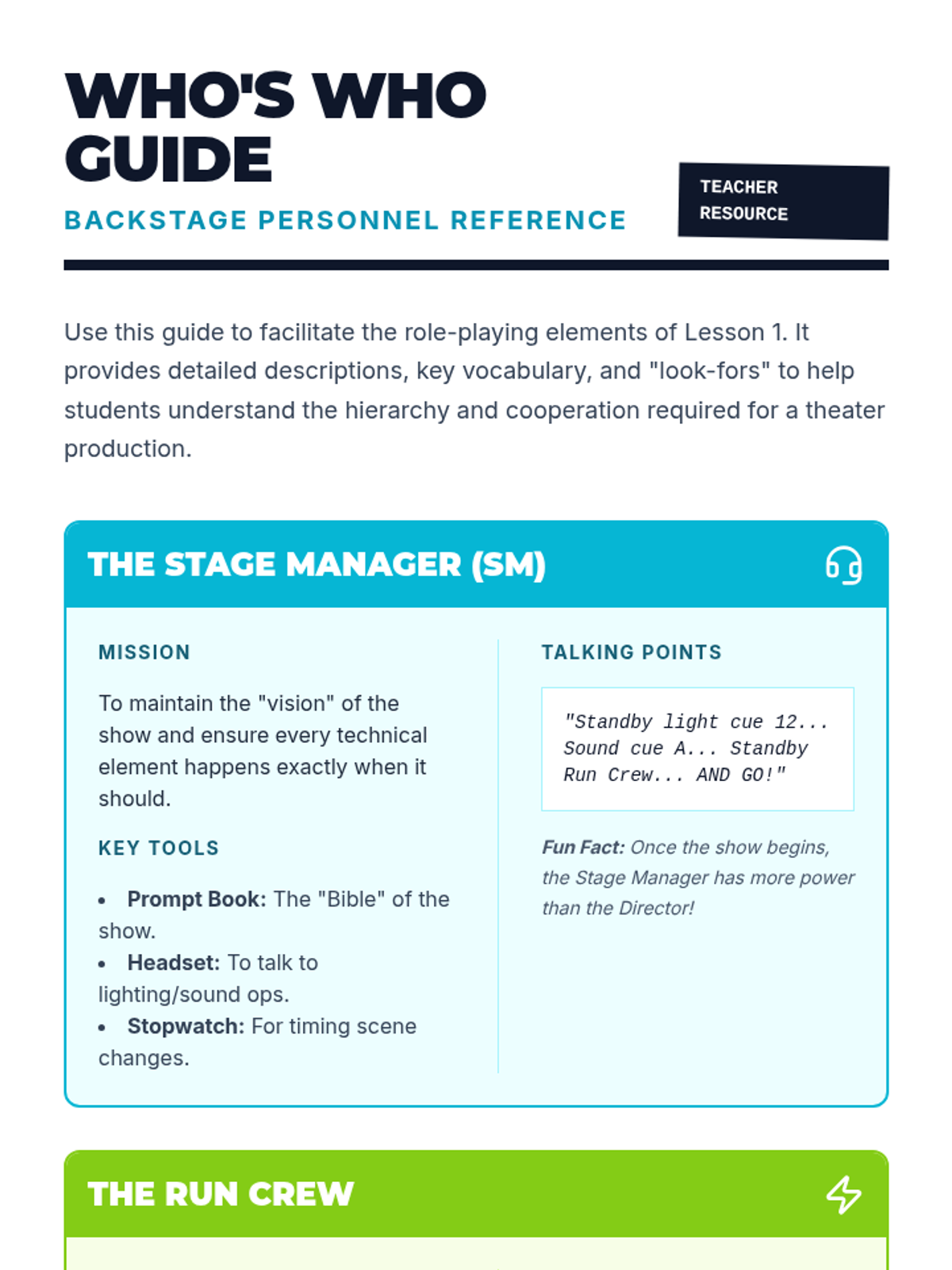
Students identify key backstage roles like Stage Manager and Run Crew, understanding how they differ from actors.
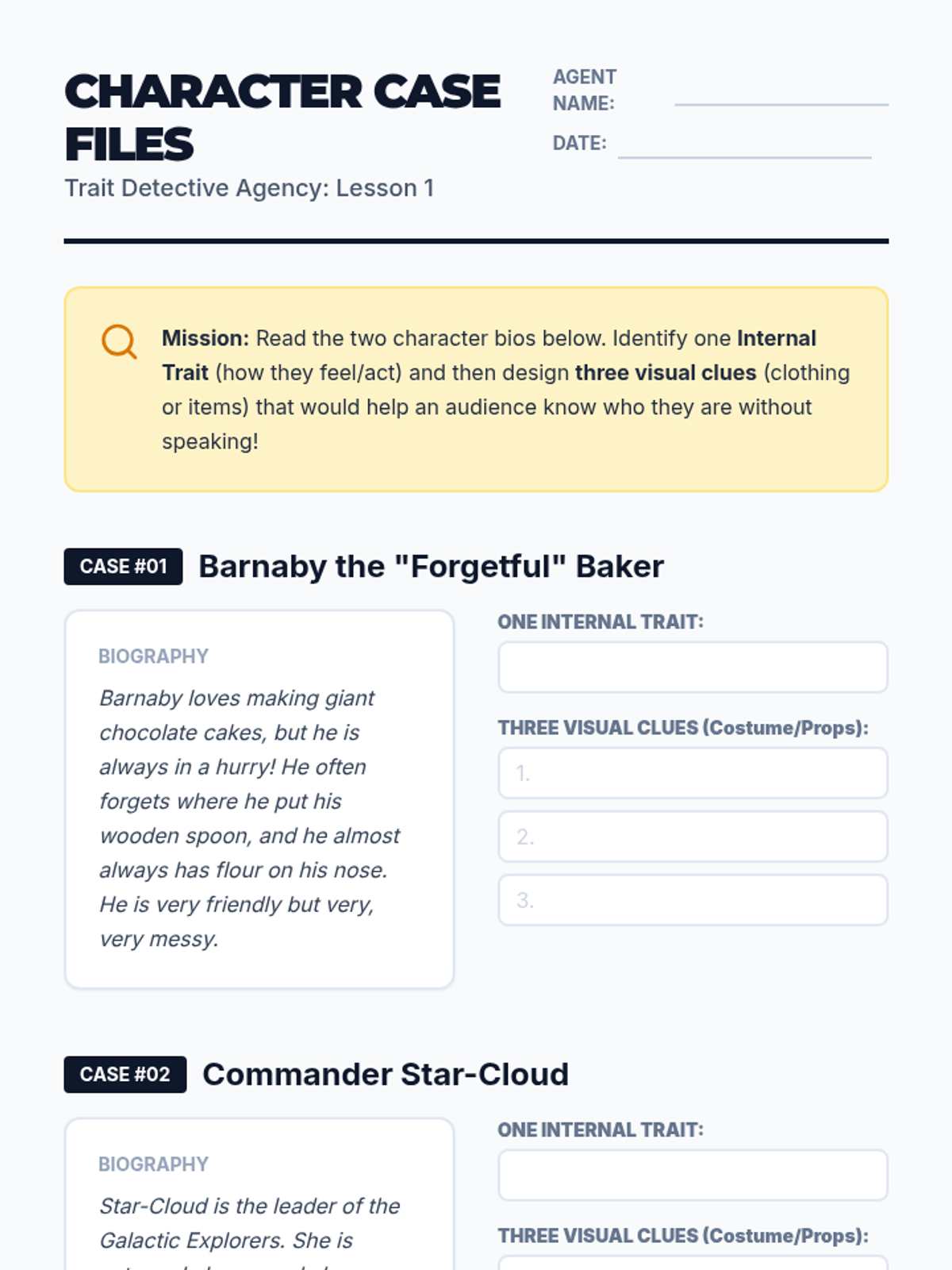
Students read brief character biographies and identify key personality traits. They discuss what visual clues might represent those traits through clothing and accessories.
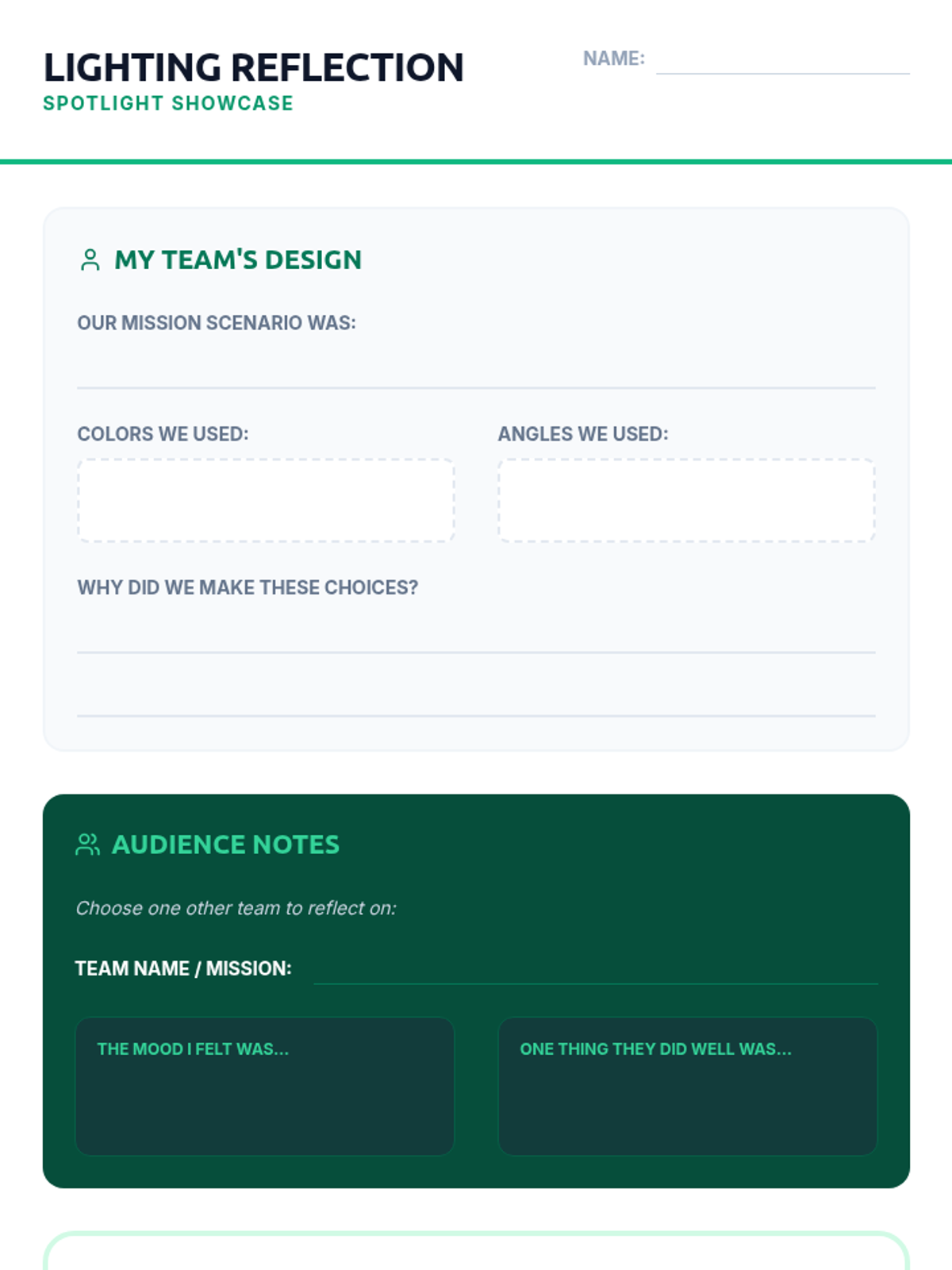
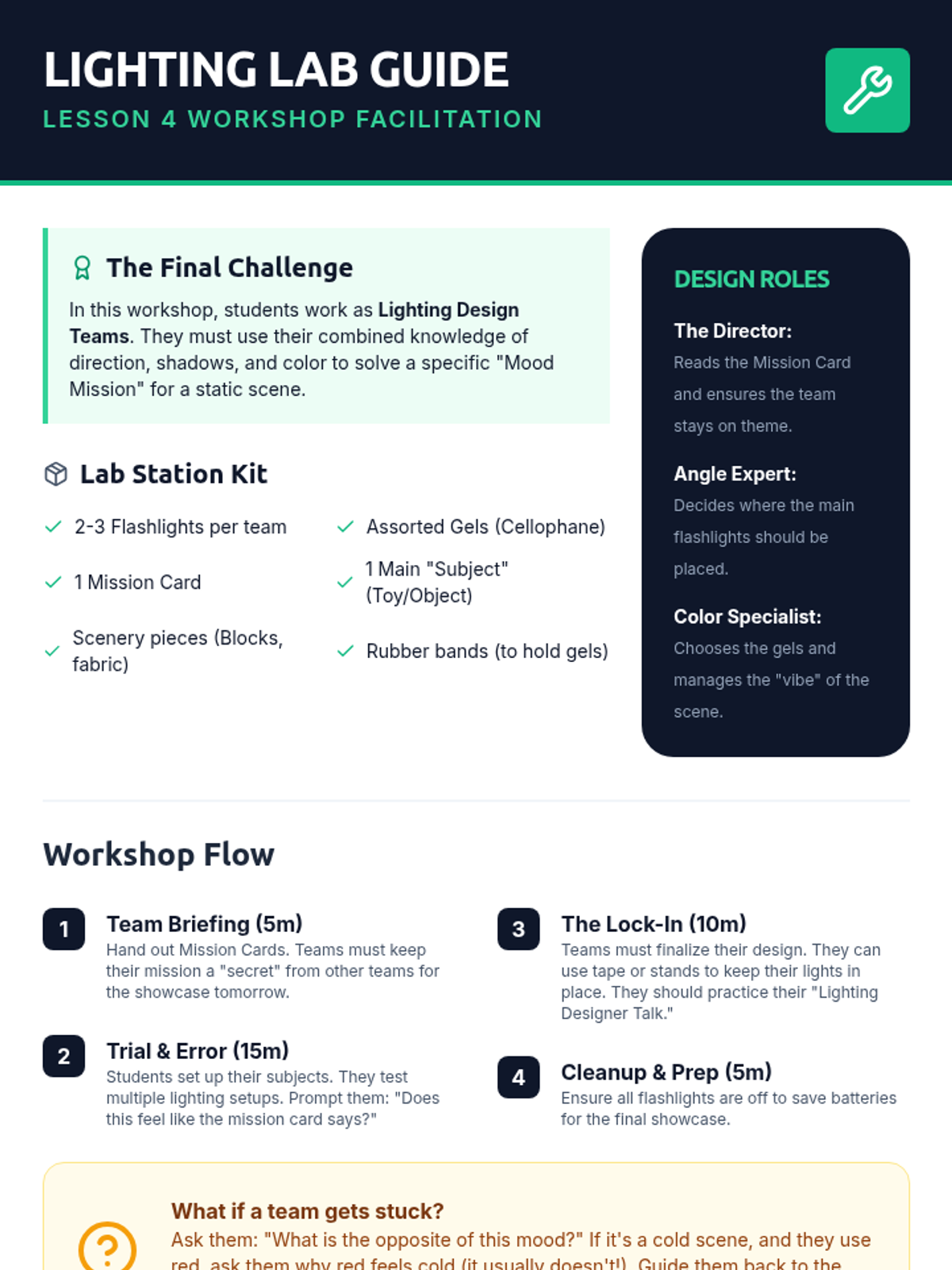
Students present their lighting designs and reflect on how technical choices impact storytelling.
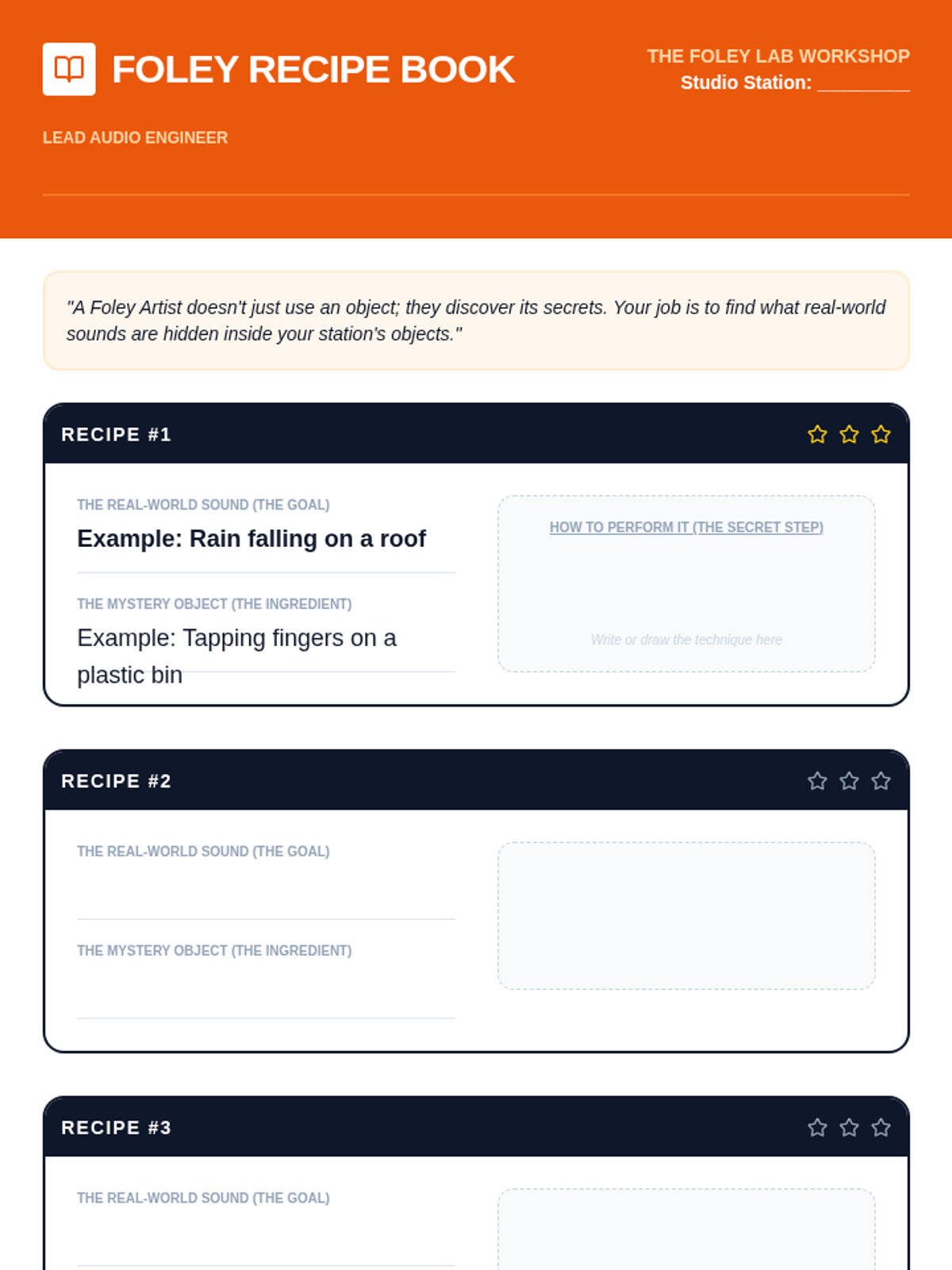
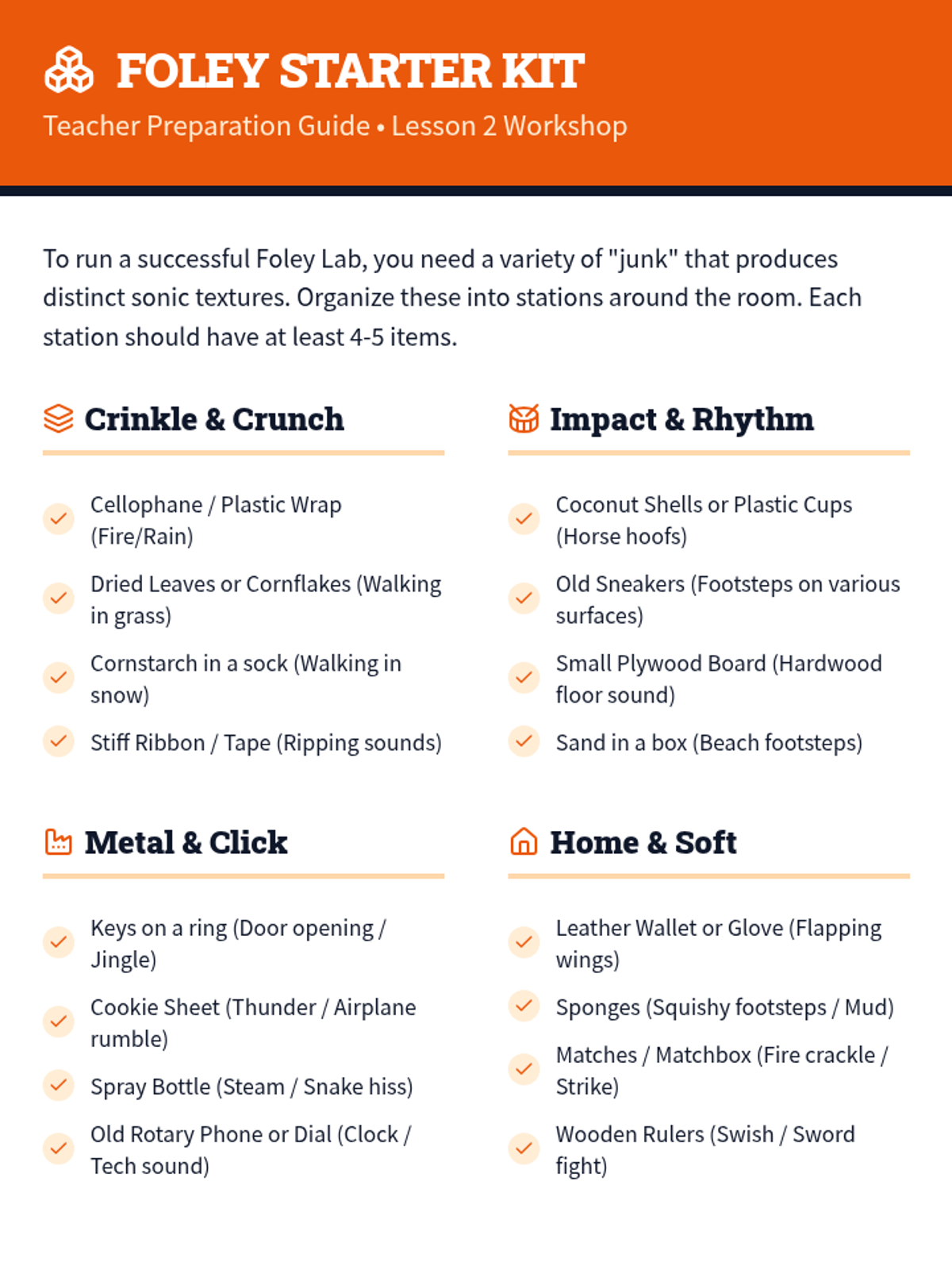
A hands-on workshop where students discover the history of Foley art and experiment with everyday objects to create realistic sound effects for physical actions.
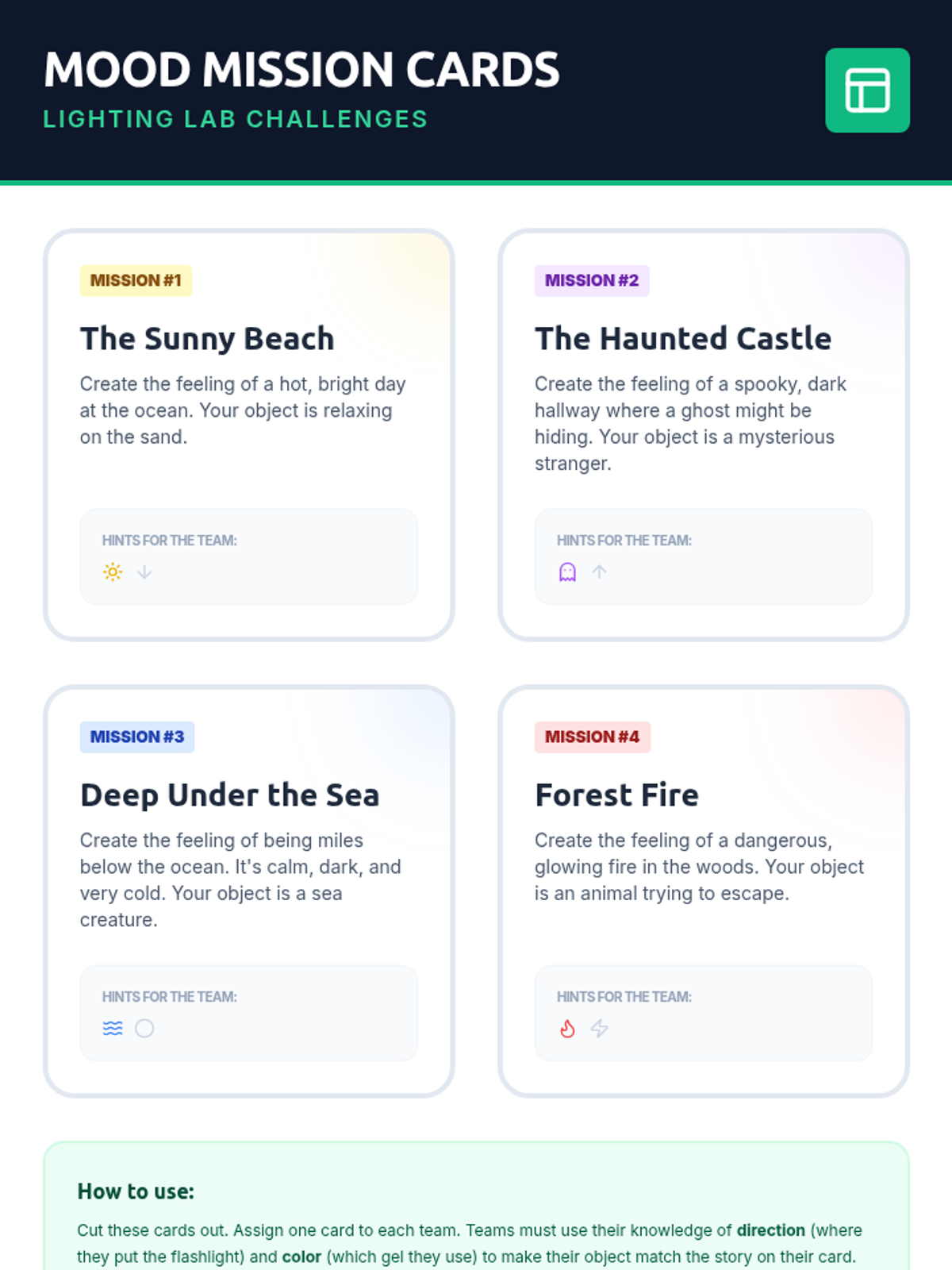
Teams apply their knowledge to light a static scene according to a specific mood prompt.
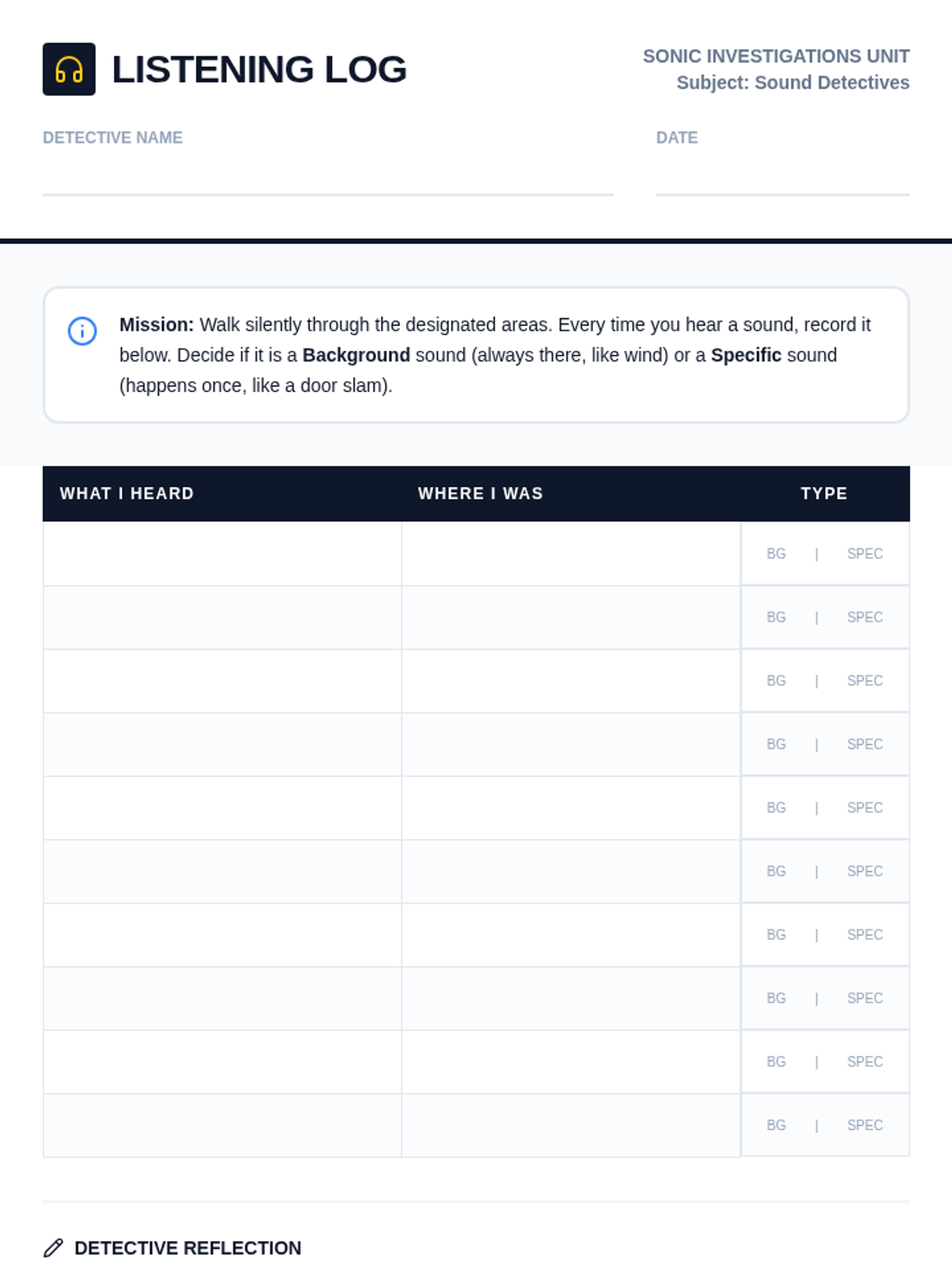
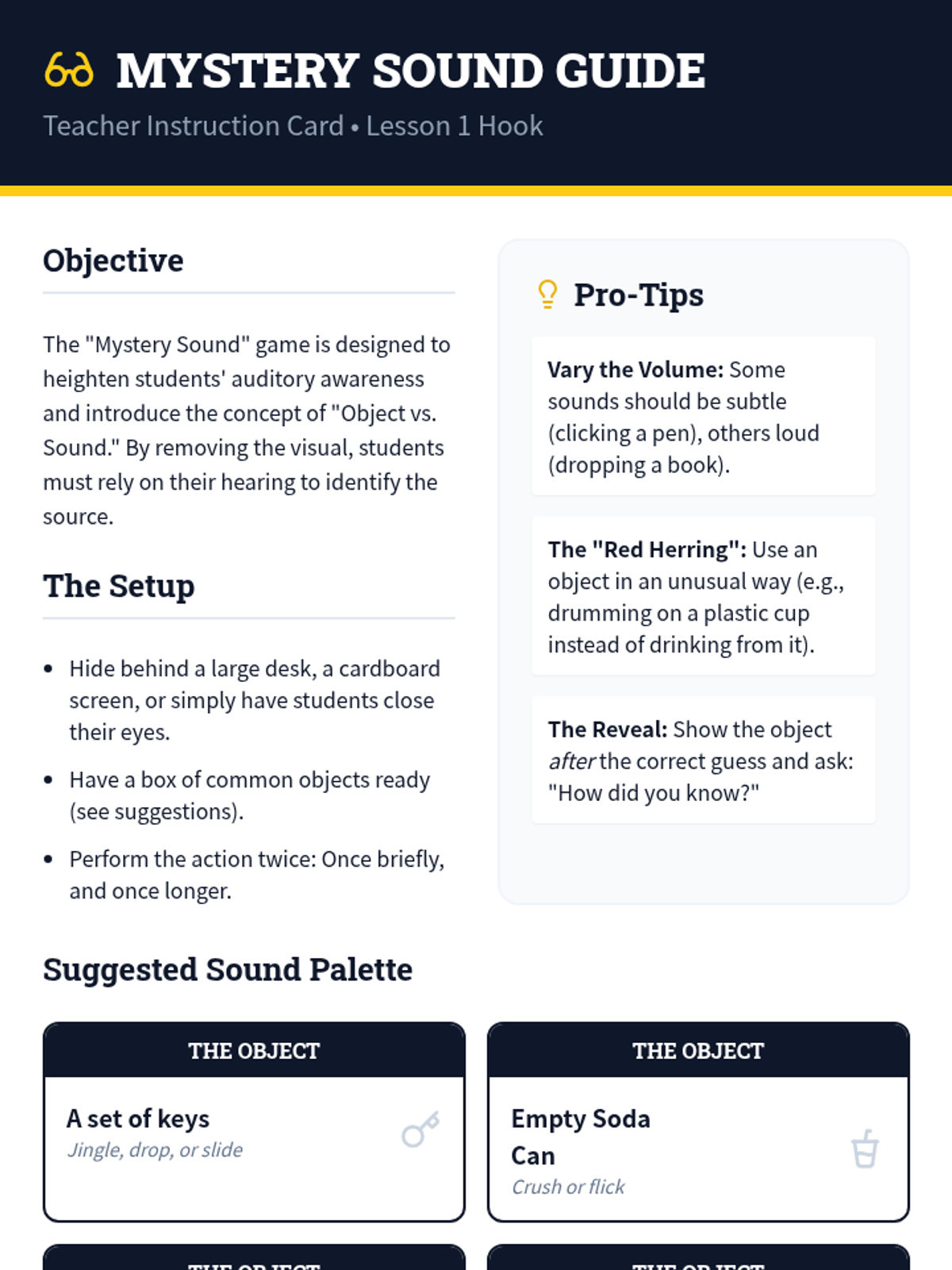
Students investigate the layers of sound in their environment, distinguishing between background 'ambience' and specific 'spot' sounds through a listening walk and a mystery sound game.