Historical evolution of performance, technical stagecraft, and core acting techniques. Develops playwriting skills and fosters imaginative expression through script development and production management.
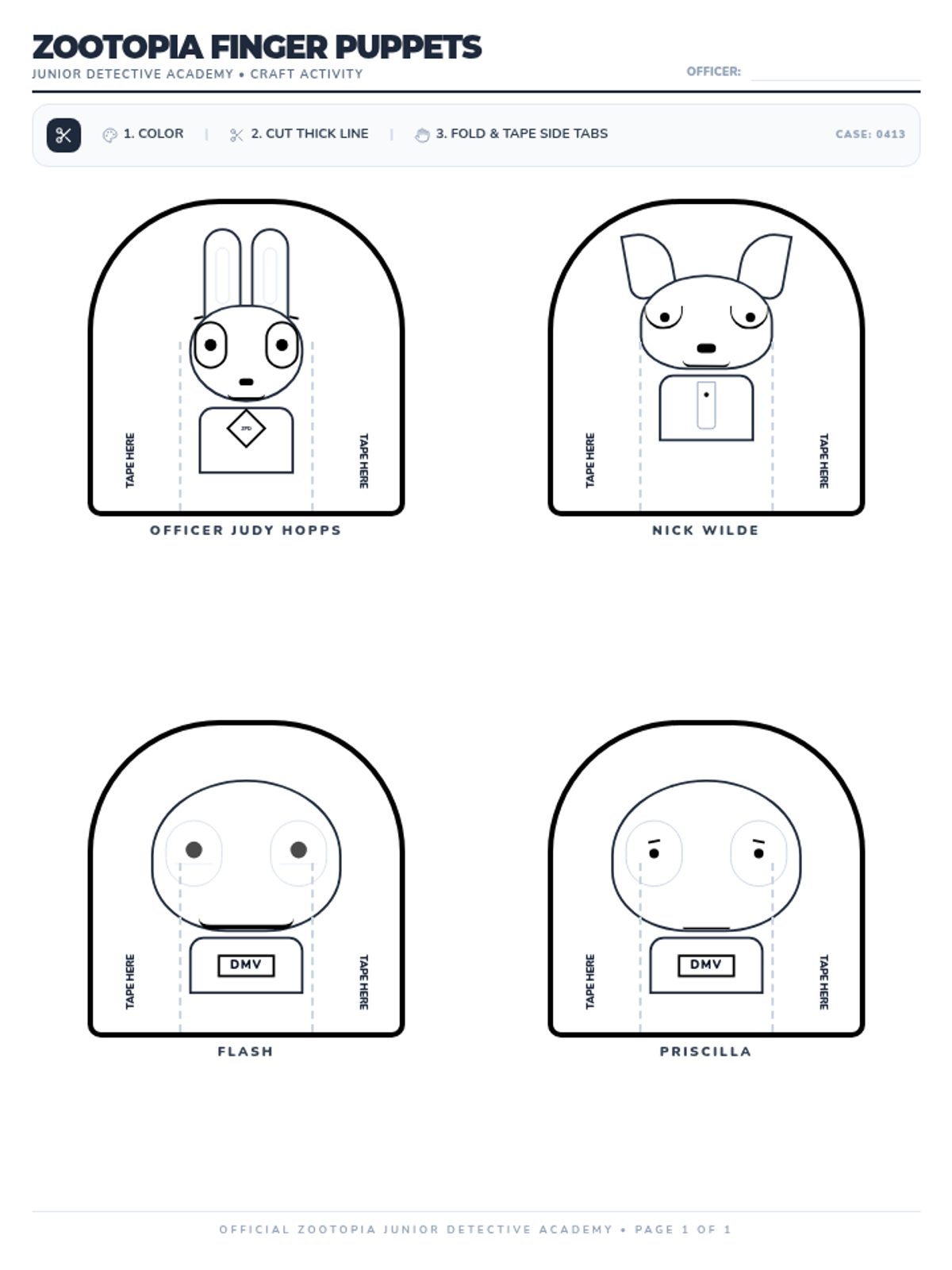
A printable activity sheet featuring Judy Hopps, Nick Wilde, and Flash the Sloth with thick outlines for easy cutting and finger puppet assembly.
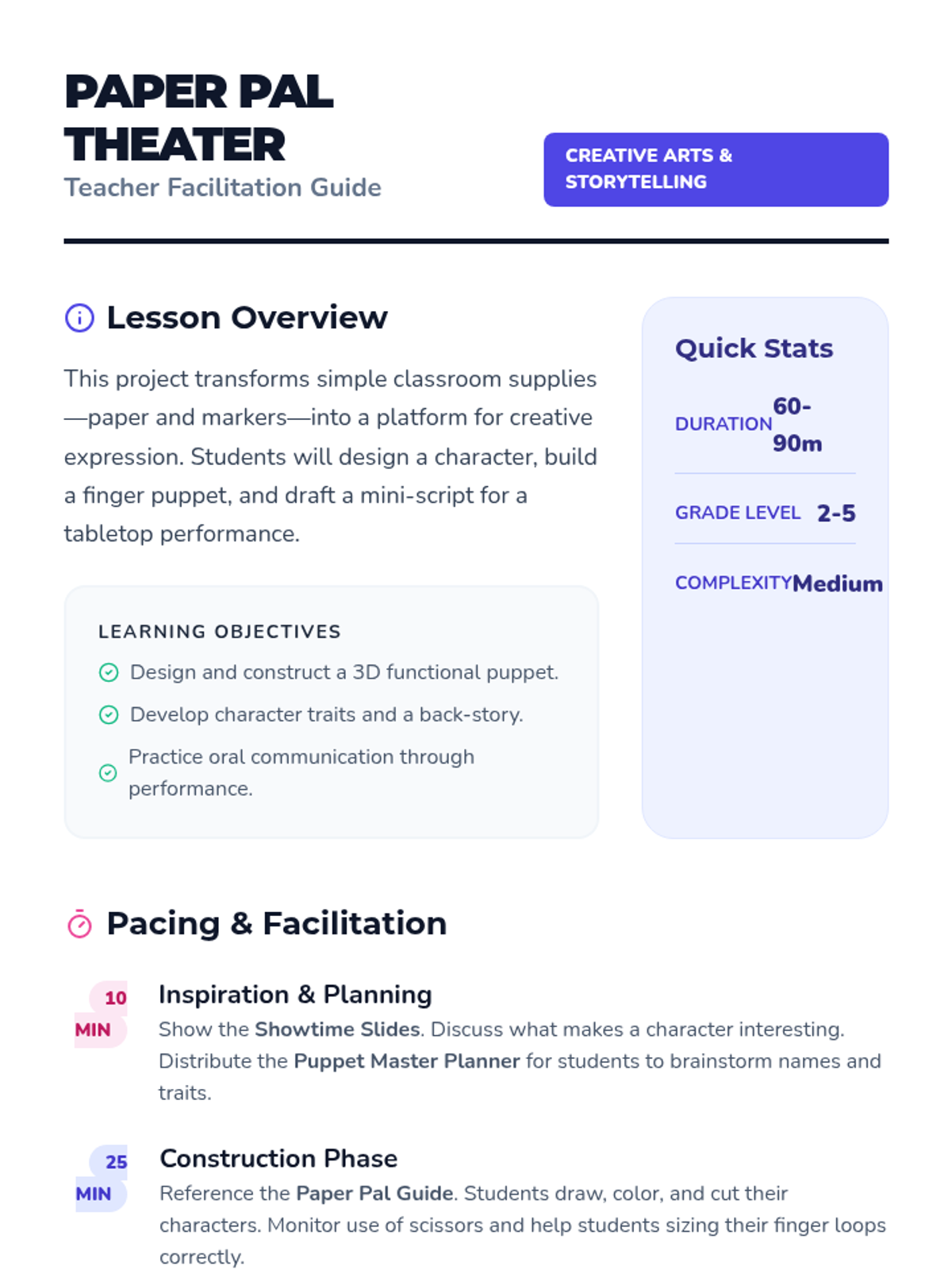
A teacher guide providing lesson objectives, a detailed 60-minute pacing guide, differentiation strategies, and tips for troubleshooting common student issues during the craft project.
A slide deck for visual instruction, featuring the project toolkit, character design tips, creative inspiration, and performance guidance for the Paper Pal Theater project.
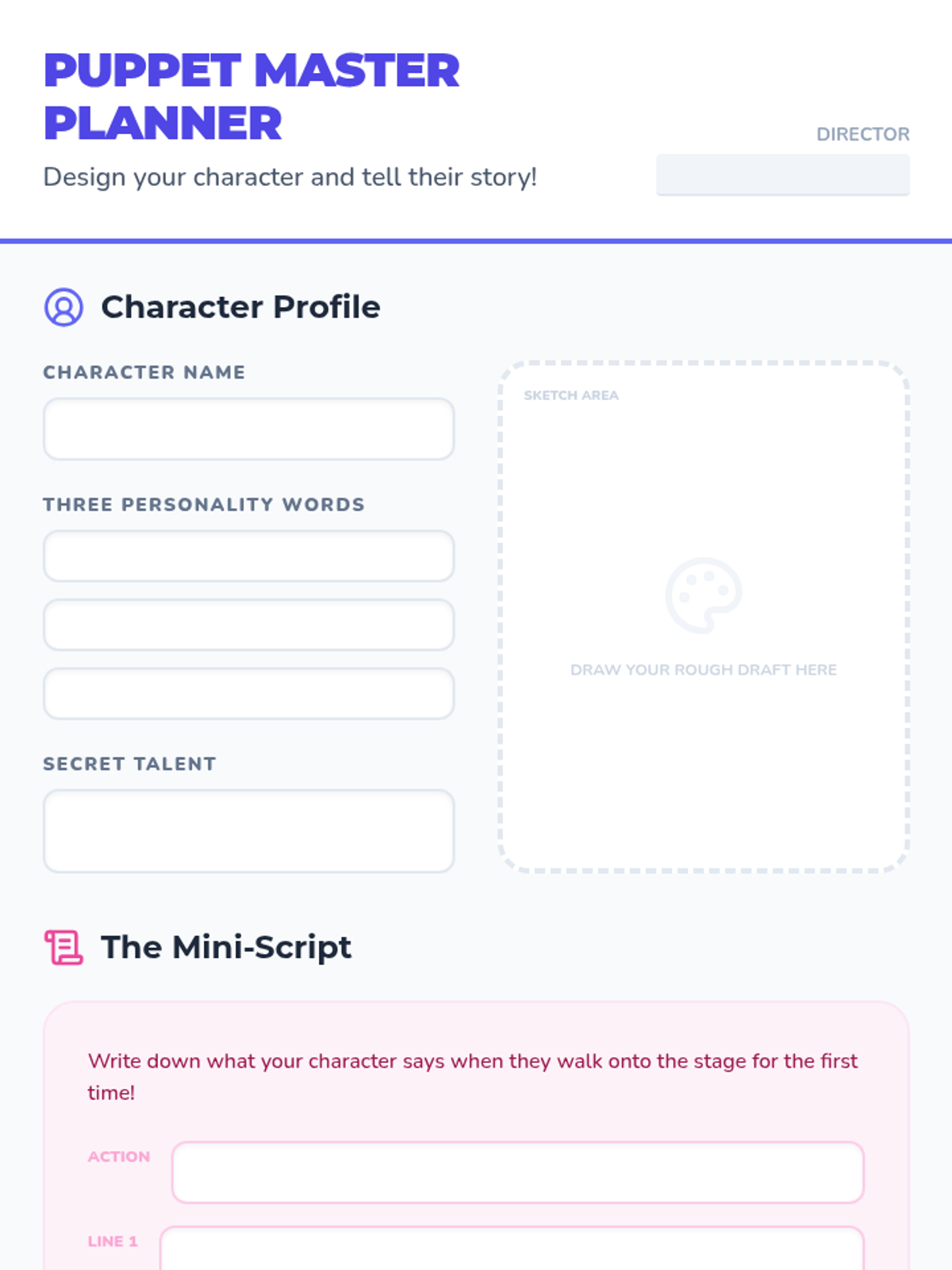
A planning worksheet for students to develop their paper puppet's personality, secret talent, and a short script. Includes dedicated areas for sketching and stage design notes.
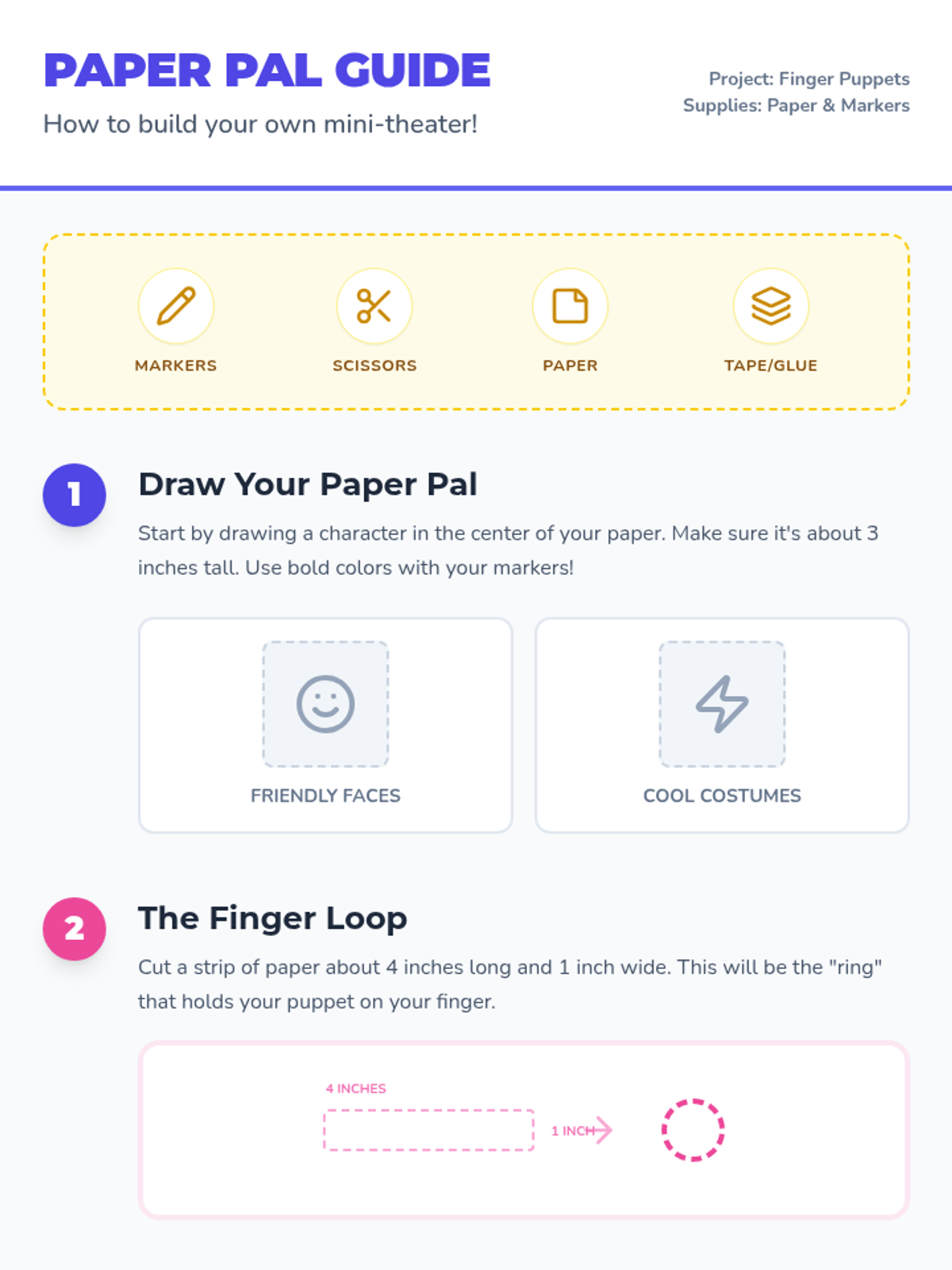
A visual step-by-step project guide for creating finger puppets and a mini stage using paper and markers. Includes clear illustrations, tool lists, and assembly instructions.
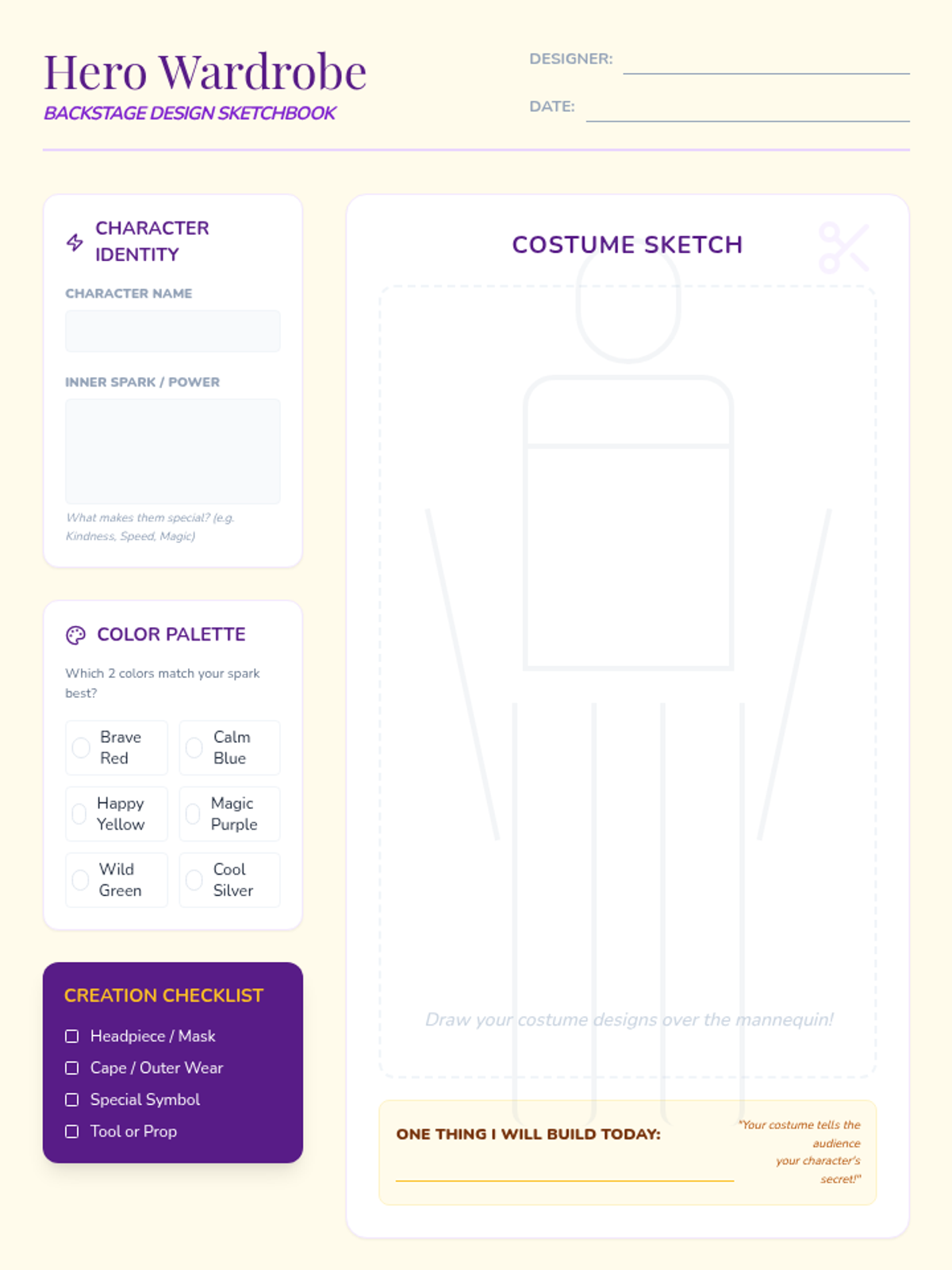
A creative design worksheet for students to conceptualize their character, choose a color palette, and sketch a costume design over a mannequin template.
A vibrant and engaging visual presentation for kids aged 5-10, covering costume definition, ancient history, the psychology of color, and activity instructions.
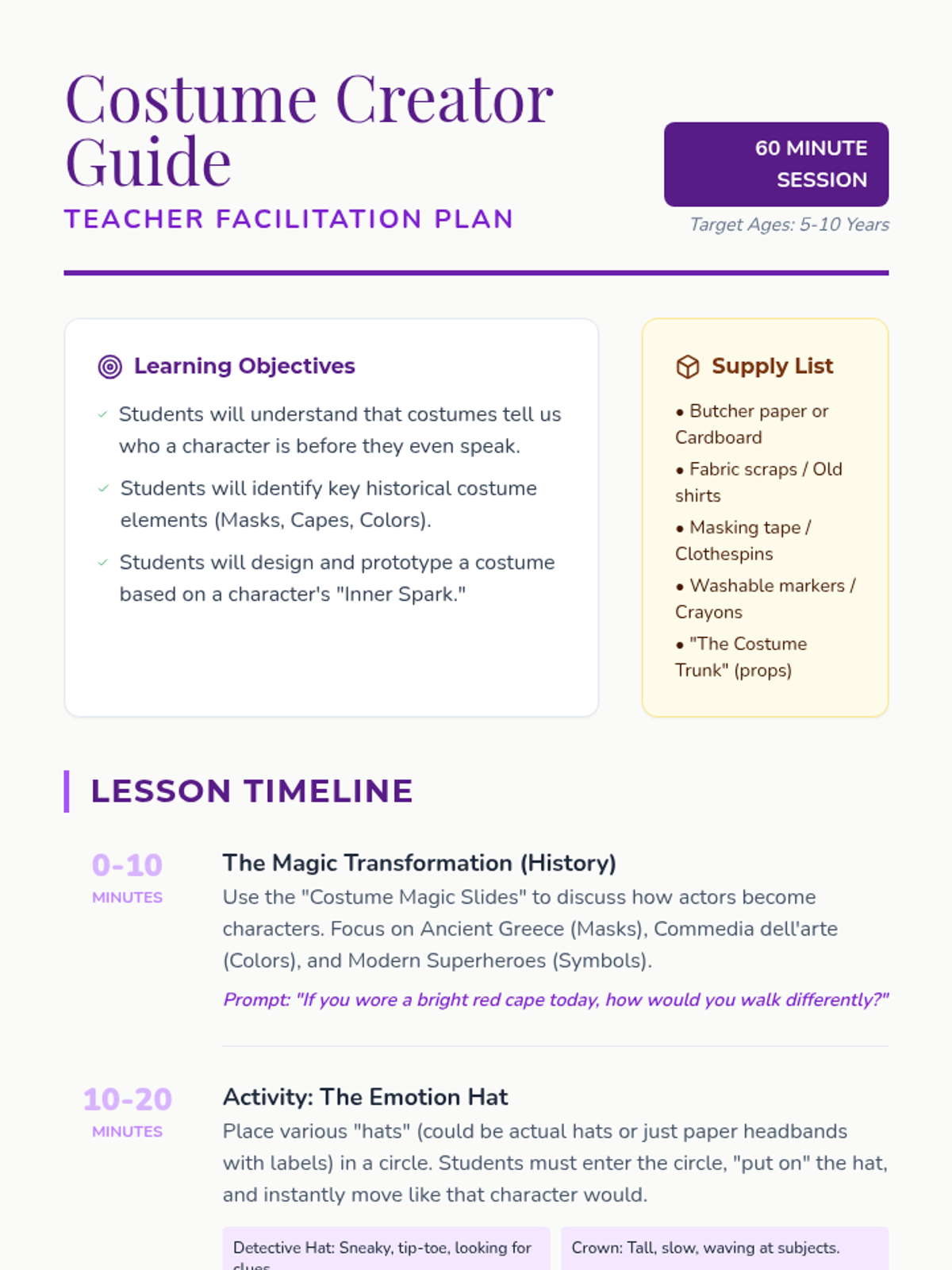
A comprehensive teacher's facilitation guide for a 60-minute costume workshop, including a timed lesson plan, activity instructions, and pedagogical tips for different age groups.
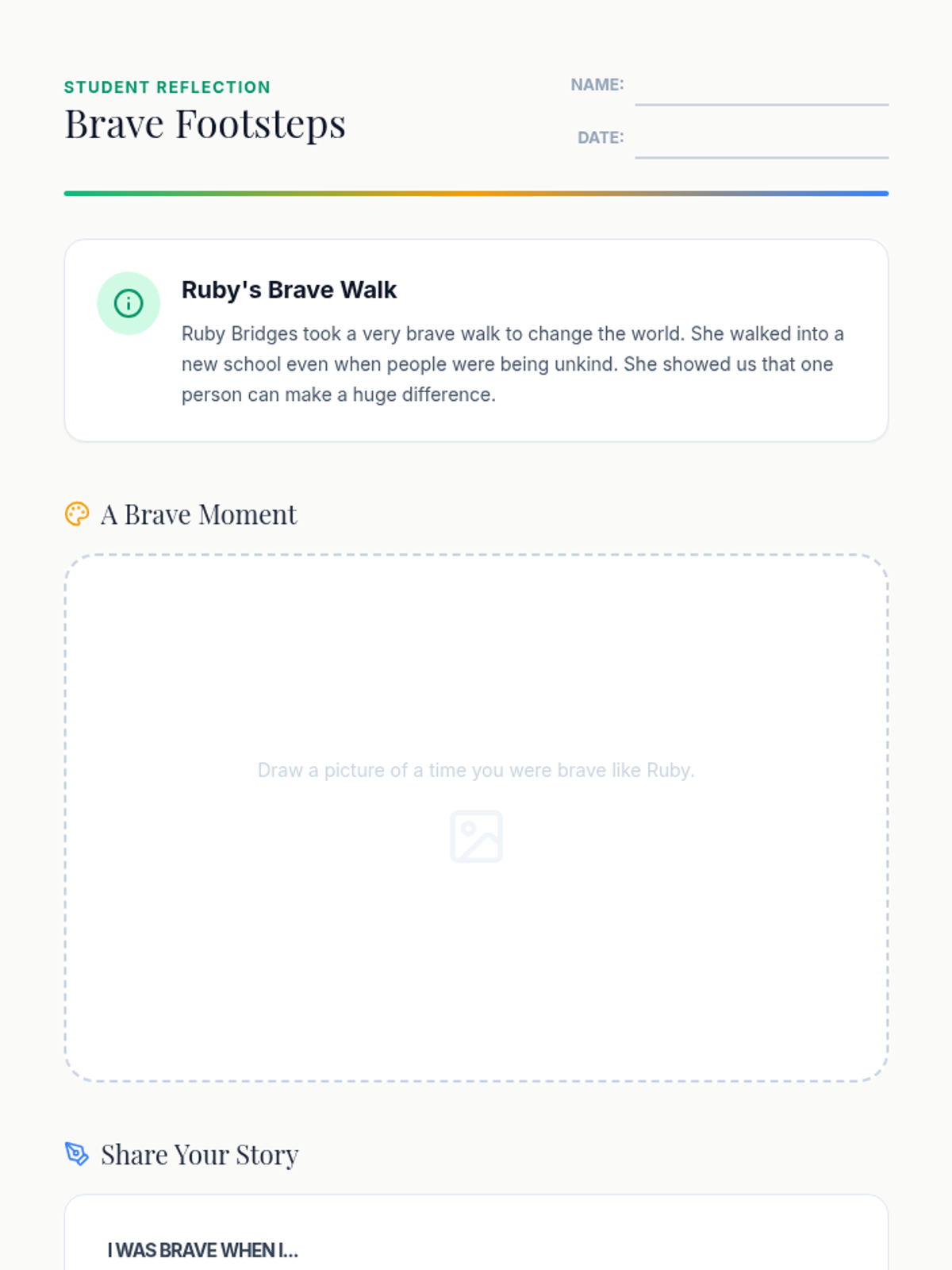
A student reflection worksheet where children draw and write about their own experiences with bravery, connecting them to Ruby Bridges' story.
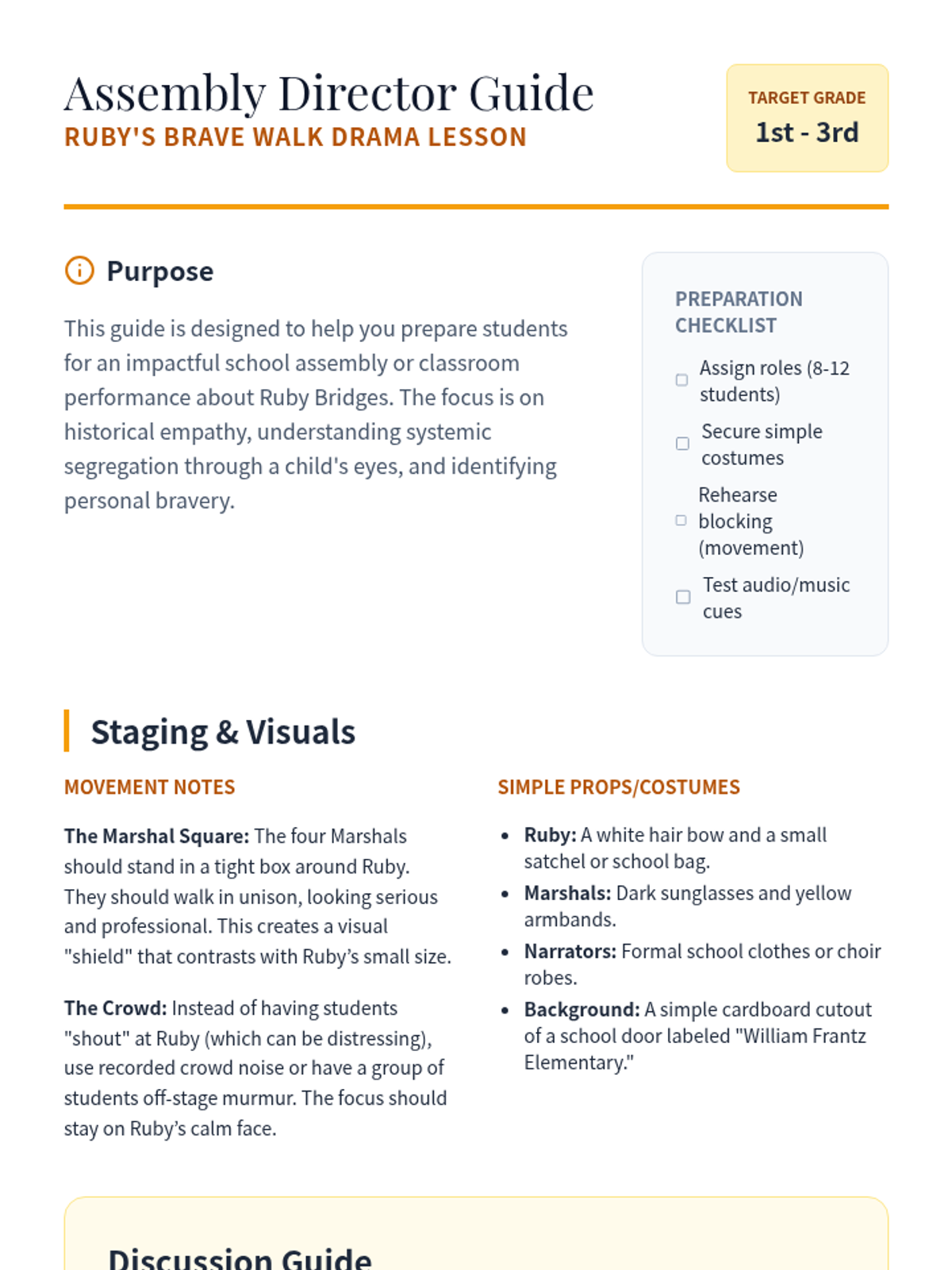
A teacher-facing guide providing staging tips, prop suggestions, and discussion questions to facilitate the Ruby Bridges school assembly script.
A visual presentation for primary students introducing the story of Ruby Bridges, defining segregation, and exploring the concept of bravery.
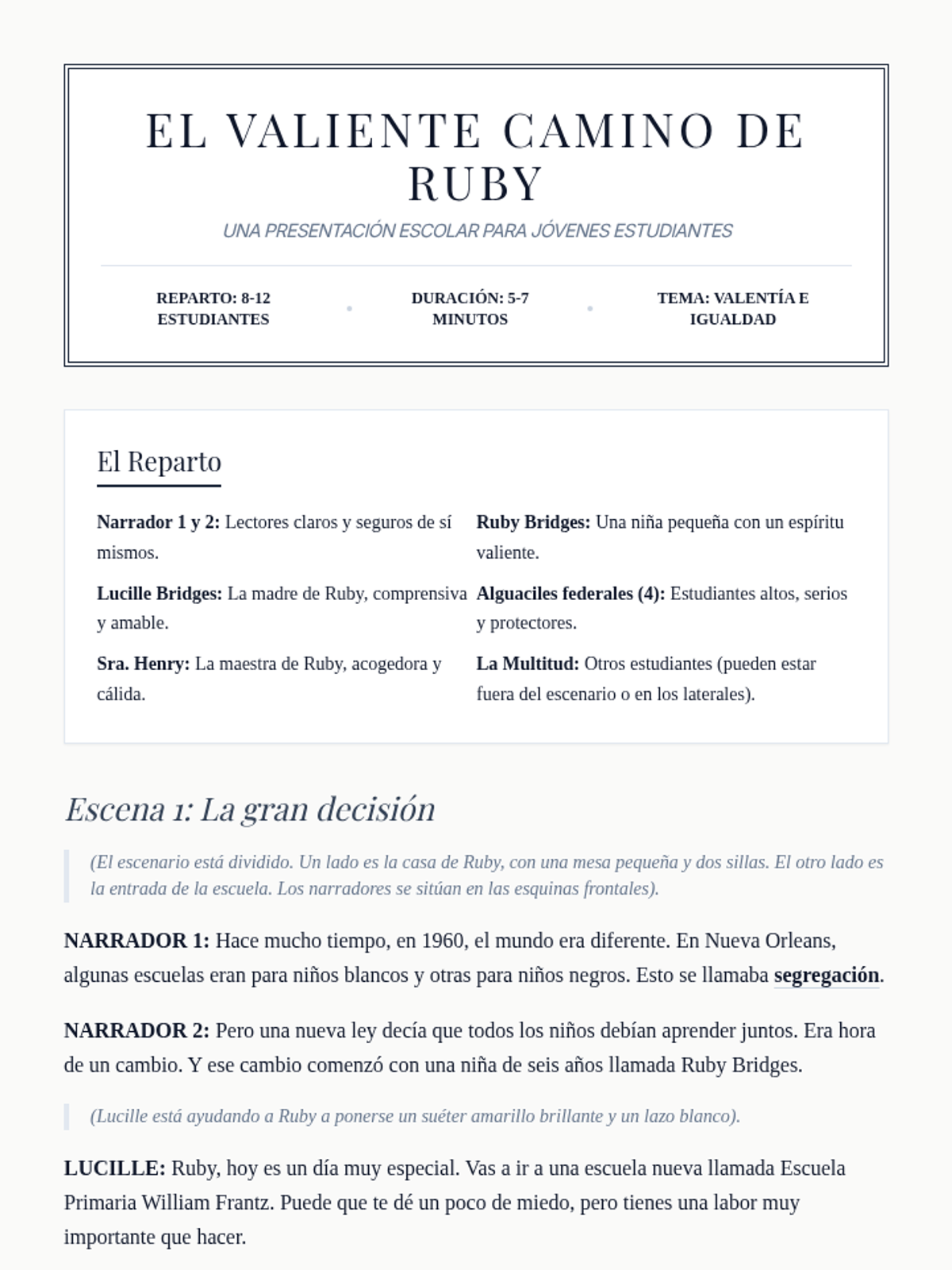
A short, 3-scene assembly script for primary students about Ruby Bridges, focusing on her first day at William Frantz Elementary and the themes of bravery and segregation.
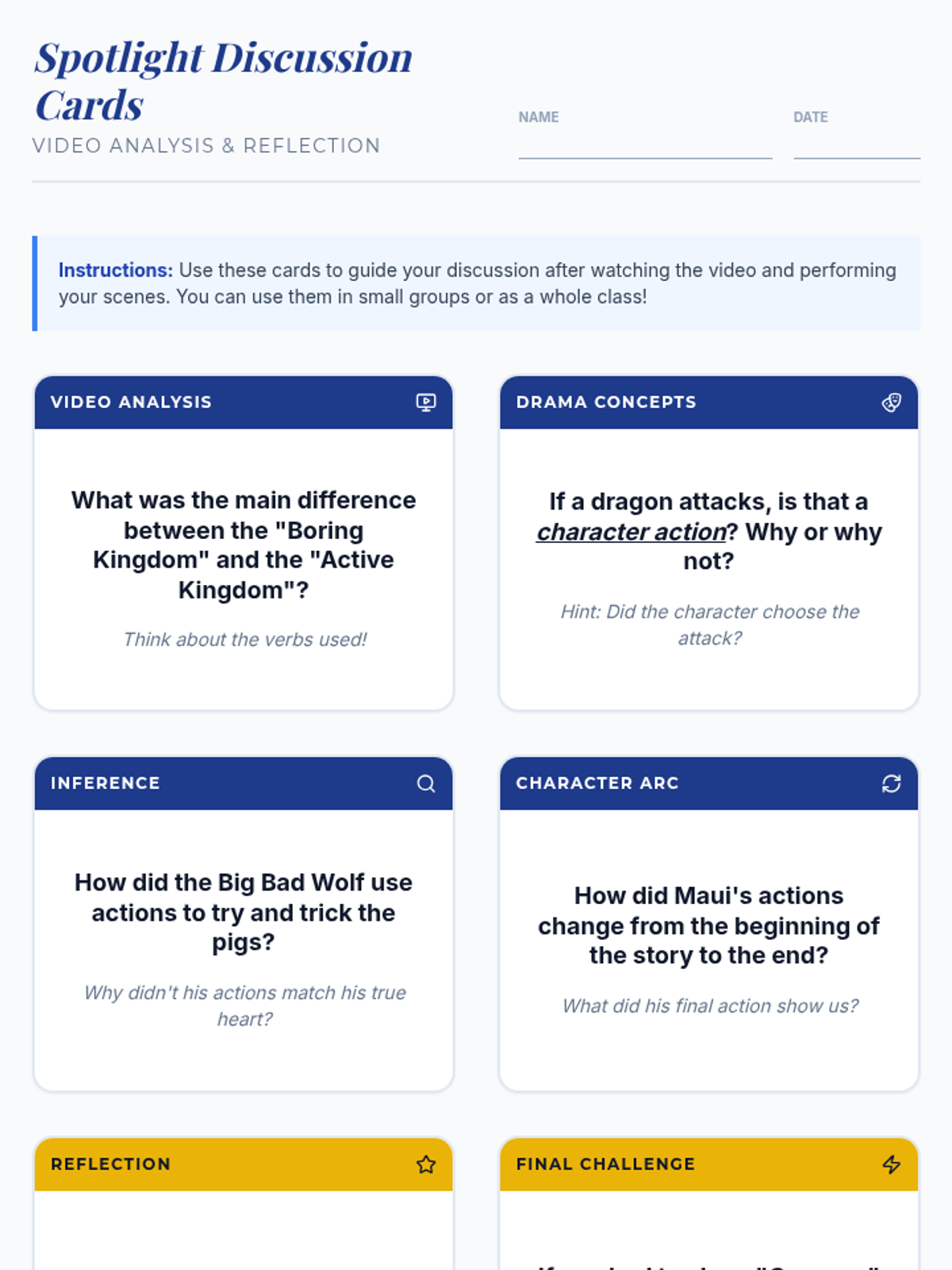
Discussion cards for the Silent Storytellers lesson, featuring guided questions based on the video's teaching moments and final reflections on character action.
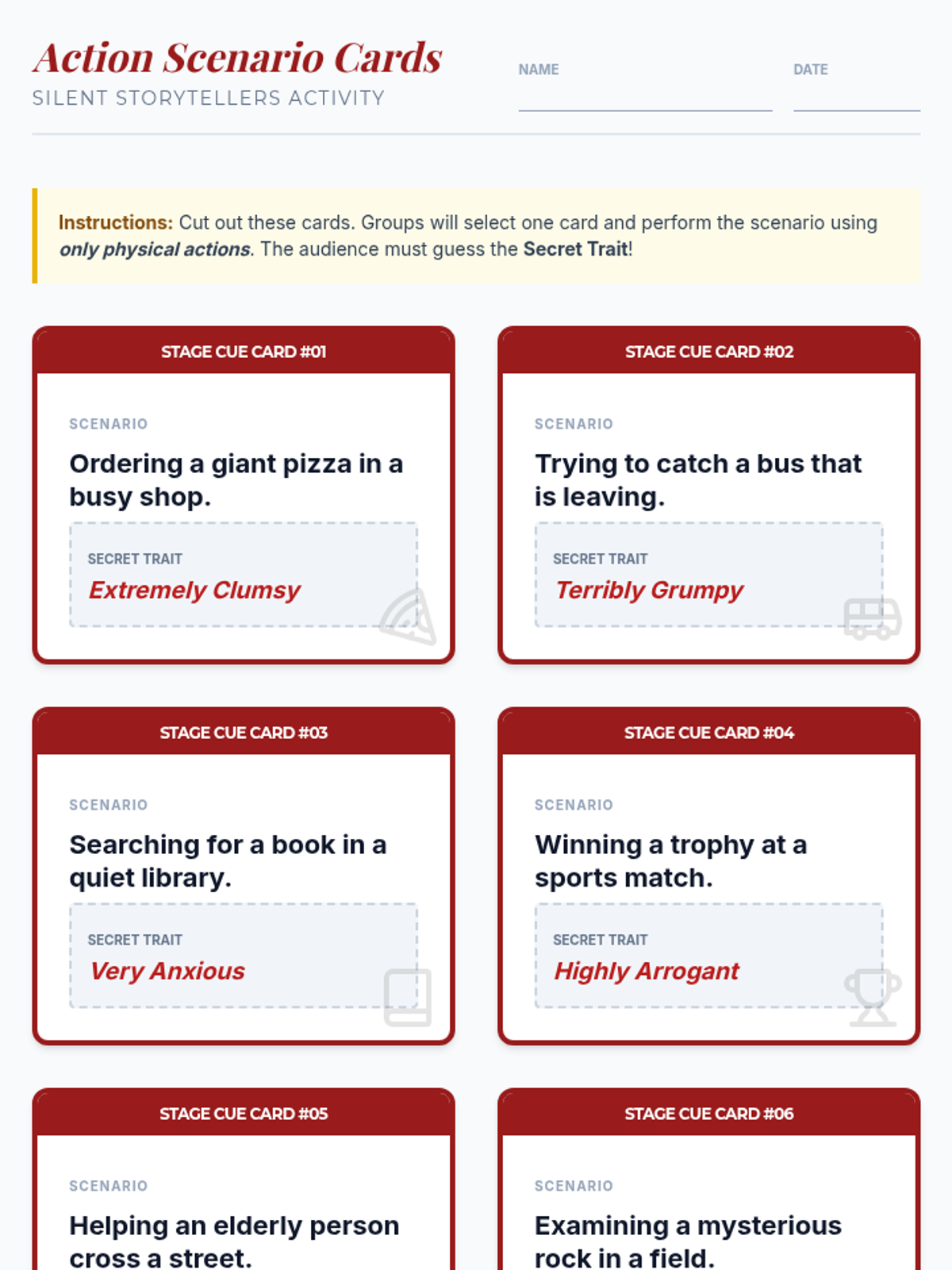
Printable scenario cards for the 'Silent Scenes' activity, featuring various everyday situations paired with specific secret character traits for students to act out.
Visual presentation for the Silent Storytellers lesson, featuring lesson objectives, the 'Horn of Action' warm-up, embedded video analysis, and activity instructions.
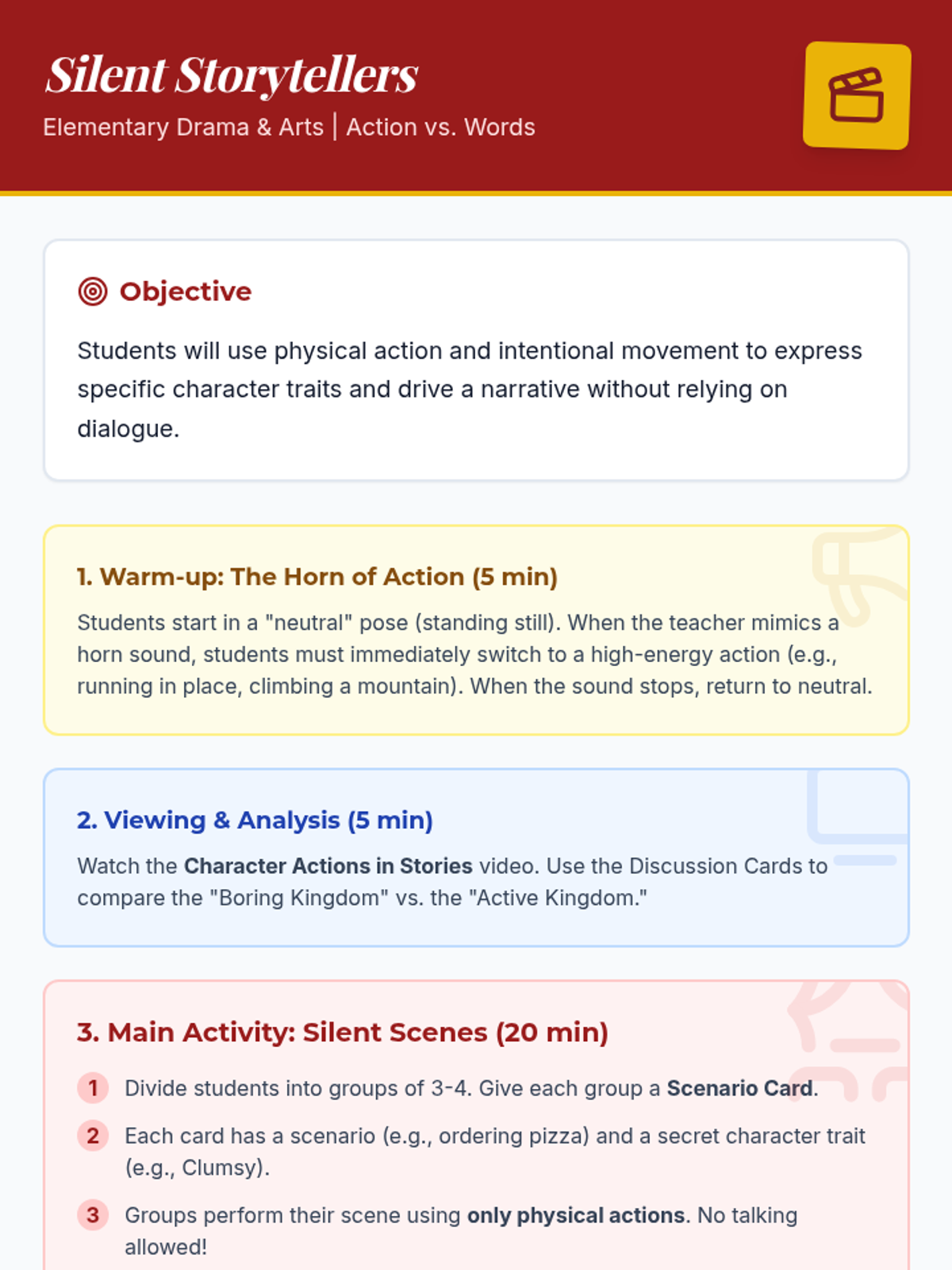
A comprehensive teacher guide for the Silent Storytellers lesson, including objectives, step-by-step lesson flow, and facilitation tips for the drama activities.
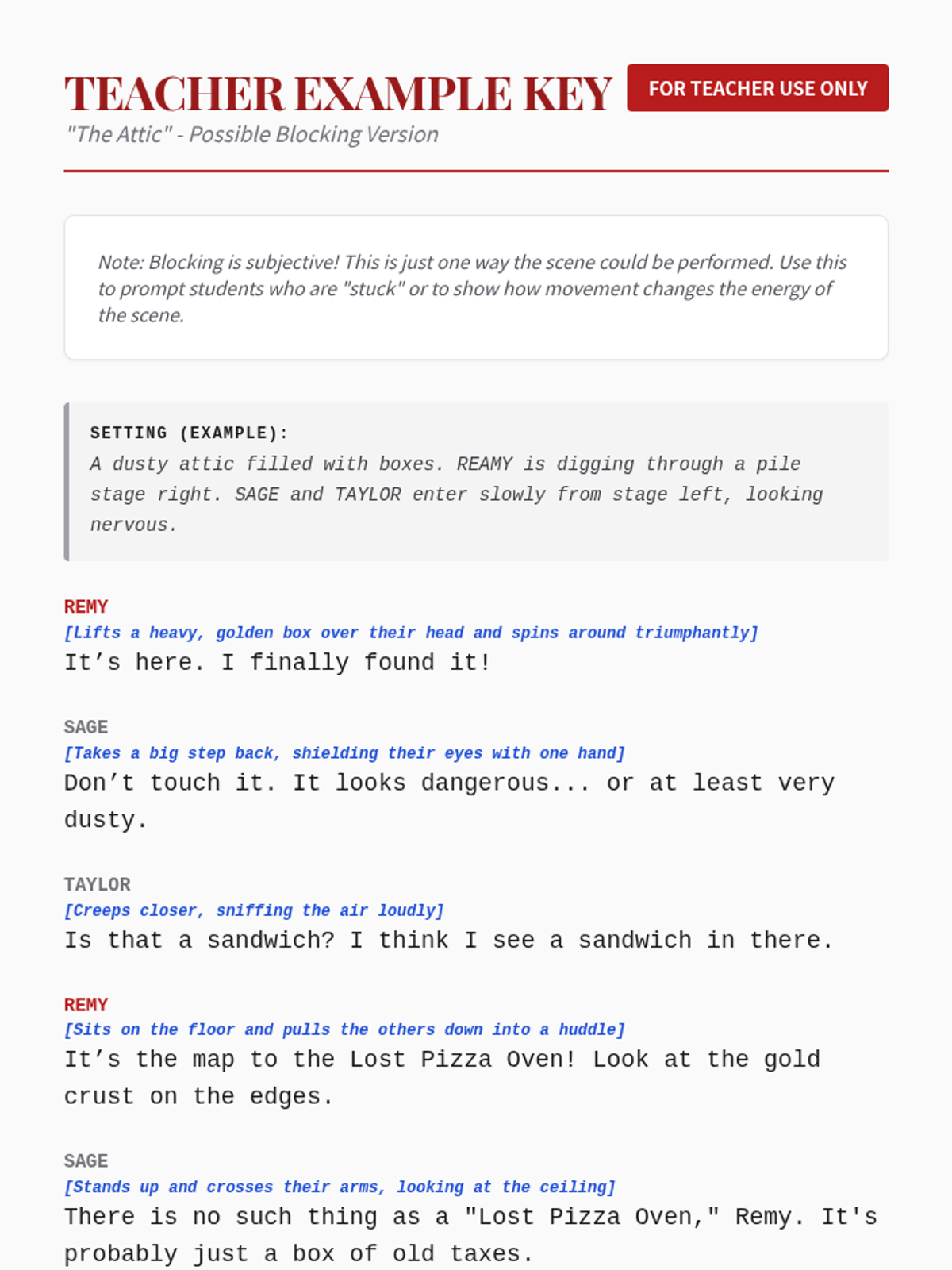
A teacher-facing answer key and example for 'The Attic' script, providing a possible version of blocking and stage directions to assist in guiding student groups.
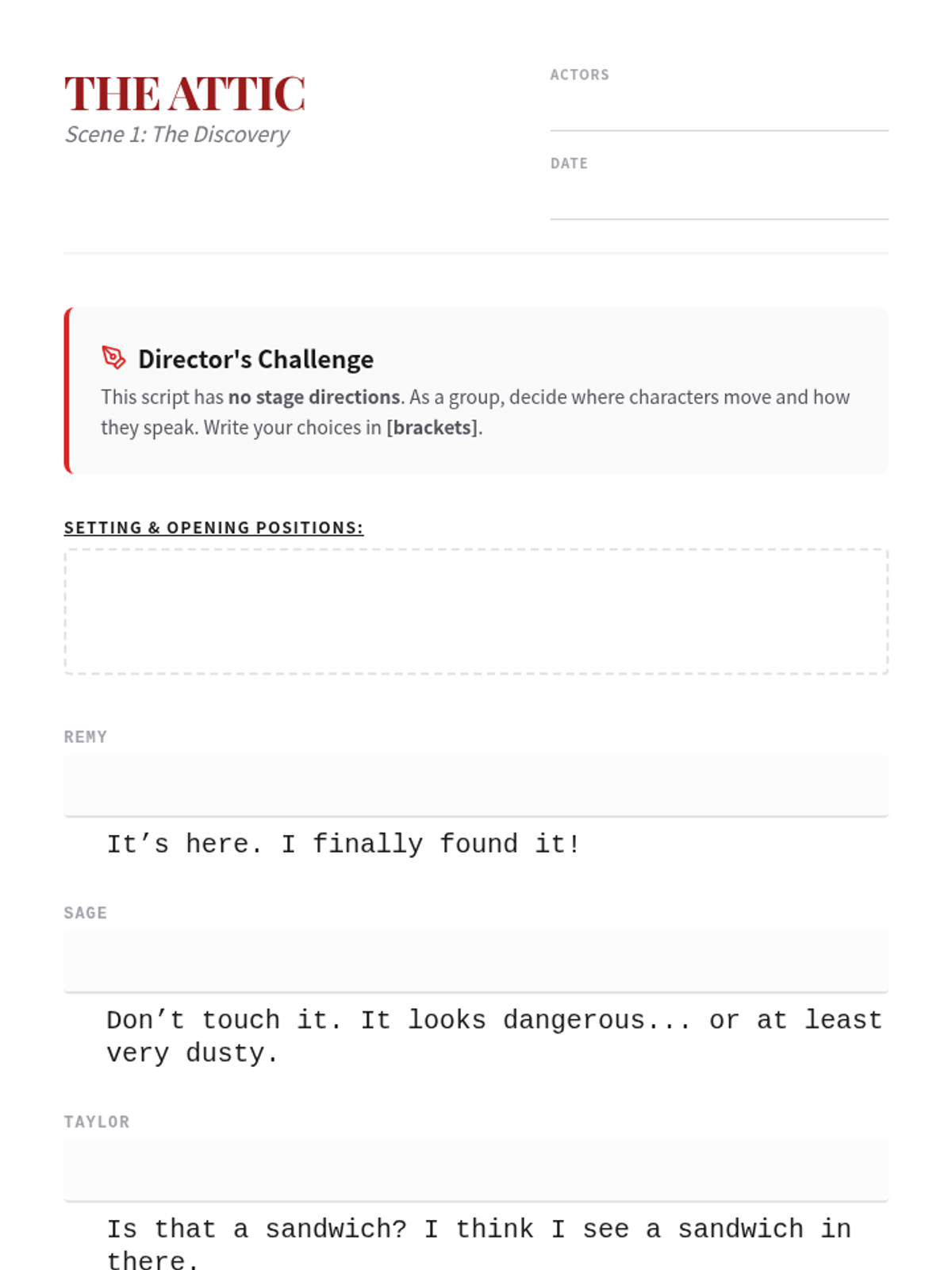
A student-facing script for the Stage Moves activity, featuring a 3-character scene titled 'The Attic' with dedicated spaces for students to write their own stage directions and blocking notes. This version is optimized for two pages with clear writing areas.
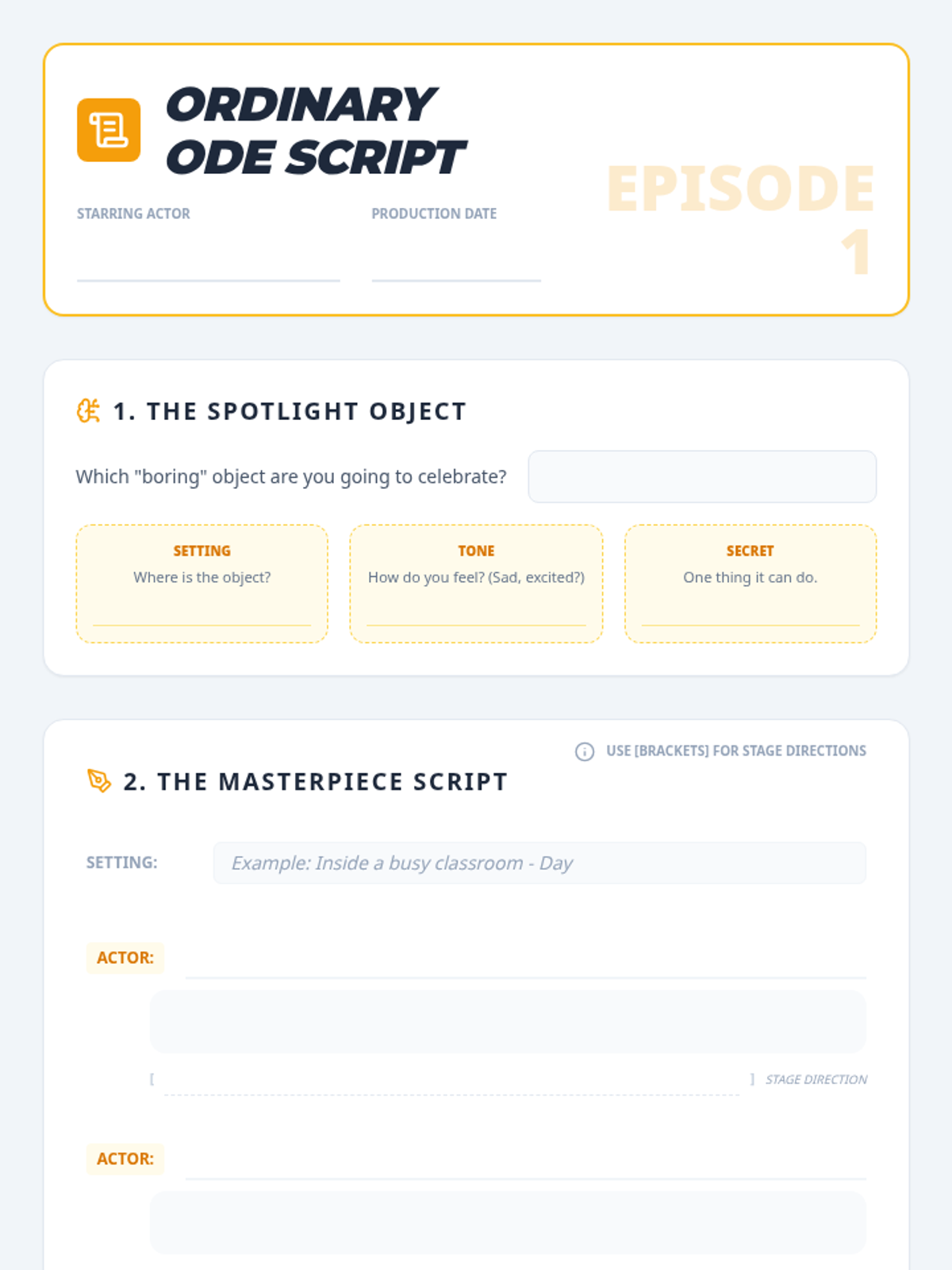
A structured student writing template for crafting an 'Ordinary Ode' script. Includes space for brainstorming, setting descriptions, four lines of dialogue, and two bracketed stage directions.
Visual presentation slides for the Stage Moves lesson, featuring warm-up rules, key vocabulary definitions, an embedded Khan Academy video, and clear activity instructions for student groups.
A visual slide presentation for the 'Ordinary Ode' lesson, featuring the Khan Academy video embed, key drama vocabulary (Dialogue vs. Stage Directions), and a step-by-step student challenge.
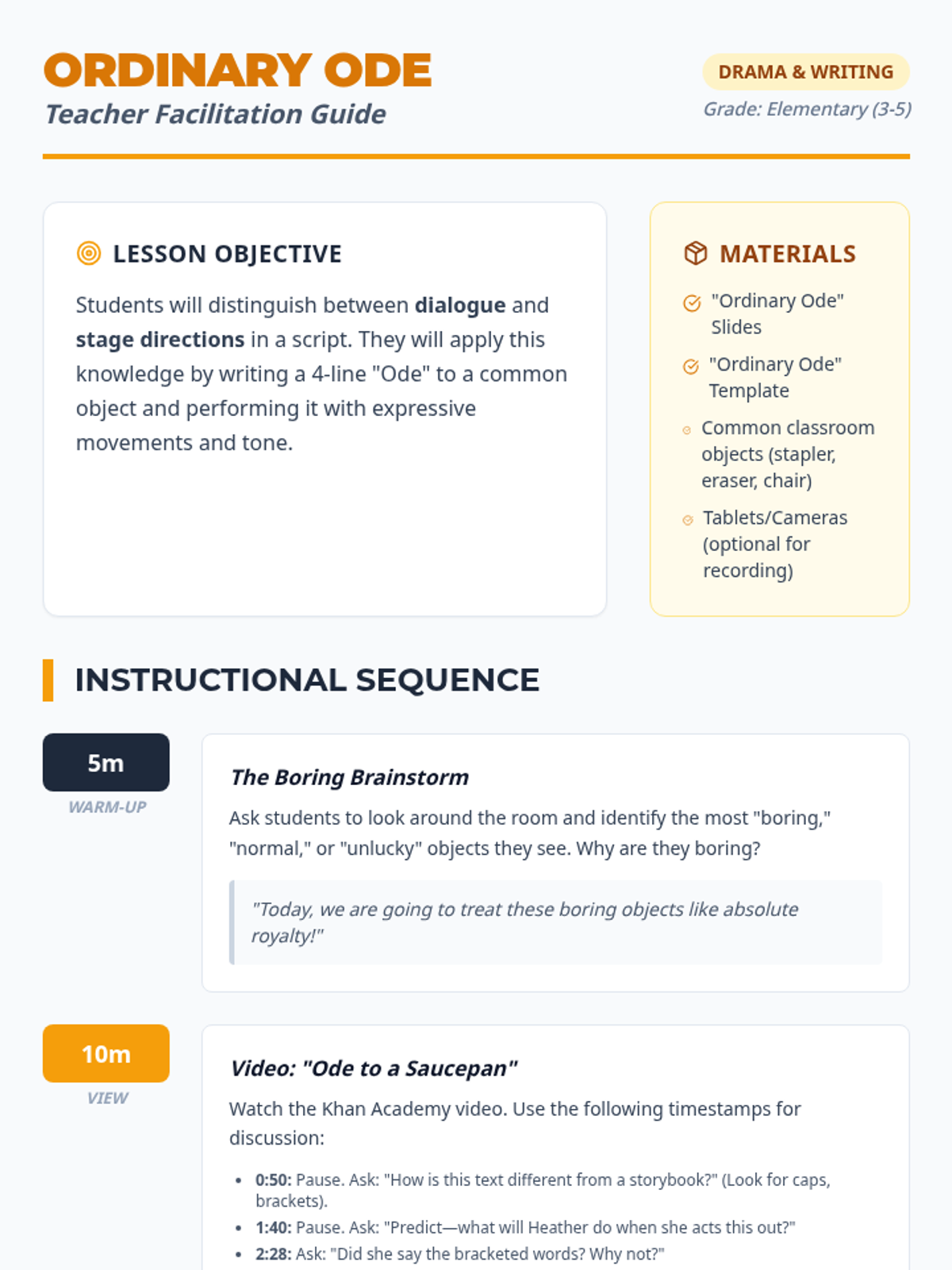
A comprehensive teacher facilitation guide for the 'Ordinary Ode' lesson, including instructional sequences, discussion prompts for the Khan Academy video, and key vocabulary.
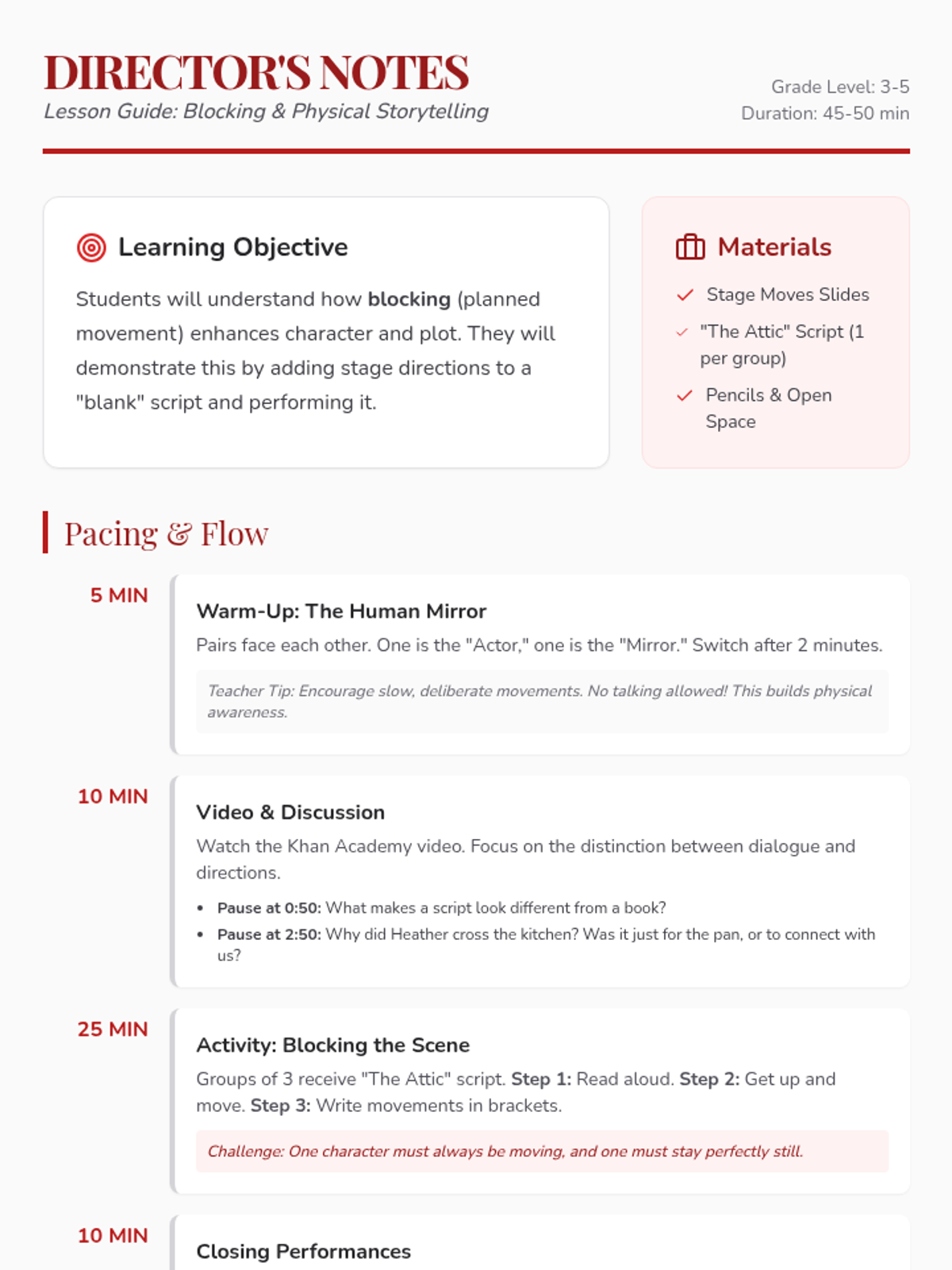
A teacher's guide for the Stage Moves lesson, providing a detailed pacing guide, learning objectives, vocabulary, and instructional tips for teaching blocking to elementary drama students.
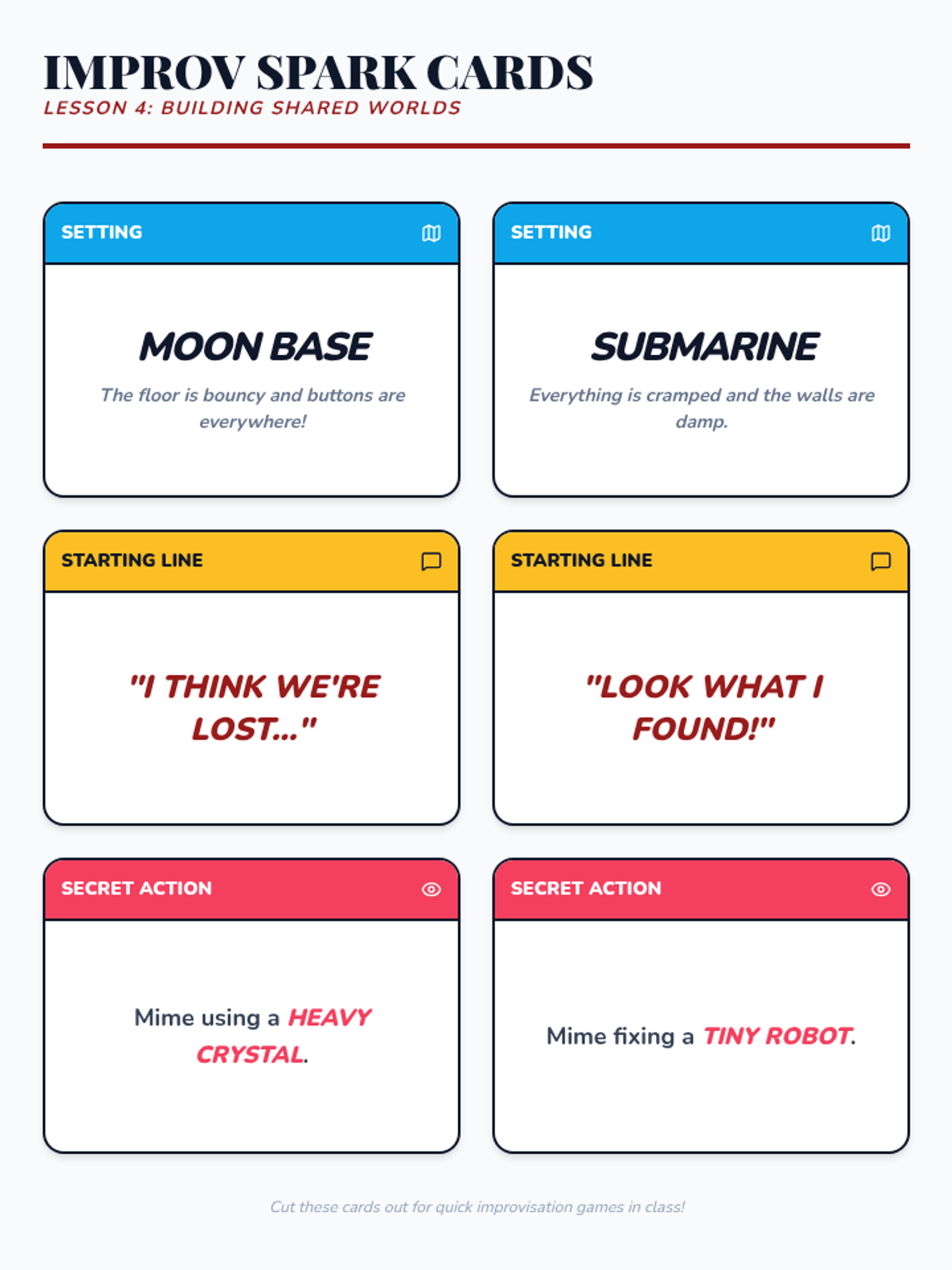
A set of prompt cards for improvisation, including settings, starting lines, and mime actions.
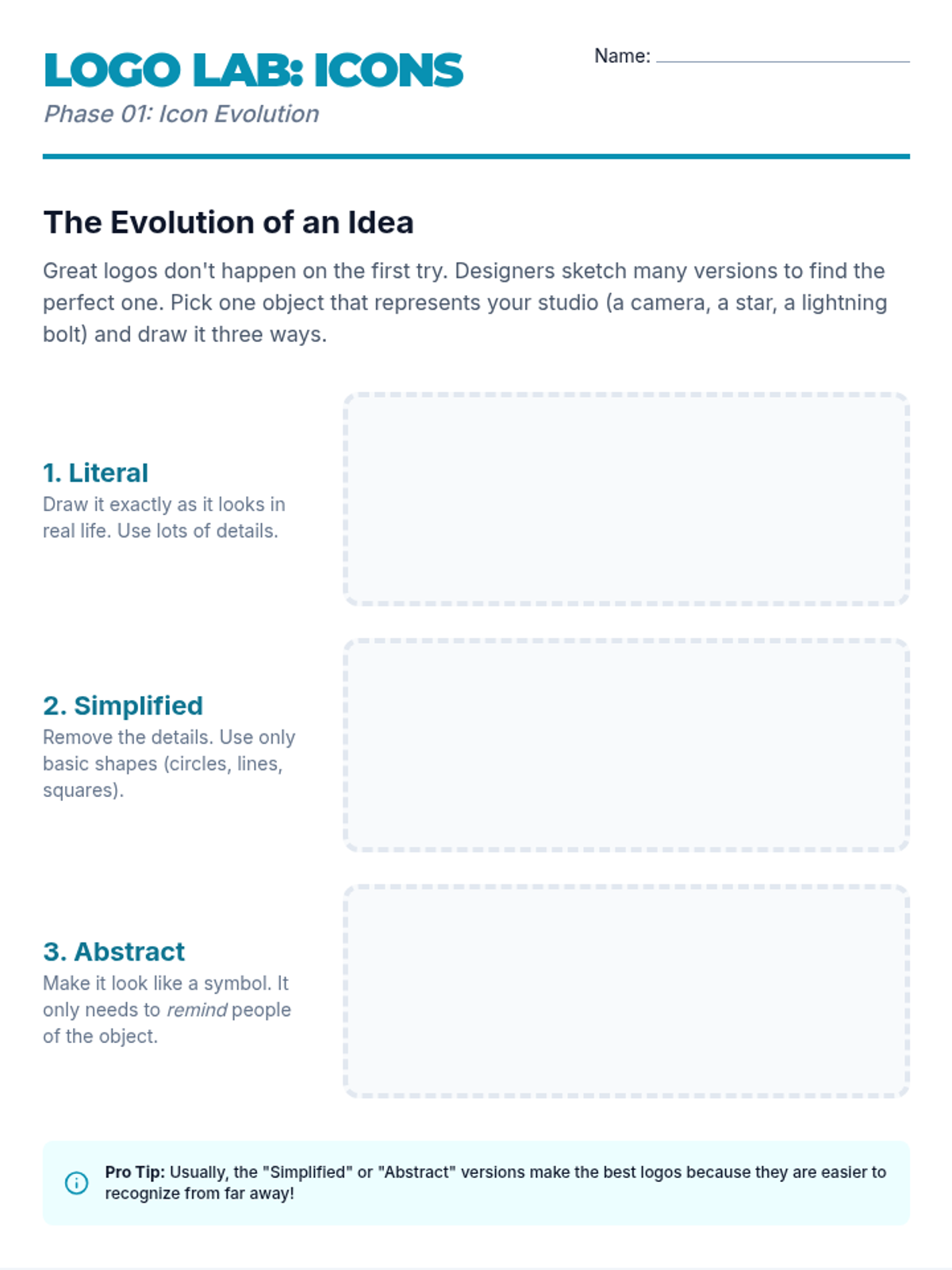
A specialized 4-page logo design workbook titled 'Logo Lab' that guides students through icon evolution, typography styles, color palette remixing, and a final master logo design.
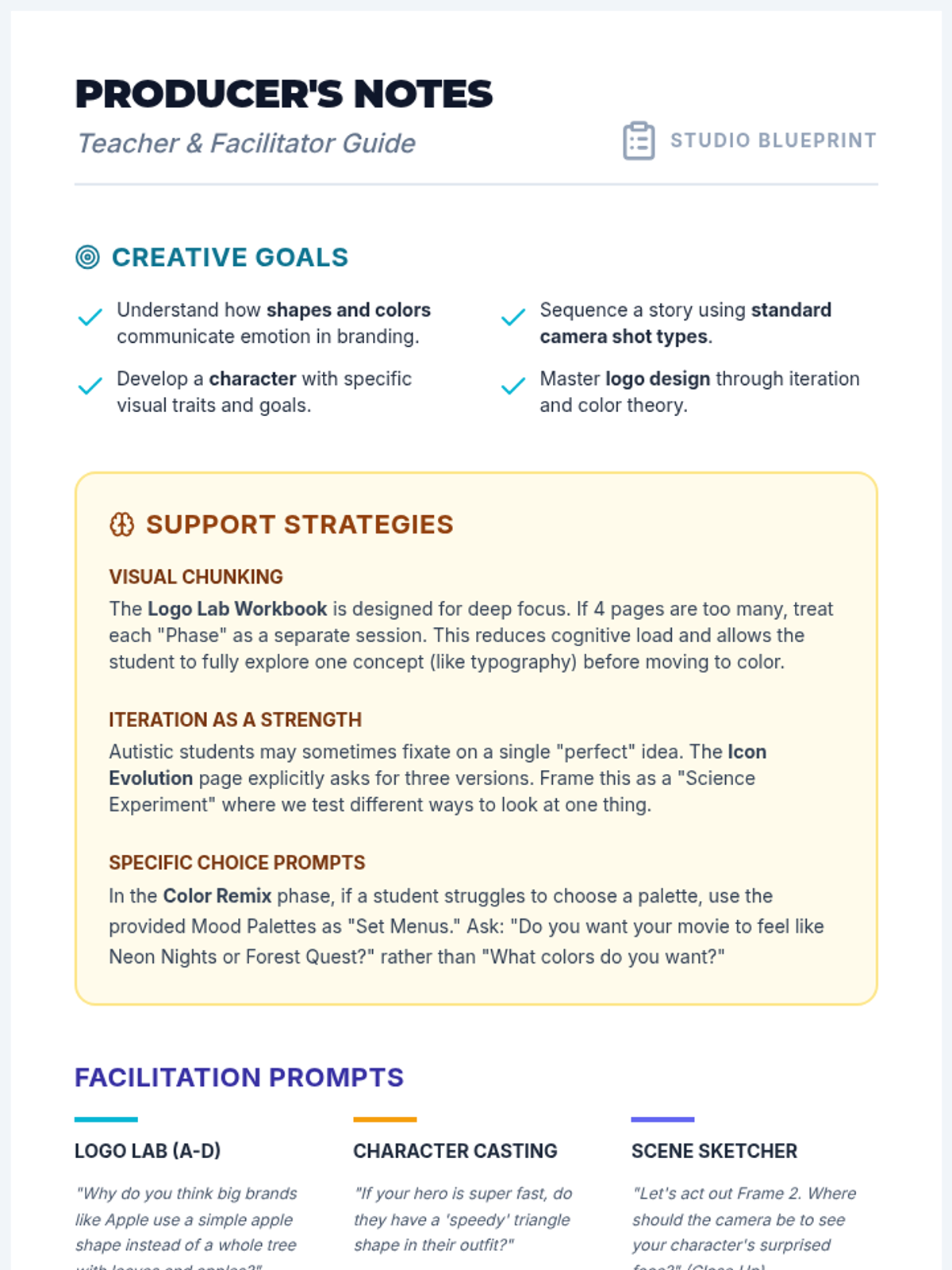
A teacher-facing facilitation guide titled 'Producer's Notes' containing objectives, neurodiverse support strategies, and discussion prompts for the Studio Blueprint lesson.
A visual presentation called 'Studio Blueprint Slides' that introduces students to the principles of logo design, color psychology, and filmmaking camera shots.
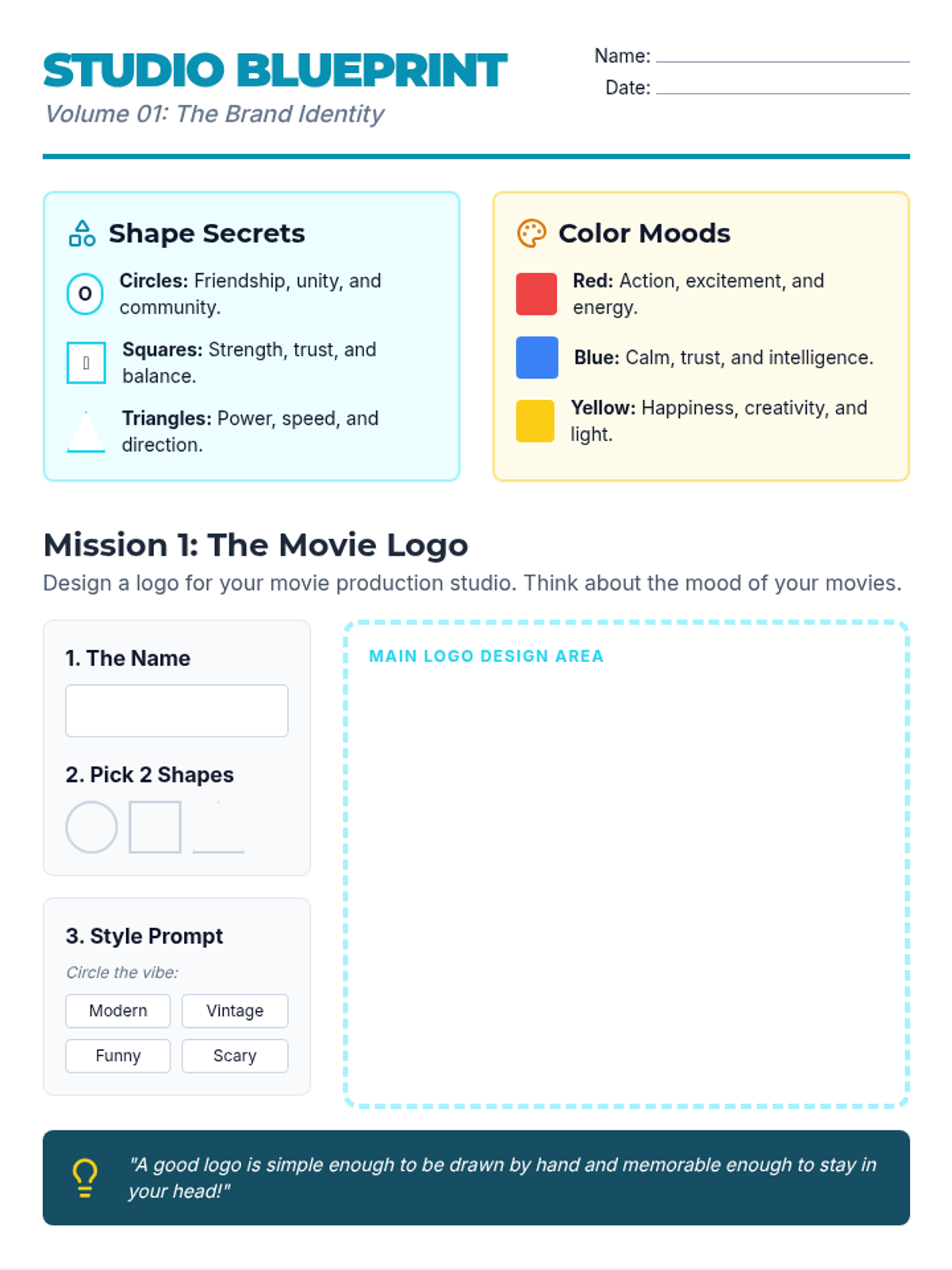
A multi-page creative workbook titled 'Studio Blueprint' designed for students to explore logo design, character development, and filmmaking through structured prompts and visual organizers.
A visual presentation deck supporting the 'Stage Sketchers' lesson. It includes the Khan Academy video embed, vocabulary definitions, visual cues for analyzing the narrator's drawing, and prompts for the set design activity.
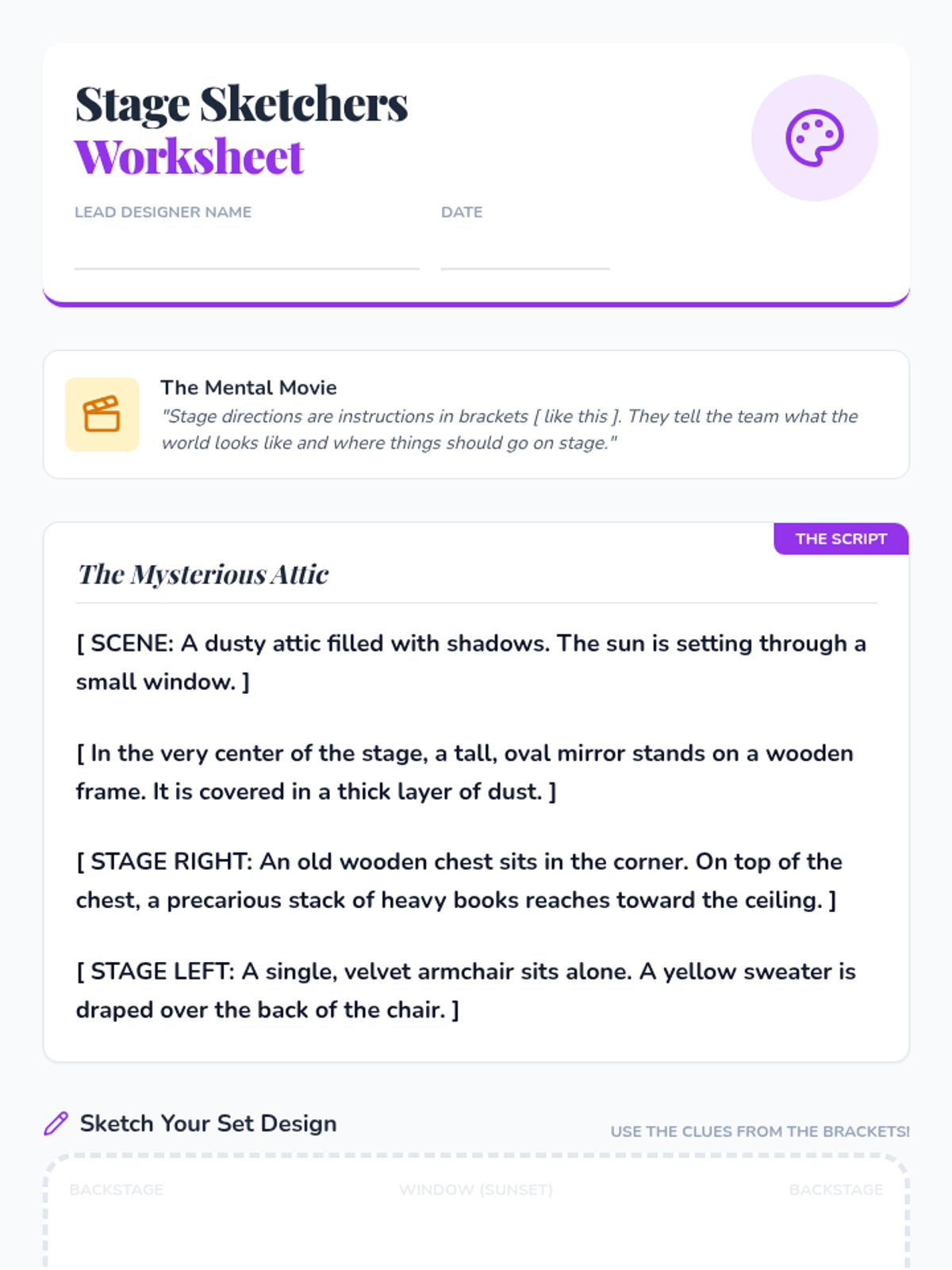
A student-facing activity worksheet where students act as set designers. They must read a scene description with specific stage directions and sketch the set, using text evidence to guide their visual choices.
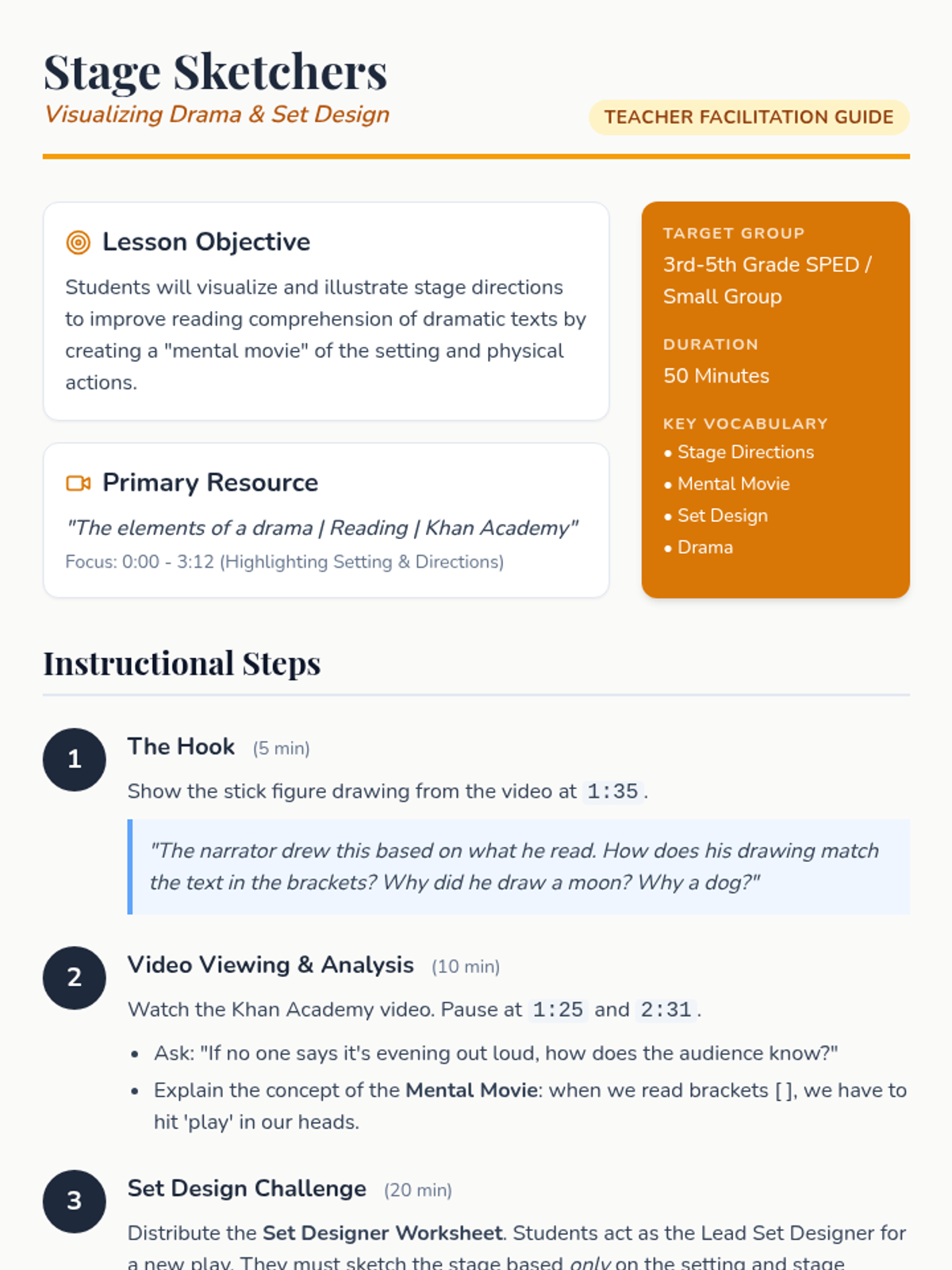
A comprehensive teacher facilitation guide for a lesson on visualizing stage directions. It includes an instructional sequence, differentiation strategies for small groups, and specific timing for video pauses and activities.
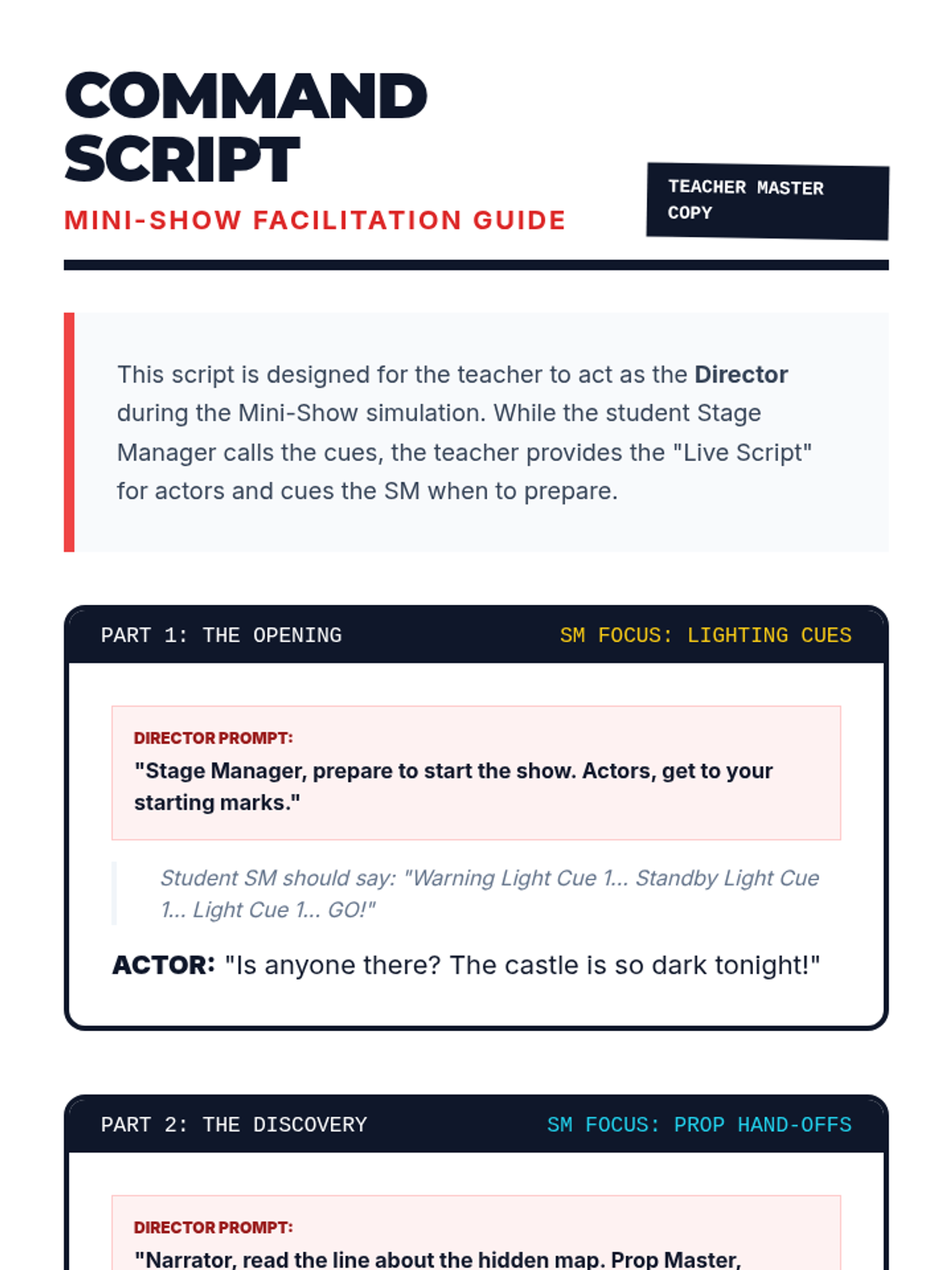
A teacher's master script for facilitating the final Mini-Show simulation. It includes specific prompts for the teacher (as Director) to trigger student crew responses and provides ideal examples of student Stage Manager commands.
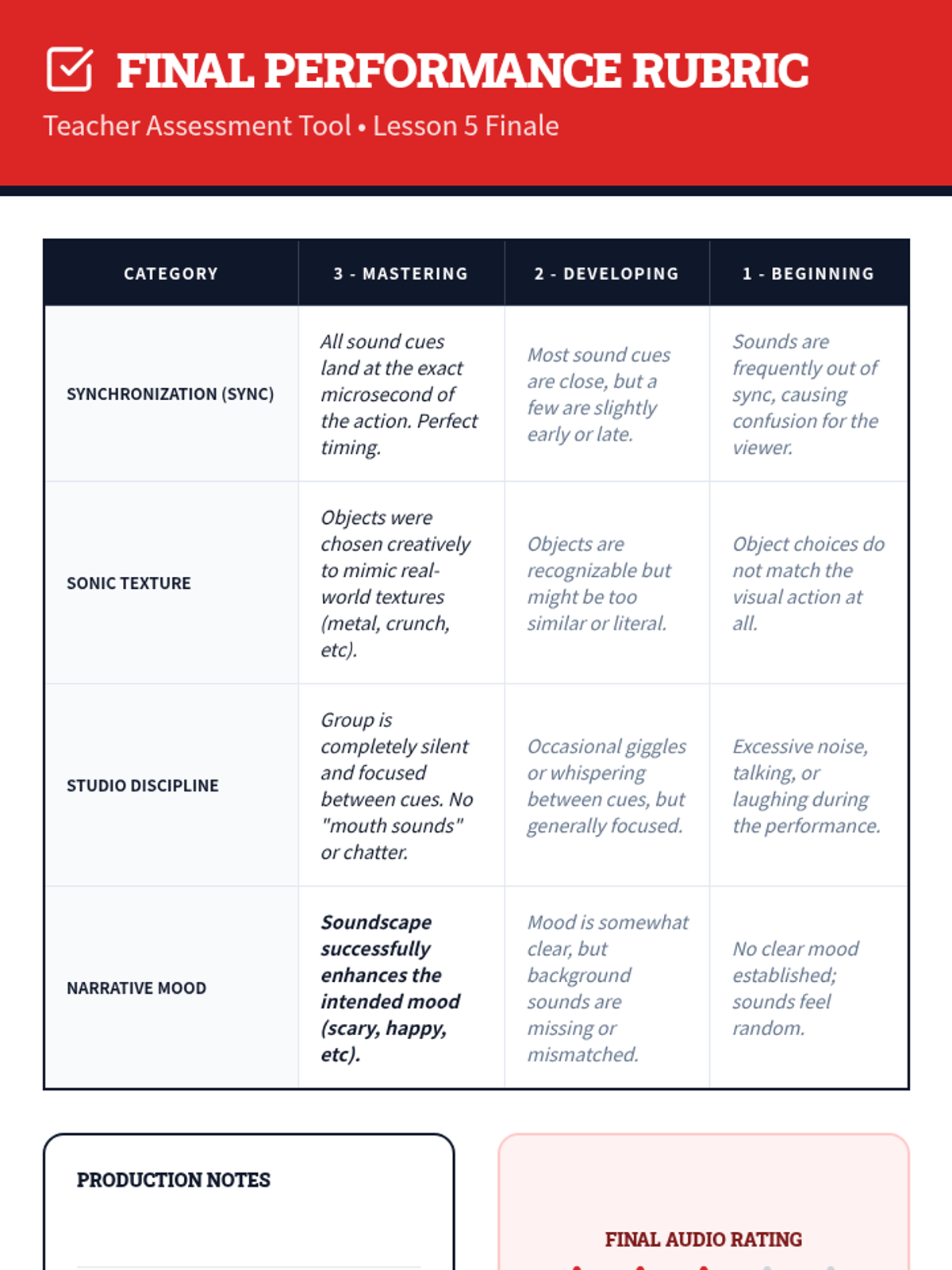
A comprehensive teacher rubric for assessing the final Foley performances, covering synchronization, texture, studio discipline, and mood.
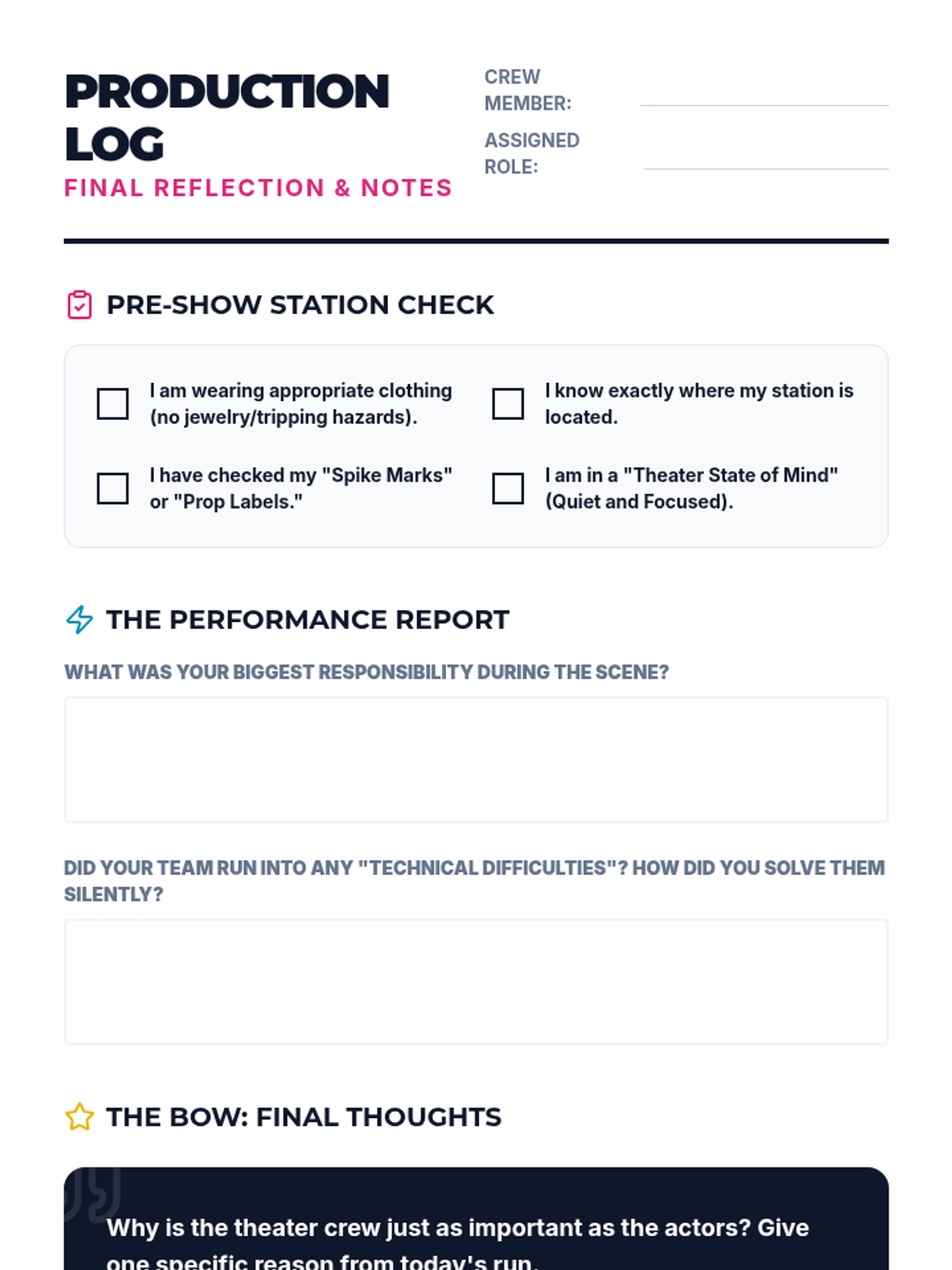
A reflective logbook for students to complete after the final "Tech Run." It includes a pre-show checklist, performance reporting sections, and a final reflection on the importance of teamwork in theater production.
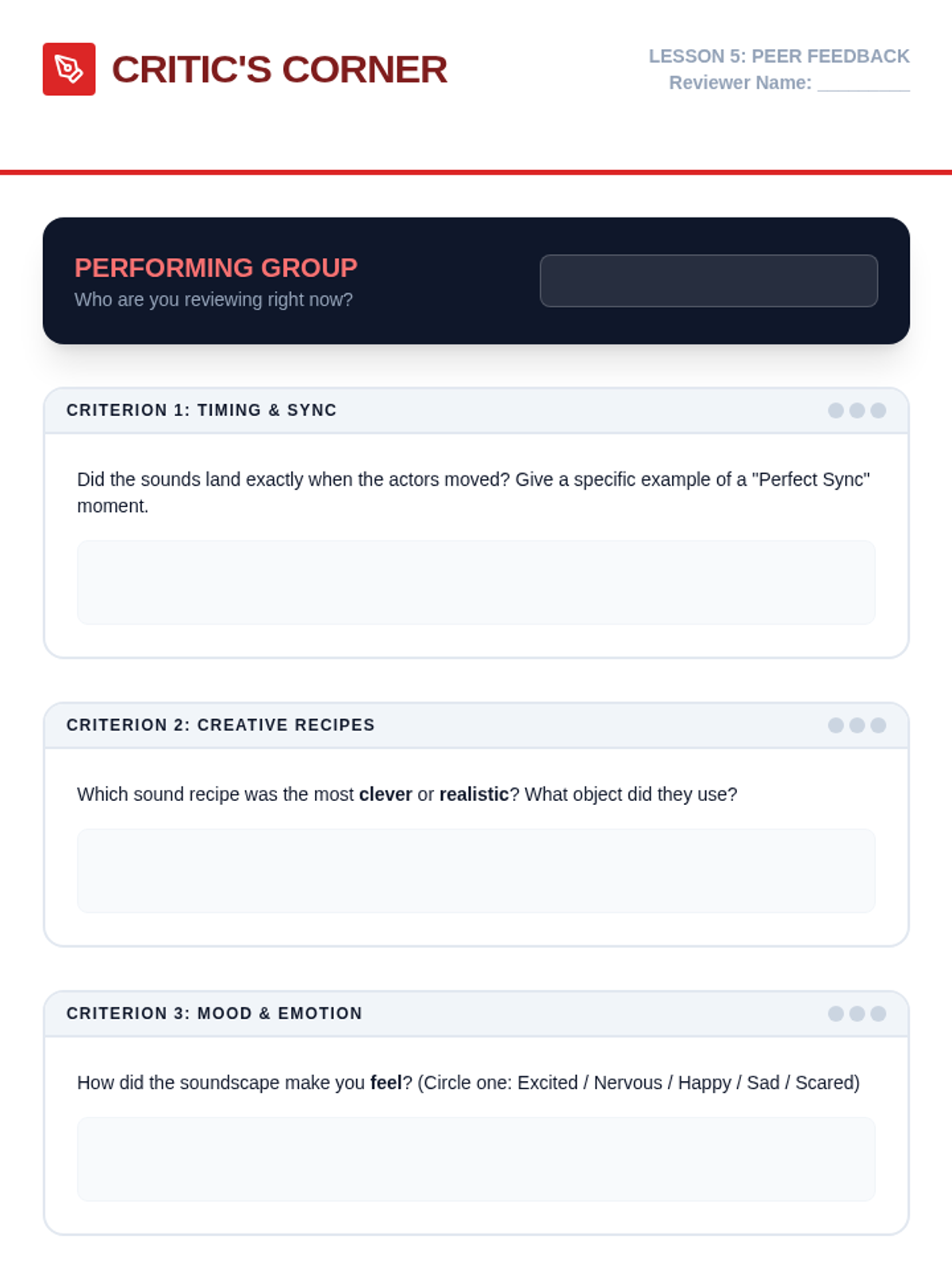
A peer review worksheet for the final performances, allowing students to critique timing, texture, and mood while providing constructive feedback.
A final slide deck for Lesson 5, guiding students through a "Tech Run" rehearsal. It outlines crew stations, the communication chain between roles, and the goals for a successful technical performance.
Performance and critique slides for the final lesson, emphasizing studio etiquette, the 'Critical Ear' criteria, and a celebratory conclusion.
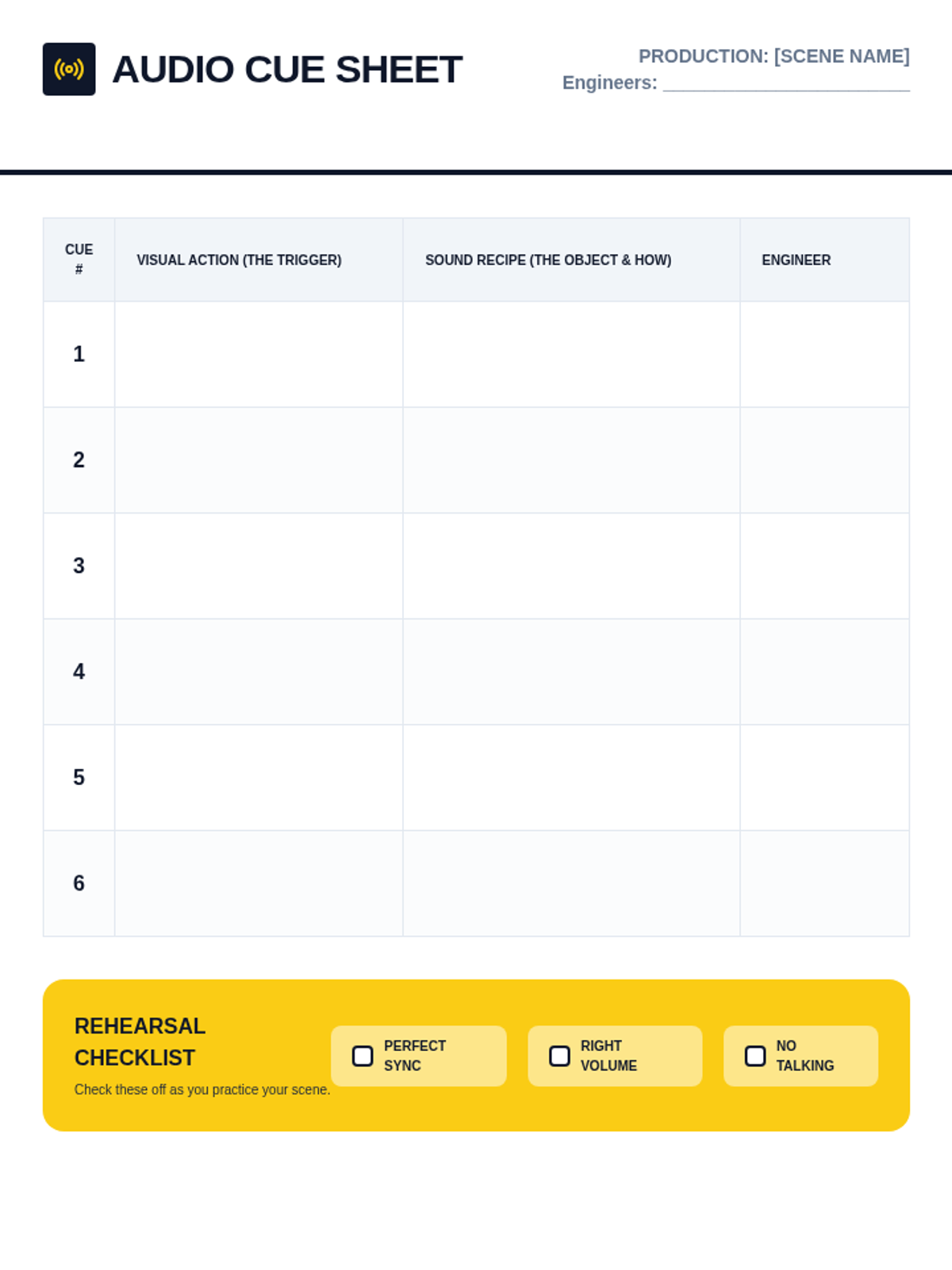
A structured audio cue sheet for students to map out their production, assigning roles and defining specific sounds for each visual trigger.
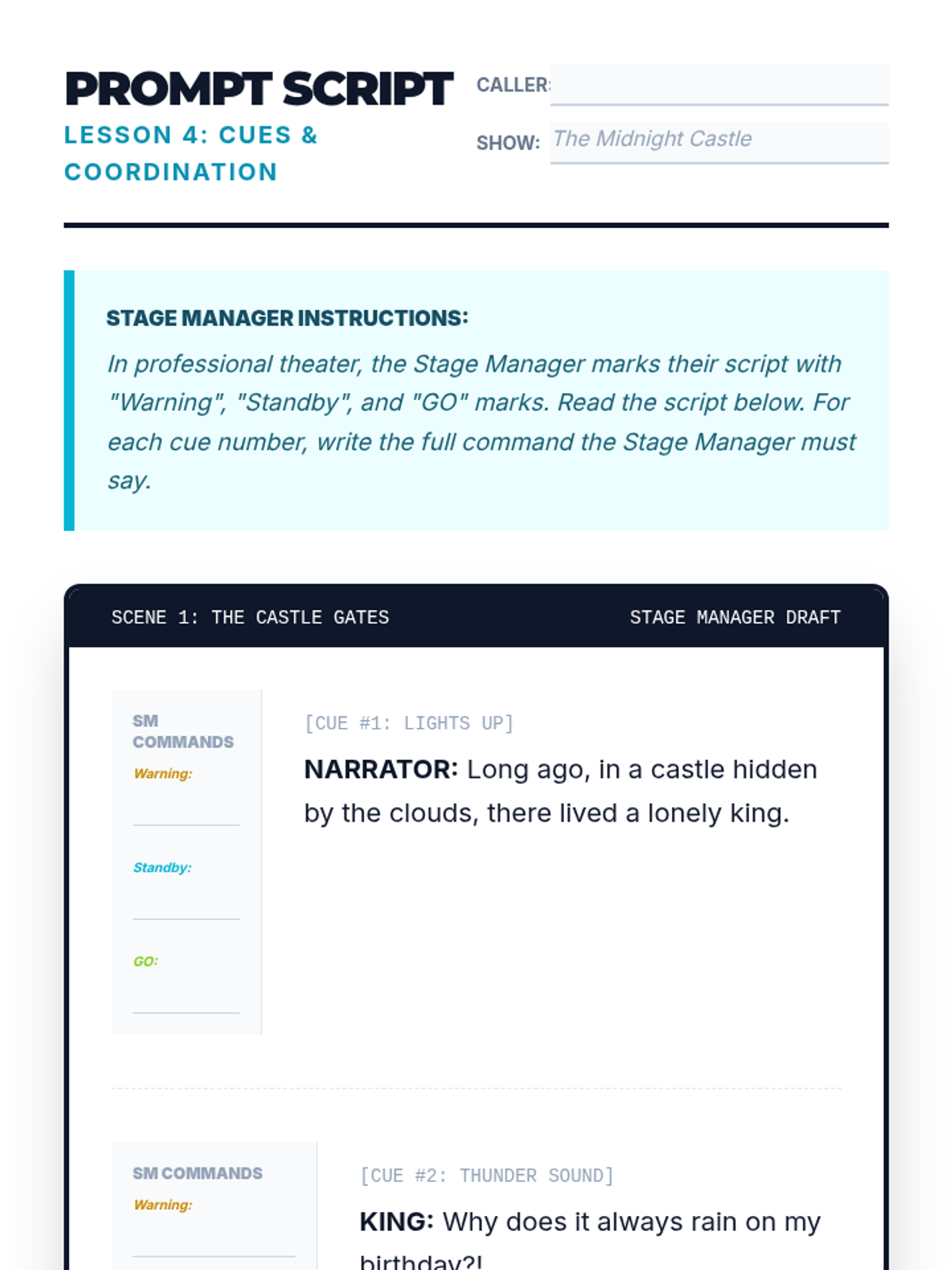
A practice worksheet for students to role-play as a Stage Manager. It features a short script with technical cues, and students must write out the appropriate "Warning, Standby, Go" commands for each event.
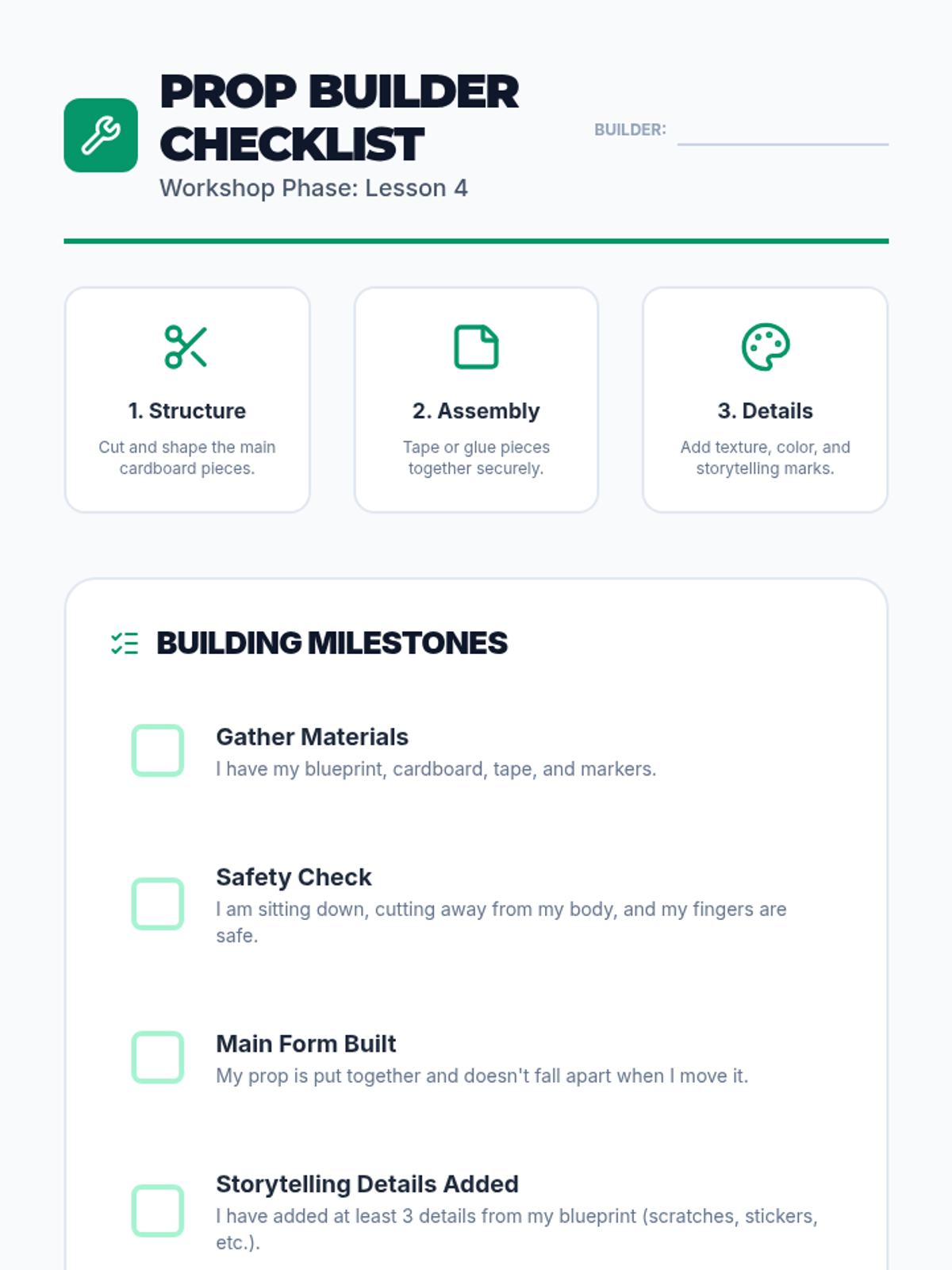
A student-facing construction checklist to guide the building process, emphasize safety, and encourage reflection on problem-solving during fabrication.