Fundamental notation, instrumental proficiency, and vocal techniques across various genres. Connects historical analysis with original composition and creative performance skills.
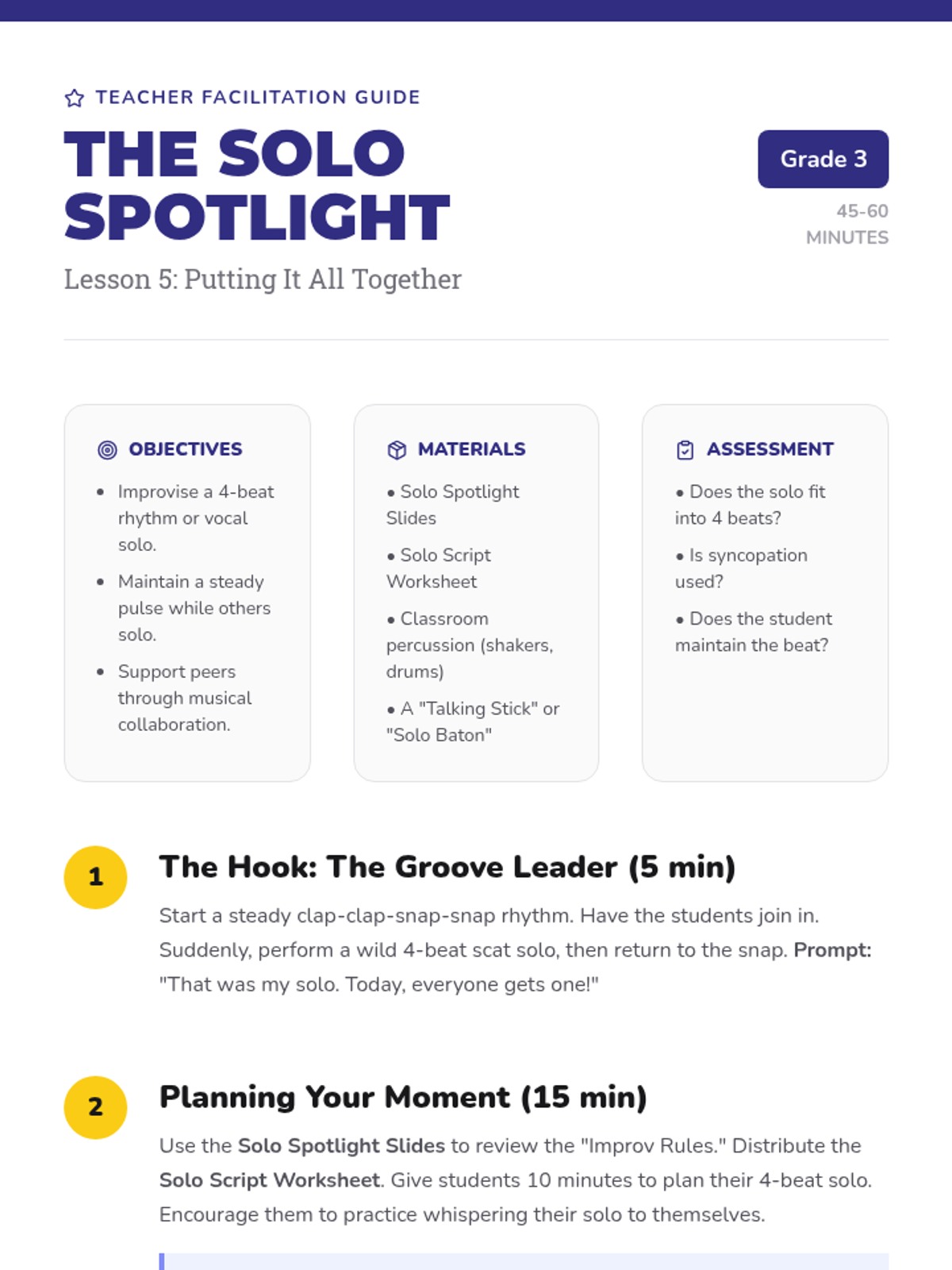
A facilitation guide for the final lesson, including solo circle rules and assessment criteria for student improvisation.
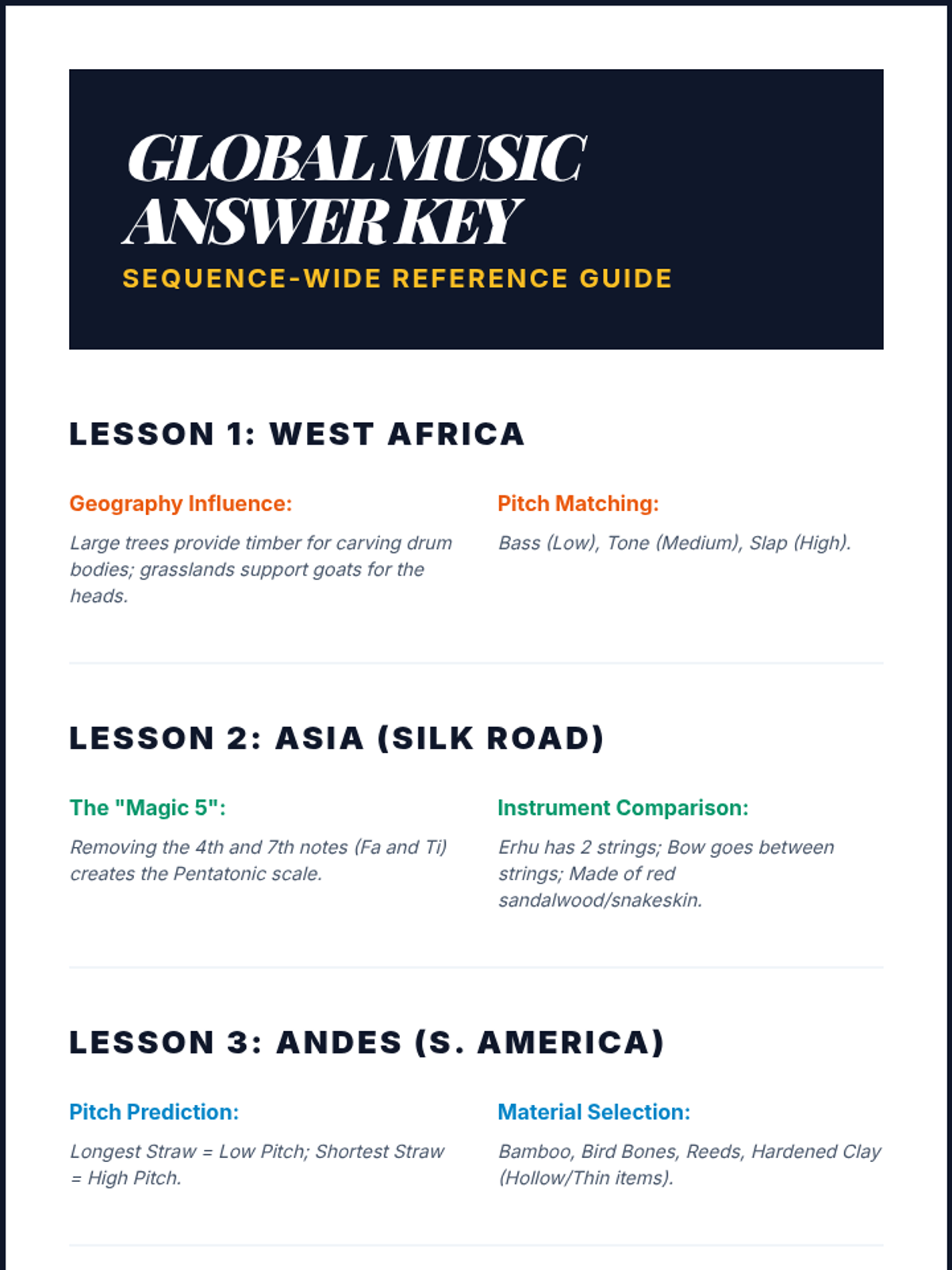
Comprehensive teacher answer key and reference guide covering all five lessons in the "Global Rhythm Quest" sequence.
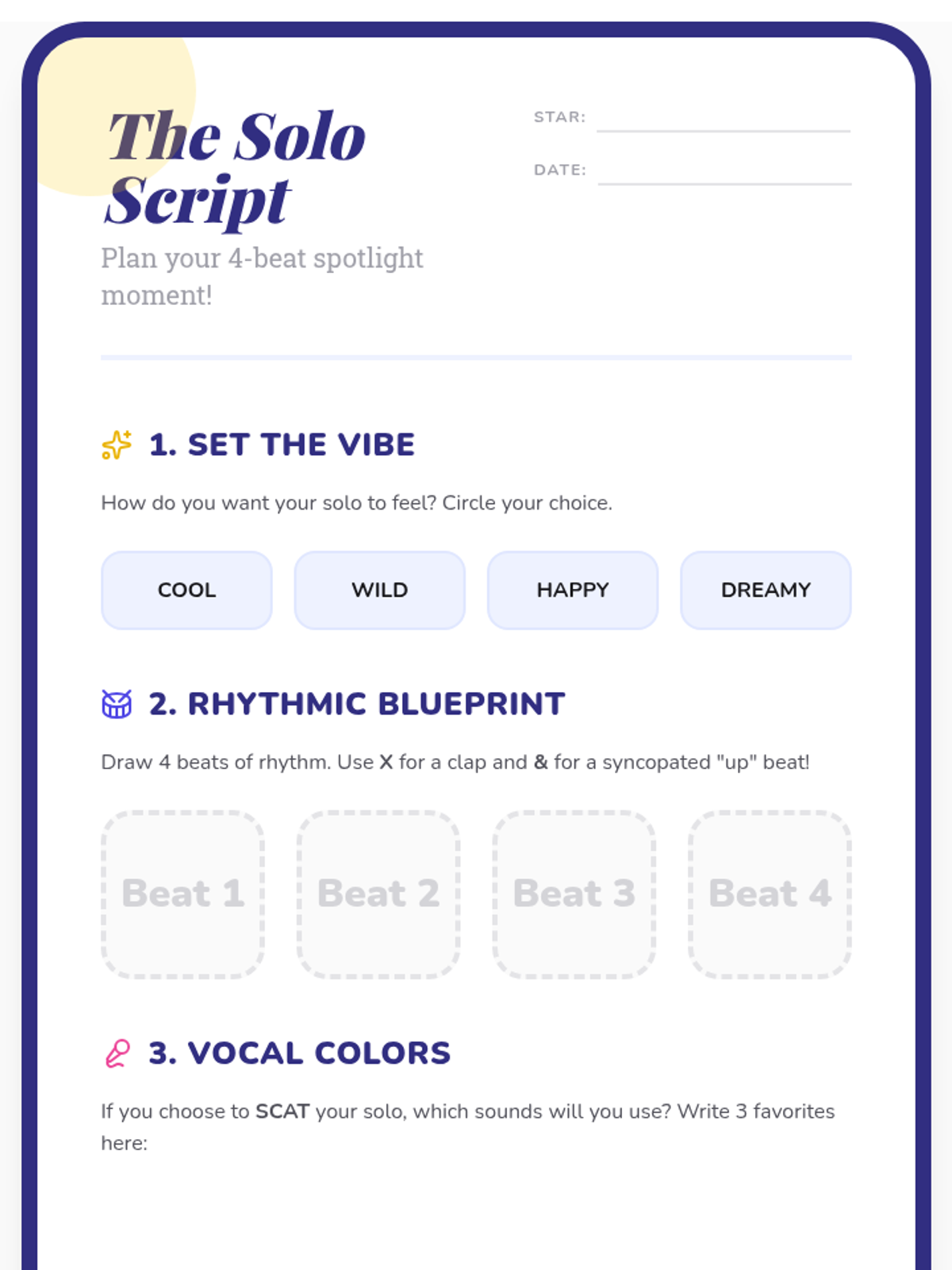
A student planning sheet for designing a simple 4-beat rhythm or scat solo for the final classroom improvisation circle. Identical styling applied to all mood options.
Final presentation slides for Lesson 5, reviewing the journey through music history and addressing the essential question regarding technology's impact on sound.
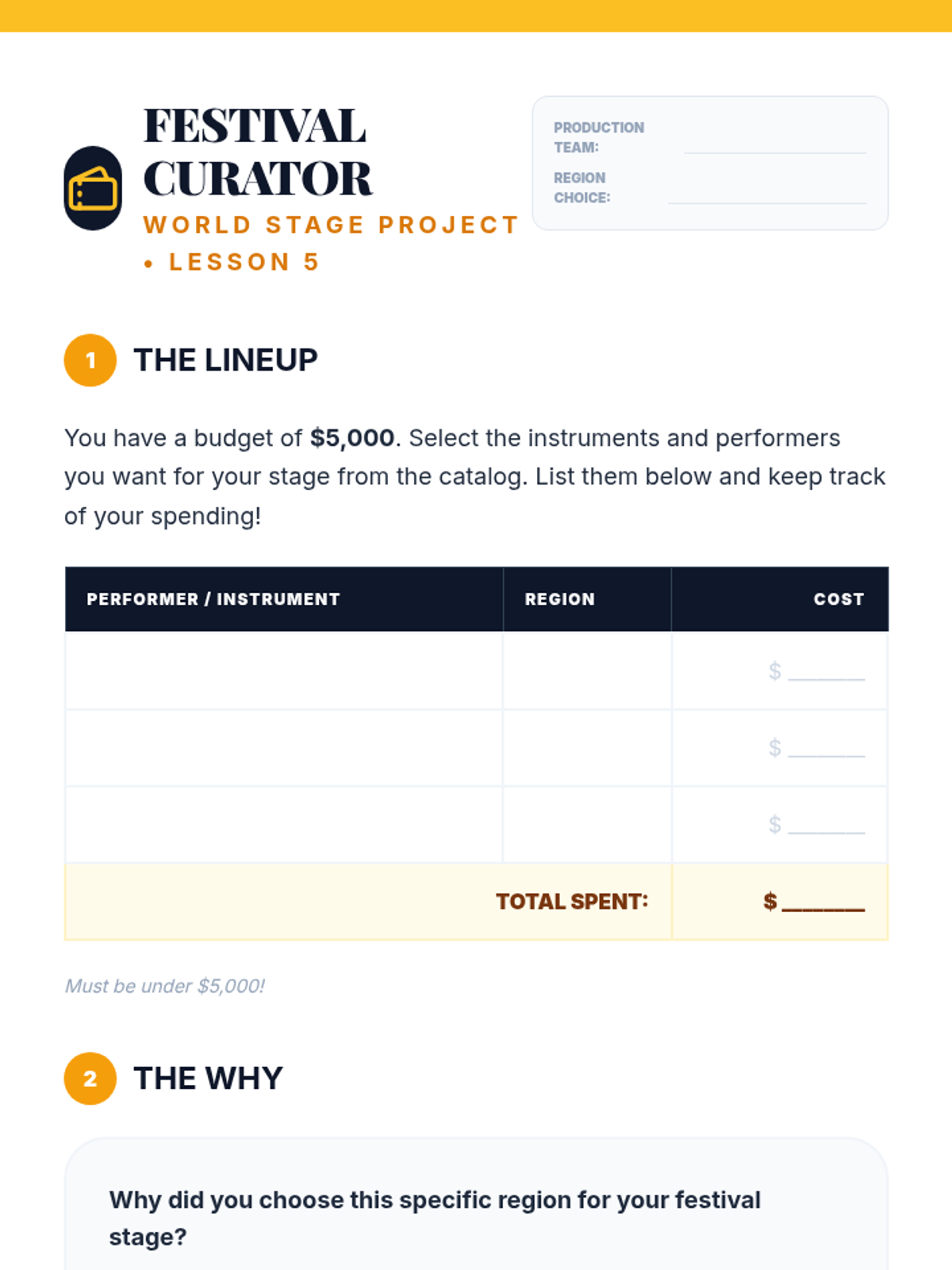
Student project planner for the "World Stage" festival, including budget tracking, a written pitch for a selected region, and a stage design blueprint area.
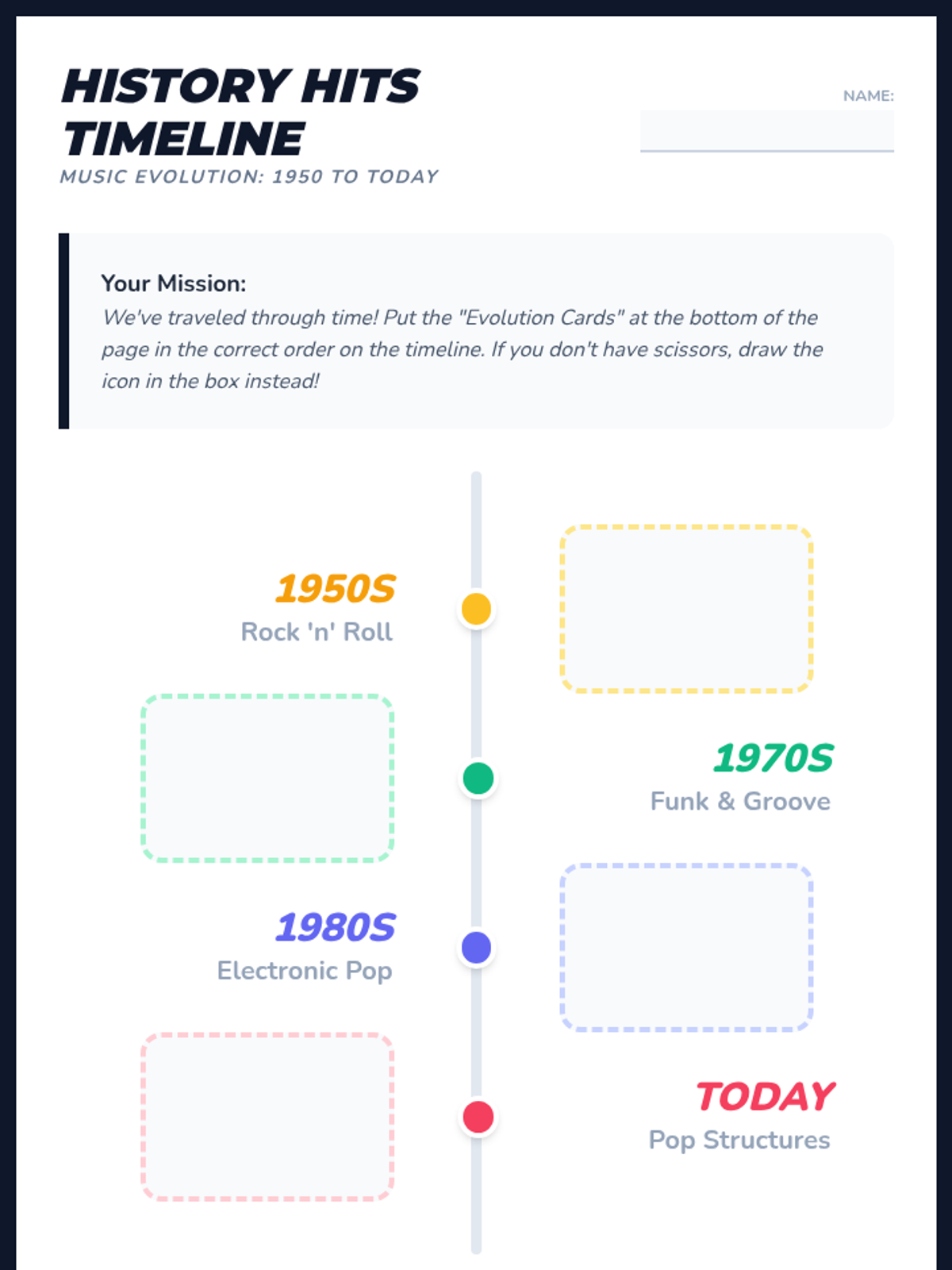
Final cumulative worksheet for Lesson 5. Students place technological and musical milestones on a chronological timeline from the 1950s to the present.
A visual presentation for the final project, focusing on the rules of improvisation and how to conduct a classroom solo circle.
Visual presentation slides for Lesson 5, introducing the "World Stage" festival project, defining the curator's role, and providing an instrument catalog with "budget" pricing.
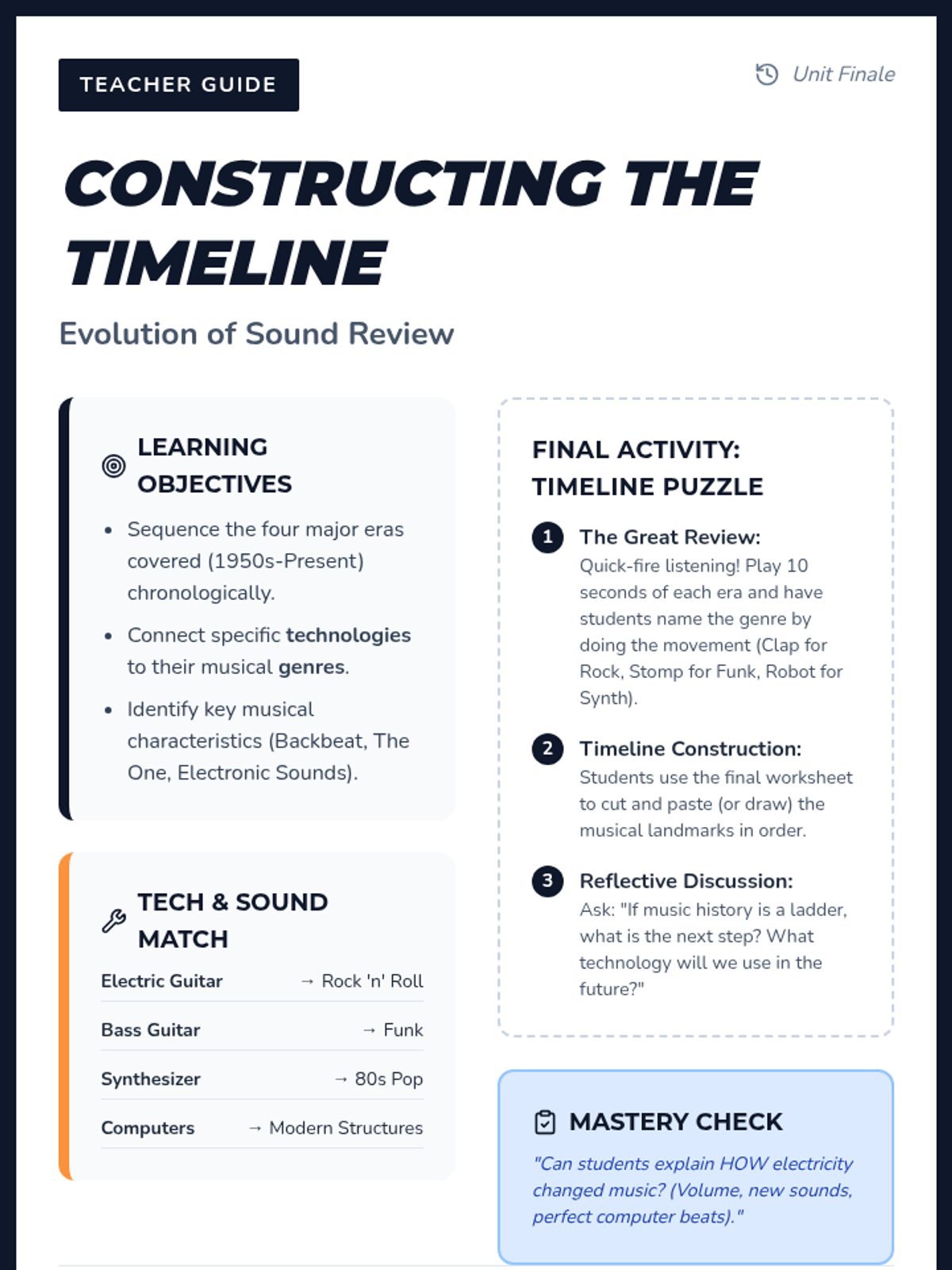
Teacher guide for the final lesson, synthesizing the entire unit. Includes a review of all eras, their technologies, and instructions for the cumulative timeline activity.
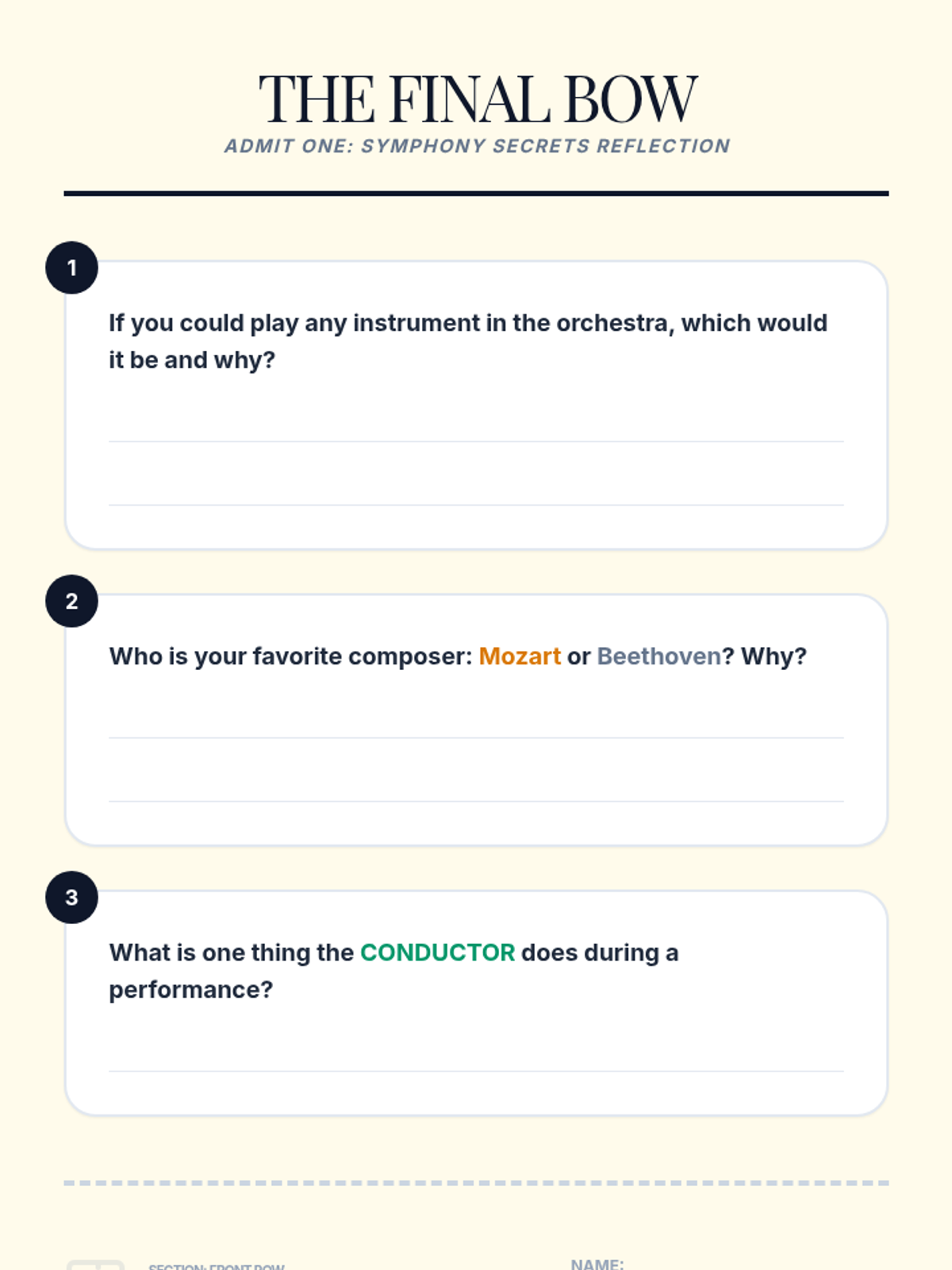
A student reflection exit ticket for the end of the 'Symphony Secrets' sequence, designed with a theater ticket aesthetic.
Presentation slides for Lesson 4, explaining the Verse-Chorus song structure using the 'Song Sandwich' analogy and identifying patterns in familiar music.
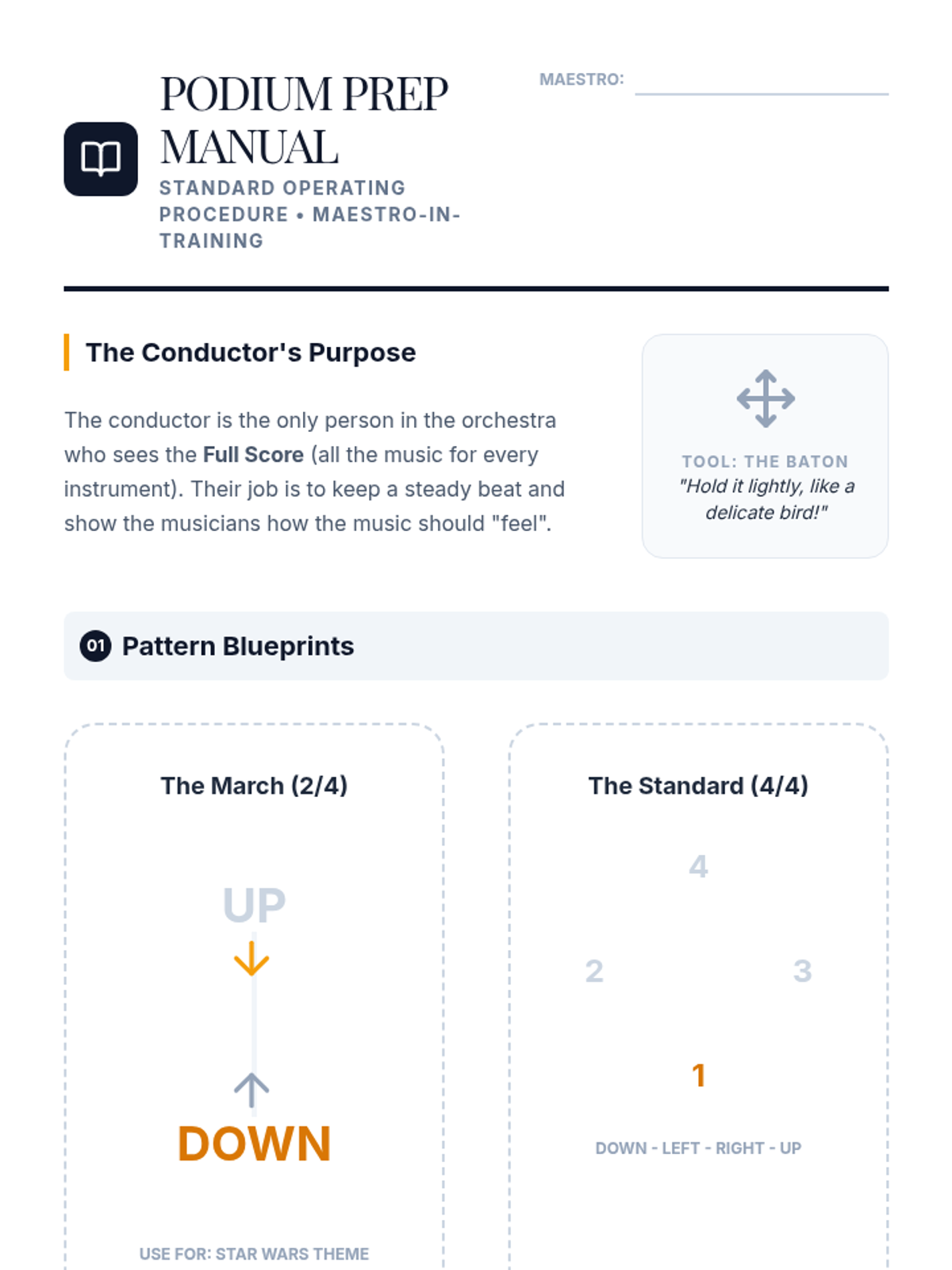
A student instructional guide for practicing basic conducting patterns (2/4 and 4/4) and understanding non-verbal cues.
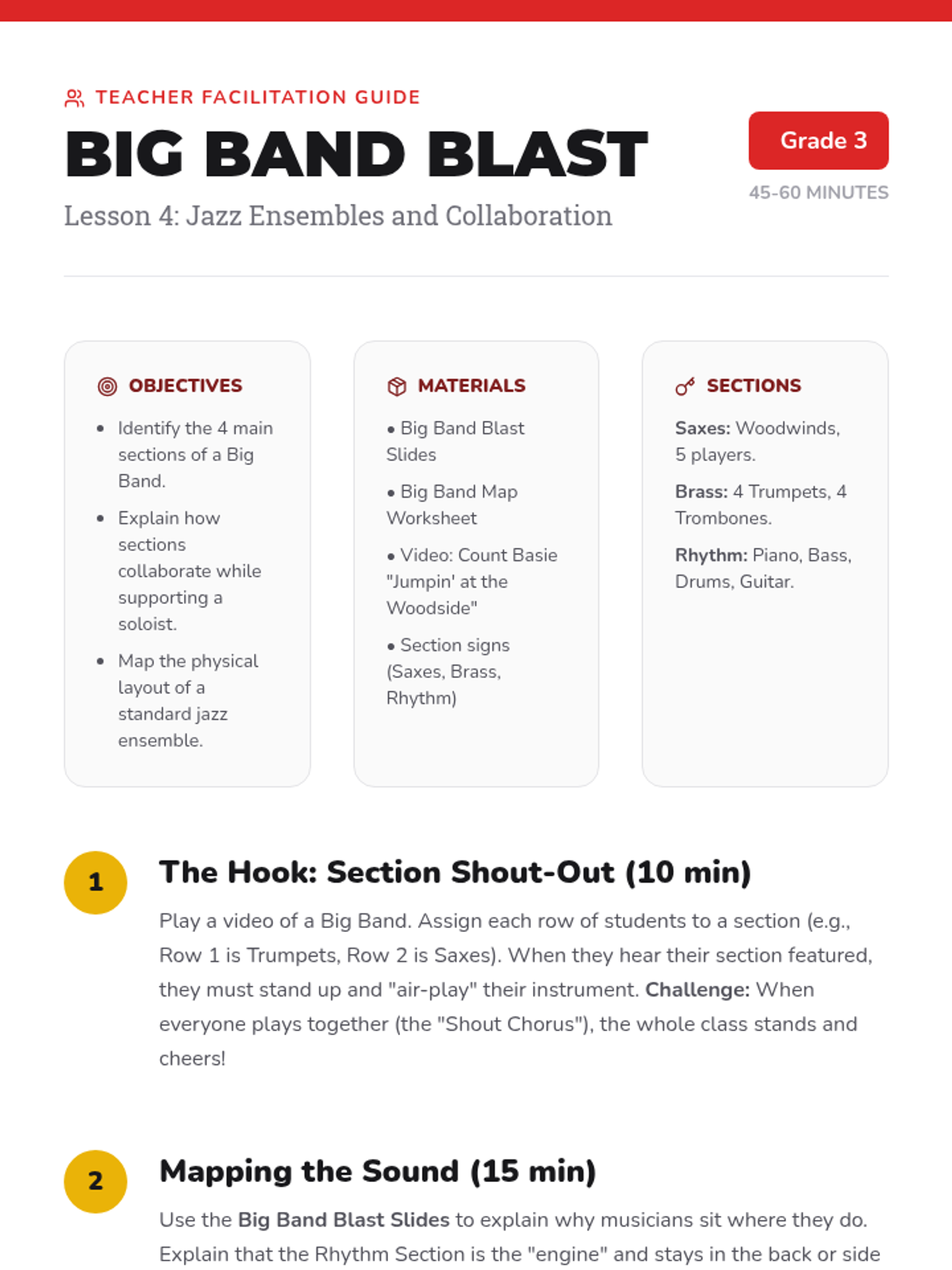
A facilitation guide for Lesson 4, including section identification games and a listening guide for Count Basie's orchestra.
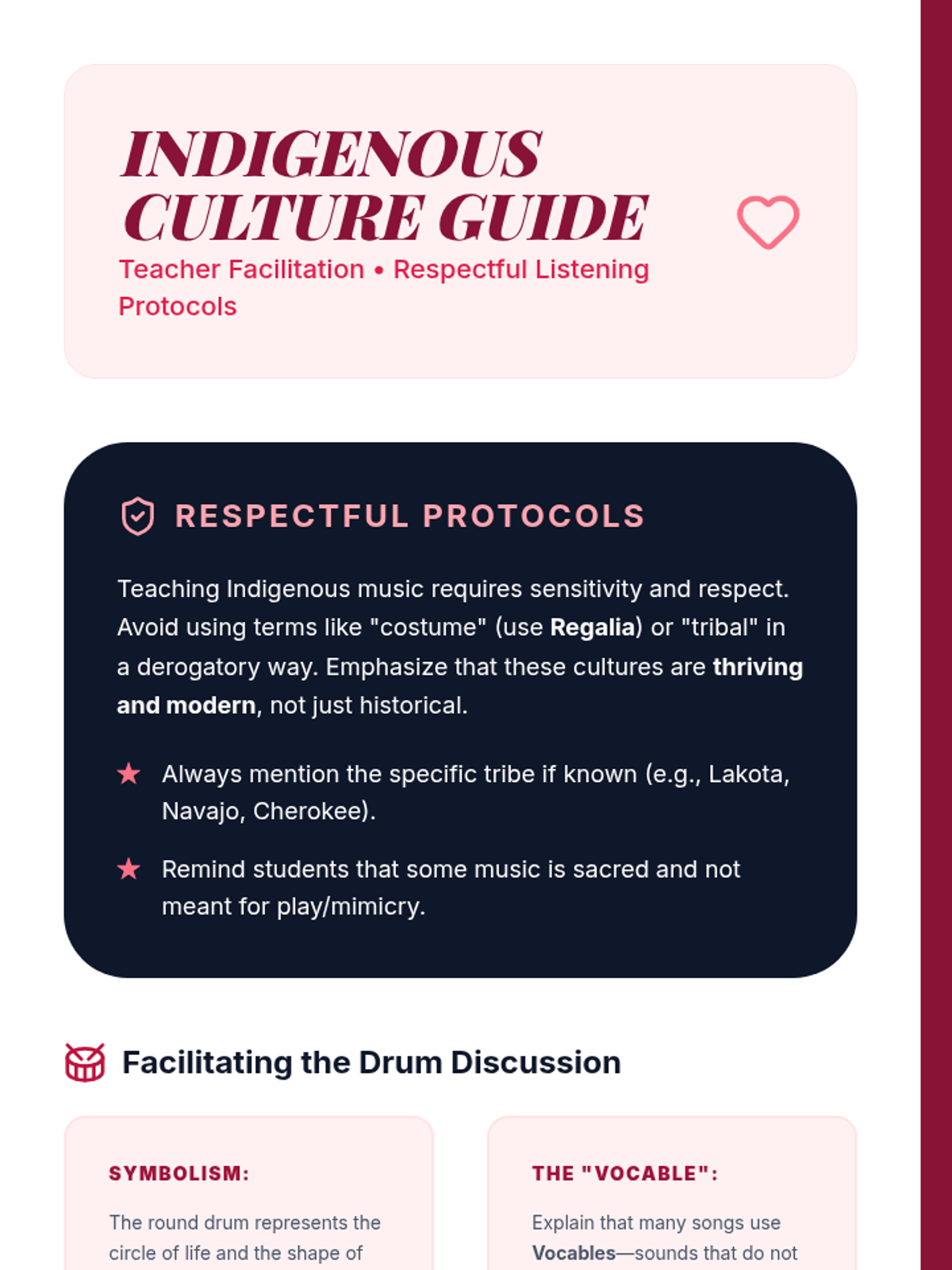
Teacher reference guide for Lesson 4, focusing on cultural protocols for teaching Indigenous North American music, key terminology, and listening facilitation strategies.
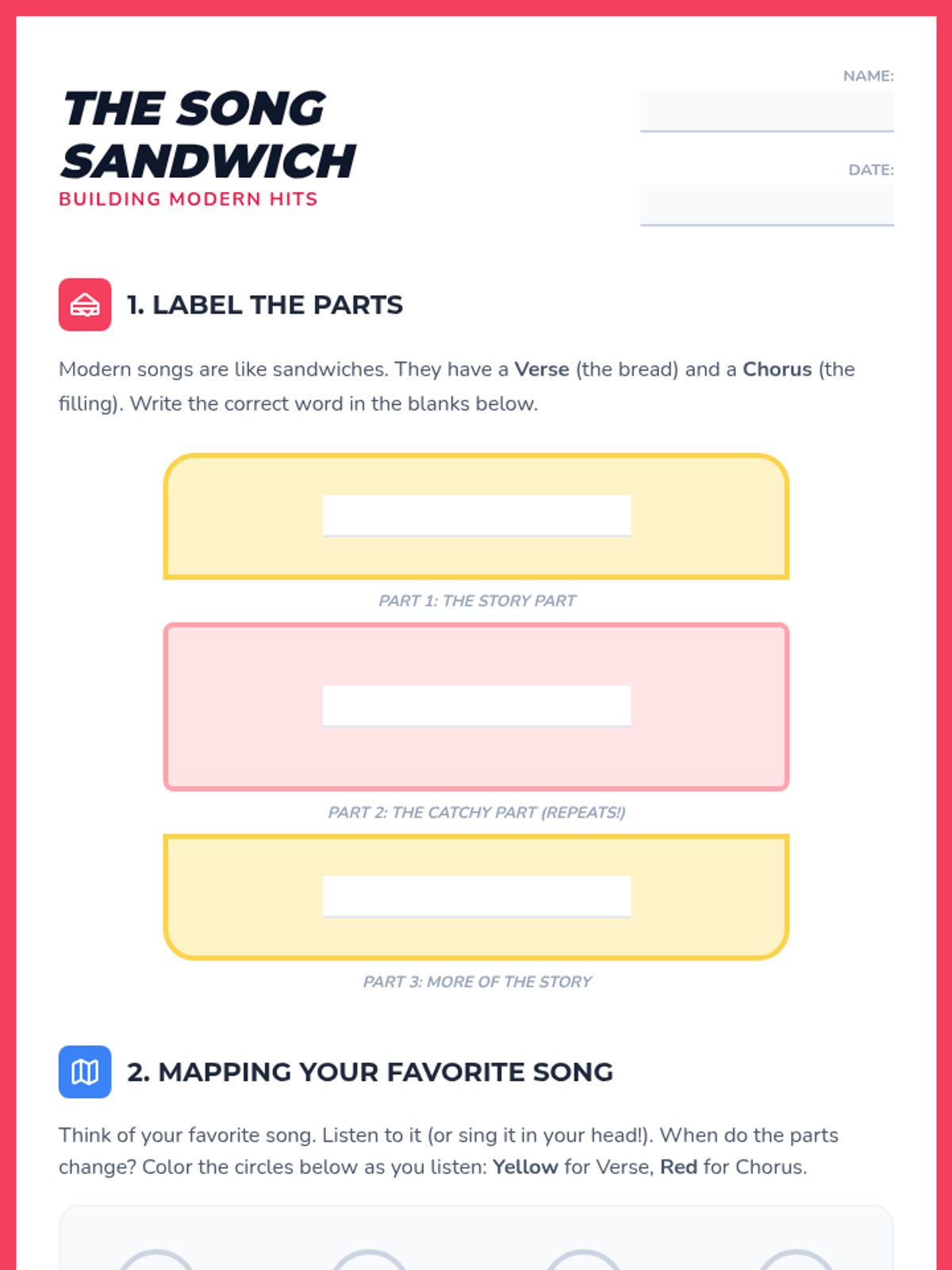
Student worksheet for Lesson 4, using a 'Song Sandwich' visual to help students identify verse and chorus structures. Includes a song mapping activity.
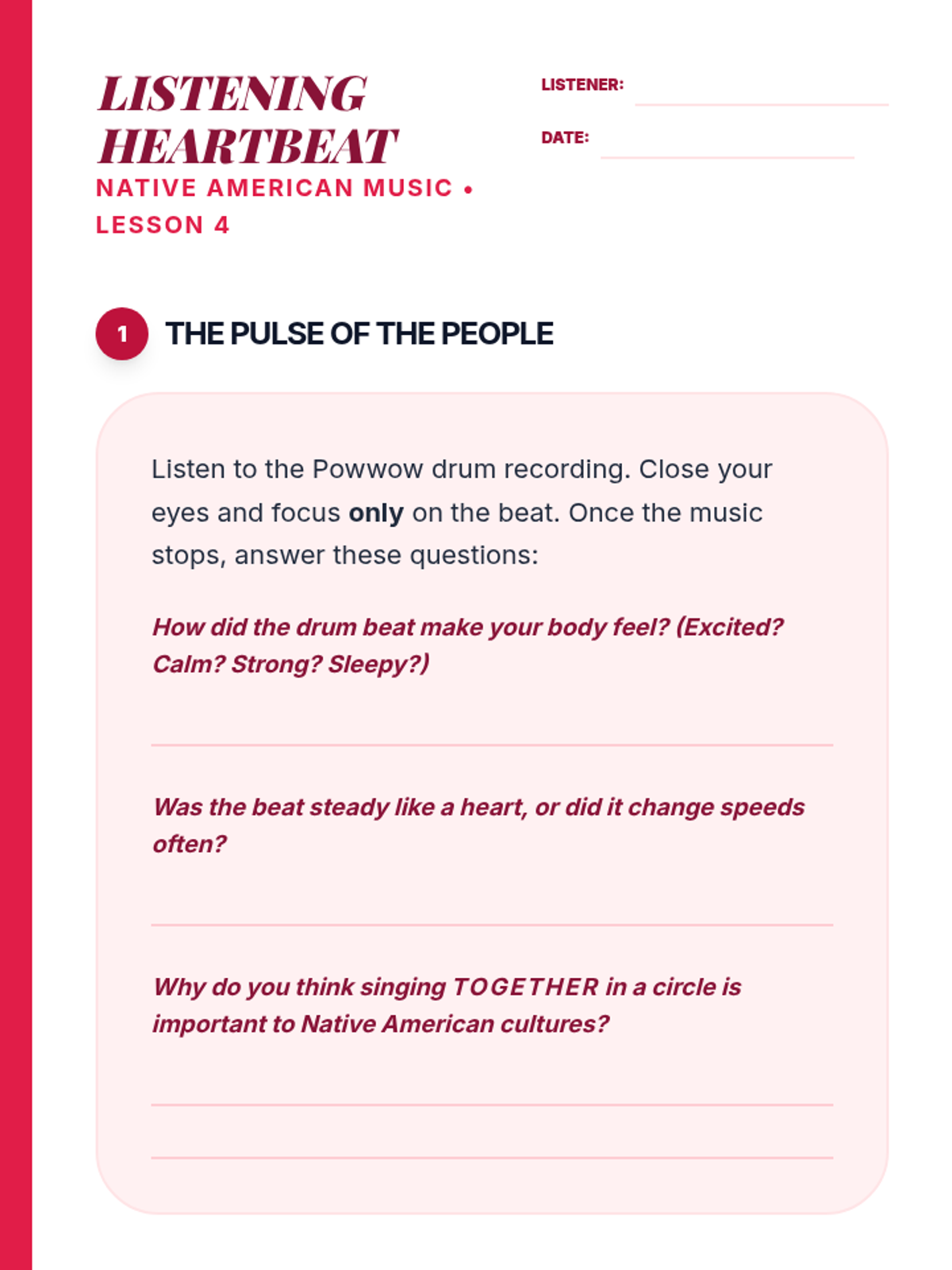
Student reflection worksheet for Lesson 4, featuring listening questions for Powwow music, vocabulary matching, and a creative response on cultural preservation.
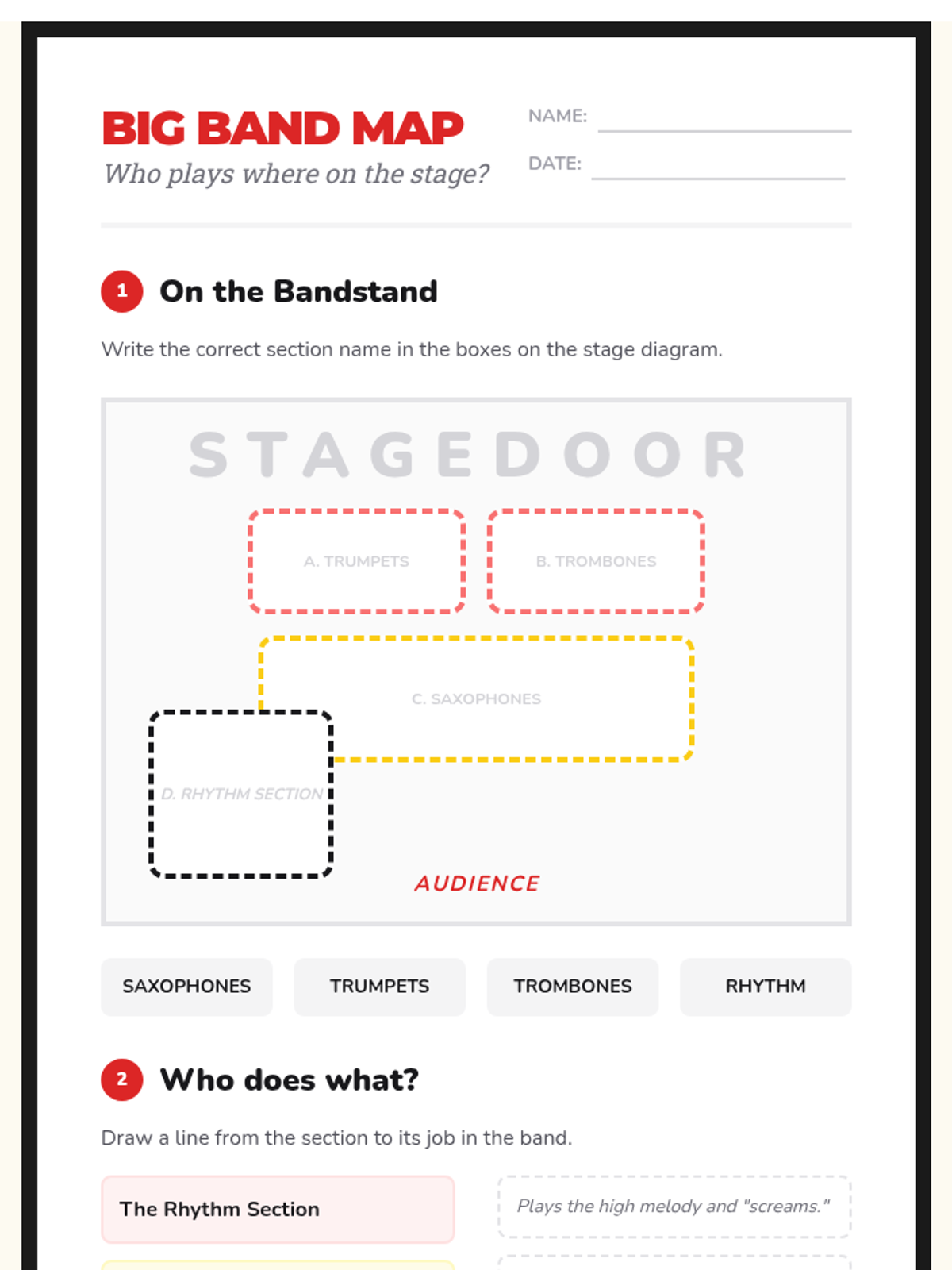
A student worksheet for identifying the different sections of a jazz big band and their roles within the ensemble.
A slide deck introducing the role of the conductor, explaining the baton, podium, and basic conducting patterns like 2/4 and 4/4.
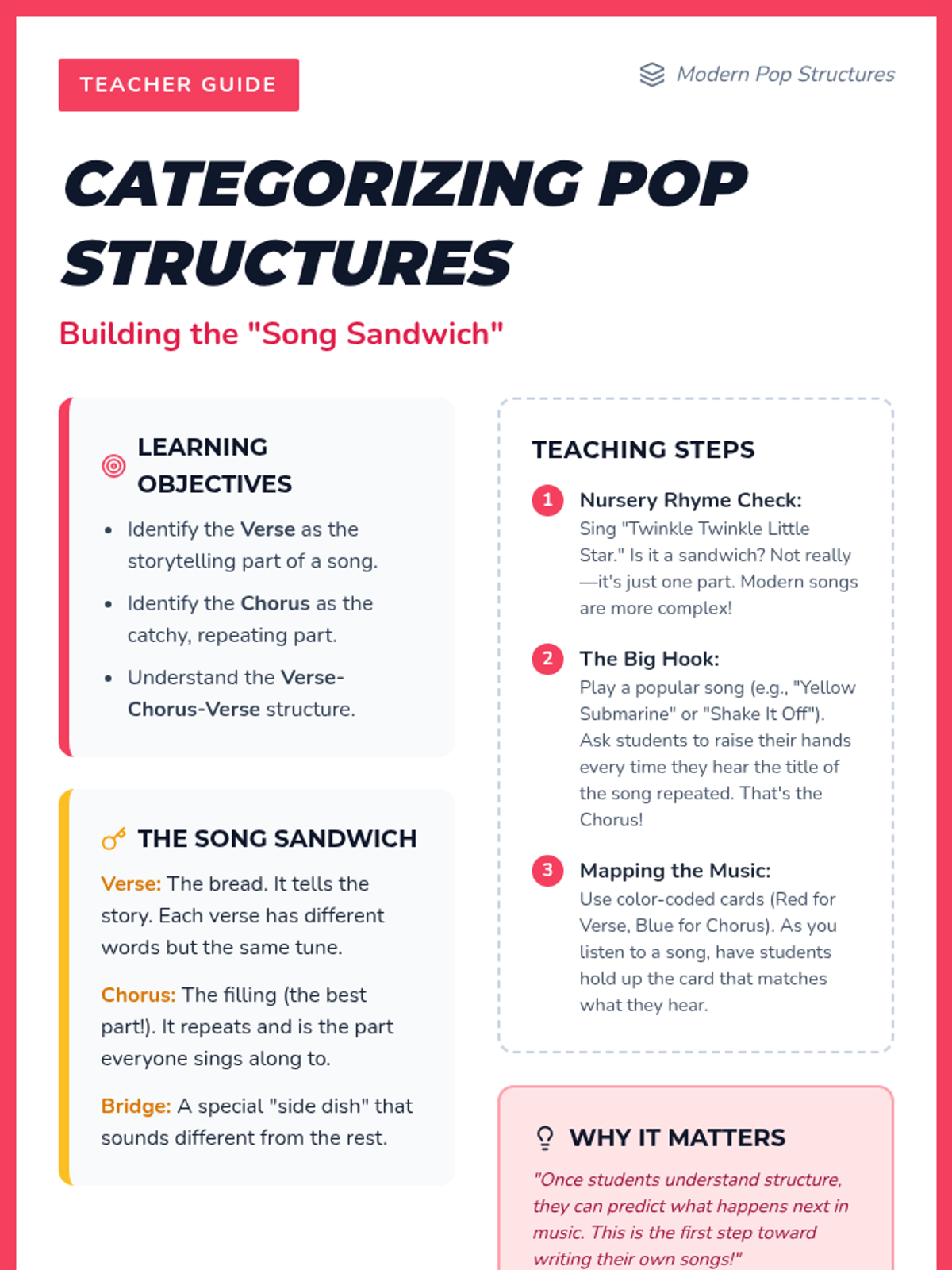
Teacher guide for Lesson 4, introducing song structure using the 'Song Sandwich' analogy. Focuses on identifying verses and choruses in modern pop music.
Visual presentation slides for Lesson 4, exploring the spiritual significance of the drum in Native American cultures, the tradition of the Powwow, and the Native American flute.
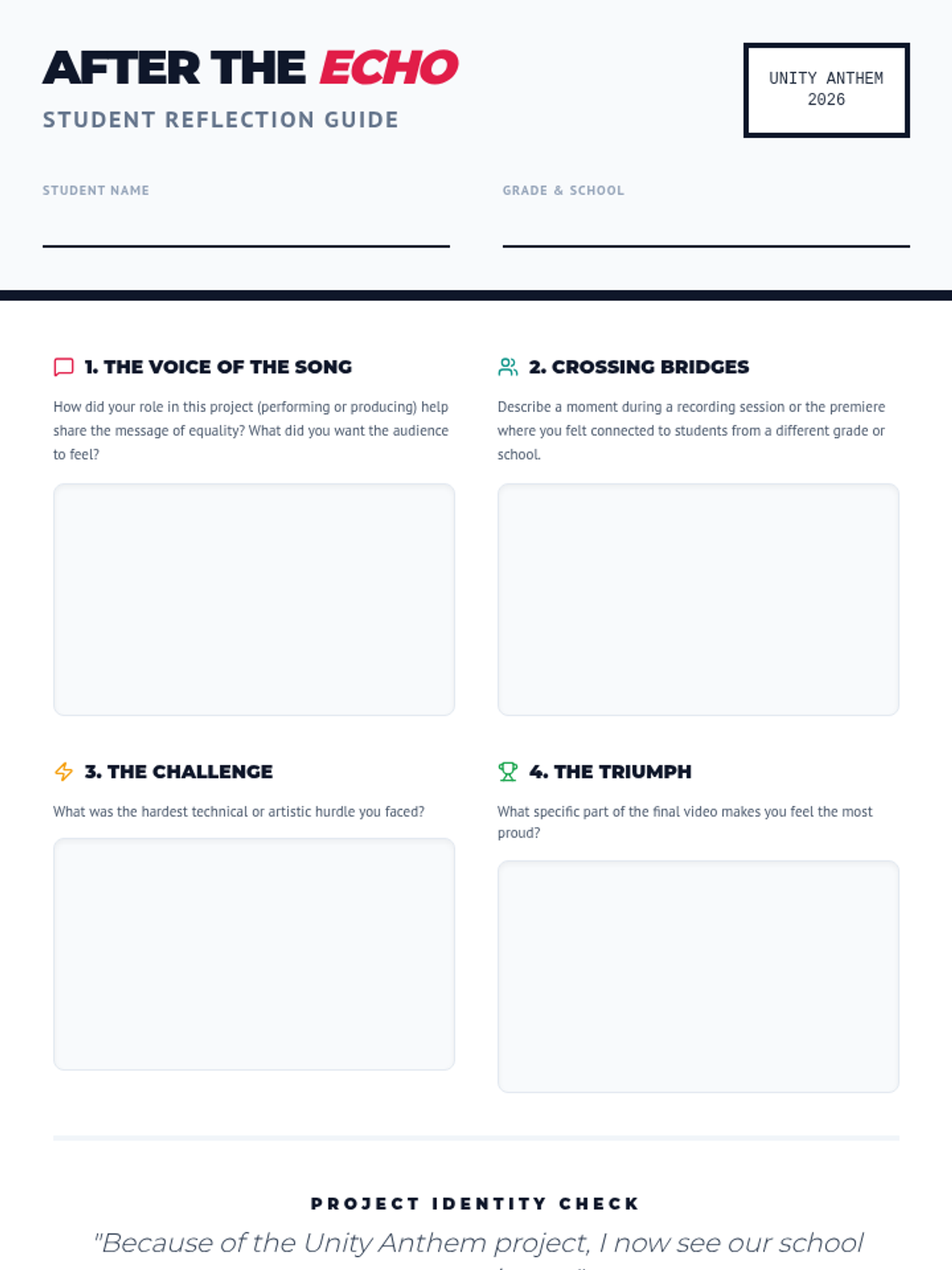
A structured reflection guide for students to process their experience with the Unity Anthem project, focusing on thematic message, collaboration across grades, and personal artistic growth.
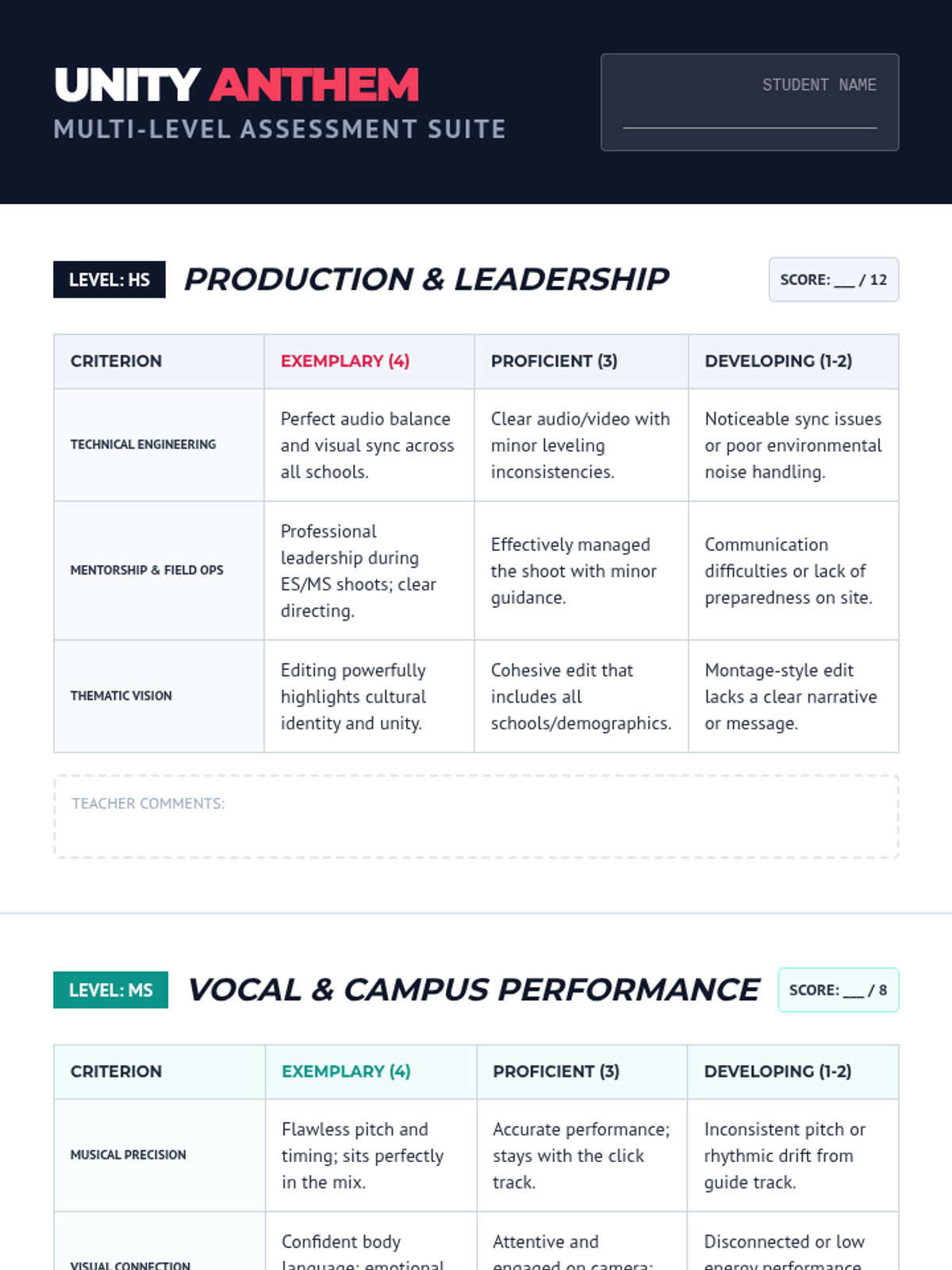
Grading rubrics for the Unity Anthem project tailored to three different levels: High School (Production), Middle School (Performance), and Elementary (Participation).
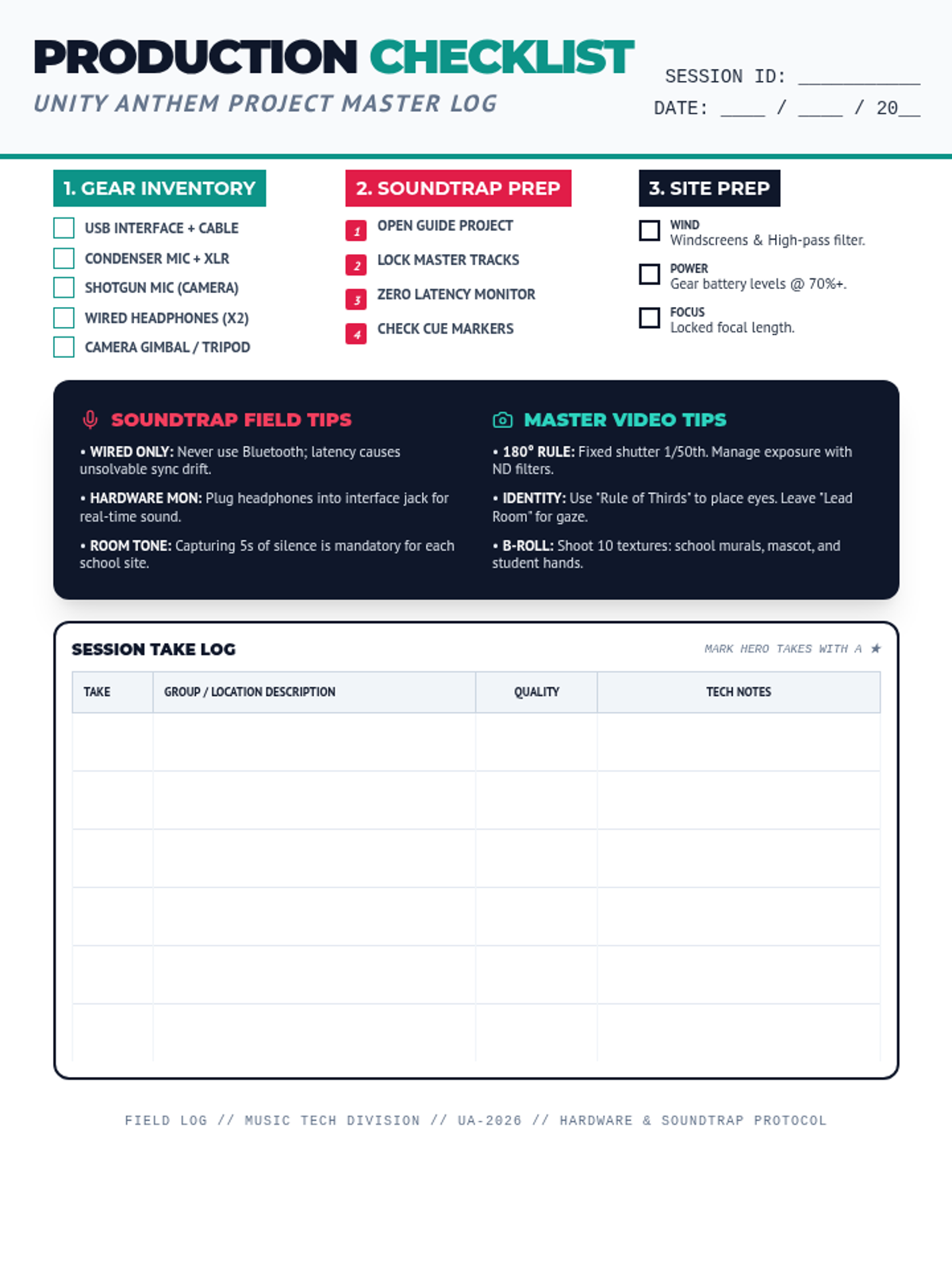
A technical production checklist for high school producers and instructors to manage the 'on-location' recording sessions at elementary and middle schools, with a detailed gear inventory and Soundtrap guide track workflow.
An engaging slide deck to launch the Unity Anthem project, featuring a new 'Toolkit' slide with Soundtrap and field gear requirements, along with cinematic tips and project roles.
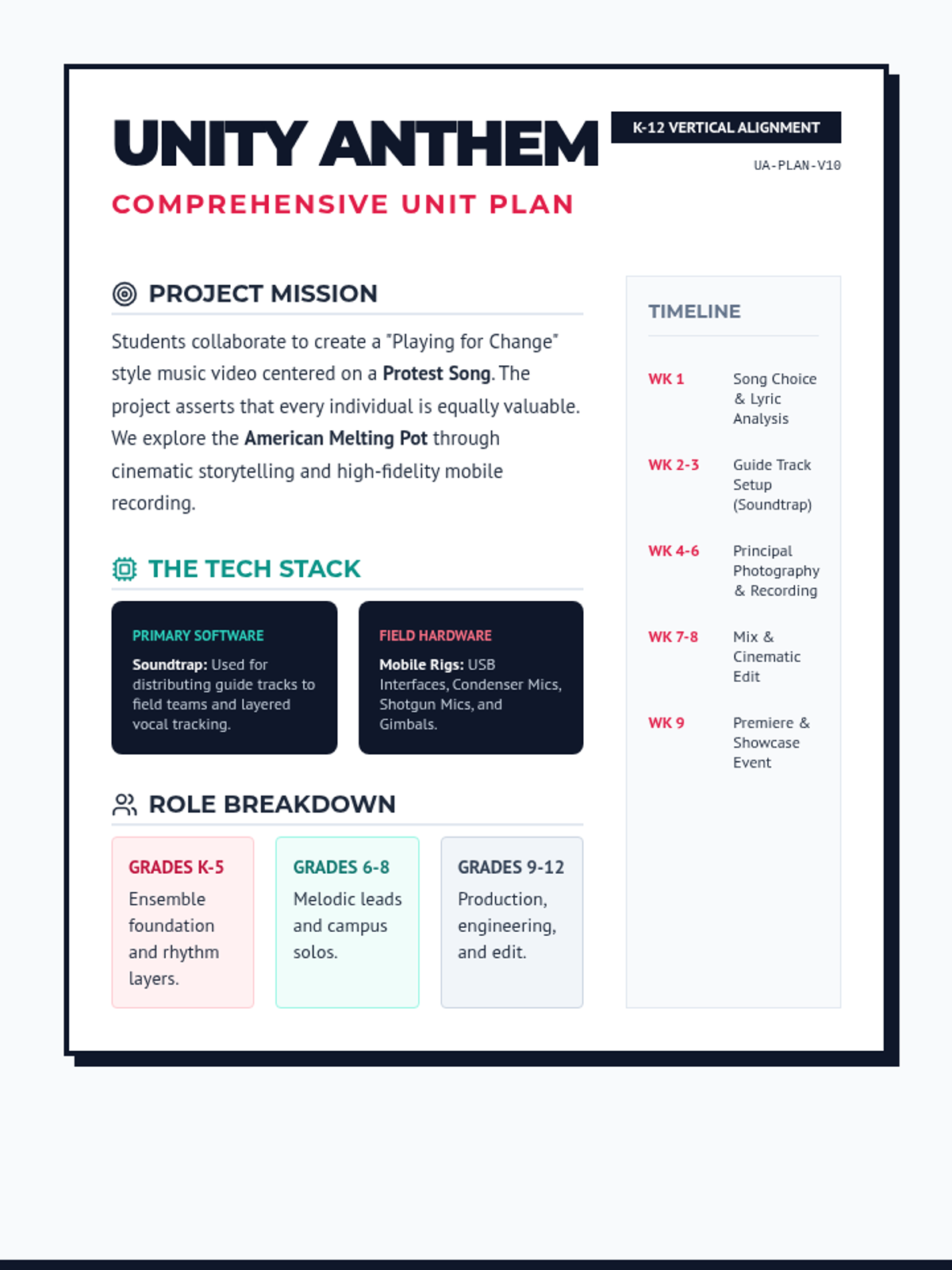
A comprehensive teacher-facing unit plan for the Unity Anthem K-12 music video project, detailing the mission, timeline, instructional sequence, and roles across grade levels with a full equipment list and Soundtrap workflow.
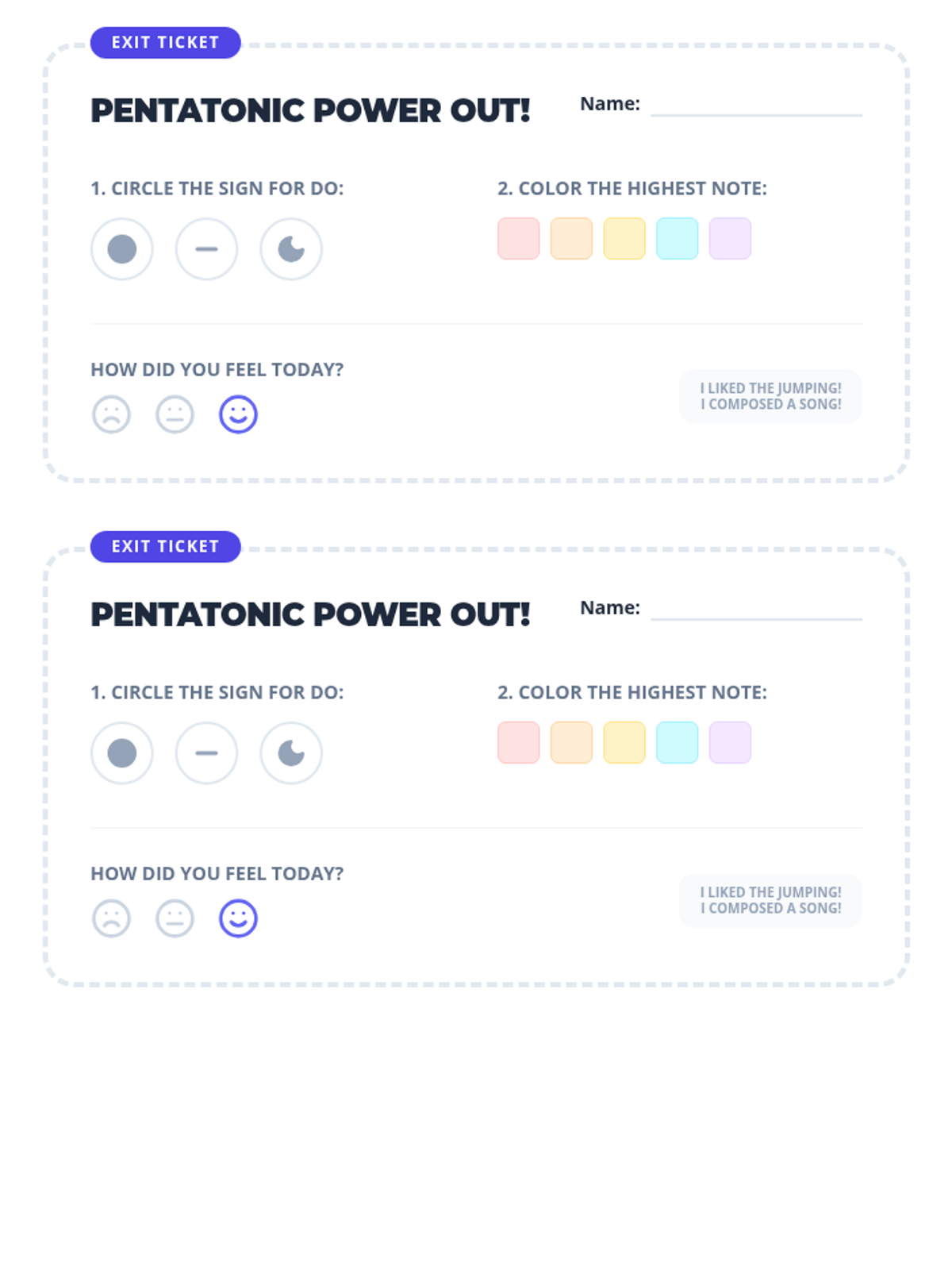
A visual exit ticket for the pentatonic lesson, featuring icon-based identification and mood reflection, optimized for students with dyslexia.
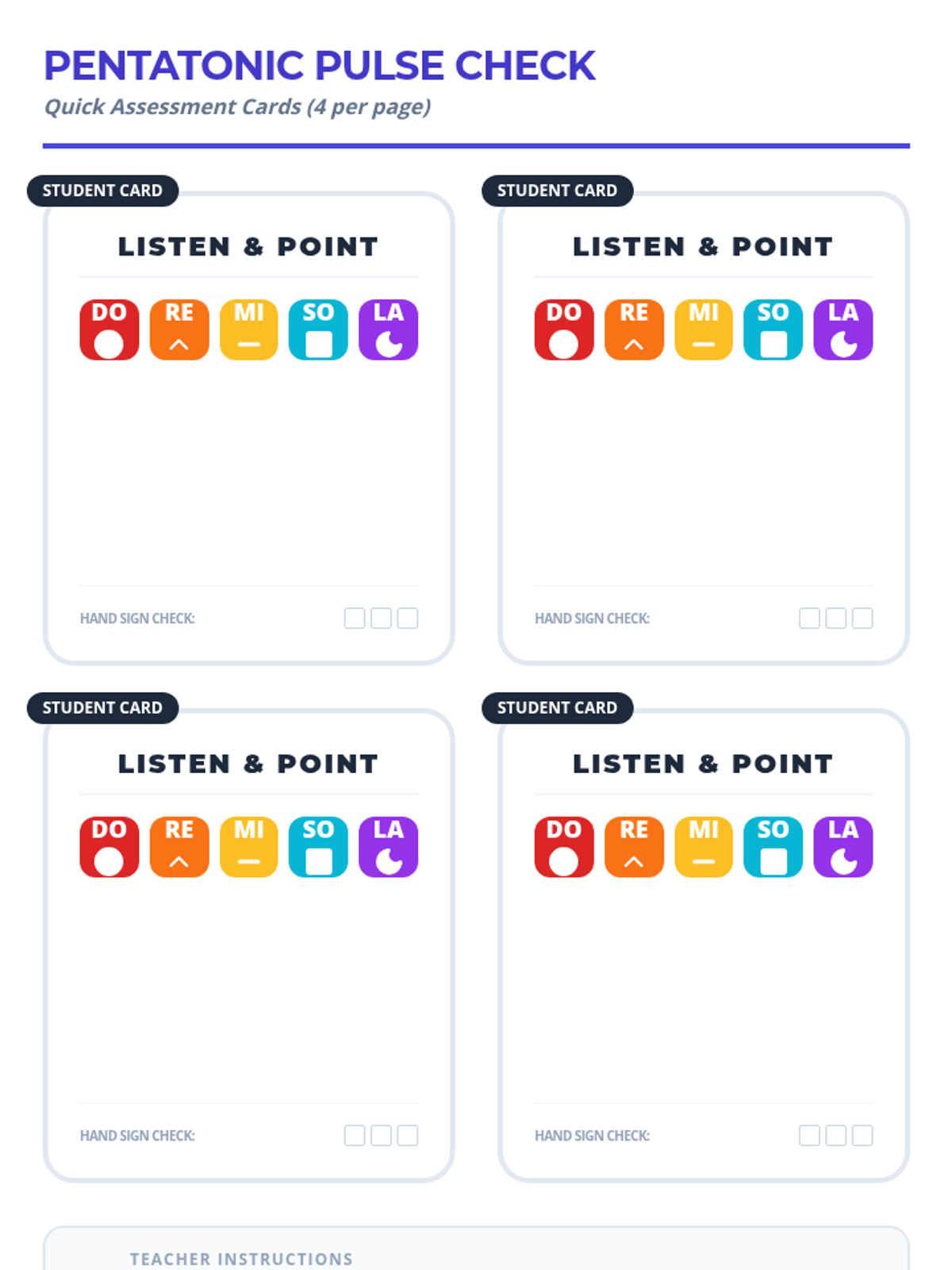
Quick-check assessment cards for students to identify solfege notes via pointing or clipping, plus a teacher tracking sheet for inclusive observation.
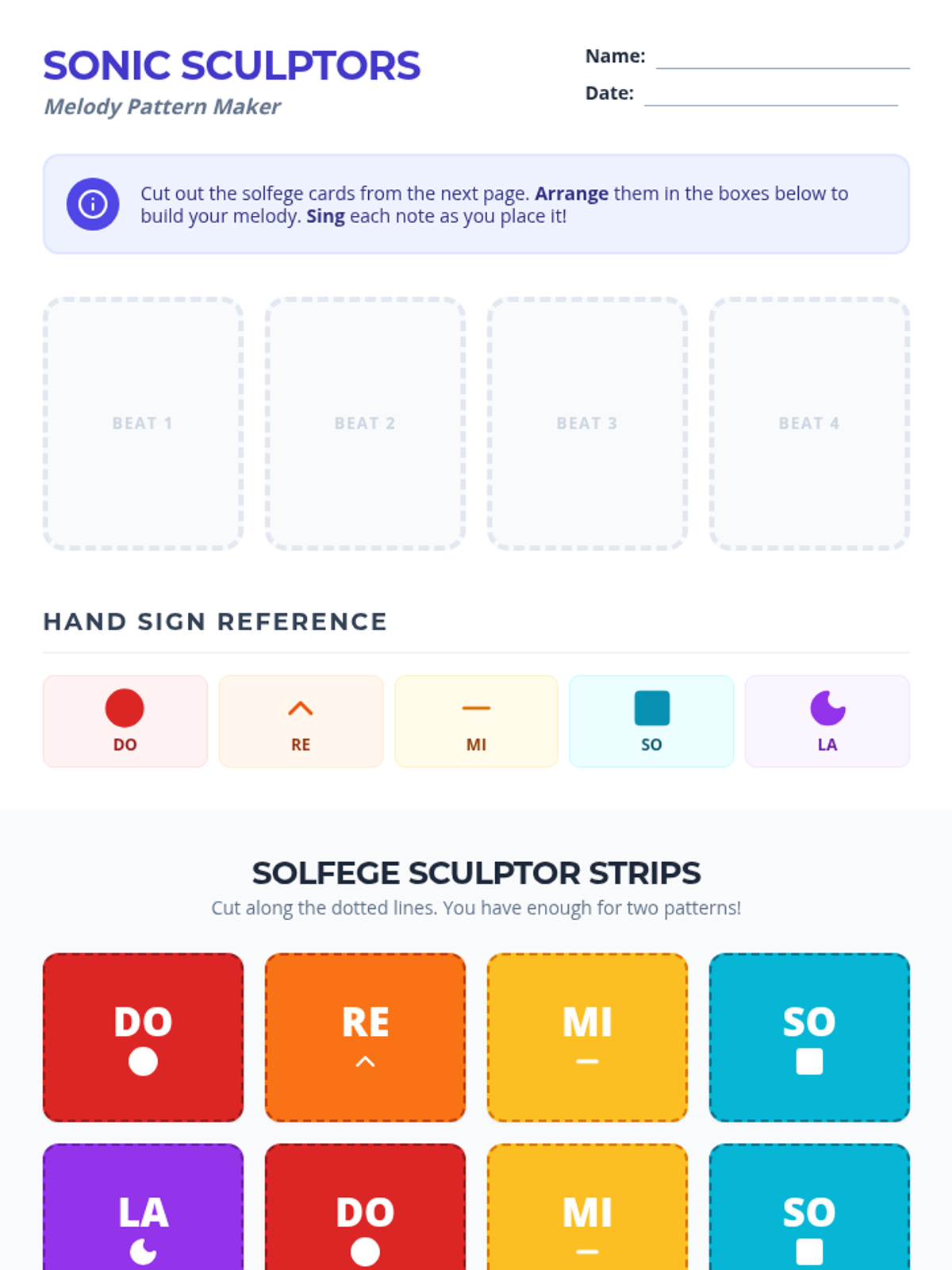
A tactile composition worksheet for students. Includes a melodic pattern grid and a page of color-coded solfege strips to cut out and manipulate, ideal for ADHD focus.
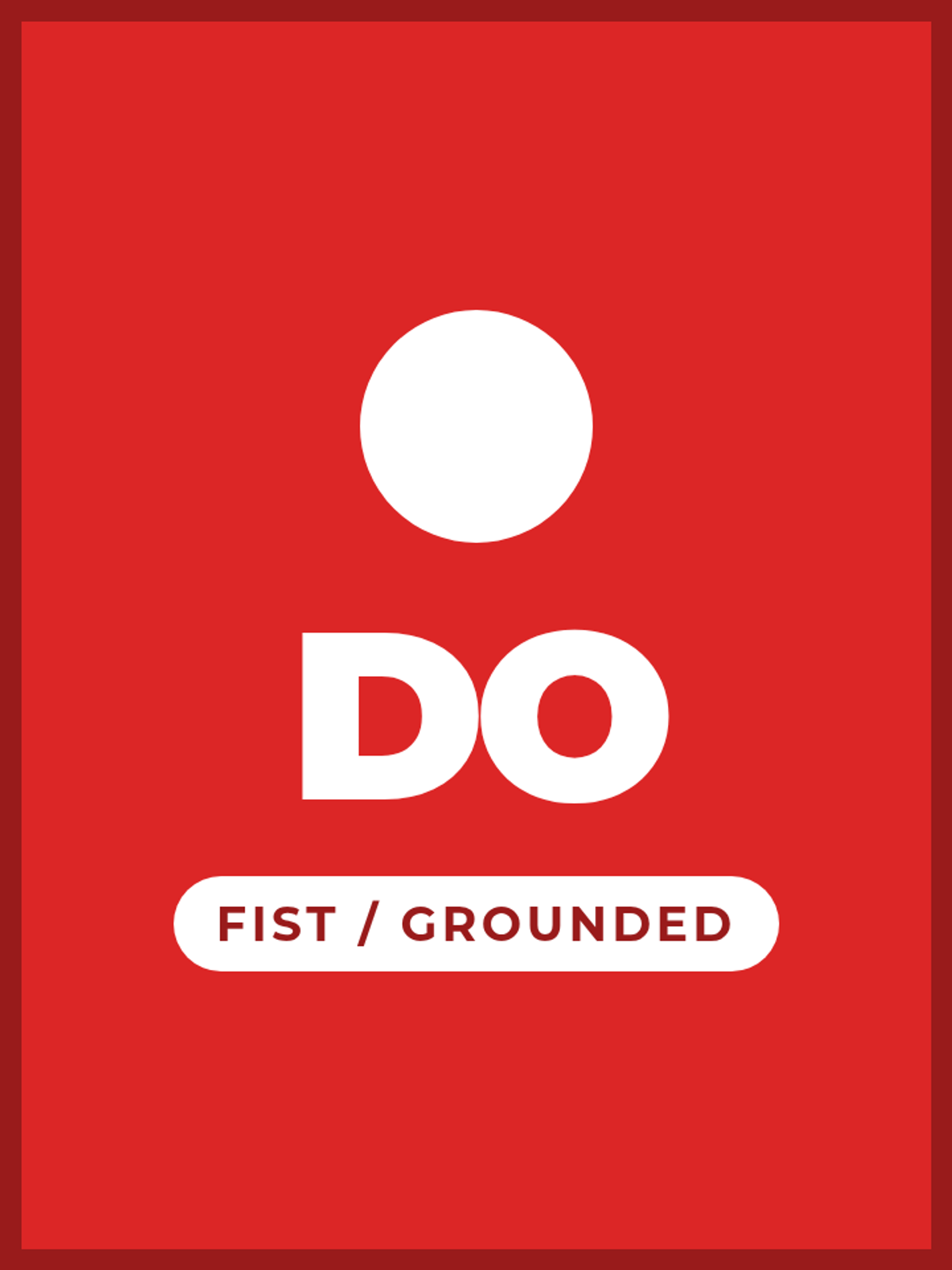
High-contrast, large-print floor cards for the pentatonic scale. Each card is color-coded and includes a simplified action icon for multi-sensory reinforcement.
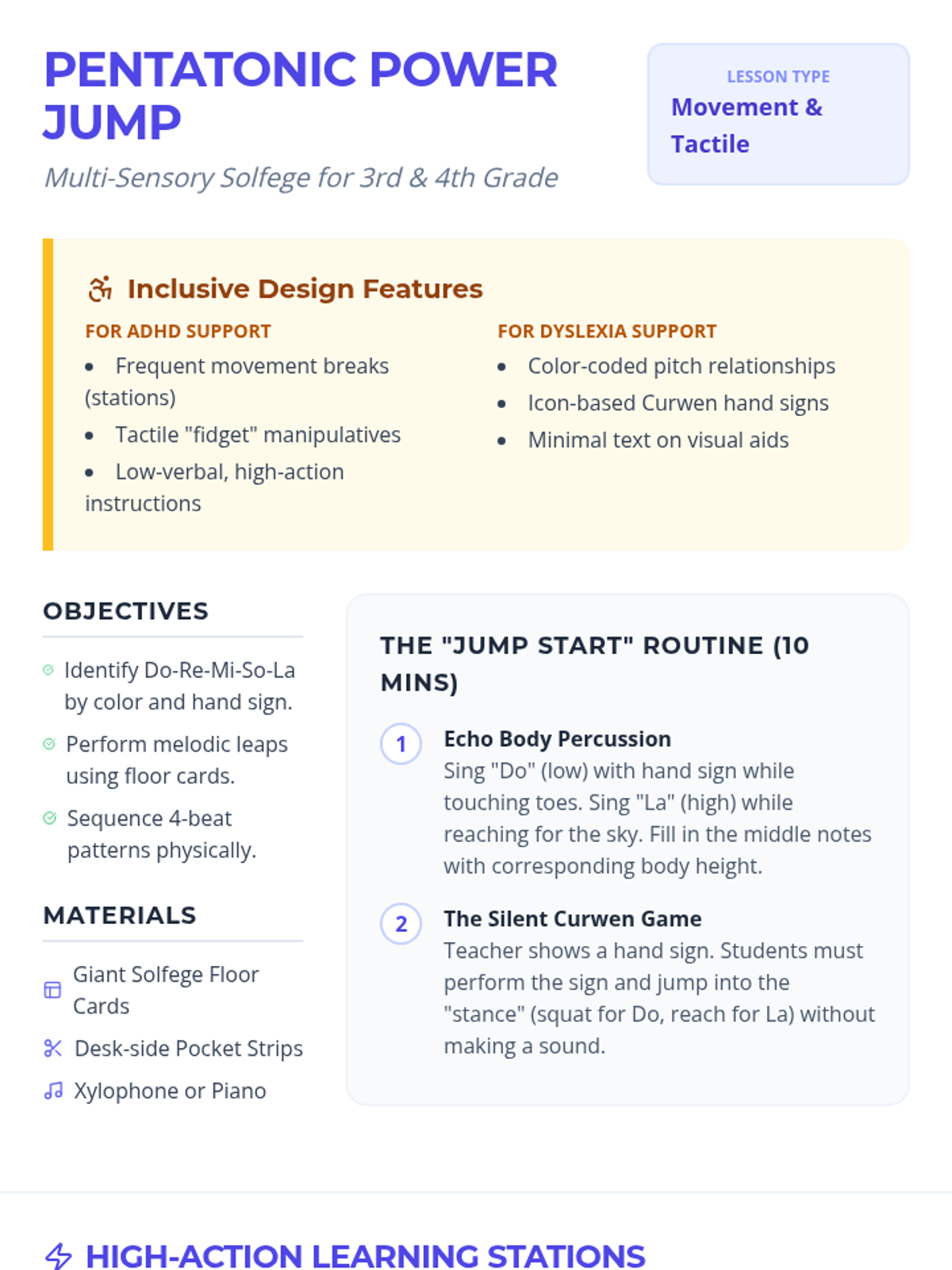
A comprehensive teacher lesson plan for teaching pentatonic solfege through movement and tactile activities, designed for inclusivity.
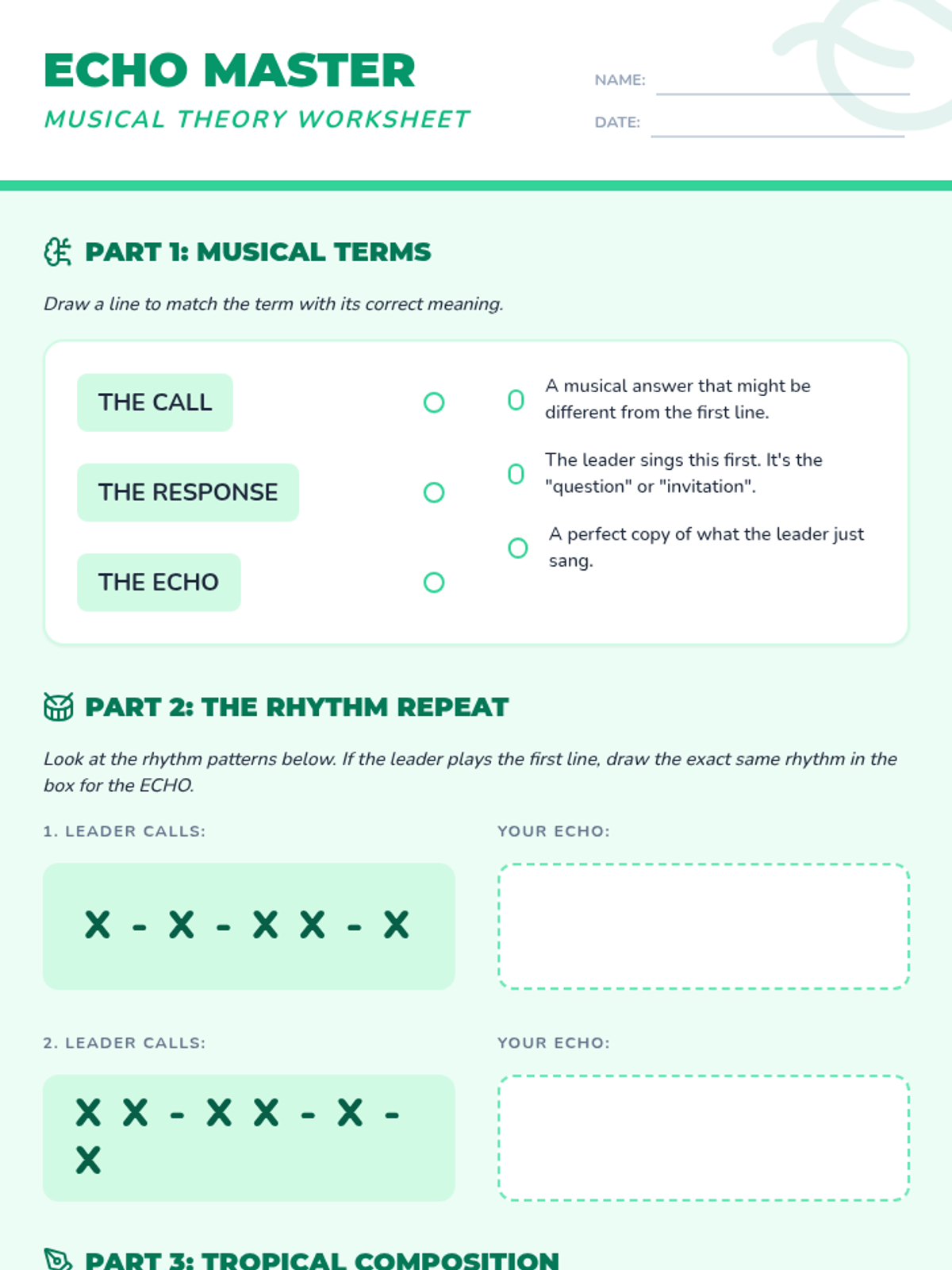
A student worksheet for practicing call and response music theory, including term matching, rhythm echoes, and original composition.
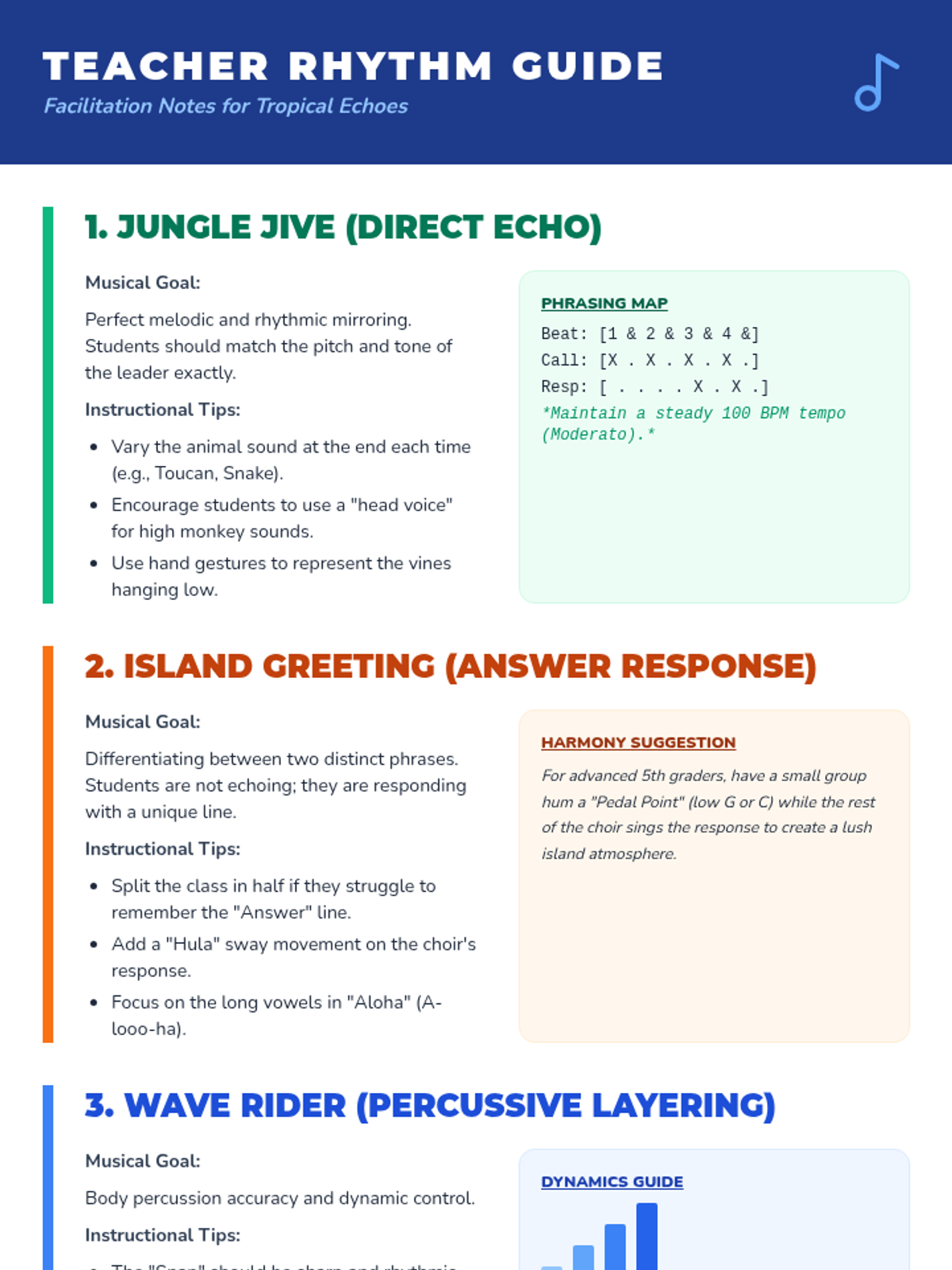
A comprehensive teacher guide for teaching call and response songs, including phrasing maps, dynamic guides, and concert staging ideas.
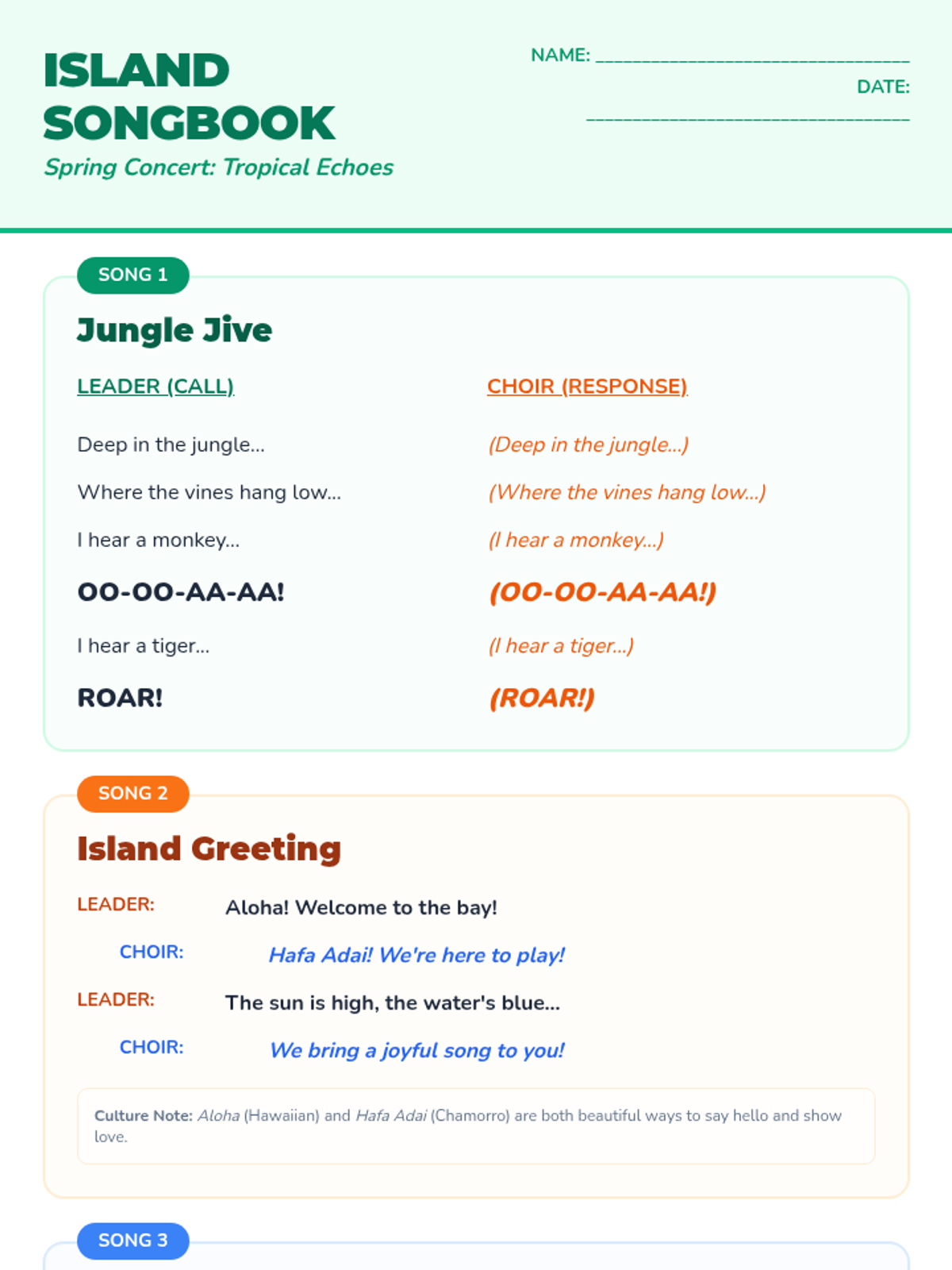
A student lyric sheet featuring three tropical-themed call and response songs with cultural notes and a rehearsal checklist.
A vibrant slide deck introducing the concept of call and response singing with three tropical-themed songs and performance tips for a spring concert.
A visual presentation introducing the djembe, talking drum, and kora, explaining their role in West African history, and highlighting the importance of Griots as cultural storytellers.
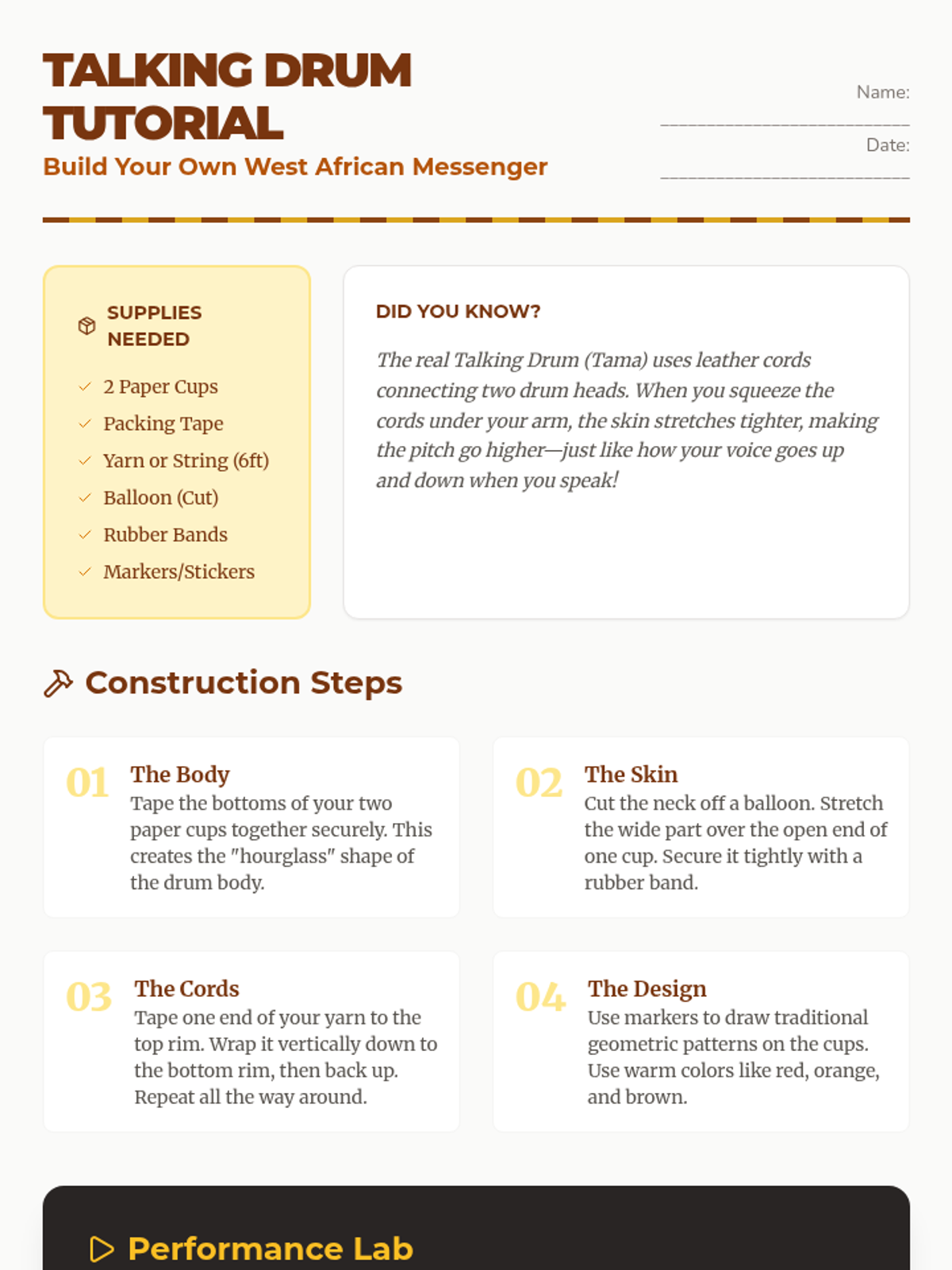
A step-by-step student activity guide for creating a DIY Talking Drum using recycled materials like paper cups, balloons, and yarn, including a performance lab for musical experimentation.
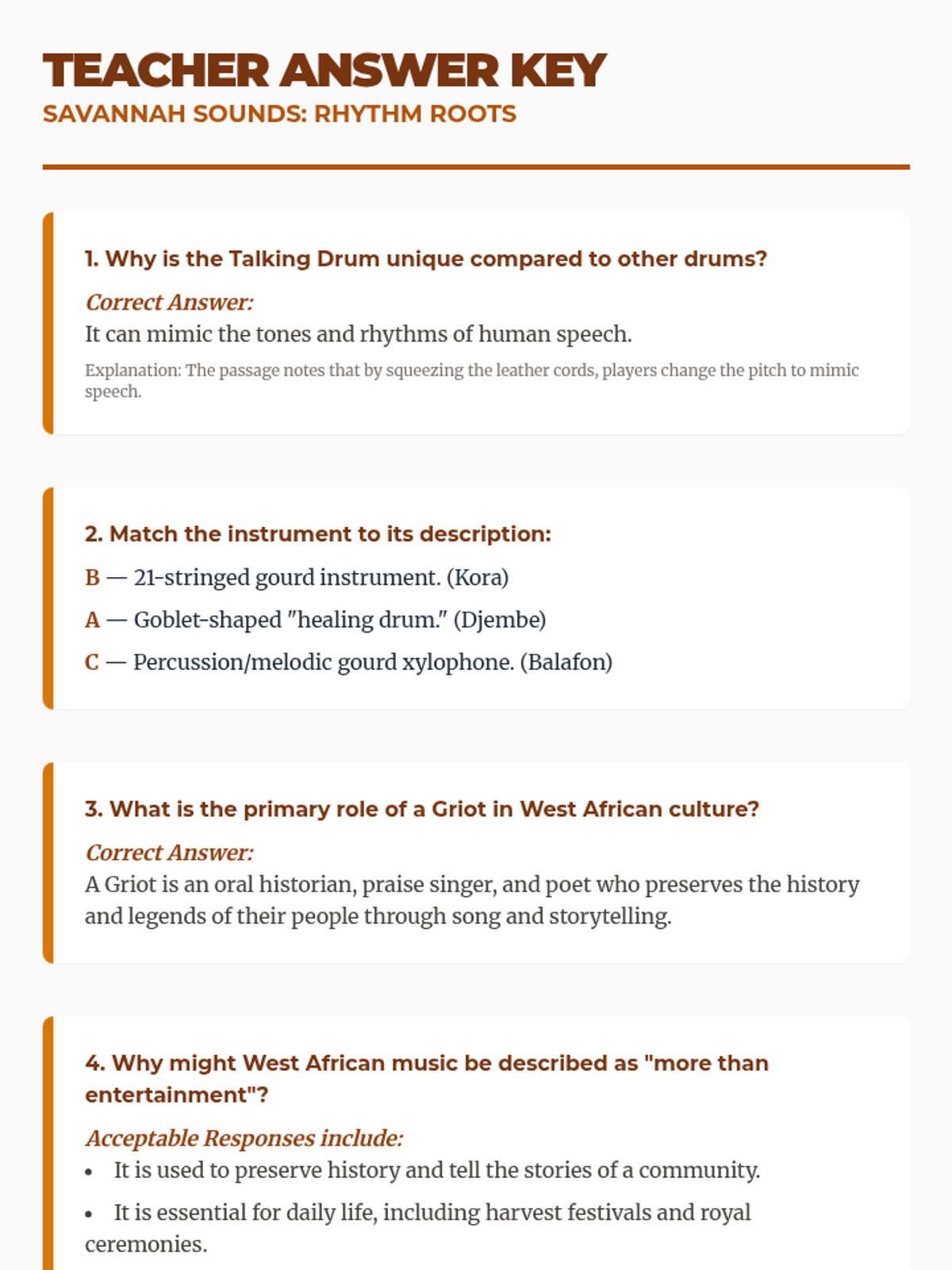
The teacher answer key for the Rhythm Roots Reading worksheet, including detailed answers, explanations, and teaching tips for the West African instruments lesson.
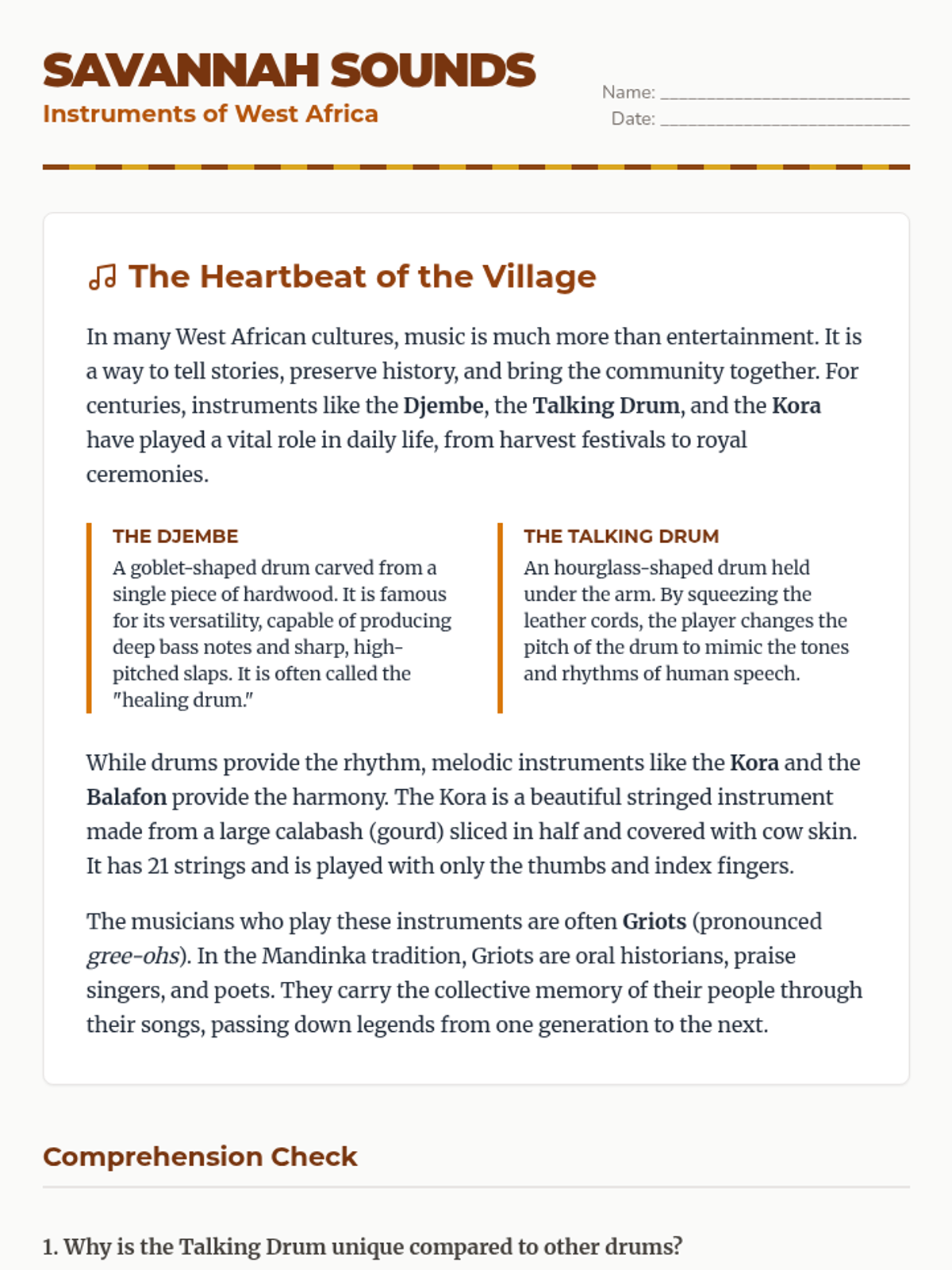
A reading comprehension worksheet featuring a passage about traditional West African instruments including the Djembe, Talking Drum, and Kora, followed by four varied comprehension questions.
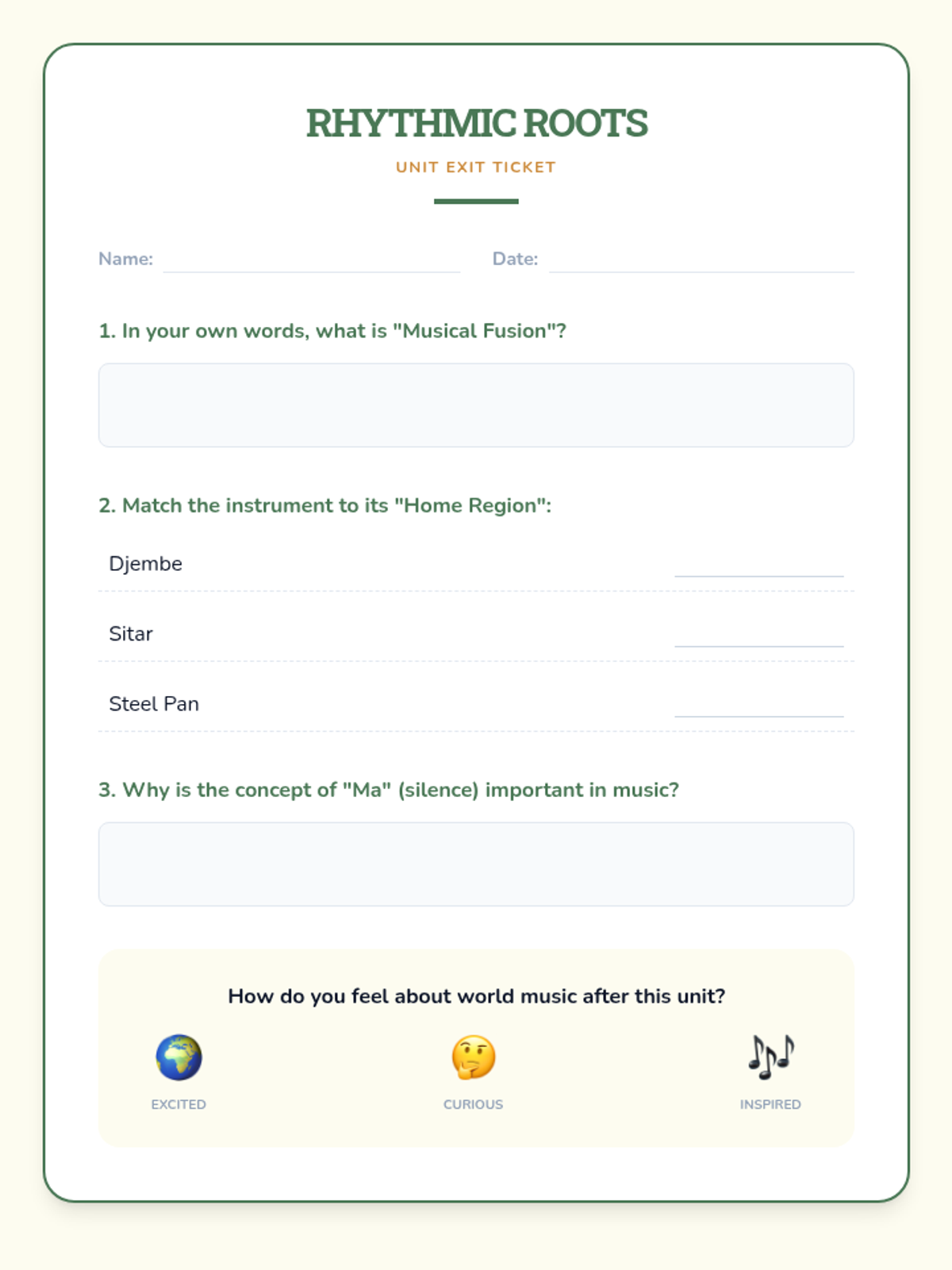
A comprehensive exit ticket for the Rhythmic Roots unit, assessing student understanding of fusion, instrument origins, and key cultural concepts like 'Ma'.
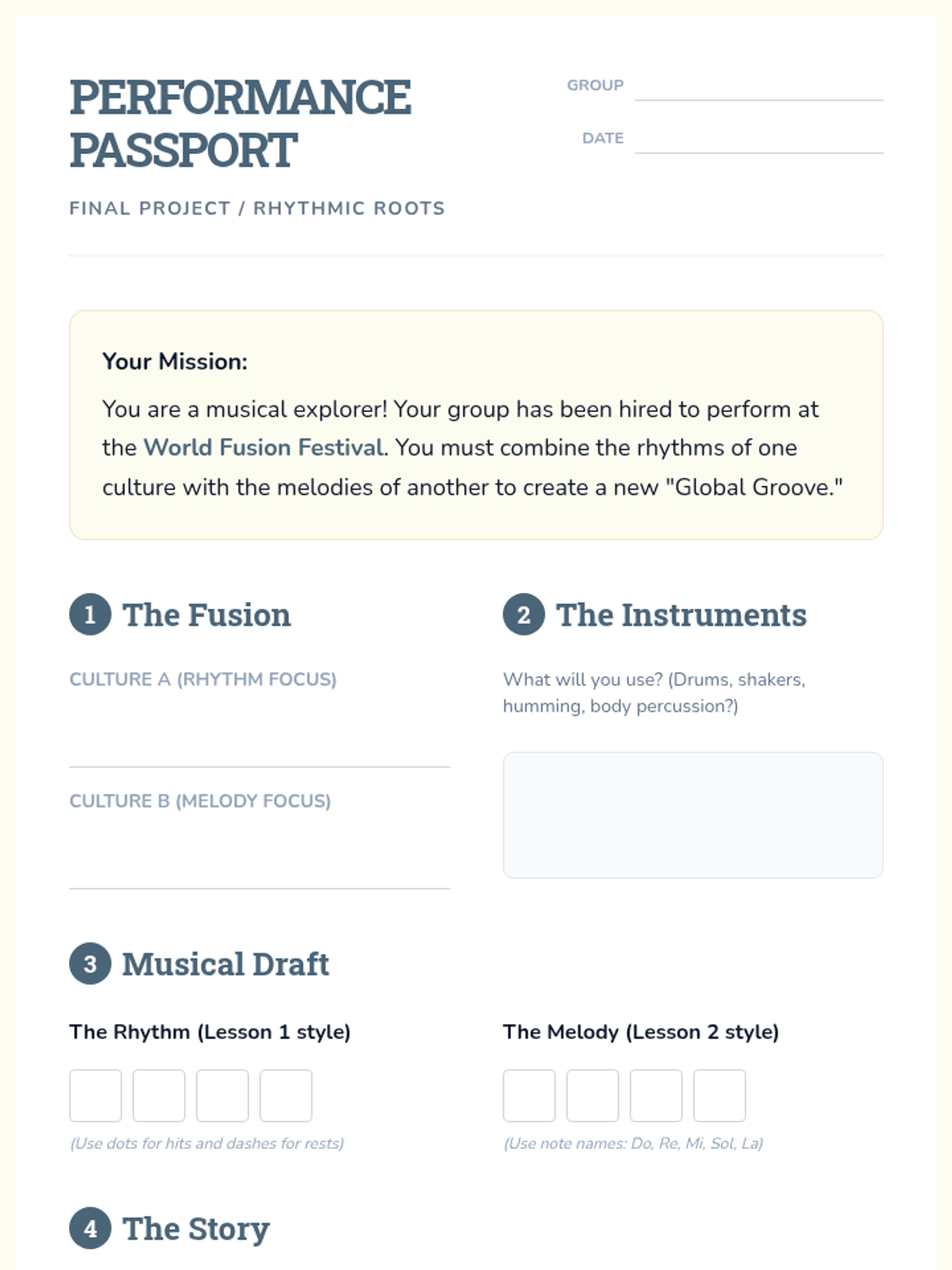
A project planning guide for students to design and compose their final 'World Fusion' musical piece, combining elements from multiple cultures.
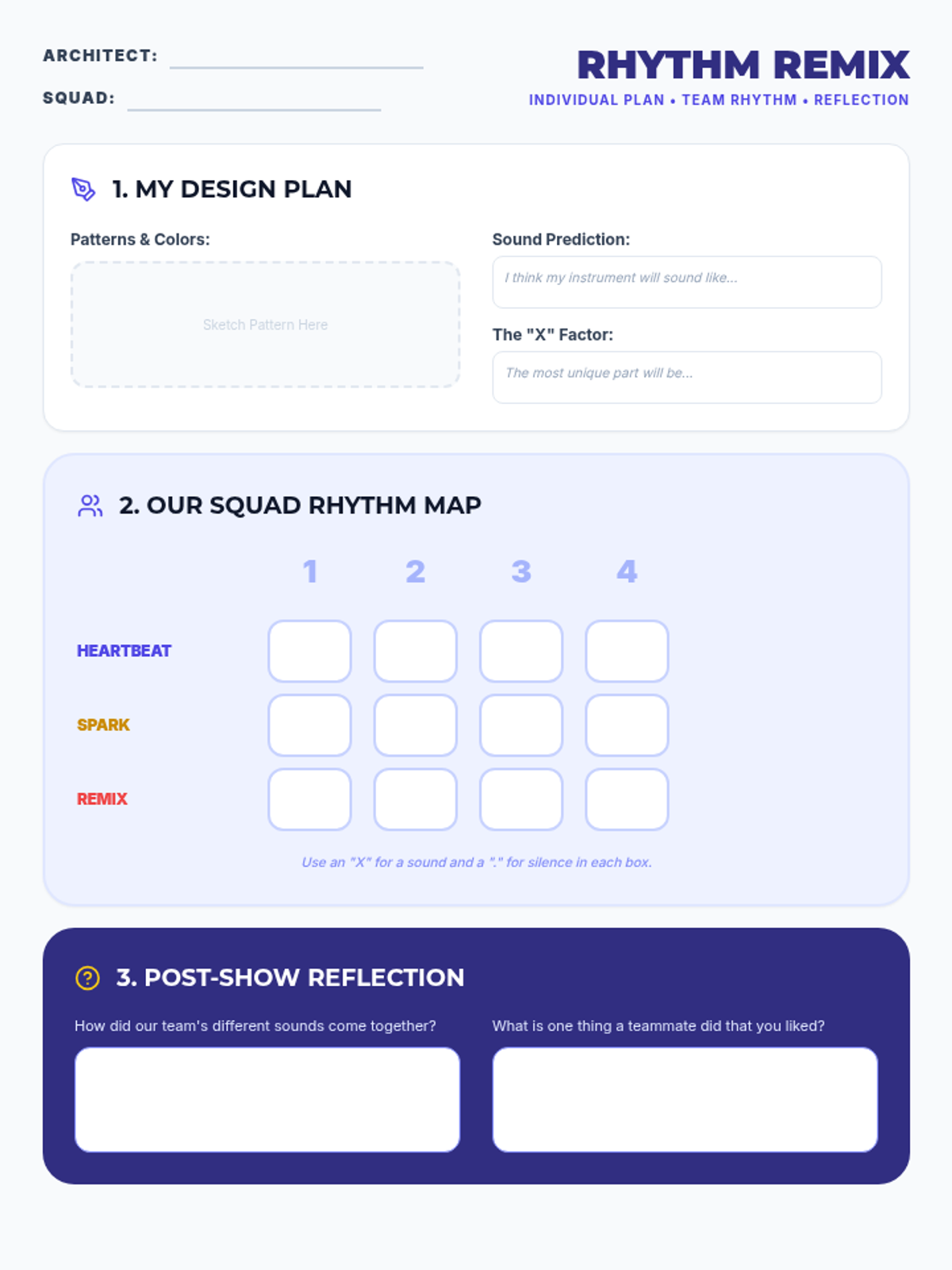
A student worksheet for planning individual instrument designs, mapping out team rhythms, and reflecting on the collaborative performance.
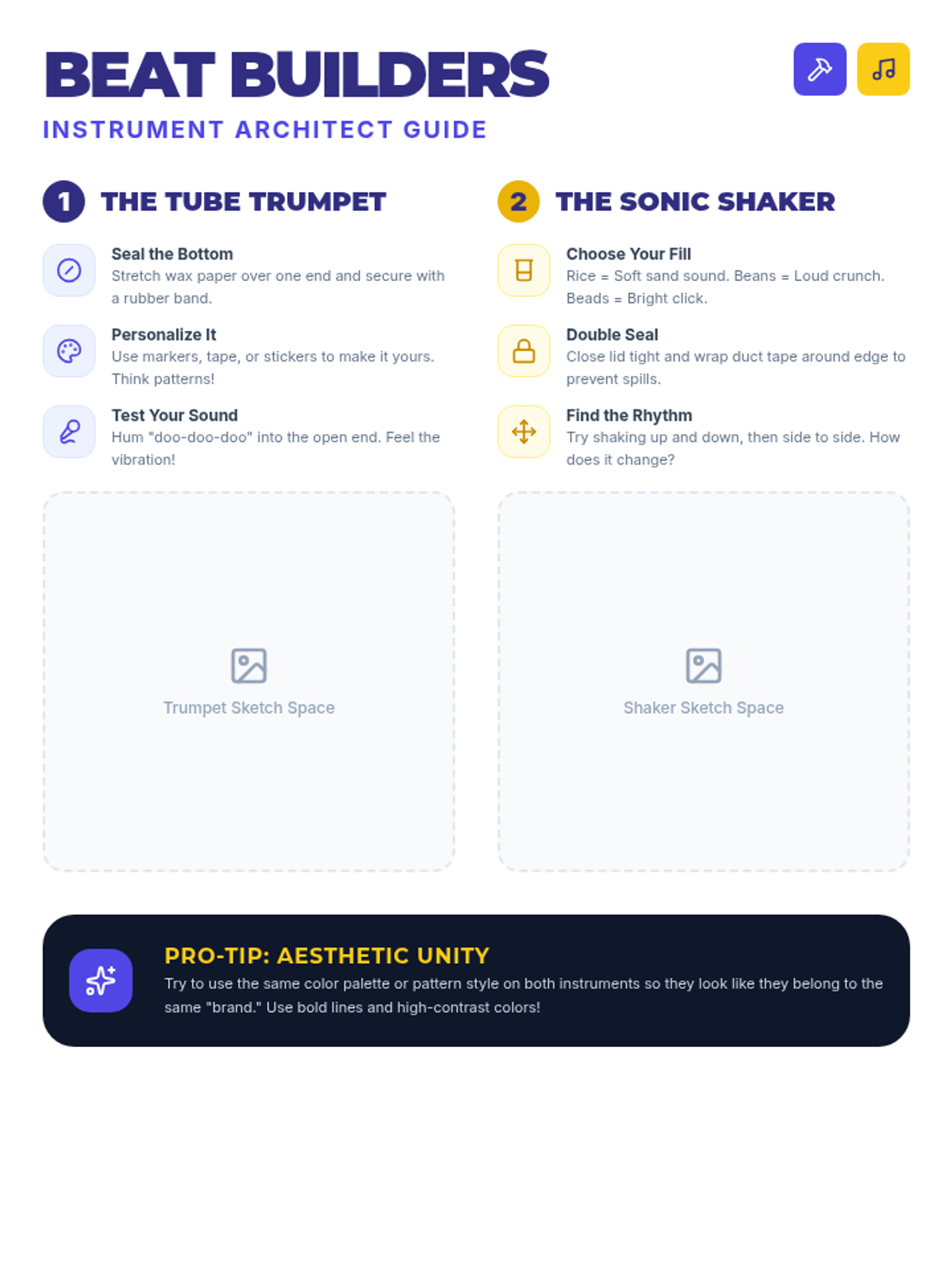
A visual, step-by-step instruction guide for students to build their own paper towel tube trumpets and sonic shakers, with dedicated sketching areas.
A visual presentation for the Rhythm Lab lesson, introducing sound science, instrument construction steps, and the team performance challenge.
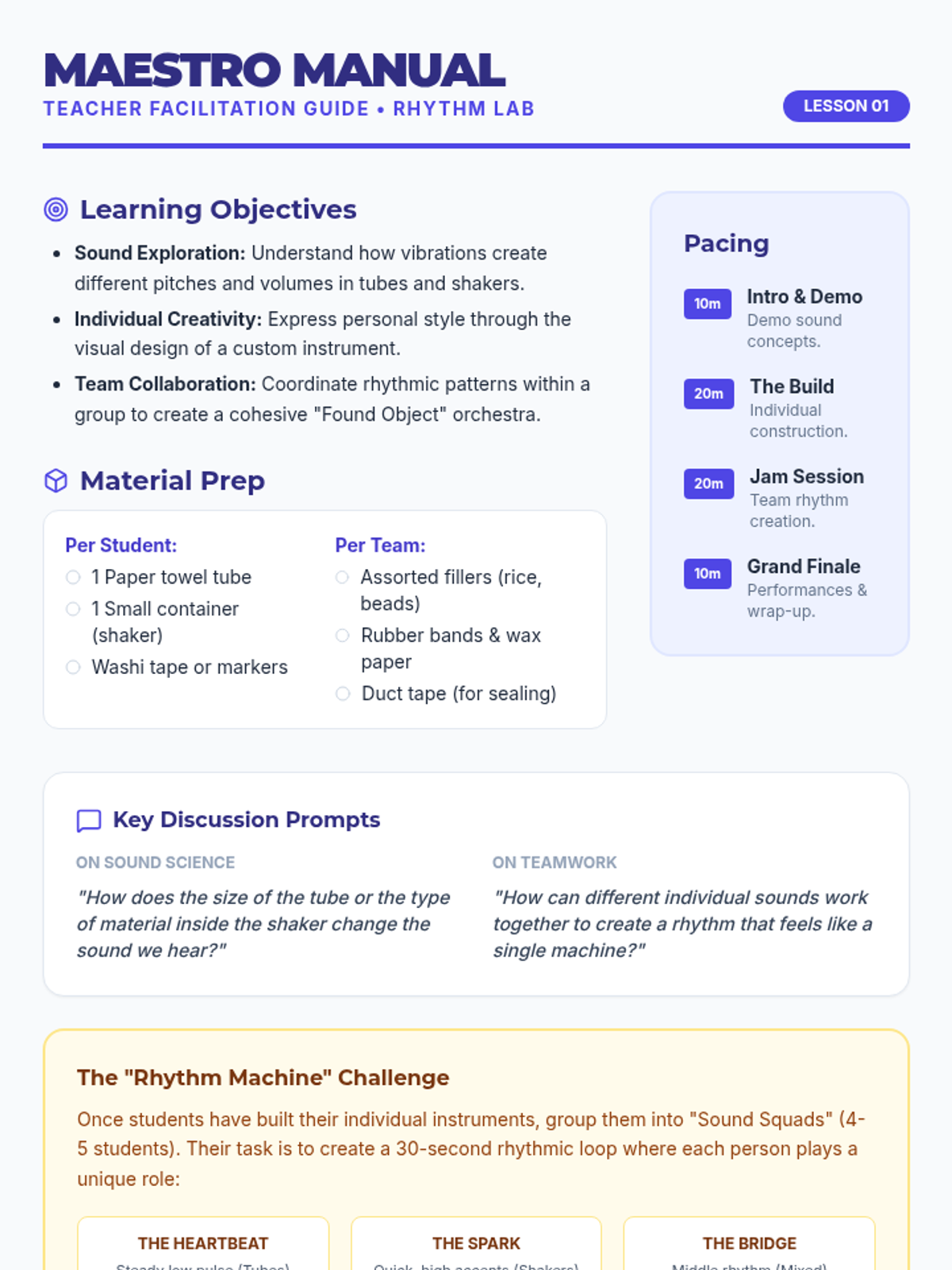
A teacher's facilitation guide for the Rhythm Lab lesson, featuring pacing tips, material checklists, discussion prompts, and a team-building challenge.
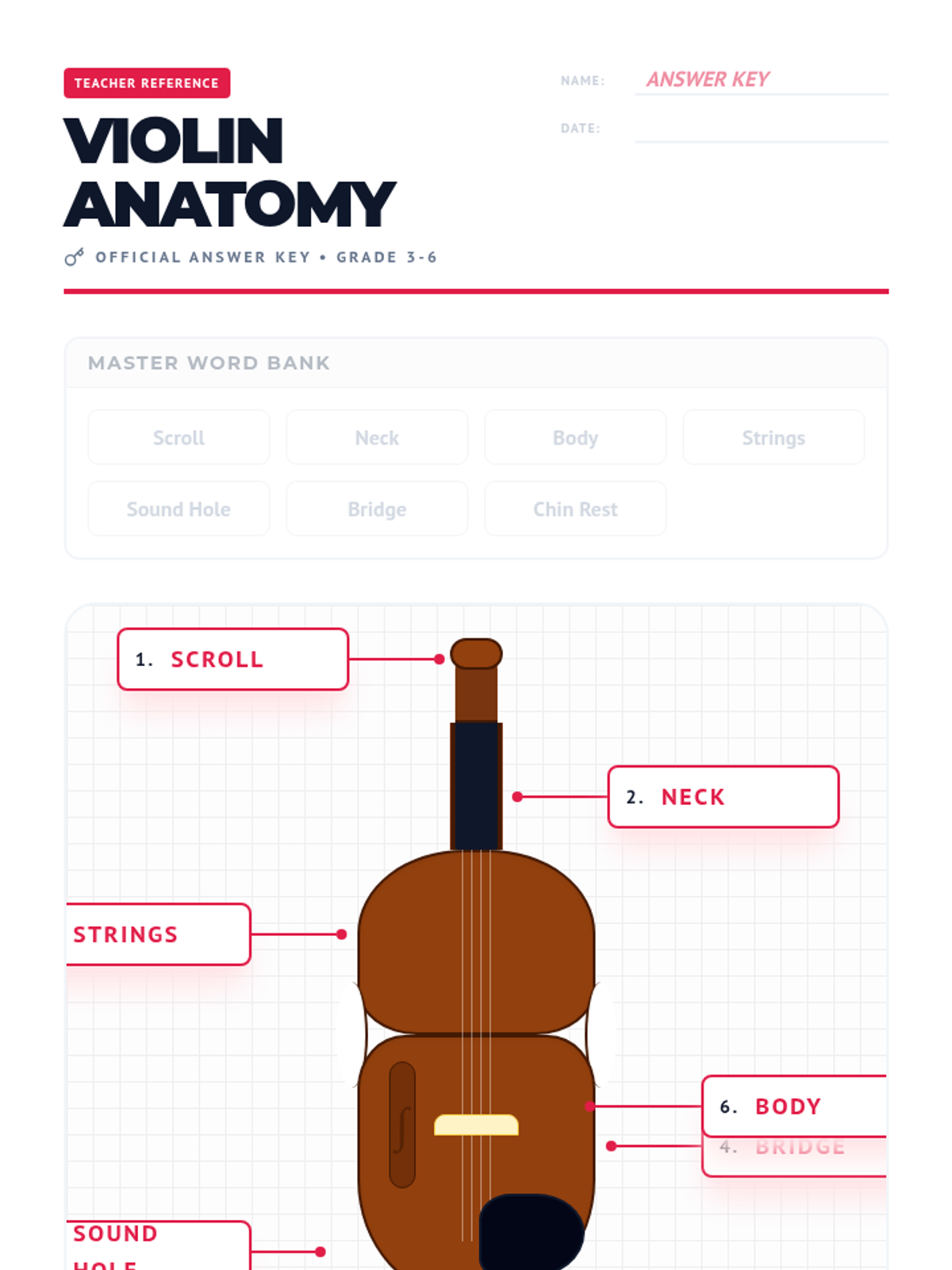
The teacher's answer key for the Violin Anatomy worksheet, showing all the correct labels in a clear, handwritten-style format.
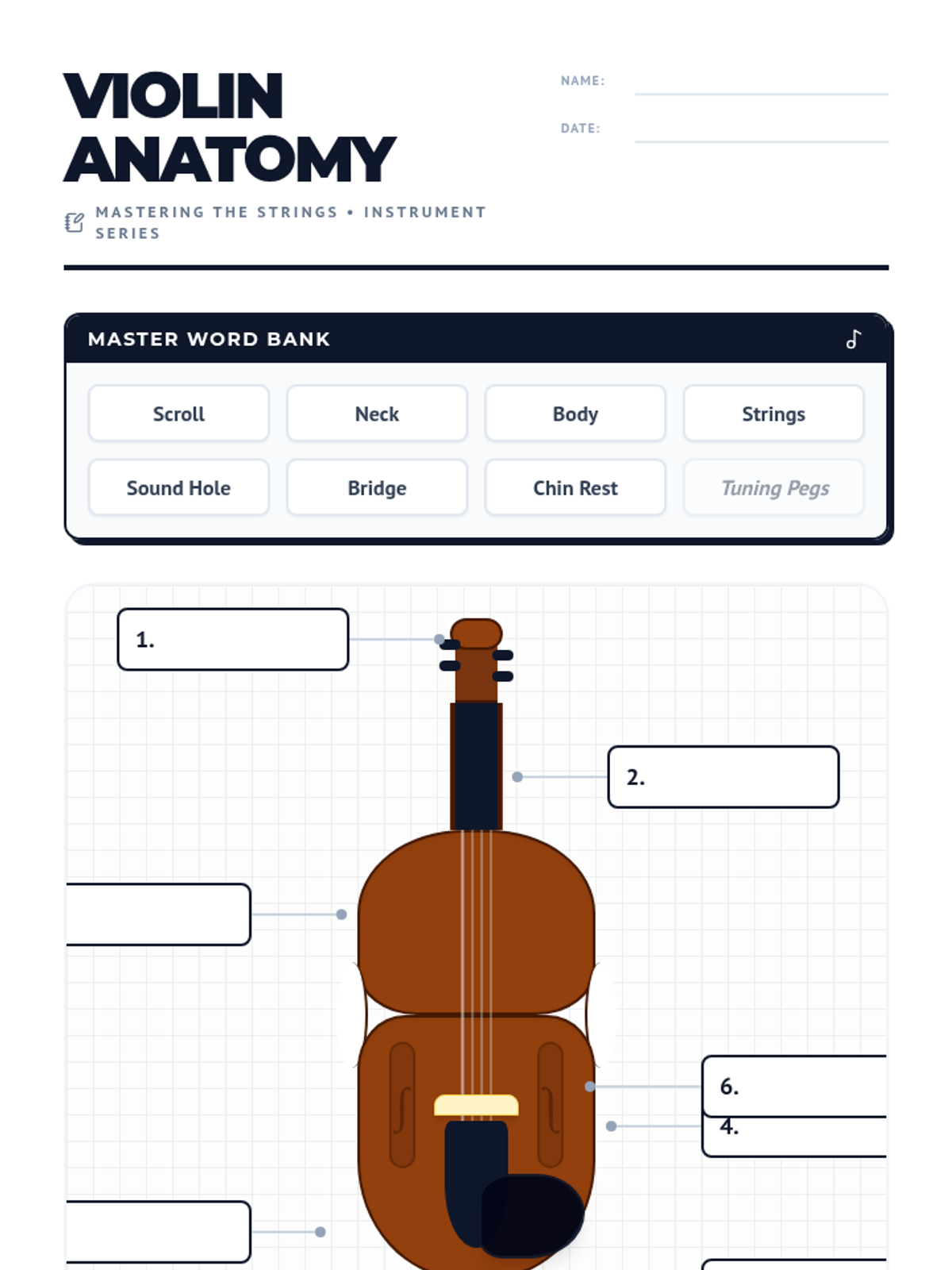
A high-quality labeling worksheet with a more realistic CSS-illustrated violin diagram, featuring key parts and a word bank for students.
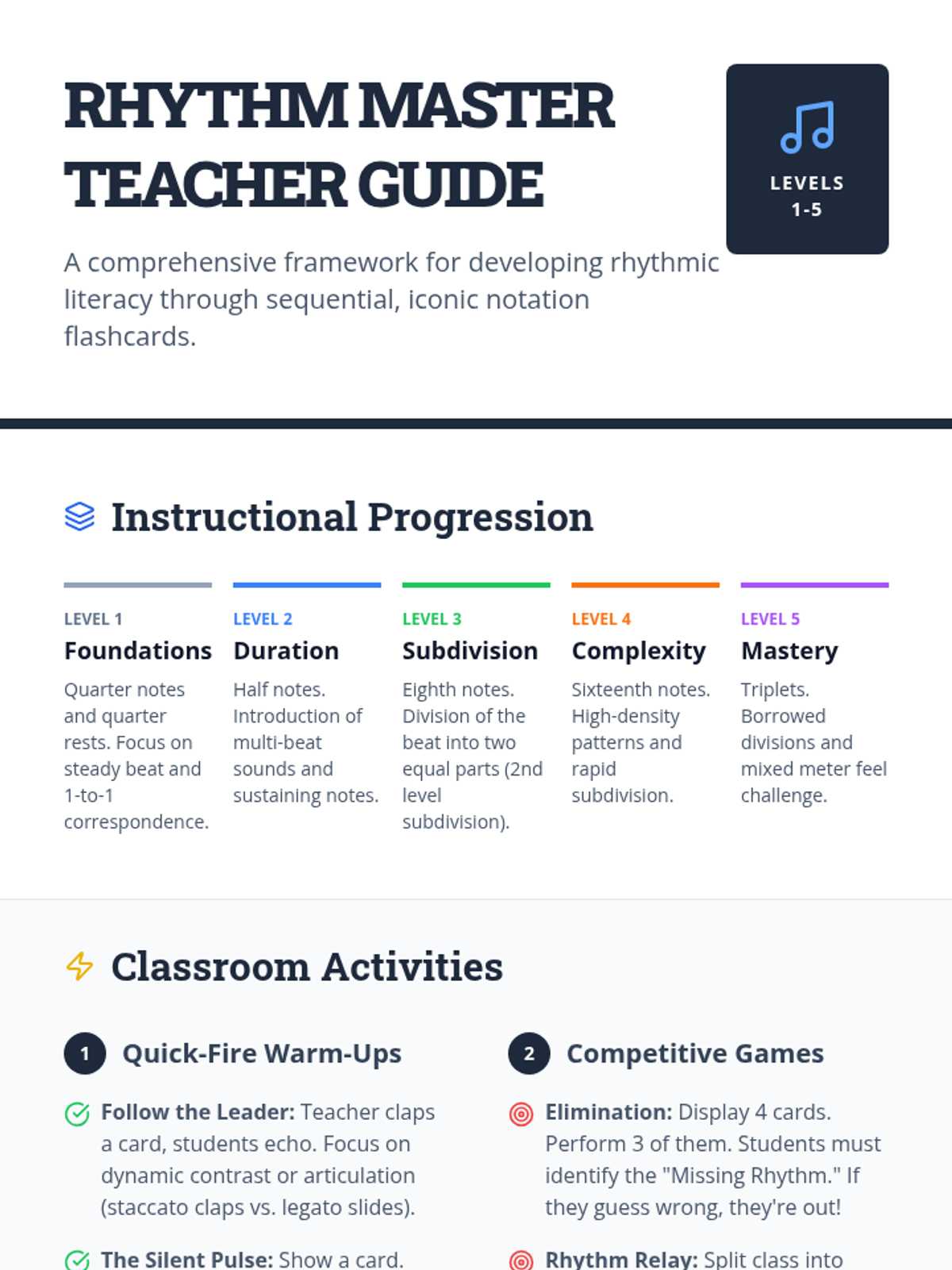
A detailed facilitation guide for teachers using the Rhythm Master Flashcards, including level breakdowns, activity ideas, assessment tips, and scaffolding strategies.
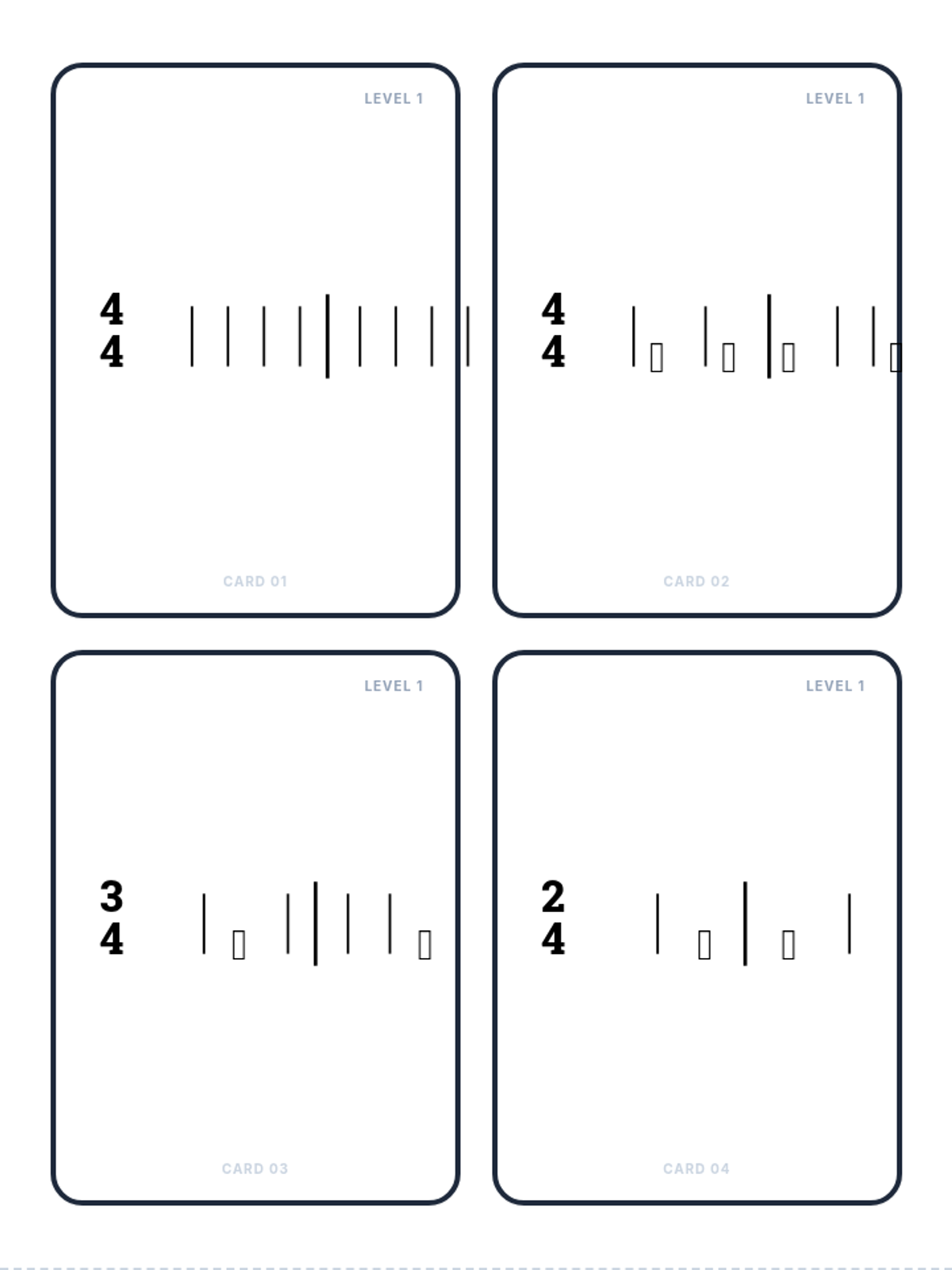
A comprehensive set of 20 rhythm reading flashcards featuring two measures per card. The cards progress through 5 difficulty levels, from simple quarter notes to complex triplets and sixteenth notes across multiple time signatures.
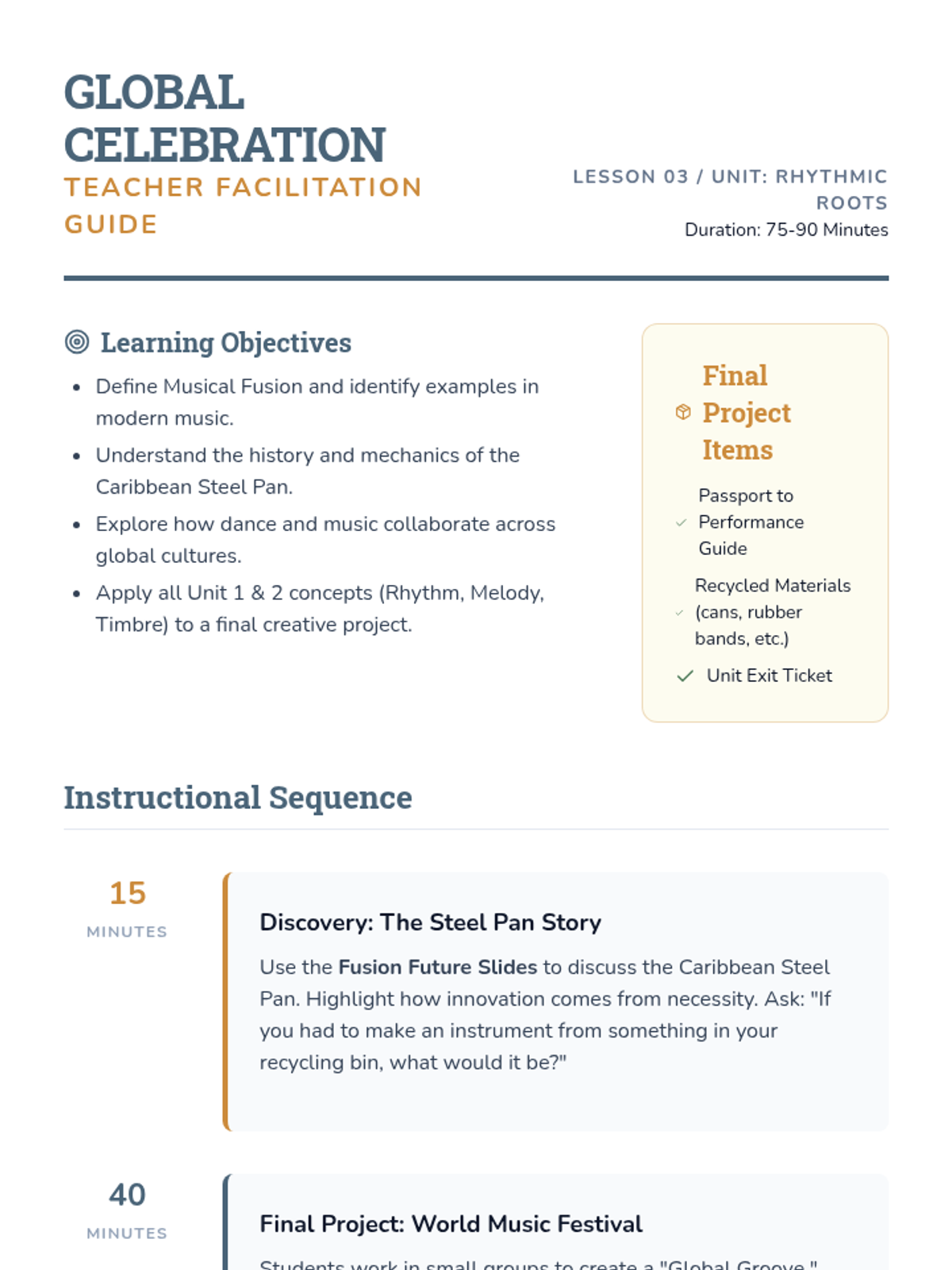
A final lesson plan for Lesson 3, guiding students through the study of musical fusion and the development of their collaborative final project.
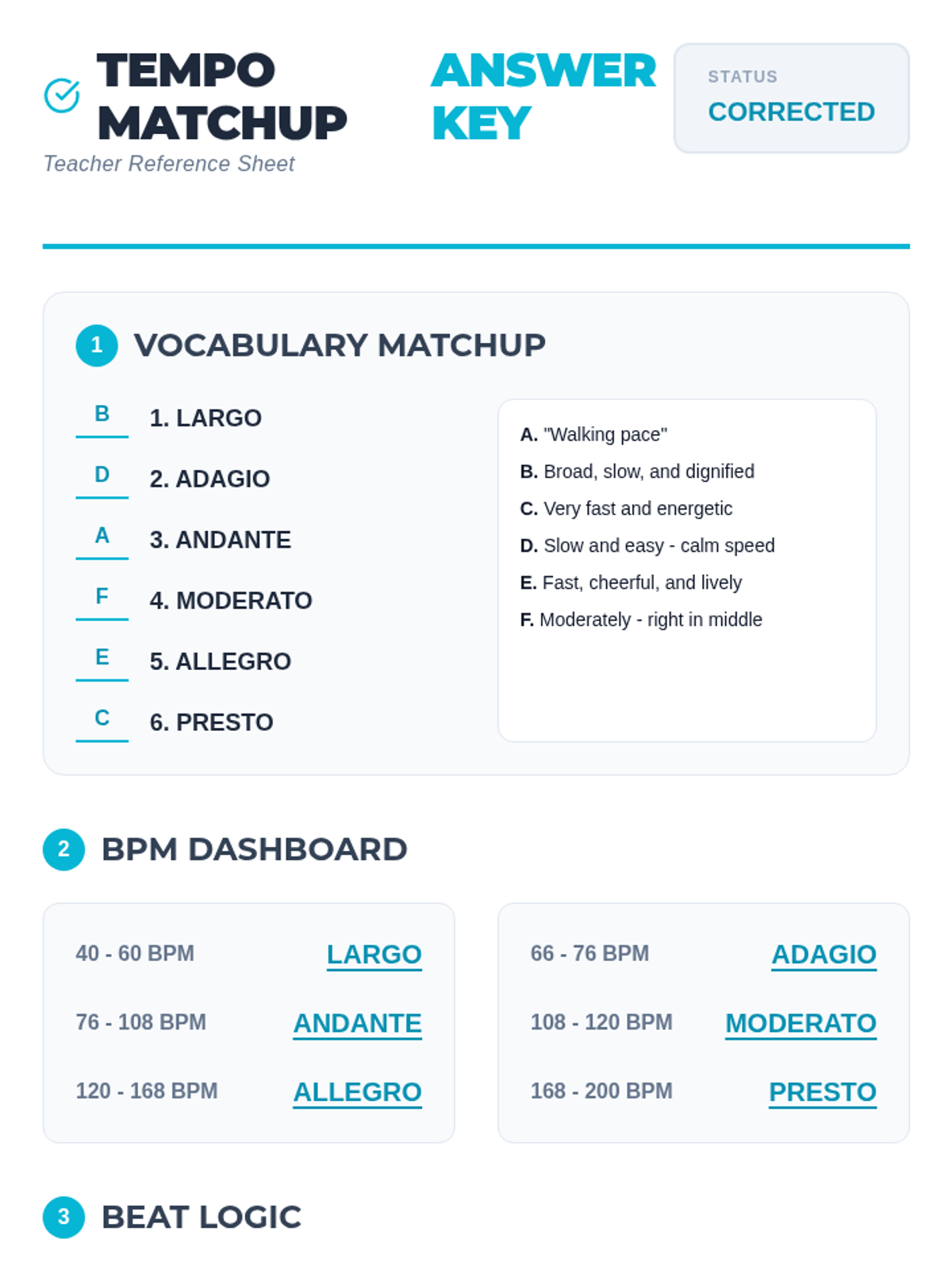
The answer key for the Tempo Matchup Worksheet, providing clear solutions for matching, BPM ranges, and logic questions.
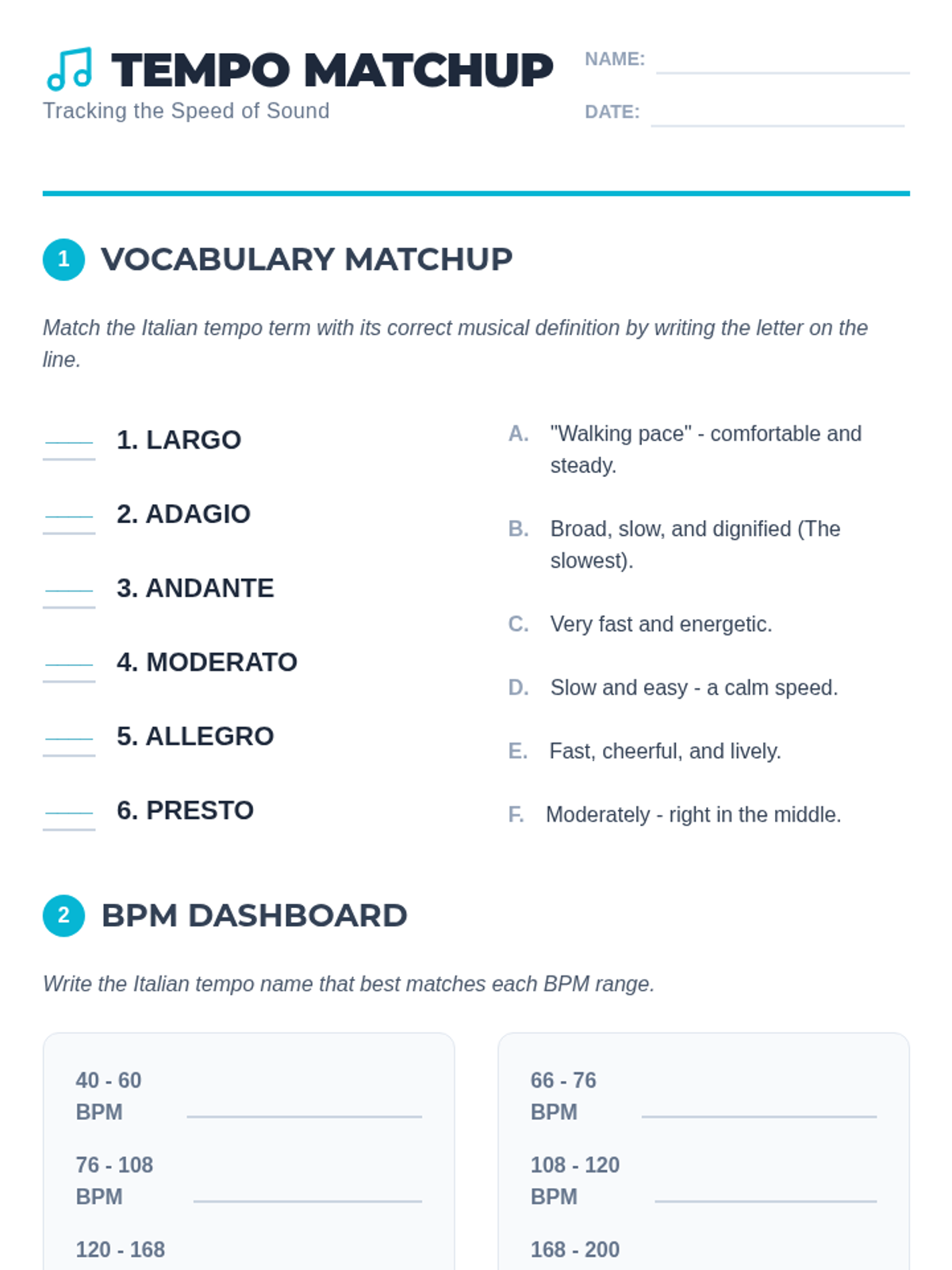
A vocabulary matching and BPM categorization worksheet for students. It includes matching Italian terms to definitions, identifying tempo names based on BPM ranges, and short-answer questions about metronome use.
A high-energy, neon-themed slide deck introducing musical tempo. It covers BPM, the purpose of a metronome, and the spectrum of Italian tempo markings from Largo to Presto with visual aids and interactive prompts.
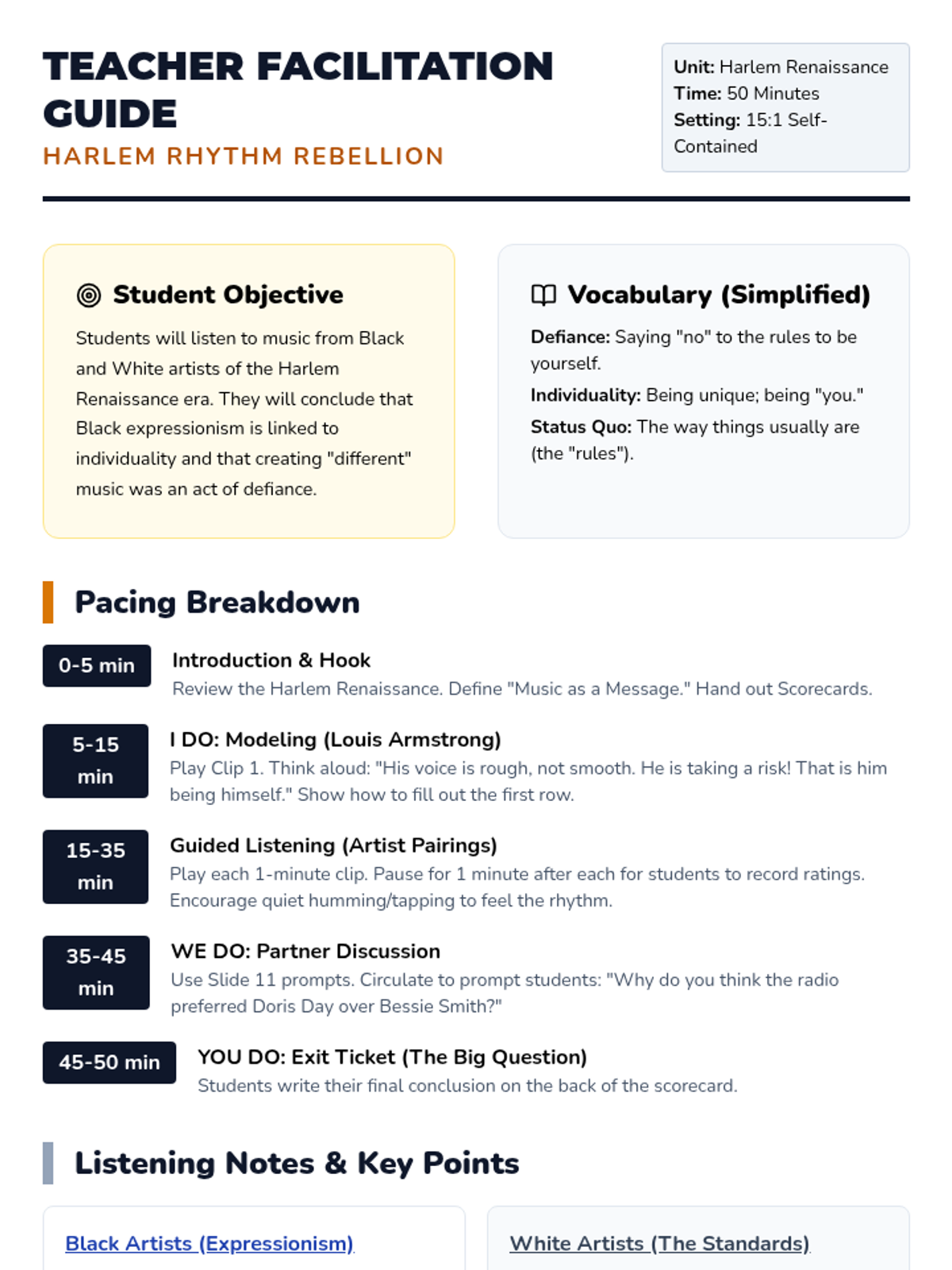
A comprehensive teacher facilitation guide for the 50-minute lesson. Includes a pacing breakdown, simplified vocabulary, artist comparison notes, and differentiation strategies for students reading at a 2nd-grade level.
A 12-slide presentation featuring artist biopics, embedded YouTube music clips, and guided discussion prompts. Designed for a 15:1 classroom with clear, large text and high-contrast visuals to support students at a 2nd-grade reading level.
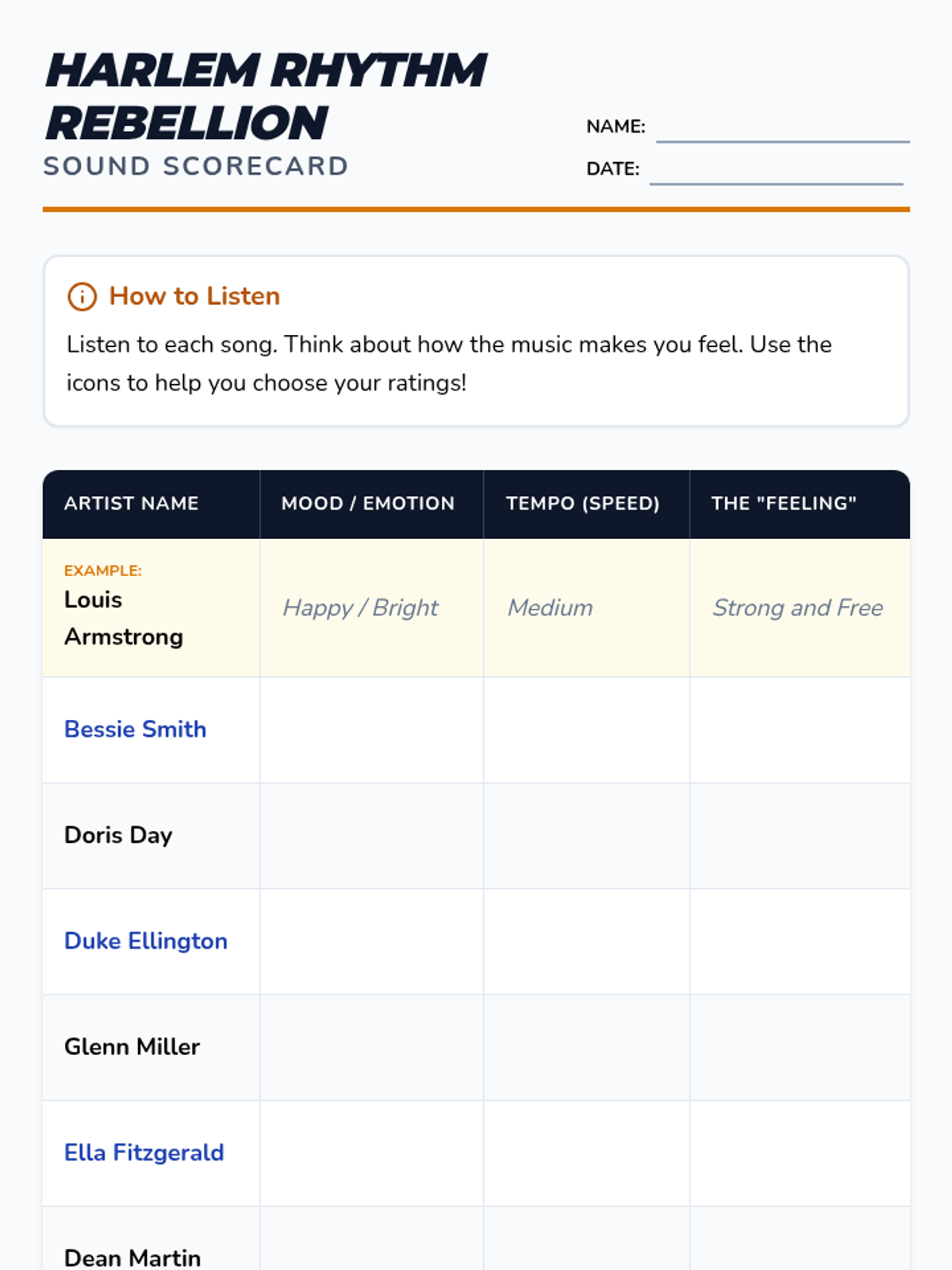
A 2-page print-ready scorecard for rating music, featuring high-contrast tables and generous writing areas for 2nd-grade level students. The layout uses break-after-page for a clean transition between the rating activity and the final reflection.
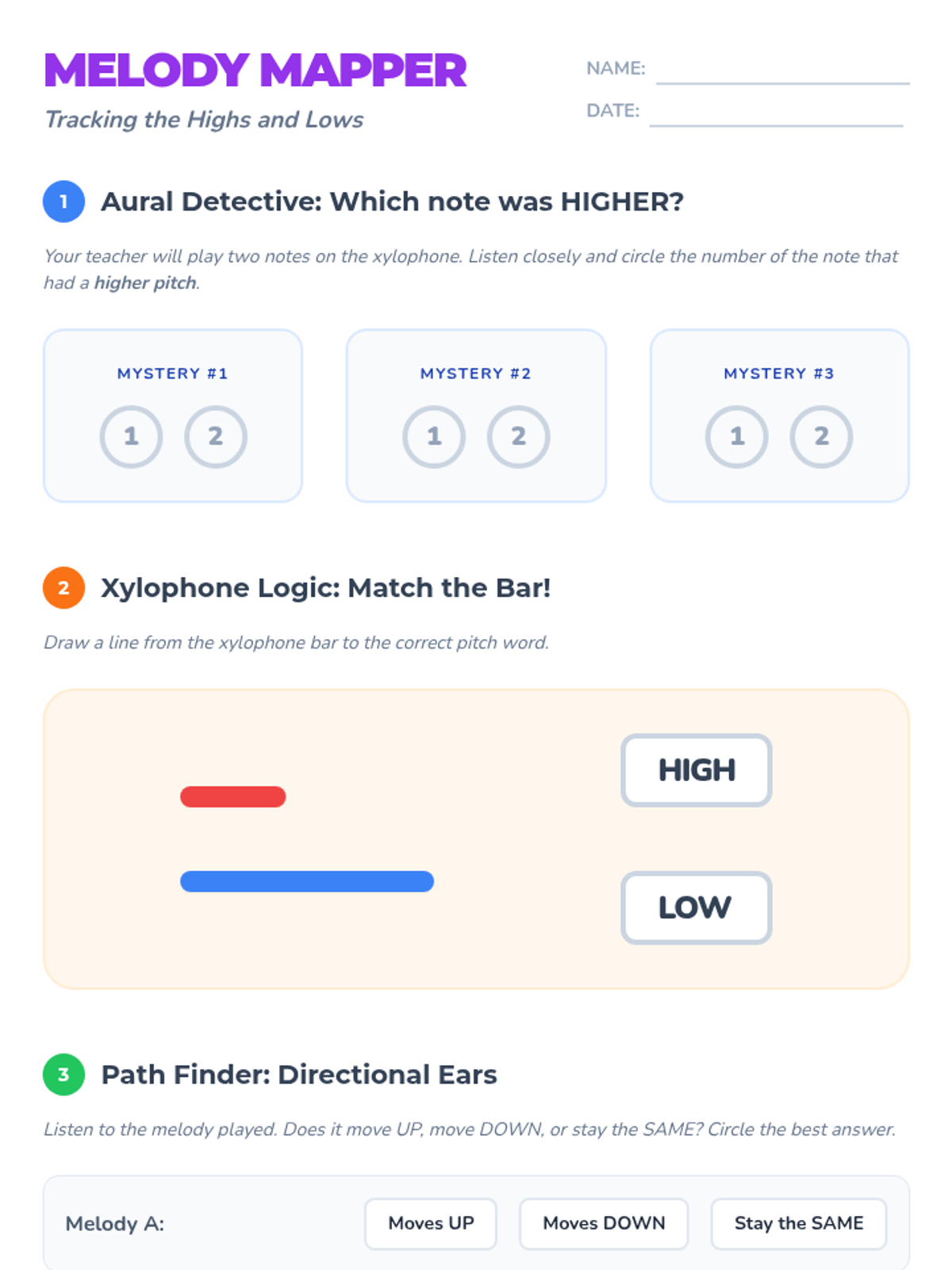
A student worksheet for reinforcing pitch concepts. It includes listening exercises for identifying higher notes, a matching task for instrument bar sizes, melody direction identification, and a creative section for drawing musical contours.
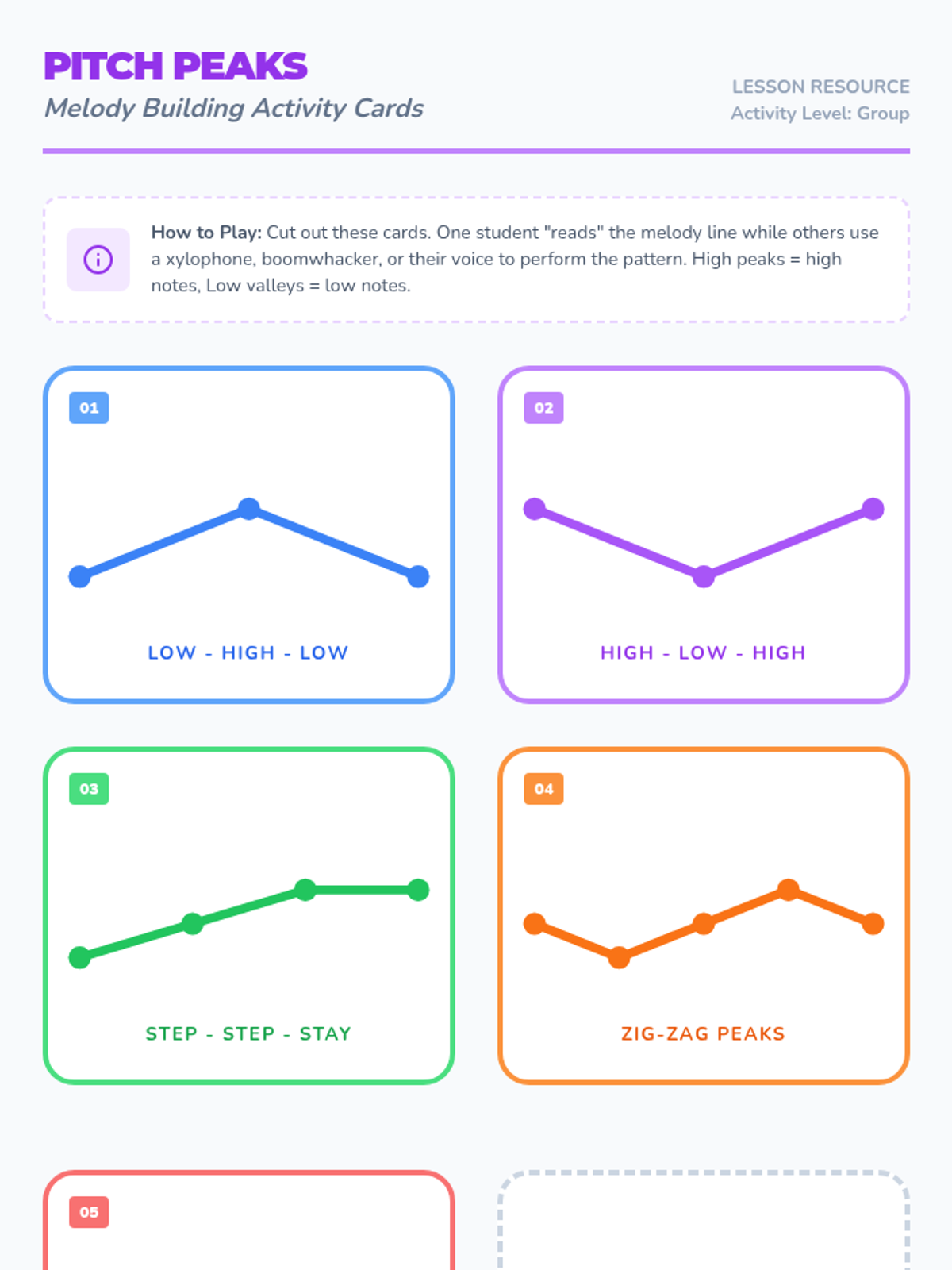
A set of 5 pre-designed and 3 customizable "Pitch Peak" activity cards. These visual contour cards help students translate visual lines into musical pitch movements using their voices or instruments.
A vibrant and energetic 6-slide presentation for introducing pitch to 3rd graders. It includes a vocal warm-up activity, clear definitions of pitch vs. volume, and visual guides for xylophone exploration.