Fundamental techniques for soccer, volleyball, football, and basketball alongside strategic gameplay and communication skills. Emphasizes sportsmanship and collaborative tactics within a competitive team environment.
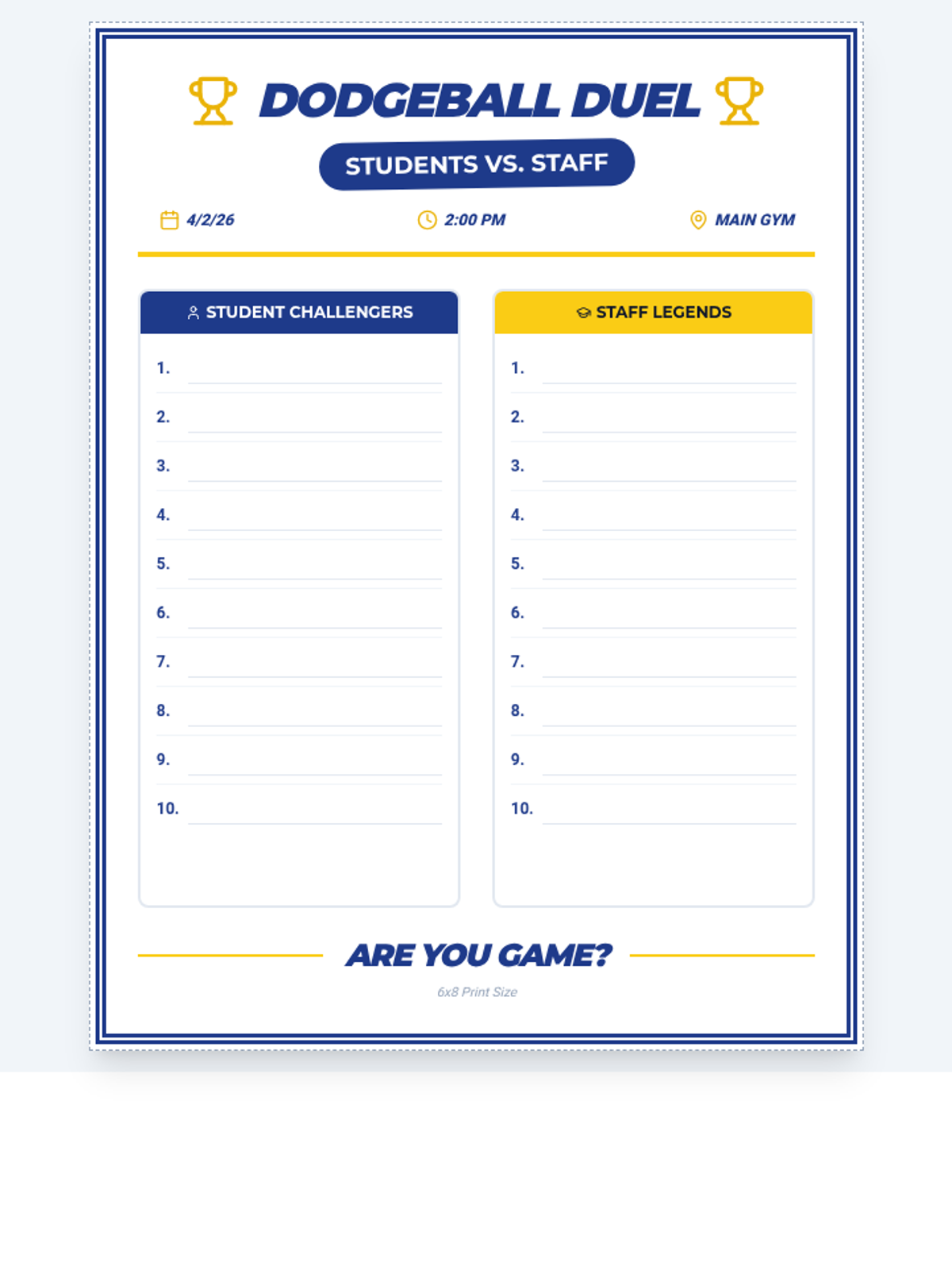
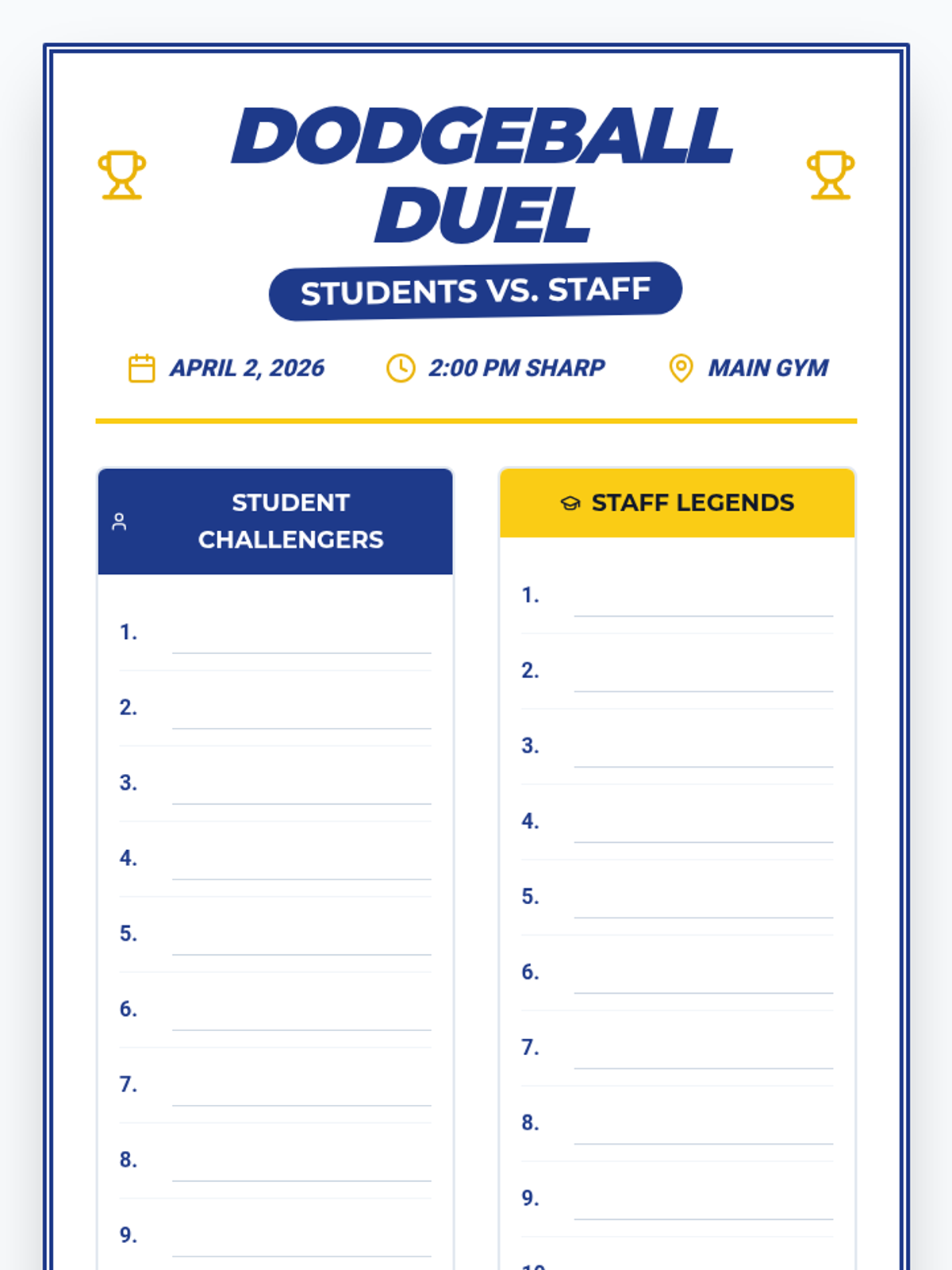
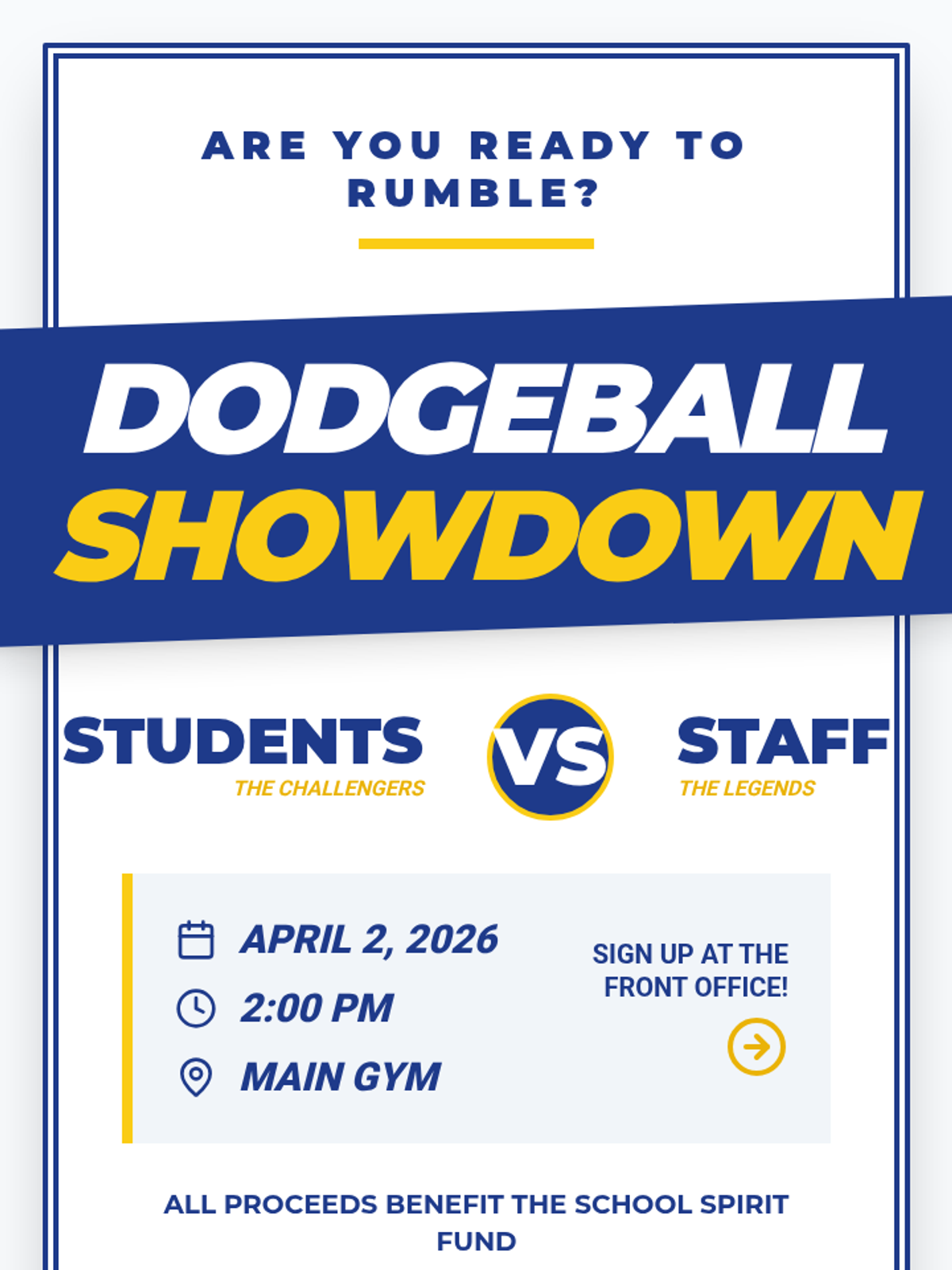
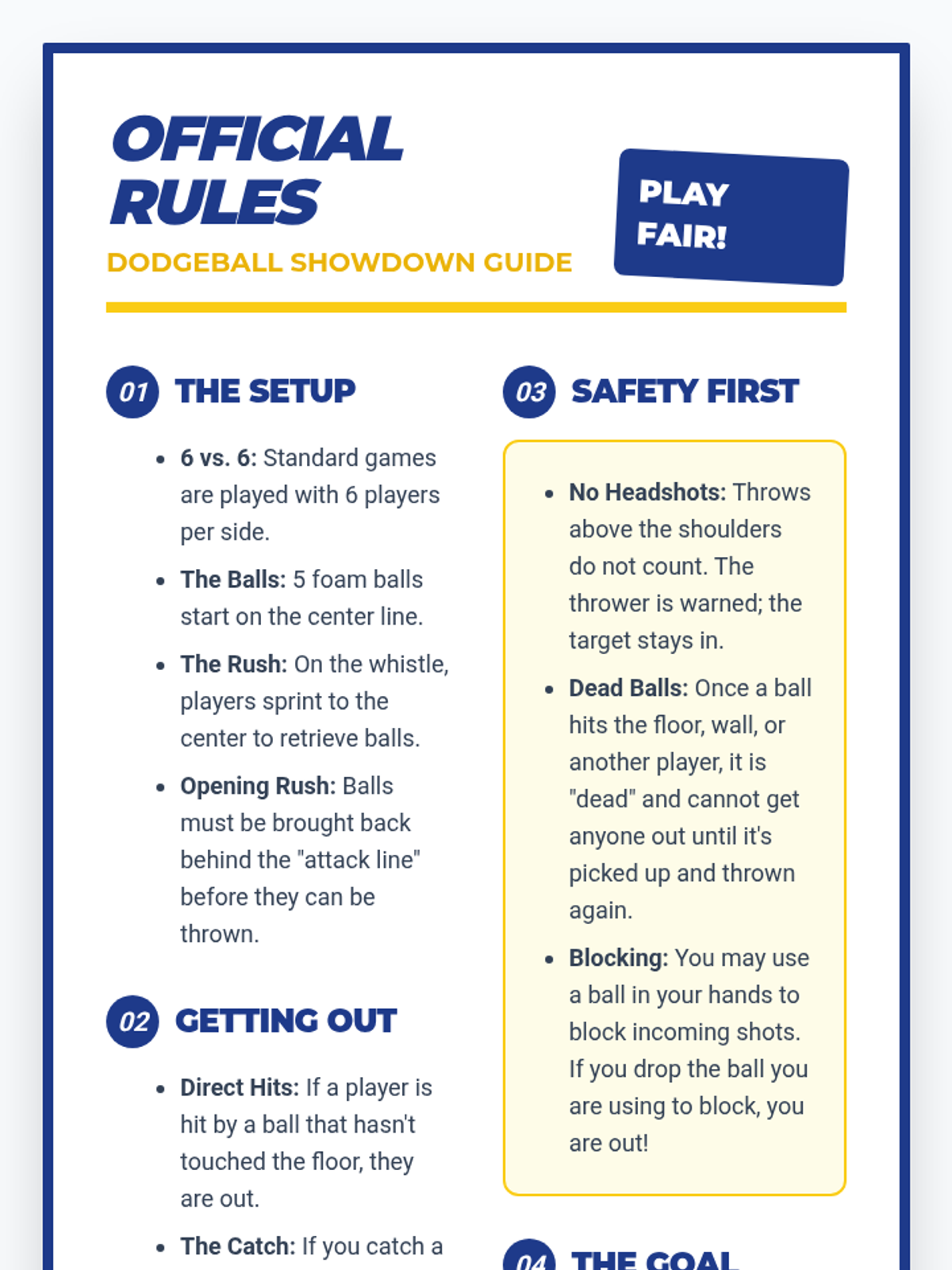
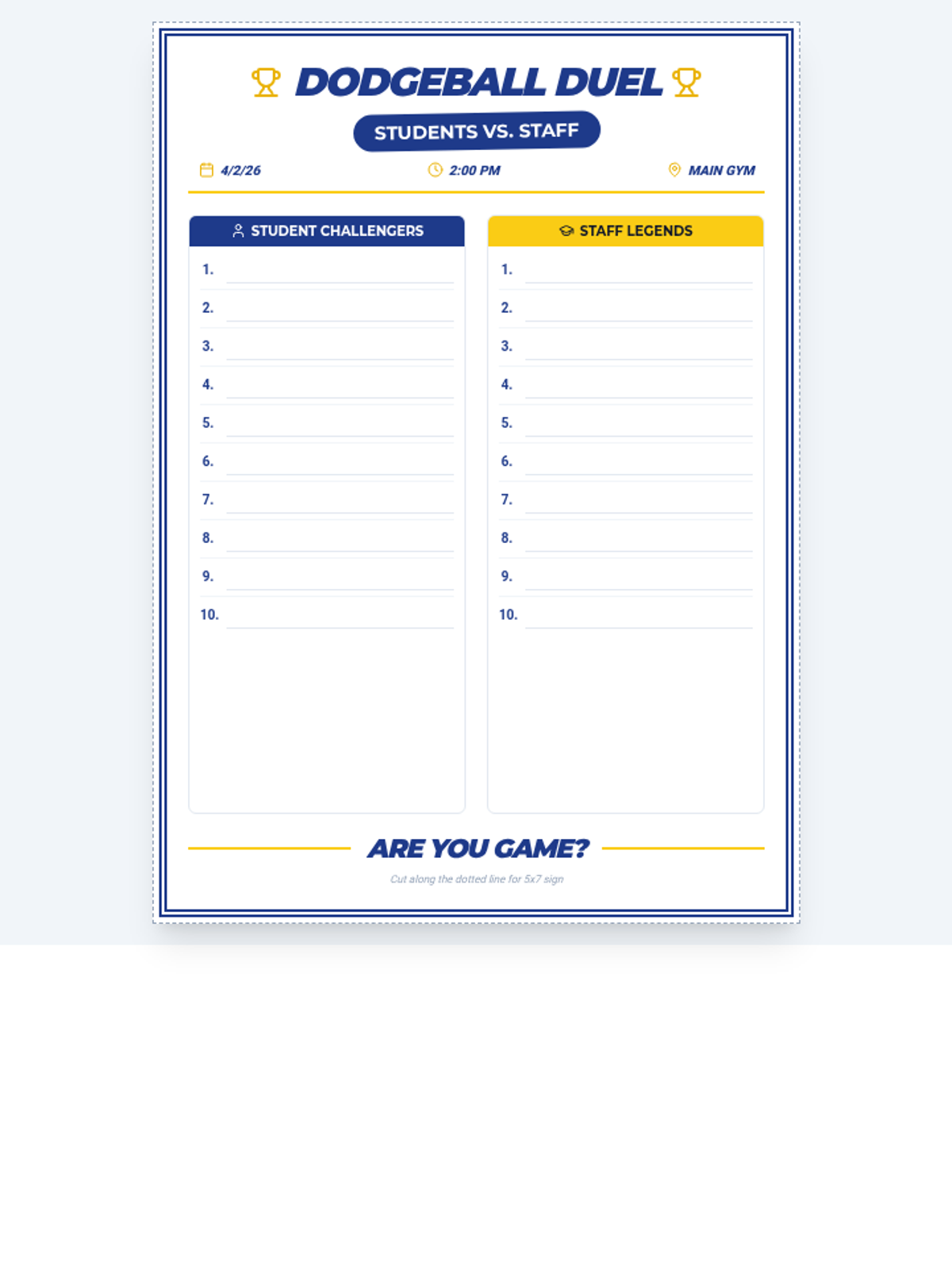
A collection of resources for organizing and promoting the annual Students vs. Staff dodgeball event, fostering school spirit and healthy competition.
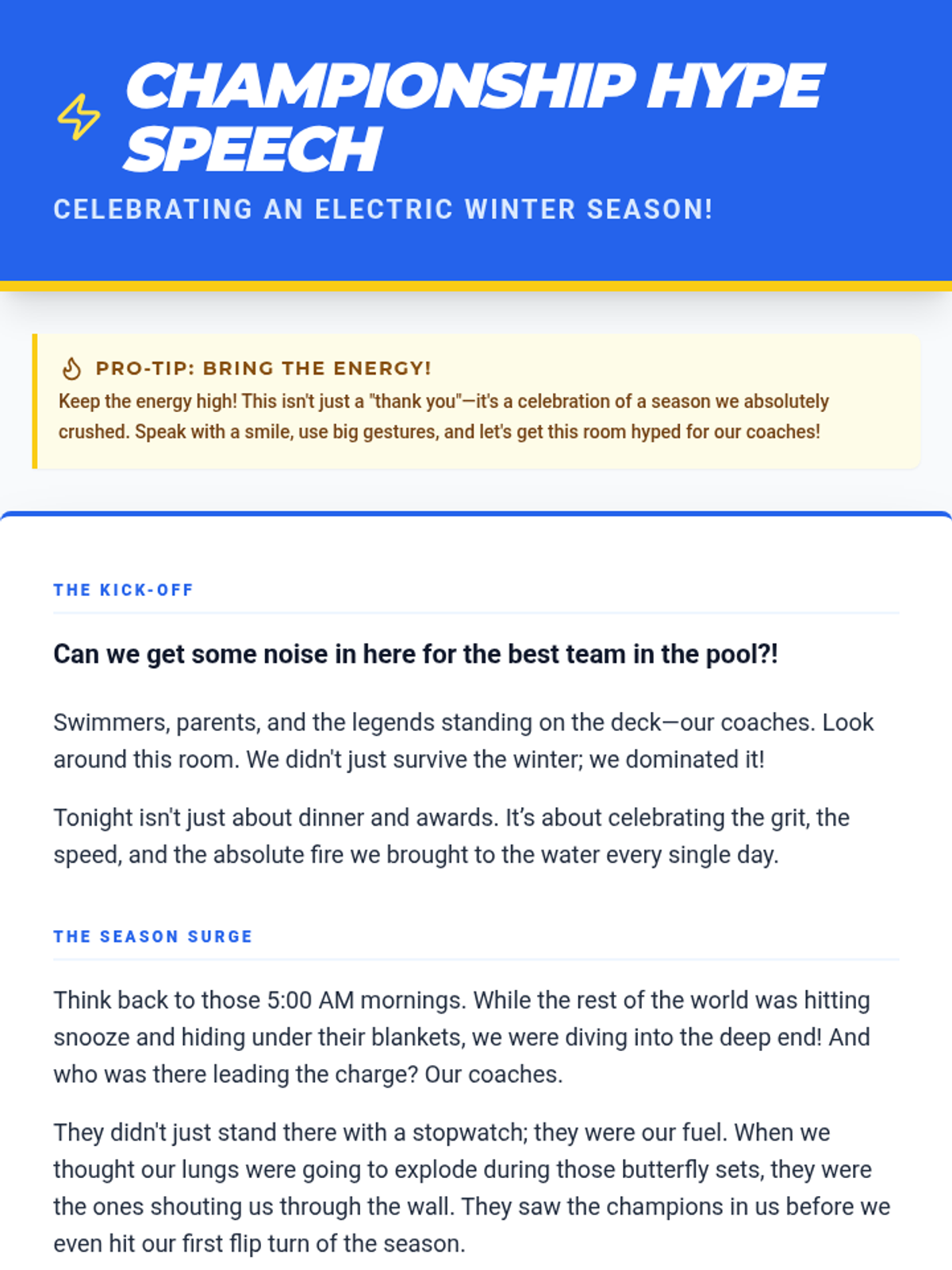
A collection of resources to celebrate and thank swim coaches at a winter banquet, including a heartfelt speech, a visual presentation of season highlights, and personalized thank-you cards for athletes to sign.
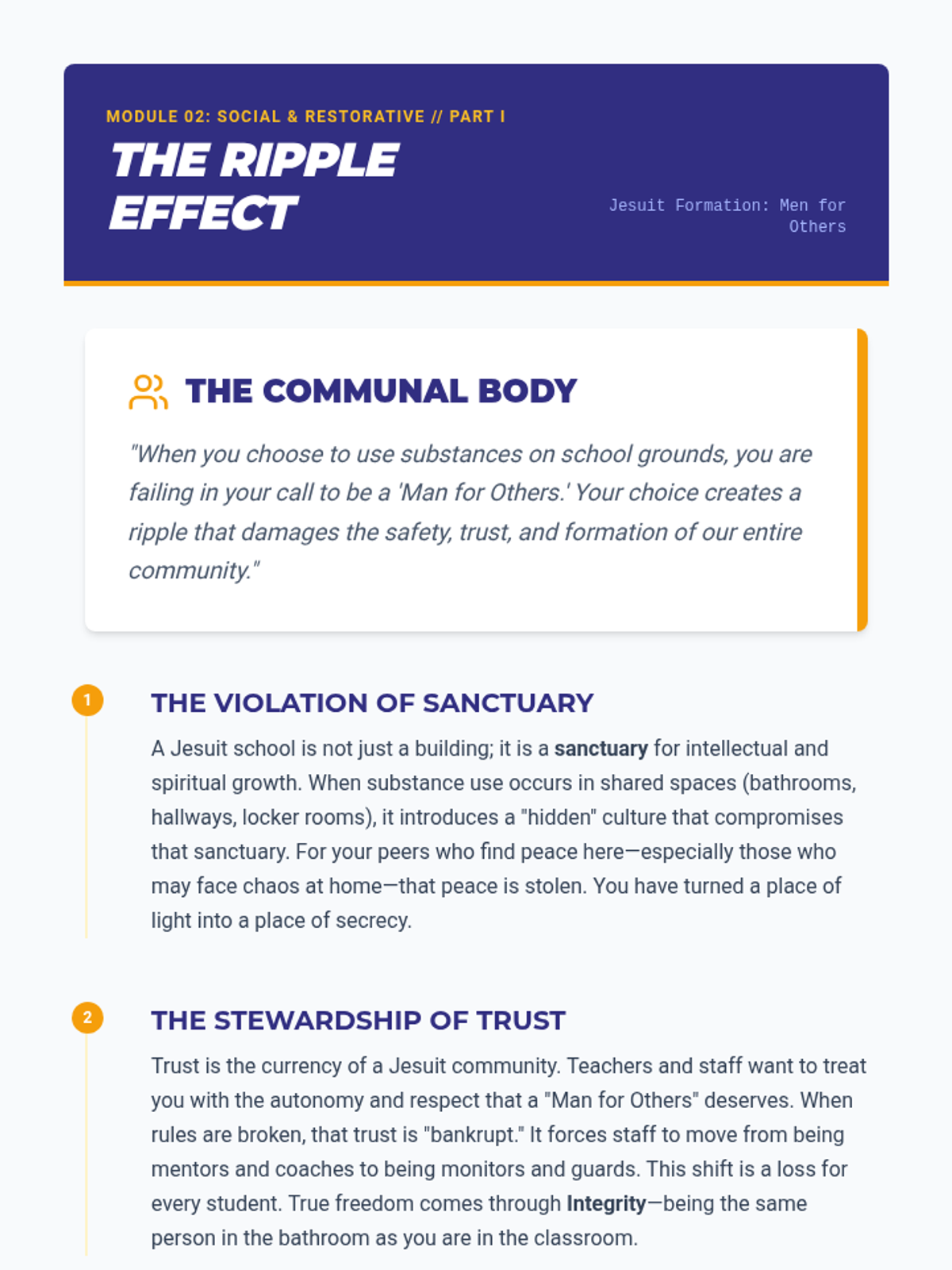
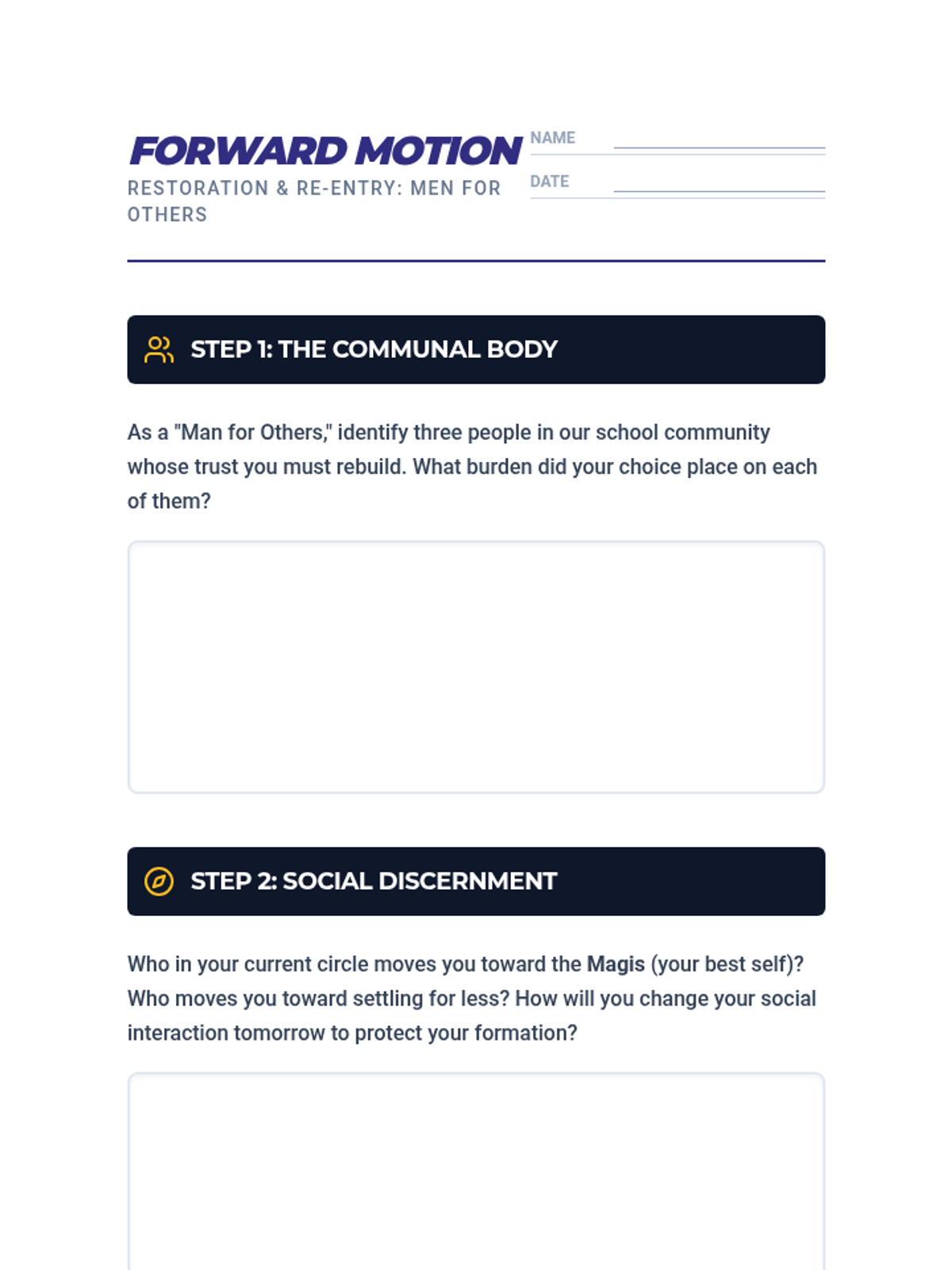
Explores the social and environmental consequences of substance use in school and guides students through a restorative reflection process for re-entry.
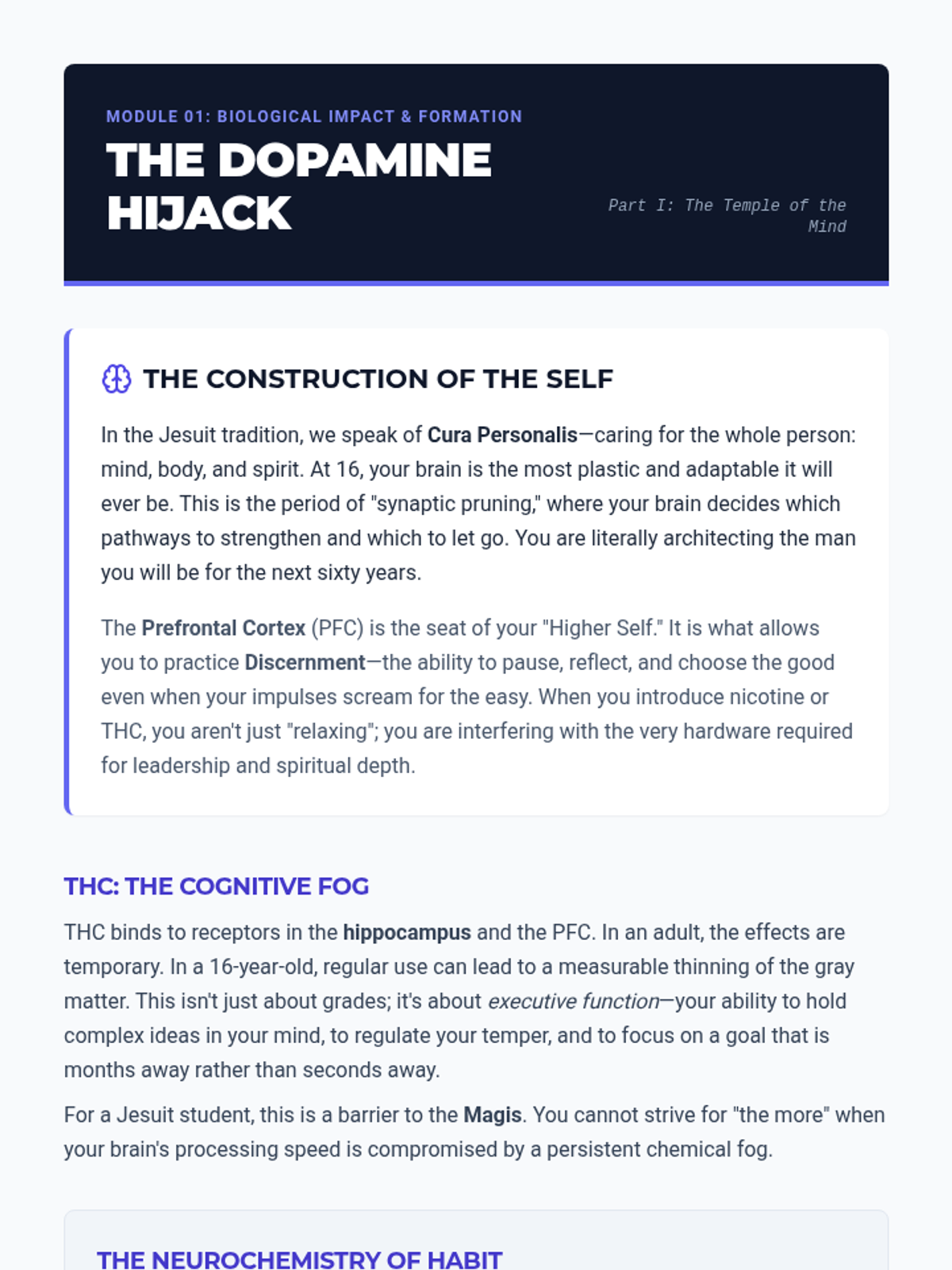
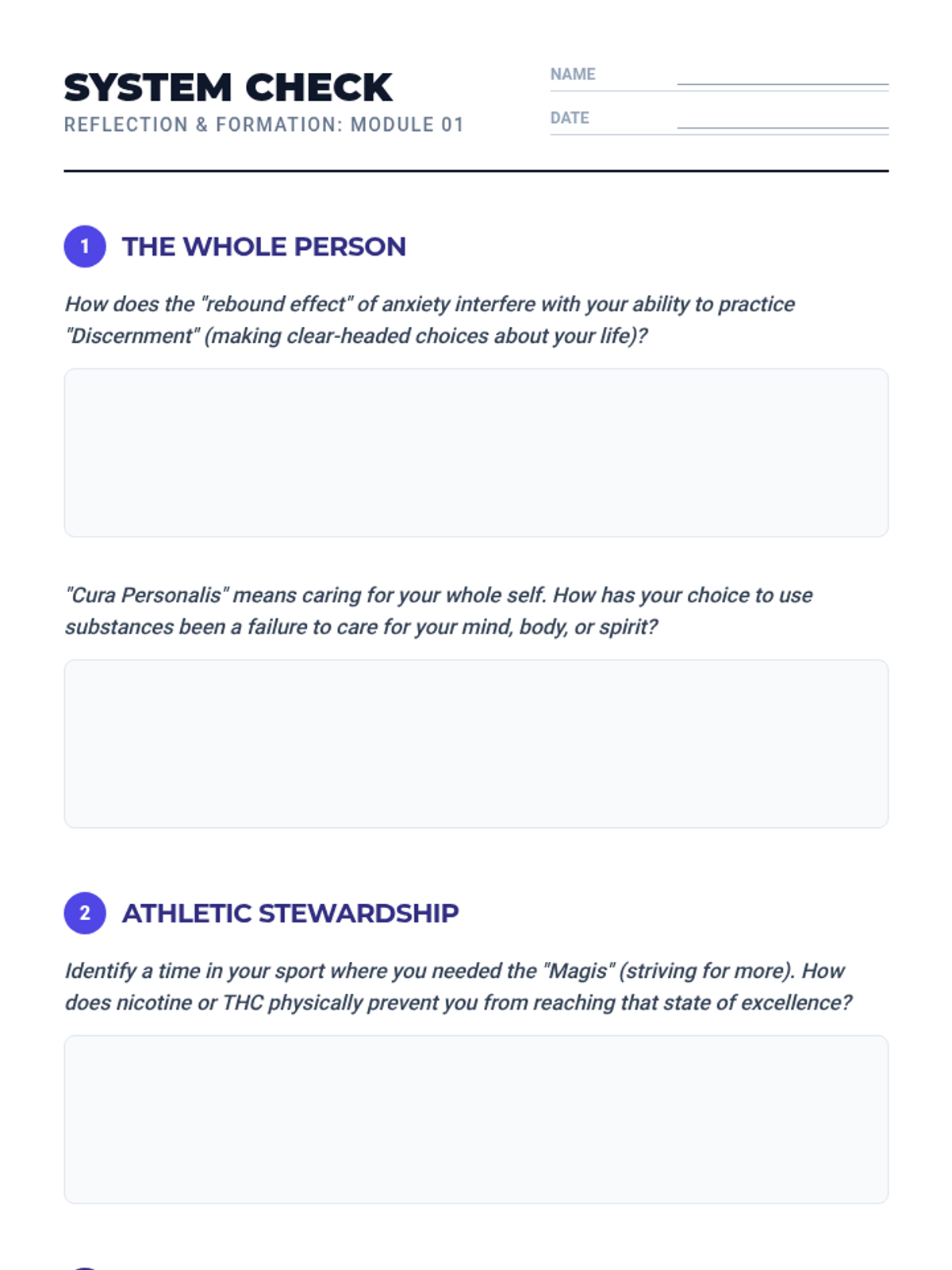
Focuses on the physiological and neurological impact of nicotine, vapes, and THC on the developing teenage brain and body.
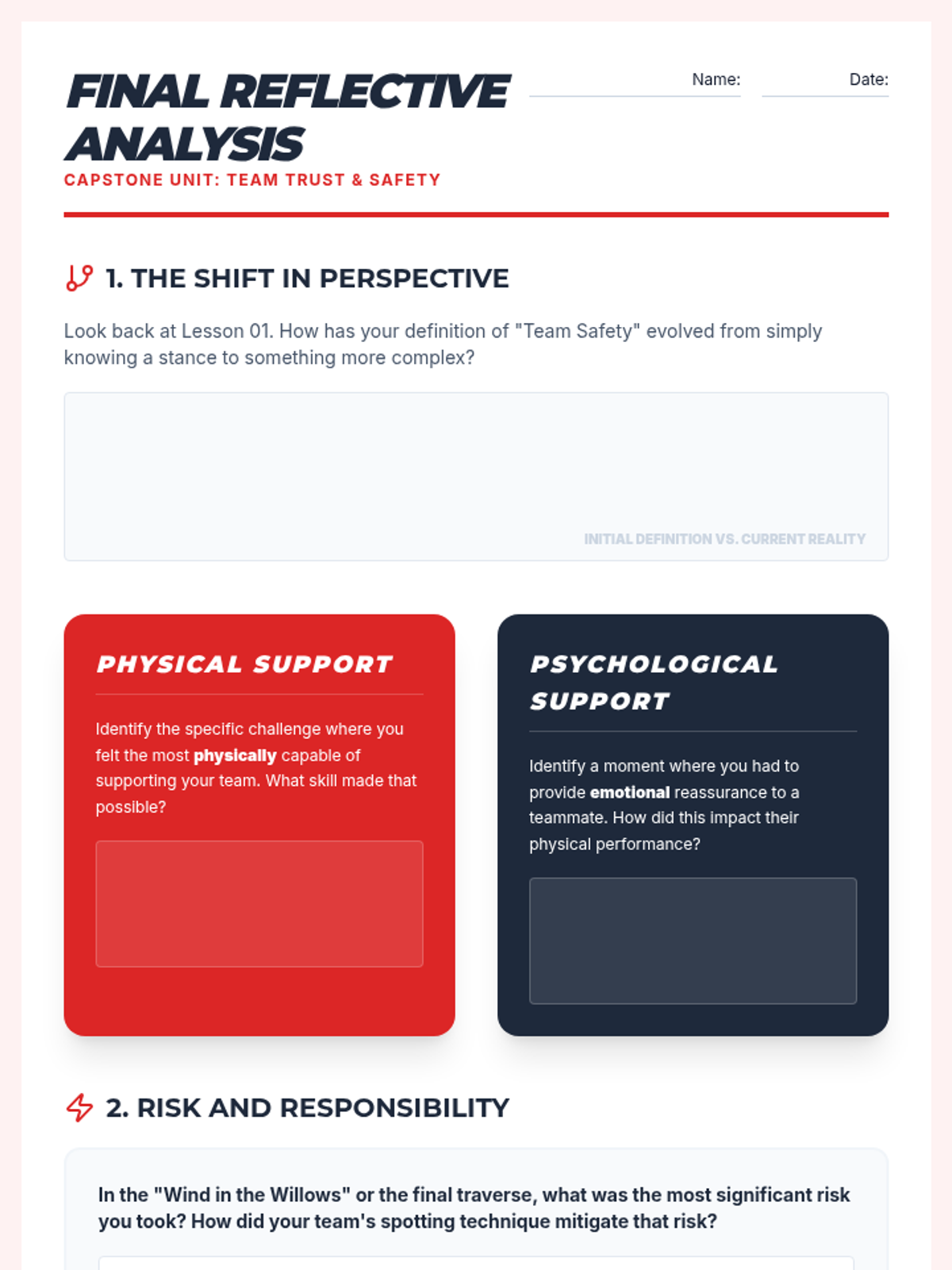
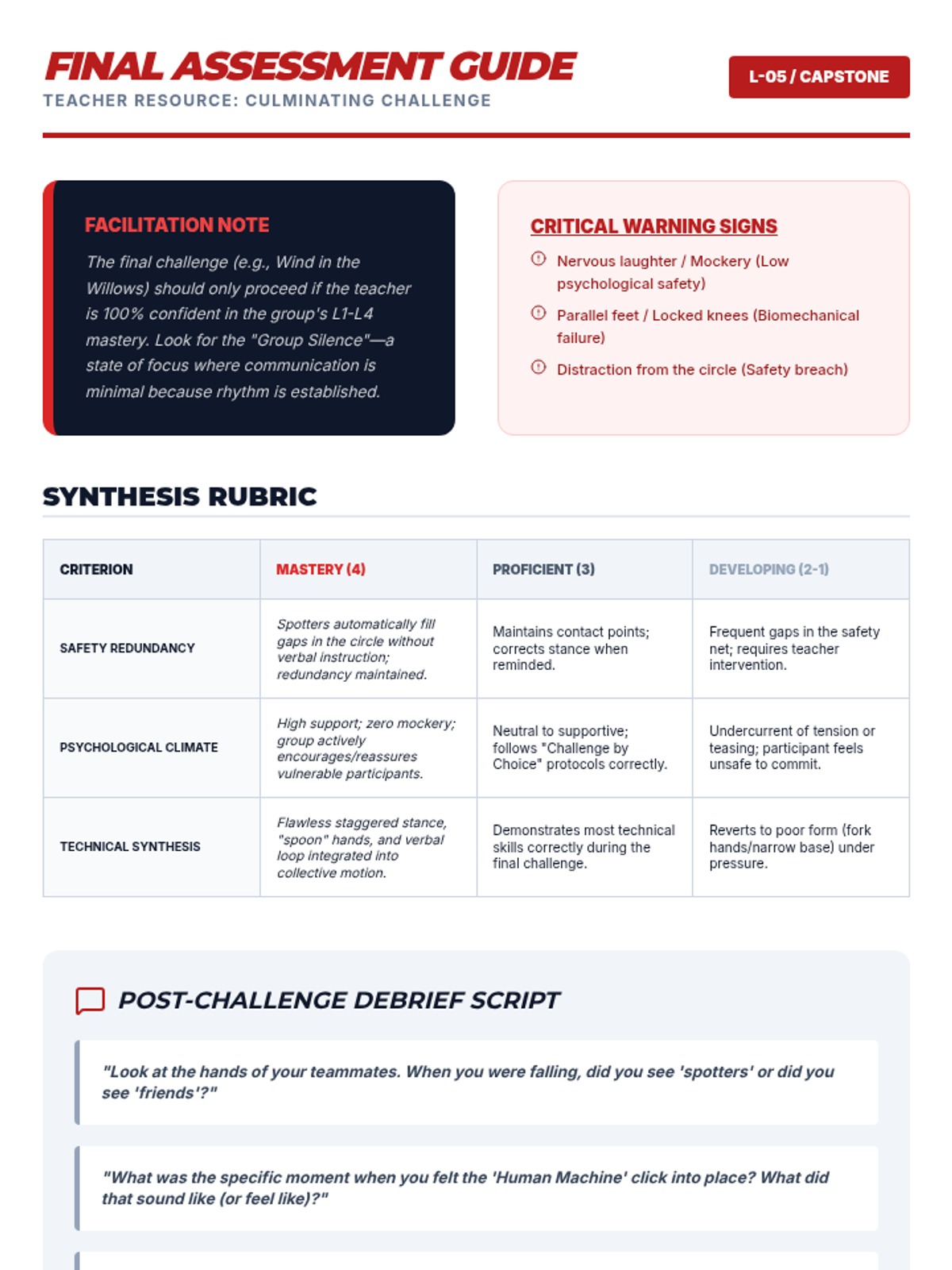
Students undertake a significant trust activity, such as a 'Wind in the Willows' circle or a waist-high wall traverse with spotting. The lesson synthesizes spotting skills, verbal communication, and emotional support into a final demonstration of group cohesion.
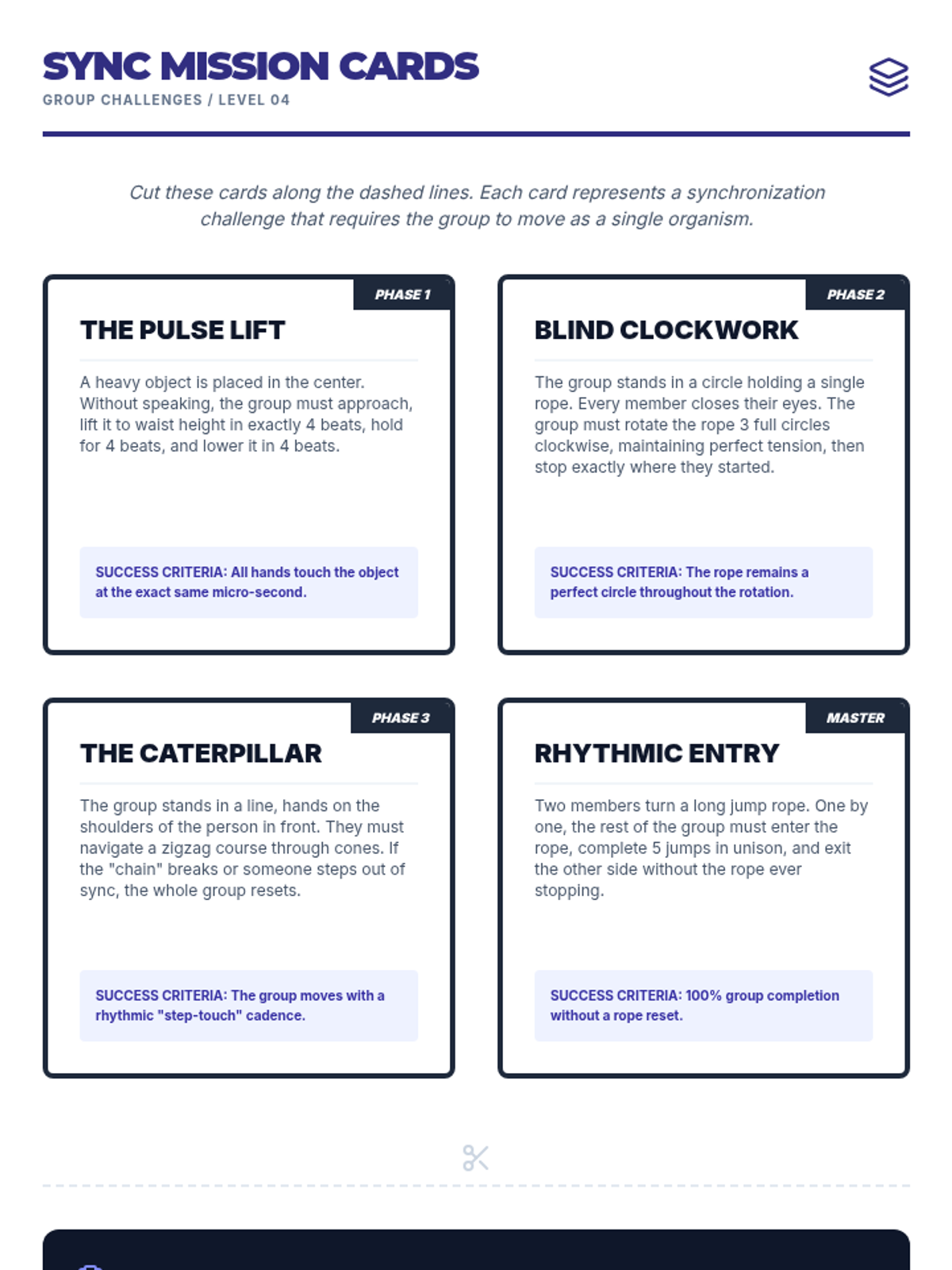
The class engages in activities requiring moving heavy objects or large mats as a single unit. Focus is placed on reading group rhythm and anticipating the movements of others to prevent injury or failure.
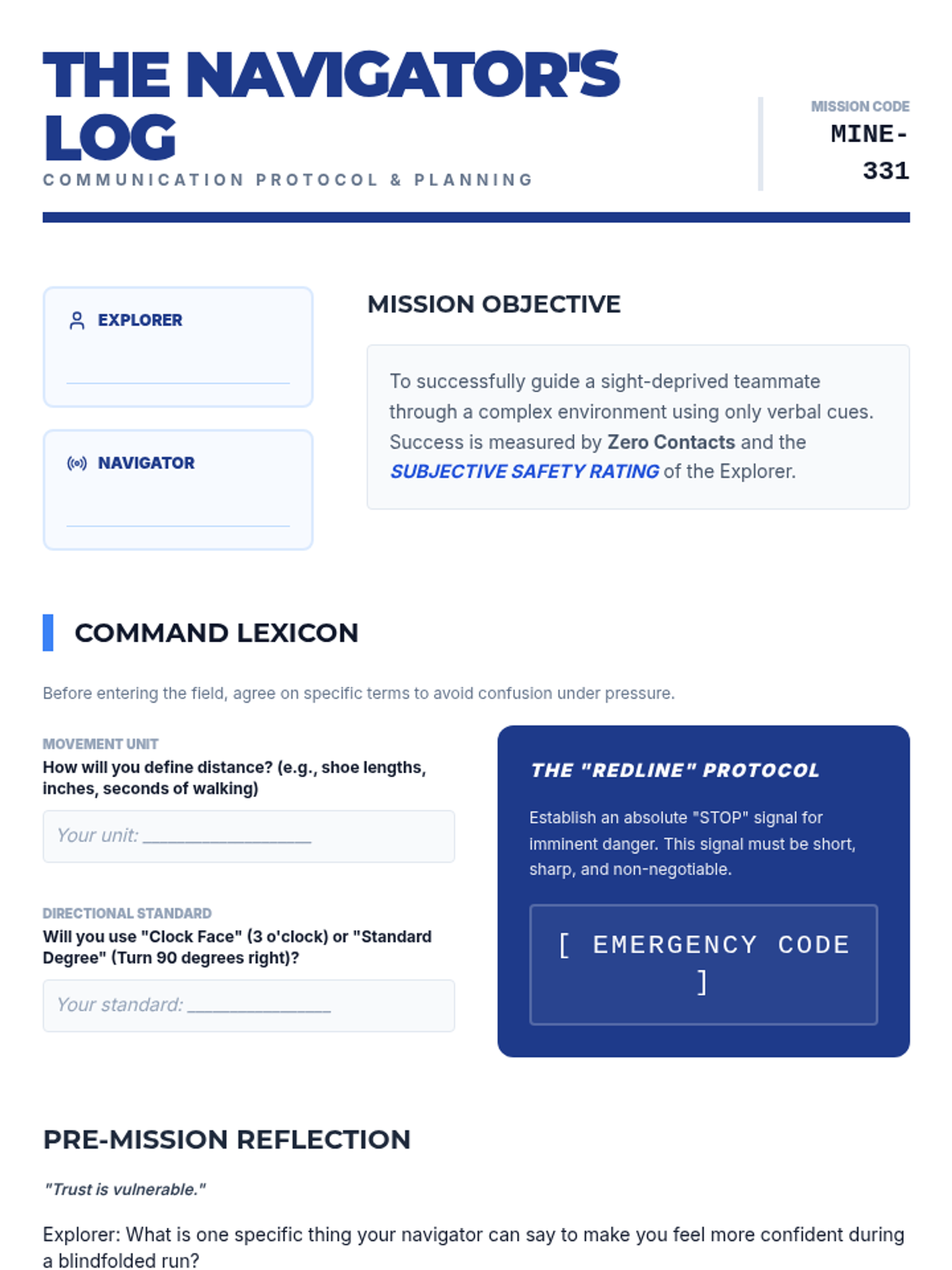
One partner is blindfolded while the other guides them through a 'minefield' of soft obstacles using only verbal commands. The lesson highlights the necessity of precise language and the vulnerability required to trust a guide completely.
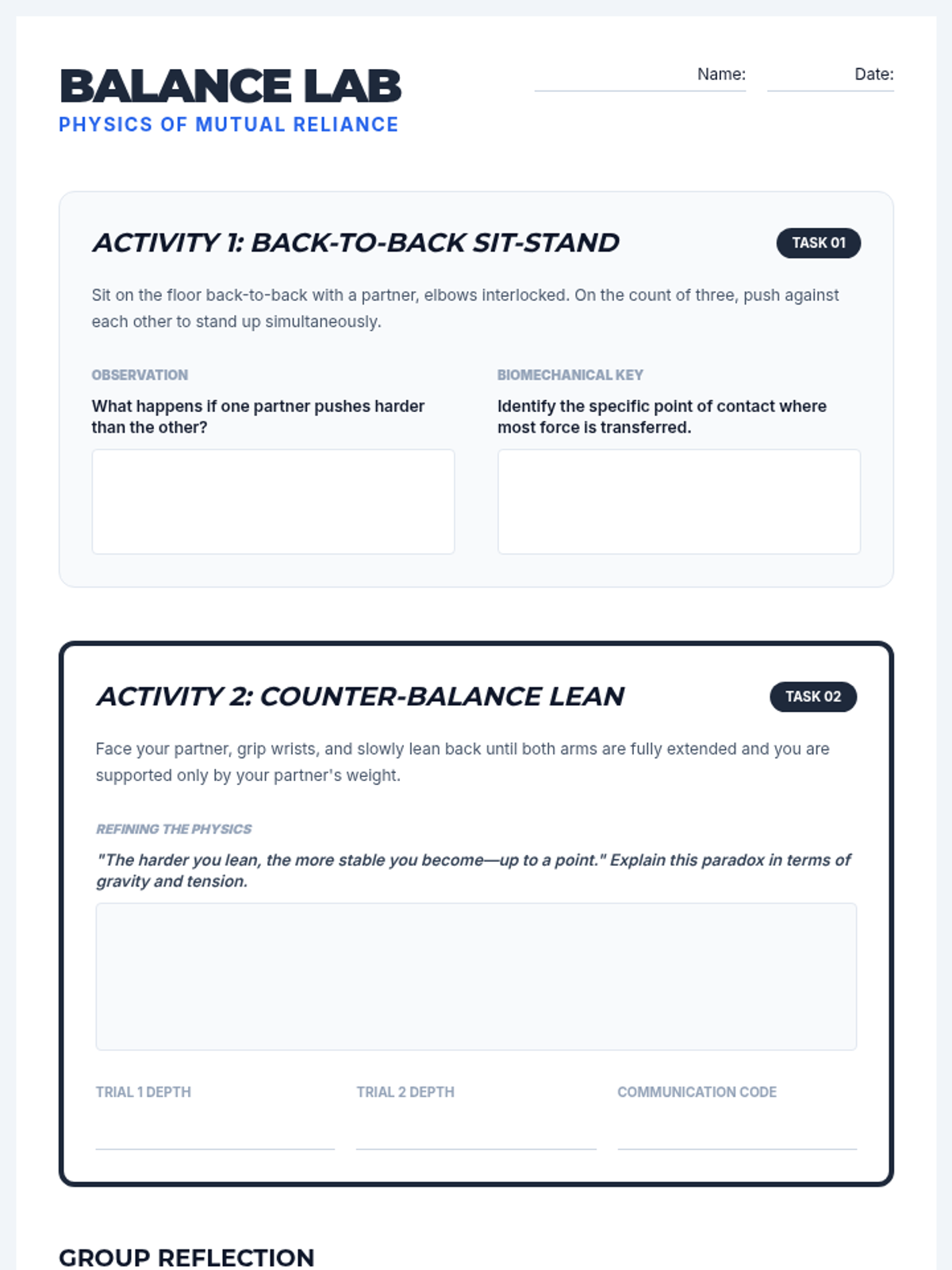
Partners and small groups engage in activities requiring them to lean against one another to maintain balance. This lesson explores the physics of mutual reliance, where the failure of one person to commit causes the group to fall.
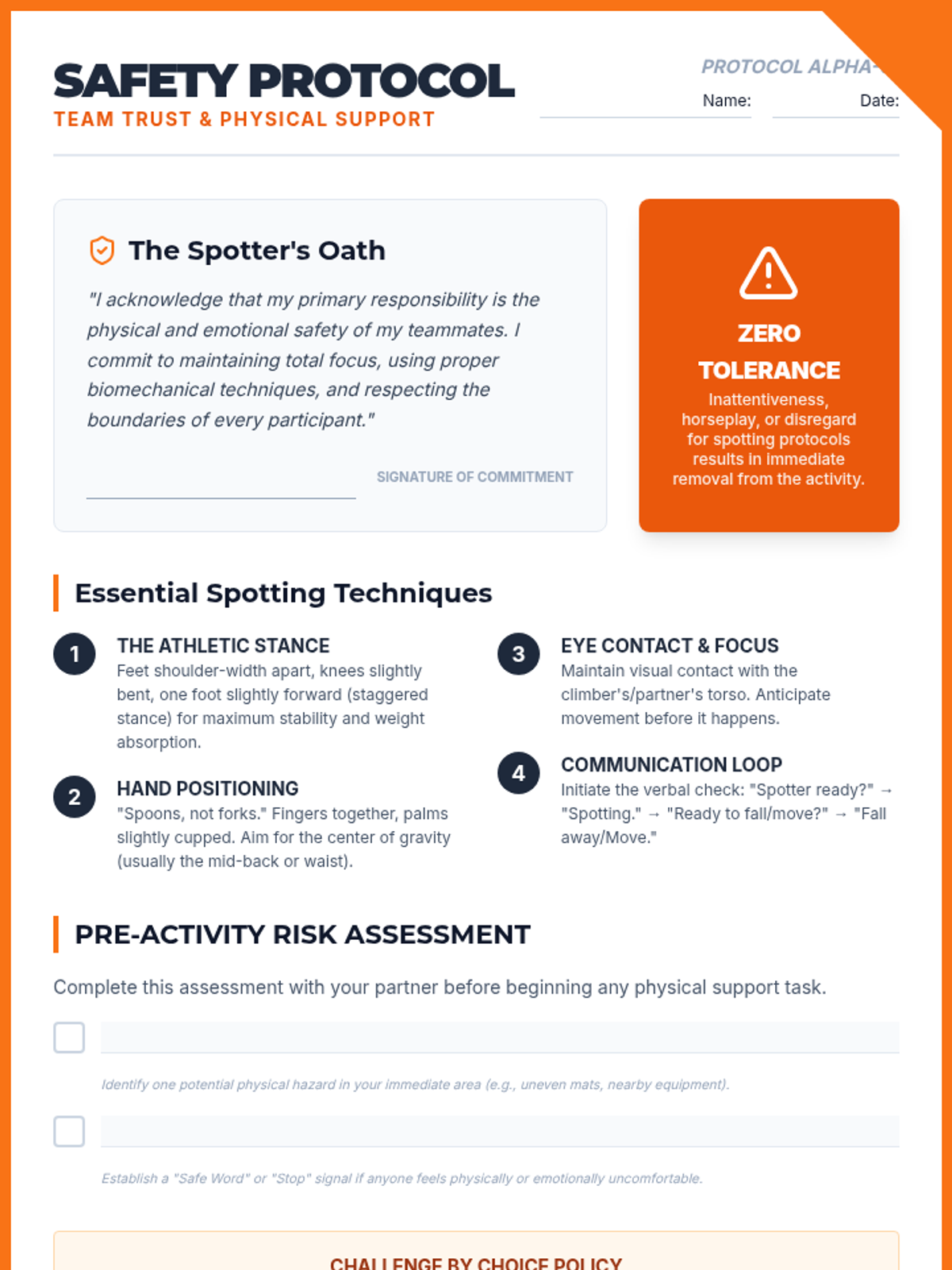
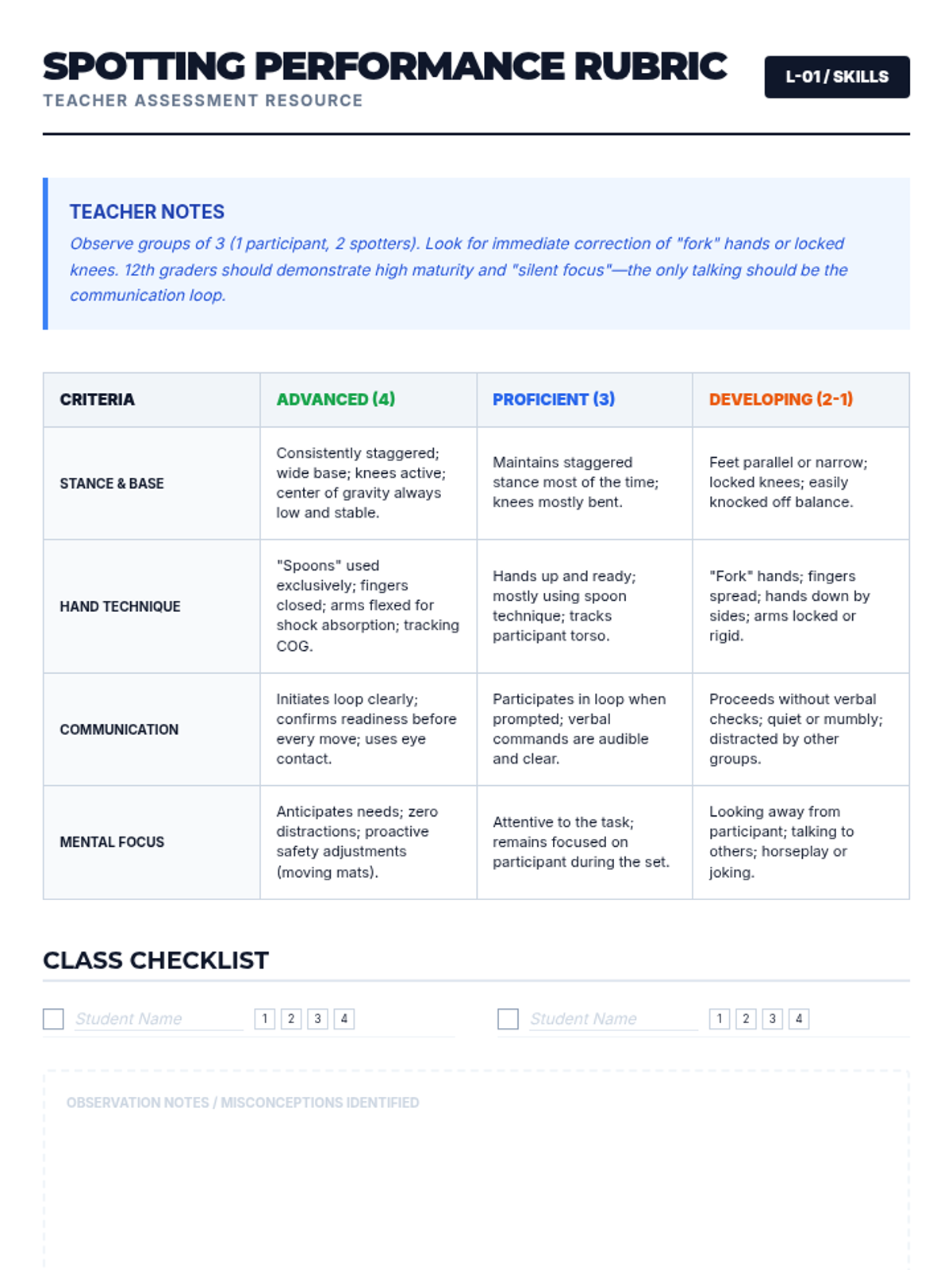
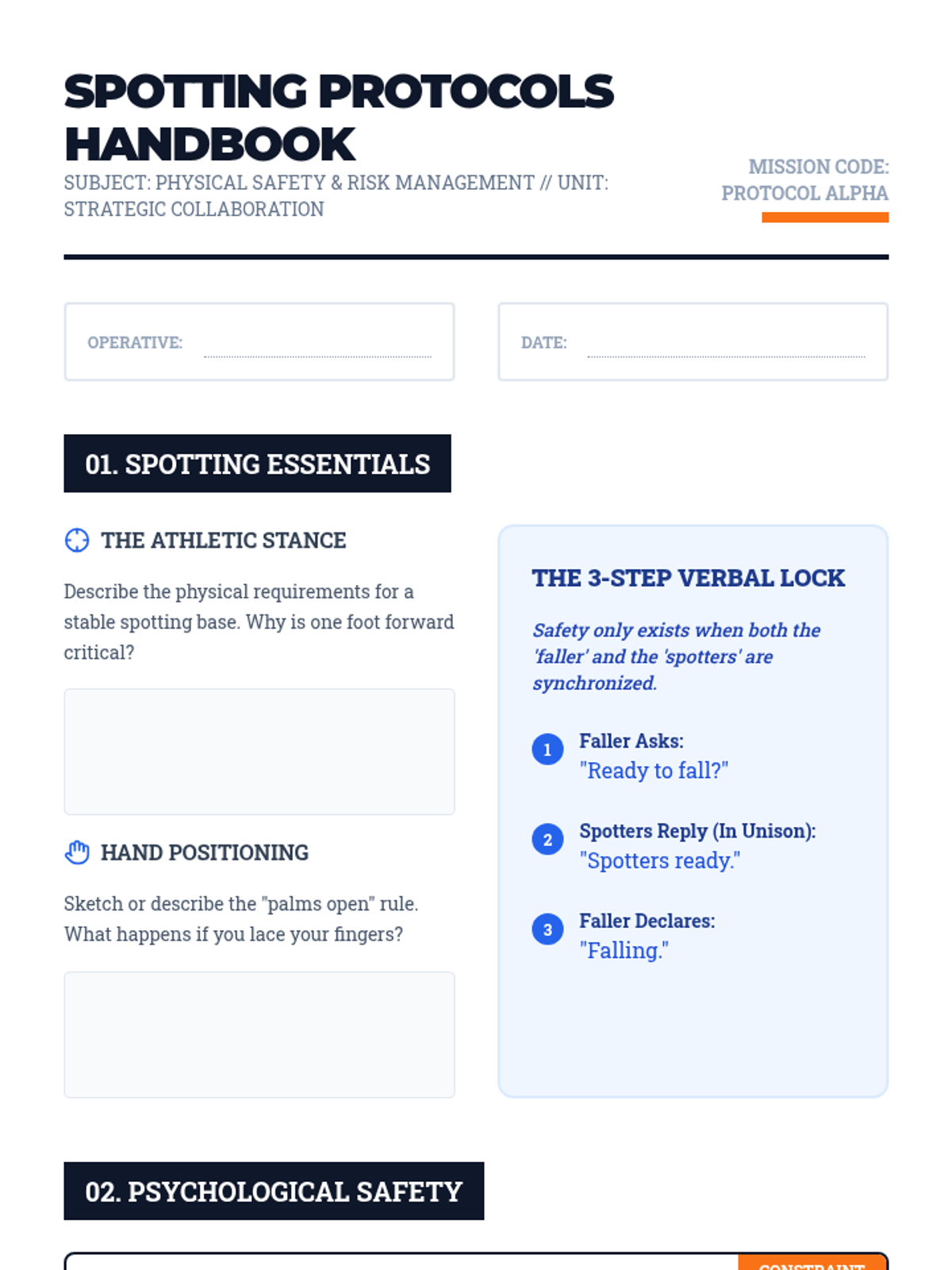
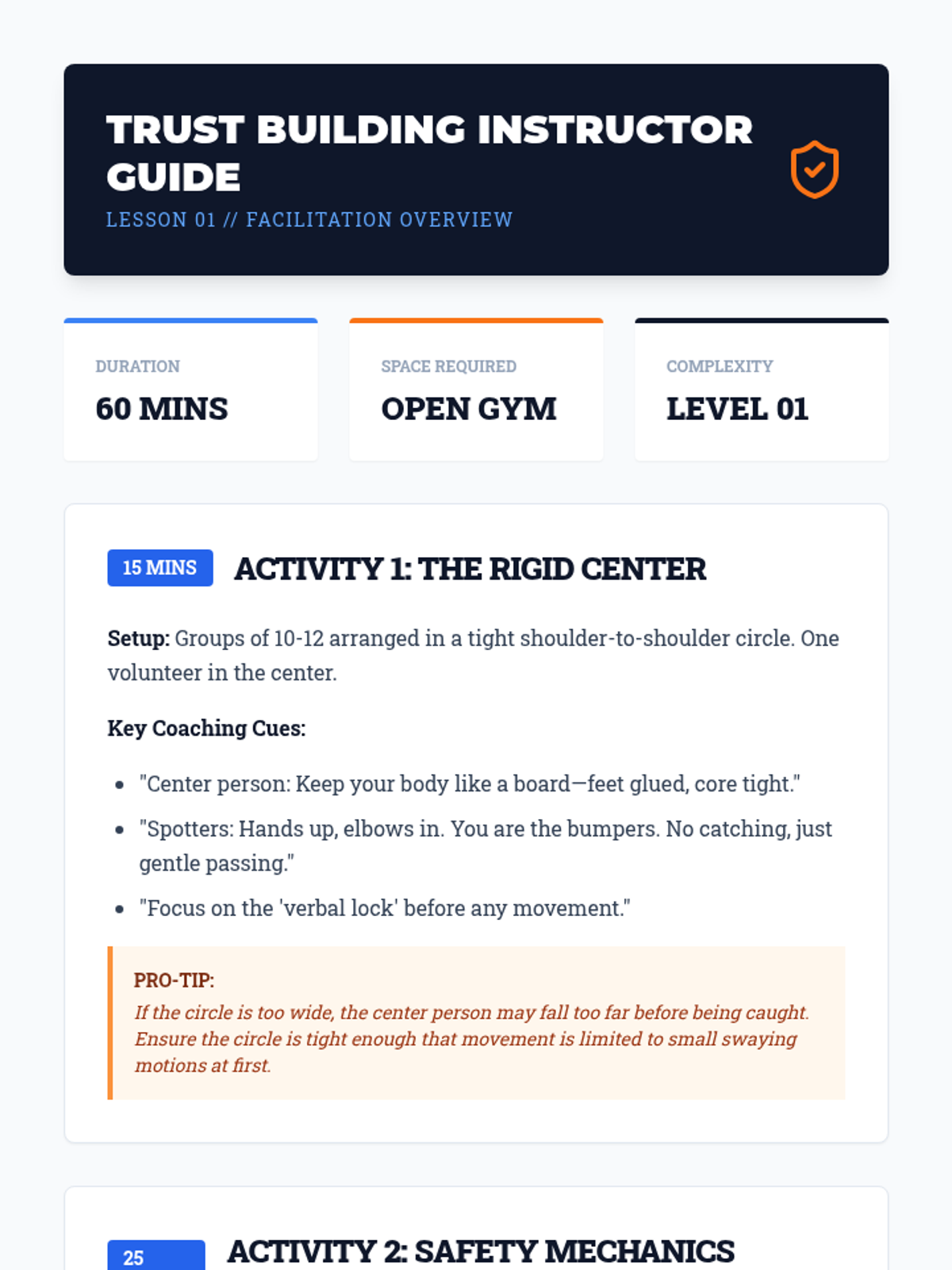
Students learn the biomechanics of safe spotting and weight support, practicing proper stance and hand placement. The lesson establishes the 'challenge by choice' protocol, ensuring all participants understand the safety contract required for cooperative physical work.
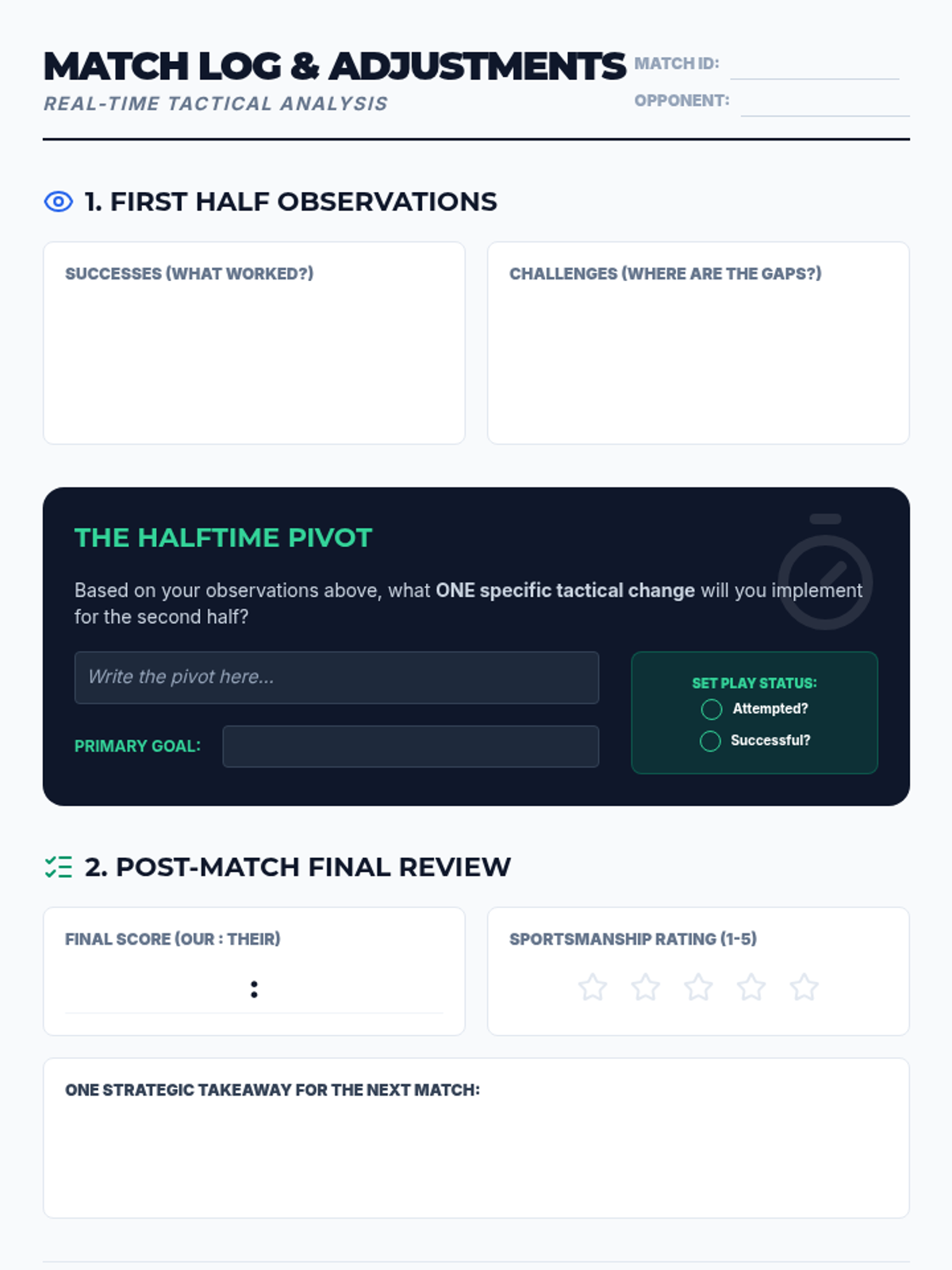
The class tournament begins with a focus on implementing the practiced strategies. Between games, teams conduct brief 'halftime talks' to discuss what is working and what needs to change.
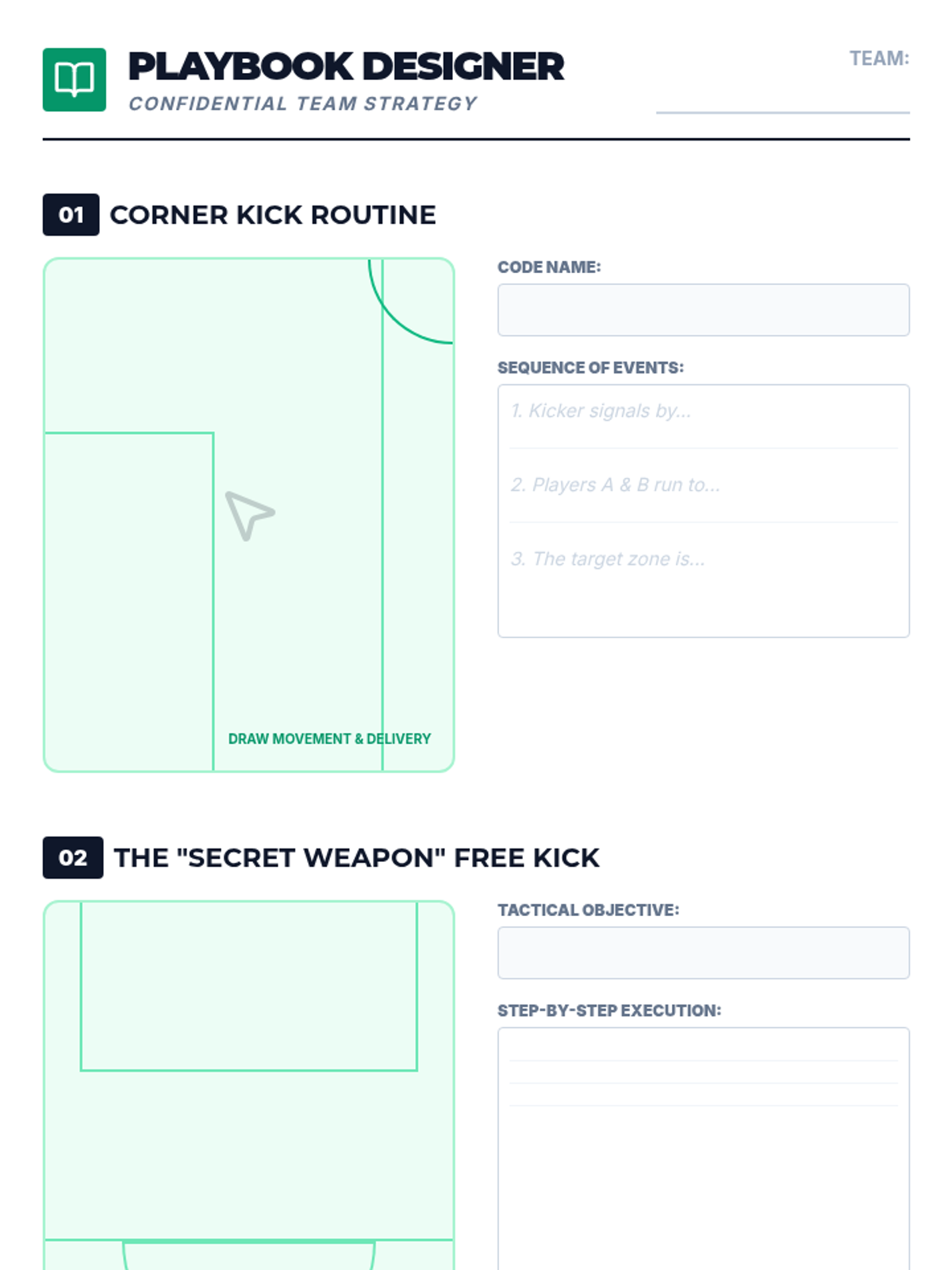
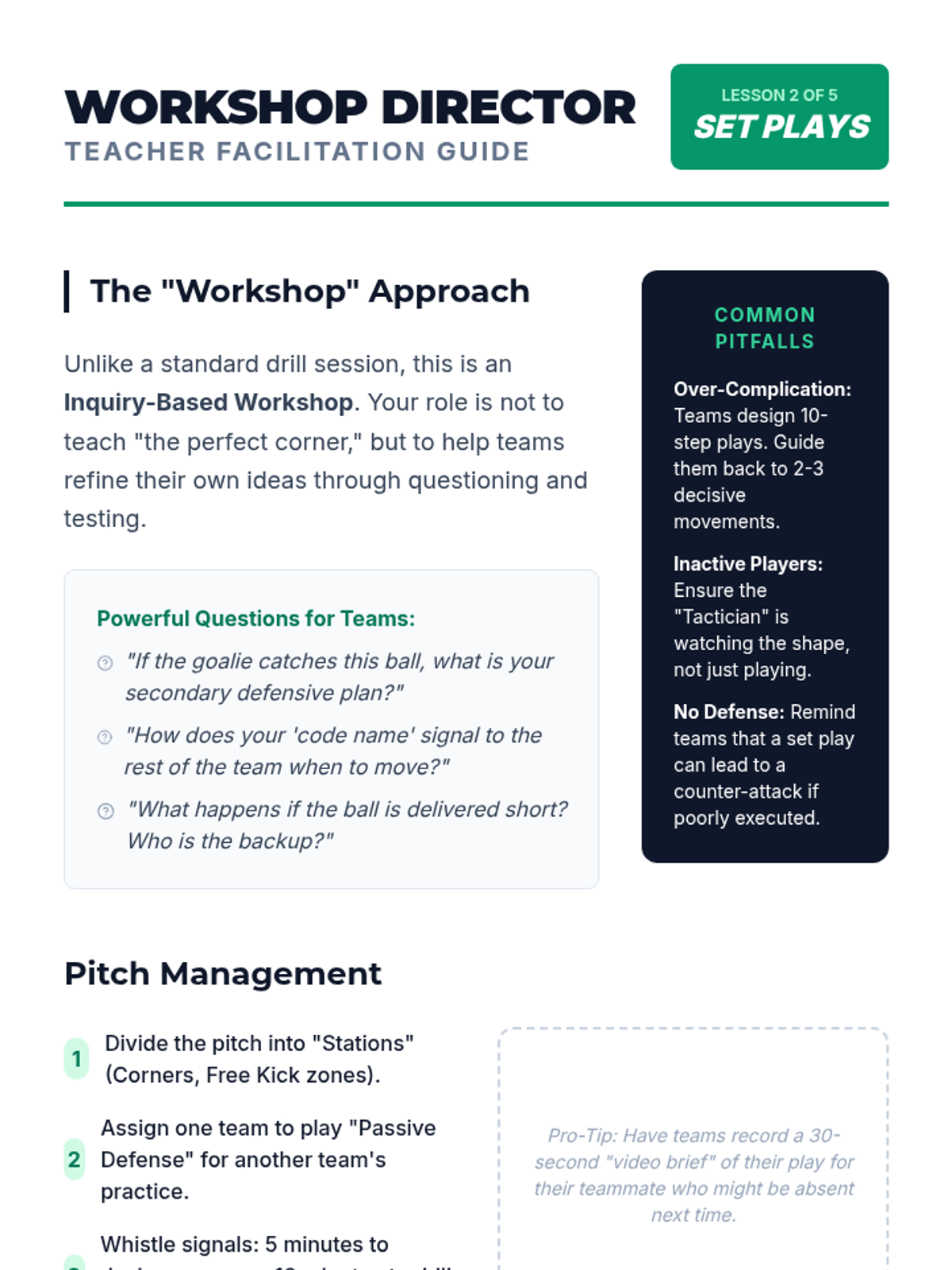
Teams spend the lesson designing and practicing two specific set plays (one corner kick, one free kick) and one defensive protocol. They document these plays to be used in the upcoming tournament.
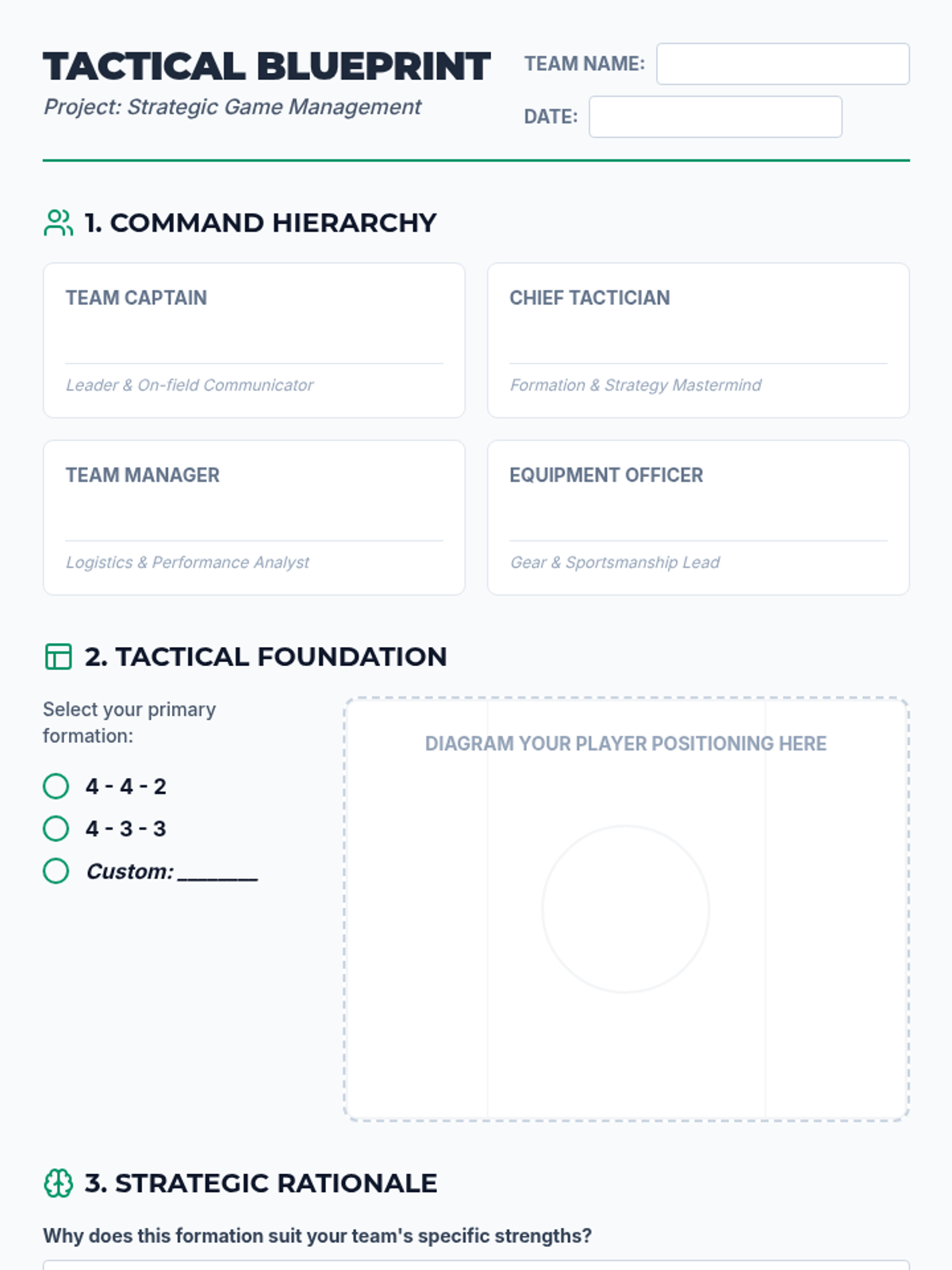
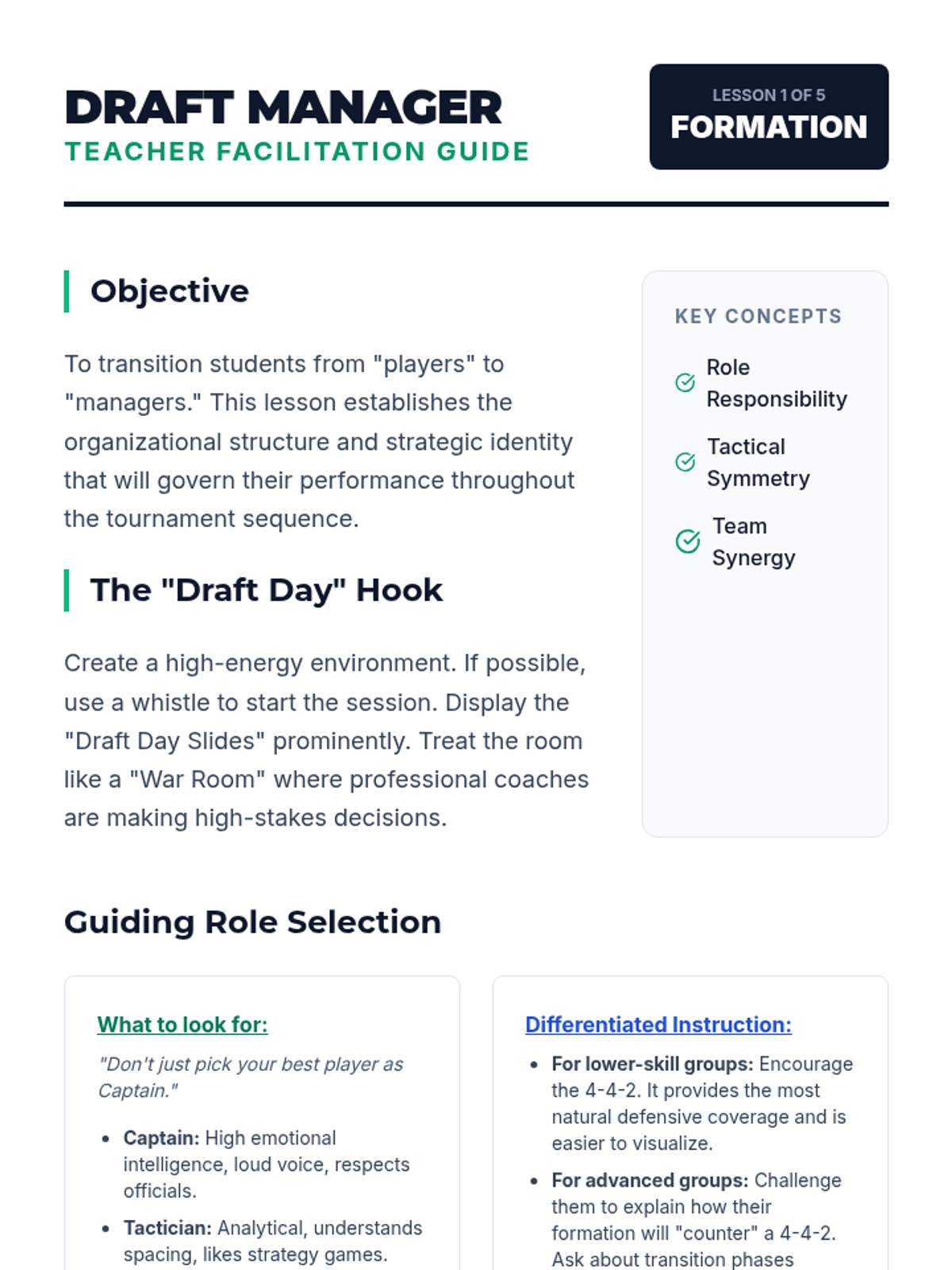
Students form teams and assume roles such as captain, tactician, and manager. They draft a team charter and choose a formation (e.g., 4-4-2, 4-3-3) that best suits their players' strengths.
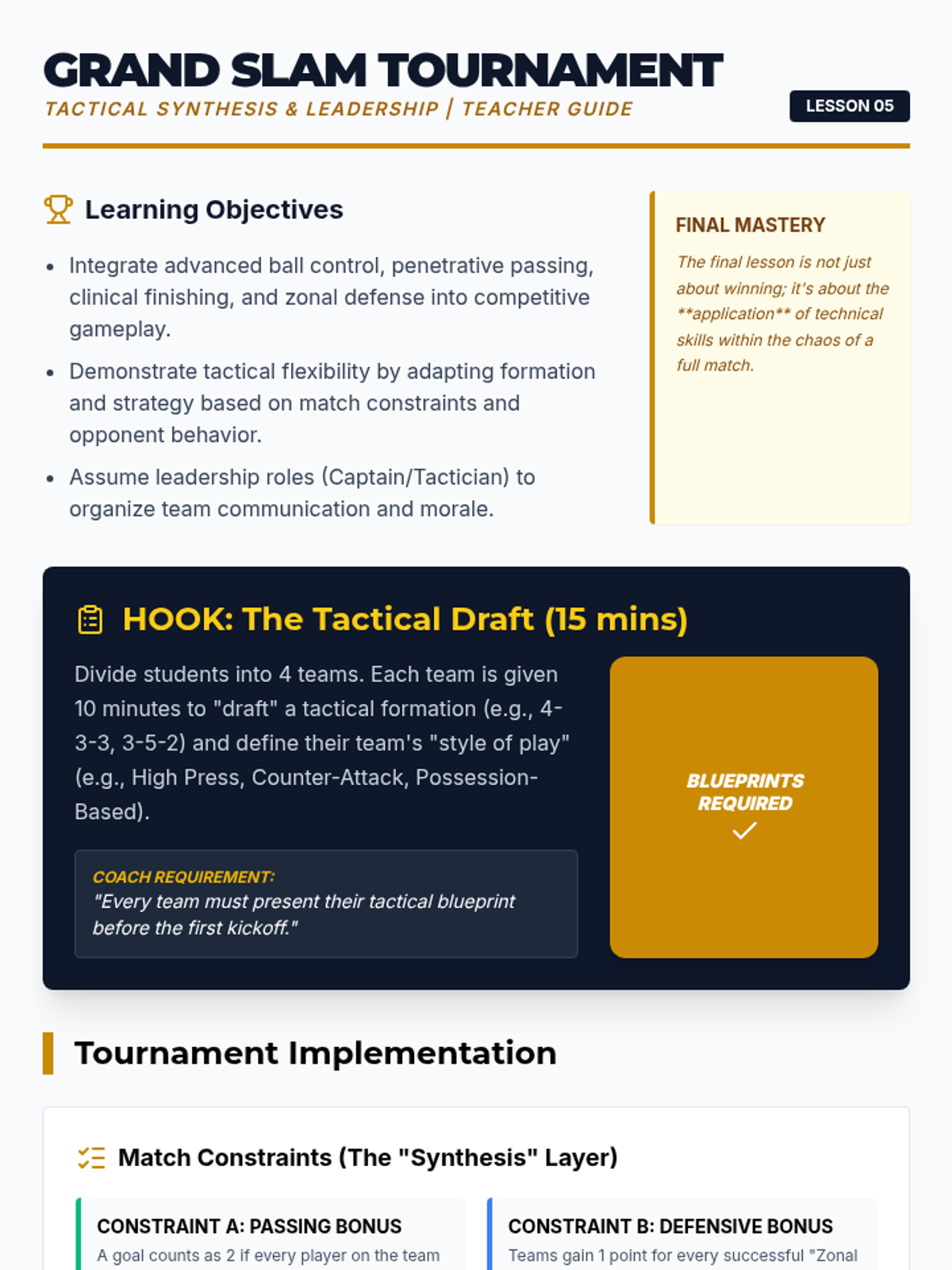
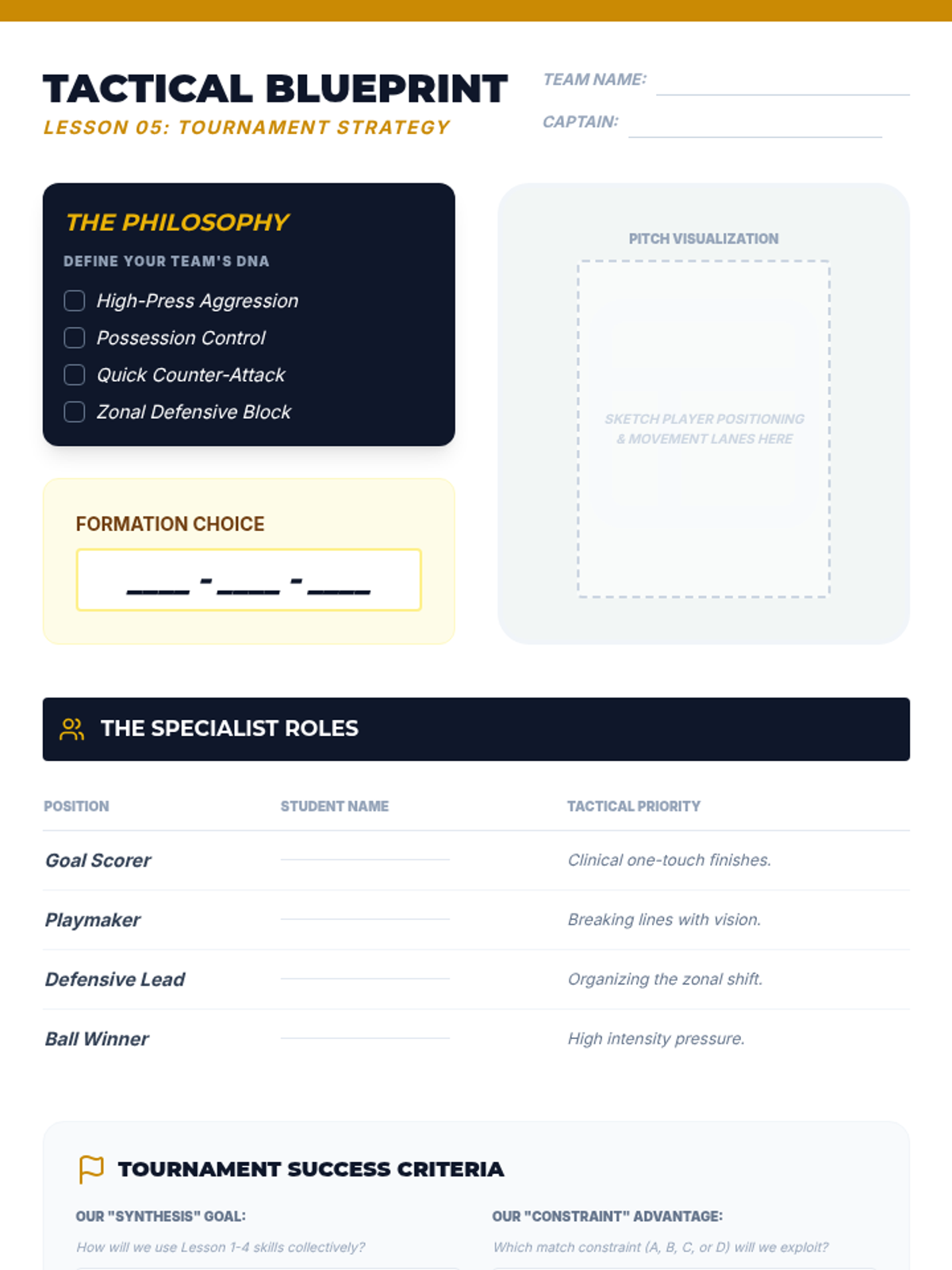
Integrates all unit skills into a tactical tournament with specific gameplay constraints.
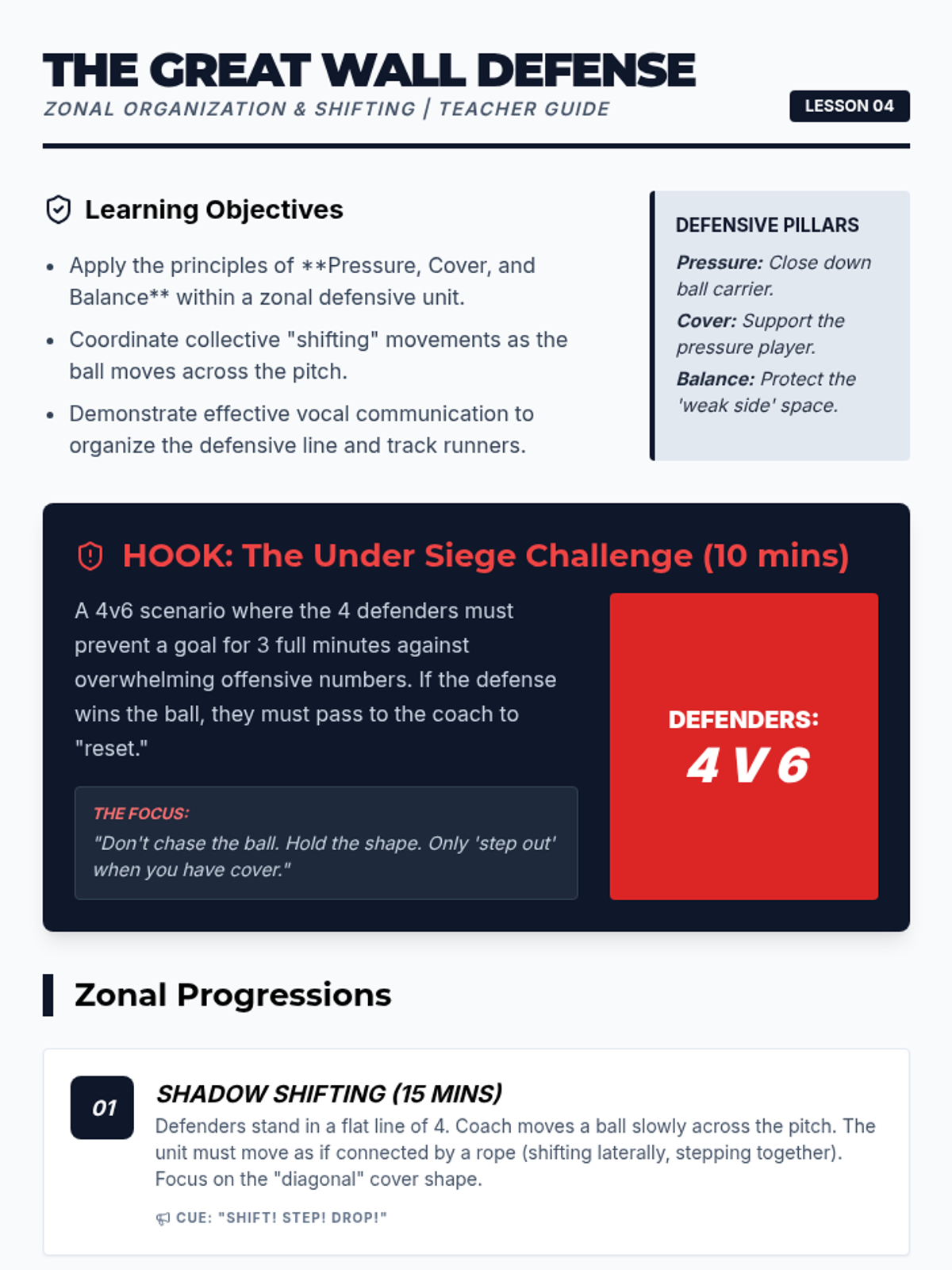
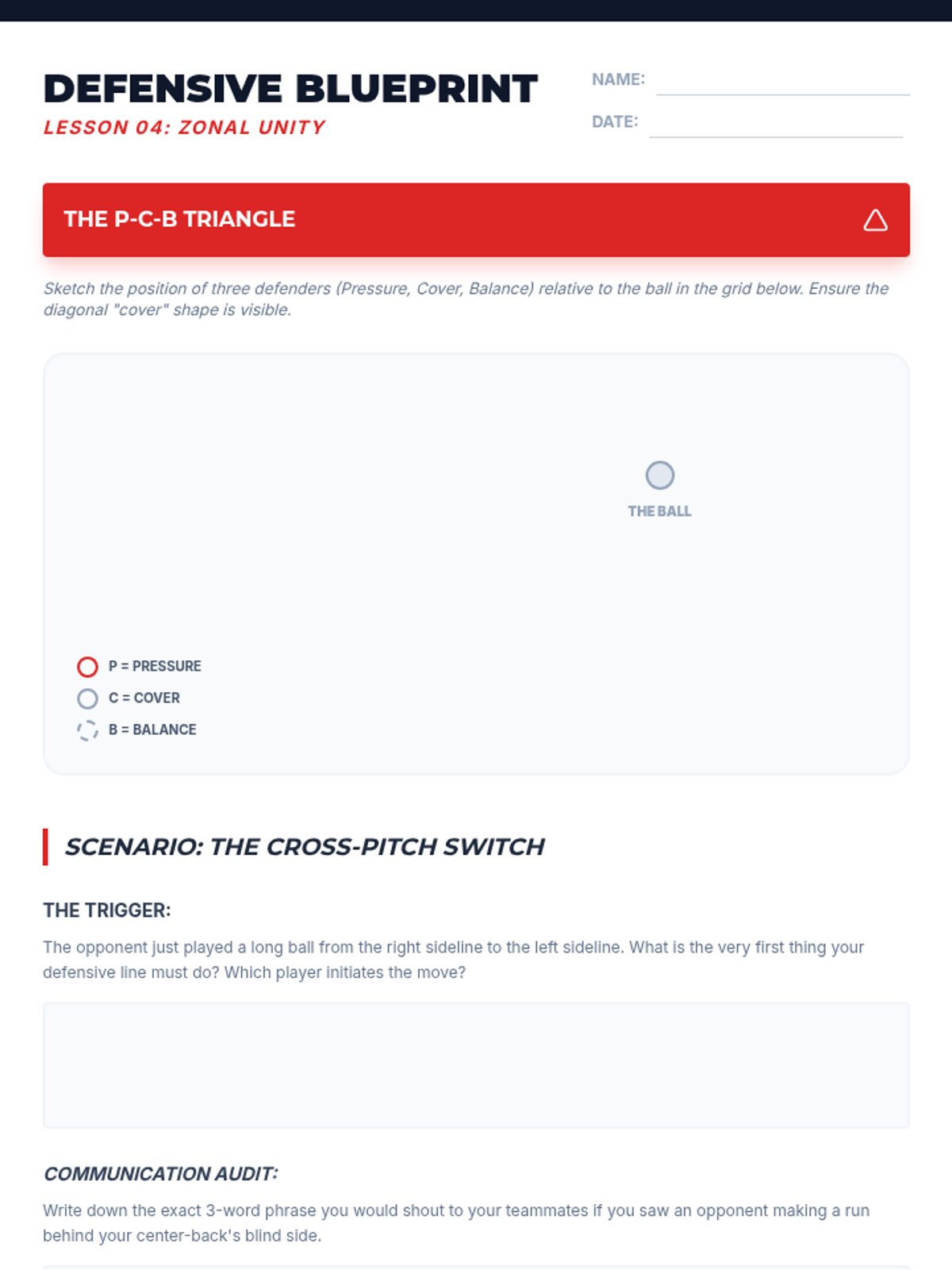
Teaches zonal organization, defensive shifting, and communication principles.
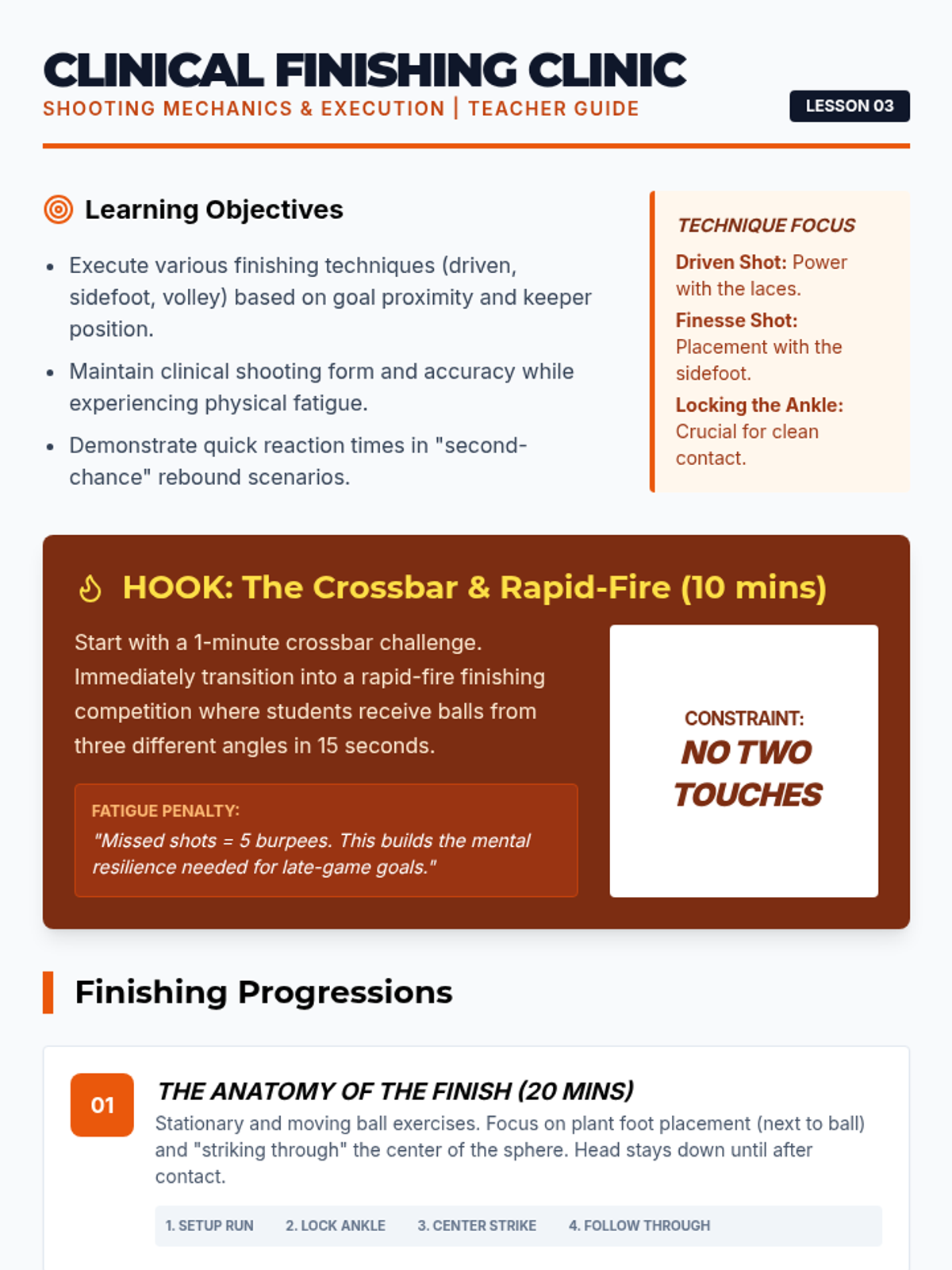
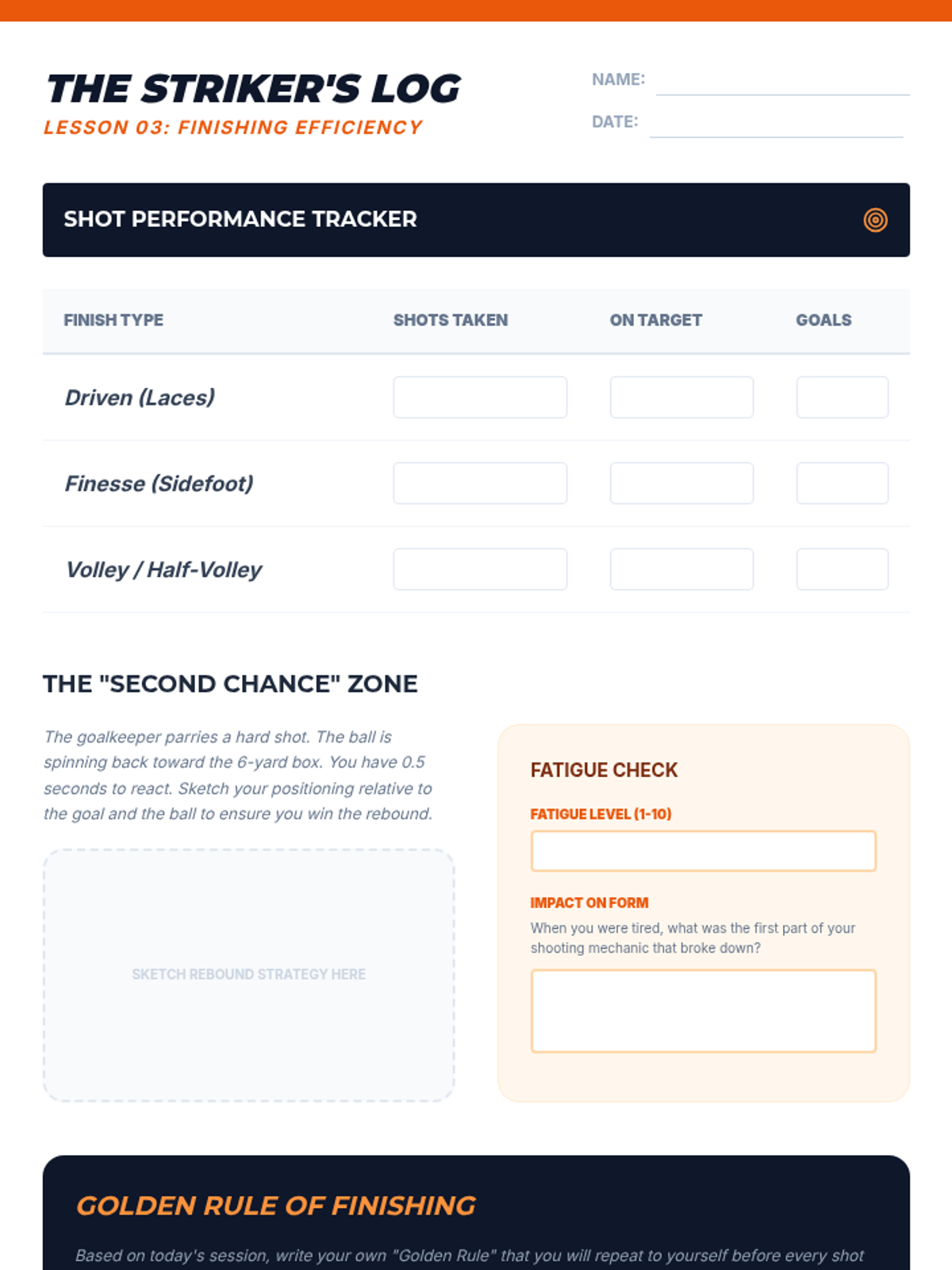
Develops shooting mechanics and finishing ability under physical fatigue.
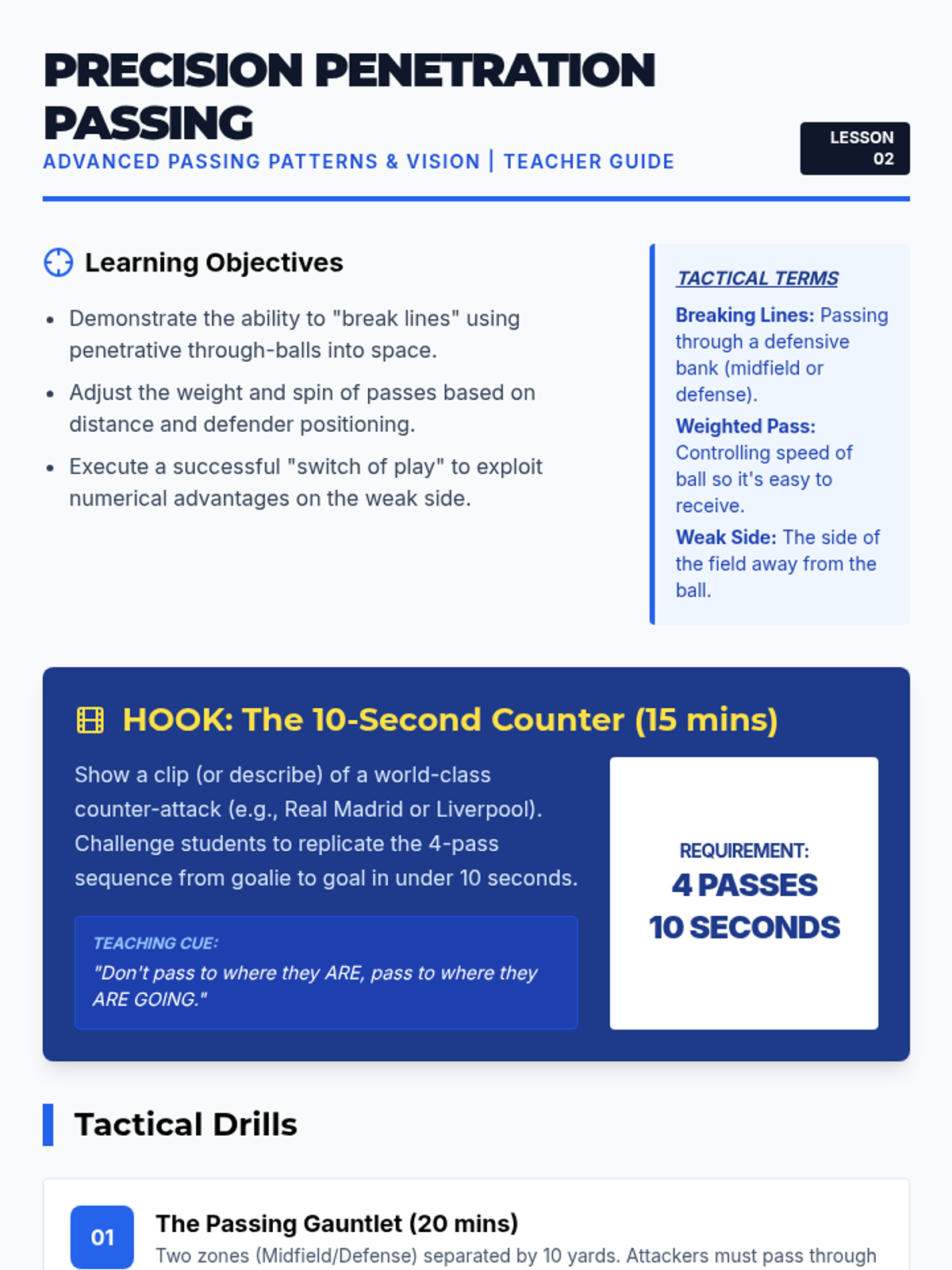
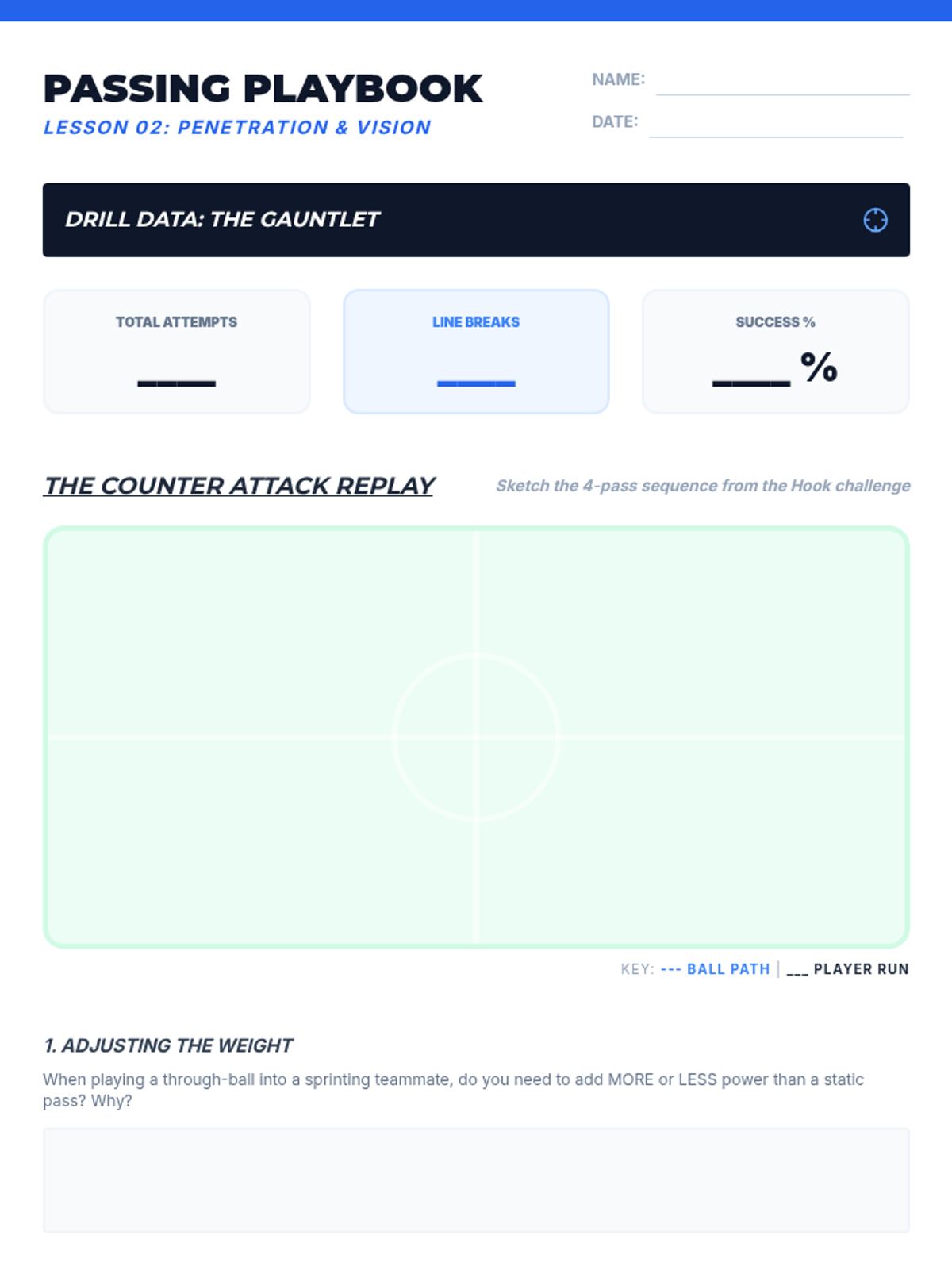
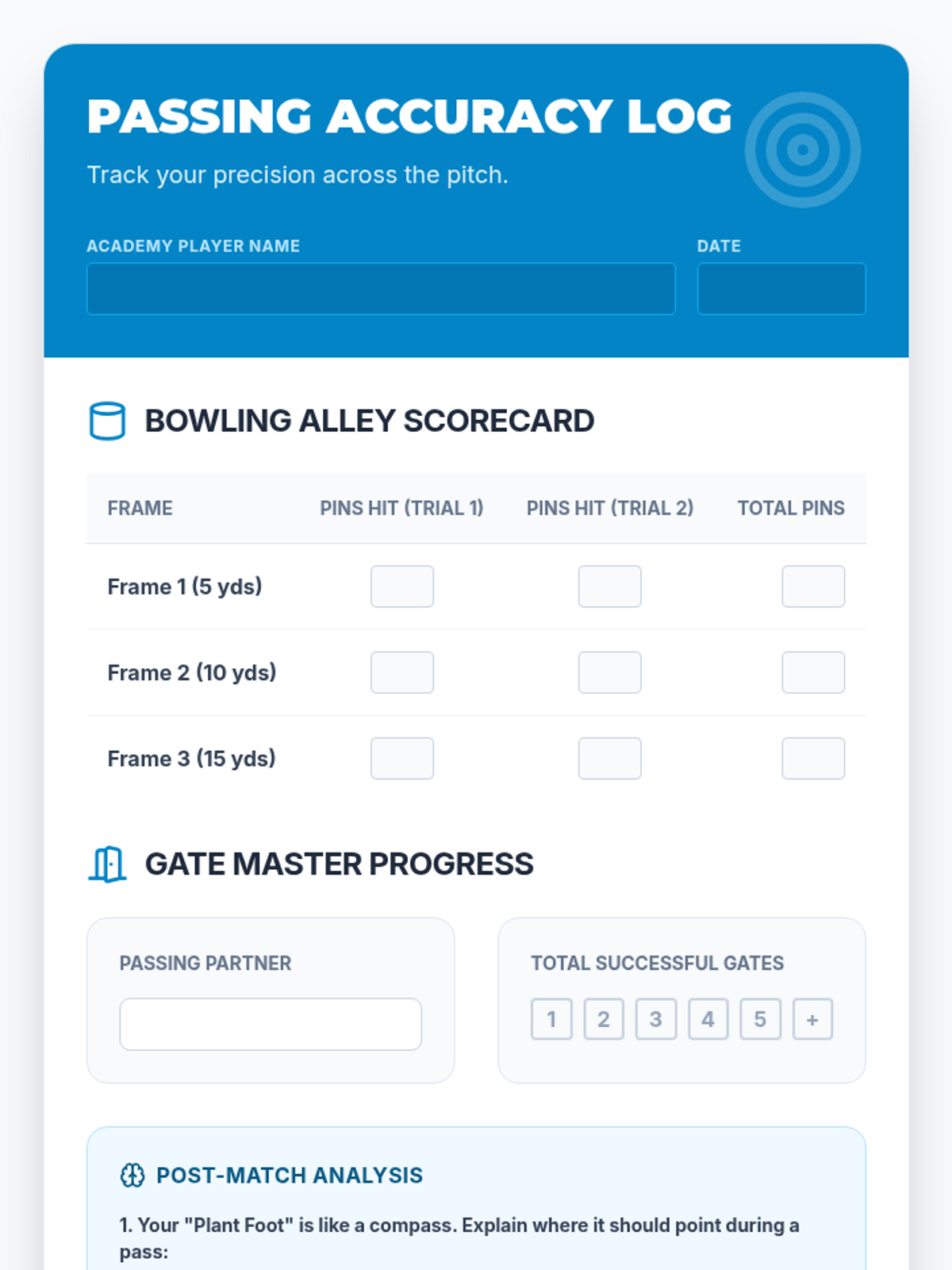
Focuses on weighted passes, through-balls, and switching play to break defensive lines.
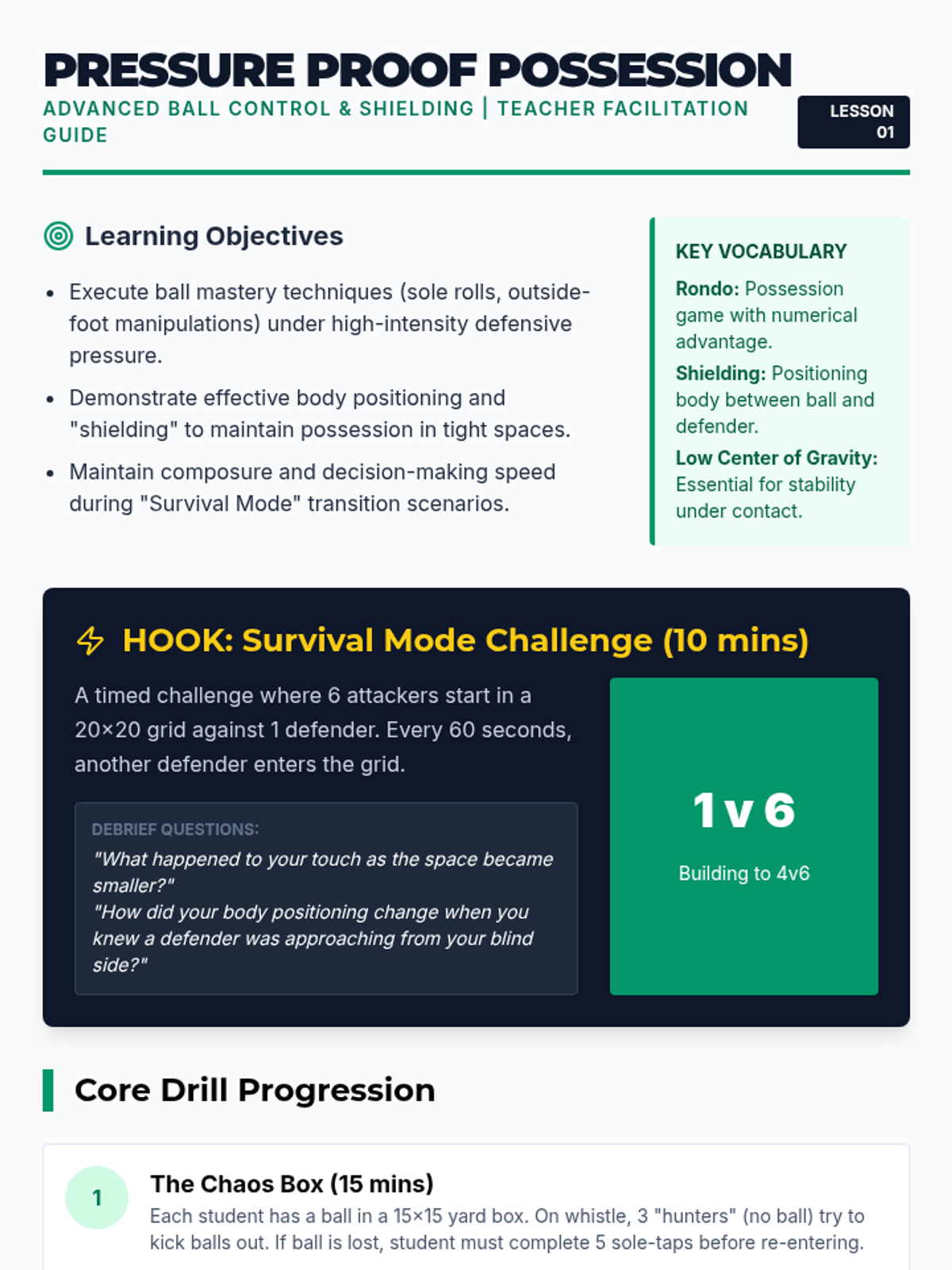
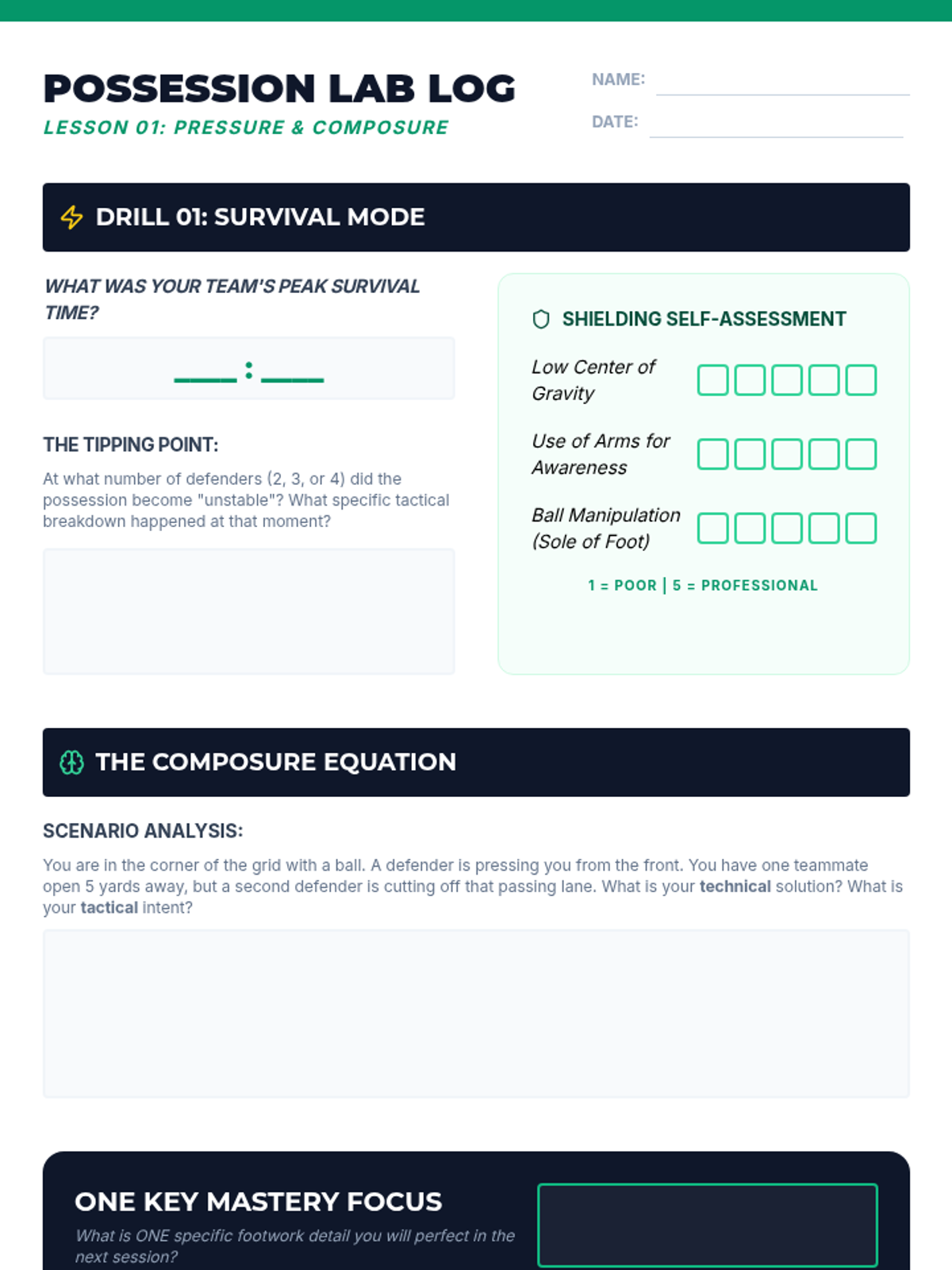
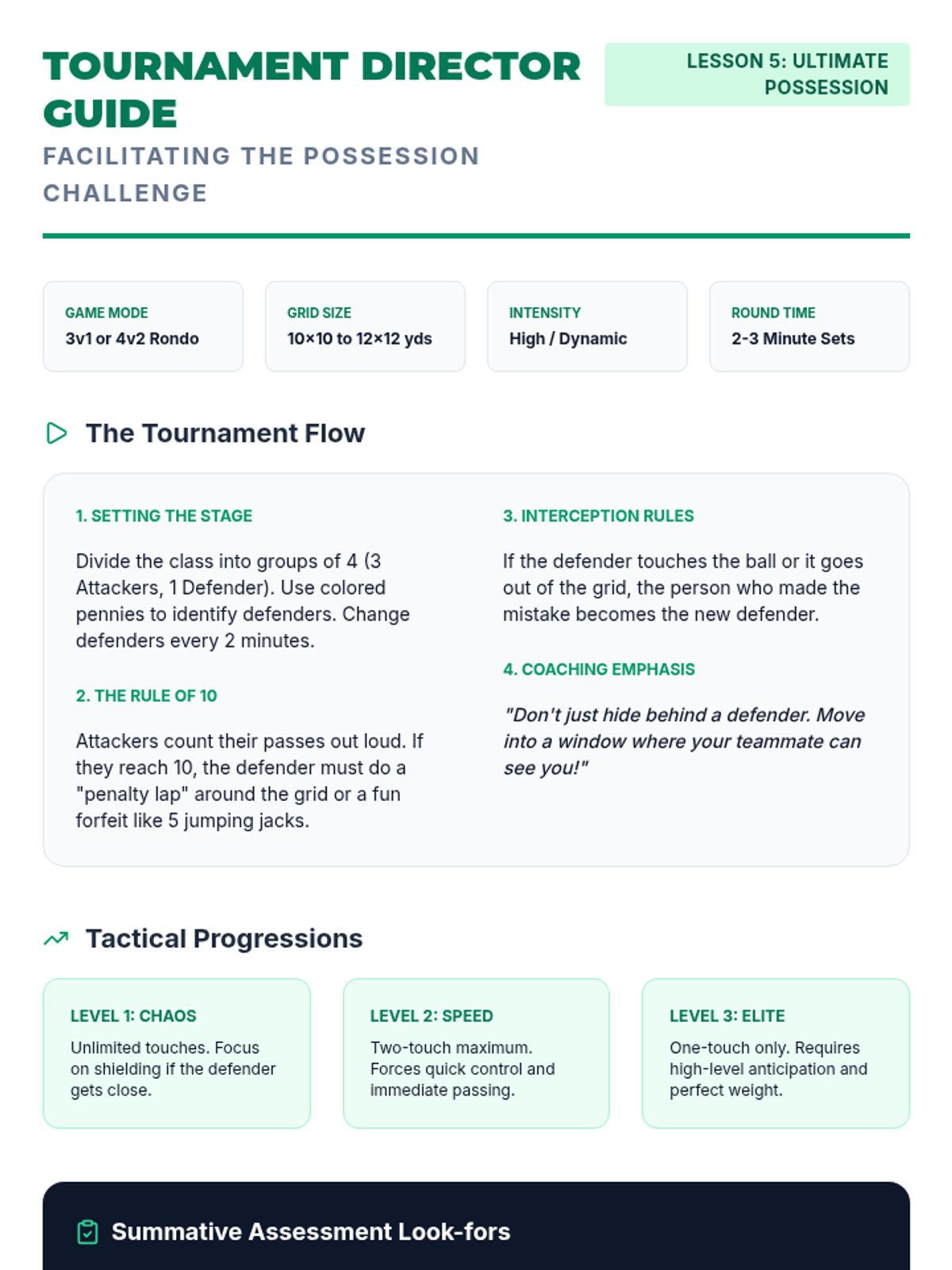
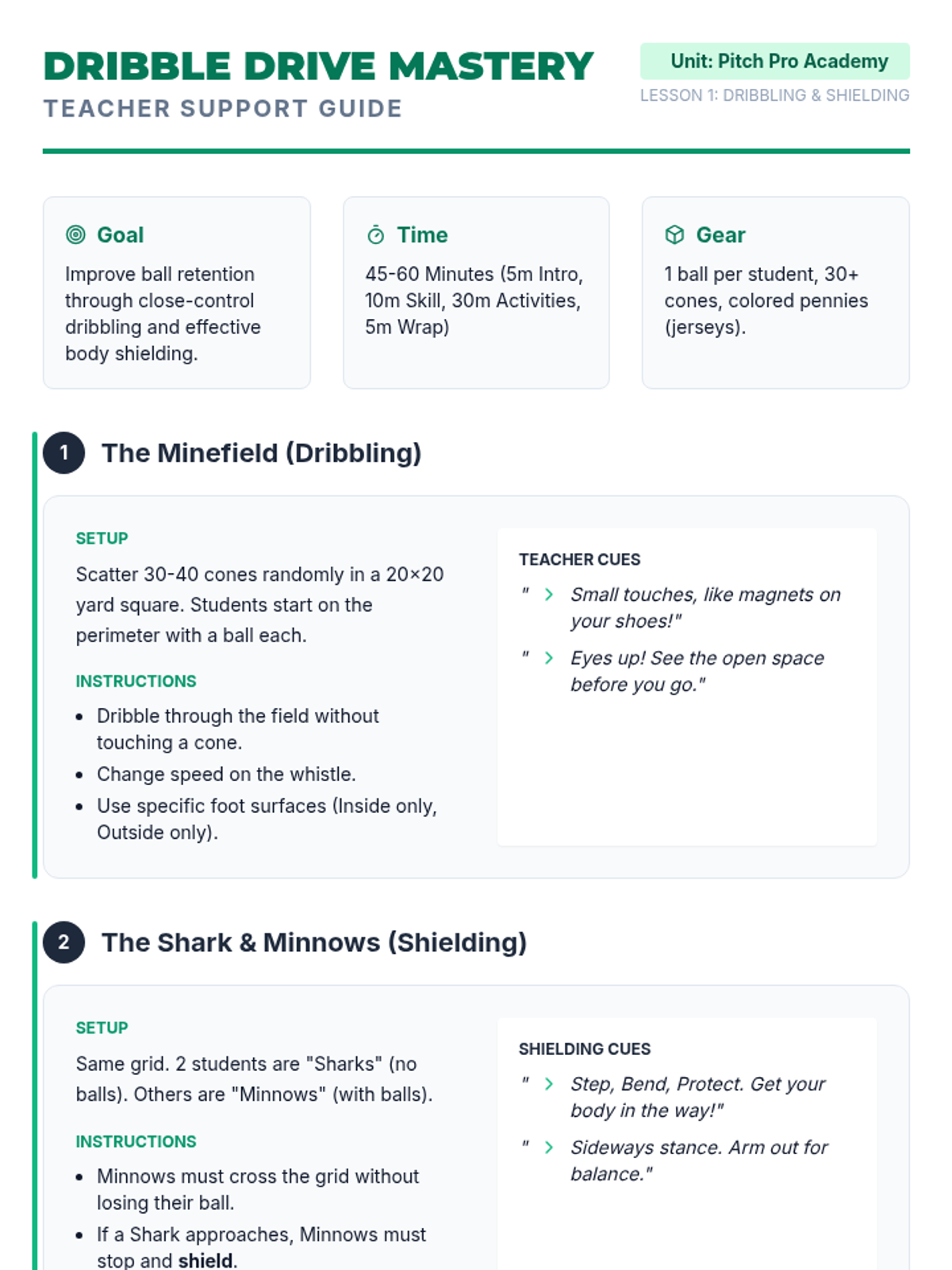
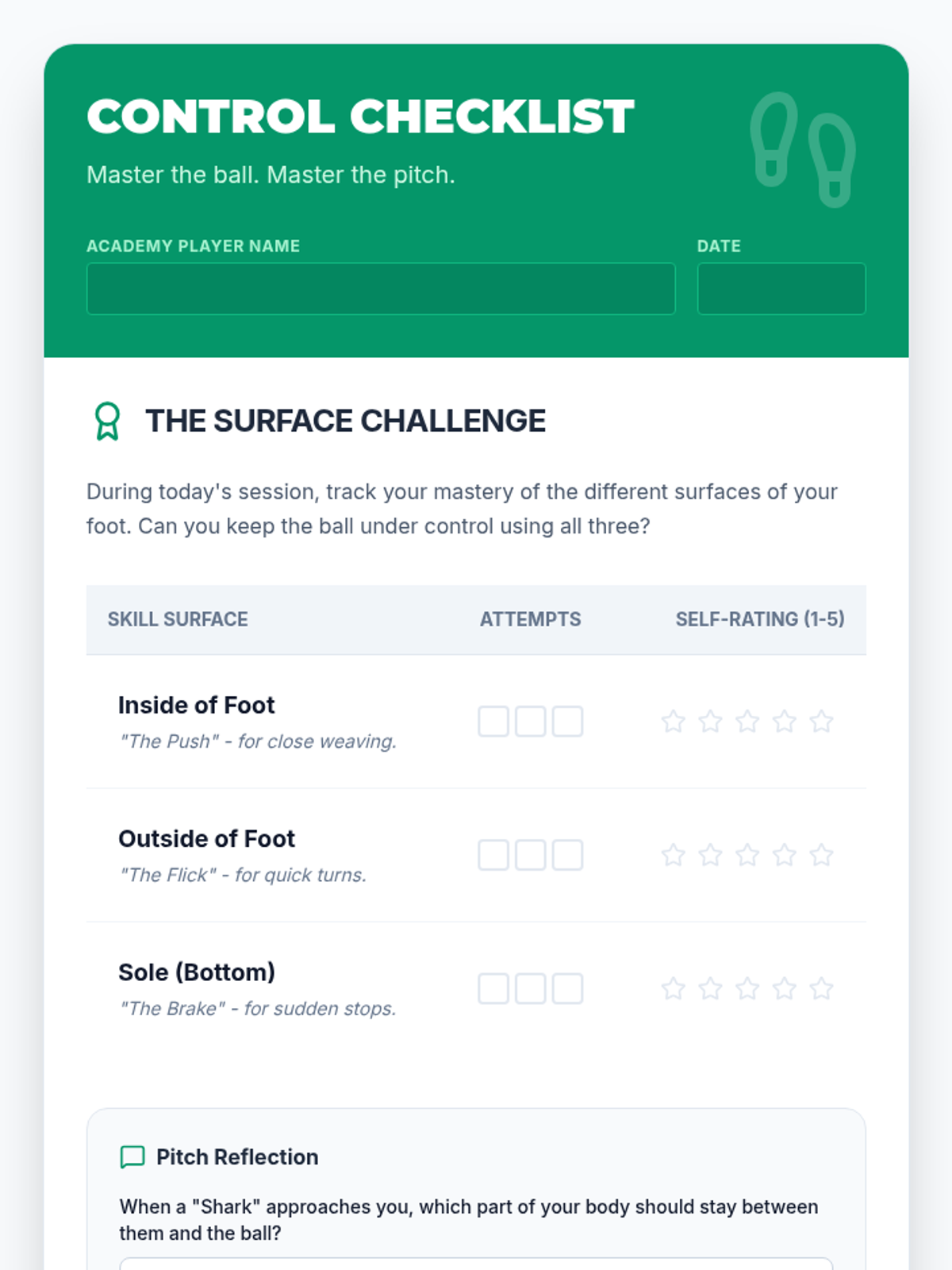
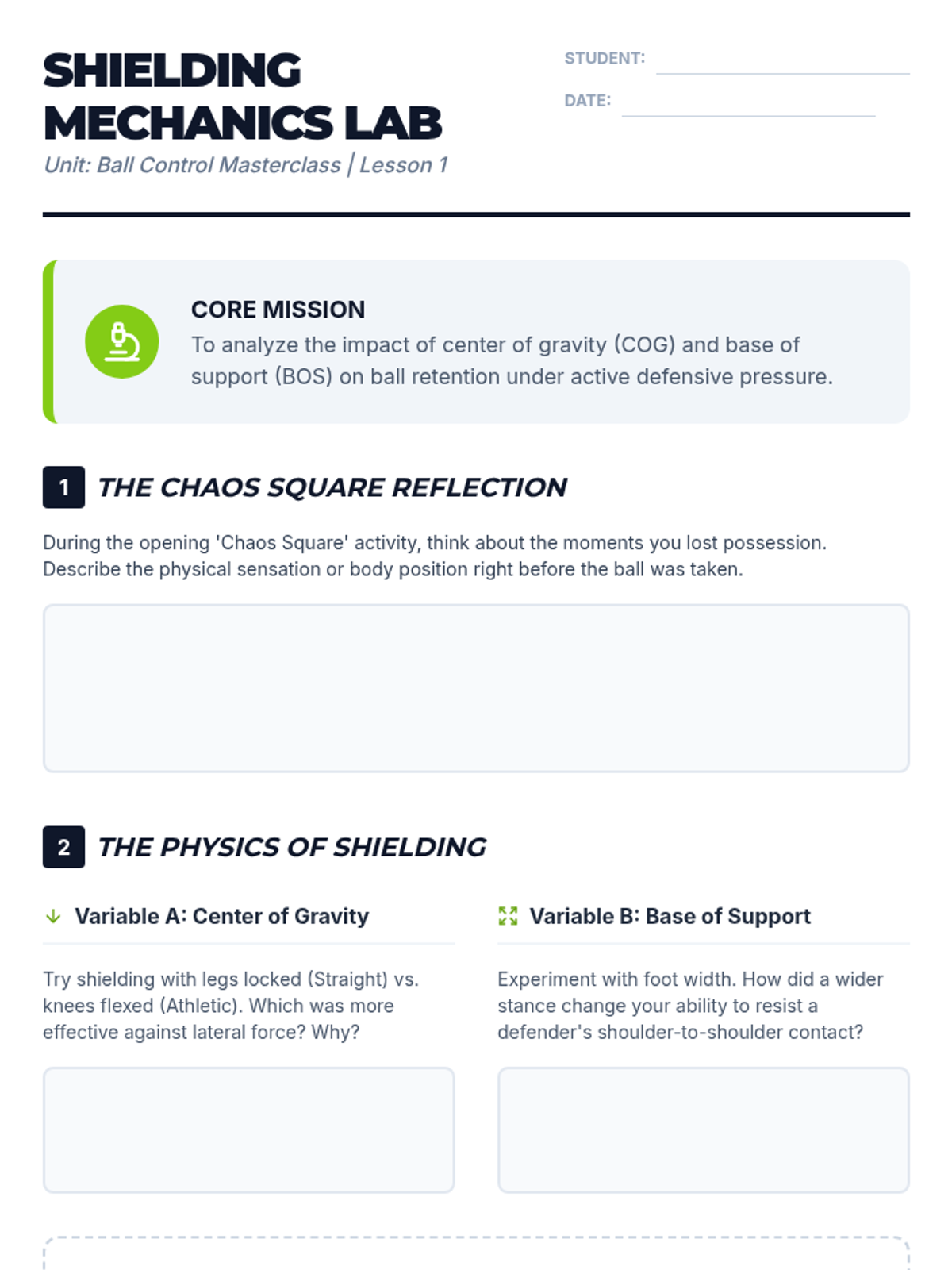
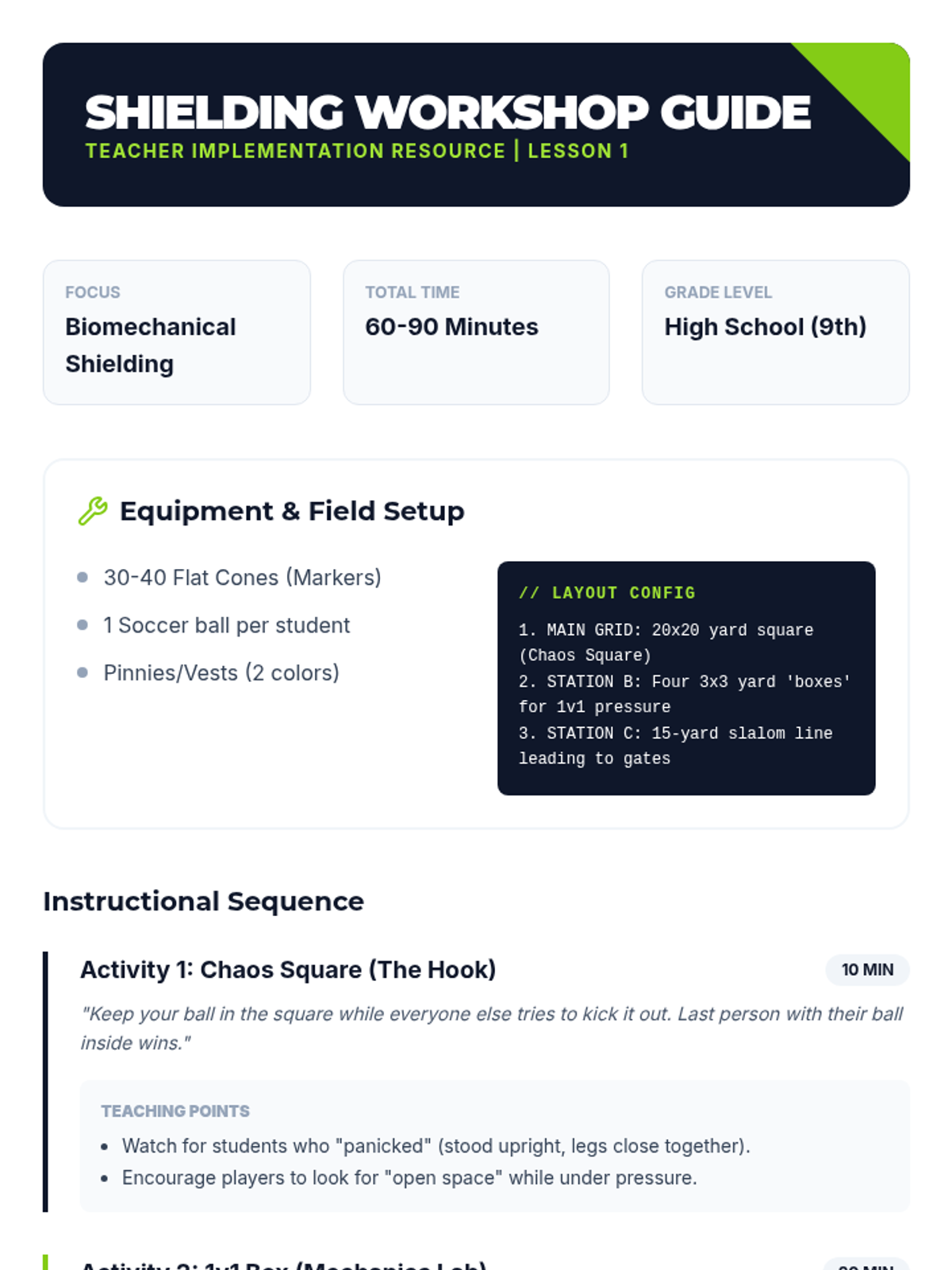
Refines ball mastery and shielding against active pressure using Rondo variations and tight-space possession grids.
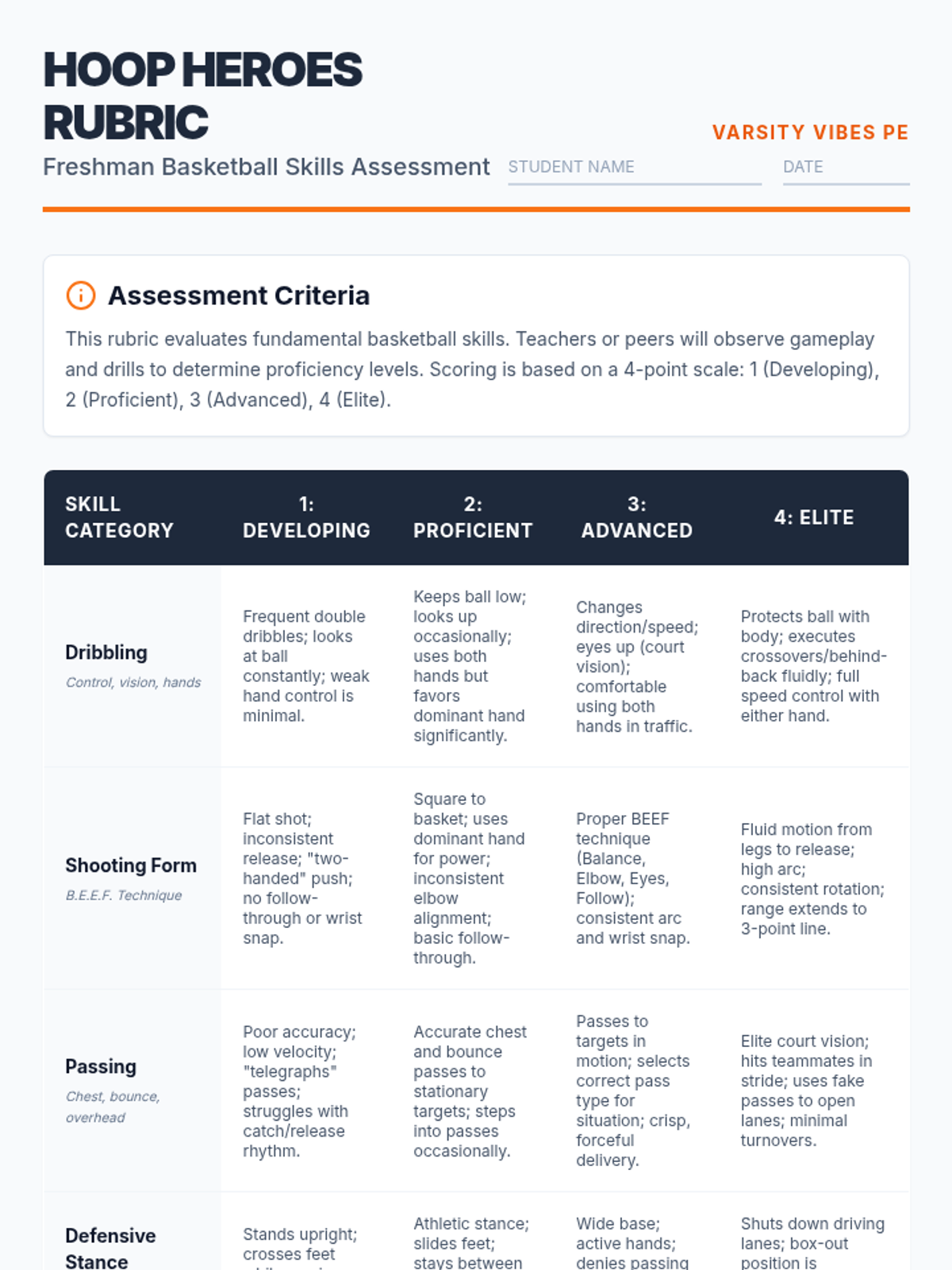
Assessment tools for mastering basketball fundamentals including shooting, dribbling, and defensive positioning.
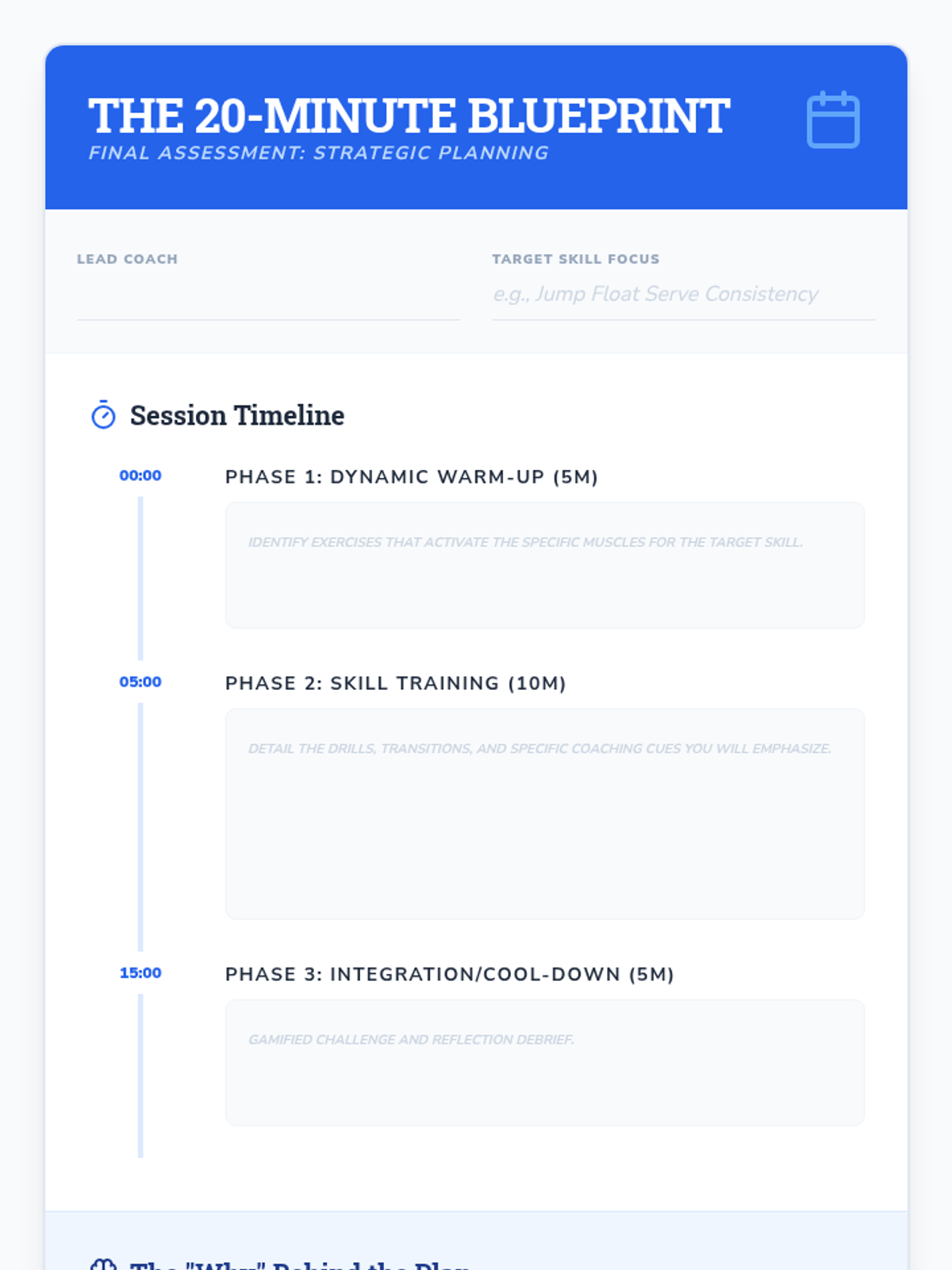
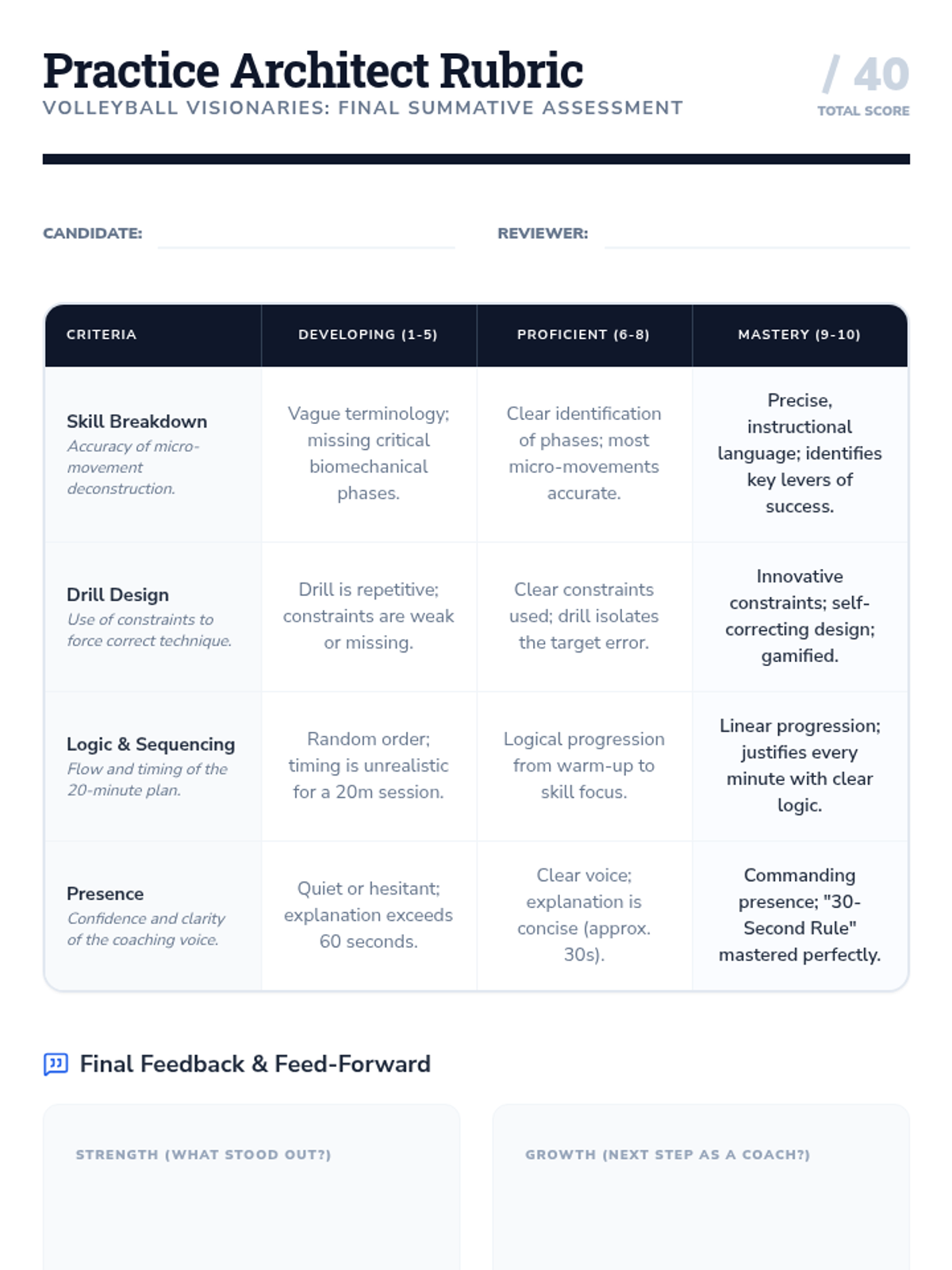
The sequence ends with students creating a cohesive 20-minute practice plan that warms up, trains, and cools down a specific skill set. They present the logic behind their sequencing.
Students practice the critical moment of transition—converting a successful dig immediately into an offensive approach. The lesson connects defense back to offense in continuous rally drills.
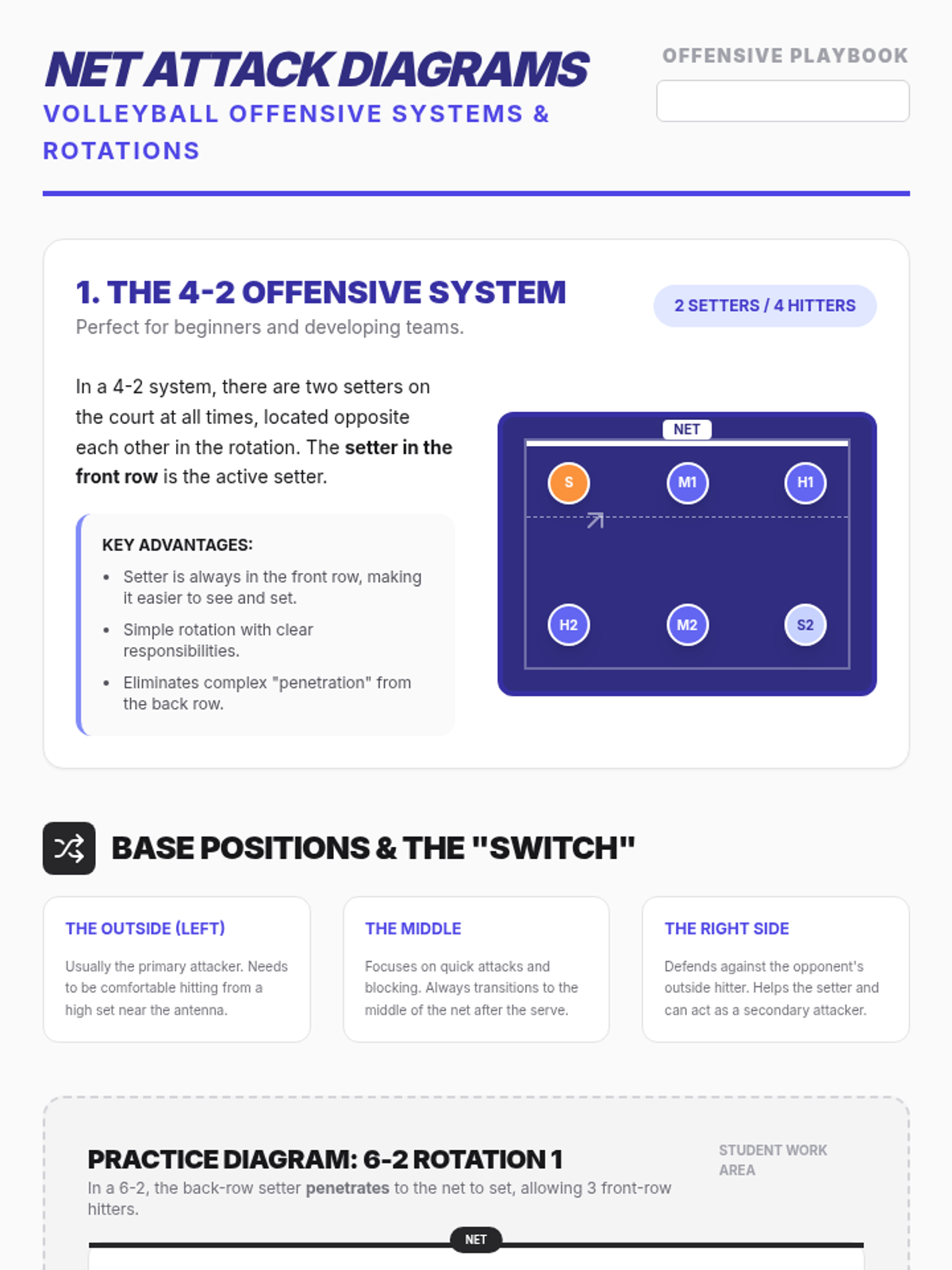
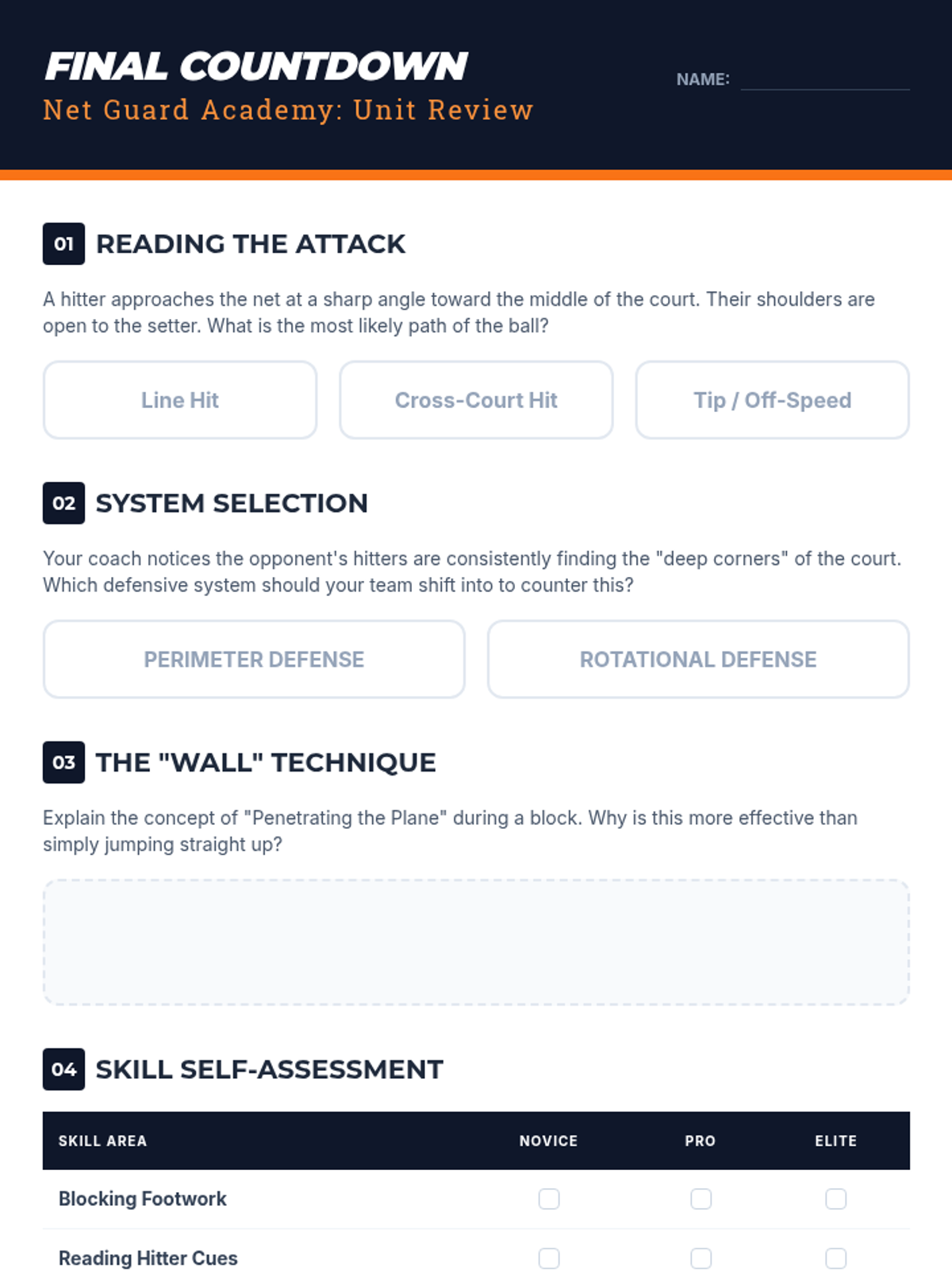
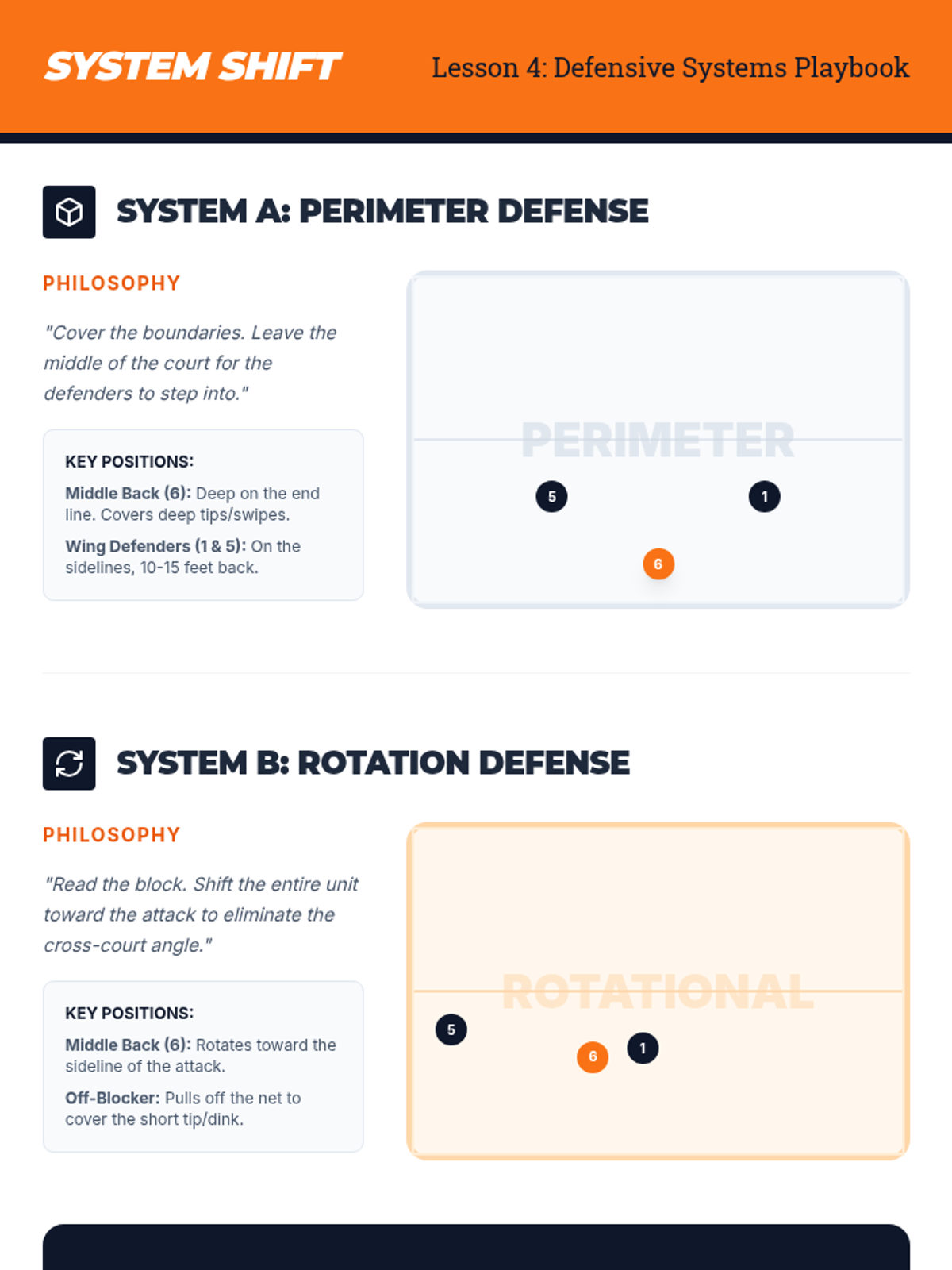
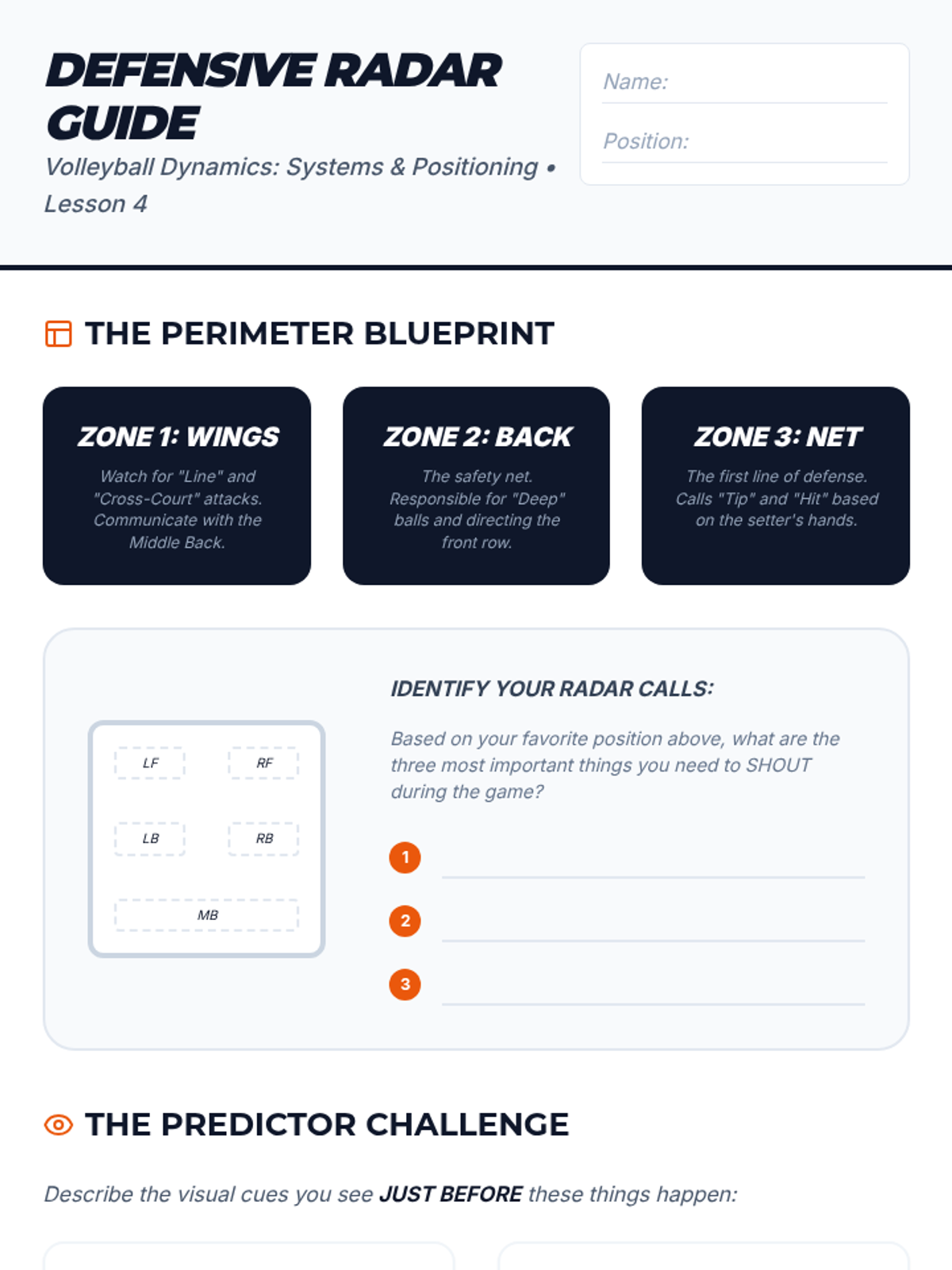
The class workshops two main defensive systems: Perimeter (middle back deep) and Rotation (reading the block). Teams practice shifting positions as a unit based on where the set goes.
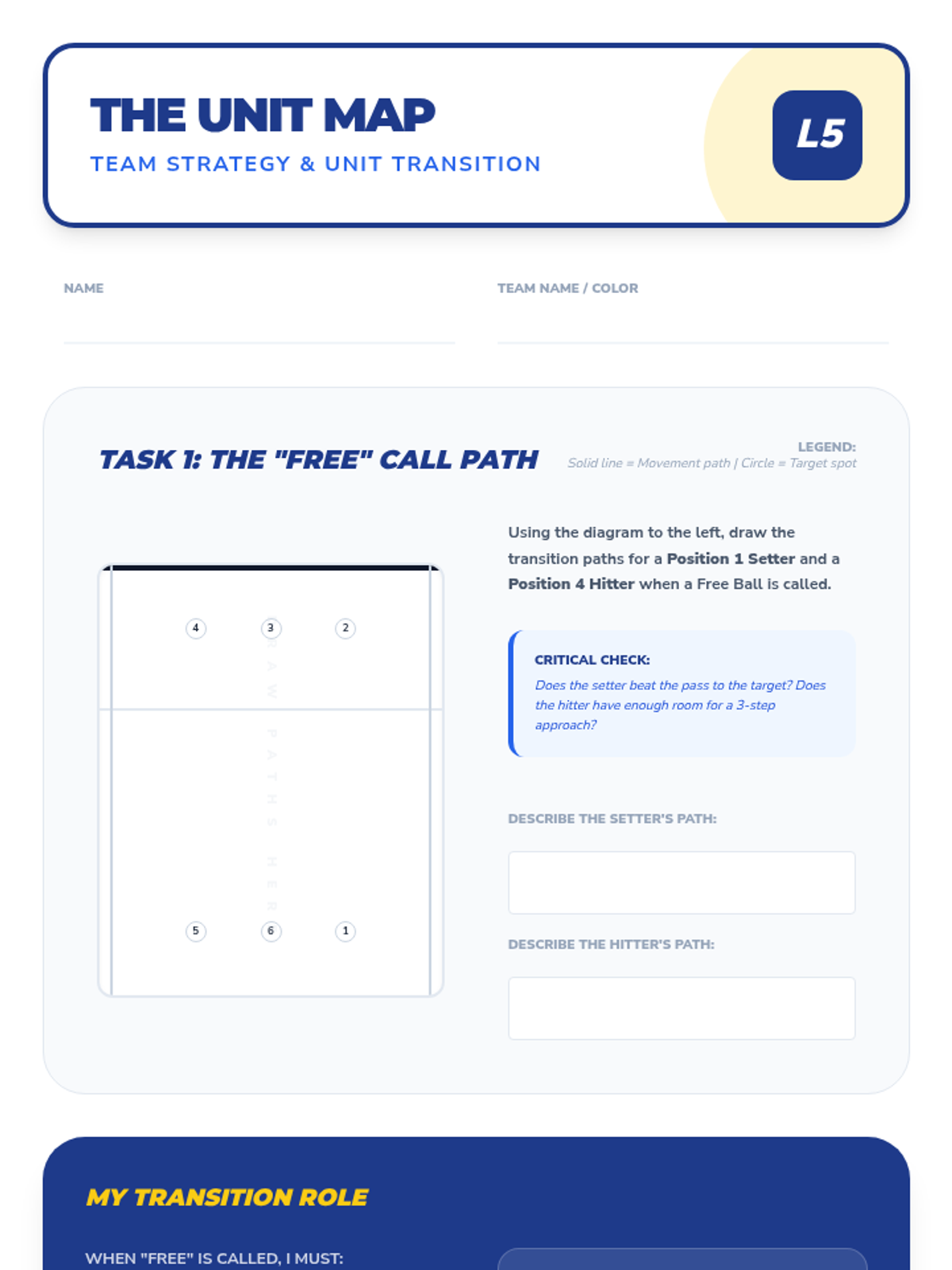
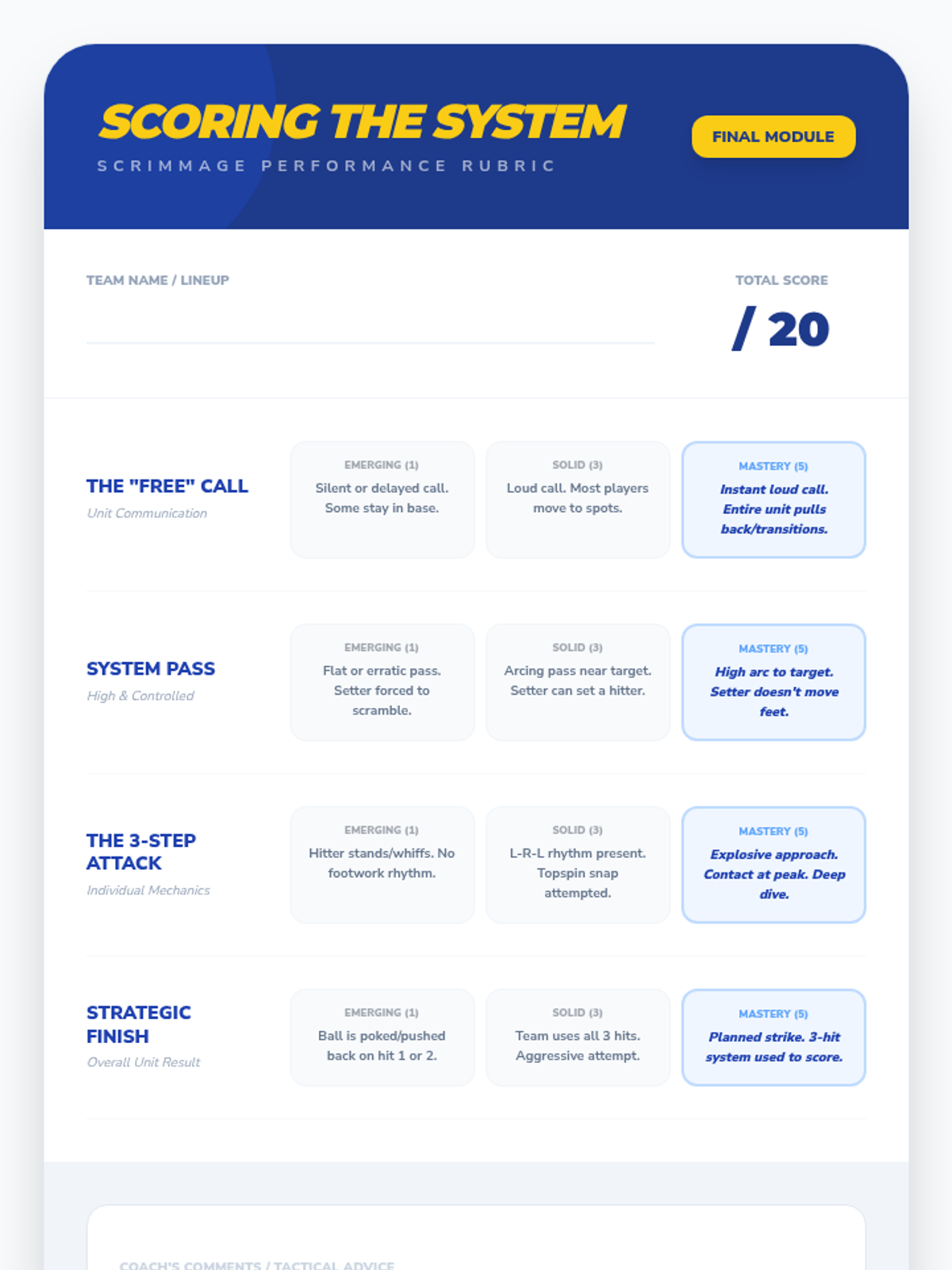
Students learn the concept of a 'free ball' offense, where the team pulls back to pass an easy ball, then transitions immediately to attack. The lesson simulates the full cycle: pass, set, and attack in a 6 vs. 6 setting. Emphasis is on moving as a unit.
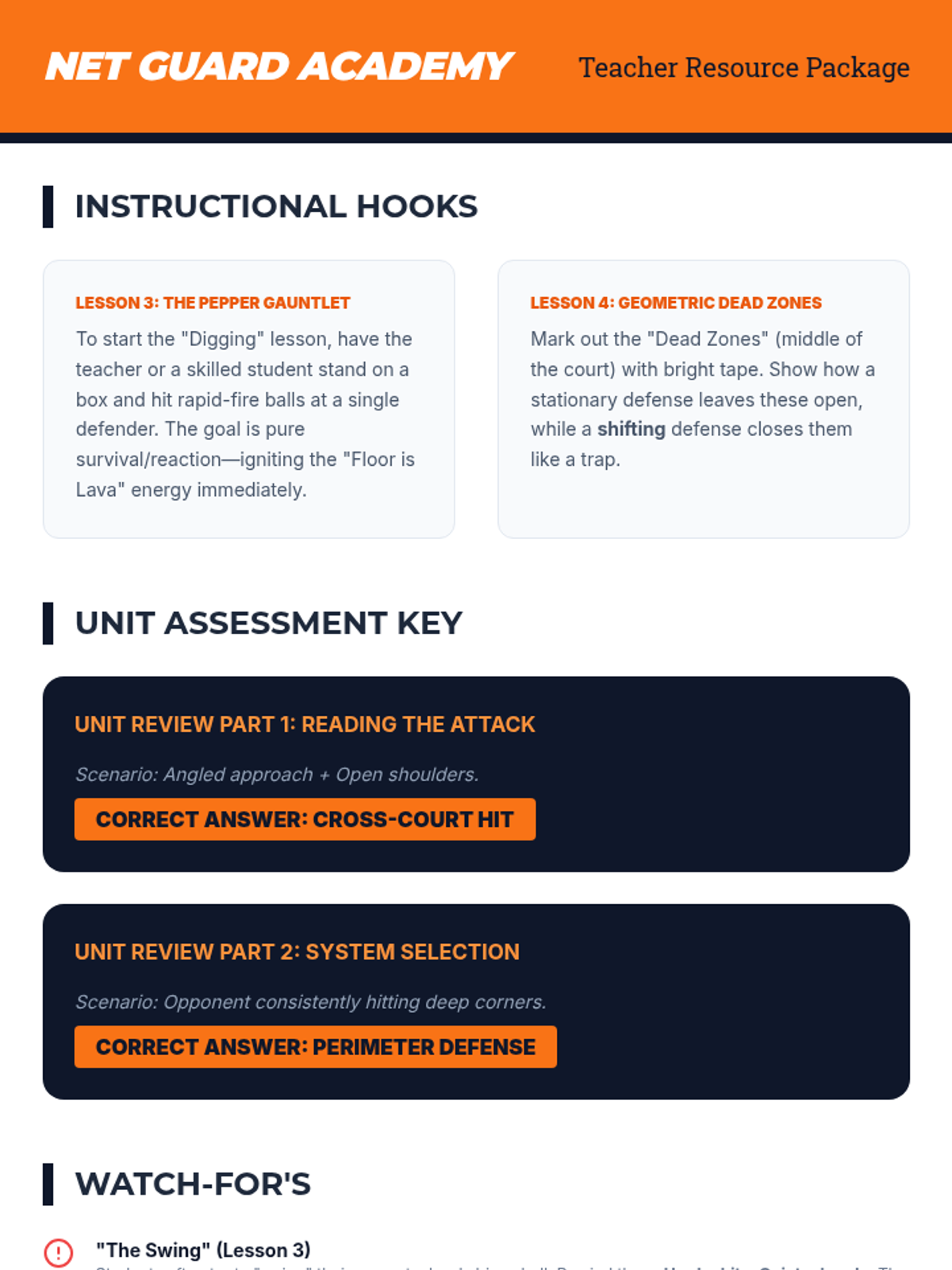
Focus shifts to the back row, teaching techniques for digging spikes that get past the block. Students practice the 'sprawl' and emergency defensive moves to keep the ball off the floor.
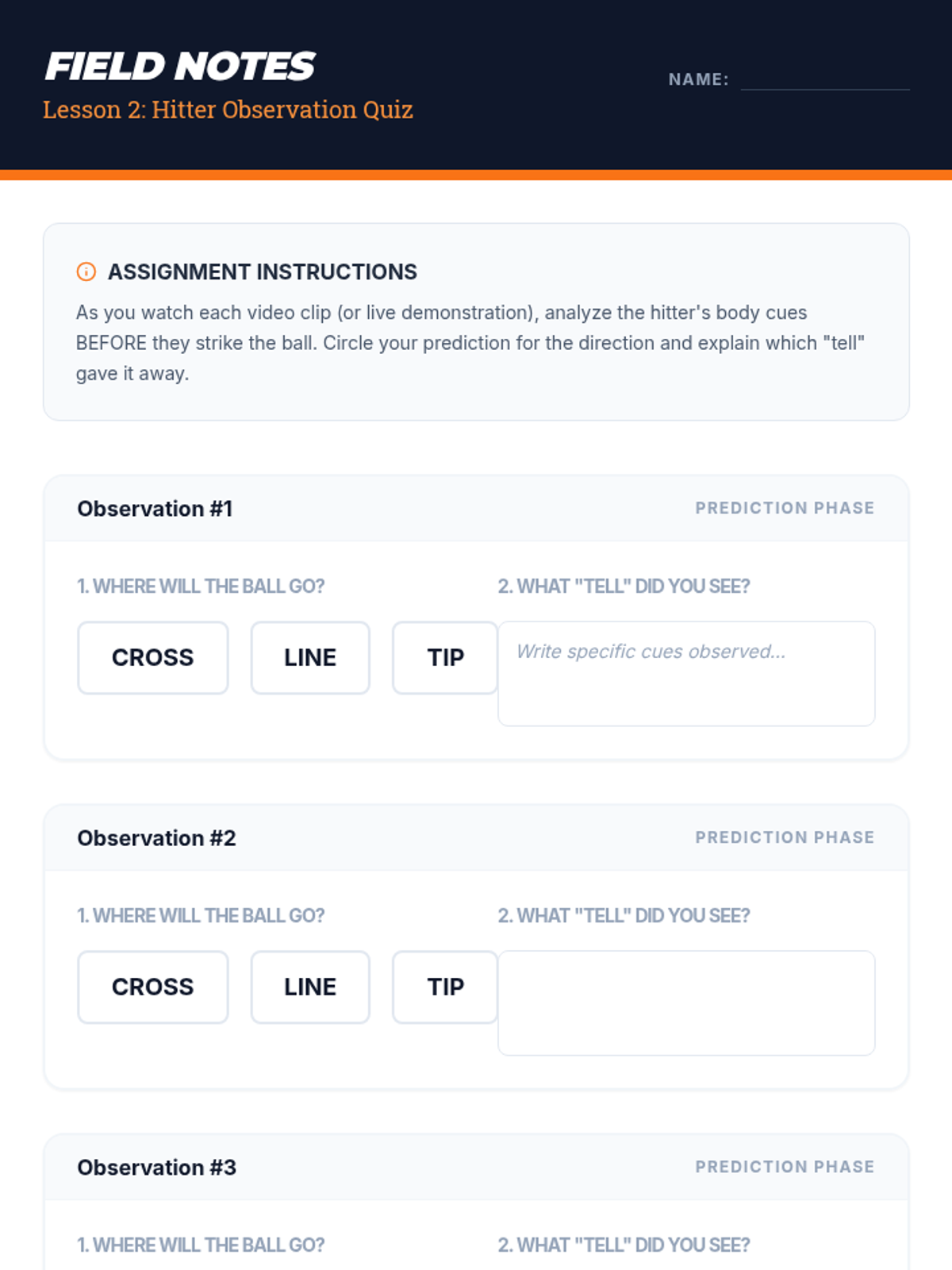
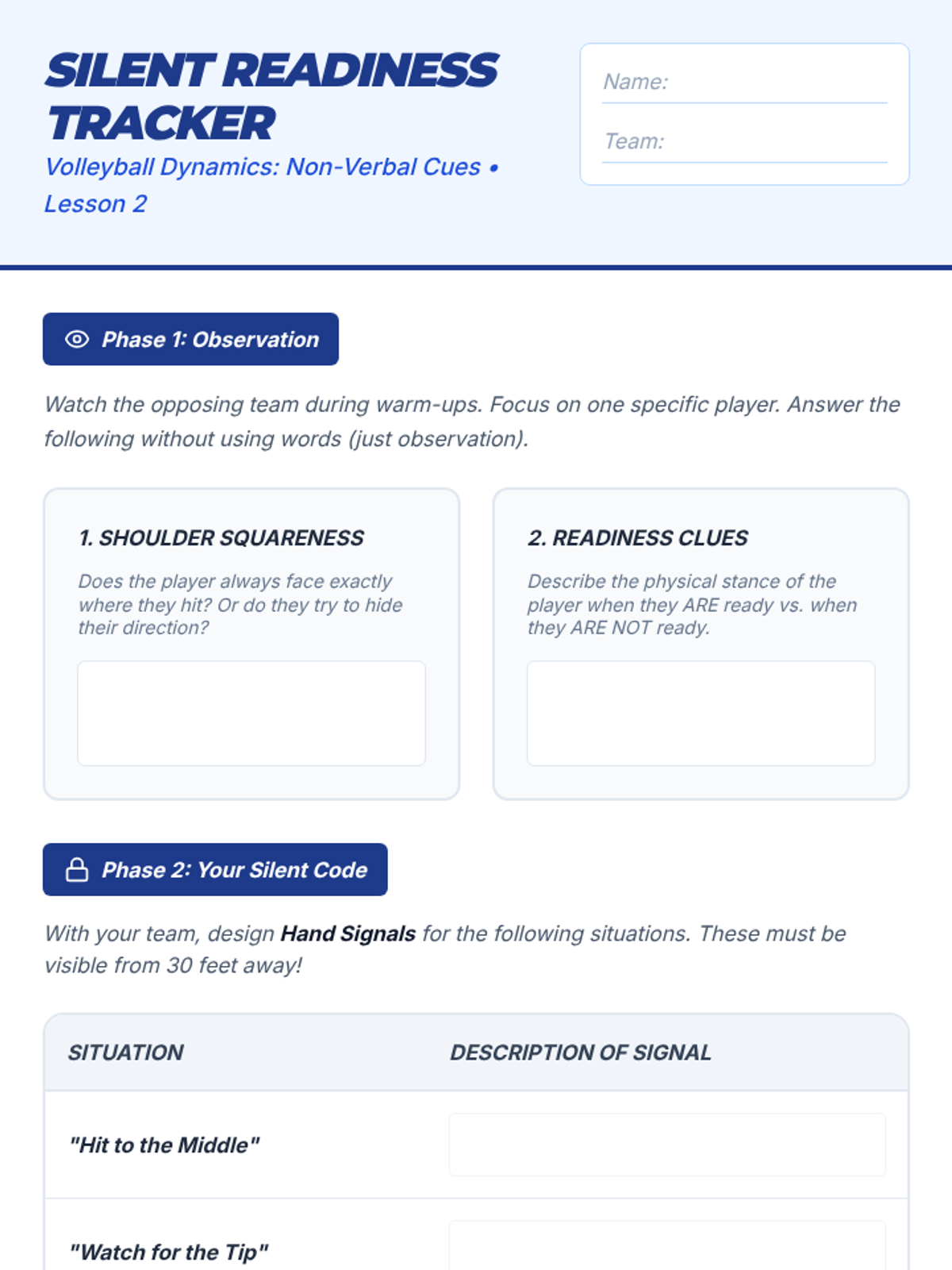
Participants engage in drills where they must observe a hitter's body language to predict the direction of the attack. Discussion focuses on visual cues like shoulder rotation and approach angle.
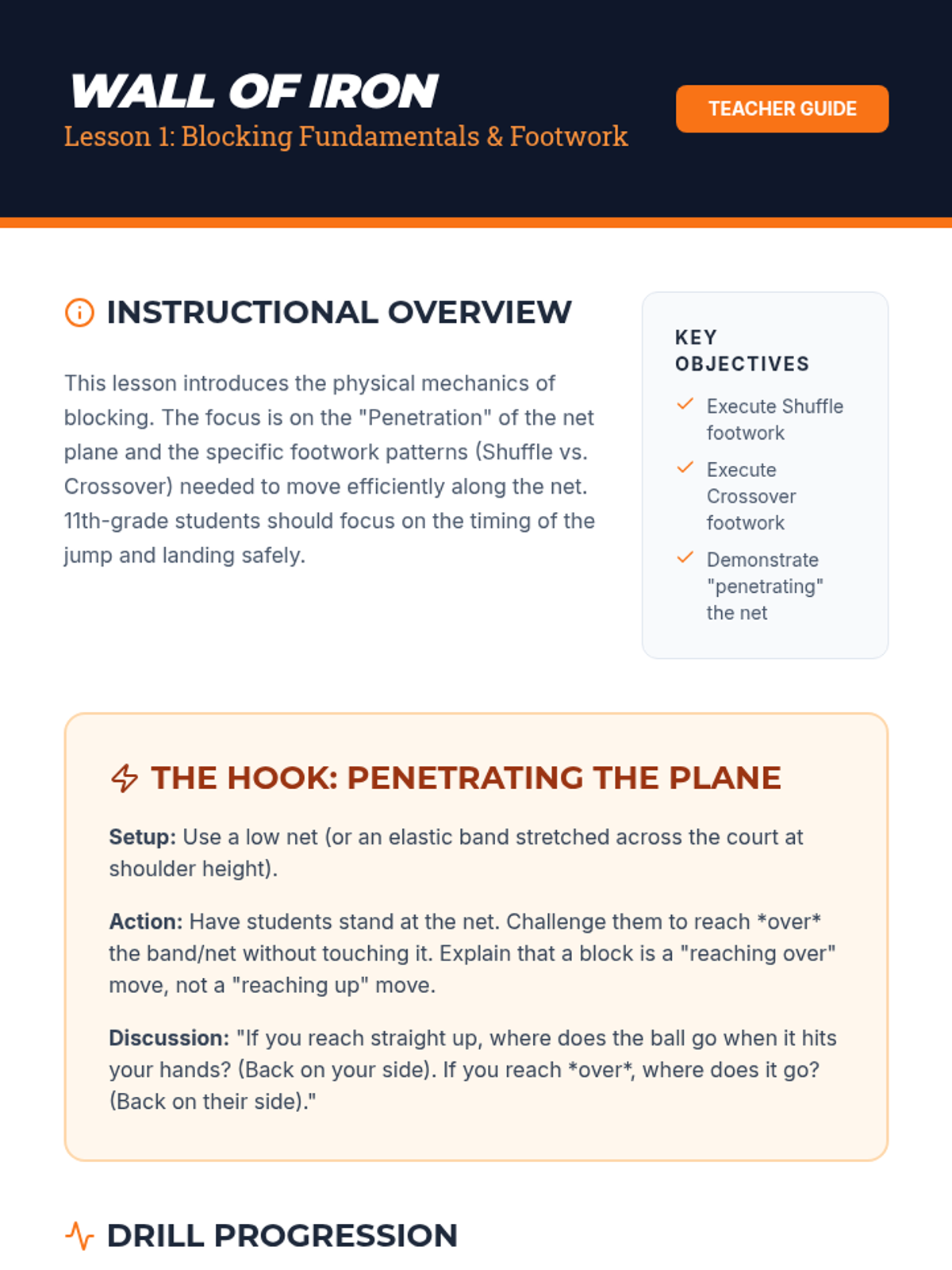
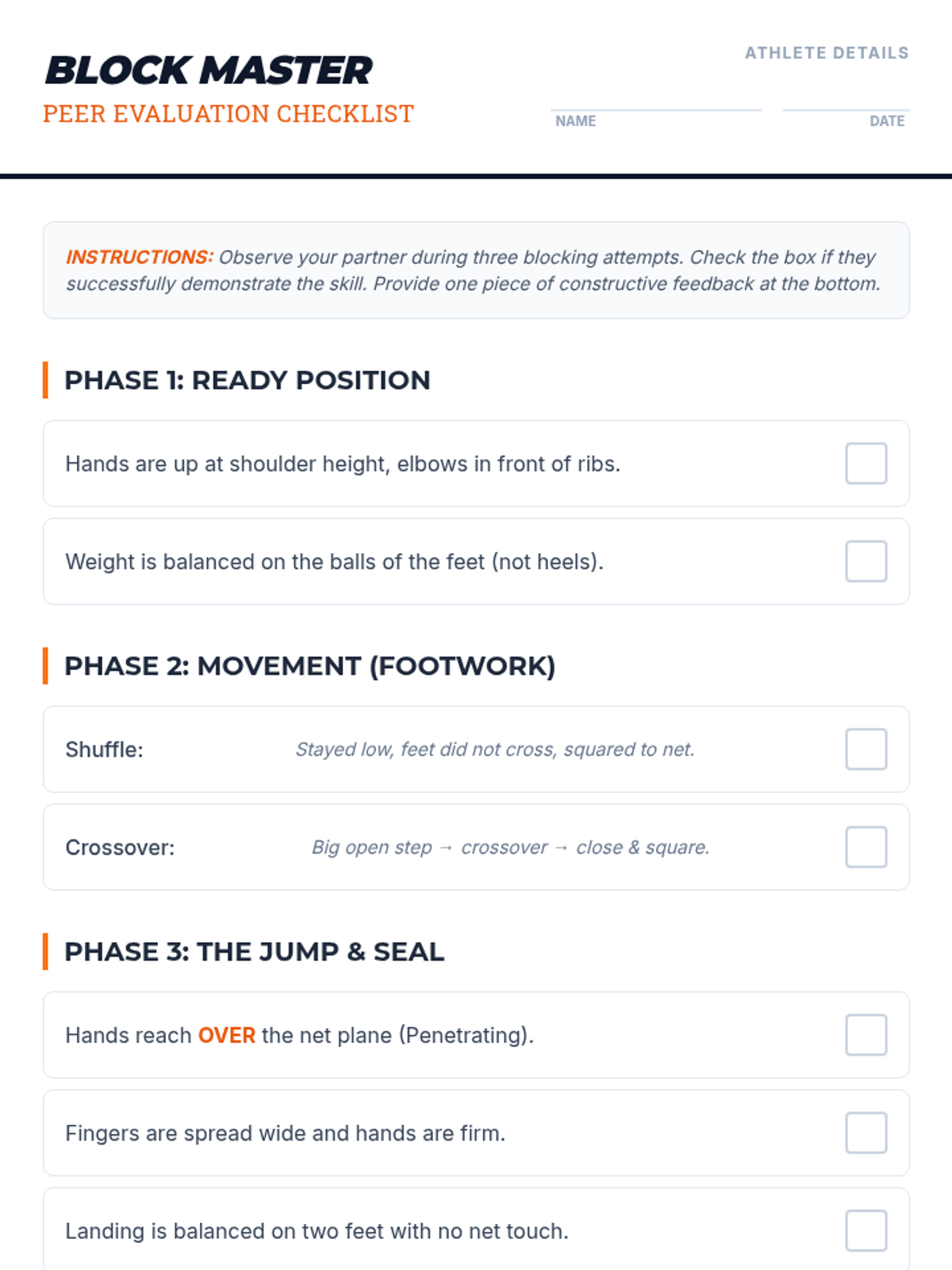
Students practice the footwork for blocking at the net, including ready position and penetration across the plane. The lesson emphasizes timing the jump to seal the net against an attacker.
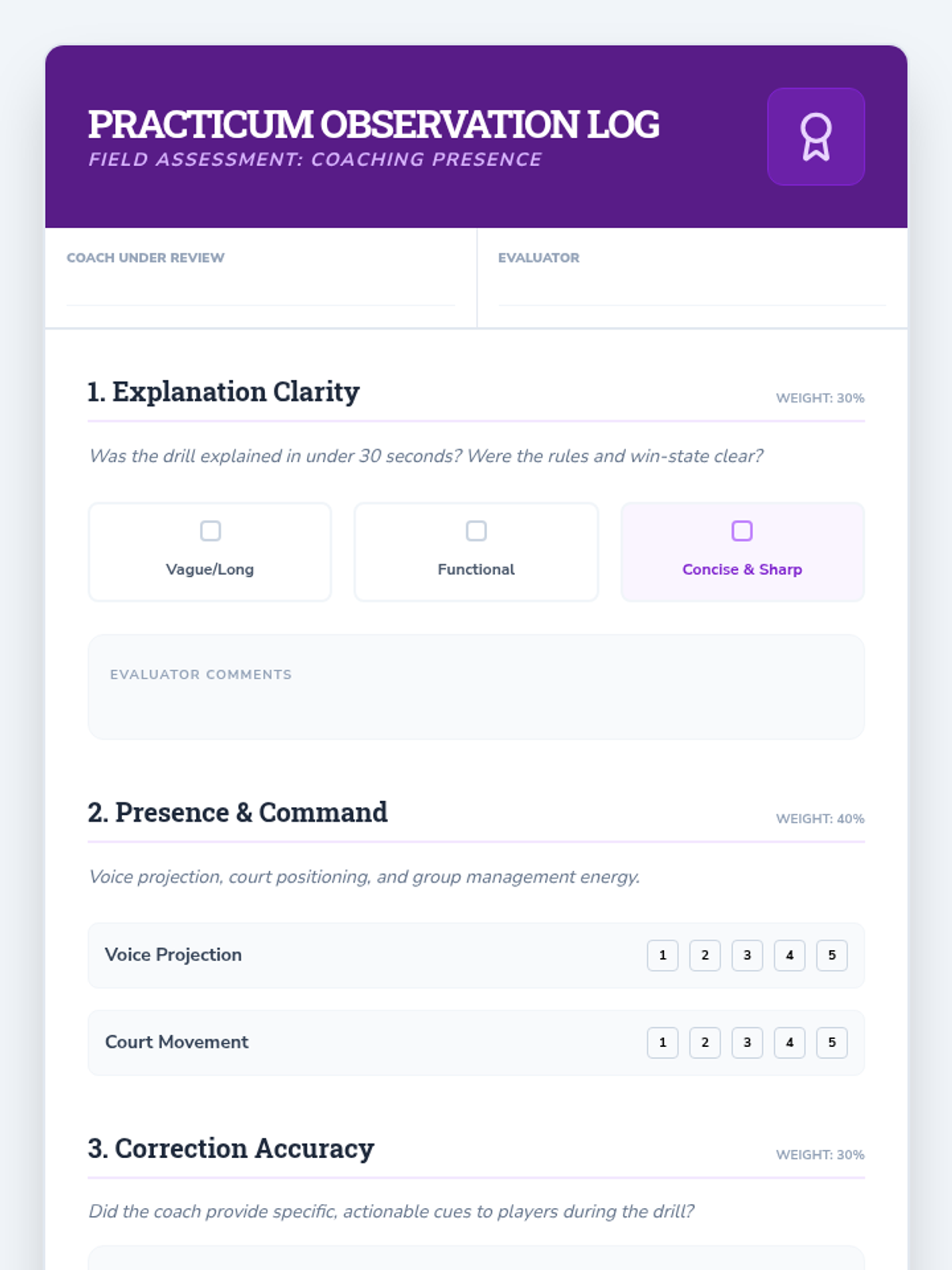
Students take turns leading small groups through the drills they designed. They are responsible for explaining the rules, managing the tempo, and offering corrections.
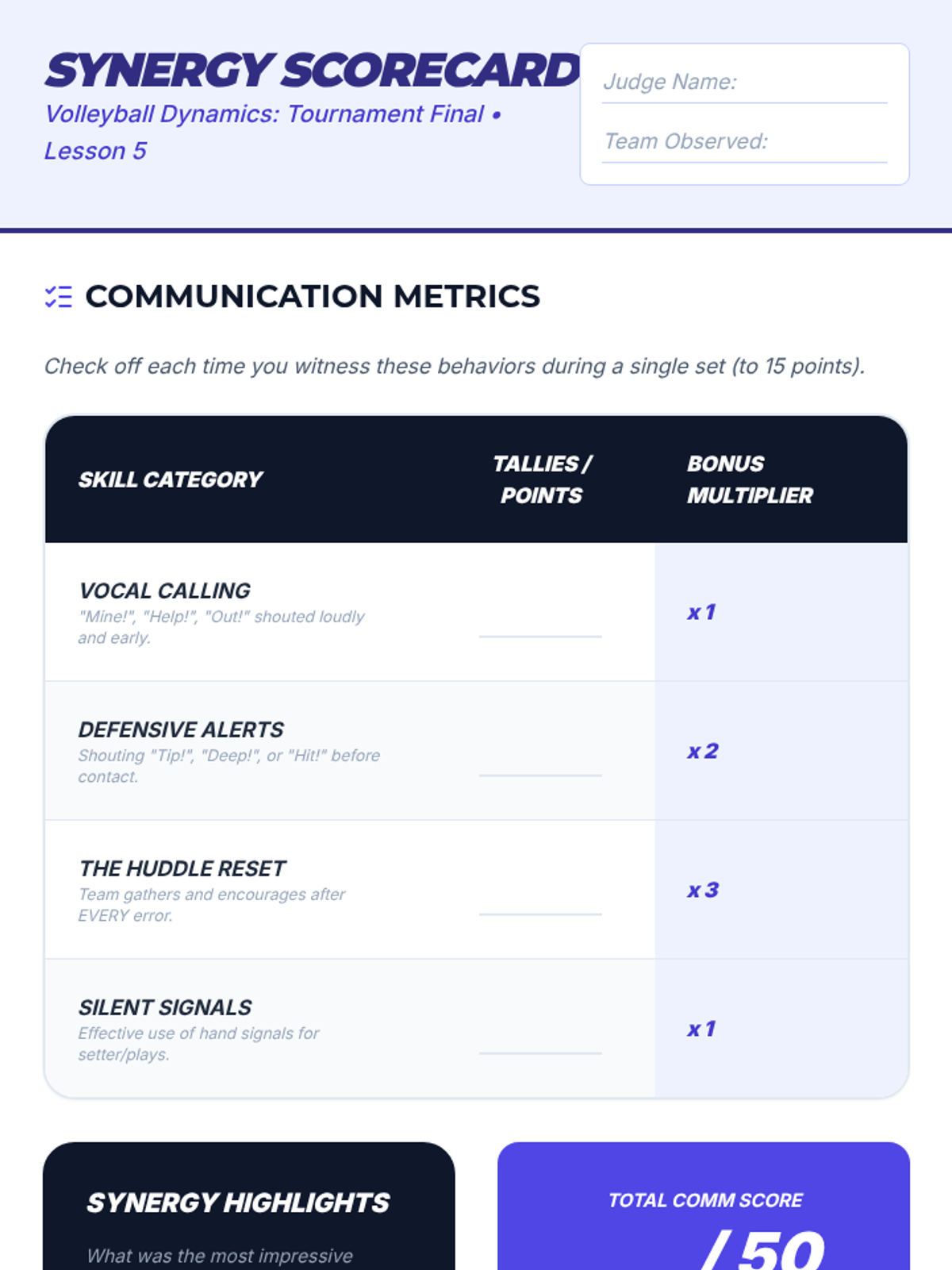
The sequence culminates in a tournament where teams are judged and scored primarily on their communication clarity and frequency. A final debrief explores how these skills transfer beyond the court.
Students are introduced to defensive formations like Perimeter and Man-Up, learning to communicate tactical switches and opponent intentions in real-time. Drills focus on reacting to the 'Quarterback's' signals.
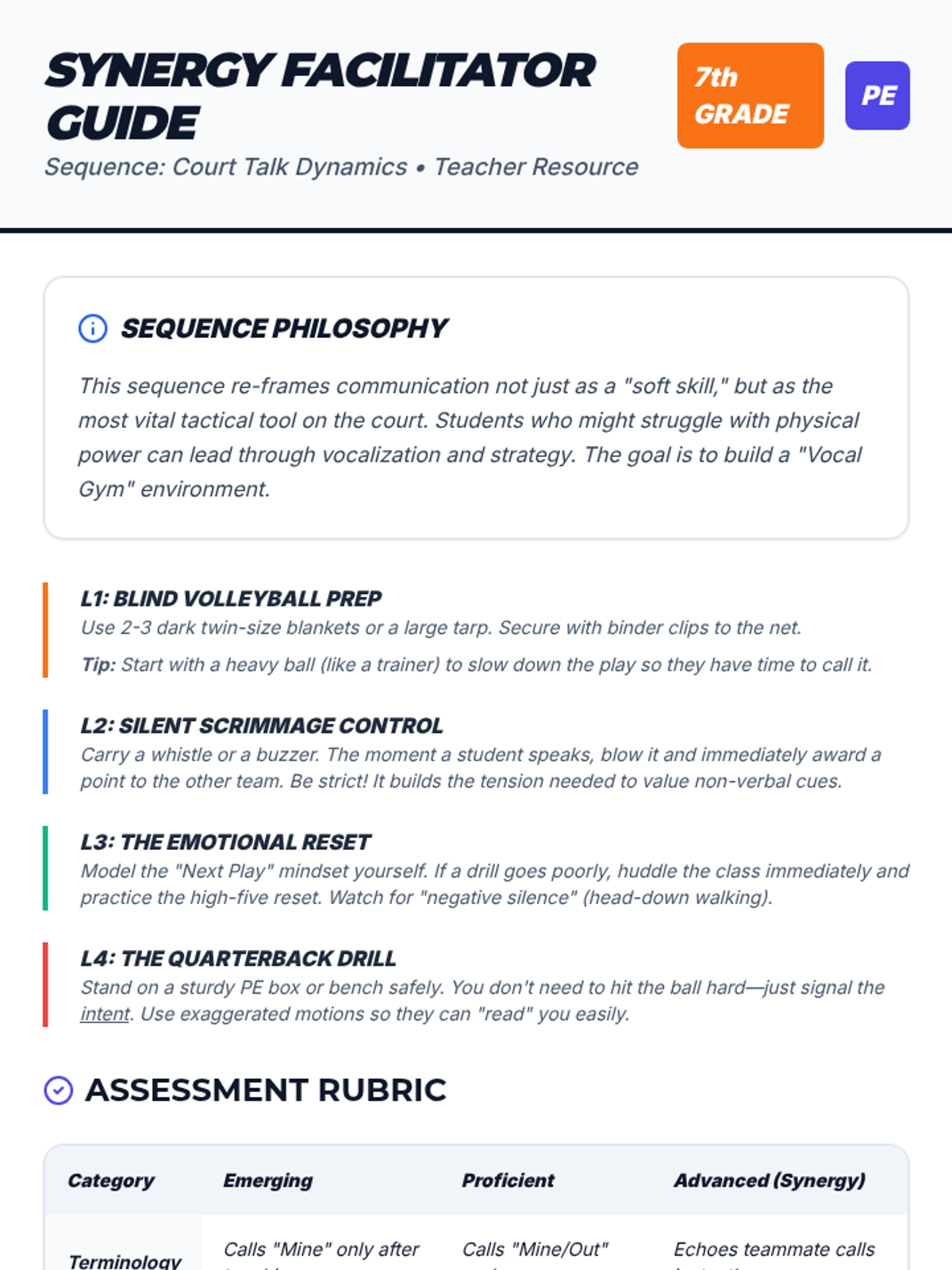
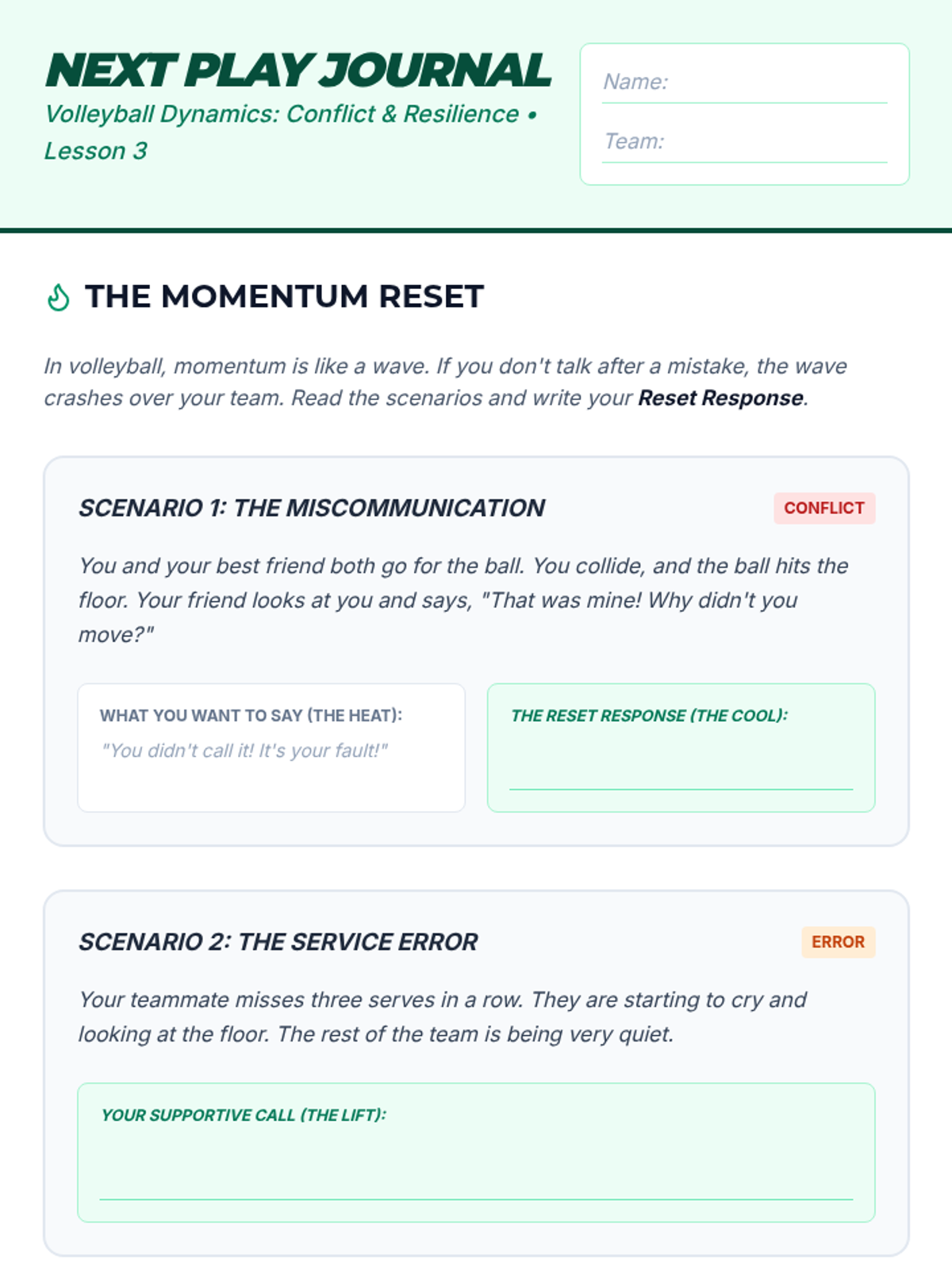
This lesson addresses the psychological side of teamwork, teaching students how to handle errors and maintain positive momentum. Students role-play conflict resolution and practice supportive reinforcement techniques.
Shifting focus to visual cues, students learn to read body language and use non-verbal signals like hand gestures and eye contact. A silent scrimmage reinforces reliance on visual readiness and anticipation.
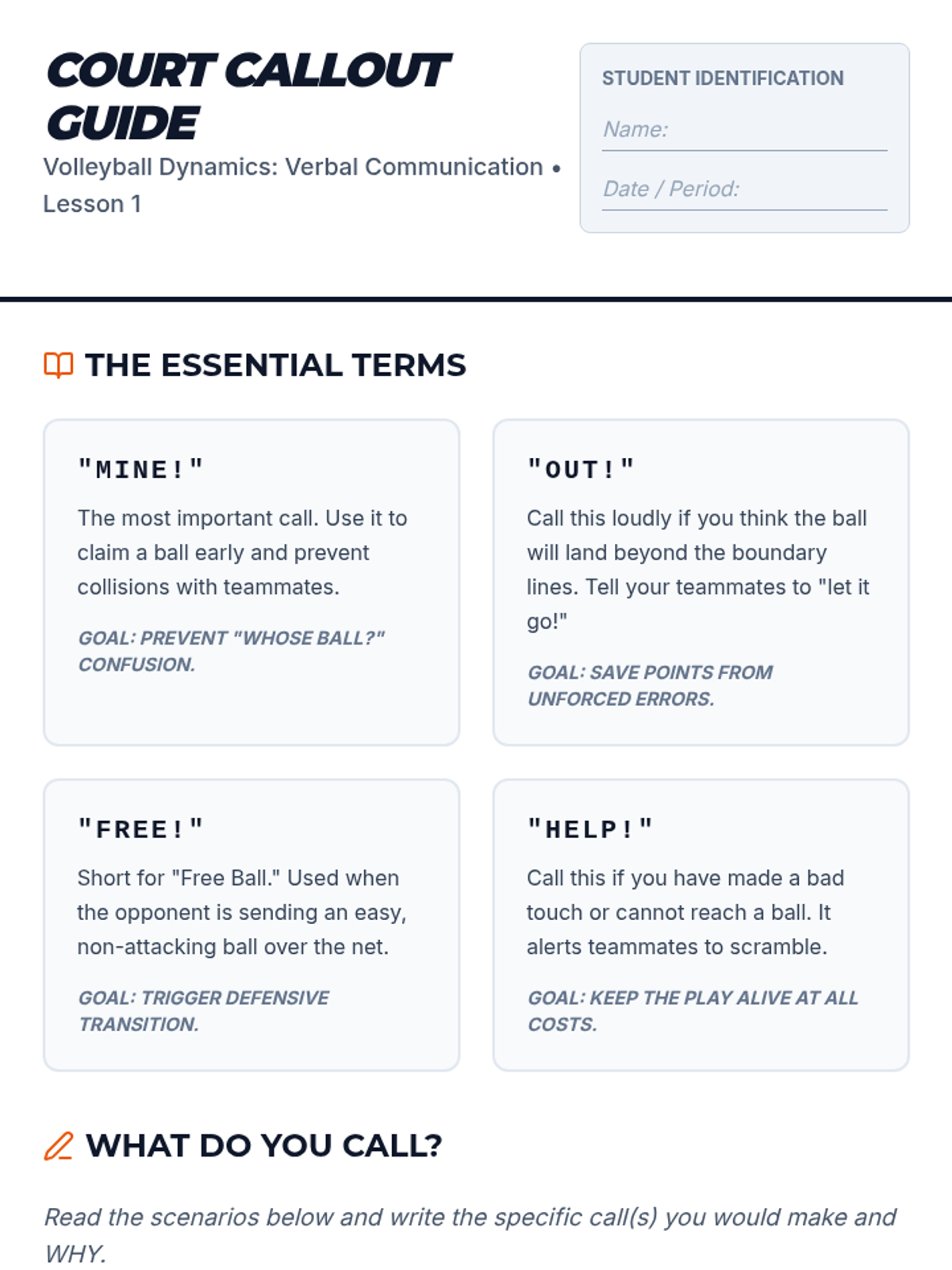
Students learn the foundational verbal terminology of volleyball (Mine, Out, Free, Help) through drills that emphasize loud, early communication. The lesson features the 'Blind Volleyball' hook to demonstrate the necessity of vocalizing ball movement.
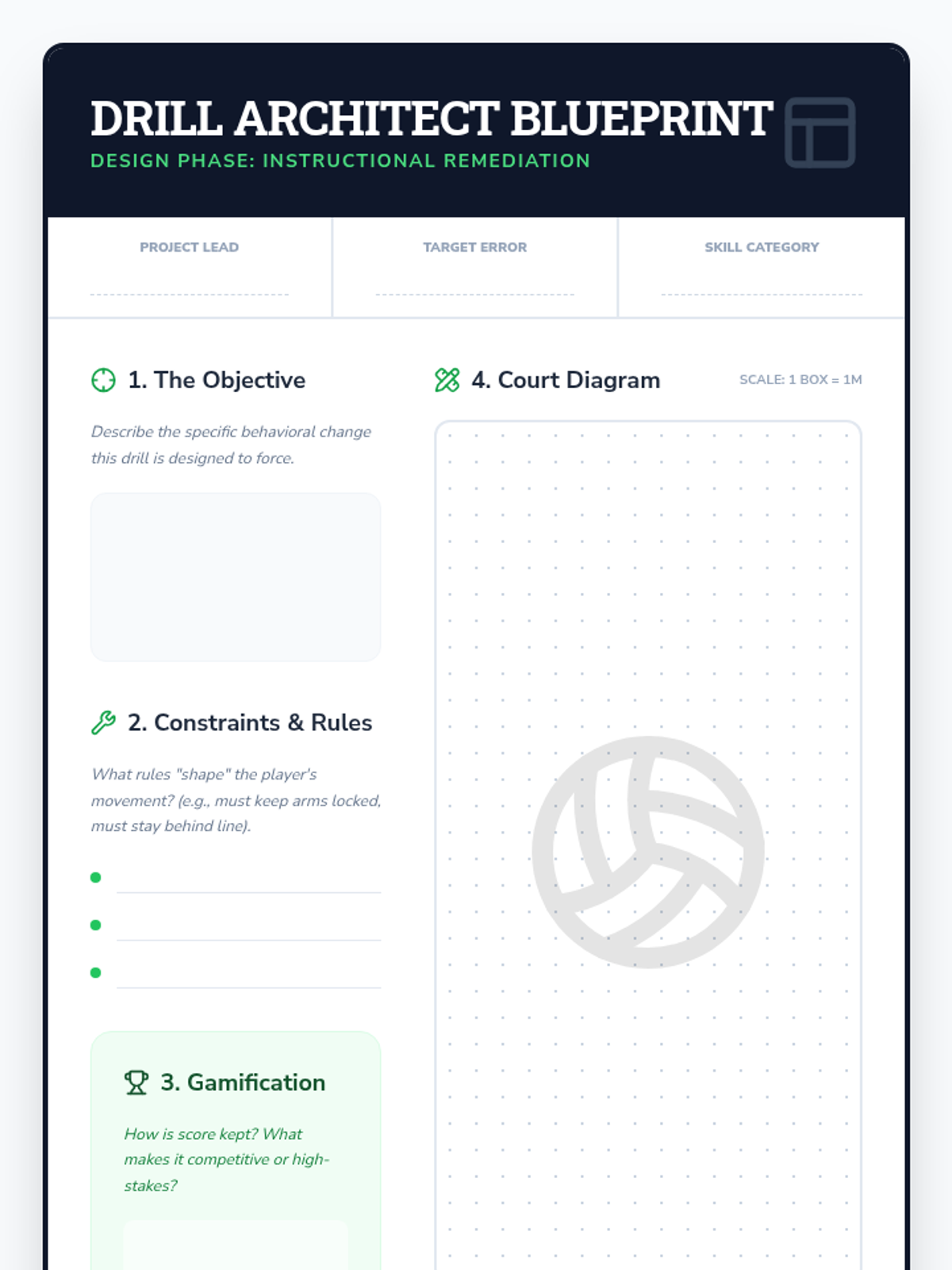
Students learn the components of a good drill: objective, constraints, and measurement. They design a unique drill to address a specific common error.
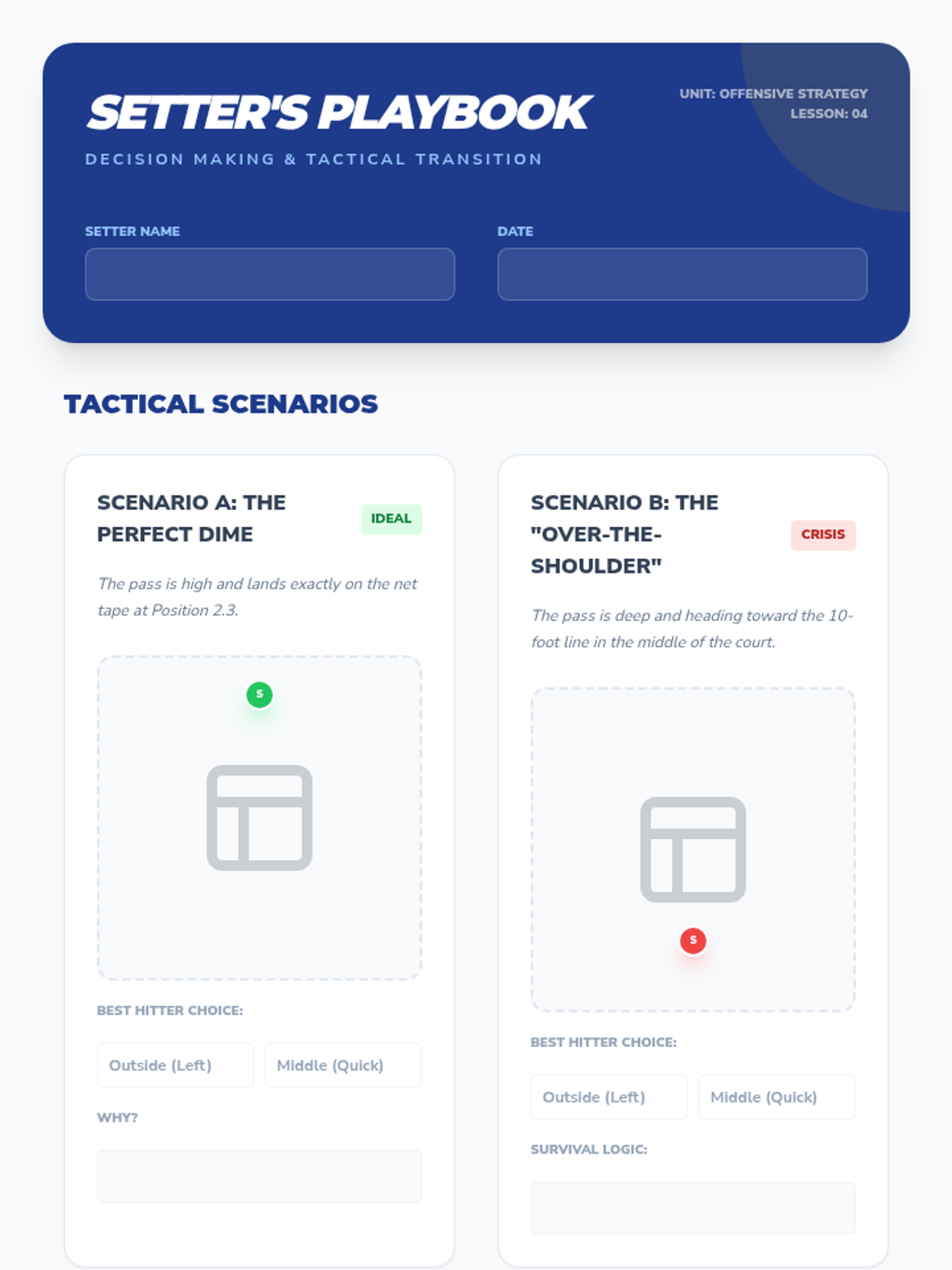
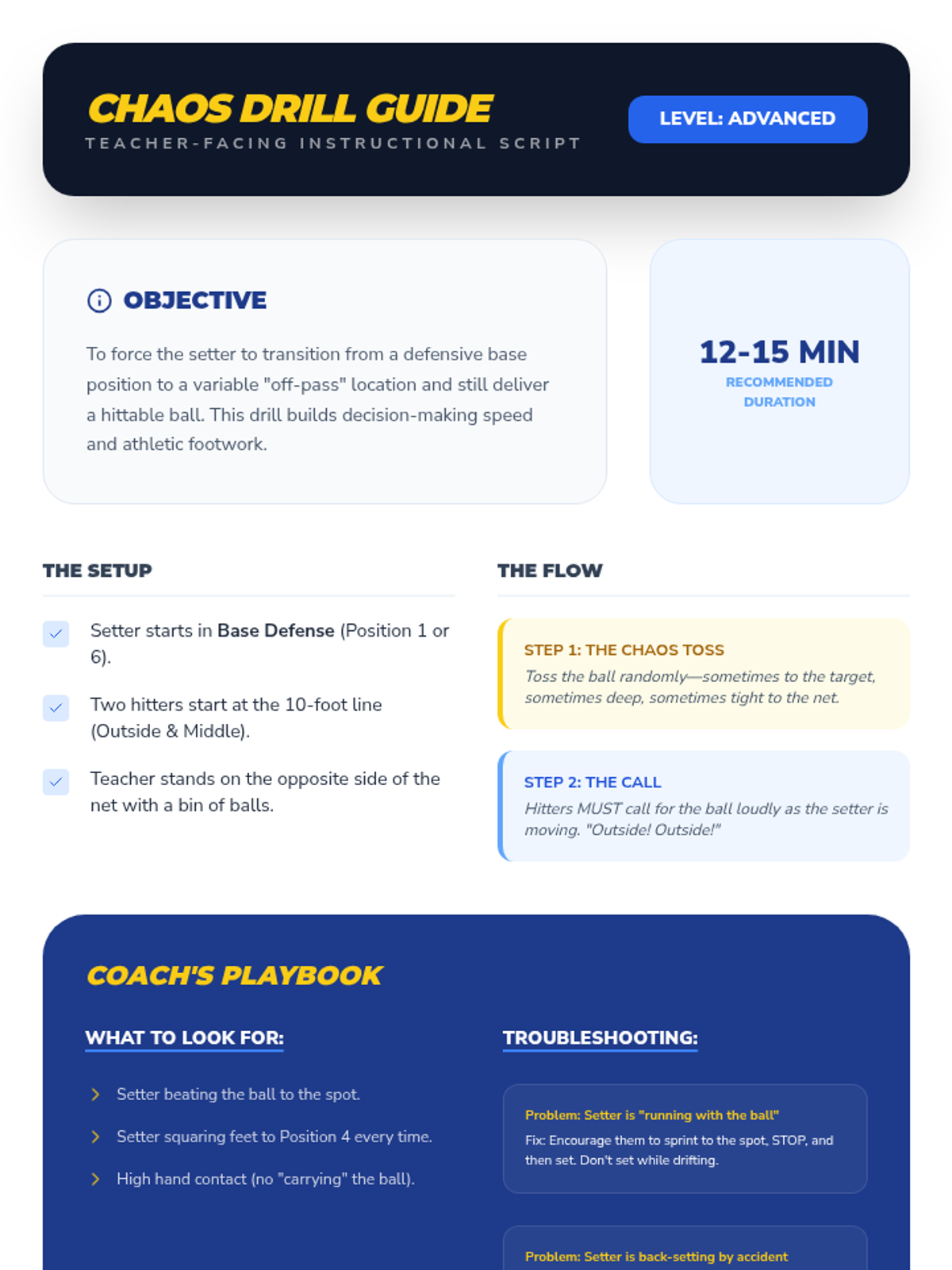
Students explore the role of the setter in transitioning from defense to offense. The lesson covers moving from the base position to the net and choosing which hitter to set. Drills simulate game-like chaos where the setter must locate the ball and deliver a hittable set.
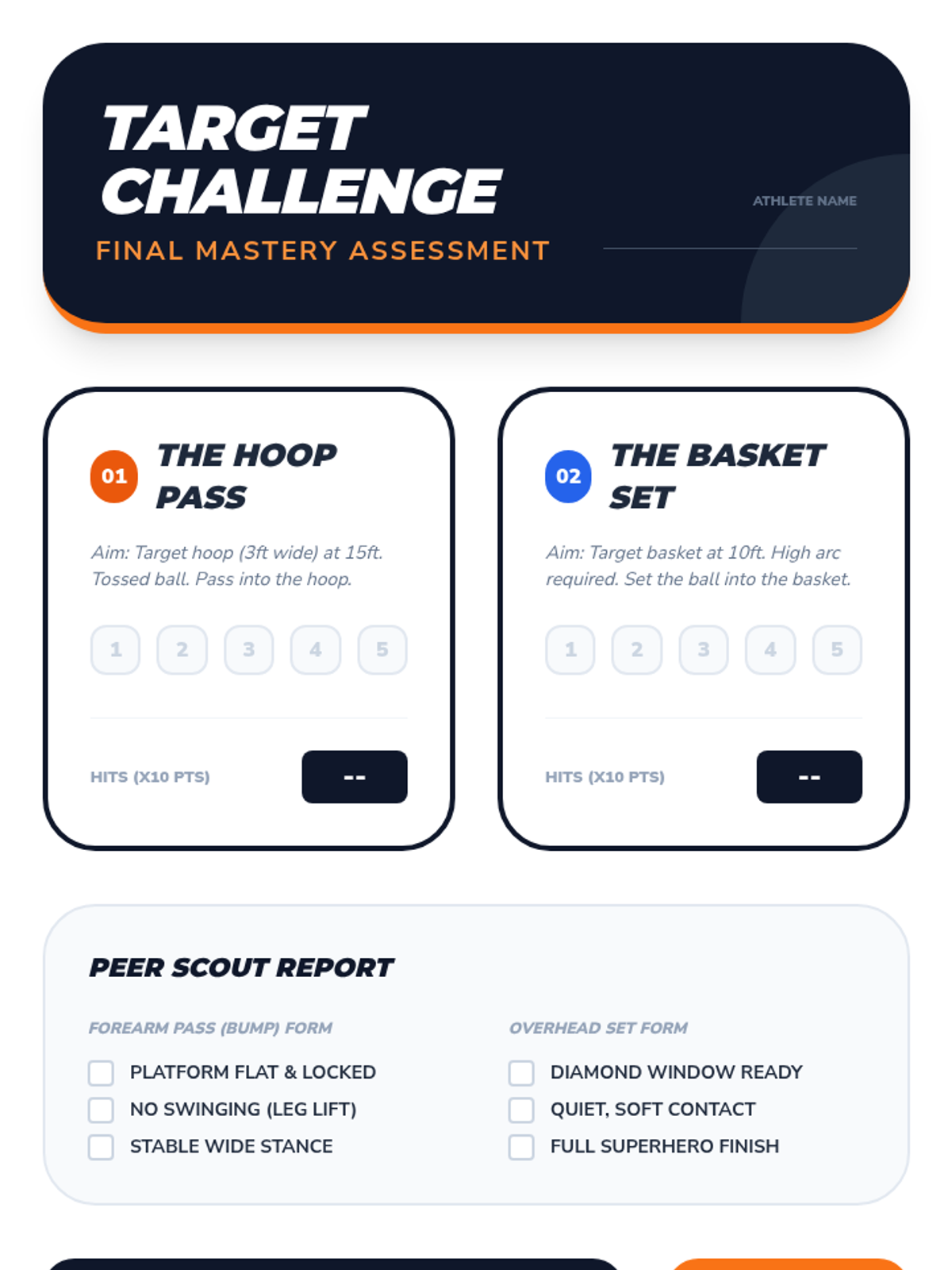
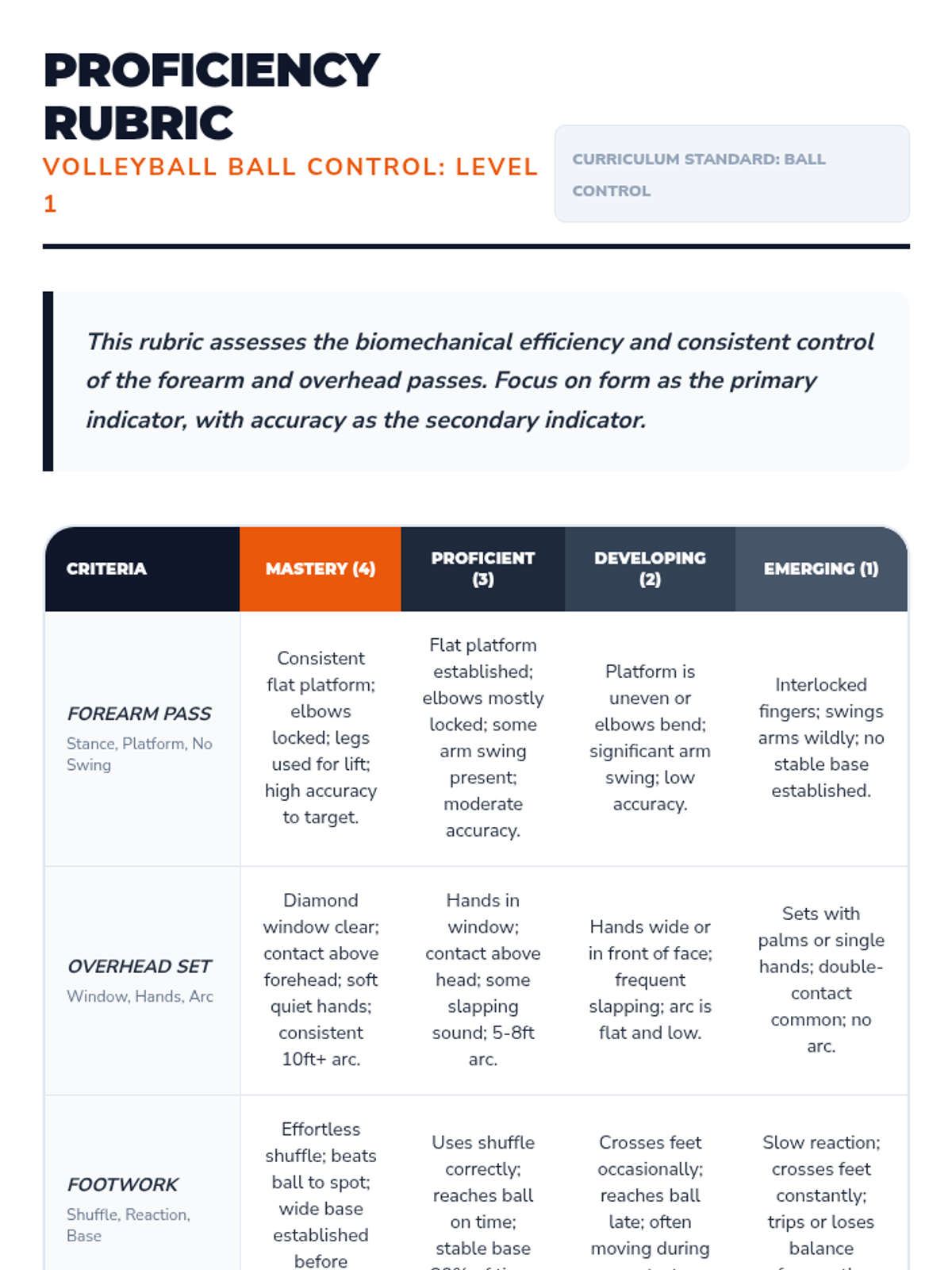
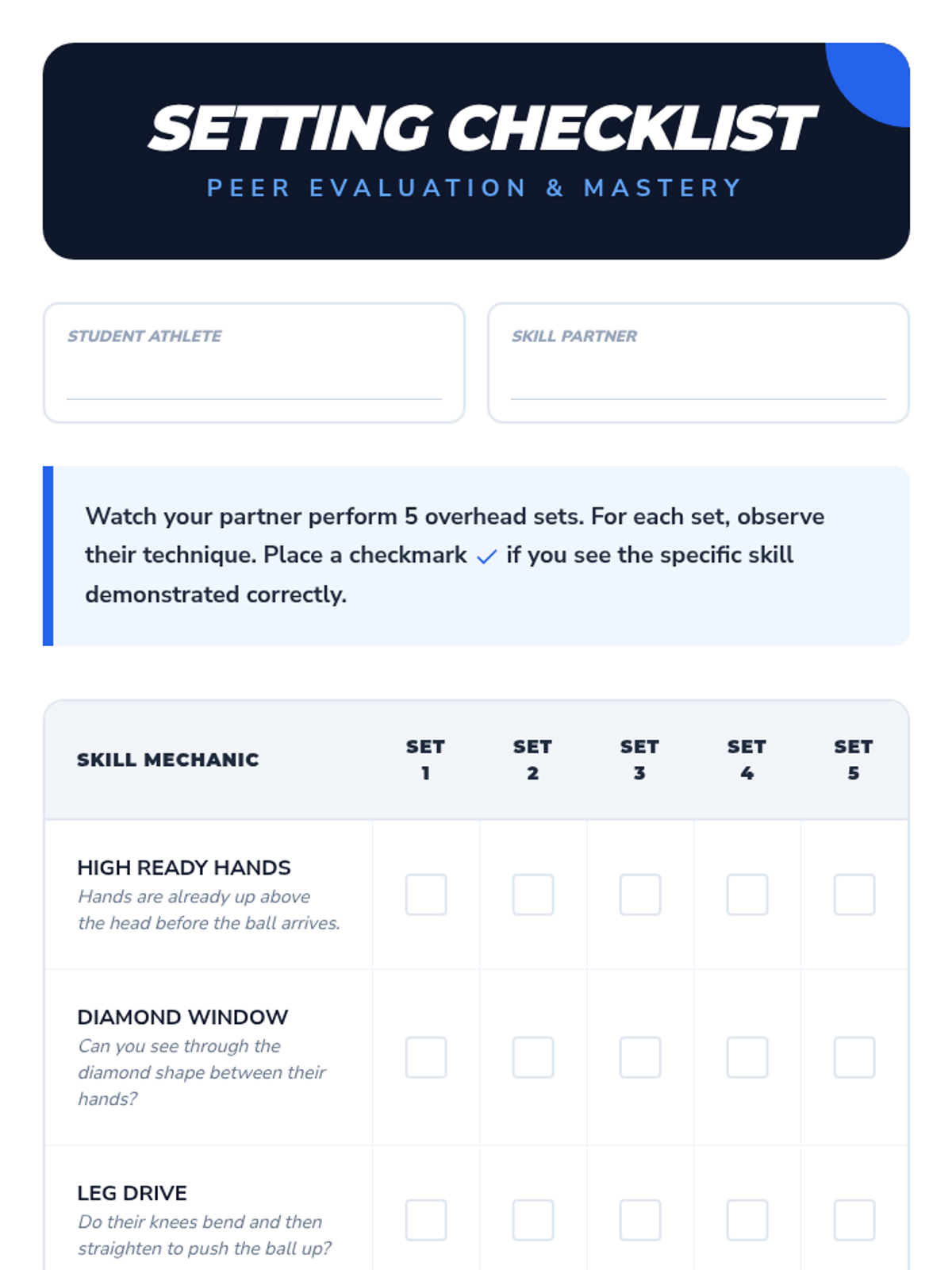
A final assessment where students demonstrate mastery through target-based challenges and peer evaluation.
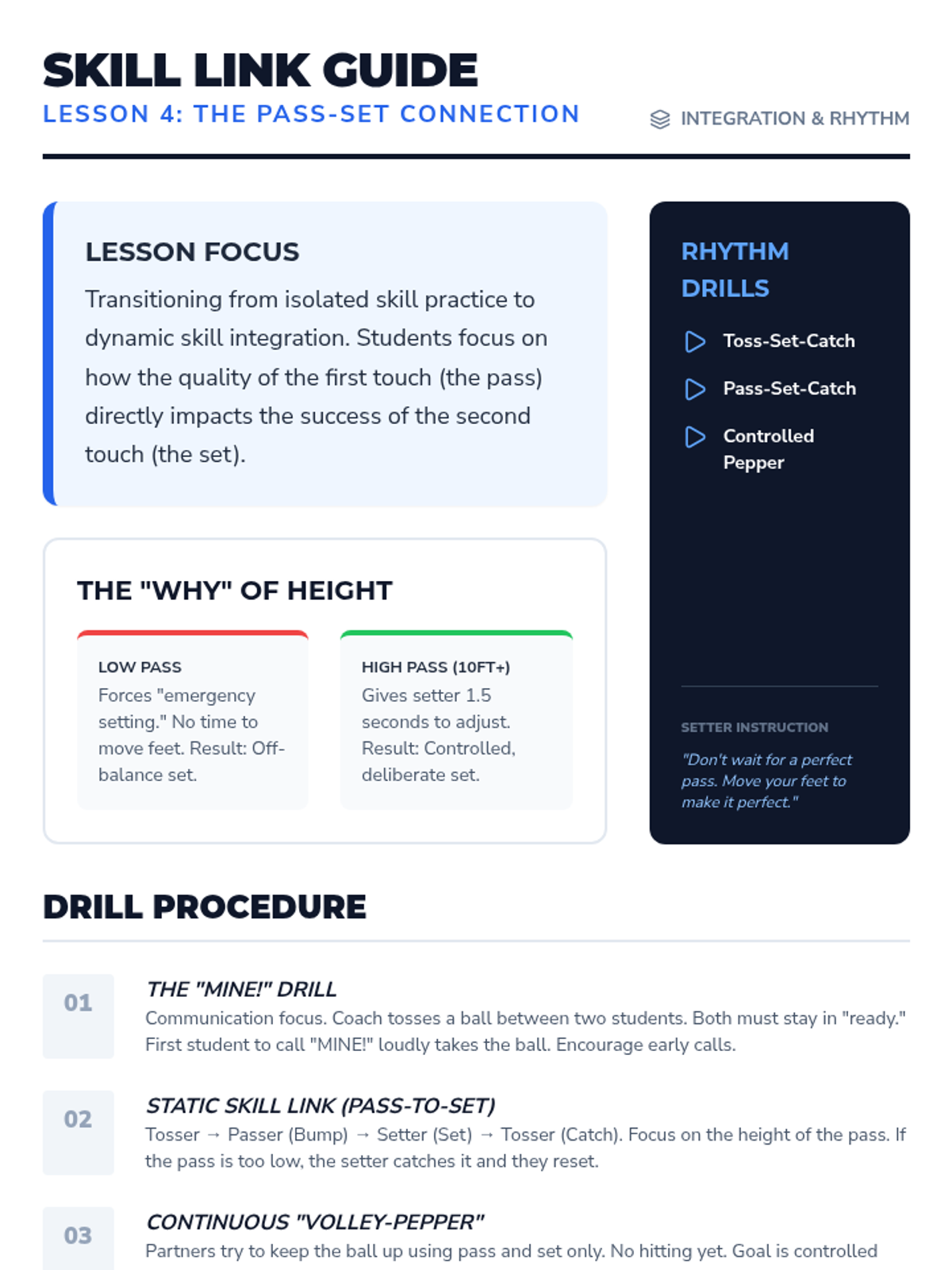
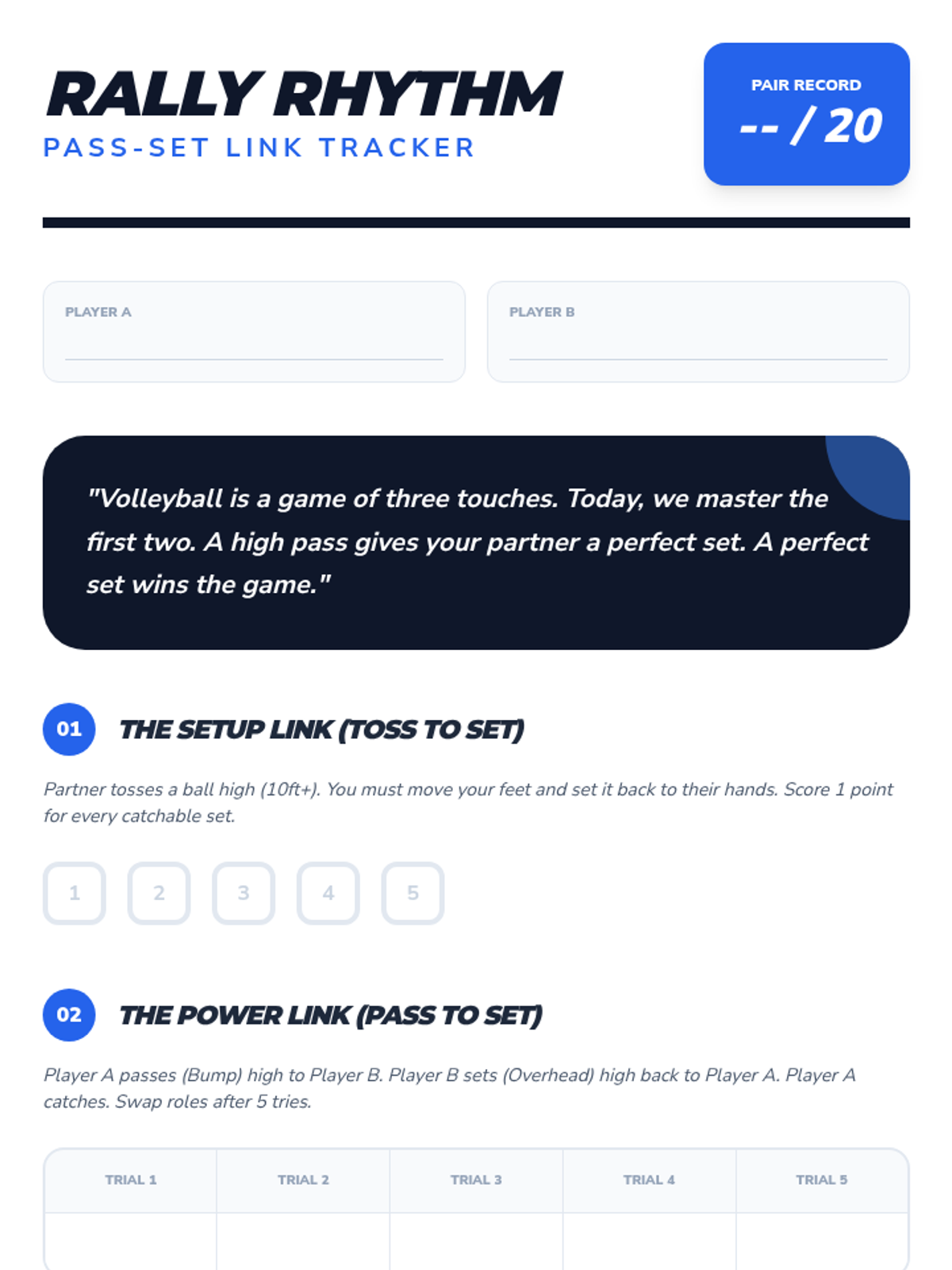
Combines passing and setting skills to practice transitions and rhythm through pepper drills and controlled rallying.
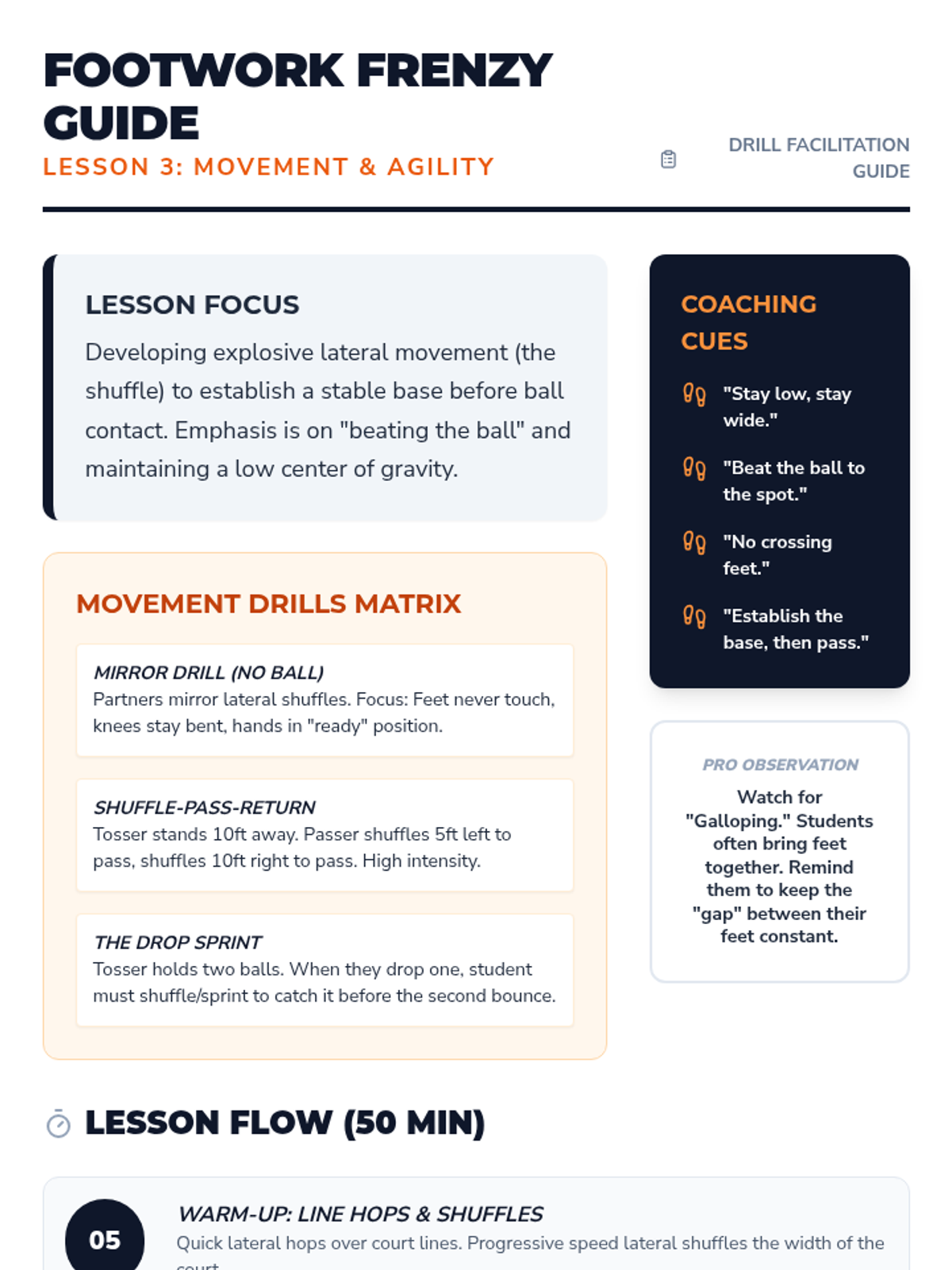
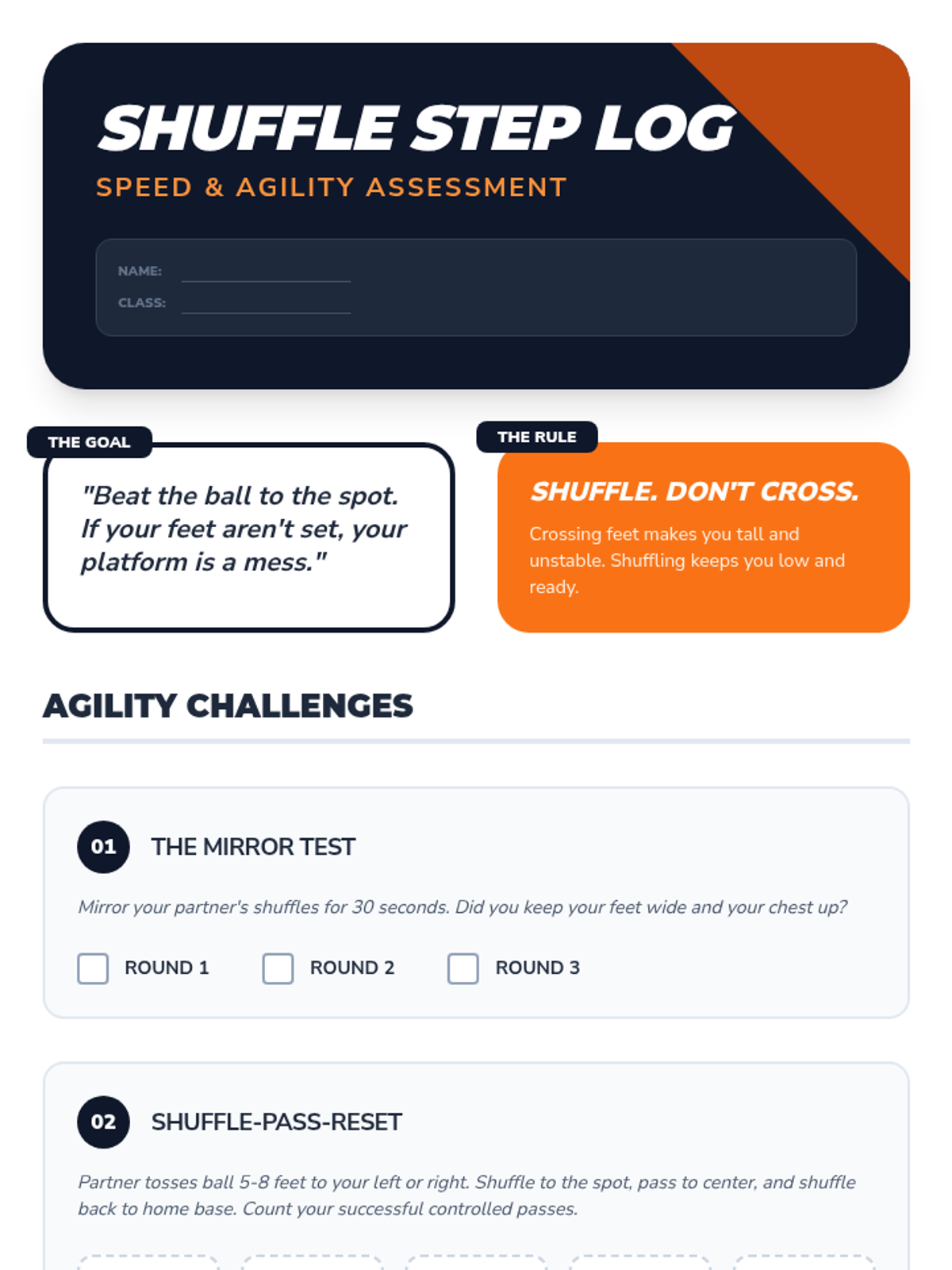
Integrates movement with passing skills, teaching students to shuffle to maintain stability and beat the ball to the spot.
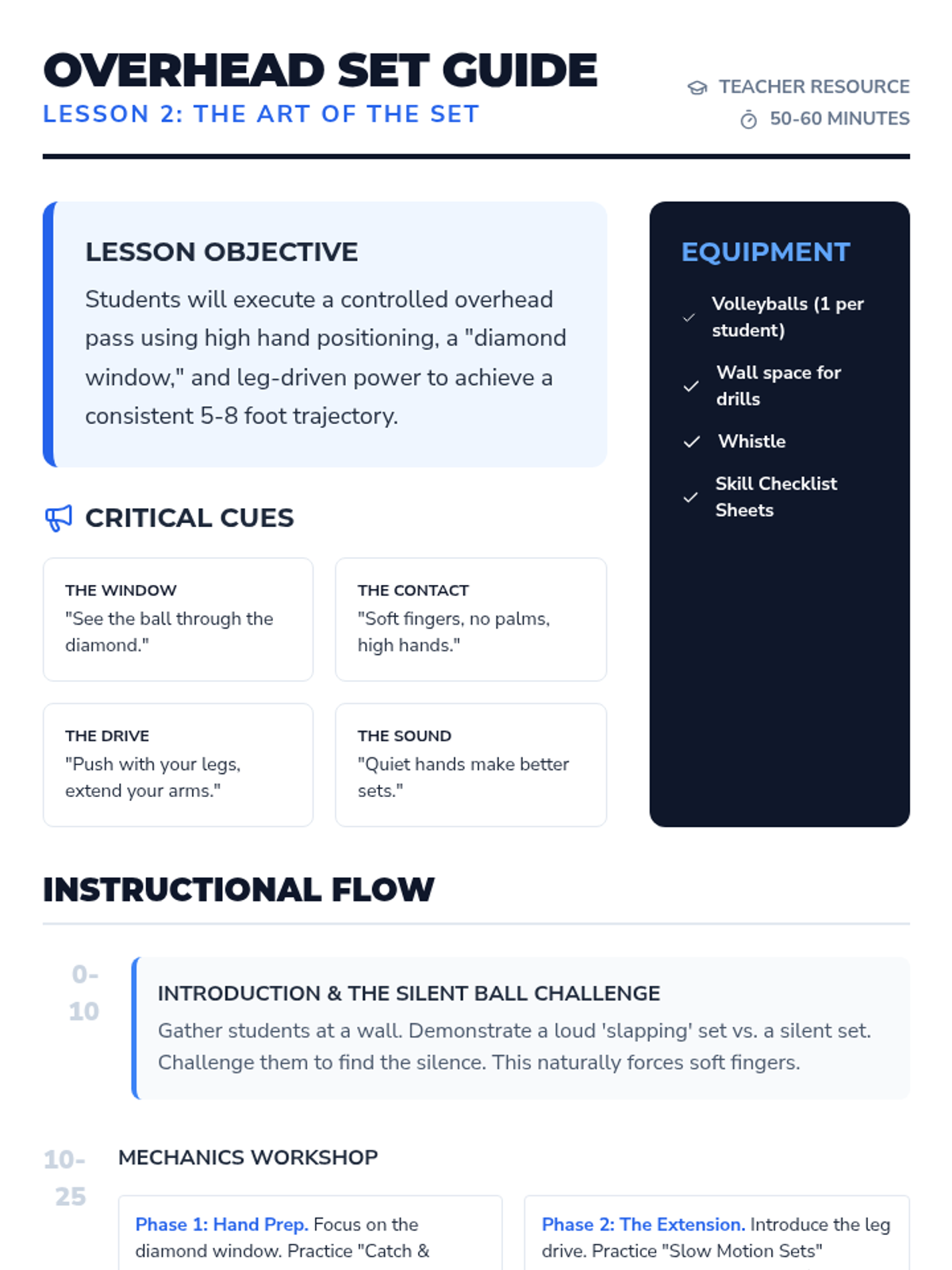
Focuses on the overhead pass, emphasizing hand positioning and using legs for power through a series of catching and setting drills.
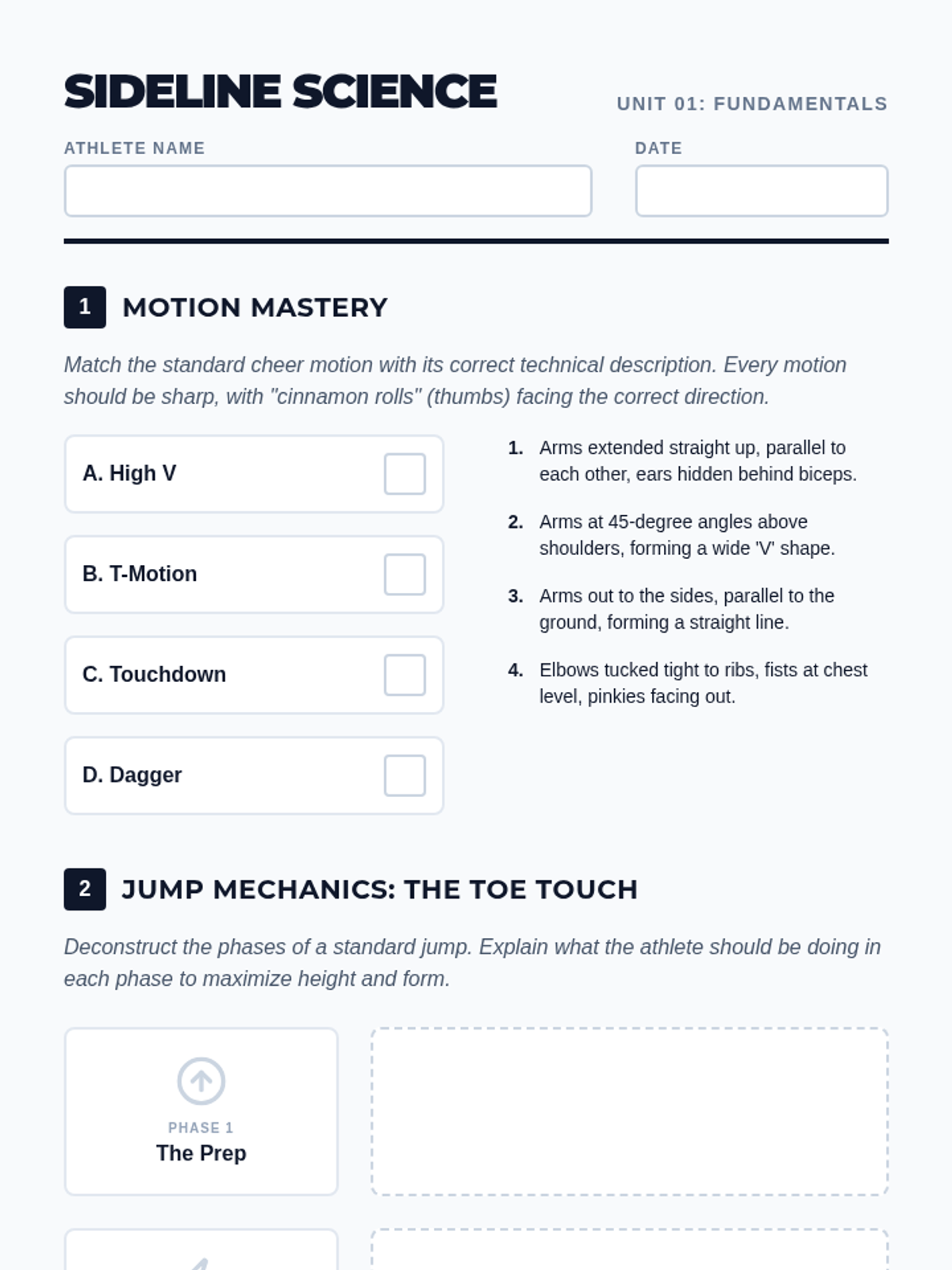
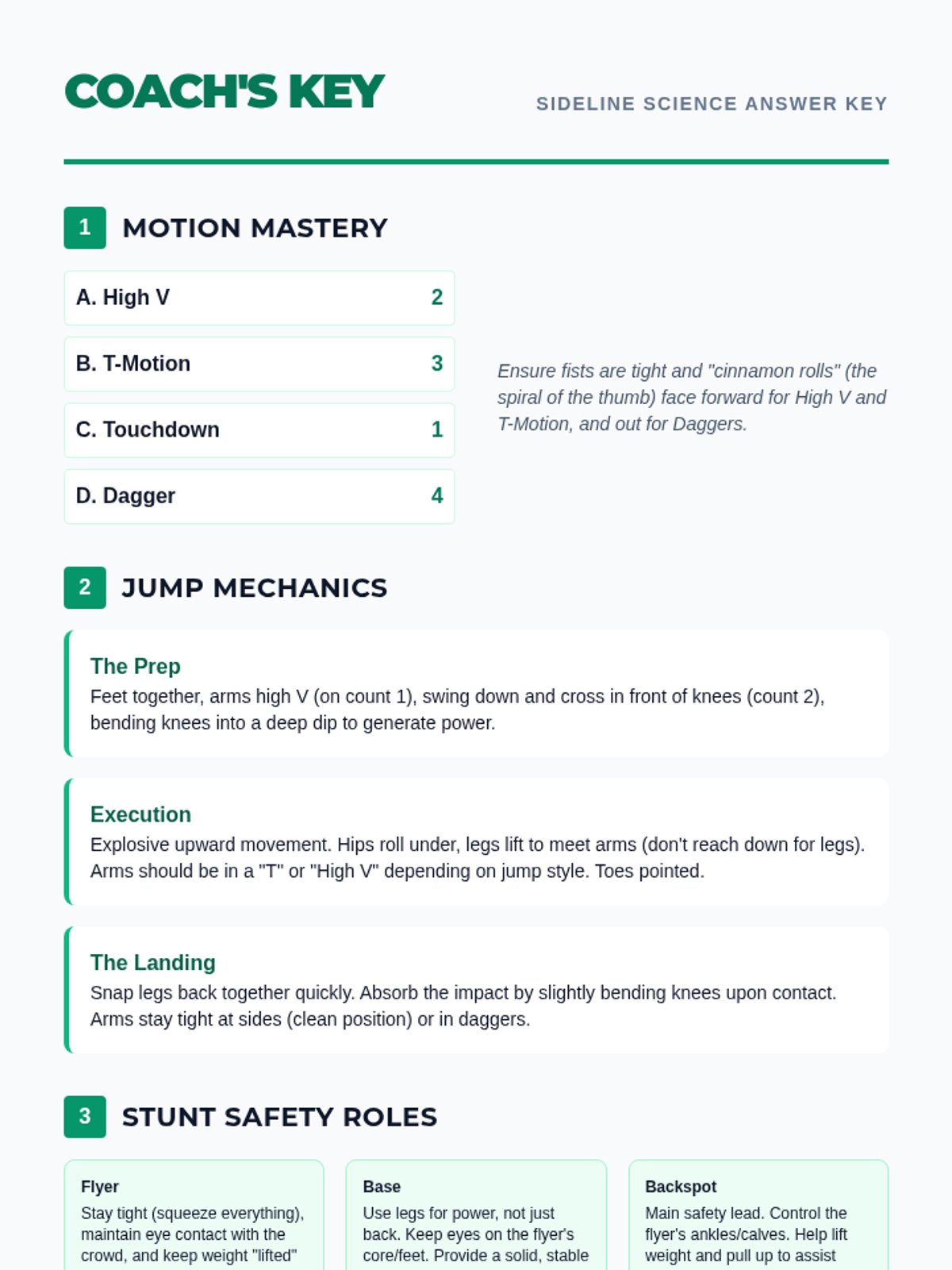
A comprehensive introduction to the fundamentals of high school cheerleading, covering terminology, motion technique, and safety protocols.
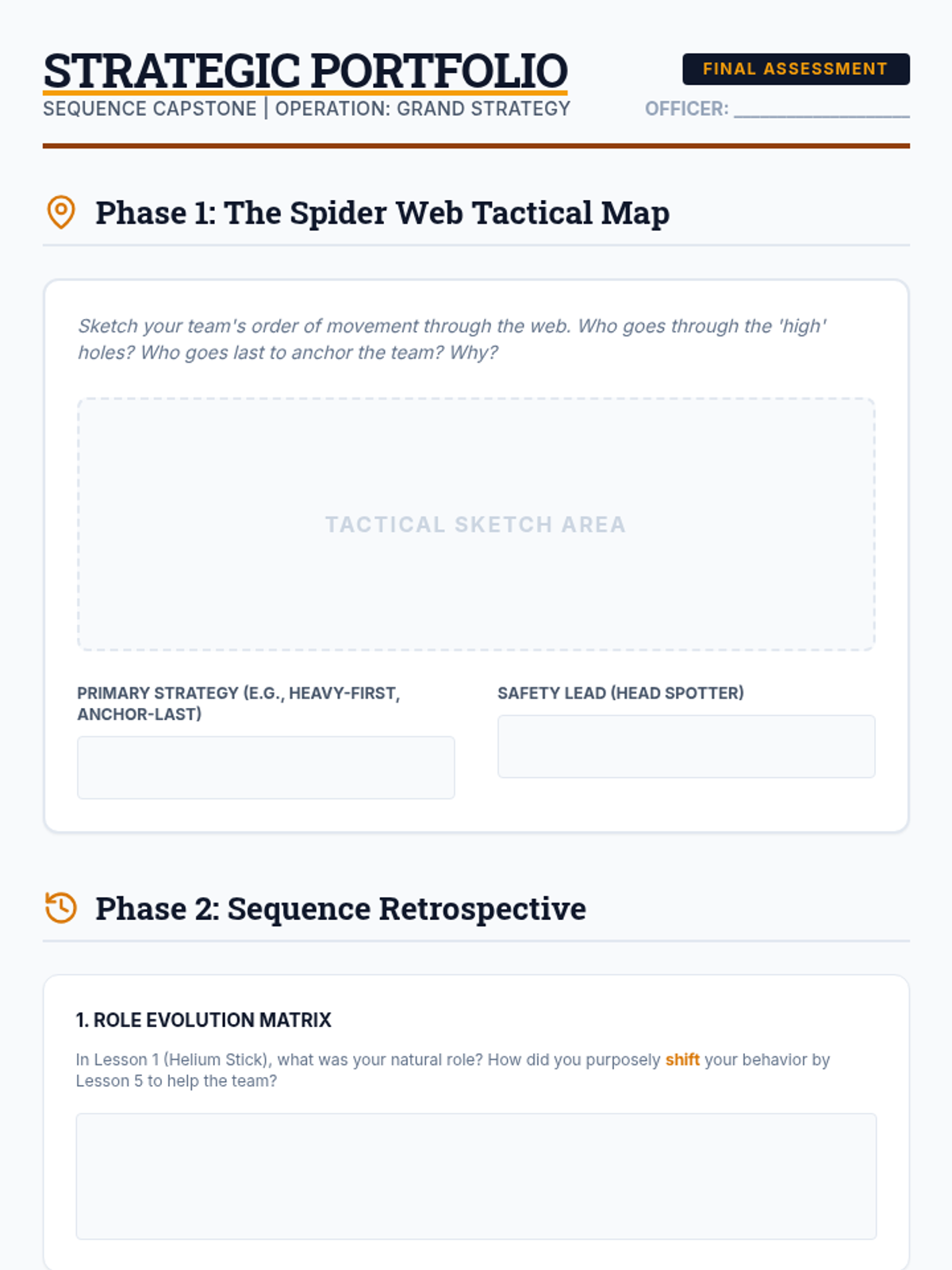
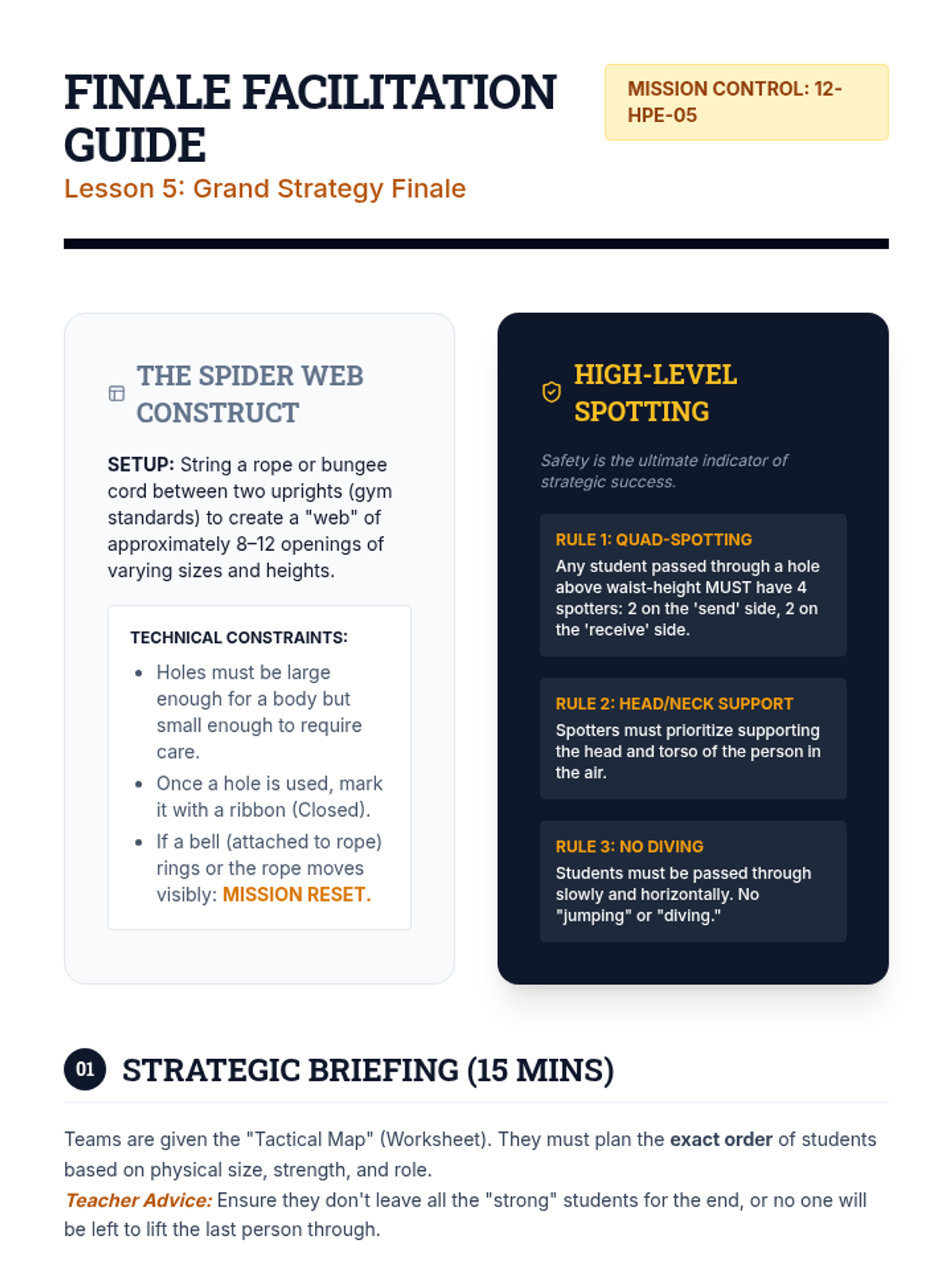
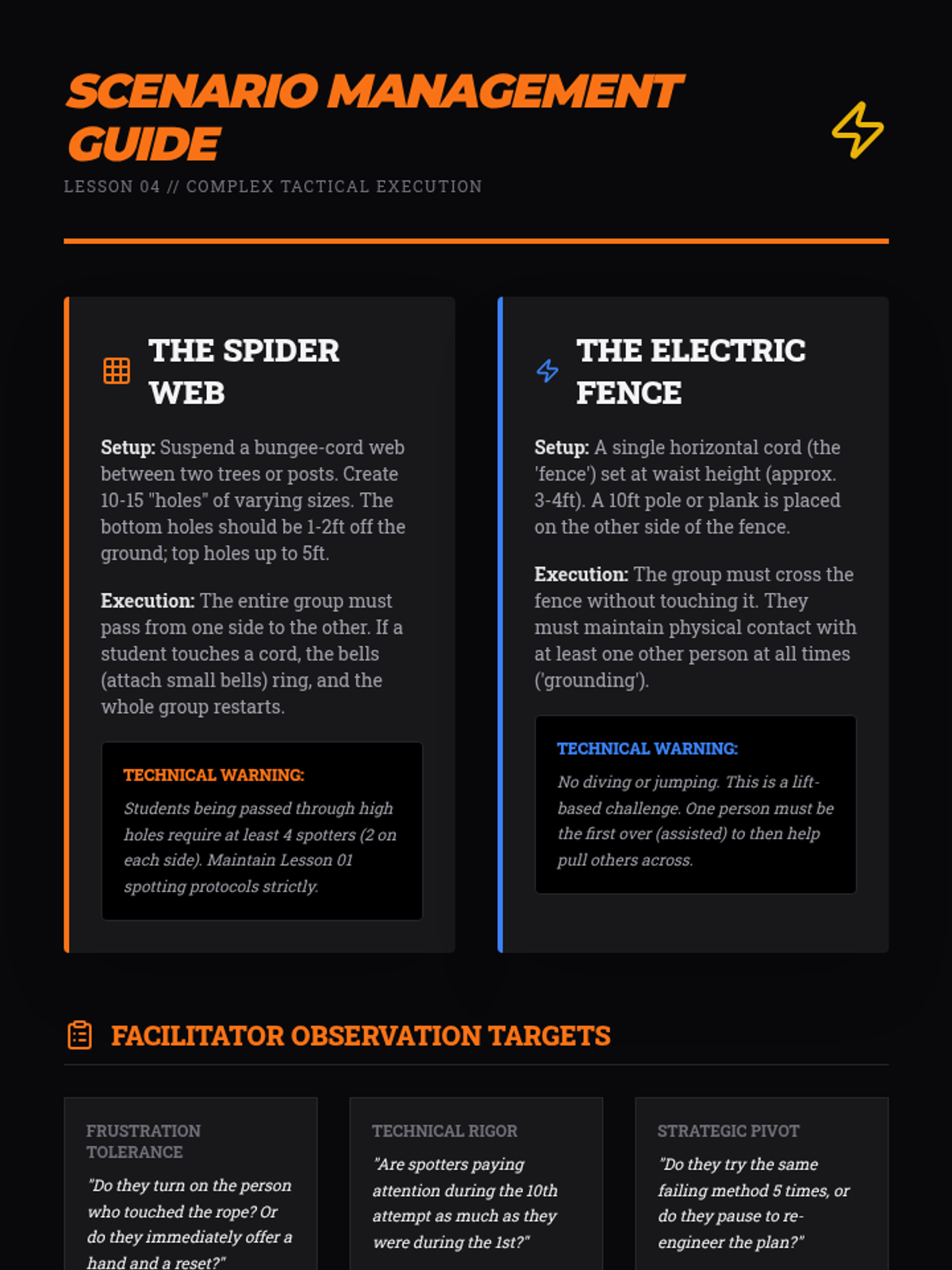
A culminating 'Spider Web' challenge that integrates all previous skills in planning, spotting, and safety management.
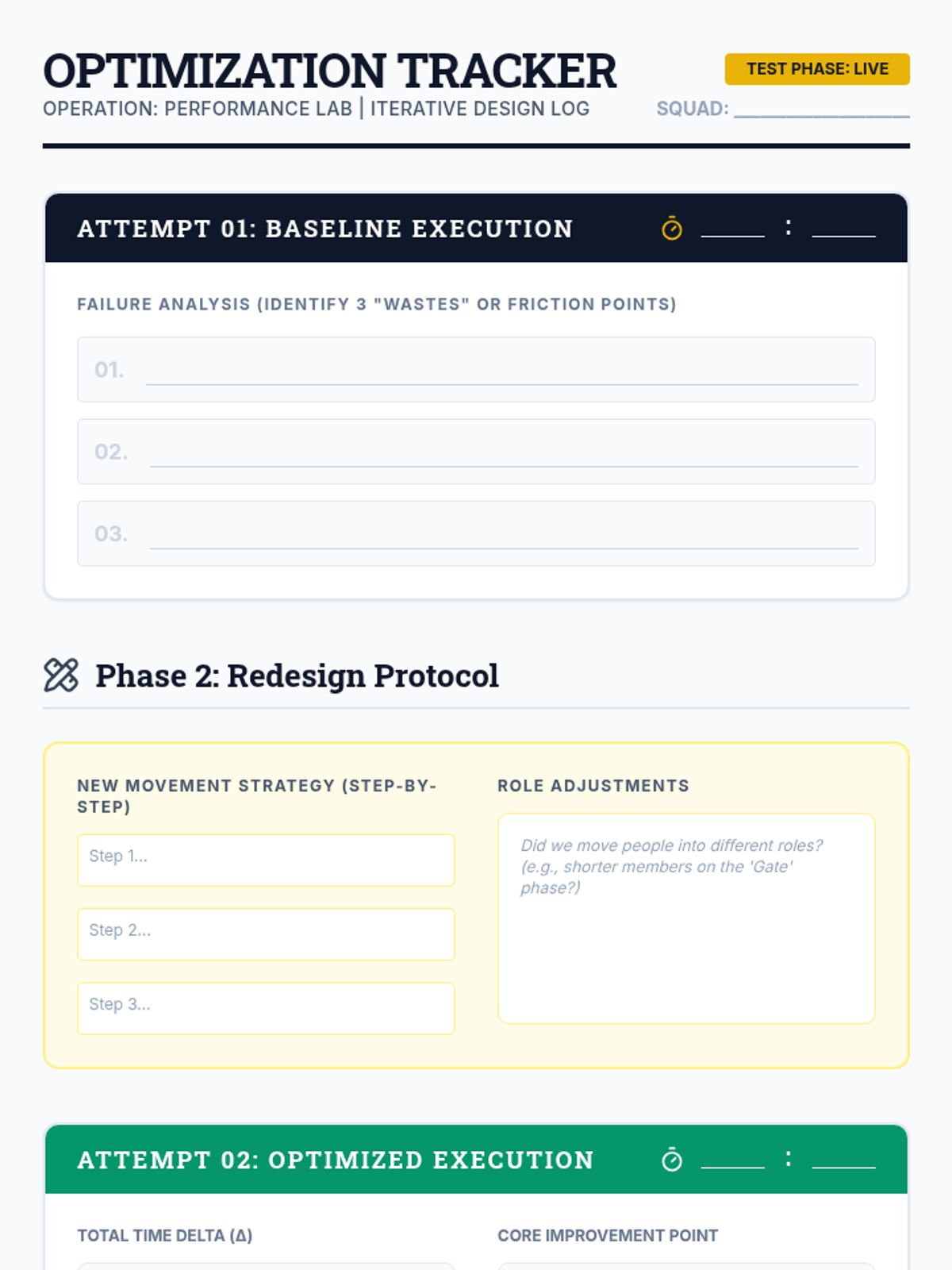
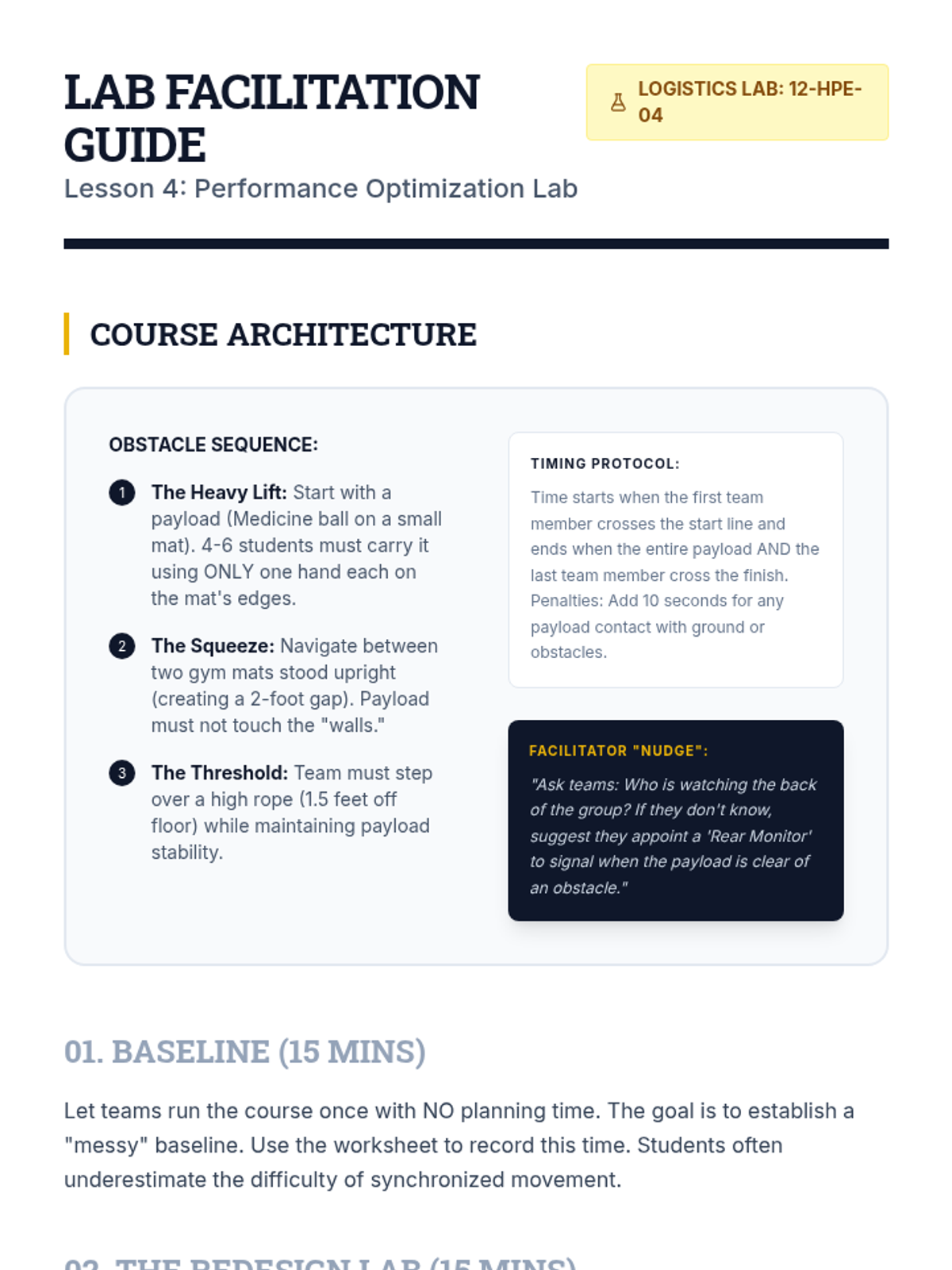
Applying logistics principles, teams use an iterative design cycle to optimize their performance in a synchronized movement course.
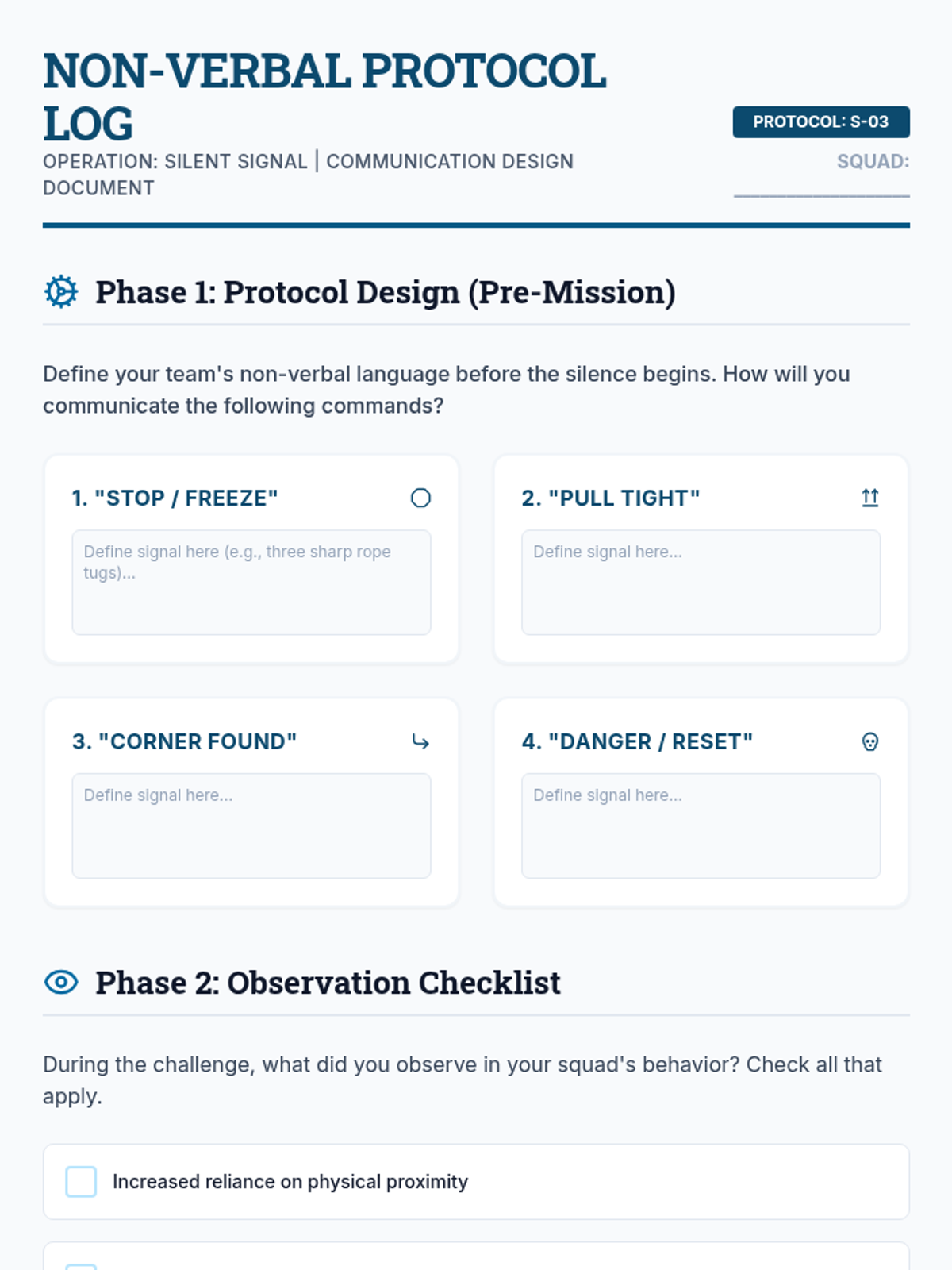
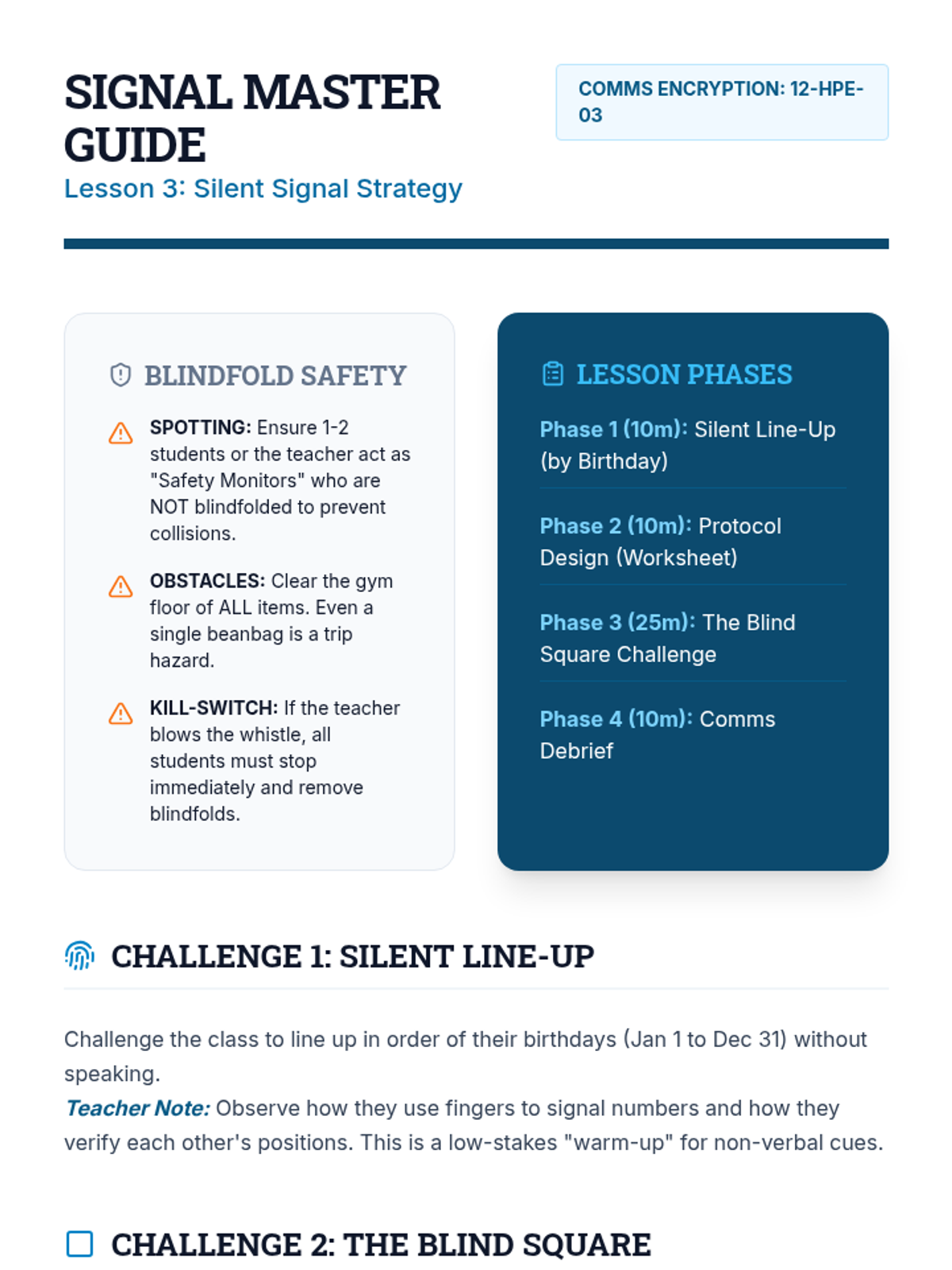
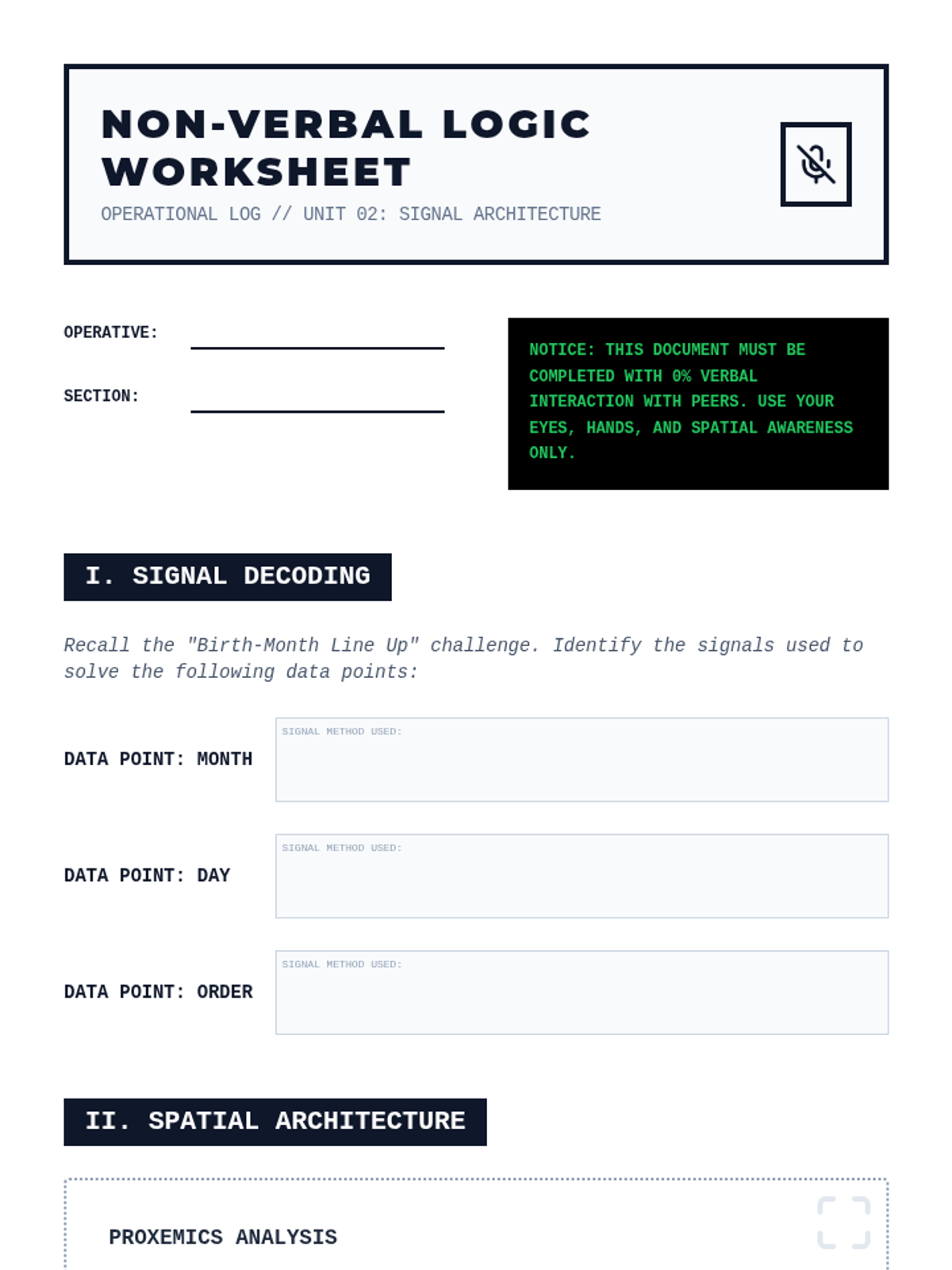
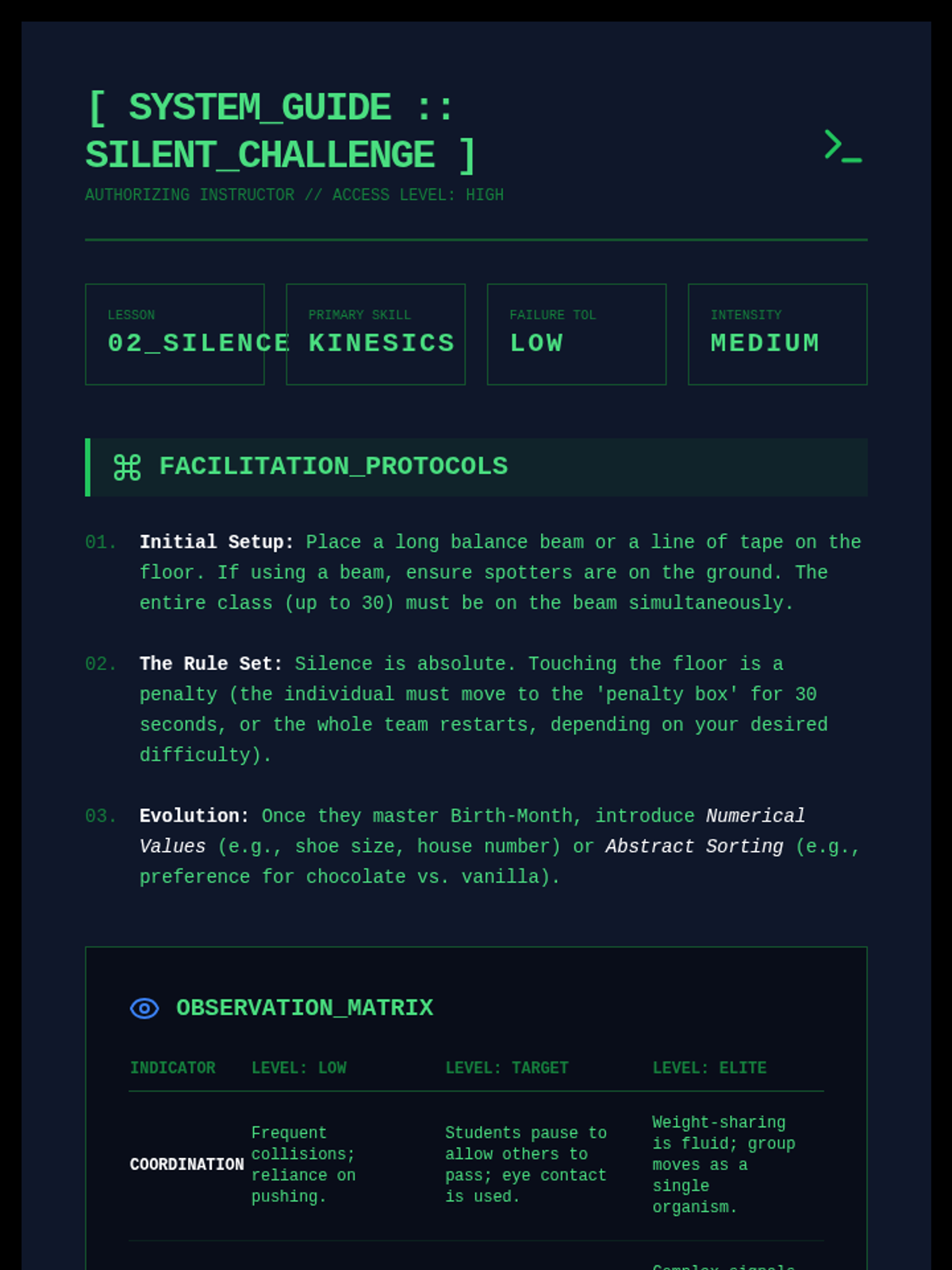
Teams develop non-verbal communication protocols to solve complex spatial and chronological challenges without speaking.
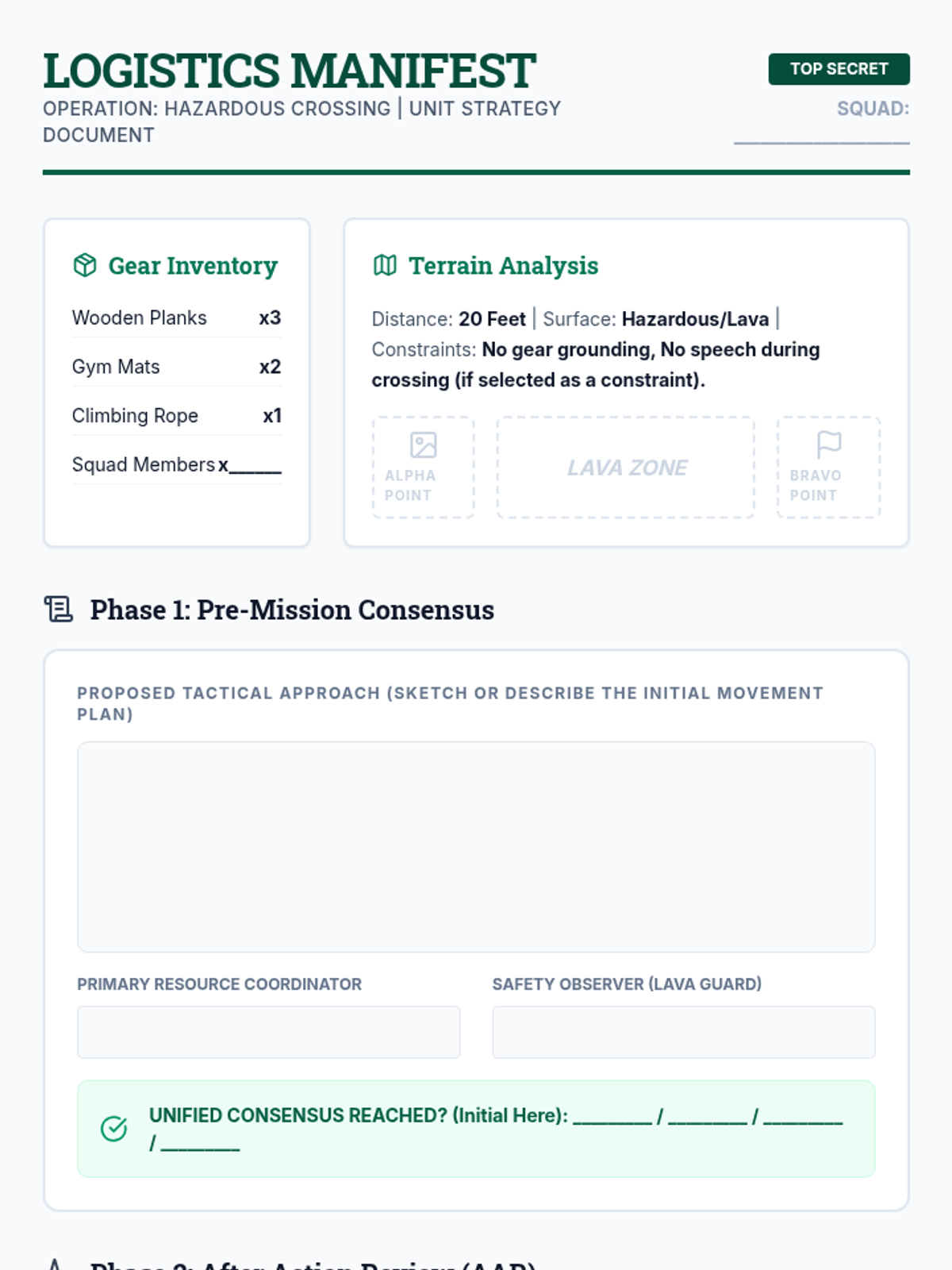
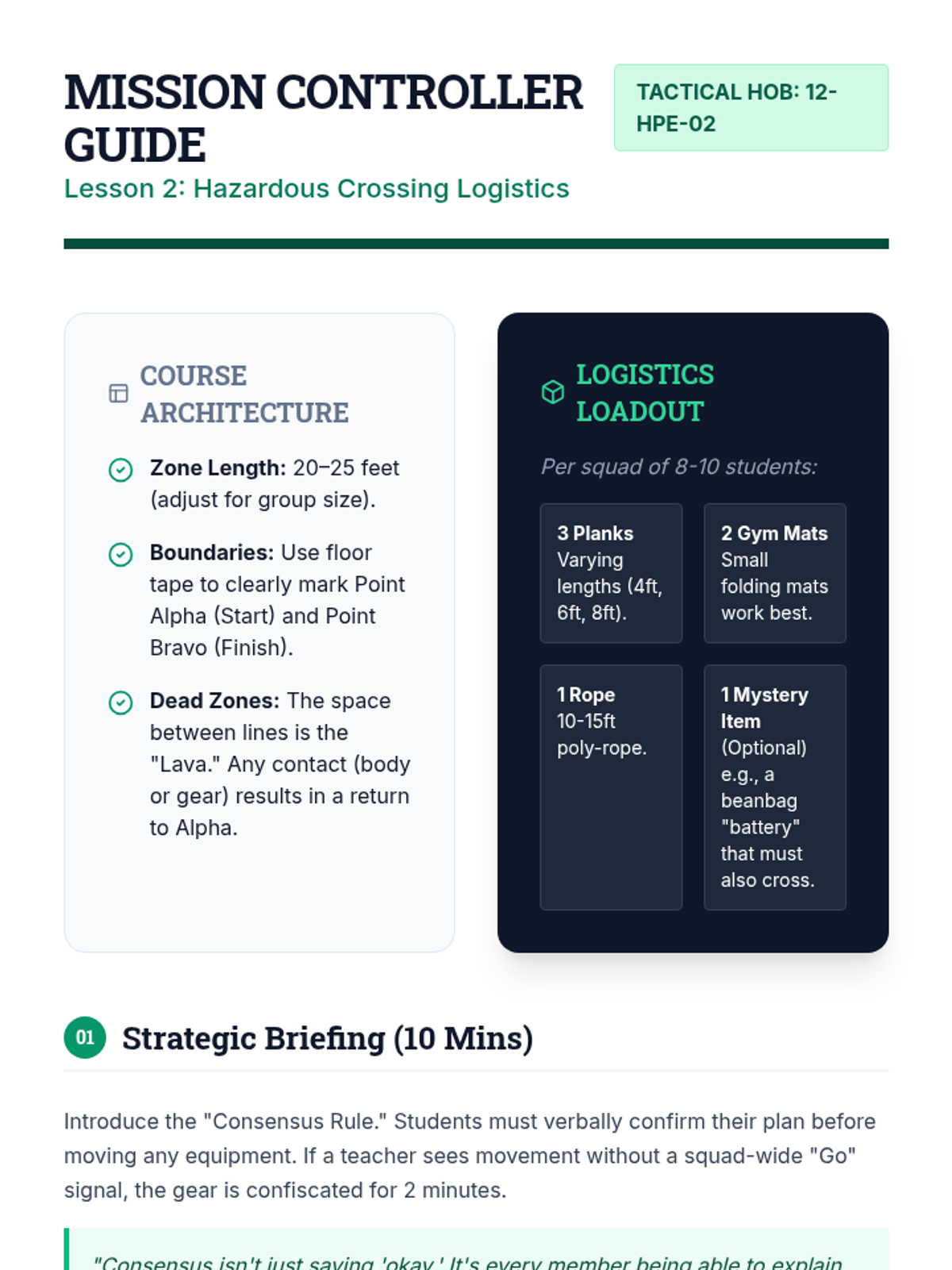
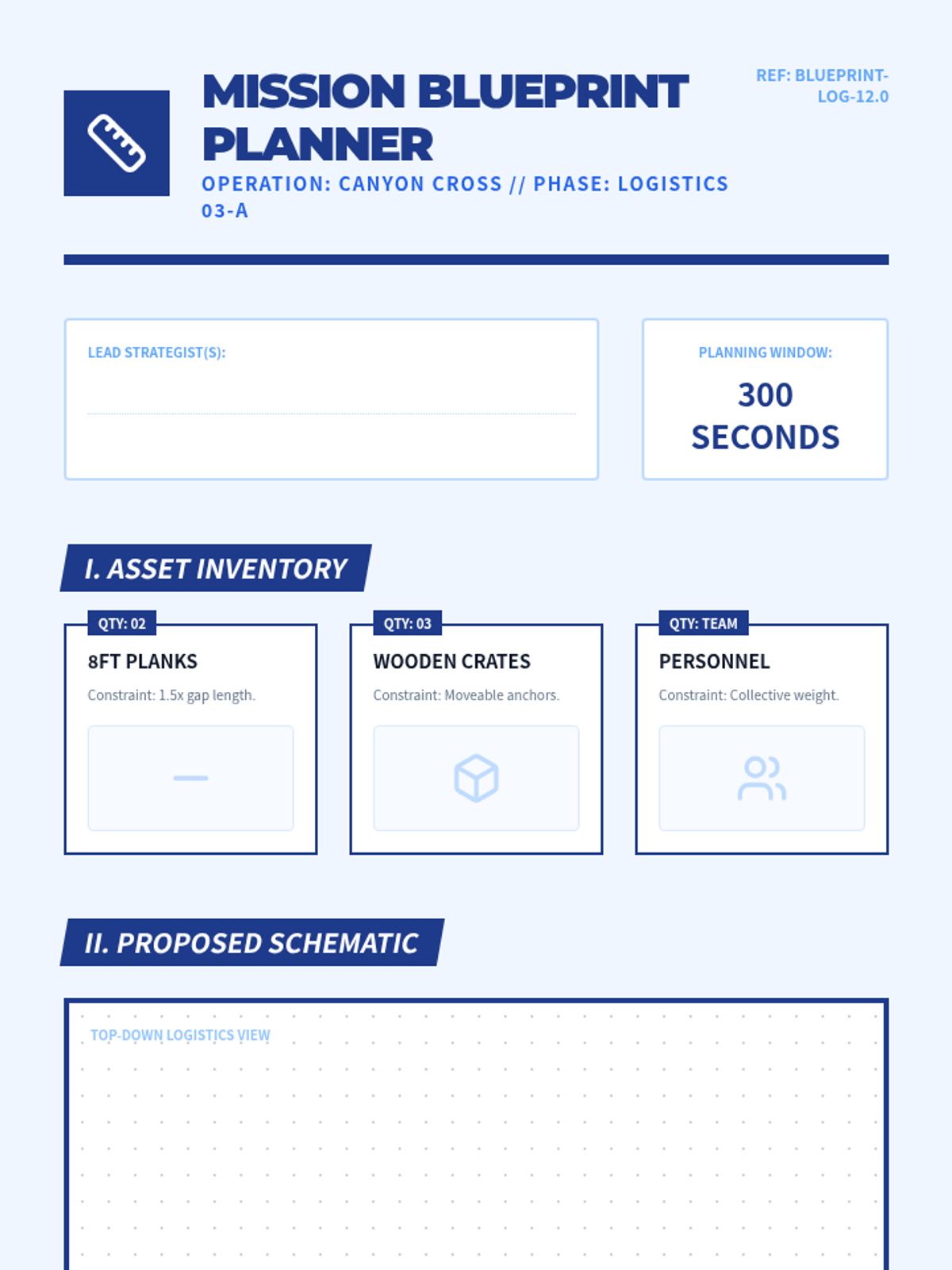
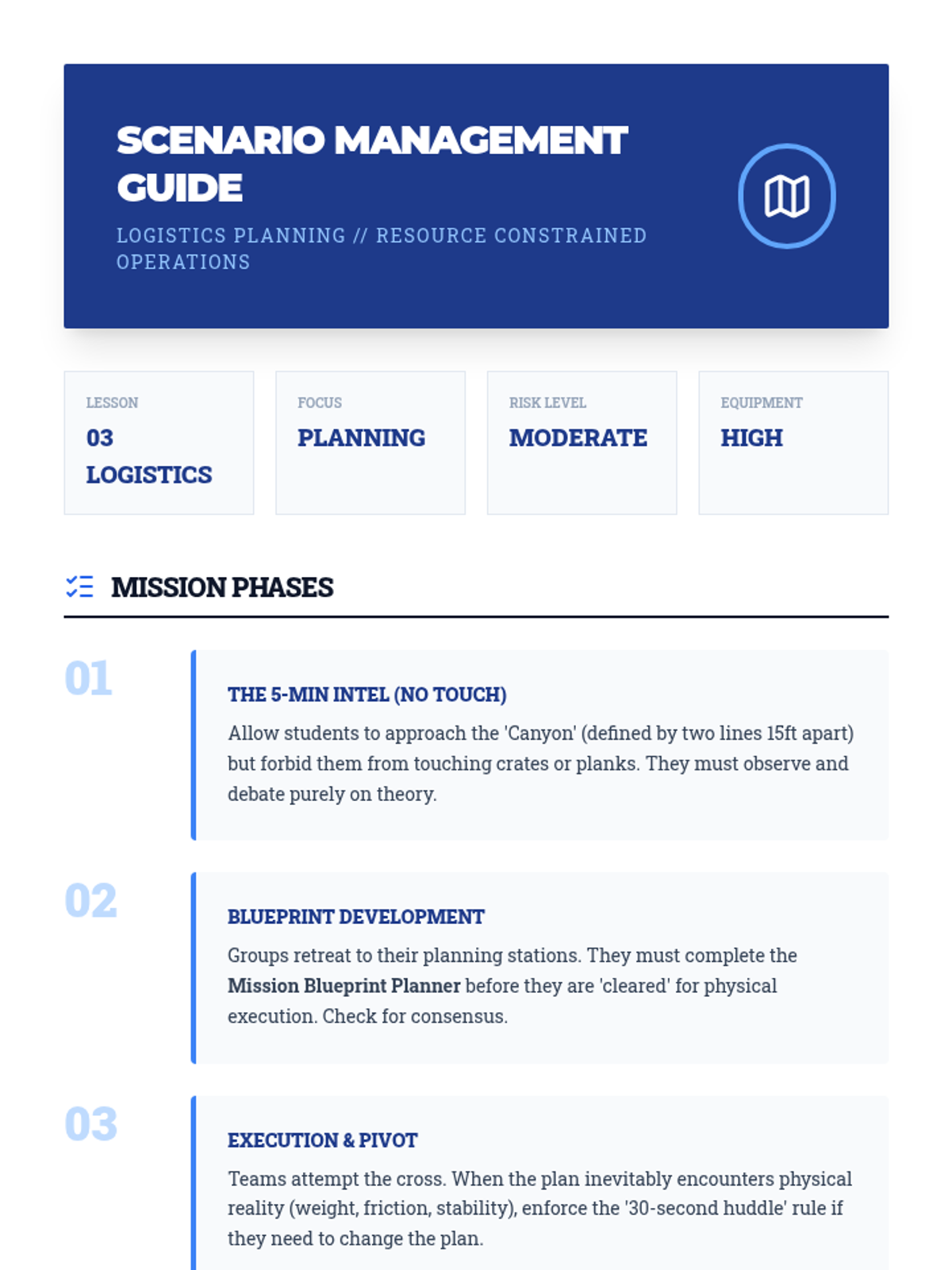
Groups navigate a hazardous area crossing using limited props, focusing on consensus-building and efficient resource allocation.
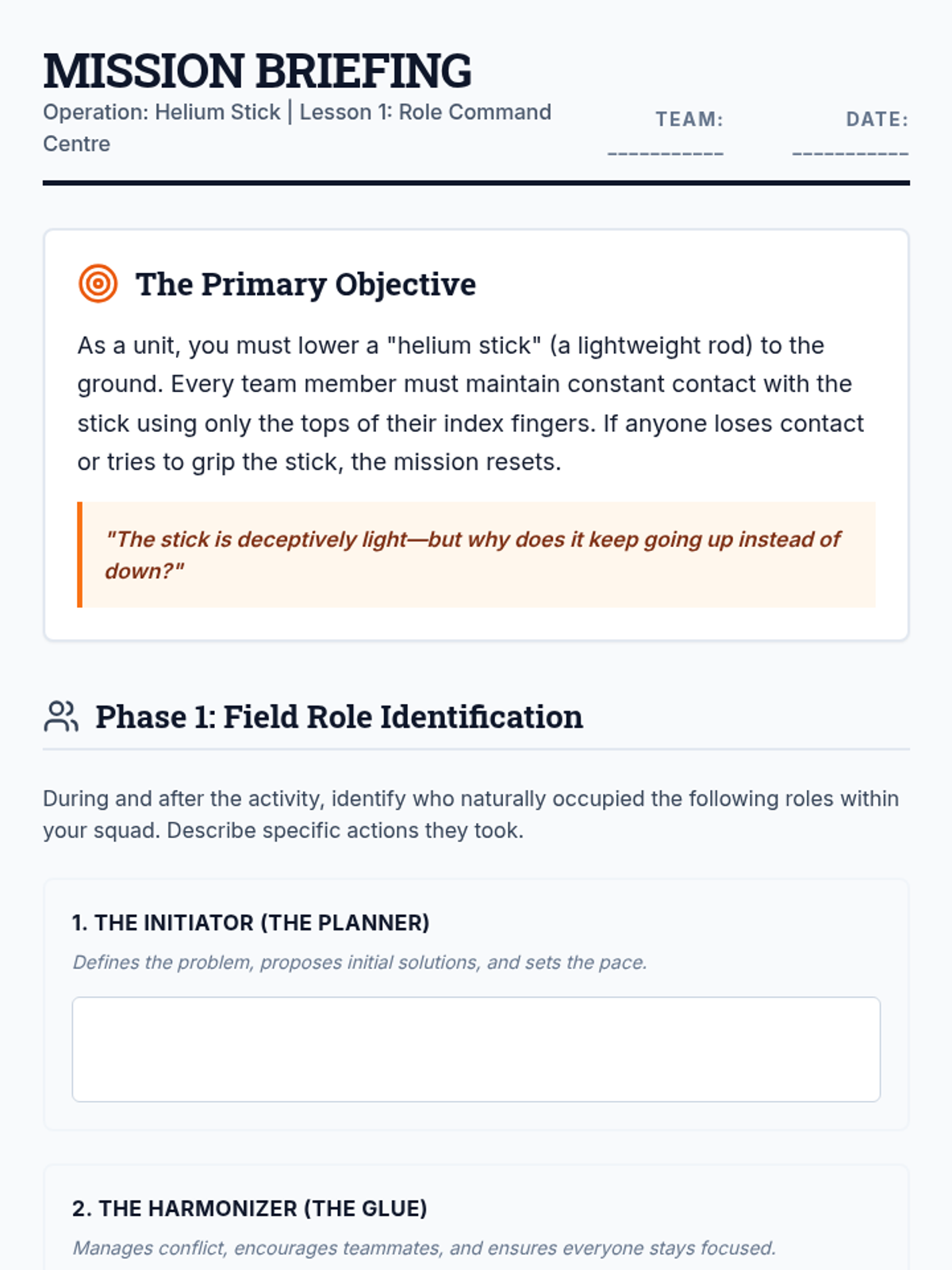
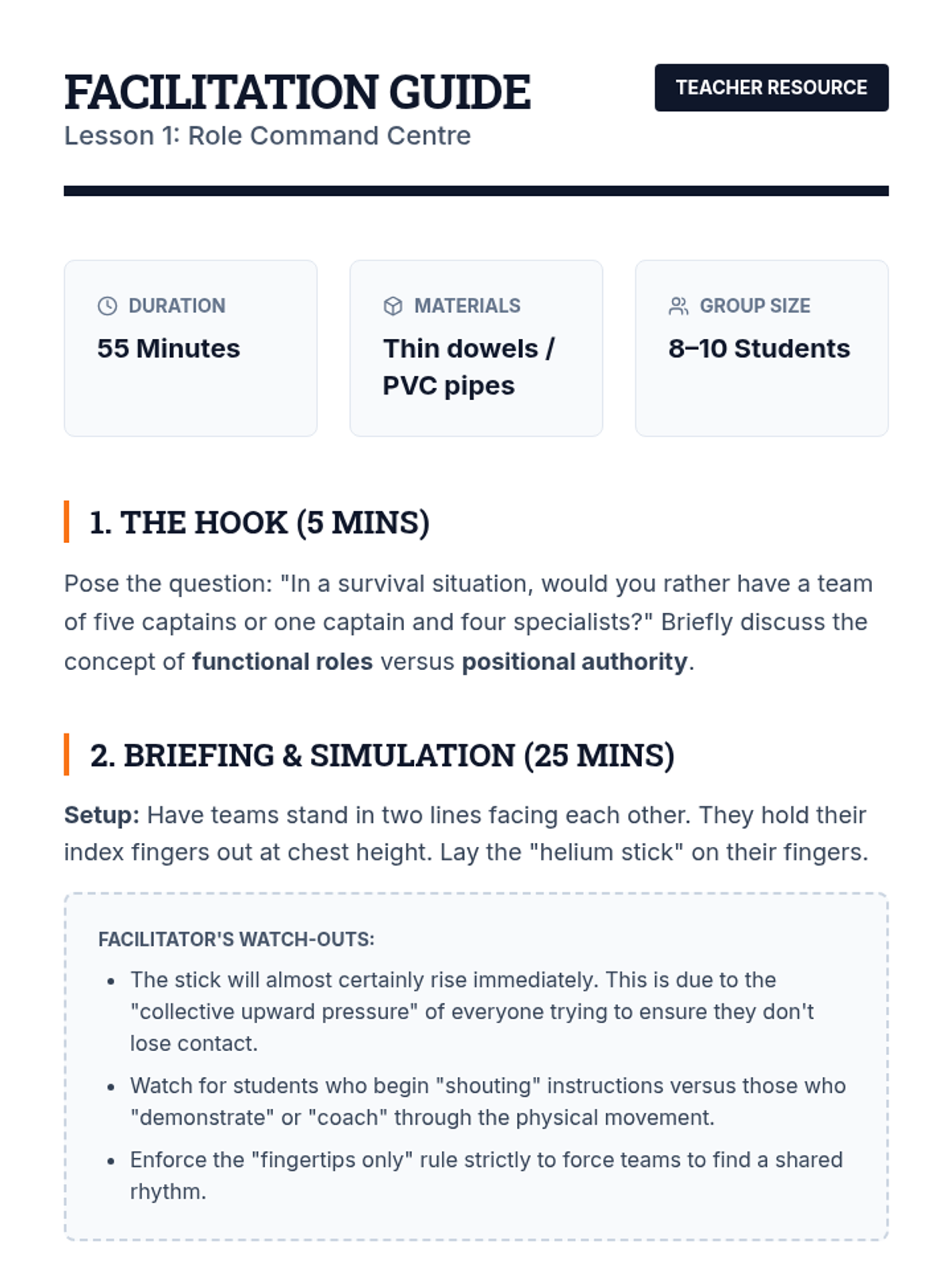
Students identify natural leadership tendencies and group roles through the Helium Stick challenge and analyze their impact on team cohesion.
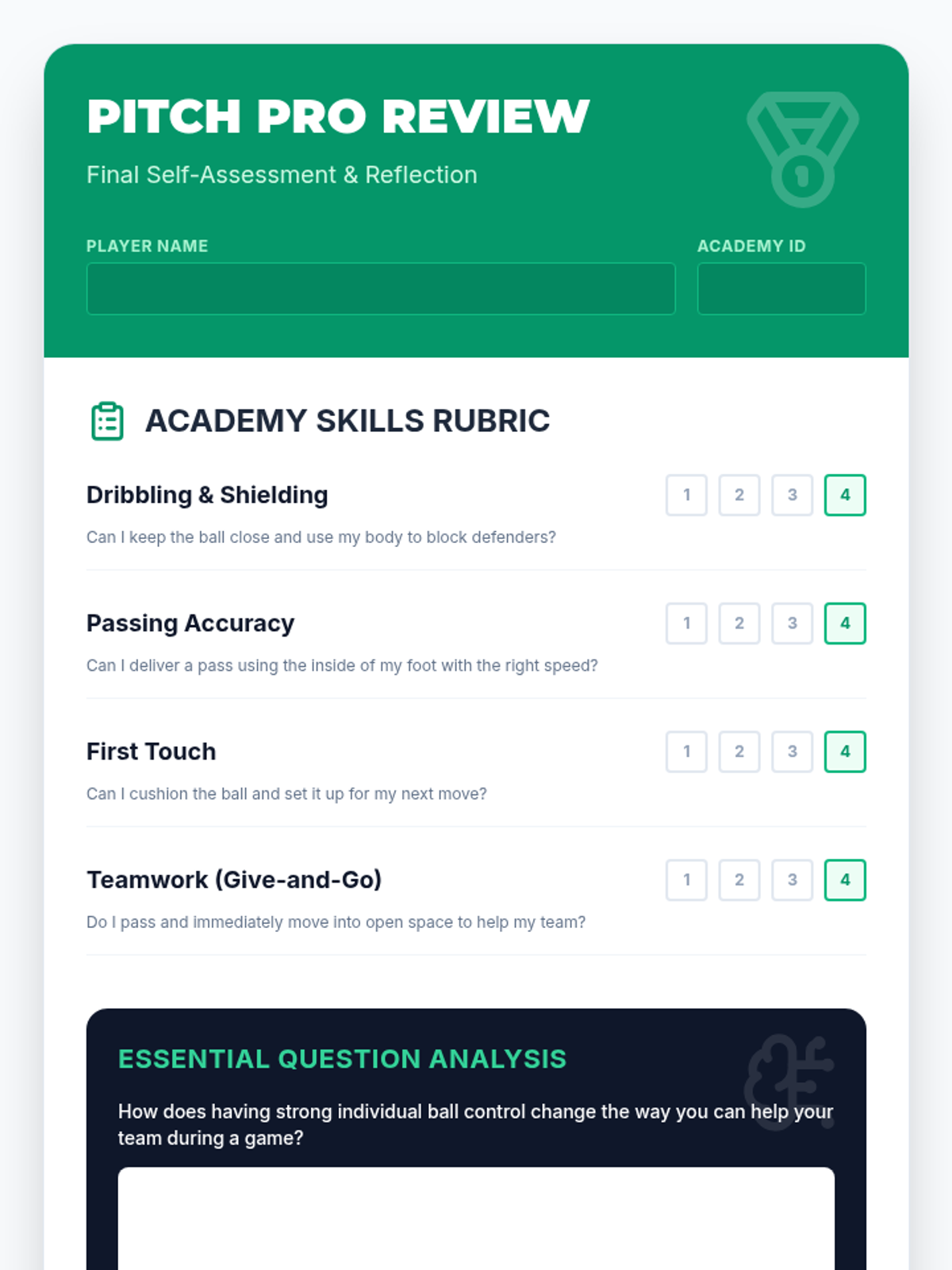
A culmination of skills applied in small-sided possession games focusing on decision-making.
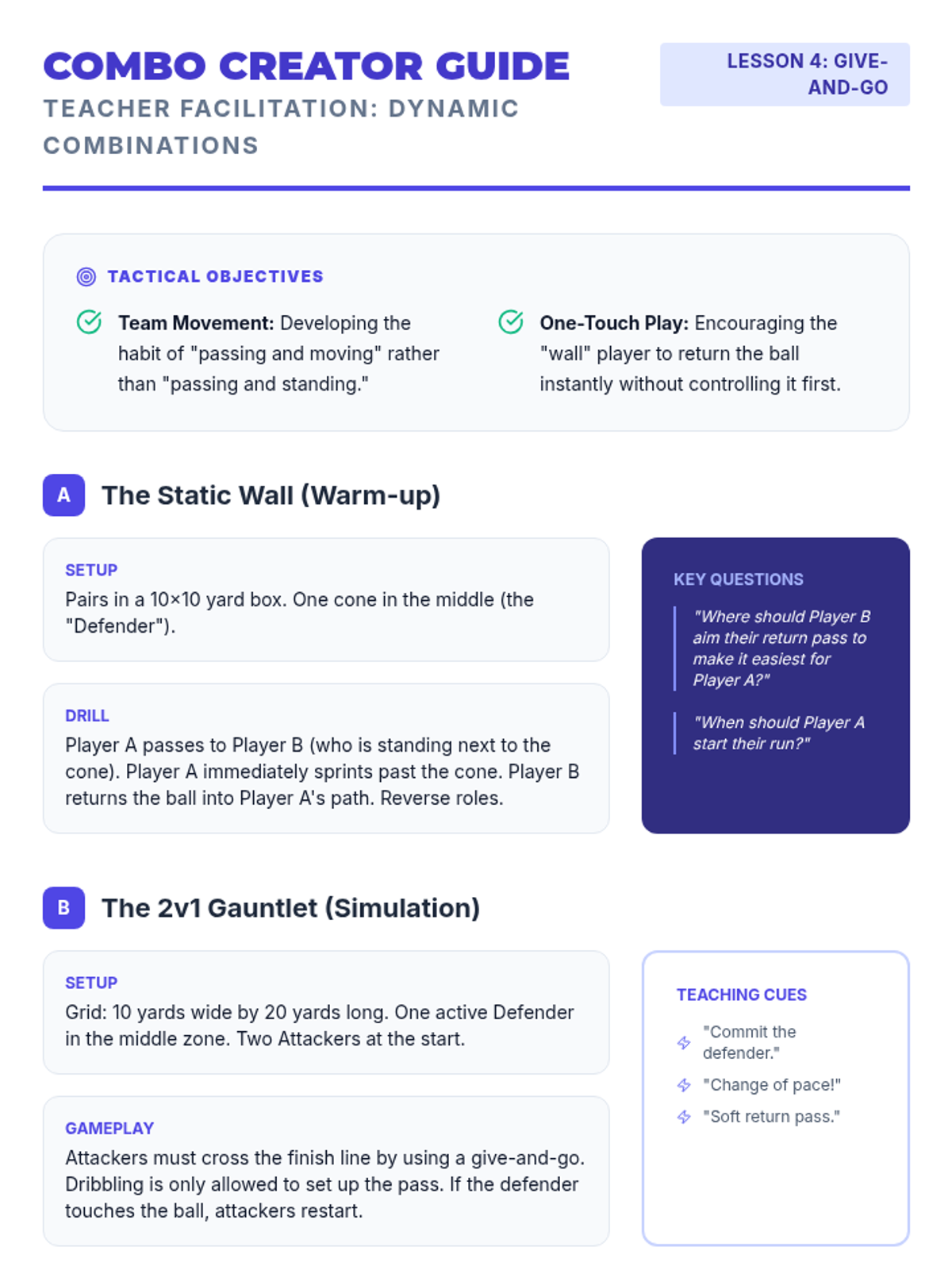
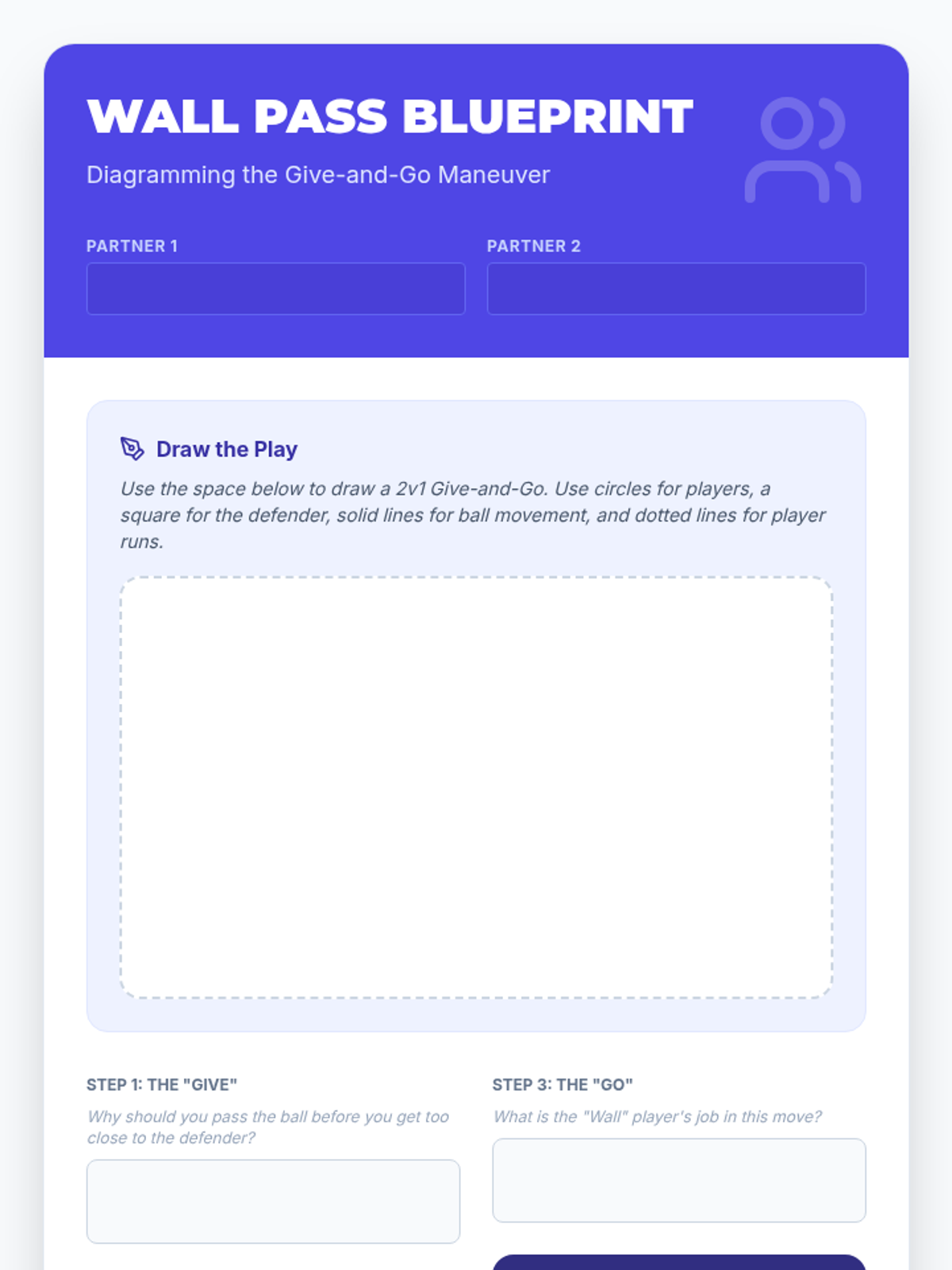
Introduces the wall pass or give-and-go as a way to bypass defenders through teamwork.
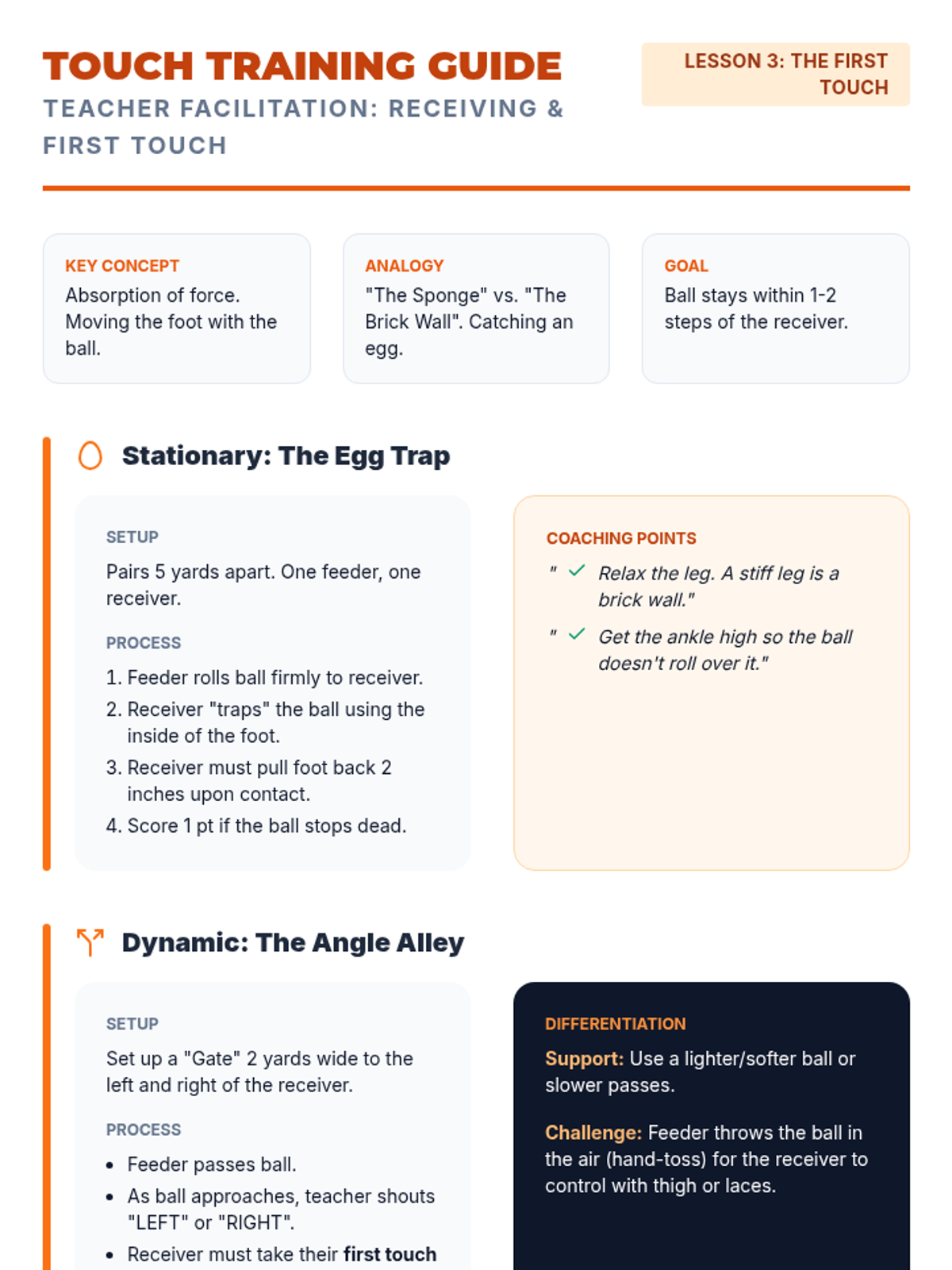
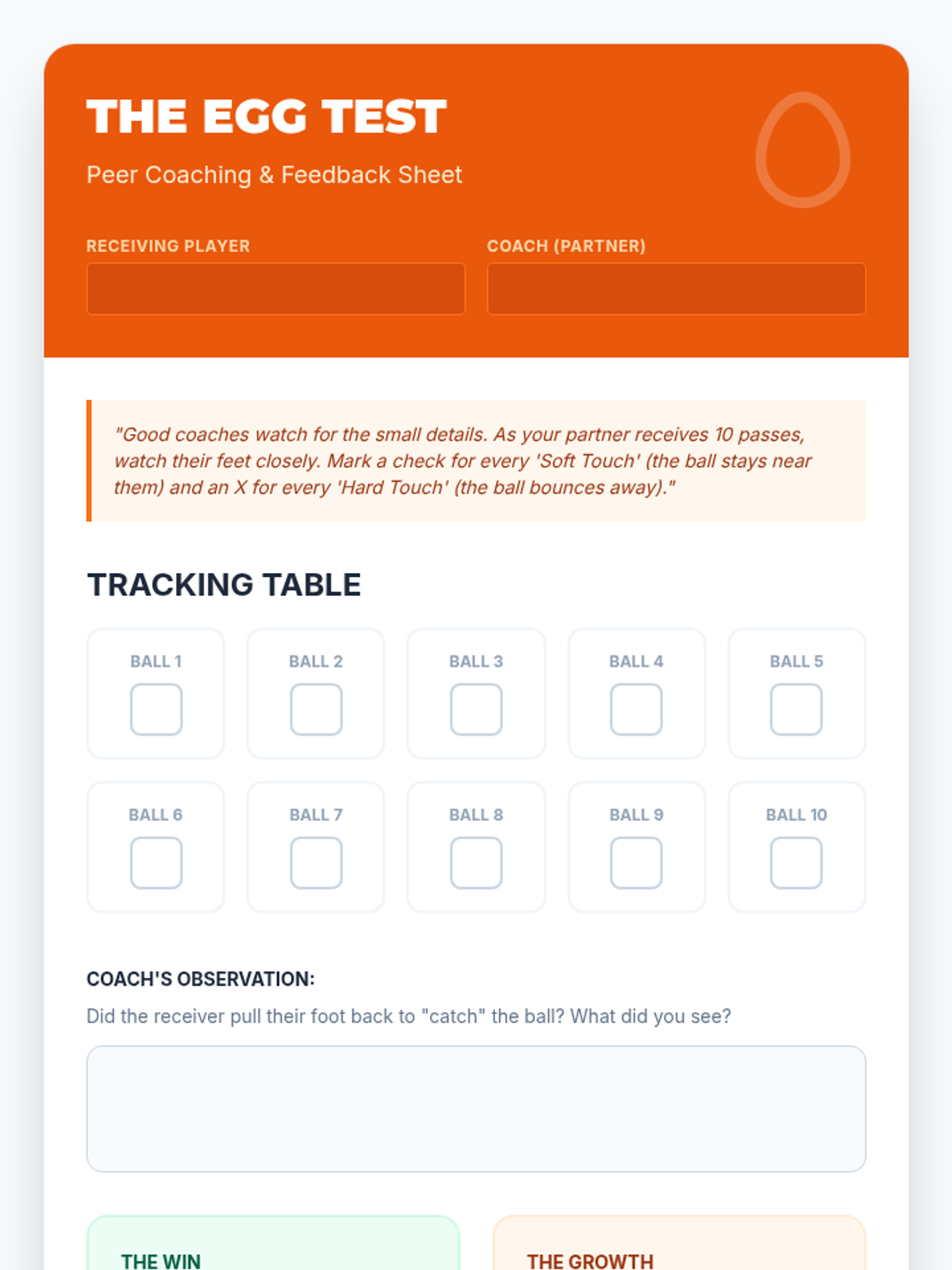
Teaches students how to cushion the ball's impact to maintain control during the first touch.
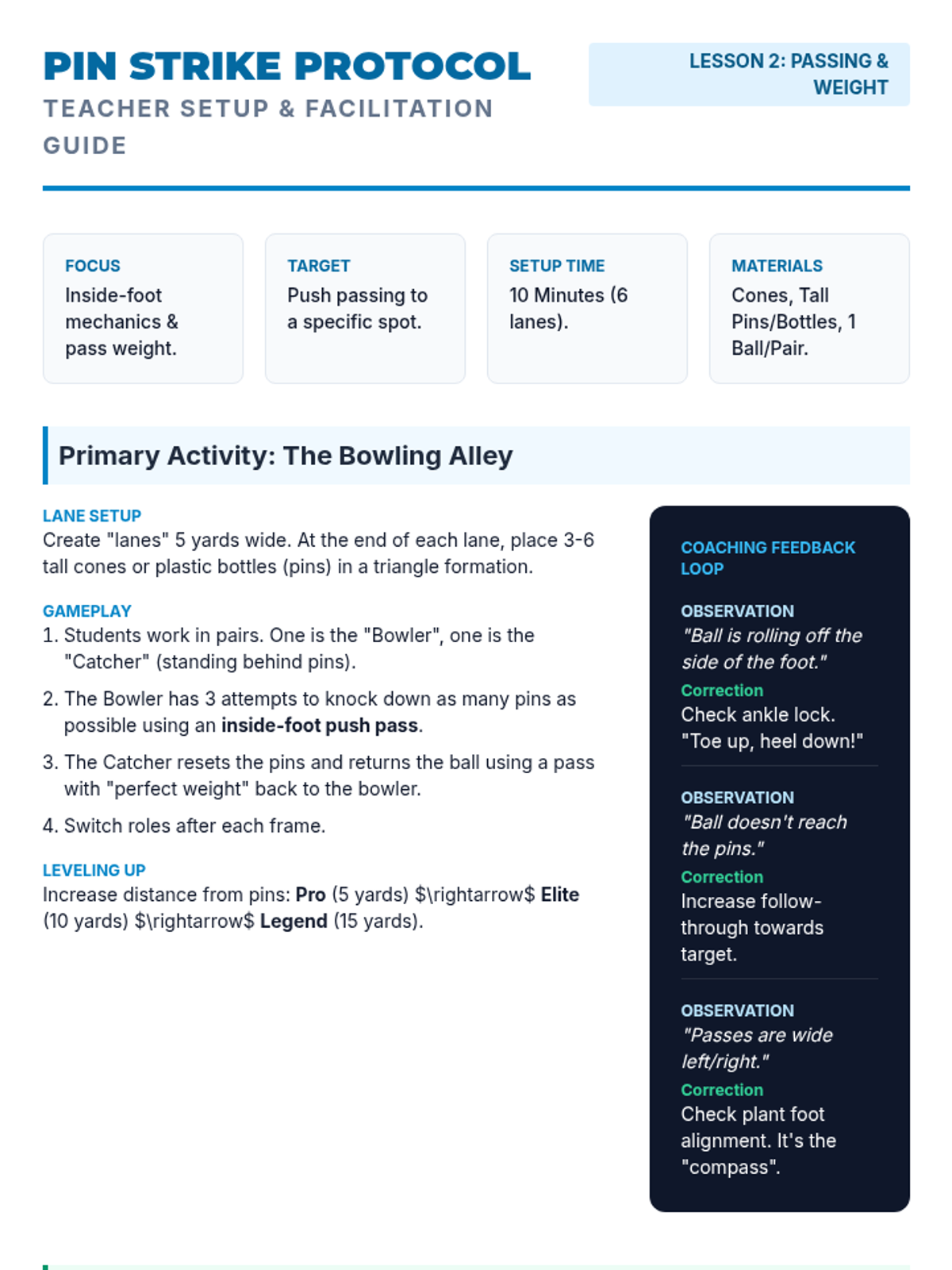
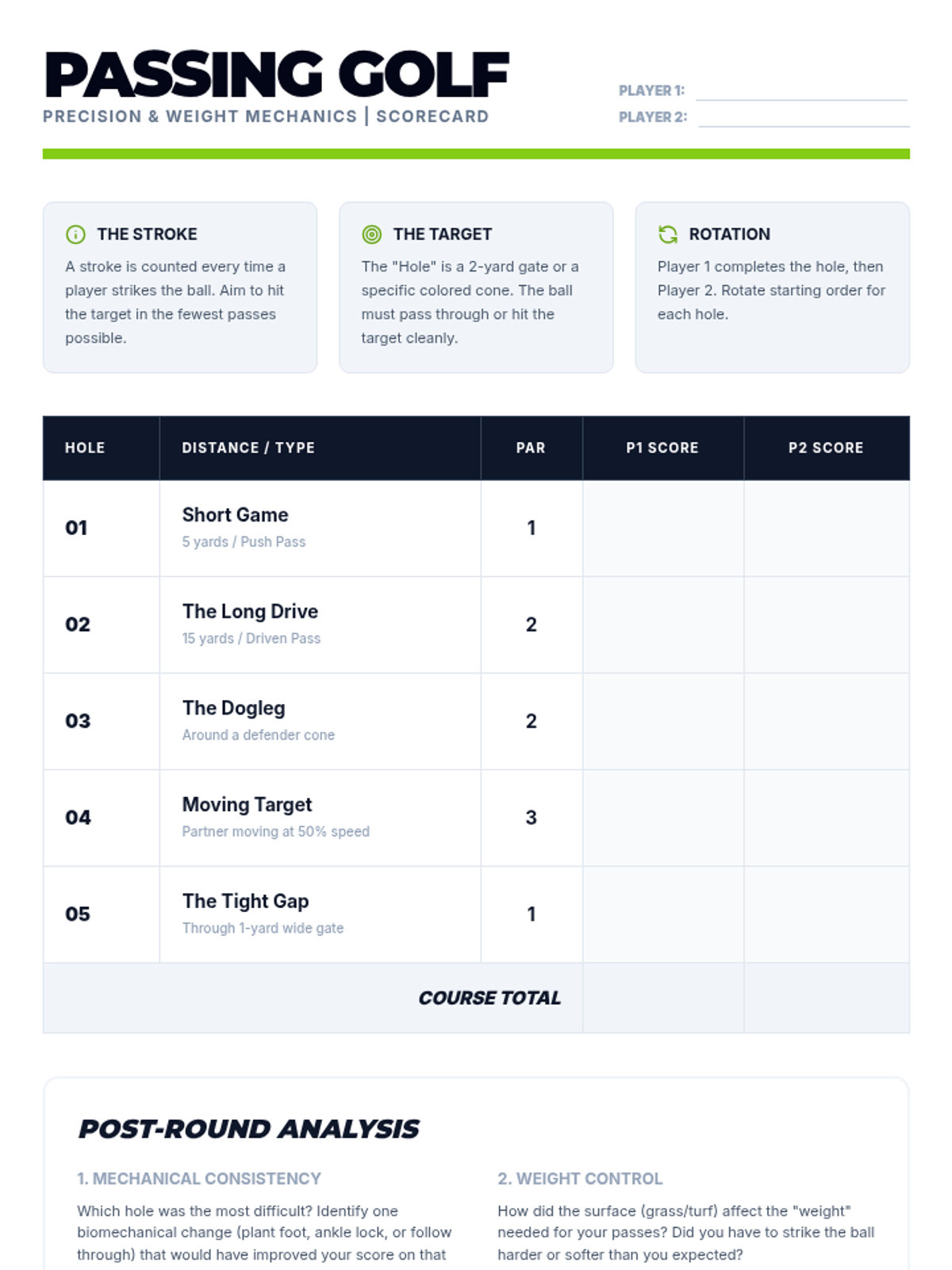
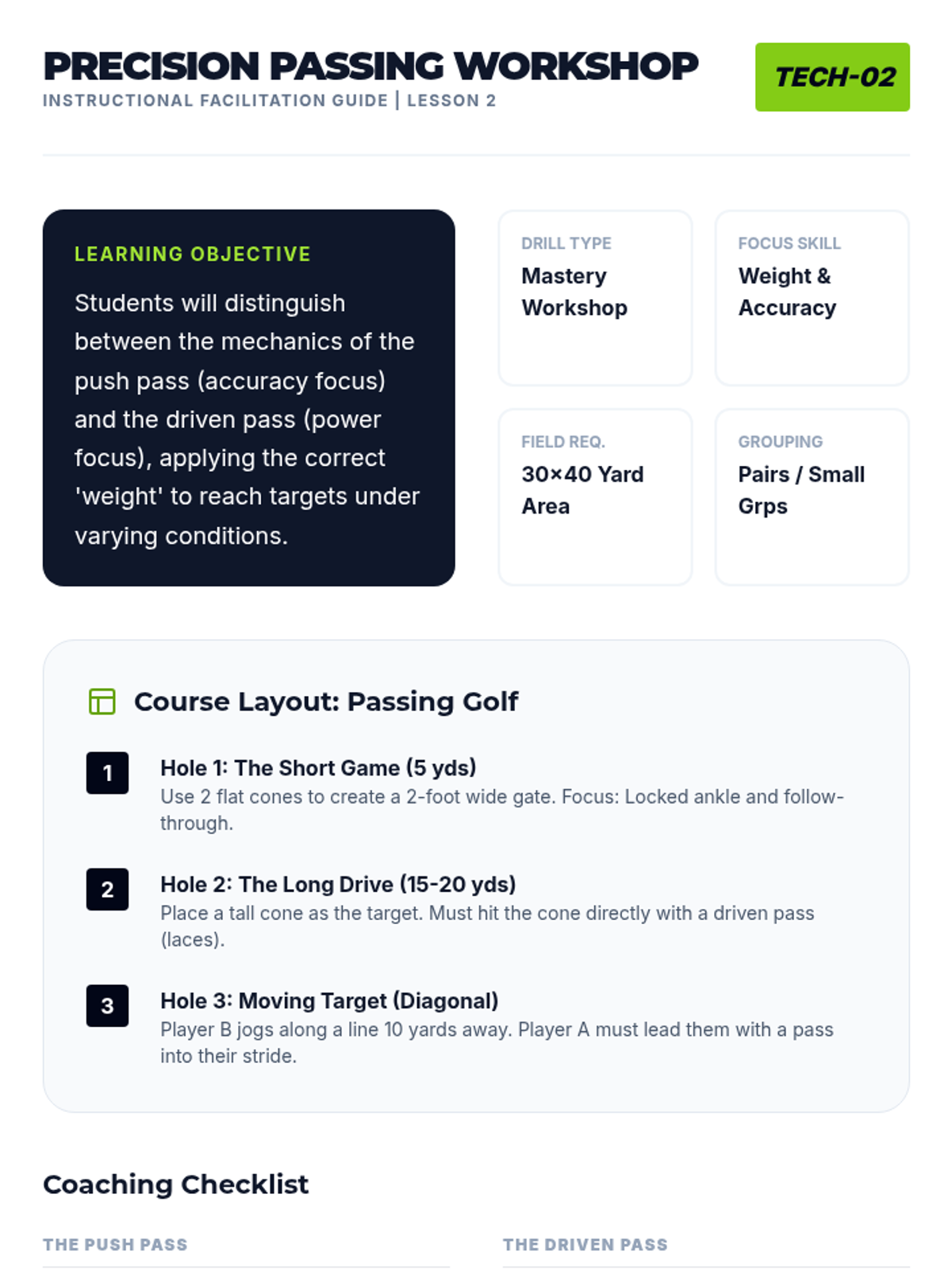
Focuses on the mechanics of the push pass for accuracy and the concept of 'weight' in passing.
Students focus on keeping the ball close while moving and using their body to protect the ball from opponents.
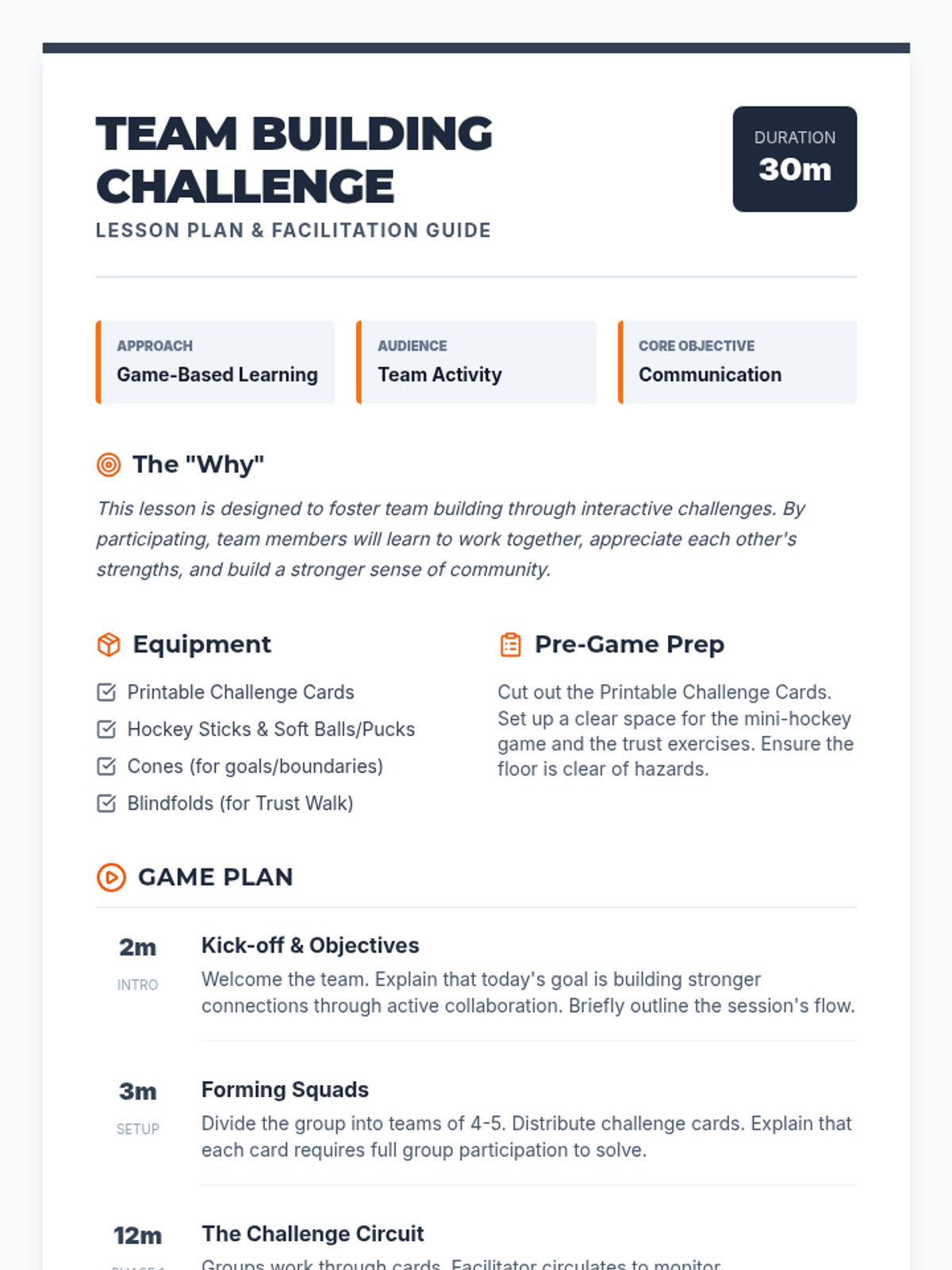
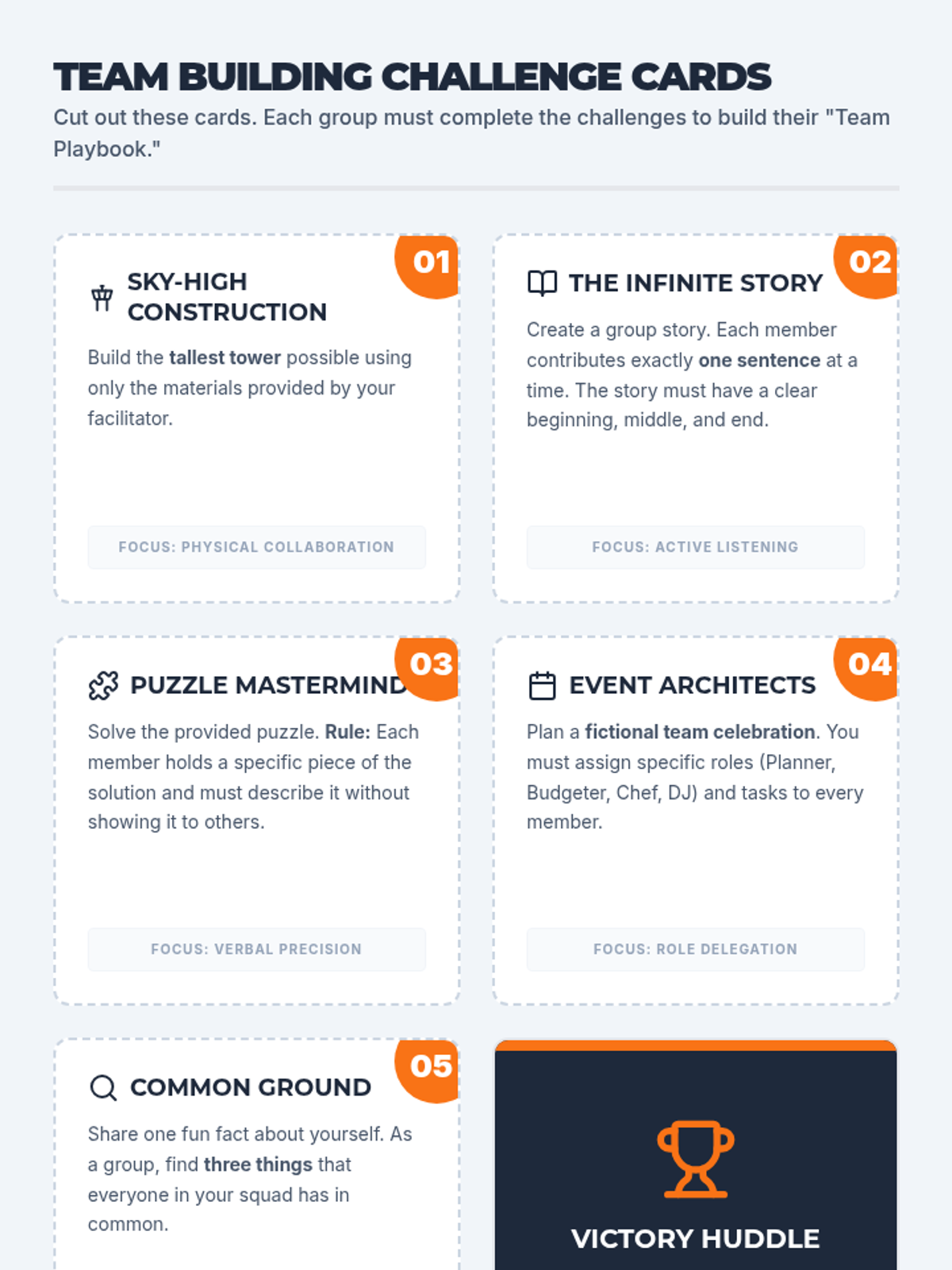
A high-energy team-building lesson focused on communication, trust, and collaboration through interactive challenges and a hockey-themed strategy game.
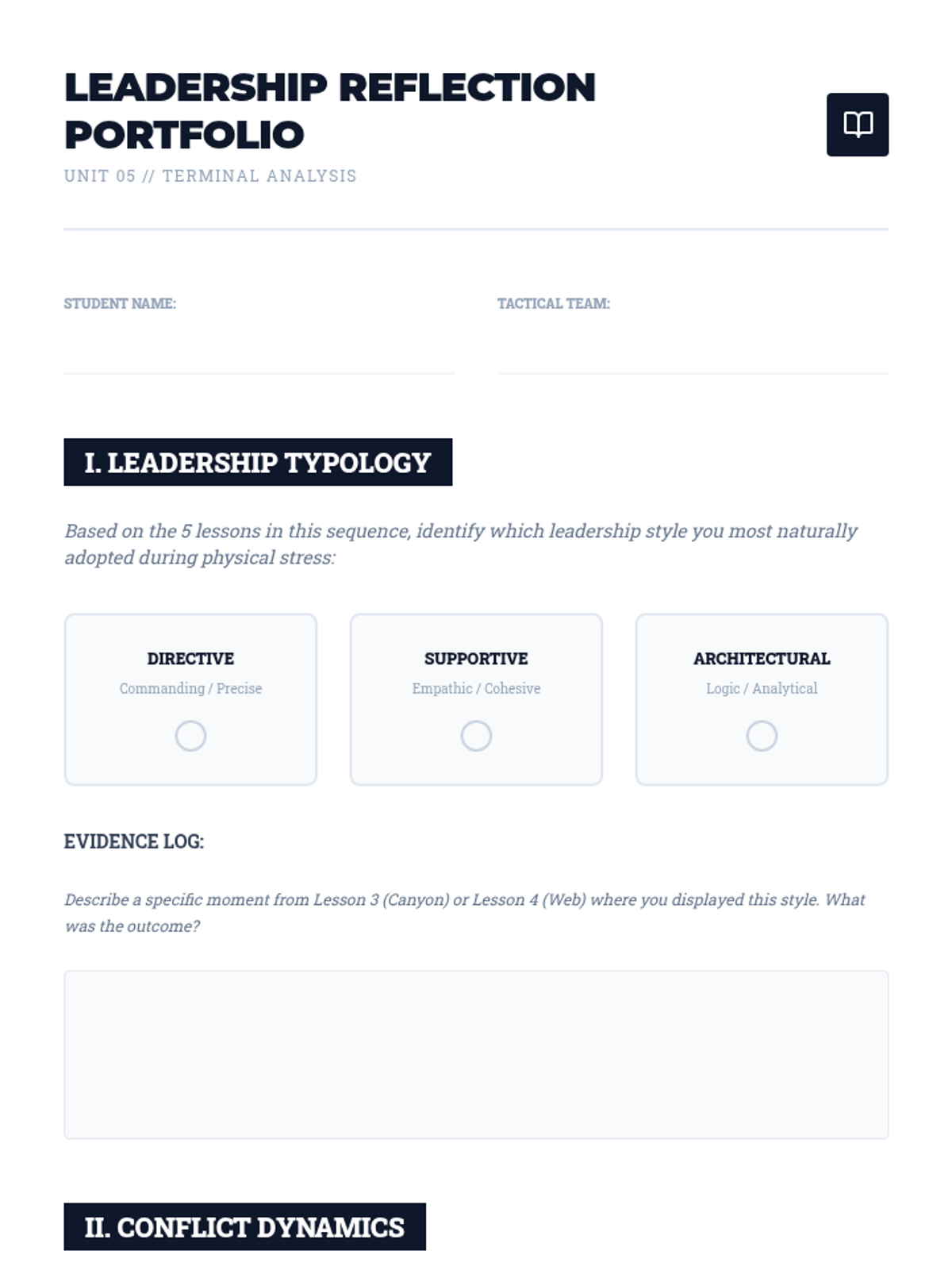
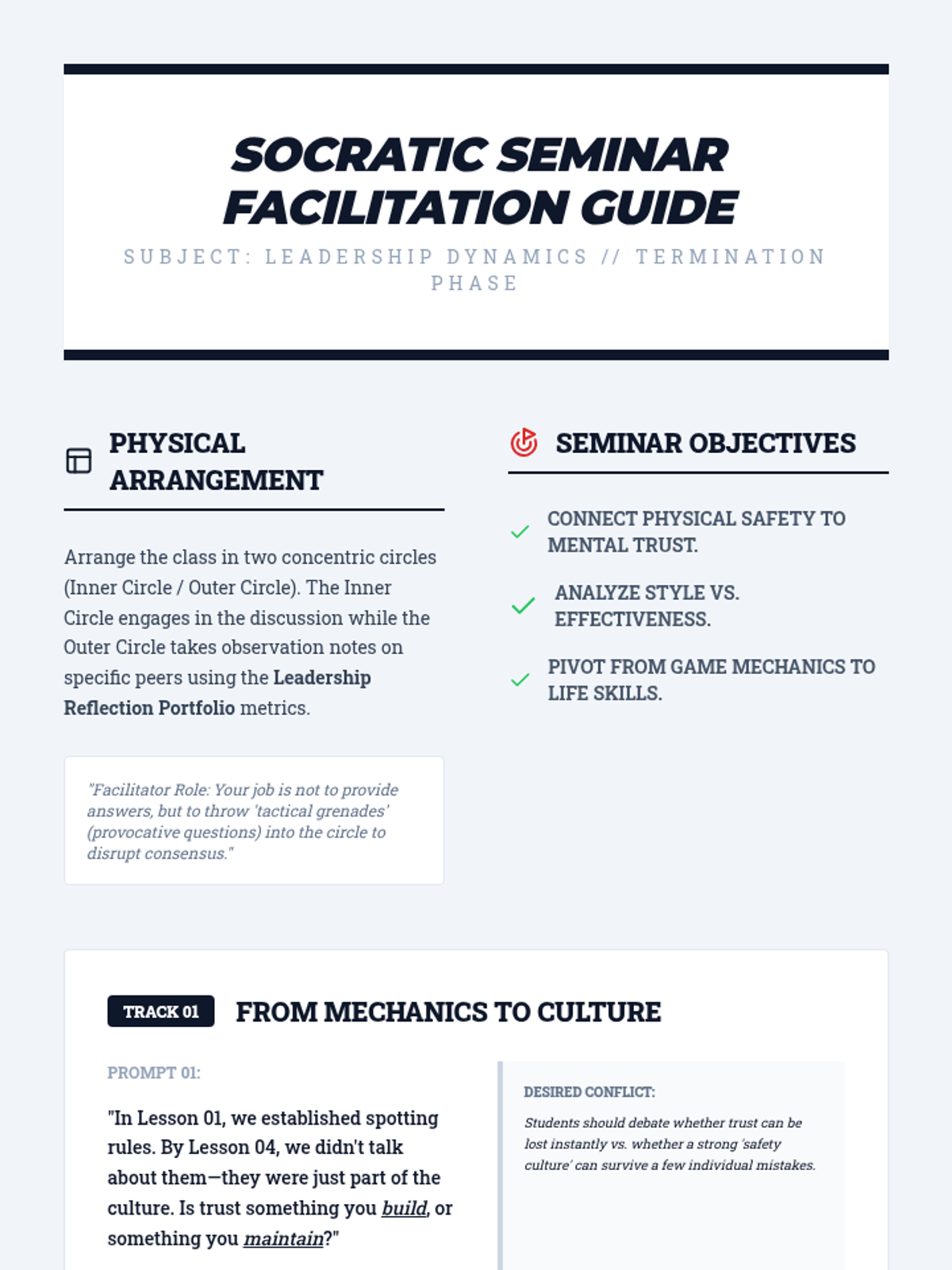
A deep-dive debrief and Socratic seminar analyzing leadership styles, conflict resolution, and performance data from previous challenges.
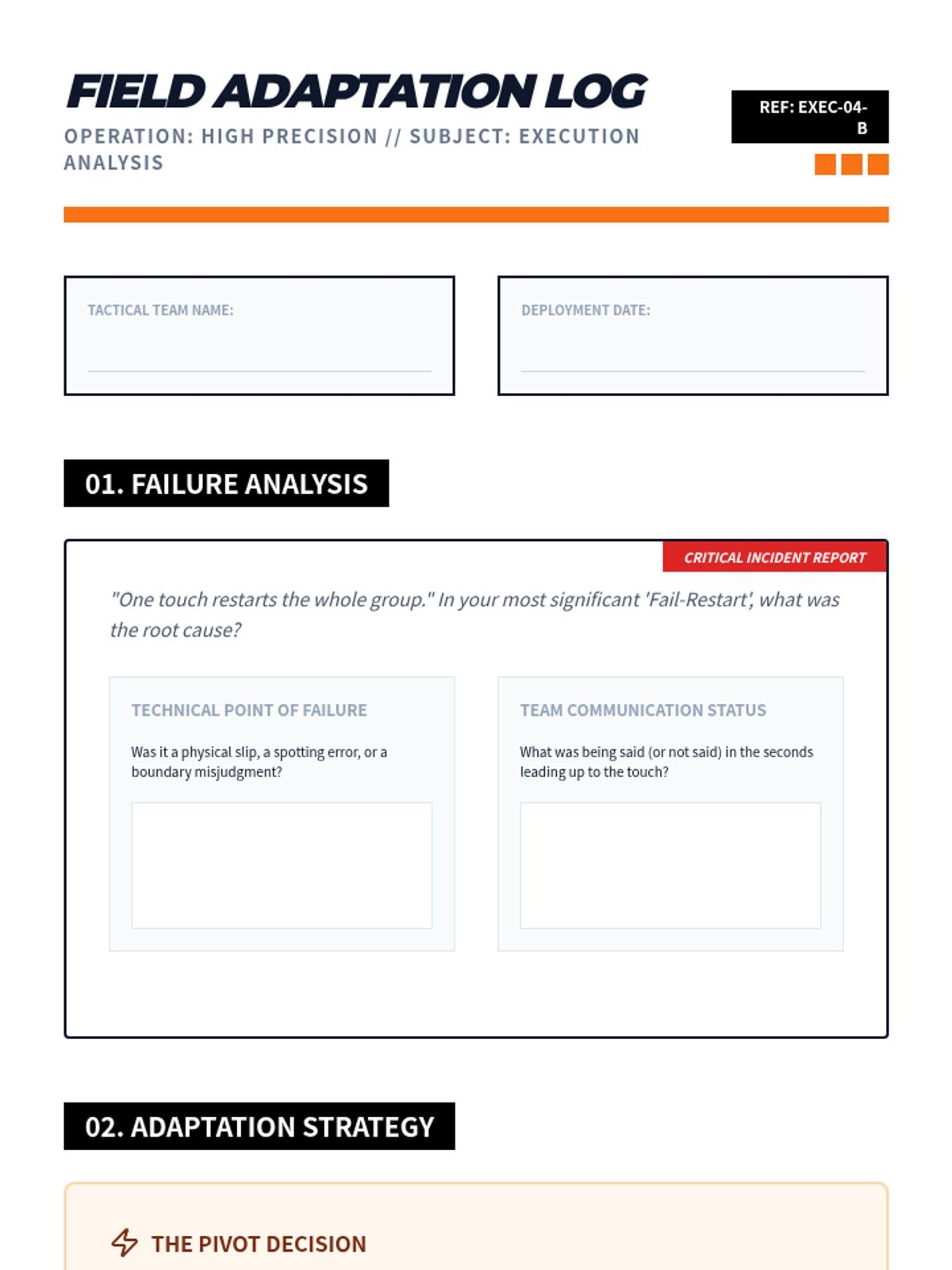
Execution of high-complexity cooperative games like 'The Spider Web' or 'The Electric Fence' with a focus on real-time adaptation.
Groups analyze physical puzzles and allocate limited resources to solve 'impossible' object retrieval or traversal scenarios.
Challenges students to coordinate group movement without verbal communication, emphasizing body language and situational awareness.
Focuses on the physical mechanics of spotting, weight sharing, and establishing a safe psychological environment for physical risk-taking.
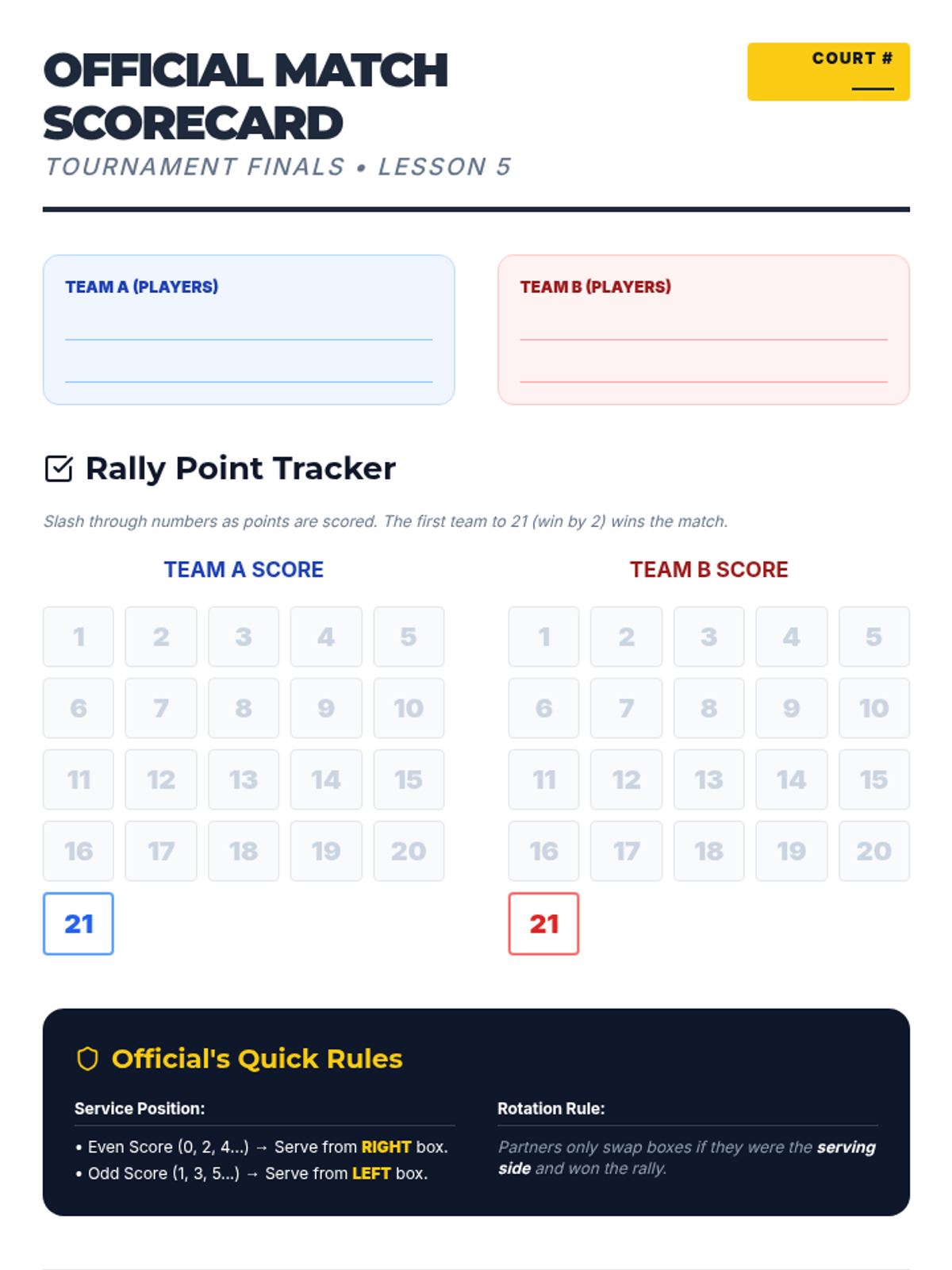
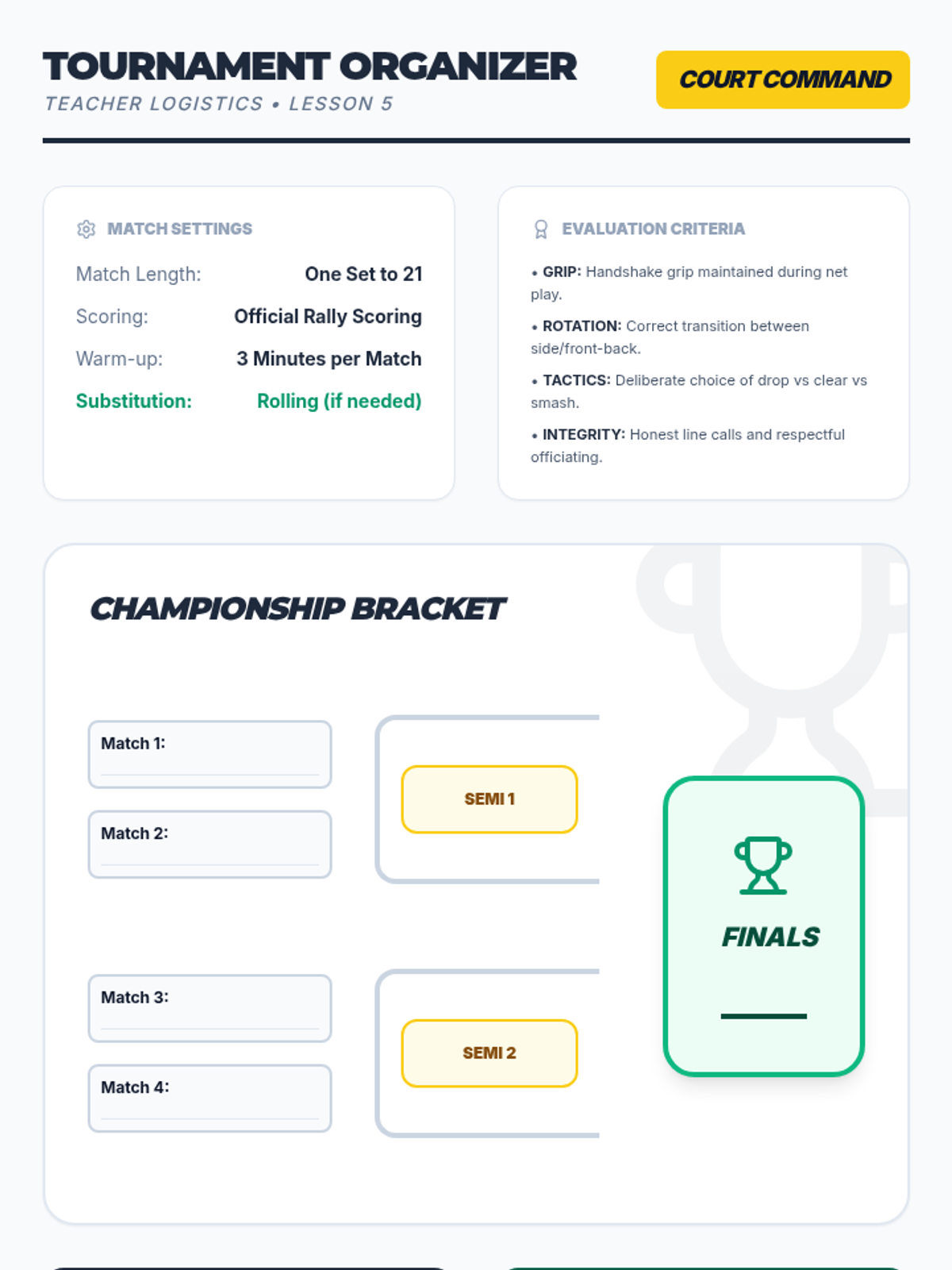
The unit concludes with students applying their skills in a doubles tournament format, learning rotation systems (front-back/side-by-side) and practicing official officiating and scoring.
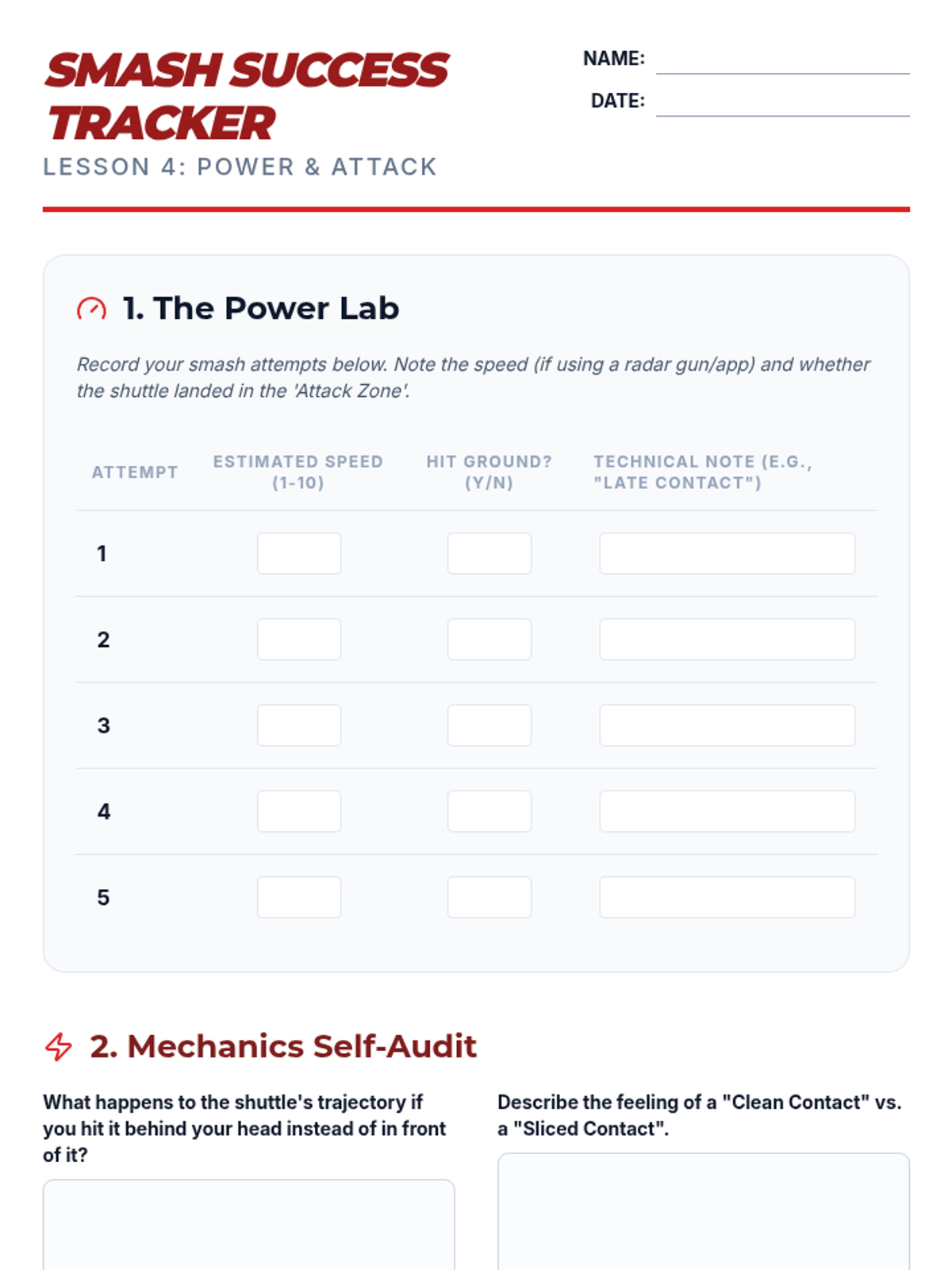
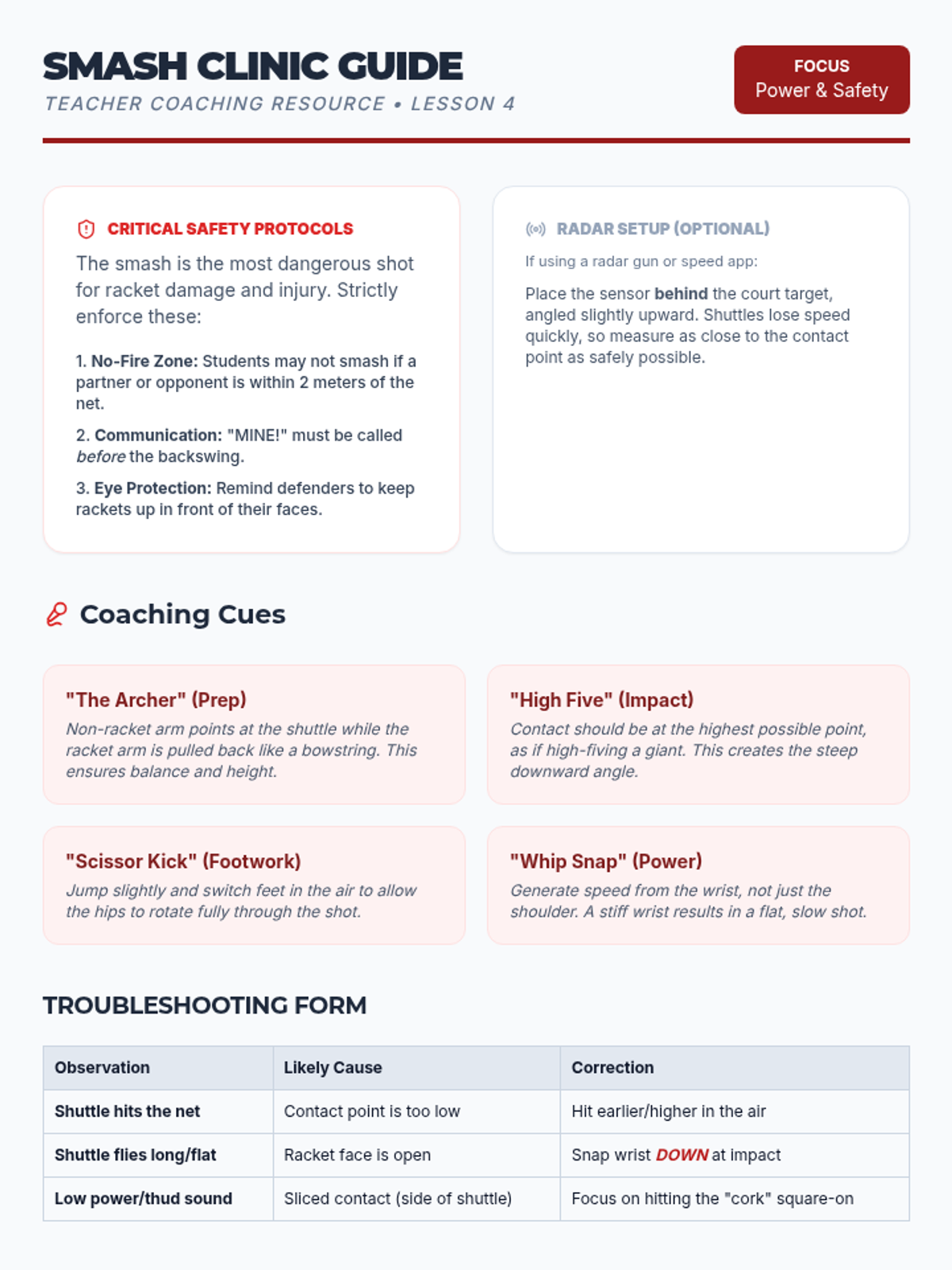
The most aggressive stroke in badminton, the smash, is introduced with a focus on timing, contact point, and safety during doubles play.
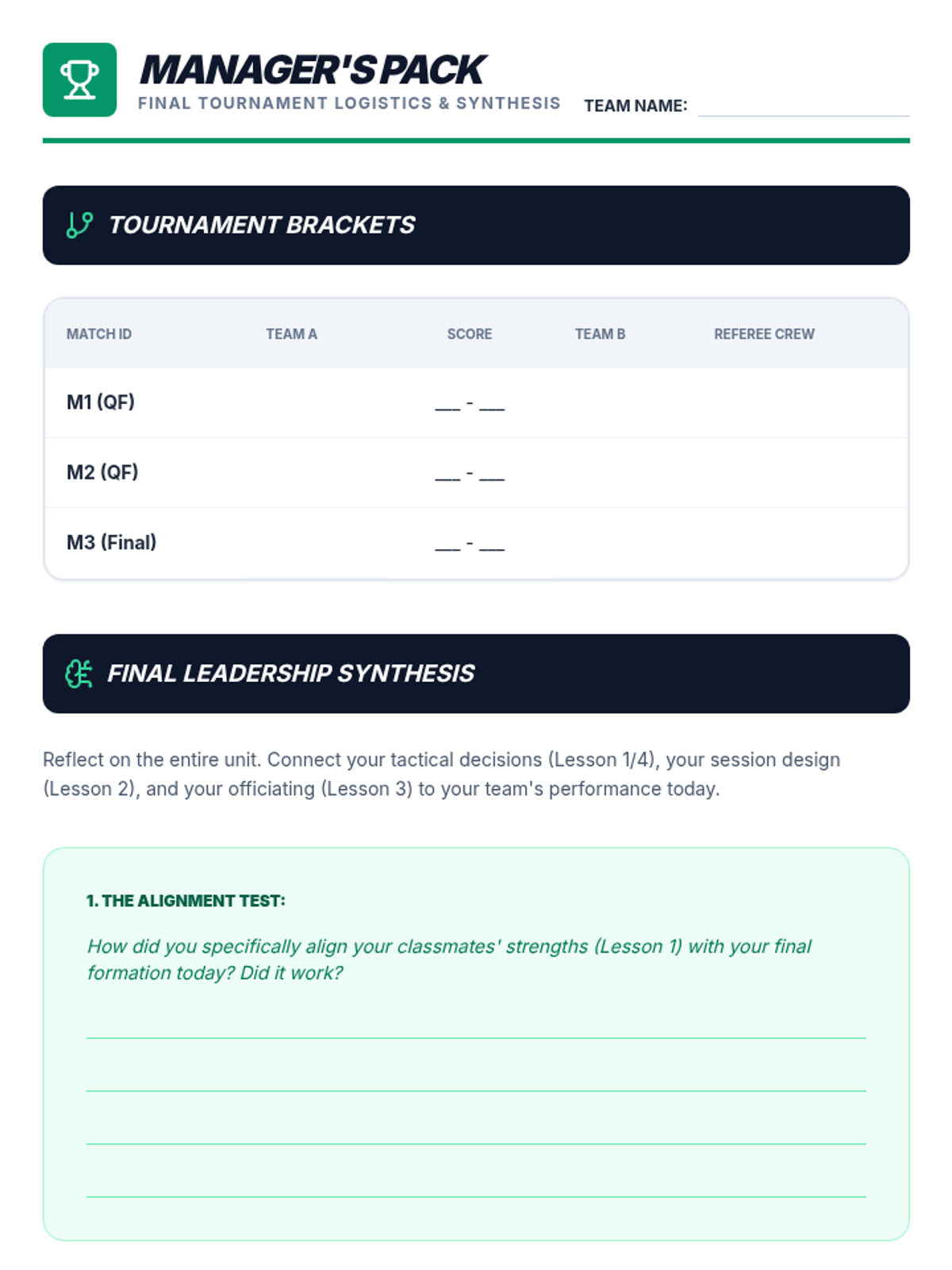
A cumulative student-led tournament where students synthesize their tactical, coaching, and officiating skills to manage and compete in a final event.
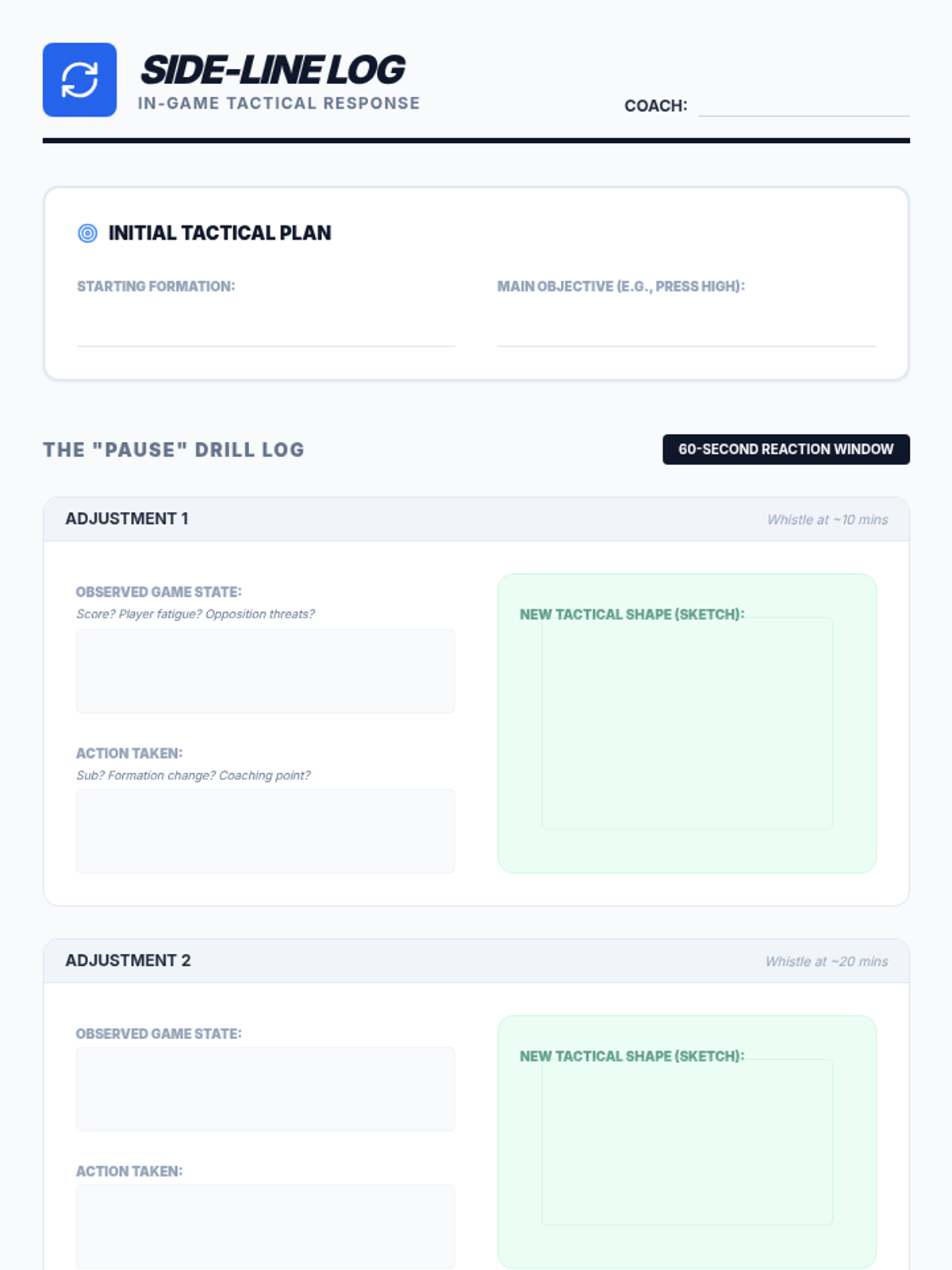
Focuses on real-time tactical adjustments during gameplay, requiring student-coaches to respond to game states and scenario-based challenges.
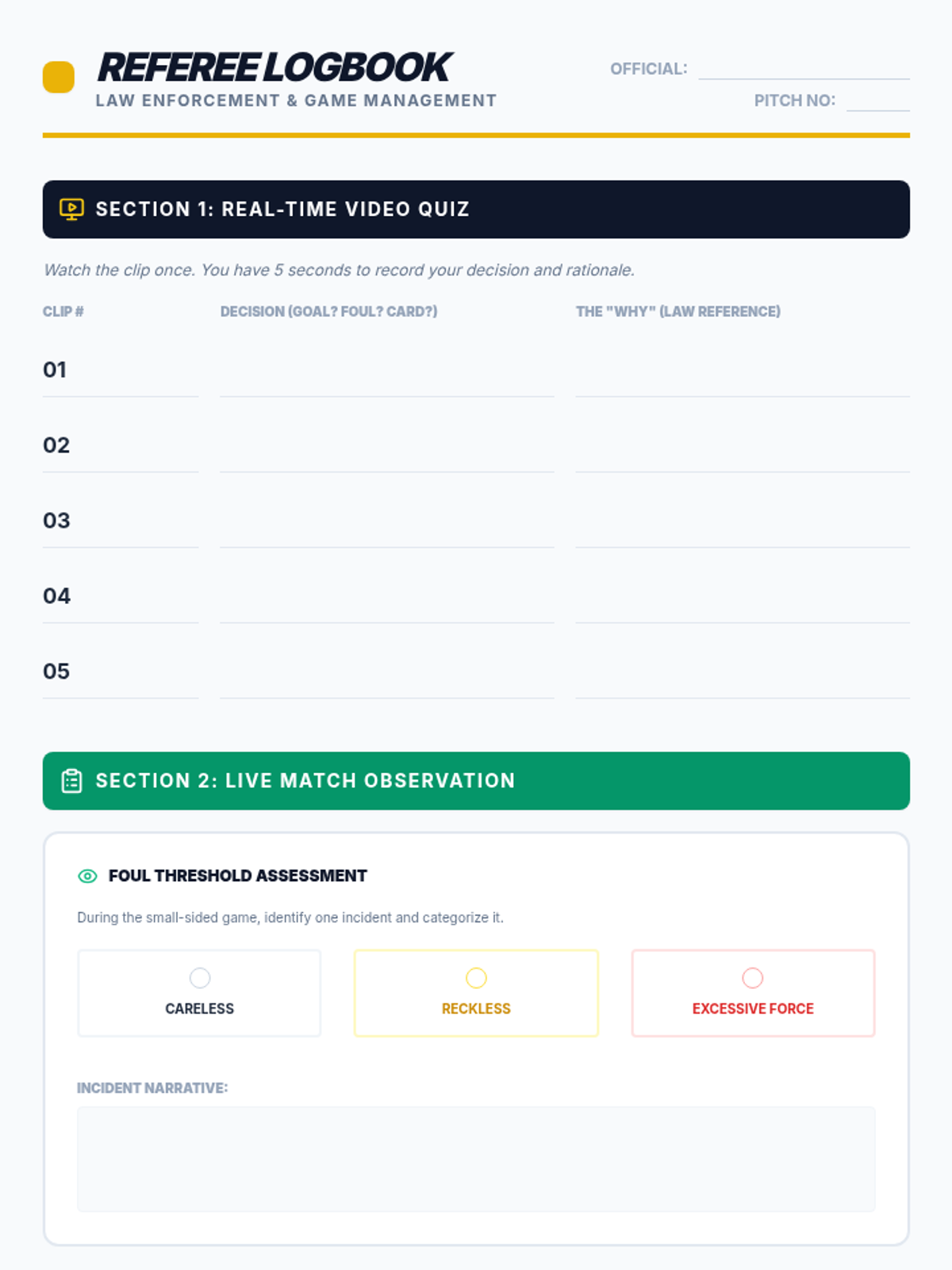
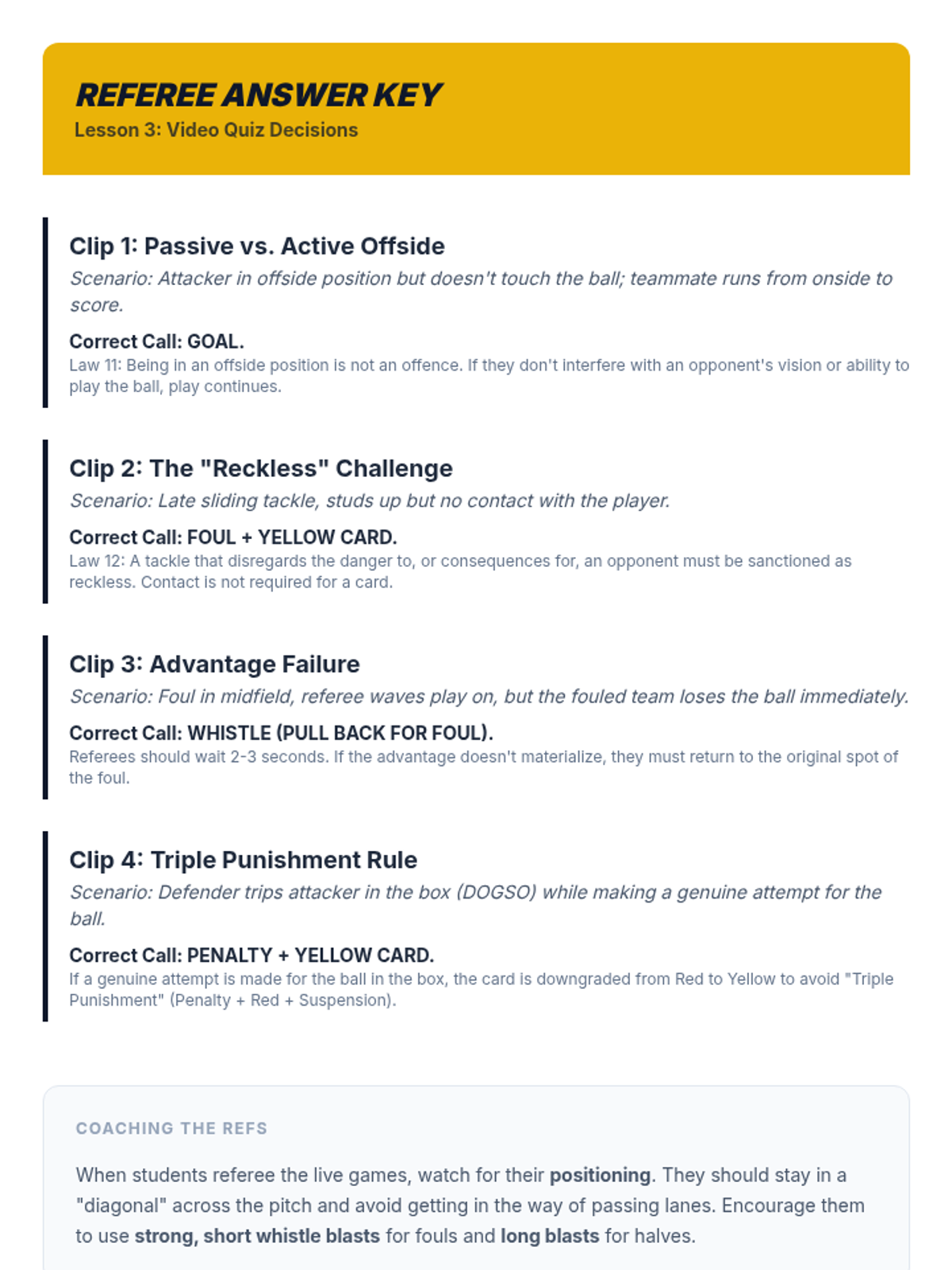
Students explore the complexities of officiating, including the offside rule and game management, while practicing decision-making in real-time scenarios.
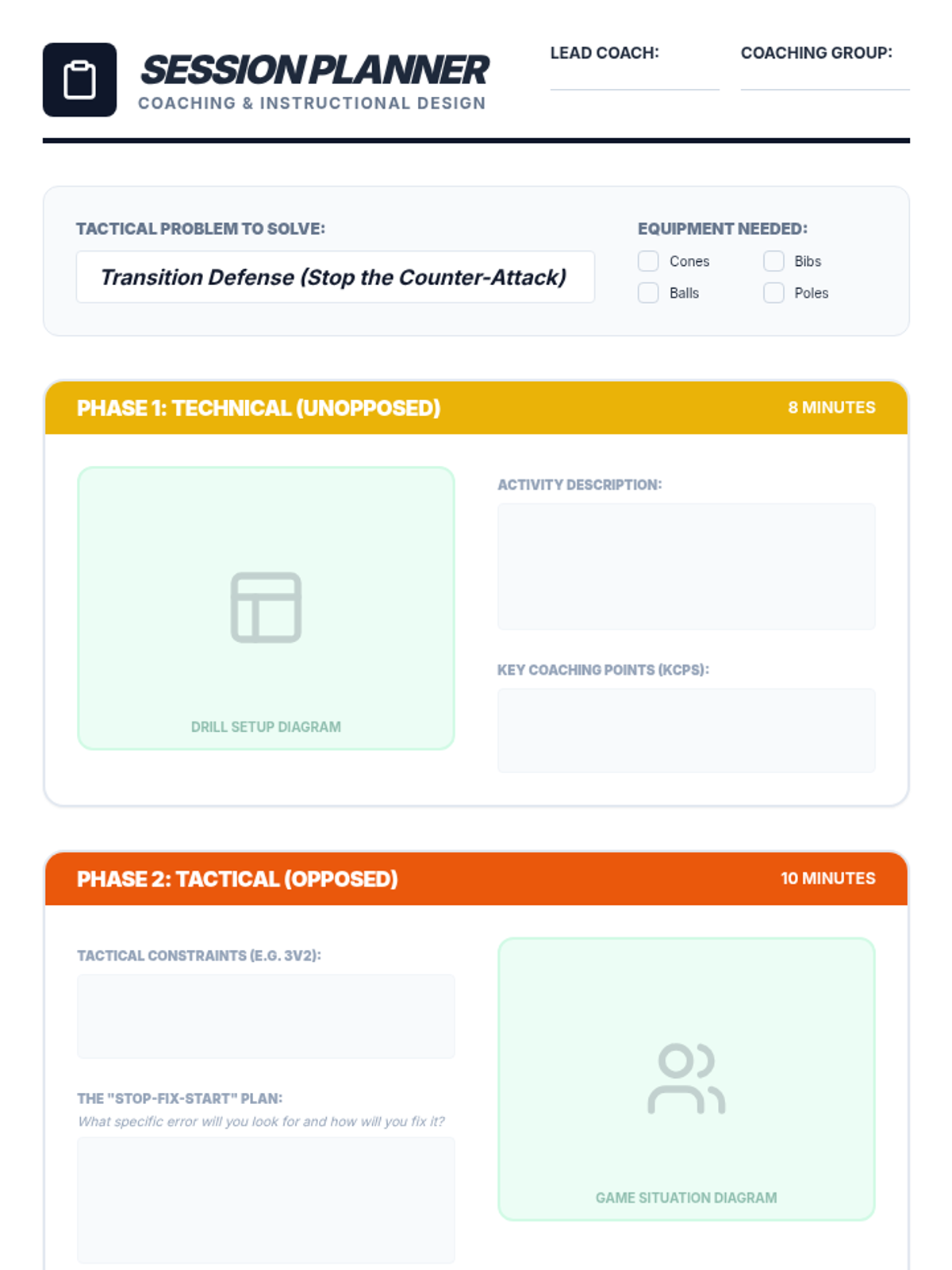
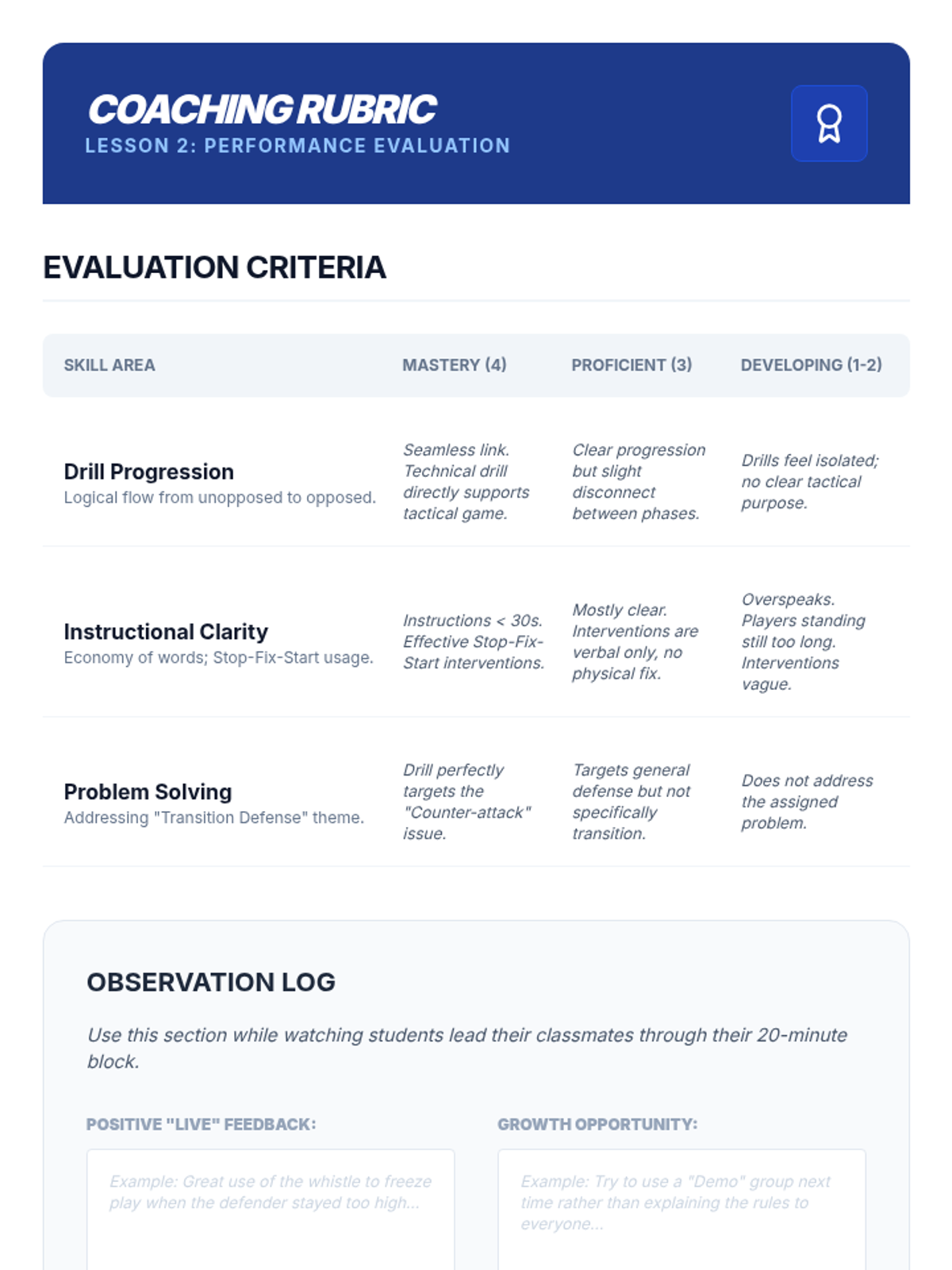
Students design a structured training session to address specific team weaknesses, focusing on drill progression and instructional clarity.
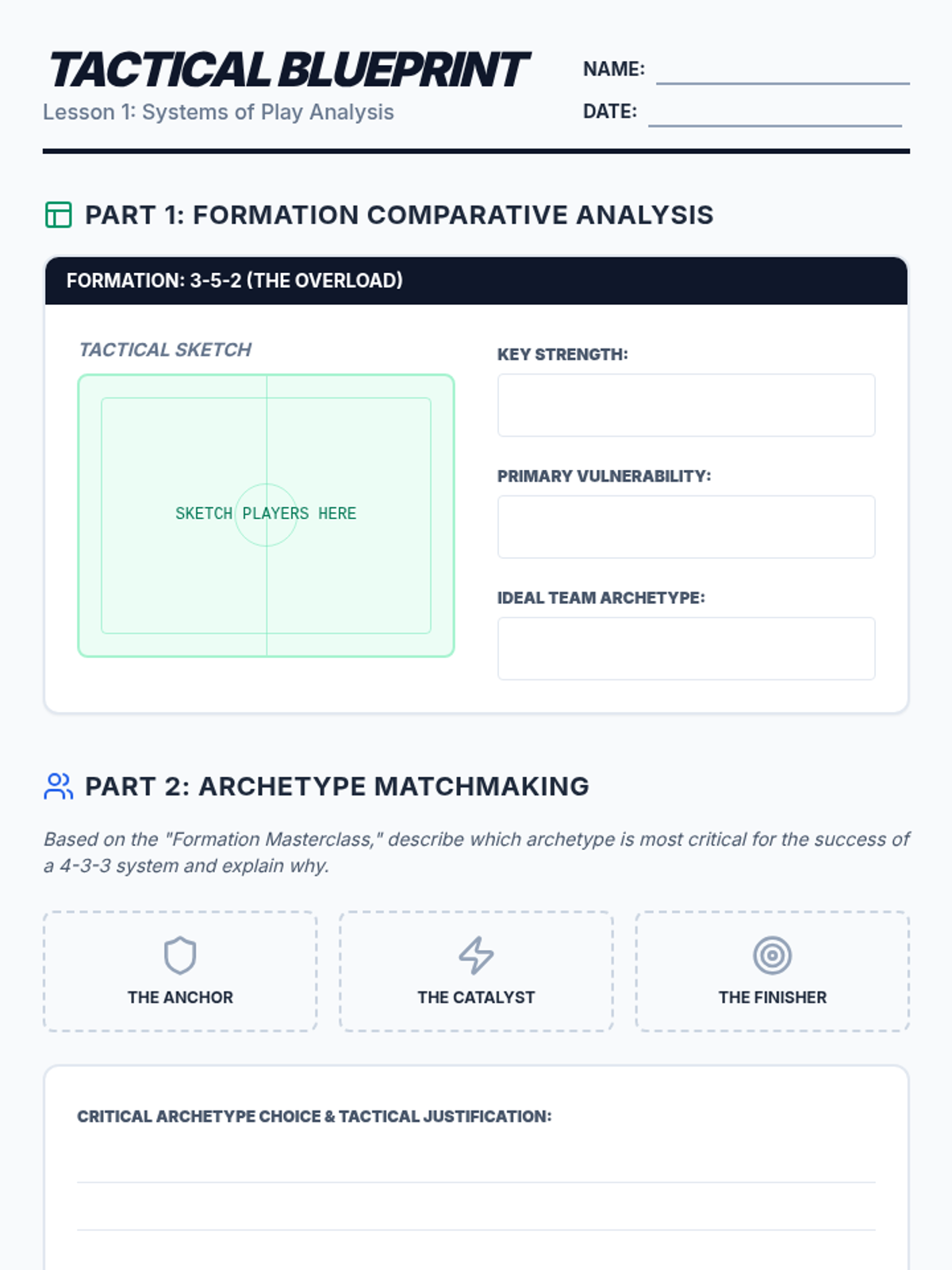
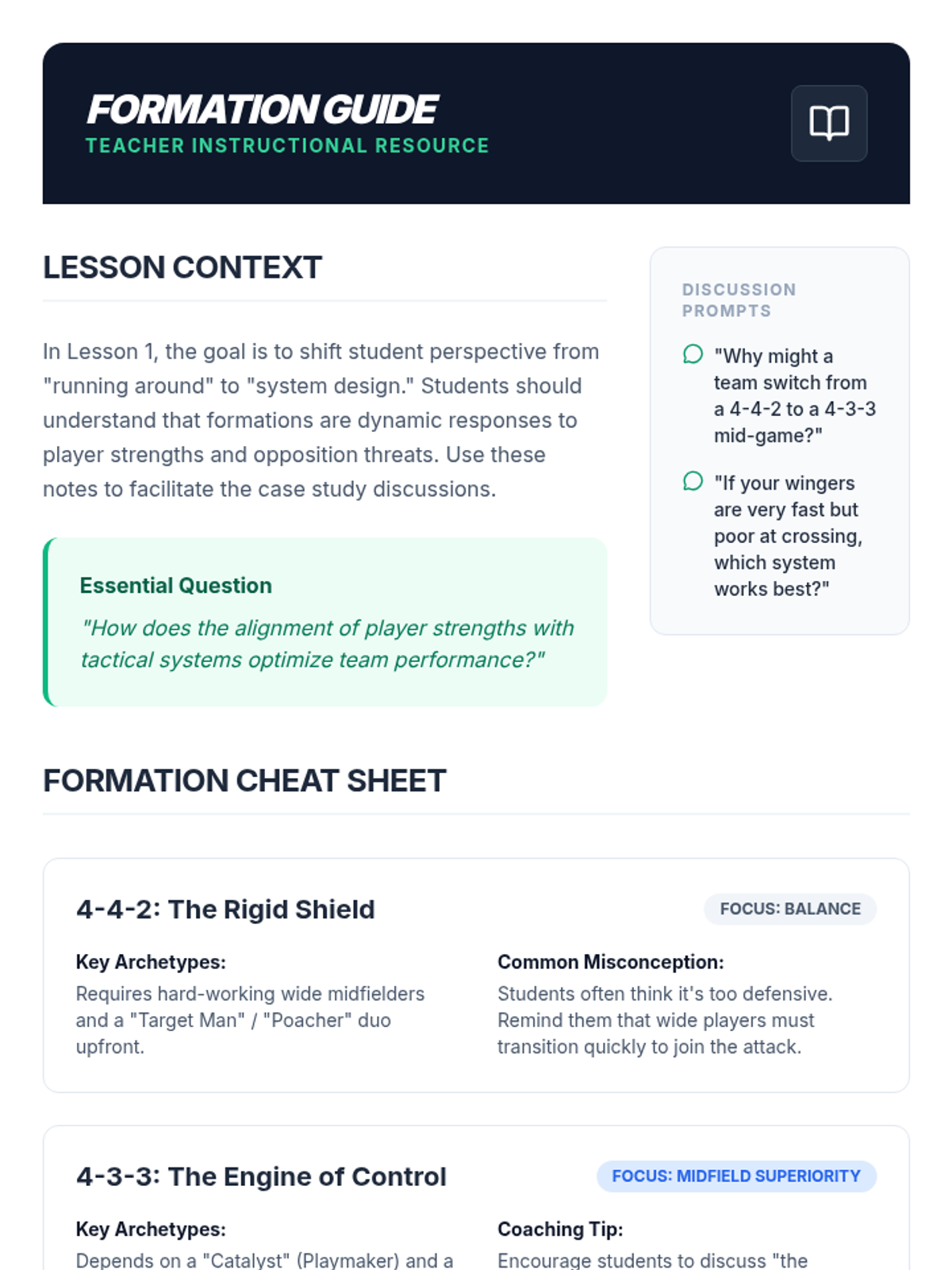
Students analyze and compare common football formations (4-4-2, 4-3-3, 3-5-2) and match player archetypes to specific tactical roles.
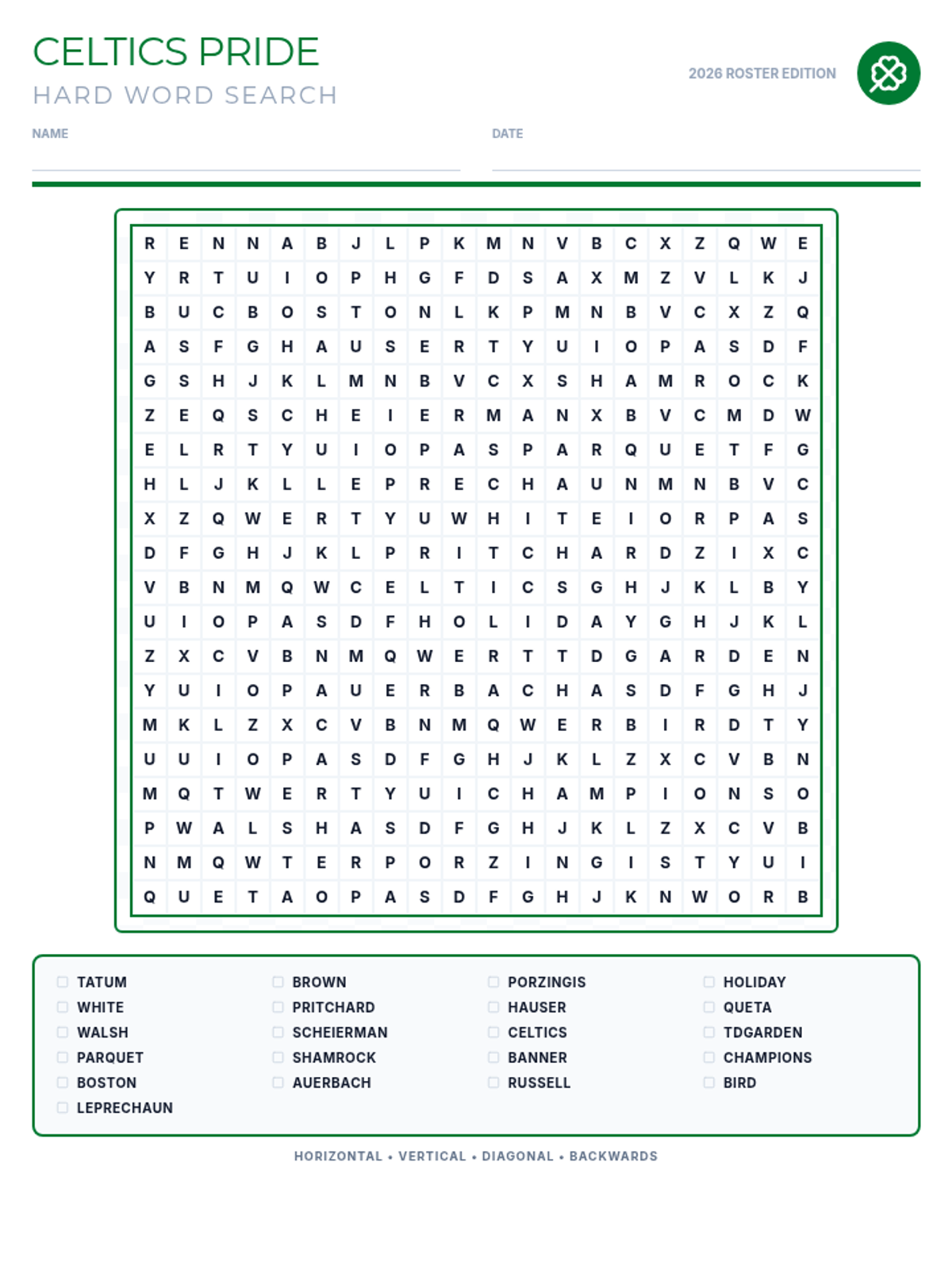
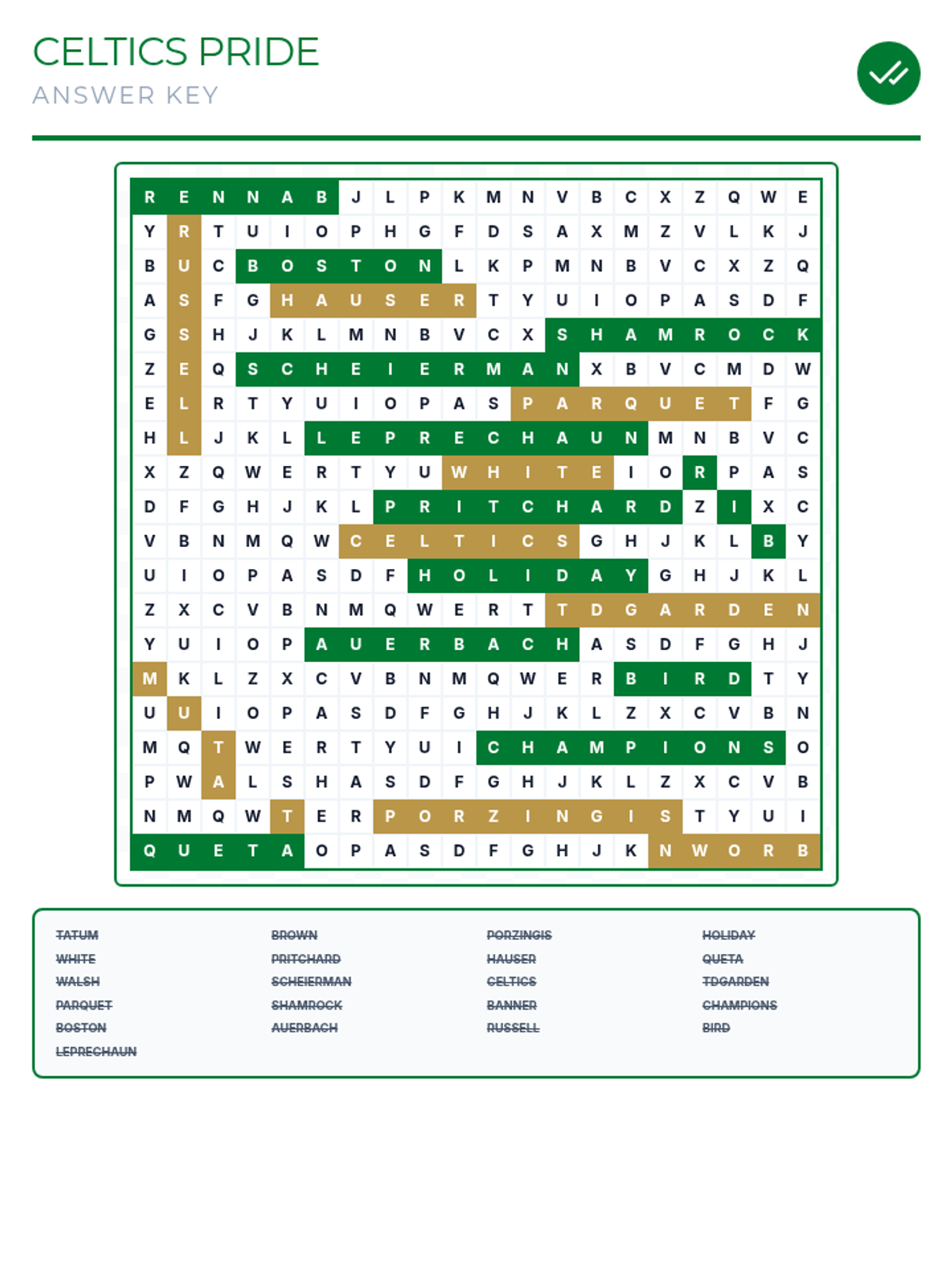
A challenging word search activity focused on the Boston Celtics, featuring 2026 roster players and franchise terminology.
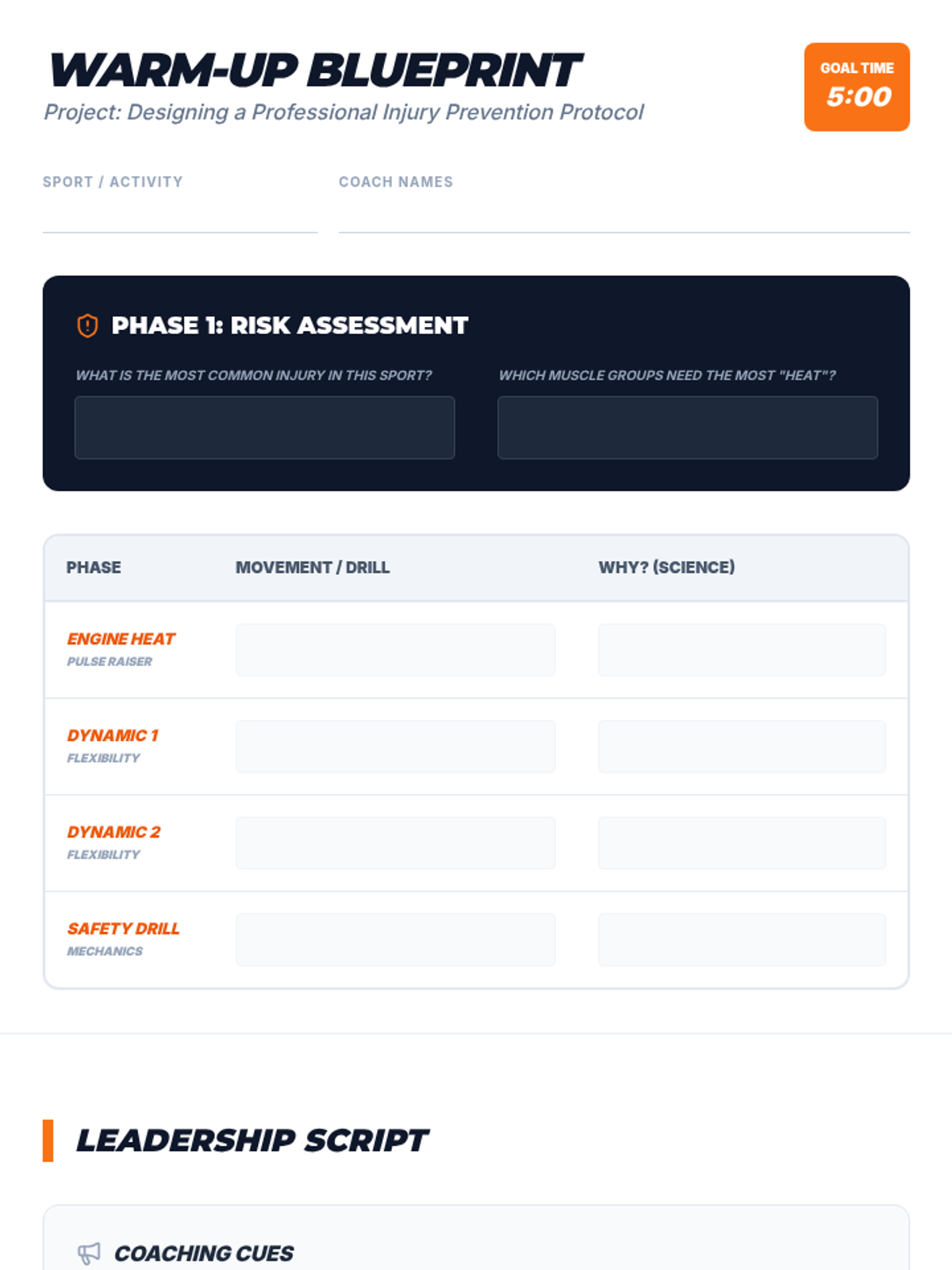
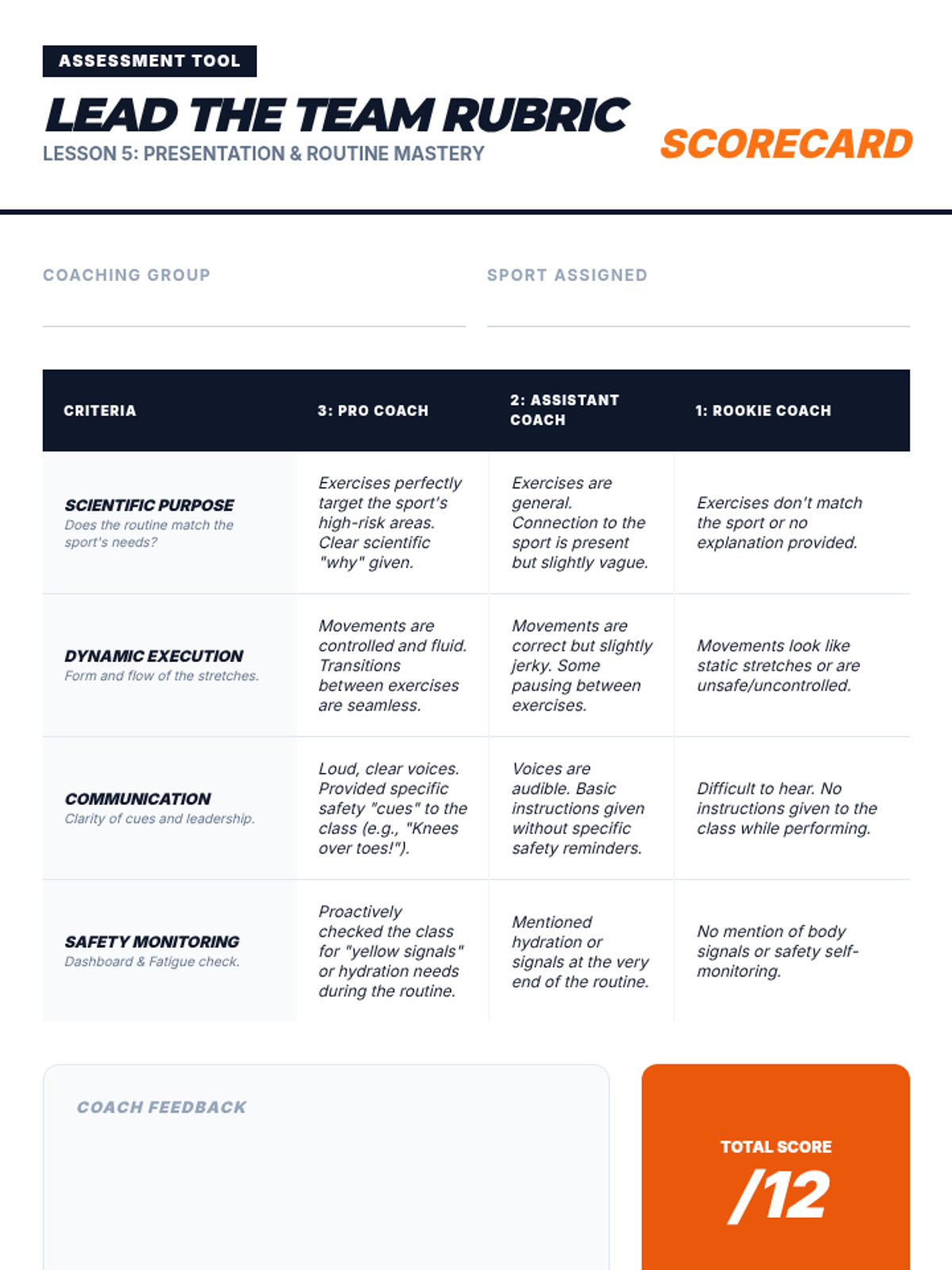
Synthesizing the previous lessons, students work in small groups to create a 5-minute warm-up routine tailored to a specific sport or activity. They present and lead the class through their routine, explaining how each movement prevents injuries common to that sport.
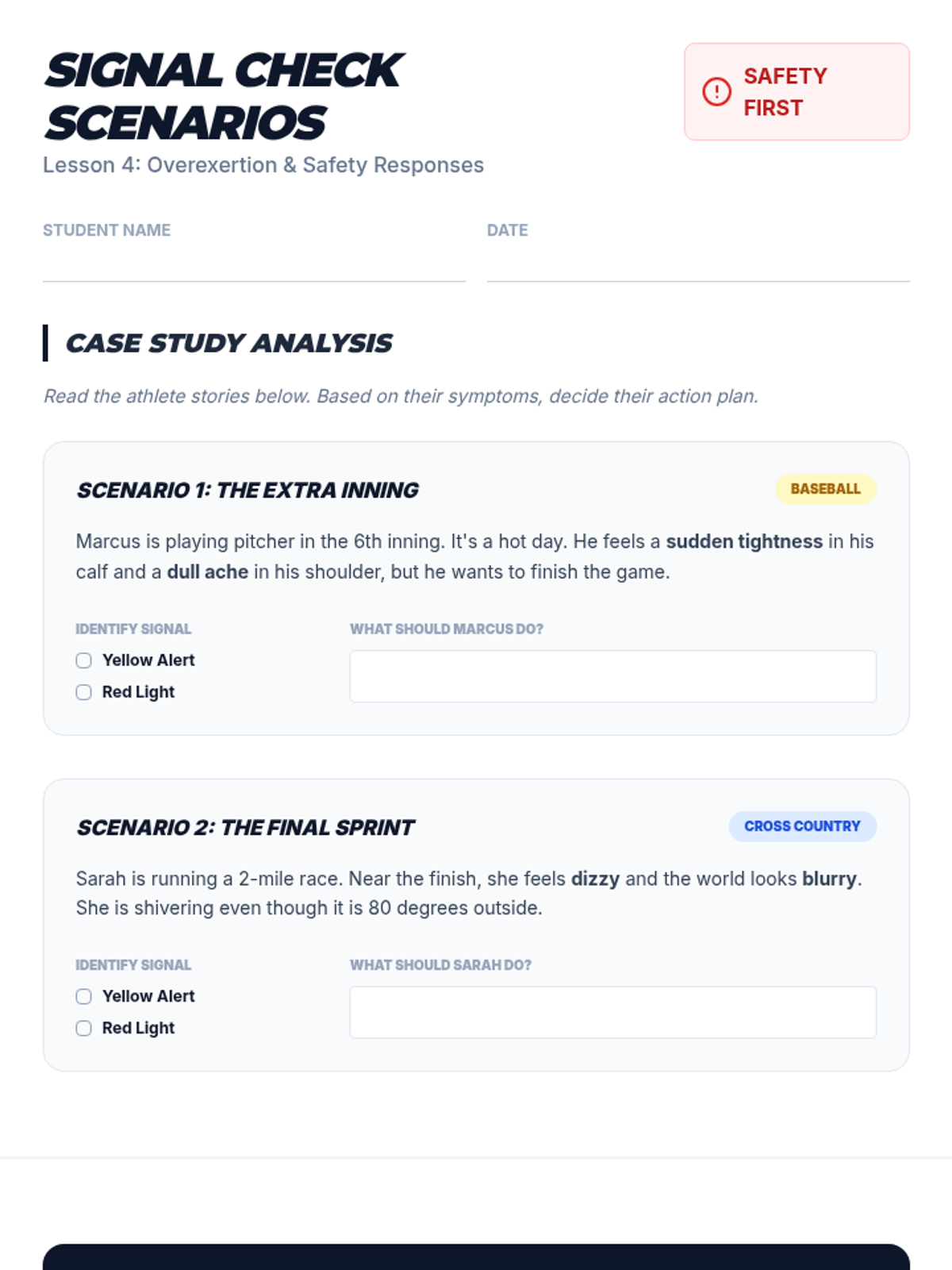
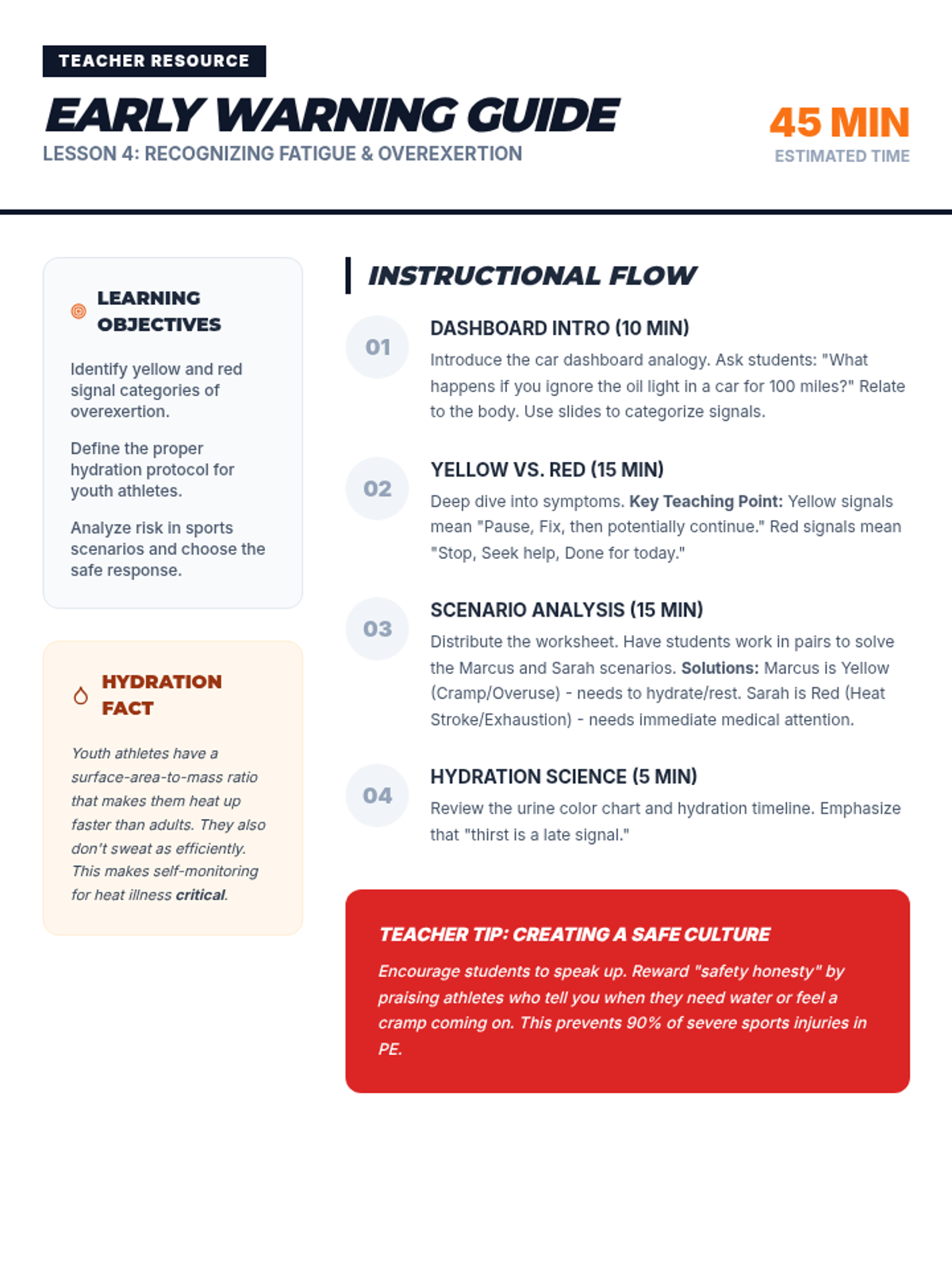
Students learn to identify the body's warning signals, such as cramps, dizziness, or pain, that indicate a need for rest or hydration. Through scenario analysis, they determine the appropriate response to various symptoms to prevent heat illness or overuse injuries.
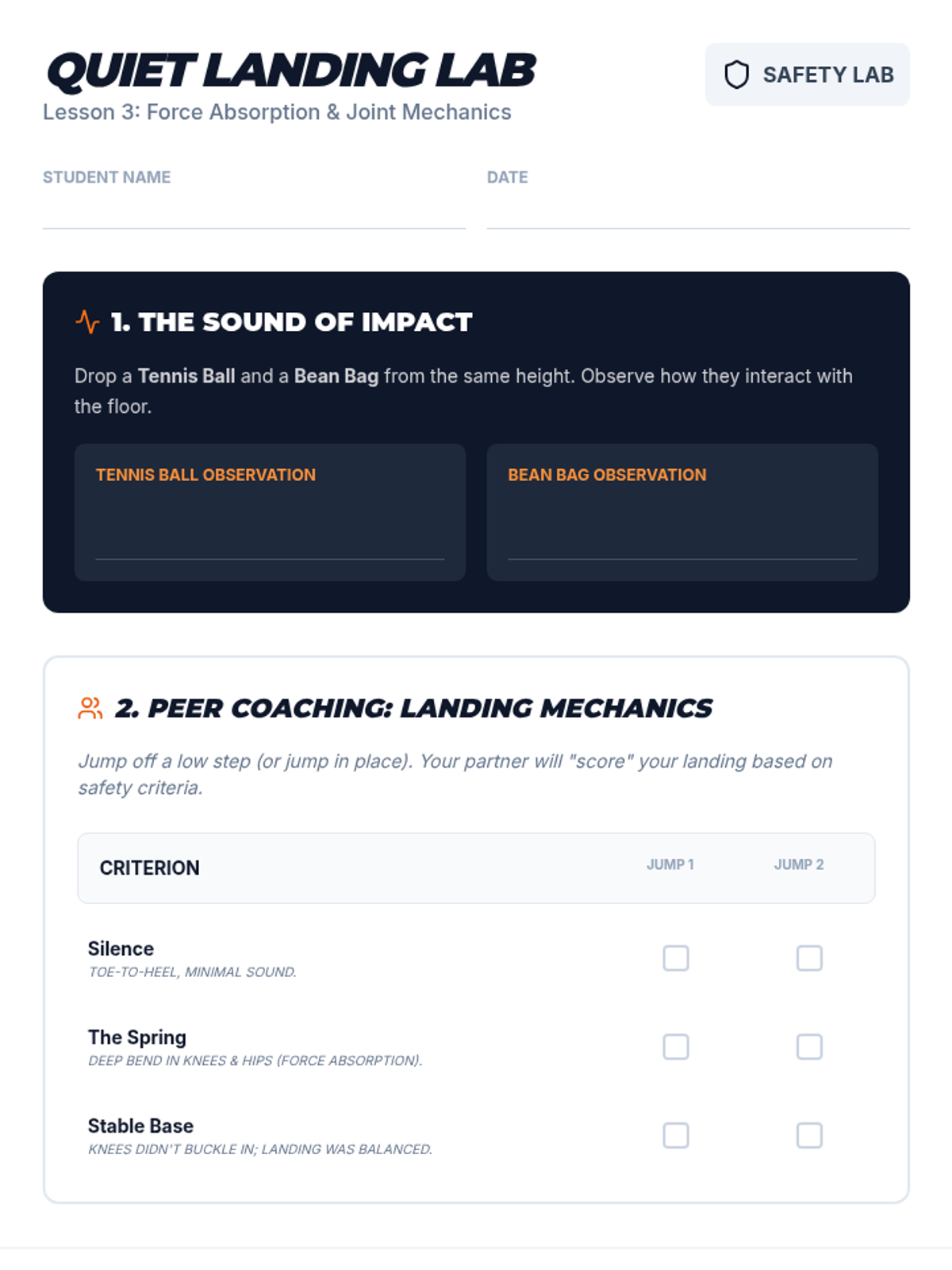
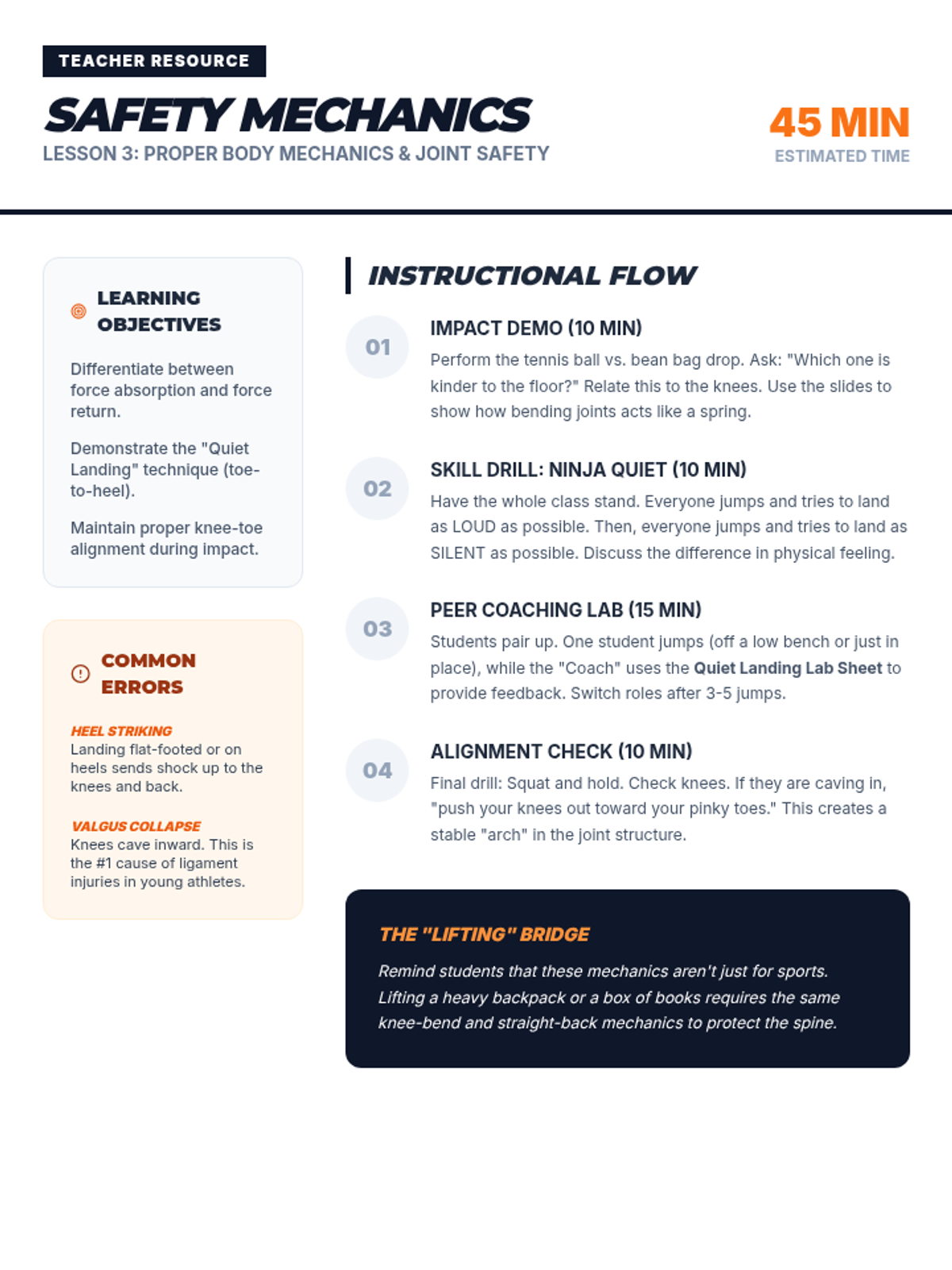
Focusing on joint safety, this lesson covers correct alignment for landing, jumping, and lifting. Students practice 'quiet landings' to reduce impact on knees and ankles, receiving peer feedback on their form to ensure structural safety.
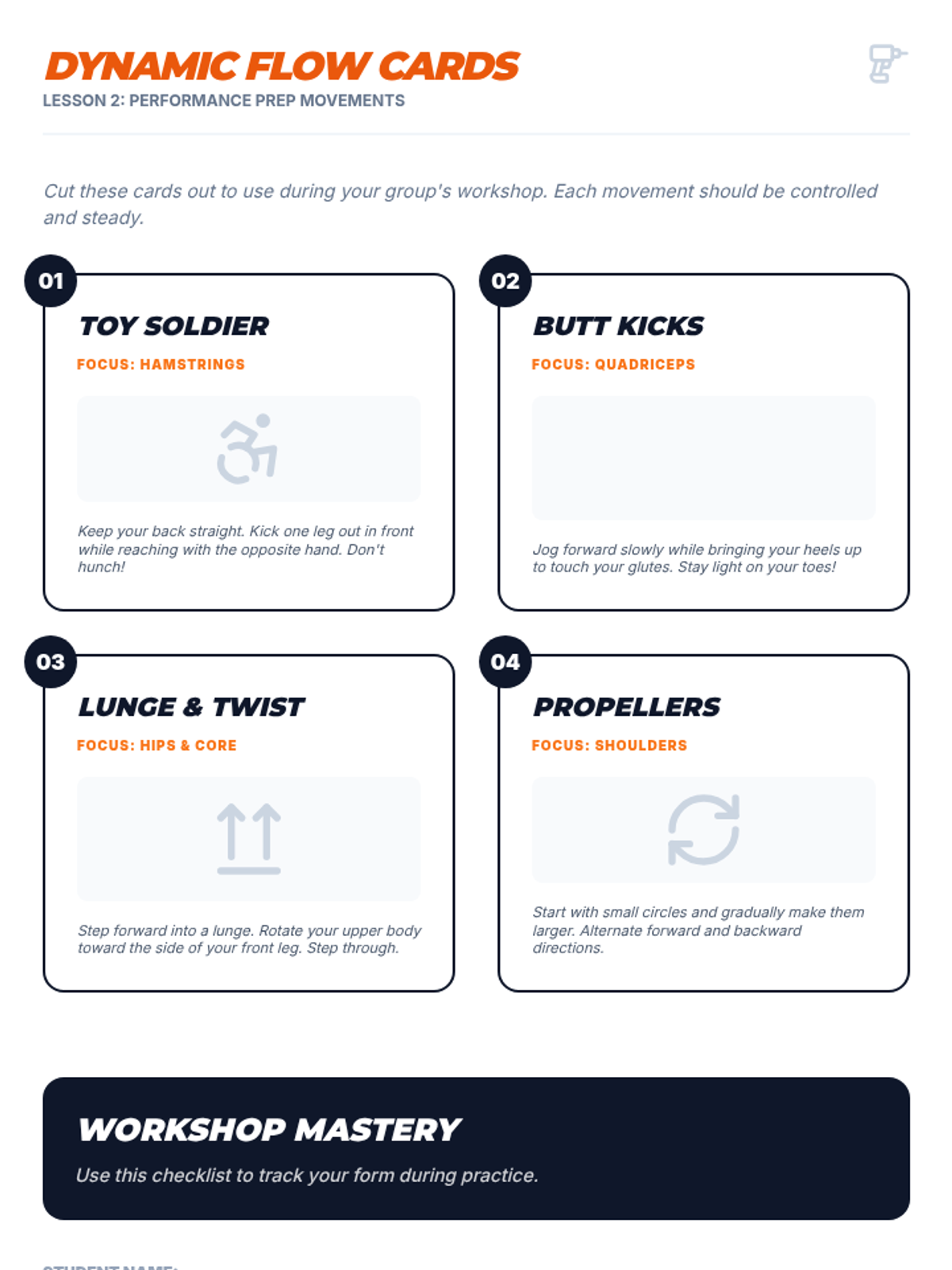
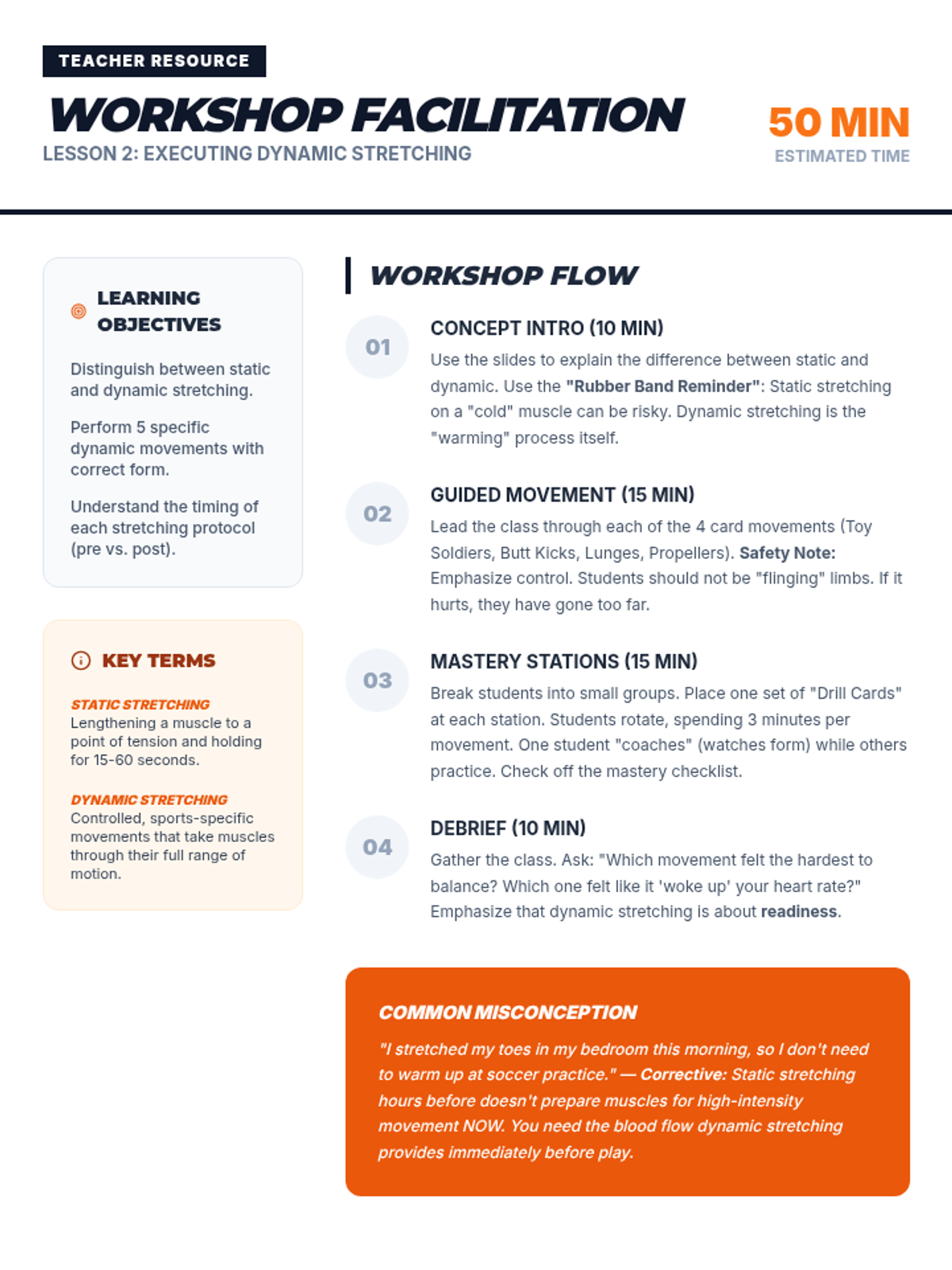
Students participate in a guided workshop to learn and practice dynamic stretching movements suitable for pre-activity preparation. The lesson distinguishes these active movements from static stretching, emphasizing when each type is appropriate to prevent muscle strain.
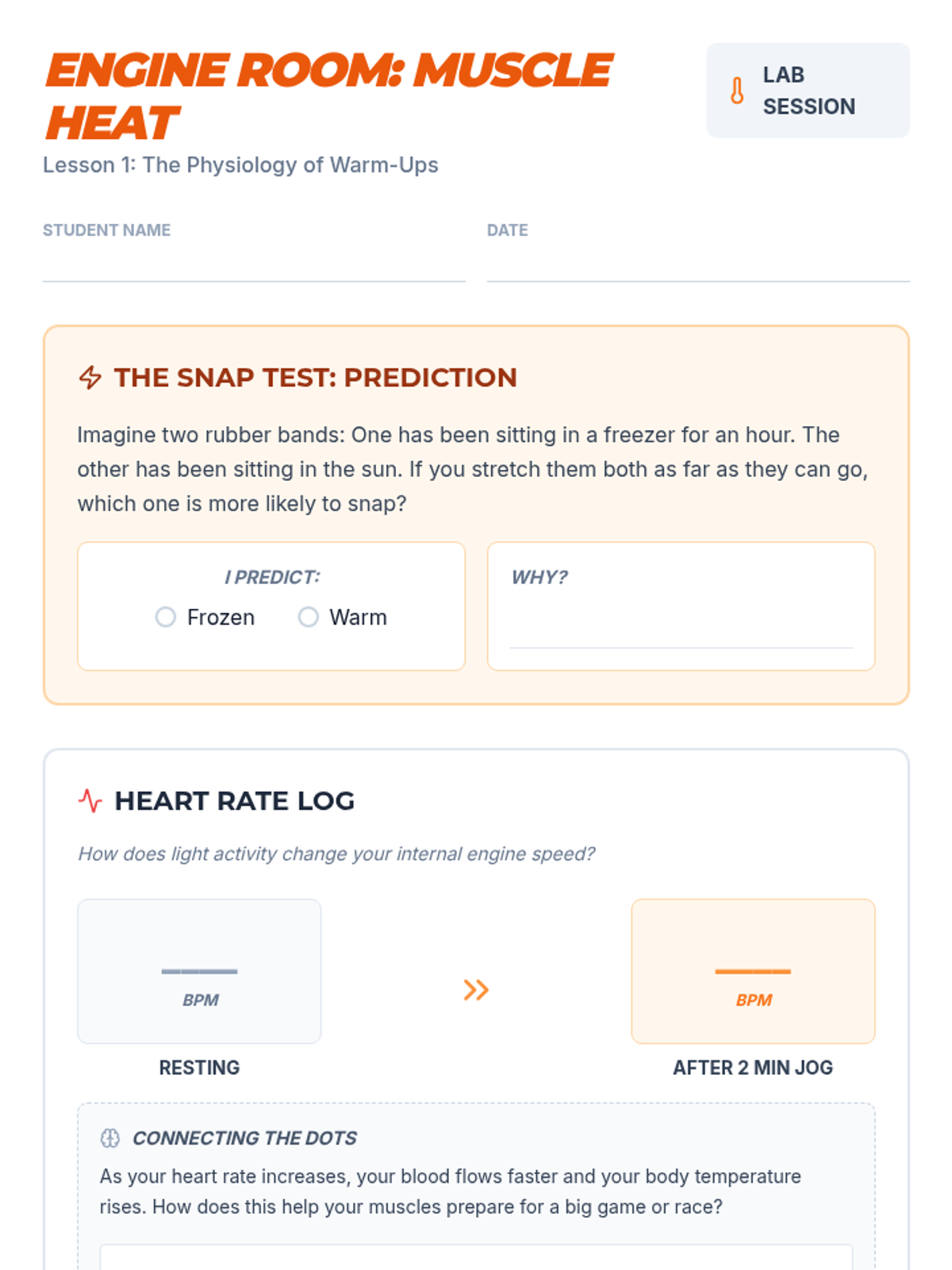
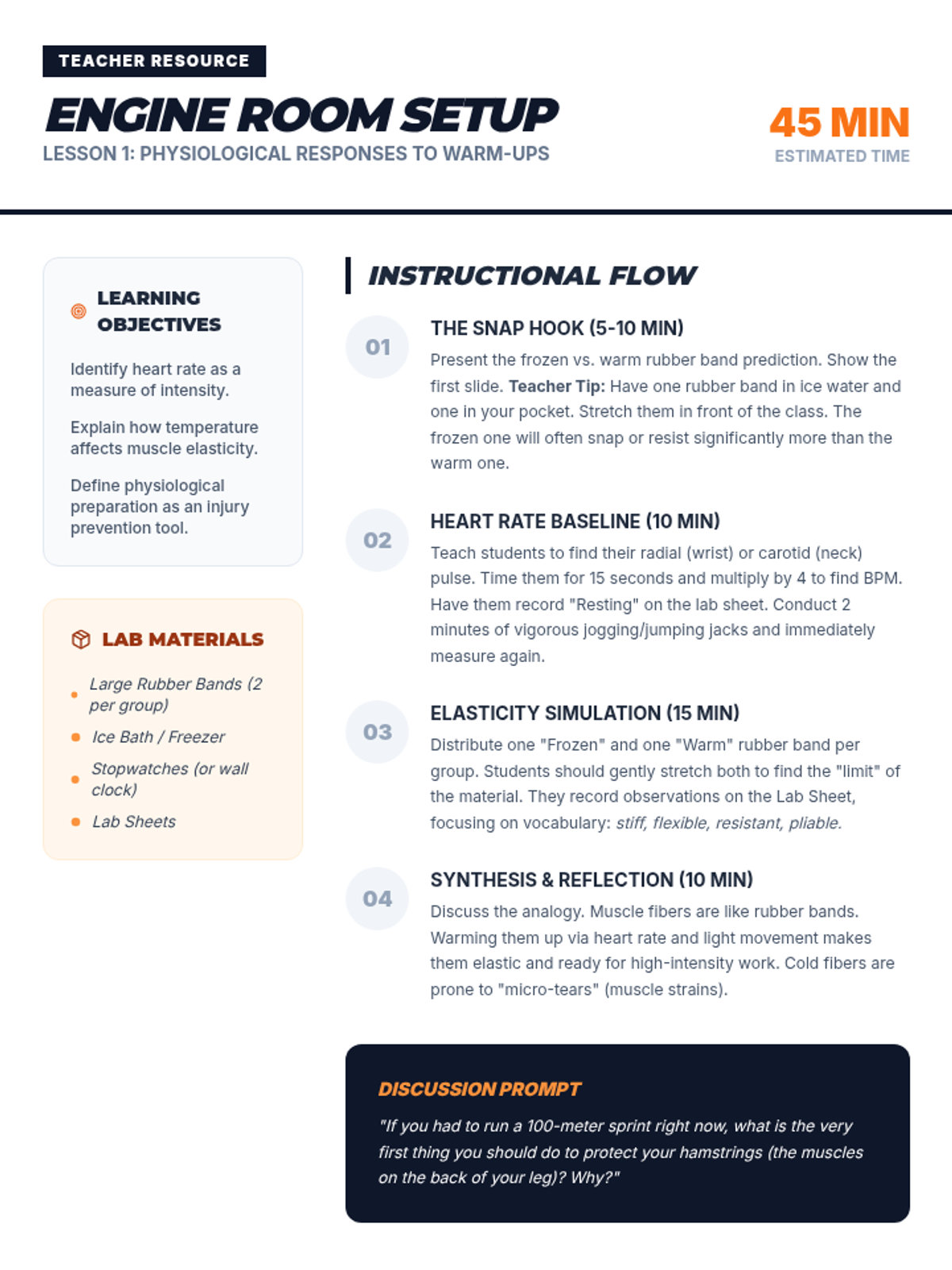
Students investigate the physiology of warm-ups, using a rubber band simulation to understand muscle elasticity and tracking heart rate changes during activity.
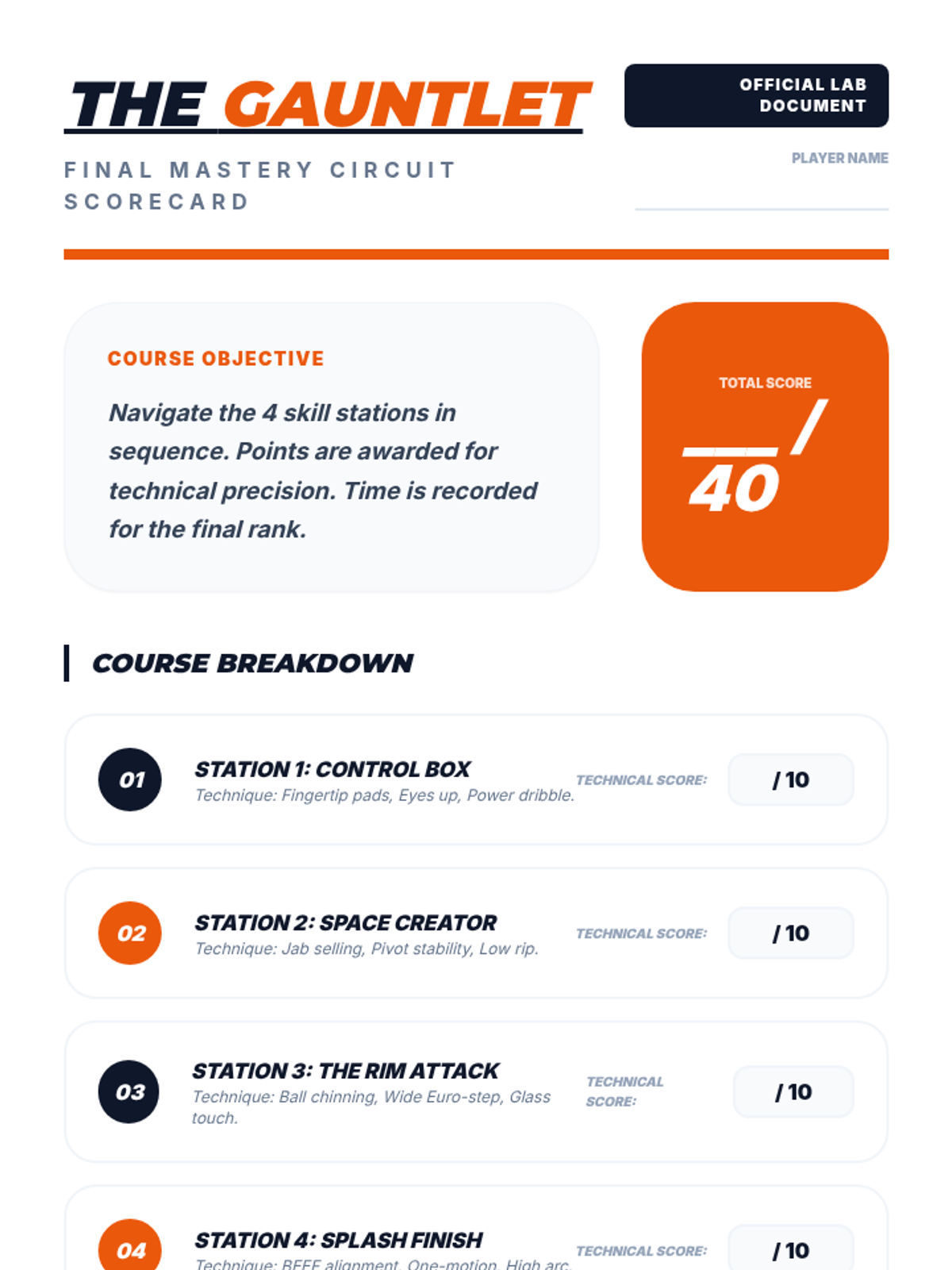
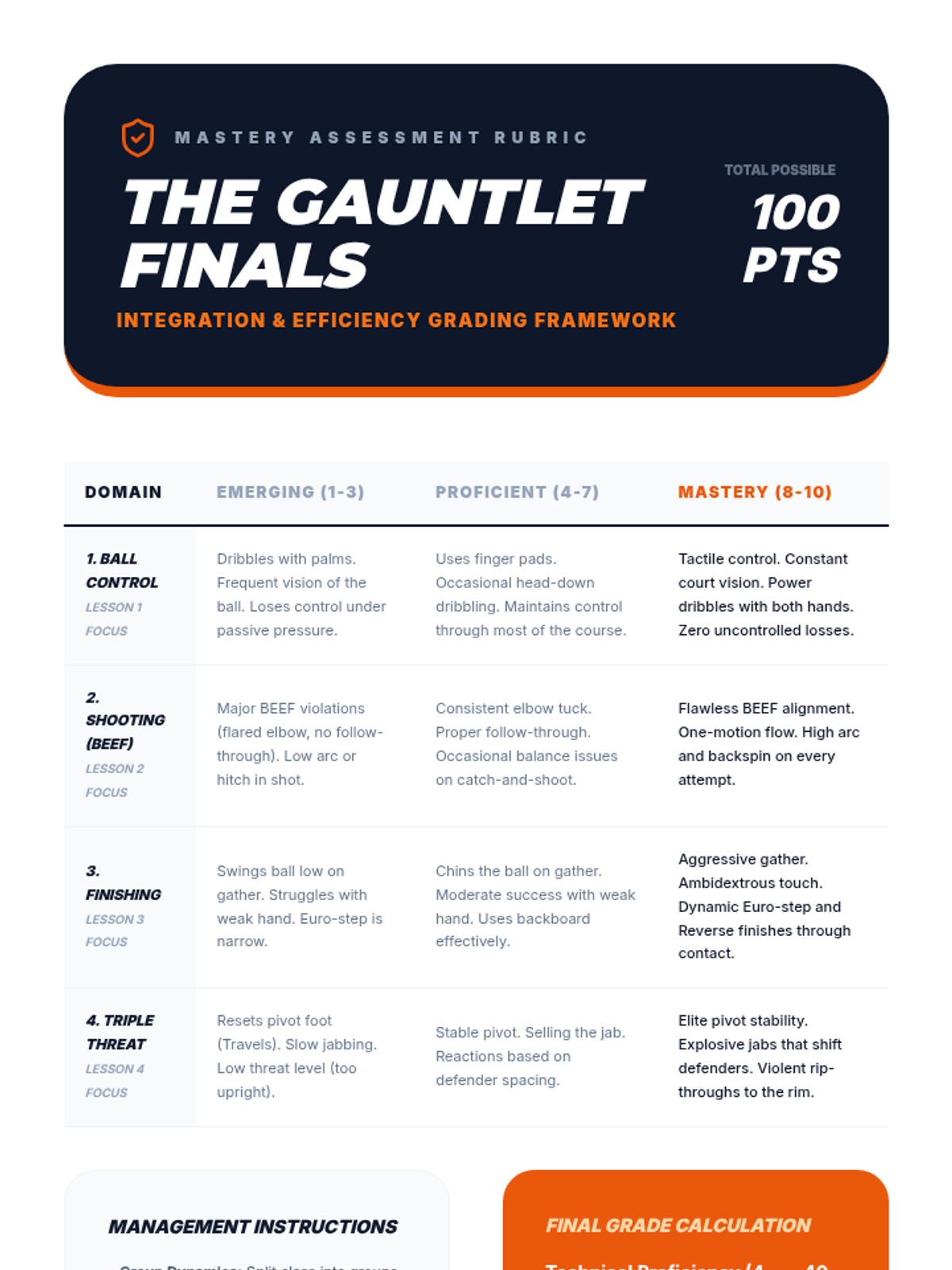
A mastery-based circuit combining dribbling, spacing, and shooting into fluid sequences. Includes the 'Gauntlet Challenge' obstacle course.
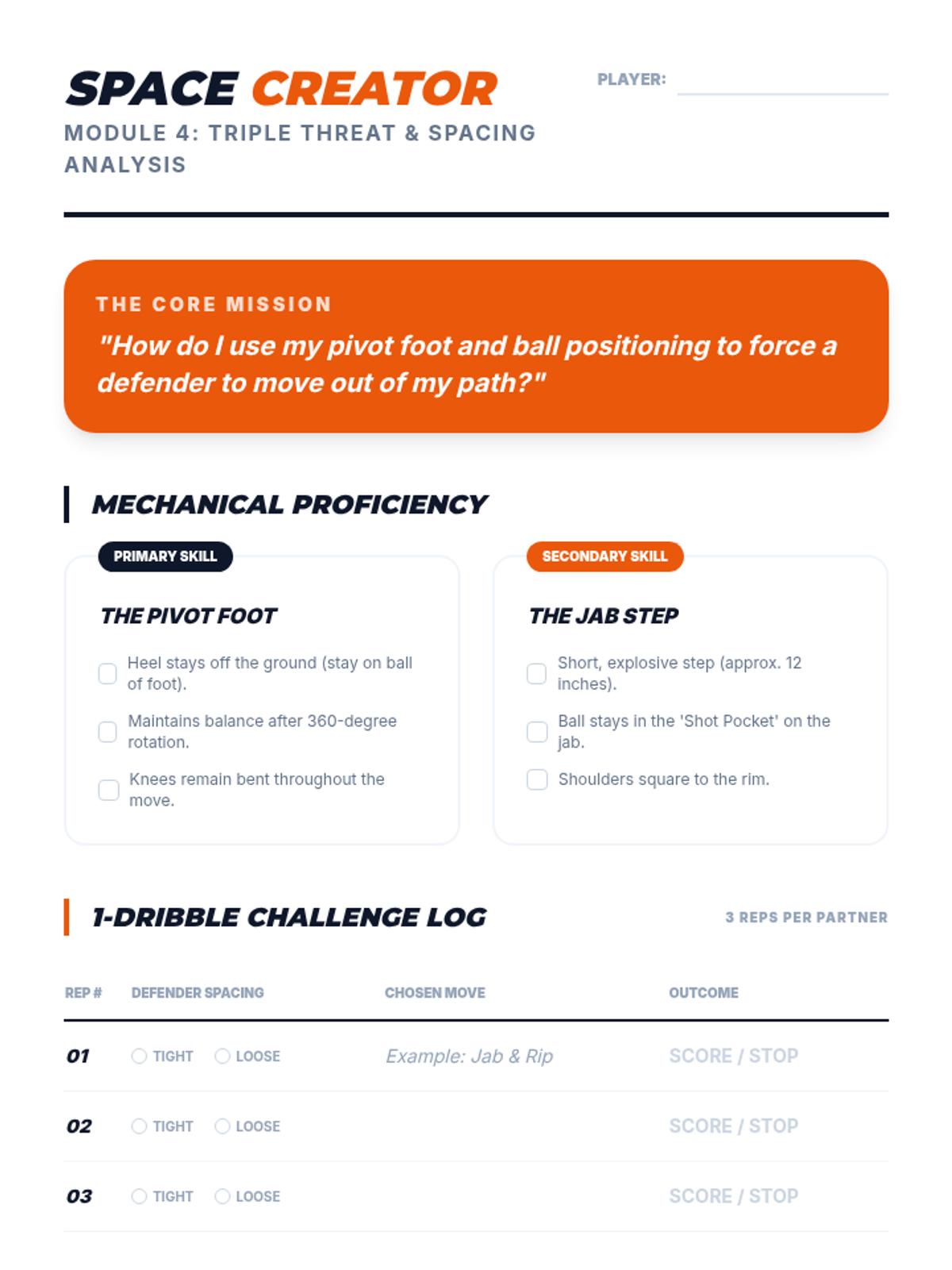
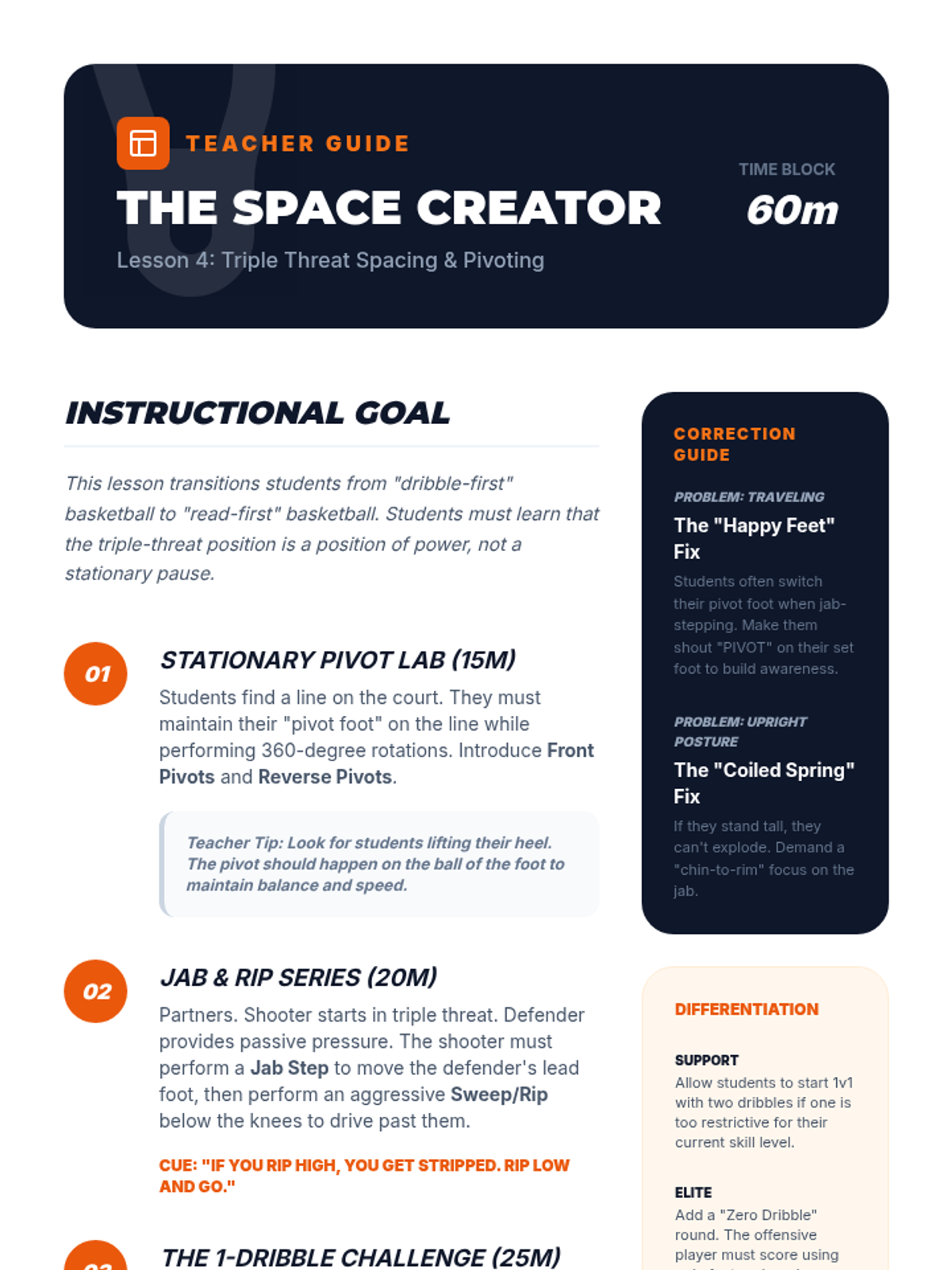
Utilizing the triple threat position to read defenders and create space. Covers jabs, rips, and pivot footwork to initiate offense efficiently.
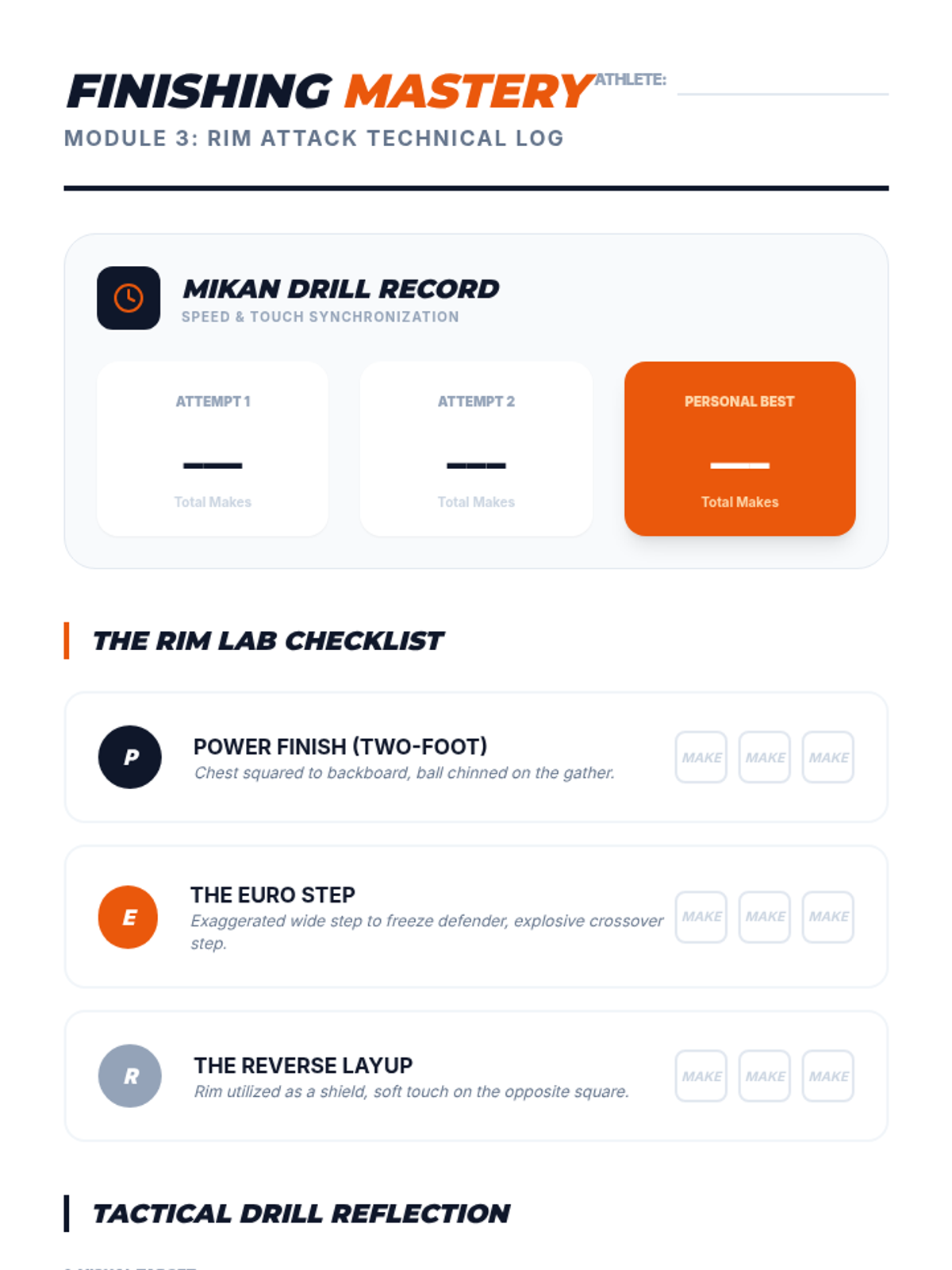
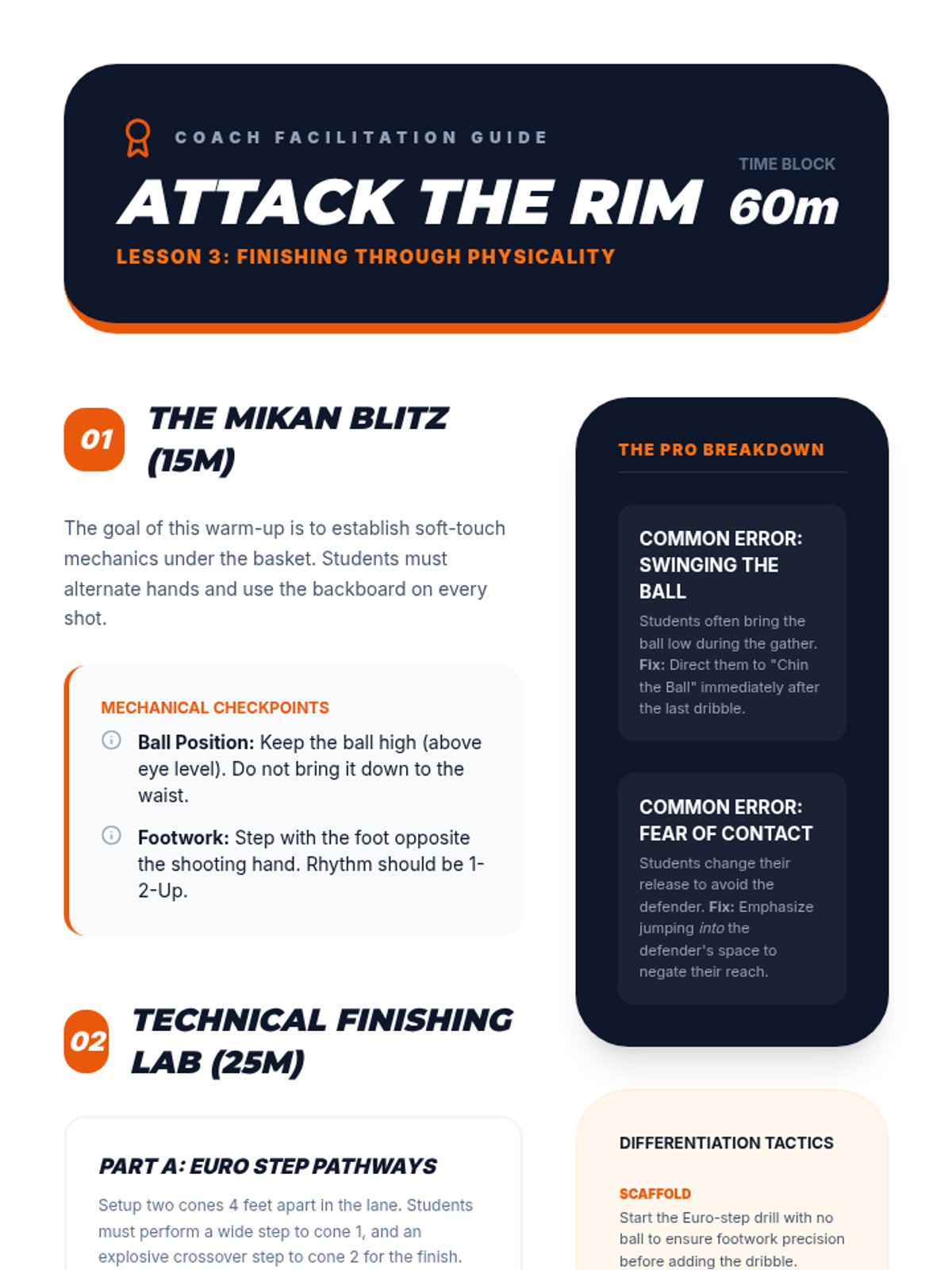
Exploring various layup techniques including Euro-steps, reverse layups, and power layups. Students learn to finish at the rim through contact and defensive pressure.
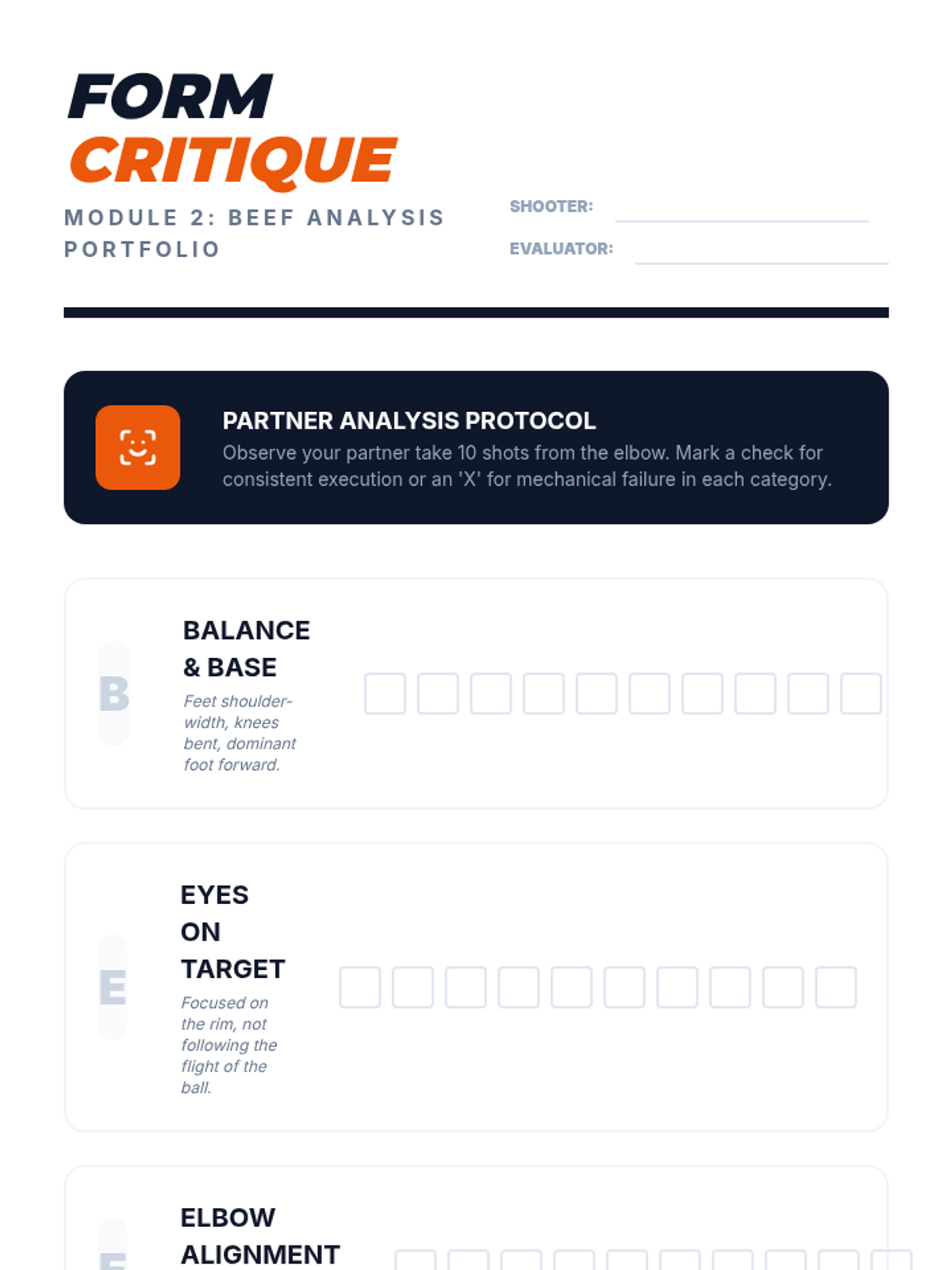
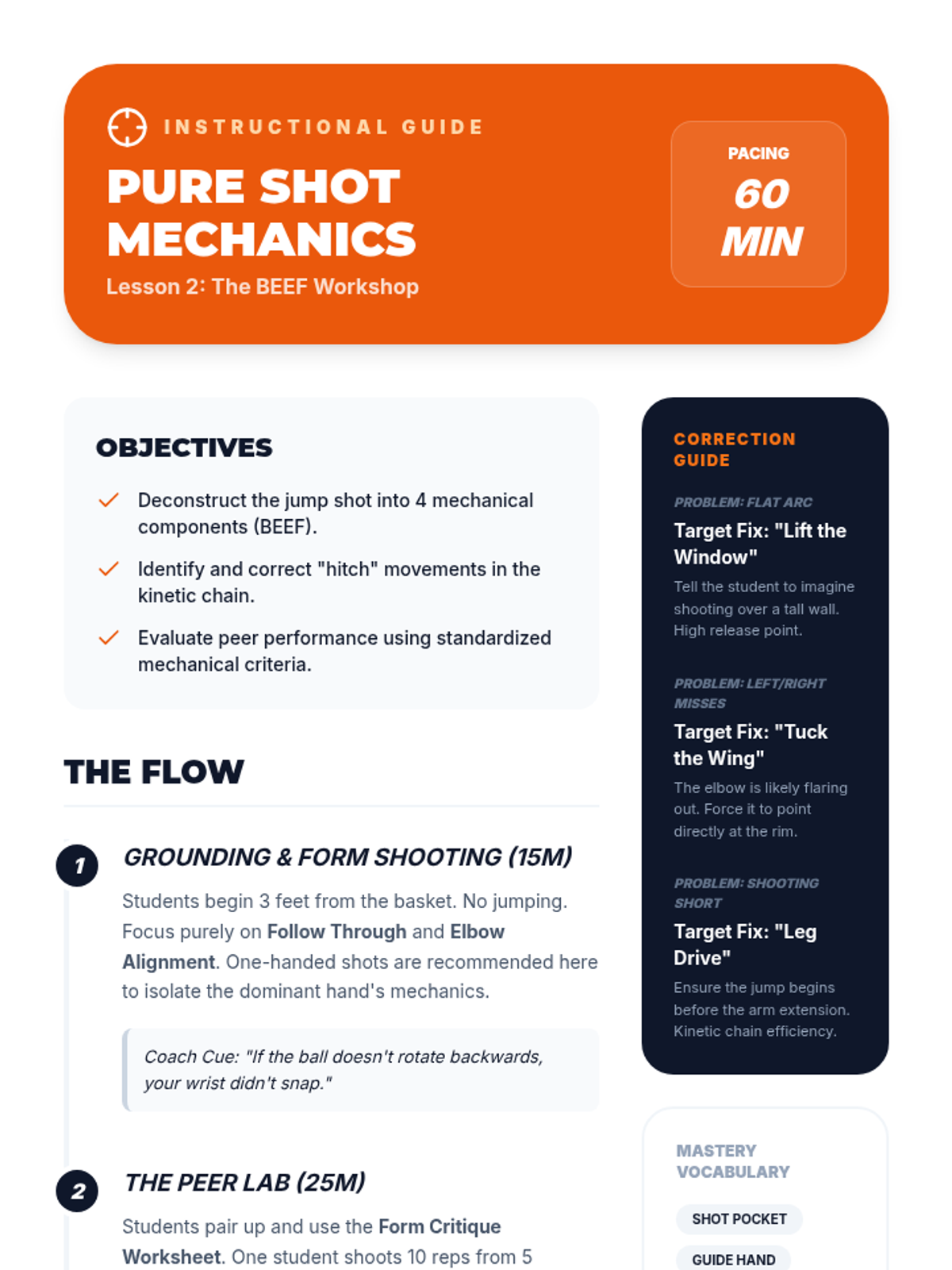
Breaking down the kinetic chain of a jump shot using the BEEF principle. Students use partner analysis to critique form and build muscle memory through spot shooting.
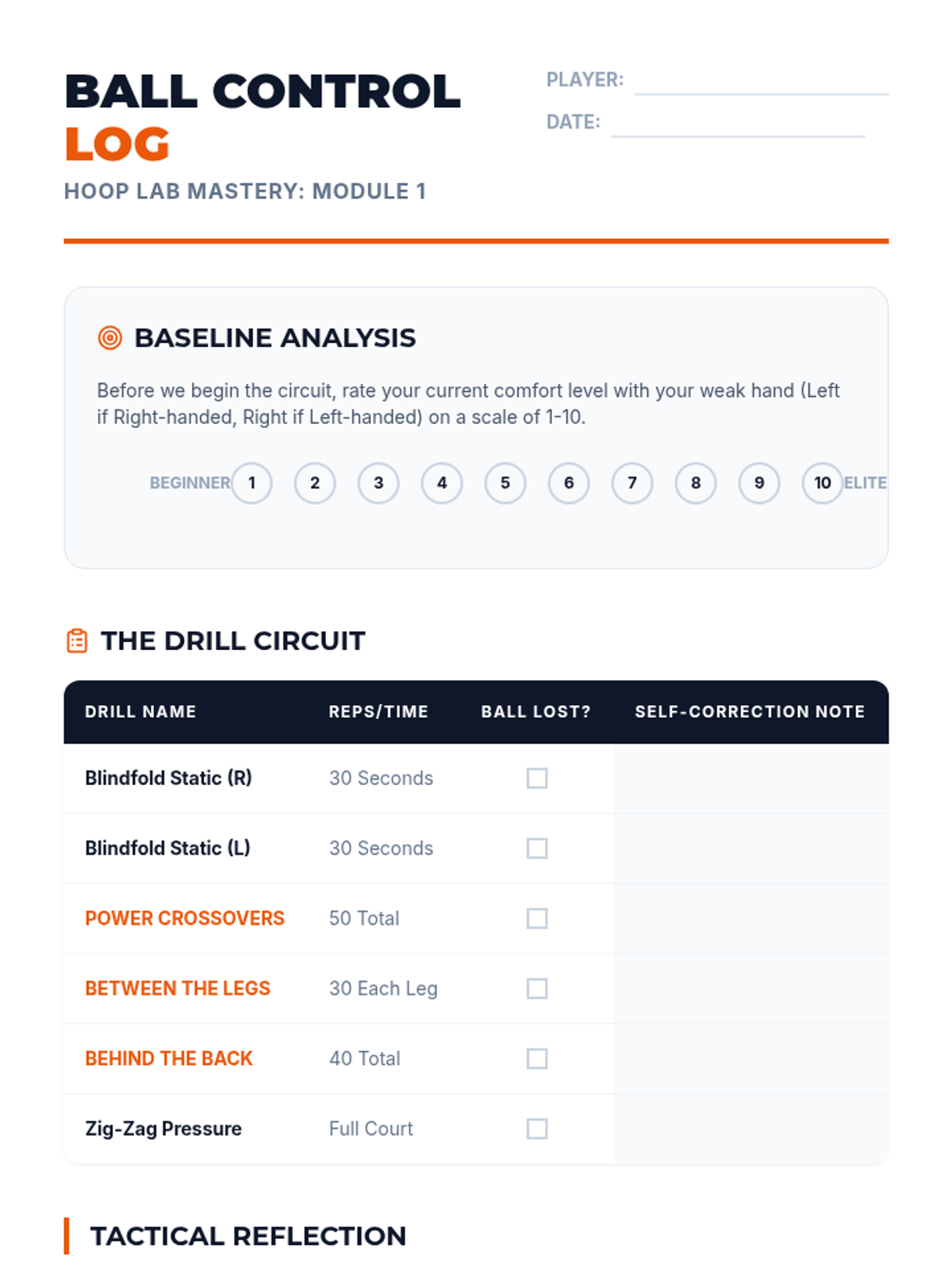
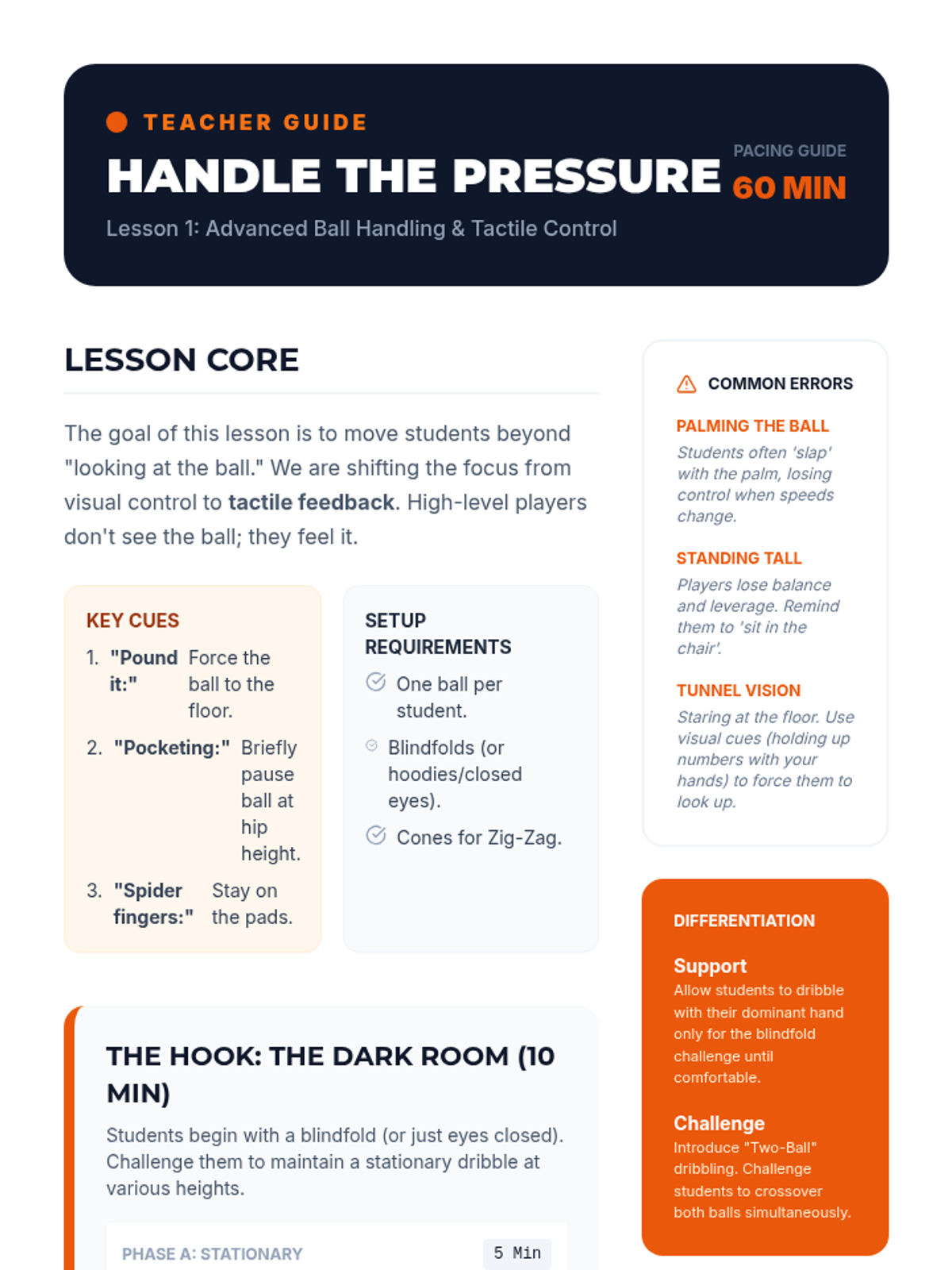
Students engage in high-intensity dribbling drills focusing on fingertip control, changing speeds, and protecting the ball. Emphasis is on crossovers, between-the-legs, and behind-the-back moves.
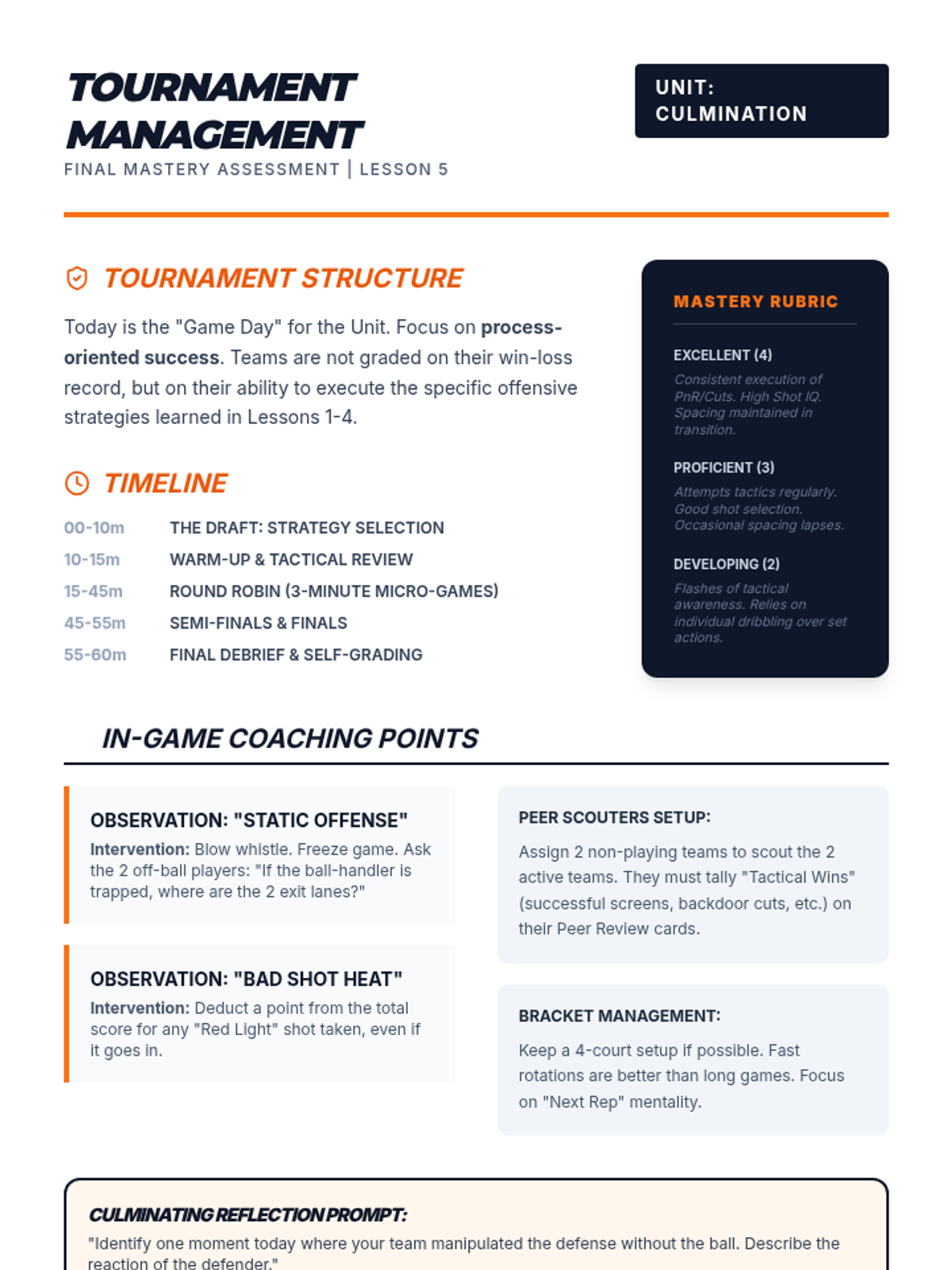
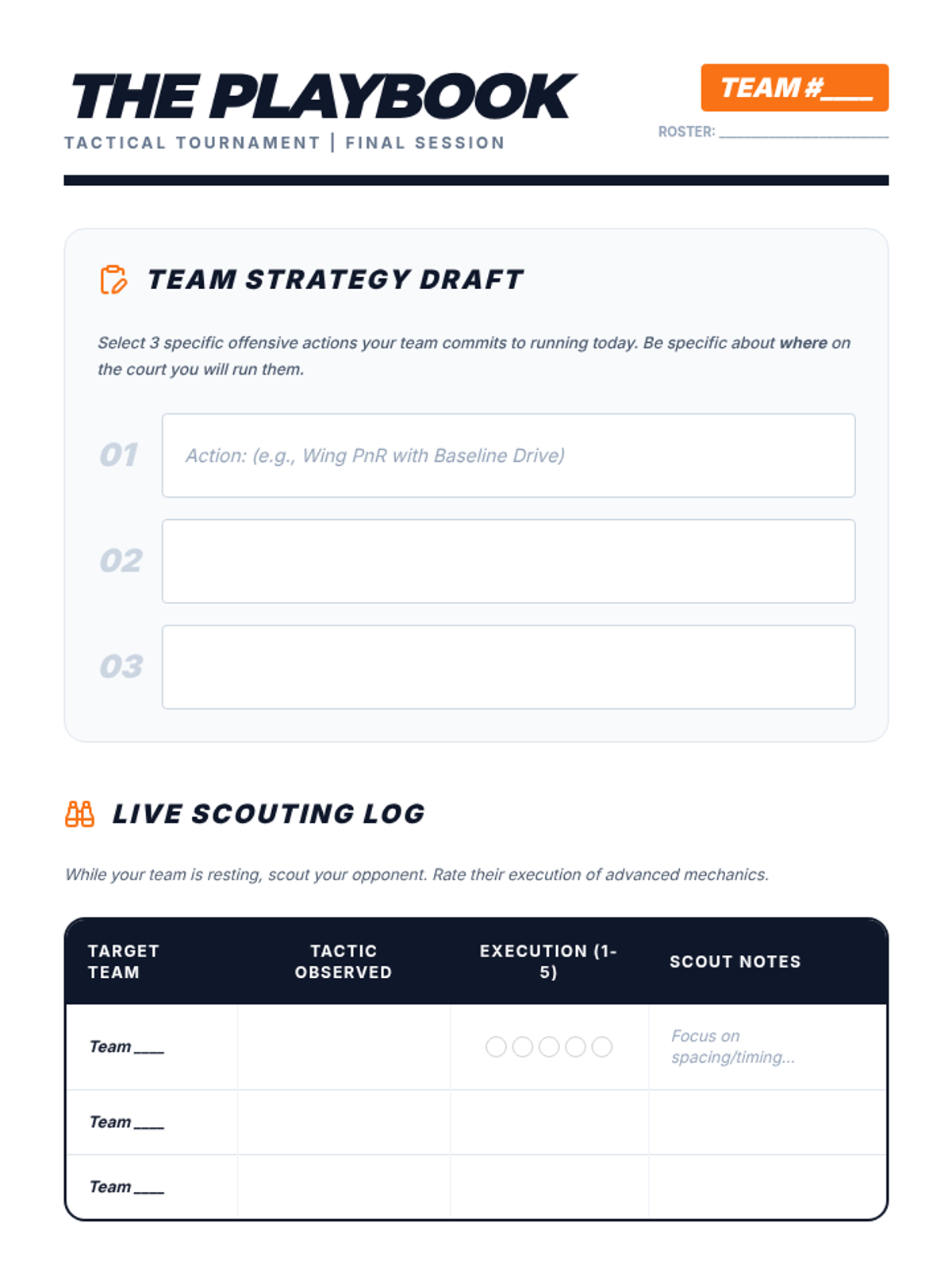
A culminating small-sided tournament where students apply learned strategies and provide peer feedback on tactical execution.
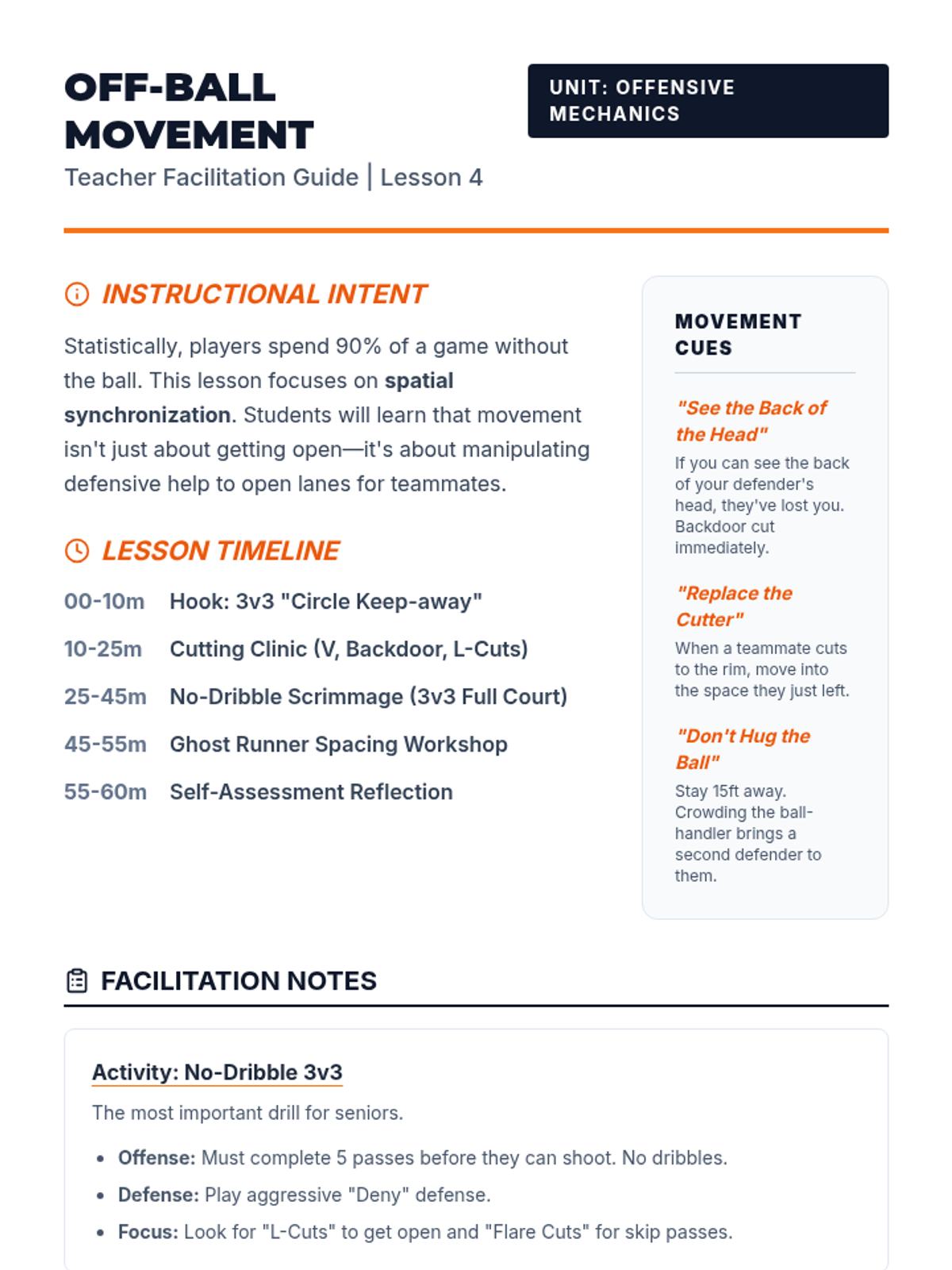
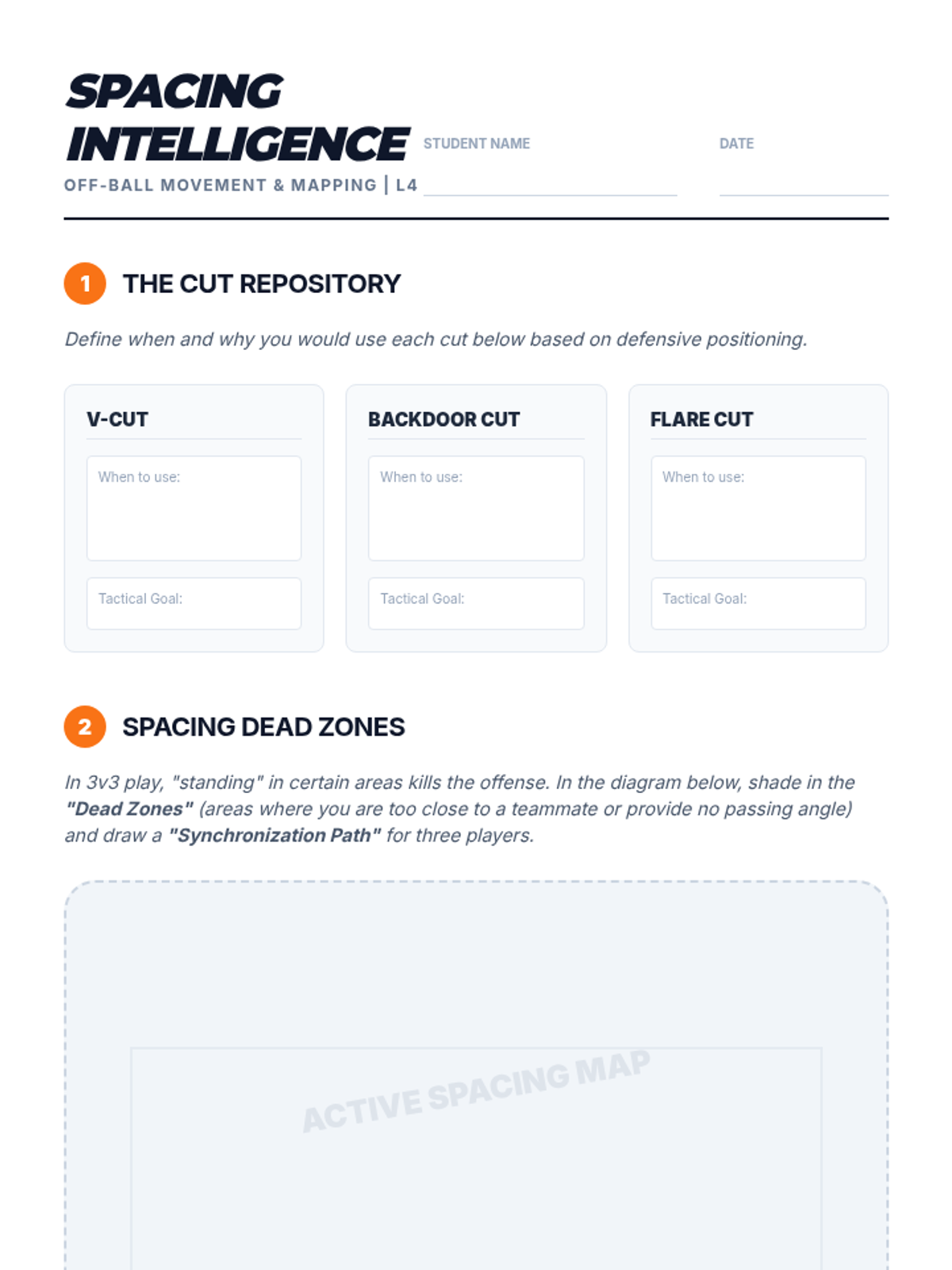
Teaches essential off-ball cutting techniques and spacing principles to maintain offensive flow without the ball.
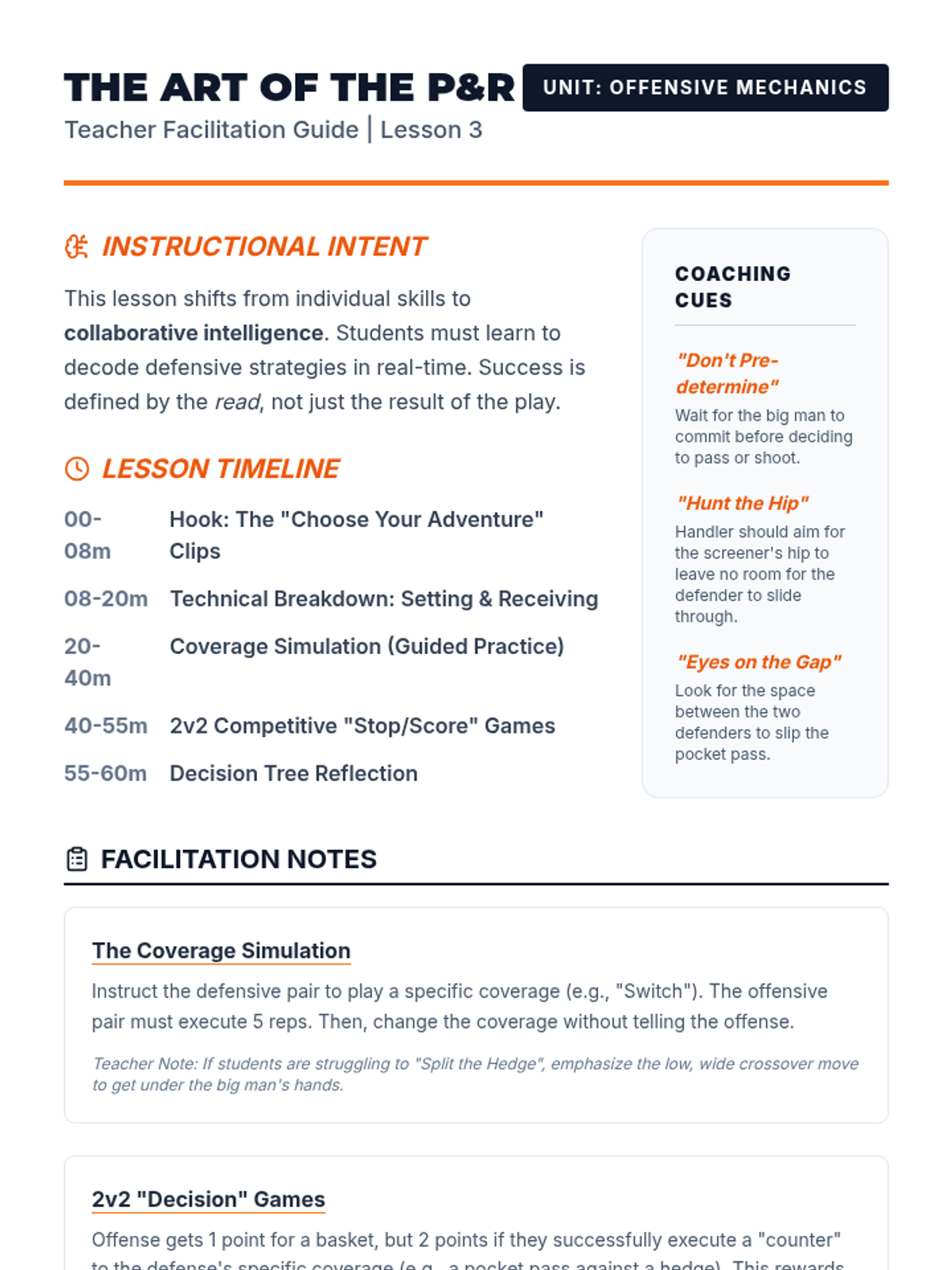
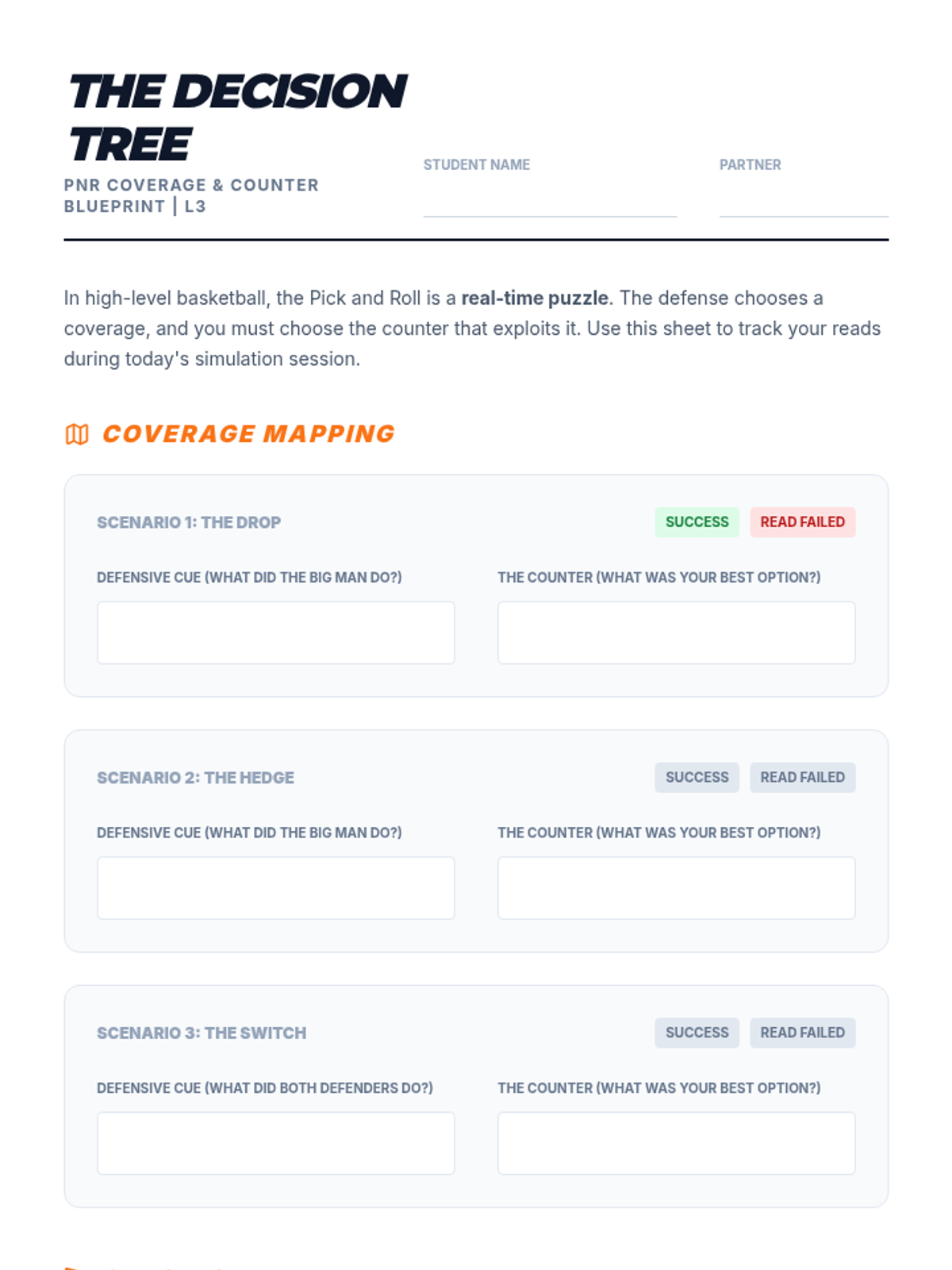
Breaks down the technical and tactical elements of the pick and roll, focusing on reading defensive coverages and making correct counter-decisions.
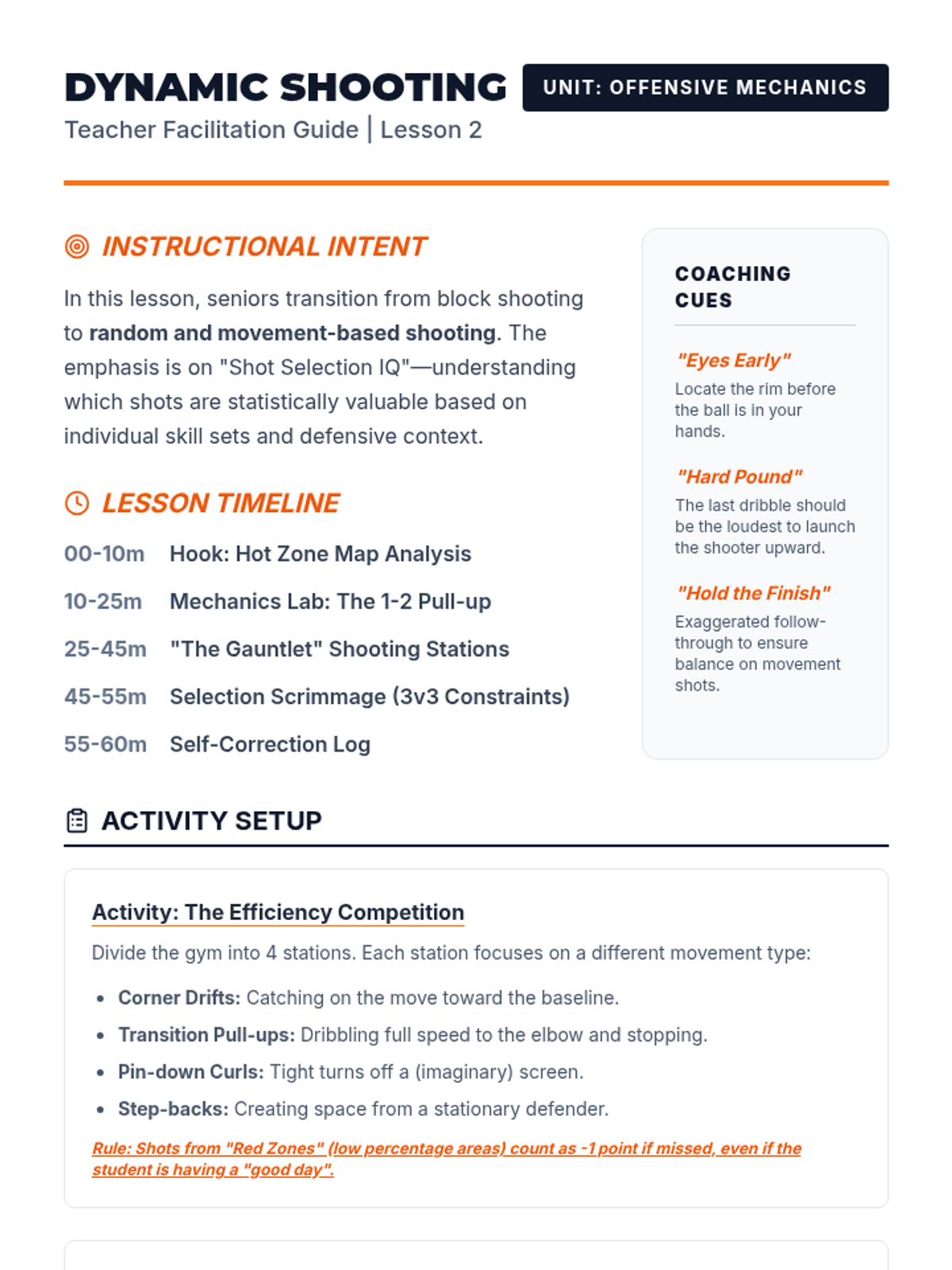
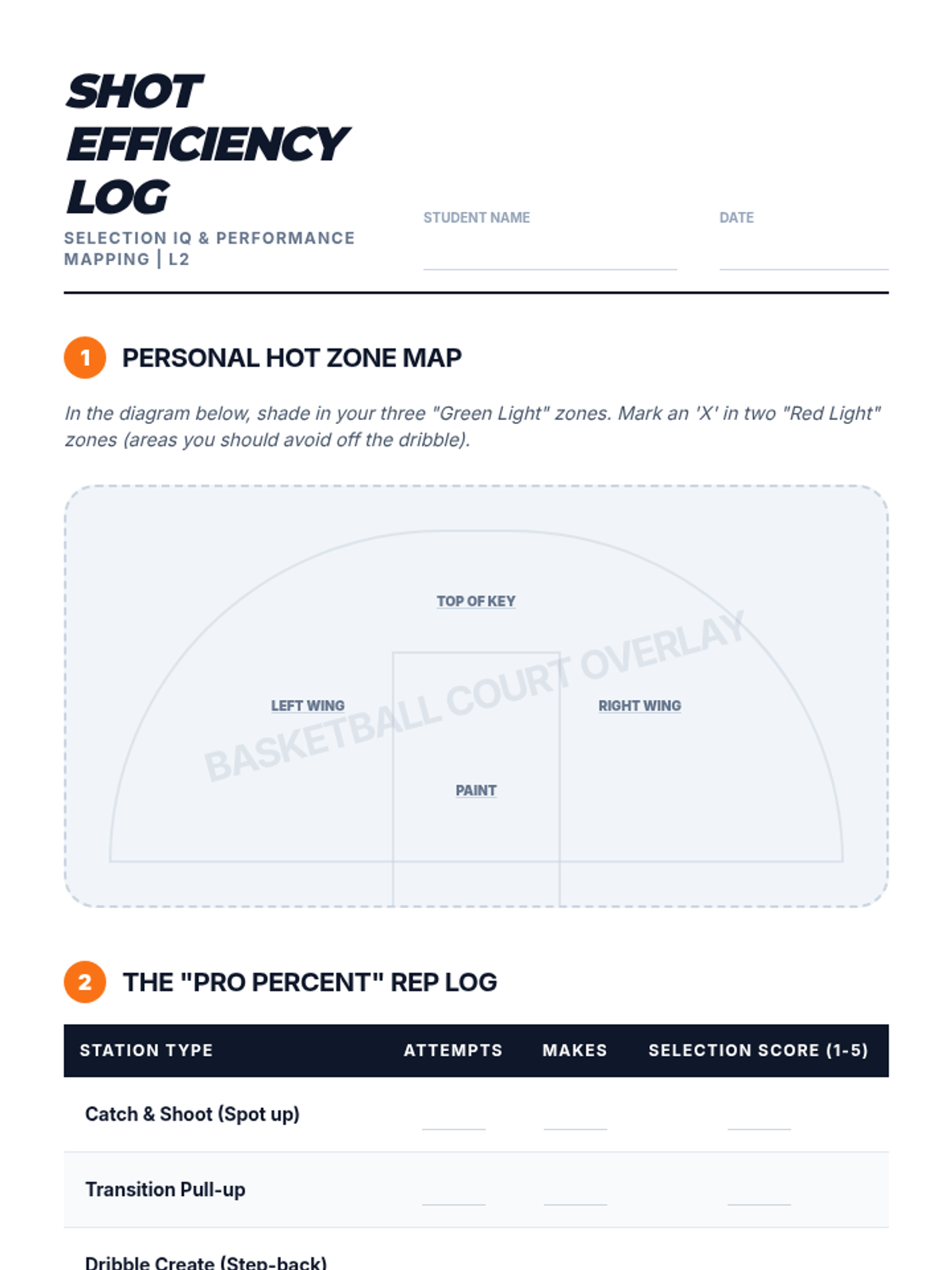
Develops shooting mechanics off movement and dribble pull-ups while analyzing shot efficiency and court spacing.
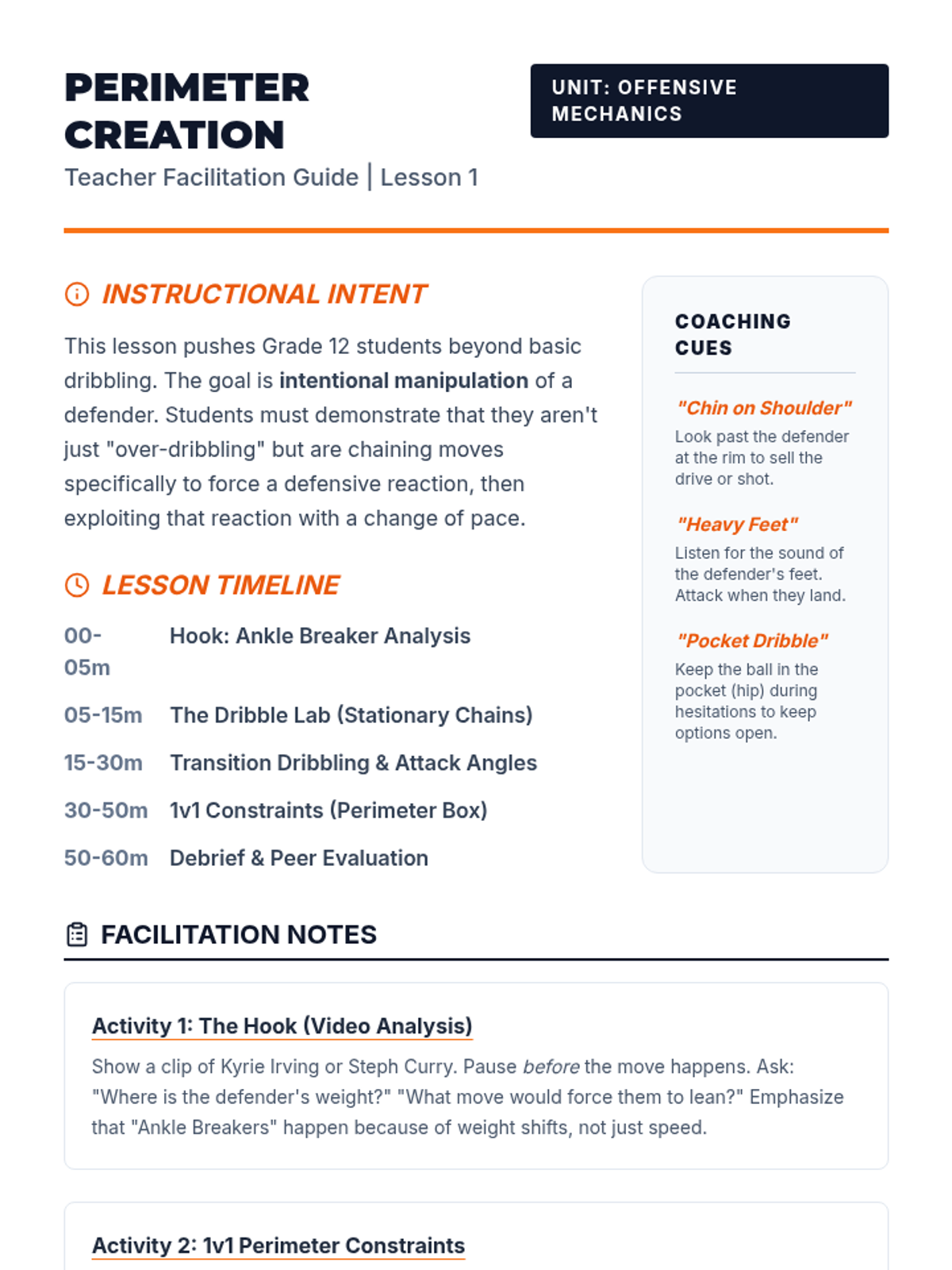
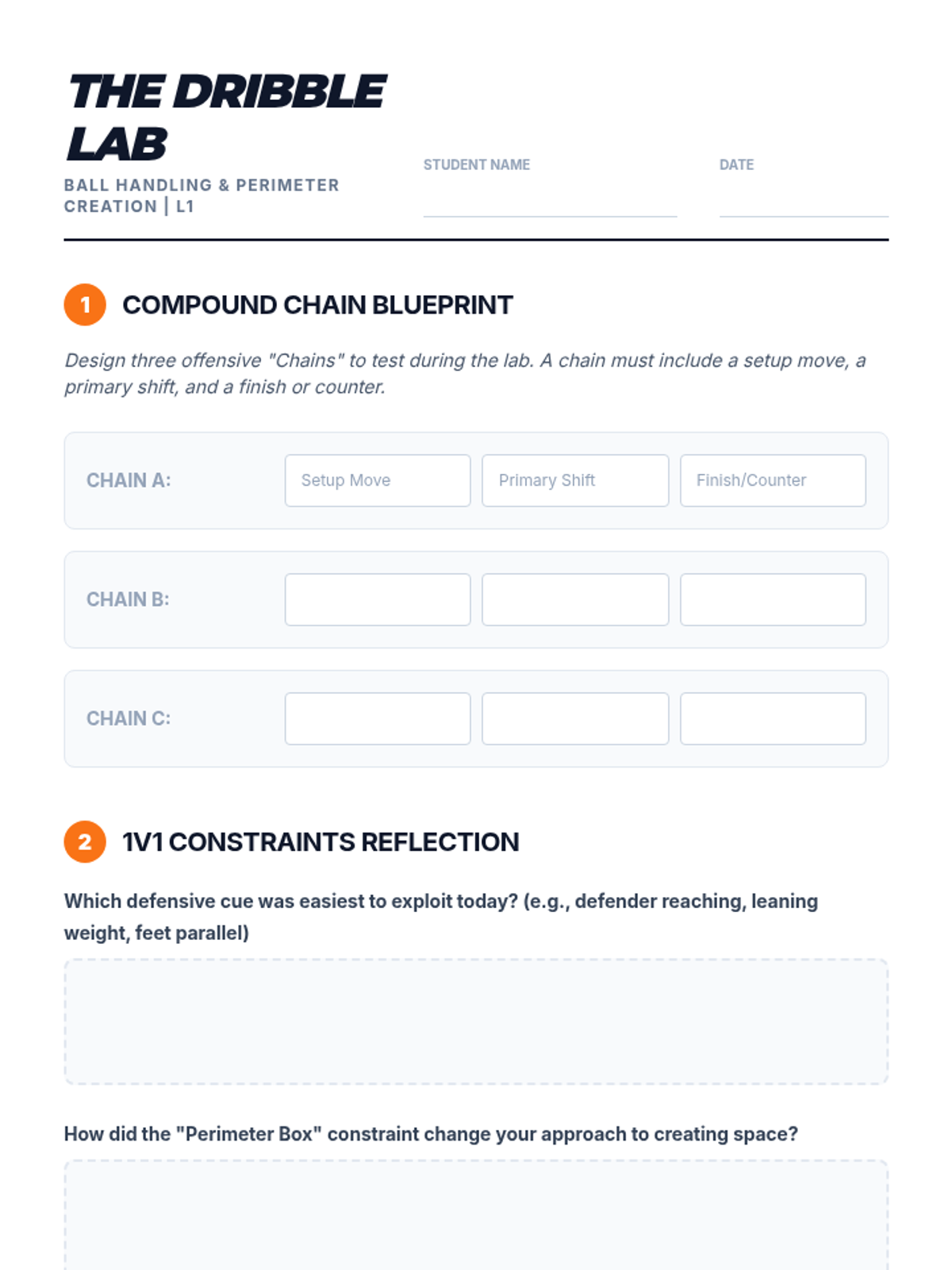
Focuses on chaining compound dribbling moves, change of pace, and ball protection under physical pressure to create perimeter advantages.
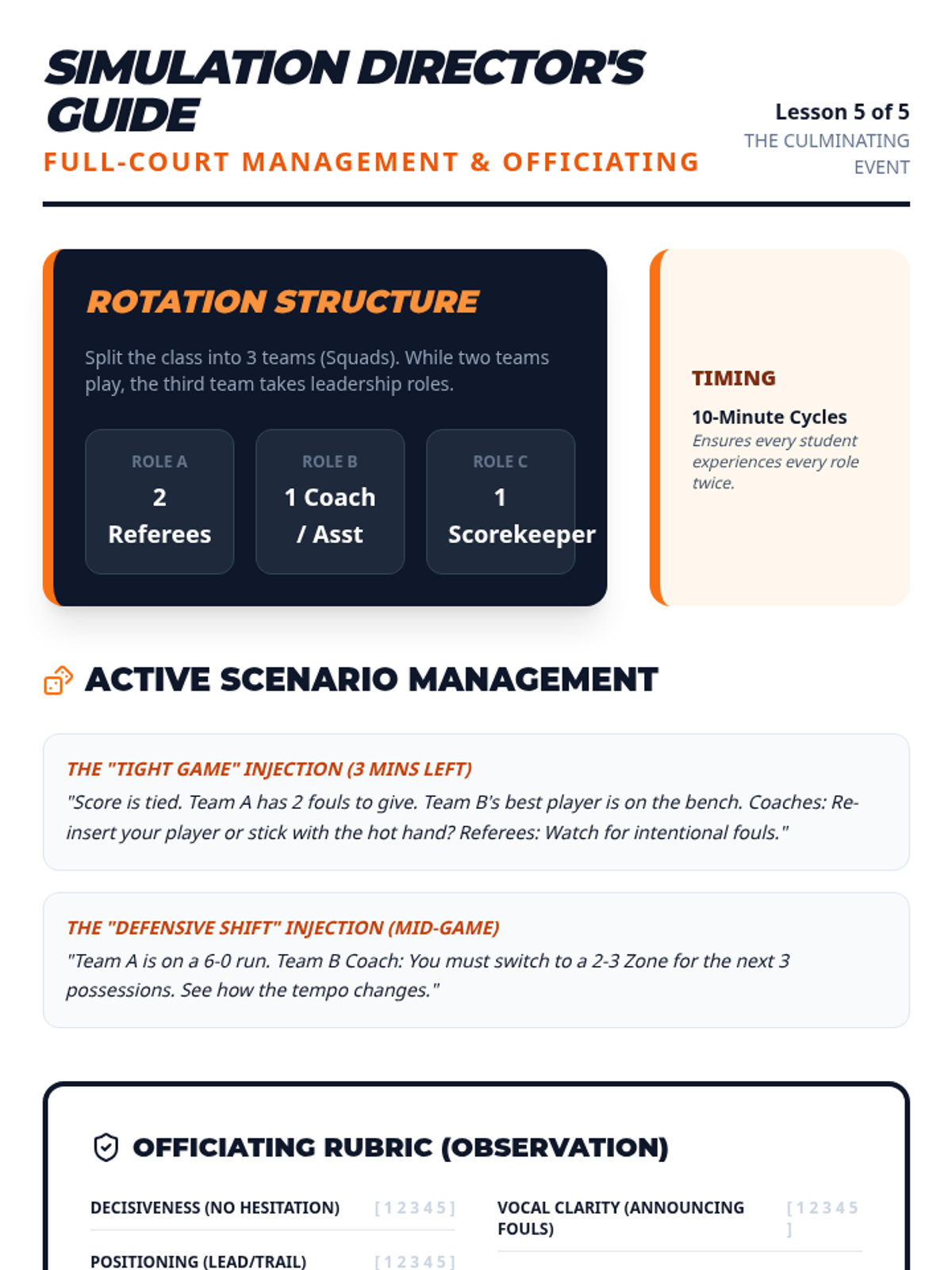
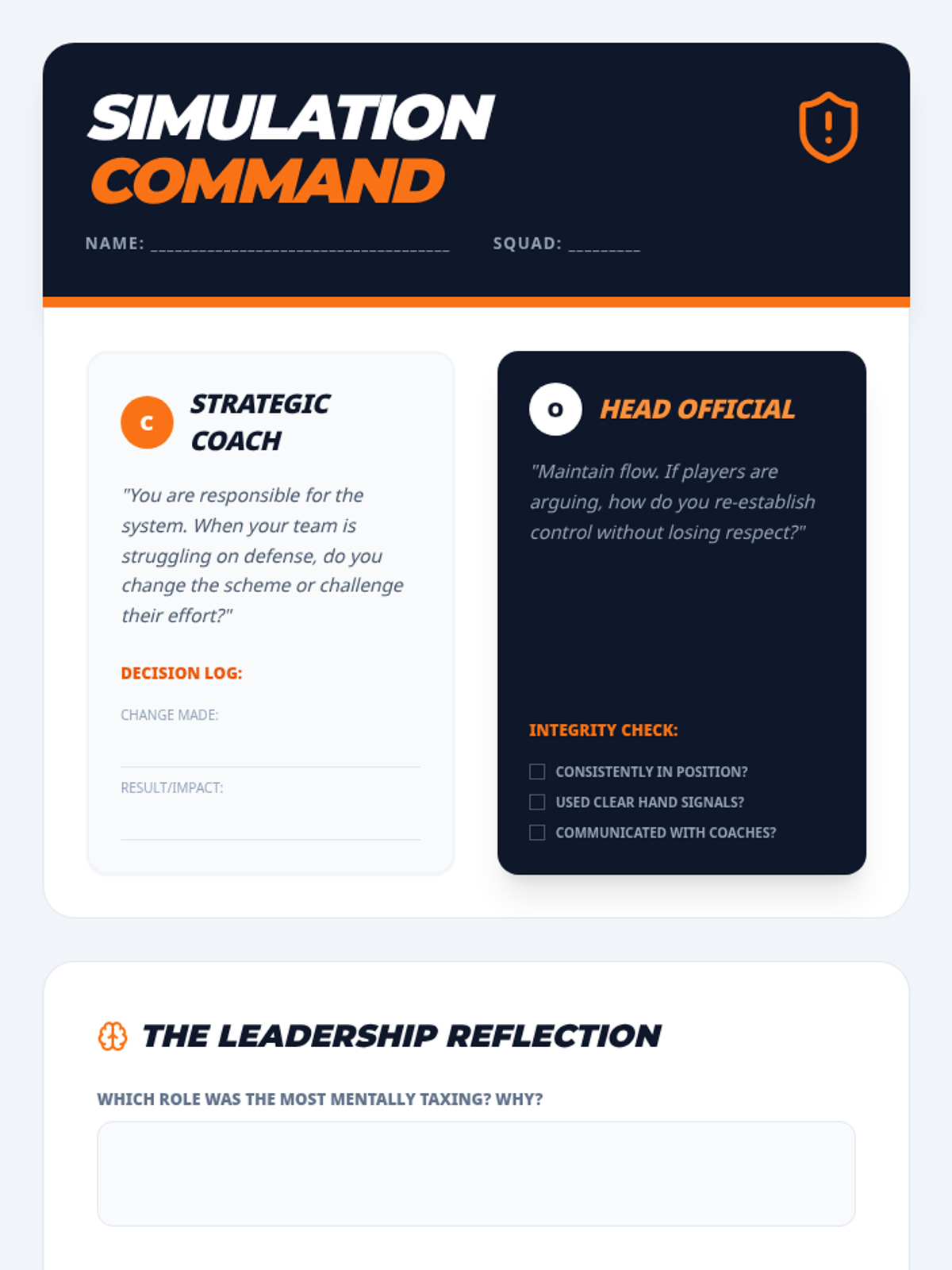
A full-court simulation where students apply leadership and game management skills while rotating through playing, coaching, and officiating roles.
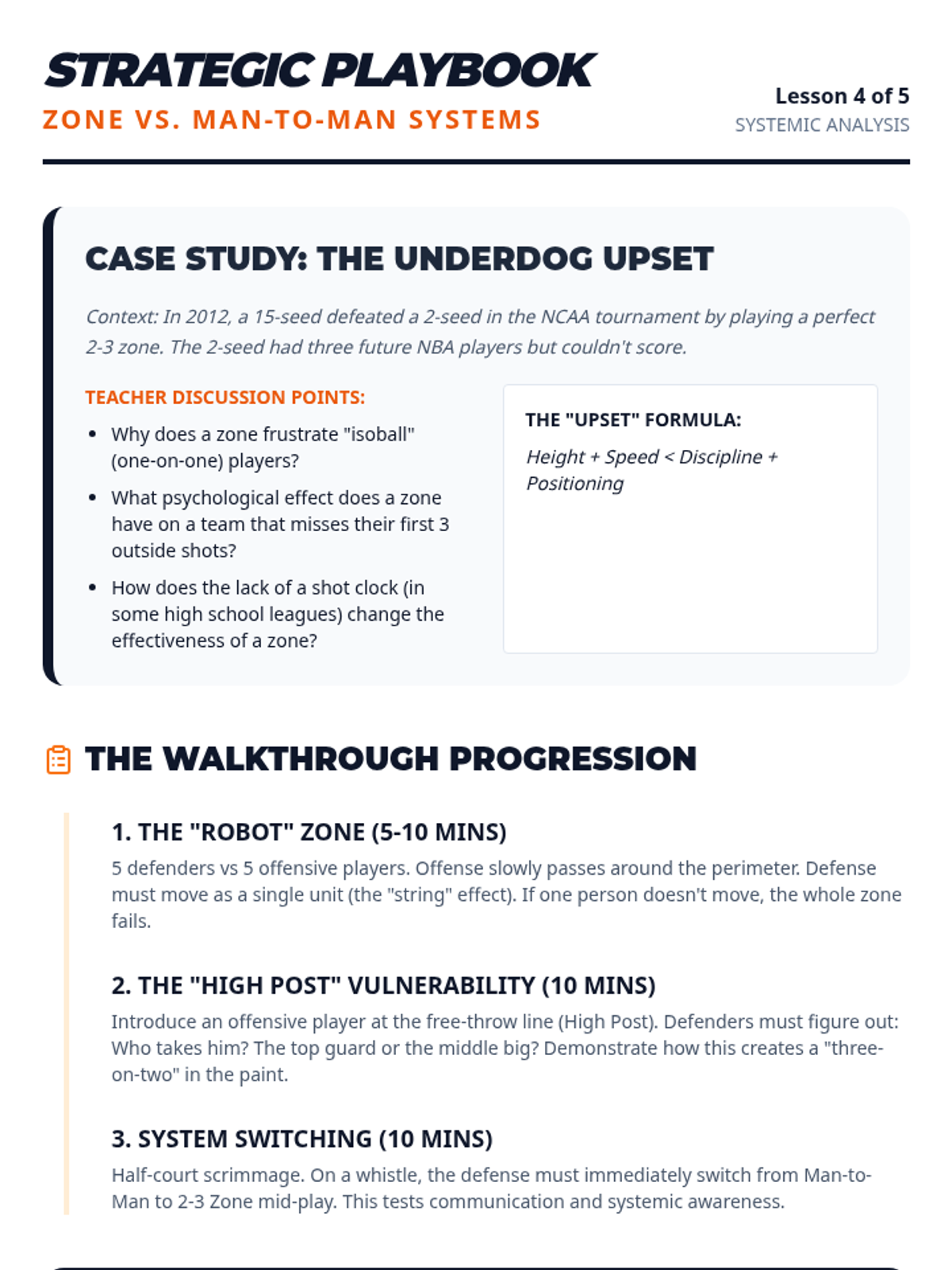
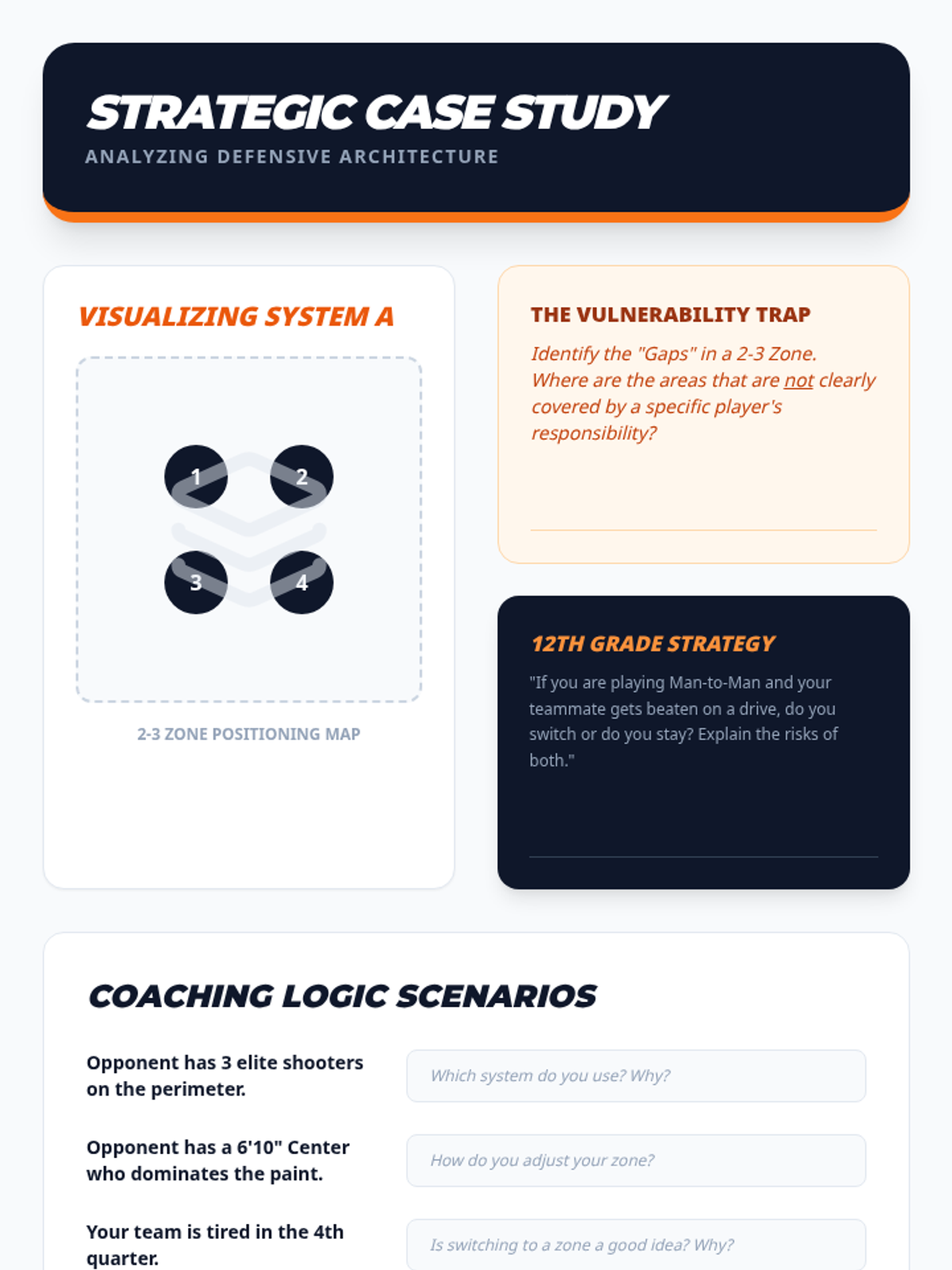
Analyzing the tactical differences between man-to-man and zone defenses, including deployment strategies and attacking gaps.
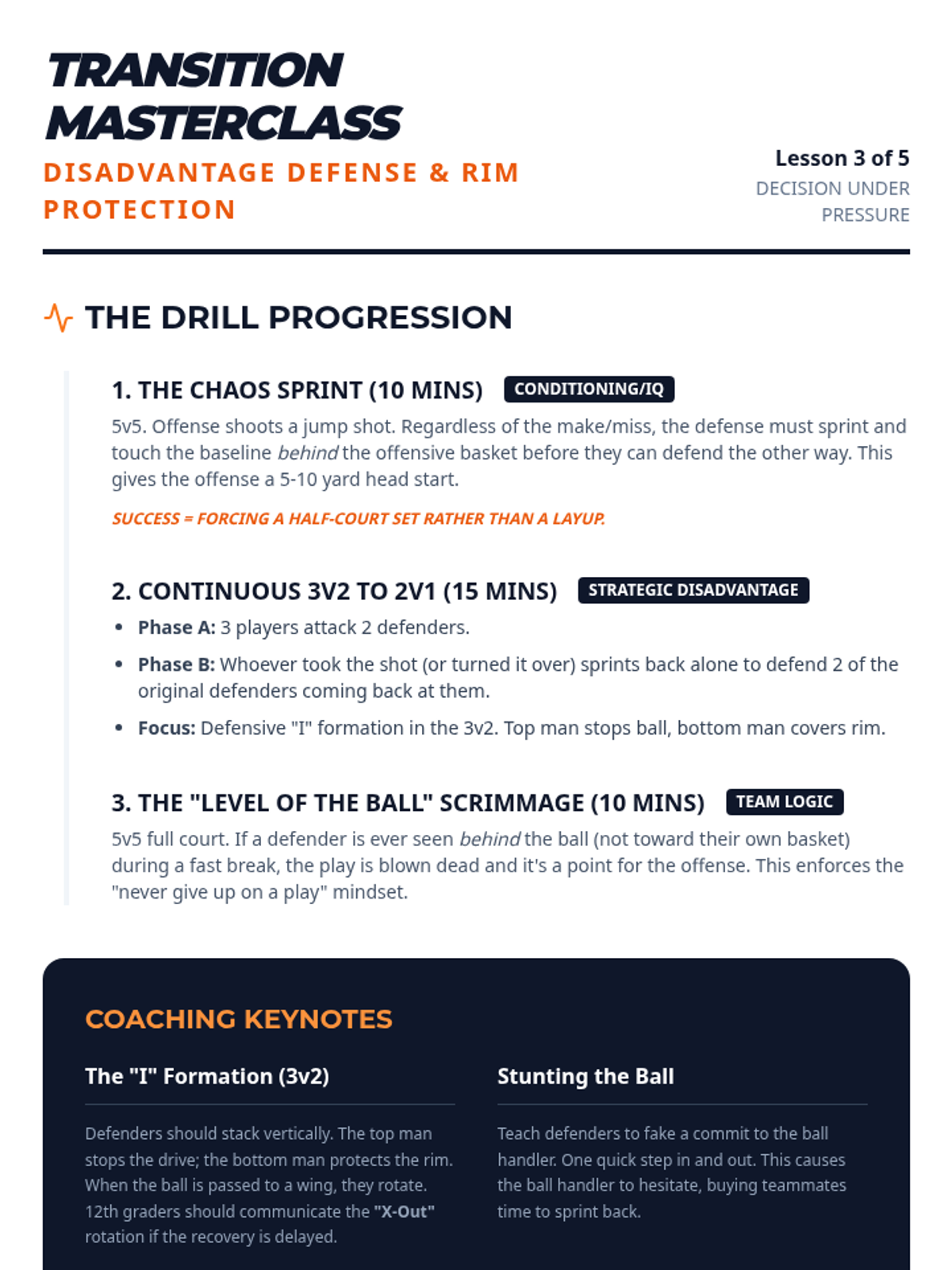
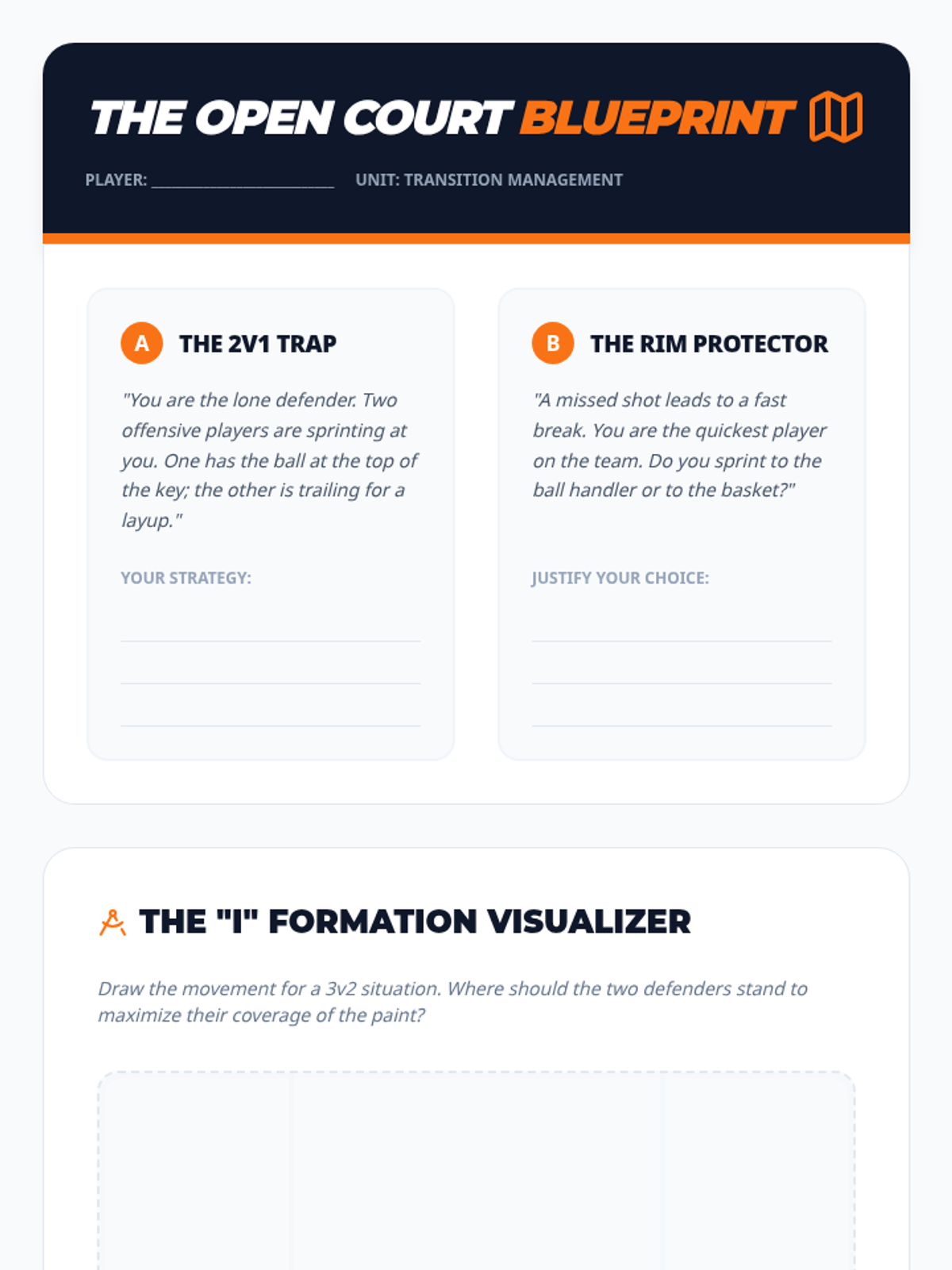
Managing the transition from offense to defense, stopping fast breaks, and making quick decisions in outnumbered situations.
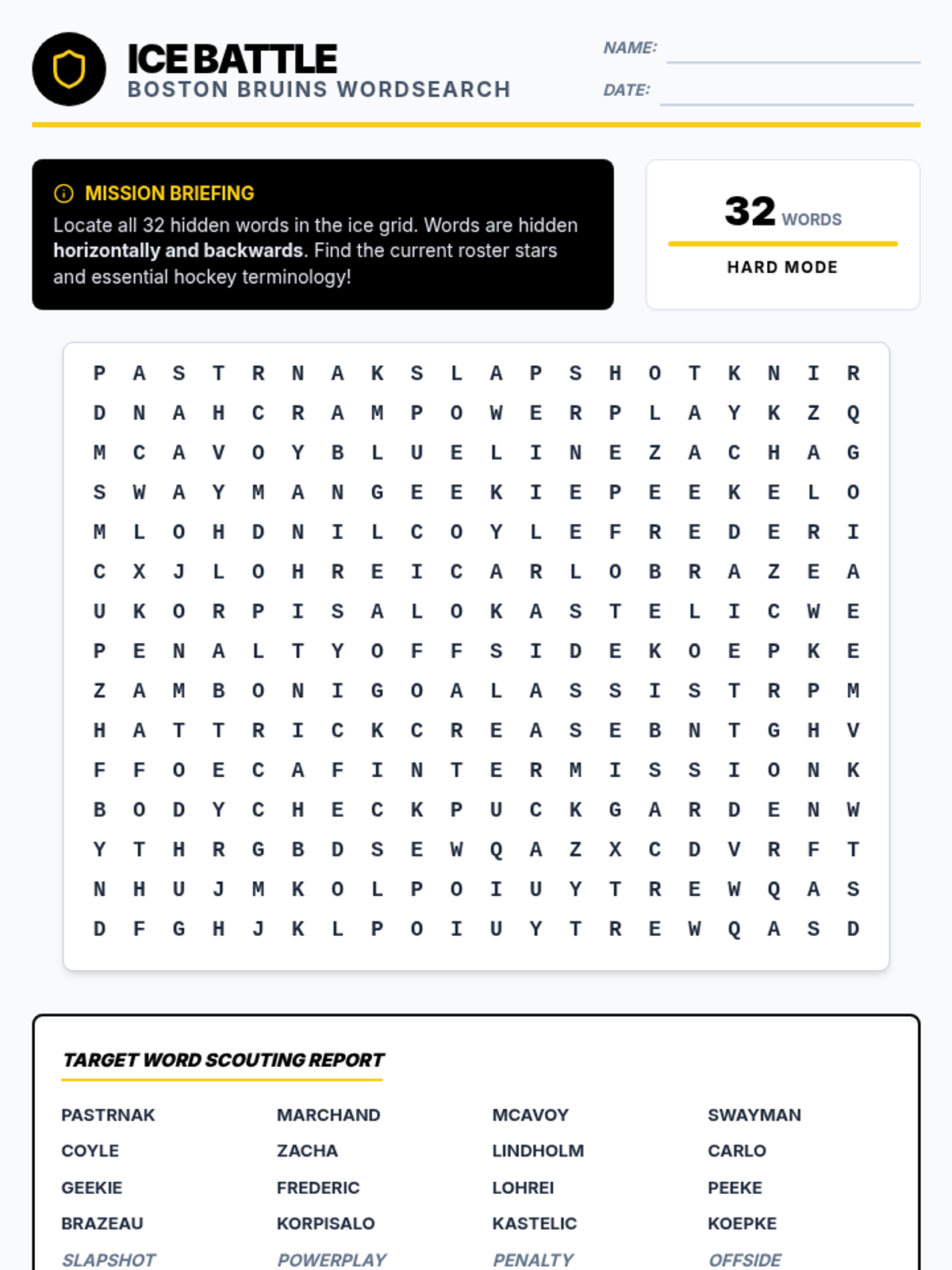
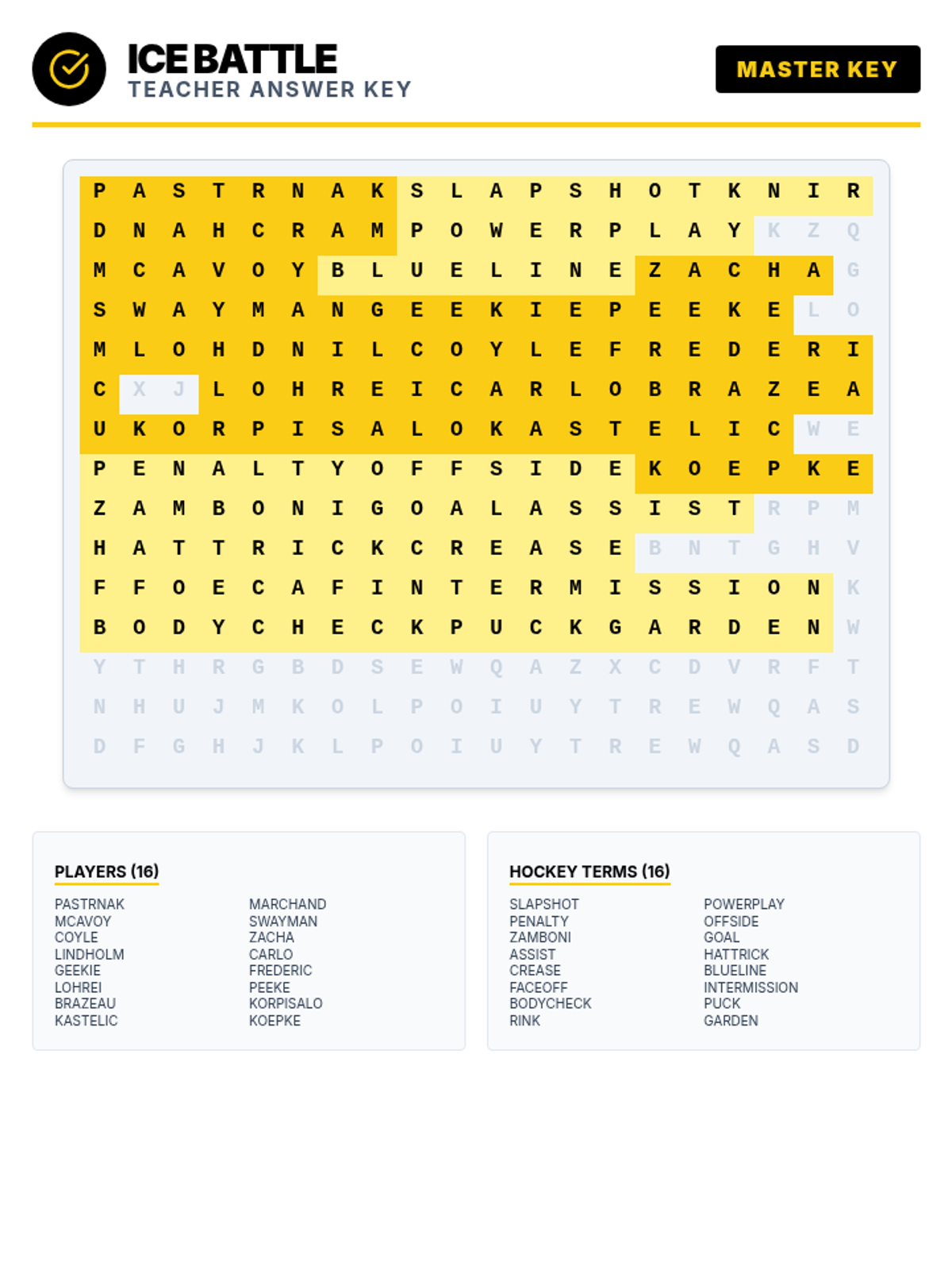
A challenging vocabulary activity focused on the Boston Bruins hockey team, including current roster players and essential hockey terminology. Students will identify key figures and concepts while navigating a complex grid.
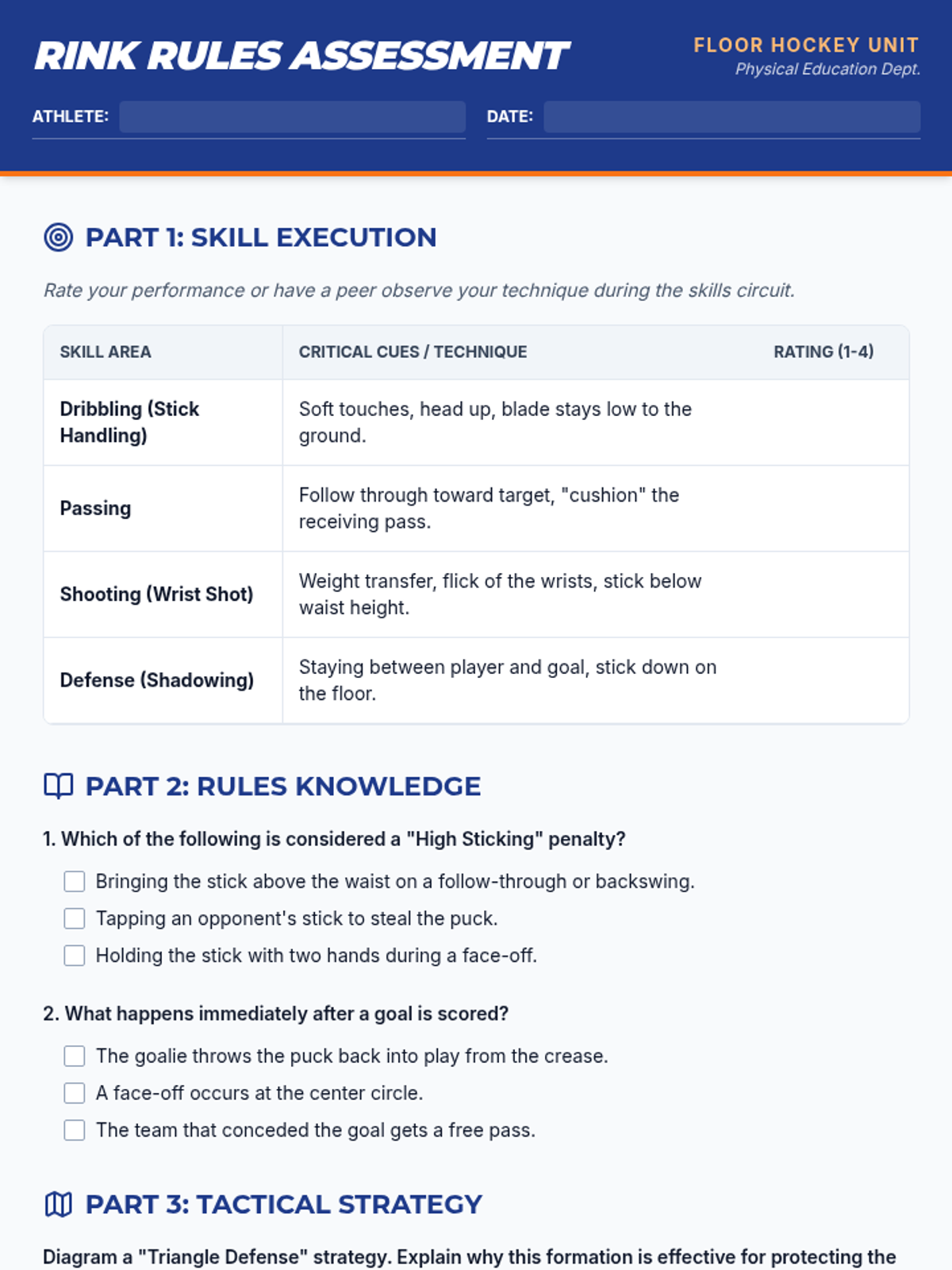
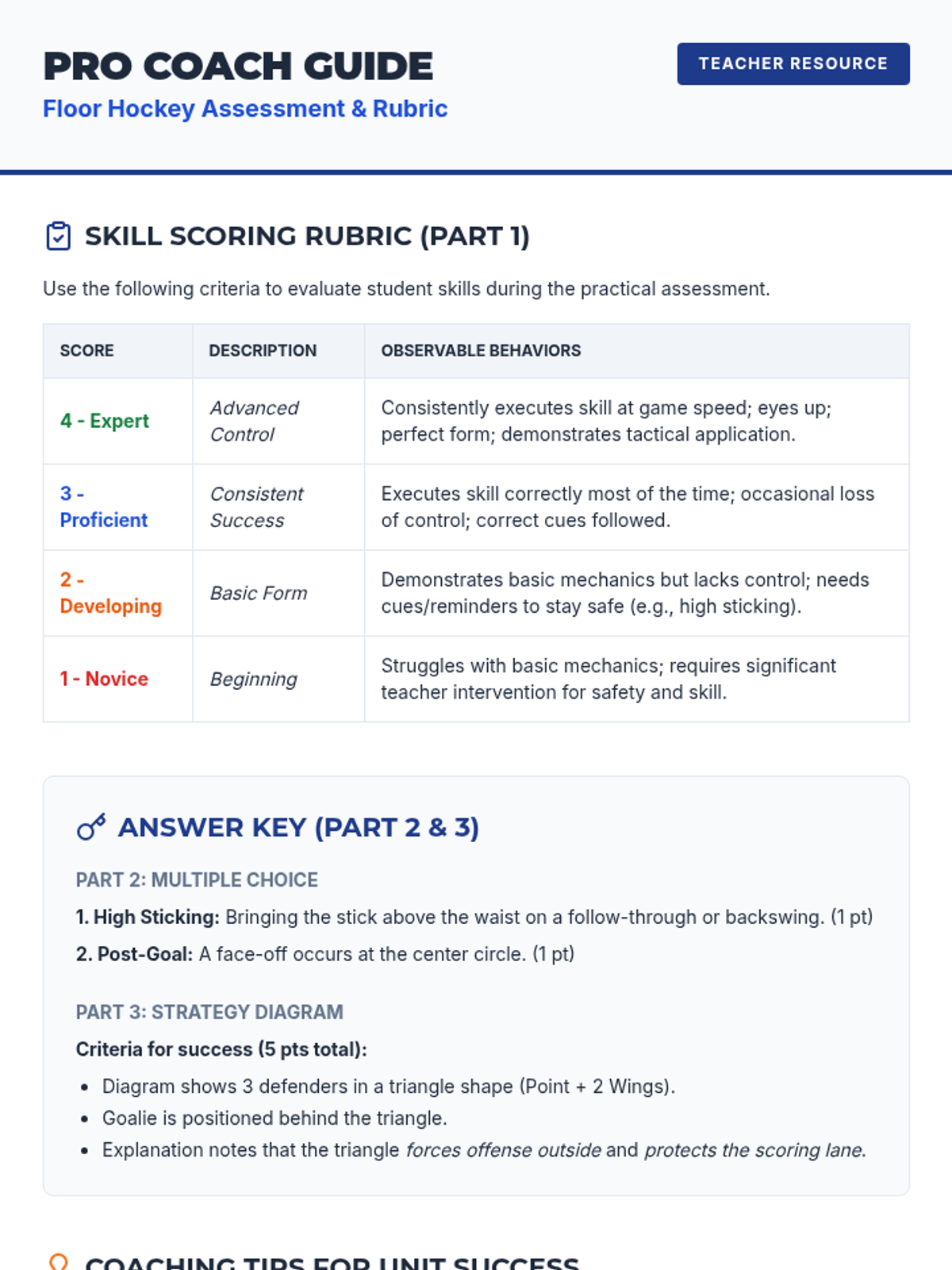
A comprehensive assessment and instructional set for middle school floor hockey, focusing on core skills, game rules, and tactical strategies.
A 10-slide presentation exploring the history, rules, and legendary moments of Team USA hockey in the Winter Olympics.
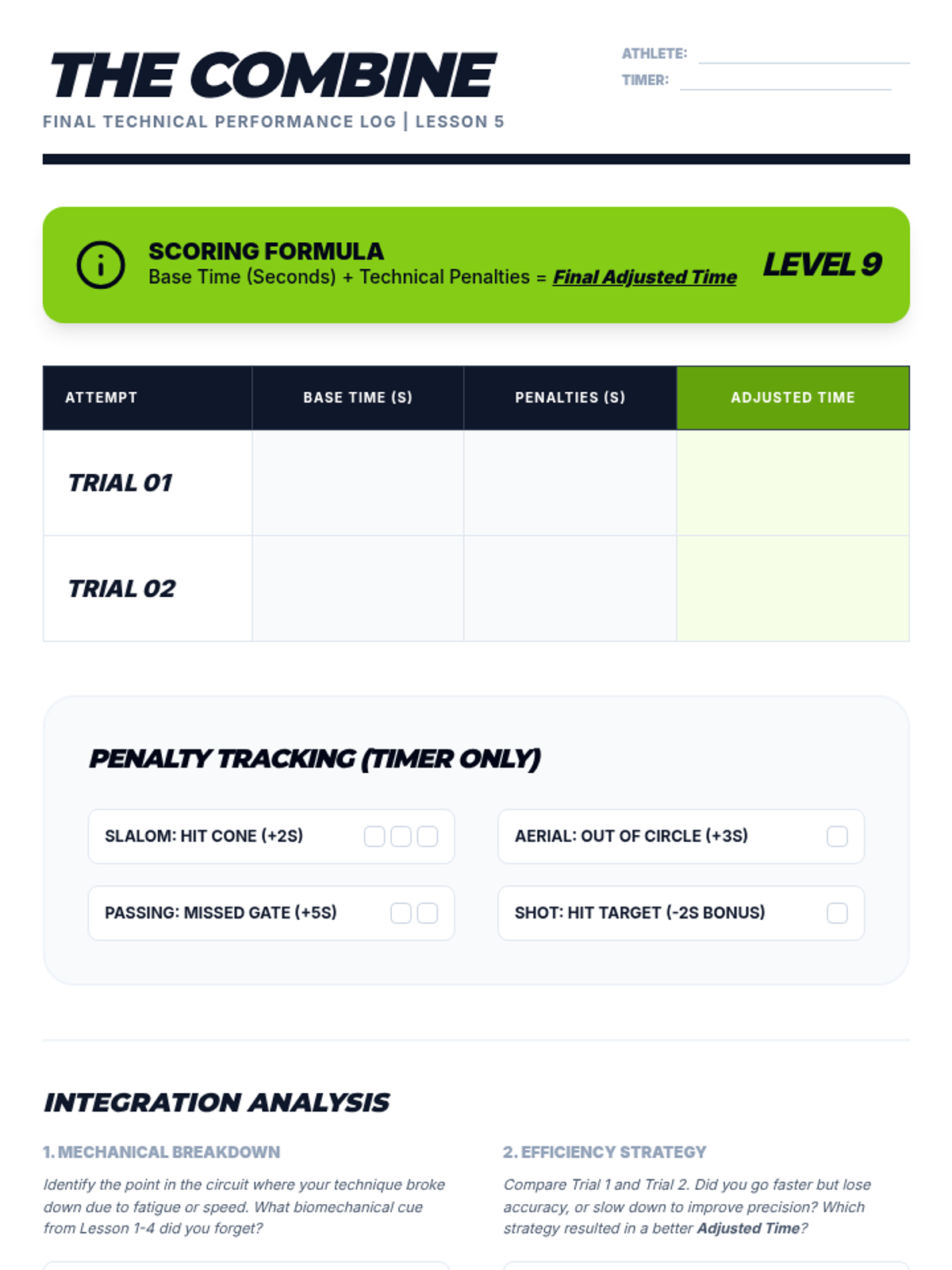
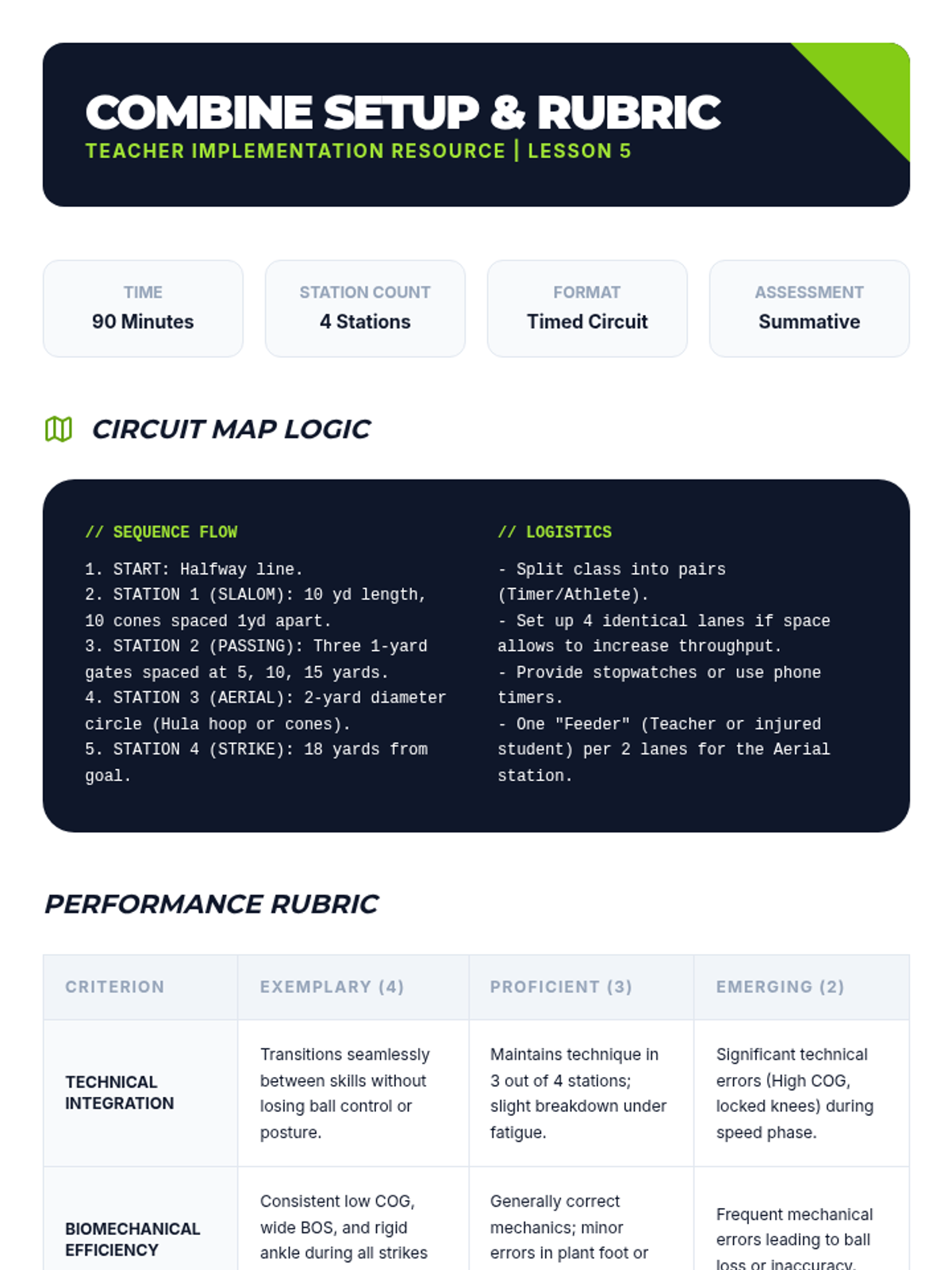
A culminating technical circuit that assesses integration of dribbling, passing, and finishing under time and pressure.
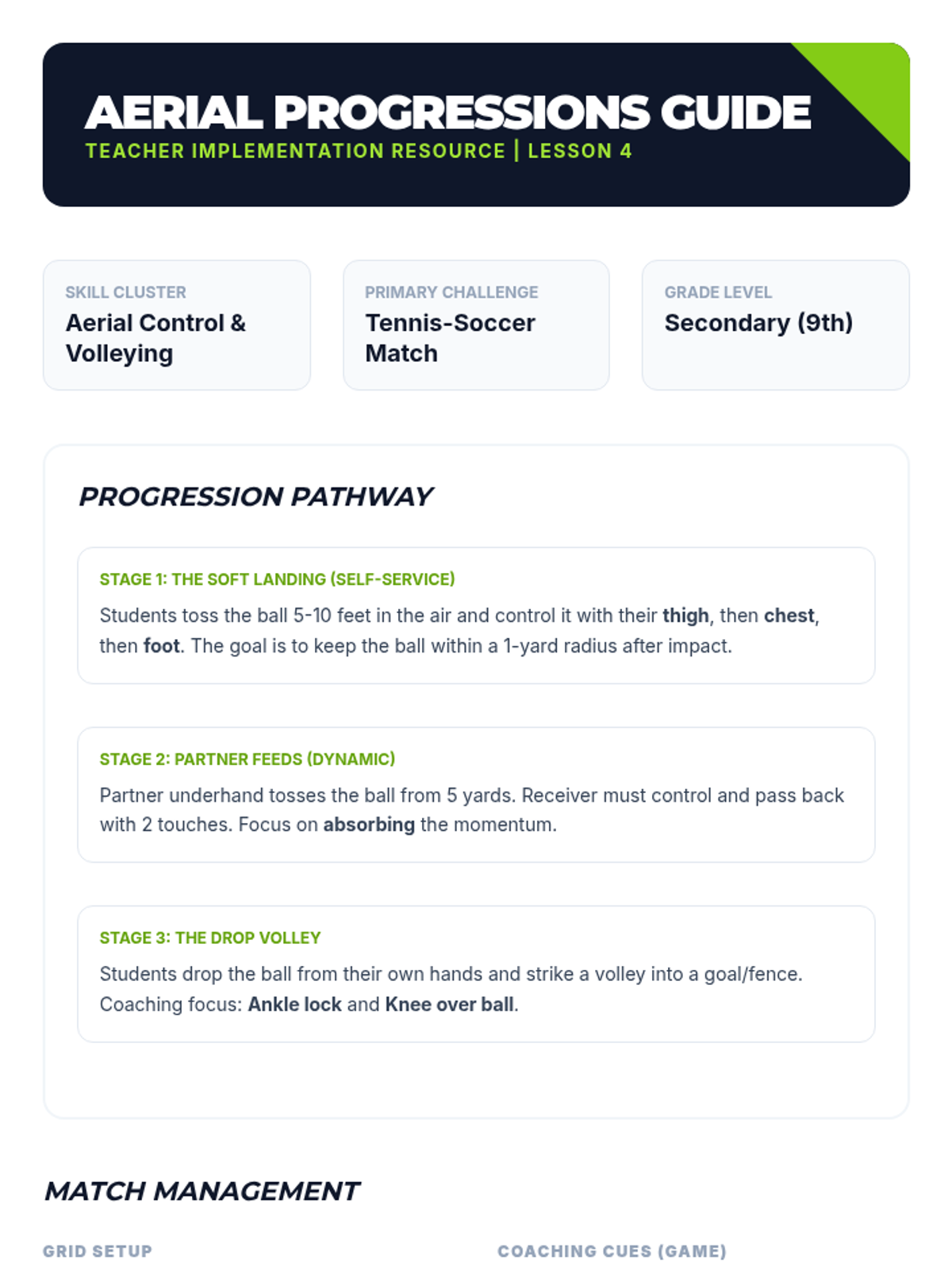
Introduces techniques for controlling the ball out of the air using the chest, thigh, and foot, as well as volleying mechanics.
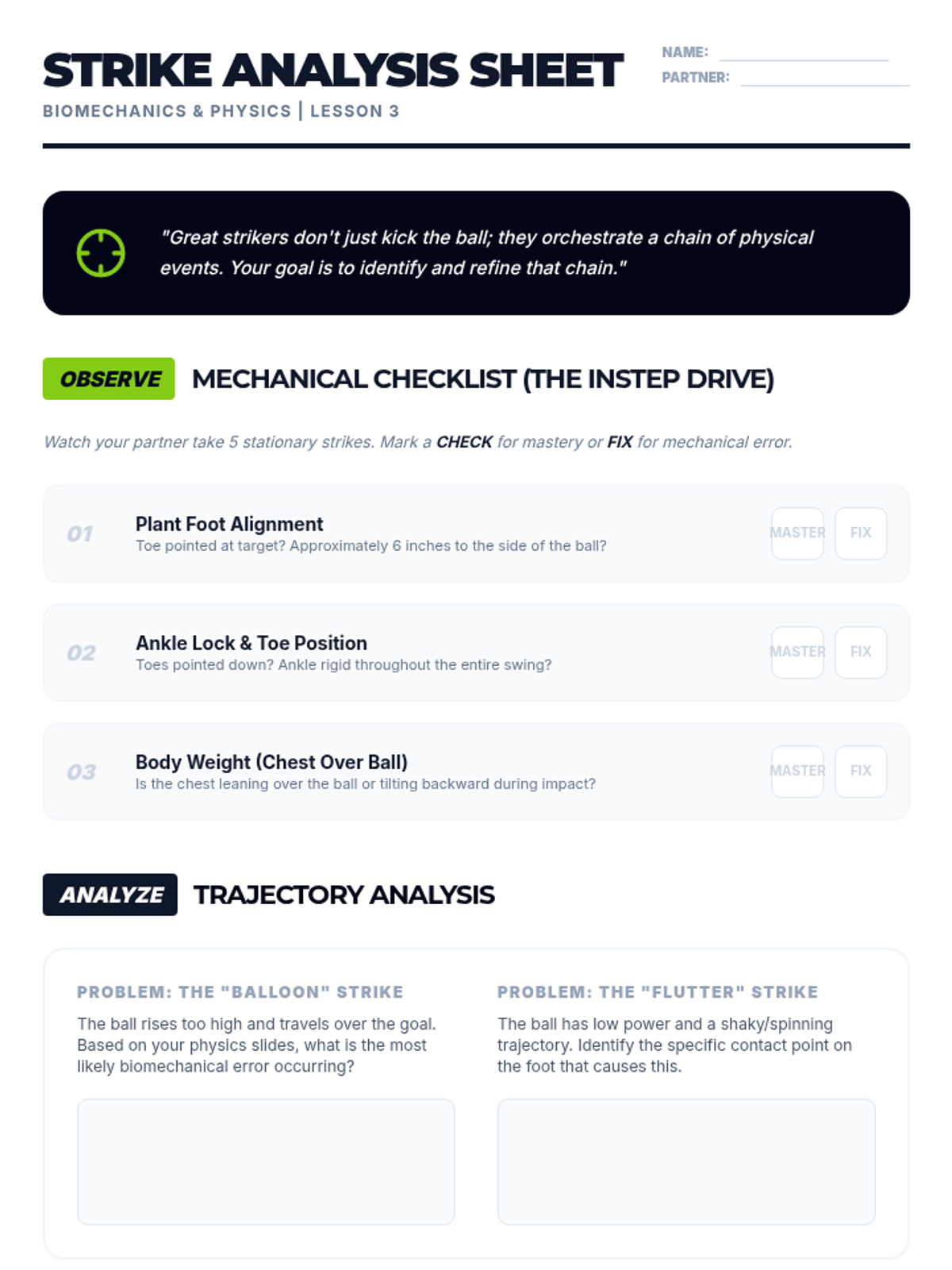
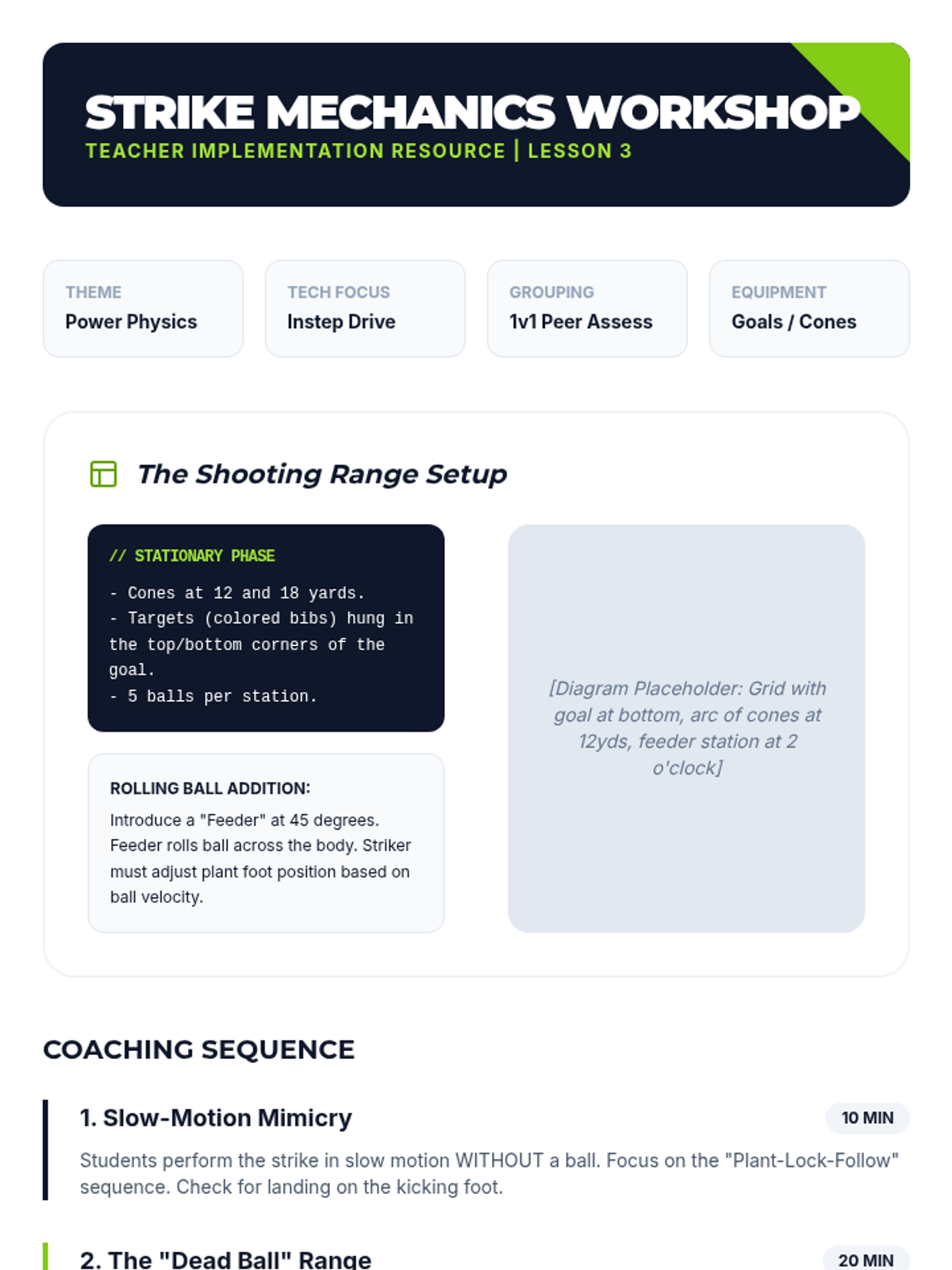
Explores the physics of striking the ball, comparing instep drives for power versus side-foot placement for accuracy.
Focuses on the mechanics of the push and driven pass, emphasizing the 'weight' of the pass and the importance of the first touch.
Students refine close-control dribbling and learn to use their body to shield the ball from defenders, focusing on center of gravity and balance.
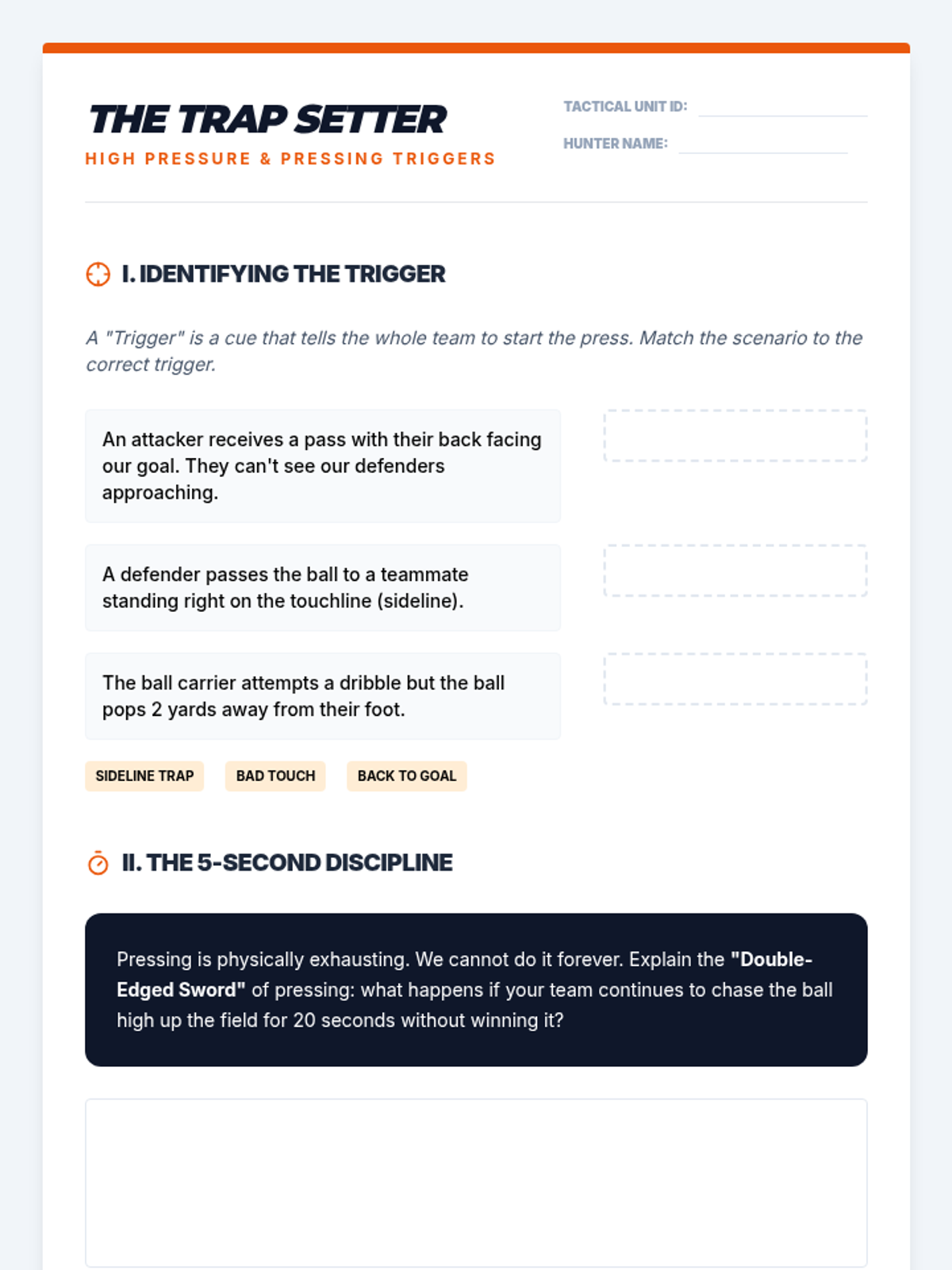
Advanced tactics on coordinated pressing, identifying triggers to win the ball back high up the field.
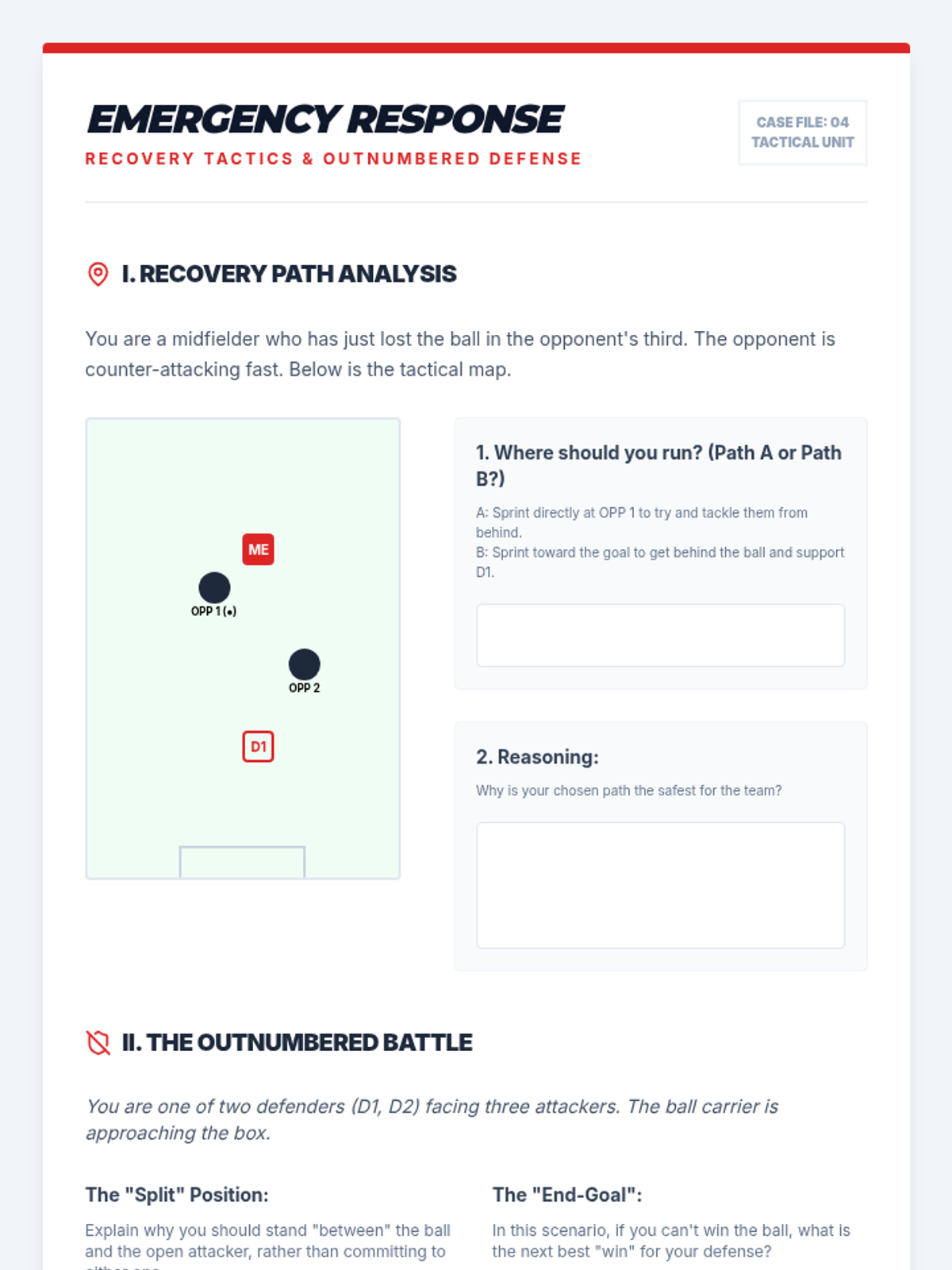
Tactical training for recovery runs and delay tactics when the team is caught out of position or outnumbered.
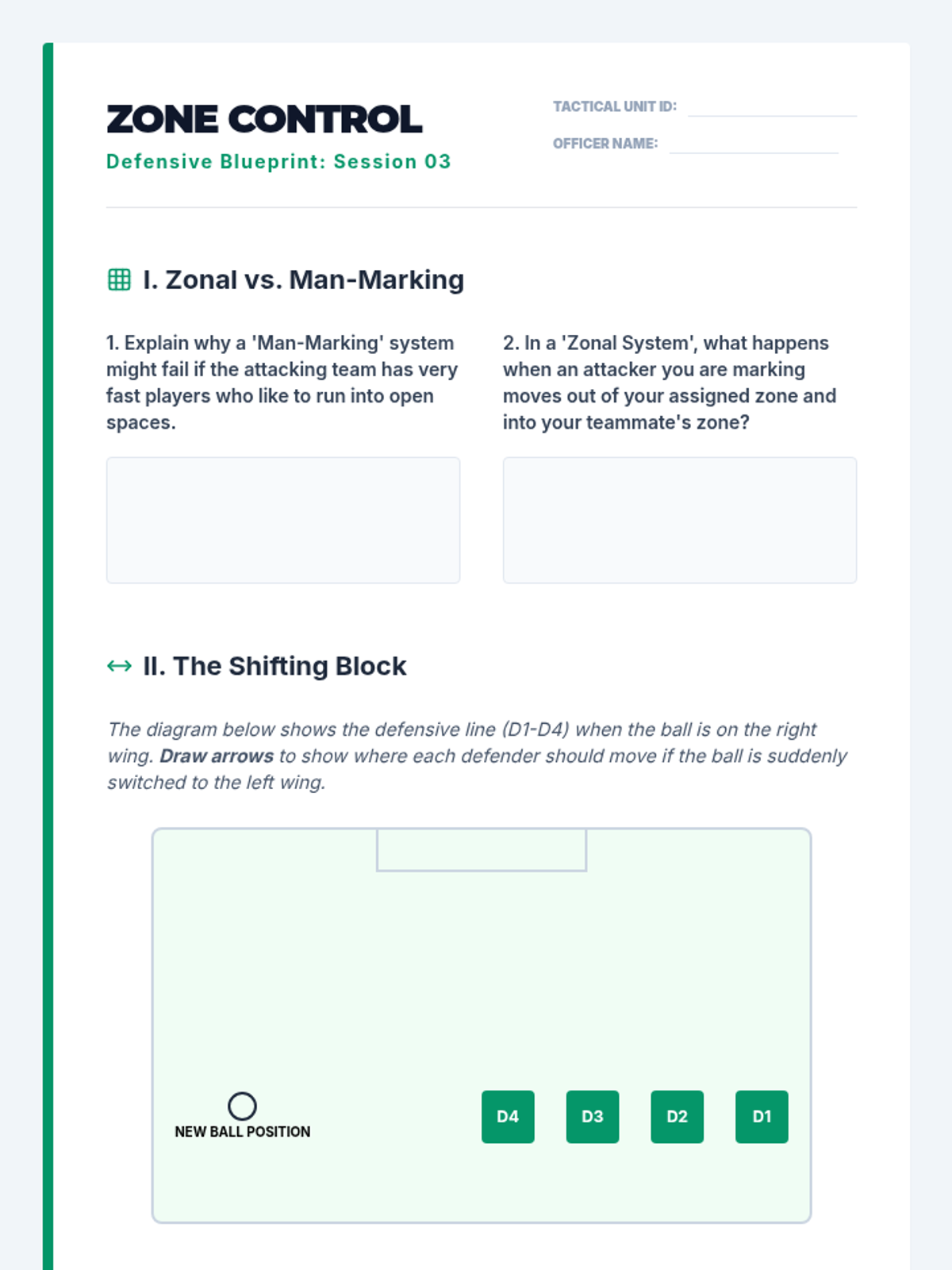
Focuses on defending space rather than players, lateral shifting, and maintaining a cohesive defensive line.
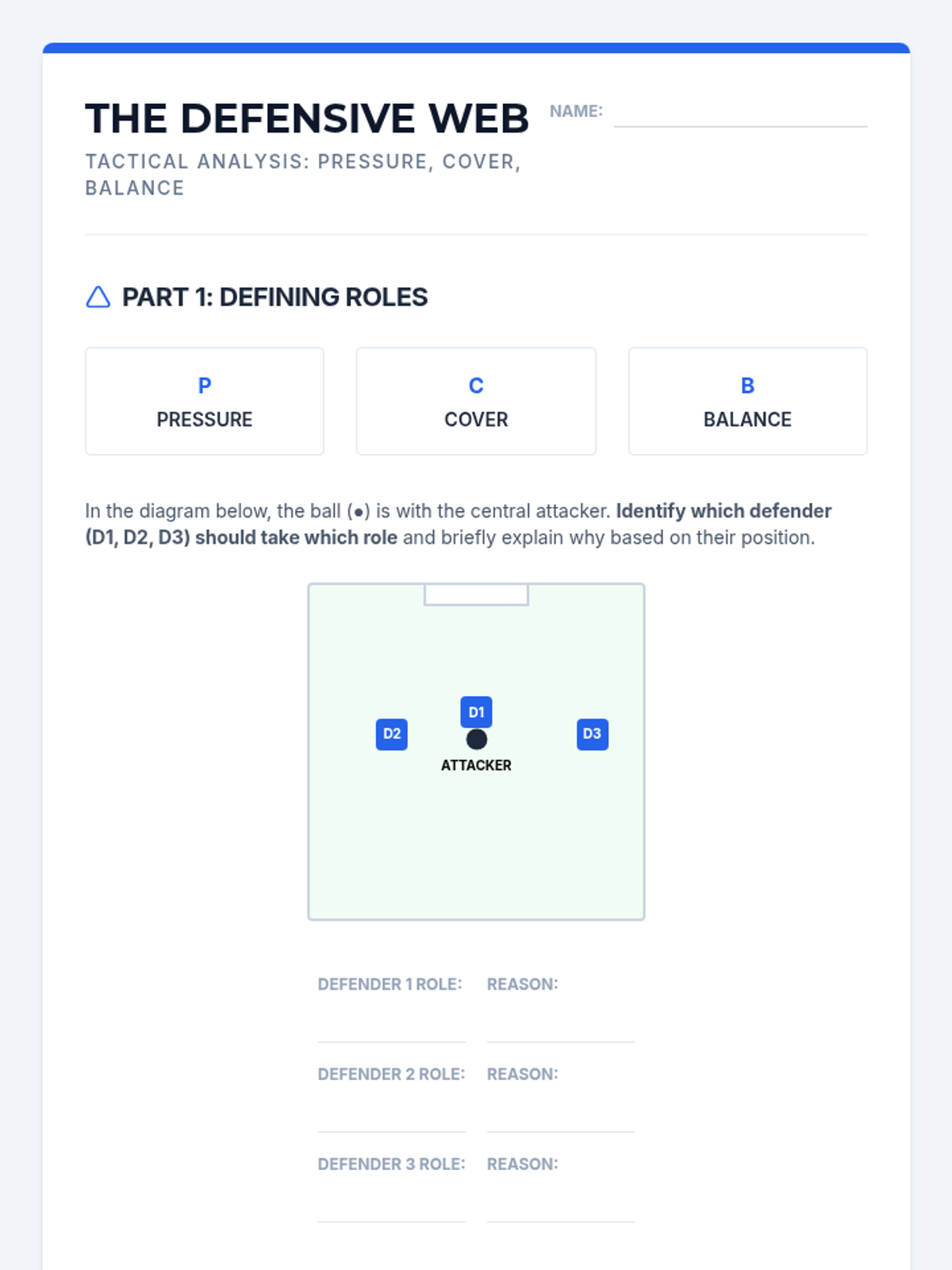
Introducing the core principles of group defending: Pressure, Cover, and Balance within a 3-player unit.
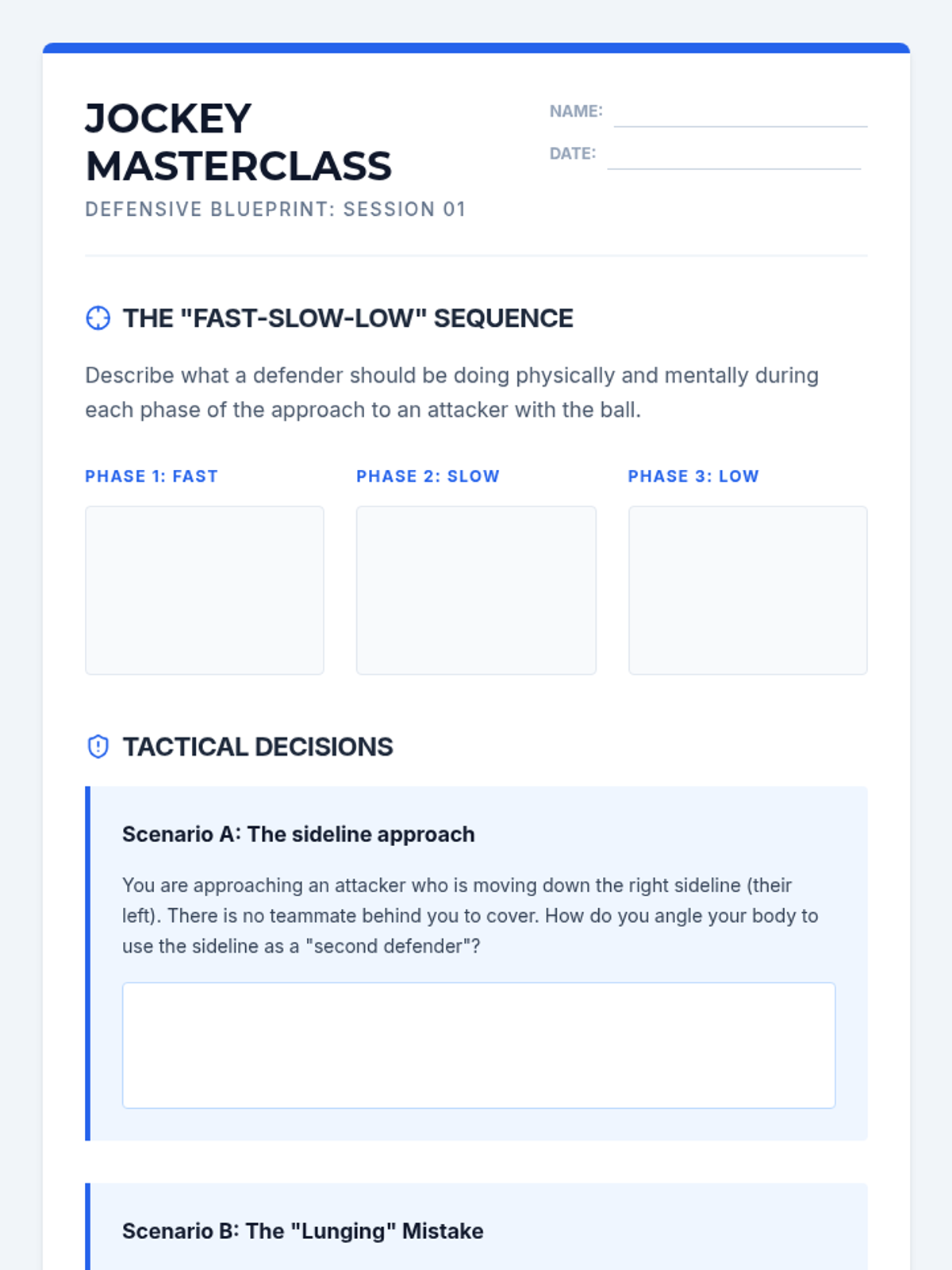
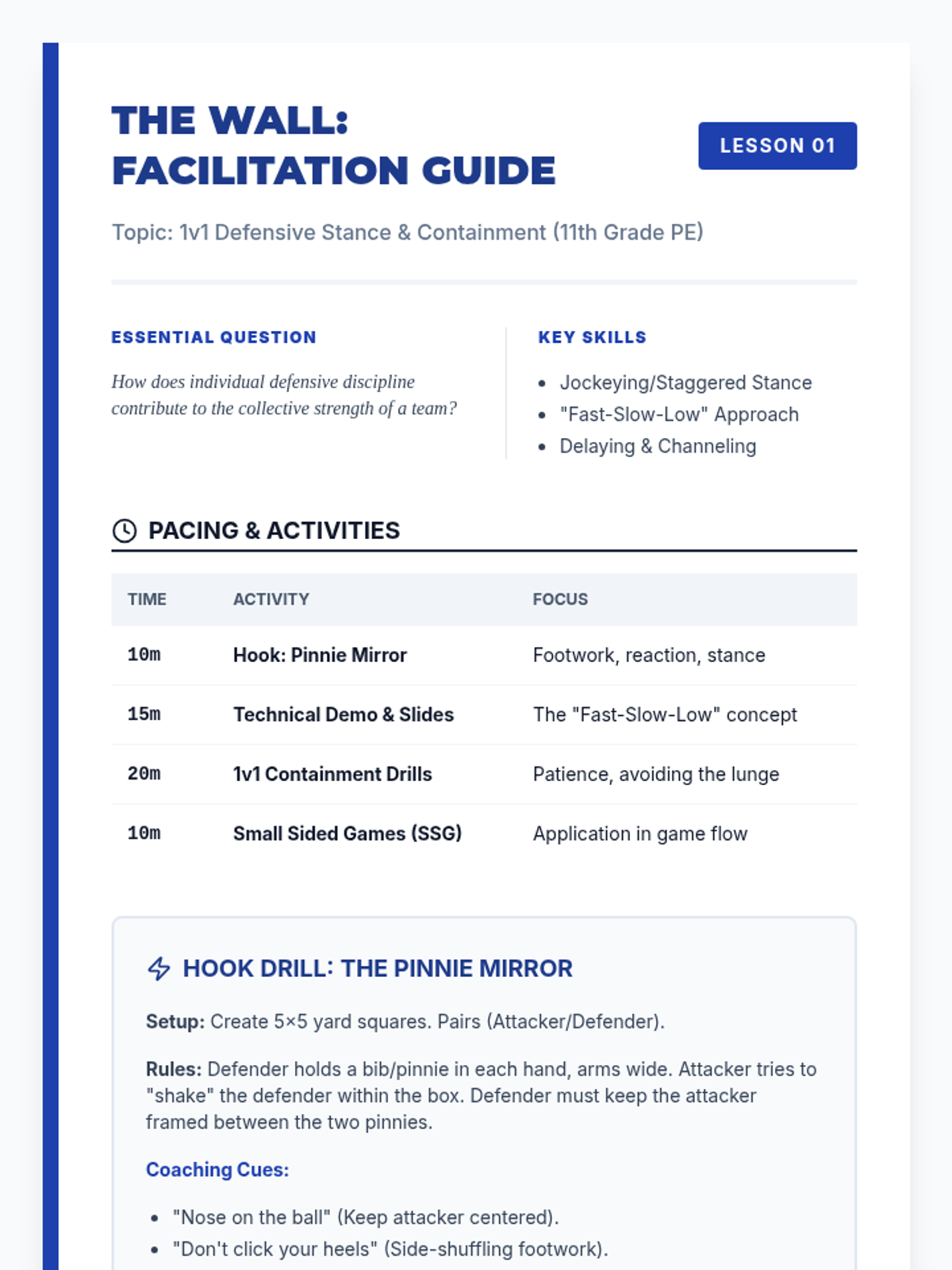
Students master the individual fundamentals of the defensive stance, focusing on jockeying, patience, and delaying the attacker.
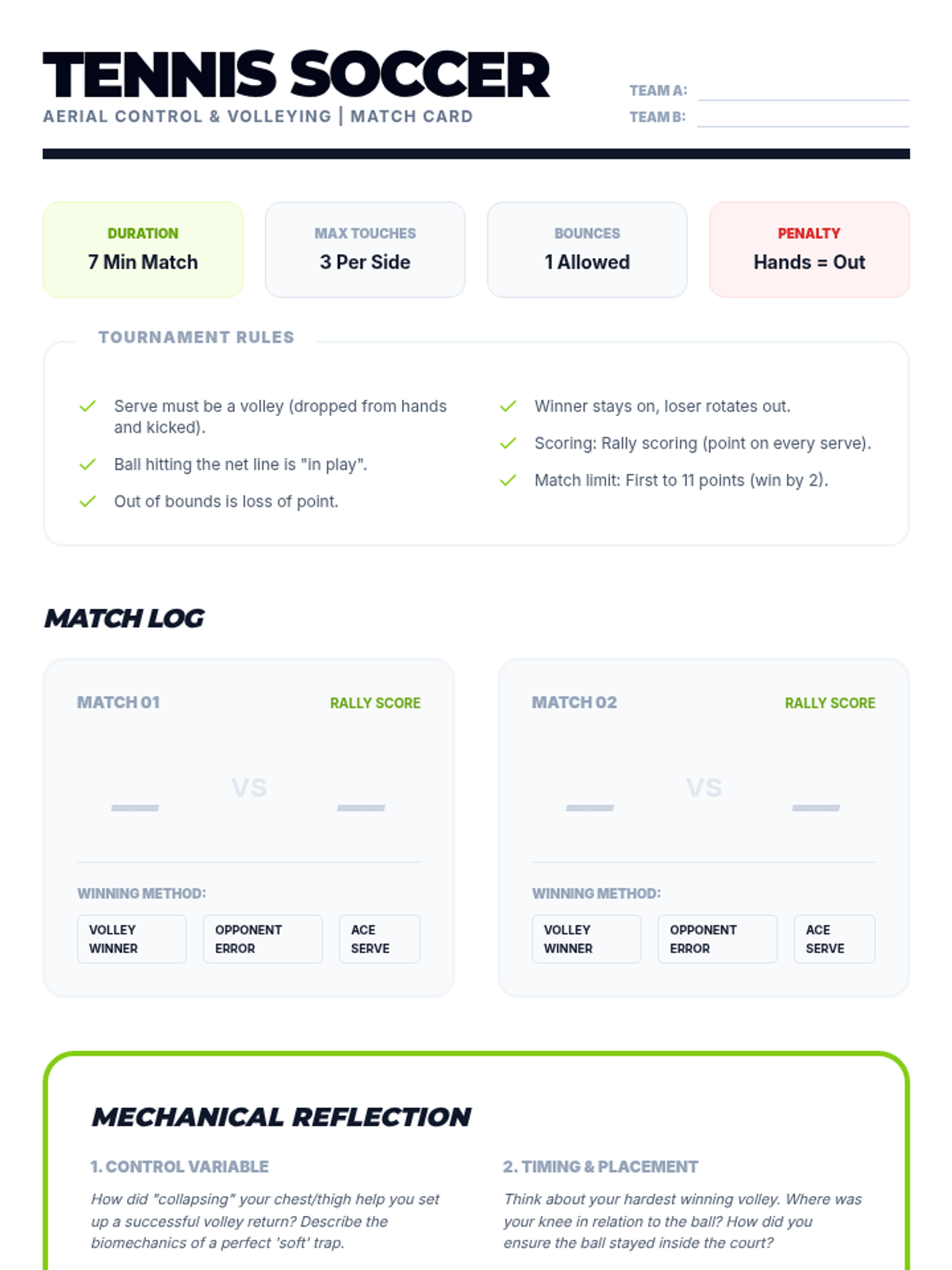
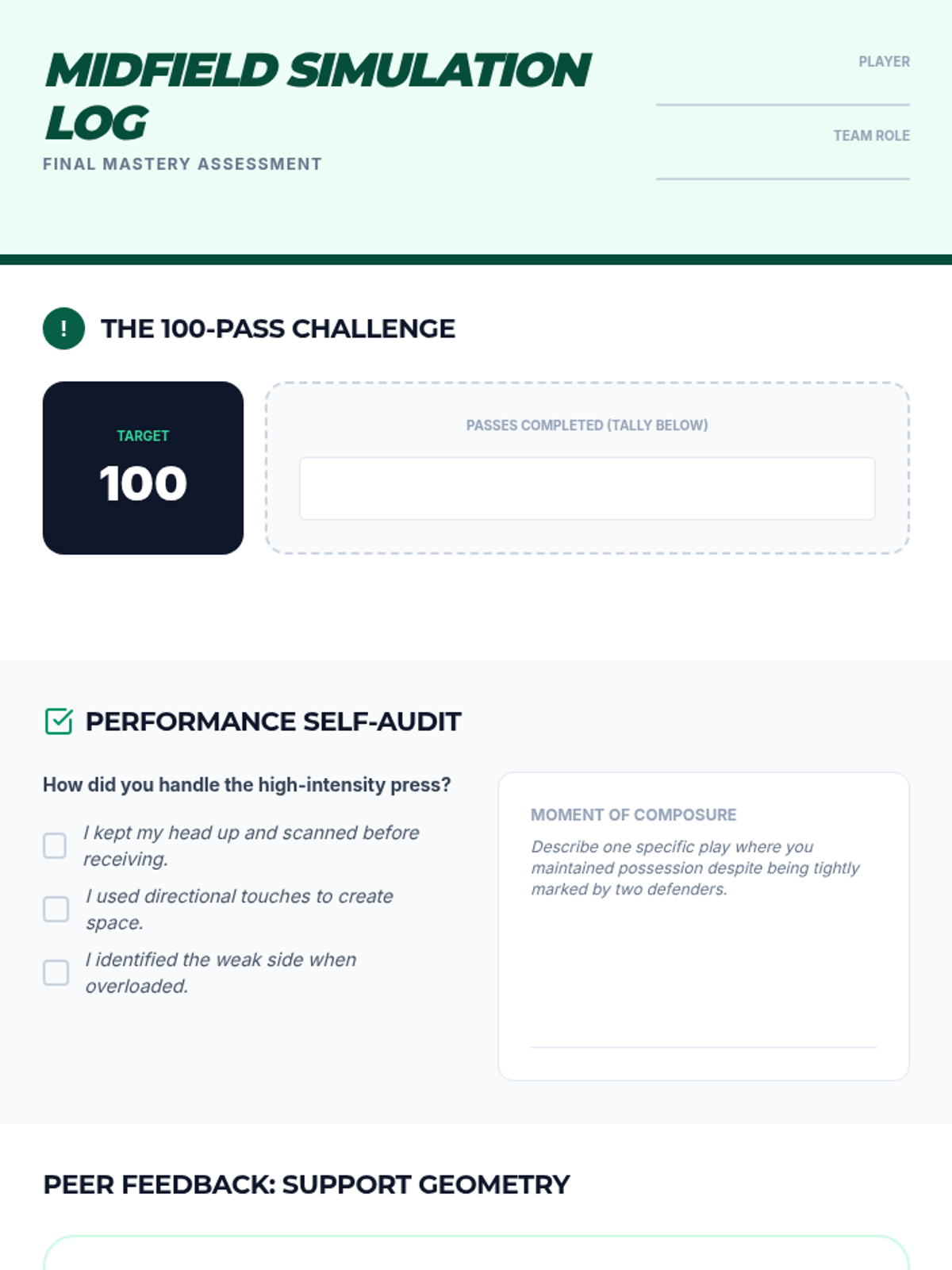
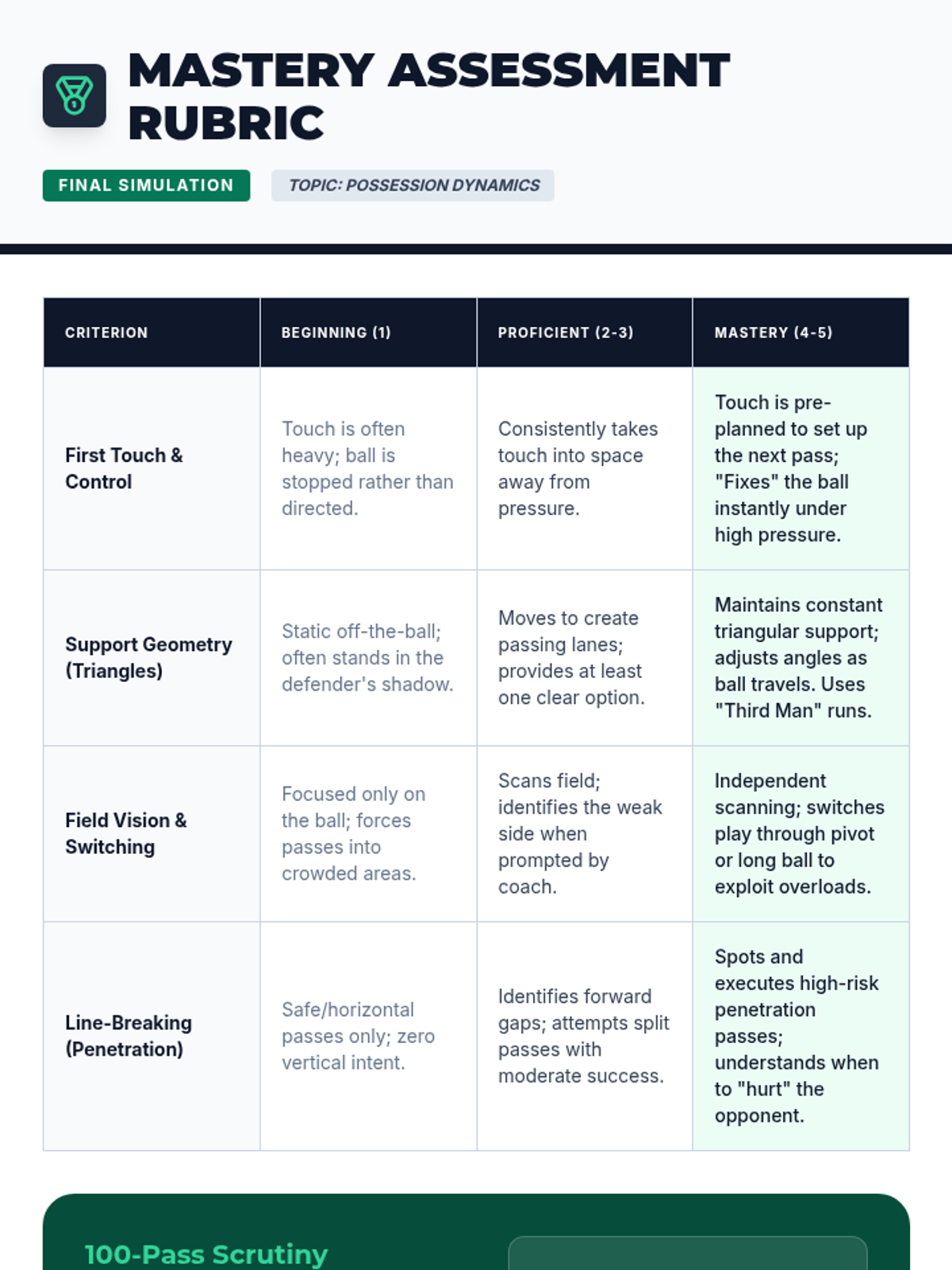
Students apply all skills in high-intensity possession games with uneven numbers (e.g., 7v5) to simulate midfield dominance. The goal is to demonstrate composure under pressure and achieve tactical mastery in game-like conditions.
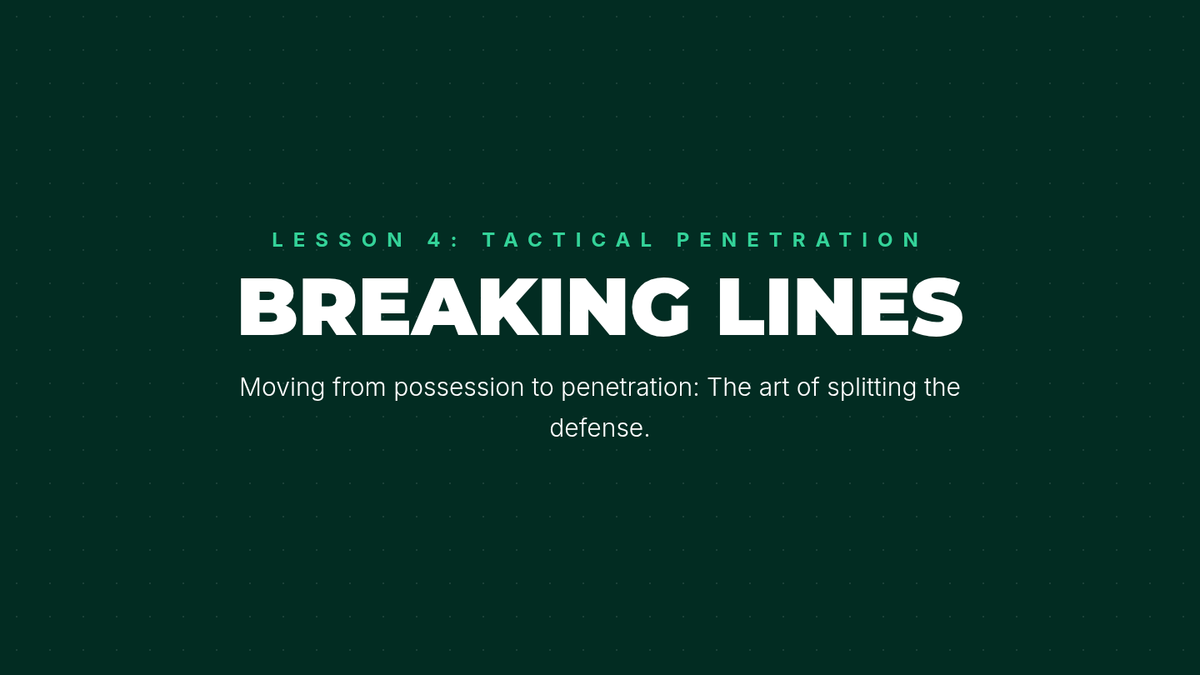
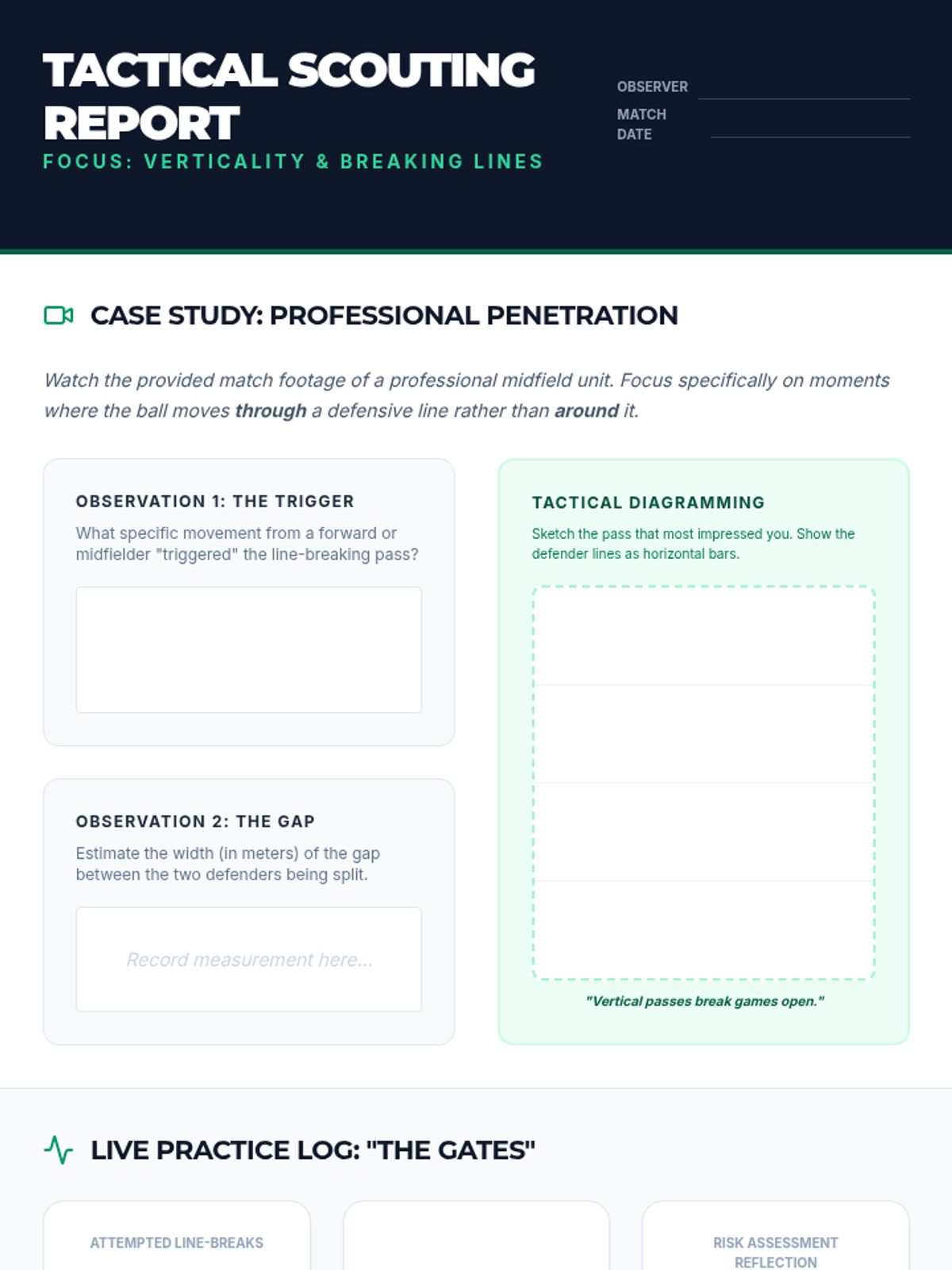
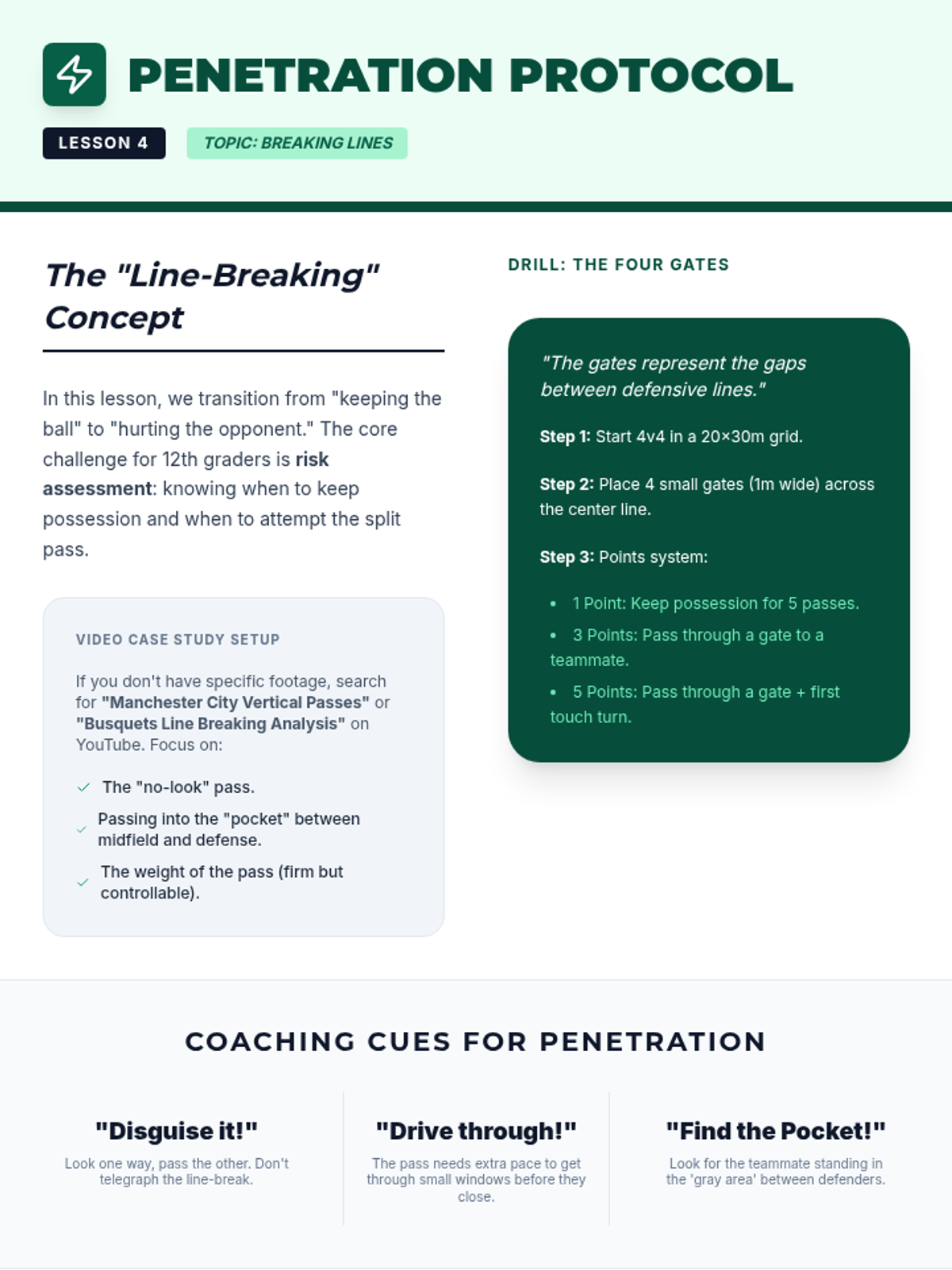
Focus shifts from maintaining possession to penetration, teaching students to execute passes that split defensive lines. Activities involve 'line-breaking' games where tactical risk assessment is key to creating scoring opportunities.
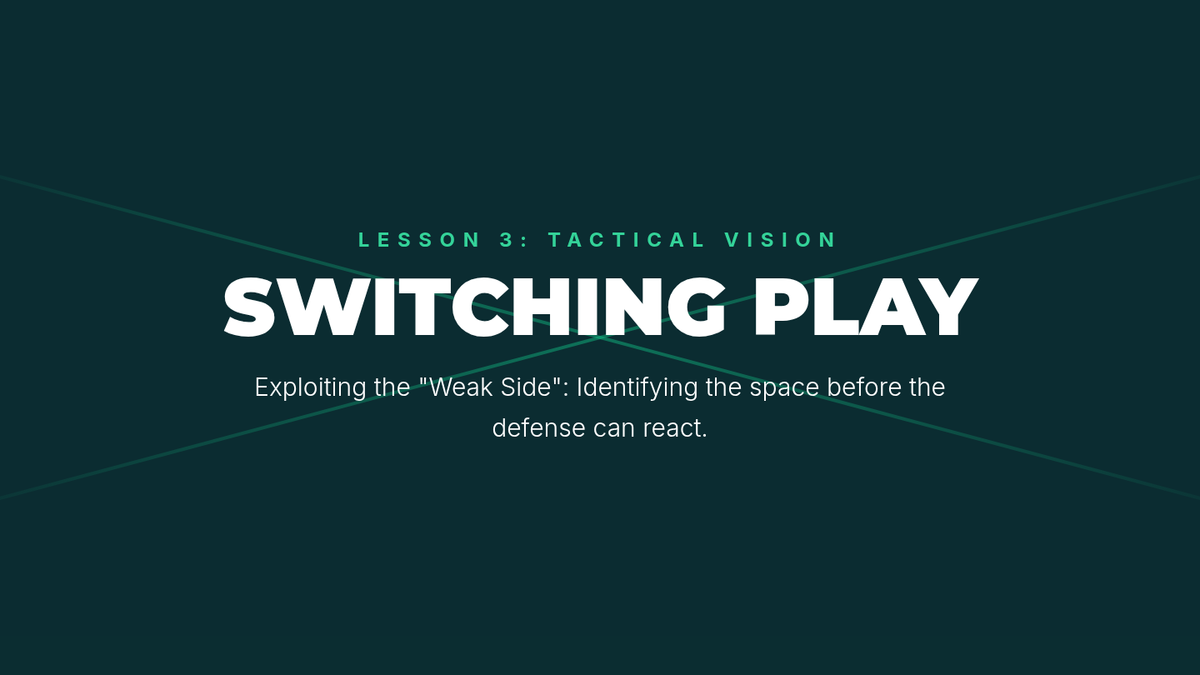
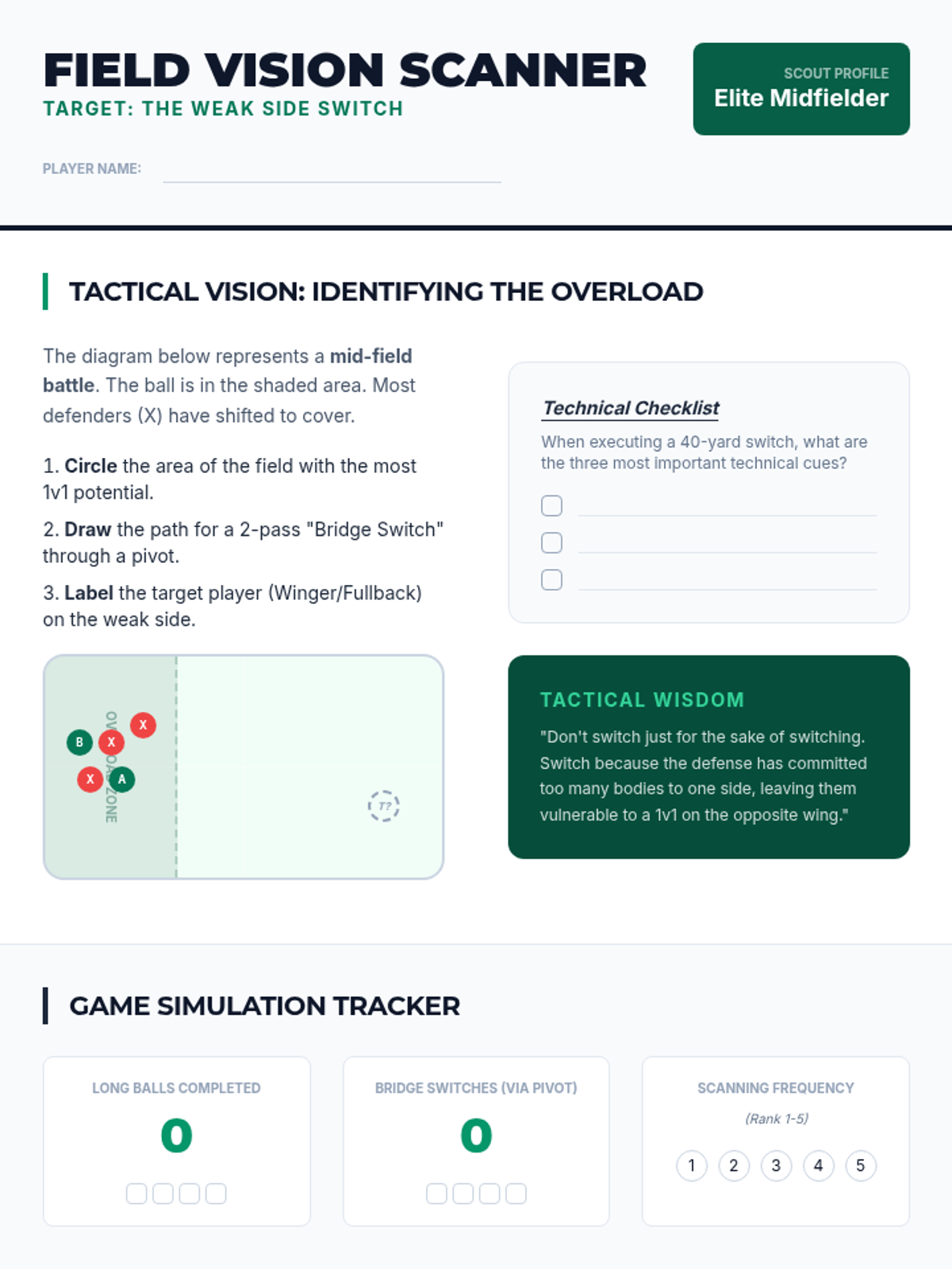
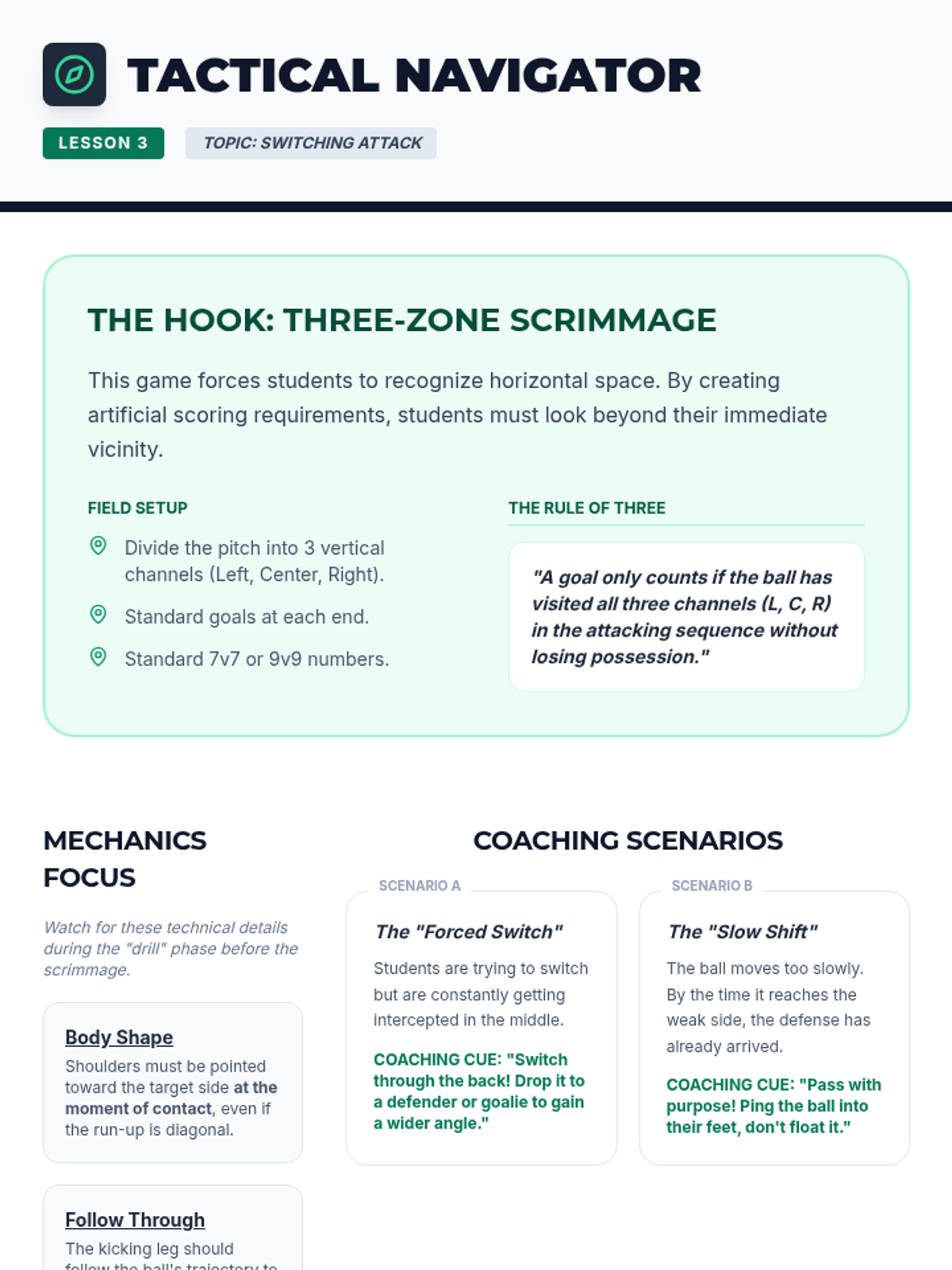
Students learn to identify when one side of the field is overloaded and practice long-range passing to switch play to the weak side. Emphasis is placed on field vision, scanning, and the mechanics of the long-range pass.
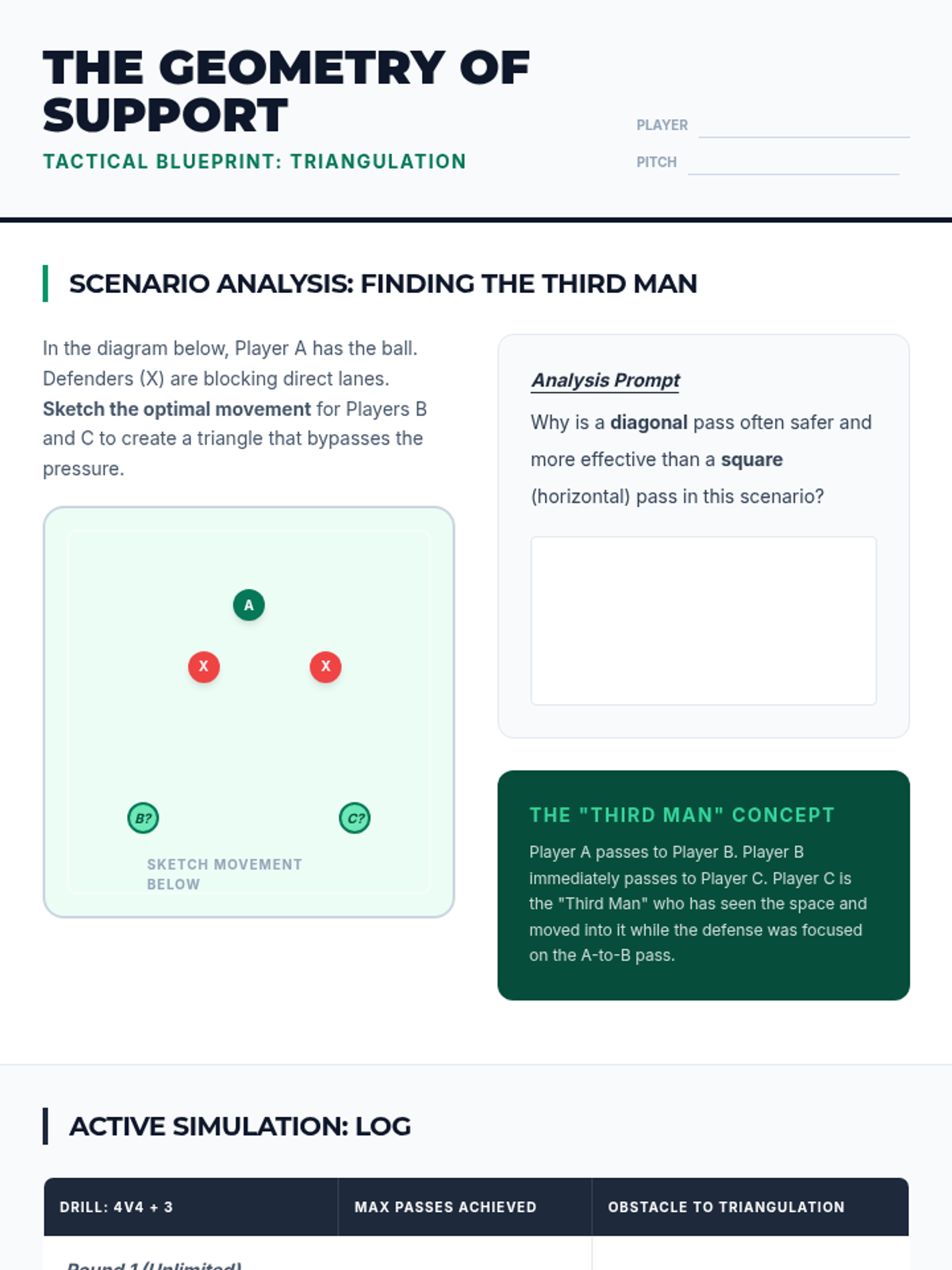
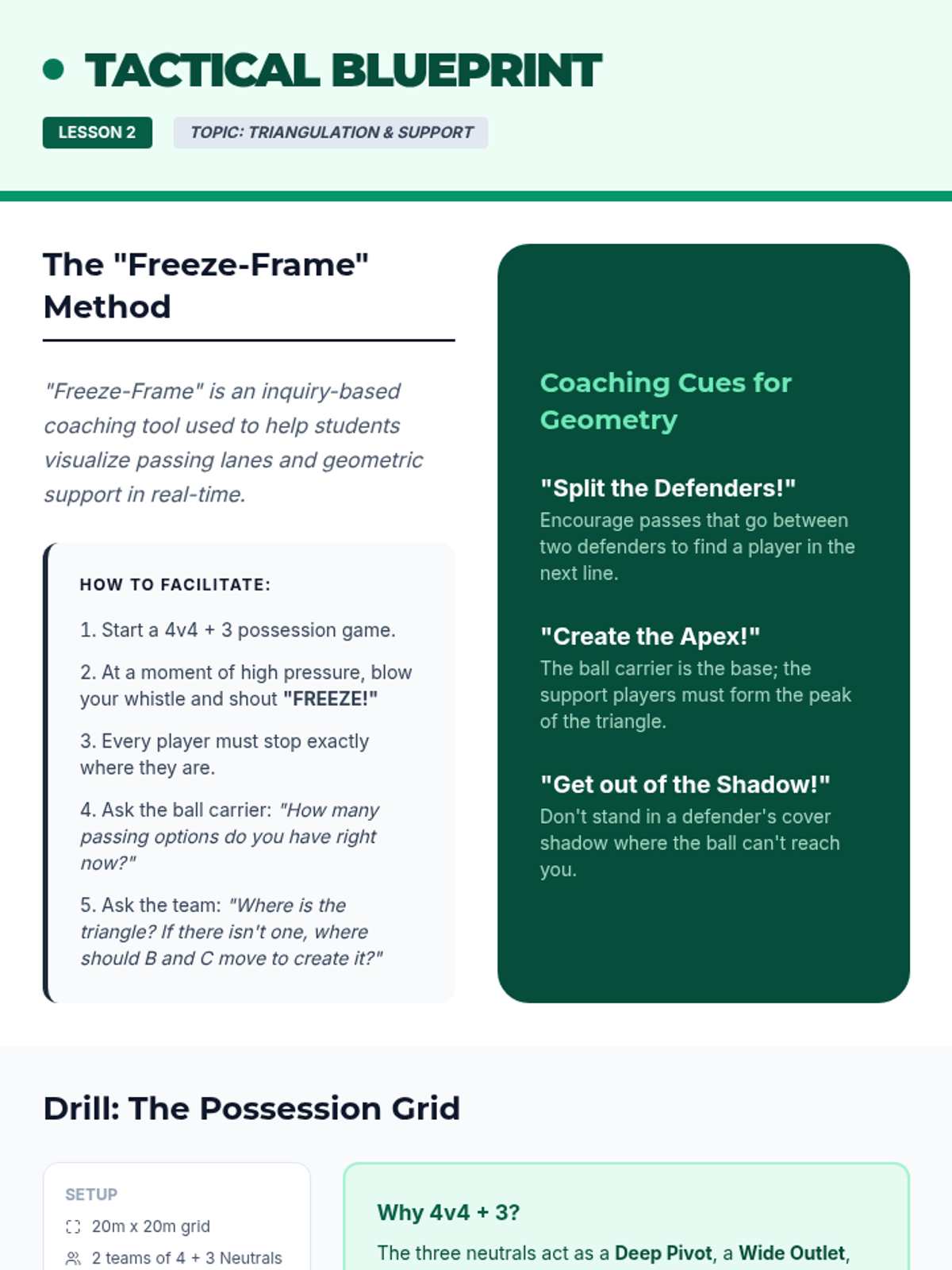
This lesson teaches the geometry of support, ensuring the ball carrier always has two passing options. Students analyze passing lanes and practice maintaining triangular shapes while moving dynamically across the pitch.
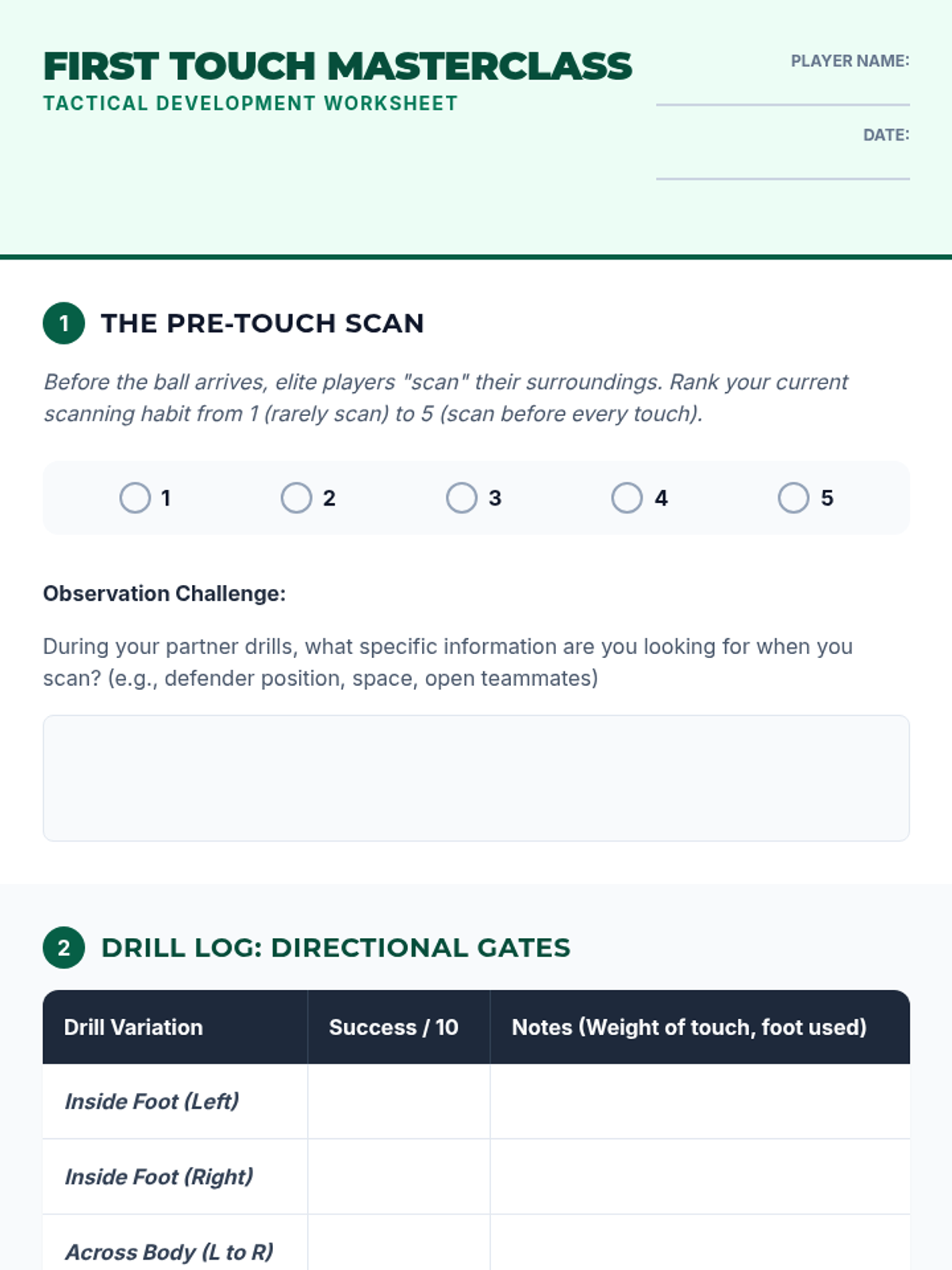
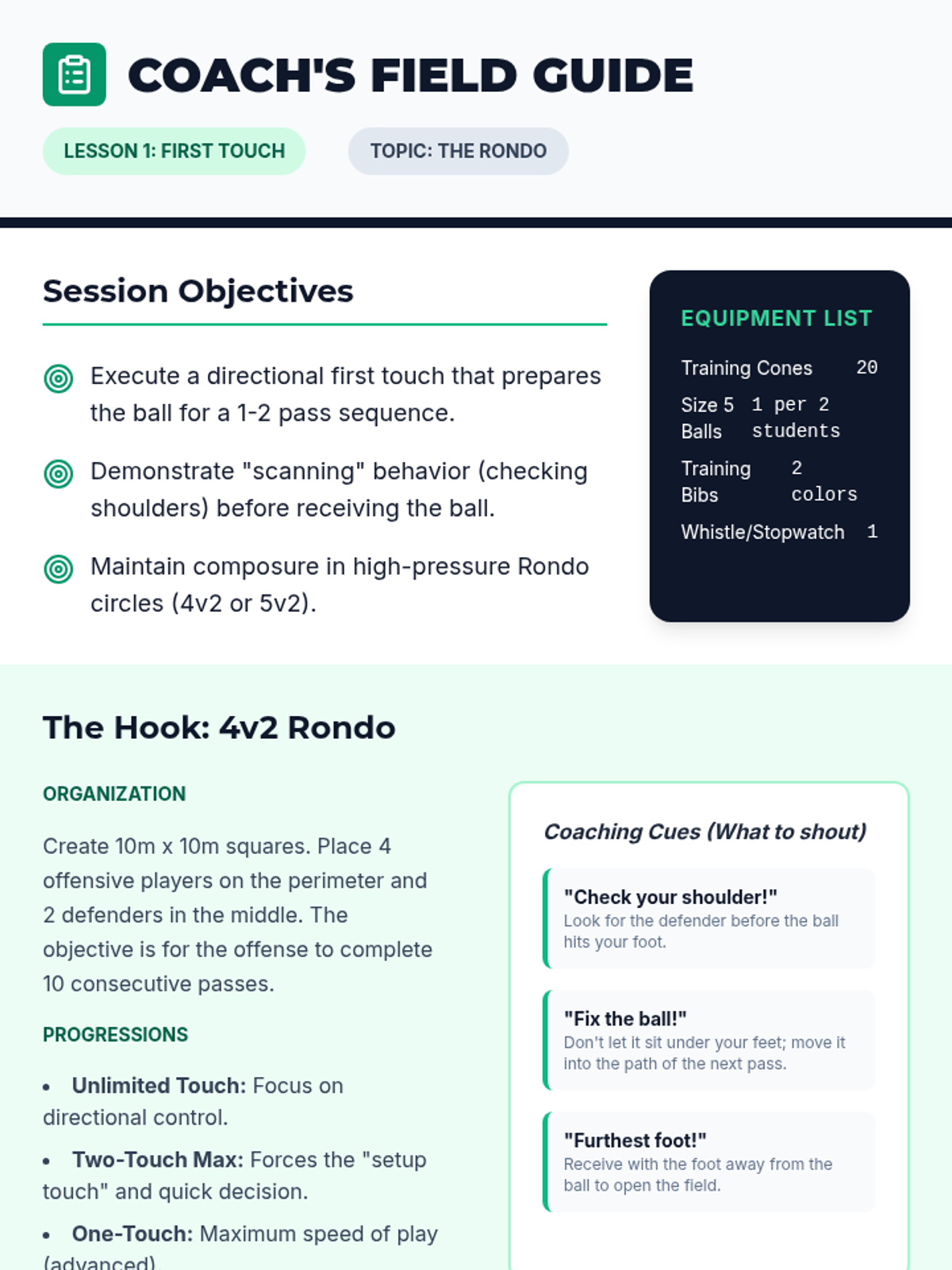
Students focus on the 'setup touch' that prepares the next action, emphasizing receiving the ball across the body and away from pressure. Practice involves high-velocity drills and the 'Rondo' circle to test composure and reaction time.