Fundamental footwork, spatial awareness, and body coordination within various dance styles. Develops beat synchronization, tempo recognition, and movement patterns to enhance physical rhythm.
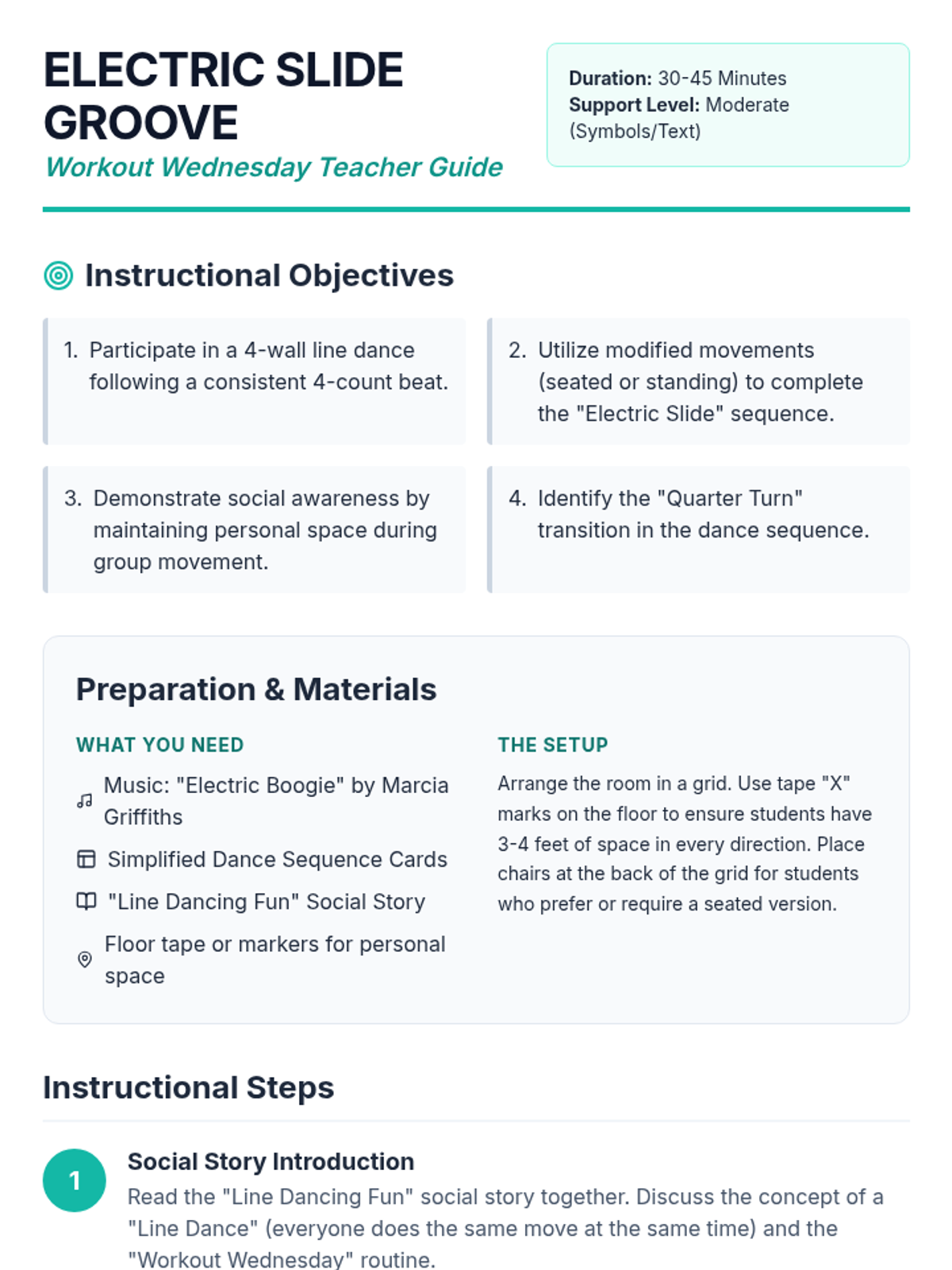
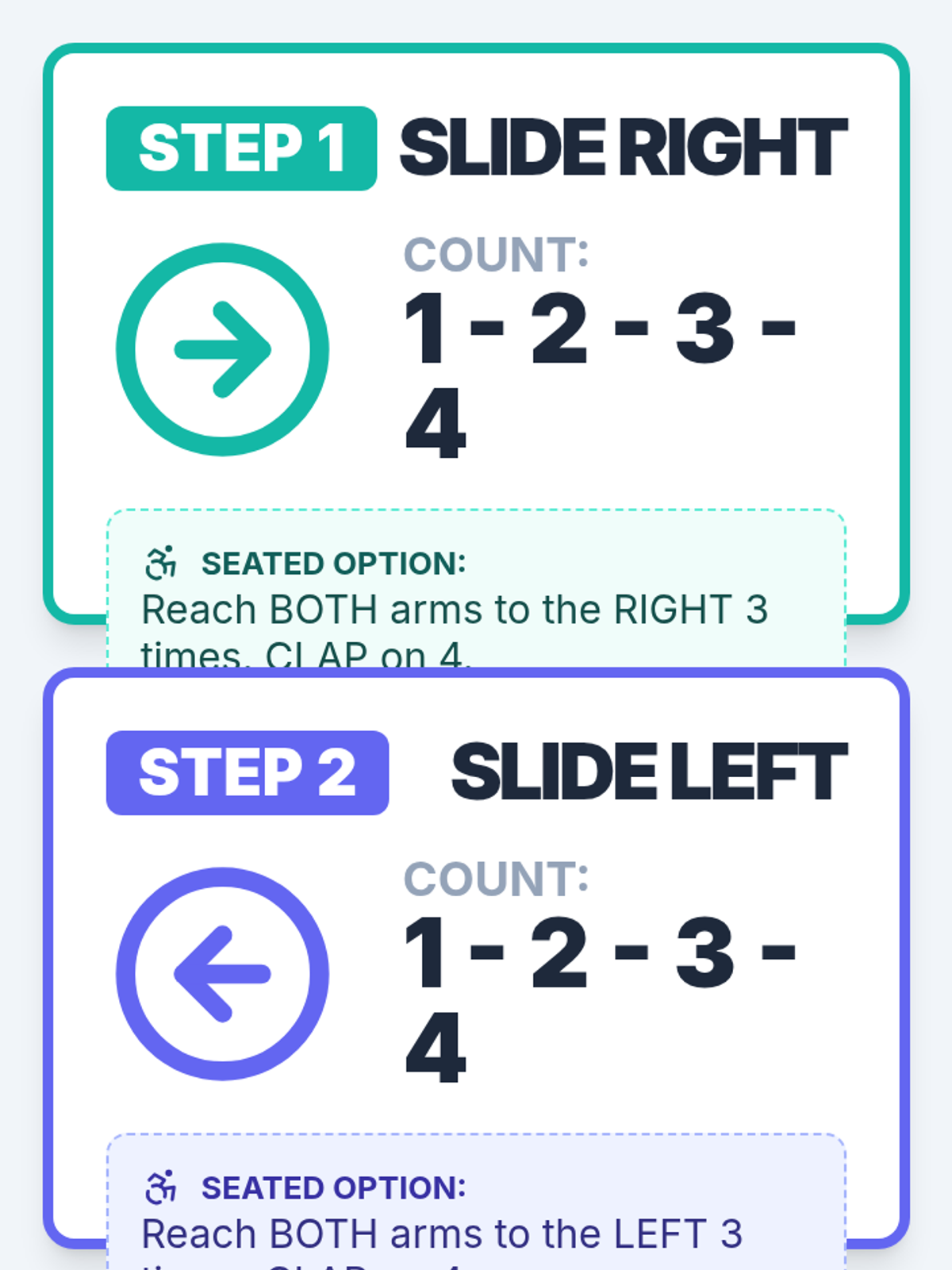
A guided introduction to the Electric Slide, featuring simplified steps and modifications for students with limited mobility or wheelchair users.
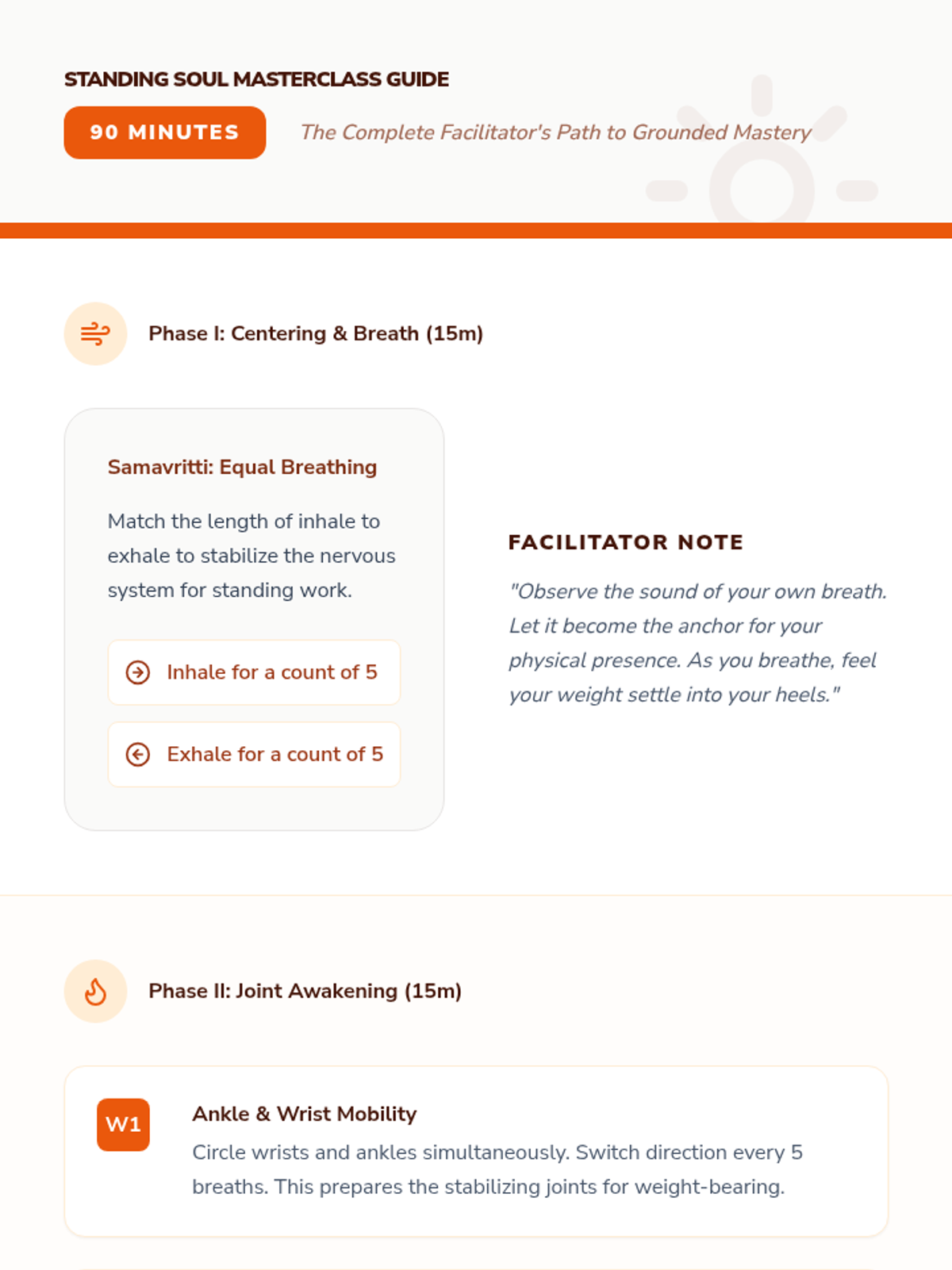
A beginner-friendly 90-minute standing yoga session focused on grounding, balance, and fundamental postures to transition from seated to standing practice.
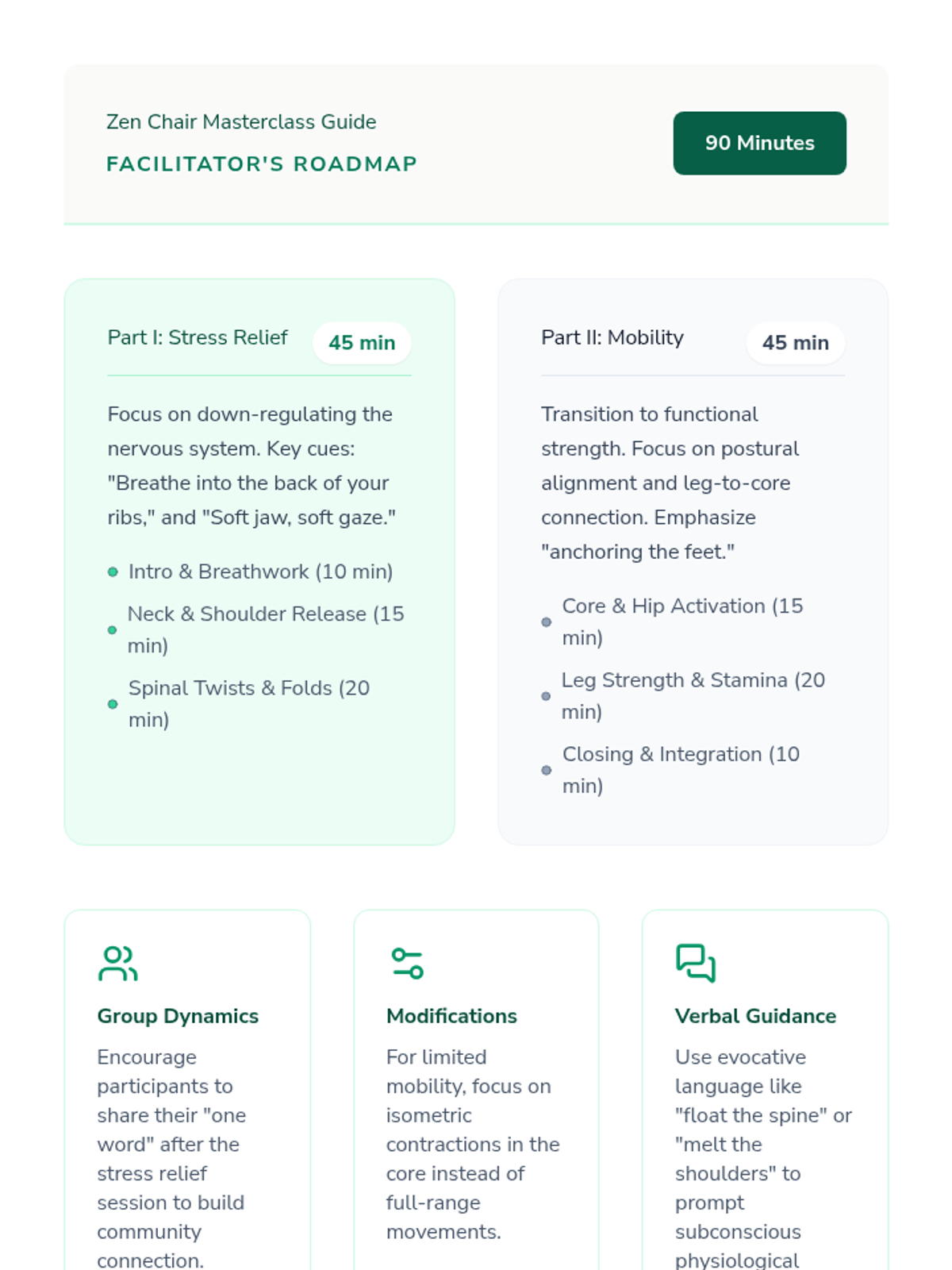
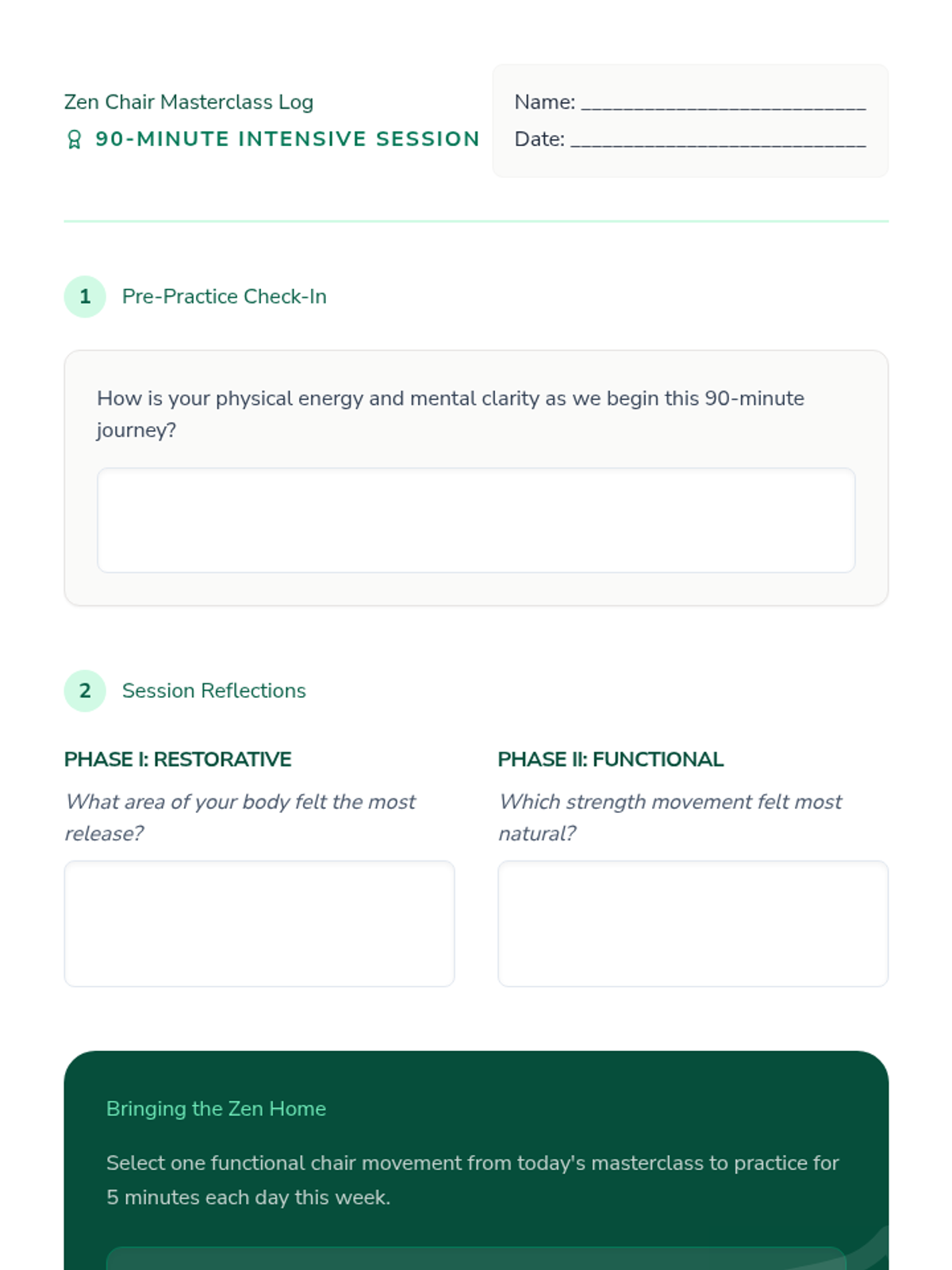
A deep-dive chair yoga experience combining stress relief and functional mobility, featuring two full-length guided practice videos. This 90-minute masterclass is designed to build both mental calm and physical strength.
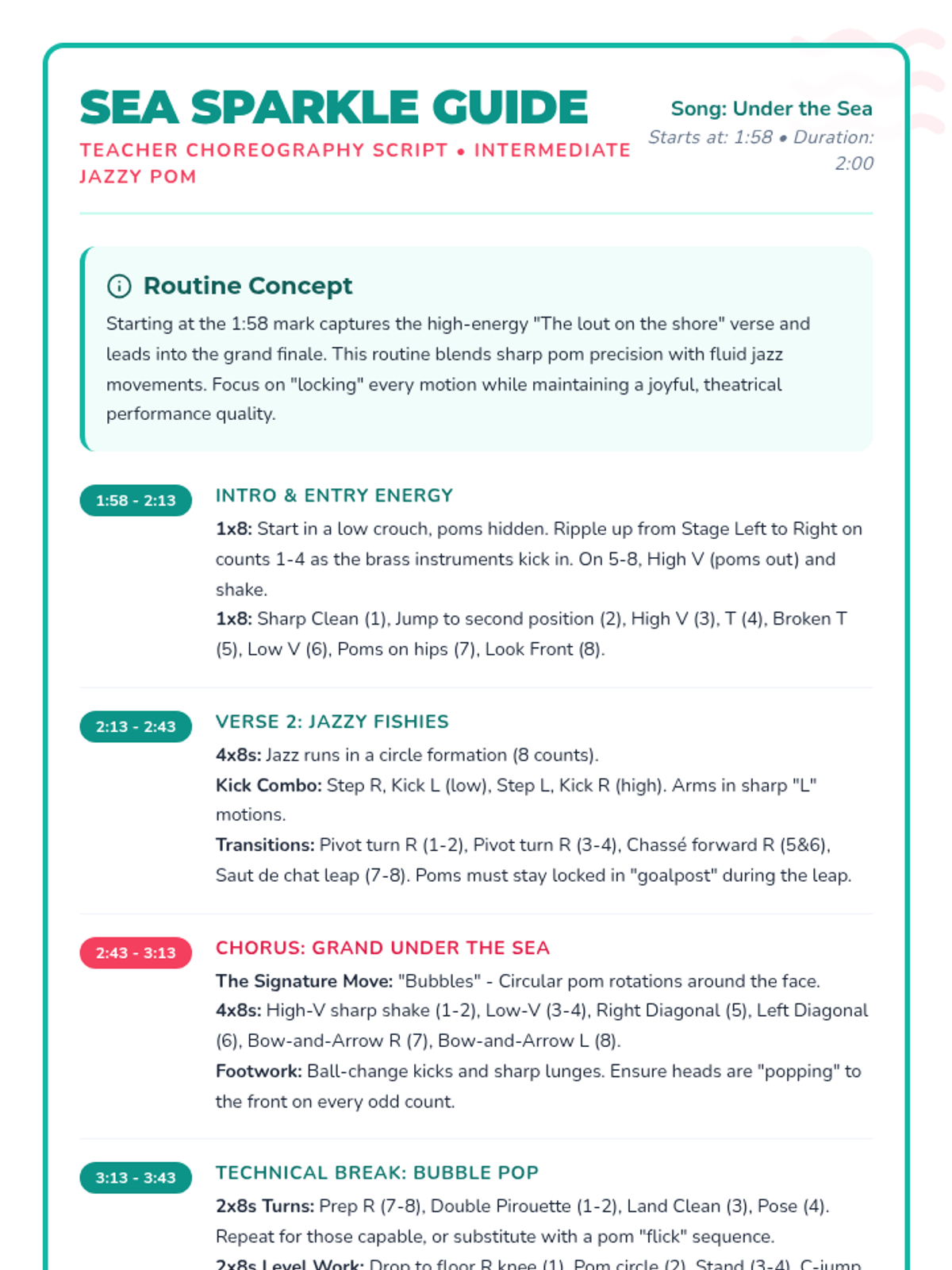
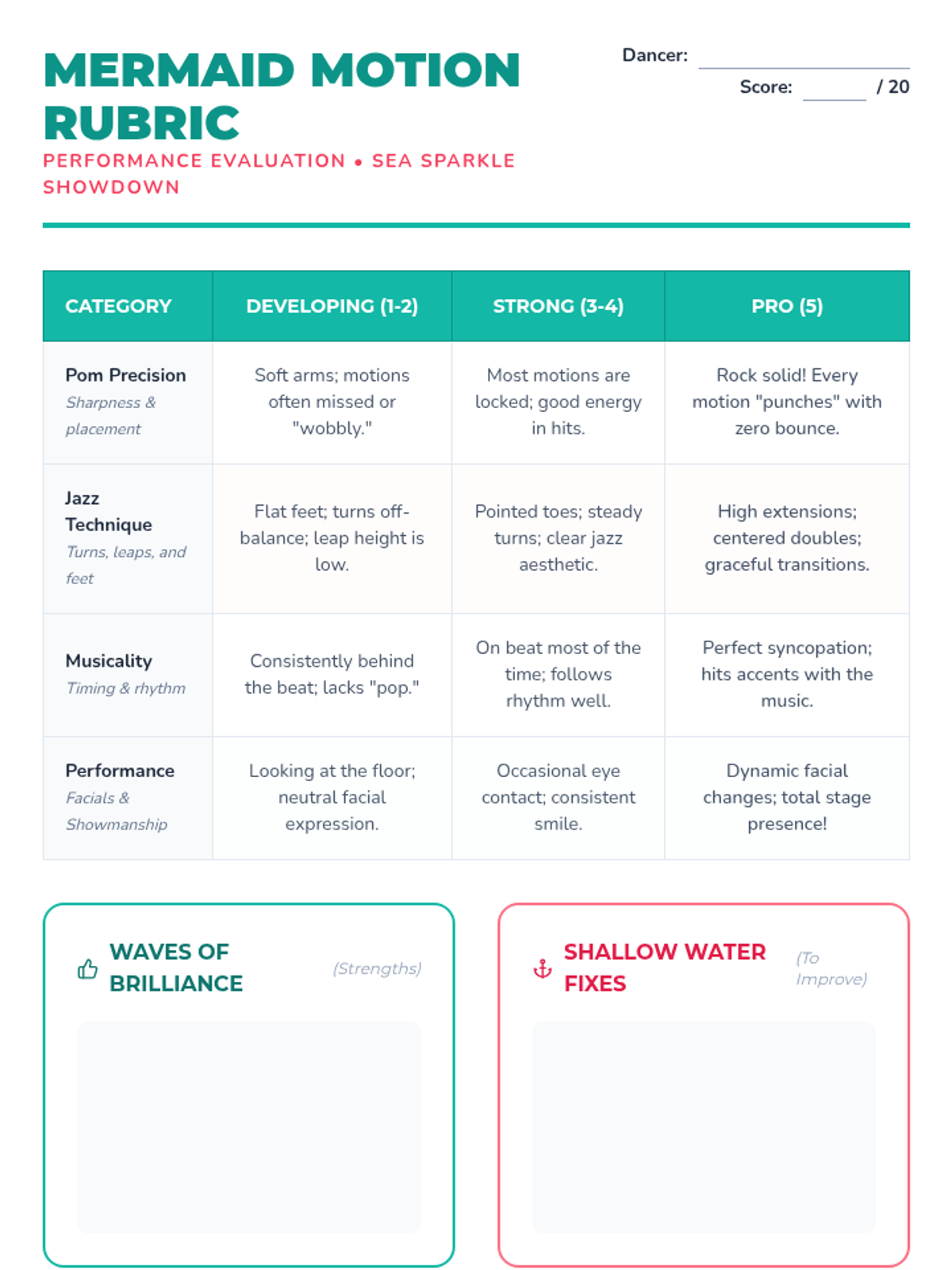
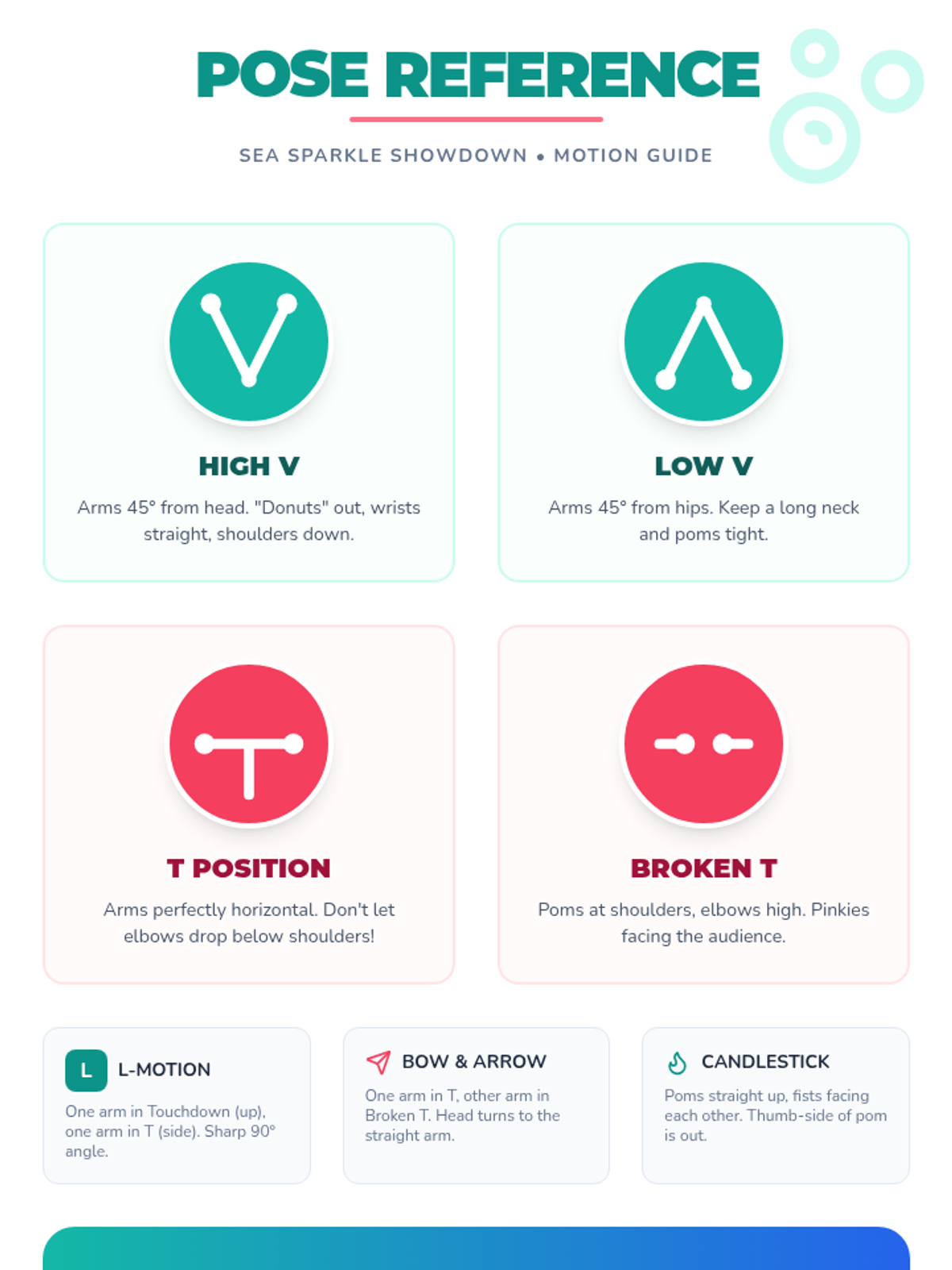
An intermediate jazzy pom dance routine set to 'Under the Sea', focusing on sharp motions, jazz technique, and high-energy performance.
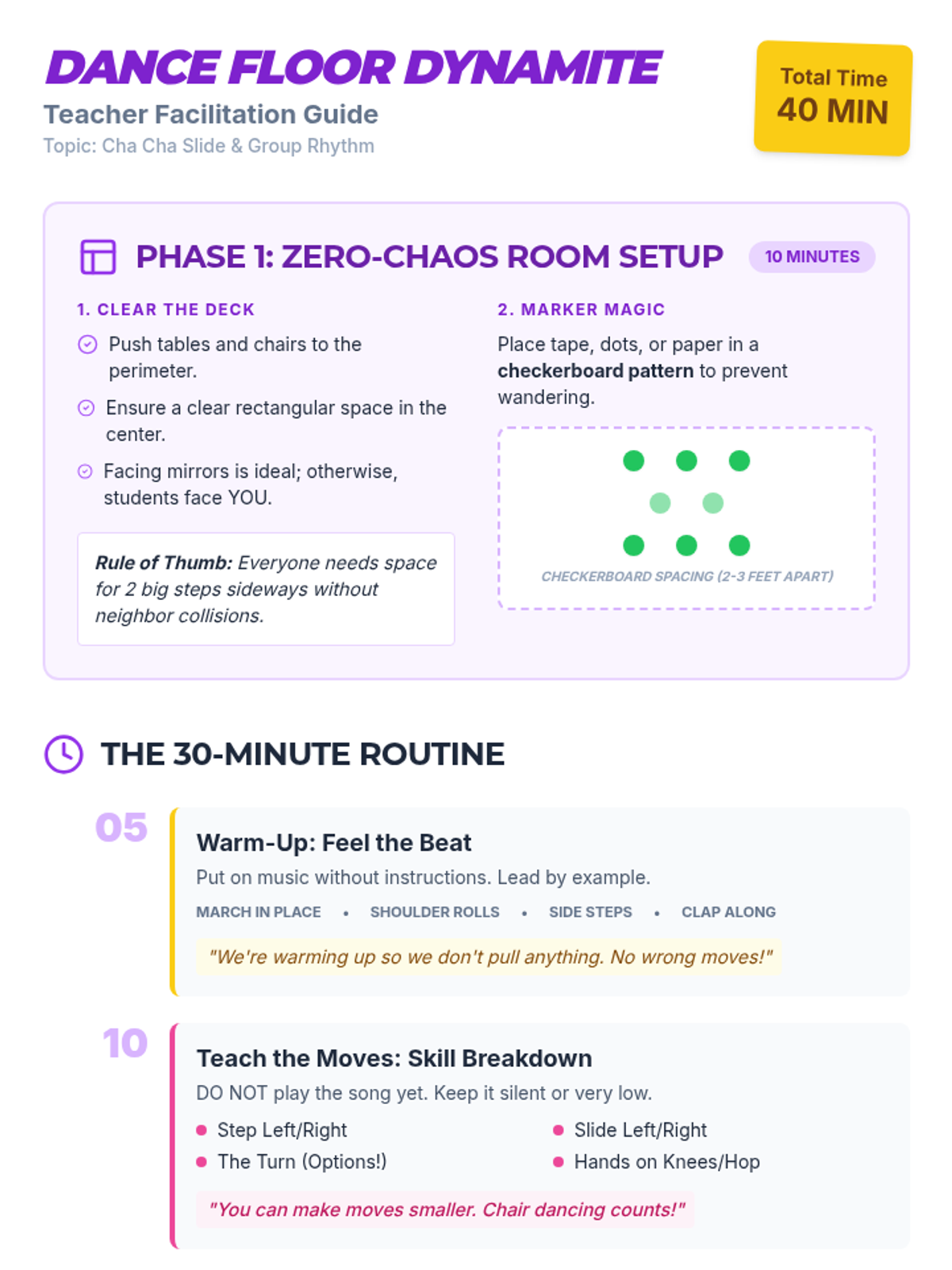
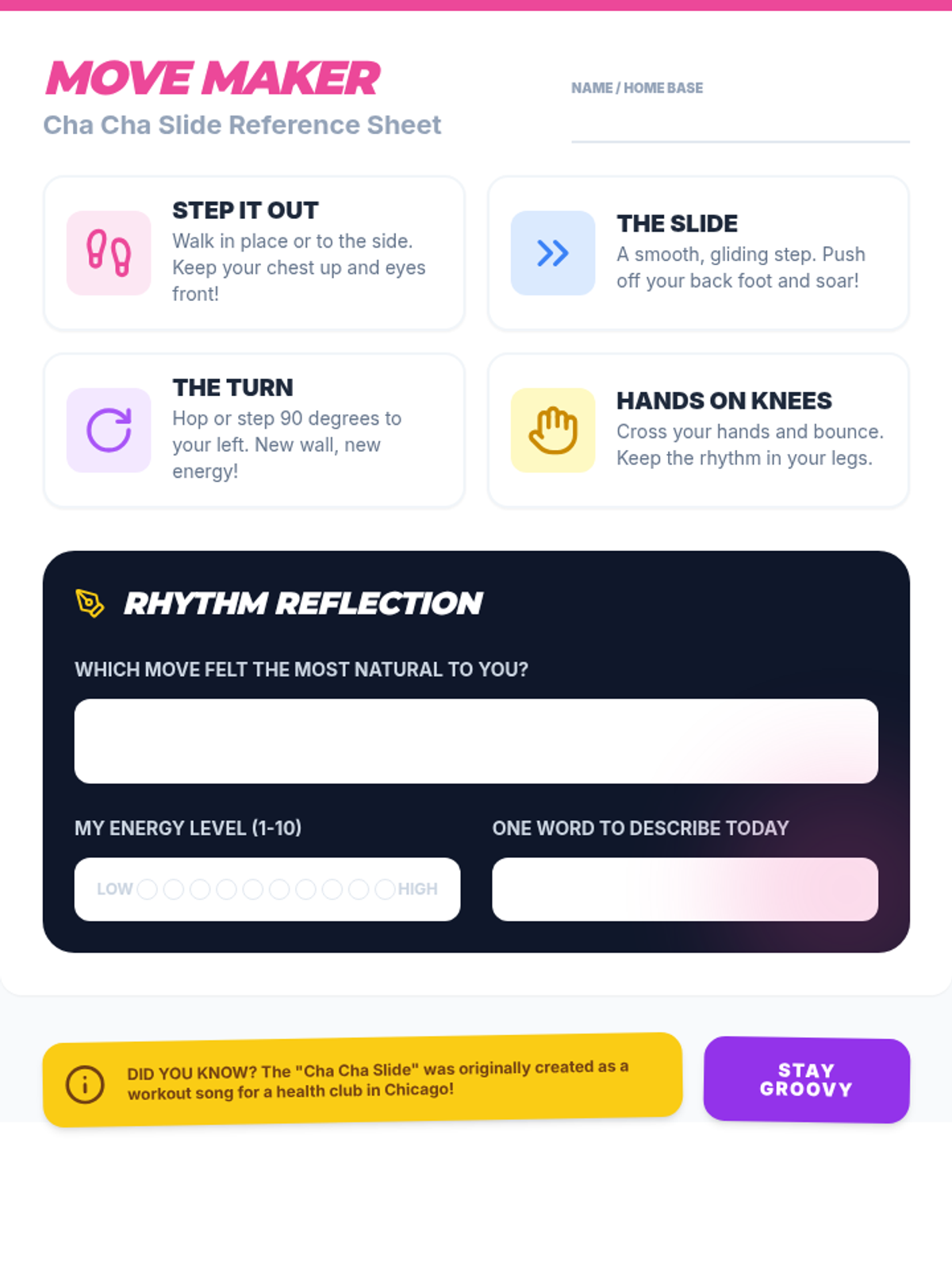
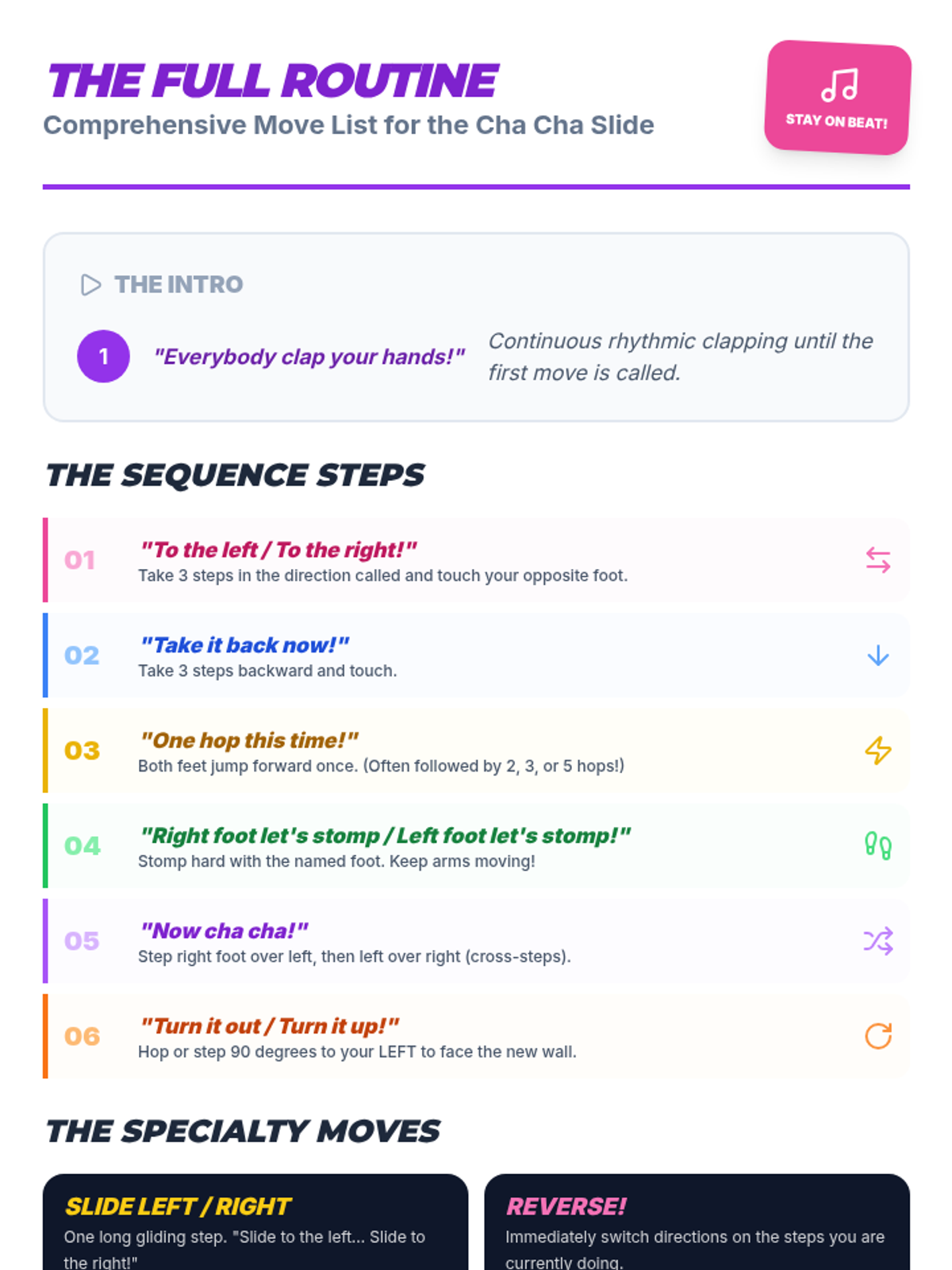
A high-energy introduction to line dancing focused on the Cha Cha Slide. This lesson covers room configuration, basic movement patterns, and group synchronization while prioritizing accessibility and confidence.
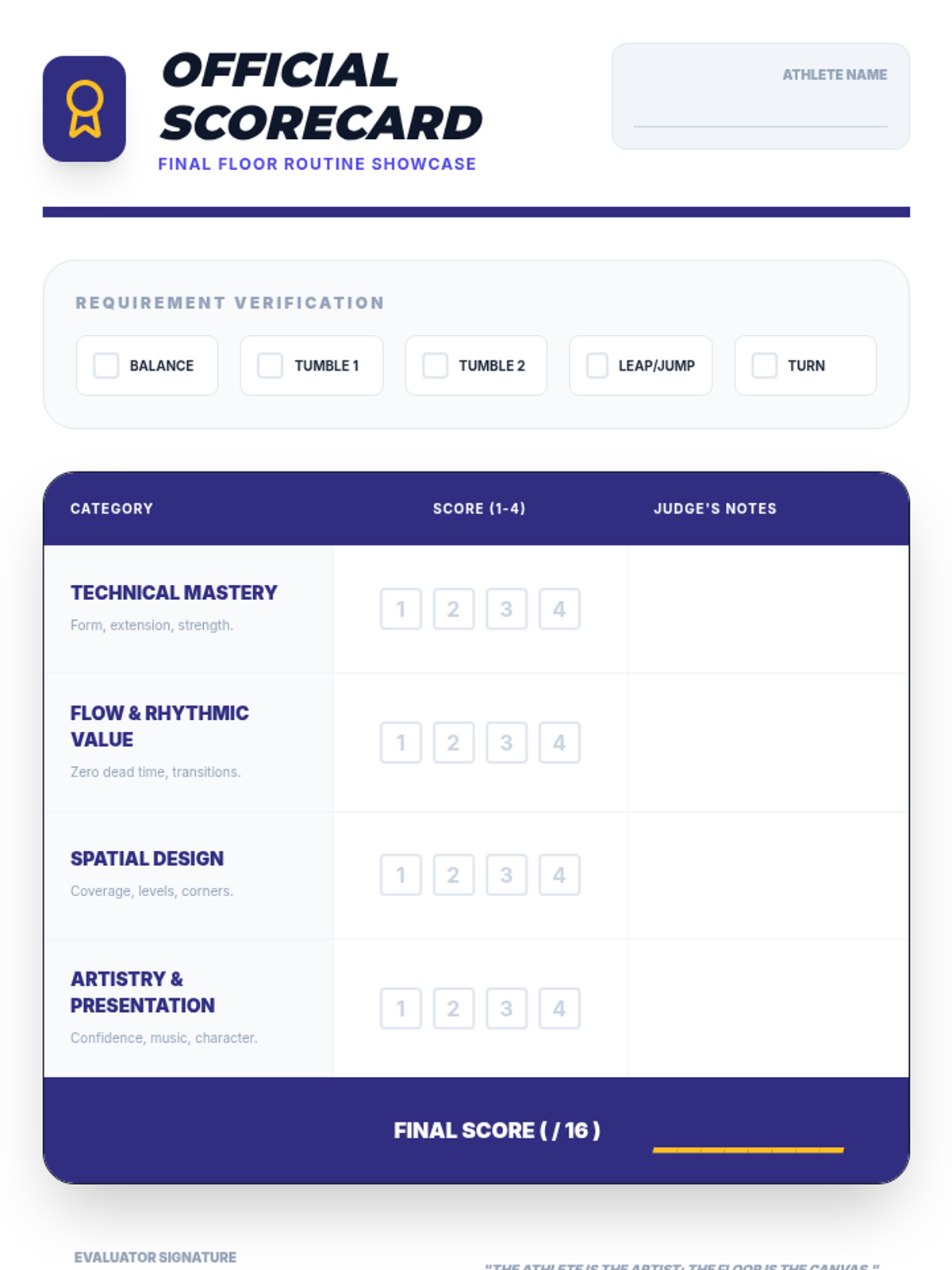
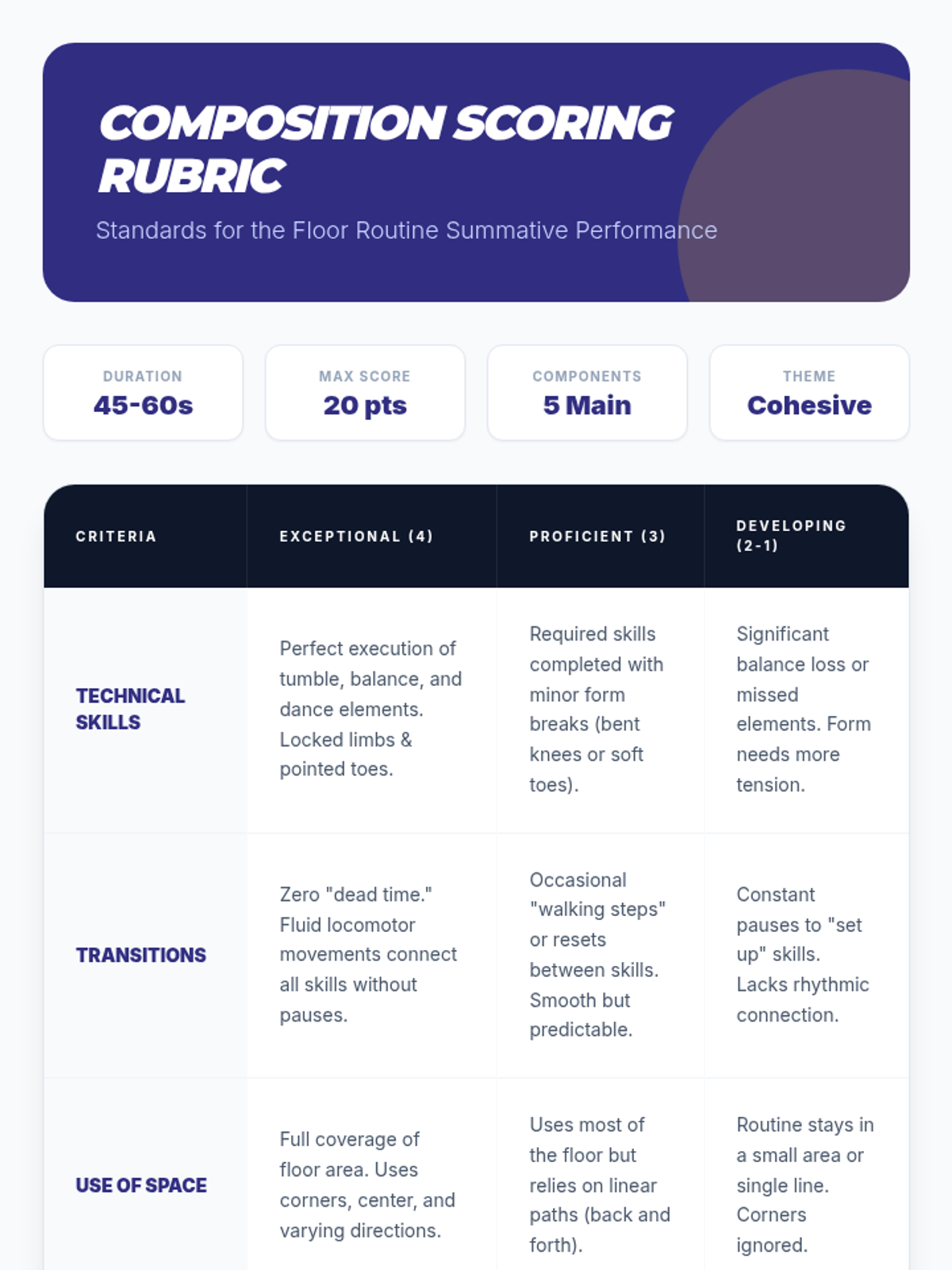
Students perform their final floor routines for small groups. Assessments are based on the inclusion of required elements, the fluidity of connections, and overall control, rather than high-level difficulty.
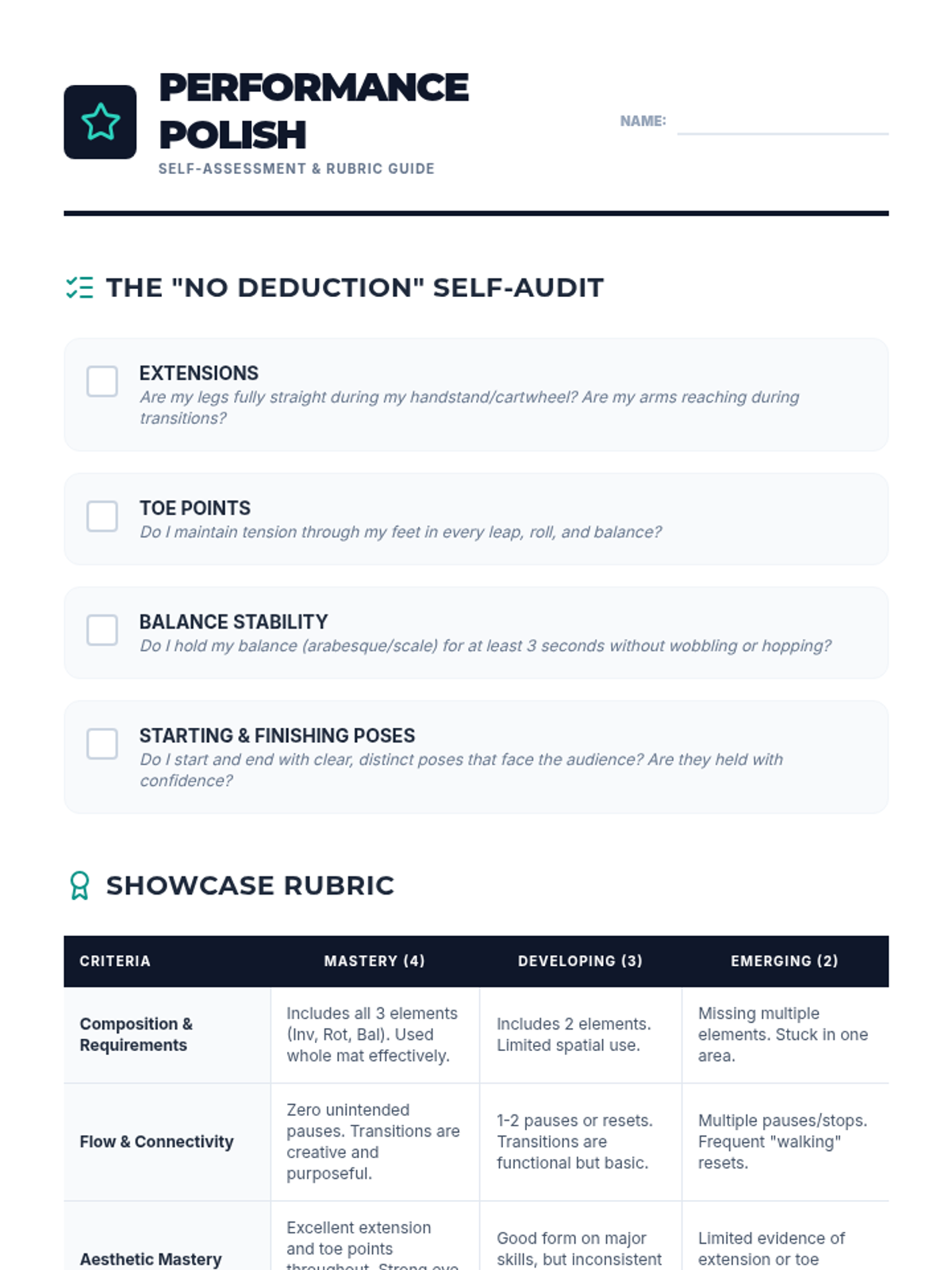
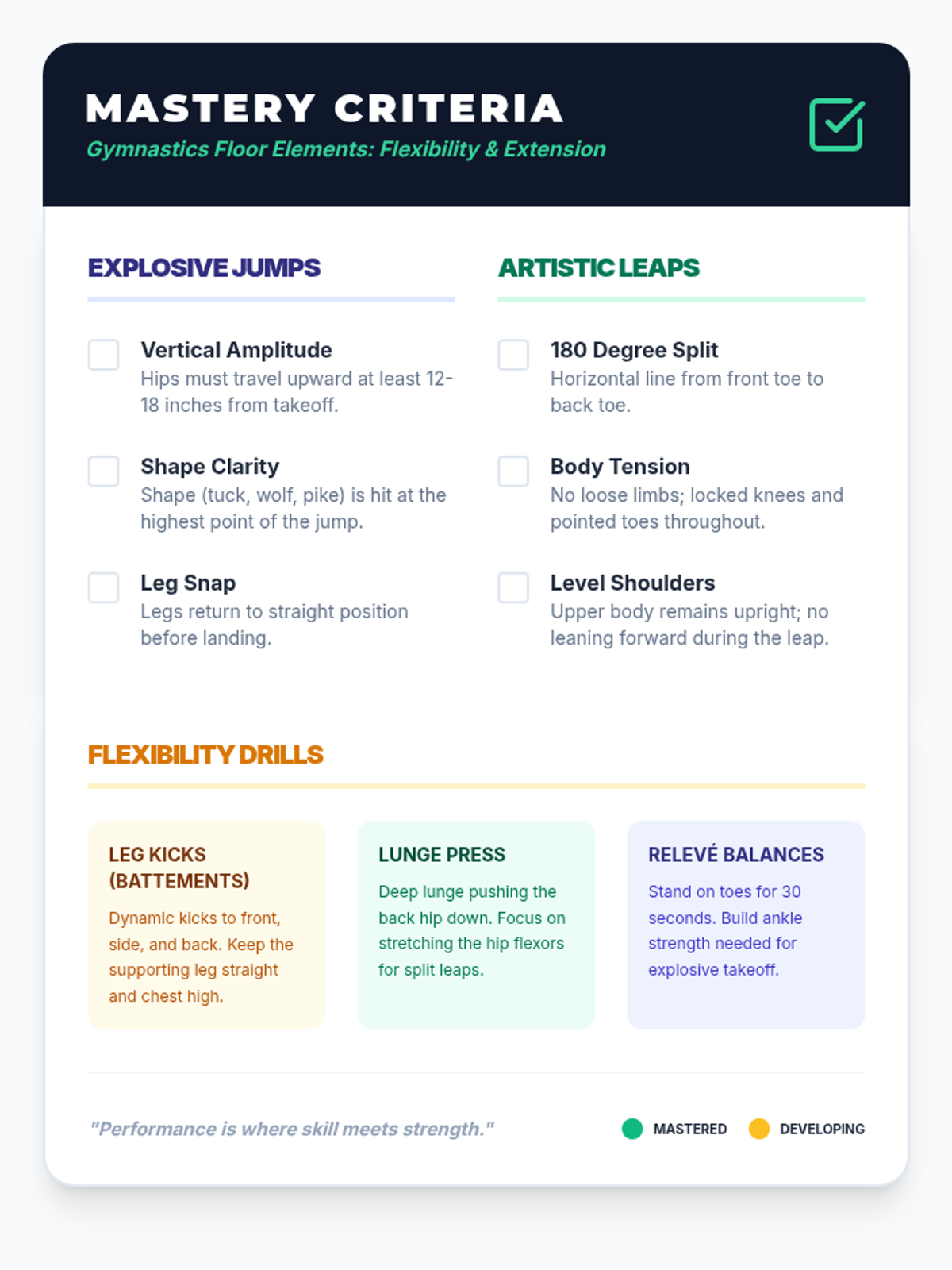
This lesson focuses on extension, toe point, and posture. Students practice their routines with a focus on aesthetic presentation and body control, preparing for the final showcase.
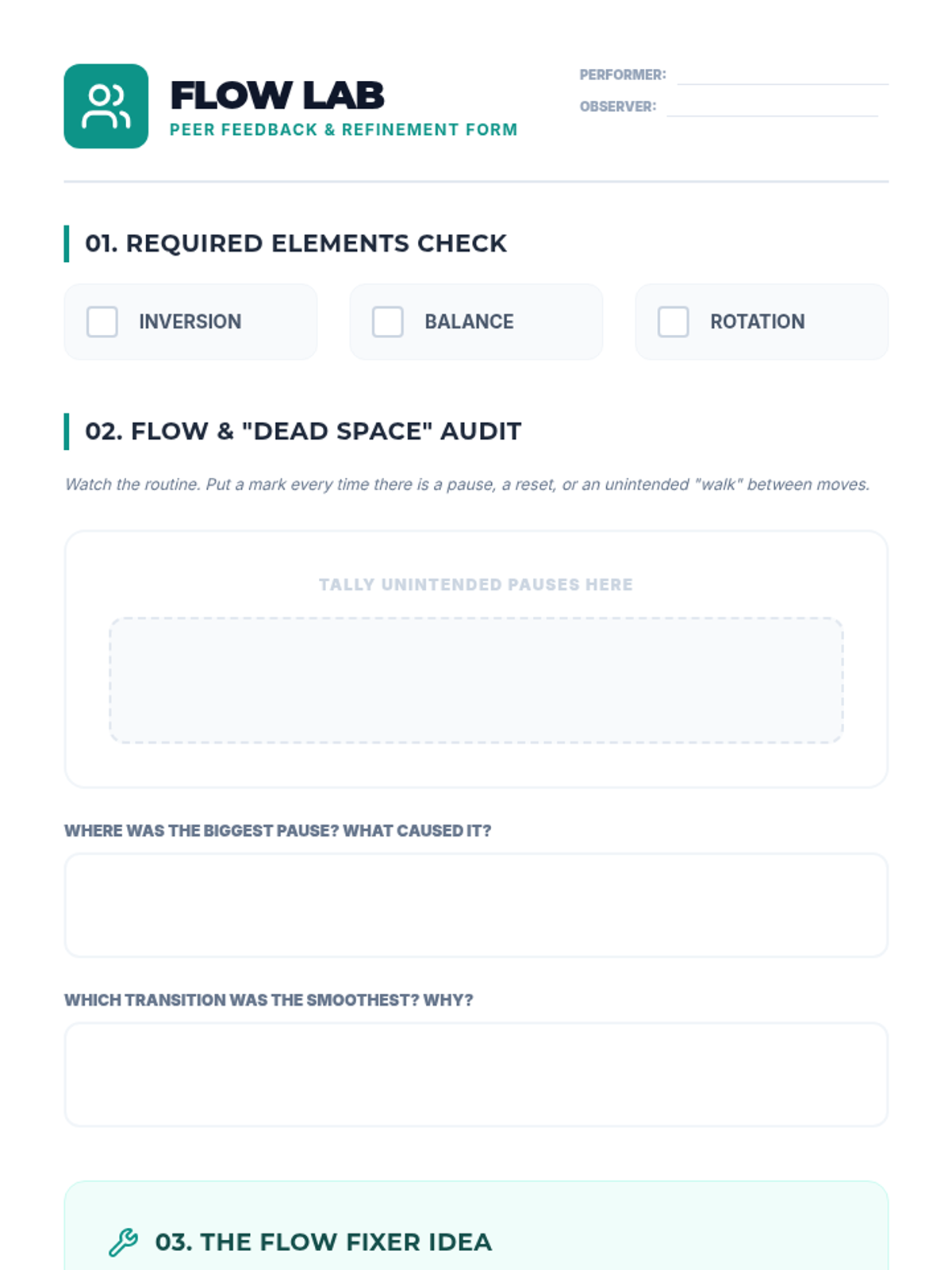
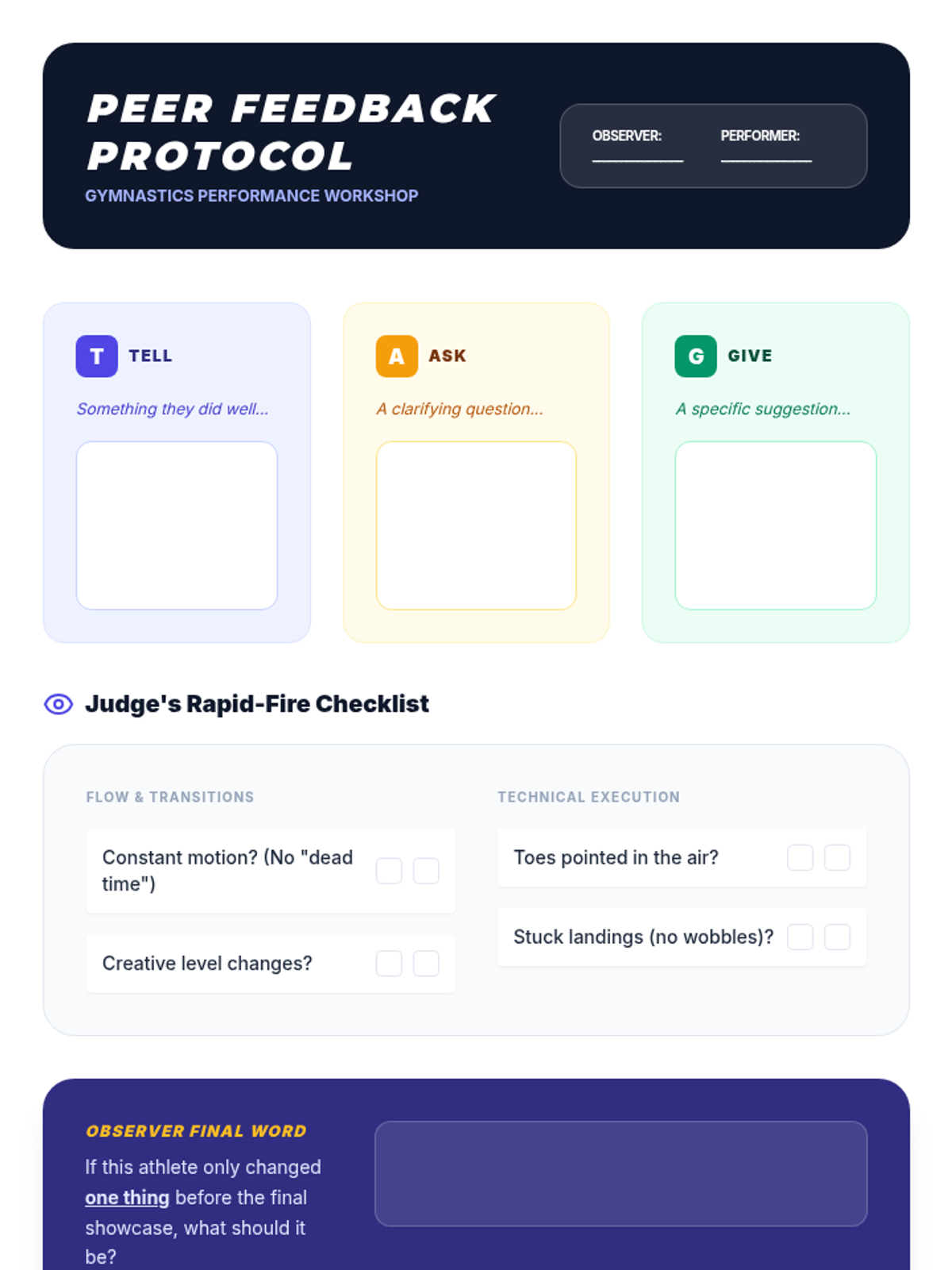
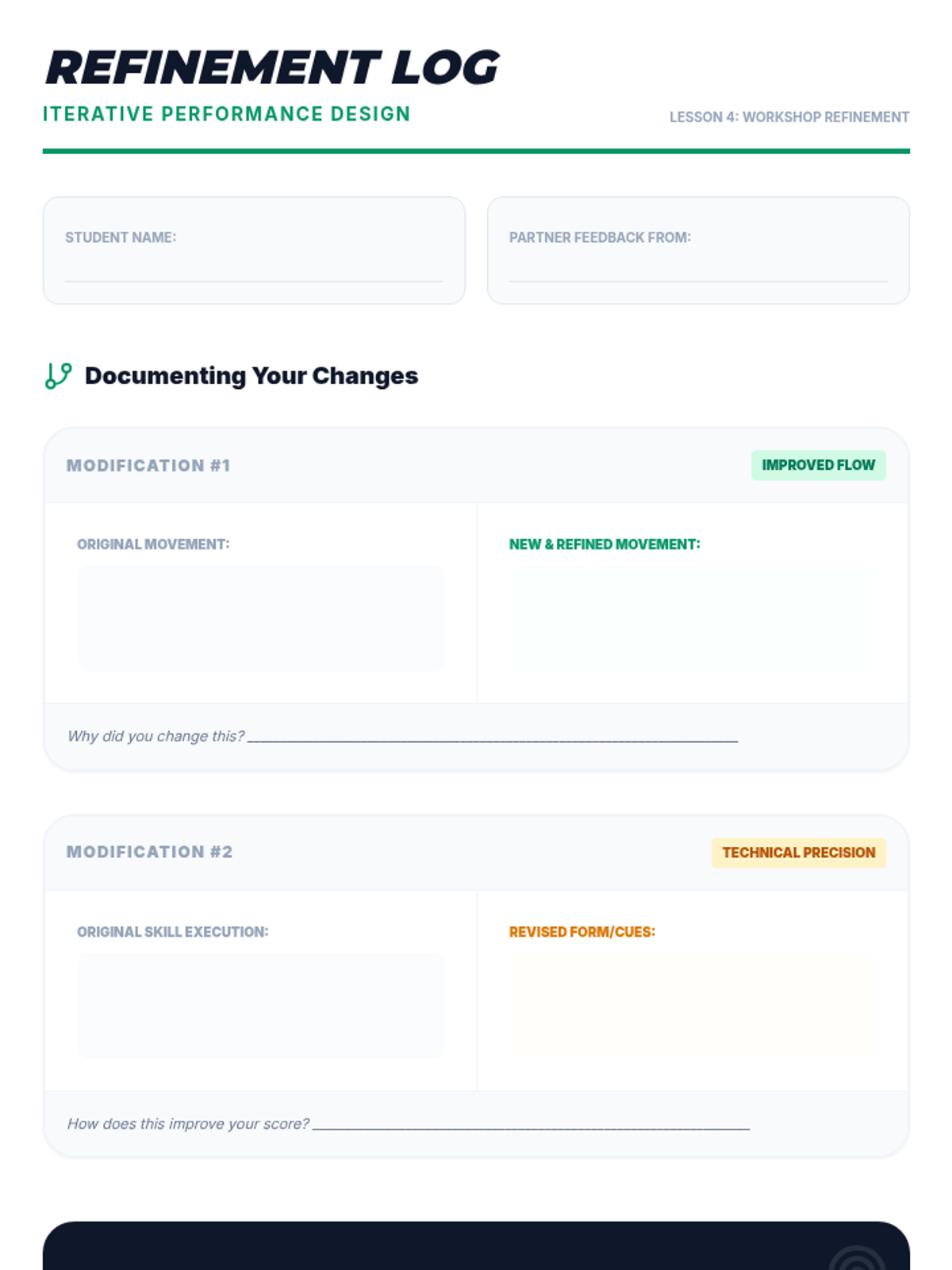
Working in pairs, students teach their draft sequences to a partner to test for feasibility and flow. Partners provide feedback on 'dead space' in the routine and suggest creative modifications for transitions.
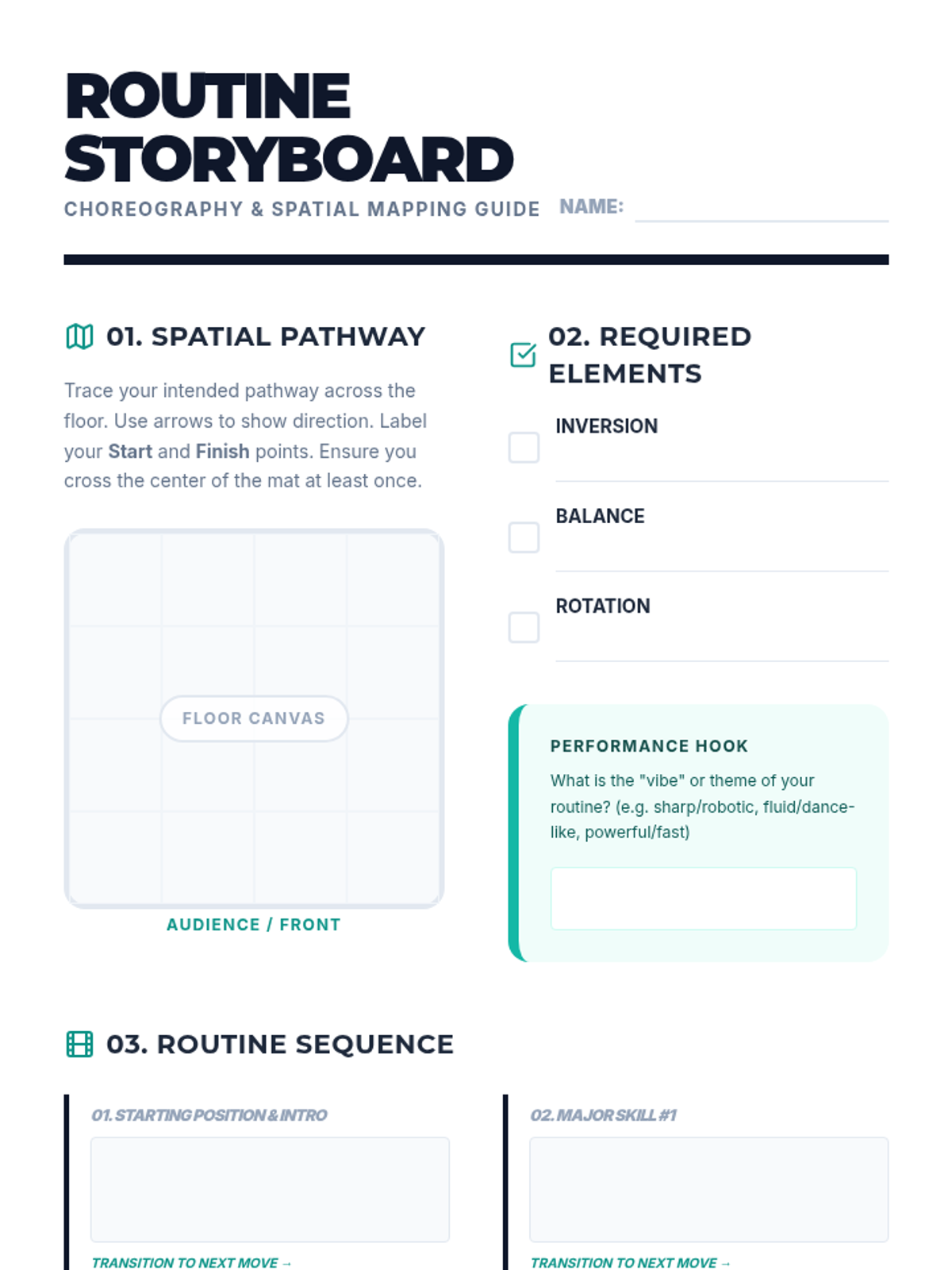
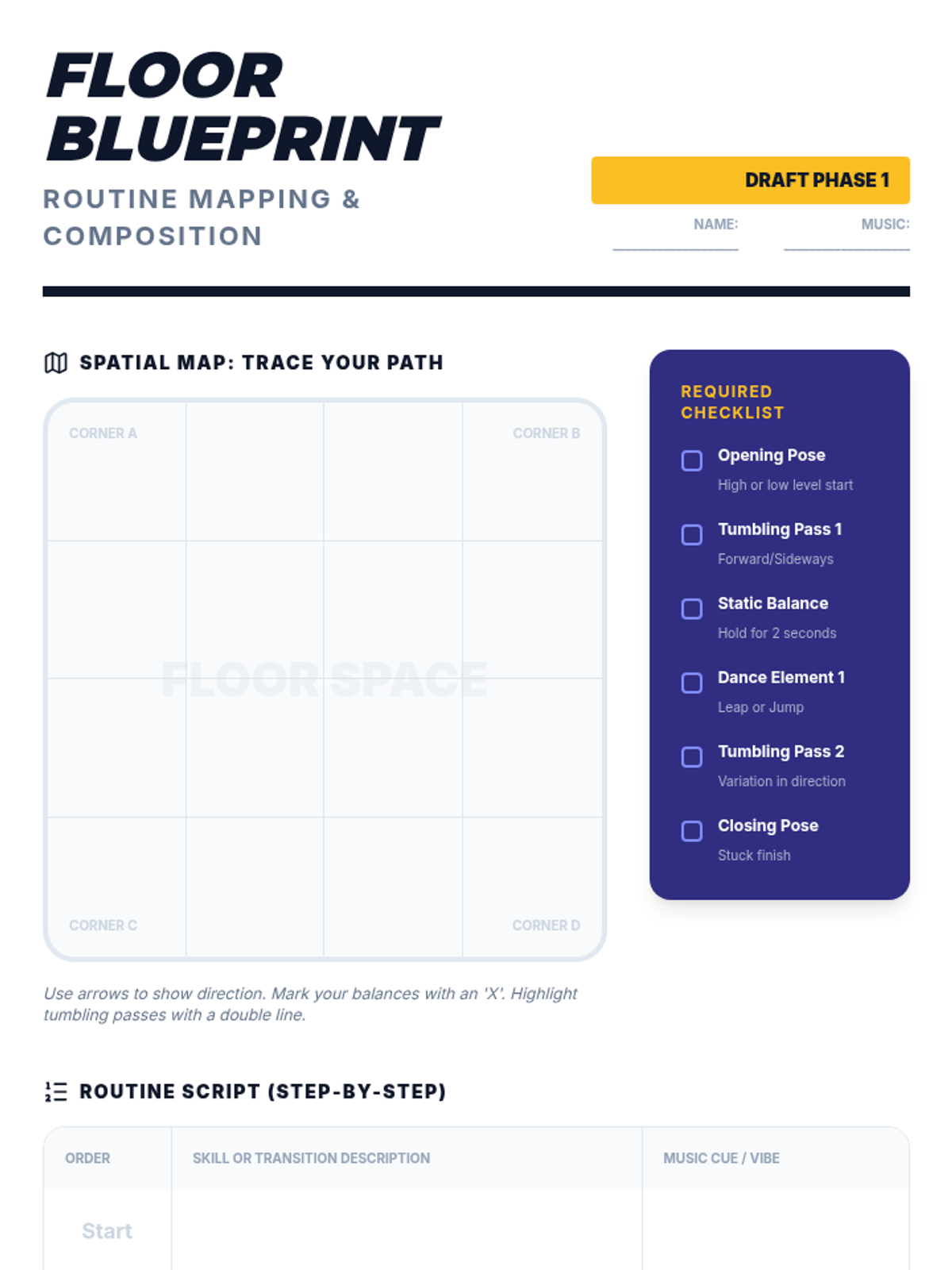
Students receive the parameters for their final project, including required elements (inversion, balance, rotation). They begin storyboarding their routine, mapping out floor coverage and selecting music or rhythmic cadence to guide their pacing.
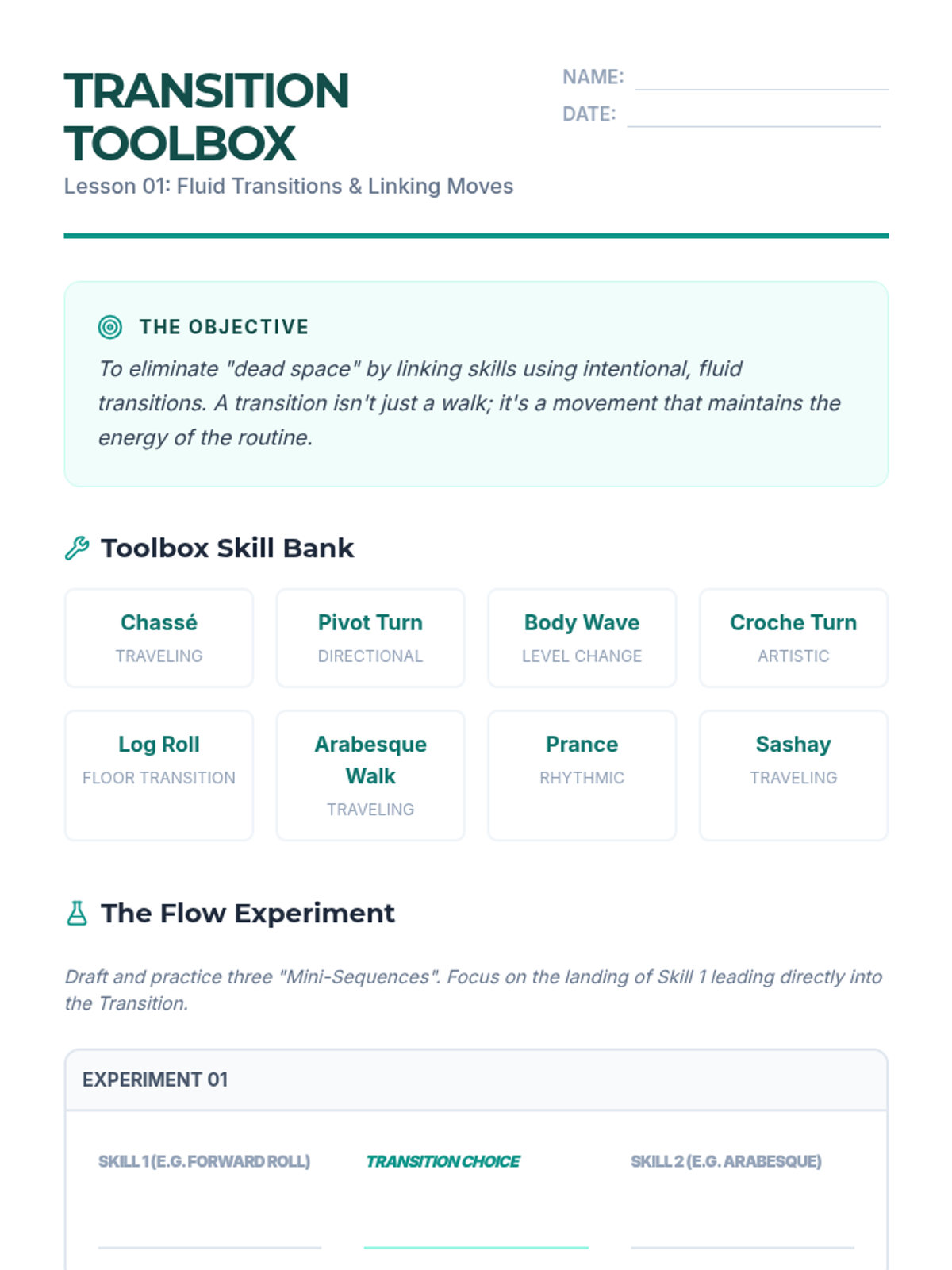
Students learn how to connect static skills (like balances) with dynamic skills (like rolls) using transitional movements such as chasse, pivot turns, and leaps. The focus is on eliminating pauses to create a continuous stream of movement.
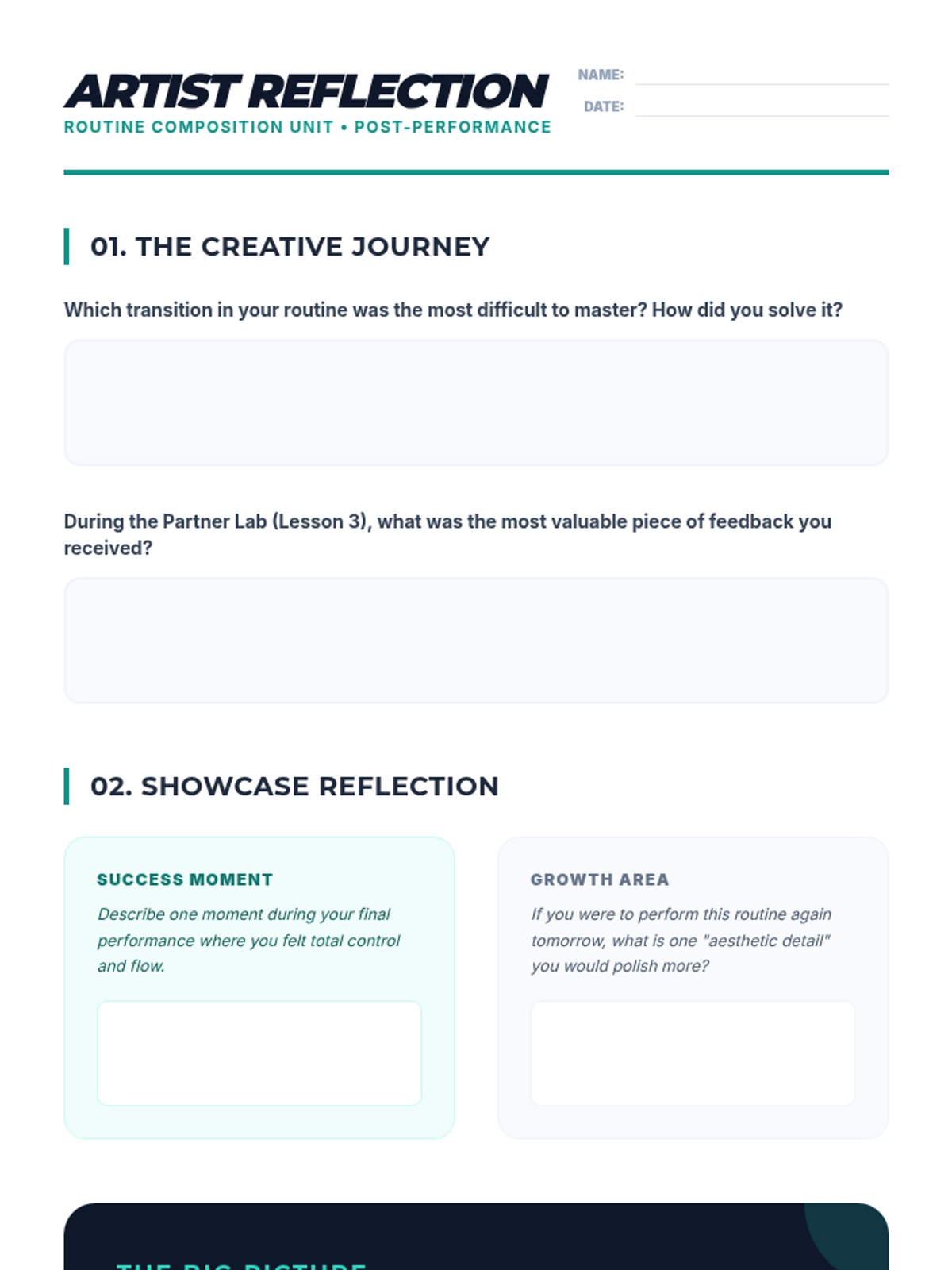
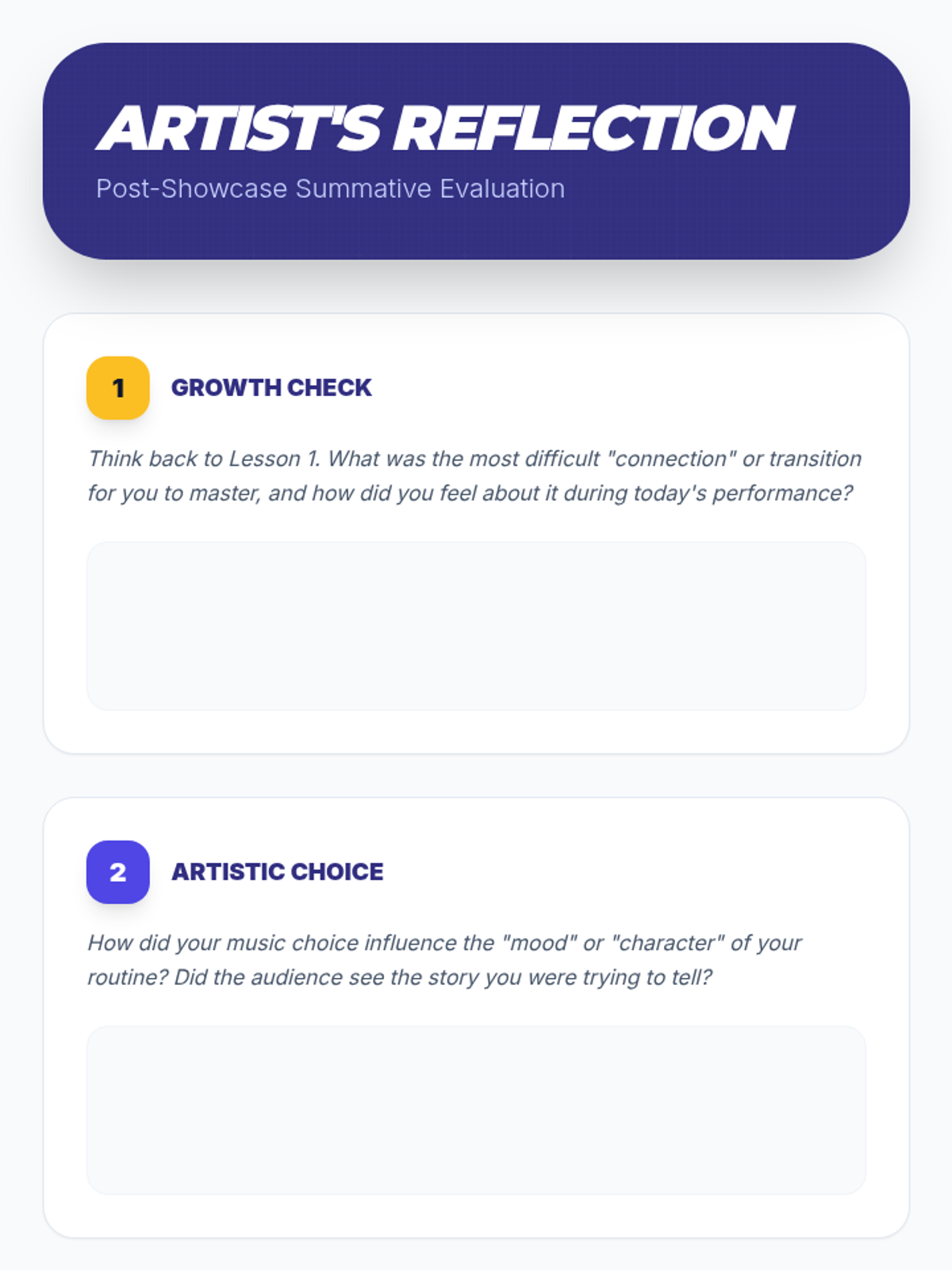
The summative performance where students showcase their routines and reflect on their growth throughout the unit.
A workshop-based lesson where students provide and receive structured feedback to polish their routines before the final showcase.
Students draft their floor routines, mapping out spatial use and selecting music that complements their movement style.
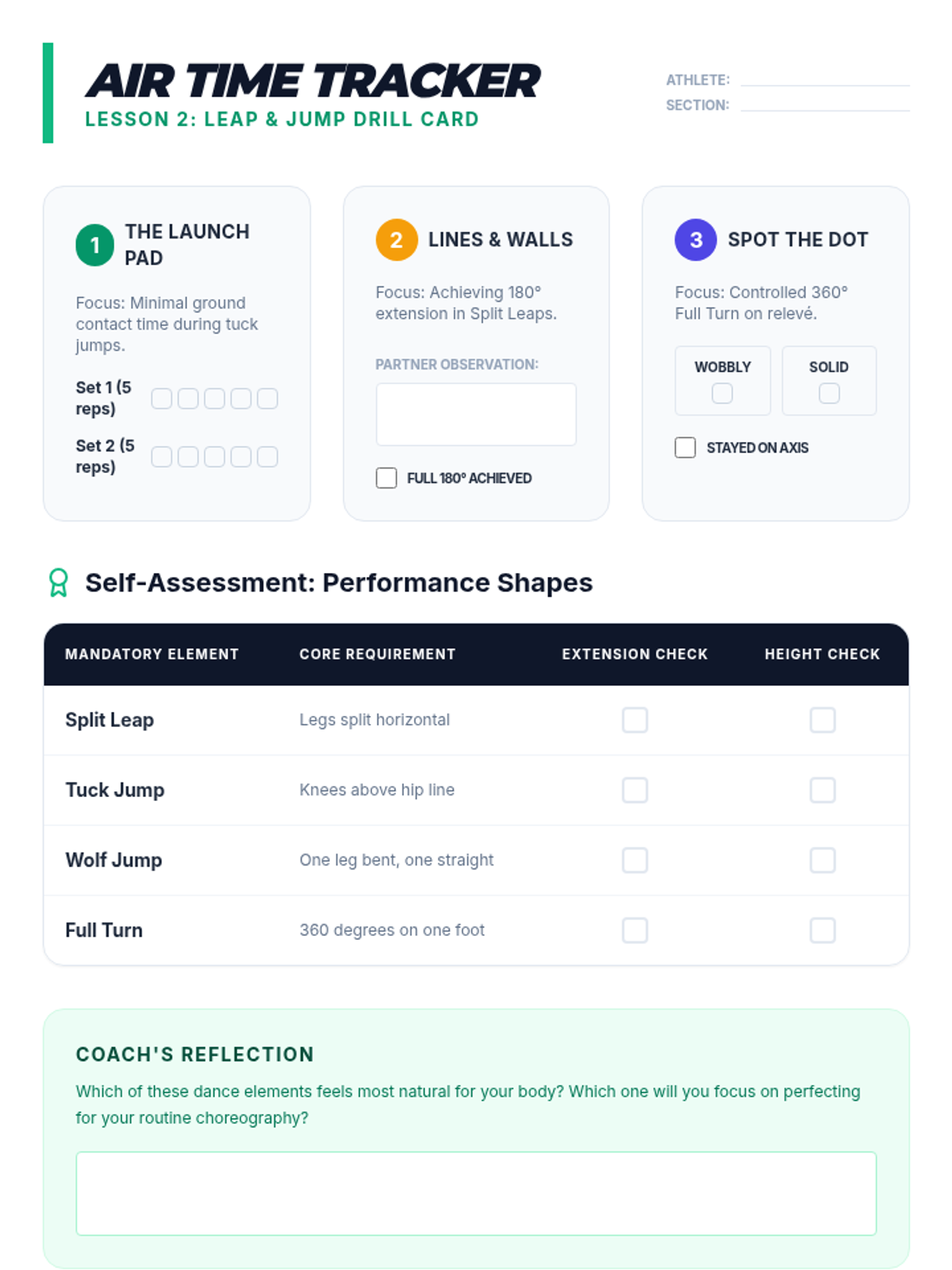
Focuses on the technical execution of mandatory dance elements including leaps, jumps, and turns with an emphasis on amplitude and extension.
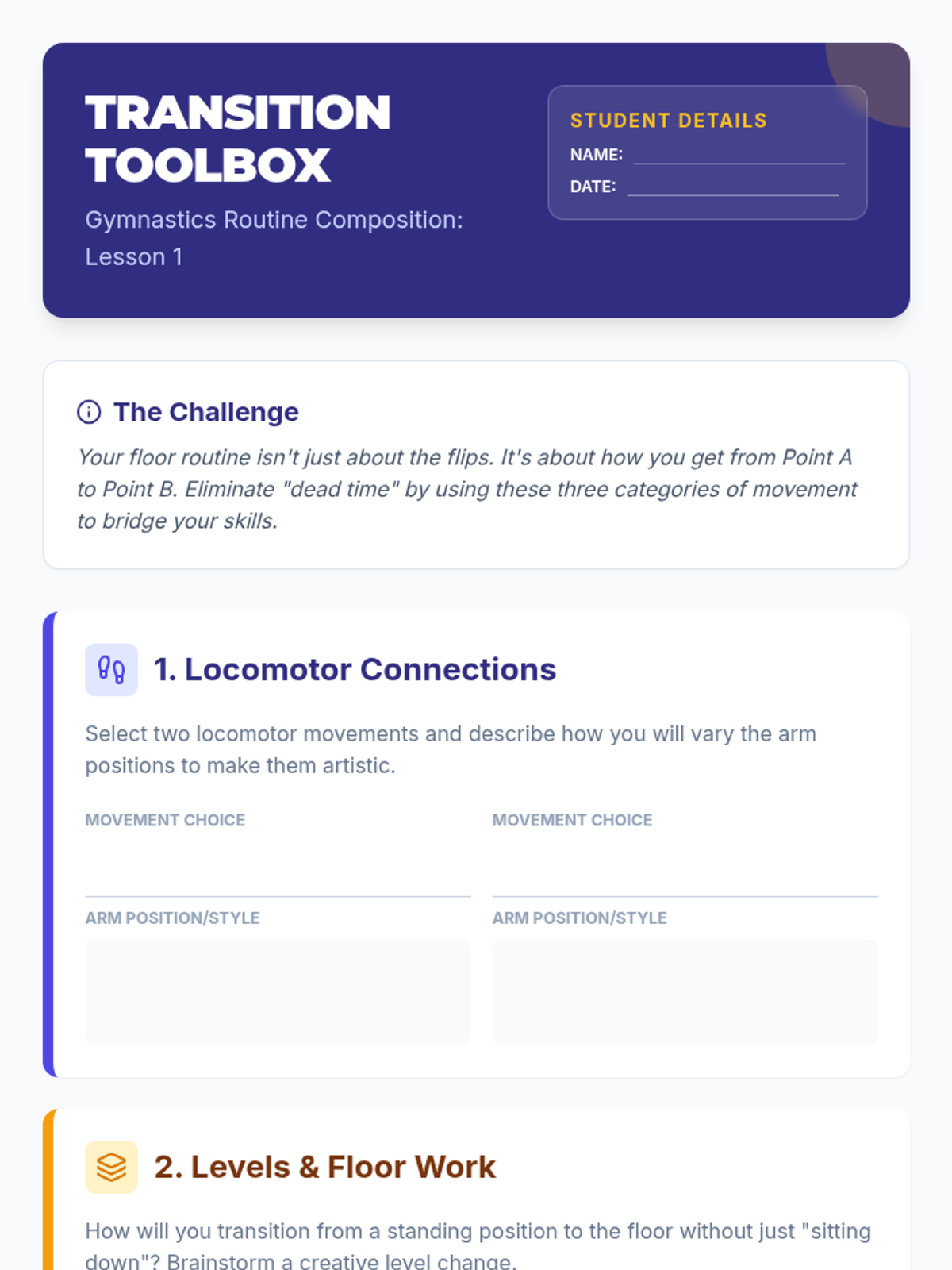
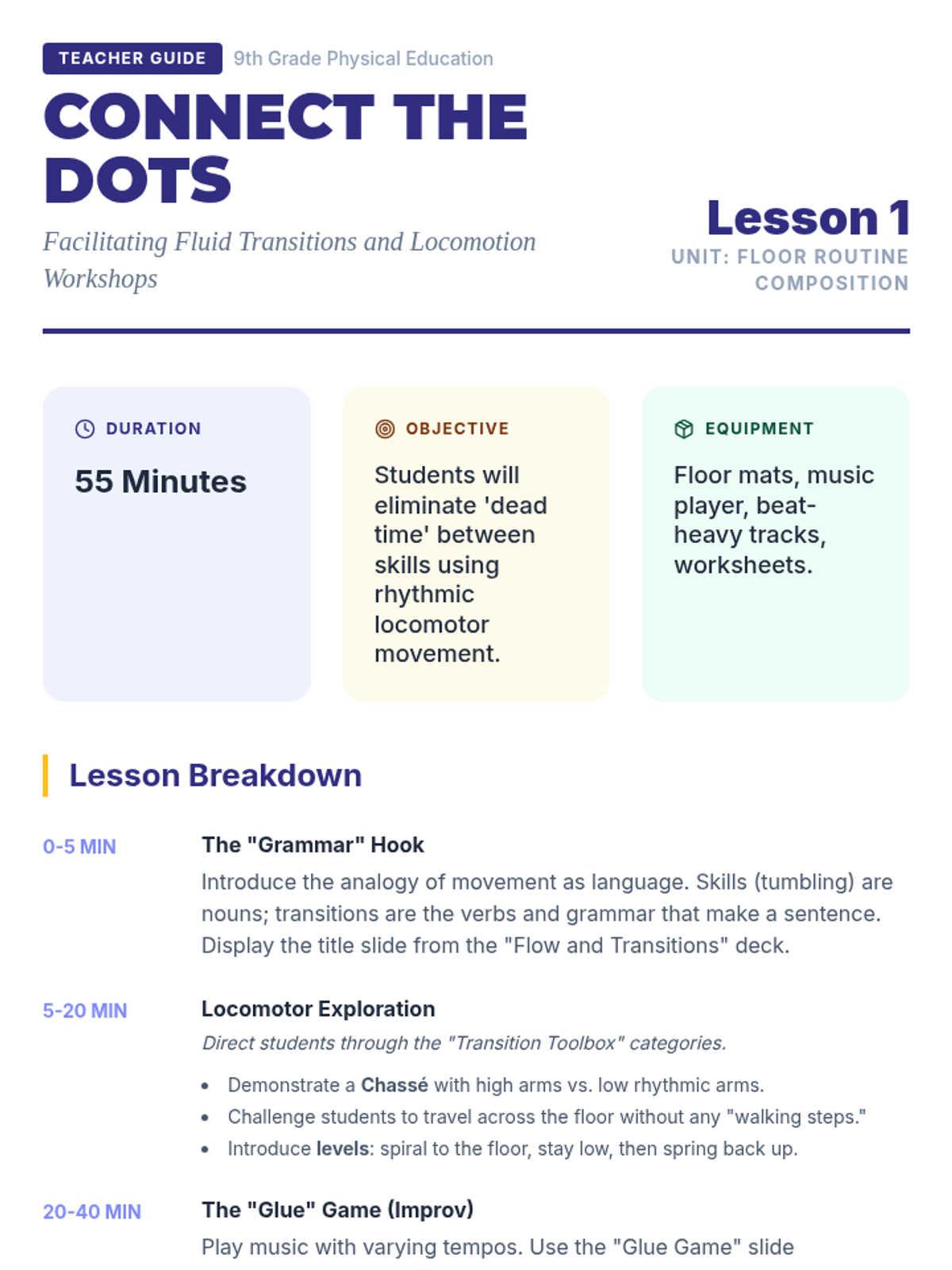
Students learn to connect tumbling skills using creative locomotor movements and rhythmic transitions to eliminate 'dead time'.
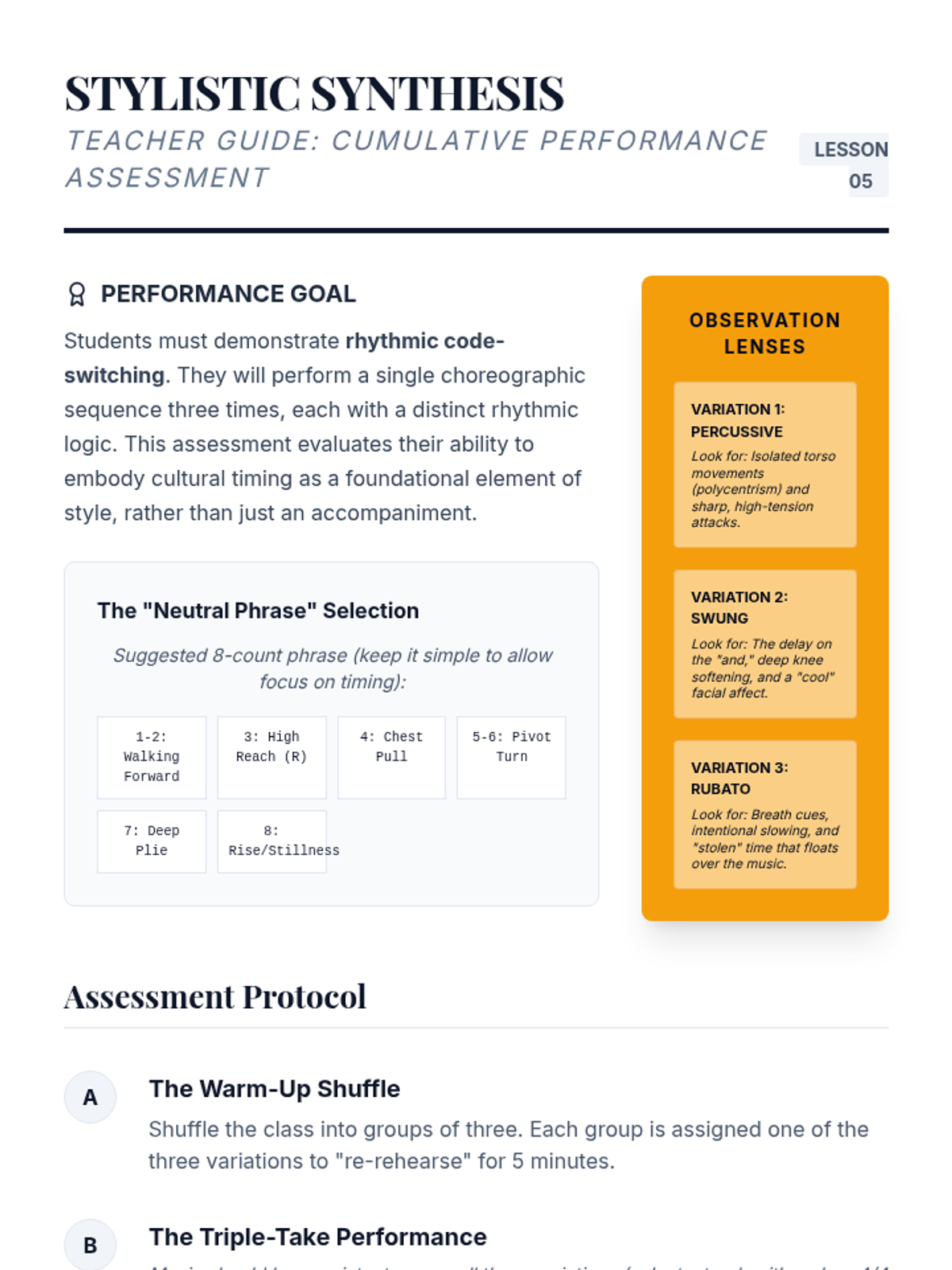
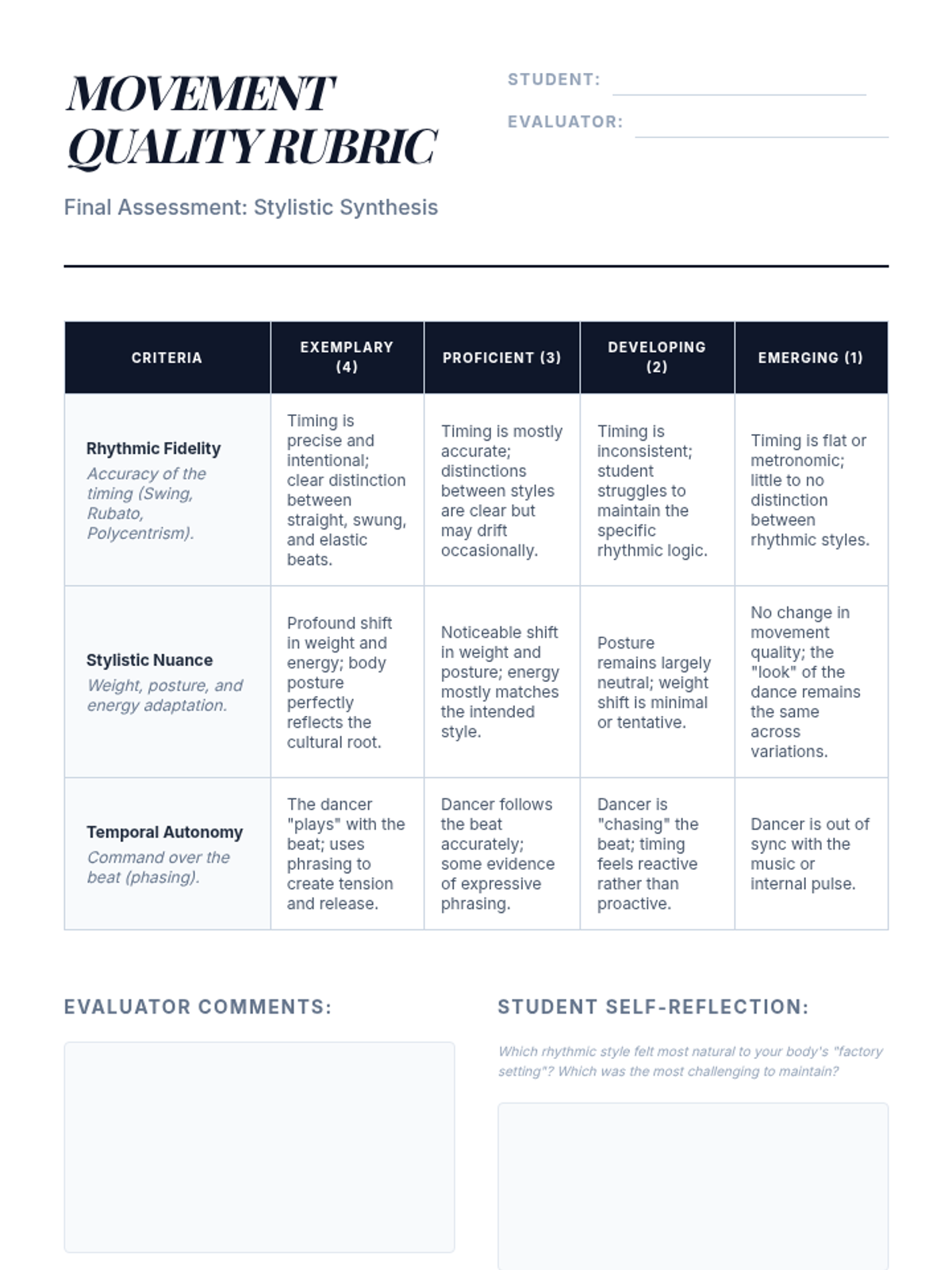
A cumulative lesson where students perform a single movement phrase using three different rhythmic qualities to analyze how timing alters genre and emotion.
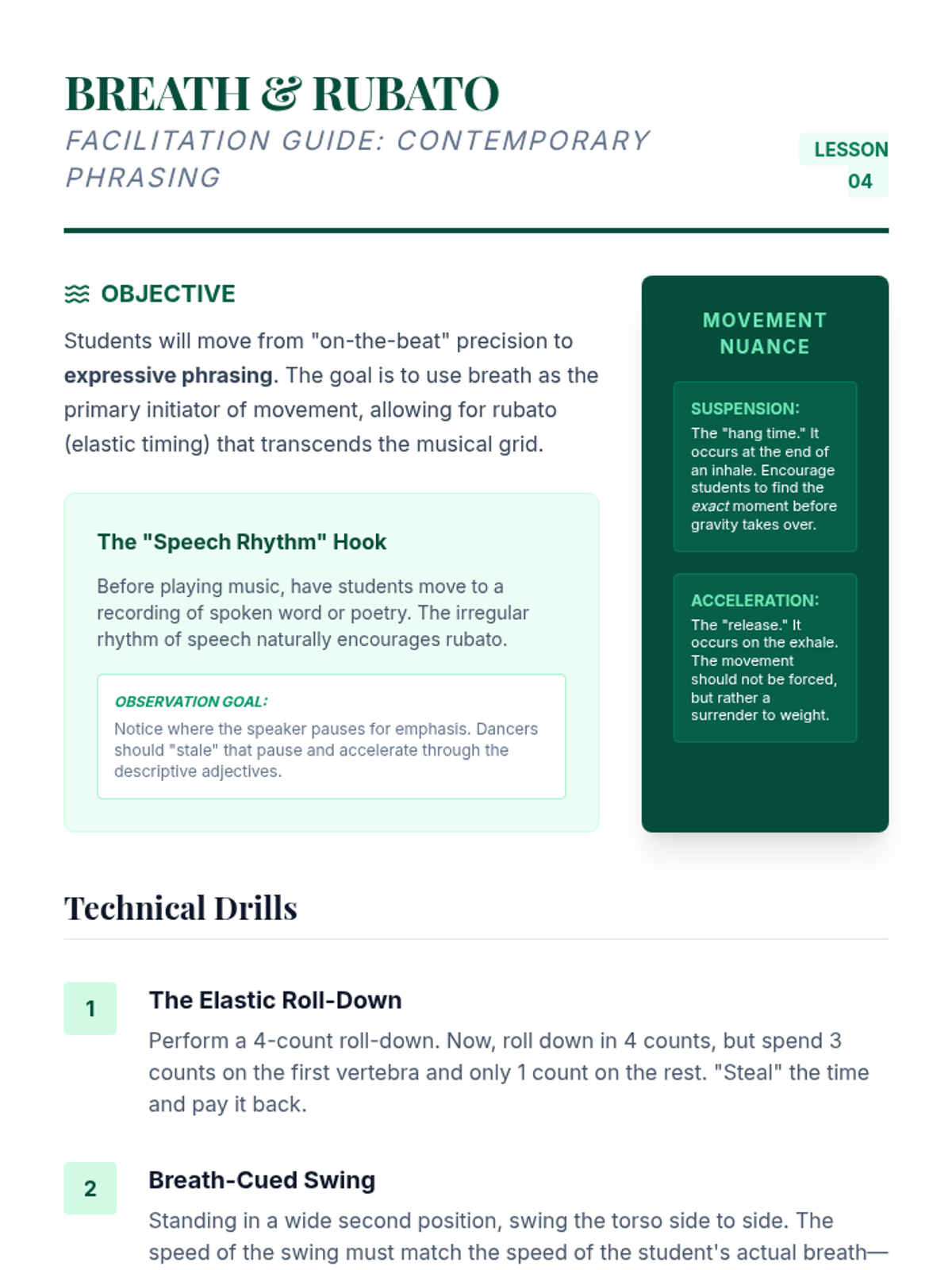
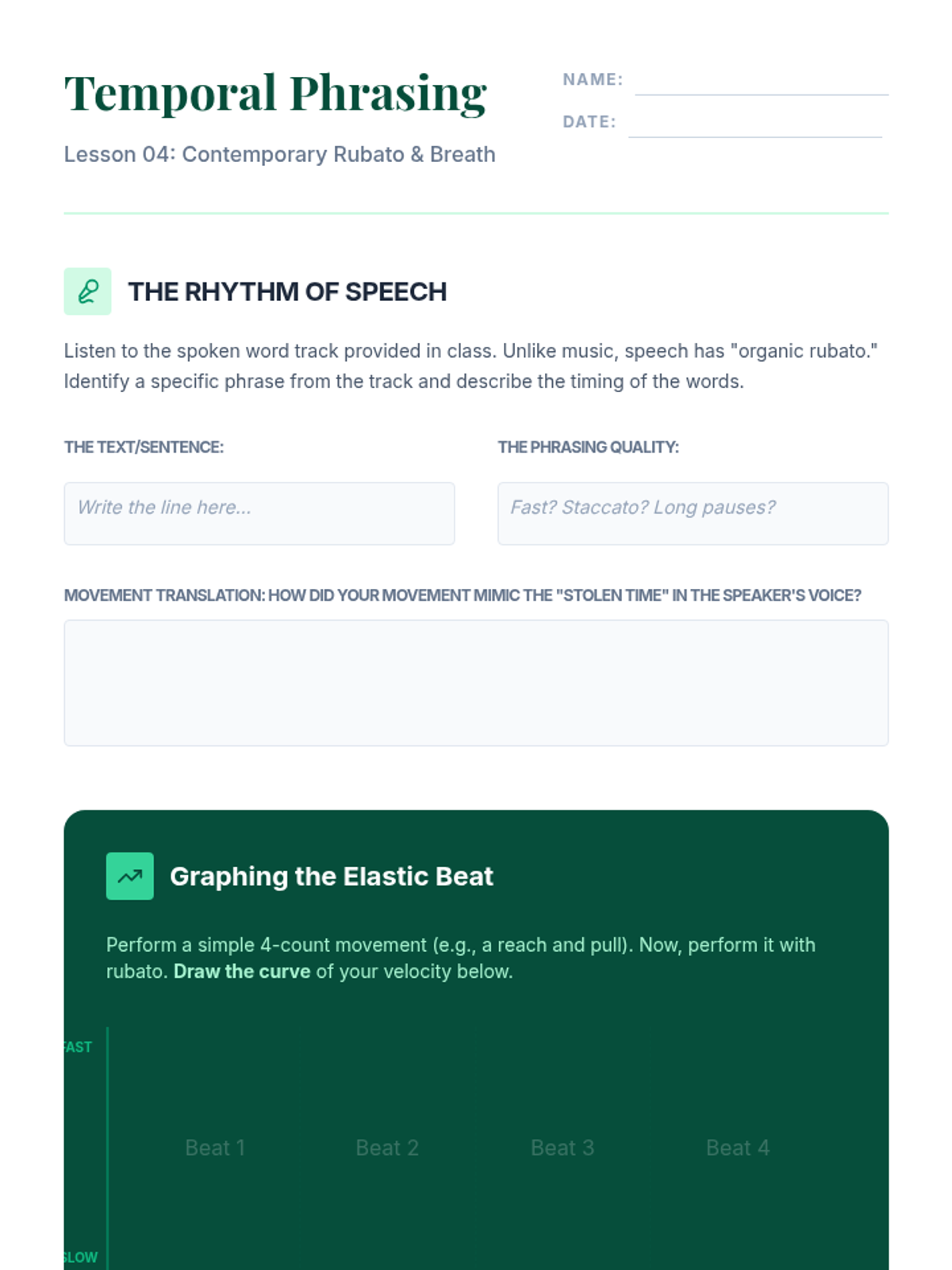
Exploring 'Rubato'—the expressive speeding up and slowing down of tempo—students use breath to initiate movement that floats over the strict musical grid.
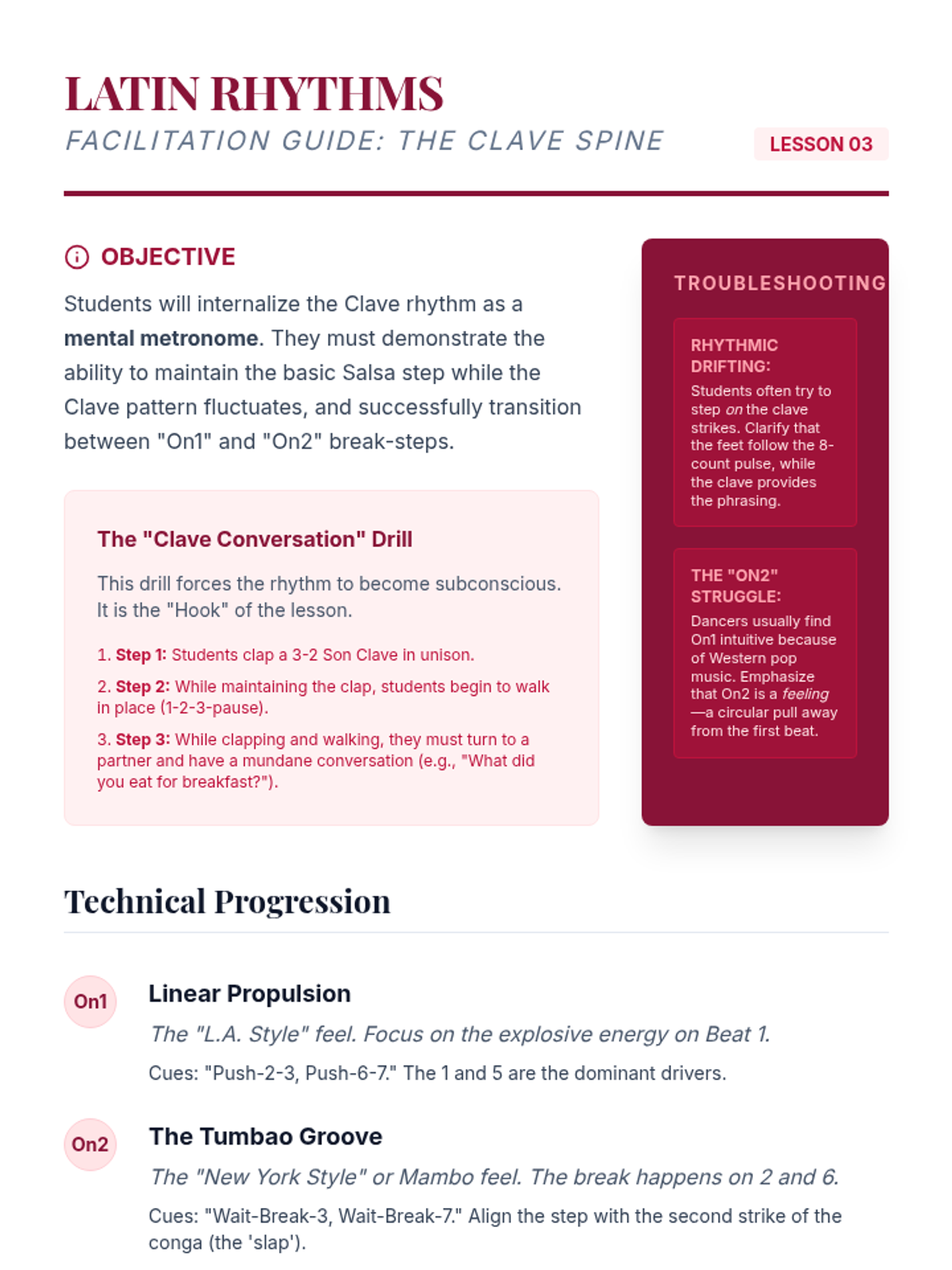
Students learn to identify the Clave as the rhythmic spine of Latin dance, practicing how shifting the start time (On1 vs. On2) alters dynamic flow.
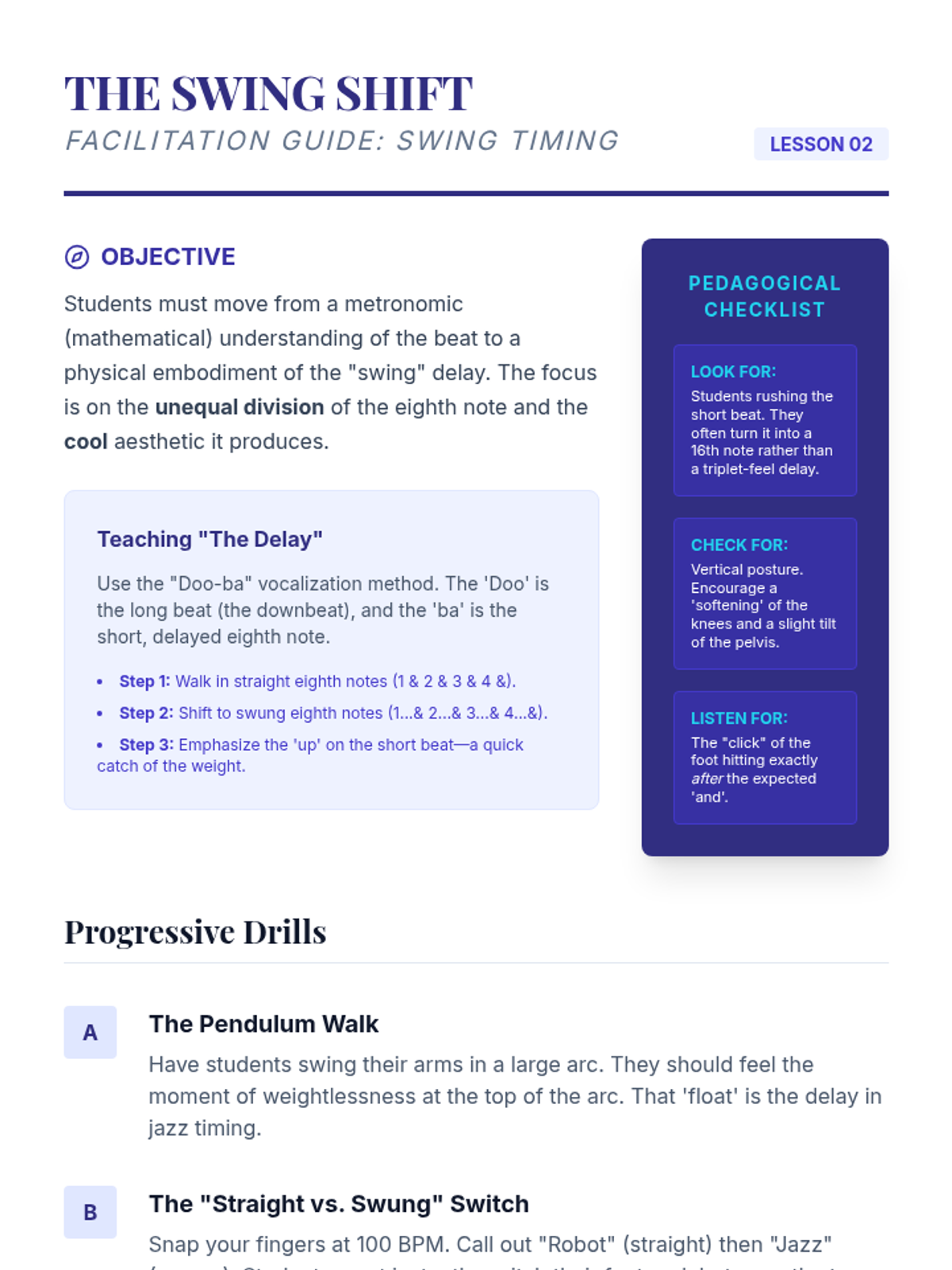
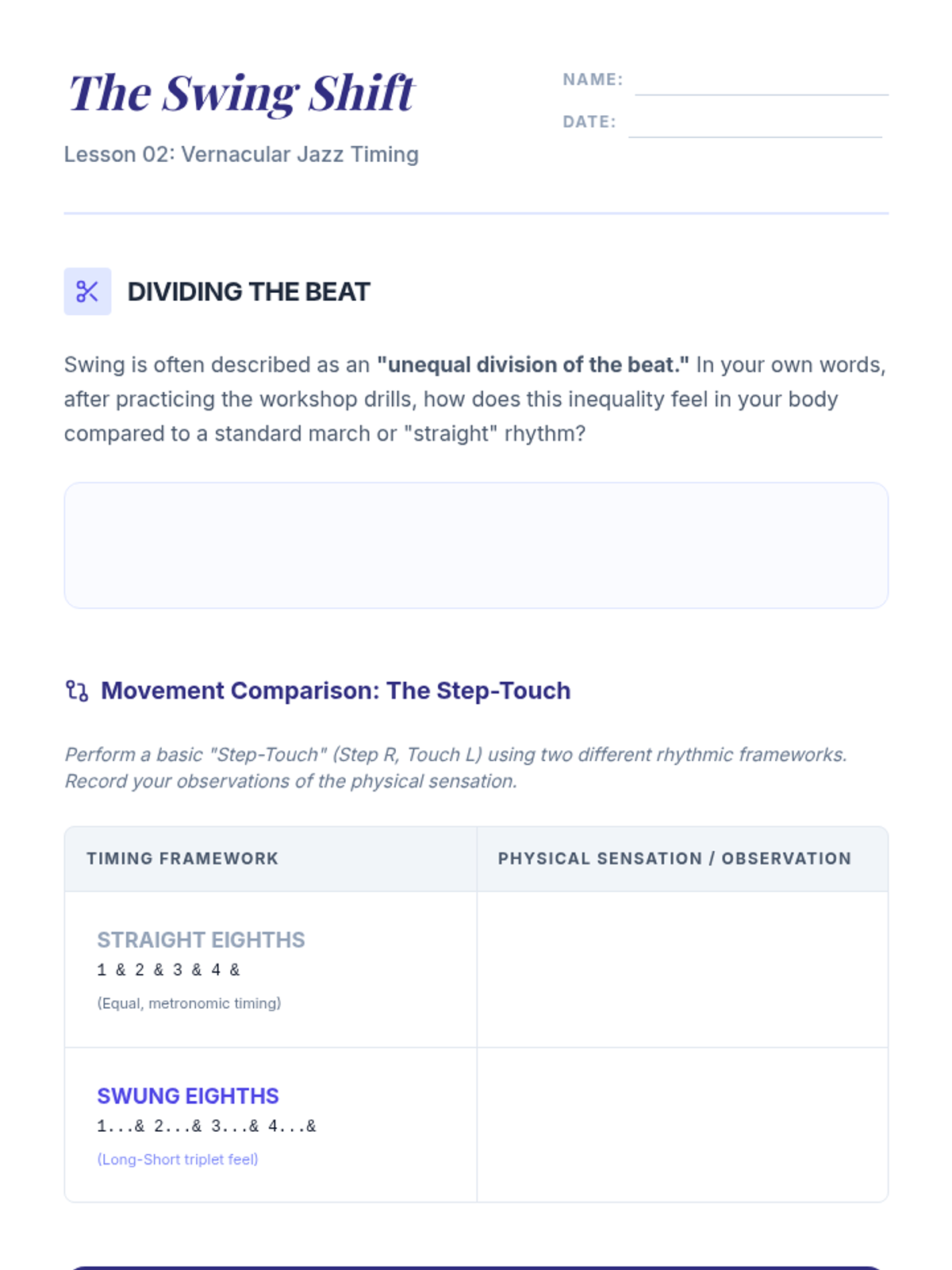
This lesson focuses on 'swing' timing—the unequal division of the beat—exploring how this delay creates the relaxed, weighted aesthetic of vernacular Jazz.
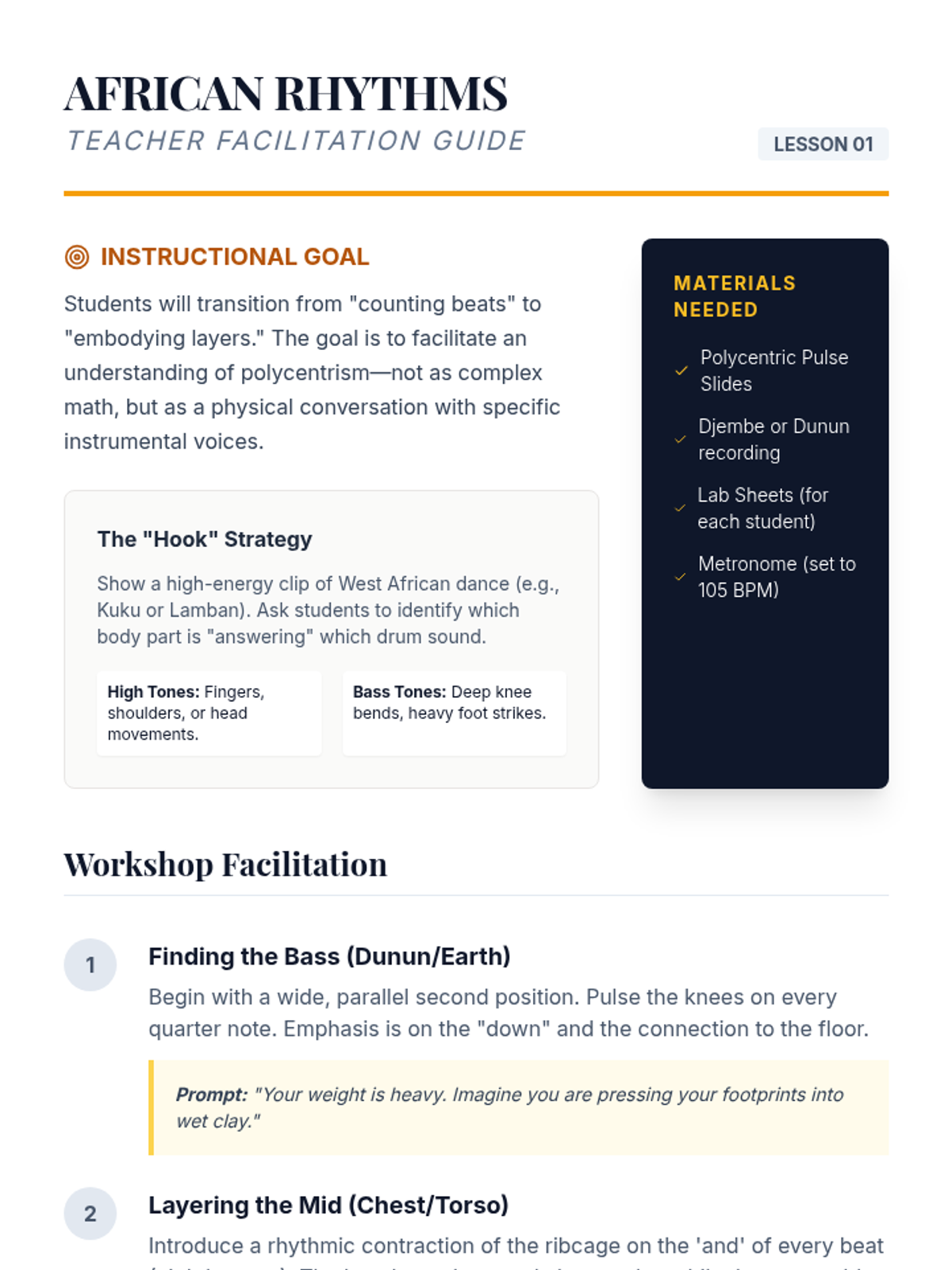
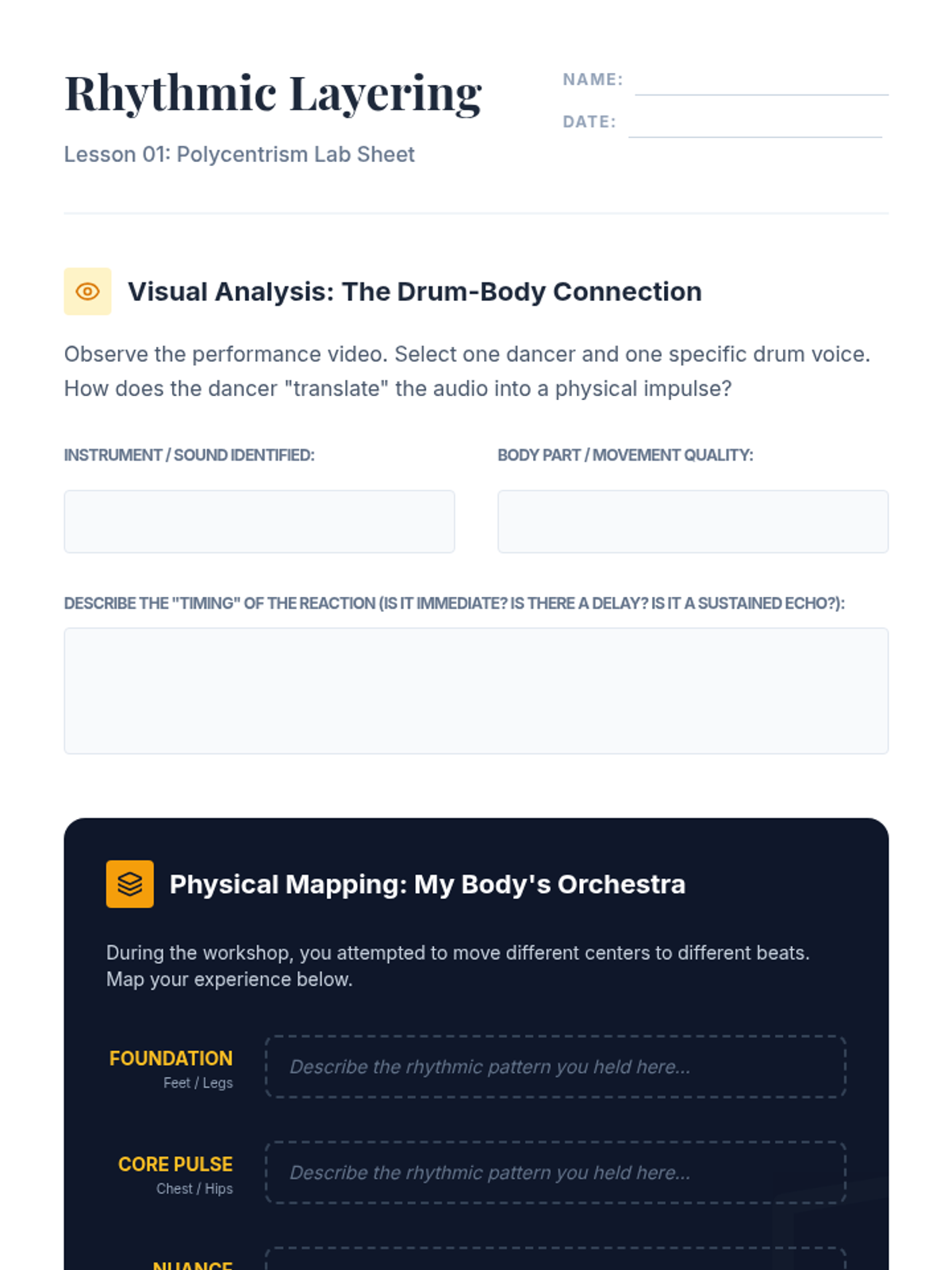
Students examine the concept of polycentrism, where multiple centers of the body move to different rhythmic layers simultaneously, emphasizing the 'conversation' between dancer and drum.
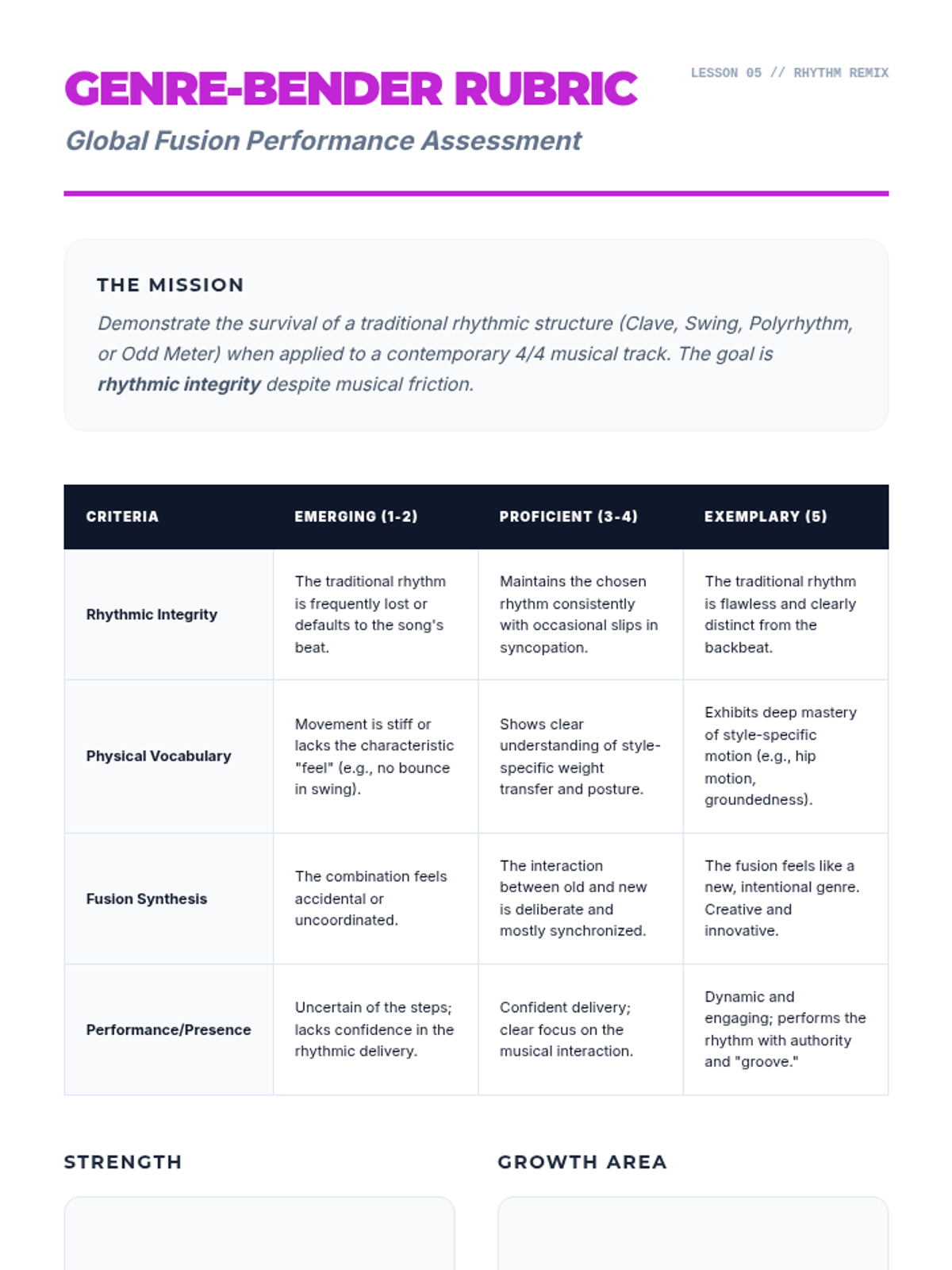
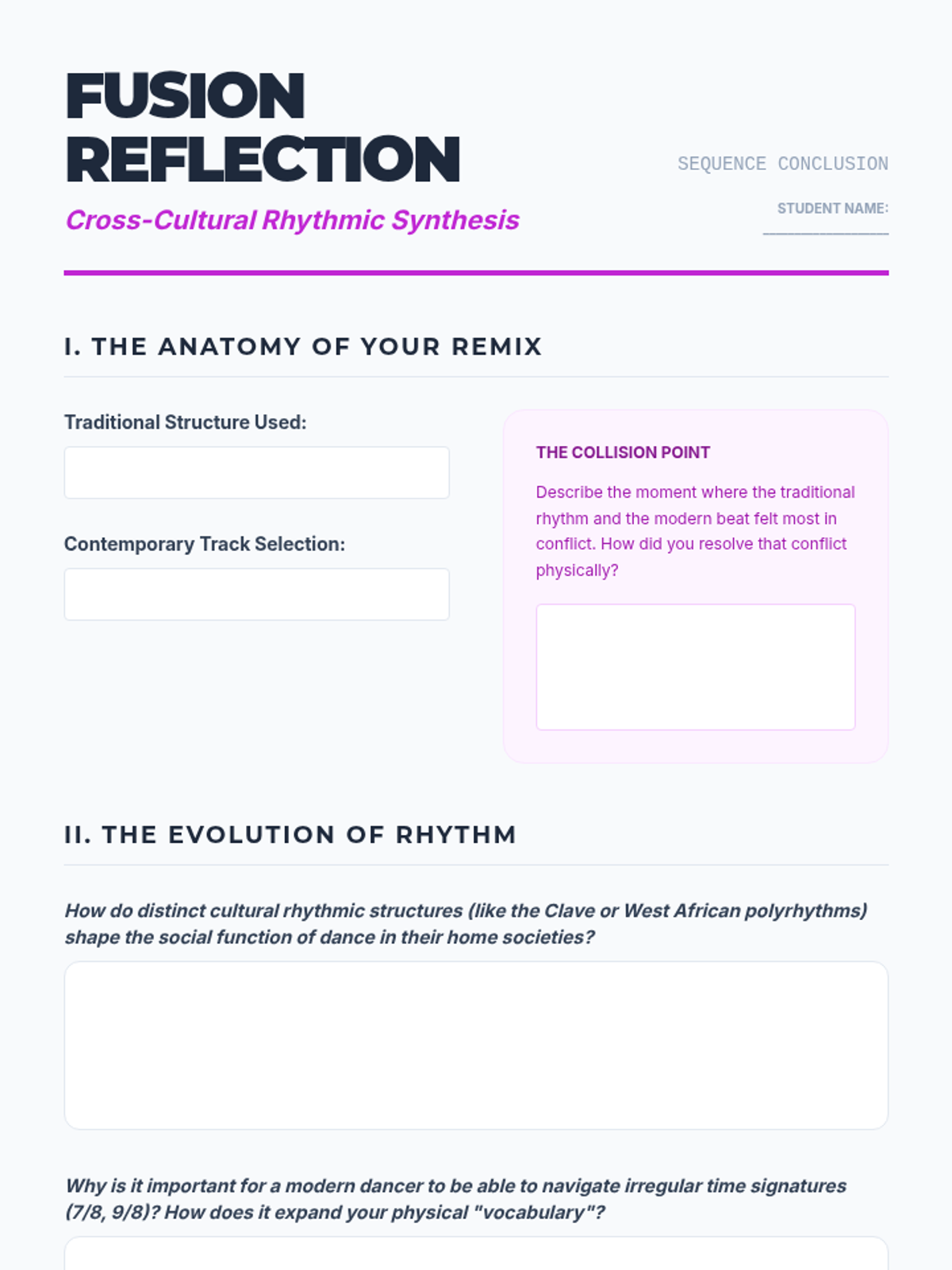
Students synthesize their learning by applying traditional rhythmic footwork to contemporary music, testing the evolution of global rhythmic frameworks.
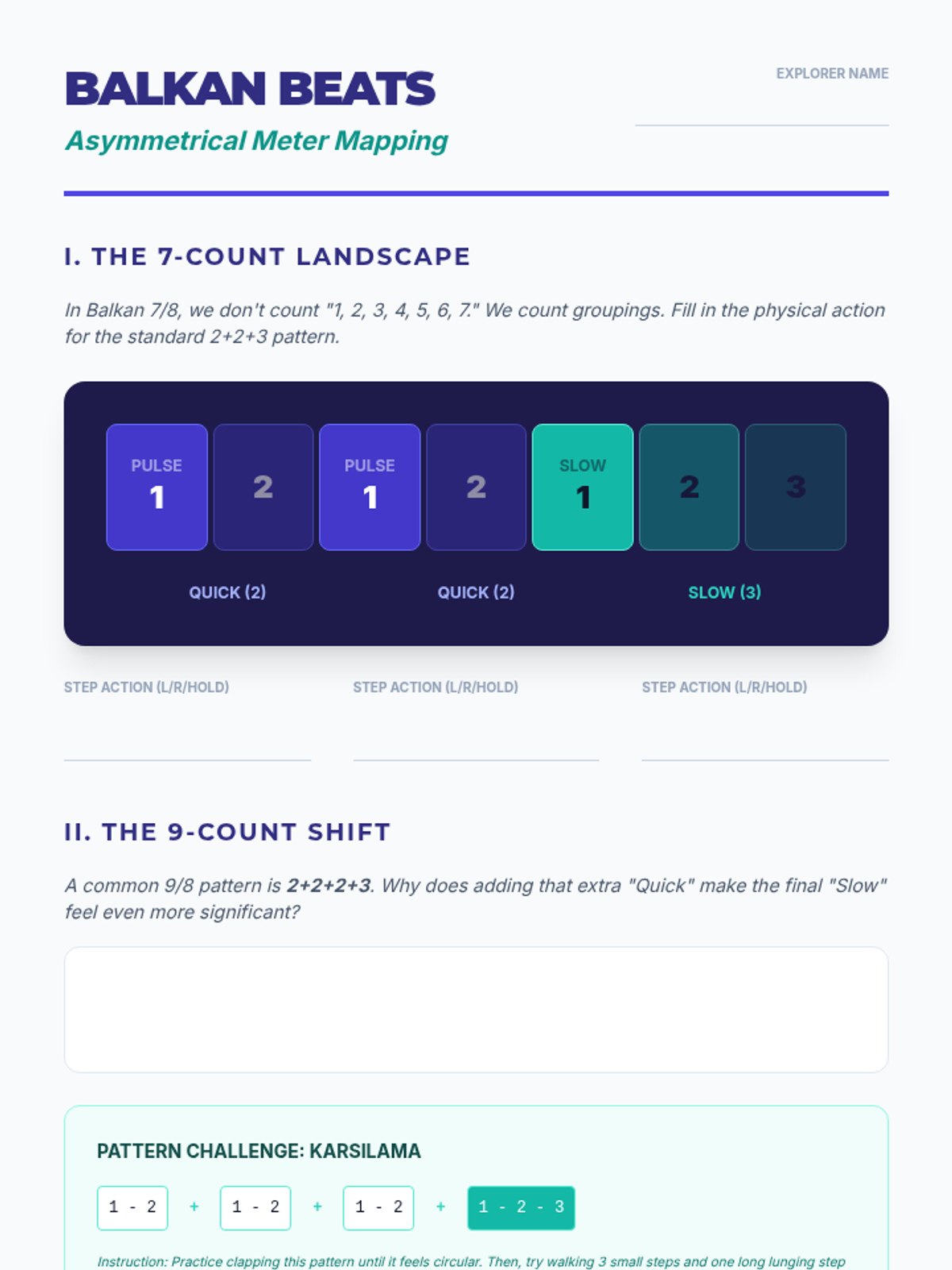
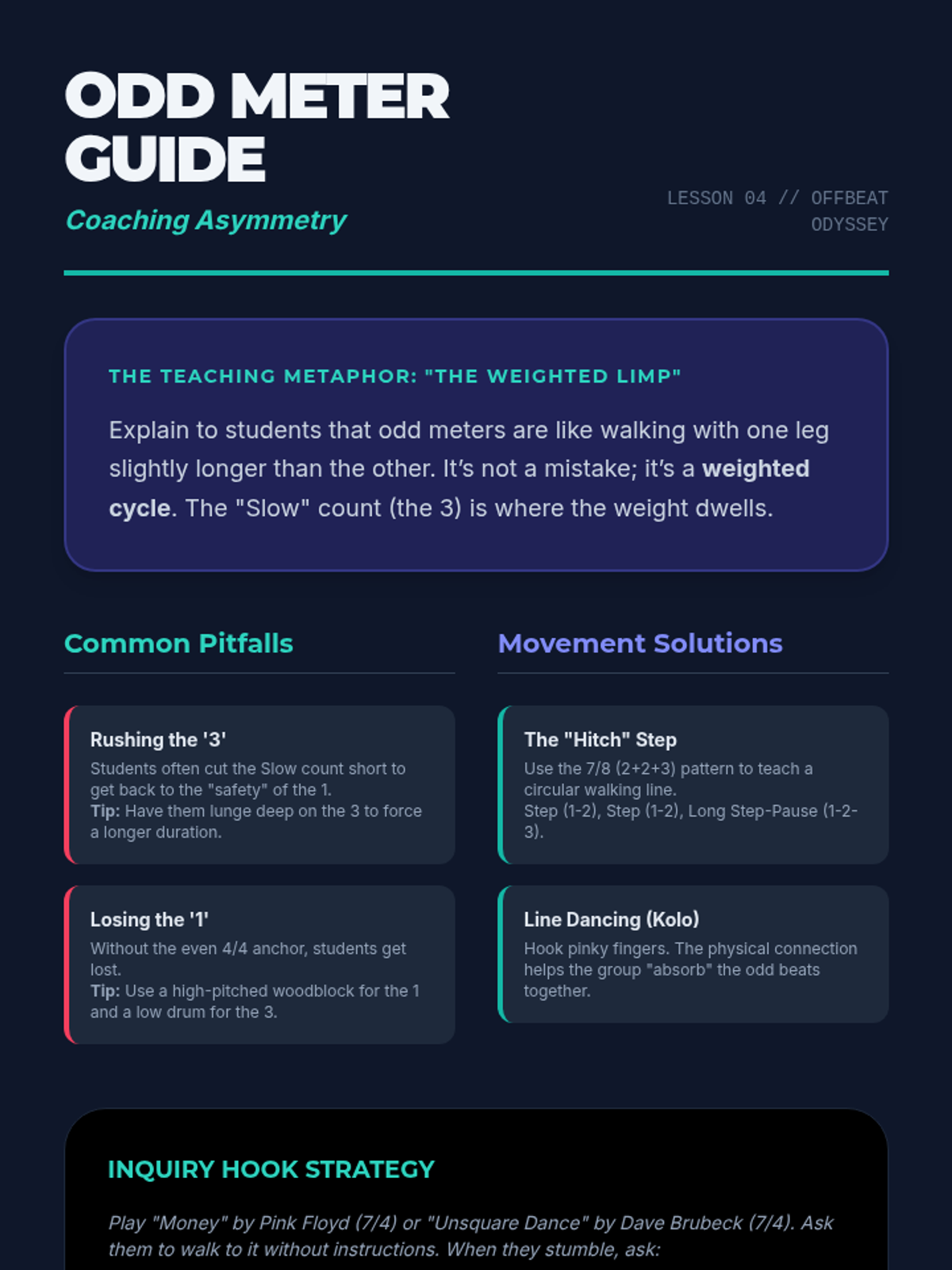
Moving beyond 4/4 time, students explore irregular meters like 7/8 and 9/8 found in Balkan and Middle Eastern folk dances, focusing on balance and anticipation.