Syllogisms, deductive validity, and the principles of inductive probability for evaluating evidence-based claims. Targets common logical fallacies and the construction of sound, persuasive arguments.
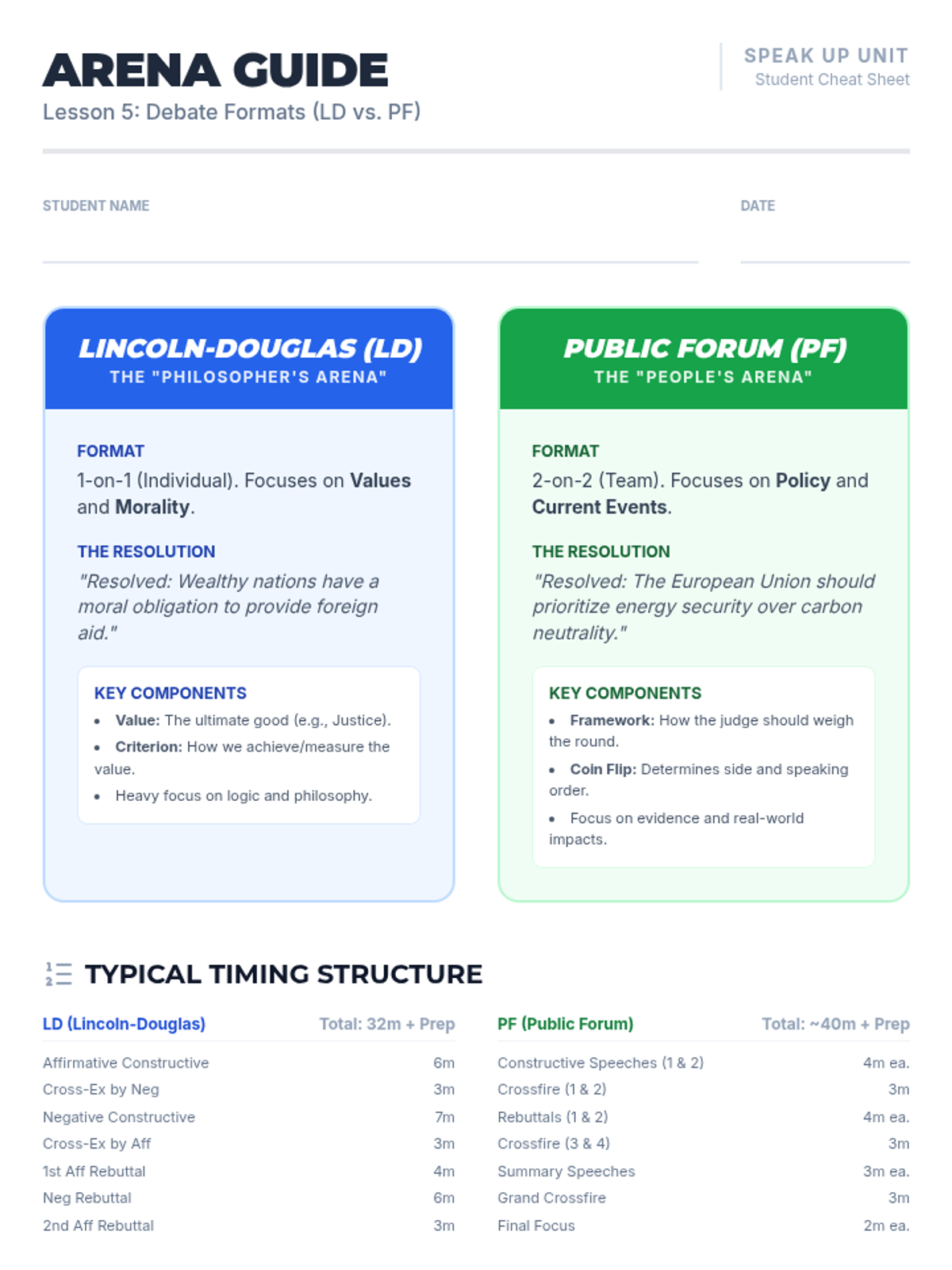
Compares Lincoln-Douglas and Public Forum debate formats, preparing students for competitive environments.
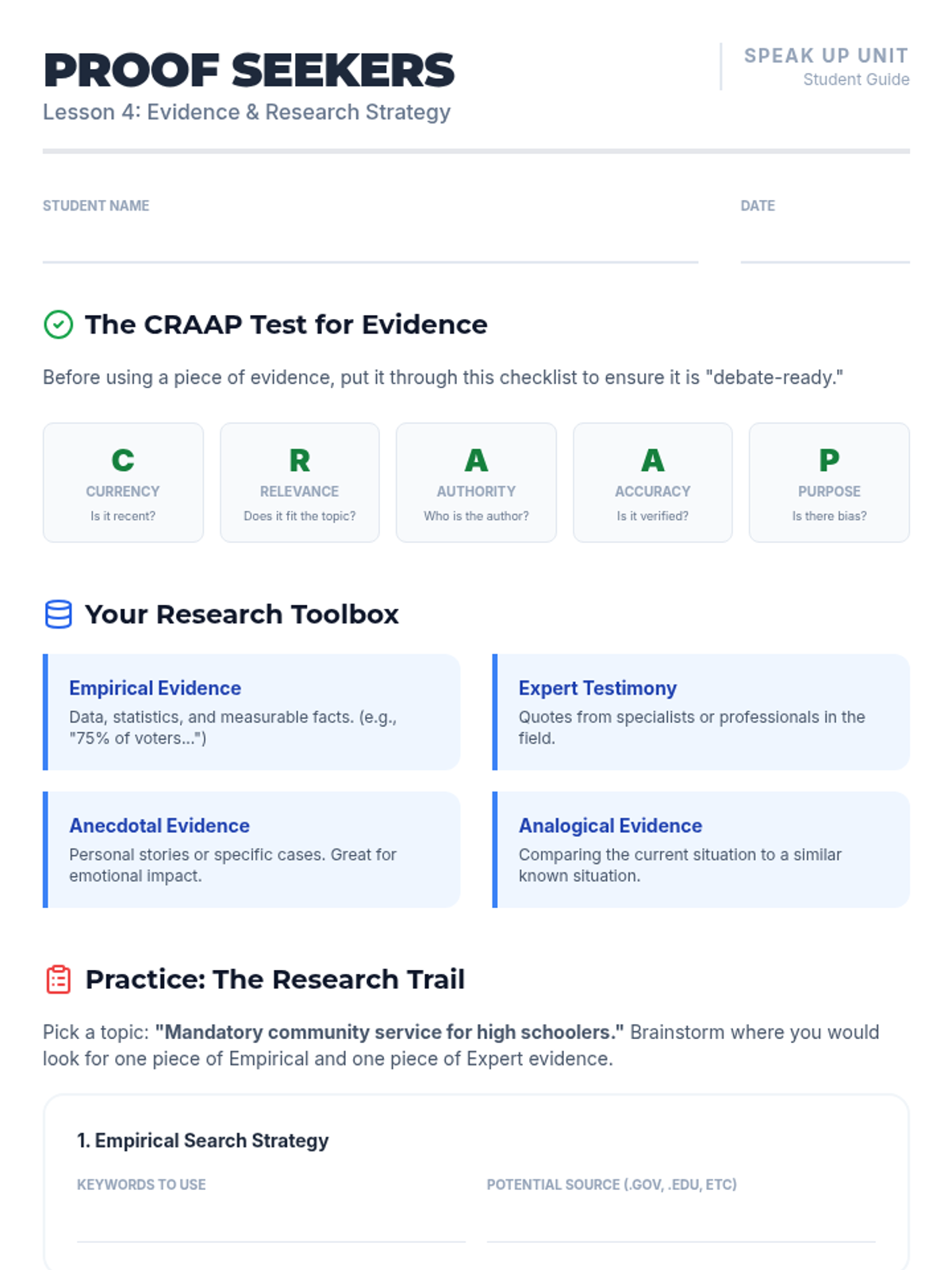
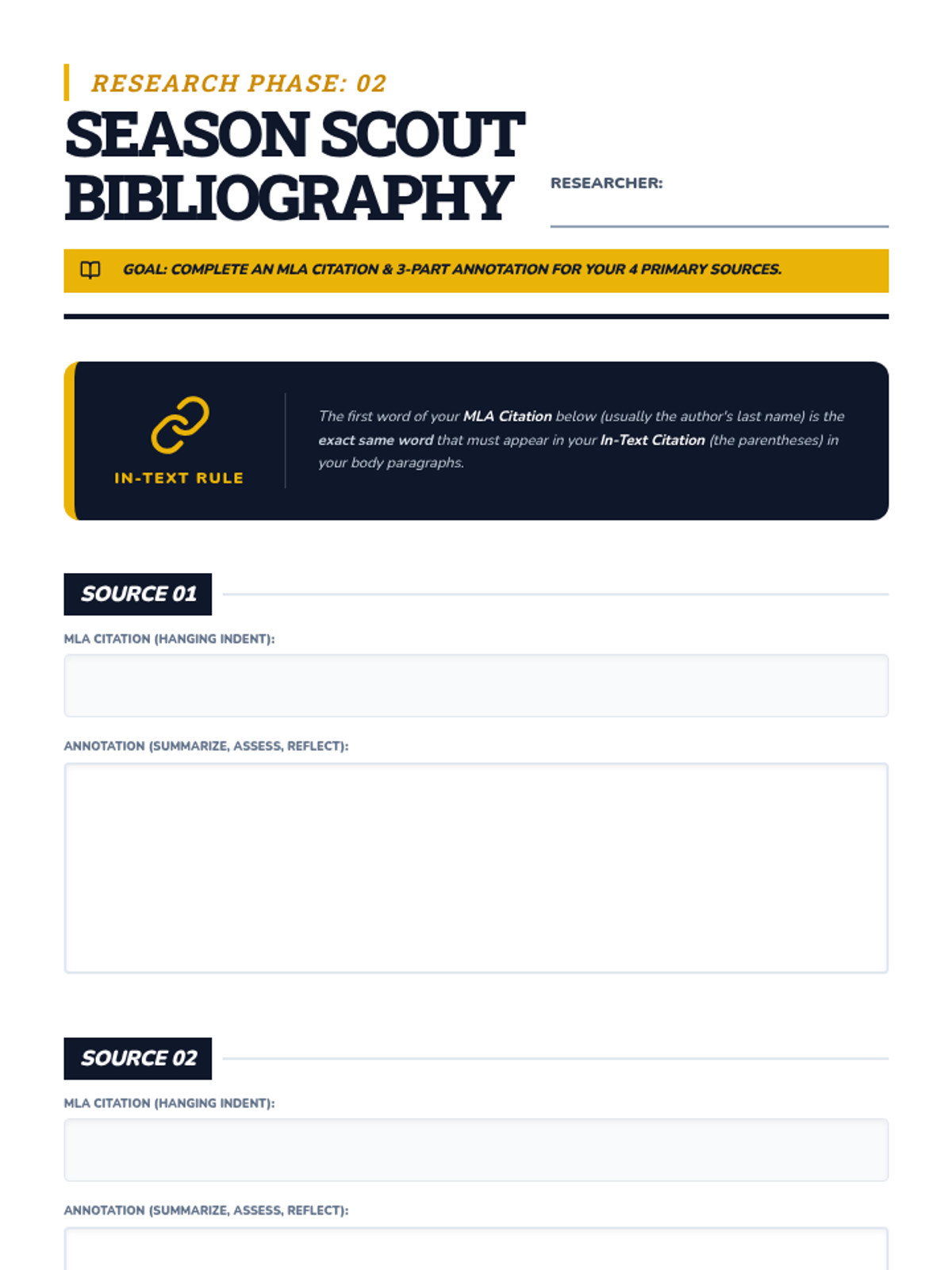
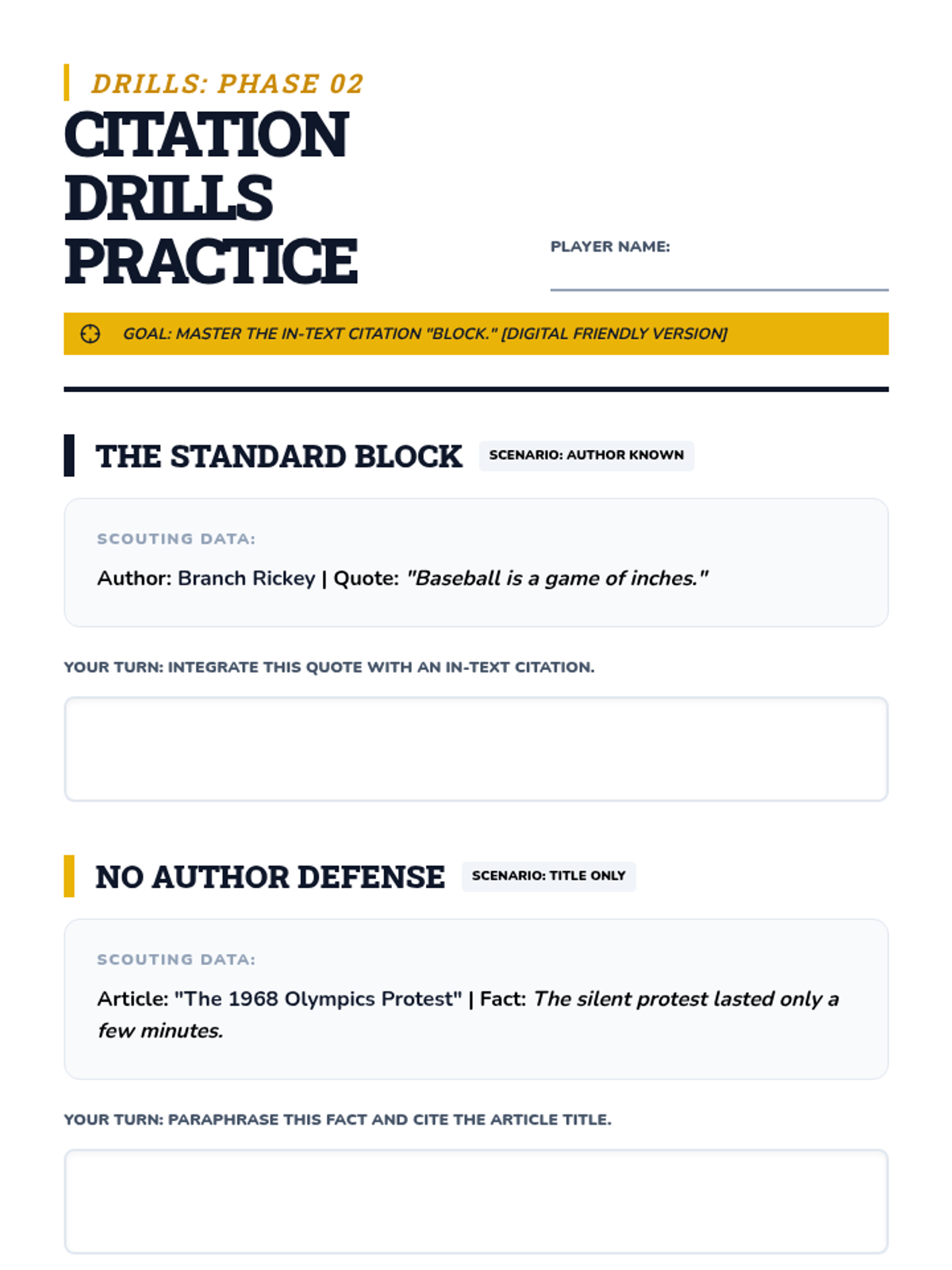
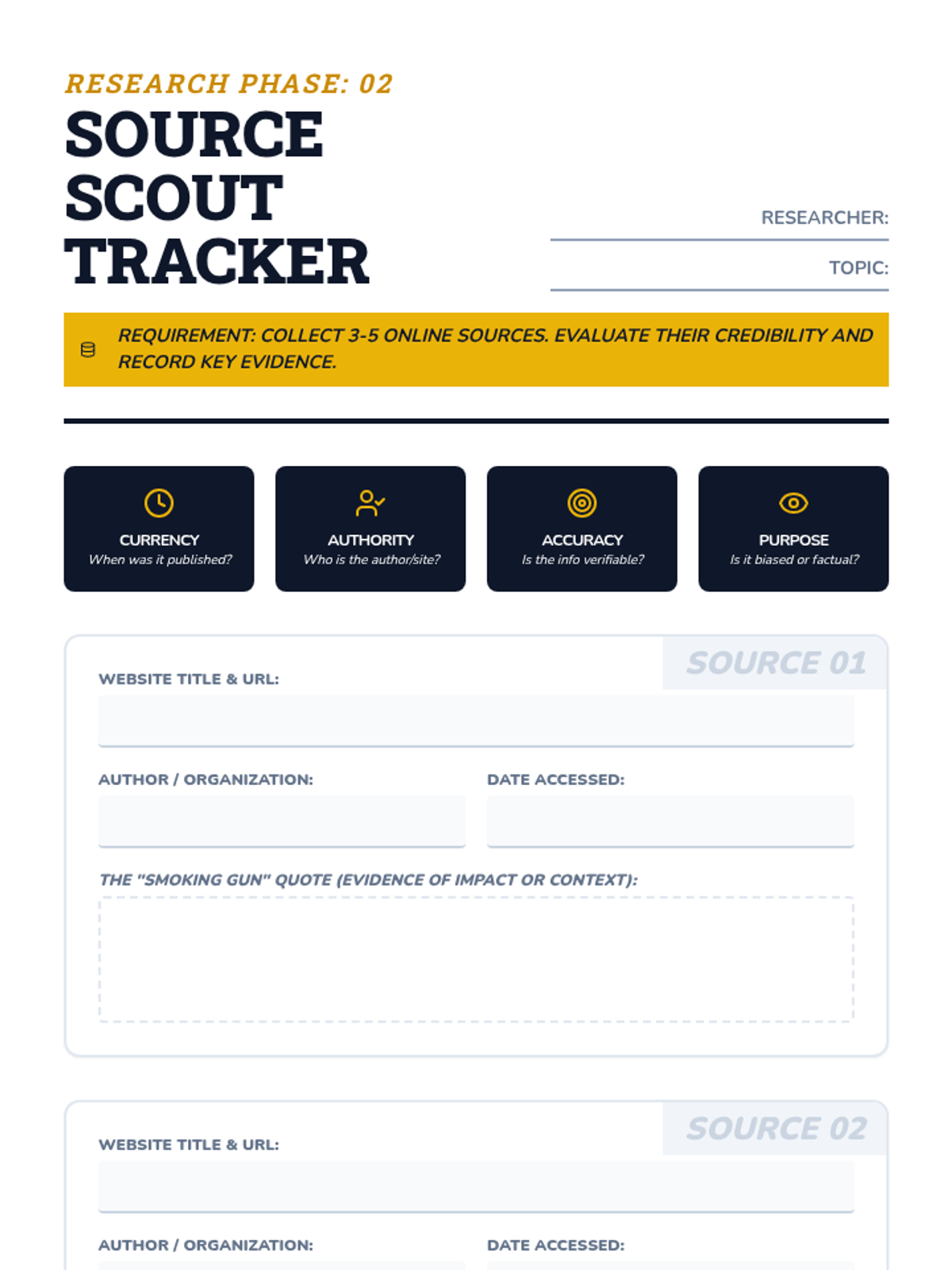
Teaches students how to find, evaluate, and cite credible evidence to support their arguments.
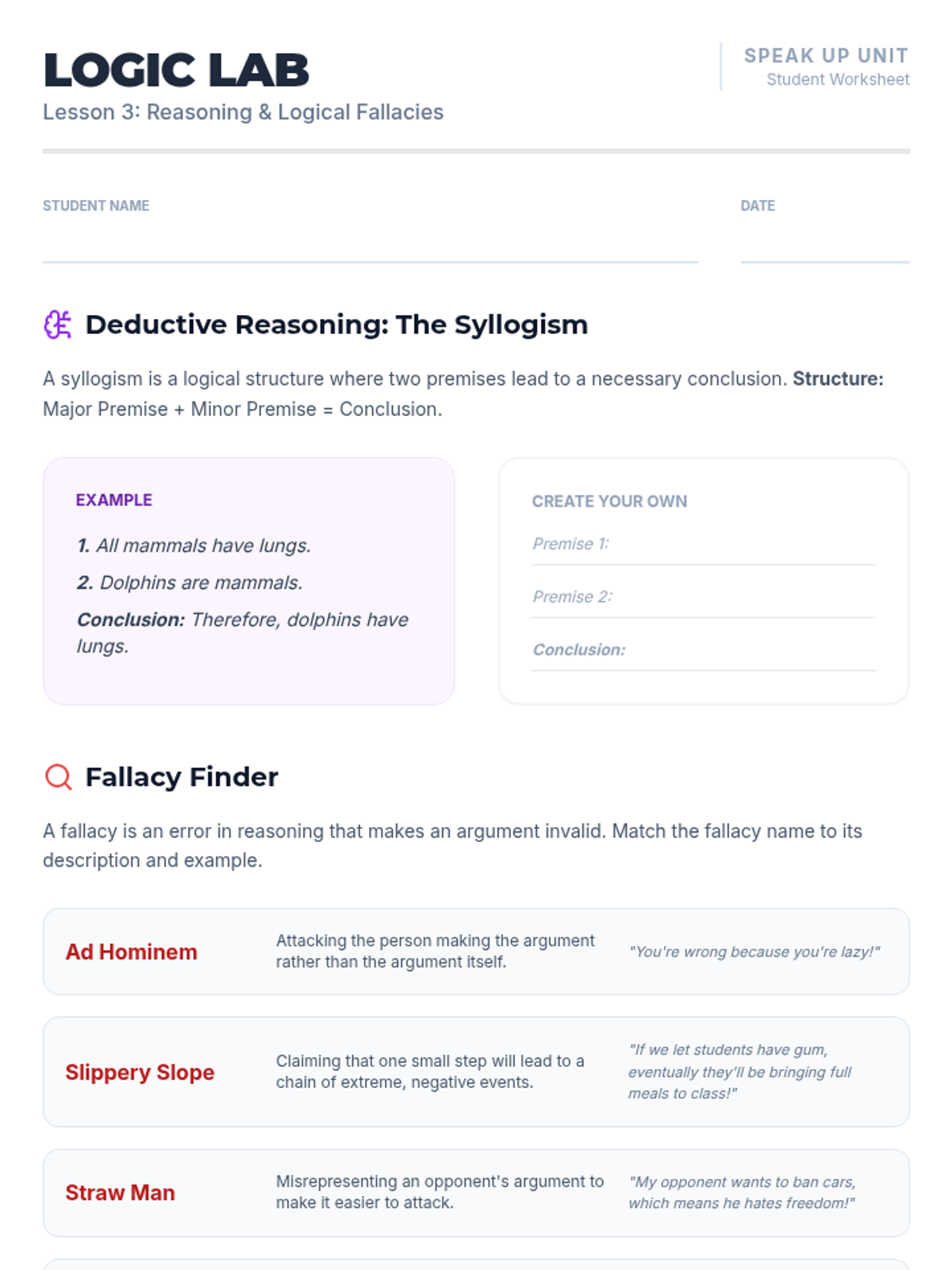
Explores logical reasoning and common logical fallacies that undermine debate arguments.
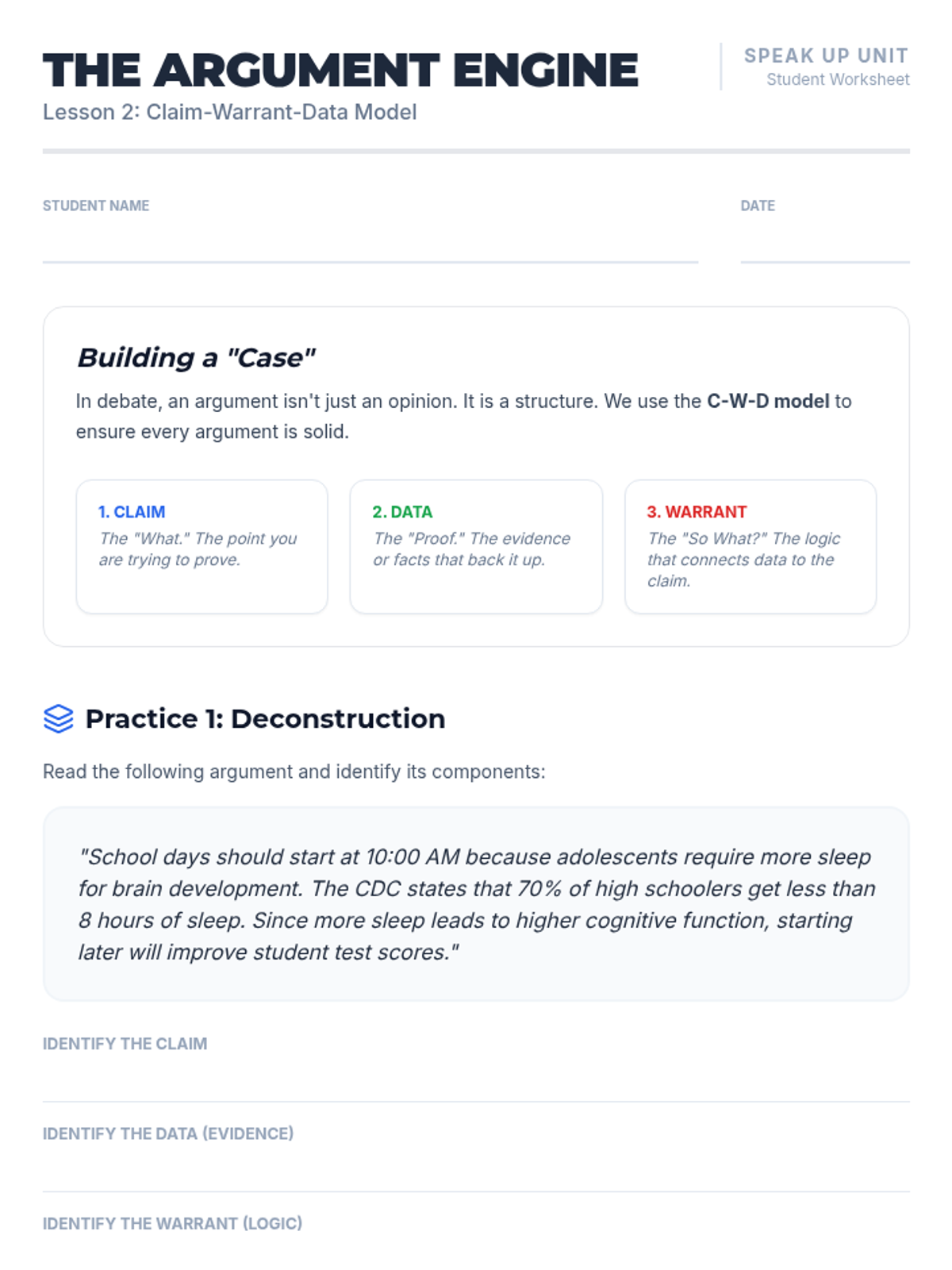
Introduces the Claim-Warrant-Data model of argumentation and basic structures for building a persuasive case.
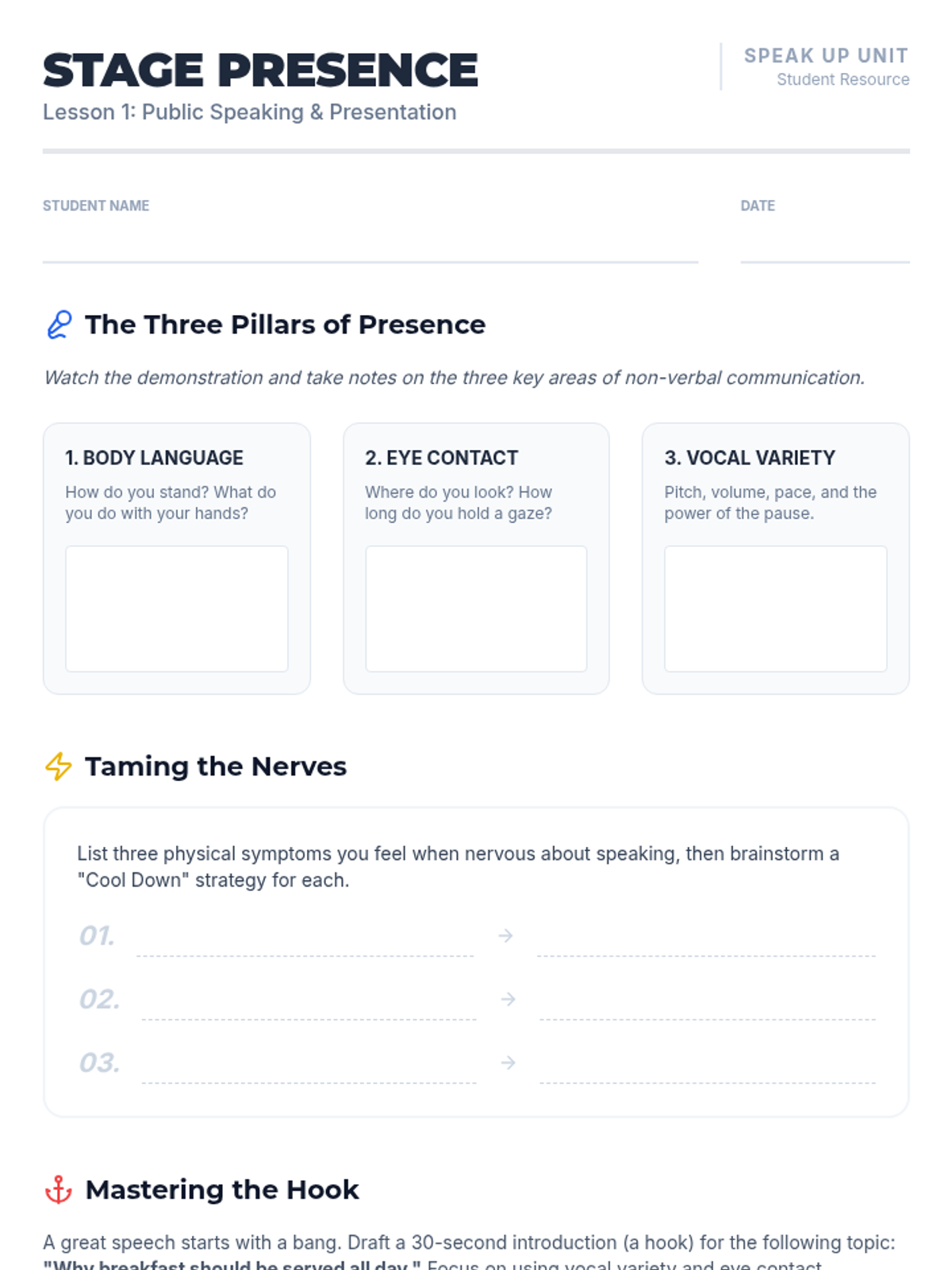
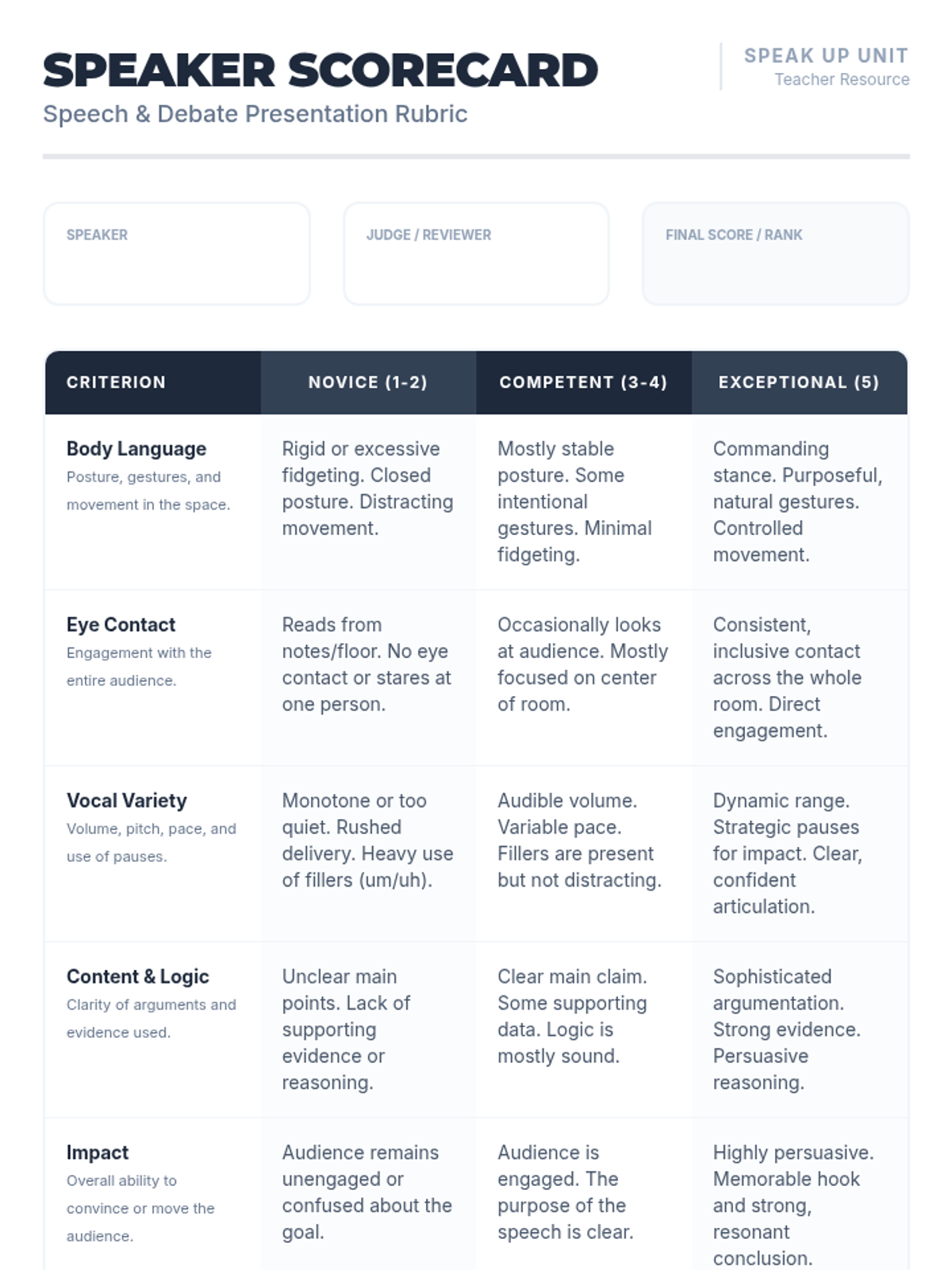
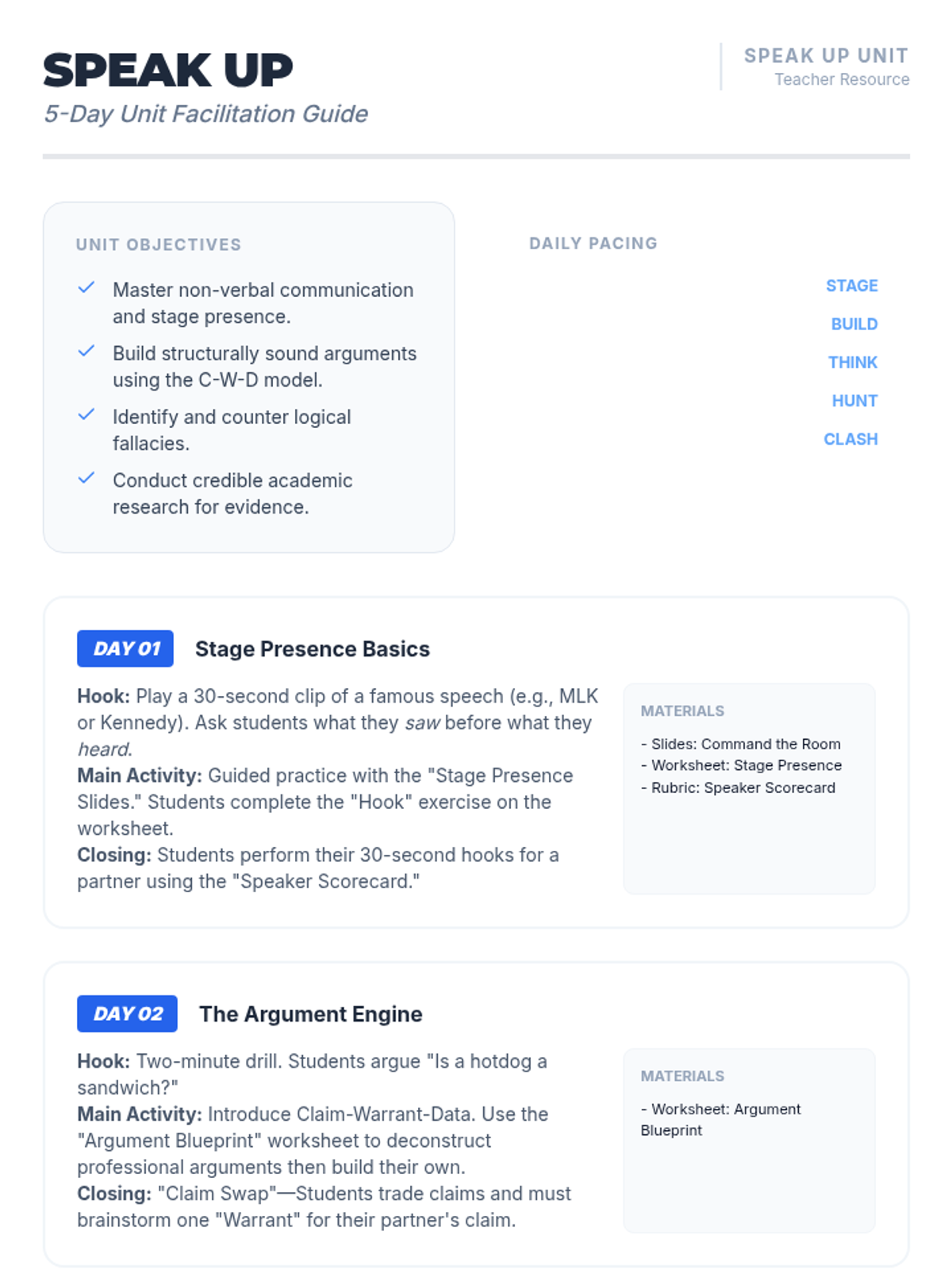
Focuses on non-verbal communication, vocal variety, and overcoming stage fright to establish a professional presence.
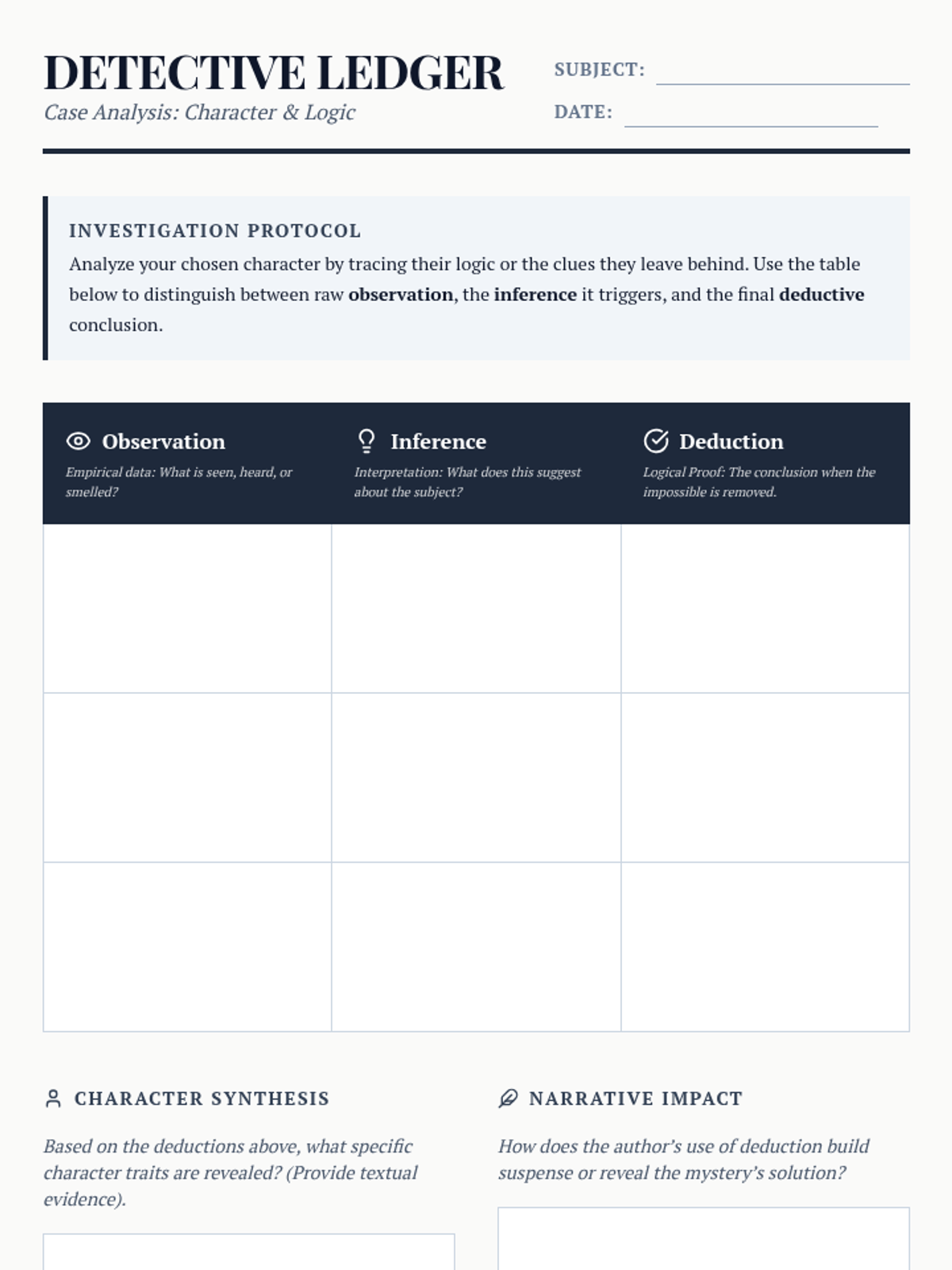
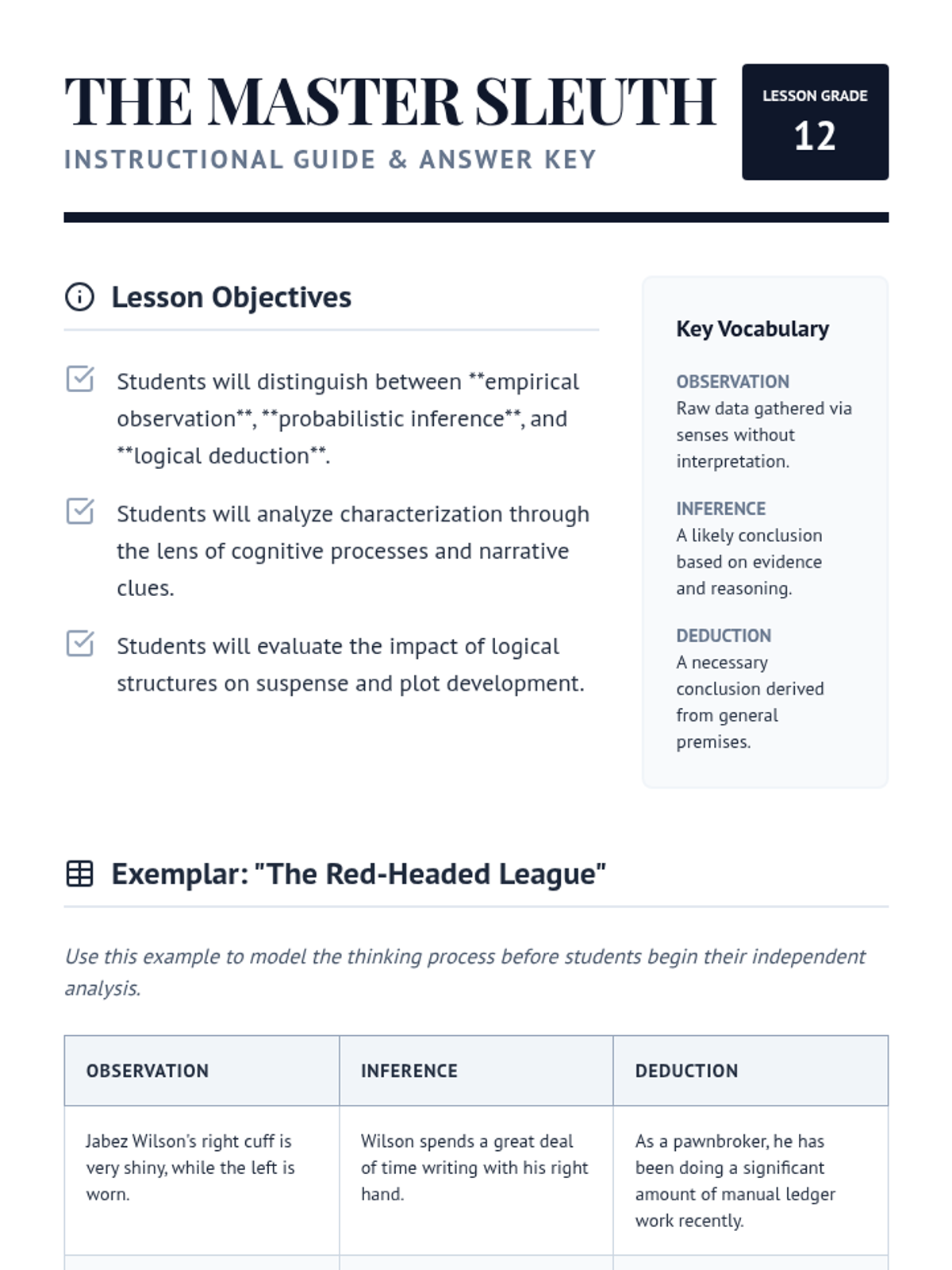
A high-school level exploration of Sherlock Holmes's methods, focusing on the distinction between observation, inference, and deduction through character analysis.
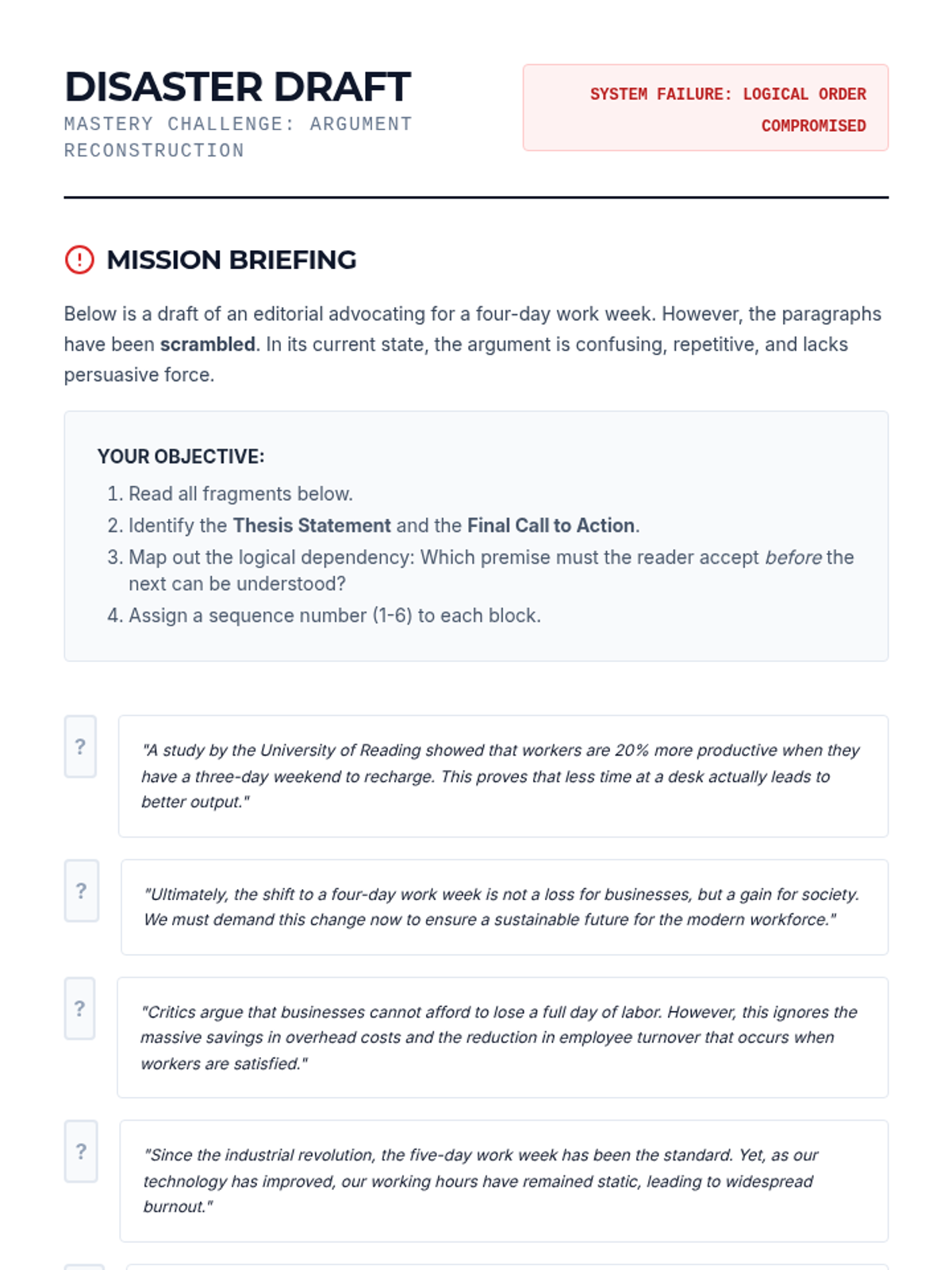
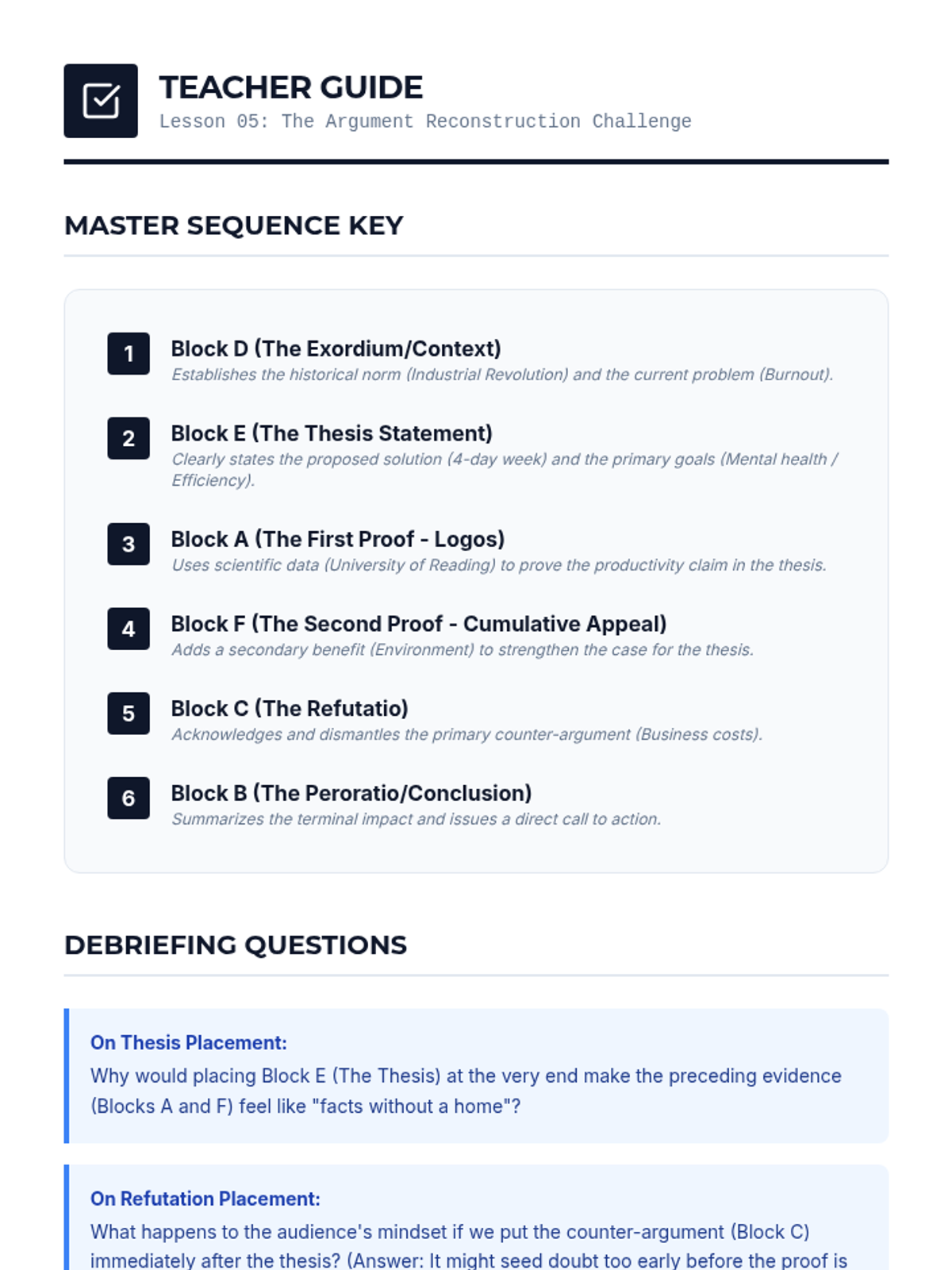
Students act as editors for a flawed argument essay that presents evidence in a confusing order. They must cut, paste, and rearrange the text to create a coherent, logical sequence that supports the thesis.
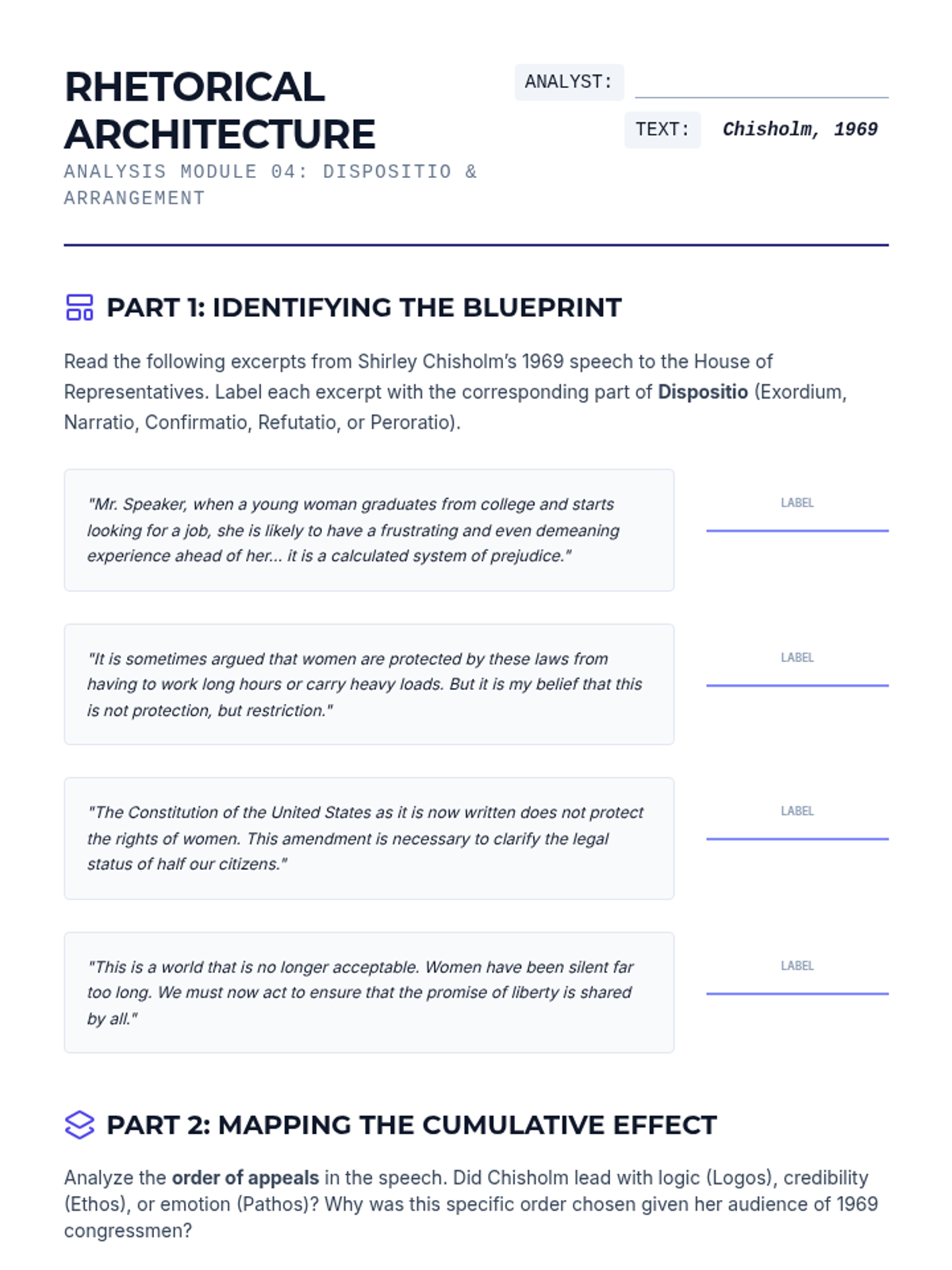
Students examine famous speeches to analyze the 'Arrangement' canon of rhetoric—why the speaker placed the emotional appeal after the logical proof, or vice versa. They analyze the cumulative effect of the sequence.
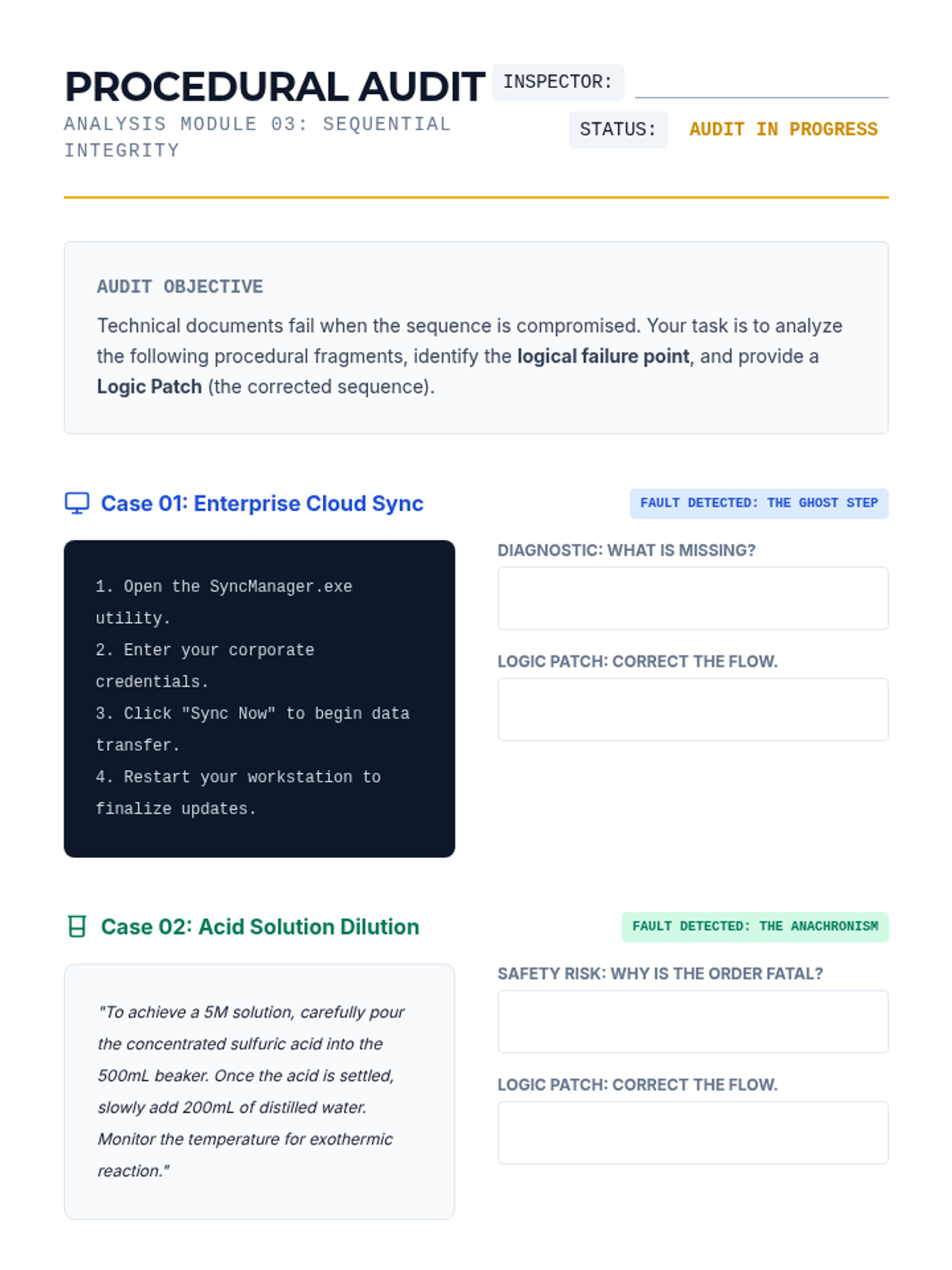
Students analyze technical documents and complex instructions to identify gaps or ambiguities in the sequence. They critique texts where poor sequencing leads to user error or misunderstanding.
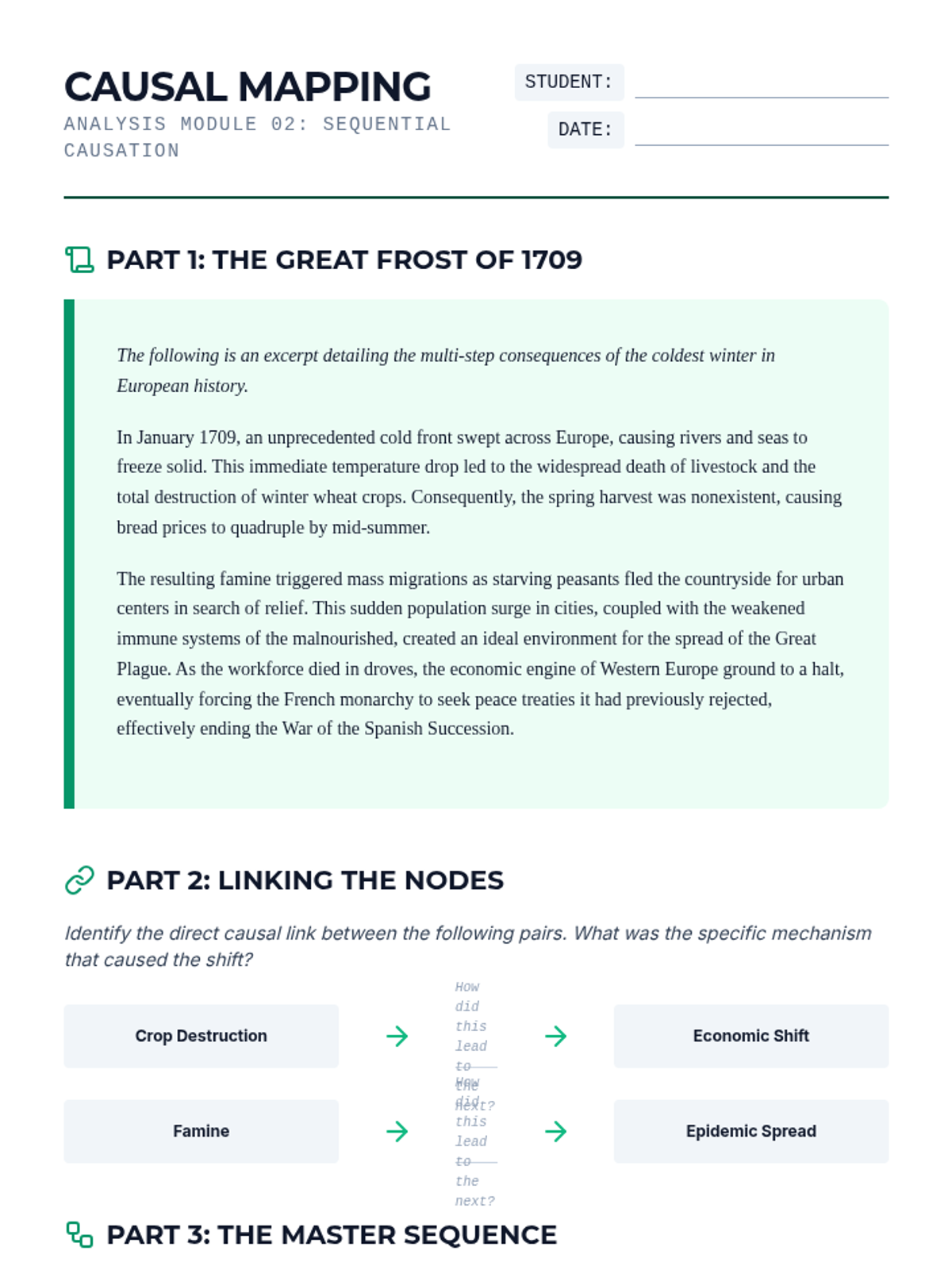
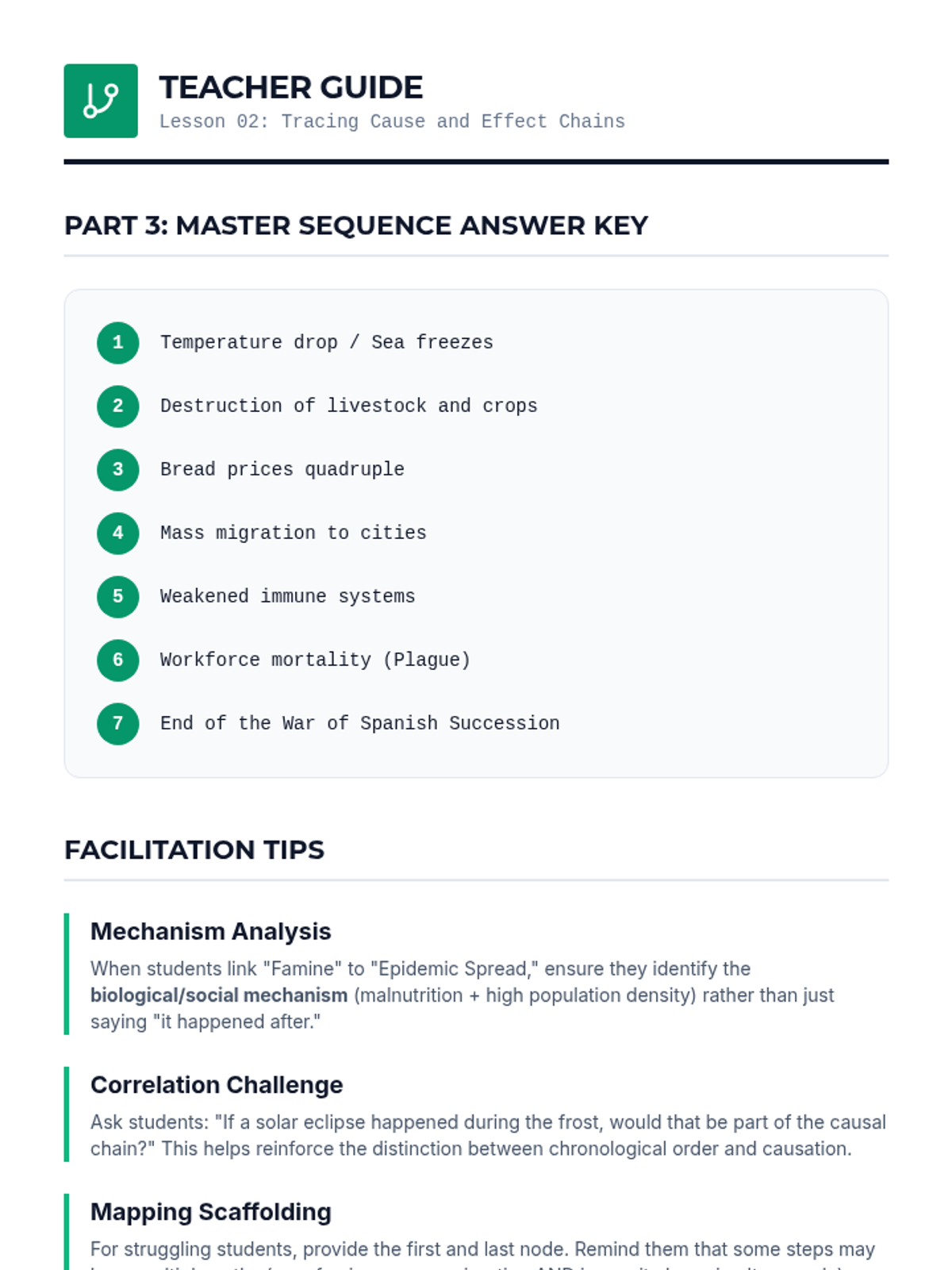
Working with complex historical or scientific texts, students map out multi-step causal chains where one event triggers a sequence of others. They identify the distinction between correlation and sequential causation.
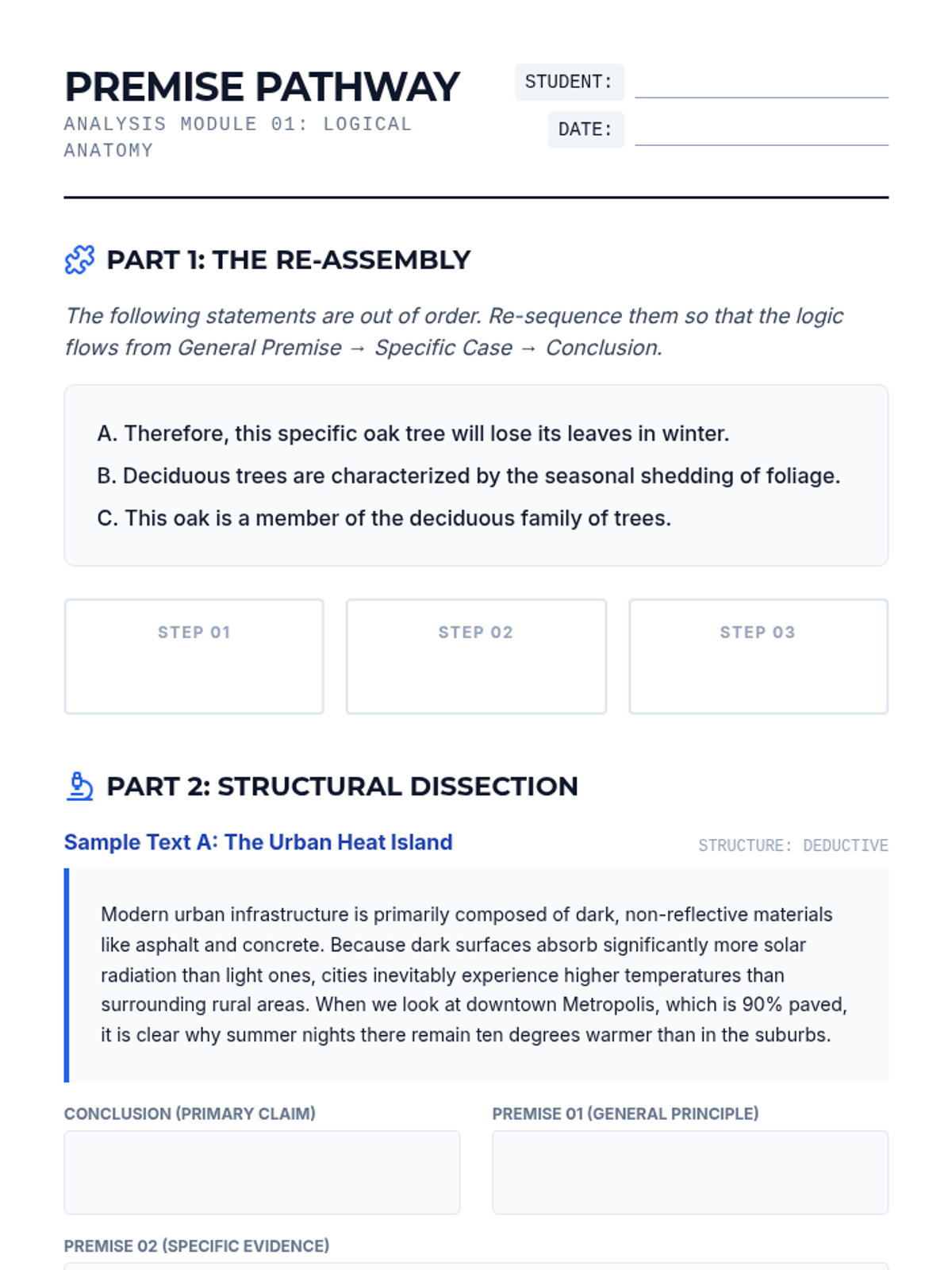
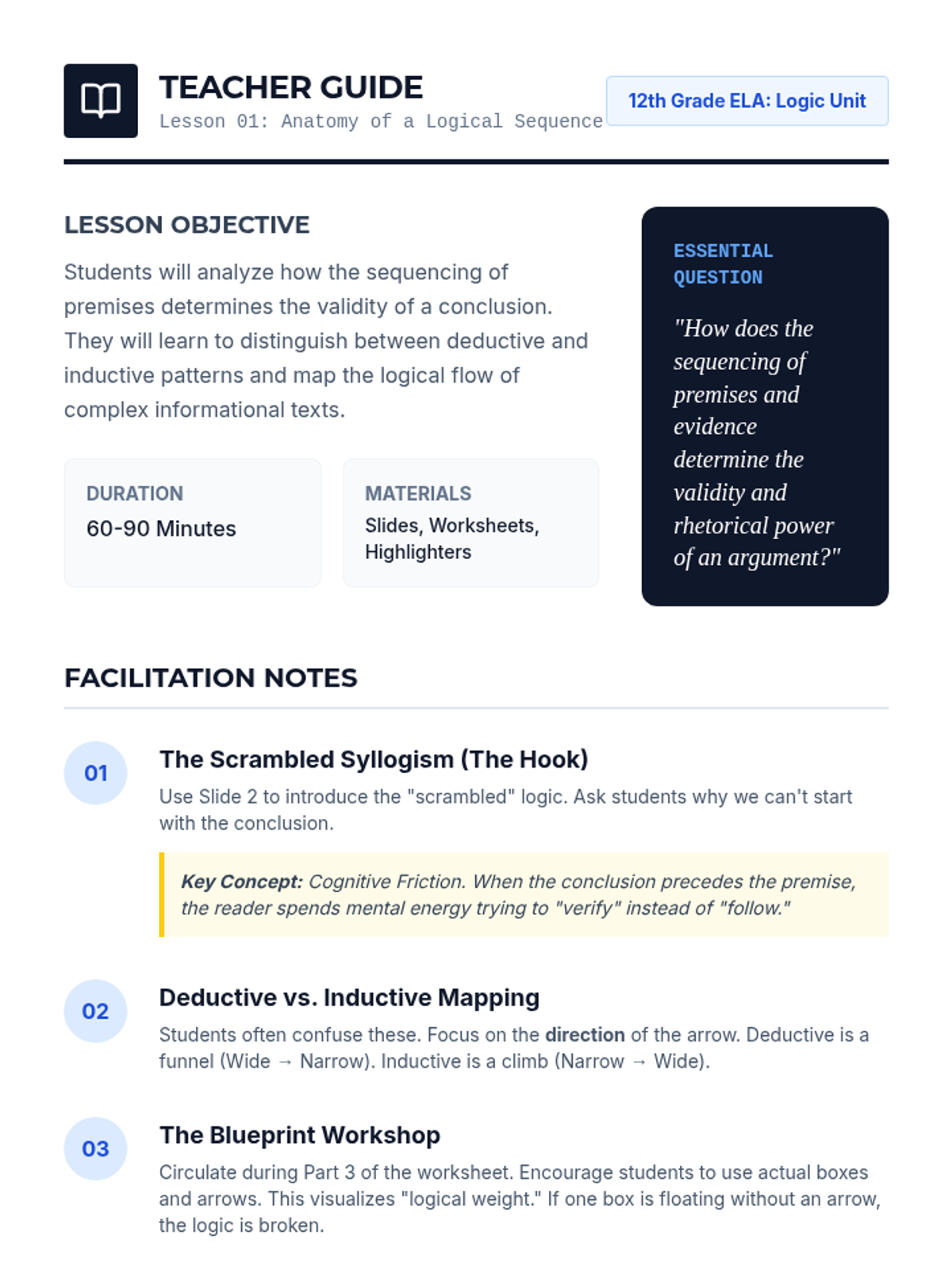
Students dissect argumentative texts to identify the sequence of premises leading to a conclusion, categorizing organizational patterns like deductive and inductive reasoning.
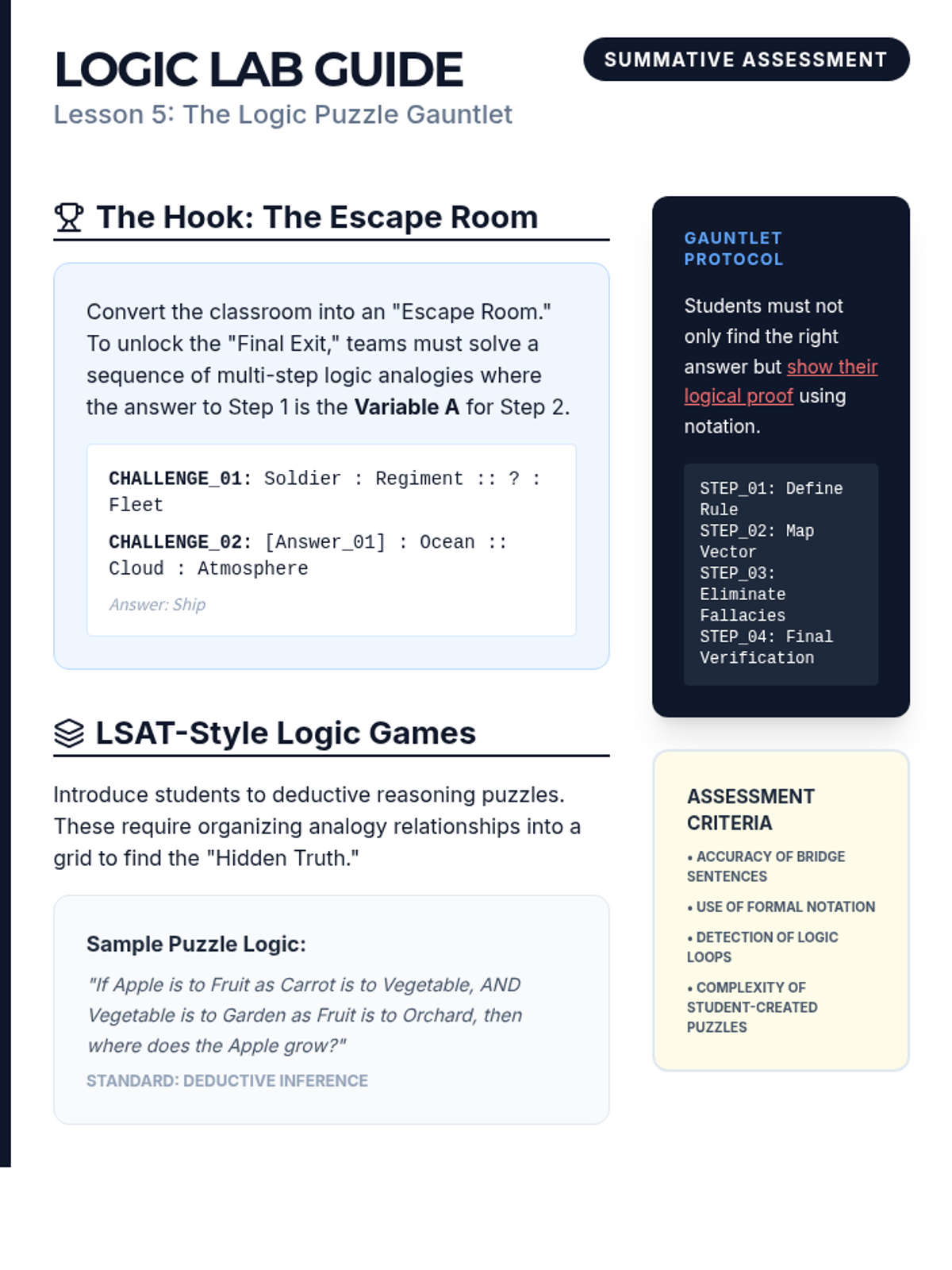
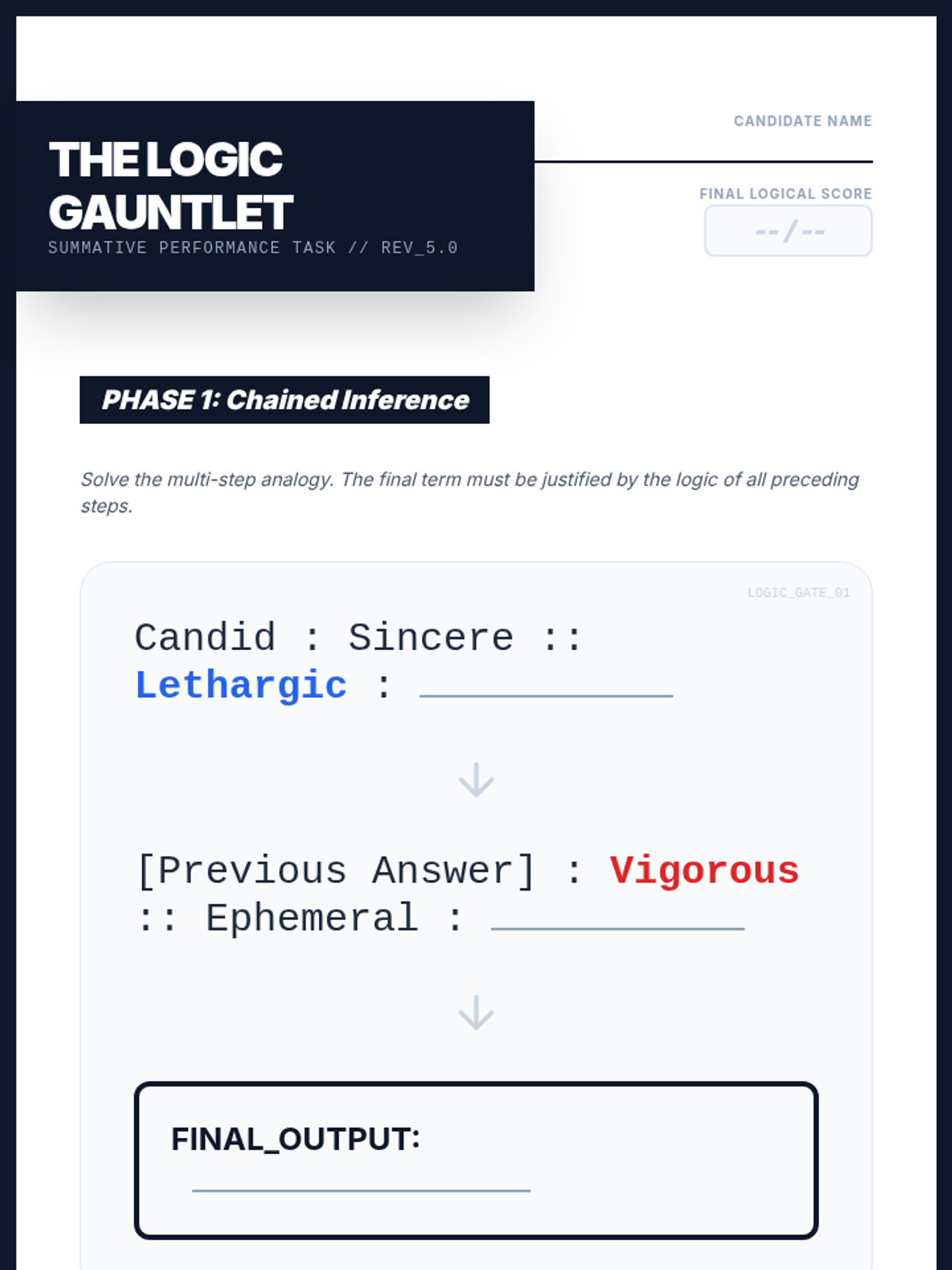
A summative assessment where students solve and create multi-step logic puzzles and LSAT-style games based on verbal analogies.
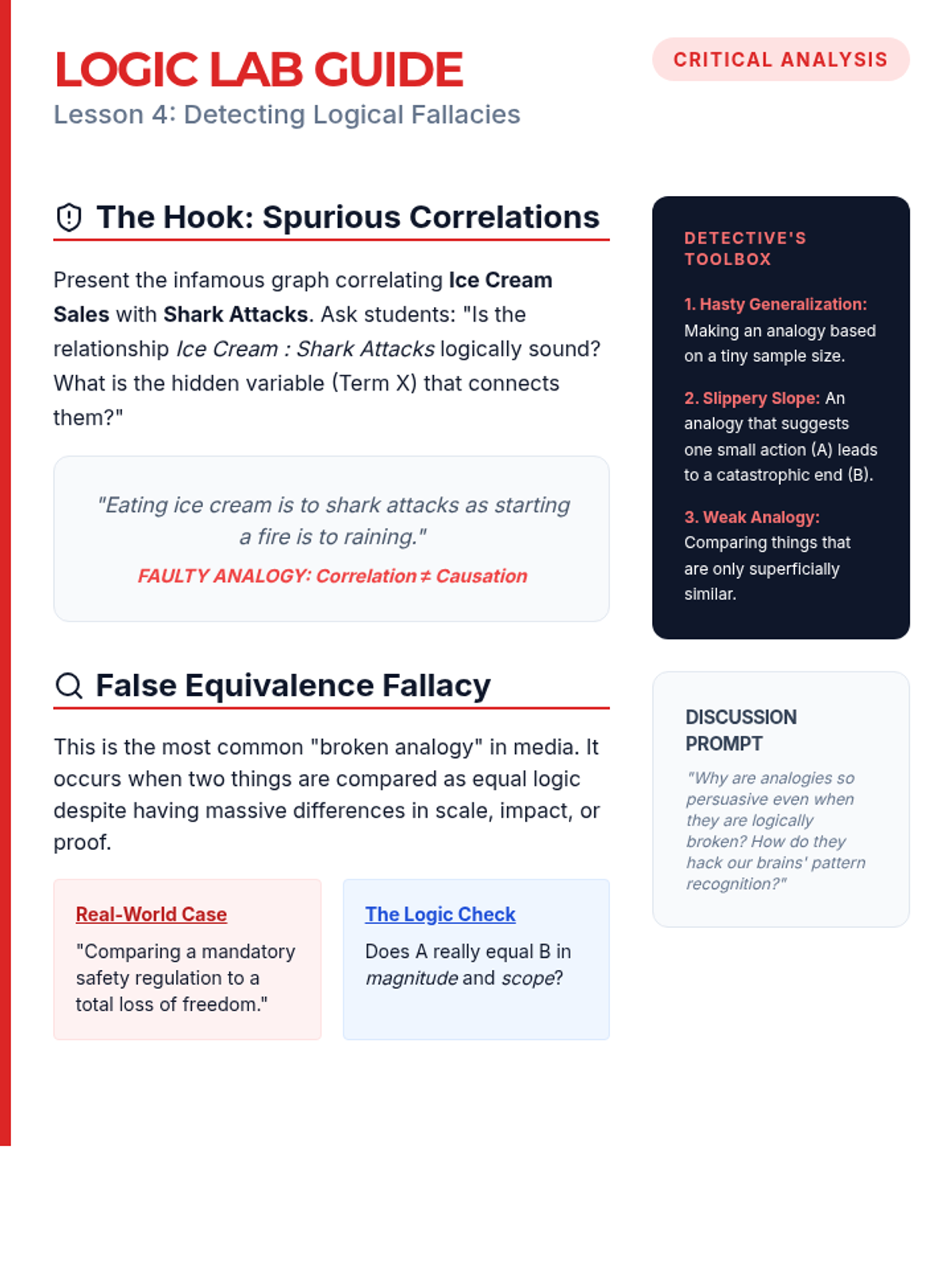
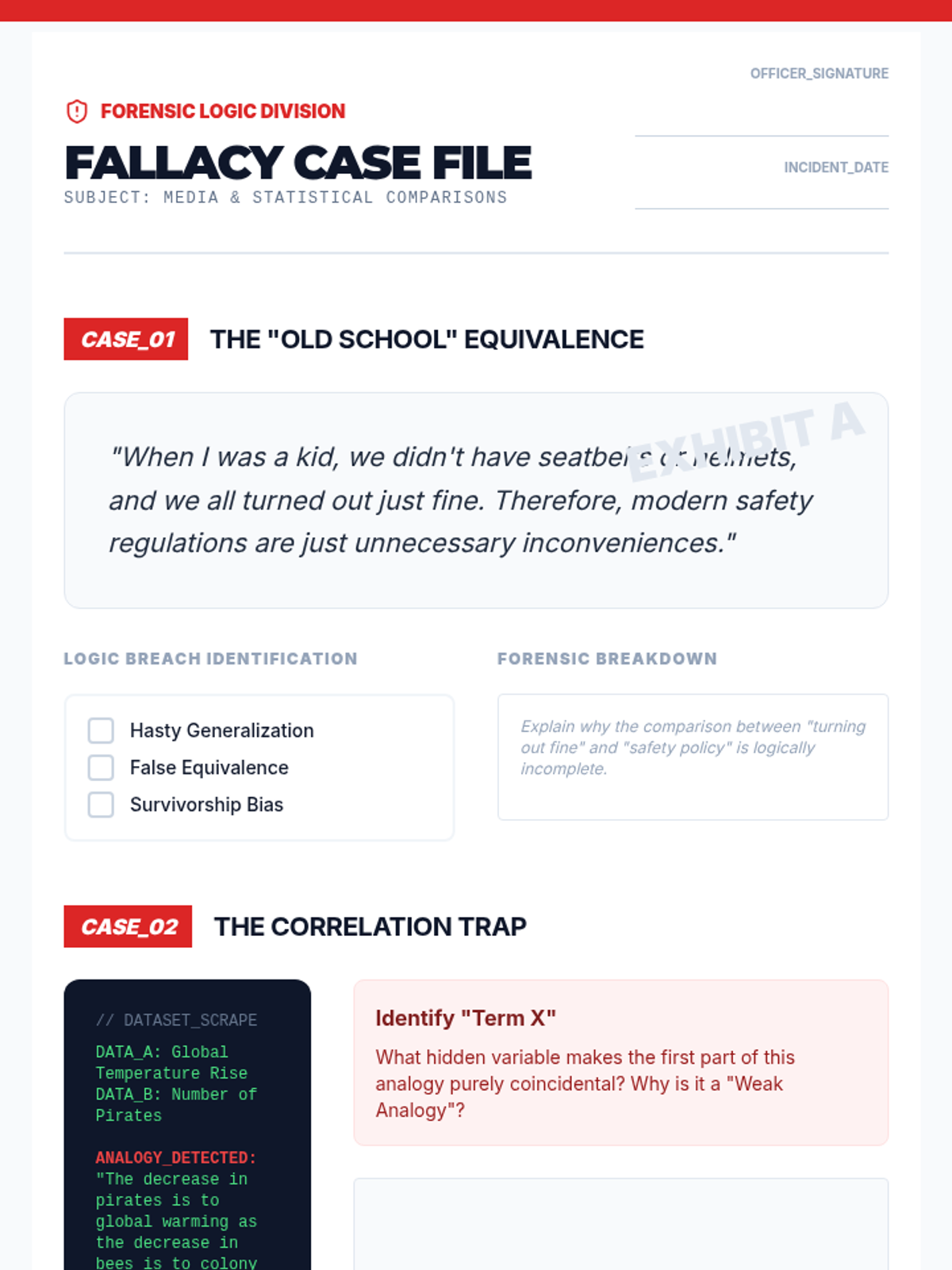
Investigates false equivalence and other logical fallacies in real-world data and media, applying analogy skills to information literacy.
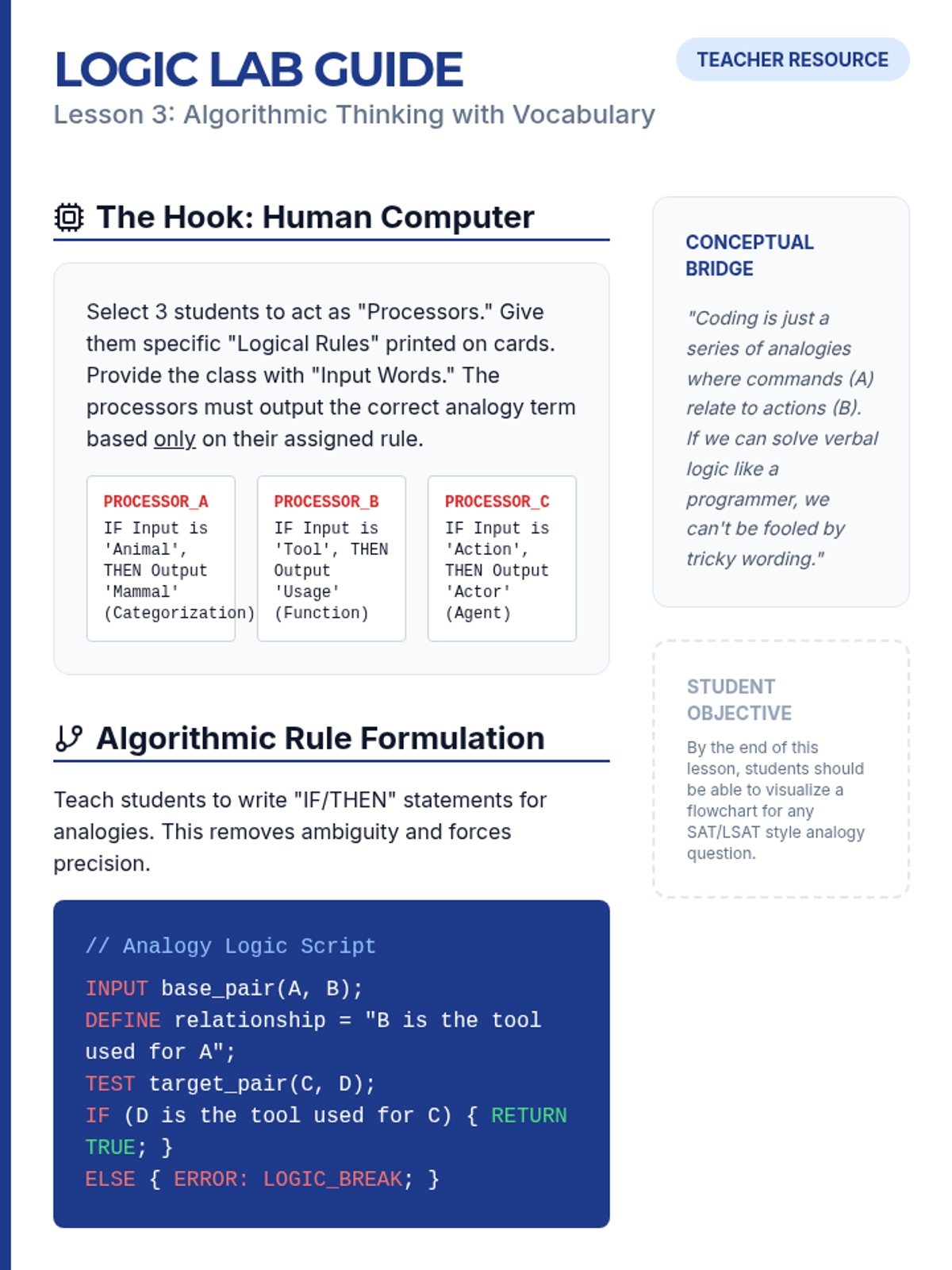
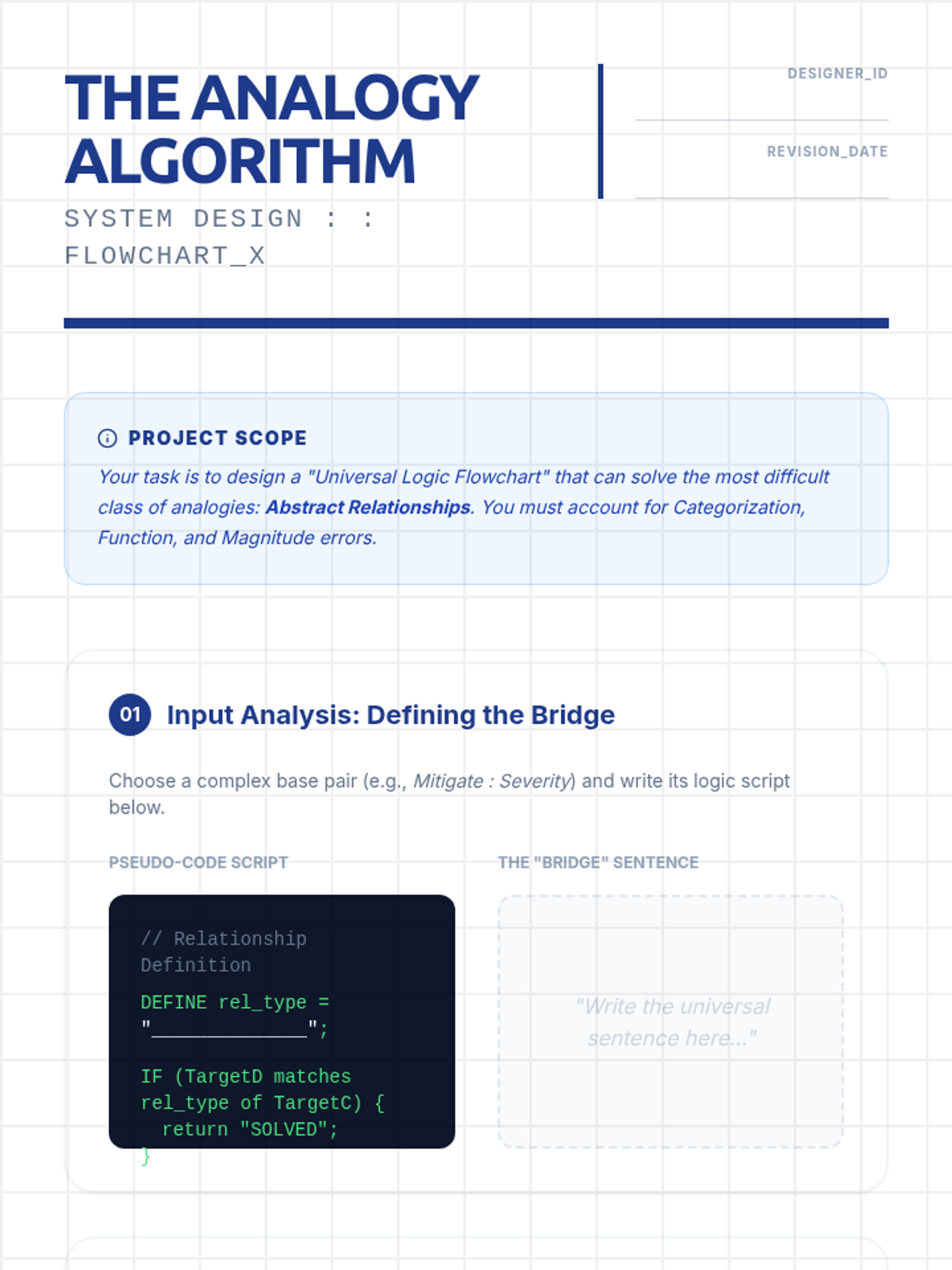
Connects coding concepts to linguistics by having students design flowcharts and 'rules' to solve for unknown terms in complex analogies.
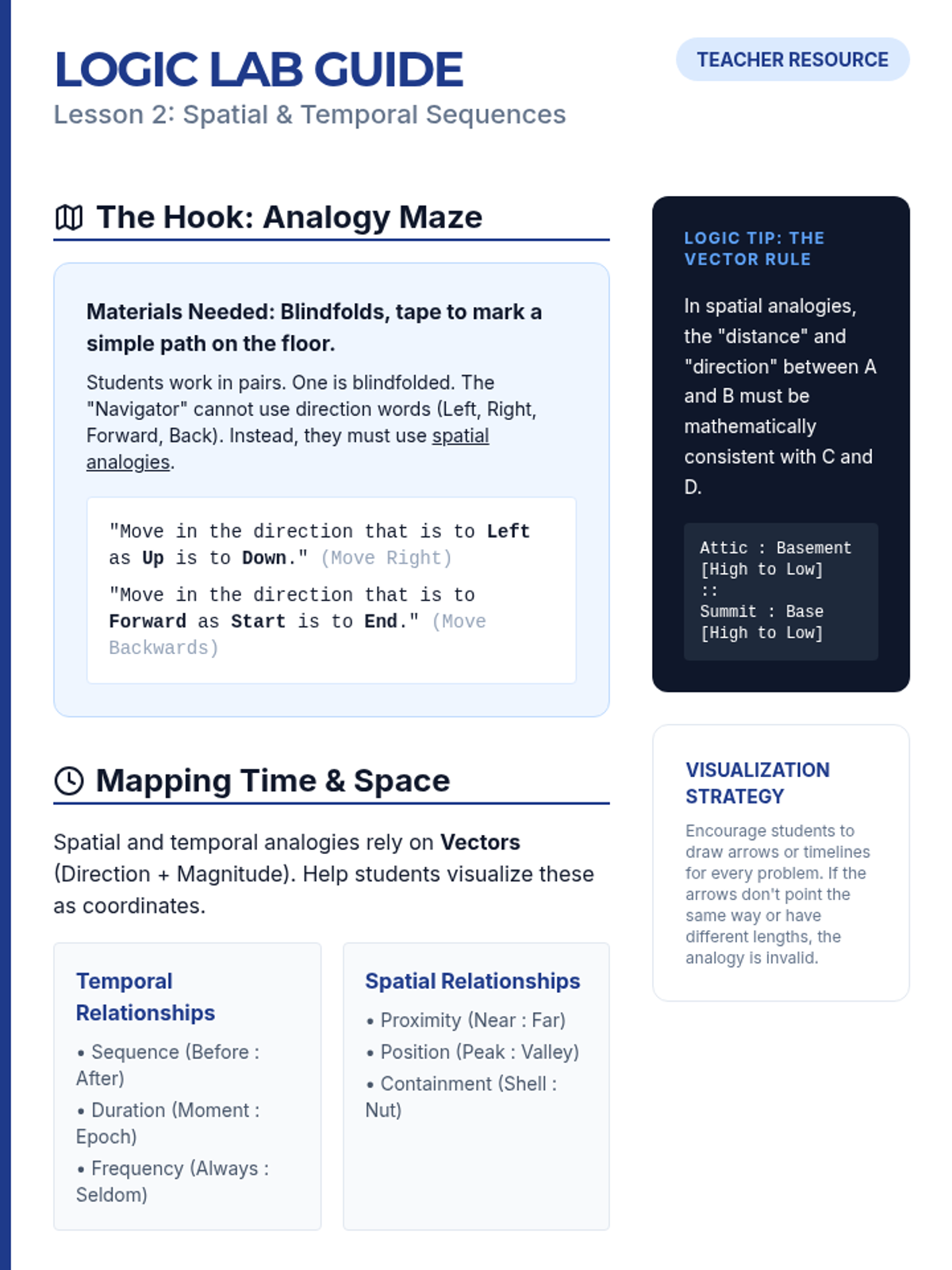
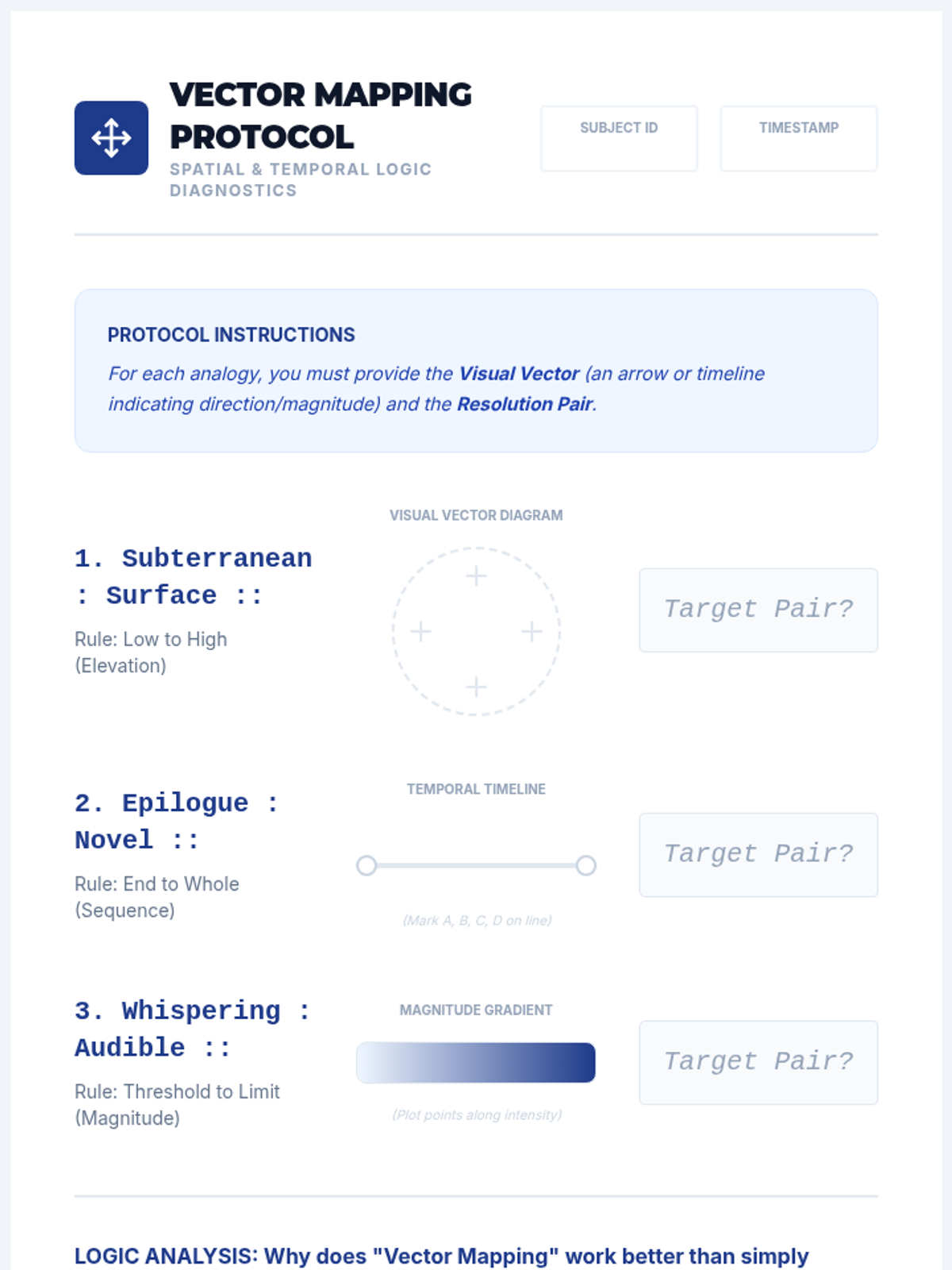
Explores analogies through the lens of space and time, using diagramming to visualize movement between terms and sequences.
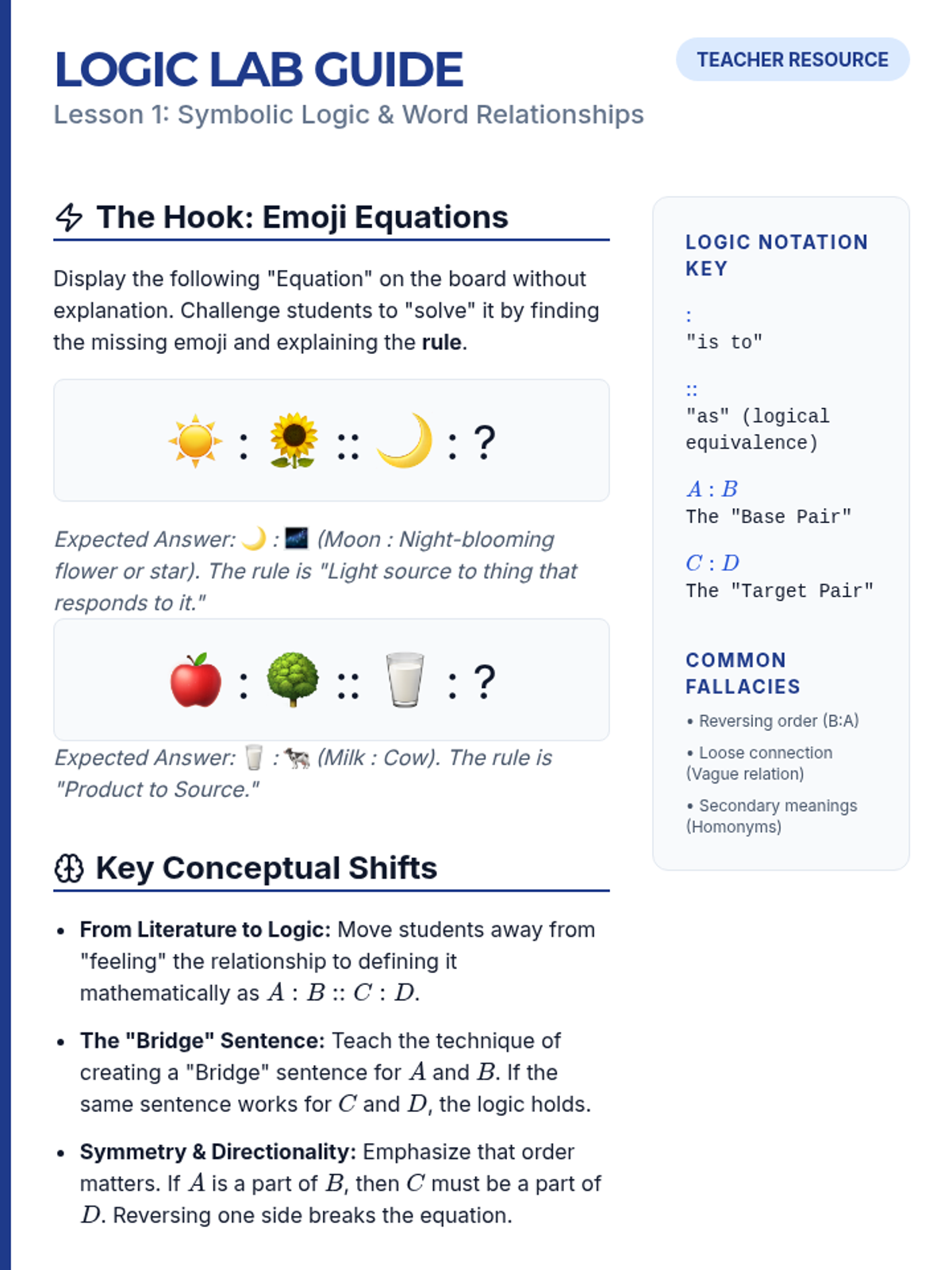
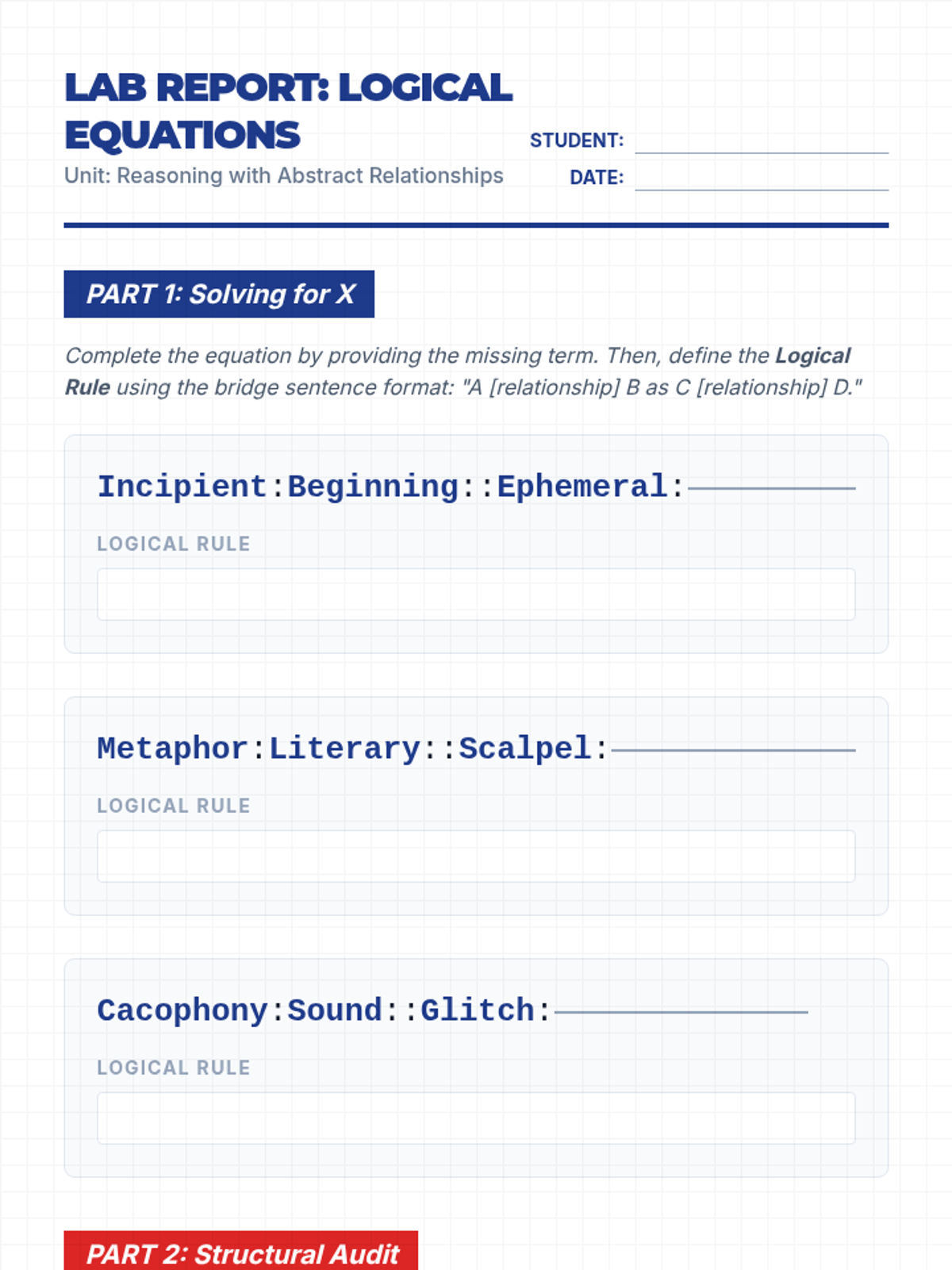
Introduces formal logic notation (A:B :: C:D) and maps word relationships onto these structures, emphasizing the importance of order and symmetry in verbal reasoning.
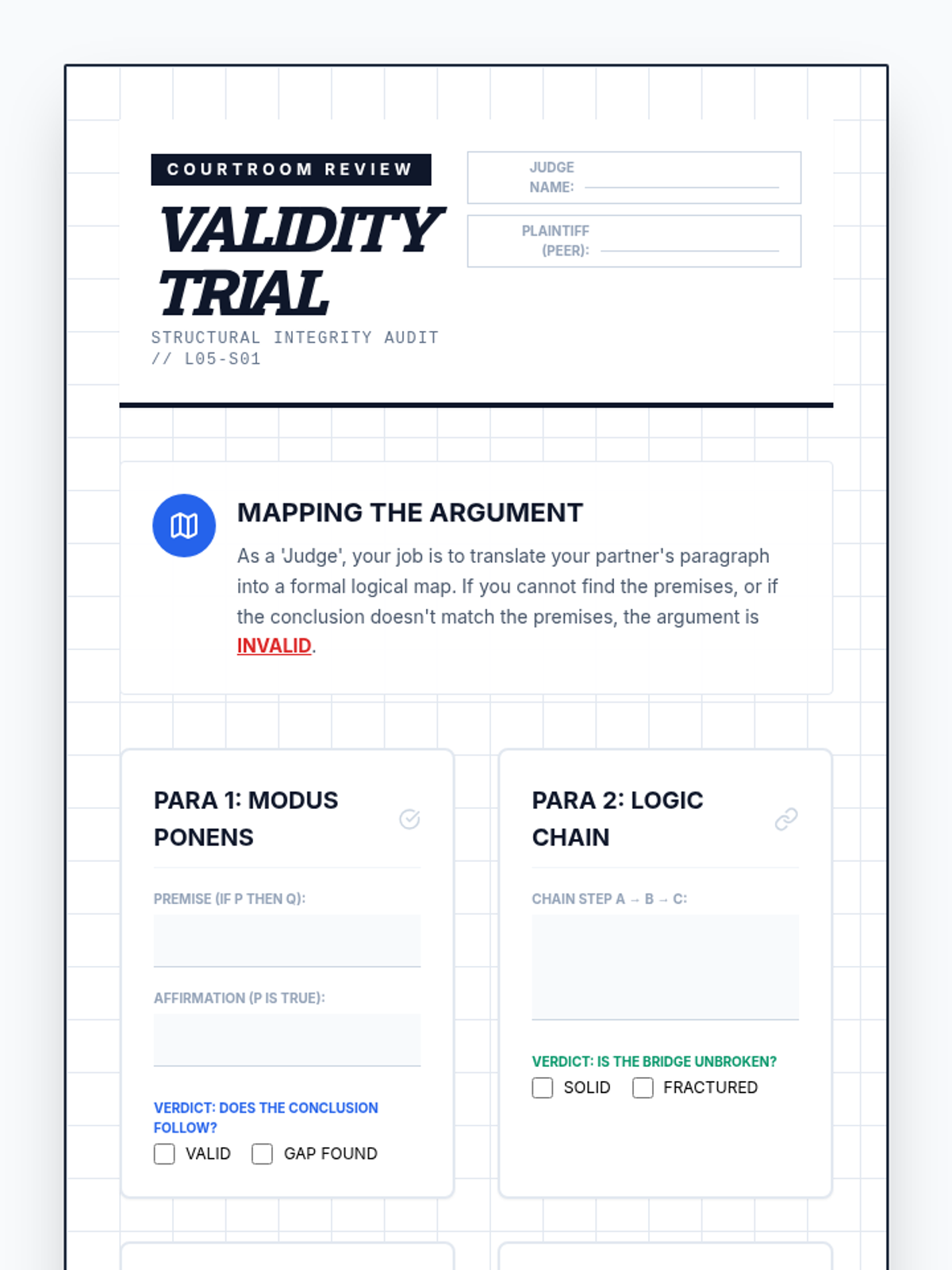
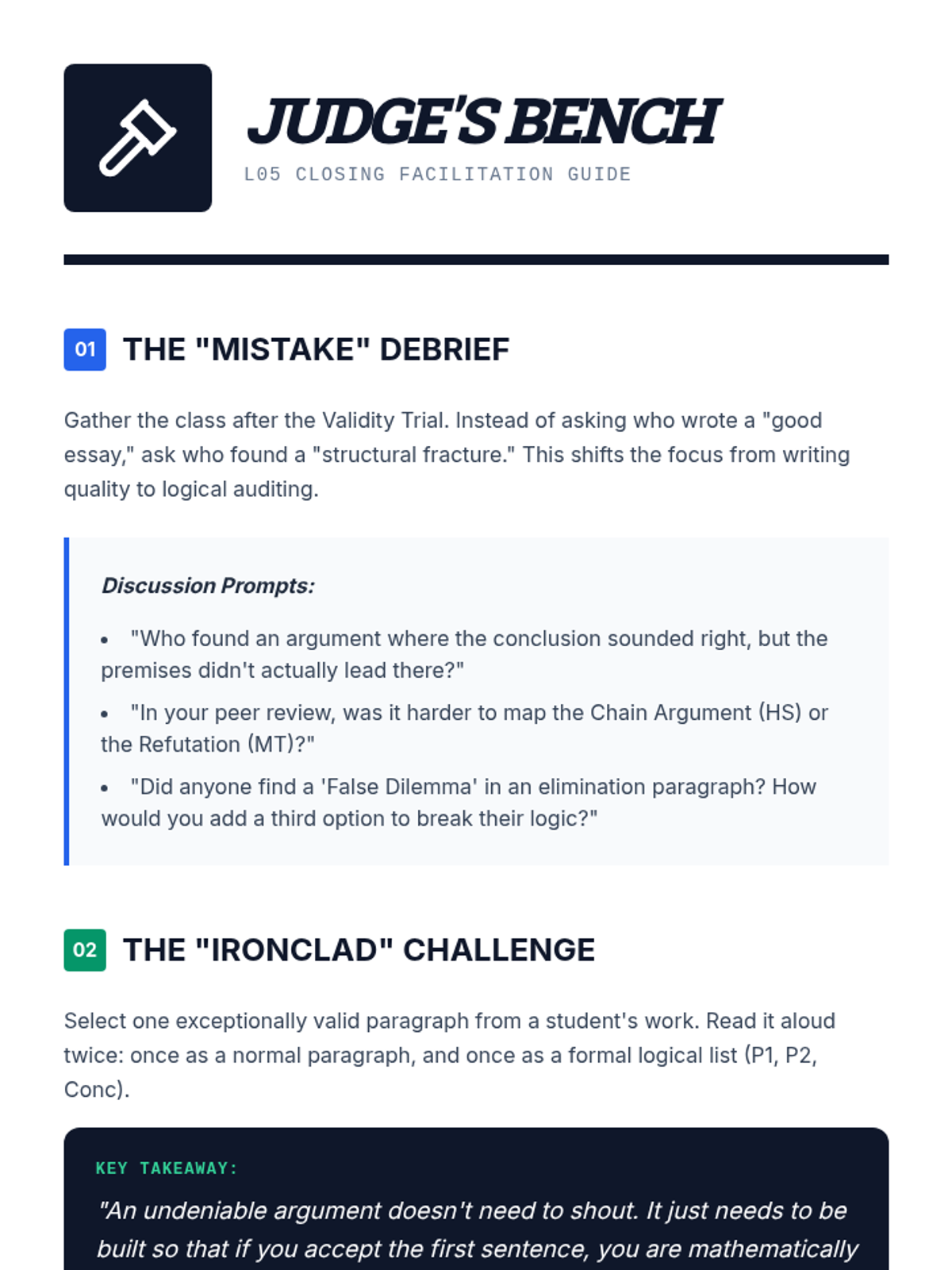
A peer review session where students map out the logical validity of each other's essays, acting as 'judges' to ensure conclusions follow necessarily from premises.
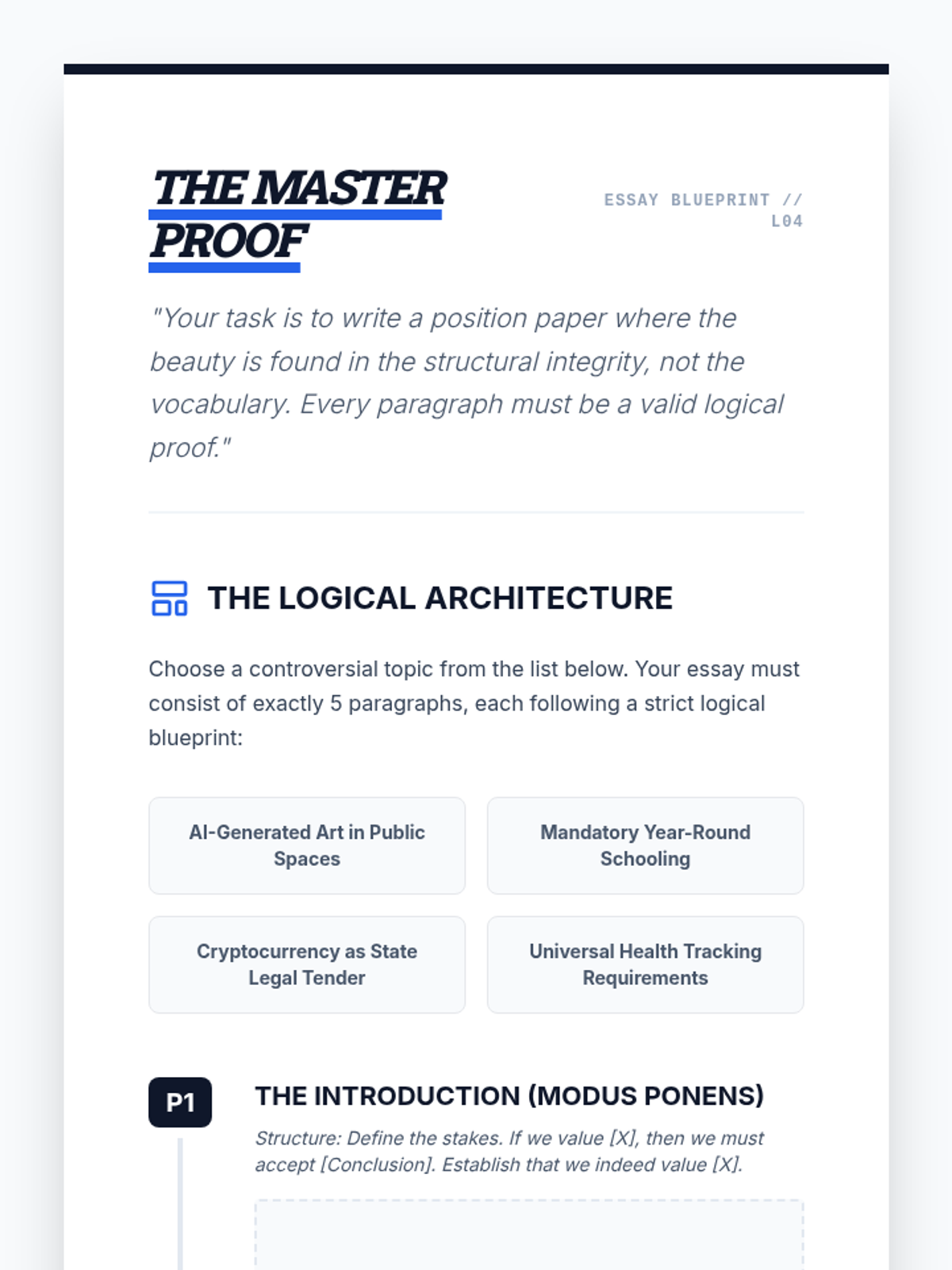
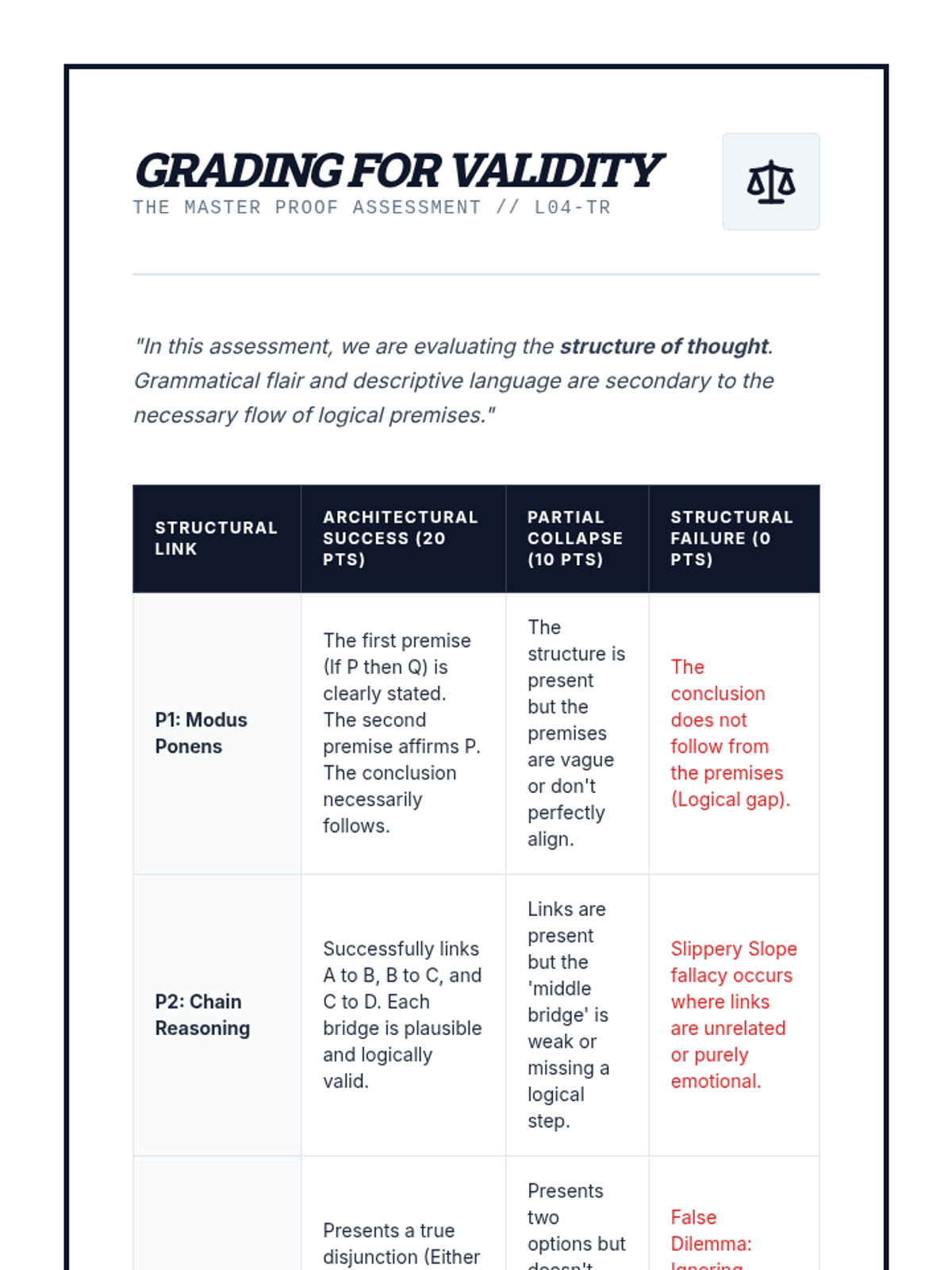
Synthesis lesson where students draft a position paper structured entirely around the logical forms learned in previous lessons. The focus is on structural integrity and logical necessity.
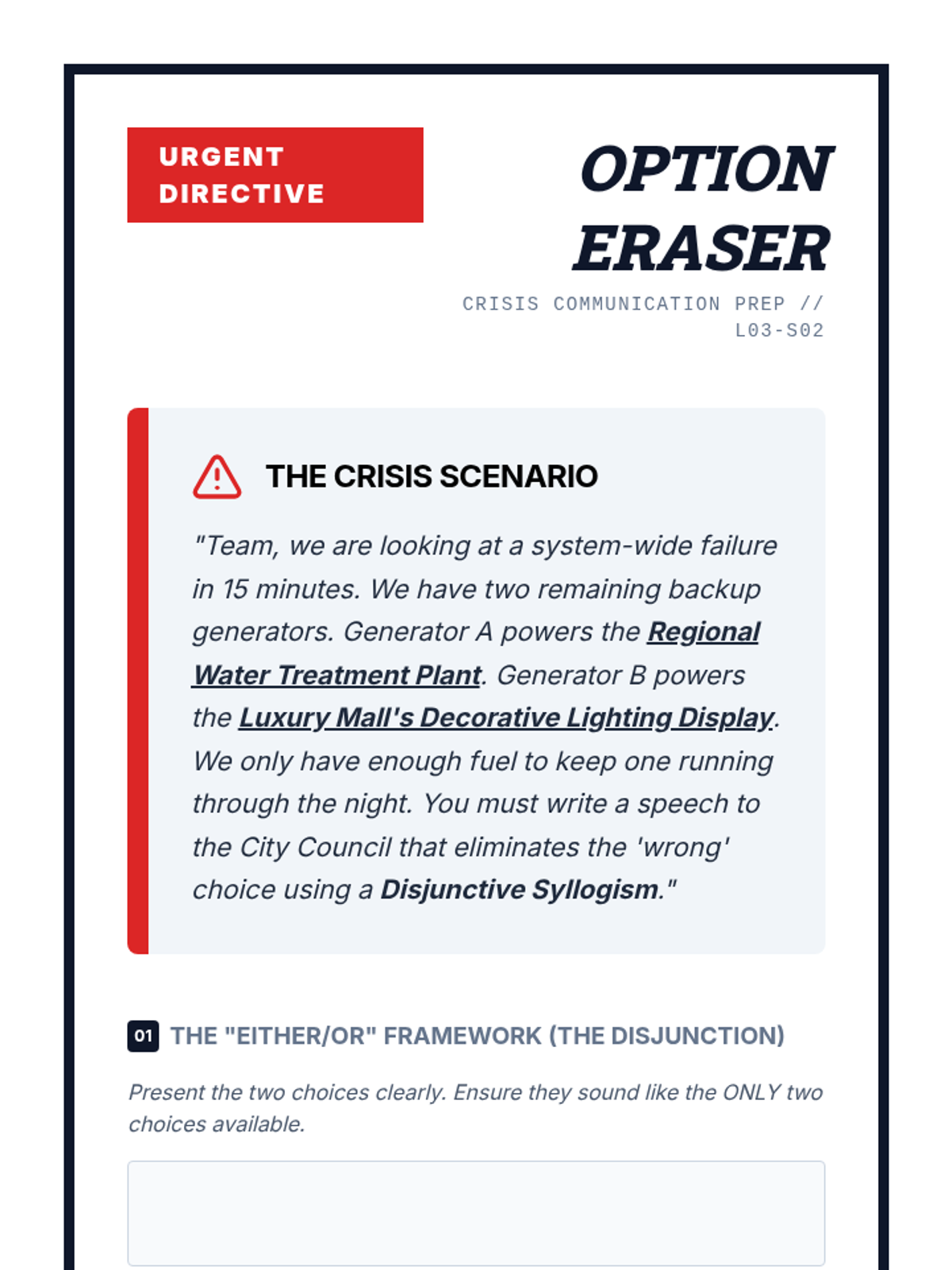
Using Disjunctive Syllogisms to present alternatives and prove a conclusion by process of elimination. Students apply this strategy to persuasive speechwriting.
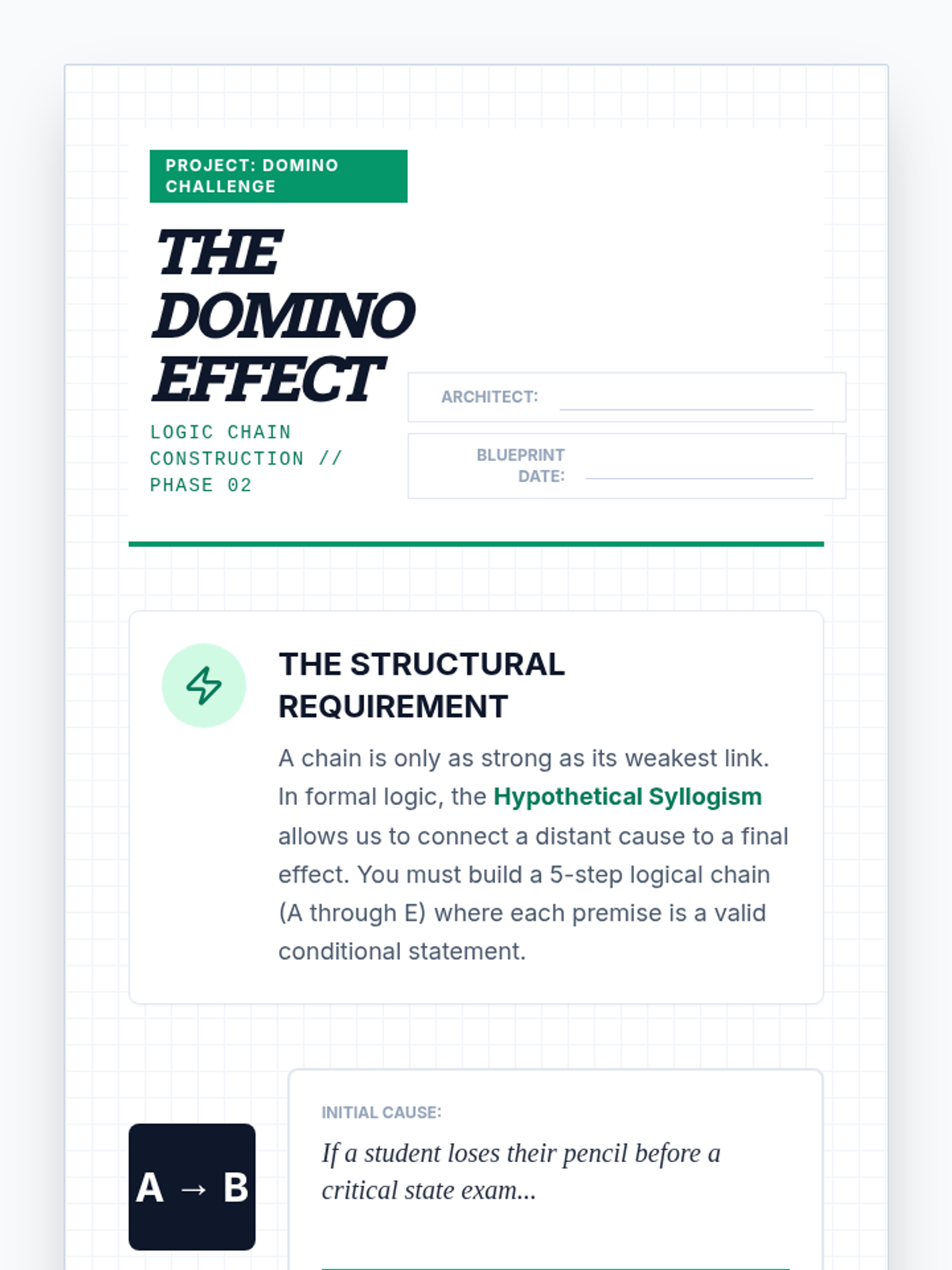
Exploring the Hypothetical Syllogism to create sustained, coherent chains of reasoning. Students practice linking conditional statements to build complex, multi-paragraph arguments.
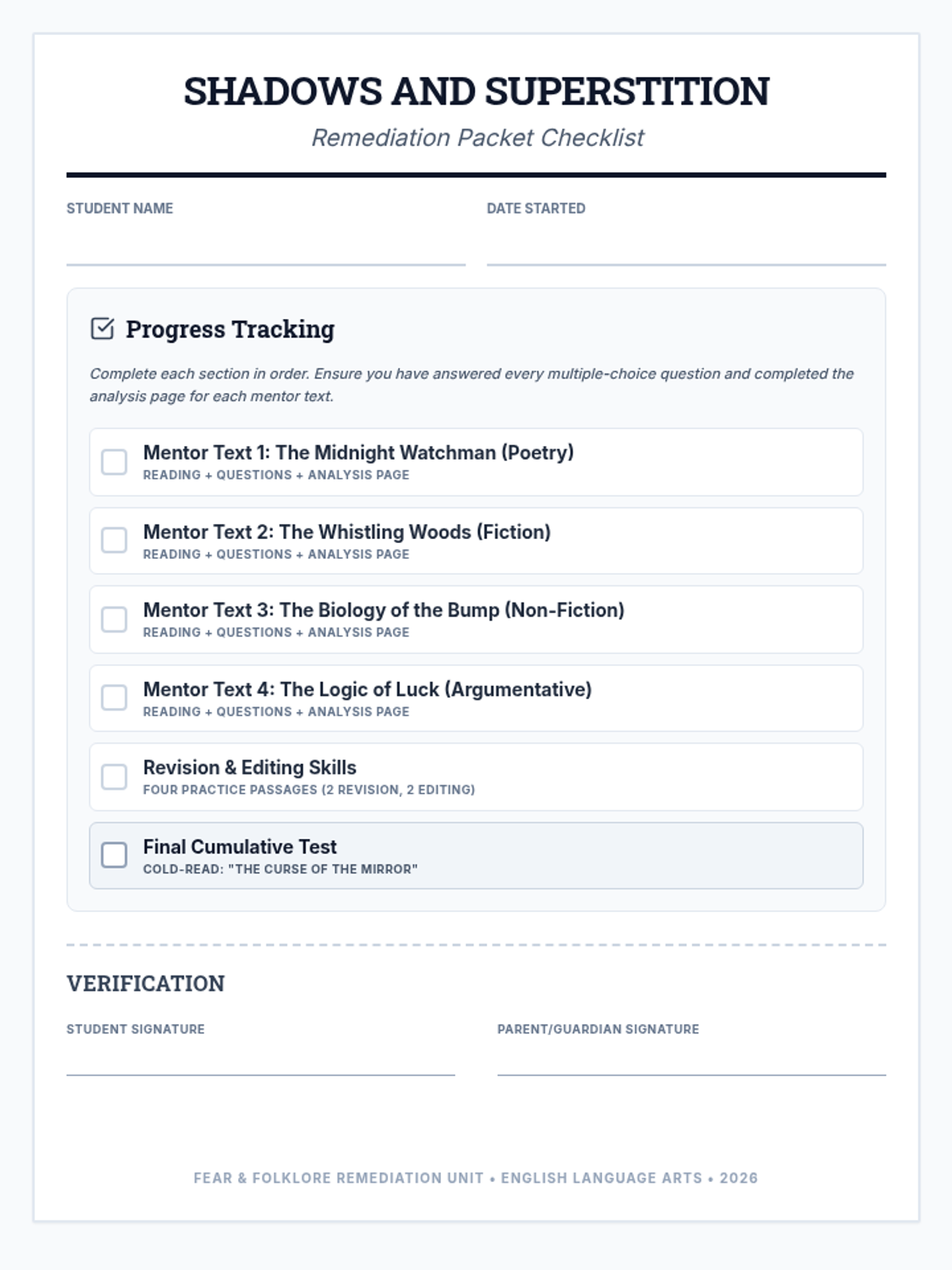
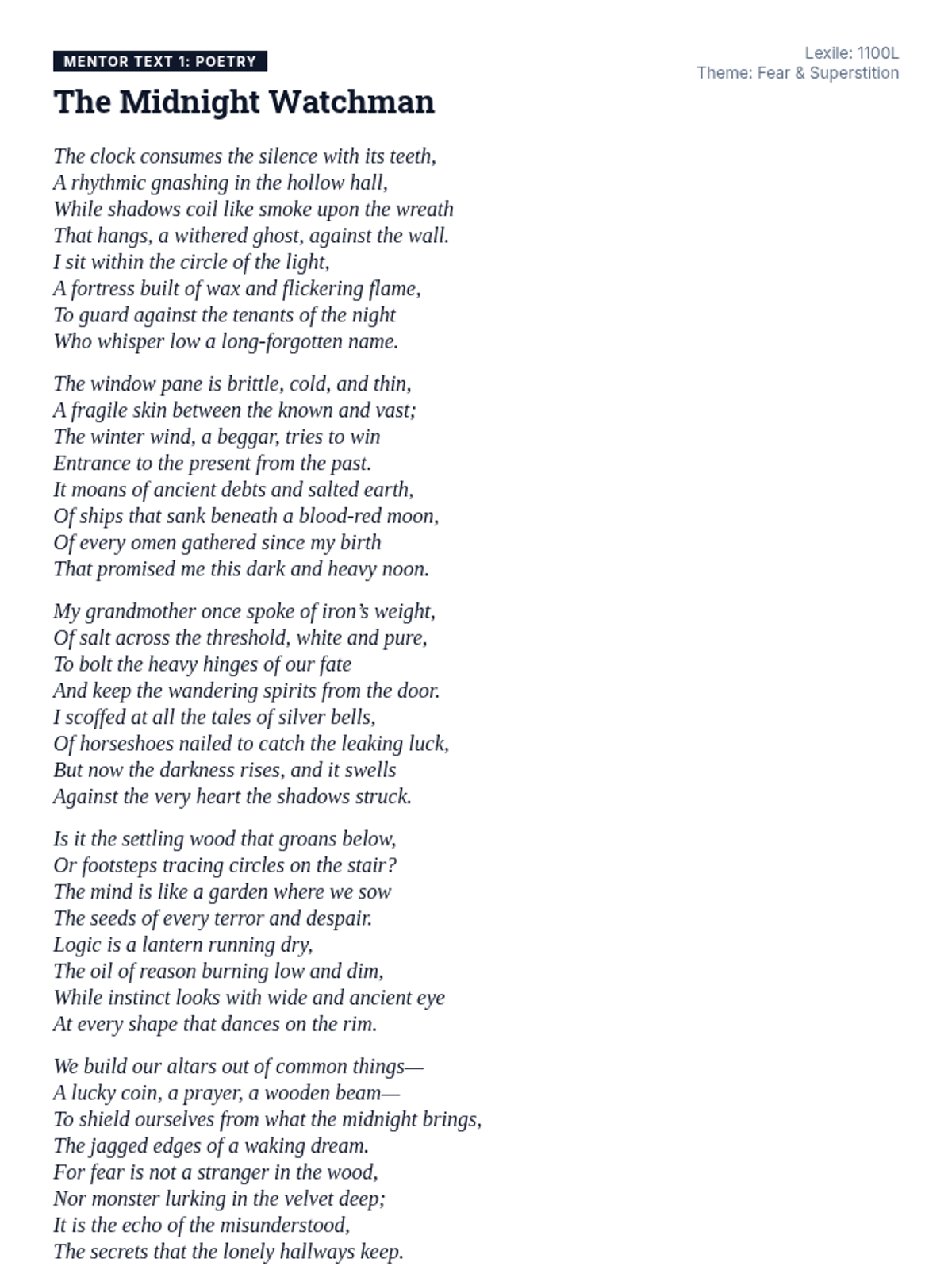
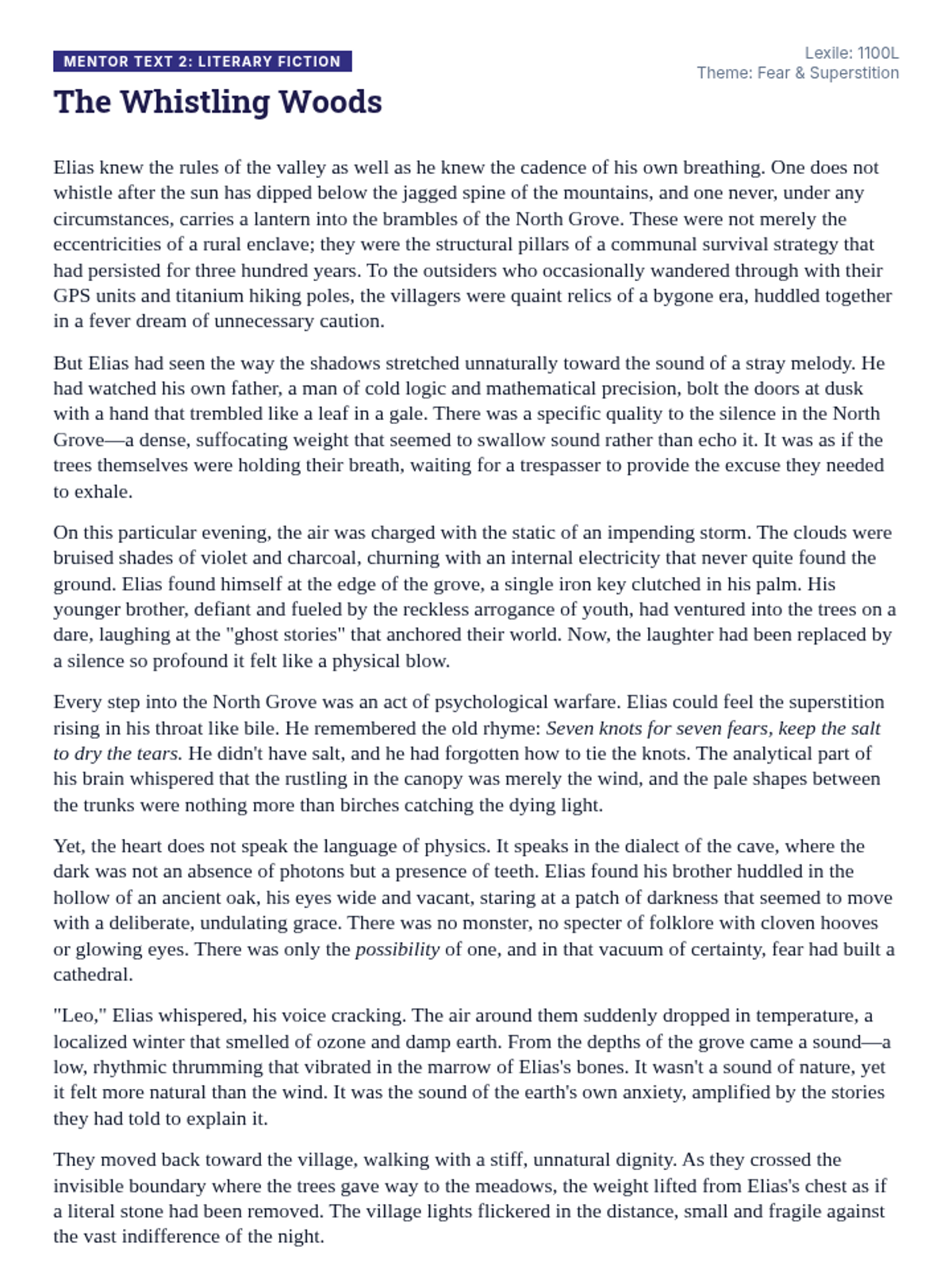
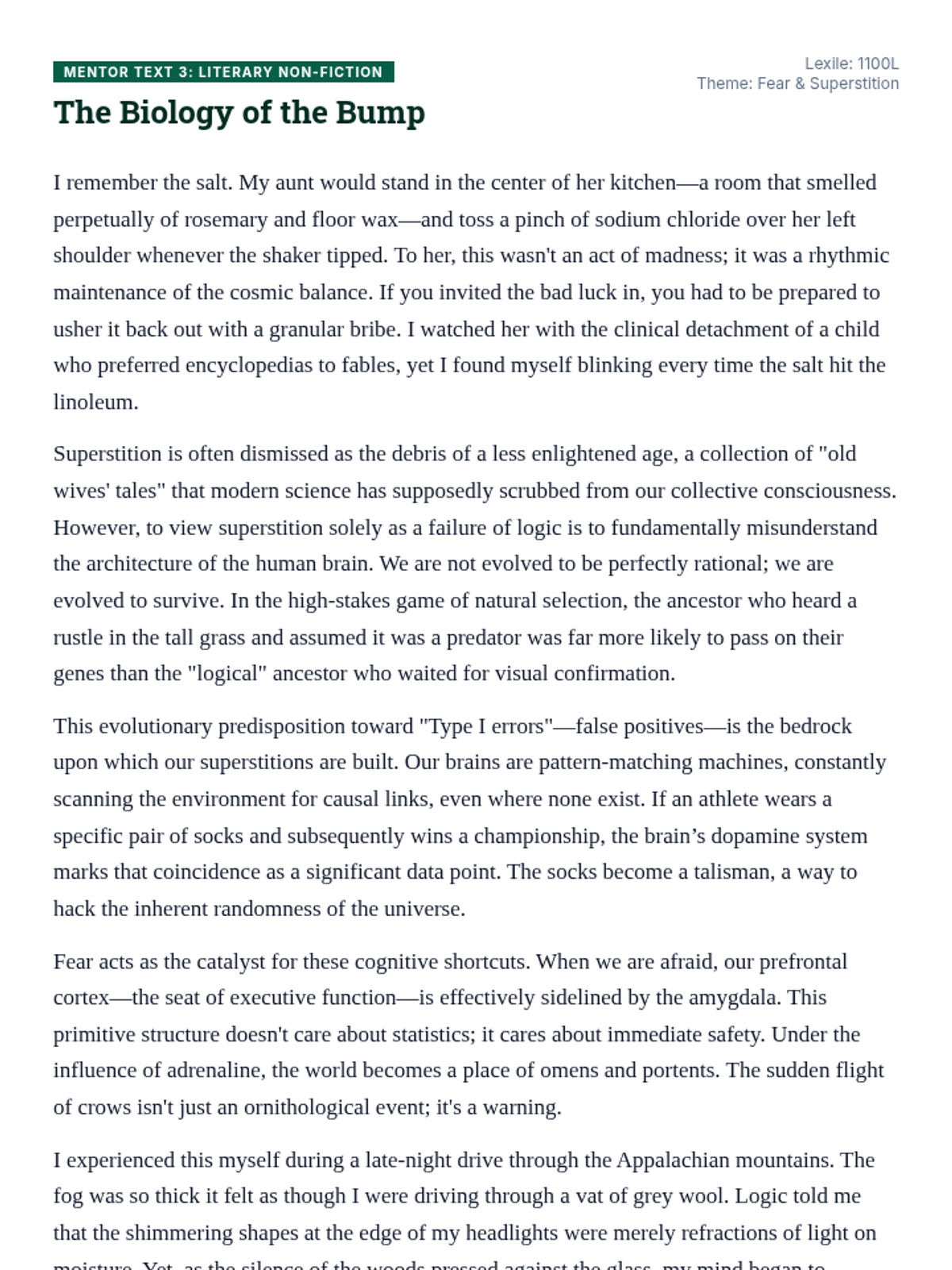
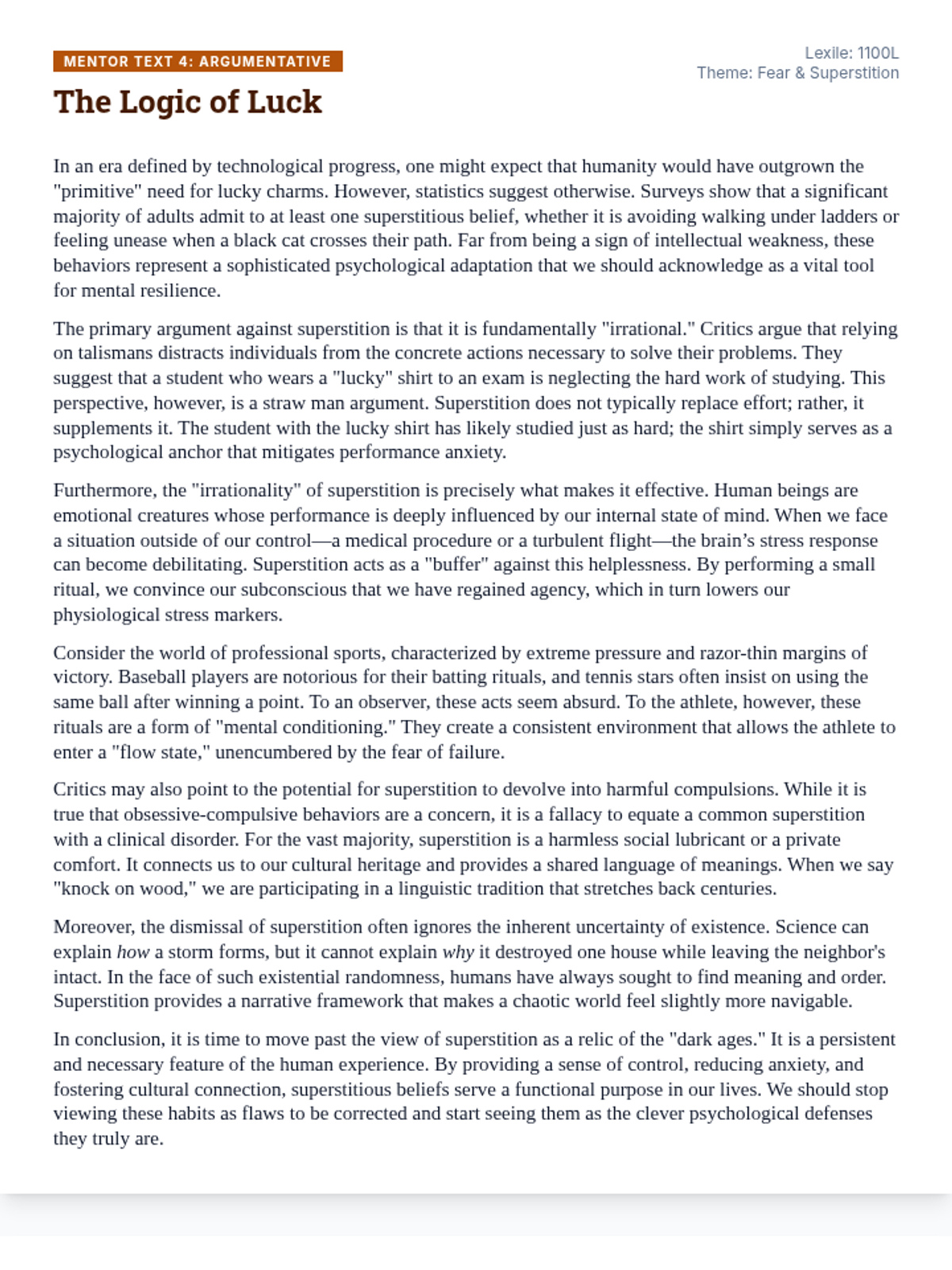
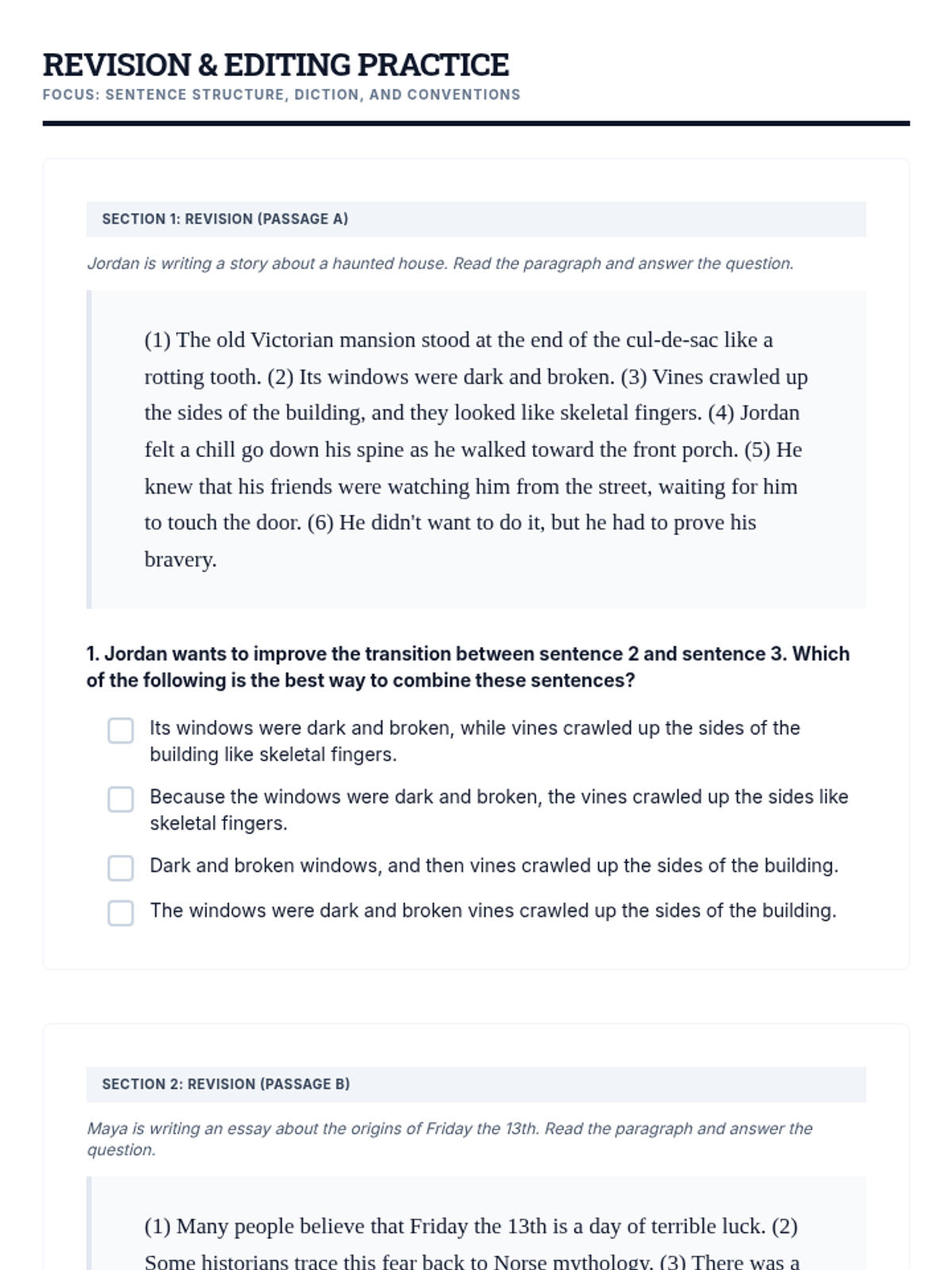
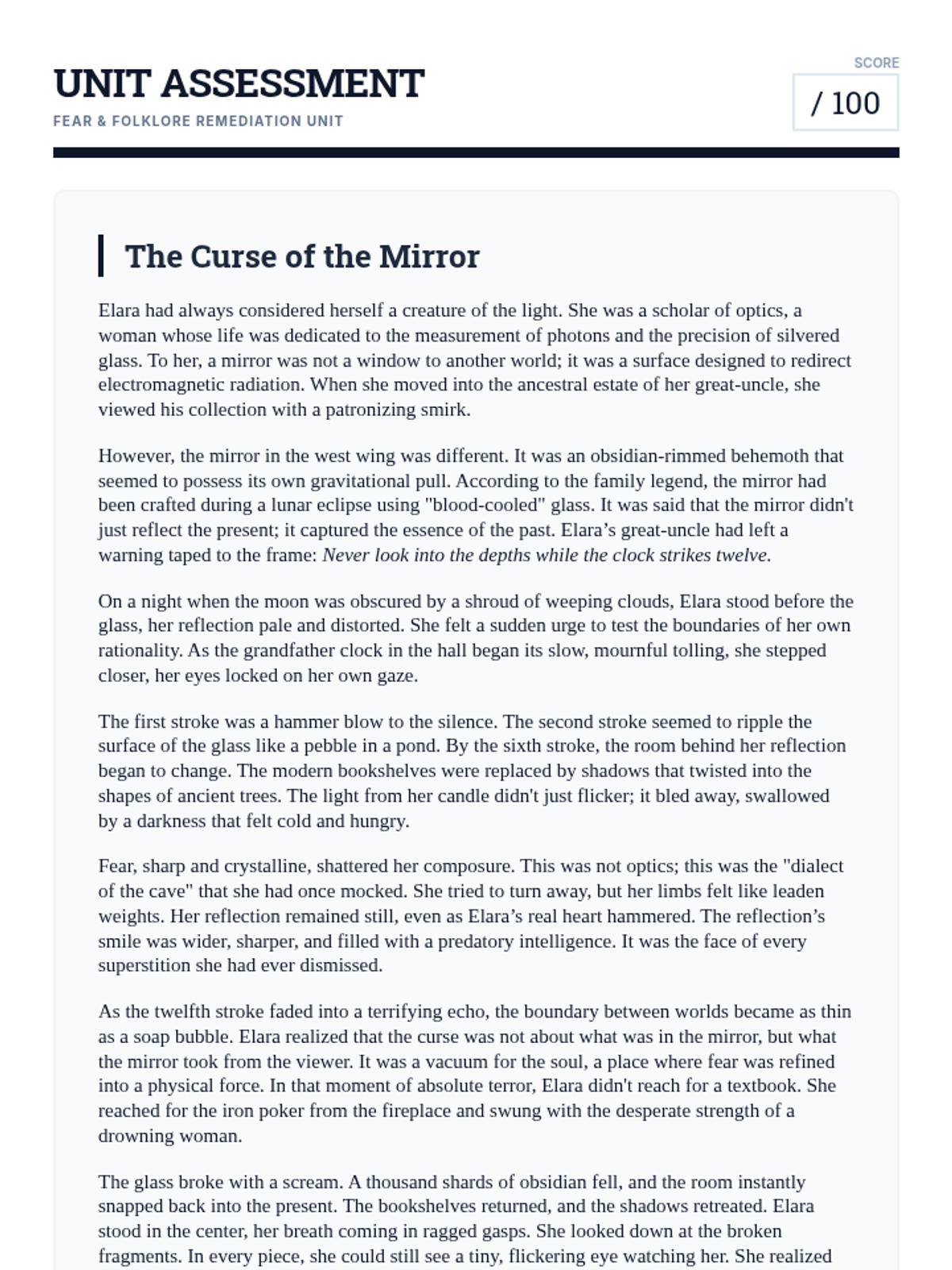
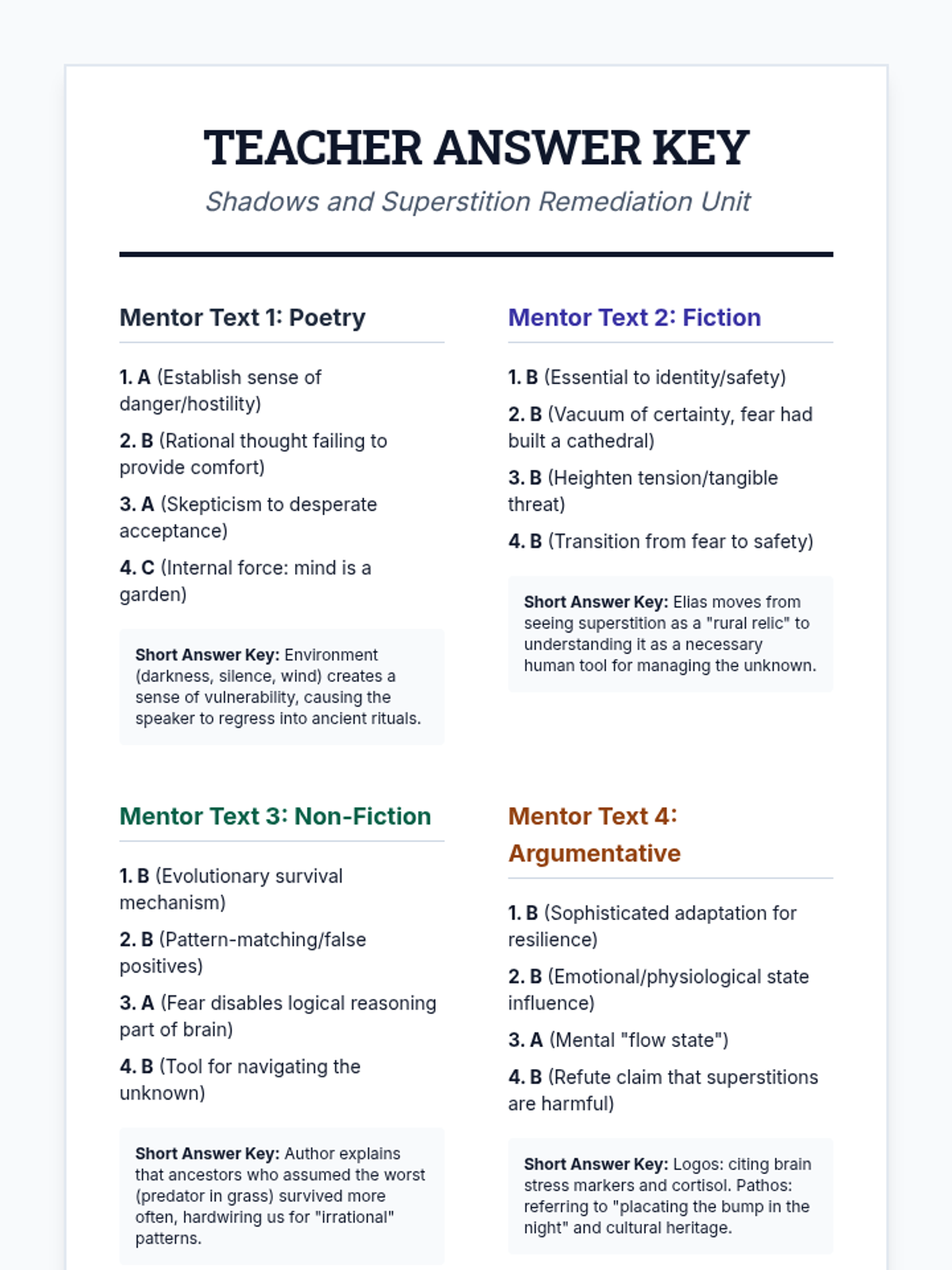
This lesson provides intensive remediation on core literacy skills using high-interest texts centered on fear and superstition. It includes mentor texts in four genres, revision and editing practice, and a final cold-read assessment.
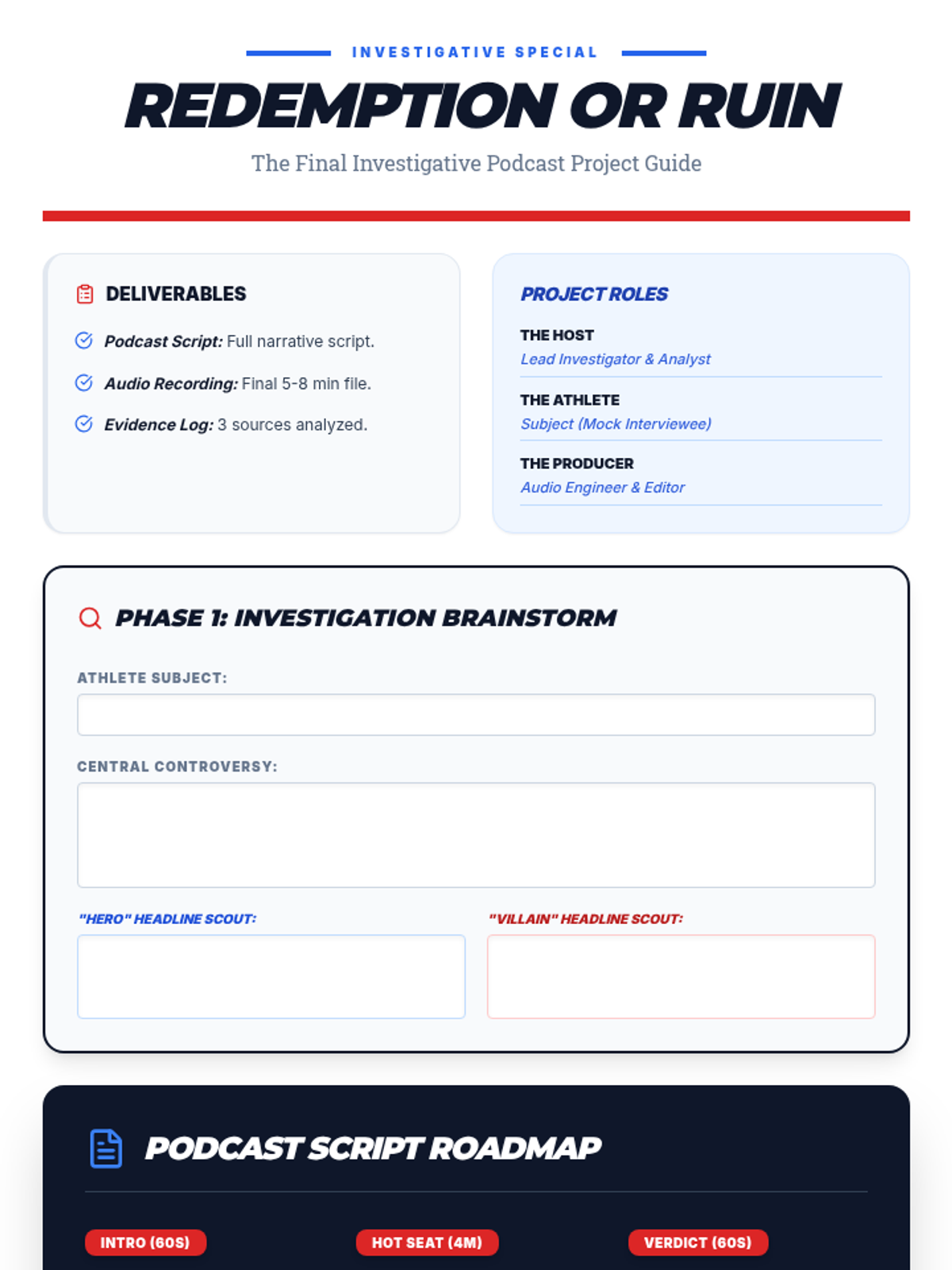
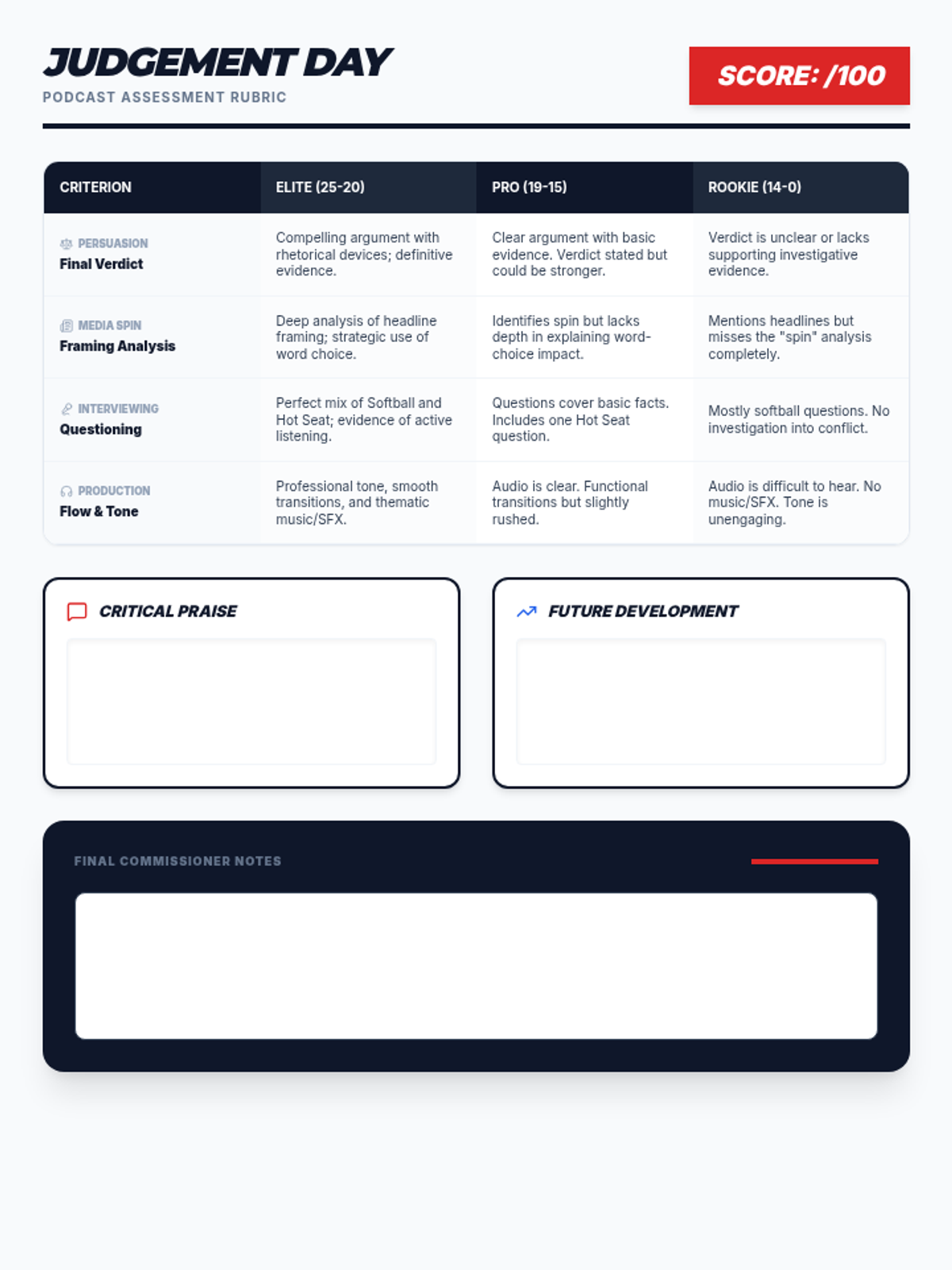
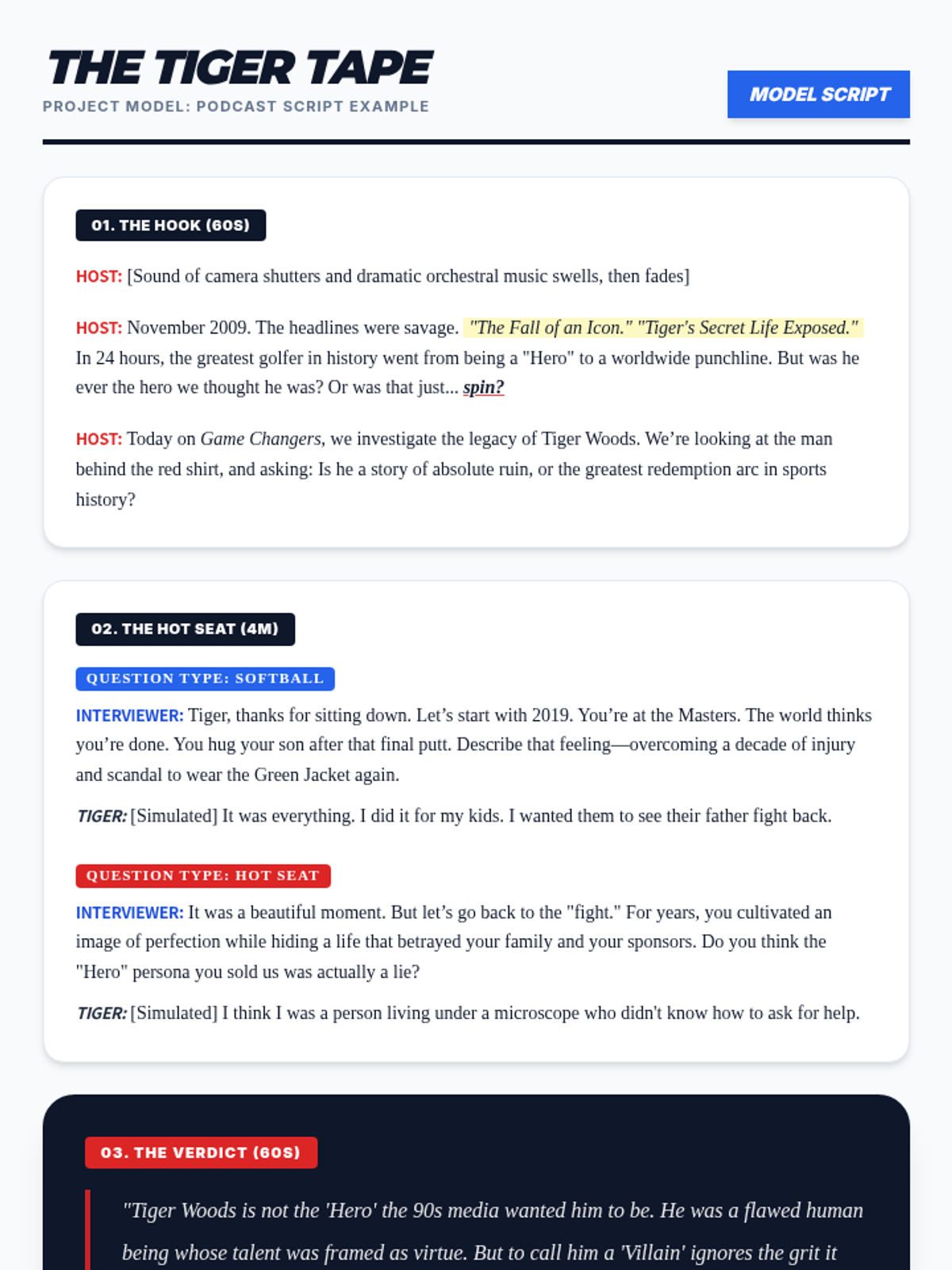
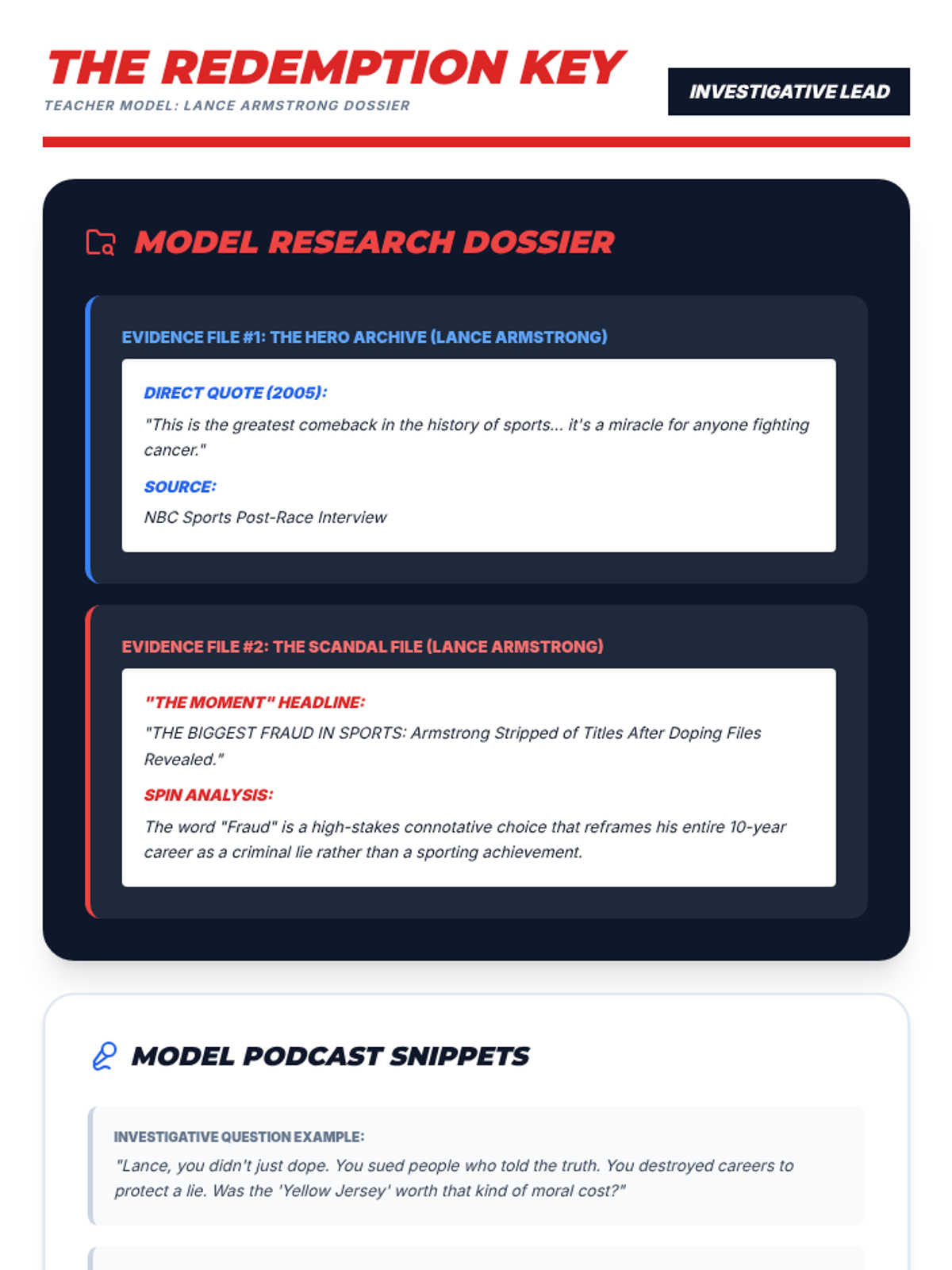
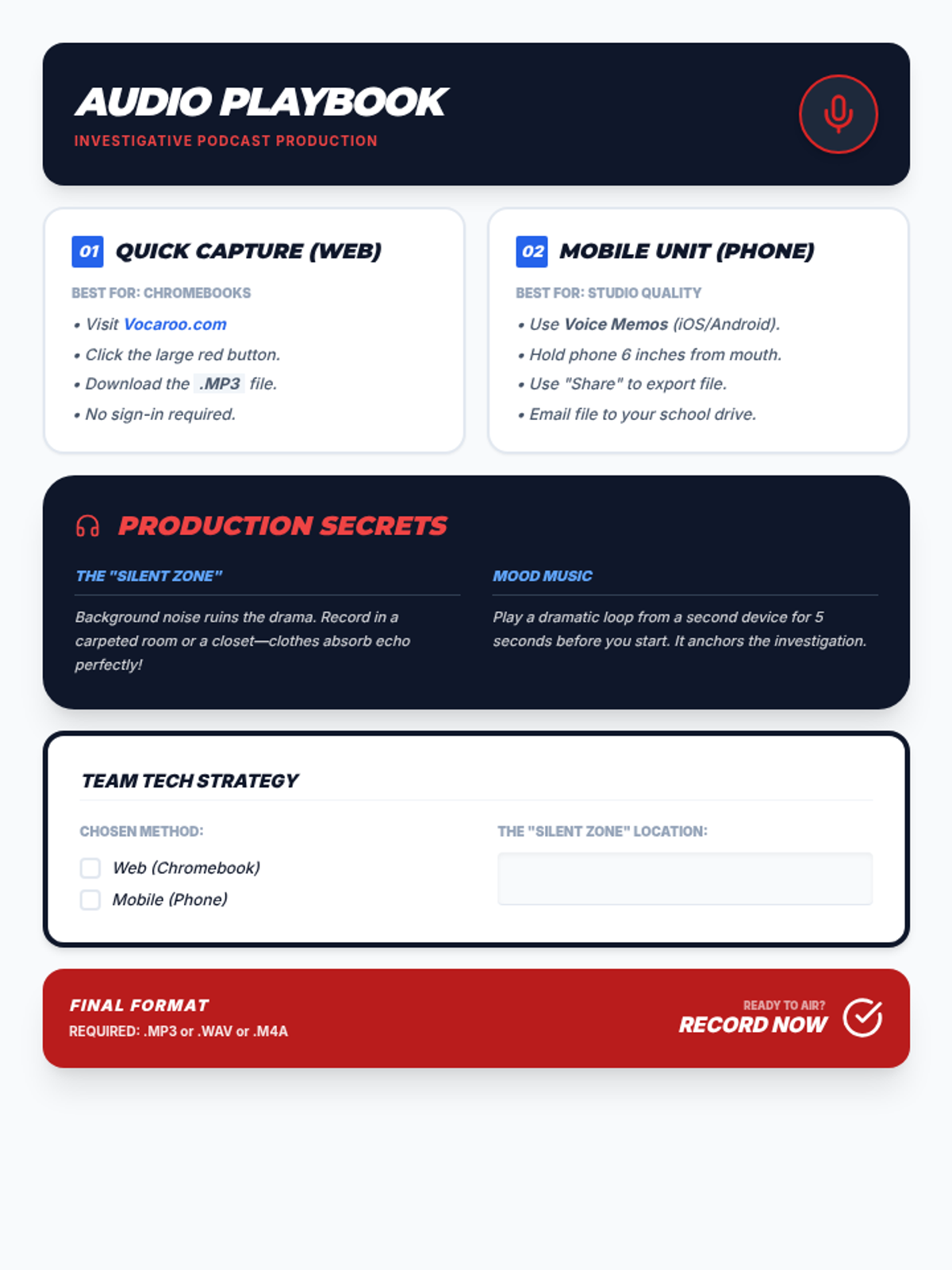
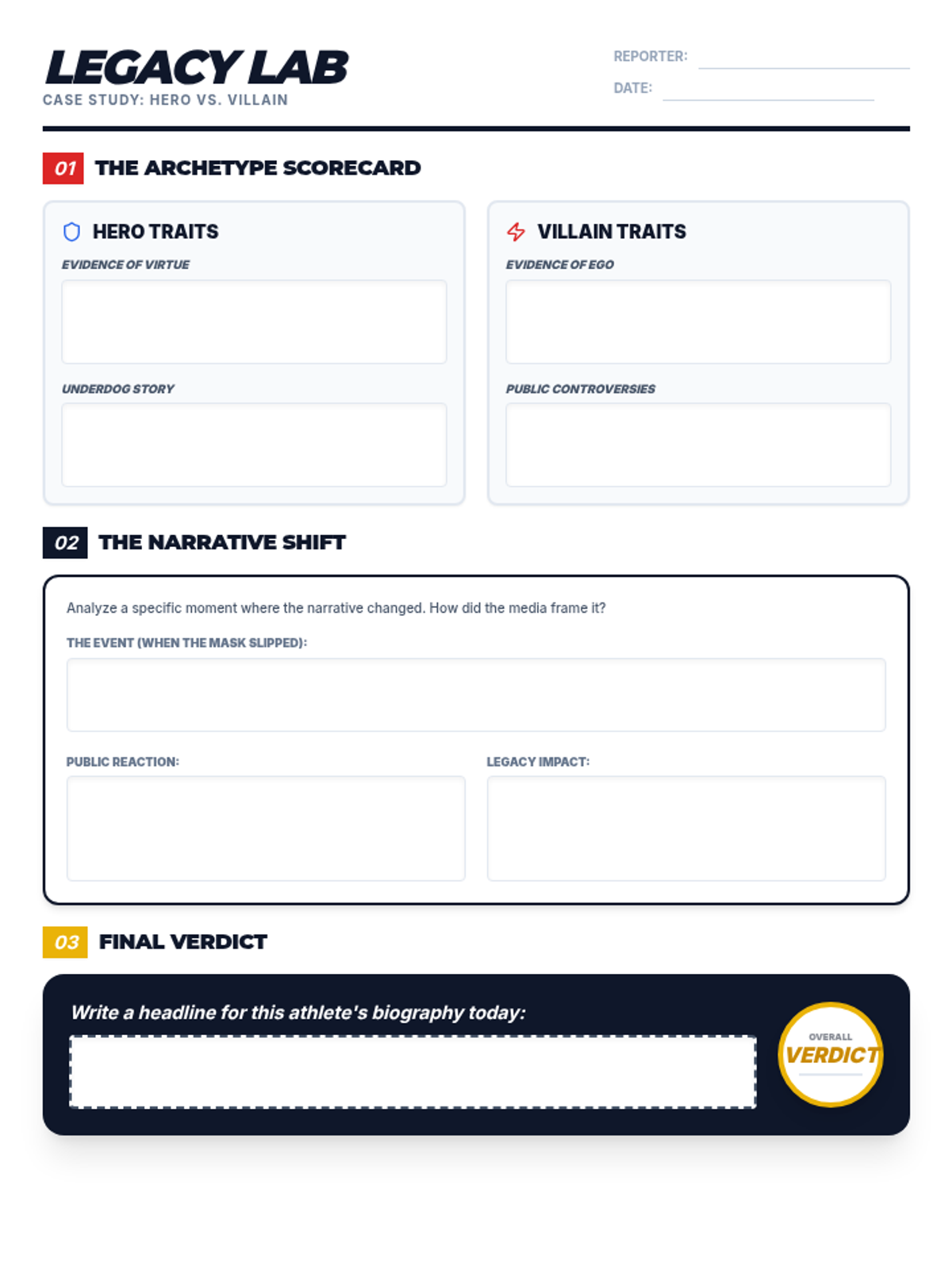
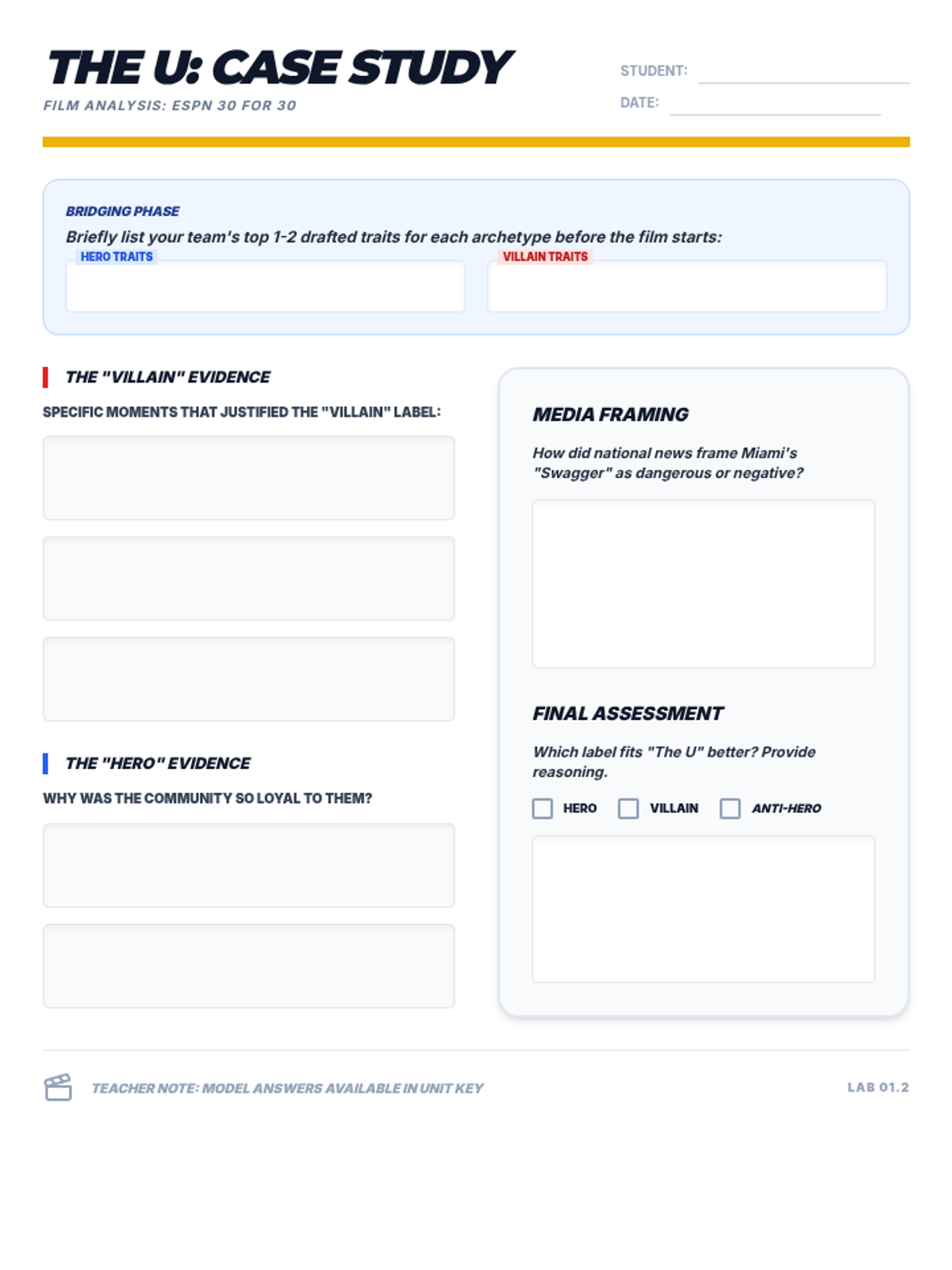
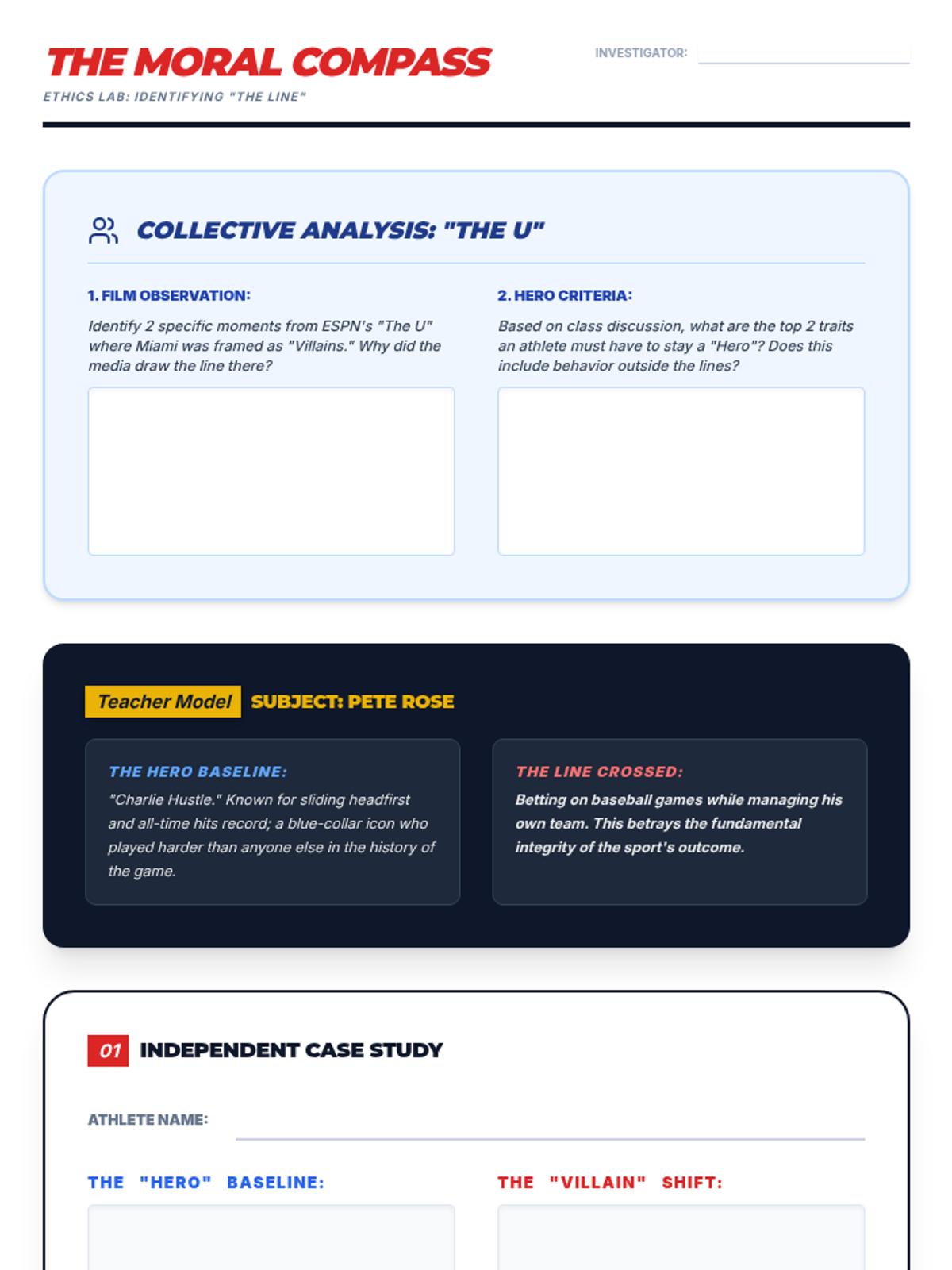
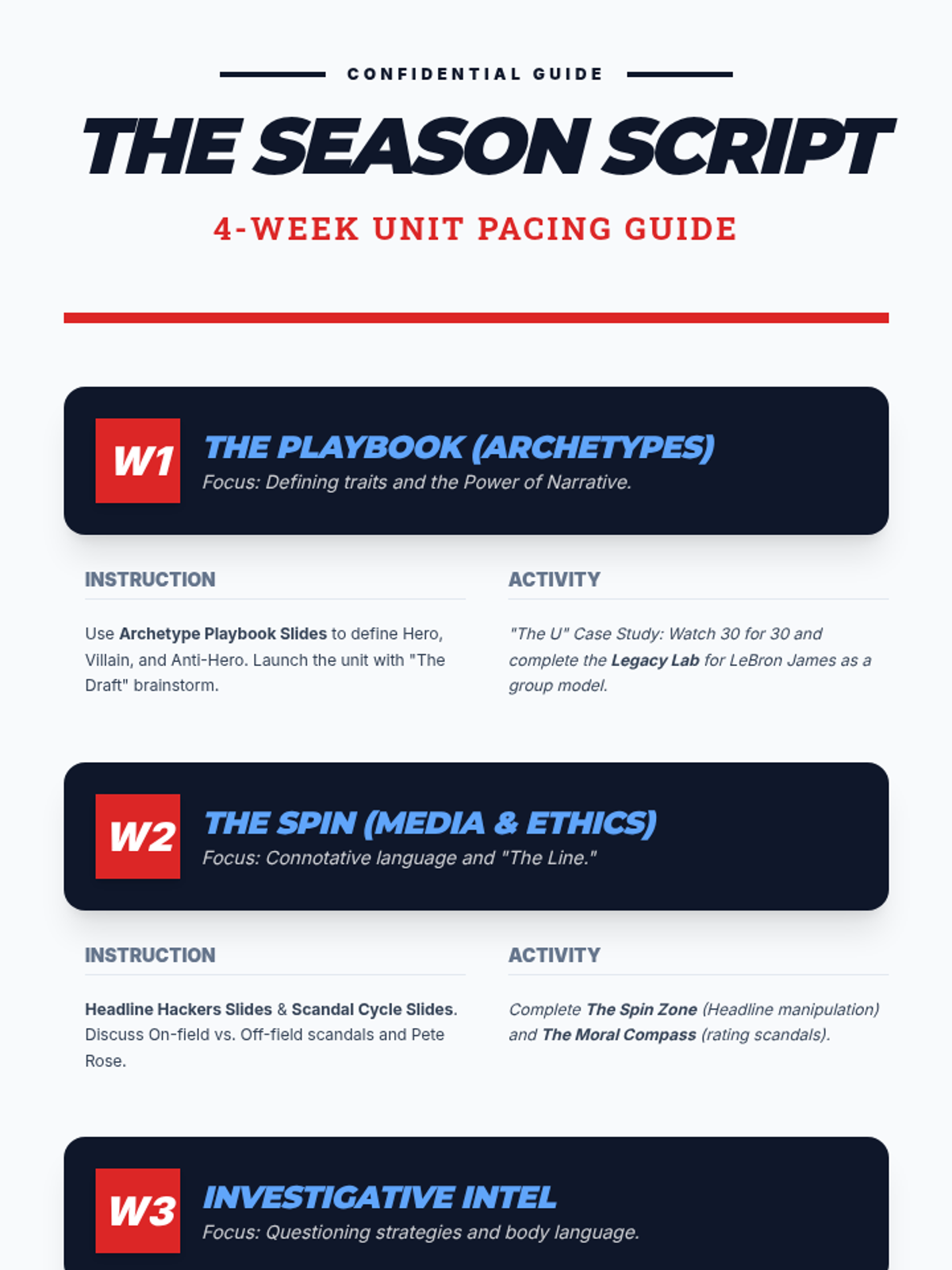
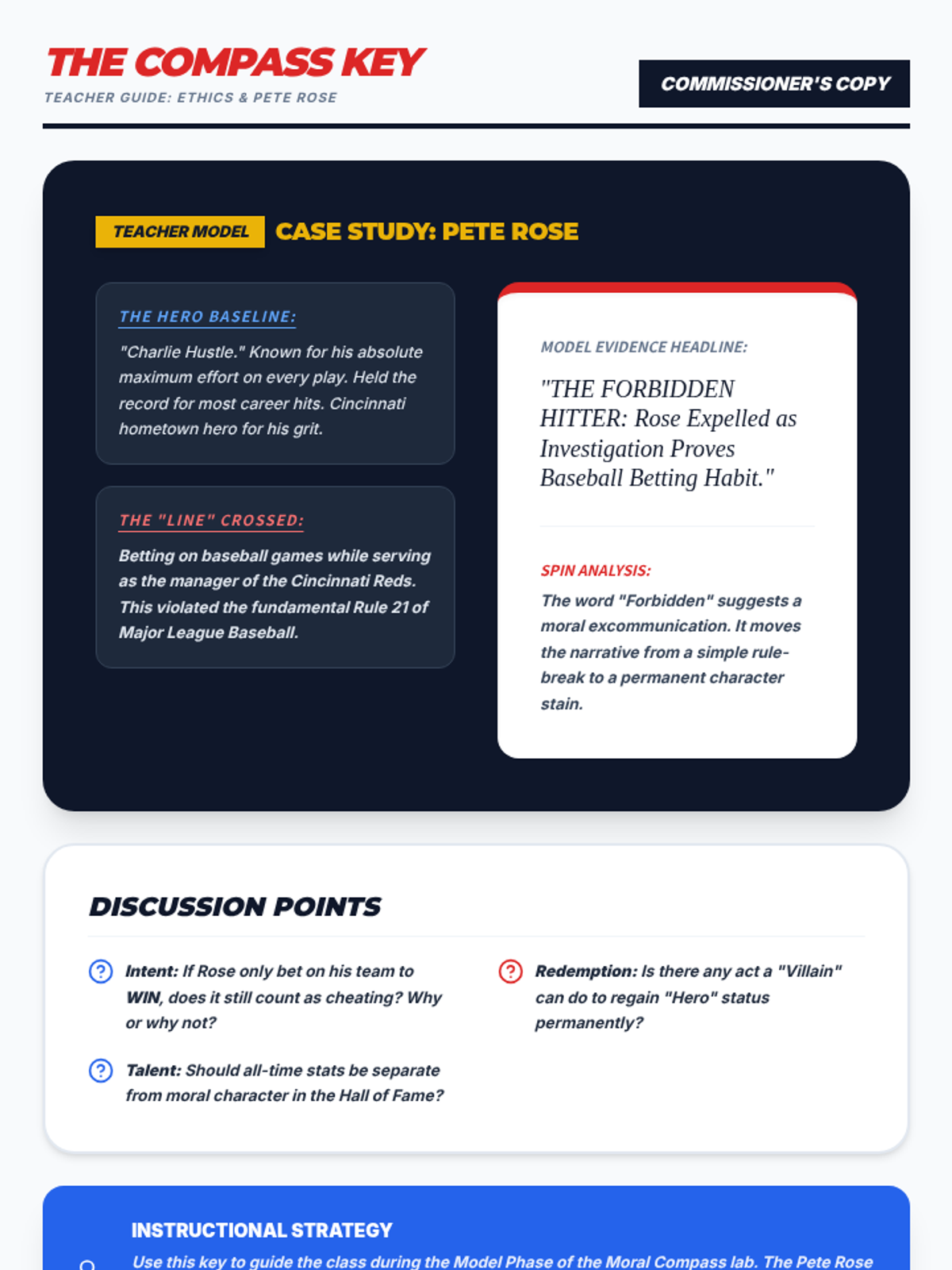
The culminating project where students research a controversial sports figure and produce a persuasive investigative podcast script and recording.
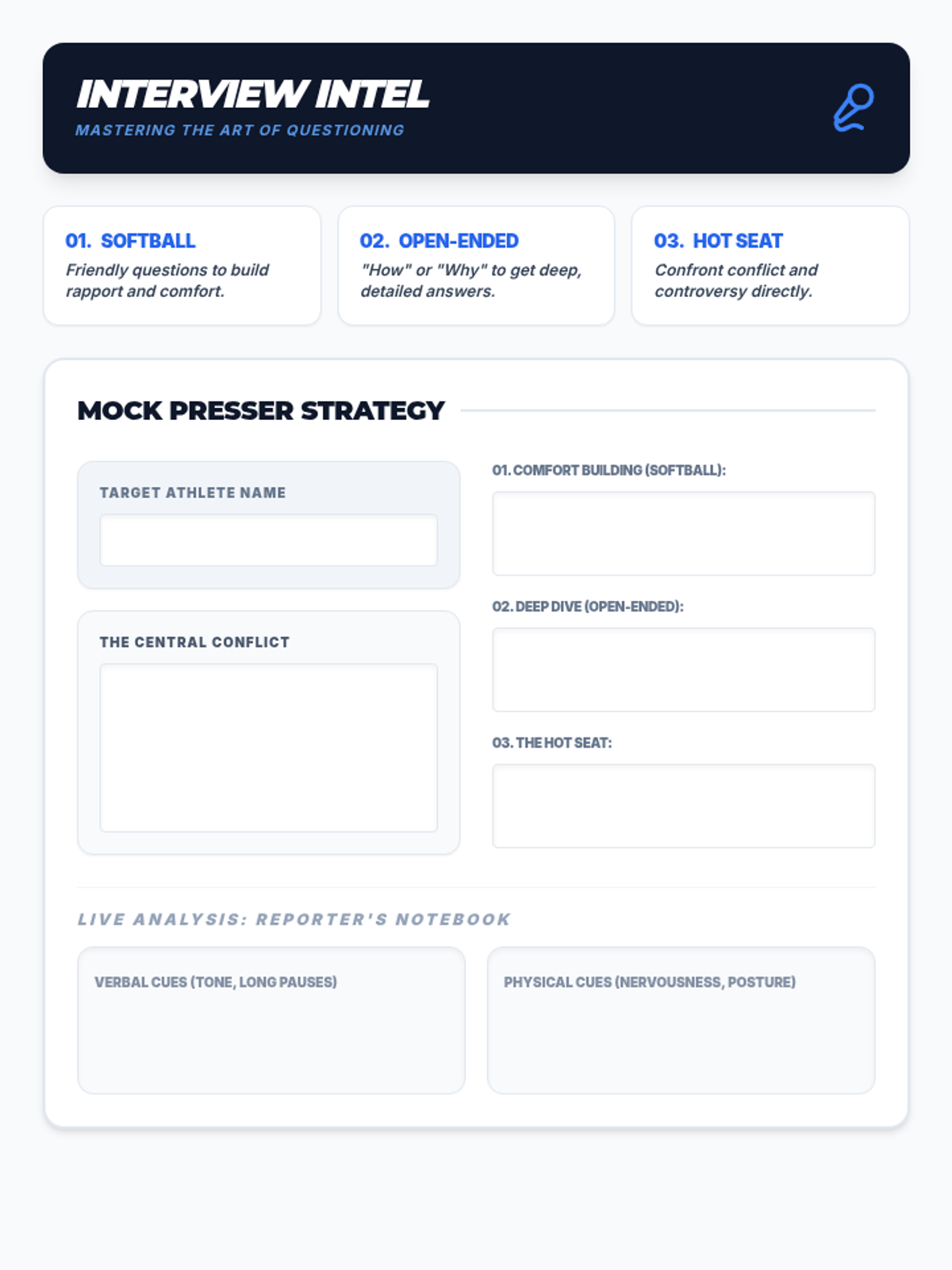
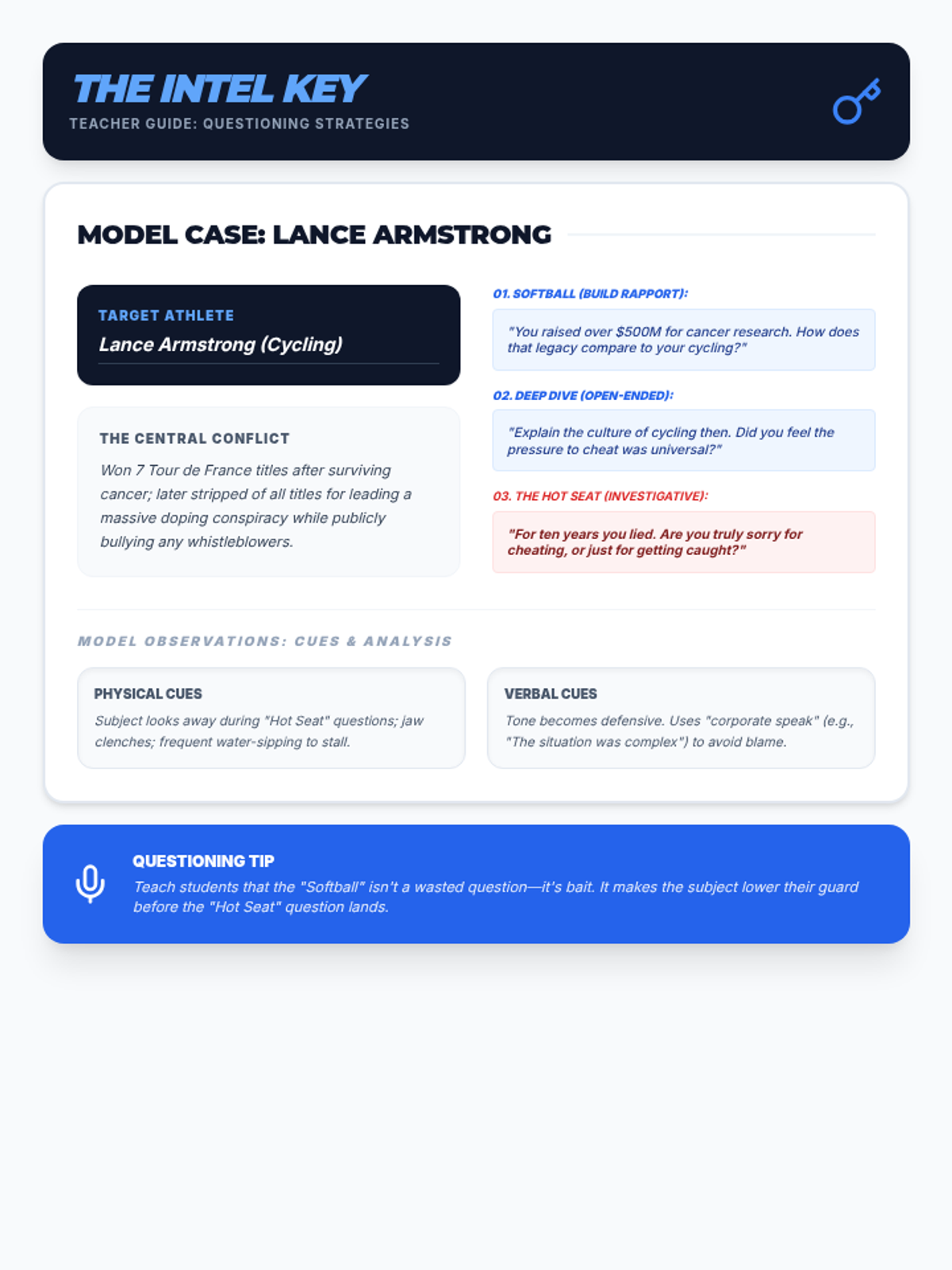
Students master the art of the interview, learning to craft hard-hitting questions and analyze verbal cues to uncover the 'truth' behind the athlete's persona.
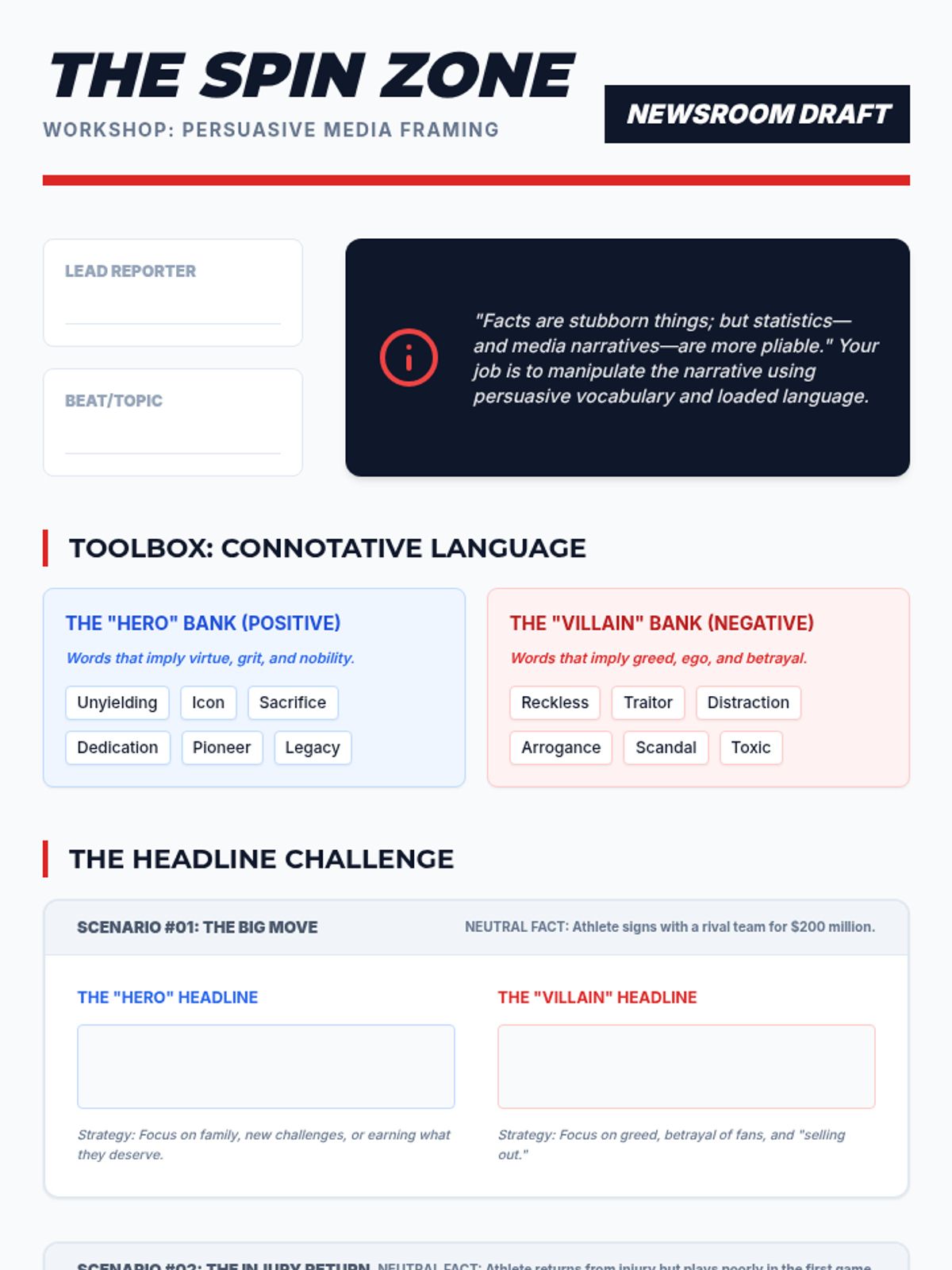
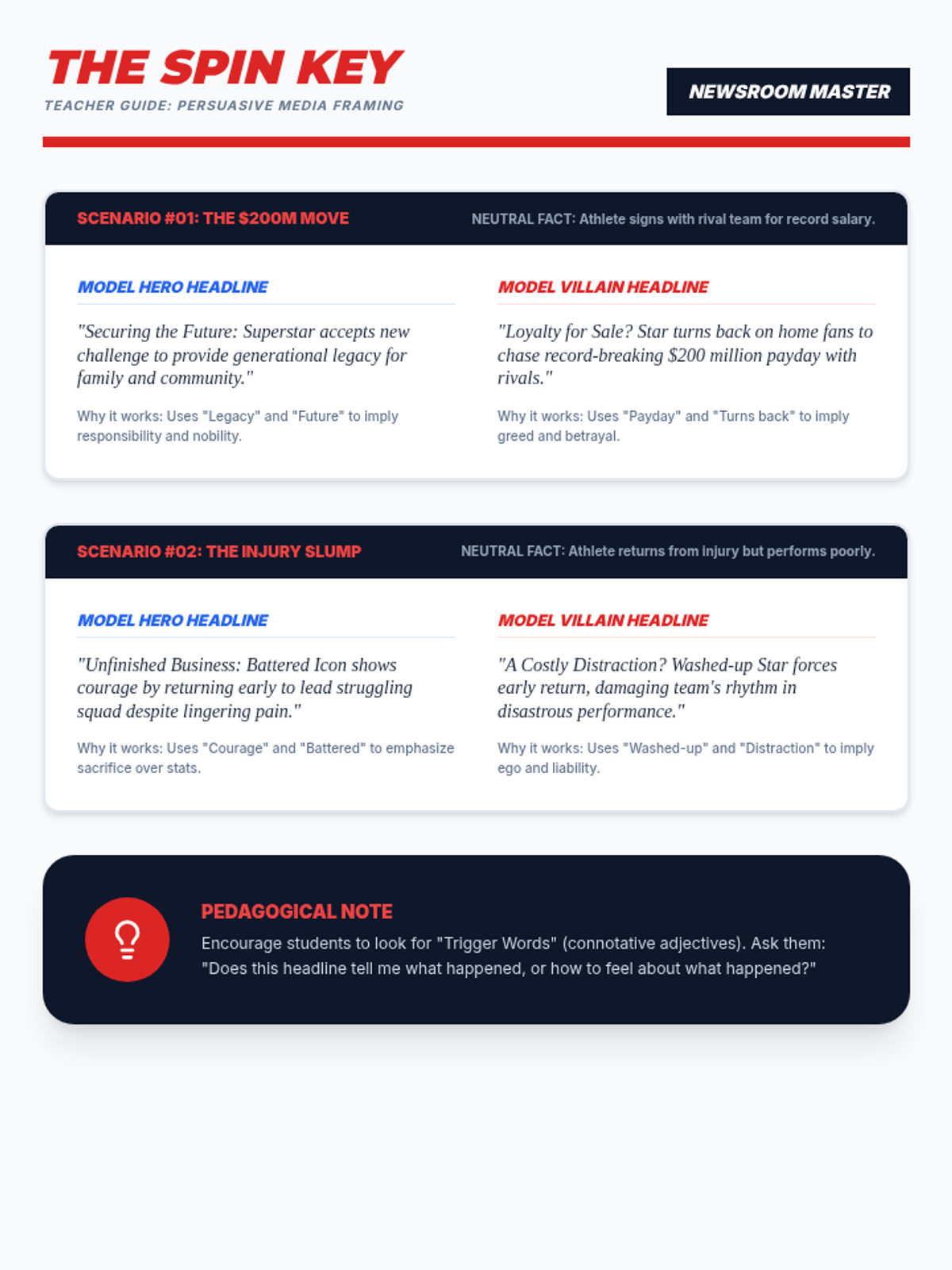
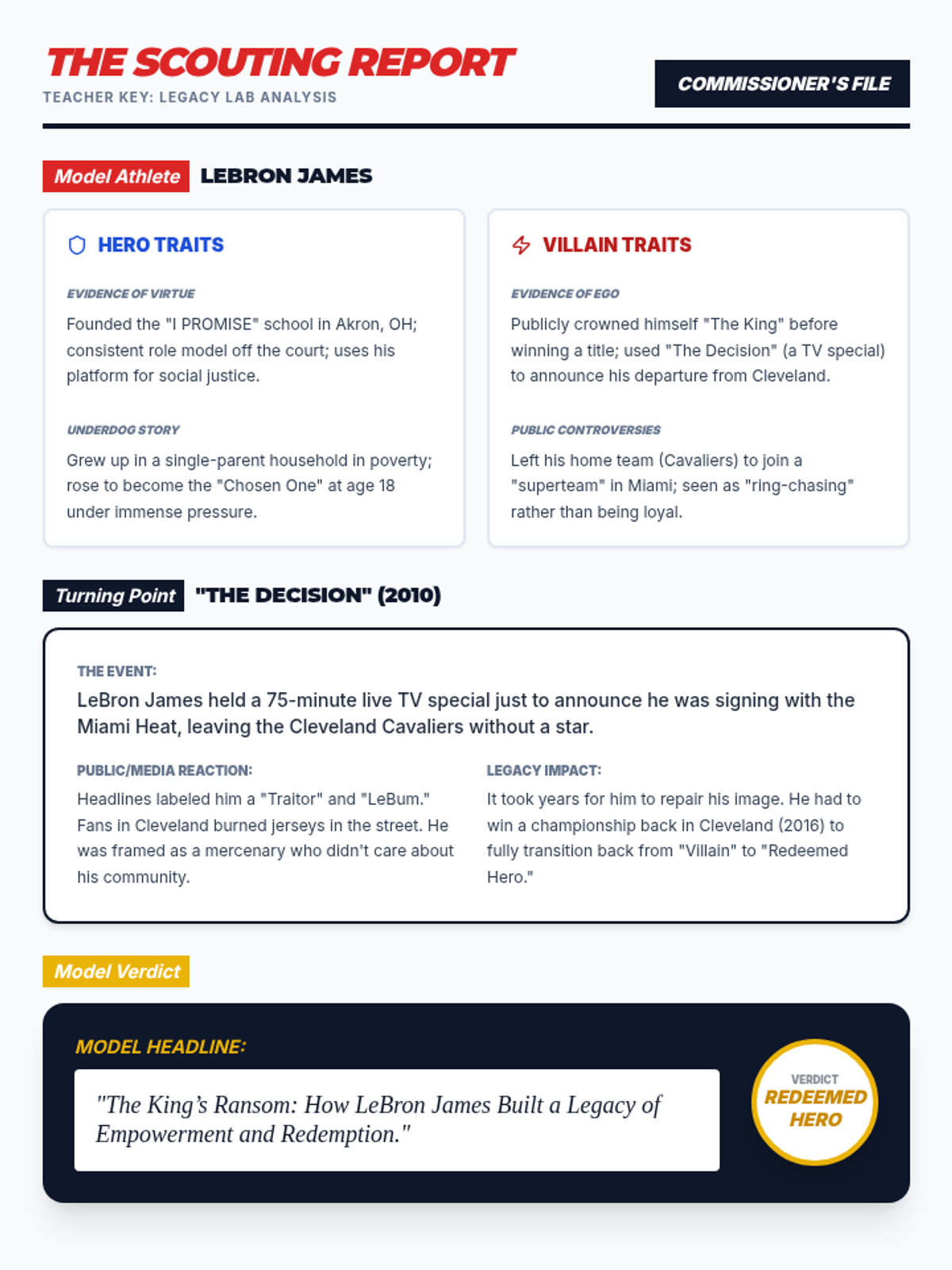
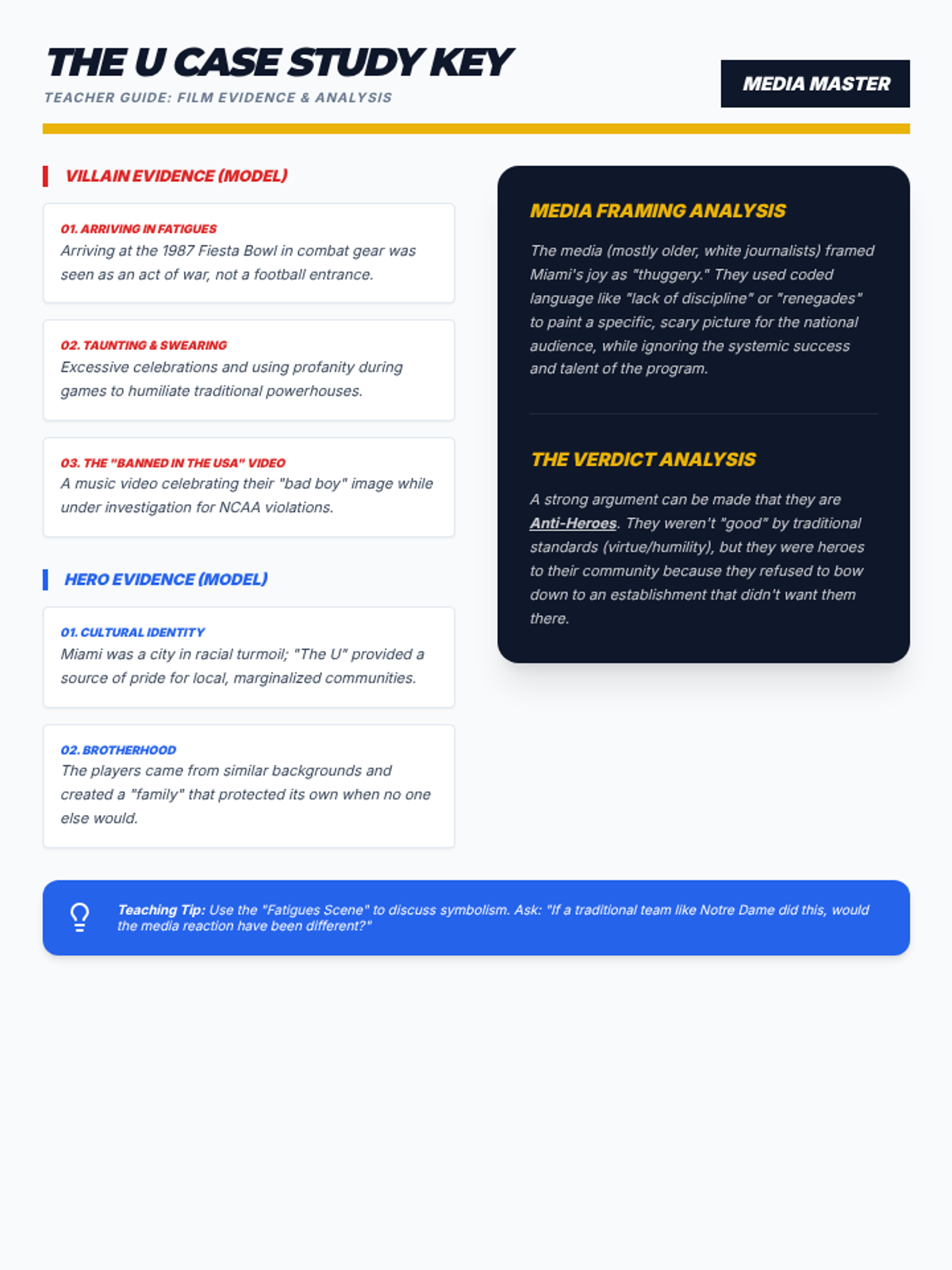
An exploration of how media framing, headlines, and persuasive language can transform an athlete's public image from hero to villain and back again.
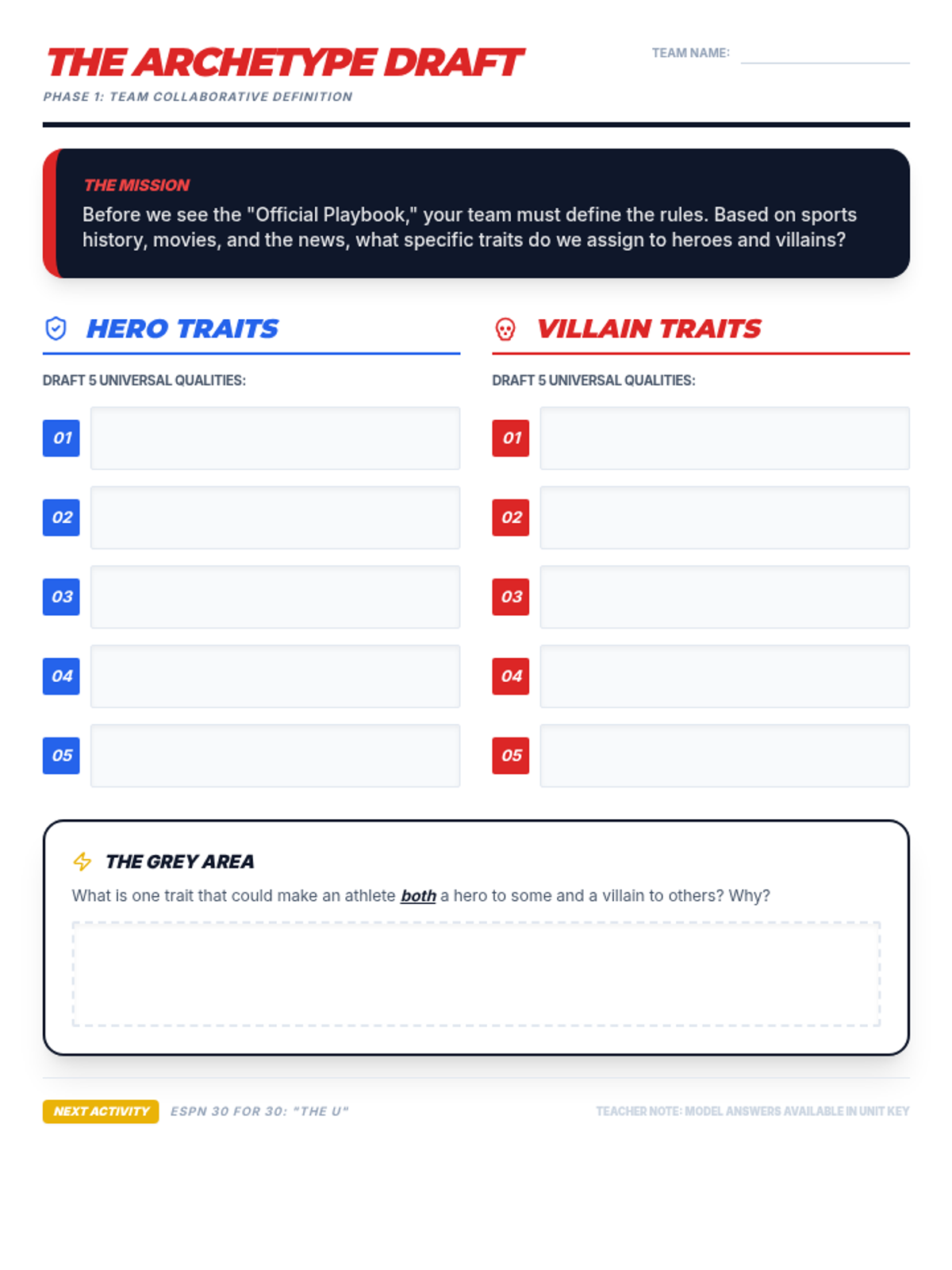
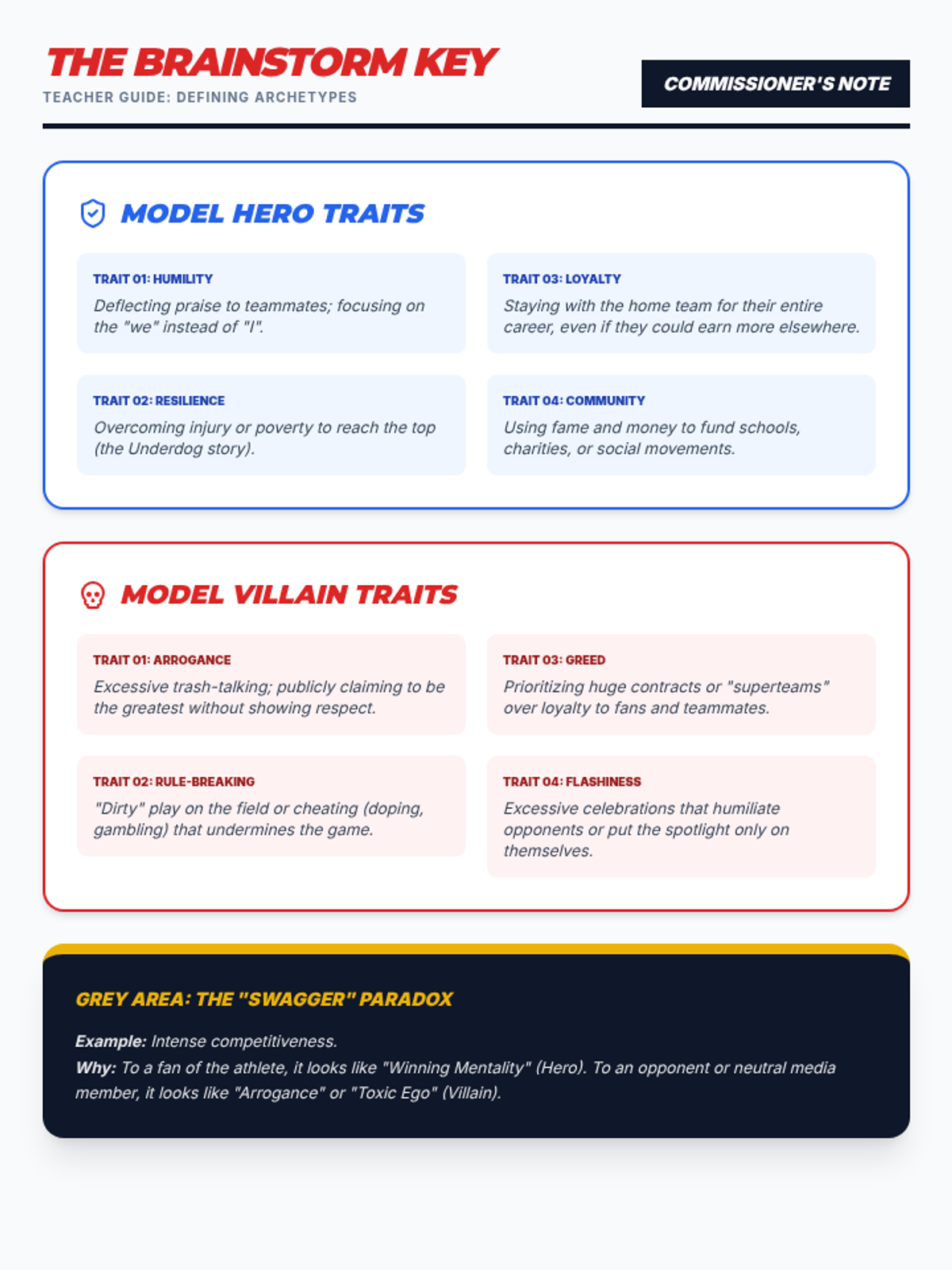
Students define the traits of sports heroes and villains, exploring how narrative archetypes are applied to real-world athletes to create compelling stories.
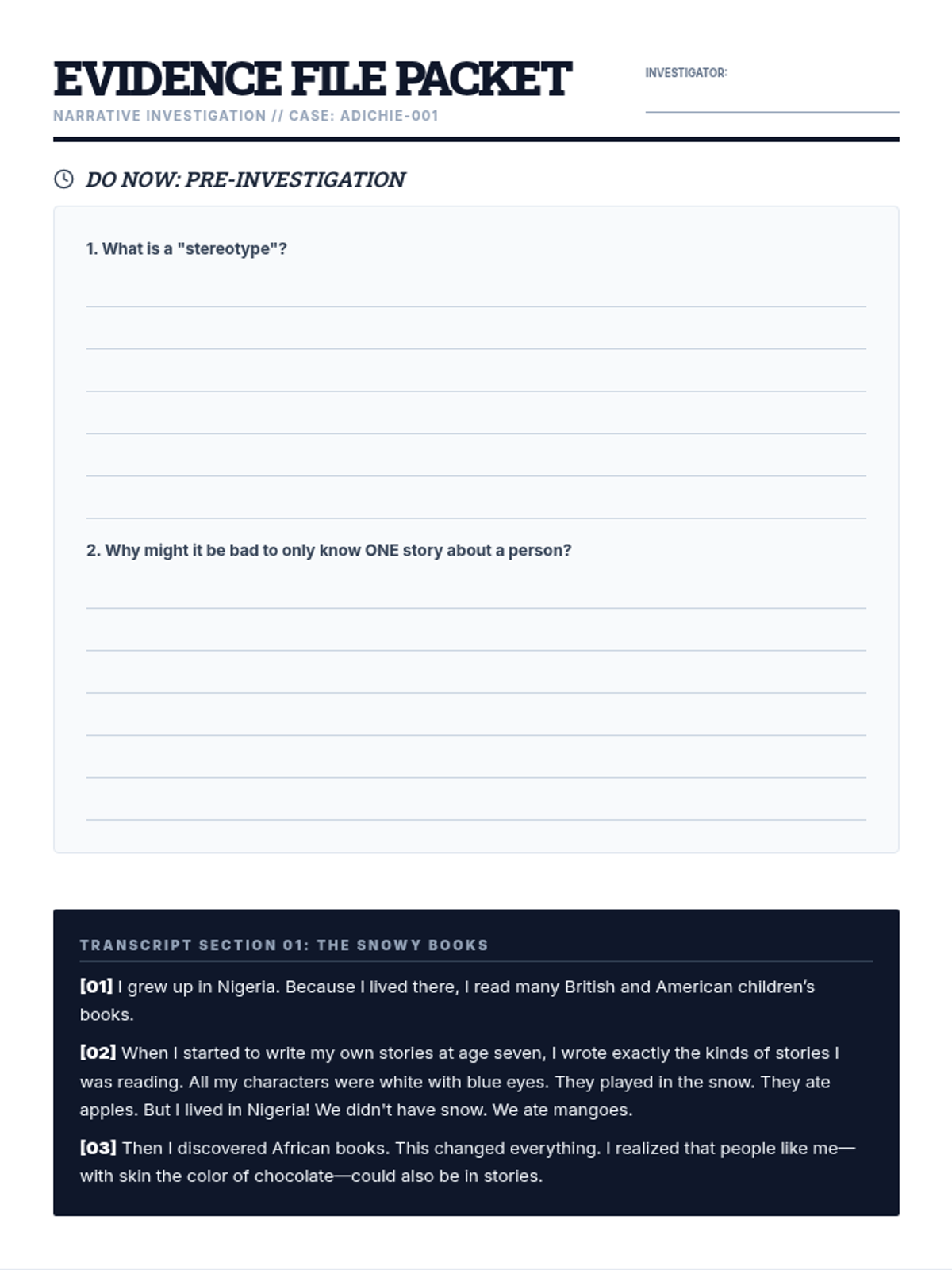
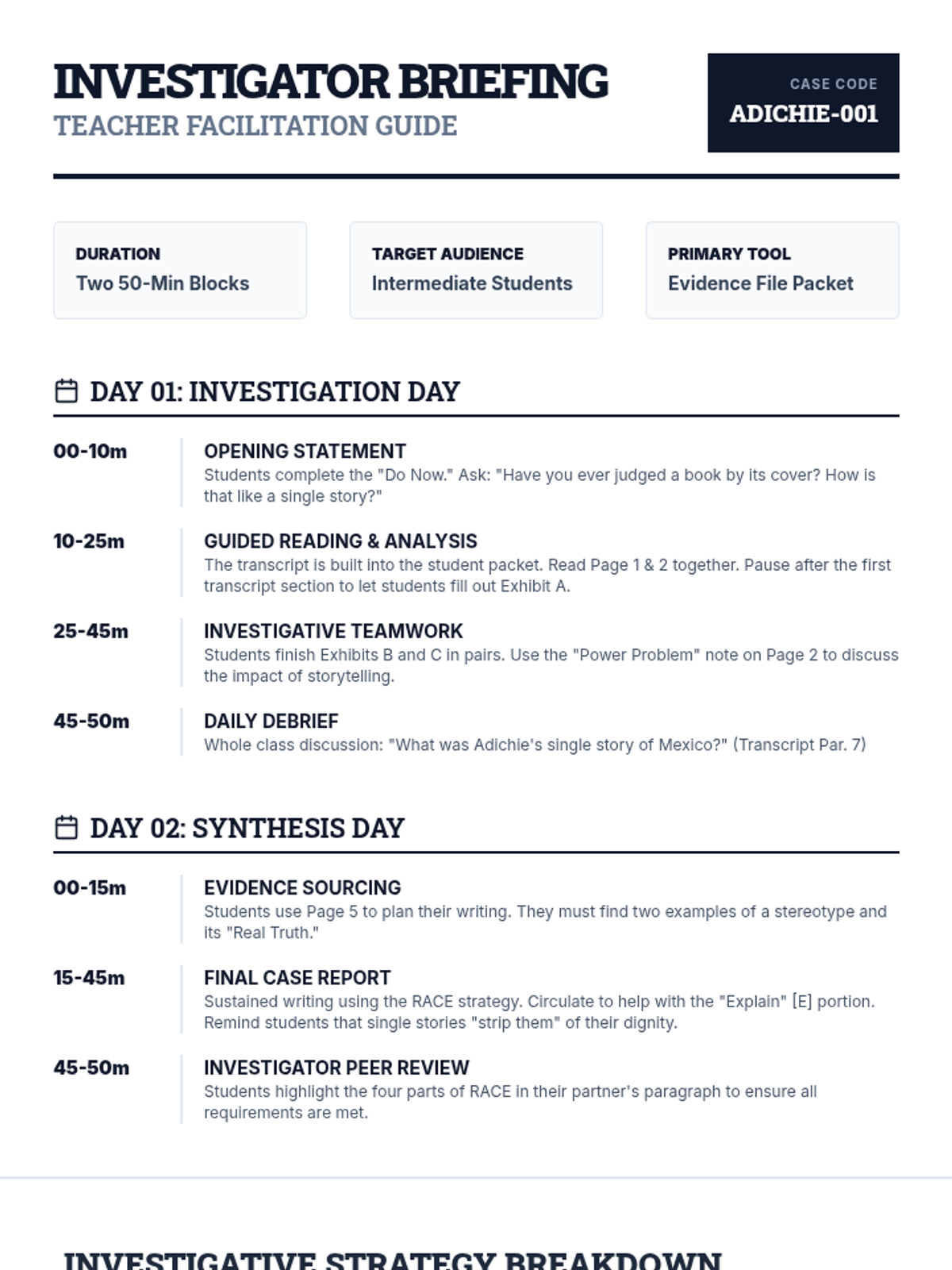
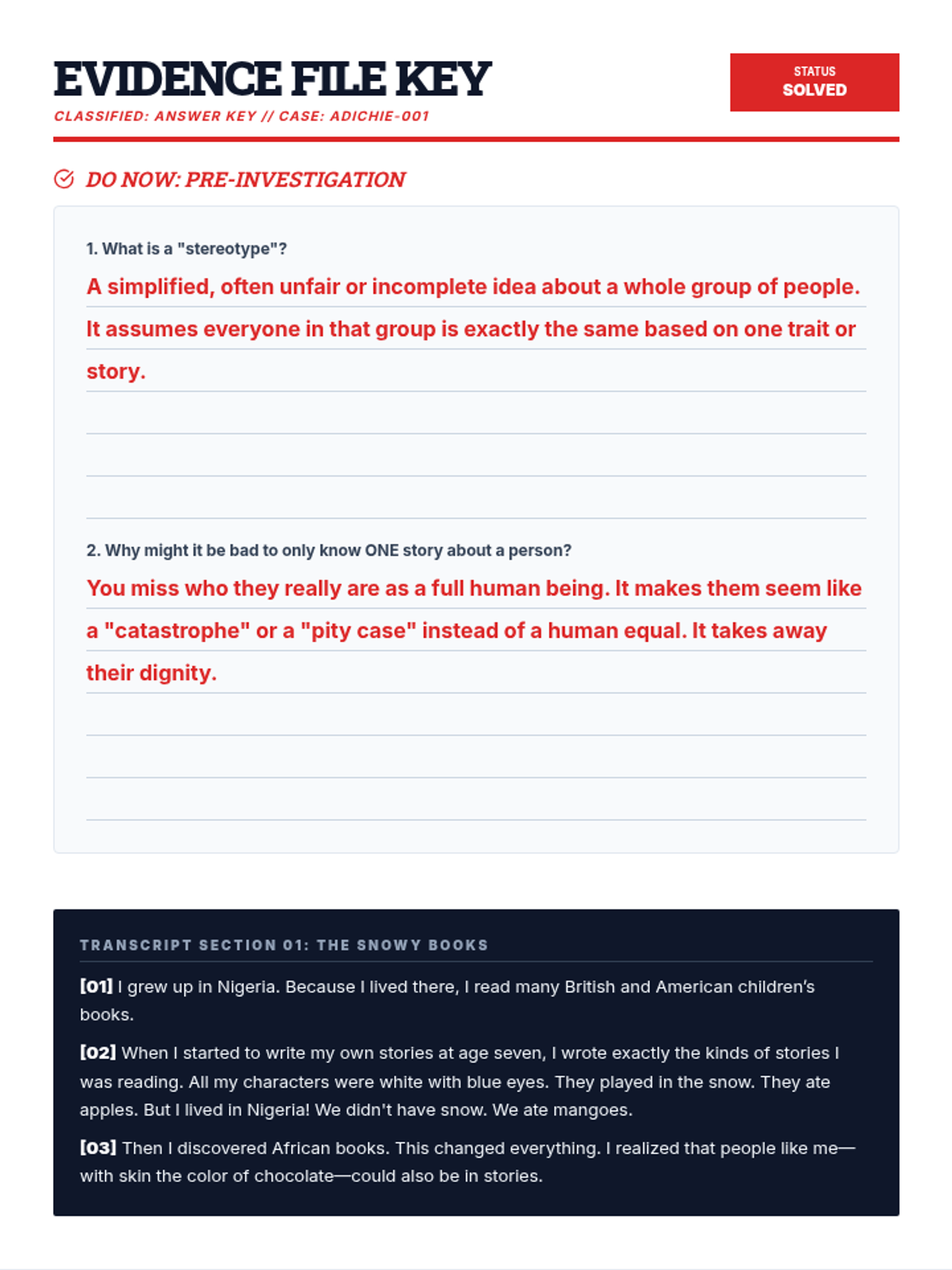
A two-day investigation into Chimamanda Ngozi Adichie's 'The Danger of a Single Story,' focusing on how personal anecdotes build a central claim about power and perspective. Day 1 focuses on text analysis and evidence collection, while Day 2 is dedicated to synthesis and analytical writing.
Drafting the final introduction and conclusion (bookending the paper), peer reviewing the full paper, and final polishing using the rubric.
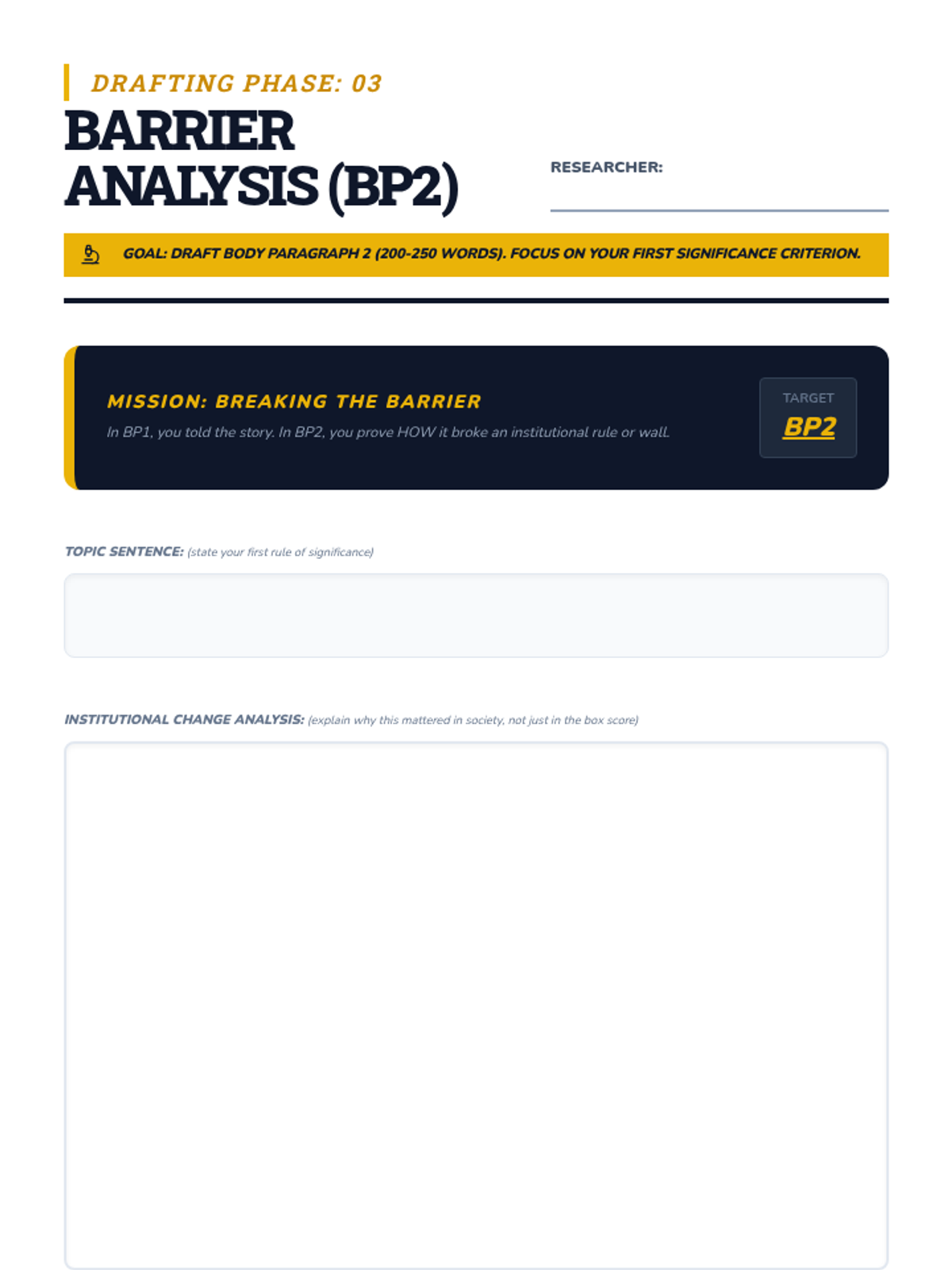
Drafting the second body paragraph, focusing on institutional changes and the breaking of systemic barriers.
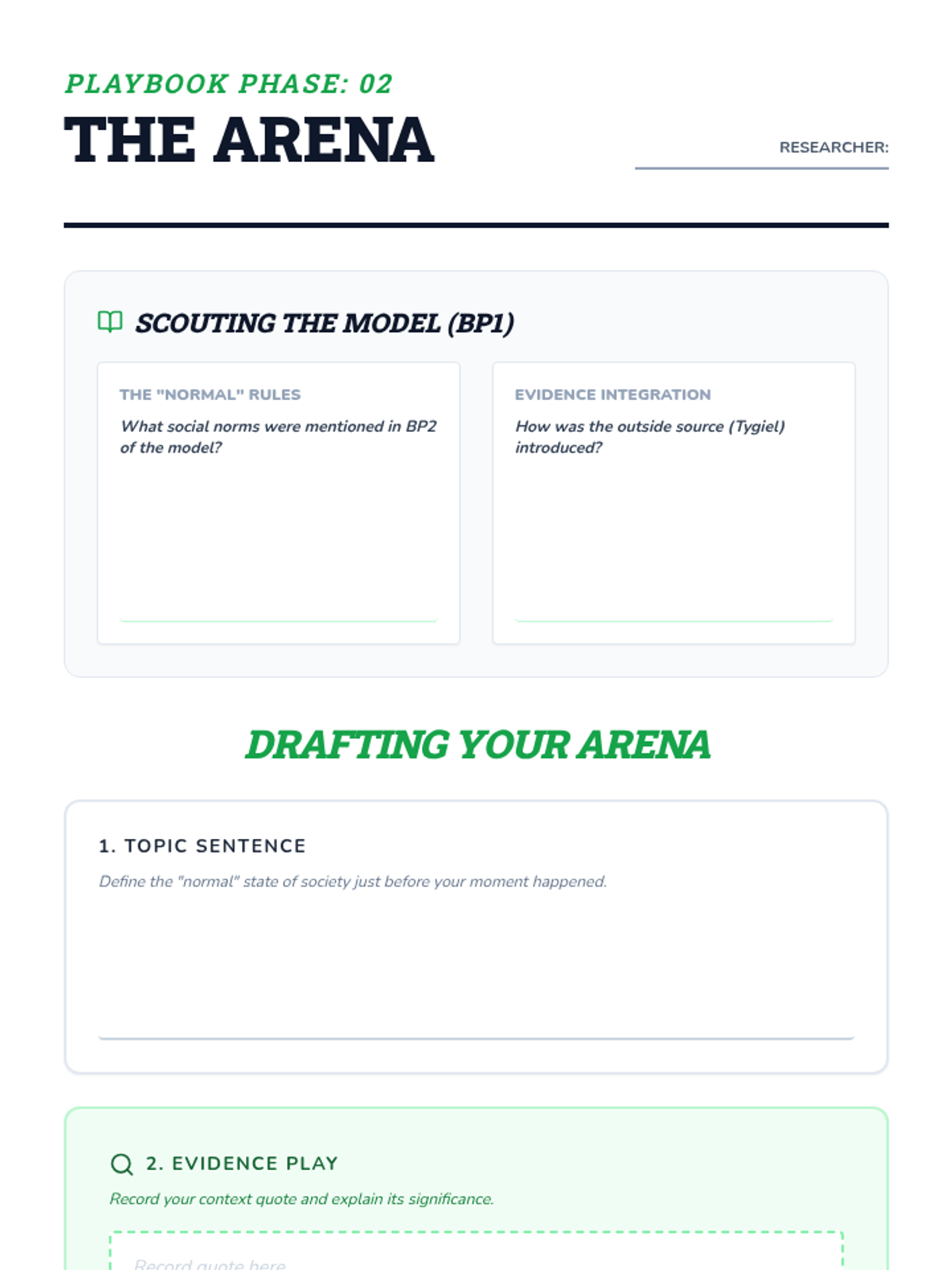
Students research and draft their first body paragraph, focusing on the historical context of their sports moment.
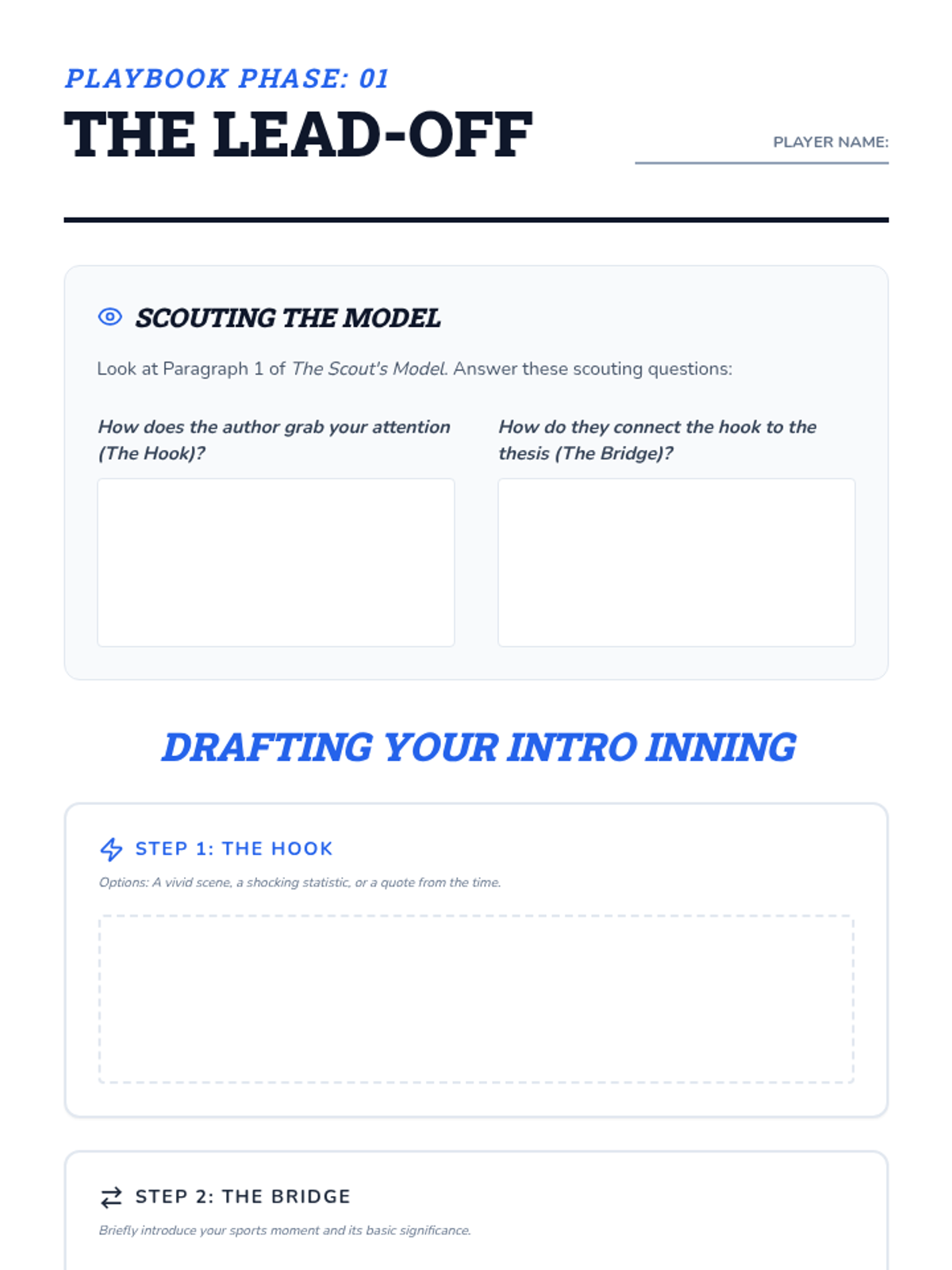
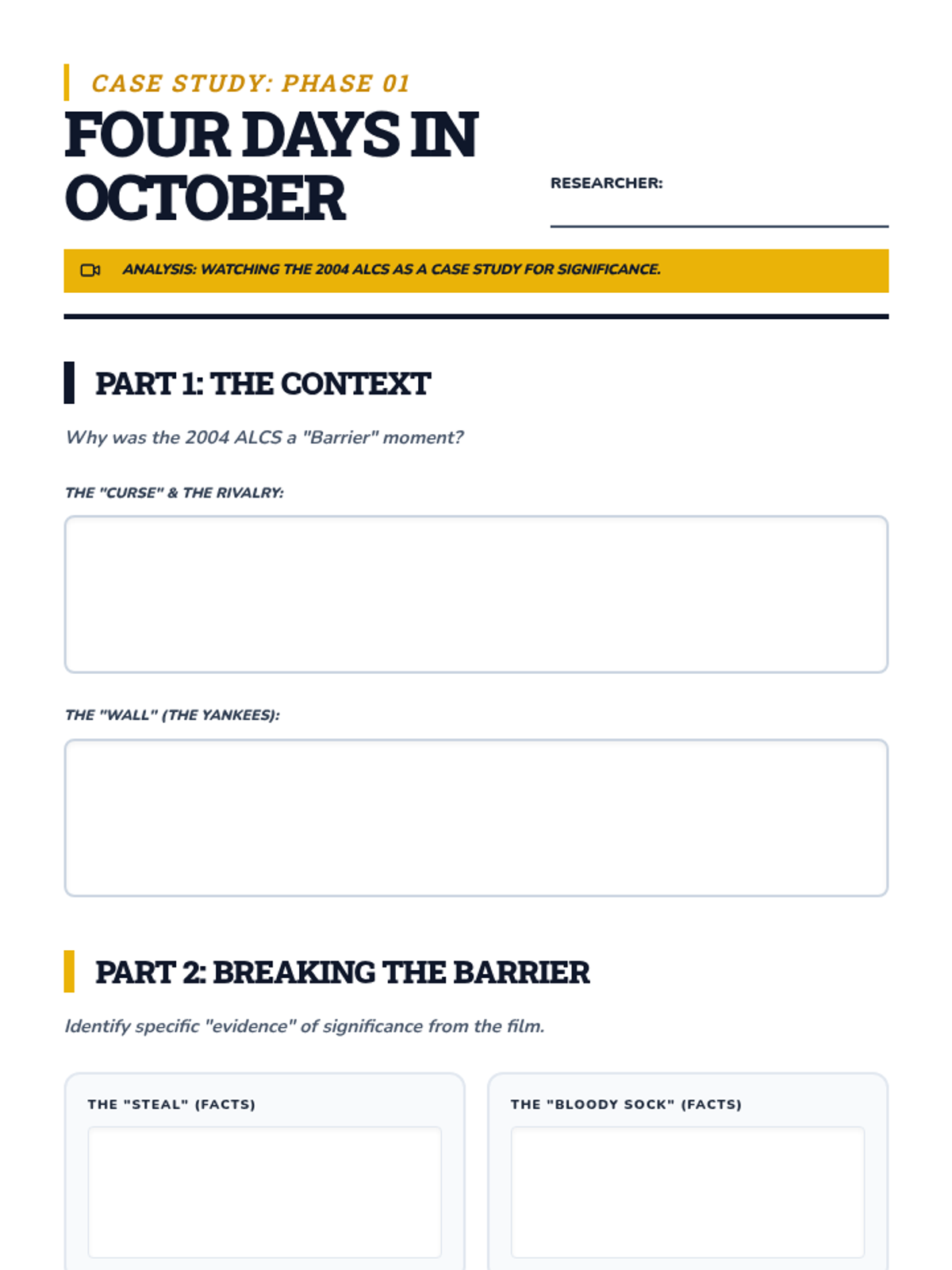
Brainstorming significant moments, defining specific criteria for "significance," and analyzing the 'Four Days in October' 30 for 30 documentary as a case study.
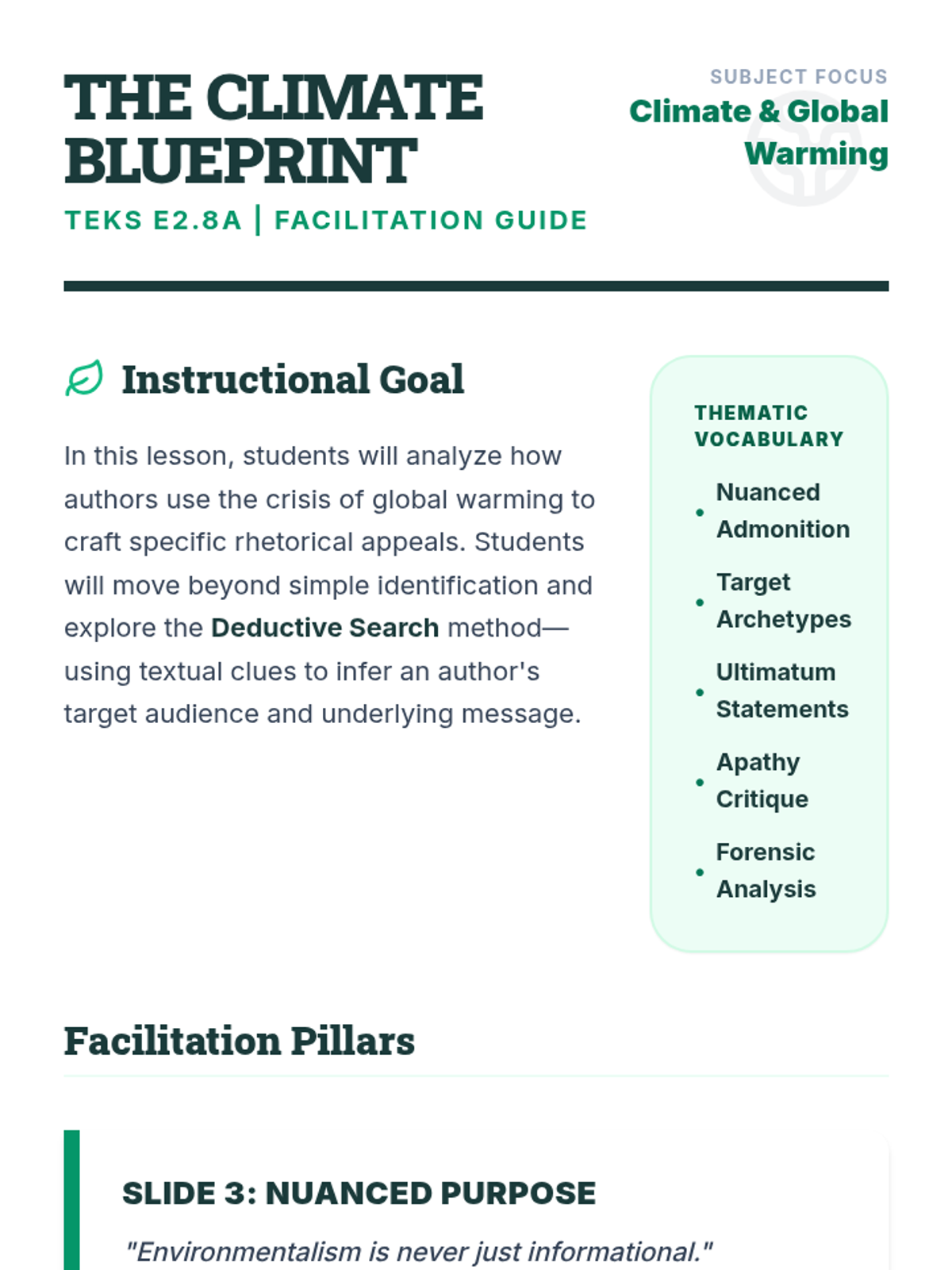
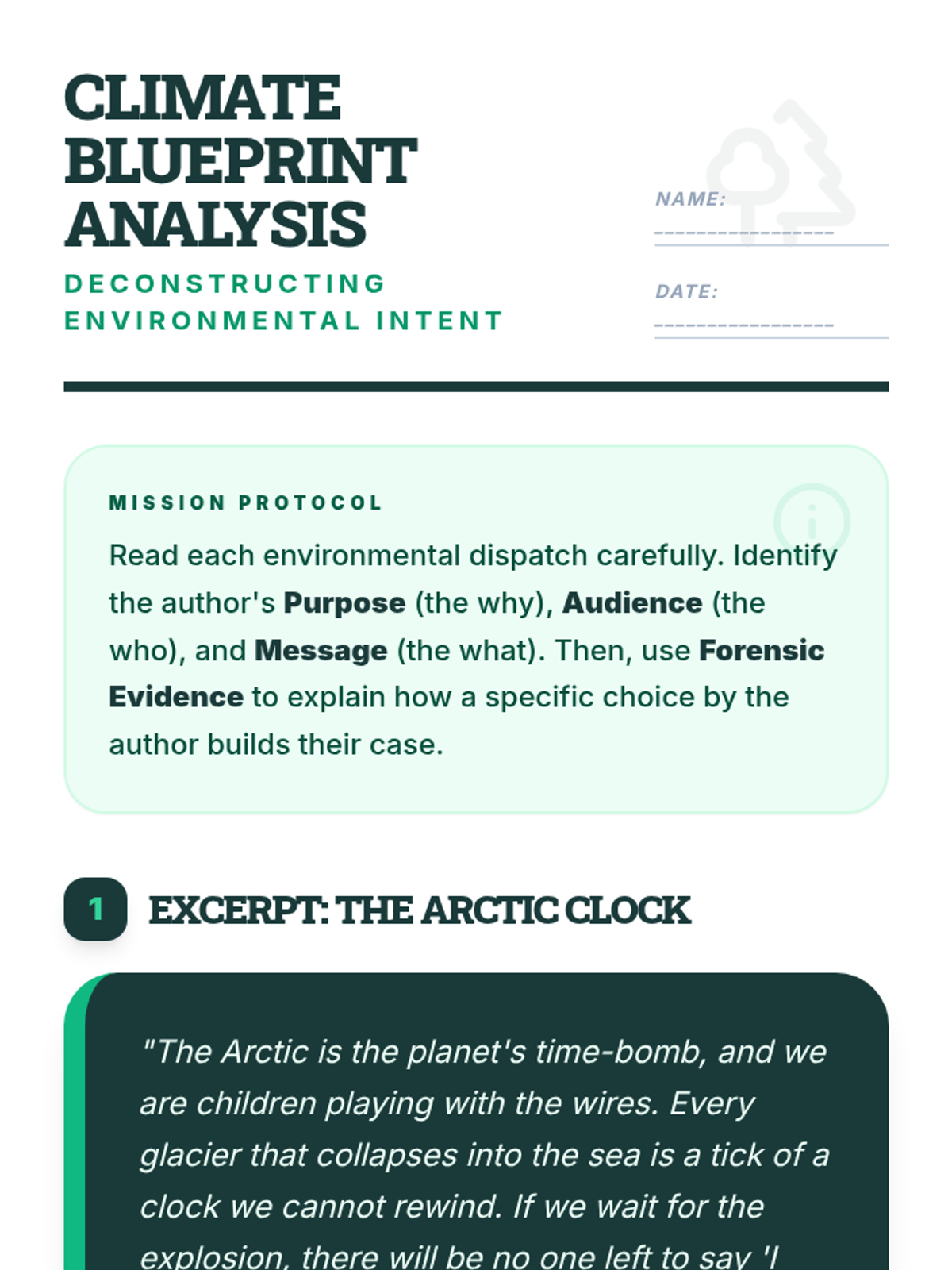
An instructional unit focusing on TEKS E2.8A, teaching students to analyze author's purpose, audience, and message within a variety of texts using nuanced verbs and rhetorical context.
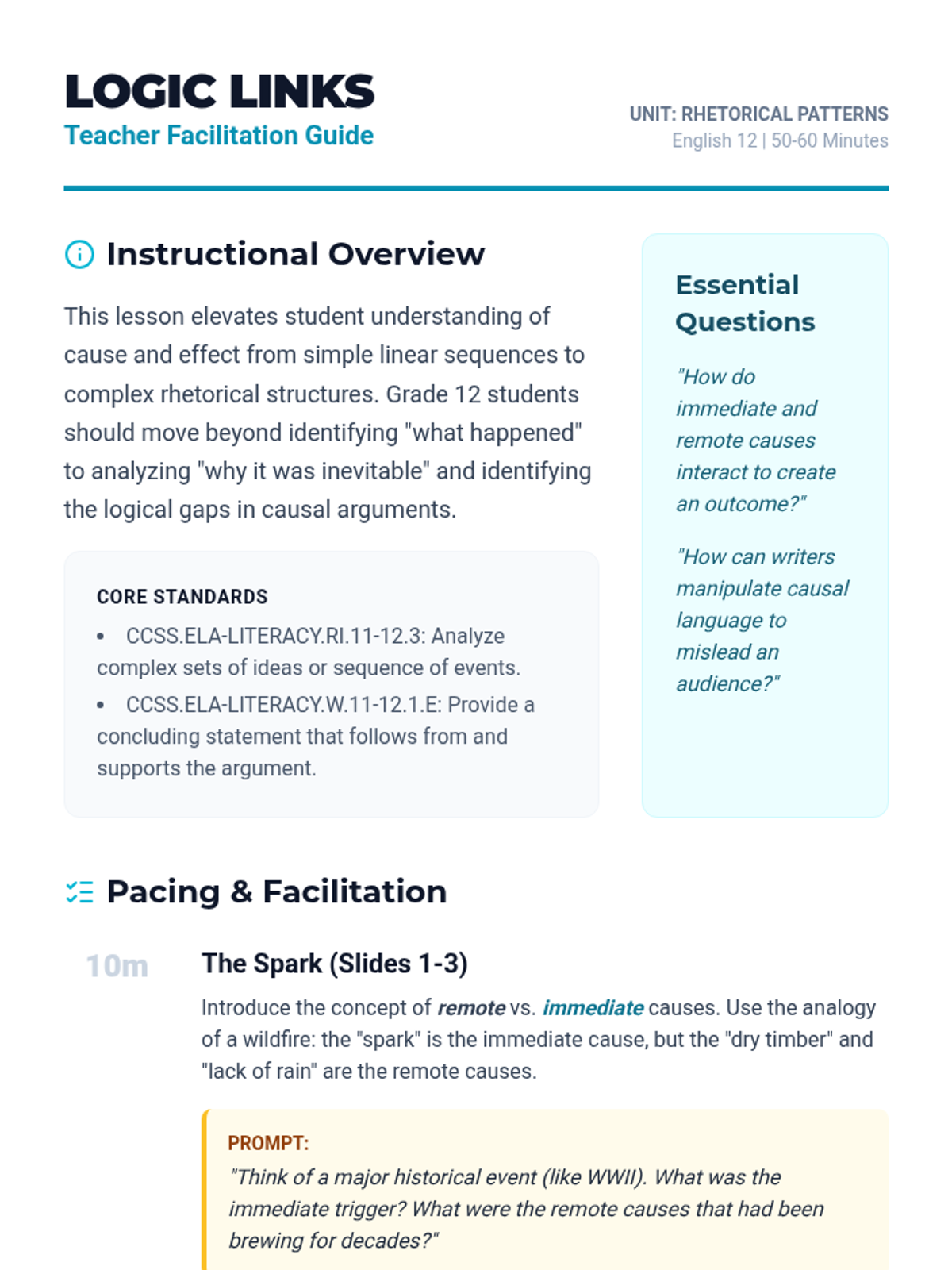
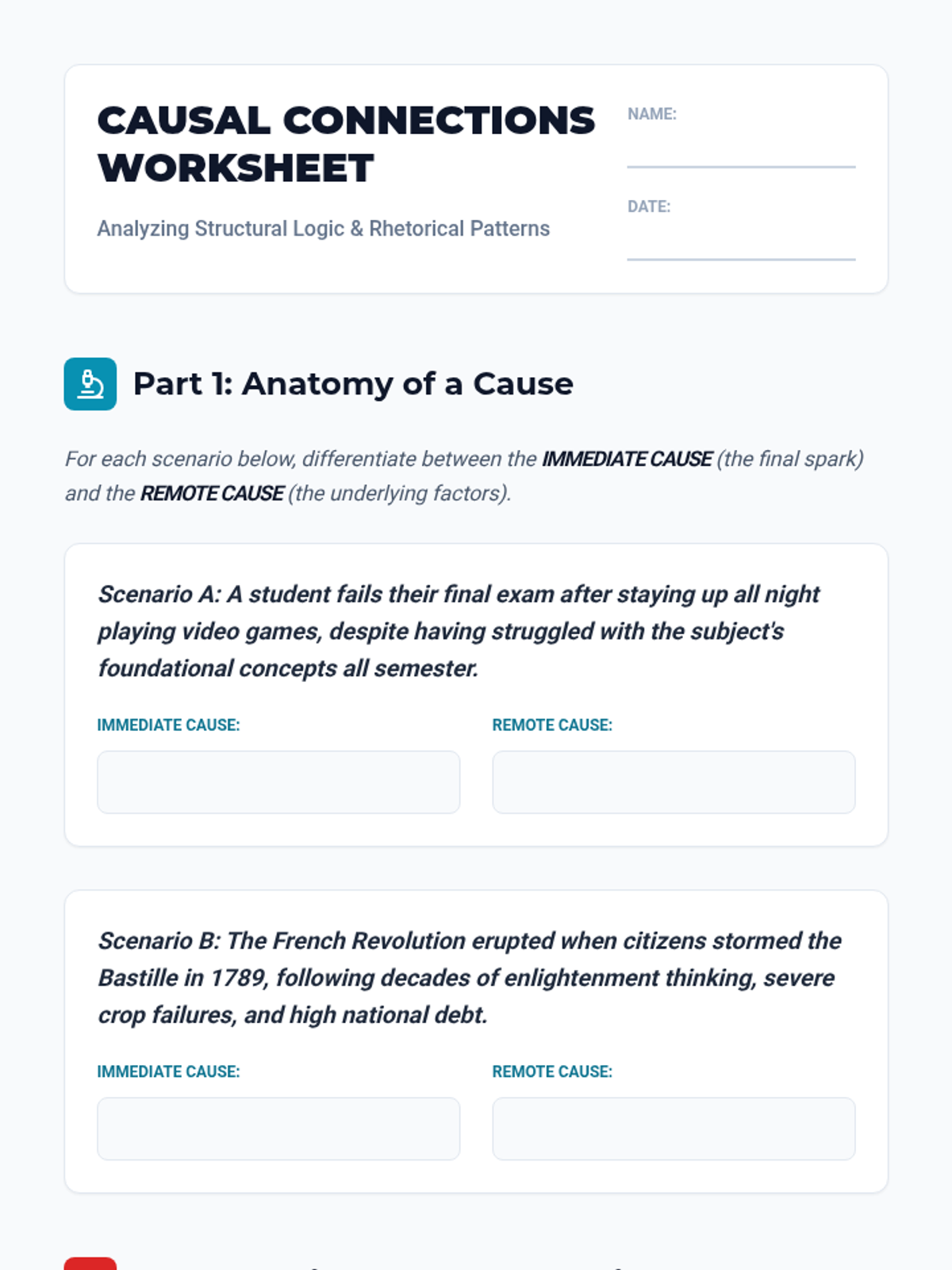
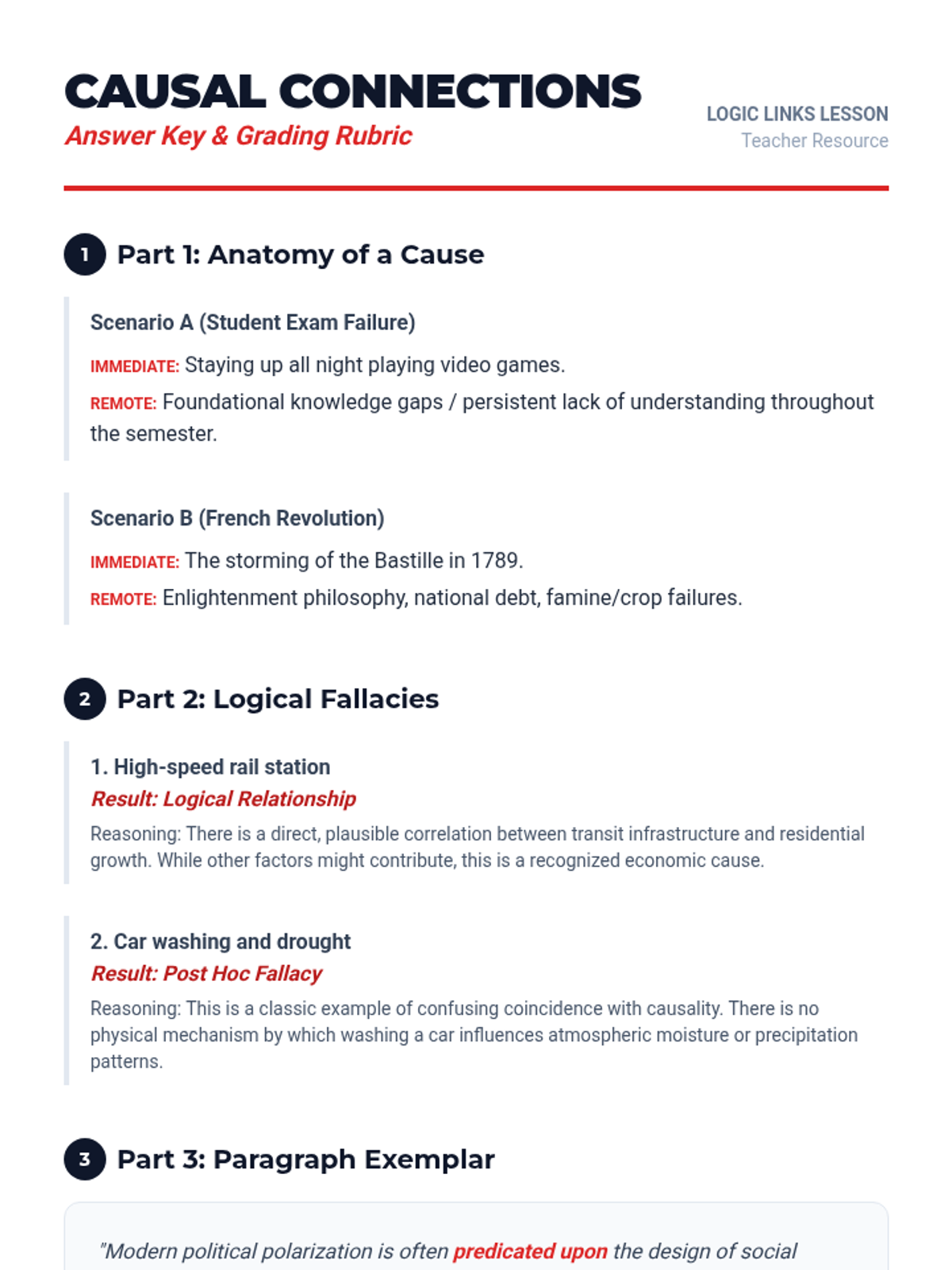
A comprehensive lesson for 12th-grade English focusing on the nuances of cause and effect analysis, logical fallacies, and structural organization in academic writing.
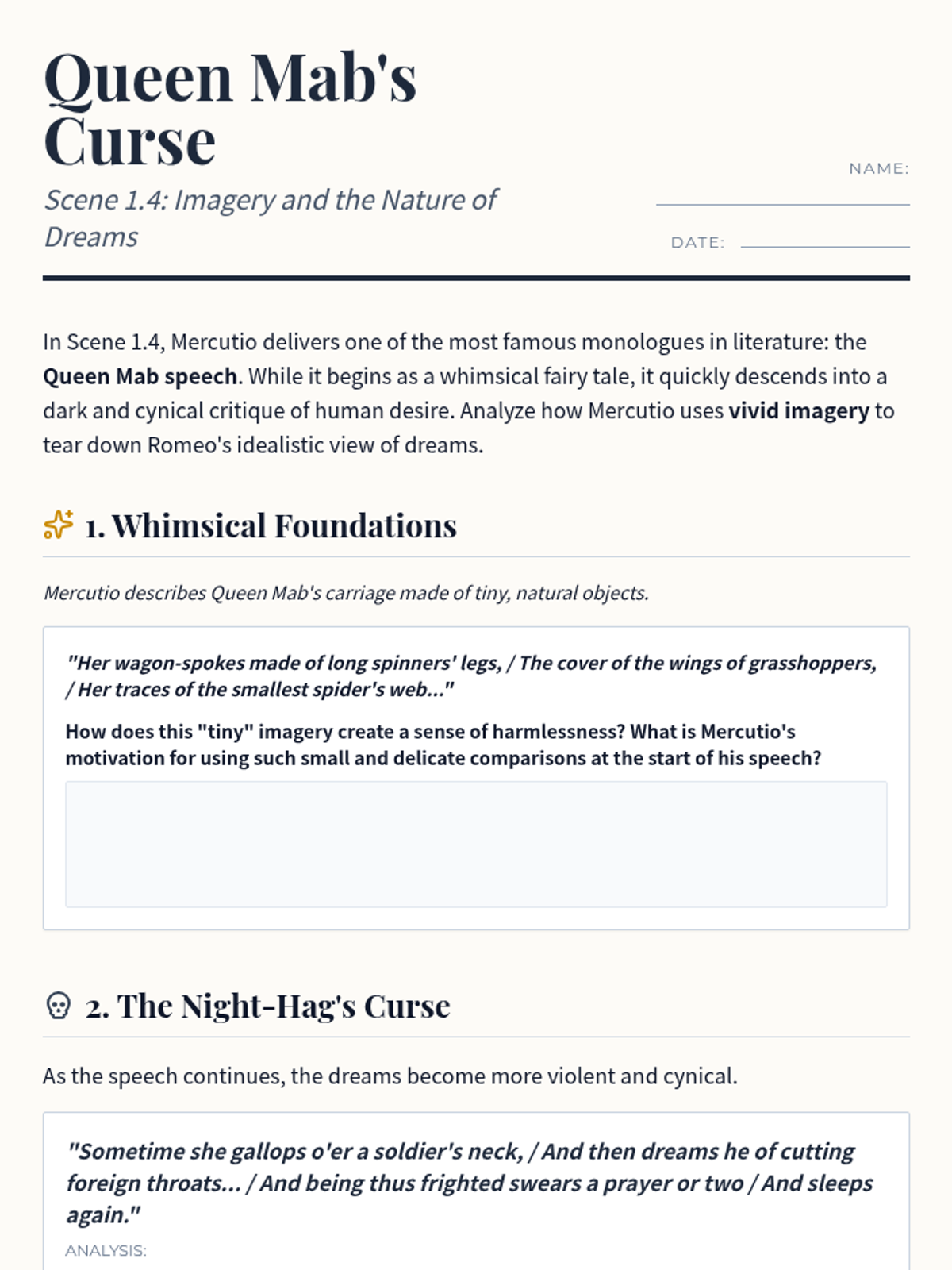
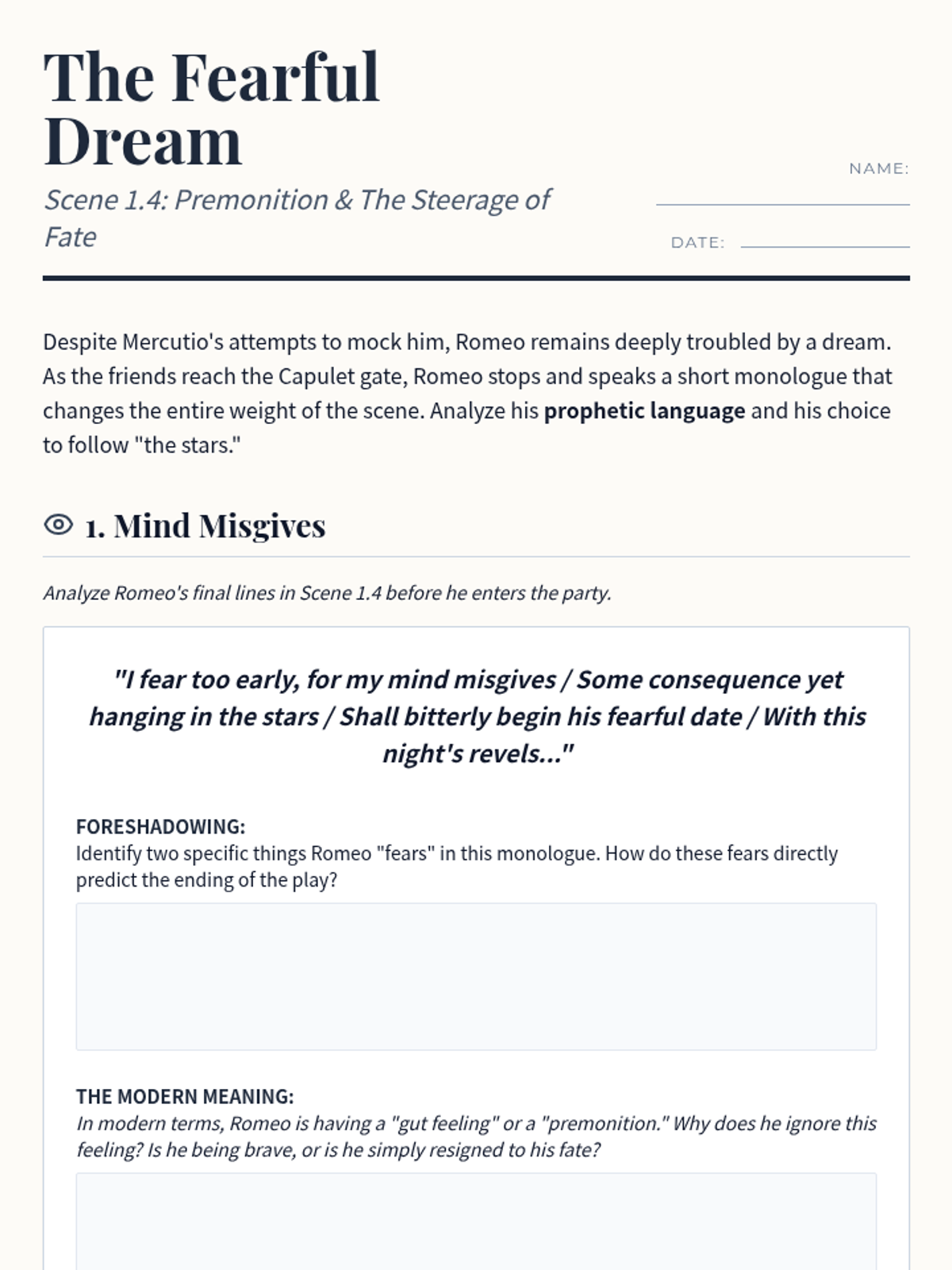
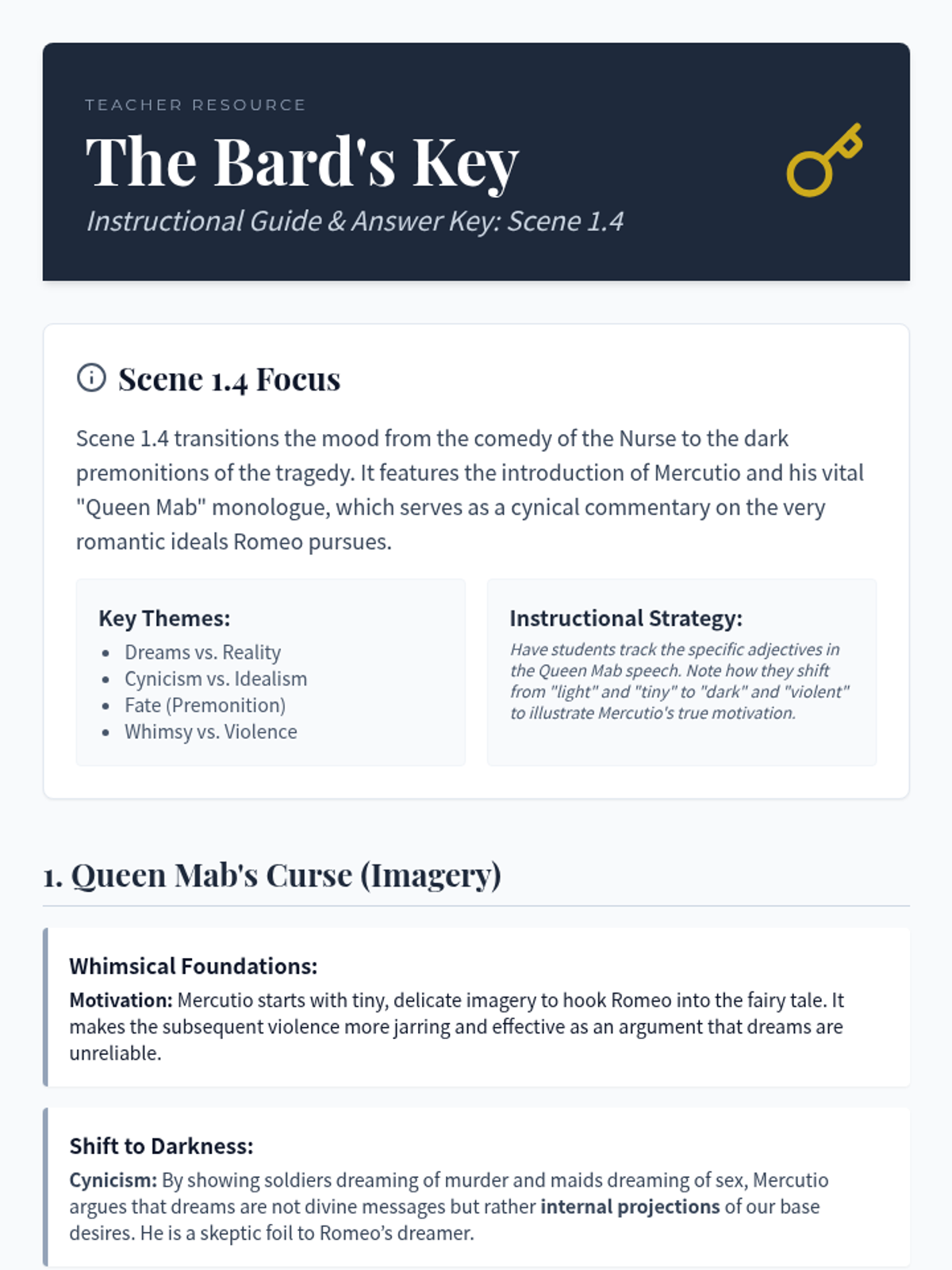
A study of Act 1, Scene 4, where Romeo, Mercutio, and Benvolio prepare to crash the Capulet ball. Students will analyze Mercutio's vivid Queen Mab speech, Romeo's persistent melancholy and prophetic dreams, and the tension between whimsical fantasy and dark reality.
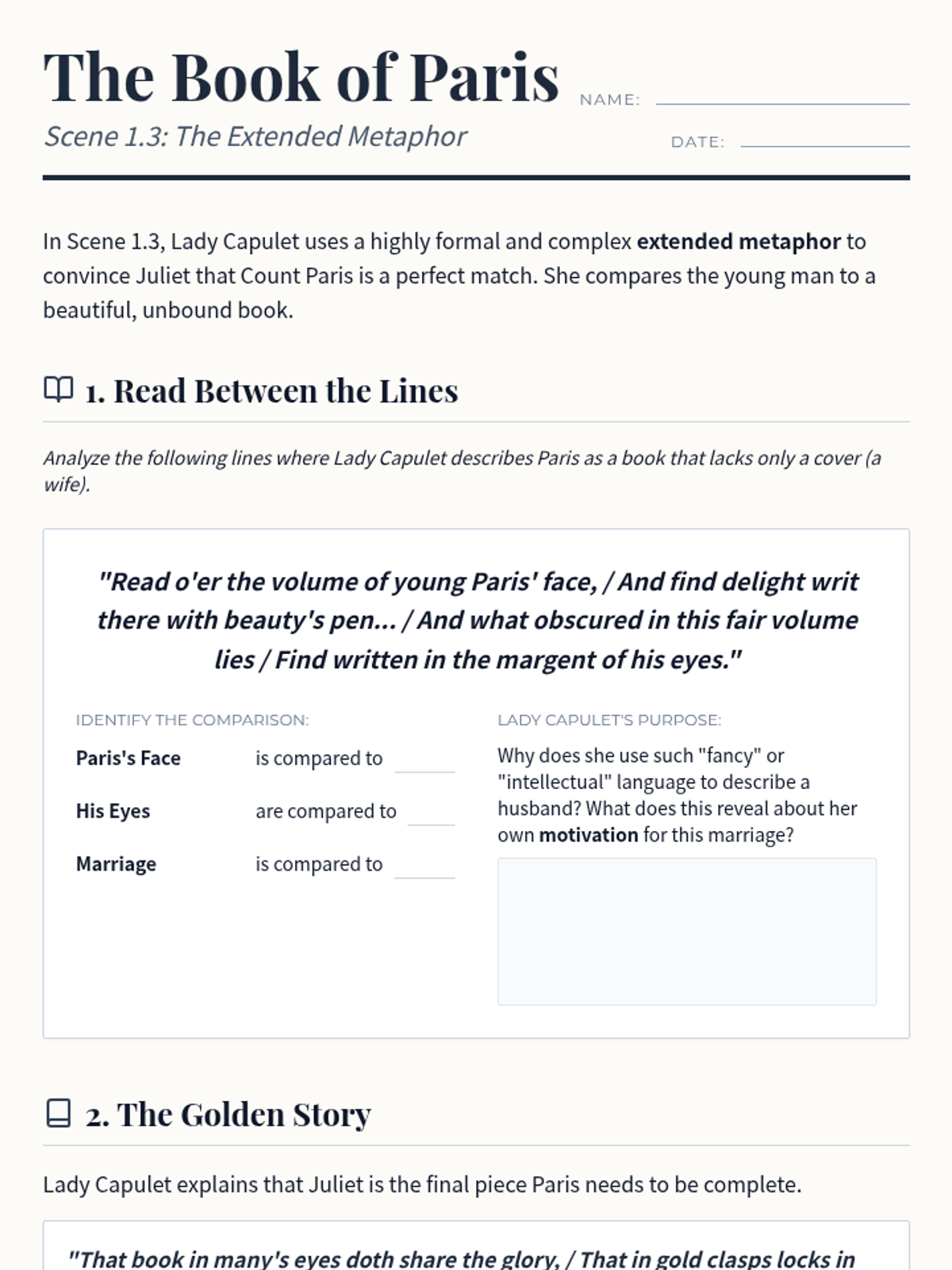
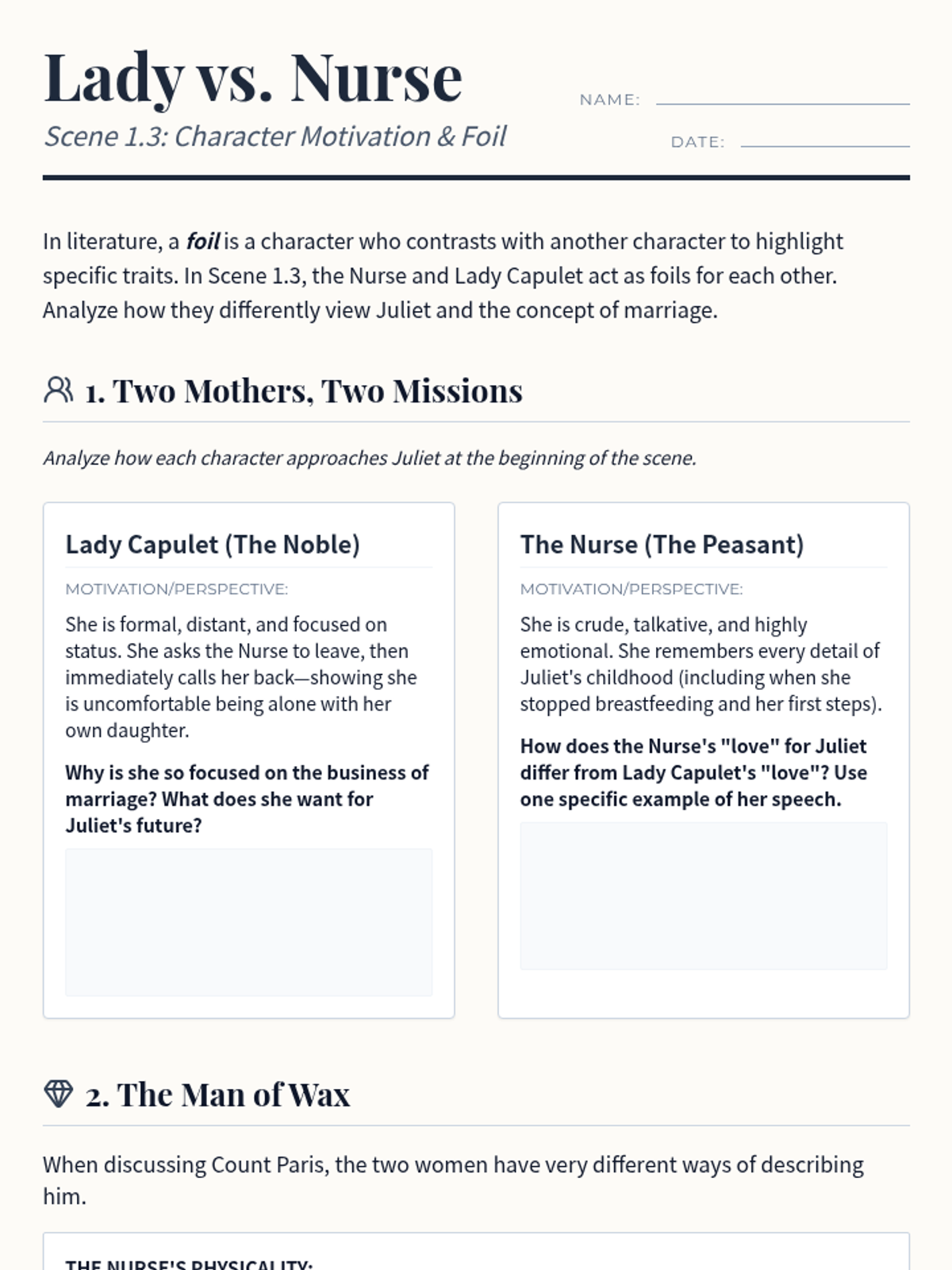
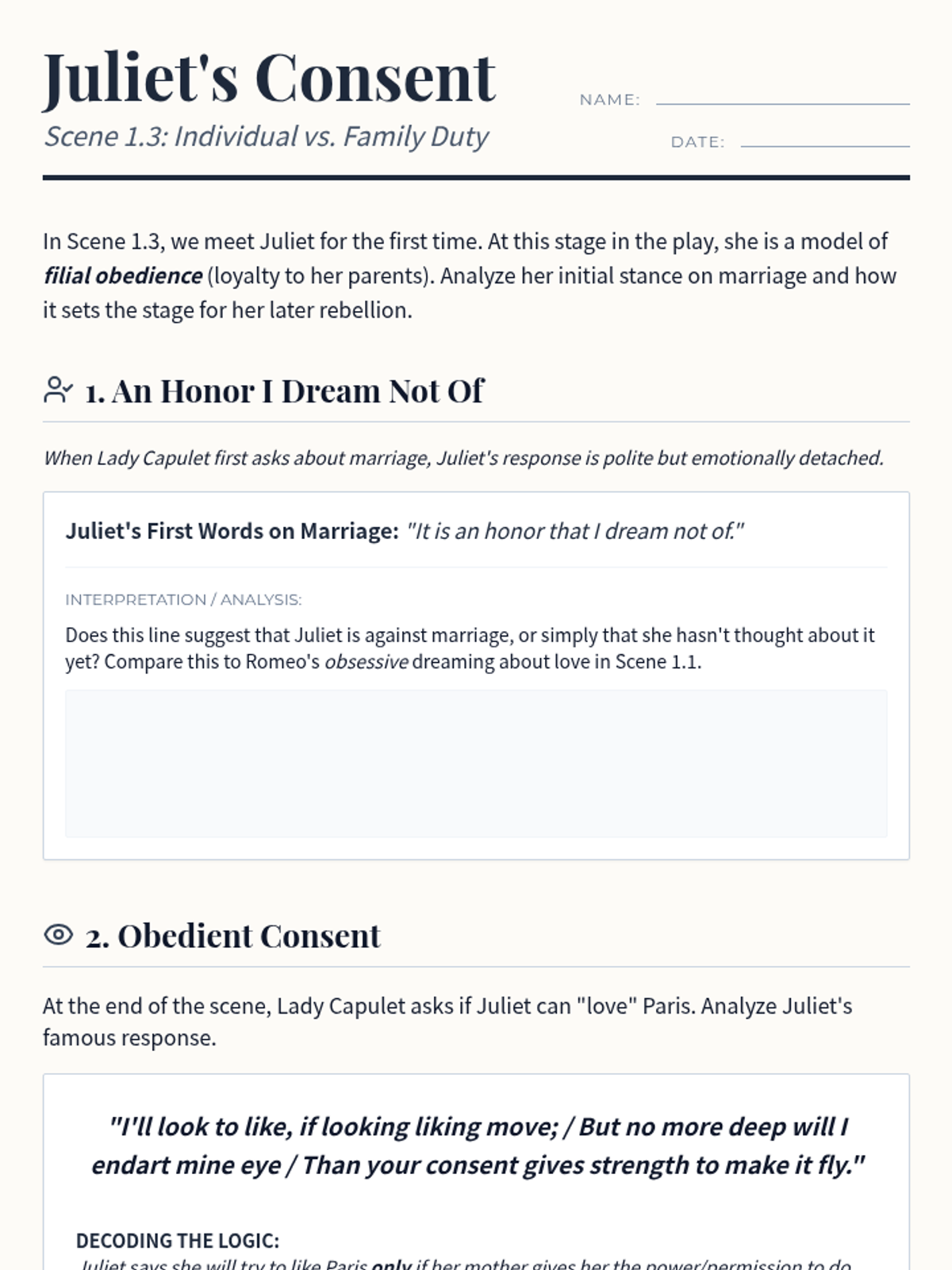
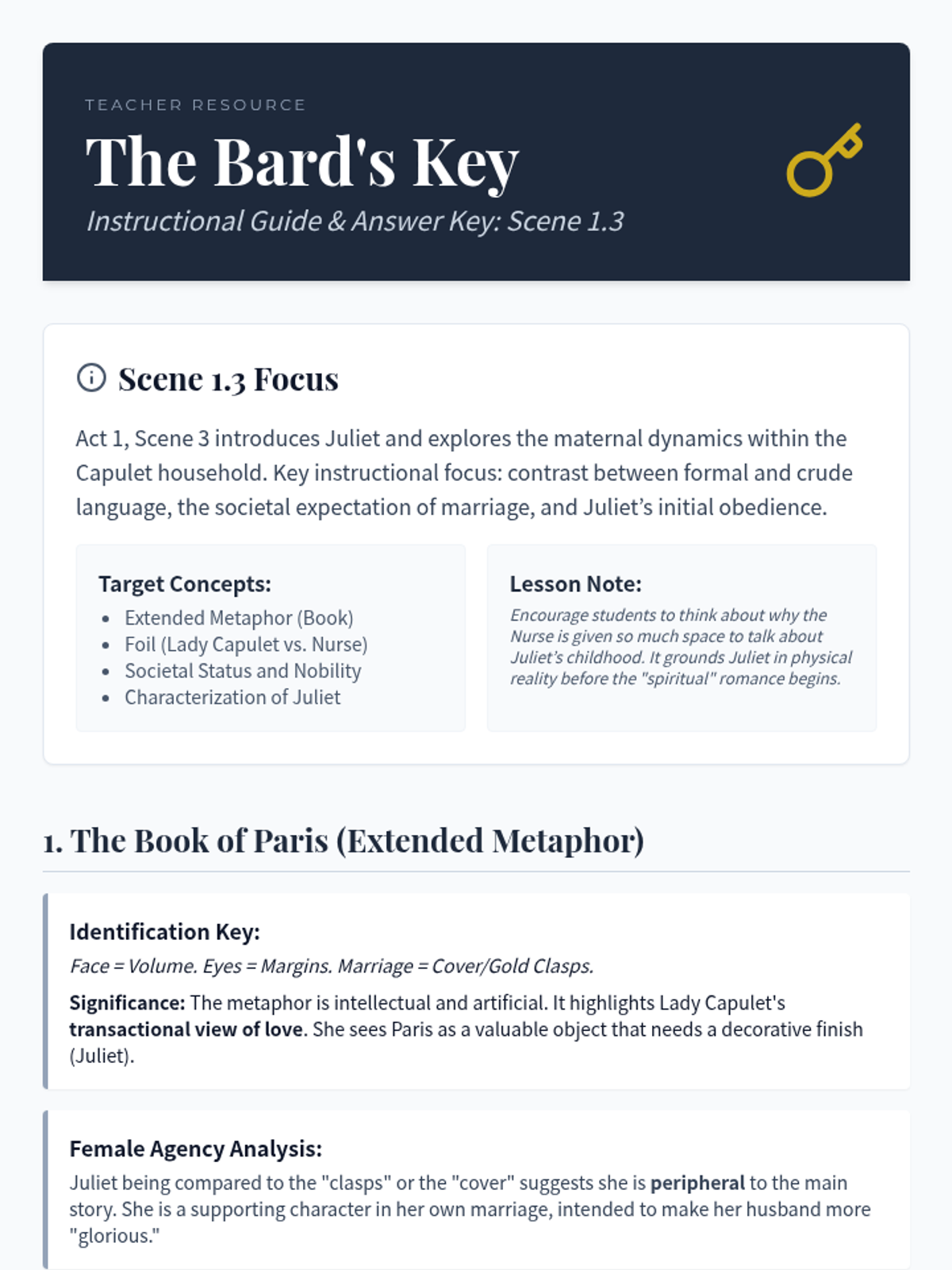
A study of Act 1, Scene 3, introducing the Nurse and Lady Capulet's proposal of marriage to Paris. Students will analyze the Nurse's coarse humor, Lady Capulet's extended metaphor of Paris as a book, and Juliet's initial stance on marriage and obedience.
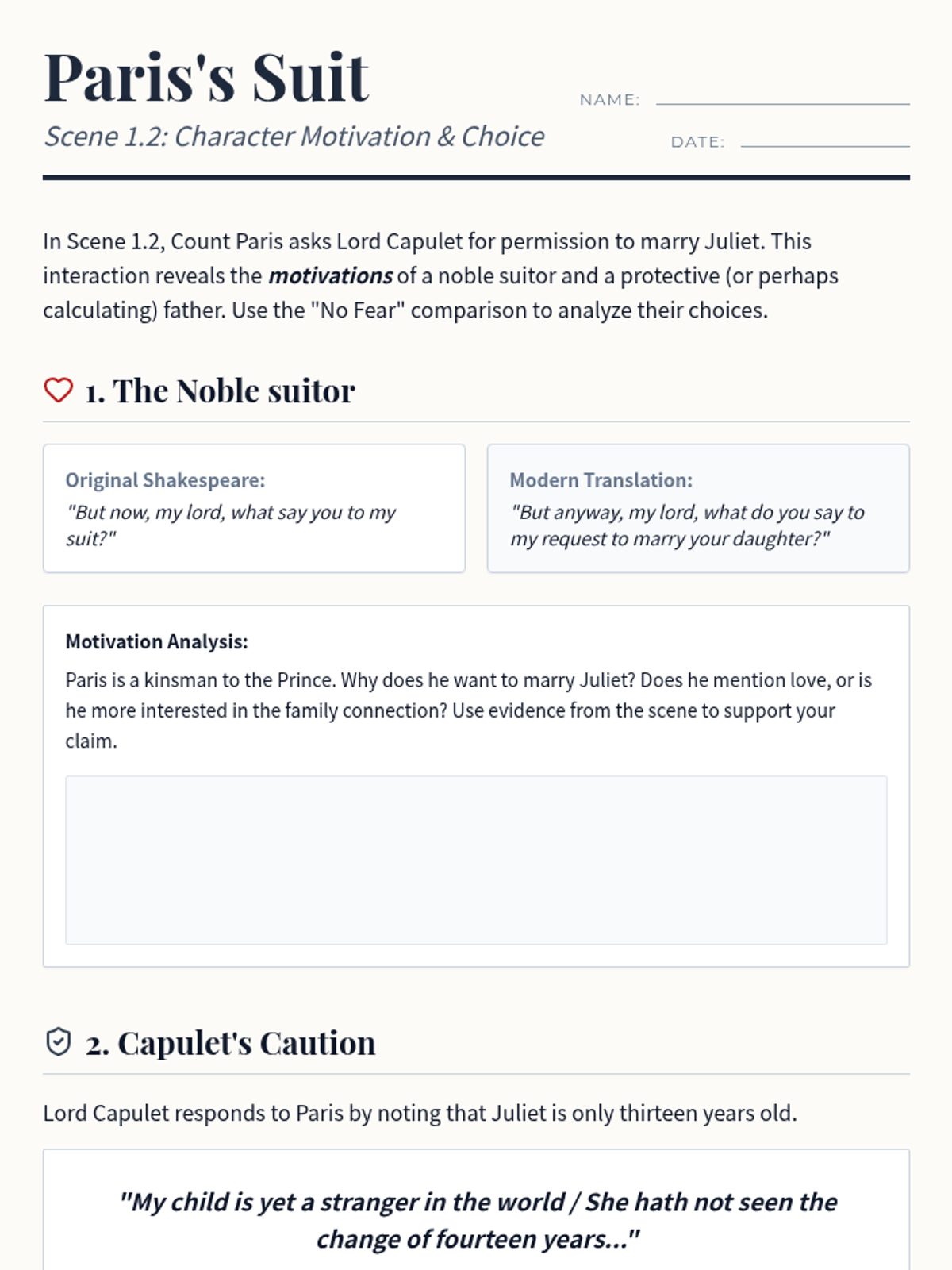
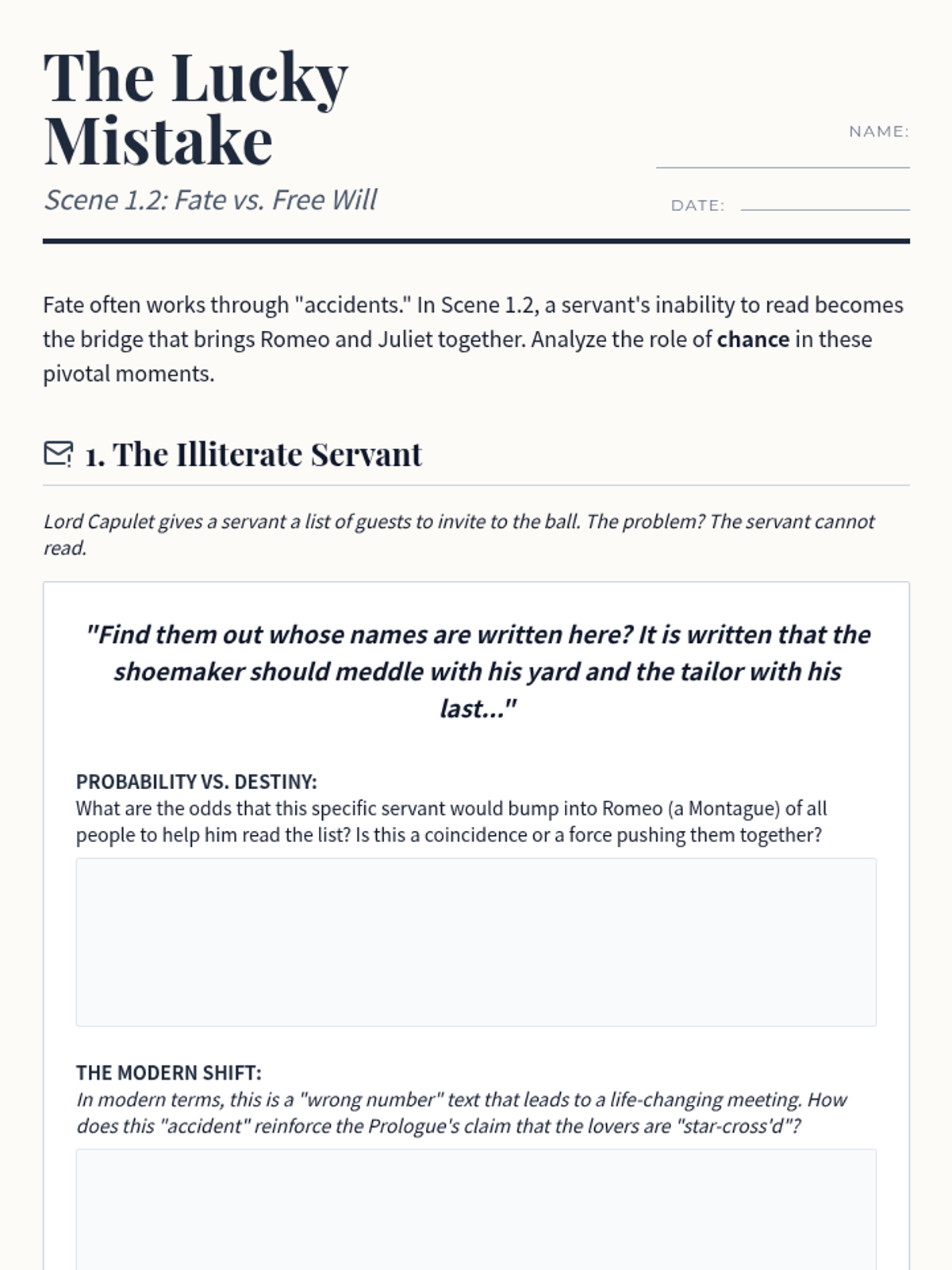
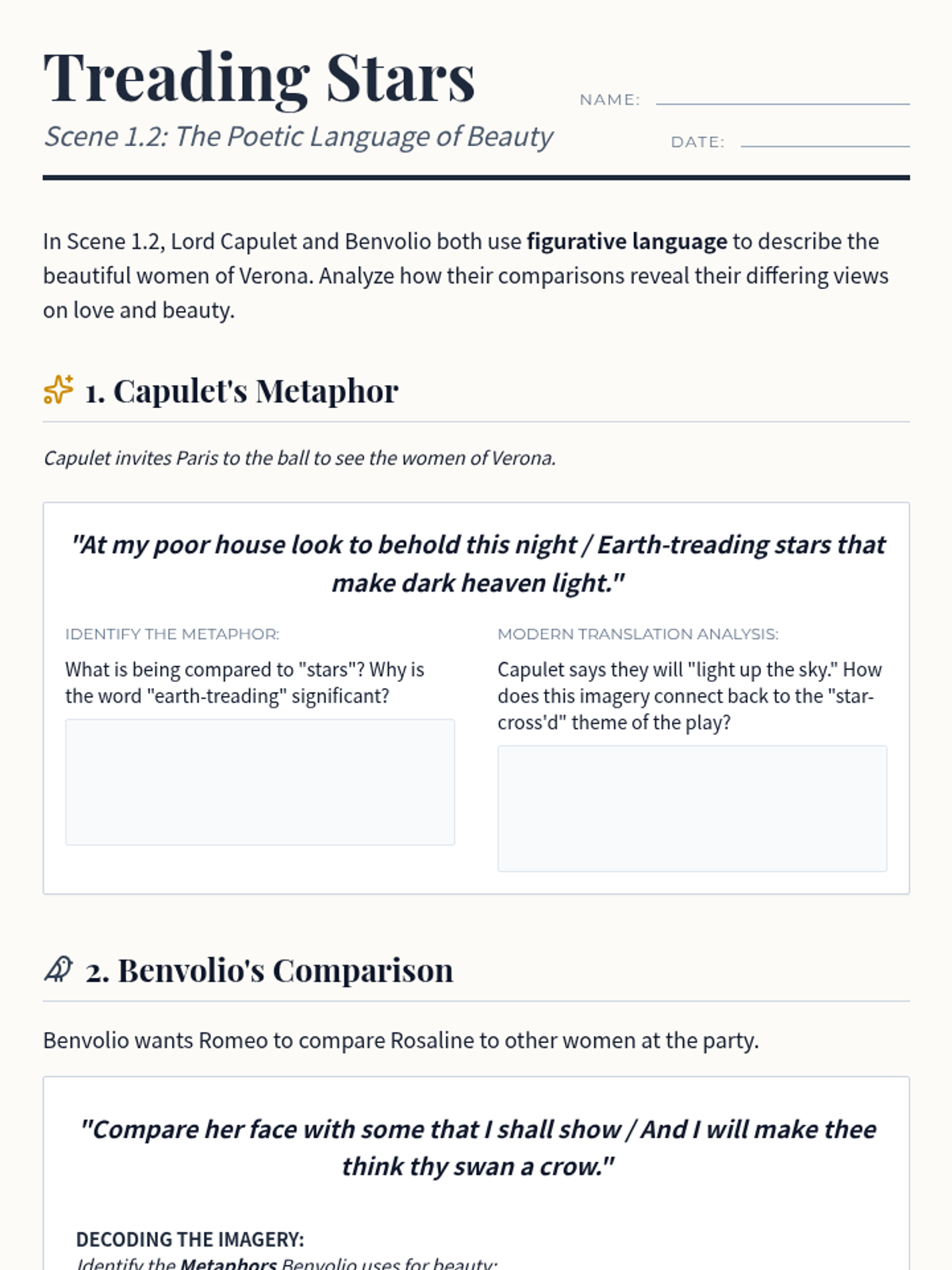
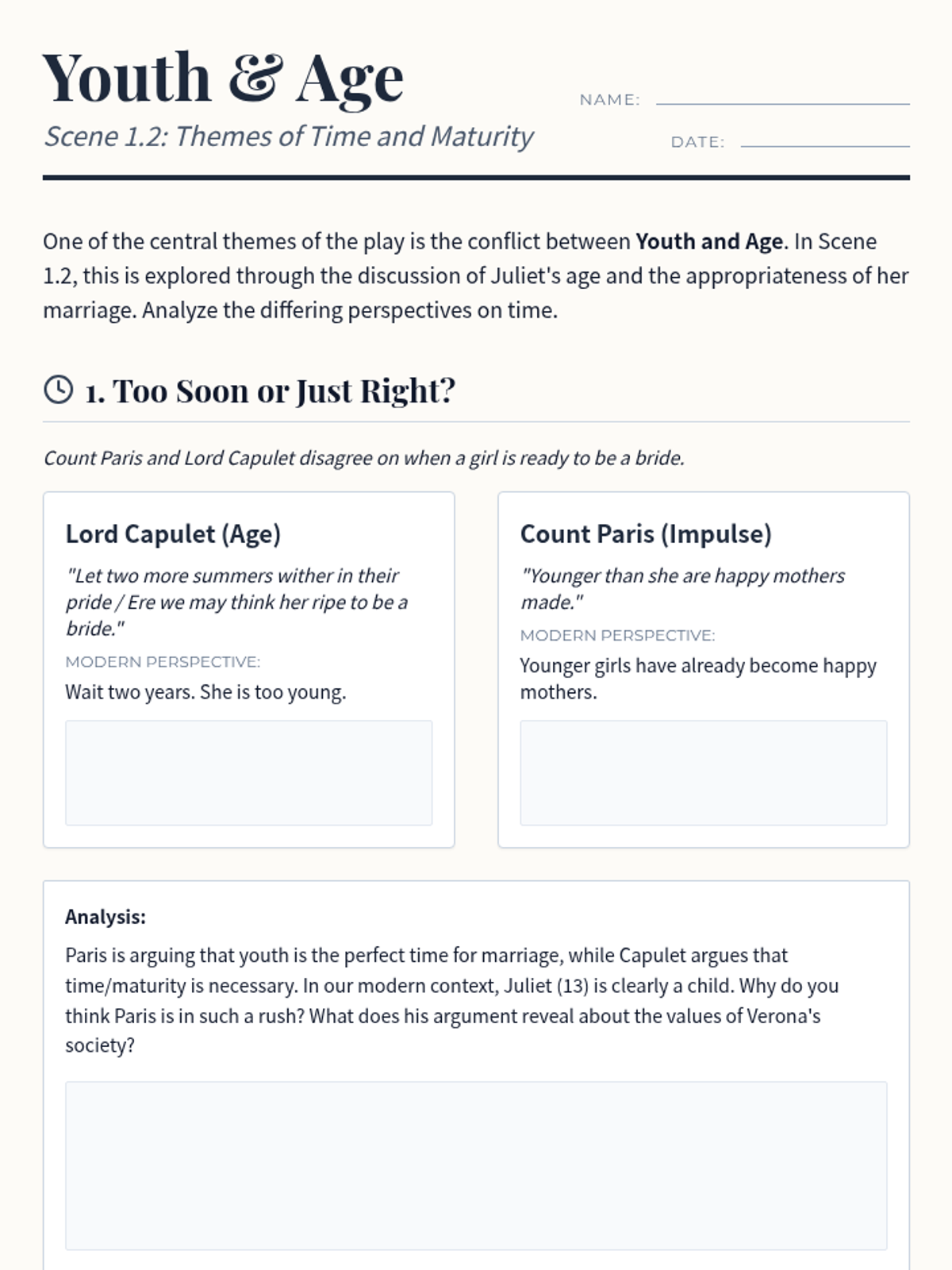
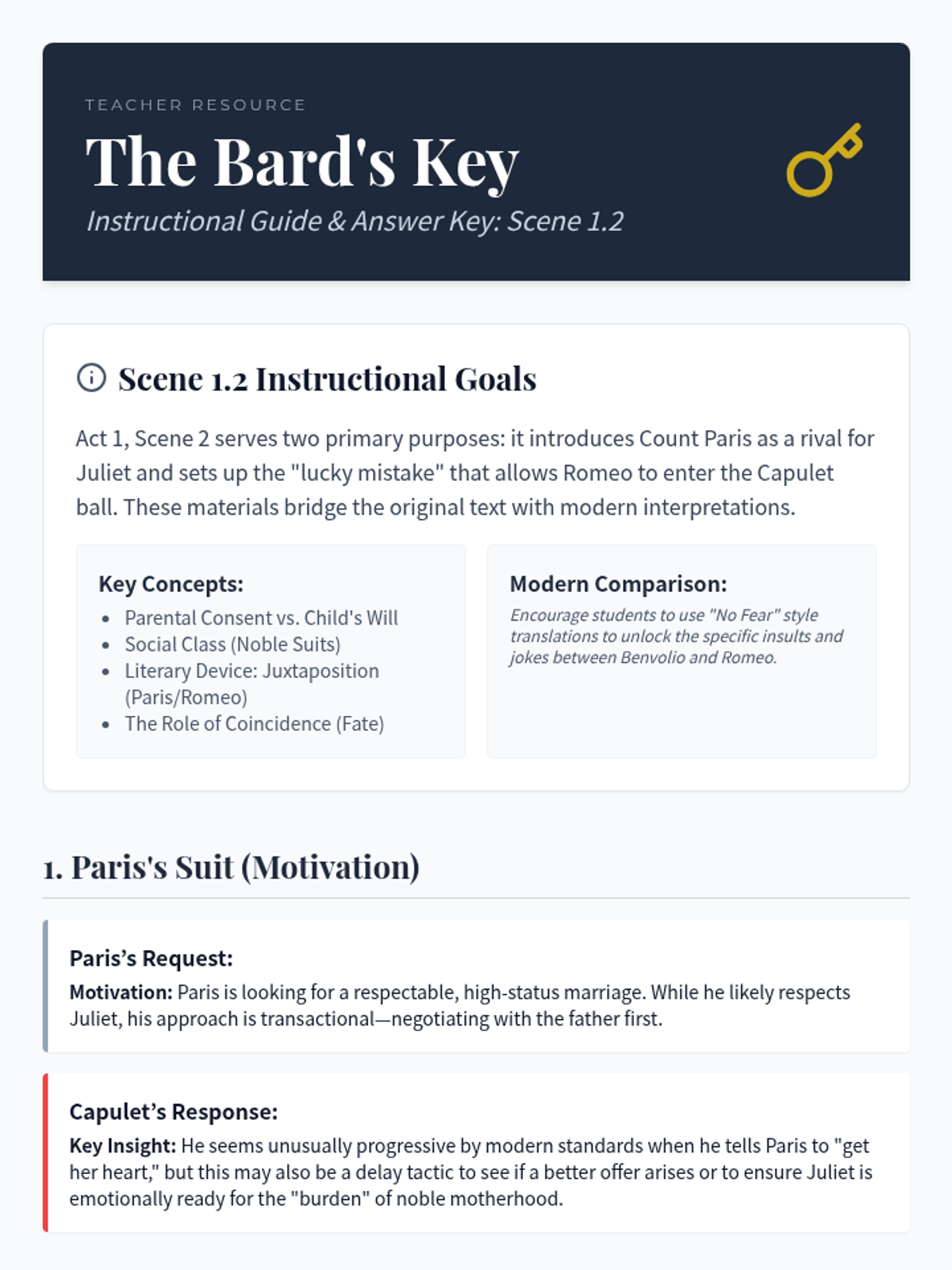
A study of Act 1, Scene 2, where Count Paris asks for Juliet's hand and Romeo and Benvolio discover the Capulet party through a chance encounter. Students will analyze the dynamics of parental choice, the role of chance, and the poetic language used to describe the ladies of Verona.
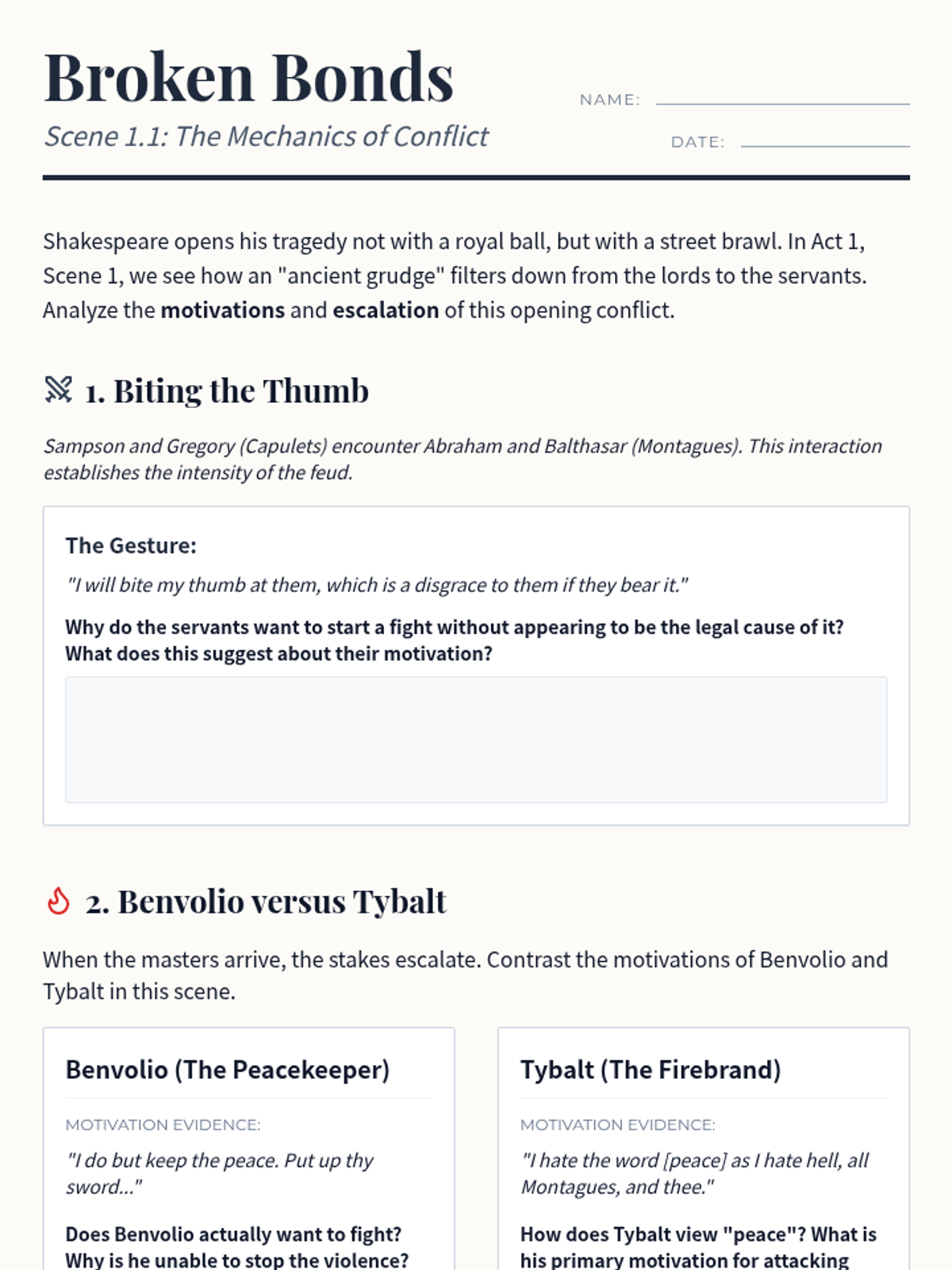
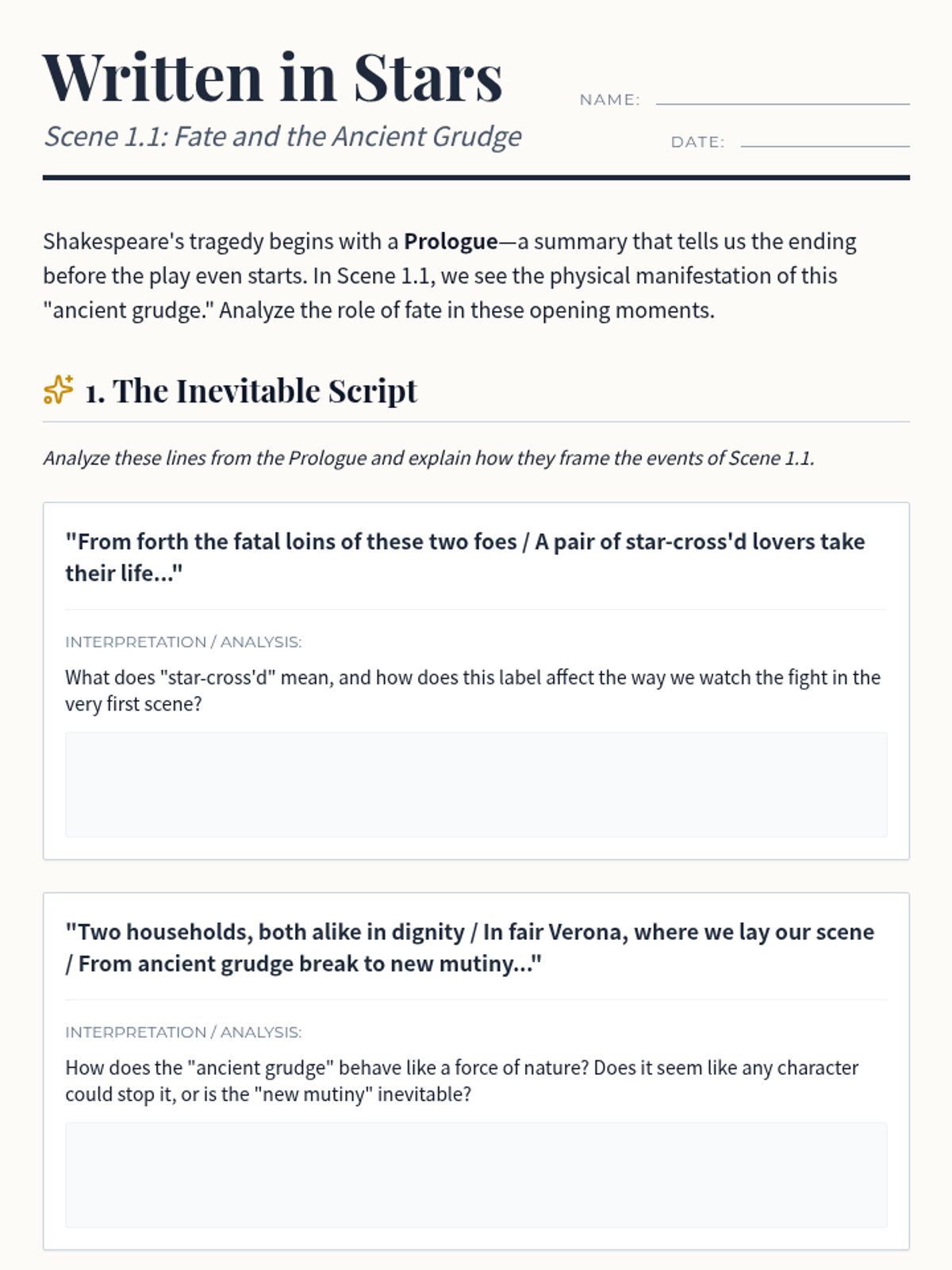
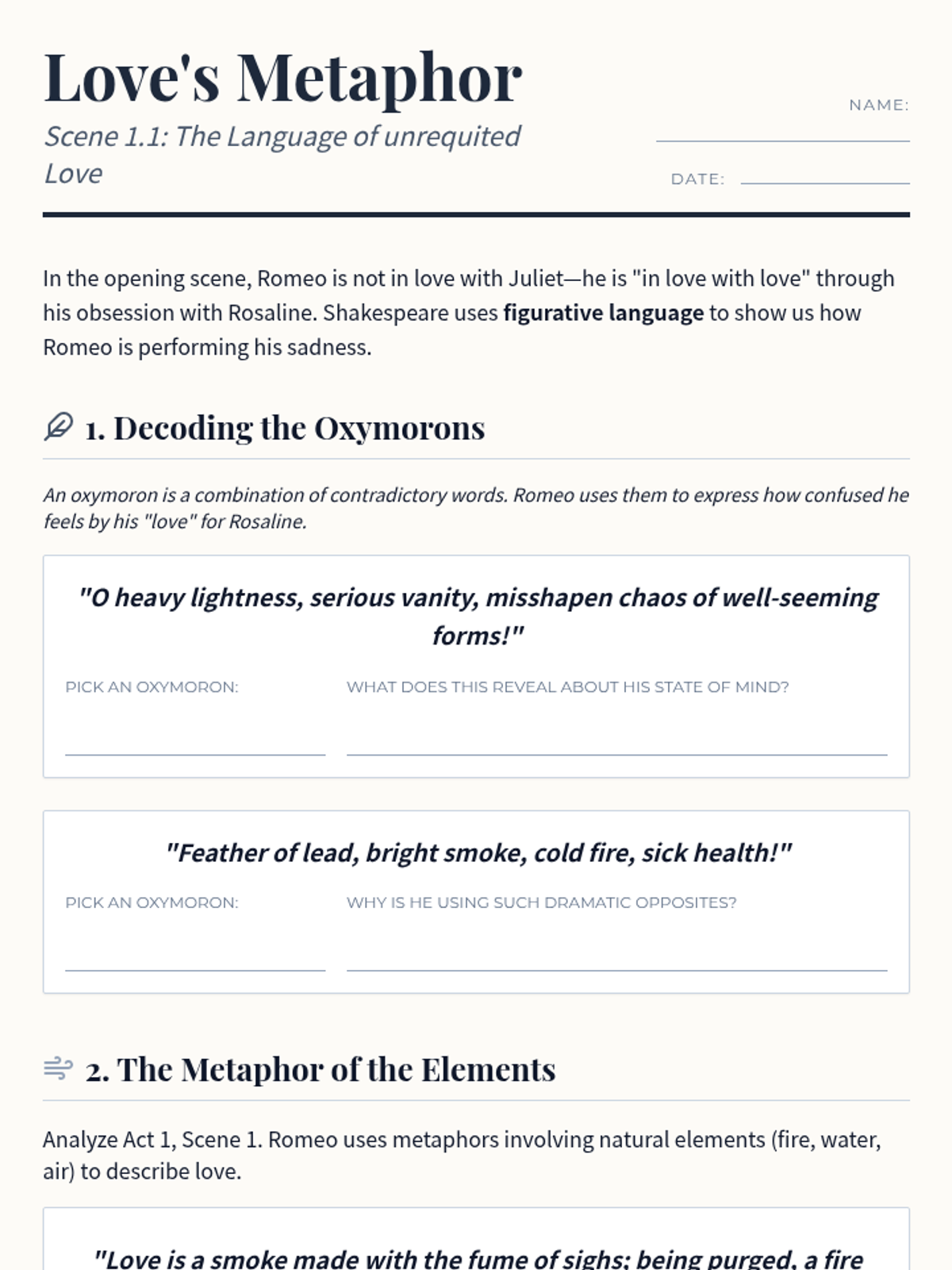
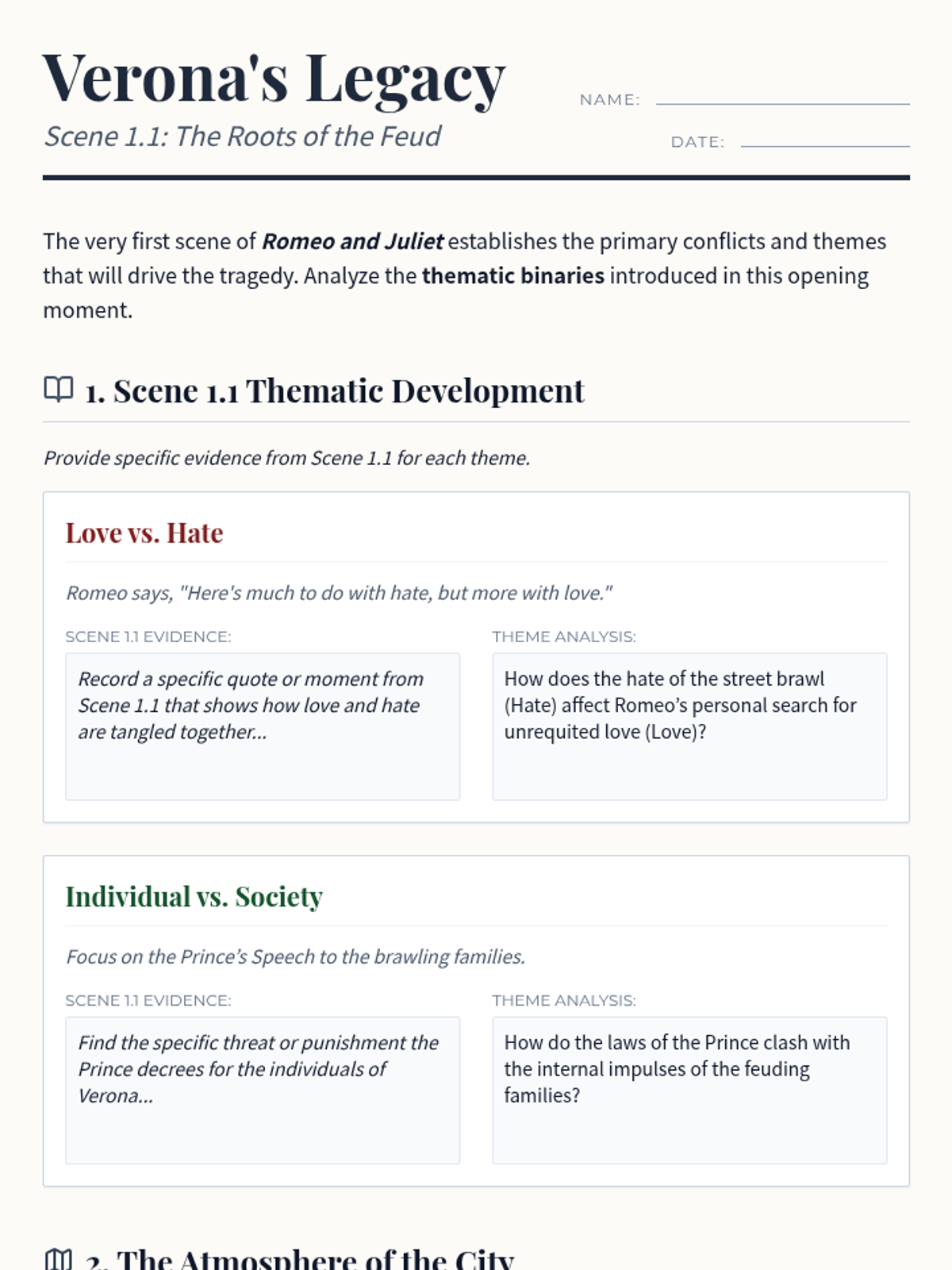
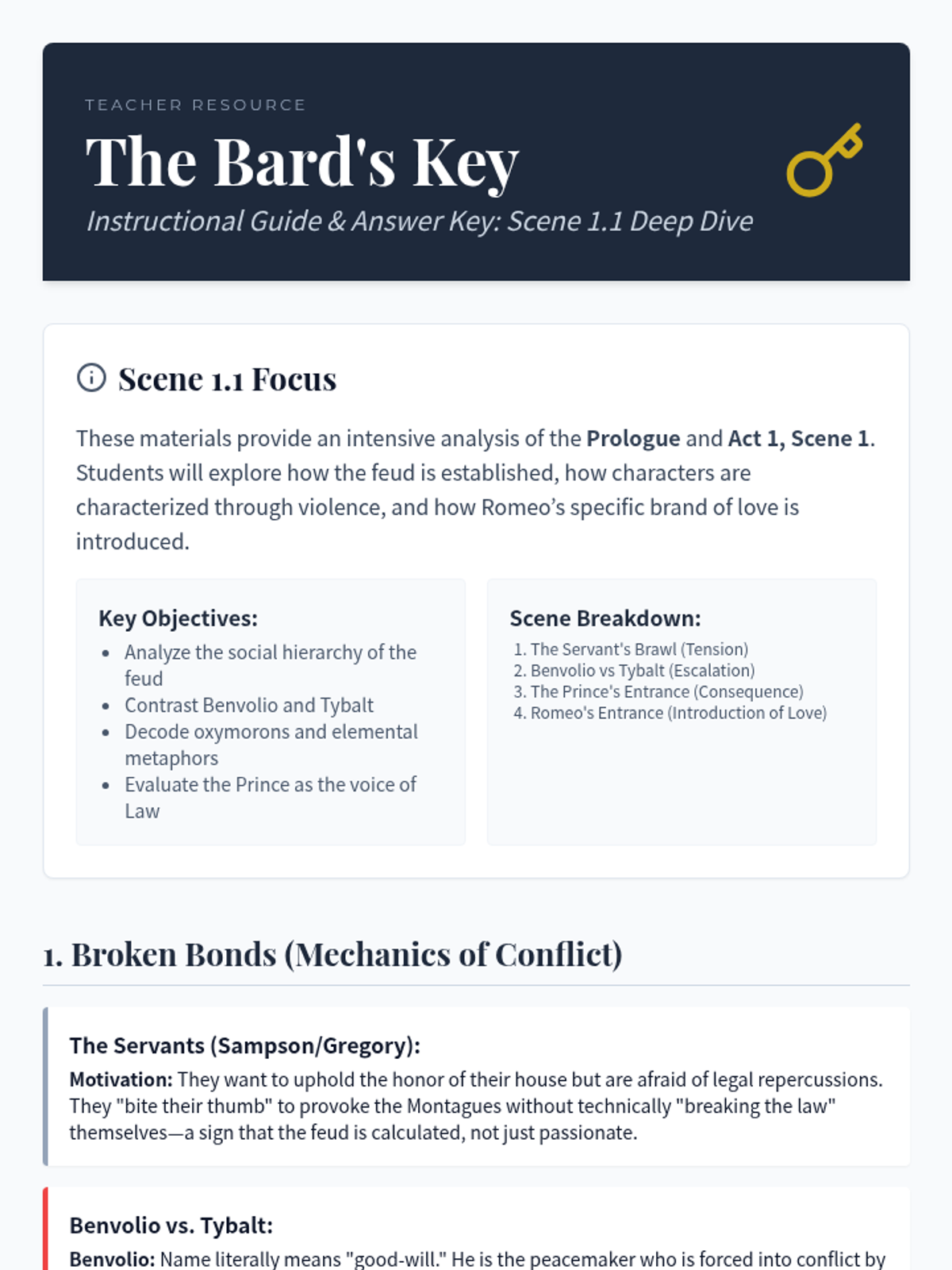
An intensive study of the opening scene and prologue of Shakespeare's Romeo and Juliet. Students will analyze the mechanics of the ancient grudge, the characterization of the principal families, and the specific poetic techniques used to establish Romeo's unrequited love for Rosaline.
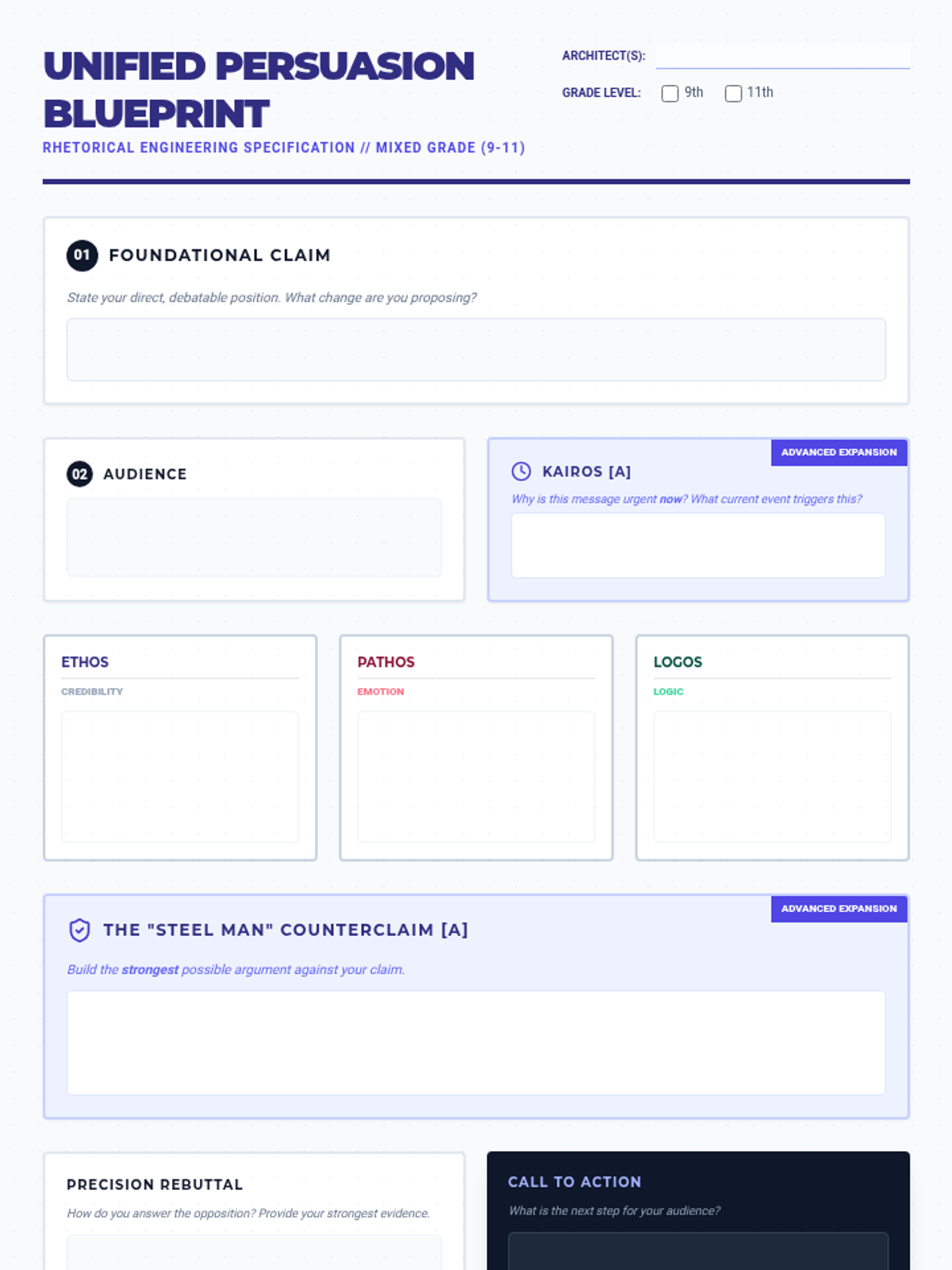
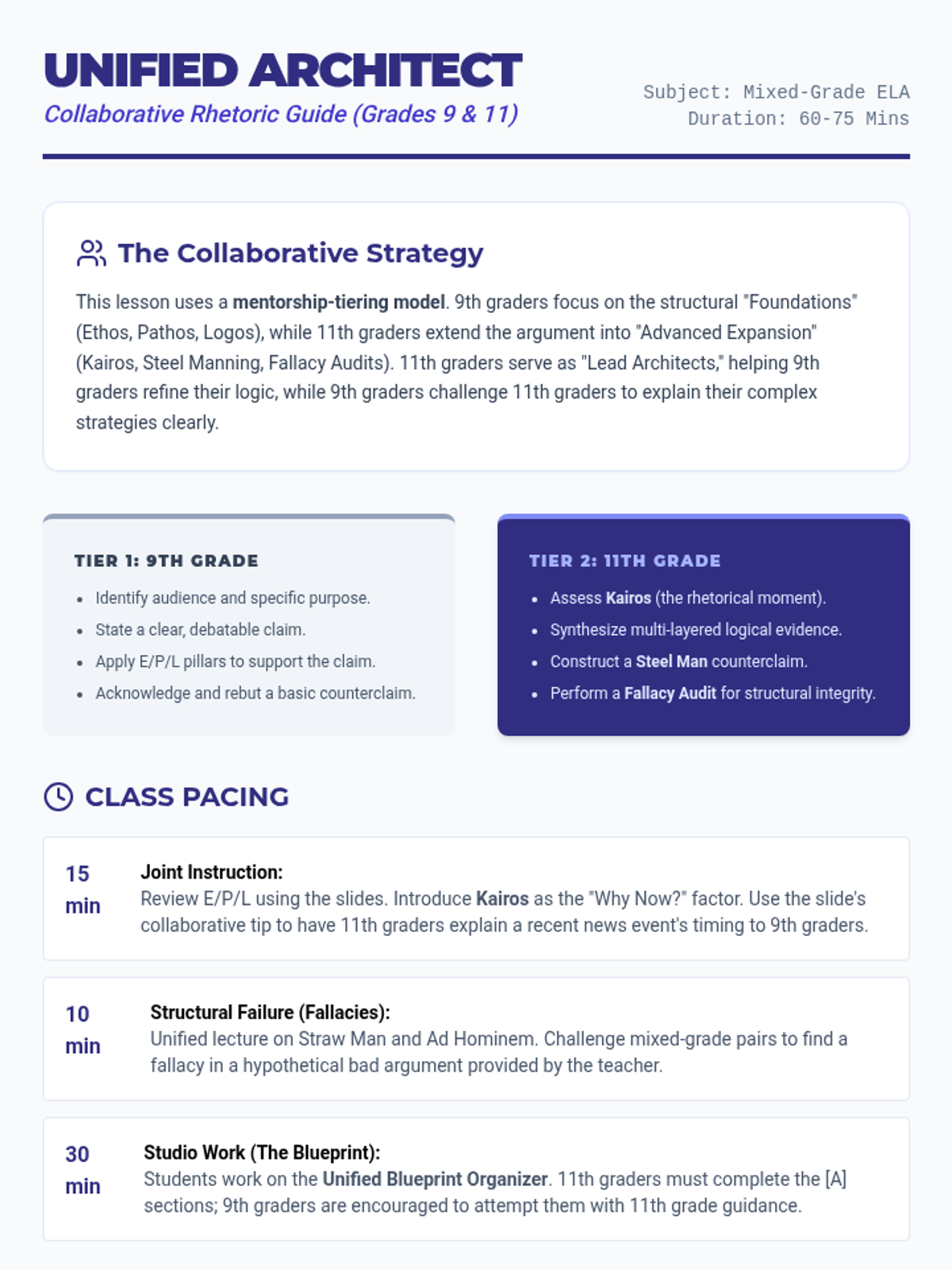
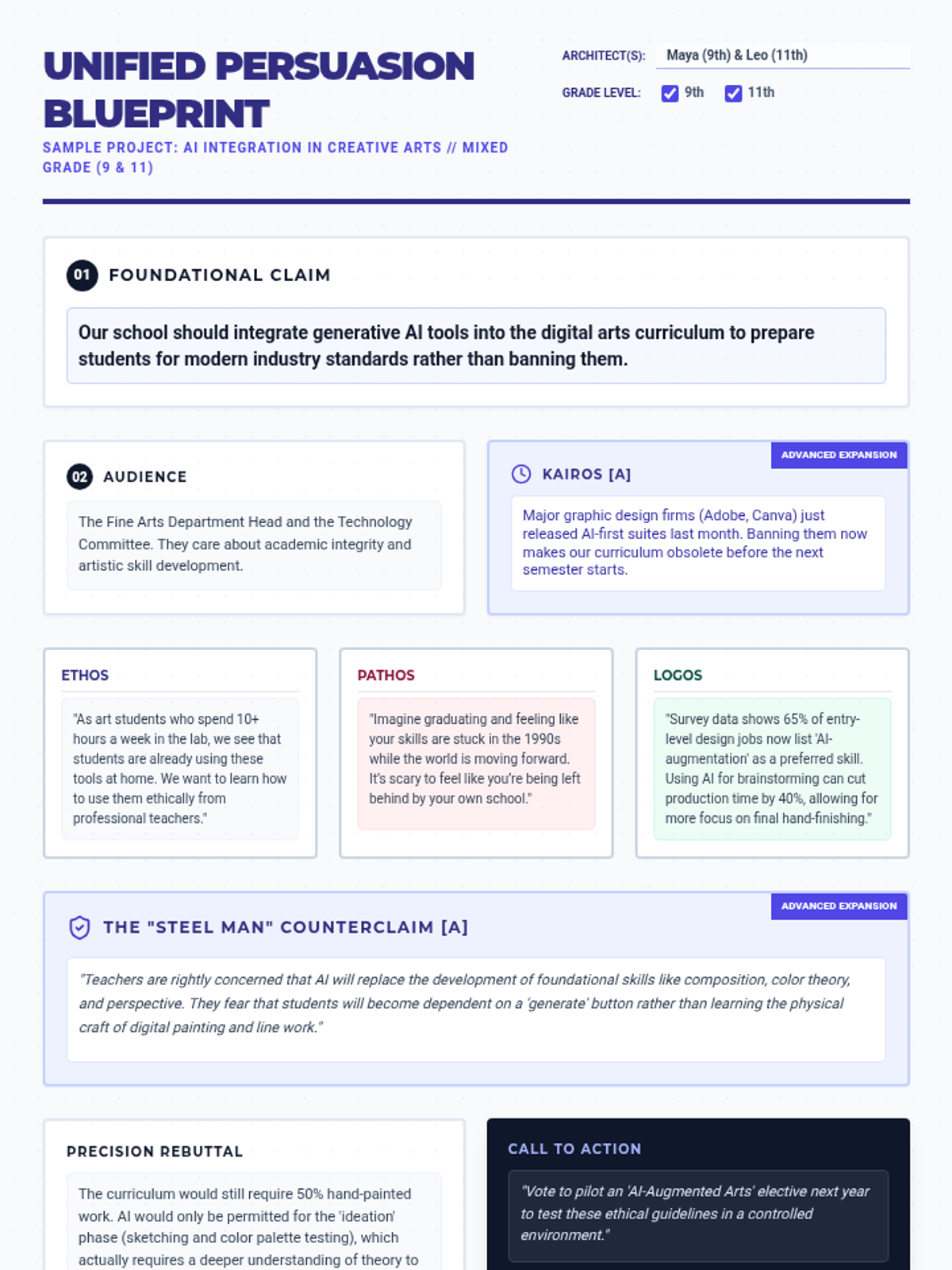
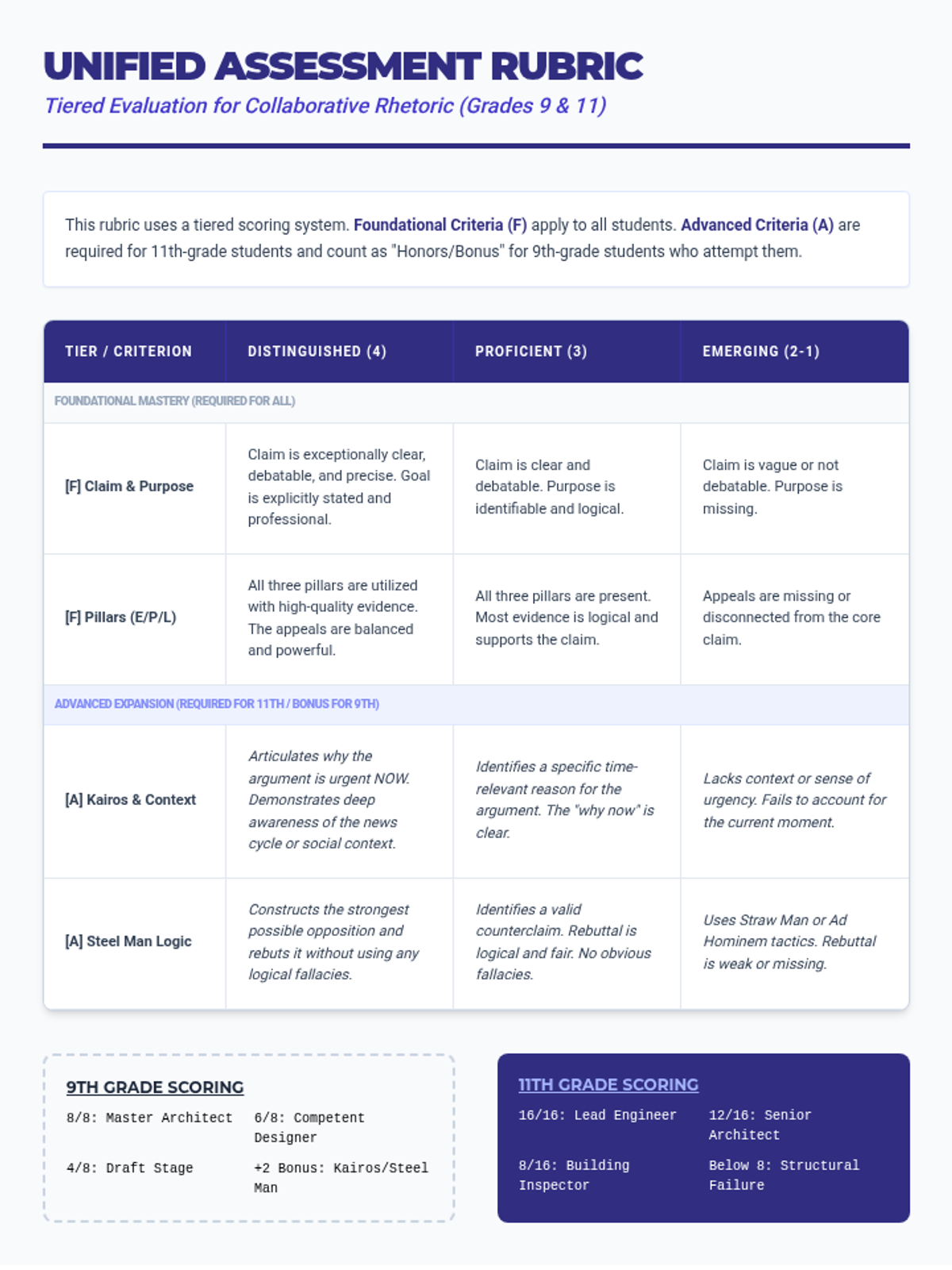
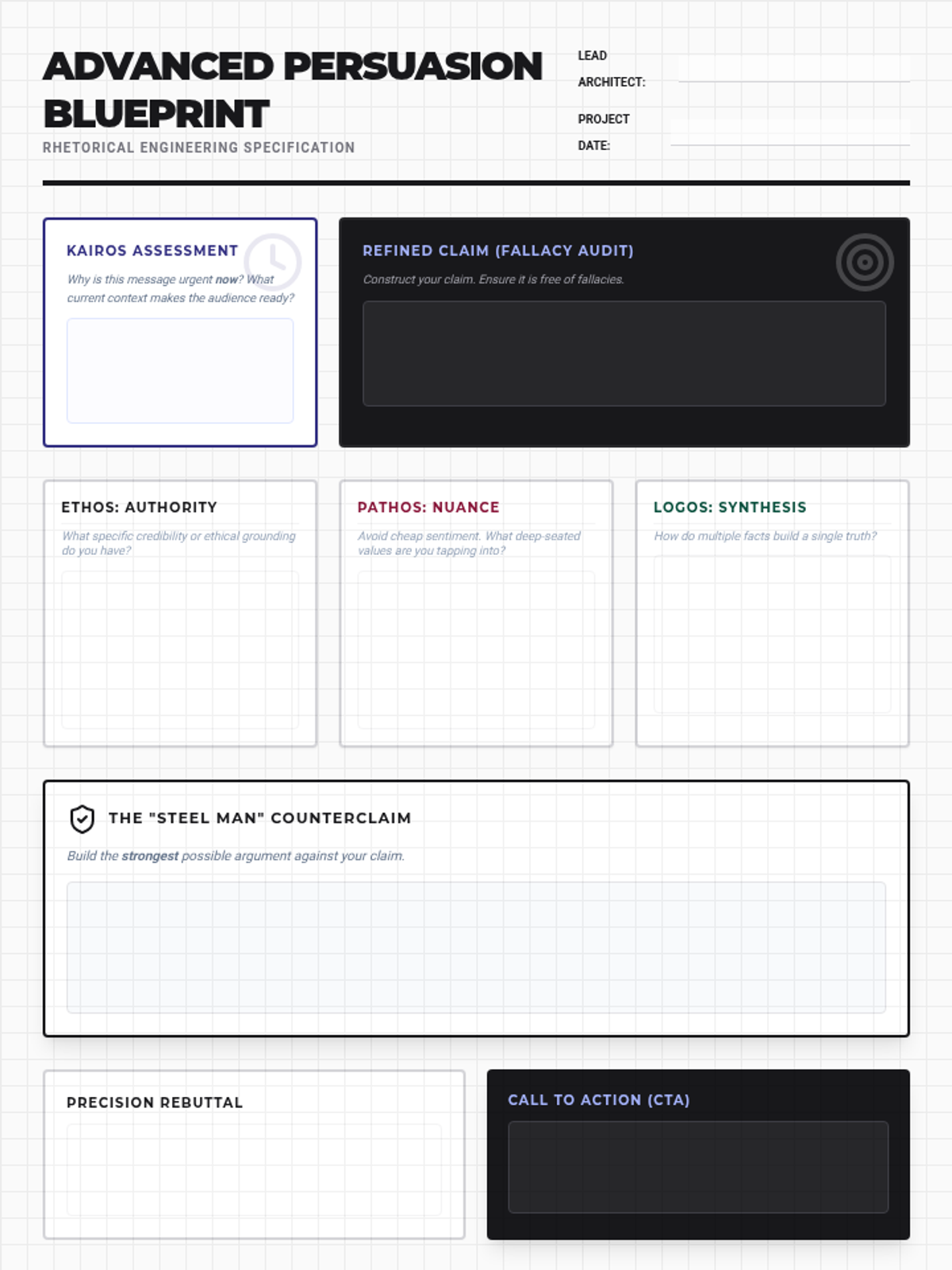
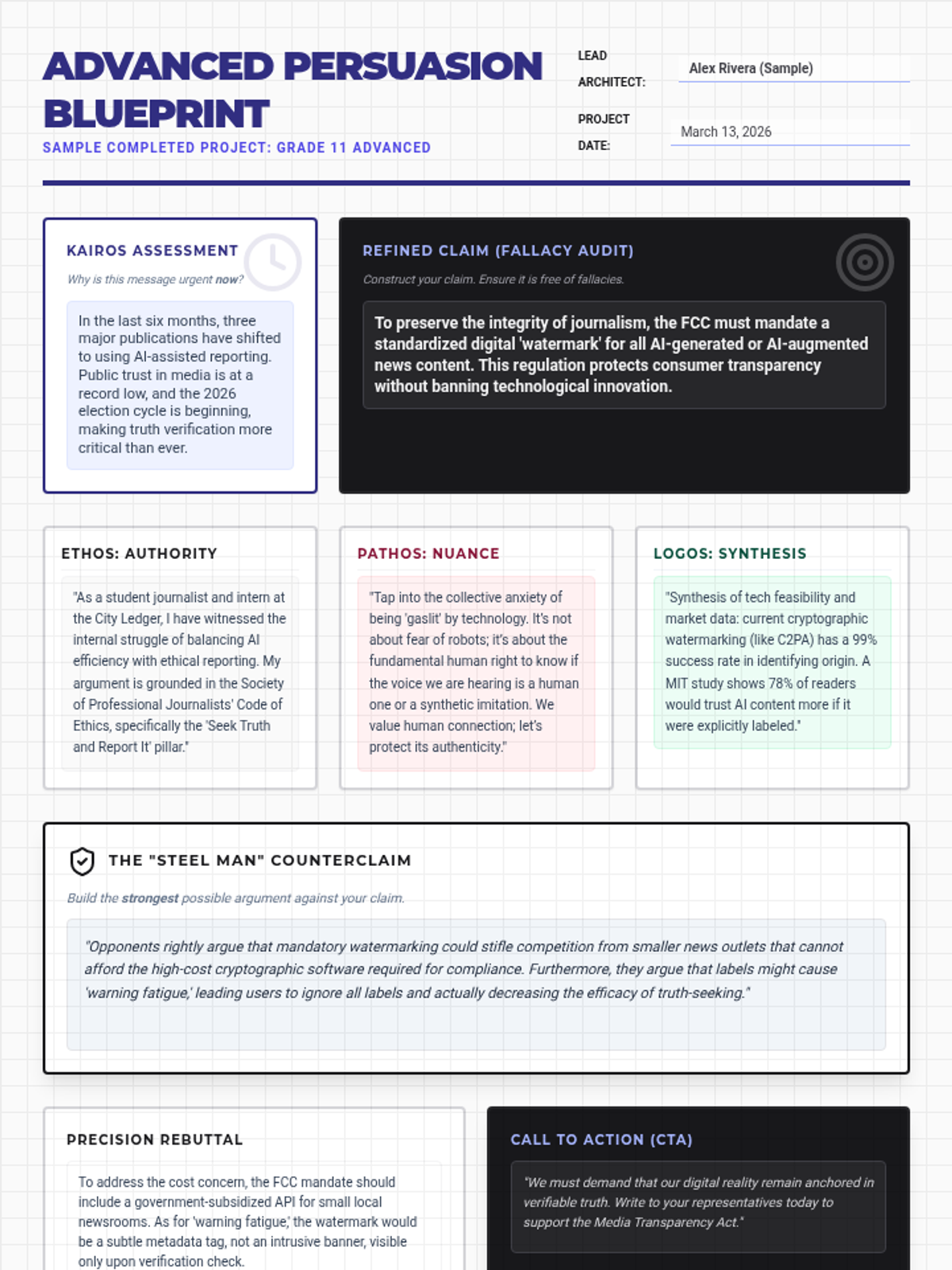
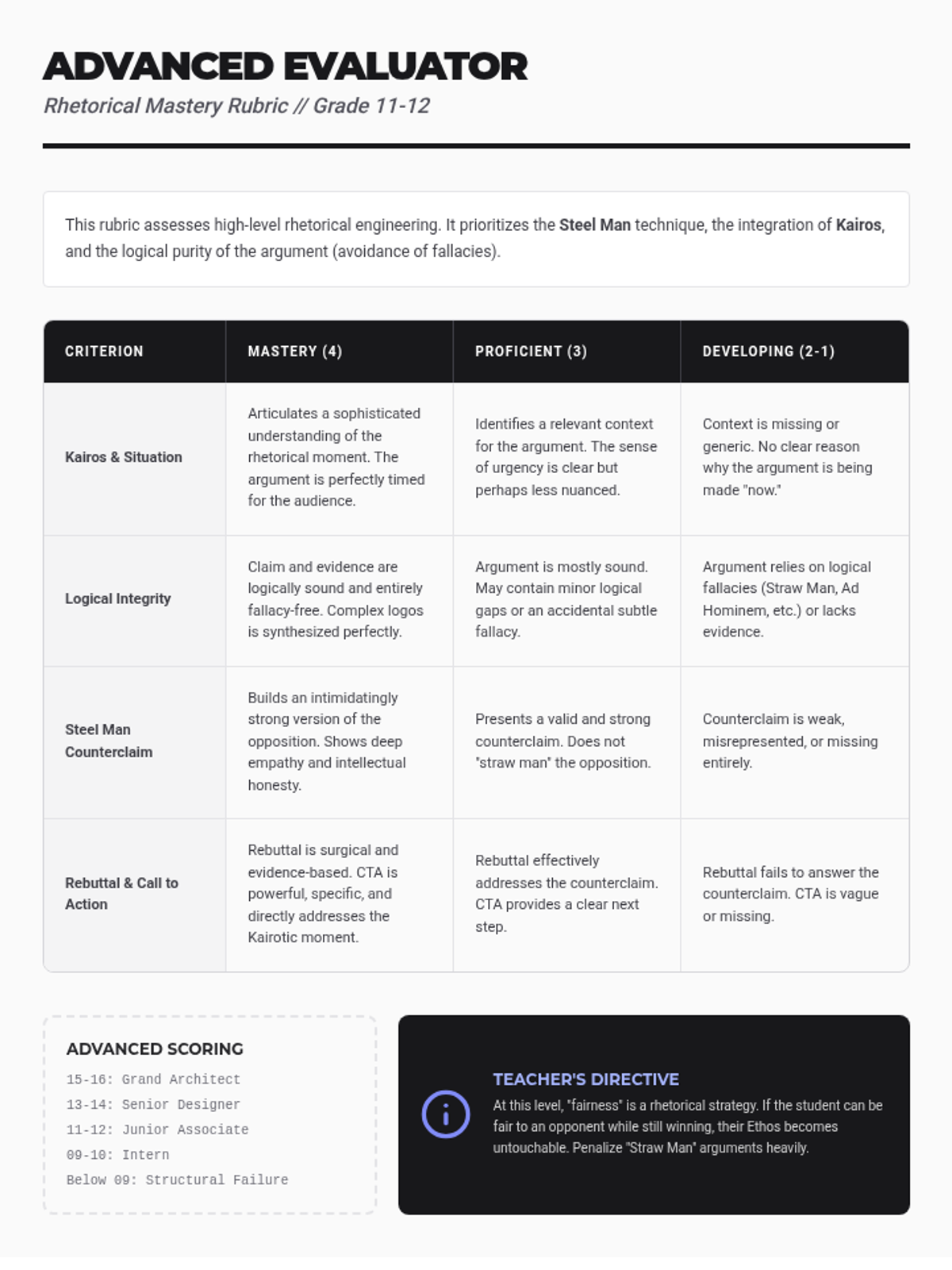
A tiered persuasive writing lesson designed for mixed-grade or scaffolded classrooms (9th-11th). Core concepts like Ethos, Pathos, and Logos are taught alongside advanced techniques like Kairos and Steel Manning, allowing students of different levels to collaborate and learn from one another.
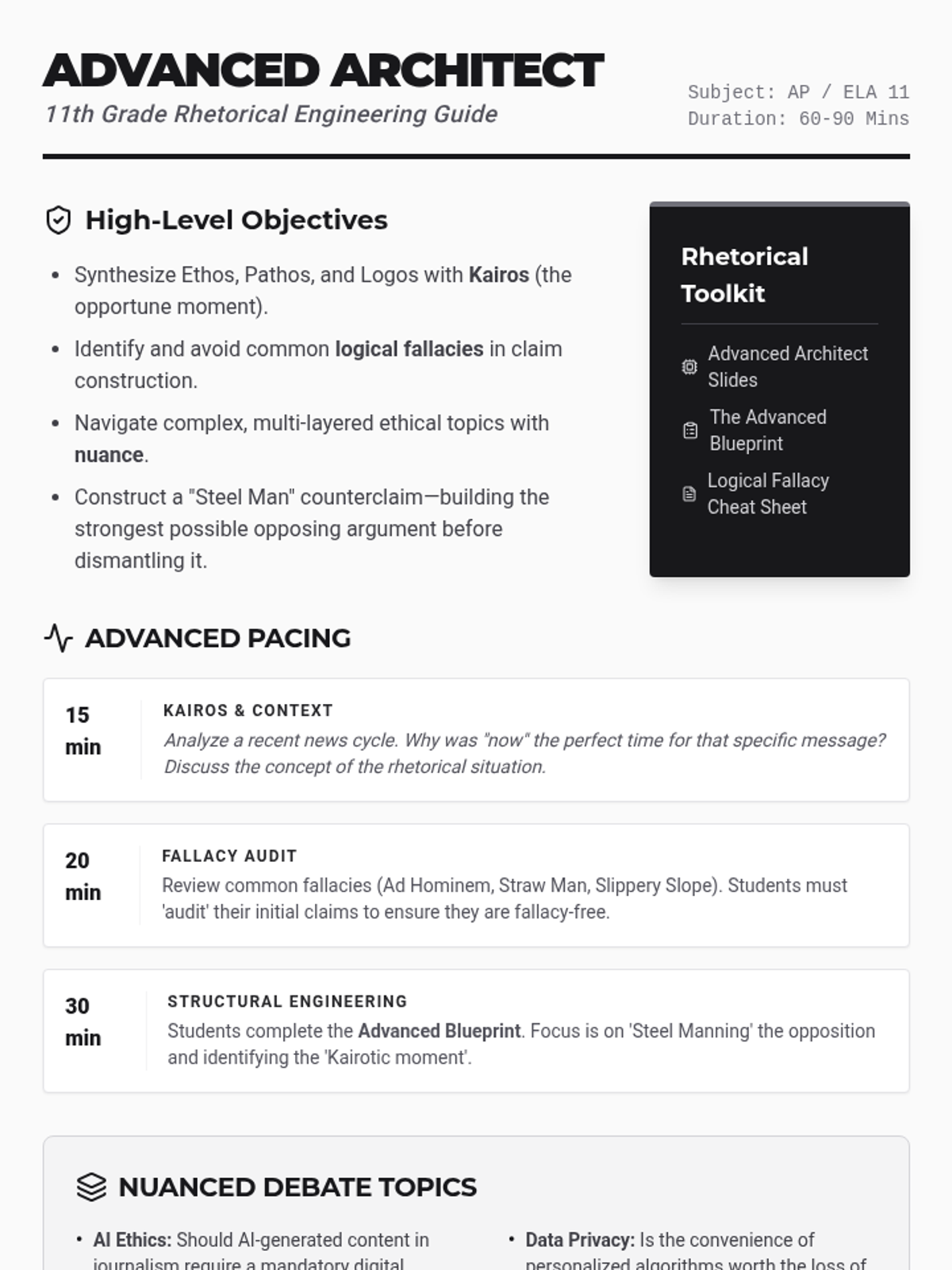
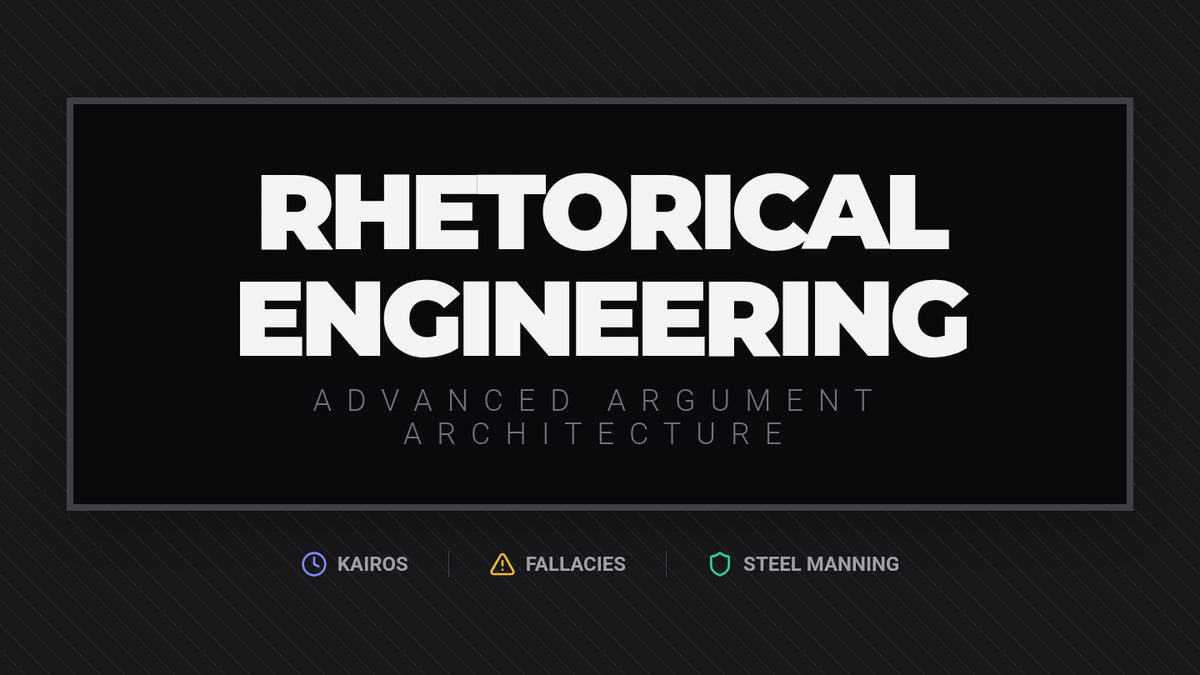
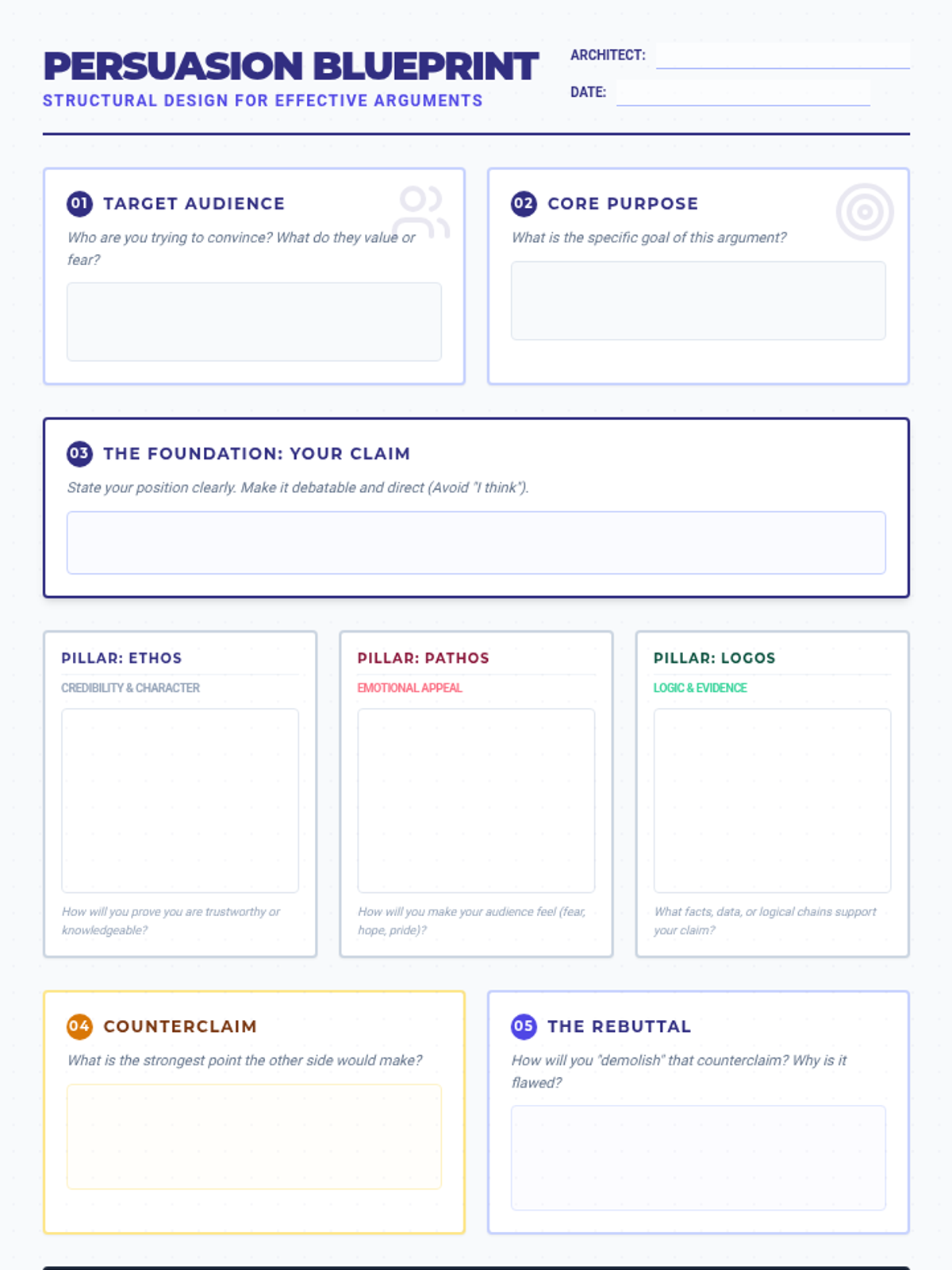
An advanced lesson for 11th graders that builds upon basic rhetorical foundations. Students explore Kairos (the opportune moment), identify logical fallacies, and tackle complex ethical and societal issues through a high-fidelity architectural blueprint organizer.
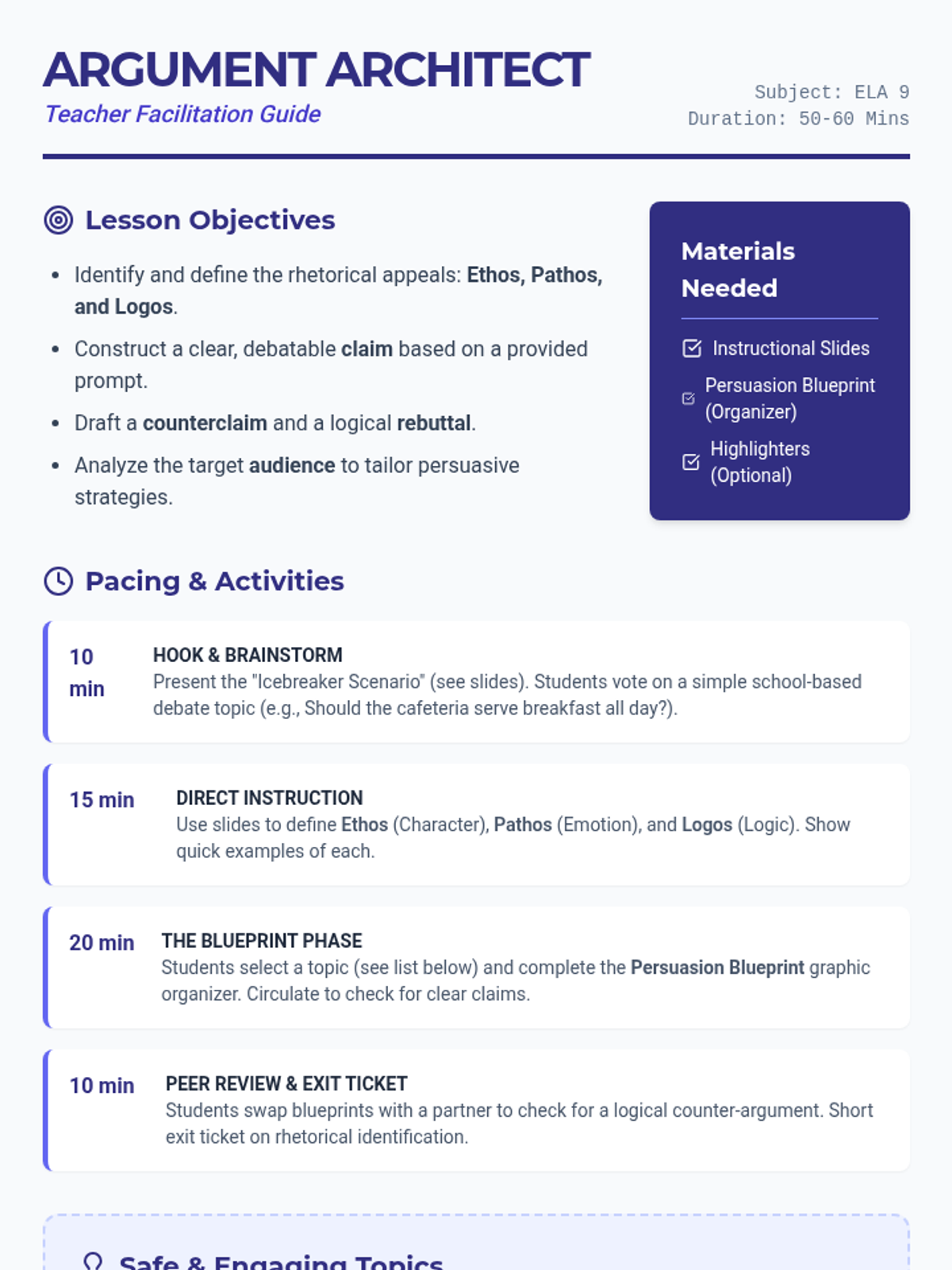
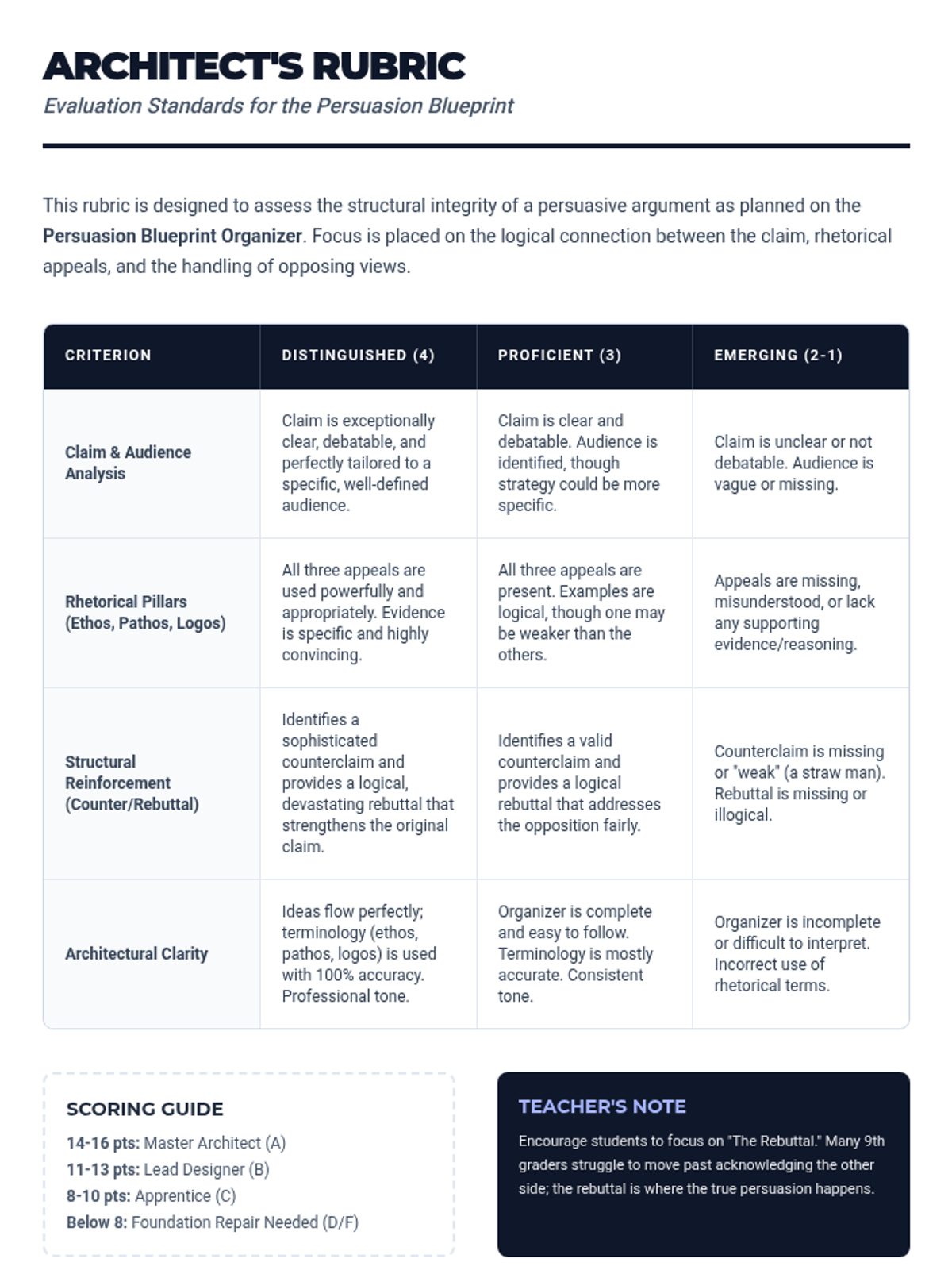
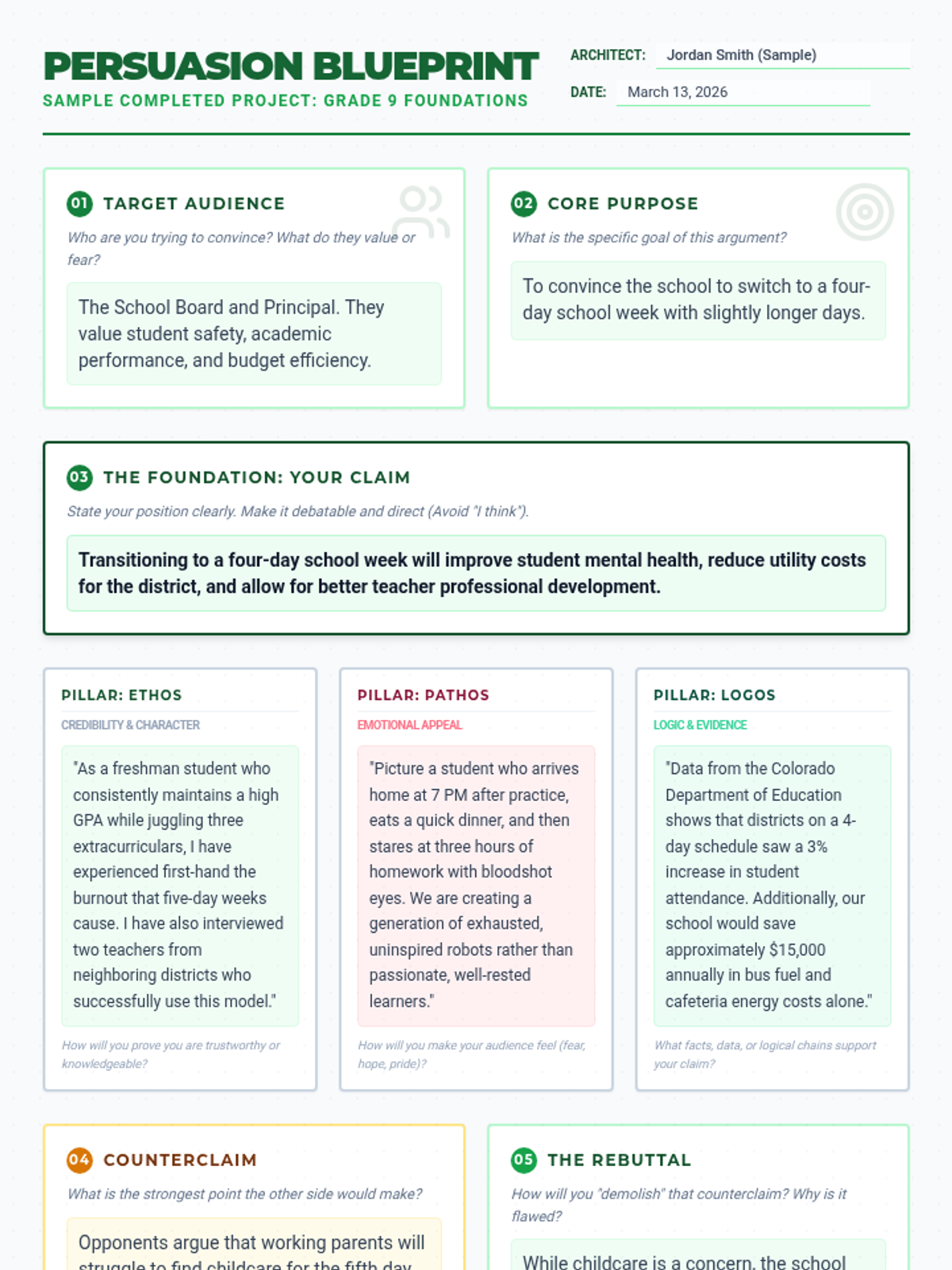
A comprehensive lesson for 9th graders on mastering the art of persuasion, focusing on rhetorical appeals, claim development, and addressing counterclaims. Students will use a structured graphic organizer to architect their own arguments on school-related topics.
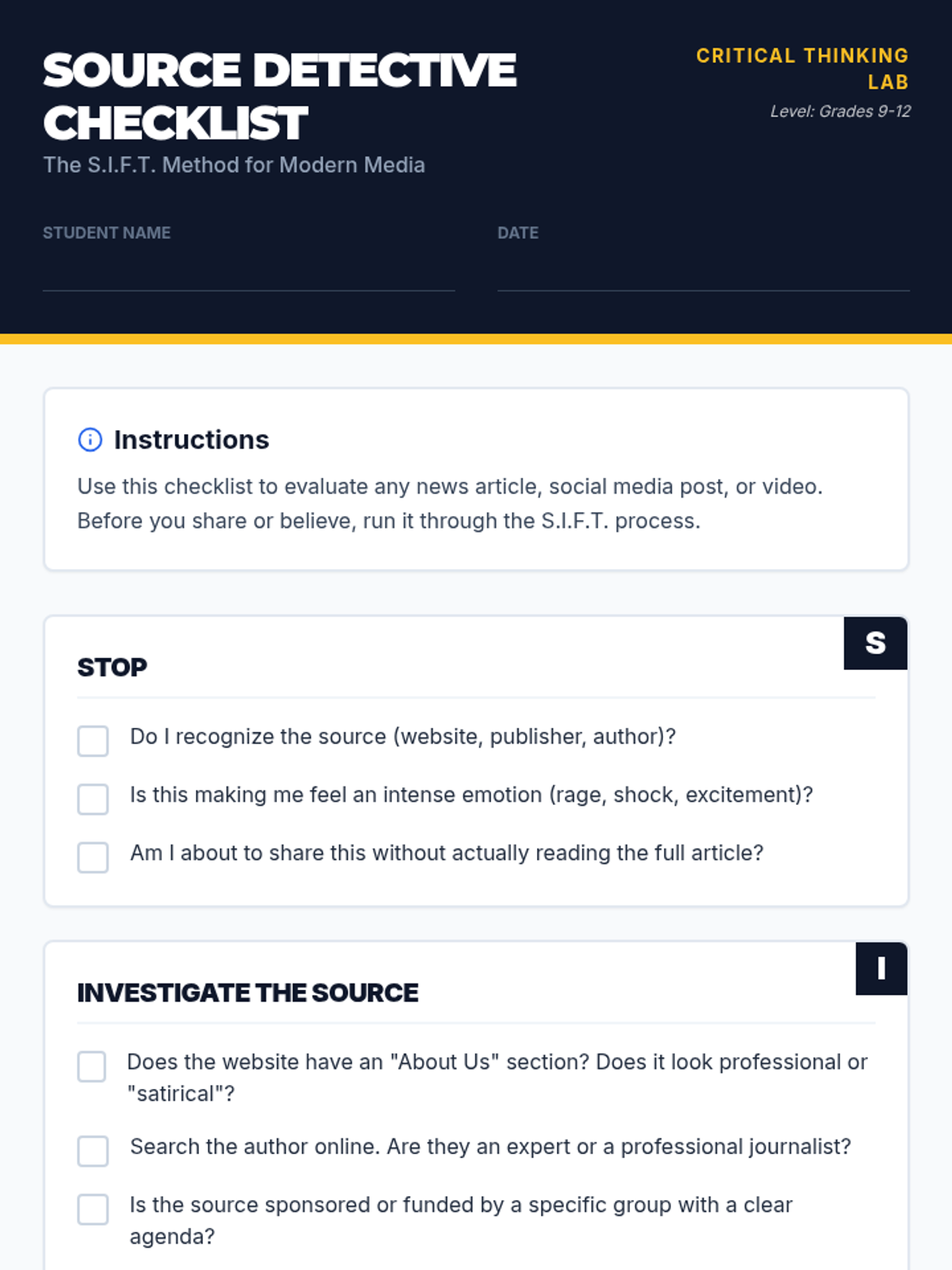
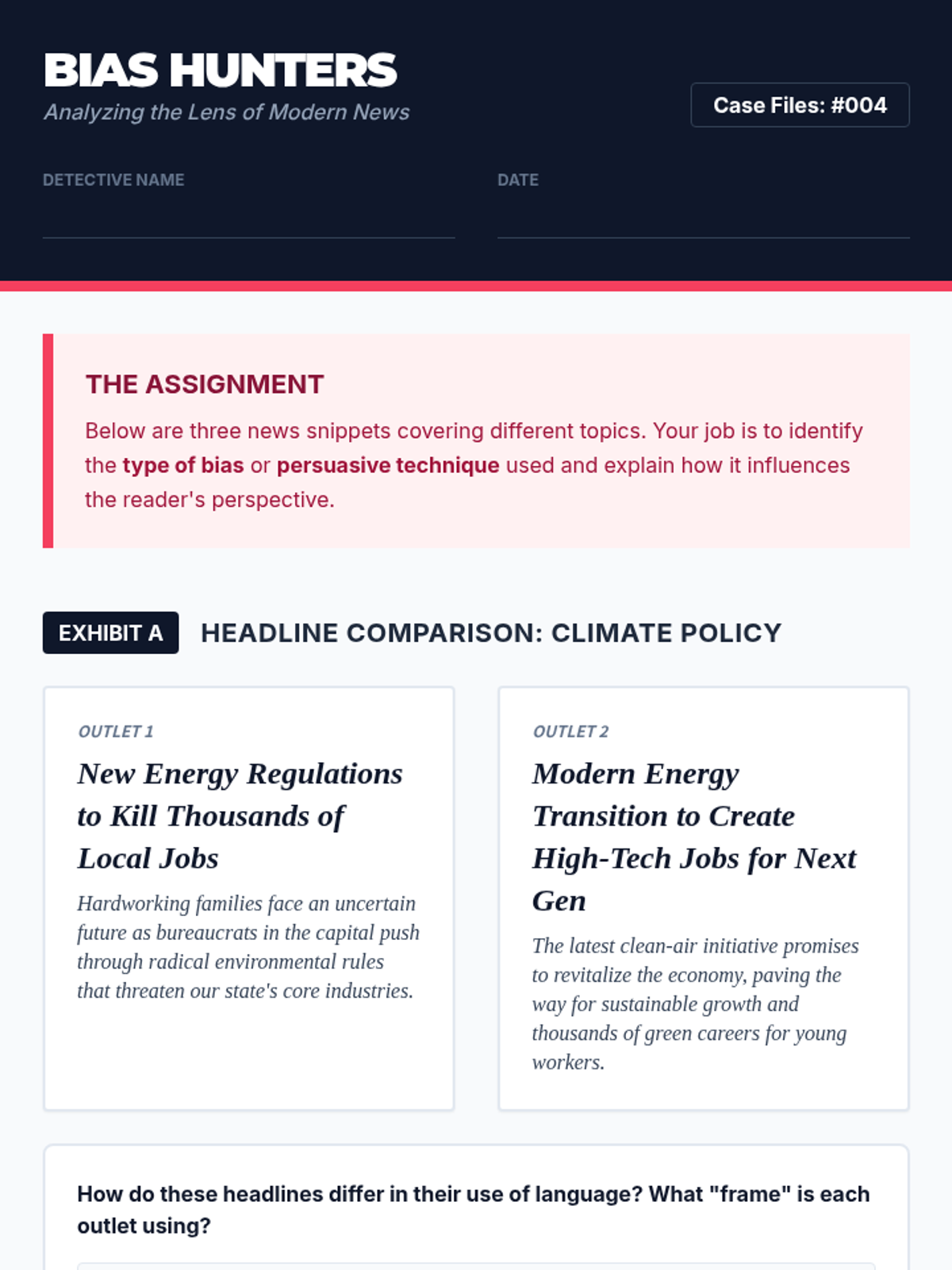
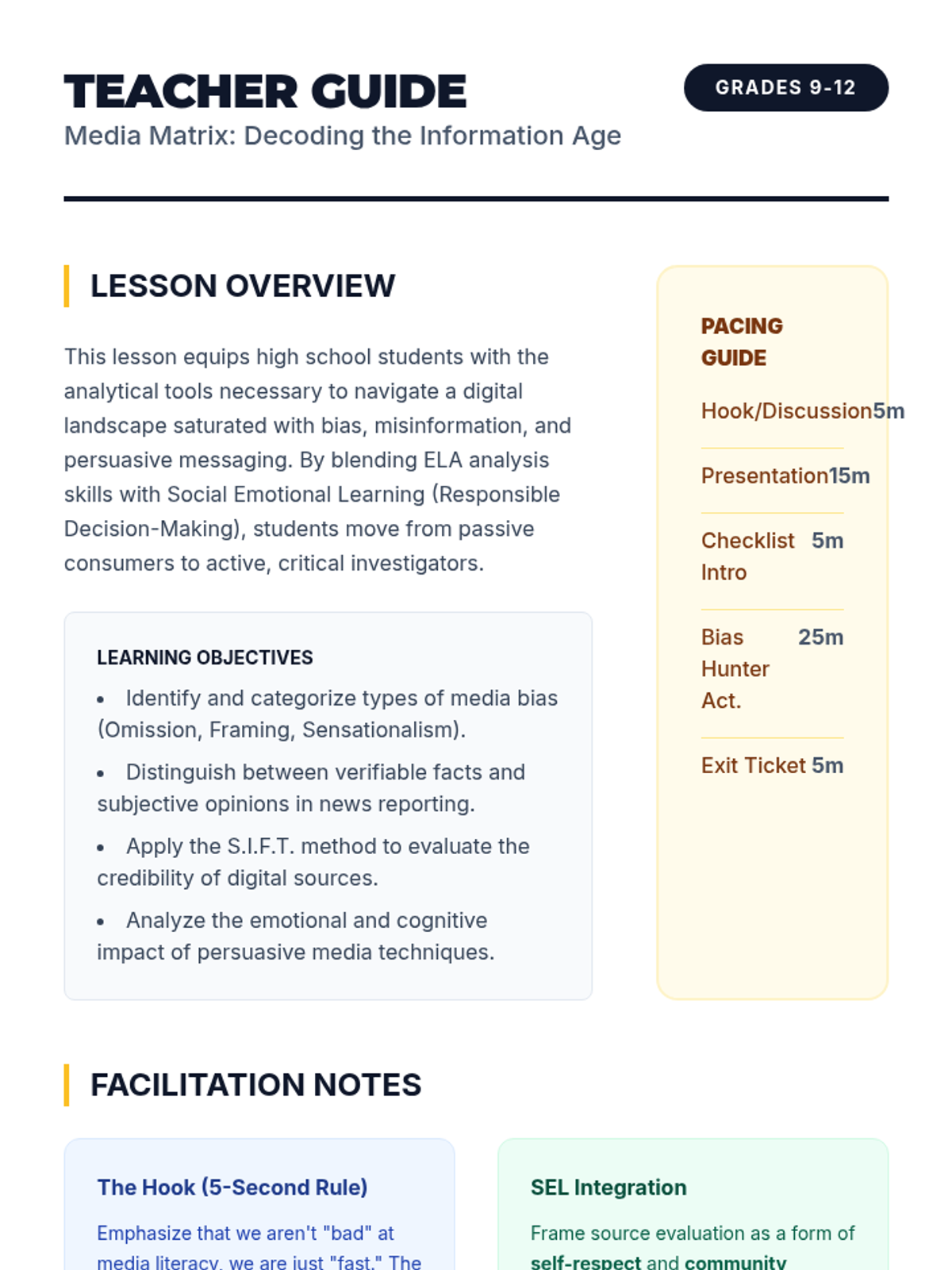
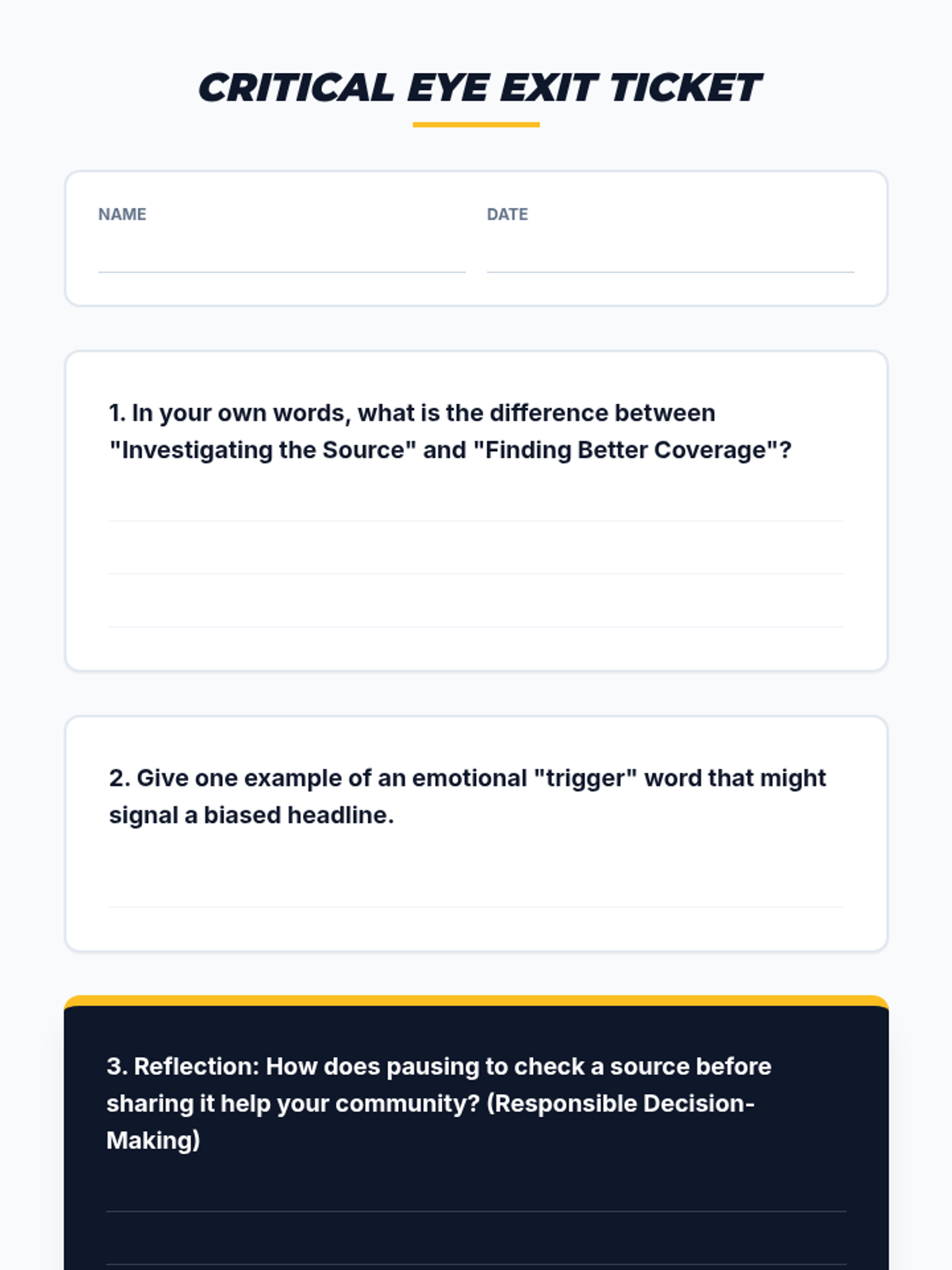
A comprehensive lesson for grades 9-12 on media literacy, source evaluation, and identifying bias. Students develop critical thinking skills to navigate the modern information landscape while practicing responsible decision-making.
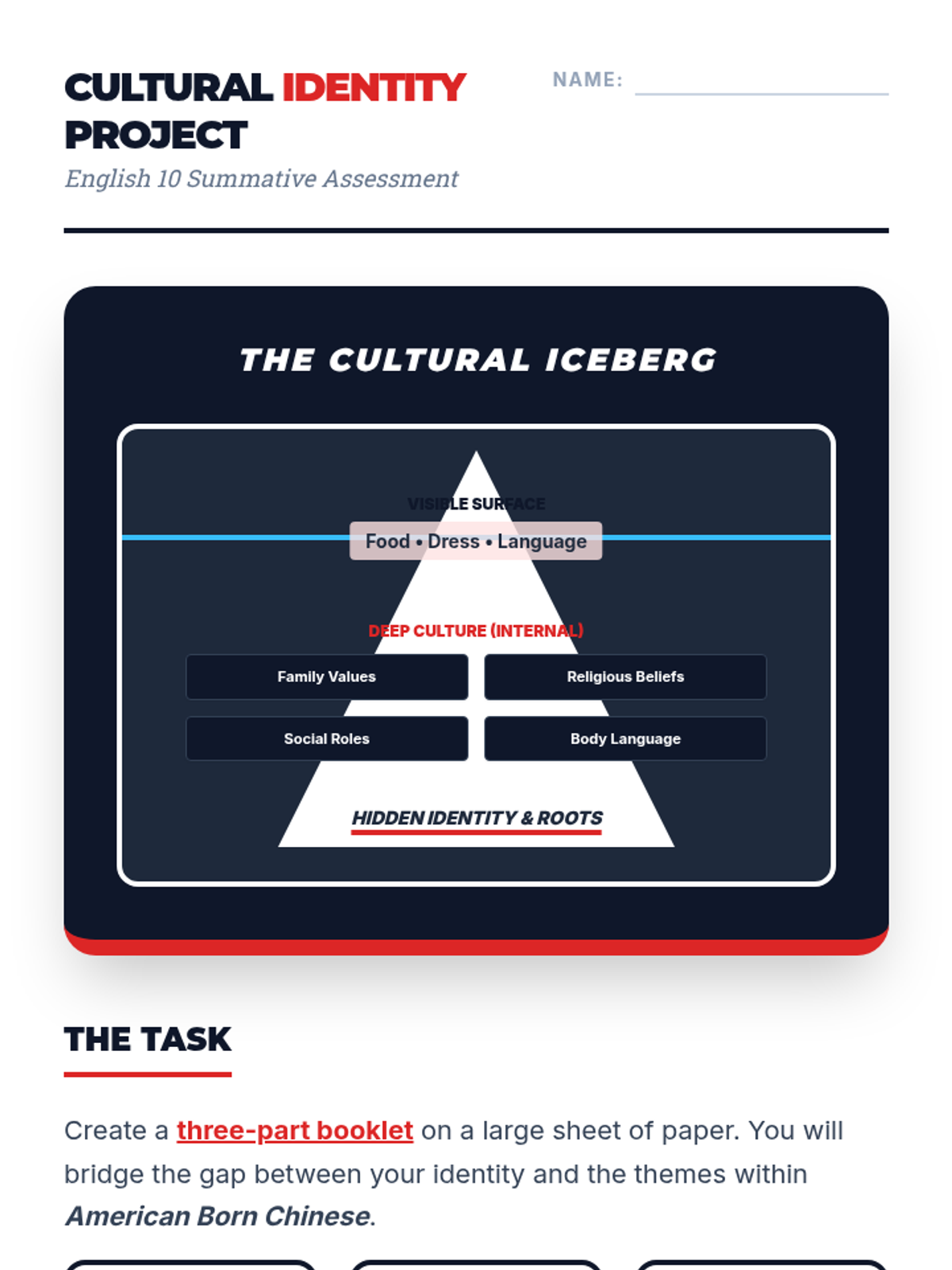
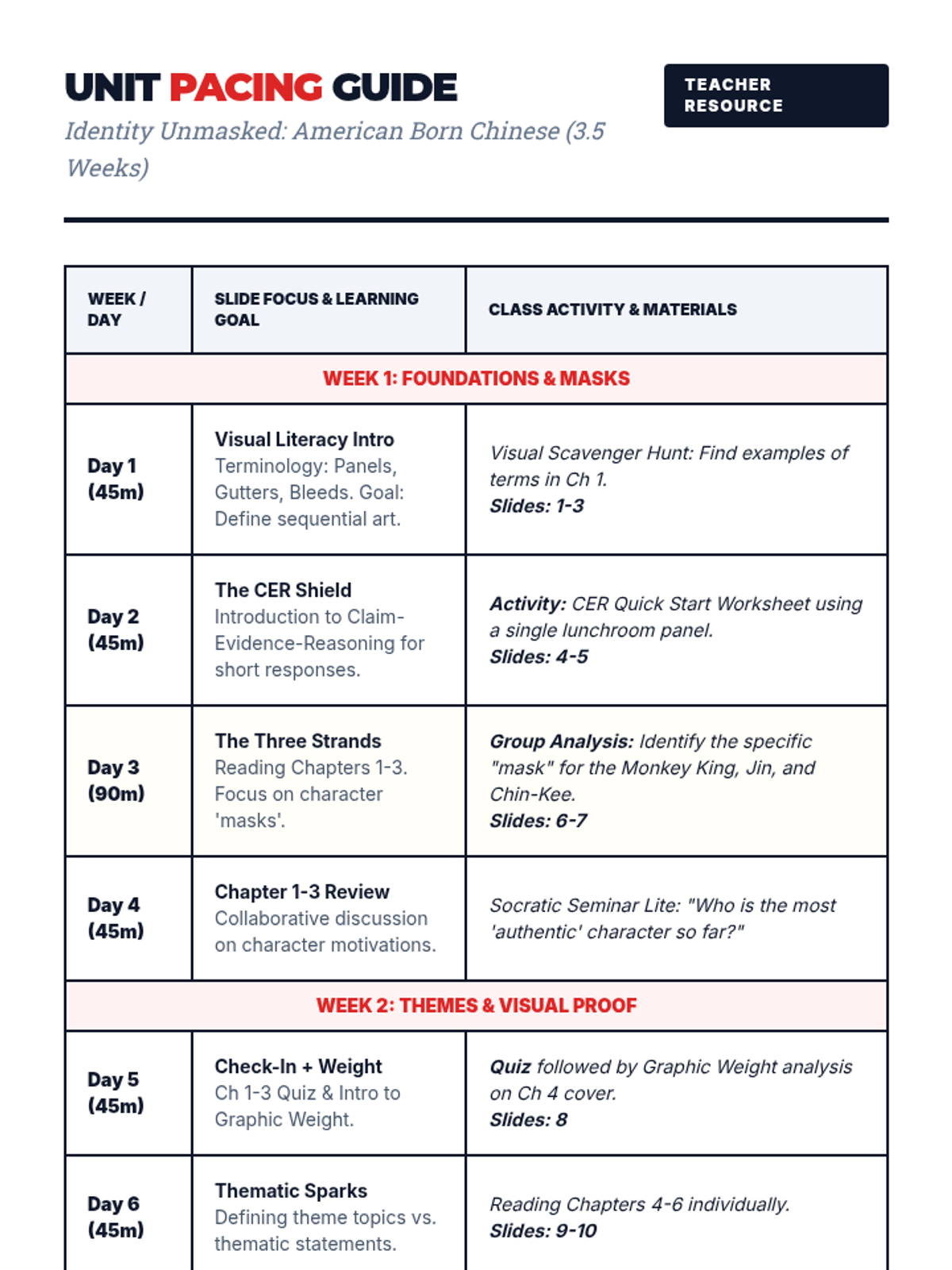
Concluding the novel and launching the final Cultural Identity Project.
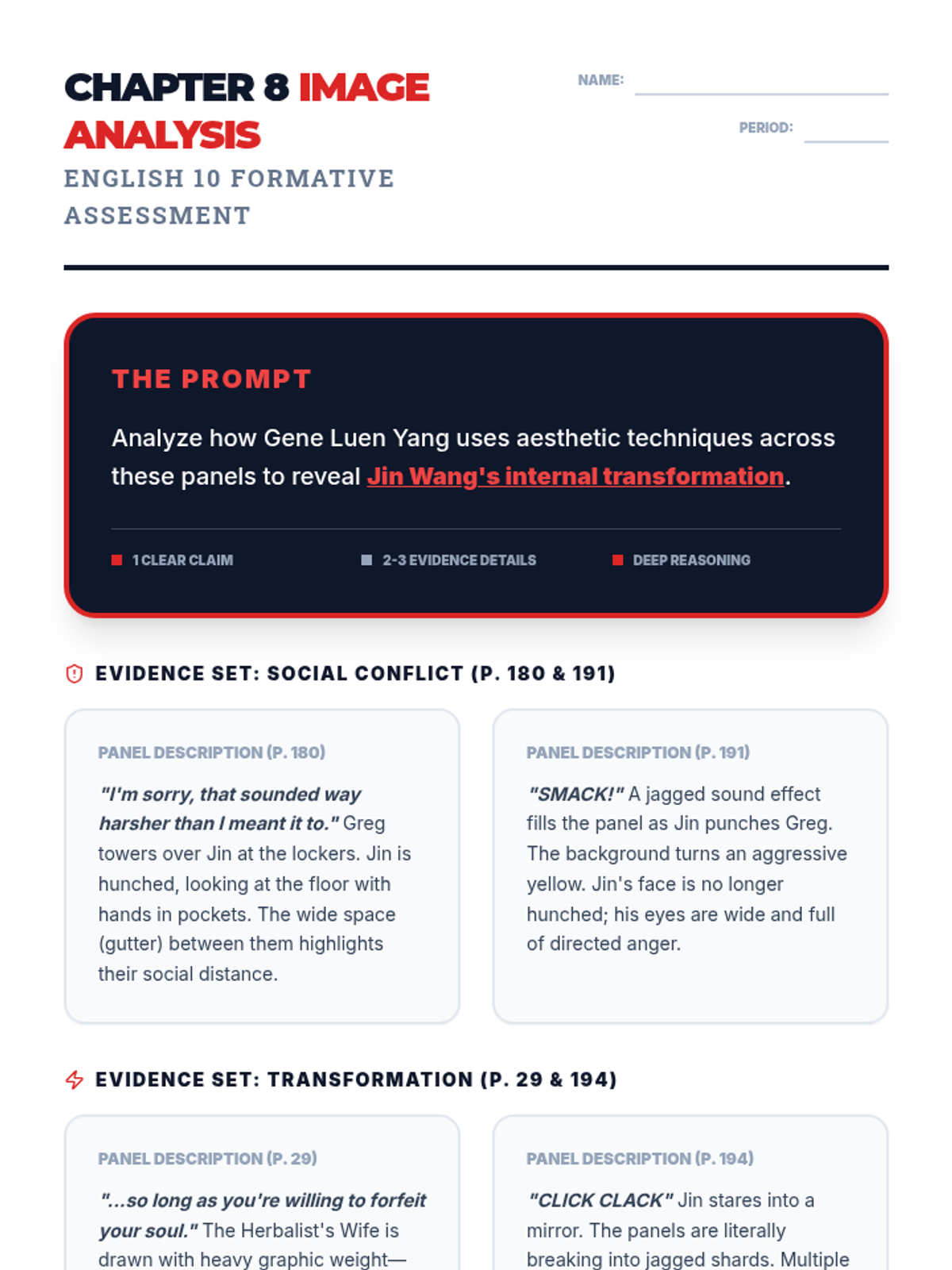
Formal assessment of chapter 8 using the Image Analysis CER format.
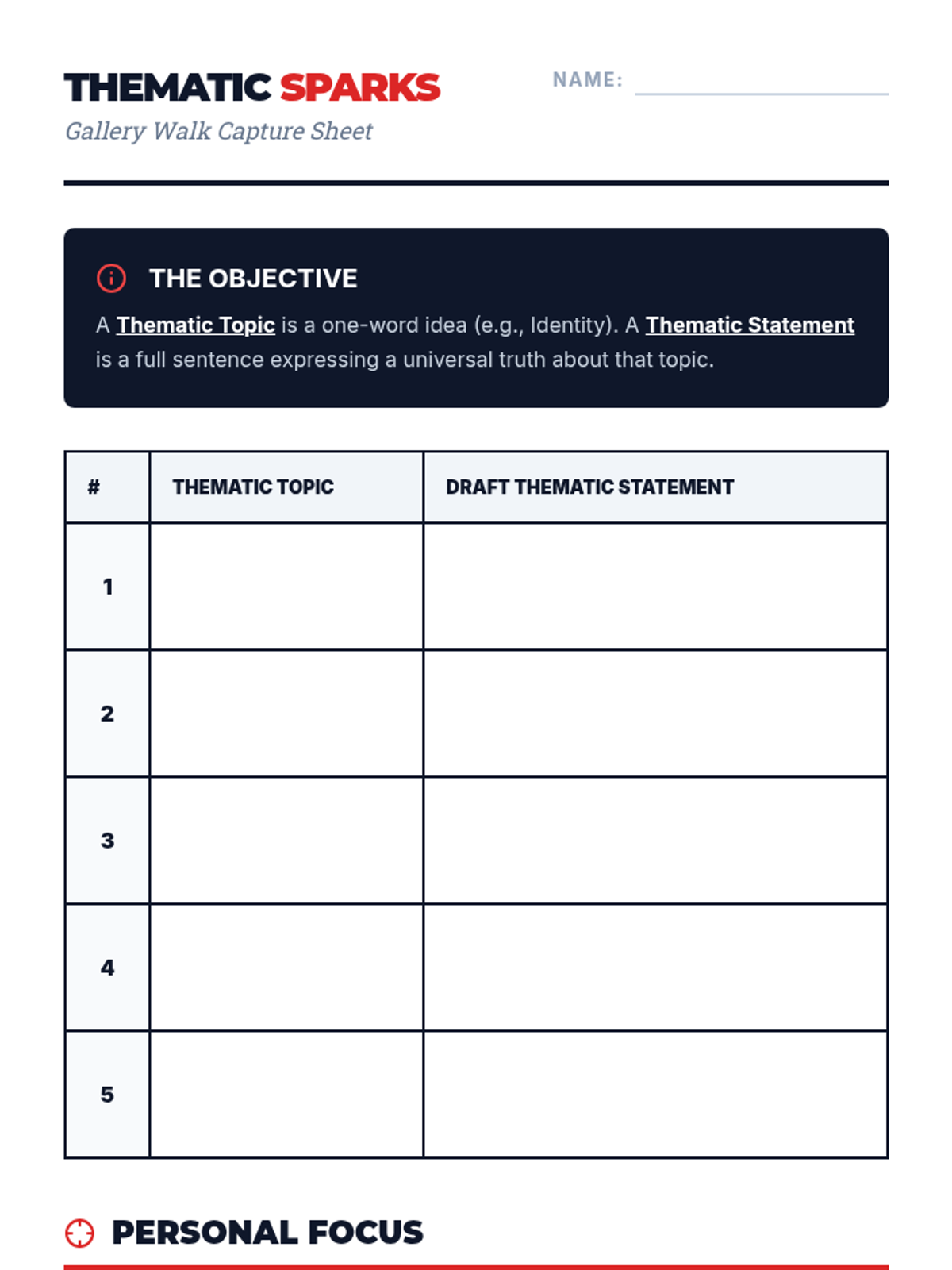
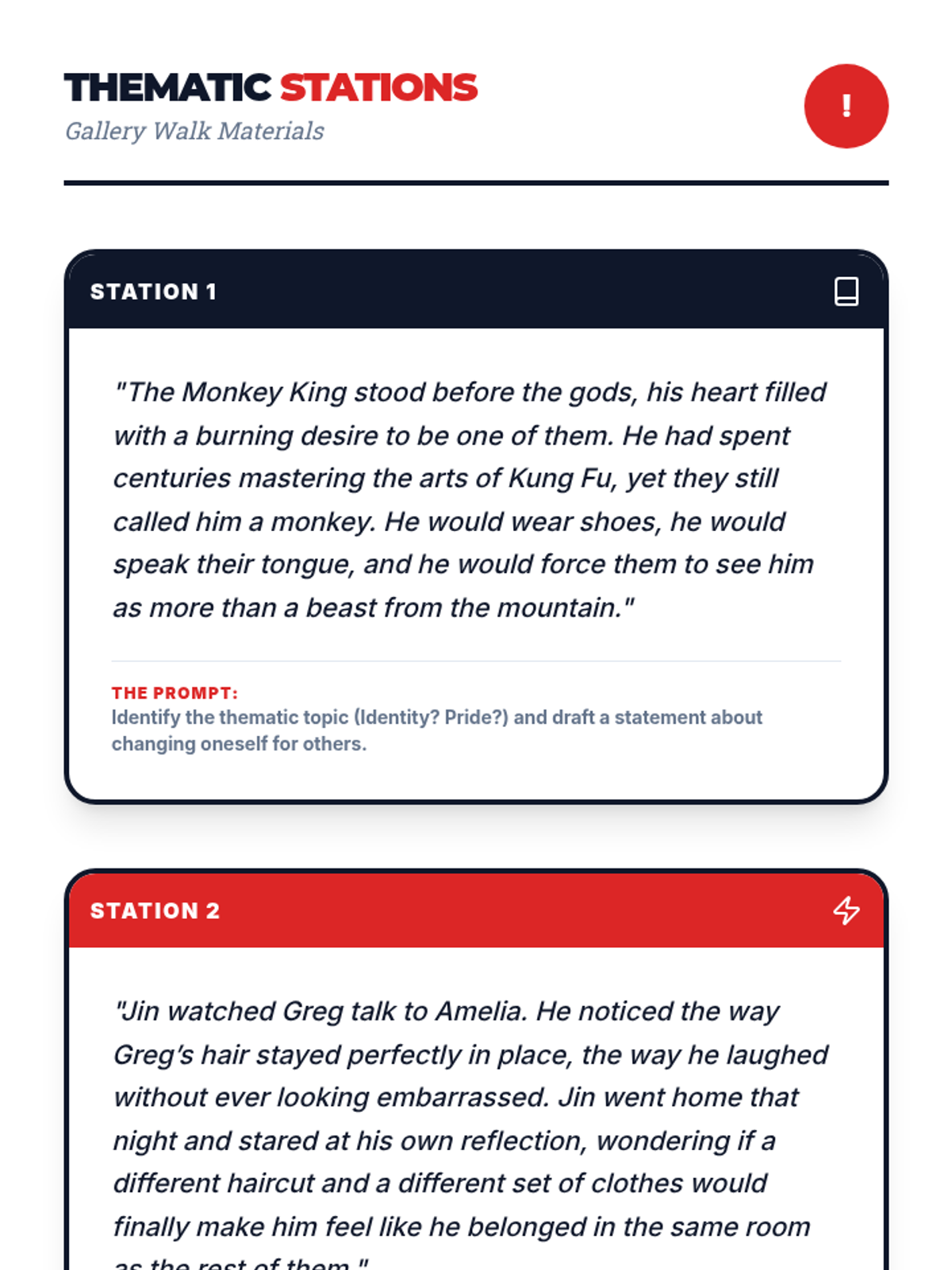
Exploring chapters 4-6 through a theme-focused gallery walk to transition from thematic topics to thematic statements.
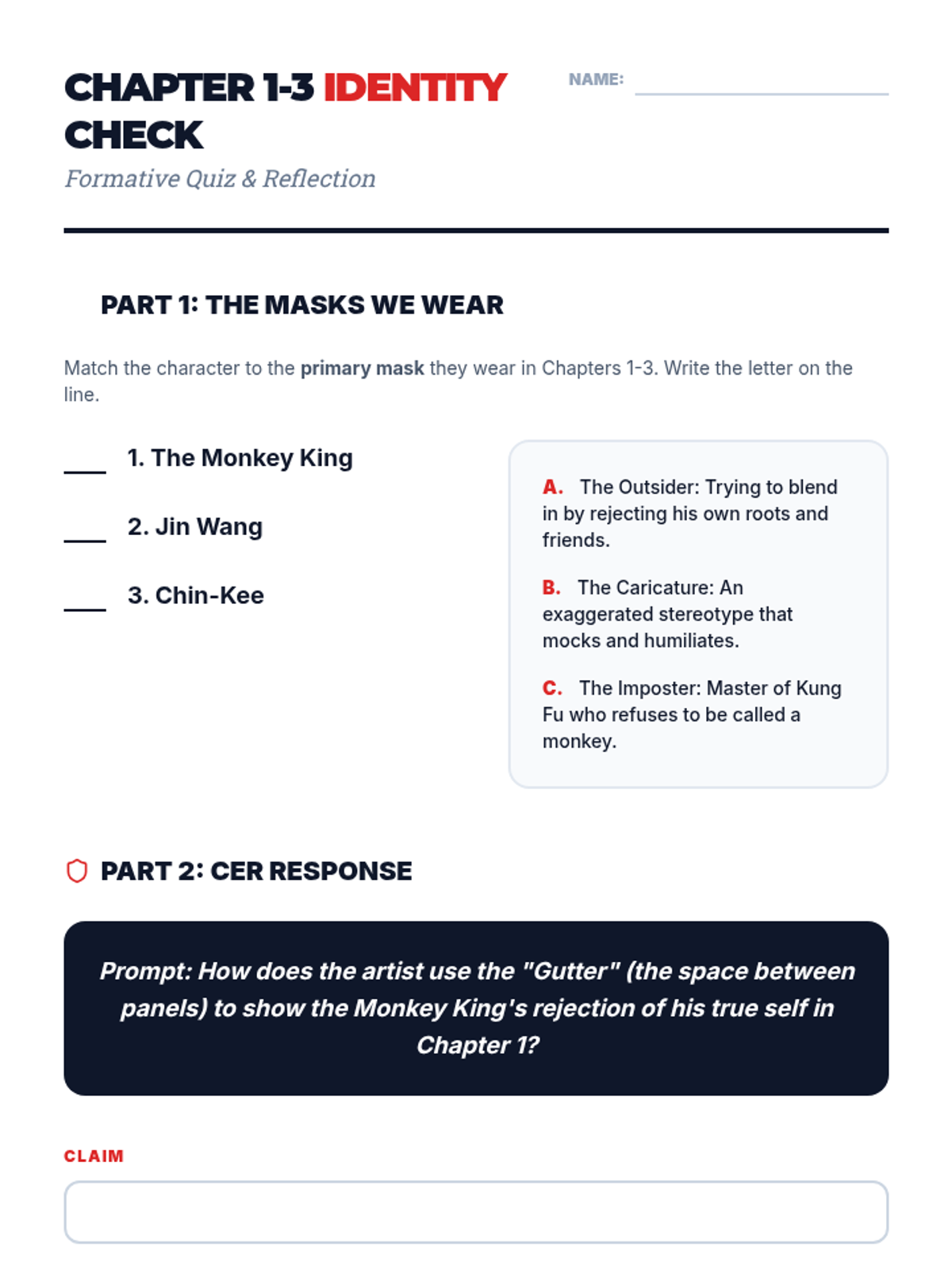
Deep dive into chapters 1-3 with a focus on character development and initial CER application in short responses.
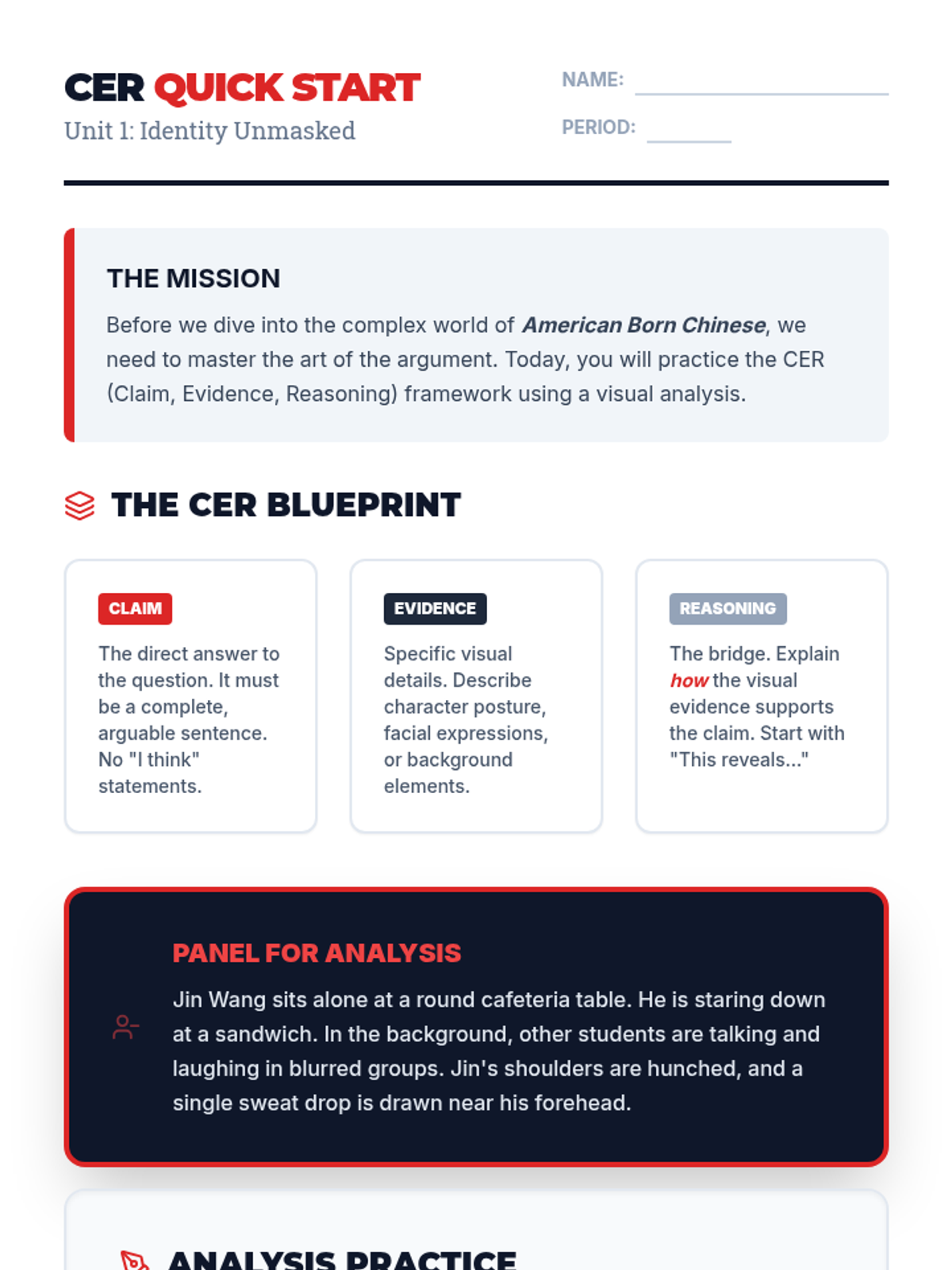
Introduction to graphic novel terminology and the CER (Claim, Evidence, Reasoning) framework for literary analysis.
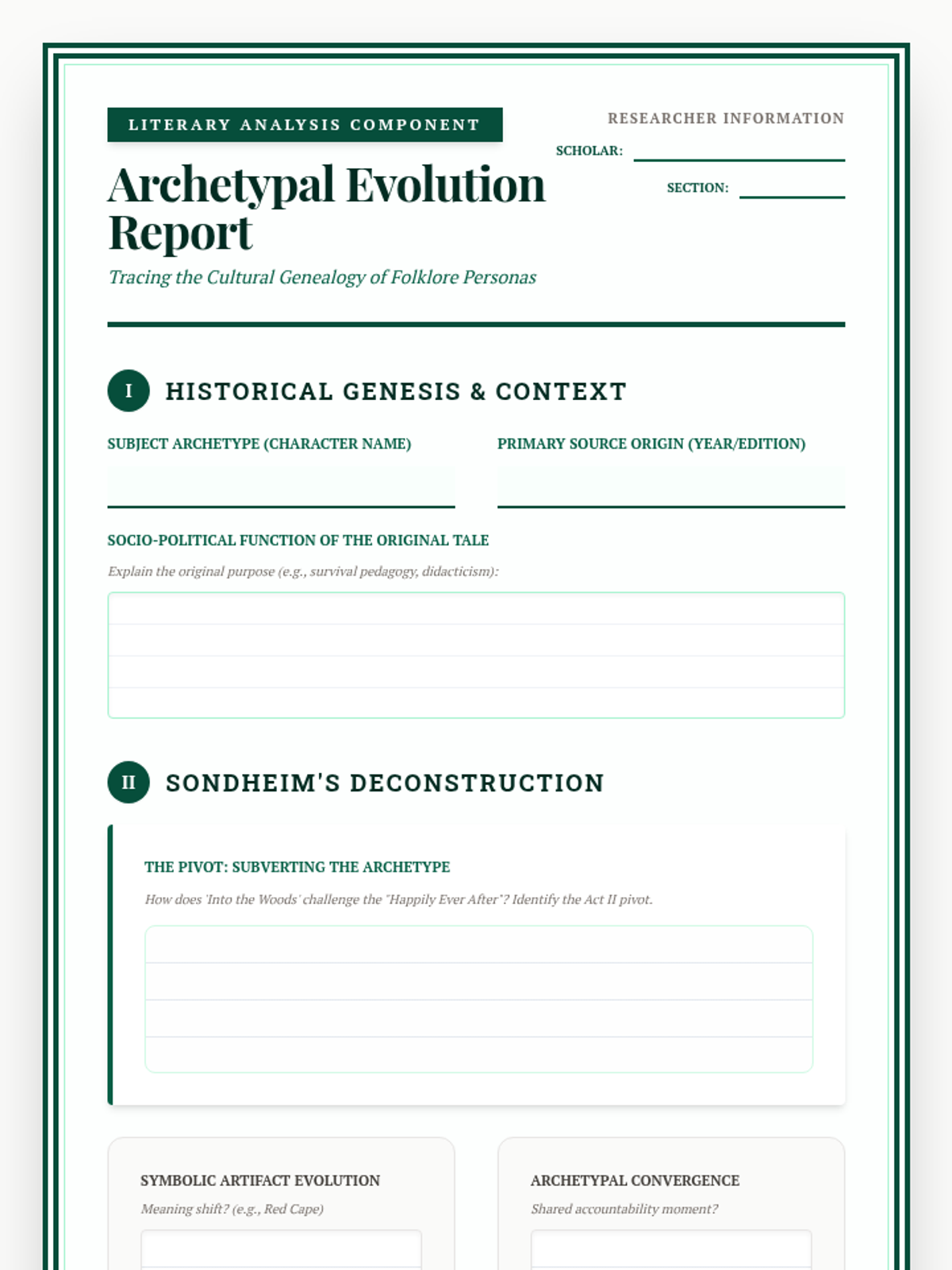
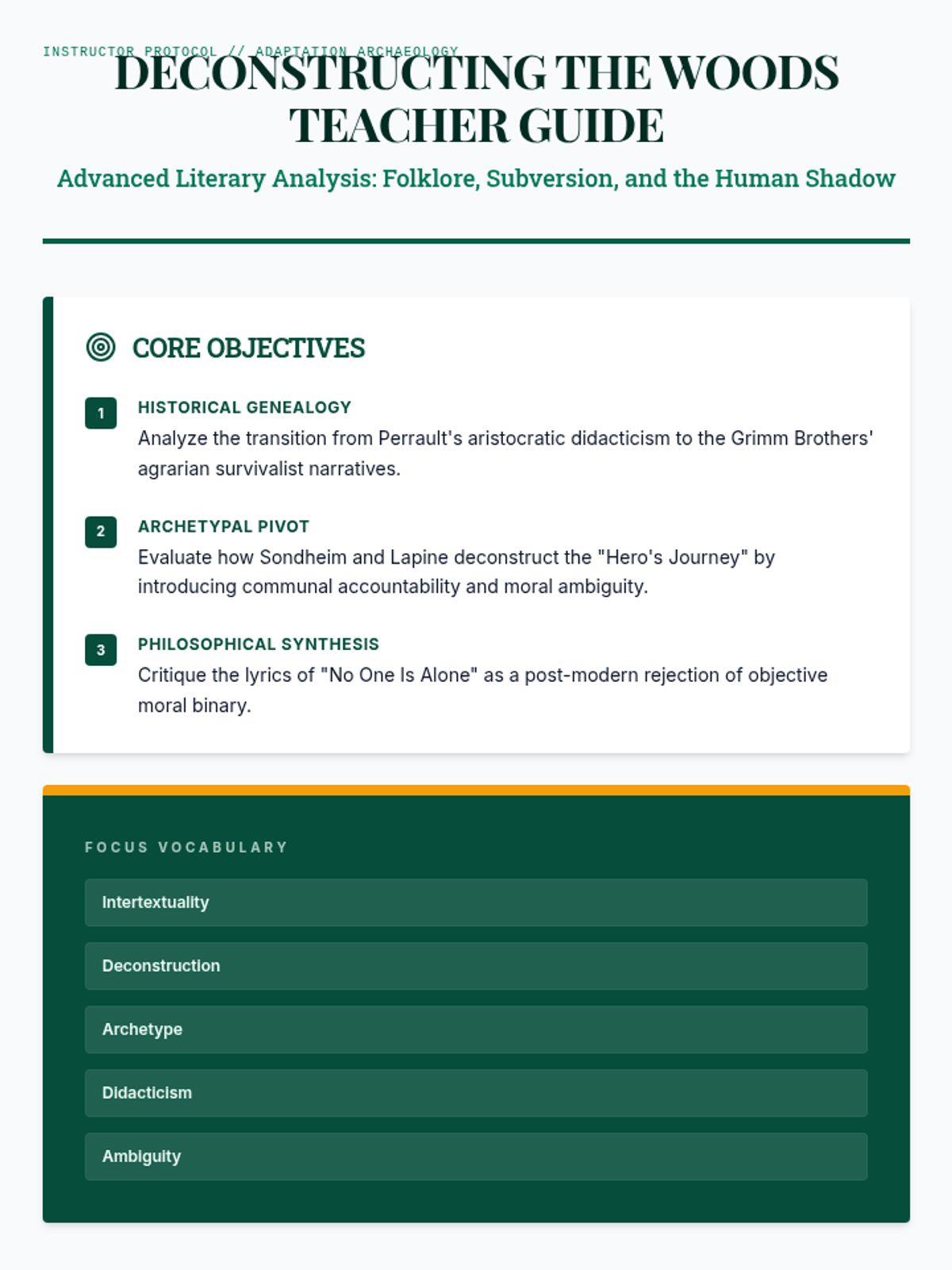
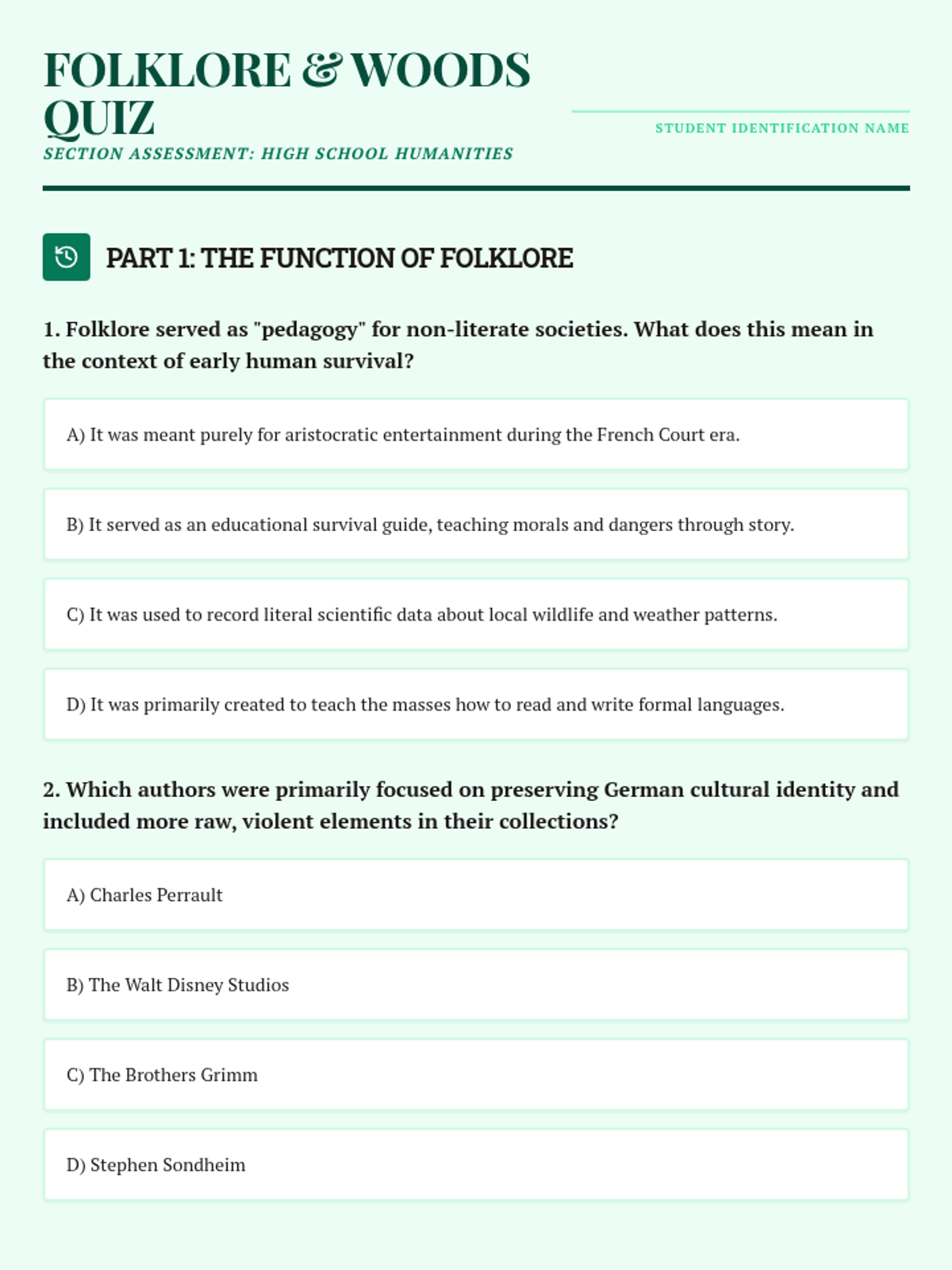
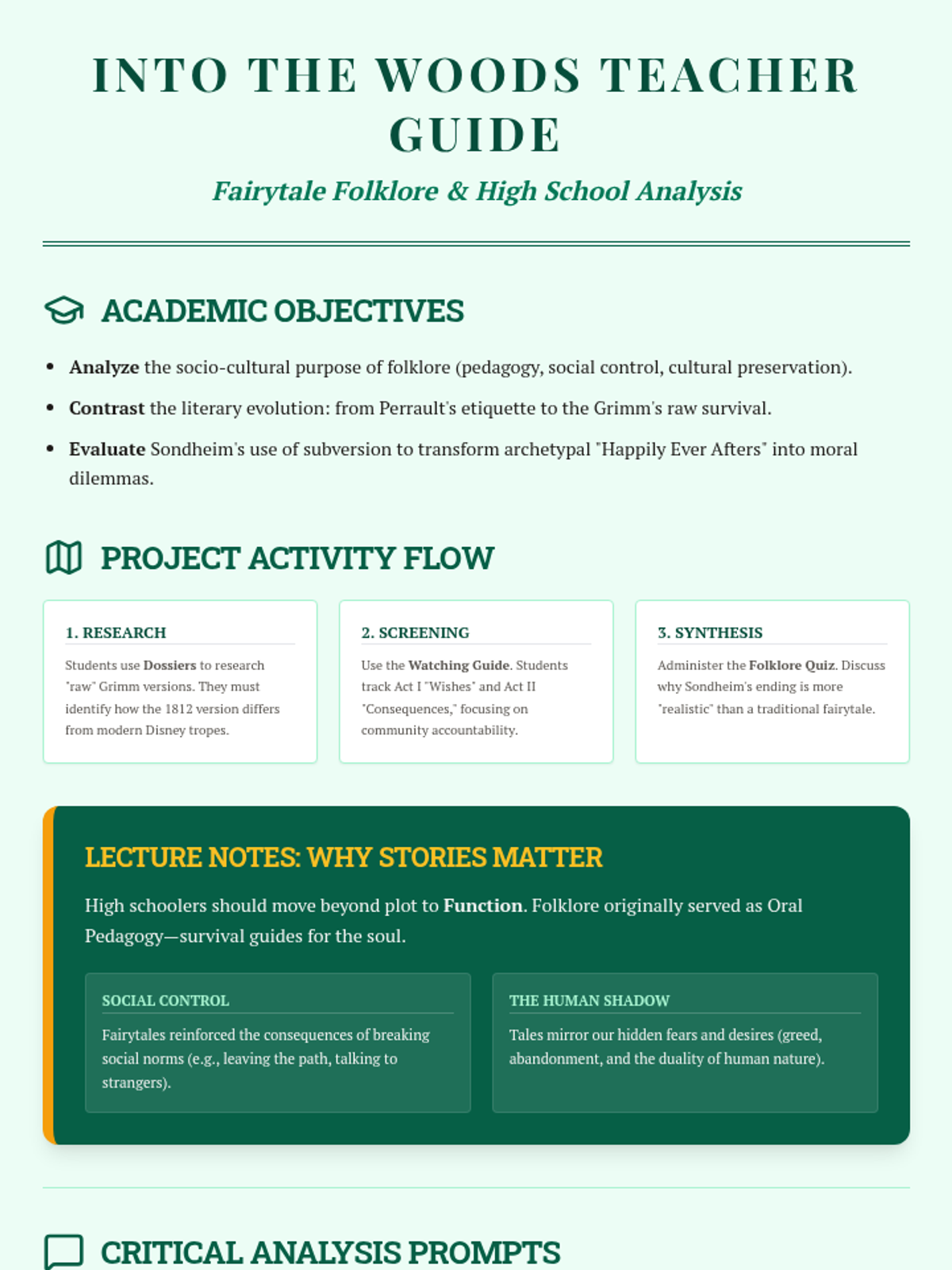
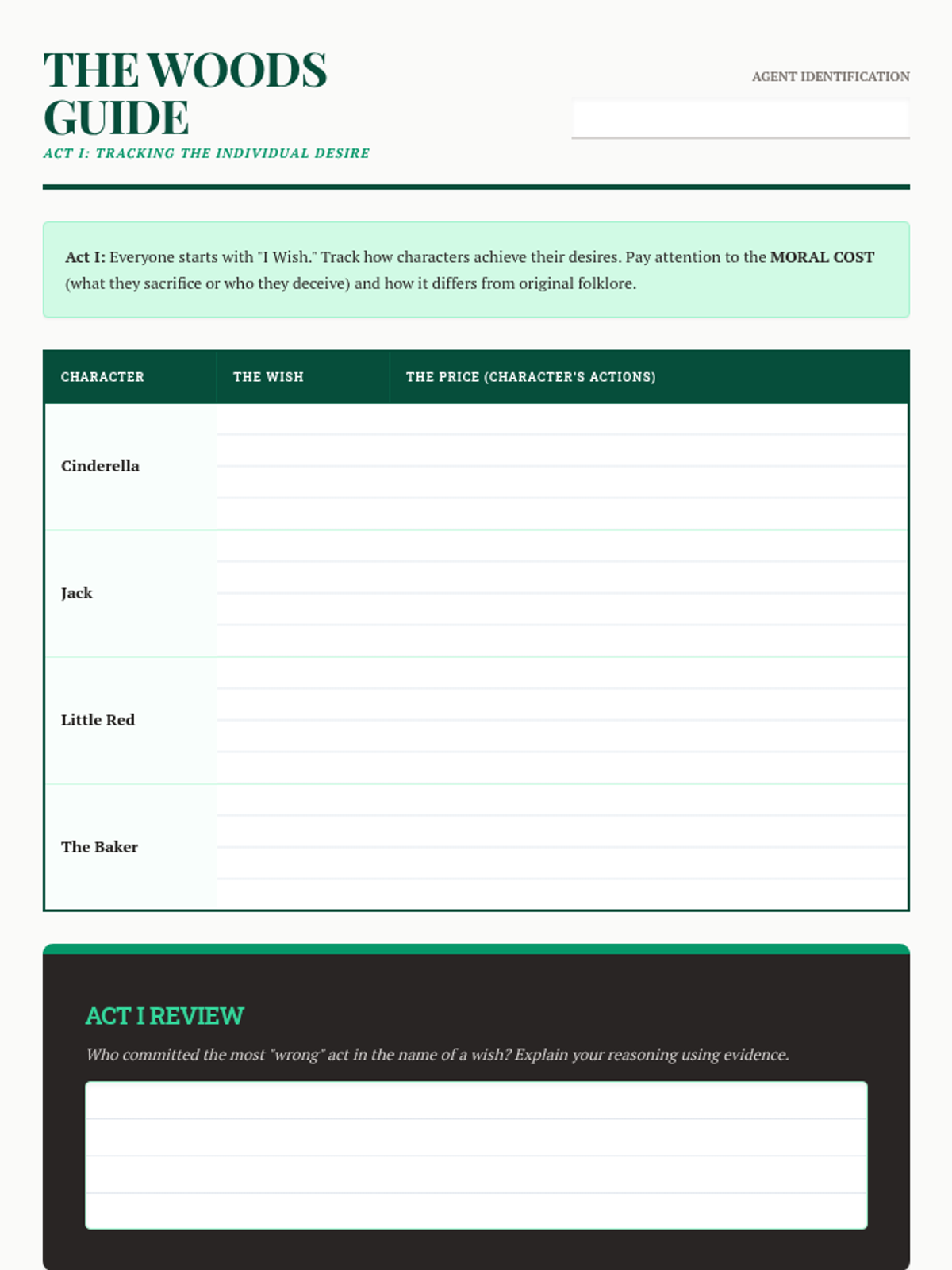
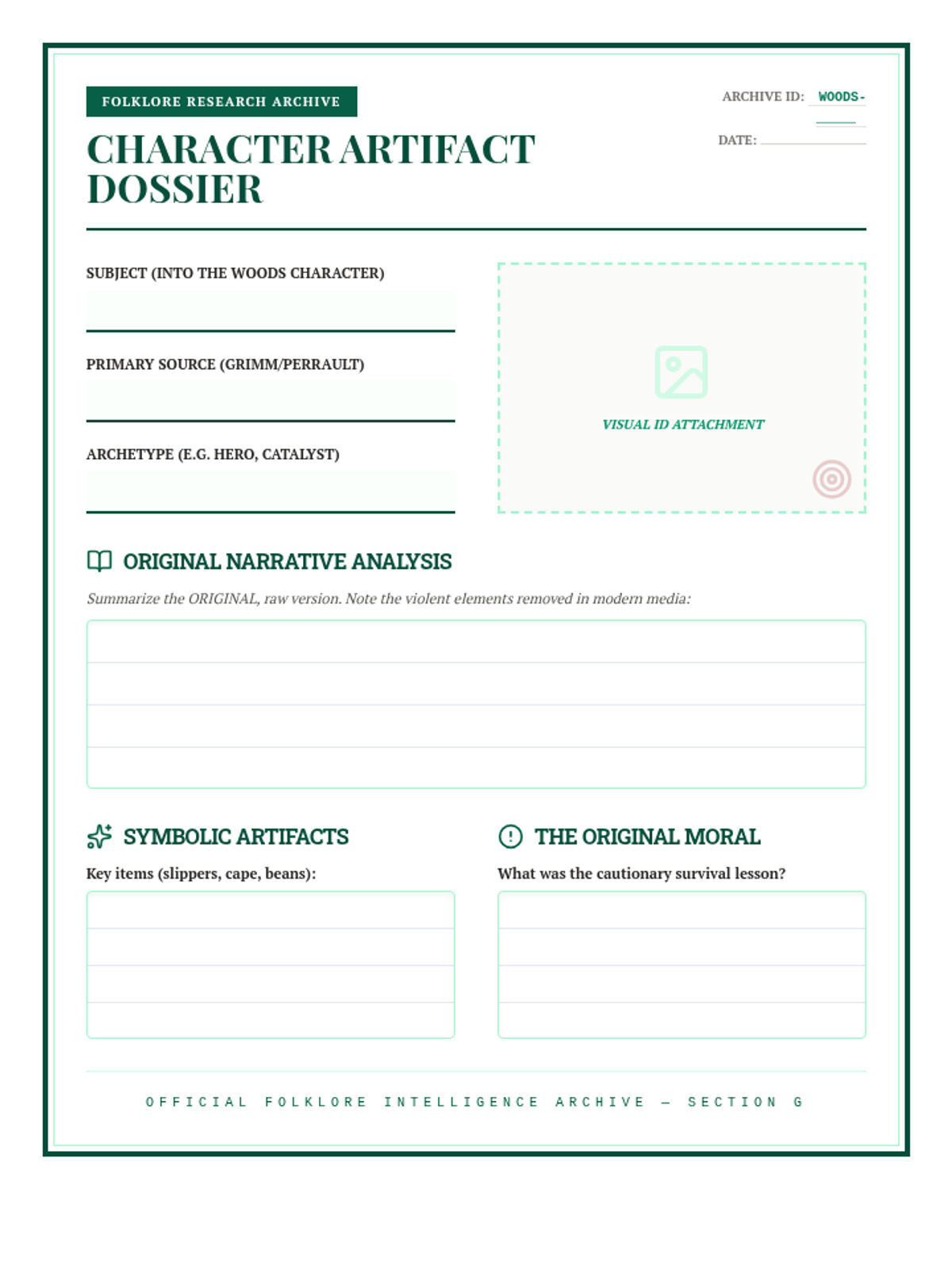
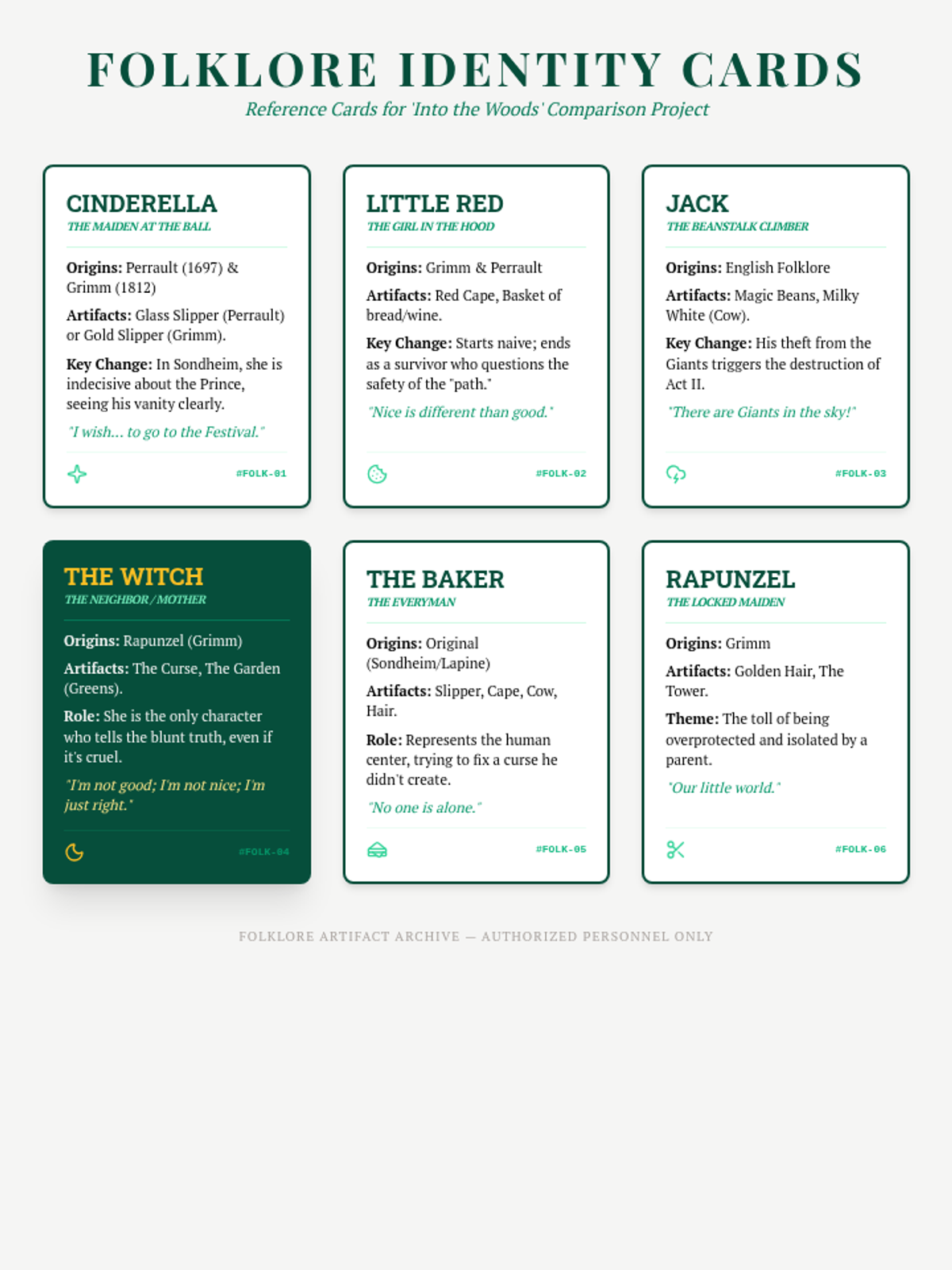
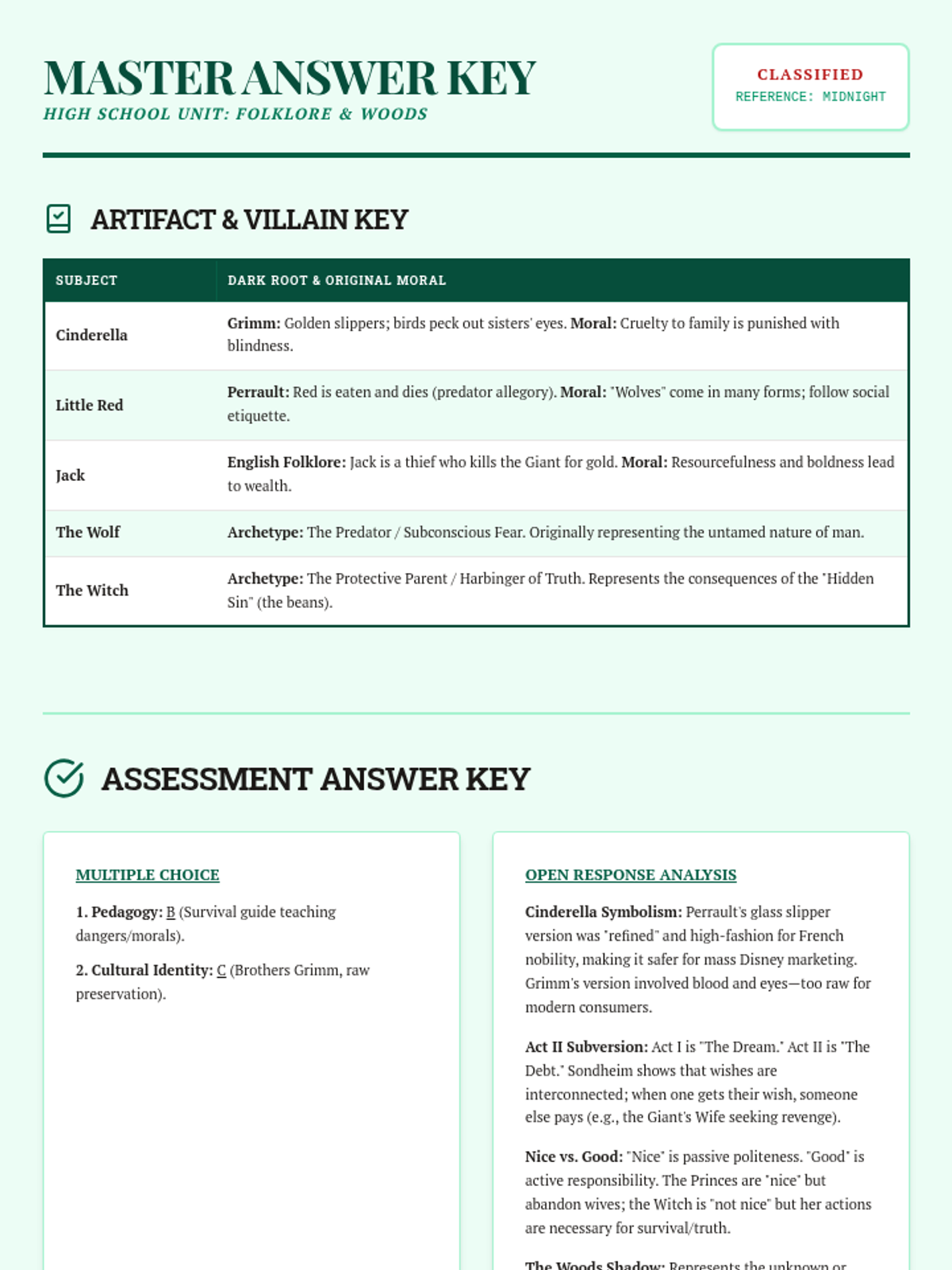
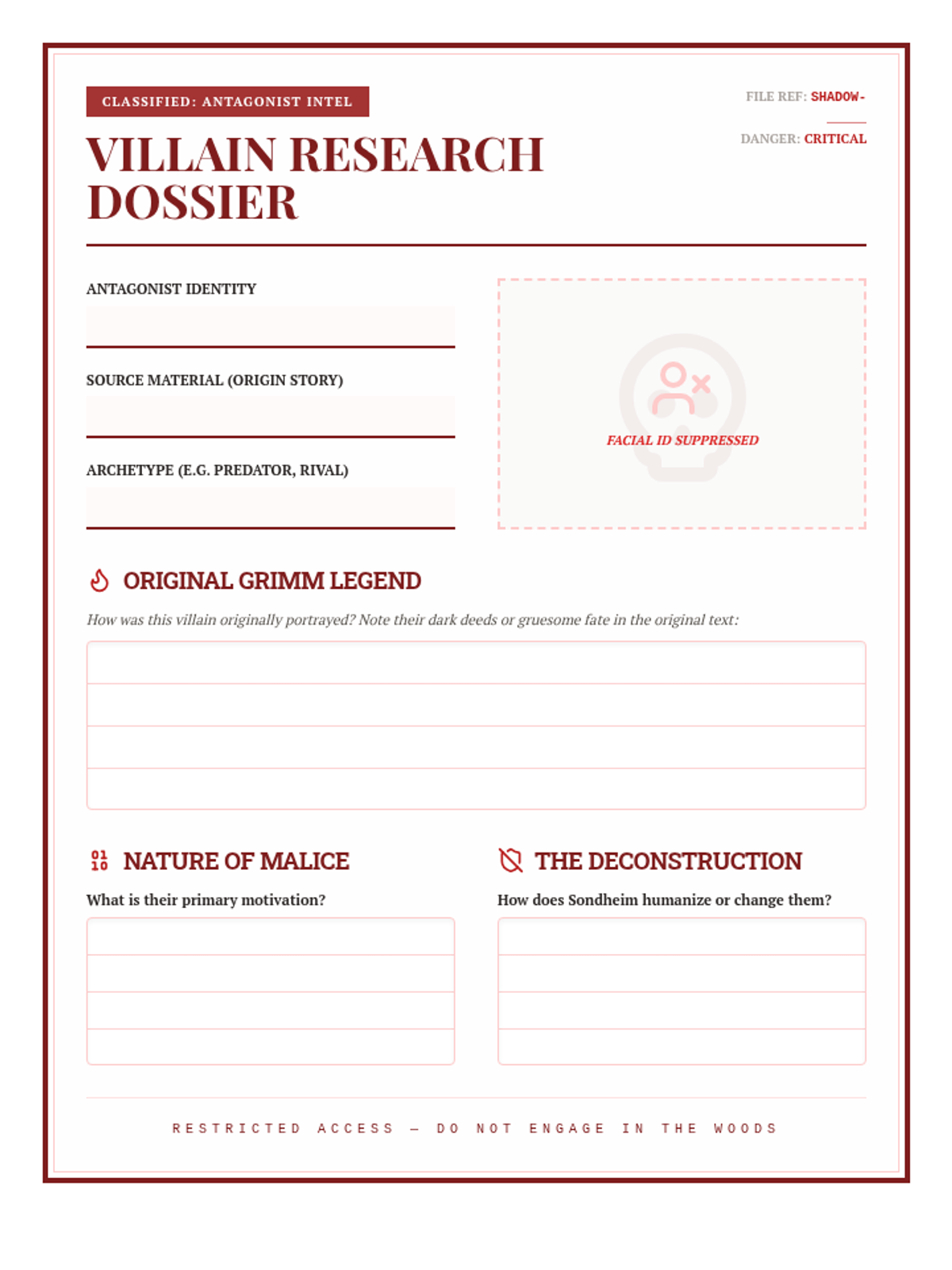
An advanced analysis of fairytale folklore that explores the socio-cultural evolution of classic tales and analyzes their deconstruction in Stephen Sondheim's 'Into the Woods'. Students evaluate themes of communal accountability and the moral ambiguity of 'Happily Ever After'.
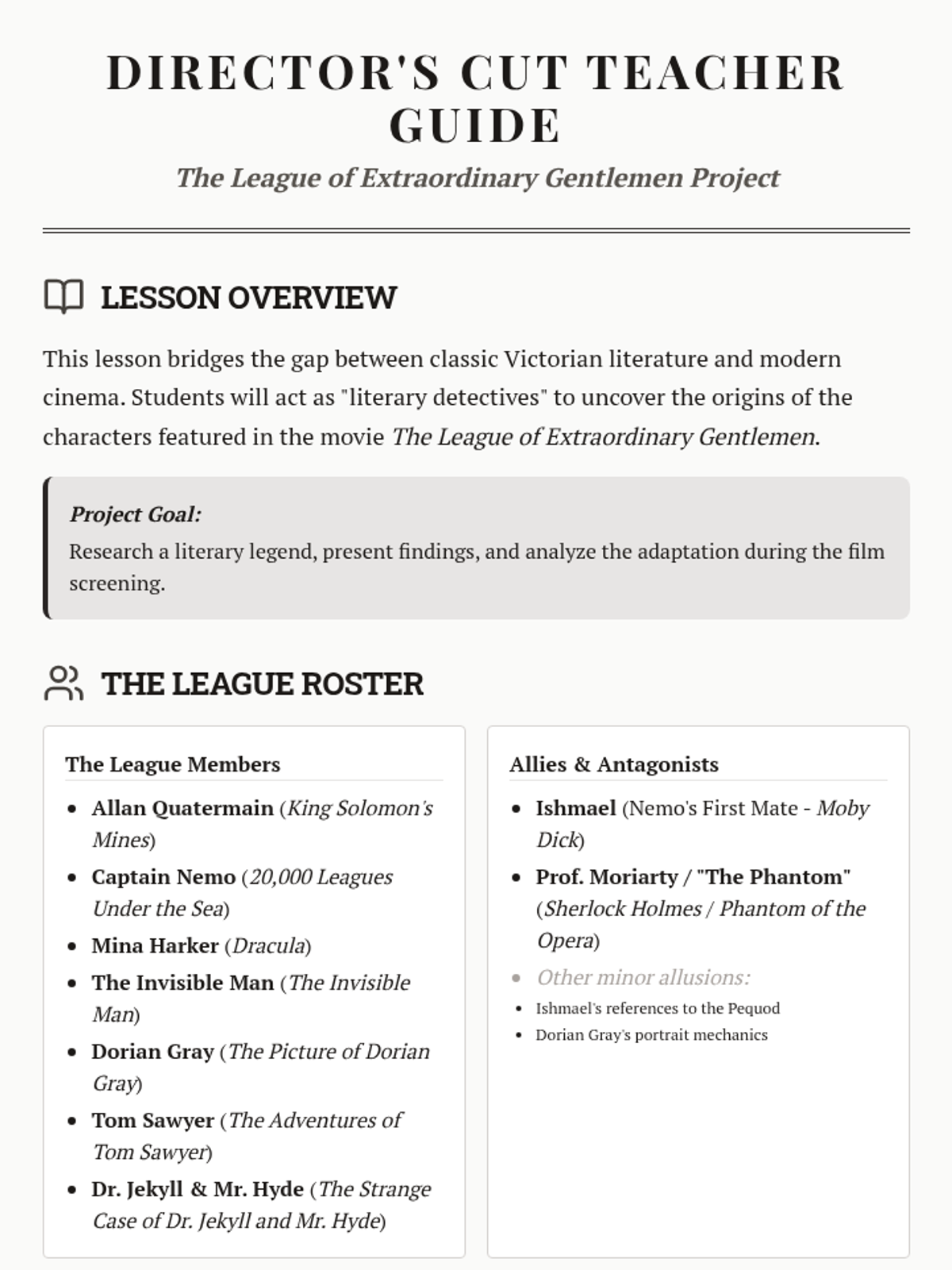
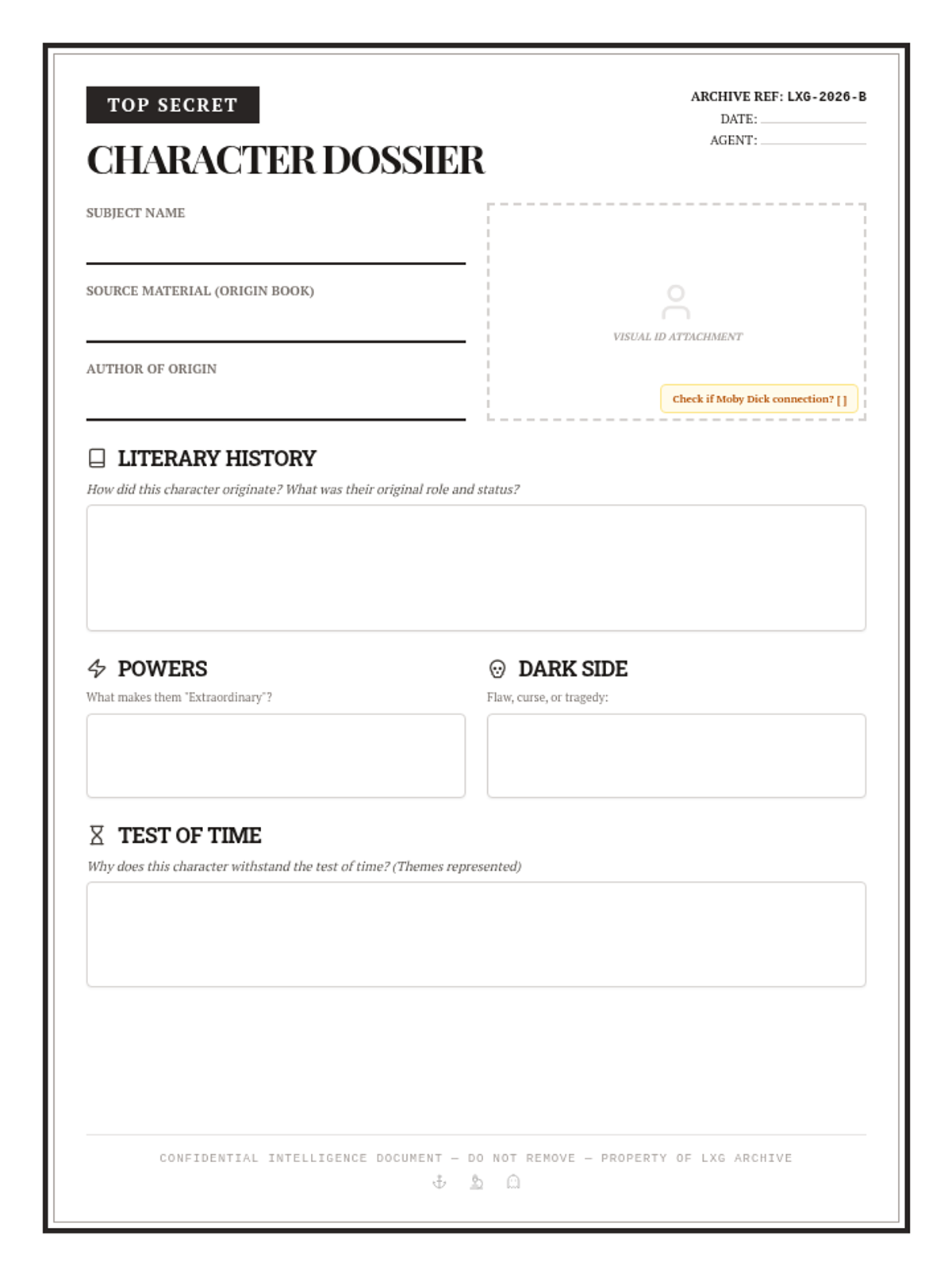
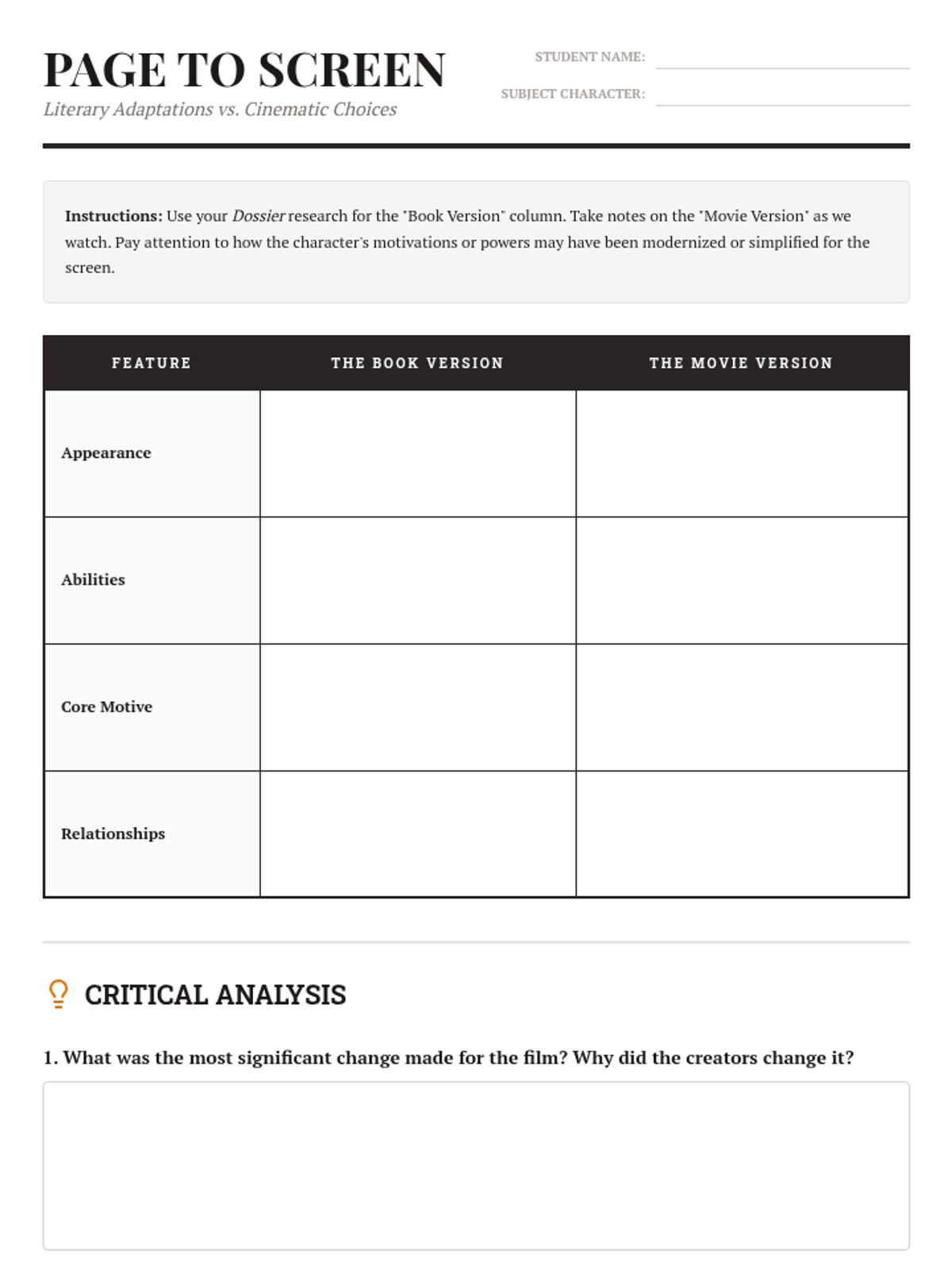
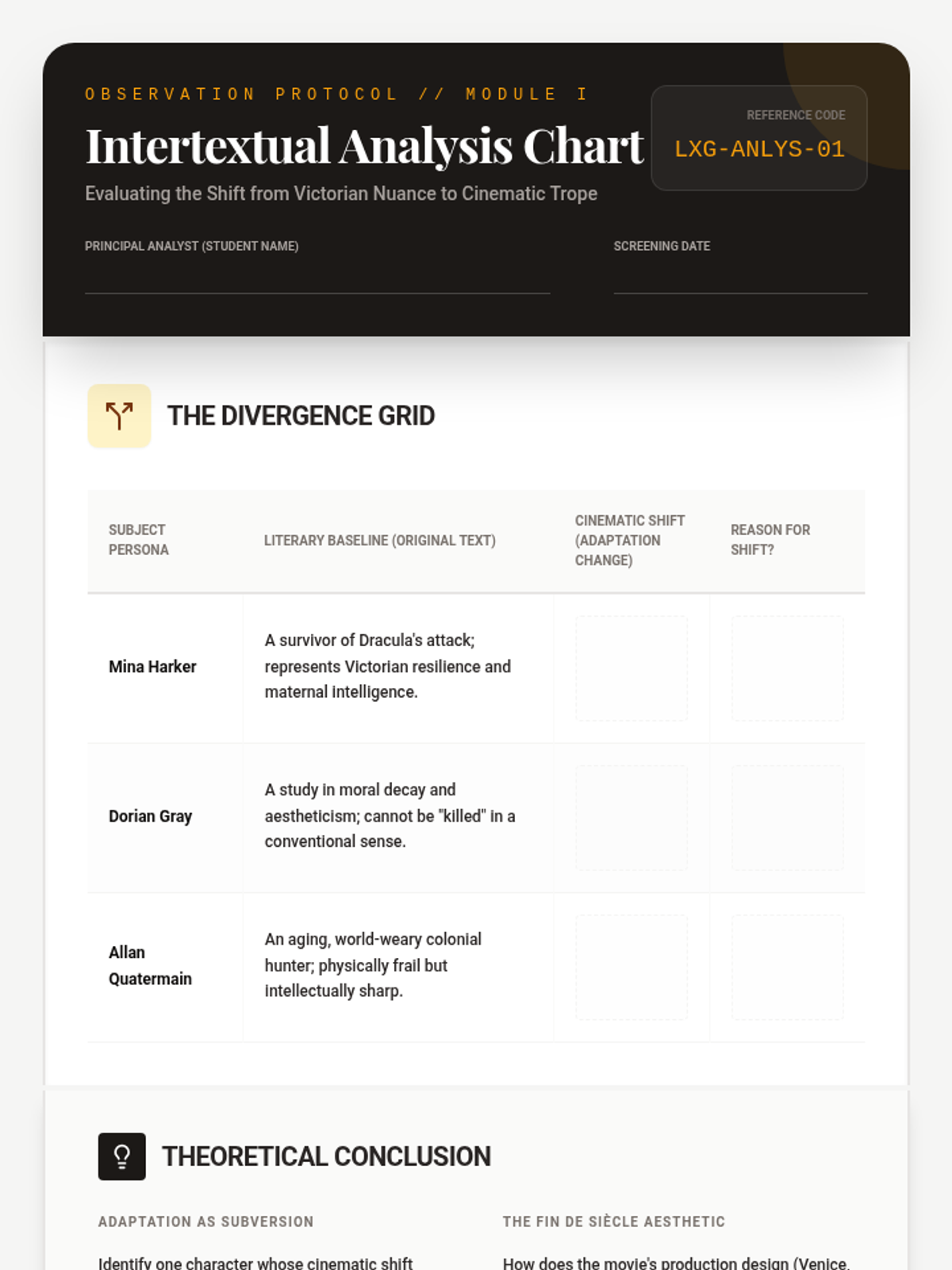
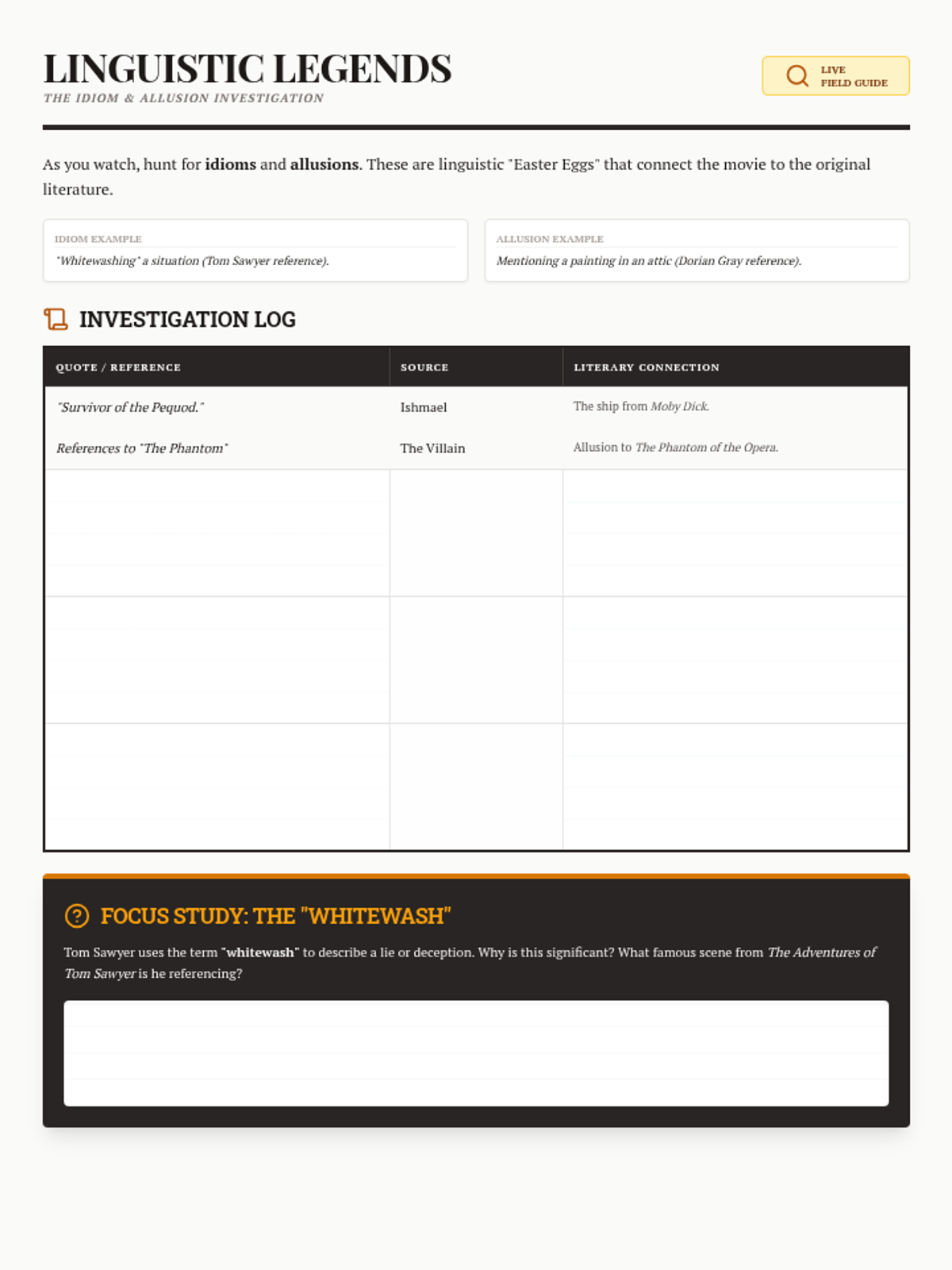
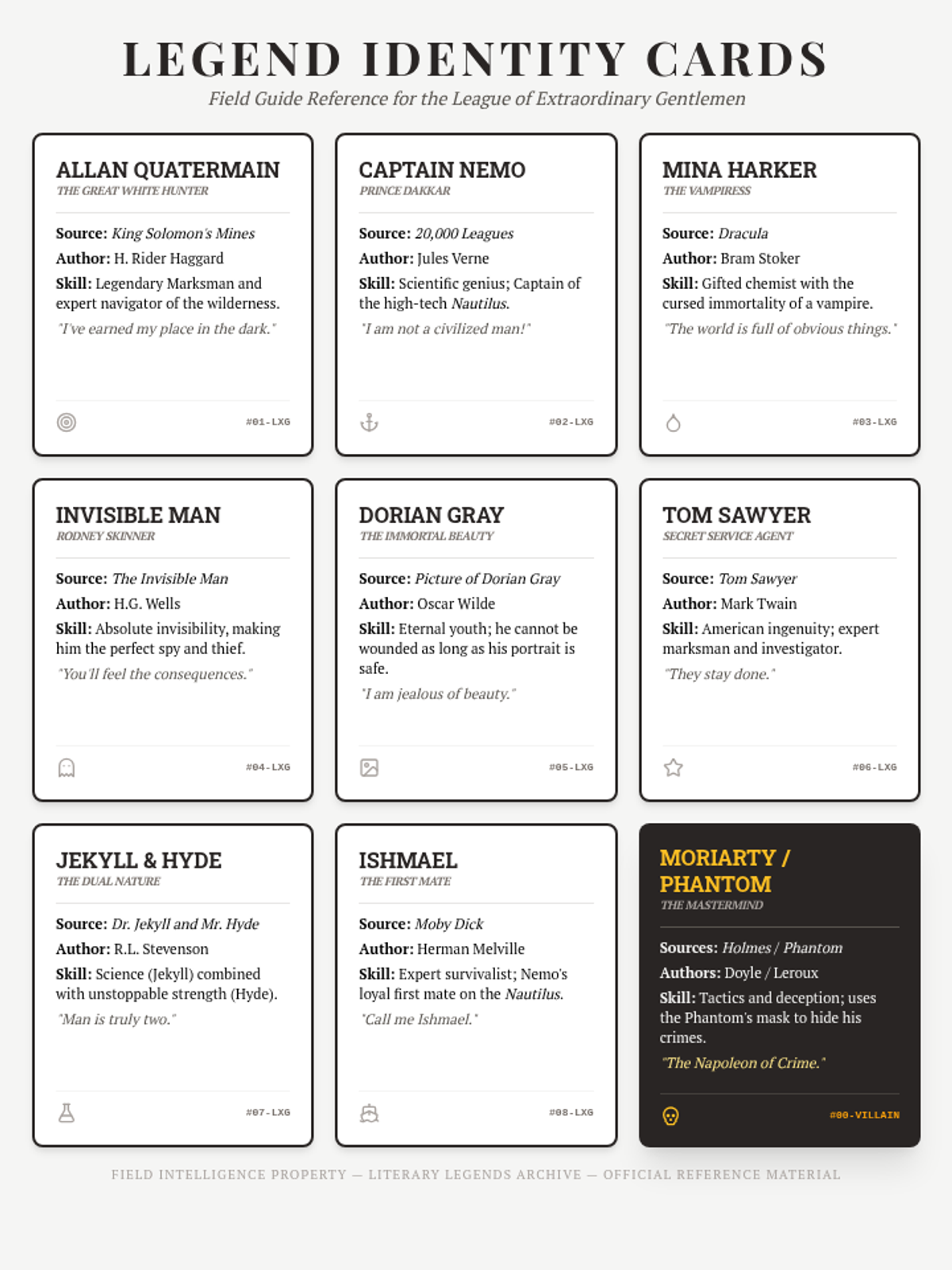
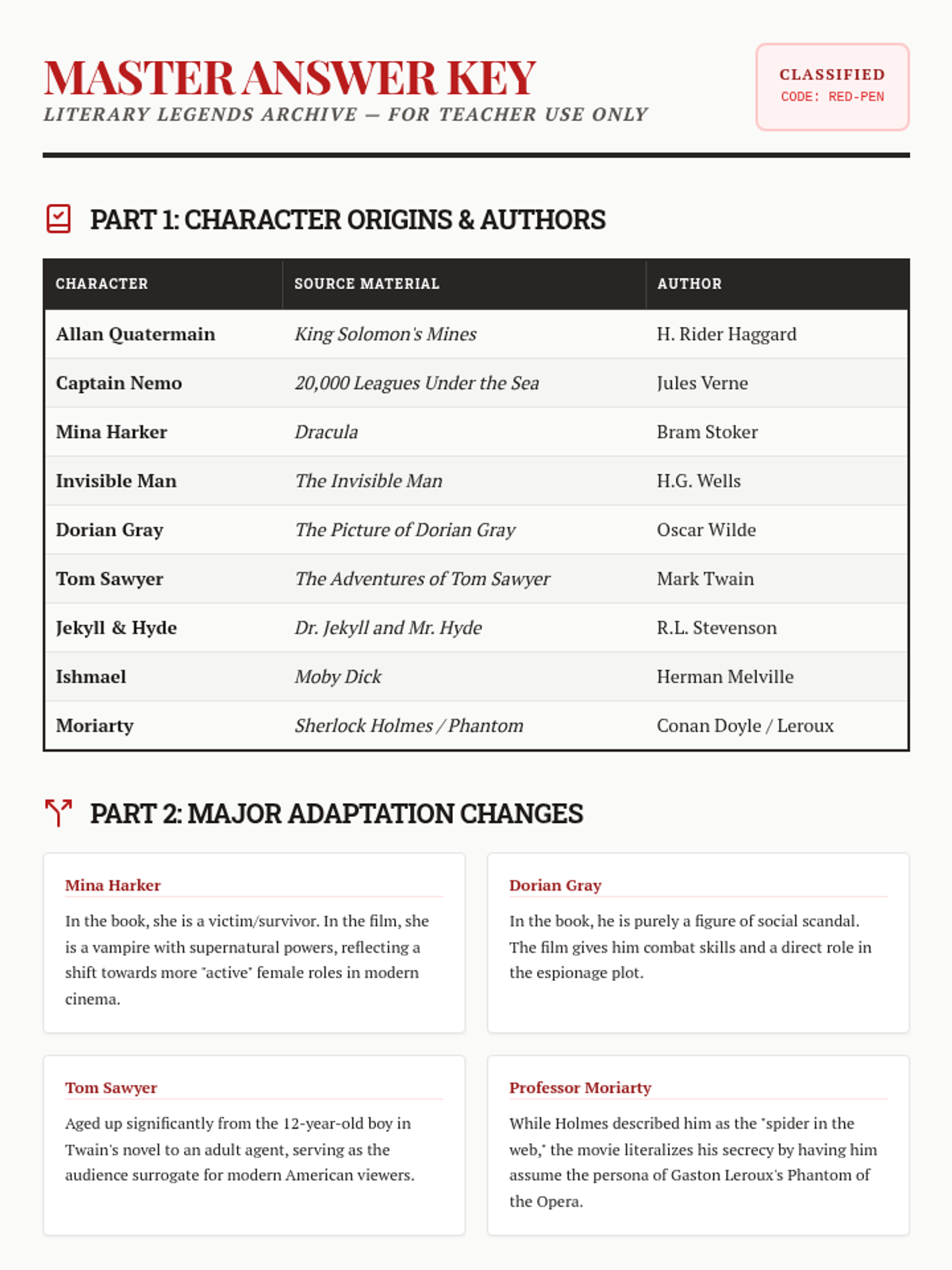
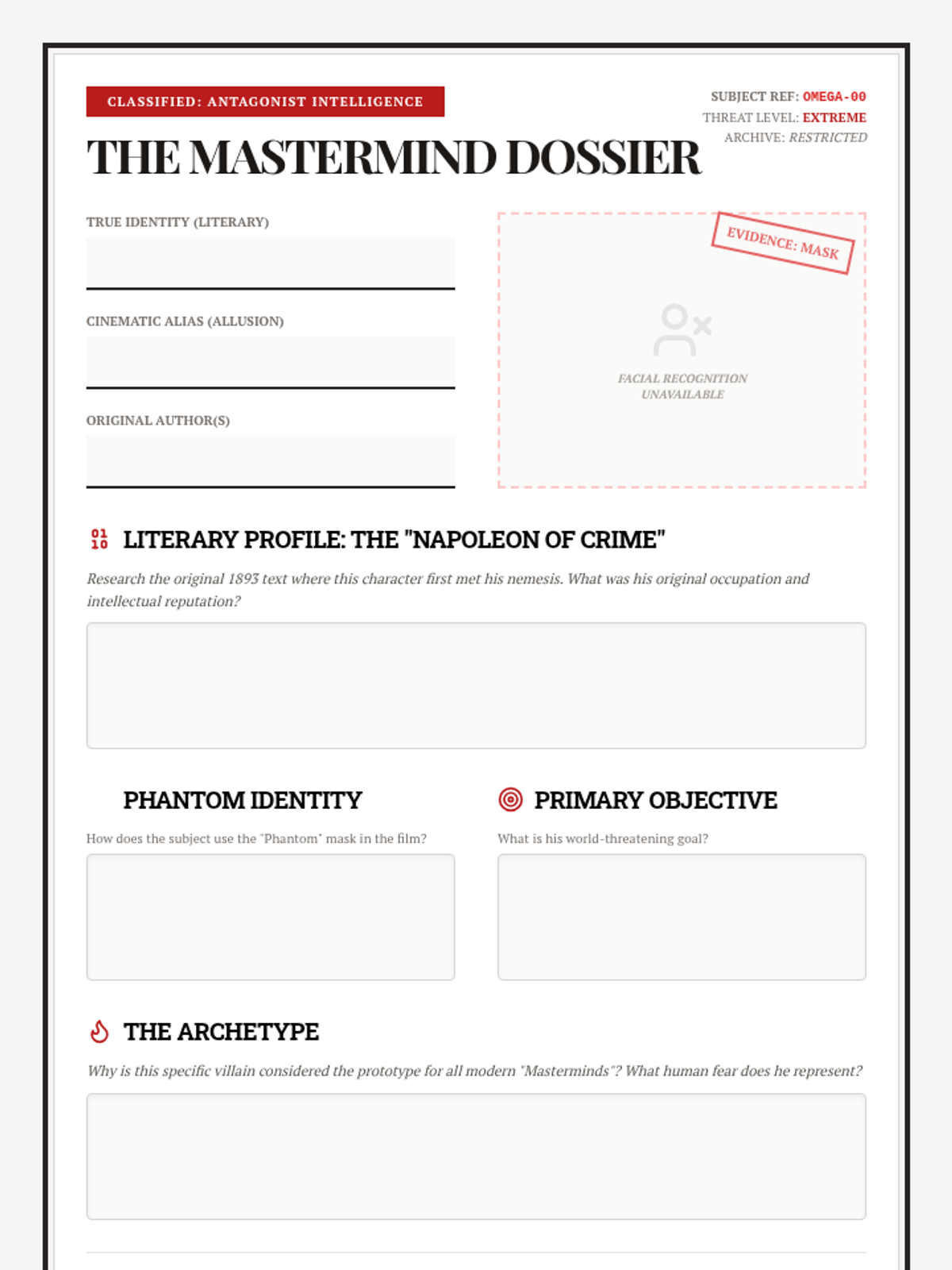
A rigorous exploration of fin-de-siècle literature and post-modern intertextuality. Students analyze the literary origins of Victorian icons in 'The League of Extraordinary Gentlemen' and evaluate the socio-cultural shifts in their cinematic adaptation.
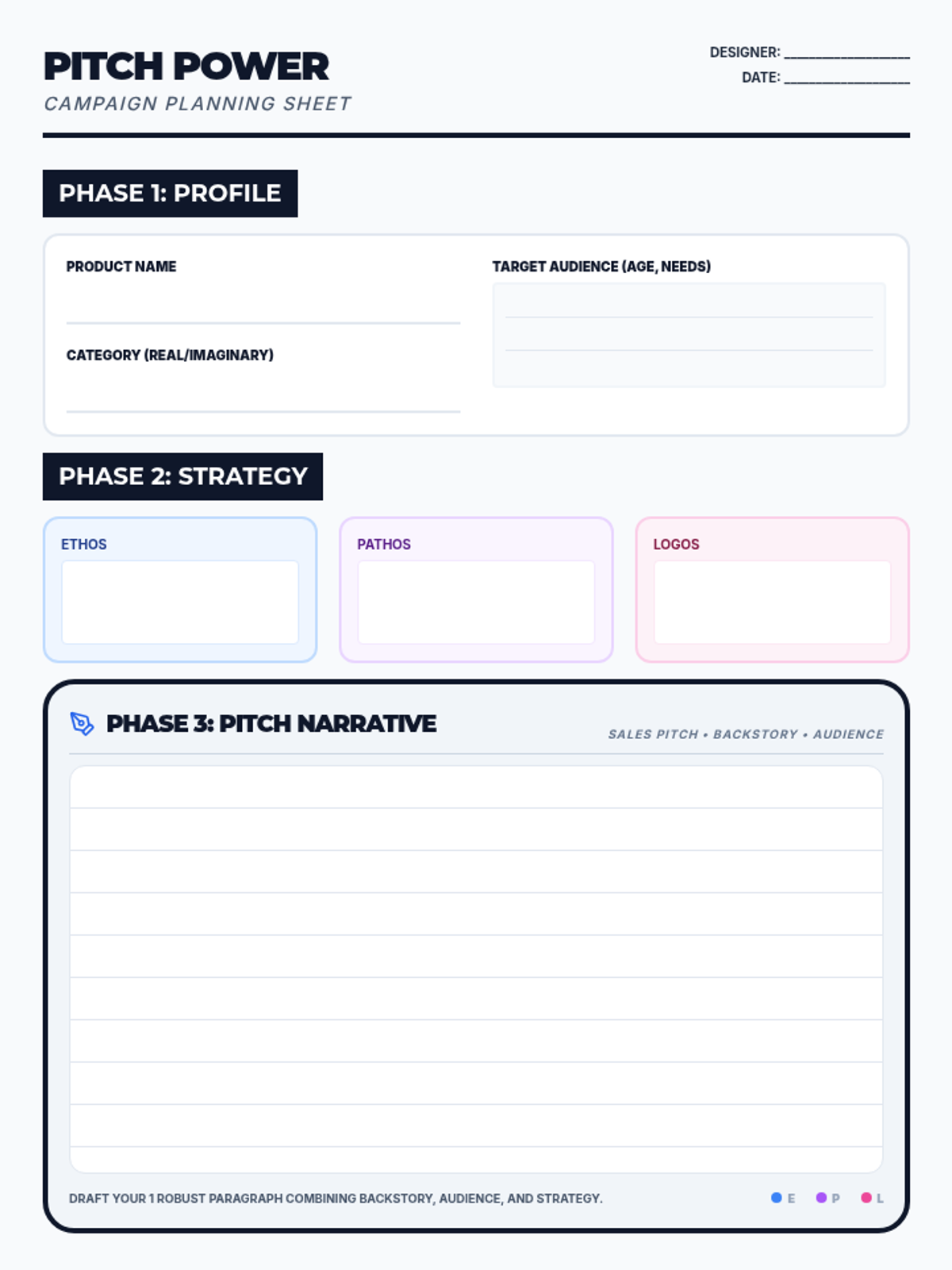
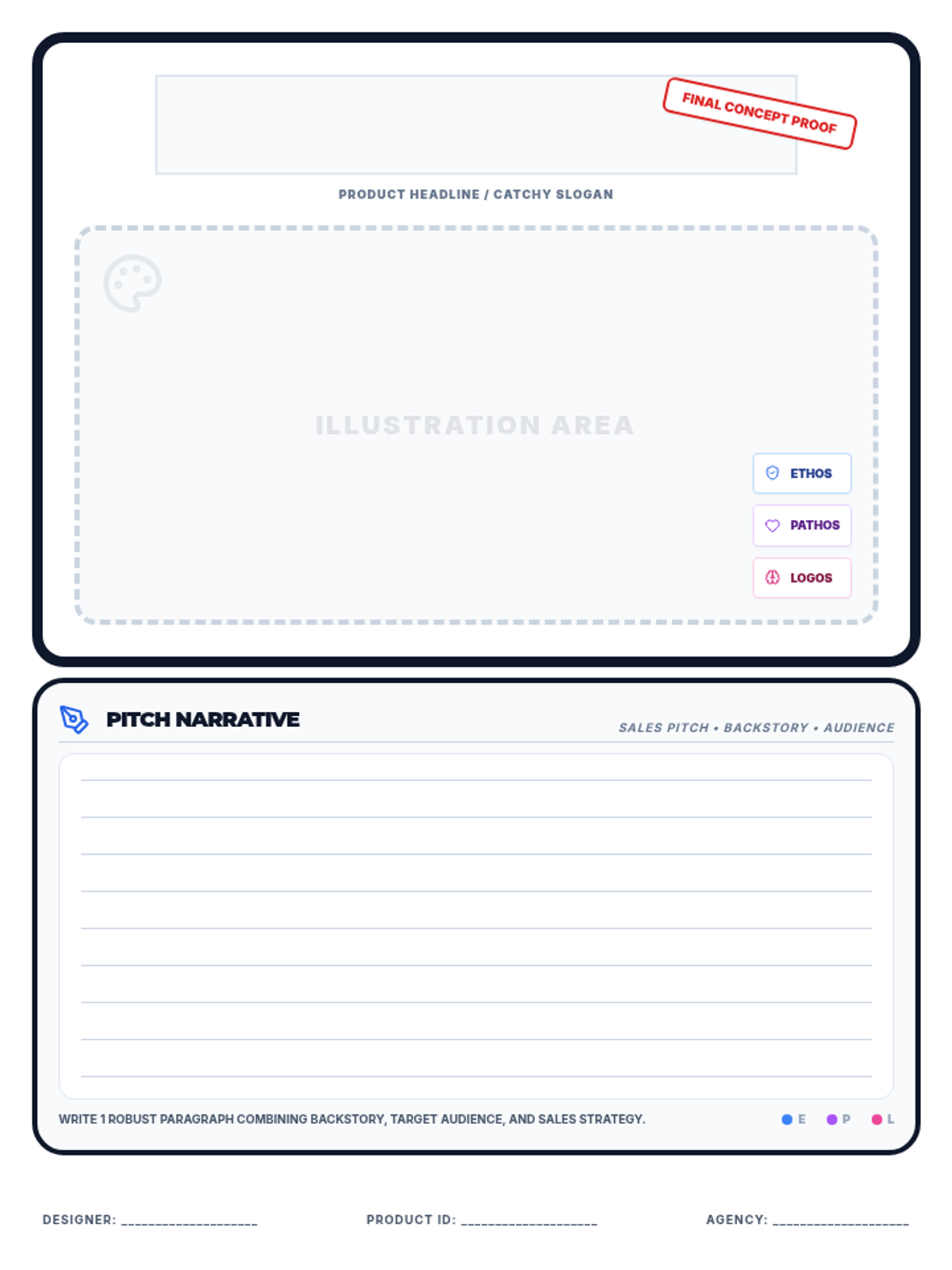
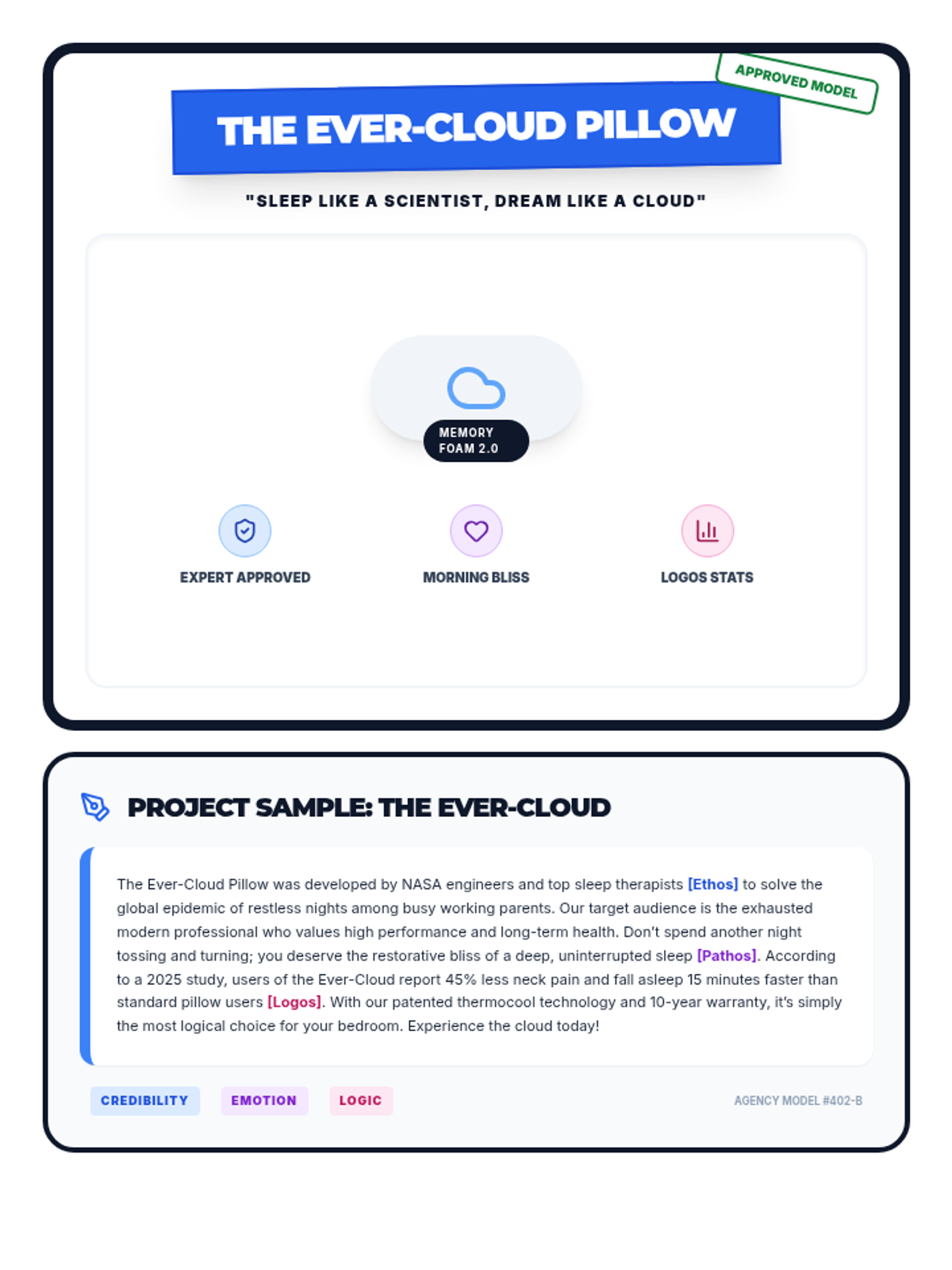
Students dive into the world of marketing to master the rhetorical triangle: ethos, pathos, and logos. They will design a professional product poster and write a compelling pitch that combines product backstory with targeted sales tactics.
A final look at John Proctor's ultimate choice, the resolution of the play, and a comprehensive assessment of themes and motifs.
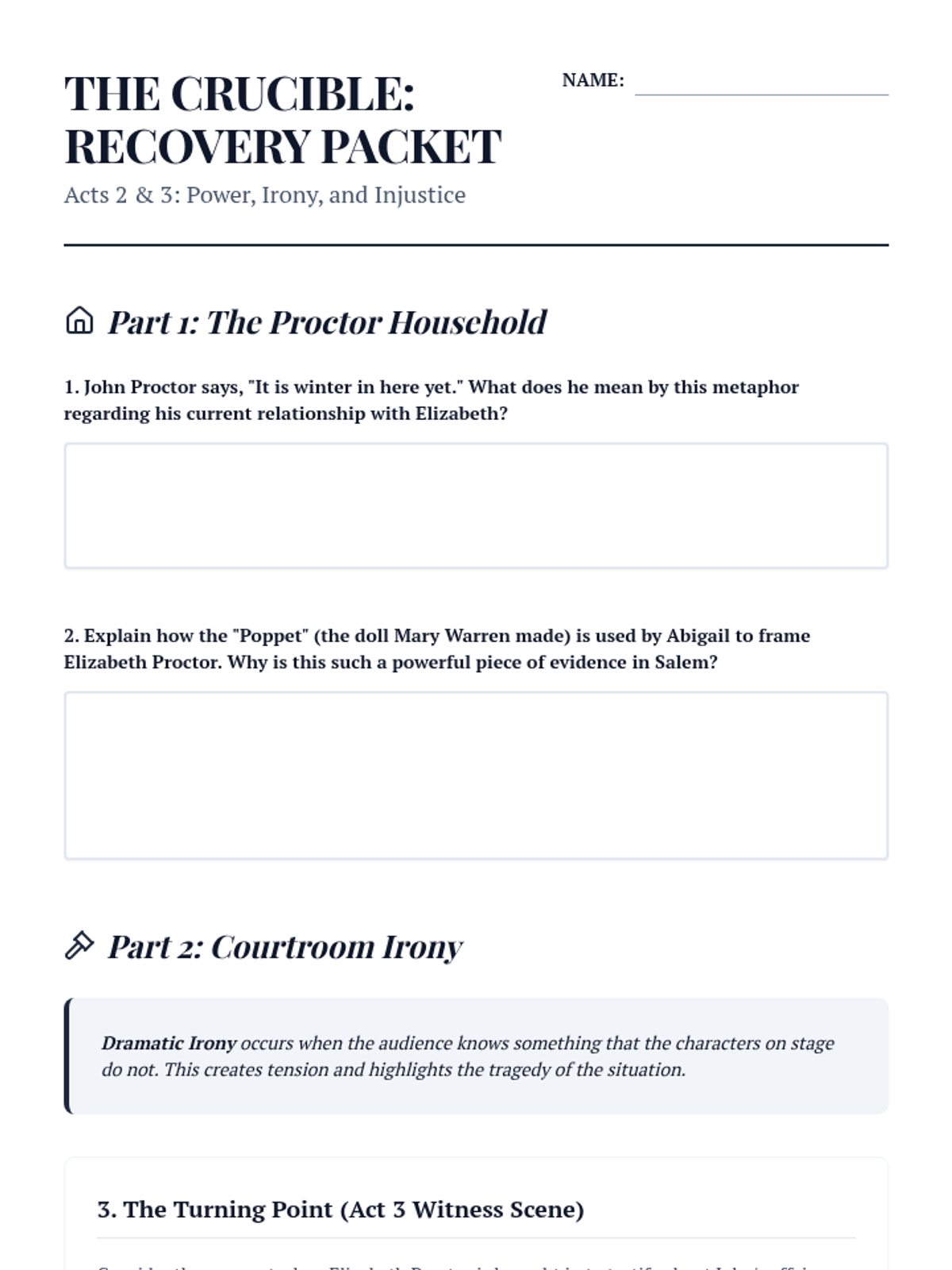
An exploration of the rising tensions in the Proctor household and the escalation of the witch trials in the Salem court.
An introduction to Puritan Salem, the historical context of McCarthyism, and the initial outbreak of hysteria in Act 1.
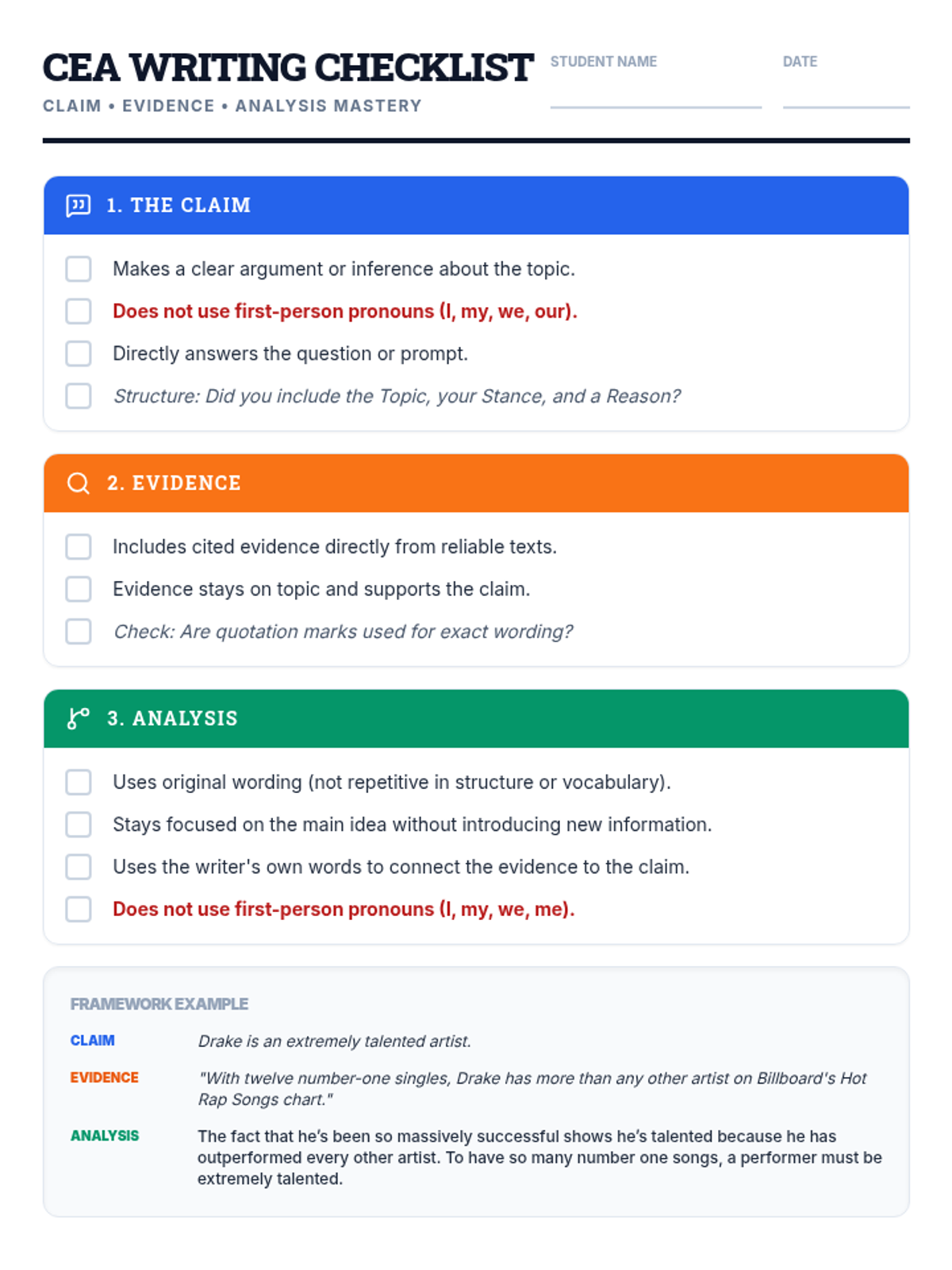
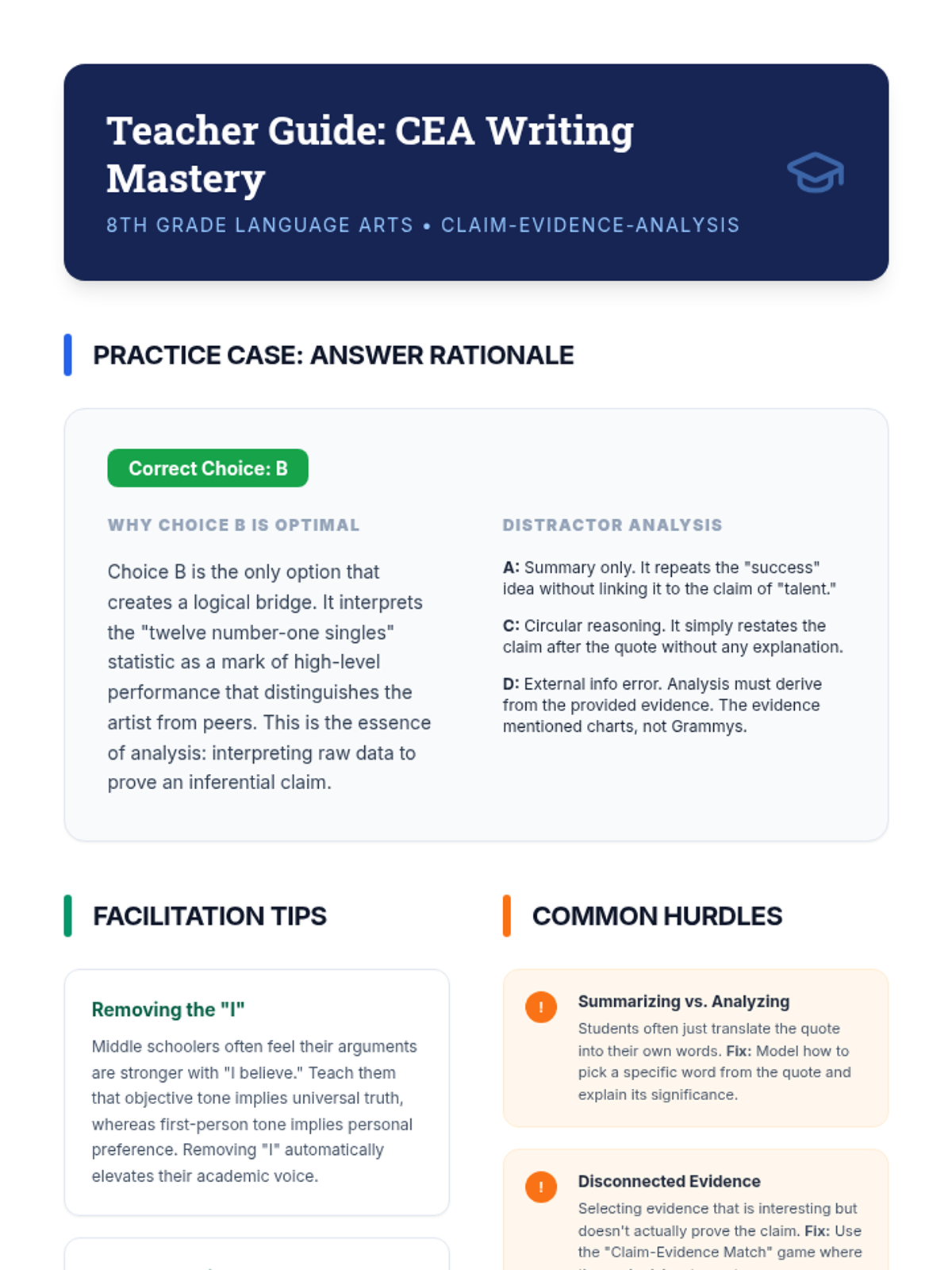
This lesson introduces 8th-grade students to the Claim-Evidence-Analysis (CEA) writing framework, focusing on how to construct objective arguments and effectively connect evidence to claims.
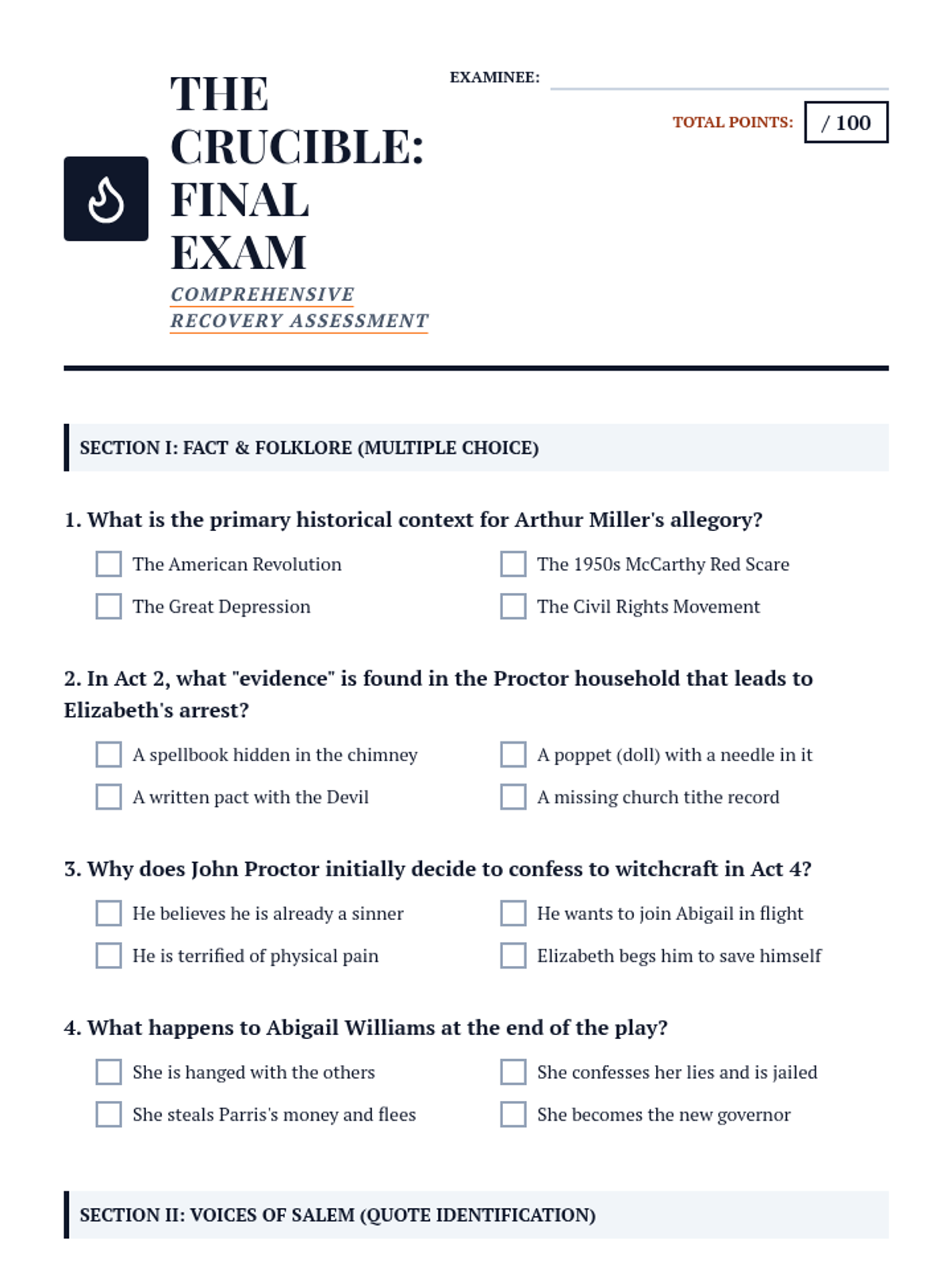
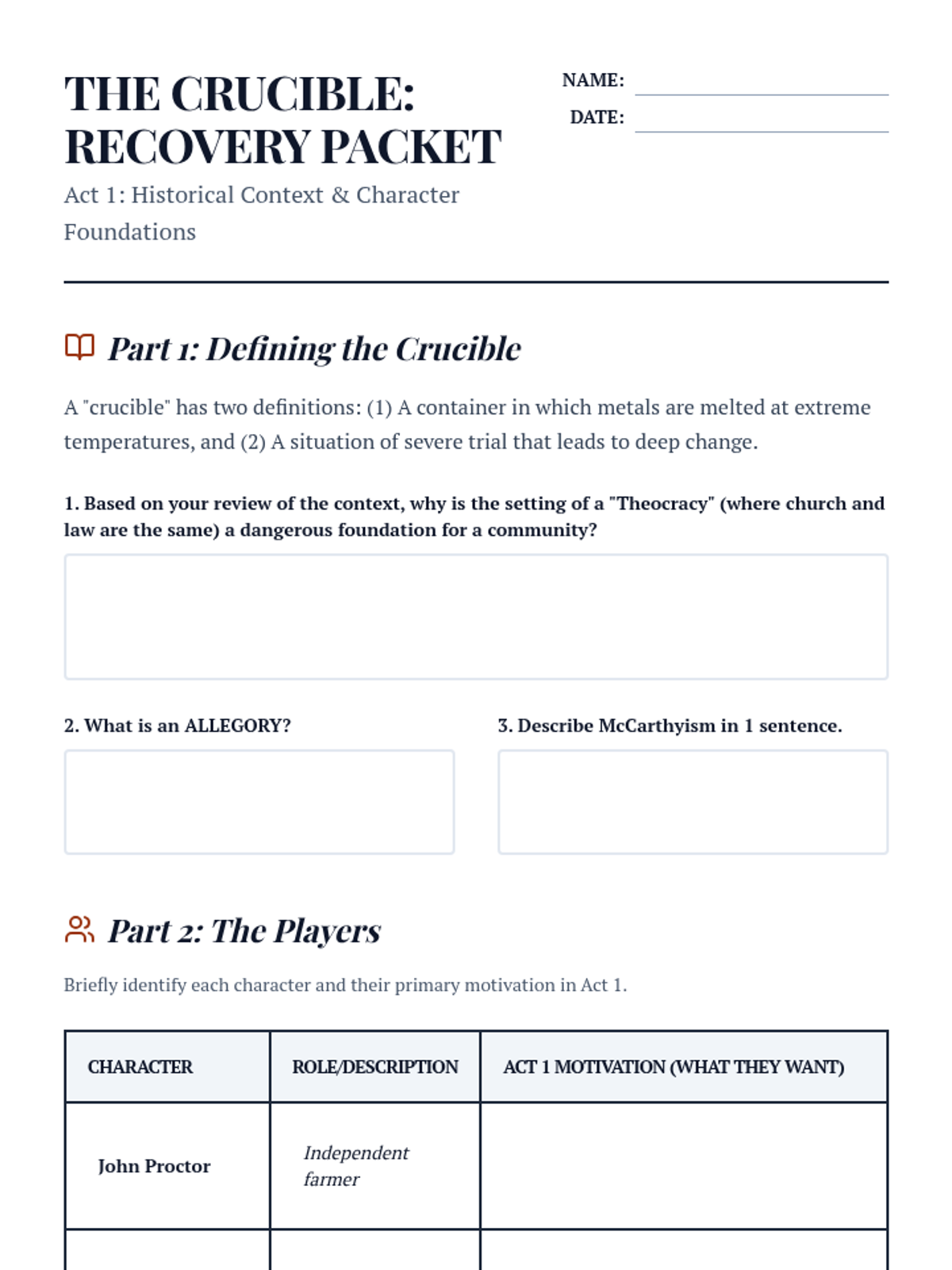
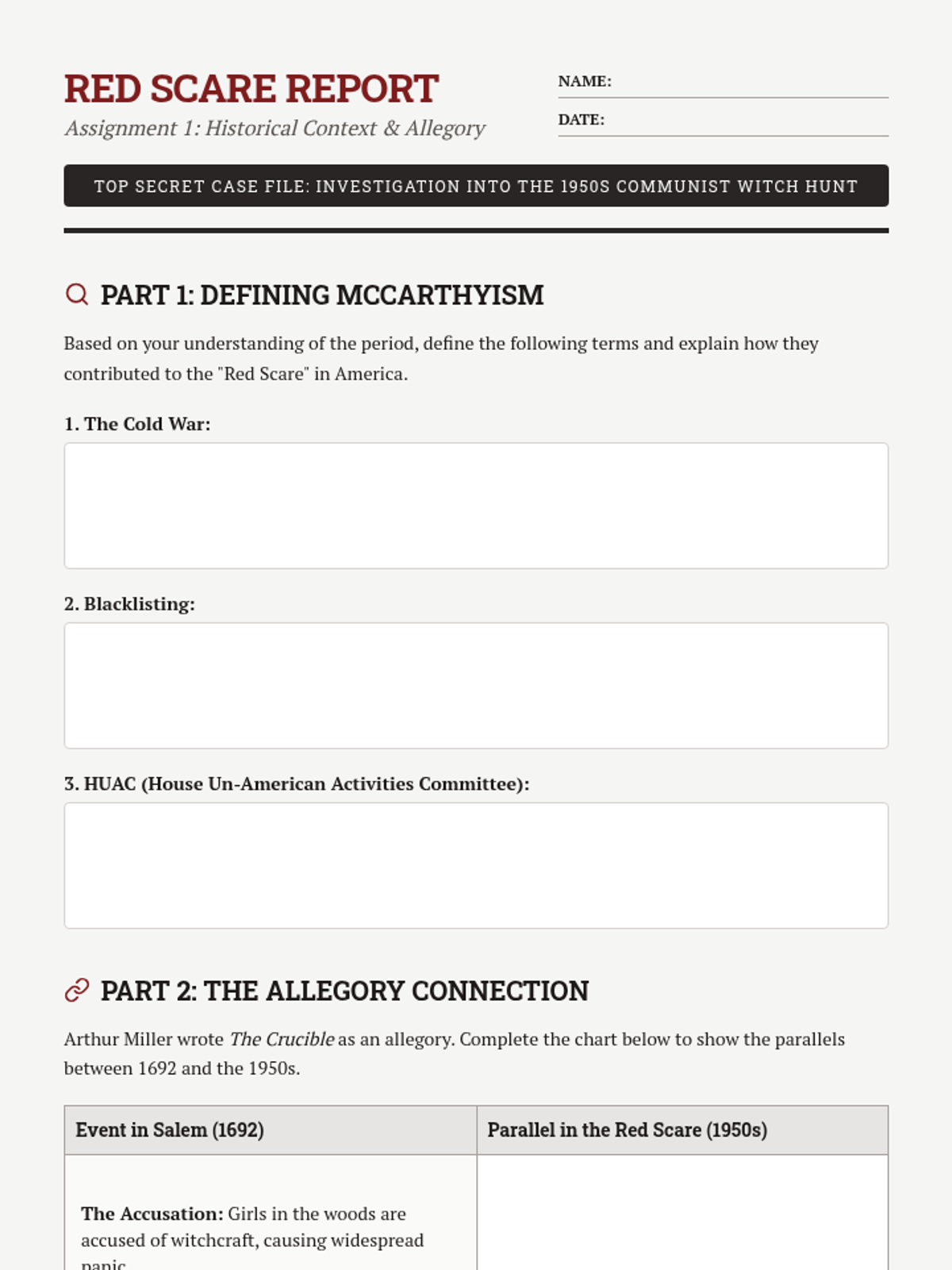
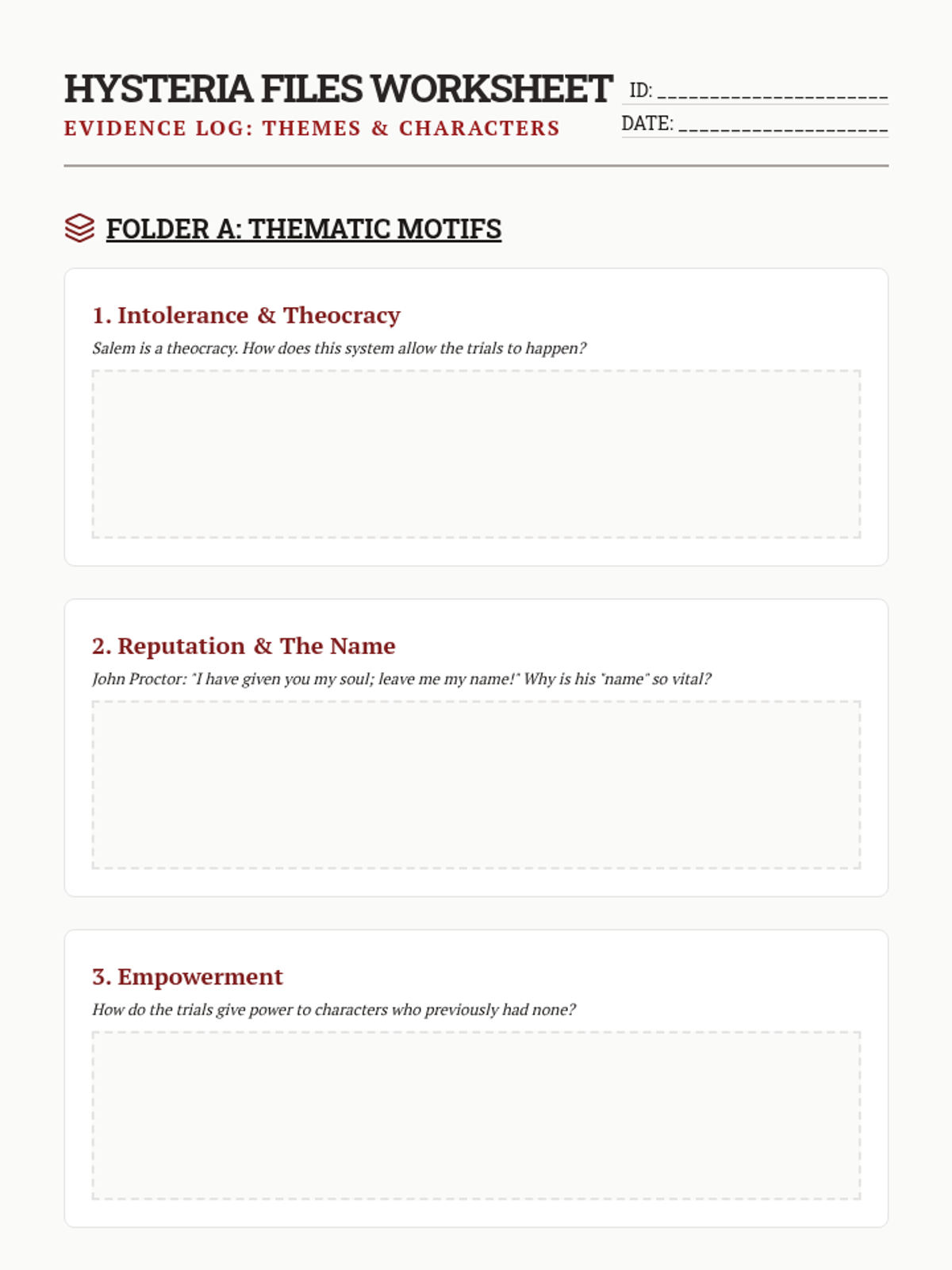
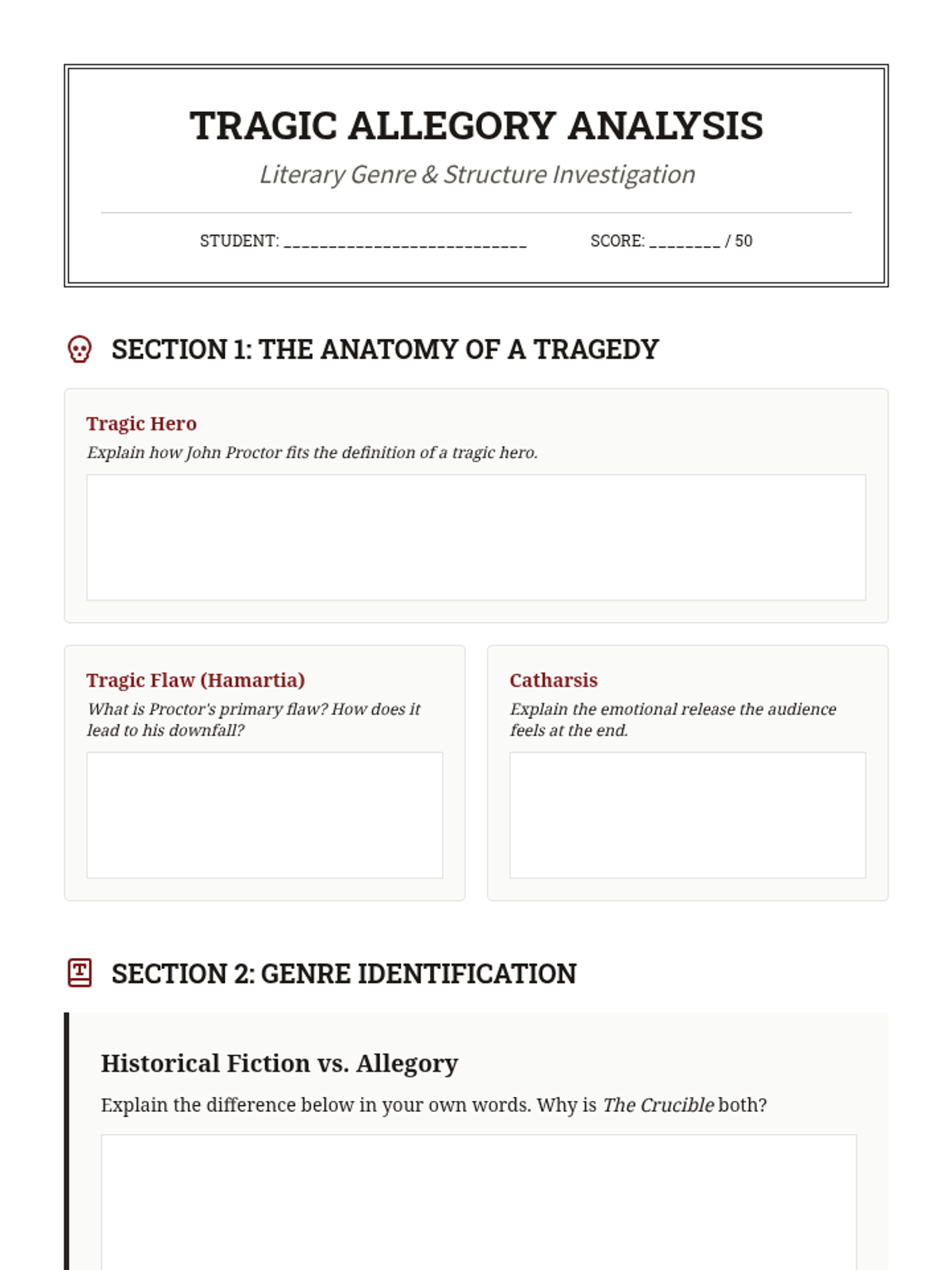
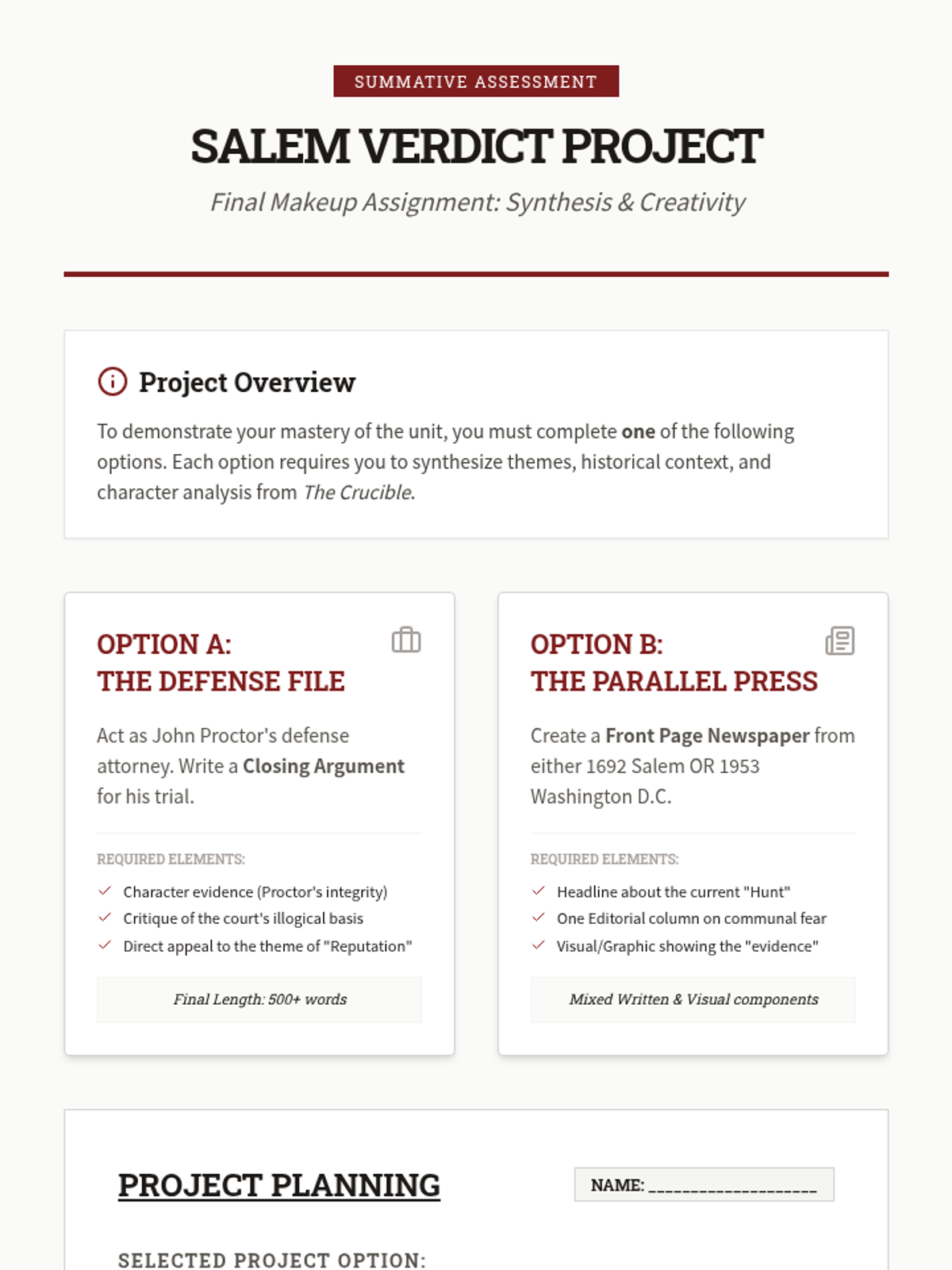
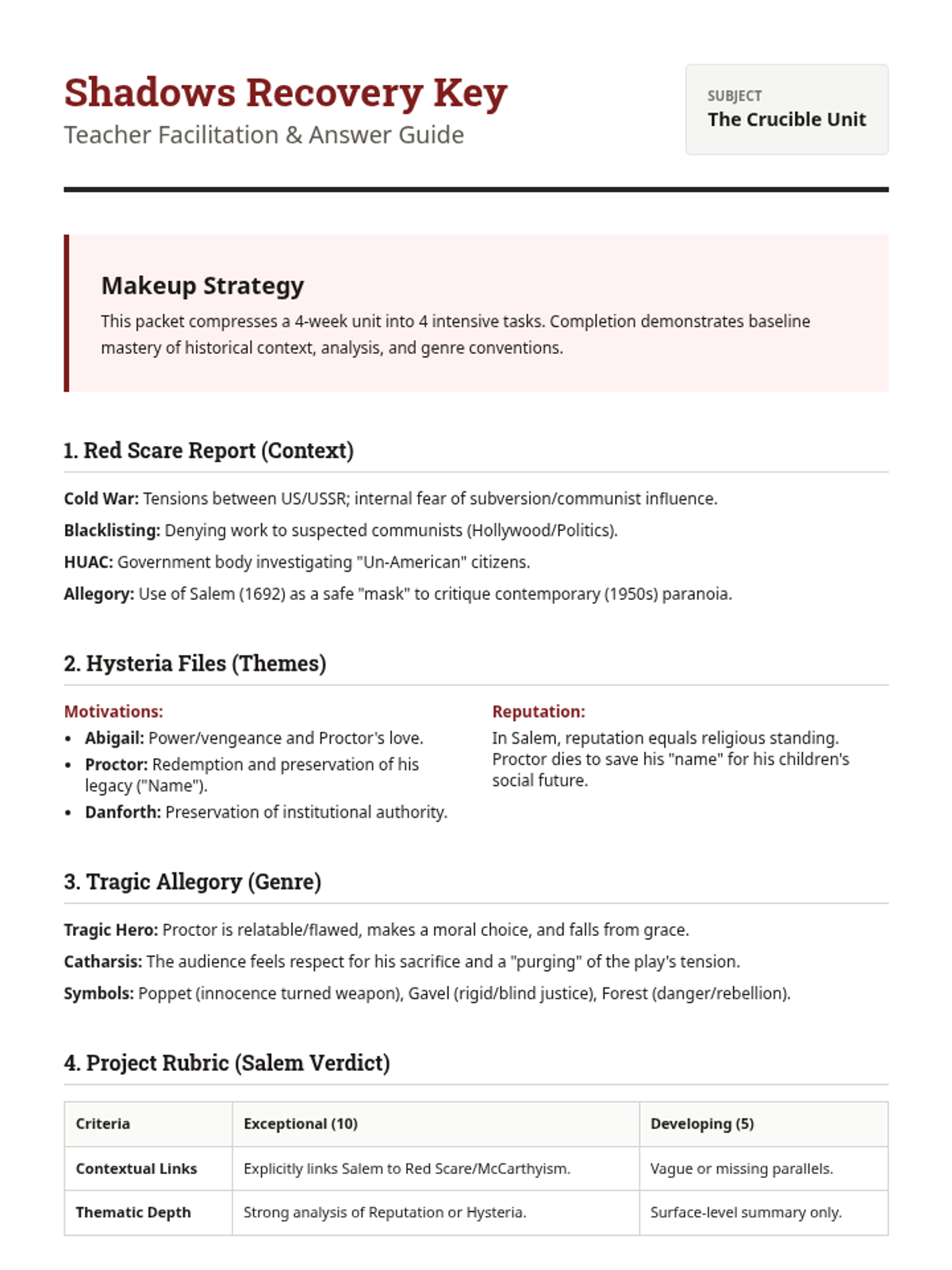
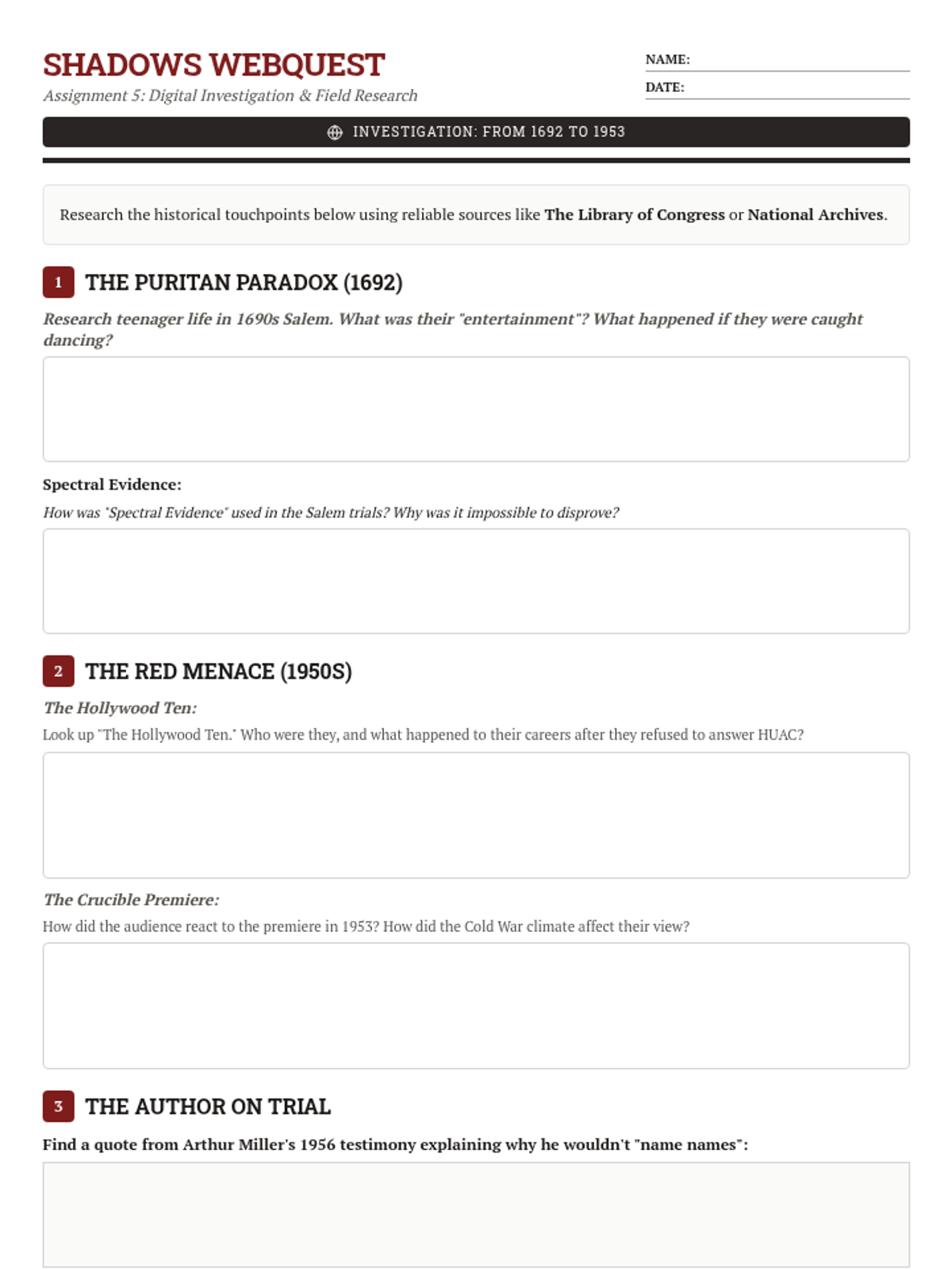
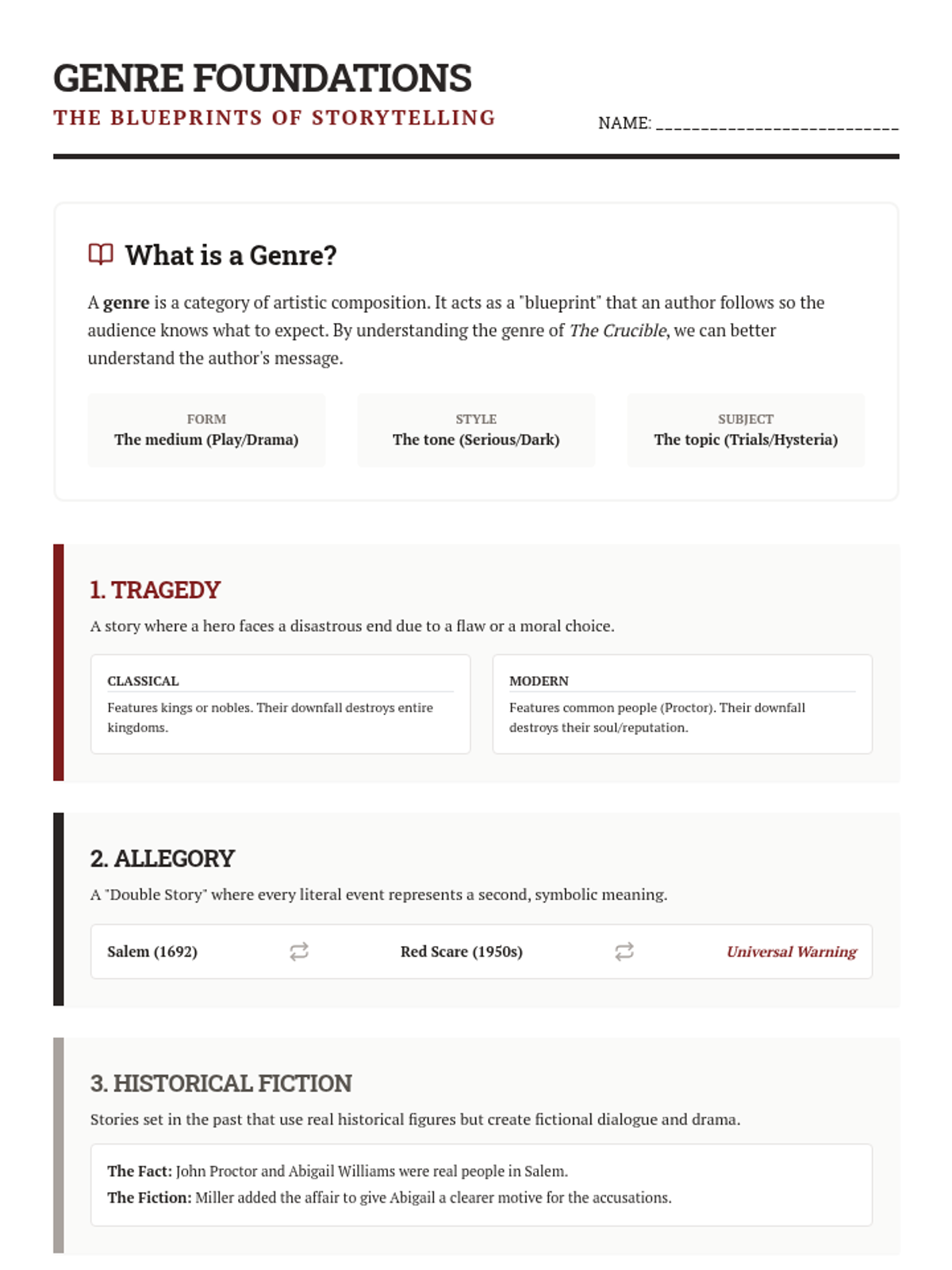
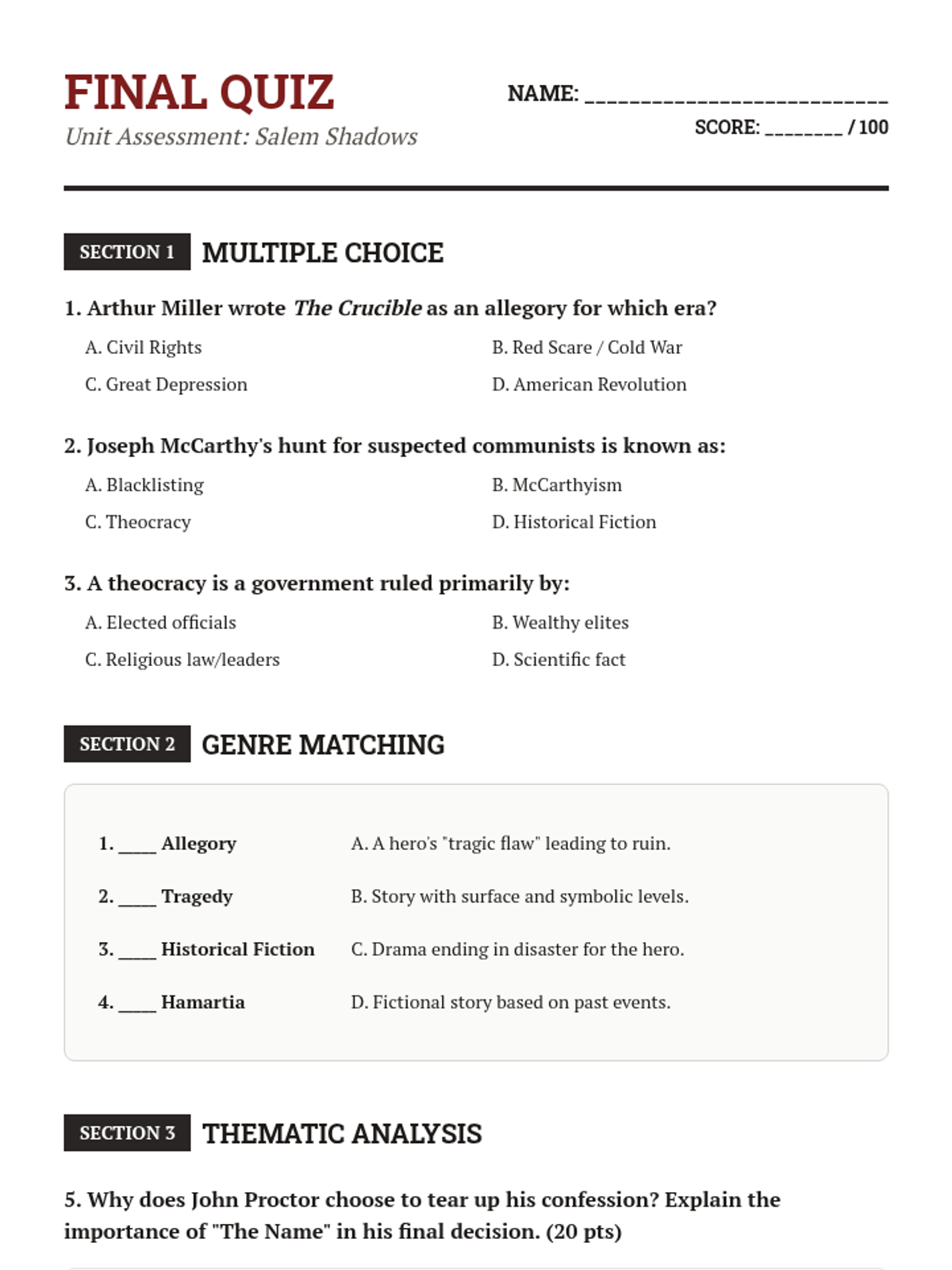
A comprehensive makeup packet for students to recover credit for a unit on The Crucible. It explores the historical context of McCarthyism, the play's themes of hysteria and reputation, and its classification as a tragic allegory.
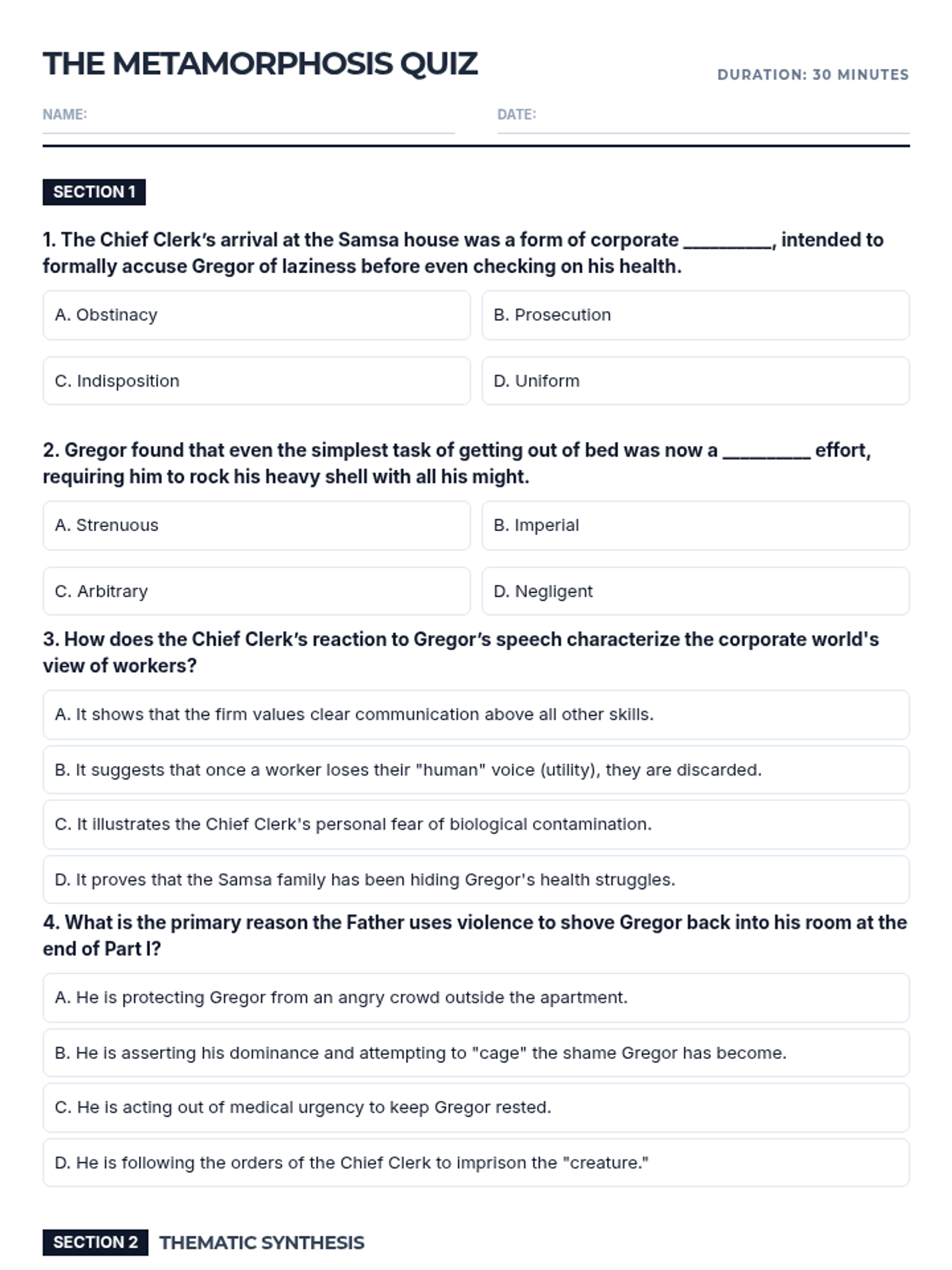
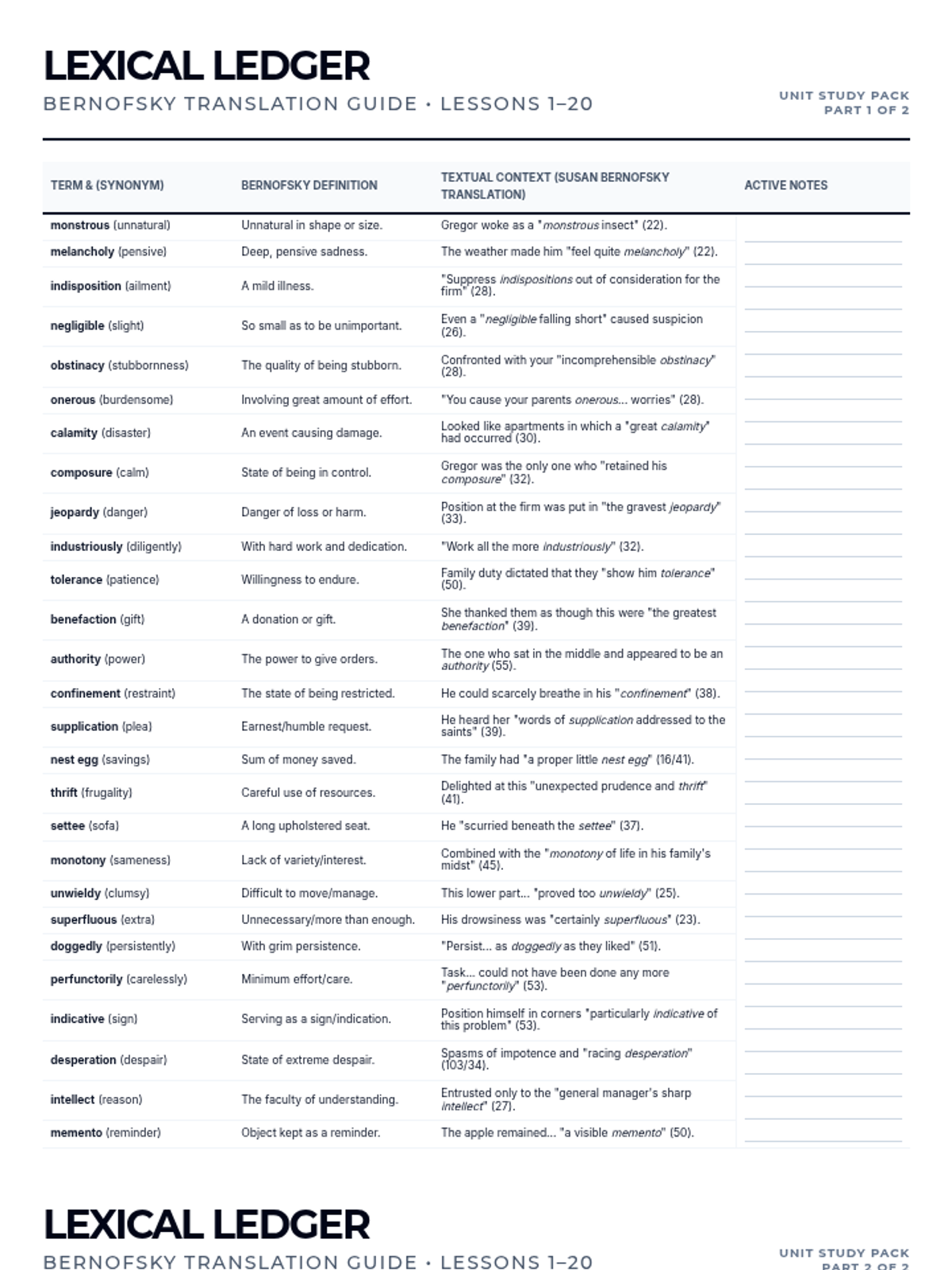
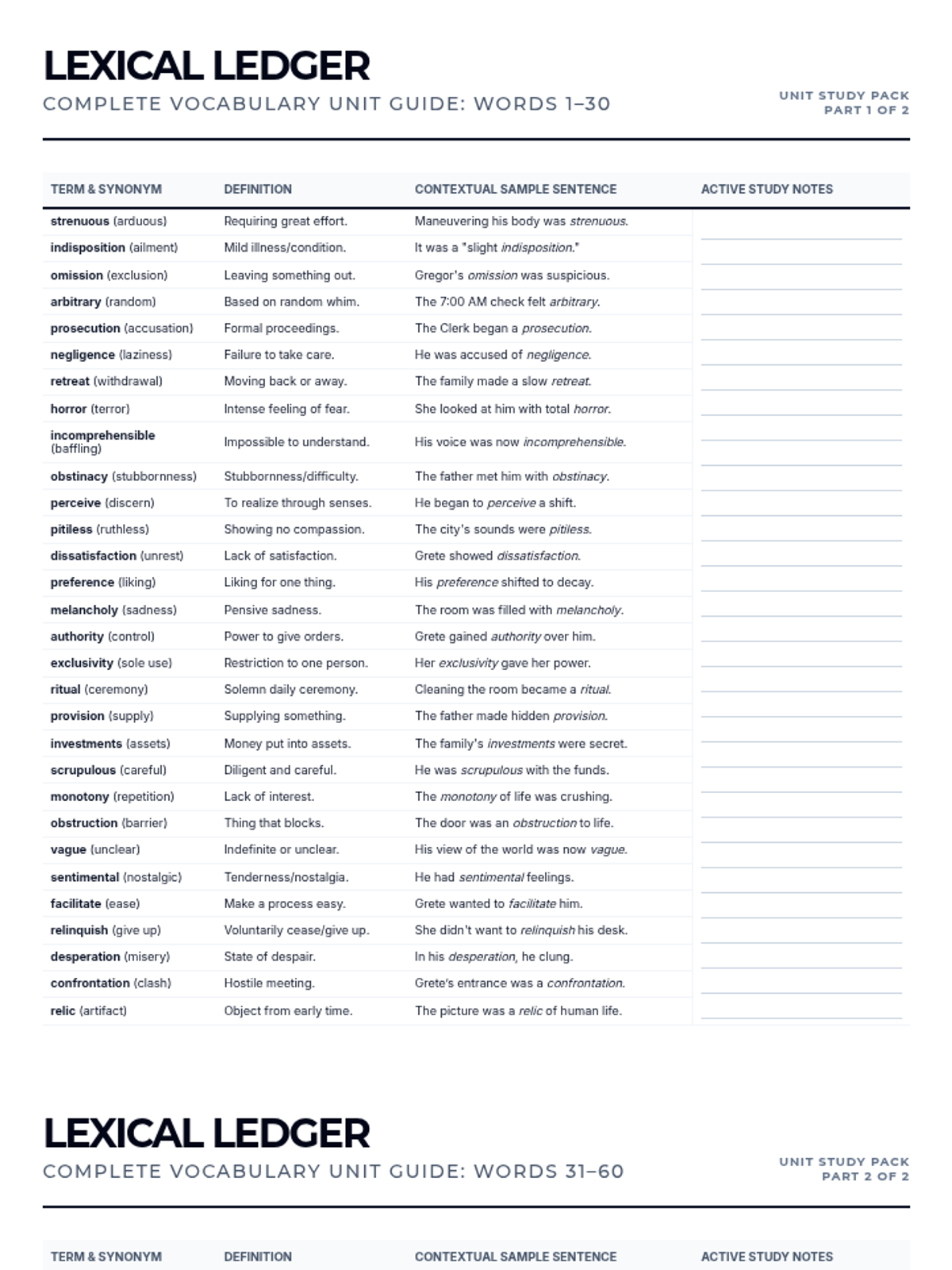
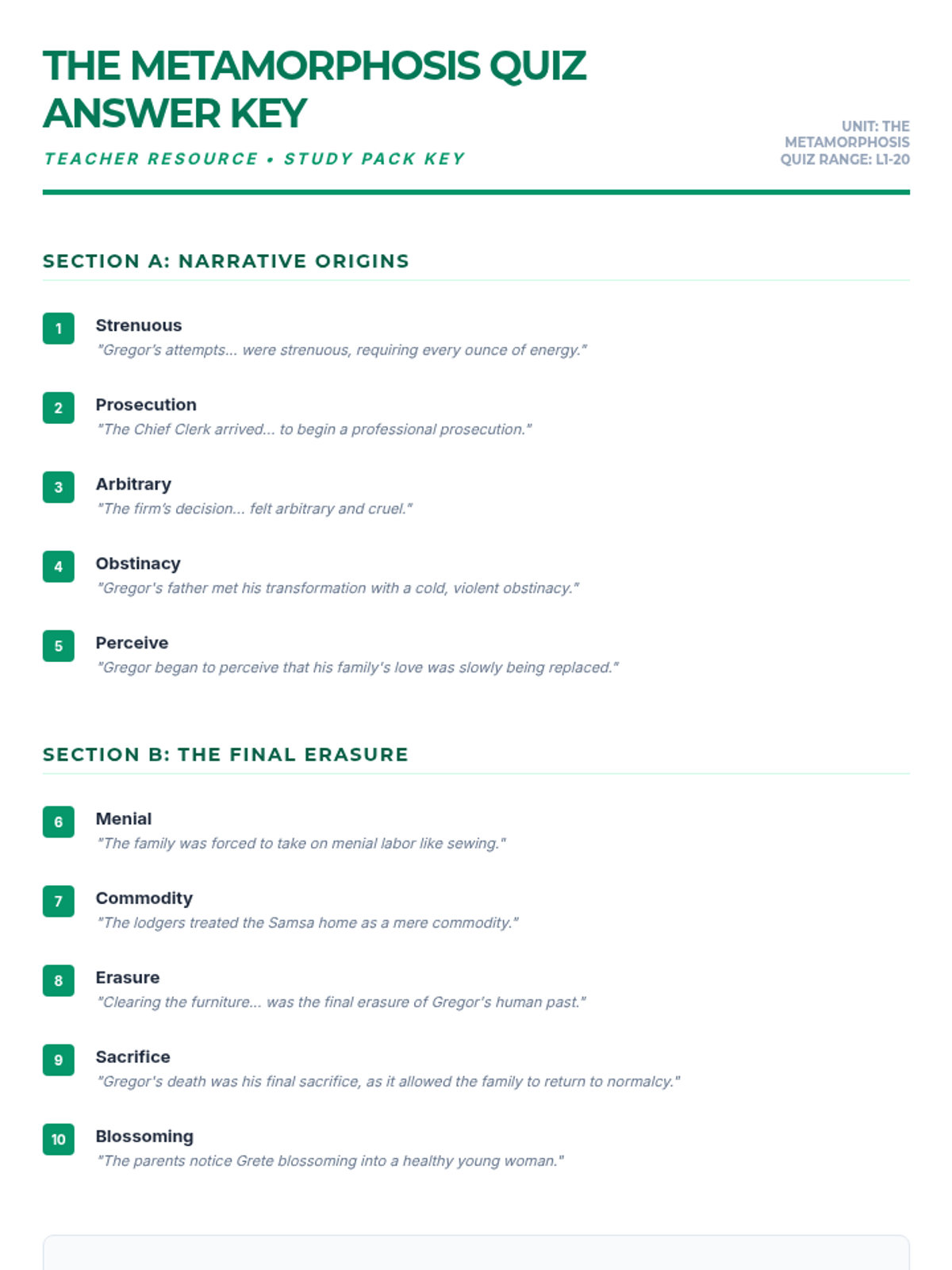
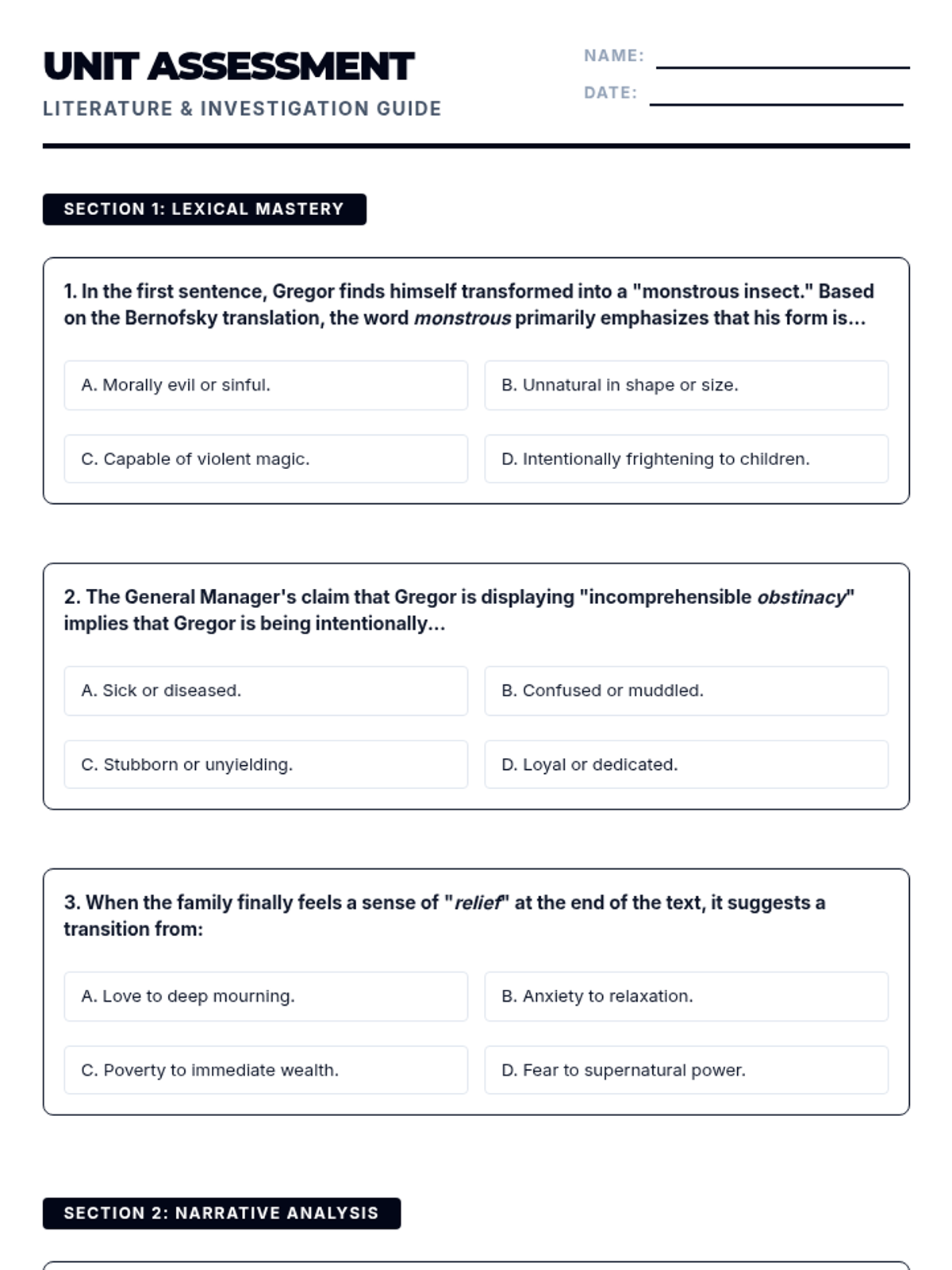
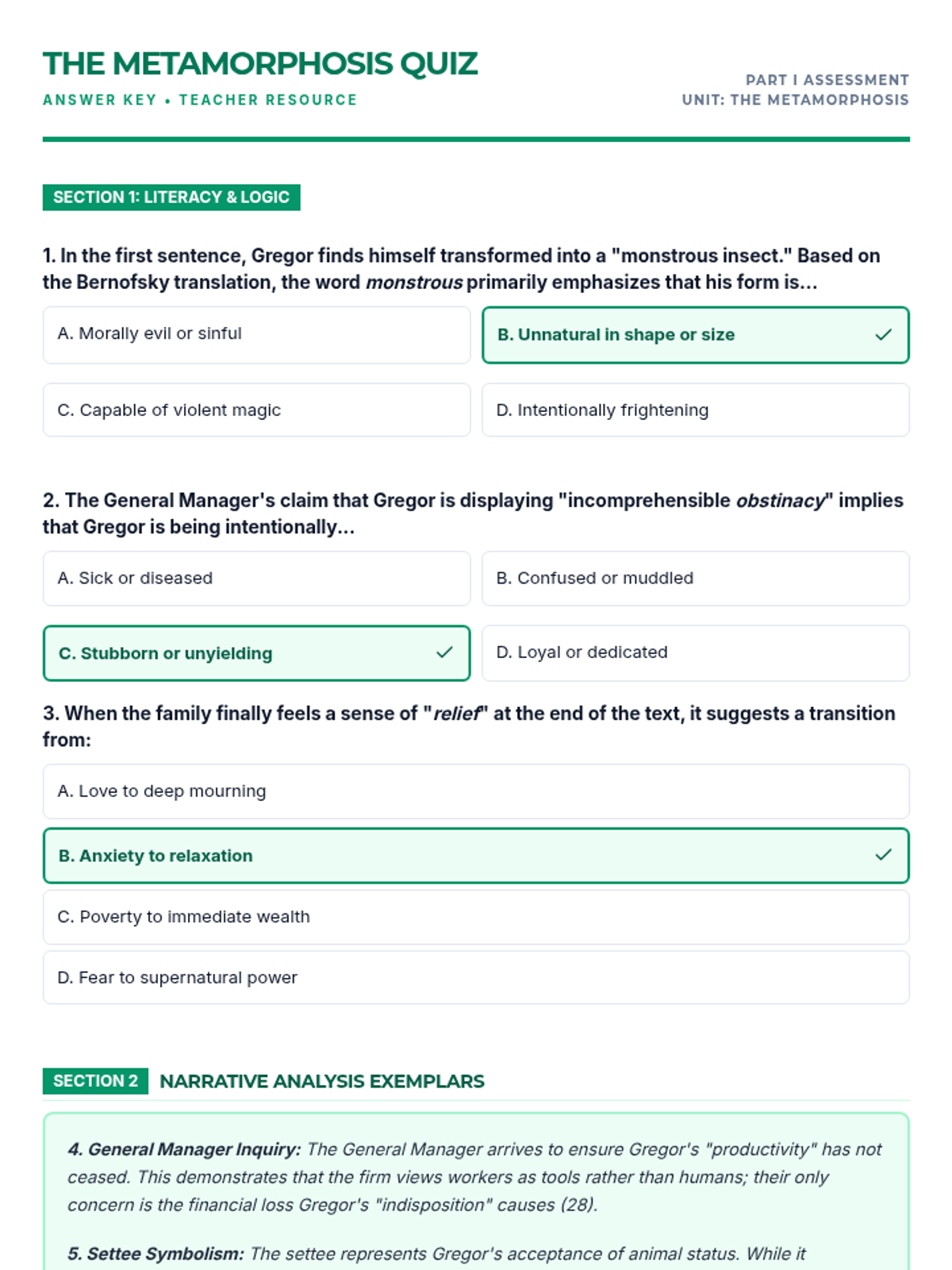
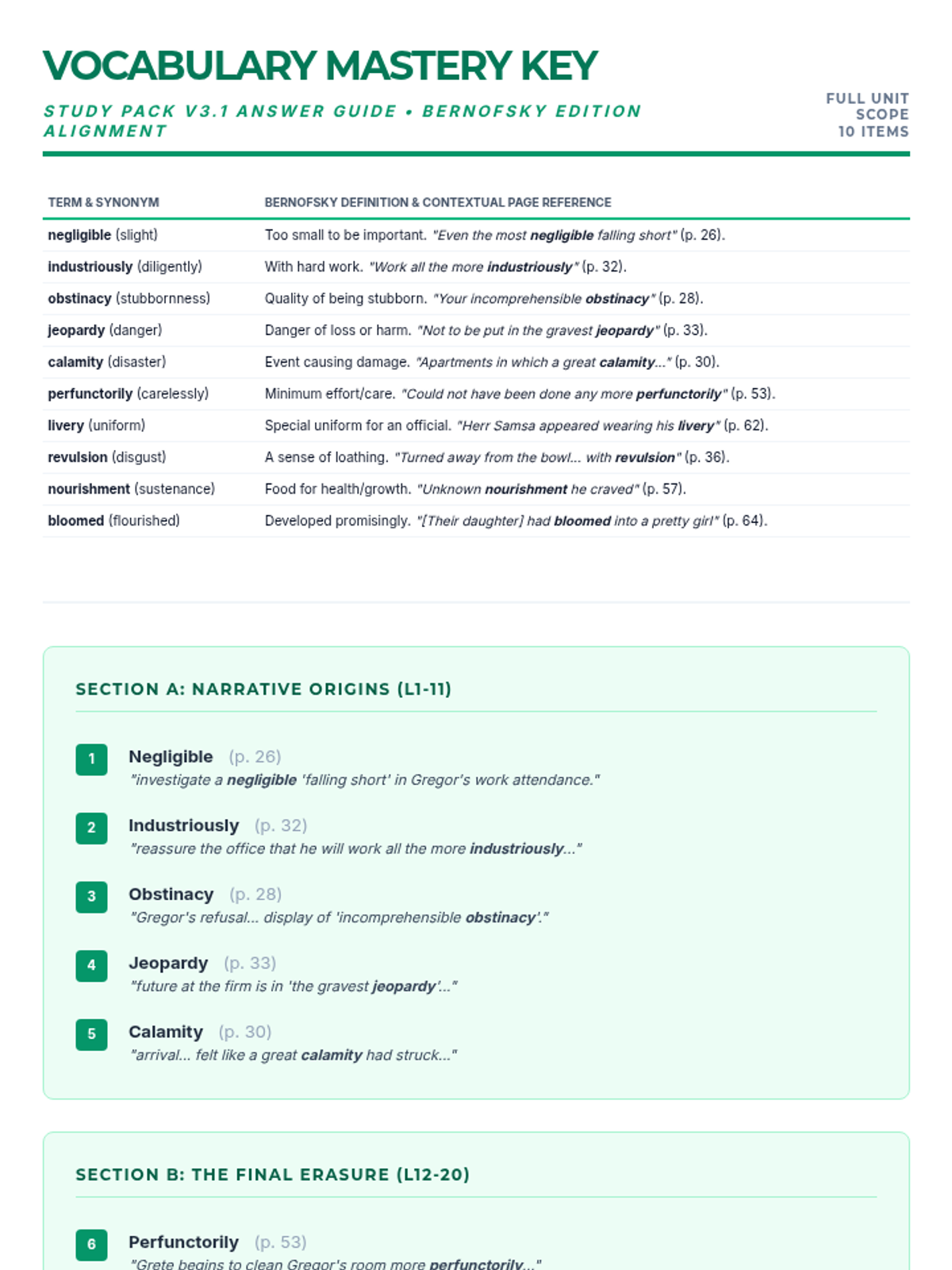
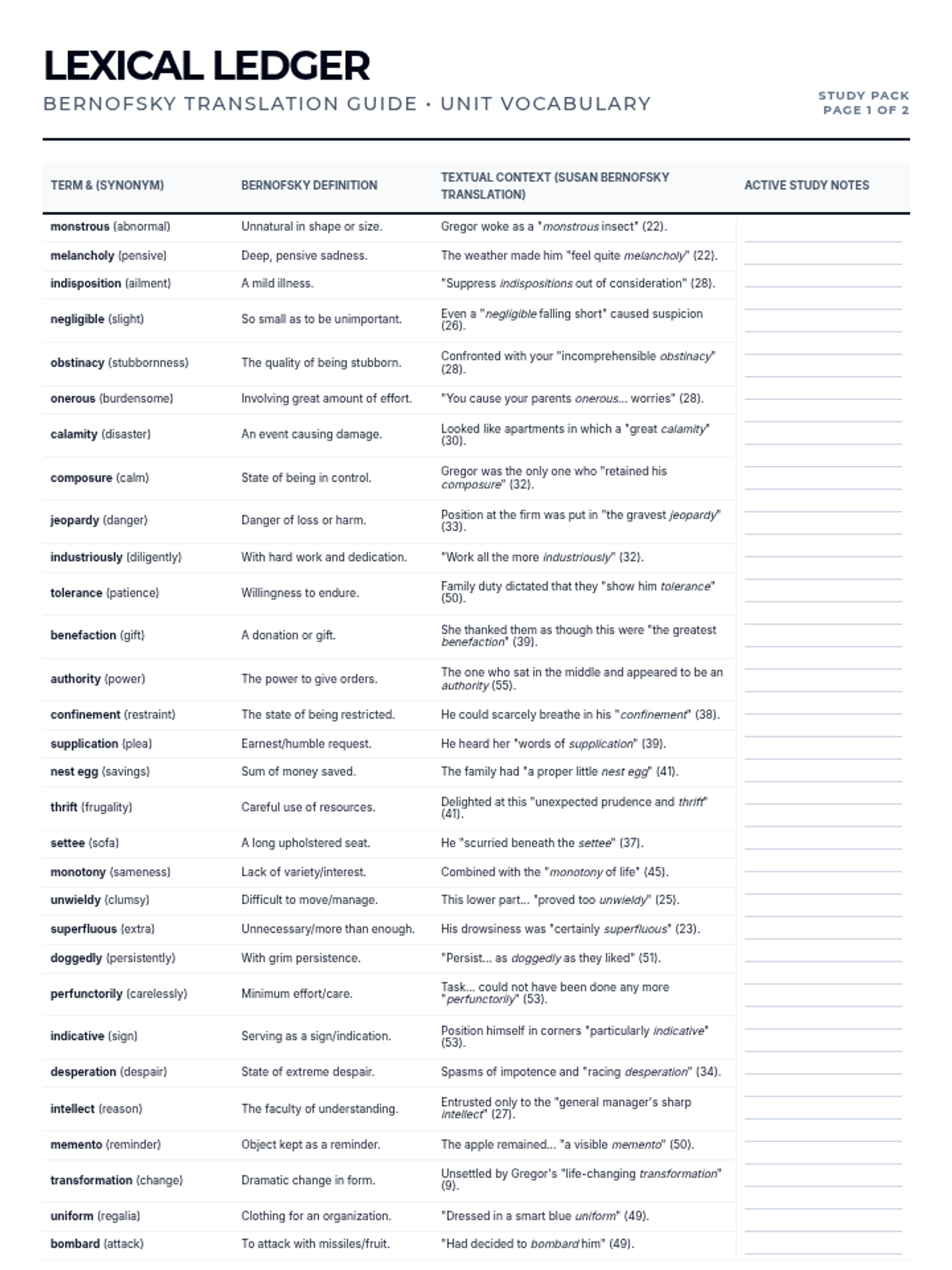
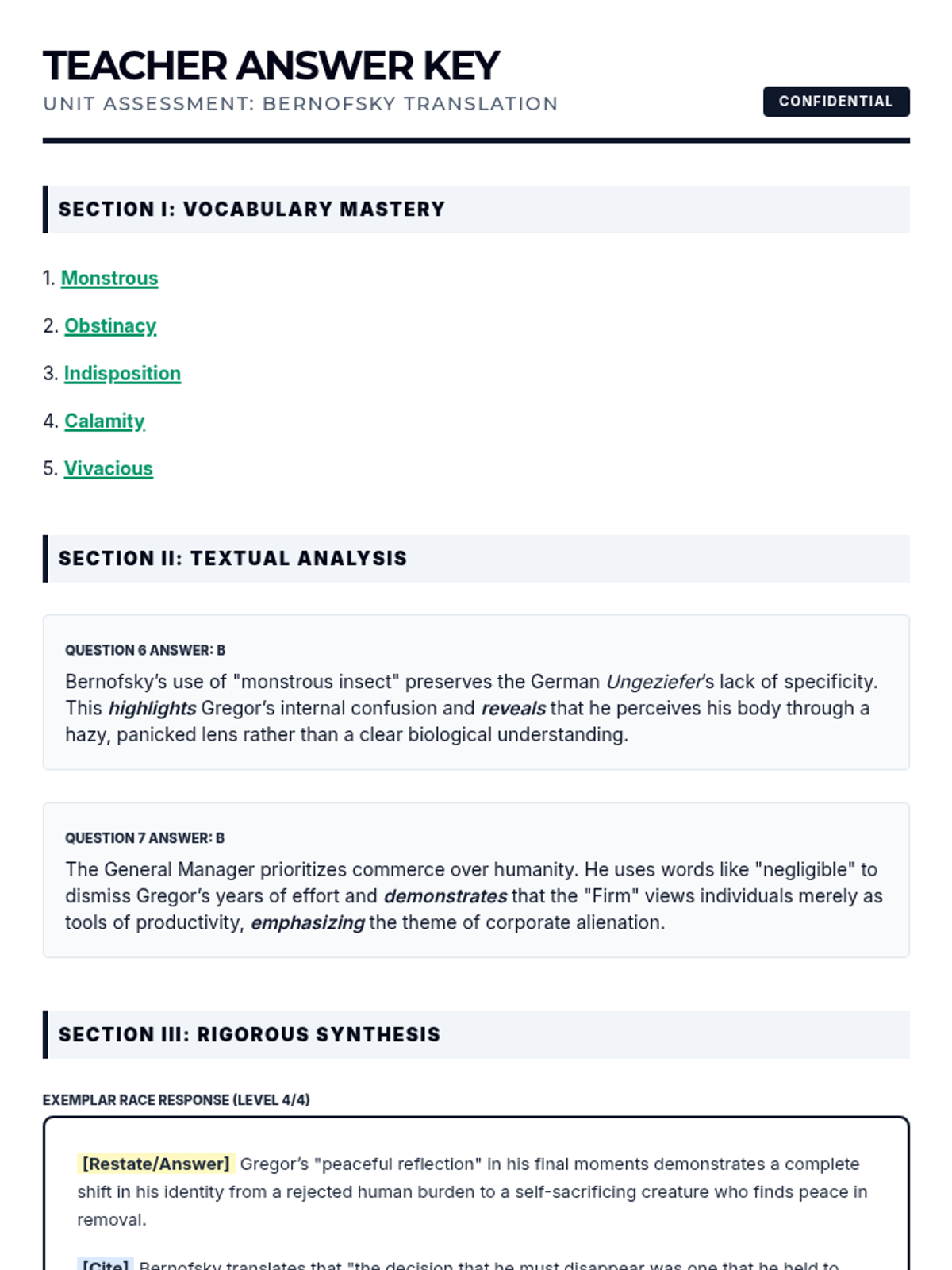
A summative assessment for the first third of the novel. Evaluates student mastery of vocabulary from Lessons 1-11, character motivation, and the central theme of corporate alienation through a mix of multiple choice, short answer, and a rigorous RACE response.
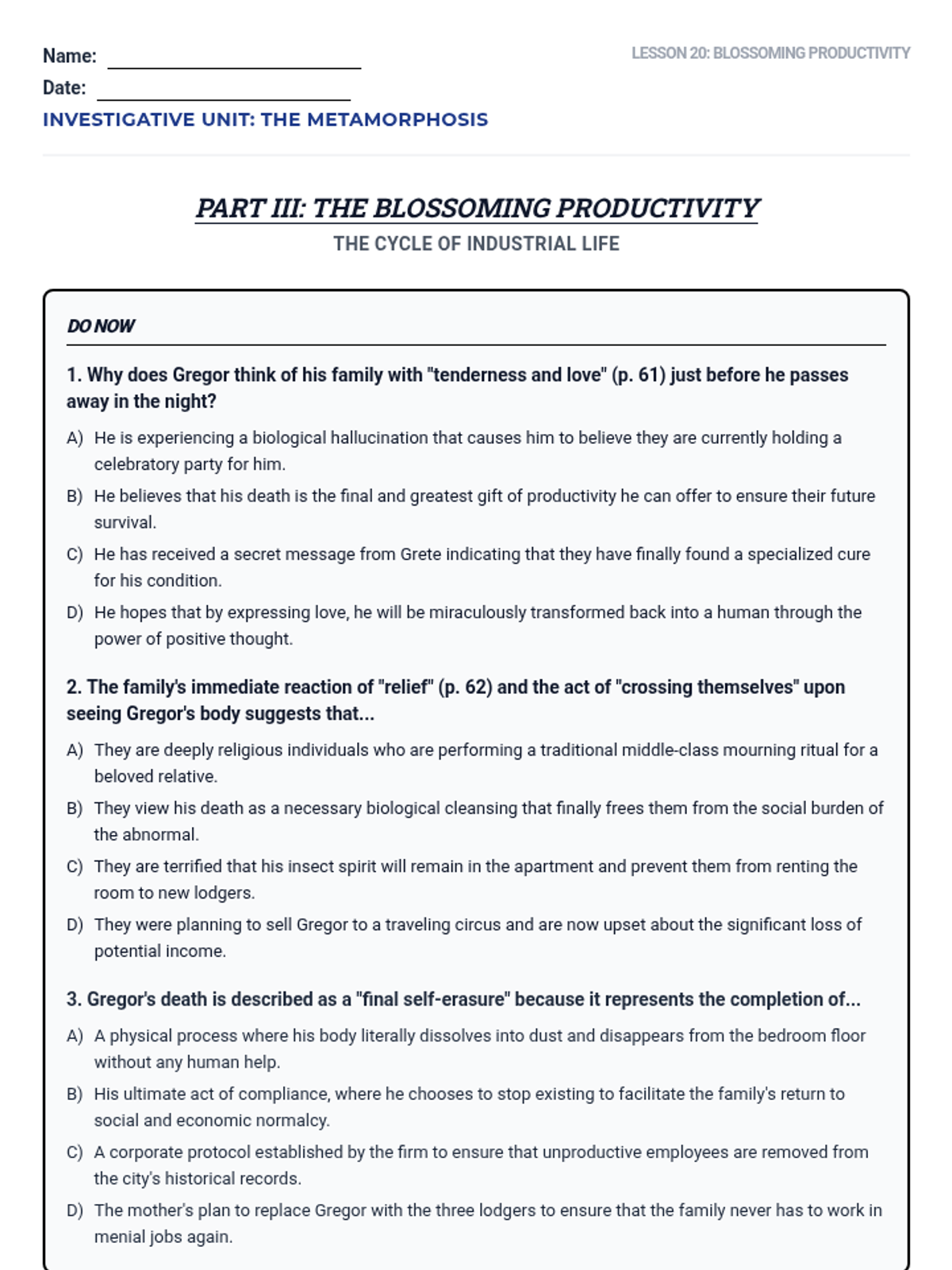
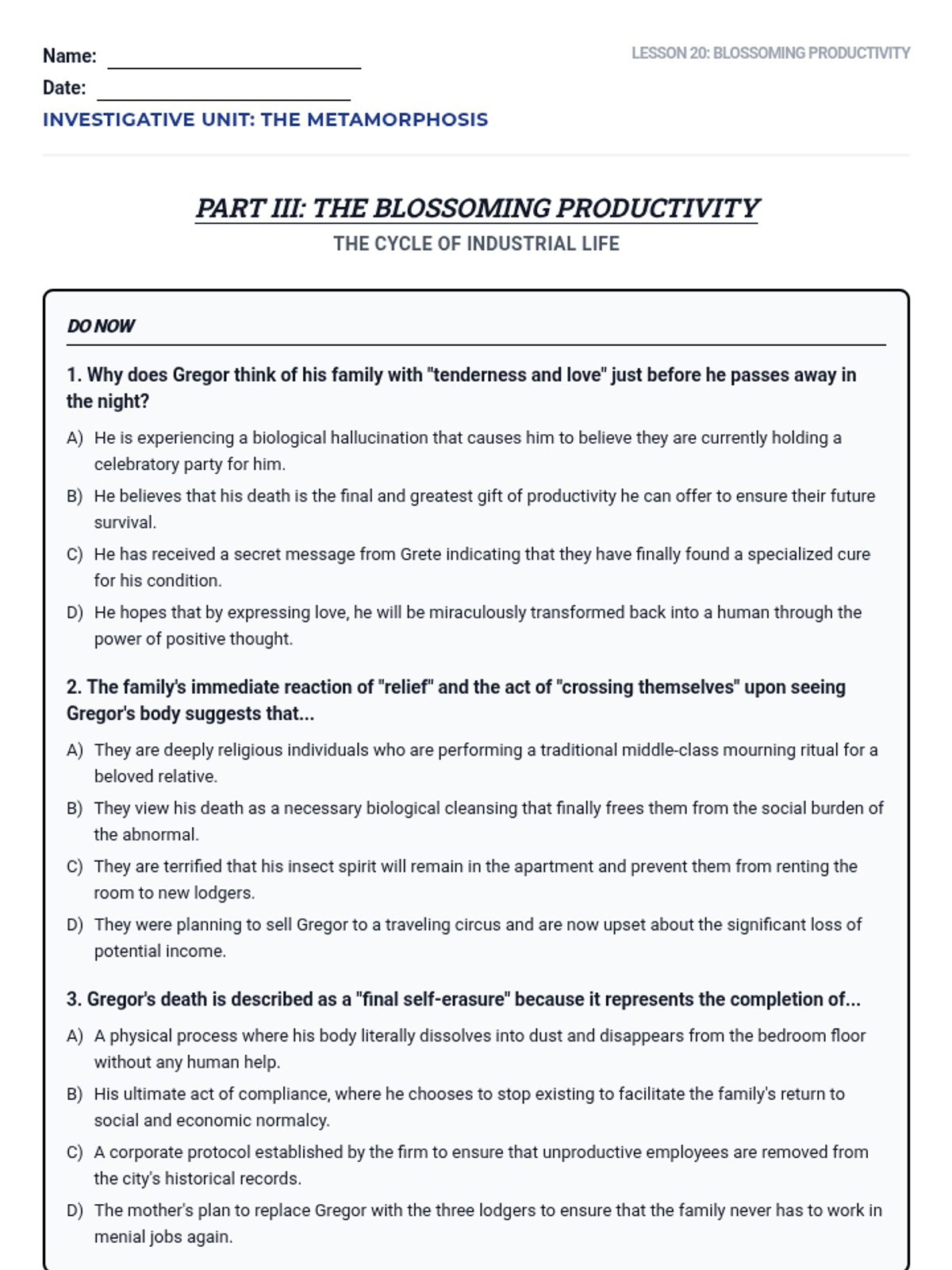
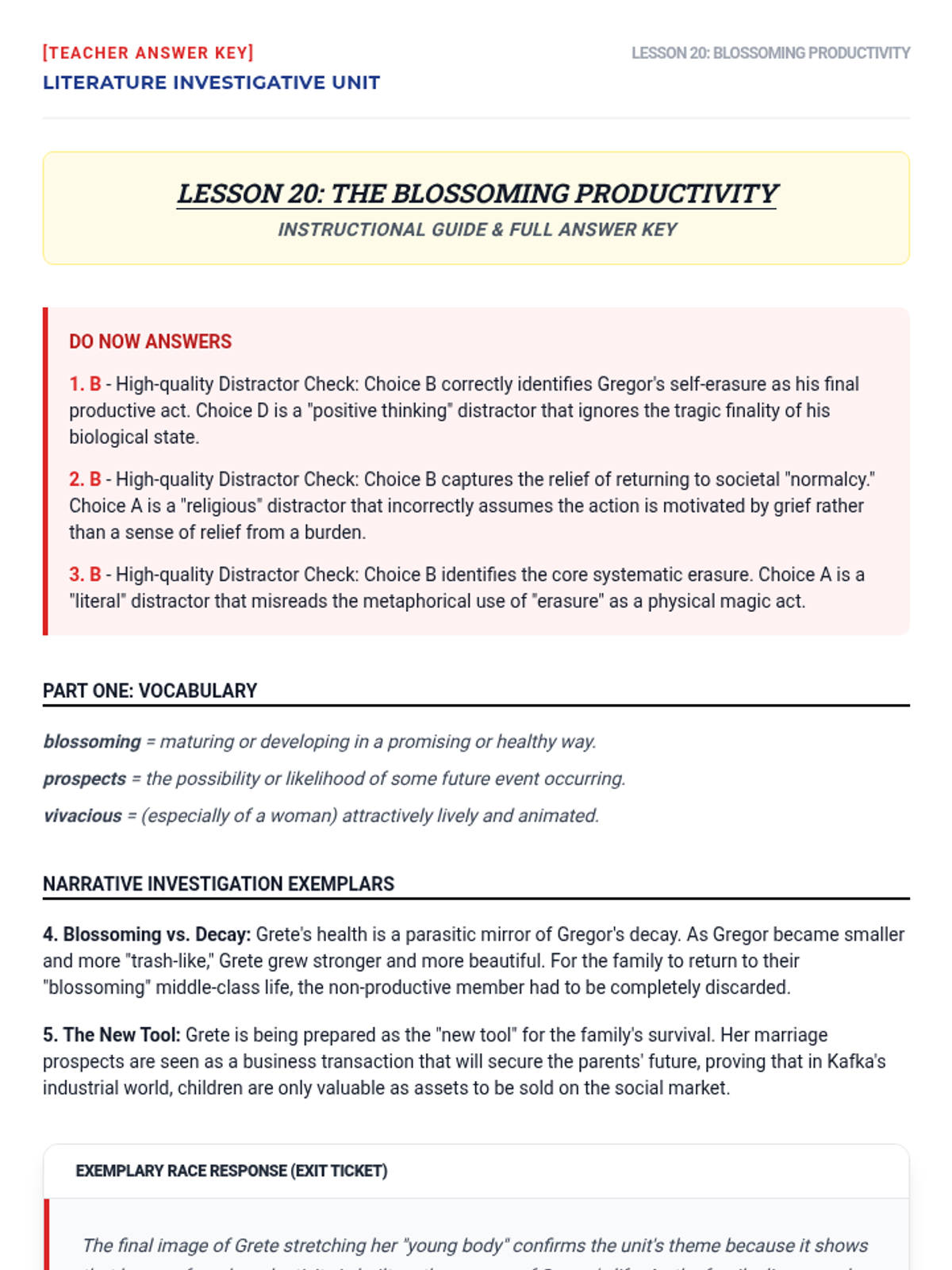
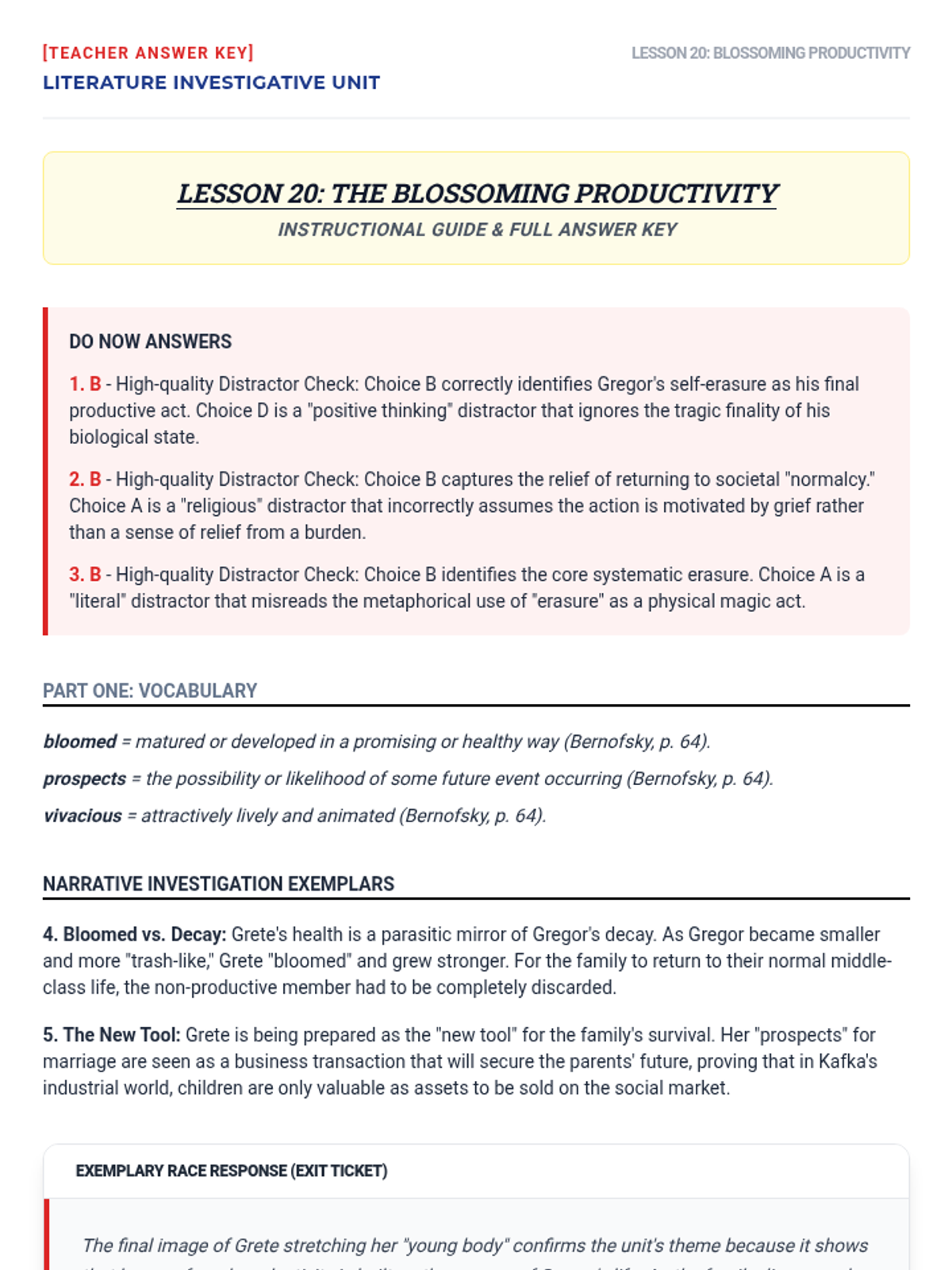
The family's recovery and the transition to a new source of productivity (Grete). Synthesis of the unit's themes.