Syllogisms, deductive validity, and the principles of inductive probability for evaluating evidence-based claims. Targets common logical fallacies and the construction of sound, persuasive arguments.
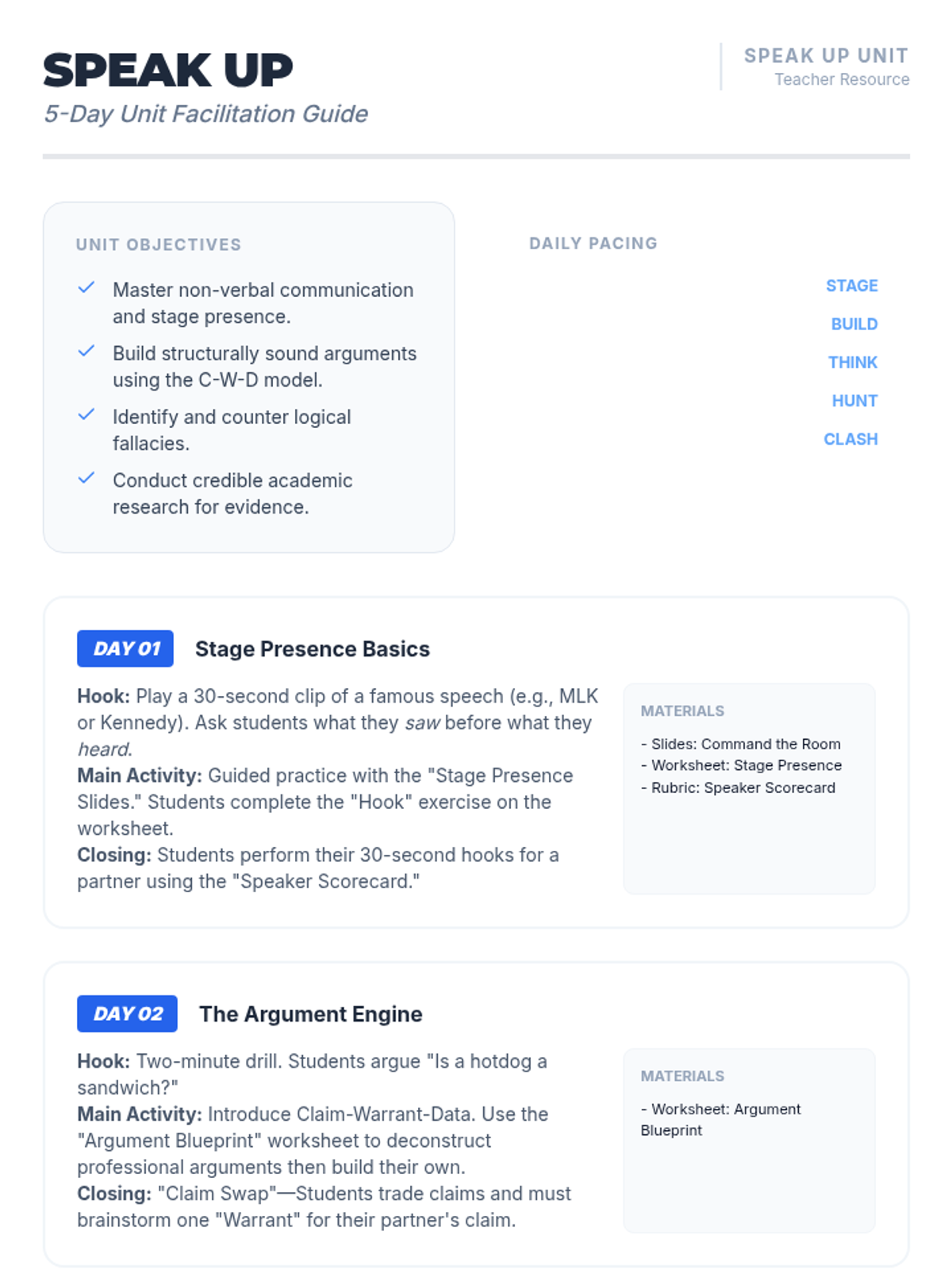
A comprehensive 5-day unit plan for teachers, detailing hooks, activities, and closing strategies for an introductory speech and debate unit.
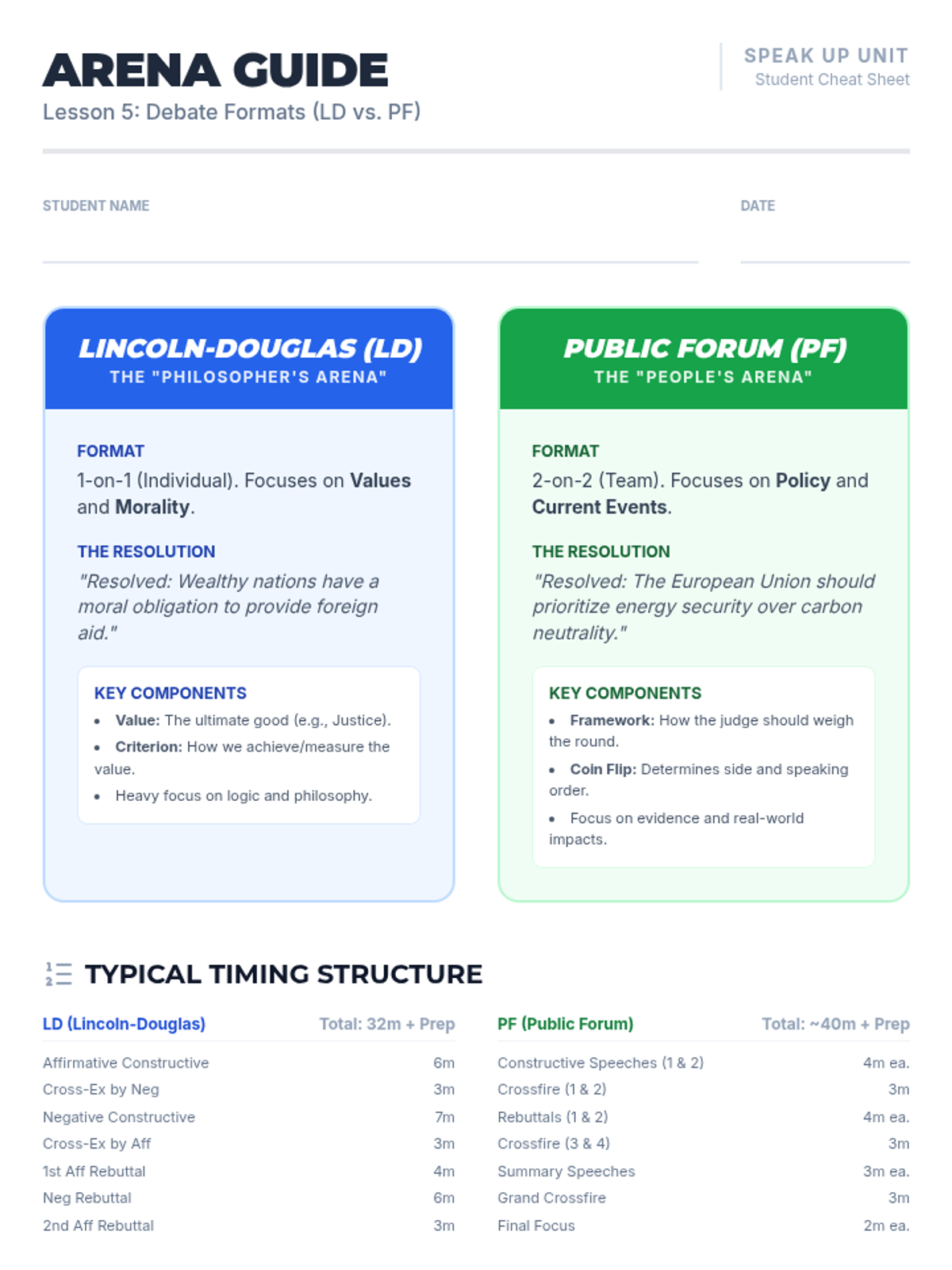
A comparison guide and cheat sheet for students detailing the differences between Lincoln-Douglas and Public Forum debate formats.
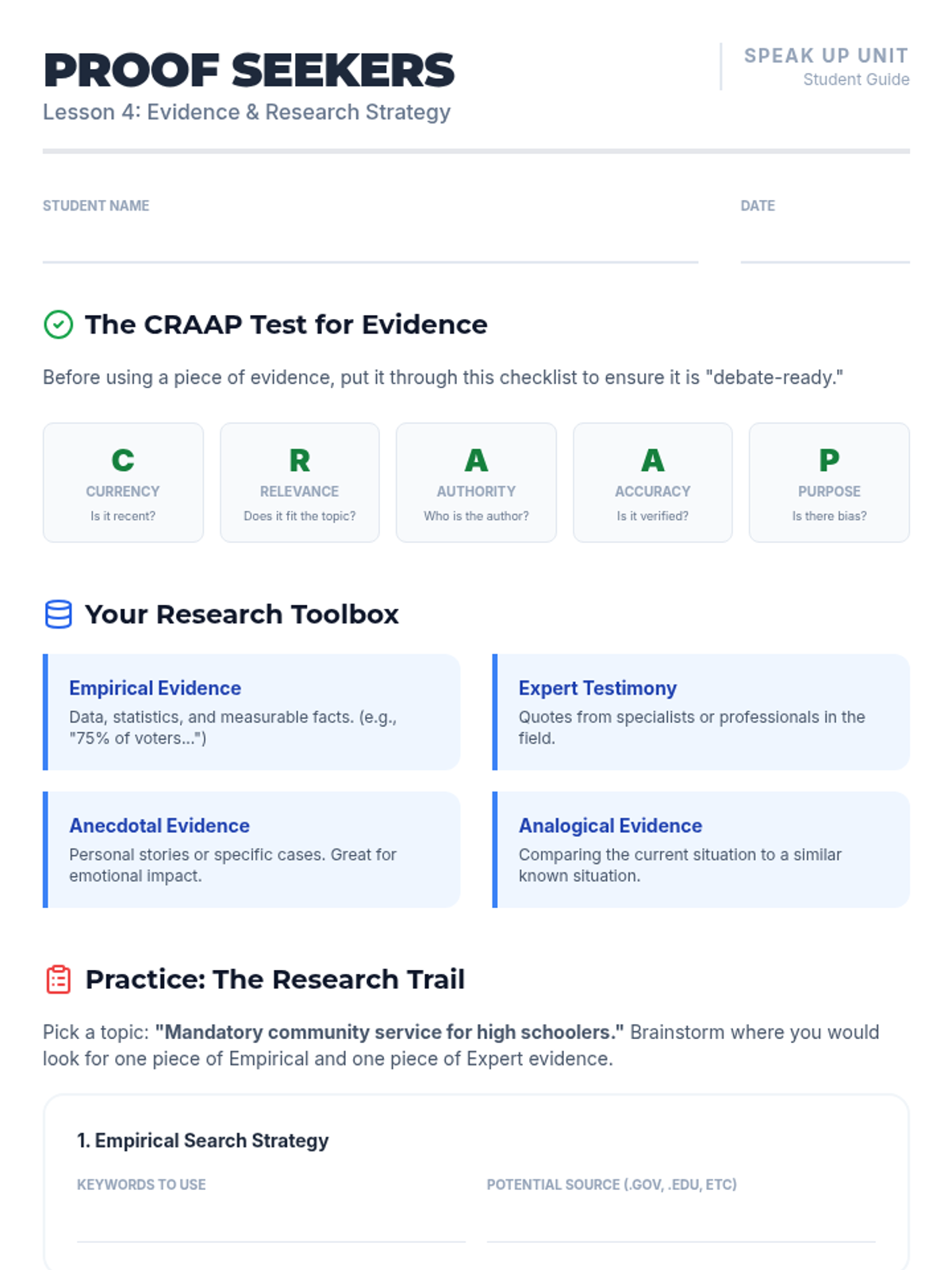
A research guide and worksheet for students, focusing on evidence evaluation (CRAAP test) and research strategies for debate.
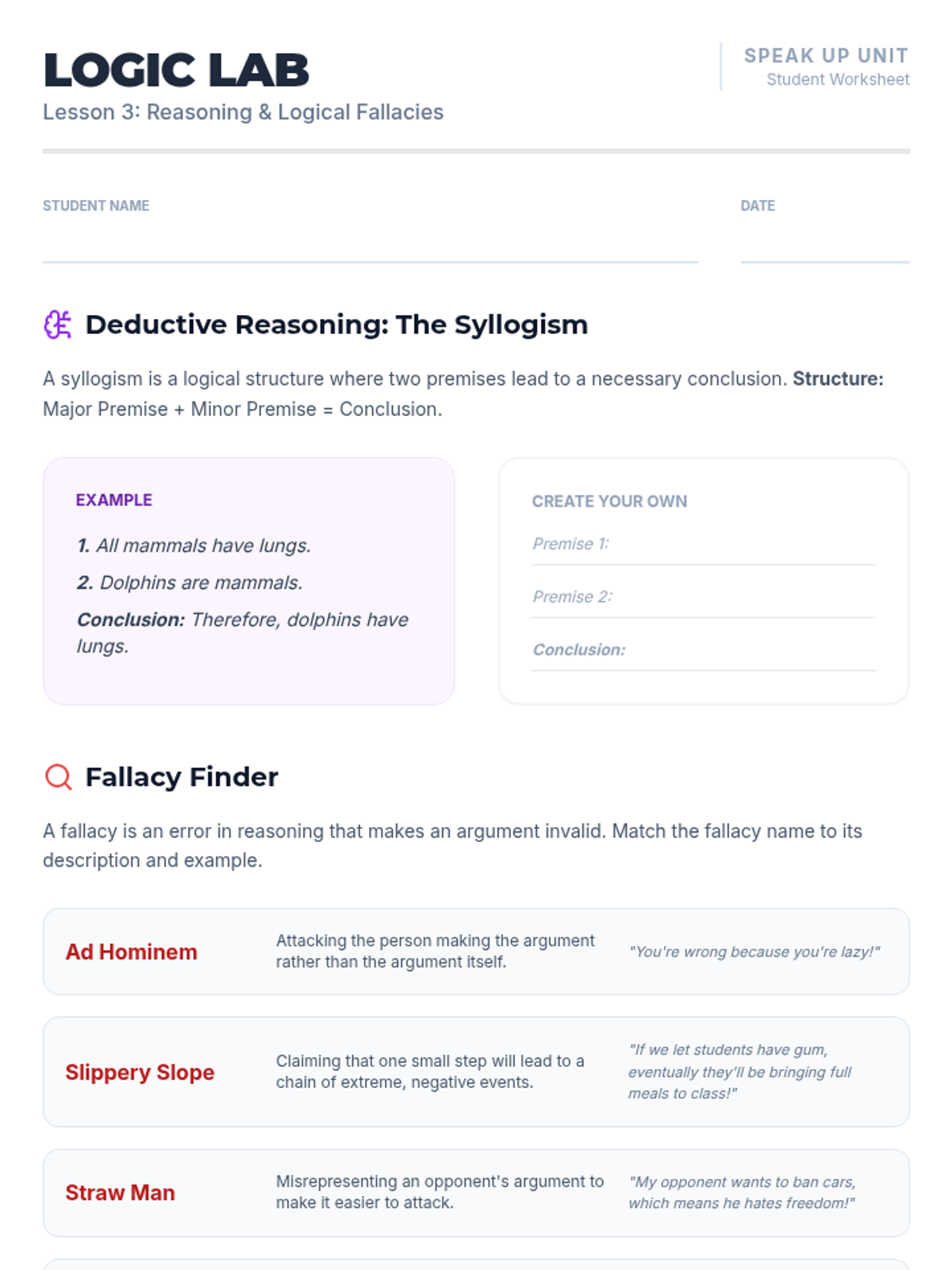
A student worksheet exploring logical reasoning, syllogisms, and common logical fallacies used in speech and debate.
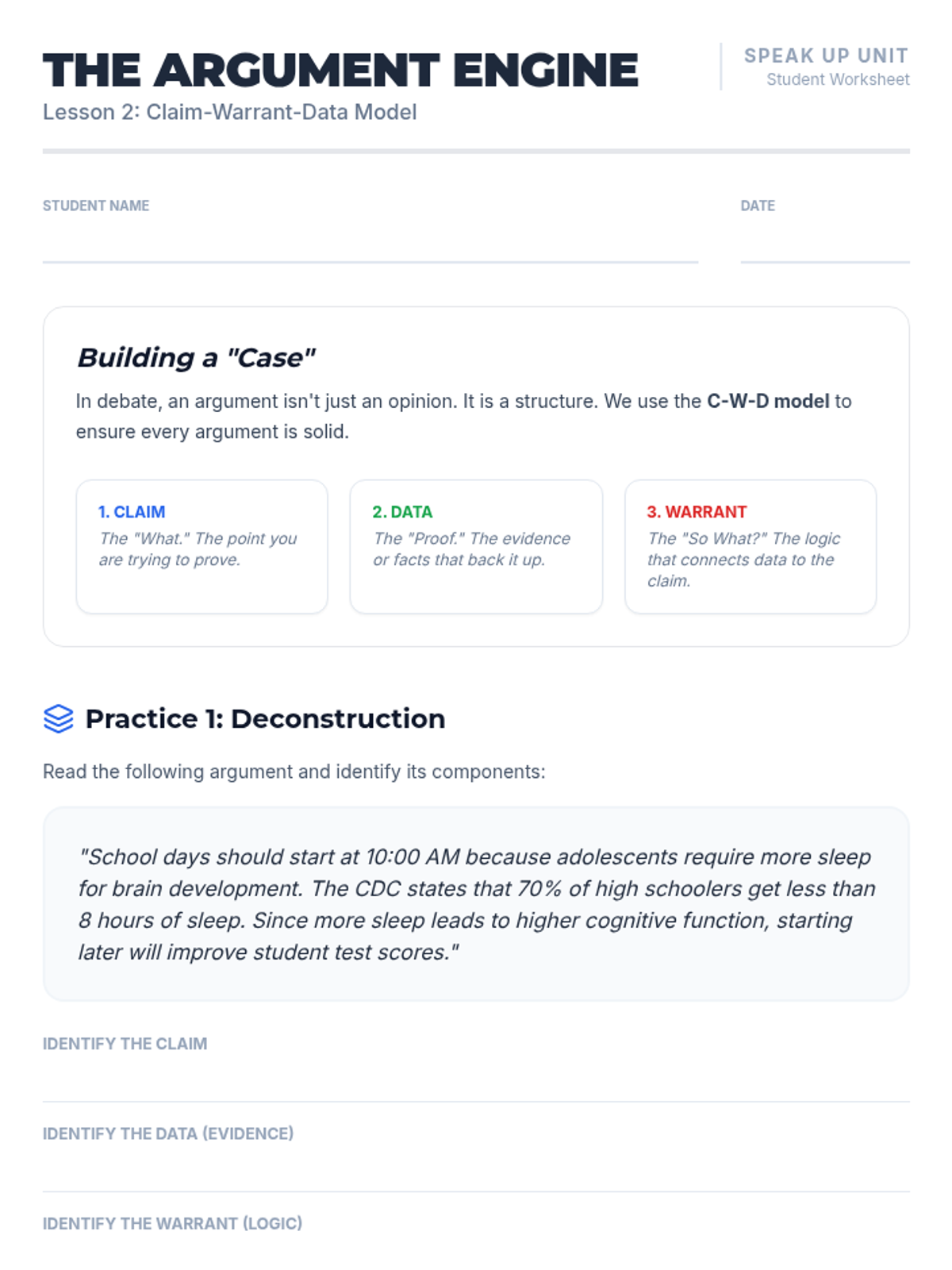
A student worksheet focusing on the Claim-Warrant-Data model of argumentation, including deconstruction and creation exercises.
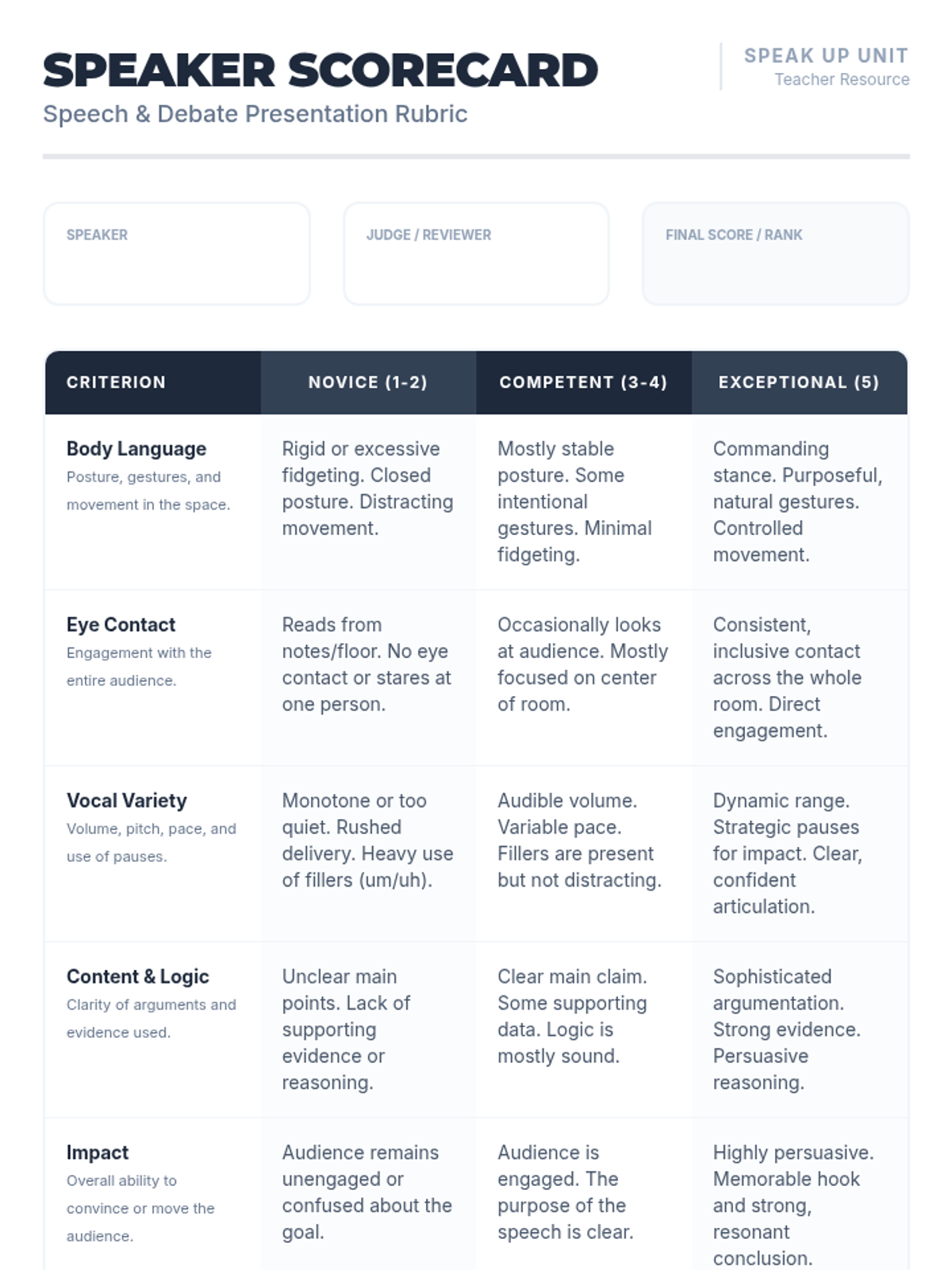
A professional rubric for evaluating speech and debate presentations, focusing on non-verbal communication, logic, and impact.
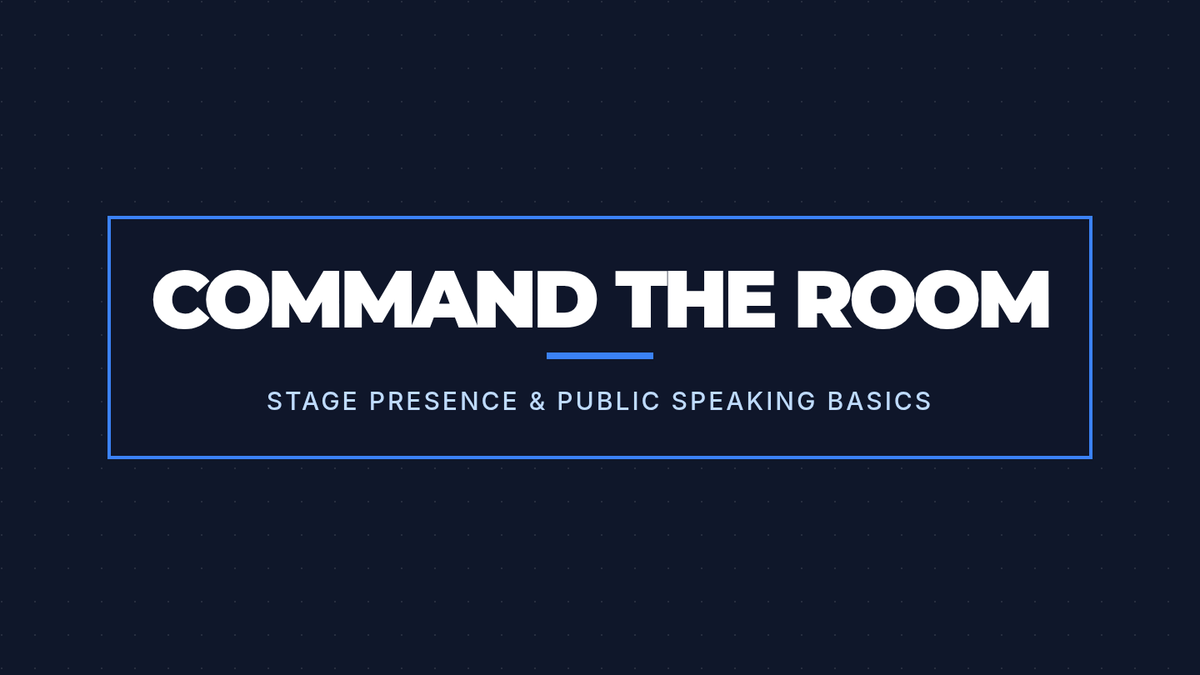
A visually engaging slide deck teaching the fundamentals of stage presence, including body language, eye contact, and vocal variety.
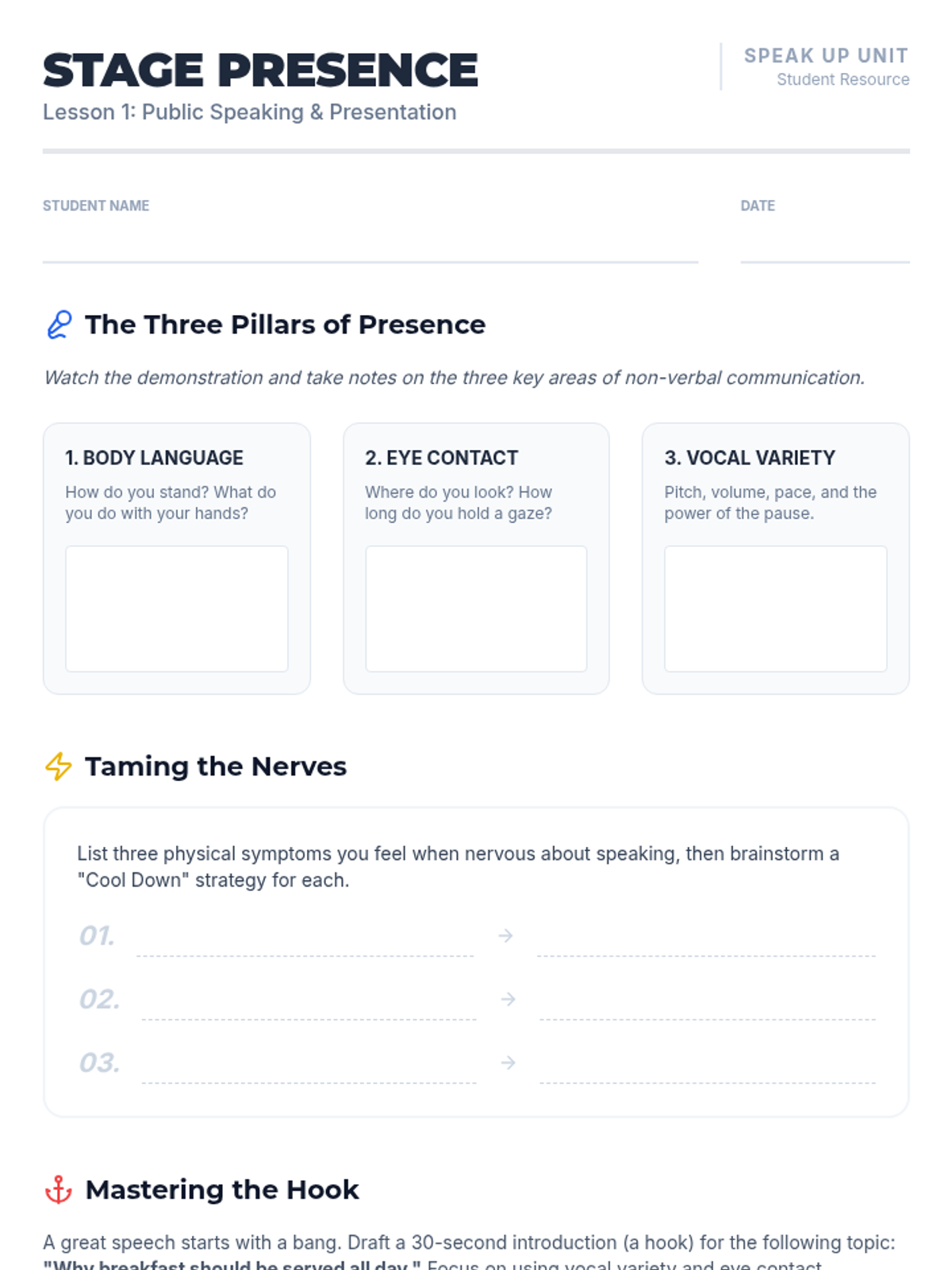
A combined student worksheet and glossary for the first day of a Speech and Debate unit, focusing on presentation skills and foundational terminology.
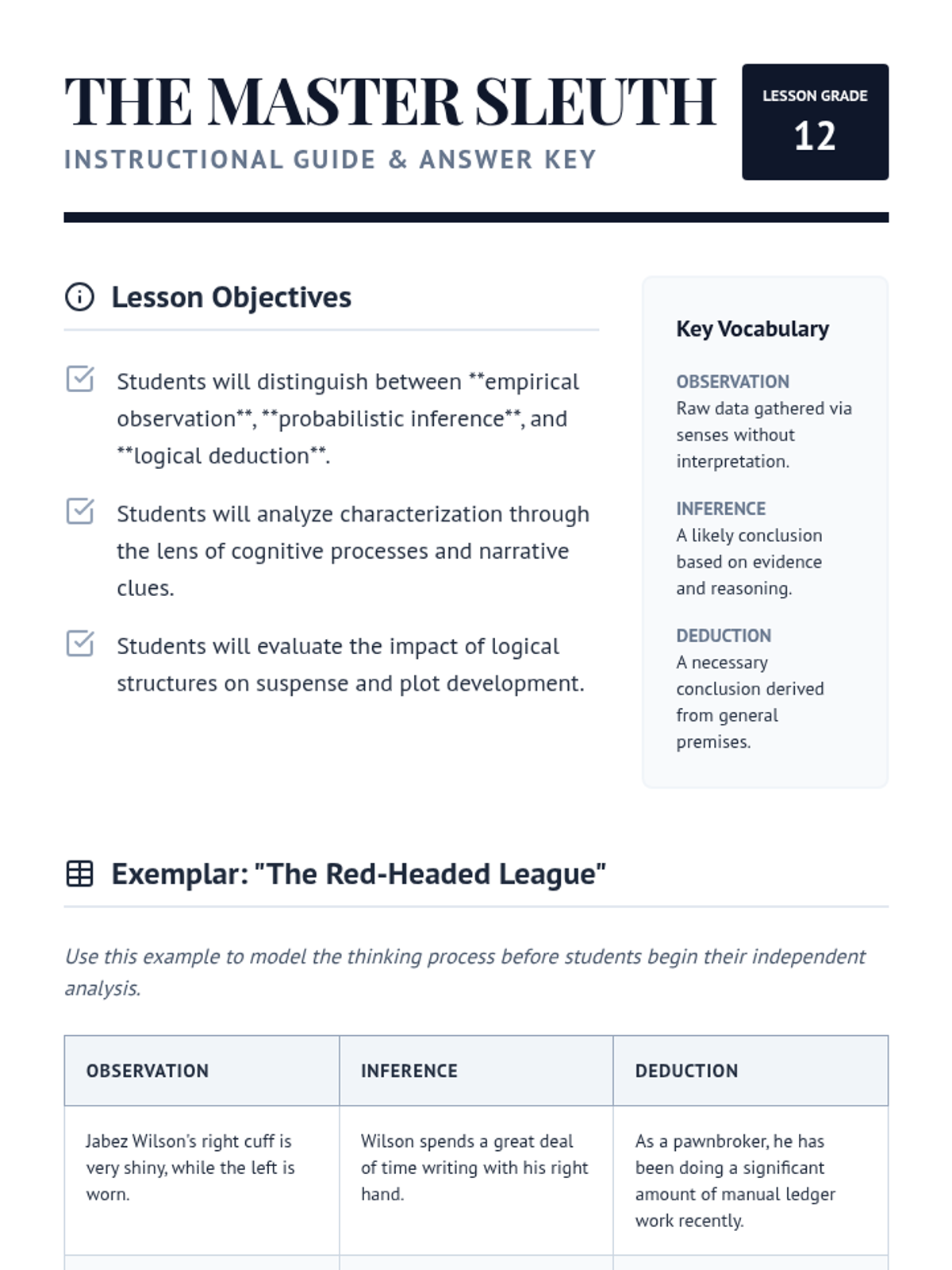
A comprehensive teacher guide for the Sherlock Holmes unit, featuring lesson objectives, key vocabulary, a worked exemplar for "The Red-Headed League," and high-level discussion prompts.
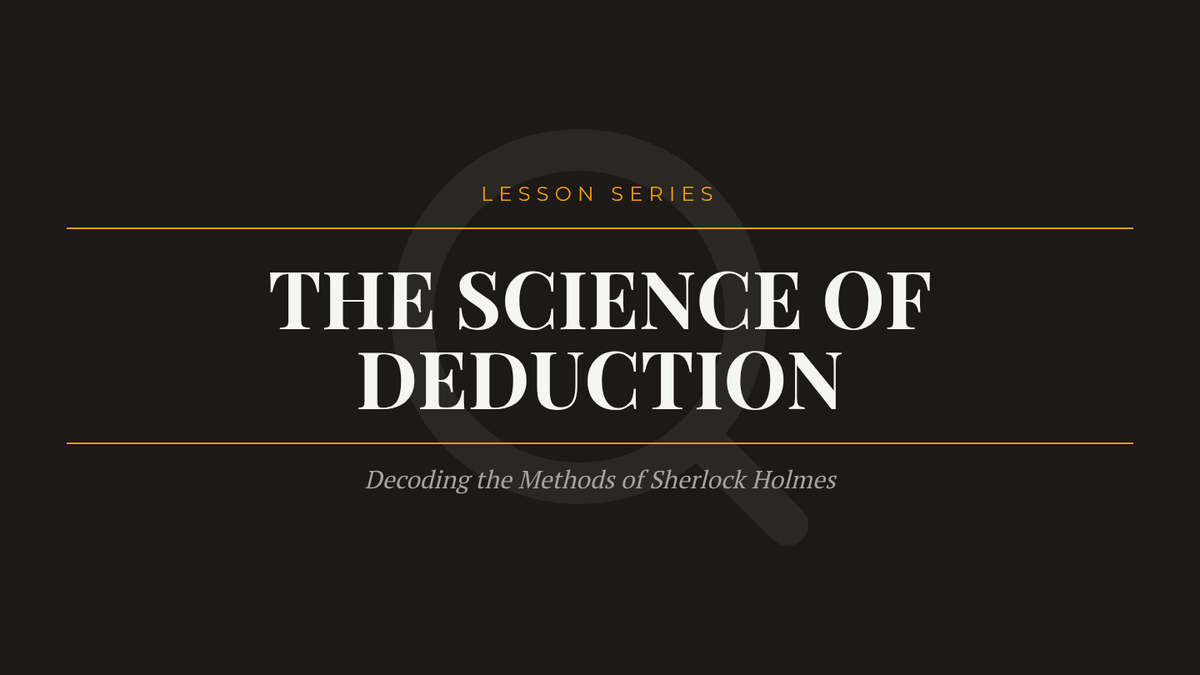
A visually striking slide deck for 12th-grade students introducing the core concepts of observation, inference, and deduction within the context of Sherlock Holmes.
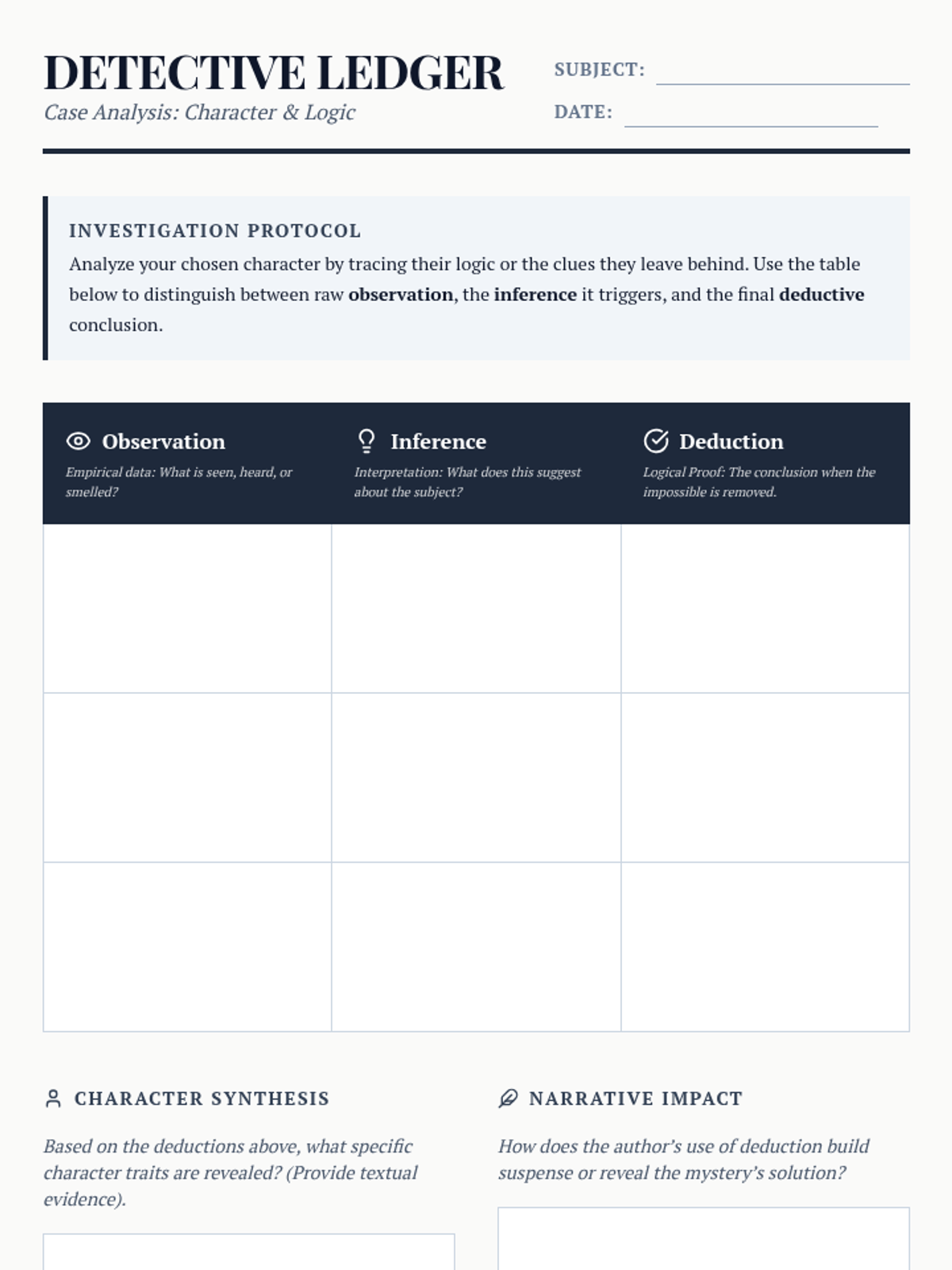
A sophisticated graphic organizer for 12th-grade students to analyze Sherlock Holmes stories, focusing on the progression from observation to inference and finally to deduction.
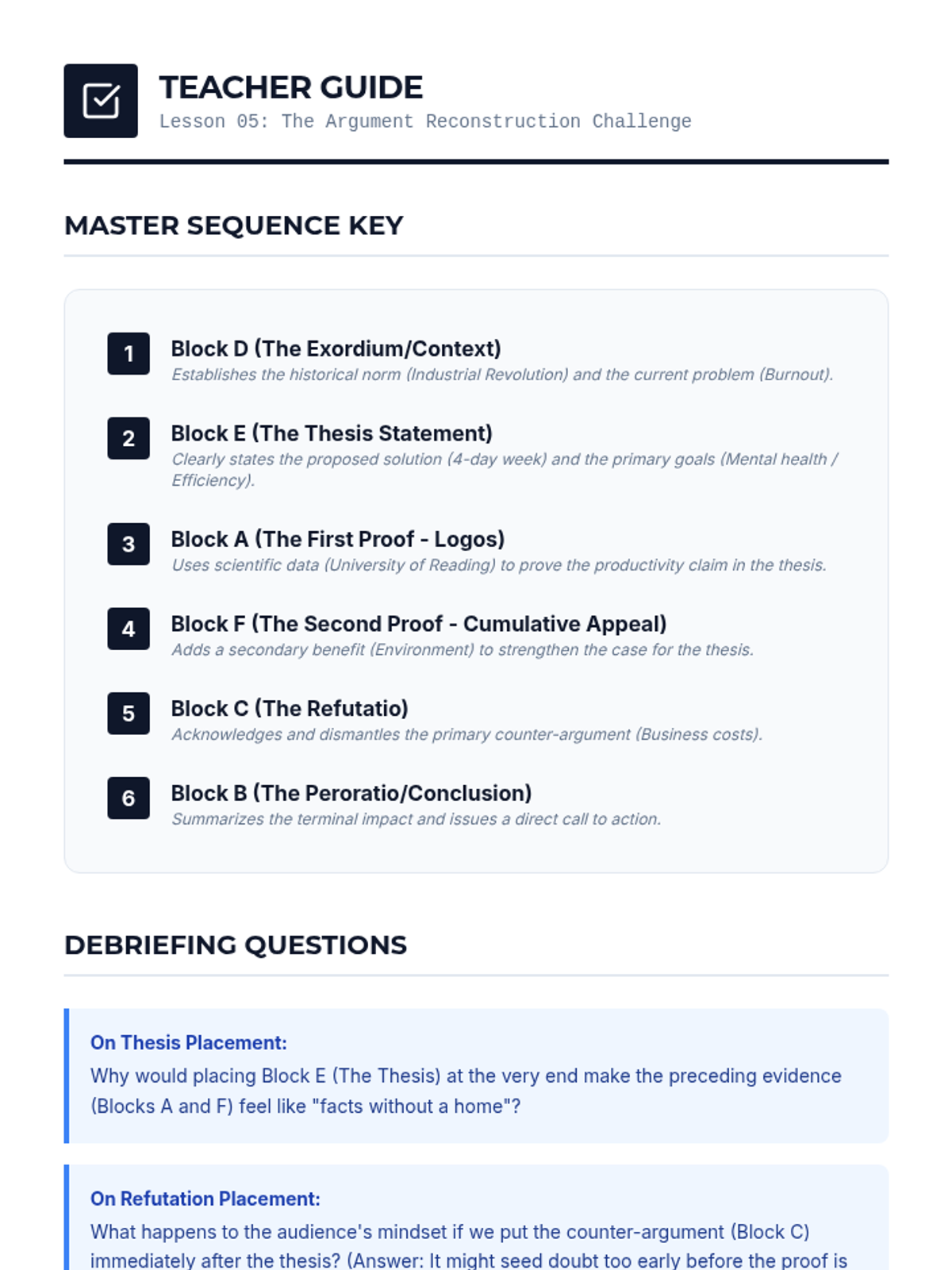
Teacher guide for Lesson 5, including the master sequence for the argument reconstruction challenge and unit debrief questions.
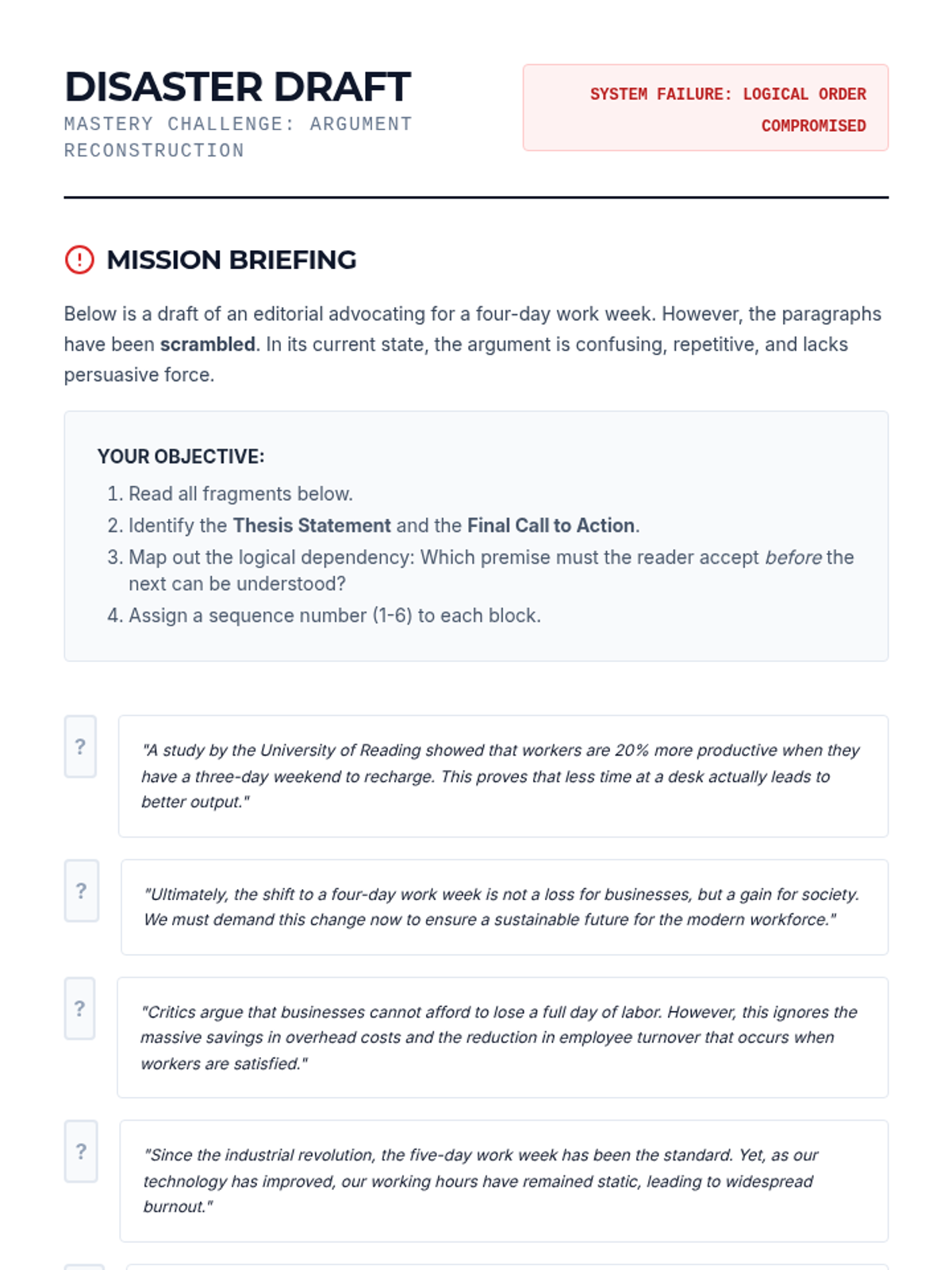
Student worksheet for reconstructing a scrambled argumentative essay into a logically sound and persuasive sequence.
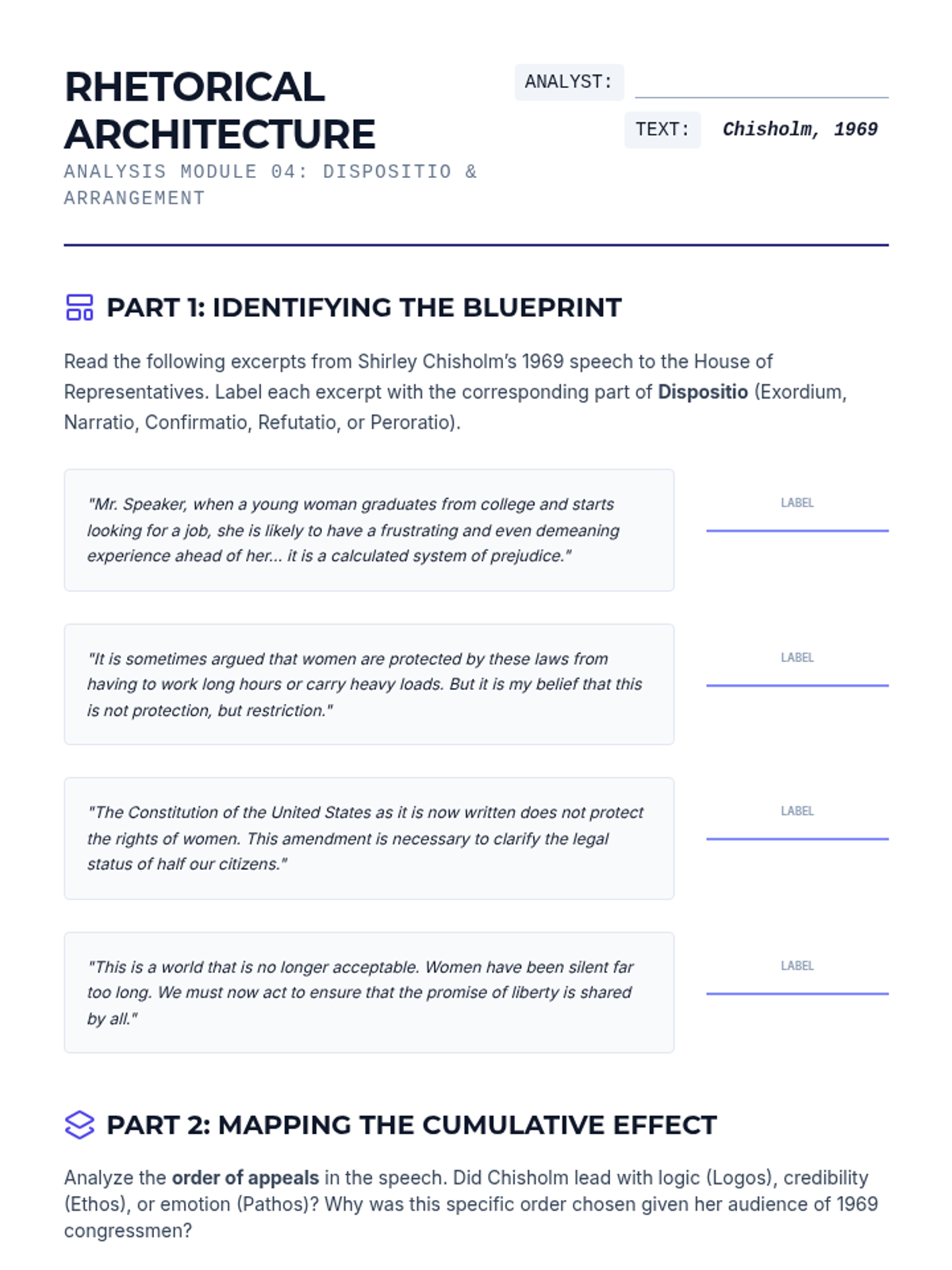
Student worksheet for analyzing the rhetorical arrangement of Shirley Chisholm's 'Equal Rights for Women' speech using the classical canon of Dispositio.
Slides for Lesson 4 focusing on the classical rhetorical canon of 'Arrangement' (Dispositio) and the strategic sequencing of appeals.
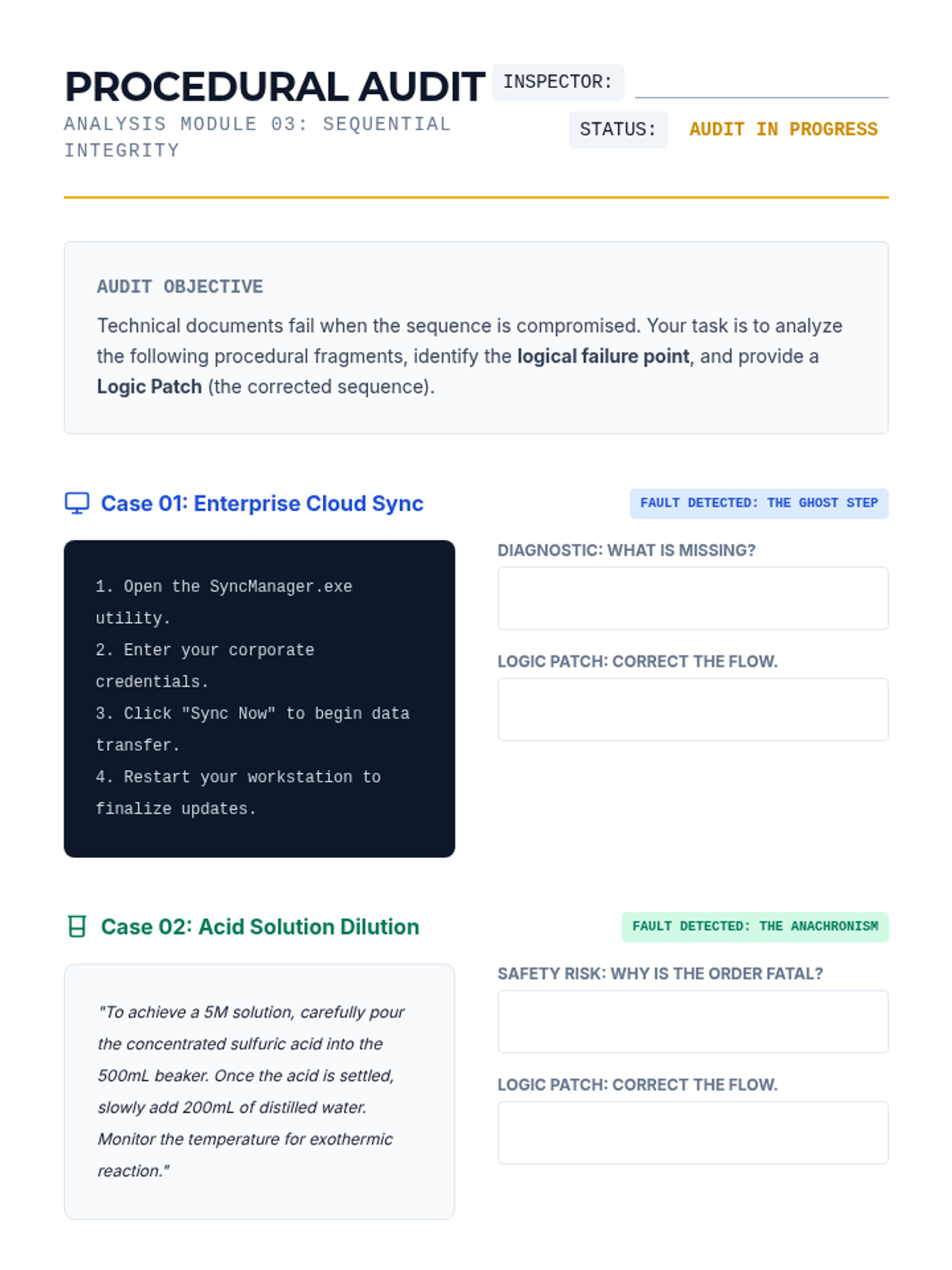
Student worksheet for analyzing technical documents to identify gaps and ambiguities in sequential instructions.
Slides for Lesson 3 focusing on technical documents, identifying sequential gaps, and the importance of precise order in procedures.
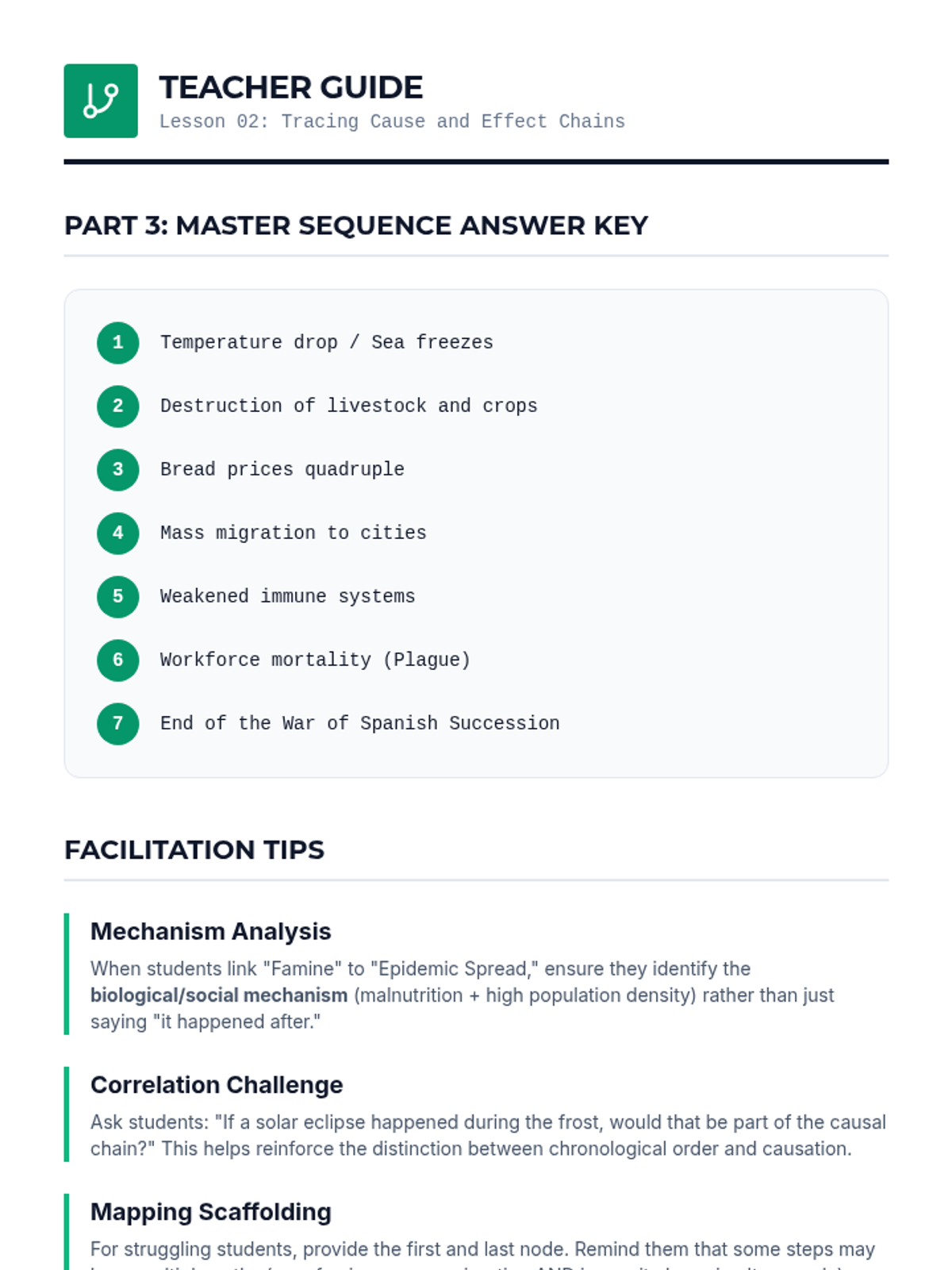
Teacher guide for Lesson 2, providing the answer key for the Great Frost causal chain and facilitation tips for discussing sequential causation.
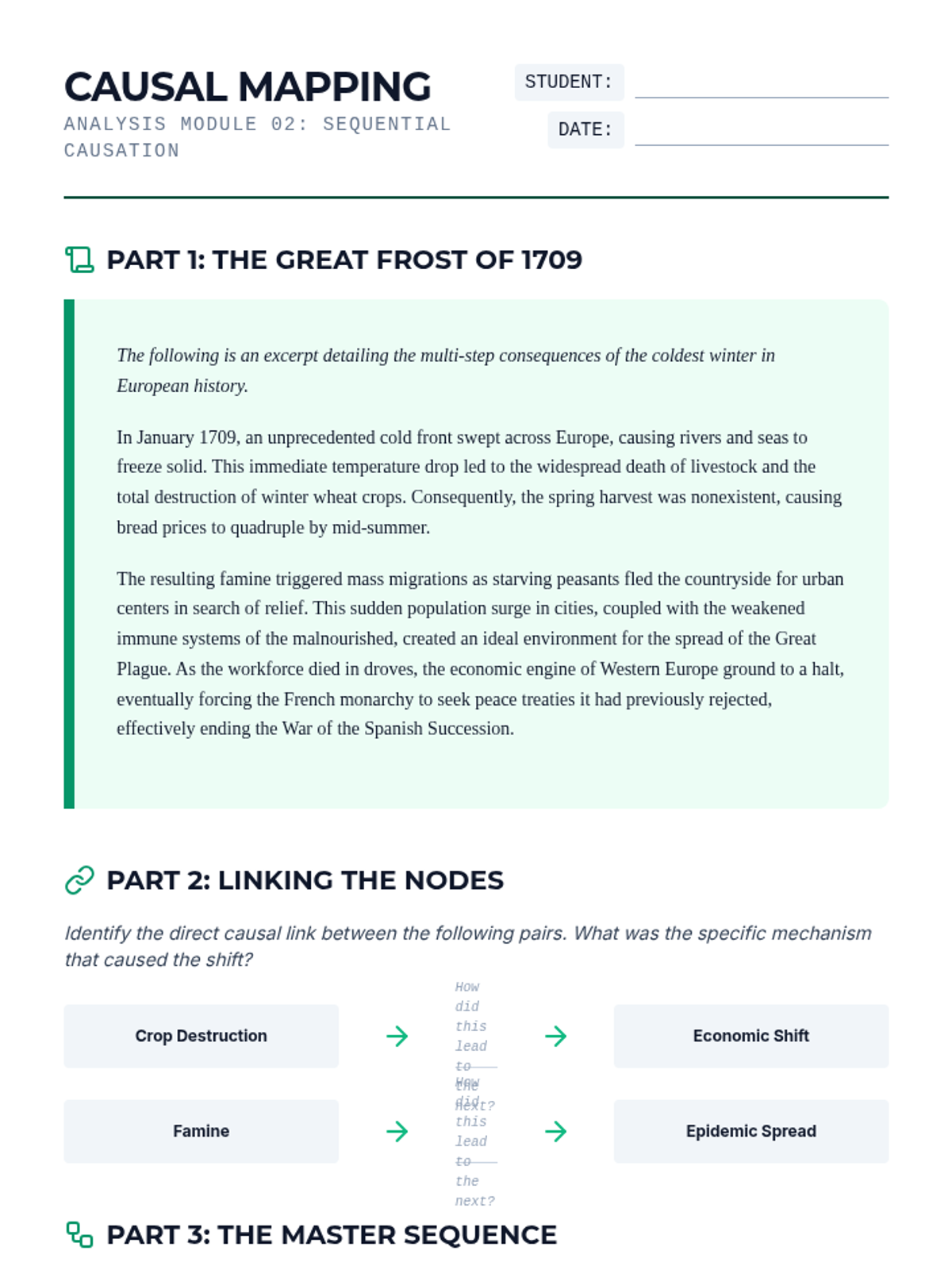
Student worksheet for mapping a multi-step causal chain based on a historical text about the Great Frost of 1709.
Slides for Lesson 2 focusing on sequential causation, distinguishing correlation from causation, and visualizing multi-step causal chains.
An updated, high-impact review slide deck that recaps sports archetypes using the full criteria from the unit's Brainstorm Key. It defines Heroes, Villains, and the 'Swagger Paradox' with rapid-fire practice cases for Curry and Durant.
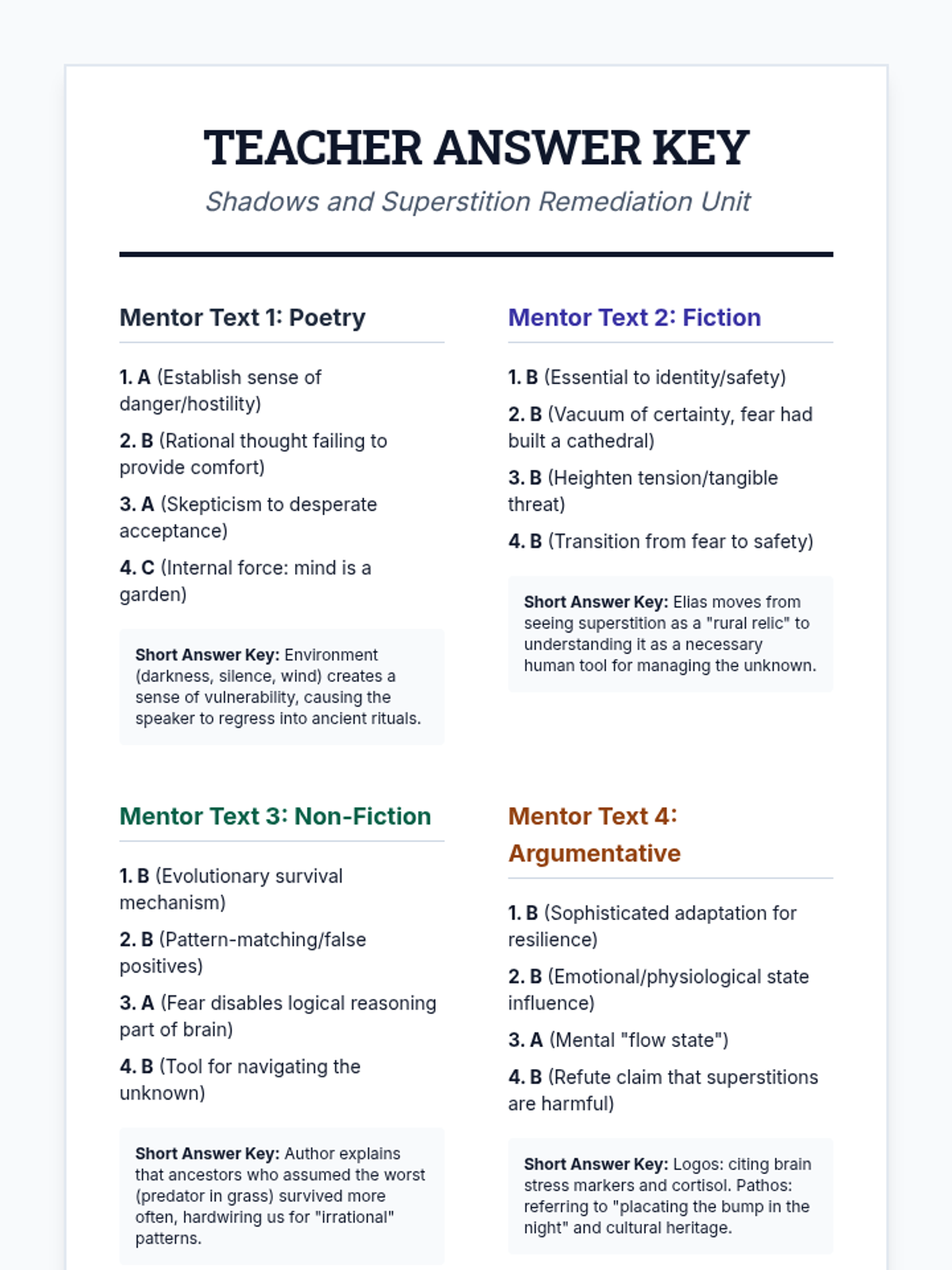
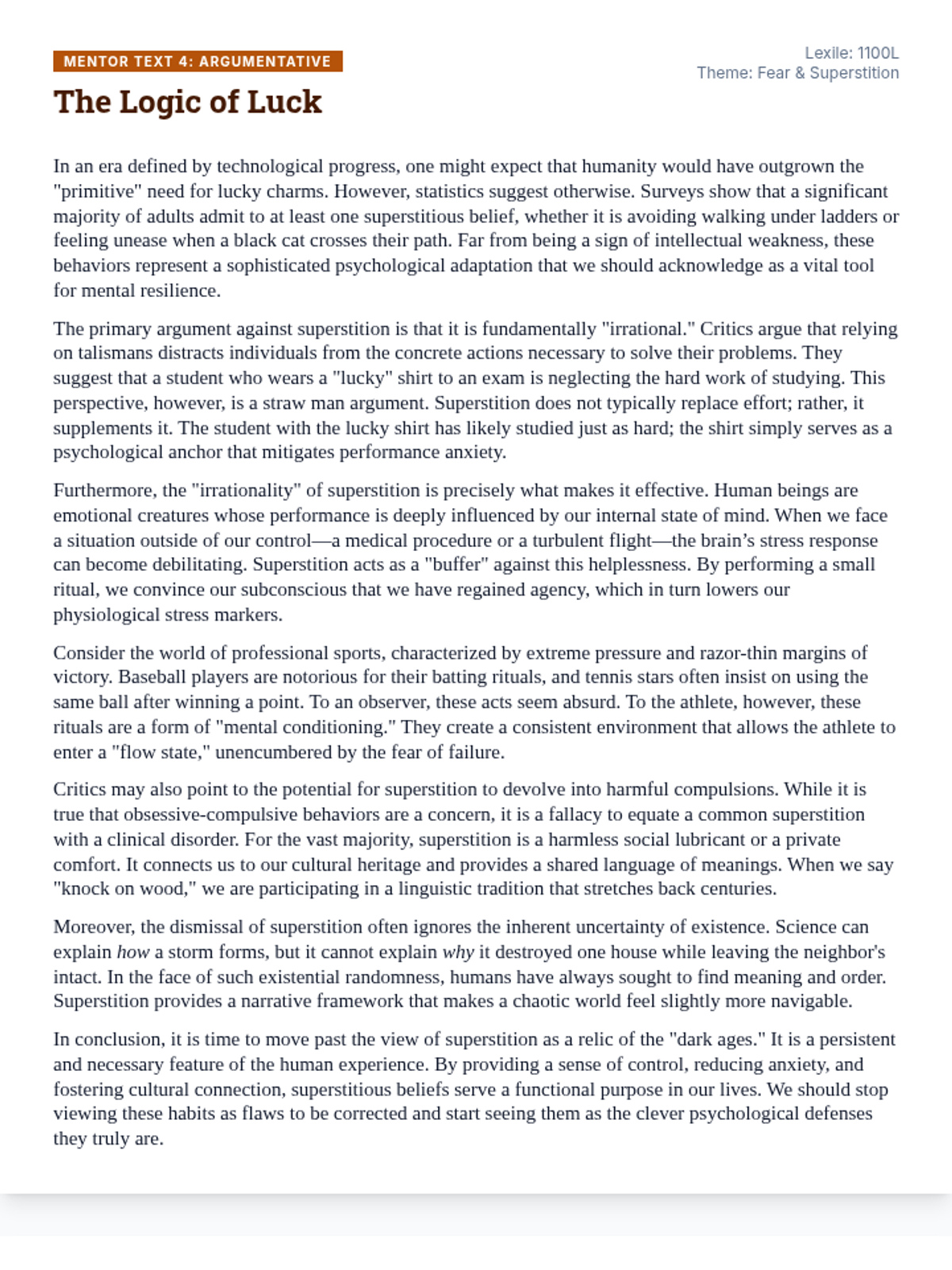
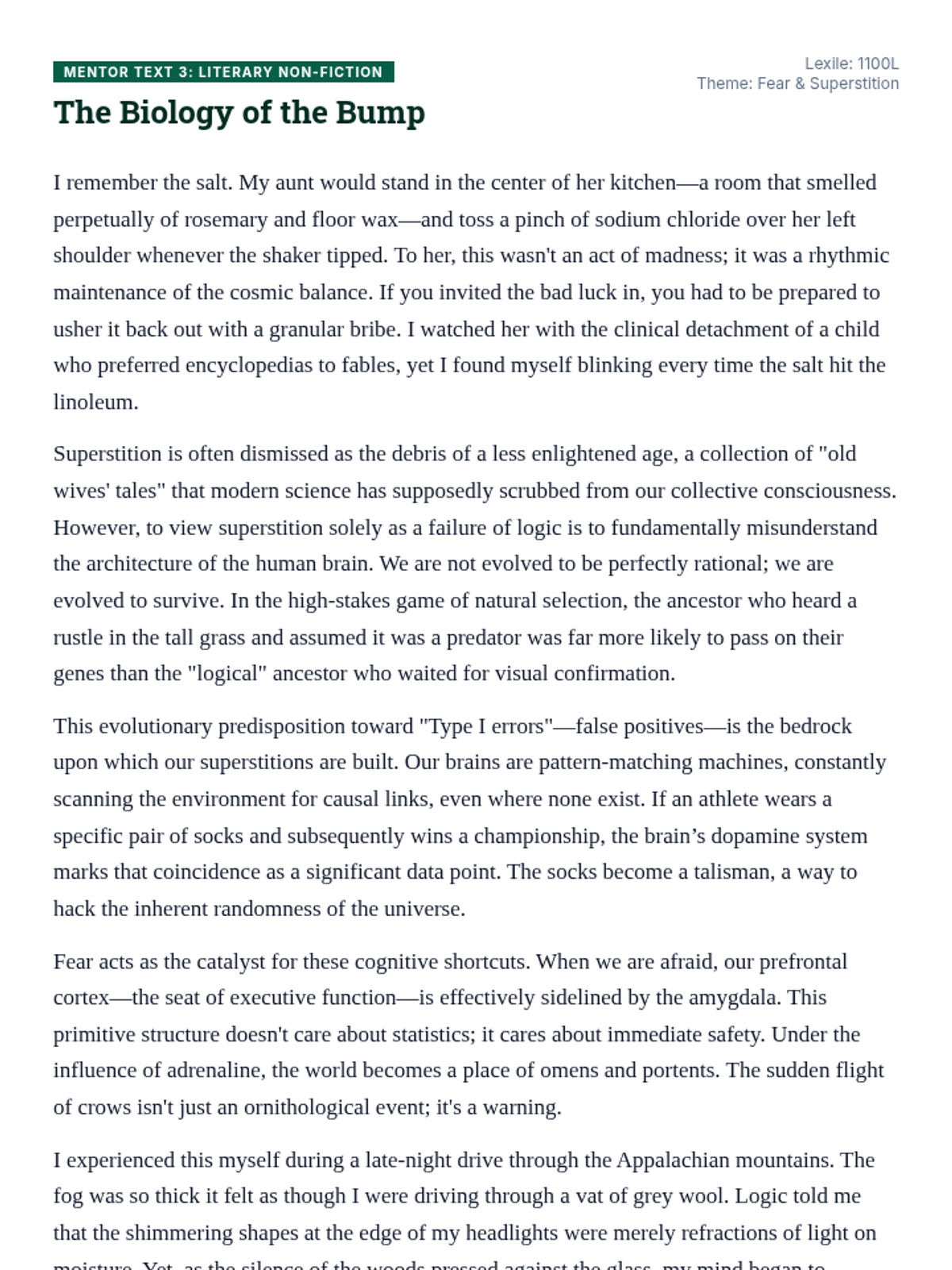
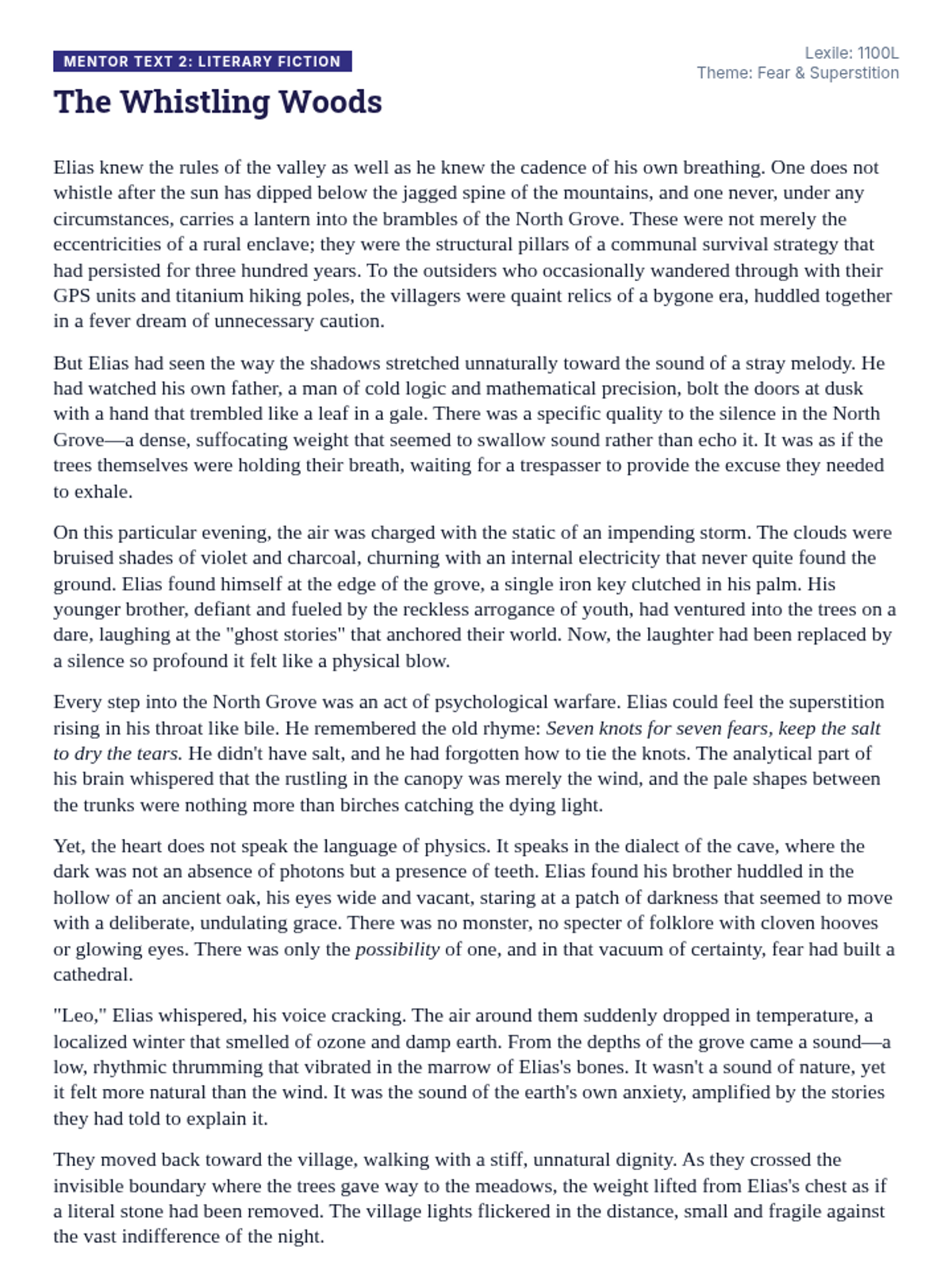
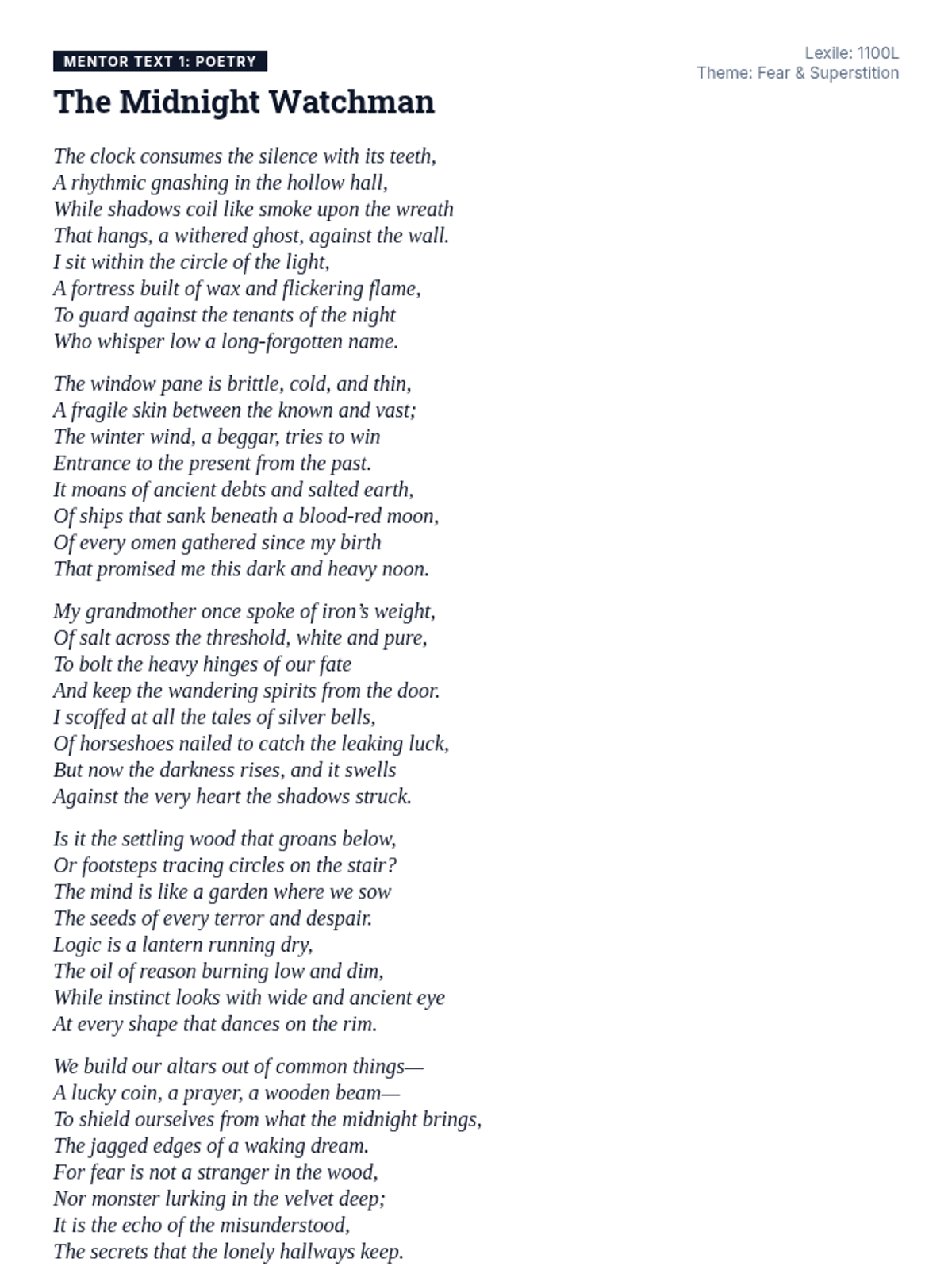
A comprehensive answer key for all mentor texts, revision/editing exercises, and the cumulative test in the Shadows and Superstition remediation packet. Revised to fit on a single page. Adjusted spacing and naming for consistency.
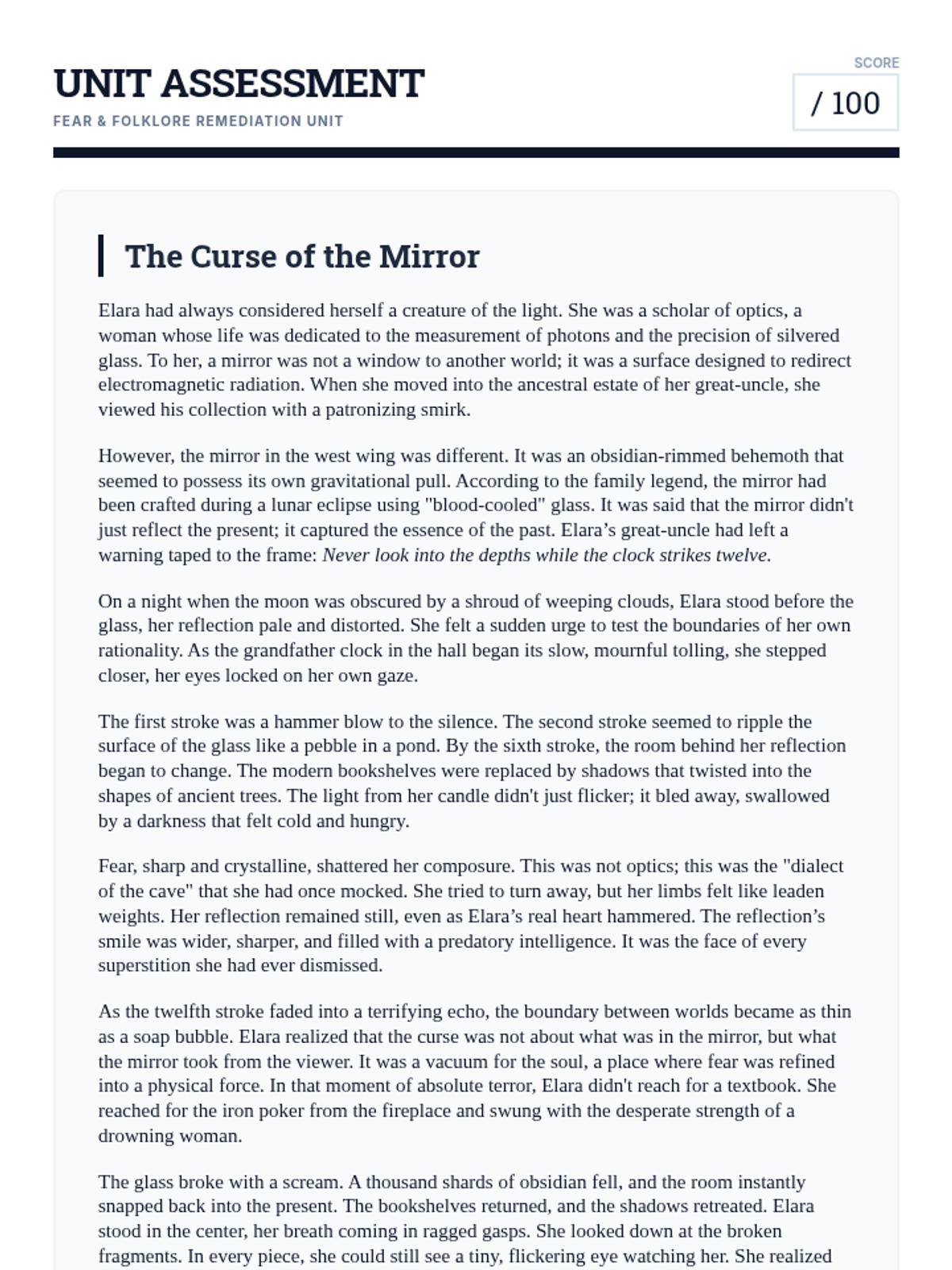
A grayscale version of the cumulative test, featuring the cold-read passage and assessment questions with all color removed. Fixed word spacing in headers and increased writing lines. Standardized distractor order.
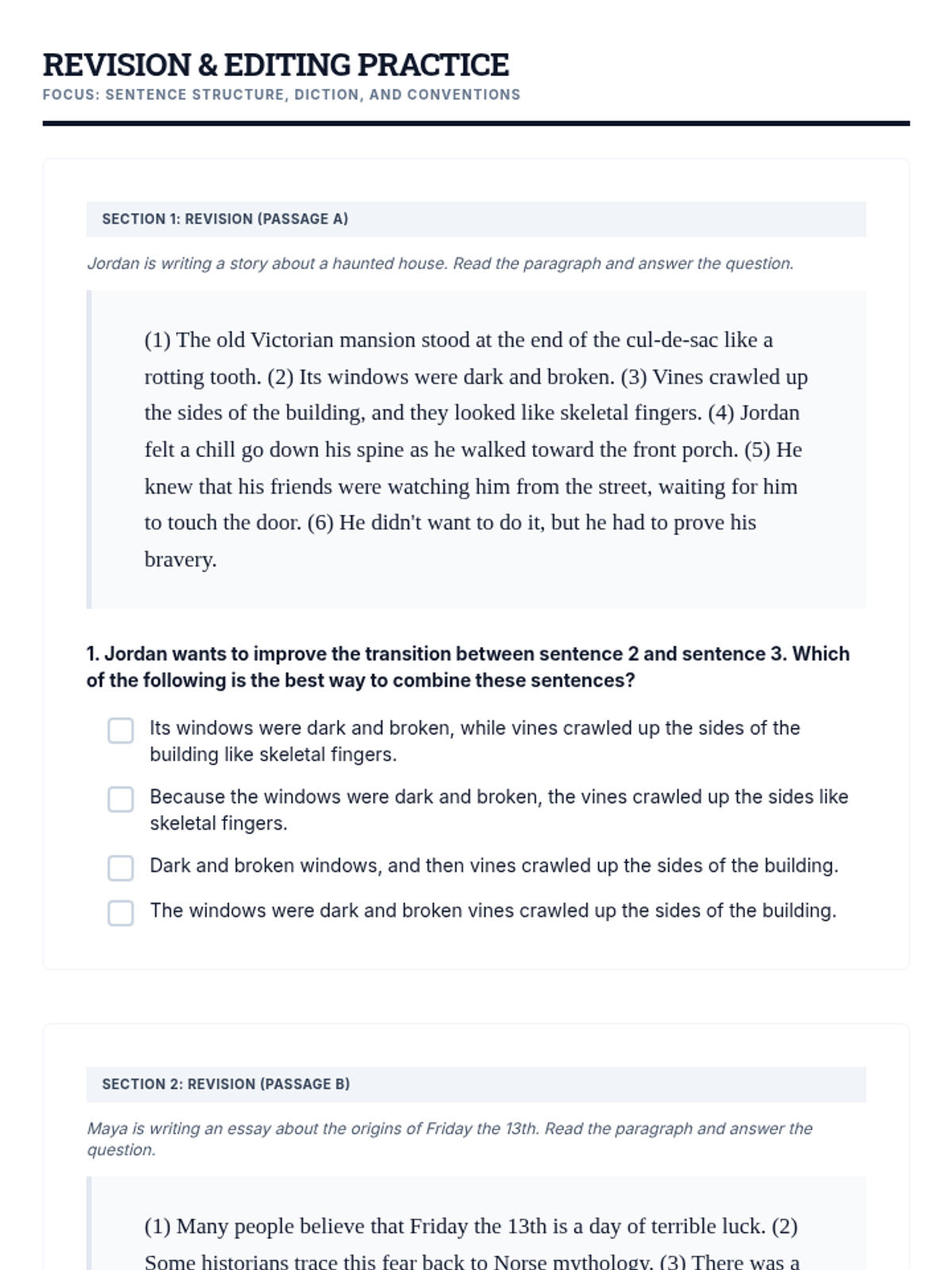
A grayscale version of the revision and editing practice passages, with the yellow highlight updated to gray. Consolidated layout to group Revision questions on Page 1 and Editing questions on Page 2. Fixed word spacing issues. Removed excessive whitespace and min-height constraints.
A grayscale version of the argumentative analysis document, with colors updated to slate shades and text references adjusted to reflect gray highlights. Consolidated layout to 2 pages and fixed work area line spacing. Fixed radio button alignment and constructed response container.
A grayscale version of the non-fiction analysis document, with colors updated to slate shades and text references adjusted to reflect gray highlights. Fixed invisible legend labels. Corrected work area rule thickness.
A grayscale version of the fiction analysis document, with colors updated to slate shades and text references adjusted to reflect gray highlights. Corrected prompt colors and consolidated layout to 2 pages. Fixed word spacing in sidebars.
A grayscale version of the poem analysis document, with colors updated to slate shades and text references adjusted to reflect gray highlights. Revised to fit entire poem and sidebars on a single page. Margin callouts precisely aligned.
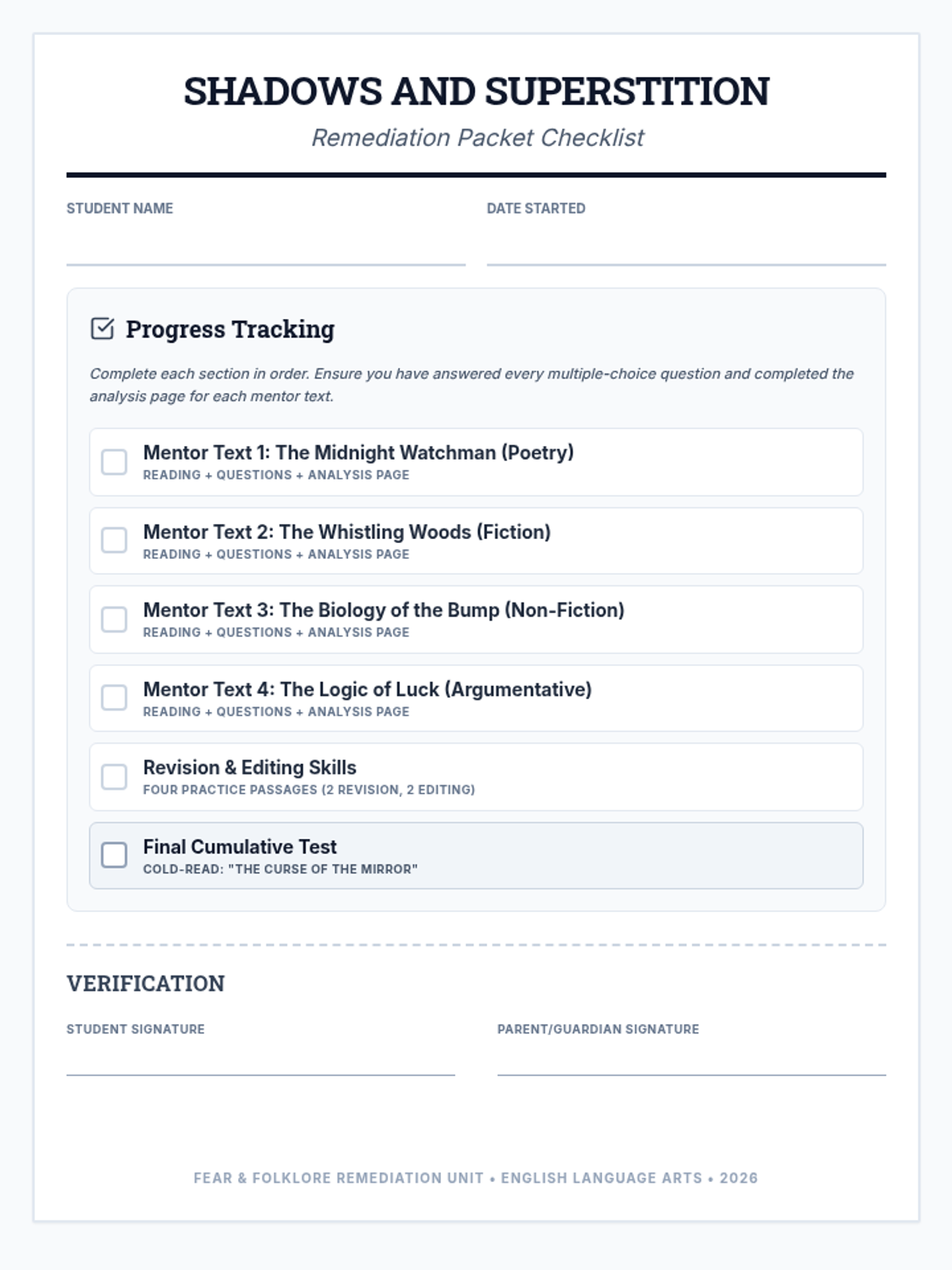
A grayscale version of the student progress checklist for the remediation packet, featuring a structured list of all required texts and activities.
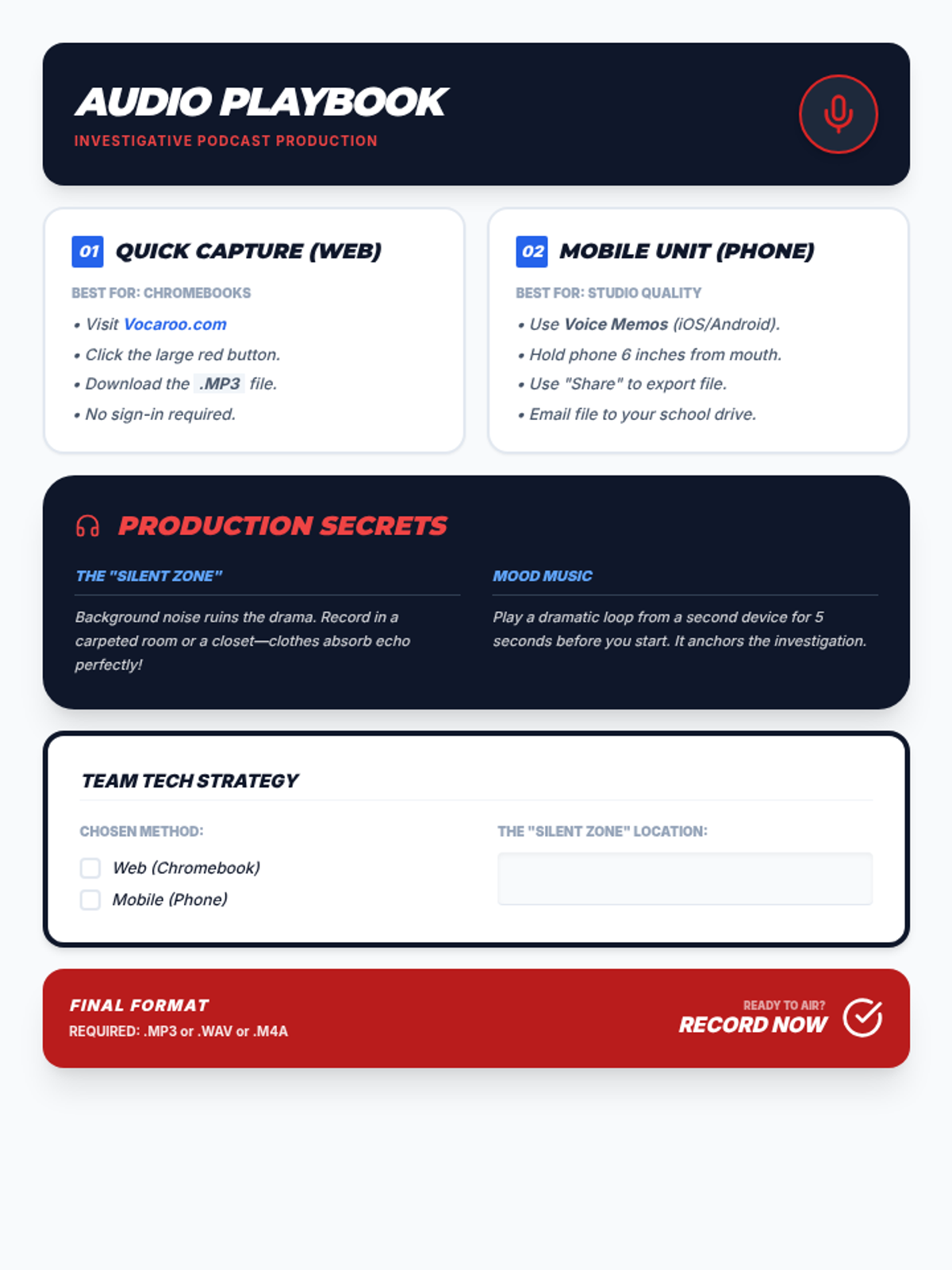
A step-by-step technical guide for students on how to record their investigative podcasts using simple web-based or mobile tools. Includes production tips for audio quality and atmosphere.
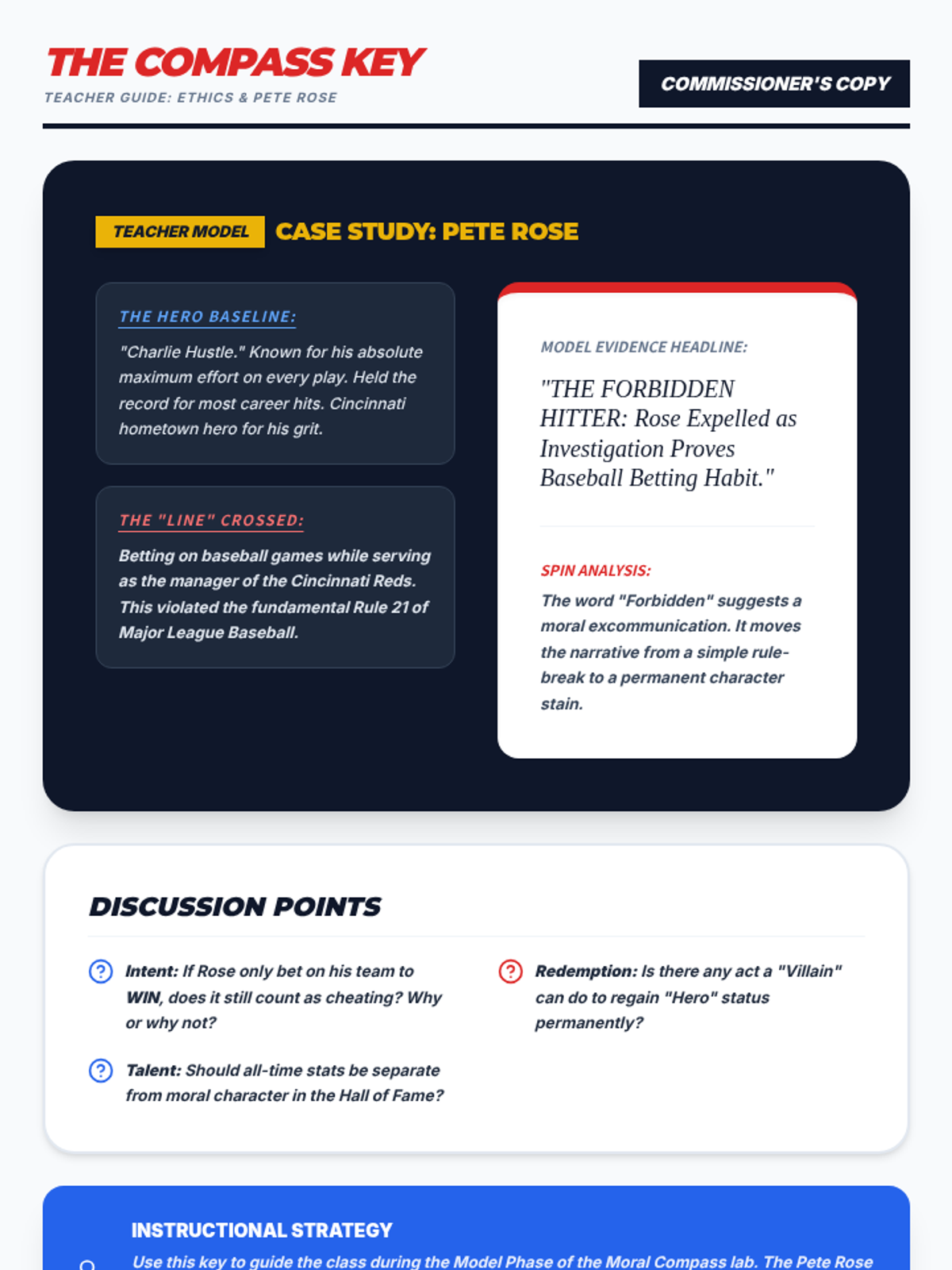
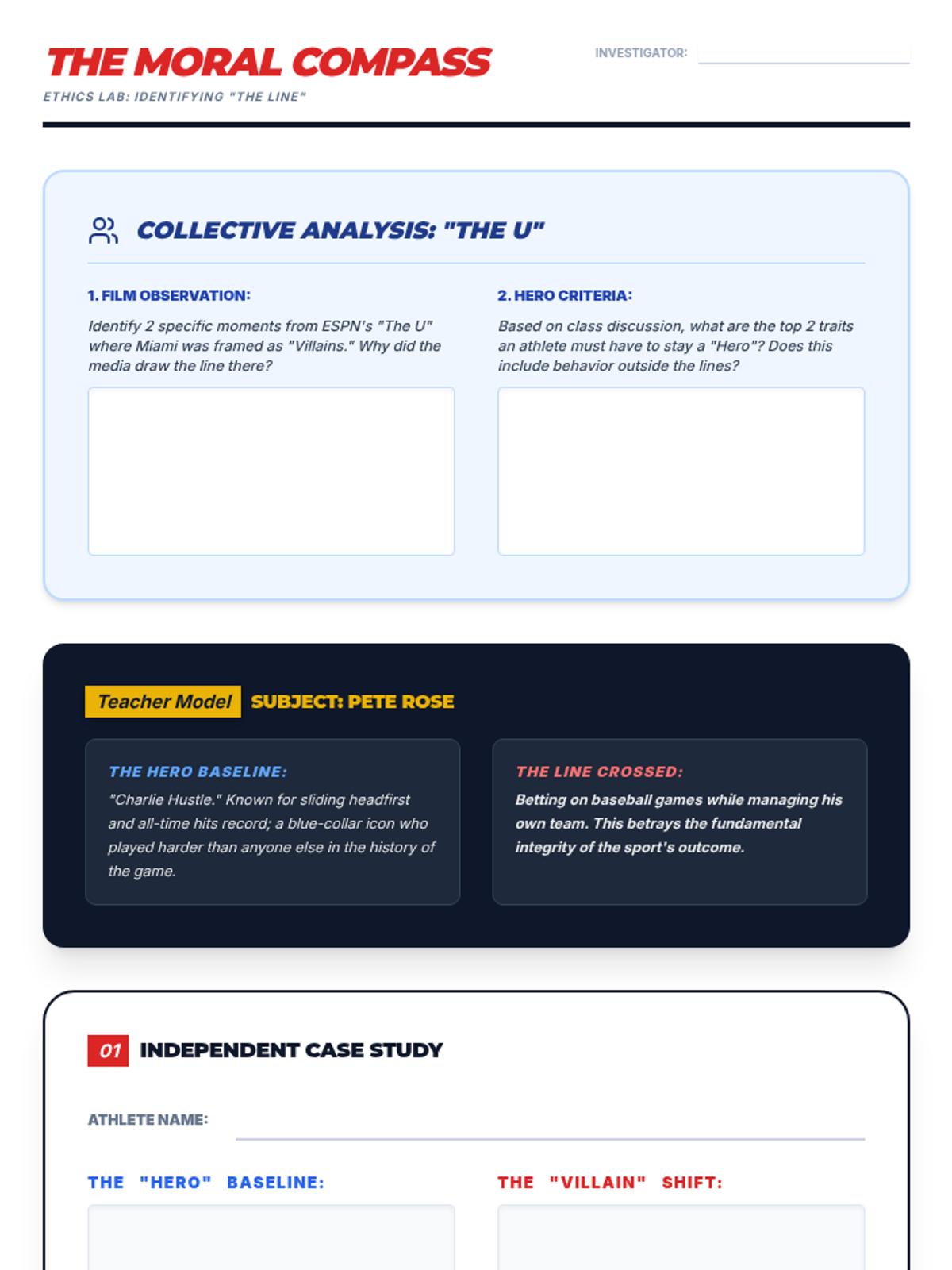
A teacher answer key for the Moral Compass worksheet, providing a completed model of the Pete Rose case study and discussion questions regarding the 'line' between hero and villain in sports.
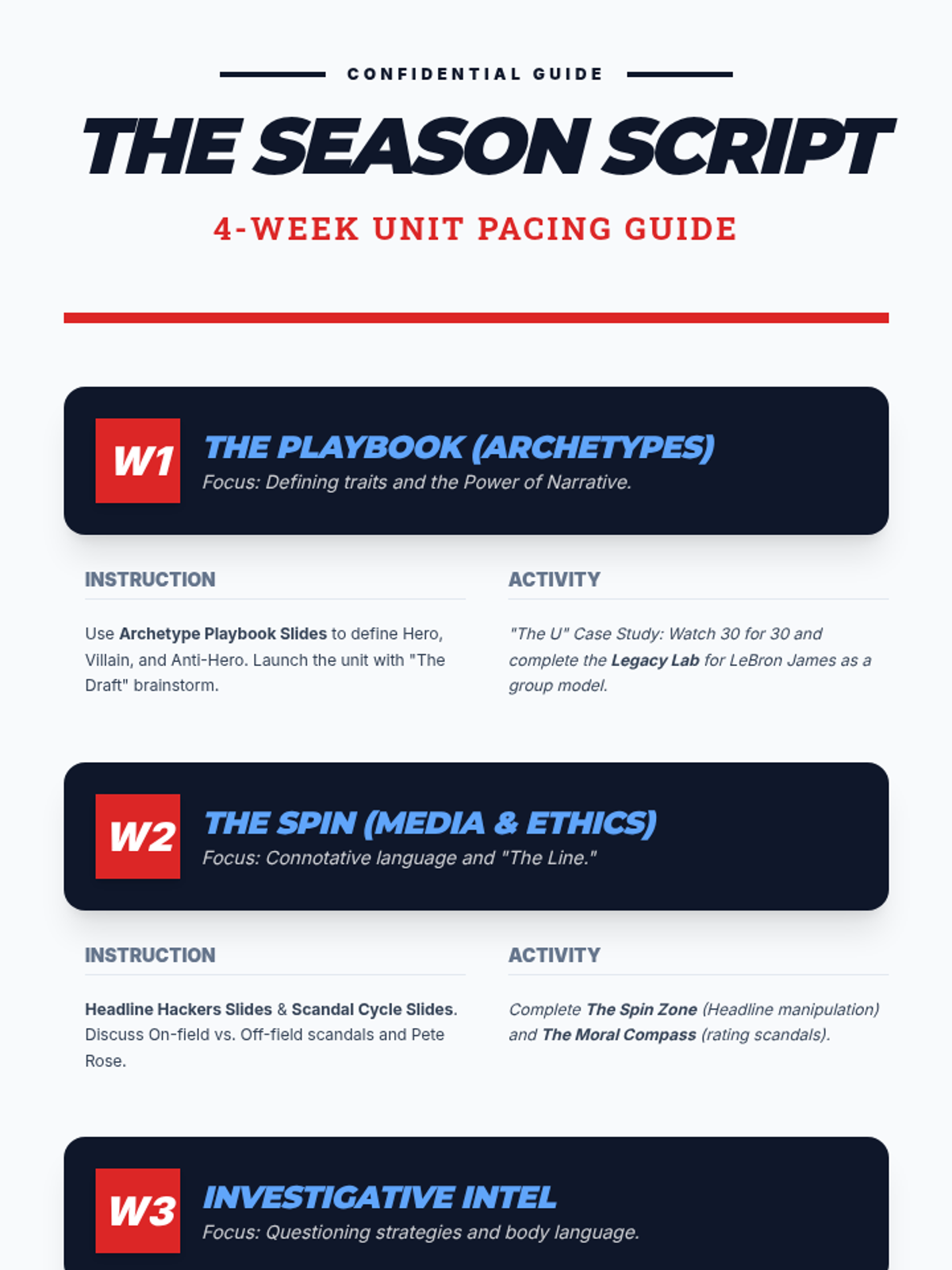
A comprehensive pacing guide for the 4-week 'Game Changers' unit, detailing the instructional focus, activities, and required materials for each week. Specifically optimized for a 3x45m + 1x90m weekly schedule.
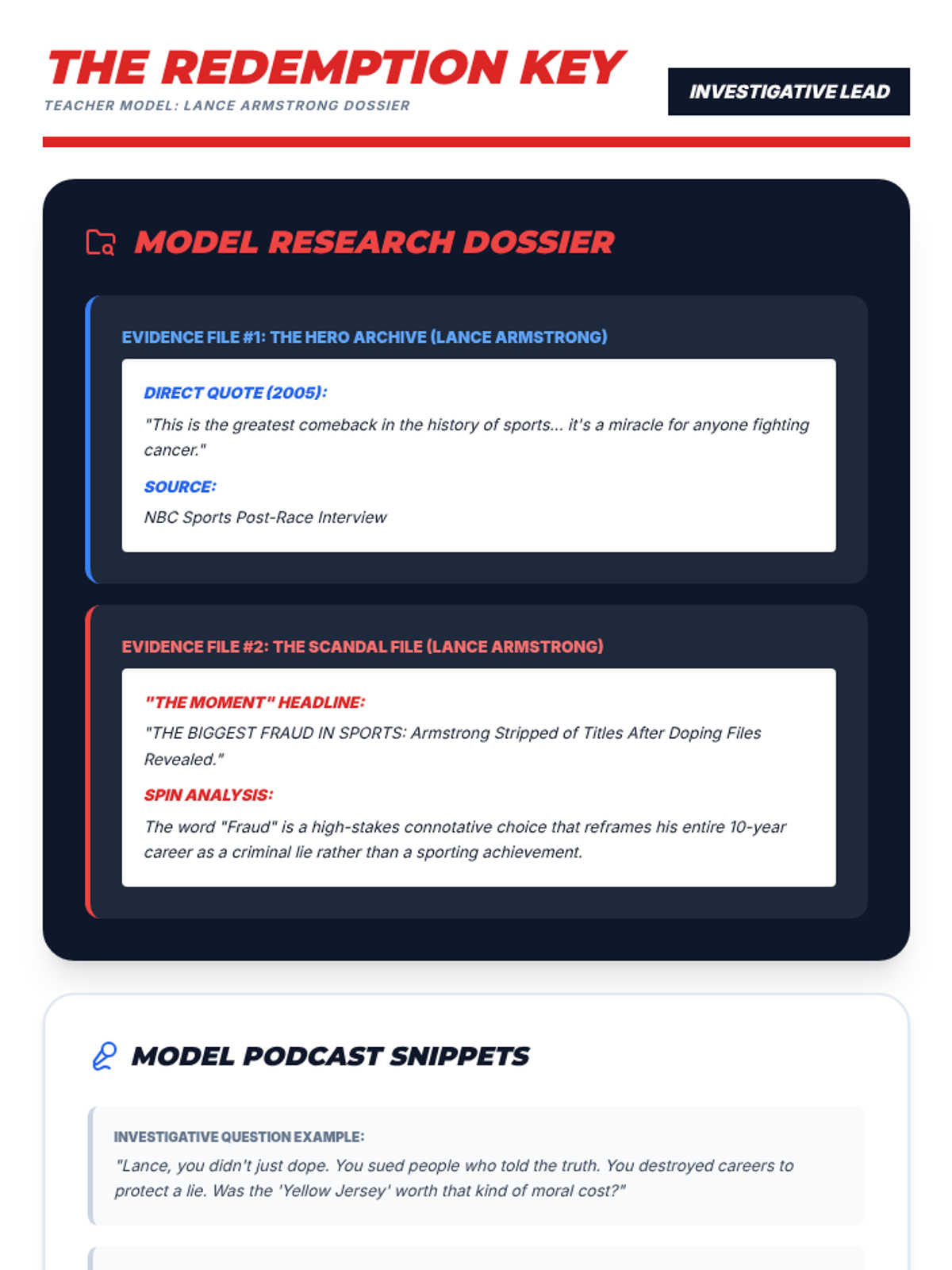
A model answer key and exemplar for the summative podcast project. It provides a completed Research Dossier and script snippets for Lance Armstrong to show students the expected depth of research and evidence integration.
A slide deck that explores the ethics of sports scandals, the 'line' between hero and villain, and the impact of off-field behavior on an athlete's professional legacy. Transitions into the new, research-heavy podcast project.
A student-facing ethical analysis worksheet focusing on sports scandals and defining the 'line' between hero and villain. Includes film analysis and independent case study sections.
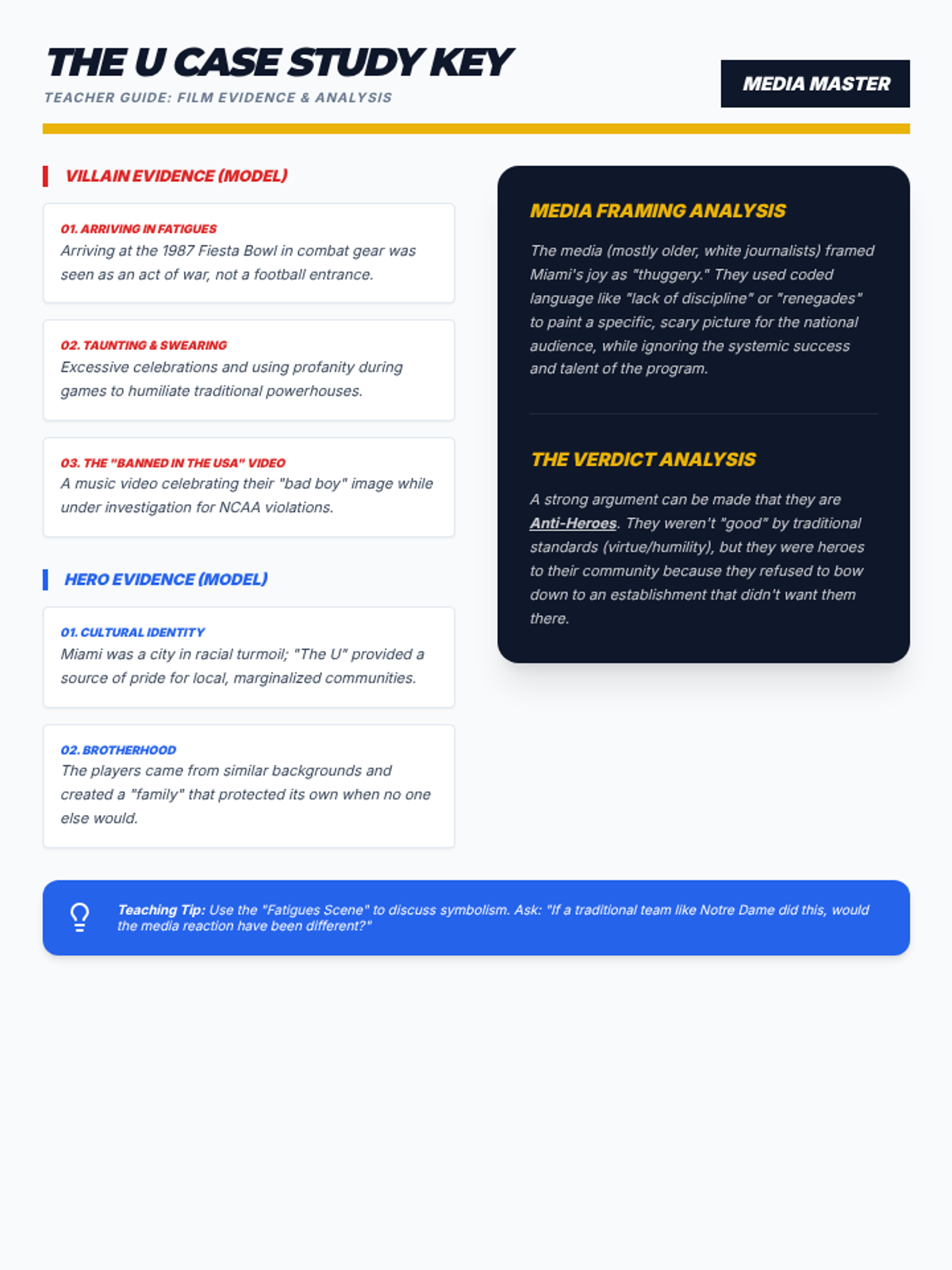
A teacher answer key for 'The U' case study worksheet, providing specific examples of hero/villain evidence from the documentary and guidance on analyzing media framing.
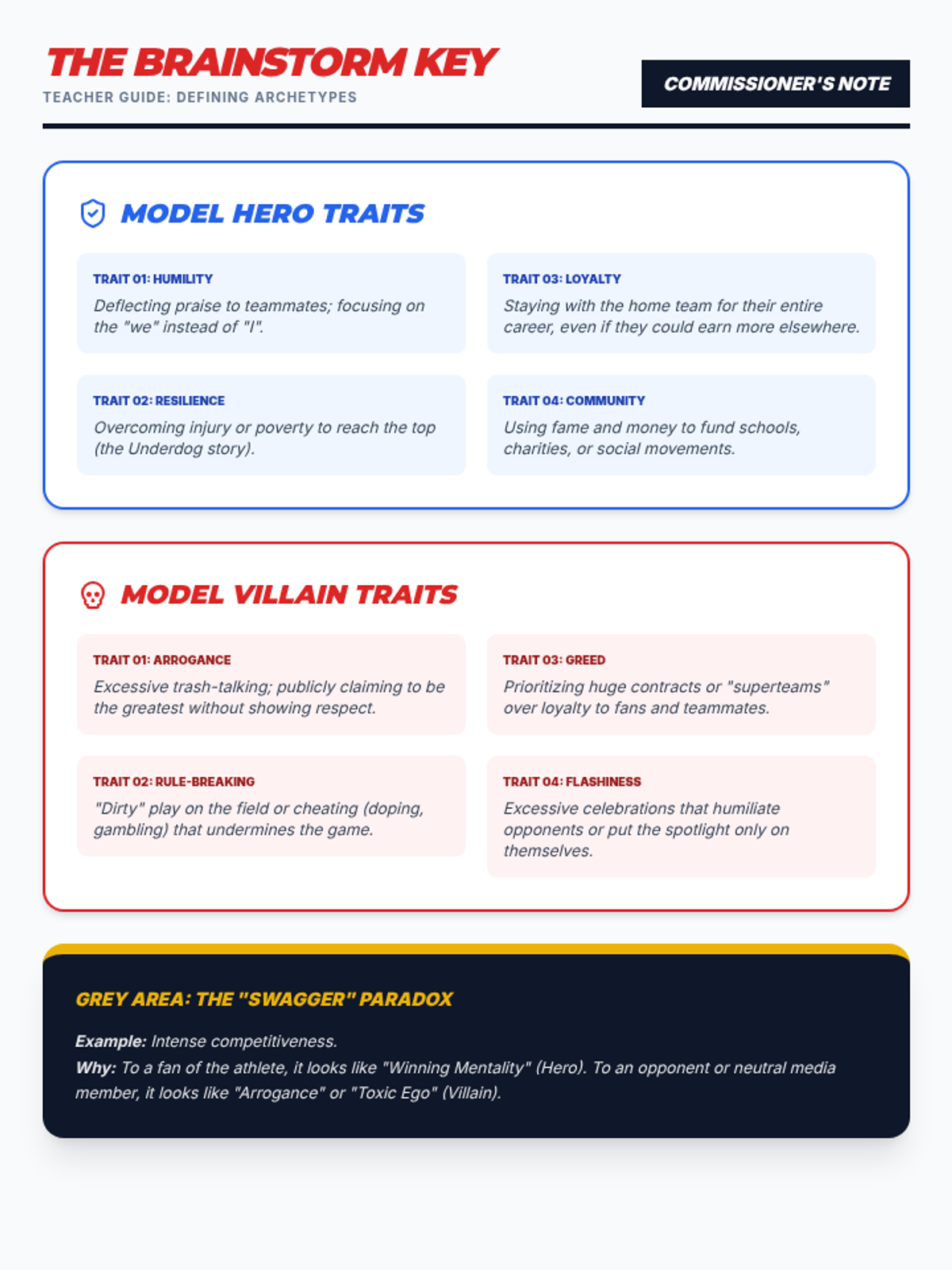
A teacher key for the Archetype Draft Brainstorming worksheet, providing model traits and explanations for heroes, villains, and the 'grey area' of sports personas.
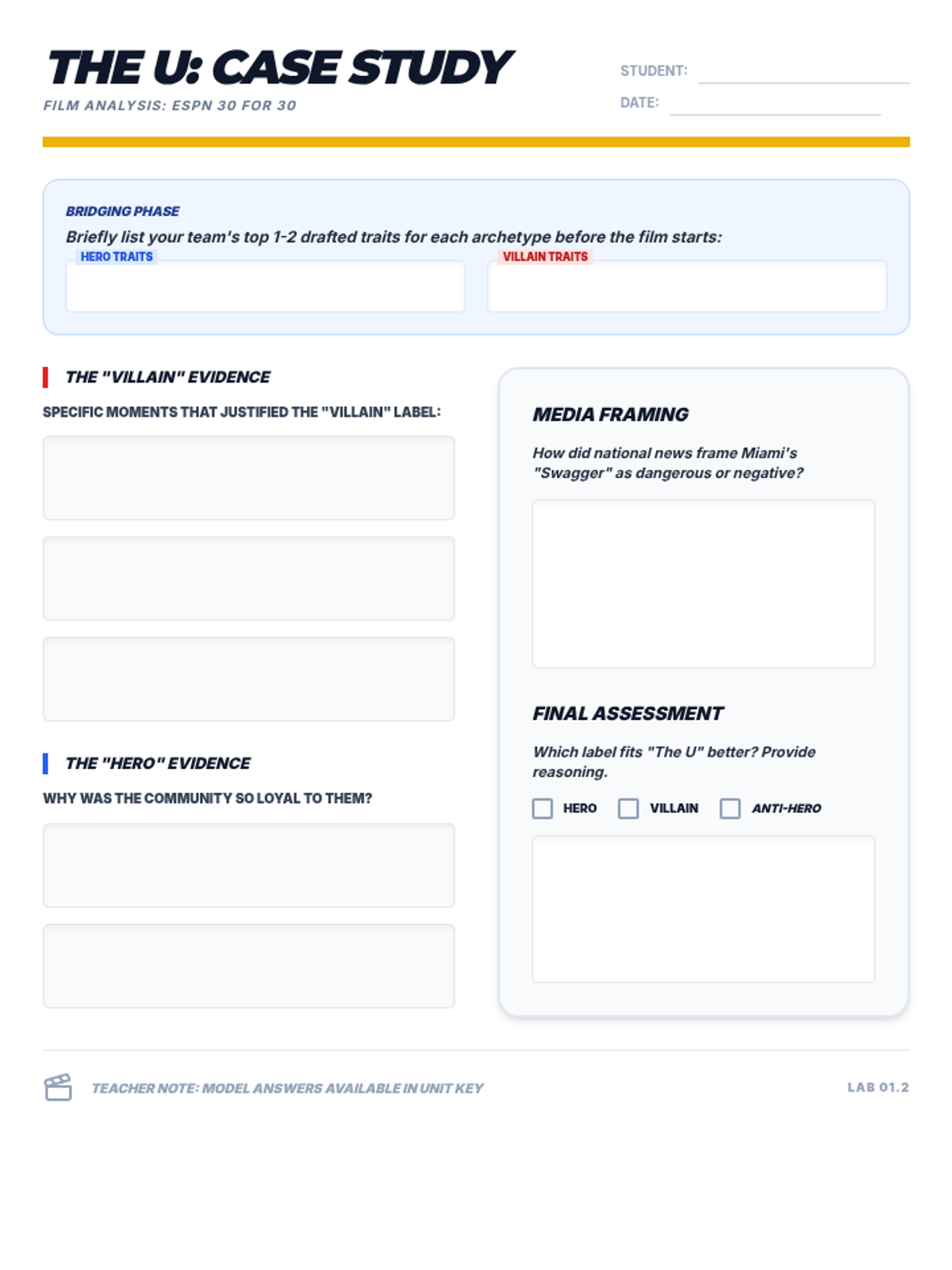
A case study worksheet for the ESPN 30 for 30 'The U', guiding students to analyze the 'Villain' vs. 'Hero' narrative of the University of Miami football team and the role of media framing.
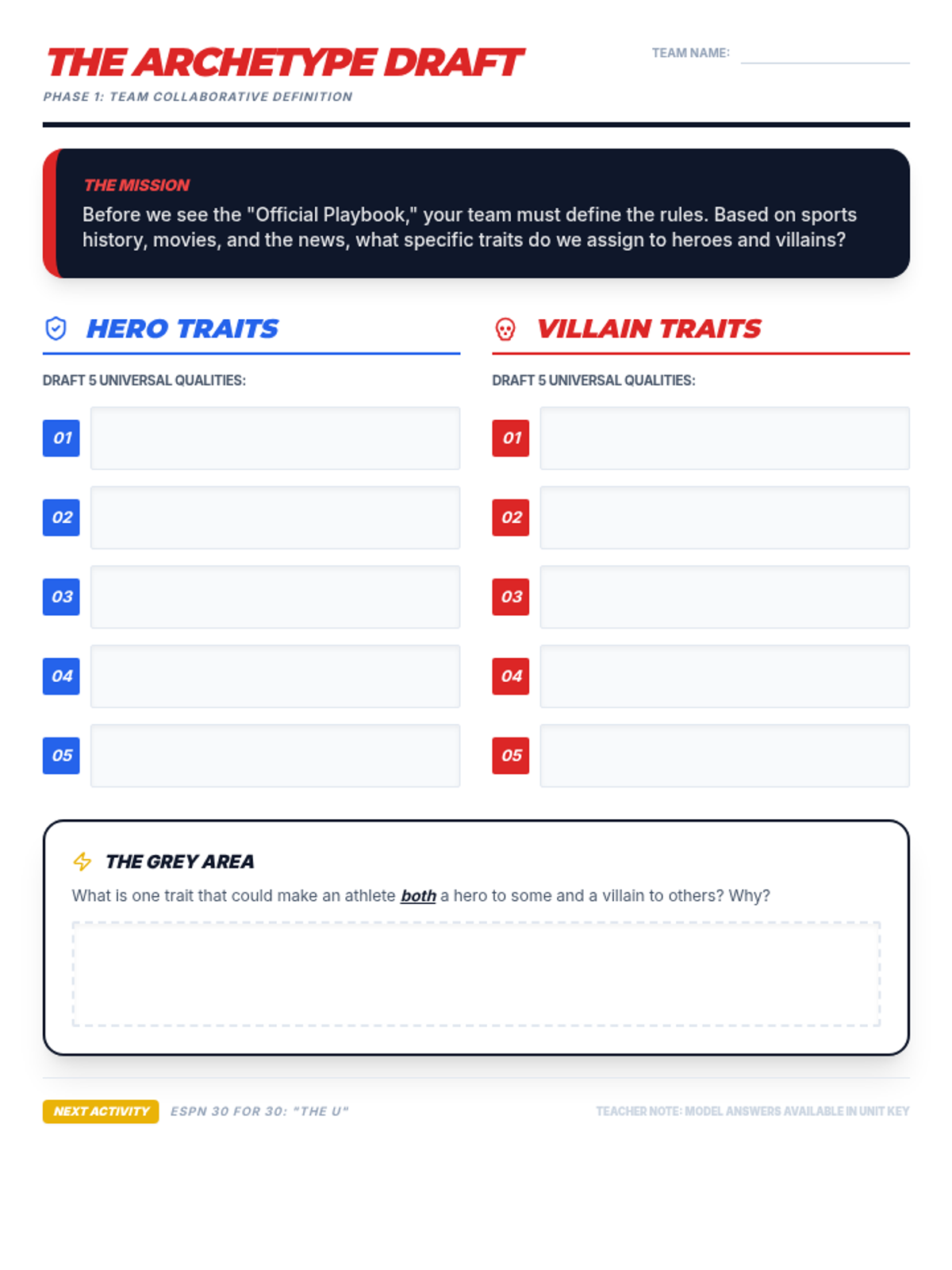
A collaborative brainstorming worksheet where student teams define the traits of sports heroes and villains before comparing them to the official unit archetypes.
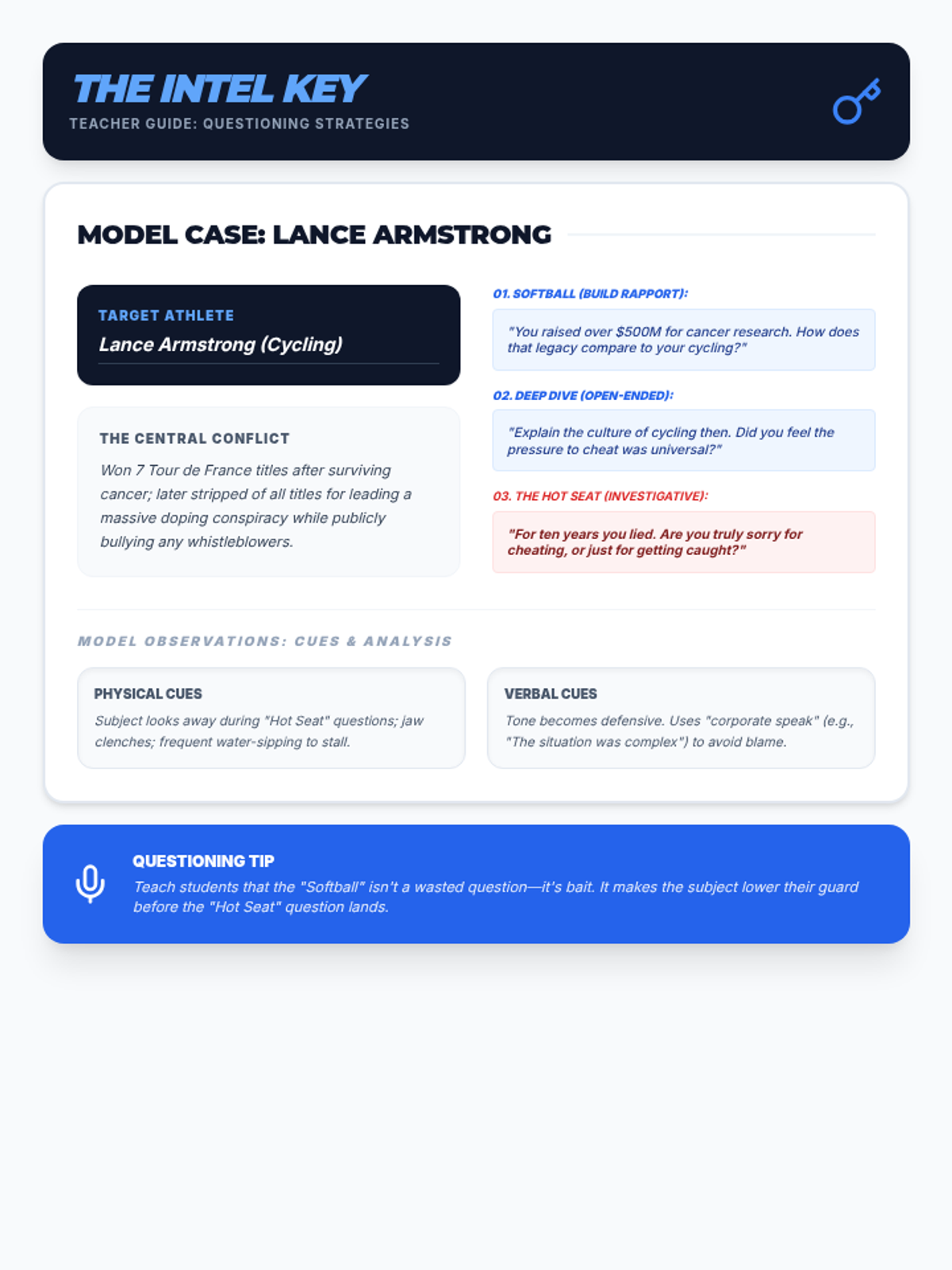
An answer key for the Interview Intel guide, featuring a case study of Lance Armstrong to demonstrate how to layer questions and analyze verbal/physical cues during an investigative interview.
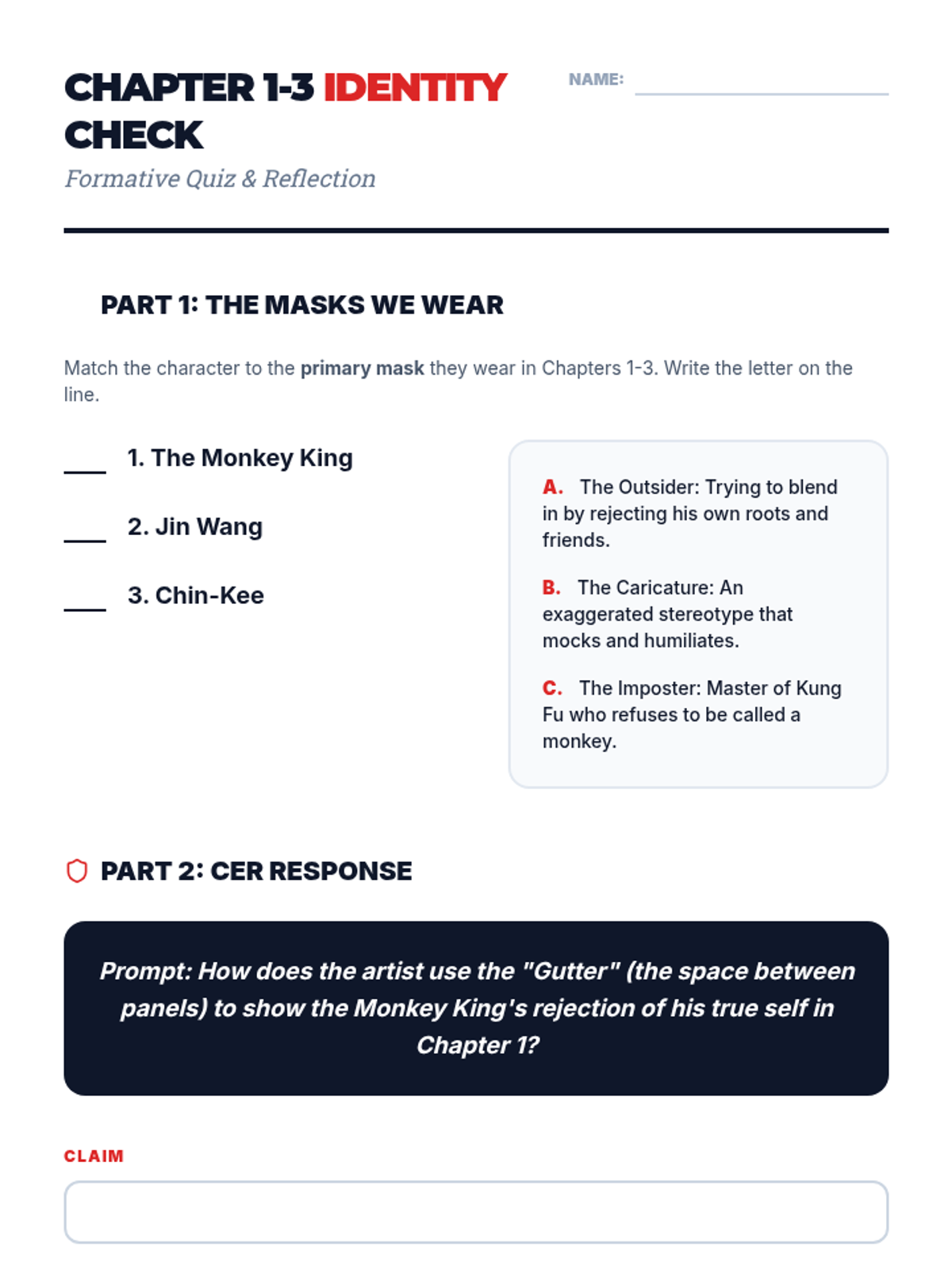
A formative assessment covering Chapters 1-3 of 'American Born Chinese', featuring matching, a CER response, and a reflection on identity.
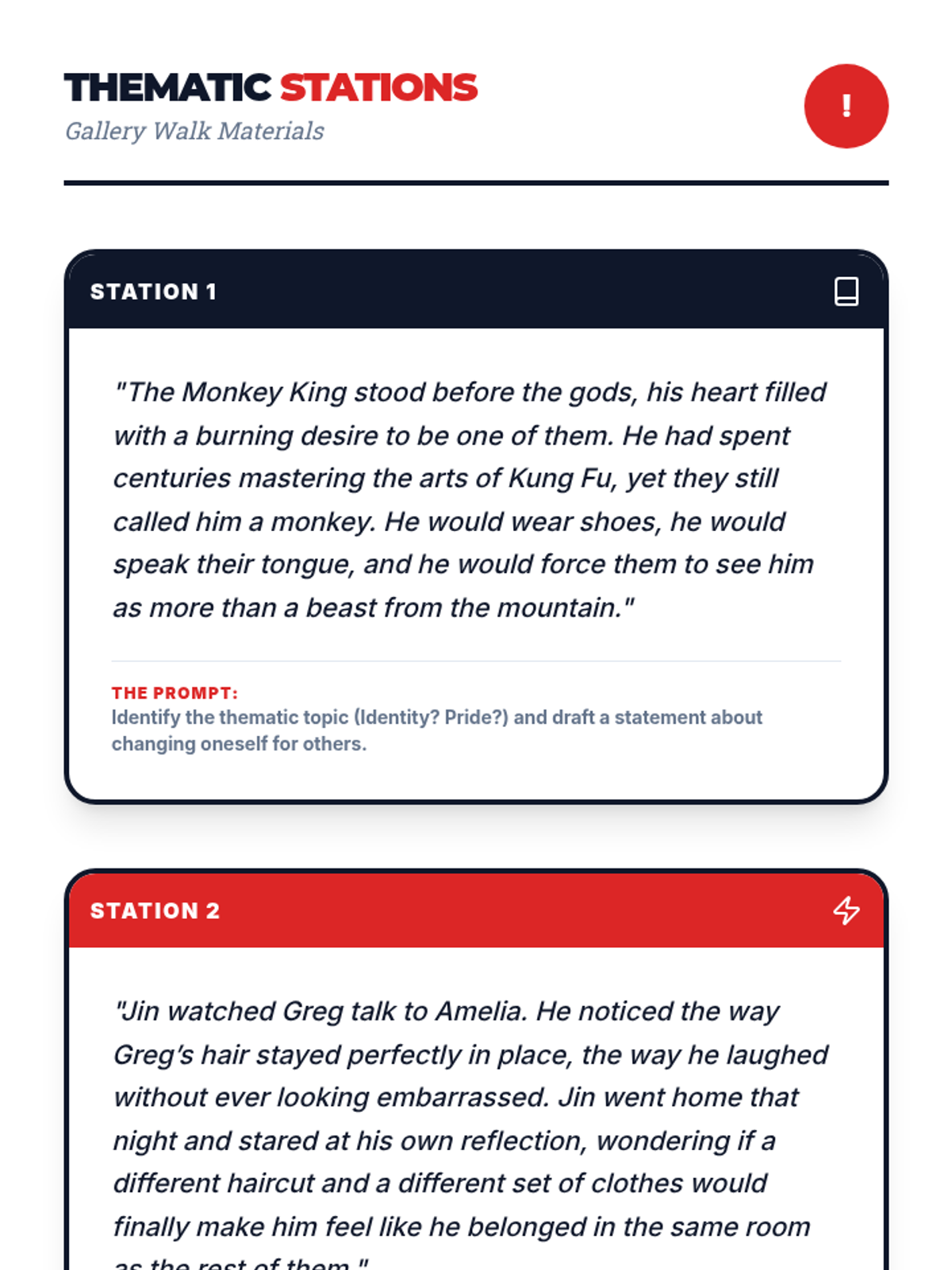
Printable station cards for the thematic gallery walk, featuring specific excerpts and prompts for identifying themes in 'American Born Chinese'.
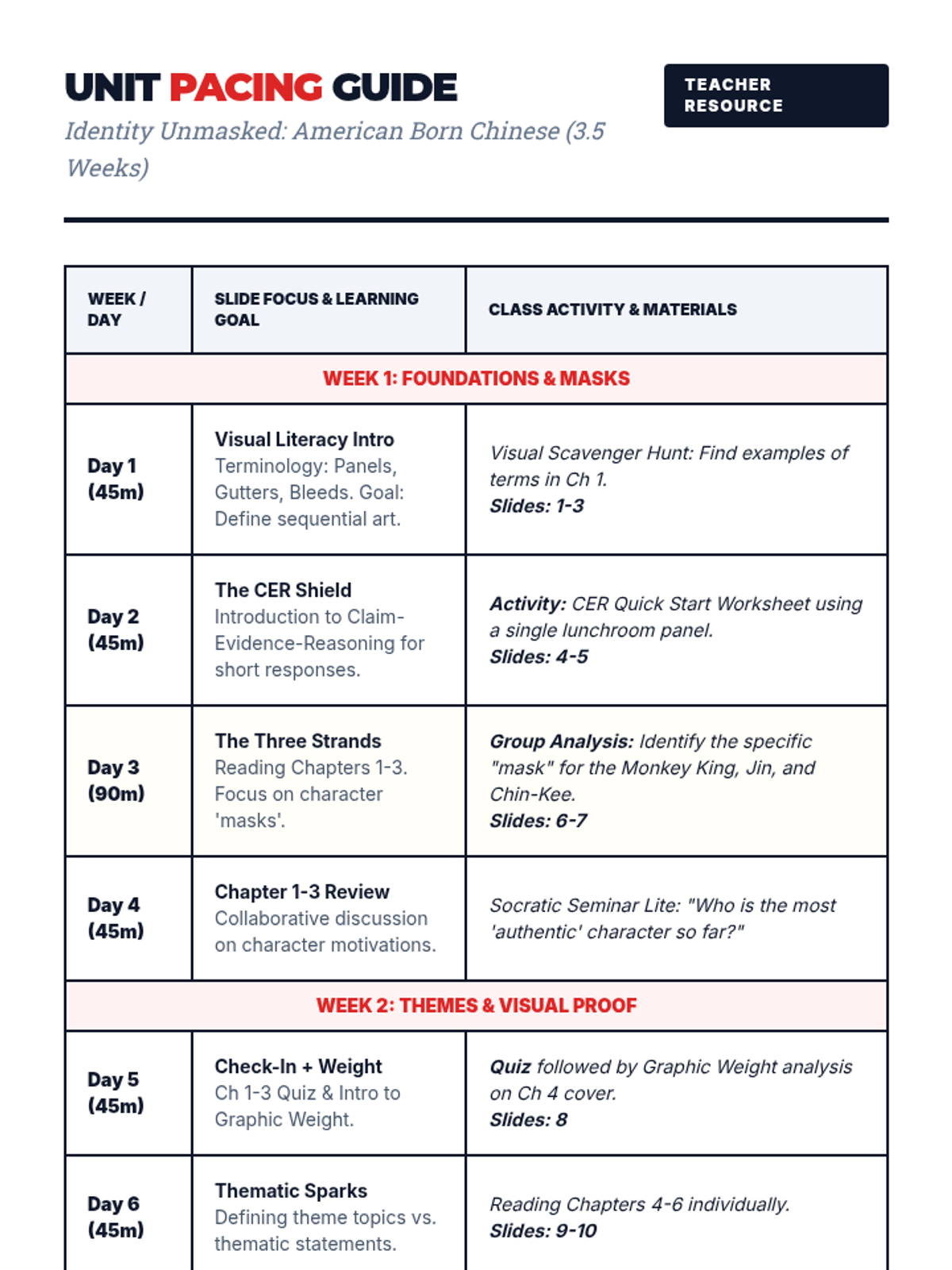
A teacher-facing unit pacing guide for a 3.5-week study of 'American Born Chinese', detailing daily slide focus, learning goals, and classroom activities. Updated for layout and page flow.
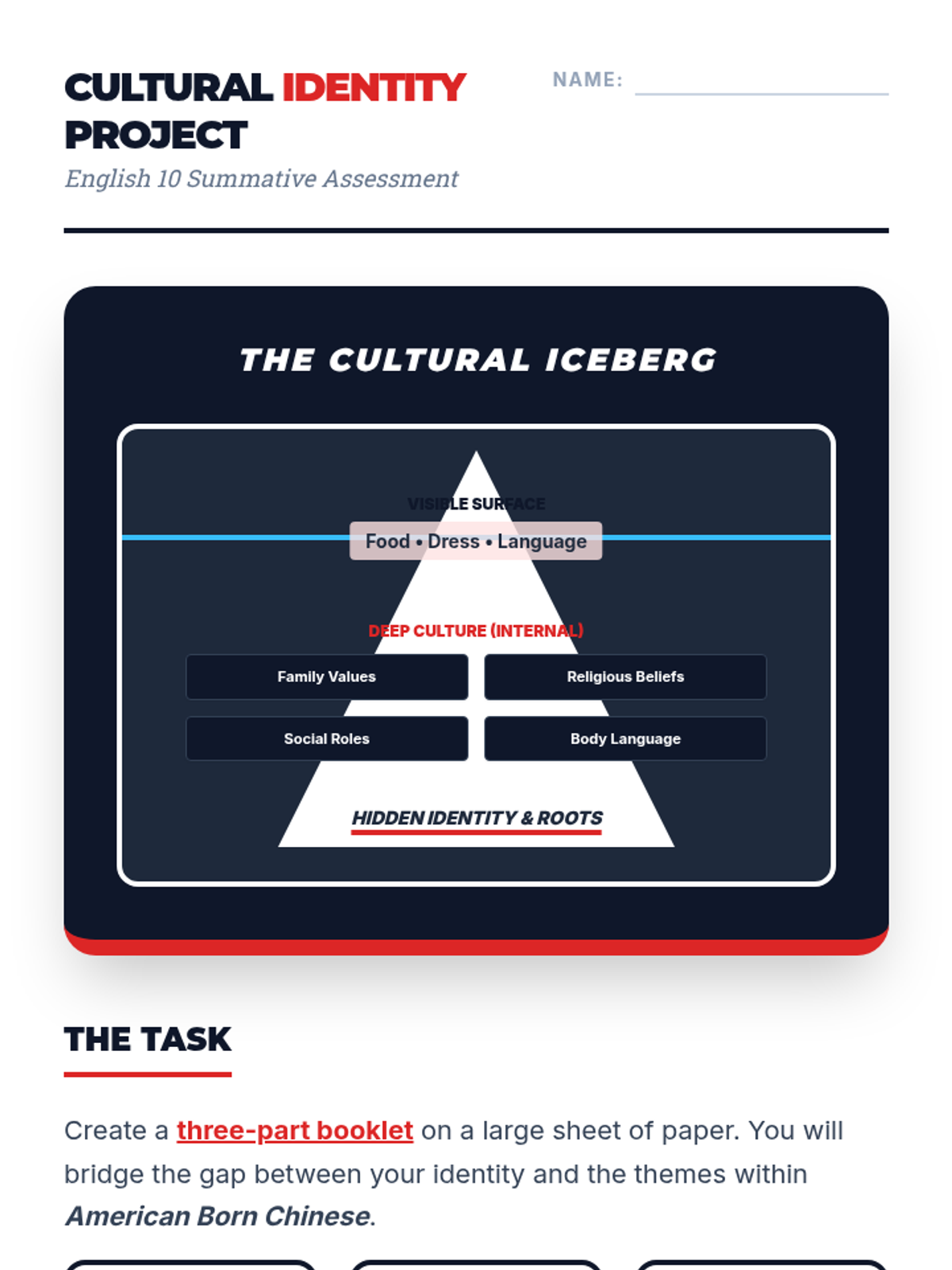
Recreation of the Cultural Identity Project summative assessment, updated with a high-contrast iceberg diagram, expanded brainstorming blueprints, and fixed layout to prevent content cutoff.
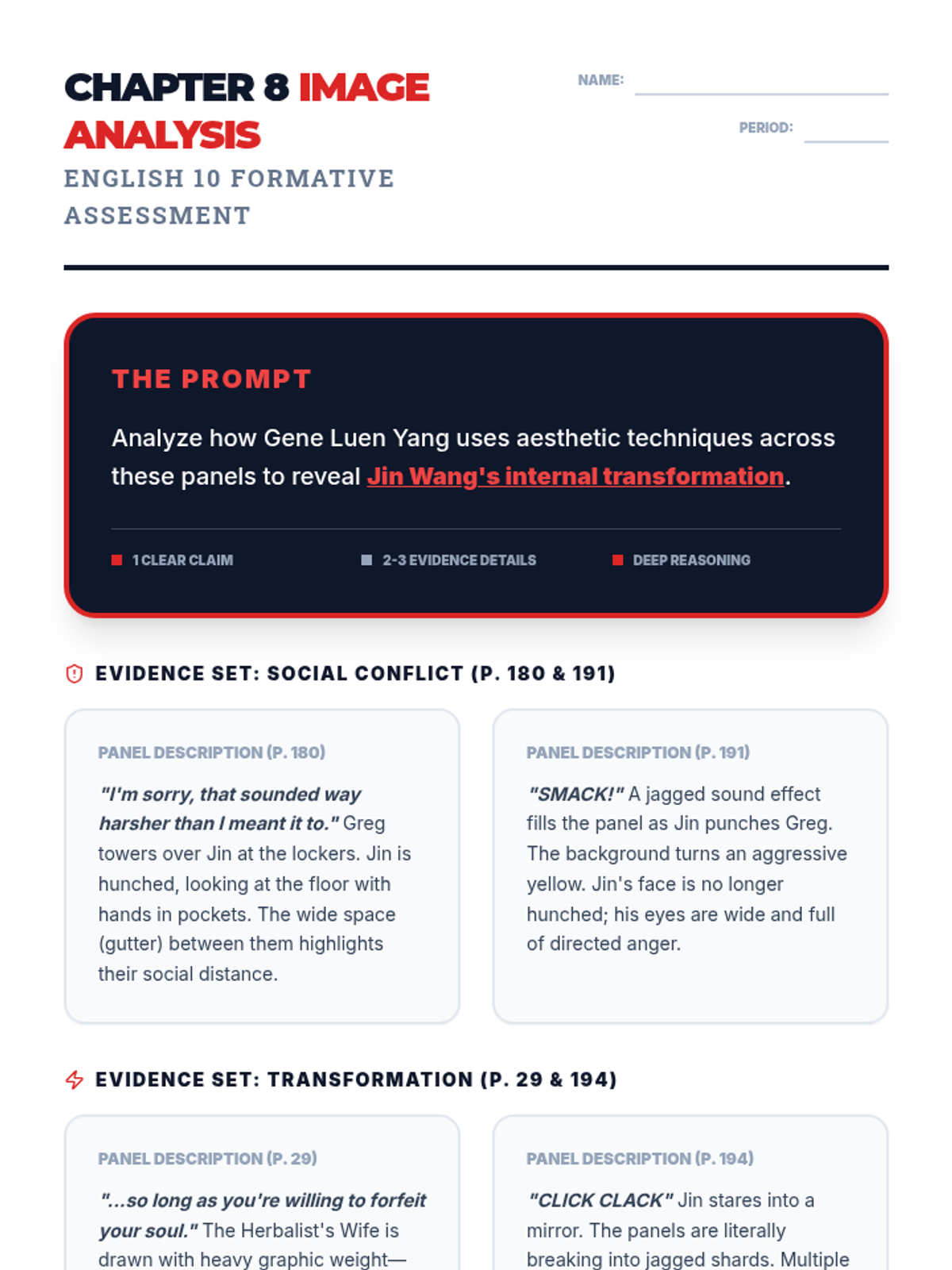
Recreation of the Chapter 8 CER Image Analysis assessment, updated with specific panel descriptions and improved layout to ensure functional classroom use. Rebalanced for clear content flow across two pages.
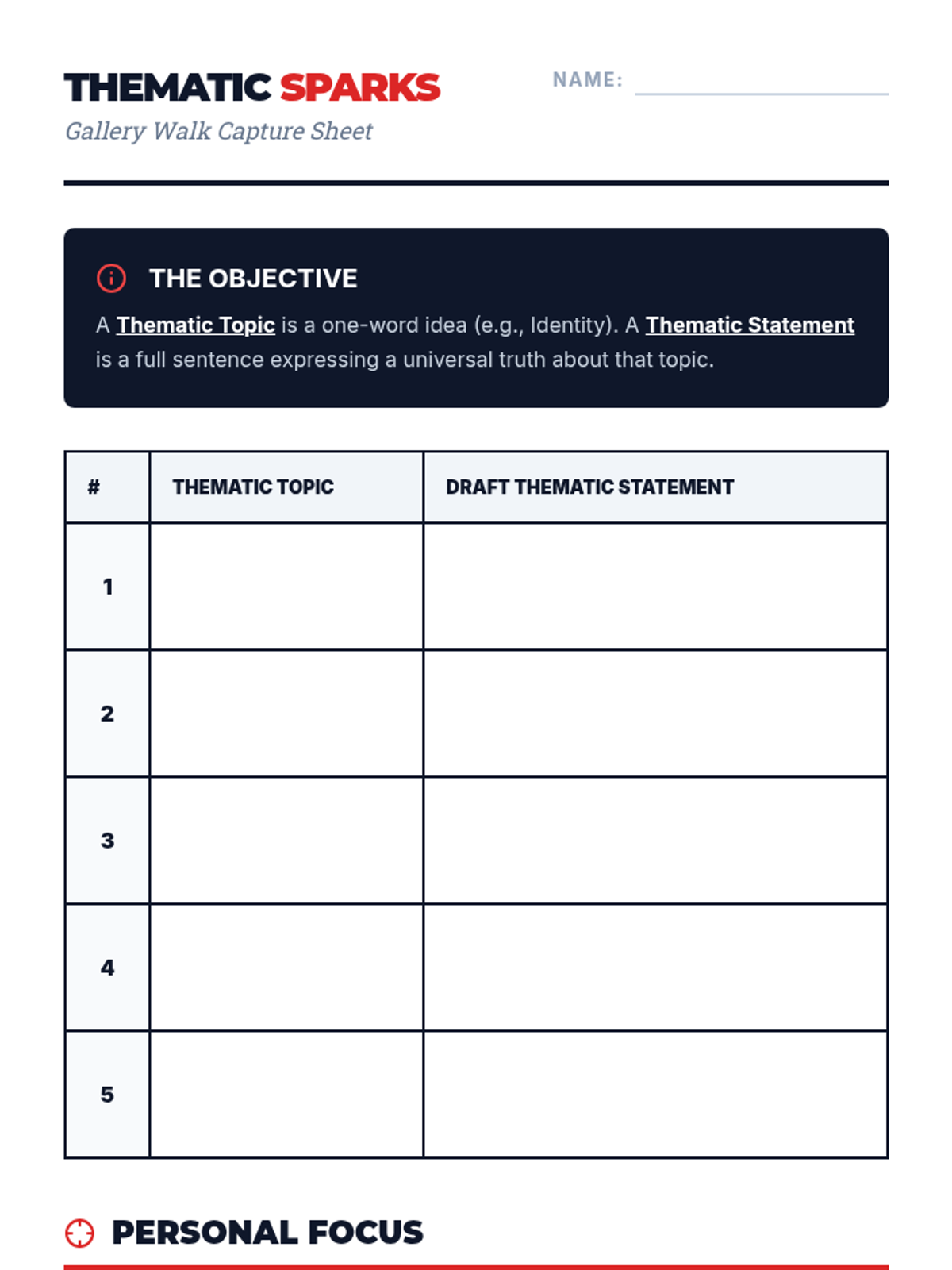
Gallery walk recording sheet for identifying thematic topics and crafting thematic statements based on book excerpts and 'American Born Chinese'. Updated with improved spacing and layout.
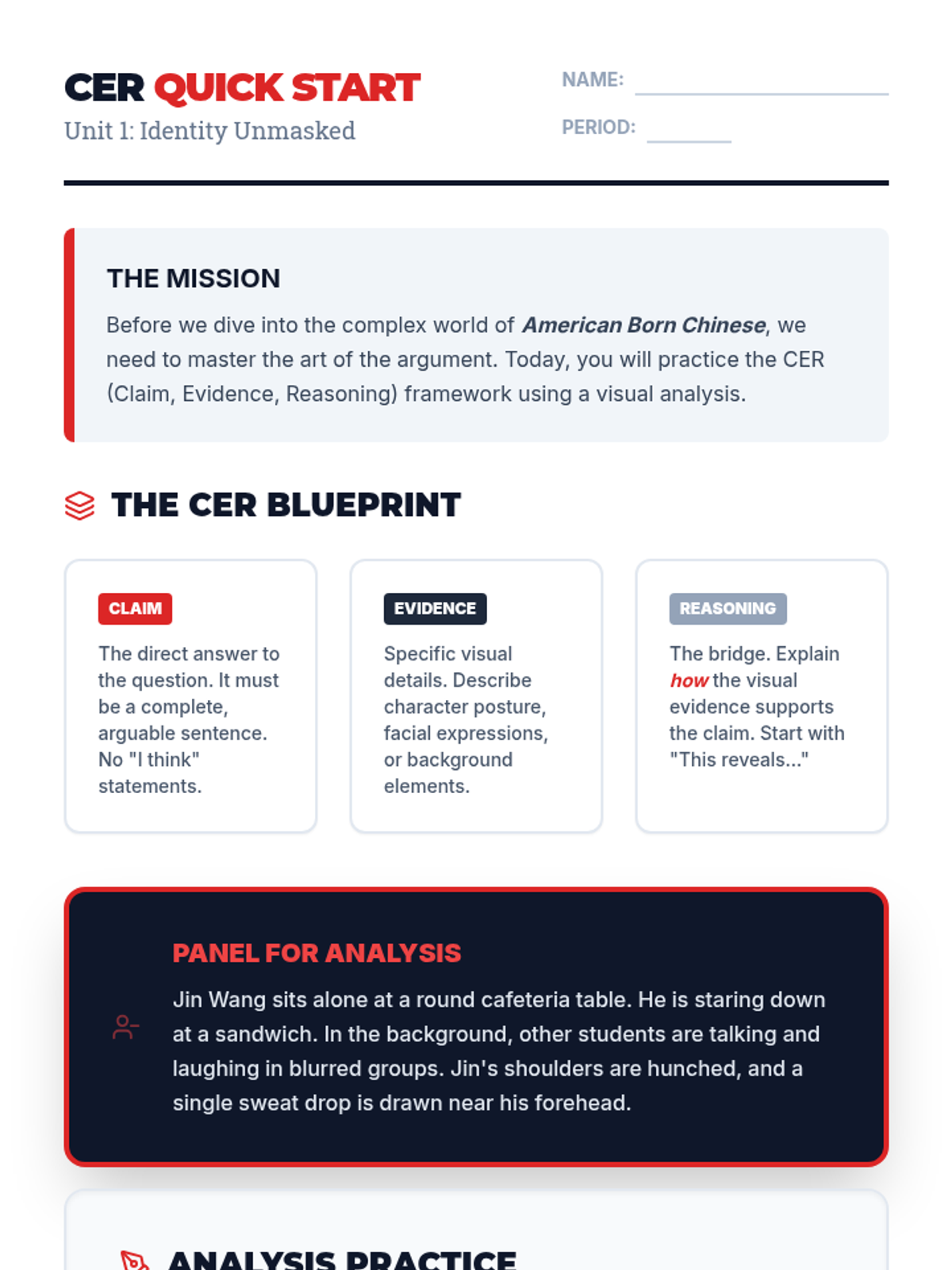
Practice worksheet for introducing the CER (Claim, Evidence, Reasoning) framework using a single comic panel analysis. Updated for layout, visual clarity, and balanced page structure.
Expanded unit slides for 'American Born Chinese', now including model good and bad CER examples along with deconstructions of Claim, Evidence, and Reasoning parts. Daily labels and contrast fixes applied.
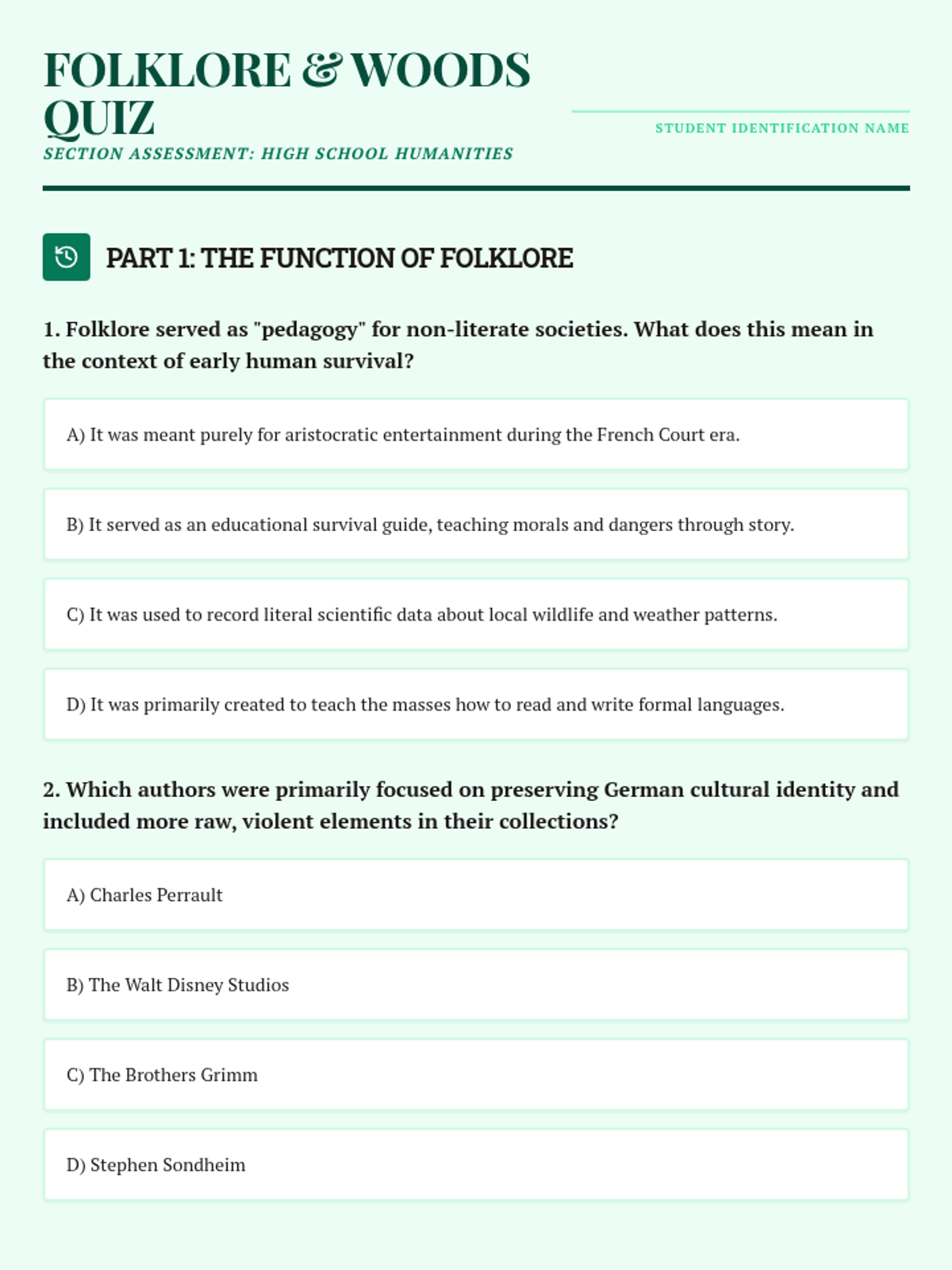
A high-school level quiz covering the purpose of folklore, literary history (Perrault/Grimm), and thematic subversion in 'Into the Woods'.
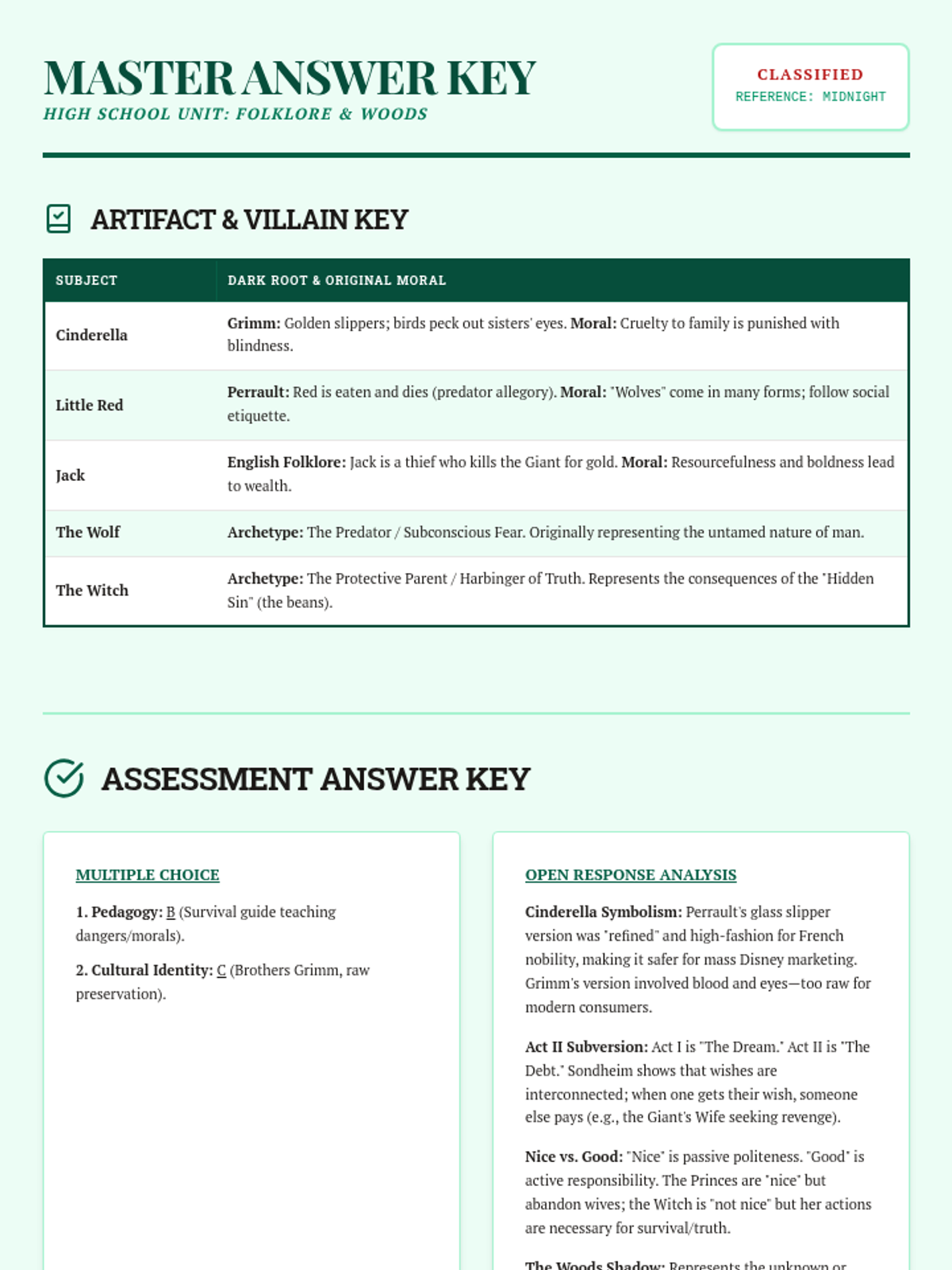
A comprehensive answer key for the high-school folklore unit, including character origins, literary history, and assessment answers.
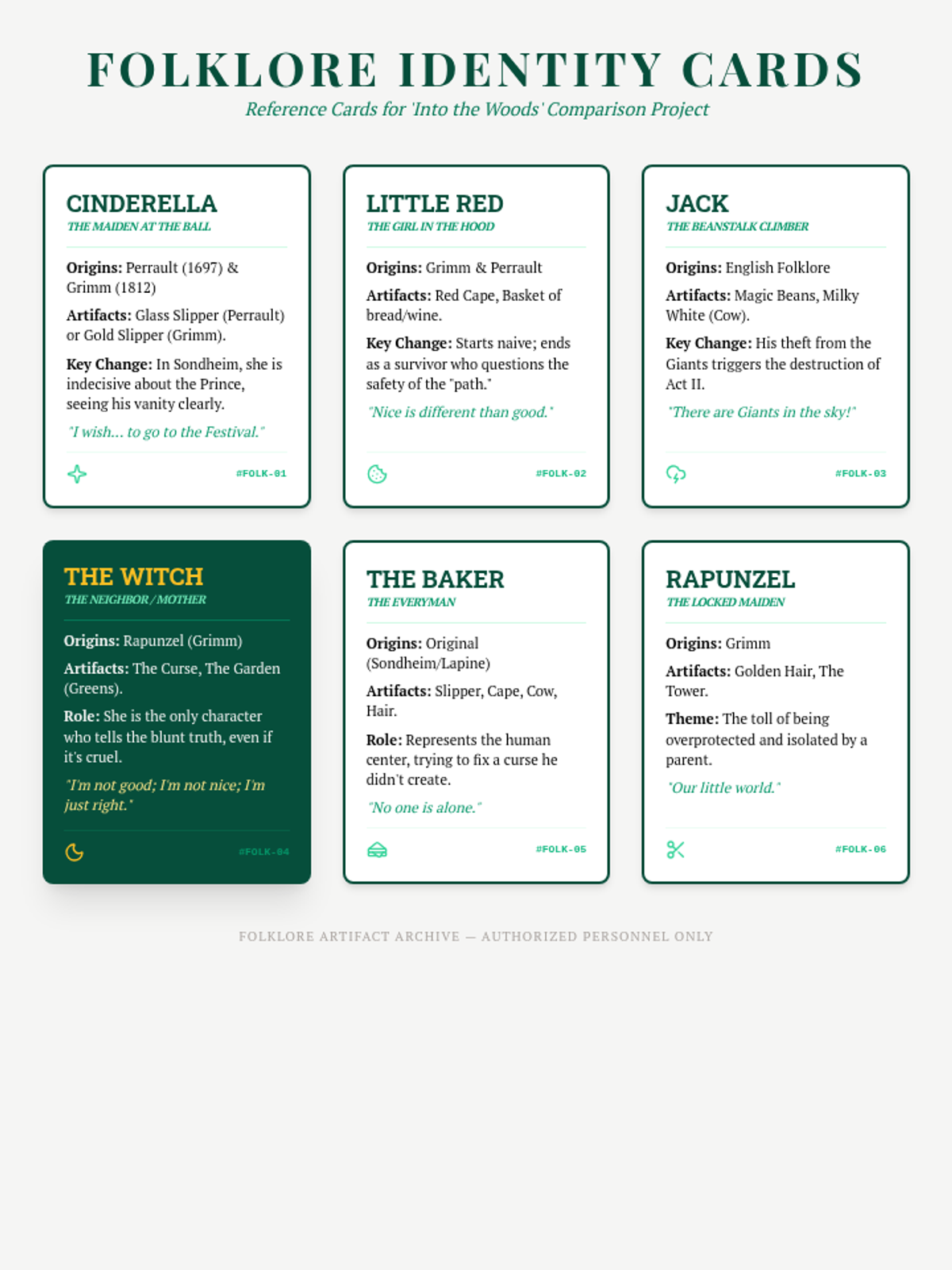
A set of reference cards for 'Into the Woods' characters, including their folklore origins, artifacts, and key changes in the musical adaptation.
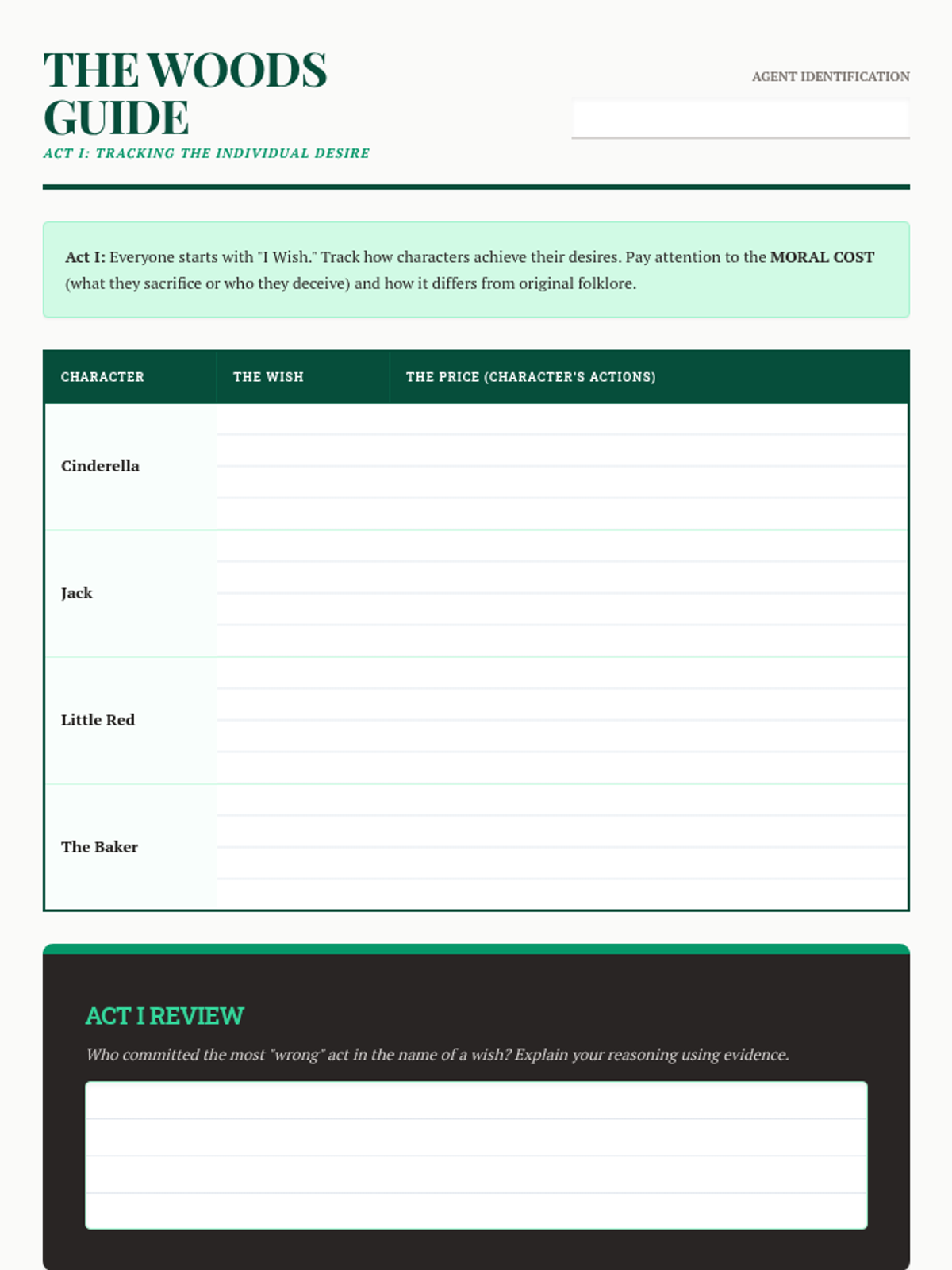
A detailed watching guide for 'Into the Woods' that tracks character wishes in Act I and their consequences in Act II.
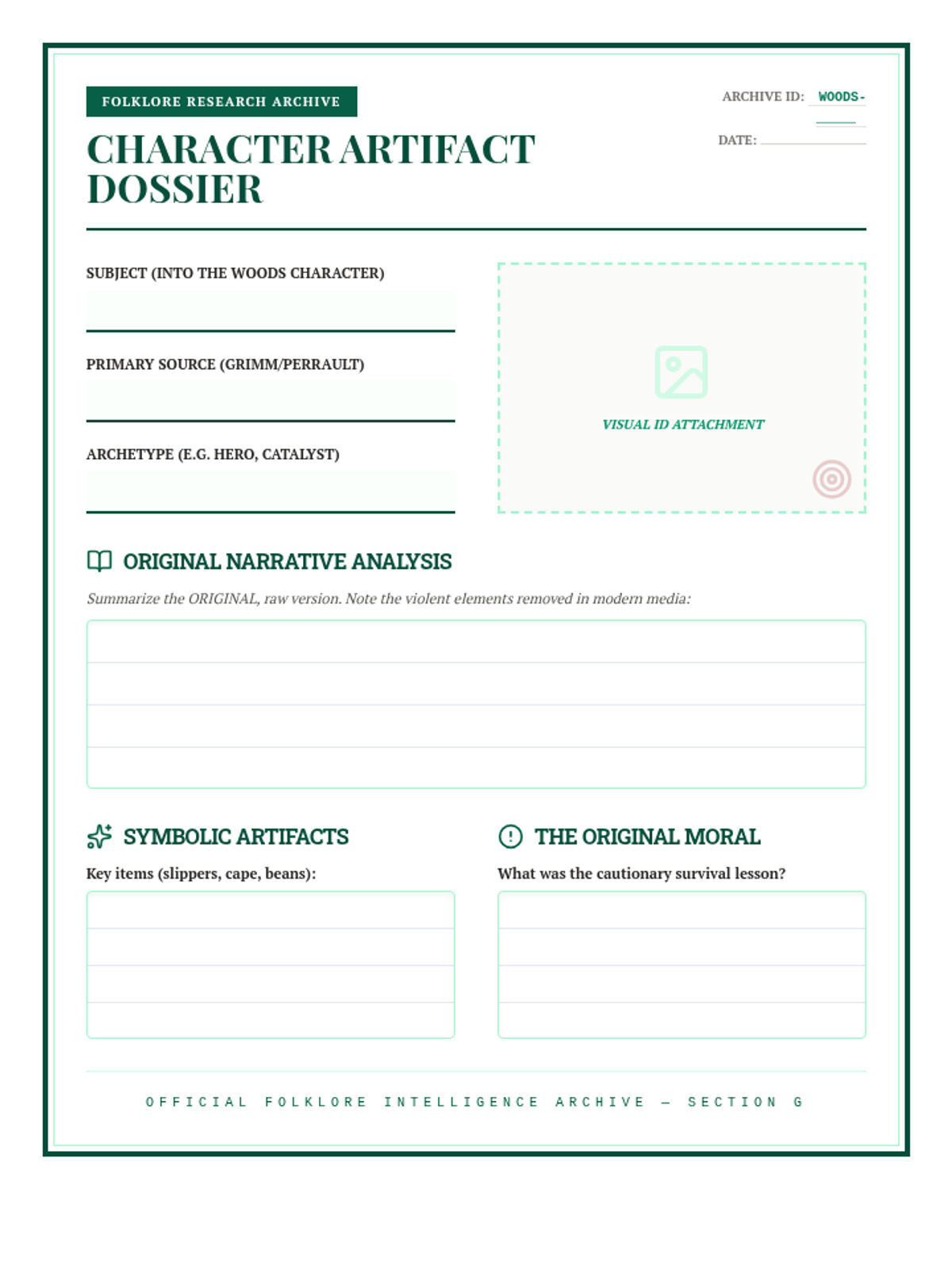
A research worksheet for students to document the original versions of fairytale characters, their attributes, and their cultural endurance.
High-school introductory slides for the 'Into the Woods' folklore project, exploring the purpose of stories, literary history, and Sondheim's deconstruction.
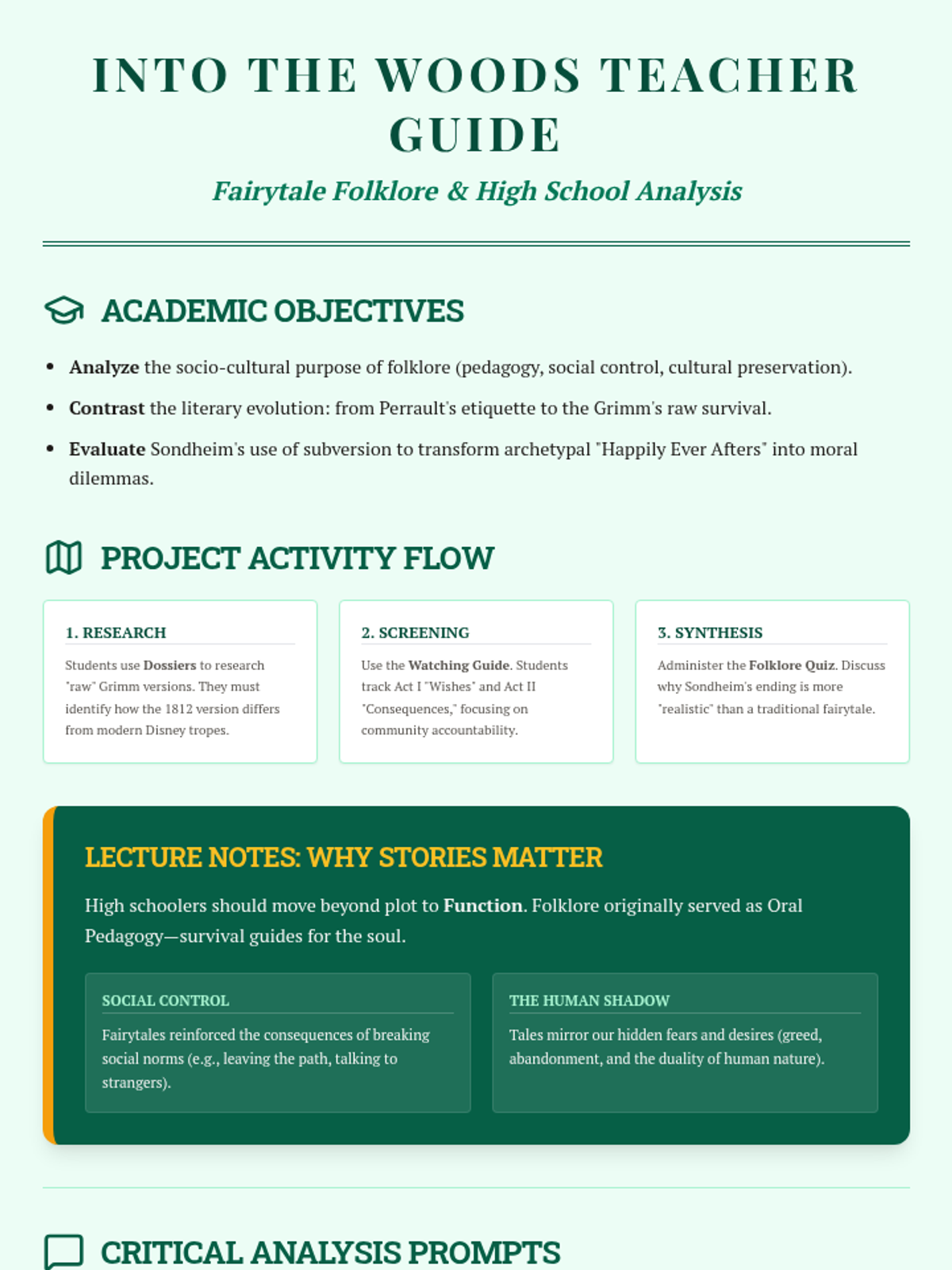
A teacher's facilitation guide for the 'Into the Woods' folklore project, including academic objectives, socratic seminar prompts, and theoretical frameworks for high school analysis.
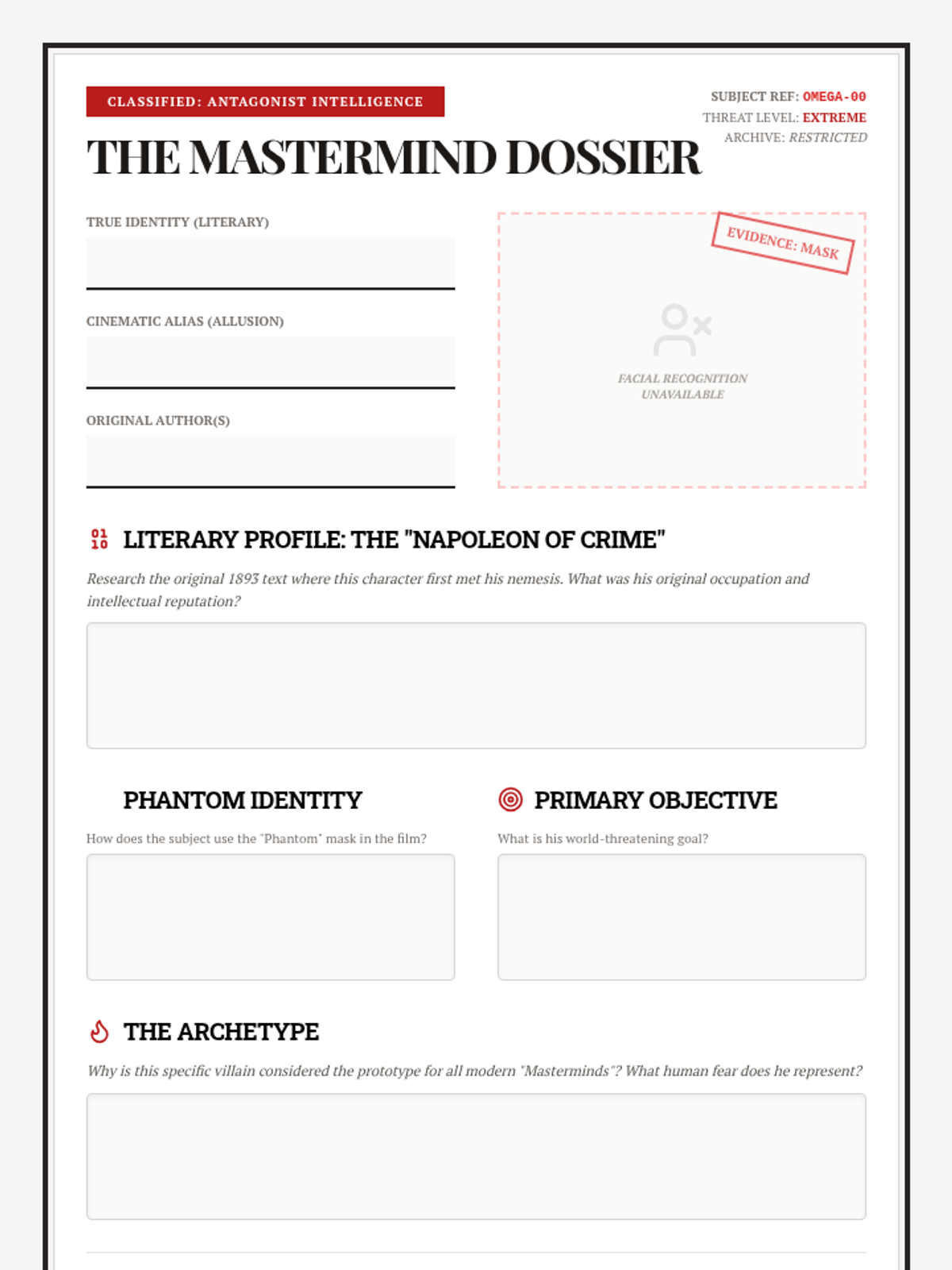
A specialized research dossier for the film's main antagonist, focusing on Professor Moriarty's literary origins and his 'Phantom' dual identity.
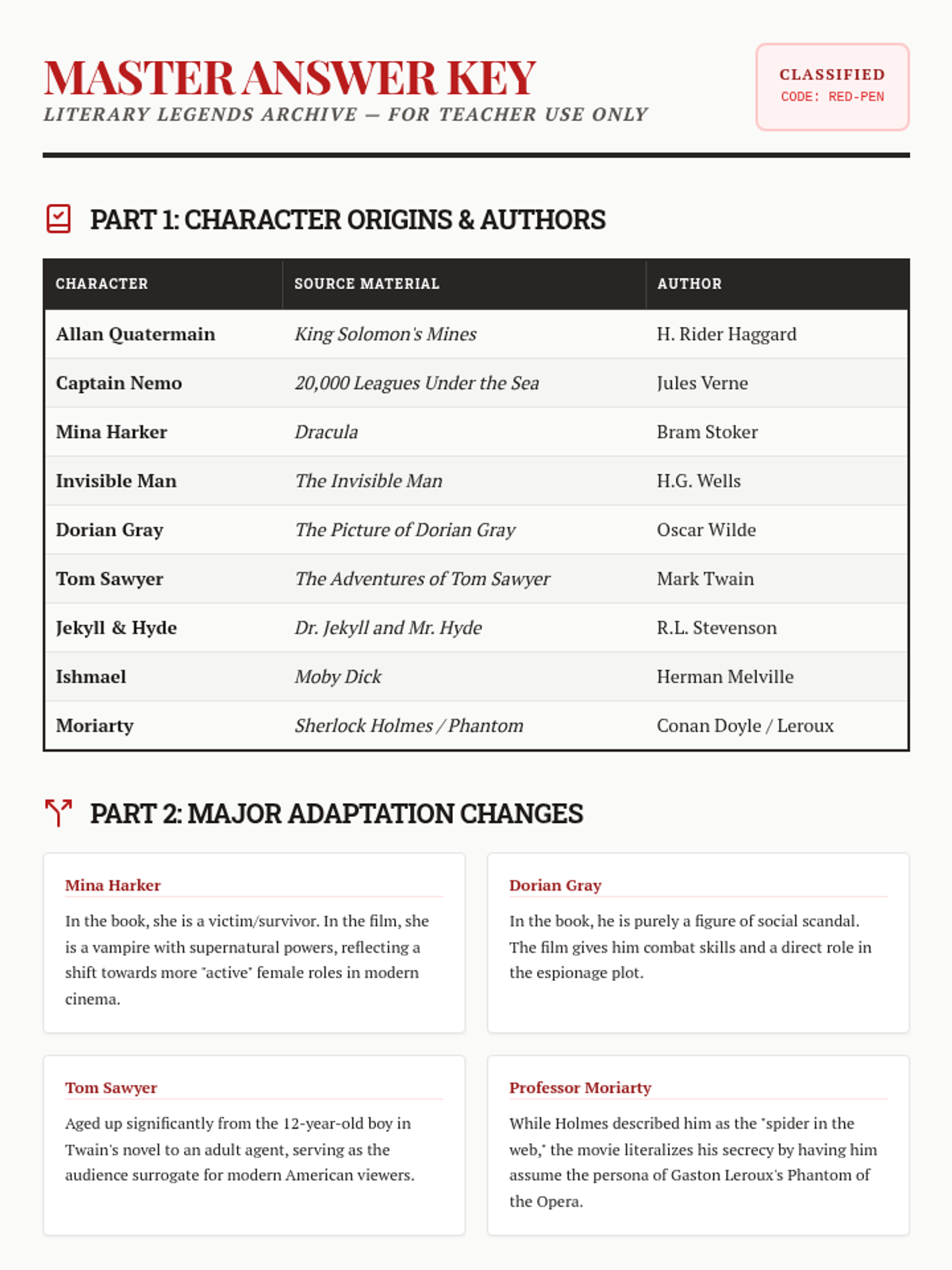
A comprehensive answer key for teachers, including character origins, adaptation differences, and explanations for the film's literary idioms and allusions.
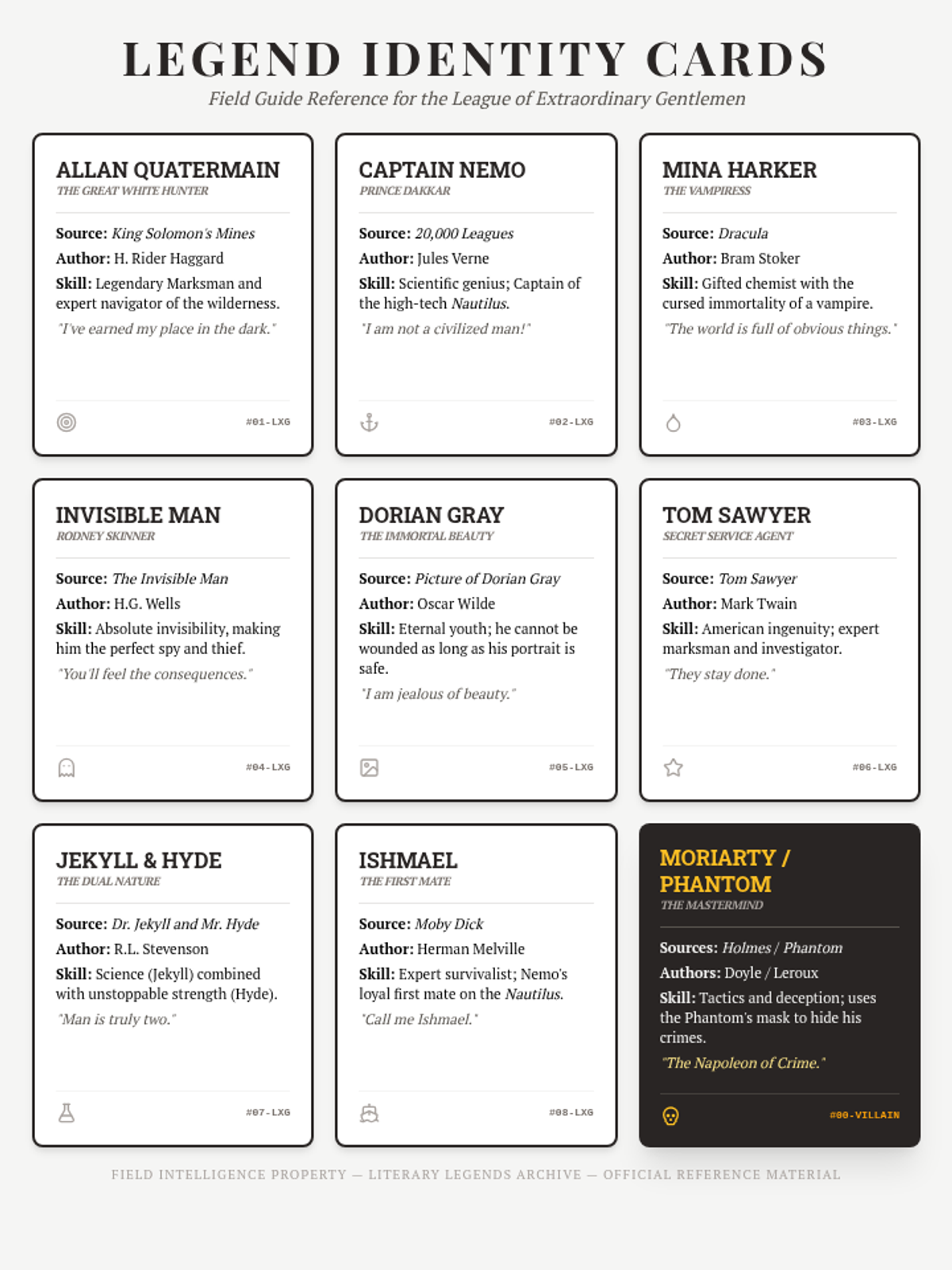
A set of reference cards for the main characters, including their literary origins, authors, skills, and key quotes.
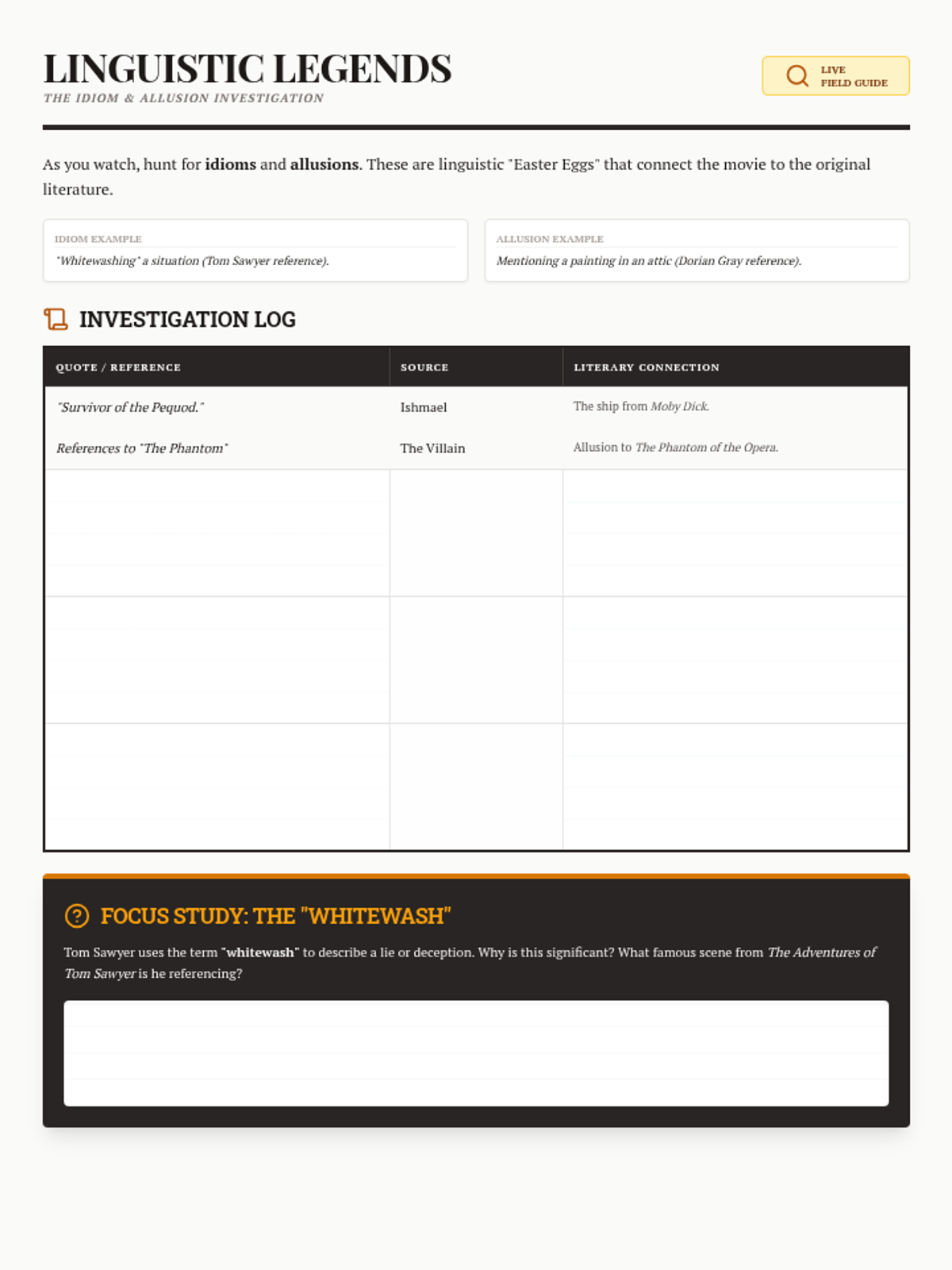
A watching guide focused on identifying literary idioms and allusions used by the characters throughout the film.