Systematic research, evidence evaluation, and logical reasoning skills for formal discourse. Equips speakers to organize persuasive arguments, identify fallacies, and execute strategic impact calculus during competitive engagement.
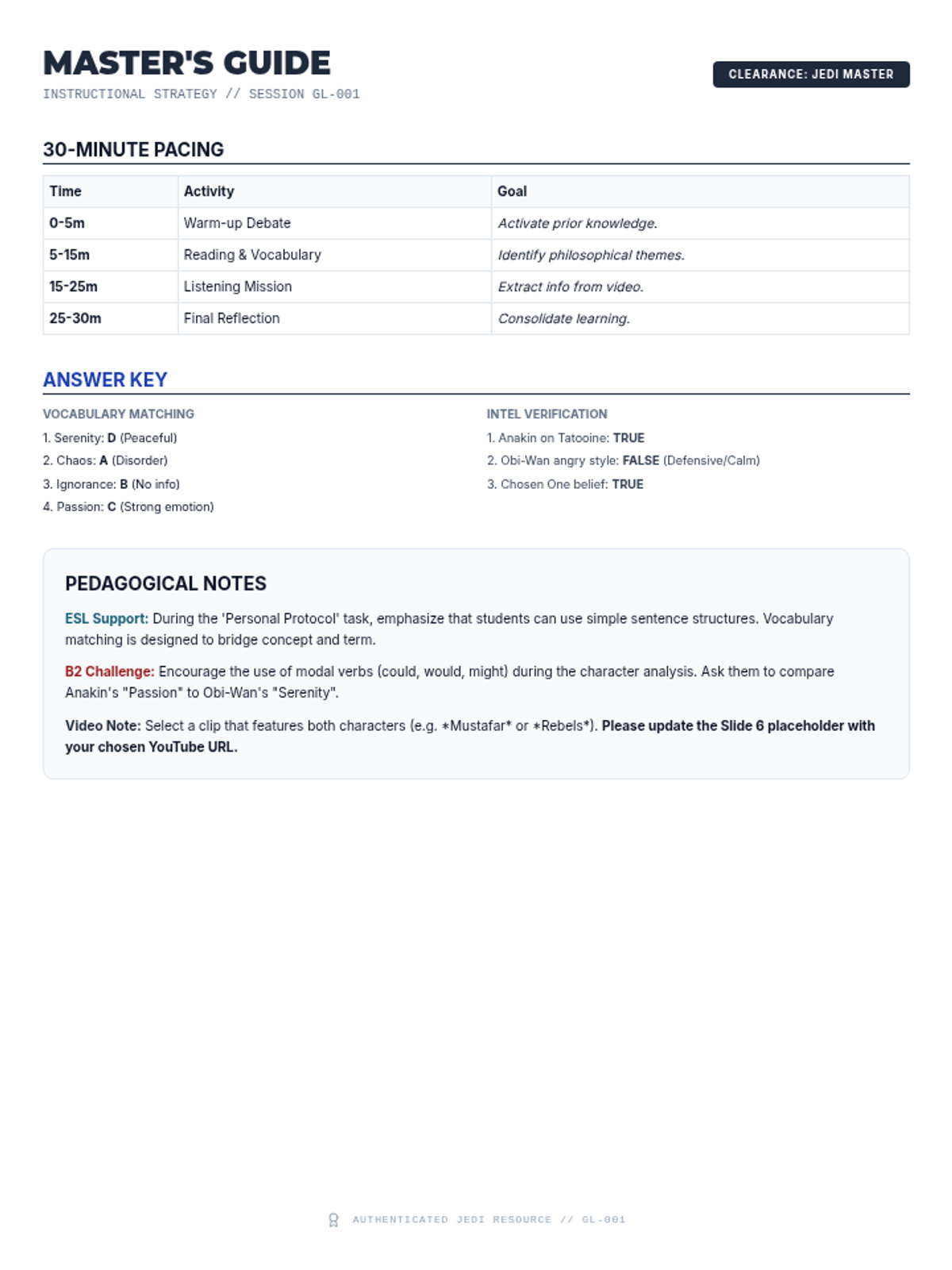
A teacher guide for the Galactic Language Lounge lesson. Includes a 30-minute pacing guide, answer keys for all student activities, and specific differentiation strategies for B1/B2 ESL learners. Consolidated to a single page.
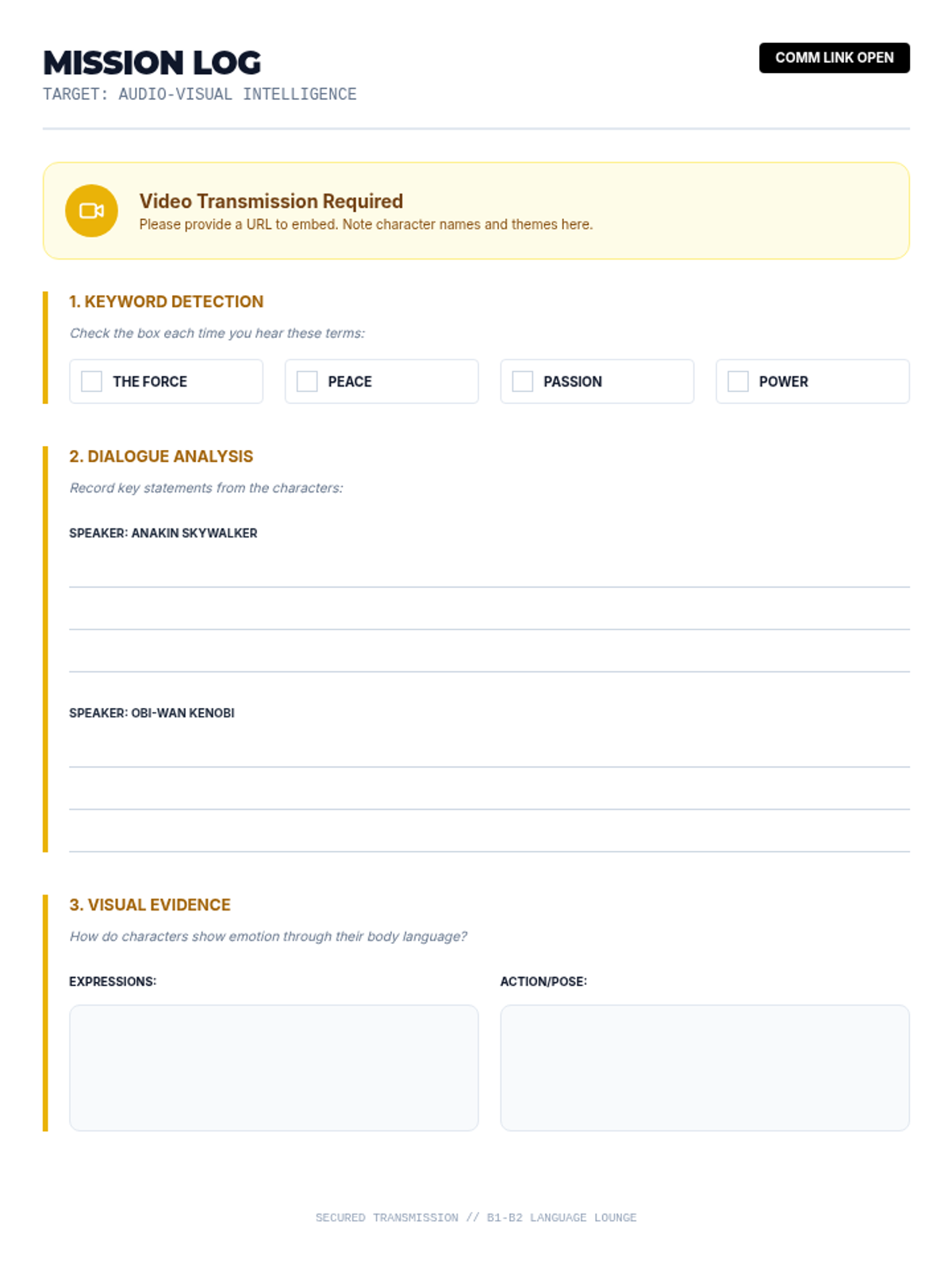
A listening comprehension guide designed to accompany a YouTube video. It includes sections for keyword detection, quote completion, and visual analysis of character emotions, tailored for B1/B2 ESL learners. Consolidated to a single page.
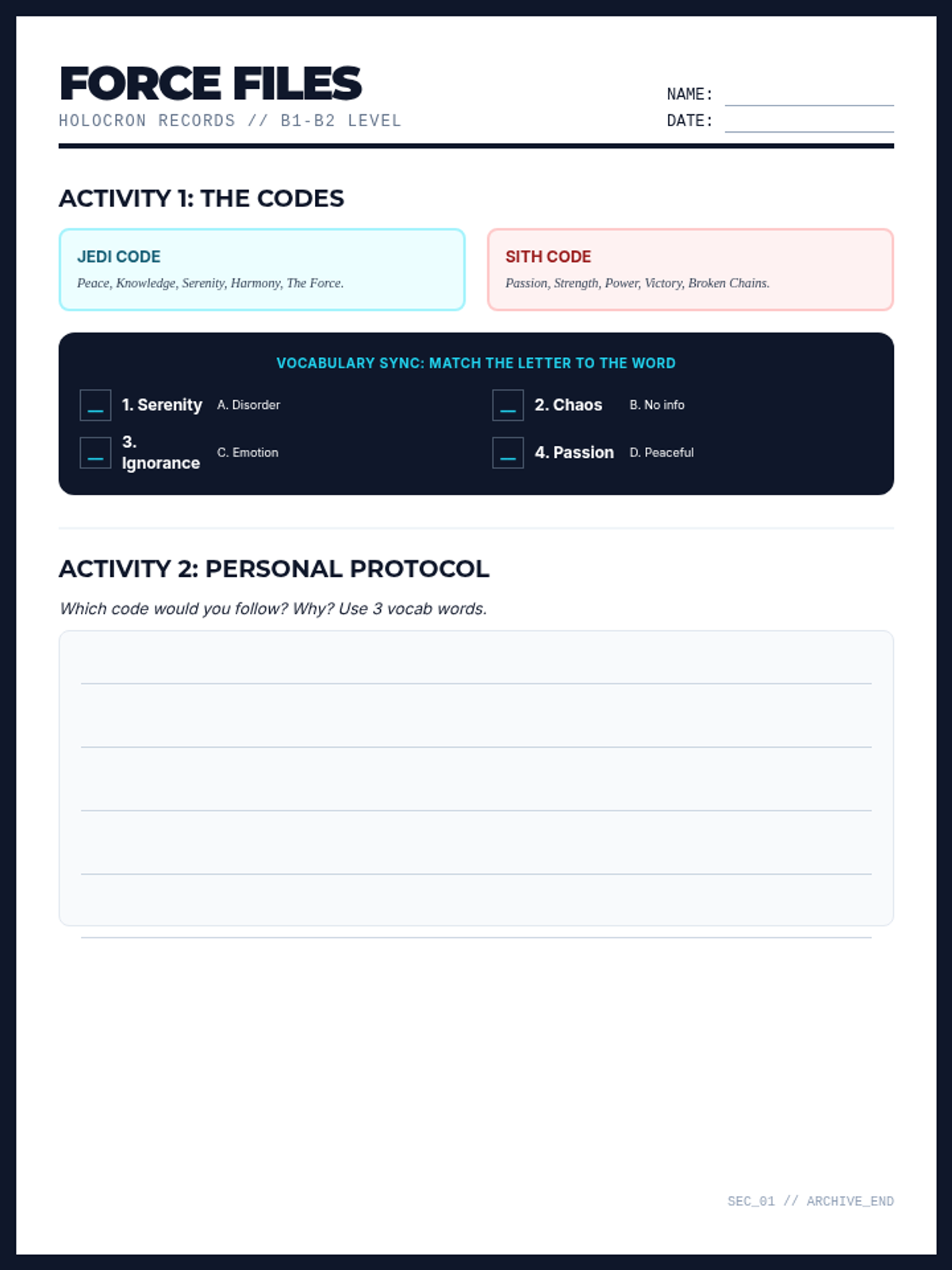
A two-page printable worksheet for ESL students covering Star Wars character backstories and a comparison of Jedi and Sith philosophy. Layout optimized to fit two pages with improved contrast and work areas.
A high-energy, Star Wars-themed slide deck designed for ESL students. It includes visual representations of the Jedi and Sith Codes, character backstory highlights, and structured speaking prompts to facilitate classroom discussion. Content layout fixed for better slide transitions.
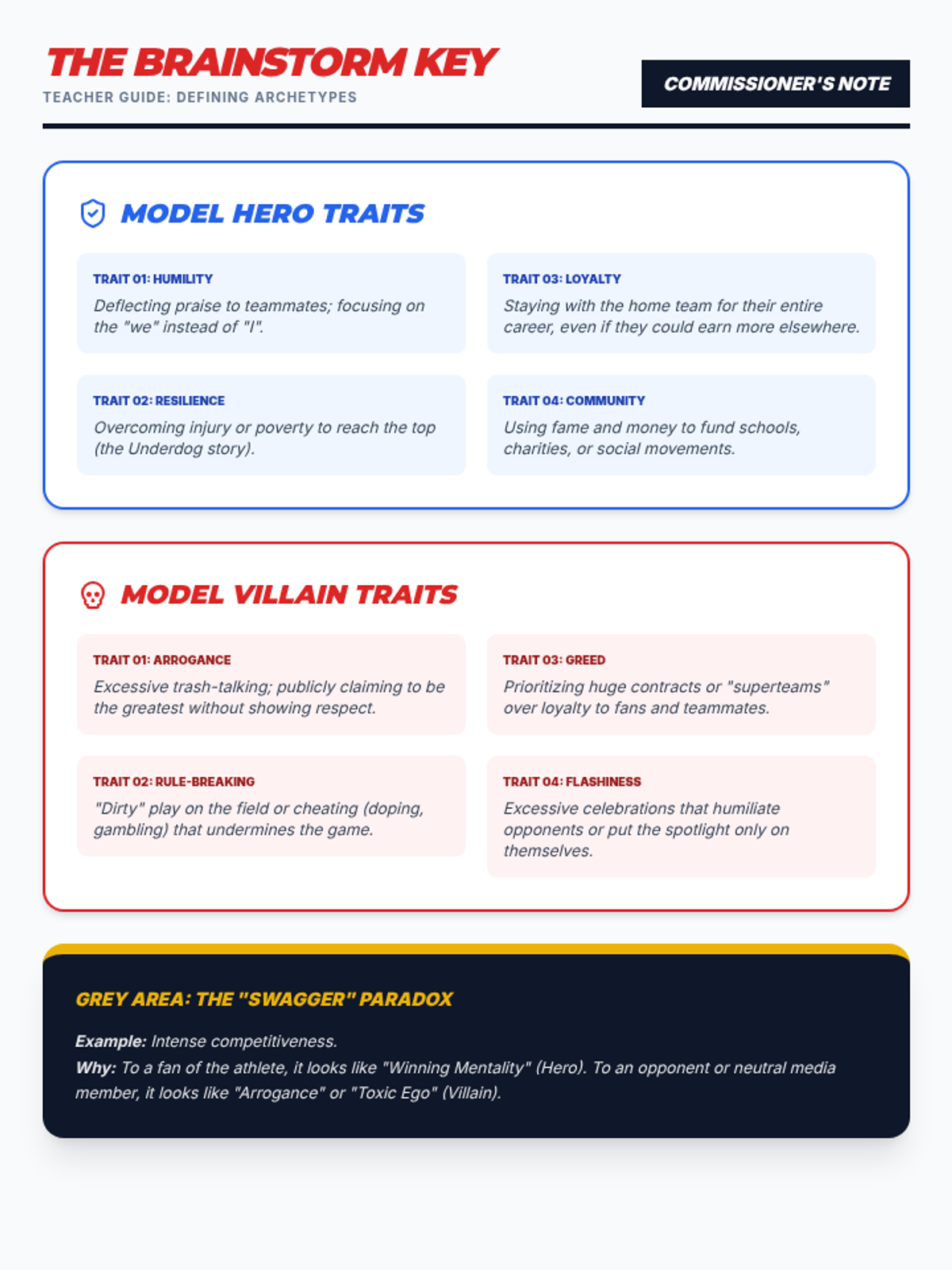
An updated, high-impact review slide deck that recaps sports archetypes using the full criteria from the unit's Brainstorm Key. It defines Heroes, Villains, and the 'Swagger Paradox' with rapid-fire practice cases for Curry and Durant.
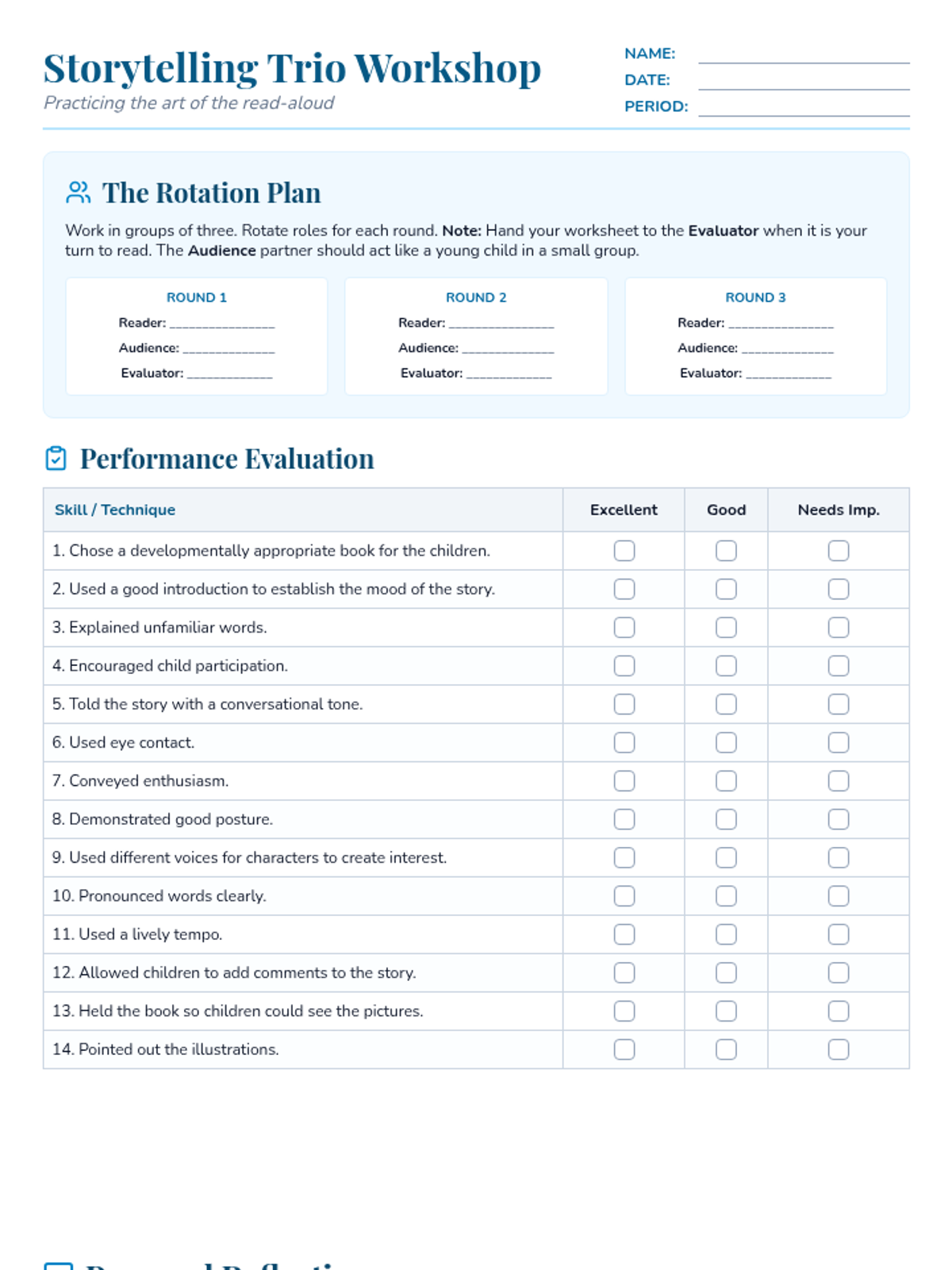
A printable storytelling evaluation worksheet designed for small groups of three, including a role rotation guide, a 14-point skill checklist, and a reflection section for students to assess their read-aloud techniques.
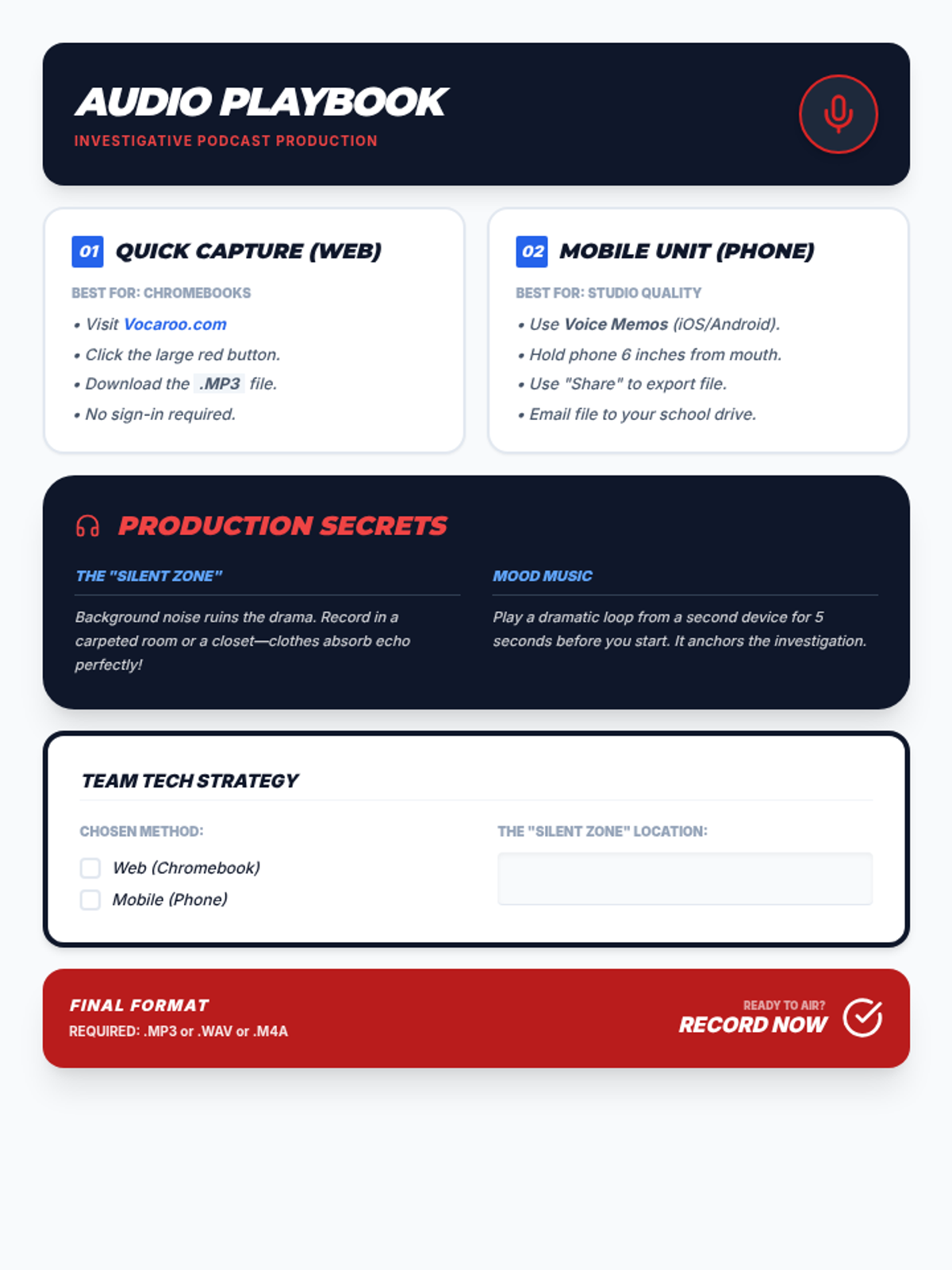
A step-by-step technical guide for students on how to record their investigative podcasts using simple web-based or mobile tools. Includes production tips for audio quality and atmosphere.
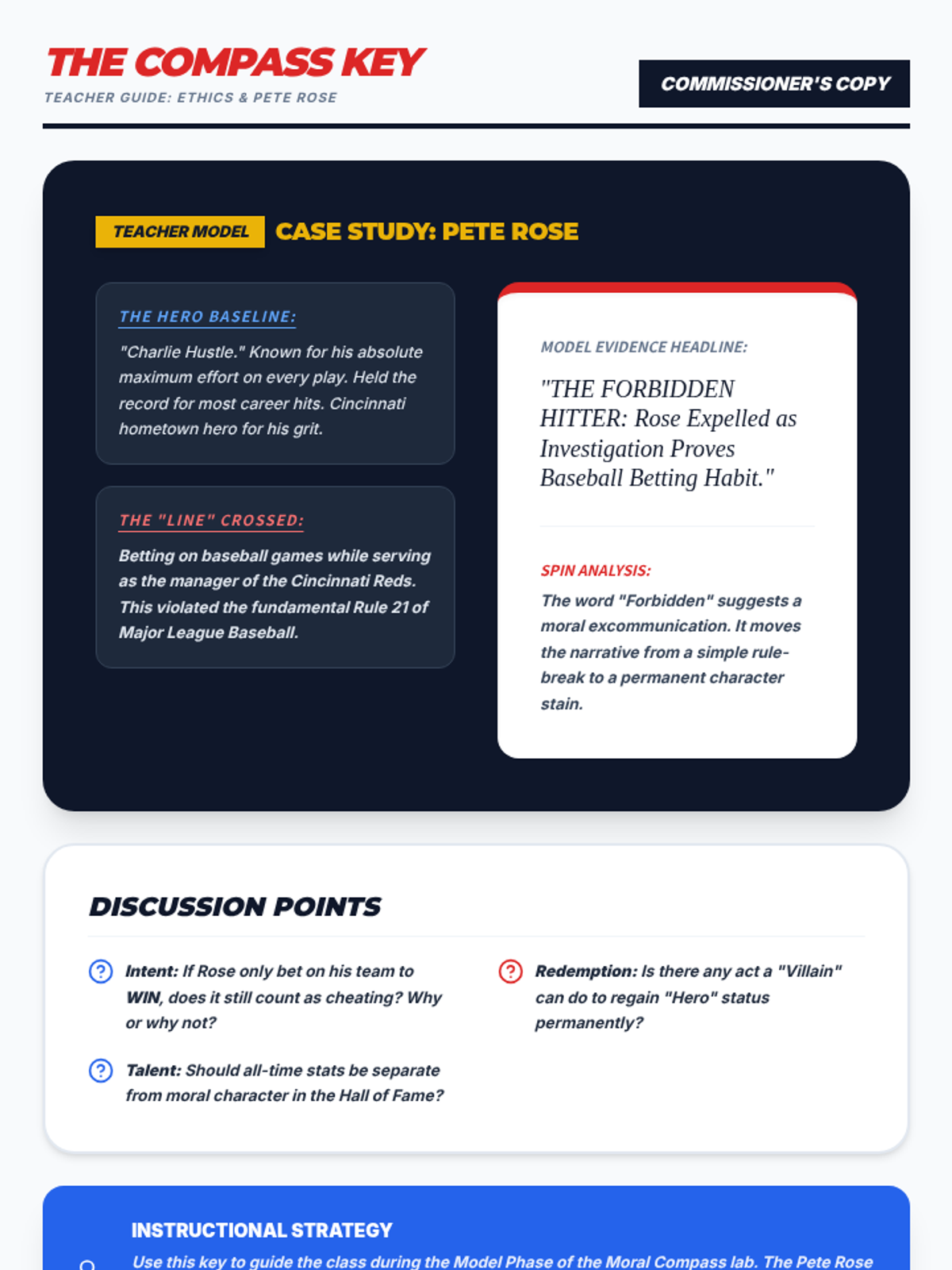
A teacher answer key for the Moral Compass worksheet, providing a completed model of the Pete Rose case study and discussion questions regarding the 'line' between hero and villain in sports.
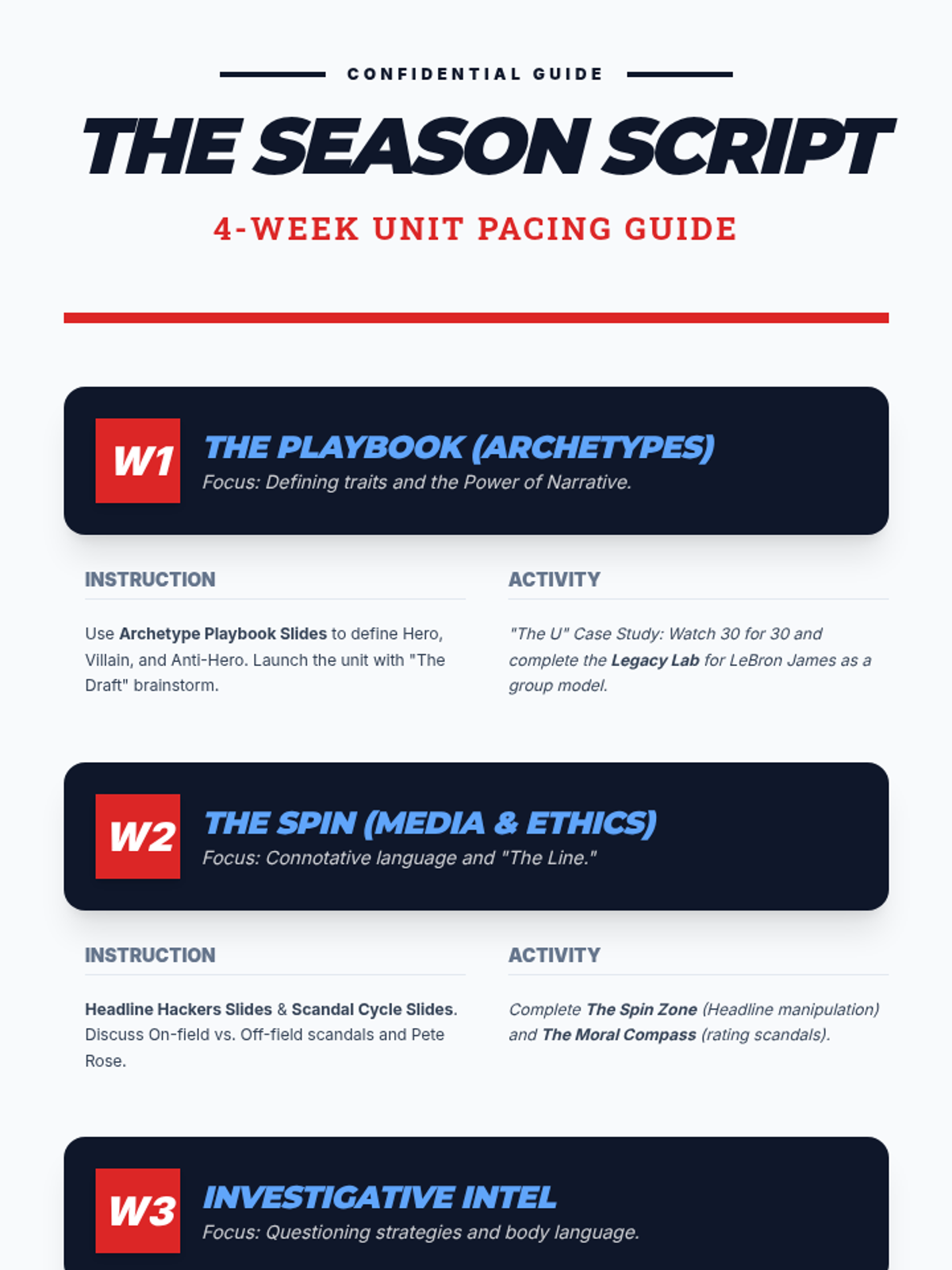
A comprehensive pacing guide for the 4-week 'Game Changers' unit, detailing the instructional focus, activities, and required materials for each week. Specifically optimized for a 3x45m + 1x90m weekly schedule.
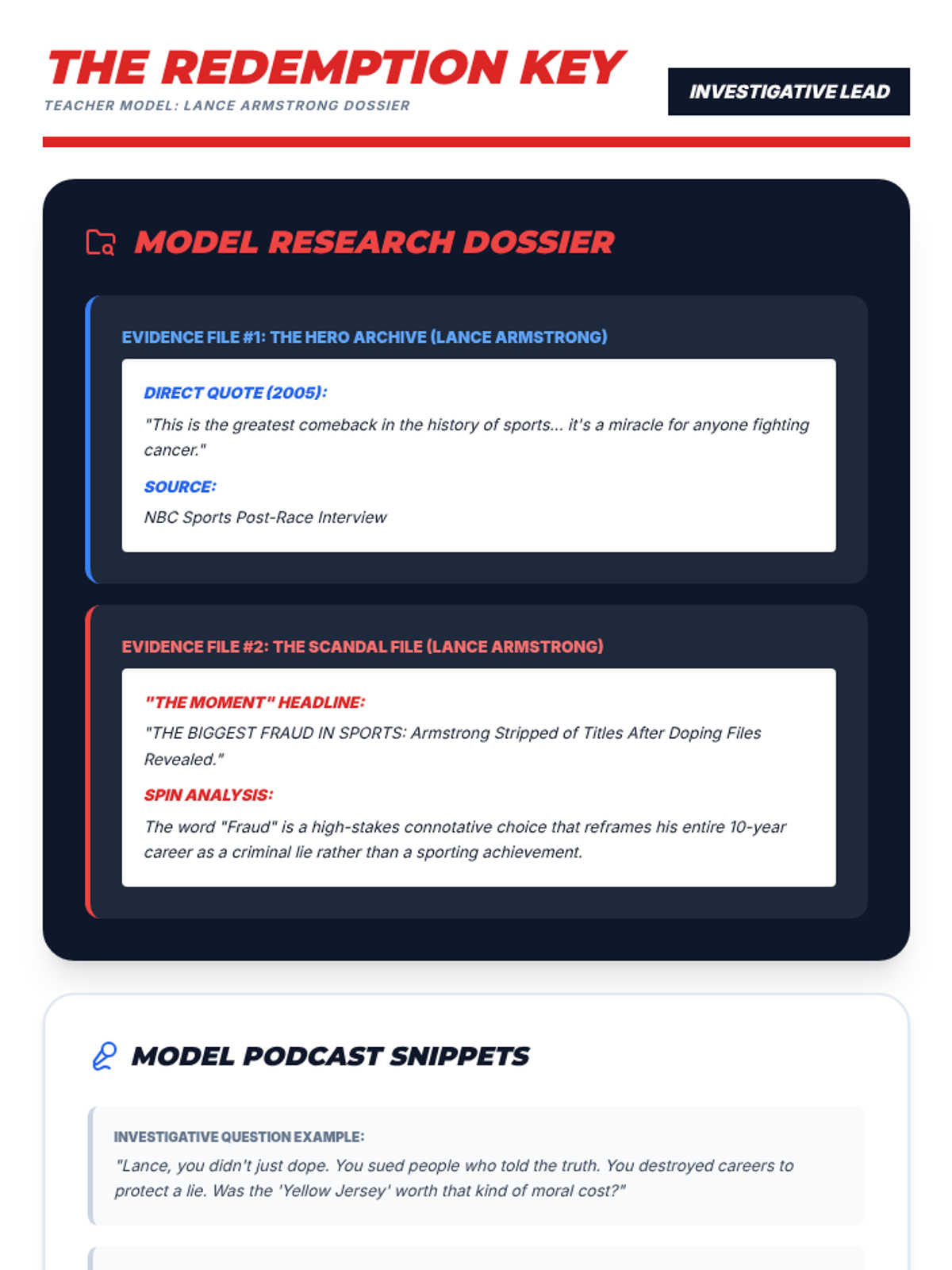
A model answer key and exemplar for the summative podcast project. It provides a completed Research Dossier and script snippets for Lance Armstrong to show students the expected depth of research and evidence integration.
A slide deck that explores the ethics of sports scandals, the 'line' between hero and villain, and the impact of off-field behavior on an athlete's professional legacy. Transitions into the new, research-heavy podcast project.
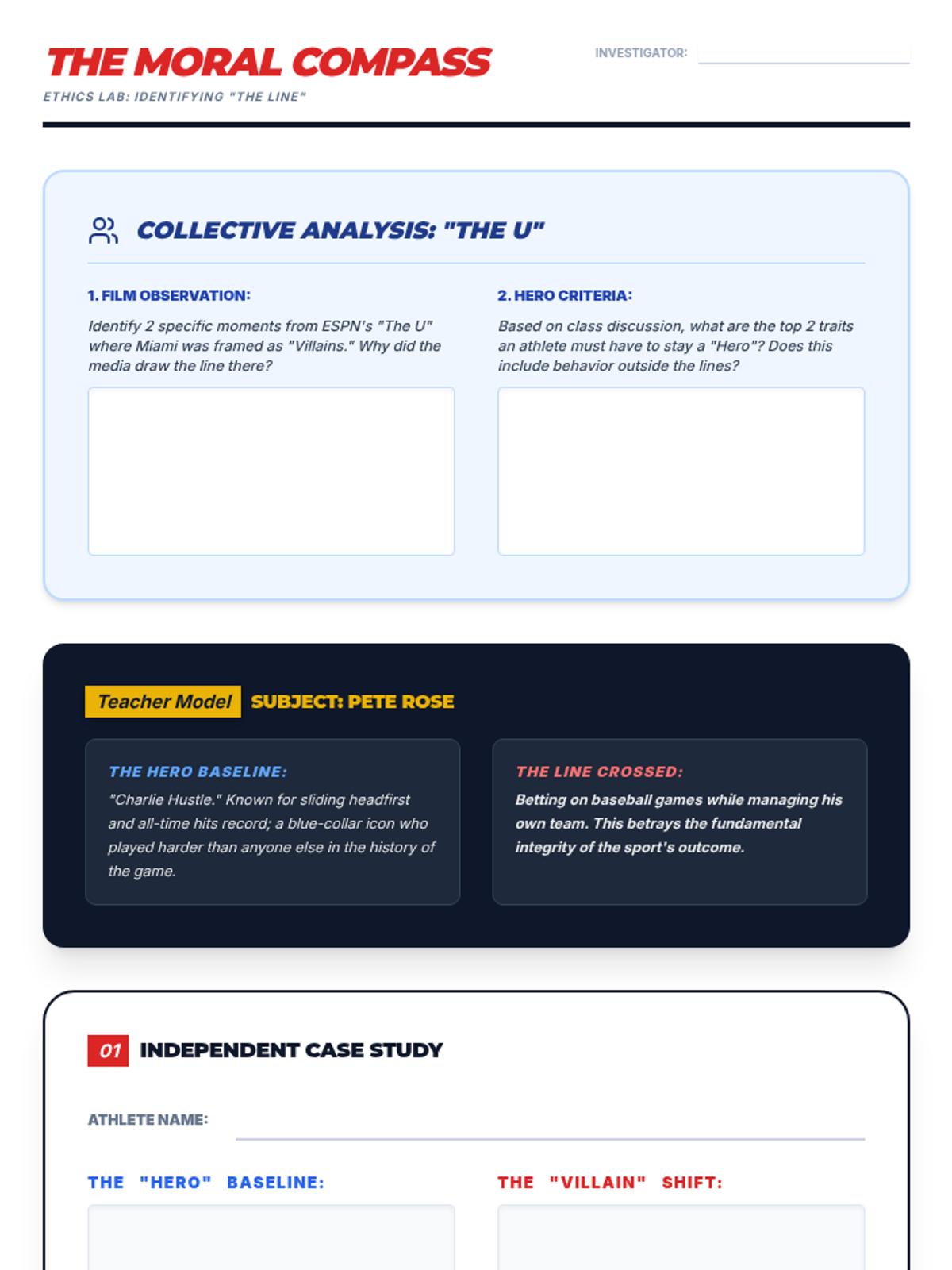
A student-facing ethical analysis worksheet focusing on sports scandals and defining the 'line' between hero and villain. Includes film analysis and independent case study sections.
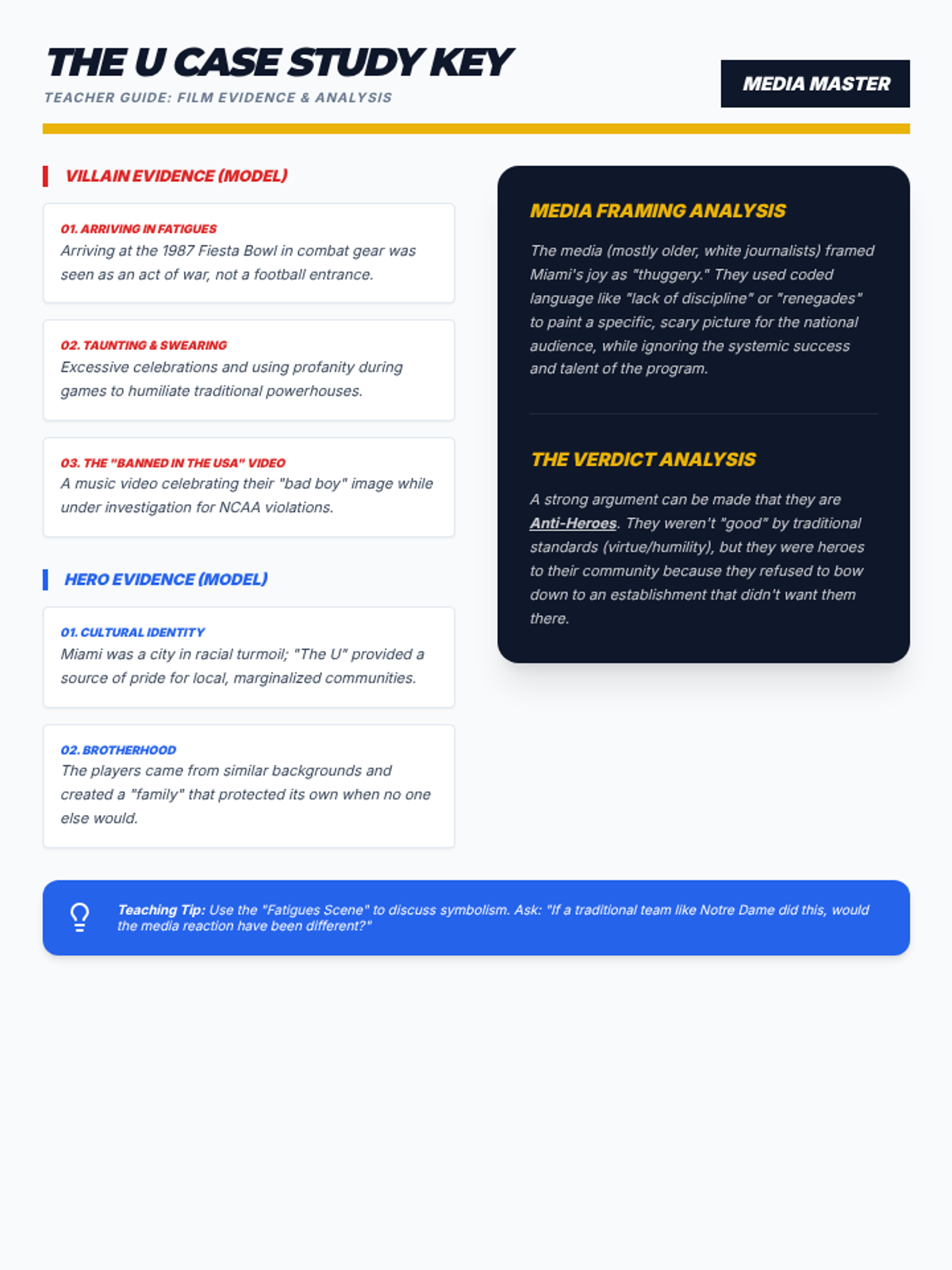
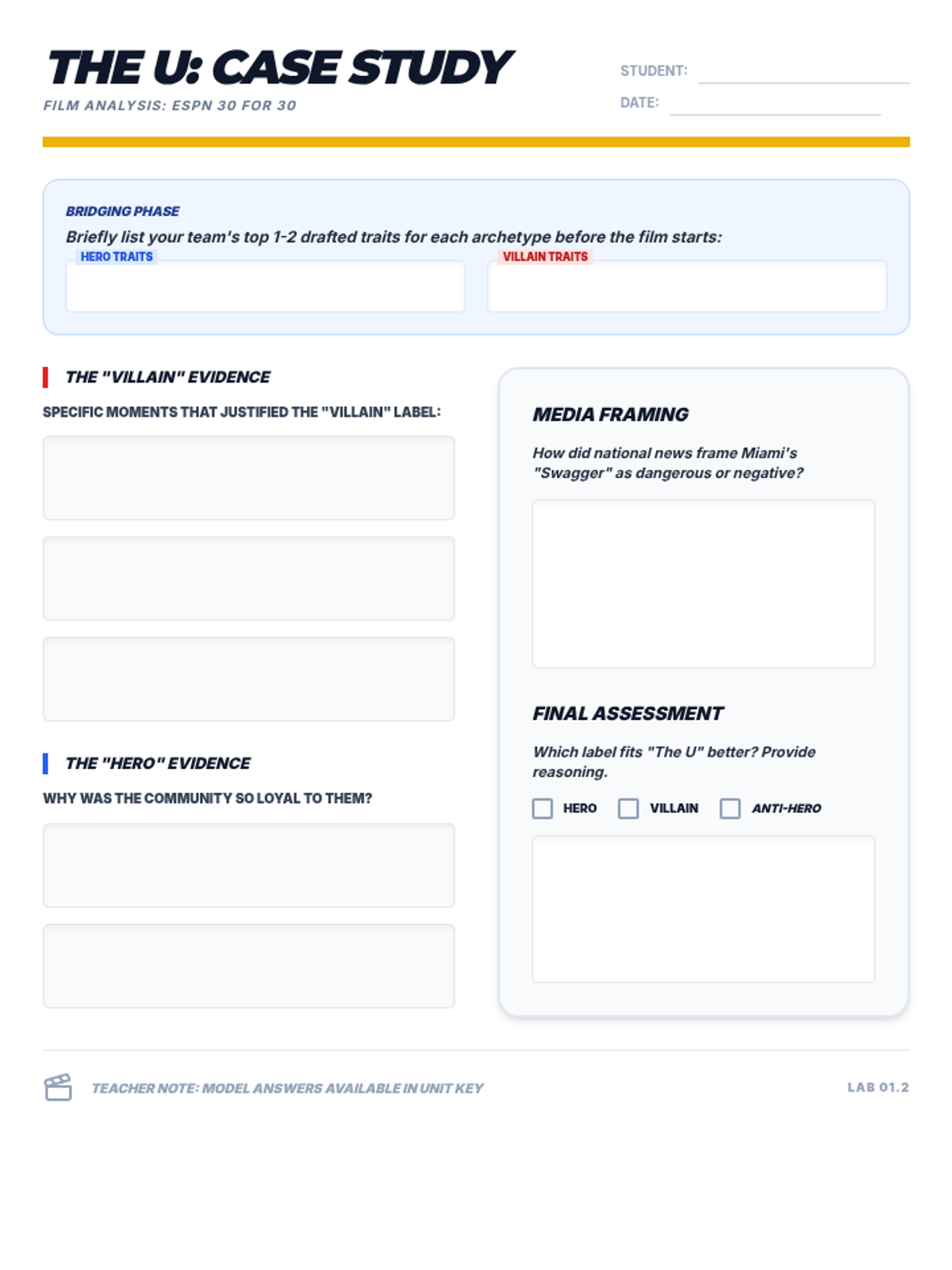
A teacher answer key for 'The U' case study worksheet, providing specific examples of hero/villain evidence from the documentary and guidance on analyzing media framing.
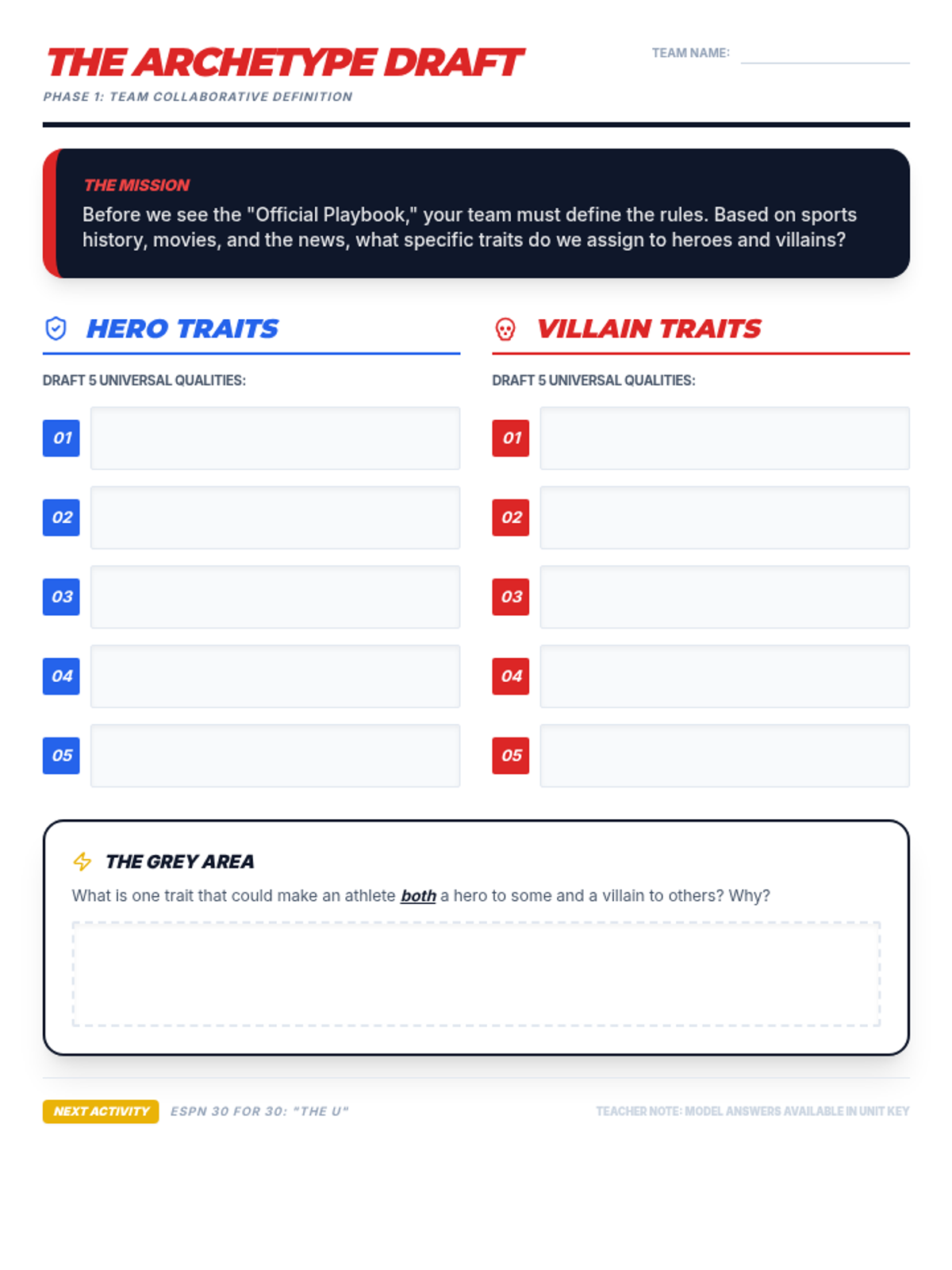
A teacher key for the Archetype Draft Brainstorming worksheet, providing model traits and explanations for heroes, villains, and the 'grey area' of sports personas.
A case study worksheet for the ESPN 30 for 30 'The U', guiding students to analyze the 'Villain' vs. 'Hero' narrative of the University of Miami football team and the role of media framing.
A collaborative brainstorming worksheet where student teams define the traits of sports heroes and villains before comparing them to the official unit archetypes.
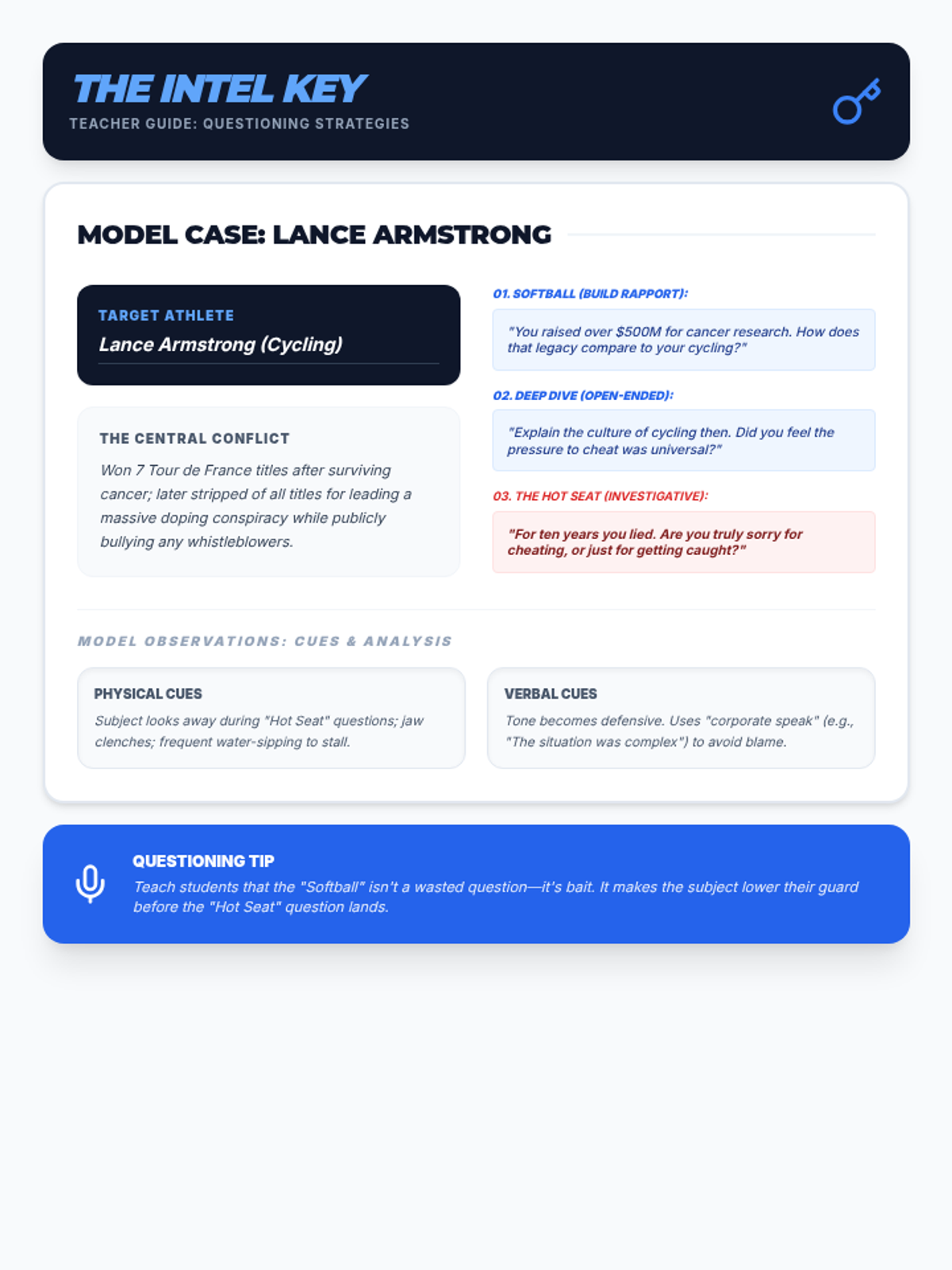
An answer key for the Interview Intel guide, featuring a case study of Lance Armstrong to demonstrate how to layer questions and analyze verbal/physical cues during an investigative interview.
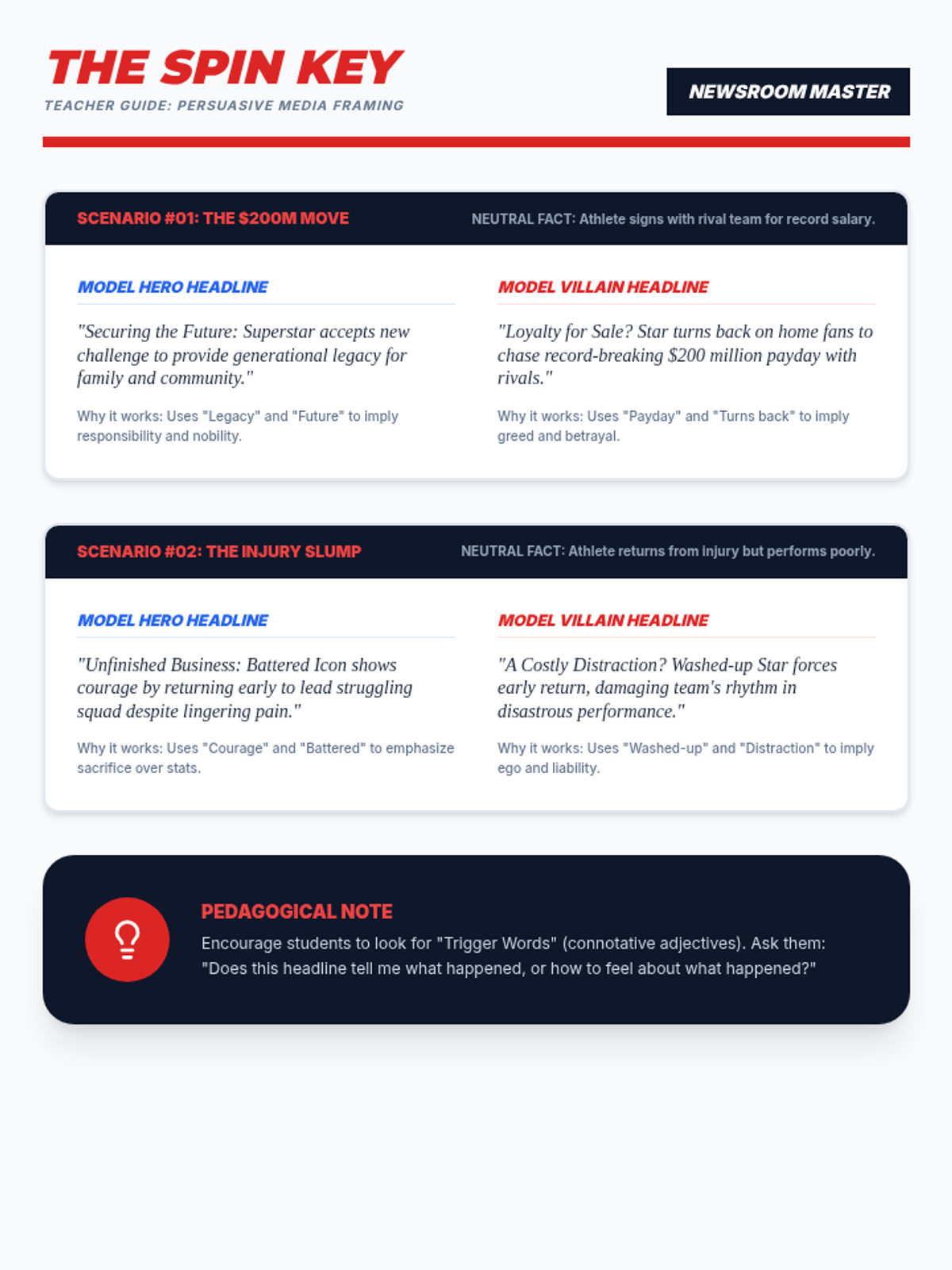
An answer key for the Spin Zone worksheet, providing model hero and villain headlines for the sports scenarios and explaining the persuasive strategy behind each choice.
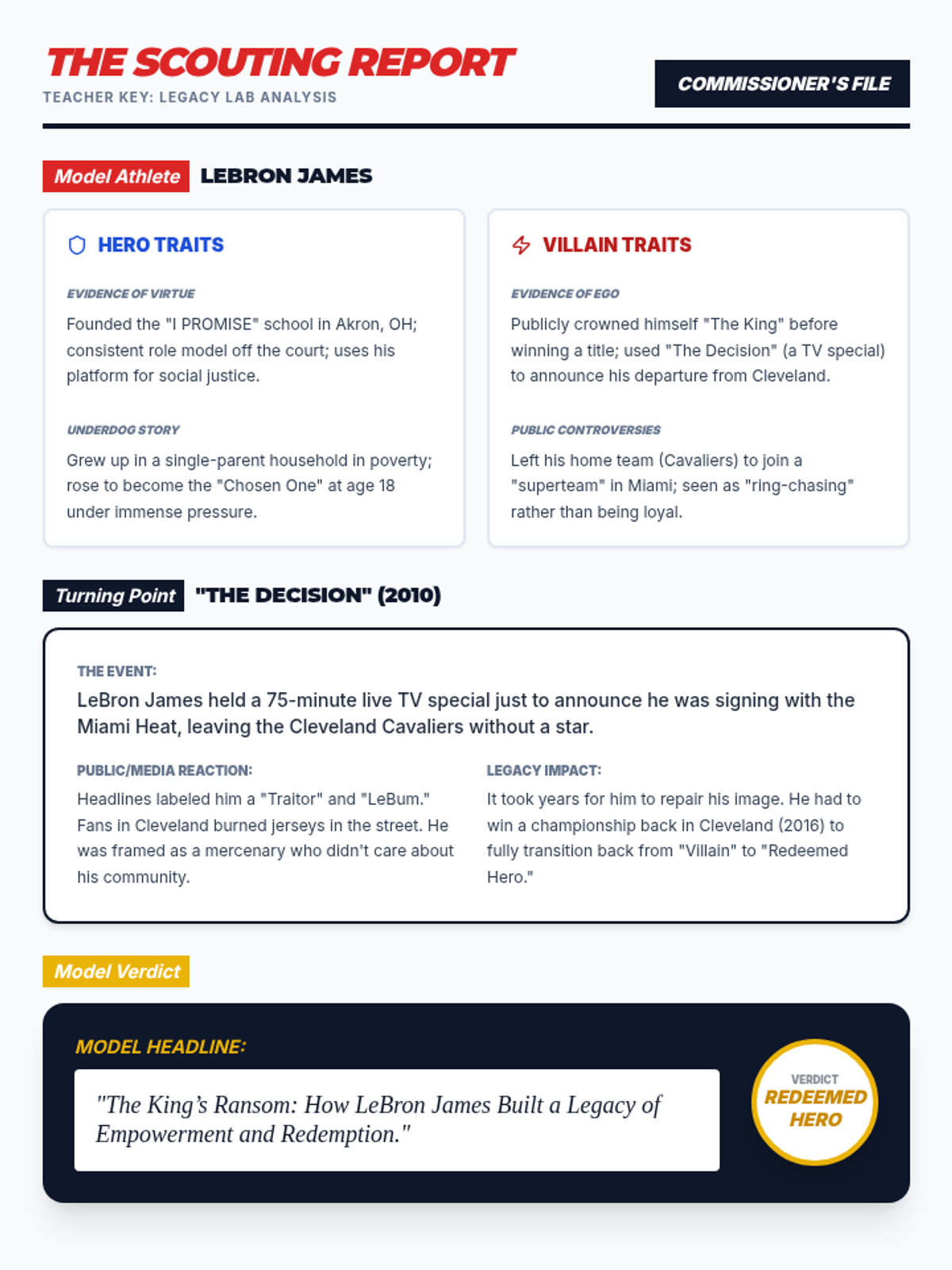
An answer key and model for the Legacy Lab worksheet, using LeBron James as a case study to show how an athlete's narrative can shift from hero to villain and back again.
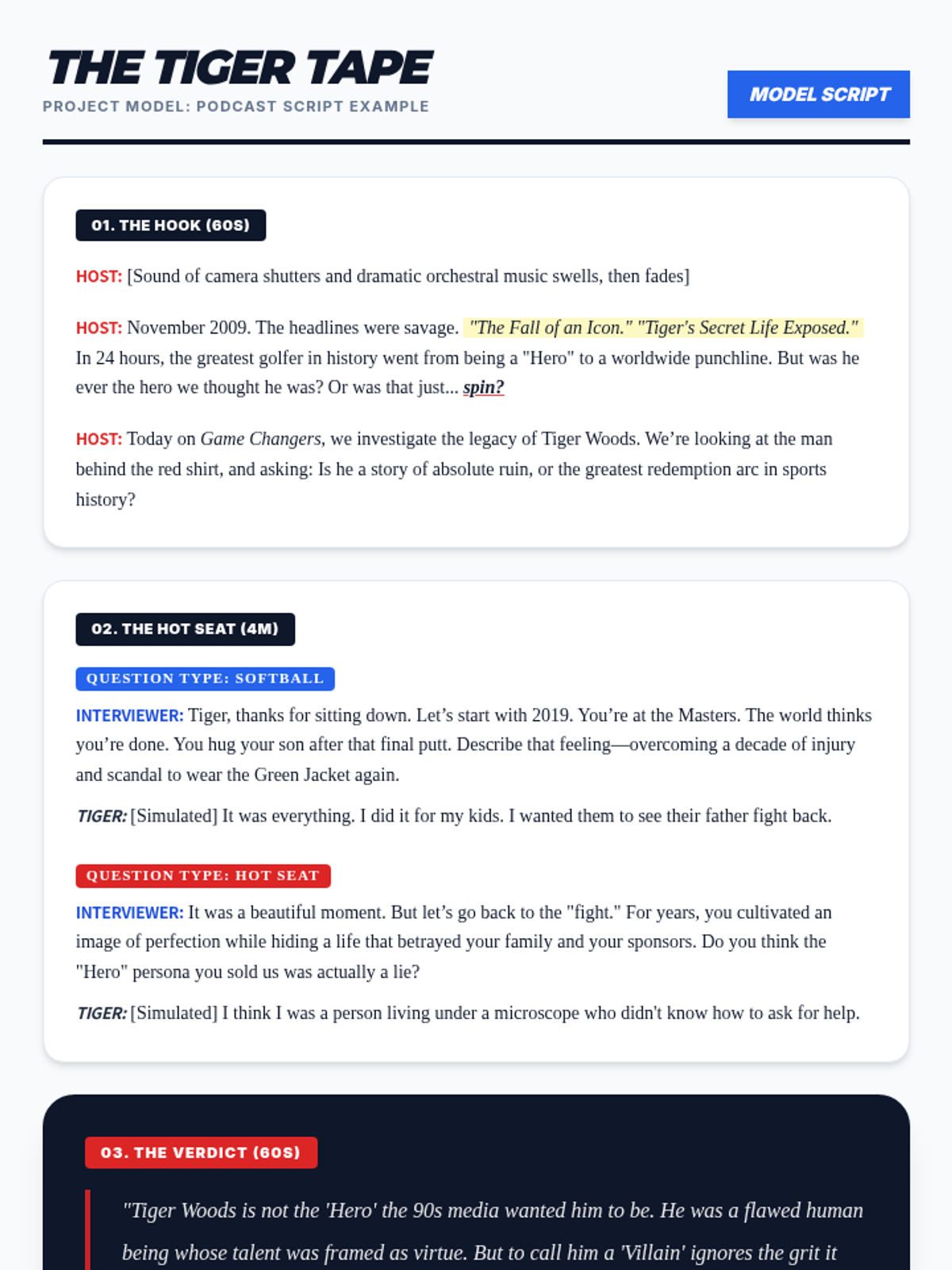
A sample podcast script exploring the 'Hero vs. Villain' narrative of Tiger Woods. This model provides students with concrete examples of a hook, softball/hot seat questioning, and a persuasive final verdict.
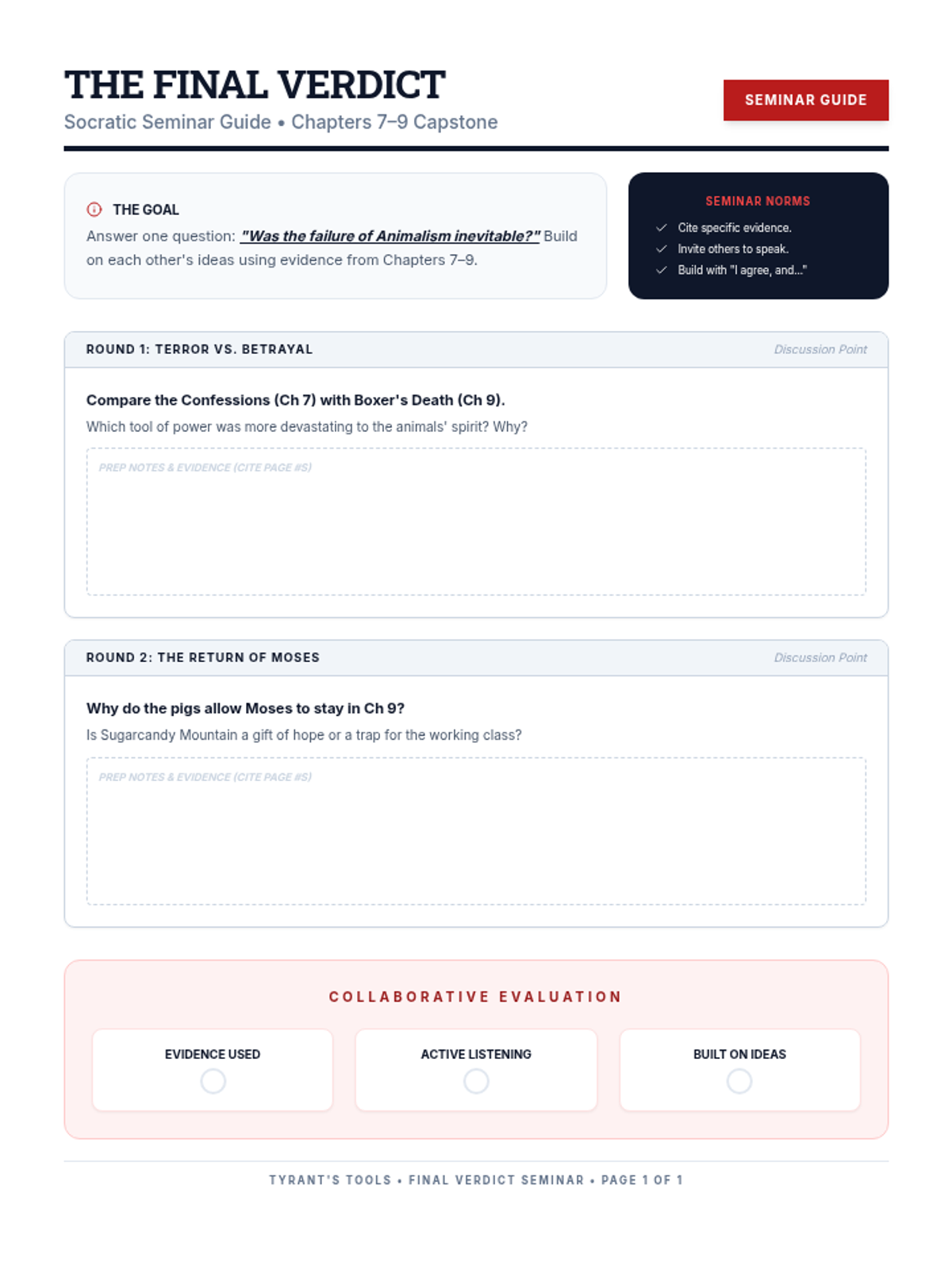
A Socratic Seminar guide for the end of the Animal Farm unit, facilitating a high-level collaborative discussion on the themes of tyranny, religion, and the inevitability of the farm's failure.
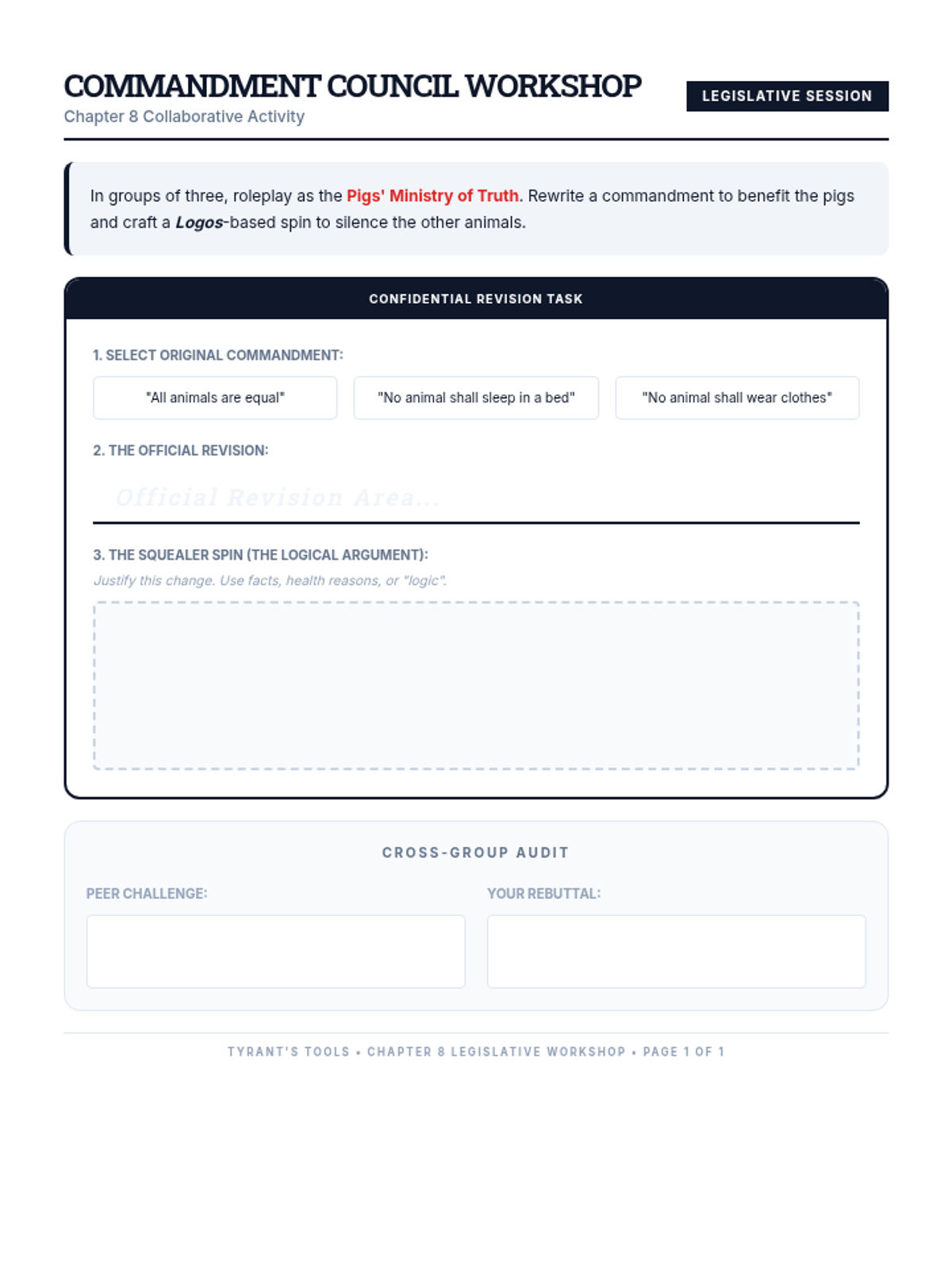
A collaborative group activity for Chapter 8 of Animal Farm where students roleplay as the 'Ministry of Truth' to rewrite Commandments and practice using rhetorical spin.
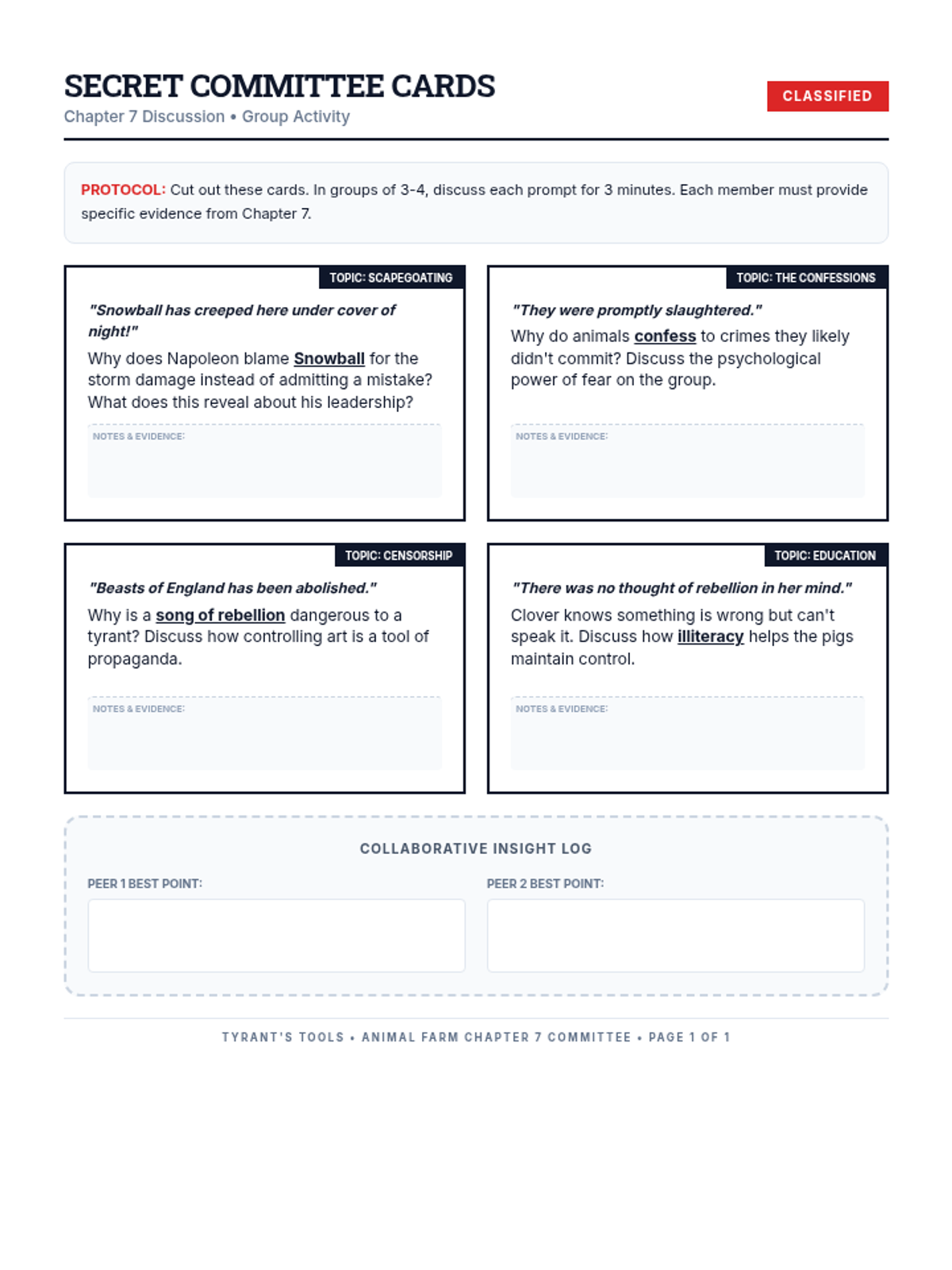
A group discussion card activity for Chapter 7 of Animal Farm, facilitating collaborative analysis of scapegoating, the purge confessions, and the role of education in resisting tyranny.
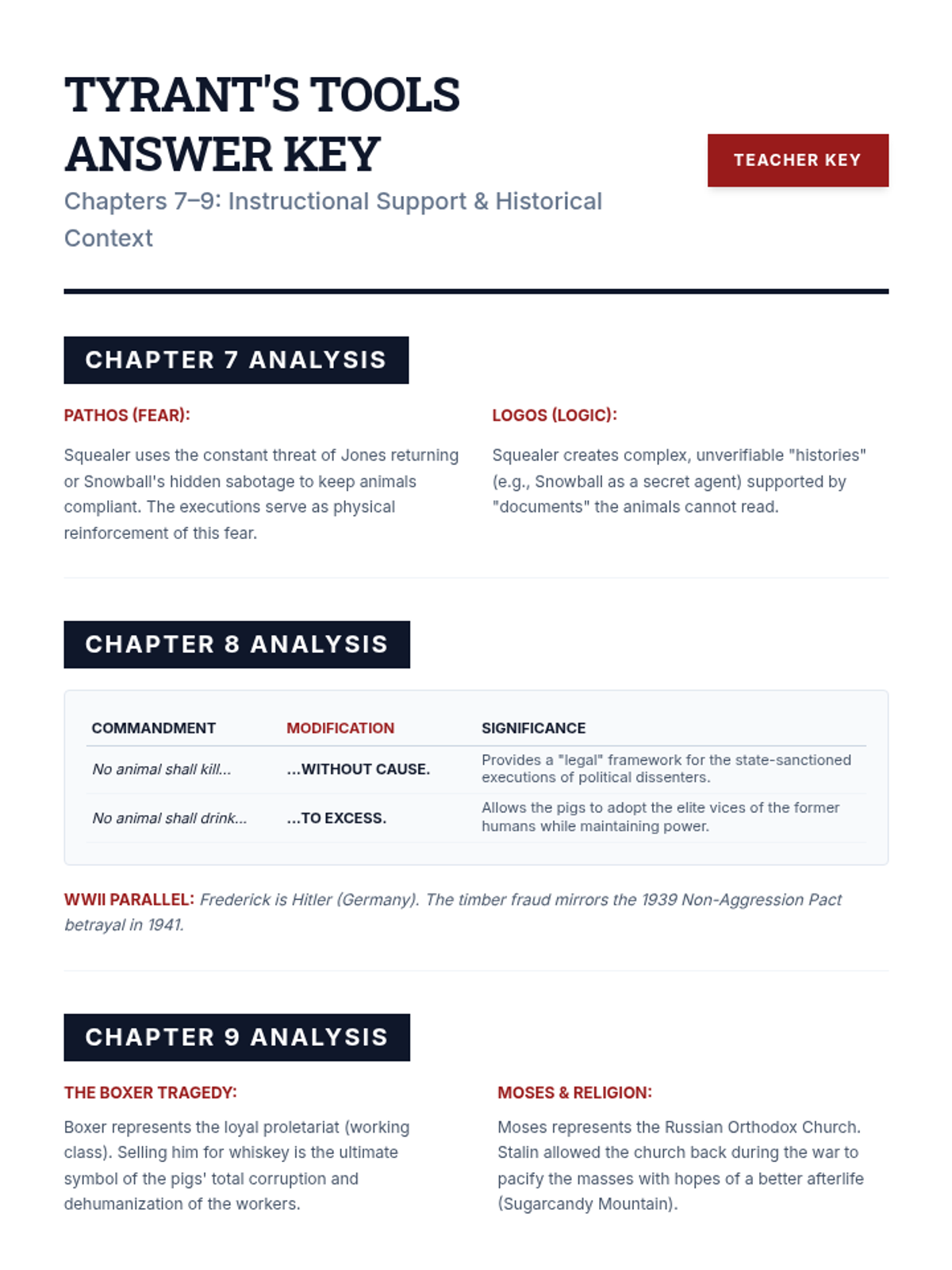
A comprehensive teacher answer key for the 'Tyrant's Tools' lesson sequence, covering Chapters 7, 8, and 9 of Animal Farm. includes suggested evidence, analytical points, and historical connections.
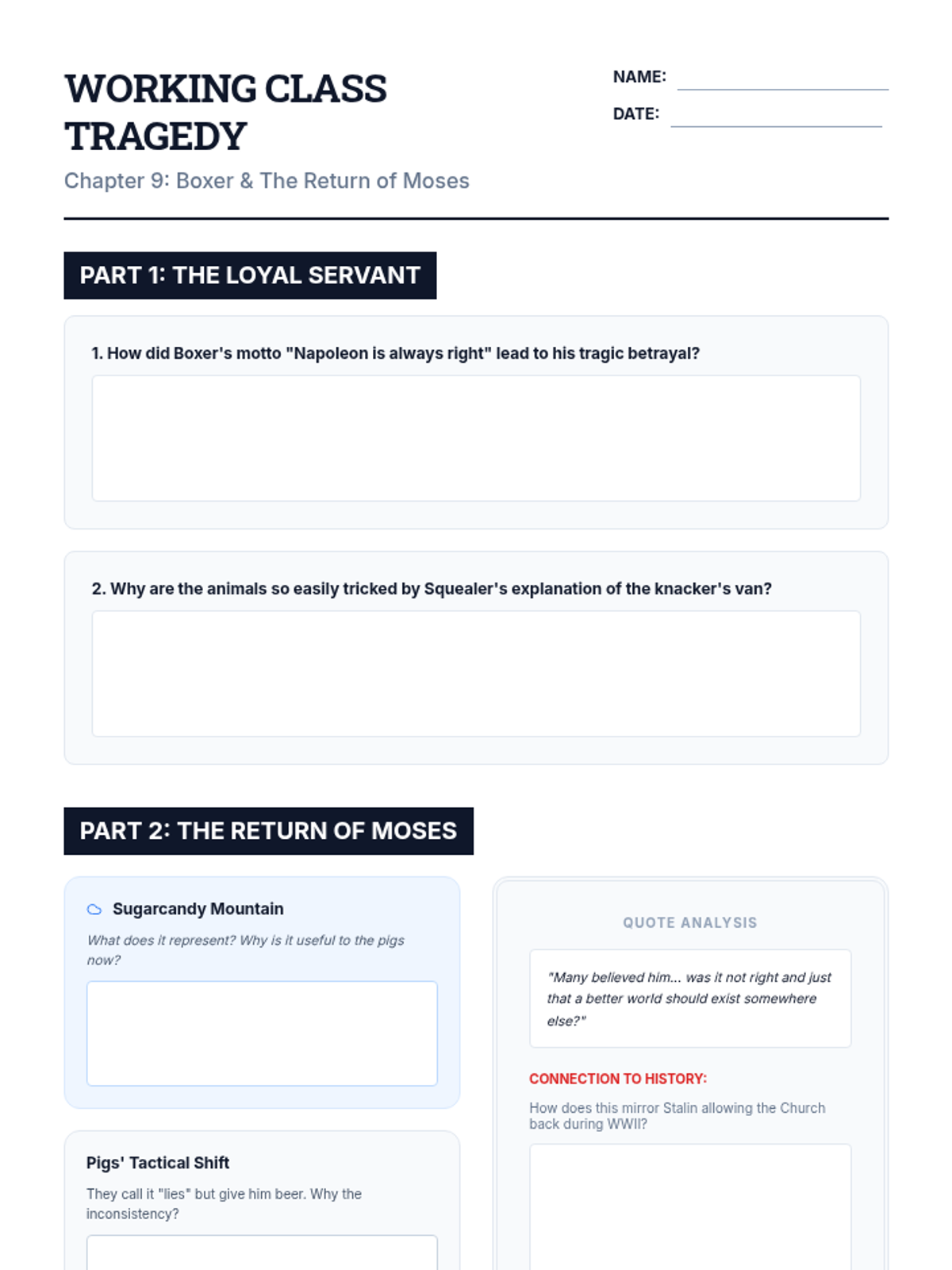
A student worksheet for Chapter 9 of Animal Farm focused on the tragic fate of Boxer, the symbolic return of Moses, and the final corruption of the pigs. includes analytical prompts and quote analysis.
A visual presentation for Chapter 9 of Animal Farm, focusing on the tragedy of Boxer, the symbolic return of Moses, and the total abandonment of Animalism's principles. includes key discussion points and symbolic analysis.
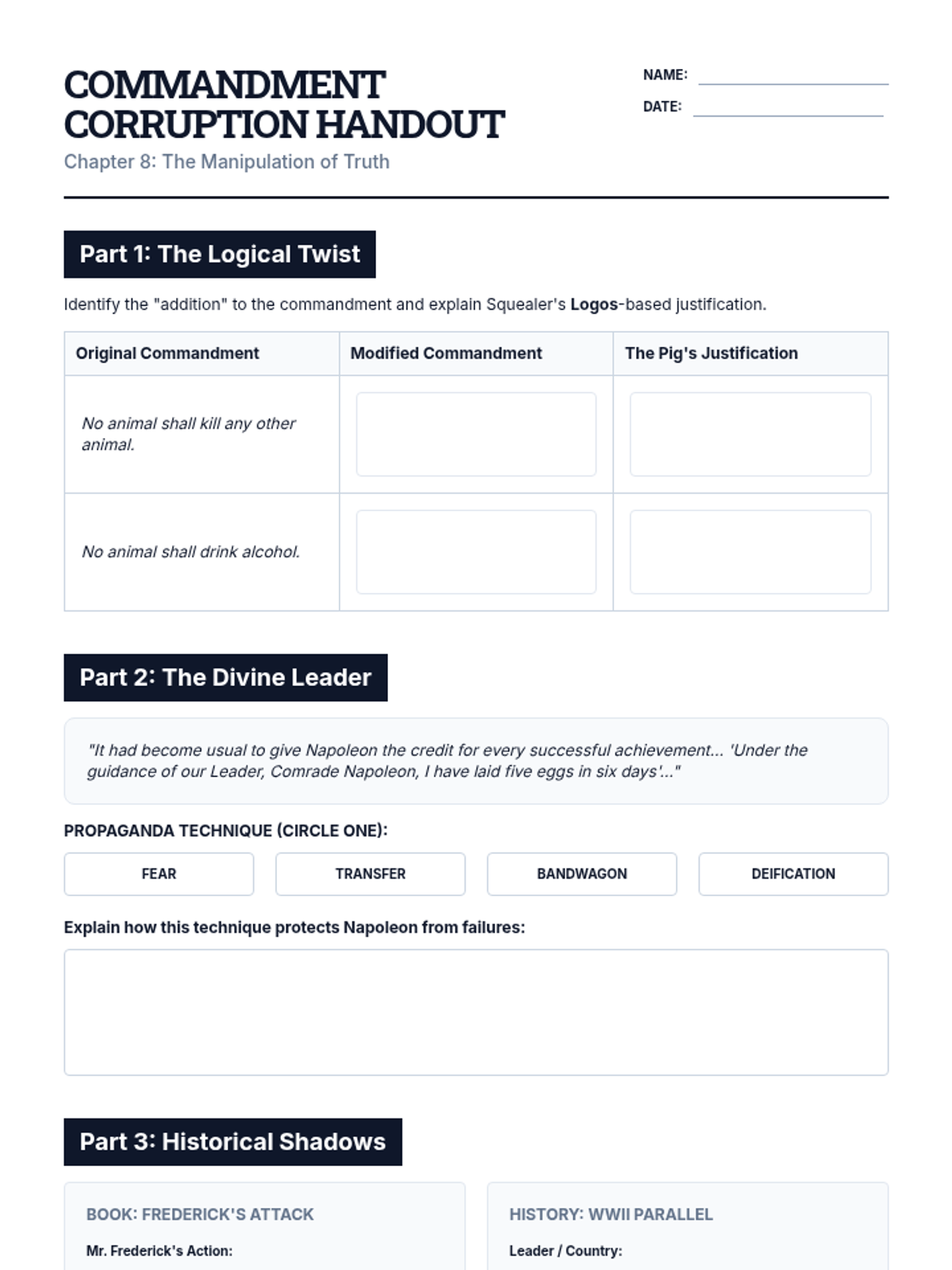
A student handout for Chapter 8 of Animal Farm focusing on the corruption of the Seven Commandments, the deification of Napoleon, and the allegorical parallels to the Battle of the Windmill.
A visual presentation for Chapter 8 of Animal Farm, exploring the corruption of the Commandments, the Battle of the Windmill, and the development of Napoleon's cult of personality. includes historical parallels to WWII.
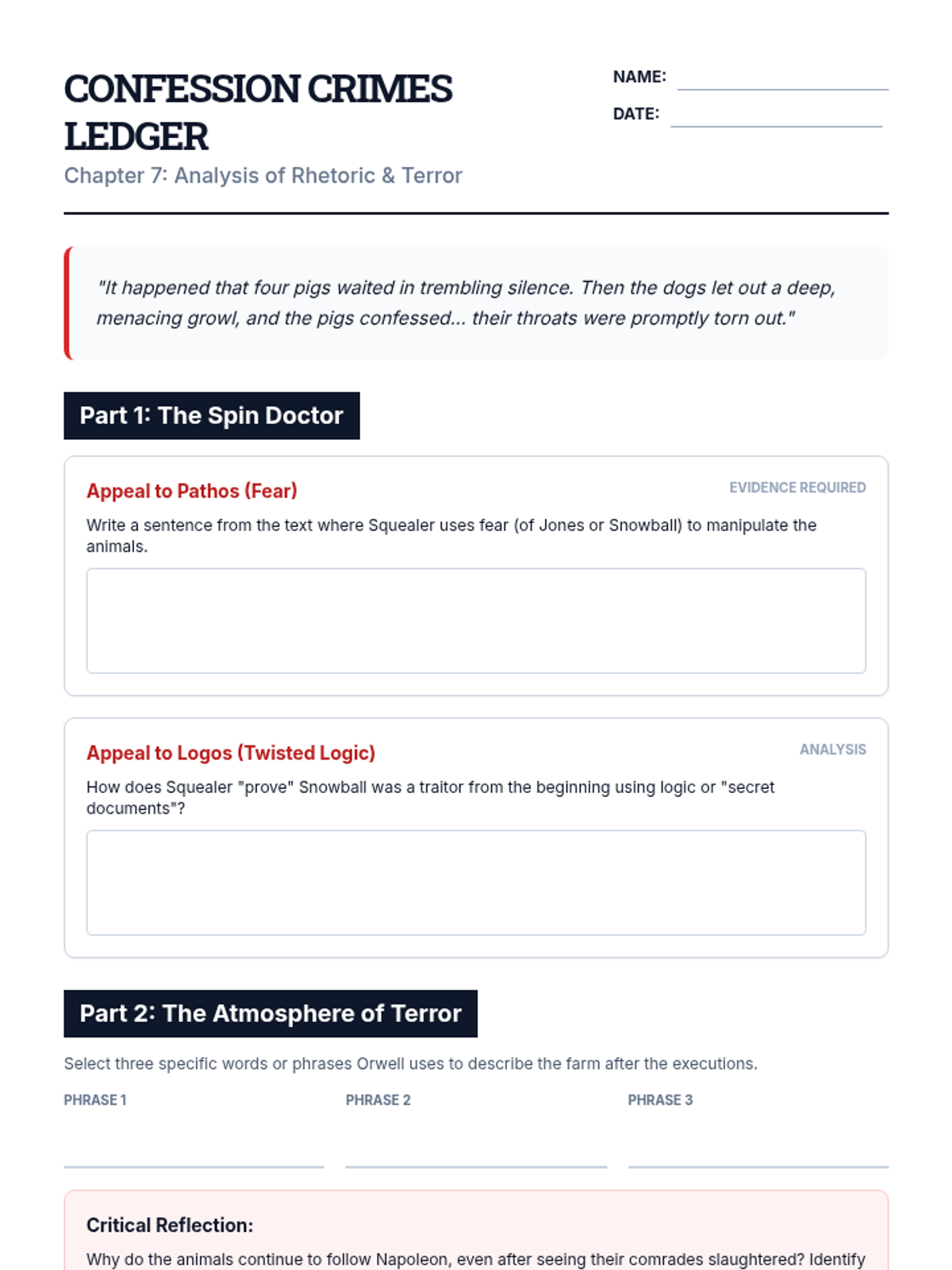
A student worksheet for Chapter 7 of Animal Farm focused on analyzing rhetorical appeals, the atmosphere of terror during the confessions, and allegorical connections to the Russian Revolution.
A visual presentation for Chapter 7 of Animal Farm, focusing on rhetorical appeals, the scapegoating of Snowball, and the allegorical connection to Stalin's Great Purge. includes key discussion points and visual aids.
A slide deck featuring video case studies of iconic sports interviews (Sherman, Armstrong, LeBron) to illustrate media spin, archetypes, and investigative questioning.
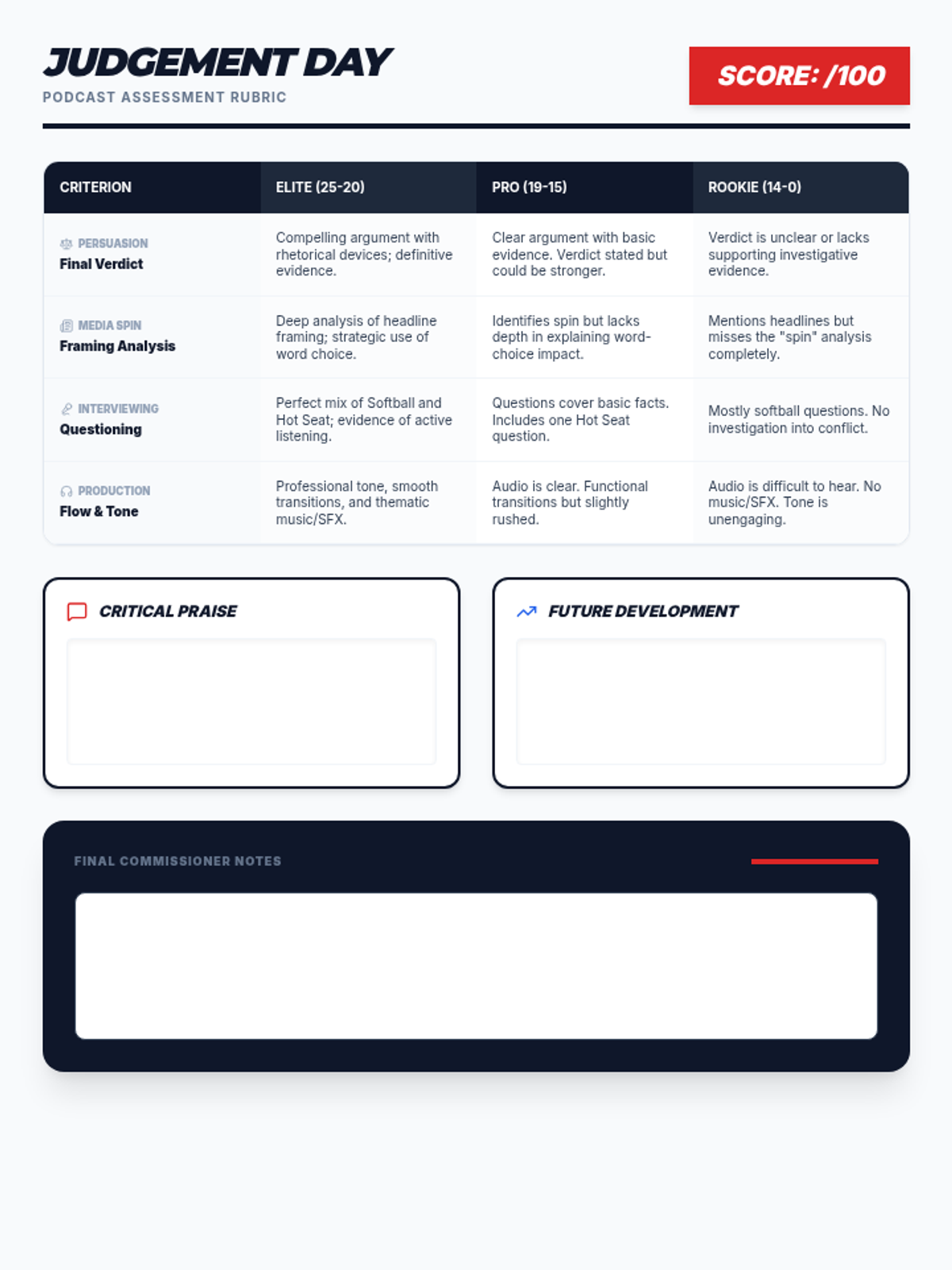
A revised, more rigorous rubric for the final podcast project. It now prioritizes investigative research, the integration of primary sources, and the nuances of the 'Moral Verdict' regarding on-field vs. off-field scandals.
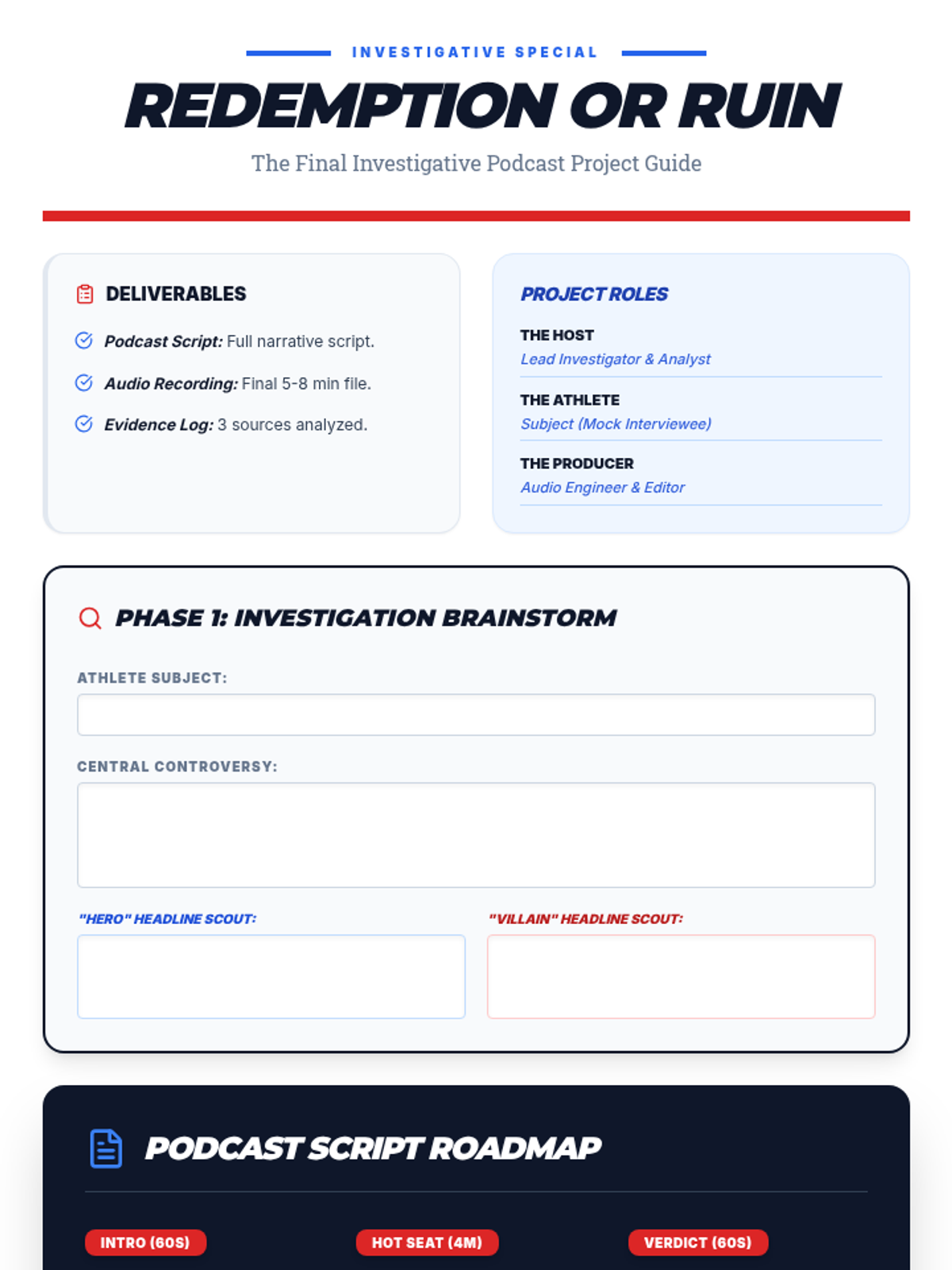
A robust, multi-phase project guide for the 'Redemption File' podcast. It includes a mandatory Research Dossier requirement and a Phase 0 launching activity for 'The U' case study. Provides expanded work areas for research transcription.
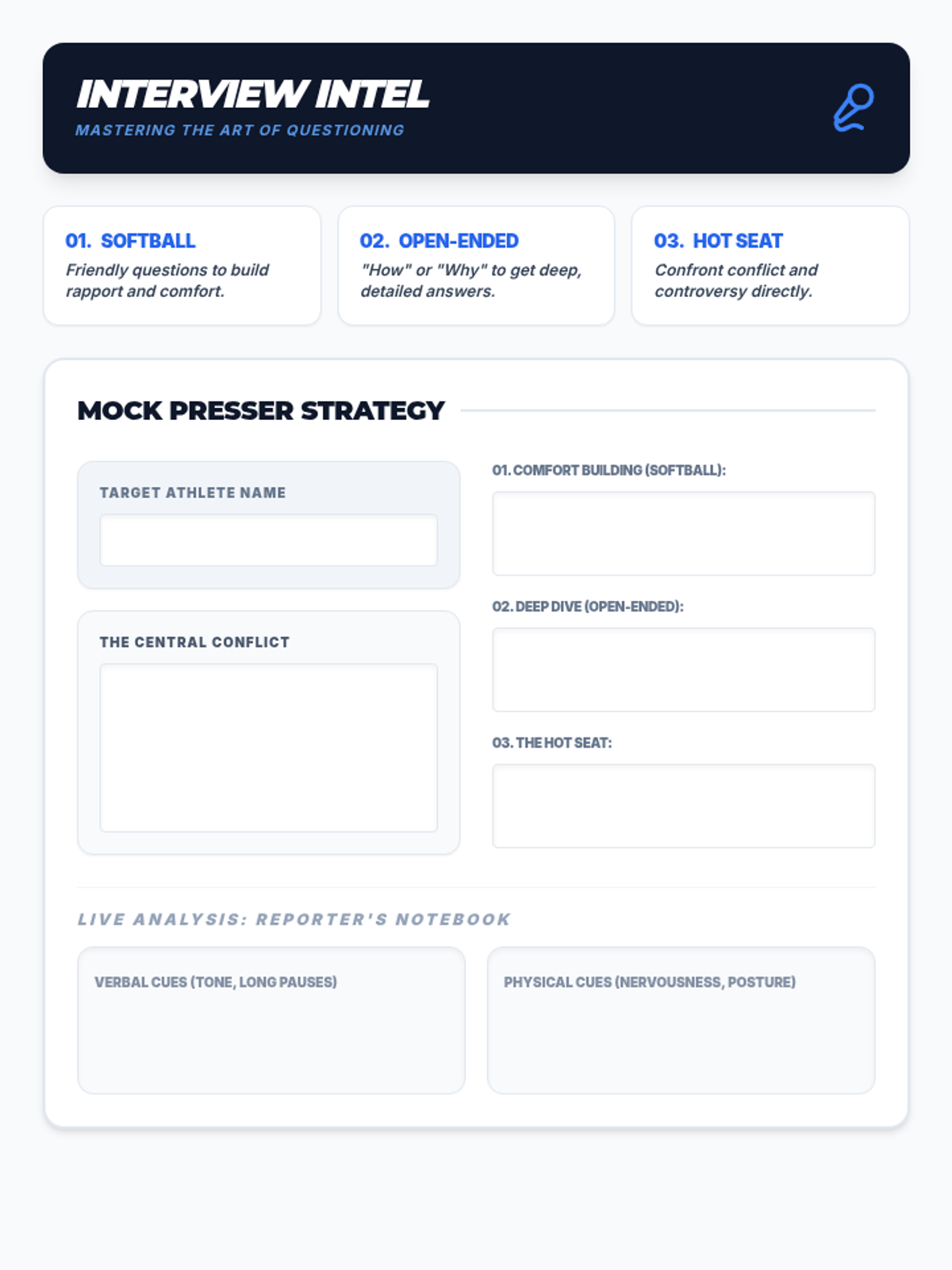
A guide and note-catcher for Week 3, focusing on interview techniques. It includes the 'Questioning Pyramid' and a space for students to plan and reflect on a mock press conference.
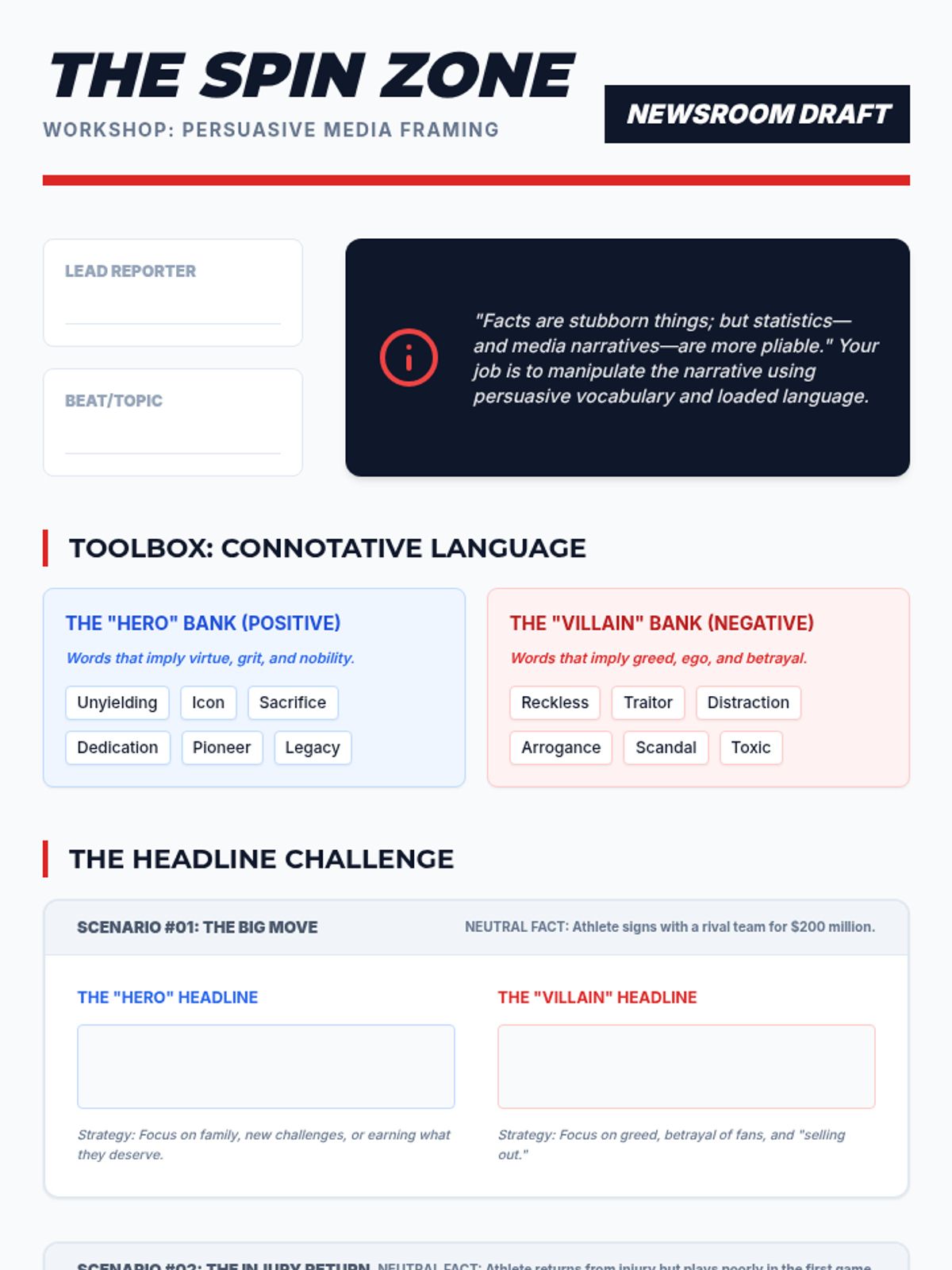
A persuasive writing worksheet that challenges students to take neutral sports facts and frame them as either heroic or villainous narratives using connotative language.
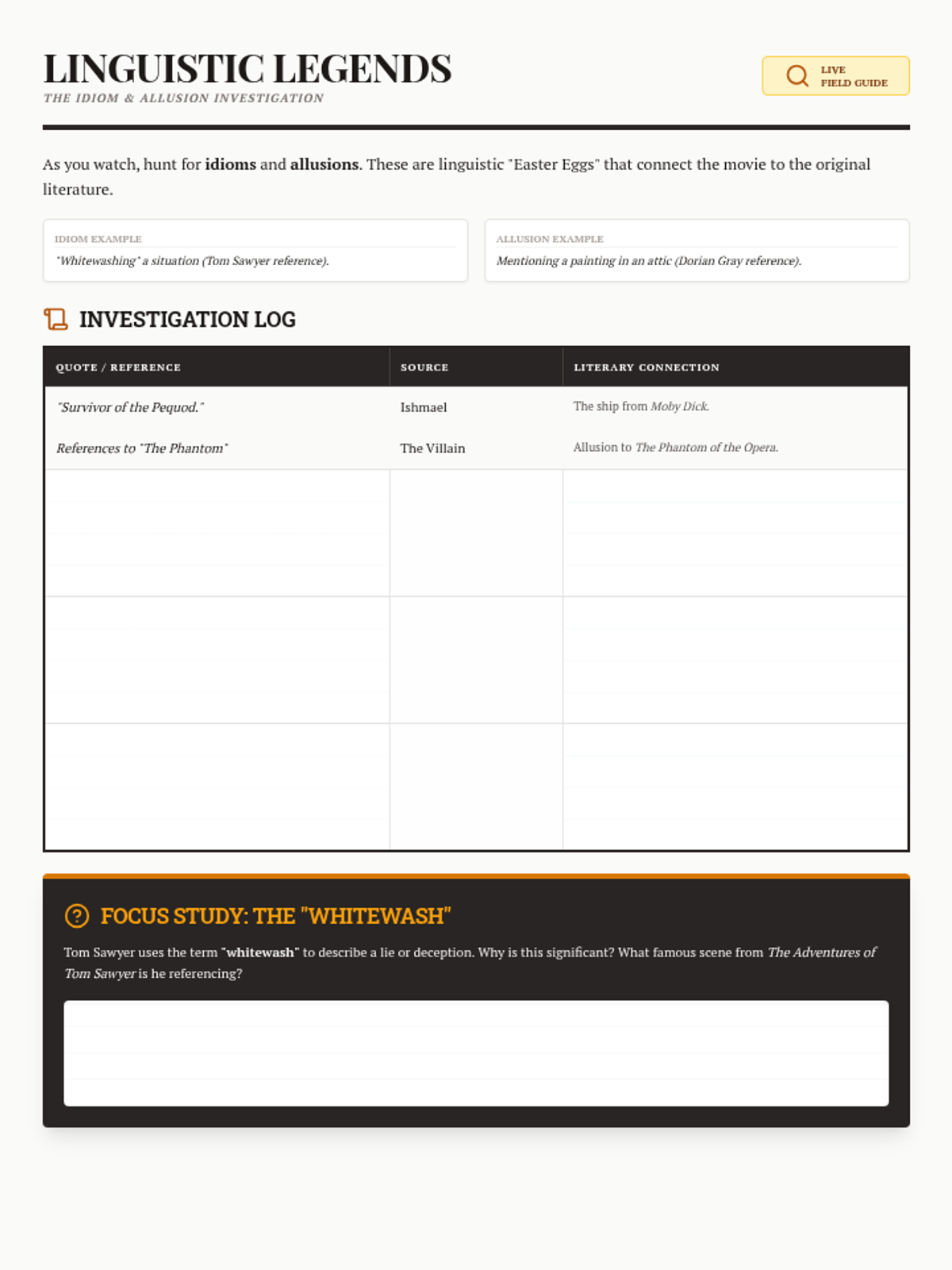
A watching guide focused on identifying literary idioms and allusions used by the characters throughout the film.
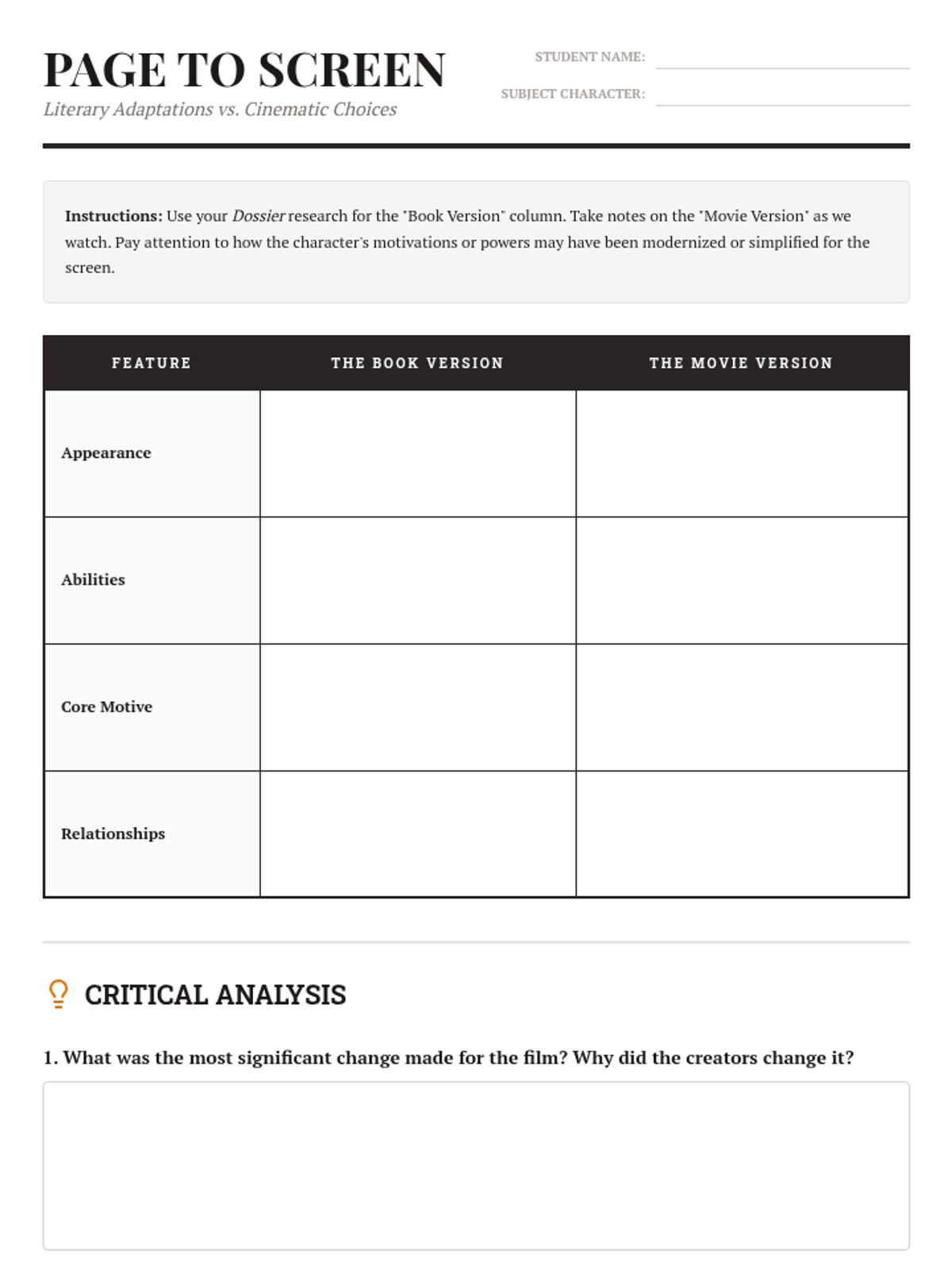
A comparison chart for students to record differences between the original literary version of a character and its cinematic counterpart in the film.
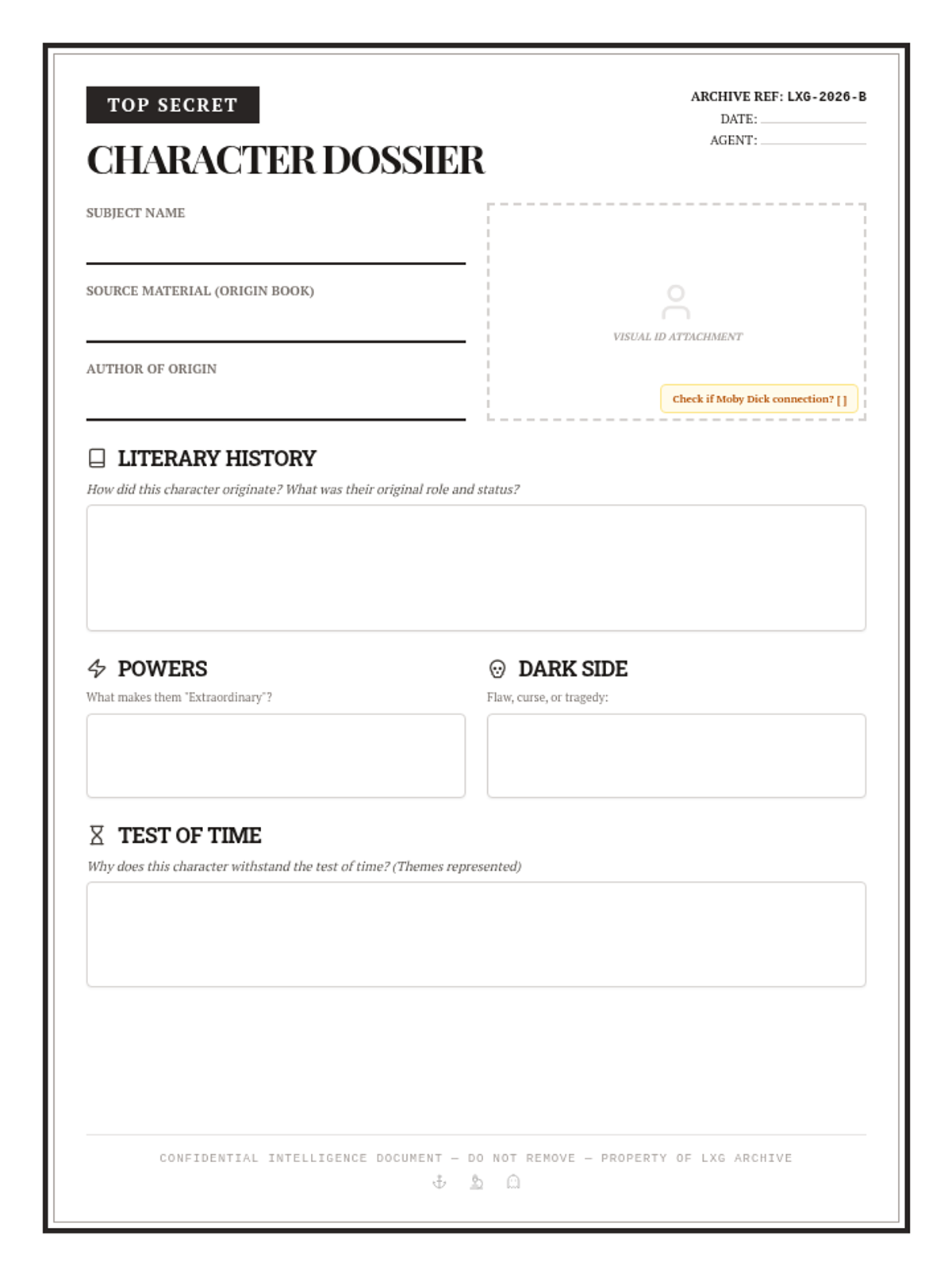
A structured 'Secret Dossier' research worksheet for students to document the literary origins, traits, and endurance of their assigned character.
Introductory slides for the 'Literary Legends' project, explaining the concept of the cinematic crossover and the students' research mission.
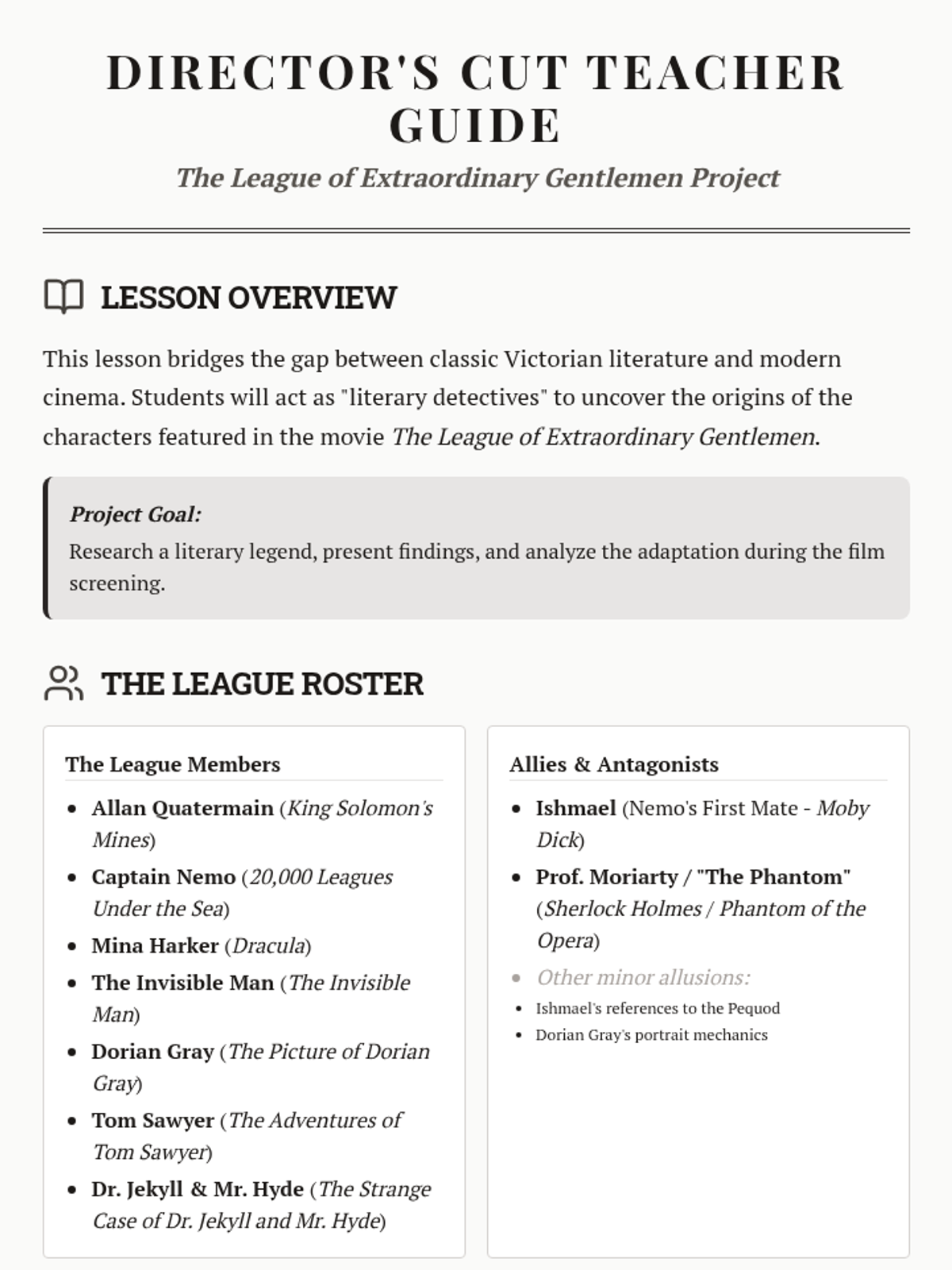
A teacher's facilitation guide for the 'Literary Legends Crossover' project, including a character roster, pacing guide, and discussion prompts.
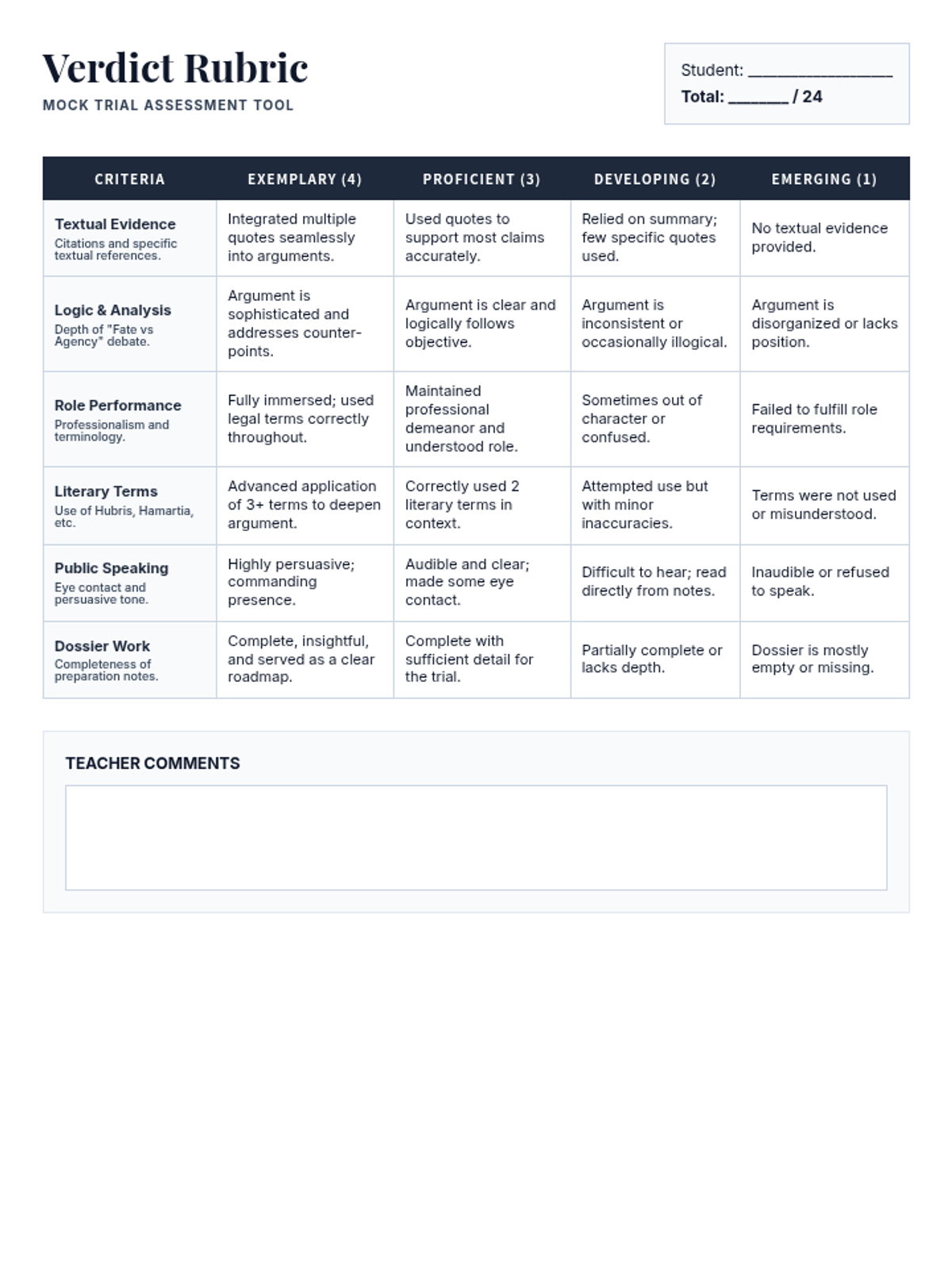
An assessment rubric for evaluating student performance during the mock trial, focusing on textual evidence, logic, role-playing, and use of literary terminology.
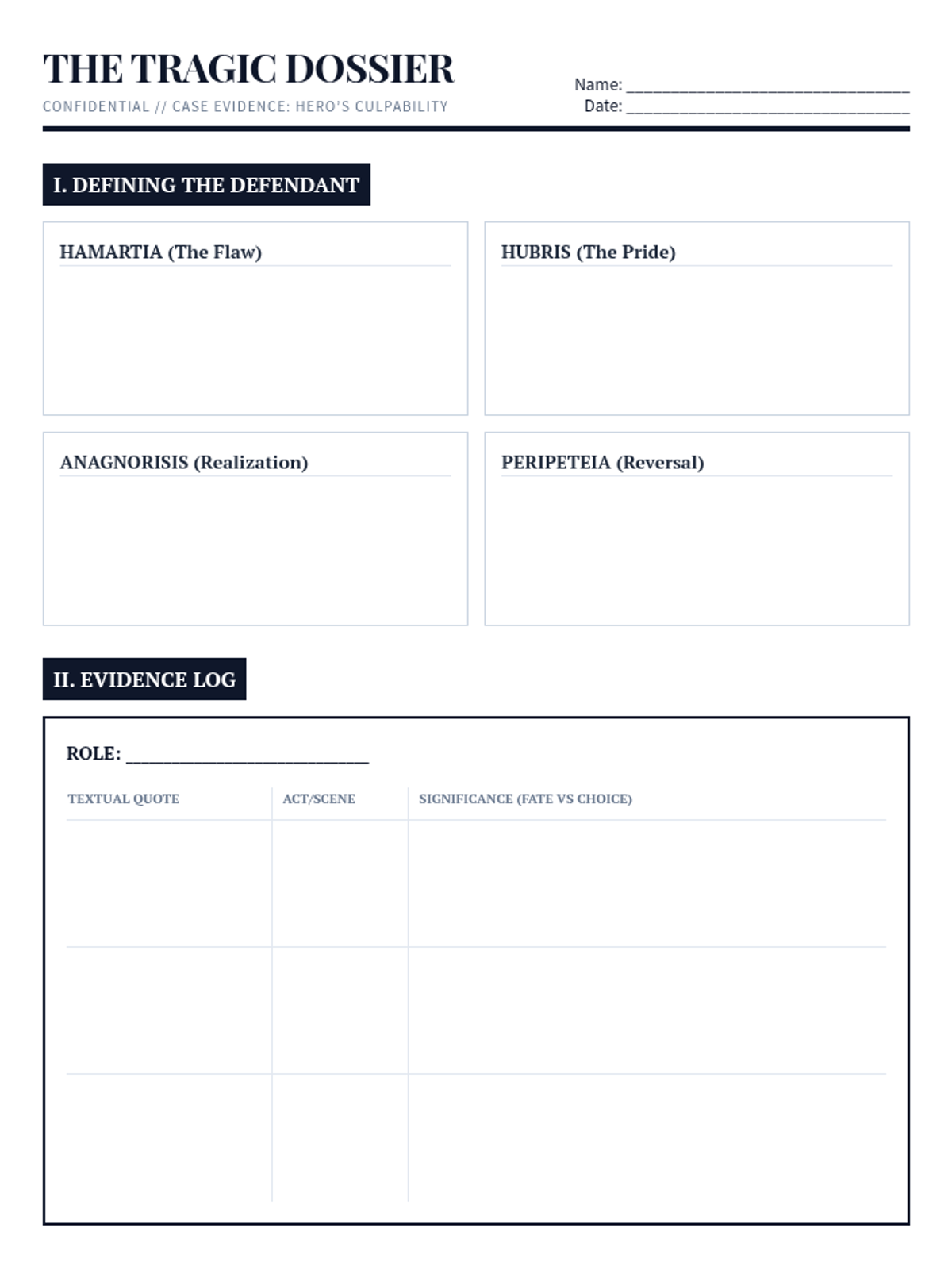
A student-facing handout designed as a legal 'dossier' to help students prepare for the mock trial by analyzing Aristotelian traits and gathering textual evidence.
Instructional slide deck for the 'Hero on Trial' lesson, covering Aristotelian tragic hero traits, legal vocabulary, and the classroom mock trial procedures.
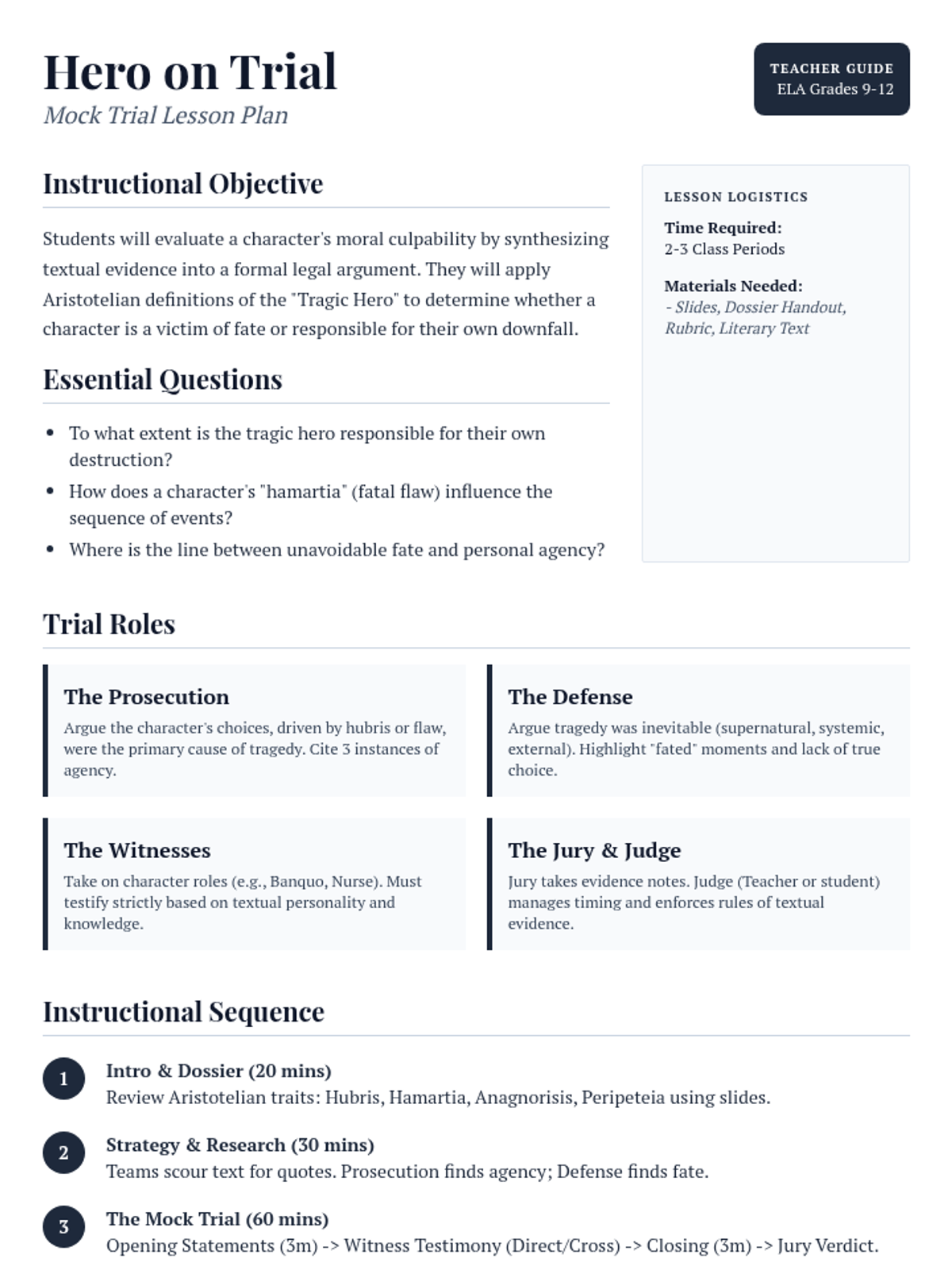
A comprehensive teacher guide for conducting a mock trial in high school English, including role descriptions, lesson pacing, and instructional strategies for analyzing tragic heroes.
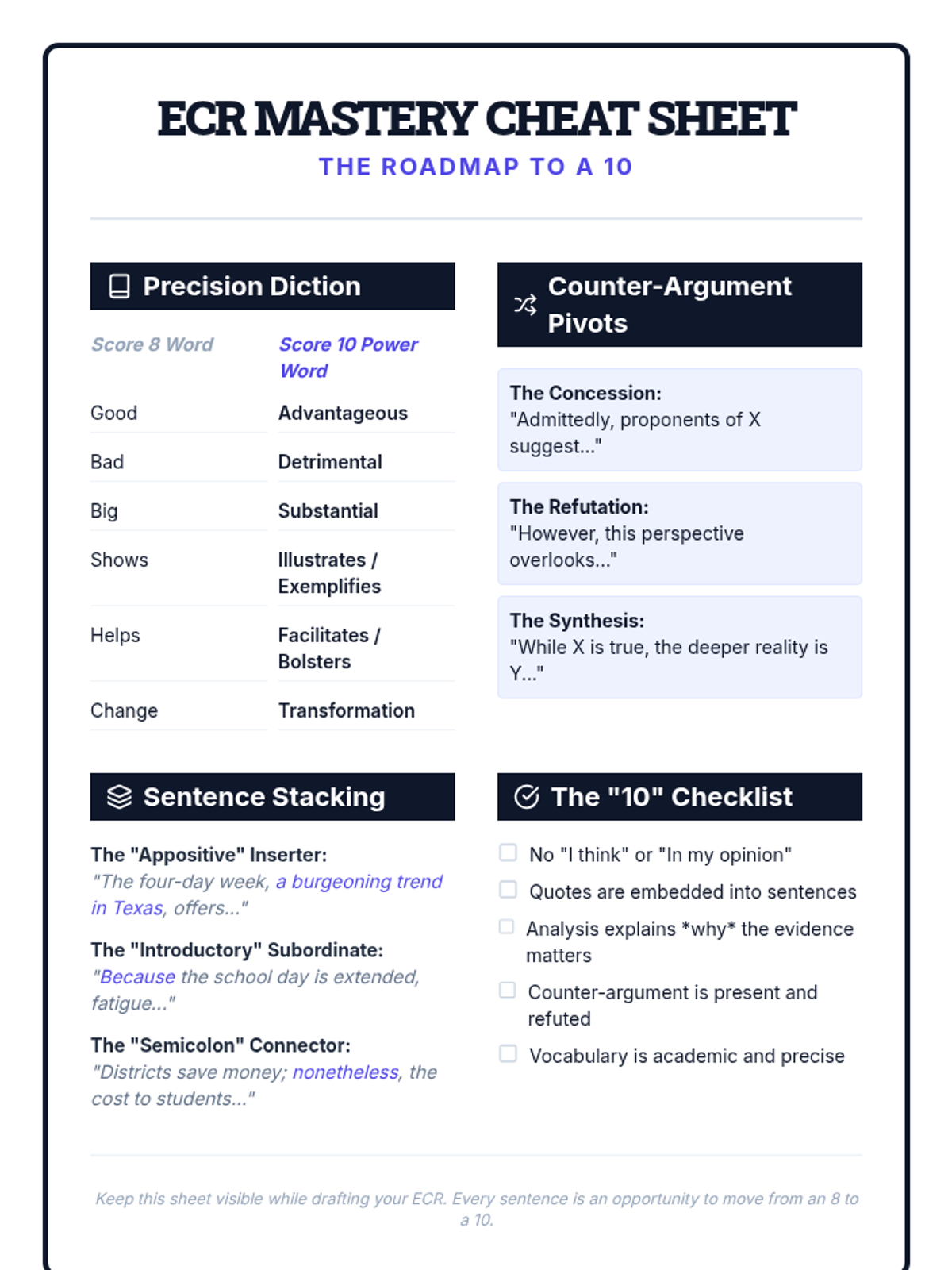
A one-page student reference sheet for ECR drafting, featuring power words, transition stems, syntax structures, and a final quality checklist.
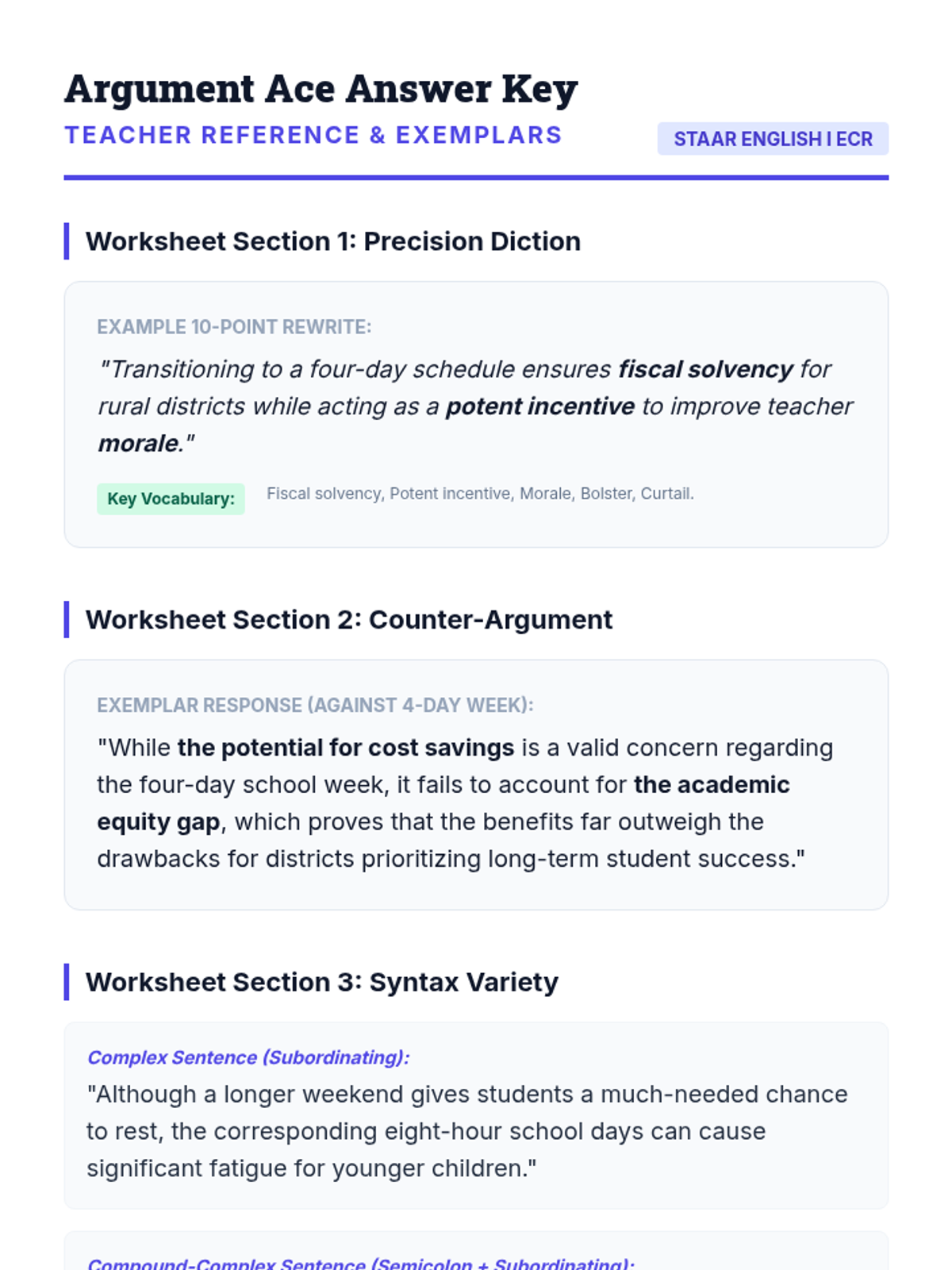
A detailed answer key and model response guide for teachers, providing exemplars for diction, syntax, counter-arguments, and a full 10-point paragraph based on the 4-day school week passage.
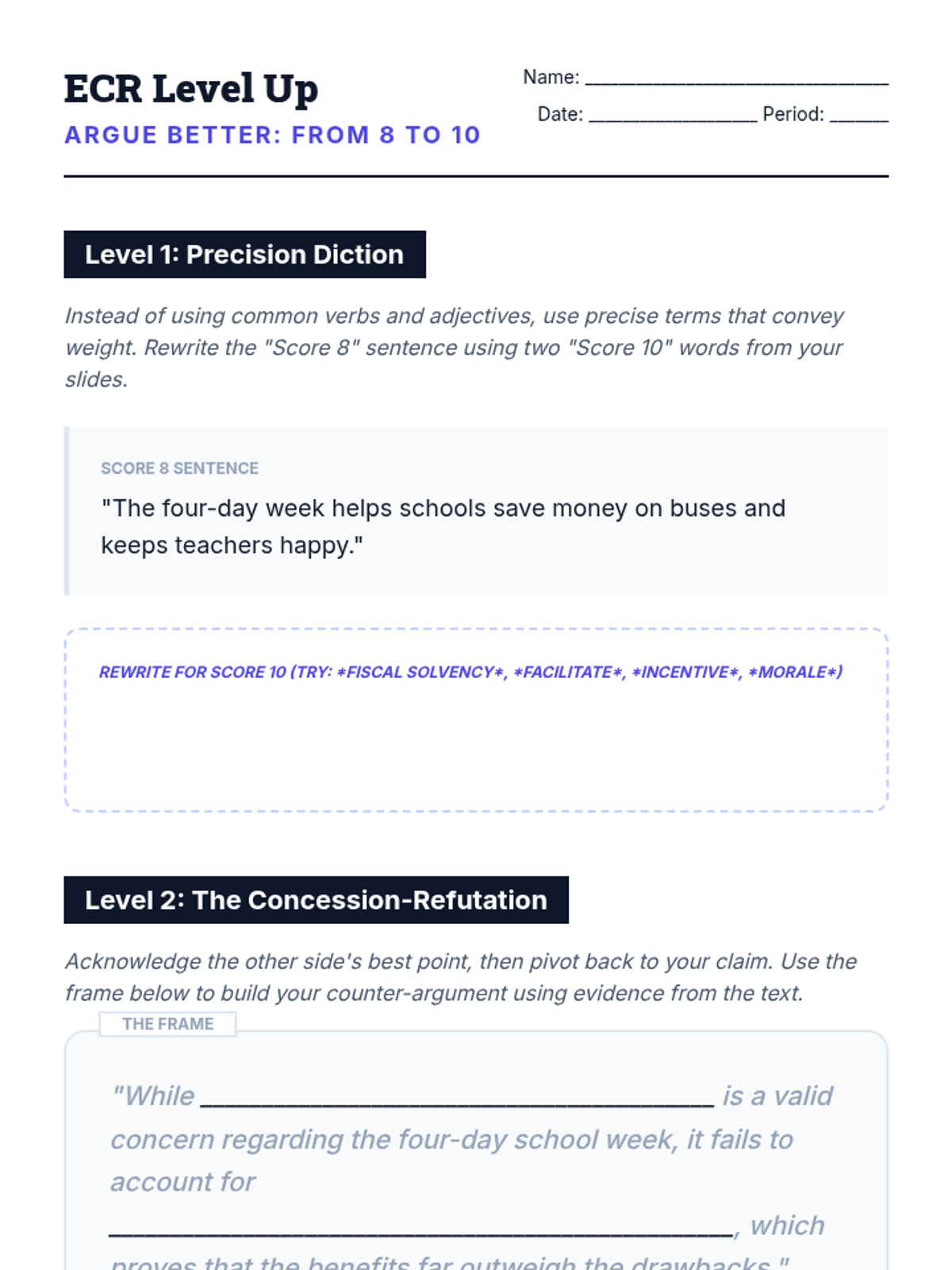
A student worksheet for the Argument Ace lesson, including exercises for precision diction, counter-argument framing, and syntax variety, ending with a drafting space for a sophisticated ECR paragraph.
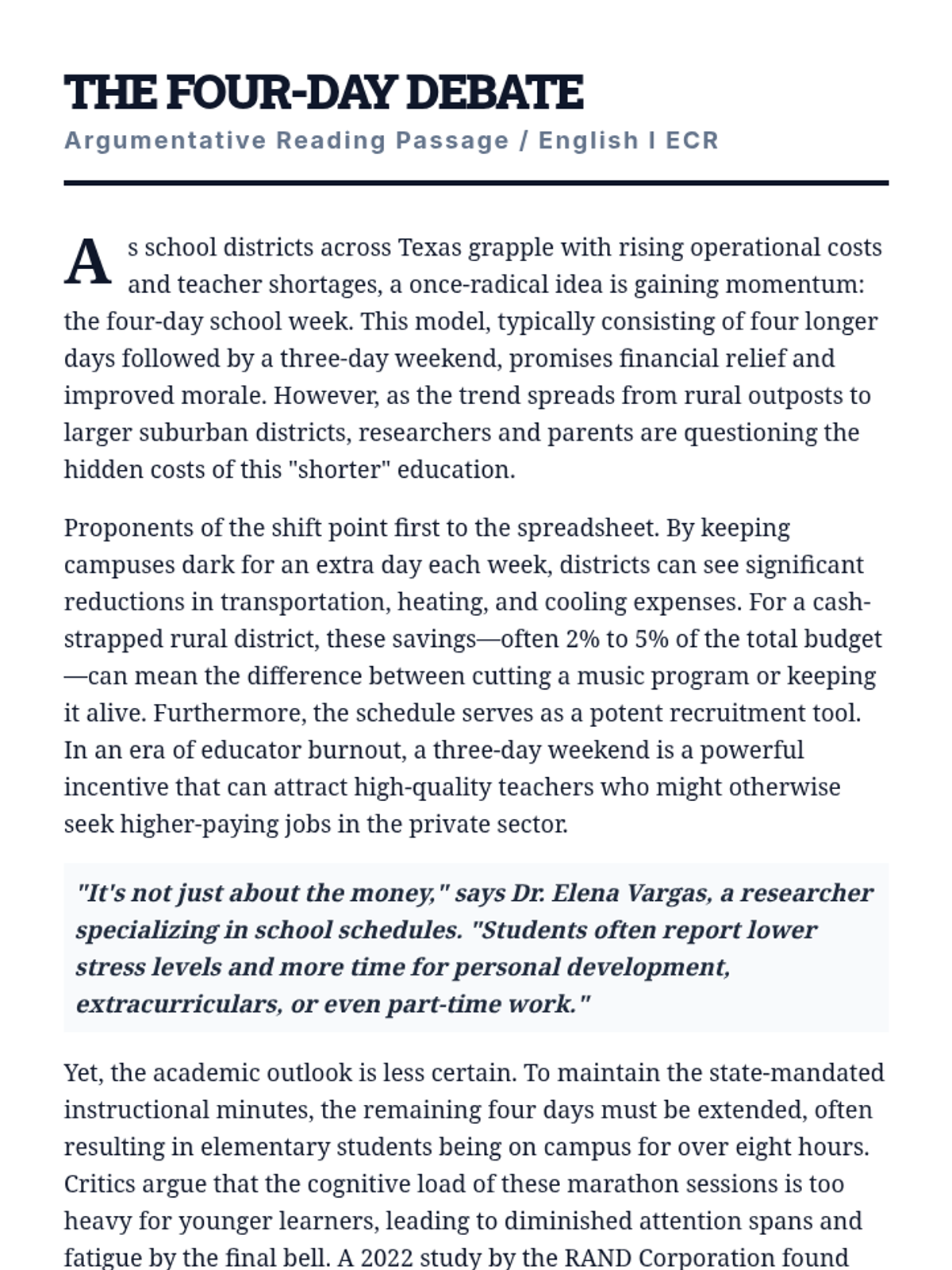
A high-quality, balanced reading passage about the 4-day school week debate, featuring specific evidence for both sides to be used in ECR evidence integration practice.
A printer-friendly presentation designed to guide students through the ECR mastery process, focusing on the 8-to-10 point gap, word choice, counter-arguments, and syntax variety.
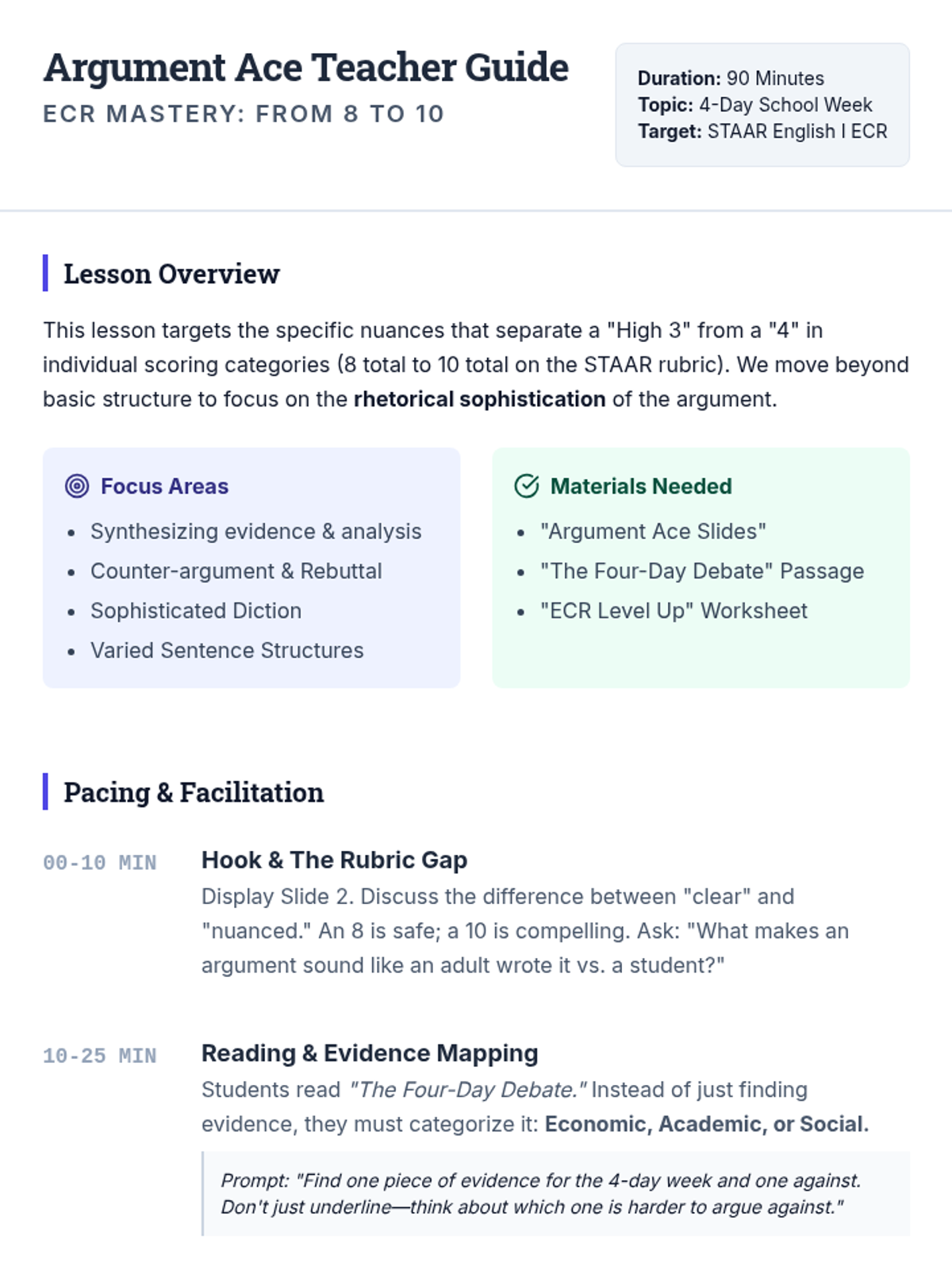
A comprehensive teacher guide for a 90-minute ECR mastery lesson, featuring a detailed pacing guide, instructional strategies for 8-to-10 score improvement, and differentiation tips.
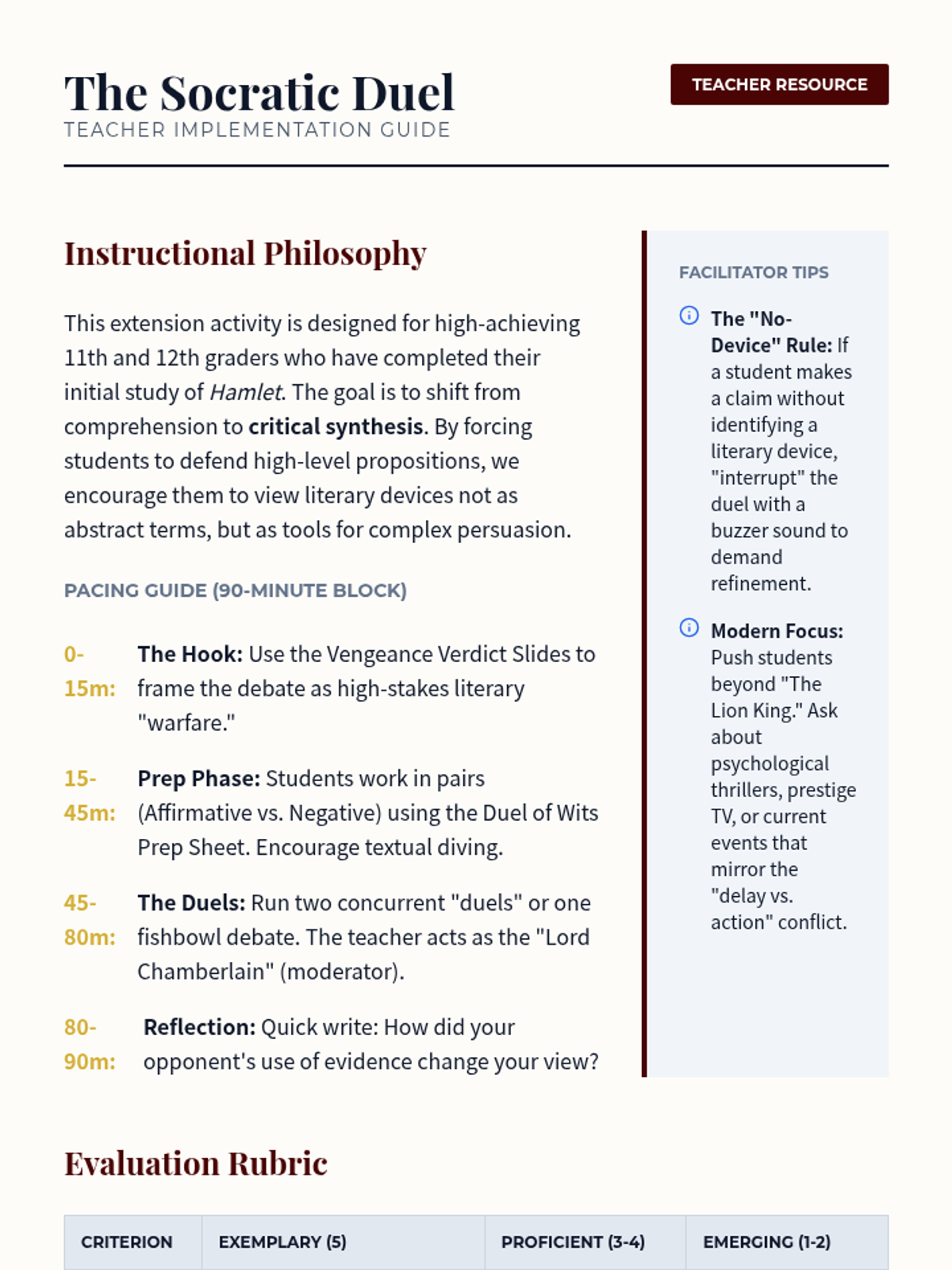
A detailed teacher guide for facilitating the Bardic Duel, including a 90-minute lesson plan, a comprehensive debate rubric, and an 'argument cheat sheet' with suggested points for both sides.
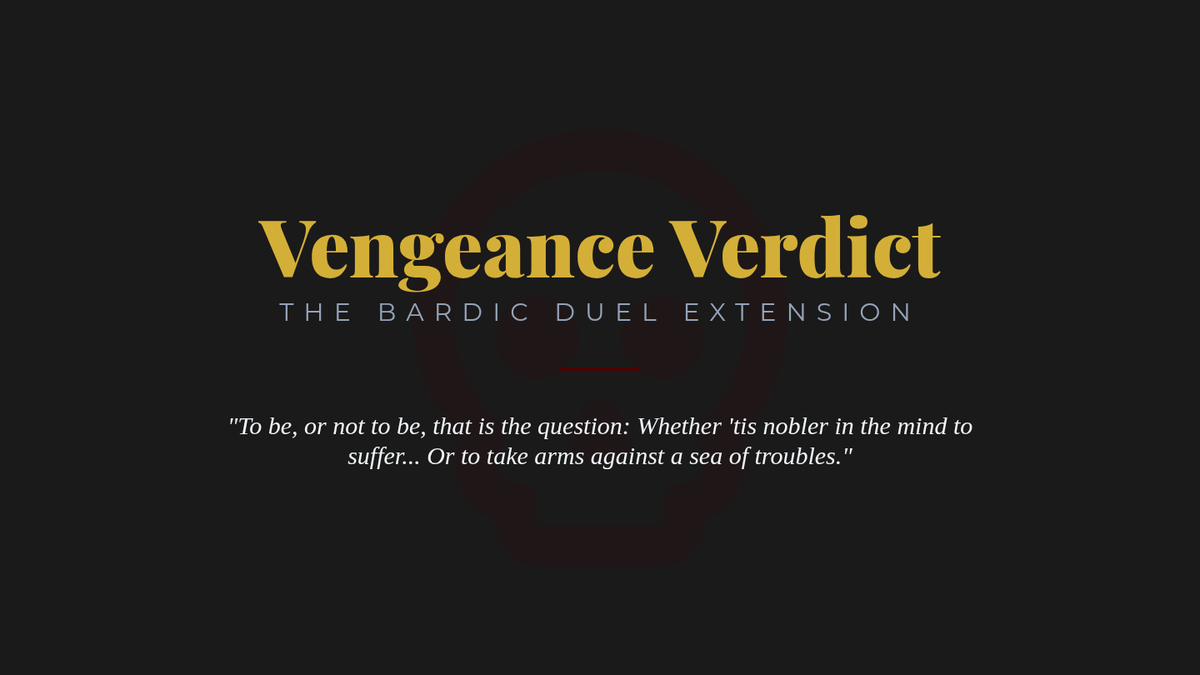
A visually striking slide presentation to introduce the Bardic Duel debate, focusing on revenge themes, literary devices like soliloquy and metadrama, and modern cultural parallels.
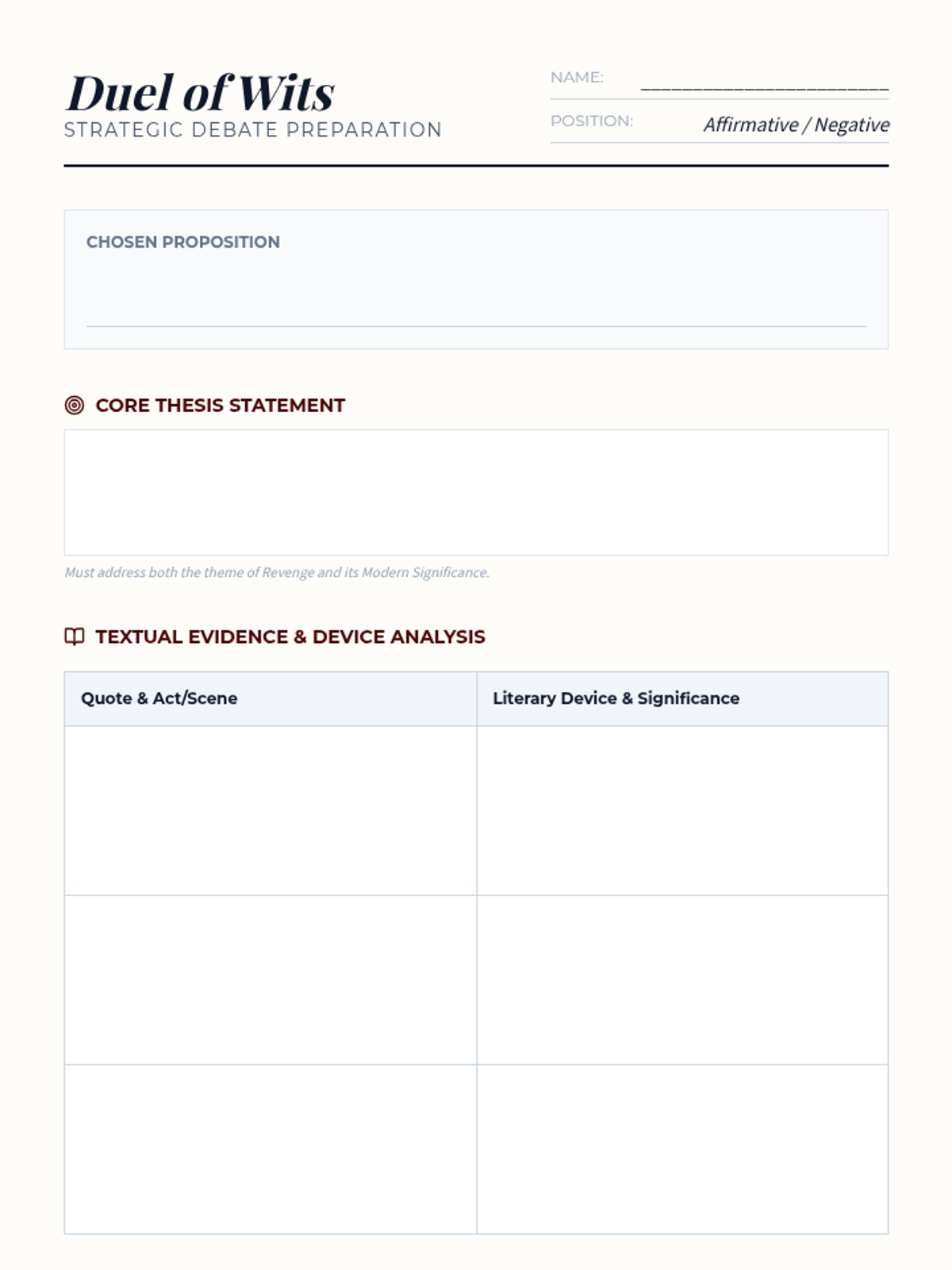
A comprehensive debate preparation worksheet for students to map out their thesis, evidence, literary device analysis, and rebuttals, with a focus on connecting Hamlet to modern contexts.
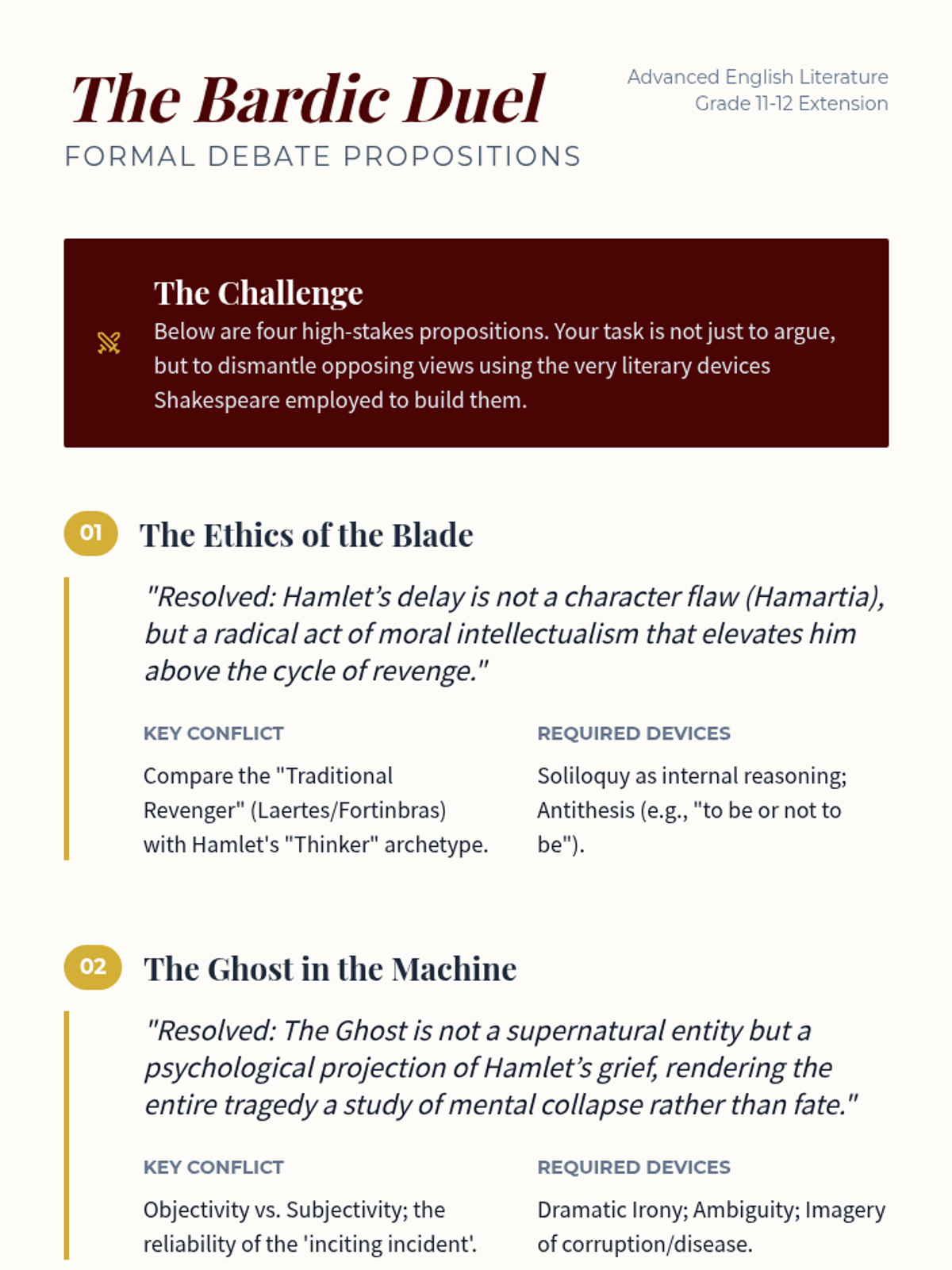
A formal debate proposition document for high school seniors, outlining four sophisticated topics related to Hamlet's themes of revenge, psychological depth, and modern influence.
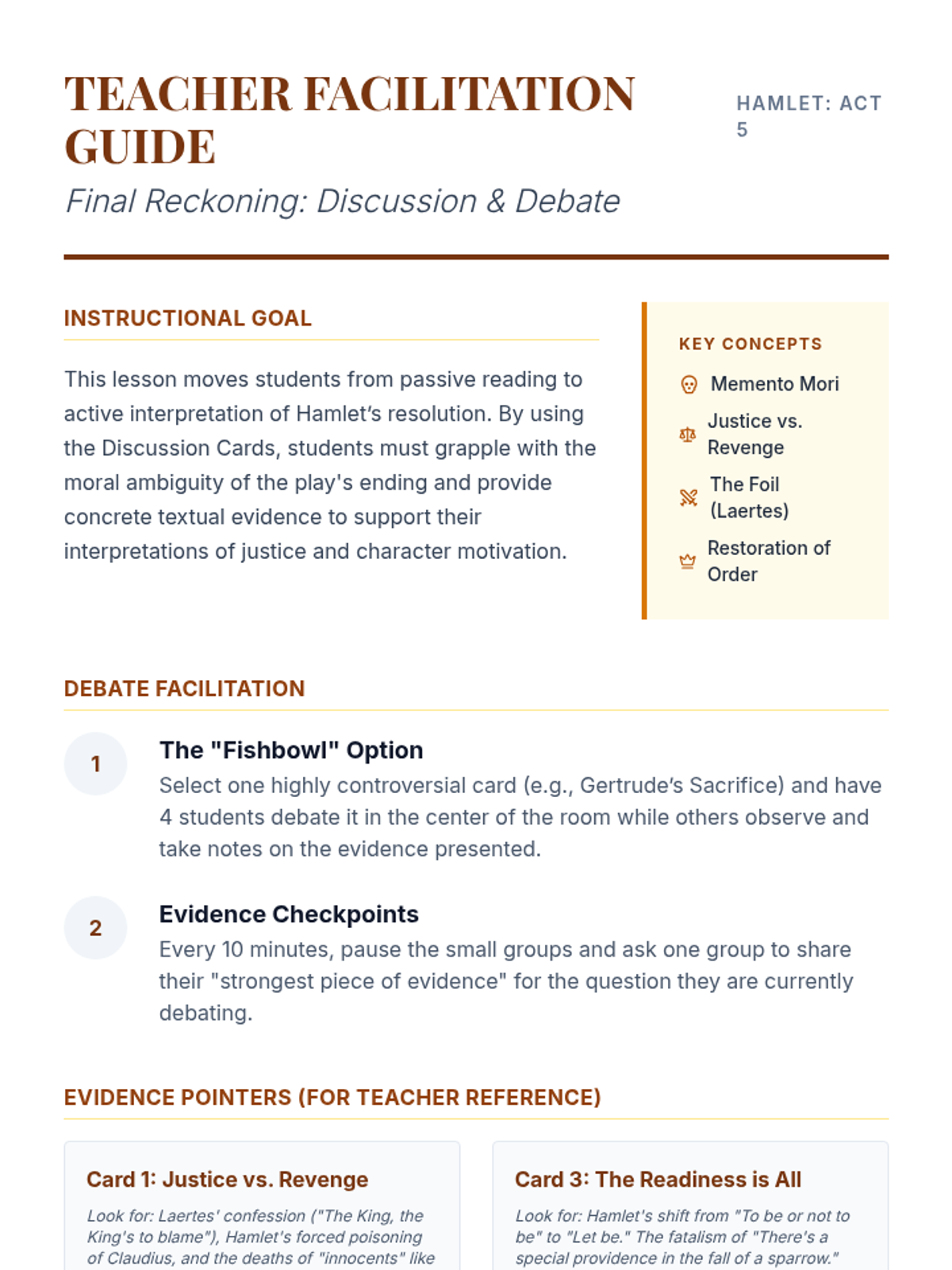
A comprehensive teacher guide for facilitating discussions on Hamlet Act 5. It includes instructional goals, specific facilitation strategies (like the fishbowl method), evidence pointers for each discussion card, and probing questions to deepen student analysis.
A dramatic, high-contrast presentation designed to guide students through the final act of Hamlet. It includes instructional slides on the graveyard scene, the duel, and clear protocols for conducting the evidence-based small group debates.
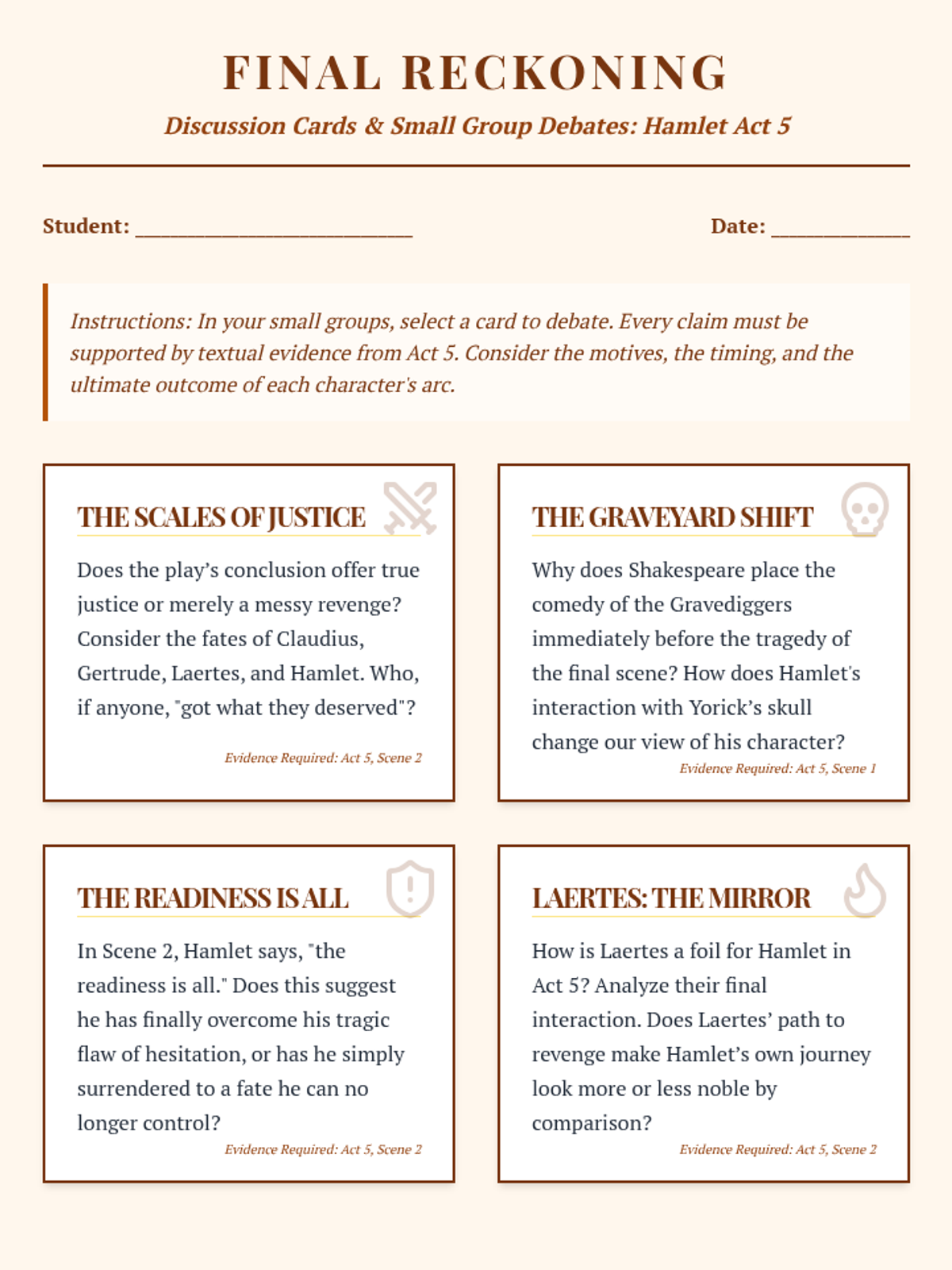
A set of eight printable discussion cards for small group debates on Act 5 of Hamlet. Each card features an open-ended question focused on themes of justice, revenge, and character development, requiring students to provide textual evidence for their arguments.
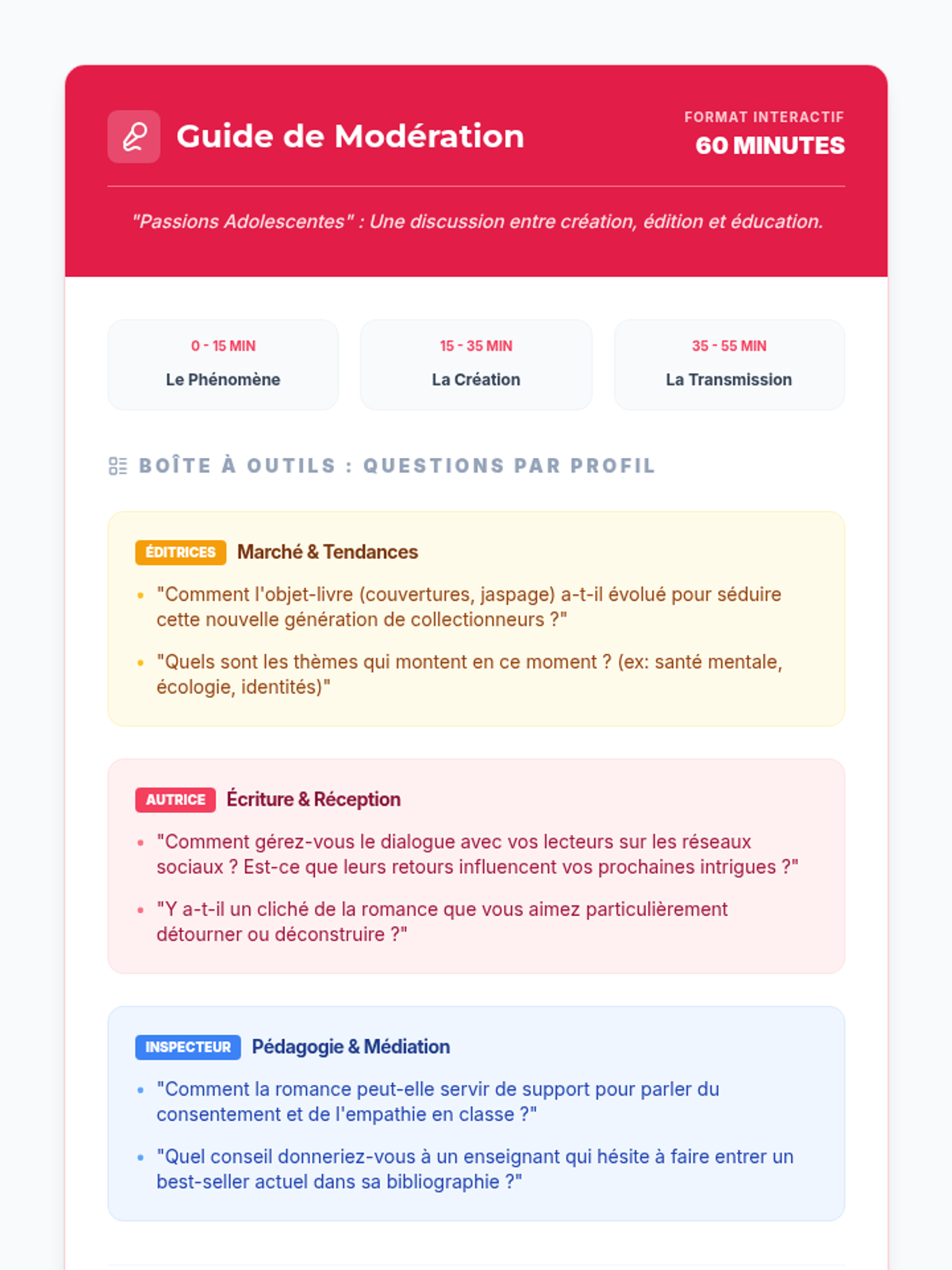
Un guide de modération enrichi proposant une boîte à outils de questions spécifiques pour chaque intervenant, idéal pour une table ronde d'une heure.
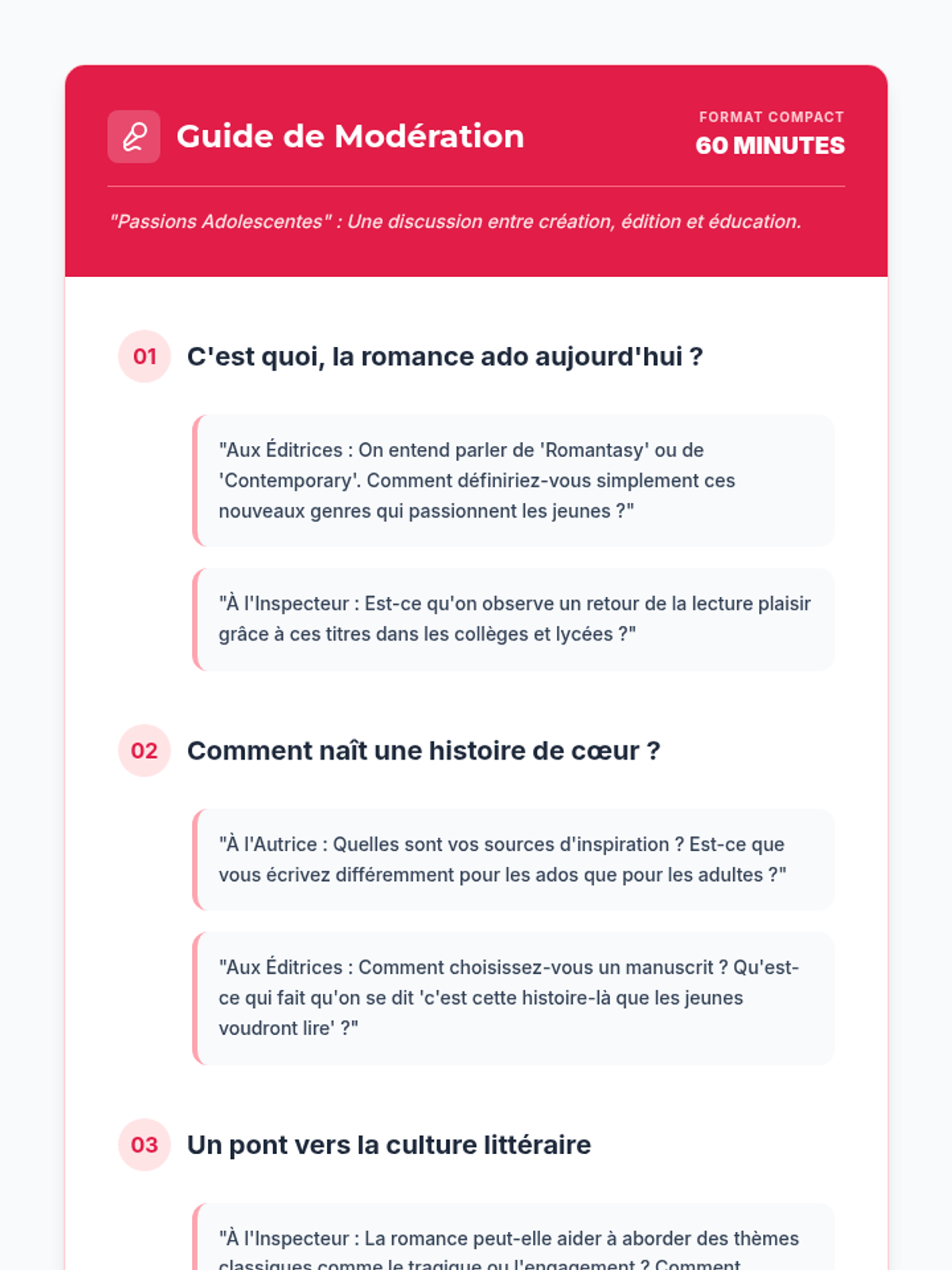
Un guide de modération optimisé pour une table ronde d'une heure, proposant des questions accessibles et équilibrées pour un large public.
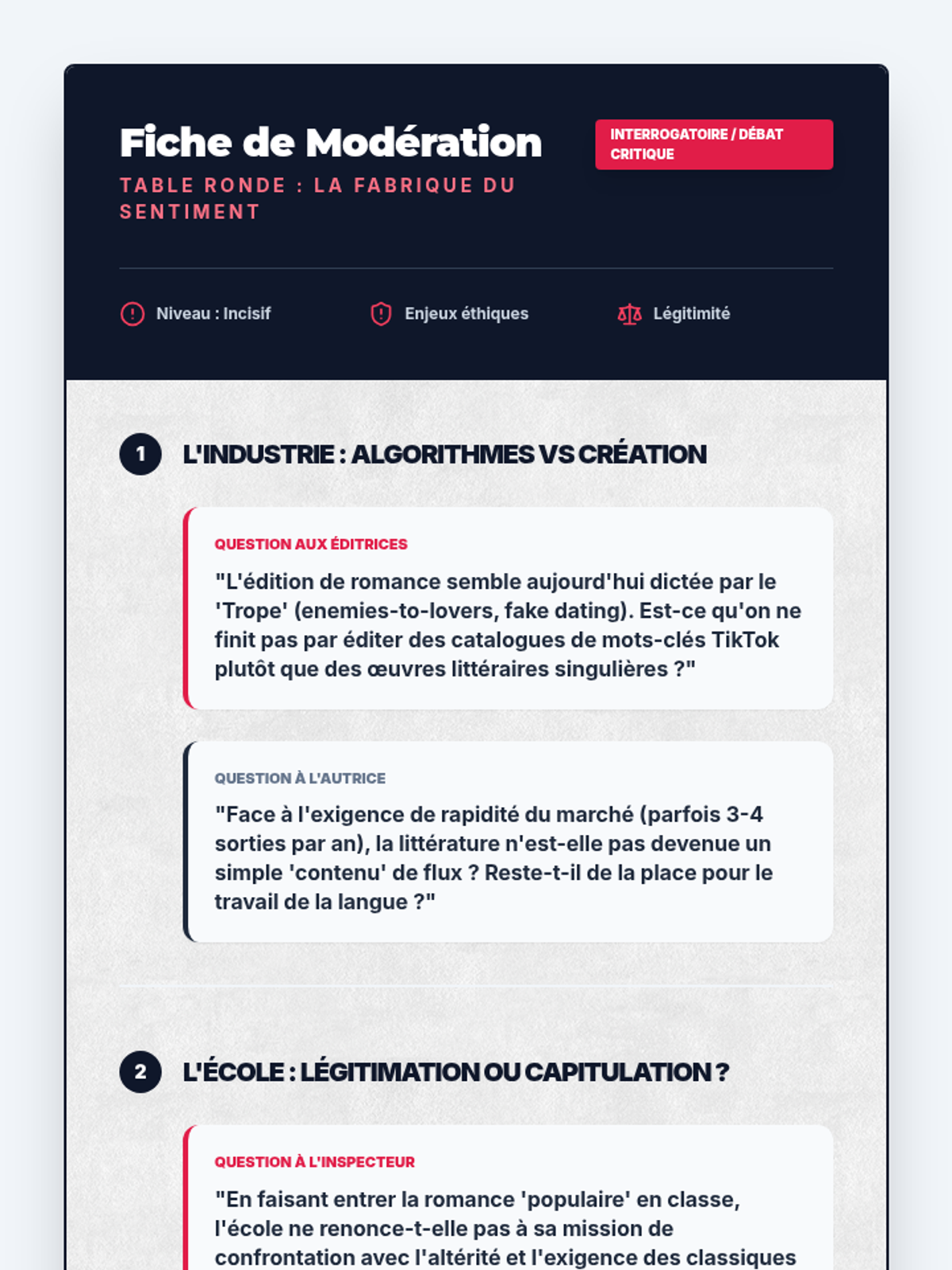
Une version "questions incisives" du guide de modération, conçue pour un débat de haut niveau interrogeant l'éthique, la qualité littéraire et les enjeux marketing du genre.
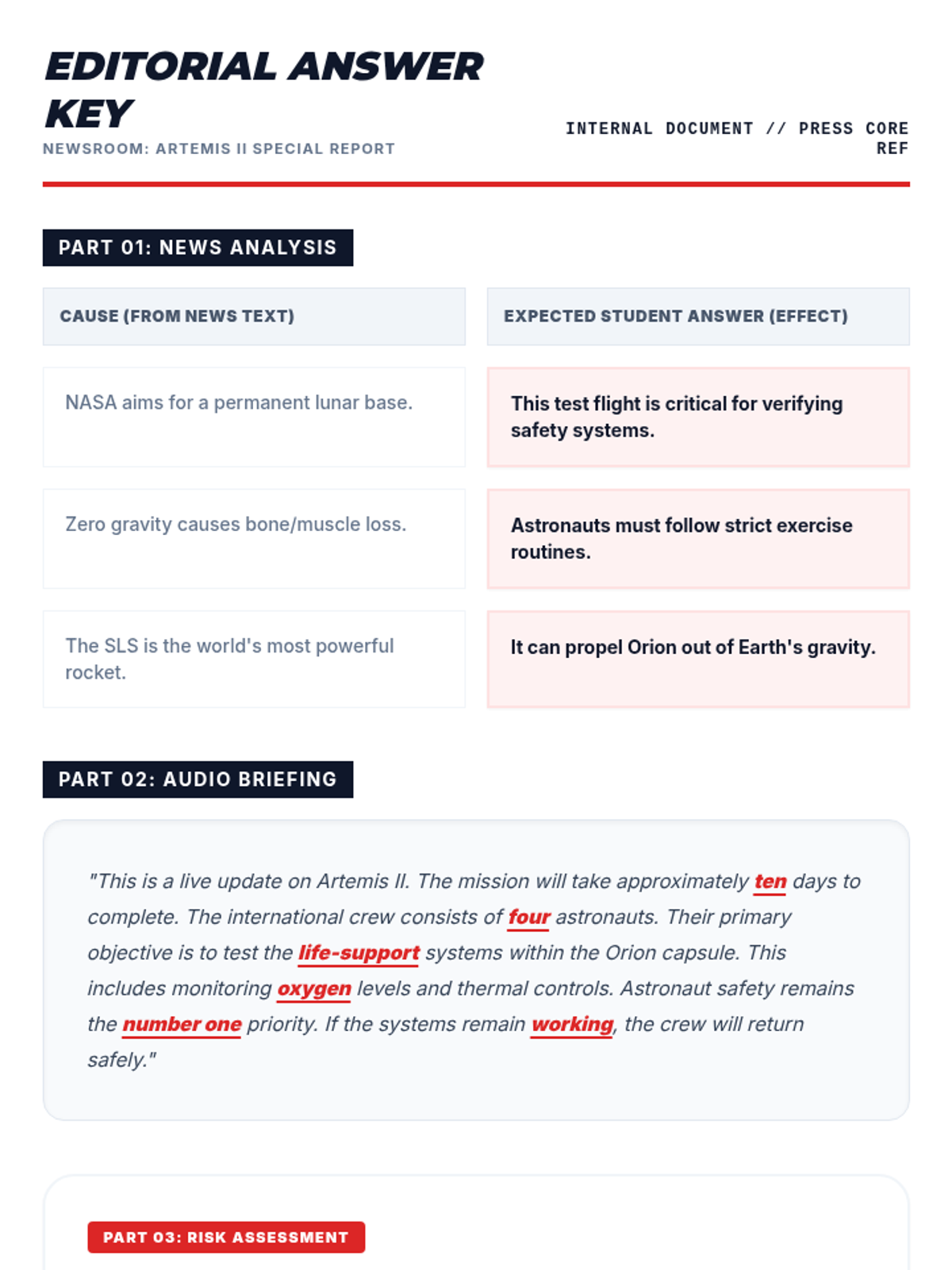
Updated teacher answer key for the ESL-focused Artemis II lesson, including matching solutions and language production goals for writing and speaking. Now with exemplar sentences.
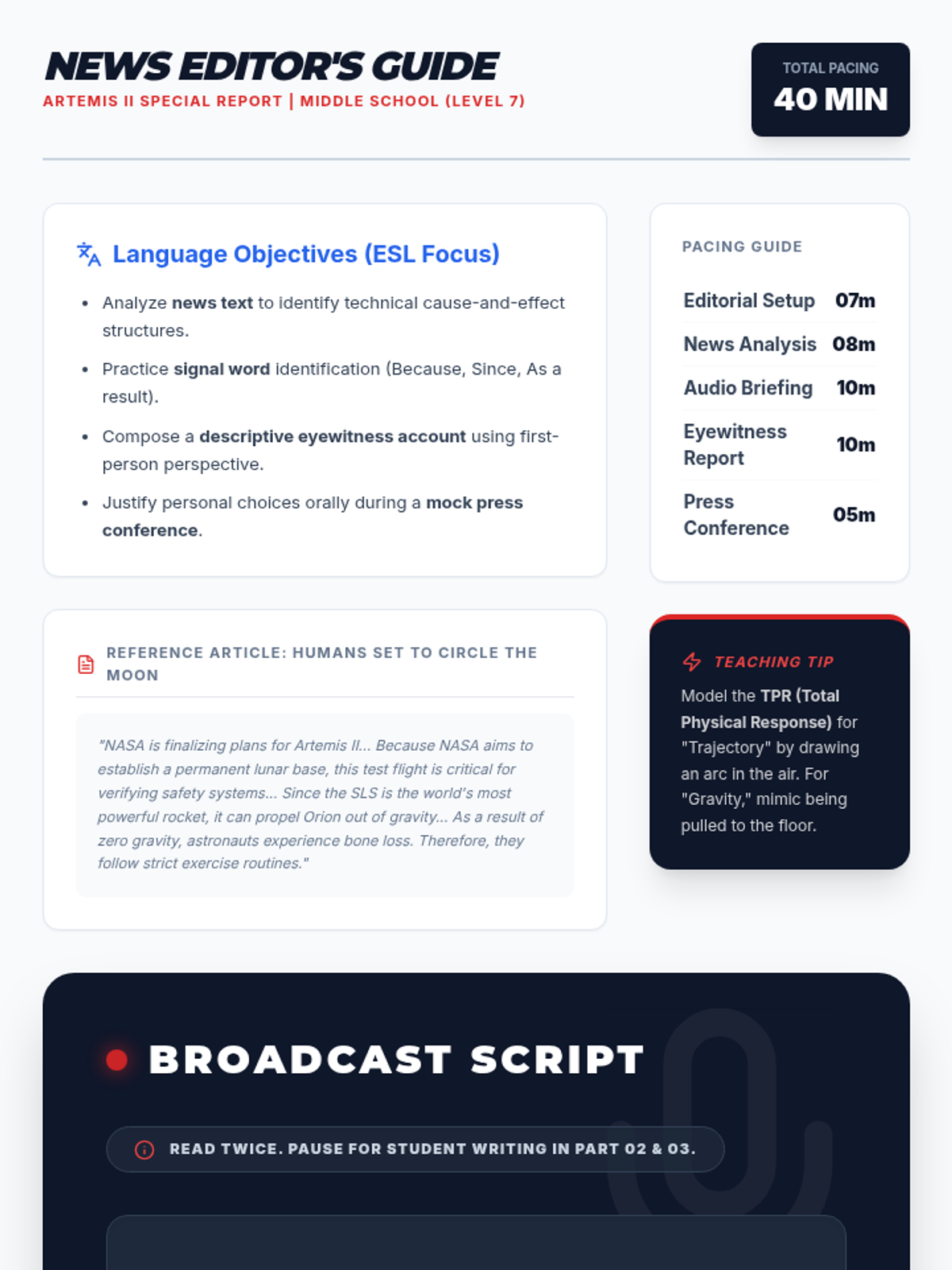
A specialized teacher's guide for the Artemis II lesson with an ESL focus, including content and language objectives, scaffolding strategies, and the listening script.
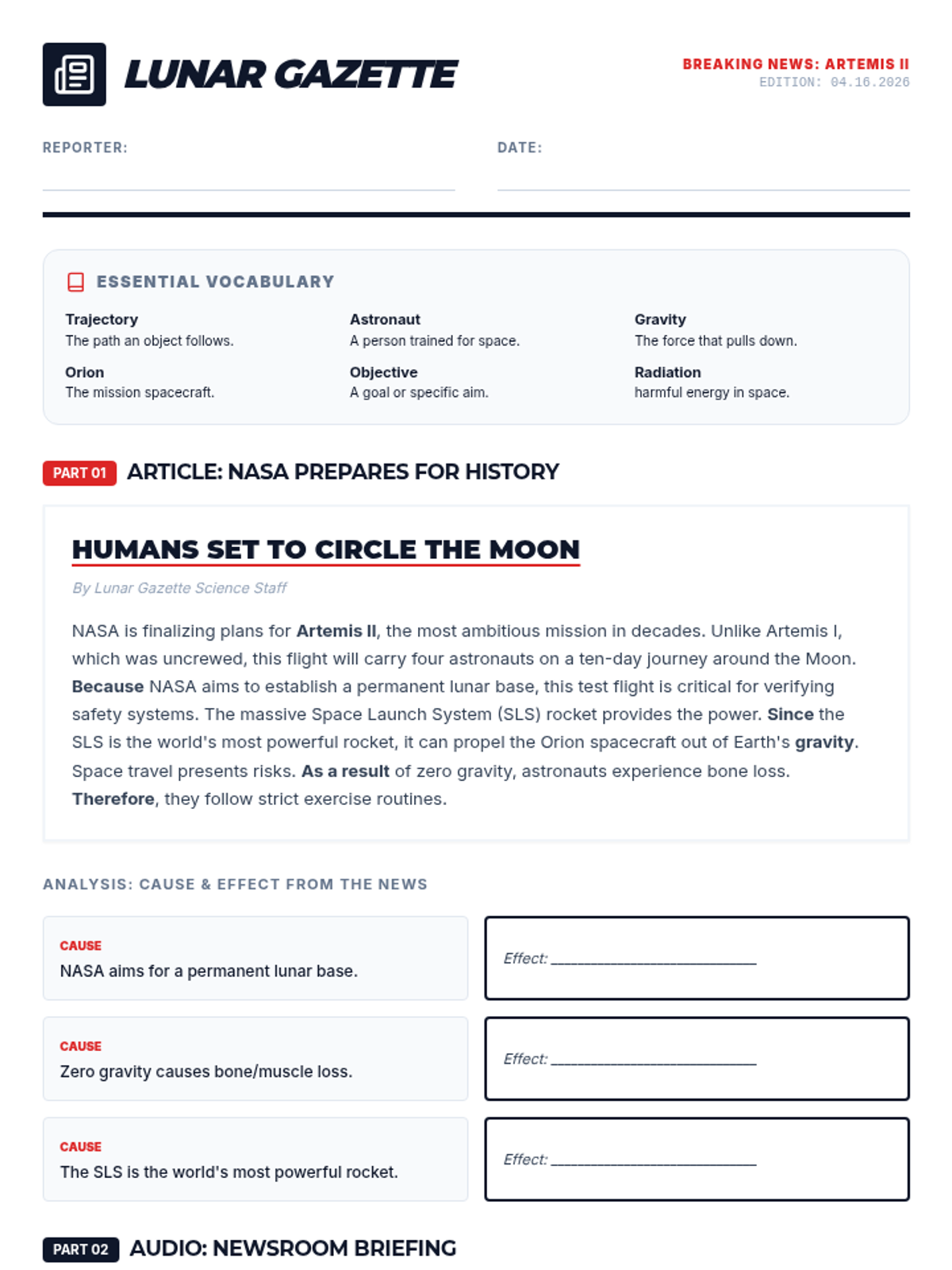
A comprehensive student worksheet tailored for ESL learners at a 7th-grade reading level, featuring a "Lunar Gazette" news article, cause-and-effect analysis, listening cloze, and news-themed writing/speaking activities. Consolidated into 3 pages.
Updated space-themed slides for ESL learners, including a visual vocabulary slide, a cause-and-effect signal word guide, and descriptive writing scaffolding. Now features a dedicated active listening graphic organizer slide and improved contrast.
A visual presentation for high school students to facilitate the "Is cereal a soup?" debate, featuring the C-E-R-C writing formula, transition word examples, and a strong vs. weak paragraph analysis.
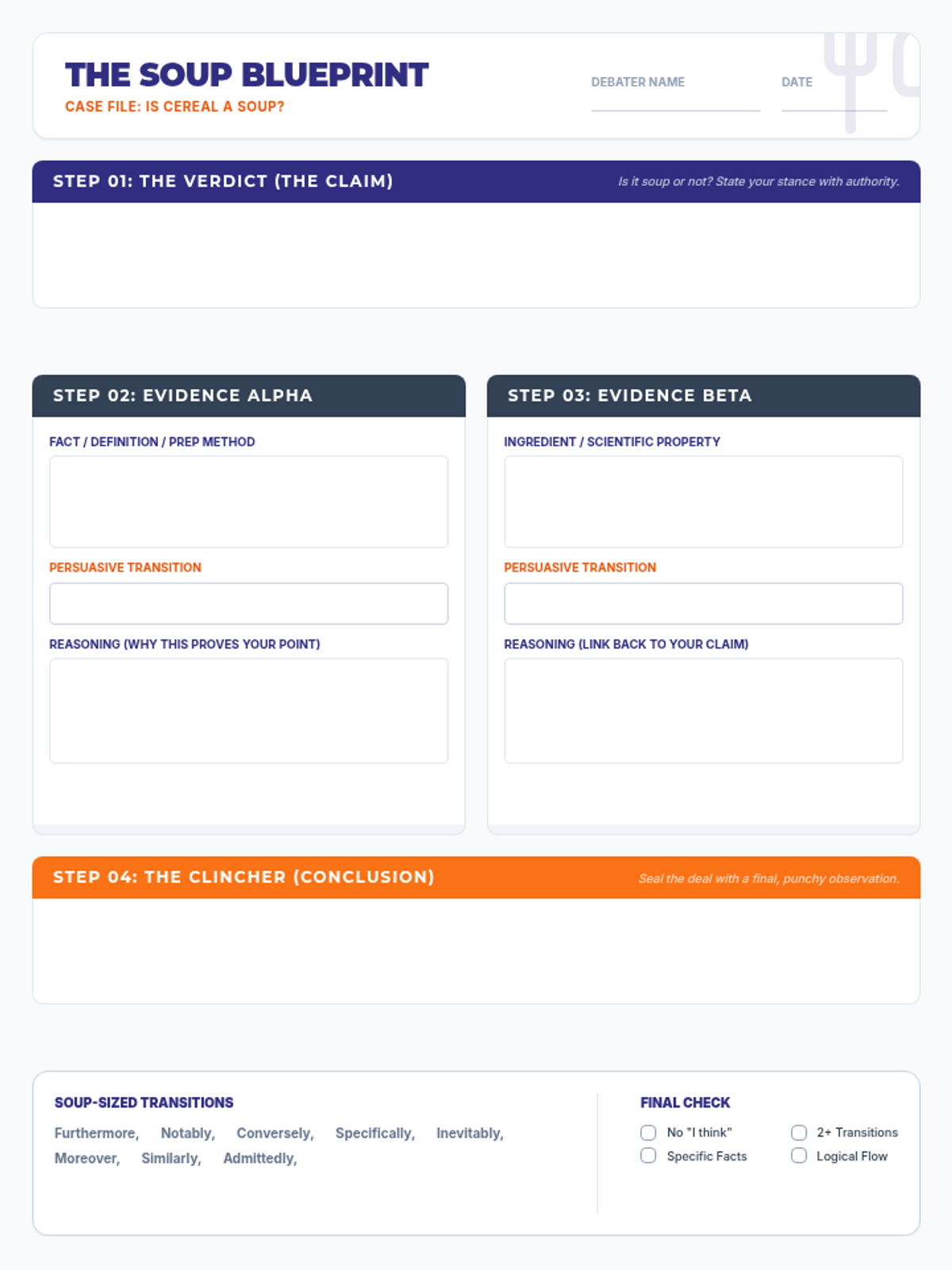
A specialized graphic organizer for high school students to plan their "Is cereal a soup?" argument, featuring sections for claims, evidence-based definitions, and persuasive transitions.
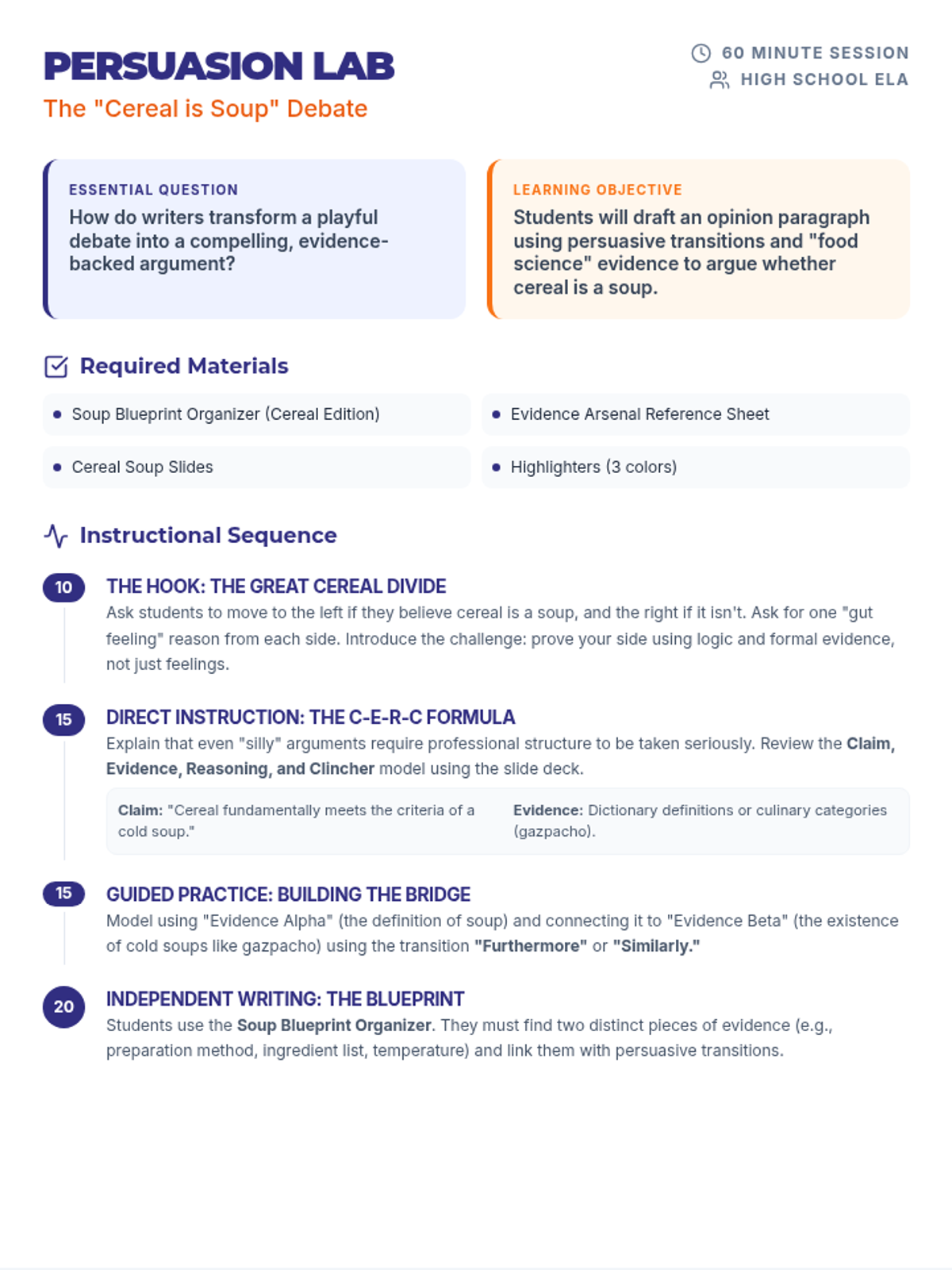
A comprehensive teacher facilitation guide for a high school lesson on opinion paragraph structure, focused on the "Is cereal a soup?" debate, featuring a 60-minute pacing guide and assessment rubric.
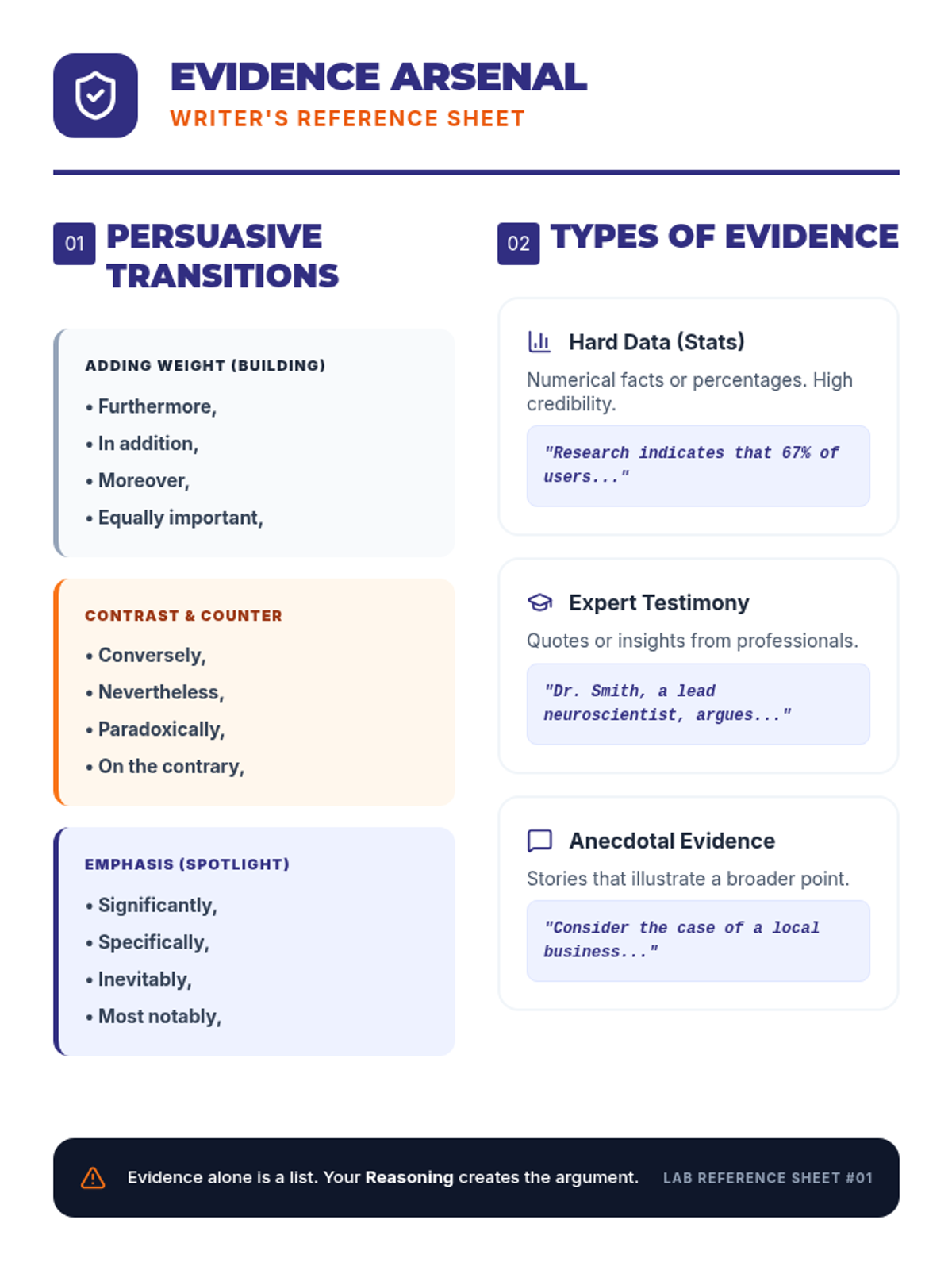
A reference sheet for high school writers containing categorized persuasive transitions and definitions for different types of evidence.
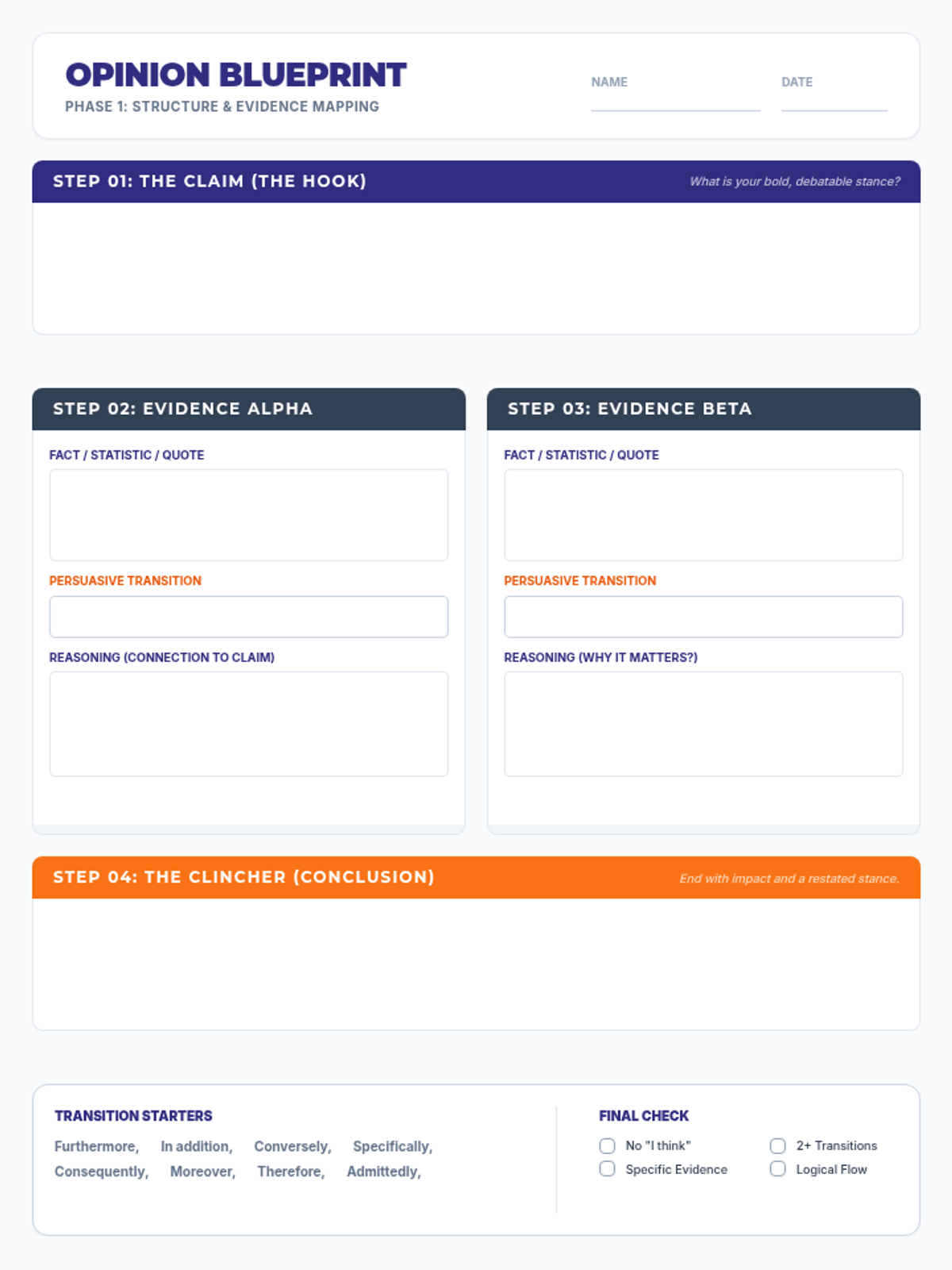
A structured graphic organizer for high school students to plan their opinion paragraphs, featuring specific sections for claims, dual evidence points, transitions, and concluding statements.
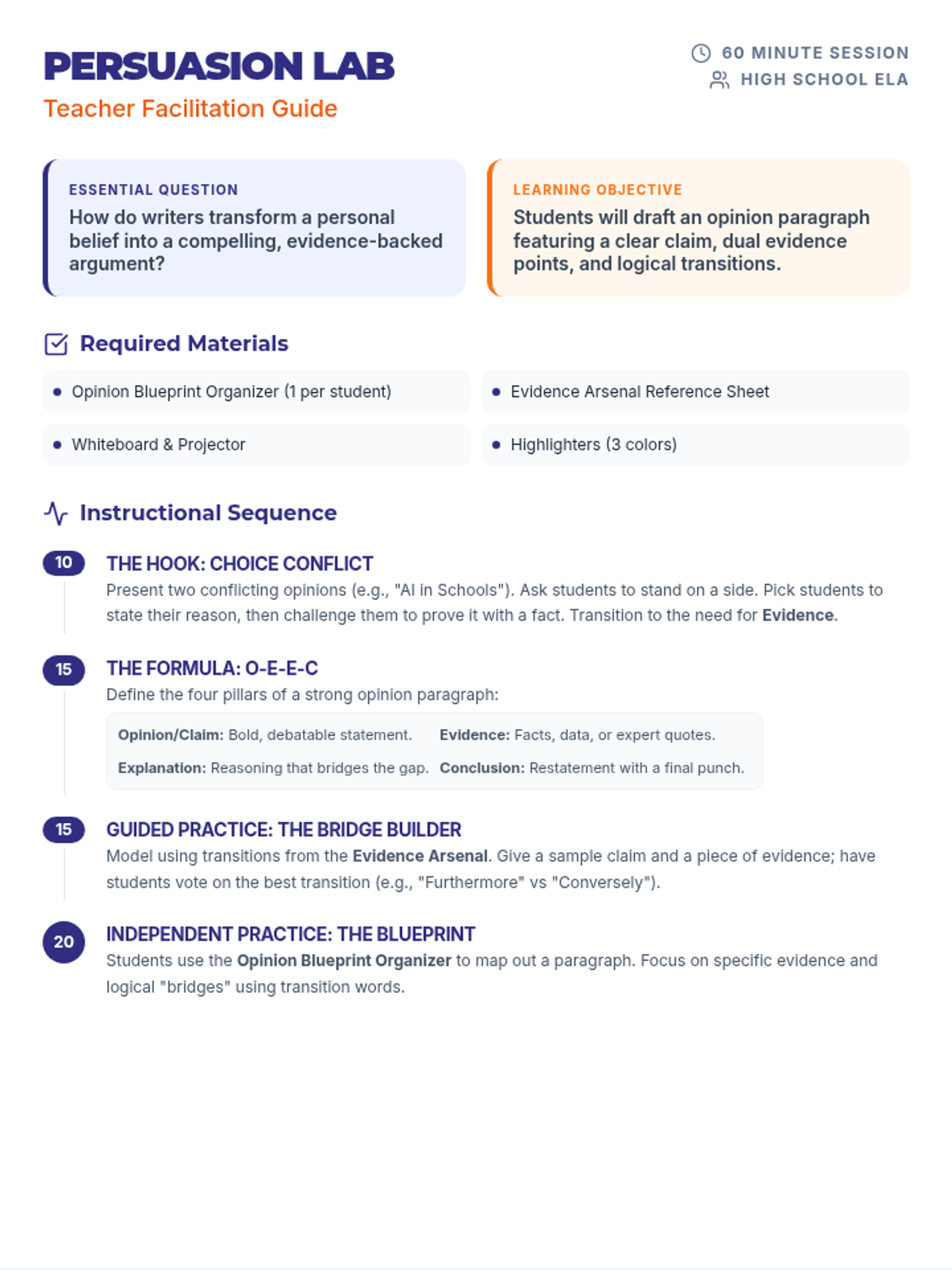
A comprehensive teacher facilitation guide for a high school lesson on opinion paragraph structure, featuring a 60-minute pacing guide, differentiation strategies, and an assessment rubric.
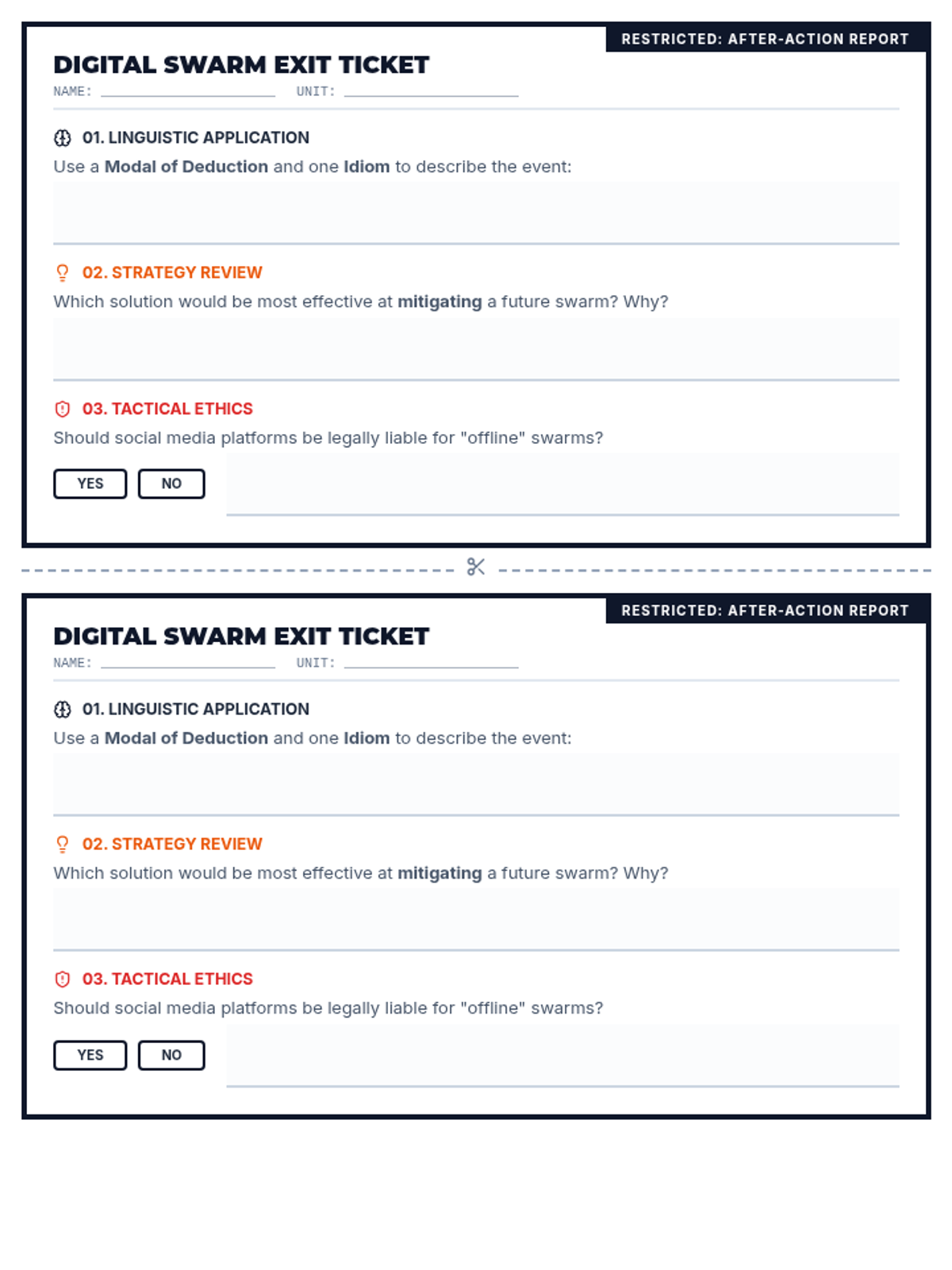
A single-page exit ticket for the Digital Swarms workshop, containing two identical copies for easy printing and distribution. It includes focused reflection questions on language (modals and idioms), strategy, and ethics, with adequate writing space for B2+ students. It now features uniform styling for all answer choices and improved vertical efficiency.
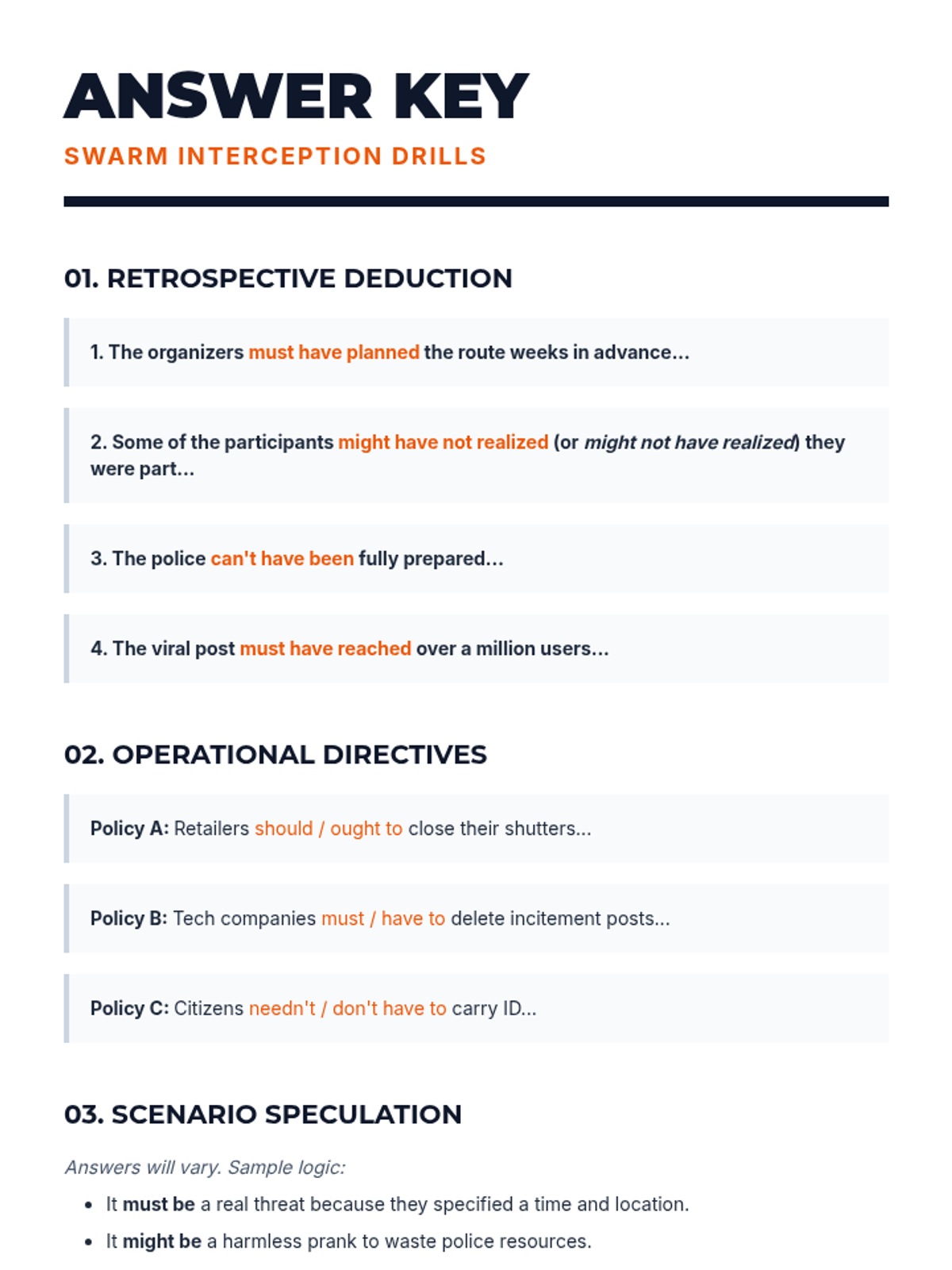
Answer key for the Swarm Interception Drills worksheet, providing correct modal verb forms and sample responses for the open-ended scenario.
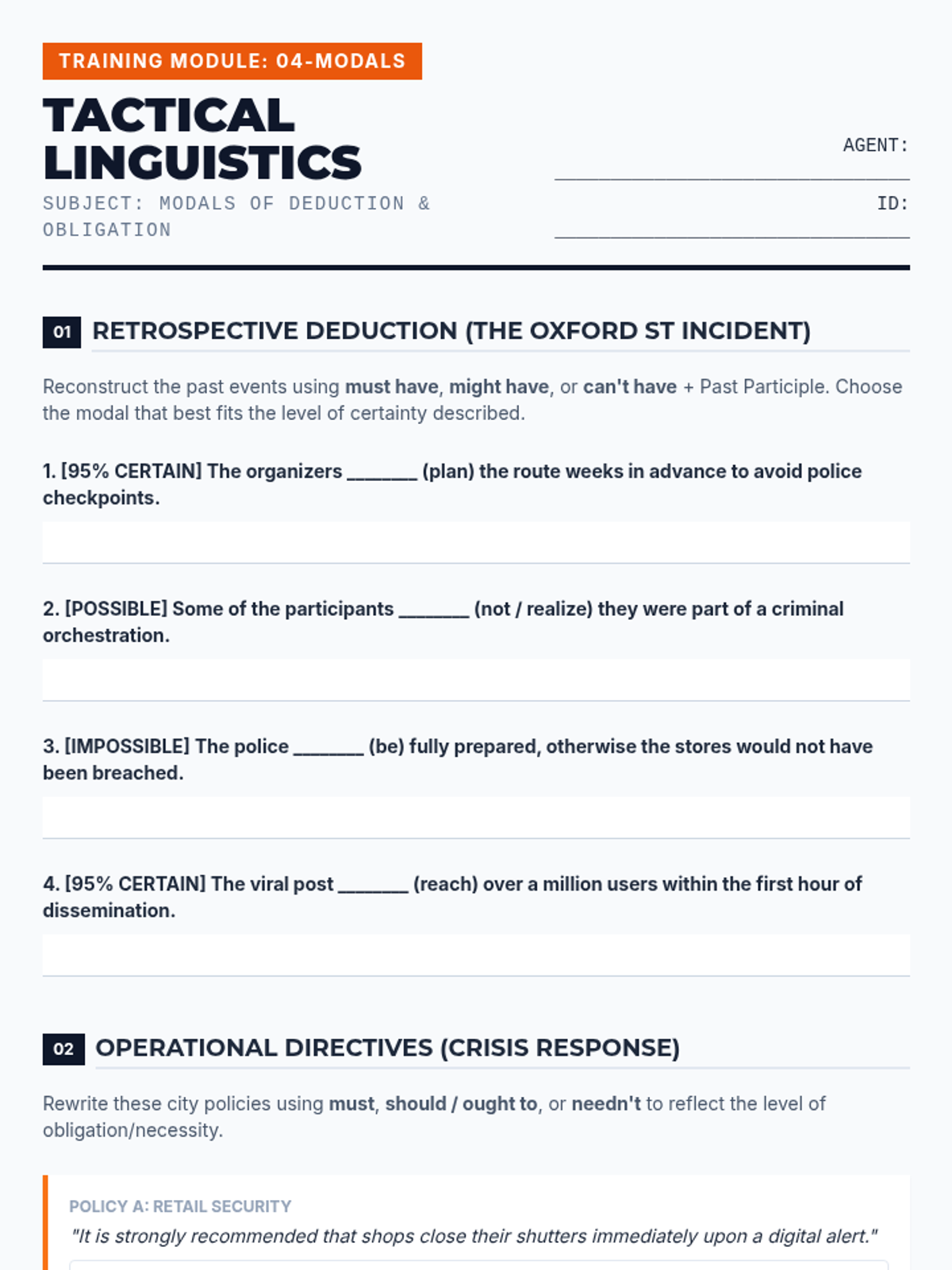
A grammar-focused worksheet providing structured practice with modals of deduction (past and present) and obligation in the context of the Digital Swarms scenario. Includes sentence transformation and scenario-based speculation tasks.
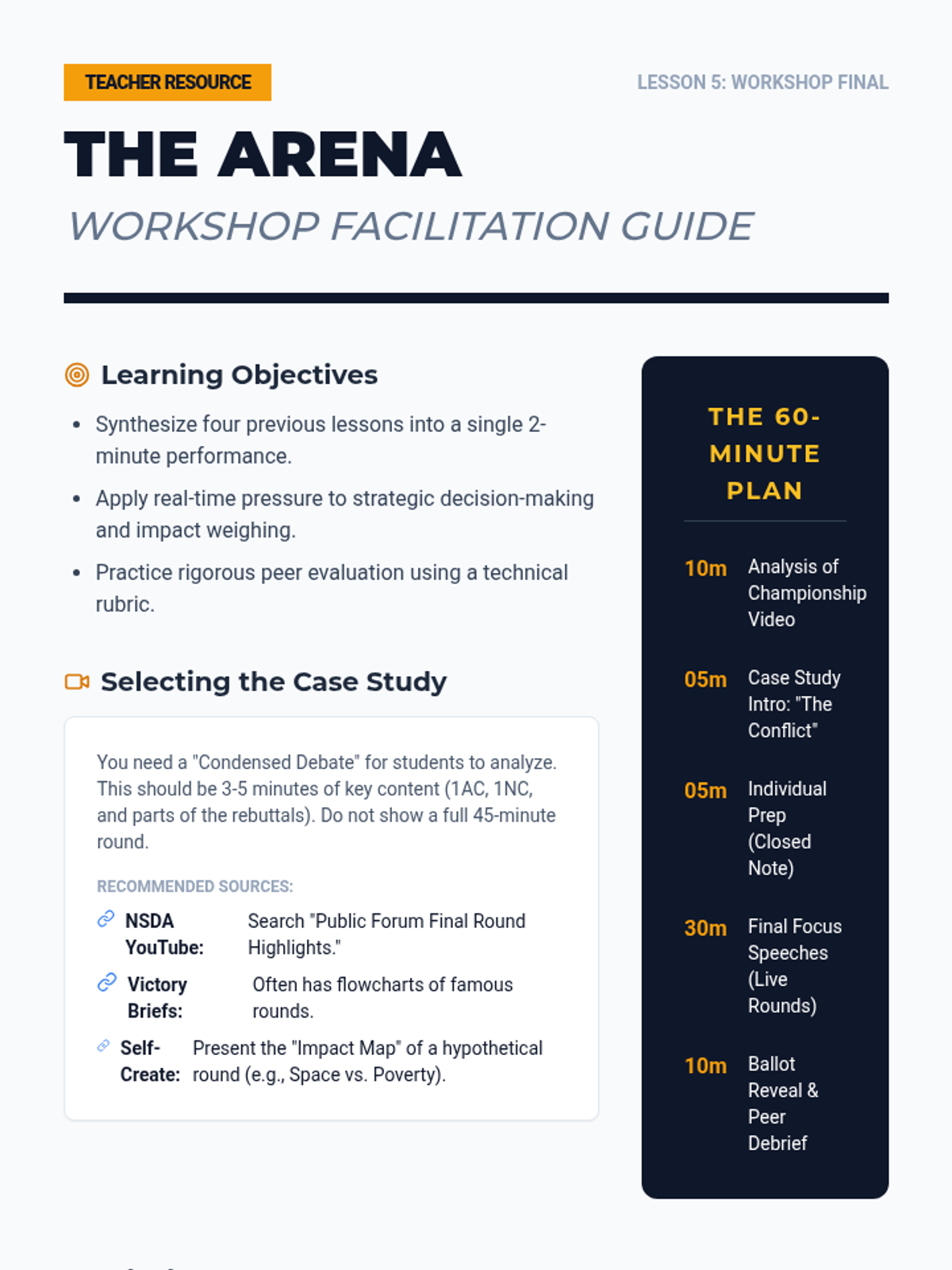
A facilitation guide for the final workshop lesson, including pod-based grouping strategies and pacing for the live speaking simulation.
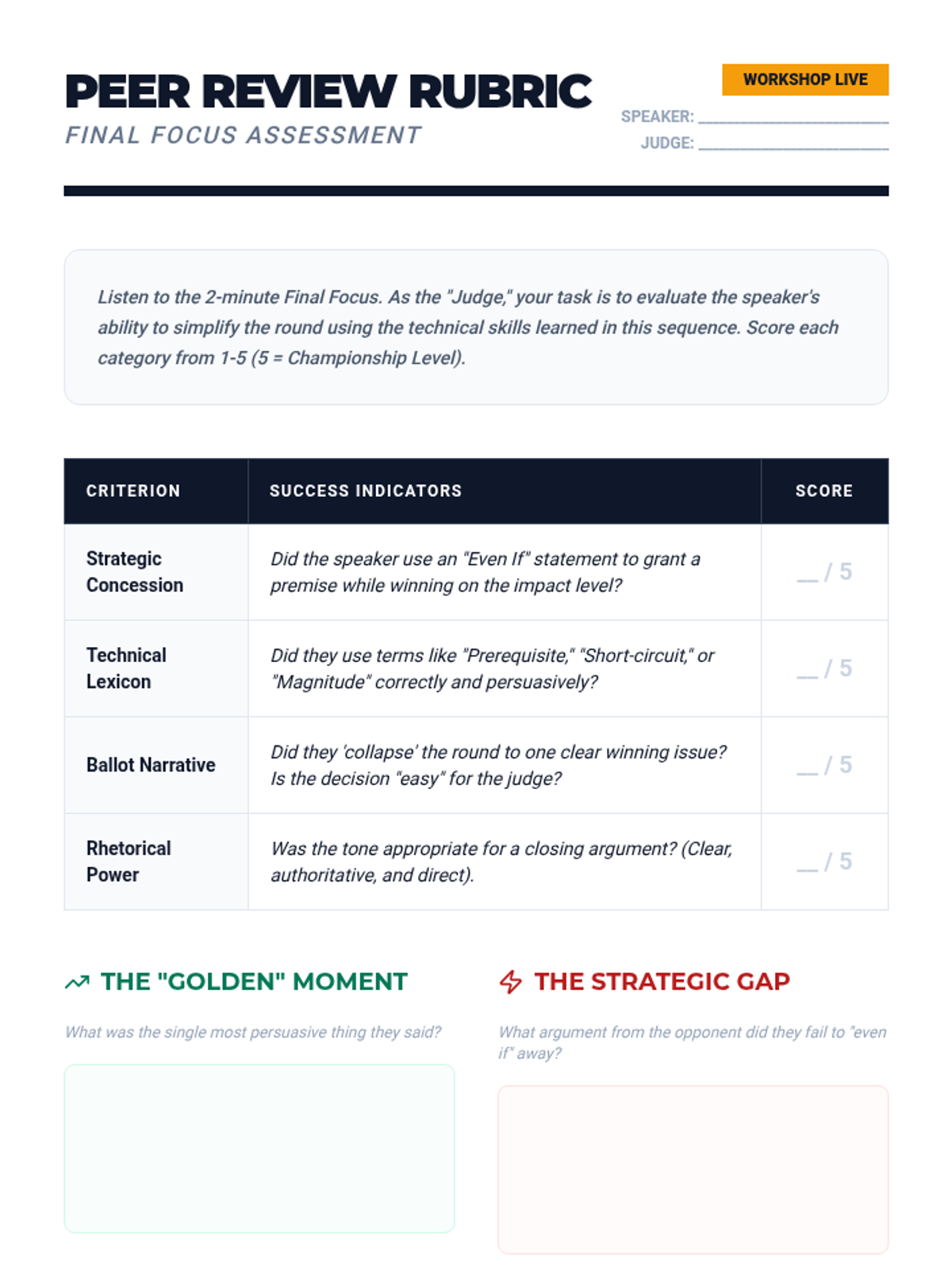
A peer review rubric designed for the Final Focus workshop, allowing students to judge and provide feedback on their classmates' performances.
A slide deck for the culminating workshop, detailing the Final Focus drill mechanics, live performance expectations, and peer critique protocols.
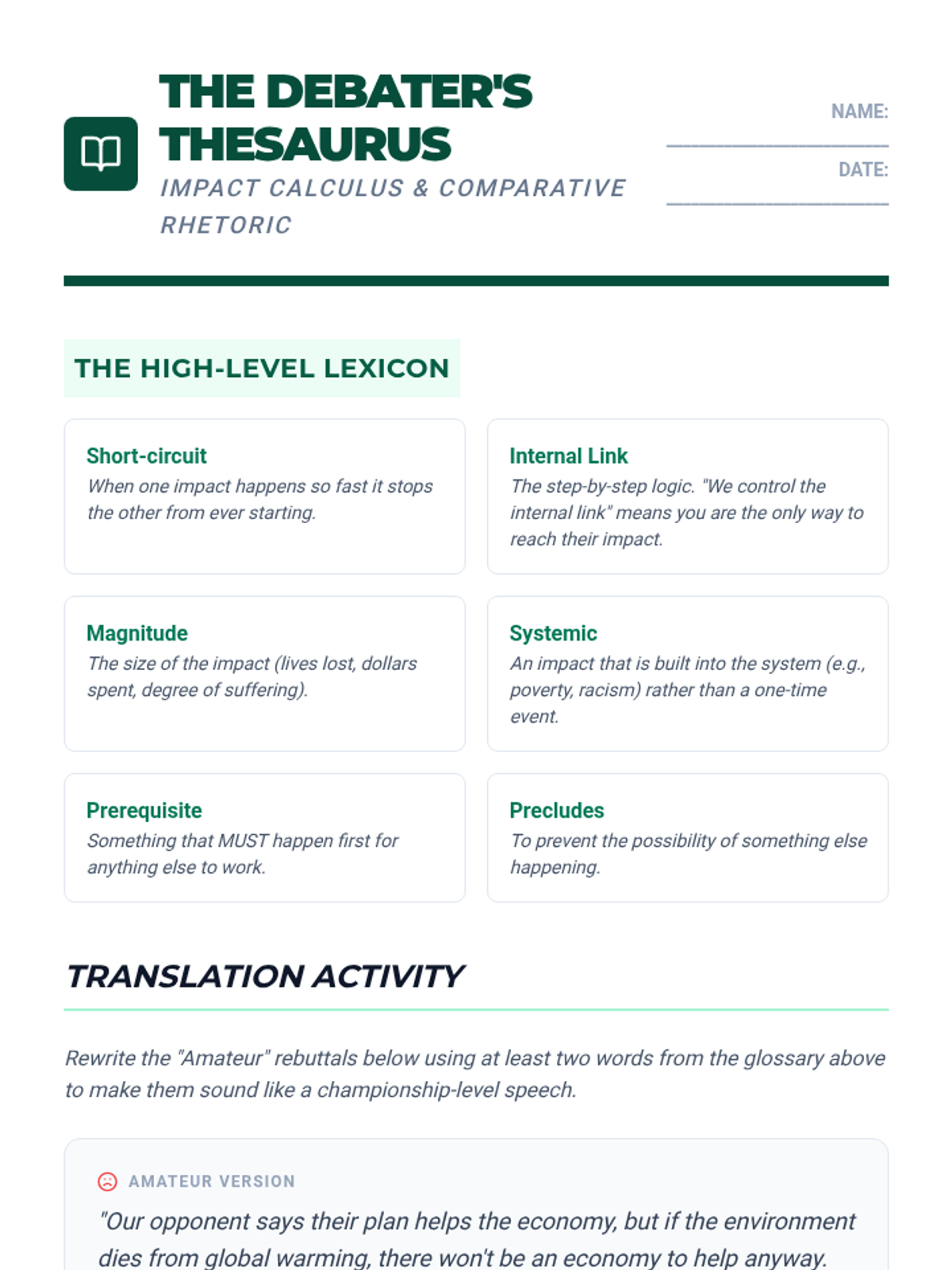
A translation activity sheet where students convert basic arguments into sophisticated rhetorical statements using advanced debate terminology.
A slide deck introducing advanced comparative vocabulary for debate, focusing on terms like 'prerequisite,' 'short-circuit,' and 'internal link.'
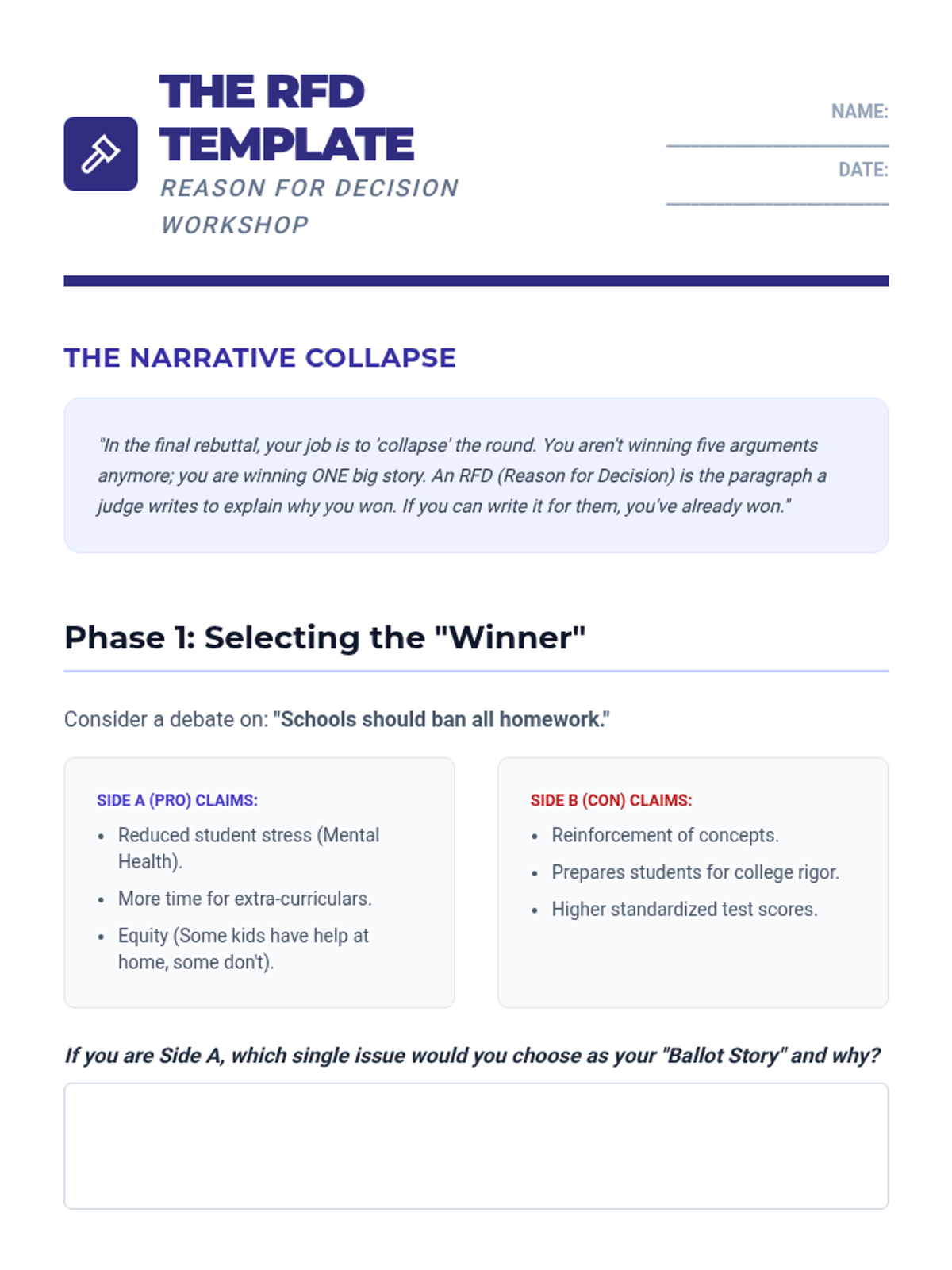
A worksheet guiding students through the process of writing a 'Reason for Decision' (RFD) paragraph from a judge's perspective.
A slide deck about 'Ballot Stories,' teaching students how to synthesize a complex debate round into a persuasive narrative for the judge.
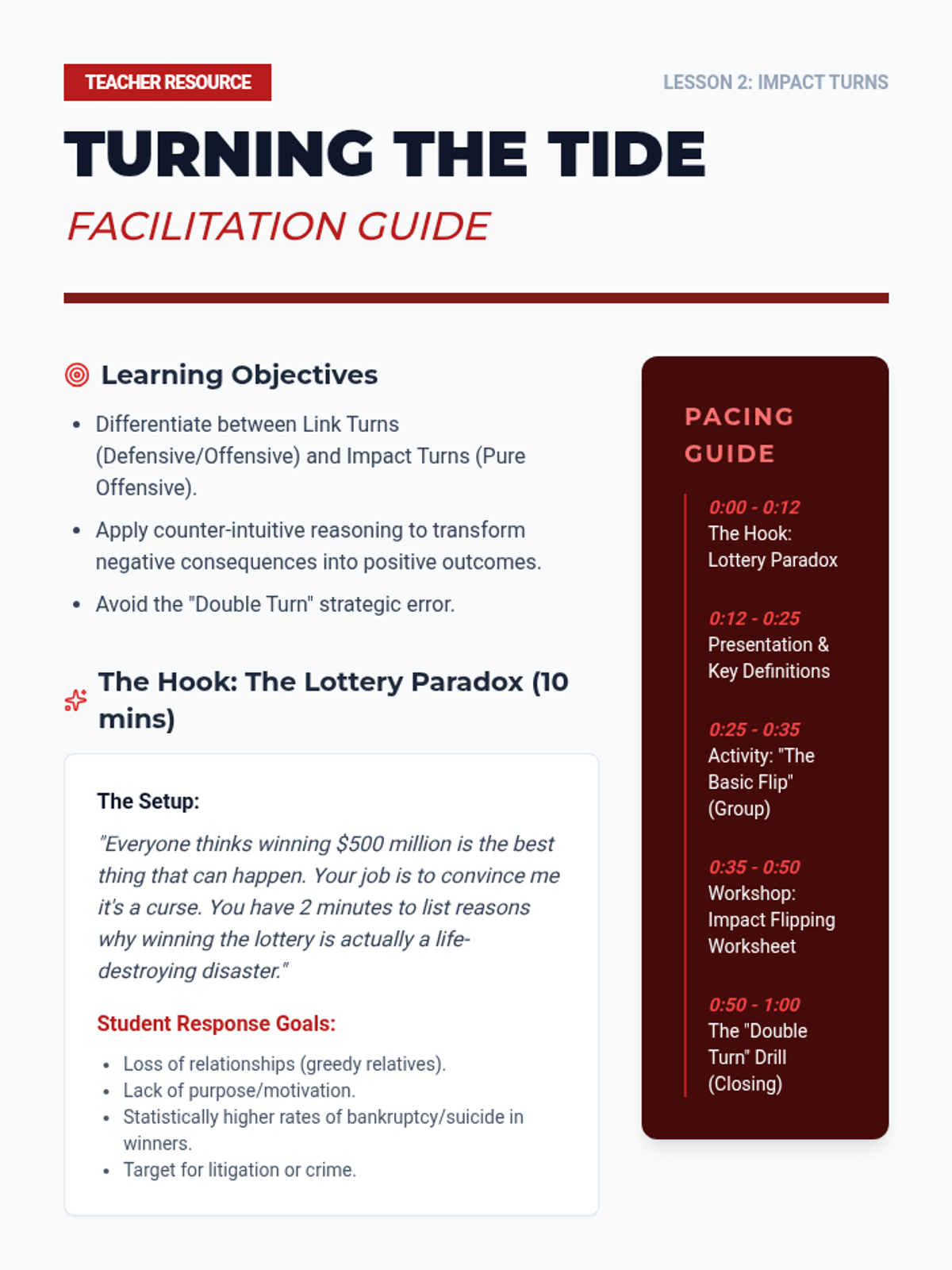
A teacher guide for Lesson 2, providing instructions for the Lottery Paradox hook and a deep dive into avoiding the Double Turn strategic error.
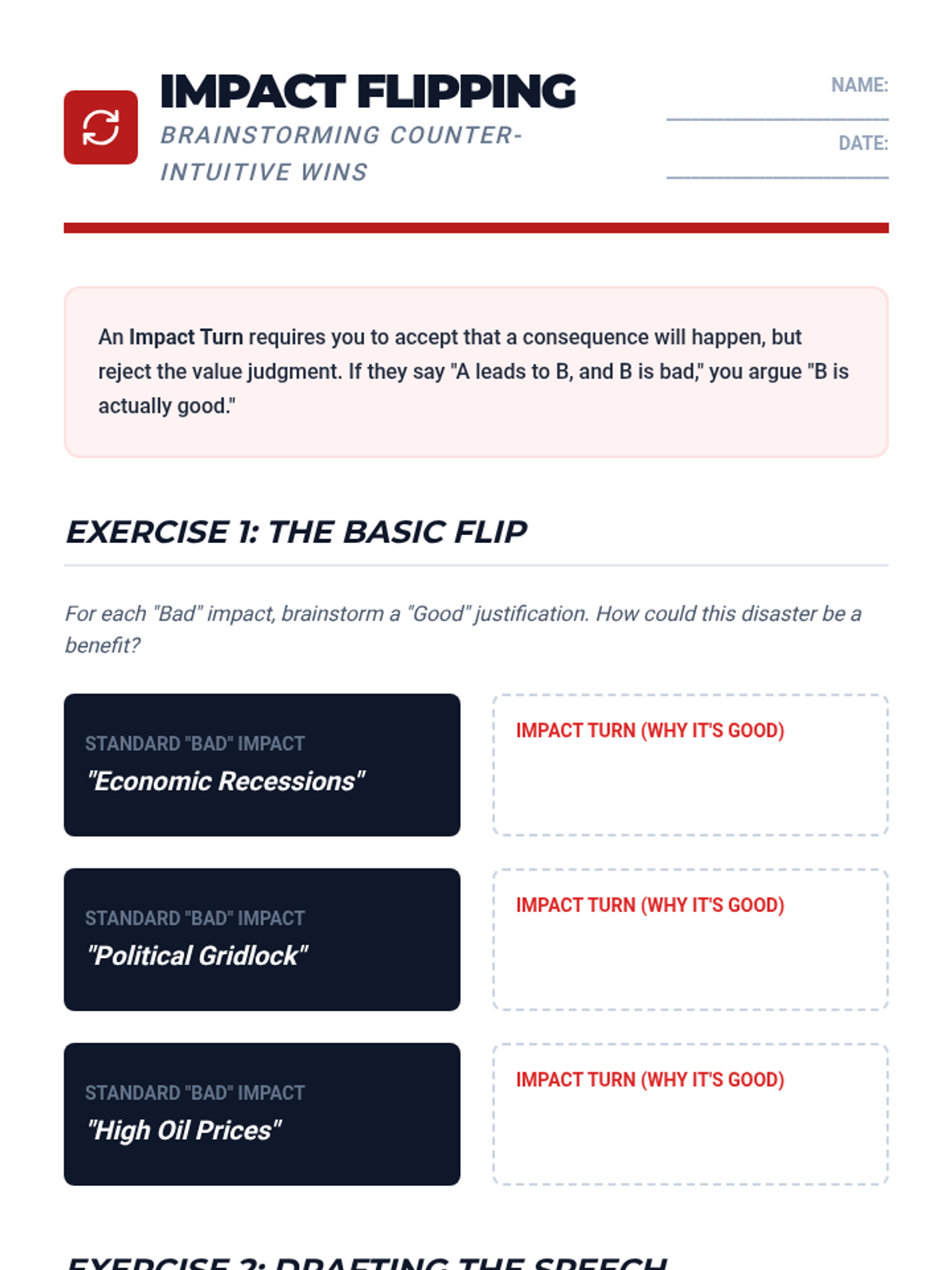
A worksheet for students to practice brainstorming and drafting impact turns for common debate arguments.
A slide deck introducing the 'Impact Turn' strategy, explaining how to flip an opponent's 'bad' impact into a 'good' one.
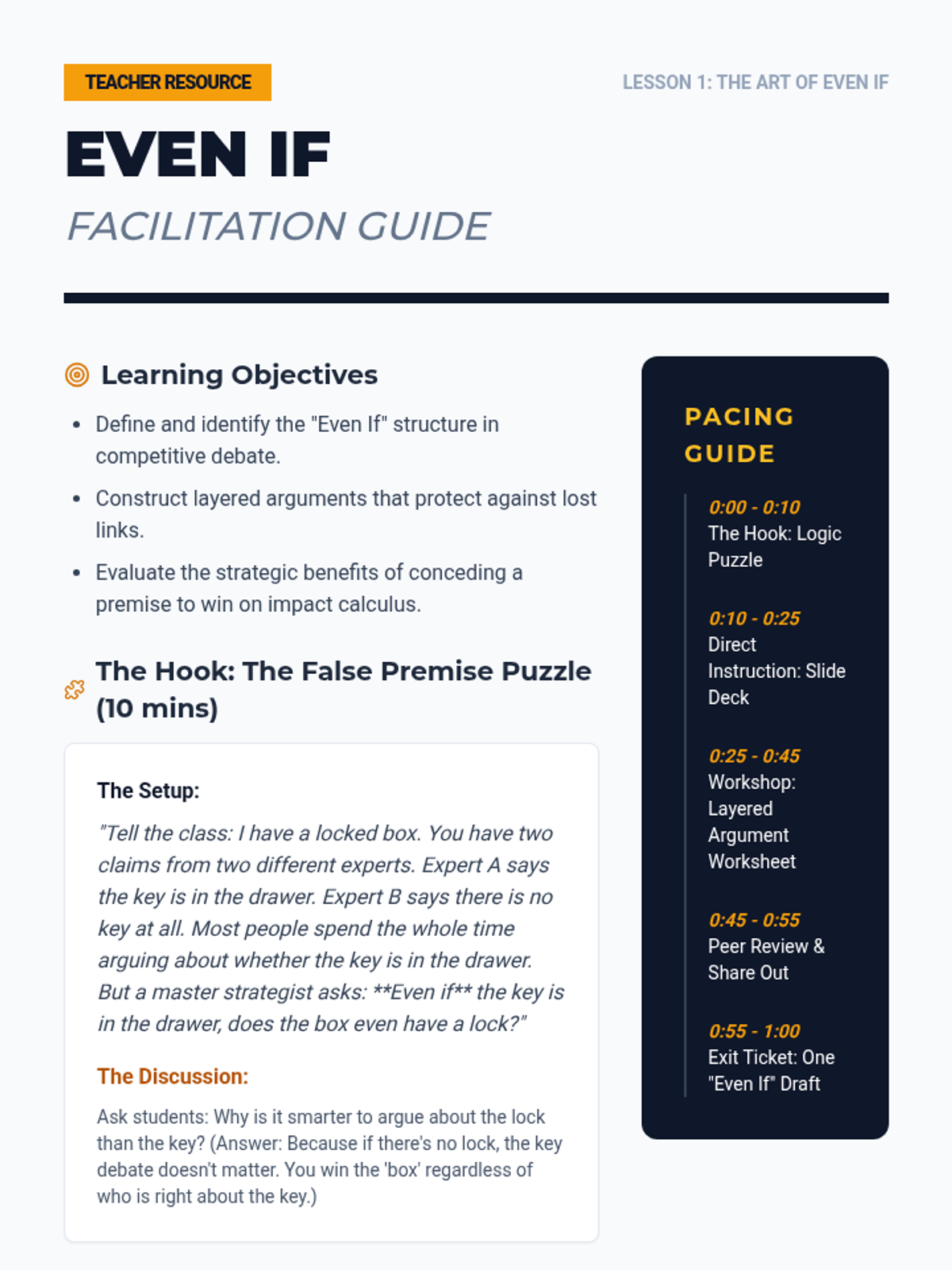
A facilitation guide for teachers covering the 'Even If' lesson, including hook instructions, pacing, and common student pitfalls.
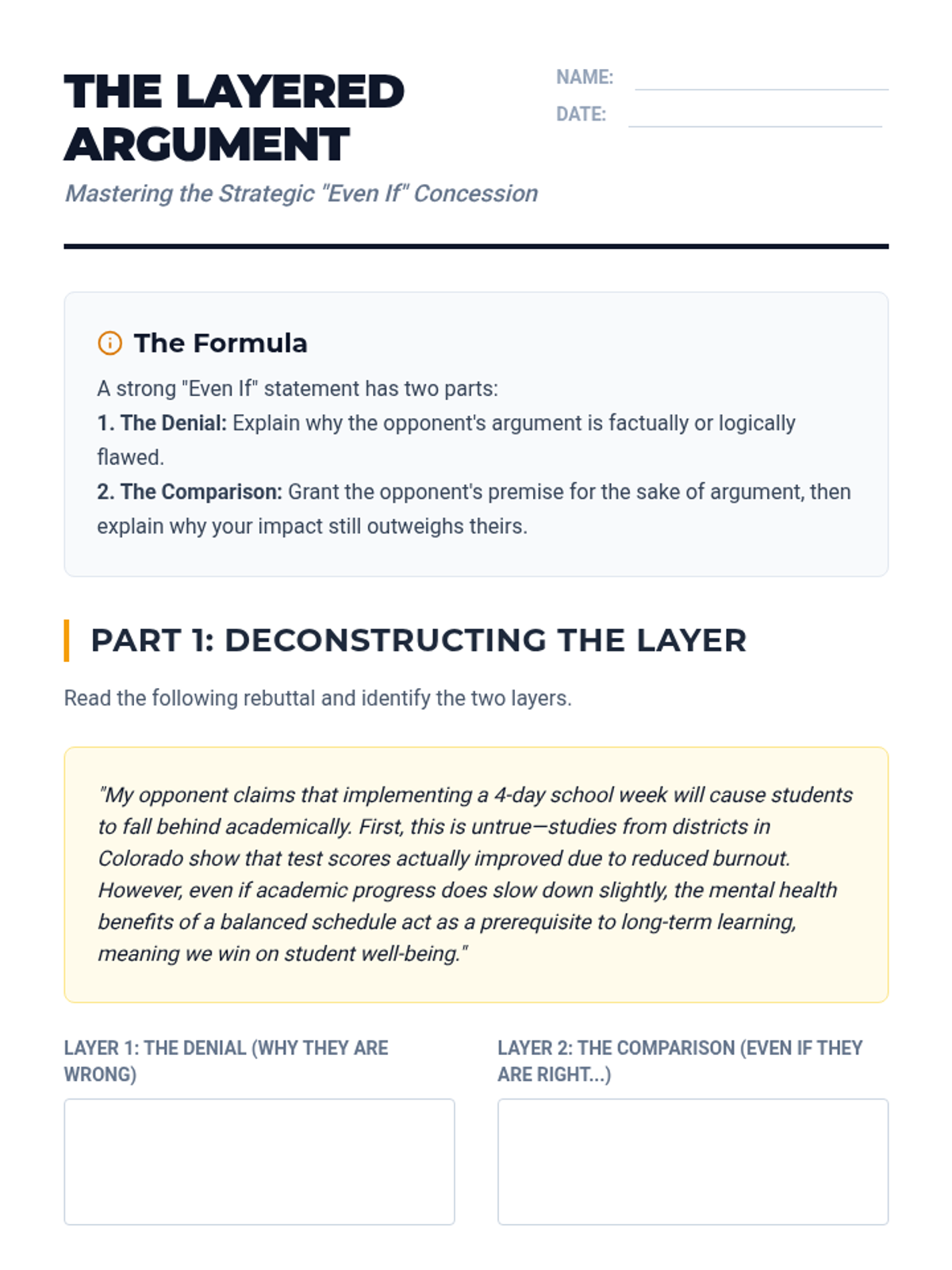
A practice worksheet for students to deconstruct and write two-layer 'Even If' arguments for various debate scenarios.
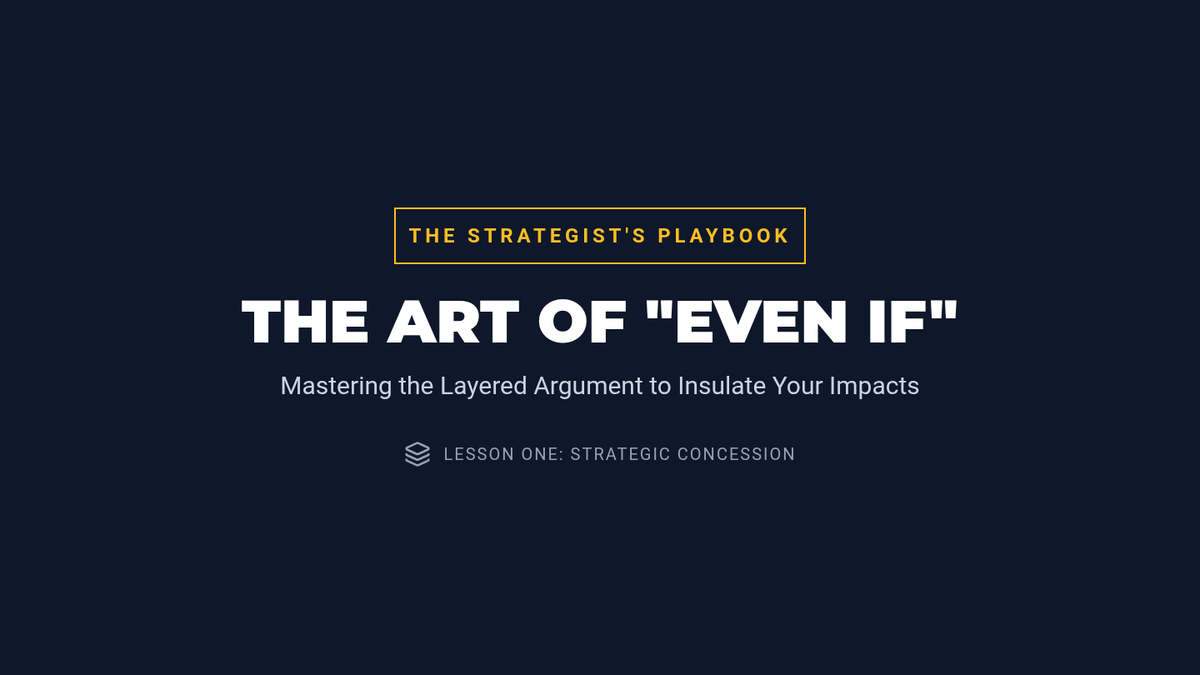
A slide deck introducing the 'Even If' statement as a two-layer argument structure for strategic debate.
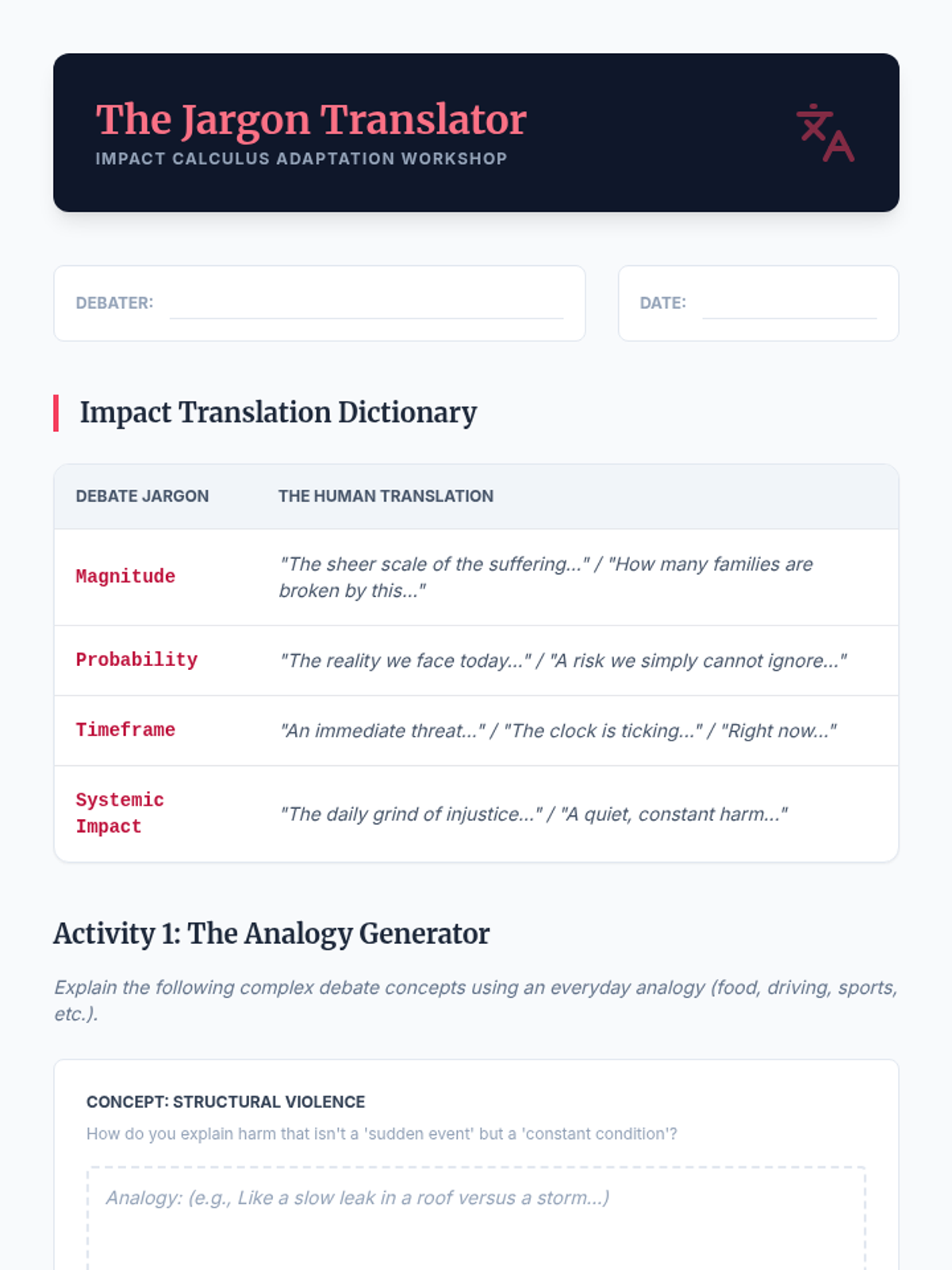
An activity worksheet for Lesson 5 where students practice translating technical debate jargon into persuasive common language and analogies.
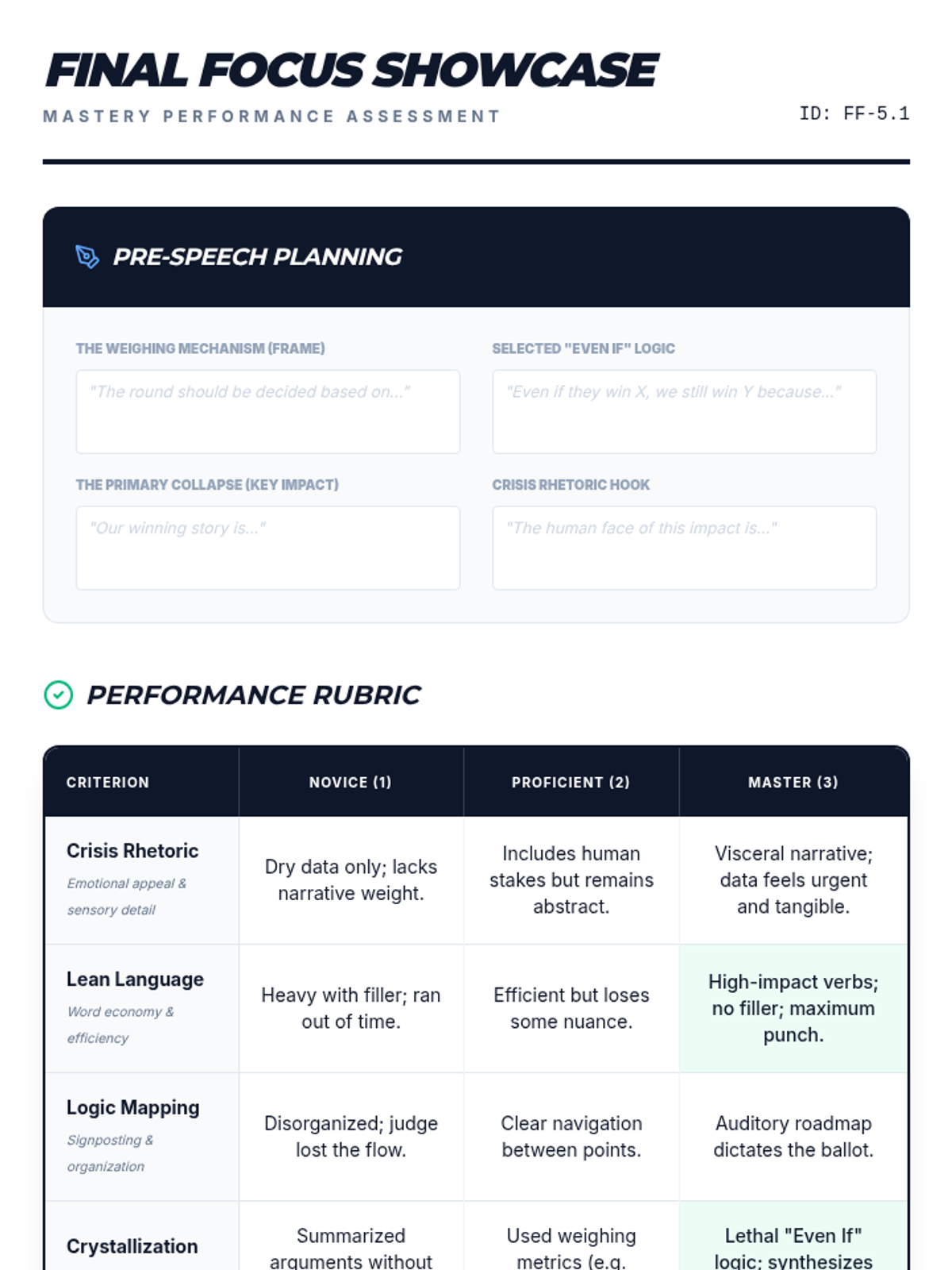
A comprehensive planning sheet and rubric for the final assessment of the 'Final Focus' speech. Includes sections for pre-speech strategy and a detailed 4-point rubric for mastery-based grading.
A slide deck focused on adapting complex debate impact calculus for lay audiences, emphasizing analogies and common language.
A slide deck for Lesson 5 focusing on the synthesis of arguments into a Final Focus speech. Includes the distinction between summary and synthesis, performance tips, and the structure of the final appeal.
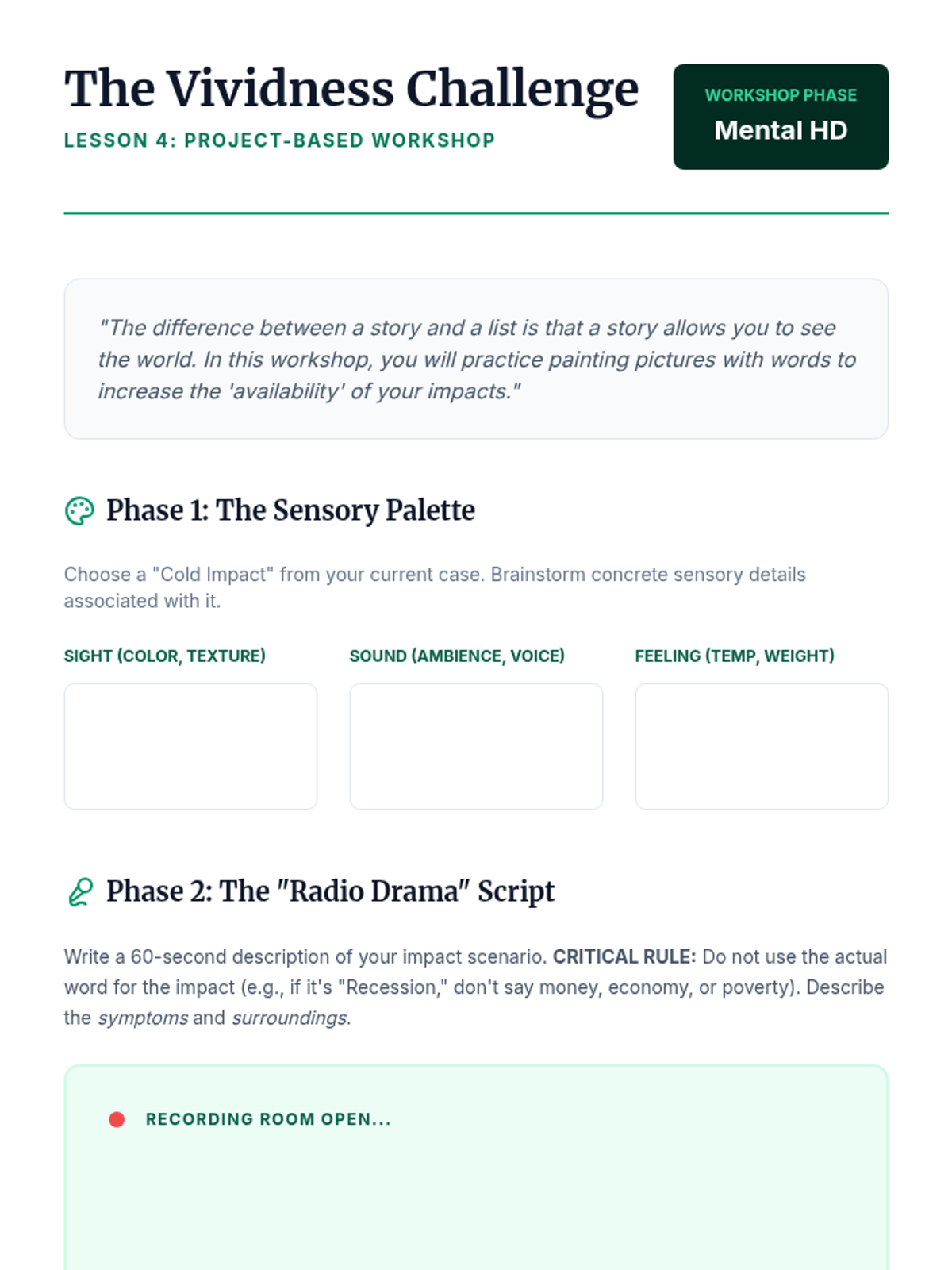
A workshop guide for Lesson 4 where students practice creating descriptive imagery to communicate complex impacts without using technical jargon.
A slide deck explaining the availability heuristic and how to use descriptive imagery to increase the perceived probability of impacts.
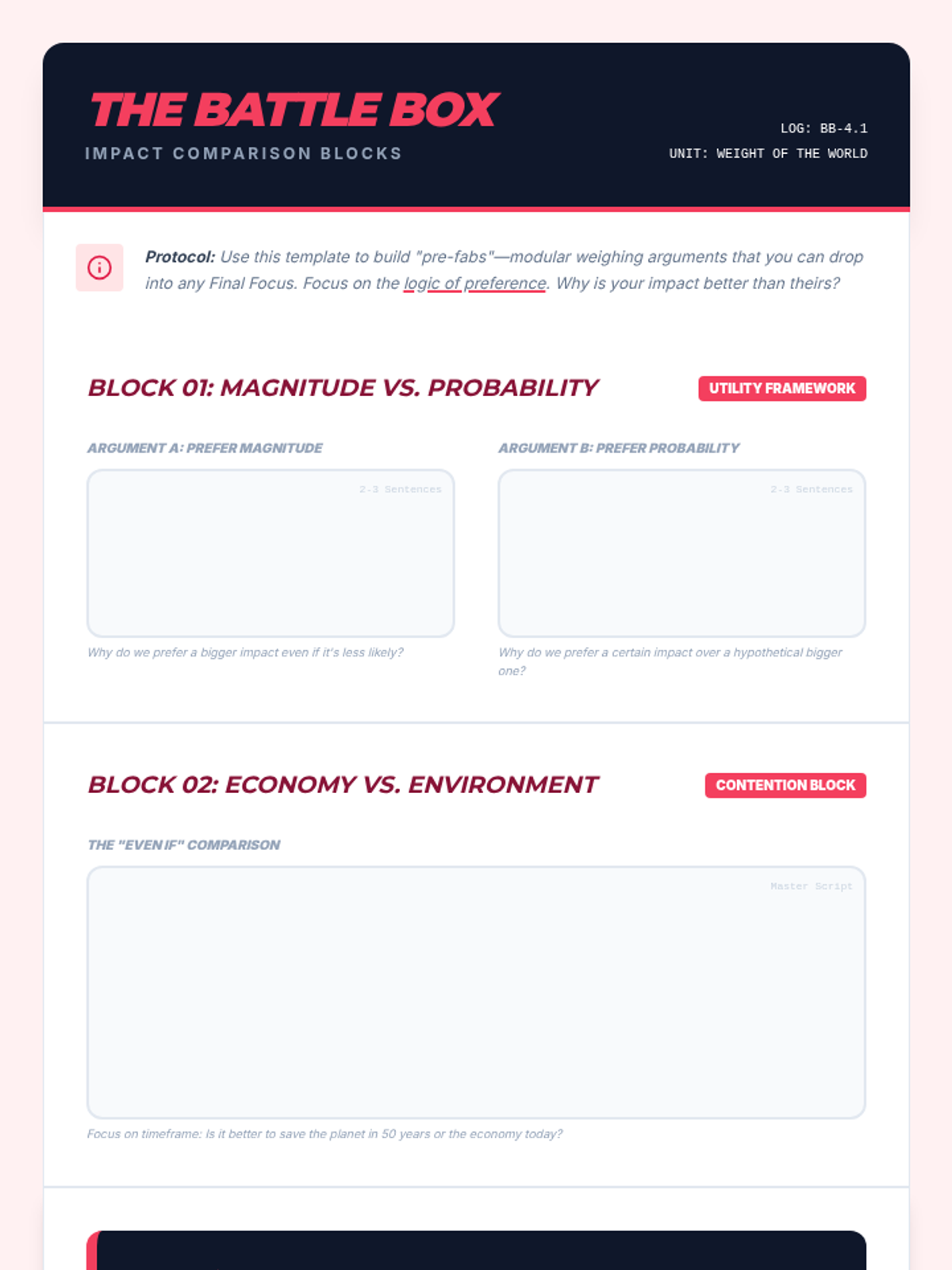
A template and guide for students to pre-write comparison arguments (blocks) for their 'Battle Box', focusing on logical frameworks like Magnitude vs. Probability.