Systematic research, evidence evaluation, and logical reasoning skills for formal discourse. Equips speakers to organize persuasive arguments, identify fallacies, and execute strategic impact calculus during competitive engagement.
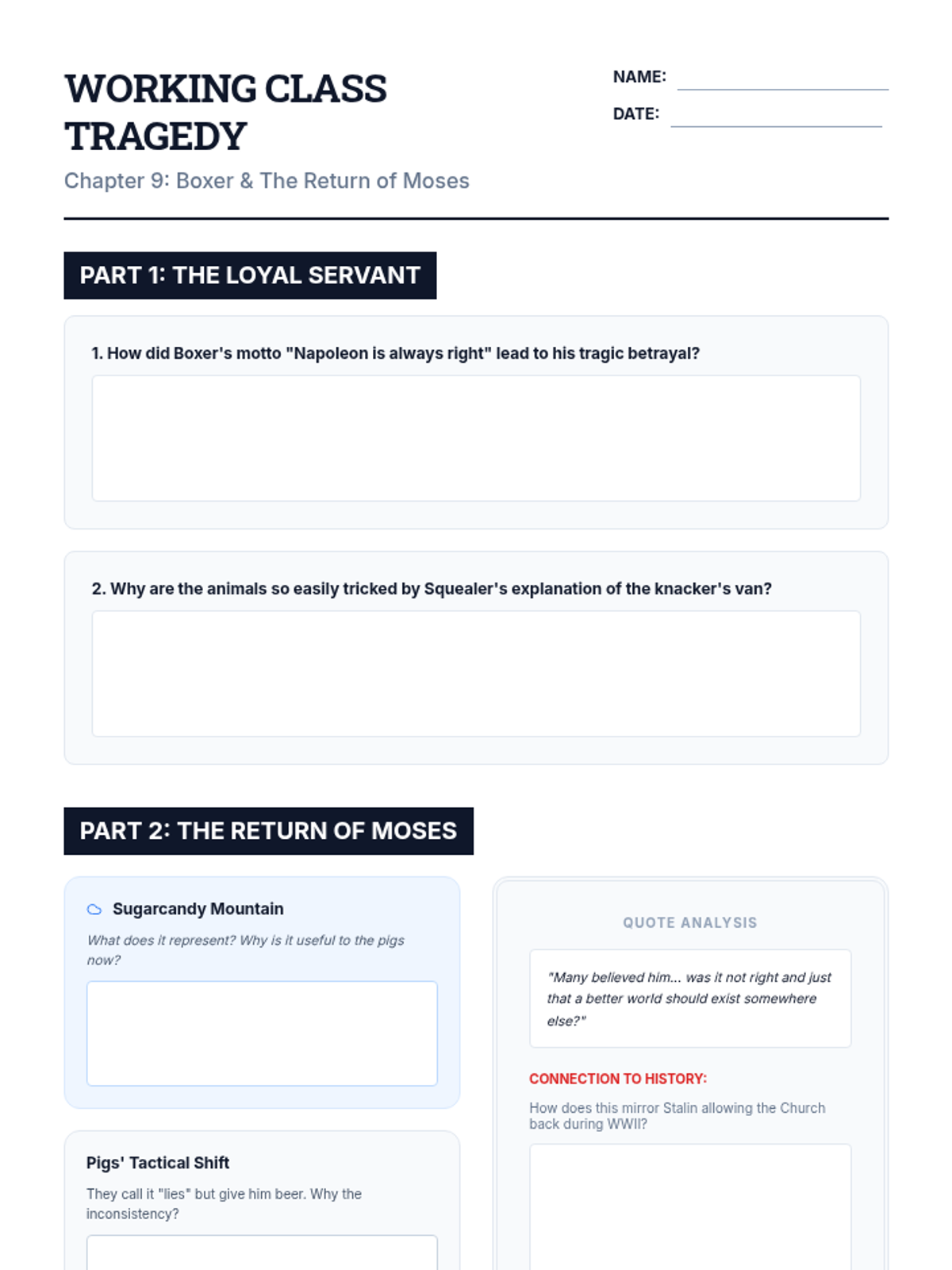
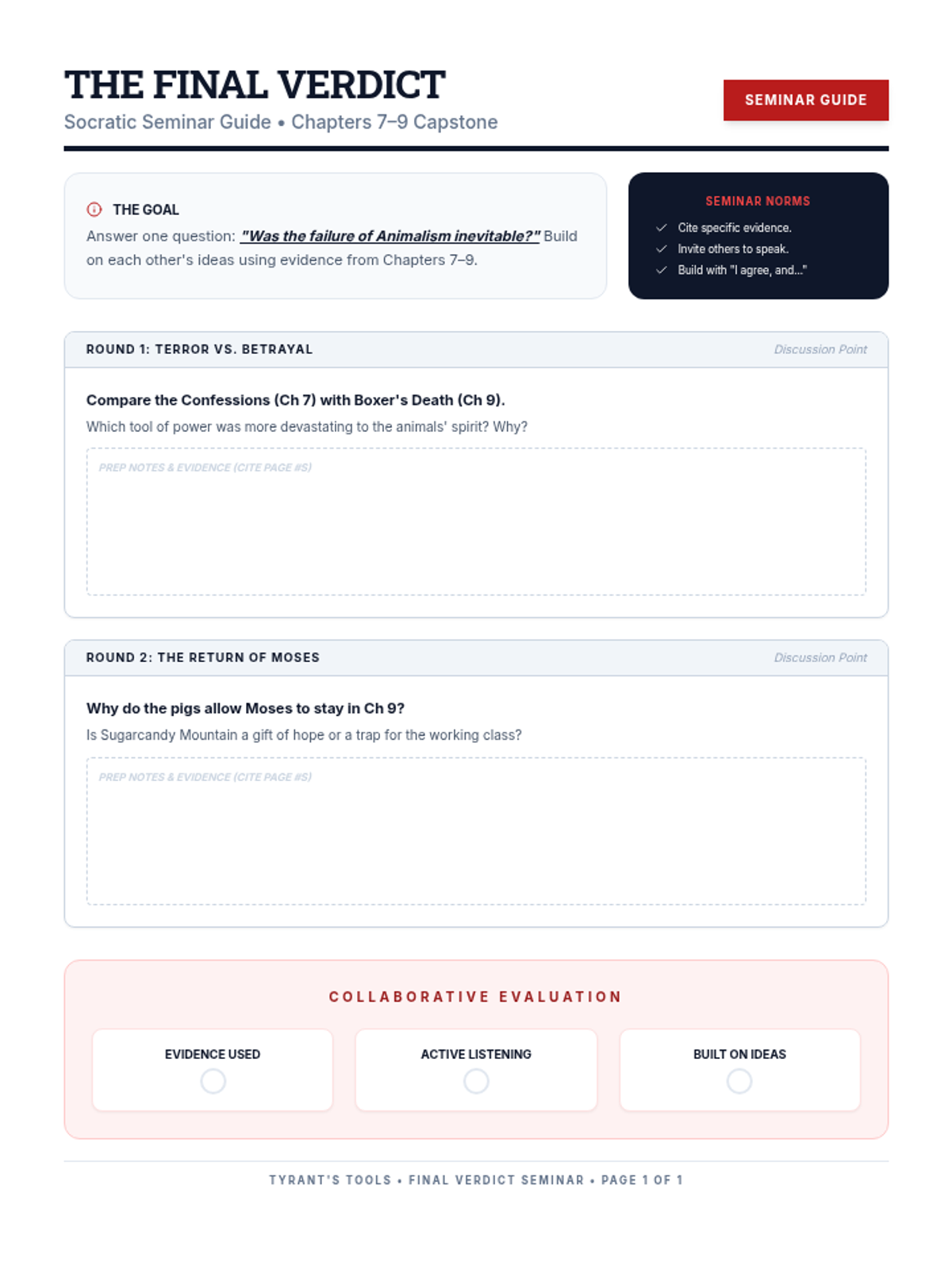
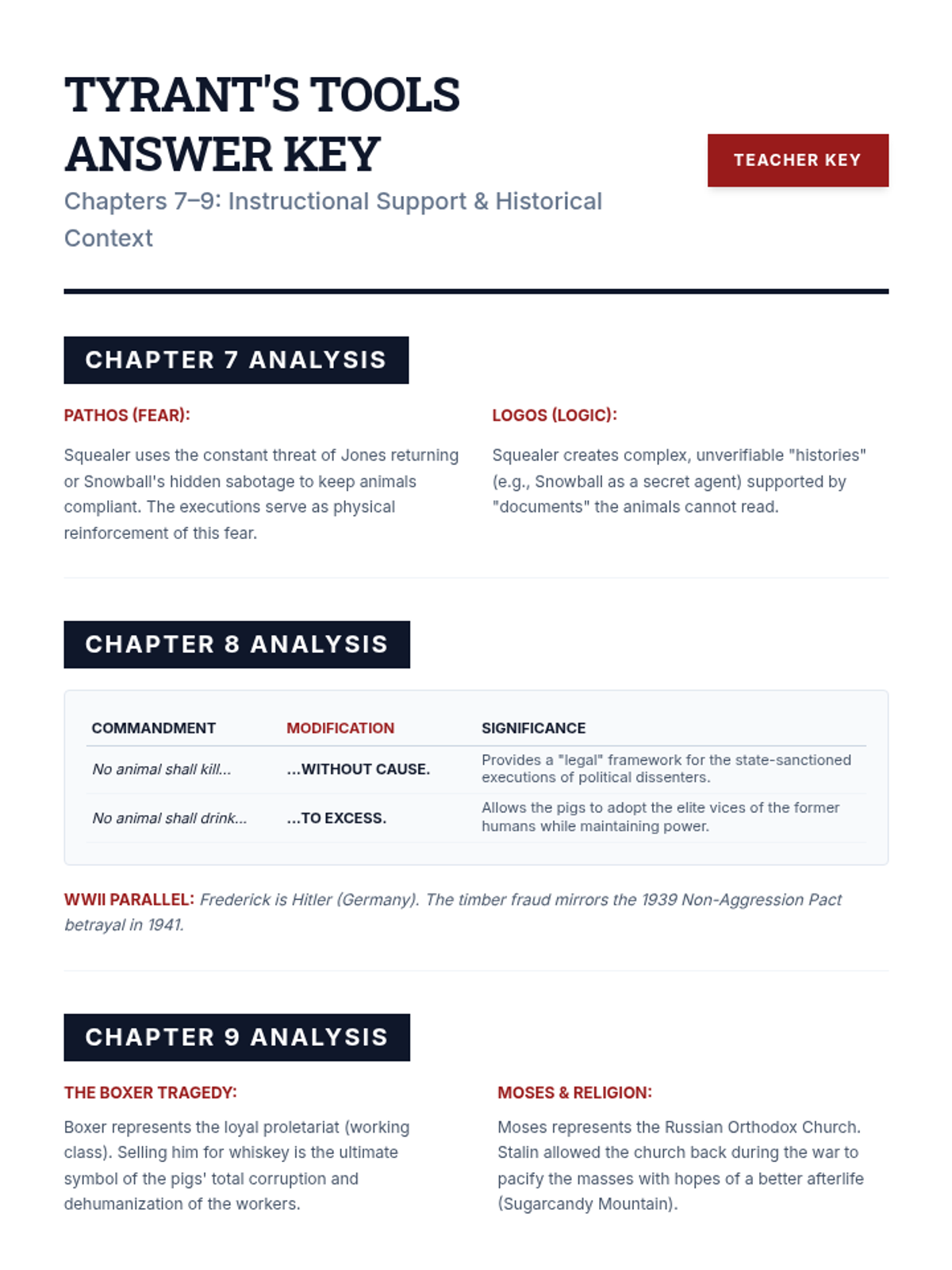
Analyzes Chapter 9's ultimate betrayal of the working class (Boxer) and the symbolic return of Moses, reflecting the final abandonment of Animalism's original ideals.
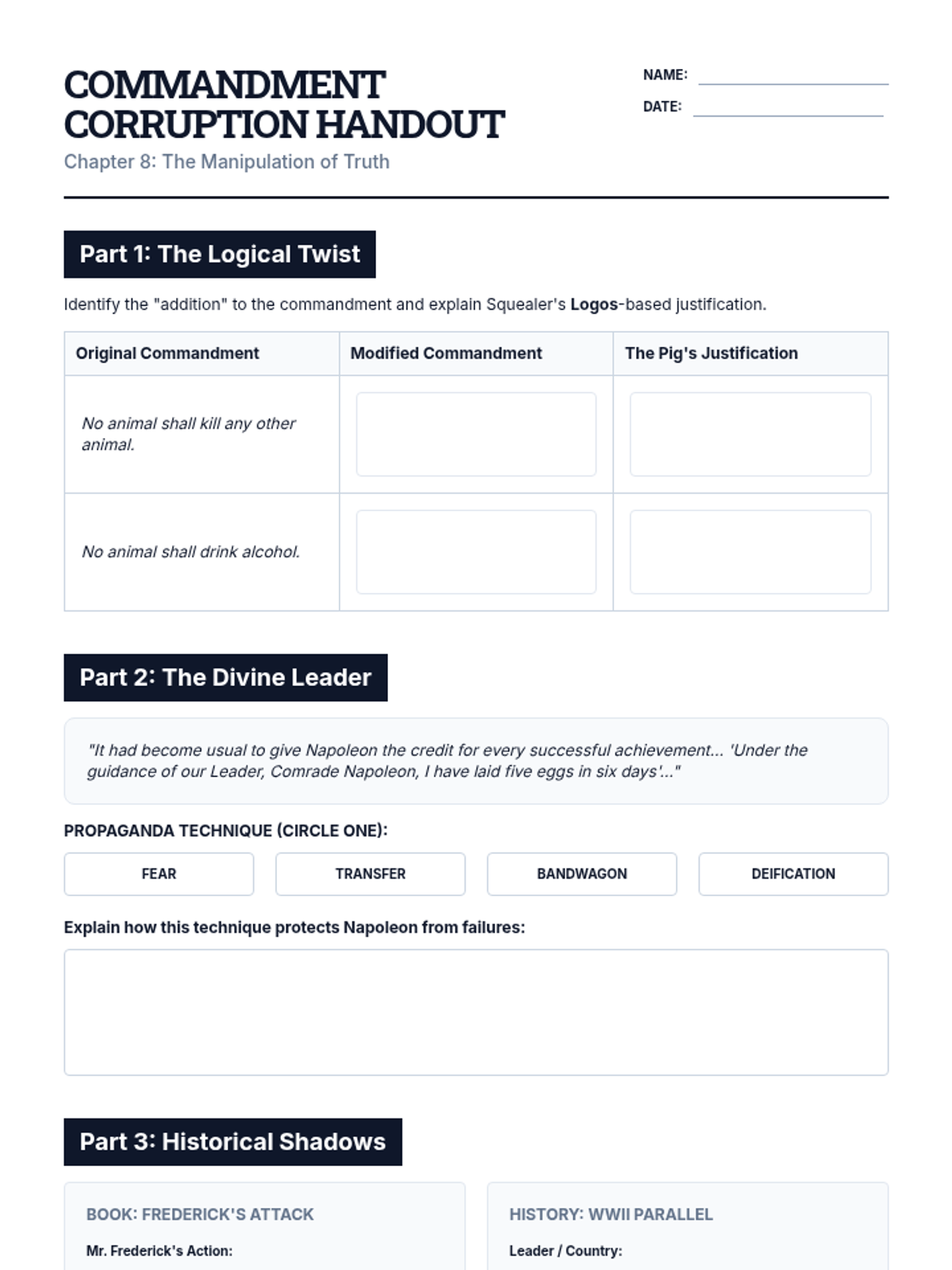
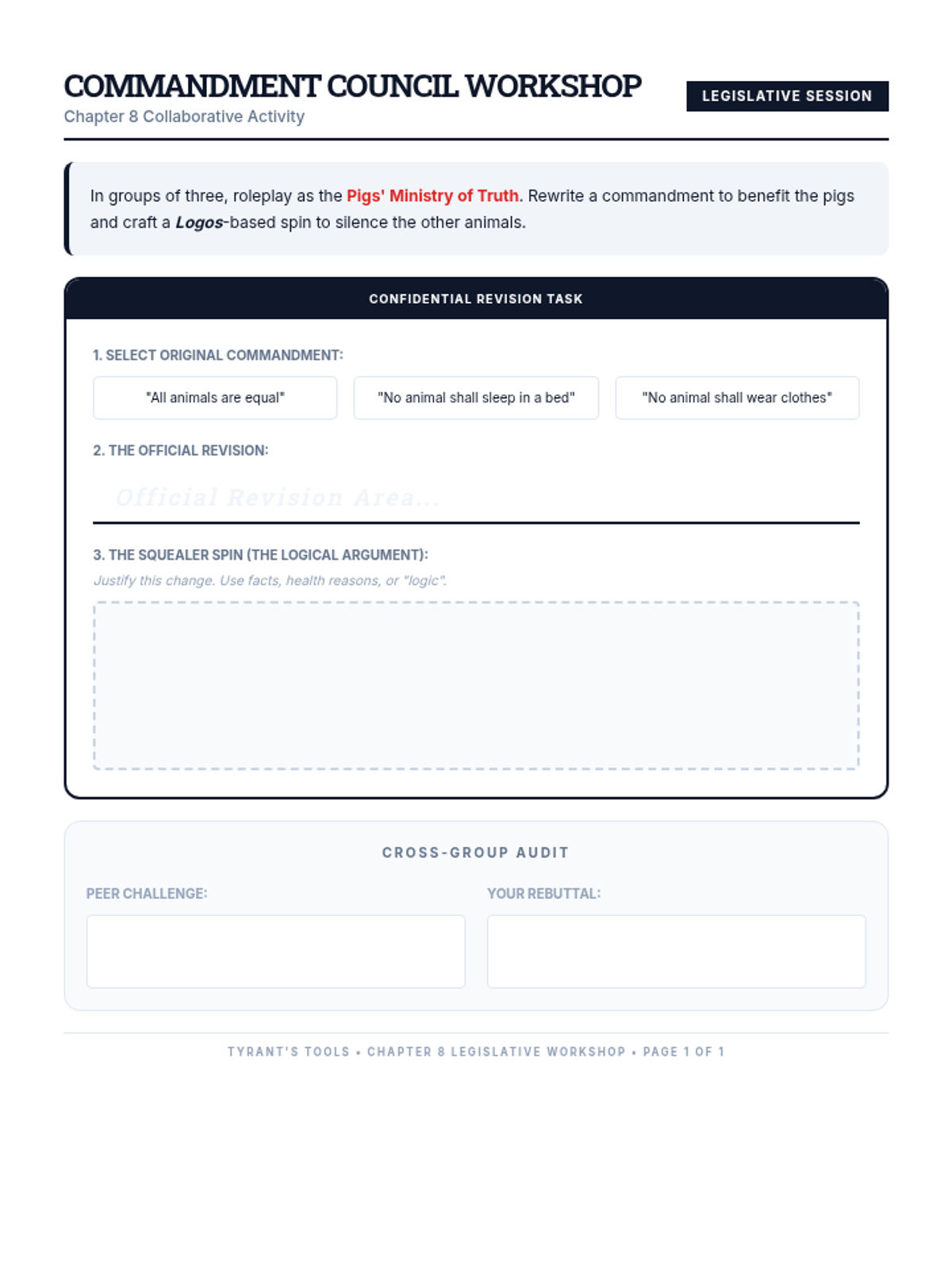
Explores Chapter 8's development of Napoleon's cult of personality, the manipulation of the Commandments (Logos), and the allegorical significance of the Battle of the Windmill.
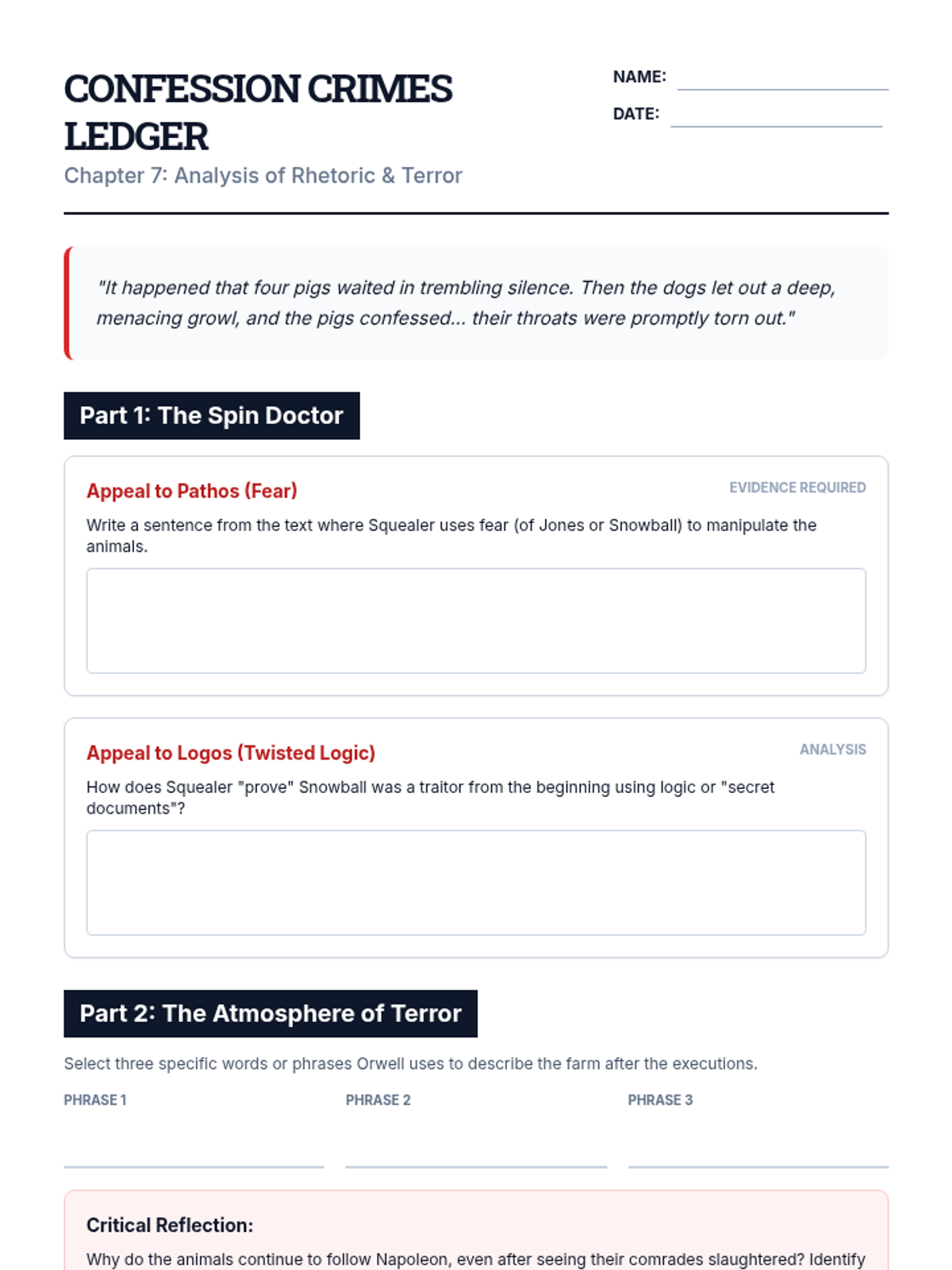
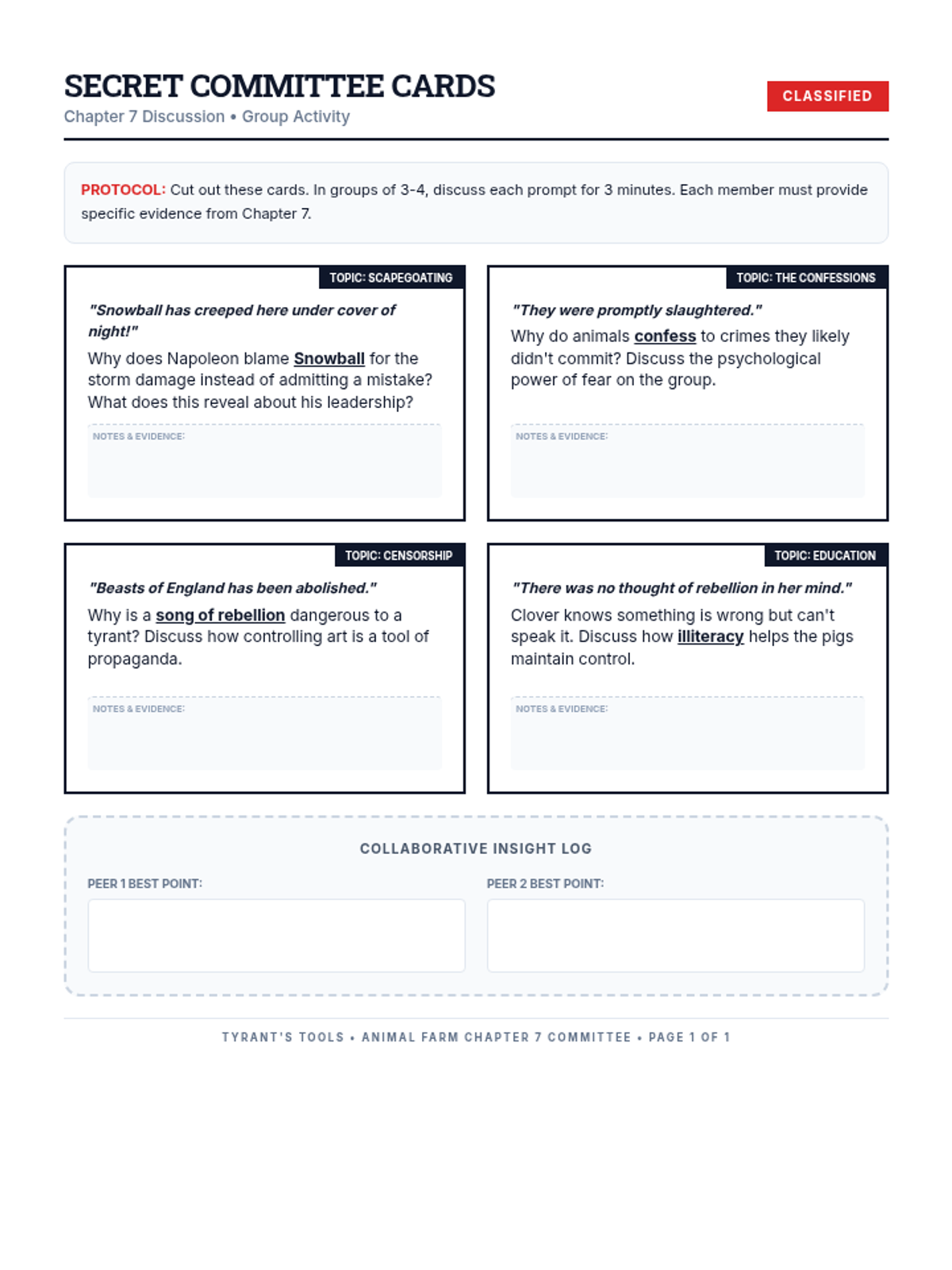
Examines Chapter 7's focus on the atmosphere of terror, the use of rhetorical appeals (specifically Pathos through fear), and the allegorical connection to Stalin's Great Purge through the animal confessions.
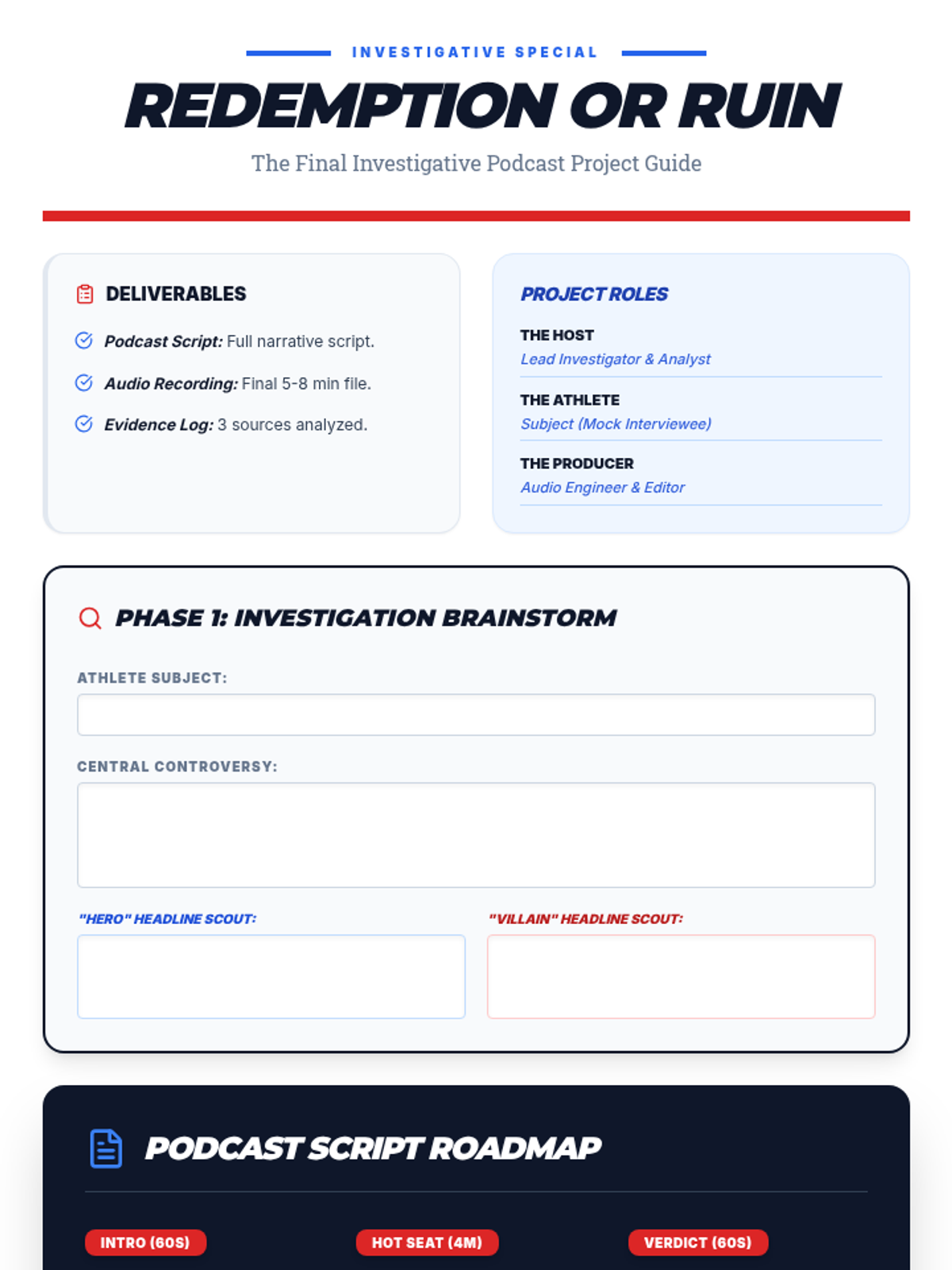
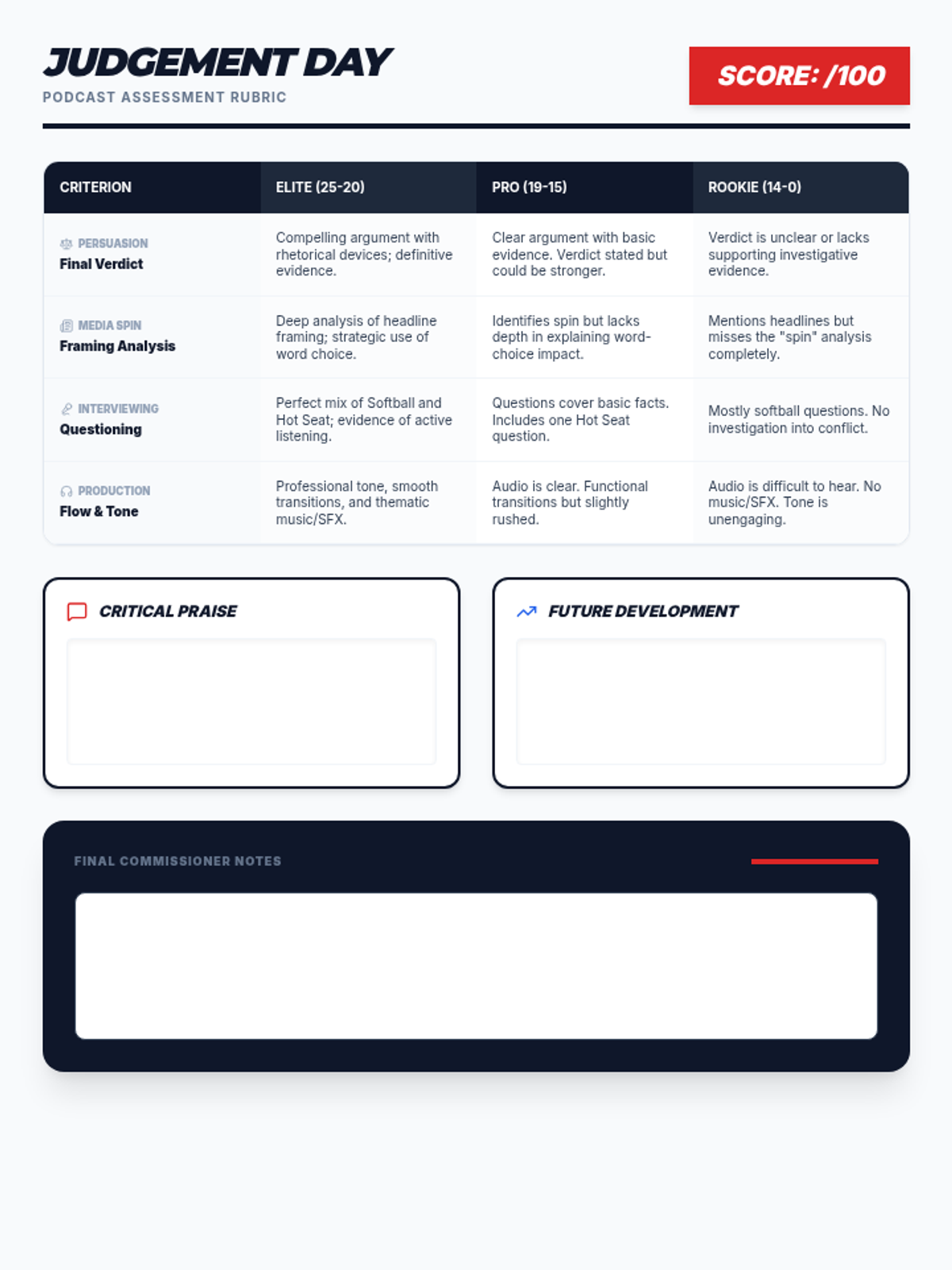
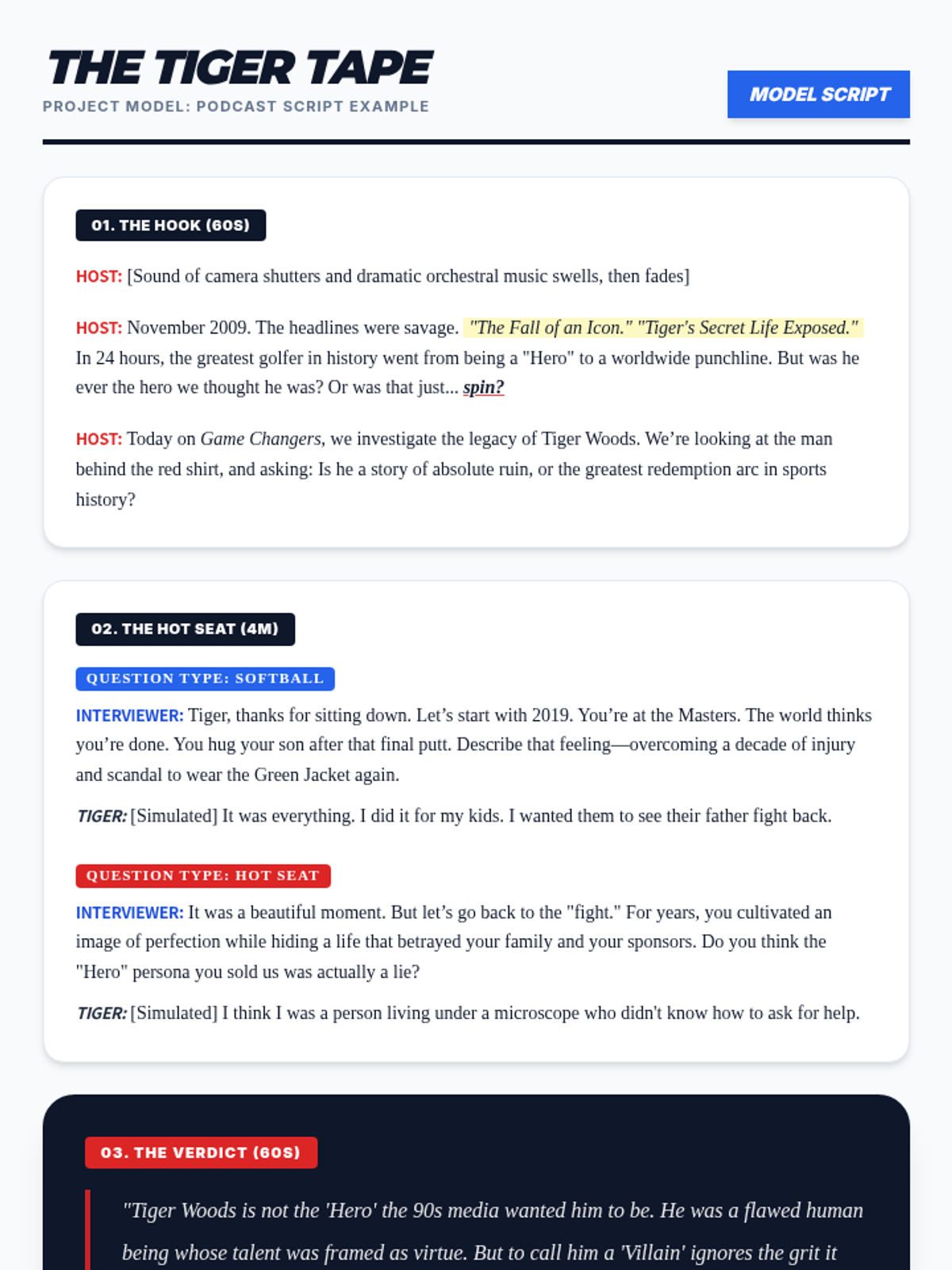
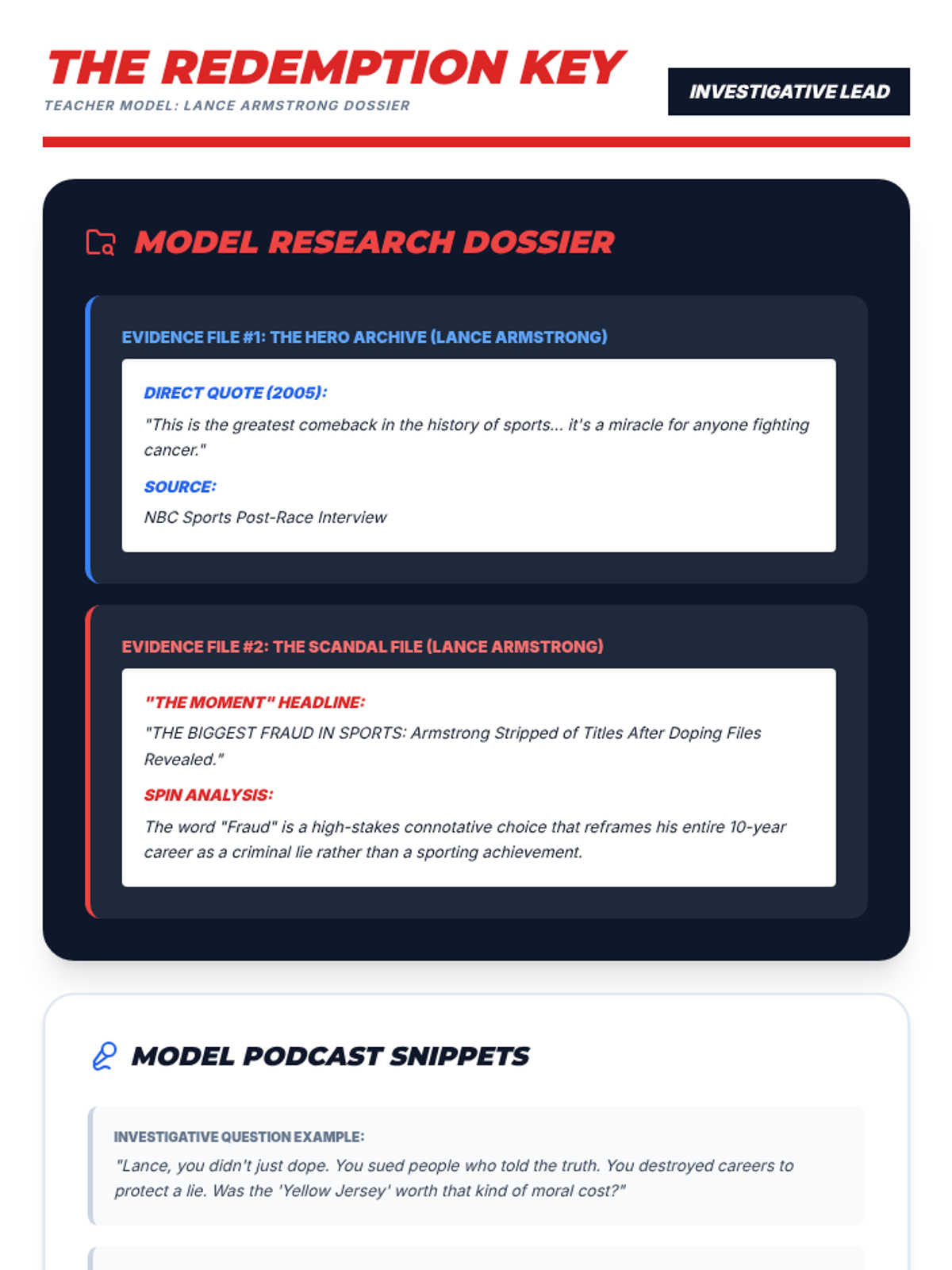
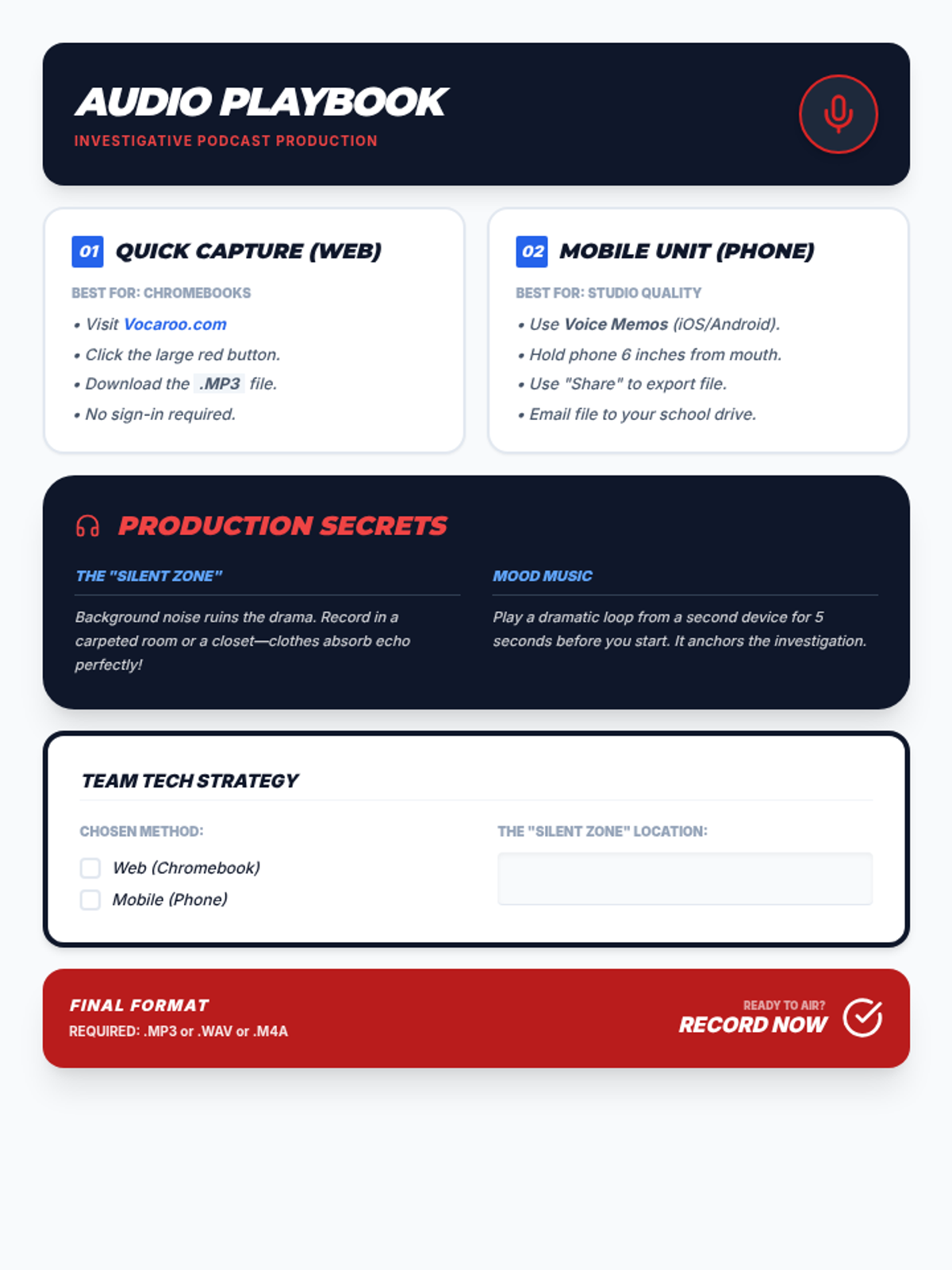
The culminating project where students research a controversial sports figure and produce a persuasive investigative podcast script and recording.
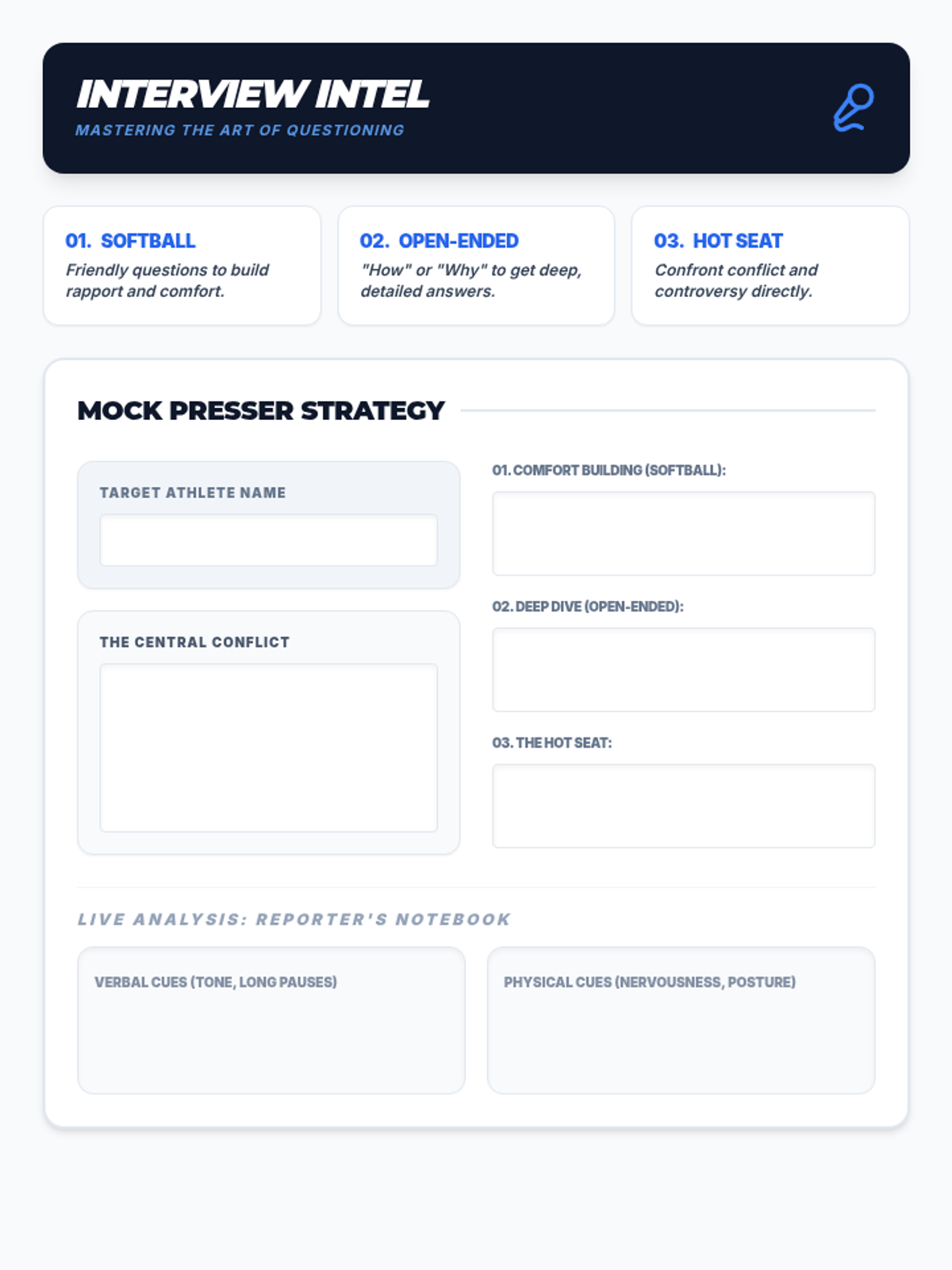
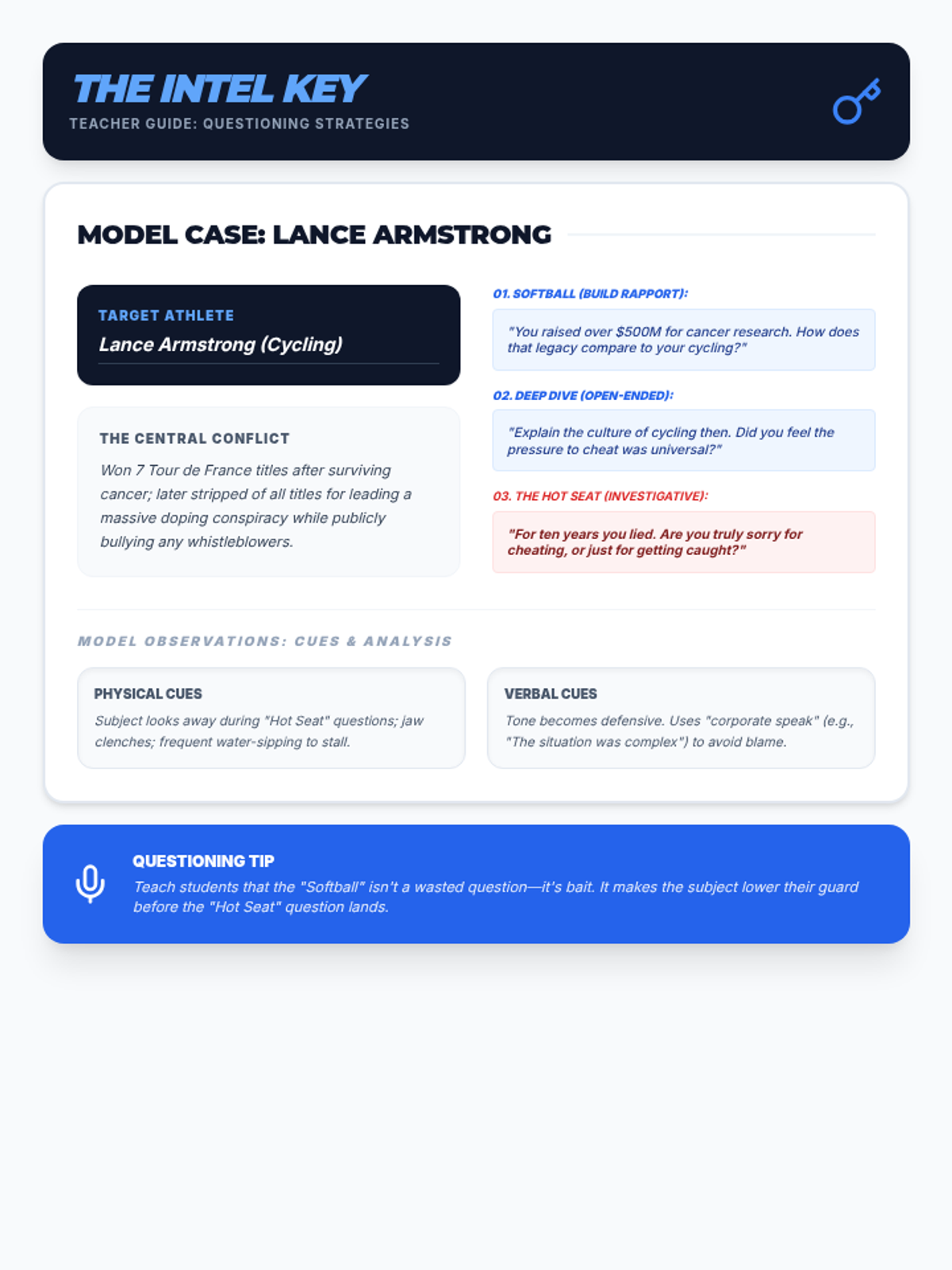
Students master the art of the interview, learning to craft hard-hitting questions and analyze verbal cues to uncover the 'truth' behind the athlete's persona.
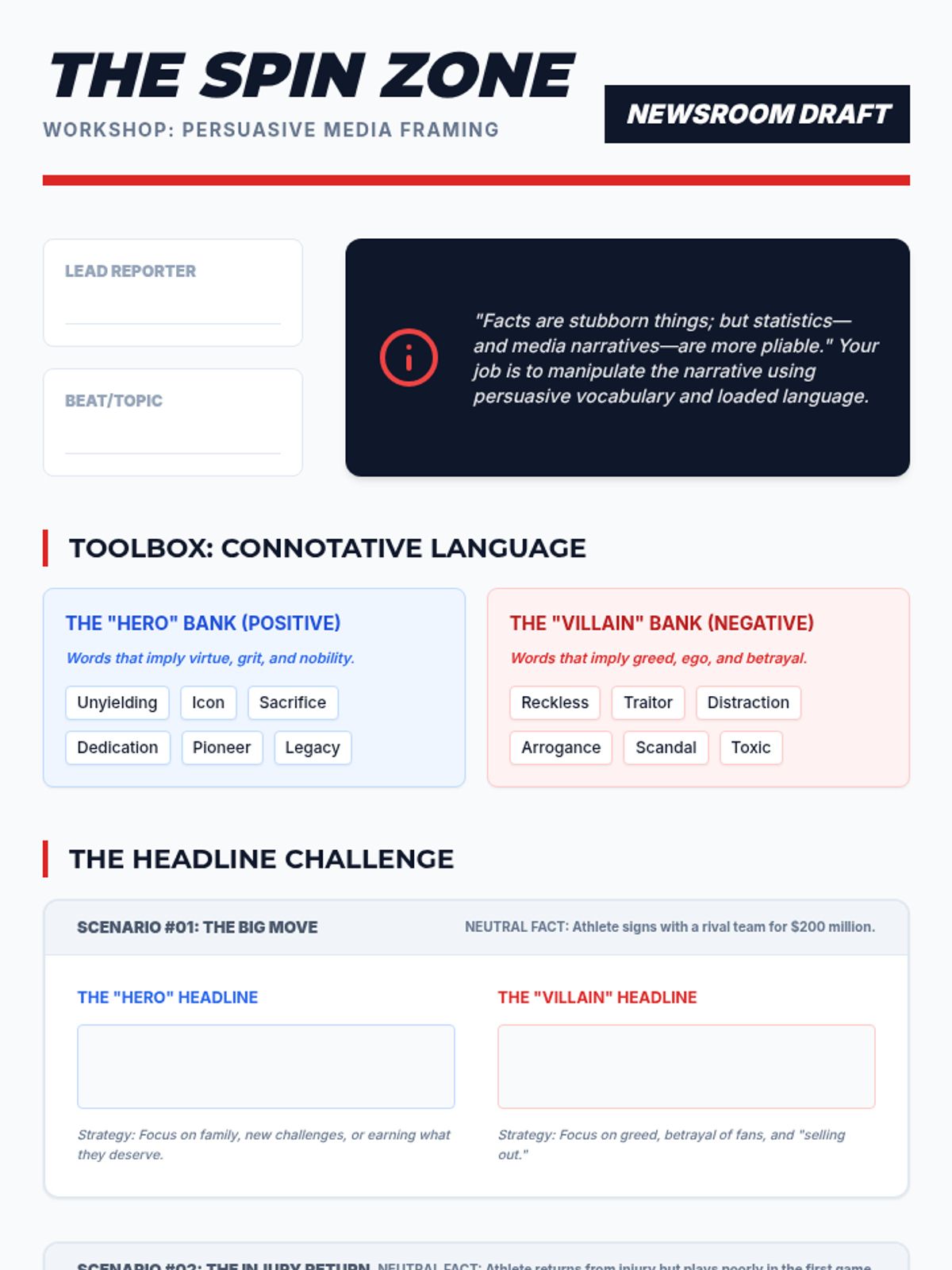
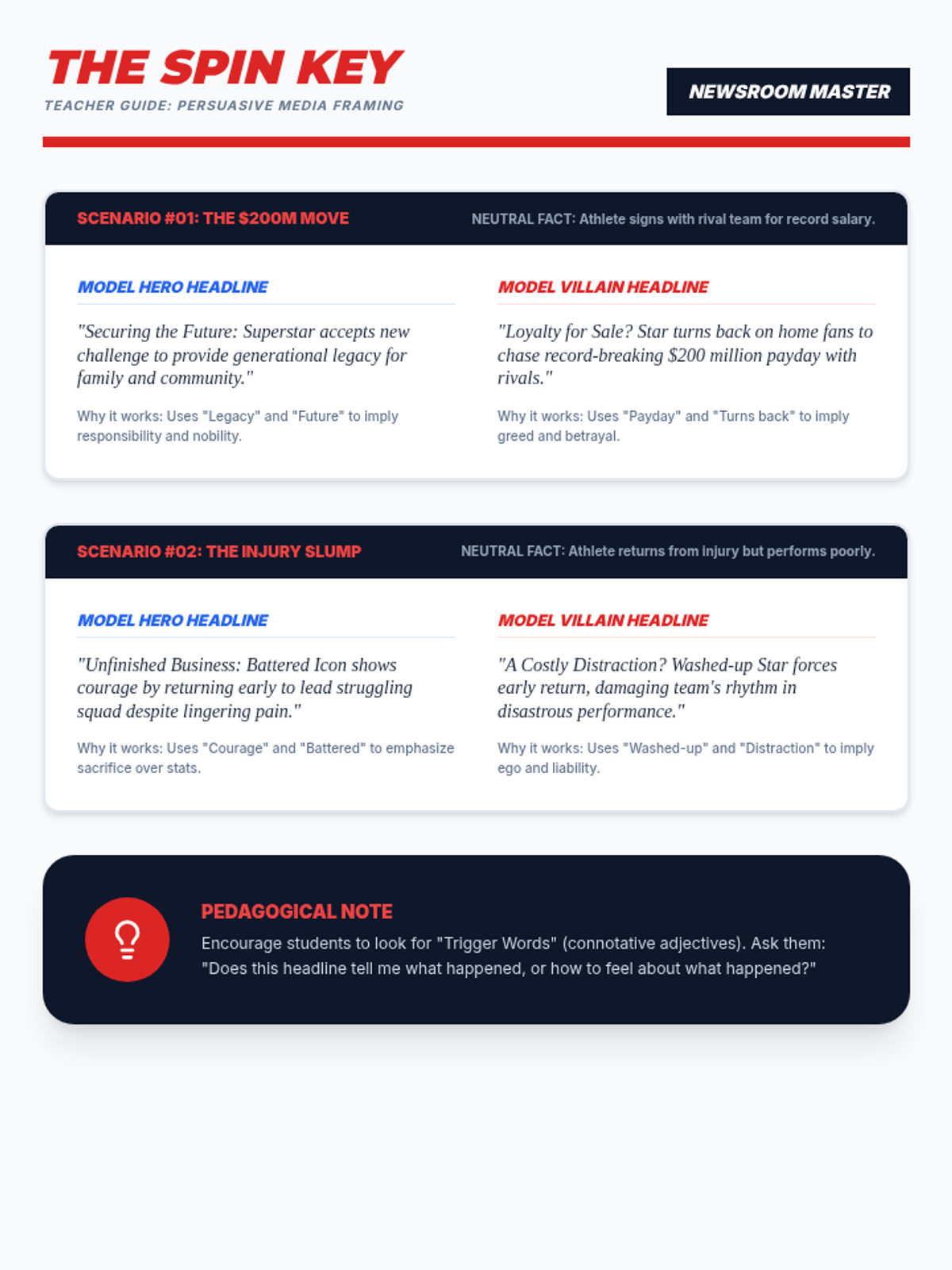
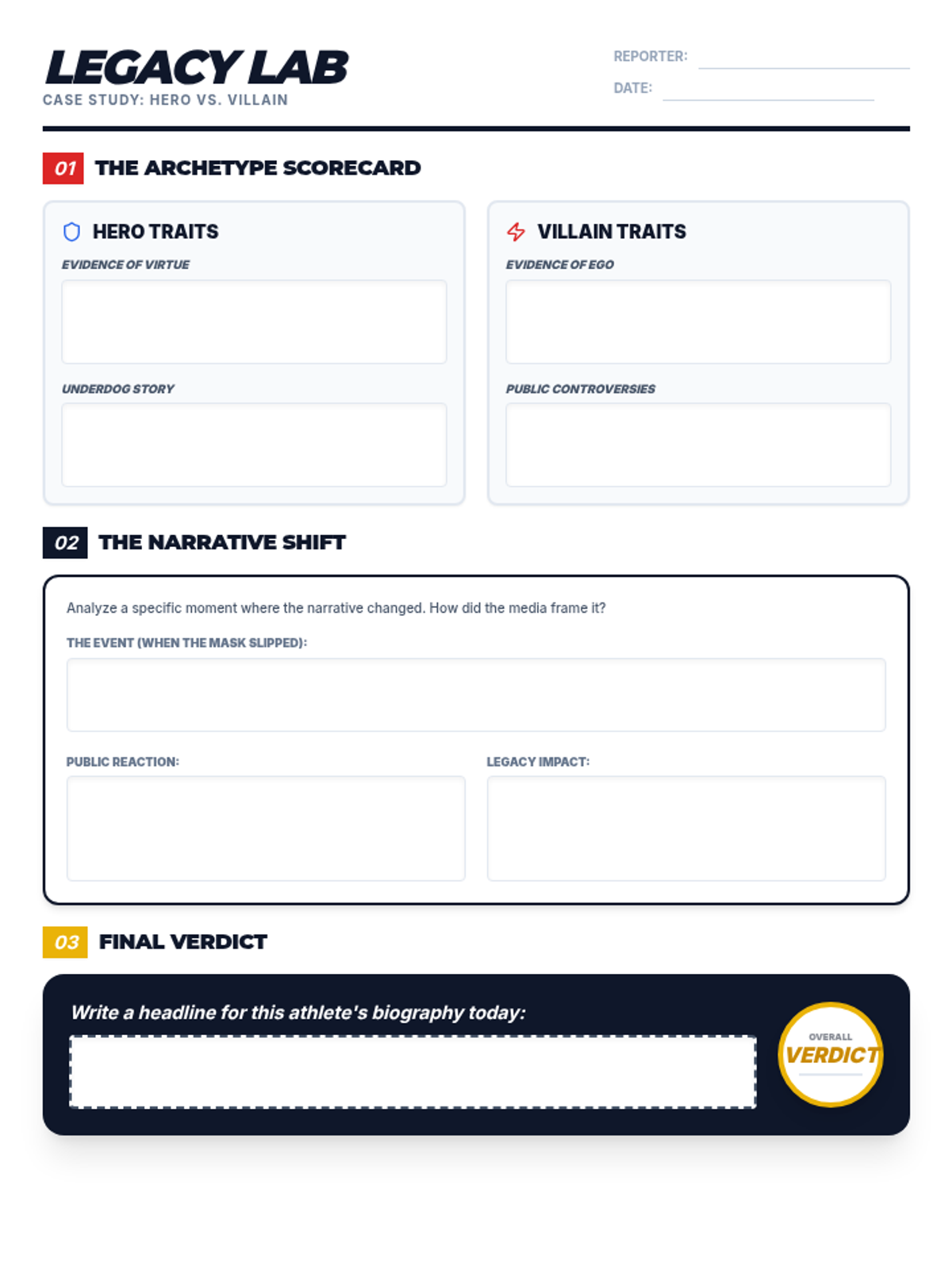
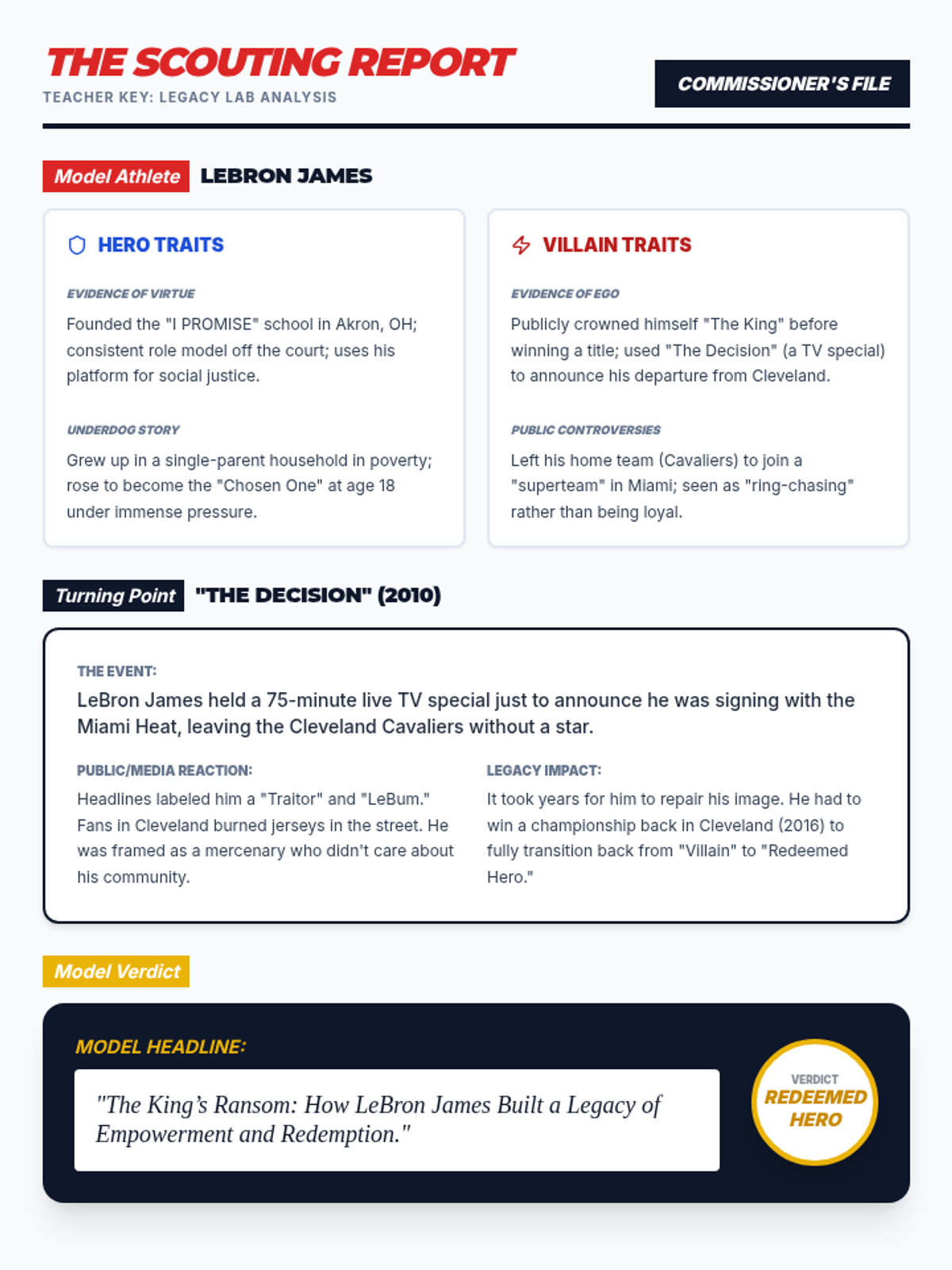
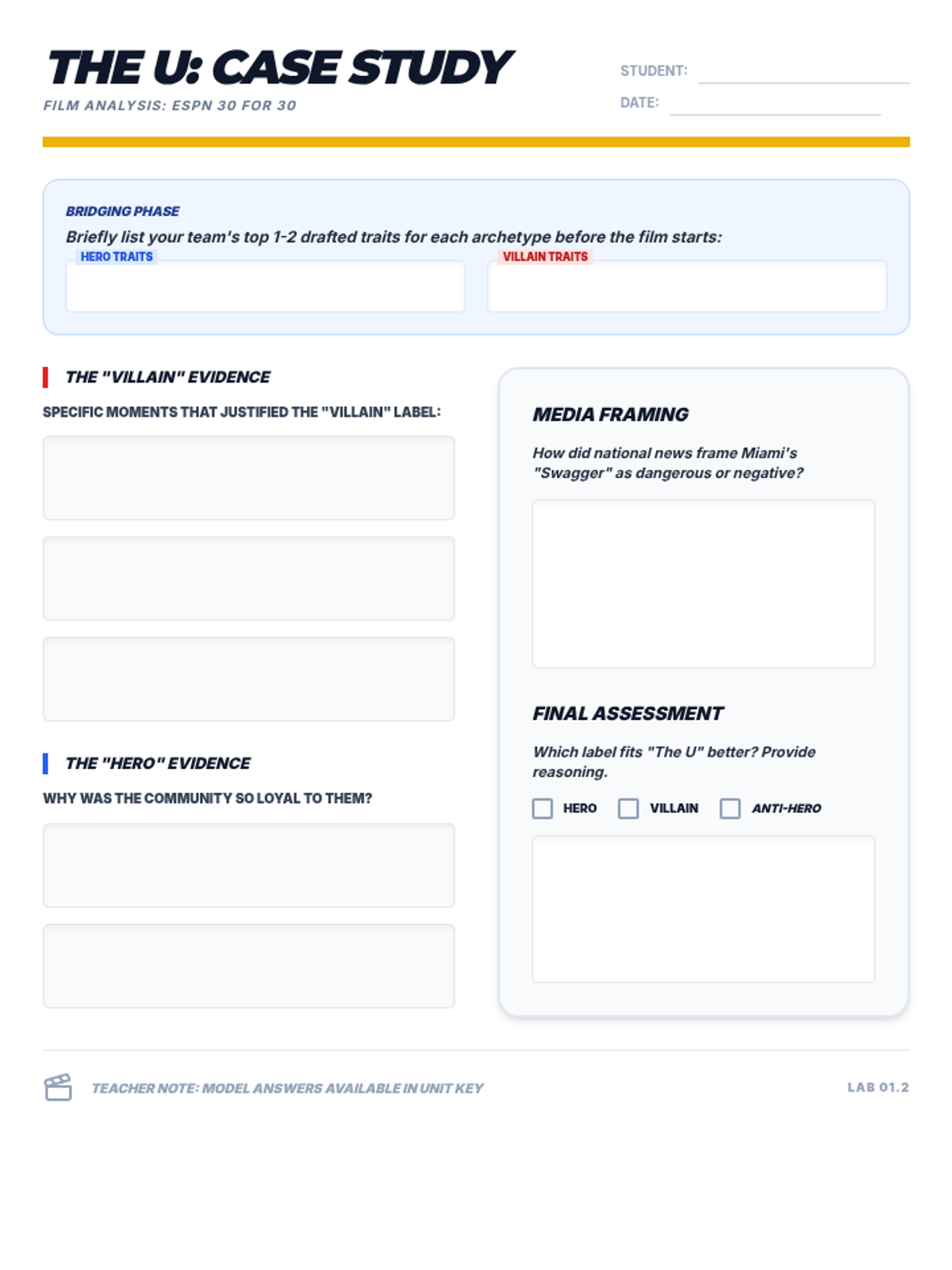
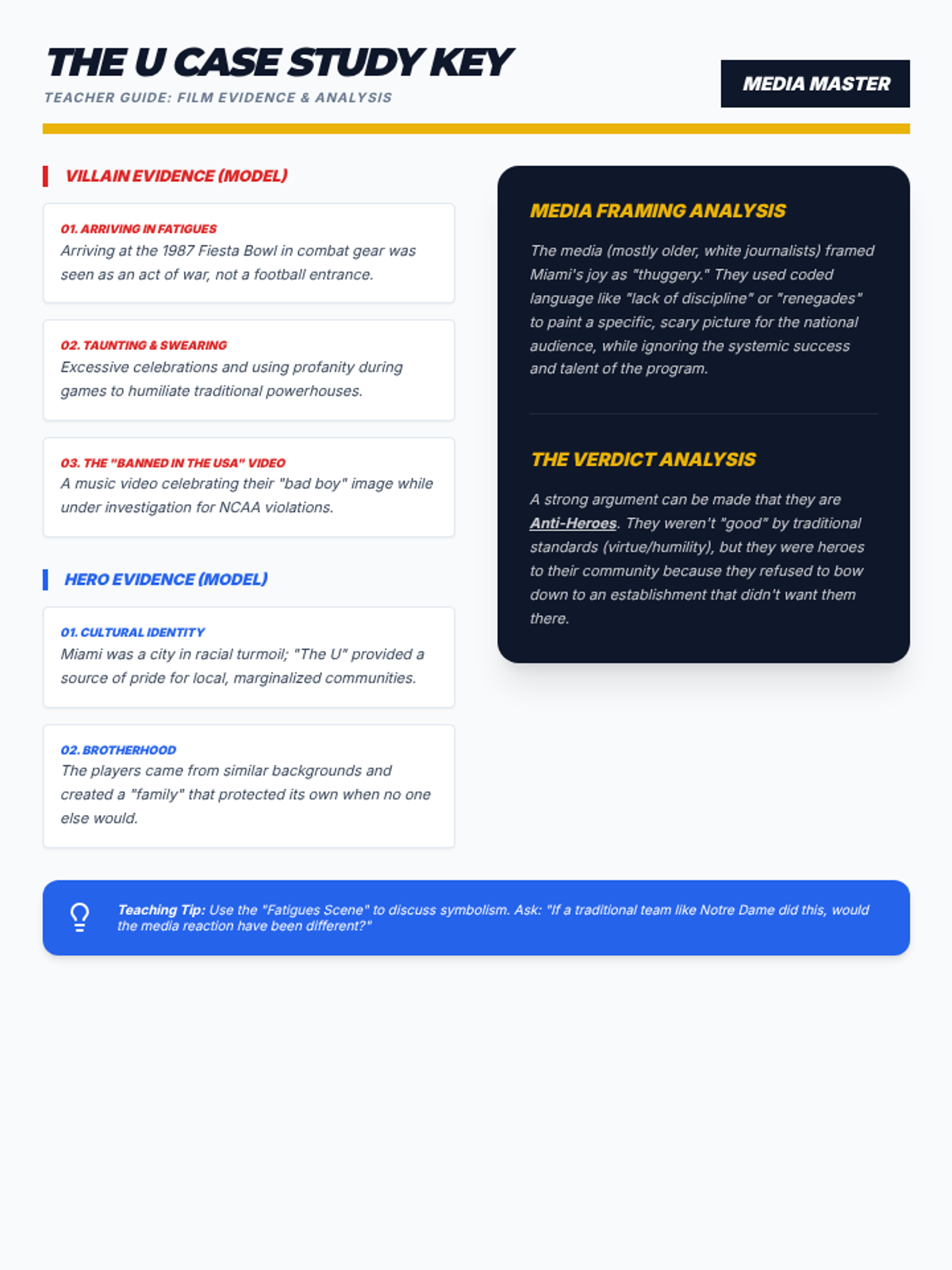
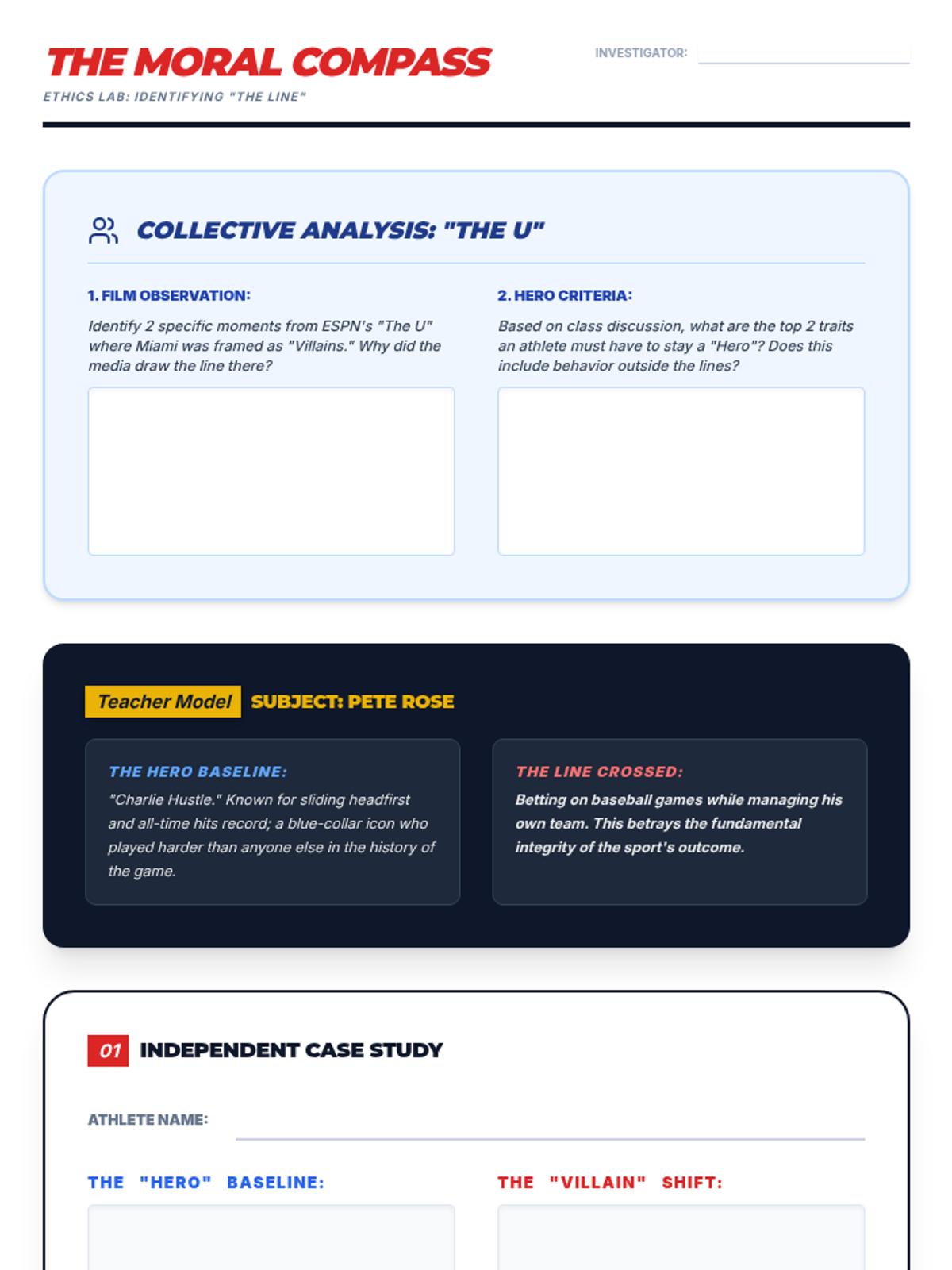
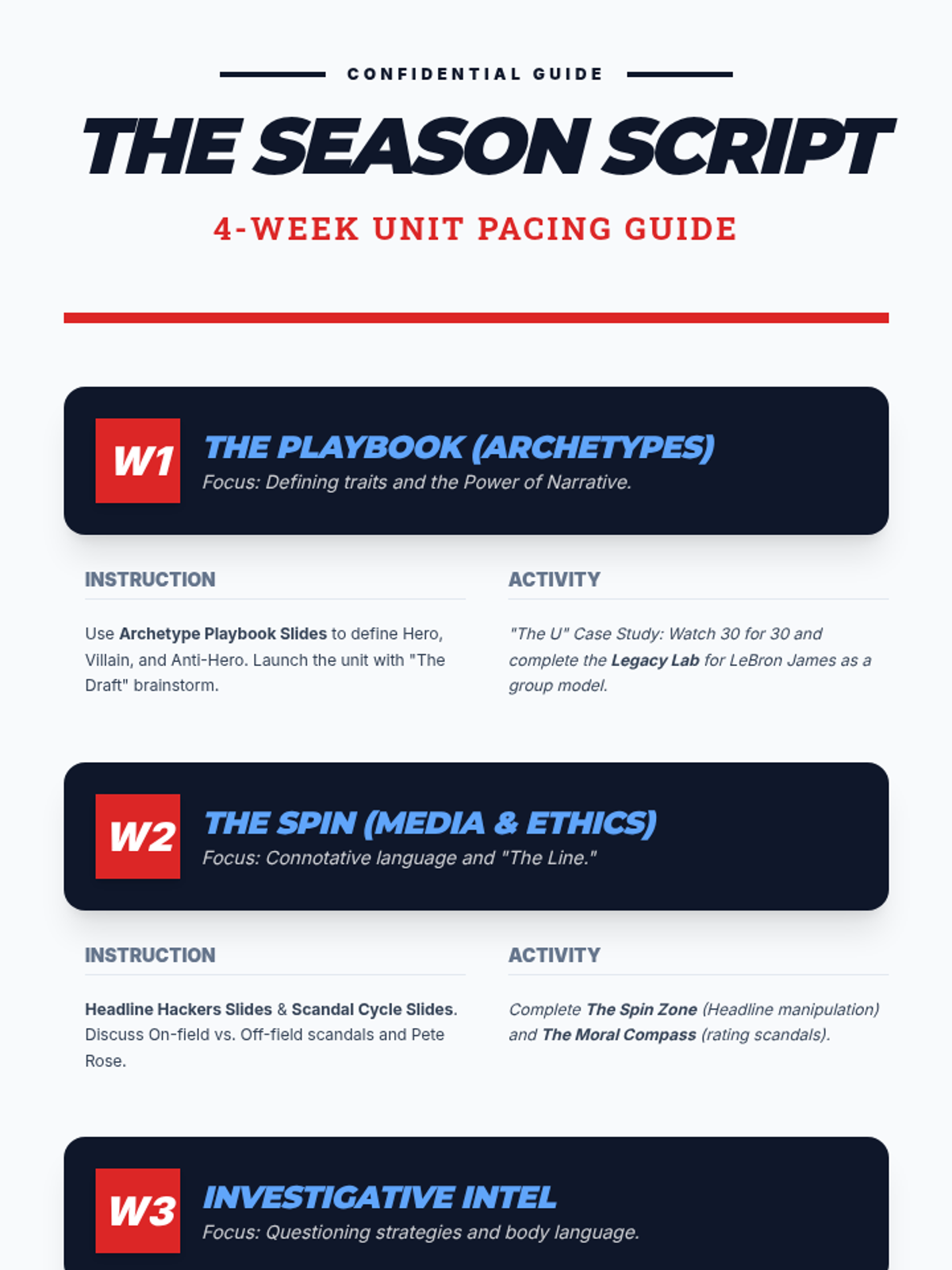
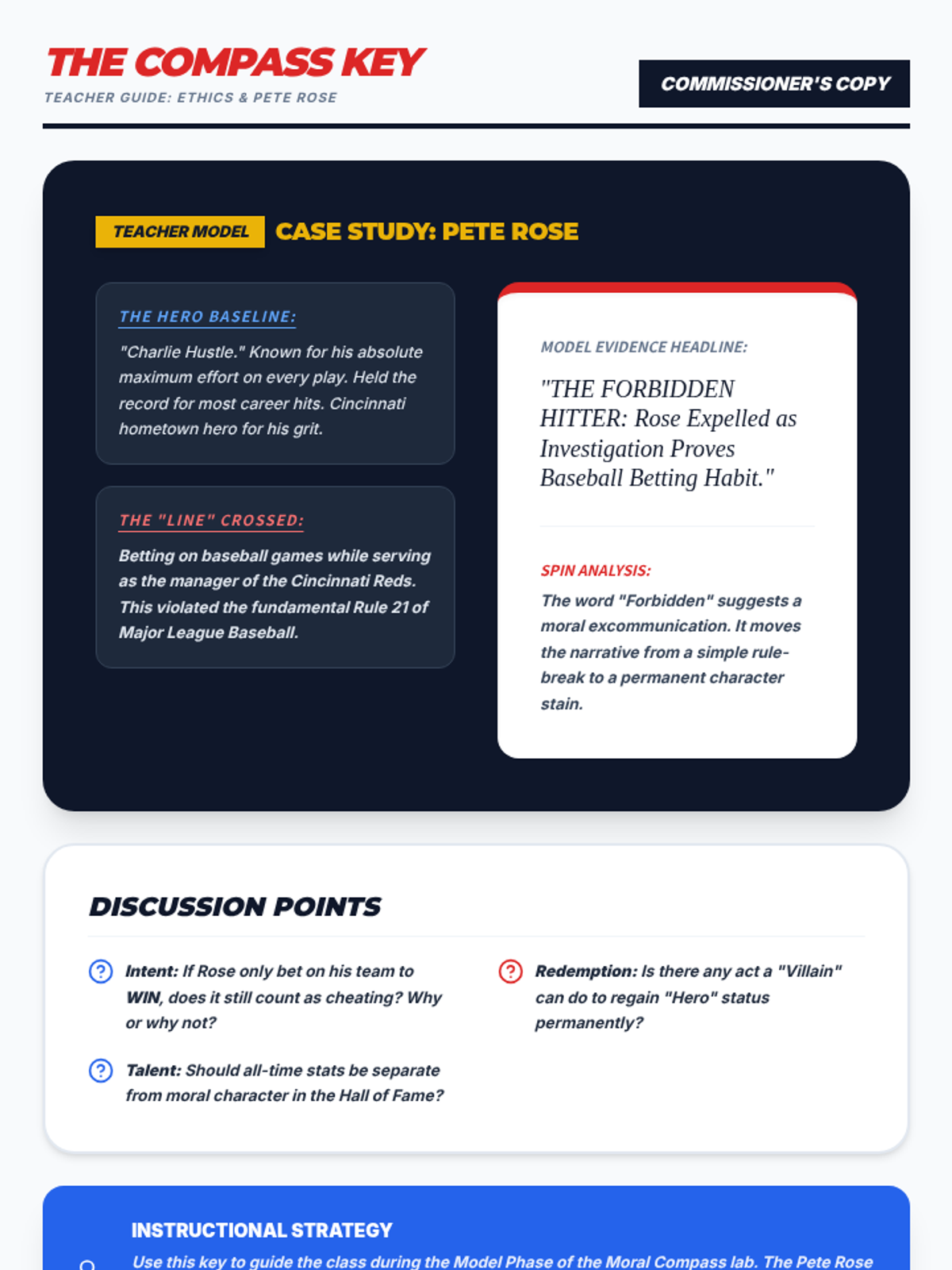
An exploration of how media framing, headlines, and persuasive language can transform an athlete's public image from hero to villain and back again.
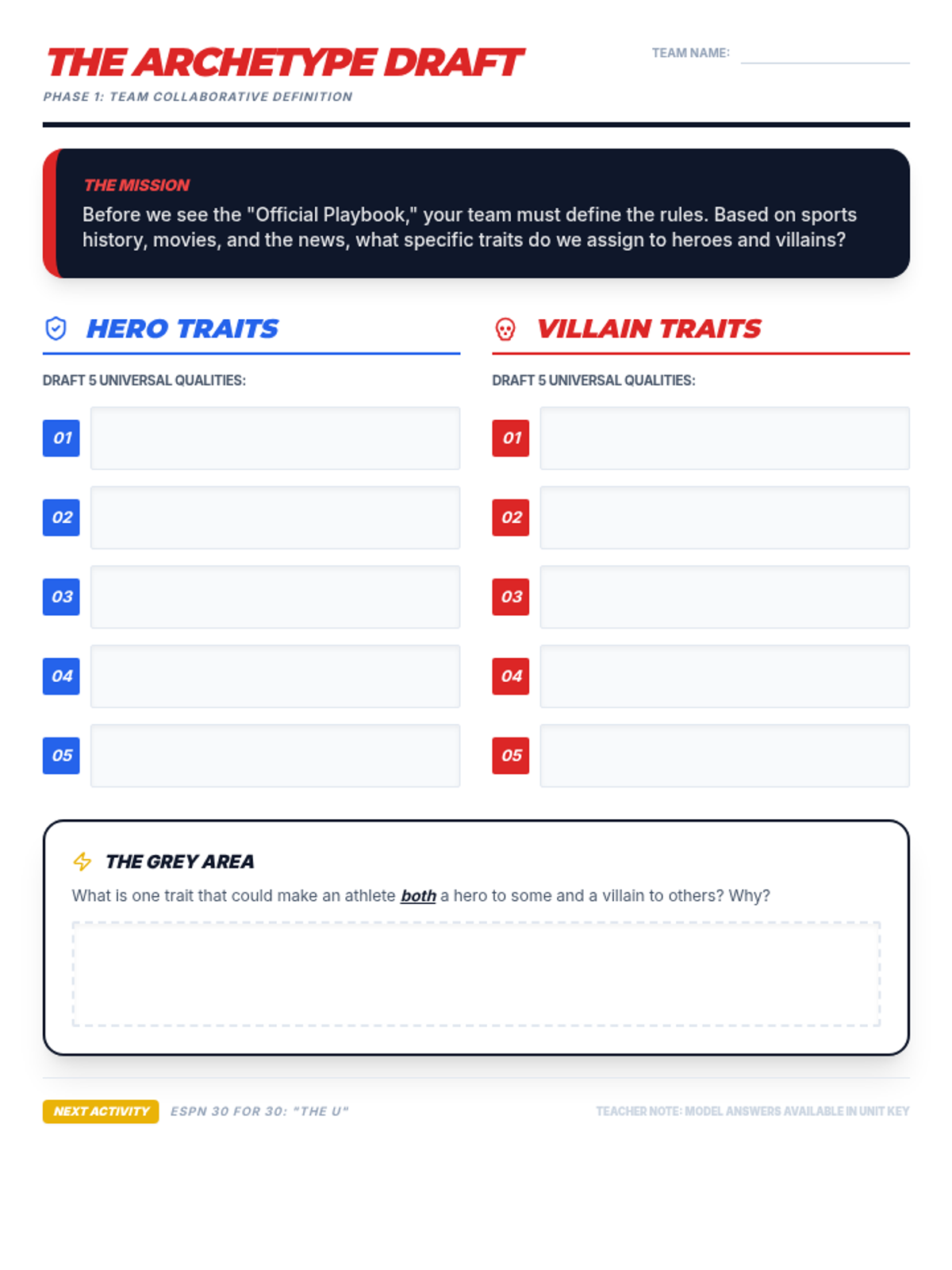
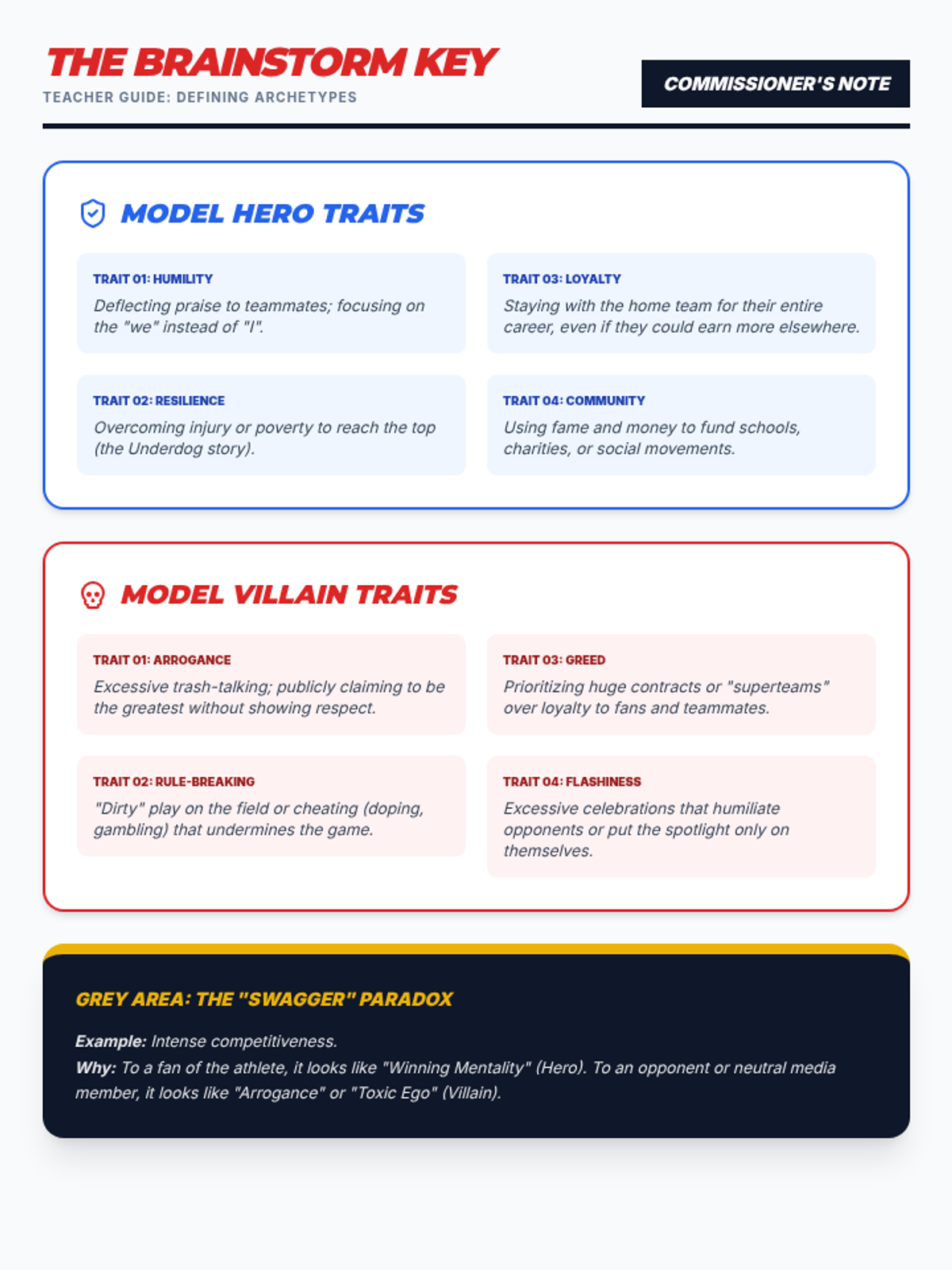
Students define the traits of sports heroes and villains, exploring how narrative archetypes are applied to real-world athletes to create compelling stories.
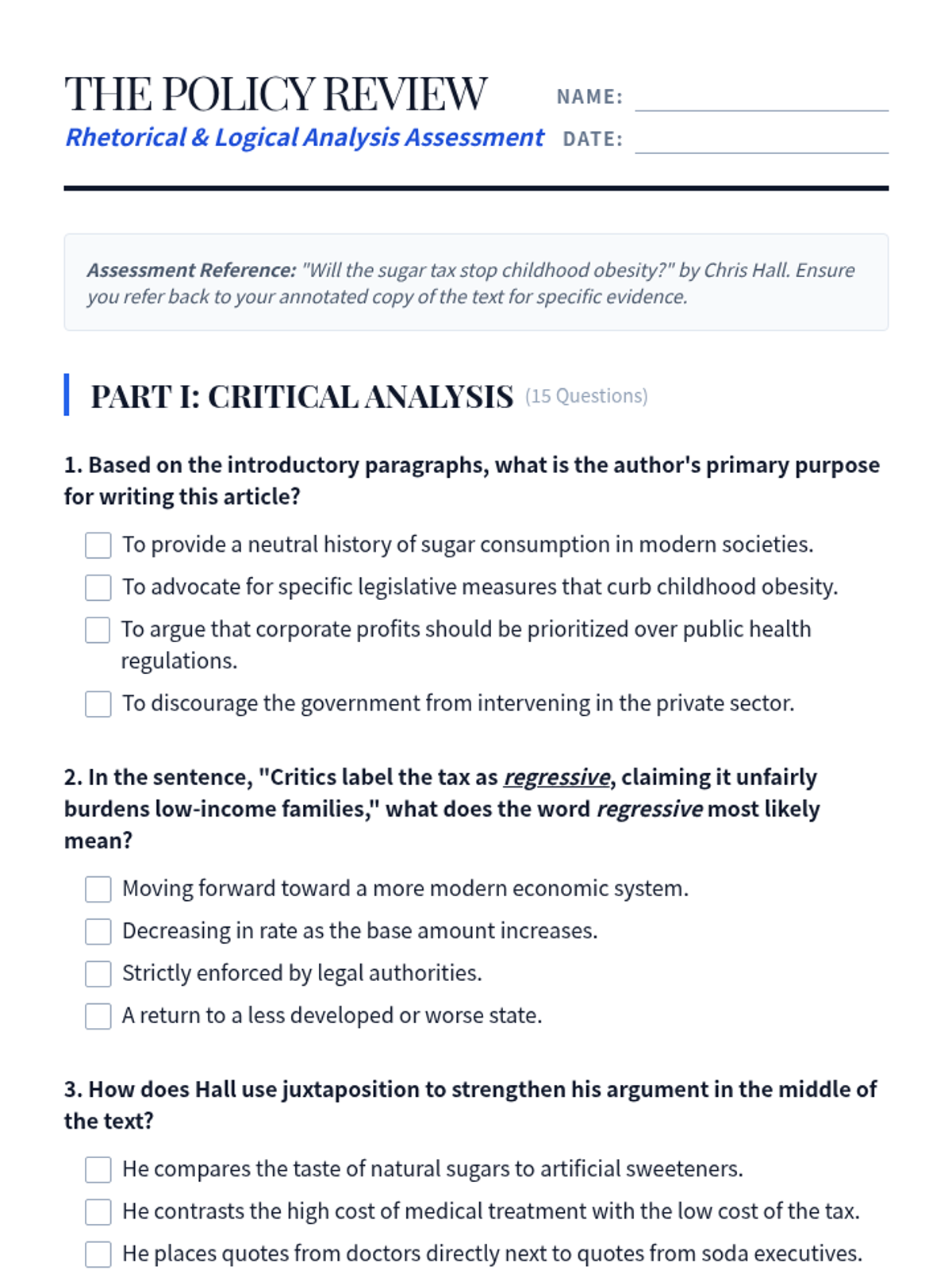
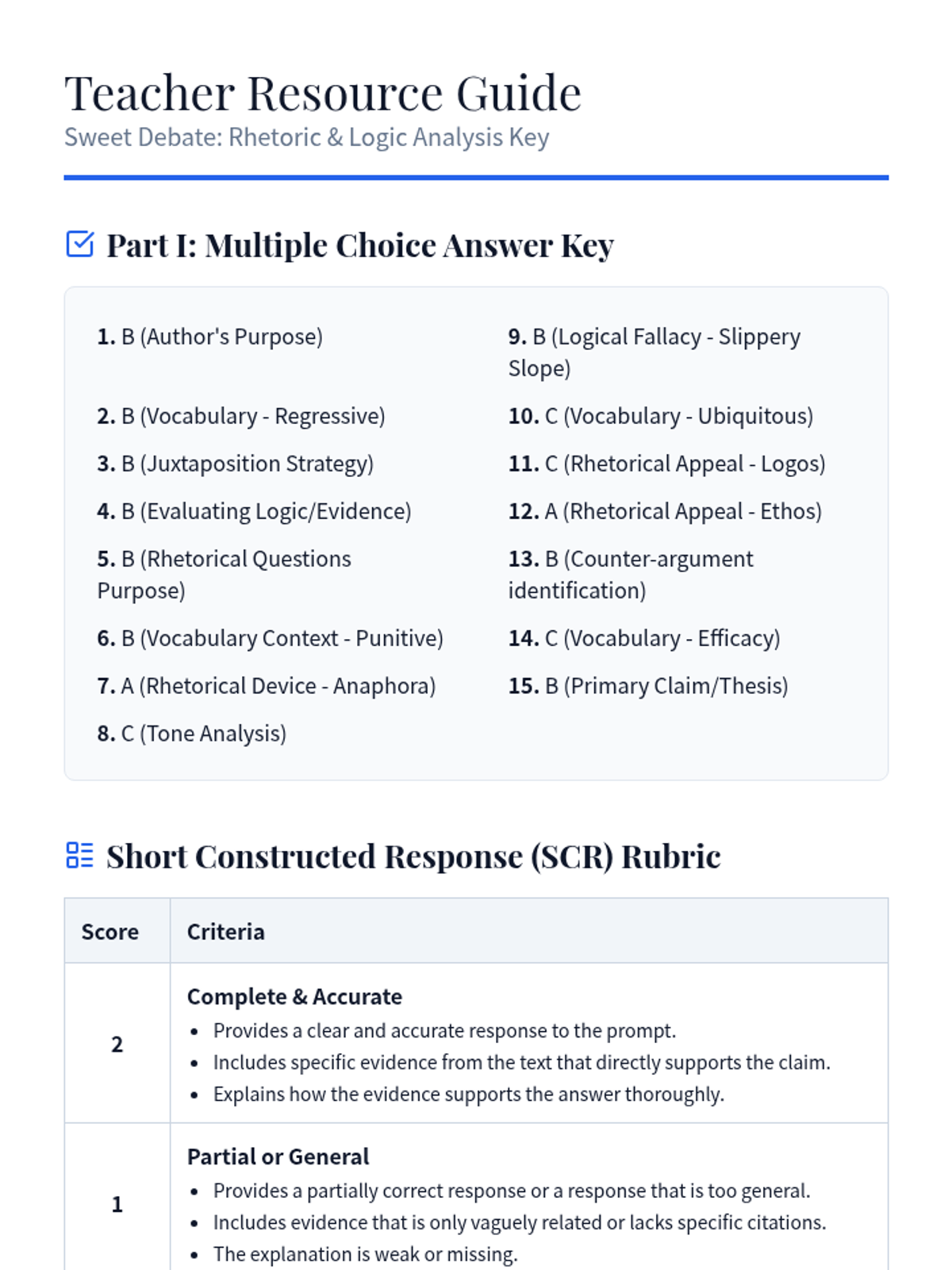
A high school English 4 lesson focused on evaluating evidence, rhetorical devices, and vocabulary in context using Chris Hall's 'Will the sugar tax stop childhood obesity'. Includes a professional presentation and a STAAR-aligned assessment.
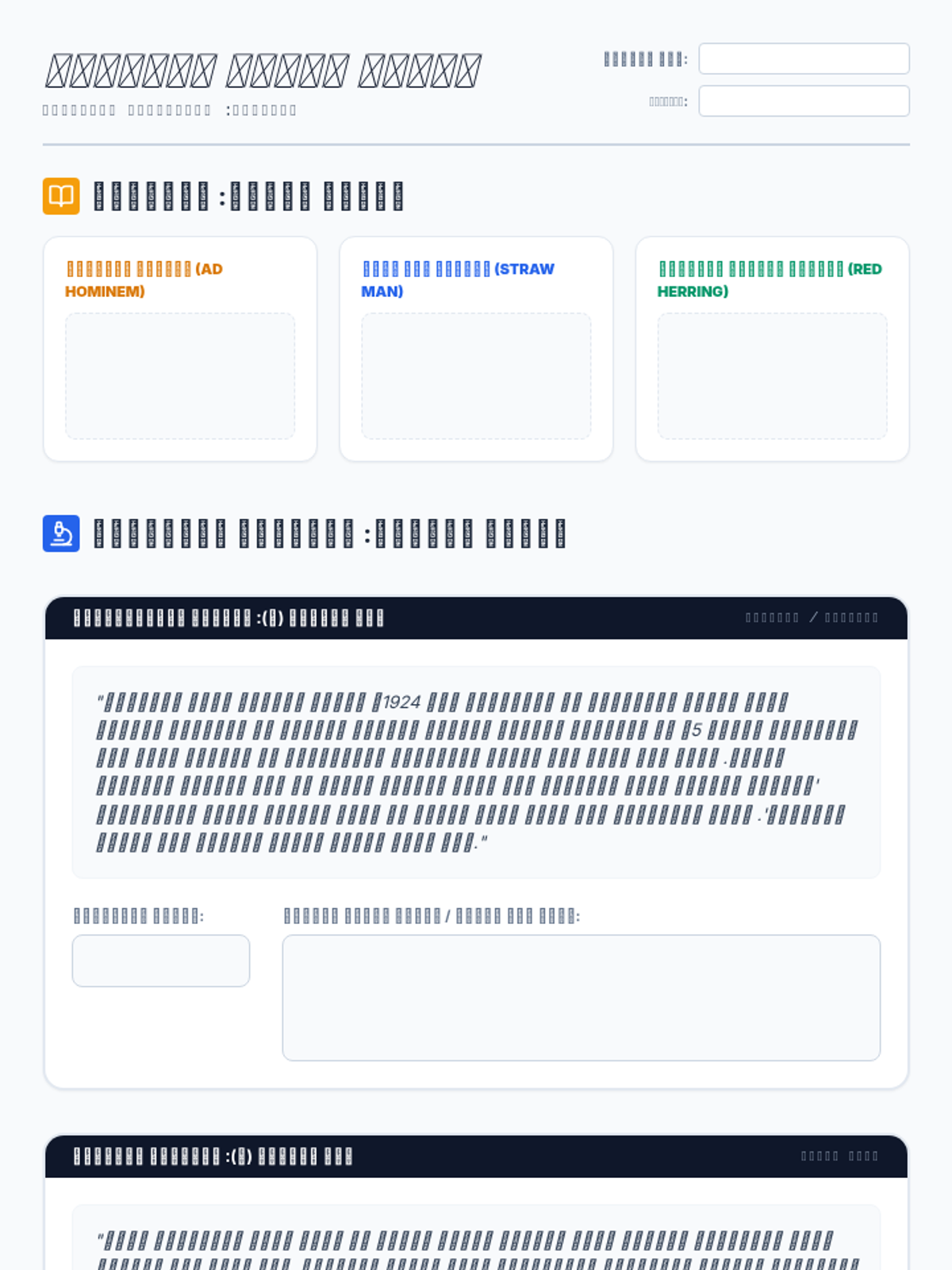
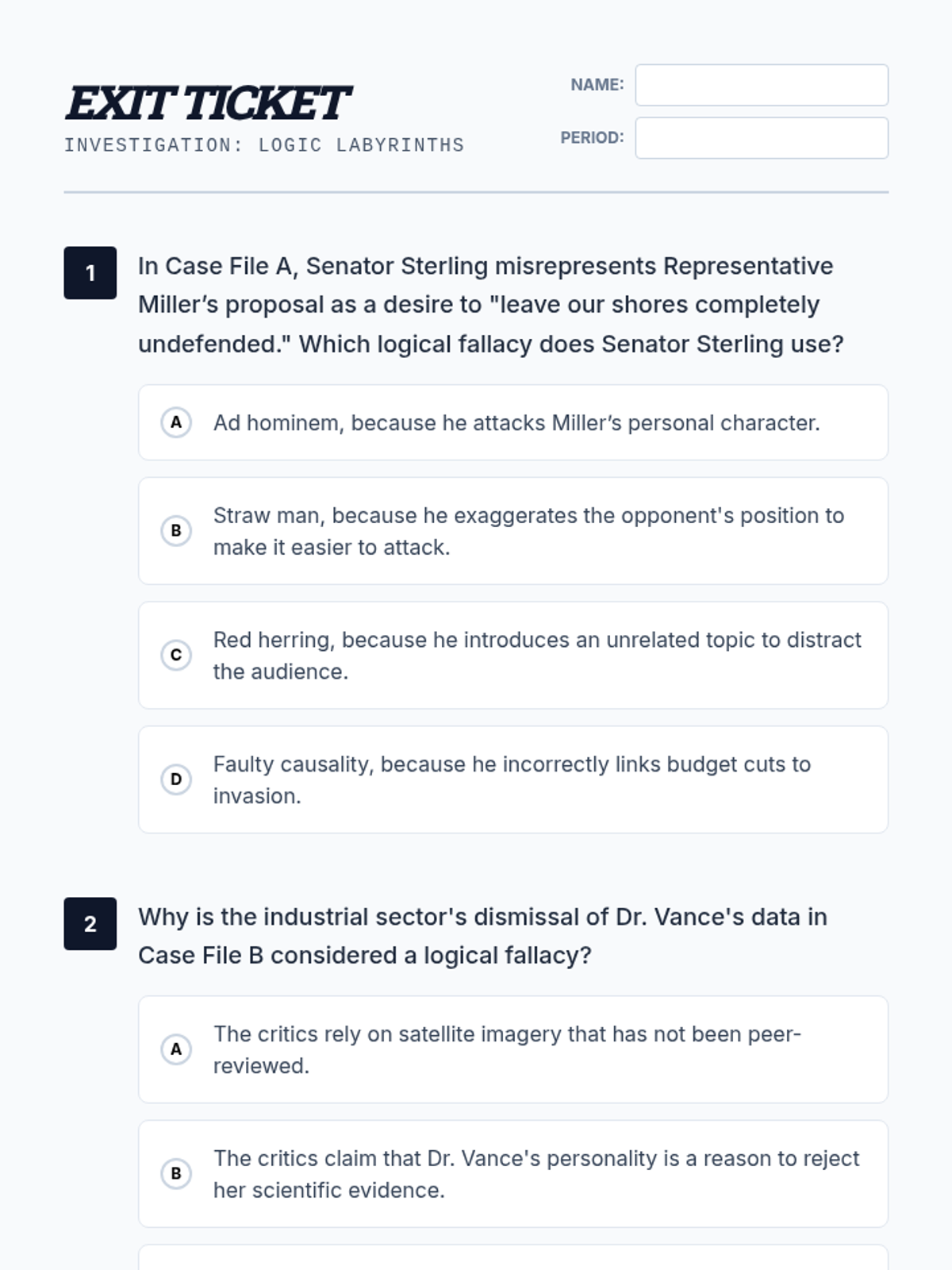
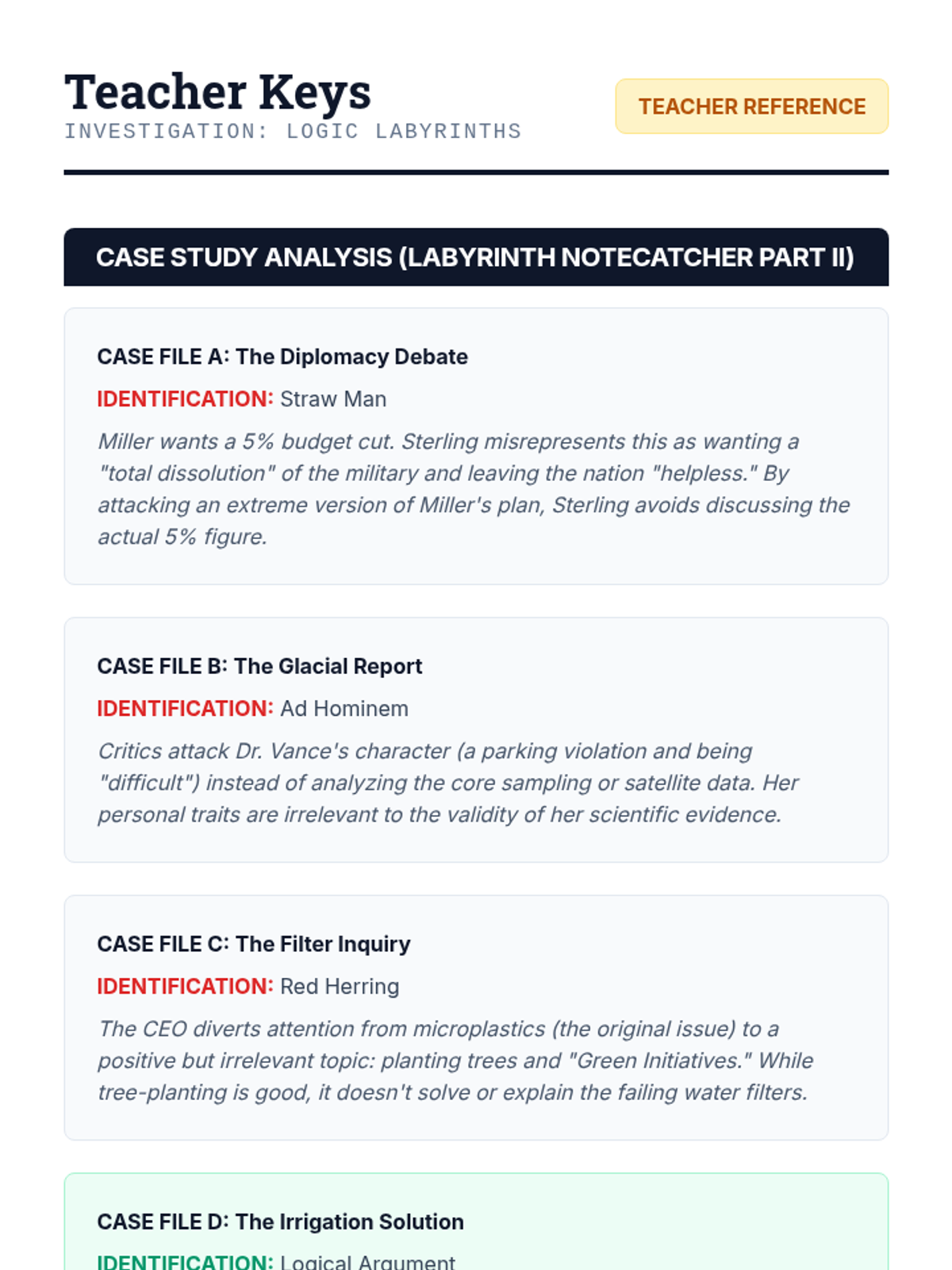
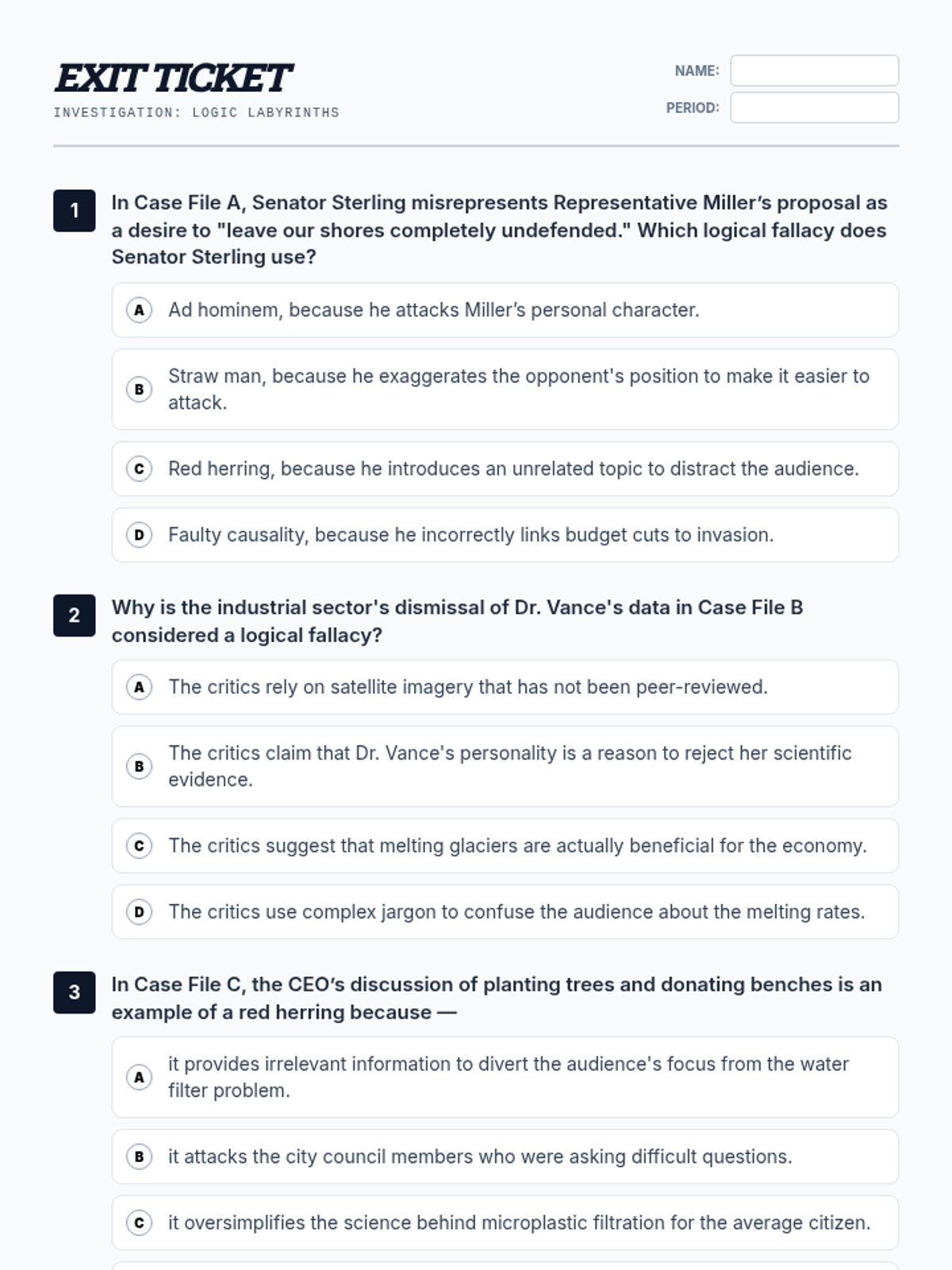
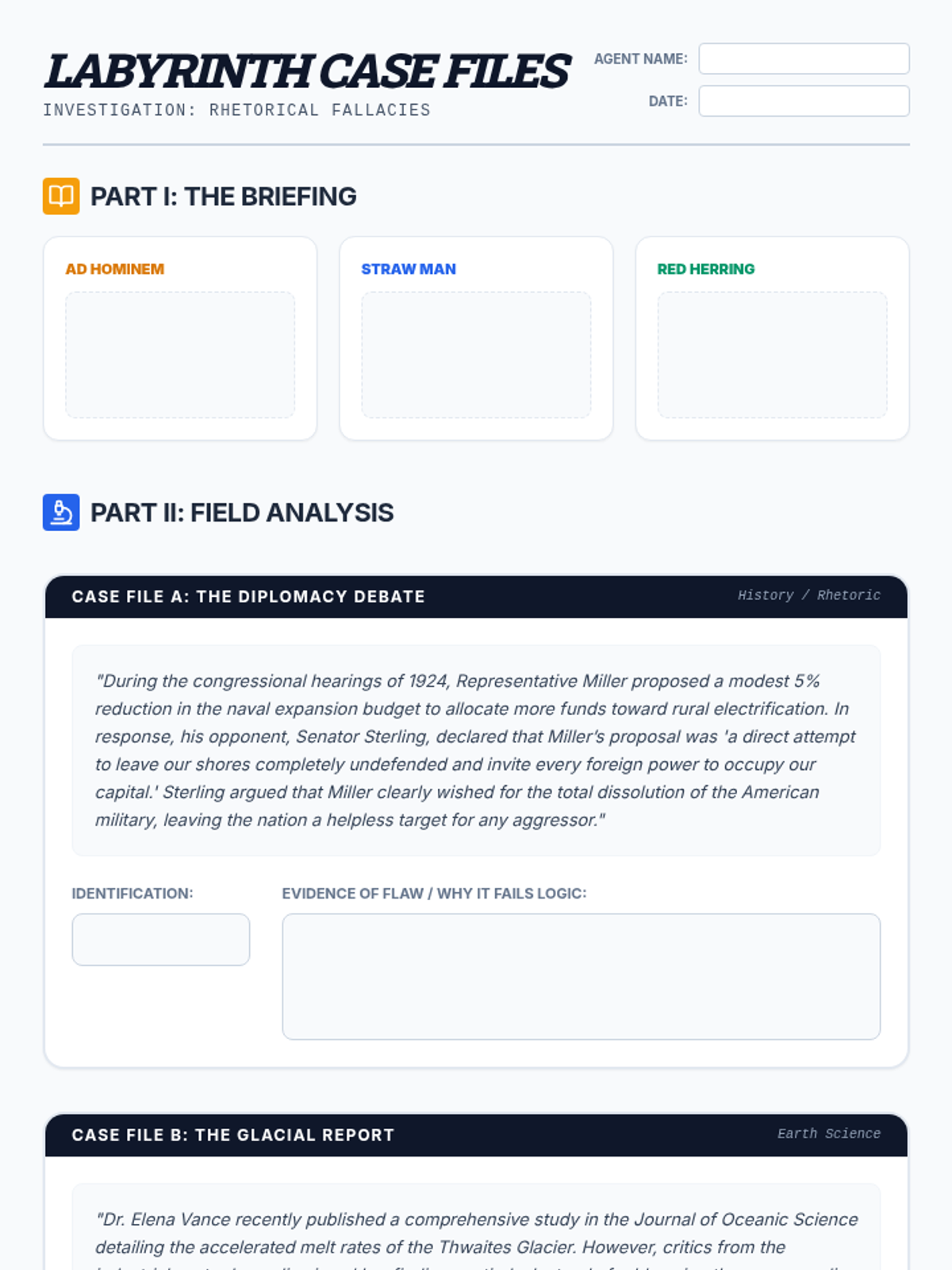
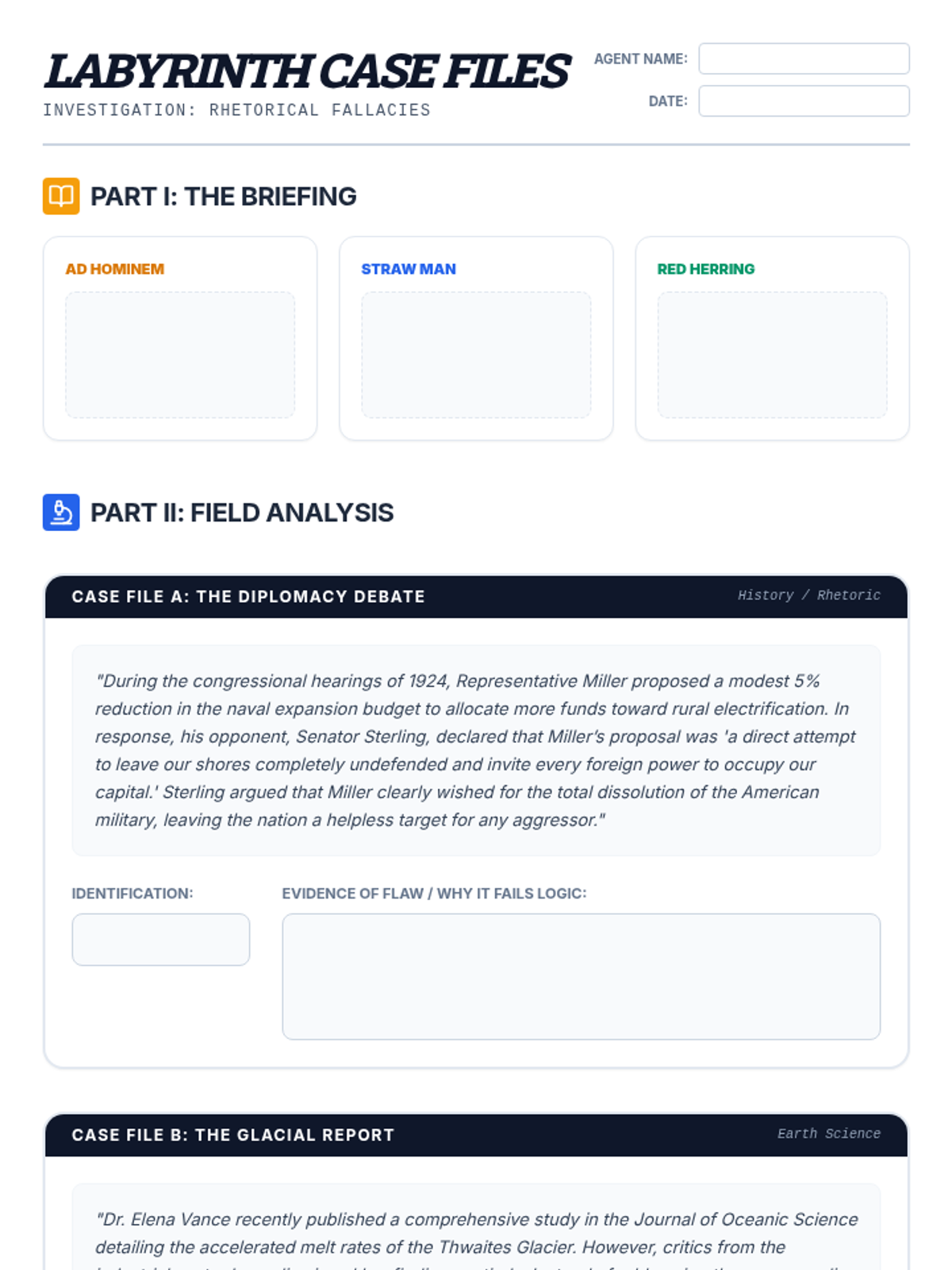
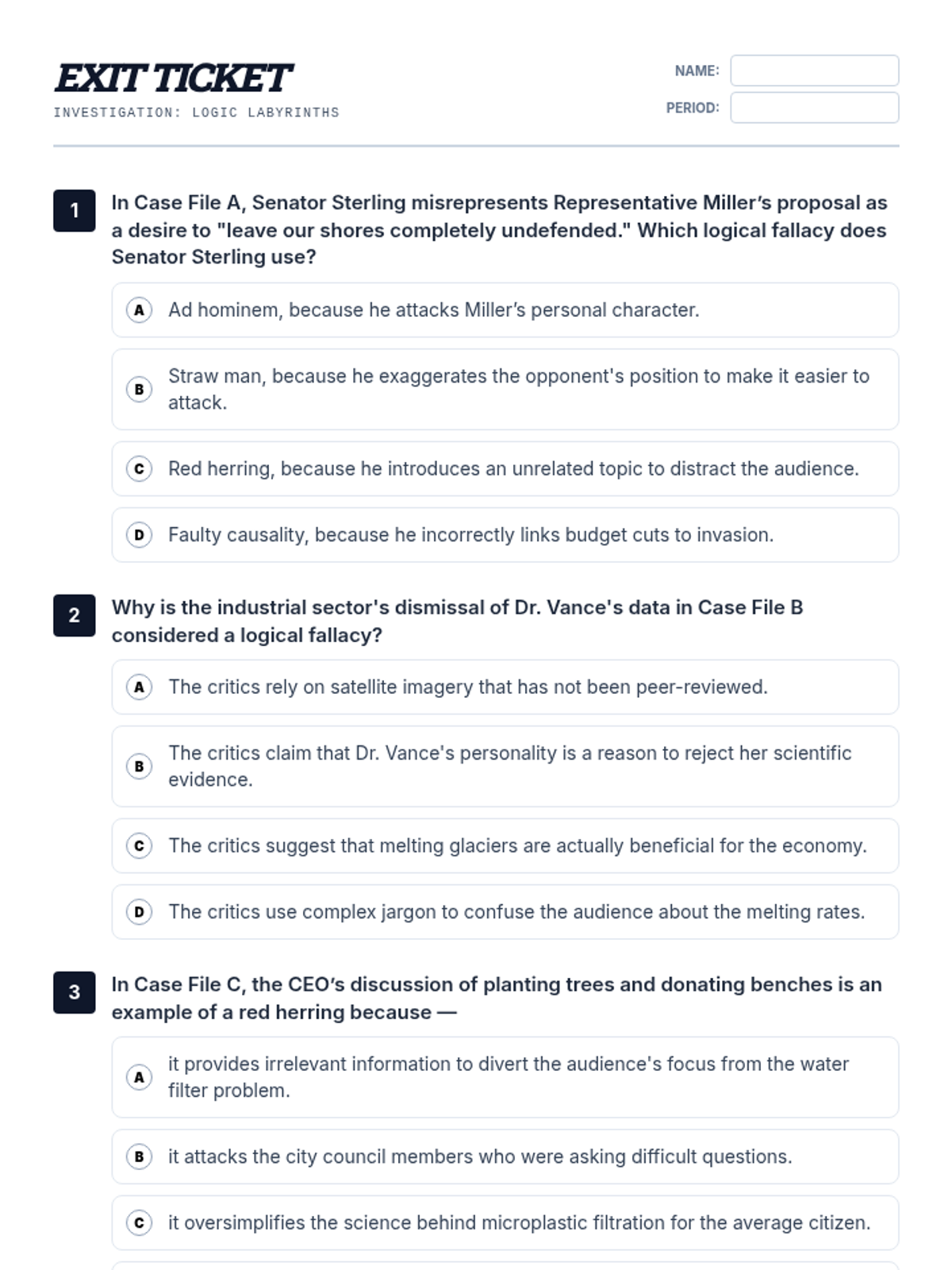
A comprehensive introduction to identifying logical fallacies—ad hominem, straw man, and red herring—using historical and scientific contexts to prepare English I students for STAAR-level rhetorical analysis.
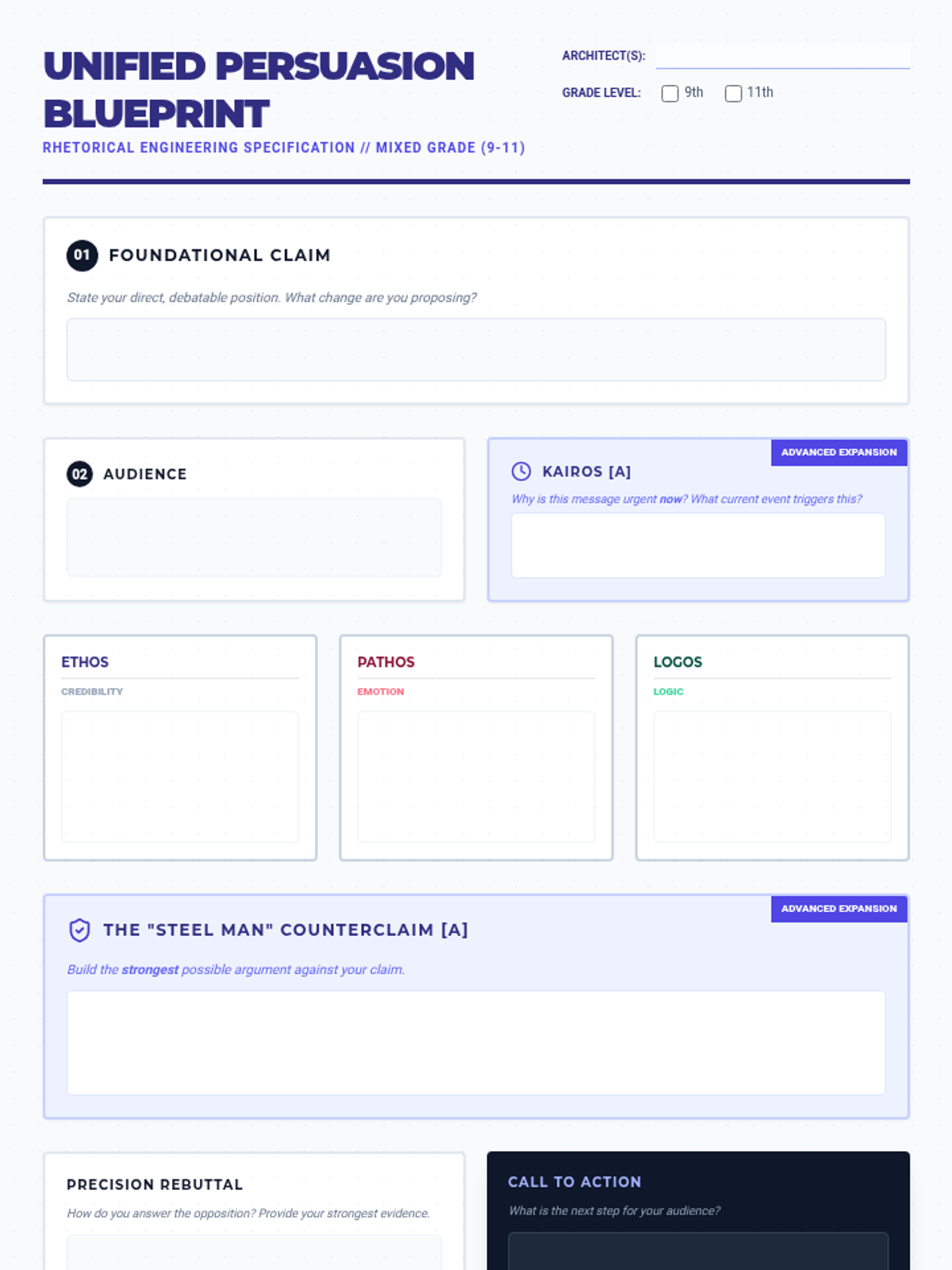
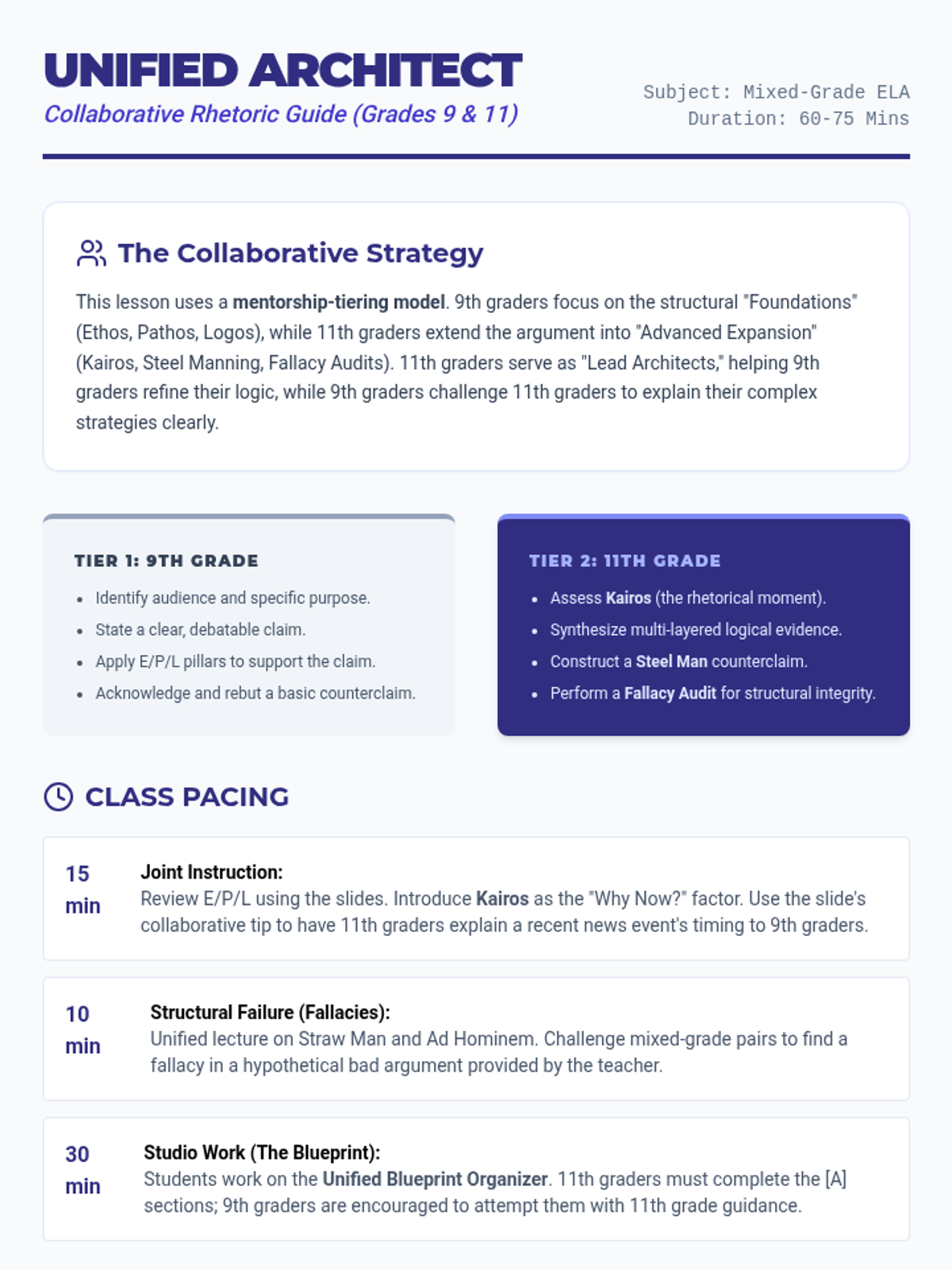
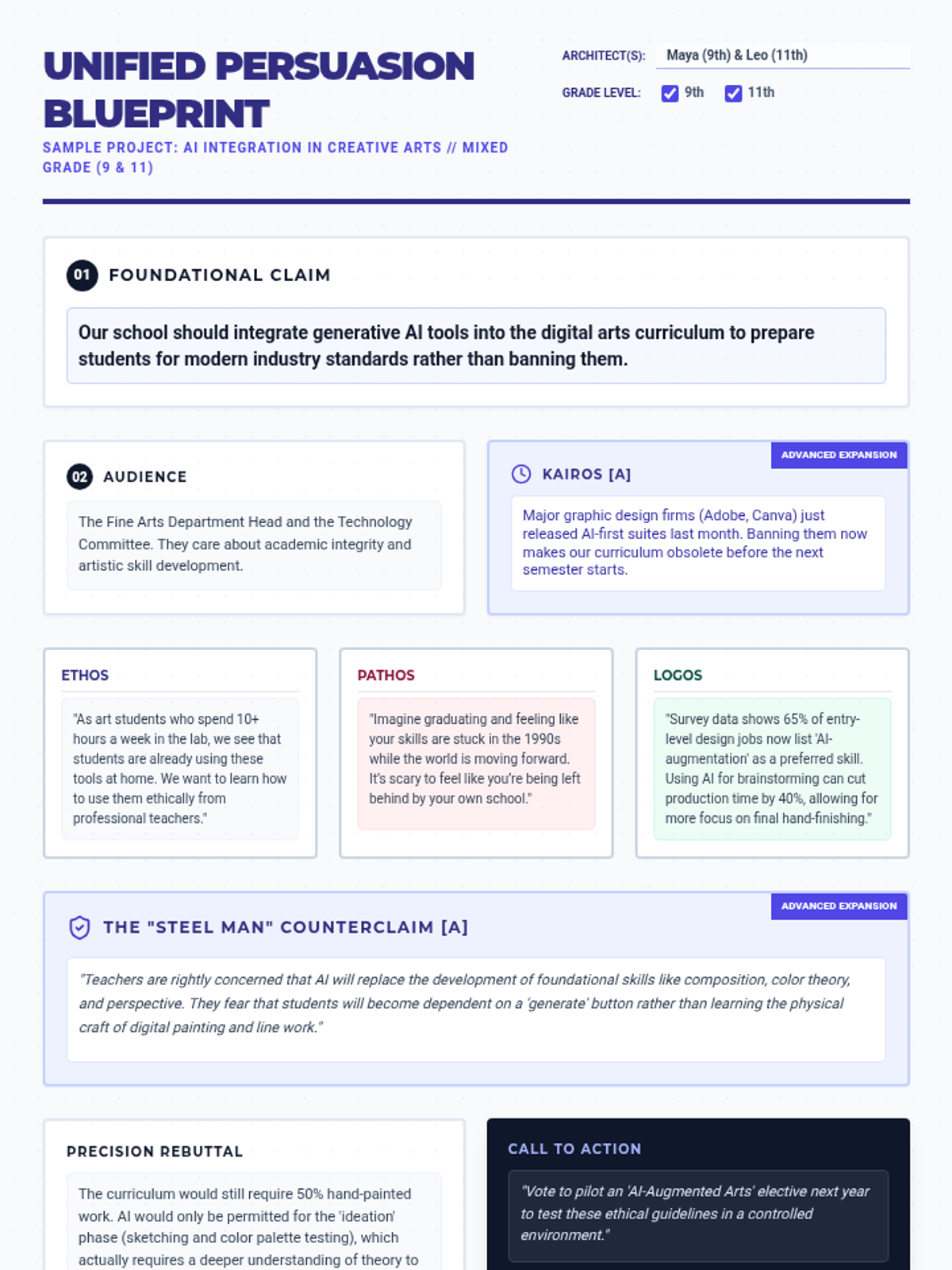
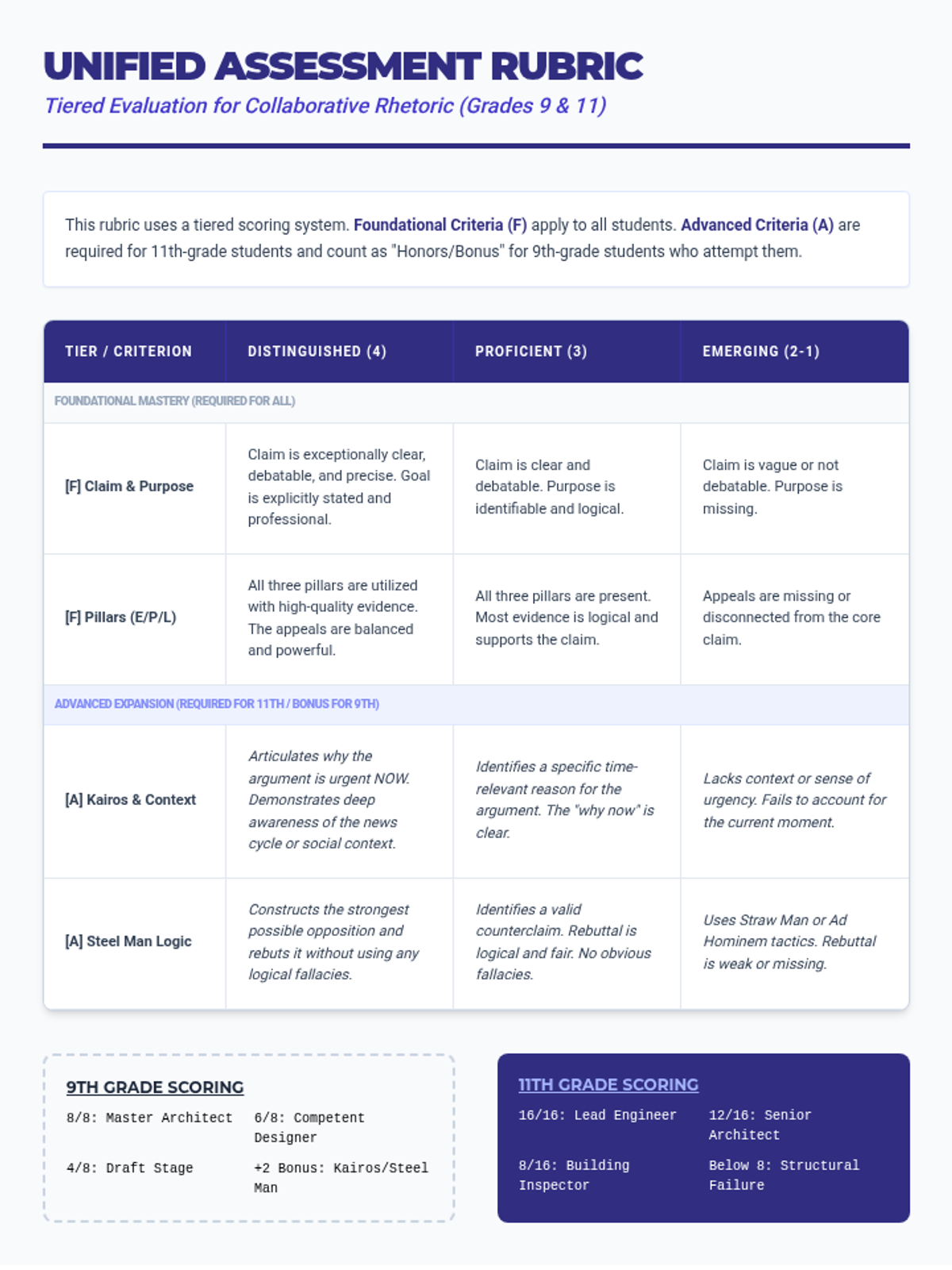
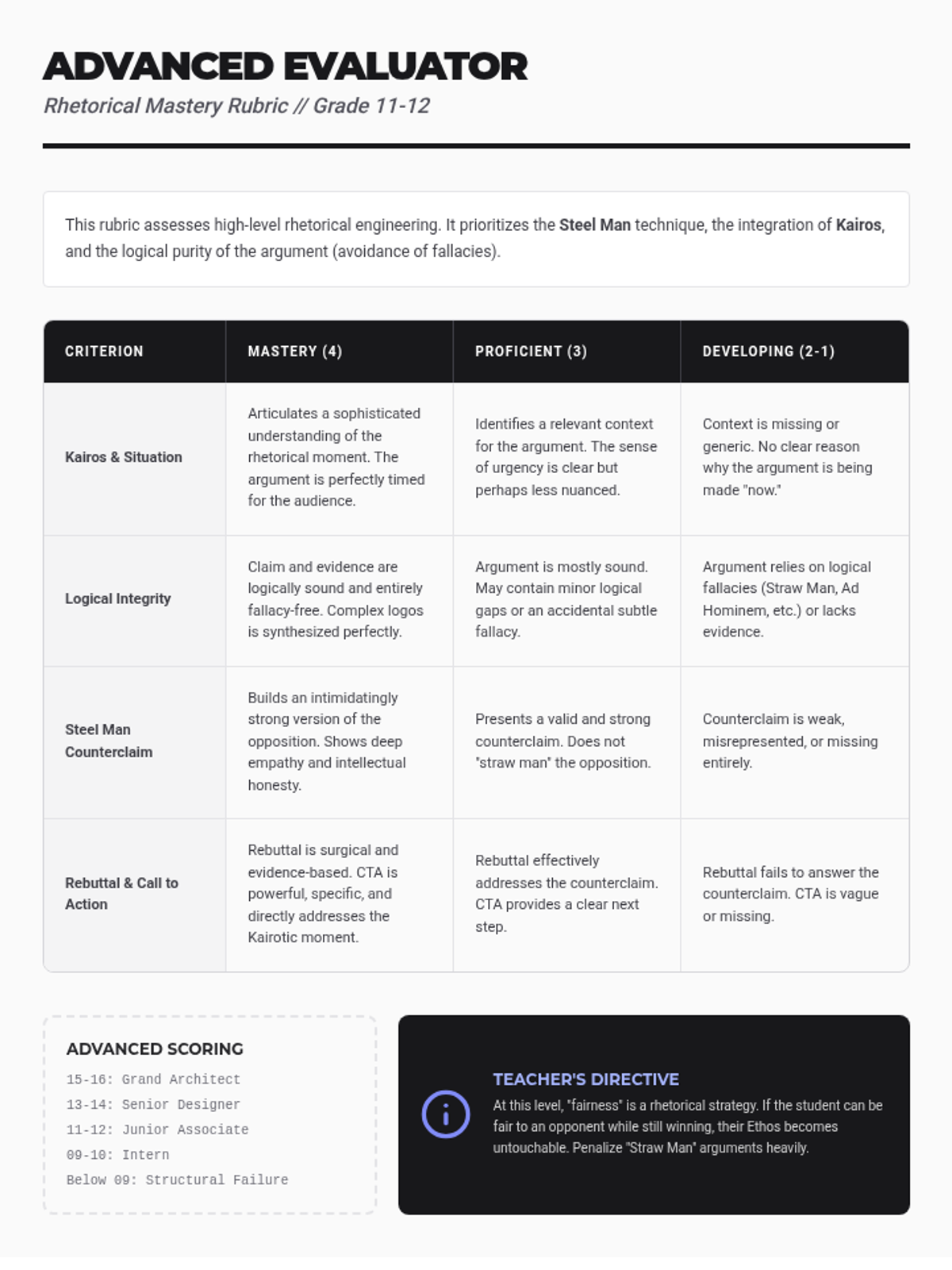
A tiered persuasive writing lesson designed for mixed-grade or scaffolded classrooms (9th-11th). Core concepts like Ethos, Pathos, and Logos are taught alongside advanced techniques like Kairos and Steel Manning, allowing students of different levels to collaborate and learn from one another.
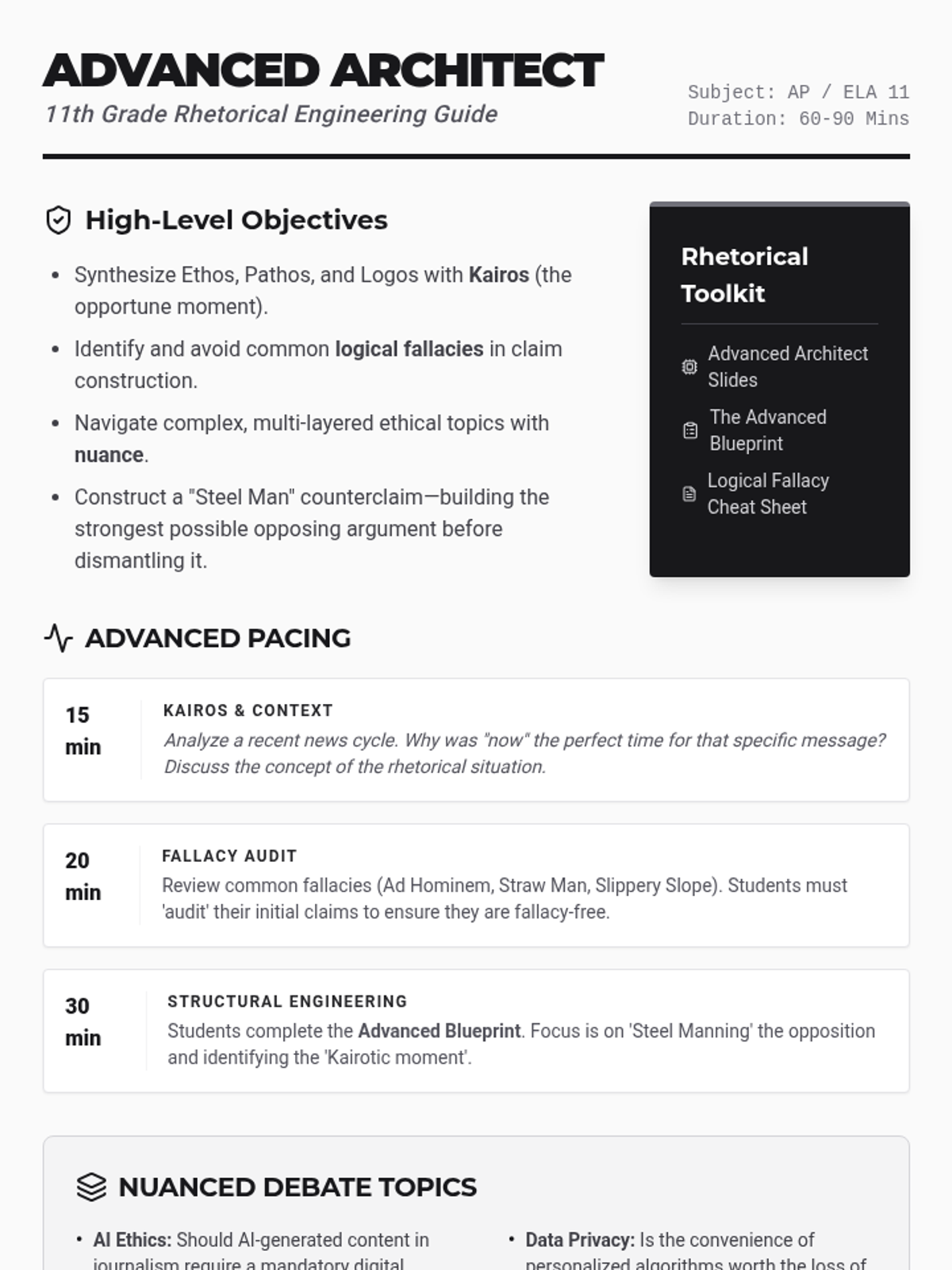
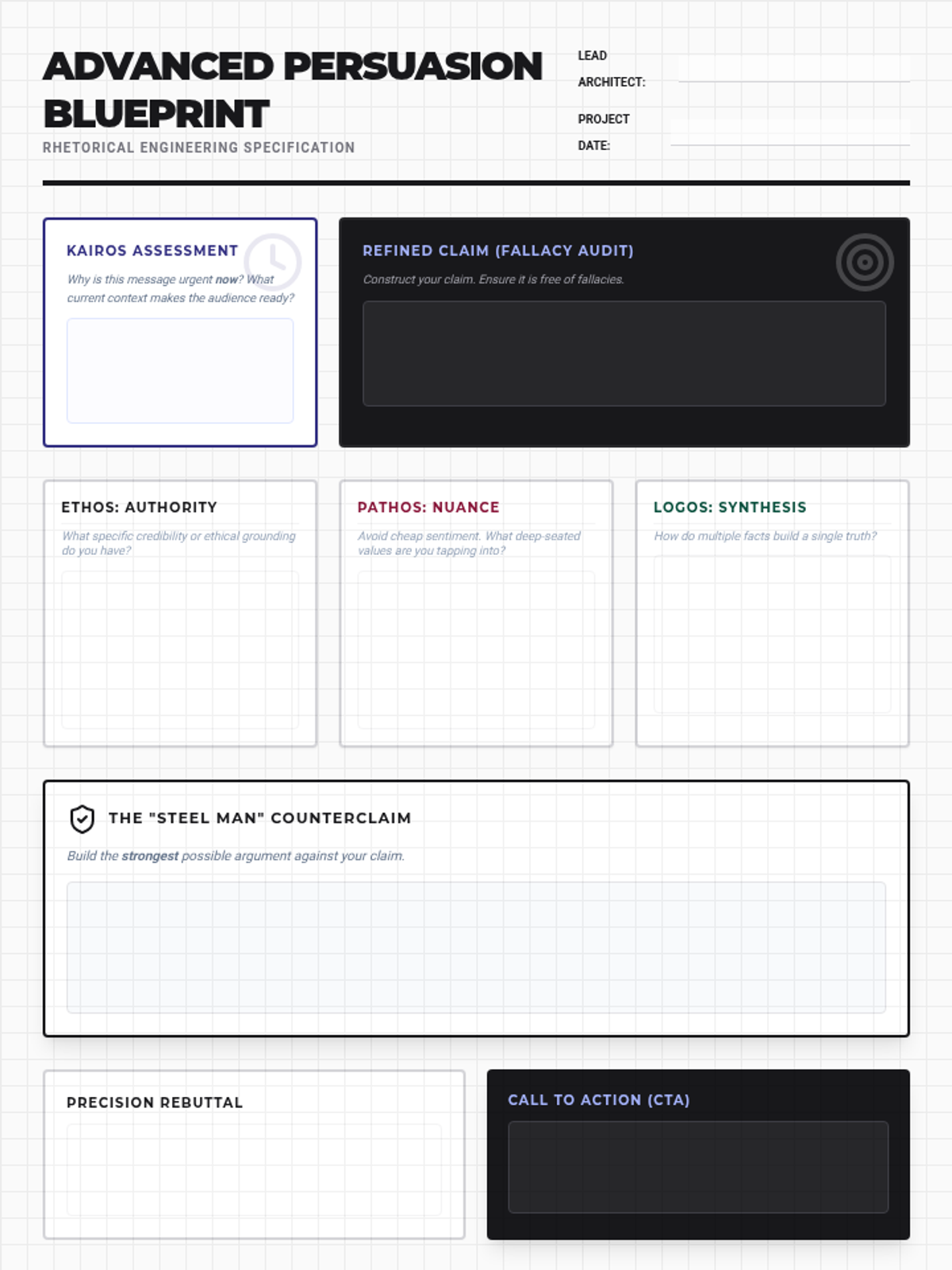
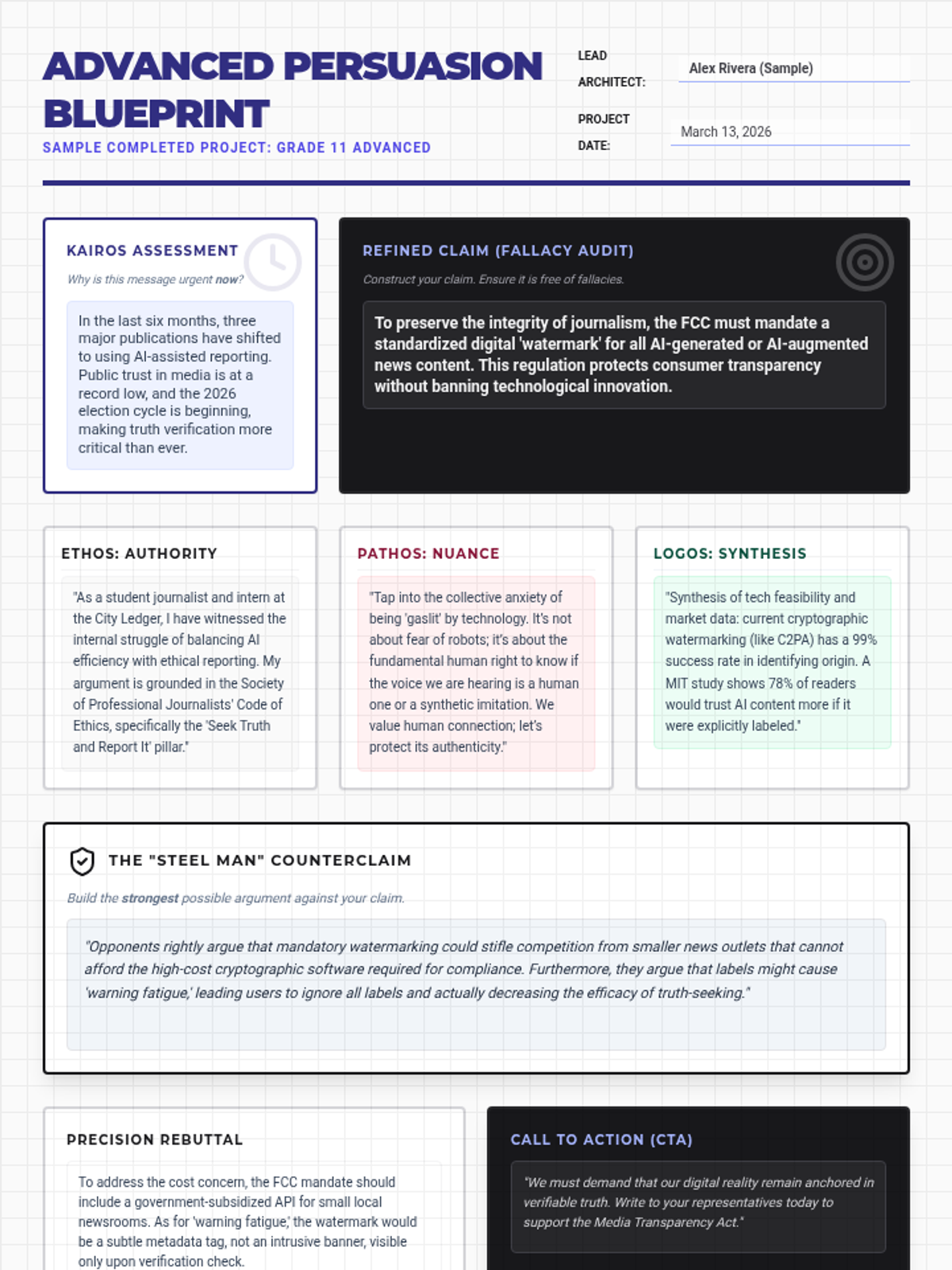
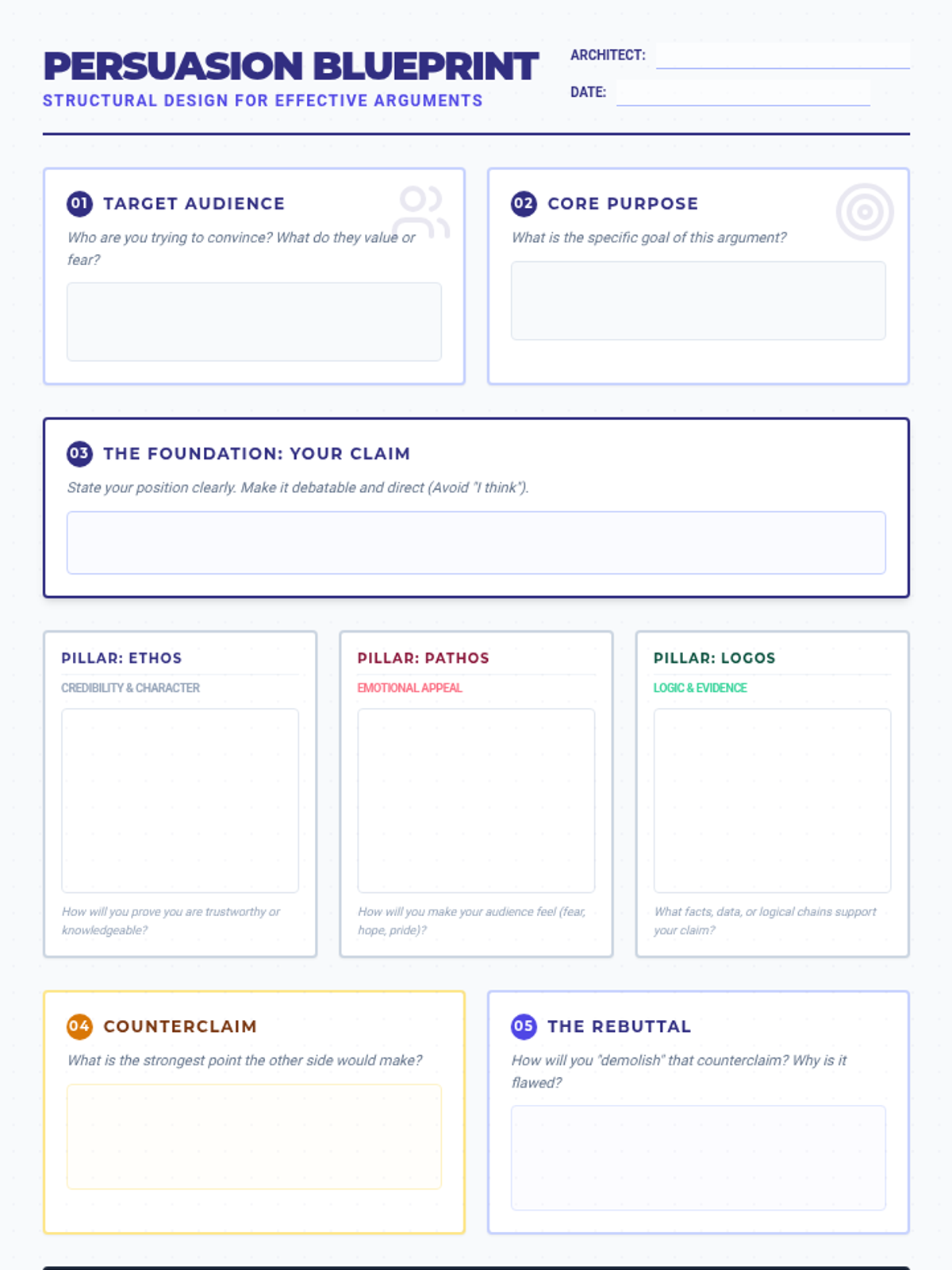
An advanced lesson for 11th graders that builds upon basic rhetorical foundations. Students explore Kairos (the opportune moment), identify logical fallacies, and tackle complex ethical and societal issues through a high-fidelity architectural blueprint organizer.
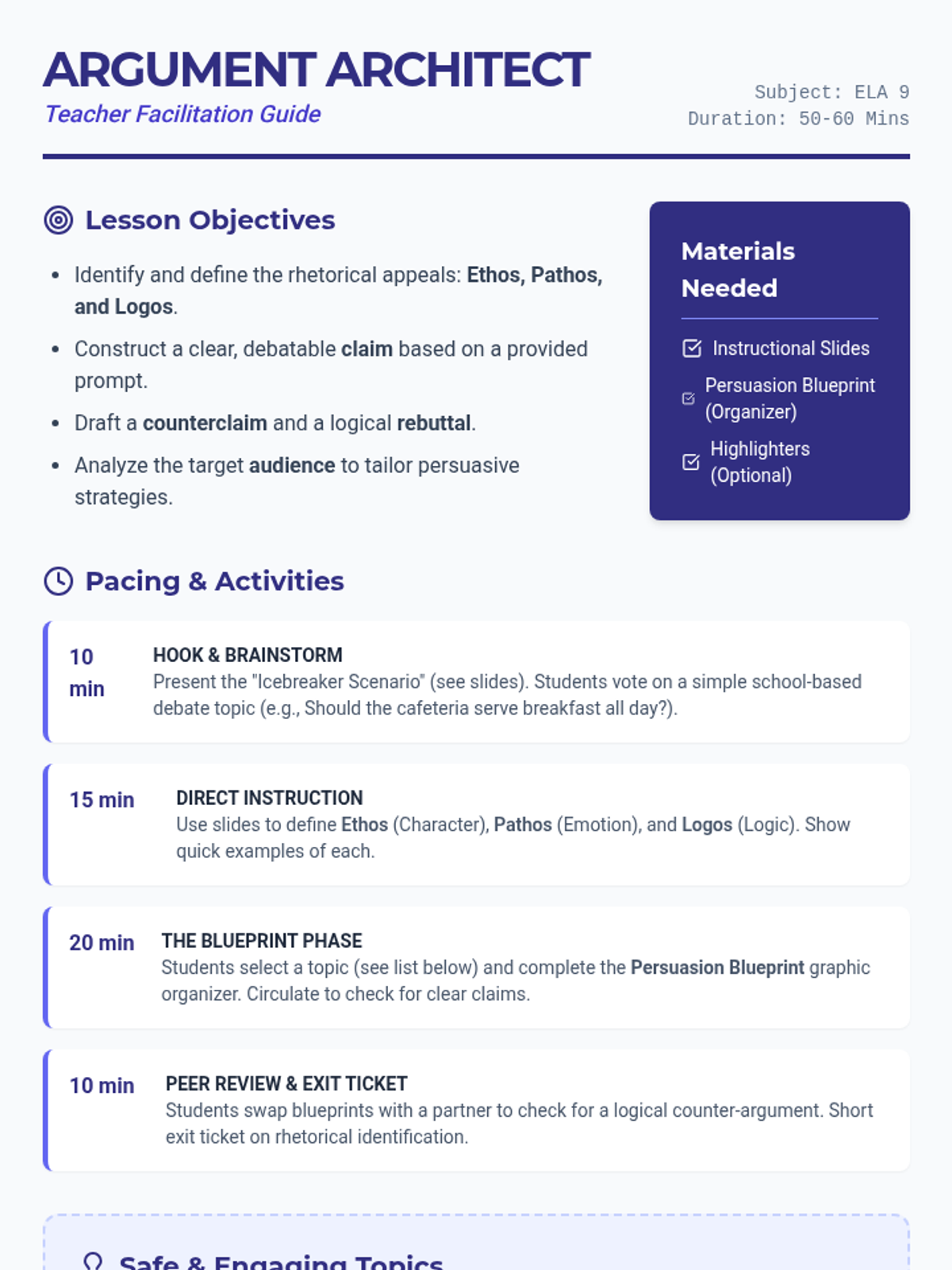
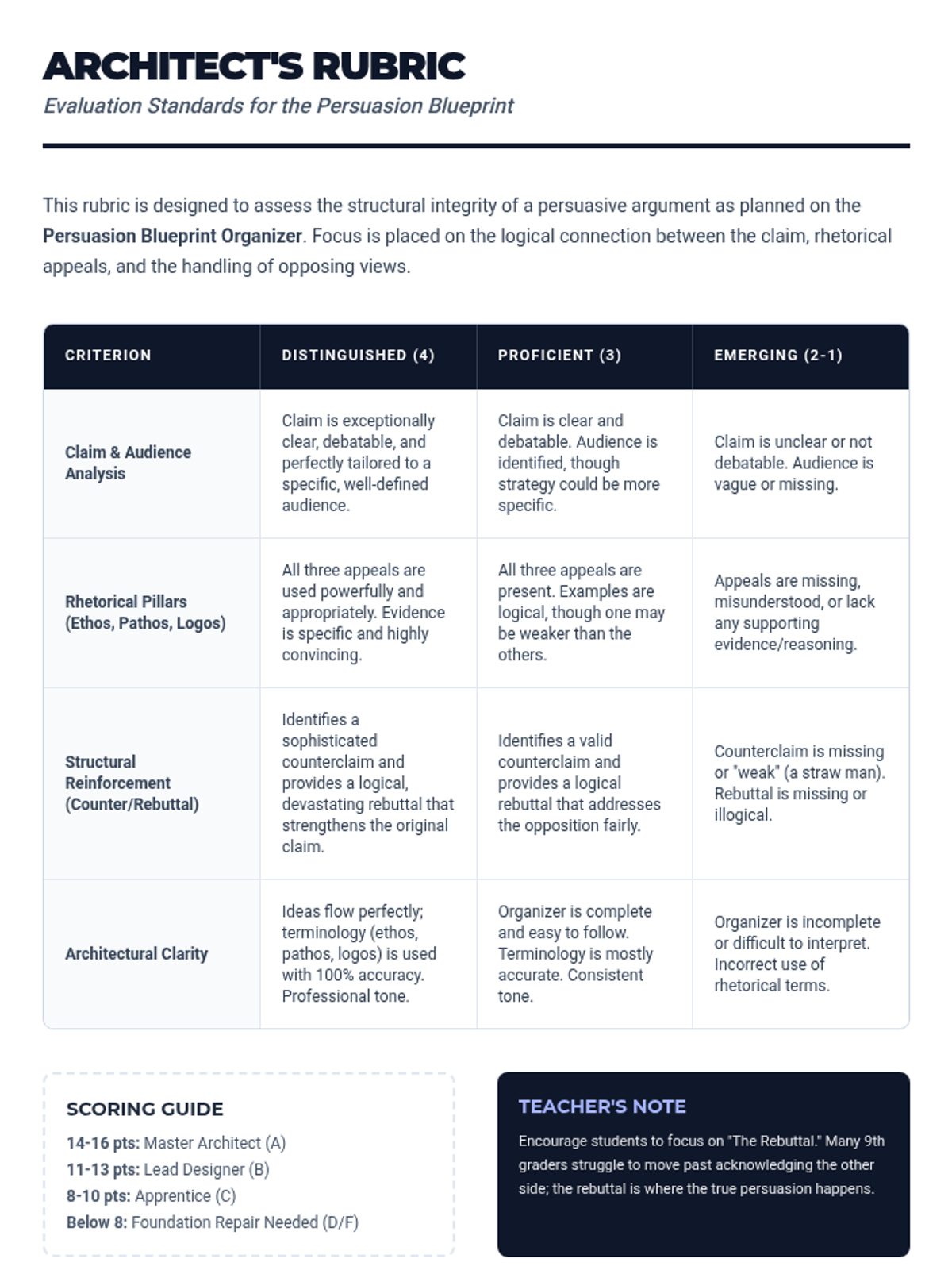
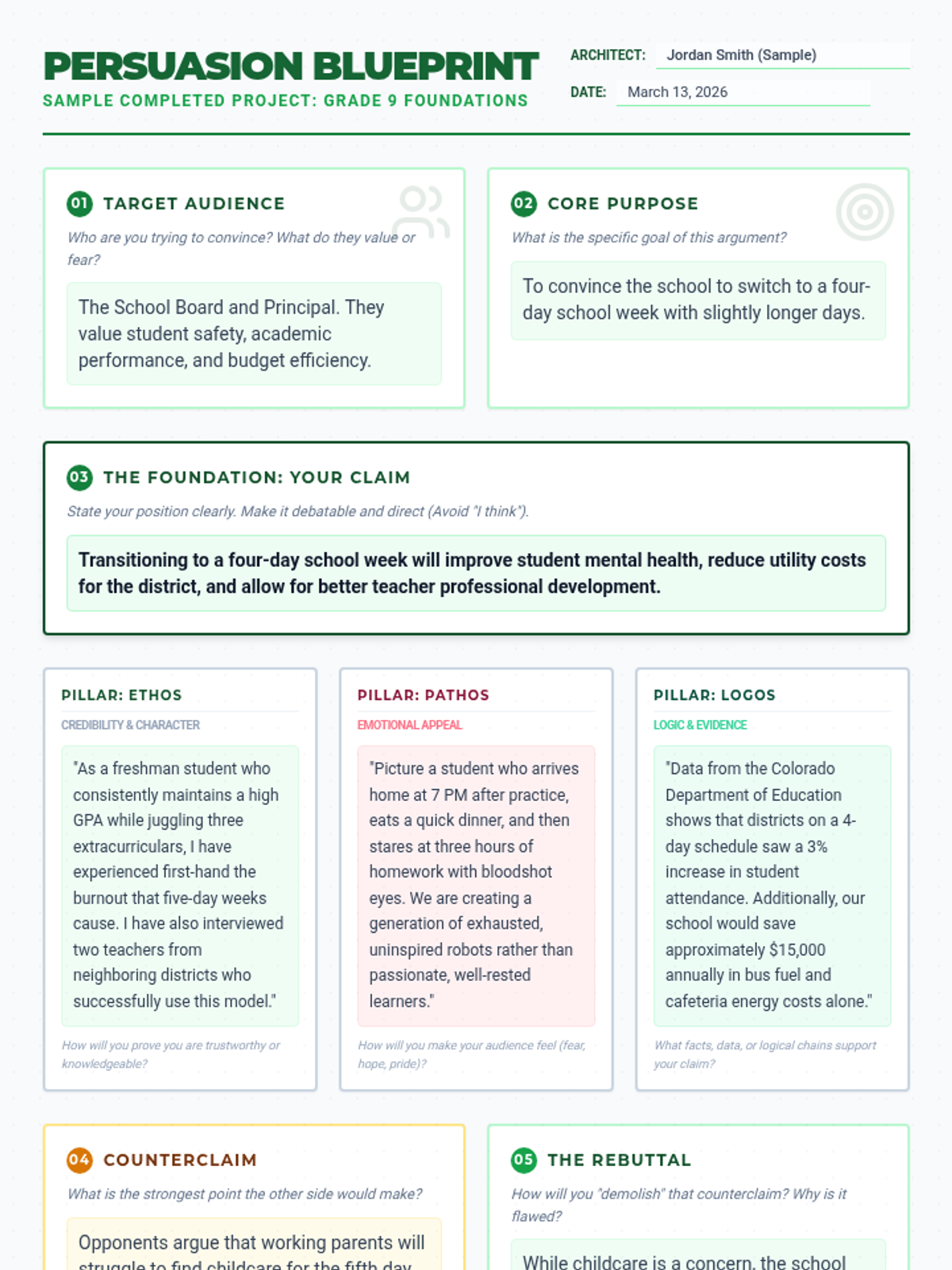
A comprehensive lesson for 9th graders on mastering the art of persuasion, focusing on rhetorical appeals, claim development, and addressing counterclaims. Students will use a structured graphic organizer to architect their own arguments on school-related topics.
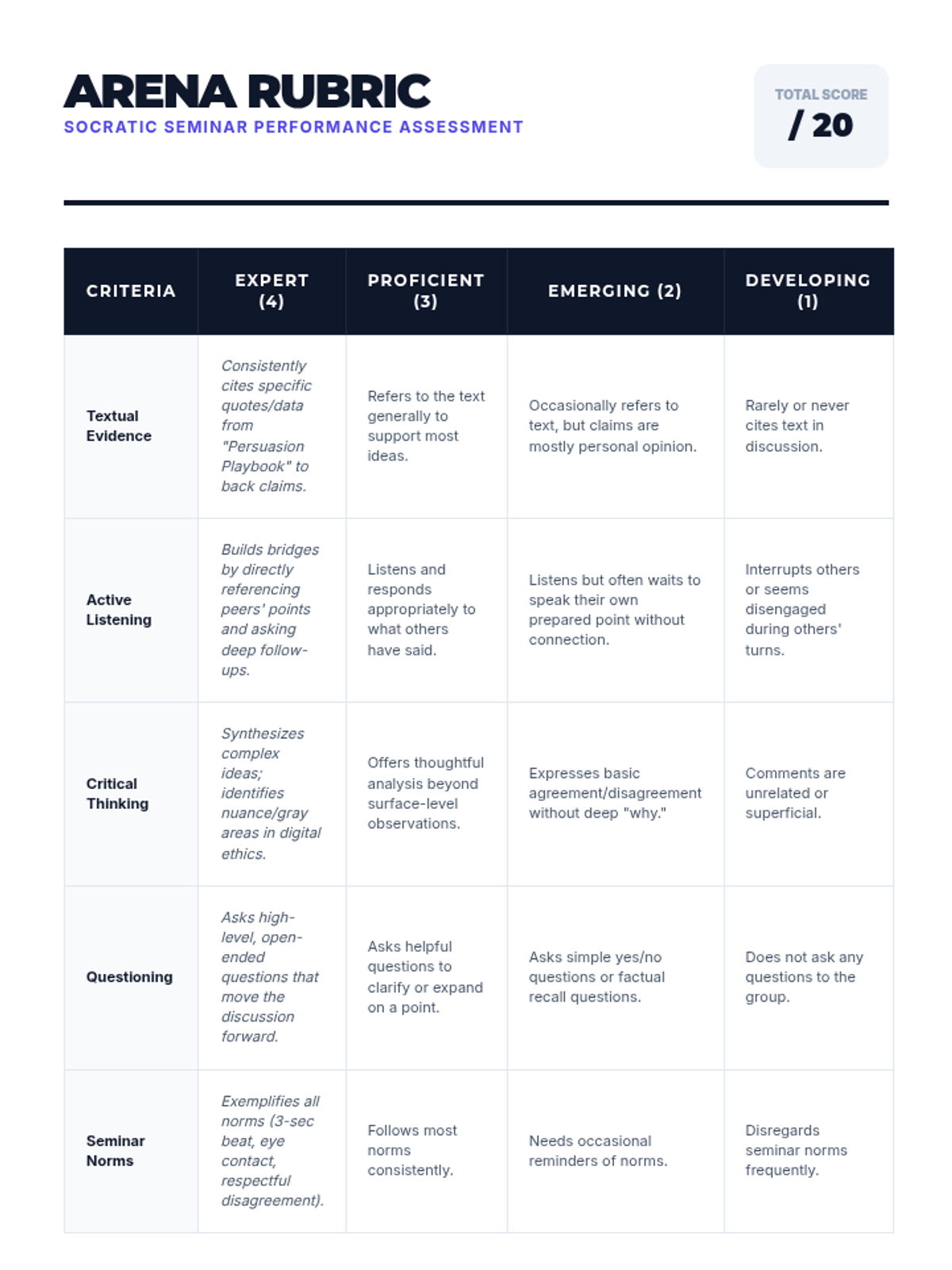
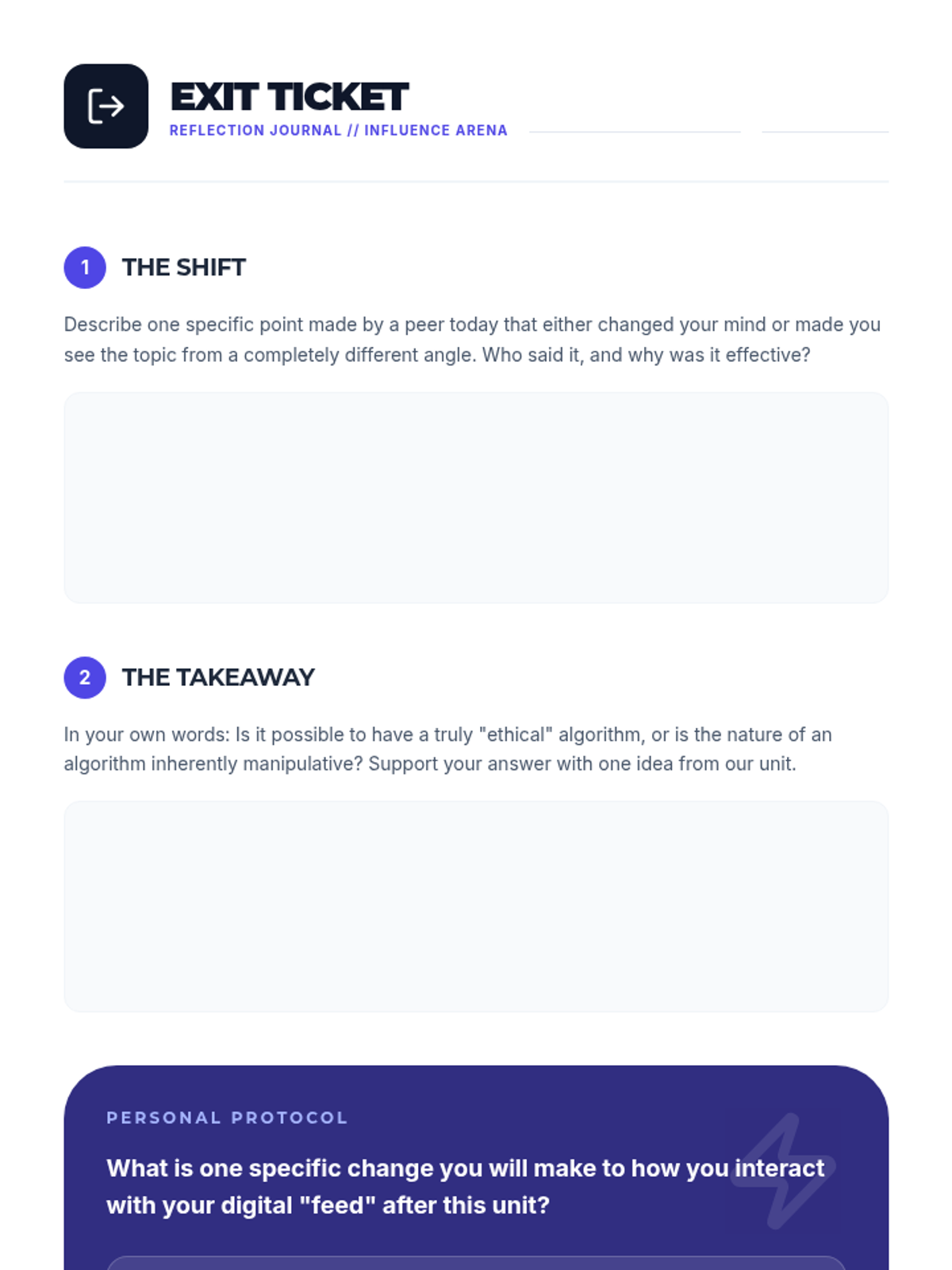
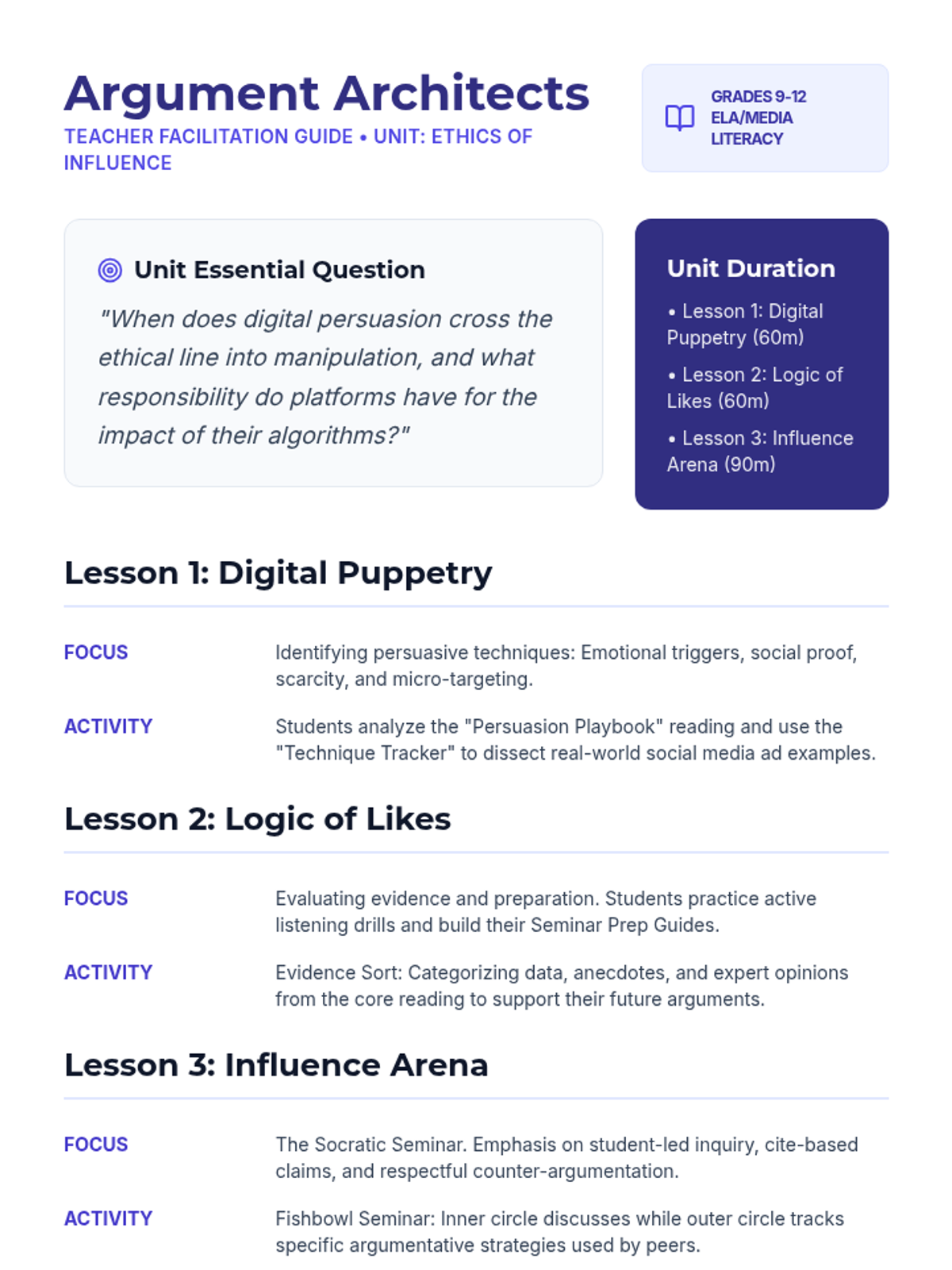
The capstone Socratic Seminar where students engage in a structured, evidence-based discussion about the ethics of modern digital persuasion.
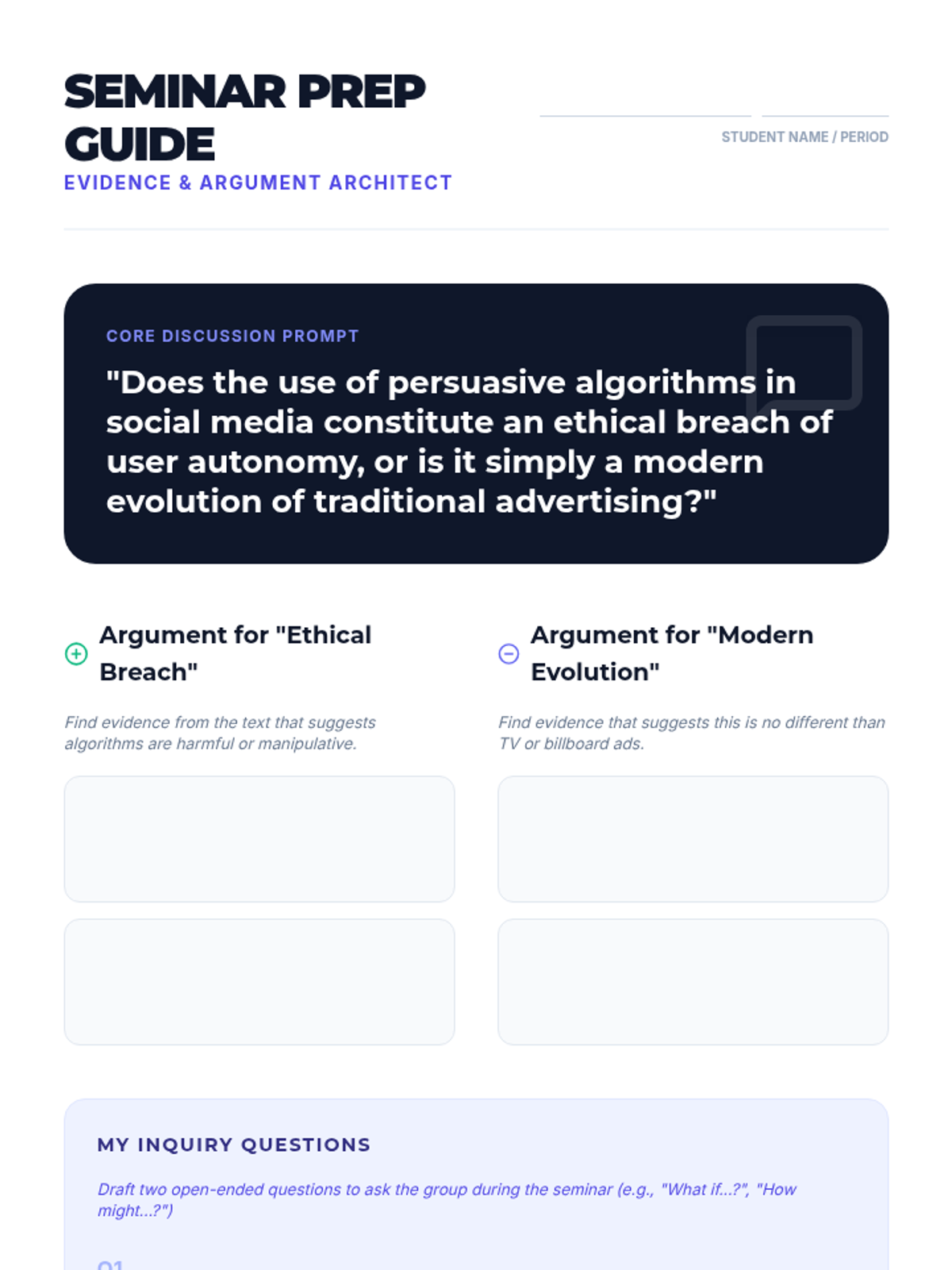
Students evaluate the ethics of digital influence and prepare evidence-based arguments for a Socratic Seminar, focusing on active listening and logical fallacies.
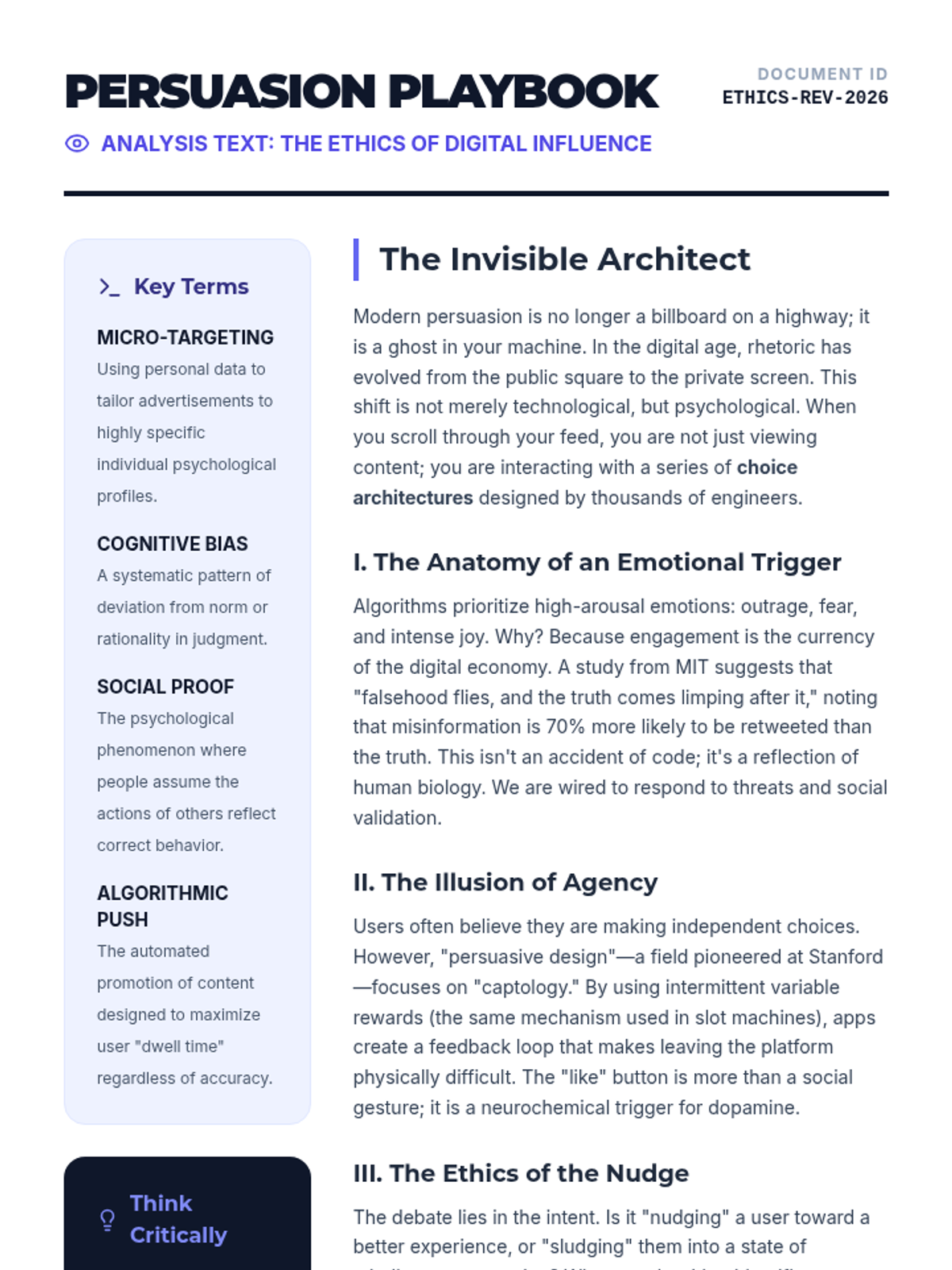
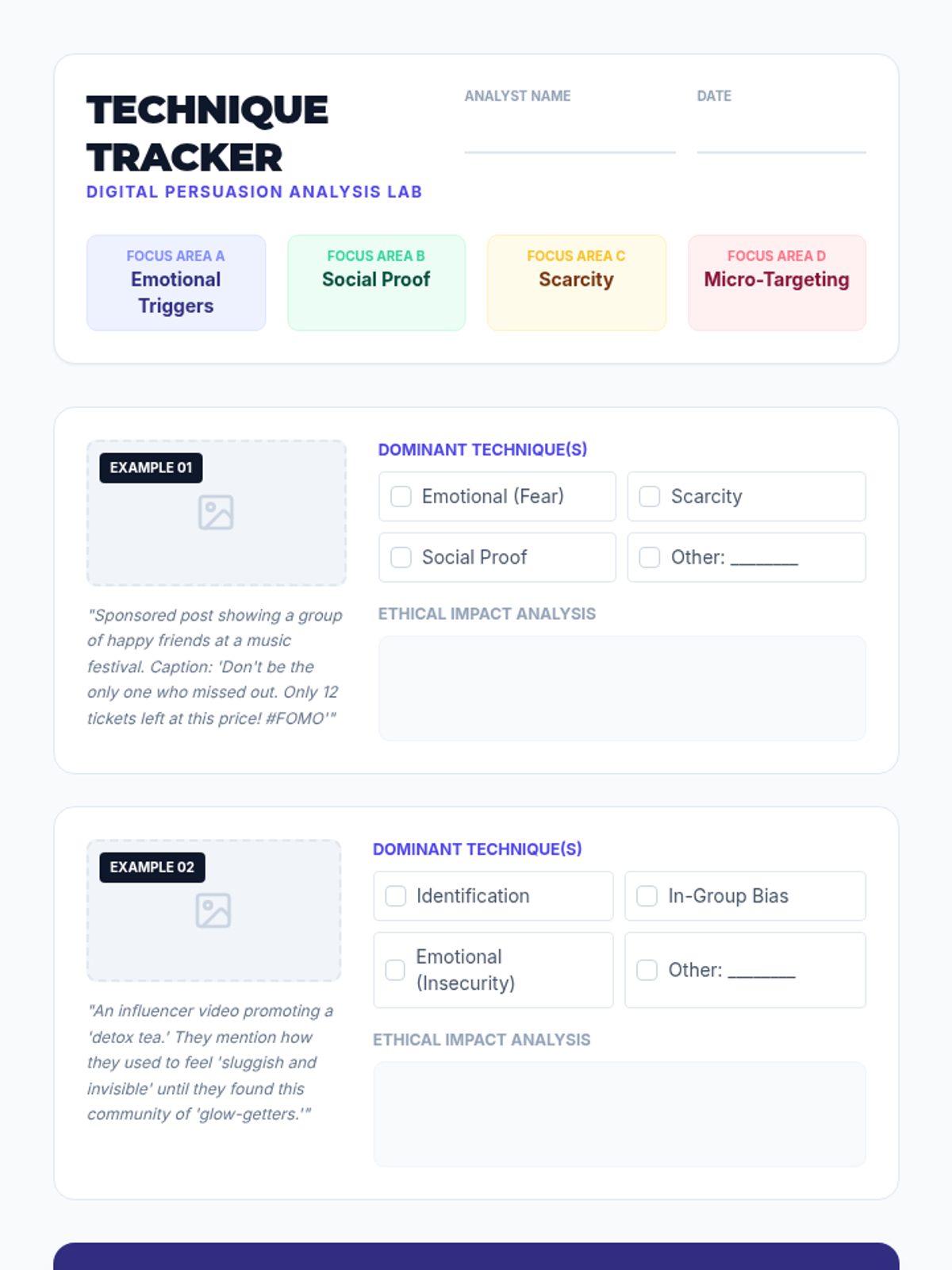
Students identify and analyze modern persuasive techniques used in social media and digital advertising, focusing on emotional triggers and algorithmic micro-targeting.
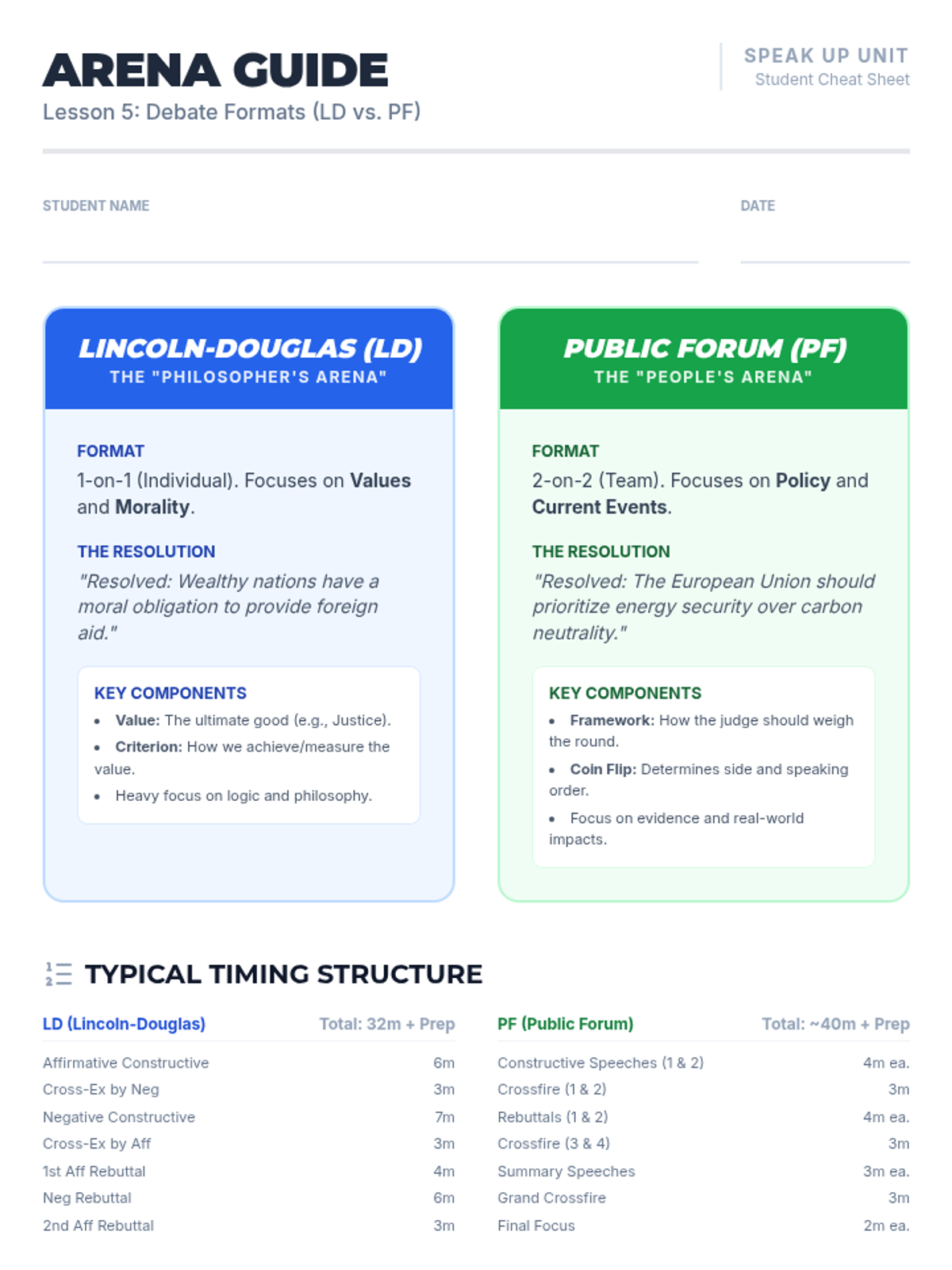
Compares Lincoln-Douglas and Public Forum debate formats, preparing students for competitive environments.
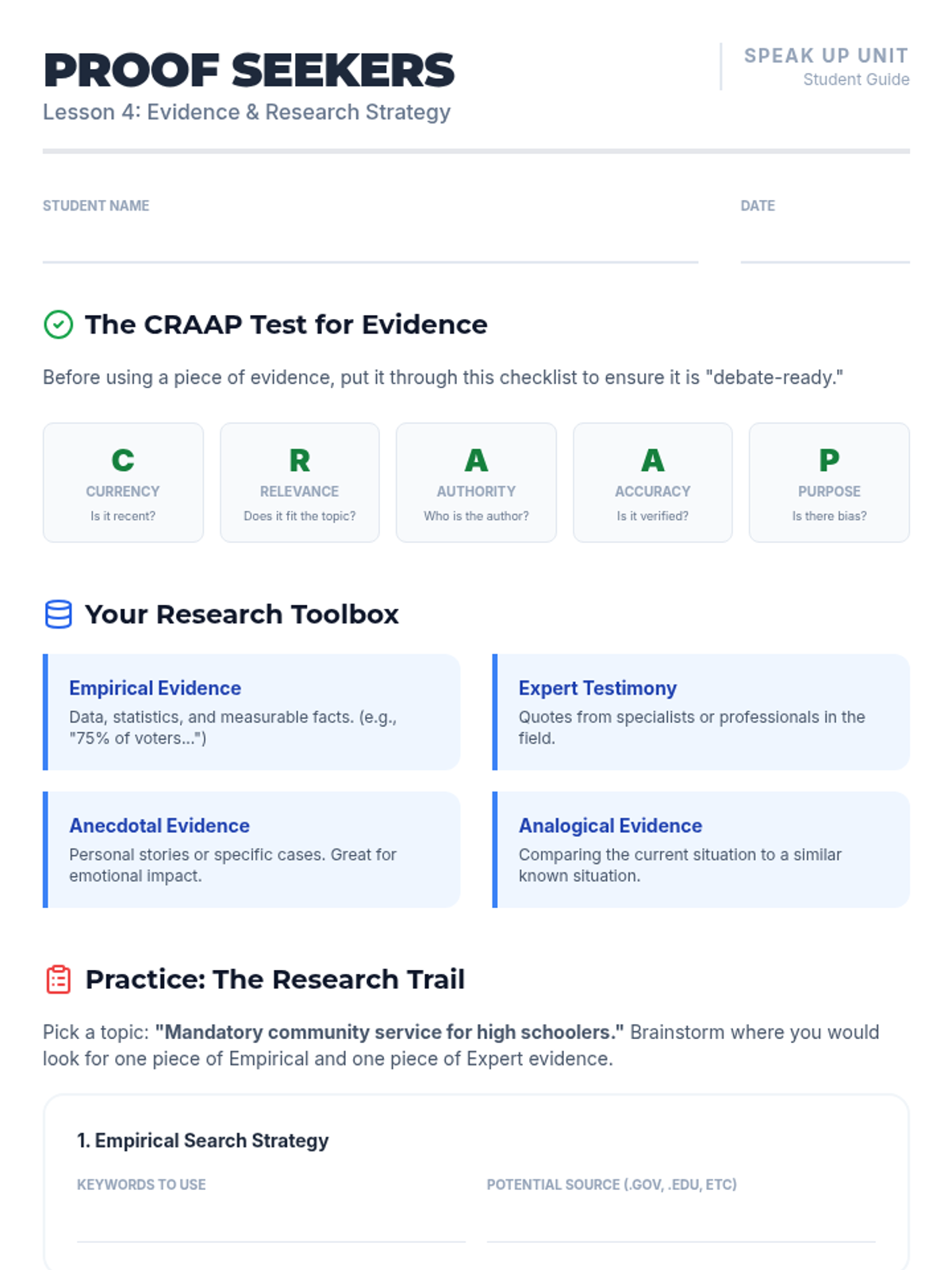
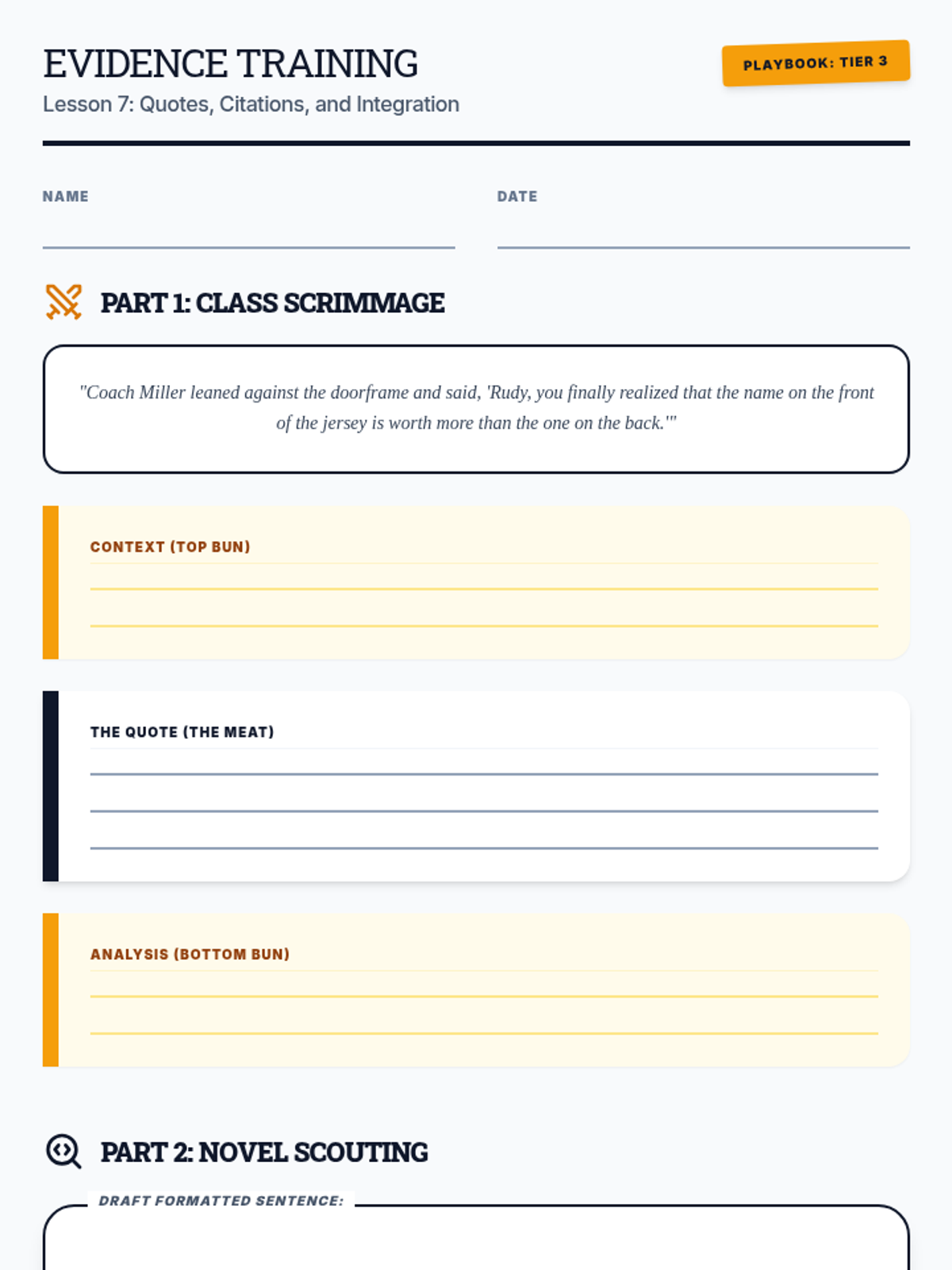
Teaches students how to find, evaluate, and cite credible evidence to support their arguments.
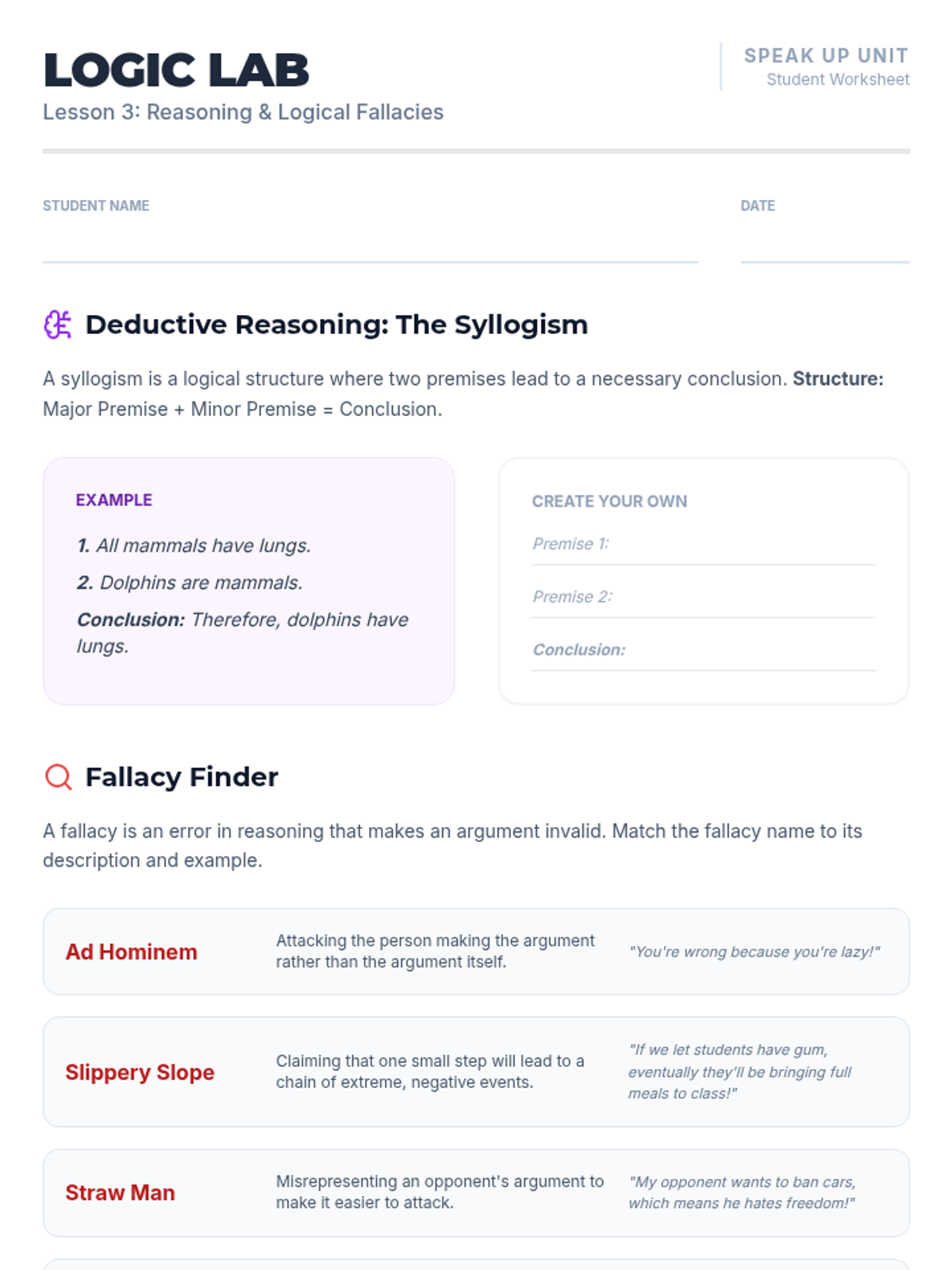
Explores logical reasoning and common logical fallacies that undermine debate arguments.
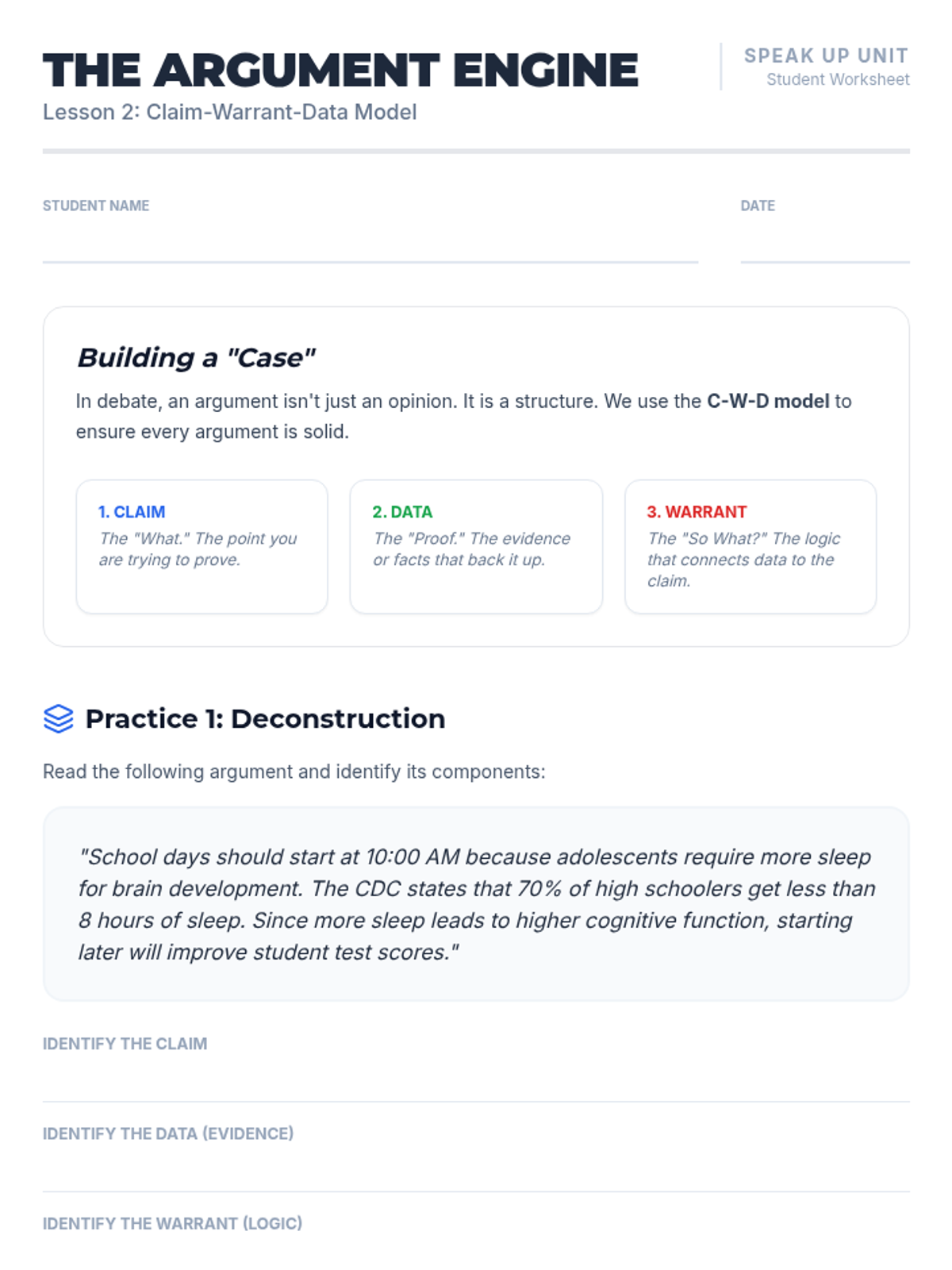
Introduces the Claim-Warrant-Data model of argumentation and basic structures for building a persuasive case.
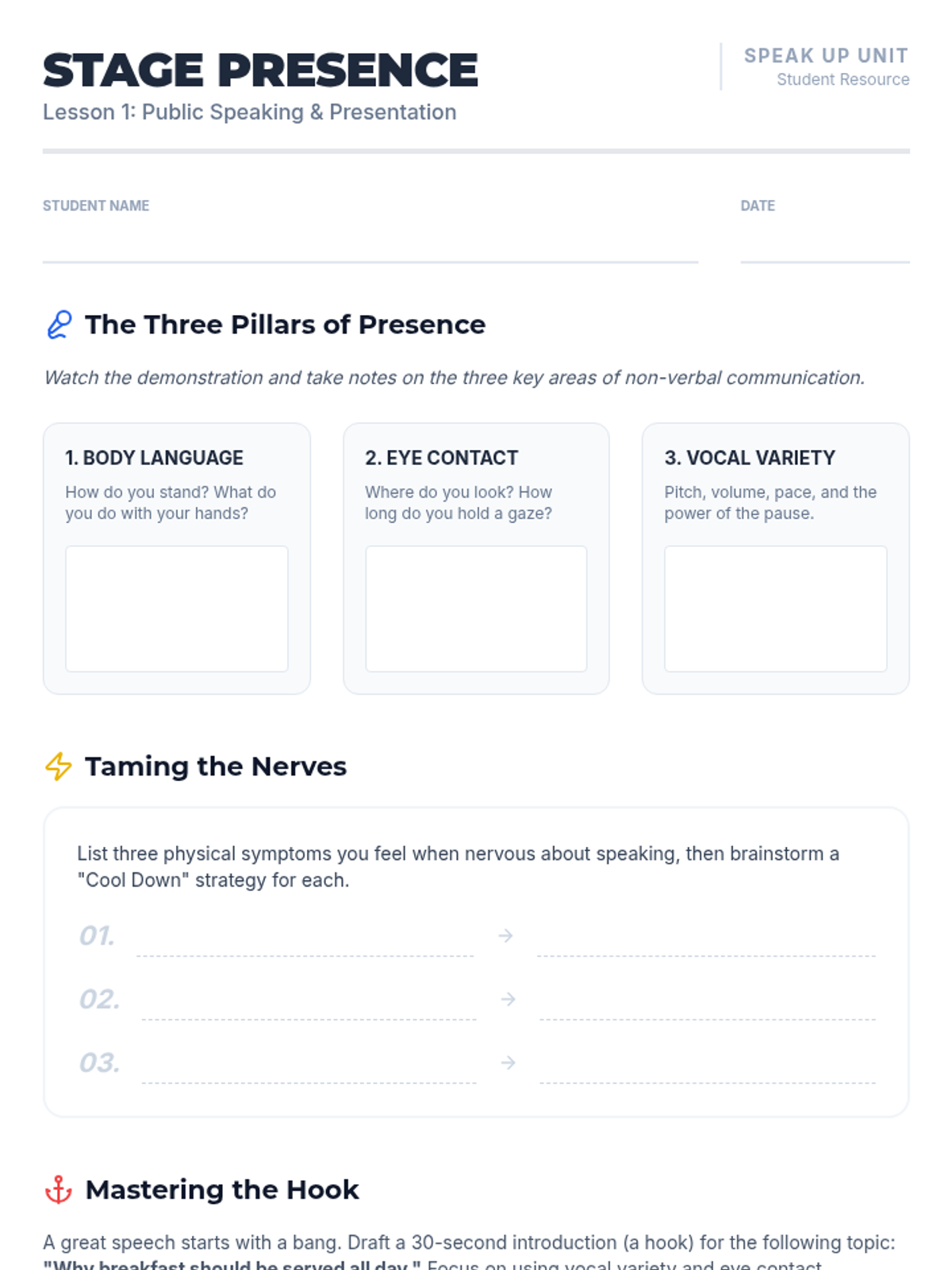
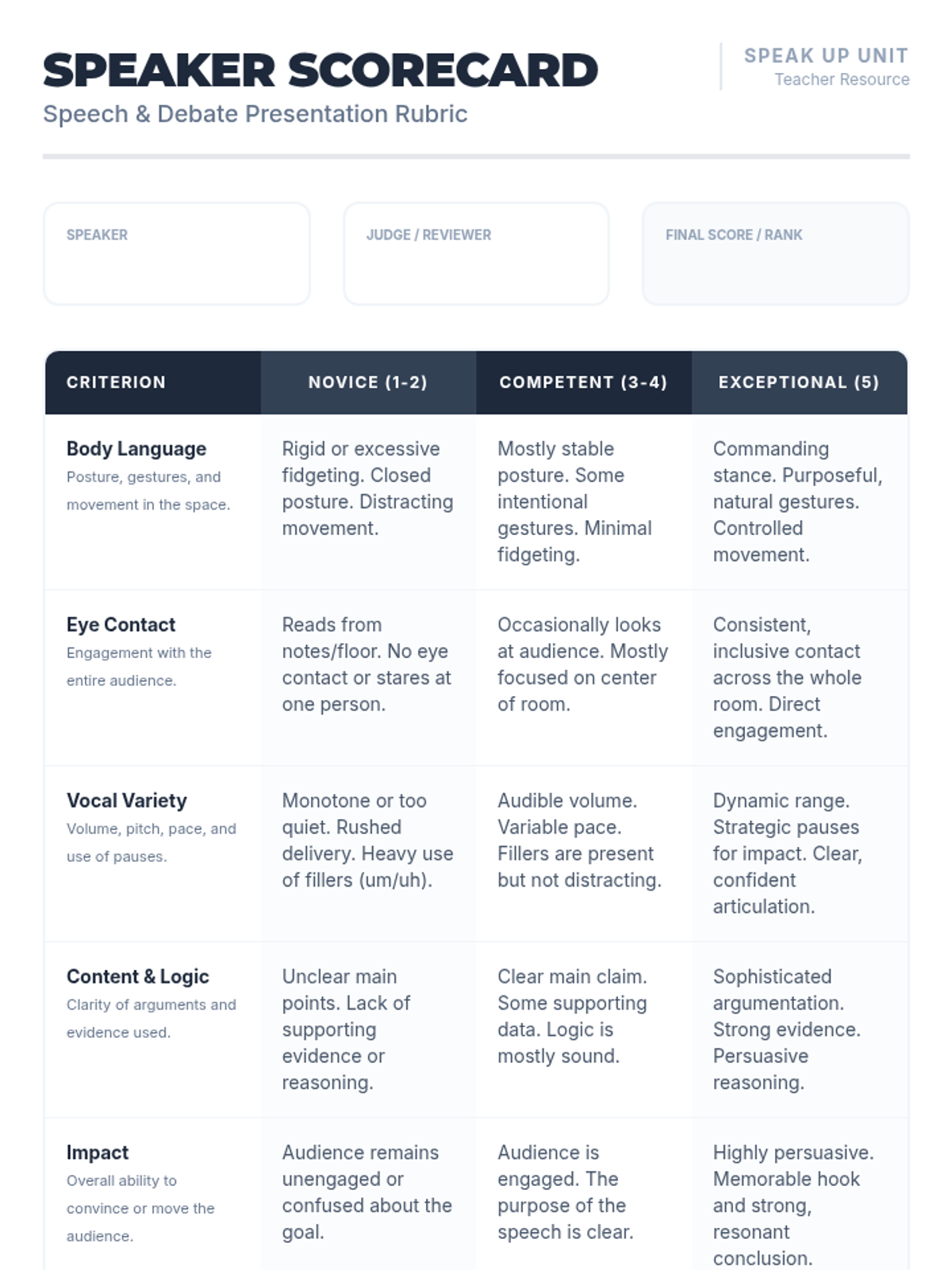
Focuses on non-verbal communication, vocal variety, and overcoming stage fright to establish a professional presence.
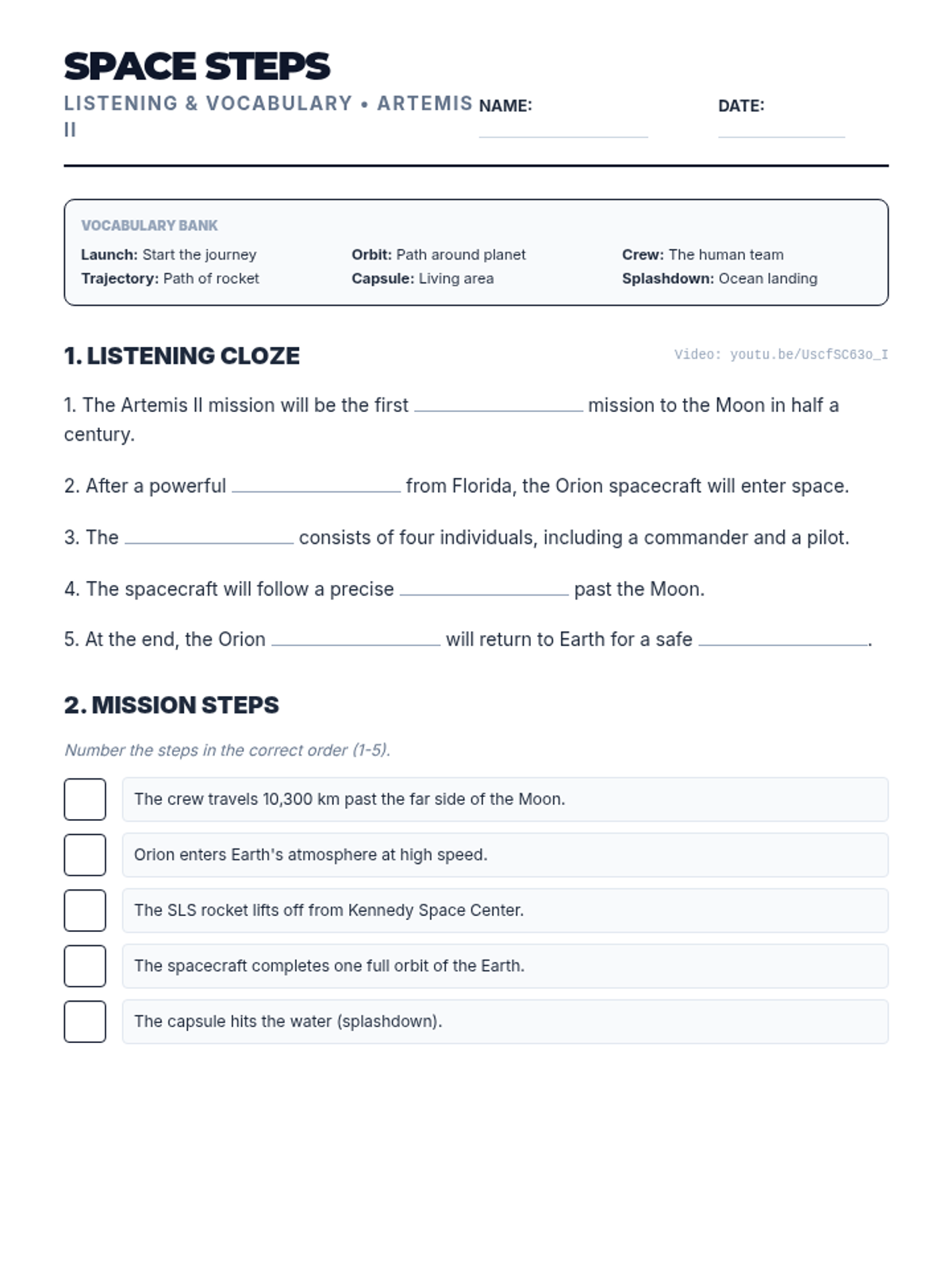
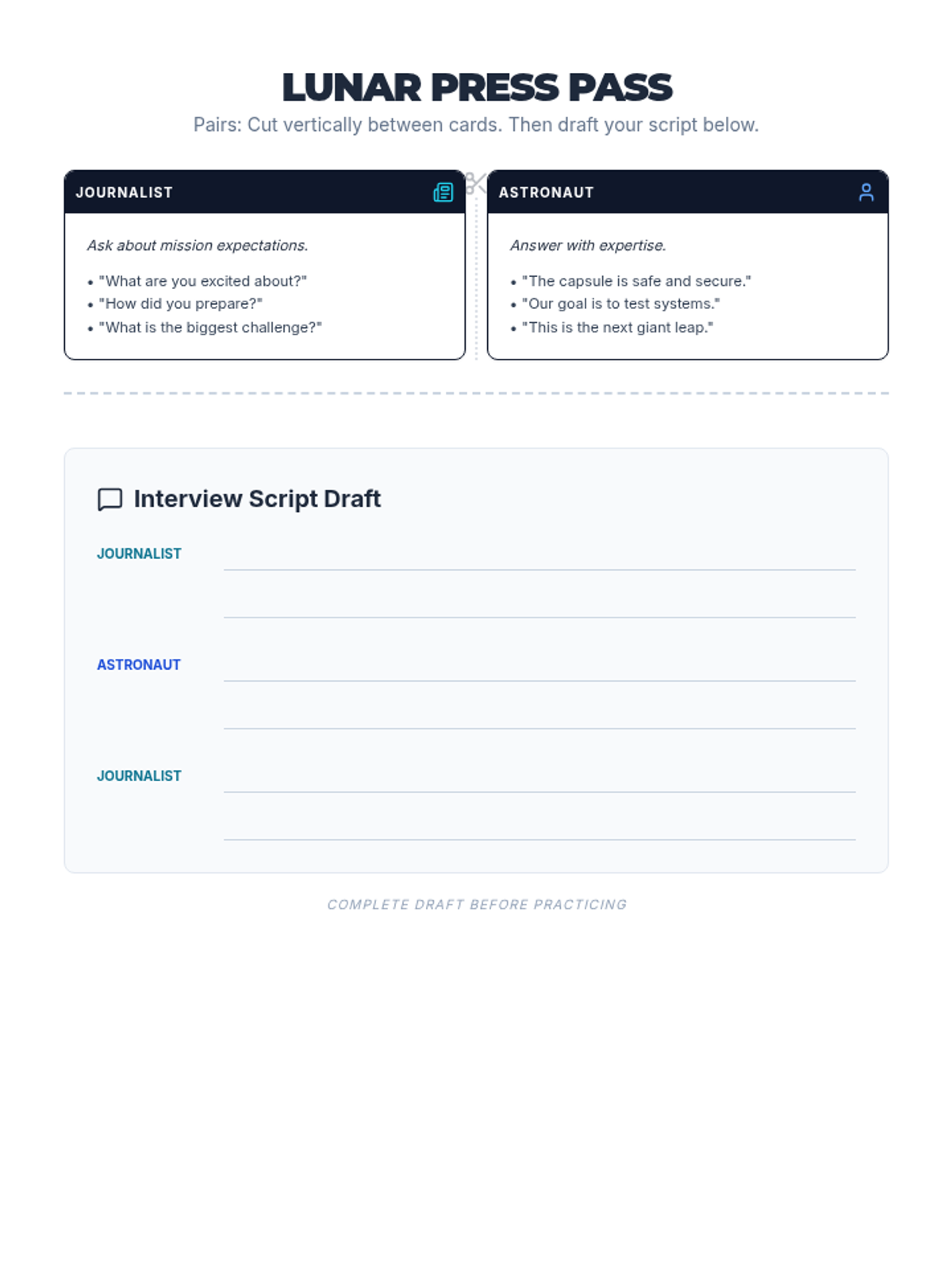
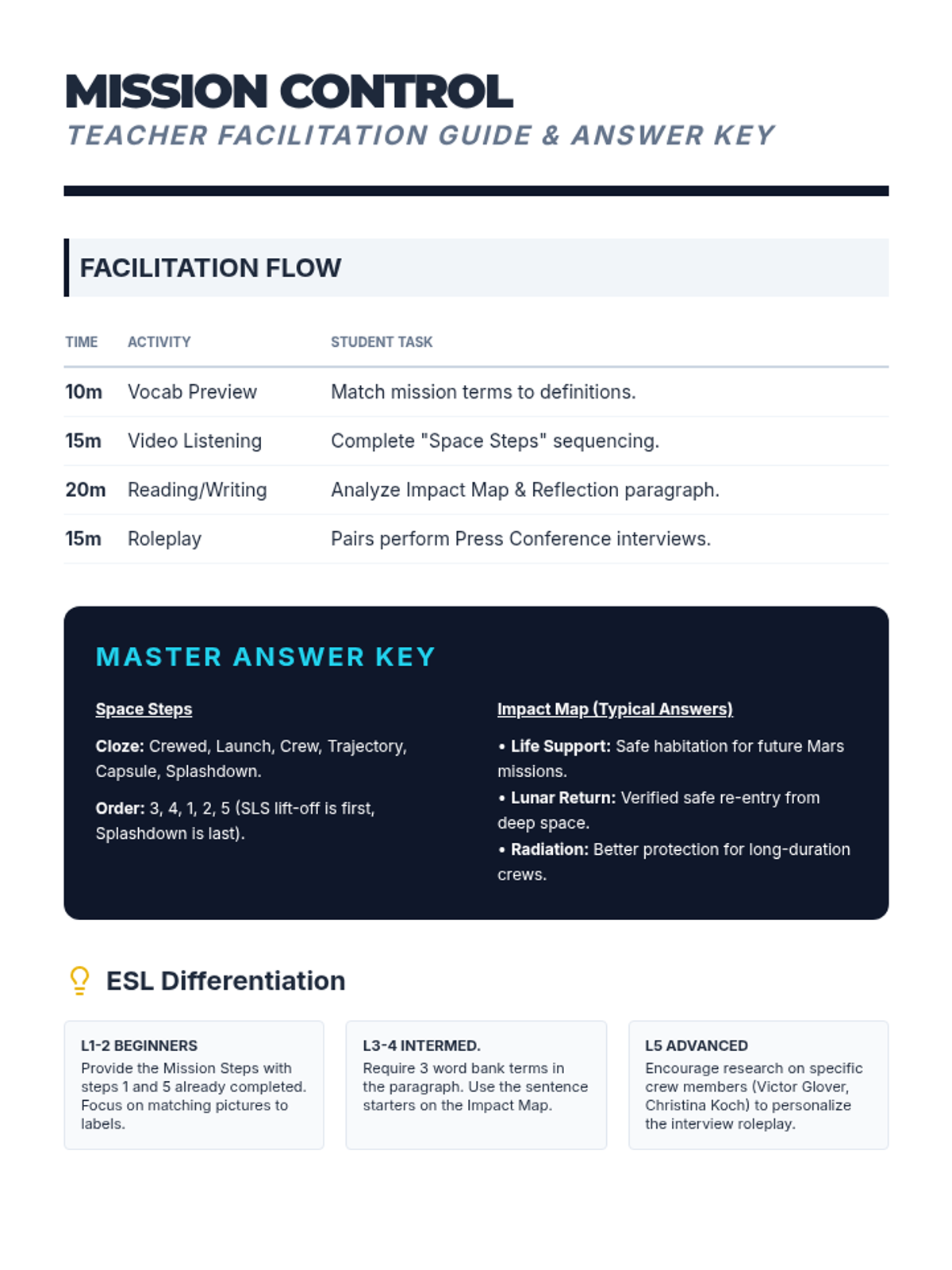
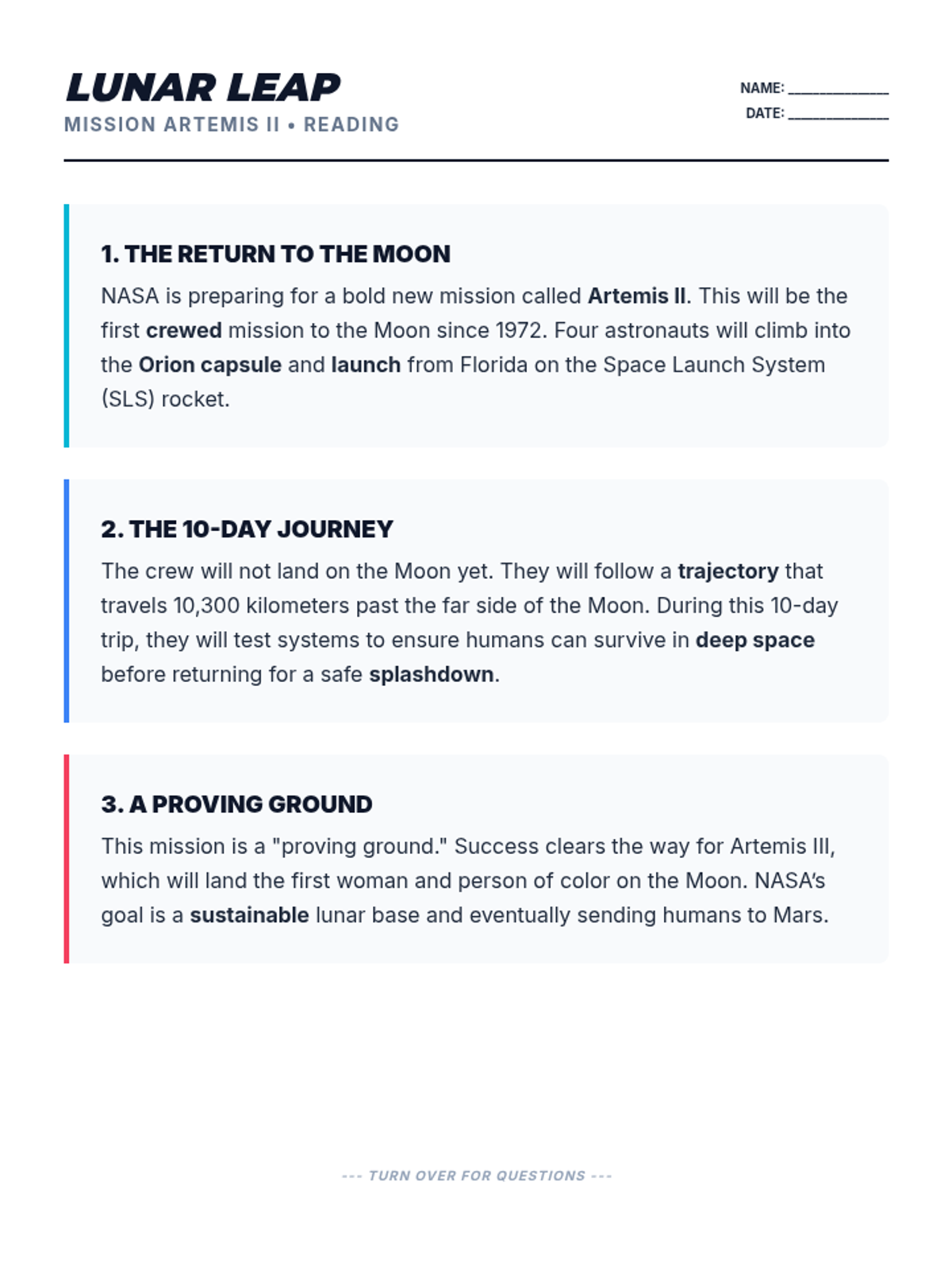
An immersive Language Lounge experience where students explore the goals and logistics of the Artemis II mission to the Moon.
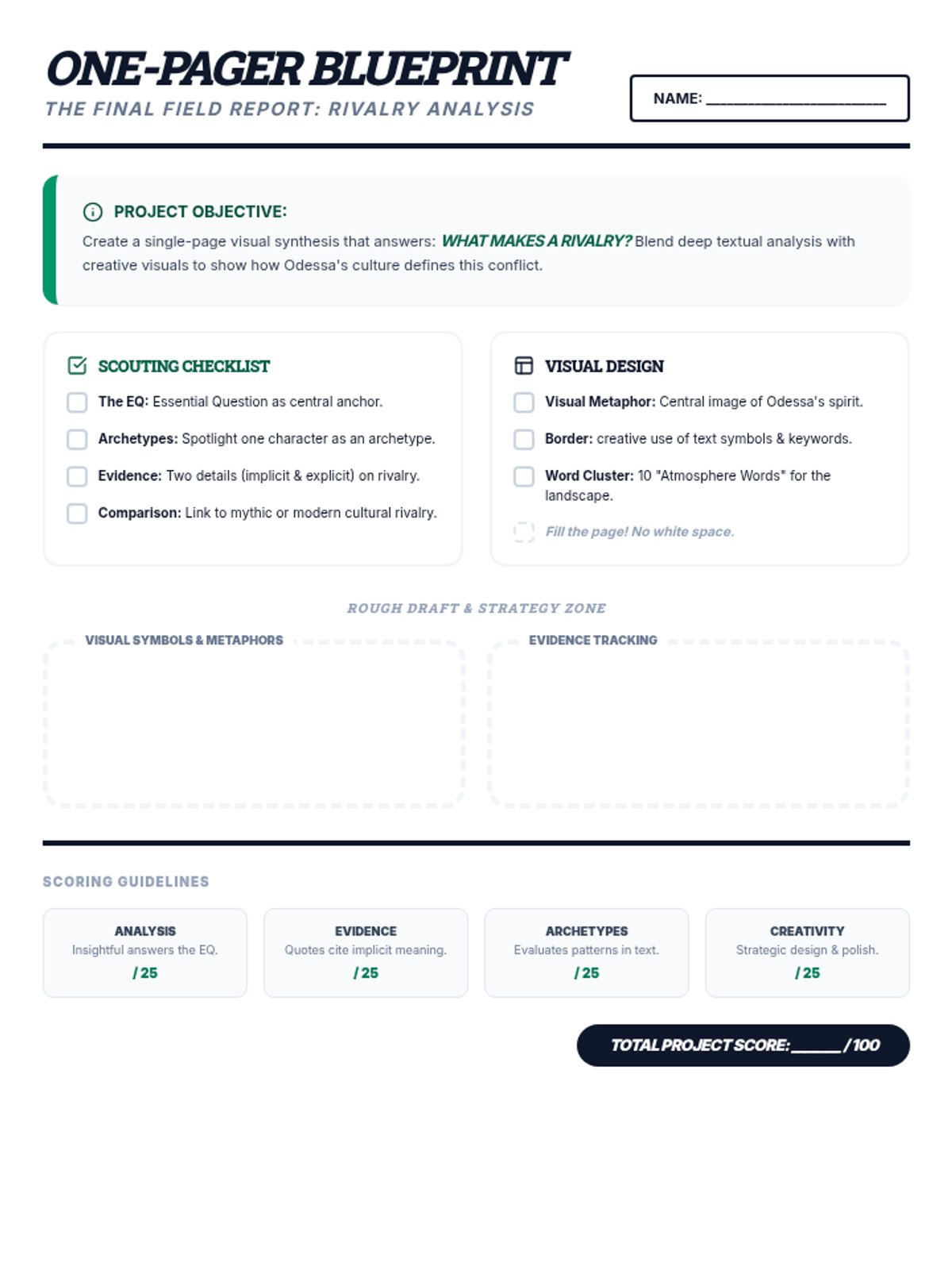
The synthesis of the unit where students create a multi-modal One-Pager to showcase their understanding of theme, archetype, and rivalry.
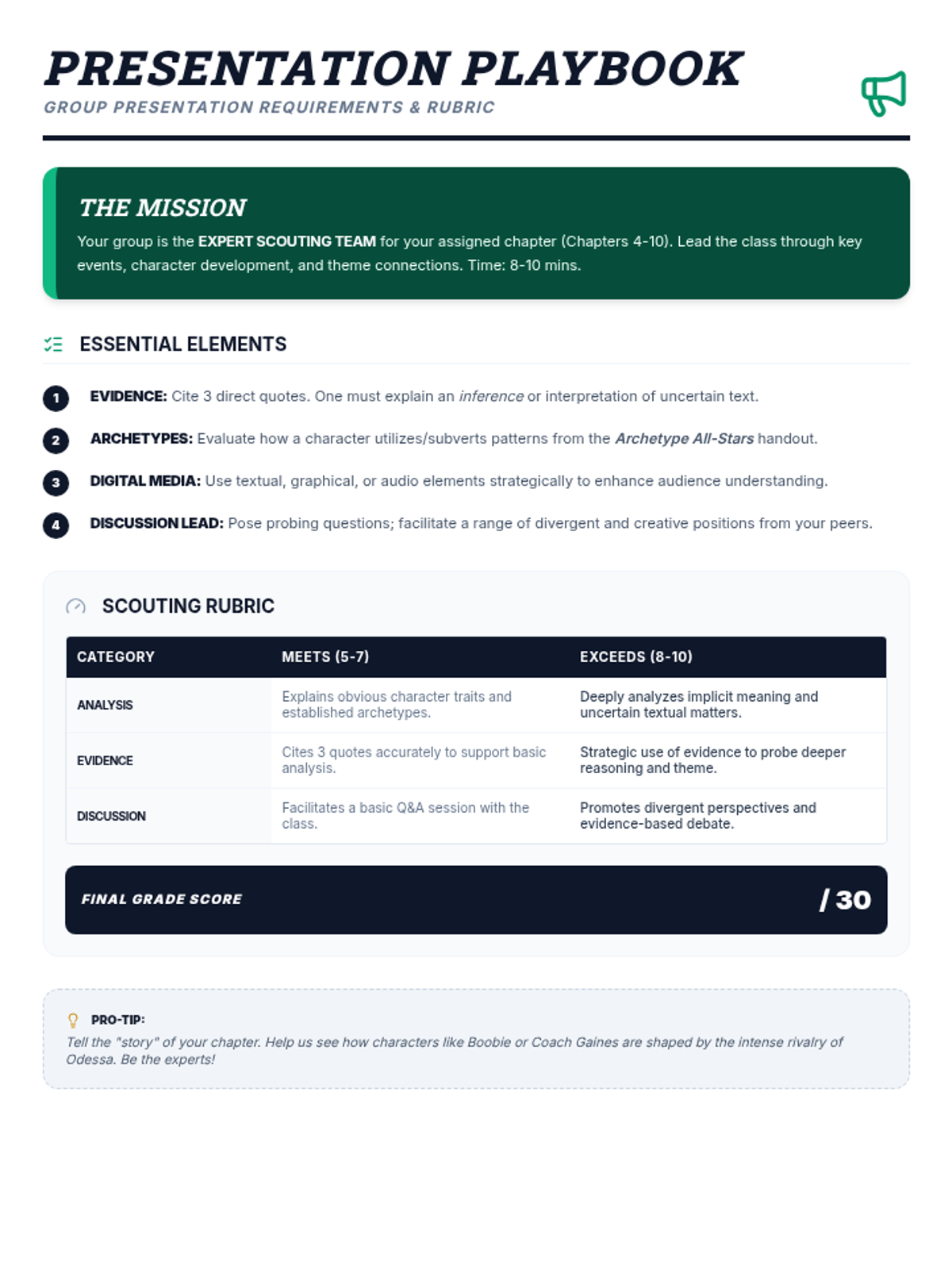
Student groups lead the class through their assigned chapters while fostering academic discussion and evaluating character development.
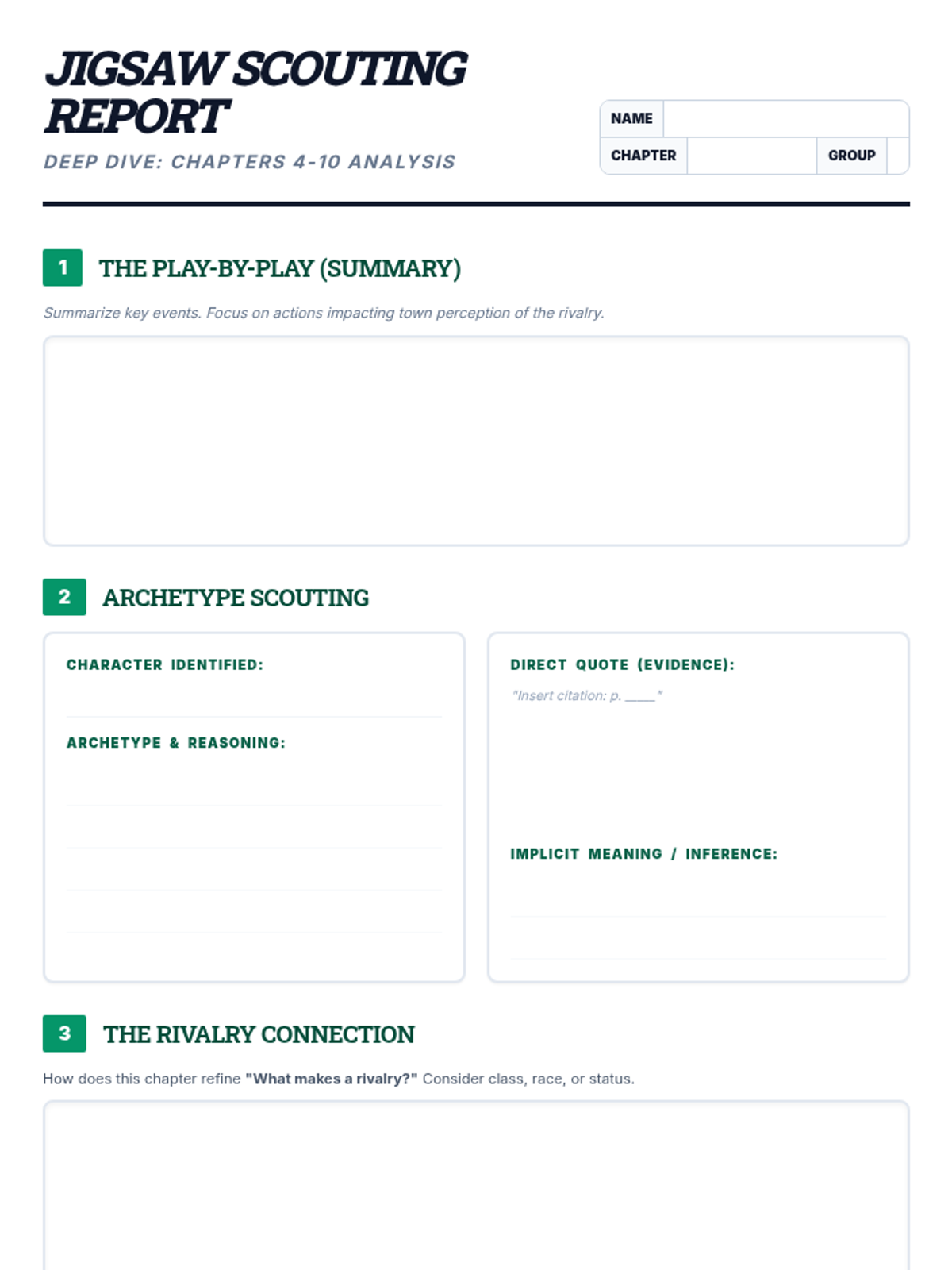
A deep dive into Chapters 4-10 using the Jigsaw method where student groups become experts on specific sections of the text.
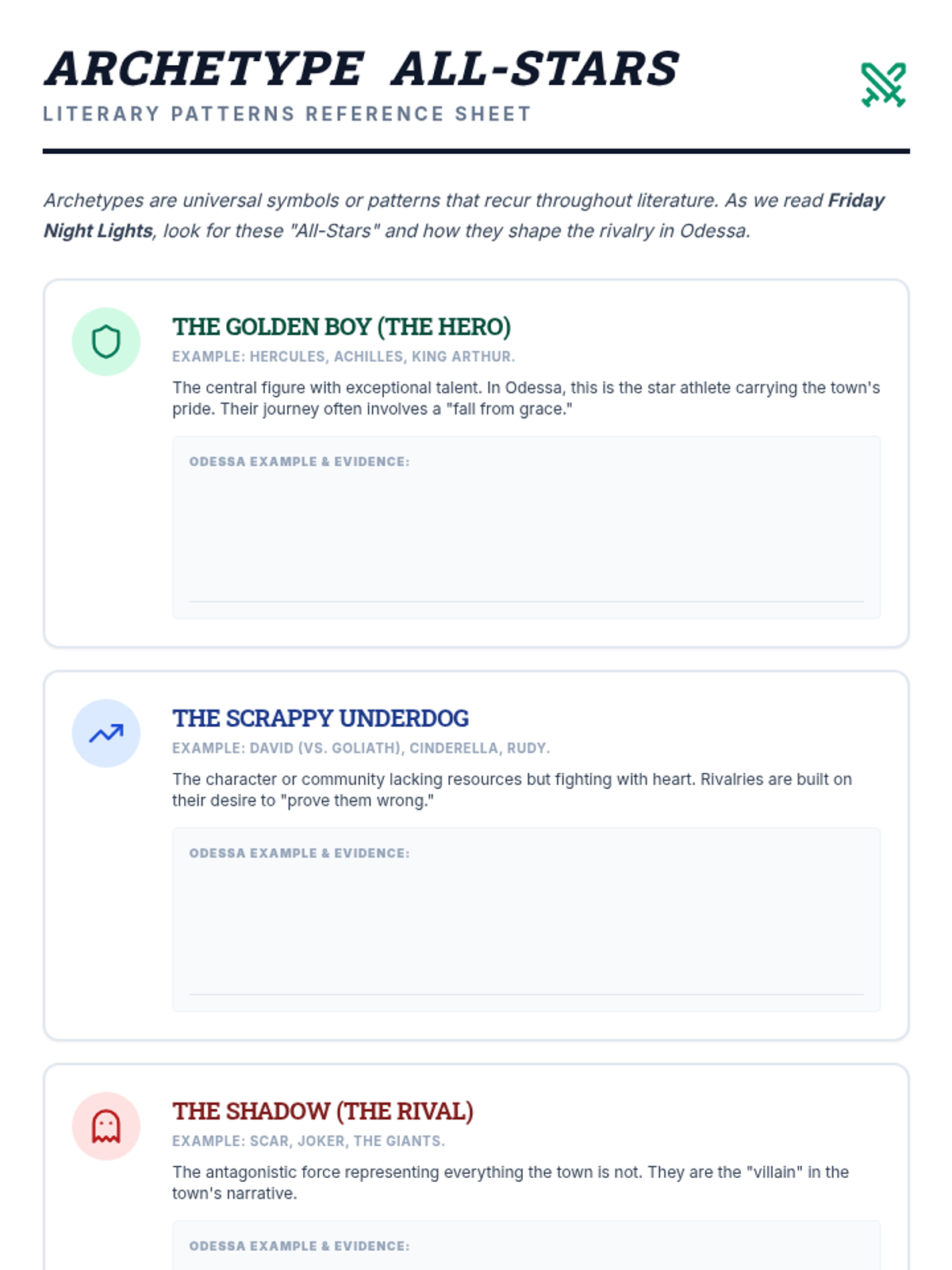
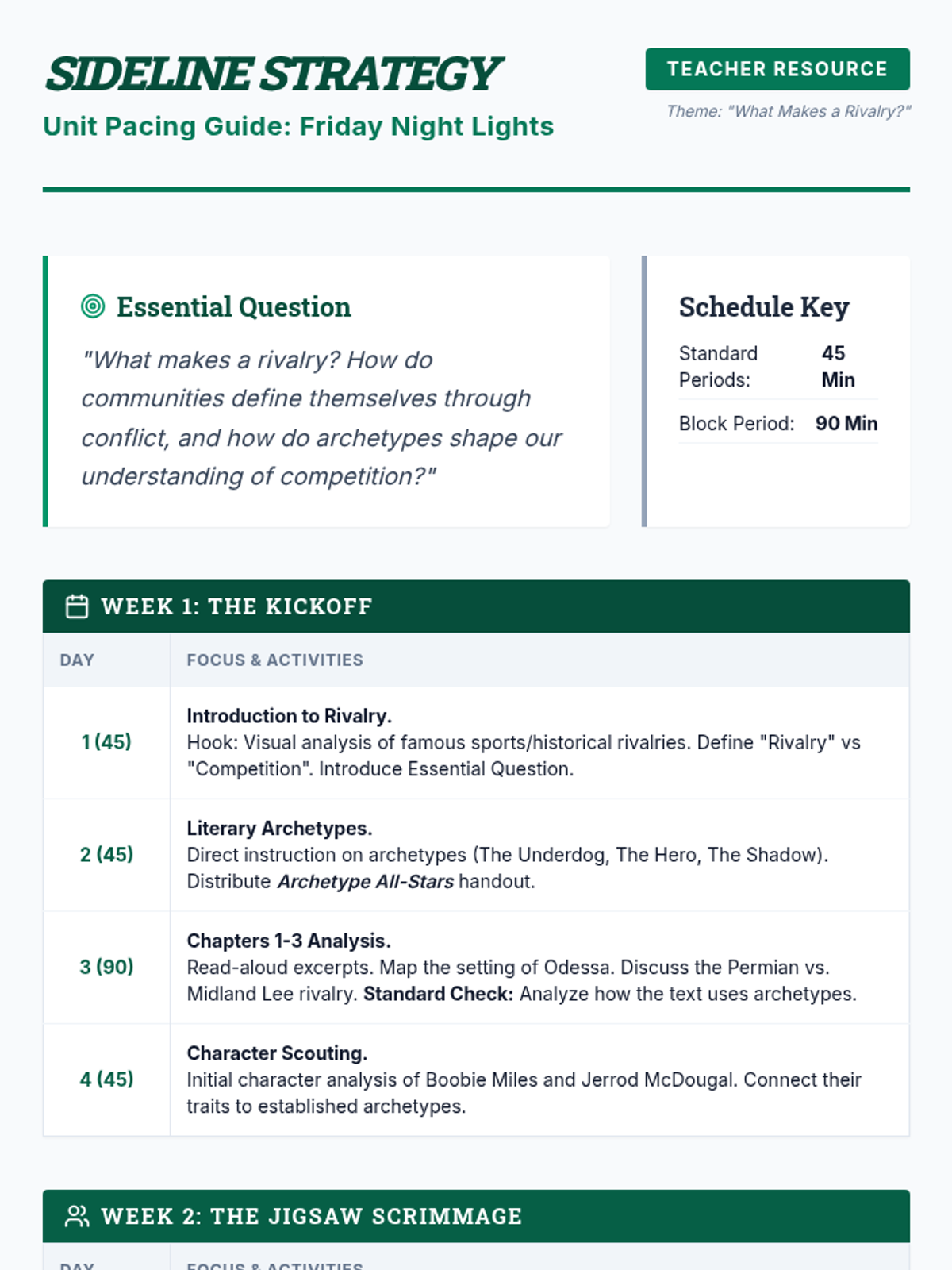
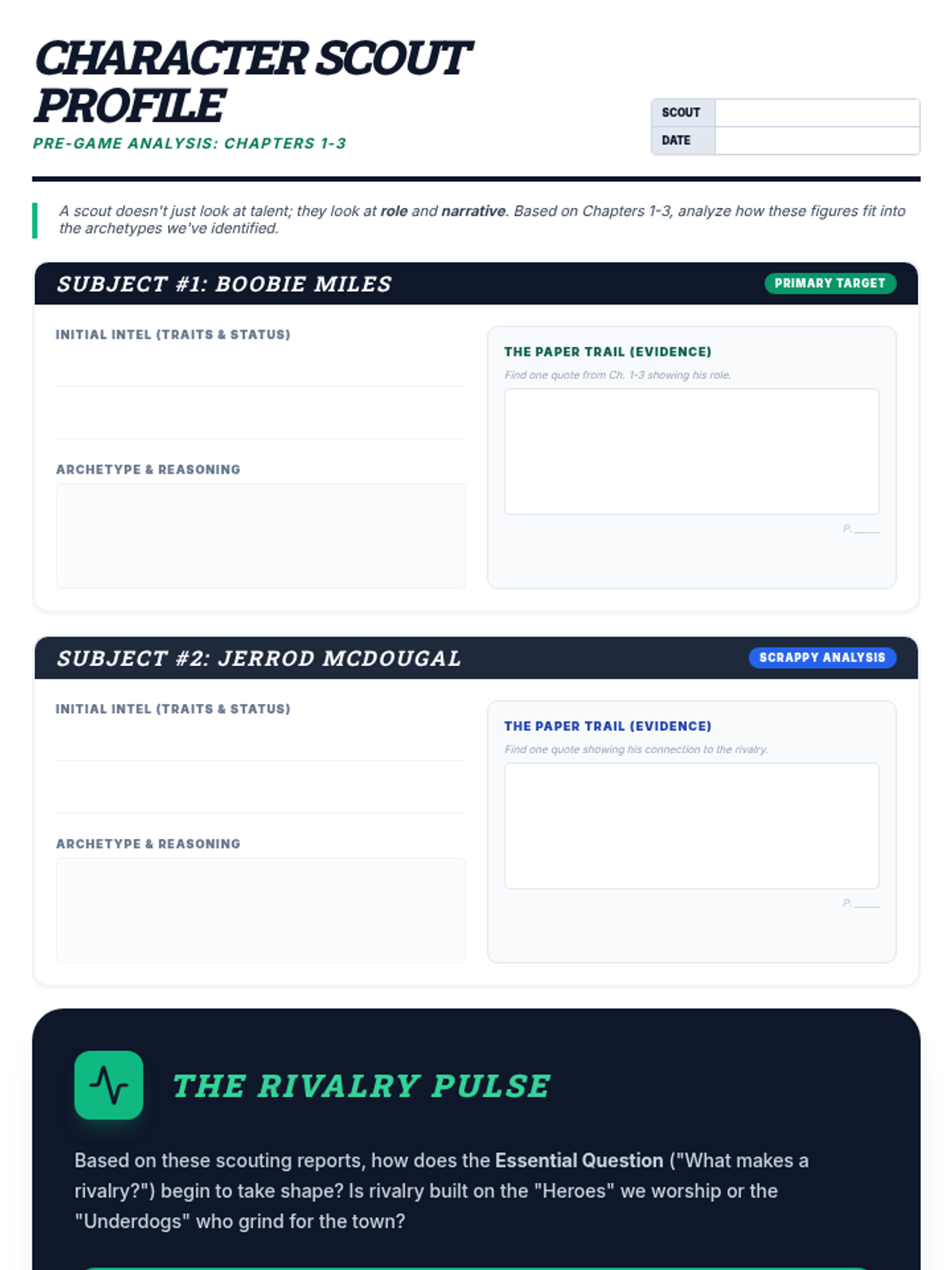
An introduction to the unit's essential question and the social landscape of Odessa, focusing on the first three chapters and literary archetypes.
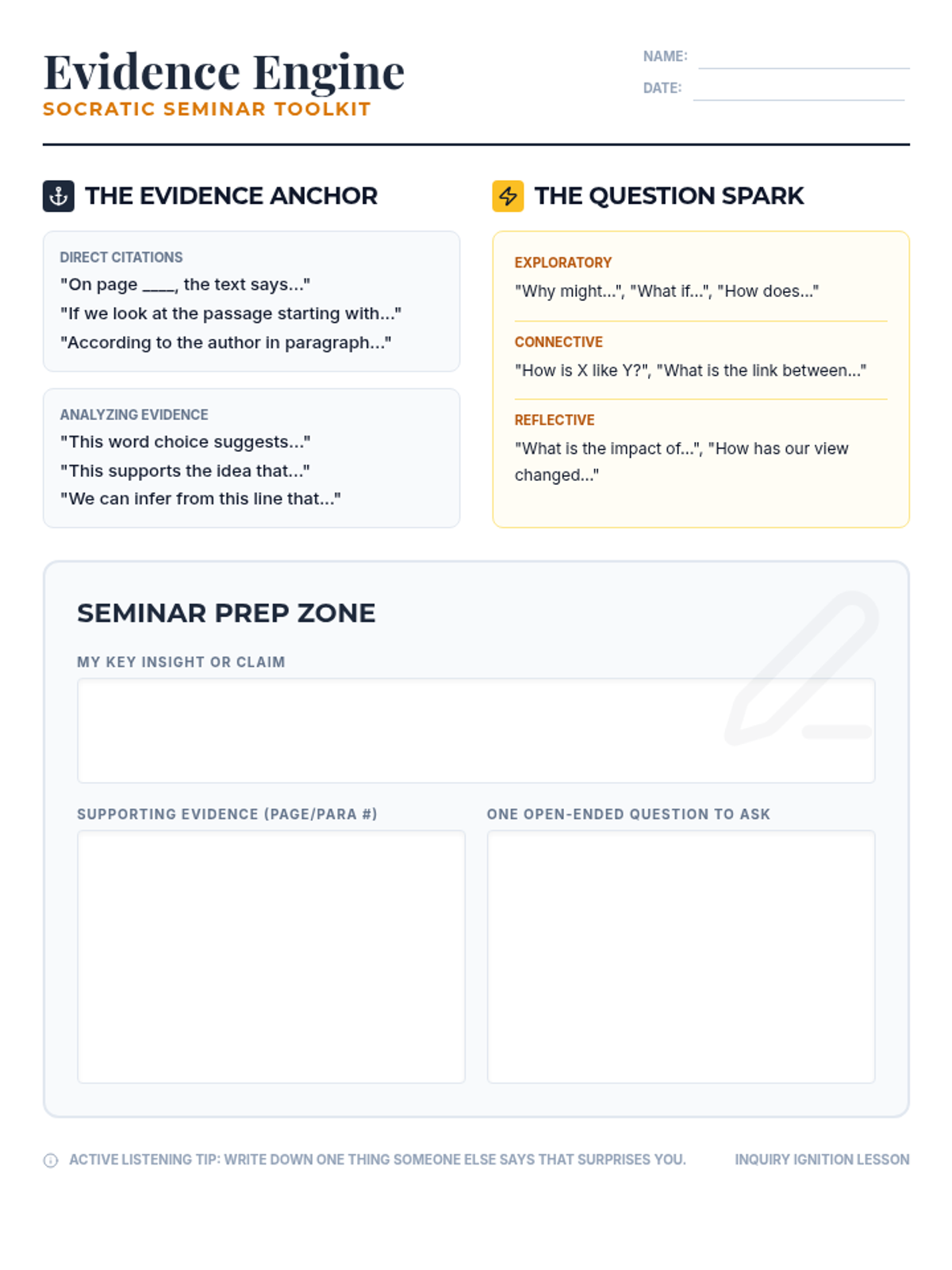
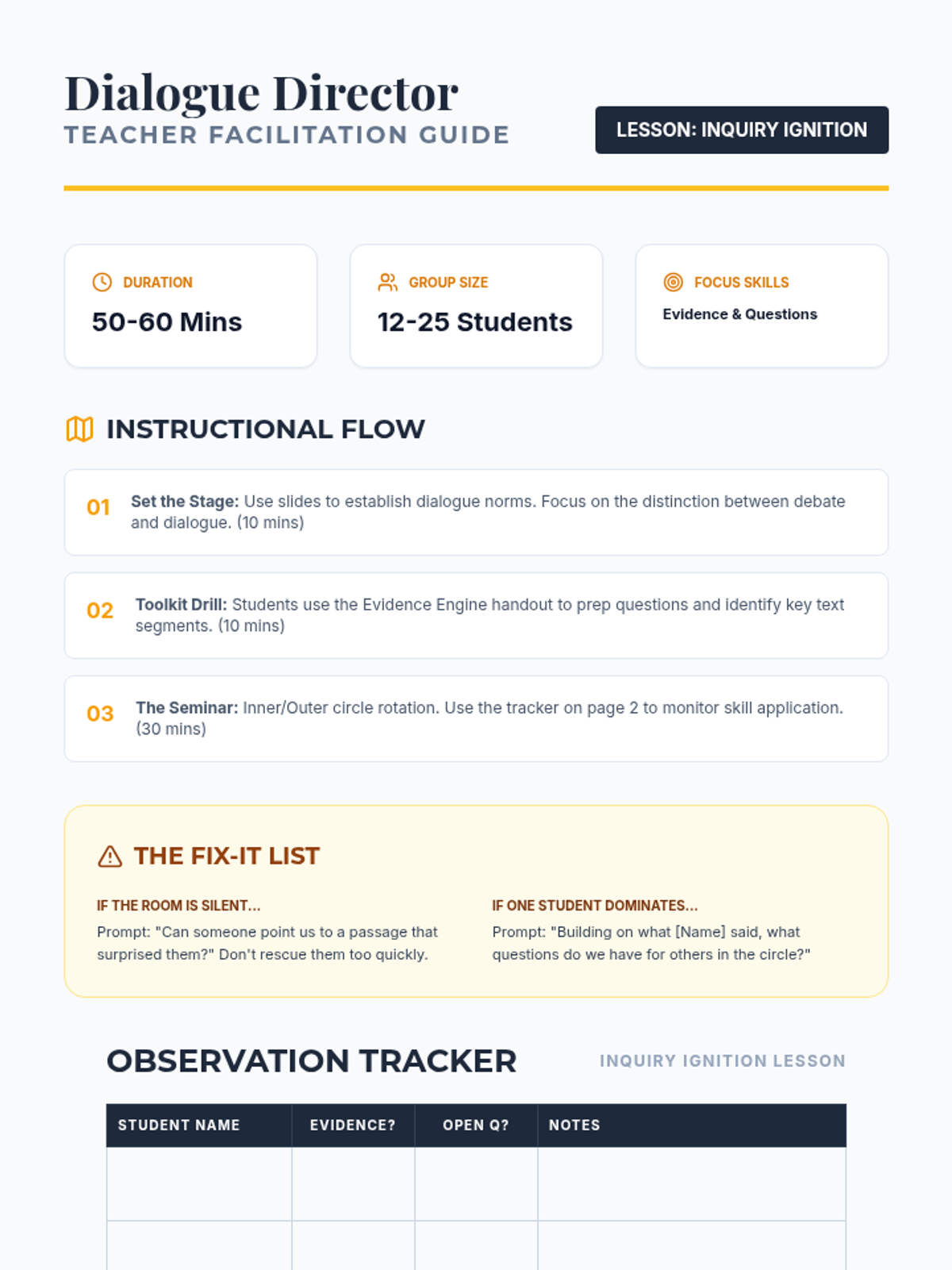
A lesson focused on the two core pillars of a successful Socratic Seminar: grounding claims in textual evidence and propelling dialogue through open-ended questioning. Students will learn to move beyond simple 'yes/no' answers to deep, evidence-based inquiry.
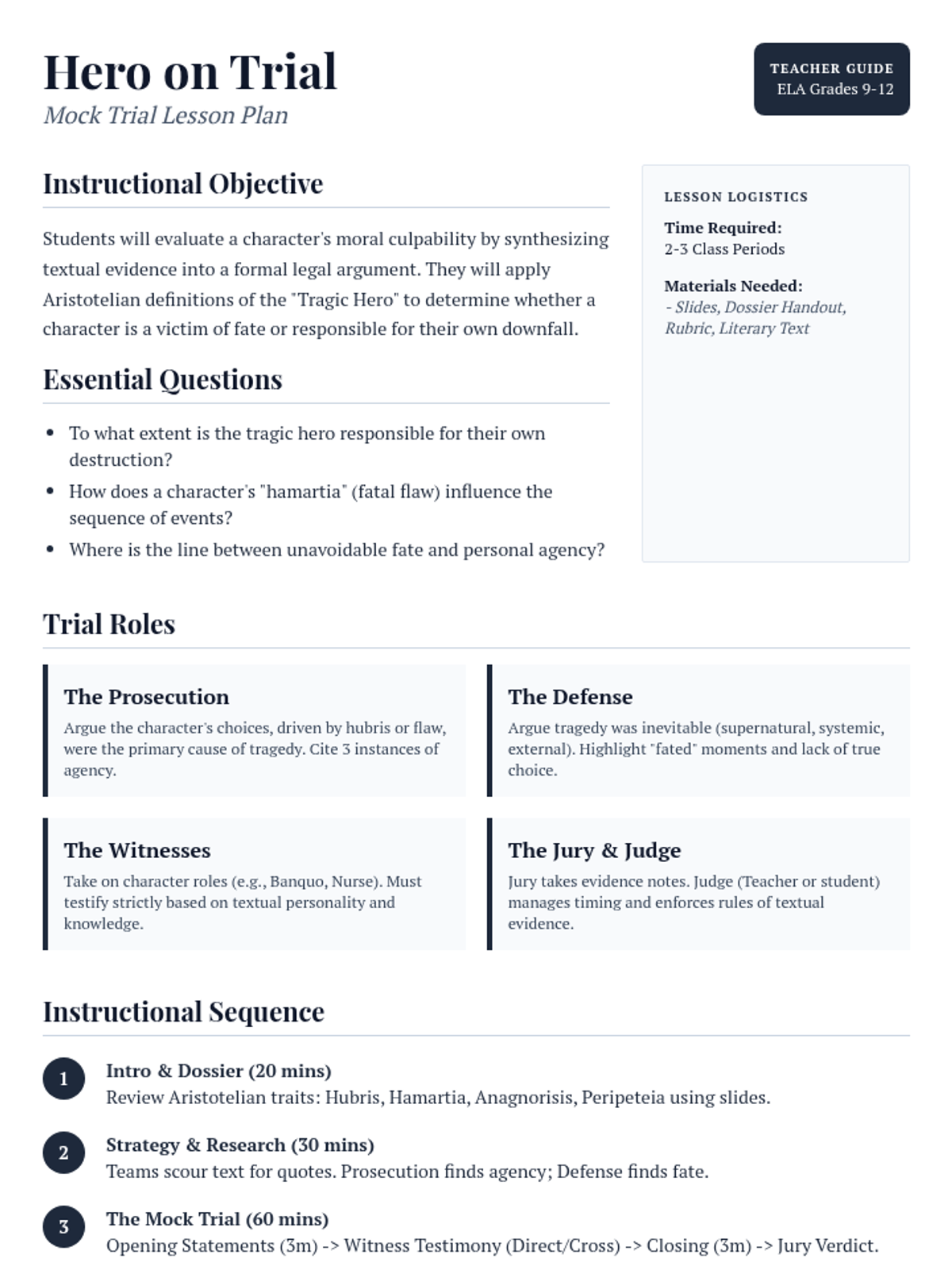
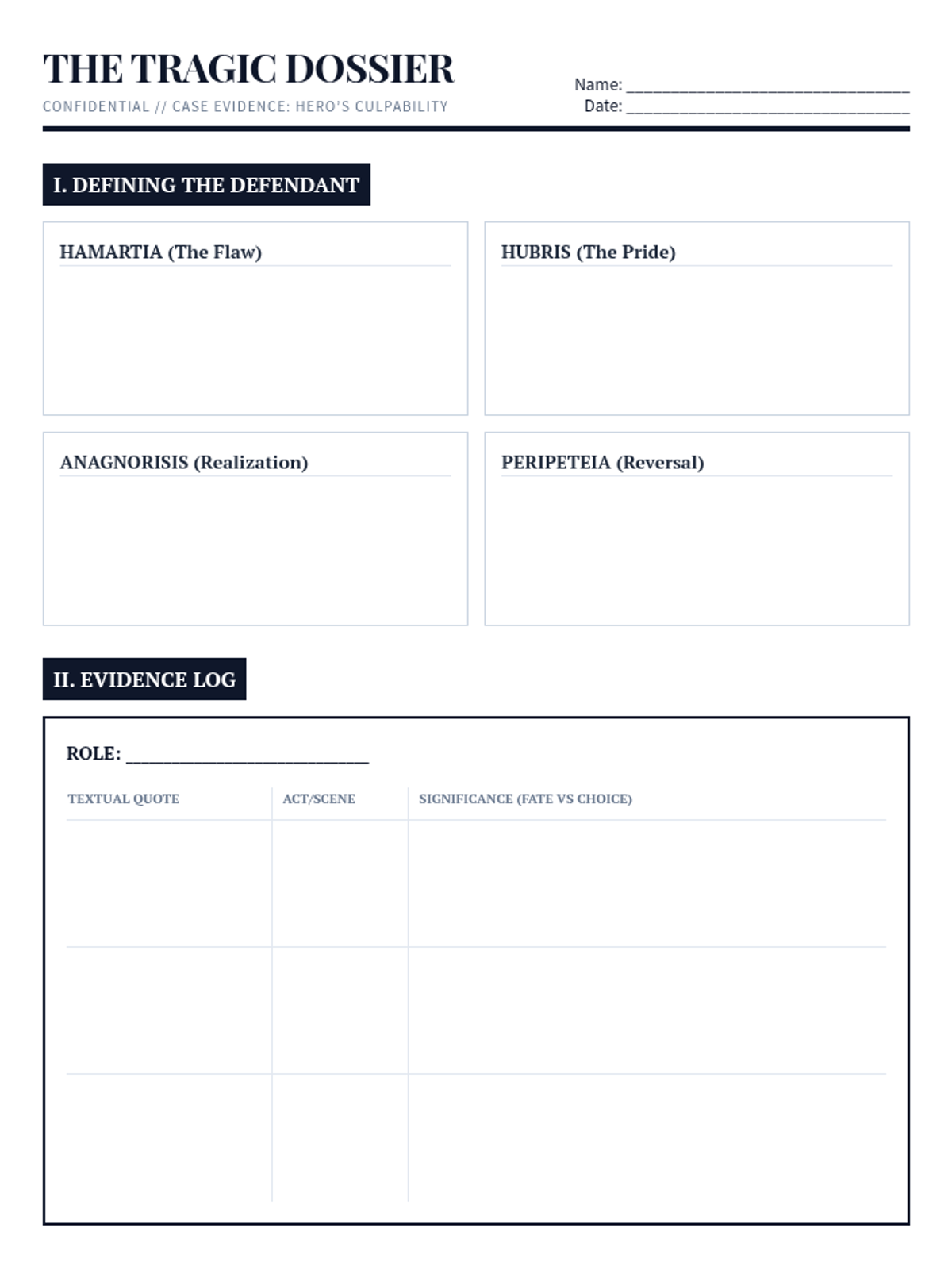
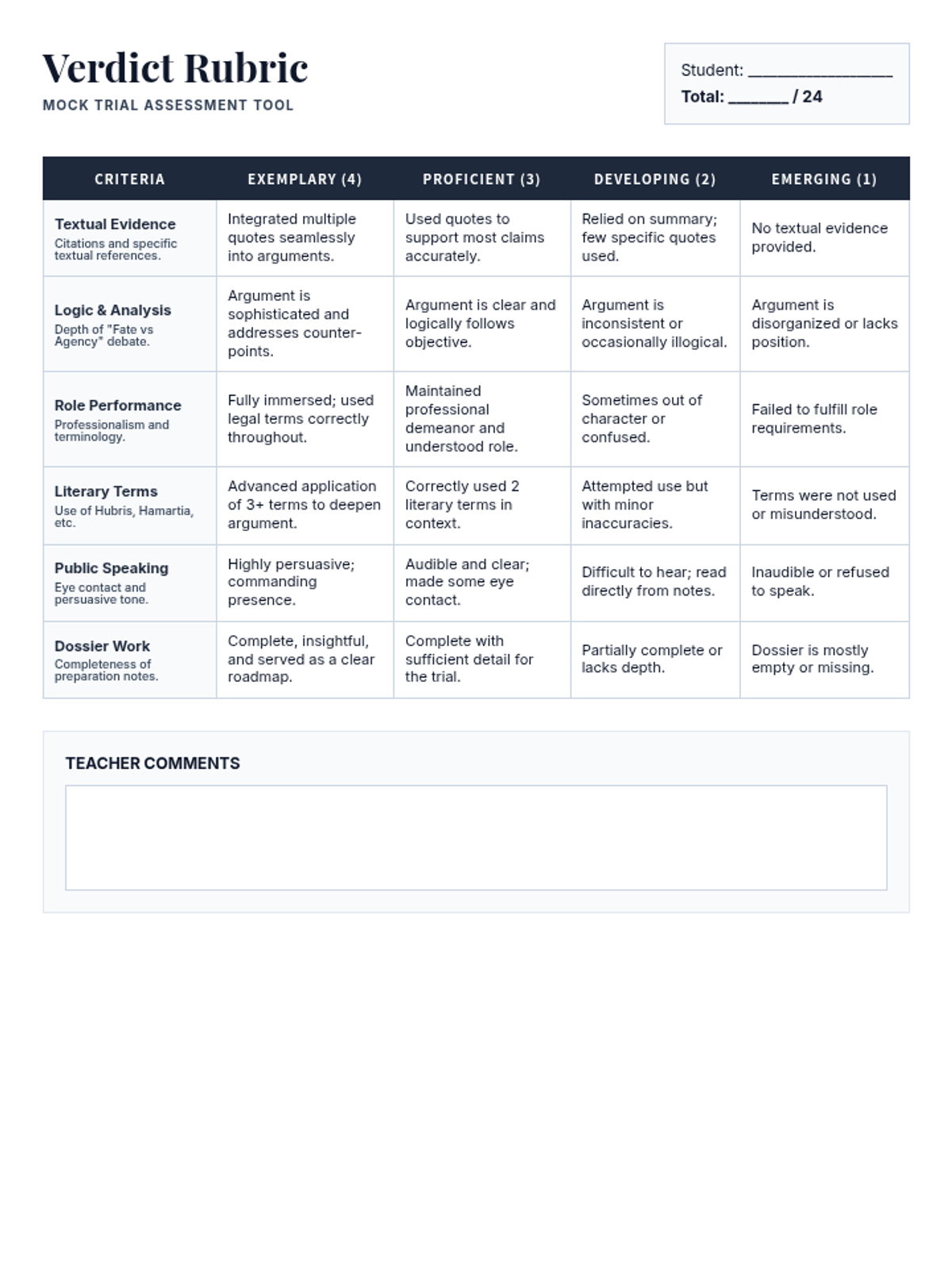
A high school English lesson where students conduct a mock trial for a tragic hero, analyzing textual evidence to explore themes of fate, choice, and moral culpability.
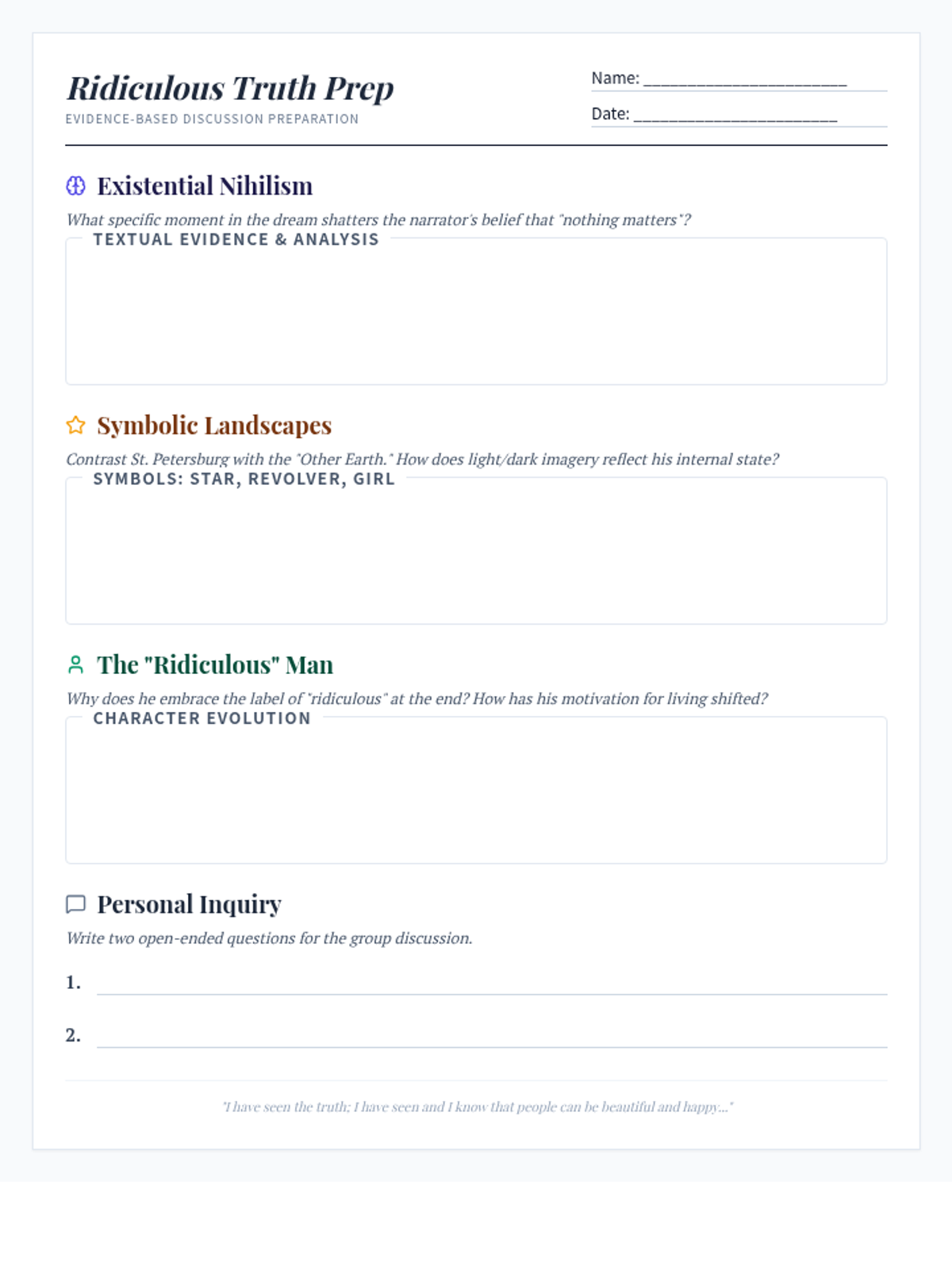
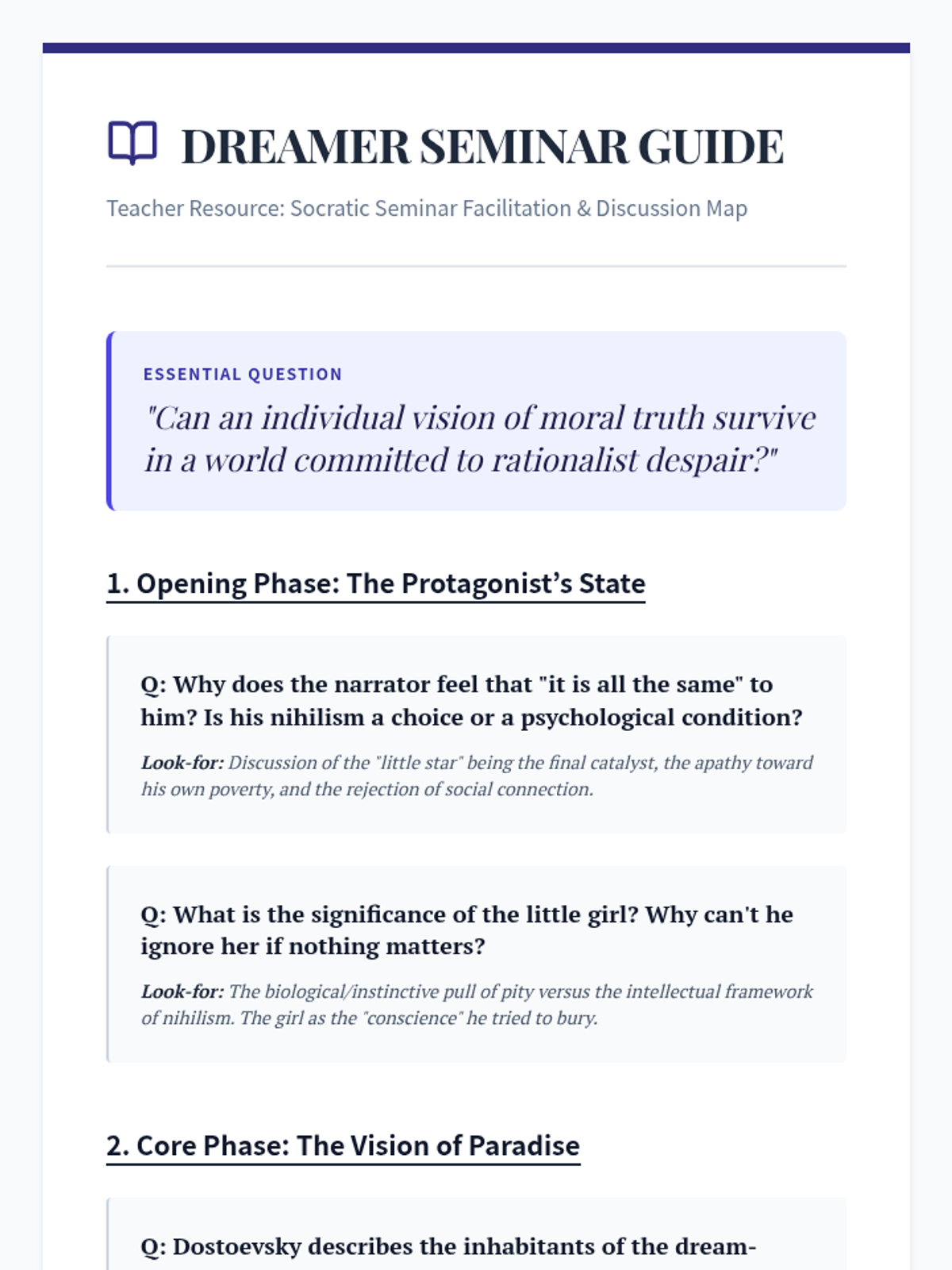
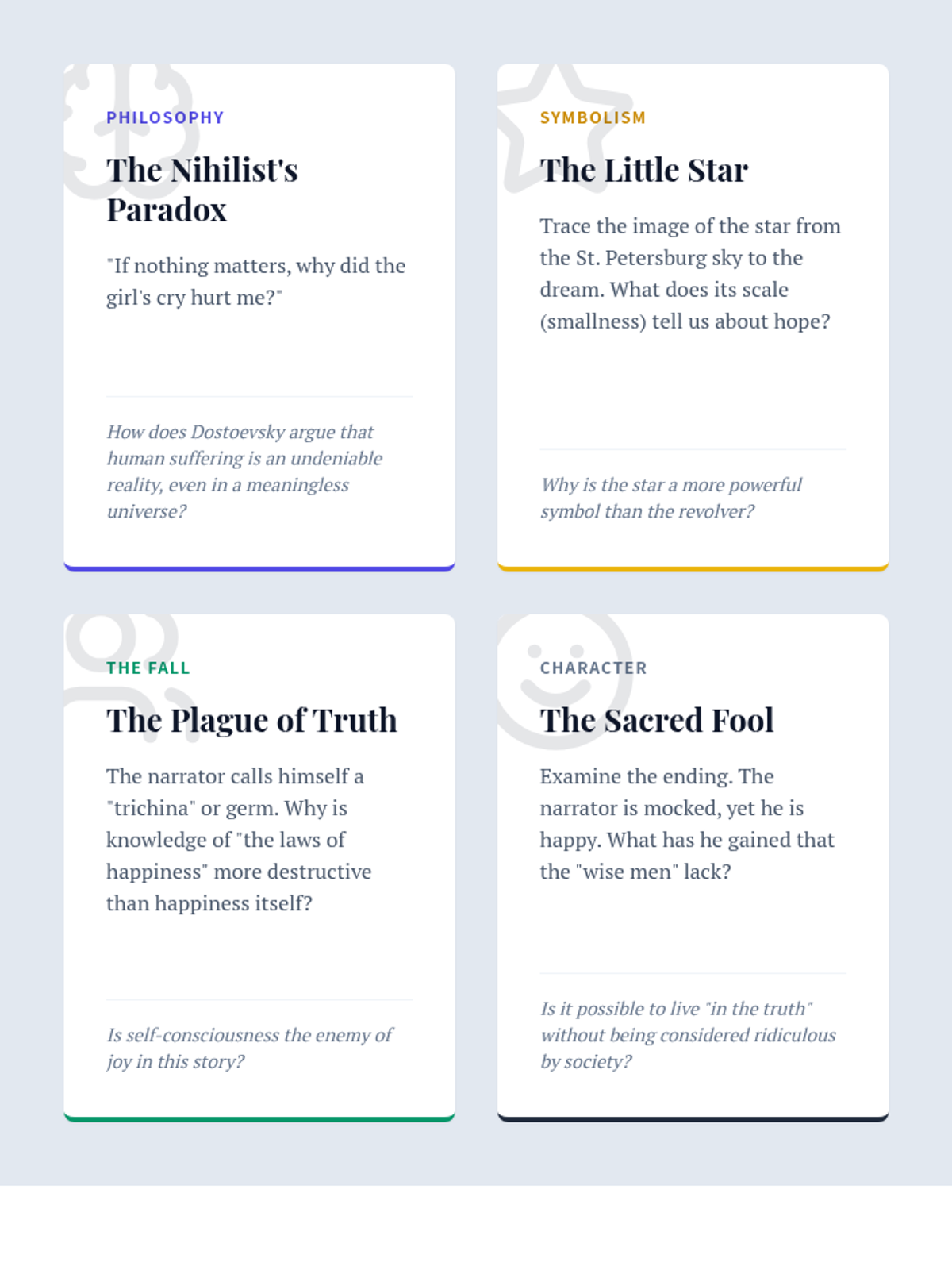
A deep-dive Socratic Seminar centered on Dostoevsky's 'The Dream of a Ridiculous Man,' exploring themes of nihilism, the Fall of Man, and the power of individual empathy. Students prepare textual evidence and engage in peer-led discussion.
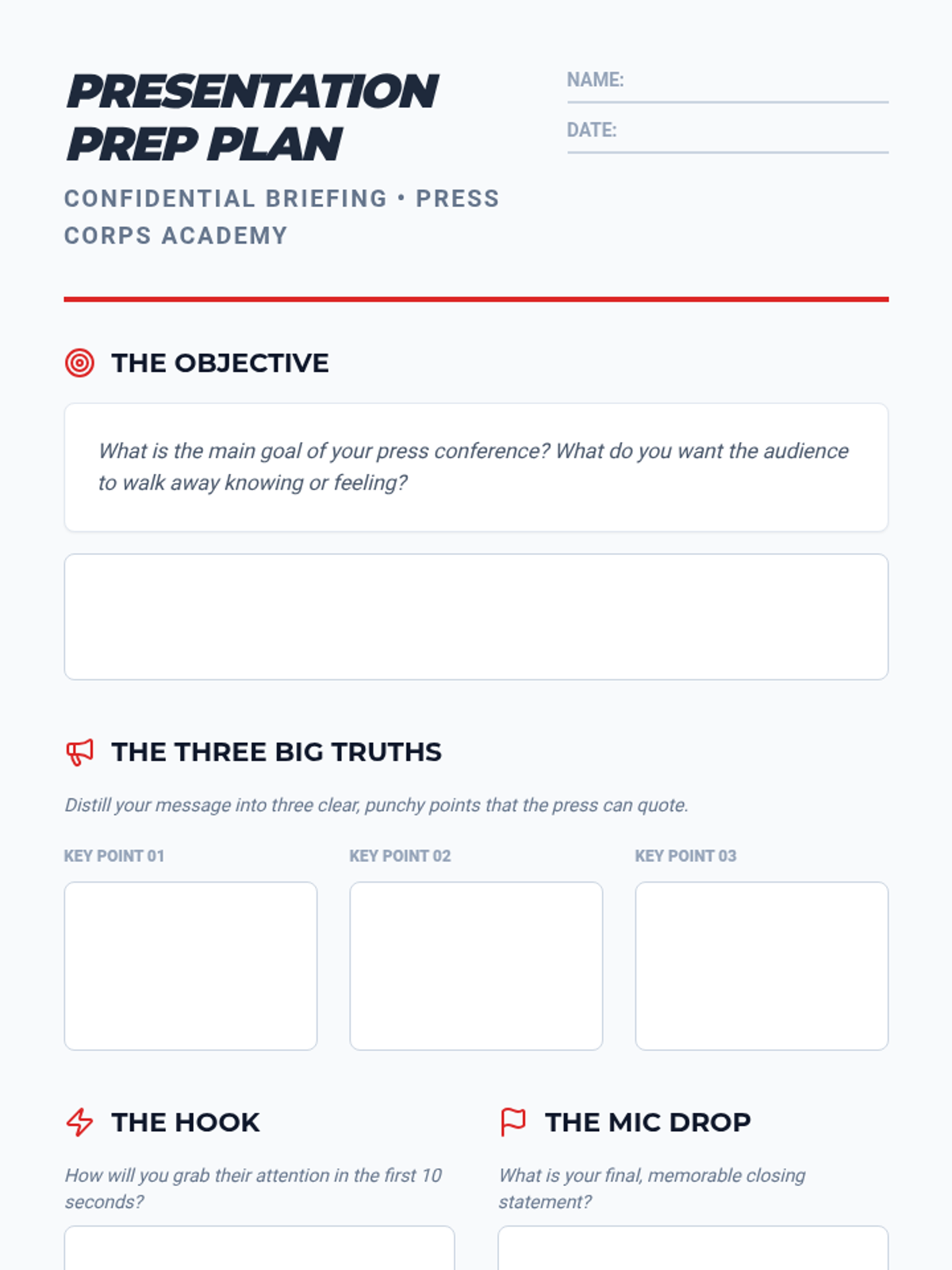
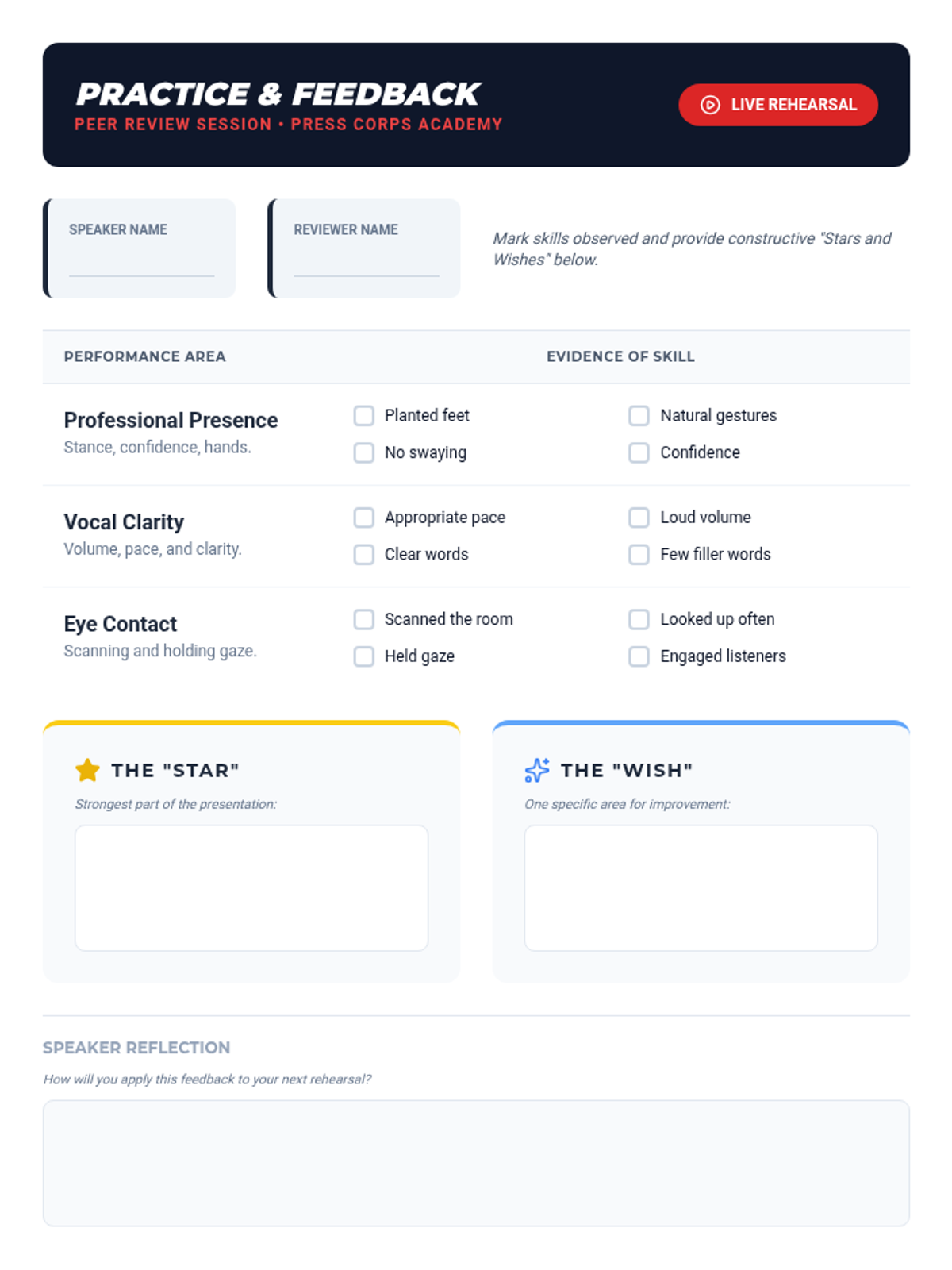
Students master the art of professional public speaking as they prepare for a high-stakes press conference, focusing on body language, vocal delivery, and audience engagement.
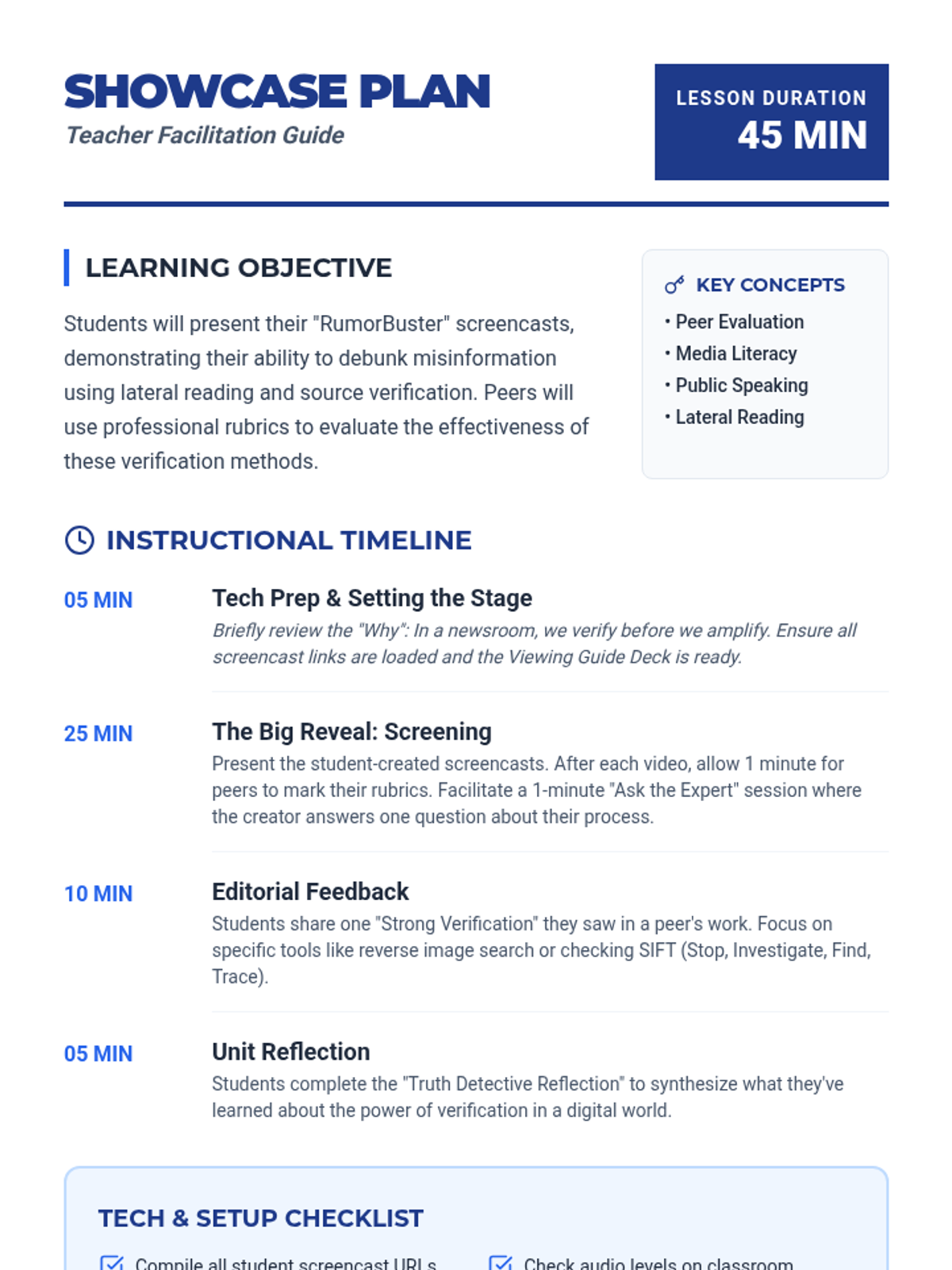
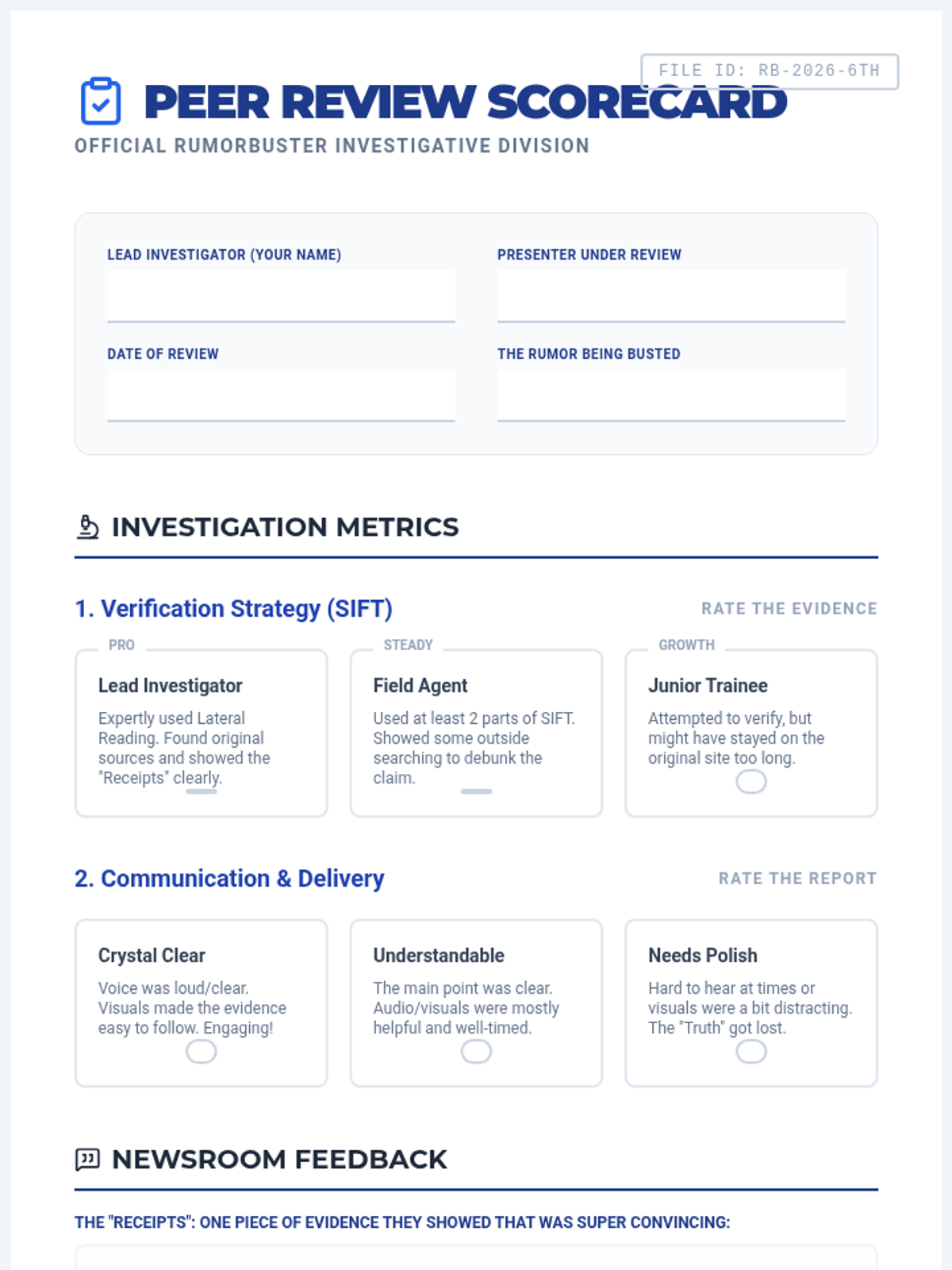
A 45-minute lesson where students showcase their media literacy investigations through screencasts, engage in peer evaluation using a professional rubric, and reflect on their growth as digital fact-checkers.
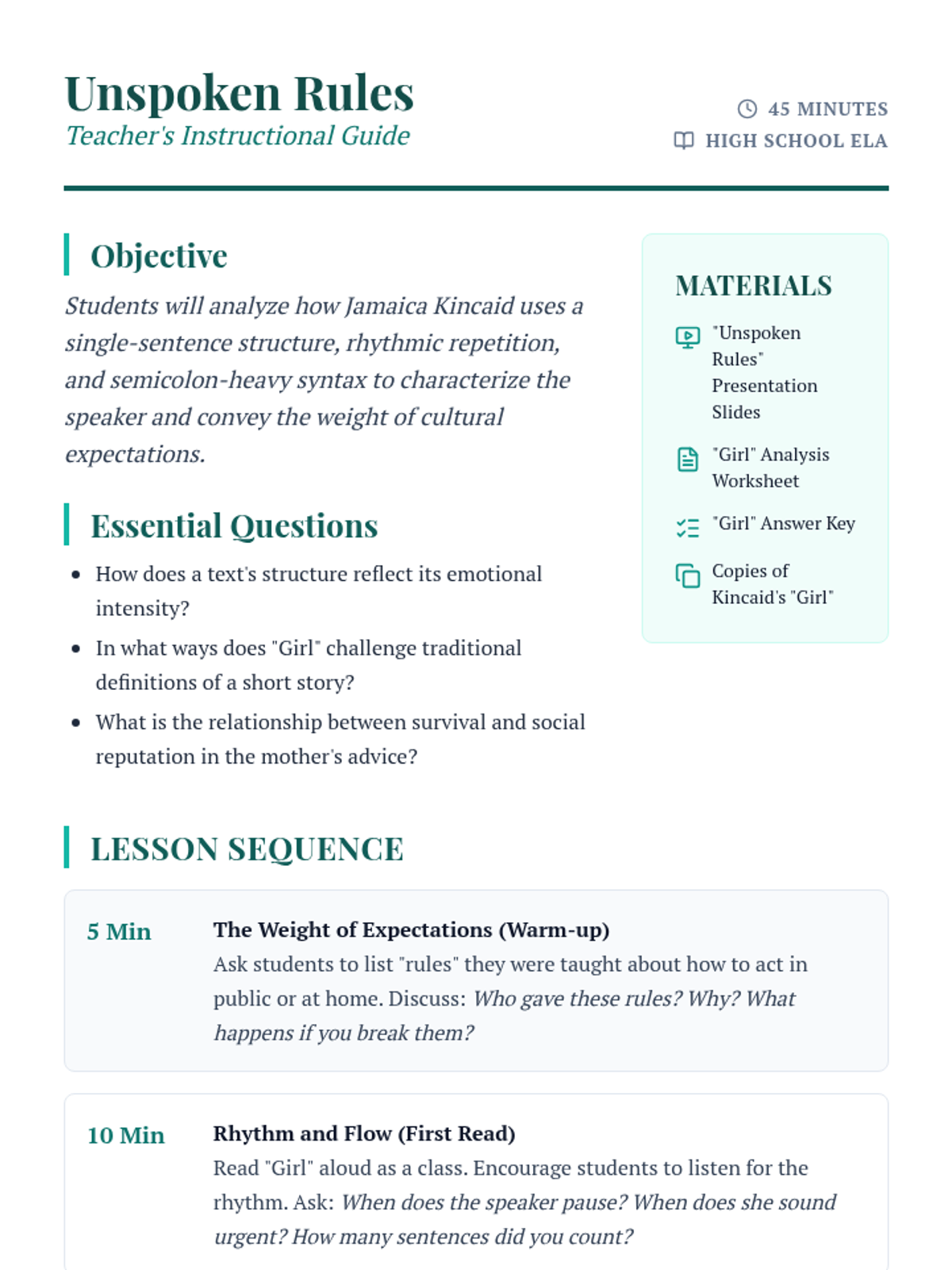
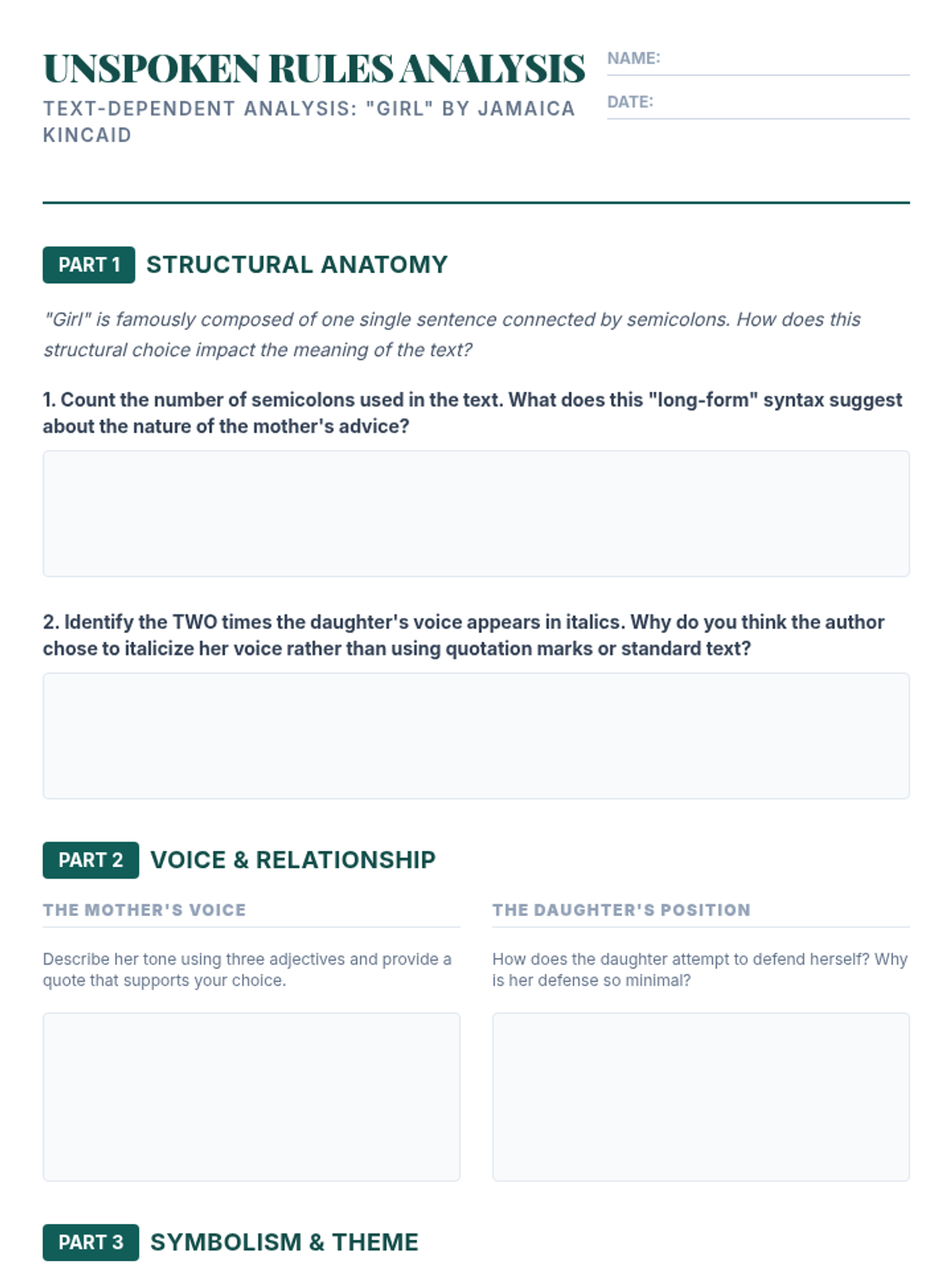
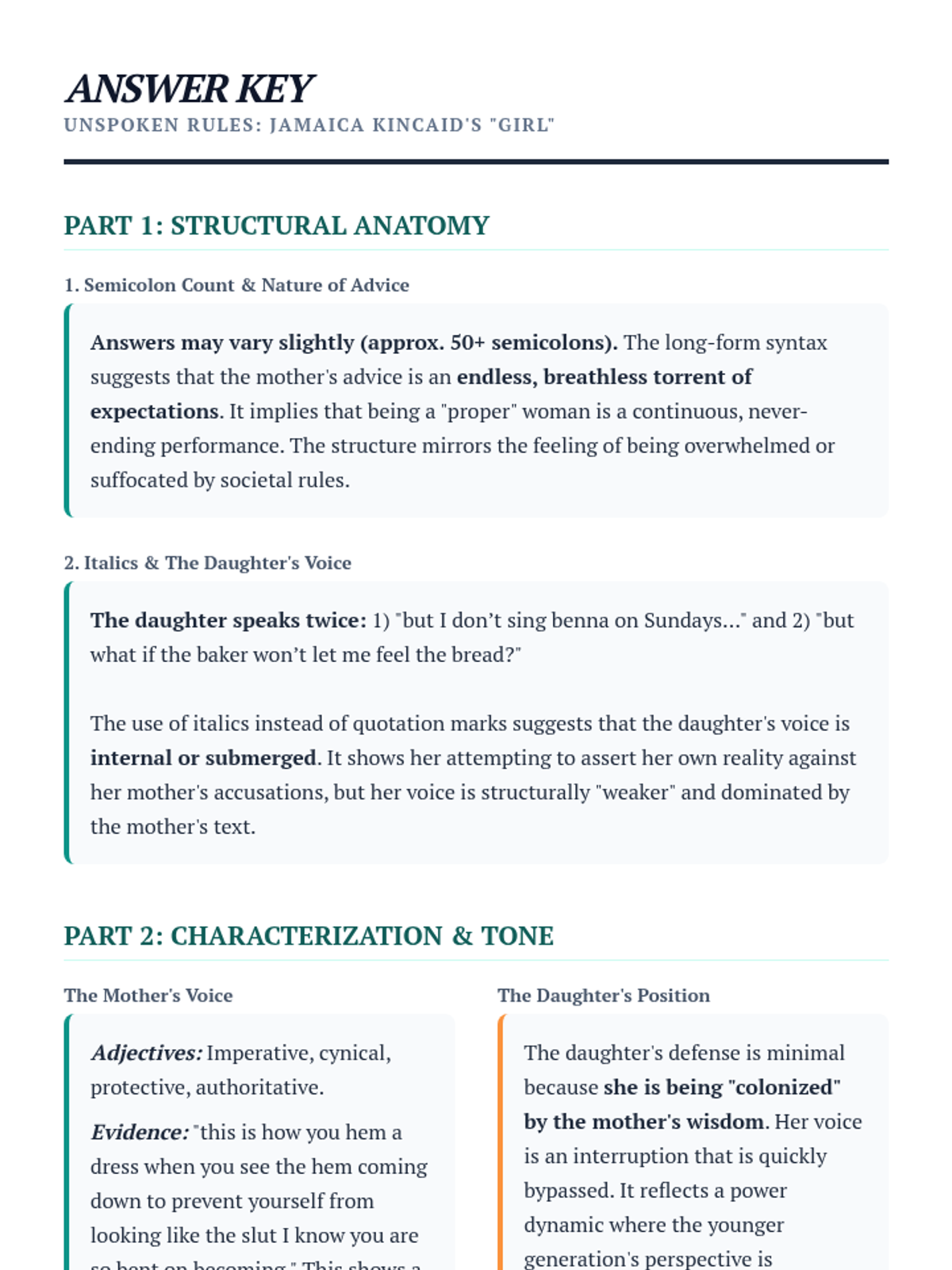
An introductory lesson on Jamaica Kincaid's 'Girl' focusing on the unique structural choice of a single-sentence narrative, its rhythmic style, and the complex characterization of the mother-daughter relationship.
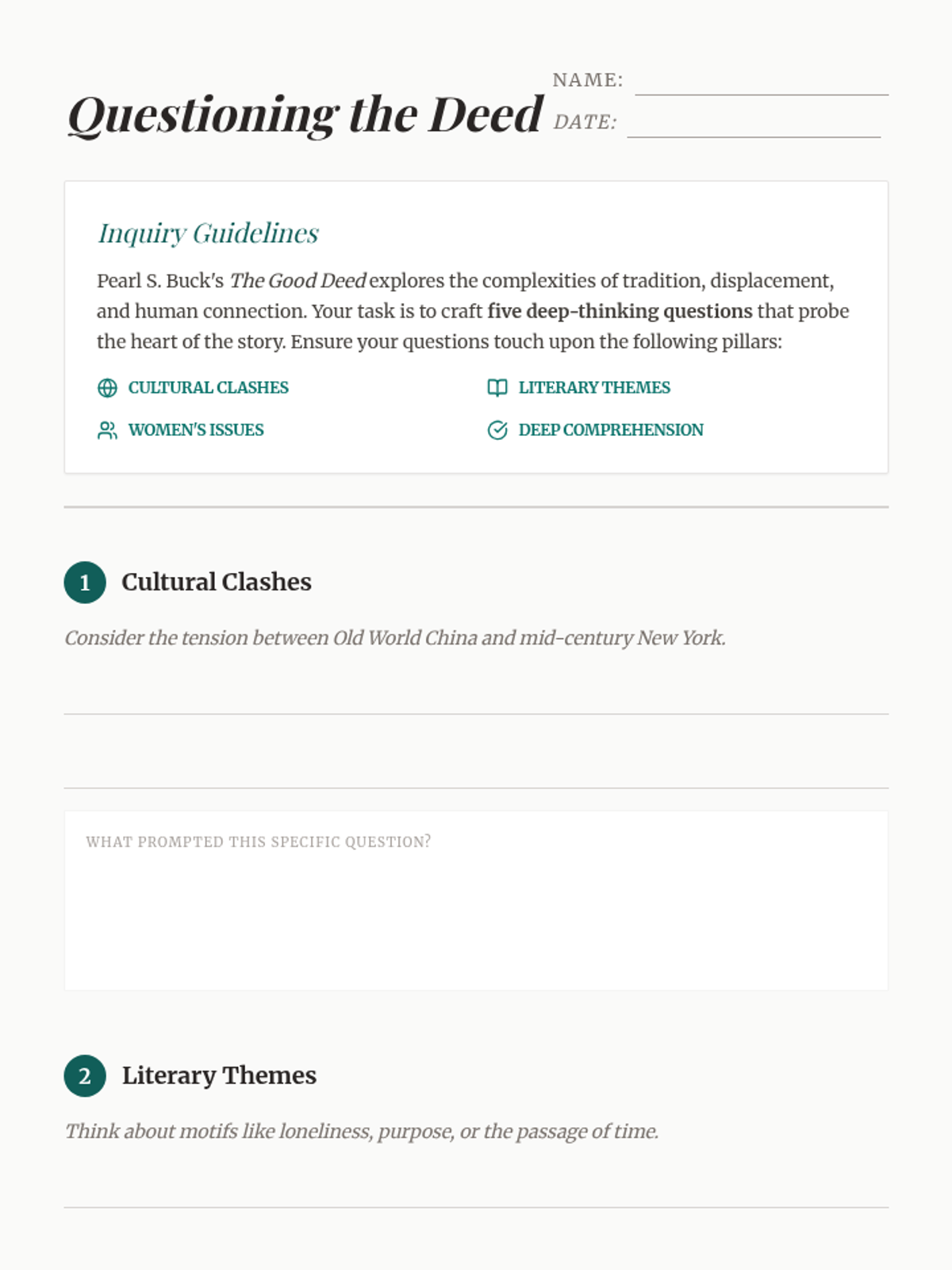
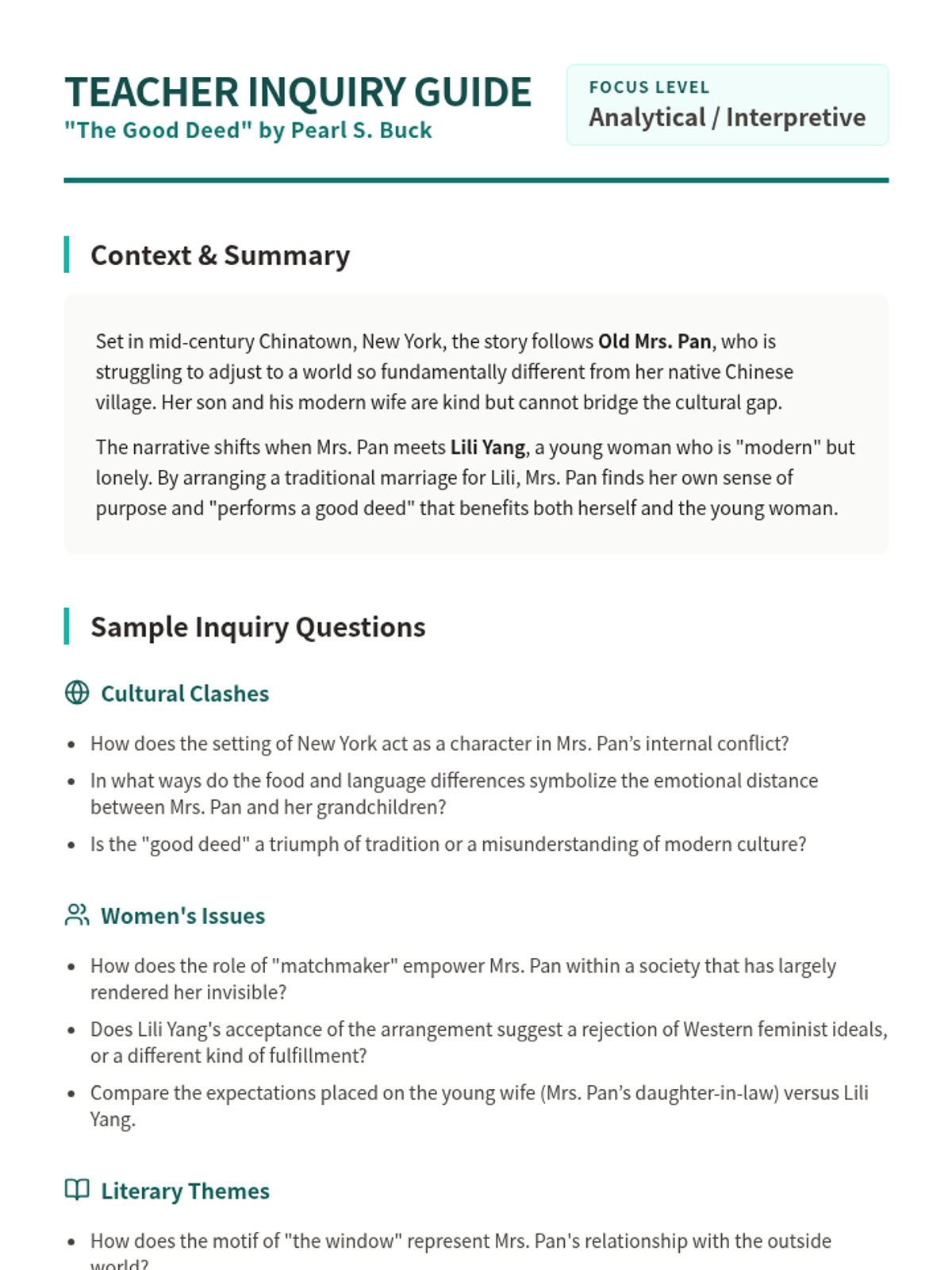
A lesson focused on analyzing Pearl S. Buck's short story 'The Good Deed' through student-led inquiry into culture, gender, and theme.
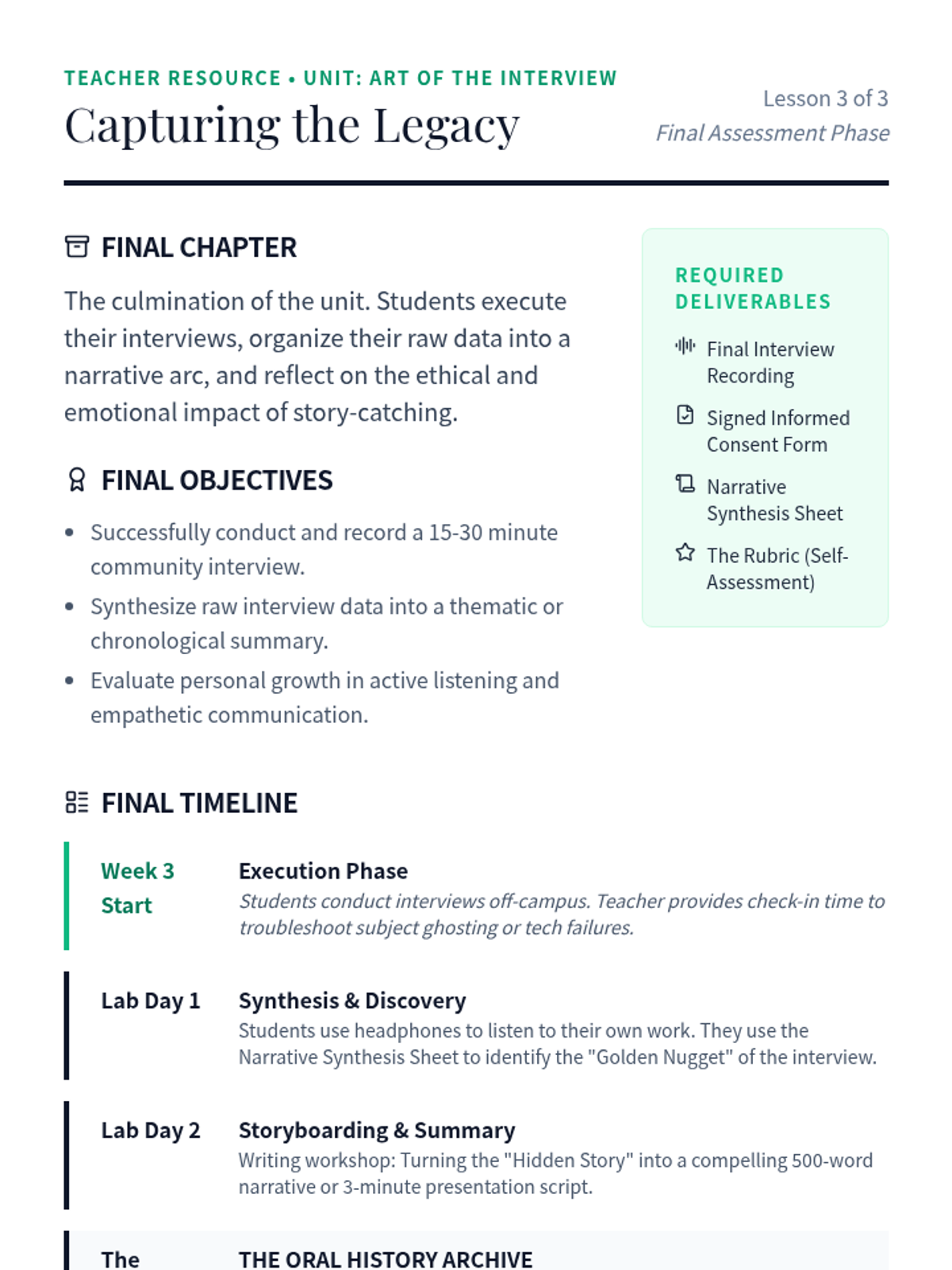
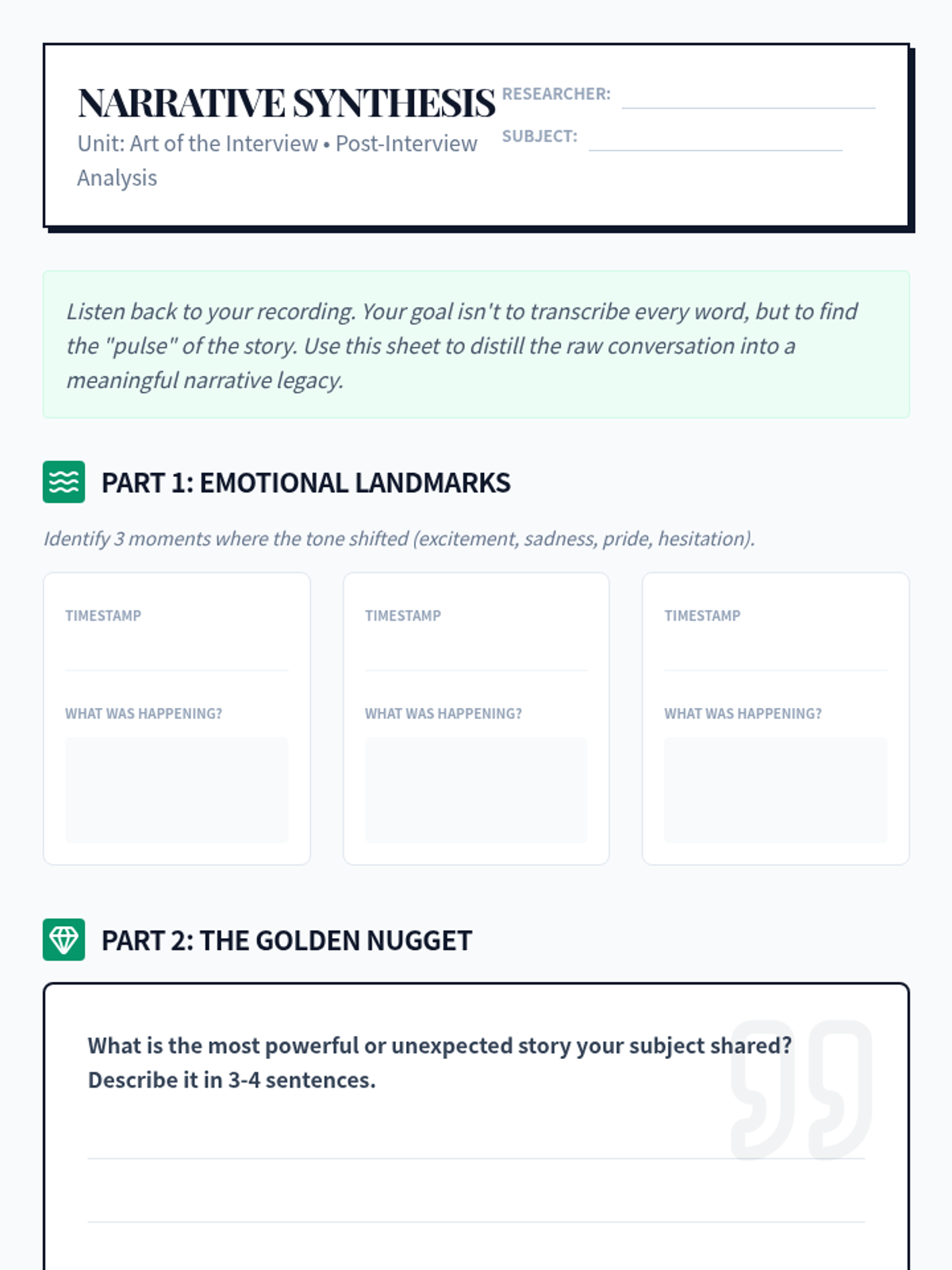
Students conduct their community interviews, transcribe or synthesize the dialogue into a compelling narrative, and share their findings through a final presentation.
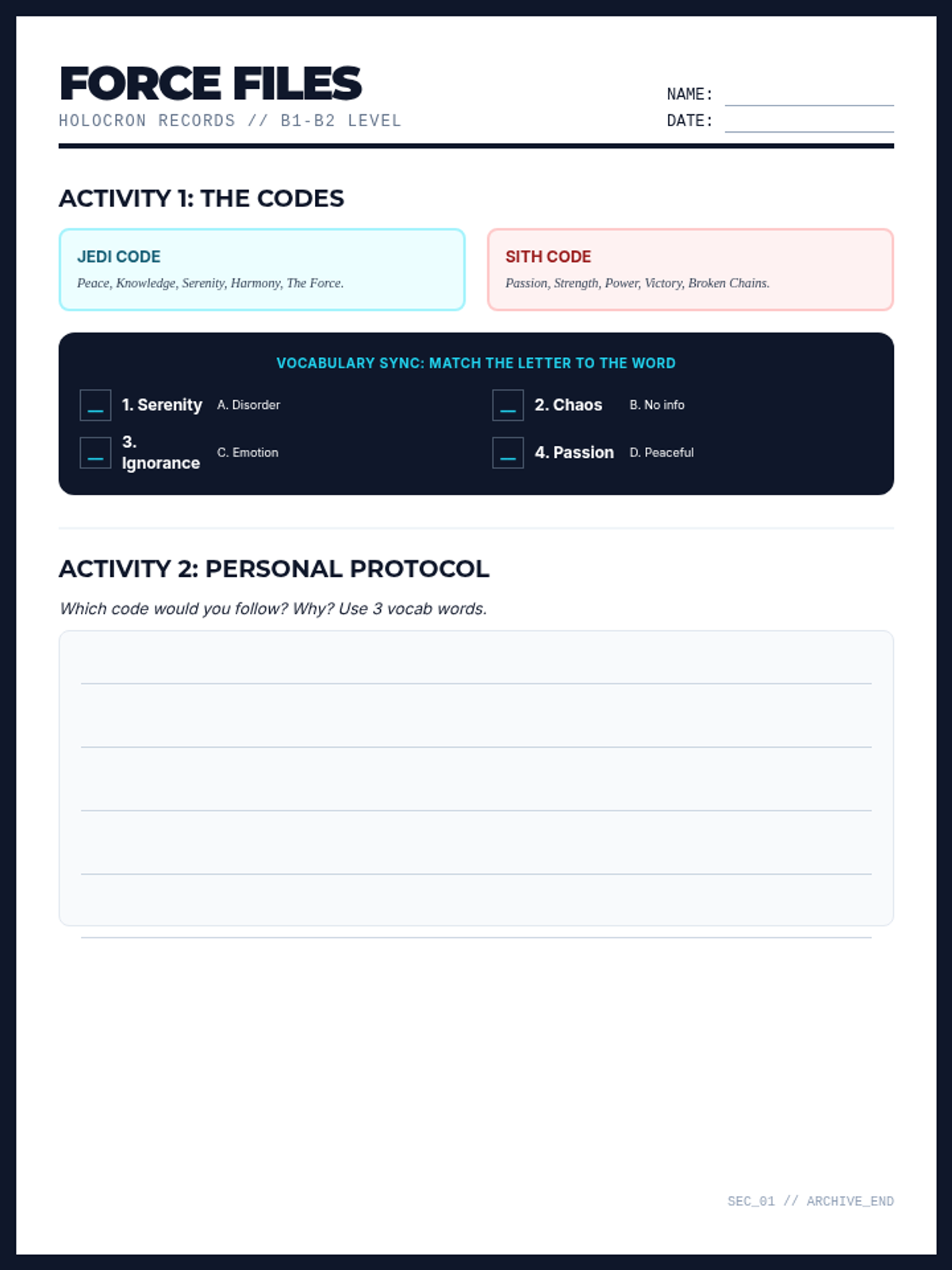
An immersive ESL lesson for B1/B2 levels exploring the philosophy and history of Star Wars characters through the lens of the Jedi and Sith Codes. Students will practice all four language domains in a 30-minute 'Language Lounge' format.
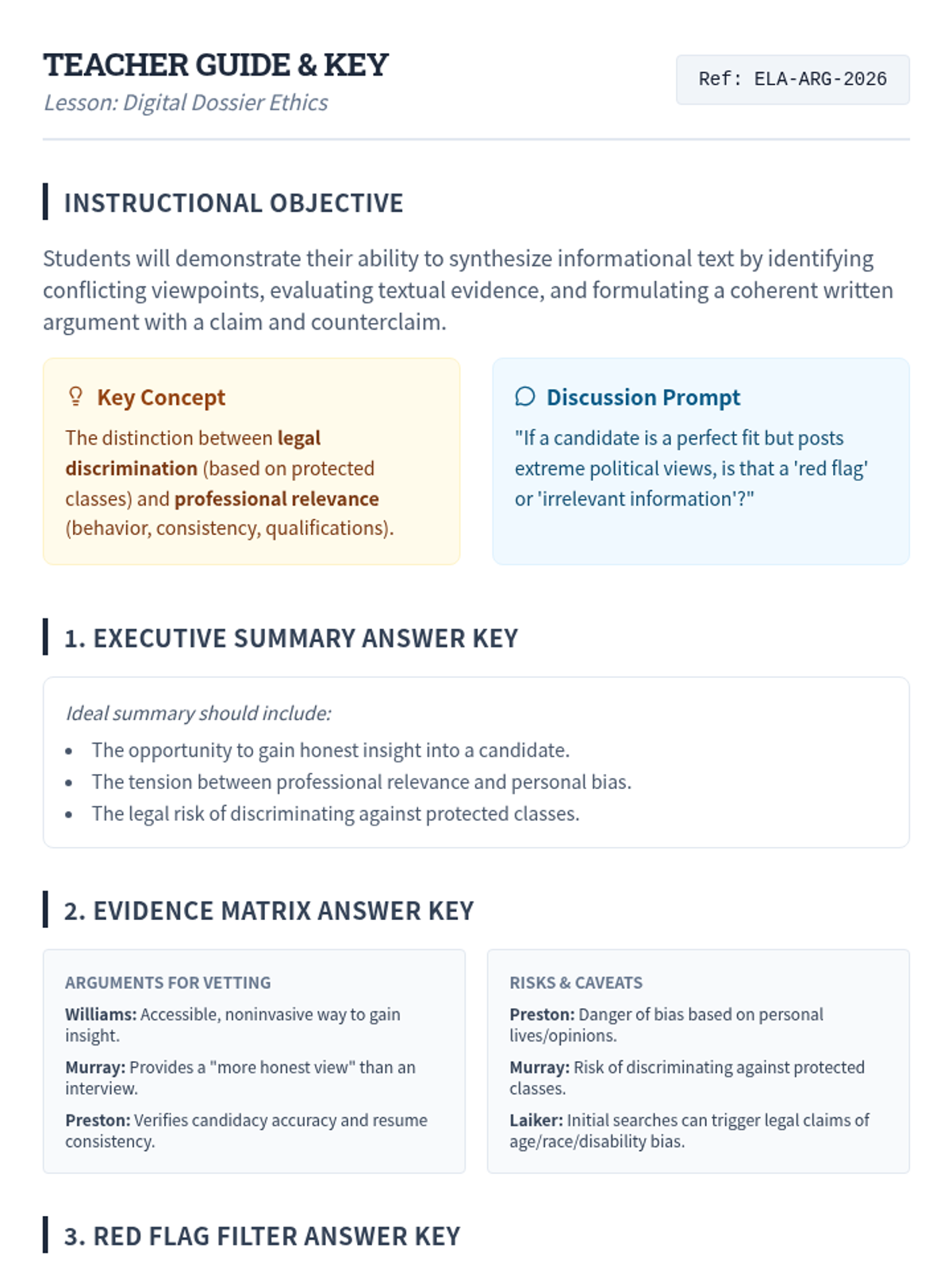
This lesson guides students through the complexities of using social media for job candidate vetting. Students will analyze expert testimony, identify legal risks, and construct a evidence-based argument on whether social media should influence hiring decisions.
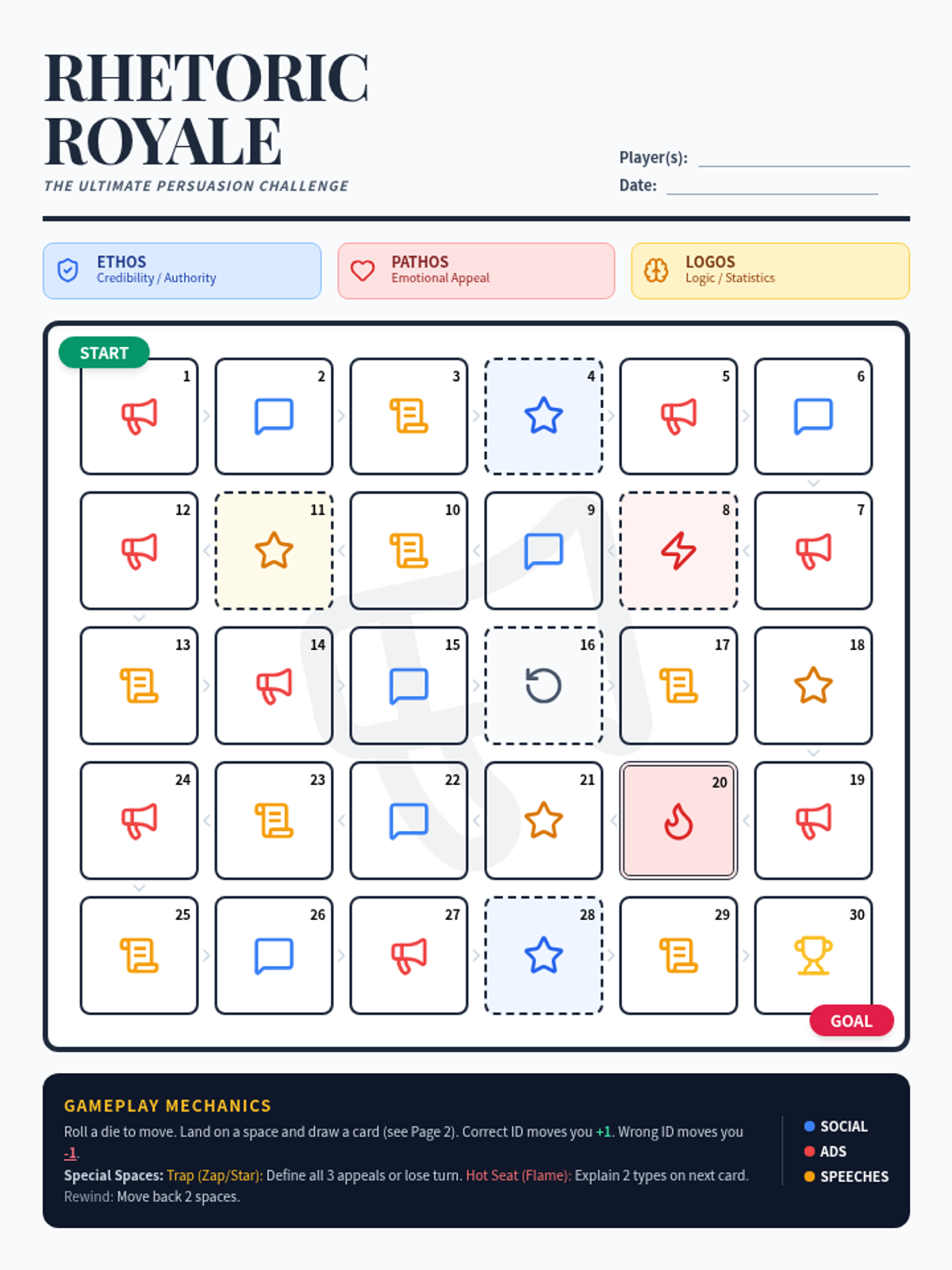
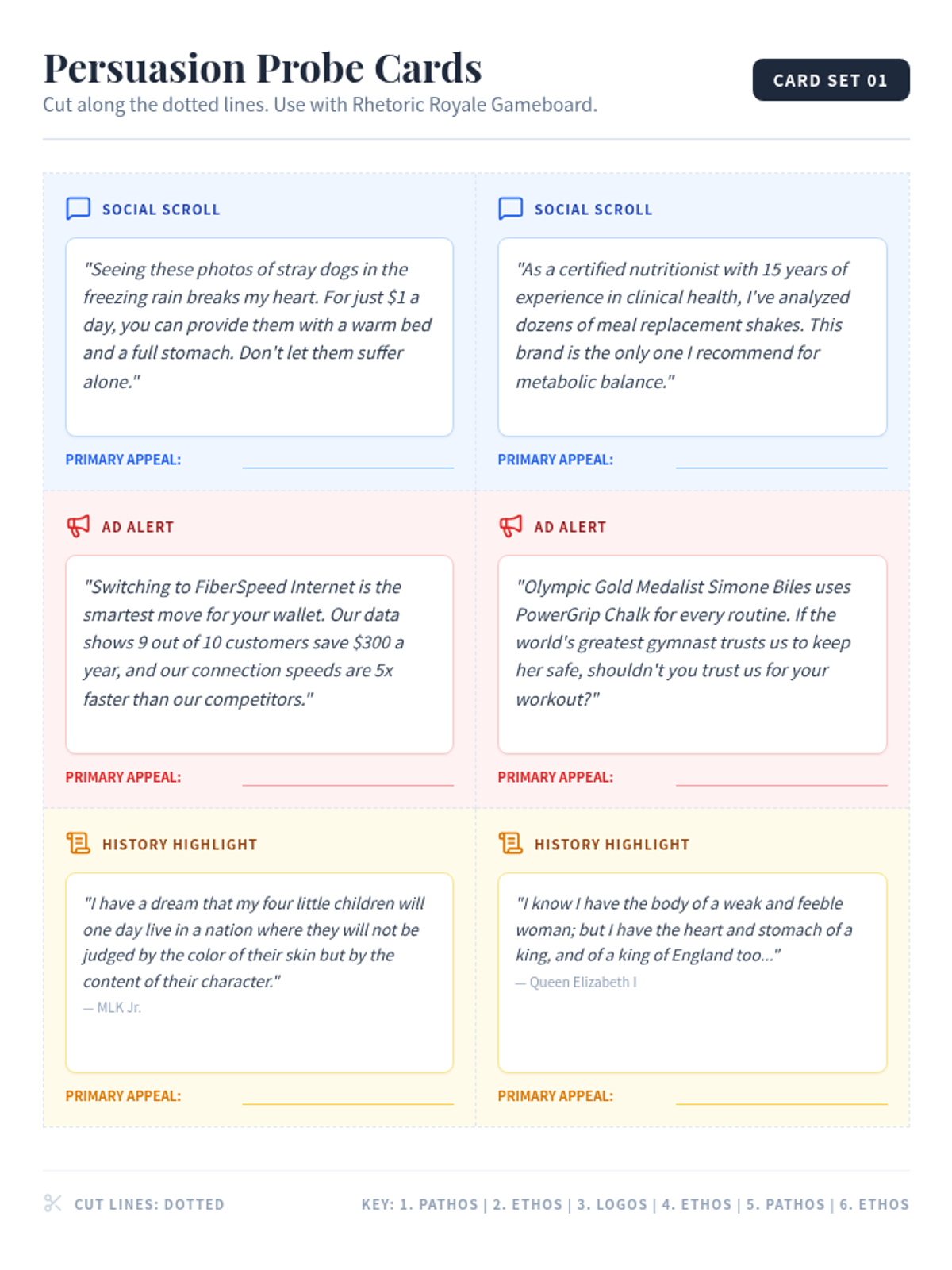
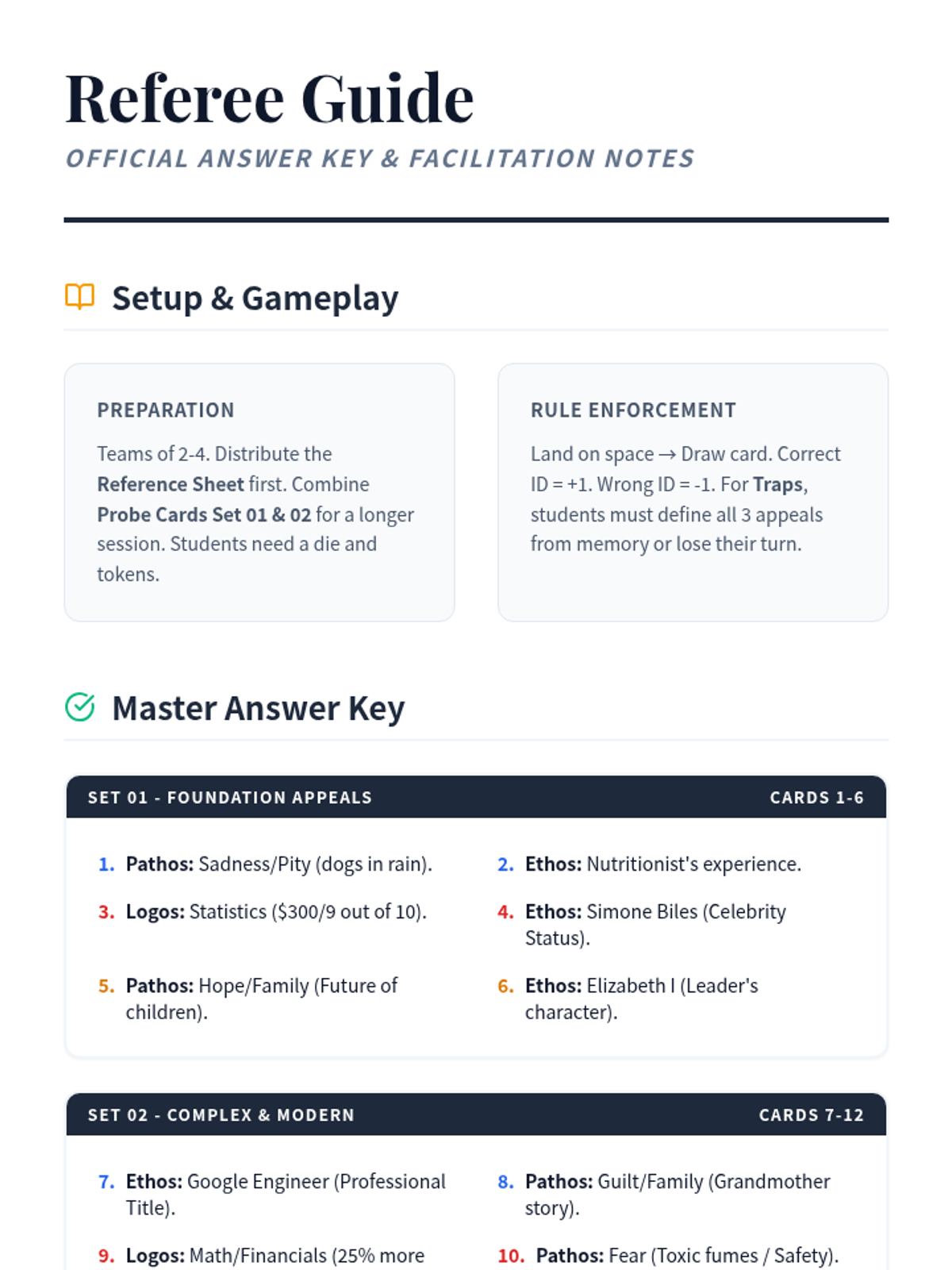
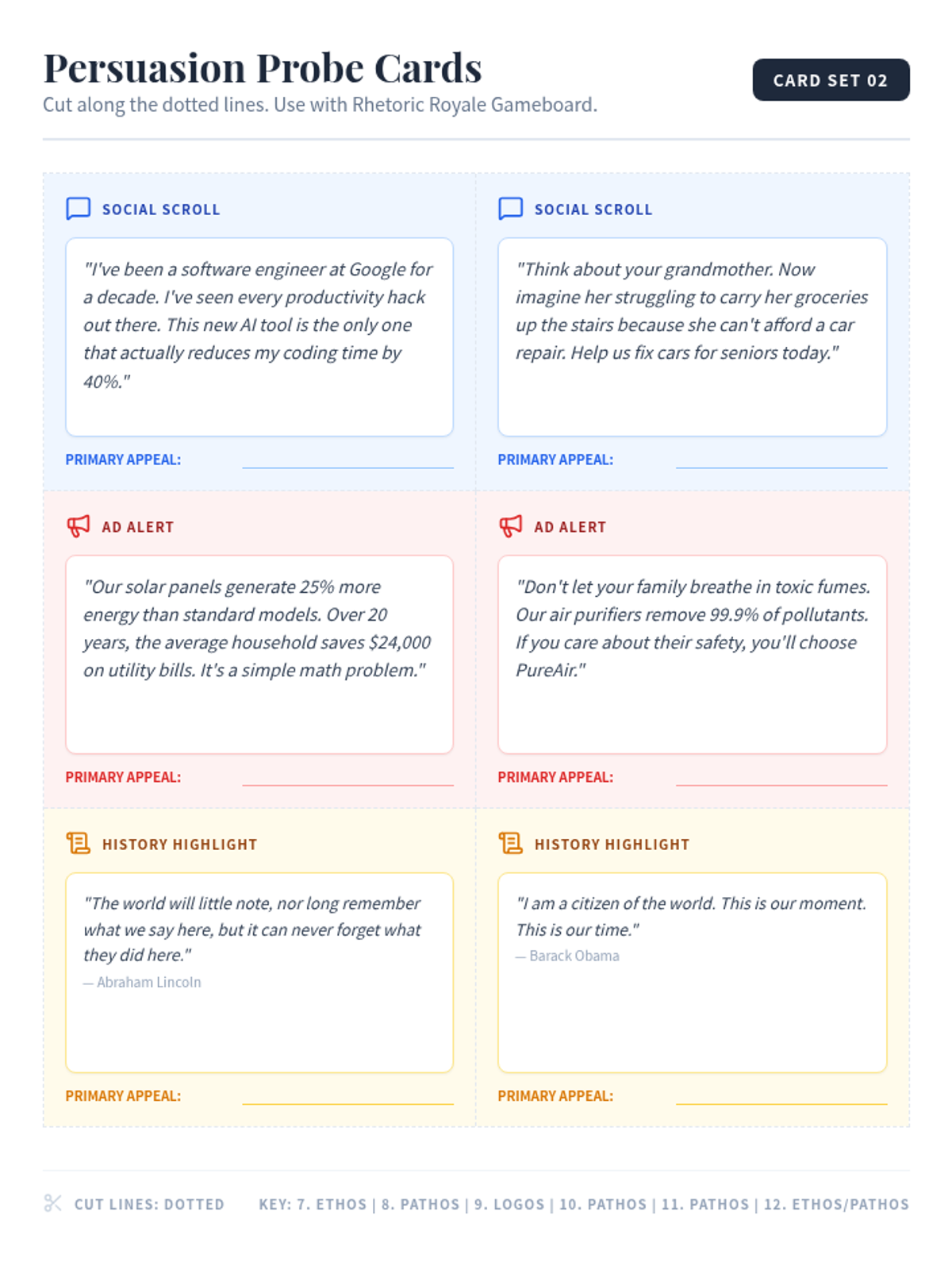
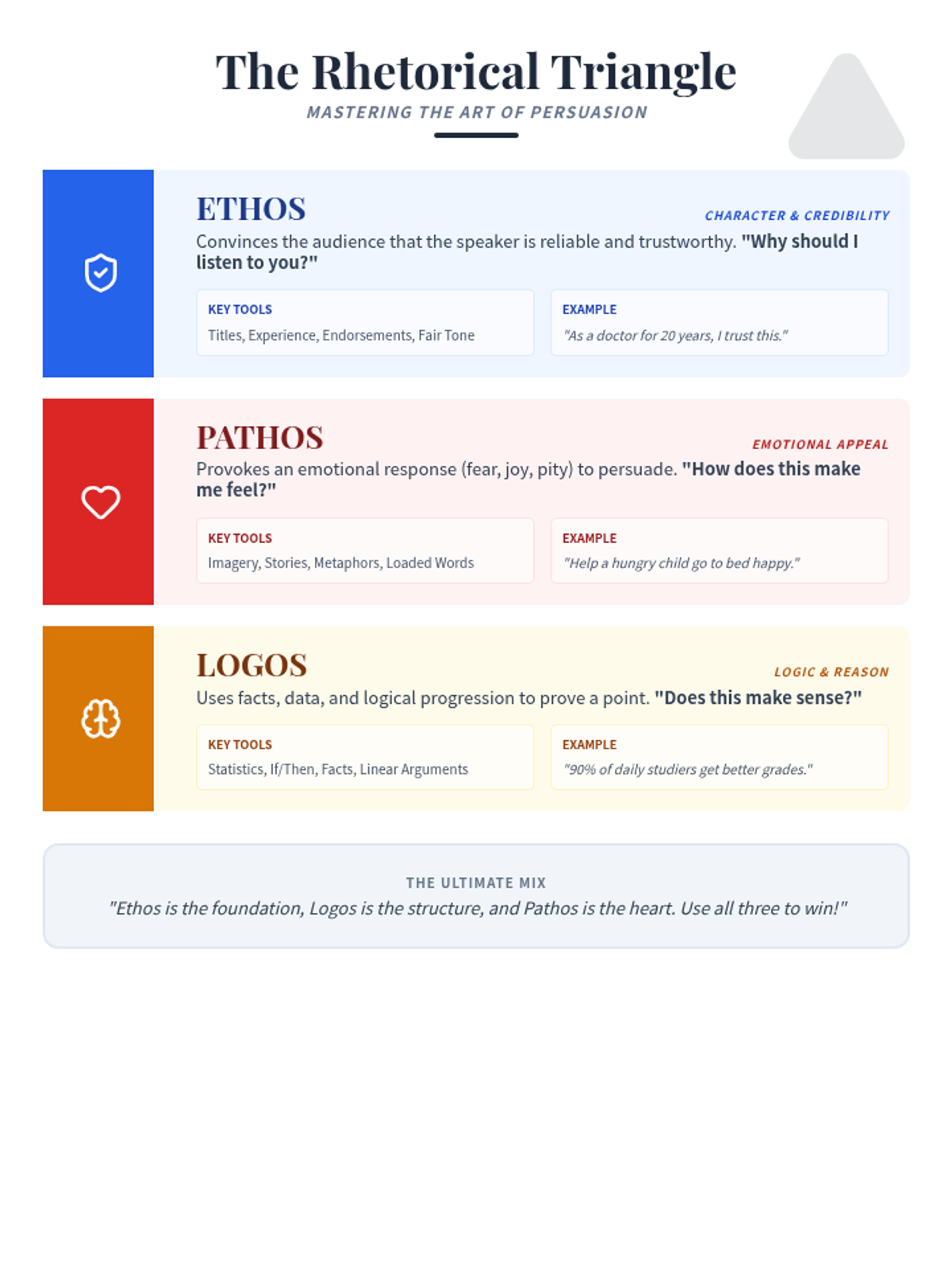
A high-energy board game lesson where students identify Ethos, Pathos, and Logos in modern ads, social media, and historical speeches. Students compete in teams to master the art of persuasion and navigate the path to rhetorical victory.
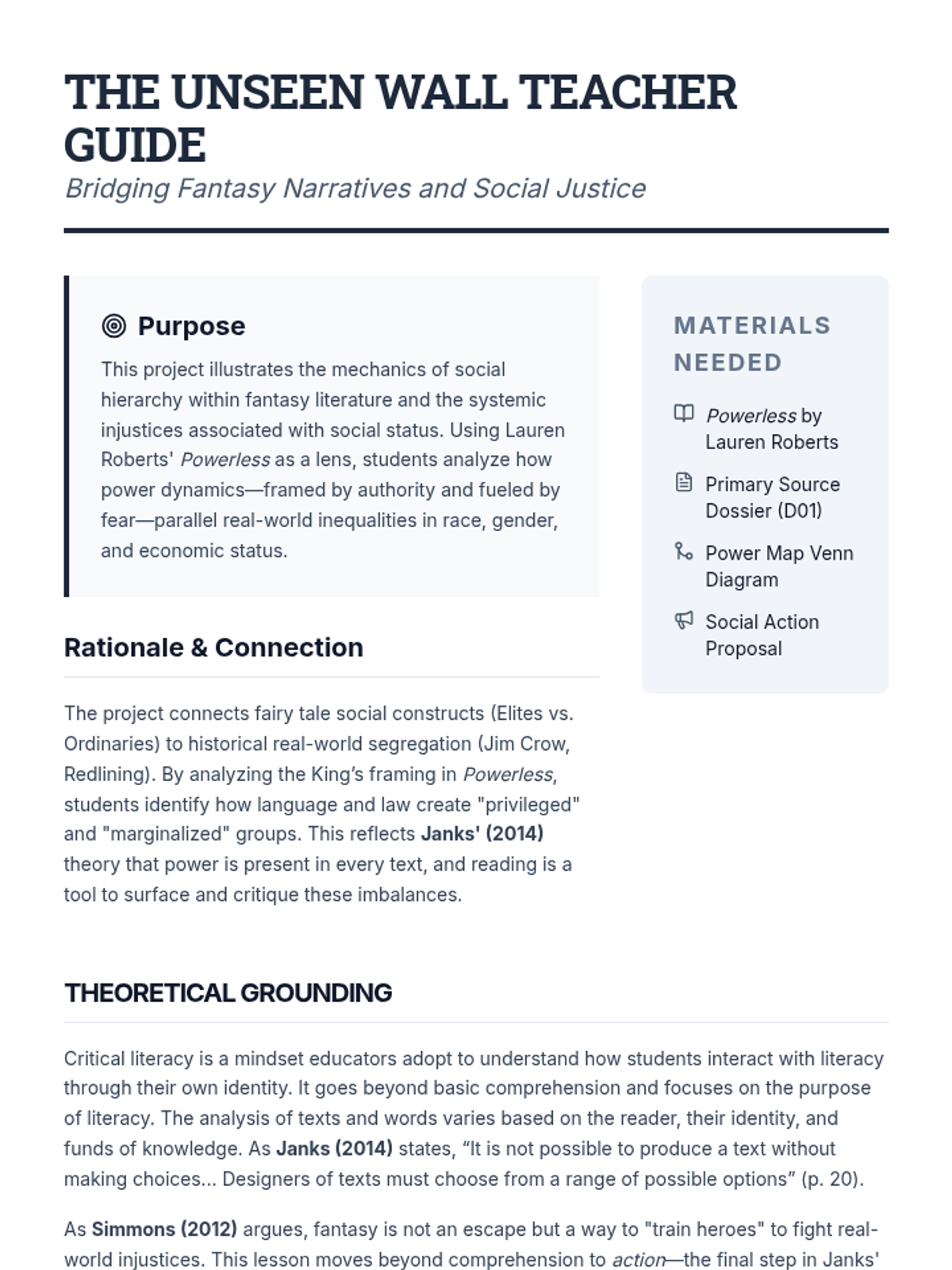
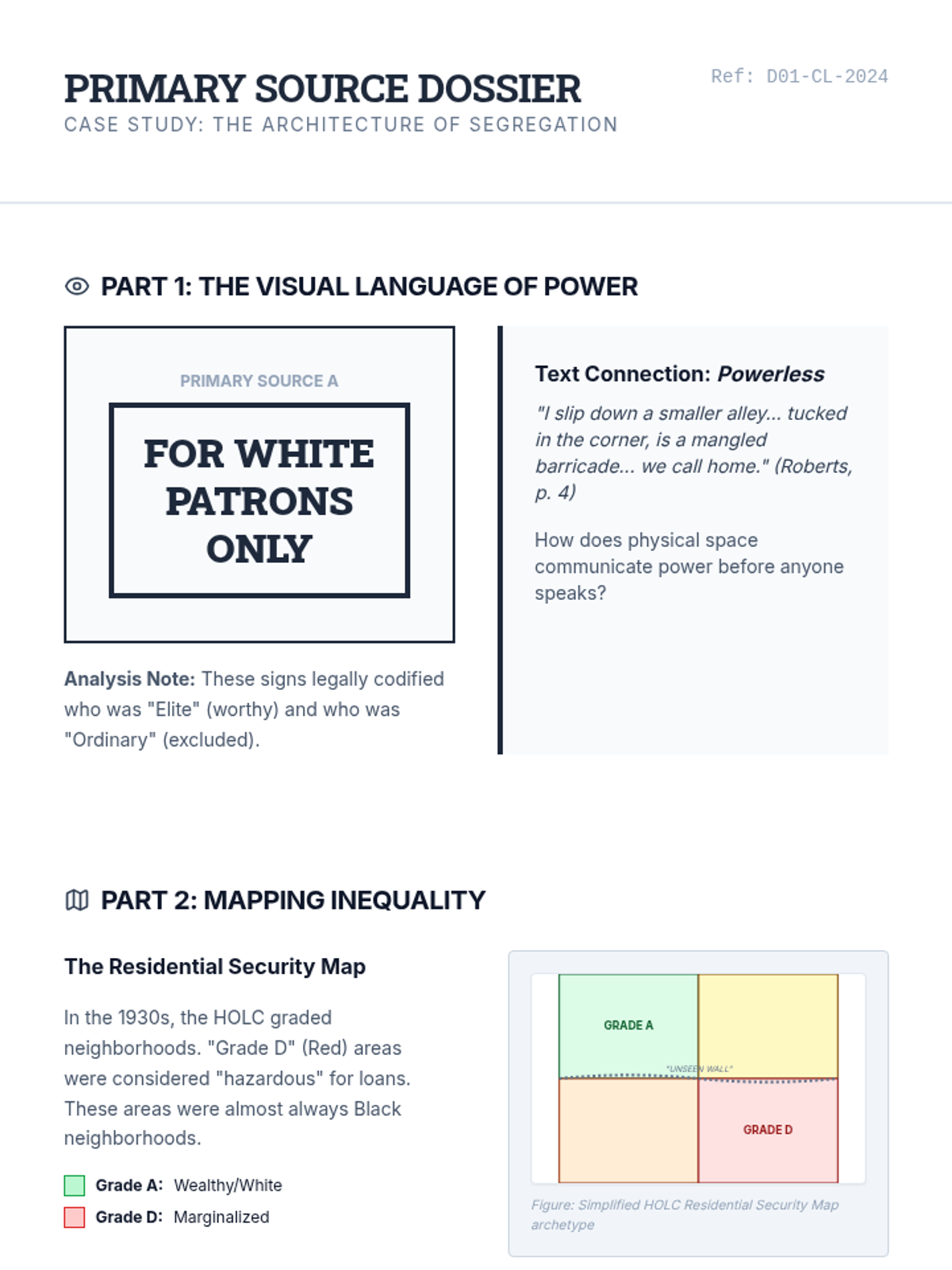
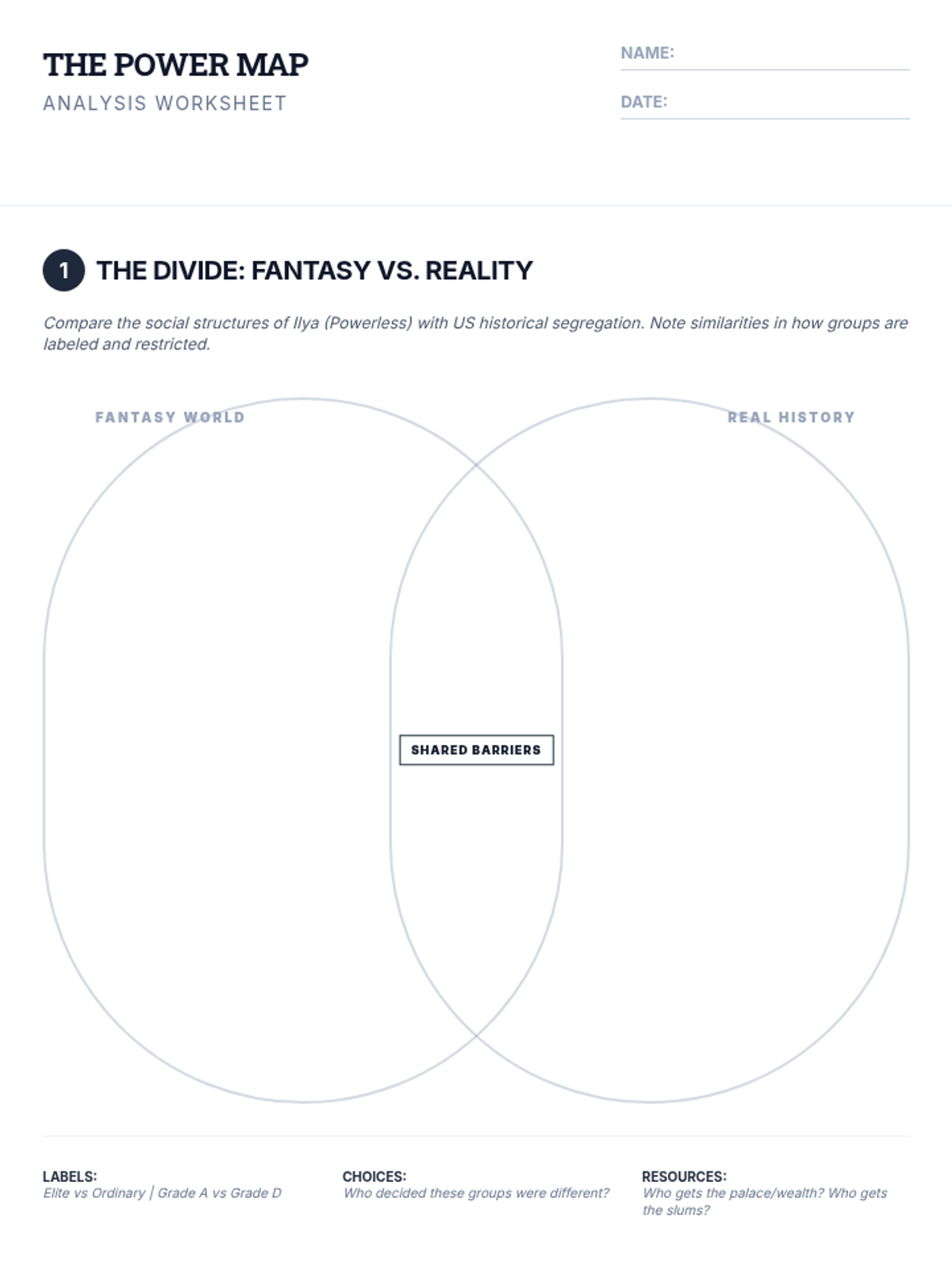
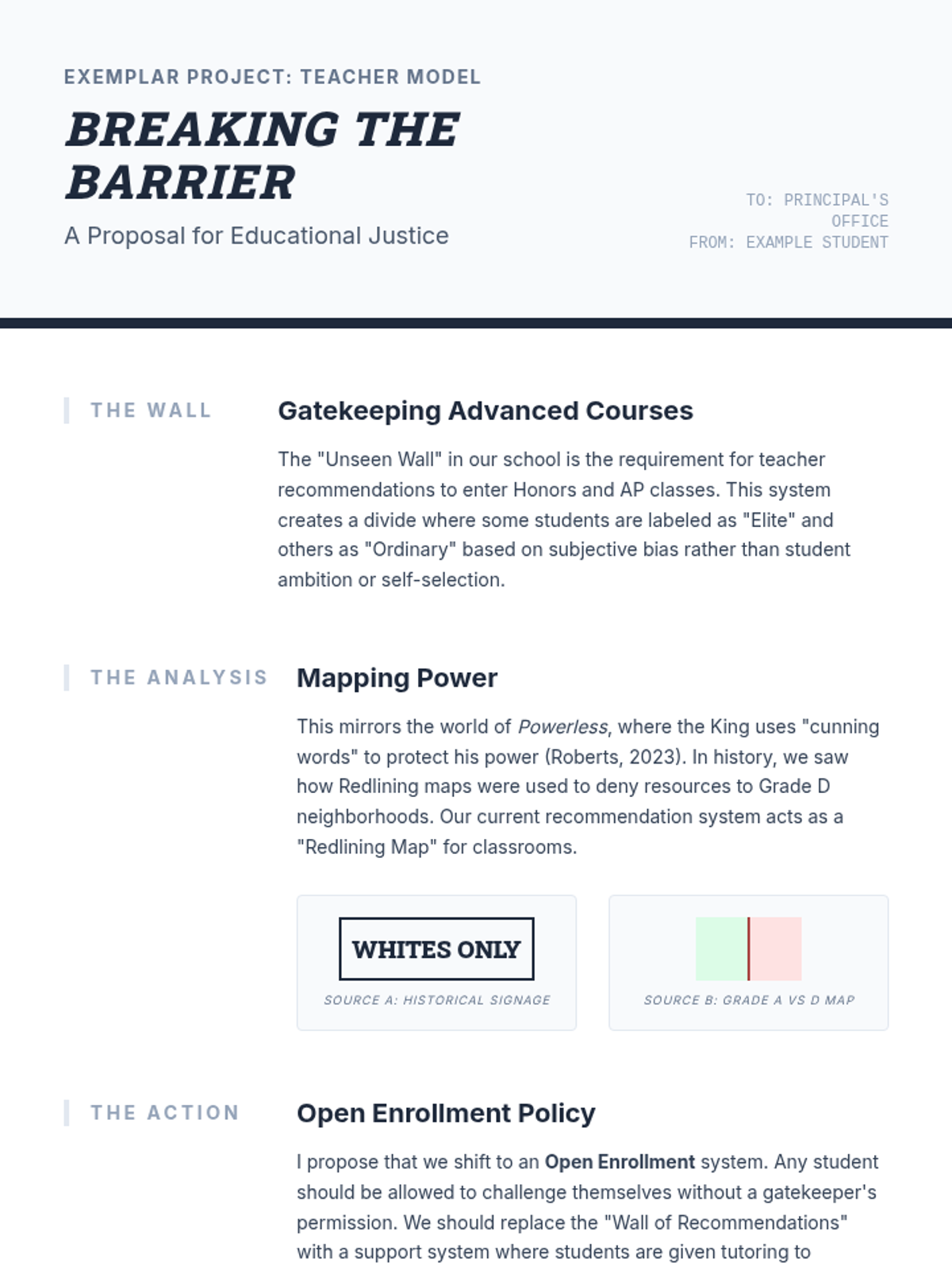
A critical literacy unit that bridges the fantasy world of Lauren Roberts' Powerless with real-world historical segregation, culminating in a student-led social action proposal to school leadership.
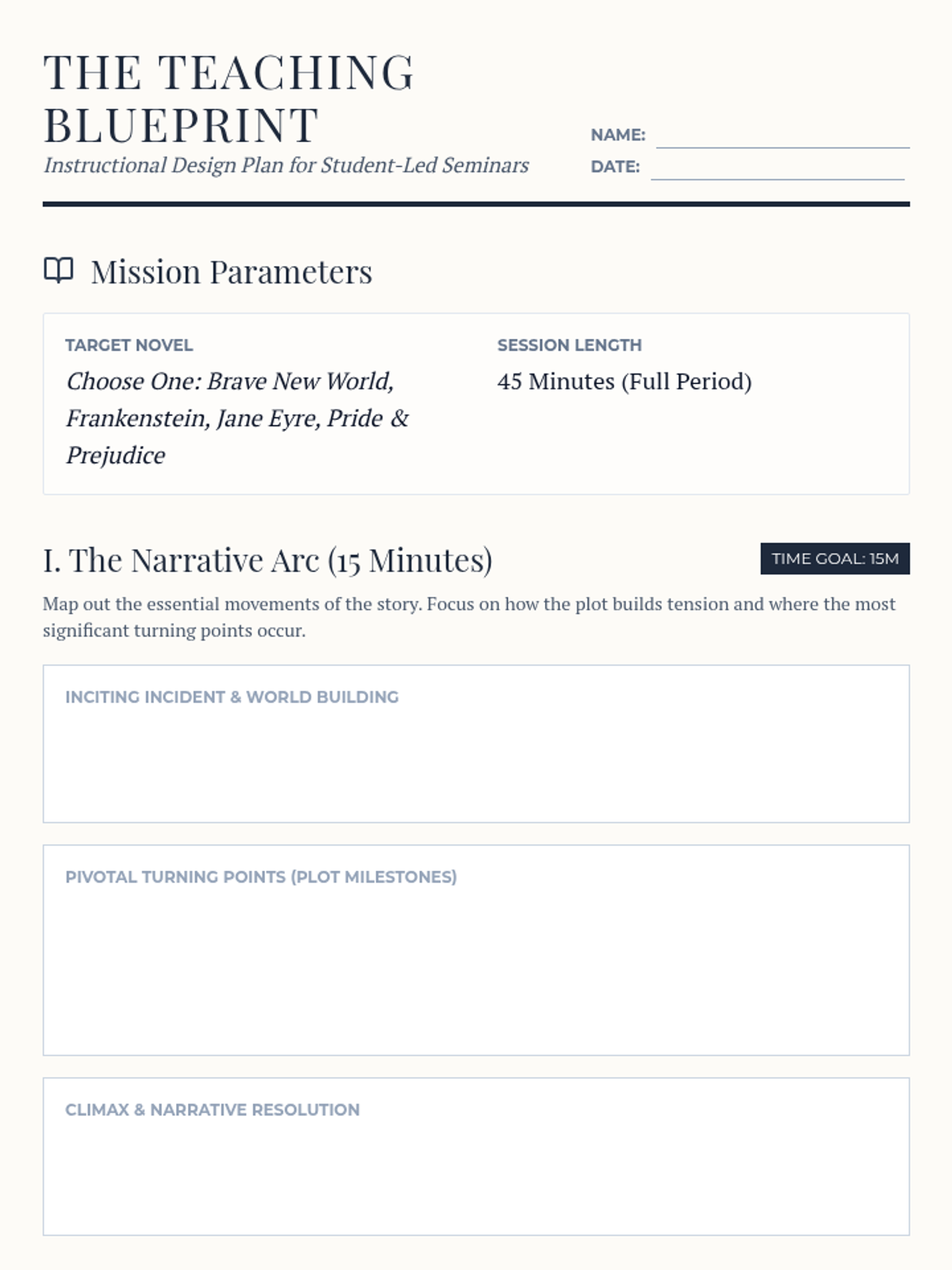
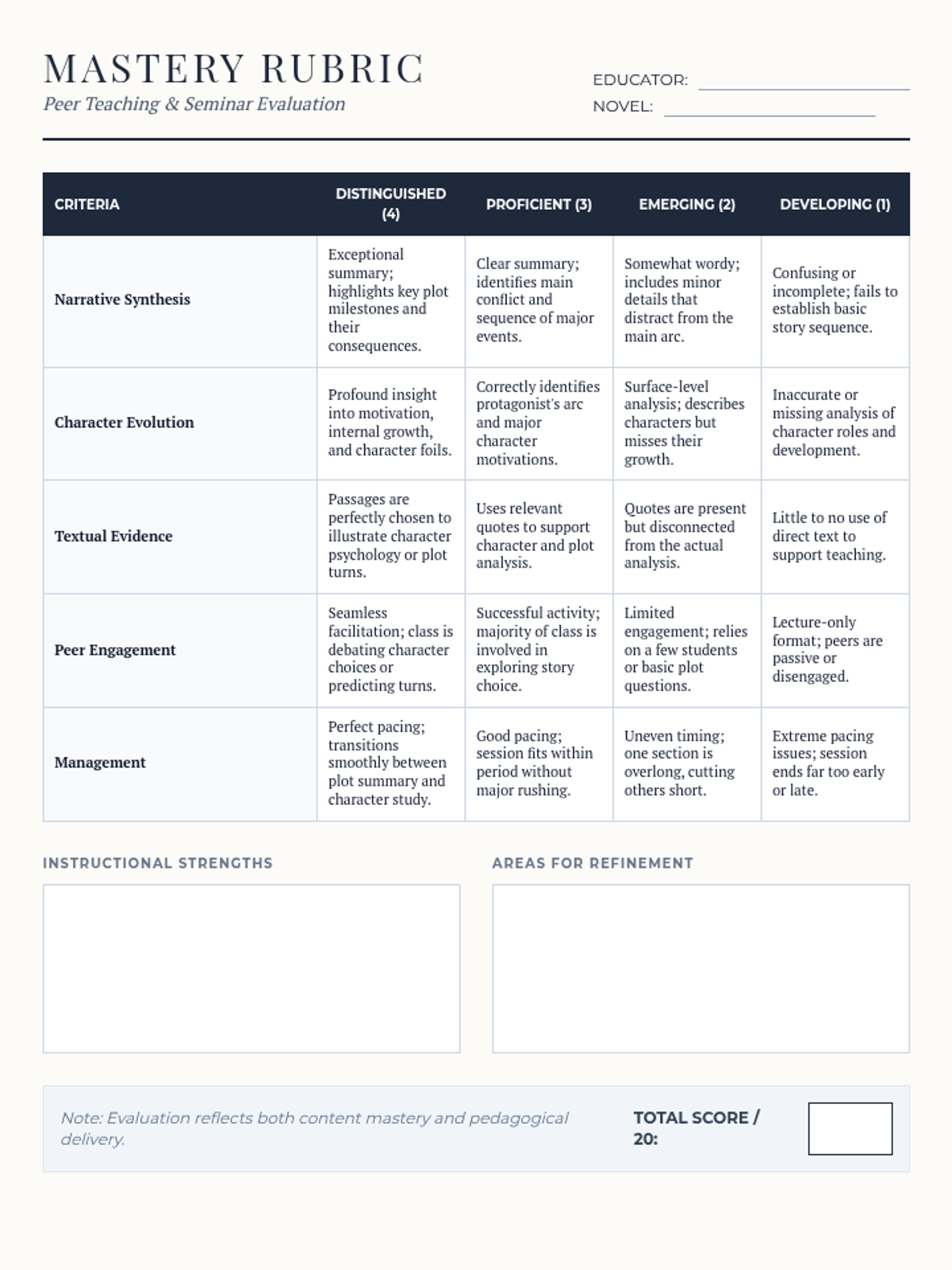
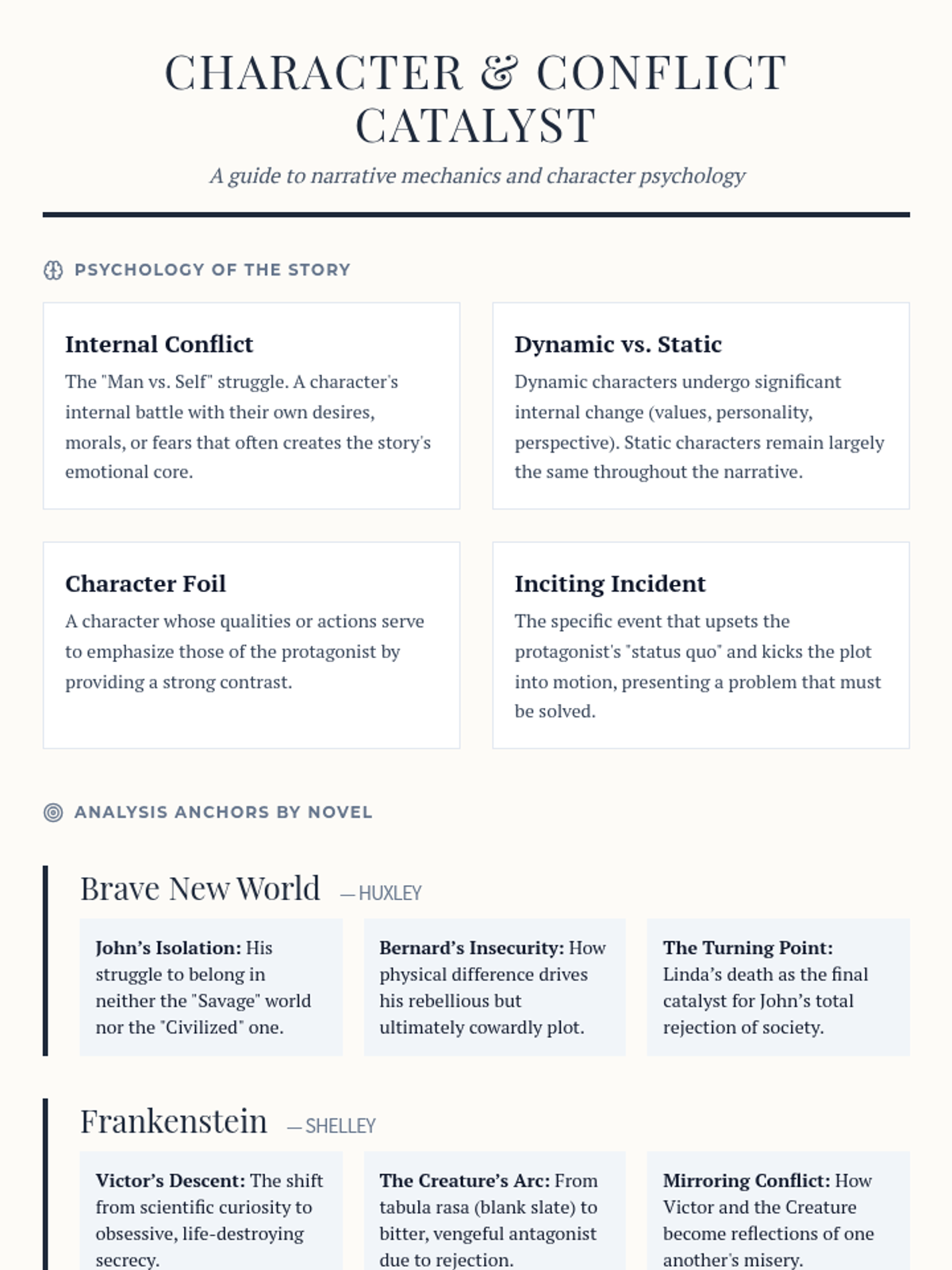
A high-stakes, student-led instructional project where 12th graders prepare and deliver a 45-minute deep-dive session on a classic novel. Students learn to synthesize complex plots and facilitate literary analysis of key devices for their peers.
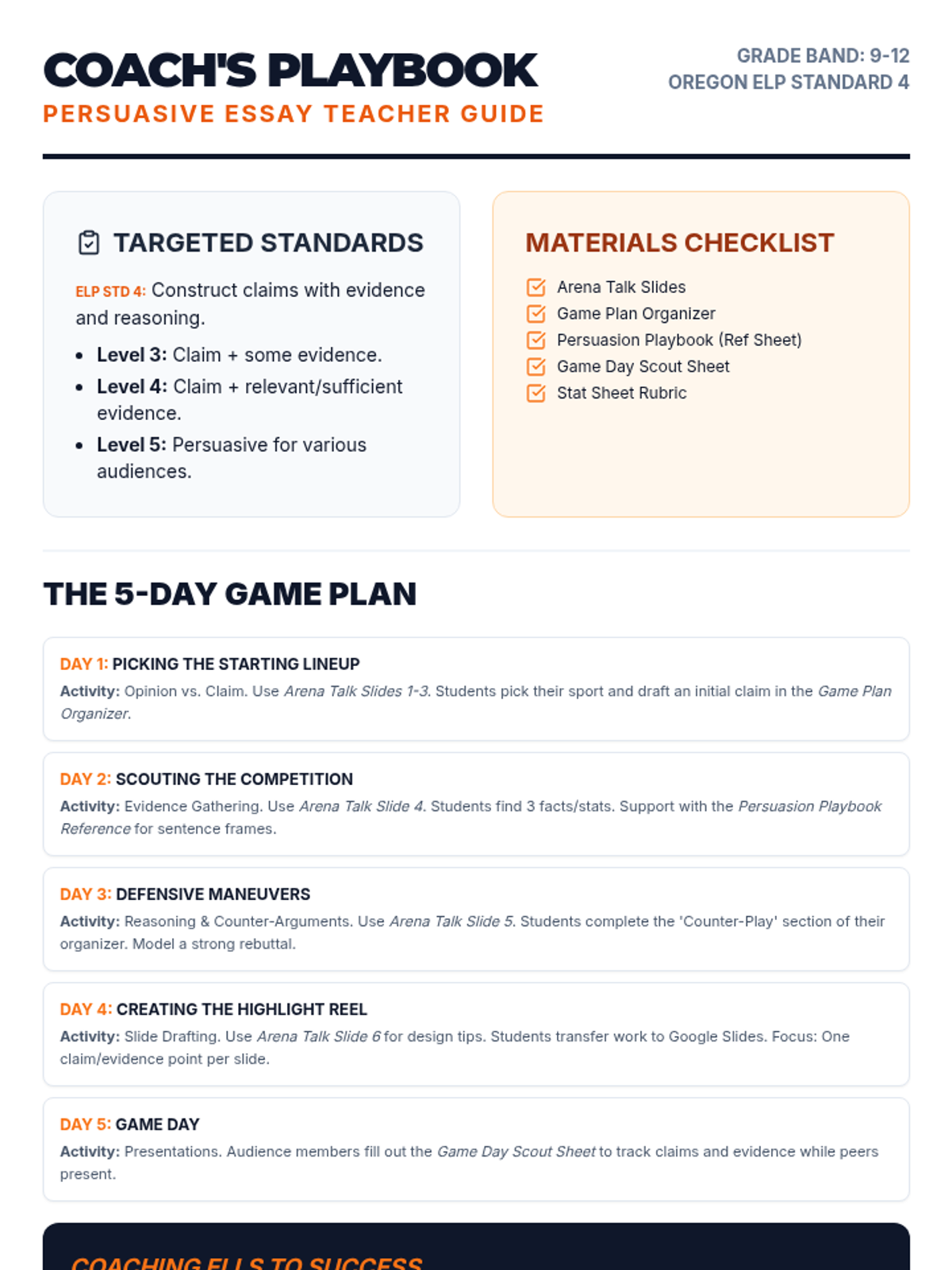
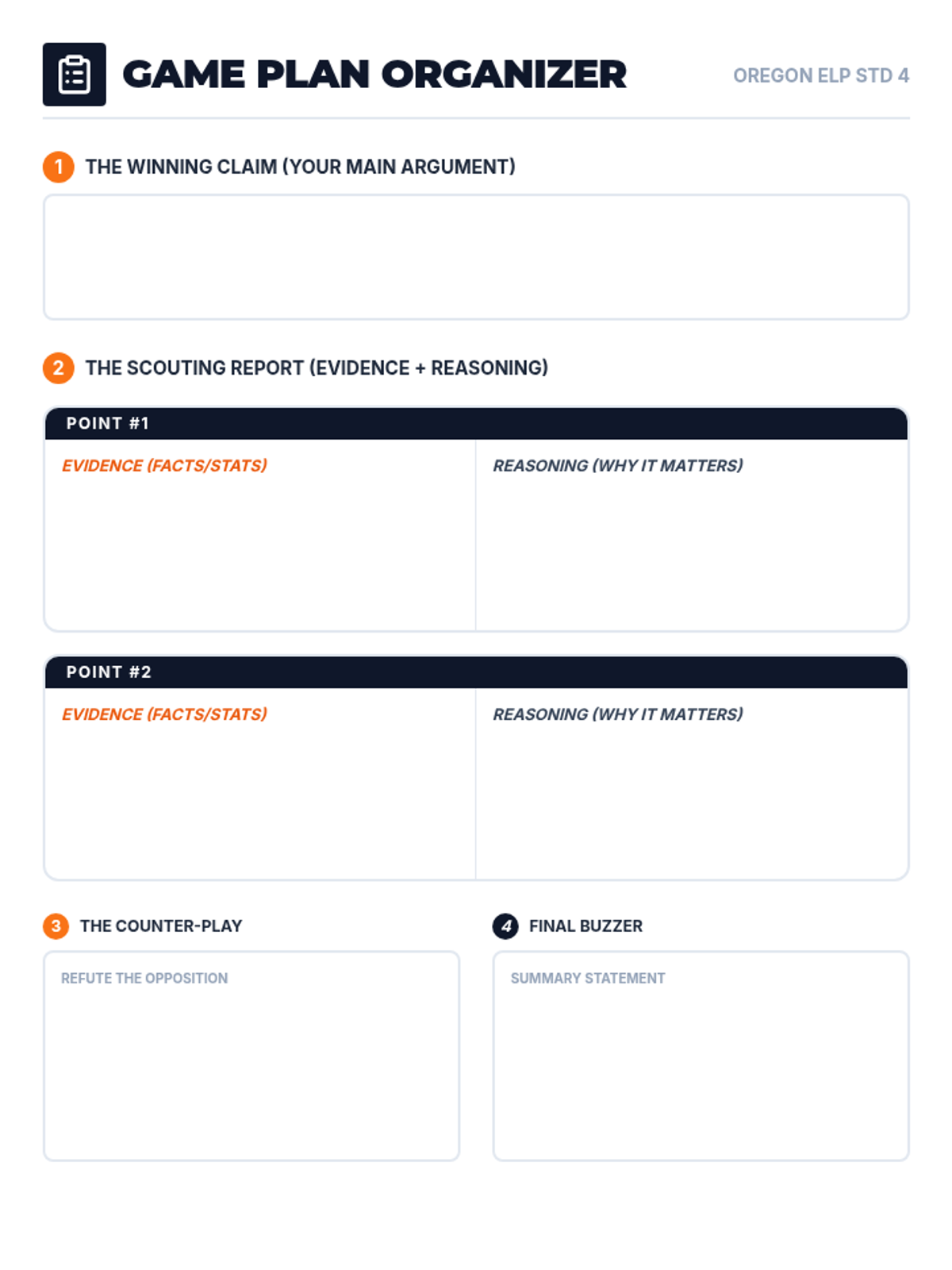
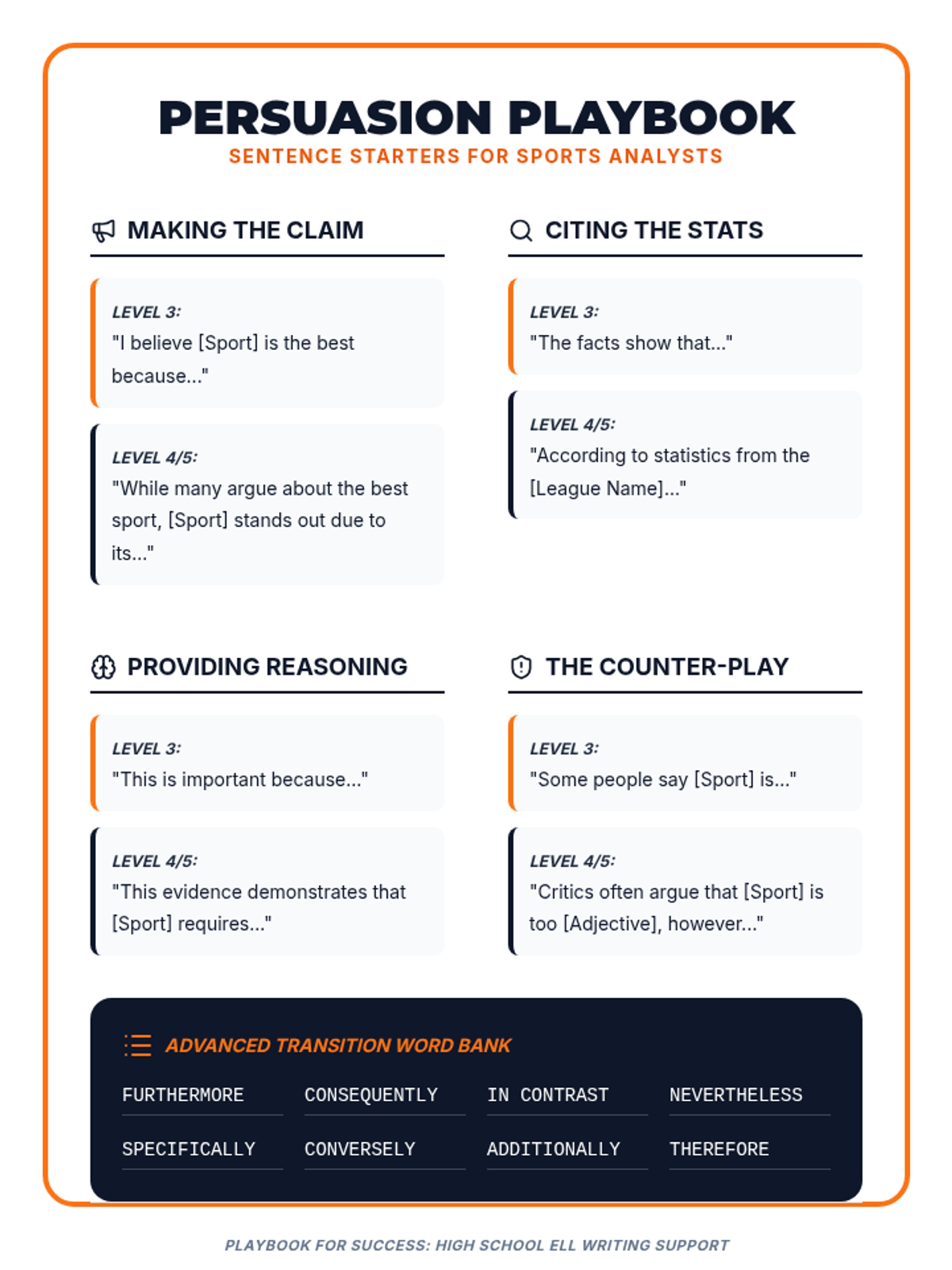
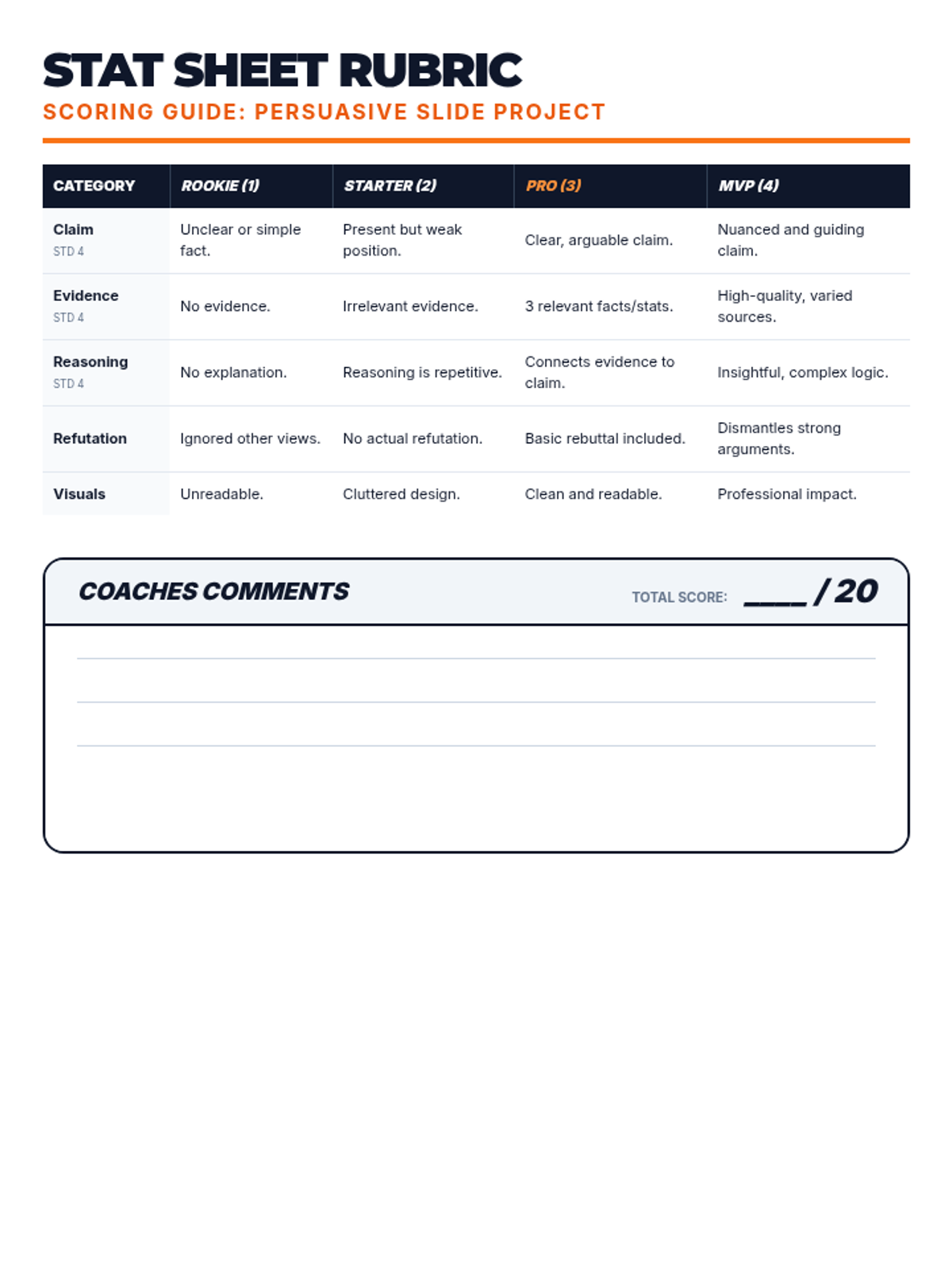
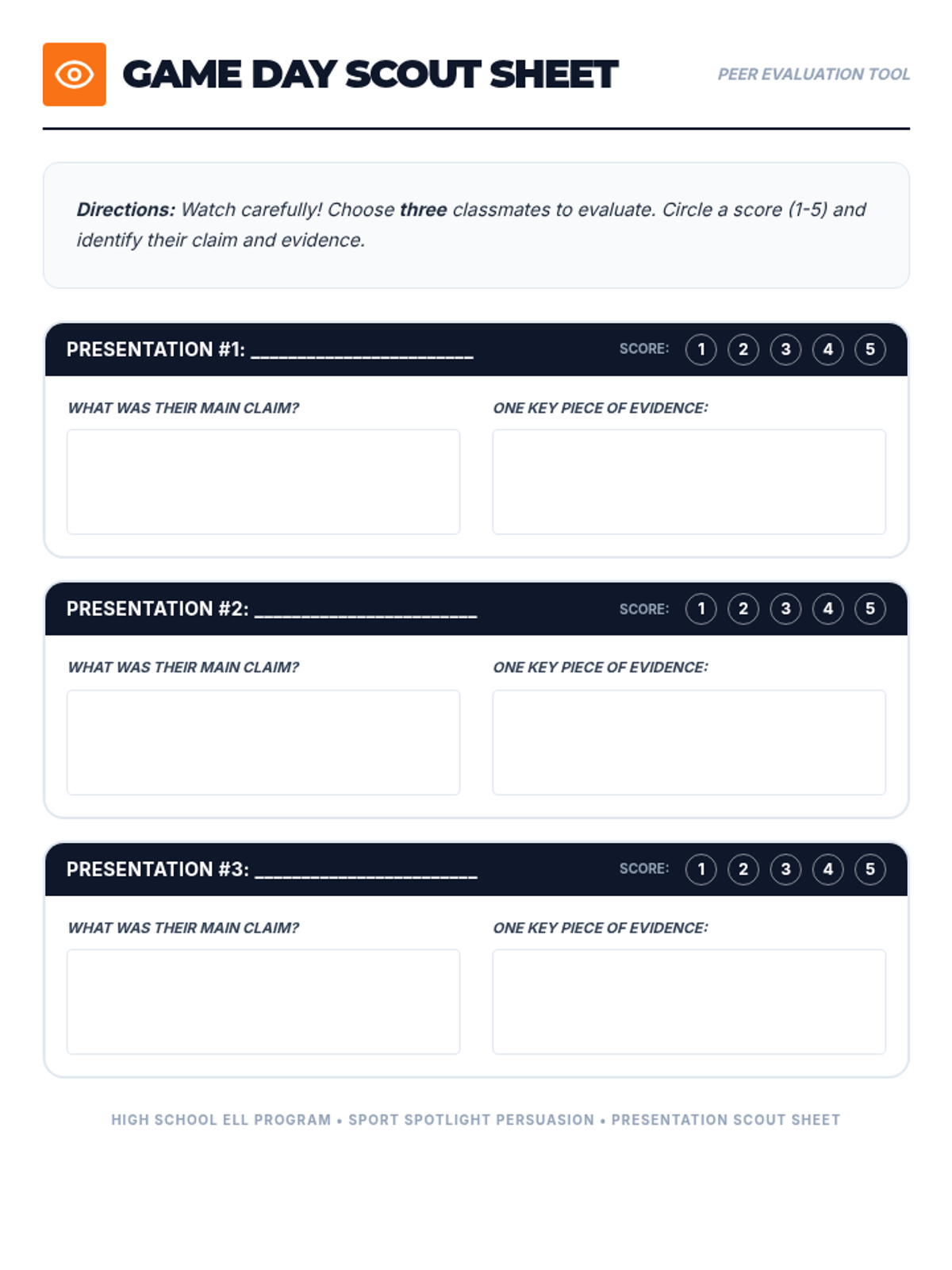
A comprehensive 5-day lesson plan where students learn to construct claims, support them with evidence, and address counter-arguments through a sports-themed lens.
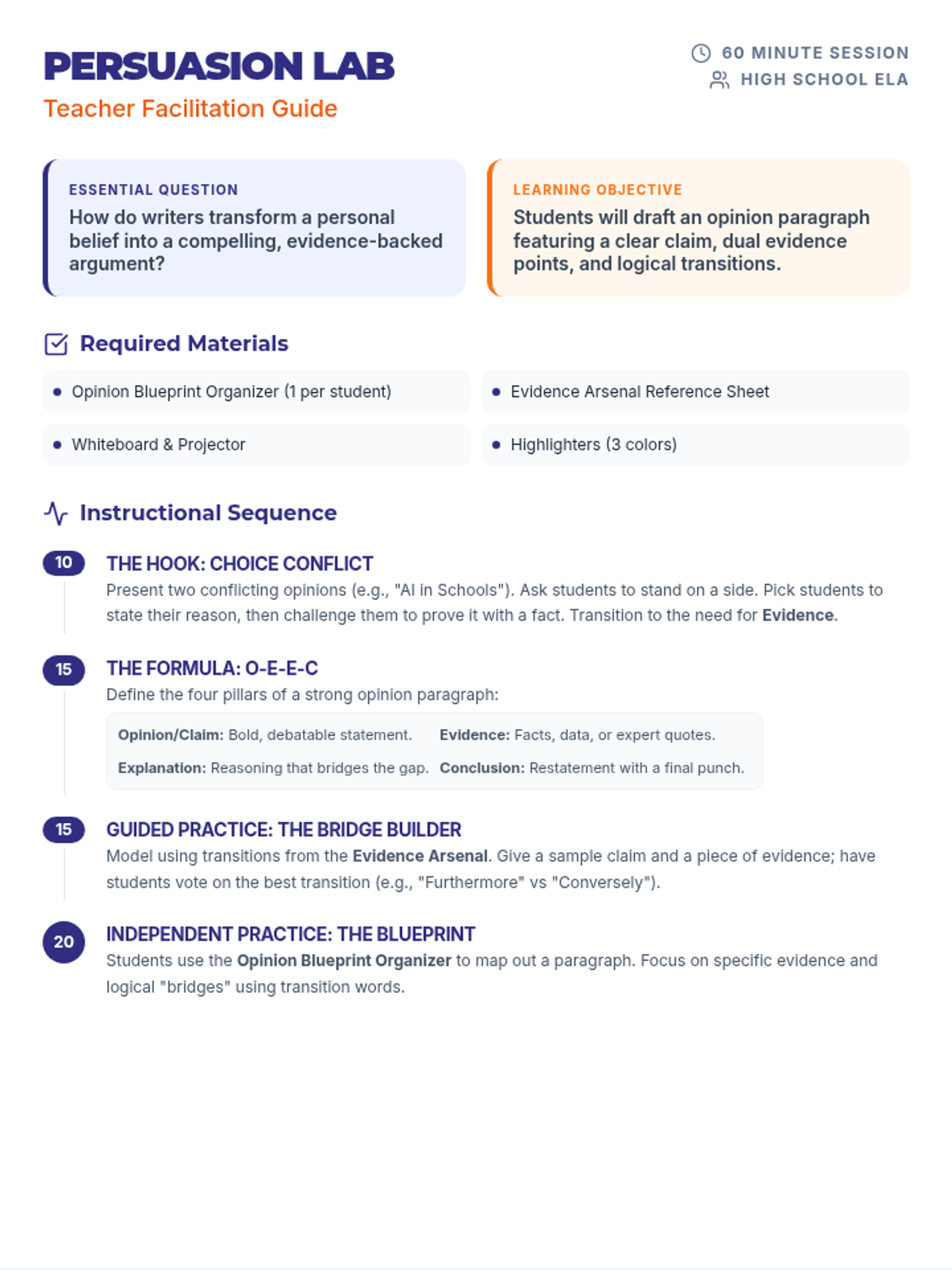
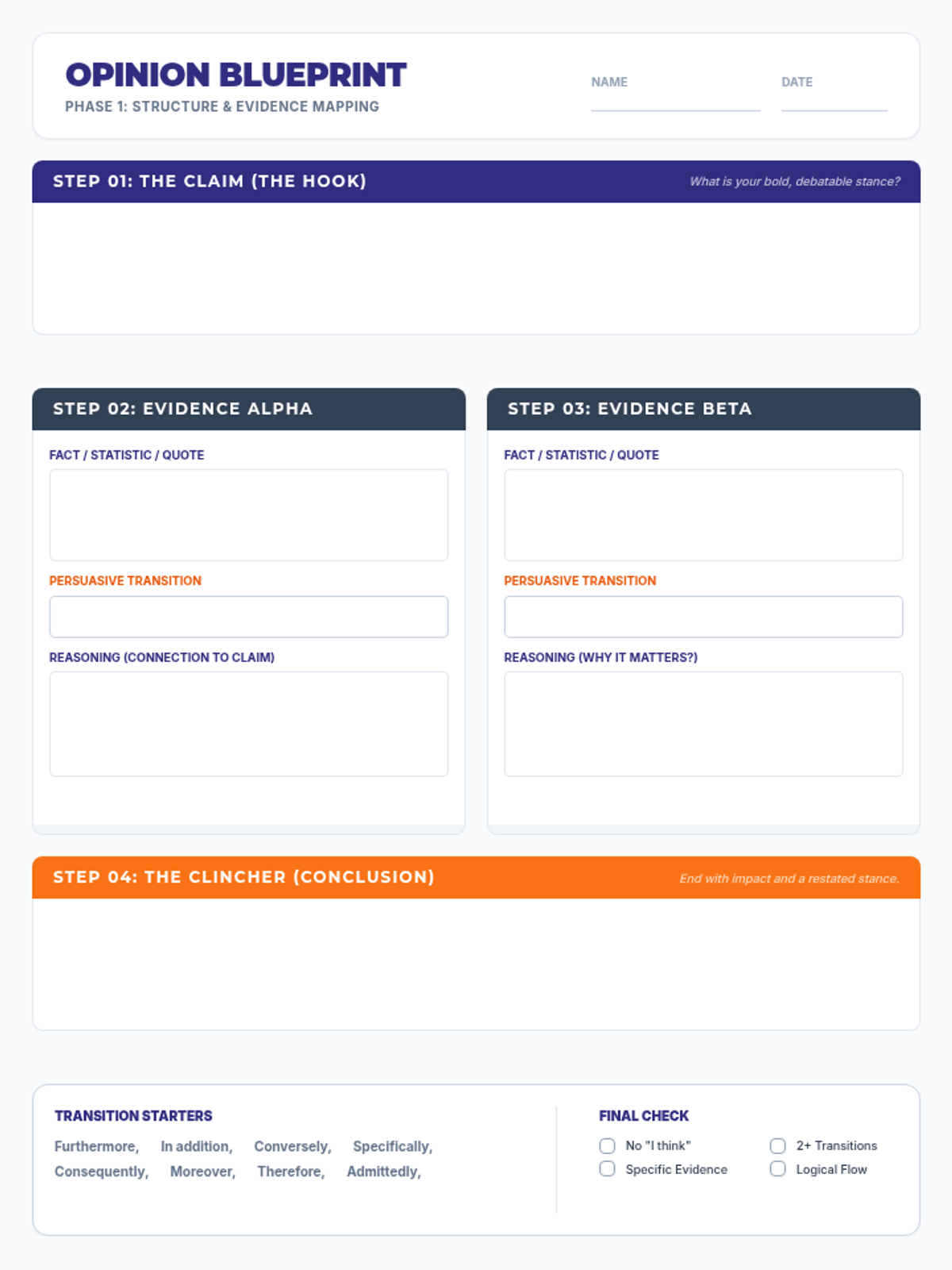
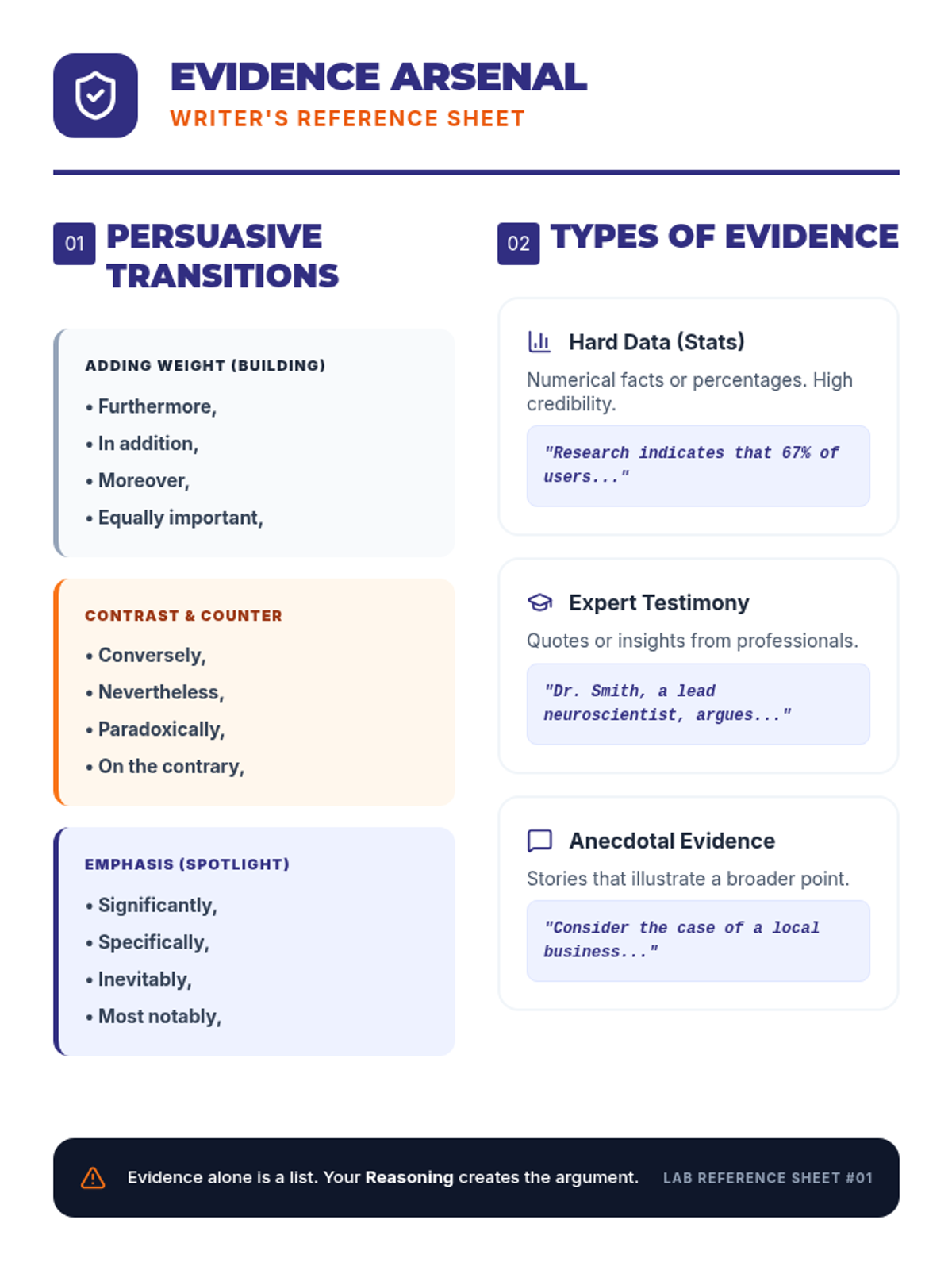
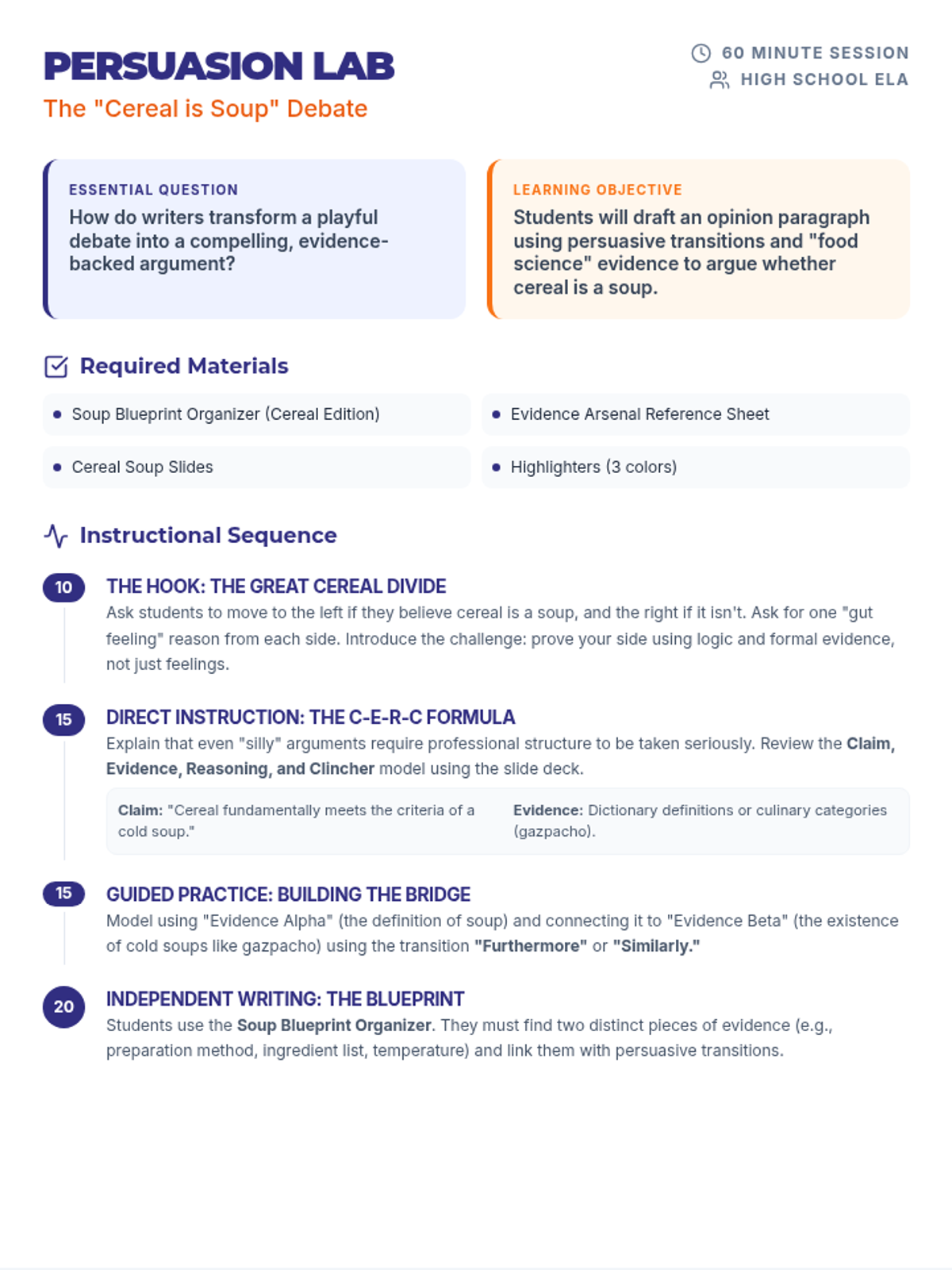
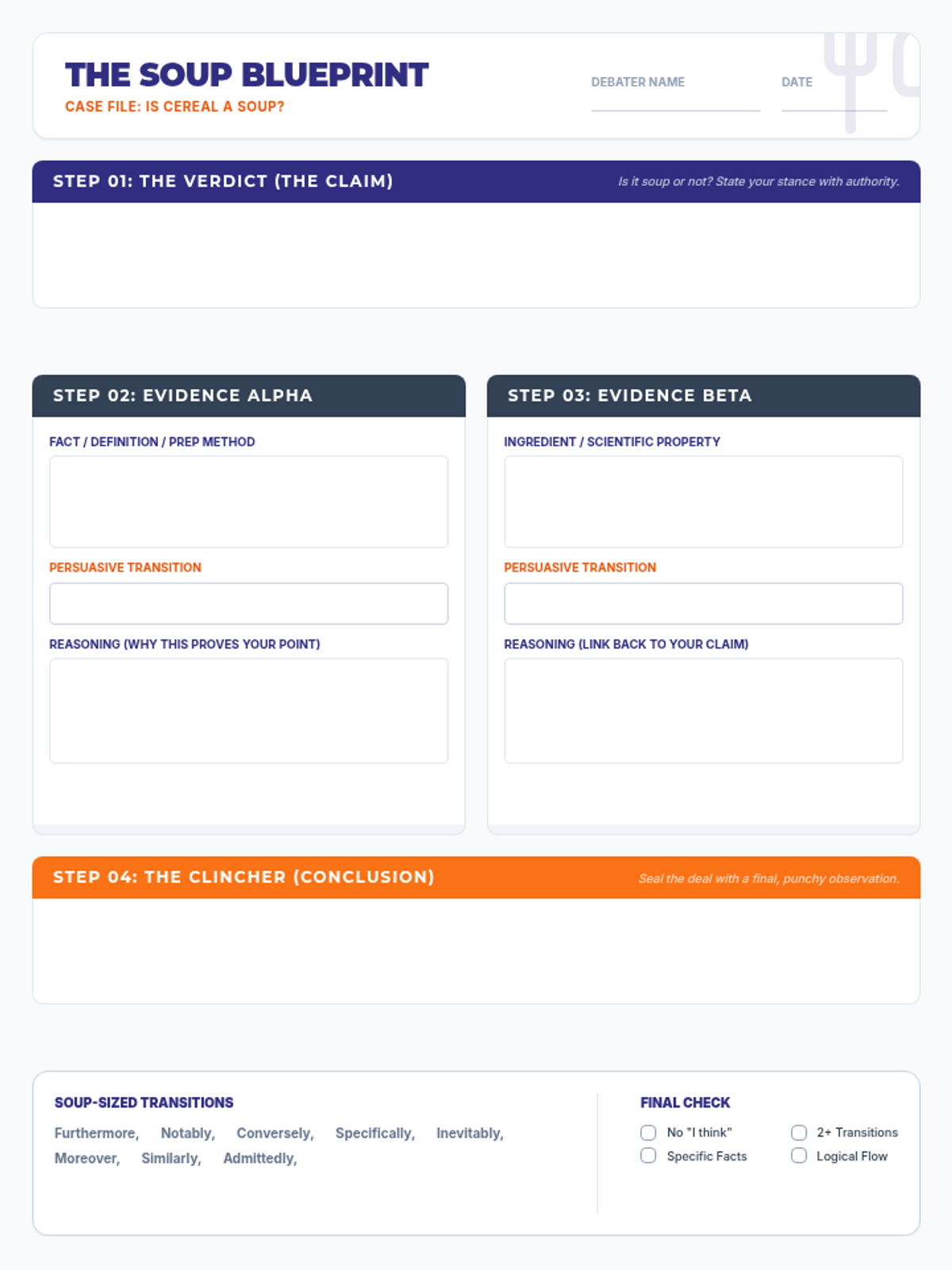
A high school writing lesson focused on teaching students how to craft compelling opinion paragraphs using persuasive transitions and robust evidence.
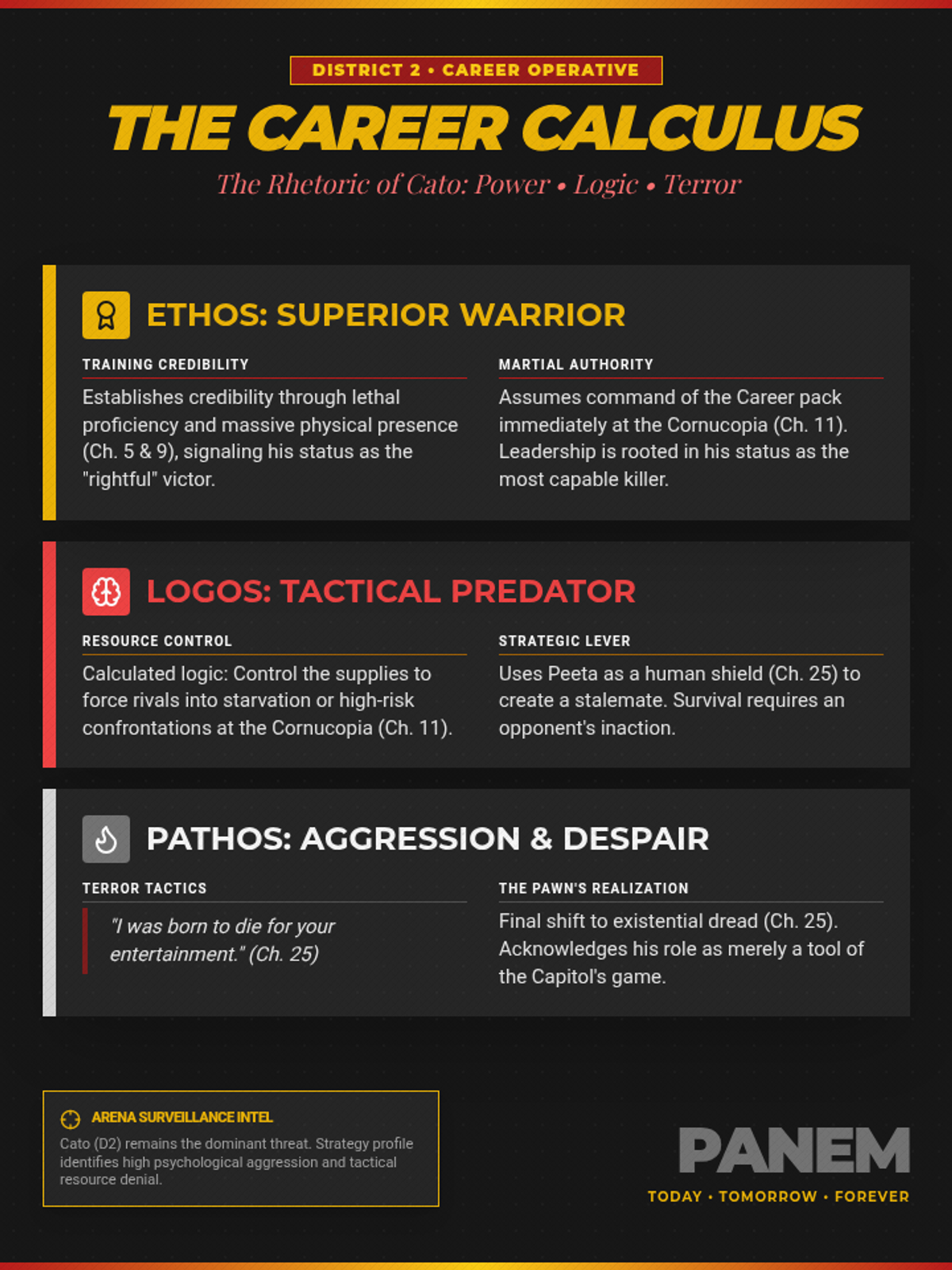
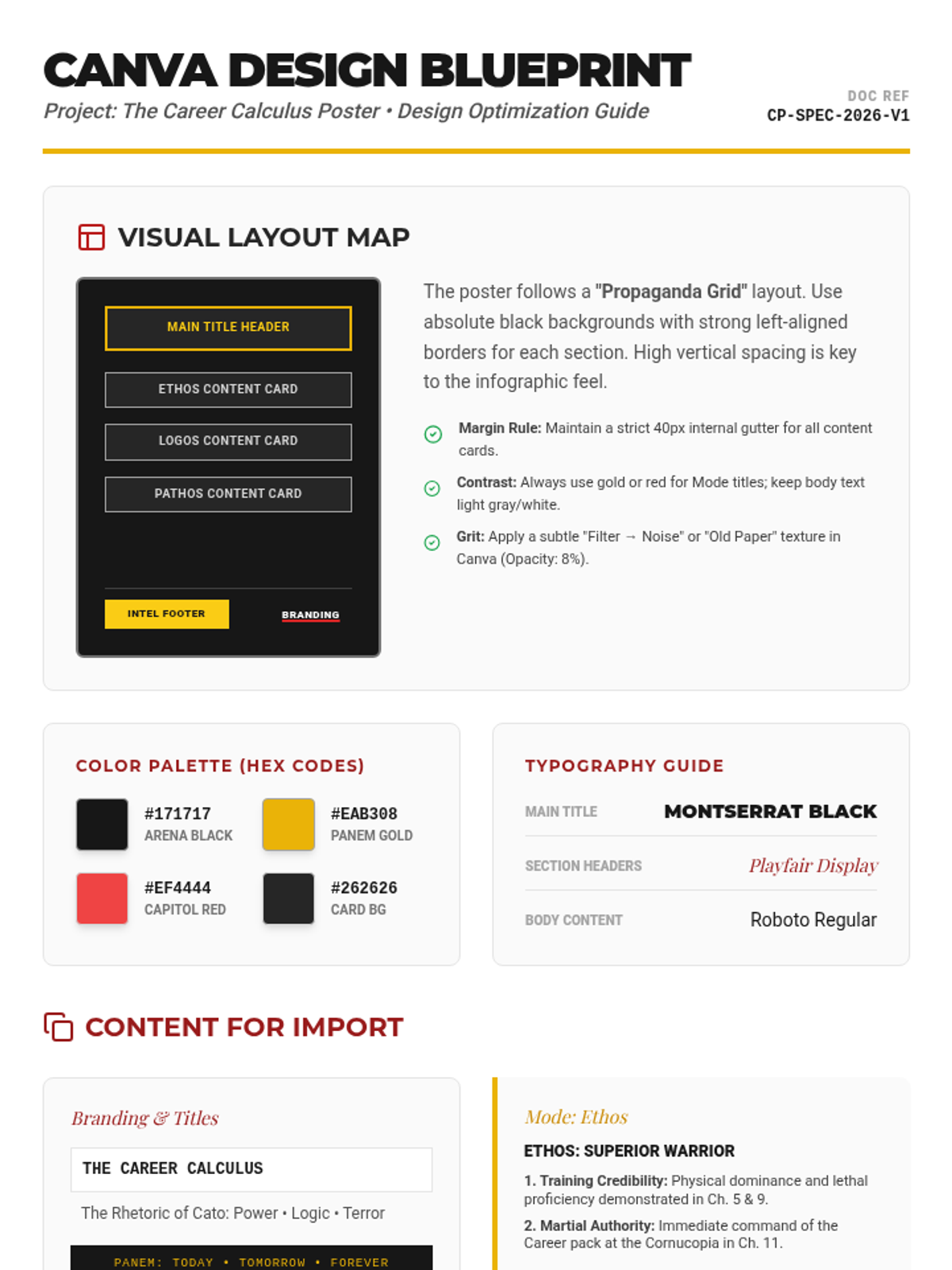
This lesson explores the rhetorical strategies used by tributes in The Hunger Games, focusing on how power, logic, and emotion are used to influence both the audience and opponents.
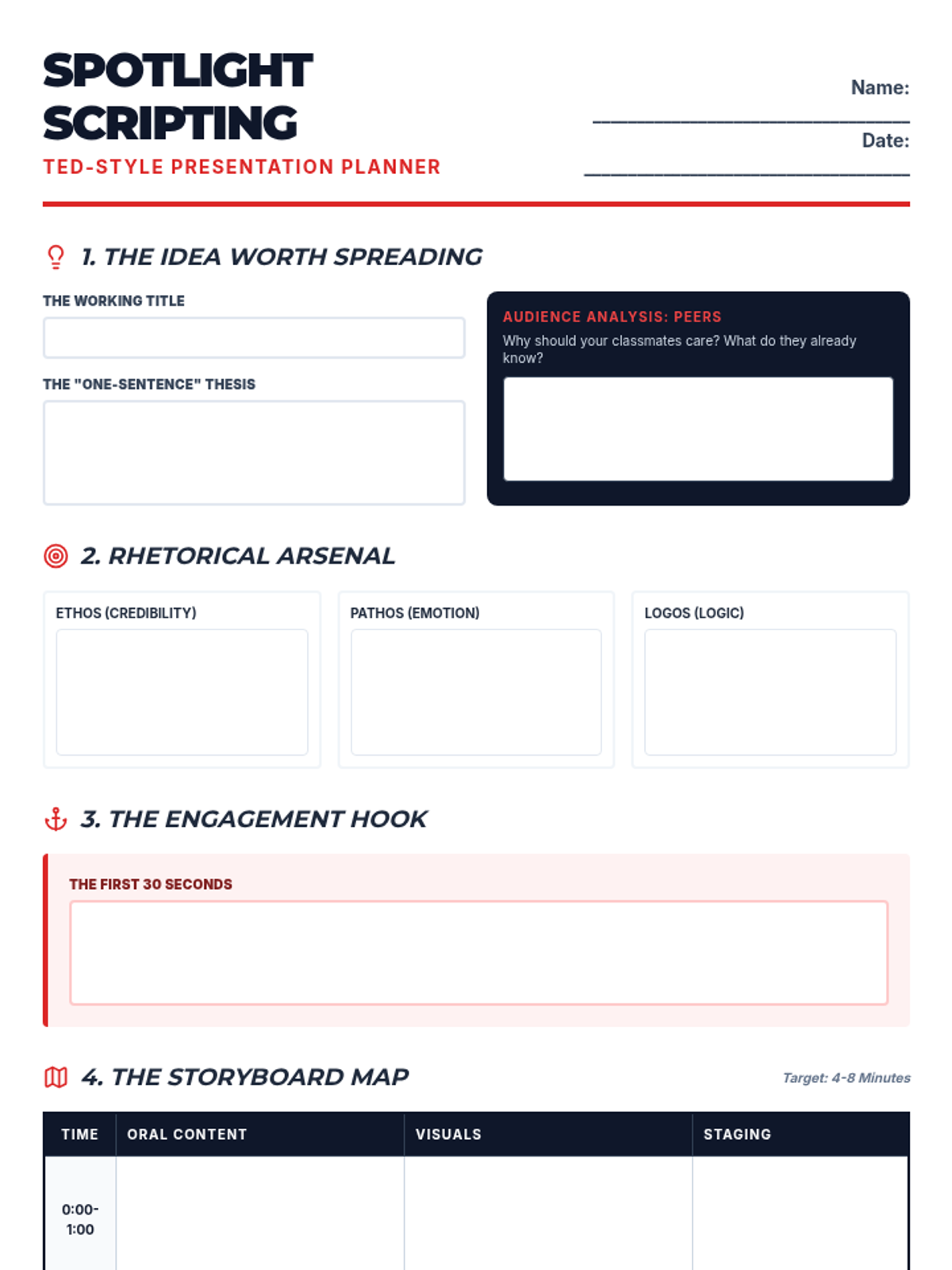
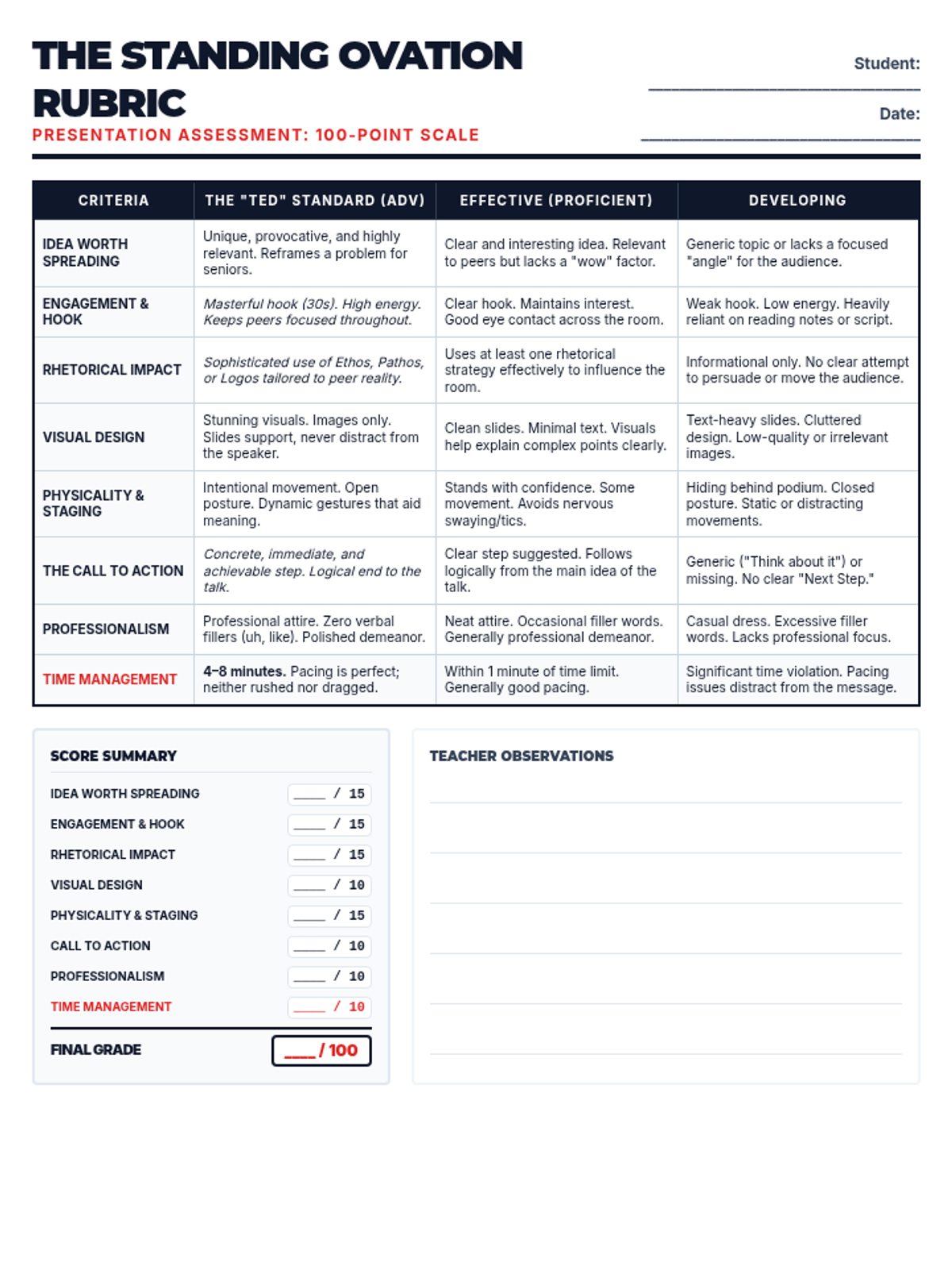
A comprehensive planning session for 12th-grade students to draft, structure, and refine a TED Talk-style presentation with a focus on audience engagement and rhetorical impact.
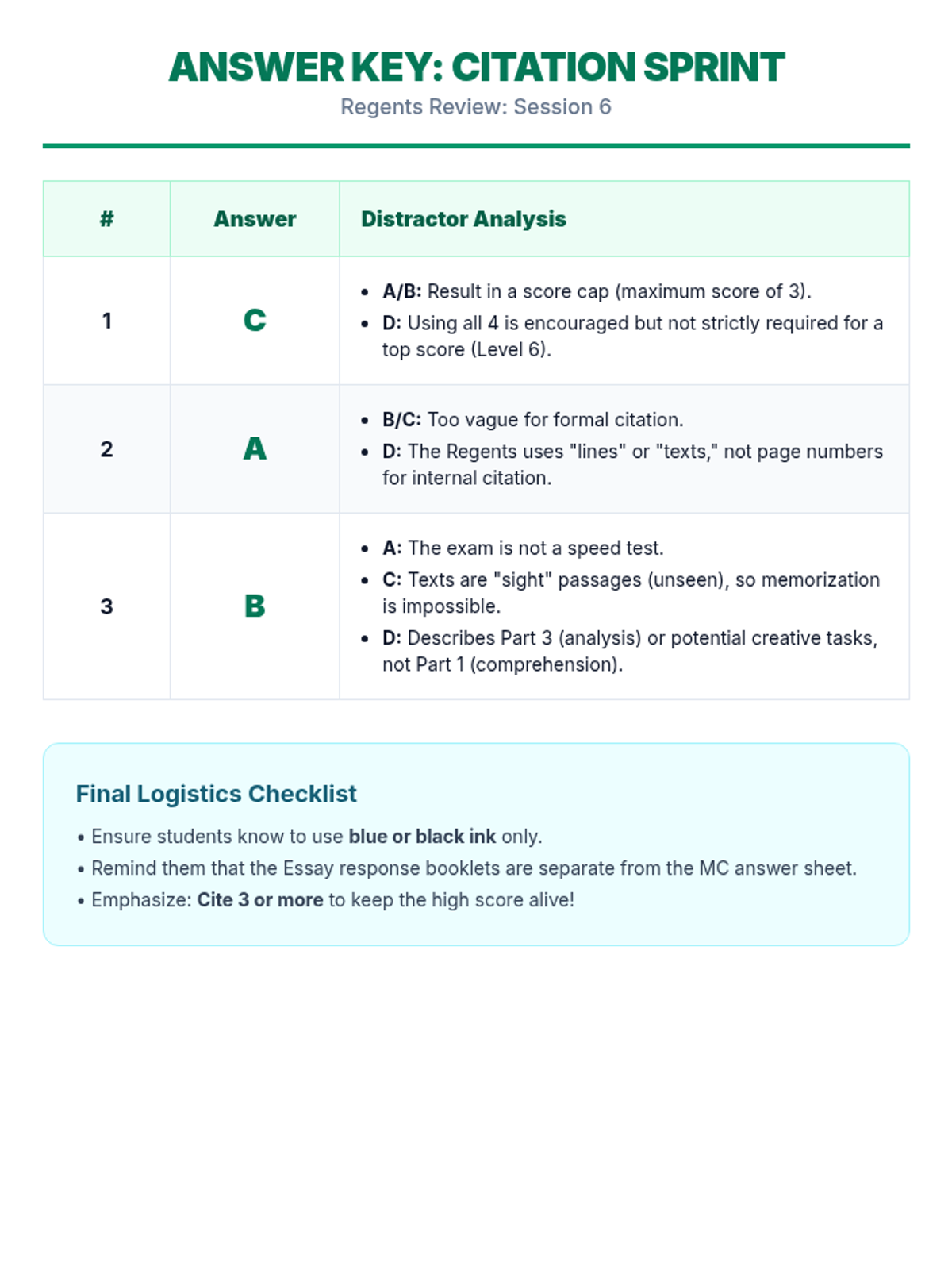
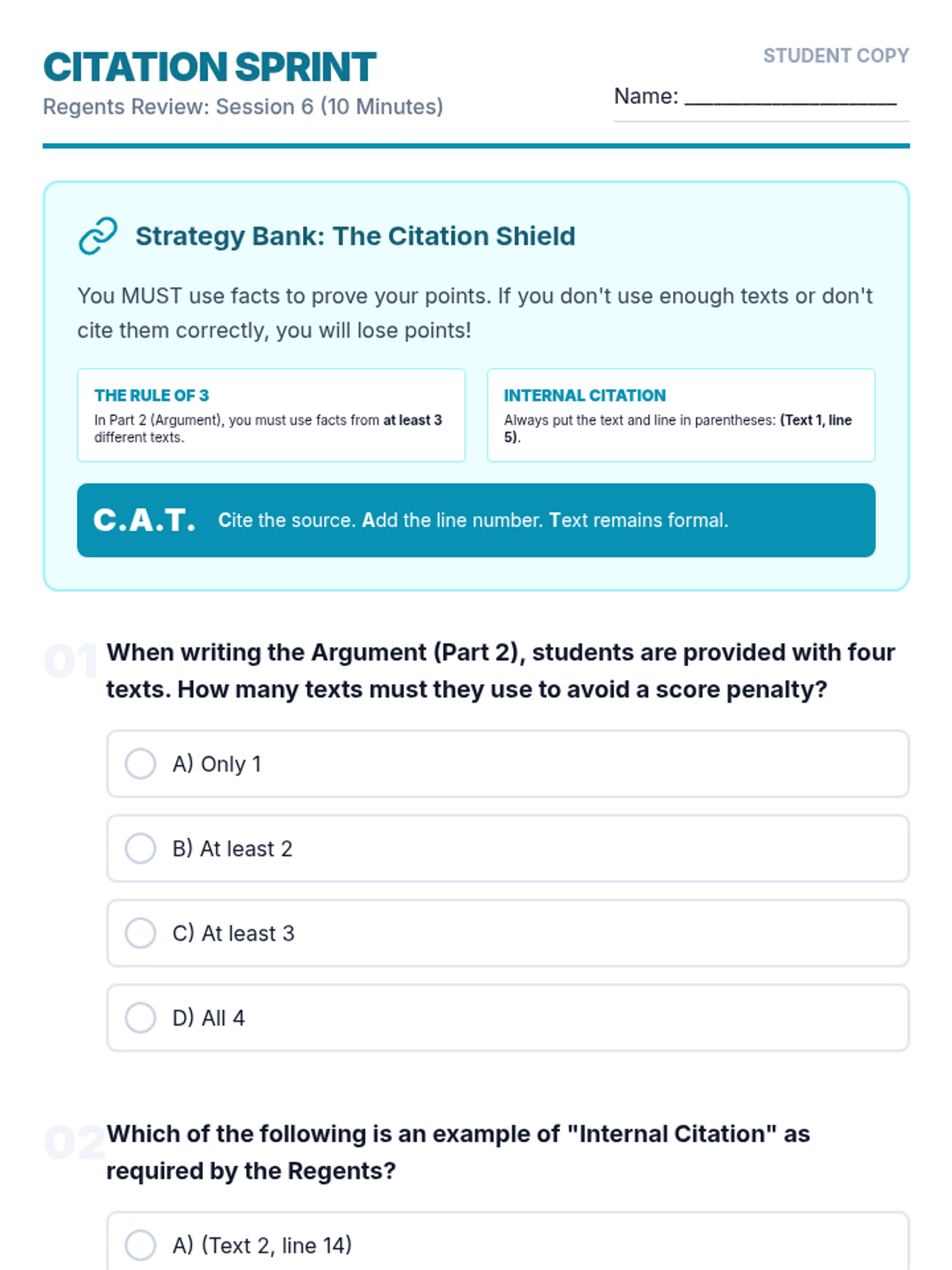
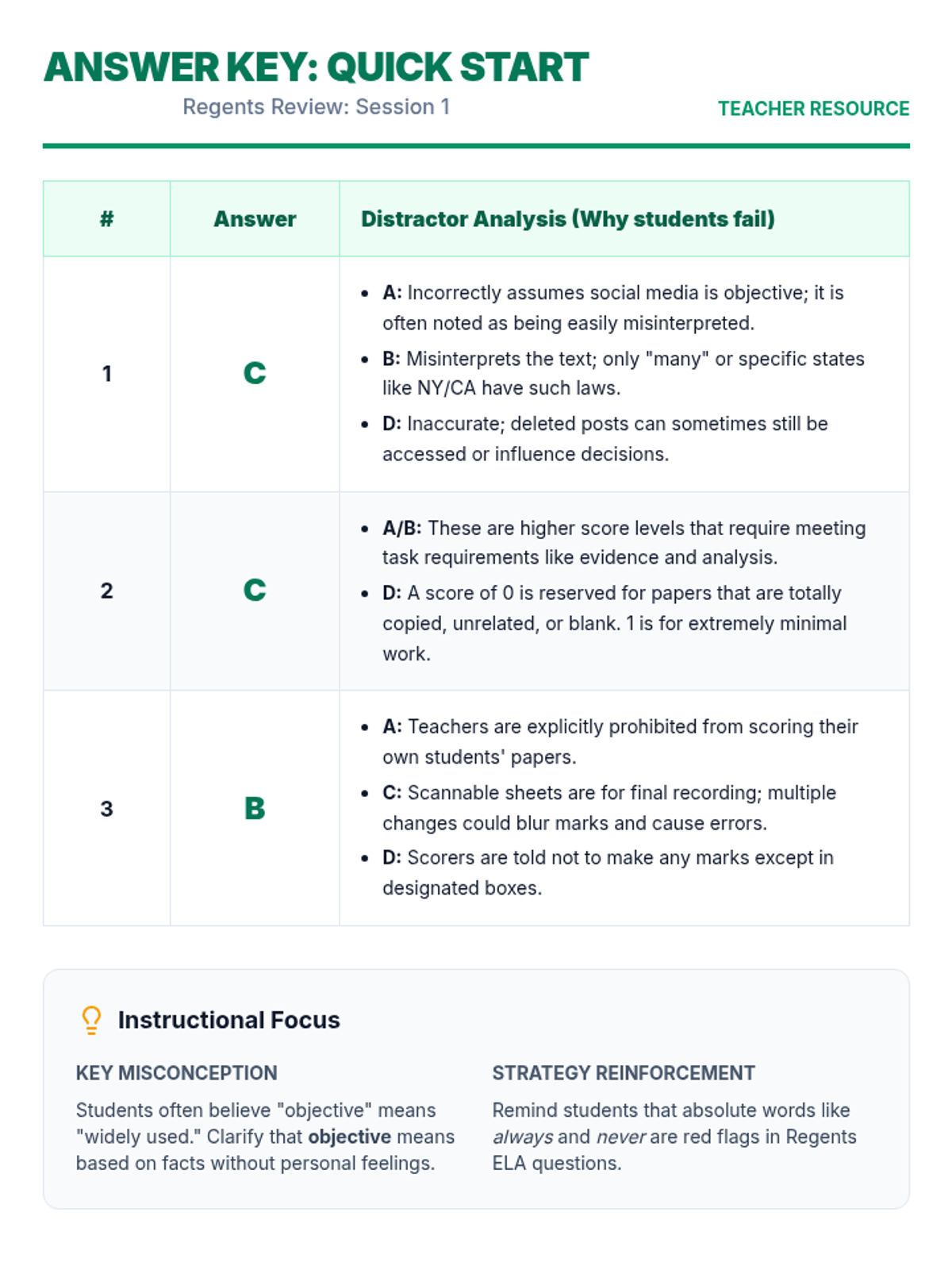
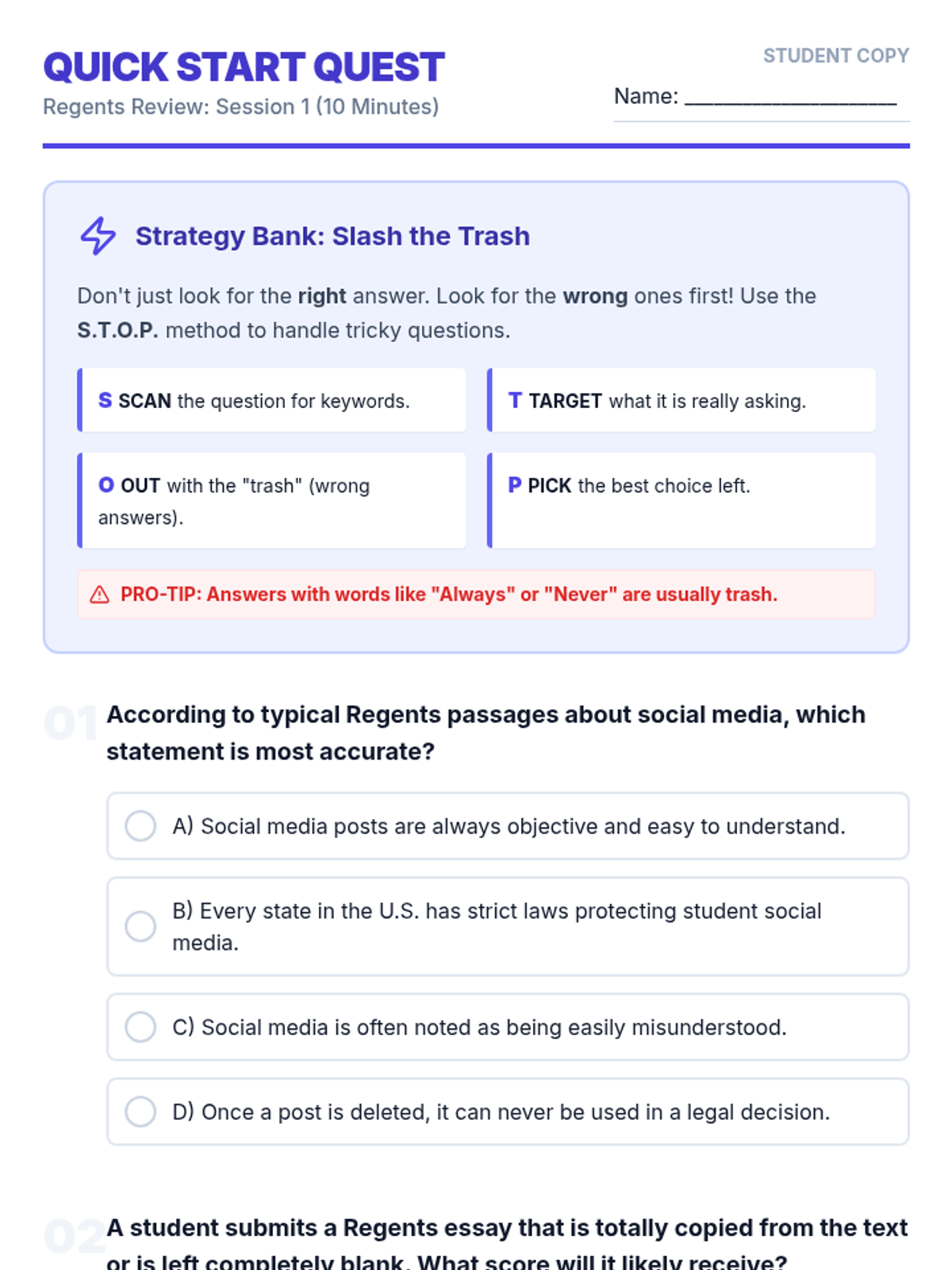
The final 10-minute review session focusing on source integration and exam structure using Set 6 questions.
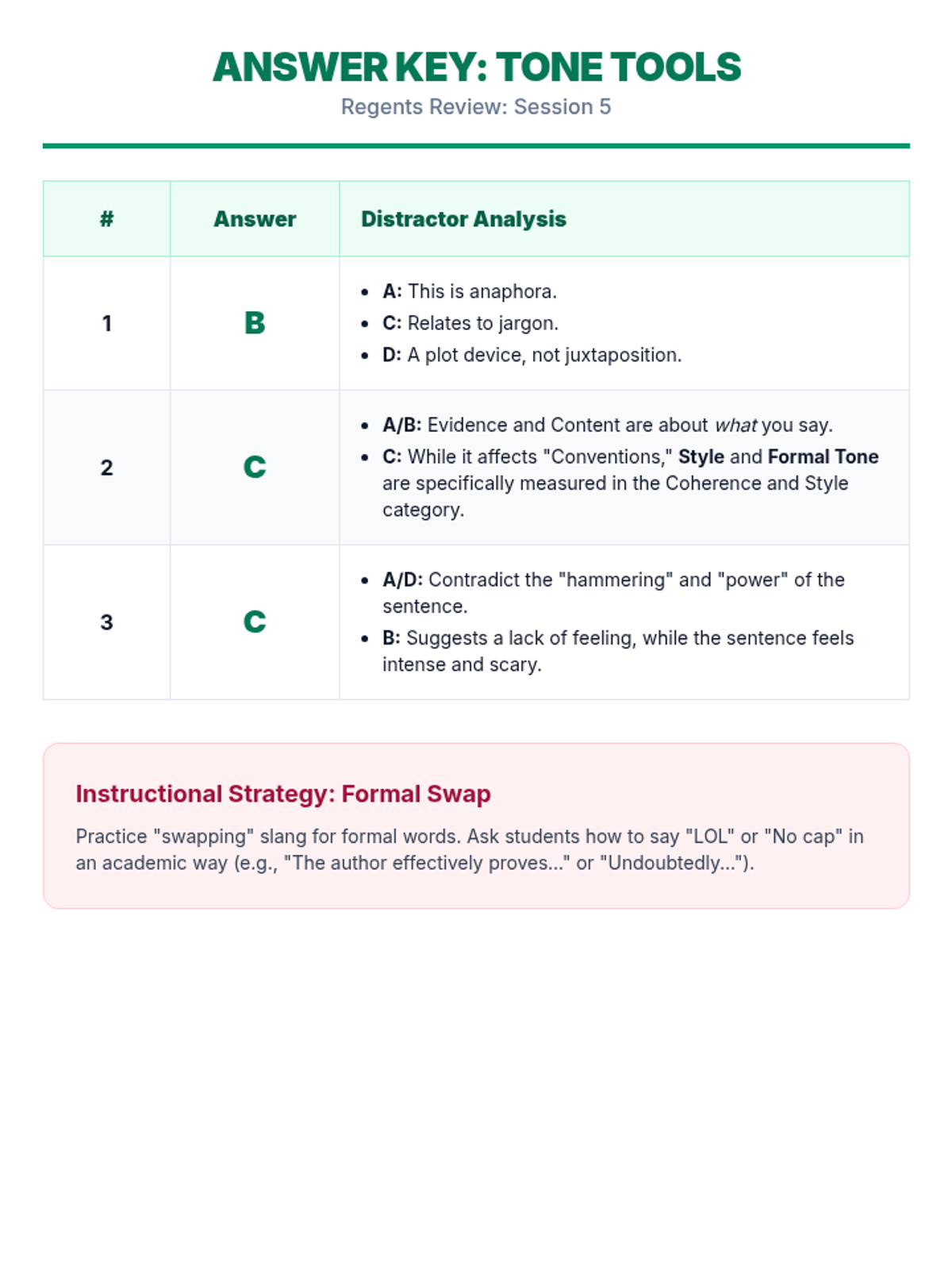
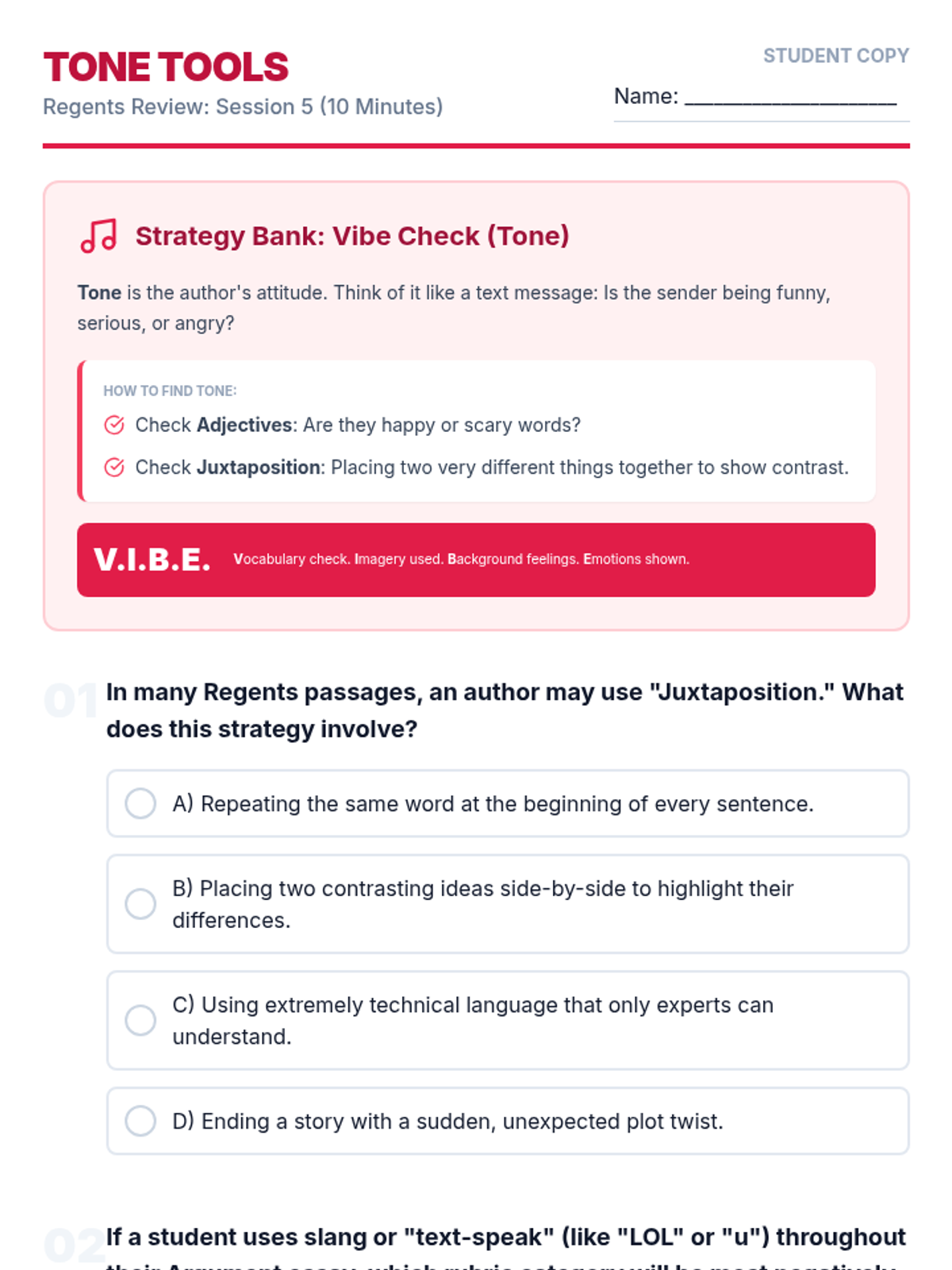
A 10-minute session on vocabulary, tone, and formal style using Set 5 questions, featuring strategies for identifying author vibe.
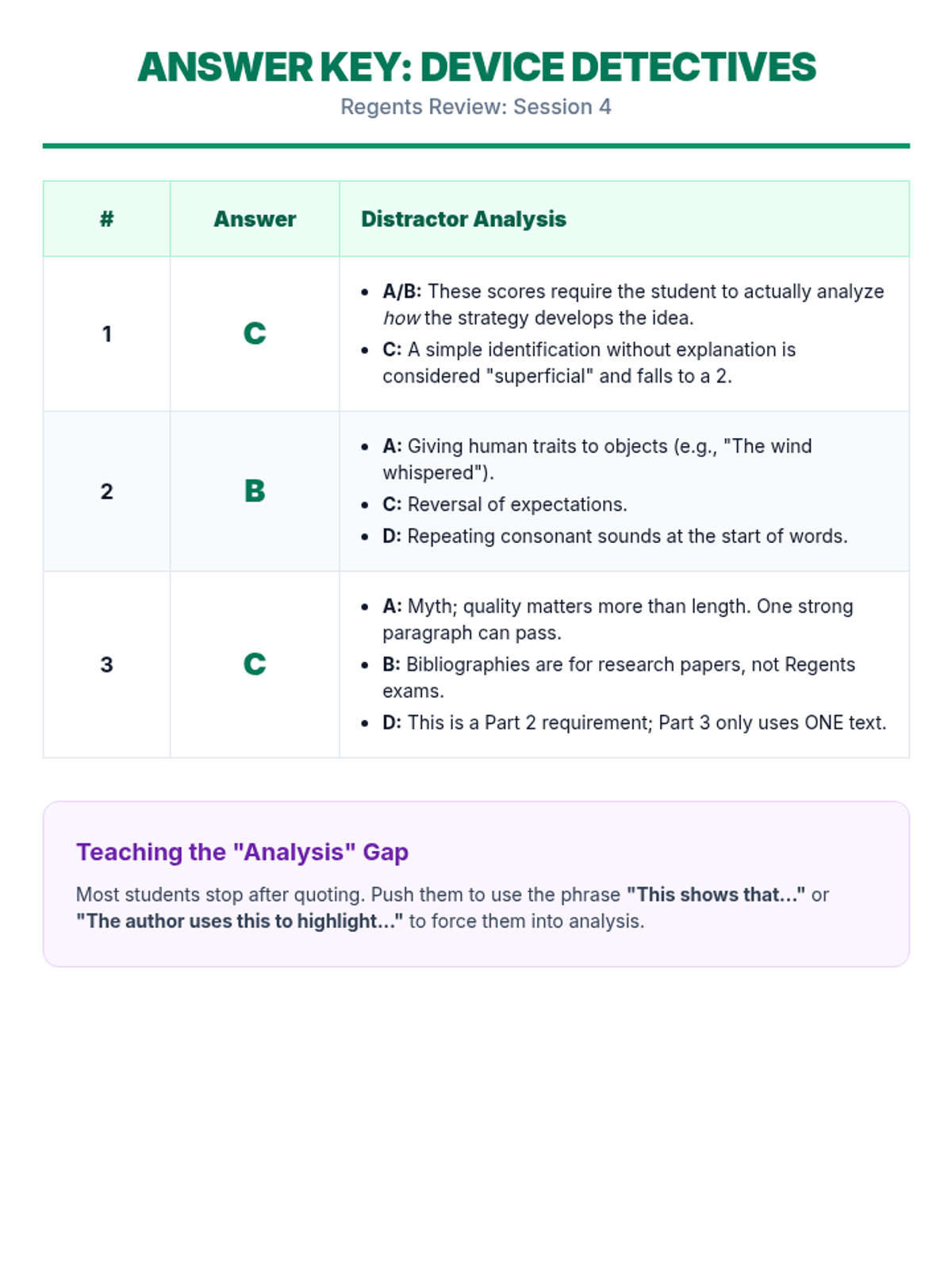
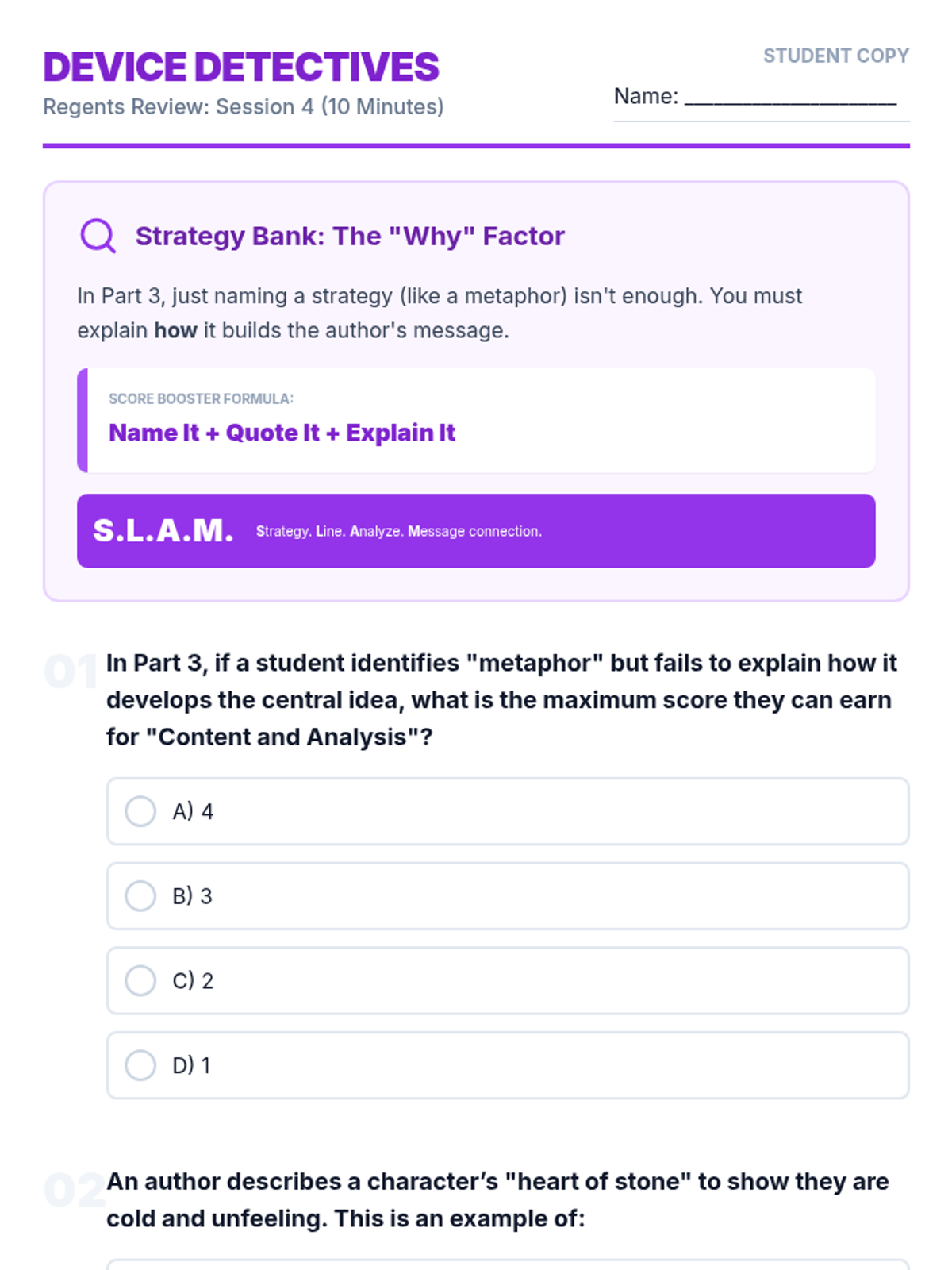
A 10-minute focus on the Part 3 Text-Analysis Response using Set 4 questions, highlighting the importance of explaining 'how' strategies work.
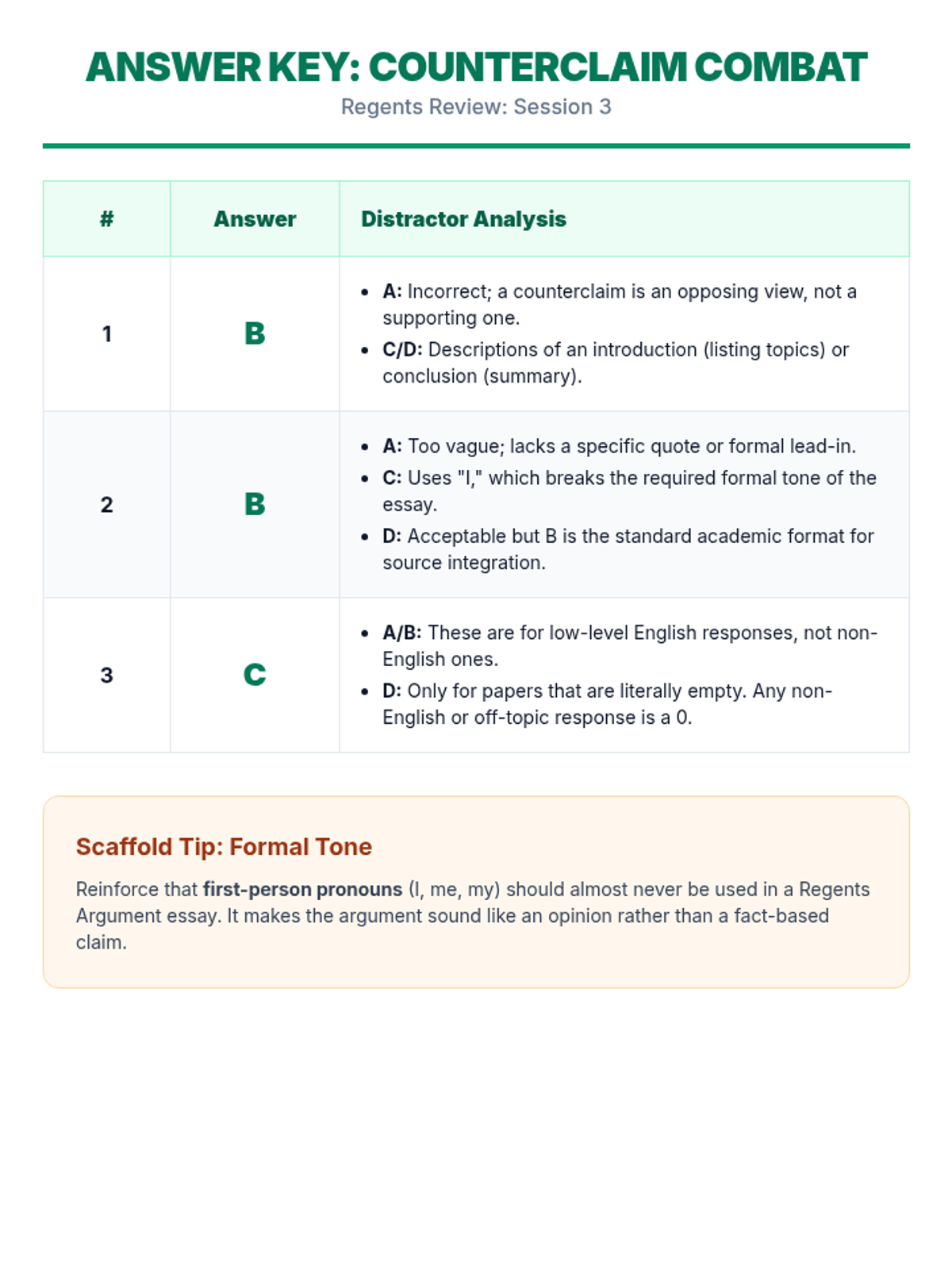
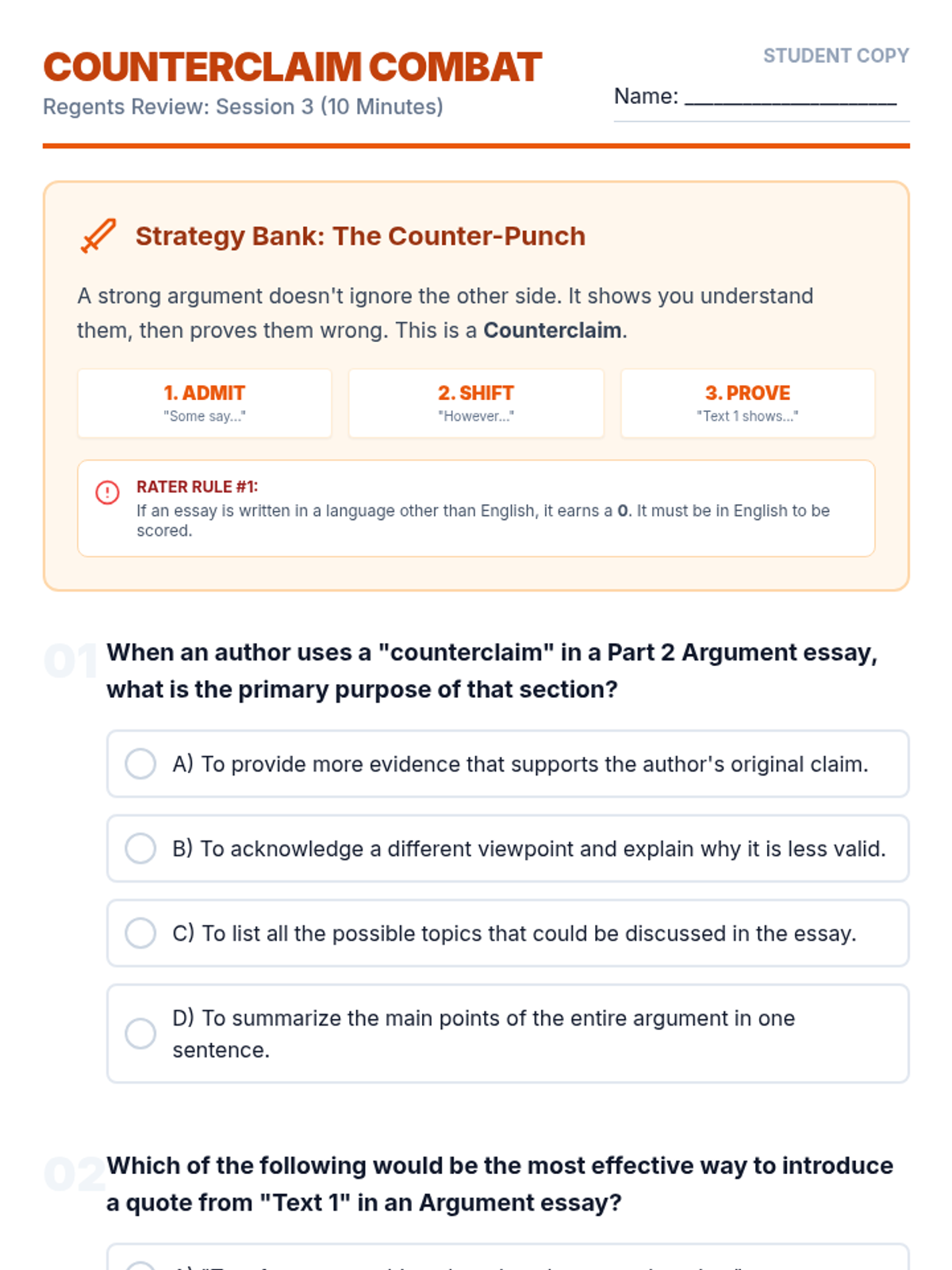
A 10-minute deep dive into argument analysis and source integration using Set 3 questions, focusing on the purpose of counterclaims.
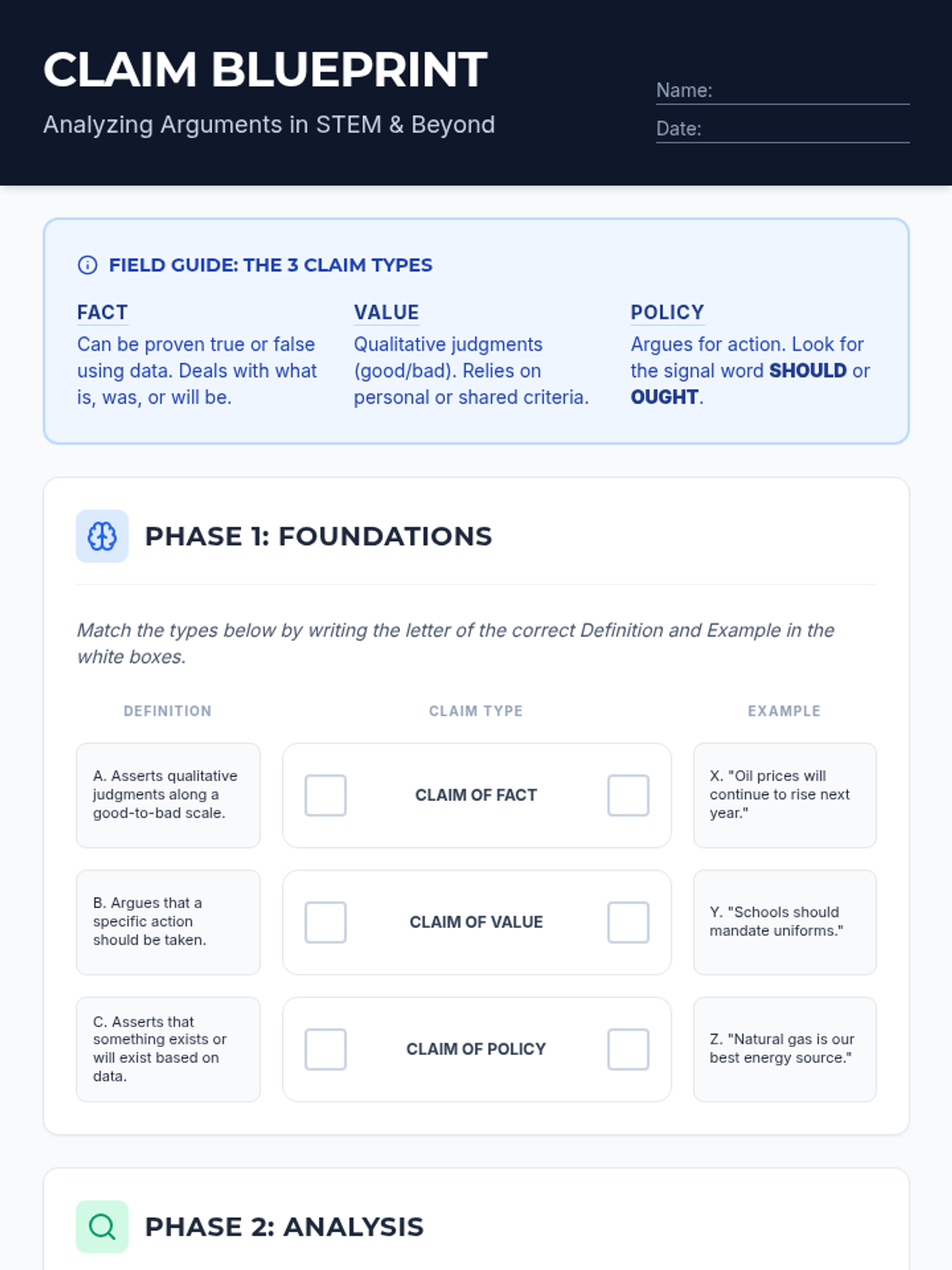
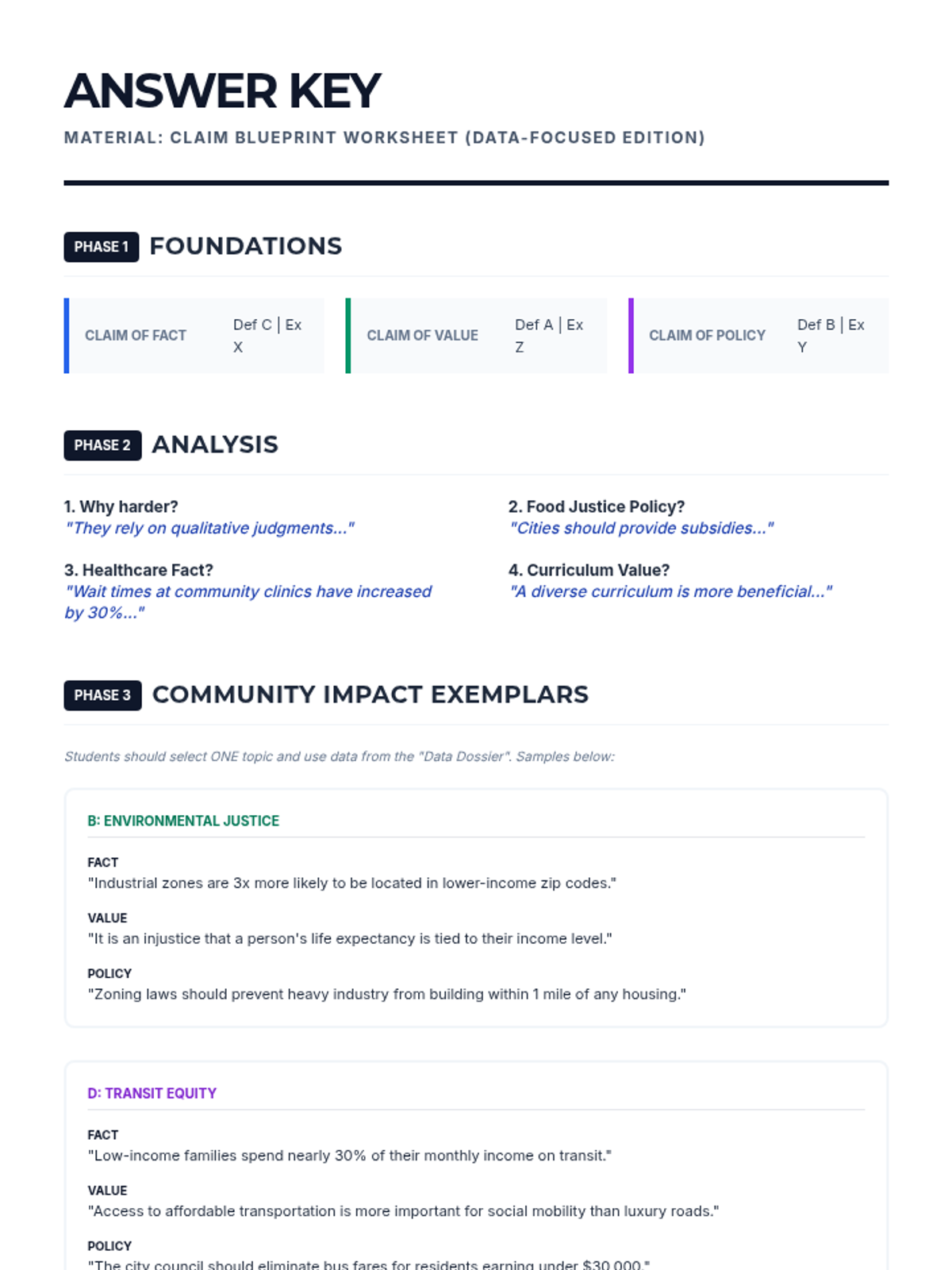
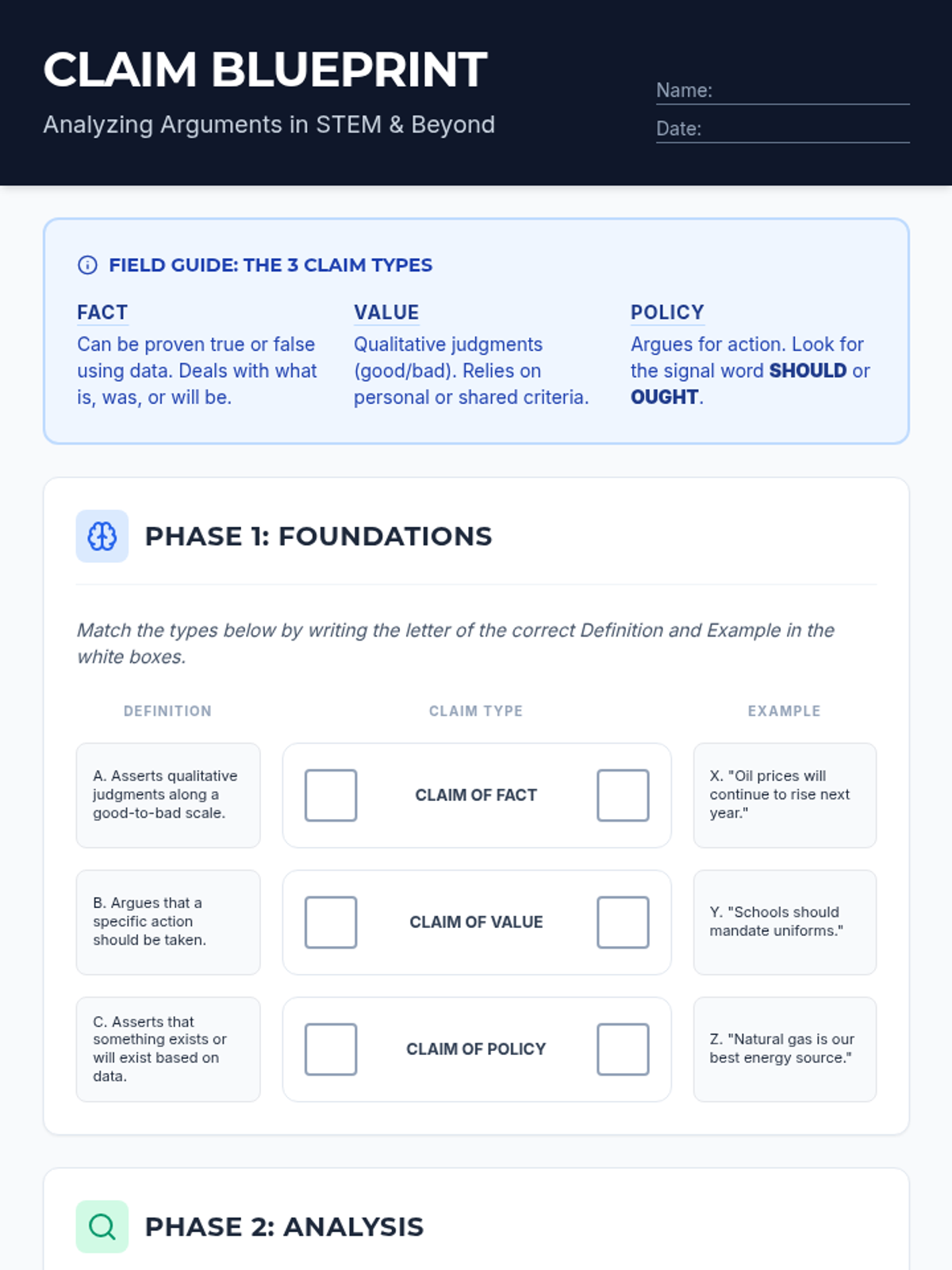
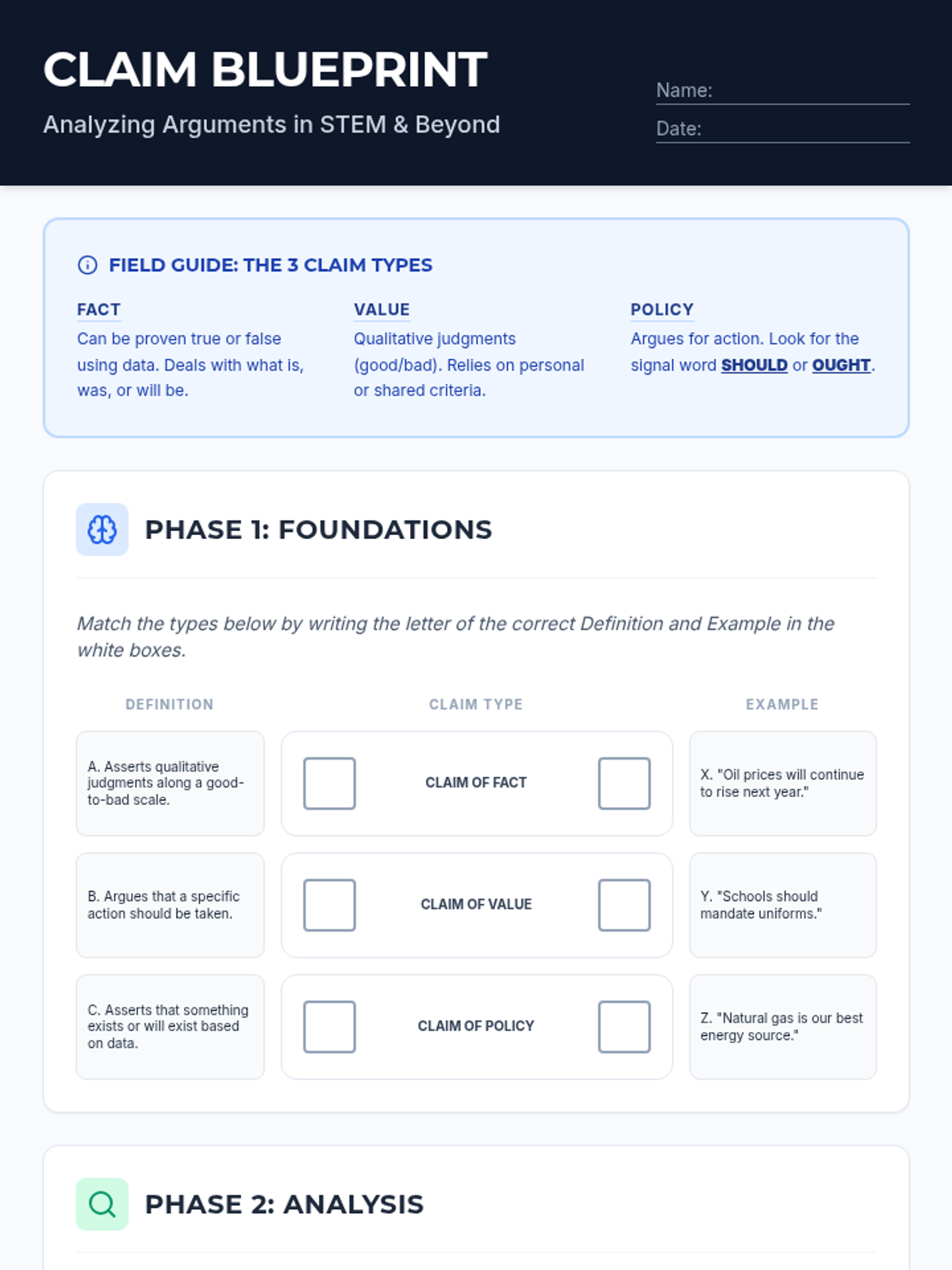
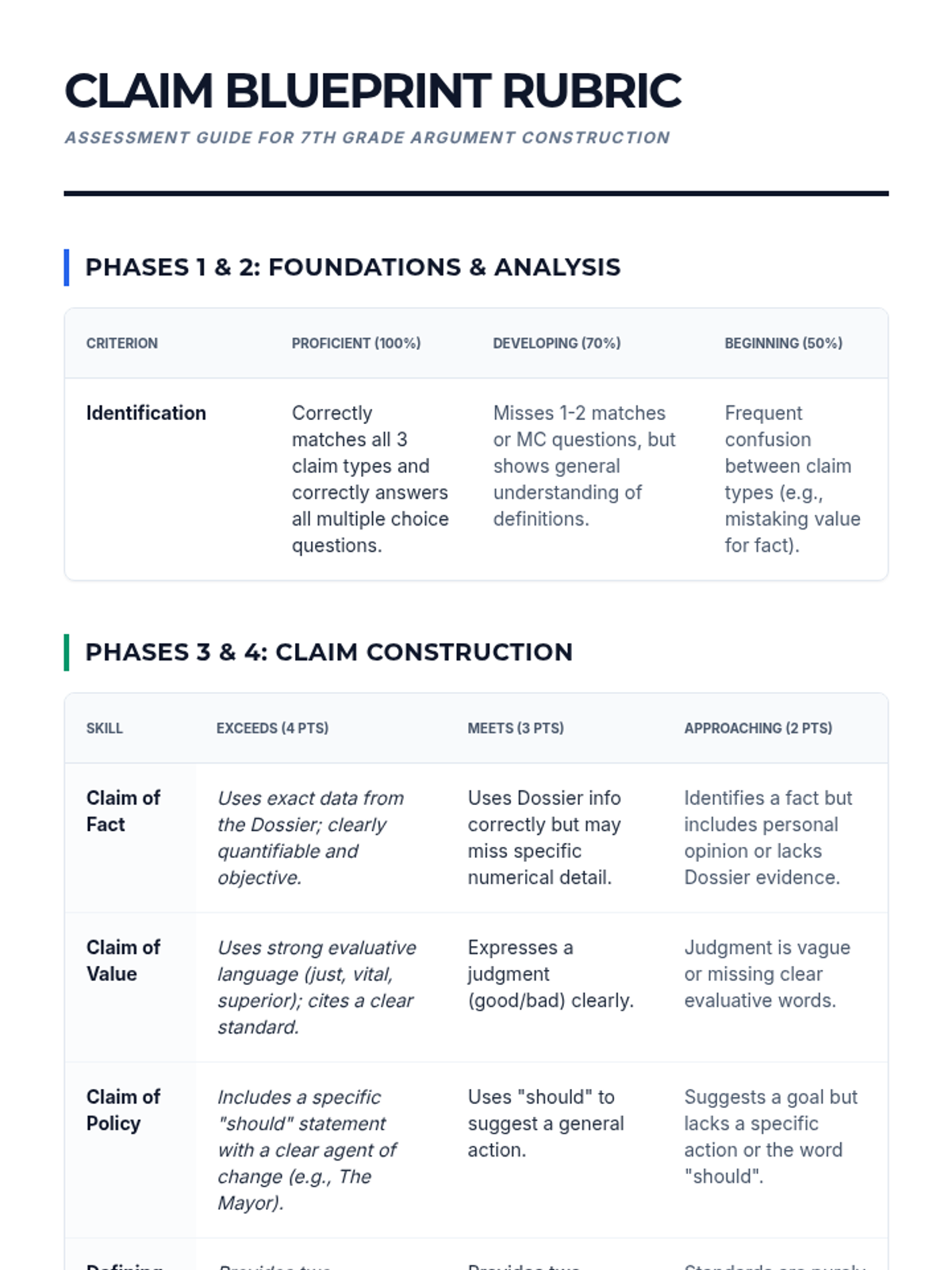
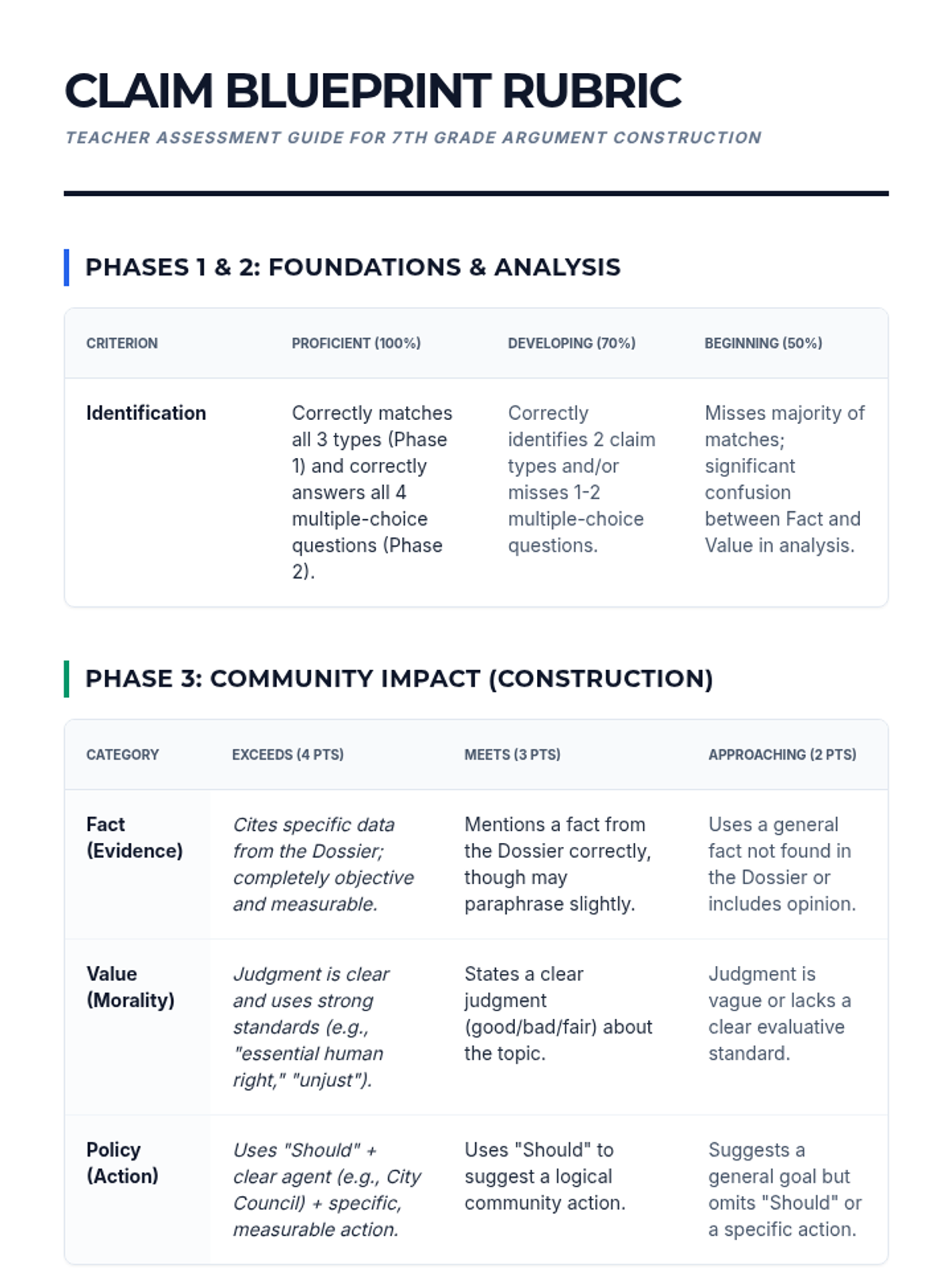
A focused lesson on identifying and constructing the three core types of academic claims: Fact, Value, and Policy. Students move from basic identification to analyzing how these claims work together in complex arguments.
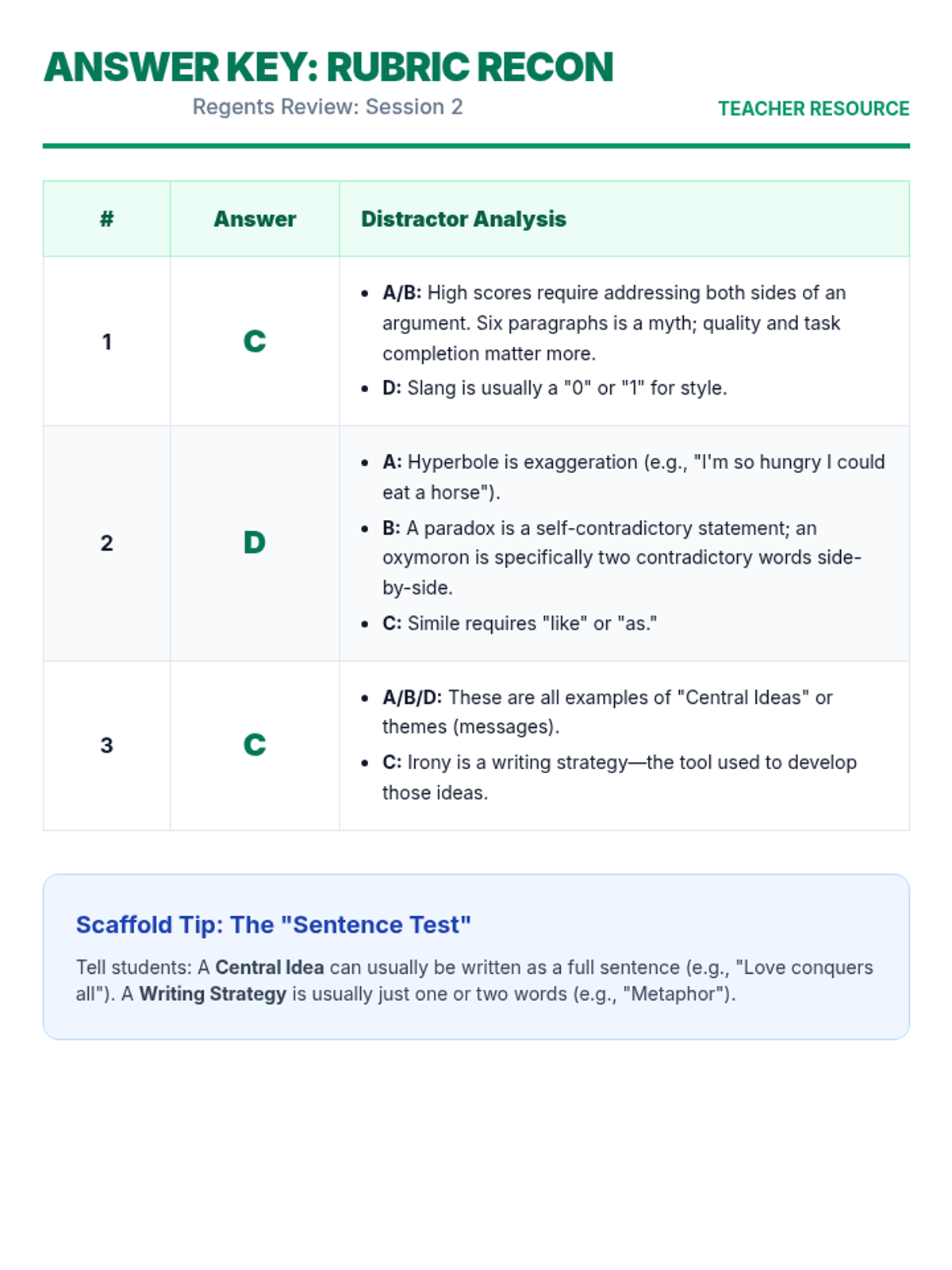
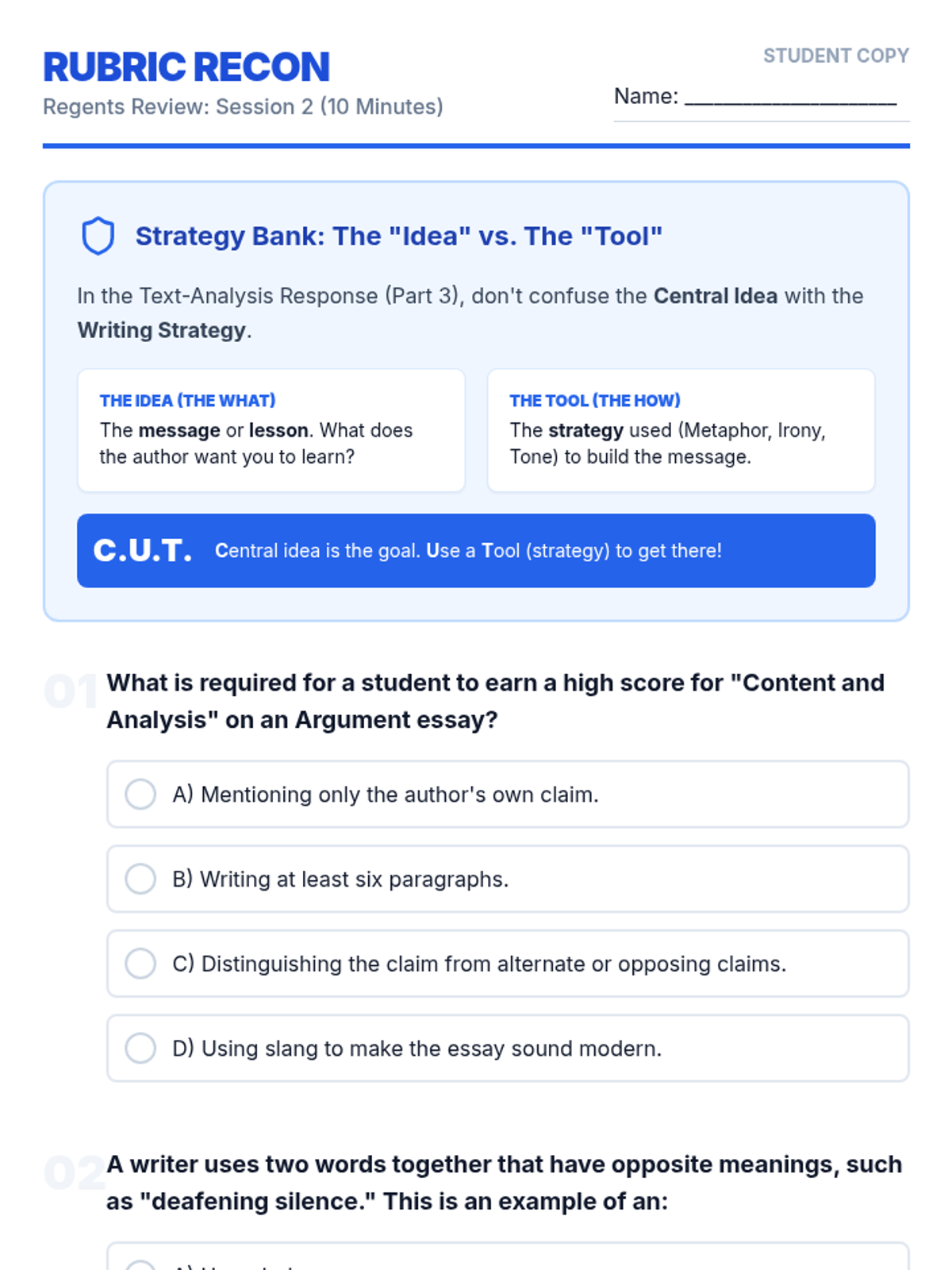
A 10-minute review of argument structure and literary devices using Set 2 questions, emphasizing the difference between strategies and central ideas.
The first 10-minute review session focusing on basic test-taking strategies and general exam rules using Set 1 questions.
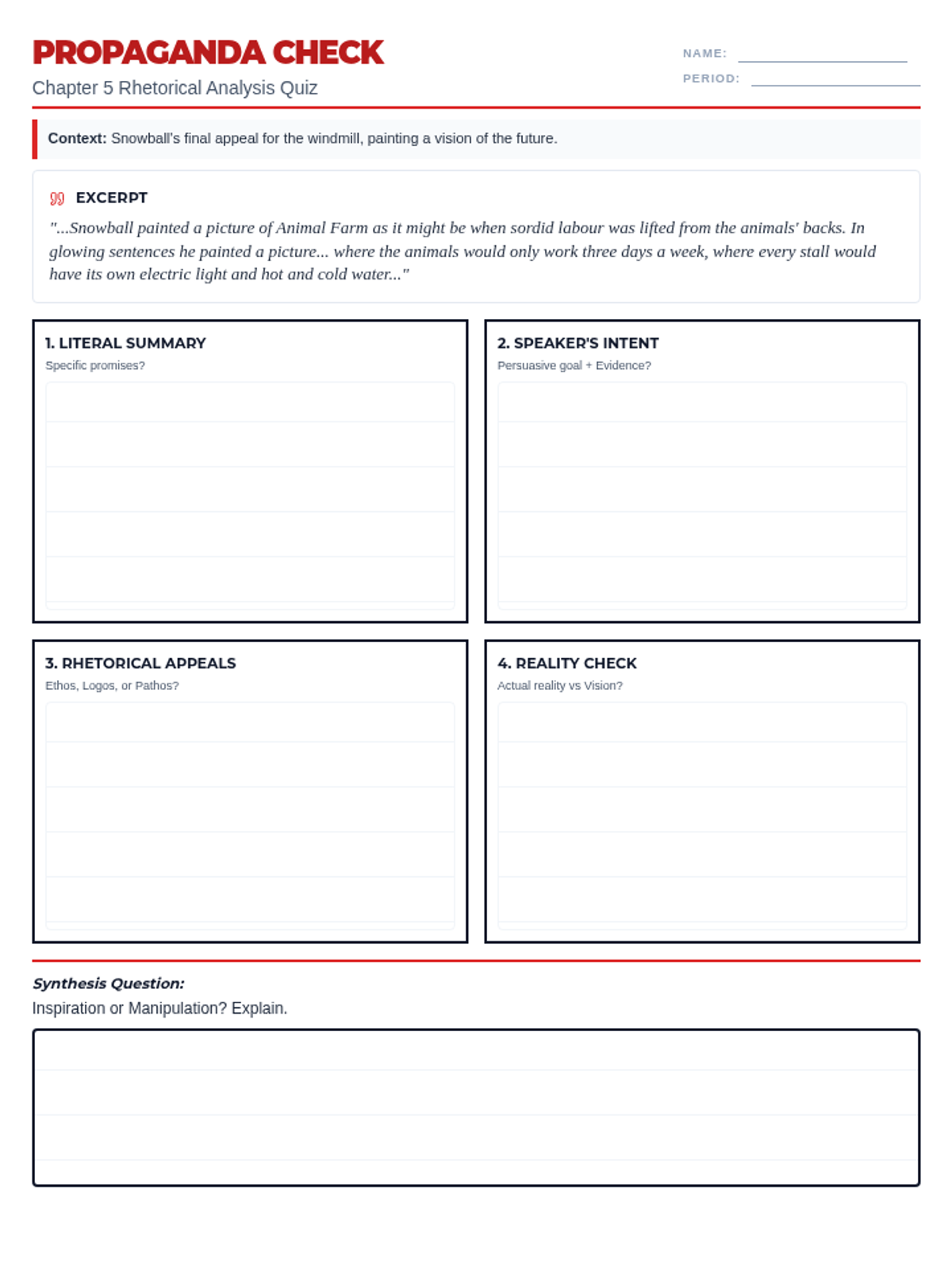
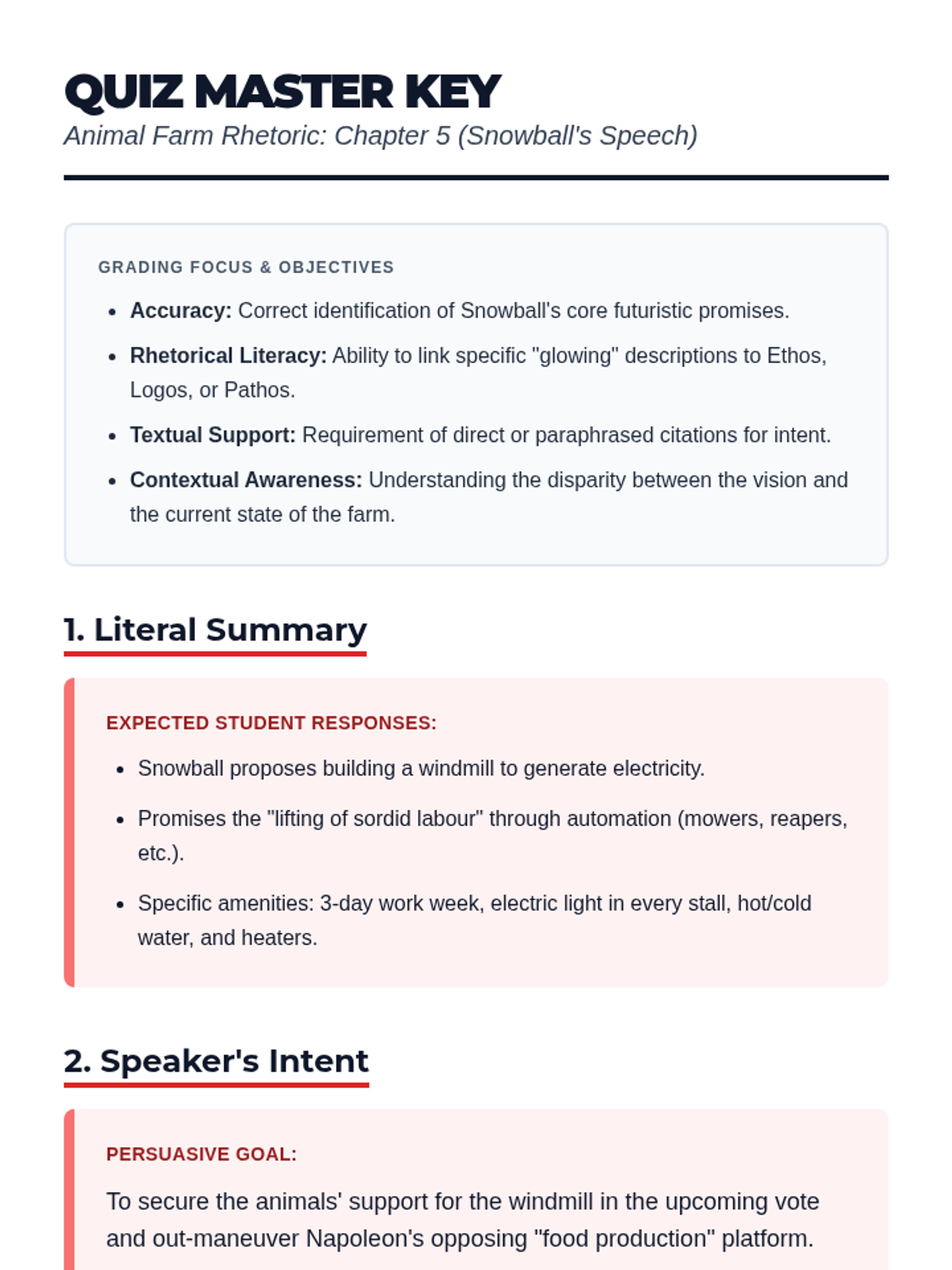
In this lesson, students analyze Snowball's pivotal speech regarding the windmill in Chapter 5 of Animal Farm. They compare his rhetorical strategies to Squealer's previous manipulation and complete a formal rhetorical analysis quiz.
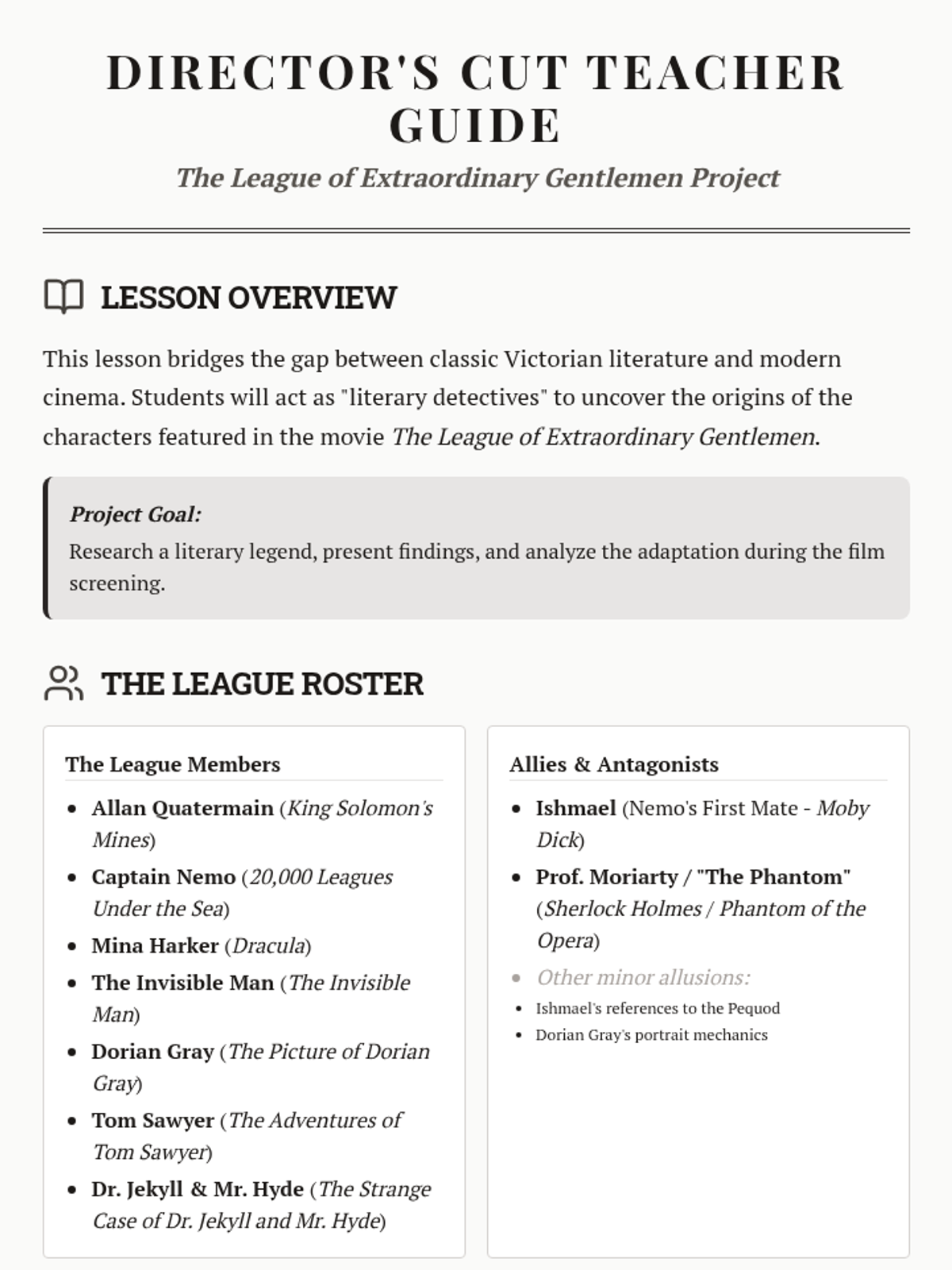
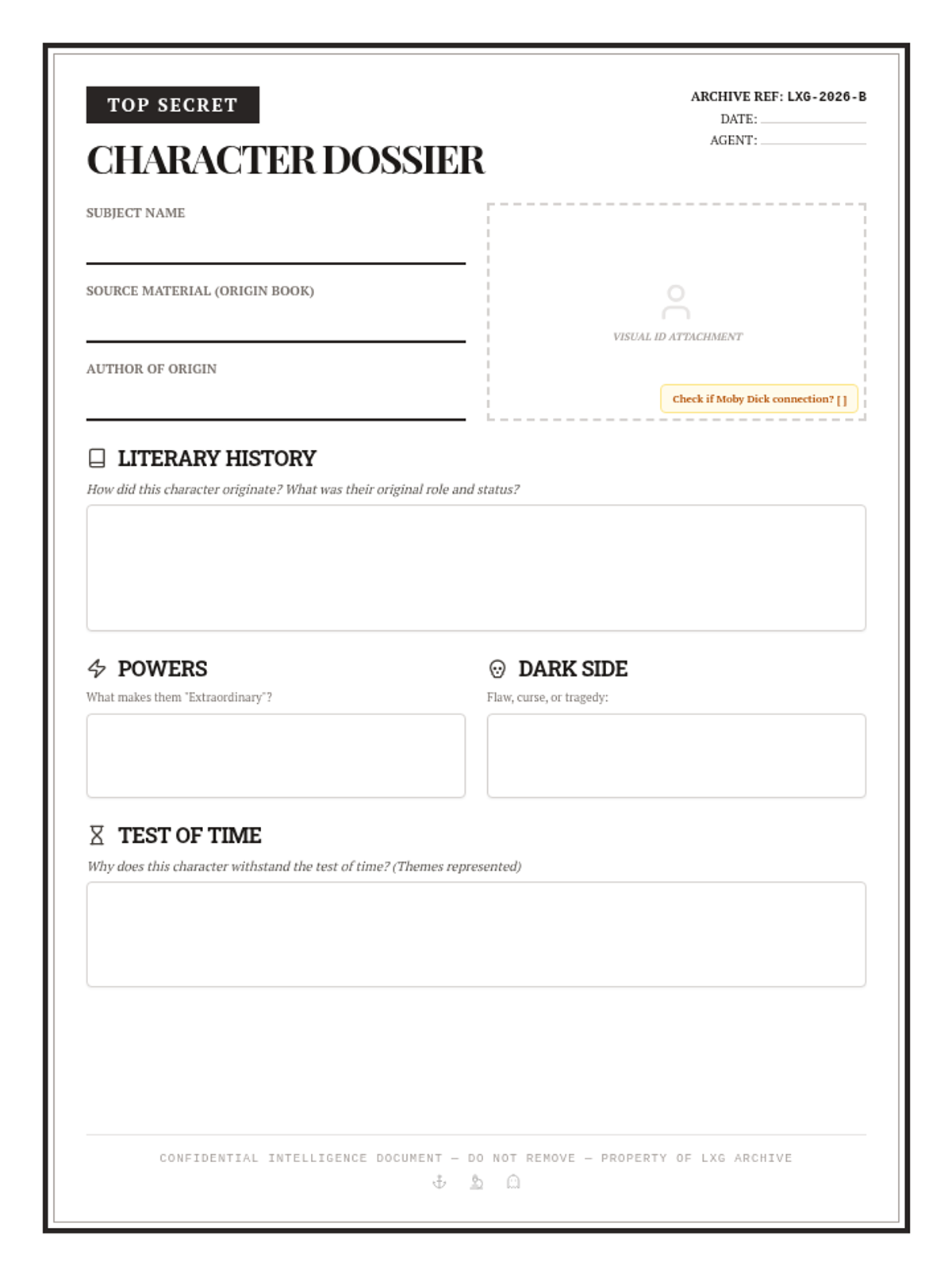
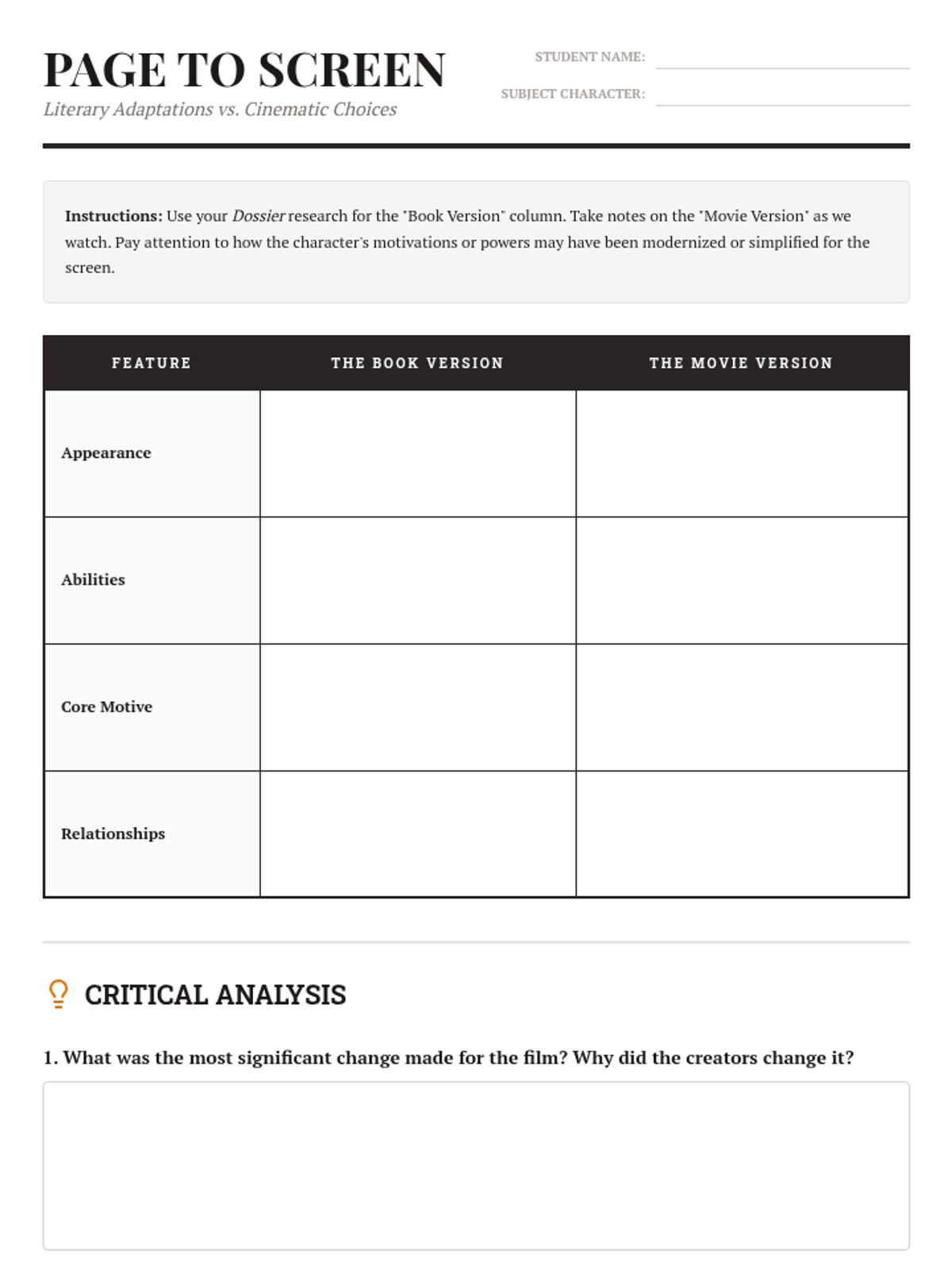
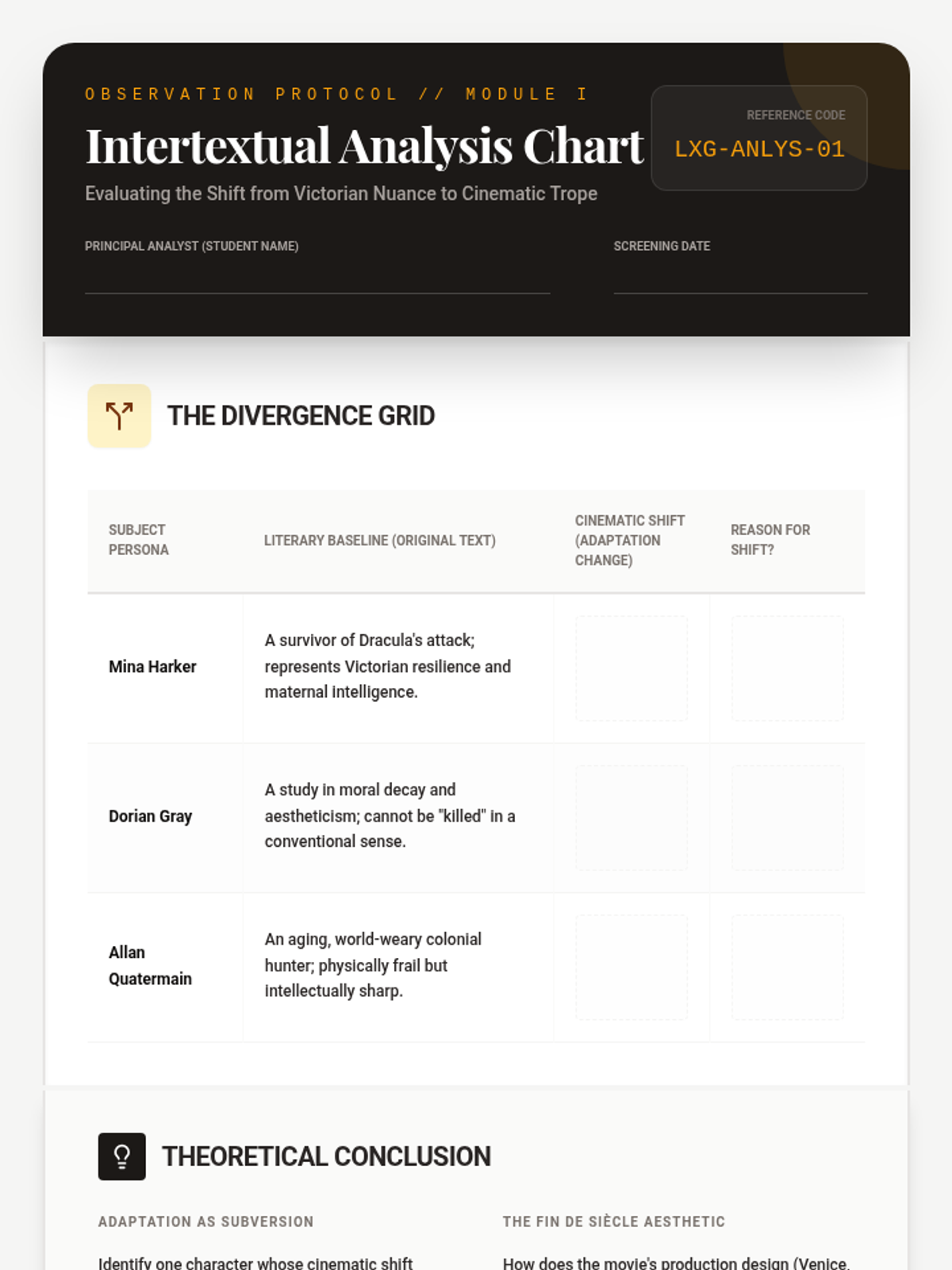
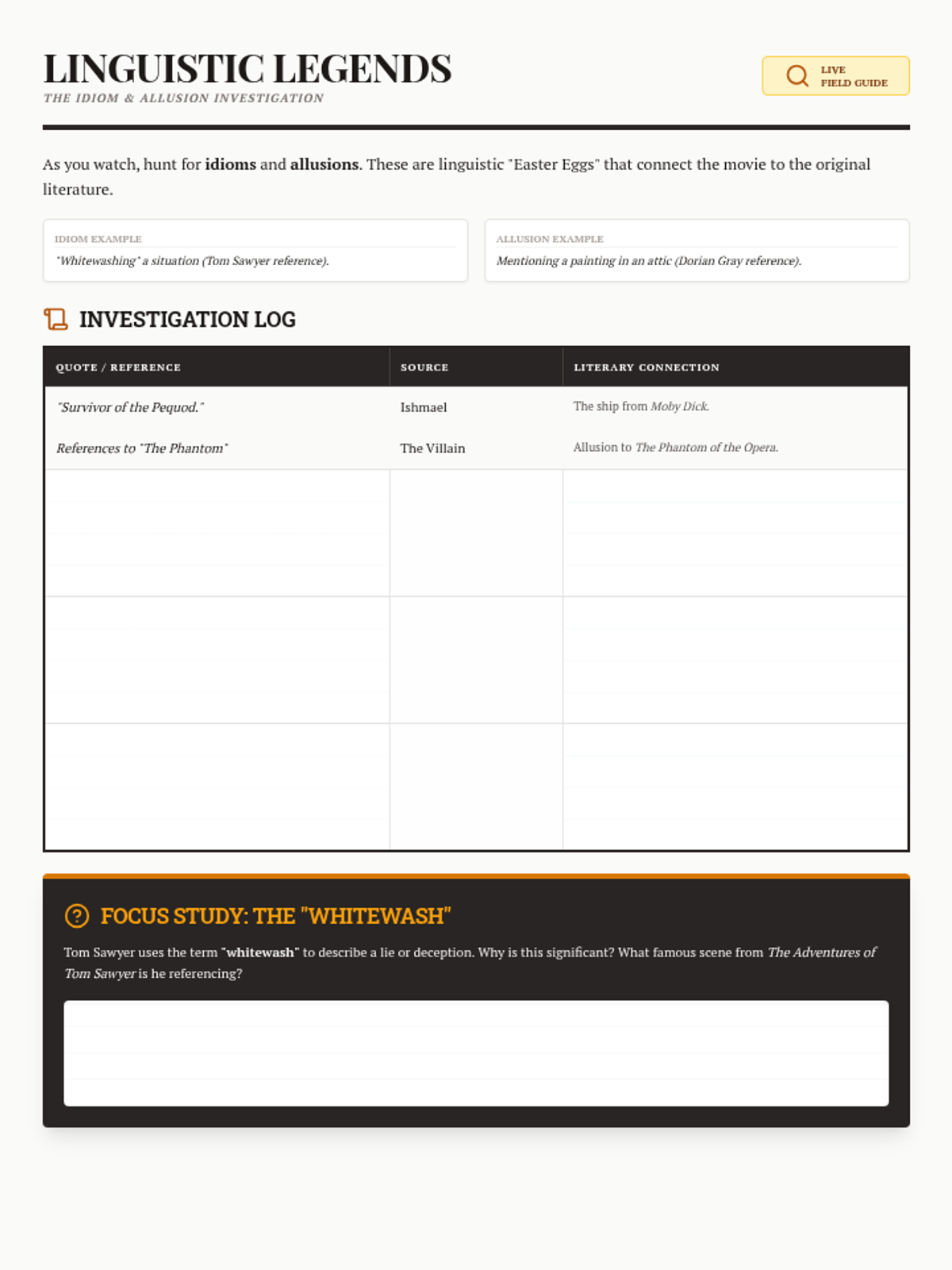
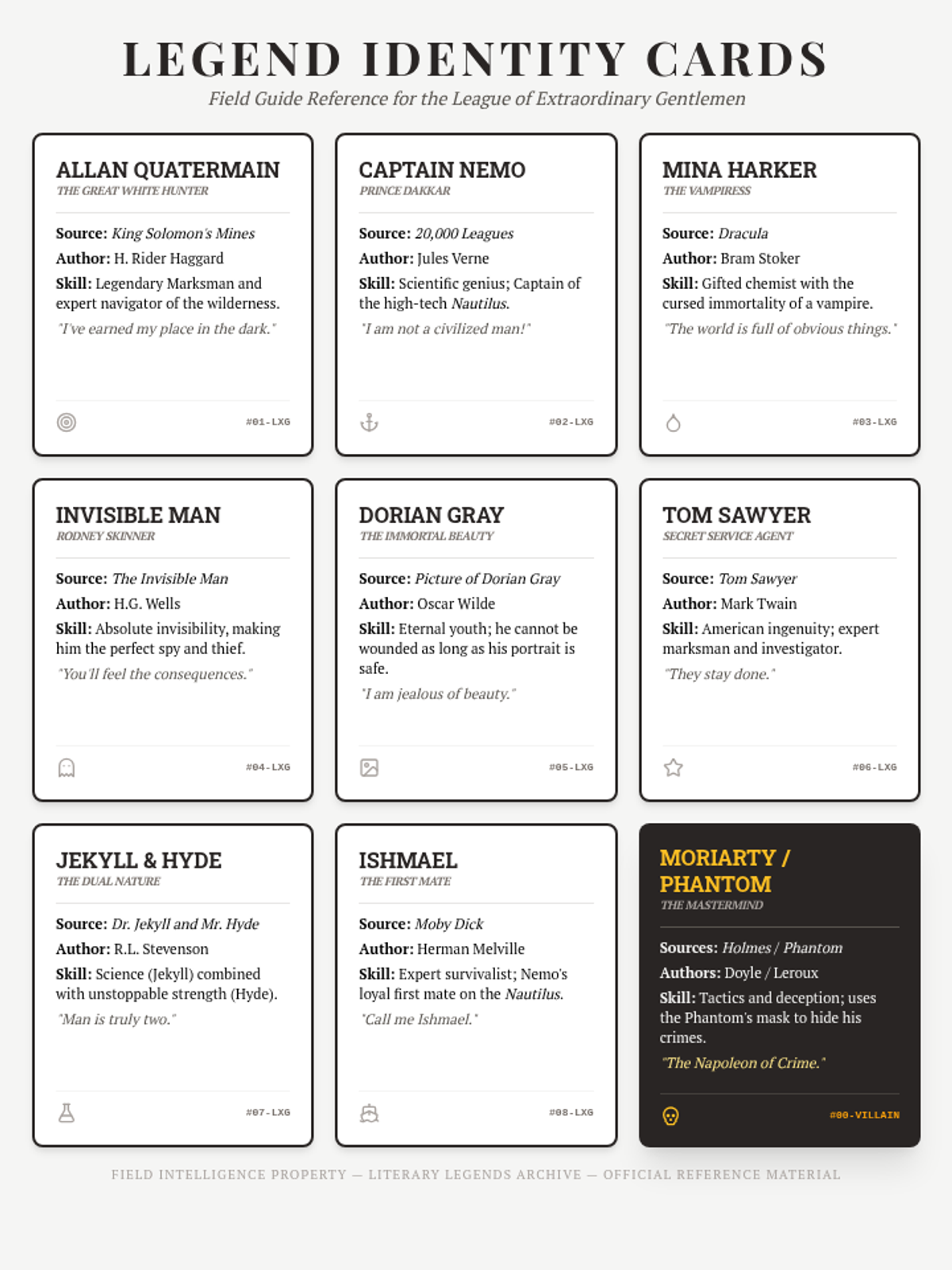
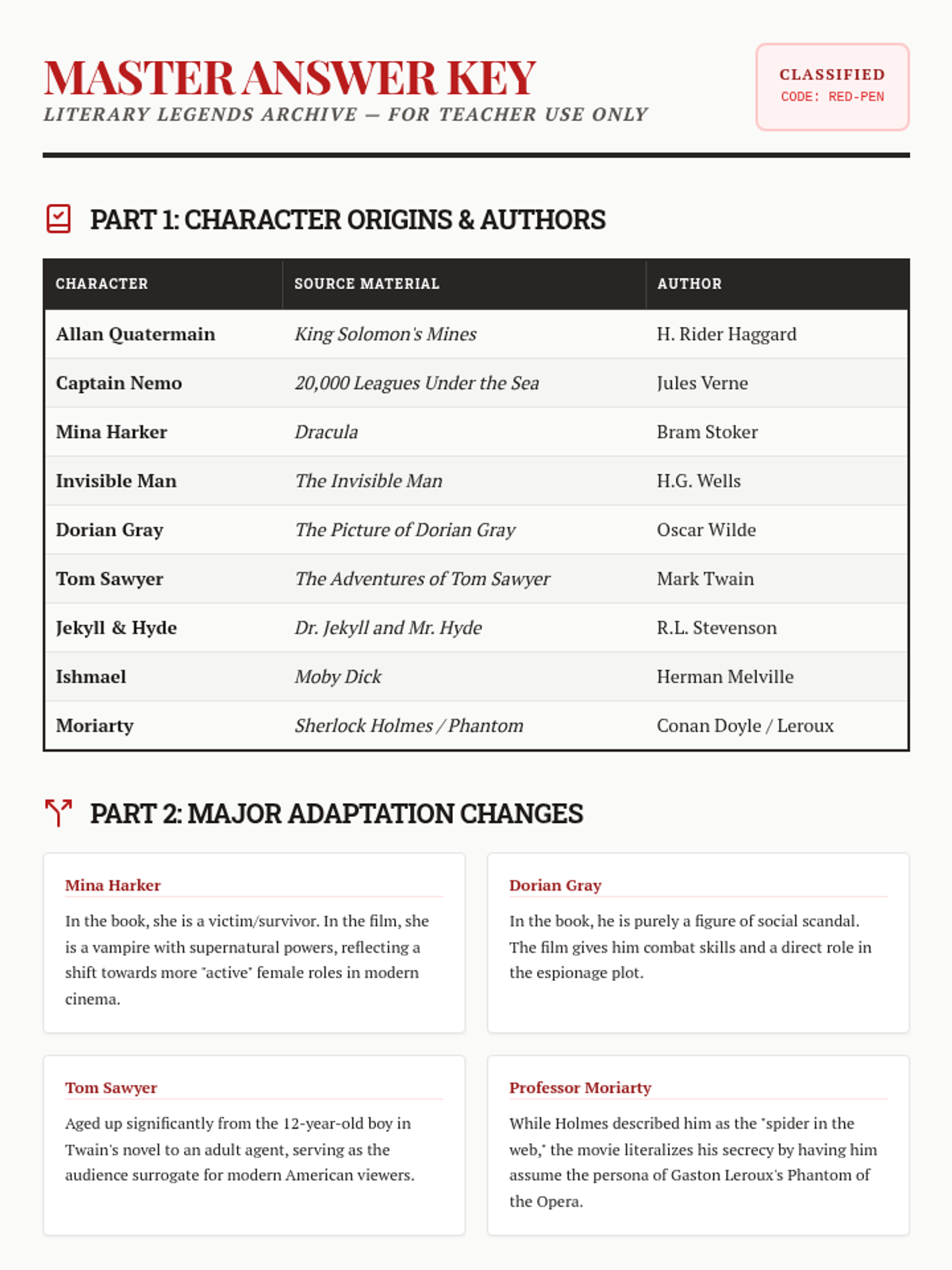
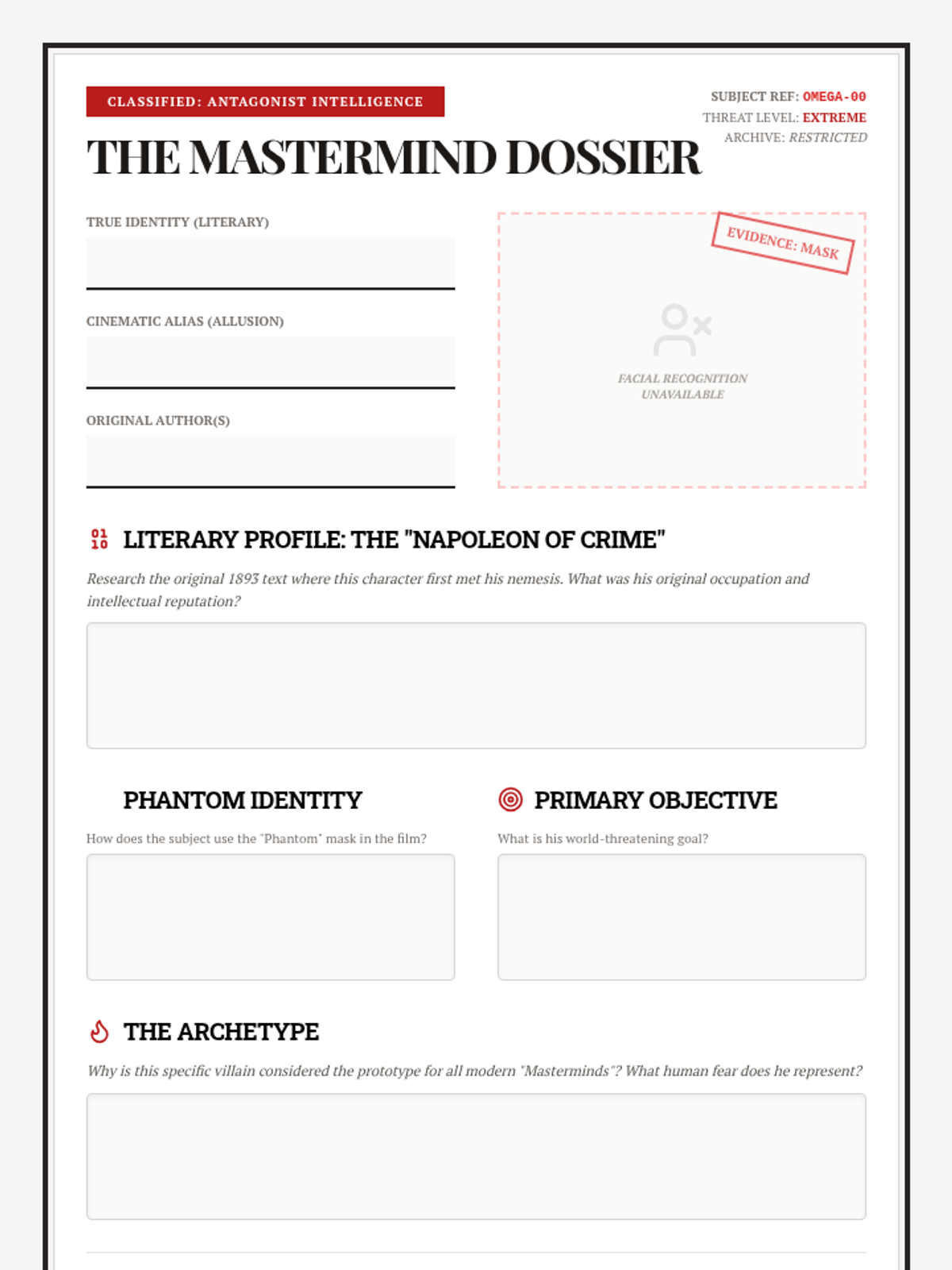
A rigorous exploration of fin-de-siècle literature and post-modern intertextuality. Students analyze the literary origins of Victorian icons in 'The League of Extraordinary Gentlemen' and evaluate the socio-cultural shifts in their cinematic adaptation.
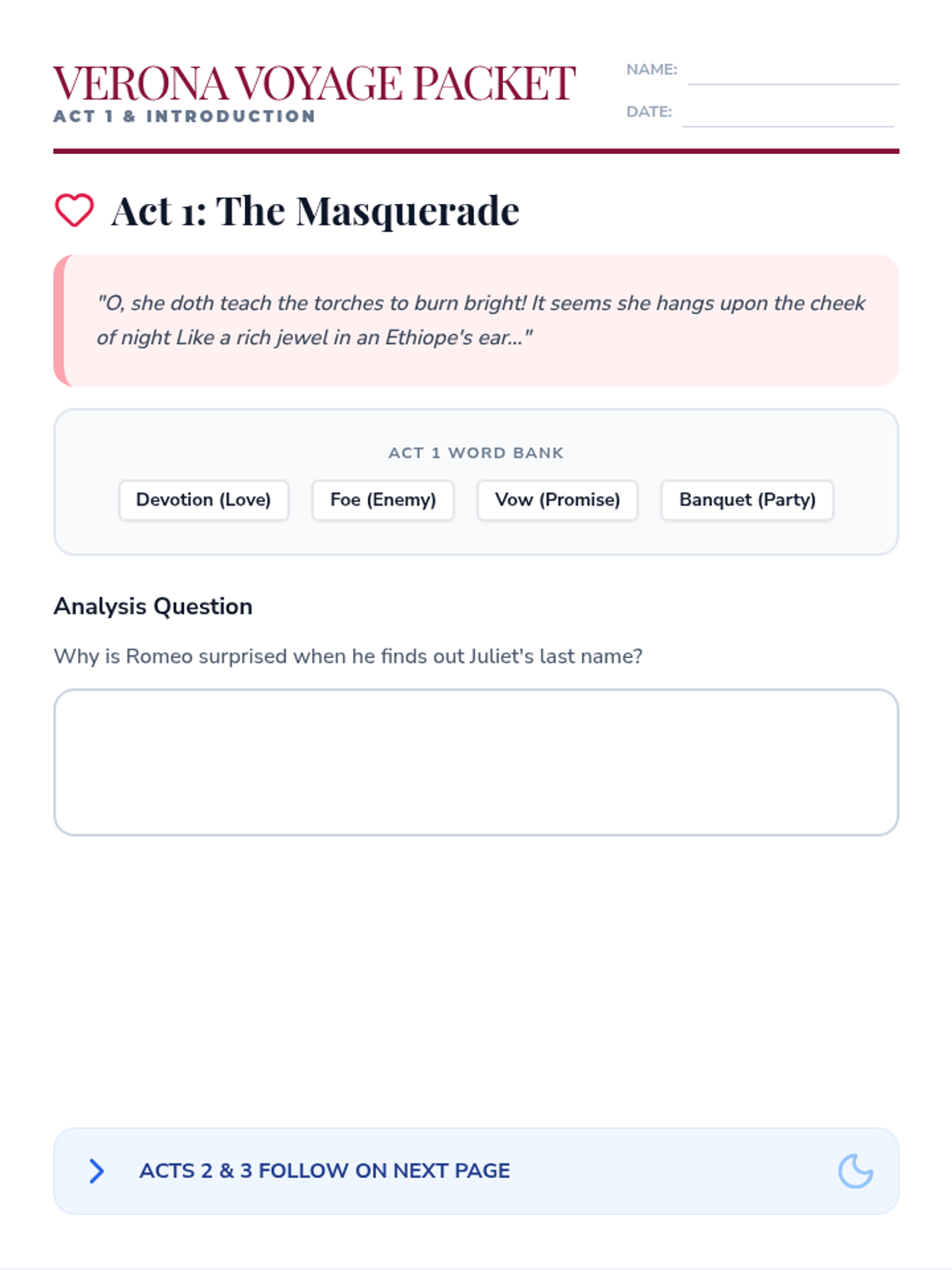
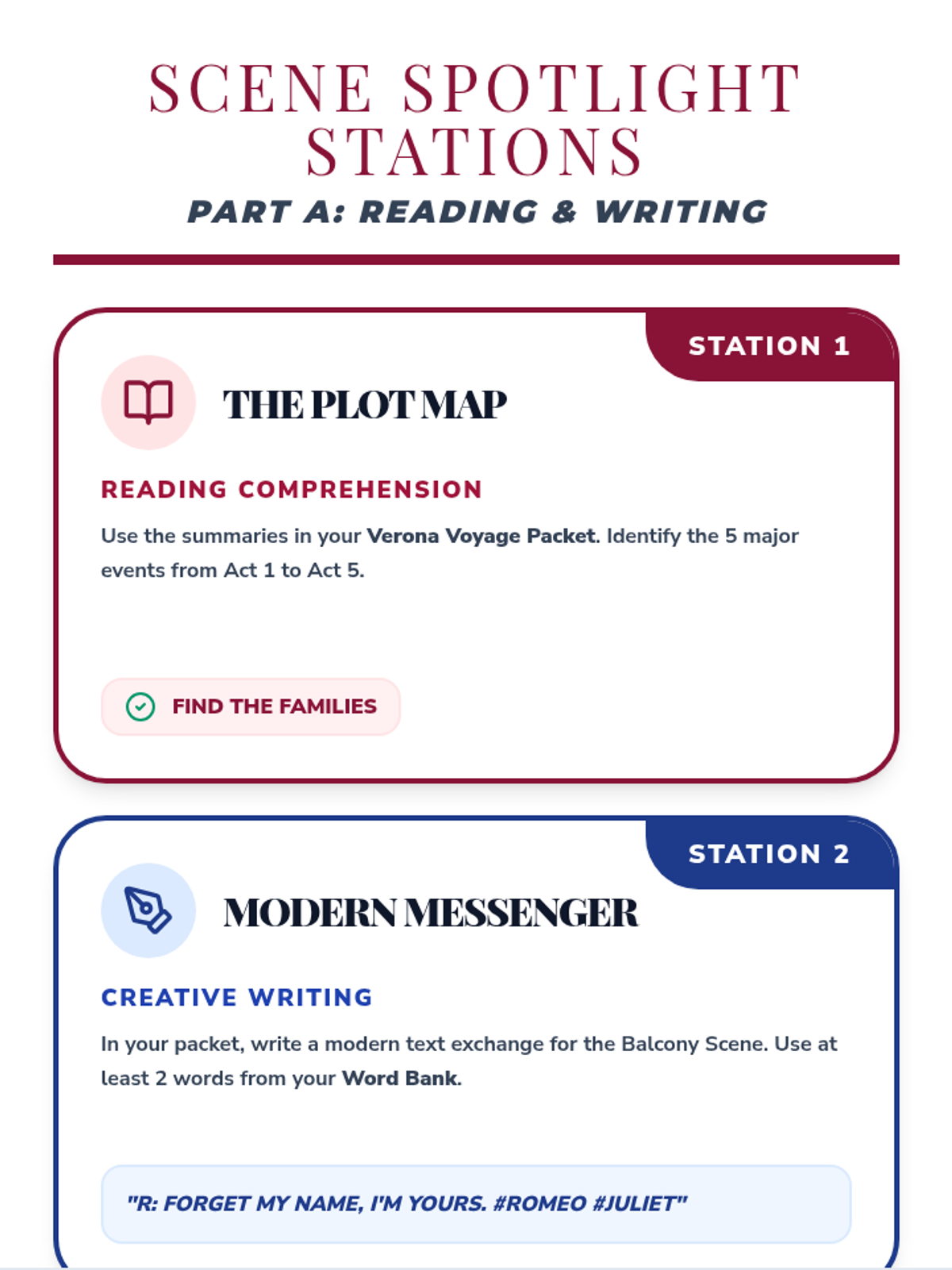
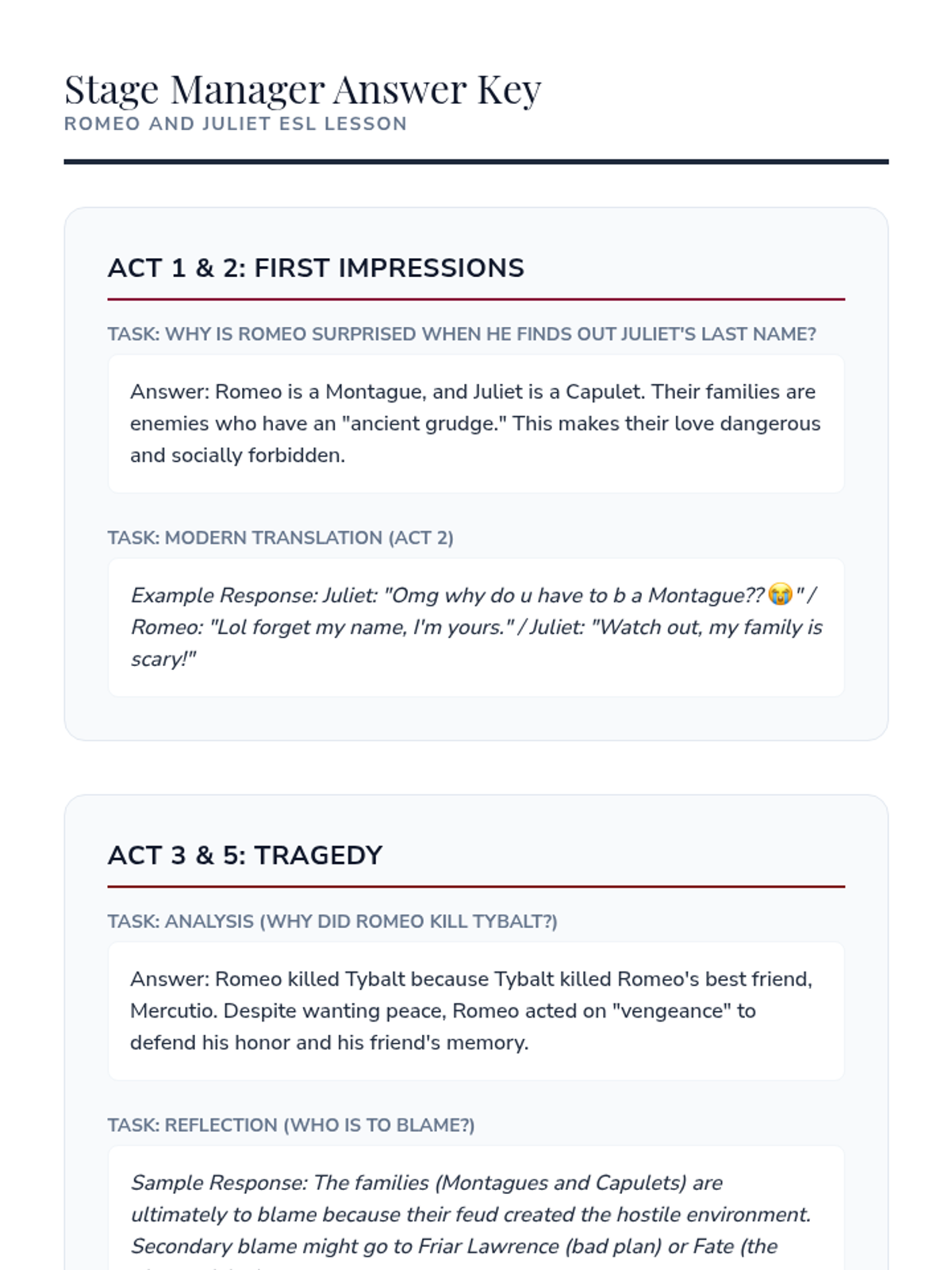
A multi-modal lesson for ESL high schoolers covering key scenes from Romeo and Juliet (Acts 1, 2, 3, and 5) through reading, writing, listening, and speaking activities.
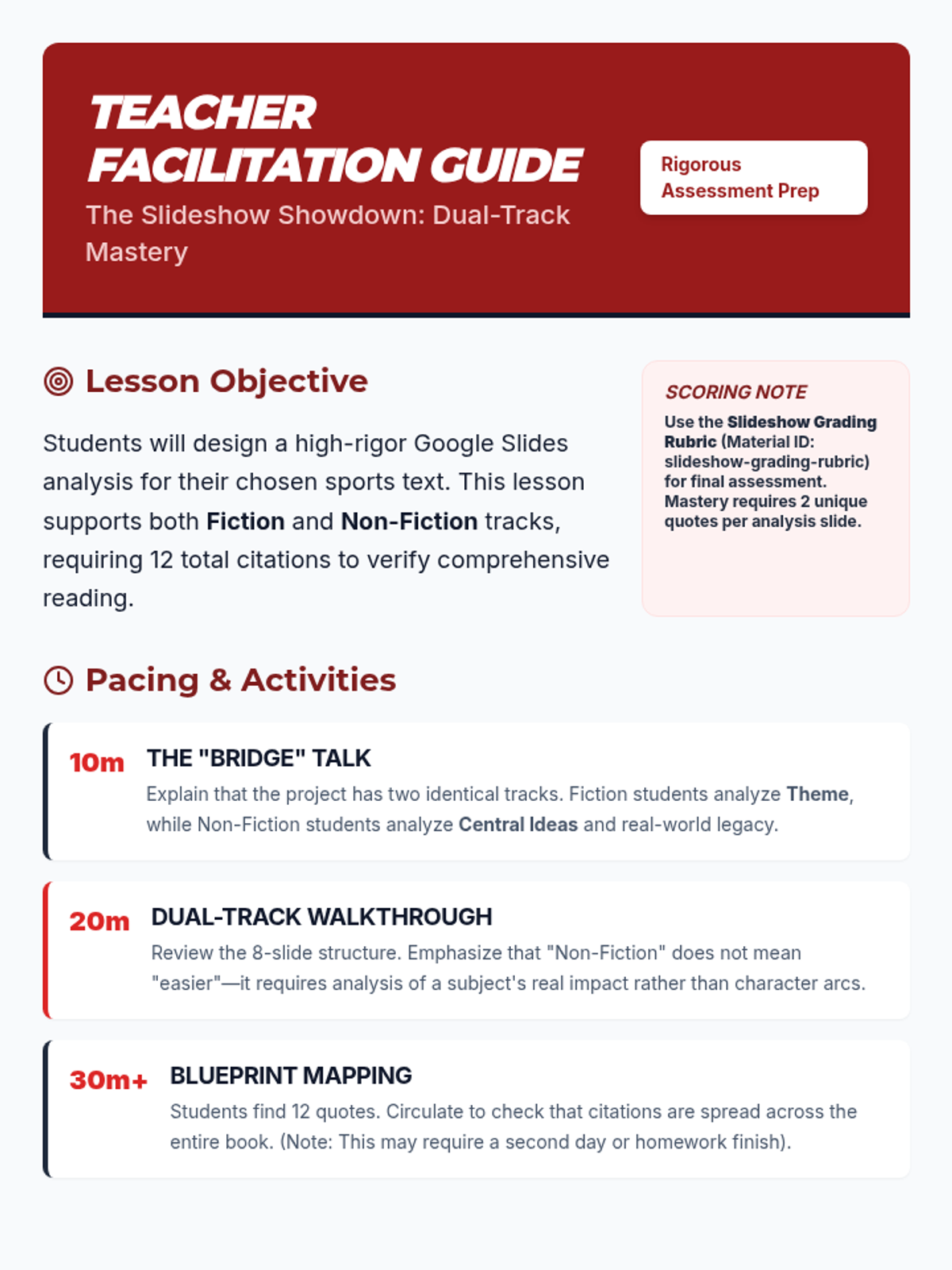
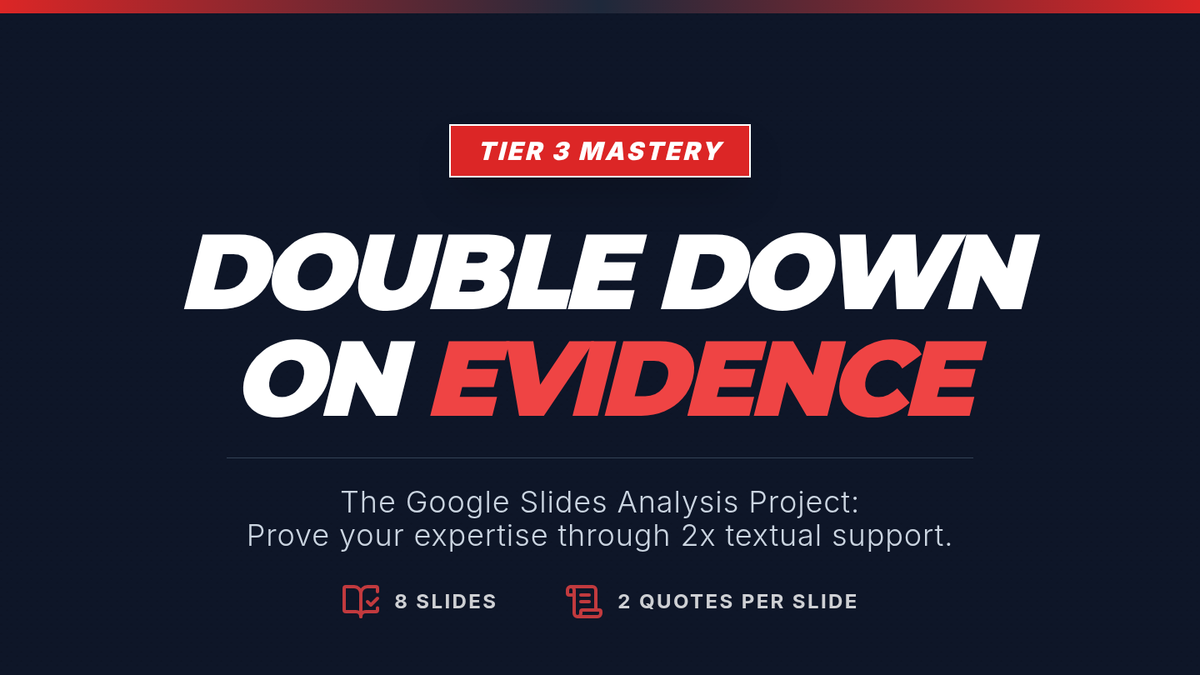
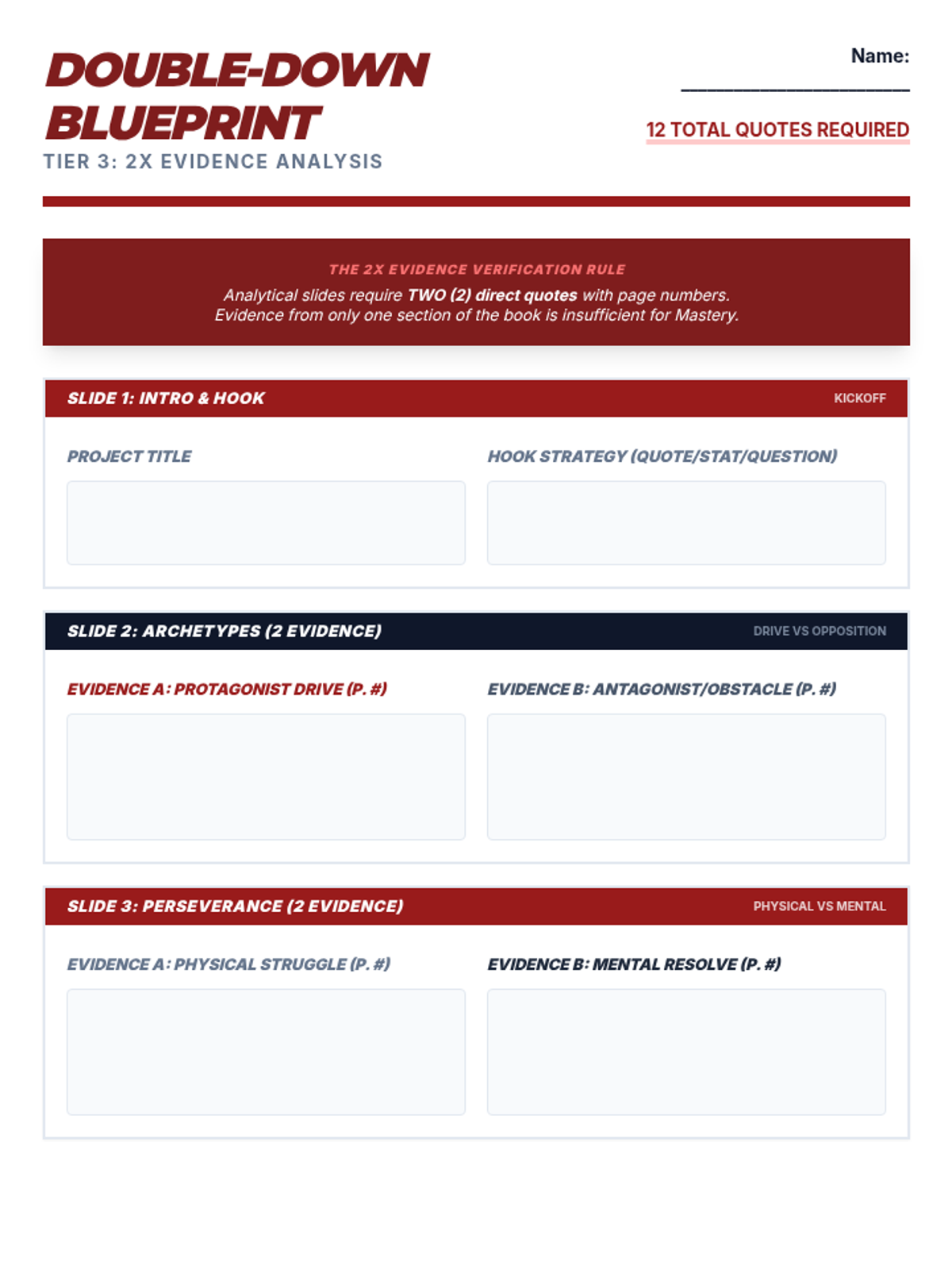
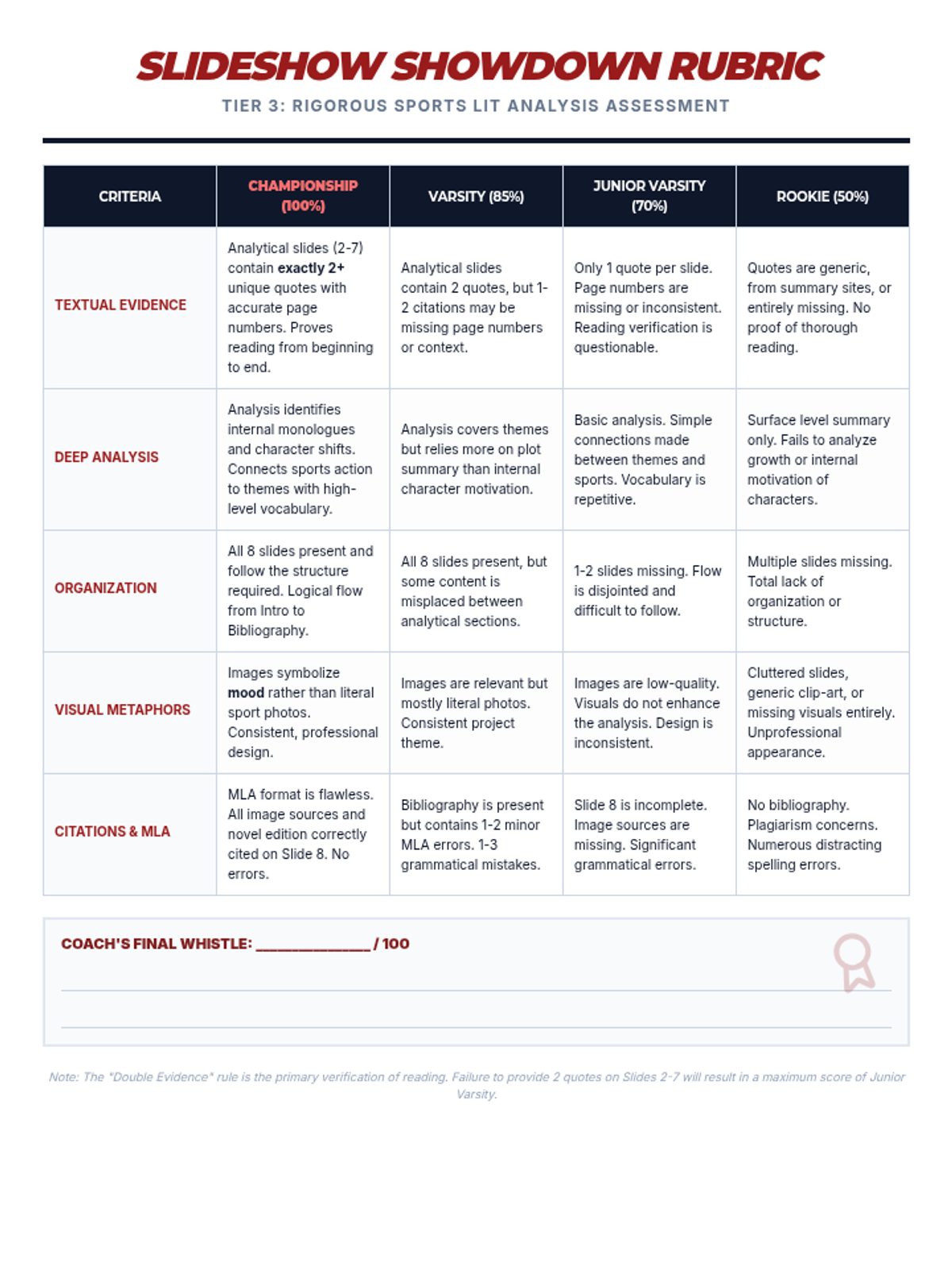
A rigorous introductory lesson to help students create a deep-dive Google Slides analysis of their sports fiction novel. This lesson replaces multimedia with high-level literary analysis, requiring specific textual evidence across multiple themed slides to verify comprehensive reading.
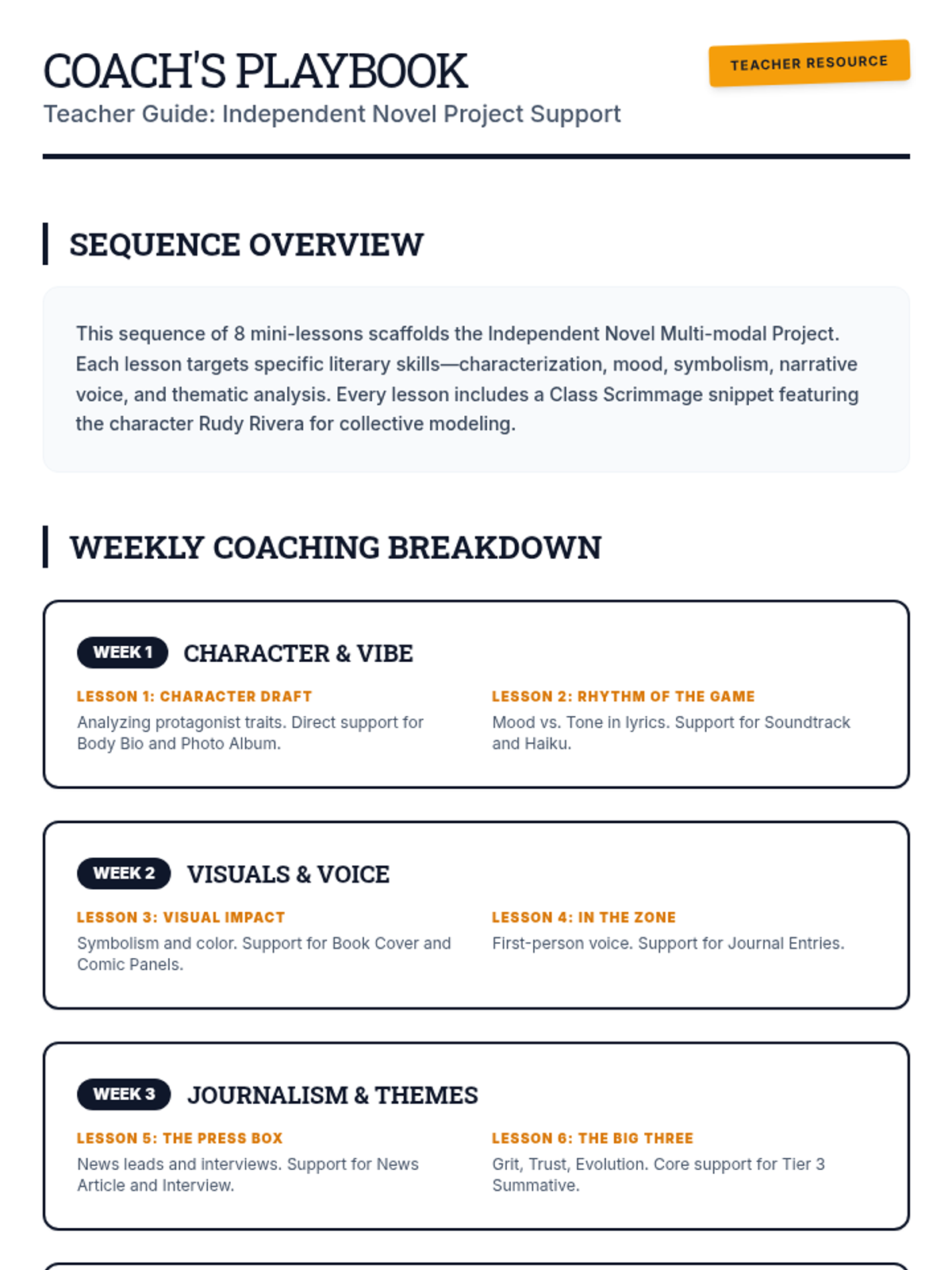
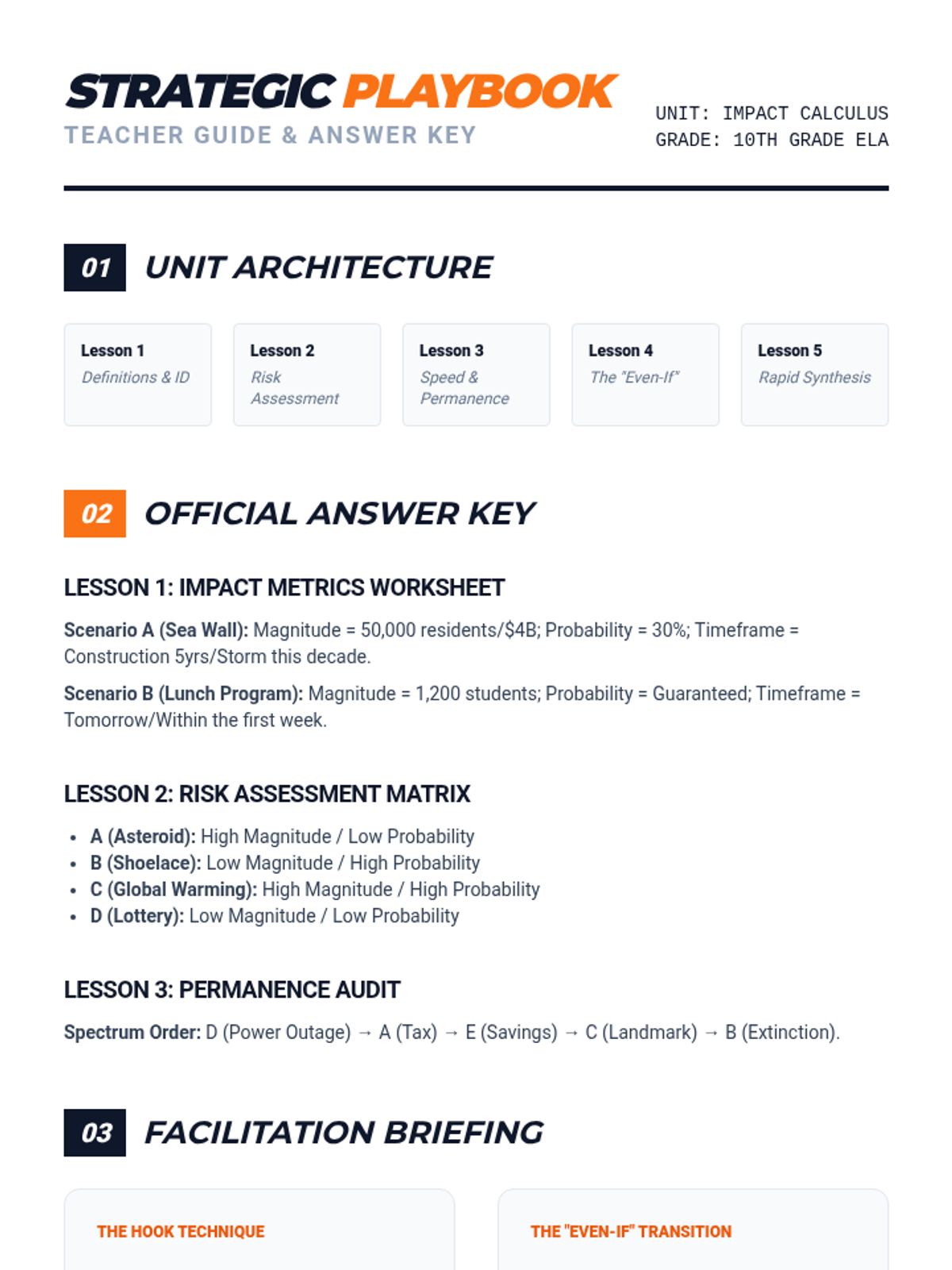
A summary of the sequence's structure and teacher support materials.
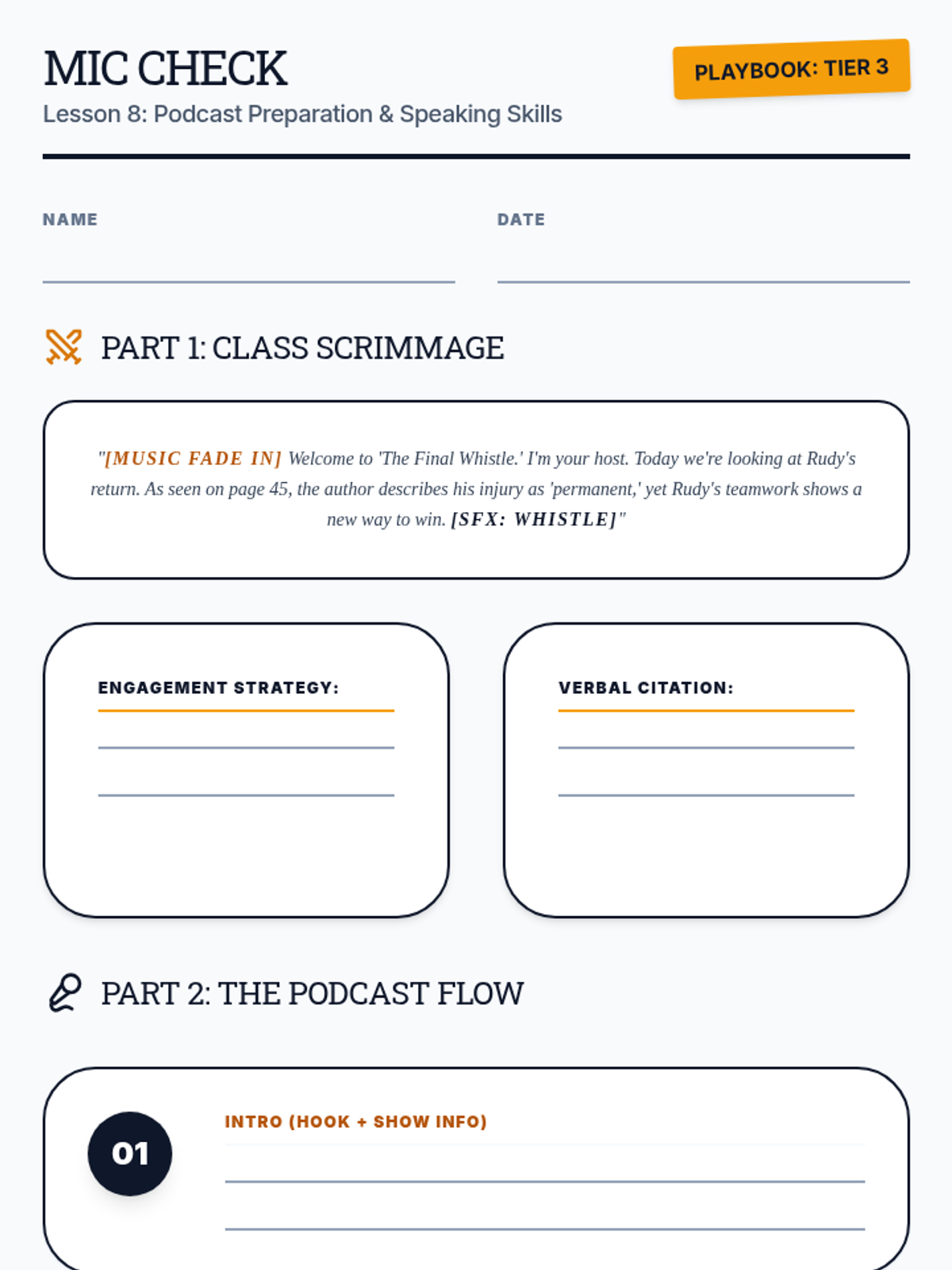
Preparation for the 'Book Talk' podcast assignment, focusing on speaking skills, verbal citations, and audio engagement.
Guided practice on selecting and integrating textual evidence to support literary analysis in essays and responses.
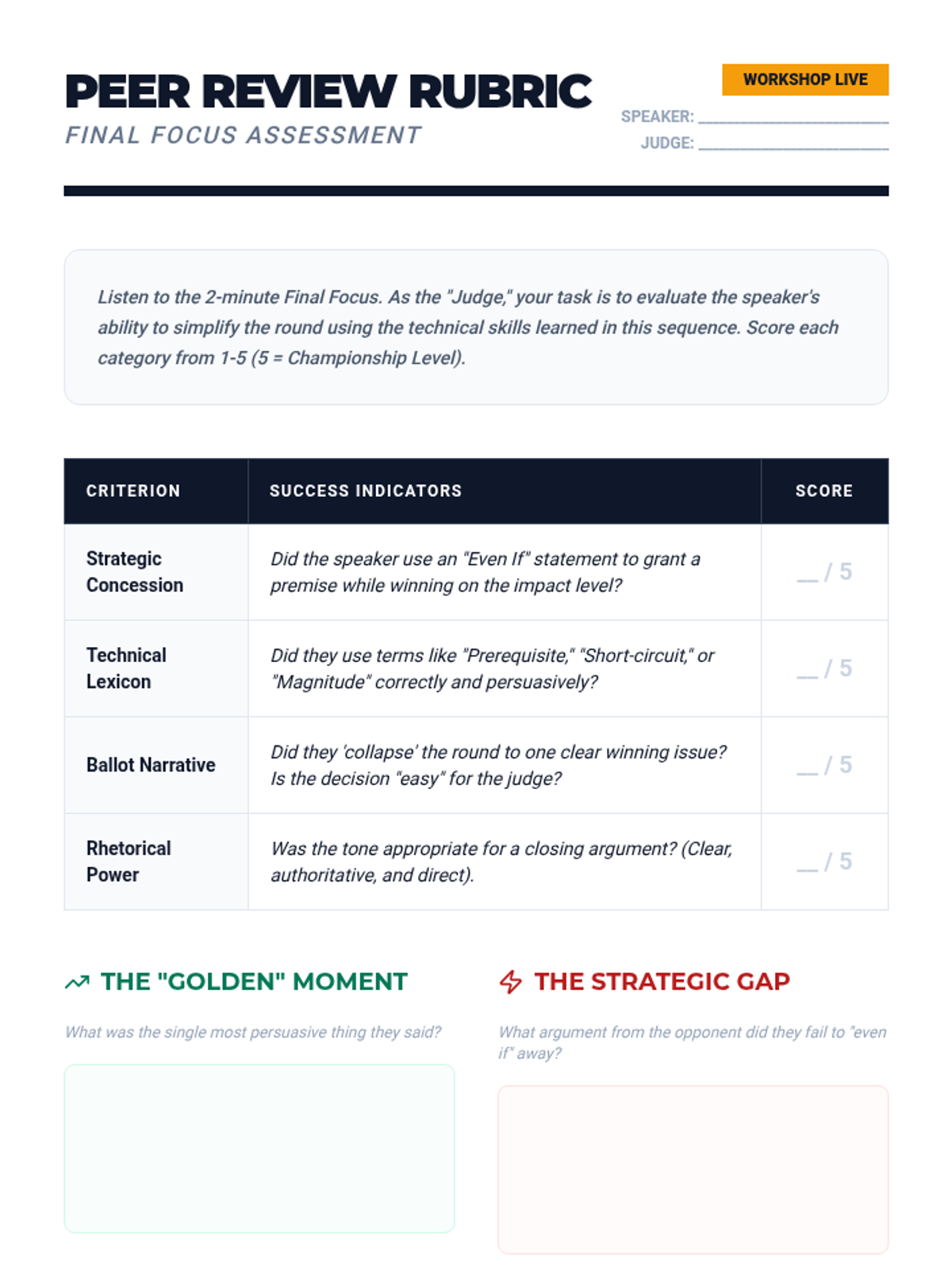
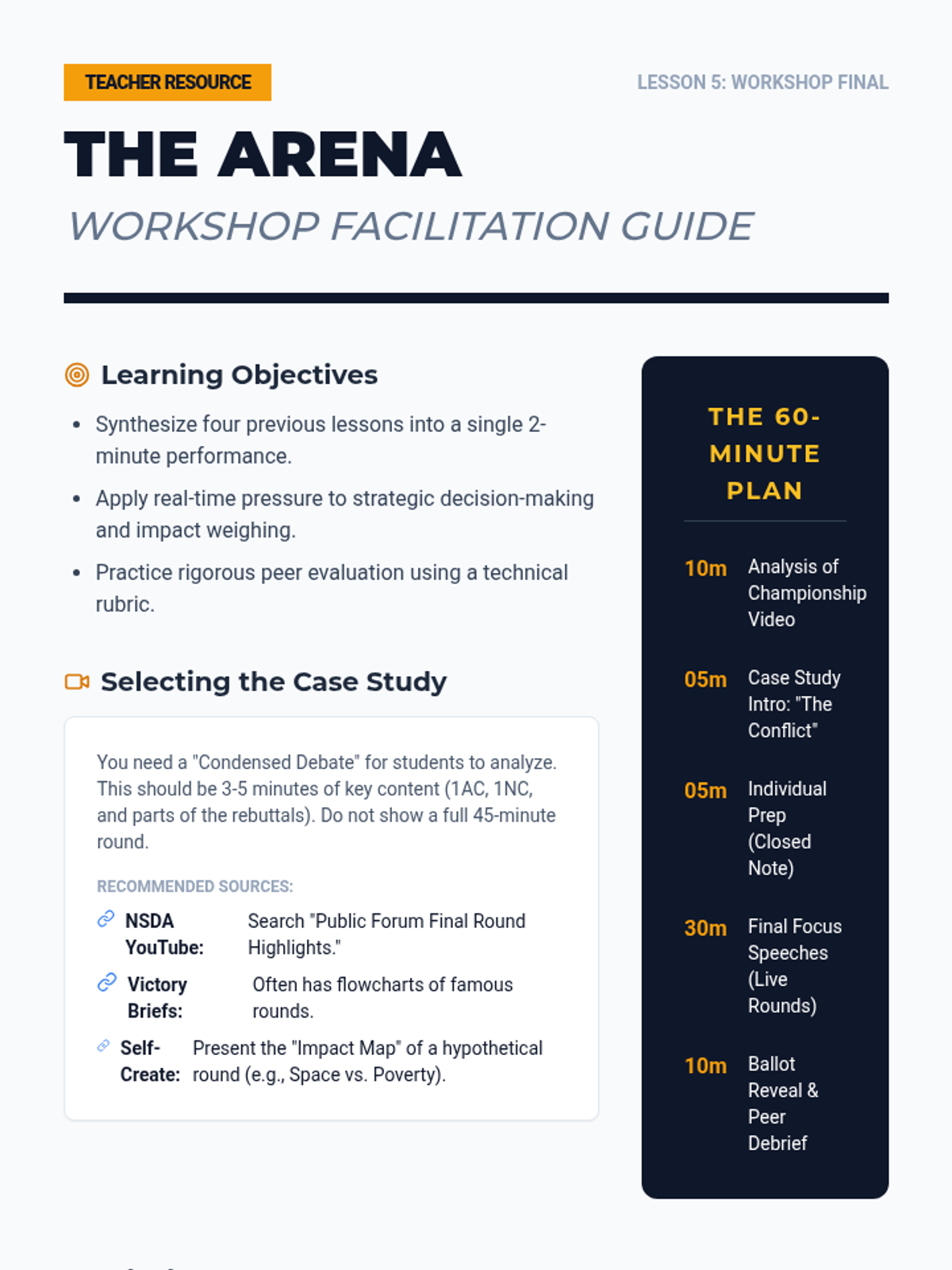
A culminating workshop where students apply their skills in simulated final focus speeches with peer and teacher feedback.
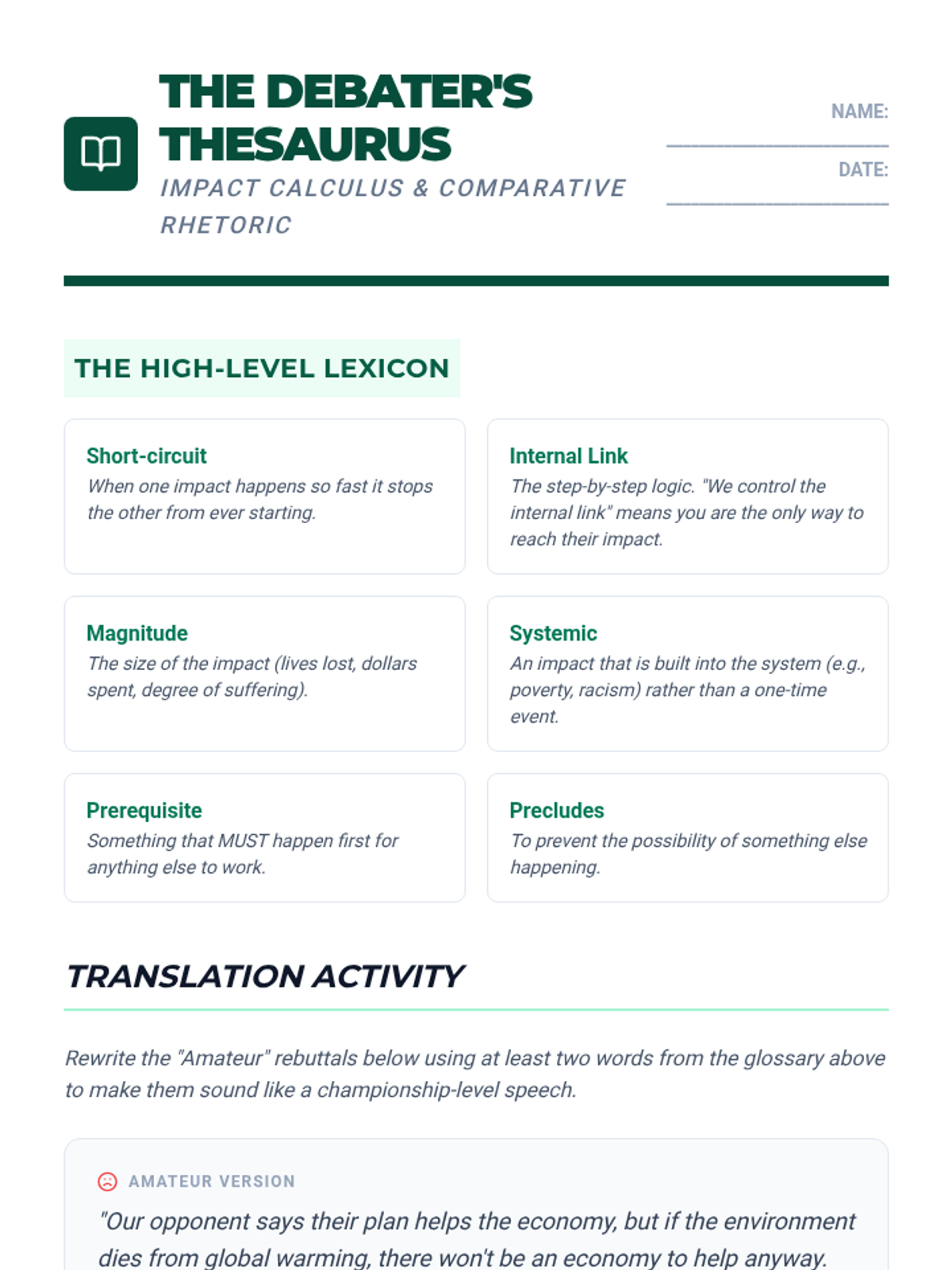
A focus on the technical vocabulary of weighing, teaching students to use precise terminology like 'prerequisite' and 'short-circuit' to win impact comparisons.
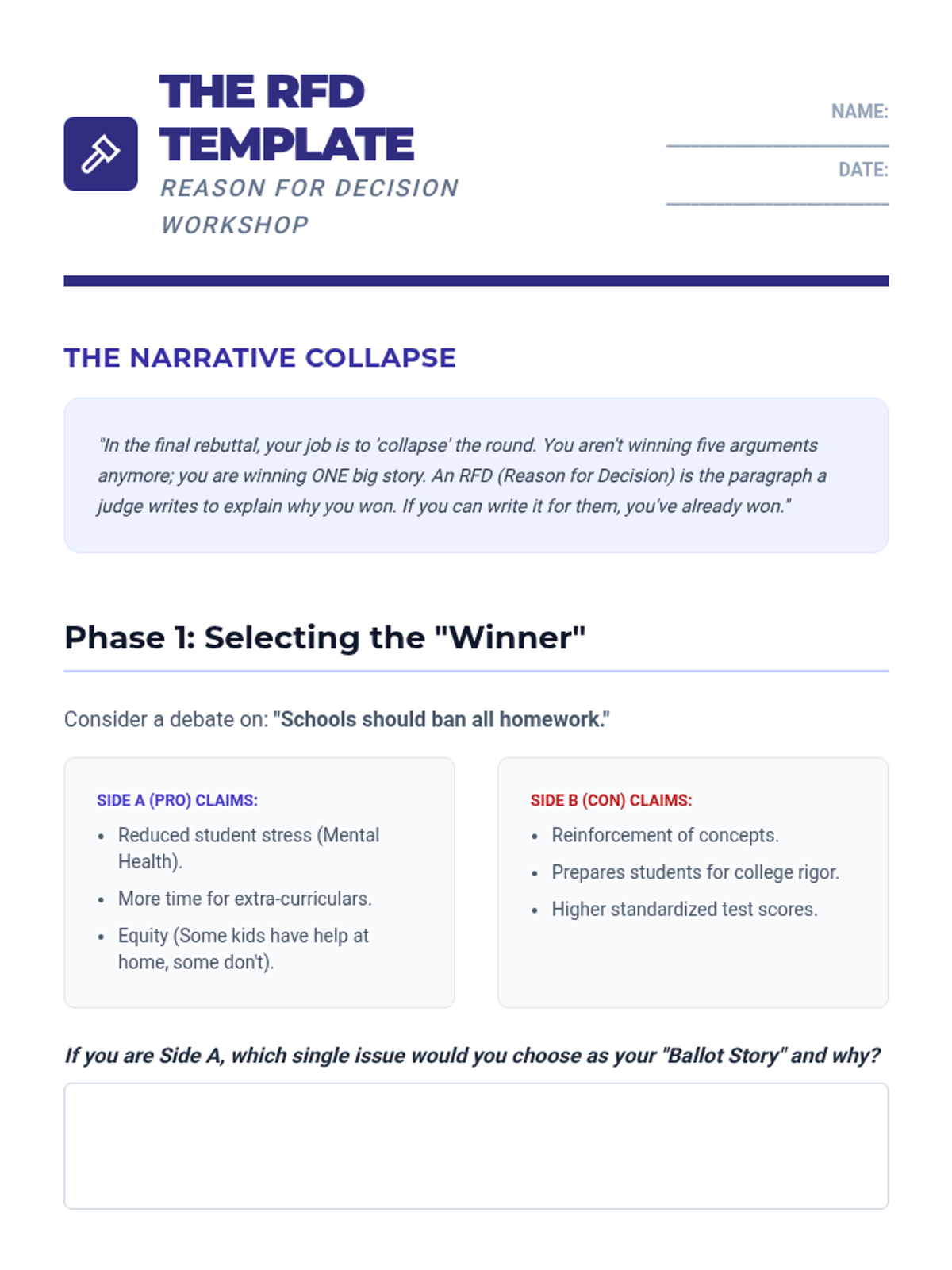
Students adopt the perspective of an adjudicator to learn how to package their winning arguments into a coherent, persuasive narrative.
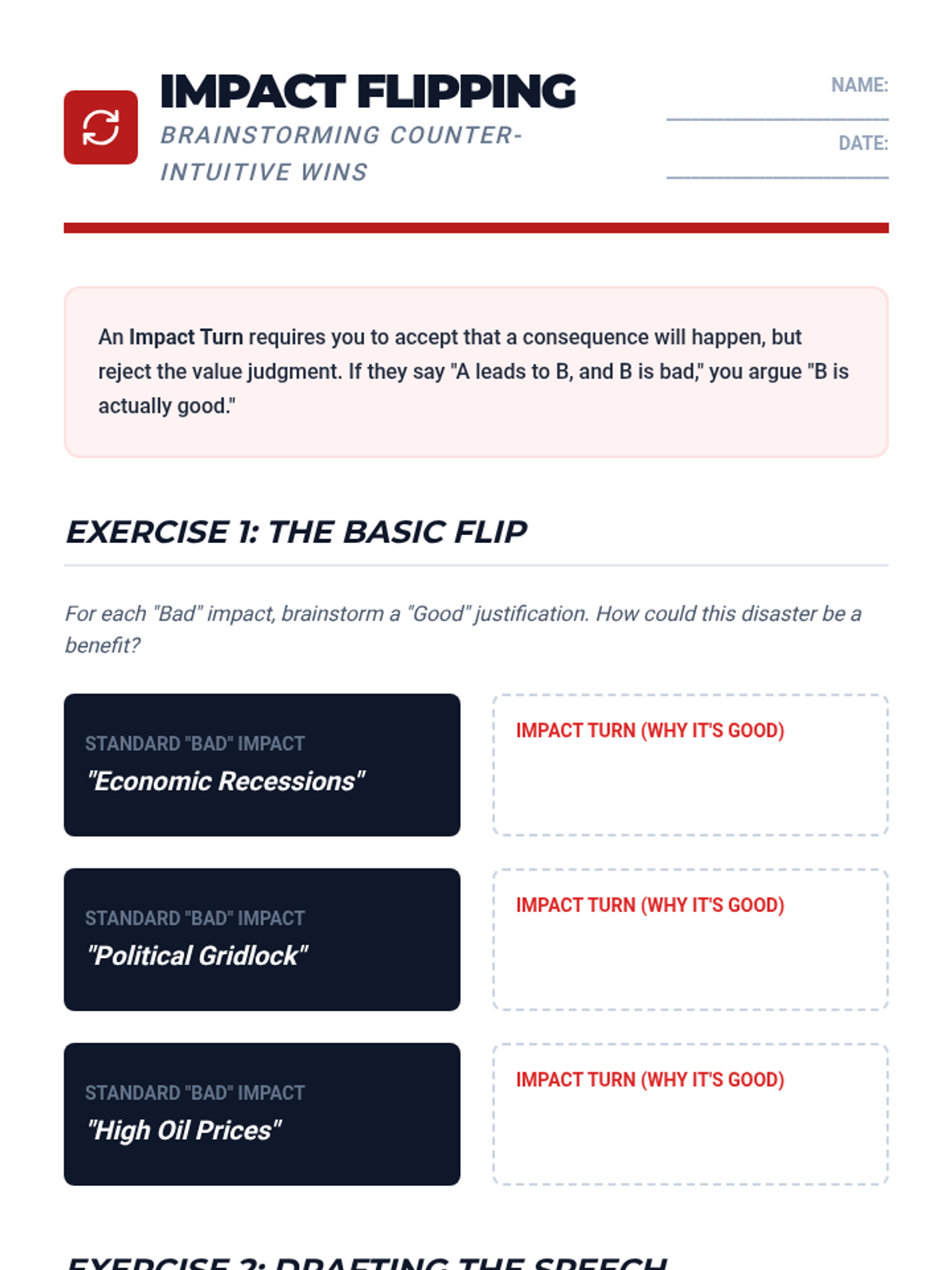
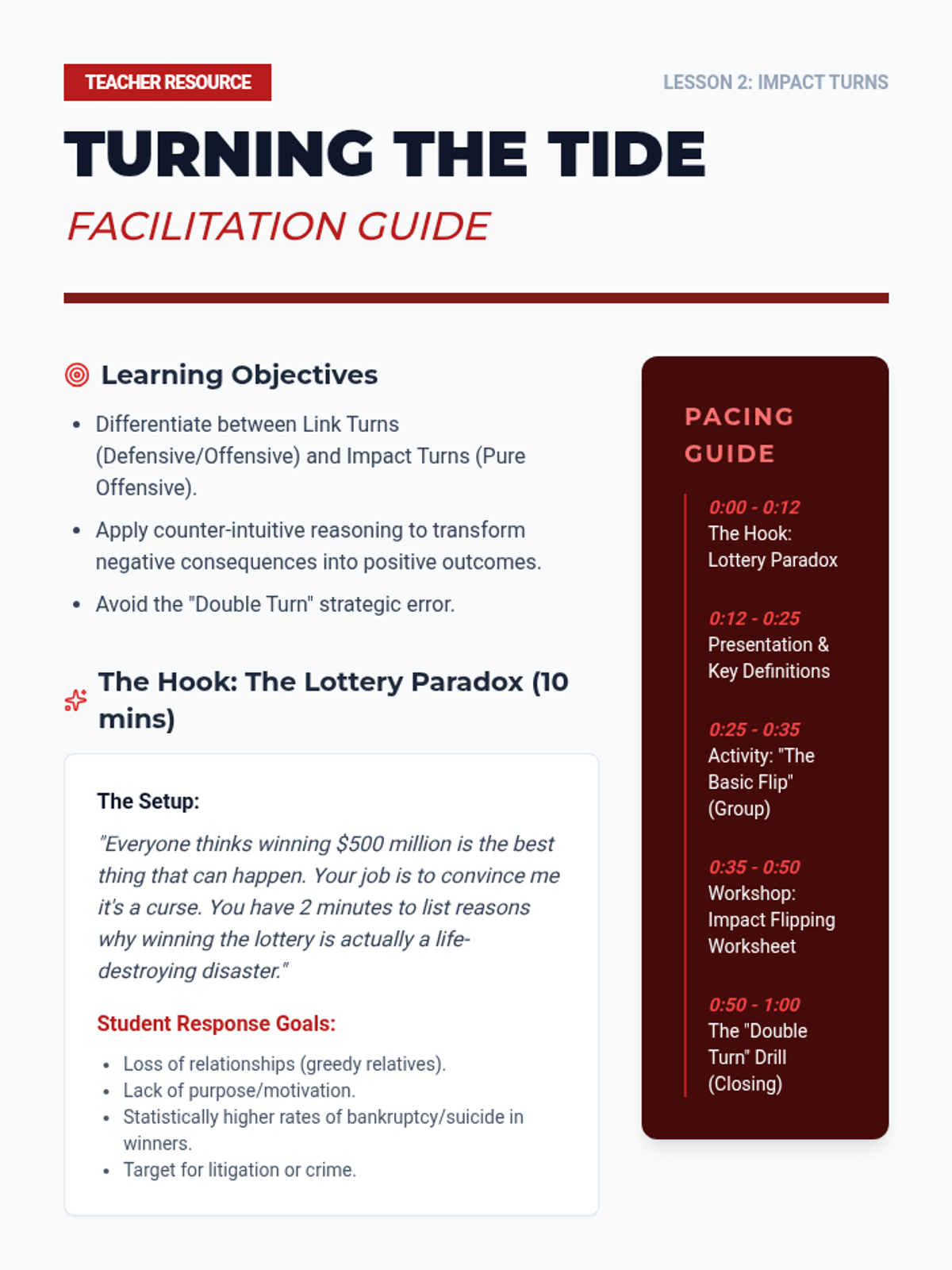
Students explore the high-risk strategy of turning an opponent's impact into a benefit for their own side or a disadvantage for the opponent.
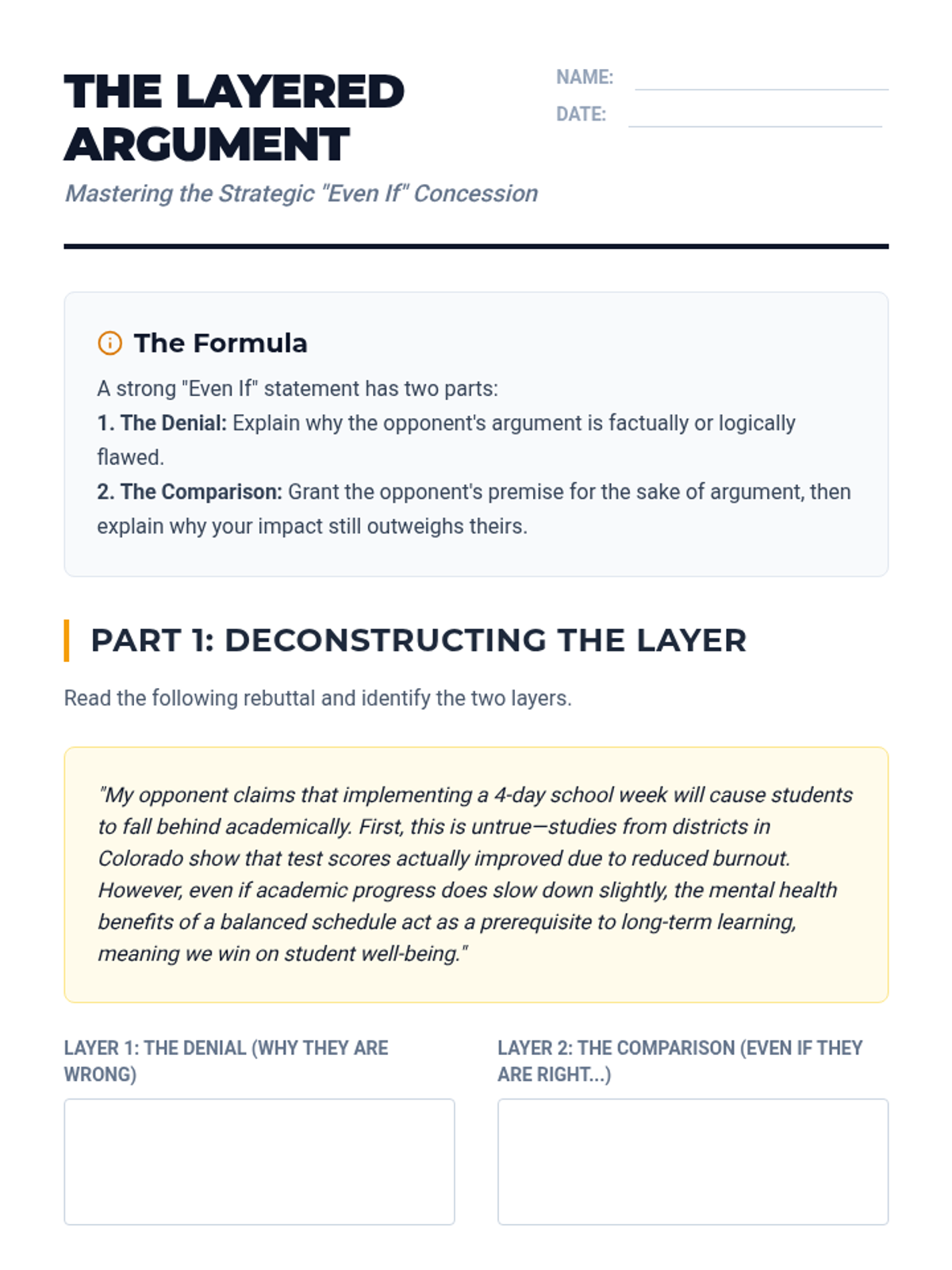
Students learn to use layered argumentation to hedge their bets, arguing why they win both on the primary clash and even if their opponent's premise is granted.
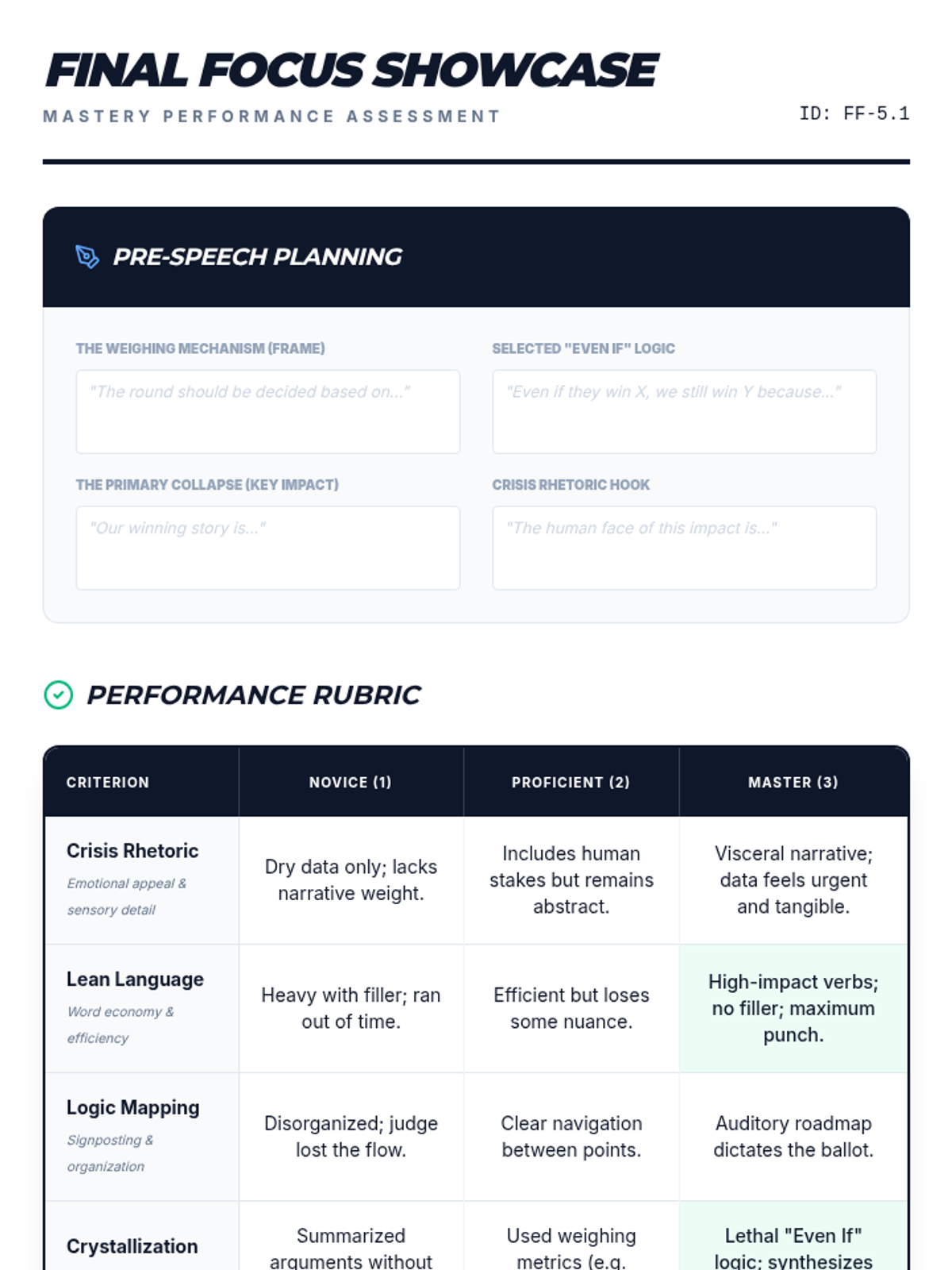
Students deliver a polished 'Final Focus' speech, synthesizing impacts and dictating the weighing mechanism for a hypothetical debate round. They focus on rhetoric, word economy, and auditory clarity.
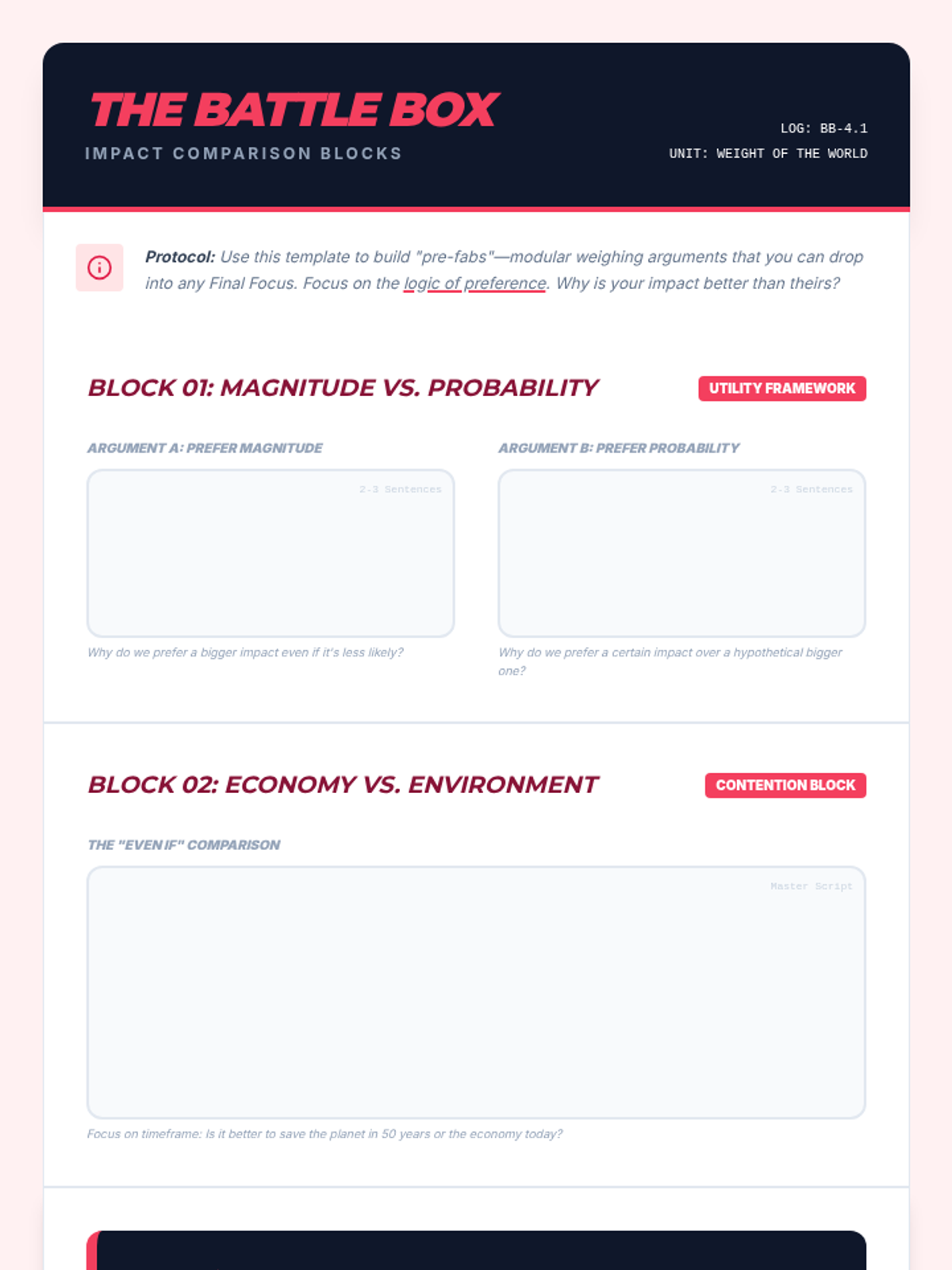
Students pre-write 'comparison blocks' for common debate impacts (e.g., Economy vs. Environment, Rights vs. Security). These modular speech components are refined for maximum persuasion and memorized for quick retrieval.
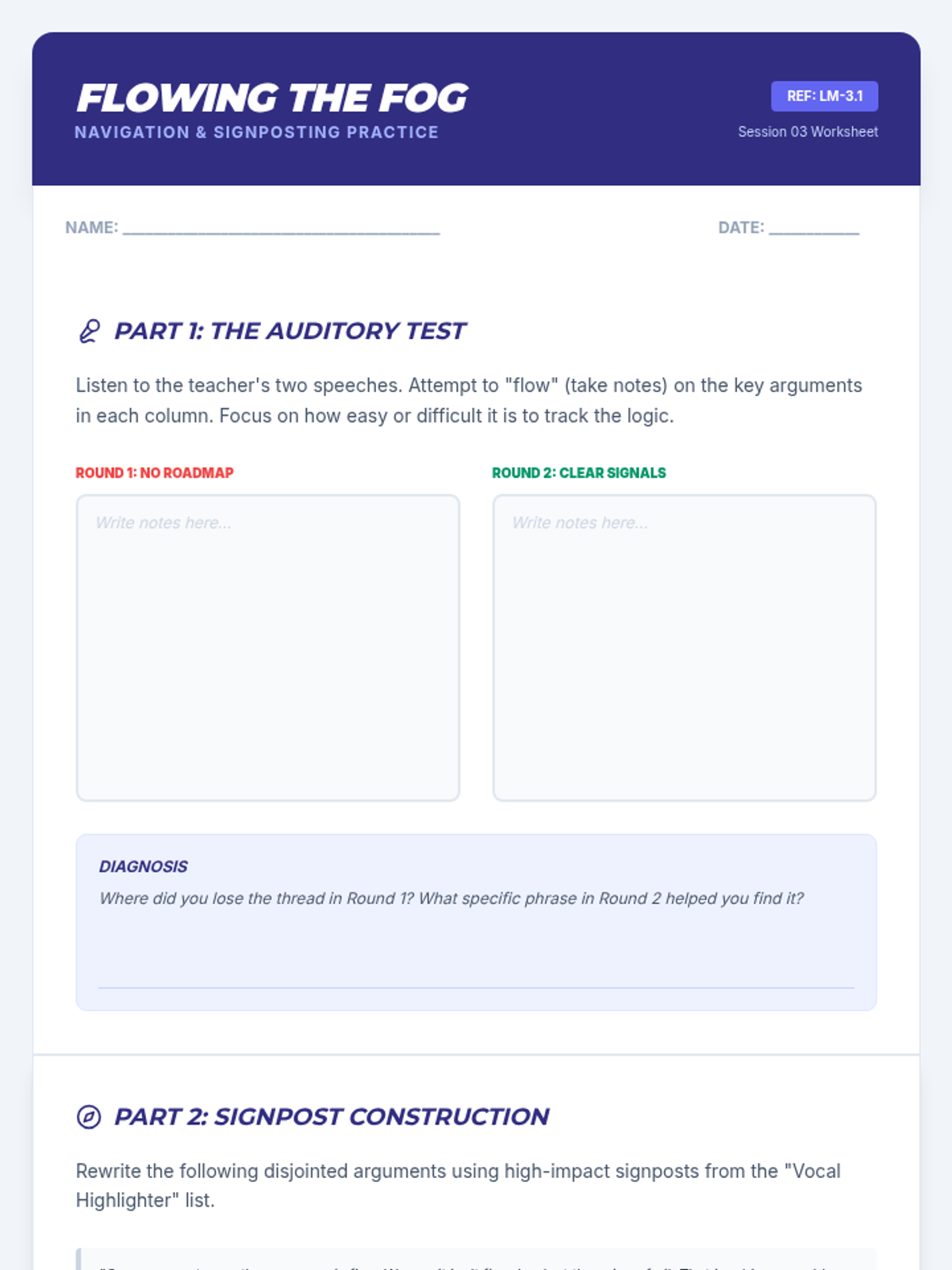
Students learn to use 'signposts' (verbal markers) to help the judge track the weighing process. They practice transitions like 'The first place to vote is...' and 'Prefer our probability analysis because...' to create a clean auditory roadmap.
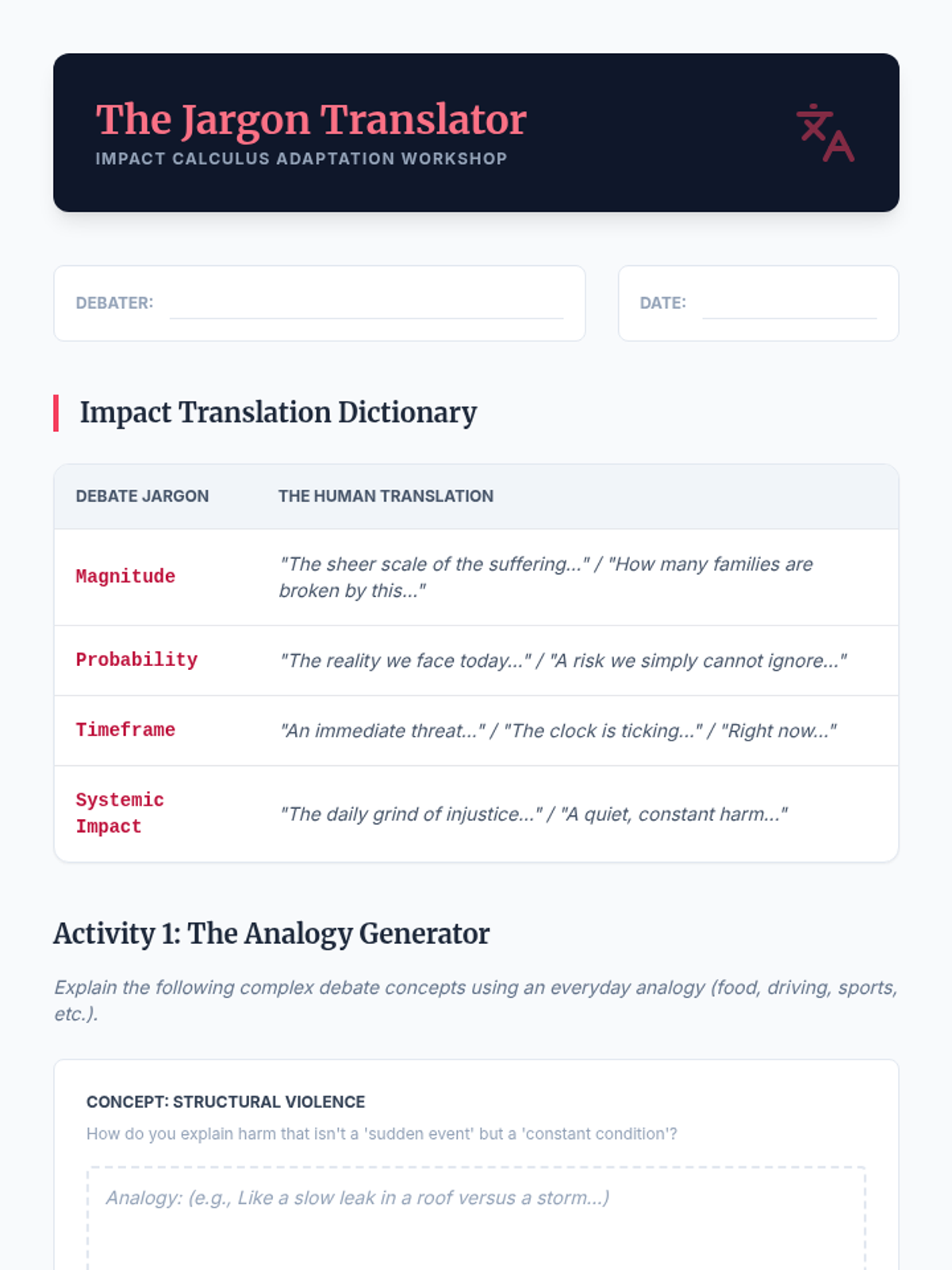
Focuses on adapting complex impact calculus for lay audiences by translating jargon into relatable analogies and common language.
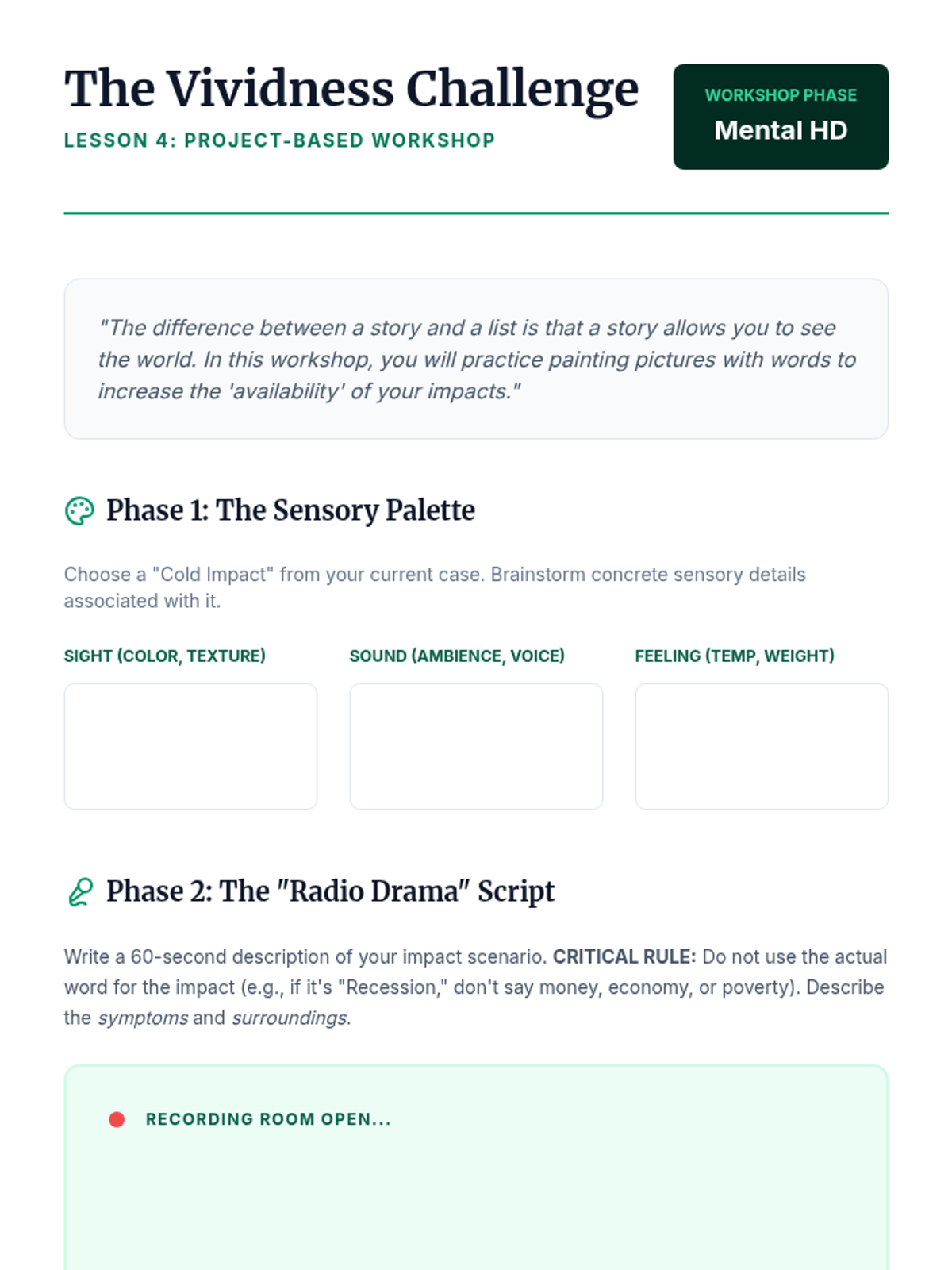
Focuses on the availability heuristic and how descriptive imagery creates mental anchors that make impacts feel more probable.
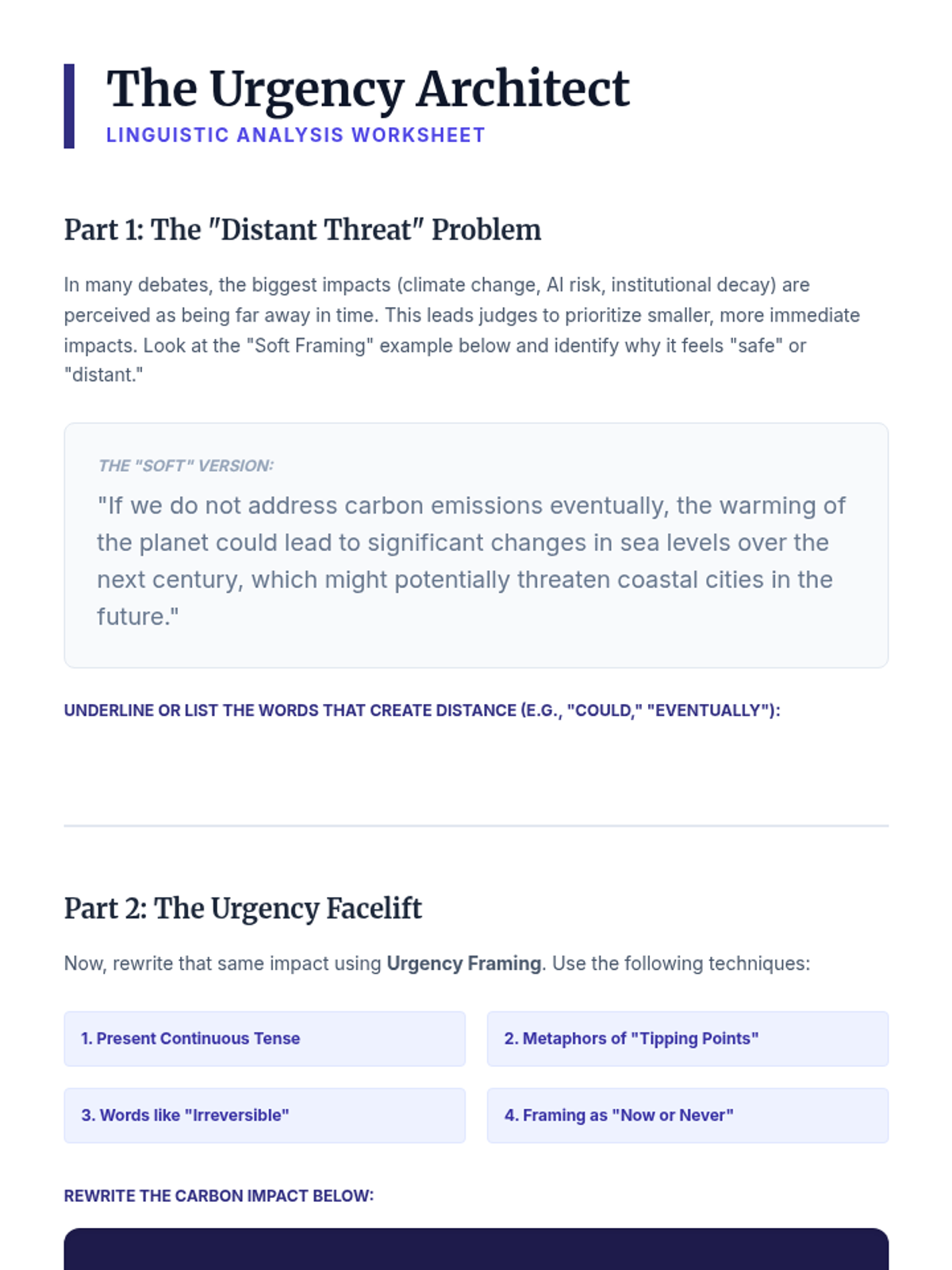
Analyzes linguistic techniques to create a sense of urgency and immediacy, making distant threats feel like 'now or never' scenarios.
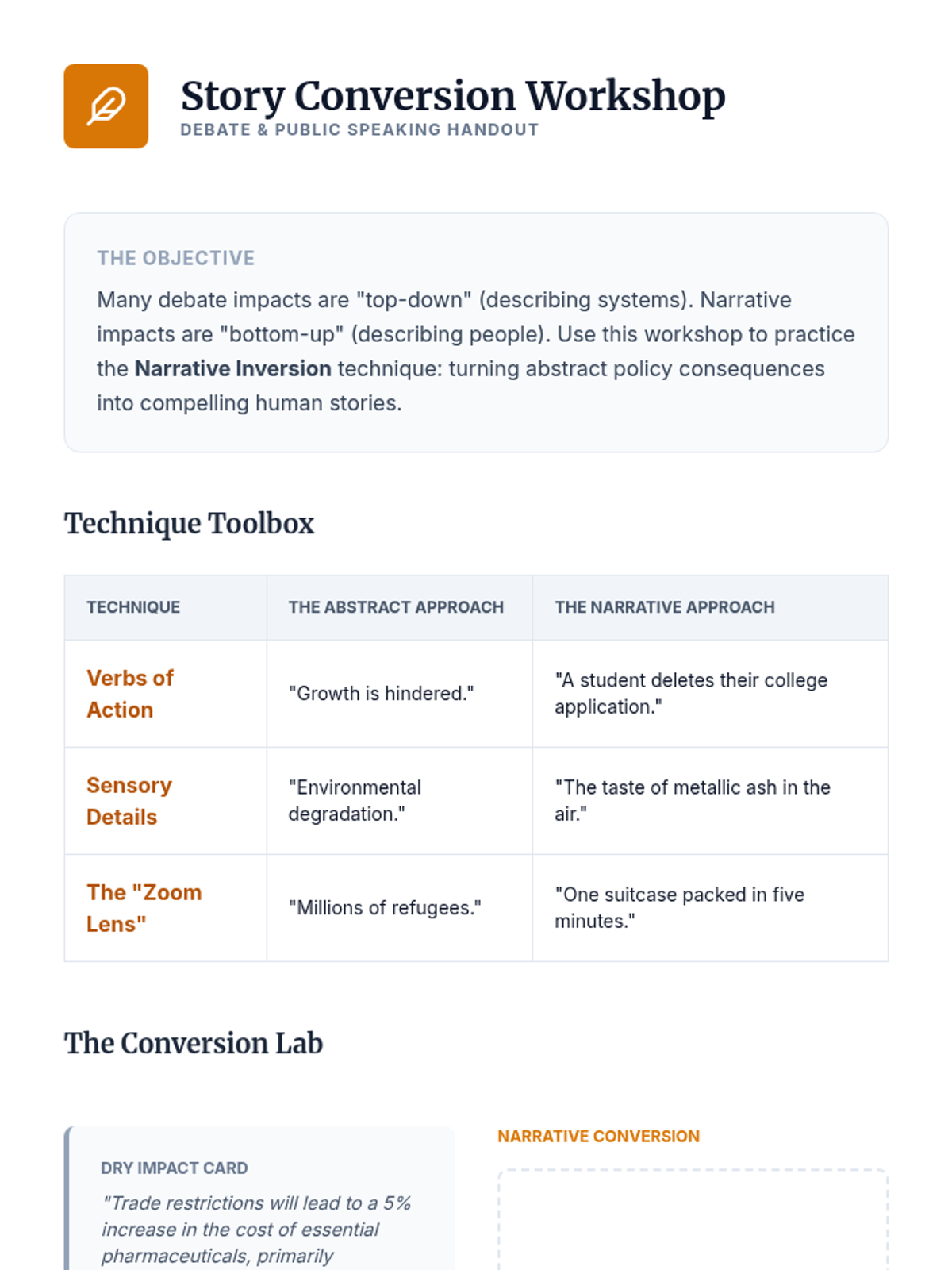
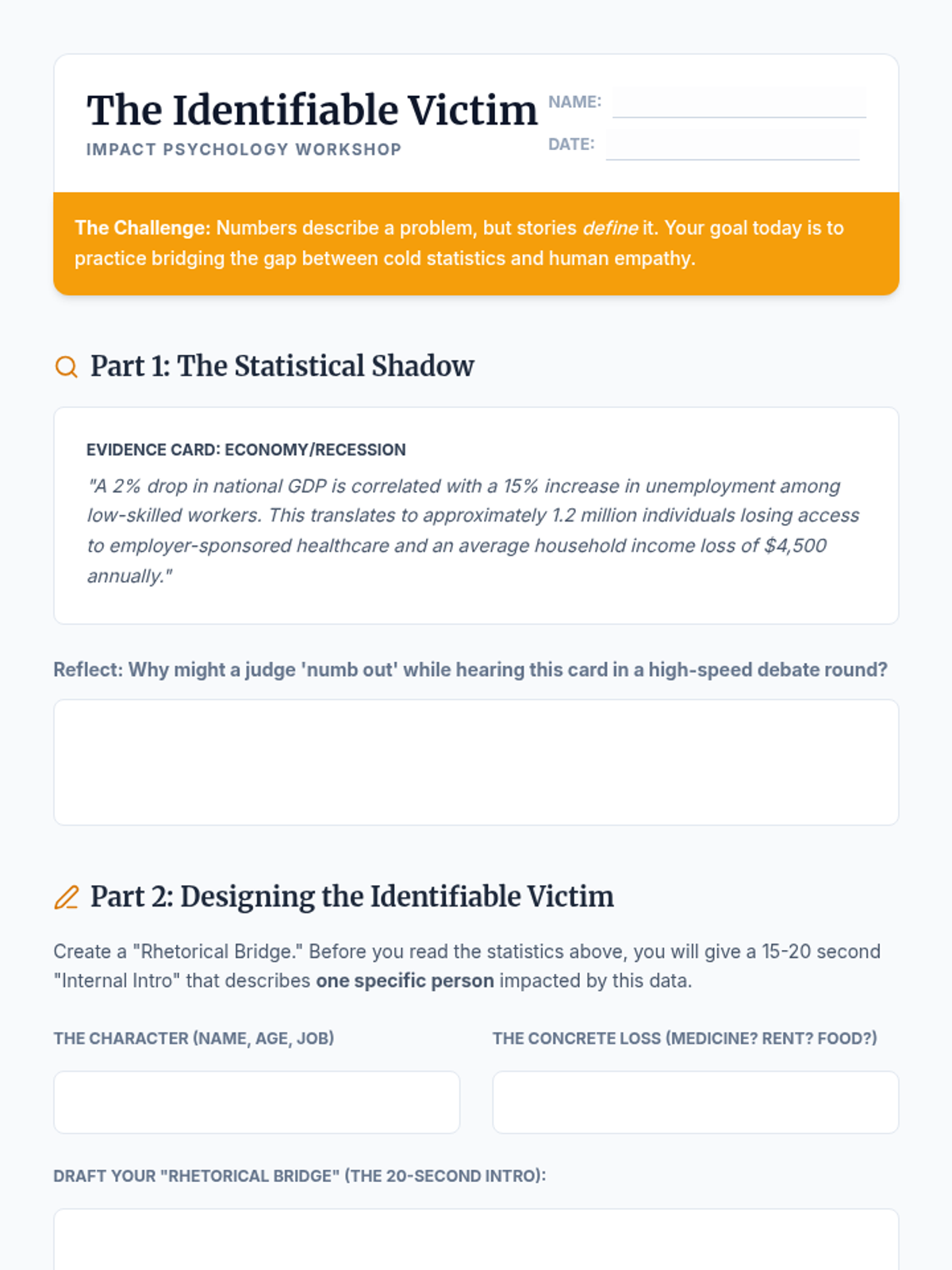
Teaches students to convert statistical impact data into compelling human narratives that resonate emotionally with audiences.
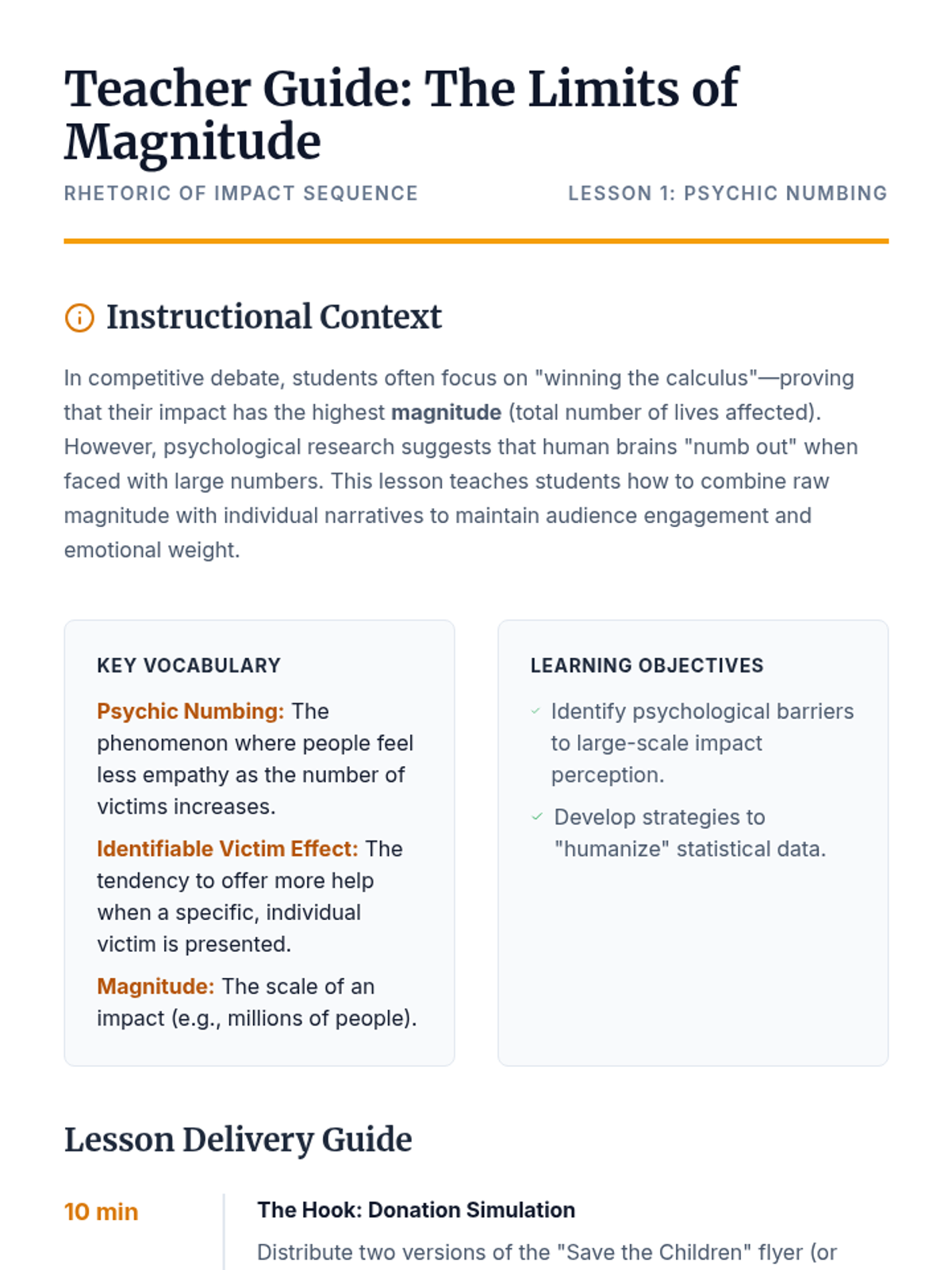
Explores why large-scale statistics often fail to move audiences and how the 'identifiable victim effect' can be used to overcome psychic numbing.
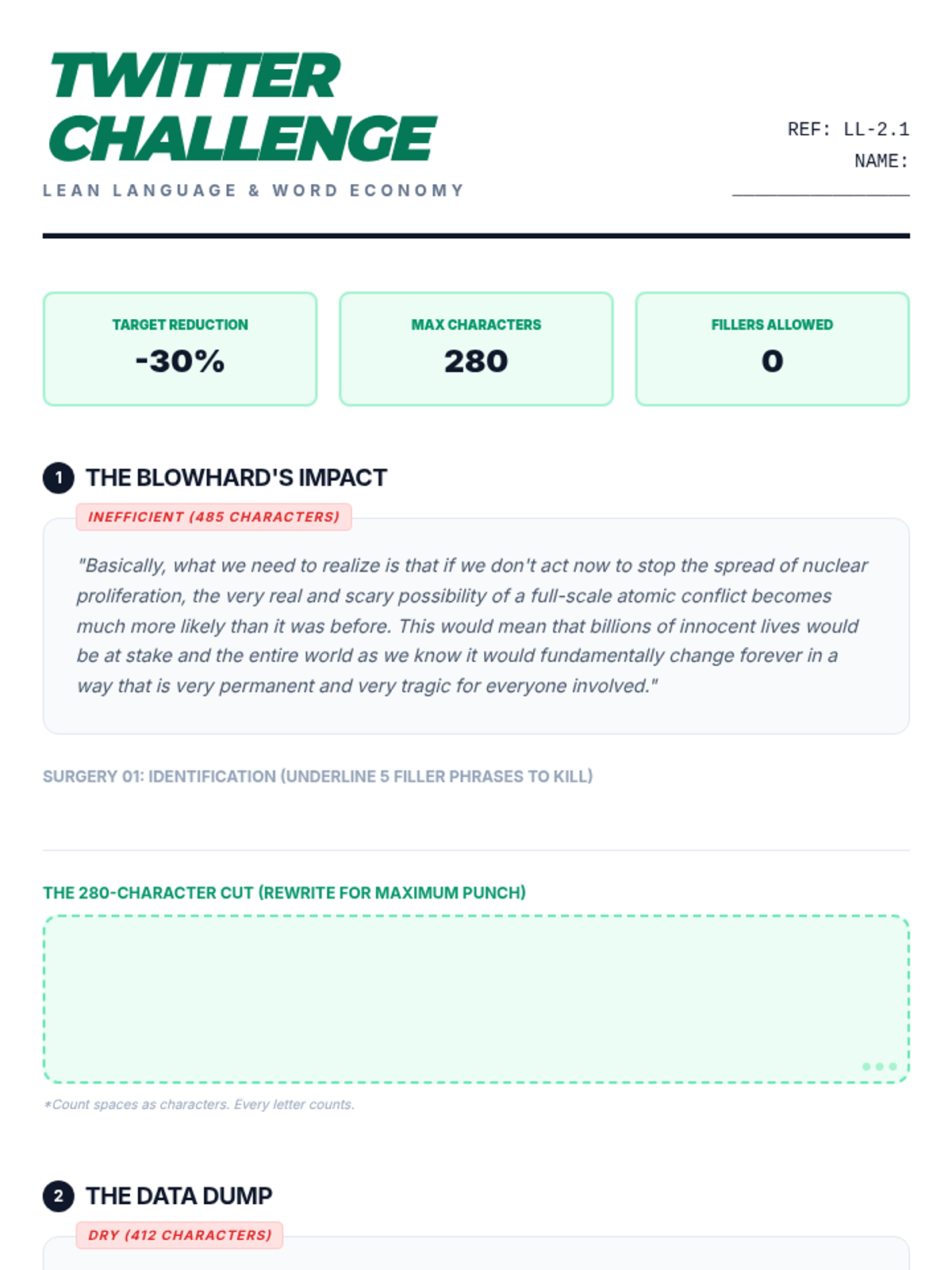
Students master the art of conciseness by editing their impact scenarios for maximum verbal efficiency. They learn to remove filler words and use high-impact verbs to fit complex arguments into tight speech time constraints.
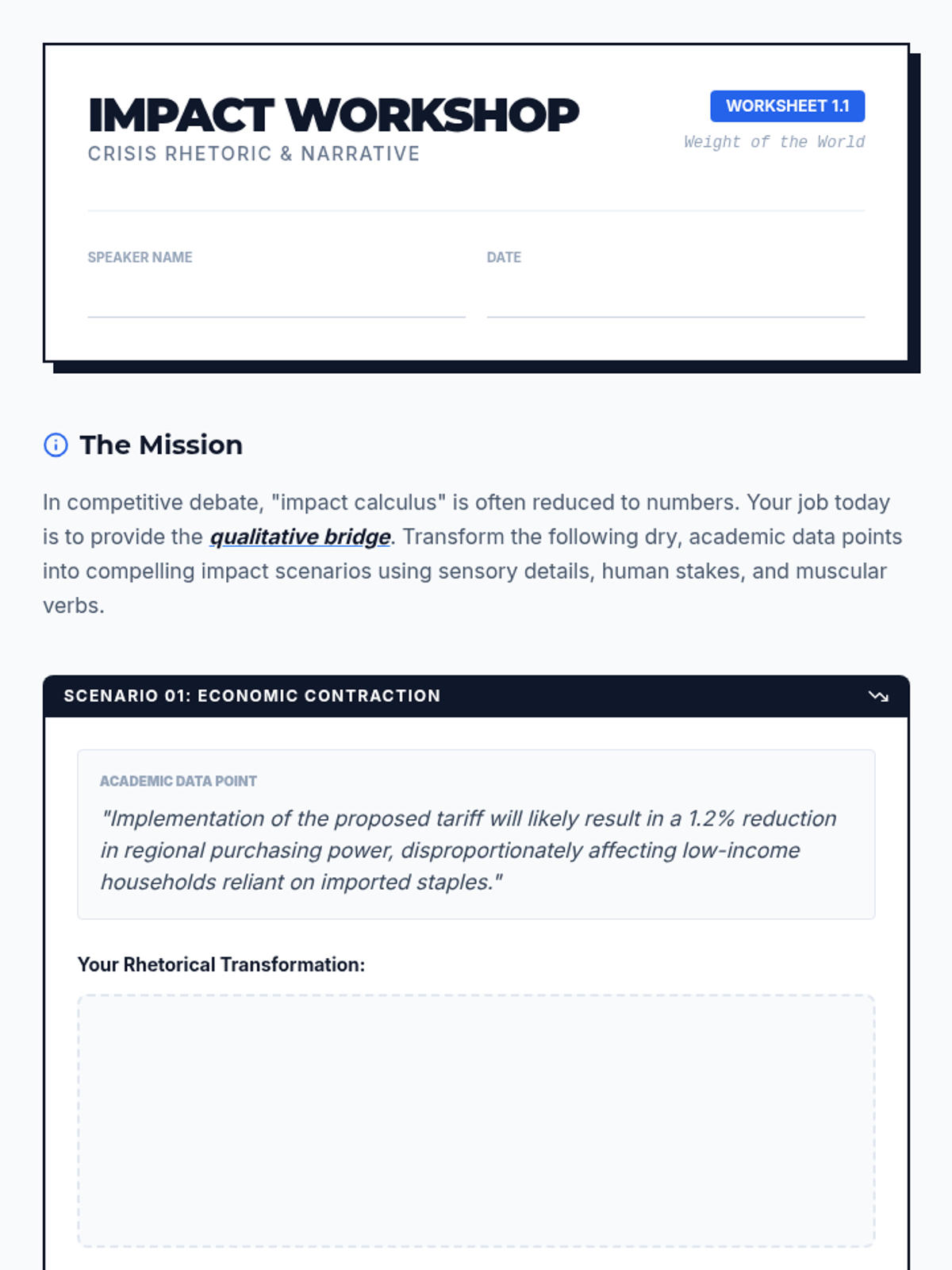
Students transform dry academic data into compelling 'impact scenarios' using sensory details and emotive language to make abstract impacts feel tangible and human.
A rapid-fire practice session where students synthesize all weighing mechanisms in 30-second competitive speeches.
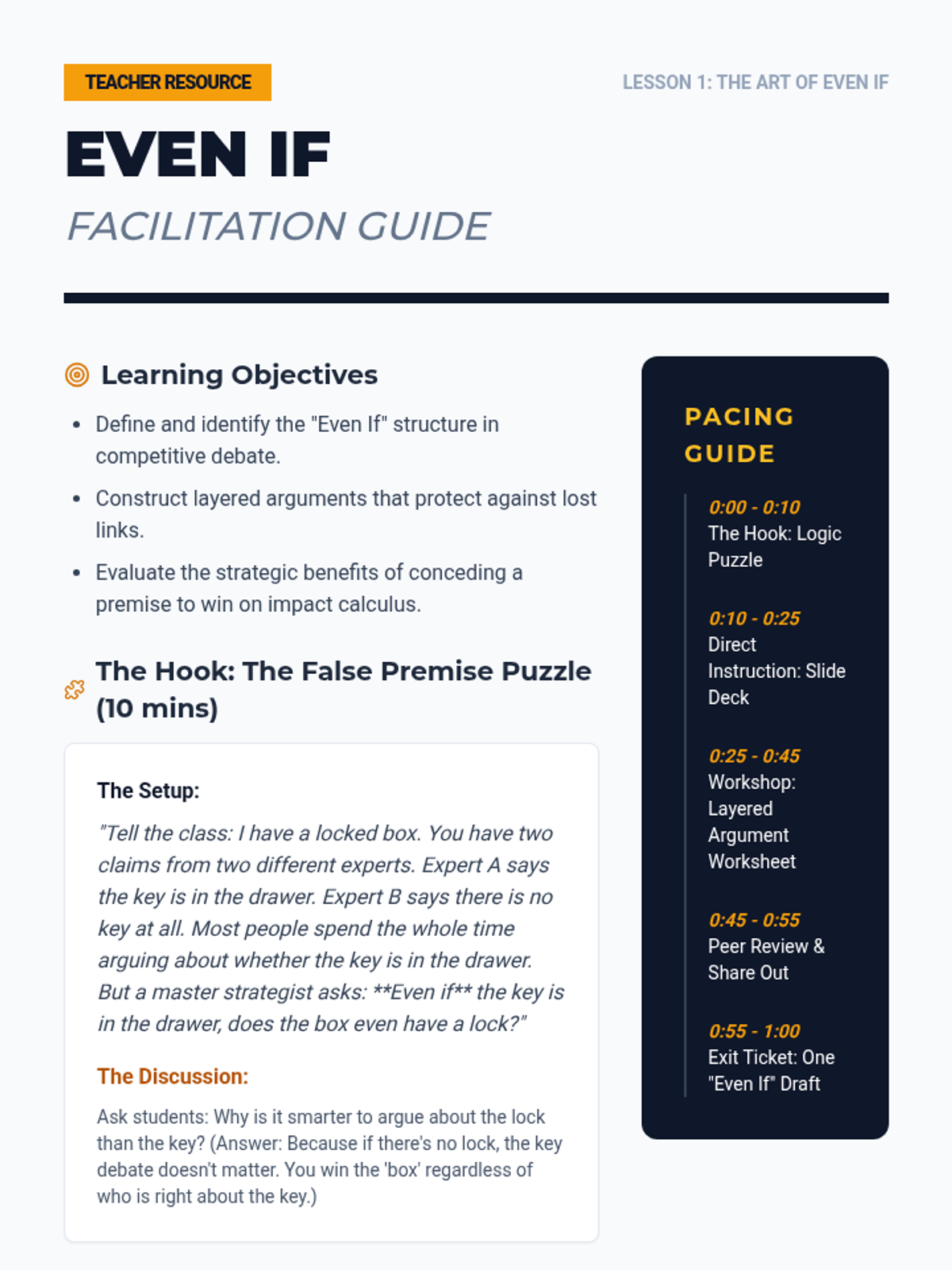
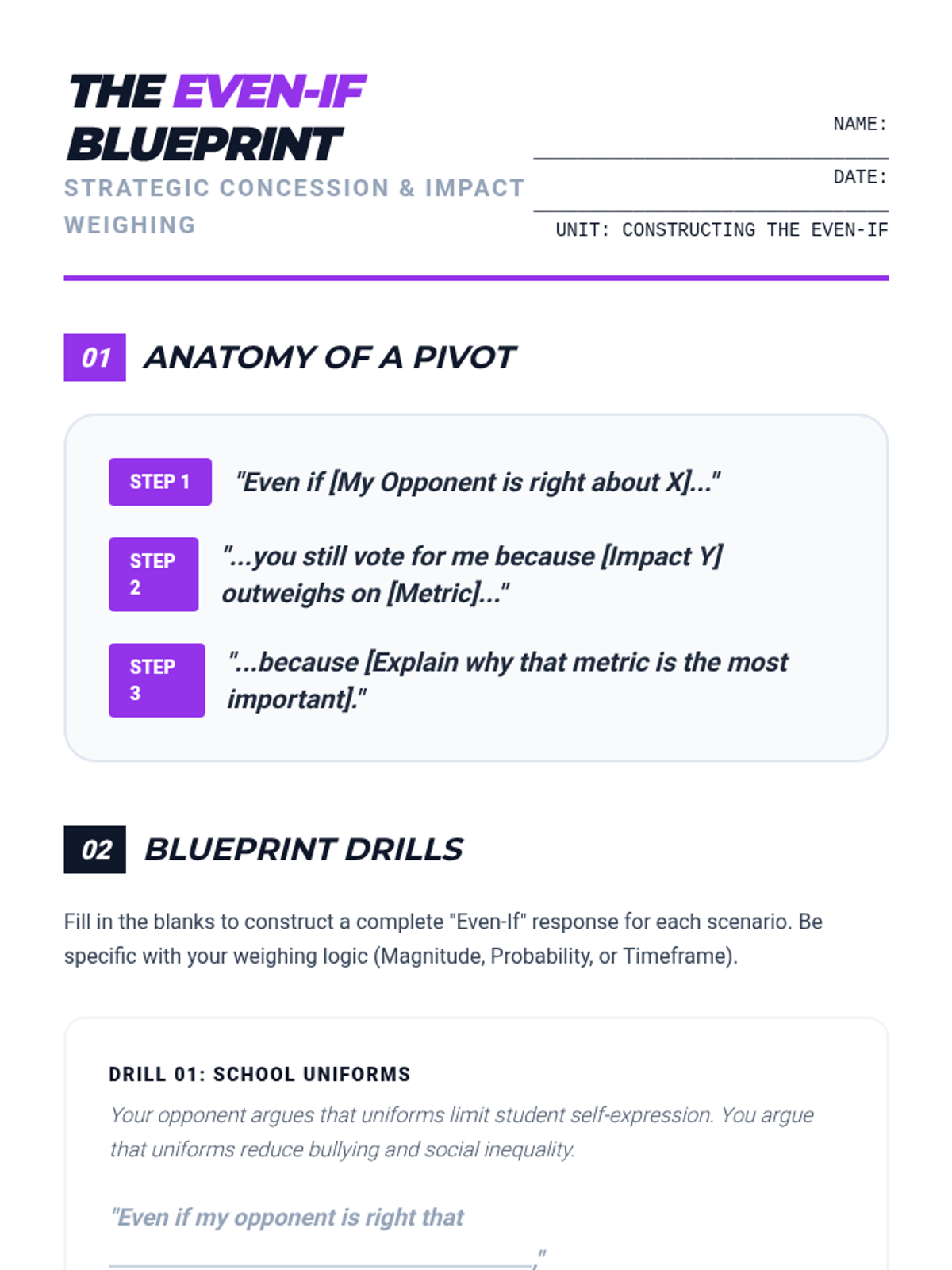
Teaches students the 'Even-If' structure to concede an opponent's premise while winning on the impact level.
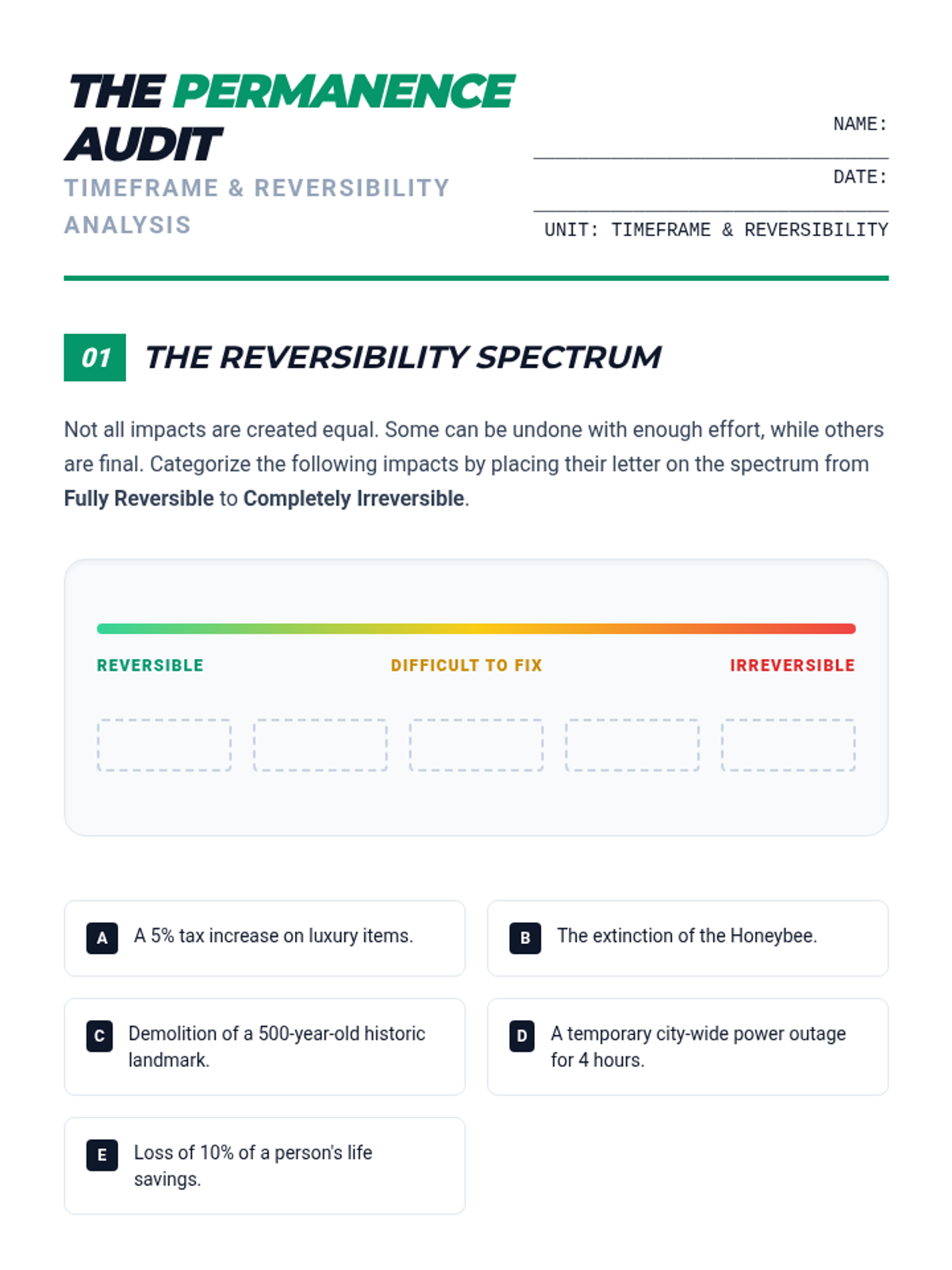
Explores how the speed of an impact and its permanence (reversibility) influence strategic prioritization.
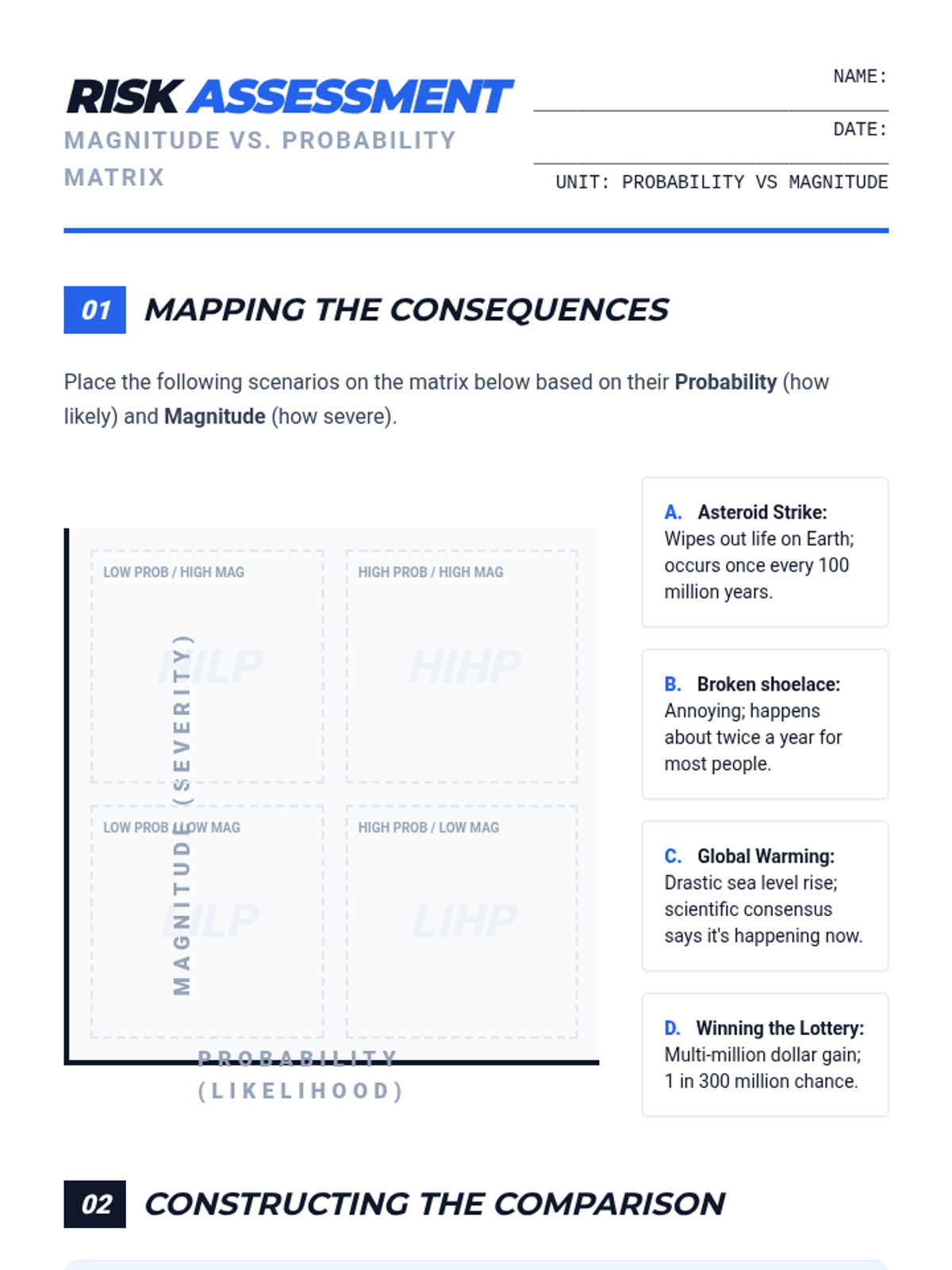
Focuses on the tension between high-impact/low-probability events and low-impact/high-probability events using risk assessment models.
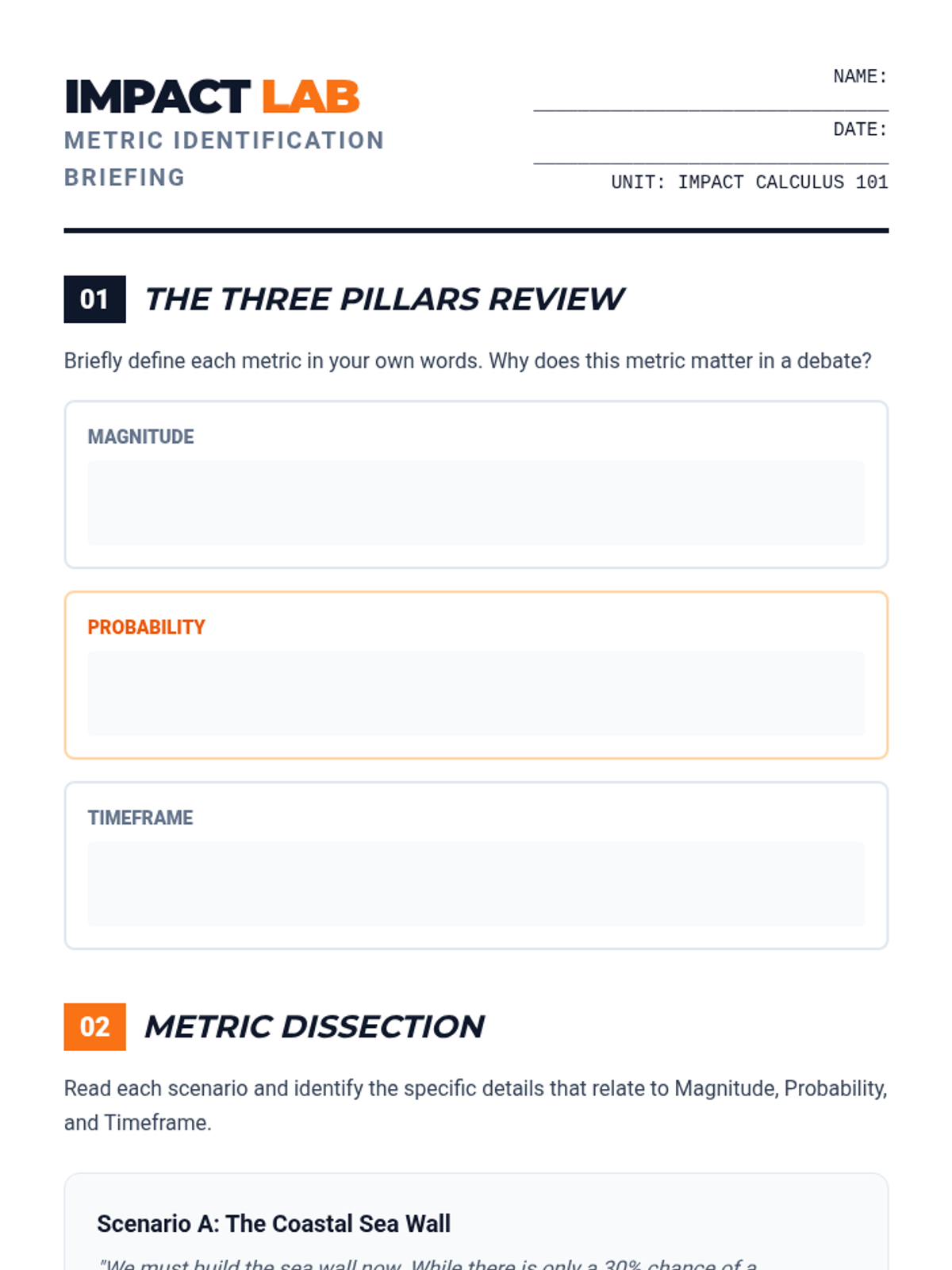
Students define and identify the three pillars of impact calculus: Magnitude, Probability, and Timeframe through scenario analysis.
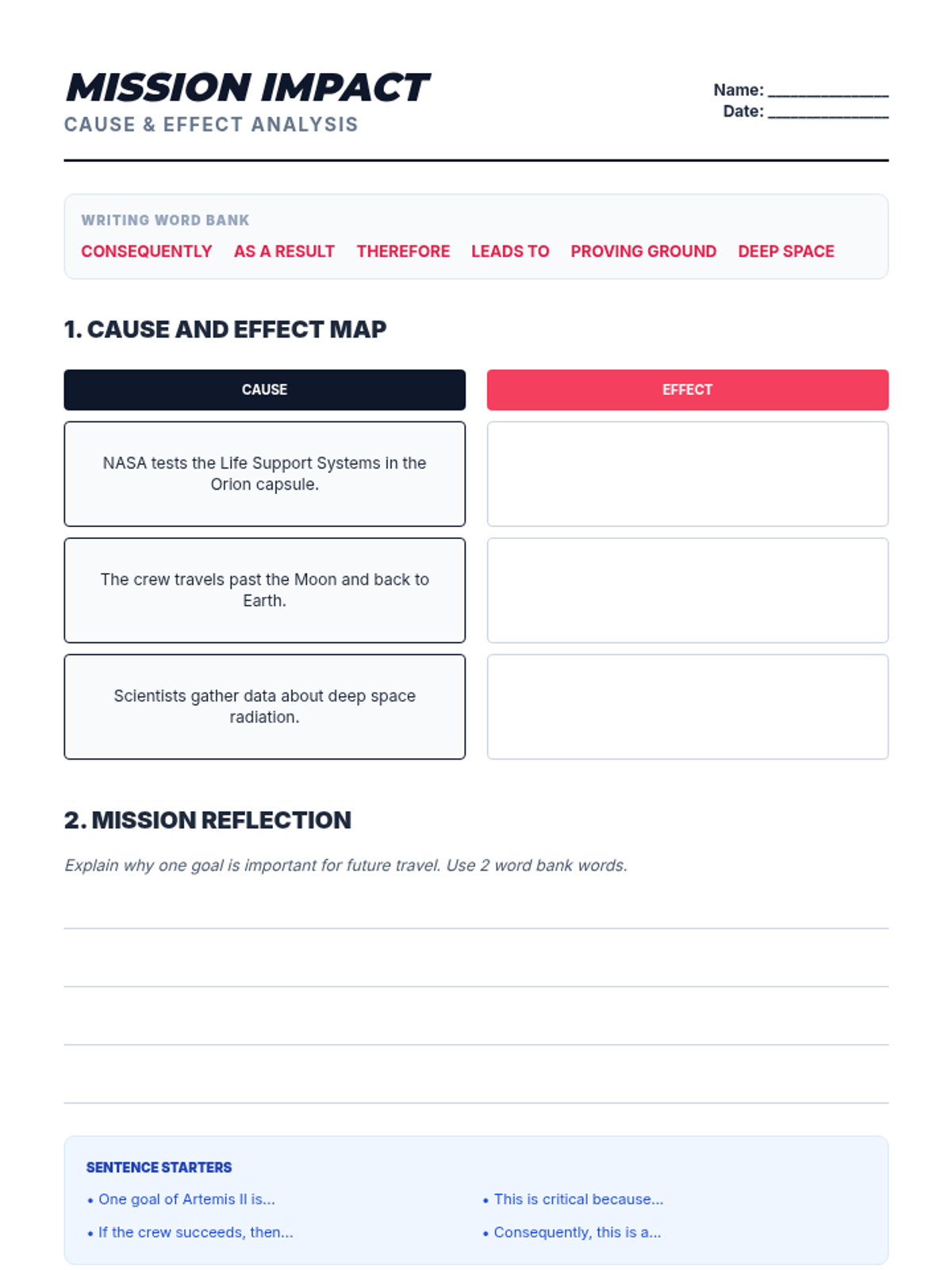
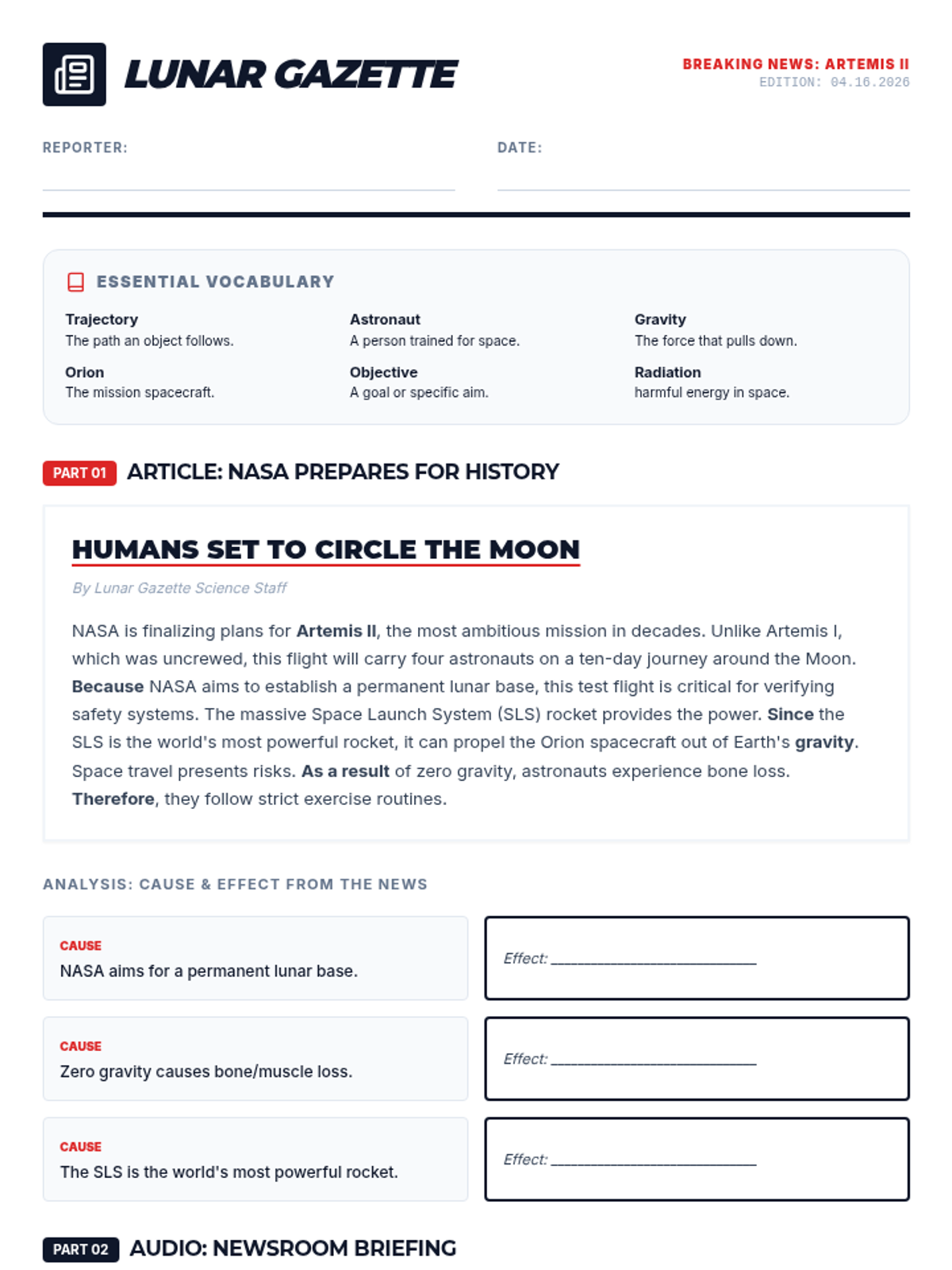
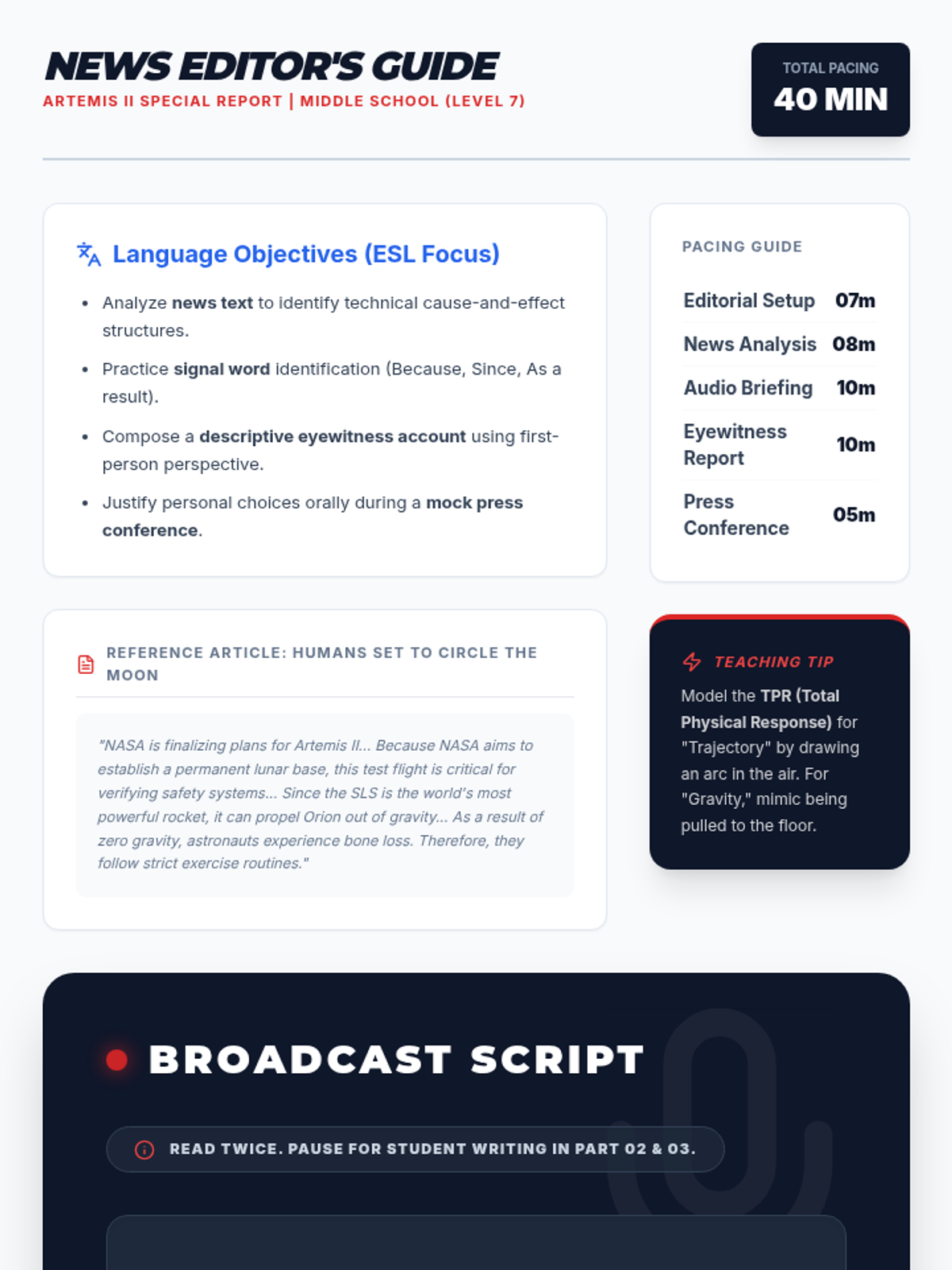
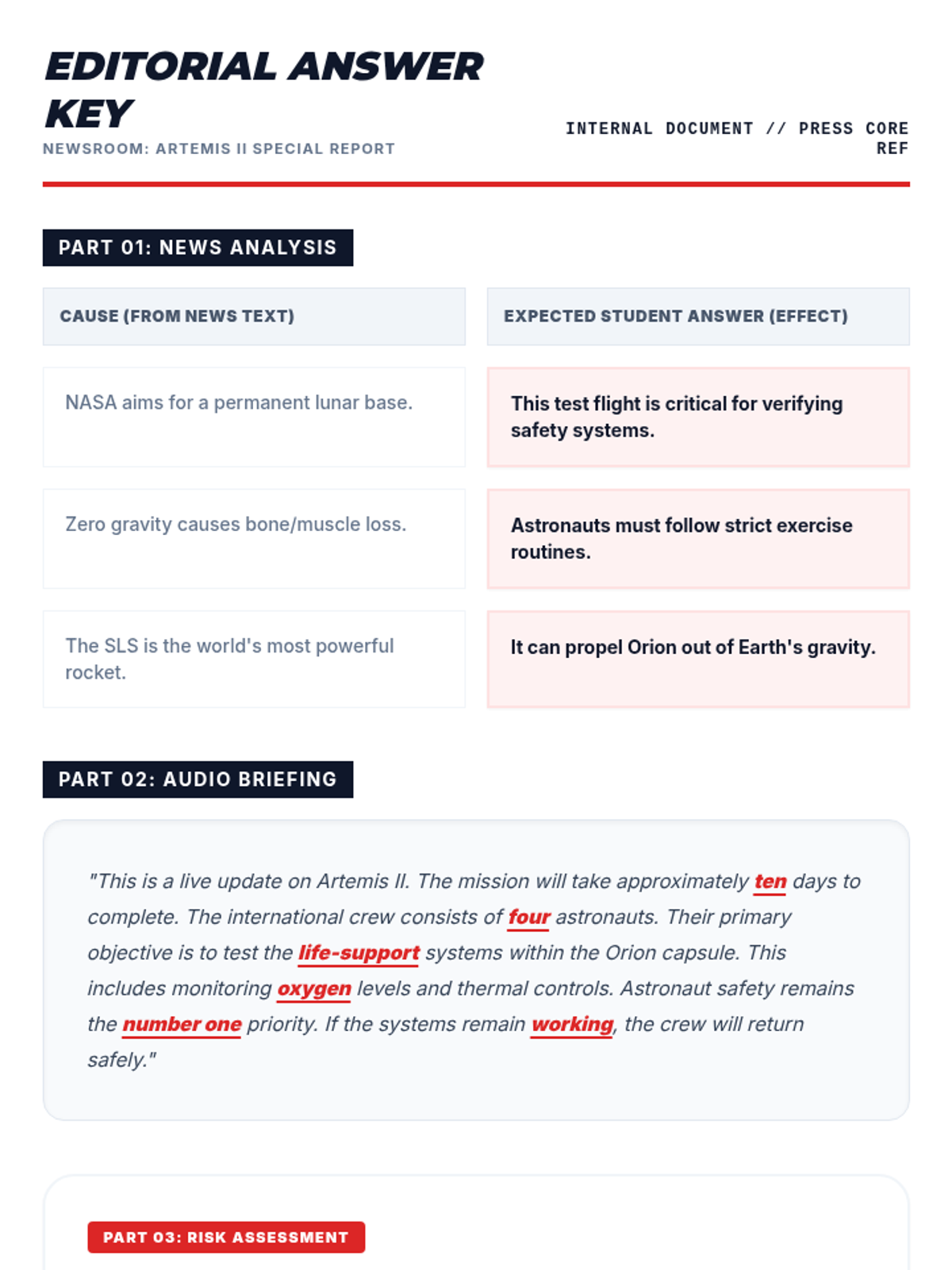
A high-interest lesson for 9th-12th grade ESL students, written at a 7th-grade level, focusing on the Artemis II mission. Includes a news article analysis, cause-and-effect relationships, and descriptive writing.
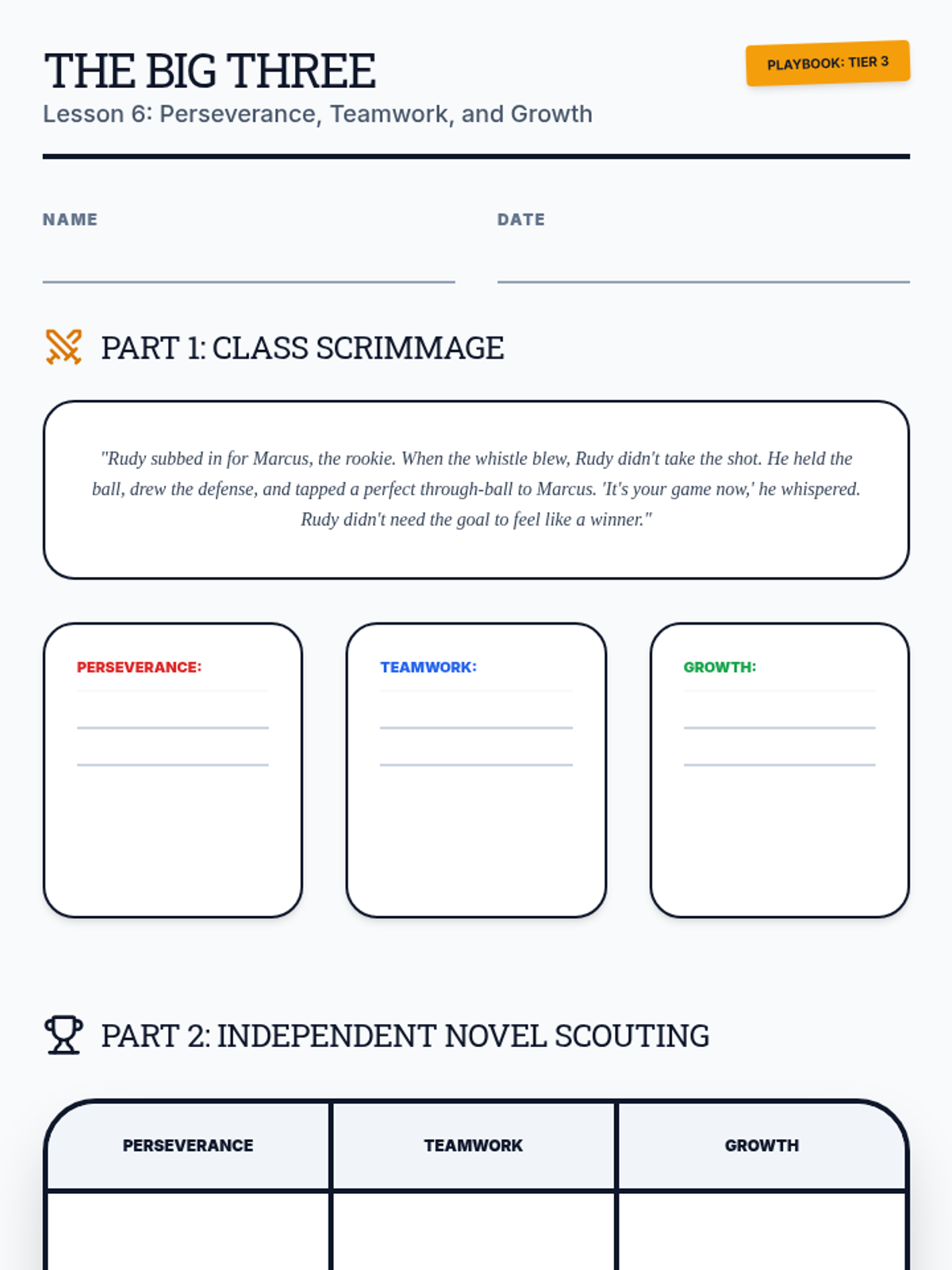
Deep dive into the core themes of perseverance, teamwork, and personal growth required for the final summative projects.
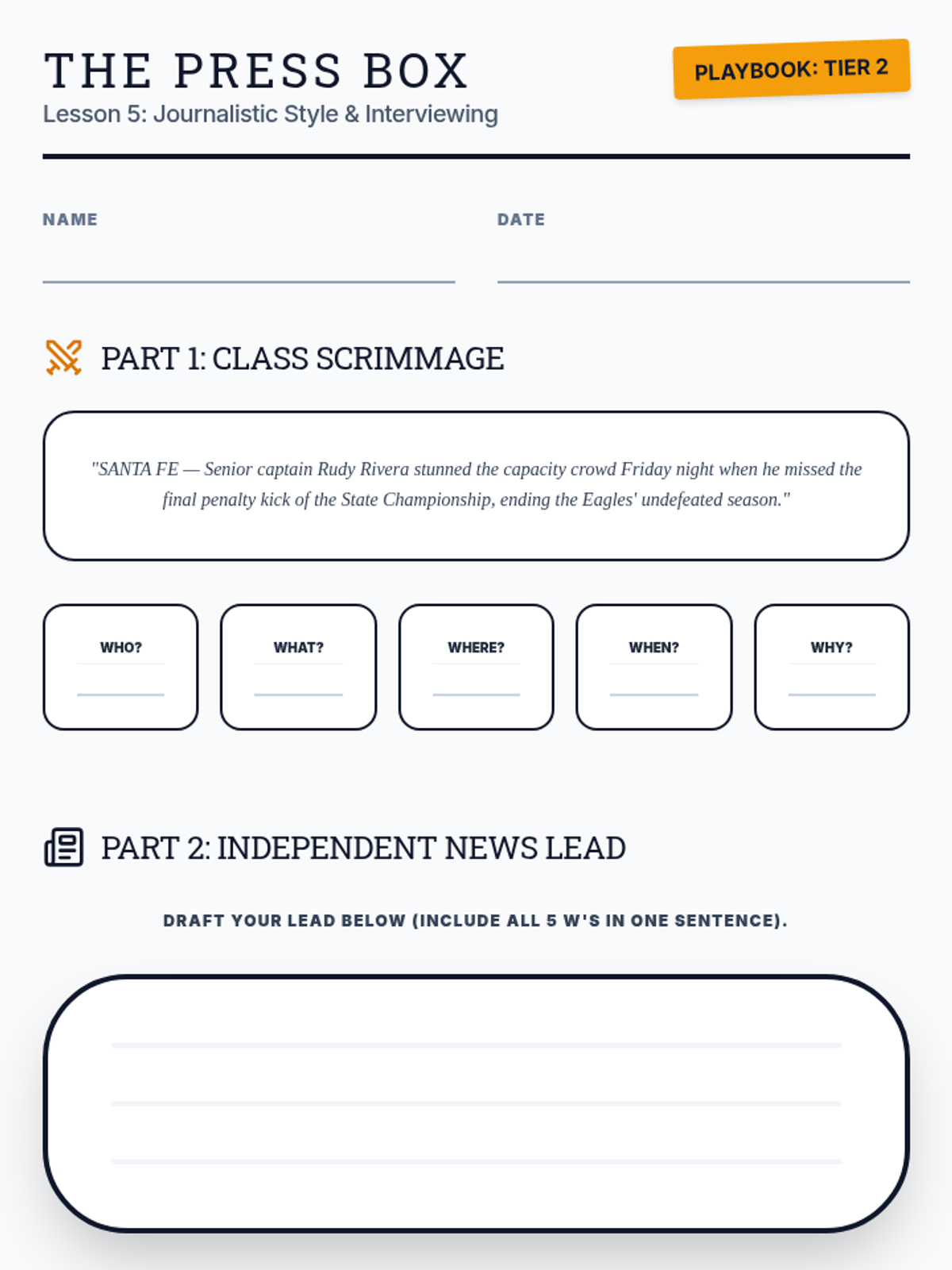
Understanding the conventions of sports journalism and interviewing techniques for news articles and player/coach interviews.
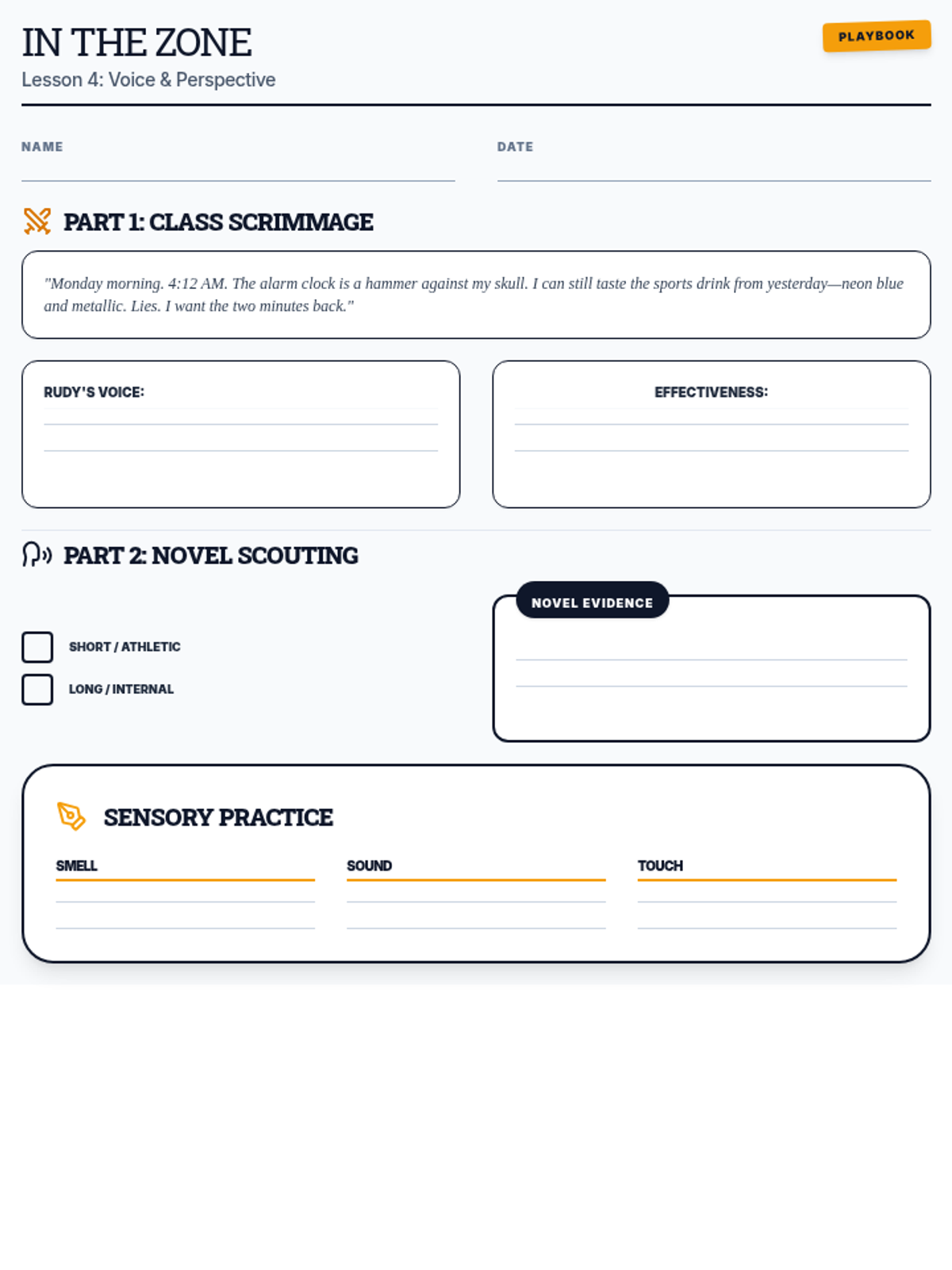
Focusing on narrative voice and internal monologue to support the creation of authentic character journal entries.
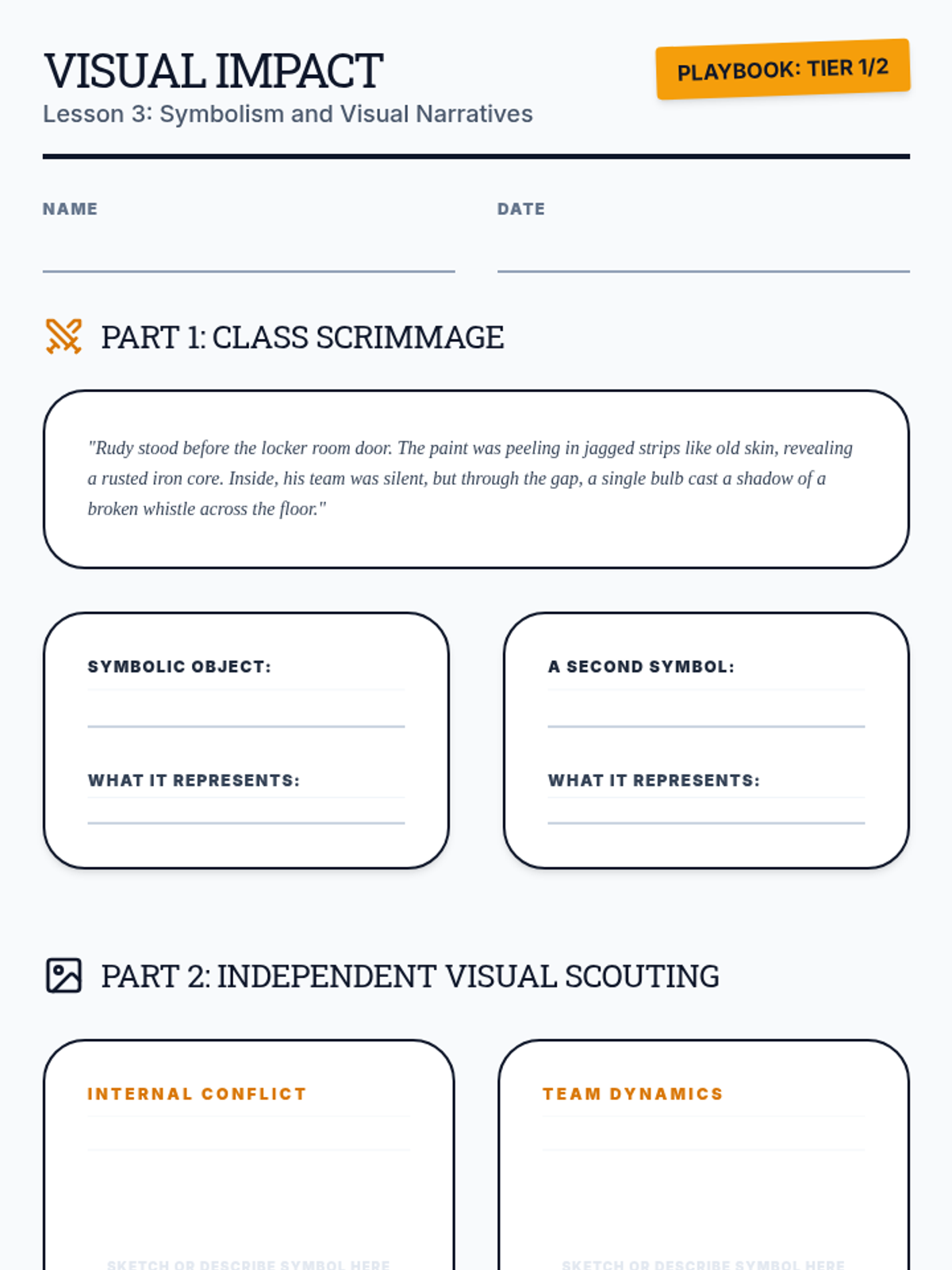
Teaching the use of symbolism in visual storytelling to help students design alternate book covers and comic strips.
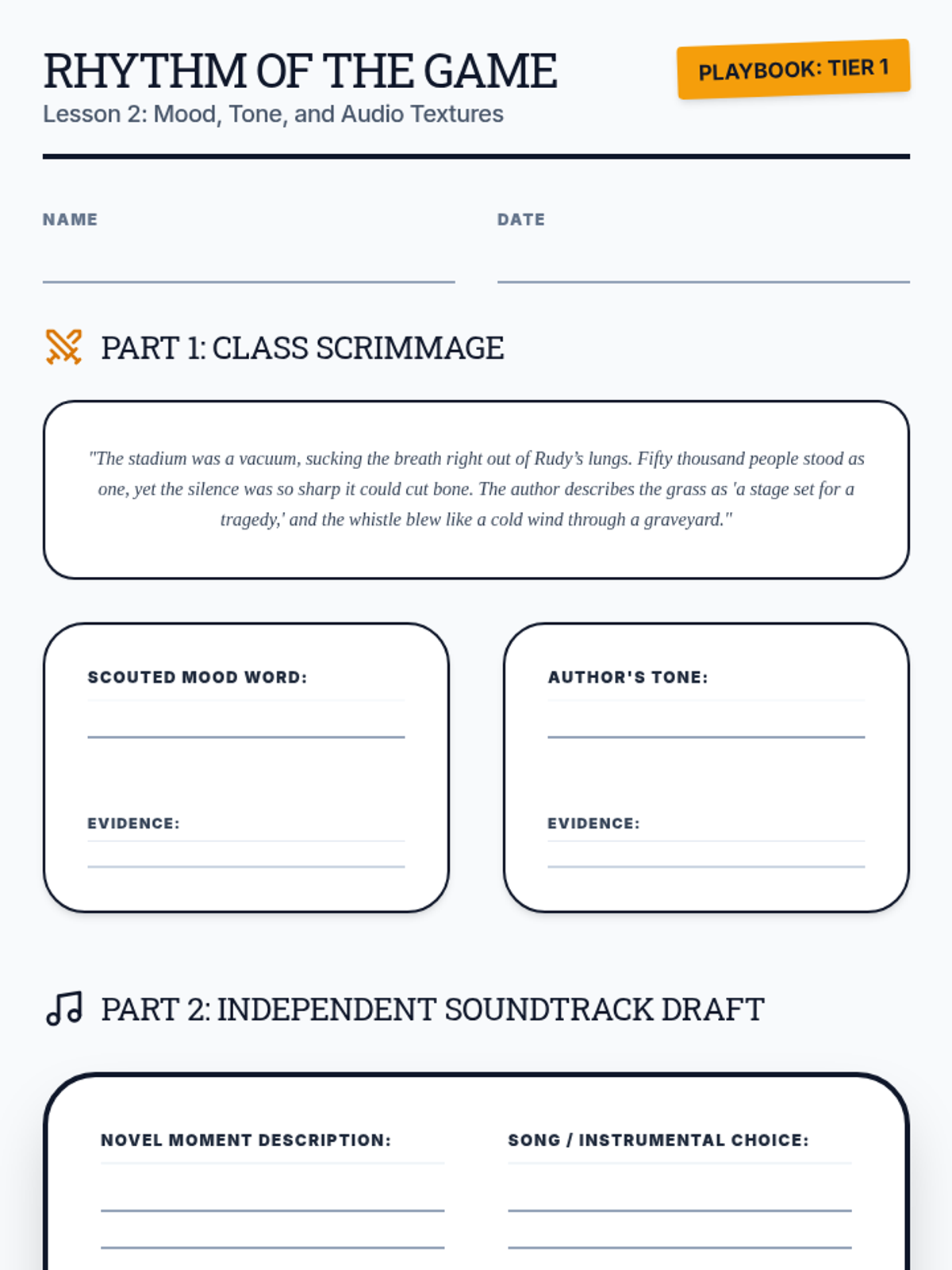
Exploring how mood and tone are established through music and poetry to support the Book Soundtrack and Haiku assignments.
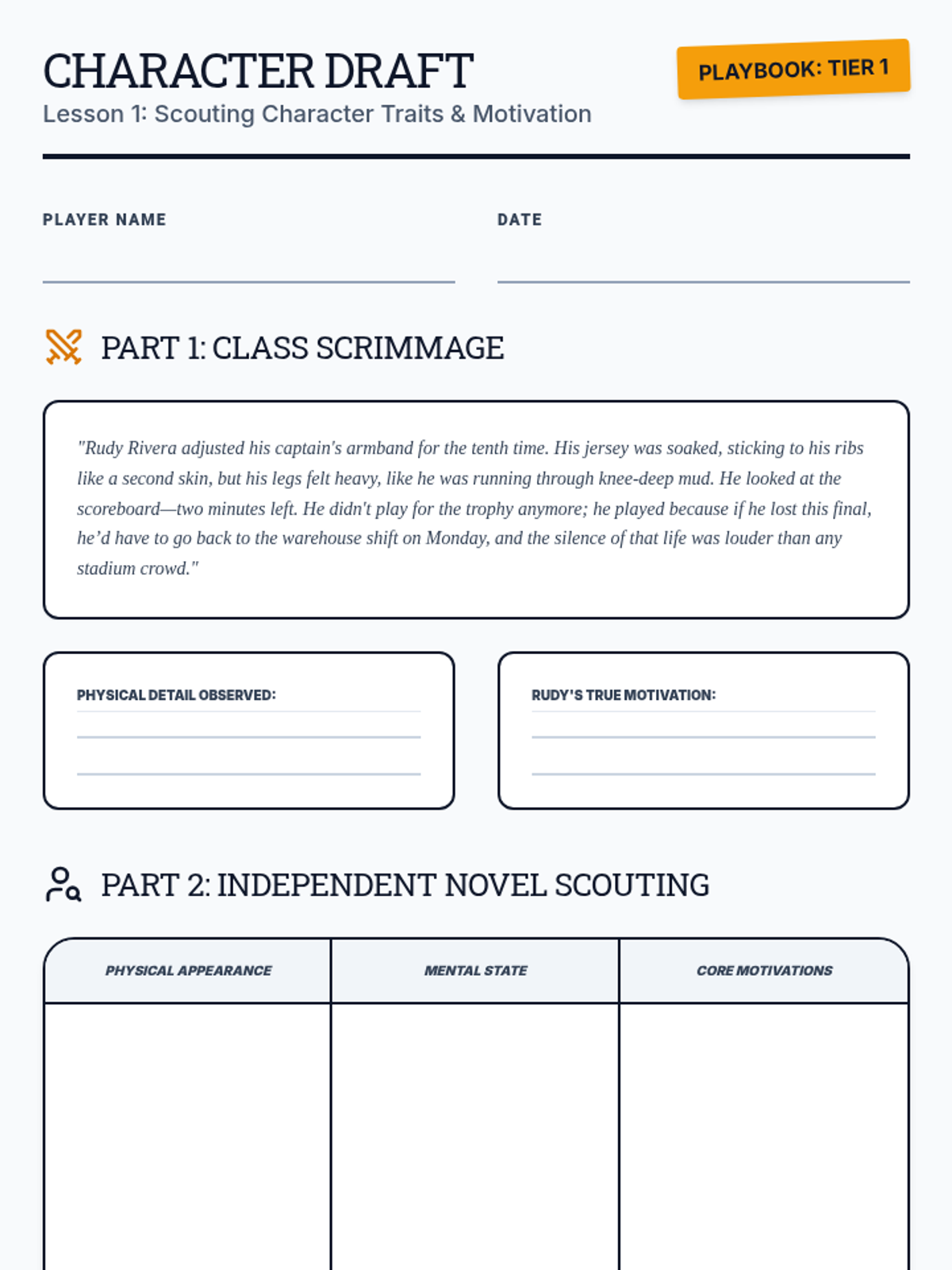
Students learn to analyze character traits and motivations to build a 'Body Biography' or curate a character-driven photo album.
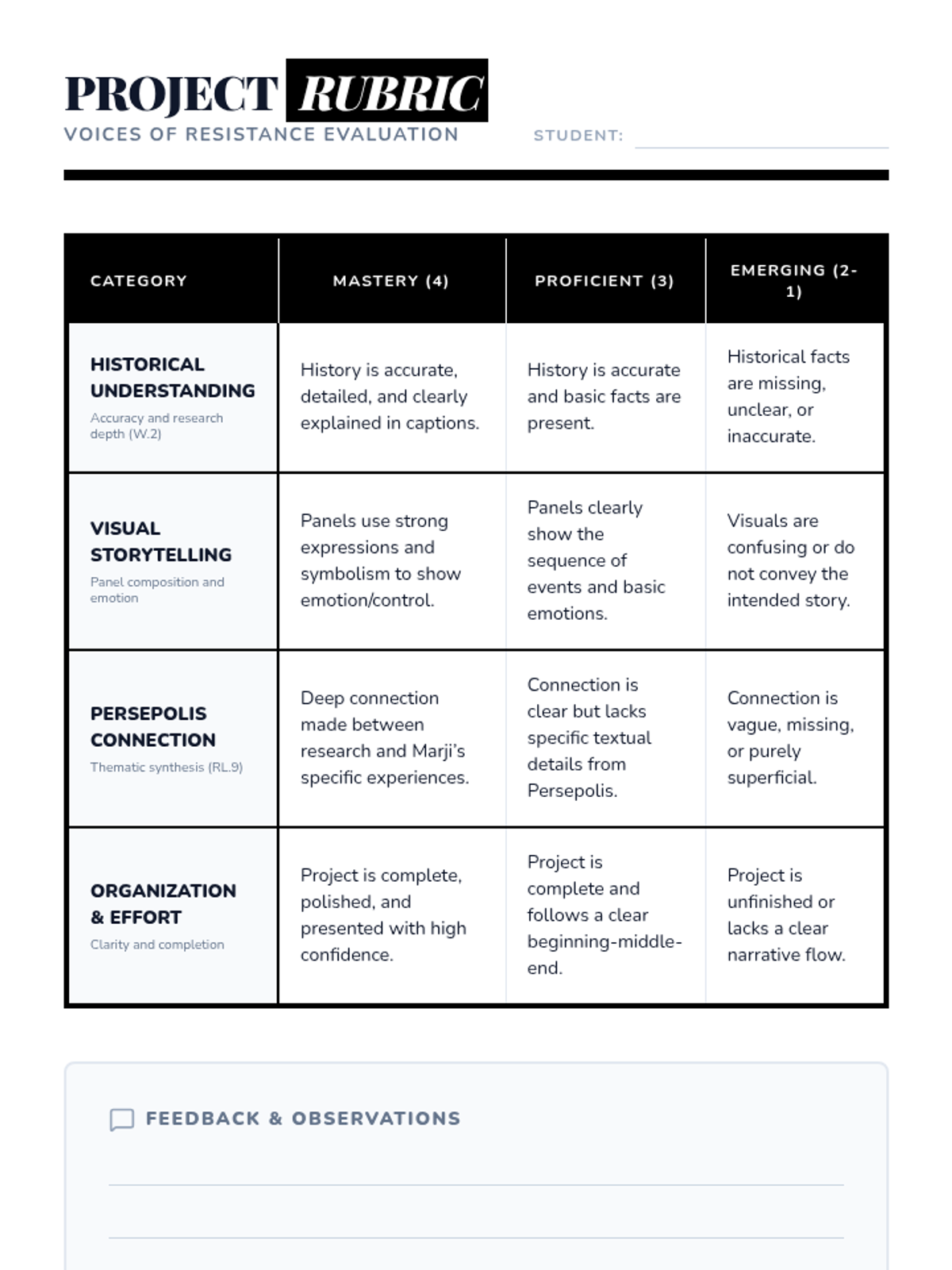
Students present their graphic stories and historical research to the class, explaining the themes of oppression and their connections to Persepolis.
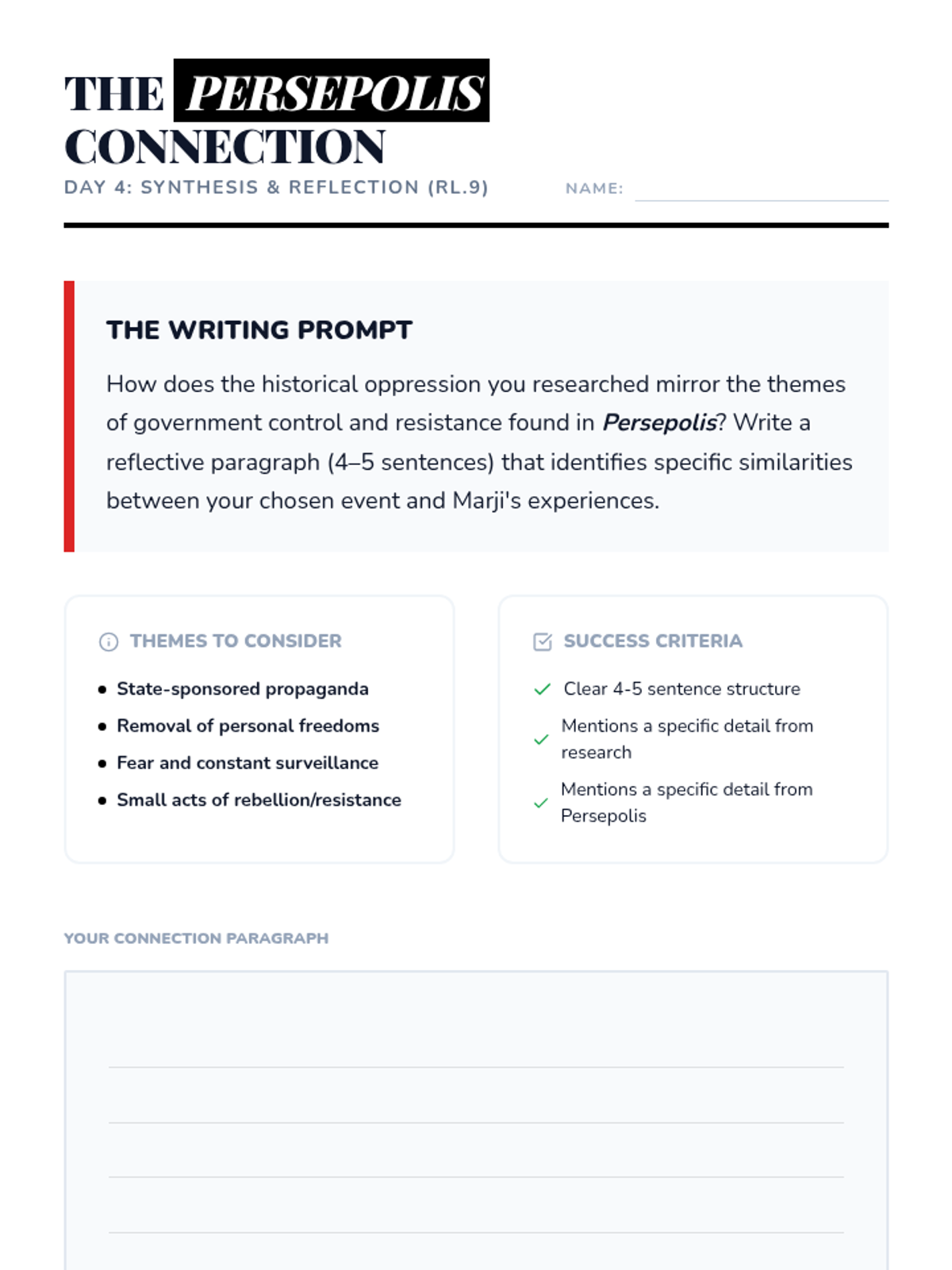
Students finalize their graphic panels and write a reflective paragraph connecting their researched historical event to the themes of government control and resistance in Persepolis.
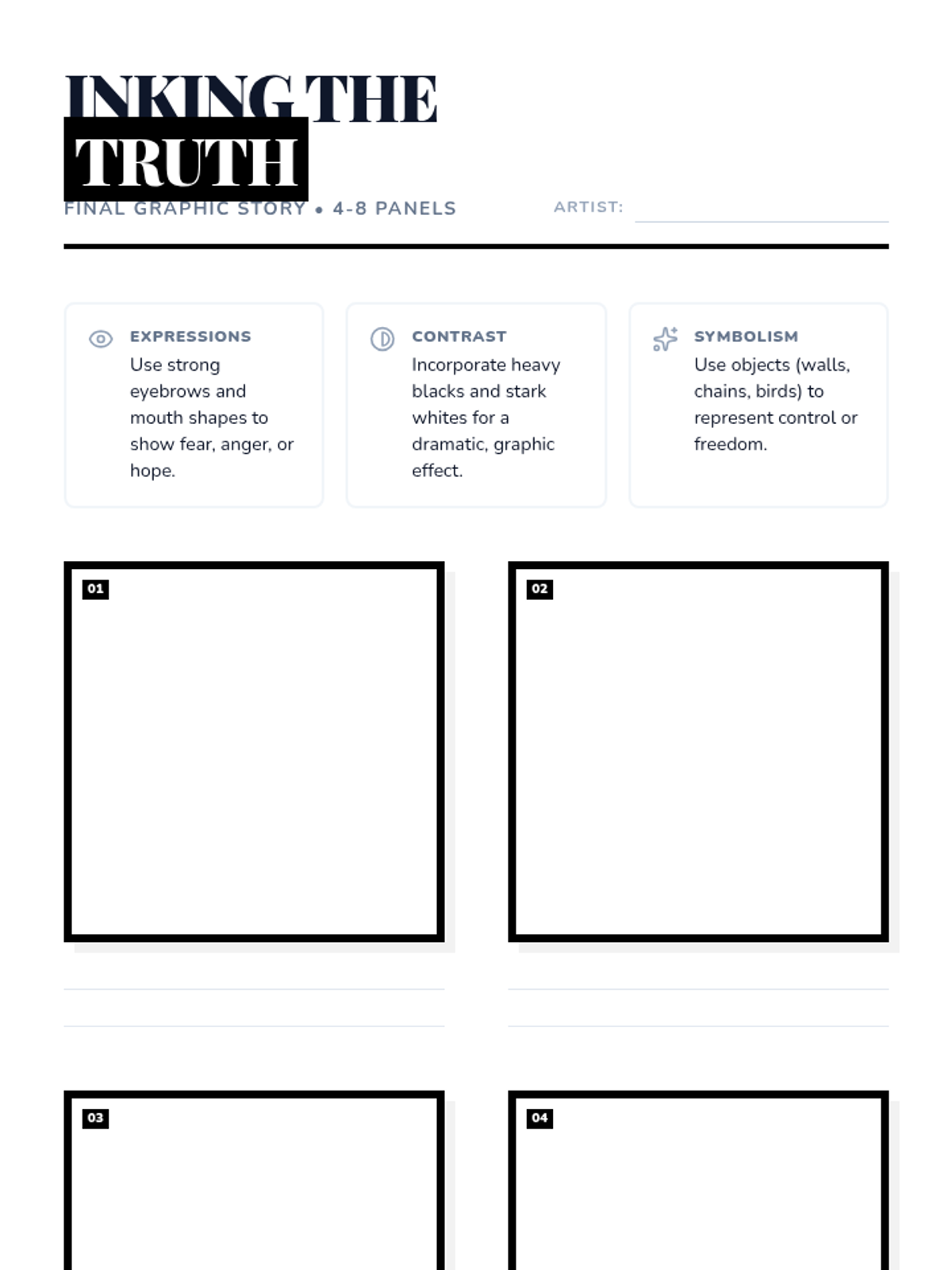
Students begin drawing their final graphic panels, focusing on visual storytelling techniques like facial expressions, symbolic imagery, and high-contrast black-and-white art.
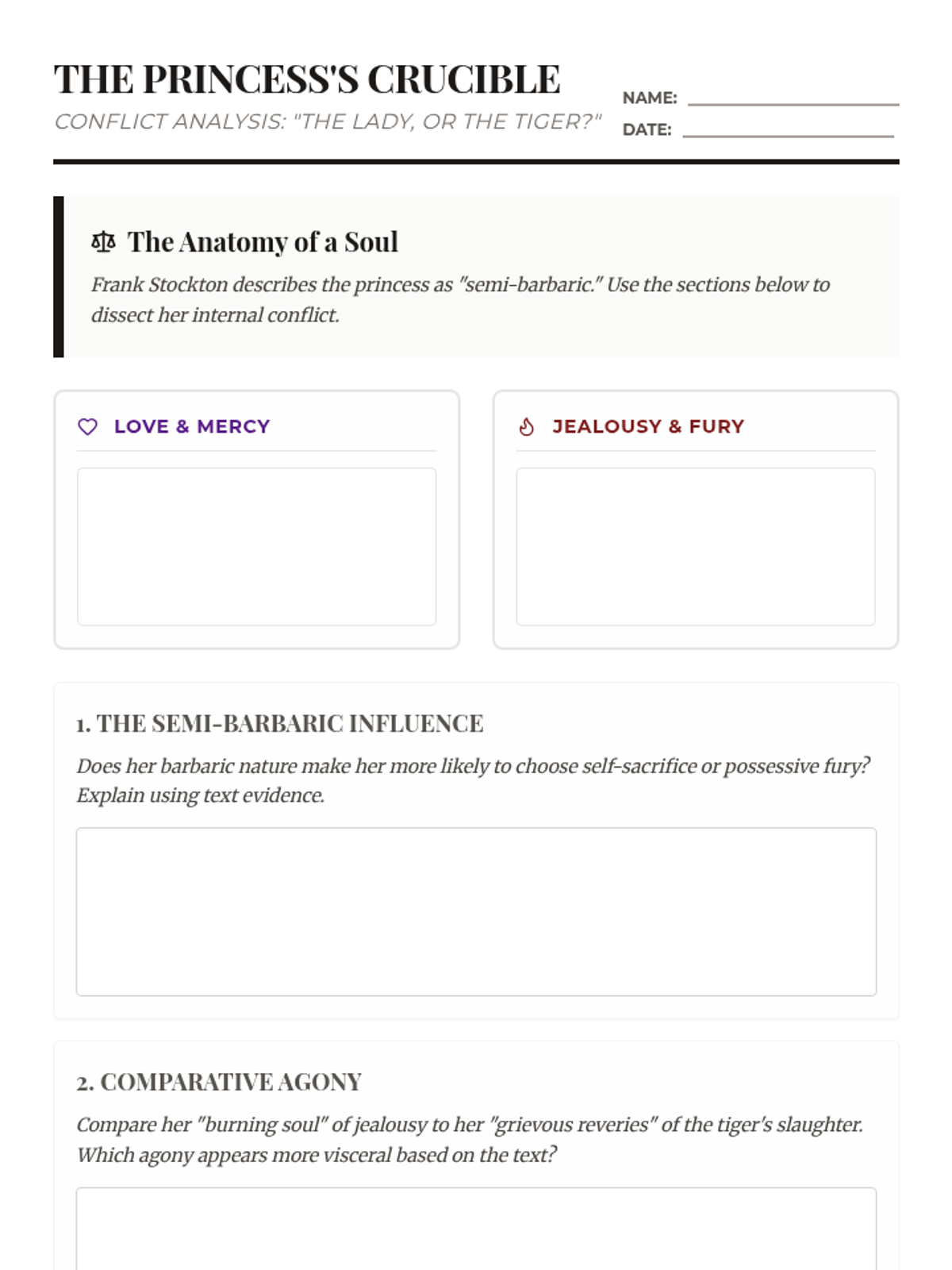
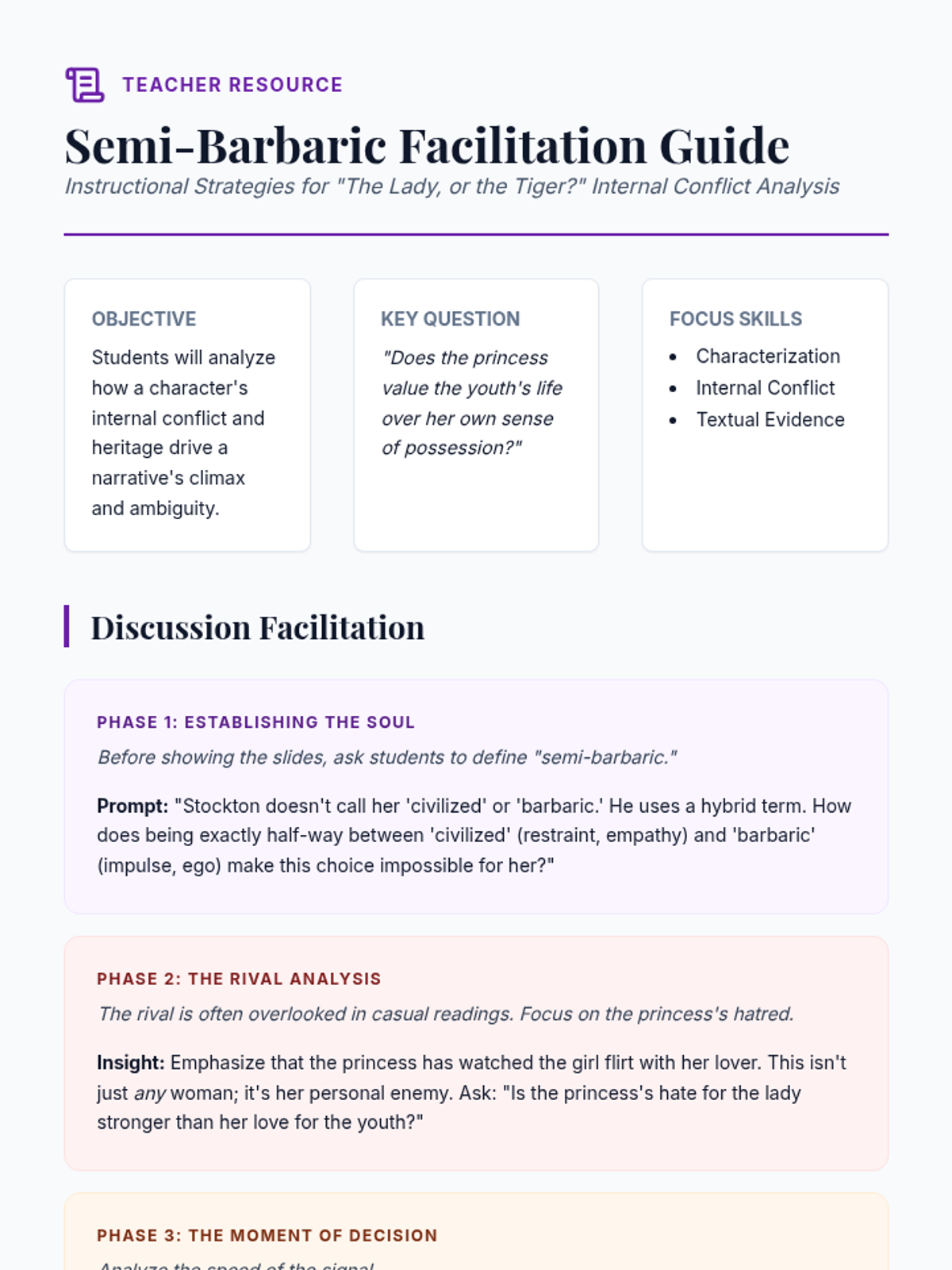
A deep-dive analysis of the internal conflict faced by the princess in Frank R. Stockton's classic short story. Students will explore themes of jealousy, love, and barbaric nature through guided discussion and analytical writing.
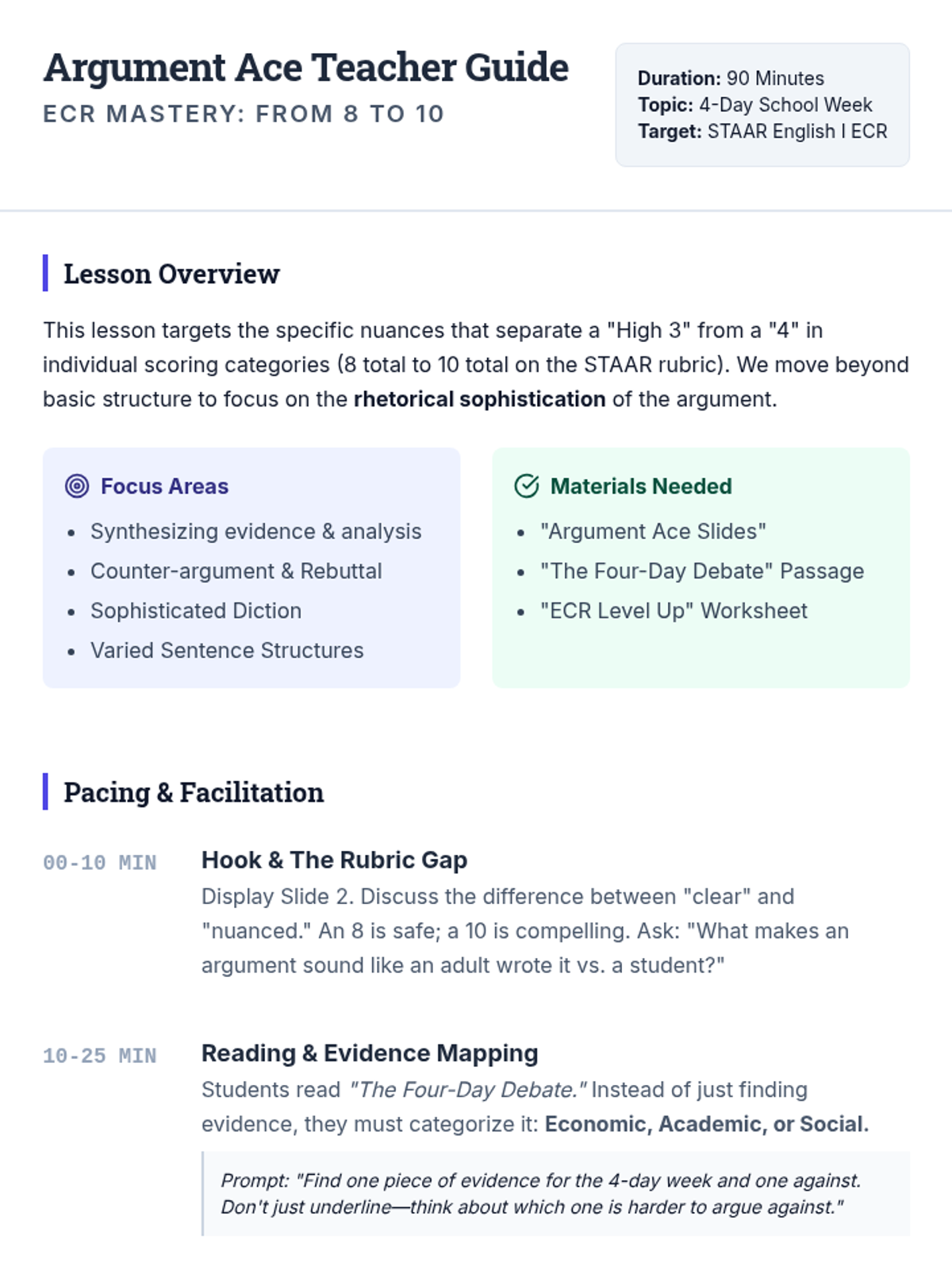
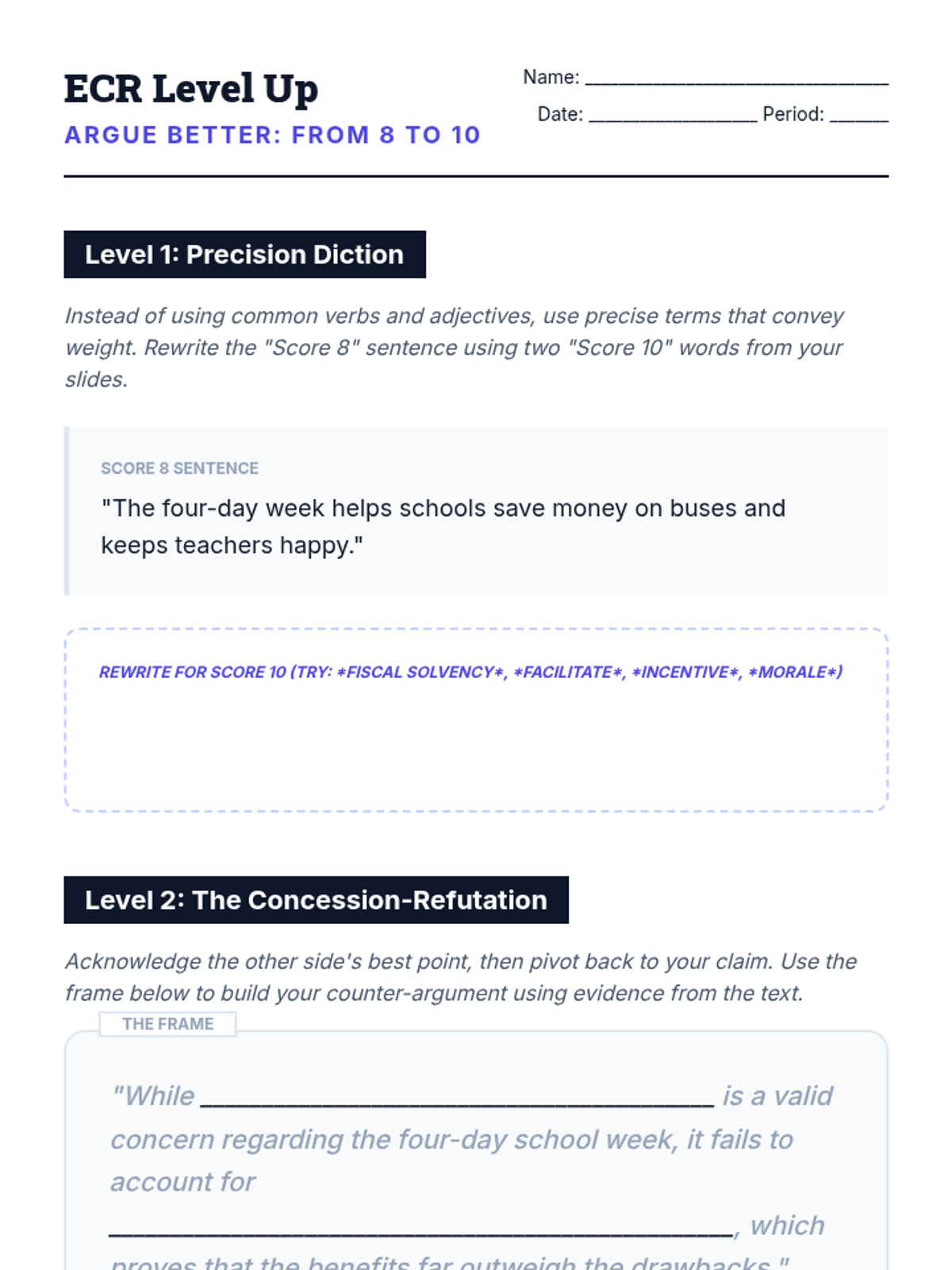
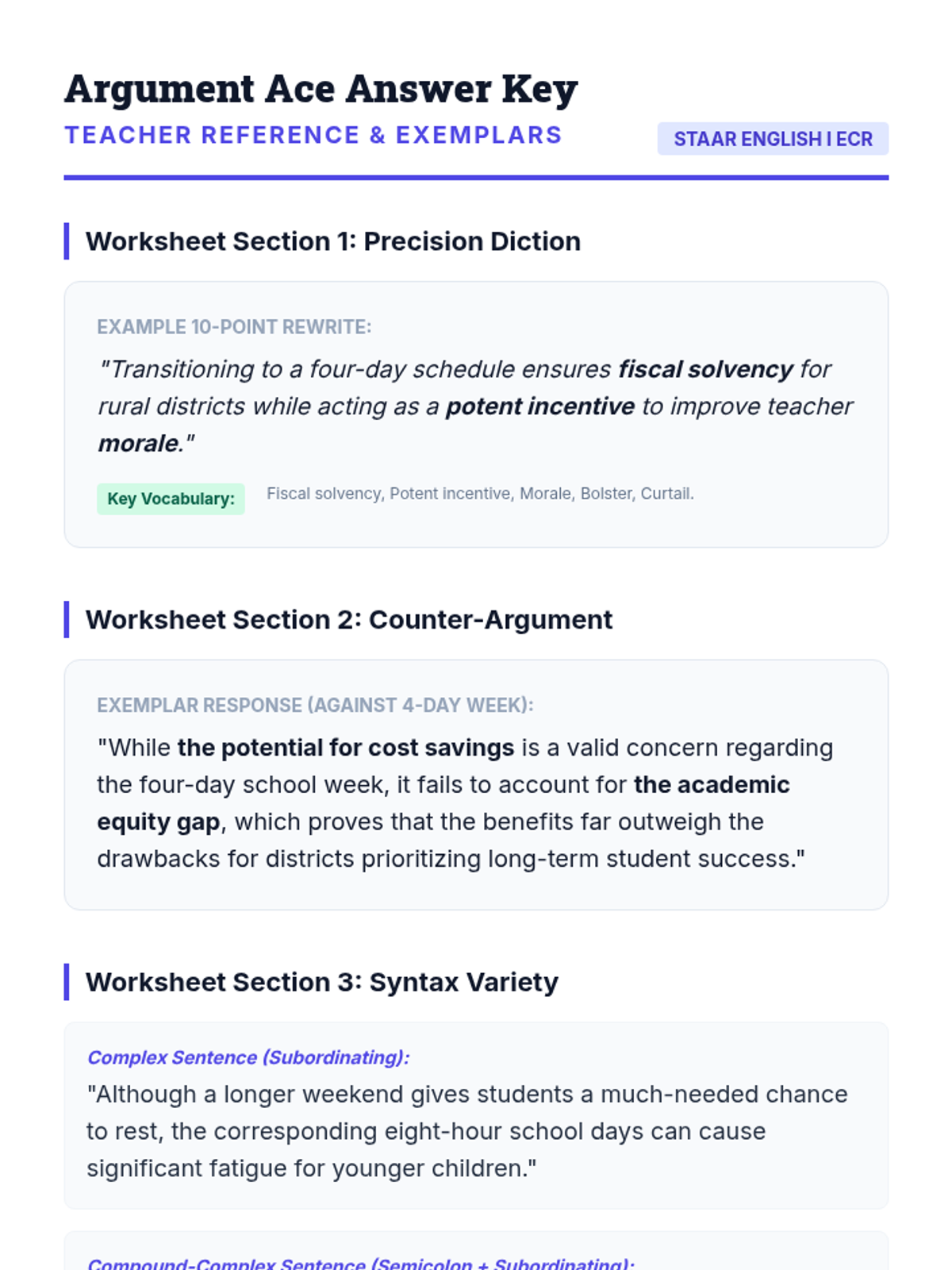
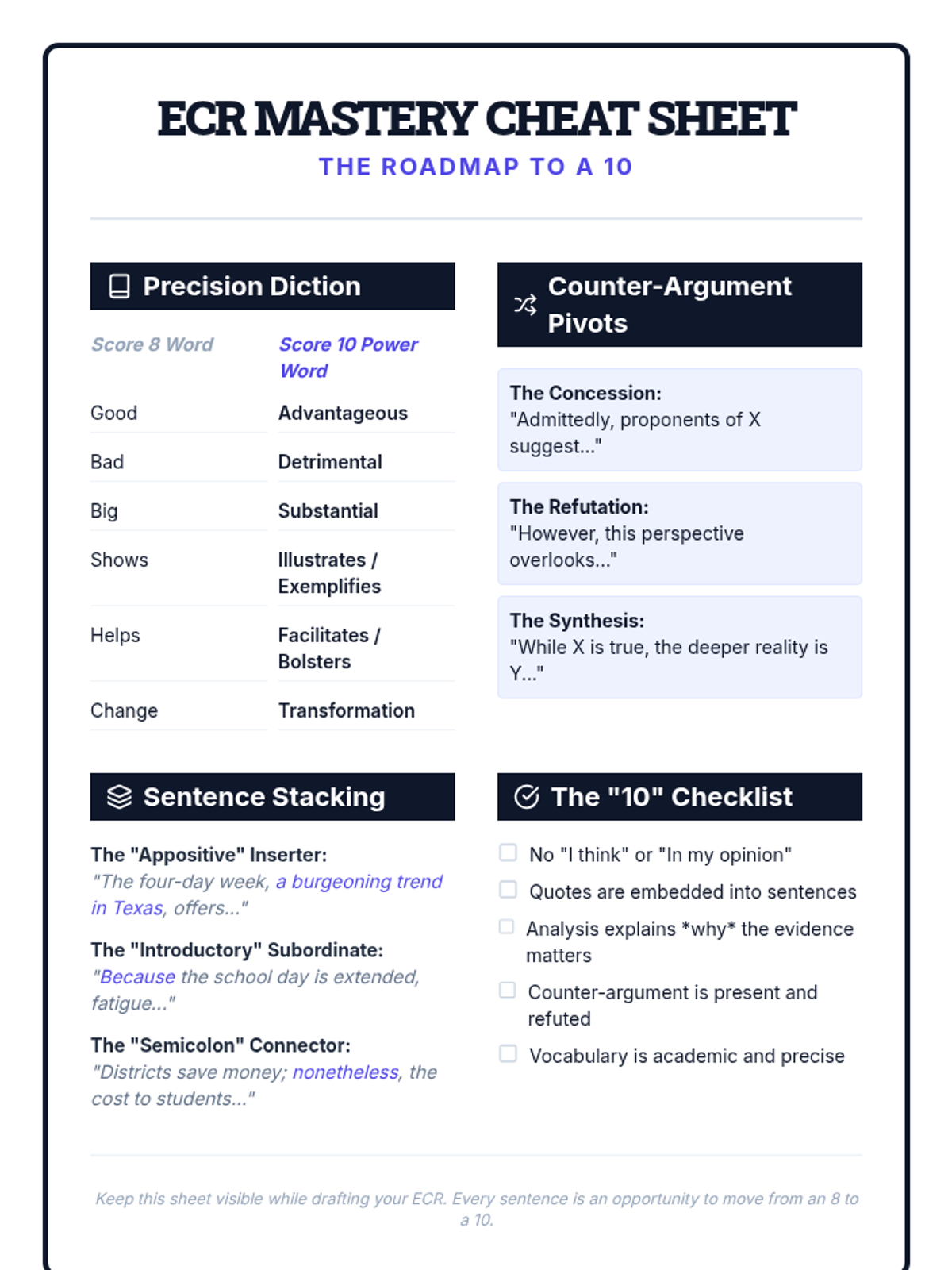
A 90-minute intensive lesson designed to bridge the gap between proficient (8) and advanced (10) scores on the Texas English 1 Argumentative ECR, focusing on counter-arguments, syntax, and sophisticated word choice.
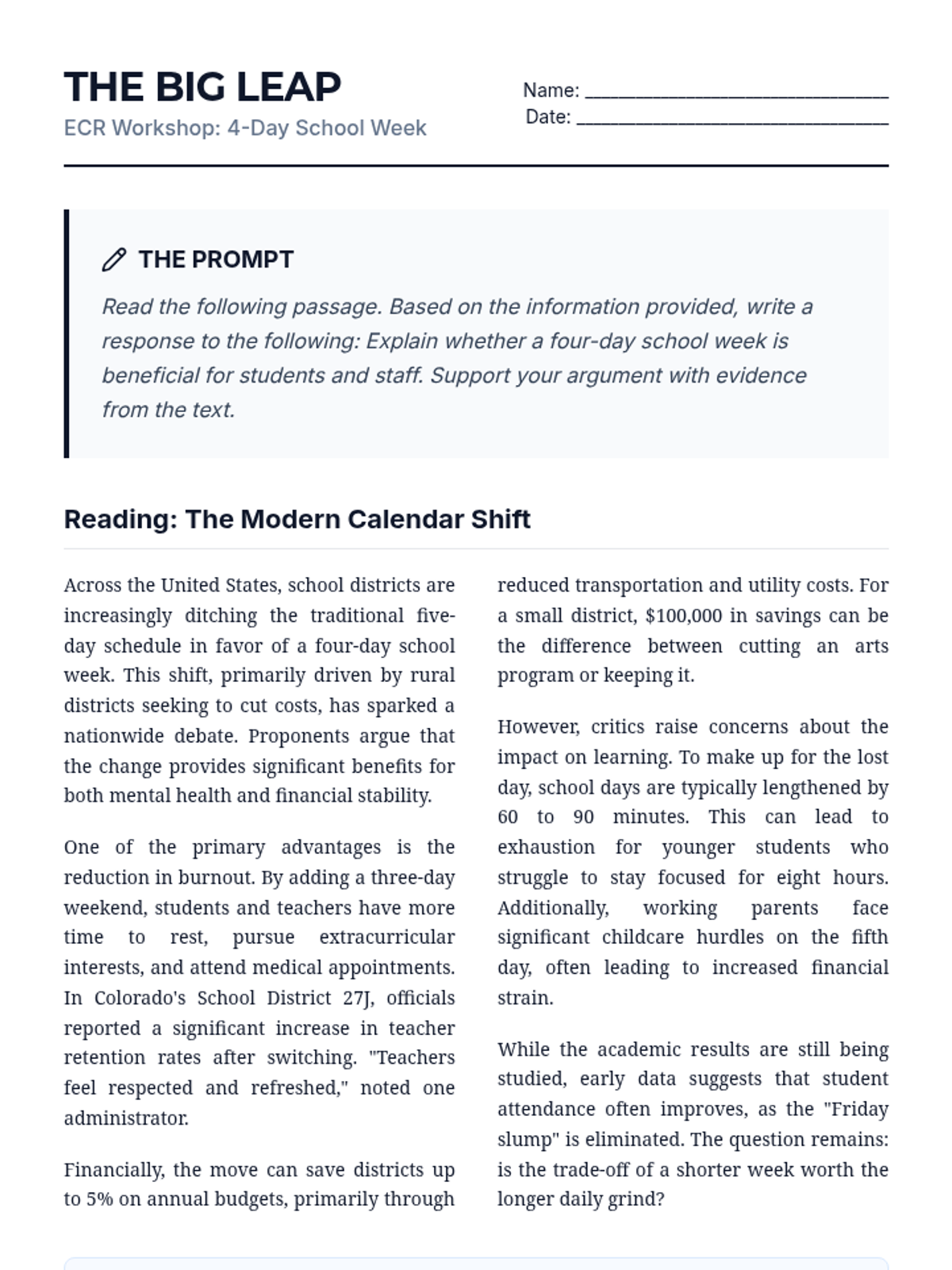
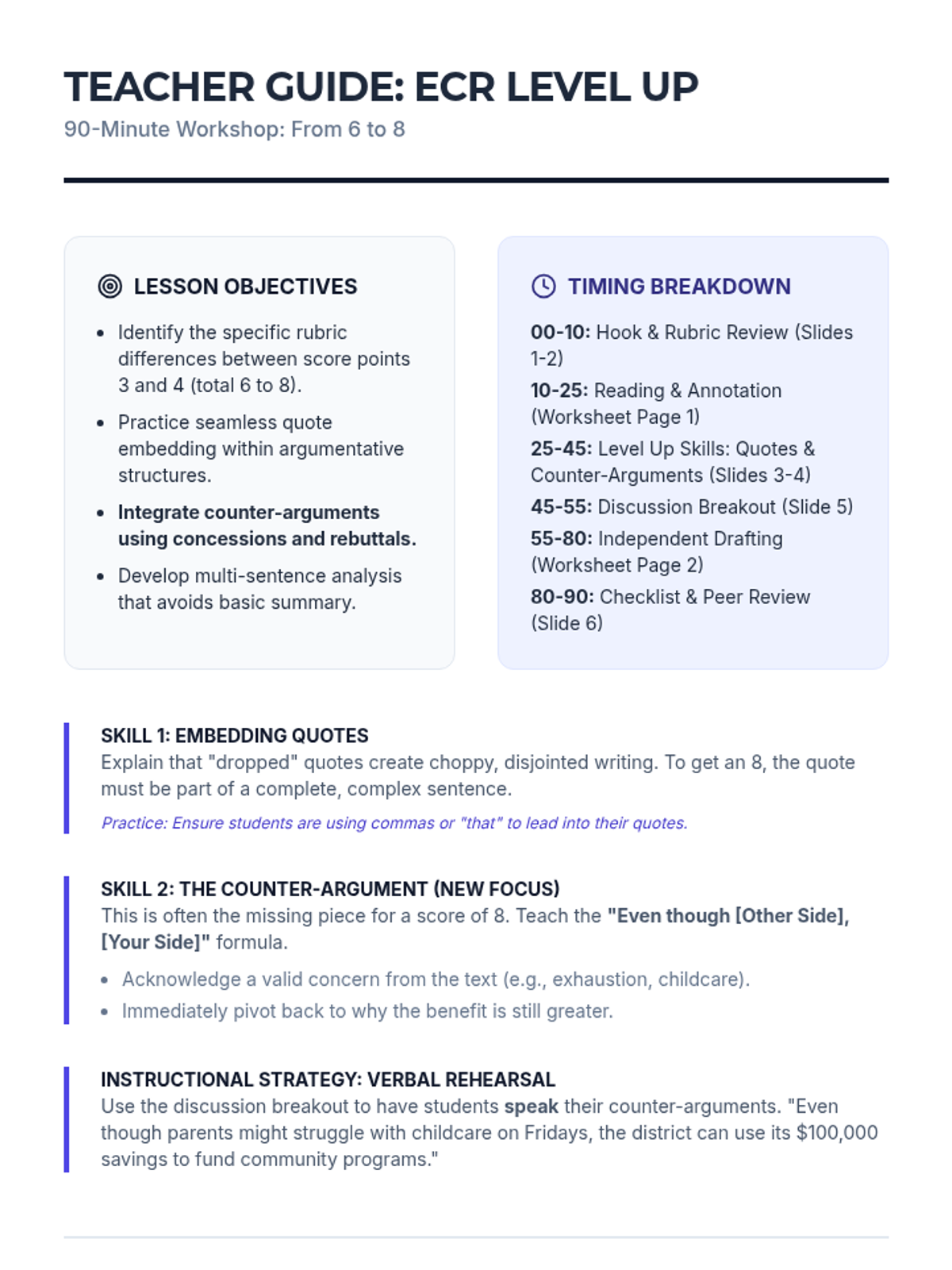
A high-intensity 90-minute workshop designed to move students from a score of 6 to 8 on the Texas English I Argumentative ECR by focusing on quote integration, thorough development, and sophisticated organization. Students analyze a passage on the 4-day school week and practice drafting a high-scoring response.
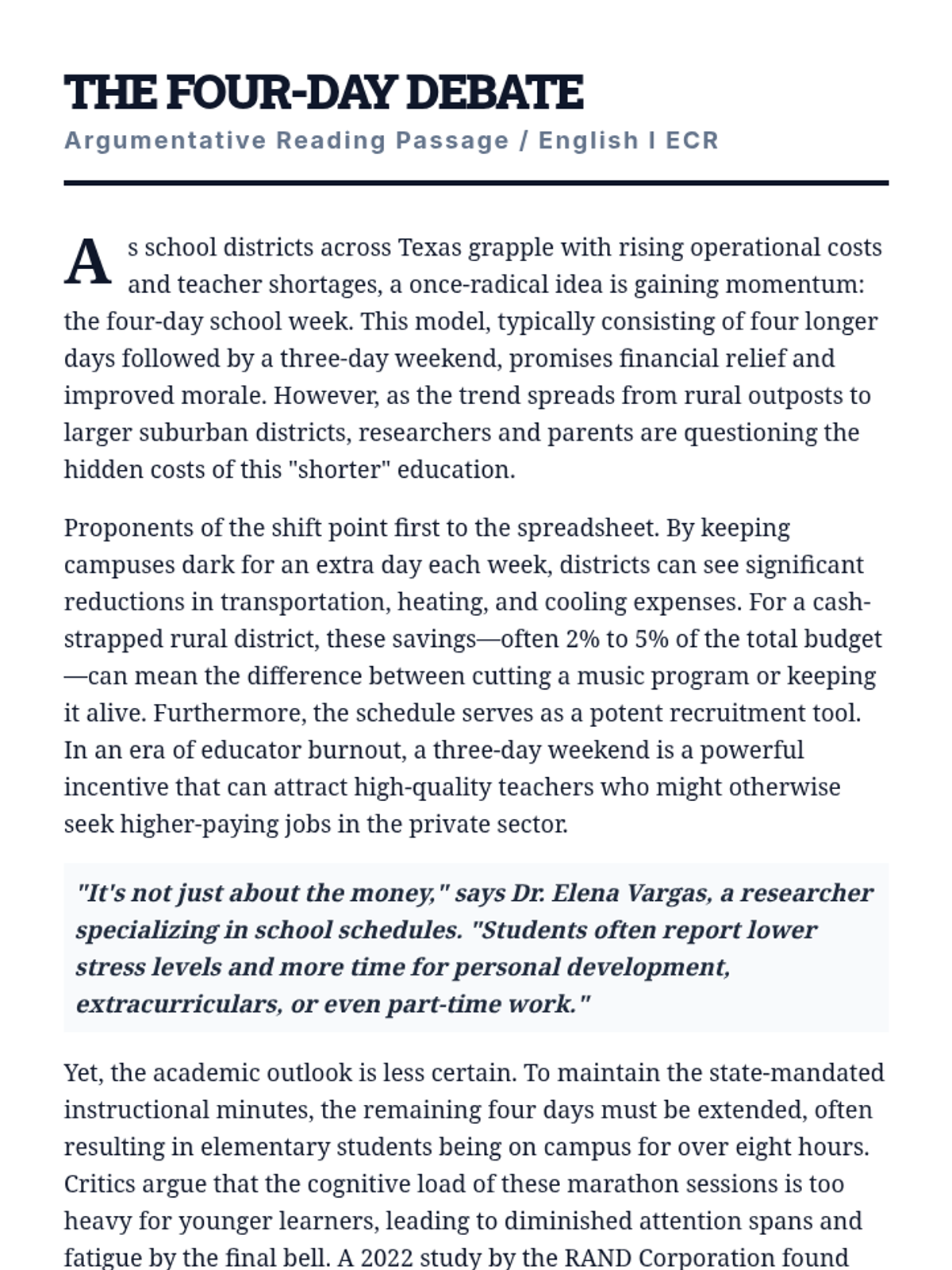
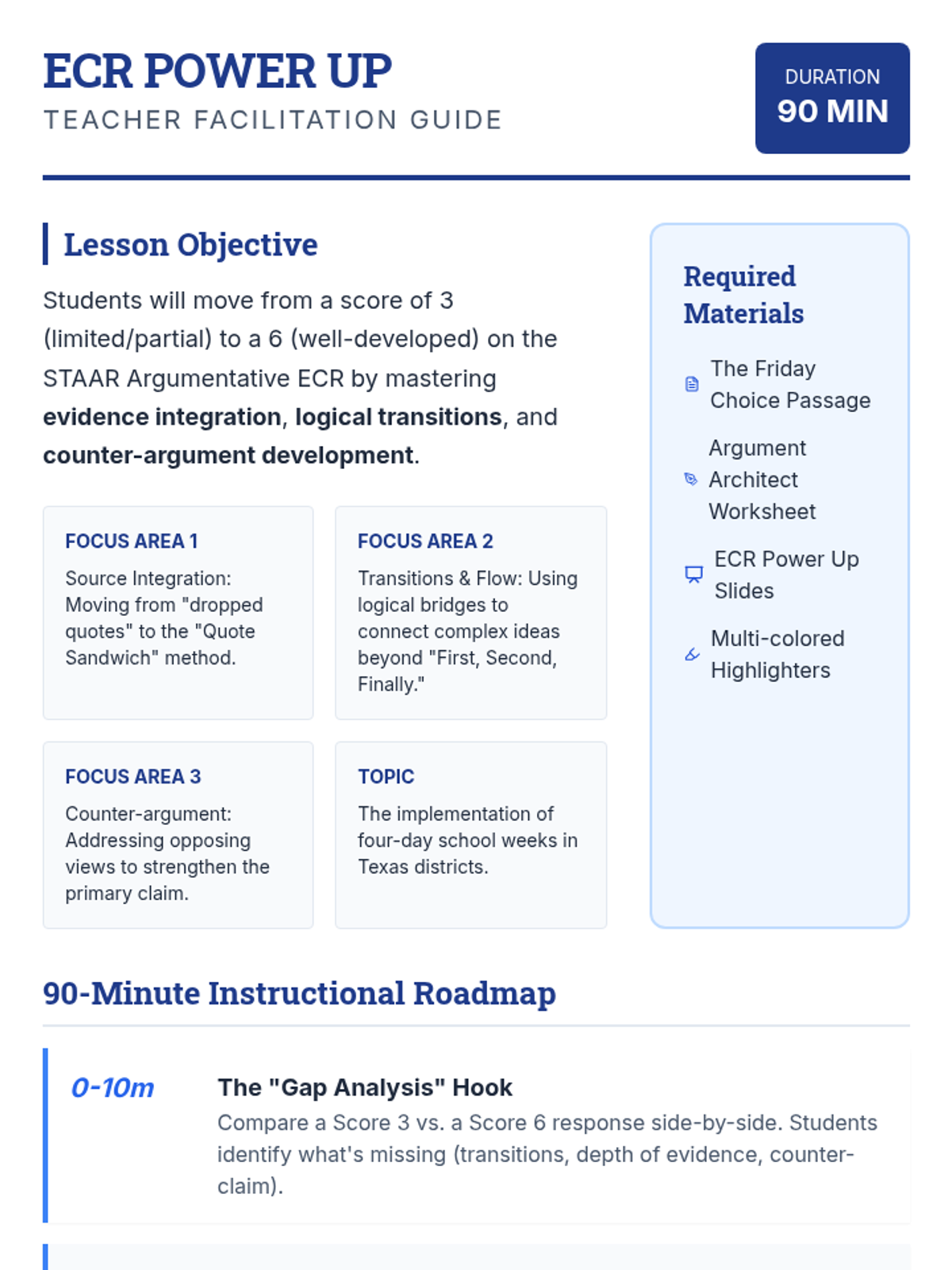
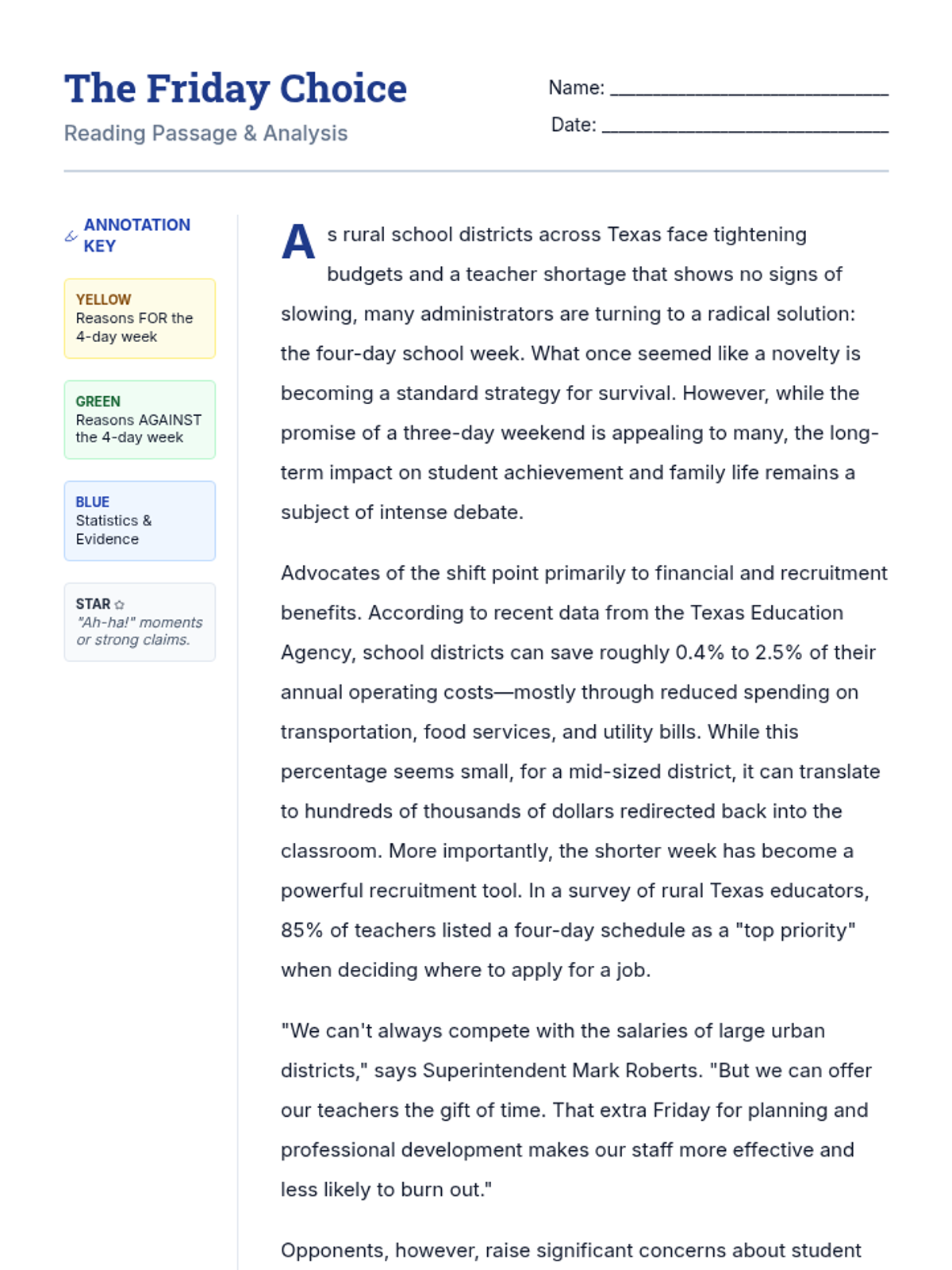
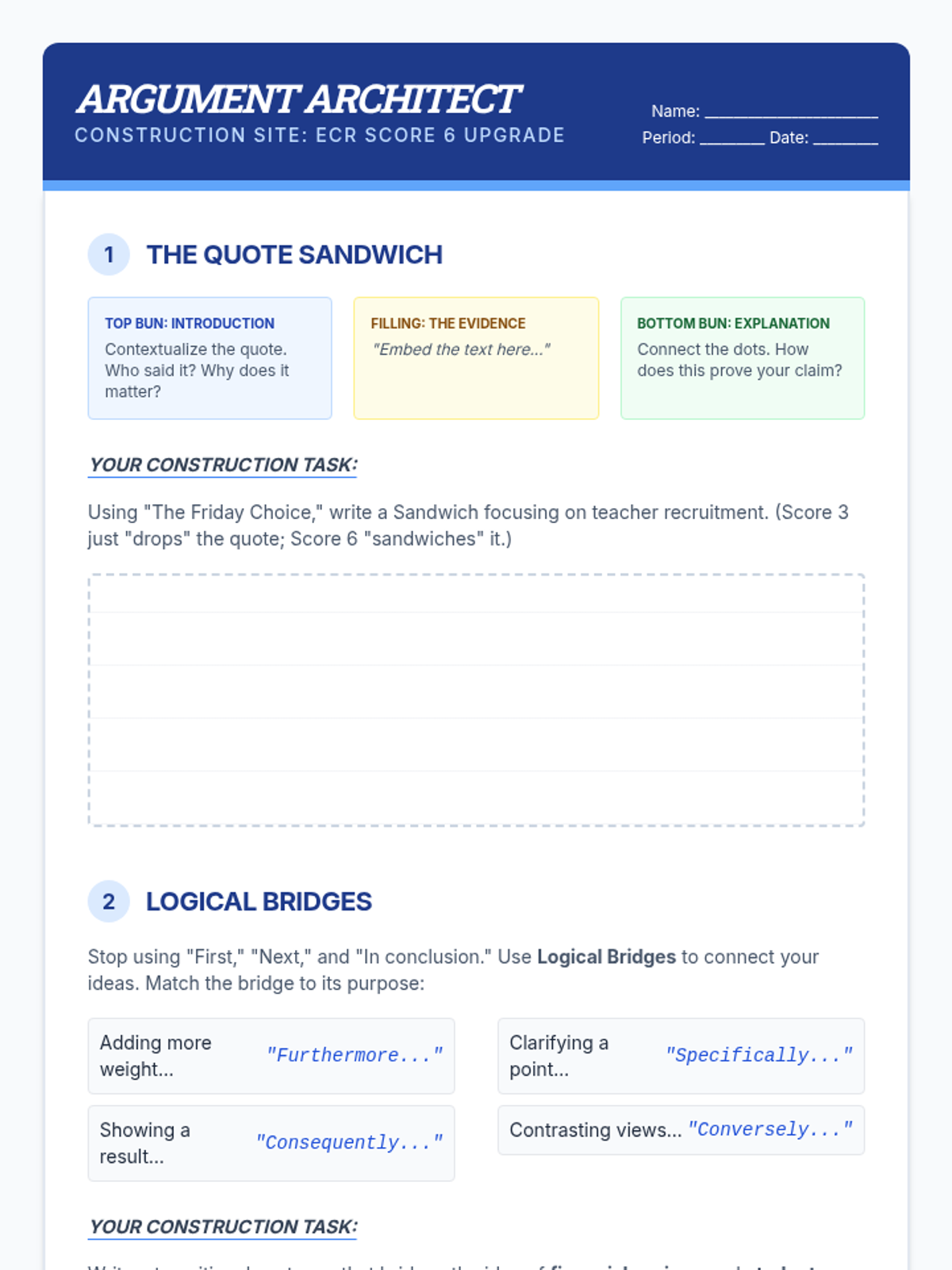
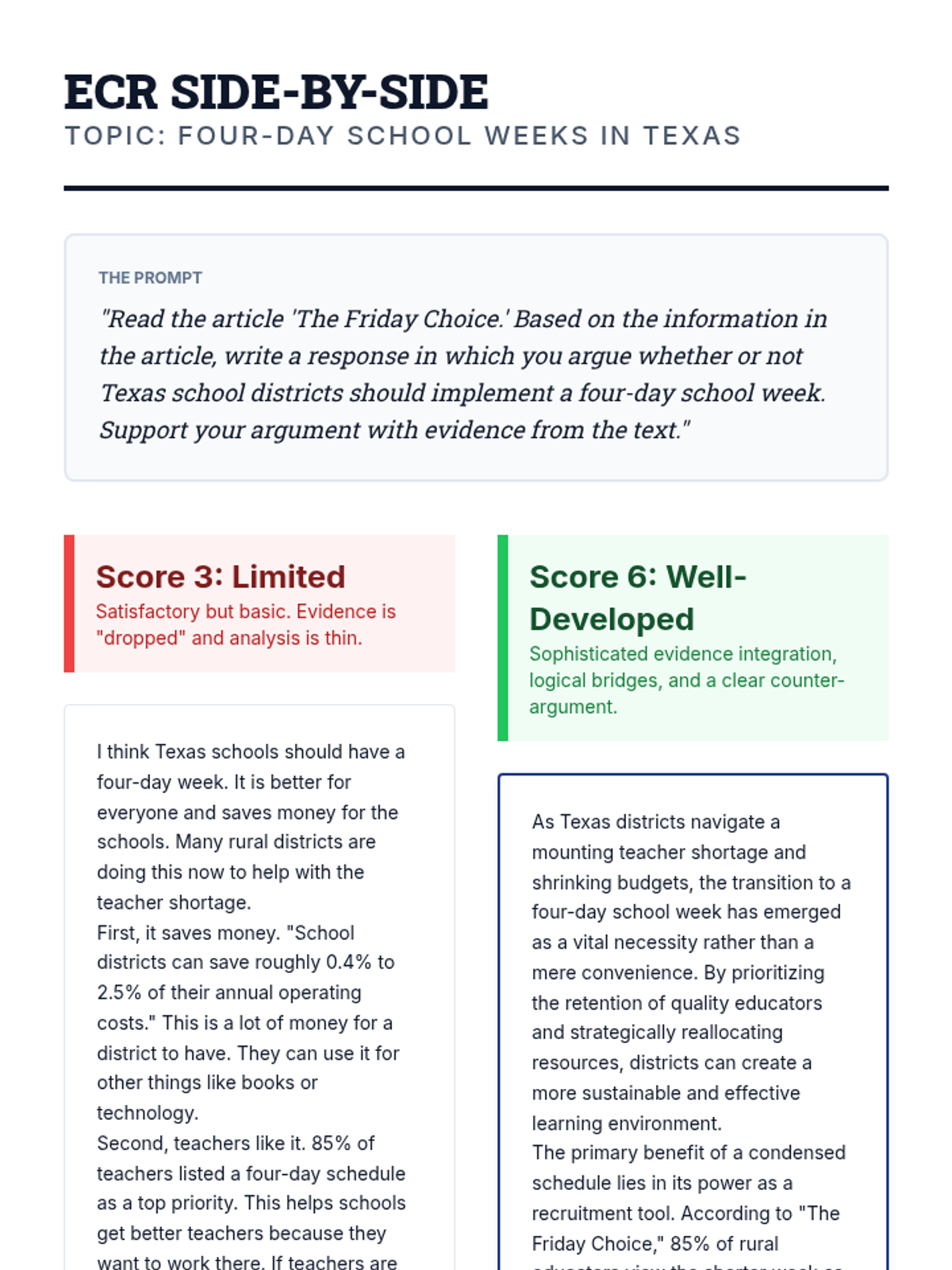
A 90-minute intensive workshop designed to help students transition from a basic score (3) to a top-tier score (6) on the Texas English I Argumentative ECR. The lesson focuses on evidence integration, transitions, and counter-arguments using the controversial topic of four-day school weeks.
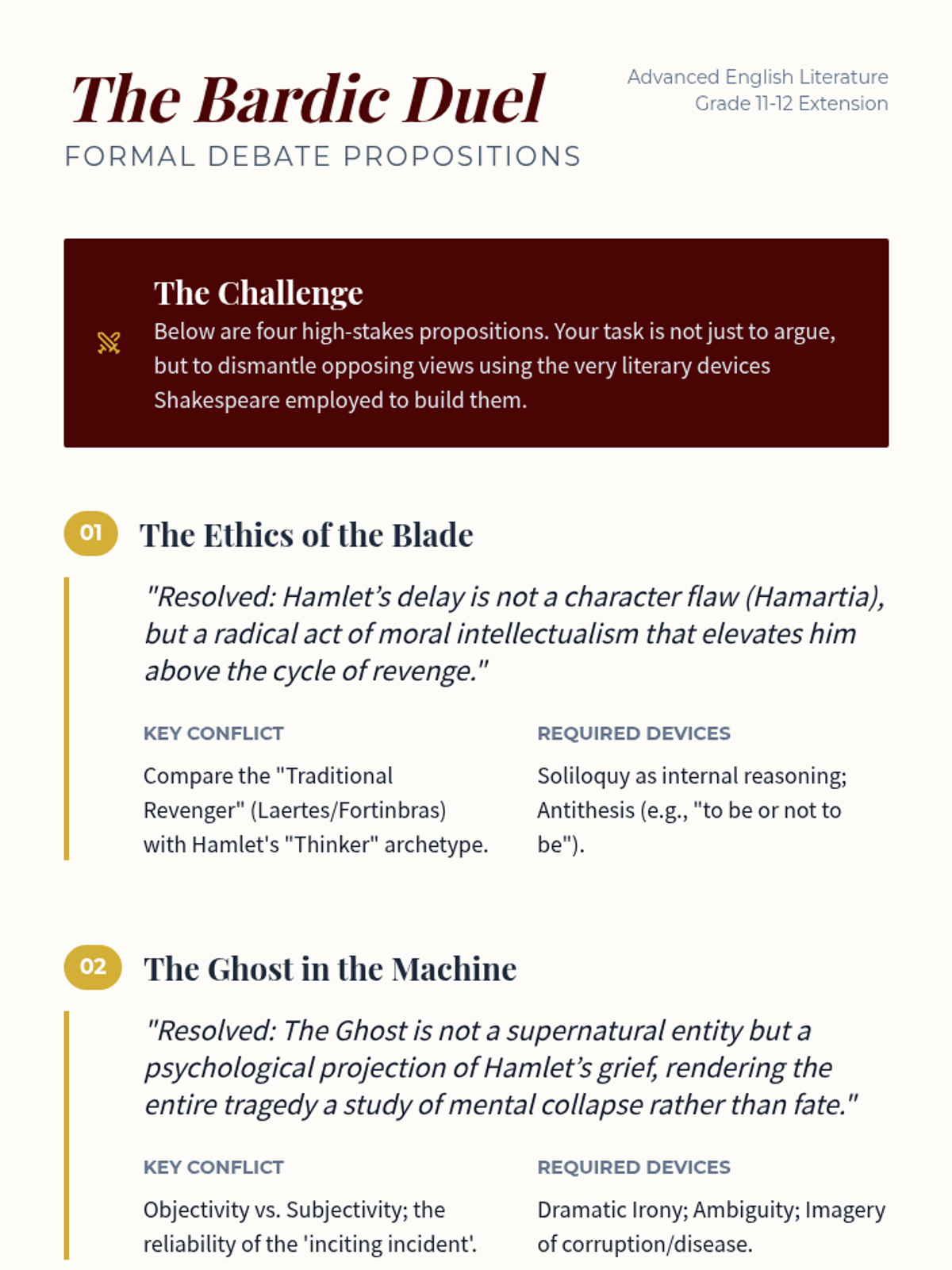
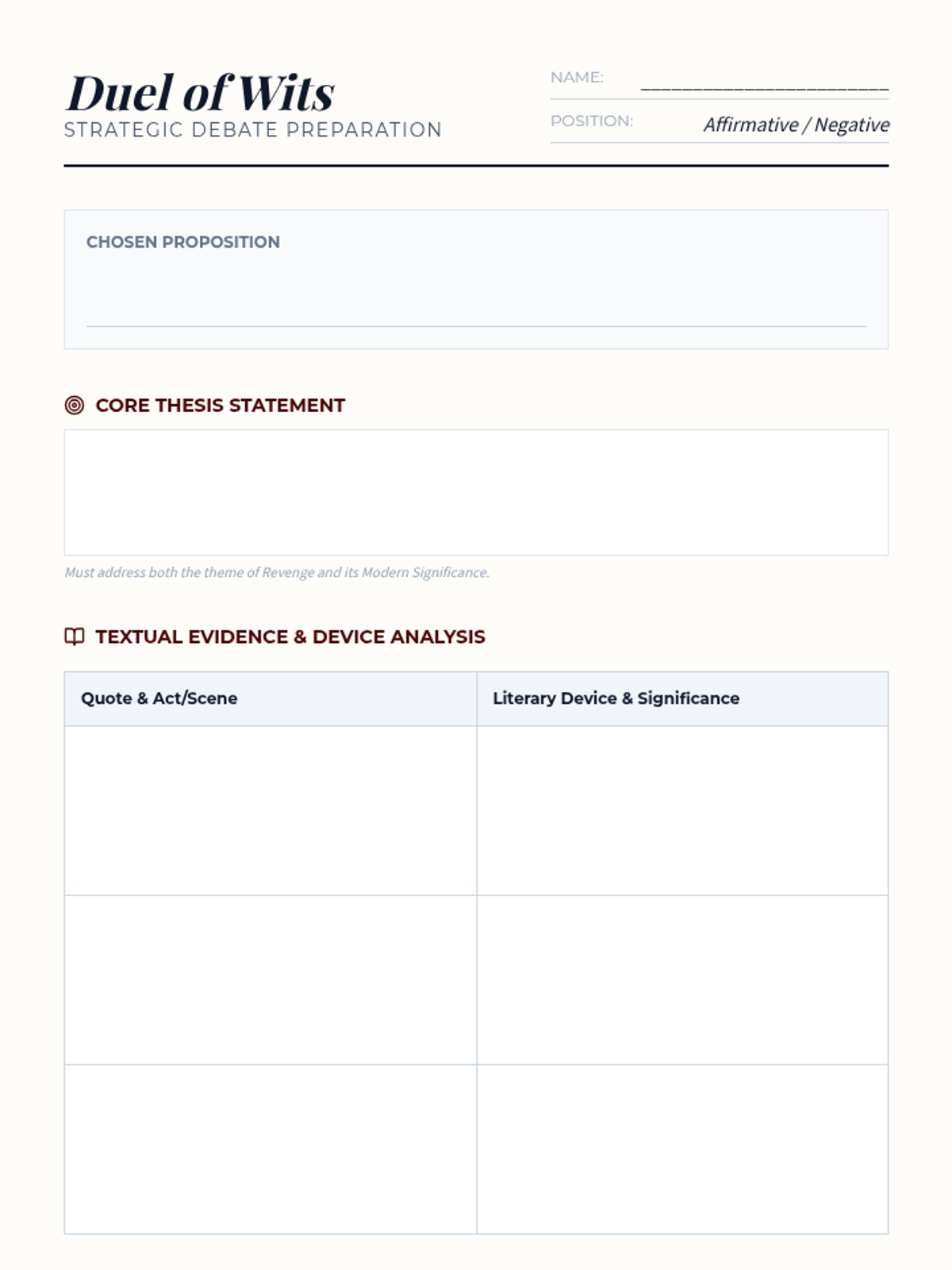
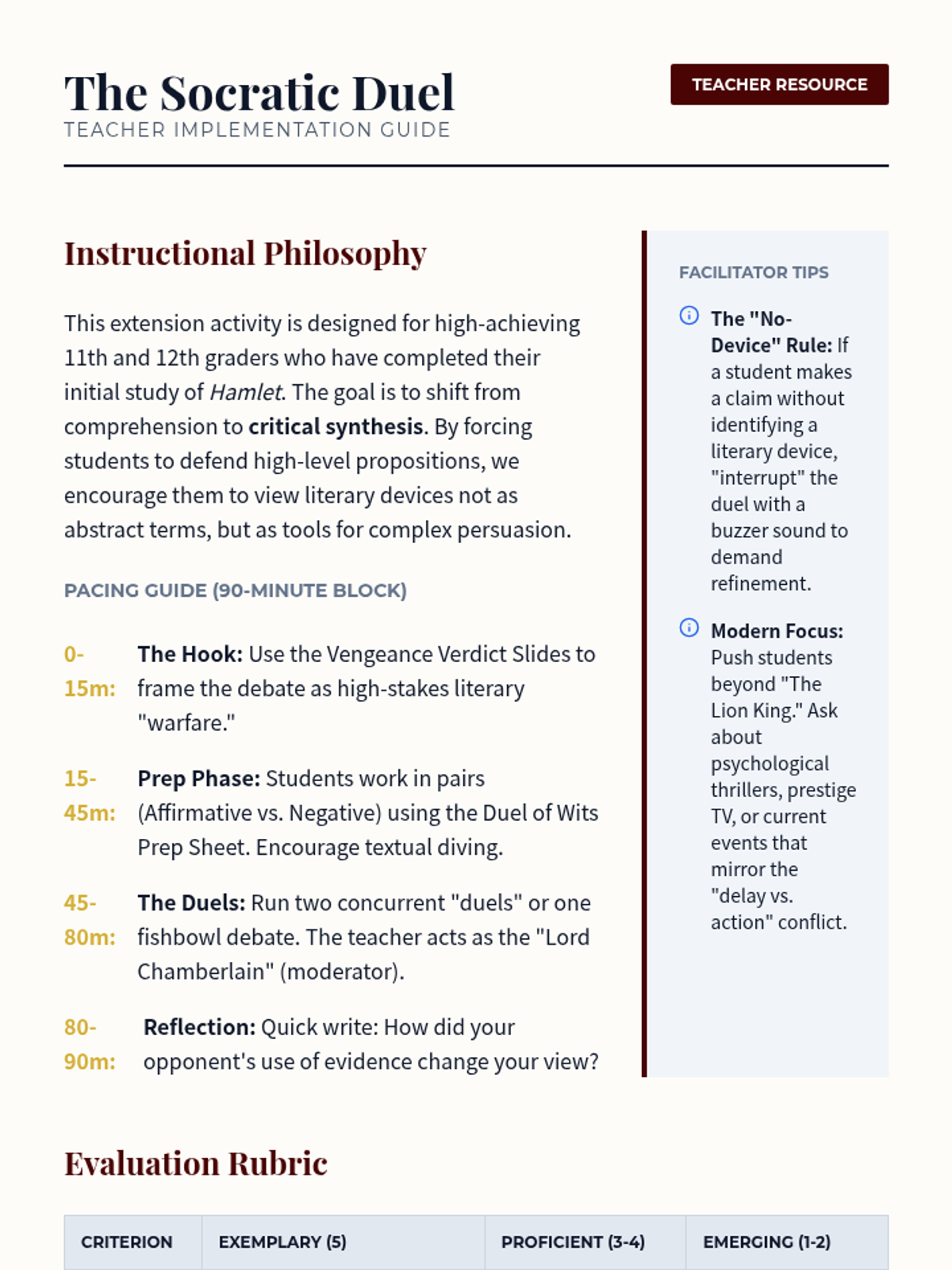
An advanced extension unit for high school seniors that uses high-stakes debate to explore revenge, literary devices, and Shakespeare's enduring legacy in modern storytelling.
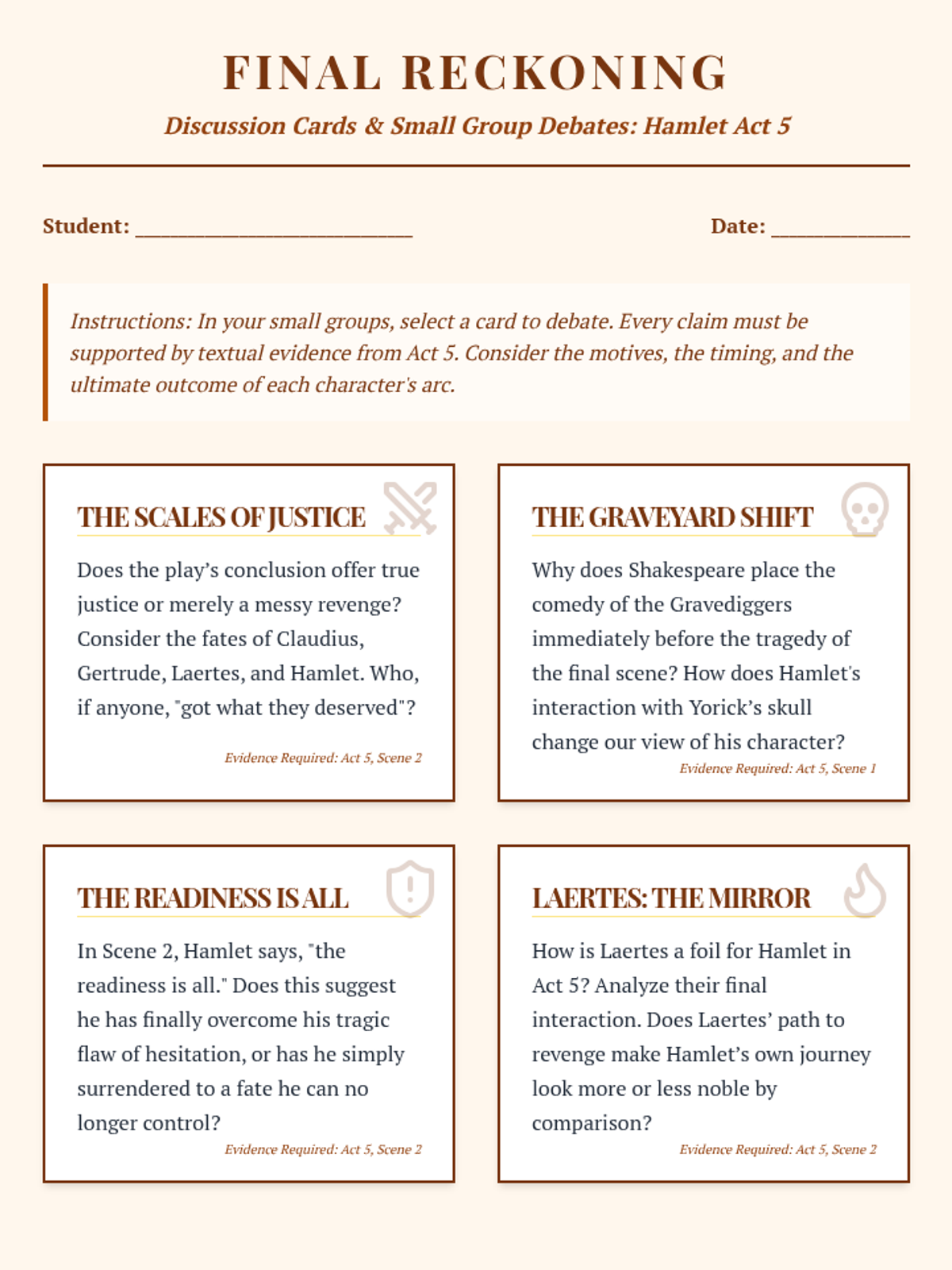
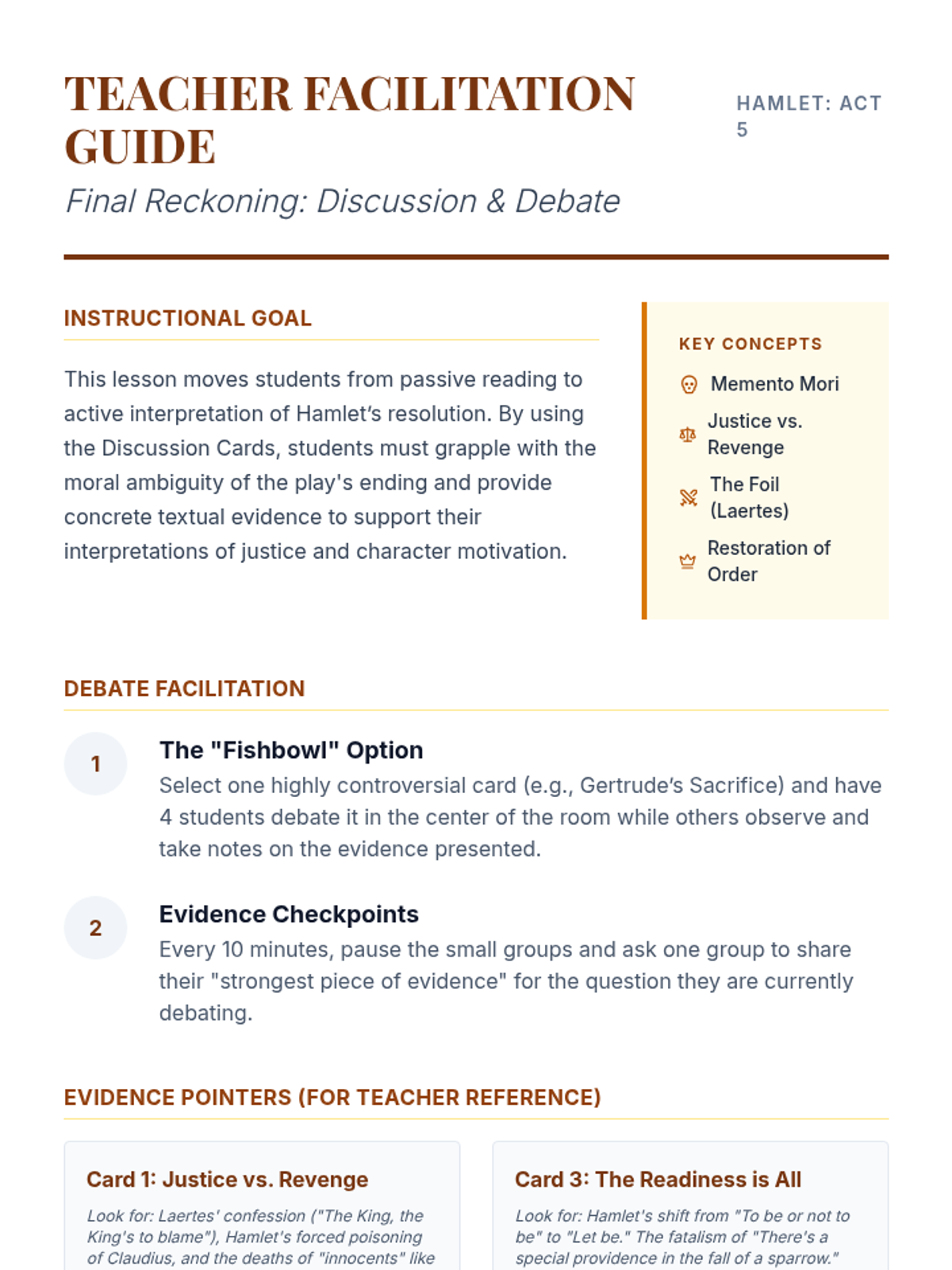
A deep dive into the climactic finale of Shakespeare's Hamlet, focusing on the themes of revenge, the nature of justice, and the ultimate resolution of Hamlet's tragic journey. Students will engage in evidence-based debates to analyze character motivations and the play's tragic conclusion.
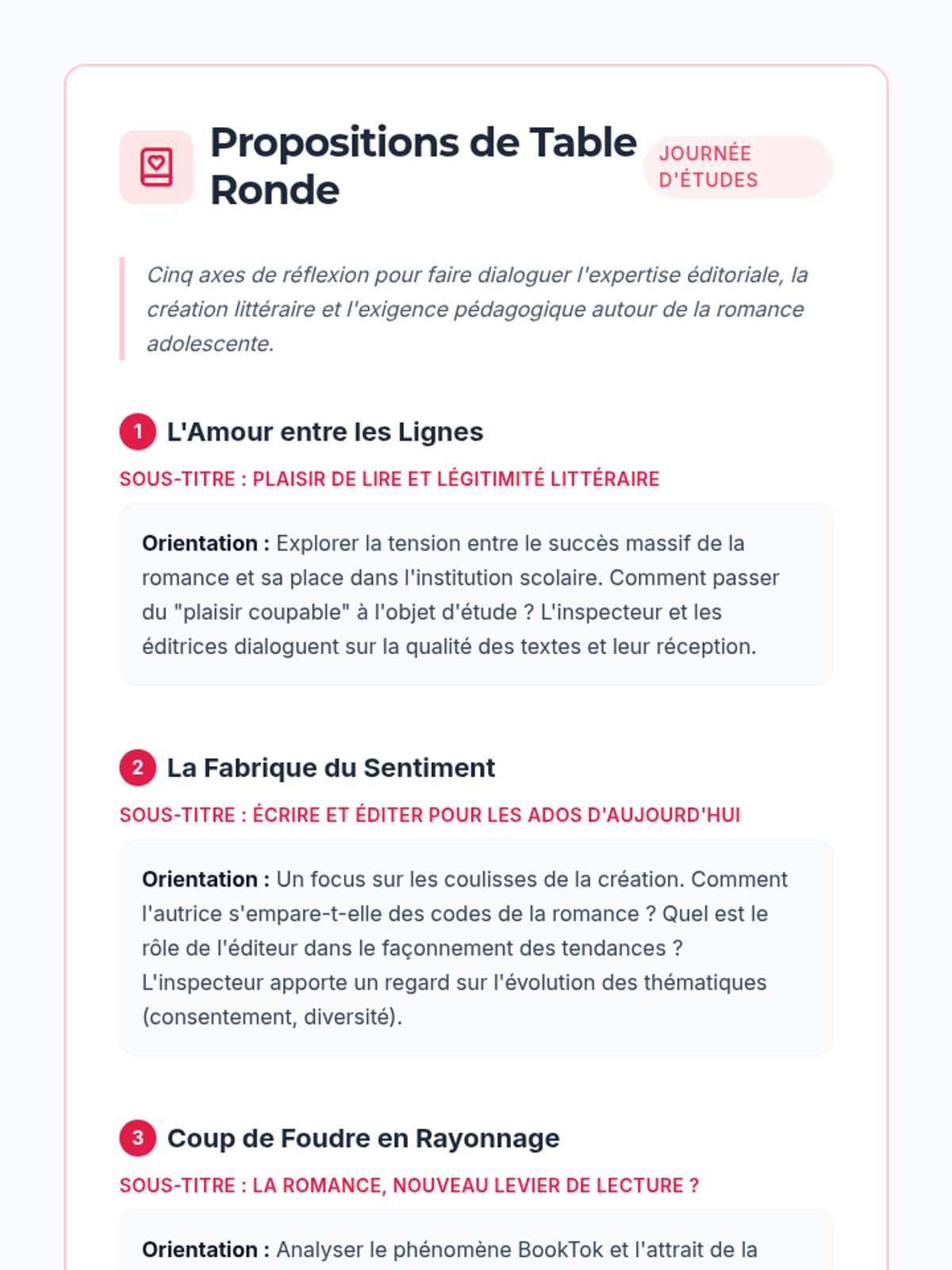
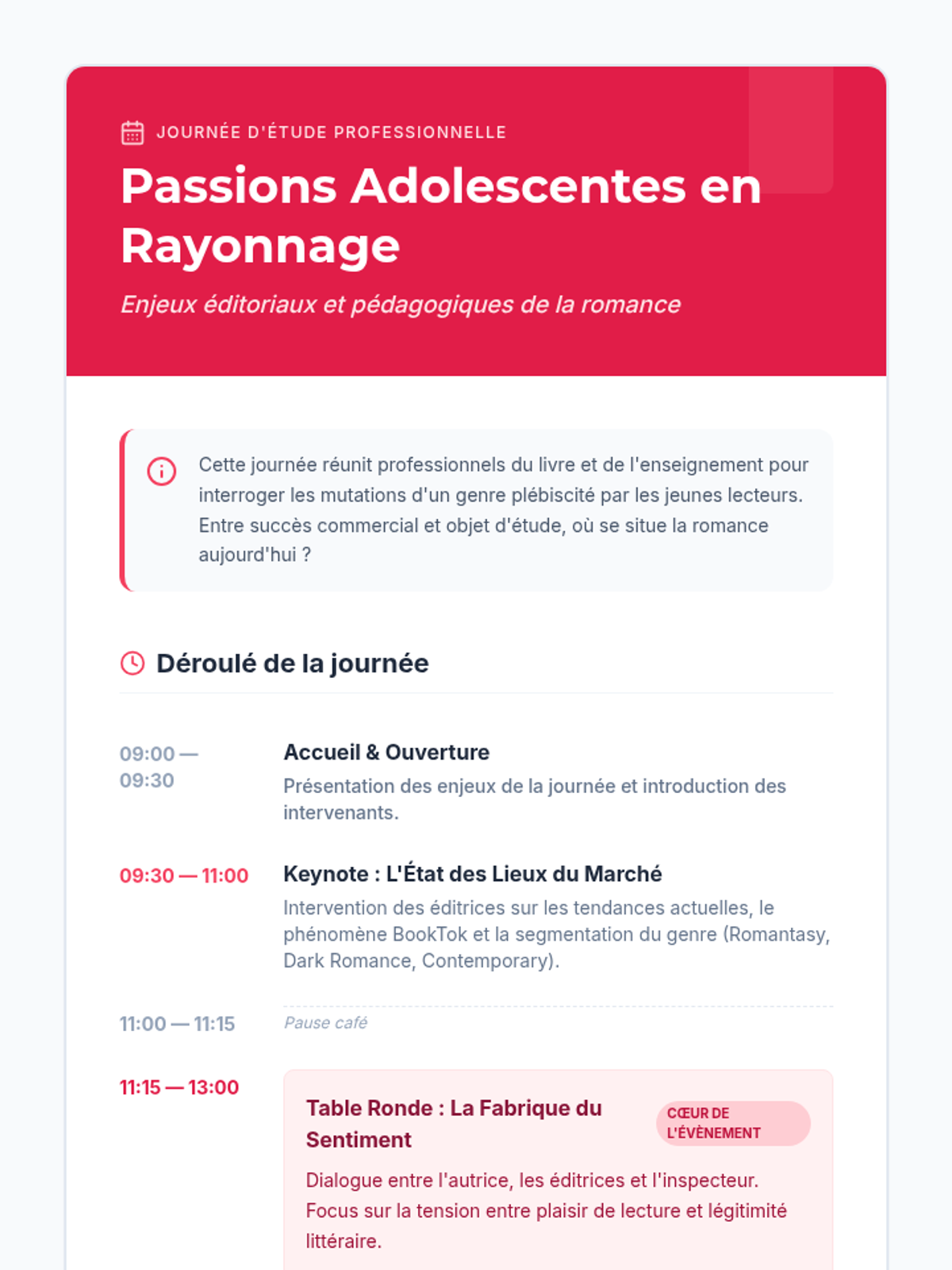
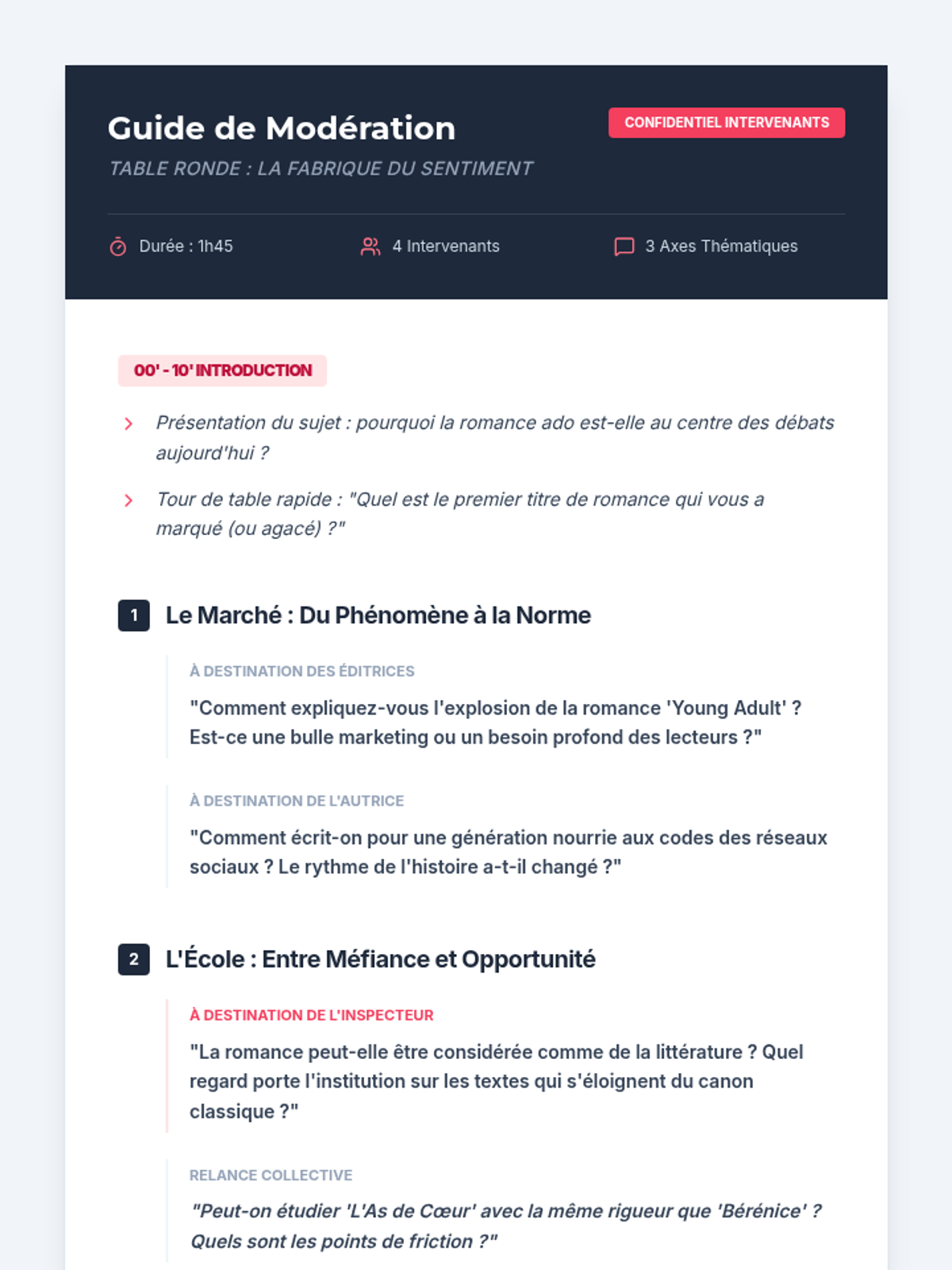
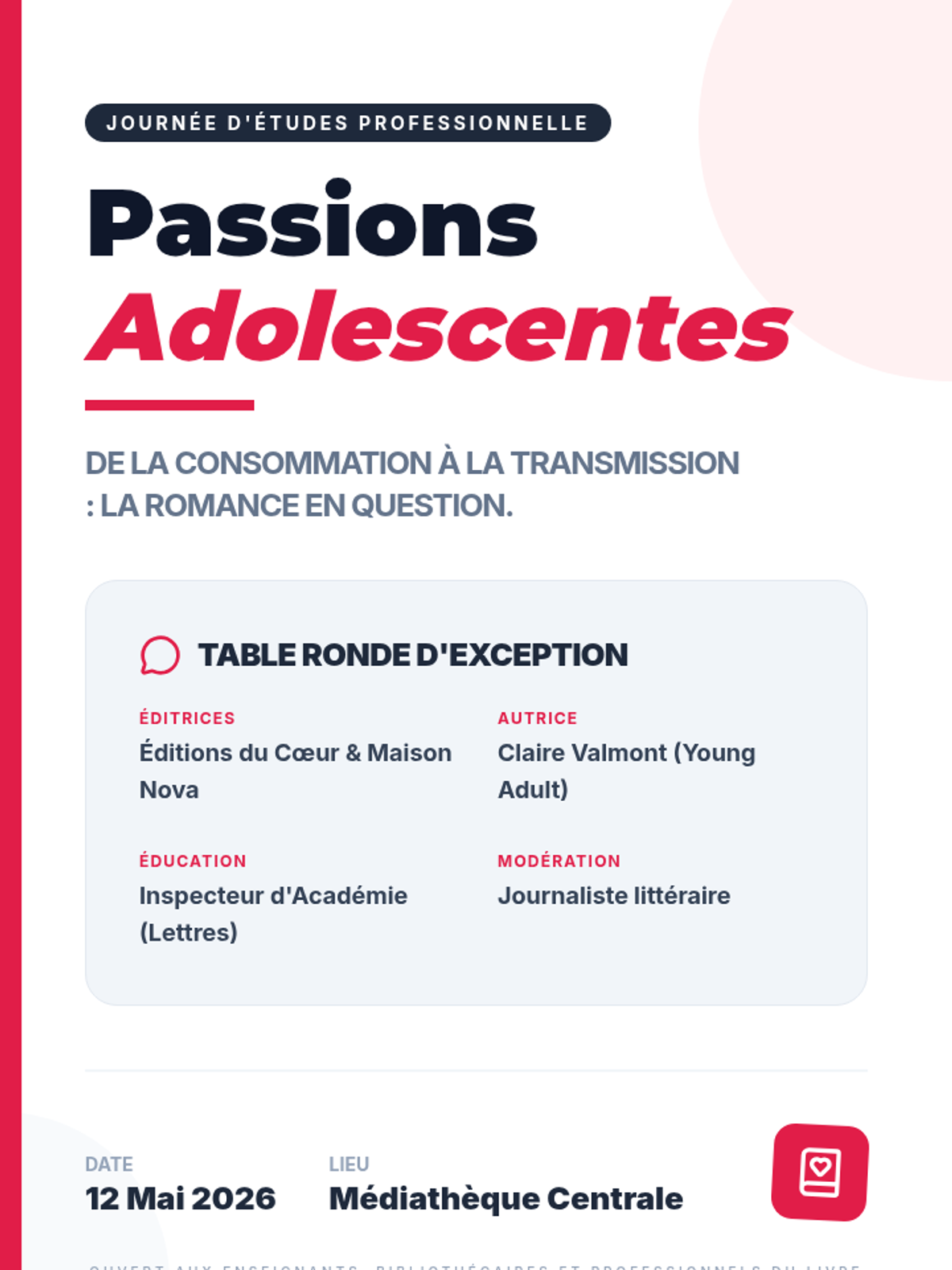
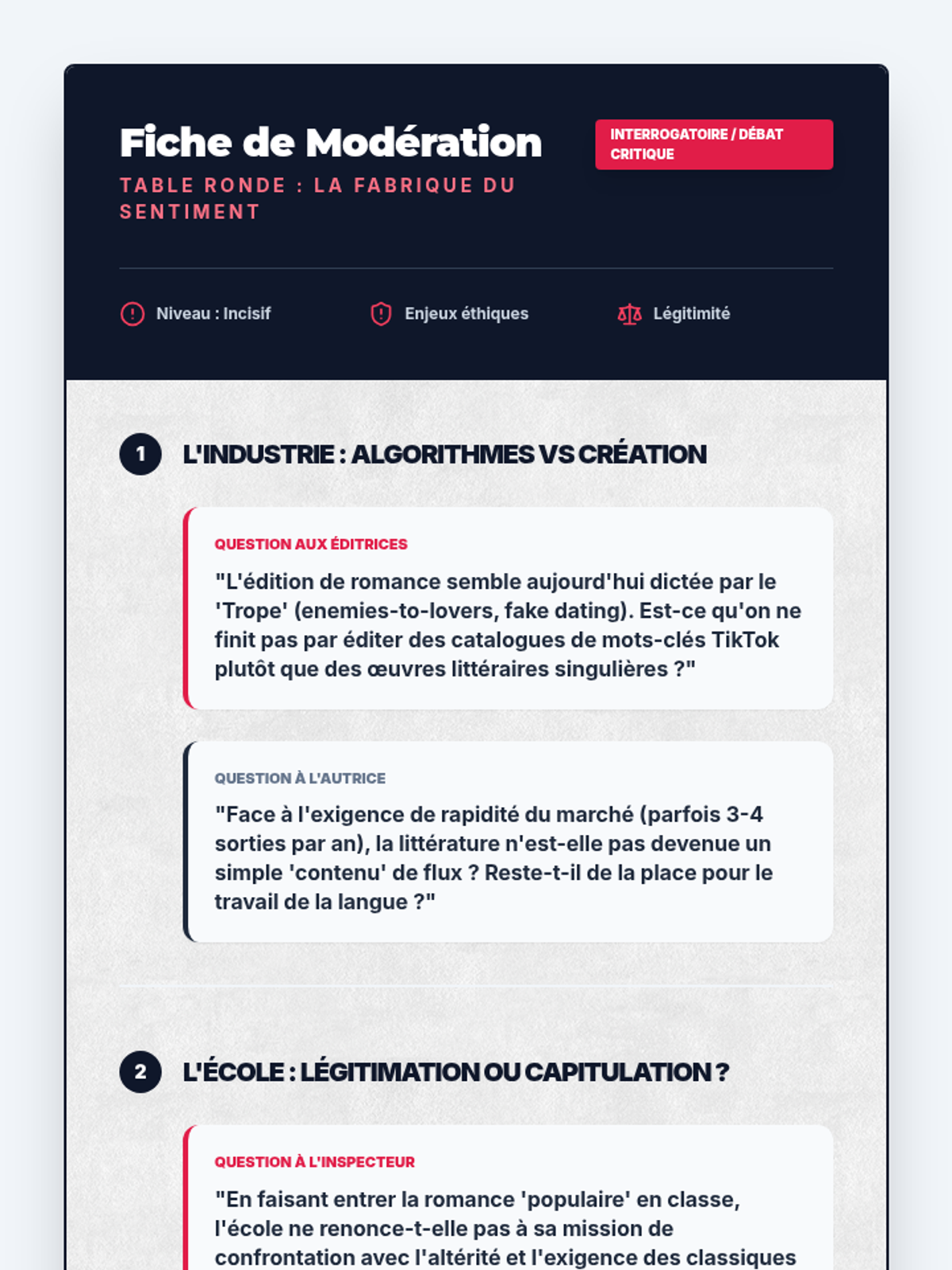
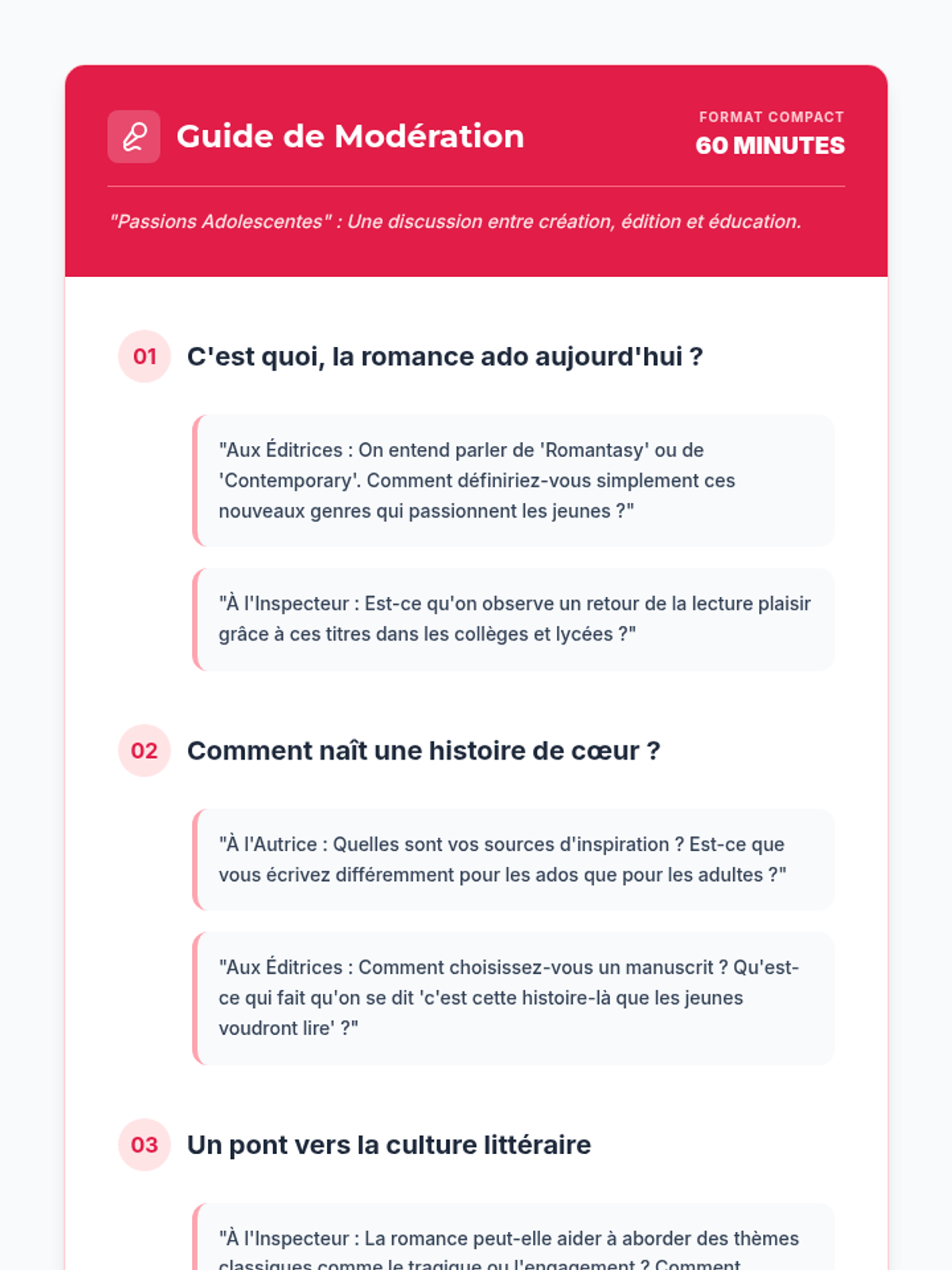
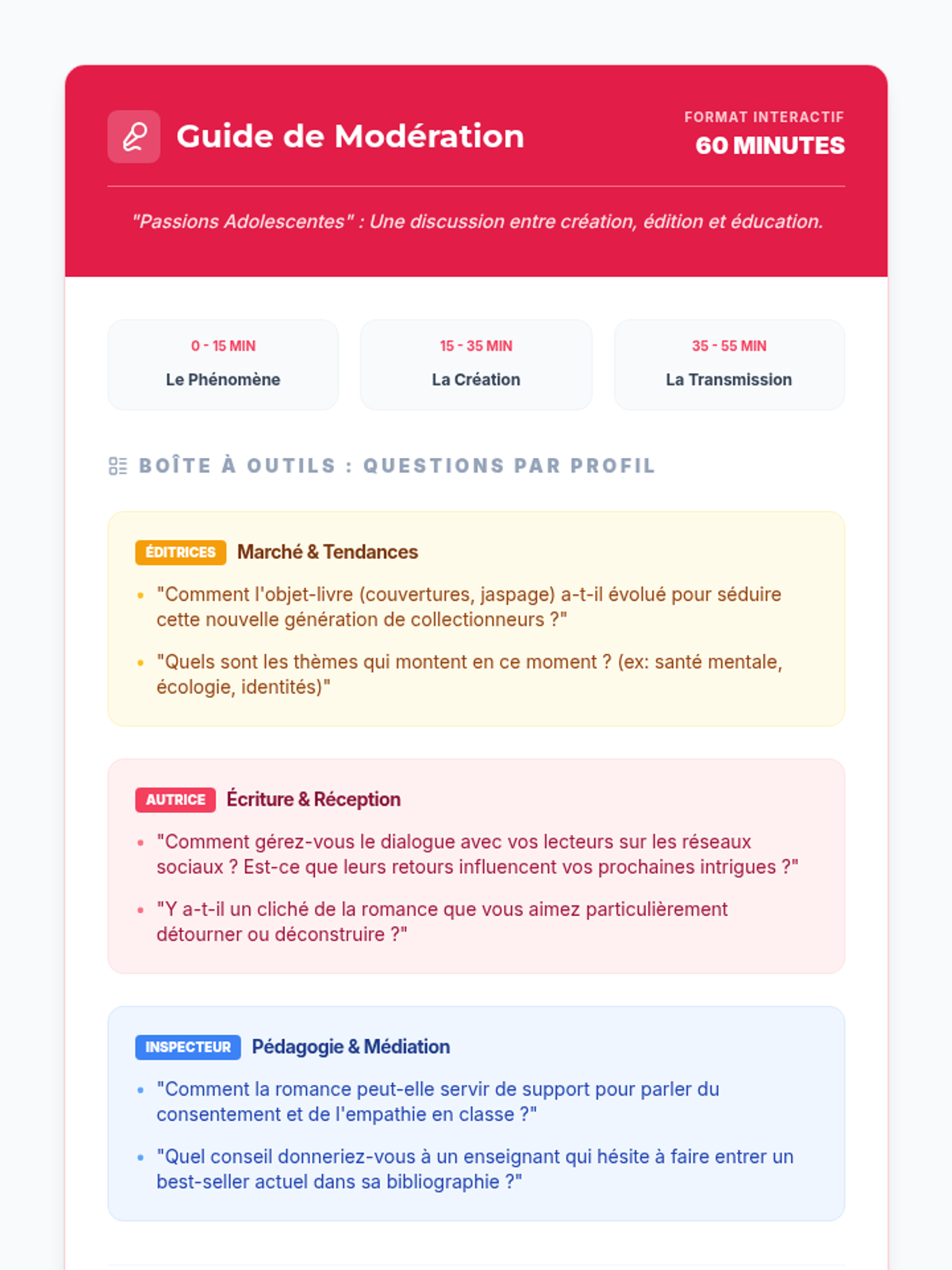
Préparation et organisation de la table ronde sur la romance adolescente avec des professionnels de l'édition et de l'éducation.
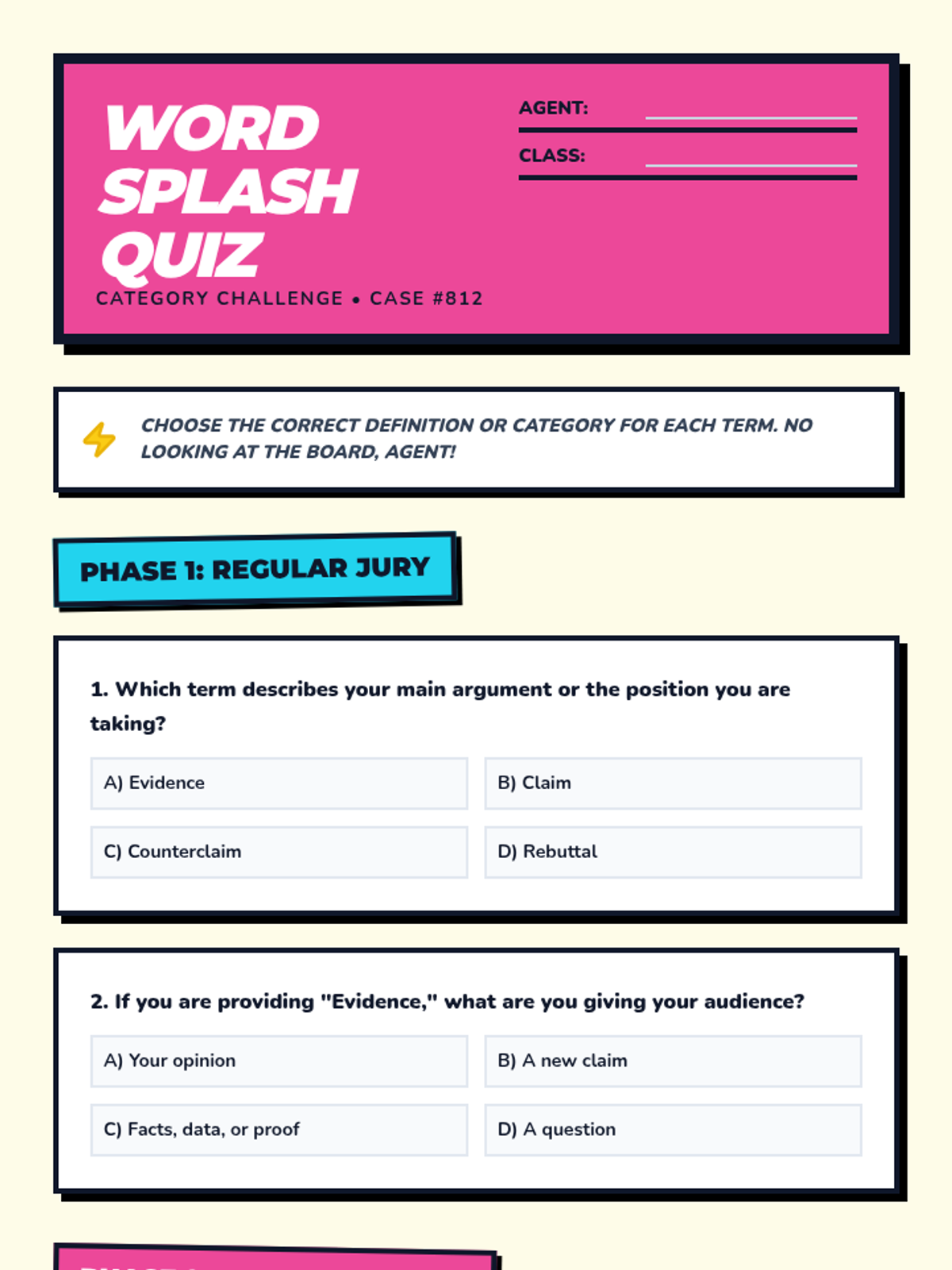
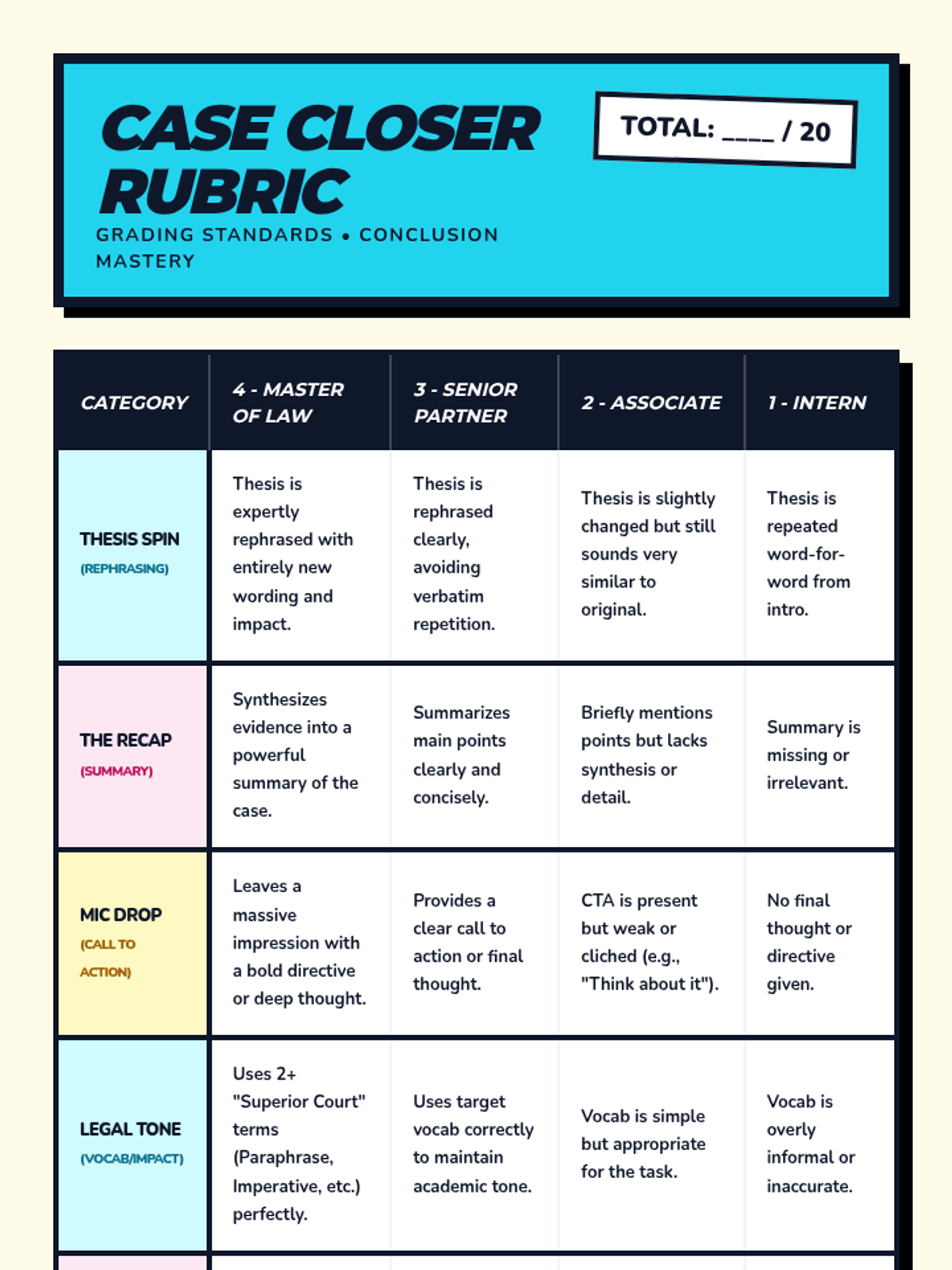
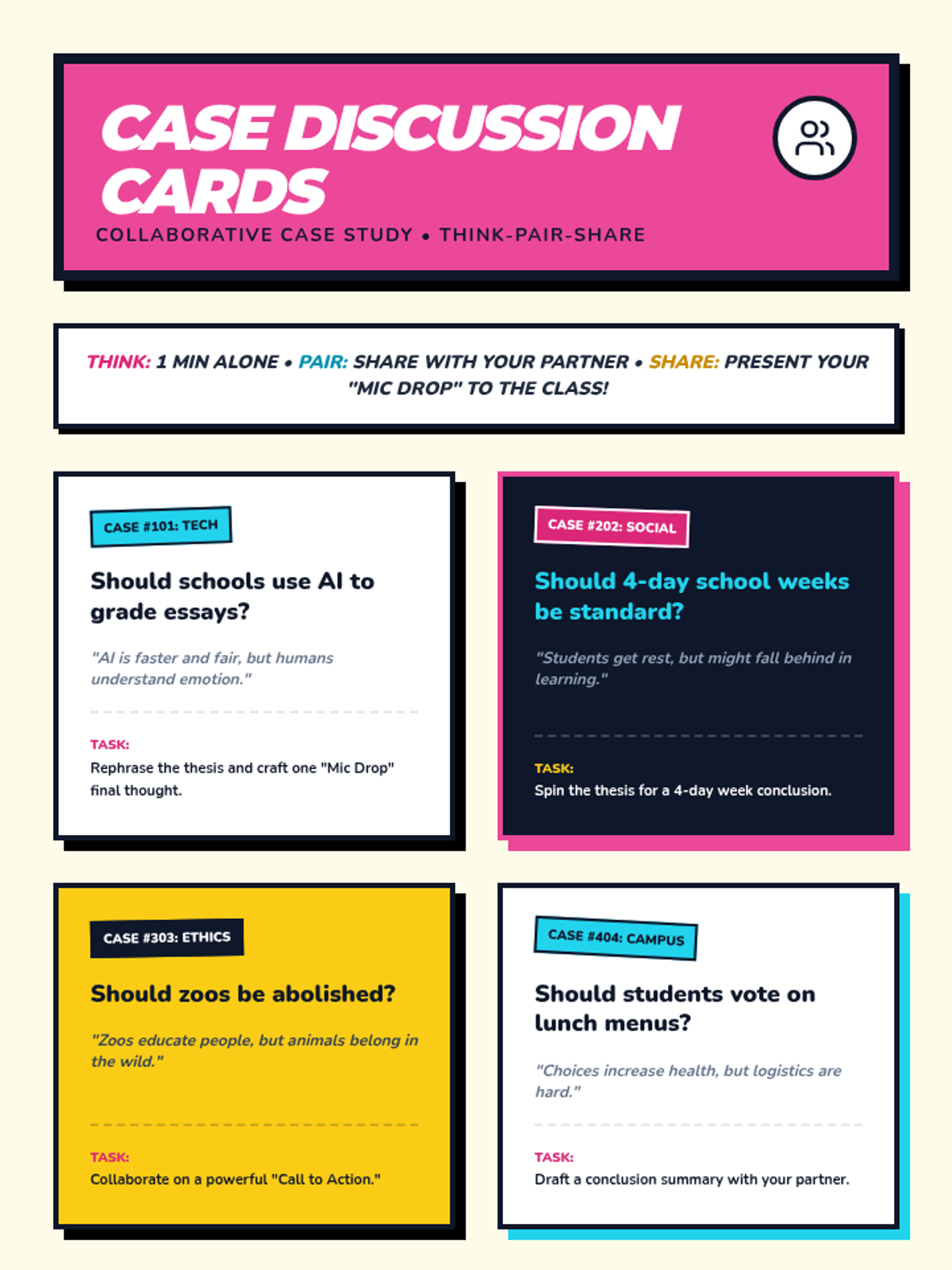
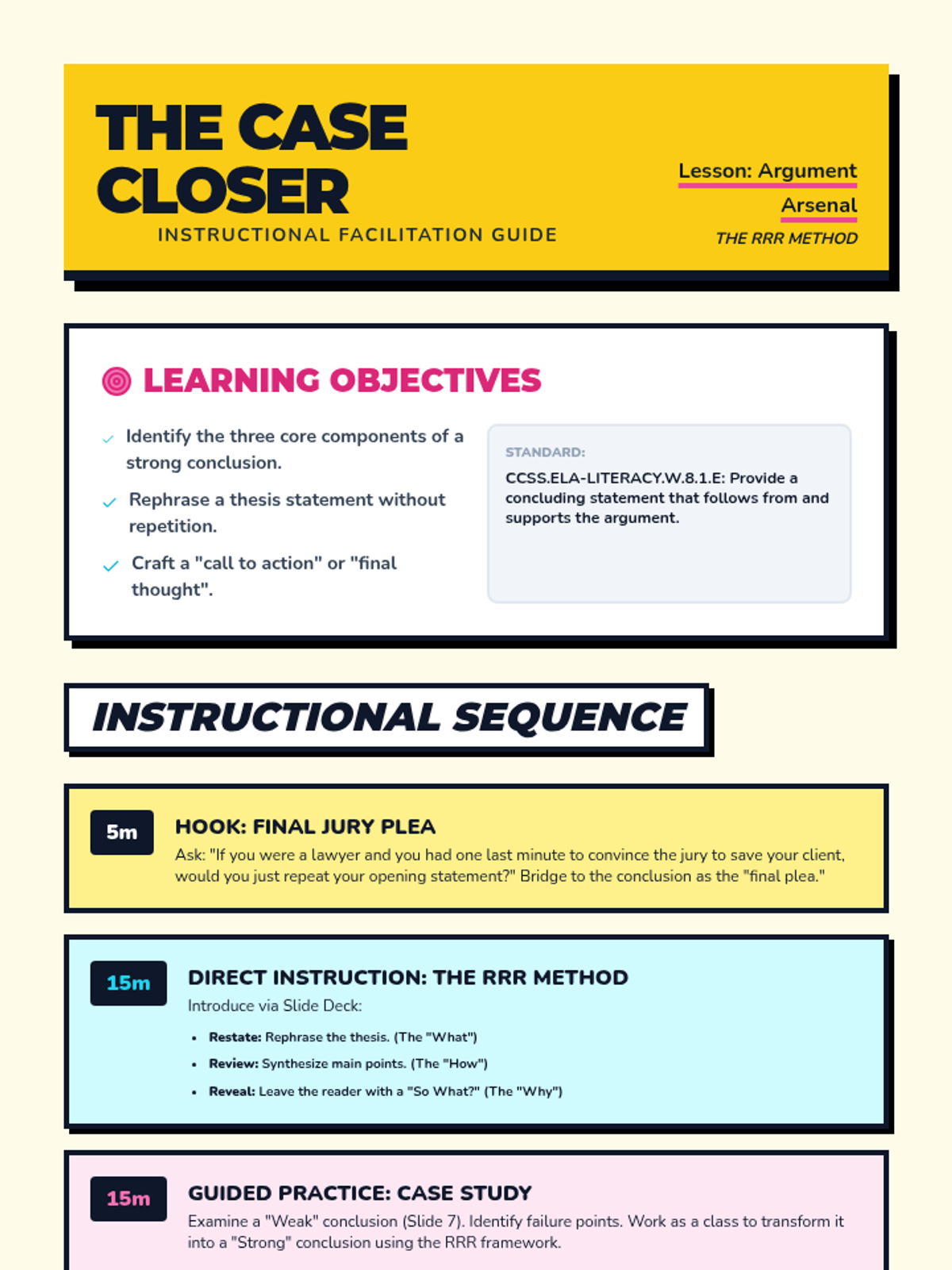
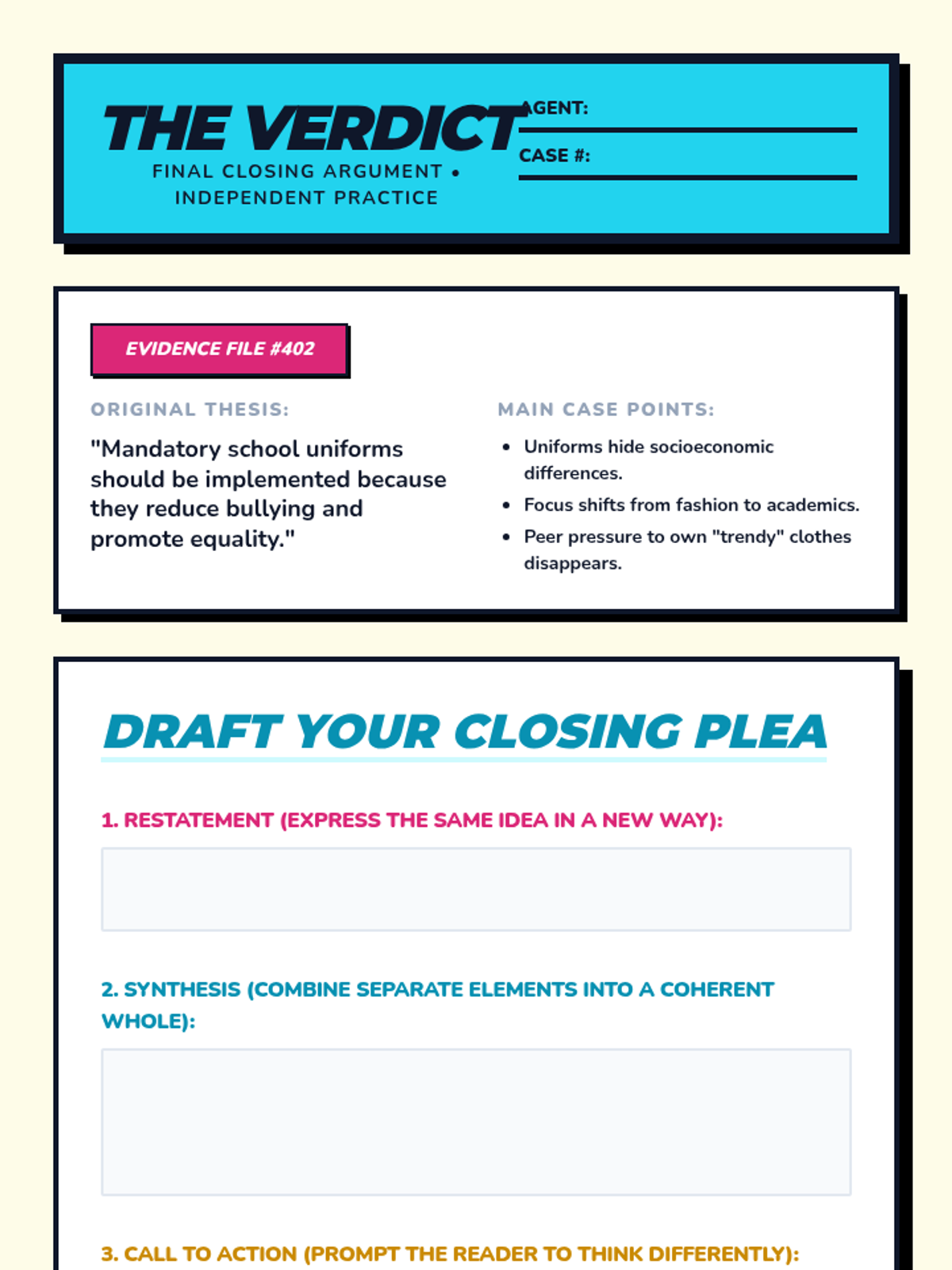
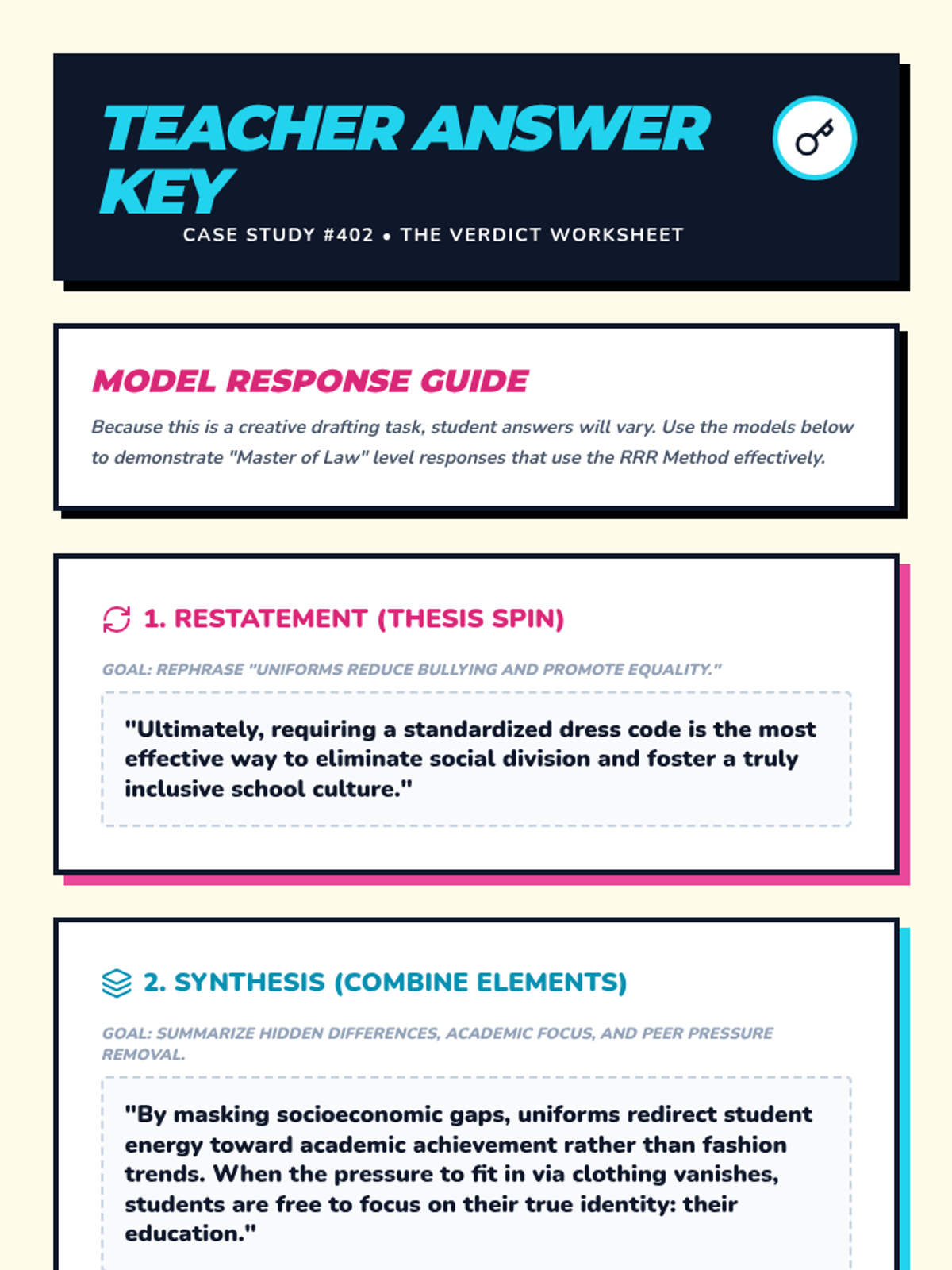
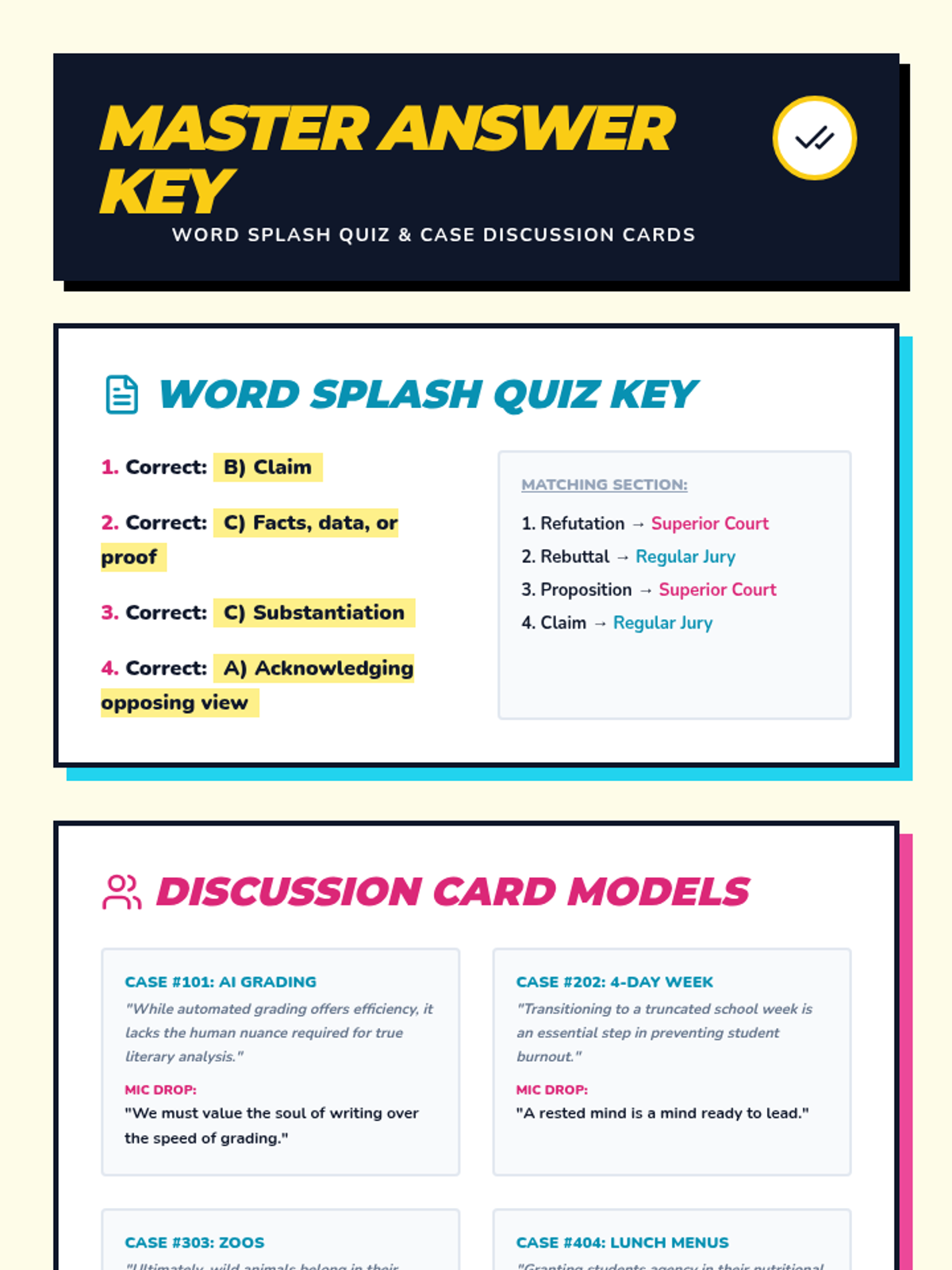
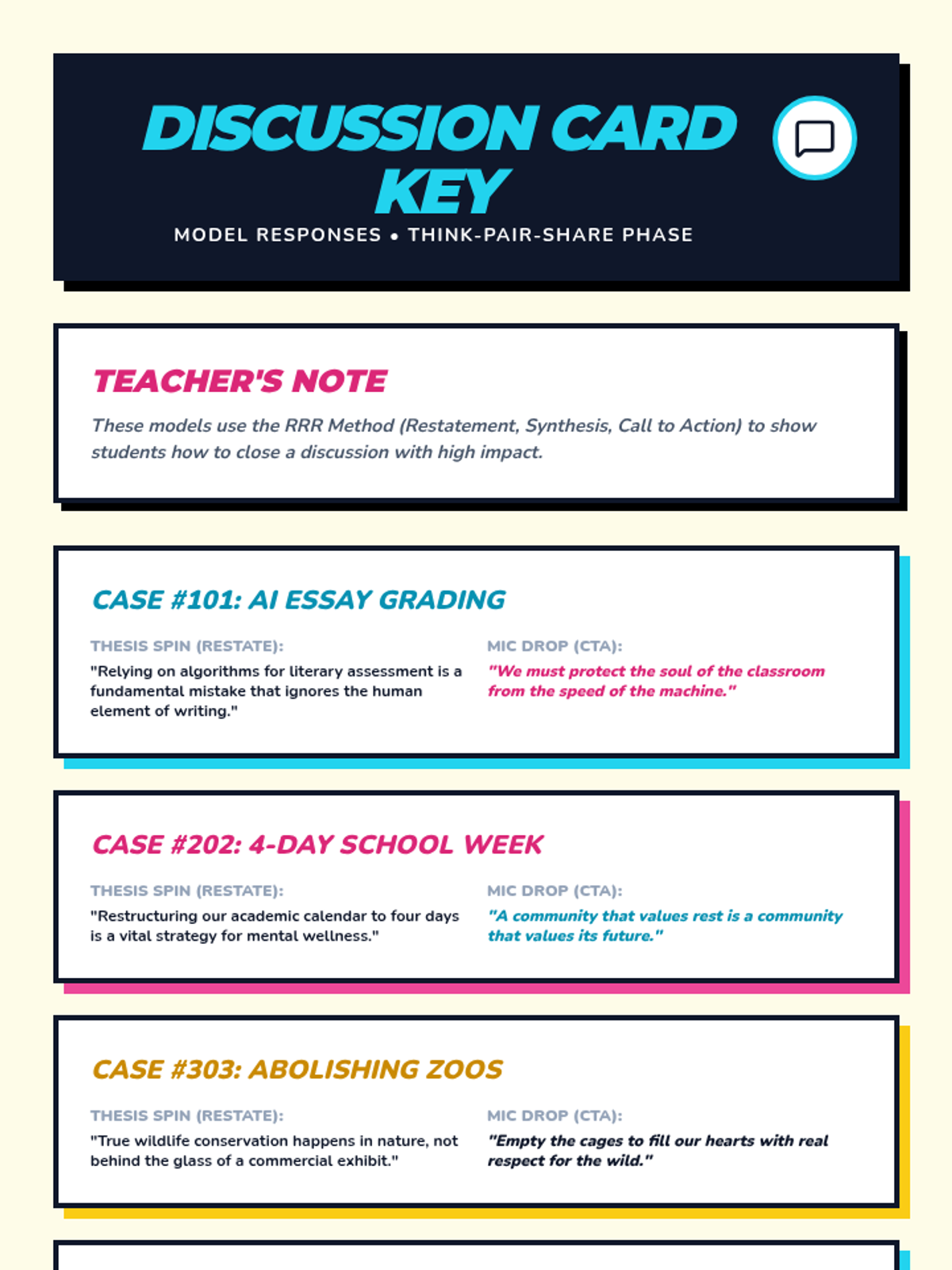
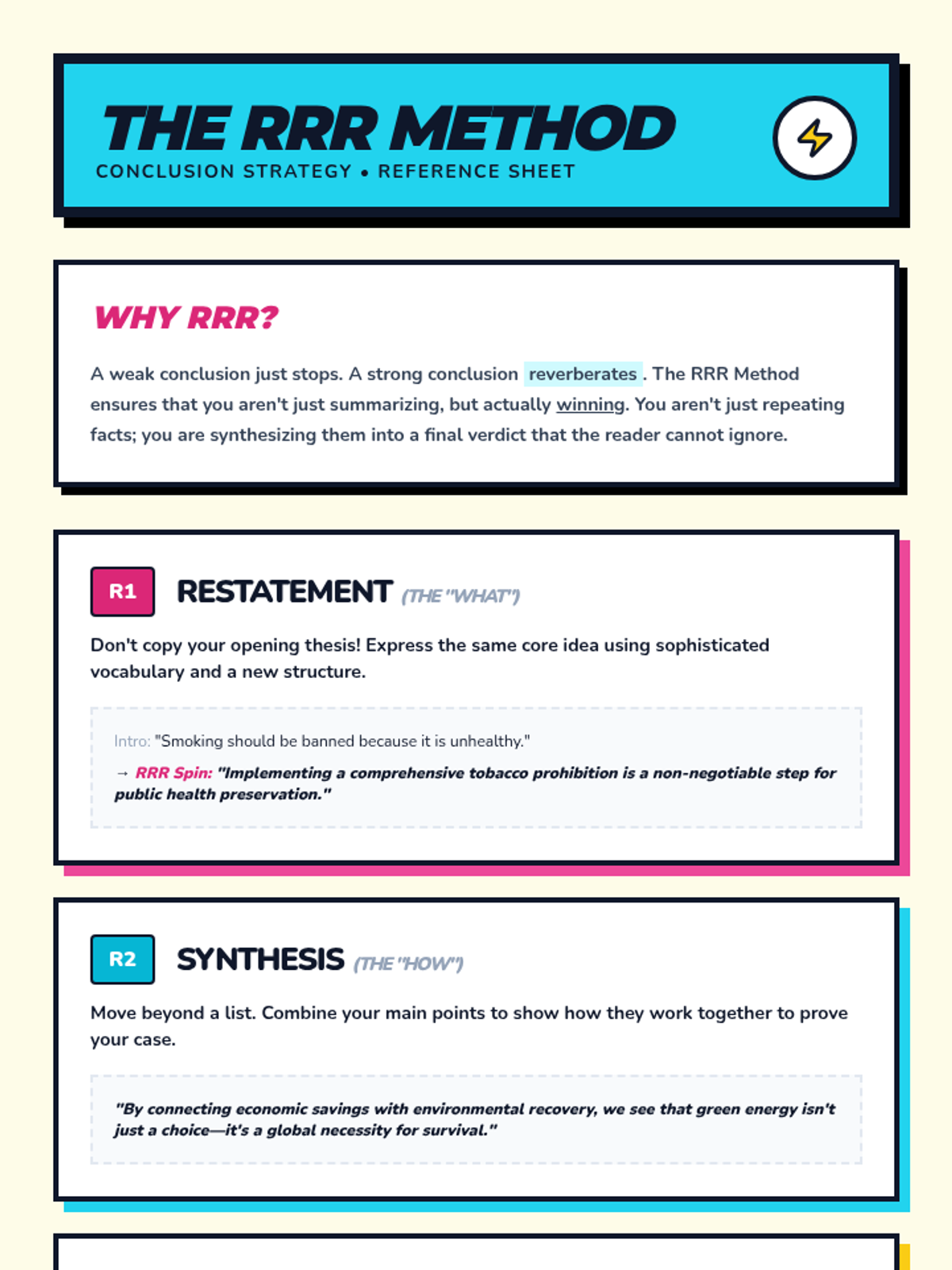
A comprehensive lesson on the structural pillars of argumentative writing, using a courtroom theme to master claims, evidence, and counter-arguments through fast-paced, high-impact activities.
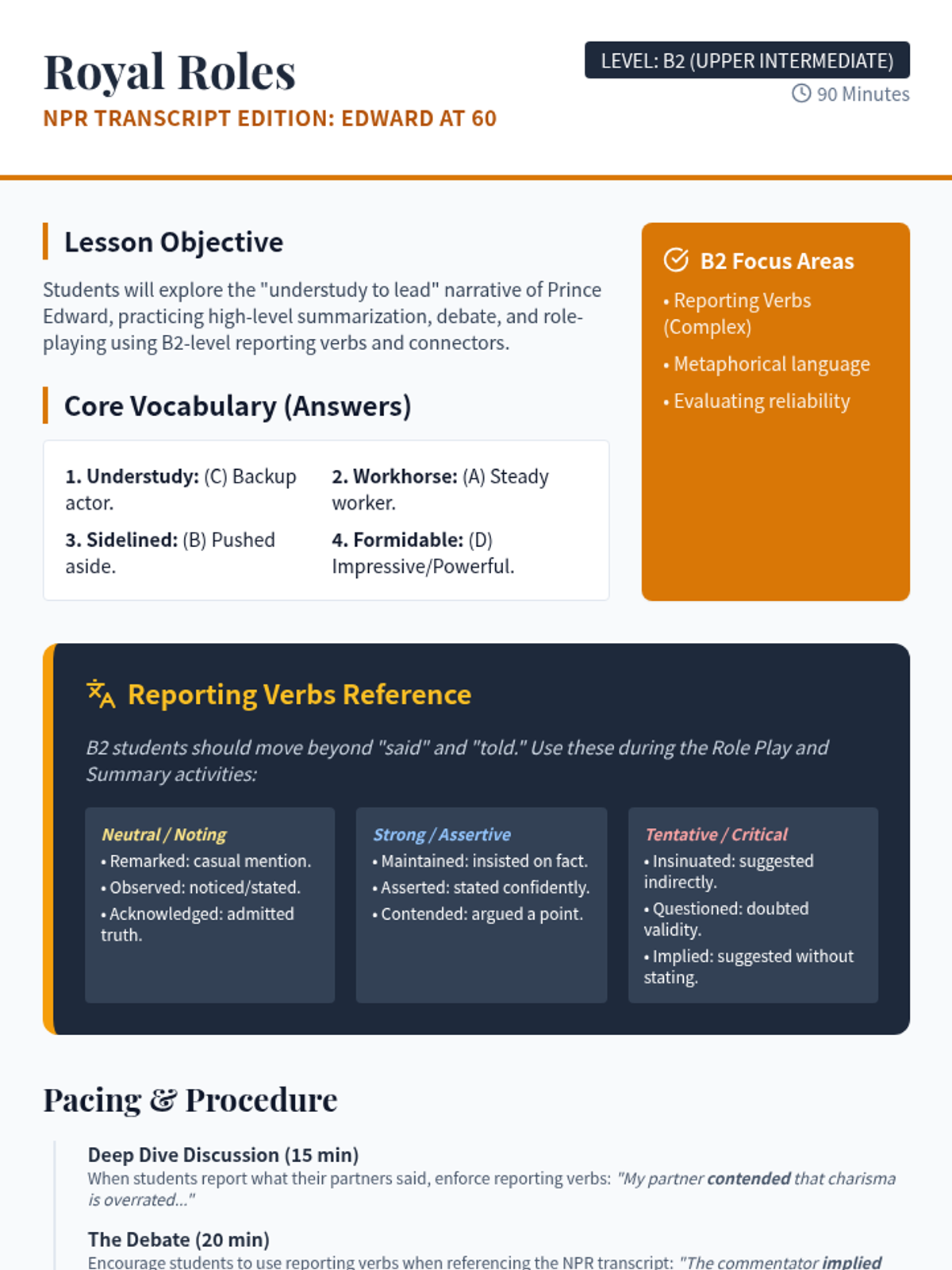
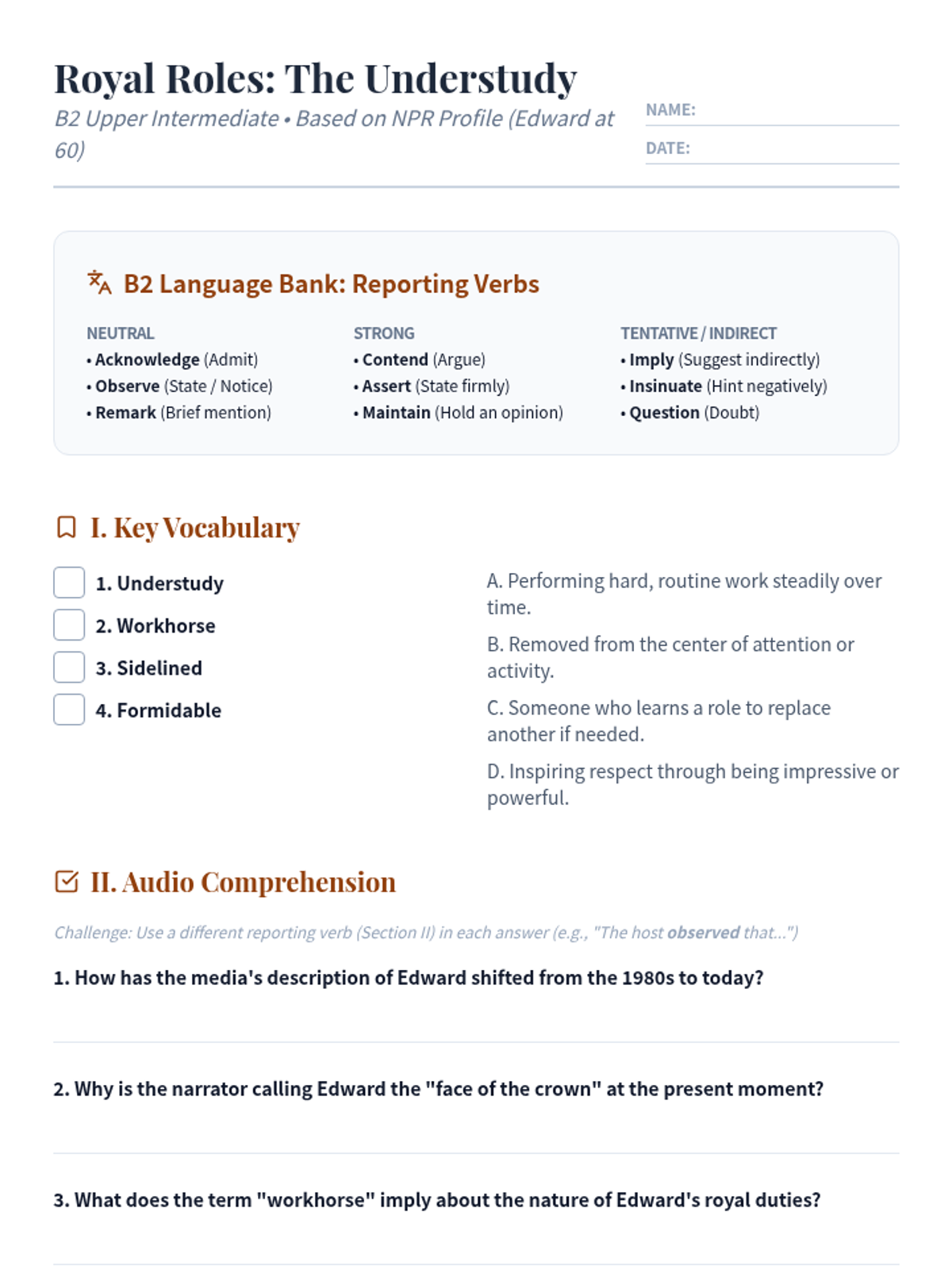
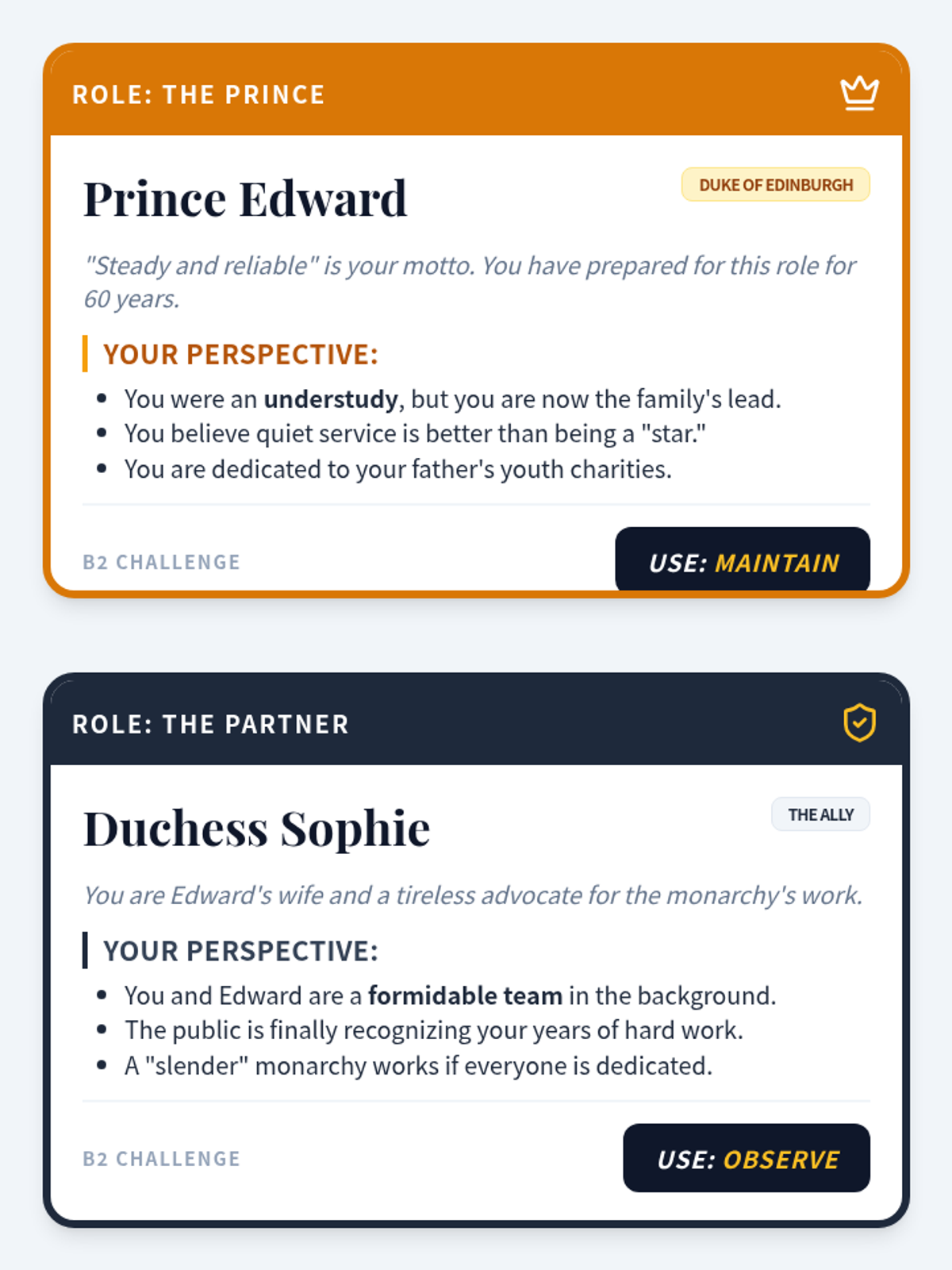
A 90-minute B2-level English lesson focused on the life and public role of Prince Edward, Duke of Edinburgh, featuring listening comprehension and intensive speaking activities.
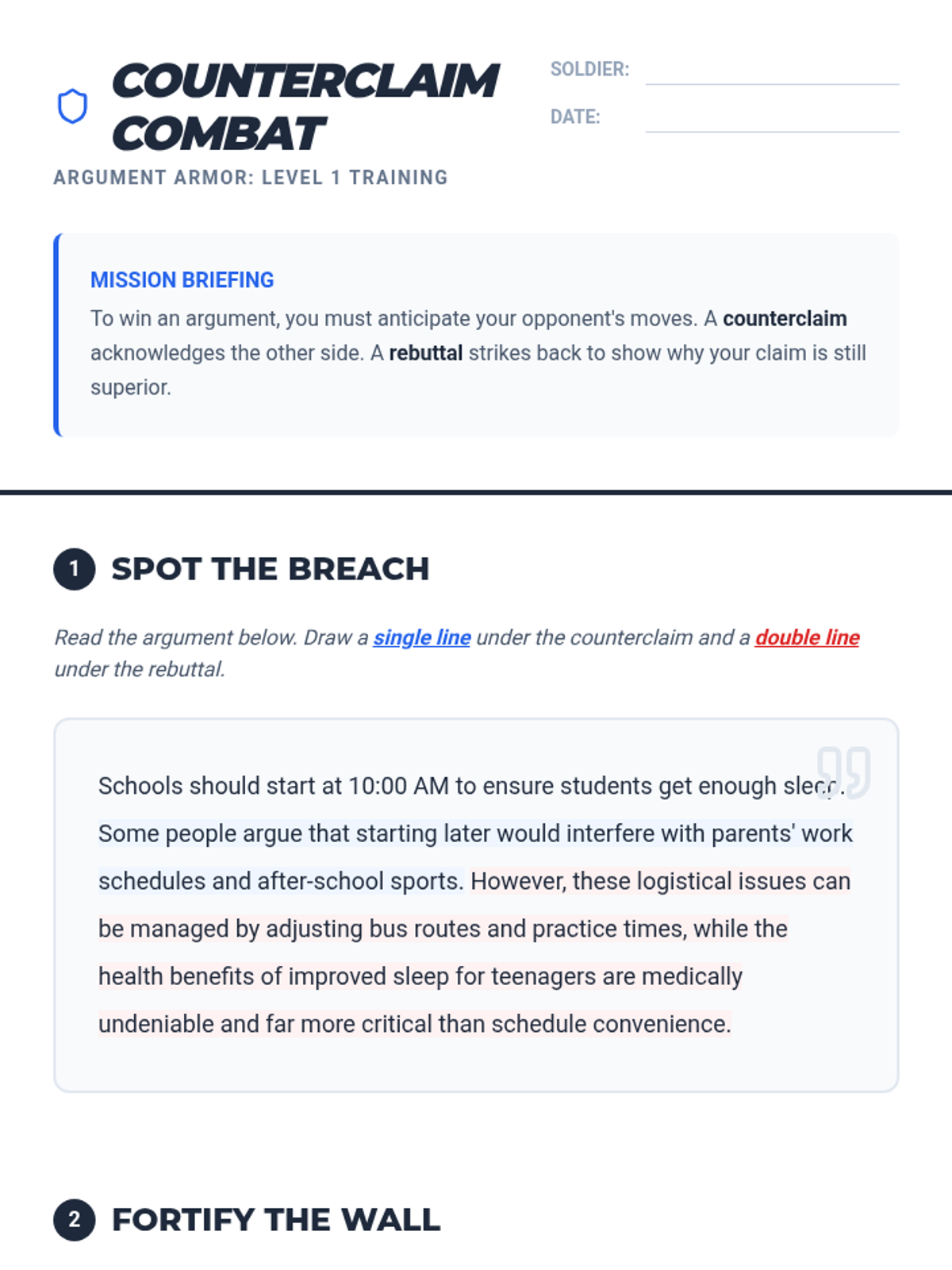
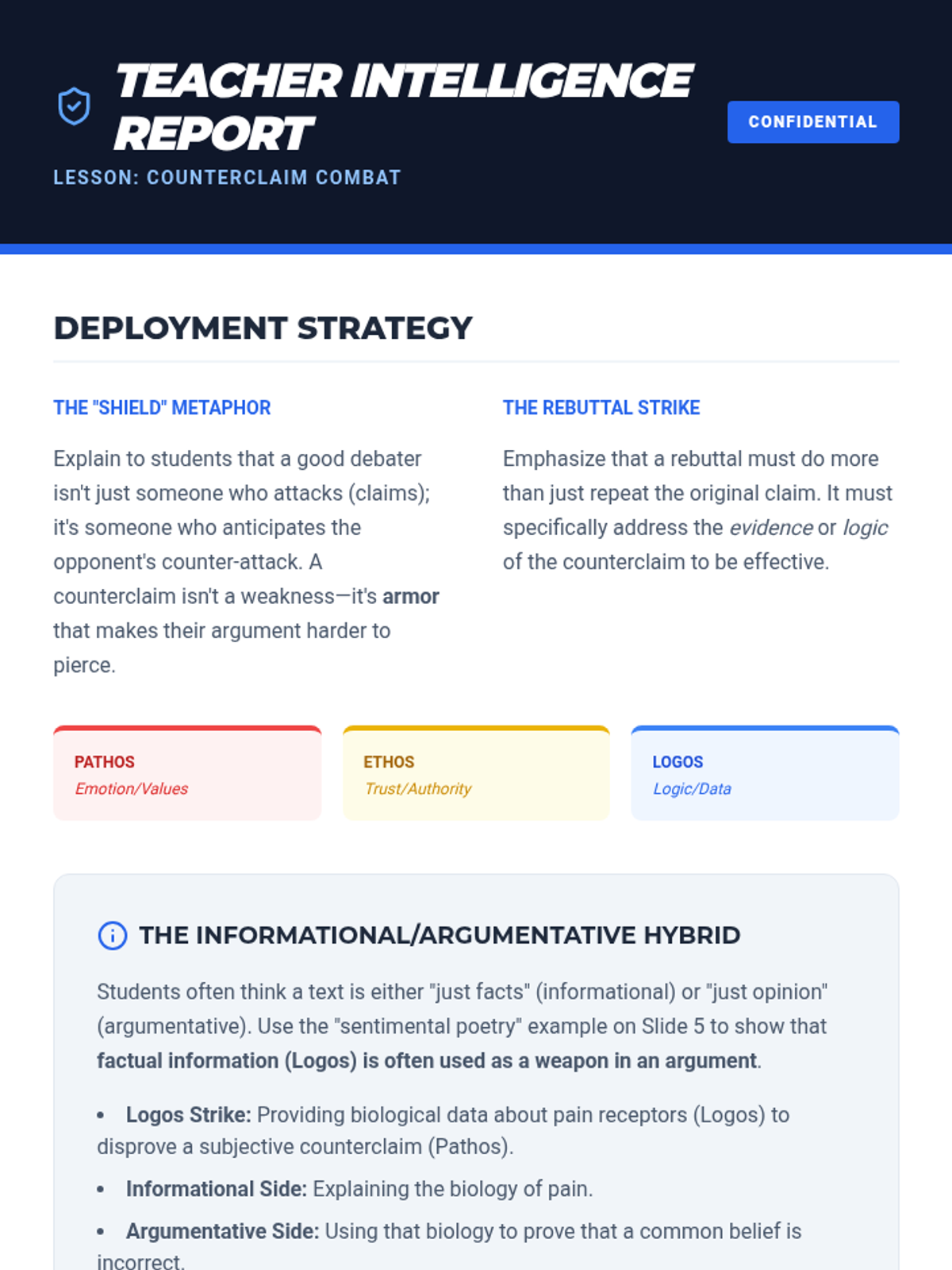
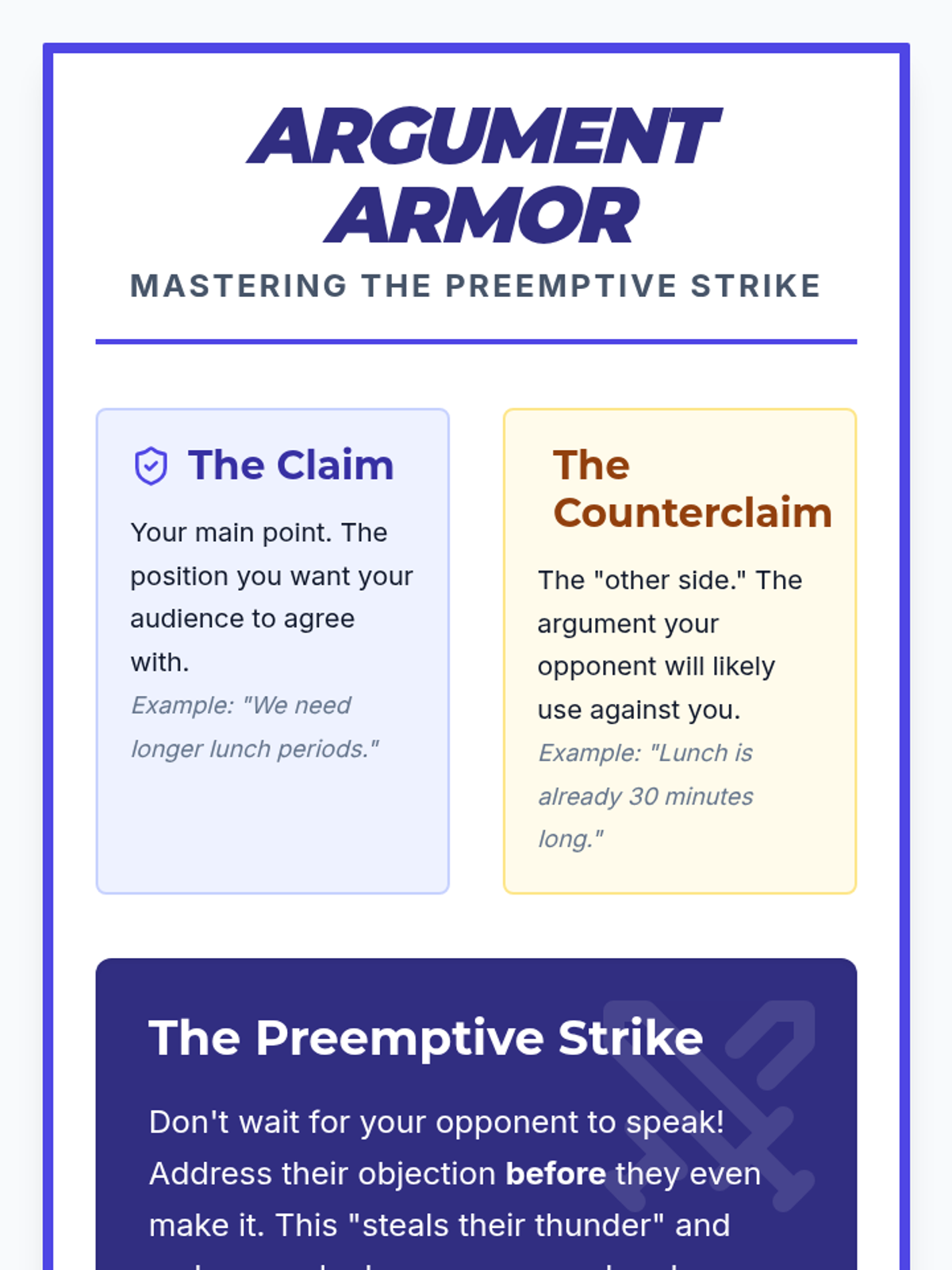
Students will learn to identify and craft effective counterclaims and rebuttals to strengthen their argumentative writing. The lesson uses a 'combat' metaphor to make the components of an argument memorable and engaging.
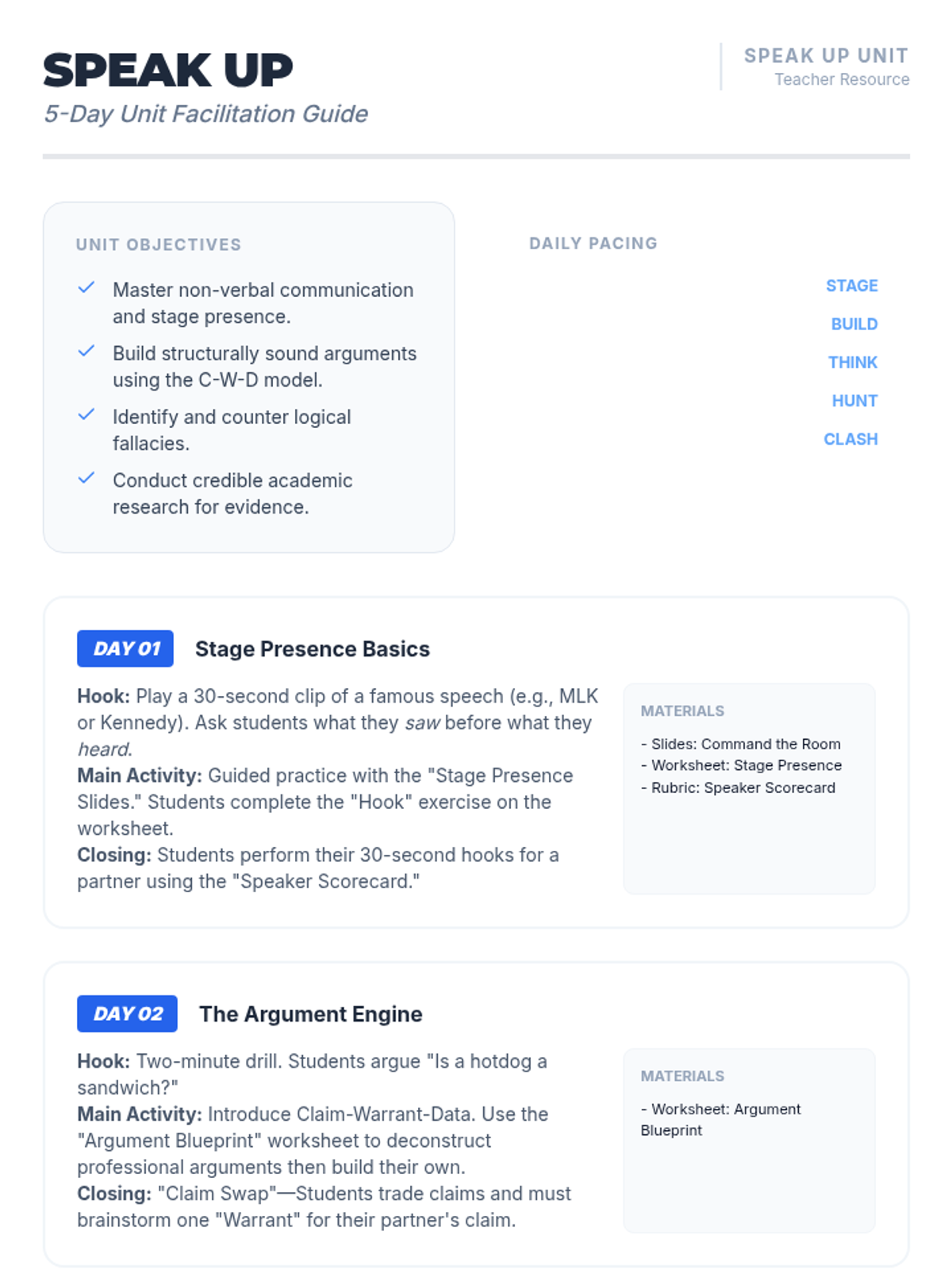
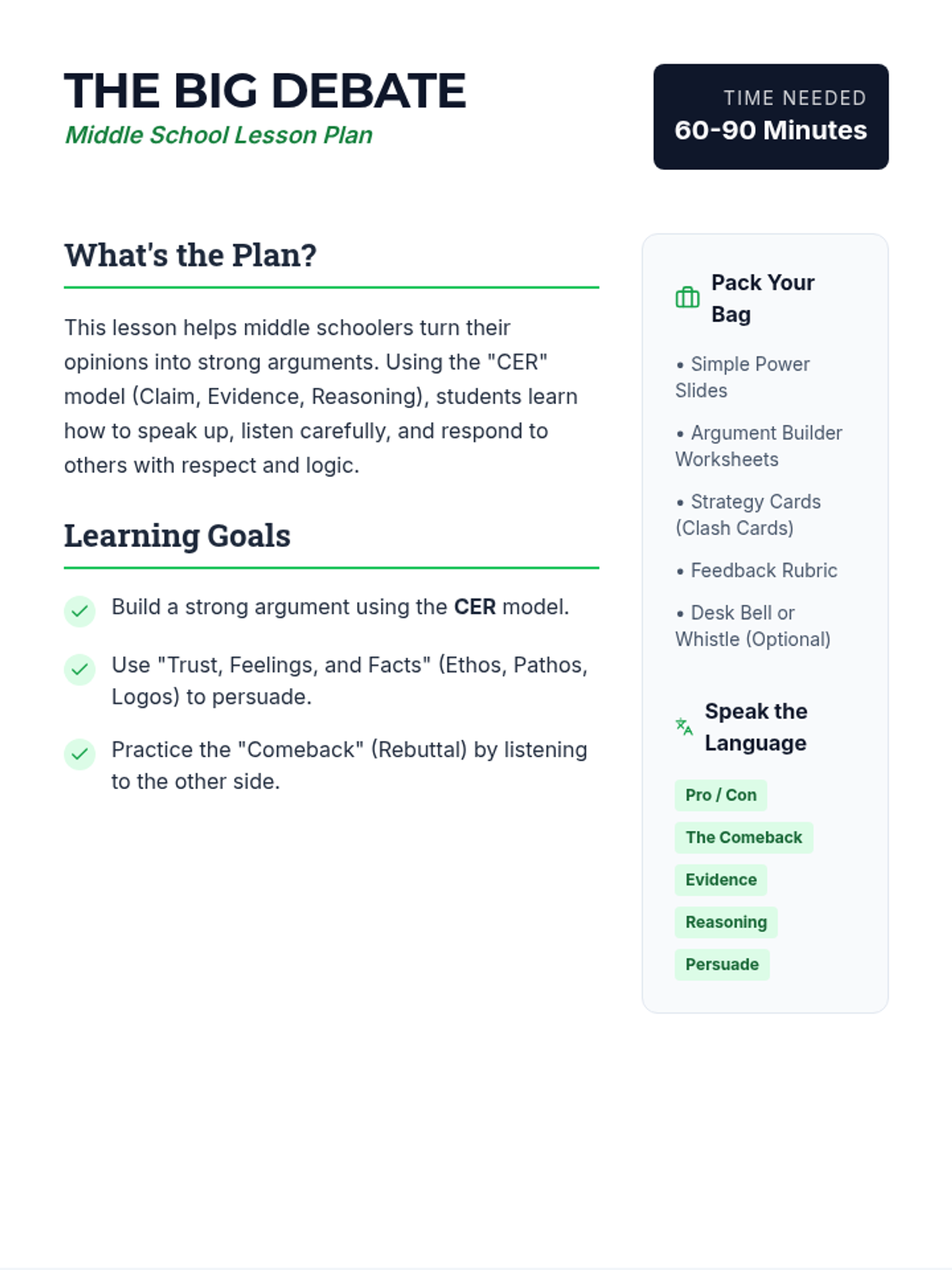
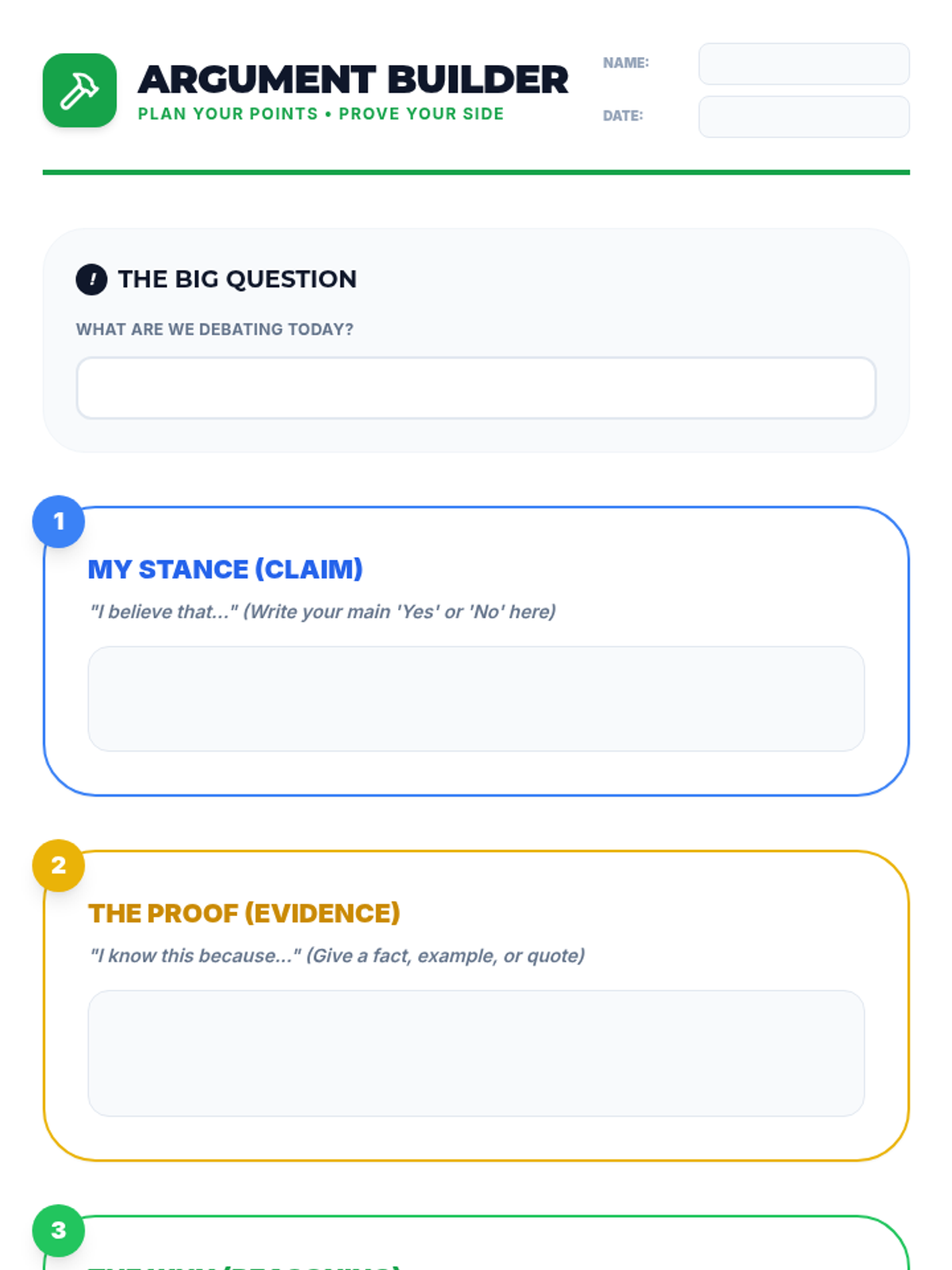
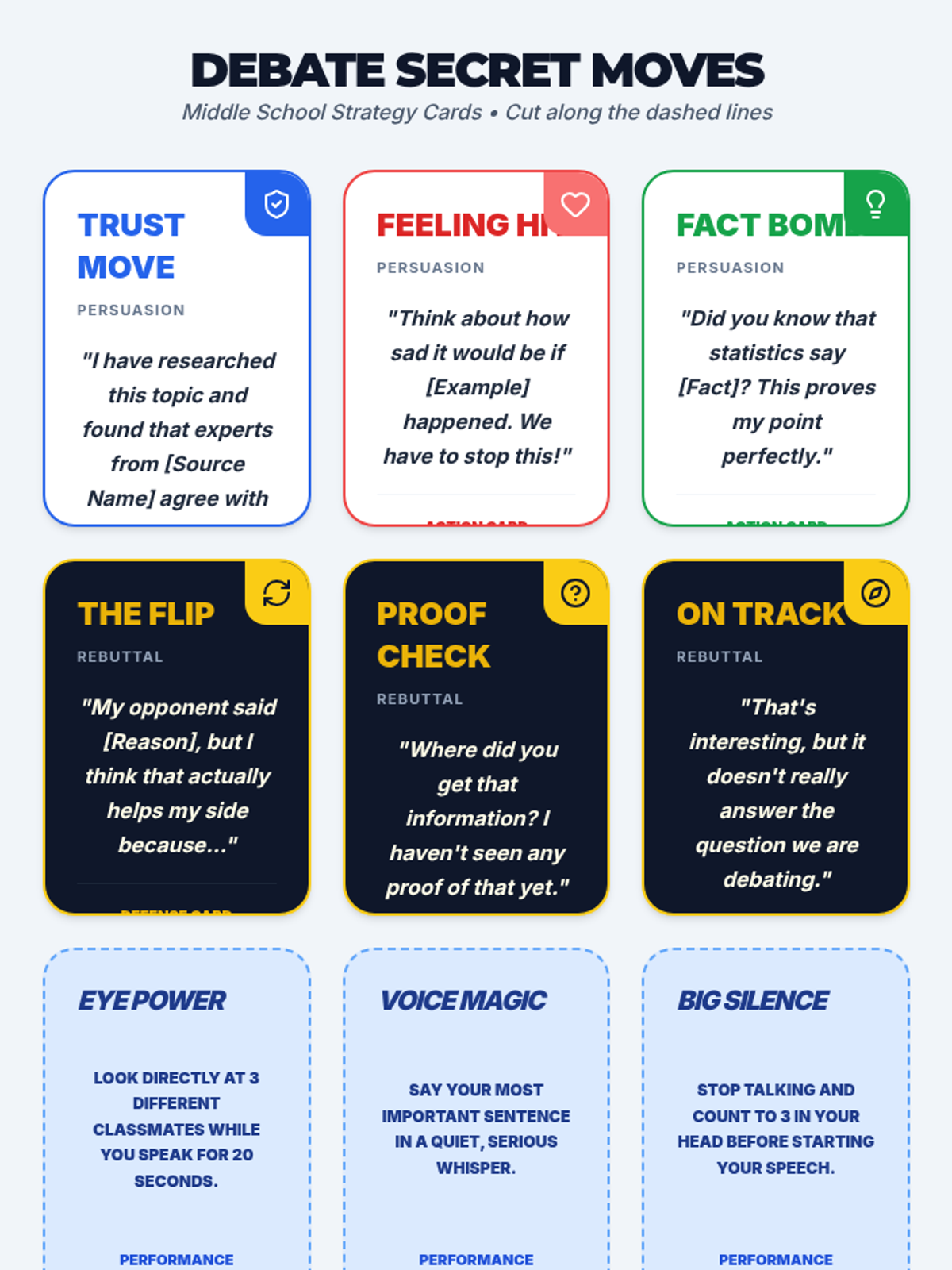
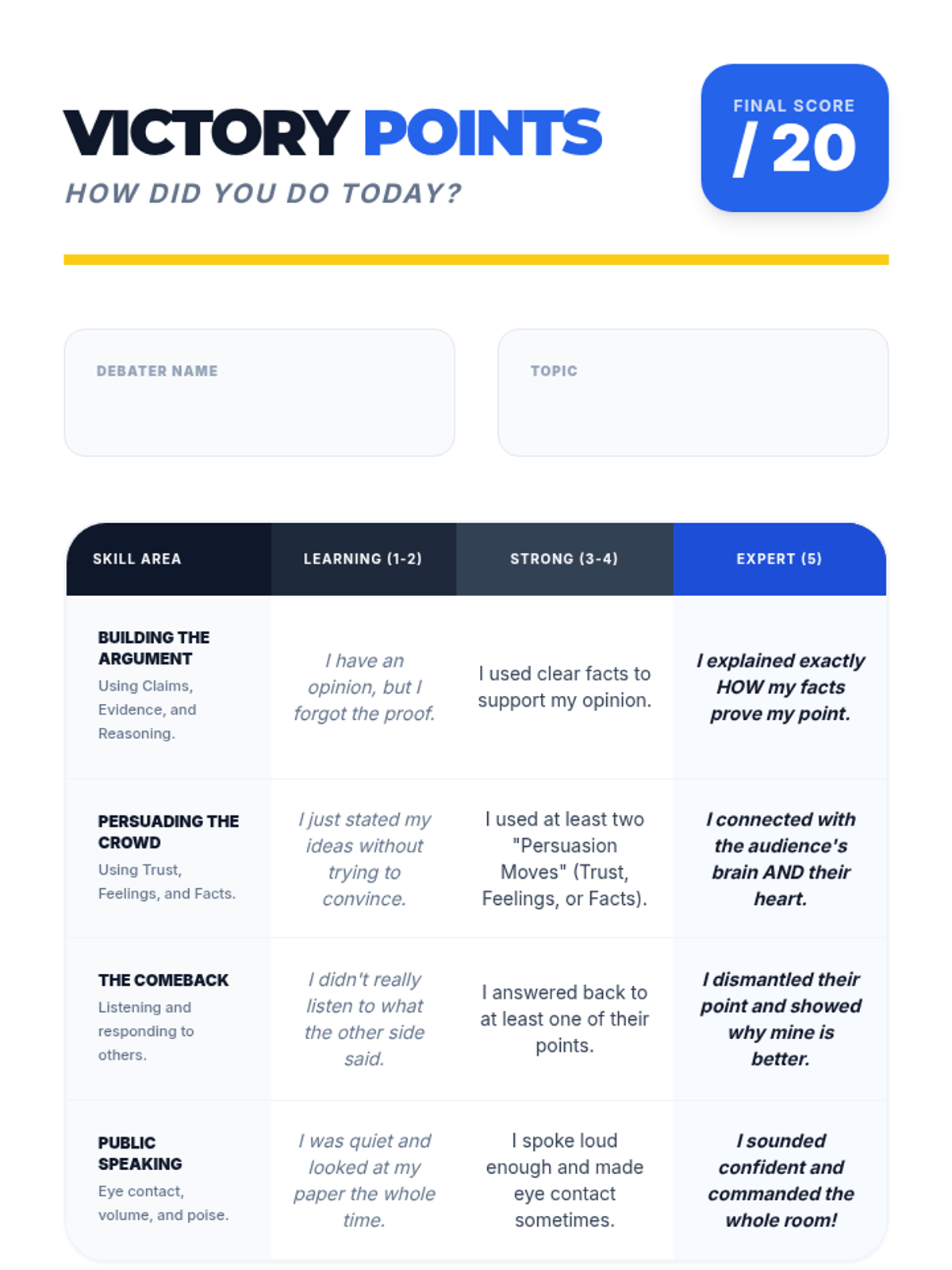
A comprehensive guide to teaching structured debate, focusing on argument construction, rebuttal strategies, and persuasive delivery for middle and high school students.
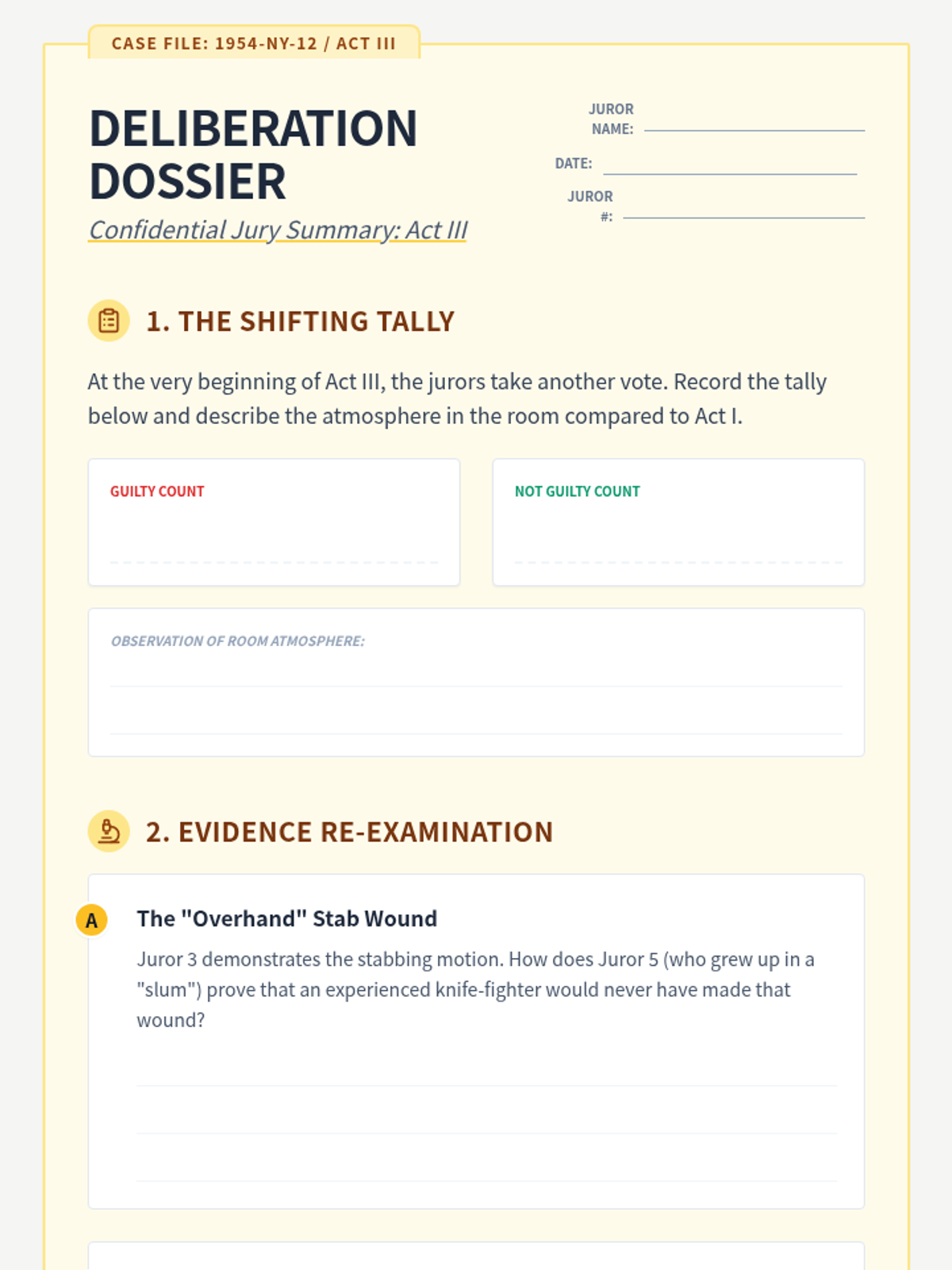
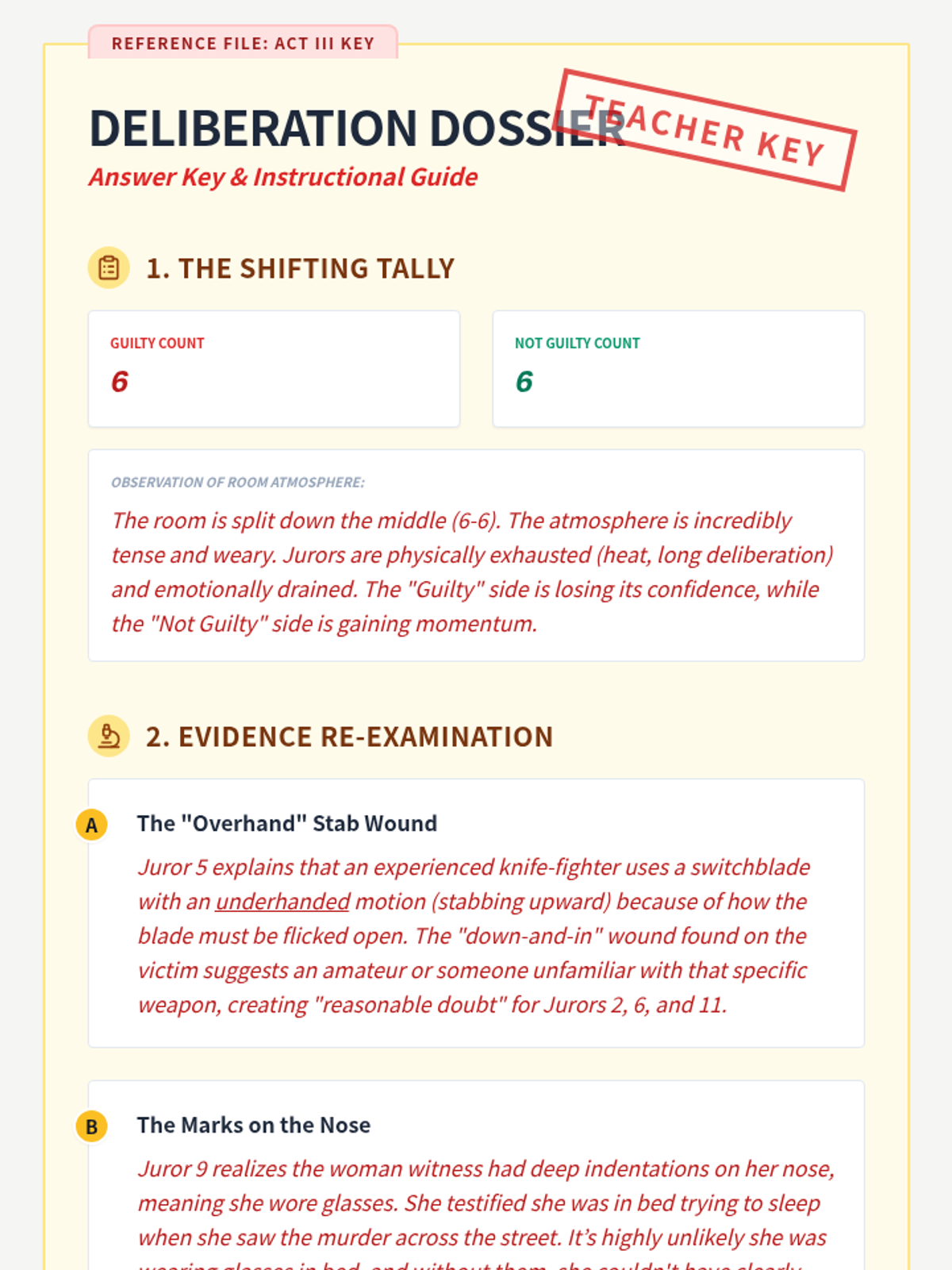
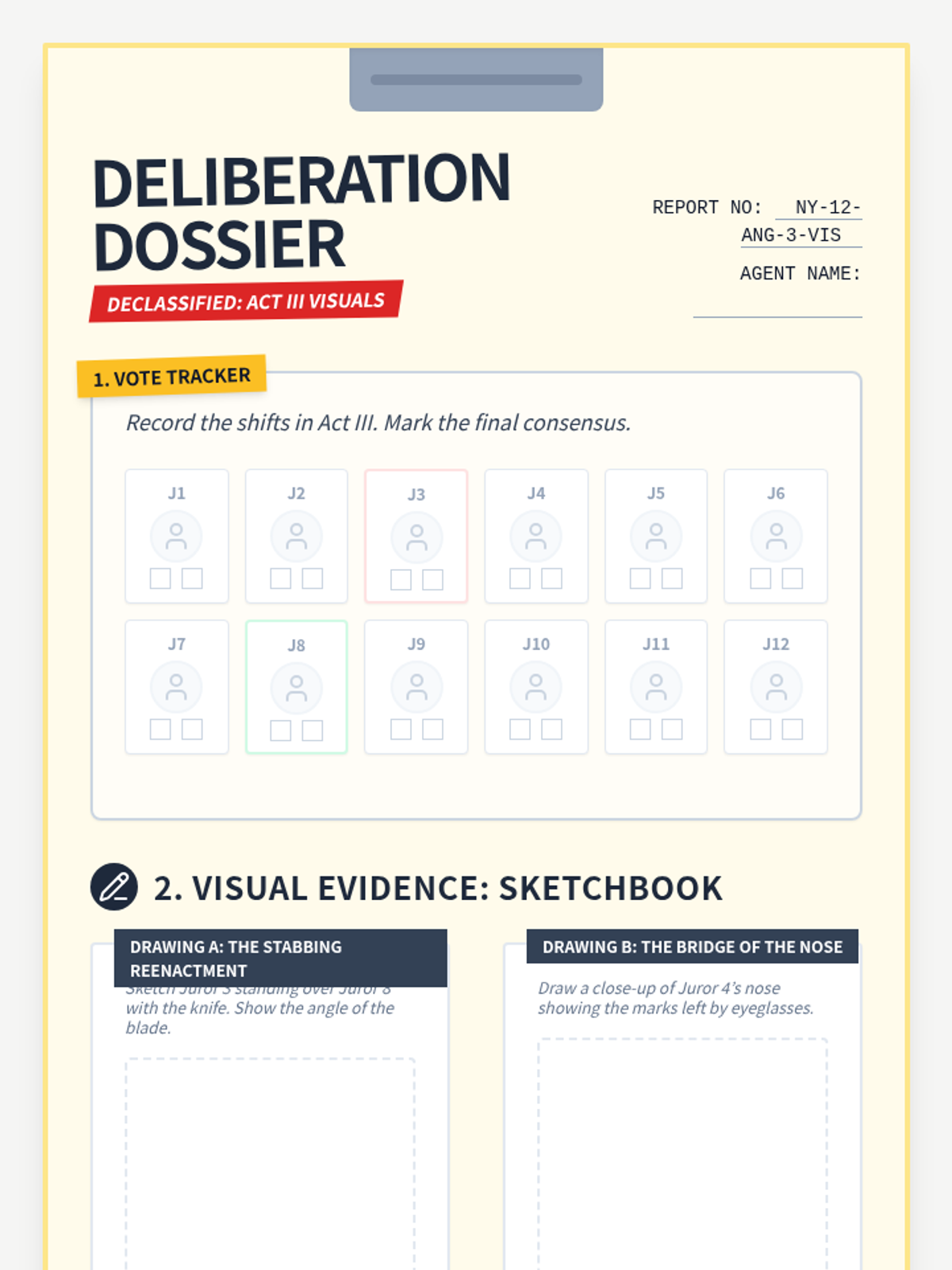
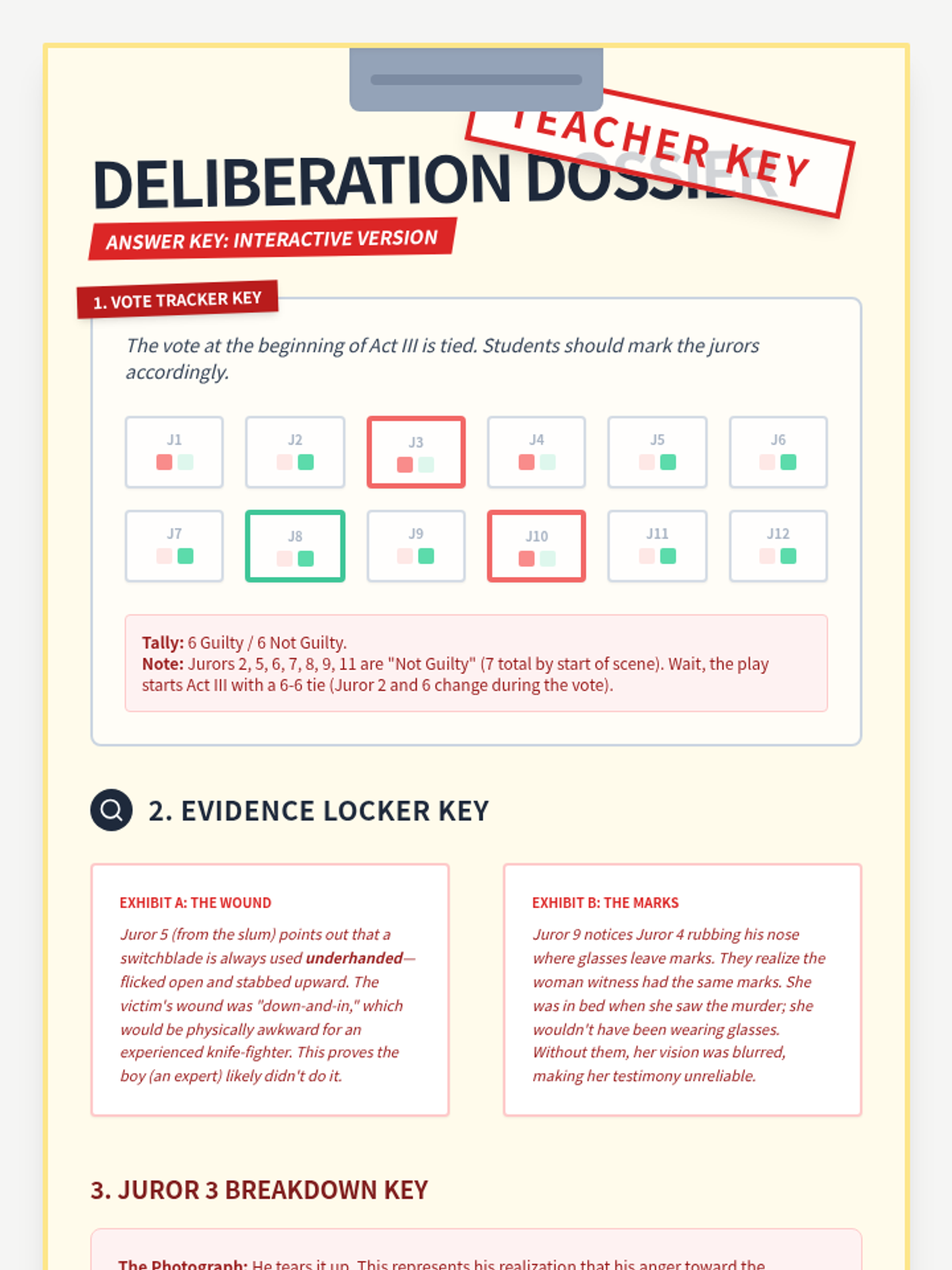
A lesson focused on the climactic Act III of '12 Angry Men', exploring the shifting dynamics of the jury, the re-examination of evidence, and the final resolution of the trial.
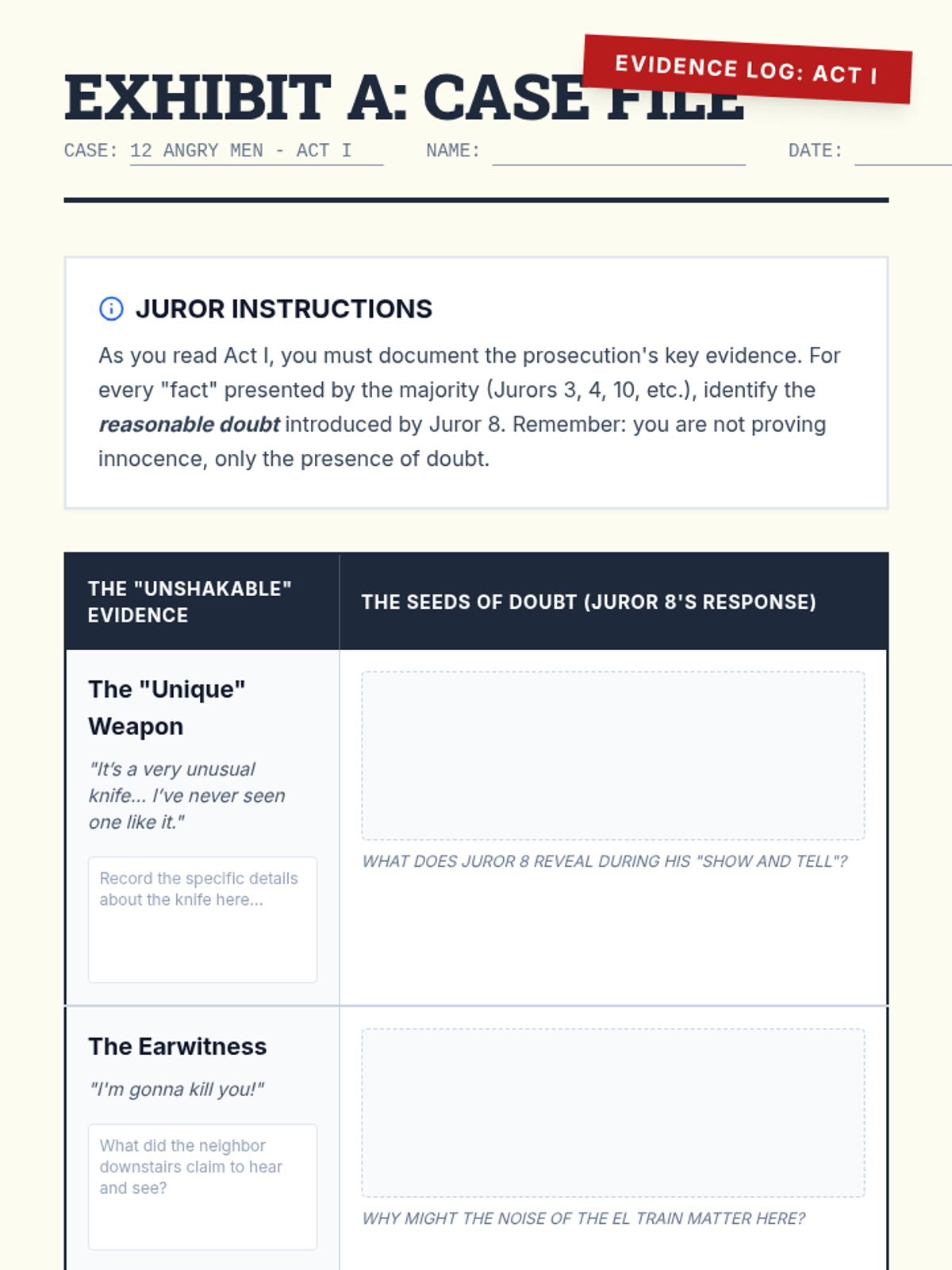
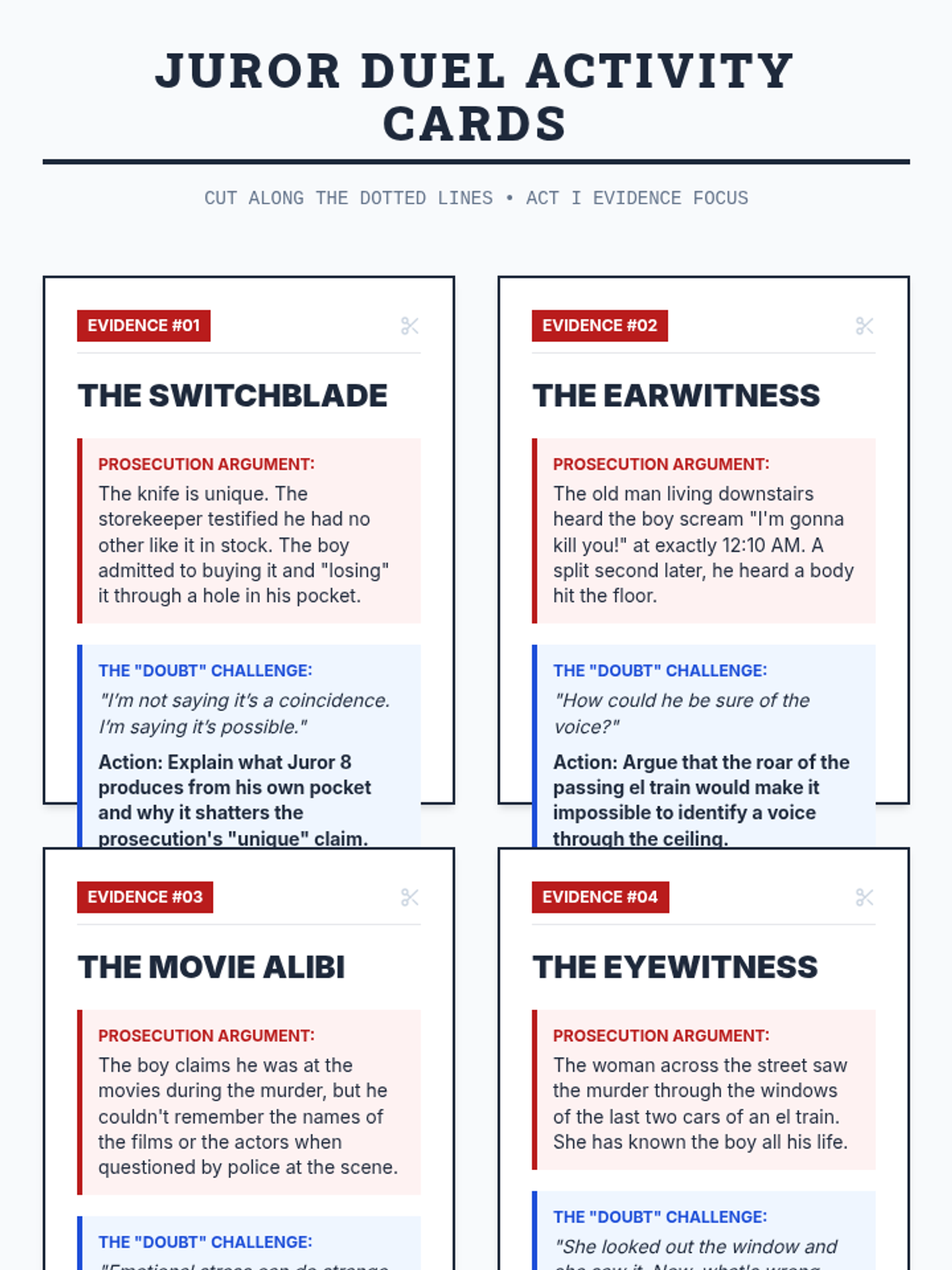
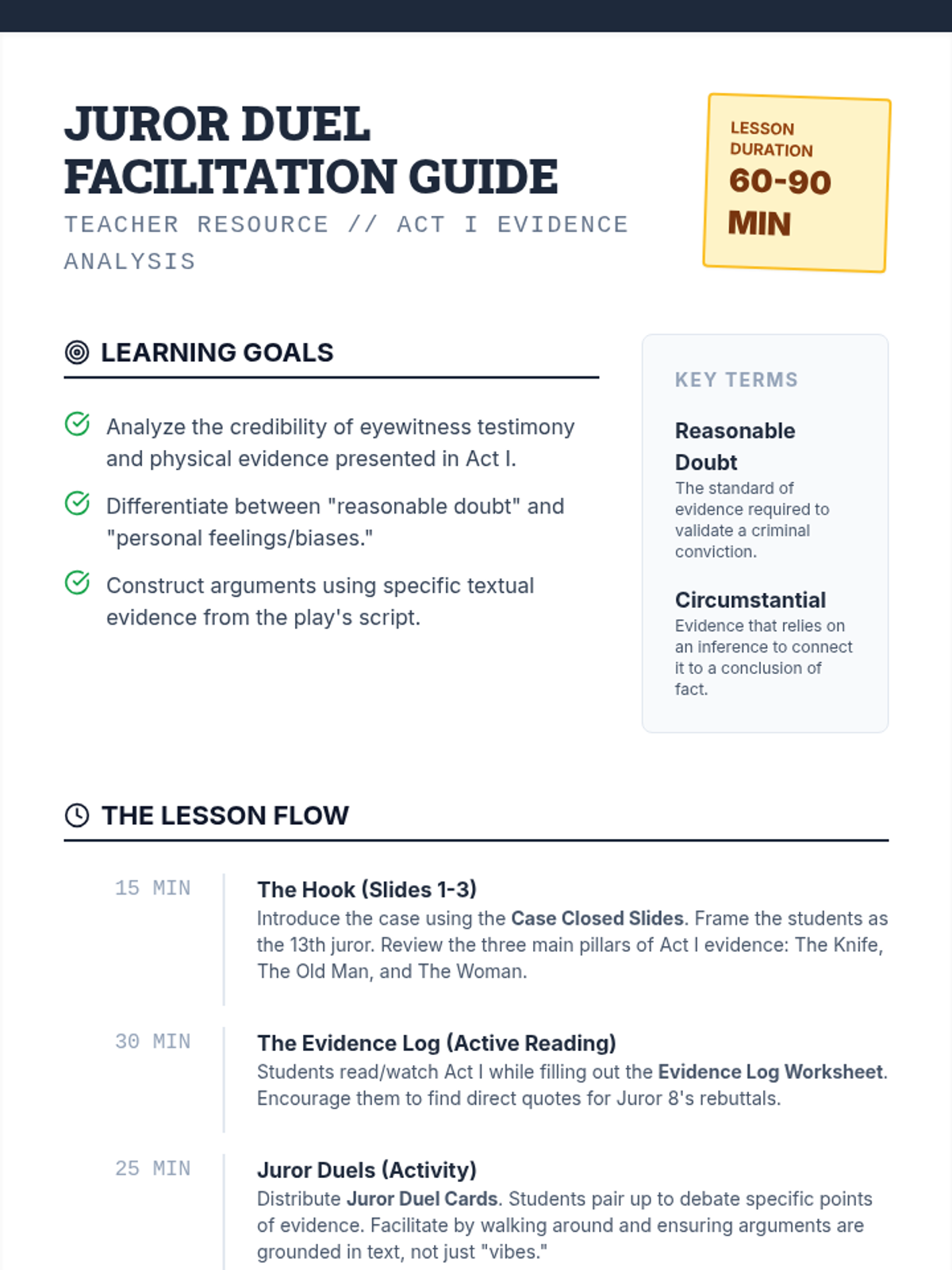
A lesson focused on Act 1 of 12 Angry Men, where students analyze initial evidence and engage in structured debates to practice evidence-based reasoning.
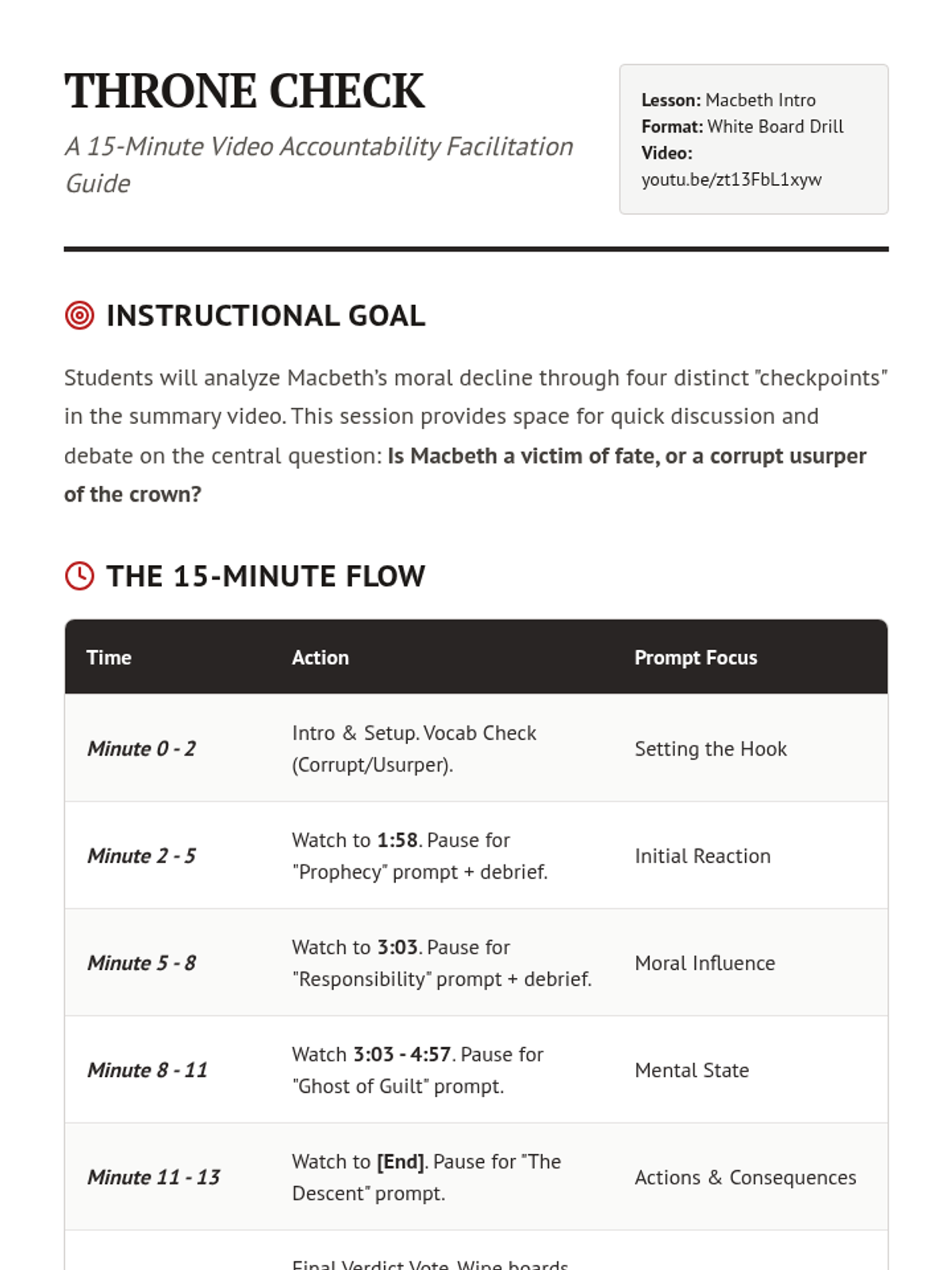
A fast-paced, 10-15 minute video-based introduction to Macbeth, using white board responses to track student thinking on whether Macbeth deserves the throne.
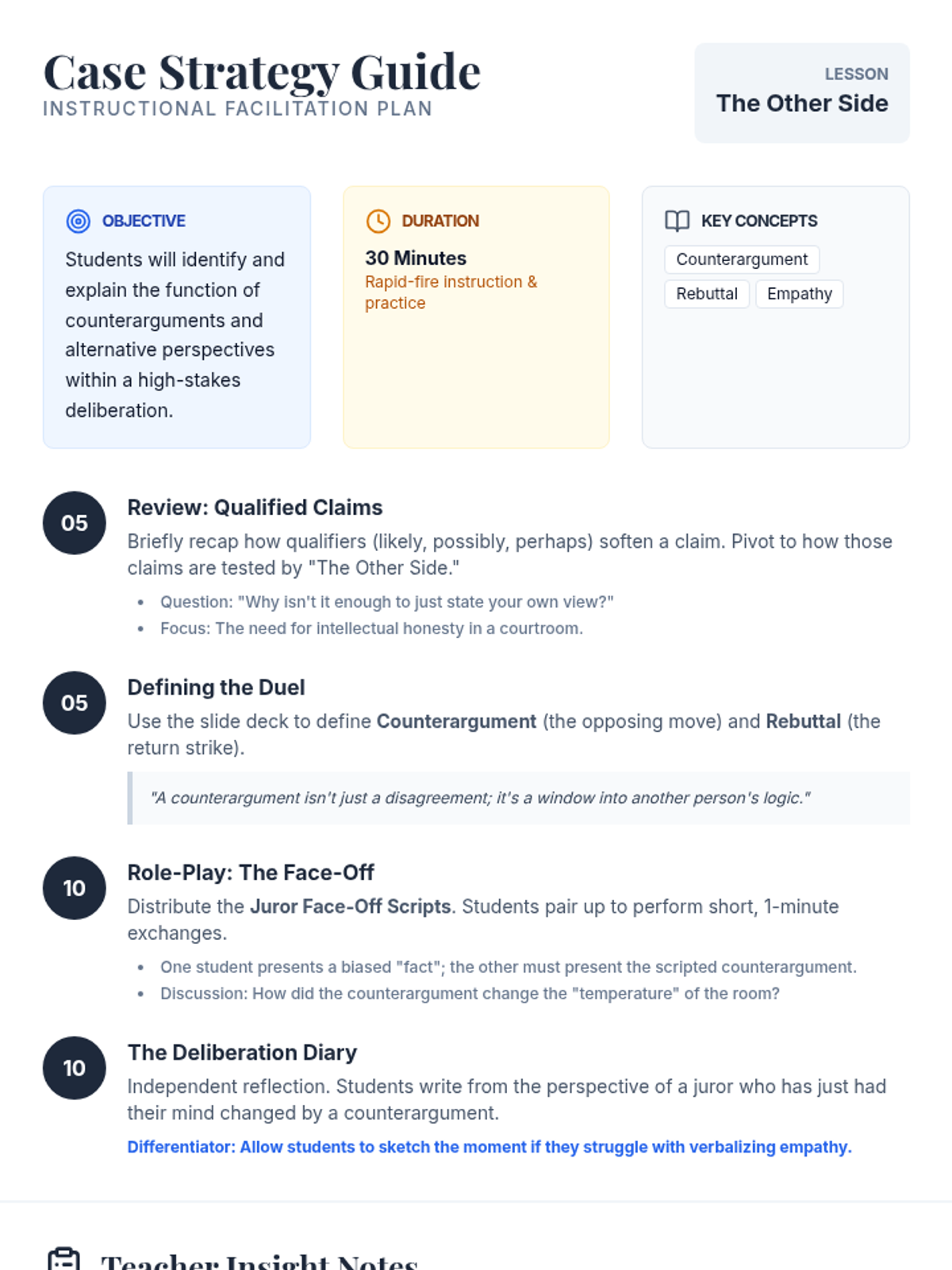
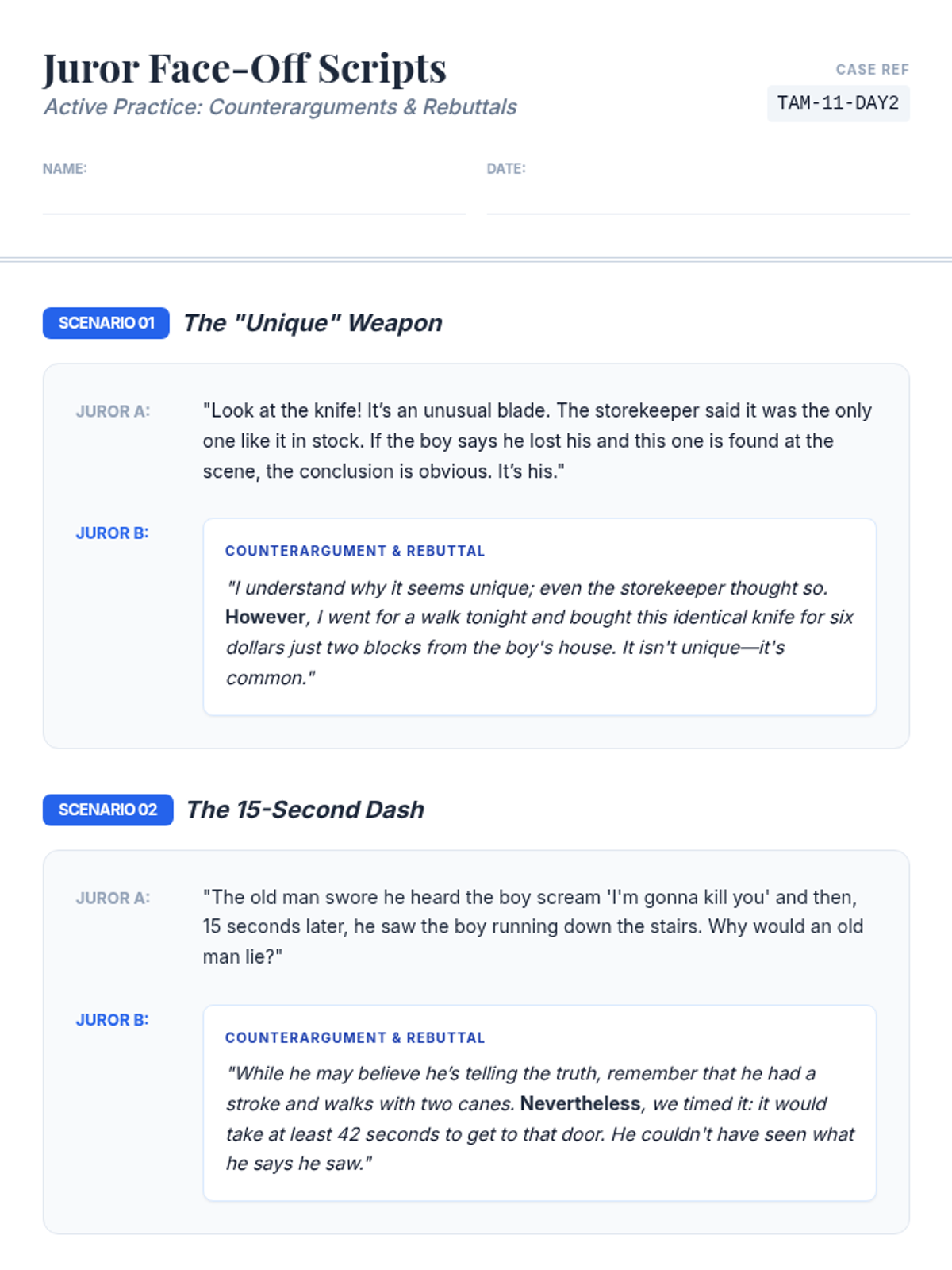
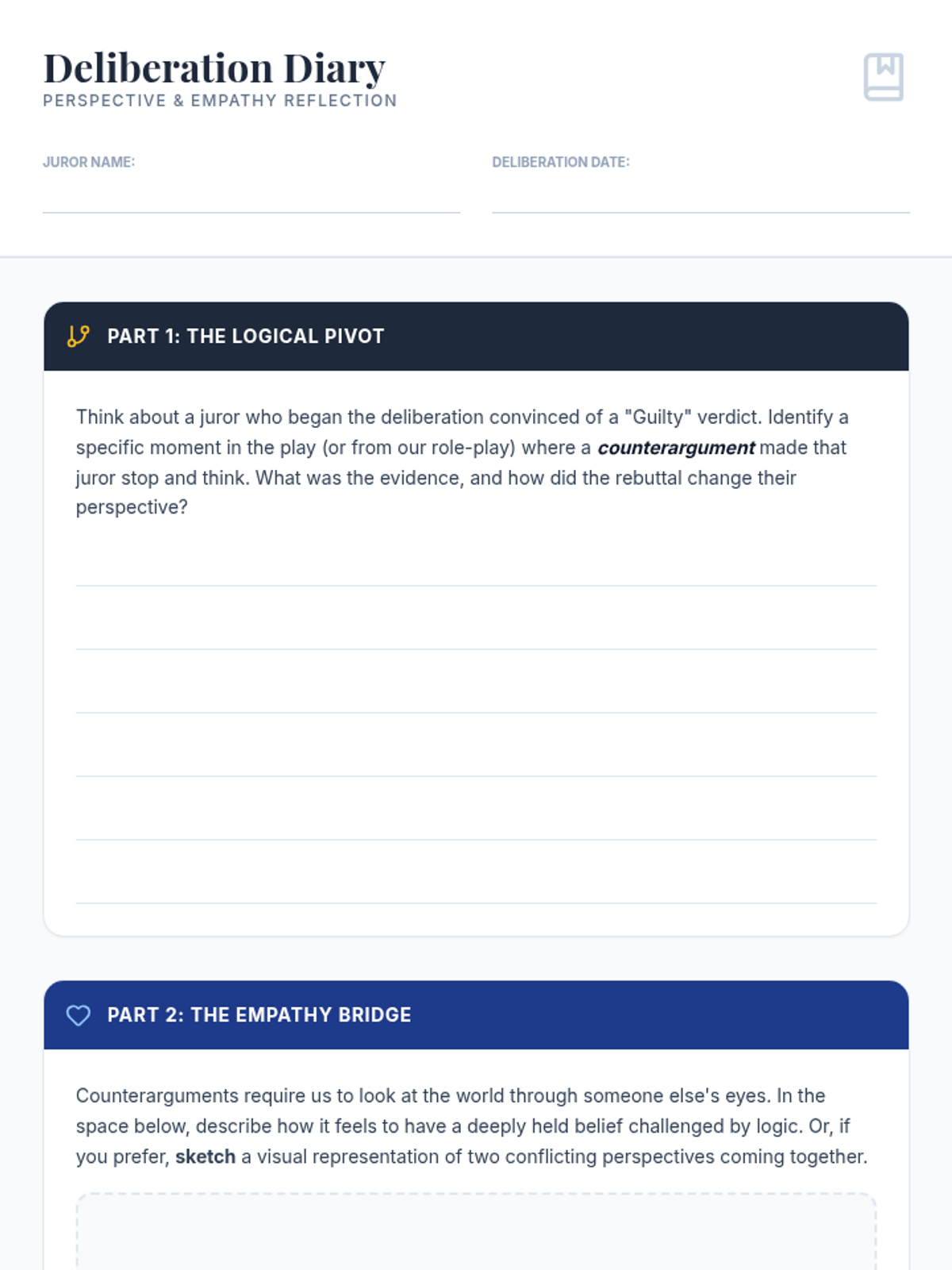
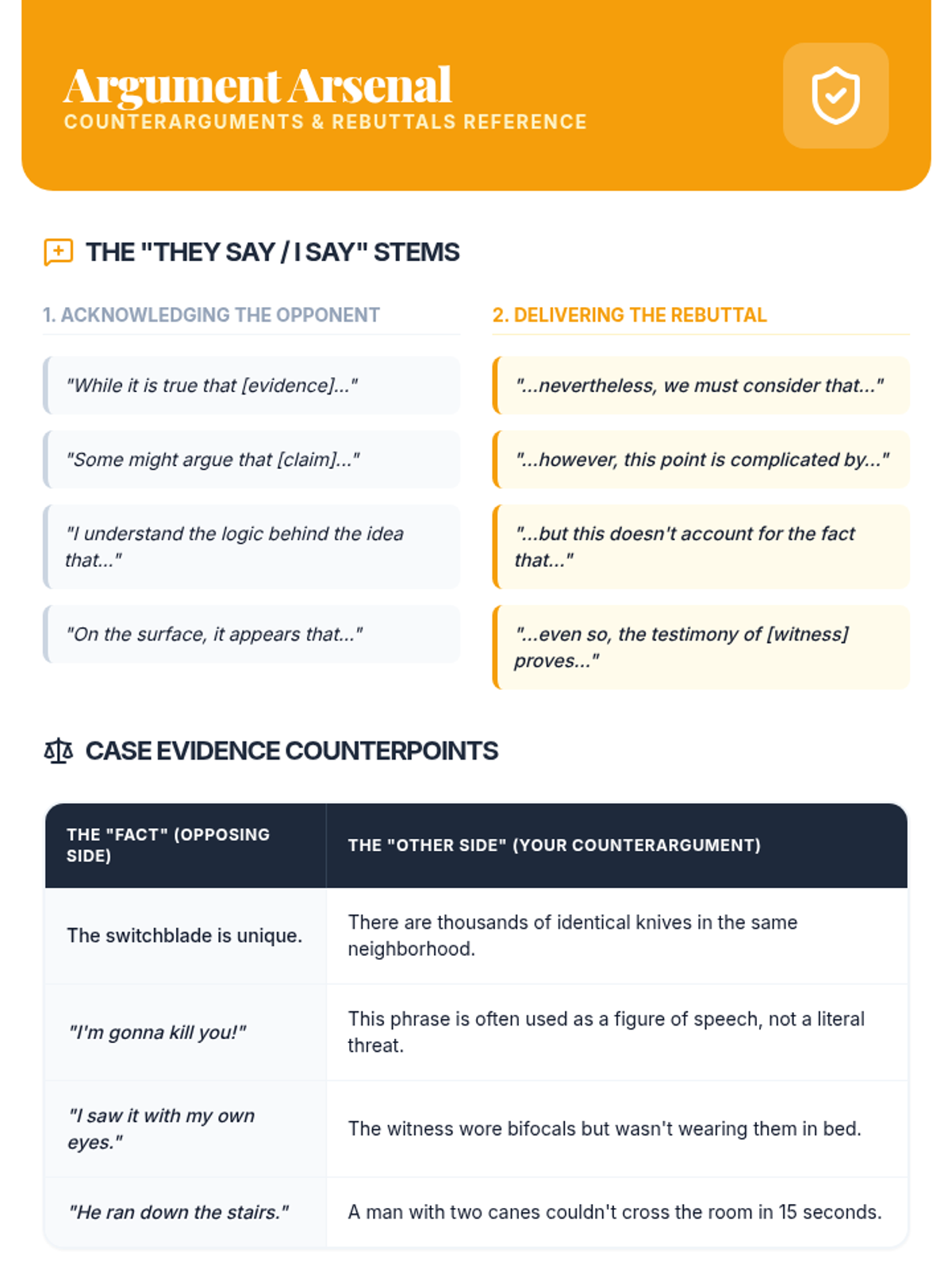
Students explore the power of counterarguments and alternative perspectives through the lens of juror deliberations, focusing on identifying and rebutting opposing views to build empathy and stronger arguments.
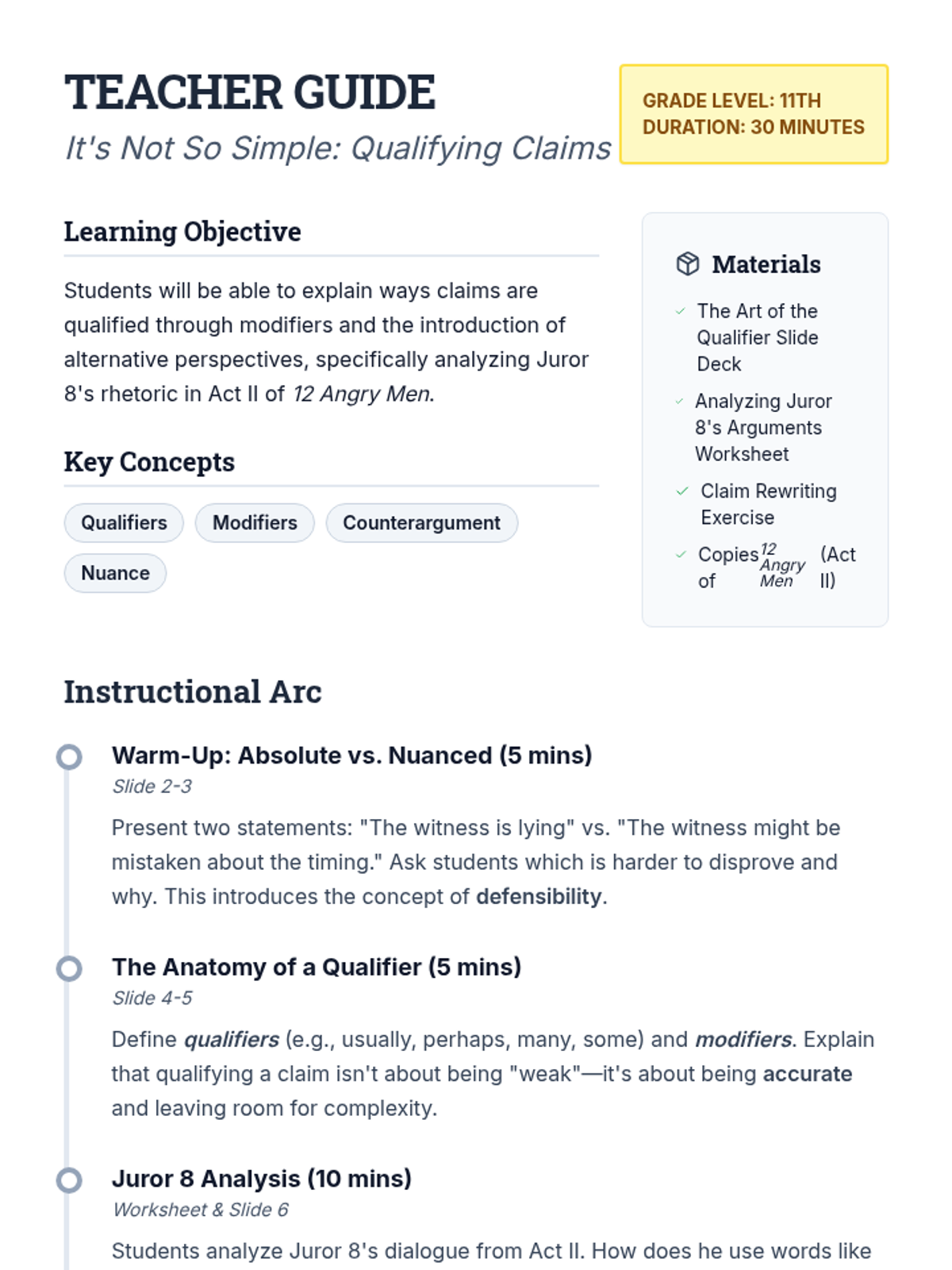
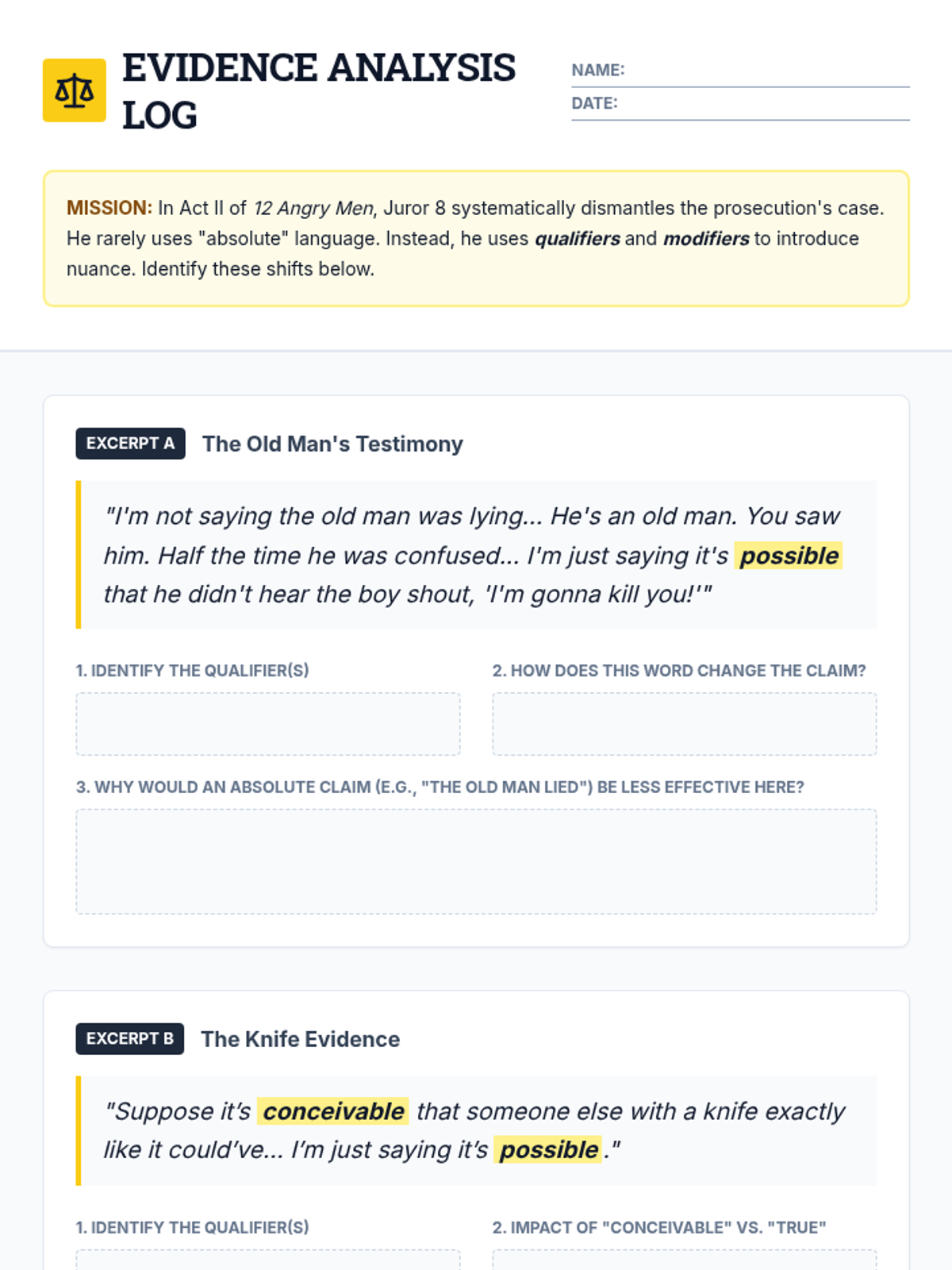
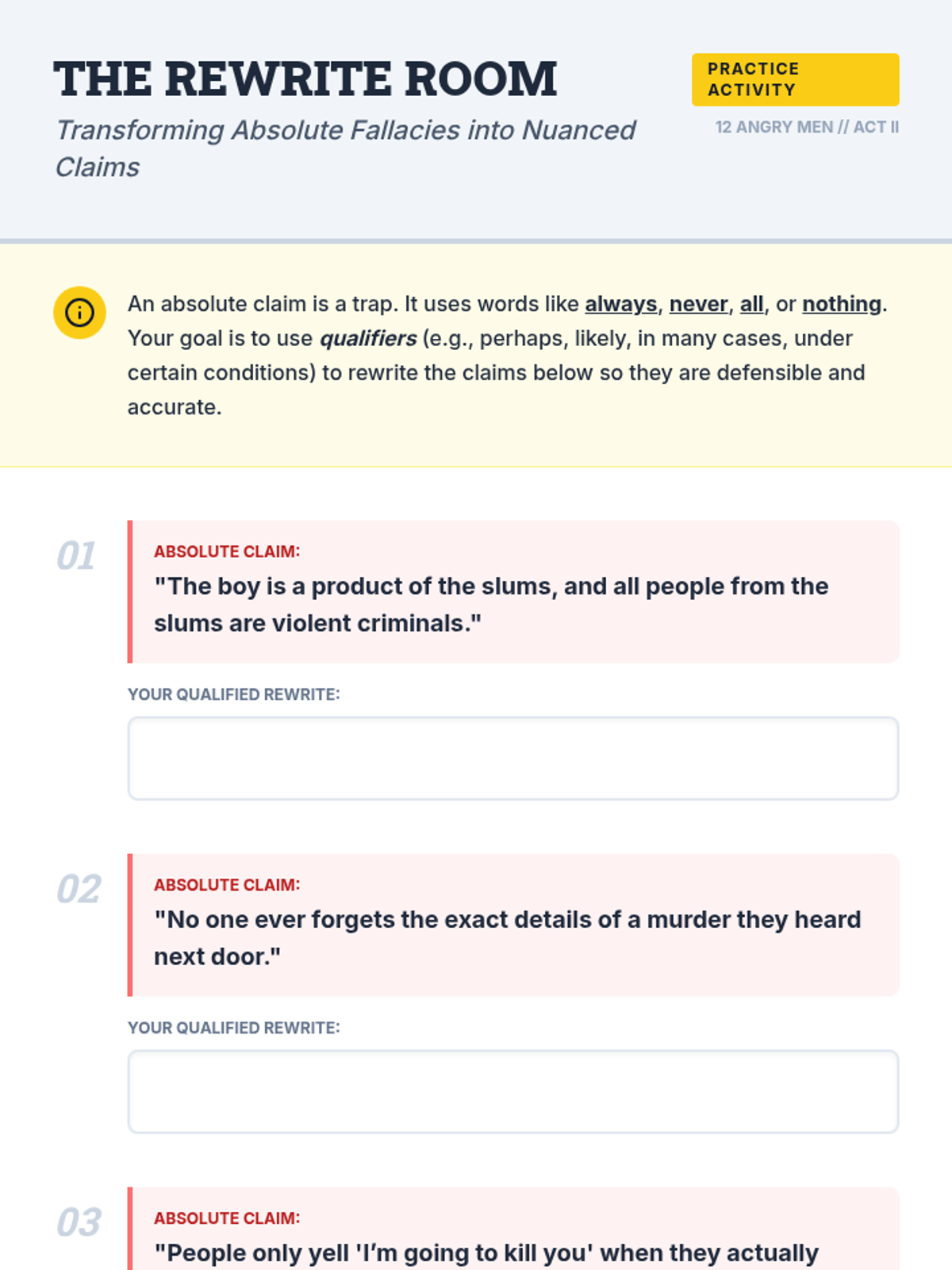
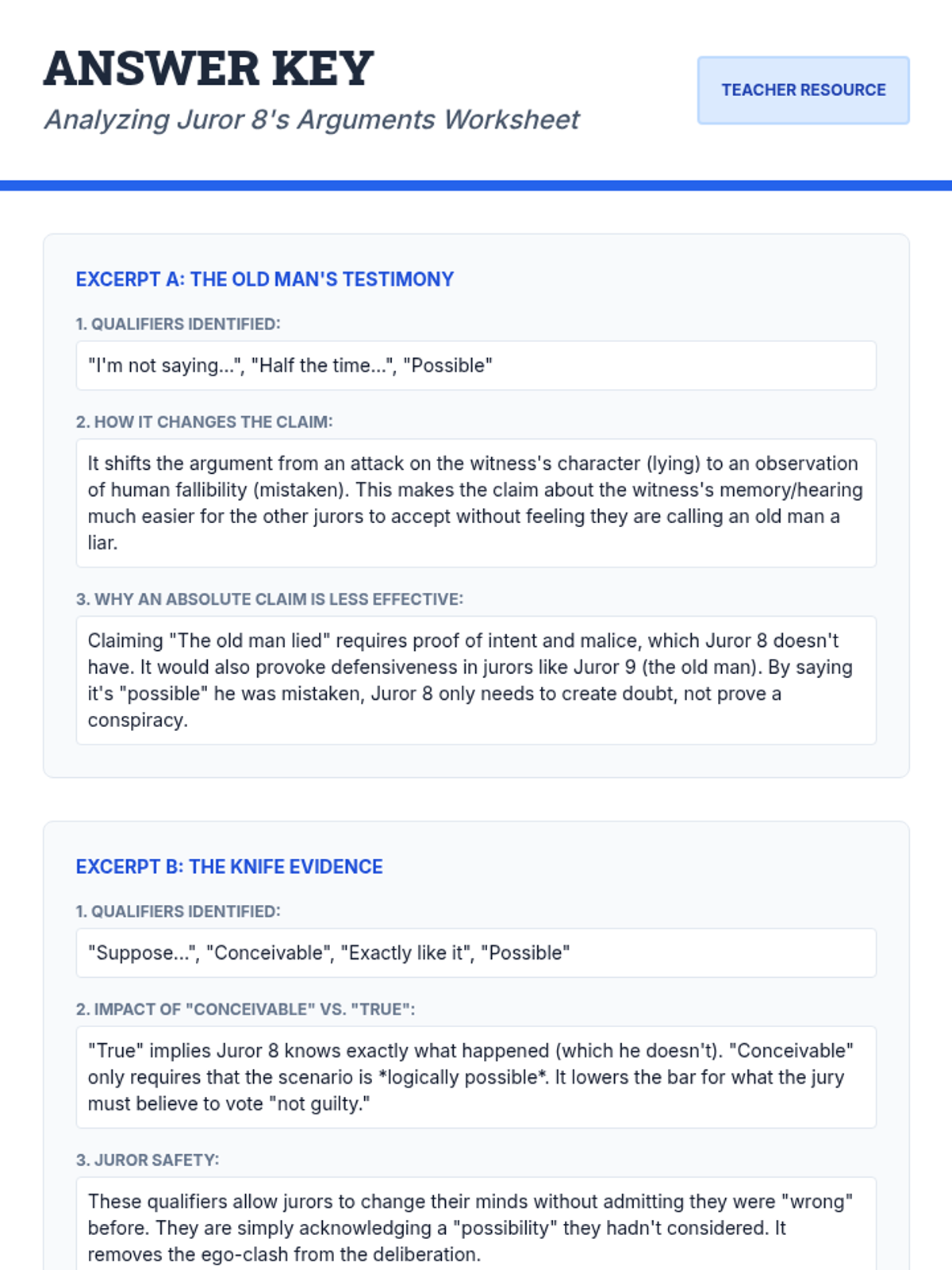
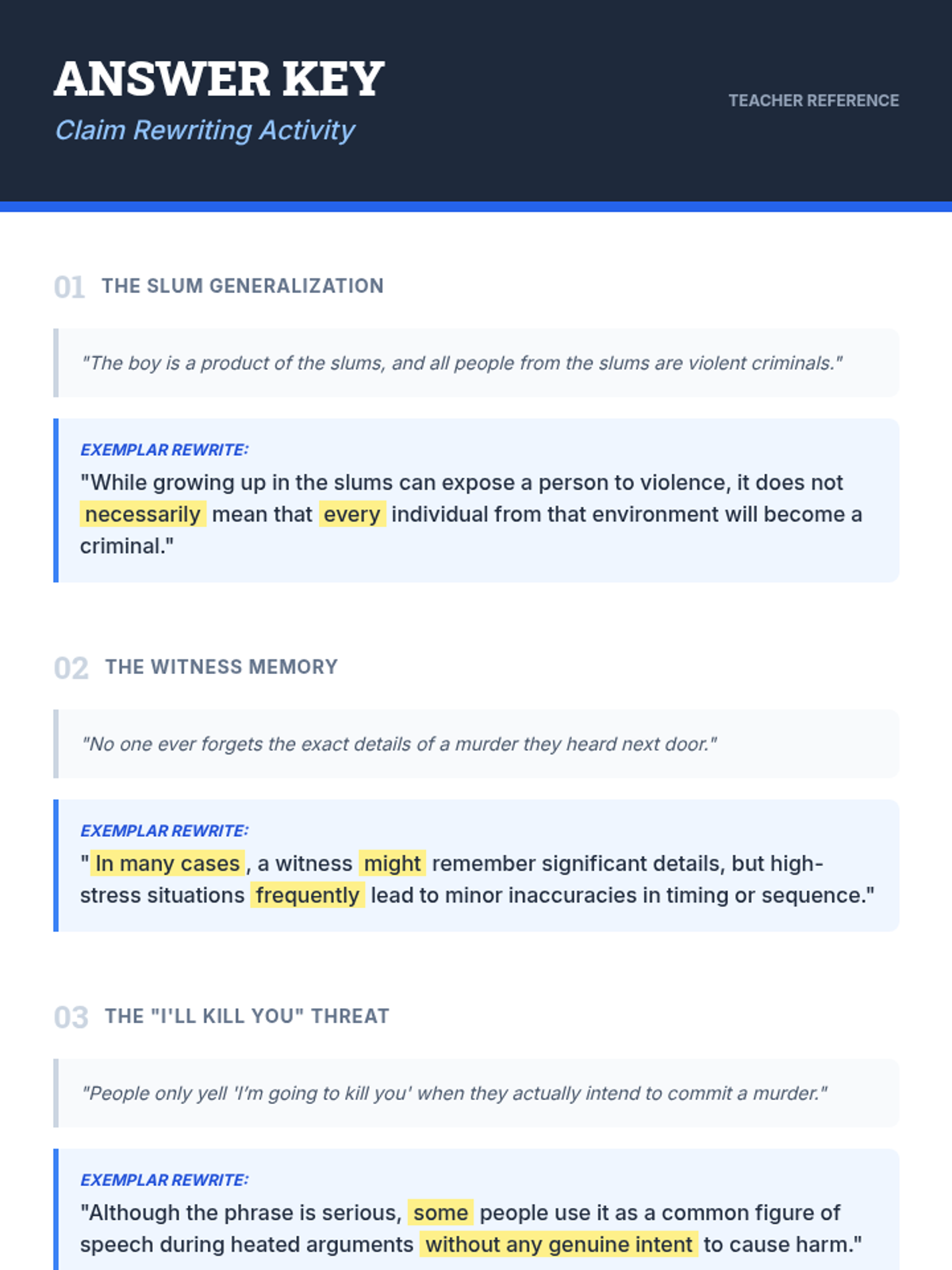
A high-school level exploration of how to use qualifiers and modifiers to create nuanced arguments, using Juror 8's rhetoric in 12 Angry Men as a primary case study. Students learn to move beyond absolute claims to build more persuasive, credible arguments.
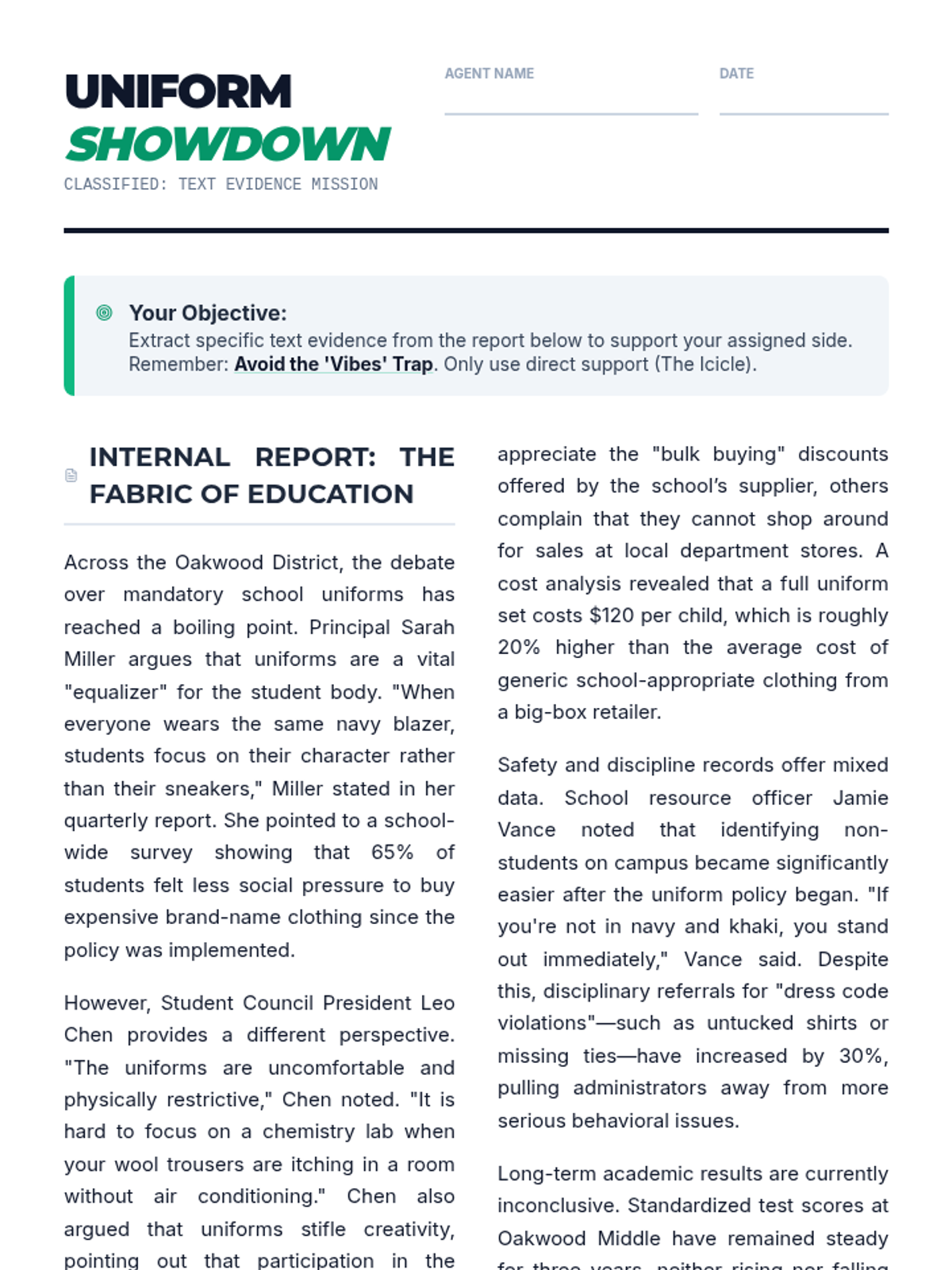
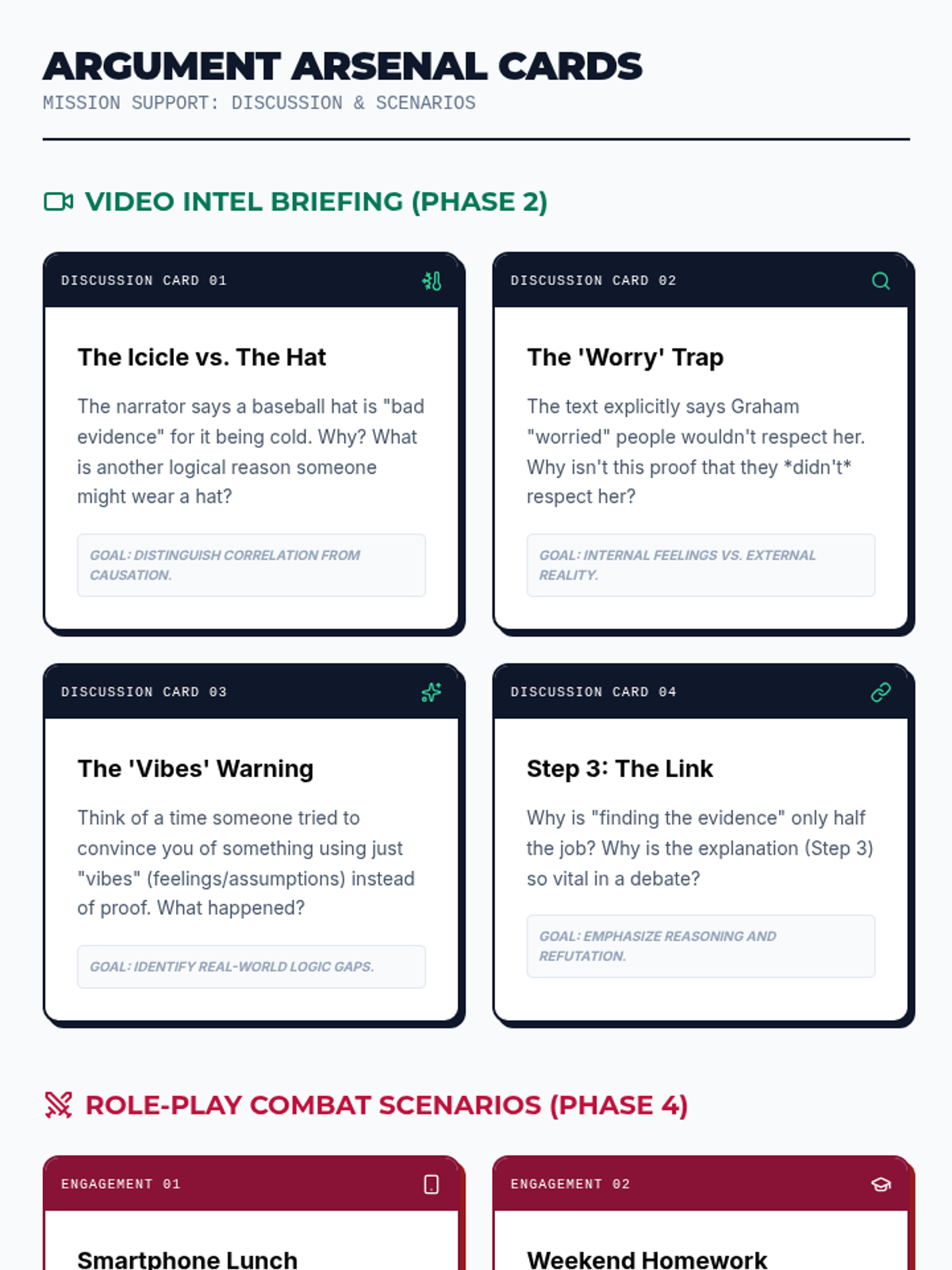
A high-energy debate lesson where students learn to weaponize text evidence and avoid 'vibes-based' arguments using a Khan Academy model. Students practice finding evidence for opposing sides within the same text and engage in rapid-fire mini-debates.
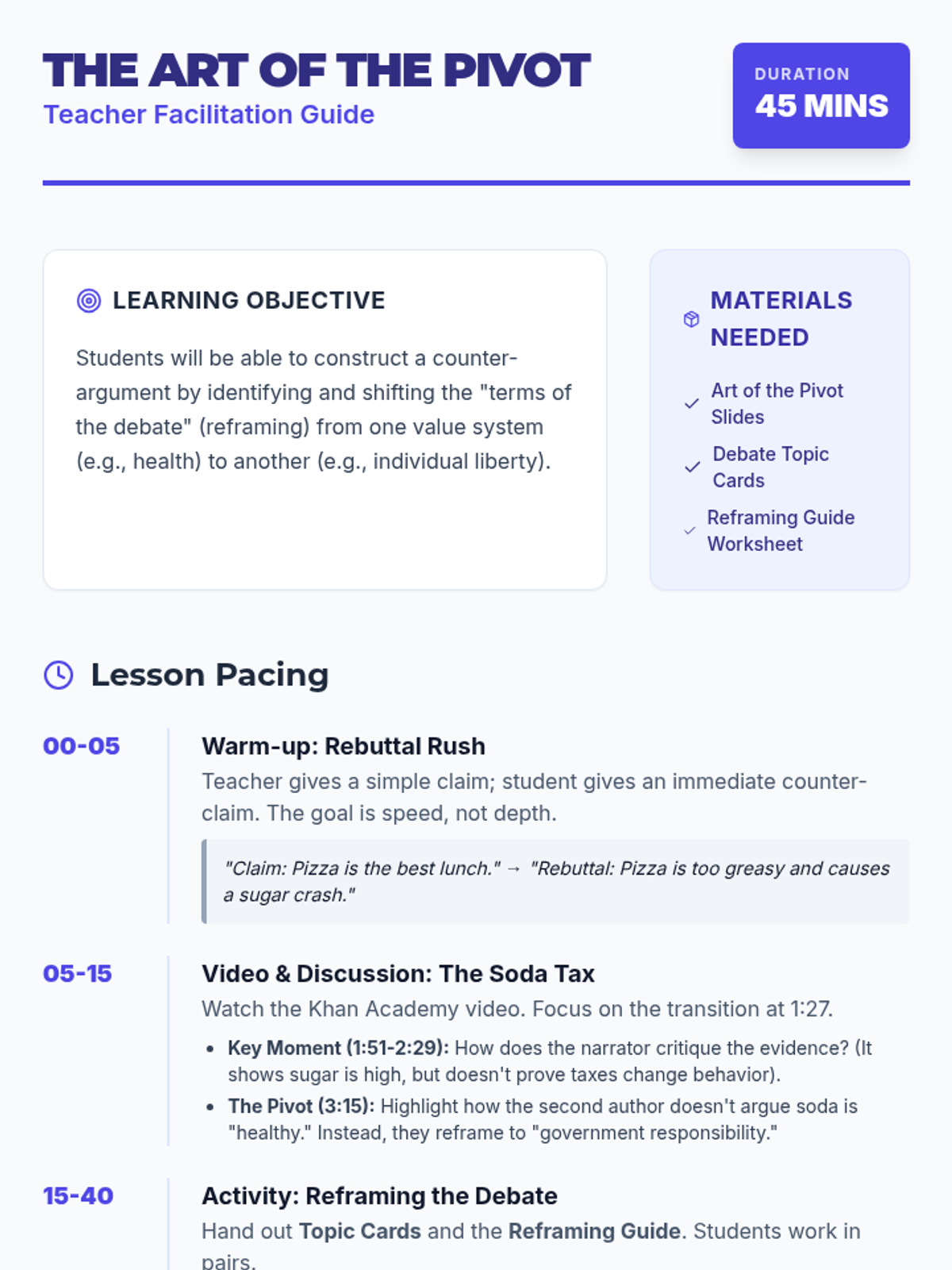
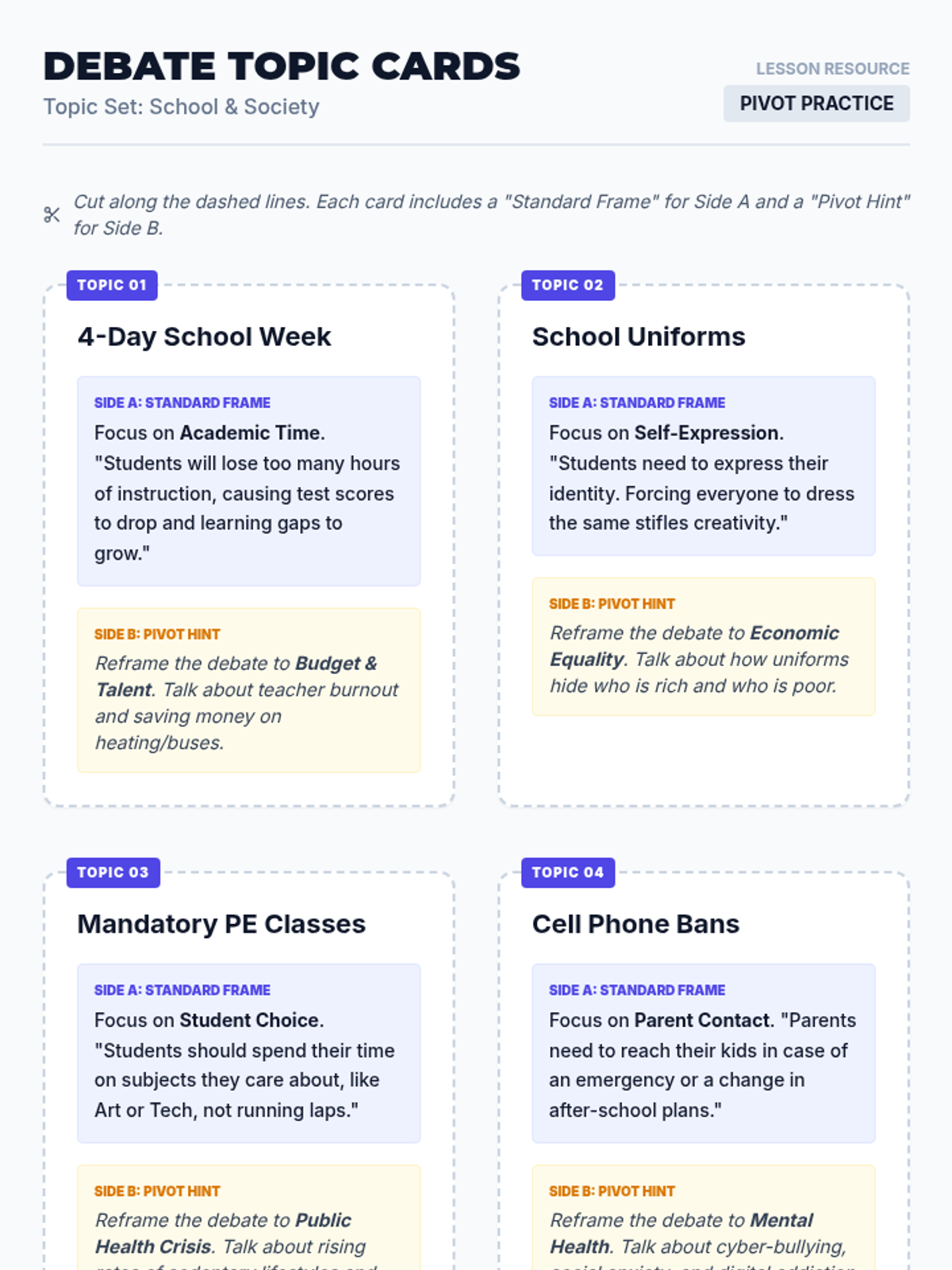
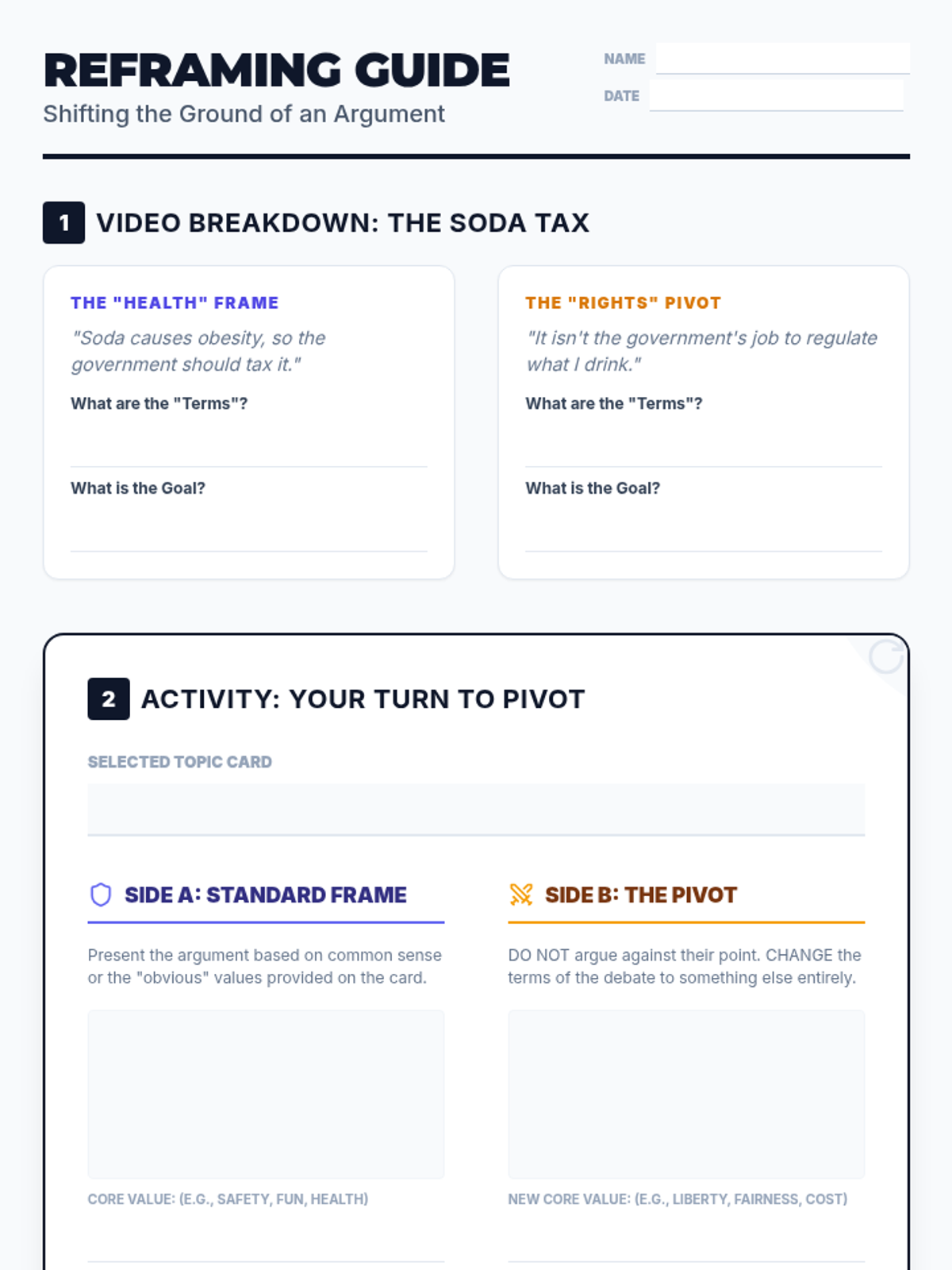
A lesson focused on identifying the 'terms of debate' and learning how to reframe an argument to shift the ground of a discussion. Students will analyze a soda tax debate and practice reframing standard school-based topics.
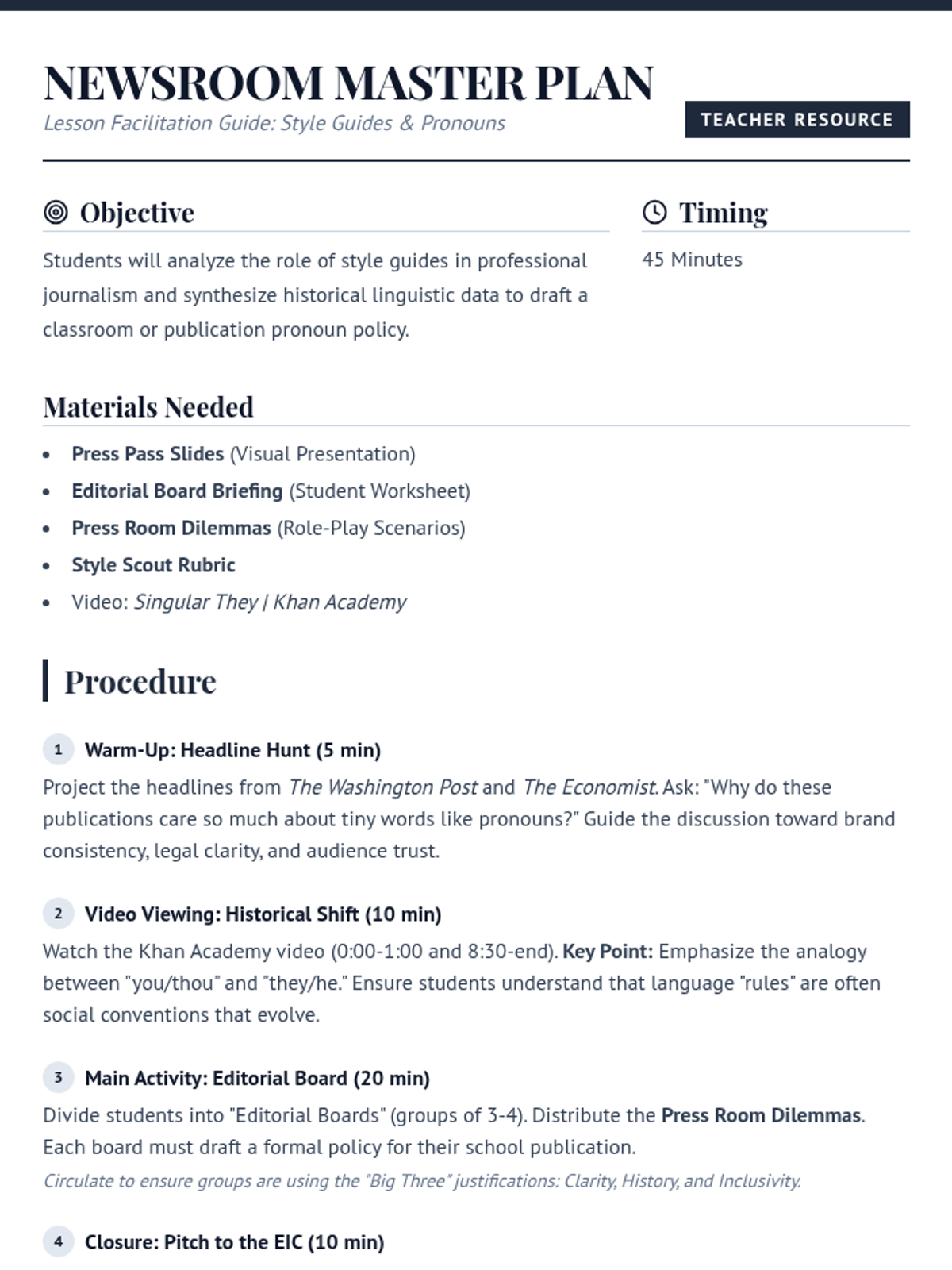
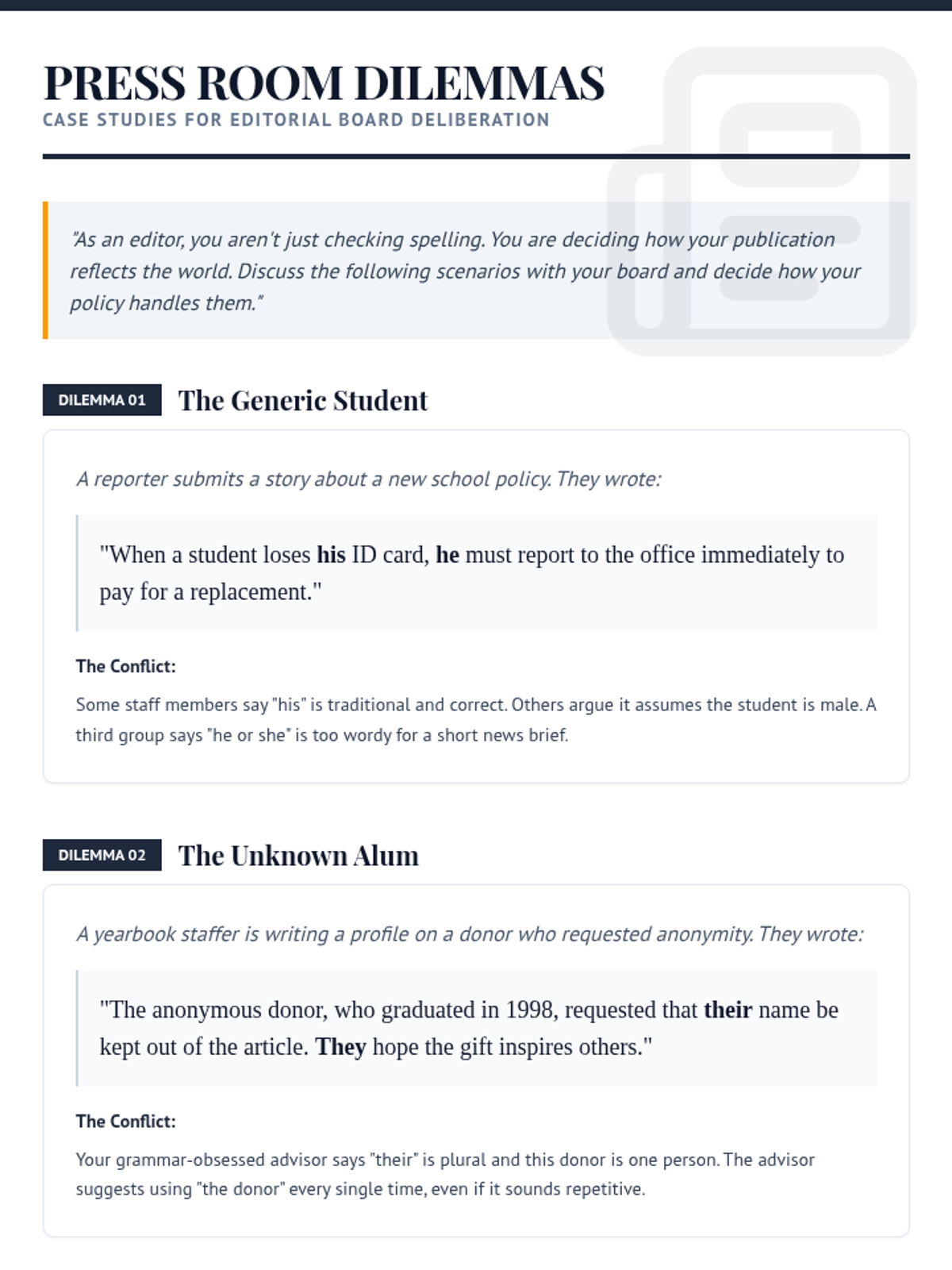
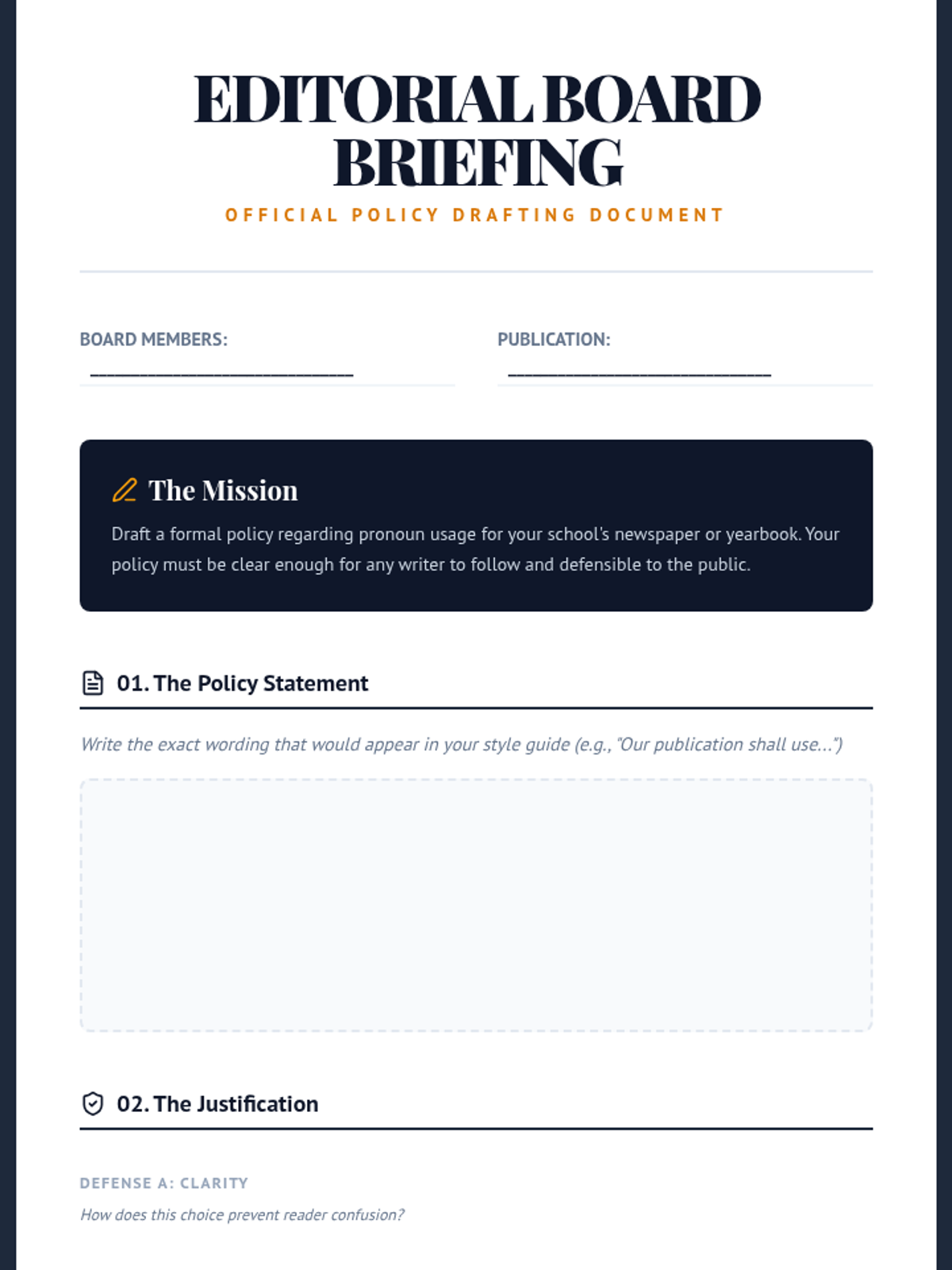
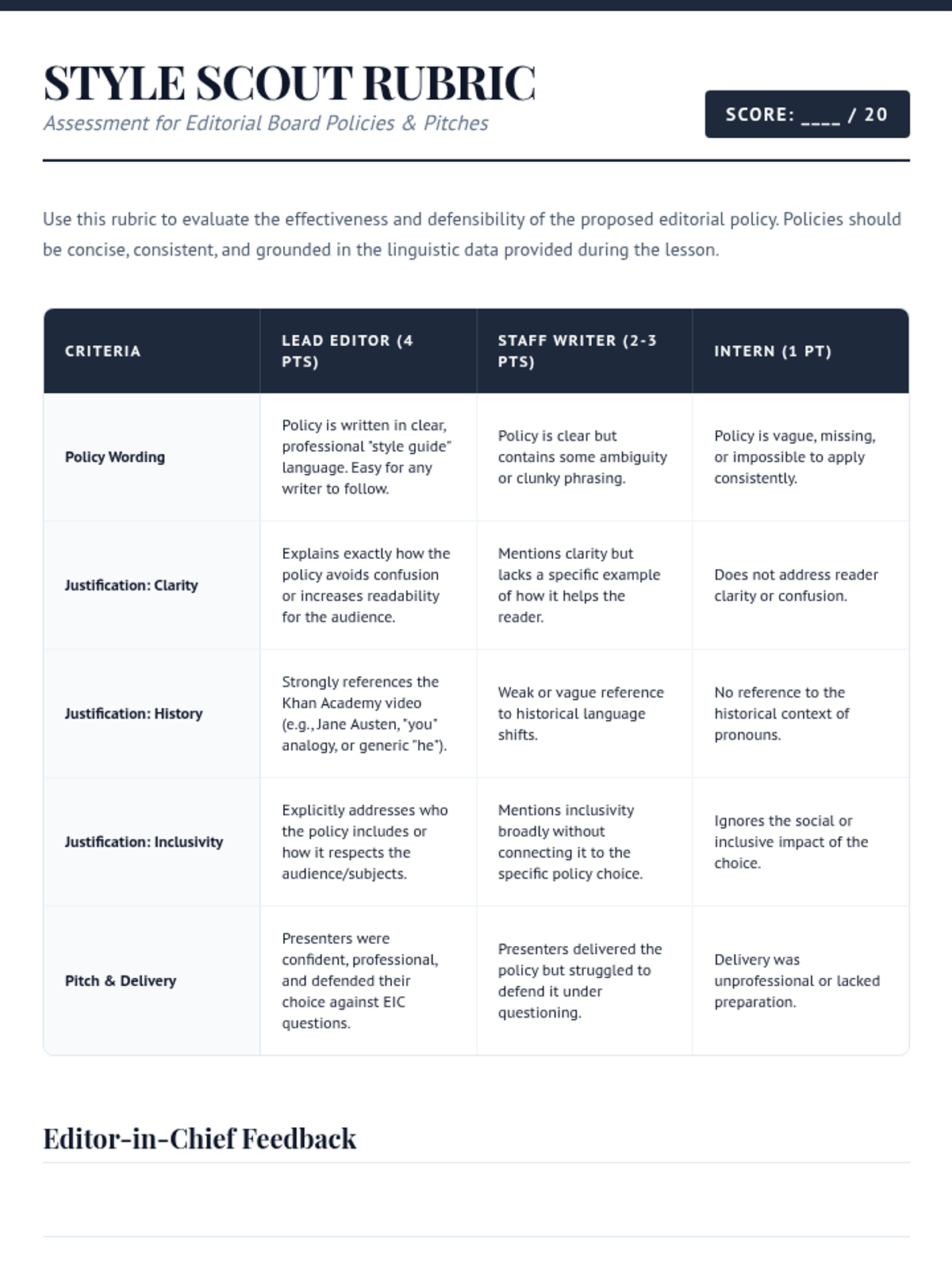
This lesson explores the history and utility of style guides in journalism, focusing on the evolution of pronouns. Students analyze the transition from 'generic he' to 'singular they' and collaborate to draft a formal style policy for their own publication.
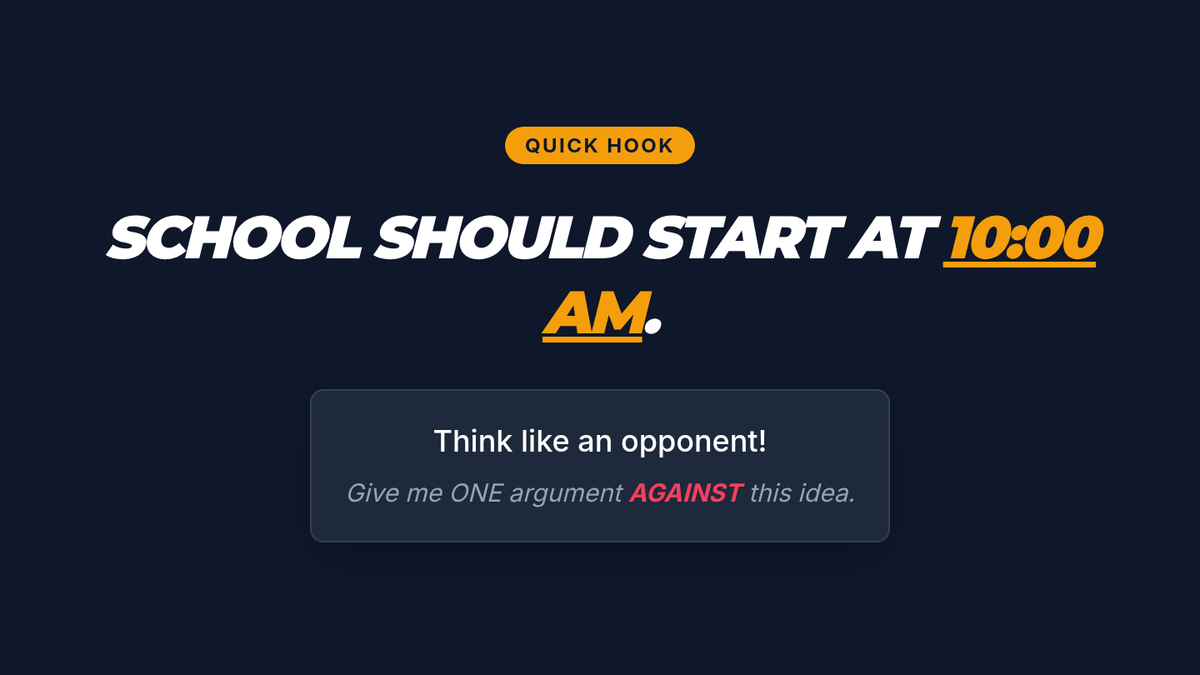
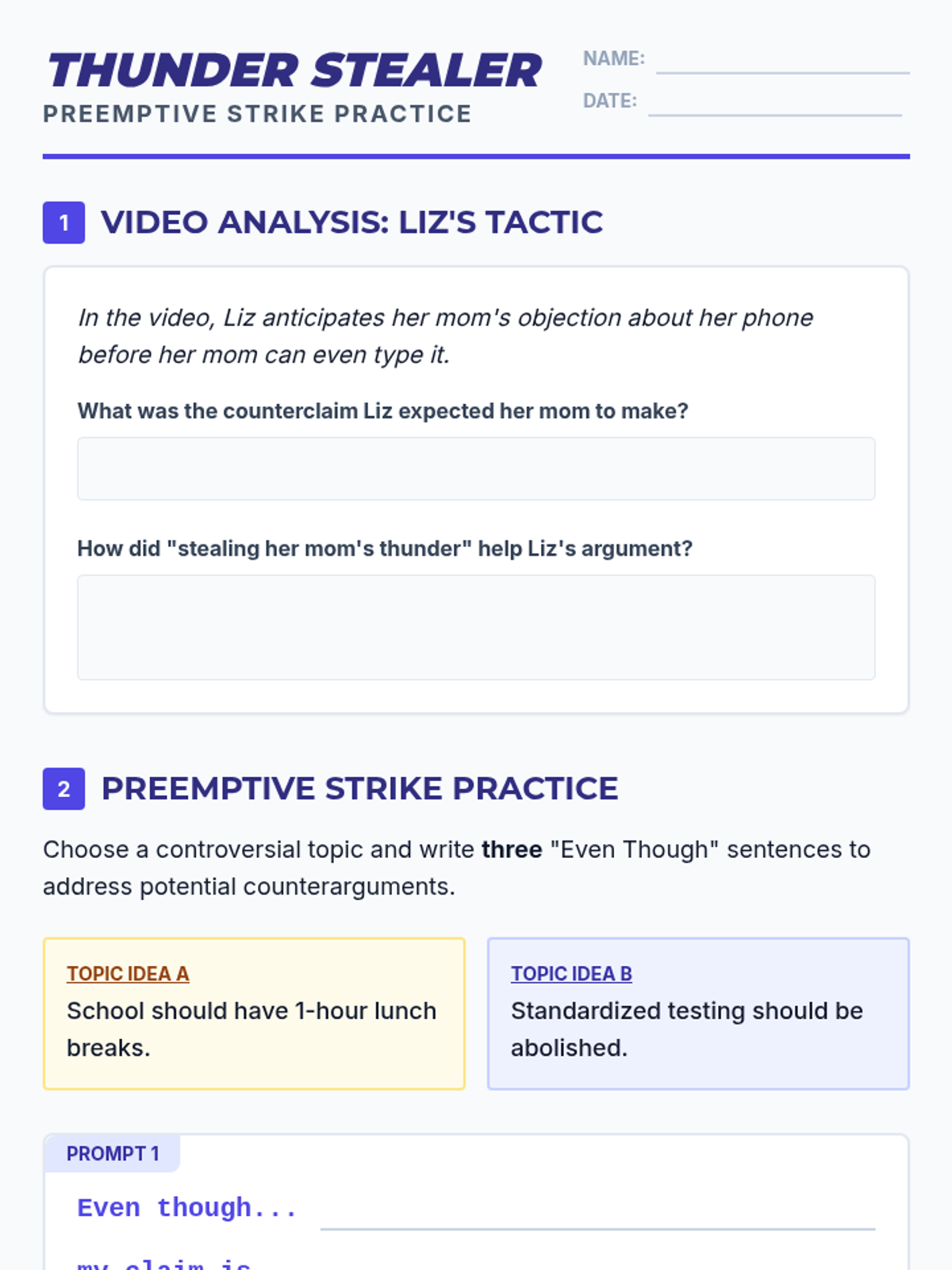
Students learn to strengthen their arguments by anticipating and addressing counterarguments before they are even raised. Using a relatable video analysis of a teen negotiating for a new phone, students practice the 'preemptive strike' technique using a specific 'Even though...' sentence structure.
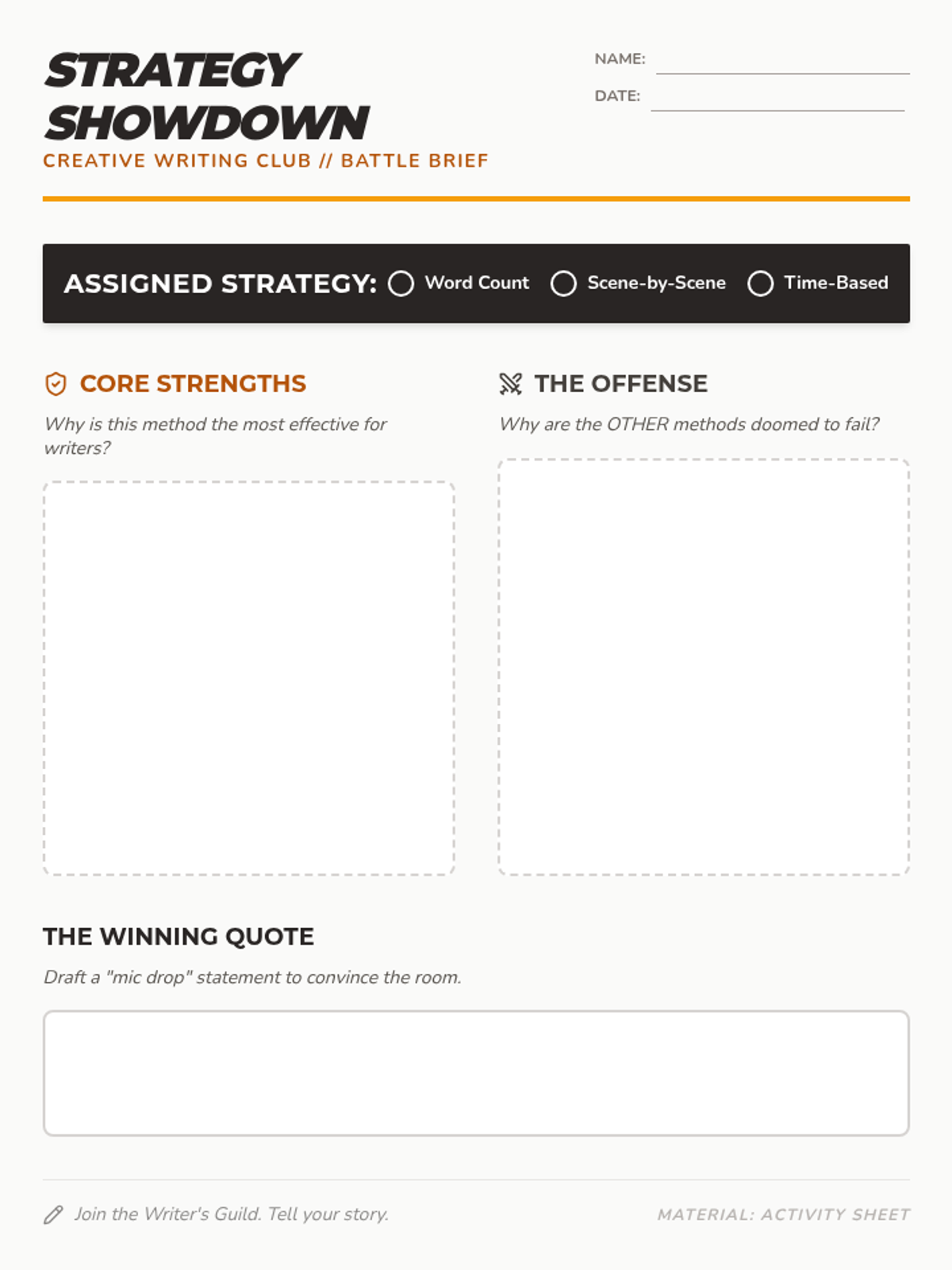
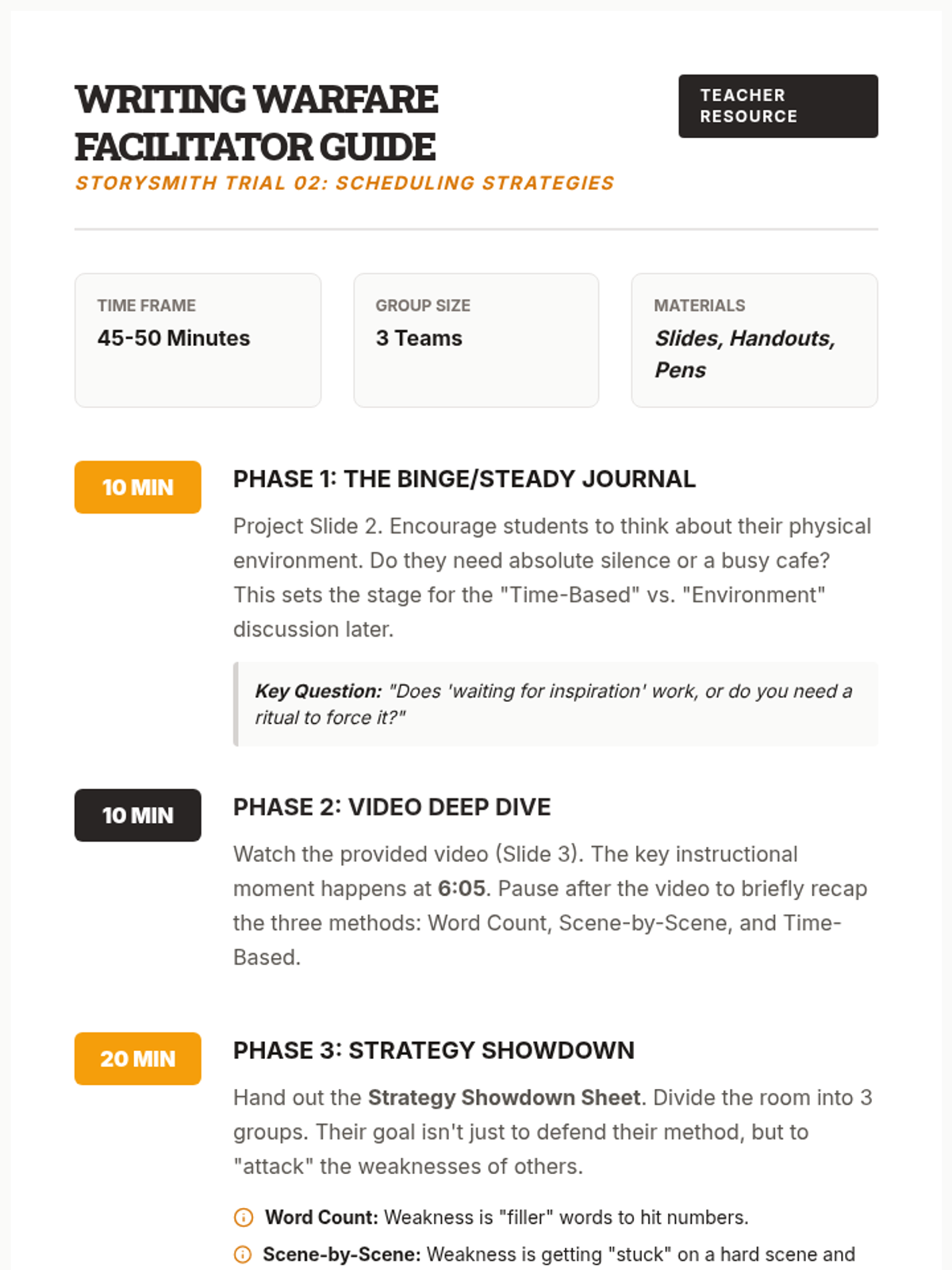
A high-energy creative writing lesson that explores project management through the lens of 'Storysmithing.' Students debate scheduling strategies like word-count goals vs. time-based habits to find their ideal creative flow.
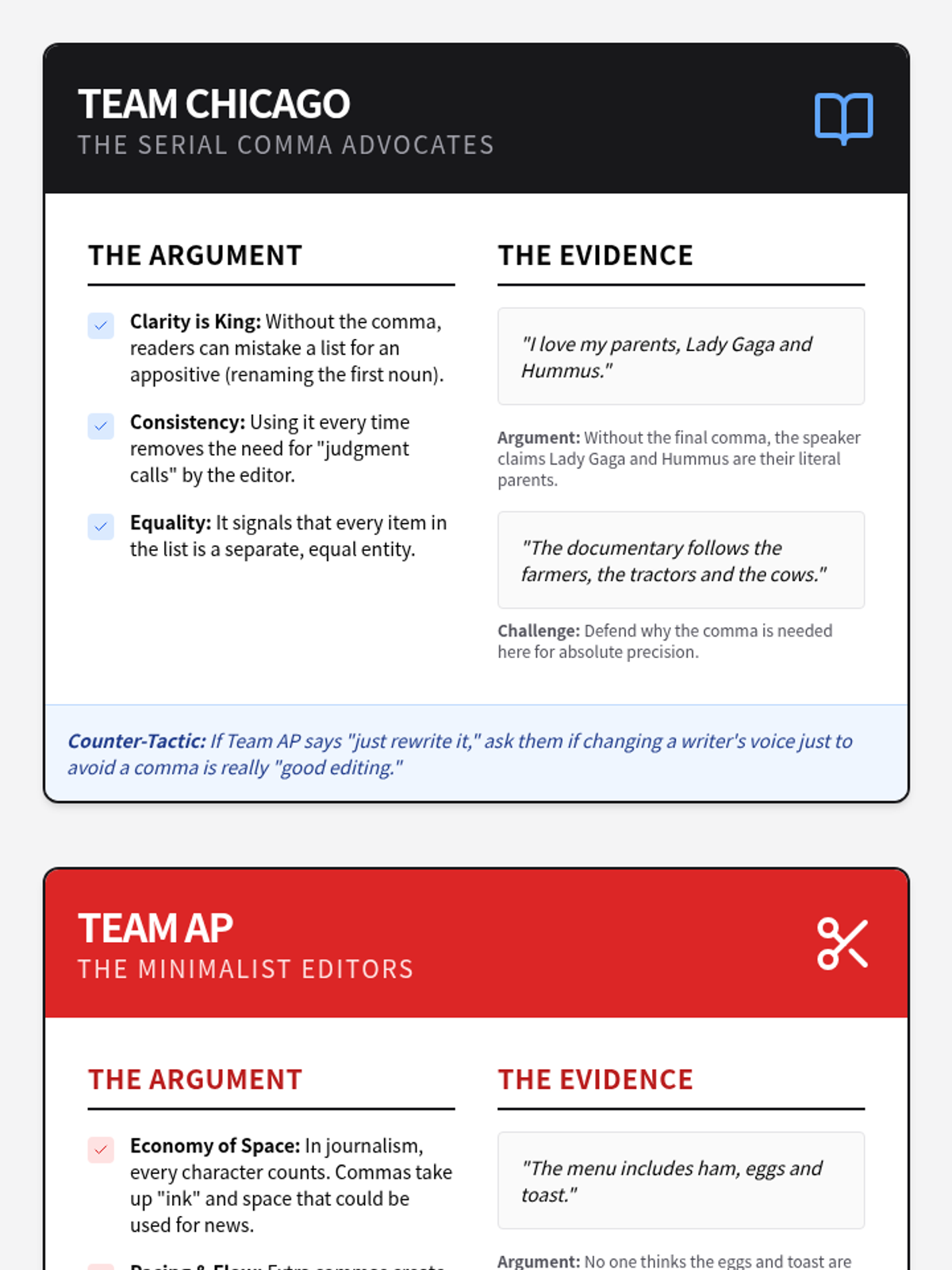
A journalism-focused lesson exploring the intense debate between AP and Chicago style guides regarding the Oxford comma, featuring real-world legal stakes and a structured classroom debate.
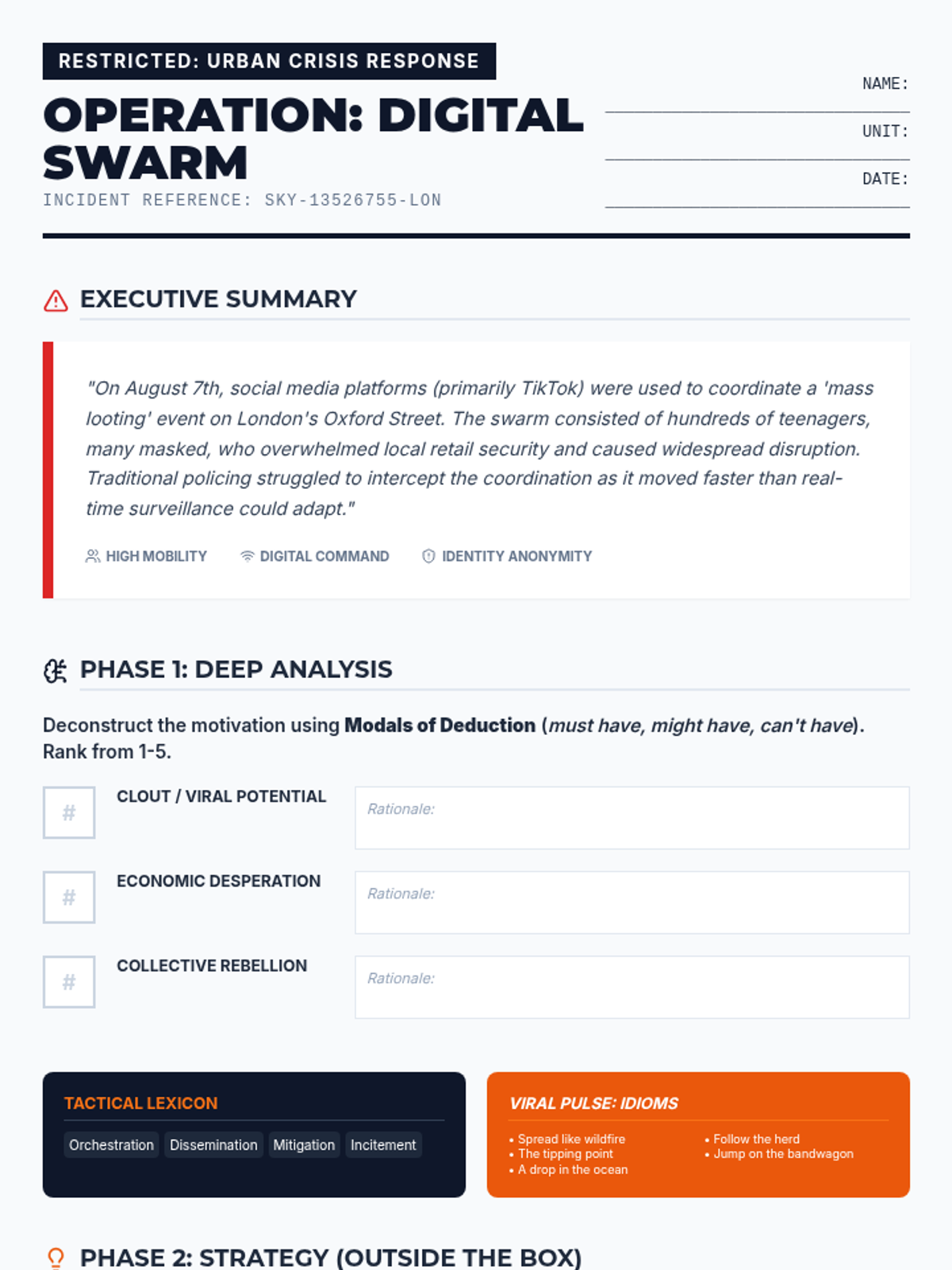
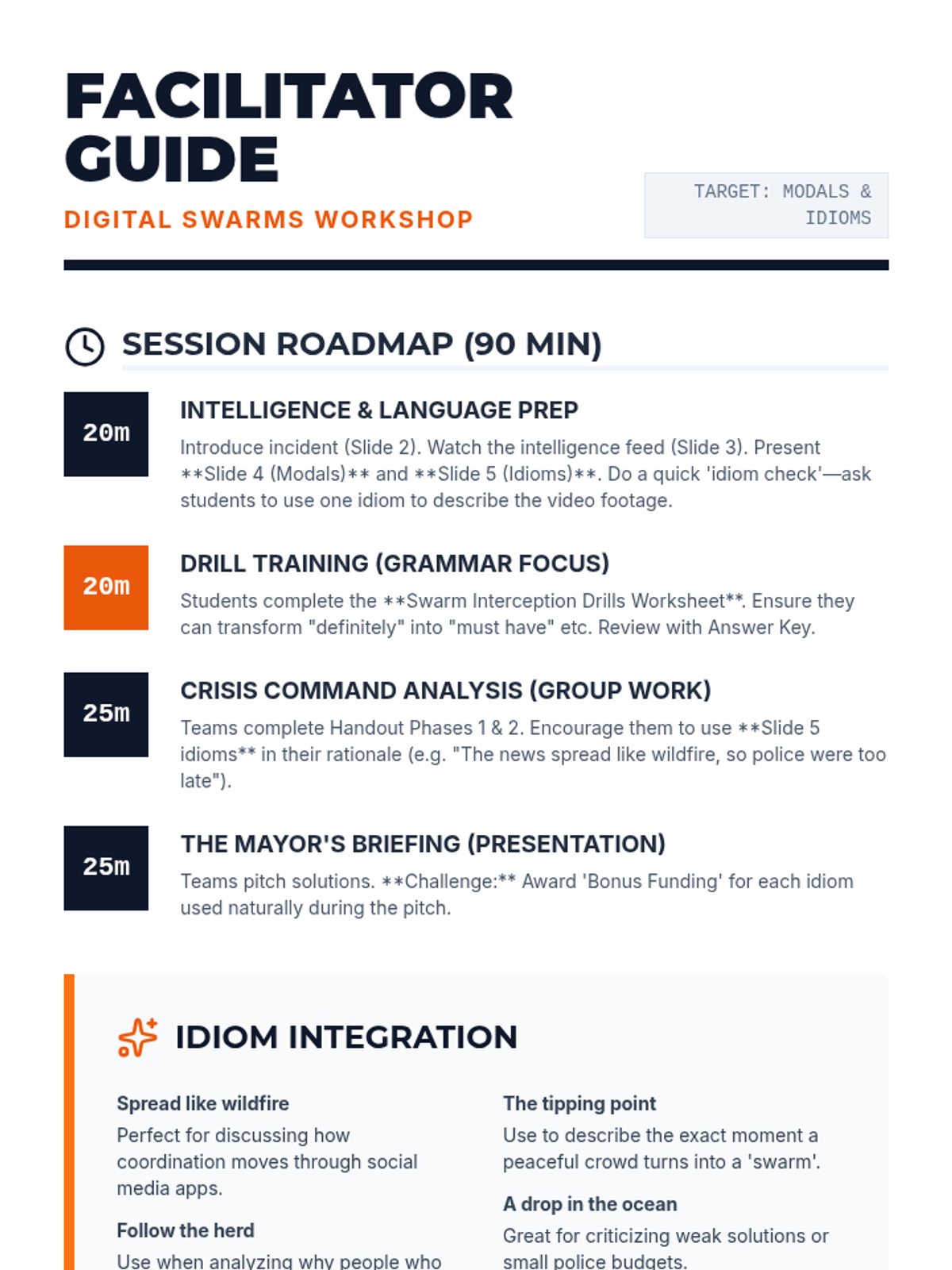
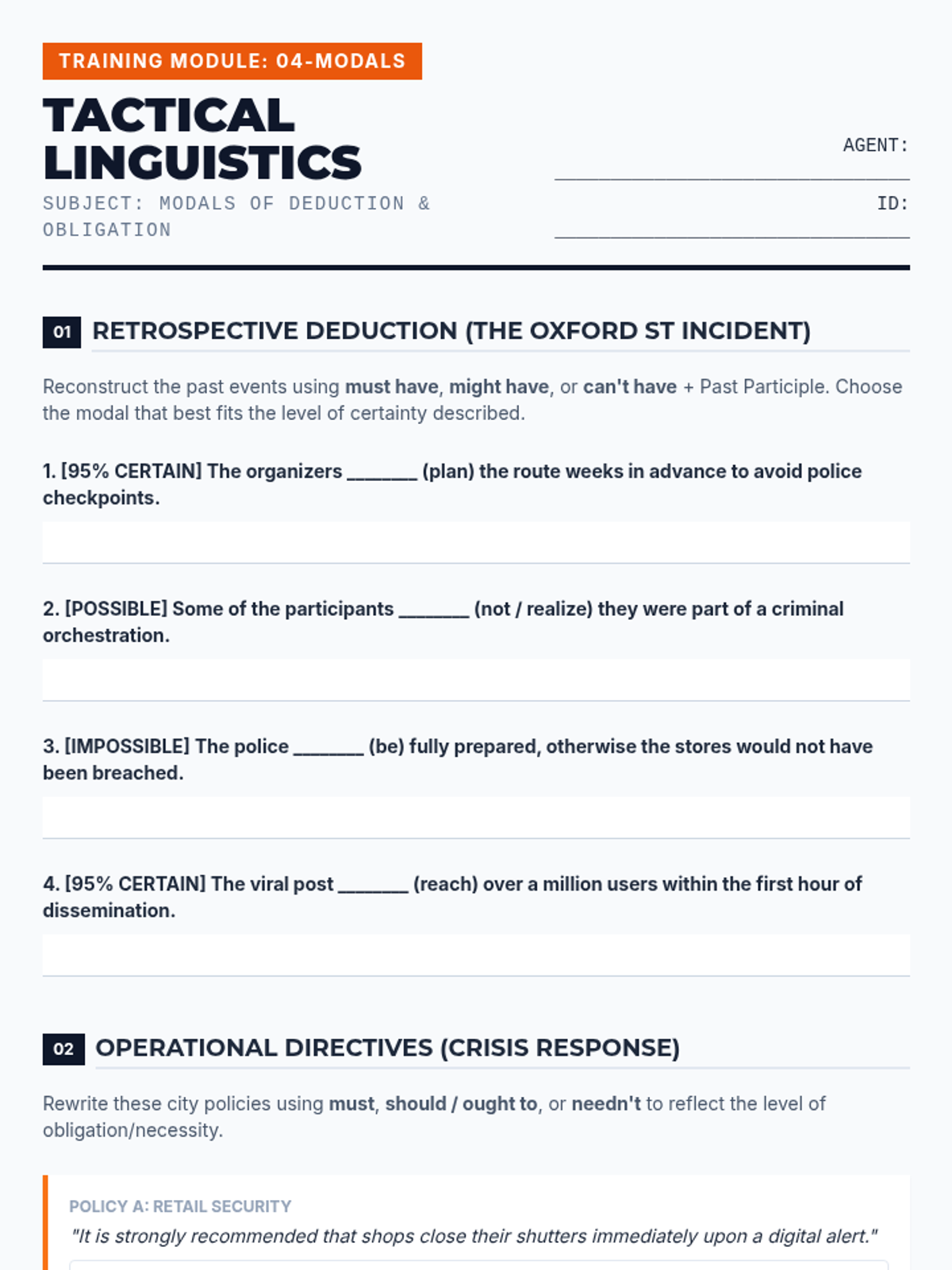
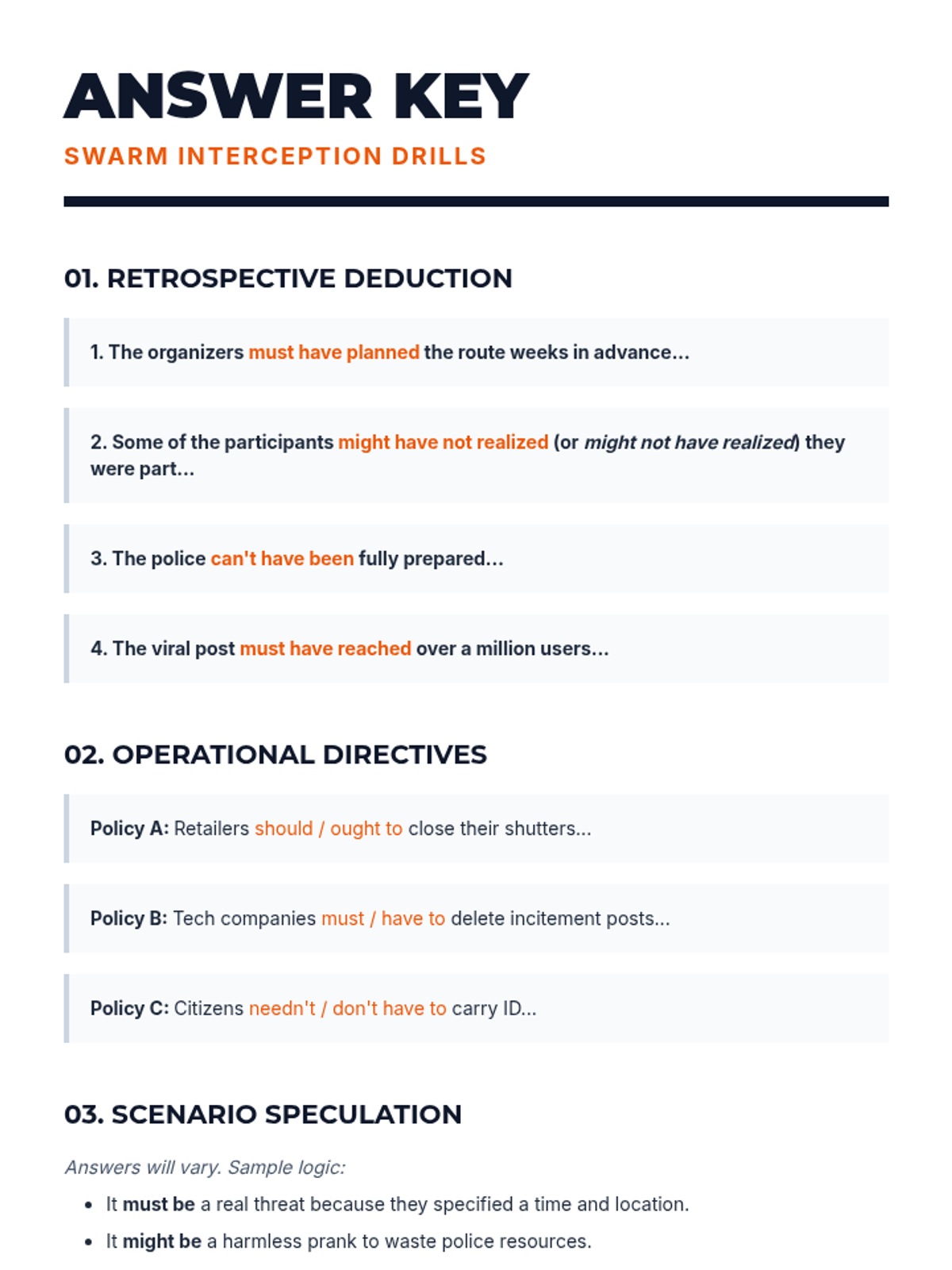
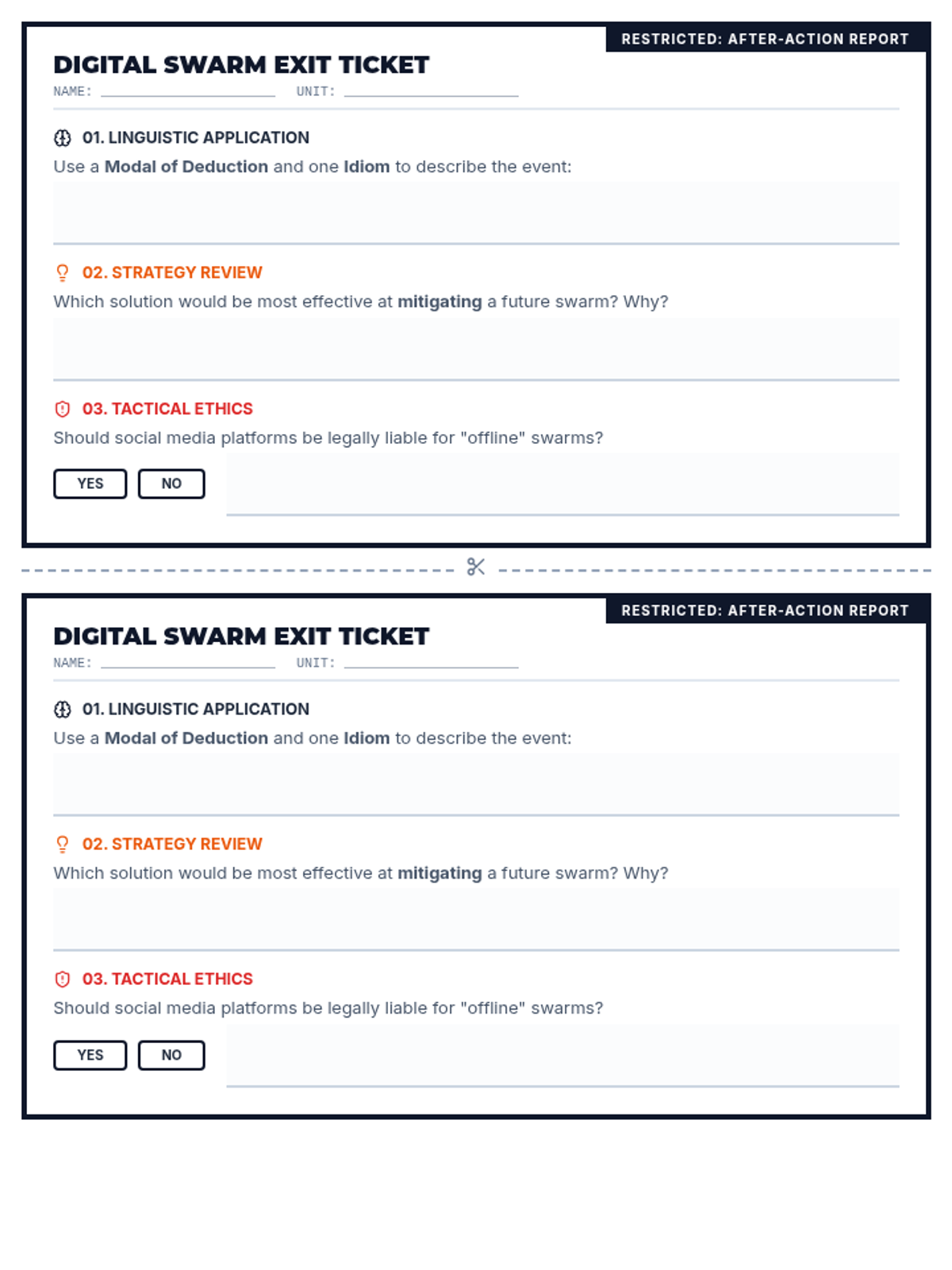
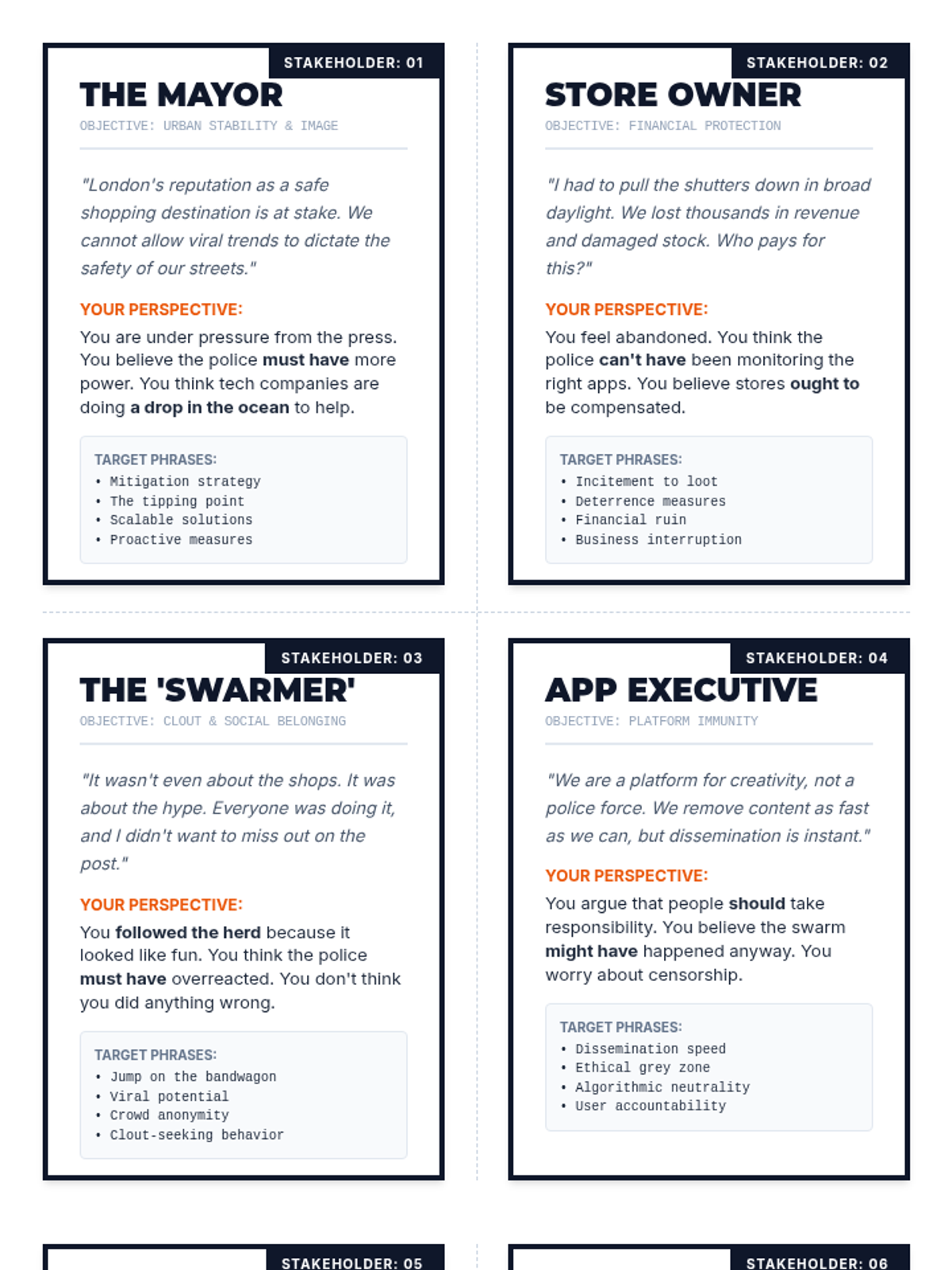
A problem-solving workshop for B2+ students based on social media flash mobs. Students act as a city's 'Digital Response Team' to design innovative solutions for urban chaos triggered by viral trends.
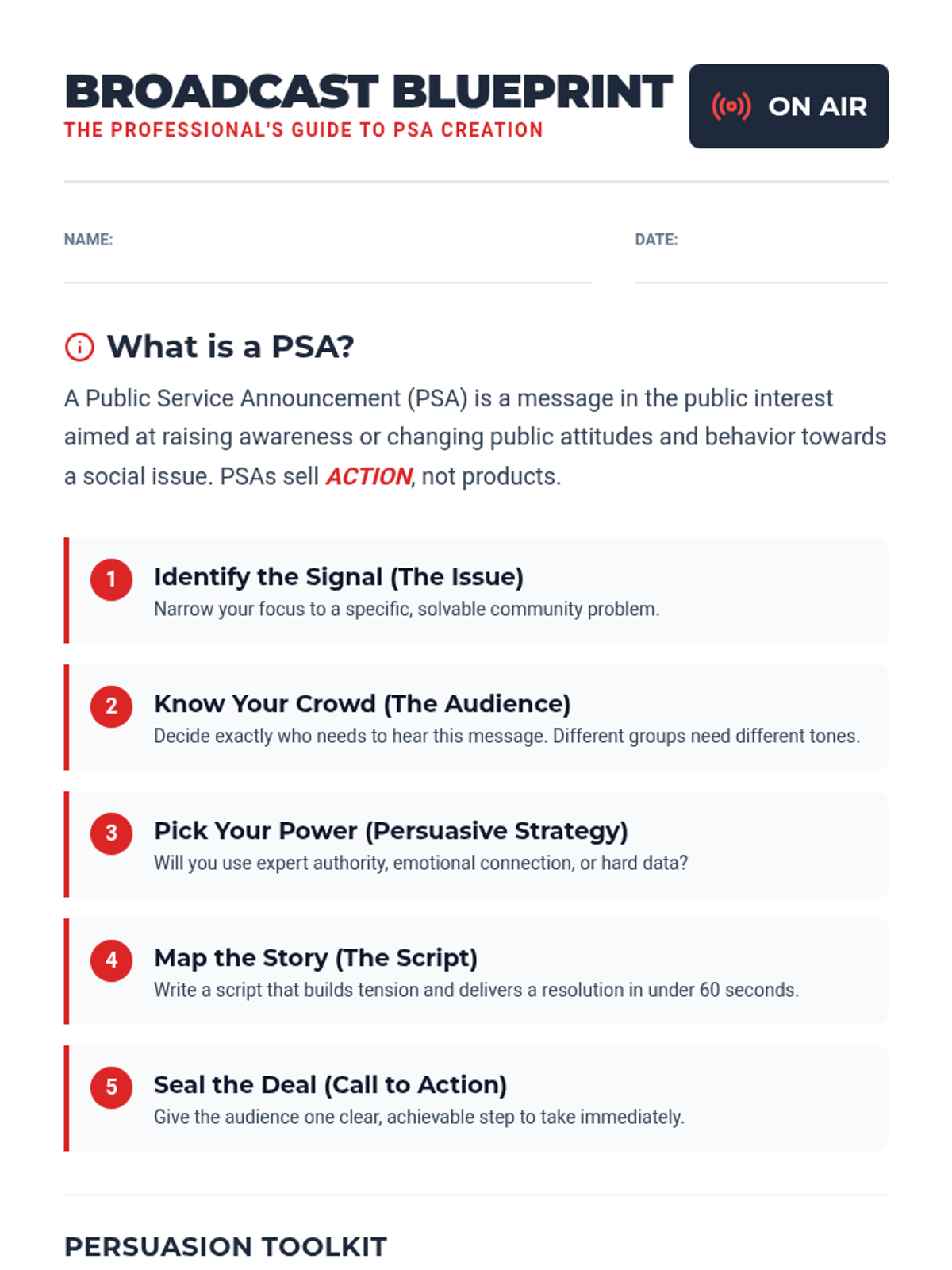
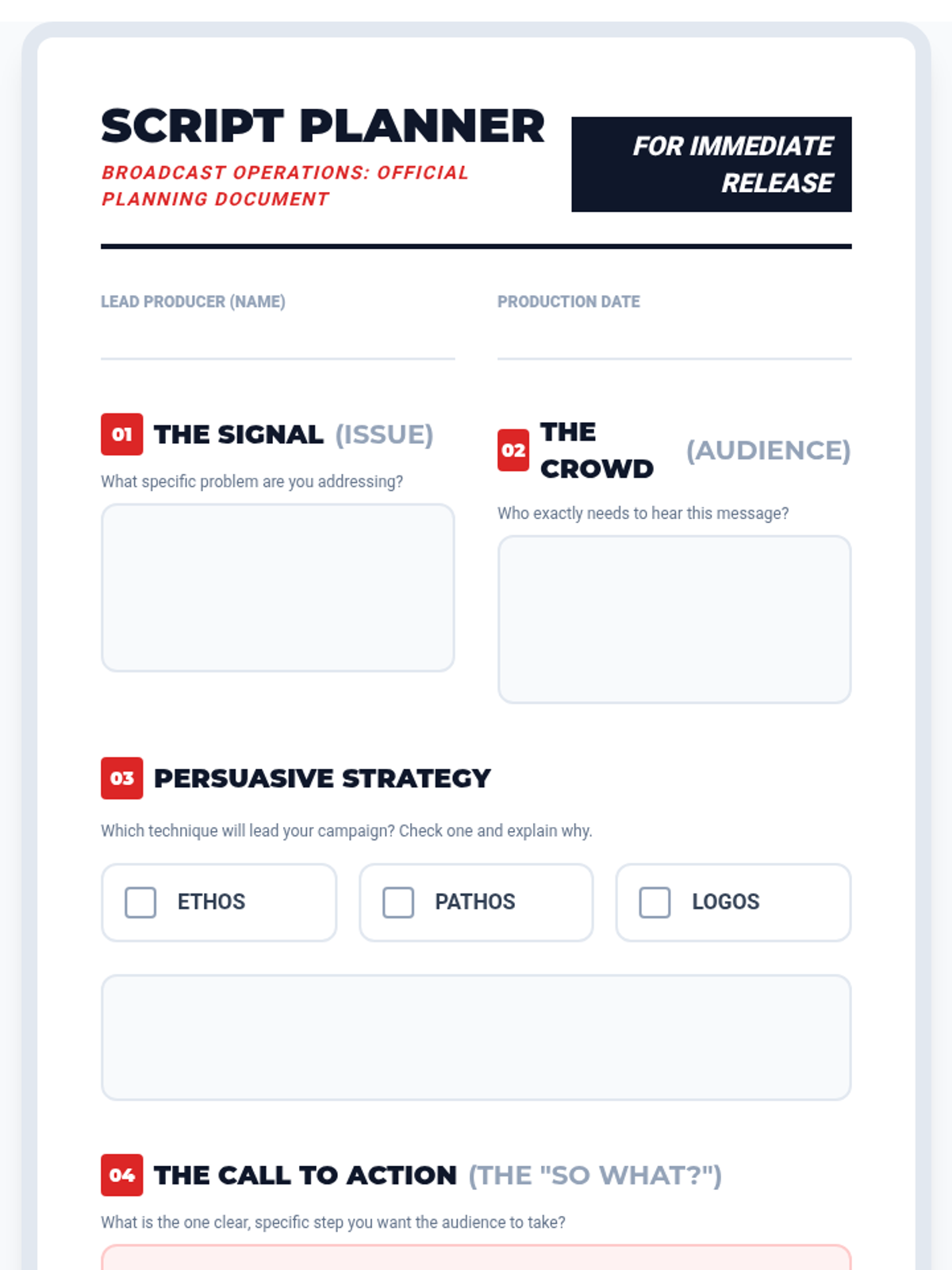
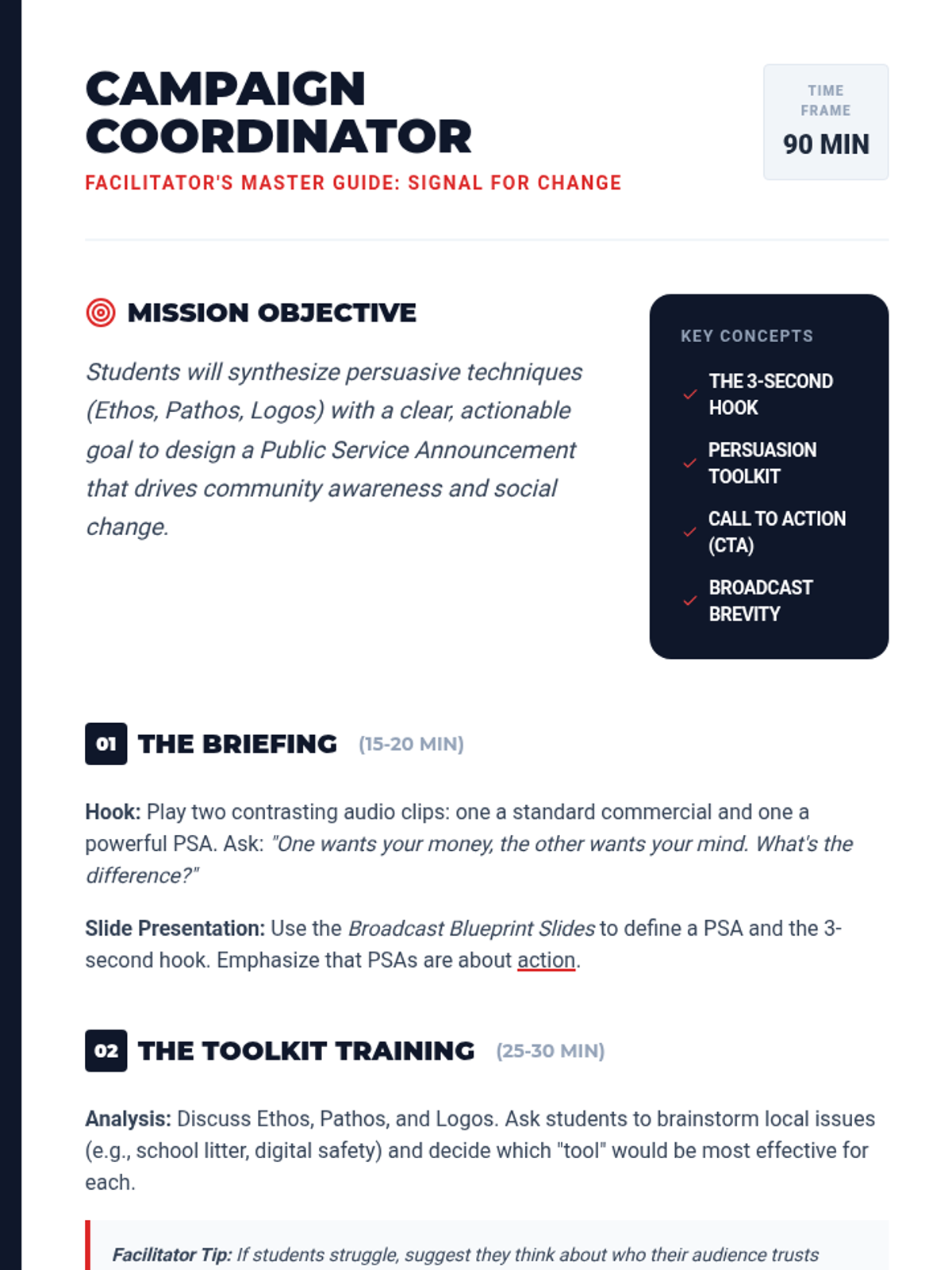
Students will learn the essential components of a Public Service Announcement, focusing on persuasive techniques and crafting a compelling call to action to drive social change.
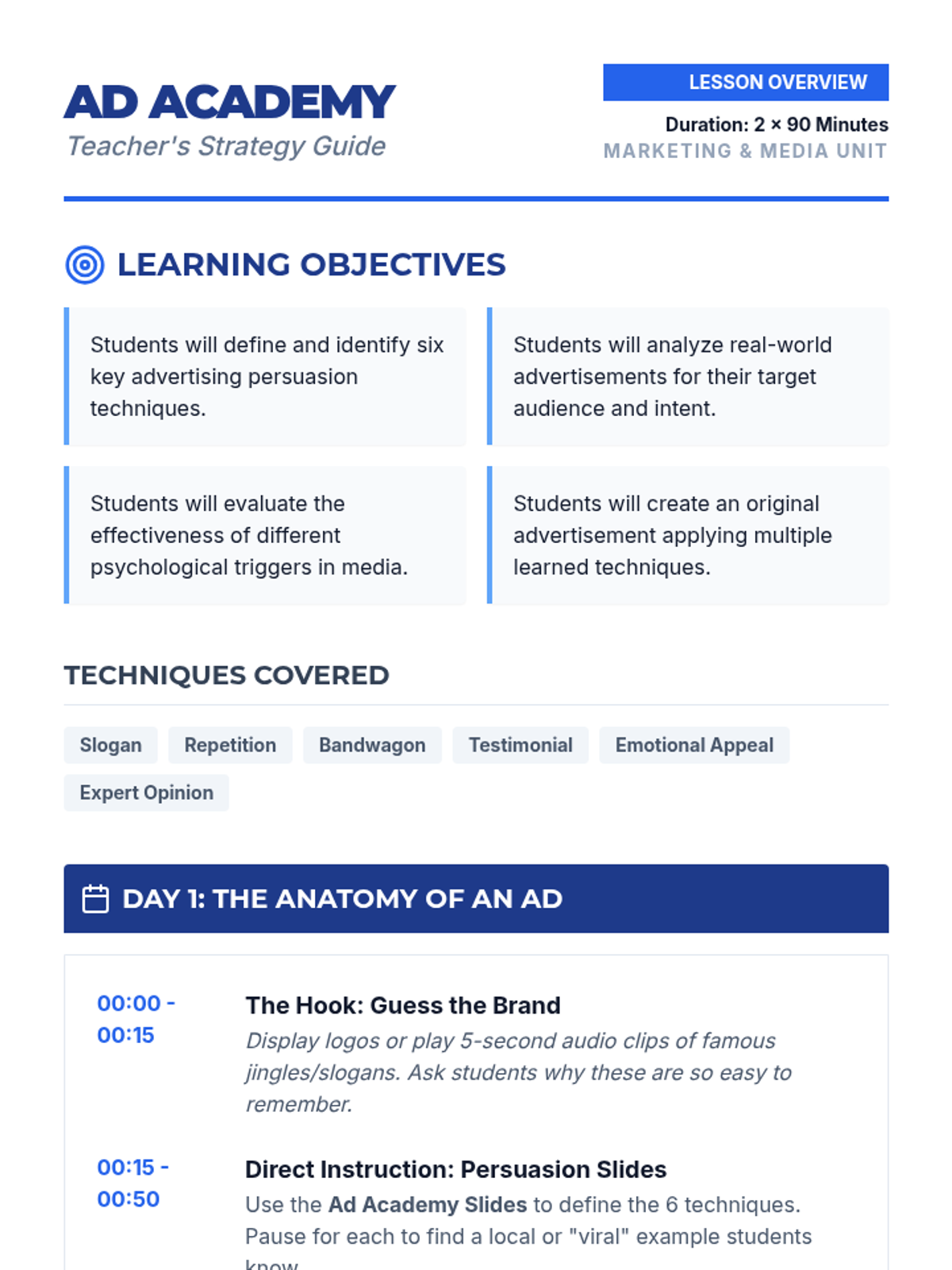
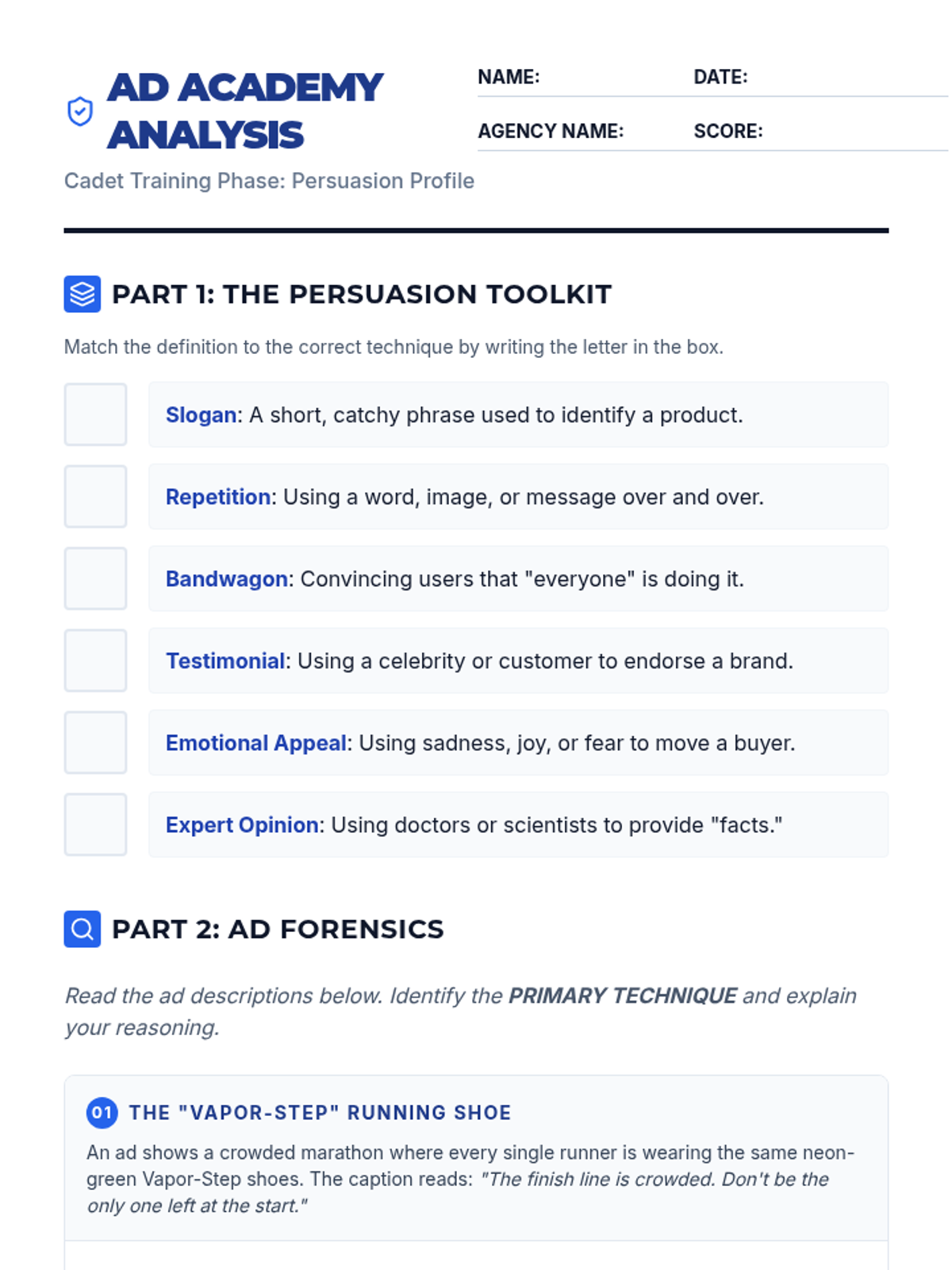
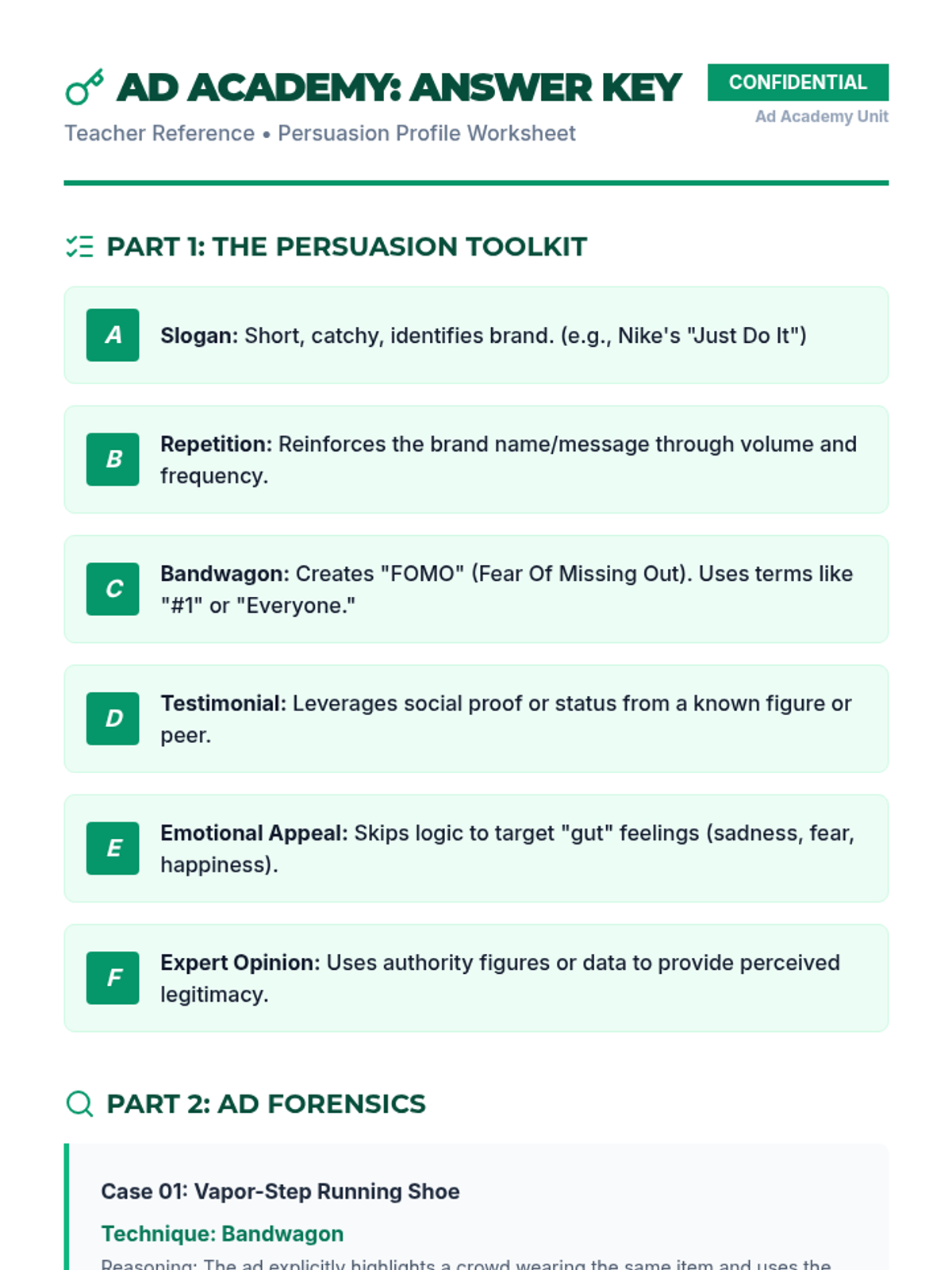
A comprehensive two-day introduction to advertising persuasion techniques, teaching students to identify and analyze slogans, repetition, bandwagoning, testimonials, emotional appeals, and expert opinions.
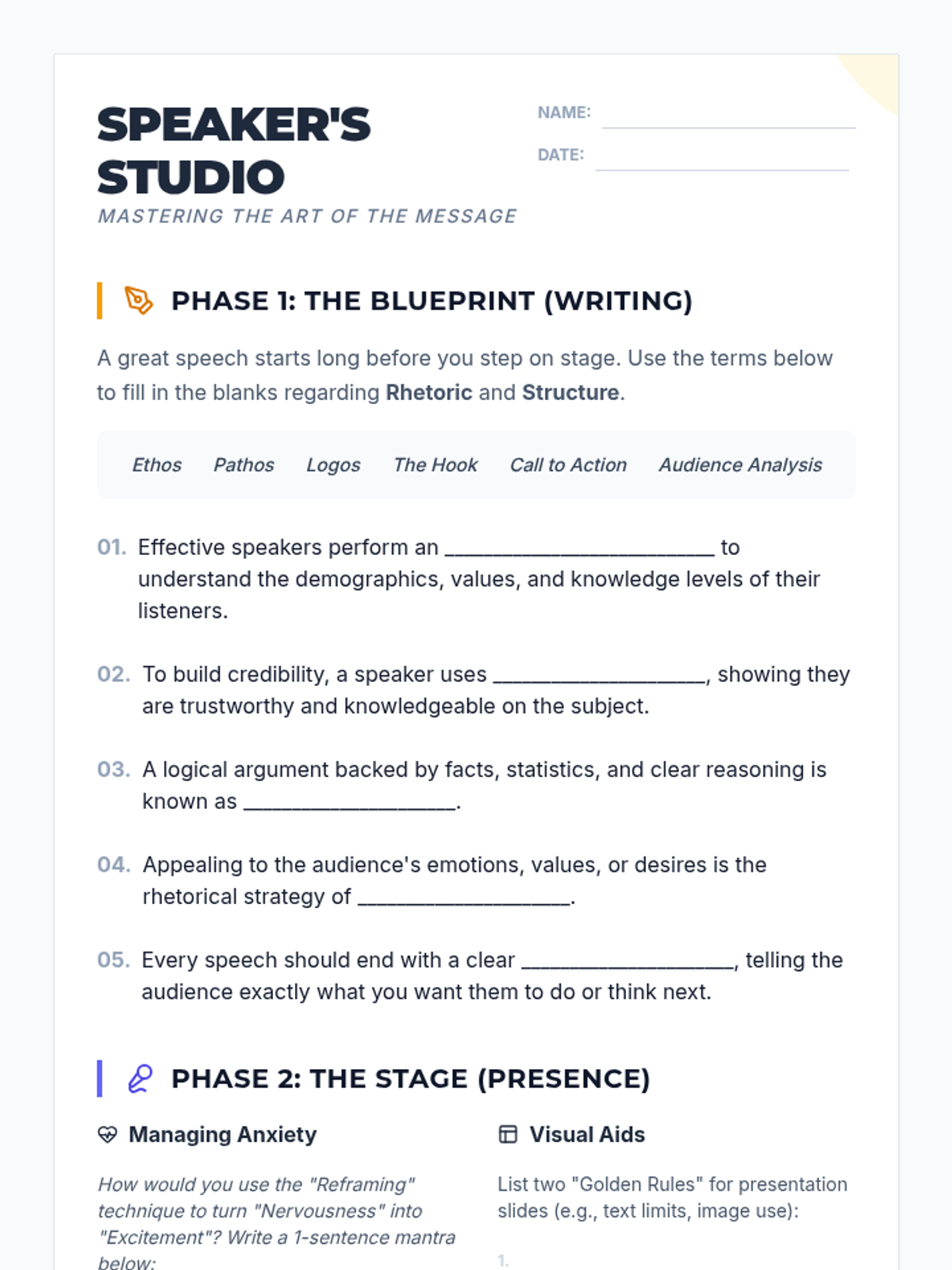
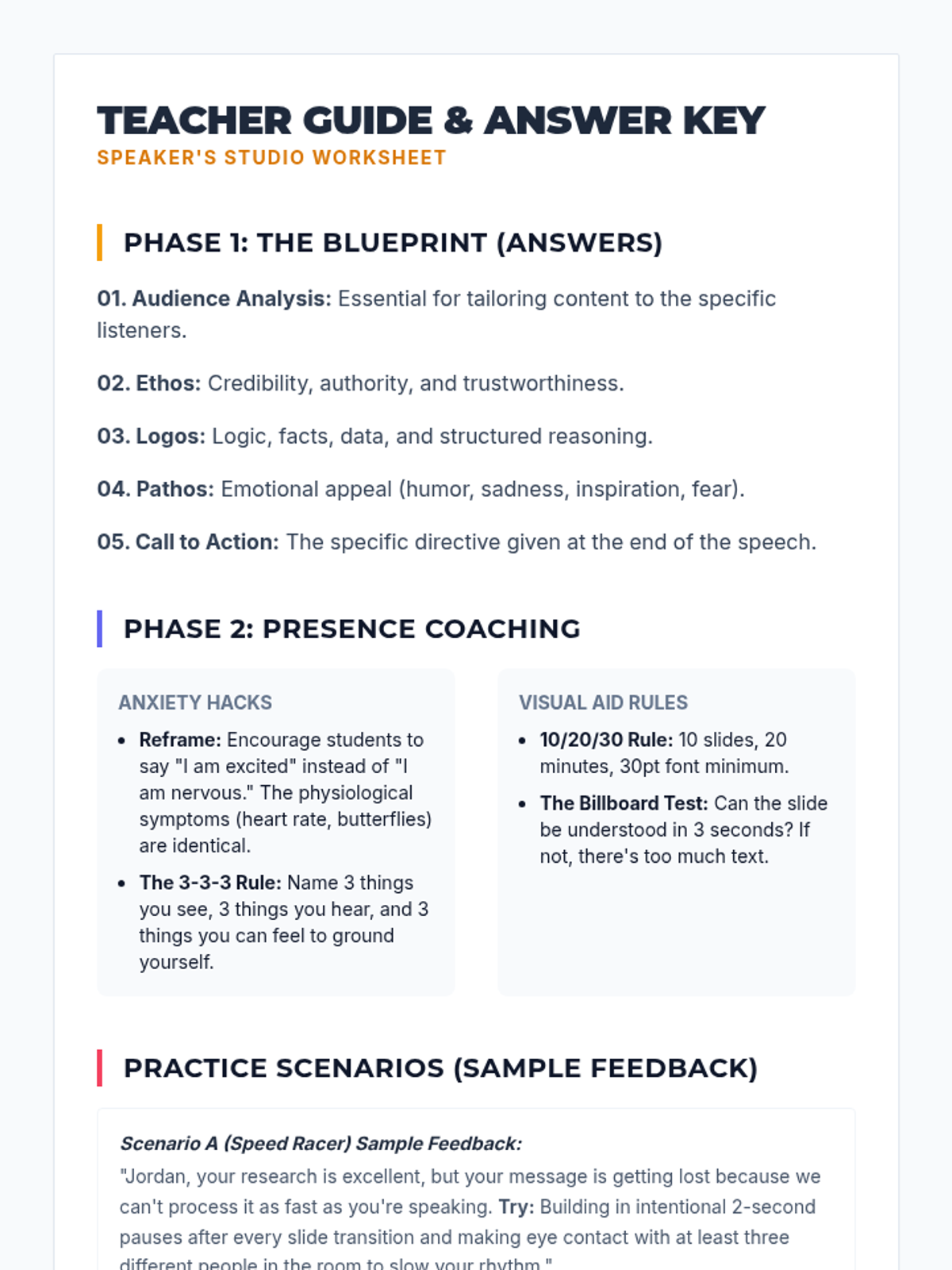
A comprehensive guide to mastering the art of public speaking, covering the entire process from rhetorical writing to confident stage delivery.
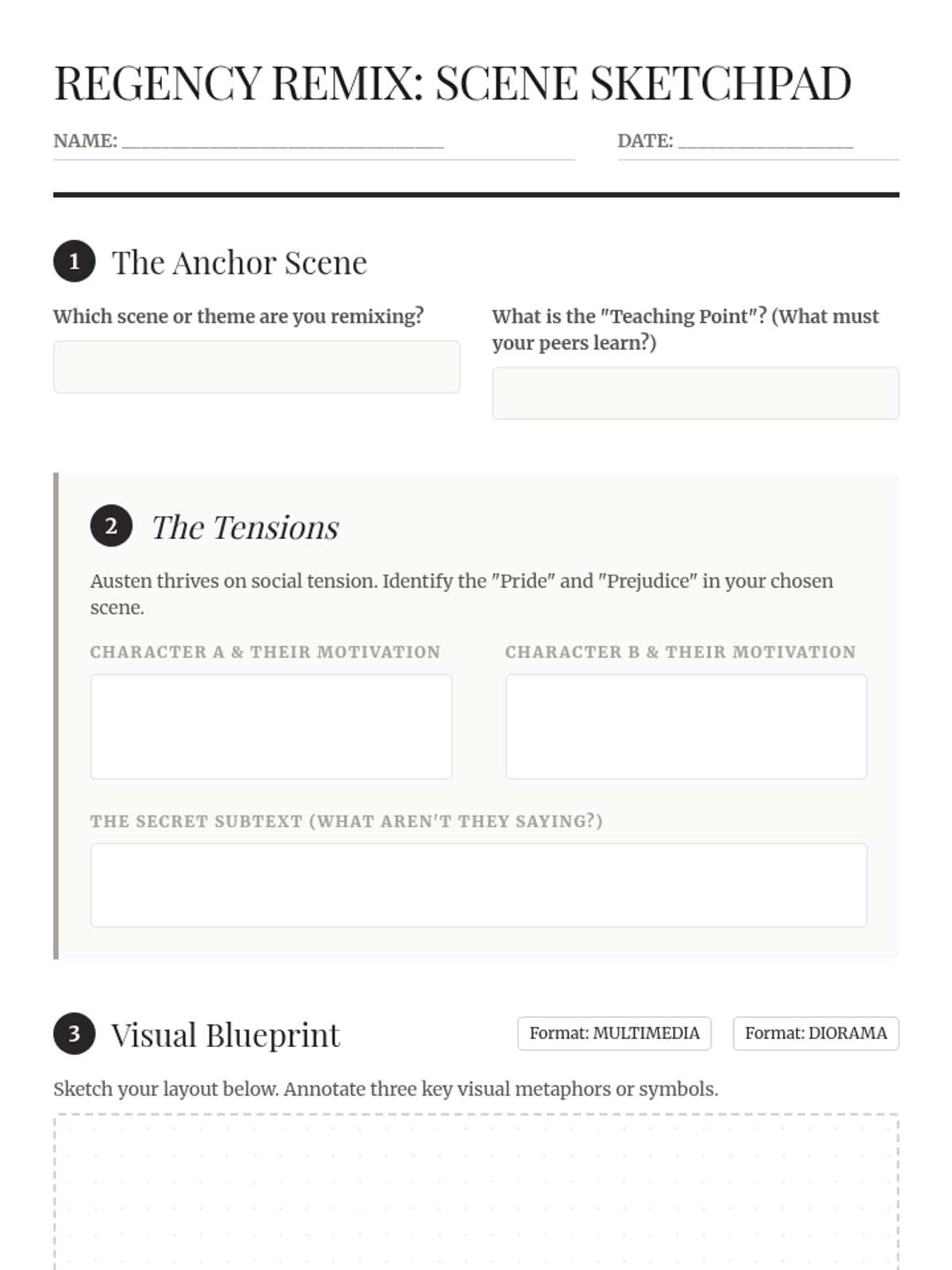
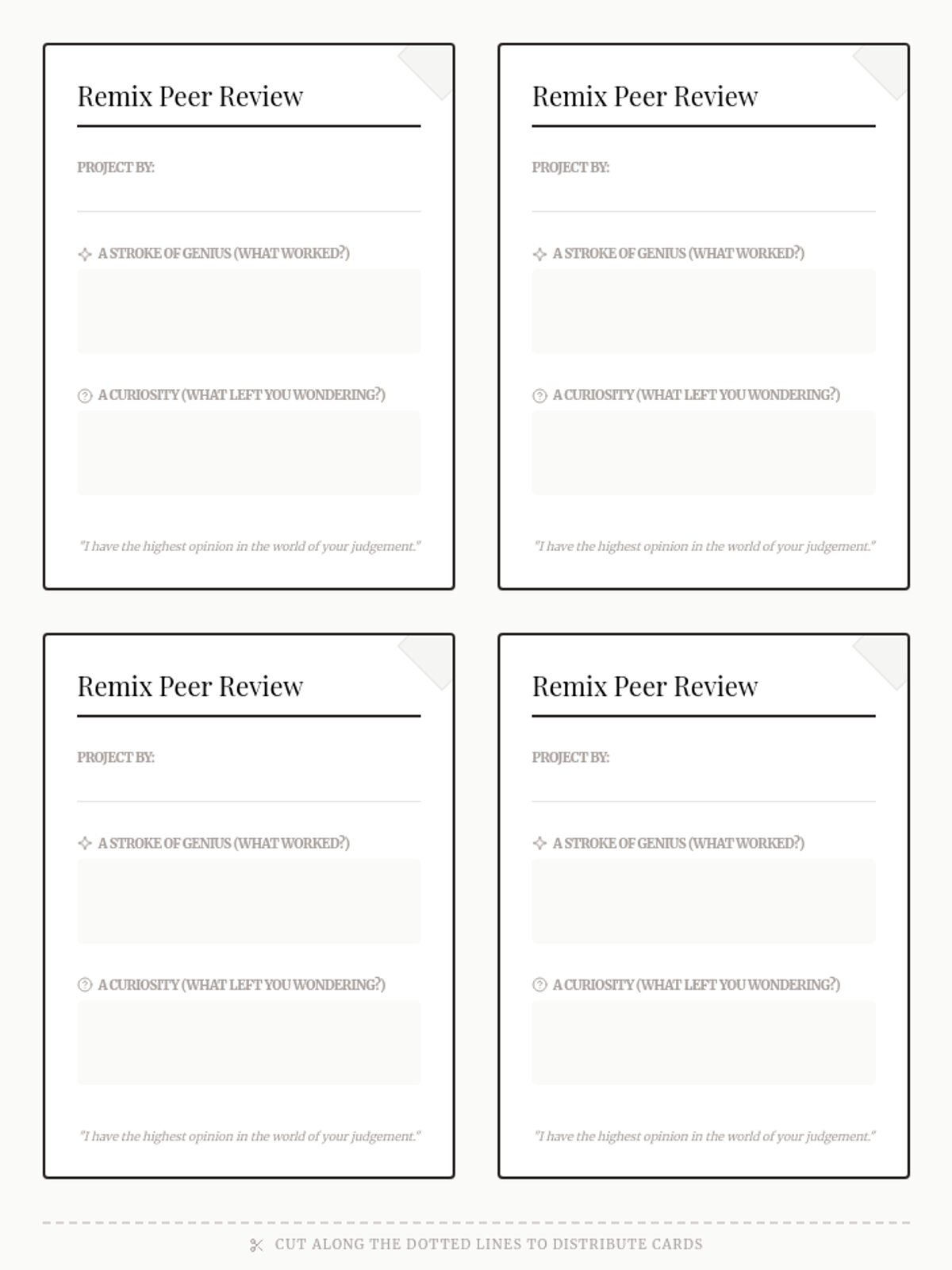
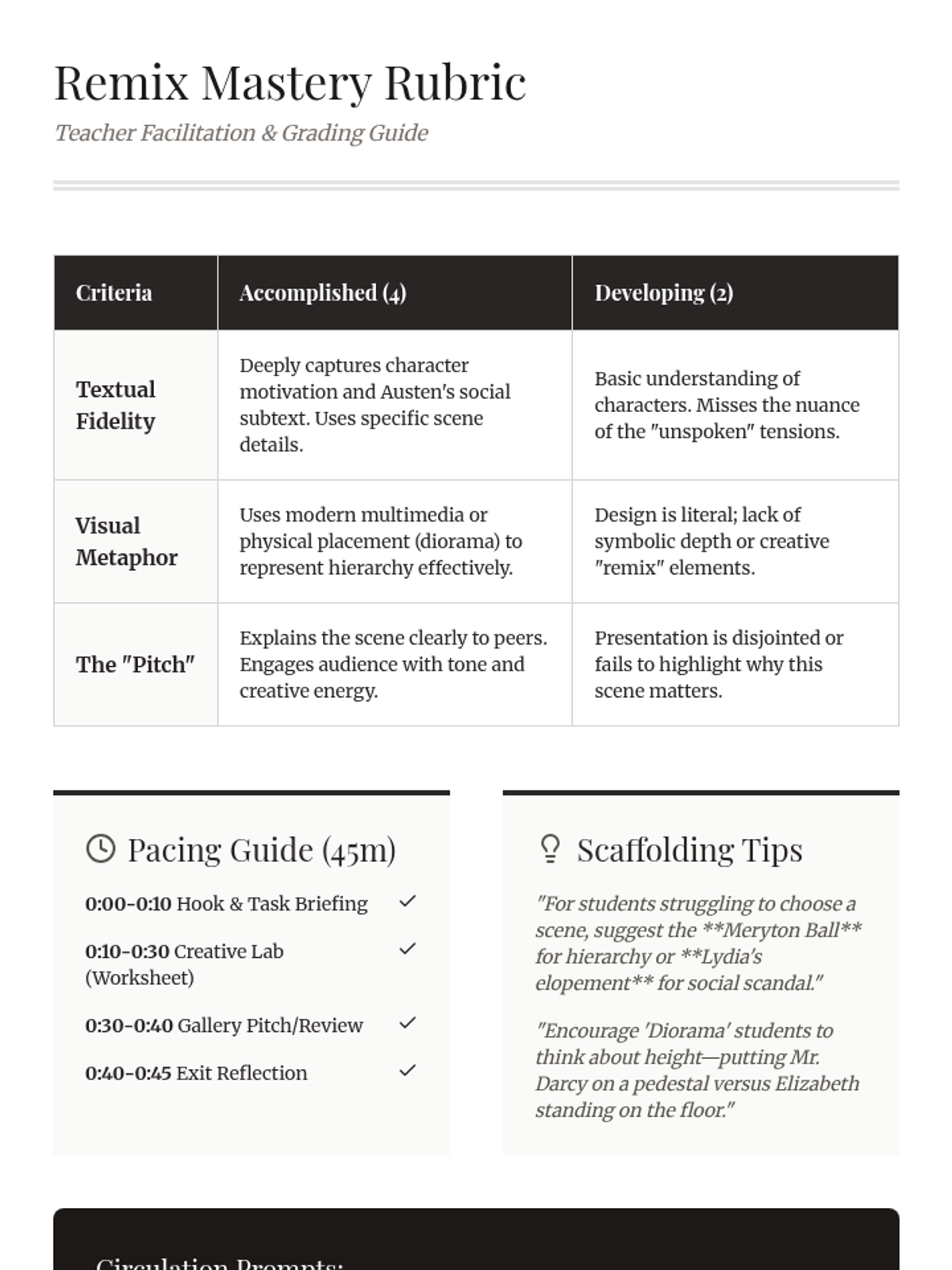
A fast-paced creative challenge where students design and pitch a multimedia or physical interpretation of a key scene from Pride and Prejudice. Students focus on capturing social dynamics and character motivations through modern or miniature lenses.